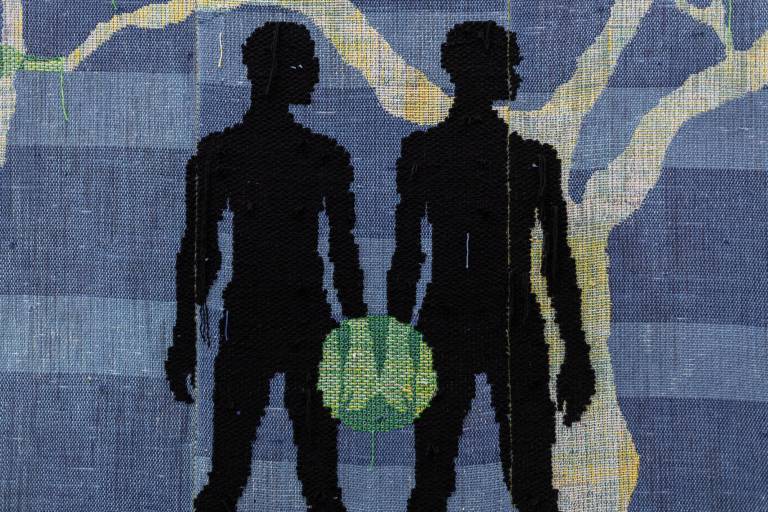
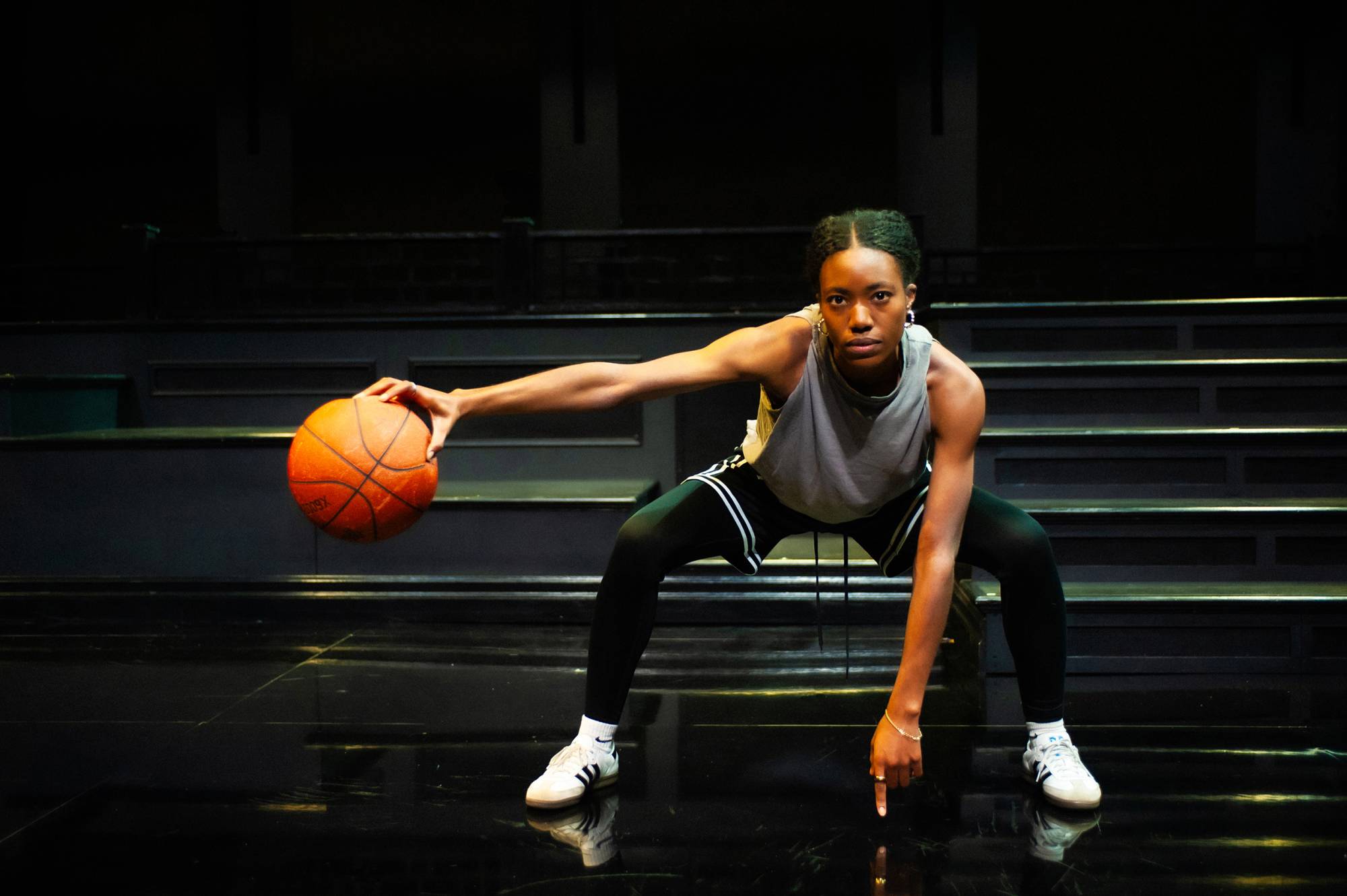
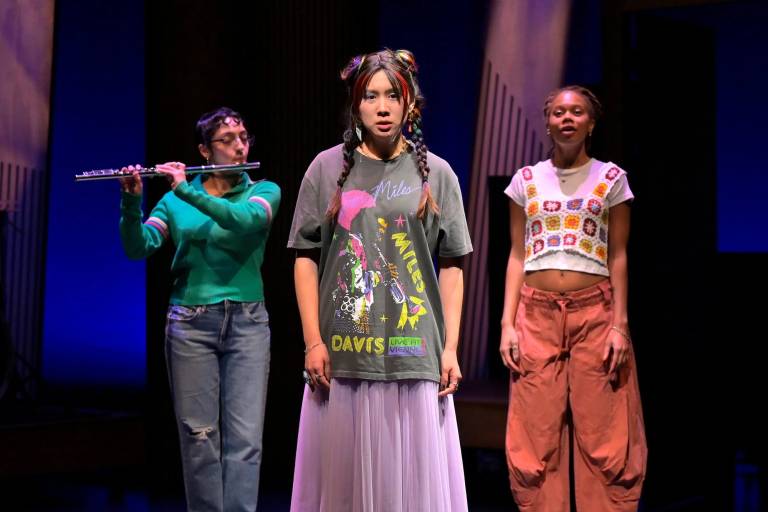
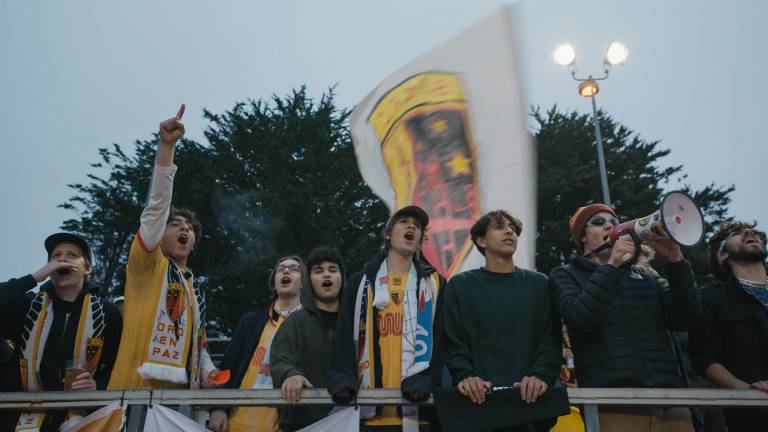
window.__IS_SSR__=true
window.__INITIAL_STATE__={
"attachmentsReducer": {
"audio_0": {
"type": "attachments",
"id": "audio_0",
"imgSizes": {
"kqedFullSize": {
"file": "https://ww2.kqed.org/news/wp-content/themes/KQED-unified/img/audio_bgs/background0.jpg"
}
}
},
"audio_1": {
"type": "attachments",
"id": "audio_1",
"imgSizes": {
"kqedFullSize": {
"file": "https://ww2.kqed.org/news/wp-content/themes/KQED-unified/img/audio_bgs/background1.jpg"
}
}
},
"audio_2": {
"type": "attachments",
"id": "audio_2",
"imgSizes": {
"kqedFullSize": {
"file": "https://ww2.kqed.org/news/wp-content/themes/KQED-unified/img/audio_bgs/background2.jpg"
}
}
},
"audio_3": {
"type": "attachments",
"id": "audio_3",
"imgSizes": {
"kqedFullSize": {
"file": "https://ww2.kqed.org/news/wp-content/themes/KQED-unified/img/audio_bgs/background3.jpg"
}
}
},
"audio_4": {
"type": "attachments",
"id": "audio_4",
"imgSizes": {
"kqedFullSize": {
"file": "https://ww2.kqed.org/news/wp-content/themes/KQED-unified/img/audio_bgs/background4.jpg"
}
}
},
"placeholder": {
"type": "attachments",
"id": "placeholder",
"imgSizes": {
"thumbnail": {
"file": "https://cdn.kqed.org/wp-content/uploads/2024/12/KQED-Default-Image-816638274-2000x1333-1-160x107.jpg",
"width": 160,
"height": 107,
"mimeType": "image/jpeg"
},
"medium": {
"file": "https://cdn.kqed.org/wp-content/uploads/2024/12/KQED-Default-Image-816638274-2000x1333-1-800x533.jpg",
"width": 800,
"height": 533,
"mimeType": "image/jpeg"
},
"medium_large": {
"file": "https://cdn.kqed.org/wp-content/uploads/2024/12/KQED-Default-Image-816638274-2000x1333-1-768x512.jpg",
"width": 768,
"height": 512,
"mimeType": "image/jpeg"
},
"large": {
"file": "https://cdn.kqed.org/wp-content/uploads/2024/12/KQED-Default-Image-816638274-2000x1333-1-1020x680.jpg",
"width": 1020,
"height": 680,
"mimeType": "image/jpeg"
},
"1536x1536": {
"file": "https://cdn.kqed.org/wp-content/uploads/2024/12/KQED-Default-Image-816638274-2000x1333-1-1536x1024.jpg",
"width": 1536,
"height": 1024,
"mimeType": "image/jpeg"
},
"fd-lrg": {
"file": "https://cdn.kqed.org/wp-content/uploads/2024/12/KQED-Default-Image-816638274-2000x1333-1-1536x1024.jpg",
"width": 1536,
"height": 1024,
"mimeType": "image/jpeg"
},
"fd-med": {
"file": "https://cdn.kqed.org/wp-content/uploads/2024/12/KQED-Default-Image-816638274-2000x1333-1-1020x680.jpg",
"width": 1020,
"height": 680,
"mimeType": "image/jpeg"
},
"fd-sm": {
"file": "https://cdn.kqed.org/wp-content/uploads/2024/12/KQED-Default-Image-816638274-2000x1333-1-800x533.jpg",
"width": 800,
"height": 533,
"mimeType": "image/jpeg"
},
"post-thumbnail": {
"file": "https://cdn.kqed.org/wp-content/uploads/2024/12/KQED-Default-Image-816638274-2000x1333-1-672x372.jpg",
"width": 672,
"height": 372,
"mimeType": "image/jpeg"
},
"twentyfourteen-full-width": {
"file": "https://cdn.kqed.org/wp-content/uploads/2024/12/KQED-Default-Image-816638274-2000x1333-1-1038x576.jpg",
"width": 1038,
"height": 576,
"mimeType": "image/jpeg"
},
"xxsmall": {
"file": "https://cdn.kqed.org/wp-content/uploads/2024/12/KQED-Default-Image-816638274-2000x1333-1-160x107.jpg",
"width": 160,
"height": 107,
"mimeType": "image/jpeg"
},
"xsmall": {
"file": "https://cdn.kqed.org/wp-content/uploads/2024/12/KQED-Default-Image-816638274-2000x1333-1-672x372.jpg",
"width": 672,
"height": 372,
"mimeType": "image/jpeg"
},
"small": {
"file": "https://cdn.kqed.org/wp-content/uploads/2024/12/KQED-Default-Image-816638274-2000x1333-1-672x372.jpg",
"width": 672,
"height": 372,
"mimeType": "image/jpeg"
},
"xlarge": {
"file": "https://cdn.kqed.org/wp-content/uploads/2024/12/KQED-Default-Image-816638274-2000x1333-1-1020x680.jpg",
"width": 1020,
"height": 680,
"mimeType": "image/jpeg"
},
"full-width": {
"file": "https://cdn.kqed.org/wp-content/uploads/2024/12/KQED-Default-Image-816638274-2000x1333-1-1920x1280.jpg",
"width": 1920,
"height": 1280,
"mimeType": "image/jpeg"
},
"guest-author-32": {
"file": "https://cdn.kqed.org/wp-content/uploads/2025/01/KQED-Default-Image-816638274-1333x1333-1-160x160.jpg",
"width": 32,
"height": 32,
"mimeType": "image/jpeg"
},
"guest-author-50": {
"file": "https://cdn.kqed.org/wp-content/uploads/2025/01/KQED-Default-Image-816638274-1333x1333-1-160x160.jpg",
"width": 50,
"height": 50,
"mimeType": "image/jpeg"
},
"guest-author-64": {
"file": "https://cdn.kqed.org/wp-content/uploads/2025/01/KQED-Default-Image-816638274-1333x1333-1-160x160.jpg",
"width": 64,
"height": 64,
"mimeType": "image/jpeg"
},
"guest-author-96": {
"file": "https://cdn.kqed.org/wp-content/uploads/2025/01/KQED-Default-Image-816638274-1333x1333-1-160x160.jpg",
"width": 96,
"height": 96,
"mimeType": "image/jpeg"
},
"guest-author-128": {
"file": "https://cdn.kqed.org/wp-content/uploads/2025/01/KQED-Default-Image-816638274-1333x1333-1-160x160.jpg",
"width": 128,
"height": 128,
"mimeType": "image/jpeg"
},
"detail": {
"file": "https://cdn.kqed.org/wp-content/uploads/2025/01/KQED-Default-Image-816638274-1333x1333-1-160x160.jpg",
"width": 160,
"height": 160,
"mimeType": "image/jpeg"
},
"kqedFullSize": {
"file": "https://cdn.kqed.org/wp-content/uploads/2024/12/KQED-Default-Image-816638274-2000x1333-1.jpg",
"width": 2000,
"height": 1333
}
}
},
"arts_13988042": {
"type": "attachments",
"id": "arts_13988042",
"meta": {
"index": "attachments_1716263798",
"site": "arts",
"id": "13988042",
"found": true
},
"title": "ChupanKhamatova_WeddingofMarianna_Credit_Pavel Antonov",
"publishDate": 1774569936,
"status": "inherit",
"parent": 13988031,
"modified": 1774569976,
"caption": "Chulpan Khamatova stars as Rachelka in 'Our Class,' which plays at Z Space March 27–April 5.",
"credit": "Pavel Antonov",
"altTag": null,
"description": null,
"imgSizes": {
"thumbnail": {
"file": "https://cdn.kqed.org/wp-content/uploads/sites/2/2026/03/ChupanKhamatova_WeddingofMarianna_Credit_Pavel-Antonov-160x107.jpg",
"width": 160,
"height": 107,
"mimeType": "image/jpeg"
},
"medium_large": {
"file": "https://cdn.kqed.org/wp-content/uploads/sites/2/2026/03/ChupanKhamatova_WeddingofMarianna_Credit_Pavel-Antonov-768x513.jpg",
"width": 768,
"height": 513,
"mimeType": "image/jpeg"
},
"1536x1536": {
"file": "https://cdn.kqed.org/wp-content/uploads/sites/2/2026/03/ChupanKhamatova_WeddingofMarianna_Credit_Pavel-Antonov-1536x1026.jpg",
"width": 1536,
"height": 1026,
"mimeType": "image/jpeg"
},
"post-thumbnail": {
"file": "https://cdn.kqed.org/wp-content/uploads/sites/2/2026/03/ChupanKhamatova_WeddingofMarianna_Credit_Pavel-Antonov-672x372.jpg",
"width": 672,
"height": 372,
"mimeType": "image/jpeg"
},
"twentyfourteen-full-width": {
"file": "https://cdn.kqed.org/wp-content/uploads/sites/2/2026/03/ChupanKhamatova_WeddingofMarianna_Credit_Pavel-Antonov-1038x576.jpg",
"width": 1038,
"height": 576,
"mimeType": "image/jpeg"
},
"npr-cds-wide": {
"file": "https://cdn.kqed.org/wp-content/uploads/sites/2/2026/03/ChupanKhamatova_WeddingofMarianna_Credit_Pavel-Antonov-1200x675.jpg",
"width": 1200,
"height": 675,
"mimeType": "image/jpeg"
},
"npr-cds-square": {
"file": "https://cdn.kqed.org/wp-content/uploads/sites/2/2026/03/ChupanKhamatova_WeddingofMarianna_Credit_Pavel-Antonov-600x600.jpg",
"width": 600,
"height": 600,
"mimeType": "image/jpeg"
},
"kqedFullSize": {
"file": "https://cdn.kqed.org/wp-content/uploads/sites/2/2026/03/ChupanKhamatova_WeddingofMarianna_Credit_Pavel-Antonov.jpg",
"width": 2000,
"height": 1336
}
},
"isLoading": false,
"fetchFailed": false
},
"arts_13988012": {
"type": "attachments",
"id": "arts_13988012",
"meta": {
"index": "attachments_1716263798",
"site": "arts",
"id": "13988012",
"found": true
},
"title": "Demeter-detail-1.-2000-px_2000",
"publishDate": 1774554686,
"status": "inherit",
"parent": 13988010,
"modified": 1774554807,
"caption": "Annie Vought, 'Demeter' (detail), 2025; Hand cut paper, oil stick, glitter,\nsequins, glue, graphite,\ncharcoal, colored pencil.",
"credit": "Courtesy of the artist",
"altTag": "close-up of cut black paper with dense imagery",
"description": null,
"imgSizes": {
"thumbnail": {
"file": "https://cdn.kqed.org/wp-content/uploads/sites/2/2026/03/Demeter-detail-1.-2000-px_2000-160x107.jpg",
"width": 160,
"height": 107,
"mimeType": "image/jpeg"
},
"medium_large": {
"file": "https://cdn.kqed.org/wp-content/uploads/sites/2/2026/03/Demeter-detail-1.-2000-px_2000-768x512.jpg",
"width": 768,
"height": 512,
"mimeType": "image/jpeg"
},
"1536x1536": {
"file": "https://cdn.kqed.org/wp-content/uploads/sites/2/2026/03/Demeter-detail-1.-2000-px_2000-1536x1024.jpg",
"width": 1536,
"height": 1024,
"mimeType": "image/jpeg"
},
"post-thumbnail": {
"file": "https://cdn.kqed.org/wp-content/uploads/sites/2/2026/03/Demeter-detail-1.-2000-px_2000-672x372.jpg",
"width": 672,
"height": 372,
"mimeType": "image/jpeg"
},
"twentyfourteen-full-width": {
"file": "https://cdn.kqed.org/wp-content/uploads/sites/2/2026/03/Demeter-detail-1.-2000-px_2000-1038x576.jpg",
"width": 1038,
"height": 576,
"mimeType": "image/jpeg"
},
"npr-cds-wide": {
"file": "https://cdn.kqed.org/wp-content/uploads/sites/2/2026/03/Demeter-detail-1.-2000-px_2000-1200x675.jpg",
"width": 1200,
"height": 675,
"mimeType": "image/jpeg"
},
"npr-cds-square": {
"file": "https://cdn.kqed.org/wp-content/uploads/sites/2/2026/03/Demeter-detail-1.-2000-px_2000-600x600.jpg",
"width": 600,
"height": 600,
"mimeType": "image/jpeg"
},
"kqedFullSize": {
"file": "https://cdn.kqed.org/wp-content/uploads/sites/2/2026/03/Demeter-detail-1.-2000-px_2000.jpg",
"width": 2000,
"height": 1333
}
},
"isLoading": false,
"fetchFailed": false
},
"arts_13954798": {
"type": "attachments",
"id": "arts_13954798",
"meta": {
"index": "attachments_1716263798",
"site": "arts",
"id": "13954798",
"found": true
},
"parent": 13954764,
"imgSizes": {
"twentyfourteen-full-width": {
"file": "https://cdn.kqed.org/wp-content/uploads/sites/2/2024/03/Salonen.Scriabin-1038x576.jpg",
"width": 1038,
"mimeType": "image/jpeg",
"height": 576
},
"thumbnail": {
"file": "https://cdn.kqed.org/wp-content/uploads/sites/2/2024/03/Salonen.Scriabin-160x90.jpg",
"width": 160,
"mimeType": "image/jpeg",
"height": 90
},
"post-thumbnail": {
"file": "https://cdn.kqed.org/wp-content/uploads/sites/2/2024/03/Salonen.Scriabin-672x372.jpg",
"width": 672,
"mimeType": "image/jpeg",
"height": 372
},
"kqedFullSize": {
"file": "https://cdn.kqed.org/wp-content/uploads/sites/2/2024/03/Salonen.Scriabin.jpg",
"width": 1920,
"height": 1080
},
"large": {
"file": "https://cdn.kqed.org/wp-content/uploads/sites/2/2024/03/Salonen.Scriabin-1020x574.jpg",
"width": 1020,
"mimeType": "image/jpeg",
"height": 574
},
"1536x1536": {
"file": "https://cdn.kqed.org/wp-content/uploads/sites/2/2024/03/Salonen.Scriabin-1536x864.jpg",
"width": 1536,
"mimeType": "image/jpeg",
"height": 864
},
"medium": {
"file": "https://cdn.kqed.org/wp-content/uploads/sites/2/2024/03/Salonen.Scriabin-800x450.jpg",
"width": 800,
"mimeType": "image/jpeg",
"height": 450
},
"medium_large": {
"file": "https://cdn.kqed.org/wp-content/uploads/sites/2/2024/03/Salonen.Scriabin-768x432.jpg",
"width": 768,
"mimeType": "image/jpeg",
"height": 432
}
},
"publishDate": 1711493233,
"modified": 1711493272,
"caption": "Esa-Pekka Salonen conducts the orchestra with pianist Jean-Yves Thibaudet as the San Francisco Symphony performs Alexander Scriabin's 'Prometheus, The Poem of Fire' at Davies Symphony Hall on March 1, 2024.",
"description": null,
"title": "Salonen.Scriabin",
"credit": "Brandon Patoc",
"status": "inherit",
"altTag": "A man conducts an orchestra aside a pianist at a grand piano, on stage, bathed in purple light",
"isLoading": false,
"fetchFailed": false
},
"arts_13987970": {
"type": "attachments",
"id": "arts_13987970",
"meta": {
"index": "attachments_1716263798",
"site": "arts",
"id": "13987970",
"found": true
},
"title": "BlackGoldSun",
"publishDate": 1774473619,
"status": "inherit",
"parent": 13987965,
"modified": 1774484191,
"caption": "Black Gold Sun performs at this year's Doll Fest. ‘The current state of the world is doing a number on women, and I want to contribute to their joy,’ says guitarist and singer Anita Lofton.",
"credit": "Ande Flower",
"altTag": "Three Black women in short hair and street clothes look into the camera against a purple wall.",
"description": null,
"imgSizes": {
"thumbnail": {
"file": "https://cdn.kqed.org/wp-content/uploads/sites/2/2026/03/BlackGoldSun-160x90.jpg",
"width": 160,
"height": 90,
"mimeType": "image/jpeg"
},
"medium_large": {
"file": "https://cdn.kqed.org/wp-content/uploads/sites/2/2026/03/BlackGoldSun-768x432.jpg",
"width": 768,
"height": 432,
"mimeType": "image/jpeg"
},
"post-thumbnail": {
"file": "https://cdn.kqed.org/wp-content/uploads/sites/2/2026/03/BlackGoldSun-672x372.jpg",
"width": 672,
"height": 372,
"mimeType": "image/jpeg"
},
"twentyfourteen-full-width": {
"file": "https://cdn.kqed.org/wp-content/uploads/sites/2/2026/03/BlackGoldSun-1038x576.jpg",
"width": 1038,
"height": 576,
"mimeType": "image/jpeg"
},
"npr-cds-square": {
"file": "https://cdn.kqed.org/wp-content/uploads/sites/2/2026/03/BlackGoldSun-600x600.jpg",
"width": 600,
"height": 600,
"mimeType": "image/jpeg"
},
"kqedFullSize": {
"file": "https://cdn.kqed.org/wp-content/uploads/sites/2/2026/03/BlackGoldSun.jpg",
"width": 1170,
"height": 658
}
},
"isLoading": false,
"fetchFailed": false
},
"arts_13987960": {
"type": "attachments",
"id": "arts_13987960",
"meta": {
"index": "attachments_1716263798",
"site": "arts",
"id": "13987960",
"found": true
},
"title": "Palestine36_1",
"publishDate": 1774471622,
"status": "inherit",
"parent": 13987956,
"modified": 1774472243,
"caption": "Karim Daoud Anaya as Yusuf in a scene from 'Palestine '36.'",
"credit": "Watermelon Pictures",
"altTag": "man in turban with hands behind head and tears in eyes",
"description": null,
"imgSizes": {
"thumbnail": {
"file": "https://cdn.kqed.org/wp-content/uploads/sites/2/2026/03/Palestine36_1-160x67.jpg",
"width": 160,
"height": 67,
"mimeType": "image/jpeg"
},
"medium_large": {
"file": "https://cdn.kqed.org/wp-content/uploads/sites/2/2026/03/Palestine36_1-768x322.jpg",
"width": 768,
"height": 322,
"mimeType": "image/jpeg"
},
"1536x1536": {
"file": "https://cdn.kqed.org/wp-content/uploads/sites/2/2026/03/Palestine36_1-1536x644.jpg",
"width": 1536,
"height": 644,
"mimeType": "image/jpeg"
},
"post-thumbnail": {
"file": "https://cdn.kqed.org/wp-content/uploads/sites/2/2026/03/Palestine36_1-672x372.jpg",
"width": 672,
"height": 372,
"mimeType": "image/jpeg"
},
"twentyfourteen-full-width": {
"file": "https://cdn.kqed.org/wp-content/uploads/sites/2/2026/03/Palestine36_1-1038x576.jpg",
"width": 1038,
"height": 576,
"mimeType": "image/jpeg"
},
"npr-cds-wide": {
"file": "https://cdn.kqed.org/wp-content/uploads/sites/2/2026/03/Palestine36_1-1200x675.jpg",
"width": 1200,
"height": 675,
"mimeType": "image/jpeg"
},
"npr-cds-square": {
"file": "https://cdn.kqed.org/wp-content/uploads/sites/2/2026/03/Palestine36_1-600x600.jpg",
"width": 600,
"height": 600,
"mimeType": "image/jpeg"
},
"kqedFullSize": {
"file": "https://cdn.kqed.org/wp-content/uploads/sites/2/2026/03/Palestine36_1.jpg",
"width": 2000,
"height": 838
}
},
"isLoading": false,
"fetchFailed": false
},
"arts_13987941": {
"type": "attachments",
"id": "arts_13987941",
"meta": {
"index": "attachments_1716263798",
"site": "arts",
"id": "13987941",
"found": true
},
"title": "GettyImages-1187107159",
"publishDate": 1774458041,
"status": "inherit",
"parent": 13987938,
"modified": 1774460485,
"caption": "San José Cat Day encompasses cat art, cat crafts, cat-themed food and, yes, actual cats.",
"credit": "SolStock",
"altTag": "A small grey and white kitten with a pink leash walking through a toy tunnel, looking trepidatious",
"description": null,
"imgSizes": {
"thumbnail": {
"file": "https://cdn.kqed.org/wp-content/uploads/sites/2/2026/03/GettyImages-1187107159-160x107.jpg",
"width": 160,
"height": 107,
"mimeType": "image/jpeg"
},
"medium_large": {
"file": "https://cdn.kqed.org/wp-content/uploads/sites/2/2026/03/GettyImages-1187107159-768x512.jpg",
"width": 768,
"height": 512,
"mimeType": "image/jpeg"
},
"1536x1536": {
"file": "https://cdn.kqed.org/wp-content/uploads/sites/2/2026/03/GettyImages-1187107159-1536x1024.jpg",
"width": 1536,
"height": 1024,
"mimeType": "image/jpeg"
},
"post-thumbnail": {
"file": "https://cdn.kqed.org/wp-content/uploads/sites/2/2026/03/GettyImages-1187107159-672x372.jpg",
"width": 672,
"height": 372,
"mimeType": "image/jpeg"
},
"twentyfourteen-full-width": {
"file": "https://cdn.kqed.org/wp-content/uploads/sites/2/2026/03/GettyImages-1187107159-1038x576.jpg",
"width": 1038,
"height": 576,
"mimeType": "image/jpeg"
},
"npr-cds-wide": {
"file": "https://cdn.kqed.org/wp-content/uploads/sites/2/2026/03/GettyImages-1187107159-1200x675.jpg",
"width": 1200,
"height": 675,
"mimeType": "image/jpeg"
},
"npr-cds-square": {
"file": "https://cdn.kqed.org/wp-content/uploads/sites/2/2026/03/GettyImages-1187107159-600x600.jpg",
"width": 600,
"height": 600,
"mimeType": "image/jpeg"
},
"kqedFullSize": {
"file": "https://cdn.kqed.org/wp-content/uploads/sites/2/2026/03/GettyImages-1187107159.jpg",
"width": 2000,
"height": 1333
}
},
"isLoading": false,
"fetchFailed": false
},
"arts_13987380": {
"type": "attachments",
"id": "arts_13987380",
"meta": {
"index": "attachments_1716263798",
"site": "arts",
"id": "13987380",
"found": true
},
"title": "THE AI DOC: OR HOW I BECAME AN APOCALOPTIMIST (2026)",
"publishDate": 1772671850,
"status": "inherit",
"parent": 13986980,
"modified": 1772671956,
"caption": "A brief moment of boxy optimism in ‘The AI Doc: Or How I Became An Apocaloptimist.’ ",
"credit": "Courtesy of Focus Features",
"altTag": "A screen crowded with small black boxes with blue smiling faces. They are identical and clustered together with one hovering over them in the center.",
"description": null,
"imgSizes": {
"thumbnail": {
"file": "https://cdn.kqed.org/wp-content/uploads/sites/2/2026/03/ai-doc-image-160x90.jpg",
"width": 160,
"height": 90,
"mimeType": "image/jpeg"
},
"medium_large": {
"file": "https://cdn.kqed.org/wp-content/uploads/sites/2/2026/03/ai-doc-image-768x432.jpg",
"width": 768,
"height": 432,
"mimeType": "image/jpeg"
},
"1536x1536": {
"file": "https://cdn.kqed.org/wp-content/uploads/sites/2/2026/03/ai-doc-image-1536x864.jpg",
"width": 1536,
"height": 864,
"mimeType": "image/jpeg"
},
"post-thumbnail": {
"file": "https://cdn.kqed.org/wp-content/uploads/sites/2/2026/03/ai-doc-image-672x372.jpg",
"width": 672,
"height": 372,
"mimeType": "image/jpeg"
},
"twentyfourteen-full-width": {
"file": "https://cdn.kqed.org/wp-content/uploads/sites/2/2026/03/ai-doc-image-1038x576.jpg",
"width": 1038,
"height": 576,
"mimeType": "image/jpeg"
},
"npr-cds-wide": {
"file": "https://cdn.kqed.org/wp-content/uploads/sites/2/2026/03/ai-doc-image-1200x675.jpg",
"width": 1200,
"height": 675,
"mimeType": "image/jpeg"
},
"kqedFullSize": {
"file": "https://cdn.kqed.org/wp-content/uploads/sites/2/2026/03/ai-doc-image.jpg",
"width": 2000,
"height": 1125
}
},
"isLoading": false,
"fetchFailed": false
},
"arts_13987918": {
"type": "attachments",
"id": "arts_13987918",
"meta": {
"index": "attachments_1716263798",
"site": "arts",
"id": "13987918",
"found": true
},
"title": "DiedrickBrackens-62_2000",
"publishDate": 1774392118,
"status": "inherit",
"parent": 13987911,
"modified": 1774392167,
"caption": "Diedrick Brackens, 'a garden protects the dreamer' (detail), 2026; Woven cotton and acrylic yarn.",
"credit": "Charlie Villyard/YBCA",
"altTag": "two black silhouettes' hands touch and green glow forms",
"description": null,
"imgSizes": {
"thumbnail": {
"file": "https://cdn.kqed.org/wp-content/uploads/sites/2/2026/03/DiedrickBrackens-62_2000-160x107.jpg",
"width": 160,
"height": 107,
"mimeType": "image/jpeg"
},
"medium_large": {
"file": "https://cdn.kqed.org/wp-content/uploads/sites/2/2026/03/DiedrickBrackens-62_2000-768x512.jpg",
"width": 768,
"height": 512,
"mimeType": "image/jpeg"
},
"1536x1536": {
"file": "https://cdn.kqed.org/wp-content/uploads/sites/2/2026/03/DiedrickBrackens-62_2000-1536x1024.jpg",
"width": 1536,
"height": 1024,
"mimeType": "image/jpeg"
},
"post-thumbnail": {
"file": "https://cdn.kqed.org/wp-content/uploads/sites/2/2026/03/DiedrickBrackens-62_2000-672x372.jpg",
"width": 672,
"height": 372,
"mimeType": "image/jpeg"
},
"twentyfourteen-full-width": {
"file": "https://cdn.kqed.org/wp-content/uploads/sites/2/2026/03/DiedrickBrackens-62_2000-1038x576.jpg",
"width": 1038,
"height": 576,
"mimeType": "image/jpeg"
},
"npr-cds-wide": {
"file": "https://cdn.kqed.org/wp-content/uploads/sites/2/2026/03/DiedrickBrackens-62_2000-1200x675.jpg",
"width": 1200,
"height": 675,
"mimeType": "image/jpeg"
},
"npr-cds-square": {
"file": "https://cdn.kqed.org/wp-content/uploads/sites/2/2026/03/DiedrickBrackens-62_2000-600x600.jpg",
"width": 600,
"height": 600,
"mimeType": "image/jpeg"
},
"kqedFullSize": {
"file": "https://cdn.kqed.org/wp-content/uploads/sites/2/2026/03/DiedrickBrackens-62_2000.jpg",
"width": 2000,
"height": 1333
}
},
"isLoading": false,
"fetchFailed": false
},
"arts_13987901": {
"type": "attachments",
"id": "arts_13987901",
"meta": {
"index": "attachments_1716263798",
"site": "arts",
"id": "13987901",
"found": true
},
"title": "SFP_Flex_JessicaPalopoli4",
"publishDate": 1774382144,
"status": "inherit",
"parent": 13987898,
"modified": 1774384744,
"caption": "Santeon Brown as team captain Starra in San Francisco Playhouse's ‘Flex,’ performing March 26–May 2.",
"credit": "Jessica Palopoli",
"altTag": "A young woman palms a basketball.",
"description": null,
"imgSizes": {
"medium": {
"file": "https://cdn.kqed.org/wp-content/uploads/sites/2/2026/03/SFP_Flex_JessicaPalopoli4-2000x1331.jpg",
"width": 2000,
"height": 1331,
"mimeType": "image/jpeg"
},
"large": {
"file": "https://cdn.kqed.org/wp-content/uploads/sites/2/2026/03/SFP_Flex_JessicaPalopoli4-2000x1331.jpg",
"width": 2000,
"height": 1331,
"mimeType": "image/jpeg"
},
"thumbnail": {
"file": "https://cdn.kqed.org/wp-content/uploads/sites/2/2026/03/SFP_Flex_JessicaPalopoli4-160x106.jpg",
"width": 160,
"height": 106,
"mimeType": "image/jpeg"
},
"medium_large": {
"file": "https://cdn.kqed.org/wp-content/uploads/sites/2/2026/03/SFP_Flex_JessicaPalopoli4-768x511.jpg",
"width": 768,
"height": 511,
"mimeType": "image/jpeg"
},
"1536x1536": {
"file": "https://cdn.kqed.org/wp-content/uploads/sites/2/2026/03/SFP_Flex_JessicaPalopoli4-1536x1022.jpg",
"width": 1536,
"height": 1022,
"mimeType": "image/jpeg"
},
"2048x2048": {
"file": "https://cdn.kqed.org/wp-content/uploads/sites/2/2026/03/SFP_Flex_JessicaPalopoli4-2048x1363.jpg",
"width": 2048,
"height": 1363,
"mimeType": "image/jpeg"
},
"post-thumbnail": {
"file": "https://cdn.kqed.org/wp-content/uploads/sites/2/2026/03/SFP_Flex_JessicaPalopoli4-672x372.jpg",
"width": 672,
"height": 372,
"mimeType": "image/jpeg"
},
"twentyfourteen-full-width": {
"file": "https://cdn.kqed.org/wp-content/uploads/sites/2/2026/03/SFP_Flex_JessicaPalopoli4-1038x576.jpg",
"width": 1038,
"height": 576,
"mimeType": "image/jpeg"
},
"full-width": {
"file": "https://cdn.kqed.org/wp-content/uploads/sites/2/2026/03/SFP_Flex_JessicaPalopoli4-2000x1331.jpg",
"width": 2000,
"height": 1331,
"mimeType": "image/jpeg"
},
"npr-cds-wide": {
"file": "https://cdn.kqed.org/wp-content/uploads/sites/2/2026/03/SFP_Flex_JessicaPalopoli4-1200x675.jpg",
"width": 1200,
"height": 675,
"mimeType": "image/jpeg"
},
"npr-cds-square": {
"file": "https://cdn.kqed.org/wp-content/uploads/sites/2/2026/03/SFP_Flex_JessicaPalopoli4-600x600.jpg",
"width": 600,
"height": 600,
"mimeType": "image/jpeg"
},
"kqedFullSize": {
"file": "https://cdn.kqed.org/wp-content/uploads/sites/2/2026/03/SFP_Flex_JessicaPalopoli4.jpg",
"width": 2450,
"height": 1630
}
},
"isLoading": false,
"fetchFailed": false
},
"arts_13987820": {
"type": "attachments",
"id": "arts_13987820",
"meta": {
"index": "attachments_1716263798",
"site": "arts",
"id": "13987820",
"found": true
},
"title": "191_GCM",
"publishDate": 1773963856,
"status": "inherit",
"parent": 0,
"modified": 1773964315,
"caption": "Gianna DiGregorio Rivera (Clementine), Yeena Sung (Rile), and Hillary Fisher (Fax) in the world premiere of Eisa Davis’ ‘||: Girls :||: Chance :||: Music :||.‘ ",
"credit": "Kevin Berne",
"altTag": null,
"description": null,
"imgSizes": {
"thumbnail": {
"file": "https://cdn.kqed.org/wp-content/uploads/sites/2/2026/03/191_GCM-160x107.jpg",
"width": 160,
"height": 107,
"mimeType": "image/jpeg"
},
"medium_large": {
"file": "https://cdn.kqed.org/wp-content/uploads/sites/2/2026/03/191_GCM-768x512.jpg",
"width": 768,
"height": 512,
"mimeType": "image/jpeg"
},
"1536x1536": {
"file": "https://cdn.kqed.org/wp-content/uploads/sites/2/2026/03/191_GCM-1536x1024.jpg",
"width": 1536,
"height": 1024,
"mimeType": "image/jpeg"
},
"post-thumbnail": {
"file": "https://cdn.kqed.org/wp-content/uploads/sites/2/2026/03/191_GCM-672x372.jpg",
"width": 672,
"height": 372,
"mimeType": "image/jpeg"
},
"twentyfourteen-full-width": {
"file": "https://cdn.kqed.org/wp-content/uploads/sites/2/2026/03/191_GCM-1038x576.jpg",
"width": 1038,
"height": 576,
"mimeType": "image/jpeg"
},
"npr-cds-wide": {
"file": "https://cdn.kqed.org/wp-content/uploads/sites/2/2026/03/191_GCM-1200x675.jpg",
"width": 1200,
"height": 675,
"mimeType": "image/jpeg"
},
"kqedFullSize": {
"file": "https://cdn.kqed.org/wp-content/uploads/sites/2/2026/03/191_GCM.jpg",
"width": 2000,
"height": 1333
}
},
"isLoading": false,
"fetchFailed": false
},
"arts_13987802": {
"type": "attachments",
"id": "arts_13987802",
"meta": {
"index": "attachments_1716263798",
"site": "arts",
"id": "13987802",
"found": true
},
"title": "RollFog_Still_2000",
"publishDate": 1773956346,
"status": "inherit",
"parent": 13987791,
"modified": 1773956435,
"caption": "A still from Daniel Díaz's 'Roll Fog,' an in-progress documentary about San Francisco City Football Club.",
"credit": "Daniel Díaz",
"altTag": "fans cheer at railing with team flag waving behind",
"description": null,
"imgSizes": {
"thumbnail": {
"file": "https://cdn.kqed.org/wp-content/uploads/sites/2/2026/03/RollFog_Still_2000-160x90.jpg",
"width": 160,
"height": 90,
"mimeType": "image/jpeg"
},
"medium_large": {
"file": "https://cdn.kqed.org/wp-content/uploads/sites/2/2026/03/RollFog_Still_2000-768x432.jpg",
"width": 768,
"height": 432,
"mimeType": "image/jpeg"
},
"1536x1536": {
"file": "https://cdn.kqed.org/wp-content/uploads/sites/2/2026/03/RollFog_Still_2000-1536x864.jpg",
"width": 1536,
"height": 864,
"mimeType": "image/jpeg"
},
"post-thumbnail": {
"file": "https://cdn.kqed.org/wp-content/uploads/sites/2/2026/03/RollFog_Still_2000-672x372.jpg",
"width": 672,
"height": 372,
"mimeType": "image/jpeg"
},
"twentyfourteen-full-width": {
"file": "https://cdn.kqed.org/wp-content/uploads/sites/2/2026/03/RollFog_Still_2000-1038x576.jpg",
"width": 1038,
"height": 576,
"mimeType": "image/jpeg"
},
"npr-cds-wide": {
"file": "https://cdn.kqed.org/wp-content/uploads/sites/2/2026/03/RollFog_Still_2000-1200x675.jpg",
"width": 1200,
"height": 675,
"mimeType": "image/jpeg"
},
"kqedFullSize": {
"file": "https://cdn.kqed.org/wp-content/uploads/sites/2/2026/03/RollFog_Still_2000.jpg",
"width": 2000,
"height": 1125
}
},
"isLoading": false,
"fetchFailed": false
},
"arts_13987708": {
"type": "attachments",
"id": "arts_13987708",
"meta": {
"index": "attachments_1716263798",
"site": "arts",
"id": "13987708",
"found": true
},
"title": "260309_DeSaissetMuseum_JonathanCalm_ToWherever_RDH_078_2000",
"publishDate": 1773784599,
"status": "inherit",
"parent": 13987695,
"modified": 1773785177,
"caption": "Installation view of Jonathan Calm's 'Archives of Absence' at the de Saisset Museum, with 'Body Language,' 2018 at left and 'Travel is Fatal to Prejudice IV,' 2017–18 at right.",
"credit": "Robert Divers Herrick",
"altTag": "gallery with framed black and white photographs on walls",
"description": null,
"imgSizes": {
"thumbnail": {
"file": "https://cdn.kqed.org/wp-content/uploads/sites/2/2026/03/260309_DeSaissetMuseum_JonathanCalm_ToWherever_RDH_078_2000-160x120.jpg",
"width": 160,
"height": 120,
"mimeType": "image/jpeg"
},
"medium_large": {
"file": "https://cdn.kqed.org/wp-content/uploads/sites/2/2026/03/260309_DeSaissetMuseum_JonathanCalm_ToWherever_RDH_078_2000-768x576.jpg",
"width": 768,
"height": 576,
"mimeType": "image/jpeg"
},
"1536x1536": {
"file": "https://cdn.kqed.org/wp-content/uploads/sites/2/2026/03/260309_DeSaissetMuseum_JonathanCalm_ToWherever_RDH_078_2000-1536x1152.jpg",
"width": 1536,
"height": 1152,
"mimeType": "image/jpeg"
},
"post-thumbnail": {
"file": "https://cdn.kqed.org/wp-content/uploads/sites/2/2026/03/260309_DeSaissetMuseum_JonathanCalm_ToWherever_RDH_078_2000-672x372.jpg",
"width": 672,
"height": 372,
"mimeType": "image/jpeg"
},
"twentyfourteen-full-width": {
"file": "https://cdn.kqed.org/wp-content/uploads/sites/2/2026/03/260309_DeSaissetMuseum_JonathanCalm_ToWherever_RDH_078_2000-1038x576.jpg",
"width": 1038,
"height": 576,
"mimeType": "image/jpeg"
},
"npr-cds-wide": {
"file": "https://cdn.kqed.org/wp-content/uploads/sites/2/2026/03/260309_DeSaissetMuseum_JonathanCalm_ToWherever_RDH_078_2000-1200x675.jpg",
"width": 1200,
"height": 675,
"mimeType": "image/jpeg"
},
"kqedFullSize": {
"file": "https://cdn.kqed.org/wp-content/uploads/sites/2/2026/03/260309_DeSaissetMuseum_JonathanCalm_ToWherever_RDH_078_2000.jpg",
"width": 2000,
"height": 1500
}
},
"isLoading": false,
"fetchFailed": false
}
},
"audioPlayerReducer": {
"postId": "stream_live",
"isPaused": true,
"isPlaying": false,
"pfsActive": false,
"pledgeModalIsOpen": true,
"playerDrawerIsOpen": false,
"liveAudioPlayStartedAt": 0,
"liveAudioPlayContext": ""
},
"authorsReducer": {
"mfox": {
"type": "authors",
"id": "22",
"meta": {
"index": "authors_1716337520",
"id": "22",
"found": true
},
"name": "Michael Fox",
"firstName": "Michael",
"lastName": "Fox",
"slug": "mfox",
"email": "foxonfilm@yahoo.com",
"display_author_email": false,
"staff_mastheads": [],
"title": "KQED Contributor",
"bio": "Michael Fox has written about film for dozens of publications since 1987. He is a founding member of the San Francisco Bay Area Film Critics Circle.",
"avatar": "https://secure.gravatar.com/avatar/d9849d6c659c41414795c471d907bb97b396e2a32b88e20e6ff66f65fbdd6dcd?s=600&d=blank&r=g",
"twitter": null,
"bluesky": null,
"facebook": null,
"instagram": null,
"linkedin": null,
"sites": [
{
"site": "arts",
"roles": [
"Contributor",
"contributor"
]
}
],
"headData": {
"title": "Michael Fox | KQED",
"description": "KQED Contributor",
"ogImgSrc": "https://secure.gravatar.com/avatar/d9849d6c659c41414795c471d907bb97b396e2a32b88e20e6ff66f65fbdd6dcd?s=600&d=blank&r=g",
"twImgSrc": "https://secure.gravatar.com/avatar/d9849d6c659c41414795c471d907bb97b396e2a32b88e20e6ff66f65fbdd6dcd?s=600&d=blank&r=g"
},
"isLoading": false,
"link": "/author/mfox"
},
"shotchkiss": {
"type": "authors",
"id": "61",
"meta": {
"index": "authors_1716337520",
"id": "61",
"found": true
},
"name": "Sarah Hotchkiss",
"firstName": "Sarah",
"lastName": "Hotchkiss",
"slug": "shotchkiss",
"email": "shotchkiss@kqed.org",
"display_author_email": true,
"staff_mastheads": [
"arts"
],
"title": "Senior Editor",
"bio": "Sarah Hotchkiss is a San Francisco \u003ca href=\"http://www.sarahhotchkiss.com\">artist\u003c/a> and arts writer. In 2019, she received the Dorothea & Leo Rabkin Foundation grant for visual art journalism and in 2020 she received a Society of Professional Journalists, Northern California award for excellence in arts and culture reporting.",
"avatar": "https://secure.gravatar.com/avatar/bc662df144b3d27fd8b1b6f1c2a420d34e91e53154d411bb7ad353cc8b6cea8d?s=600&d=blank&r=g",
"twitter": null,
"bluesky": null,
"facebook": null,
"instagram": null,
"linkedin": null,
"sites": [
{
"site": "",
"roles": [
"editor"
]
},
{
"site": "arts",
"roles": [
"Contributor",
"administrator"
]
},
{
"site": "artschool",
"roles": [
"administrator"
]
},
{
"site": "news",
"roles": [
"editor"
]
},
{
"site": "pop",
"roles": [
"administrator"
]
},
{
"site": "bayareabites",
"roles": [
"editor"
]
},
{
"site": "spark",
"roles": [
"editor"
]
},
{
"site": "checkplease",
"roles": [
"editor"
]
}
],
"headData": {
"title": "Sarah Hotchkiss | KQED",
"description": "Senior Editor",
"ogImgSrc": "https://secure.gravatar.com/avatar/bc662df144b3d27fd8b1b6f1c2a420d34e91e53154d411bb7ad353cc8b6cea8d?s=600&d=blank&r=g",
"twImgSrc": "https://secure.gravatar.com/avatar/bc662df144b3d27fd8b1b6f1c2a420d34e91e53154d411bb7ad353cc8b6cea8d?s=600&d=blank&r=g"
},
"isLoading": false,
"link": "/author/shotchkiss"
},
"ralexandra": {
"type": "authors",
"id": "11242",
"meta": {
"index": "authors_1716337520",
"id": "11242",
"found": true
},
"name": "Rae Alexandra",
"firstName": "Rae",
"lastName": "Alexandra",
"slug": "ralexandra",
"email": "ralexandra@kqed.org",
"display_author_email": true,
"staff_mastheads": [],
"title": "Reporter/Producer",
"bio": "Rae Alexandra is a Reporter/Producer for KQED Arts & Culture, and the creator/author of the \u003ca href=\"https://www.kqed.org/arts/program/rebel-girls-from-bay-area-history\">Rebel Girls From Bay Area History\u003c/a> and \u003ca href=\"https://www.kqed.org/bizarrebayarea\">Bizarre Bay Area\u003c/a> series. Her debut book, \u003ca href=\"https://citylights.com/politics-current-events-history/unsung-heroines35-women-who-changed/\">Unsung Heroines: 35 Women Who Changed the Bay Area\u003c/a> was published by City Lights in March 2026. In 2023, Rae was awarded an SPJ Excellence in Journalism Award for Arts & Culture. Rae was born and raised in Wales and subsequently — even after two decades in Northern California — still uses phrases that regularly baffle her coworkers.",
"avatar": "https://secure.gravatar.com/avatar/edfee8176c80cc0a382b051190f5341997df378a934a5774dcb0977732dfd401?s=600&d=blank&r=g",
"twitter": null,
"bluesky": null,
"facebook": null,
"instagram": null,
"linkedin": null,
"sites": [
{
"site": "arts",
"roles": [
"subscriber"
]
},
{
"site": "news",
"roles": [
"subscriber"
]
},
{
"site": "pop",
"roles": [
"subscriber"
]
},
{
"site": "bayareabites",
"roles": [
"subscriber"
]
},
{
"site": "science",
"roles": [
"subscriber"
]
}
],
"headData": {
"title": "Rae Alexandra | KQED",
"description": "Reporter/Producer",
"ogImgSrc": "https://secure.gravatar.com/avatar/edfee8176c80cc0a382b051190f5341997df378a934a5774dcb0977732dfd401?s=600&d=blank&r=g",
"twImgSrc": "https://secure.gravatar.com/avatar/edfee8176c80cc0a382b051190f5341997df378a934a5774dcb0977732dfd401?s=600&d=blank&r=g"
},
"isLoading": false,
"link": "/author/ralexandra"
},
"nvoynovskaya": {
"type": "authors",
"id": "11387",
"meta": {
"index": "authors_1716337520",
"id": "11387",
"found": true
},
"name": "Nastia Voynovskaya",
"firstName": "Nastia",
"lastName": "Voynovskaya",
"slug": "nvoynovskaya",
"email": "nvoynovskaya@kqed.org",
"display_author_email": false,
"staff_mastheads": [
"arts"
],
"title": "Editor and reporter",
"bio": "Nastia Voynovskaya is a reporter, editor and host at KQED Arts & Culture. She's been covering the arts in the Bay Area for over a decade, with a focus on music, queer culture, labor issues and grassroots organizing. She has edited KQED story series such as Trans Bay: A History of San Francisco's Gender-Diverse Community, and co-created KQED's Bay Area hip-hop history project, That's My Word. Nastia's work has been recognized by the Society of Professional Journalists and San Francisco Press Club. She regularly appears on podcasts and radio programs, including NPR's All Songs Considered, and hosts live events where music, culture and conversation meet.",
"avatar": "https://secure.gravatar.com/avatar/5025ee460e5a85d69ca20ea6c6f2f80d7e17795c828f61ea3aecfcd924e9042e?s=600&d=blank&r=g",
"twitter": null,
"bluesky": null,
"facebook": null,
"instagram": "https://www.instagram.com/nananastia/",
"linkedin": null,
"sites": [
{
"site": "",
"roles": [
"editor"
]
},
{
"site": "arts",
"roles": [
"administrator"
]
},
{
"site": "news",
"roles": [
"editor"
]
},
{
"site": "pop",
"roles": [
"administrator"
]
},
{
"site": "bayareabites",
"roles": [
"editor"
]
},
{
"site": "podcasts",
"roles": [
"editor"
]
},
{
"site": "hiphop",
"roles": [
"editor"
]
}
],
"headData": {
"title": "Nastia Voynovskaya | KQED",
"description": "Editor and reporter",
"ogImgSrc": "https://secure.gravatar.com/avatar/5025ee460e5a85d69ca20ea6c6f2f80d7e17795c828f61ea3aecfcd924e9042e?s=600&d=blank&r=g",
"twImgSrc": "https://secure.gravatar.com/avatar/5025ee460e5a85d69ca20ea6c6f2f80d7e17795c828f61ea3aecfcd924e9042e?s=600&d=blank&r=g"
},
"isLoading": false,
"link": "/author/nvoynovskaya"
},
"mblue": {
"type": "authors",
"id": "11917",
"meta": {
"index": "authors_1716337520",
"id": "11917",
"found": true
},
"name": "Max Blue",
"firstName": "Max",
"lastName": "Blue",
"slug": "mblue",
"email": "maxbluewriter@gmail.com",
"display_author_email": false,
"staff_mastheads": [],
"title": "KQED Contributor",
"bio": "Max Blue has contributed art criticism and reporting to Artsy, Cultured and Hyperallergic, among others. His short fiction has appeared in The MacGuffin and North Dakota Quarterly, among others. He lives in San Francisco.",
"avatar": "https://secure.gravatar.com/avatar/cf3bc08316ae54aaf34b606edc5721301b3306703234df5bee49a54e69d29843?s=600&d=blank&r=g",
"twitter": null,
"bluesky": null,
"facebook": null,
"instagram": "maxblueofficial",
"linkedin": null,
"sites": [
{
"site": "arts",
"roles": [
"contributor"
]
}
],
"headData": {
"title": "Max Blue | KQED",
"description": "KQED Contributor",
"ogImgSrc": "https://secure.gravatar.com/avatar/cf3bc08316ae54aaf34b606edc5721301b3306703234df5bee49a54e69d29843?s=600&d=blank&r=g",
"twImgSrc": "https://secure.gravatar.com/avatar/cf3bc08316ae54aaf34b606edc5721301b3306703234df5bee49a54e69d29843?s=600&d=blank&r=g"
},
"isLoading": false,
"link": "/author/mblue"
},
"jmelido": {
"type": "authors",
"id": "11972",
"meta": {
"index": "authors_1716337520",
"id": "11972",
"found": true
},
"name": "Janea Melido",
"firstName": "Janea",
"lastName": "Melido",
"slug": "jmelido",
"email": "jmelido@kqed.org",
"display_author_email": true,
"staff_mastheads": [
"arts"
],
"title": "Contributor, KQED Arts & Culture",
"bio": "Janea Melido holds a Bachelor of Arts in English and minor in Ethnic Studies from the University of Portland. She's drawn to the quiet power of everyday stories, especially ones that often go overlooked. When she's not reporting, she enjoys cutting up her old print stories and making collages out of them. She served as an intern for KQED Arts & Culture in 2025–26.",
"avatar": "https://secure.gravatar.com/avatar/a29821c5951064ade16b01245ce4604a599e1d4609df1ff590a8de6c7728826a?s=600&d=blank&r=g",
"twitter": null,
"bluesky": null,
"facebook": null,
"instagram": null,
"linkedin": null,
"sites": [
{
"site": "arts",
"roles": [
"contributor"
]
}
],
"headData": {
"title": "Janea Melido | KQED",
"description": "Contributor, KQED Arts & Culture",
"ogImgSrc": "https://secure.gravatar.com/avatar/a29821c5951064ade16b01245ce4604a599e1d4609df1ff590a8de6c7728826a?s=600&d=blank&r=g",
"twImgSrc": "https://secure.gravatar.com/avatar/a29821c5951064ade16b01245ce4604a599e1d4609df1ff590a8de6c7728826a?s=600&d=blank&r=g"
},
"isLoading": false,
"link": "/author/jmelido"
},
"jlipsky": {
"type": "authors",
"id": "11992",
"meta": {
"index": "authors_1716337520",
"id": "11992",
"found": true
},
"name": "Jessica Lipsky",
"firstName": "Jessica",
"lastName": "Lipsky",
"slug": "jlipsky",
"email": "jessica.lipsky@gmail.com",
"display_author_email": false,
"staff_mastheads": [],
"title": "KQED Contributor",
"bio": "Jessica Lipsky is a freelance writer who has contributed to the New York Times, the Washington Post, Columbia Journalism Review, NPR and more. She is the author of \u003cem>It Ain’t Retro: Daptone Records & The 21st-Century Soul Revolution\u003c/em>. Find her work \u003ca href=\"https://www.jlipsky.com/\">here\u003c/a>.",
"avatar": "https://secure.gravatar.com/avatar/07bb90ce7e446aa0abb4fe23b3437ebd?s=600&d=blank&r=g",
"twitter": null,
"facebook": null,
"instagram": null,
"linkedin": null,
"sites": [
{
"site": "arts",
"roles": [
"contributor"
]
},
{
"site": "futureofyou",
"roles": [
"contributor"
]
}
],
"headData": {
"title": "Jessica Lipsky | KQED",
"description": "KQED Contributor",
"ogImgSrc": "https://secure.gravatar.com/avatar/07bb90ce7e446aa0abb4fe23b3437ebd?s=600&d=blank&r=g",
"twImgSrc": "https://secure.gravatar.com/avatar/07bb90ce7e446aa0abb4fe23b3437ebd?s=600&d=blank&r=g"
},
"isLoading": false,
"link": "/author/jlipsky"
}
},
"pagesReducer": {
"arts_category_the-do-list": {
"type": "terms",
"id": "arts_22313",
"meta": {
"index": "terms_1716263798",
"site": "arts",
"id": "22313",
"score": 13.107672
},
"name": "The Do List",
"slug": "the-do-list",
"taxonomy": "category",
"description": null,
"featImg": null,
"headData": {
"title": "The Do List | KQED Arts",
"description": null,
"ogTitle": null,
"ogDescription": null,
"ogImgId": null,
"twTitle": null,
"twDescription": null,
"twImgId": null
},
"ttid": 22325,
"isLoading": false,
"title": "The Do List",
"pageMeta": {
"site": "arts",
"WpPageTemplate": "page-topic-editorial",
"currentPage": 9
},
"blocks": [
{
"blockName": "kqed/post-list",
"attrs": {
"layout": "cardArticle2",
"query": "posts/arts?category=the-do-list",
"seeMore": false,
"paginated": true,
"page": 9
}
},
{
"blockName": "kqed/ad"
}
]
}
},
"pfsSessionReducer": {},
"postsReducer": {
"stream_live": {
"type": "live",
"id": "stream_live",
"audioUrl": "https://streams.kqed.org/kqedradio",
"title": "Live Stream",
"excerpt": "Live Stream information currently unavailable.",
"link": "/radio",
"featImg": "",
"label": {
"name": "KQED Live",
"link": "/"
}
},
"stream_kqedNewscast": {
"type": "posts",
"id": "stream_kqedNewscast",
"audioUrl": "https://www.kqed.org/.stream/anon/radio/RDnews/newscast.mp3?_=1",
"title": "KQED Newscast",
"featImg": "",
"label": {
"name": "88.5 FM",
"link": "/"
}
},
"arts_13988031": {
"type": "posts",
"id": "arts_13988031",
"meta": {
"index": "posts_1716263798",
"site": "arts",
"id": "13988031",
"score": null,
"sort": [
1774623614000
]
},
"guestAuthors": [],
"slug": "chulpan-khamatova-our-class-z-space-san-francisco",
"title": "An Exiled Russian Actress Takes Center Stage in San Francisco",
"publishDate": 1774623614,
"format": "audio",
"headTitle": "An Exiled Russian Actress Takes Center Stage in San Francisco | KQED",
"labelTerm": {},
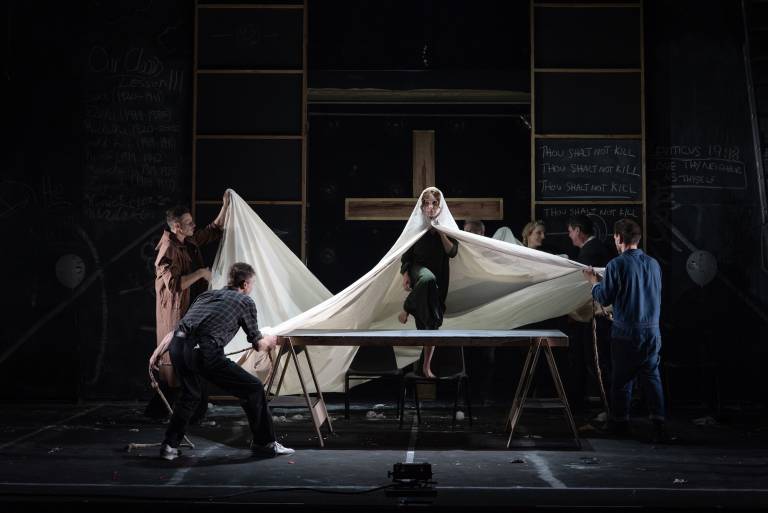
"content": "\u003cp>The play \u003cem>Our Class\u003c/em> unearths real events from a Polish village at the start of the Holocaust in 1941, but it gets at something universal: How prejudice, amplified and exploited by those in power, can drive ordinary people to despicable acts of violence.\u003c/p>\n\u003cp>Written by Tadeusz Słobodzianek in 2008, \u003ca href=\"https://www.zspace.org/ourclass\">\u003cem>Our Class\u003c/em>\u003c/a> runs at San Francisco’s Z Space March 27–April 5. It follows a class of five Catholic and five Jewish students, tracing their lives before and after a massacre in which the Catholic residents of the Nazi-occupied town of Jedwabne forced their Jewish neighbors into a barn and set it on fire.\u003c/p>\n\u003cp>More than 80 years later, governments peddling hatred have once again sewn divisions all over the globe. It’s something Chulpan Khamatova, who stars as Rachelka, knows well.\u003c/p>\n\u003cp>The Russian actress backed Russian President Vladimir Putin in the 2012 election (to protect her charity for children with cancer, she said). But in 2022, she went against the head of state by publicly opposing his invasion of Ukraine; protesting the war is a crime punishable by prison time in Russia.\u003c/p>\n\u003cp>While on break between performances of \u003cem>The Master and Margarita\u003c/em>, Khamatova and her children fled to Riga, Latvia, where she had to start over in exile. The decorated film and stage actress, who \u003cem>Our Class\u003c/em> director Igor Golyak called the “\u003ca href=\"https://igorgolyak.substack.com/p/the-laboratory-of-exile-notes-from\">Meryl Streep of Russia\u003c/a>,” joined a collective effort to support Ukrainian refugees while rebuilding her career in a new language.\u003c/p>\n\u003cp>[ad fullwidth]\u003c/p>\n\u003cp>Now in San Francisco, Khamatova takes on her first English-language theatrical role in a timely production of \u003cem>Our Class\u003c/em>, which has her thinking about the importance of art amid devastating global events.\u003c/p>\n\u003cp>\u003cem>This interview was translated from Russian and edited for length and clarity.\u003c/em>\u003c/p>\n\u003cfigure id=\"attachment_13988043\" class=\"wp-caption aligncenter\" style=\"max-width: 2000px\">\u003cimg loading=\"lazy\" decoding=\"async\" class=\"size-full wp-image-13988043\" src=\"https://cdn.kqed.org/wp-content/uploads/sites/2/2026/03/WladekWeddingDay_CastofOurClassBoston_Credit_OlgaMaturana.jpg\" alt=\"\" width=\"2000\" height=\"1333\" srcset=\"https://cdn.kqed.org/wp-content/uploads/sites/2/2026/03/WladekWeddingDay_CastofOurClassBoston_Credit_OlgaMaturana.jpg 2000w, https://cdn.kqed.org/wp-content/uploads/sites/2/2026/03/WladekWeddingDay_CastofOurClassBoston_Credit_OlgaMaturana-160x107.jpg 160w, https://cdn.kqed.org/wp-content/uploads/sites/2/2026/03/WladekWeddingDay_CastofOurClassBoston_Credit_OlgaMaturana-768x512.jpg 768w, https://cdn.kqed.org/wp-content/uploads/sites/2/2026/03/WladekWeddingDay_CastofOurClassBoston_Credit_OlgaMaturana-1536x1024.jpg 1536w\" sizes=\"auto, (max-width: 2000px) 100vw, 2000px\">\u003cfigcaption class=\"wp-caption-text\">The cast of ’Our Class’ at a performance in Boston. \u003ccite>(Olga Maturana)\u003c/cite>\u003c/figcaption>\u003c/figure>\n\u003cp>\u003cstrong>Nastia Voynovskaya:\u003c/strong> What drew you to the story in \u003cem>Our Class\u003c/em>?\u003c/p>\n\u003cp>\u003cstrong>Chulpan Khamatova:\u003c/strong> I saw the show in New York, and I really liked the theme of how quickly people who are in some kind of community, because of outside forces, lose their humanity. This is a true story that happened in this town, when you have your own neighbors [turn on you]. It seems like it was a long time ago, and it will never happen again. But, now, look. We’ve somehow ended up in this trap again.\u003c/p>\n\u003cp>\u003cstrong>Does it remind you of the political climate in Russia?\u003c/strong>\u003c/p>\n\u003cp>Not only in Russia. I think there is a danger to any society. How should we behave to prevent it? I have no answers. It seems to me that culture and education — nobody has tried it yet, not a single country has made its main focus on education and culture. So, it is impossible to prove my theory.\u003c/p>\n\u003cp>\u003cstrong>\u003cem>Our Class\u003c/em> points to how even ordinary people are capable of violence. What does that tell you about human nature?\u003c/strong>\u003c/p>\n\u003cp>That we all have darkness and light, and it’s up to each one of us to balance them. It’s complicated, especially when you choose the light and you’re left completely alone for some time.\u003c/p>\n\u003cp>I really love my character in \u003cem>Our Class\u003c/em>, Rachelka. I feel sorry for her. Not only because she is Jewish or lost her family, but also because she has lost her soul. I don’t judge her in any way. I can’t imagine myself going through such trials.\u003c/p>\n\u003cp>The situation broke her. She did not burn in the shed, but she died on the inside. She died as a person who had hope and faith that good and justice will somehow prevail. She swam with the current and betrayed the people she loved. I appreciate how the play shows that no one is absolutely bad or absolutely good.\u003c/p>\n\u003cp>It was interesting for me to act in an English-language play. I wanted to immerse myself in a new world, a new mentality, and it turned out to be very close to home, which made me very happy. I was a little afraid that with my Russian training, I may seem too arrogant, too persistent. It turned out not to be the case.\u003c/p>\n\u003cfigure id=\"attachment_13988044\" class=\"wp-caption aligncenter\" style=\"max-width: 2000px\">\u003cimg loading=\"lazy\" decoding=\"async\" class=\"size-full wp-image-13988044\" src=\"https://cdn.kqed.org/wp-content/uploads/sites/2/2026/03/Stephen-Ochsner.-Photo_-Credit_Pavel-Antonov.jpg\" alt=\"\" width=\"2000\" height=\"1500\" srcset=\"https://cdn.kqed.org/wp-content/uploads/sites/2/2026/03/Stephen-Ochsner.-Photo_-Credit_Pavel-Antonov.jpg 2000w, https://cdn.kqed.org/wp-content/uploads/sites/2/2026/03/Stephen-Ochsner.-Photo_-Credit_Pavel-Antonov-160x120.jpg 160w, https://cdn.kqed.org/wp-content/uploads/sites/2/2026/03/Stephen-Ochsner.-Photo_-Credit_Pavel-Antonov-768x576.jpg 768w, https://cdn.kqed.org/wp-content/uploads/sites/2/2026/03/Stephen-Ochsner.-Photo_-Credit_Pavel-Antonov-1536x1152.jpg 1536w\" sizes=\"auto, (max-width: 2000px) 100vw, 2000px\">\u003cfigcaption class=\"wp-caption-text\">Stephen Ochsner in ‘Our Class.’ \u003ccite>(Pavel Antonov)\u003c/cite>\u003c/figcaption>\u003c/figure>\n\u003cp>\u003cstrong>The theater company presenting \u003cem>Our Class\u003c/em>, Arlekin, is made up of people from the former Soviet Union. Director Igor Golyak has roots in Ukraine. What kinds of conversations are you having with the other ensemble members when you’re not on stage?\u003c/strong>\u003c/p>\n\u003cp>I share a dressing room with two wonderful American actresses, Deborah Martin and Gigi Watson. We discuss everything — the situation in America, the situation in Russia, the war there and the war here. Unfortunately there are many unhappy topics to discuss — the rising levels of antisemitism.\u003c/p>\n\u003cp>I do not believe in dividing people by nationalities at all. I look at the individual person. In all nationalities there are amazing people, and also everywhere there are scum. I think this construction was unnecessary when civilization was formed. Of course, I respect and believe in certain cultural traditions, but I don’t think it’s possible to divide people by nationalities. I’m absolutely against it. That’s how the Holocaust started.\u003c/p>\n\u003cp>\u003cstrong>You’re Tatar and you grew up in the city of Kazan. Is there anything you bring from your life experience that helps you understand the story of \u003cem>Our Class\u003c/em> on a deeper level?\u003c/strong>\u003c/p>\n\u003cp>Yes, of course. The dominant ethnicity and language in the Soviet Union was Russian. Up until a certain age, I could not say my name — I was too shy. It was easier for me to introduce myself as Olya, Masha, Anya or some sort of typical Russian name. These experiences shape your personality, and they become like layers of bad skin that you have to shed as you get older.\u003c/p>\n\u003cp>I very much hope that the audience thinks about how the themes in the play relate to their own lives, not just the lives of some long-gone historical characters. There are just so many nuances and so many different interesting stories, both in our protagonists’ youth and old age.\u003c/p>\n\u003cp>I hope everyone in the audience imagines themselves facing these kinds of choices — a brave choice or a cowardly choice, to stay with yourself or to lose yourself. To go with the majority or to go against the current.\u003c/p>\n\u003cfigure id=\"attachment_13988045\" class=\"wp-caption aligncenter\" style=\"max-width: 2000px\">\u003cimg loading=\"lazy\" decoding=\"async\" class=\"size-full wp-image-13988045\" src=\"https://cdn.kqed.org/wp-content/uploads/sites/2/2026/03/ChulpanKhamatova_as-Rachelka_Marianna_Credit_Irina-Danilova.jpg\" alt=\"\" width=\"2000\" height=\"1331\" srcset=\"https://cdn.kqed.org/wp-content/uploads/sites/2/2026/03/ChulpanKhamatova_as-Rachelka_Marianna_Credit_Irina-Danilova.jpg 2000w, https://cdn.kqed.org/wp-content/uploads/sites/2/2026/03/ChulpanKhamatova_as-Rachelka_Marianna_Credit_Irina-Danilova-160x106.jpg 160w, https://cdn.kqed.org/wp-content/uploads/sites/2/2026/03/ChulpanKhamatova_as-Rachelka_Marianna_Credit_Irina-Danilova-768x511.jpg 768w, https://cdn.kqed.org/wp-content/uploads/sites/2/2026/03/ChulpanKhamatova_as-Rachelka_Marianna_Credit_Irina-Danilova-1536x1022.jpg 1536w\" sizes=\"auto, (max-width: 2000px) 100vw, 2000px\">\u003cfigcaption class=\"wp-caption-text\">Chulpan Khamatova in ‘Our Class.’ \u003ccite>(Irina Danilova)\u003c/cite>\u003c/figcaption>\u003c/figure>\n\u003cp>\u003cstrong>Tell me about your life in Latvia. How has it been for you having to start your career practically from the beginning?\u003c/strong>\u003c/p>\n\u003cp>It was not easy, but we survived. I moved with three children. I had no idea what to do next, how to live and how to feed them. I can’t say that the European world supported me in this decision, because all the laws and all the rules were aimed at making life outside Russia as difficult as possible for people who were against the war and left. I still have no answer why it is so, why it was necessary to turn off our credit cards, why it was necessary to create a situation where I couldn’t access my savings [because of sanctions]. There were a lot of such restrictions.\u003c/p>\n\u003cp>In my life, I have wealth in the form of friends who helped me survive from the very beginning. I started to work, to learn Latvian, and to play in the theater in Riga. I also try to perform in Russian, because I see how much people need it who are scattered all over the world, who left like me. [aside postid='arts_13987816']\u003c/p>\n\u003cp>\u003cstrong>Throughout your career you’ve been involved in philanthropy. Can you share more about that?\u003c/strong>\u003c/p>\n\u003cp>In Russia we have a foundation that’s still around even though I’ve left, that helps children with cancer.\u003c/p>\n\u003cp>At the beginning of the war, helping Ukrainian refugees helped me. If you feel bad, start helping others. That was my therapy. In Latvia this organization emerged, it was founded by two wonderful women who are now my best friends. It somehow made it easier for my soul to be useful to people who lost everything because of my motherland. For the first two years we did a lot of fundraisers. I think it can’t be any other way.\u003c/p>\n\u003cp>My friend, the Russian dramaturg Ivan Vyrypaev, organized a special space in Poland, Teal House. Ukrainian artists who became refugees, and Russians and Belarusians who left because they opposed the war, lived in his house, in his apartment. It’s perhaps the only place in Europe that’s like that.\u003c/p>\n\u003cfigure id=\"attachment_13988046\" class=\"wp-caption aligncenter\" style=\"max-width: 2000px\">\u003cimg loading=\"lazy\" decoding=\"async\" class=\"size-full wp-image-13988046\" src=\"https://cdn.kqed.org/wp-content/uploads/sites/2/2026/03/4Muskateers_KirillRubtsov_RyanCzerwonko_IliaVolok_JeremyBeazlie_Credit_IrinaDanilova.jpg\" alt=\"\" width=\"2000\" height=\"1333\" srcset=\"https://cdn.kqed.org/wp-content/uploads/sites/2/2026/03/4Muskateers_KirillRubtsov_RyanCzerwonko_IliaVolok_JeremyBeazlie_Credit_IrinaDanilova.jpg 2000w, https://cdn.kqed.org/wp-content/uploads/sites/2/2026/03/4Muskateers_KirillRubtsov_RyanCzerwonko_IliaVolok_JeremyBeazlie_Credit_IrinaDanilova-160x107.jpg 160w, https://cdn.kqed.org/wp-content/uploads/sites/2/2026/03/4Muskateers_KirillRubtsov_RyanCzerwonko_IliaVolok_JeremyBeazlie_Credit_IrinaDanilova-768x512.jpg 768w, https://cdn.kqed.org/wp-content/uploads/sites/2/2026/03/4Muskateers_KirillRubtsov_RyanCzerwonko_IliaVolok_JeremyBeazlie_Credit_IrinaDanilova-1536x1024.jpg 1536w\" sizes=\"auto, (max-width: 2000px) 100vw, 2000px\">\u003cfigcaption class=\"wp-caption-text\">Kirill Rubtsov, Ryan Czerwonko, Ilia Volok and Jeremy Beazlie in ‘Our Class.’ \u003ccite>(Irina Danilova)\u003c/cite>\u003c/figcaption>\u003c/figure>\n\u003cp>\u003cstrong>Many great Russian artists and musicians also fled since the beginning of the war. How does this fear of political persecution affect creativity and culture in Russia?\u003c/strong>\u003c/p>\n\u003cp>It influences it 100%. Artists cannot be not free.\u003c/p>\n\u003cp>It’s clear that there is not a single super free society, and in America there are also a huge number of restrictions on what you can’t do and so on. But in Russia it’s completely criminalized. That turns not only into censorship, but also self-censorship.\u003c/p>\n\u003cp>But not everyone can leave. Not everyone speaks other languages, and some have sick parents, some just have fear.\u003c/p>\n\u003cp>\u003cstrong>In these difficult times, how do you see the role of an artist? Do you believe that theater and creativity can be a force for good?\u003c/strong>\u003c/p>\n\u003cp>Yes I believe it, even though everyone says that no amount of culture or beauty will save the world. But going back to the beginning, I don’t think anyone has ever tried it. There has never been a single state on this earth that has placed its biggest bet on humanism, culture, education and empathy.\u003c/p>\n\u003cp>Seeing people’s strength in navigating difficult situations — be it in books, performances, films, music, it doesn’t matter — slowly forms you as a person.\u003c/p>\n\u003cp>Since everything went down the toilet, and took a completely different turn, it’s strange to talk about it. But I believe. Theater, music, cinema, books have made a huge impression on me. I can make better decisions after watching a performance, for example. I can change my life dramatically. I can realize, OK, I’m living wrong, I need to change something. So I think it’s still possible for others.\u003c/p>\n\u003chr>\n\u003cp>[ad floatright]\u003c/p>\n\u003cp>\u003cem>‘Our Class’ runs March 27–April 5 at Z Space (450 Florida St., San Francisco). \u003ca href=\"https://www.zspace.org/ourclass\">Tickets and more information here\u003c/a>.\u003c/em>\u003c/p>\n\n",
"blocks": [],
"excerpt": "Chulpan Khamatova stars in ‘Our Class,’ a timely play about a deadly pogrom during the Holocaust. ",
"status": "publish",
"parent": 0,
"modified": 1775514741,
"stats": {
"hasAudio": false,
"hasVideo": false,
"hasChartOrMap": false,
"iframeSrcs": [],
"hasGoogleForm": false,
"hasGallery": false,
"hasHearkenModule": false,
"hasPolis": false,
"paragraphCount": 41,
"wordCount": 1797
},
"headData": {
"title": "An Exiled Russian Actress Takes Center Stage in San Francisco | KQED",
"description": "Chulpan Khamatova stars in ‘Our Class,’ a timely play about a deadly pogrom during the Holocaust. ",
"ogTitle": "",
"ogDescription": "",
"ogImgId": "",
"twTitle": "",
"twDescription": "",
"twImgId": "",
"schema": {
"@context": "https://schema.org",
"@type": "Article",
"headline": "An Exiled Russian Actress Takes Center Stage in San Francisco",
"datePublished": "2026-03-27T08:00:14-07:00",
"dateModified": "2026-04-06T15:32:21-07:00",
"image": "https://cdn.kqed.org/wp-content/uploads/2020/02/KQED-OG-Image@1x.png"
}
},
"primaryCategory": {
"termId": 1,
"slug": "arts",
"name": "Arts"
},
"source": "The Do List",
"sourceUrl": "https://www.kqed.org/thedolist",
"audioUrl": "https://traffic.omny.fm/d/clips/0af137ef-751e-4b19-a055-aaef00d2d578/87fdd794-f90e-4280-920f-ab89016e8062/89db337f-0832-4bae-b482-b42001252bac/audio.mp3",
"sticky": false,
"nprStoryId": "kqed-13988031",
"templateType": "standard",
"featuredImageType": "standard",
"excludeFromSiteSearch": "Include",
"articleAge": "0",
"path": "/arts/13988031/chulpan-khamatova-our-class-z-space-san-francisco",
"audioTrackLength": null,
"parsedContent": [
{
"type": "contentString",
"content": "\u003cdiv class=\"post-body\">\u003cp>\u003cp>The play \u003cem>Our Class\u003c/em> unearths real events from a Polish village at the start of the Holocaust in 1941, but it gets at something universal: How prejudice, amplified and exploited by those in power, can drive ordinary people to despicable acts of violence.\u003c/p>\n\u003cp>Written by Tadeusz Słobodzianek in 2008, \u003ca href=\"https://www.zspace.org/ourclass\">\u003cem>Our Class\u003c/em>\u003c/a> runs at San Francisco’s Z Space March 27–April 5. It follows a class of five Catholic and five Jewish students, tracing their lives before and after a massacre in which the Catholic residents of the Nazi-occupied town of Jedwabne forced their Jewish neighbors into a barn and set it on fire.\u003c/p>\n\u003cp>More than 80 years later, governments peddling hatred have once again sewn divisions all over the globe. It’s something Chulpan Khamatova, who stars as Rachelka, knows well.\u003c/p>\n\u003cp>The Russian actress backed Russian President Vladimir Putin in the 2012 election (to protect her charity for children with cancer, she said). But in 2022, she went against the head of state by publicly opposing his invasion of Ukraine; protesting the war is a crime punishable by prison time in Russia.\u003c/p>\n\u003cp>While on break between performances of \u003cem>The Master and Margarita\u003c/em>, Khamatova and her children fled to Riga, Latvia, where she had to start over in exile. The decorated film and stage actress, who \u003cem>Our Class\u003c/em> director Igor Golyak called the “\u003ca href=\"https://igorgolyak.substack.com/p/the-laboratory-of-exile-notes-from\">Meryl Streep of Russia\u003c/a>,” joined a collective effort to support Ukrainian refugees while rebuilding her career in a new language.\u003c/p>\n\u003cp>\u003c/p>\u003c/div>",
"attributes": {
"named": {},
"numeric": []
}
},
{
"type": "component",
"content": "",
"name": "ad",
"attributes": {
"named": {
"label": "fullwidth"
},
"numeric": [
"fullwidth"
]
}
},
{
"type": "contentString",
"content": "\u003cdiv class=\"post-body\">\u003cp>\u003c/p>\n\u003cp>Now in San Francisco, Khamatova takes on her first English-language theatrical role in a timely production of \u003cem>Our Class\u003c/em>, which has her thinking about the importance of art amid devastating global events.\u003c/p>\n\u003cp>\u003cem>This interview was translated from Russian and edited for length and clarity.\u003c/em>\u003c/p>\n\u003cfigure id=\"attachment_13988043\" class=\"wp-caption aligncenter\" style=\"max-width: 2000px\">\u003cimg loading=\"lazy\" decoding=\"async\" class=\"size-full wp-image-13988043\" src=\"https://cdn.kqed.org/wp-content/uploads/sites/2/2026/03/WladekWeddingDay_CastofOurClassBoston_Credit_OlgaMaturana.jpg\" alt=\"\" width=\"2000\" height=\"1333\" srcset=\"https://cdn.kqed.org/wp-content/uploads/sites/2/2026/03/WladekWeddingDay_CastofOurClassBoston_Credit_OlgaMaturana.jpg 2000w, https://cdn.kqed.org/wp-content/uploads/sites/2/2026/03/WladekWeddingDay_CastofOurClassBoston_Credit_OlgaMaturana-160x107.jpg 160w, https://cdn.kqed.org/wp-content/uploads/sites/2/2026/03/WladekWeddingDay_CastofOurClassBoston_Credit_OlgaMaturana-768x512.jpg 768w, https://cdn.kqed.org/wp-content/uploads/sites/2/2026/03/WladekWeddingDay_CastofOurClassBoston_Credit_OlgaMaturana-1536x1024.jpg 1536w\" sizes=\"auto, (max-width: 2000px) 100vw, 2000px\">\u003cfigcaption class=\"wp-caption-text\">The cast of ’Our Class’ at a performance in Boston. \u003ccite>(Olga Maturana)\u003c/cite>\u003c/figcaption>\u003c/figure>\n\u003cp>\u003cstrong>Nastia Voynovskaya:\u003c/strong> What drew you to the story in \u003cem>Our Class\u003c/em>?\u003c/p>\n\u003cp>\u003cstrong>Chulpan Khamatova:\u003c/strong> I saw the show in New York, and I really liked the theme of how quickly people who are in some kind of community, because of outside forces, lose their humanity. This is a true story that happened in this town, when you have your own neighbors [turn on you]. It seems like it was a long time ago, and it will never happen again. But, now, look. We’ve somehow ended up in this trap again.\u003c/p>\n\u003cp>\u003cstrong>Does it remind you of the political climate in Russia?\u003c/strong>\u003c/p>\n\u003cp>Not only in Russia. I think there is a danger to any society. How should we behave to prevent it? I have no answers. It seems to me that culture and education — nobody has tried it yet, not a single country has made its main focus on education and culture. So, it is impossible to prove my theory.\u003c/p>\n\u003cp>\u003cstrong>\u003cem>Our Class\u003c/em> points to how even ordinary people are capable of violence. What does that tell you about human nature?\u003c/strong>\u003c/p>\n\u003cp>That we all have darkness and light, and it’s up to each one of us to balance them. It’s complicated, especially when you choose the light and you’re left completely alone for some time.\u003c/p>\n\u003cp>I really love my character in \u003cem>Our Class\u003c/em>, Rachelka. I feel sorry for her. Not only because she is Jewish or lost her family, but also because she has lost her soul. I don’t judge her in any way. I can’t imagine myself going through such trials.\u003c/p>\n\u003cp>The situation broke her. She did not burn in the shed, but she died on the inside. She died as a person who had hope and faith that good and justice will somehow prevail. She swam with the current and betrayed the people she loved. I appreciate how the play shows that no one is absolutely bad or absolutely good.\u003c/p>\n\u003cp>It was interesting for me to act in an English-language play. I wanted to immerse myself in a new world, a new mentality, and it turned out to be very close to home, which made me very happy. I was a little afraid that with my Russian training, I may seem too arrogant, too persistent. It turned out not to be the case.\u003c/p>\n\u003cfigure id=\"attachment_13988044\" class=\"wp-caption aligncenter\" style=\"max-width: 2000px\">\u003cimg loading=\"lazy\" decoding=\"async\" class=\"size-full wp-image-13988044\" src=\"https://cdn.kqed.org/wp-content/uploads/sites/2/2026/03/Stephen-Ochsner.-Photo_-Credit_Pavel-Antonov.jpg\" alt=\"\" width=\"2000\" height=\"1500\" srcset=\"https://cdn.kqed.org/wp-content/uploads/sites/2/2026/03/Stephen-Ochsner.-Photo_-Credit_Pavel-Antonov.jpg 2000w, https://cdn.kqed.org/wp-content/uploads/sites/2/2026/03/Stephen-Ochsner.-Photo_-Credit_Pavel-Antonov-160x120.jpg 160w, https://cdn.kqed.org/wp-content/uploads/sites/2/2026/03/Stephen-Ochsner.-Photo_-Credit_Pavel-Antonov-768x576.jpg 768w, https://cdn.kqed.org/wp-content/uploads/sites/2/2026/03/Stephen-Ochsner.-Photo_-Credit_Pavel-Antonov-1536x1152.jpg 1536w\" sizes=\"auto, (max-width: 2000px) 100vw, 2000px\">\u003cfigcaption class=\"wp-caption-text\">Stephen Ochsner in ‘Our Class.’ \u003ccite>(Pavel Antonov)\u003c/cite>\u003c/figcaption>\u003c/figure>\n\u003cp>\u003cstrong>The theater company presenting \u003cem>Our Class\u003c/em>, Arlekin, is made up of people from the former Soviet Union. Director Igor Golyak has roots in Ukraine. What kinds of conversations are you having with the other ensemble members when you’re not on stage?\u003c/strong>\u003c/p>\n\u003cp>I share a dressing room with two wonderful American actresses, Deborah Martin and Gigi Watson. We discuss everything — the situation in America, the situation in Russia, the war there and the war here. Unfortunately there are many unhappy topics to discuss — the rising levels of antisemitism.\u003c/p>\n\u003cp>I do not believe in dividing people by nationalities at all. I look at the individual person. In all nationalities there are amazing people, and also everywhere there are scum. I think this construction was unnecessary when civilization was formed. Of course, I respect and believe in certain cultural traditions, but I don’t think it’s possible to divide people by nationalities. I’m absolutely against it. That’s how the Holocaust started.\u003c/p>\n\u003cp>\u003cstrong>You’re Tatar and you grew up in the city of Kazan. Is there anything you bring from your life experience that helps you understand the story of \u003cem>Our Class\u003c/em> on a deeper level?\u003c/strong>\u003c/p>\n\u003cp>Yes, of course. The dominant ethnicity and language in the Soviet Union was Russian. Up until a certain age, I could not say my name — I was too shy. It was easier for me to introduce myself as Olya, Masha, Anya or some sort of typical Russian name. These experiences shape your personality, and they become like layers of bad skin that you have to shed as you get older.\u003c/p>\n\u003cp>I very much hope that the audience thinks about how the themes in the play relate to their own lives, not just the lives of some long-gone historical characters. There are just so many nuances and so many different interesting stories, both in our protagonists’ youth and old age.\u003c/p>\n\u003cp>I hope everyone in the audience imagines themselves facing these kinds of choices — a brave choice or a cowardly choice, to stay with yourself or to lose yourself. To go with the majority or to go against the current.\u003c/p>\n\u003cfigure id=\"attachment_13988045\" class=\"wp-caption aligncenter\" style=\"max-width: 2000px\">\u003cimg loading=\"lazy\" decoding=\"async\" class=\"size-full wp-image-13988045\" src=\"https://cdn.kqed.org/wp-content/uploads/sites/2/2026/03/ChulpanKhamatova_as-Rachelka_Marianna_Credit_Irina-Danilova.jpg\" alt=\"\" width=\"2000\" height=\"1331\" srcset=\"https://cdn.kqed.org/wp-content/uploads/sites/2/2026/03/ChulpanKhamatova_as-Rachelka_Marianna_Credit_Irina-Danilova.jpg 2000w, https://cdn.kqed.org/wp-content/uploads/sites/2/2026/03/ChulpanKhamatova_as-Rachelka_Marianna_Credit_Irina-Danilova-160x106.jpg 160w, https://cdn.kqed.org/wp-content/uploads/sites/2/2026/03/ChulpanKhamatova_as-Rachelka_Marianna_Credit_Irina-Danilova-768x511.jpg 768w, https://cdn.kqed.org/wp-content/uploads/sites/2/2026/03/ChulpanKhamatova_as-Rachelka_Marianna_Credit_Irina-Danilova-1536x1022.jpg 1536w\" sizes=\"auto, (max-width: 2000px) 100vw, 2000px\">\u003cfigcaption class=\"wp-caption-text\">Chulpan Khamatova in ‘Our Class.’ \u003ccite>(Irina Danilova)\u003c/cite>\u003c/figcaption>\u003c/figure>\n\u003cp>\u003cstrong>Tell me about your life in Latvia. How has it been for you having to start your career practically from the beginning?\u003c/strong>\u003c/p>\n\u003cp>It was not easy, but we survived. I moved with three children. I had no idea what to do next, how to live and how to feed them. I can’t say that the European world supported me in this decision, because all the laws and all the rules were aimed at making life outside Russia as difficult as possible for people who were against the war and left. I still have no answer why it is so, why it was necessary to turn off our credit cards, why it was necessary to create a situation where I couldn’t access my savings [because of sanctions]. There were a lot of such restrictions.\u003c/p>\n\u003cp>In my life, I have wealth in the form of friends who helped me survive from the very beginning. I started to work, to learn Latvian, and to play in the theater in Riga. I also try to perform in Russian, because I see how much people need it who are scattered all over the world, who left like me. \u003c/p>\u003c/div>",
"attributes": {
"named": {},
"numeric": []
}
},
{
"type": "component",
"content": "",
"name": "aside",
"attributes": {
"named": {
"postid": "arts_13987816",
"label": ""
},
"numeric": []
}
},
{
"type": "contentString",
"content": "\u003cdiv class=\"post-body\">\u003cp>\u003c/p>\n\u003cp>\u003cstrong>Throughout your career you’ve been involved in philanthropy. Can you share more about that?\u003c/strong>\u003c/p>\n\u003cp>In Russia we have a foundation that’s still around even though I’ve left, that helps children with cancer.\u003c/p>\n\u003cp>At the beginning of the war, helping Ukrainian refugees helped me. If you feel bad, start helping others. That was my therapy. In Latvia this organization emerged, it was founded by two wonderful women who are now my best friends. It somehow made it easier for my soul to be useful to people who lost everything because of my motherland. For the first two years we did a lot of fundraisers. I think it can’t be any other way.\u003c/p>\n\u003cp>My friend, the Russian dramaturg Ivan Vyrypaev, organized a special space in Poland, Teal House. Ukrainian artists who became refugees, and Russians and Belarusians who left because they opposed the war, lived in his house, in his apartment. It’s perhaps the only place in Europe that’s like that.\u003c/p>\n\u003cfigure id=\"attachment_13988046\" class=\"wp-caption aligncenter\" style=\"max-width: 2000px\">\u003cimg loading=\"lazy\" decoding=\"async\" class=\"size-full wp-image-13988046\" src=\"https://cdn.kqed.org/wp-content/uploads/sites/2/2026/03/4Muskateers_KirillRubtsov_RyanCzerwonko_IliaVolok_JeremyBeazlie_Credit_IrinaDanilova.jpg\" alt=\"\" width=\"2000\" height=\"1333\" srcset=\"https://cdn.kqed.org/wp-content/uploads/sites/2/2026/03/4Muskateers_KirillRubtsov_RyanCzerwonko_IliaVolok_JeremyBeazlie_Credit_IrinaDanilova.jpg 2000w, https://cdn.kqed.org/wp-content/uploads/sites/2/2026/03/4Muskateers_KirillRubtsov_RyanCzerwonko_IliaVolok_JeremyBeazlie_Credit_IrinaDanilova-160x107.jpg 160w, https://cdn.kqed.org/wp-content/uploads/sites/2/2026/03/4Muskateers_KirillRubtsov_RyanCzerwonko_IliaVolok_JeremyBeazlie_Credit_IrinaDanilova-768x512.jpg 768w, https://cdn.kqed.org/wp-content/uploads/sites/2/2026/03/4Muskateers_KirillRubtsov_RyanCzerwonko_IliaVolok_JeremyBeazlie_Credit_IrinaDanilova-1536x1024.jpg 1536w\" sizes=\"auto, (max-width: 2000px) 100vw, 2000px\">\u003cfigcaption class=\"wp-caption-text\">Kirill Rubtsov, Ryan Czerwonko, Ilia Volok and Jeremy Beazlie in ‘Our Class.’ \u003ccite>(Irina Danilova)\u003c/cite>\u003c/figcaption>\u003c/figure>\n\u003cp>\u003cstrong>Many great Russian artists and musicians also fled since the beginning of the war. How does this fear of political persecution affect creativity and culture in Russia?\u003c/strong>\u003c/p>\n\u003cp>It influences it 100%. Artists cannot be not free.\u003c/p>\n\u003cp>It’s clear that there is not a single super free society, and in America there are also a huge number of restrictions on what you can’t do and so on. But in Russia it’s completely criminalized. That turns not only into censorship, but also self-censorship.\u003c/p>\n\u003cp>But not everyone can leave. Not everyone speaks other languages, and some have sick parents, some just have fear.\u003c/p>\n\u003cp>\u003cstrong>In these difficult times, how do you see the role of an artist? Do you believe that theater and creativity can be a force for good?\u003c/strong>\u003c/p>\n\u003cp>Yes I believe it, even though everyone says that no amount of culture or beauty will save the world. But going back to the beginning, I don’t think anyone has ever tried it. There has never been a single state on this earth that has placed its biggest bet on humanism, culture, education and empathy.\u003c/p>\n\u003cp>Seeing people’s strength in navigating difficult situations — be it in books, performances, films, music, it doesn’t matter — slowly forms you as a person.\u003c/p>\n\u003cp>Since everything went down the toilet, and took a completely different turn, it’s strange to talk about it. But I believe. Theater, music, cinema, books have made a huge impression on me. I can make better decisions after watching a performance, for example. I can change my life dramatically. I can realize, OK, I’m living wrong, I need to change something. So I think it’s still possible for others.\u003c/p>\n\u003chr>\n\u003cp>\u003c/p>\u003c/div>",
"attributes": {
"named": {},
"numeric": []
}
},
{
"type": "component",
"content": "",
"name": "ad",
"attributes": {
"named": {
"label": "floatright"
},
"numeric": [
"floatright"
]
}
},
{
"type": "contentString",
"content": "\u003cdiv class=\"post-body\">\u003cp>\u003c/p>\n\u003cp>\u003cem>‘Our Class’ runs March 27–April 5 at Z Space (450 Florida St., San Francisco). \u003ca href=\"https://www.zspace.org/ourclass\">Tickets and more information here\u003c/a>.\u003c/em>\u003c/p>\n\n\u003c/div>\u003c/p>",
"attributes": {
"named": {},
"numeric": []
}
}
],
"link": "/arts/13988031/chulpan-khamatova-our-class-z-space-san-francisco",
"authors": [
"11387"
],
"programs": [
"arts_140"
],
"categories": [
"arts_1",
"arts_22313",
"arts_967"
],
"tags": [
"arts_10278",
"arts_10781",
"arts_4090",
"arts_1240"
],
"featImg": "arts_13988042",
"label": "source_arts_13988031"
},
"arts_13988010": {
"type": "posts",
"id": "arts_13988010",
"meta": {
"index": "posts_1716263798",
"site": "arts",
"id": "13988010",
"score": null,
"sort": [
1774562098000
]
},
"guestAuthors": [],
"slug": "annie-vought-opened-and-split-review-traywick-contemporary",
"title": "The Cure-All of Annie Vought’s Intricate Worlds",
"publishDate": 1774562098,
"format": "standard",
"headTitle": "The Cure-All of Annie Vought’s Intricate Worlds | KQED",
"labelTerm": {},
"content": "\u003cp>It’s a sign of something (a not-great something) when an arts writer develops a persistent eye twitch — in both eyes. \u003c/p>\n\u003cp>In retrospect, the cause was clear: too many screens and not enough sleep. The twitch started because everything in my life was too sleek and digital, too up-close and glowing. I needed to gaze at distant vistas, or even medium-distance potted plants. I was doing neither. (It ultimately took two weeks of jury duty, enforced non-screen time, to put the twitch to rest.)\u003c/p>\n\u003cp>Mid-twitch, though, I did experience some reprieve. Visiting Berkeley’s Traywick Contemporary to see \u003ca href=\"https://www.annievought.com/\">Annie Vought\u003c/a>’s solo show \u003ci>\u003ca href=\"https://www.traywick.com/exhibition/annie-vought-opened-and-split/\">opened and split\u003c/a>\u003c/i>, I felt the sweet relief of absorbing actual texture, depth and detail through my eyeballs. \u003c/p>\n\u003cp>Vought’s 12 cut-paper works are intricate worlds created with a blade, oil stick, colored pencil, glitter, sequins, graphite and charcoal. Some of those worlds are small, just 12 by 9 inches of cut black paper. Others measure six feet tall, stunningly solid despite being made of such slight material. \u003c/p>\n\u003cfigure id=\"attachment_13988013\" class=\"wp-caption aligncenter\" style=\"max-width: 2000px\">\u003cimg loading=\"lazy\" decoding=\"async\" src=\"https://cdn.kqed.org/wp-content/uploads/sites/2/2026/03/There-is-a-loneliness-that-can-be-rocked.2000-px.jpg\" alt=\"black paper cut into house shape with waves inside\" width=\"2000\" height=\"2000\" class=\"size-full wp-image-13988013\" srcset=\"https://cdn.kqed.org/wp-content/uploads/sites/2/2026/03/There-is-a-loneliness-that-can-be-rocked.2000-px.jpg 2000w, https://cdn.kqed.org/wp-content/uploads/sites/2/2026/03/There-is-a-loneliness-that-can-be-rocked.2000-px-160x160.jpg 160w, https://cdn.kqed.org/wp-content/uploads/sites/2/2026/03/There-is-a-loneliness-that-can-be-rocked.2000-px-768x768.jpg 768w, https://cdn.kqed.org/wp-content/uploads/sites/2/2026/03/There-is-a-loneliness-that-can-be-rocked.2000-px-1536x1536.jpg 1536w, https://cdn.kqed.org/wp-content/uploads/sites/2/2026/03/There-is-a-loneliness-that-can-be-rocked.2000-px-600x600.jpg 600w\" sizes=\"auto, (max-width: 2000px) 100vw, 2000px\">\u003cfigcaption class=\"wp-caption-text\">Annie Vought, ‘There is a loneliness that can be rocked,’ 2025; Hand cut paper, oil stick, glitter, sequins, glue, graphite, charcoal, colored pencil, ink. \u003ccite>(Courtesy of the artist)\u003c/cite>\u003c/figcaption>\u003c/figure>\n\u003cp>The artist, who relocated to Santa Fe from the Bay Area, is incredibly adept at slicing through paper to create lace-like, mind-boggling compositions. Before making the body of work shown at Traywick, she translated handwritten pages of text into large-scale cut-outs. Pieces were held together by the meeting points of letter and line, all the while appropriating someone else’s flowing cursive or gangly scrawl. \u003c/p>\n\u003cp>[ad fullwidth]\u003c/p>\n\u003cp>In \u003ci>opened and split\u003c/i>, Vought shifts from text to image, honing her own loose, kinetic style. Her pieces are filled with tiny characters and their minuscule teeth, hands (so many hands), desert plants, waves, spirals, bugs, eyes and feathers. All of this is cut into black paper, which then hangs in front of white background to create an added dimension of shadow.\u003c/p>\n\u003cp>The detail doesn’t stop with the interplay of positive and negative space. Shapes are glued to the paper surface. Chunky oil stick, colored pencil and black glitter add additional textural dimension to each piece. Around the edges of Vought’s works, notes and doodles bestow a sense of rapidity — in contrast to the sharp, careful cuts she makes by the thousand.\u003c/p>\n\u003cfigure id=\"attachment_13988014\" class=\"wp-caption aligncenter\" style=\"max-width: 2000px\">\u003cimg loading=\"lazy\" decoding=\"async\" src=\"https://cdn.kqed.org/wp-content/uploads/sites/2/2026/03/Demeter.2000-px.jpg\" alt=\"black paper with cut-in imagery of swirls, hands, plants, etc.\" width=\"2000\" height=\"2000\" class=\"size-full wp-image-13988014\" srcset=\"https://cdn.kqed.org/wp-content/uploads/sites/2/2026/03/Demeter.2000-px.jpg 2000w, https://cdn.kqed.org/wp-content/uploads/sites/2/2026/03/Demeter.2000-px-160x160.jpg 160w, https://cdn.kqed.org/wp-content/uploads/sites/2/2026/03/Demeter.2000-px-768x768.jpg 768w, https://cdn.kqed.org/wp-content/uploads/sites/2/2026/03/Demeter.2000-px-1536x1536.jpg 1536w, https://cdn.kqed.org/wp-content/uploads/sites/2/2026/03/Demeter.2000-px-600x600.jpg 600w\" sizes=\"auto, (max-width: 2000px) 100vw, 2000px\">\u003cfigcaption class=\"wp-caption-text\">Annie Vought, ‘Demeter,’ 2025; Hand cut paper, oil stick, glitter, sequins, glue, graphite, charcoal, colored pencil. \u003ccite>(Courtesy of the artist)\u003c/cite>\u003c/figcaption>\u003c/figure>\n\u003cp>Spring is the perfect time to encounter the abundance of Vought’s art, with all its churning, teeming \u003ci>activity\u003c/i>. The showstopper \u003ci>Demeter\u003c/i>, named after the Greek goddess of the harvest, breaks free from the rectangular shape that bounds the rest of the show’s works. Hands and fingers curve around its edges.\u003c/p>\n\u003cp>[aside postID='arts_13987911' hero='https://cdn.kqed.org/wp-content/uploads/sites/2/2026/03/DiedrickBrackens-62_2000.jpg']In \u003ci>A baptism in the river Styx\u003c/i> and \u003ci>There is a loneliness that can be rocked\u003c/i>, the next-largest pieces, Vought makes her cuts within the shape of a boat and a house, respectively. Filling those spaces with rough waters, reaching hands and what look like bunches of grass, she conjures dark, mythological narratives. Much of the art in \u003ci>opened and split\u003c/i> explicitly or materially references maternal figures. It’s hard not to see the many hands in Vought’s work as cushioning the boundary between familial and societal chaos.\u003c/p>\n\u003cp>Near the end of my time at Traywick, I lingered, returning for close-up views of each of the dozen works, knowing that unless I lived with them, I’d never be able to spot all the tiny vignettes and interactions they contained. Vought’s art, dense and dynamic, imparts a share of its energy onto the viewer. You can’t help but walk away with a bounce in your step. \u003c/p>\n\u003cp>And for that whole period of looking, I was blessedly twitch-free. It seems counterintuitive that highly detailed, intricately rendered art could be an antidote to digital strain. But the tangibility, the effort and evidence of Vought’s own hand, are the complete opposite of what ailed me. \u003c/p>\n\u003cp>Don’t deny your own eyes this particular remedy.\u003c/p>\n\u003chr>\n\u003cp>\u003c/p>\n\u003cp>\u003ci>‘\u003ca href=\"https://www.traywick.com/exhibition/annie-vought-opened-and-split/\">opened and split\u003c/a>’ is on view at Traywick Contemporary (895 Colusa Ave., Berkeley) through April 11, 2026. The show is a collaboration between Traywick and the curatorial project \u003ca href=\"https://www.pacificsawworks.com/\">Pacific Saw Works\u003c/a>.\u003c/i>\u003c/p>\n\n",
"blocks": [],
"excerpt": "The artist’s large-scale, complex compositions, made from cut paper, are the antidote to digital strain.",
"status": "publish",
"parent": 0,
"modified": 1774562098,
"stats": {
"hasAudio": false,
"hasVideo": false,
"hasChartOrMap": false,
"iframeSrcs": [],
"hasGoogleForm": false,
"hasGallery": false,
"hasHearkenModule": false,
"hasPolis": false,
"paragraphCount": 15,
"wordCount": 763
},
"headData": {
"title": "Annie Vought at Traywick Contemporary: Cut Paper Worlds | KQED",
"description": "The artist’s large-scale, complex compositions, made from cut paper, are the antidote to digital strain.",
"ogTitle": "The Cure-All of Annie Vought’s Intricate Worlds",
"ogDescription": "",
"ogImgId": "",
"twTitle": "The Cure-All of Annie Vought’s Intricate Worlds",
"twDescription": "",
"twImgId": "",
"socialTitle": "Annie Vought at Traywick Contemporary: Cut Paper Worlds %%page%% %%sep%% KQED",
"schema": {
"@context": "https://schema.org",
"@type": "Article",
"headline": "The Cure-All of Annie Vought’s Intricate Worlds",
"datePublished": "2026-03-26T14:54:58-07:00",
"dateModified": "2026-03-26T14:54:58-07:00",
"image": "https://cdn.kqed.org/wp-content/uploads/2020/02/KQED-OG-Image@1x.png"
}
},
"primaryCategory": {
"termId": 1,
"slug": "arts",
"name": "Arts"
},
"source": "The Do List",
"sourceUrl": "https://www.kqed.org/thedolist",
"sticky": false,
"nprStoryId": "kqed-13988010",
"templateType": "standard",
"featuredImageType": "standard",
"excludeFromSiteSearch": "Include",
"articleAge": "0",
"path": "/arts/13988010/annie-vought-opened-and-split-review-traywick-contemporary",
"audioTrackLength": null,
"parsedContent": [
{
"type": "contentString",
"content": "\u003cdiv class=\"post-body\">\u003cp>\u003cp>It’s a sign of something (a not-great something) when an arts writer develops a persistent eye twitch — in both eyes. \u003c/p>\n\u003cp>In retrospect, the cause was clear: too many screens and not enough sleep. The twitch started because everything in my life was too sleek and digital, too up-close and glowing. I needed to gaze at distant vistas, or even medium-distance potted plants. I was doing neither. (It ultimately took two weeks of jury duty, enforced non-screen time, to put the twitch to rest.)\u003c/p>\n\u003cp>Mid-twitch, though, I did experience some reprieve. Visiting Berkeley’s Traywick Contemporary to see \u003ca href=\"https://www.annievought.com/\">Annie Vought\u003c/a>’s solo show \u003ci>\u003ca href=\"https://www.traywick.com/exhibition/annie-vought-opened-and-split/\">opened and split\u003c/a>\u003c/i>, I felt the sweet relief of absorbing actual texture, depth and detail through my eyeballs. \u003c/p>\n\u003cp>Vought’s 12 cut-paper works are intricate worlds created with a blade, oil stick, colored pencil, glitter, sequins, graphite and charcoal. Some of those worlds are small, just 12 by 9 inches of cut black paper. Others measure six feet tall, stunningly solid despite being made of such slight material. \u003c/p>\n\u003cfigure id=\"attachment_13988013\" class=\"wp-caption aligncenter\" style=\"max-width: 2000px\">\u003cimg loading=\"lazy\" decoding=\"async\" src=\"https://cdn.kqed.org/wp-content/uploads/sites/2/2026/03/There-is-a-loneliness-that-can-be-rocked.2000-px.jpg\" alt=\"black paper cut into house shape with waves inside\" width=\"2000\" height=\"2000\" class=\"size-full wp-image-13988013\" srcset=\"https://cdn.kqed.org/wp-content/uploads/sites/2/2026/03/There-is-a-loneliness-that-can-be-rocked.2000-px.jpg 2000w, https://cdn.kqed.org/wp-content/uploads/sites/2/2026/03/There-is-a-loneliness-that-can-be-rocked.2000-px-160x160.jpg 160w, https://cdn.kqed.org/wp-content/uploads/sites/2/2026/03/There-is-a-loneliness-that-can-be-rocked.2000-px-768x768.jpg 768w, https://cdn.kqed.org/wp-content/uploads/sites/2/2026/03/There-is-a-loneliness-that-can-be-rocked.2000-px-1536x1536.jpg 1536w, https://cdn.kqed.org/wp-content/uploads/sites/2/2026/03/There-is-a-loneliness-that-can-be-rocked.2000-px-600x600.jpg 600w\" sizes=\"auto, (max-width: 2000px) 100vw, 2000px\">\u003cfigcaption class=\"wp-caption-text\">Annie Vought, ‘There is a loneliness that can be rocked,’ 2025; Hand cut paper, oil stick, glitter, sequins, glue, graphite, charcoal, colored pencil, ink. \u003ccite>(Courtesy of the artist)\u003c/cite>\u003c/figcaption>\u003c/figure>\n\u003cp>The artist, who relocated to Santa Fe from the Bay Area, is incredibly adept at slicing through paper to create lace-like, mind-boggling compositions. Before making the body of work shown at Traywick, she translated handwritten pages of text into large-scale cut-outs. Pieces were held together by the meeting points of letter and line, all the while appropriating someone else’s flowing cursive or gangly scrawl. \u003c/p>\n\u003cp>\u003c/p>\u003c/div>",
"attributes": {
"named": {},
"numeric": []
}
},
{
"type": "component",
"content": "",
"name": "ad",
"attributes": {
"named": {
"label": "fullwidth"
},
"numeric": [
"fullwidth"
]
}
},
{
"type": "contentString",
"content": "\u003cdiv class=\"post-body\">\u003cp>\u003c/p>\n\u003cp>In \u003ci>opened and split\u003c/i>, Vought shifts from text to image, honing her own loose, kinetic style. Her pieces are filled with tiny characters and their minuscule teeth, hands (so many hands), desert plants, waves, spirals, bugs, eyes and feathers. All of this is cut into black paper, which then hangs in front of white background to create an added dimension of shadow.\u003c/p>\n\u003cp>The detail doesn’t stop with the interplay of positive and negative space. Shapes are glued to the paper surface. Chunky oil stick, colored pencil and black glitter add additional textural dimension to each piece. Around the edges of Vought’s works, notes and doodles bestow a sense of rapidity — in contrast to the sharp, careful cuts she makes by the thousand.\u003c/p>\n\u003cfigure id=\"attachment_13988014\" class=\"wp-caption aligncenter\" style=\"max-width: 2000px\">\u003cimg loading=\"lazy\" decoding=\"async\" src=\"https://cdn.kqed.org/wp-content/uploads/sites/2/2026/03/Demeter.2000-px.jpg\" alt=\"black paper with cut-in imagery of swirls, hands, plants, etc.\" width=\"2000\" height=\"2000\" class=\"size-full wp-image-13988014\" srcset=\"https://cdn.kqed.org/wp-content/uploads/sites/2/2026/03/Demeter.2000-px.jpg 2000w, https://cdn.kqed.org/wp-content/uploads/sites/2/2026/03/Demeter.2000-px-160x160.jpg 160w, https://cdn.kqed.org/wp-content/uploads/sites/2/2026/03/Demeter.2000-px-768x768.jpg 768w, https://cdn.kqed.org/wp-content/uploads/sites/2/2026/03/Demeter.2000-px-1536x1536.jpg 1536w, https://cdn.kqed.org/wp-content/uploads/sites/2/2026/03/Demeter.2000-px-600x600.jpg 600w\" sizes=\"auto, (max-width: 2000px) 100vw, 2000px\">\u003cfigcaption class=\"wp-caption-text\">Annie Vought, ‘Demeter,’ 2025; Hand cut paper, oil stick, glitter, sequins, glue, graphite, charcoal, colored pencil. \u003ccite>(Courtesy of the artist)\u003c/cite>\u003c/figcaption>\u003c/figure>\n\u003cp>Spring is the perfect time to encounter the abundance of Vought’s art, with all its churning, teeming \u003ci>activity\u003c/i>. The showstopper \u003ci>Demeter\u003c/i>, named after the Greek goddess of the harvest, breaks free from the rectangular shape that bounds the rest of the show’s works. Hands and fingers curve around its edges.\u003c/p>\n\u003cp>\u003c/p>\u003c/div>",
"attributes": {
"named": {},
"numeric": []
}
},
{
"type": "component",
"content": "",
"name": "aside",
"attributes": {
"named": {
"postid": "arts_13987911",
"hero": "https://cdn.kqed.org/wp-content/uploads/sites/2/2026/03/DiedrickBrackens-62_2000.jpg",
"label": ""
},
"numeric": []
}
},
{
"type": "contentString",
"content": "\u003cdiv class=\"post-body\">\u003cp>In \u003ci>A baptism in the river Styx\u003c/i> and \u003ci>There is a loneliness that can be rocked\u003c/i>, the next-largest pieces, Vought makes her cuts within the shape of a boat and a house, respectively. Filling those spaces with rough waters, reaching hands and what look like bunches of grass, she conjures dark, mythological narratives. Much of the art in \u003ci>opened and split\u003c/i> explicitly or materially references maternal figures. It’s hard not to see the many hands in Vought’s work as cushioning the boundary between familial and societal chaos.\u003c/p>\n\u003cp>Near the end of my time at Traywick, I lingered, returning for close-up views of each of the dozen works, knowing that unless I lived with them, I’d never be able to spot all the tiny vignettes and interactions they contained. Vought’s art, dense and dynamic, imparts a share of its energy onto the viewer. You can’t help but walk away with a bounce in your step. \u003c/p>\n\u003cp>And for that whole period of looking, I was blessedly twitch-free. It seems counterintuitive that highly detailed, intricately rendered art could be an antidote to digital strain. But the tangibility, the effort and evidence of Vought’s own hand, are the complete opposite of what ailed me. \u003c/p>\n\u003cp>Don’t deny your own eyes this particular remedy.\u003c/p>\n\u003chr>\n\u003cp>\u003c/p>\n\u003cp>\u003ci>‘\u003ca href=\"https://www.traywick.com/exhibition/annie-vought-opened-and-split/\">opened and split\u003c/a>’ is on view at Traywick Contemporary (895 Colusa Ave., Berkeley) through April 11, 2026. The show is a collaboration between Traywick and the curatorial project \u003ca href=\"https://www.pacificsawworks.com/\">Pacific Saw Works\u003c/a>.\u003c/i>\u003c/p>\n\n\u003c/div>\u003c/p>",
"attributes": {
"named": {},
"numeric": []
}
}
],
"link": "/arts/13988010/annie-vought-opened-and-split-review-traywick-contemporary",
"authors": [
"61"
],
"programs": [
"arts_140"
],
"categories": [
"arts_1",
"arts_22313",
"arts_70"
],
"tags": [
"arts_769",
"arts_585"
],
"featImg": "arts_13988012",
"label": "source_arts_13988010"
},
"arts_13987995": {
"type": "posts",
"id": "arts_13987995",
"meta": {
"index": "posts_1716263798",
"site": "arts",
"id": "13987995",
"score": null,
"sort": [
1774552441000
]
},
"guestAuthors": [],
"slug": "san-francisco-symphony-2026-2027-season",
"title": "The San Francisco Symphony’s 2026–27 Season Is Here",
"publishDate": 1774552441,
"format": "standard",
"headTitle": "The San Francisco Symphony’s 2026–27 Season Is Here | KQED",
"labelTerm": {},
"content": "\u003cp>The \u003ca href=\"https://www.kqed.org/arts/tag/san-francisco-symphony\">San Francisco Symphony\u003c/a>’s \u003ca href=\"https://www.sfsymphony.org/Calendar/Season-Overview\">115th season\u003c/a> kicks off on Sept. 8, 2026, and today the orchestra announced a slate of multifaceted programming that includes several premieres and fresh collaborations.\u003c/p>\n\u003cp>Nov. 19–21, 2026, Alonzo King LINES Ballet debuts two new works set to Debussy’s \u003cem>Prélude à L’Après-midi d’un faune\u003c/em> and Copland’s suite from \u003cem>Appalachian Spring\u003c/em>, conducted by James Gaffigan.\u003c/p>\n\u003cp>June 3–5, 2027, the Symphony presents Janni Younge’s production of Stravinsky’s \u003cem>The Firebird\u003c/em> with puppetry and South African dance. Photographer and video artist Deborah O’Grady adds visuals from California’s dramatic landscapes to \u003cem>The Dharma at Big Sur\u003c/em> by Bay Area composer \u003ca href=\"https://www.kqed.org/arts/tag/john-adams\">John Adams\u003c/a> on June 17 and 18, 2027.\u003c/p>\n\u003cp>[aside postID='arts_13980628']On Feb. 11–13, 2027 San Francisco Symphony premieres a new work by Kyle Rivera, the winner of the \u003ca href=\"https://www.kqed.org/arts/13980628/emerging-black-composers-project-san-francisco-symphony-conservatory-of-music\">Emerging Black Composers Project\u003c/a>. Rivera’s piece dramatizes how dead whales sustain hidden ecosystems of deep-sea organisms.\u003c/p>\n\u003cp>On April 22–24, 2027 former San Francisco Symphony Director Esa-Pekka Salonen returns to Davies Symphony Hall (\u003ca href=\"https://www.kqed.org/arts/13954764/sf-symphony-leadership-esa-pekka-salonen-musicians-protest\">he left in 2025\u003c/a> due to disagreements with the board about budget cuts and programming). For the 2026–27 season, Salonen conducts the world premiere of a new concerto for harp and percussion by composer Rene Orth, a San Francisco Symphony commission.\u003c/p>\n\u003cp>[ad fullwidth]\u003c/p>\n\u003cp>Joe Hisaishi, the Japanese composer who has worked extensively with director Hayao Miyazaki, returns to the San Francisco Symphony stage on Oct. 22, 2026 for the West Coast premiere of his original Concerto for Orchestra, which he will conduct himself. (Studio Ghibli fans bought up tickets quickly when Hisaishi \u003ca href=\"https://www.kqed.org/arts/13963803/review-joe-hisaishi-studio-ghibli-san-francisco-symphony\">performed with the orchestra in 2024\u003c/a>.)\u003c/p>\n\u003cp>[aside postID='arts_13987039']The San Francisco Symphony will continue popular series including Films with Live Orchestra, which features classics such as \u003cem>Star Wars: Return of the Jedi\u003c/em> and \u003cem>The Ring\u003c/em>. Soundbox, a series of experimental performances in a relaxed, nightclub-like setting, comes back for a 13th season with two programs curated by violinist Vijay Gupta (Jan. 29–30) and conductor Edwin Outwater (April 1–2).\u003c/p>\n\u003cp>The new season also features collaborations with musicians such as Grammy-winning blues singer-songwriter Fantastic Negrito and Berkeley-born composer and environmentalist Gabriella Smith, who has come on as a creative partner.\u003c/p>\n\u003cp>\u003c/p>\n\u003cp>The San Francisco Symphony’s new season gets underway on Sept. 8, and the \u003ca href=\"https://www.sfsymphony.org/Calendar/Season-Overview\">full program can be found here\u003c/a>. Single-concert tickets go on sale July 18, with subscriptions available now.\u003c/p>\n\n",
"blocks": [],
"excerpt": "The orchestra returns with new works that explore mythology and environmentalism, plus fresh collaborations and more. ",
"status": "publish",
"parent": 0,
"modified": 1774563118,
"stats": {
"hasAudio": false,
"hasVideo": false,
"hasChartOrMap": false,
"iframeSrcs": [],
"hasGoogleForm": false,
"hasGallery": false,
"hasHearkenModule": false,
"hasPolis": false,
"paragraphCount": 11,
"wordCount": 429
},
"headData": {
"title": "The San Francisco Symphony’s 2026–27 Season Is Here | KQED",
"description": "The orchestra returns with new works that explore mythology and environmentalism, plus fresh collaborations and more. ",
"ogTitle": "",
"ogDescription": "",
"ogImgId": "",
"twTitle": "",
"twDescription": "",
"twImgId": "",
"schema": {
"@context": "https://schema.org",
"@type": "Article",
"headline": "The San Francisco Symphony’s 2026–27 Season Is Here",
"datePublished": "2026-03-26T12:14:01-07:00",
"dateModified": "2026-03-26T15:11:58-07:00",
"image": "https://cdn.kqed.org/wp-content/uploads/2020/02/KQED-OG-Image@1x.png"
}
},
"primaryCategory": {
"termId": 1,
"slug": "arts",
"name": "Arts"
},
"source": "The Do List",
"sourceUrl": "https://www.kqed.org/thedolist",
"sticky": false,
"nprStoryId": "kqed-13987995",
"templateType": "standard",
"featuredImageType": "standard",
"excludeFromSiteSearch": "Include",
"articleAge": "0",
"path": "/arts/13987995/san-francisco-symphony-2026-2027-season",
"audioTrackLength": null,
"parsedContent": [
{
"type": "contentString",
"content": "\u003cdiv class=\"post-body\">\u003cp>\u003cp>The \u003ca href=\"https://www.kqed.org/arts/tag/san-francisco-symphony\">San Francisco Symphony\u003c/a>’s \u003ca href=\"https://www.sfsymphony.org/Calendar/Season-Overview\">115th season\u003c/a> kicks off on Sept. 8, 2026, and today the orchestra announced a slate of multifaceted programming that includes several premieres and fresh collaborations.\u003c/p>\n\u003cp>Nov. 19–21, 2026, Alonzo King LINES Ballet debuts two new works set to Debussy’s \u003cem>Prélude à L’Après-midi d’un faune\u003c/em> and Copland’s suite from \u003cem>Appalachian Spring\u003c/em>, conducted by James Gaffigan.\u003c/p>\n\u003cp>June 3–5, 2027, the Symphony presents Janni Younge’s production of Stravinsky’s \u003cem>The Firebird\u003c/em> with puppetry and South African dance. Photographer and video artist Deborah O’Grady adds visuals from California’s dramatic landscapes to \u003cem>The Dharma at Big Sur\u003c/em> by Bay Area composer \u003ca href=\"https://www.kqed.org/arts/tag/john-adams\">John Adams\u003c/a> on June 17 and 18, 2027.\u003c/p>\n\u003cp>\u003c/p>\u003c/div>",
"attributes": {
"named": {},
"numeric": []
}
},
{
"type": "component",
"content": "",
"name": "aside",
"attributes": {
"named": {
"postid": "arts_13980628",
"label": ""
},
"numeric": []
}
},
{
"type": "contentString",
"content": "\u003cdiv class=\"post-body\">\u003cp>On Feb. 11–13, 2027 San Francisco Symphony premieres a new work by Kyle Rivera, the winner of the \u003ca href=\"https://www.kqed.org/arts/13980628/emerging-black-composers-project-san-francisco-symphony-conservatory-of-music\">Emerging Black Composers Project\u003c/a>. Rivera’s piece dramatizes how dead whales sustain hidden ecosystems of deep-sea organisms.\u003c/p>\n\u003cp>On April 22–24, 2027 former San Francisco Symphony Director Esa-Pekka Salonen returns to Davies Symphony Hall (\u003ca href=\"https://www.kqed.org/arts/13954764/sf-symphony-leadership-esa-pekka-salonen-musicians-protest\">he left in 2025\u003c/a> due to disagreements with the board about budget cuts and programming). For the 2026–27 season, Salonen conducts the world premiere of a new concerto for harp and percussion by composer Rene Orth, a San Francisco Symphony commission.\u003c/p>\n\u003cp>\u003c/p>\u003c/div>",
"attributes": {
"named": {},
"numeric": []
}
},
{
"type": "component",
"content": "",
"name": "ad",
"attributes": {
"named": {
"label": "fullwidth"
},
"numeric": [
"fullwidth"
]
}
},
{
"type": "contentString",
"content": "\u003cdiv class=\"post-body\">\u003cp>\u003c/p>\n\u003cp>Joe Hisaishi, the Japanese composer who has worked extensively with director Hayao Miyazaki, returns to the San Francisco Symphony stage on Oct. 22, 2026 for the West Coast premiere of his original Concerto for Orchestra, which he will conduct himself. (Studio Ghibli fans bought up tickets quickly when Hisaishi \u003ca href=\"https://www.kqed.org/arts/13963803/review-joe-hisaishi-studio-ghibli-san-francisco-symphony\">performed with the orchestra in 2024\u003c/a>.)\u003c/p>\n\u003cp>\u003c/p>\u003c/div>",
"attributes": {
"named": {},
"numeric": []
}
},
{
"type": "component",
"content": "",
"name": "aside",
"attributes": {
"named": {
"postid": "arts_13987039",
"label": ""
},
"numeric": []
}
},
{
"type": "contentString",
"content": "\u003cdiv class=\"post-body\">\u003cp>The San Francisco Symphony will continue popular series including Films with Live Orchestra, which features classics such as \u003cem>Star Wars: Return of the Jedi\u003c/em> and \u003cem>The Ring\u003c/em>. Soundbox, a series of experimental performances in a relaxed, nightclub-like setting, comes back for a 13th season with two programs curated by violinist Vijay Gupta (Jan. 29–30) and conductor Edwin Outwater (April 1–2).\u003c/p>\n\u003cp>The new season also features collaborations with musicians such as Grammy-winning blues singer-songwriter Fantastic Negrito and Berkeley-born composer and environmentalist Gabriella Smith, who has come on as a creative partner.\u003c/p>\n\u003cp>\u003c/p>\n\u003cp>The San Francisco Symphony’s new season gets underway on Sept. 8, and the \u003ca href=\"https://www.sfsymphony.org/Calendar/Season-Overview\">full program can be found here\u003c/a>. Single-concert tickets go on sale July 18, with subscriptions available now.\u003c/p>\n\n\u003c/div>\u003c/p>",
"attributes": {
"named": {},
"numeric": []
}
}
],
"link": "/arts/13987995/san-francisco-symphony-2026-2027-season",
"authors": [
"11387"
],
"programs": [
"arts_140"
],
"categories": [
"arts_1",
"arts_69",
"arts_22313"
],
"tags": [
"arts_1312",
"arts_4058",
"arts_6180",
"arts_10278",
"arts_1677",
"arts_1367"
],
"featImg": "arts_13954798",
"label": "source_arts_13987995"
},
"arts_13987965": {
"type": "posts",
"id": "arts_13987965",
"meta": {
"index": "posts_1716263798",
"site": "arts",
"id": "13987965",
"score": null,
"sort": [
1774475329000
]
},
"guestAuthors": [],
"slug": "doll-fest-oakland-albany-femmes-punk-bands-2026",
"title": "The Dolls Are Coming",
"publishDate": 1774475329,
"format": "standard",
"headTitle": "The Dolls Are Coming | KQED",
"labelTerm": {},
"content": "\u003cp>Anita Lofton and Veronica Savage have made noise in the Bay for more than a decade with their bands Sistas In The Pit and The Hail Marys – notable not just for their energy, but for the ways their identities intersect with their music. The two women are proudly Black, fiercely punk, unapologetically raw and have recently coalesced (along with drummer Q) into \u003ca href=\"https://www.instagram.com/blackgoldsun1/\">Black Gold Sun\u003c/a>. \u003c/p>\n\u003cp>After watching the 2024 election results, Anita paused all her other projects and, as “an act of public service,” decided to start a Black girl punk band.\u003c/p>\n\u003cp>“I knew the communities I belong to would be grieving — sad, devastated, overwhelmed,” she tells KQED via email. “I wanted to build a safe space for us. A place to rage, to dance, to scream and to let it all out.”\u003c/p>\n\u003cp>This weekend, Black Gold Sun will perform in another space designed to let it all out: \u003ca href=\"https://www.dollfest.net/home\">Doll Fest\u003c/a>, the two-day festival dedicated to femme-fronted bands from across the country. This year’s event will be held at Oakland’s California Ballroom on March 28 and 29, with a \u003ca href=\"https://tickets.venuepilot.com/e/doll-fest-vol-ii-pre-party-w-skip-the-needle-2026-03-27-ivy-room-albany-5b86b9\">pre-party\u003c/a> on March 27 at the female-owned Ivy Room in Albany. \u003c/p>\n\u003cfigure id=\"attachment_13987971\" class=\"wp-caption aligncenter\" style=\"max-width: 1000px\">\u003cimg loading=\"lazy\" decoding=\"async\" src=\"https://cdn.kqed.org/wp-content/uploads/sites/2/2026/03/vial_by_katy_kelly.jpg\" alt=\"\" width=\"1000\" height=\"903\" class=\"size-full wp-image-13987971\" srcset=\"https://cdn.kqed.org/wp-content/uploads/sites/2/2026/03/vial_by_katy_kelly.jpg 1000w, https://cdn.kqed.org/wp-content/uploads/sites/2/2026/03/vial_by_katy_kelly-160x144.jpg 160w, https://cdn.kqed.org/wp-content/uploads/sites/2/2026/03/vial_by_katy_kelly-768x694.jpg 768w\" sizes=\"auto, (max-width: 1000px) 100vw, 1000px\">\u003cfigcaption class=\"wp-caption-text\">Minneapolis punk trio VIAL plays this year’s Doll Fest. \u003ccite>(Katy Kelly)\u003c/cite>\u003c/figcaption>\u003c/figure>\n\u003cp>Now in its second year, the homegrown festival is dedicated to smashing the patriarchy, amplifying feminine power through music. In addition to local groups at the vanguard such as Black Gold Sun, this year’s headliners include Minneapolis bratpunk trio \u003ca href=\"https://www.vialband.com/\">VIAL\u003c/a> and Fat Wreck Chords’ \u003ca href=\"https://badcopbadcopmusic.com/\">Bad Cop Bad Cop\u003c/a>. Also on the lineup are Denver beatmaker and MC \u003ca href=\"https://www.instagram.com/wheelchairsportscamp/\">Wheelchair Sportscamp\u003c/a>, trans alt-hip-hop artist \u003ca href=\"https://www.itsdamag3.com/\">DAMAG3\u003c/a>, and nine-piece all-female ska band \u003ca href=\"https://www.instagram.com/colectivosabinas/\">El Colectivo Sabinas\u003c/a>. \u003c/p>\n\u003cp>[ad fullwidth]\u003c/p>\n\u003cp>“Anything that uplifts, empowers, or highlights women’s creativity is a yes for me. The current state of the world is doing a number on women, and I want to contribute to their joy,” says Anita, who plays guitar and sings for Black Gold Sun. \u003c/p>\n\u003cp>Doll Fest founder Maria Chaos was similarly fed up with the status quo, and grew determined to create the change she wanted to see in punk.\u003c/p>\n\u003cp>“I became really tired of watching old white man bands hogging the stages and making these empty promises of tokenized statements,” she tells KQED via email. \u003c/p>\n\u003cfigure id=\"attachment_13987972\" class=\"wp-caption aligncenter\" style=\"max-width: 2000px\">\u003cimg loading=\"lazy\" decoding=\"async\" src=\"https://cdn.kqed.org/wp-content/uploads/sites/2/2026/03/421523652_921050173114647_7186941386879221908_n.jpg\" alt=\"\" width=\"2000\" height=\"2000\" class=\"size-full wp-image-13987972\" srcset=\"https://cdn.kqed.org/wp-content/uploads/sites/2/2026/03/421523652_921050173114647_7186941386879221908_n.jpg 2000w, https://cdn.kqed.org/wp-content/uploads/sites/2/2026/03/421523652_921050173114647_7186941386879221908_n-160x160.jpg 160w, https://cdn.kqed.org/wp-content/uploads/sites/2/2026/03/421523652_921050173114647_7186941386879221908_n-768x768.jpg 768w, https://cdn.kqed.org/wp-content/uploads/sites/2/2026/03/421523652_921050173114647_7186941386879221908_n-1536x1536.jpg 1536w, https://cdn.kqed.org/wp-content/uploads/sites/2/2026/03/421523652_921050173114647_7186941386879221908_n-600x600.jpg 600w\" sizes=\"auto, (max-width: 2000px) 100vw, 2000px\">\u003cfigcaption class=\"wp-caption-text\">All-female ska band El Colectivo Sabinas. \u003ccite>(Artist photo)\u003c/cite>\u003c/figcaption>\u003c/figure>\n\u003cp>Maria stepped up to the plate and built Doll Fest from the ground up alongside general manager and art director Freya Hausman, who until recently was the general manager of the Bay Area record label Alternative Tentacles. The two booked femme-led bands across the punk spectrum – from riot grrrl legends to ska-punk and alt-rock – \u003ca href=\"https://thebadcopy.com/interviews/maria-chaos-shares-the-birth-of-doll-fest-how-its-a-response-the-experience-of-booking-her-first-festival/\">prioritizing\u003c/a> a group’s enjoyment, draw and morals relative to the fest’s local audience and ethos. The inaugural Doll Fest took over Cornerstone in Berkeley, a city chosen for its \u003ca href=\"https://www.kron4.com/news/bay-area/doll-fest-amps-up-for-2-day-takeover-in-berkeley-we-want-people-to-feel-like-this-was-made-for-them/\">history of radical art and activism\u003c/a>, with headliners Tsunami Bomb and Naked Aggression. \u003c/p>\n\u003cp>Veronica, Black Gold Sun’s bassist, has exclusively played in all-female bands, and performed at multiple women-focused events. “Punk music has always been about challenges, rebellion, DIY culture. This festival gives space for female-fronted bands to be seen and heard, and for folks to experience a range of styles and messages that can keep the scene fresh and energized,” she says. \u003c/p>\n\u003cp>The energy is contagious – and expansive. Doll Fest has grown to include multiple auxiliary events including a comedy night, boxing meet-up, a vinyl compilation, multiple fundraisers, and a two-day festival in Mexico City headlined by legendary L.A. punk Alice Bag. “Before anyone asks, no this is not going to be Vans Warped Tour 2.0,” Maria adds.\u003c/p>\n\u003cp>“Having bands come from other areas to the Bay Area can be quite costly or difficult,” she continues. “This is a family, a community. If they can’t come to us then I want to go to them.”\u003c/p>\n\u003cp>https://www.youtube.com/watch?v=mE3G38gLO4s\u003c/p>\n\u003cp>Doll Fest has a nationwide community of supporters. Just a few months after the first Doll Fest, Maria was at Florida’s \u003ca href=\"https://www.facebook.com/thefestfl/\">Fest\u003c/a> and spoke with many people who knew about her event. “They thought it was so cool and had been yearning for an event like this.”\u003c/p>\n\u003cp>At a \u003ca href=\"https://www.instagram.com/p/DP6kJbwEdIO/\">Doll Fest benefit show\u003c/a> in November featuring \u003ca href=\"https://www.kqed.org/arts/13935330/frightwig-40th-anniversary-album-san-francisco-punk-rock-riot-grrrl\">San Francisco OGs Frightwig\u003c/a>, a performer recalled becoming jaded with life and music. “[She said] this event had given her a spark that she hadn’t felt in years,” Maria remembered. “I was in tears at one point…because the room felt like you were walking into a giant hug.”\u003c/p>\n\u003cp>Black Gold Sun’s Anita Lofton considers a femme-focused festival to be a powerful acknowledgment.\u003c/p>\n\u003cp>“The plain and simple truth is that seeing something makes it possible,” she says. “When you see women performing punk music, you know it’s real.”\u003c/p>\n\u003cfigure id=\"attachment_13987974\" class=\"wp-caption aligncenter\" style=\"max-width: 2000px\">\u003cimg loading=\"lazy\" decoding=\"async\" src=\"https://cdn.kqed.org/wp-content/uploads/sites/2/2026/03/BCBC-portrait-4784_credit_SoFinchPhotography-2025-1.jpg\" alt=\"\" width=\"2000\" height=\"1333\" class=\"size-full wp-image-13987974\" srcset=\"https://cdn.kqed.org/wp-content/uploads/sites/2/2026/03/BCBC-portrait-4784_credit_SoFinchPhotography-2025-1.jpg 2000w, https://cdn.kqed.org/wp-content/uploads/sites/2/2026/03/BCBC-portrait-4784_credit_SoFinchPhotography-2025-1-160x107.jpg 160w, https://cdn.kqed.org/wp-content/uploads/sites/2/2026/03/BCBC-portrait-4784_credit_SoFinchPhotography-2025-1-768x512.jpg 768w, https://cdn.kqed.org/wp-content/uploads/sites/2/2026/03/BCBC-portrait-4784_credit_SoFinchPhotography-2025-1-1536x1024.jpg 1536w\" sizes=\"auto, (max-width: 2000px) 100vw, 2000px\">\u003cfigcaption class=\"wp-caption-text\">Bad Cop Bad Cop, from Southern California, play this weekend’s Doll Fest. \u003ccite>(So Finch Photography)\u003c/cite>\u003c/figcaption>\u003c/figure>\n\u003cp>Like any production, putting on Doll Fest comes with logistical and emotional challenges. Maria says she experiences stress, imposter syndrome, and sometimes fears that she’s letting her team down. \u003c/p>\n\u003cp>Still, “hearing about how this event brings a type of joy to peoples’ lives…fuel[s] the fire,” Maria says. “I’ll keep doing these until I die.”\u003c/p>\n\u003chr>\n\u003cp>\u003c/p>\n\u003cp>\u003ci>Doll Fest takes place Saturday and Sunday, March 28 and 29, at the California Ballroom (1726 Franklin St. Oakland). A pre-party gets underway Friday, March 27, at the Ivy Room. \u003c/i>\u003ca href=\"https://www.dollfest.net/\">\u003ci>Tickets and more details here\u003c/i>\u003c/a>.\u003c/p>\n\n",
"blocks": [],
"excerpt": "At Doll Fest, femme-fronted bands make some noise to smash the patriarchy.",
"status": "publish",
"parent": 0,
"modified": 1774484196,
"stats": {
"hasAudio": false,
"hasVideo": true,
"hasChartOrMap": false,
"iframeSrcs": [],
"hasGoogleForm": false,
"hasGallery": false,
"hasHearkenModule": false,
"hasPolis": false,
"paragraphCount": 21,
"wordCount": 977
},
"headData": {
"title": "The Femme-Fronted Bands of Doll Fest Are Set to Take Over Oakland | KQED",
"description": "At Doll Fest, femme-fronted bands make some noise to smash the patriarchy.",
"ogTitle": "The Dolls Are Coming",
"ogDescription": "At Doll Fest, femme-fronted bands make some noise to smash the patriarchy.",
"ogImgId": "",
"twTitle": "The Dolls Are Coming",
"twDescription": "At Doll Fest, femme-fronted bands make some noise to smash the patriarchy.",
"twImgId": "",
"socialTitle": "The Femme-Fronted Bands of Doll Fest Are Set to Take Over Oakland %%page%% %%sep%% KQED",
"socialDescription": "At Doll Fest, femme-fronted bands make some noise to smash the patriarchy.",
"schema": {
"@context": "https://schema.org",
"@type": "Article",
"headline": "The Dolls Are Coming",
"datePublished": "2026-03-25T14:48:49-07:00",
"dateModified": "2026-03-25T17:16:36-07:00",
"image": "https://cdn.kqed.org/wp-content/uploads/2020/02/KQED-OG-Image@1x.png"
}
},
"primaryCategory": {
"termId": 1,
"slug": "arts",
"name": "Arts"
},
"source": "The Do List",
"sourceUrl": "https://www.kqed.org/thedolist",
"sticky": false,
"nprStoryId": "kqed-13987965",
"templateType": "standard",
"featuredImageType": "standard",
"excludeFromSiteSearch": "Include",
"articleAge": "0",
"path": "/arts/13987965/doll-fest-oakland-albany-femmes-punk-bands-2026",
"audioTrackLength": null,
"parsedContent": [
{
"type": "contentString",
"content": "\u003cdiv class=\"post-body\">\u003cp>\u003cp>Anita Lofton and Veronica Savage have made noise in the Bay for more than a decade with their bands Sistas In The Pit and The Hail Marys – notable not just for their energy, but for the ways their identities intersect with their music. The two women are proudly Black, fiercely punk, unapologetically raw and have recently coalesced (along with drummer Q) into \u003ca href=\"https://www.instagram.com/blackgoldsun1/\">Black Gold Sun\u003c/a>. \u003c/p>\n\u003cp>After watching the 2024 election results, Anita paused all her other projects and, as “an act of public service,” decided to start a Black girl punk band.\u003c/p>\n\u003cp>“I knew the communities I belong to would be grieving — sad, devastated, overwhelmed,” she tells KQED via email. “I wanted to build a safe space for us. A place to rage, to dance, to scream and to let it all out.”\u003c/p>\n\u003cp>This weekend, Black Gold Sun will perform in another space designed to let it all out: \u003ca href=\"https://www.dollfest.net/home\">Doll Fest\u003c/a>, the two-day festival dedicated to femme-fronted bands from across the country. This year’s event will be held at Oakland’s California Ballroom on March 28 and 29, with a \u003ca href=\"https://tickets.venuepilot.com/e/doll-fest-vol-ii-pre-party-w-skip-the-needle-2026-03-27-ivy-room-albany-5b86b9\">pre-party\u003c/a> on March 27 at the female-owned Ivy Room in Albany. \u003c/p>\n\u003cfigure id=\"attachment_13987971\" class=\"wp-caption aligncenter\" style=\"max-width: 1000px\">\u003cimg loading=\"lazy\" decoding=\"async\" src=\"https://cdn.kqed.org/wp-content/uploads/sites/2/2026/03/vial_by_katy_kelly.jpg\" alt=\"\" width=\"1000\" height=\"903\" class=\"size-full wp-image-13987971\" srcset=\"https://cdn.kqed.org/wp-content/uploads/sites/2/2026/03/vial_by_katy_kelly.jpg 1000w, https://cdn.kqed.org/wp-content/uploads/sites/2/2026/03/vial_by_katy_kelly-160x144.jpg 160w, https://cdn.kqed.org/wp-content/uploads/sites/2/2026/03/vial_by_katy_kelly-768x694.jpg 768w\" sizes=\"auto, (max-width: 1000px) 100vw, 1000px\">\u003cfigcaption class=\"wp-caption-text\">Minneapolis punk trio VIAL plays this year’s Doll Fest. \u003ccite>(Katy Kelly)\u003c/cite>\u003c/figcaption>\u003c/figure>\n\u003cp>Now in its second year, the homegrown festival is dedicated to smashing the patriarchy, amplifying feminine power through music. In addition to local groups at the vanguard such as Black Gold Sun, this year’s headliners include Minneapolis bratpunk trio \u003ca href=\"https://www.vialband.com/\">VIAL\u003c/a> and Fat Wreck Chords’ \u003ca href=\"https://badcopbadcopmusic.com/\">Bad Cop Bad Cop\u003c/a>. Also on the lineup are Denver beatmaker and MC \u003ca href=\"https://www.instagram.com/wheelchairsportscamp/\">Wheelchair Sportscamp\u003c/a>, trans alt-hip-hop artist \u003ca href=\"https://www.itsdamag3.com/\">DAMAG3\u003c/a>, and nine-piece all-female ska band \u003ca href=\"https://www.instagram.com/colectivosabinas/\">El Colectivo Sabinas\u003c/a>. \u003c/p>\n\u003cp>\u003c/p>\u003c/div>",
"attributes": {
"named": {},
"numeric": []
}
},
{
"type": "component",
"content": "",
"name": "ad",
"attributes": {
"named": {
"label": "fullwidth"
},
"numeric": [
"fullwidth"
]
}
},
{
"type": "contentString",
"content": "\u003cdiv class=\"post-body\">\u003cp>\u003c/p>\n\u003cp>“Anything that uplifts, empowers, or highlights women’s creativity is a yes for me. The current state of the world is doing a number on women, and I want to contribute to their joy,” says Anita, who plays guitar and sings for Black Gold Sun. \u003c/p>\n\u003cp>Doll Fest founder Maria Chaos was similarly fed up with the status quo, and grew determined to create the change she wanted to see in punk.\u003c/p>\n\u003cp>“I became really tired of watching old white man bands hogging the stages and making these empty promises of tokenized statements,” she tells KQED via email. \u003c/p>\n\u003cfigure id=\"attachment_13987972\" class=\"wp-caption aligncenter\" style=\"max-width: 2000px\">\u003cimg loading=\"lazy\" decoding=\"async\" src=\"https://cdn.kqed.org/wp-content/uploads/sites/2/2026/03/421523652_921050173114647_7186941386879221908_n.jpg\" alt=\"\" width=\"2000\" height=\"2000\" class=\"size-full wp-image-13987972\" srcset=\"https://cdn.kqed.org/wp-content/uploads/sites/2/2026/03/421523652_921050173114647_7186941386879221908_n.jpg 2000w, https://cdn.kqed.org/wp-content/uploads/sites/2/2026/03/421523652_921050173114647_7186941386879221908_n-160x160.jpg 160w, https://cdn.kqed.org/wp-content/uploads/sites/2/2026/03/421523652_921050173114647_7186941386879221908_n-768x768.jpg 768w, https://cdn.kqed.org/wp-content/uploads/sites/2/2026/03/421523652_921050173114647_7186941386879221908_n-1536x1536.jpg 1536w, https://cdn.kqed.org/wp-content/uploads/sites/2/2026/03/421523652_921050173114647_7186941386879221908_n-600x600.jpg 600w\" sizes=\"auto, (max-width: 2000px) 100vw, 2000px\">\u003cfigcaption class=\"wp-caption-text\">All-female ska band El Colectivo Sabinas. \u003ccite>(Artist photo)\u003c/cite>\u003c/figcaption>\u003c/figure>\n\u003cp>Maria stepped up to the plate and built Doll Fest from the ground up alongside general manager and art director Freya Hausman, who until recently was the general manager of the Bay Area record label Alternative Tentacles. The two booked femme-led bands across the punk spectrum – from riot grrrl legends to ska-punk and alt-rock – \u003ca href=\"https://thebadcopy.com/interviews/maria-chaos-shares-the-birth-of-doll-fest-how-its-a-response-the-experience-of-booking-her-first-festival/\">prioritizing\u003c/a> a group’s enjoyment, draw and morals relative to the fest’s local audience and ethos. The inaugural Doll Fest took over Cornerstone in Berkeley, a city chosen for its \u003ca href=\"https://www.kron4.com/news/bay-area/doll-fest-amps-up-for-2-day-takeover-in-berkeley-we-want-people-to-feel-like-this-was-made-for-them/\">history of radical art and activism\u003c/a>, with headliners Tsunami Bomb and Naked Aggression. \u003c/p>\n\u003cp>Veronica, Black Gold Sun’s bassist, has exclusively played in all-female bands, and performed at multiple women-focused events. “Punk music has always been about challenges, rebellion, DIY culture. This festival gives space for female-fronted bands to be seen and heard, and for folks to experience a range of styles and messages that can keep the scene fresh and energized,” she says. \u003c/p>\n\u003cp>The energy is contagious – and expansive. Doll Fest has grown to include multiple auxiliary events including a comedy night, boxing meet-up, a vinyl compilation, multiple fundraisers, and a two-day festival in Mexico City headlined by legendary L.A. punk Alice Bag. “Before anyone asks, no this is not going to be Vans Warped Tour 2.0,” Maria adds.\u003c/p>\n\u003cp>“Having bands come from other areas to the Bay Area can be quite costly or difficult,” she continues. “This is a family, a community. If they can’t come to us then I want to go to them.”\u003c/p>\u003c/p>\u003cp>\u003cspan class='utils-parseShortcode-shortcodes-__youtubeShortcode__embedYoutube'>\n \u003cspan class='utils-parseShortcode-shortcodes-__youtubeShortcode__embedYoutubeInside'>\n \u003ciframe\n loading='lazy'\n class='utils-parseShortcode-shortcodes-__youtubeShortcode__youtubePlayer'\n type='text/html'\n src='//www.youtube.com/embed/mE3G38gLO4s'\n title='//www.youtube.com/embed/mE3G38gLO4s'\n allowfullscreen='true'\n style='border:0;'>\u003c/iframe>\n \u003c/span>\n \u003c/span>\u003c/p>\u003cp>\u003cp>Doll Fest has a nationwide community of supporters. Just a few months after the first Doll Fest, Maria was at Florida’s \u003ca href=\"https://www.facebook.com/thefestfl/\">Fest\u003c/a> and spoke with many people who knew about her event. “They thought it was so cool and had been yearning for an event like this.”\u003c/p>\n\u003cp>At a \u003ca href=\"https://www.instagram.com/p/DP6kJbwEdIO/\">Doll Fest benefit show\u003c/a> in November featuring \u003ca href=\"https://www.kqed.org/arts/13935330/frightwig-40th-anniversary-album-san-francisco-punk-rock-riot-grrrl\">San Francisco OGs Frightwig\u003c/a>, a performer recalled becoming jaded with life and music. “[She said] this event had given her a spark that she hadn’t felt in years,” Maria remembered. “I was in tears at one point…because the room felt like you were walking into a giant hug.”\u003c/p>\n\u003cp>Black Gold Sun’s Anita Lofton considers a femme-focused festival to be a powerful acknowledgment.\u003c/p>\n\u003cp>“The plain and simple truth is that seeing something makes it possible,” she says. “When you see women performing punk music, you know it’s real.”\u003c/p>\n\u003cfigure id=\"attachment_13987974\" class=\"wp-caption aligncenter\" style=\"max-width: 2000px\">\u003cimg loading=\"lazy\" decoding=\"async\" src=\"https://cdn.kqed.org/wp-content/uploads/sites/2/2026/03/BCBC-portrait-4784_credit_SoFinchPhotography-2025-1.jpg\" alt=\"\" width=\"2000\" height=\"1333\" class=\"size-full wp-image-13987974\" srcset=\"https://cdn.kqed.org/wp-content/uploads/sites/2/2026/03/BCBC-portrait-4784_credit_SoFinchPhotography-2025-1.jpg 2000w, https://cdn.kqed.org/wp-content/uploads/sites/2/2026/03/BCBC-portrait-4784_credit_SoFinchPhotography-2025-1-160x107.jpg 160w, https://cdn.kqed.org/wp-content/uploads/sites/2/2026/03/BCBC-portrait-4784_credit_SoFinchPhotography-2025-1-768x512.jpg 768w, https://cdn.kqed.org/wp-content/uploads/sites/2/2026/03/BCBC-portrait-4784_credit_SoFinchPhotography-2025-1-1536x1024.jpg 1536w\" sizes=\"auto, (max-width: 2000px) 100vw, 2000px\">\u003cfigcaption class=\"wp-caption-text\">Bad Cop Bad Cop, from Southern California, play this weekend’s Doll Fest. \u003ccite>(So Finch Photography)\u003c/cite>\u003c/figcaption>\u003c/figure>\n\u003cp>Like any production, putting on Doll Fest comes with logistical and emotional challenges. Maria says she experiences stress, imposter syndrome, and sometimes fears that she’s letting her team down. \u003c/p>\n\u003cp>Still, “hearing about how this event brings a type of joy to peoples’ lives…fuel[s] the fire,” Maria says. “I’ll keep doing these until I die.”\u003c/p>\n\u003chr>\n\u003cp>\u003c/p>\n\u003cp>\u003ci>Doll Fest takes place Saturday and Sunday, March 28 and 29, at the California Ballroom (1726 Franklin St. Oakland). A pre-party gets underway Friday, March 27, at the Ivy Room. \u003c/i>\u003ca href=\"https://www.dollfest.net/\">\u003ci>Tickets and more details here\u003c/i>\u003c/a>.\u003c/p>\n\n\u003c/div>\u003c/p>",
"attributes": {
"named": {},
"numeric": []
}
}
],
"link": "/arts/13987965/doll-fest-oakland-albany-femmes-punk-bands-2026",
"authors": [
"11992"
],
"programs": [
"arts_140"
],
"categories": [
"arts_1",
"arts_69",
"arts_22313"
],
"tags": [
"arts_10278",
"arts_3226",
"arts_1143",
"arts_913",
"arts_702"
],
"featImg": "arts_13987970",
"label": "source_arts_13987965"
},
"arts_13987956": {
"type": "posts",
"id": "arts_13987956",
"meta": {
"index": "posts_1716263798",
"site": "arts",
"id": "13987956",
"score": null,
"sort": [
1774473131000
]
},
"guestAuthors": [],
"slug": "palestine-36-movie-review-arab-british-empire",
"title": "Heartfelt Epic ‘Palestine ’36’ Revisits Arab Blows Against the British Empire",
"publishDate": 1774473131,
"format": "standard",
"headTitle": "Heartfelt Epic ‘Palestine ’36’ Revisits Arab Blows Against the British Empire | KQED",
"labelTerm": {},
"content": "\u003cp>The Palestinian filmmaker Annemarie Jacir’s fourth and most ambitious feature, \u003cem>\u003ca href=\"https://www.watermelonpictures.com/films/palestine-36\">Palestine ’36\u003c/a>\u003c/em> (opening Friday, March 27 at several Bay Area theaters), is the kind of movie that critics like to say nobody makes anymore: an expensive, expansive period piece that movingly depicts the impossible sacrifices of everyday people against a backdrop of geopolitical events whose consequences reverberate to this very minute.\u003c/p>\n\u003cp>Palestine’s submission for the Best International Feature Oscar (it was shortlisted but not nominated), \u003cem>Palestine ’36\u003c/em> has both the virtues and flaws of the typical historical epic in that it necessarily compresses multiple perspectives into two hours. While the stakes are made palpable and our emotional connections to the characters are solid, key dramatic events come and go in a flash and some of the dialogue is overly succinct and on the nose.\u003c/p>\n\u003cp>“Your land is where your people are buried,” a grandmother instructs her granddaughter. “You have something more powerful than the entire British Empire. You come from a line of brave people who love their land.”\u003c/p>\n\u003cfigure id=\"attachment_13987961\" class=\"wp-caption aligncenter\" style=\"max-width: 2000px\">\u003cimg loading=\"lazy\" decoding=\"async\" src=\"https://cdn.kqed.org/wp-content/uploads/sites/2/2026/03/Palestine36_2.jpg\" alt=\"two children run through flowering field\" width=\"2000\" height=\"838\" class=\"size-full wp-image-13987961\" srcset=\"https://cdn.kqed.org/wp-content/uploads/sites/2/2026/03/Palestine36_2.jpg 2000w, https://cdn.kqed.org/wp-content/uploads/sites/2/2026/03/Palestine36_2-160x67.jpg 160w, https://cdn.kqed.org/wp-content/uploads/sites/2/2026/03/Palestine36_2-768x322.jpg 768w, https://cdn.kqed.org/wp-content/uploads/sites/2/2026/03/Palestine36_2-1536x644.jpg 1536w\" sizes=\"auto, (max-width: 2000px) 100vw, 2000px\">\u003cfigcaption class=\"wp-caption-text\">A still from ‘Palestine ’36,’ featuring Wardi Eilabouni as Afra (left). \u003ccite>(Watermelon Pictures)\u003c/cite>\u003c/figcaption>\u003c/figure>\n\u003cp>A speech underscoring the values of home, identity and ownership comes with the territory, pardon the pun. Jacir’s great contribution is immersing us in pre-World War II Palestine through careful attention to clothes and settings, augmented with restored and colorized archival footage. It is a pleasure to inhabit a physical, analog world where you can practically taste the dust and the grape leaves, and a 19th-century single-shot pistol has the weight of the world.\u003c/p>\n\u003cp>Shot on location in Palestine and Jordan, \u003cem>Palestine ’36\u003c/em> is at heart a multi-generational mosaic of profiles in radicalization. Surely you aren’t surprised to hear that this is a politically charged film, although (for better or worse) it never stops in its tracks for a utopian debate of principles and tactics à la English filmmaker Ken Loach (\u003cem>Land and Freedom\u003c/em>).\u003c/p>\n\u003cp>[ad fullwidth]\u003c/p>\n\u003cp>The story begins in 1936 when a young villager, Yusuf (Karim Daoud Anaya), comes to Jerusalem to be the assistant to a well-off publisher whose independent wife, Khouloud (Yasmine Al Massri), is an accomplished journalist. The traditional agrarian life of the nearby villages is conveyed through the aforementioned grandmother (a fierce Hiam Abbas), her widowed daughter Rabab (Yafa Bakri) and granddaughter Afra (Wardi Eilabouni).\u003c/p>\n\u003cfigure id=\"attachment_13987962\" class=\"wp-caption aligncenter\" style=\"max-width: 2000px\">\u003cimg loading=\"lazy\" decoding=\"async\" src=\"https://cdn.kqed.org/wp-content/uploads/sites/2/2026/03/Palestine36_3.jpg\" alt=\"three military men drive in open-topped car\" width=\"2000\" height=\"838\" class=\"size-full wp-image-13987962\" srcset=\"https://cdn.kqed.org/wp-content/uploads/sites/2/2026/03/Palestine36_3.jpg 2000w, https://cdn.kqed.org/wp-content/uploads/sites/2/2026/03/Palestine36_3-160x67.jpg 160w, https://cdn.kqed.org/wp-content/uploads/sites/2/2026/03/Palestine36_3-768x322.jpg 768w, https://cdn.kqed.org/wp-content/uploads/sites/2/2026/03/Palestine36_3-1536x644.jpg 1536w\" sizes=\"auto, (max-width: 2000px) 100vw, 2000px\">\u003cfigcaption class=\"wp-caption-text\">A still from ‘Palestine ’36,’ featuring Robert Aramayo as Captain Wingate (far right). \u003ccite>(Watermelon Pictures)\u003c/cite>\u003c/figcaption>\u003c/figure>\n\u003cp>Great Britain has been in charge of Palestine since the end of World War I, and the Brits are represented here by doddering High Commissioner Wauchope (Jeremy Irons), idealistic young diplomat Thomas (Billy Howle) and the singularly brutal Captain Wingate (Robert Aramayo).\u003c/p>\n\u003cp>Although there have been Jews in Palestine for centuries — with tensions and violence between Jews and Palestinians simmering for a while and the Jewish population increasing as Europeans flee anti-Semitism — it’s important to note that \u003cem>Palestine ’36\u003c/em> is a saga of the conflict between the indigenous Arabs and the occupying British. The Jewish settlers are almost entirely off-screen, although their presence and influence is referenced throughout the film.\u003c/p>\n\u003cp>The Arabs see the British as siding with the Zionists through a mix of condescension, prejudice and the calculations of out-of-touch London politicians. Yet not all the Arabs have thrown in with the armed rebels living in the mountains; some of the old-line, land-owning establishment types are hedging their bets by staying aligned with the British.\u003c/p>\n\u003cfigure id=\"attachment_13987963\" class=\"wp-caption aligncenter\" style=\"max-width: 2000px\">\u003cimg loading=\"lazy\" decoding=\"async\" src=\"https://cdn.kqed.org/wp-content/uploads/sites/2/2026/03/Palestine-36_4.jpg\" alt=\"suited women march with banners\" width=\"2000\" height=\"838\" class=\"size-full wp-image-13987963\" srcset=\"https://cdn.kqed.org/wp-content/uploads/sites/2/2026/03/Palestine-36_4.jpg 2000w, https://cdn.kqed.org/wp-content/uploads/sites/2/2026/03/Palestine-36_4-160x67.jpg 160w, https://cdn.kqed.org/wp-content/uploads/sites/2/2026/03/Palestine-36_4-768x322.jpg 768w, https://cdn.kqed.org/wp-content/uploads/sites/2/2026/03/Palestine-36_4-1536x644.jpg 1536w\" sizes=\"auto, (max-width: 2000px) 100vw, 2000px\">\u003cfigcaption class=\"wp-caption-text\">A still from ‘Palestine ’36,’ featuring Yasmine Al Massri as Khouloud (second from right). \u003ccite>(Watermelon Pictures)\u003c/cite>\u003c/figcaption>\u003c/figure>\n\u003cp>While the story centers on colonialists and insurgents of another time, it’s impossible to miss the contemporary echoes in some of Jacir’s compositions. Women throwing stones at fleeing British soldiers call to mind the images of children throwing stones at Israeli soldiers during the first intifada. The British army blowing up stone Palestinian houses inevitably calls down through the years to the Israeli army destroying Palestinian houses on various dubious premises.\u003c/p>\n\u003cp>Roger Ebert defined the movies as a great empathy machine, in that we see and identify with people whose lives are not ours. As we sit here today, the hideous crimes perpetuated against Palestinians and Israelis by each other in the last few years have had the additional effect of hardening everyone’s attitudes and positions.\u003c/p>\n\u003cp>\u003cem>Palestine ’36\u003c/em> may not be a film that wins or changes hearts and minds. It does offer an opening, for those who want to take it, to step into the realm of compassion, if only for two hours.\u003c/p>\n\u003chr>\n\u003cp>\u003c/p>\n\u003cp>\u003ci>‘Palestine ’36’ opens Friday, March 27 at \u003ca href=\"https://www.watermelonpictures.com/films/palestine-36\">select Bay Area theaters\u003c/a>.\u003c/i>\u003c/p>\n\n",
"blocks": [],
"excerpt": "Annemarie Jacir’s fourth feature has both the virtues and flaws of an expansive historical film.",
"status": "publish",
"parent": 0,
"modified": 1774552861,
"stats": {
"hasAudio": false,
"hasVideo": false,
"hasChartOrMap": false,
"iframeSrcs": [],
"hasGoogleForm": false,
"hasGallery": false,
"hasHearkenModule": false,
"hasPolis": false,
"paragraphCount": 15,
"wordCount": 804
},
"headData": {
"title": "‘Palestine ’36’ Review: A Heartfelt Historical Epic | KQED",
"description": "Annemarie Jacir’s fourth feature has both the virtues and flaws of an expansive historical film.",
"ogTitle": "Heartfelt Epic ‘Palestine ’36’ Revisits Arab Blows Against the British Empire",
"ogDescription": "",
"ogImgId": "",
"twTitle": "Heartfelt Epic ‘Palestine ’36’ Revisits Arab Blows Against the British Empire",
"twDescription": "",
"twImgId": "",
"socialTitle": "‘Palestine ’36’ Review: A Heartfelt Historical Epic %%page%% %%sep%% KQED",
"schema": {
"@context": "https://schema.org",
"@type": "Article",
"headline": "Heartfelt Epic ‘Palestine ’36’ Revisits Arab Blows Against the British Empire",
"datePublished": "2026-03-25T14:12:11-07:00",
"dateModified": "2026-03-26T12:21:01-07:00",
"image": "https://cdn.kqed.org/wp-content/uploads/2020/02/KQED-OG-Image@1x.png"
}
},
"primaryCategory": {
"termId": 1,
"slug": "arts",
"name": "Arts"
},
"source": "The Do List",
"sourceUrl": "https://www.kqed.org/thedolist",
"sticky": false,
"nprStoryId": "kqed-13987956",
"templateType": "standard",
"featuredImageType": "standard",
"excludeFromSiteSearch": "Include",
"articleAge": "0",
"path": "/arts/13987956/palestine-36-movie-review-arab-british-empire",
"audioTrackLength": null,
"parsedContent": [
{
"type": "contentString",
"content": "\u003cdiv class=\"post-body\">\u003cp>\u003cp>The Palestinian filmmaker Annemarie Jacir’s fourth and most ambitious feature, \u003cem>\u003ca href=\"https://www.watermelonpictures.com/films/palestine-36\">Palestine ’36\u003c/a>\u003c/em> (opening Friday, March 27 at several Bay Area theaters), is the kind of movie that critics like to say nobody makes anymore: an expensive, expansive period piece that movingly depicts the impossible sacrifices of everyday people against a backdrop of geopolitical events whose consequences reverberate to this very minute.\u003c/p>\n\u003cp>Palestine’s submission for the Best International Feature Oscar (it was shortlisted but not nominated), \u003cem>Palestine ’36\u003c/em> has both the virtues and flaws of the typical historical epic in that it necessarily compresses multiple perspectives into two hours. While the stakes are made palpable and our emotional connections to the characters are solid, key dramatic events come and go in a flash and some of the dialogue is overly succinct and on the nose.\u003c/p>\n\u003cp>“Your land is where your people are buried,” a grandmother instructs her granddaughter. “You have something more powerful than the entire British Empire. You come from a line of brave people who love their land.”\u003c/p>\n\u003cfigure id=\"attachment_13987961\" class=\"wp-caption aligncenter\" style=\"max-width: 2000px\">\u003cimg loading=\"lazy\" decoding=\"async\" src=\"https://cdn.kqed.org/wp-content/uploads/sites/2/2026/03/Palestine36_2.jpg\" alt=\"two children run through flowering field\" width=\"2000\" height=\"838\" class=\"size-full wp-image-13987961\" srcset=\"https://cdn.kqed.org/wp-content/uploads/sites/2/2026/03/Palestine36_2.jpg 2000w, https://cdn.kqed.org/wp-content/uploads/sites/2/2026/03/Palestine36_2-160x67.jpg 160w, https://cdn.kqed.org/wp-content/uploads/sites/2/2026/03/Palestine36_2-768x322.jpg 768w, https://cdn.kqed.org/wp-content/uploads/sites/2/2026/03/Palestine36_2-1536x644.jpg 1536w\" sizes=\"auto, (max-width: 2000px) 100vw, 2000px\">\u003cfigcaption class=\"wp-caption-text\">A still from ‘Palestine ’36,’ featuring Wardi Eilabouni as Afra (left). \u003ccite>(Watermelon Pictures)\u003c/cite>\u003c/figcaption>\u003c/figure>\n\u003cp>A speech underscoring the values of home, identity and ownership comes with the territory, pardon the pun. Jacir’s great contribution is immersing us in pre-World War II Palestine through careful attention to clothes and settings, augmented with restored and colorized archival footage. It is a pleasure to inhabit a physical, analog world where you can practically taste the dust and the grape leaves, and a 19th-century single-shot pistol has the weight of the world.\u003c/p>\n\u003cp>Shot on location in Palestine and Jordan, \u003cem>Palestine ’36\u003c/em> is at heart a multi-generational mosaic of profiles in radicalization. Surely you aren’t surprised to hear that this is a politically charged film, although (for better or worse) it never stops in its tracks for a utopian debate of principles and tactics à la English filmmaker Ken Loach (\u003cem>Land and Freedom\u003c/em>).\u003c/p>\n\u003cp>\u003c/p>\u003c/div>",
"attributes": {
"named": {},
"numeric": []
}
},
{
"type": "component",
"content": "",
"name": "ad",
"attributes": {
"named": {
"label": "fullwidth"
},
"numeric": [
"fullwidth"
]
}
},
{
"type": "contentString",
"content": "\u003cdiv class=\"post-body\">\u003cp>\u003c/p>\n\u003cp>The story begins in 1936 when a young villager, Yusuf (Karim Daoud Anaya), comes to Jerusalem to be the assistant to a well-off publisher whose independent wife, Khouloud (Yasmine Al Massri), is an accomplished journalist. The traditional agrarian life of the nearby villages is conveyed through the aforementioned grandmother (a fierce Hiam Abbas), her widowed daughter Rabab (Yafa Bakri) and granddaughter Afra (Wardi Eilabouni).\u003c/p>\n\u003cfigure id=\"attachment_13987962\" class=\"wp-caption aligncenter\" style=\"max-width: 2000px\">\u003cimg loading=\"lazy\" decoding=\"async\" src=\"https://cdn.kqed.org/wp-content/uploads/sites/2/2026/03/Palestine36_3.jpg\" alt=\"three military men drive in open-topped car\" width=\"2000\" height=\"838\" class=\"size-full wp-image-13987962\" srcset=\"https://cdn.kqed.org/wp-content/uploads/sites/2/2026/03/Palestine36_3.jpg 2000w, https://cdn.kqed.org/wp-content/uploads/sites/2/2026/03/Palestine36_3-160x67.jpg 160w, https://cdn.kqed.org/wp-content/uploads/sites/2/2026/03/Palestine36_3-768x322.jpg 768w, https://cdn.kqed.org/wp-content/uploads/sites/2/2026/03/Palestine36_3-1536x644.jpg 1536w\" sizes=\"auto, (max-width: 2000px) 100vw, 2000px\">\u003cfigcaption class=\"wp-caption-text\">A still from ‘Palestine ’36,’ featuring Robert Aramayo as Captain Wingate (far right). \u003ccite>(Watermelon Pictures)\u003c/cite>\u003c/figcaption>\u003c/figure>\n\u003cp>Great Britain has been in charge of Palestine since the end of World War I, and the Brits are represented here by doddering High Commissioner Wauchope (Jeremy Irons), idealistic young diplomat Thomas (Billy Howle) and the singularly brutal Captain Wingate (Robert Aramayo).\u003c/p>\n\u003cp>Although there have been Jews in Palestine for centuries — with tensions and violence between Jews and Palestinians simmering for a while and the Jewish population increasing as Europeans flee anti-Semitism — it’s important to note that \u003cem>Palestine ’36\u003c/em> is a saga of the conflict between the indigenous Arabs and the occupying British. The Jewish settlers are almost entirely off-screen, although their presence and influence is referenced throughout the film.\u003c/p>\n\u003cp>The Arabs see the British as siding with the Zionists through a mix of condescension, prejudice and the calculations of out-of-touch London politicians. Yet not all the Arabs have thrown in with the armed rebels living in the mountains; some of the old-line, land-owning establishment types are hedging their bets by staying aligned with the British.\u003c/p>\n\u003cfigure id=\"attachment_13987963\" class=\"wp-caption aligncenter\" style=\"max-width: 2000px\">\u003cimg loading=\"lazy\" decoding=\"async\" src=\"https://cdn.kqed.org/wp-content/uploads/sites/2/2026/03/Palestine-36_4.jpg\" alt=\"suited women march with banners\" width=\"2000\" height=\"838\" class=\"size-full wp-image-13987963\" srcset=\"https://cdn.kqed.org/wp-content/uploads/sites/2/2026/03/Palestine-36_4.jpg 2000w, https://cdn.kqed.org/wp-content/uploads/sites/2/2026/03/Palestine-36_4-160x67.jpg 160w, https://cdn.kqed.org/wp-content/uploads/sites/2/2026/03/Palestine-36_4-768x322.jpg 768w, https://cdn.kqed.org/wp-content/uploads/sites/2/2026/03/Palestine-36_4-1536x644.jpg 1536w\" sizes=\"auto, (max-width: 2000px) 100vw, 2000px\">\u003cfigcaption class=\"wp-caption-text\">A still from ‘Palestine ’36,’ featuring Yasmine Al Massri as Khouloud (second from right). \u003ccite>(Watermelon Pictures)\u003c/cite>\u003c/figcaption>\u003c/figure>\n\u003cp>While the story centers on colonialists and insurgents of another time, it’s impossible to miss the contemporary echoes in some of Jacir’s compositions. Women throwing stones at fleeing British soldiers call to mind the images of children throwing stones at Israeli soldiers during the first intifada. The British army blowing up stone Palestinian houses inevitably calls down through the years to the Israeli army destroying Palestinian houses on various dubious premises.\u003c/p>\n\u003cp>Roger Ebert defined the movies as a great empathy machine, in that we see and identify with people whose lives are not ours. As we sit here today, the hideous crimes perpetuated against Palestinians and Israelis by each other in the last few years have had the additional effect of hardening everyone’s attitudes and positions.\u003c/p>\n\u003cp>\u003cem>Palestine ’36\u003c/em> may not be a film that wins or changes hearts and minds. It does offer an opening, for those who want to take it, to step into the realm of compassion, if only for two hours.\u003c/p>\n\u003chr>\n\u003cp>\u003c/p>\n\u003cp>\u003ci>‘Palestine ’36’ opens Friday, March 27 at \u003ca href=\"https://www.watermelonpictures.com/films/palestine-36\">select Bay Area theaters\u003c/a>.\u003c/i>\u003c/p>\n\n\u003c/div>\u003c/p>",
"attributes": {
"named": {},
"numeric": []
}
}
],
"link": "/arts/13987956/palestine-36-movie-review-arab-british-empire",
"authors": [
"22"
],
"programs": [
"arts_140"
],
"categories": [
"arts_1",
"arts_74",
"arts_22313"
],
"tags": [
"arts_977",
"arts_769",
"arts_585"
],
"featImg": "arts_13987960",
"label": "source_arts_13987956"
},
"arts_13987938": {
"type": "posts",
"id": "arts_13987938",
"meta": {
"index": "posts_1716263798",
"site": "arts",
"id": "13987938",
"score": null,
"sort": [
1774458917000
]
},
"guestAuthors": [],
"slug": "san-jose-cat-day-cats-cats-cats",
"title": "Cats, Cats, Cats, Prancing Ever Onward in Downtown San José",
"publishDate": 1774458917,
"format": "standard",
"headTitle": "Cats, Cats, Cats, Prancing Ever Onward in Downtown San José | KQED",
"labelTerm": {},
"content": "\u003cp>For a few hours on March 28, downtown \u003ca href=\"https://www.kqed.org/arts/tag/san-jose\">San José\u003c/a> will be taken over by cats.\u003c/p>\n\u003cp>When San José Cat Day returns Saturday for its second year, it will bring double the participants as its debut in 2025, and three separate locations dedicated to feline festivities: an exhibit of original cat art, 60 vendors selling cat-themed merchandise, a cat-themed cafe and actual cats in a “kitten lounge.”\u003c/p>\n\u003cp>One returning vendor from 2025 is Jessica Chun, who first met Kevin Biggers of San José Made while he was planning the inaugural San José Cat Day. They bonded over their love of Garfield, which led to her being commissioned to design the event poster.\u003c/p>\n\u003cp>“It was by far like the most successful event poster that we’ve ever posted on our Instagram,” Biggers said. Chun, who’ll display her new prints, stickers, tote bags and keychains at this year’s event, created this year’s poster as well.\u003c/p>\n\u003cfigure id=\"attachment_13987944\" class=\"wp-caption aligncenter\" style=\"max-width: 2000px\">\u003cimg loading=\"lazy\" decoding=\"async\" class=\"size-full wp-image-13987944\" src=\"https://cdn.kqed.org/wp-content/uploads/sites/2/2026/03/chun_vendor_pic.jpg\" alt=\"\" width=\"2000\" height=\"2080\" srcset=\"https://cdn.kqed.org/wp-content/uploads/sites/2/2026/03/chun_vendor_pic.jpg 2000w, https://cdn.kqed.org/wp-content/uploads/sites/2/2026/03/chun_vendor_pic-160x166.jpg 160w, https://cdn.kqed.org/wp-content/uploads/sites/2/2026/03/chun_vendor_pic-768x799.jpg 768w, https://cdn.kqed.org/wp-content/uploads/sites/2/2026/03/chun_vendor_pic-1477x1536.jpg 1477w, https://cdn.kqed.org/wp-content/uploads/sites/2/2026/03/chun_vendor_pic-1969x2048.jpg 1969w\" sizes=\"auto, (max-width: 2000px) 100vw, 2000px\">\u003cfigcaption class=\"wp-caption-text\">Jessica Chun, who goes by Cocochoon, sells her cat-themed prints, charms and other wares. \u003ccite>(Courtesy Cocochoon)\u003c/cite>\u003c/figcaption>\u003c/figure>\n\u003cp>One of the event’s biggest draws is the kitten lounge, where visitors can pet and play with kittens, similar to cat cafes in Japan. Over 20 kittens will be available for adoption. (The limited slots have high demand, and visitors need to book appointments in advance.)\u003c/p>\n\u003cp>[ad fullwidth]\u003c/p>\n\u003cp>Though this is only the second San José Cat Day, the event reflects something larger for cat lovers. Cats have historically been tied to stereotypes like the “\u003ca href=\"https://www.kqed.org/arts/13891913/how-the-crazy-cat-lady-became-one-of-pop-cultures-most-enduring-sexist-tropes\">crazy cat lady\u003c/a>,” but have seen a surge in popularity, and pop-culture reframing, through social media and anime.\u003c/p>\n\u003cp>[aside postID='arts_13978816']Last year’s event drew a huge crowd of both people and cats. Many cats were seen carried in bubble backpacks peeking out as they moved through the event.\u003cbr>\n“It was very cute to see the cat owners talking to each other and connecting over this love of cats,” Chun said.\u003c/p>\n\u003cp>For Biggers, who describes himself as a cat enthusiast, the appeal of the event is as much about the people as it is about pets.\u003c/p>\n\u003cp>“I think it brings out the community of cat lovers or cat enthusiasts,” Biggers said. “It shows that it’s not necessarily a solitary endeavor or solitary hobby. There are a lot of people who are really cat people, even if they don’t own a cat themselves.”\u003c/p>\n\u003chr>\n\u003cp>\u003c/p>\n\u003cp>\u003cem>San José Cat Day takes place Saturday, March 28, from 11 a.m.–5 p.m. at various locations in downtown San José. \u003ca href=\"https://www.sanjosemade.com/pages/san-jose-cat-day-2026\">Details and more information here\u003c/a>.\u003c/em>\u003c/p>\n\n",
"blocks": [],
"excerpt": "San José Cat Day encompasses cat art, cat crafts, cat-themed food ... and, yes, actual cats. ",
"status": "publish",
"parent": 0,
"modified": 1774482947,
"stats": {
"hasAudio": false,
"hasVideo": false,
"hasChartOrMap": false,
"iframeSrcs": [],
"hasGoogleForm": false,
"hasGallery": false,
"hasHearkenModule": false,
"hasPolis": false,
"paragraphCount": 12,
"wordCount": 453
},
"headData": {
"title": "Cats, Cats, Cats, Prancing Ever Onward in Downtown San José | KQED",
"description": "San José Cat Day encompasses cat art, cat crafts, cat-themed food ... and, yes, actual cats. ",
"ogTitle": "",
"ogDescription": "",
"ogImgId": "",
"twTitle": "",
"twDescription": "",
"twImgId": "",
"schema": {
"@context": "https://schema.org",
"@type": "Article",
"headline": "Cats, Cats, Cats, Prancing Ever Onward in Downtown San José",
"datePublished": "2026-03-25T10:15:17-07:00",
"dateModified": "2026-03-25T16:55:47-07:00",
"image": "https://cdn.kqed.org/wp-content/uploads/2020/02/KQED-OG-Image@1x.png"
}
},
"primaryCategory": {
"termId": 1,
"slug": "arts",
"name": "Arts"
},
"source": "The Do List",
"sourceUrl": "https://www.kqed.org/thedolist",
"sticky": false,
"nprStoryId": "kqed-13987938",
"templateType": "standard",
"featuredImageType": "standard",
"excludeFromSiteSearch": "Include",
"articleAge": "0",
"path": "/arts/13987938/san-jose-cat-day-cats-cats-cats",
"audioTrackLength": null,
"parsedContent": [
{
"type": "contentString",
"content": "\u003cdiv class=\"post-body\">\u003cp>\u003cp>For a few hours on March 28, downtown \u003ca href=\"https://www.kqed.org/arts/tag/san-jose\">San José\u003c/a> will be taken over by cats.\u003c/p>\n\u003cp>When San José Cat Day returns Saturday for its second year, it will bring double the participants as its debut in 2025, and three separate locations dedicated to feline festivities: an exhibit of original cat art, 60 vendors selling cat-themed merchandise, a cat-themed cafe and actual cats in a “kitten lounge.”\u003c/p>\n\u003cp>One returning vendor from 2025 is Jessica Chun, who first met Kevin Biggers of San José Made while he was planning the inaugural San José Cat Day. They bonded over their love of Garfield, which led to her being commissioned to design the event poster.\u003c/p>\n\u003cp>“It was by far like the most successful event poster that we’ve ever posted on our Instagram,” Biggers said. Chun, who’ll display her new prints, stickers, tote bags and keychains at this year’s event, created this year’s poster as well.\u003c/p>\n\u003cfigure id=\"attachment_13987944\" class=\"wp-caption aligncenter\" style=\"max-width: 2000px\">\u003cimg loading=\"lazy\" decoding=\"async\" class=\"size-full wp-image-13987944\" src=\"https://cdn.kqed.org/wp-content/uploads/sites/2/2026/03/chun_vendor_pic.jpg\" alt=\"\" width=\"2000\" height=\"2080\" srcset=\"https://cdn.kqed.org/wp-content/uploads/sites/2/2026/03/chun_vendor_pic.jpg 2000w, https://cdn.kqed.org/wp-content/uploads/sites/2/2026/03/chun_vendor_pic-160x166.jpg 160w, https://cdn.kqed.org/wp-content/uploads/sites/2/2026/03/chun_vendor_pic-768x799.jpg 768w, https://cdn.kqed.org/wp-content/uploads/sites/2/2026/03/chun_vendor_pic-1477x1536.jpg 1477w, https://cdn.kqed.org/wp-content/uploads/sites/2/2026/03/chun_vendor_pic-1969x2048.jpg 1969w\" sizes=\"auto, (max-width: 2000px) 100vw, 2000px\">\u003cfigcaption class=\"wp-caption-text\">Jessica Chun, who goes by Cocochoon, sells her cat-themed prints, charms and other wares. \u003ccite>(Courtesy Cocochoon)\u003c/cite>\u003c/figcaption>\u003c/figure>\n\u003cp>One of the event’s biggest draws is the kitten lounge, where visitors can pet and play with kittens, similar to cat cafes in Japan. Over 20 kittens will be available for adoption. (The limited slots have high demand, and visitors need to book appointments in advance.)\u003c/p>\n\u003cp>\u003c/p>\u003c/div>",
"attributes": {
"named": {},
"numeric": []
}
},
{
"type": "component",
"content": "",
"name": "ad",
"attributes": {
"named": {
"label": "fullwidth"
},
"numeric": [
"fullwidth"
]
}
},
{
"type": "contentString",
"content": "\u003cdiv class=\"post-body\">\u003cp>\u003c/p>\n\u003cp>Though this is only the second San José Cat Day, the event reflects something larger for cat lovers. Cats have historically been tied to stereotypes like the “\u003ca href=\"https://www.kqed.org/arts/13891913/how-the-crazy-cat-lady-became-one-of-pop-cultures-most-enduring-sexist-tropes\">crazy cat lady\u003c/a>,” but have seen a surge in popularity, and pop-culture reframing, through social media and anime.\u003c/p>\n\u003cp>\u003c/p>\u003c/div>",
"attributes": {
"named": {},
"numeric": []
}
},
{
"type": "component",
"content": "",
"name": "aside",
"attributes": {
"named": {
"postid": "arts_13978816",
"label": ""
},
"numeric": []
}
},
{
"type": "contentString",
"content": "\u003cdiv class=\"post-body\">\u003cp>Last year’s event drew a huge crowd of both people and cats. Many cats were seen carried in bubble backpacks peeking out as they moved through the event.\u003cbr>\n“It was very cute to see the cat owners talking to each other and connecting over this love of cats,” Chun said.\u003c/p>\n\u003cp>For Biggers, who describes himself as a cat enthusiast, the appeal of the event is as much about the people as it is about pets.\u003c/p>\n\u003cp>“I think it brings out the community of cat lovers or cat enthusiasts,” Biggers said. “It shows that it’s not necessarily a solitary endeavor or solitary hobby. There are a lot of people who are really cat people, even if they don’t own a cat themselves.”\u003c/p>\n\u003chr>\n\u003cp>\u003c/p>\n\u003cp>\u003cem>San José Cat Day takes place Saturday, March 28, from 11 a.m.–5 p.m. at various locations in downtown San José. \u003ca href=\"https://www.sanjosemade.com/pages/san-jose-cat-day-2026\">Details and more information here\u003c/a>.\u003c/em>\u003c/p>\n\n\u003c/div>\u003c/p>",
"attributes": {
"named": {},
"numeric": []
}
}
],
"link": "/arts/13987938/san-jose-cat-day-cats-cats-cats",
"authors": [
"11972"
],
"programs": [
"arts_140"
],
"categories": [
"arts_1",
"arts_22313"
],
"tags": [
"arts_9340",
"arts_22068",
"arts_1084",
"arts_585"
],
"featImg": "arts_13987941",
"label": "source_arts_13987938"
},
"arts_13986980": {
"type": "posts",
"id": "arts_13986980",
"meta": {
"index": "posts_1716263798",
"site": "arts",
"id": "13986980",
"score": null,
"sort": [
1774454419000
]
},
"guestAuthors": [],
"slug": "the-ai-documentary-review-daniel-roher-how-i-became-an-apocaloptimist",
"title": "‘The AI Doc’ Is Probably the Scariest Movie You’ll See All Year",
"publishDate": 1774454419,
"format": "standard",
"headTitle": "‘The AI Doc’ Is Probably the Scariest Movie You’ll See All Year | KQED",
"labelTerm": {},
"content": "\u003cp>I’ve been asking my pregnant friends the same aghast question for about 20 years now: “Aren’t you worried about \u003ca href=\"https://www.kqed.org/climate\">climate change\u003c/a>?”\u003c/p>\n\u003cp>More recently, that query has morphed into a far more frenzied: “Aren’t you worried about climate change, and fascism, and \u003cem>the robots that are already \u003ca href=\"https://www.npr.org/2026/02/18/nx-s1-5717561/do-the-people-building-the-ai-chatbot-claude-understand-what-theyve-created\">plotting to kill us\u003c/a>\u003c/em>?”\u003c/p>\n\u003cp>As soon as his wife got pregnant a few years ago, Daniel Roher started worrying about those things as well — particularly that last one. Rather than simply collapsing into despair, Roher channeled his anxiety into thoroughly exploring the myths and realities of \u003ca href=\"https://www.kqed.org/arts/tag/artificial-intelligence\">AI\u003c/a> as we currently know it. The resulting documentary, \u003cem>The AI Doc: Or How I Became an Apocaloptimist\u003c/em>, consults a plethora of experts on the topic, with often confusing results.\u003c/p>\n\u003cp>[aside postid='news_12076608'] Roher gathers the interviewees into three broad groups: the terrifyingly pessimistic ones, the naively optimistic ones and the CEOs who are casually working on something that may or may not spark humanity’s demise. (Well, three out of five of them, anyway: OpenAI CEO Sam Altman, Google DeepMind CEO Demis Hassabis and Anthropic CEO Dario Amodei all appear. Mark Zuckerberg declined to participate and Elon Musk apparently backed out at the last minute.)\u003c/p>\n\u003cp>The worst AI predictions are presented first. Eliezer Yudkowsky, co-founder of the Machine Intelligence Research Institute, calmly talks of the “abrupt extermination” of humanity. Author and historian Yuval Noah Harari calls AI “a deadly threat.”\u003c/p>\n\u003cp>[ad fullwidth]\u003c/p>\n\u003cp>Center for Humane Technology President Tristan Harris — one of the most measured commentators in the movie — also shares some truly sobering views, the worst of which is that he knows active AI researchers who “don’t expect their children to make it to high school.” It doesn’t help matters that machine learning researcher Shane Legg follows this with the assertion, “The really powerful systems are coming and they’re coming soon — this is all just a warm-up.”\u003c/p>\n\u003cp>https://www.youtube.com/watch?v=xkPbV3IRe4Y\u003c/p>\n\u003cp>When the AI optimists arrive, it’s to assert that smart machines might one day save humanity from disease, climate change and asteroids. Canadian physicist Guillaume Verdon is the perkiest of them all, calling our present era “a glorious period of human transformation.” While the pessimists suggest that super-intelligent machines are going to end civilization as we know it, the optimists are convinced that humanity won’t survive \u003cem>without\u003c/em> the assistance of AI that is smarter than us. (Roher rightfully wonders aloud at this stage how AI is going to save us from climate change when data centers pose such \u003ca href=\"https://netzeroinsights.com/resources/data-centers-environmental-cost/\">well-established threats to ecosystems\u003c/a>.)\u003c/p>\n\u003cp>[aside postid='arts_13982572']When Roher asks Aza Raskin, co-founder of the Center for Humane Technology and Earth Species Project, who’s closer to the truth — the pessimists or the optimists — Raskin offers the frustratingly opaque: “They’re both right and neither side goes far enough.”\u003c/p>\n\u003cp>\u003cem>The AI Doc\u003c/em>, then, is an appropriately confounding documentary for a labyrinthian topic that is, at its core, too immense for most laypeople to fully grapple with yet. Roher makes for a relatable everyman throughout this rollercoaster of dread, relief, hope and fear.\u003c/p>\n\u003cfigure id=\"attachment_13987074\" class=\"wp-caption aligncenter\" style=\"max-width: 2000px\">\u003cimg loading=\"lazy\" decoding=\"async\" class=\"size-full wp-image-13987074\" src=\"https://cdn.kqed.org/wp-content/uploads/sites/2/2026/02/daniel-roher-stress-e1771966666457.png\" alt=\"A middle aged white man clutches handfuls of his own hair, elbows resting on a desk in front of him, with a stressed facial expression.\" width=\"2000\" height=\"1210\">\u003cfigcaption class=\"wp-caption-text\">Director Daniel Roher having an on-camera existential crisis about AI in ‘The AI Doc.’ Relatable! \u003ccite>(Focus Features)\u003c/cite>\u003c/figcaption>\u003c/figure>\n\u003cp>By the time the AI CEOs arrive — they show up late in the picture and are, mercifully, not permitted to dominate the conversation — the film mostly confirms that predictions for AI’s endgame lie entirely in the eye of the beholder. It’s certainly interesting that each CEO seems to believe his company is more morally sound than the next.\u003c/p>\n\u003cp>In his conversations with Roher, Sam Altman talks a good game about the safety protocols that OpenAI has in place. Given his company’s highly controversial new \u003ca href=\"https://www.npr.org/2026/03/08/nx-s1-5741779/openai-resigns-ai-pentagon-guardrails-military\">contract with the Department of Defense\u003c/a>, his words will either ring hollow or serve as comfort, depending on your viewpoint. For his part in \u003cem>The AI Doc\u003c/em>, Anthropic’s Dario Amodei simply says, “Am I confident that everything’s going to work out? No, I’m not.” Hassabis is even more vague: “If something is possible to do, humanity is going to do it,” he says.\u003c/p>\n\u003cp>[aside postid='arts_13985929']In the end, Roher’s foremost question in the documentary — “Is now a terrible time to have a kid?” — does get an answer of sorts. That, broadly, is a resounding “Yes, but…” The “but” here is that it’s probably \u003cem>never\u003c/em> been a great time to have kids, so why stop now? Roher’s own parents try to comfort him with the fact that they started their own family in the midst of the Cold War, when the threat of nuclear annihilation felt ever-present.\u003c/p>\n\u003cp>If Roher started the project seeking comfort, you can rest (un)assured after viewing \u003cem>The AI Doc\u003c/em> that Roher did not find what he was looking for — not in any real, permanent sense, anyway. It’s unlikely that most viewers will reach any solid conclusions either. The feeling I left \u003cem>The AI Doc\u003c/em> with is that the future of AI is overwhelmingly — and unfortunately — out of the hands of everyday people. That we’re being forced to put our faith in tech executives to make the right decisions is probably the scariest thing of all.\u003c/p>\n\u003chr>\n\u003cp>\u003c/p>\n\u003cp>\u003cem>‘The AI Doc: Or How I Became An Apocaloptimist’ is released nationwide on March 27, 2026.\u003c/em>\u003c/p>\n\n",
"blocks": [],
"excerpt": "Documentarian Daniel Roher asks the tough questions about AI — and gets mostly tough answers.",
"status": "publish",
"parent": 0,
"modified": 1774313727,
"stats": {
"hasAudio": false,
"hasVideo": true,
"hasChartOrMap": false,
"iframeSrcs": [],
"hasGoogleForm": false,
"hasGallery": false,
"hasHearkenModule": false,
"hasPolis": false,
"paragraphCount": 16,
"wordCount": 956
},
"headData": {
"title": "Documentary Review: ‘The AI Doc’ With Daniel Roher | KQED",
"description": "Documentarian Daniel Roher asks the tough questions about AI — and gets mostly tough answers.",
"ogTitle": "‘The AI Doc’ Is Probably the Scariest Movie You’ll See All Year",
"ogDescription": "",
"ogImgId": "",
"twTitle": "‘The AI Doc’ Is Probably the Scariest Movie You’ll See All Year",
"twDescription": "",
"twImgId": "",
"socialTitle": "Documentary Review: ‘The AI Doc’ With Daniel Roher %%page%% %%sep%% KQED",
"schema": {
"@context": "https://schema.org",
"@type": "Article",
"headline": "‘The AI Doc’ Is Probably the Scariest Movie You’ll See All Year",
"datePublished": "2026-03-25T09:00:19-07:00",
"dateModified": "2026-03-23T17:55:27-07:00",
"image": "https://cdn.kqed.org/wp-content/uploads/2020/02/KQED-OG-Image@1x.png"
}
},
"primaryCategory": {
"termId": 22313,
"slug": "the-do-list",
"name": "The Do List"
},
"source": "The Do List",
"sourceUrl": "https://www.kqed.org/thedolist",
"sticky": false,
"templateType": "standard",
"featuredImageType": "standard",
"excludeFromSiteSearch": "Include",
"articleAge": "0",
"path": "/arts/13986980/the-ai-documentary-review-daniel-roher-how-i-became-an-apocaloptimist",
"audioTrackLength": null,
"parsedContent": [
{
"type": "contentString",
"content": "\u003cdiv class=\"post-body\">\u003cp>\u003cp>I’ve been asking my pregnant friends the same aghast question for about 20 years now: “Aren’t you worried about \u003ca href=\"https://www.kqed.org/climate\">climate change\u003c/a>?”\u003c/p>\n\u003cp>More recently, that query has morphed into a far more frenzied: “Aren’t you worried about climate change, and fascism, and \u003cem>the robots that are already \u003ca href=\"https://www.npr.org/2026/02/18/nx-s1-5717561/do-the-people-building-the-ai-chatbot-claude-understand-what-theyve-created\">plotting to kill us\u003c/a>\u003c/em>?”\u003c/p>\n\u003cp>As soon as his wife got pregnant a few years ago, Daniel Roher started worrying about those things as well — particularly that last one. Rather than simply collapsing into despair, Roher channeled his anxiety into thoroughly exploring the myths and realities of \u003ca href=\"https://www.kqed.org/arts/tag/artificial-intelligence\">AI\u003c/a> as we currently know it. The resulting documentary, \u003cem>The AI Doc: Or How I Became an Apocaloptimist\u003c/em>, consults a plethora of experts on the topic, with often confusing results.\u003c/p>\n\u003cp>\u003c/p>\u003c/div>",
"attributes": {
"named": {},
"numeric": []
}
},
{
"type": "component",
"content": "",
"name": "aside",
"attributes": {
"named": {
"postid": "news_12076608",
"label": ""
},
"numeric": []
}
},
{
"type": "contentString",
"content": "\u003cdiv class=\"post-body\">\u003cp> Roher gathers the interviewees into three broad groups: the terrifyingly pessimistic ones, the naively optimistic ones and the CEOs who are casually working on something that may or may not spark humanity’s demise. (Well, three out of five of them, anyway: OpenAI CEO Sam Altman, Google DeepMind CEO Demis Hassabis and Anthropic CEO Dario Amodei all appear. Mark Zuckerberg declined to participate and Elon Musk apparently backed out at the last minute.)\u003c/p>\n\u003cp>The worst AI predictions are presented first. Eliezer Yudkowsky, co-founder of the Machine Intelligence Research Institute, calmly talks of the “abrupt extermination” of humanity. Author and historian Yuval Noah Harari calls AI “a deadly threat.”\u003c/p>\n\u003cp>\u003c/p>\u003c/div>",
"attributes": {
"named": {},
"numeric": []
}
},
{
"type": "component",
"content": "",
"name": "ad",
"attributes": {
"named": {
"label": "fullwidth"
},
"numeric": [
"fullwidth"
]
}
},
{
"type": "contentString",
"content": "\u003cdiv class=\"post-body\">\u003cp>\u003c/p>\n\u003cp>Center for Humane Technology President Tristan Harris — one of the most measured commentators in the movie — also shares some truly sobering views, the worst of which is that he knows active AI researchers who “don’t expect their children to make it to high school.” It doesn’t help matters that machine learning researcher Shane Legg follows this with the assertion, “The really powerful systems are coming and they’re coming soon — this is all just a warm-up.”\u003c/p>\u003c/p>\u003cp>\u003cspan class='utils-parseShortcode-shortcodes-__youtubeShortcode__embedYoutube'>\n \u003cspan class='utils-parseShortcode-shortcodes-__youtubeShortcode__embedYoutubeInside'>\n \u003ciframe\n loading='lazy'\n class='utils-parseShortcode-shortcodes-__youtubeShortcode__youtubePlayer'\n type='text/html'\n src='//www.youtube.com/embed/xkPbV3IRe4Y'\n title='//www.youtube.com/embed/xkPbV3IRe4Y'\n allowfullscreen='true'\n style='border:0;'>\u003c/iframe>\n \u003c/span>\n \u003c/span>\u003c/p>\u003cp>\u003cp>When the AI optimists arrive, it’s to assert that smart machines might one day save humanity from disease, climate change and asteroids. Canadian physicist Guillaume Verdon is the perkiest of them all, calling our present era “a glorious period of human transformation.” While the pessimists suggest that super-intelligent machines are going to end civilization as we know it, the optimists are convinced that humanity won’t survive \u003cem>without\u003c/em> the assistance of AI that is smarter than us. (Roher rightfully wonders aloud at this stage how AI is going to save us from climate change when data centers pose such \u003ca href=\"https://netzeroinsights.com/resources/data-centers-environmental-cost/\">well-established threats to ecosystems\u003c/a>.)\u003c/p>\n\u003cp>\u003c/p>\u003c/div>",
"attributes": {
"named": {},
"numeric": []
}
},
{
"type": "component",
"content": "",
"name": "aside",
"attributes": {
"named": {
"postid": "arts_13982572",
"label": ""
},
"numeric": []
}
},
{
"type": "contentString",
"content": "\u003cdiv class=\"post-body\">\u003cp>When Roher asks Aza Raskin, co-founder of the Center for Humane Technology and Earth Species Project, who’s closer to the truth — the pessimists or the optimists — Raskin offers the frustratingly opaque: “They’re both right and neither side goes far enough.”\u003c/p>\n\u003cp>\u003cem>The AI Doc\u003c/em>, then, is an appropriately confounding documentary for a labyrinthian topic that is, at its core, too immense for most laypeople to fully grapple with yet. Roher makes for a relatable everyman throughout this rollercoaster of dread, relief, hope and fear.\u003c/p>\n\u003cfigure id=\"attachment_13987074\" class=\"wp-caption aligncenter\" style=\"max-width: 2000px\">\u003cimg loading=\"lazy\" decoding=\"async\" class=\"size-full wp-image-13987074\" src=\"https://cdn.kqed.org/wp-content/uploads/sites/2/2026/02/daniel-roher-stress-e1771966666457.png\" alt=\"A middle aged white man clutches handfuls of his own hair, elbows resting on a desk in front of him, with a stressed facial expression.\" width=\"2000\" height=\"1210\">\u003cfigcaption class=\"wp-caption-text\">Director Daniel Roher having an on-camera existential crisis about AI in ‘The AI Doc.’ Relatable! \u003ccite>(Focus Features)\u003c/cite>\u003c/figcaption>\u003c/figure>\n\u003cp>By the time the AI CEOs arrive — they show up late in the picture and are, mercifully, not permitted to dominate the conversation — the film mostly confirms that predictions for AI’s endgame lie entirely in the eye of the beholder. It’s certainly interesting that each CEO seems to believe his company is more morally sound than the next.\u003c/p>\n\u003cp>In his conversations with Roher, Sam Altman talks a good game about the safety protocols that OpenAI has in place. Given his company’s highly controversial new \u003ca href=\"https://www.npr.org/2026/03/08/nx-s1-5741779/openai-resigns-ai-pentagon-guardrails-military\">contract with the Department of Defense\u003c/a>, his words will either ring hollow or serve as comfort, depending on your viewpoint. For his part in \u003cem>The AI Doc\u003c/em>, Anthropic’s Dario Amodei simply says, “Am I confident that everything’s going to work out? No, I’m not.” Hassabis is even more vague: “If something is possible to do, humanity is going to do it,” he says.\u003c/p>\n\u003cp>\u003c/p>\u003c/div>",
"attributes": {
"named": {},
"numeric": []
}
},
{
"type": "component",
"content": "",
"name": "aside",
"attributes": {
"named": {
"postid": "arts_13985929",
"label": ""
},
"numeric": []
}
},
{
"type": "contentString",
"content": "\u003cdiv class=\"post-body\">\u003cp>In the end, Roher’s foremost question in the documentary — “Is now a terrible time to have a kid?” — does get an answer of sorts. That, broadly, is a resounding “Yes, but…” The “but” here is that it’s probably \u003cem>never\u003c/em> been a great time to have kids, so why stop now? Roher’s own parents try to comfort him with the fact that they started their own family in the midst of the Cold War, when the threat of nuclear annihilation felt ever-present.\u003c/p>\n\u003cp>If Roher started the project seeking comfort, you can rest (un)assured after viewing \u003cem>The AI Doc\u003c/em> that Roher did not find what he was looking for — not in any real, permanent sense, anyway. It’s unlikely that most viewers will reach any solid conclusions either. The feeling I left \u003cem>The AI Doc\u003c/em> with is that the future of AI is overwhelmingly — and unfortunately — out of the hands of everyday people. That we’re being forced to put our faith in tech executives to make the right decisions is probably the scariest thing of all.\u003c/p>\n\u003chr>\n\u003cp>\u003c/p>\n\u003cp>\u003cem>‘The AI Doc: Or How I Became An Apocaloptimist’ is released nationwide on March 27, 2026.\u003c/em>\u003c/p>\n\n\u003c/div>\u003c/p>",
"attributes": {
"named": {},
"numeric": []
}
}
],
"link": "/arts/13986980/the-ai-documentary-review-daniel-roher-how-i-became-an-apocaloptimist",
"authors": [
"11242"
],
"programs": [
"arts_140"
],
"categories": [
"arts_1",
"arts_74",
"arts_75",
"arts_22313"
],
"tags": [
"arts_21891",
"arts_10278",
"arts_1935",
"arts_585"
],
"featImg": "arts_13987380",
"label": "source_arts_13986980"
},
"arts_13987911": {
"type": "posts",
"id": "arts_13987911",
"meta": {
"index": "posts_1716263798",
"site": "arts",
"id": "13987911",
"score": null,
"sort": [
1774394595000
]
},
"guestAuthors": [],
"slug": "diedrick-brackens-ybca-gather-tender-night-textiles-review",
"title": "Diedrick Brackens’ Monumental Textiles Hang in Splendor at YBCA",
"publishDate": 1774394595,
"format": "standard",
"headTitle": "Diedrick Brackens’ Monumental Textiles Hang in Splendor at YBCA | KQED",
"labelTerm": {},
"content": "\u003cp>\u003ca href=\"https://www.kqed.org/arts/tag/ybca\">Yerba Buena Center for the Arts\u003c/a> is, let’s admit, a tough space to fill with art. Its largest gallery is hangar-like, with impossibly high ceilings, one wall of windows and no interior divisions to speak of. Much of the artwork made at a human scale has a tendency to disappear in there, dwarfed by the spaciousness of its surroundings.\u003c/p>\n\u003cp>This is decidedly not the case with \u003ca href=\"https://ybca.org/event/diedrick-brackens-gather-tender-night/\">\u003ci>gather tender night\u003c/i>\u003c/a>, an exhibition of recent textile work by Bay Area artist (and California College of the Arts faculty member) Diedrick Brackens. His 15 large-scale textiles, hand-dyed and woven on floor looms, stretch to over 20 feet in length, softly hanging from walls, frames and ceiling throughout the well-arranged show. \u003c/p>\n\u003cp>I wish I could write this review without mentioning \u003ca href=\"https://www.kqed.org/arts/13985413/california-college-of-the-arts-sfai-mills-art-school-closures\">the upcoming closure of CCA\u003c/a>, which is also Brackens’ alma mater. After graduating from the school’s MFA program in 2014, Brackens returned to CCA a decade later as faculty, with international museum exhibitions and a \u003ca href=\"https://jackshainman.com/artists/diedrick_brackens\">New York gallery\u003c/a> under his belt. I cannot think of a better example of how an art school draws talented people to a region — and gives local audiences access to work they’d otherwise have to travel elsewhere to see. (This is Brackens’ first solo exhibition in the Bay Area.)\u003c/p>\n\u003cfigure id=\"attachment_13987917\" class=\"wp-caption aligncenter\" style=\"max-width: 2000px\">\u003cimg loading=\"lazy\" decoding=\"async\" src=\"https://cdn.kqed.org/wp-content/uploads/sites/2/2026/03/DiedrickBrackens-14_2000.jpg\" alt=\"gallery view with large hanging textiles\" width=\"2000\" height=\"1333\" class=\"size-full wp-image-13987917\" srcset=\"https://cdn.kqed.org/wp-content/uploads/sites/2/2026/03/DiedrickBrackens-14_2000.jpg 2000w, https://cdn.kqed.org/wp-content/uploads/sites/2/2026/03/DiedrickBrackens-14_2000-160x107.jpg 160w, https://cdn.kqed.org/wp-content/uploads/sites/2/2026/03/DiedrickBrackens-14_2000-768x512.jpg 768w, https://cdn.kqed.org/wp-content/uploads/sites/2/2026/03/DiedrickBrackens-14_2000-1536x1024.jpg 1536w\" sizes=\"auto, (max-width: 2000px) 100vw, 2000px\">\u003cfigcaption class=\"wp-caption-text\">Installation view of Diedrick Brackens’ ‘gather tender night’ at Yerba Buena Center for the Arts. \u003ccite>(Charlie Villyard/YBCA)\u003c/cite>\u003c/figcaption>\u003c/figure>\n\u003cp>Curated by Eungie Joo, who also organized YBCA’s comeback exhibition \u003ci>\u003ca href=\"https://www.kqed.org/arts/13979705/ybca-bay-area-then-1990s-rigo-23-margaret-kilgallen\">Bay Area Then\u003c/a>\u003c/i> last summer, \u003ci>gather tender night\u003c/i> is a balance of monumental, colorful panels and delicate, tender scenes. In Brackens’ textiles, silhouetted bodies blend into peaceful landscapes and populate fairytale scenarios (\u003ci>to soothe a myth\u003c/i> features a rearing unicorn). There is something elemental about these figures, which bend in half, raise their arms to the sky and gaze up, seemingly in awe of their surroundings. \u003c/p>\n\u003cp>Part of the dreaminess of Brackens’ work comes from his color choices. The oldest work in the show, dating back to 2020, is made with a scintillating combination of bright vermillion and turquoise. Then, a shift to yellows and muted purples; next, desaturated jewel tones; and finally, in his most recent pieces, mauve, oceanic greens and blues.\u003c/p>\n\u003cp>[ad fullwidth]\u003c/p>\n\u003cp>After dying lengths of cotton fiber in his studio, the weaving process causes sections of color to shift and misregister slightly, blurring the edges of shapes. Brackens plays off that painterly effect by leaving tails of black yarn dangling, like drips, from his silhouettes. \u003c/p>\n\u003cp>The best part of seeing \u003ci>gather tender night\u003c/i> at YBCA — and all the space that venue allows — is that visitors get to walk around many of the works. Two pieces hang from handsome wooden racks that nod to Brackens’ floor looms. Others hang from the two walls of a framed-out domestic space, which includes an installation of a bed (covered with a woven textile, of course), an overturned basket and a pile of pungent yellow soap. \u003c/p>\n\u003cfigure id=\"attachment_13987916\" class=\"wp-caption aligncenter\" style=\"max-width: 2000px\">\u003cimg loading=\"lazy\" decoding=\"async\" src=\"https://cdn.kqed.org/wp-content/uploads/sites/2/2026/03/DiedrickBrackens-45_2000.jpg\" alt=\"black silhouette and gray silhouette bend around each other\" width=\"2000\" height=\"1333\" class=\"size-full wp-image-13987916\" srcset=\"https://cdn.kqed.org/wp-content/uploads/sites/2/2026/03/DiedrickBrackens-45_2000.jpg 2000w, https://cdn.kqed.org/wp-content/uploads/sites/2/2026/03/DiedrickBrackens-45_2000-160x107.jpg 160w, https://cdn.kqed.org/wp-content/uploads/sites/2/2026/03/DiedrickBrackens-45_2000-768x512.jpg 768w, https://cdn.kqed.org/wp-content/uploads/sites/2/2026/03/DiedrickBrackens-45_2000-1536x1024.jpg 1536w\" sizes=\"auto, (max-width: 2000px) 100vw, 2000px\">\u003cfigcaption class=\"wp-caption-text\">Diedrick Brackens, ‘you’ll never get to heaven if you break my heart’ (detail), 2026; Woven cotton and acrylic yarn. \u003ccite>(Charlie Villyard/YBCA)\u003c/cite>\u003c/figcaption>\u003c/figure>\n\u003cp>On an “interior” wall hangs Brackens’ sole work that places his figures indoors, one bending backward to kiss another. The pair’s arms bracket each other’s heads in arcs of mutual protection. \u003c/p>\n\u003cp>Even visitors with minimal knowledge of what it means to make a double weave textile can intuit the construction of Brackens’ works, thanks to these airy hanging arrangements. On the versos, color-inverted landscapes become devoid of figures, which Brackens embroiders onto a textile’s surface.\u003c/p>\n\u003cp>Some of the most poetic moments in \u003ci>gather tender night\u003c/i> come from the juxtaposition of front and back. On \u003ci>blood compass\u003c/i>, the show’s largest piece, two figures look up at a flock of geese, a lighthouse in the background. But on the other side of the textile, the geese, water and lighthouse are alone. A few glimpses of black thread signal the figures’ ghostly presence.\u003c/p>\n\u003cfigure id=\"attachment_13987915\" class=\"wp-caption aligncenter\" style=\"max-width: 2000px\">\u003cimg loading=\"lazy\" decoding=\"async\" src=\"https://cdn.kqed.org/wp-content/uploads/sites/2/2026/03/DiedrickBrackens-27_2000.jpg\" alt=\"two textiles with plants and seated figures\" width=\"2000\" height=\"1333\" class=\"size-full wp-image-13987915\" srcset=\"https://cdn.kqed.org/wp-content/uploads/sites/2/2026/03/DiedrickBrackens-27_2000.jpg 2000w, https://cdn.kqed.org/wp-content/uploads/sites/2/2026/03/DiedrickBrackens-27_2000-160x107.jpg 160w, https://cdn.kqed.org/wp-content/uploads/sites/2/2026/03/DiedrickBrackens-27_2000-768x512.jpg 768w, https://cdn.kqed.org/wp-content/uploads/sites/2/2026/03/DiedrickBrackens-27_2000-1536x1024.jpg 1536w\" sizes=\"auto, (max-width: 2000px) 100vw, 2000px\">\u003cfigcaption class=\"wp-caption-text\">Diedrick Brackens, ‘commitments’ and ‘help is available,’ 2025; both woven cotton and acrylic yarn. \u003ccite>(Charlie Villyard/YBCA)\u003c/cite>\u003c/figcaption>\u003c/figure>\n\u003cp>In other works, figures blend into foliage, appearing on a textile’s surface only in bits and pieces. \u003ci>commitments\u003c/i> and \u003ci>help is available\u003c/i>, both from 2025, show figures sitting cross-legged, arms raised above their heads. In the former, branches of angel’s trumpet occlude the heads and arms. In the latter, a bush of devil’s trumpet surrounds a torso and legs. Here, the repeated pose looks like a call for salvation.\u003c/p>\n\u003cp>Brackens’ dusky hues, especially in the more recent pieces, speak to night as a period of possibility, of slippery identity and greater freedom. But just as there is a flip side to each textile, so night gives way to day, and its potential for both visibility and accompanying violence. Brackens’ great skill is holding these realities together, embedding danger within softness, and giving his figures the freedom to stretch their arms, legs and eyes to a beautiful sherbet sky.\u003c/p>\n\u003chr>\n\u003cp>\u003c/p>\n\u003cp>\u003ci>‘\u003ca href=\"https://ybca.org/event/diedrick-brackens-gather-tender-night/\">gather tender night\u003c/a>’ is on view at Yerba Buena Center for the Arts (701 Mission St., San Francisco) through Aug. 23, 2026.\u003c/i>\u003c/p>\n\n",
"blocks": [],
"excerpt": "The weaver’s hand-dyed, hand-woven textiles create a dreamy, large-scale installation.",
"status": "publish",
"parent": 0,
"modified": 1774460184,
"stats": {
"hasAudio": false,
"hasVideo": false,
"hasChartOrMap": false,
"iframeSrcs": [],
"hasGoogleForm": false,
"hasGallery": false,
"hasHearkenModule": false,
"hasPolis": false,
"paragraphCount": 15,
"wordCount": 889
},
"headData": {
"title": "Review: Diedrick Brackens’ Monumental Textiles at YBCA | KQED",
"description": "The weaver’s hand-dyed, hand-woven textiles create a dreamy, large-scale installation.",
"ogTitle": "Diedrick Brackens’ Monumental Textiles Hang in Splendor at YBCA",
"ogDescription": "",
"ogImgId": "",
"twTitle": "Diedrick Brackens’ Monumental Textiles Hang in Splendor at YBCA",
"twDescription": "",
"twImgId": "",
"socialTitle": "Review: Diedrick Brackens’ Monumental Textiles at YBCA %%page%% %%sep%% KQED",
"schema": {
"@context": "https://schema.org",
"@type": "Article",
"headline": "Diedrick Brackens’ Monumental Textiles Hang in Splendor at YBCA",
"datePublished": "2026-03-24T16:23:15-07:00",
"dateModified": "2026-03-25T10:36:24-07:00",
"image": "https://cdn.kqed.org/wp-content/uploads/2020/02/KQED-OG-Image@1x.png"
}
},
"primaryCategory": {
"termId": 1,
"slug": "arts",
"name": "Arts"
},
"source": "The Do List",
"sourceUrl": "https://www.kqed.org/thedolist",
"sticky": false,
"nprStoryId": "kqed-13987911",
"templateType": "standard",
"featuredImageType": "standard",
"excludeFromSiteSearch": "Include",
"articleAge": "0",
"path": "/arts/13987911/diedrick-brackens-ybca-gather-tender-night-textiles-review",
"audioTrackLength": null,
"parsedContent": [
{
"type": "contentString",
"content": "\u003cdiv class=\"post-body\">\u003cp>\u003cp>\u003ca href=\"https://www.kqed.org/arts/tag/ybca\">Yerba Buena Center for the Arts\u003c/a> is, let’s admit, a tough space to fill with art. Its largest gallery is hangar-like, with impossibly high ceilings, one wall of windows and no interior divisions to speak of. Much of the artwork made at a human scale has a tendency to disappear in there, dwarfed by the spaciousness of its surroundings.\u003c/p>\n\u003cp>This is decidedly not the case with \u003ca href=\"https://ybca.org/event/diedrick-brackens-gather-tender-night/\">\u003ci>gather tender night\u003c/i>\u003c/a>, an exhibition of recent textile work by Bay Area artist (and California College of the Arts faculty member) Diedrick Brackens. His 15 large-scale textiles, hand-dyed and woven on floor looms, stretch to over 20 feet in length, softly hanging from walls, frames and ceiling throughout the well-arranged show. \u003c/p>\n\u003cp>I wish I could write this review without mentioning \u003ca href=\"https://www.kqed.org/arts/13985413/california-college-of-the-arts-sfai-mills-art-school-closures\">the upcoming closure of CCA\u003c/a>, which is also Brackens’ alma mater. After graduating from the school’s MFA program in 2014, Brackens returned to CCA a decade later as faculty, with international museum exhibitions and a \u003ca href=\"https://jackshainman.com/artists/diedrick_brackens\">New York gallery\u003c/a> under his belt. I cannot think of a better example of how an art school draws talented people to a region — and gives local audiences access to work they’d otherwise have to travel elsewhere to see. (This is Brackens’ first solo exhibition in the Bay Area.)\u003c/p>\n\u003cfigure id=\"attachment_13987917\" class=\"wp-caption aligncenter\" style=\"max-width: 2000px\">\u003cimg loading=\"lazy\" decoding=\"async\" src=\"https://cdn.kqed.org/wp-content/uploads/sites/2/2026/03/DiedrickBrackens-14_2000.jpg\" alt=\"gallery view with large hanging textiles\" width=\"2000\" height=\"1333\" class=\"size-full wp-image-13987917\" srcset=\"https://cdn.kqed.org/wp-content/uploads/sites/2/2026/03/DiedrickBrackens-14_2000.jpg 2000w, https://cdn.kqed.org/wp-content/uploads/sites/2/2026/03/DiedrickBrackens-14_2000-160x107.jpg 160w, https://cdn.kqed.org/wp-content/uploads/sites/2/2026/03/DiedrickBrackens-14_2000-768x512.jpg 768w, https://cdn.kqed.org/wp-content/uploads/sites/2/2026/03/DiedrickBrackens-14_2000-1536x1024.jpg 1536w\" sizes=\"auto, (max-width: 2000px) 100vw, 2000px\">\u003cfigcaption class=\"wp-caption-text\">Installation view of Diedrick Brackens’ ‘gather tender night’ at Yerba Buena Center for the Arts. \u003ccite>(Charlie Villyard/YBCA)\u003c/cite>\u003c/figcaption>\u003c/figure>\n\u003cp>Curated by Eungie Joo, who also organized YBCA’s comeback exhibition \u003ci>\u003ca href=\"https://www.kqed.org/arts/13979705/ybca-bay-area-then-1990s-rigo-23-margaret-kilgallen\">Bay Area Then\u003c/a>\u003c/i> last summer, \u003ci>gather tender night\u003c/i> is a balance of monumental, colorful panels and delicate, tender scenes. In Brackens’ textiles, silhouetted bodies blend into peaceful landscapes and populate fairytale scenarios (\u003ci>to soothe a myth\u003c/i> features a rearing unicorn). There is something elemental about these figures, which bend in half, raise their arms to the sky and gaze up, seemingly in awe of their surroundings. \u003c/p>\n\u003cp>Part of the dreaminess of Brackens’ work comes from his color choices. The oldest work in the show, dating back to 2020, is made with a scintillating combination of bright vermillion and turquoise. Then, a shift to yellows and muted purples; next, desaturated jewel tones; and finally, in his most recent pieces, mauve, oceanic greens and blues.\u003c/p>\n\u003cp>\u003c/p>\u003c/div>",
"attributes": {
"named": {},
"numeric": []
}
},
{
"type": "component",
"content": "",
"name": "ad",
"attributes": {
"named": {
"label": "fullwidth"
},
"numeric": [
"fullwidth"
]
}
},
{
"type": "contentString",
"content": "\u003cdiv class=\"post-body\">\u003cp>\u003c/p>\n\u003cp>After dying lengths of cotton fiber in his studio, the weaving process causes sections of color to shift and misregister slightly, blurring the edges of shapes. Brackens plays off that painterly effect by leaving tails of black yarn dangling, like drips, from his silhouettes. \u003c/p>\n\u003cp>The best part of seeing \u003ci>gather tender night\u003c/i> at YBCA — and all the space that venue allows — is that visitors get to walk around many of the works. Two pieces hang from handsome wooden racks that nod to Brackens’ floor looms. Others hang from the two walls of a framed-out domestic space, which includes an installation of a bed (covered with a woven textile, of course), an overturned basket and a pile of pungent yellow soap. \u003c/p>\n\u003cfigure id=\"attachment_13987916\" class=\"wp-caption aligncenter\" style=\"max-width: 2000px\">\u003cimg loading=\"lazy\" decoding=\"async\" src=\"https://cdn.kqed.org/wp-content/uploads/sites/2/2026/03/DiedrickBrackens-45_2000.jpg\" alt=\"black silhouette and gray silhouette bend around each other\" width=\"2000\" height=\"1333\" class=\"size-full wp-image-13987916\" srcset=\"https://cdn.kqed.org/wp-content/uploads/sites/2/2026/03/DiedrickBrackens-45_2000.jpg 2000w, https://cdn.kqed.org/wp-content/uploads/sites/2/2026/03/DiedrickBrackens-45_2000-160x107.jpg 160w, https://cdn.kqed.org/wp-content/uploads/sites/2/2026/03/DiedrickBrackens-45_2000-768x512.jpg 768w, https://cdn.kqed.org/wp-content/uploads/sites/2/2026/03/DiedrickBrackens-45_2000-1536x1024.jpg 1536w\" sizes=\"auto, (max-width: 2000px) 100vw, 2000px\">\u003cfigcaption class=\"wp-caption-text\">Diedrick Brackens, ‘you’ll never get to heaven if you break my heart’ (detail), 2026; Woven cotton and acrylic yarn. \u003ccite>(Charlie Villyard/YBCA)\u003c/cite>\u003c/figcaption>\u003c/figure>\n\u003cp>On an “interior” wall hangs Brackens’ sole work that places his figures indoors, one bending backward to kiss another. The pair’s arms bracket each other’s heads in arcs of mutual protection. \u003c/p>\n\u003cp>Even visitors with minimal knowledge of what it means to make a double weave textile can intuit the construction of Brackens’ works, thanks to these airy hanging arrangements. On the versos, color-inverted landscapes become devoid of figures, which Brackens embroiders onto a textile’s surface.\u003c/p>\n\u003cp>Some of the most poetic moments in \u003ci>gather tender night\u003c/i> come from the juxtaposition of front and back. On \u003ci>blood compass\u003c/i>, the show’s largest piece, two figures look up at a flock of geese, a lighthouse in the background. But on the other side of the textile, the geese, water and lighthouse are alone. A few glimpses of black thread signal the figures’ ghostly presence.\u003c/p>\n\u003cfigure id=\"attachment_13987915\" class=\"wp-caption aligncenter\" style=\"max-width: 2000px\">\u003cimg loading=\"lazy\" decoding=\"async\" src=\"https://cdn.kqed.org/wp-content/uploads/sites/2/2026/03/DiedrickBrackens-27_2000.jpg\" alt=\"two textiles with plants and seated figures\" width=\"2000\" height=\"1333\" class=\"size-full wp-image-13987915\" srcset=\"https://cdn.kqed.org/wp-content/uploads/sites/2/2026/03/DiedrickBrackens-27_2000.jpg 2000w, https://cdn.kqed.org/wp-content/uploads/sites/2/2026/03/DiedrickBrackens-27_2000-160x107.jpg 160w, https://cdn.kqed.org/wp-content/uploads/sites/2/2026/03/DiedrickBrackens-27_2000-768x512.jpg 768w, https://cdn.kqed.org/wp-content/uploads/sites/2/2026/03/DiedrickBrackens-27_2000-1536x1024.jpg 1536w\" sizes=\"auto, (max-width: 2000px) 100vw, 2000px\">\u003cfigcaption class=\"wp-caption-text\">Diedrick Brackens, ‘commitments’ and ‘help is available,’ 2025; both woven cotton and acrylic yarn. \u003ccite>(Charlie Villyard/YBCA)\u003c/cite>\u003c/figcaption>\u003c/figure>\n\u003cp>In other works, figures blend into foliage, appearing on a textile’s surface only in bits and pieces. \u003ci>commitments\u003c/i> and \u003ci>help is available\u003c/i>, both from 2025, show figures sitting cross-legged, arms raised above their heads. In the former, branches of angel’s trumpet occlude the heads and arms. In the latter, a bush of devil’s trumpet surrounds a torso and legs. Here, the repeated pose looks like a call for salvation.\u003c/p>\n\u003cp>Brackens’ dusky hues, especially in the more recent pieces, speak to night as a period of possibility, of slippery identity and greater freedom. But just as there is a flip side to each textile, so night gives way to day, and its potential for both visibility and accompanying violence. Brackens’ great skill is holding these realities together, embedding danger within softness, and giving his figures the freedom to stretch their arms, legs and eyes to a beautiful sherbet sky.\u003c/p>\n\u003chr>\n\u003cp>\u003c/p>\n\u003cp>\u003ci>‘\u003ca href=\"https://ybca.org/event/diedrick-brackens-gather-tender-night/\">gather tender night\u003c/a>’ is on view at Yerba Buena Center for the Arts (701 Mission St., San Francisco) through Aug. 23, 2026.\u003c/i>\u003c/p>\n\n\u003c/div>\u003c/p>",
"attributes": {
"named": {},
"numeric": []
}
}
],
"link": "/arts/13987911/diedrick-brackens-ybca-gather-tender-night-textiles-review",
"authors": [
"61"
],
"programs": [
"arts_140"
],
"categories": [
"arts_1",
"arts_22313",
"arts_70"
],
"tags": [
"arts_769",
"arts_585",
"arts_1040"
],
"featImg": "arts_13987918",
"label": "source_arts_13987911"
},
"arts_13987898": {
"type": "posts",
"id": "arts_13987898",
"meta": {
"index": "posts_1716263798",
"site": "arts",
"id": "13987898",
"score": null,
"sort": [
1774384824000
]
},
"guestAuthors": [],
"slug": "san-francisco-playhouse-flex-margot-hall-basketball",
"title": "Teenage Hoopers Face Off in ‘Flex,’ a New Play About Women’s Basketball",
"publishDate": 1774384824,
"format": "standard",
"headTitle": "Teenage Hoopers Face Off in ‘Flex,’ a New Play About Women’s Basketball | KQED",
"labelTerm": {},
"content": "\u003cp>This week, the San Francisco Playhouse stage will be transformed into a \u003ca href=\"https://www.kqed.org/pop/tag/basketball\">basketball\u003c/a> court. And instead of acts, the drama will unfold in quarters for \u003ca href=\"https://sfplayhouse.org/2025-2026-season/flex/\">\u003cem>Flex\u003c/em>\u003c/a>, a new play about high school girls with hoop dreams. The action-packed production gets its West Coast premiere on March 26 and features a good amount of game play, but it’s really all about the aspirations and struggles that drive the girls to leave it all on the court.\u003c/p>\n\u003cp>Directed by Bay Area theater veteran \u003ca href=\"https://www.kqed.org/arts/tag/margo-hall\">Margo Hall\u003c/a>, \u003cem>Flex\u003c/em> takes place in Arkansas, the home state of playwright Candrice Jones. She began developing the play in the Berkeley Repertory Theatre’s Ground Floor program for experimental new works a decade ago.\u003c/p>\n\u003cp>Set in 1998, the action in \u003cem>Flex\u003c/em> unfolds just after the formation of the \u003ca href=\"https://www.kqed.org/news/tag/wnba\">WNBA\u003c/a>. “It’s about dreaming of being a champion,” \u003ca href=\"https://www.ktvu.com/video/1747379\">Hall told KTVU\u003c/a> in a recent interview. “It’s also an opportunity for these young girls to get out of Arkansas, to have a life beyond this rural life.”\u003c/p>\n\u003cfigure id=\"attachment_13987903\" class=\"wp-caption aligncenter\" style=\"max-width: 2450px\">\u003cimg loading=\"lazy\" decoding=\"async\" class=\"size-full wp-image-13987903\" src=\"https://cdn.kqed.org/wp-content/uploads/sites/2/2026/03/SFP_Flex_JessicaPalopoli10.jpg\" alt=\"\" width=\"2450\" height=\"1630\" srcset=\"https://cdn.kqed.org/wp-content/uploads/sites/2/2026/03/SFP_Flex_JessicaPalopoli10.jpg 2450w, https://cdn.kqed.org/wp-content/uploads/sites/2/2026/03/SFP_Flex_JessicaPalopoli10-2000x1331.jpg 2000w, https://cdn.kqed.org/wp-content/uploads/sites/2/2026/03/SFP_Flex_JessicaPalopoli10-160x106.jpg 160w, https://cdn.kqed.org/wp-content/uploads/sites/2/2026/03/SFP_Flex_JessicaPalopoli10-768x511.jpg 768w, https://cdn.kqed.org/wp-content/uploads/sites/2/2026/03/SFP_Flex_JessicaPalopoli10-1536x1022.jpg 1536w, https://cdn.kqed.org/wp-content/uploads/sites/2/2026/03/SFP_Flex_JessicaPalopoli10-2048x1363.jpg 2048w\" sizes=\"auto, (max-width: 2450px) 100vw, 2450px\">\u003cfigcaption class=\"wp-caption-text\">Camille Collaço, Emma Gardner, Santeon Brown, Courtney Gabrielle Williams, and Paige Mayes are the Lady Train high school basketball team in San Francisco Playhouse’s ‘Flex,’ performing March 26–May 2.\u003c/figcaption>\u003c/figure>\n\u003cp>The play arrives in the Bay Area as all eyes are on women’s basketball. Last year, the WNBA had its most popular season to date, and the Bay’s own Golden State Valkyries exceeded expectations as the first expansion team to make it to the playoffs.\u003c/p>\n\u003cp>This week, the WNBA made history once again: After contentious negotiations, players signed a new \u003ca href=\"https://www.espn.com/wnba/story/_/id/48243808/wnba-cba-2026-collective-bargaining-agreement-news-line-salaries-schedule\">collective bargaining agreement\u003c/a>. It raises their minimum salary from $66,000 to $300,000, and gives players more opportunities to share in the wealth they’re generating for the league. Experts have called it a \u003ca href=\"https://www.cbssports.com/wnba/news/new-wnba-cba-massive-step-forward-womens-sports/\">massive step forward\u003c/a> for women athletes, who have spent decades fighting for access, recognition and fair compensation.\u003c/p>\n\u003cp>[ad fullwidth]\u003c/p>\n\u003cp>The WNBA has come a long way from its beginnings in the late ’90s, when players were pressured to fit into a narrow definition of femininity, supposedly to make the league more marketable. \u003cem>Flex\u003c/em> also deals with the conflicting pressures of young womanhood, as the high school girls navigate teen pregnancy, queerness and tensions around religious upbringing. Throughout it all, it’s female friendship that comes in clutch at the final buzzer.\u003c/p>\n\u003chr>\n\u003cp>\u003c/p>\n\u003cp>\u003cem>‘\u003ca href=\"https://sfplayhouse.org/2025-2026-season/flex/\">Flex\u003c/a>’ plays at the San Francisco Playhouse (450 Post St., San Francisco) March 26–May 2, 2026.\u003c/em>\u003c/p>\n\n",
"blocks": [],
"excerpt": "The San Francisco Playhouse production has a lot of game play, but it’s really about the girls’ off-court struggles.",
"status": "publish",
"parent": 0,
"modified": 1774386230,
"stats": {
"hasAudio": false,
"hasVideo": false,
"hasChartOrMap": false,
"iframeSrcs": [],
"hasGoogleForm": false,
"hasGallery": false,
"hasHearkenModule": false,
"hasPolis": false,
"paragraphCount": 9,
"wordCount": 428
},
"headData": {
"title": "Teenage Hoopers Face Off in ‘Flex,’ a New Play About Women’s Basketball | KQED",
"description": "The San Francisco Playhouse production has a lot of game play, but it’s really about the girls’ off-court struggles.",
"ogTitle": "",
"ogDescription": "",
"ogImgId": "",
"twTitle": "",
"twDescription": "",
"twImgId": "",
"schema": {
"@context": "https://schema.org",
"@type": "Article",
"headline": "Teenage Hoopers Face Off in ‘Flex,’ a New Play About Women’s Basketball",
"datePublished": "2026-03-24T13:40:24-07:00",
"dateModified": "2026-03-24T14:03:50-07:00",
"image": "https://cdn.kqed.org/wp-content/uploads/2020/02/KQED-OG-Image@1x.png"
}
},
"primaryCategory": {
"termId": 1,
"slug": "arts",
"name": "Arts"
},
"source": "The Do List",
"sourceUrl": "https://www.kqed.org/thedolist",
"sticky": false,
"nprStoryId": "kqed-13987898",
"templateType": "standard",
"featuredImageType": "standard",
"excludeFromSiteSearch": "Include",
"articleAge": "0",
"path": "/arts/13987898/san-francisco-playhouse-flex-margot-hall-basketball",
"audioTrackLength": null,
"parsedContent": [
{
"type": "contentString",
"content": "\u003cdiv class=\"post-body\">\u003cp>\u003cp>This week, the San Francisco Playhouse stage will be transformed into a \u003ca href=\"https://www.kqed.org/pop/tag/basketball\">basketball\u003c/a> court. And instead of acts, the drama will unfold in quarters for \u003ca href=\"https://sfplayhouse.org/2025-2026-season/flex/\">\u003cem>Flex\u003c/em>\u003c/a>, a new play about high school girls with hoop dreams. The action-packed production gets its West Coast premiere on March 26 and features a good amount of game play, but it’s really all about the aspirations and struggles that drive the girls to leave it all on the court.\u003c/p>\n\u003cp>Directed by Bay Area theater veteran \u003ca href=\"https://www.kqed.org/arts/tag/margo-hall\">Margo Hall\u003c/a>, \u003cem>Flex\u003c/em> takes place in Arkansas, the home state of playwright Candrice Jones. She began developing the play in the Berkeley Repertory Theatre’s Ground Floor program for experimental new works a decade ago.\u003c/p>\n\u003cp>Set in 1998, the action in \u003cem>Flex\u003c/em> unfolds just after the formation of the \u003ca href=\"https://www.kqed.org/news/tag/wnba\">WNBA\u003c/a>. “It’s about dreaming of being a champion,” \u003ca href=\"https://www.ktvu.com/video/1747379\">Hall told KTVU\u003c/a> in a recent interview. “It’s also an opportunity for these young girls to get out of Arkansas, to have a life beyond this rural life.”\u003c/p>\n\u003cfigure id=\"attachment_13987903\" class=\"wp-caption aligncenter\" style=\"max-width: 2450px\">\u003cimg loading=\"lazy\" decoding=\"async\" class=\"size-full wp-image-13987903\" src=\"https://cdn.kqed.org/wp-content/uploads/sites/2/2026/03/SFP_Flex_JessicaPalopoli10.jpg\" alt=\"\" width=\"2450\" height=\"1630\" srcset=\"https://cdn.kqed.org/wp-content/uploads/sites/2/2026/03/SFP_Flex_JessicaPalopoli10.jpg 2450w, https://cdn.kqed.org/wp-content/uploads/sites/2/2026/03/SFP_Flex_JessicaPalopoli10-2000x1331.jpg 2000w, https://cdn.kqed.org/wp-content/uploads/sites/2/2026/03/SFP_Flex_JessicaPalopoli10-160x106.jpg 160w, https://cdn.kqed.org/wp-content/uploads/sites/2/2026/03/SFP_Flex_JessicaPalopoli10-768x511.jpg 768w, https://cdn.kqed.org/wp-content/uploads/sites/2/2026/03/SFP_Flex_JessicaPalopoli10-1536x1022.jpg 1536w, https://cdn.kqed.org/wp-content/uploads/sites/2/2026/03/SFP_Flex_JessicaPalopoli10-2048x1363.jpg 2048w\" sizes=\"auto, (max-width: 2450px) 100vw, 2450px\">\u003cfigcaption class=\"wp-caption-text\">Camille Collaço, Emma Gardner, Santeon Brown, Courtney Gabrielle Williams, and Paige Mayes are the Lady Train high school basketball team in San Francisco Playhouse’s ‘Flex,’ performing March 26–May 2.\u003c/figcaption>\u003c/figure>\n\u003cp>The play arrives in the Bay Area as all eyes are on women’s basketball. Last year, the WNBA had its most popular season to date, and the Bay’s own Golden State Valkyries exceeded expectations as the first expansion team to make it to the playoffs.\u003c/p>\n\u003cp>This week, the WNBA made history once again: After contentious negotiations, players signed a new \u003ca href=\"https://www.espn.com/wnba/story/_/id/48243808/wnba-cba-2026-collective-bargaining-agreement-news-line-salaries-schedule\">collective bargaining agreement\u003c/a>. It raises their minimum salary from $66,000 to $300,000, and gives players more opportunities to share in the wealth they’re generating for the league. Experts have called it a \u003ca href=\"https://www.cbssports.com/wnba/news/new-wnba-cba-massive-step-forward-womens-sports/\">massive step forward\u003c/a> for women athletes, who have spent decades fighting for access, recognition and fair compensation.\u003c/p>\n\u003cp>\u003c/p>\u003c/div>",
"attributes": {
"named": {},
"numeric": []
}
},
{
"type": "component",
"content": "",
"name": "ad",
"attributes": {
"named": {
"label": "fullwidth"
},
"numeric": [
"fullwidth"
]
}
},
{
"type": "contentString",
"content": "\u003cdiv class=\"post-body\">\u003cp>\u003c/p>\n\u003cp>The WNBA has come a long way from its beginnings in the late ’90s, when players were pressured to fit into a narrow definition of femininity, supposedly to make the league more marketable. \u003cem>Flex\u003c/em> also deals with the conflicting pressures of young womanhood, as the high school girls navigate teen pregnancy, queerness and tensions around religious upbringing. Throughout it all, it’s female friendship that comes in clutch at the final buzzer.\u003c/p>\n\u003chr>\n\u003cp>\u003c/p>\n\u003cp>\u003cem>‘\u003ca href=\"https://sfplayhouse.org/2025-2026-season/flex/\">Flex\u003c/a>’ plays at the San Francisco Playhouse (450 Post St., San Francisco) March 26–May 2, 2026.\u003c/em>\u003c/p>\n\n\u003c/div>\u003c/p>",
"attributes": {
"named": {},
"numeric": []
}
}
],
"link": "/arts/13987898/san-francisco-playhouse-flex-margot-hall-basketball",
"authors": [
"11387"
],
"programs": [
"arts_140"
],
"categories": [
"arts_1",
"arts_22313",
"arts_967"
],
"tags": [
"arts_5786",
"arts_10278",
"arts_1321",
"arts_1072",
"arts_585",
"arts_22199"
],
"featImg": "arts_13987901",
"label": "source_arts_13987898"
},
"arts_13987816": {
"type": "posts",
"id": "arts_13987816",
"meta": {
"index": "posts_1716263798",
"site": "arts",
"id": "13987816",
"score": null,
"sort": [
1773965071000
]
},
"guestAuthors": [],
"slug": "girls-chance-music-captures-the-nature-of-girlhood-friendship",
"title": "‘||: Girls :||: Chance :||: Music :||’ Captures the Nature of Girlhood Friendship",
"publishDate": 1773965071,
"format": "standard",
"headTitle": "‘||: Girls :||: Chance :||: Music :||’ Captures the Nature of Girlhood Friendship | KQED",
"labelTerm": {},
"content": "\u003cp>A few years ago, I wrote an opinion piece for my college paper titled “Friends Aren’t Forever and That’s Okay.” Reflecting on the fleeting nature of high school friendships, I realized that even though those friendships didn’t last, they meant a great deal, and shaped me in ways I couldn’t fully understand at the time.\u003c/p>\n\u003cp>I’ve graduated college now, but couldn’t help but think of these friendships while watching \u003cem>||: Girls :|| ||: Chance :|| ||: Music :||\u003c/em>, a new play by Eisa Davis at \u003ca href=\"https://www.kqed.org/arts/tag/act\">ACT\u003c/a>’s Strand Theater in San Francisco. Davis, raised in the Bay Area and inspired by her time in UC Berkeley’s Young Musicians Program, clearly understands the bonds of girlhood. Directed by outgoing ACT Artistic Director Pam MacKinnon, the play captures the essence of being a teenage girl amongst other teenage girls: a combination of ego and uncertainty, with small moments feeling magnified and personal. \u003c/p>\n\u003cp>In \u003cem>||: Girls :|| ||: Chance :|| ||: Music :||\u003c/em>, we’re introduced to four high school girls at a prestigious summer music program in Berkeley who’ve been assigned to rehearse and perform together as a group. Aside from their love for music, they seem to have nothing in common.\u003c/p>\n\u003cfigure id=\"attachment_13987819\" class=\"wp-caption aligncenter\" style=\"max-width: 2000px\">\u003cimg loading=\"lazy\" decoding=\"async\" src=\"https://cdn.kqed.org/wp-content/uploads/sites/2/2026/03/106_GCM.jpg\" alt=\"\" width=\"2000\" height=\"1331\" class=\"size-full wp-image-13987819\" srcset=\"https://cdn.kqed.org/wp-content/uploads/sites/2/2026/03/106_GCM.jpg 2000w, https://cdn.kqed.org/wp-content/uploads/sites/2/2026/03/106_GCM-160x106.jpg 160w, https://cdn.kqed.org/wp-content/uploads/sites/2/2026/03/106_GCM-768x511.jpg 768w, https://cdn.kqed.org/wp-content/uploads/sites/2/2026/03/106_GCM-1536x1022.jpg 1536w\" sizes=\"auto, (max-width: 2000px) 100vw, 2000px\">\u003cfigcaption class=\"wp-caption-text\">Hillary Fisher (Fax) and Naomi Latta (Margot) in the world premiere of Eisa Davis’ ‘||: Girls :||: Chance :||: Music :||.’ \u003ccite>(Kevin Berne)\u003c/cite>\u003c/figcaption>\u003c/figure>\n\u003cp>Fax (Hillary Fisher), the group’s vocalist, is anxious, hyper-prepared and constantly overthinking, a perfectionist prone to rambling. In contrast, Margot (Naomi Latta), the group’s drummer, is laid-back and carefree. She proclaims that “words are so not [her] vibe,” yet her playing reveals an intensity beneath the surface.\u003c/p>\n\u003cp>Riles (Yeena Sung), the pianist, is vibrant and unapologetically expressive, with multicolored hair, a wardrobe filled with fun prints and Labubus hanging from their backpack. Then there’s the more reticent Clementine (Gianna DiGregorio Rivera), often in the background, who effortlessly plays multiple instruments and offers comic relief. \u003c/p>\n\u003cp>[ad fullwidth]\u003c/p>\n\u003cp>Notably, there are no boys at the program, and throughout the summer, these girls create unexpected bonds despite their clashing personalities.\u003c/p>\n\u003cfigure id=\"attachment_13987821\" class=\"wp-caption aligncenter\" style=\"max-width: 2000px\">\u003cimg loading=\"lazy\" decoding=\"async\" src=\"https://cdn.kqed.org/wp-content/uploads/sites/2/2026/03/155_GCM.jpg\" alt=\"\" width=\"2000\" height=\"1331\" class=\"size-full wp-image-13987821\" srcset=\"https://cdn.kqed.org/wp-content/uploads/sites/2/2026/03/155_GCM.jpg 2000w, https://cdn.kqed.org/wp-content/uploads/sites/2/2026/03/155_GCM-160x106.jpg 160w, https://cdn.kqed.org/wp-content/uploads/sites/2/2026/03/155_GCM-768x511.jpg 768w, https://cdn.kqed.org/wp-content/uploads/sites/2/2026/03/155_GCM-1536x1022.jpg 1536w\" sizes=\"auto, (max-width: 2000px) 100vw, 2000px\">\u003cfigcaption class=\"wp-caption-text\">Yeena Sung (Rile), Gianna DiGregorio Rivera (Clementine), and Naomi Latta (Margot) in the world premiere of Eisa Davis’ ‘||: Girls :||: Chance :||: Music :||.’ \u003ccite>(Kevin Berne)\u003c/cite>\u003c/figcaption>\u003c/figure>\n\u003cp>In a series of monologues, we get a glimpse into the minds of these girls and their home lives; the play touches on heavy themes like eating disorders, substance abuse, sexuality and homelessness. But as is often the case with teenage girls (I speak from experience), they’re so consumed by their own struggles that they fail to recognize how vastly different their lives are outside this shared space. \u003c/p>\n\u003cp>At one point in the first interactions between Fax and Margot, Fax turns to the audience and says “I don’t know this yet, but this person has begun to shape my life.” While the audience laughed at this break of the fourth wall, it resonated deeply with me. It’s often only in hindsight that we recognize how deeply people have impacted us – especially those we least expected. \u003c/p>\n\u003cp>Even Clementine, who doesn’t forge as deep a relationship with the other three, represents something important: the person you often take for granted. Someone who’s always there, and you don’t realize how much their presence really mattered until they aren’t anymore. \u003c/p>\n\u003cfigure id=\"attachment_13987822\" class=\"wp-caption aligncenter\" style=\"max-width: 2000px\">\u003cimg loading=\"lazy\" decoding=\"async\" src=\"https://cdn.kqed.org/wp-content/uploads/sites/2/2026/03/147_GCM.jpg\" alt=\"\" width=\"2000\" height=\"1331\" class=\"size-full wp-image-13987822\" srcset=\"https://cdn.kqed.org/wp-content/uploads/sites/2/2026/03/147_GCM.jpg 2000w, https://cdn.kqed.org/wp-content/uploads/sites/2/2026/03/147_GCM-160x106.jpg 160w, https://cdn.kqed.org/wp-content/uploads/sites/2/2026/03/147_GCM-768x511.jpg 768w, https://cdn.kqed.org/wp-content/uploads/sites/2/2026/03/147_GCM-1536x1022.jpg 1536w\" sizes=\"auto, (max-width: 2000px) 100vw, 2000px\">\u003cfigcaption class=\"wp-caption-text\">Naomi Latta (Margot) and Gianna DiGregorio Rivera (Clementine) in the world premiere of Eisa Davis’ ‘||: Girls :||: Chance :||: Music :||.’ \u003ccite>(Kevin Berne)\u003c/cite>\u003c/figcaption>\u003c/figure>\n\u003cp>At the end of the play, we we learn that none of these girls really kept in touch. They’ve all grown in ways that are natural, and that their high school selves could have never imagined. \u003c/p>\n\u003cp>Part of me wanted to see the girls get past their differences and help each other grow through life. But that’s not typically how things play out. The abrupt ending to these friendships as summer ends is true to these fleeting-yet-formative friendships.\u003c/p>\n\u003cp>\u003cem>||: Girls :|| ||: Chance :|| ||: Music :||\u003c/em> doesn’t mourn that girlhood ends — it honors what grows from of it. As I wrote in that sophomore-year opinion piece, “These are the people who shape you into who you are and who you want to become, even if it’s only a brief amount of time that your paths cross.”\u003c/p>\n\u003chr>\n\u003cp>\u003c/p>\n\u003cp>\u003cem>‘||: Girls :|| ||: Chance :|| ||: Music :||’ runs through April 19 at ACT’s Strand Theater (1127 Market St., San Francisco). \u003ca href=\"https://www.act-sf.org/whats-on/2025-26-season/girls-chance-music/performances\">Tickets and more information here\u003c/a>. \u003c/em>\u003c/p>\n\n",
"blocks": [],
"excerpt": "Set in an East Bay music conservatory, Eisa Davis' new play shows how fleeting relationships leave a permanent mark.",
"status": "publish",
"parent": 0,
"modified": 1773965071,
"stats": {
"hasAudio": false,
"hasVideo": false,
"hasChartOrMap": false,
"iframeSrcs": [],
"hasGoogleForm": false,
"hasGallery": false,
"hasHearkenModule": false,
"hasPolis": false,
"paragraphCount": 15,
"wordCount": 769
},
"headData": {
"title": "Review: ‘|: Girls :|: Chance :|: Music :|’ Captures Girlhood Friendship at ACT | KQED",
"description": "Set at an East Bay music conservatory, Eisa Davis' play shows how fleeting relationships leave a permanent mark.",
"ogTitle": "New Play ‘||: Girls :||: Chance :||: Music :||’ Captures the Nature of Girlhood Friendship",
"ogDescription": "Set at an East Bay music conservatory, Eisa Davis' new play shows how fleeting relationships leave a permanent mark.",
"ogImgId": "",
"twTitle": "New Play ‘||: Girls :||: Chance :||: Music :||’ Captures the Nature of Girlhood Friendship",
"twDescription": "Set at an East Bay music conservatory, Eisa Davis' new play shows how fleeting relationships leave a permanent mark.",
"twImgId": "",
"socialTitle": "Review: ‘||: Girls :||: Chance :||: Music :||’ Captures Girlhood Friendship at ACT %%page%% %%sep%% KQED",
"socialDescription": "Set at an East Bay music conservatory, Eisa Davis' play shows how fleeting relationships leave a permanent mark.",
"schema": {
"@context": "https://schema.org",
"@type": "Article",
"headline": "‘||: Girls :||: Chance :||: Music :||’ Captures the Nature of Girlhood Friendship",
"datePublished": "2026-03-19T17:04:31-07:00",
"dateModified": "2026-03-19T17:04:31-07:00",
"image": "https://cdn.kqed.org/wp-content/uploads/2020/02/KQED-OG-Image@1x.png"
}
},
"primaryCategory": {
"termId": 1,
"slug": "arts",
"name": "Arts"
},
"source": "The Do List",
"sourceUrl": "https://www.kqed.org/thedolist",
"sticky": false,
"templateType": "standard",
"featuredImageType": "standard",
"excludeFromSiteSearch": "Include",
"articleAge": "0",
"path": "/arts/13987816/girls-chance-music-captures-the-nature-of-girlhood-friendship",
"audioTrackLength": null,
"parsedContent": [
{
"type": "contentString",
"content": "\u003cdiv class=\"post-body\">\u003cp>\u003cp>A few years ago, I wrote an opinion piece for my college paper titled “Friends Aren’t Forever and That’s Okay.” Reflecting on the fleeting nature of high school friendships, I realized that even though those friendships didn’t last, they meant a great deal, and shaped me in ways I couldn’t fully understand at the time.\u003c/p>\n\u003cp>I’ve graduated college now, but couldn’t help but think of these friendships while watching \u003cem>||: Girls :|| ||: Chance :|| ||: Music :||\u003c/em>, a new play by Eisa Davis at \u003ca href=\"https://www.kqed.org/arts/tag/act\">ACT\u003c/a>’s Strand Theater in San Francisco. Davis, raised in the Bay Area and inspired by her time in UC Berkeley’s Young Musicians Program, clearly understands the bonds of girlhood. Directed by outgoing ACT Artistic Director Pam MacKinnon, the play captures the essence of being a teenage girl amongst other teenage girls: a combination of ego and uncertainty, with small moments feeling magnified and personal. \u003c/p>\n\u003cp>In \u003cem>||: Girls :|| ||: Chance :|| ||: Music :||\u003c/em>, we’re introduced to four high school girls at a prestigious summer music program in Berkeley who’ve been assigned to rehearse and perform together as a group. Aside from their love for music, they seem to have nothing in common.\u003c/p>\n\u003cfigure id=\"attachment_13987819\" class=\"wp-caption aligncenter\" style=\"max-width: 2000px\">\u003cimg loading=\"lazy\" decoding=\"async\" src=\"https://cdn.kqed.org/wp-content/uploads/sites/2/2026/03/106_GCM.jpg\" alt=\"\" width=\"2000\" height=\"1331\" class=\"size-full wp-image-13987819\" srcset=\"https://cdn.kqed.org/wp-content/uploads/sites/2/2026/03/106_GCM.jpg 2000w, https://cdn.kqed.org/wp-content/uploads/sites/2/2026/03/106_GCM-160x106.jpg 160w, https://cdn.kqed.org/wp-content/uploads/sites/2/2026/03/106_GCM-768x511.jpg 768w, https://cdn.kqed.org/wp-content/uploads/sites/2/2026/03/106_GCM-1536x1022.jpg 1536w\" sizes=\"auto, (max-width: 2000px) 100vw, 2000px\">\u003cfigcaption class=\"wp-caption-text\">Hillary Fisher (Fax) and Naomi Latta (Margot) in the world premiere of Eisa Davis’ ‘||: Girls :||: Chance :||: Music :||.’ \u003ccite>(Kevin Berne)\u003c/cite>\u003c/figcaption>\u003c/figure>\n\u003cp>Fax (Hillary Fisher), the group’s vocalist, is anxious, hyper-prepared and constantly overthinking, a perfectionist prone to rambling. In contrast, Margot (Naomi Latta), the group’s drummer, is laid-back and carefree. She proclaims that “words are so not [her] vibe,” yet her playing reveals an intensity beneath the surface.\u003c/p>\n\u003cp>Riles (Yeena Sung), the pianist, is vibrant and unapologetically expressive, with multicolored hair, a wardrobe filled with fun prints and Labubus hanging from their backpack. Then there’s the more reticent Clementine (Gianna DiGregorio Rivera), often in the background, who effortlessly plays multiple instruments and offers comic relief. \u003c/p>\n\u003cp>\u003c/p>\u003c/div>",
"attributes": {
"named": {},
"numeric": []
}
},
{
"type": "component",
"content": "",
"name": "ad",
"attributes": {
"named": {
"label": "fullwidth"
},
"numeric": [
"fullwidth"
]
}
},
{
"type": "contentString",
"content": "\u003cdiv class=\"post-body\">\u003cp>\u003c/p>\n\u003cp>Notably, there are no boys at the program, and throughout the summer, these girls create unexpected bonds despite their clashing personalities.\u003c/p>\n\u003cfigure id=\"attachment_13987821\" class=\"wp-caption aligncenter\" style=\"max-width: 2000px\">\u003cimg loading=\"lazy\" decoding=\"async\" src=\"https://cdn.kqed.org/wp-content/uploads/sites/2/2026/03/155_GCM.jpg\" alt=\"\" width=\"2000\" height=\"1331\" class=\"size-full wp-image-13987821\" srcset=\"https://cdn.kqed.org/wp-content/uploads/sites/2/2026/03/155_GCM.jpg 2000w, https://cdn.kqed.org/wp-content/uploads/sites/2/2026/03/155_GCM-160x106.jpg 160w, https://cdn.kqed.org/wp-content/uploads/sites/2/2026/03/155_GCM-768x511.jpg 768w, https://cdn.kqed.org/wp-content/uploads/sites/2/2026/03/155_GCM-1536x1022.jpg 1536w\" sizes=\"auto, (max-width: 2000px) 100vw, 2000px\">\u003cfigcaption class=\"wp-caption-text\">Yeena Sung (Rile), Gianna DiGregorio Rivera (Clementine), and Naomi Latta (Margot) in the world premiere of Eisa Davis’ ‘||: Girls :||: Chance :||: Music :||.’ \u003ccite>(Kevin Berne)\u003c/cite>\u003c/figcaption>\u003c/figure>\n\u003cp>In a series of monologues, we get a glimpse into the minds of these girls and their home lives; the play touches on heavy themes like eating disorders, substance abuse, sexuality and homelessness. But as is often the case with teenage girls (I speak from experience), they’re so consumed by their own struggles that they fail to recognize how vastly different their lives are outside this shared space. \u003c/p>\n\u003cp>At one point in the first interactions between Fax and Margot, Fax turns to the audience and says “I don’t know this yet, but this person has begun to shape my life.” While the audience laughed at this break of the fourth wall, it resonated deeply with me. It’s often only in hindsight that we recognize how deeply people have impacted us – especially those we least expected. \u003c/p>\n\u003cp>Even Clementine, who doesn’t forge as deep a relationship with the other three, represents something important: the person you often take for granted. Someone who’s always there, and you don’t realize how much their presence really mattered until they aren’t anymore. \u003c/p>\n\u003cfigure id=\"attachment_13987822\" class=\"wp-caption aligncenter\" style=\"max-width: 2000px\">\u003cimg loading=\"lazy\" decoding=\"async\" src=\"https://cdn.kqed.org/wp-content/uploads/sites/2/2026/03/147_GCM.jpg\" alt=\"\" width=\"2000\" height=\"1331\" class=\"size-full wp-image-13987822\" srcset=\"https://cdn.kqed.org/wp-content/uploads/sites/2/2026/03/147_GCM.jpg 2000w, https://cdn.kqed.org/wp-content/uploads/sites/2/2026/03/147_GCM-160x106.jpg 160w, https://cdn.kqed.org/wp-content/uploads/sites/2/2026/03/147_GCM-768x511.jpg 768w, https://cdn.kqed.org/wp-content/uploads/sites/2/2026/03/147_GCM-1536x1022.jpg 1536w\" sizes=\"auto, (max-width: 2000px) 100vw, 2000px\">\u003cfigcaption class=\"wp-caption-text\">Naomi Latta (Margot) and Gianna DiGregorio Rivera (Clementine) in the world premiere of Eisa Davis’ ‘||: Girls :||: Chance :||: Music :||.’ \u003ccite>(Kevin Berne)\u003c/cite>\u003c/figcaption>\u003c/figure>\n\u003cp>At the end of the play, we we learn that none of these girls really kept in touch. They’ve all grown in ways that are natural, and that their high school selves could have never imagined. \u003c/p>\n\u003cp>Part of me wanted to see the girls get past their differences and help each other grow through life. But that’s not typically how things play out. The abrupt ending to these friendships as summer ends is true to these fleeting-yet-formative friendships.\u003c/p>\n\u003cp>\u003cem>||: Girls :|| ||: Chance :|| ||: Music :||\u003c/em> doesn’t mourn that girlhood ends — it honors what grows from of it. As I wrote in that sophomore-year opinion piece, “These are the people who shape you into who you are and who you want to become, even if it’s only a brief amount of time that your paths cross.”\u003c/p>\n\u003chr>\n\u003cp>\u003c/p>\n\u003cp>\u003cem>‘||: Girls :|| ||: Chance :|| ||: Music :||’ runs through April 19 at ACT’s Strand Theater (1127 Market St., San Francisco). \u003ca href=\"https://www.act-sf.org/whats-on/2025-26-season/girls-chance-music/performances\">Tickets and more information here\u003c/a>. \u003c/em>\u003c/p>\n\n\u003c/div>\u003c/p>",
"attributes": {
"named": {},
"numeric": []
}
}
],
"link": "/arts/13987816/girls-chance-music-captures-the-nature-of-girlhood-friendship",
"authors": [
"11972"
],
"programs": [
"arts_140"
],
"categories": [
"arts_1",
"arts_22313",
"arts_967"
],
"tags": [
"arts_1238",
"arts_1175",
"arts_9750",
"arts_769",
"arts_5658",
"arts_585"
],
"featImg": "arts_13987820",
"label": "source_arts_13987816"
},
"arts_13987791": {
"type": "posts",
"id": "arts_13987791",
"meta": {
"index": "posts_1716263798",
"site": "arts",
"id": "13987791",
"score": null,
"sort": [
1773957382000
]
},
"guestAuthors": [],
"slug": "futbol-on-film-roxie-theater-san-francisco-city-football-club-documentary",
"title": "At the Roxie, ‘Fútbol on Film’ Celebrates Soccer as the People’s Sport",
"publishDate": 1773957382,
"format": "standard",
"headTitle": "At the Roxie, ‘Fútbol on Film’ Celebrates Soccer as the People’s Sport | KQED",
"labelTerm": {},
"content": "\u003cp>When the FIFA Men’s \u003ca href=\"https://www.kqed.org/forum/2010101913251/the-world-cup-heads-to-california\">World Cup\u003c/a> comes to the Bay Area in June and July, much of the conversation will revolve around the economic benefits of hosting these mega sporting events. \u003c/p>\n\u003cp>But for soccer fans like Daniel Díaz, a purely monetary focus misses the mark. On Sunday, March 29, Díaz, via the documentary platform CiNEOLA, will present a program at the Roxie called “\u003ca href=\"https://roxie.com/film/futbol-on-film/\">Fútbol on film\u003c/a>.”\u003c/p>\n\u003cp>“We wanted to put together a program that spoke to football in a way that really focuses on the good, the people, the humanity around the sport,” he tells KQED. The goal, he says, is to look at the sport from an “anti-capitalist, anti-imperialist lens.”\u003c/p>\n\u003cfigure id=\"attachment_13987803\" class=\"wp-caption aligncenter\" style=\"max-width: 2000px\">\u003cimg loading=\"lazy\" decoding=\"async\" src=\"https://cdn.kqed.org/wp-content/uploads/sites/2/2026/03/BaggioStill_jpg4_2000.jpg\" alt=\"tv screen showing soccer game in darkened space\" width=\"2000\" height=\"1125\" class=\"size-full wp-image-13987803\" srcset=\"https://cdn.kqed.org/wp-content/uploads/sites/2/2026/03/BaggioStill_jpg4_2000.jpg 2000w, https://cdn.kqed.org/wp-content/uploads/sites/2/2026/03/BaggioStill_jpg4_2000-160x90.jpg 160w, https://cdn.kqed.org/wp-content/uploads/sites/2/2026/03/BaggioStill_jpg4_2000-768x432.jpg 768w, https://cdn.kqed.org/wp-content/uploads/sites/2/2026/03/BaggioStill_jpg4_2000-1536x864.jpg 1536w, https://cdn.kqed.org/wp-content/uploads/sites/2/2026/03/BaggioStill_jpg4_2000-1200x675.jpg 1200w\" sizes=\"auto, (max-width: 2000px) 100vw, 2000px\">\u003cfigcaption class=\"wp-caption-text\">A still from Henrique Cartaxo’s short film ‘Roberto Baggio,’ 2023. \u003ccite>(Courtesy of the artist and CiNEOLA)\u003c/cite>\u003c/figcaption>\u003c/figure>\n\u003cp>The 90-minute program starts at noon with a series of three short documentaries focused on Latin American football: RJ Sanchez’s \u003ci>Barra brava\u003c/i>, a 16mm film about Colombia’s devoted soccer fans; \u003ci>Roberto Baggio\u003c/i>, about filmmaker Henrique Cartaxo’s memories of Brazil’s 1994 World Cup victory; and Díaz’s own short \u003ci>Junior tu papá\u003c/i>, which revisits memories of a 1993 championship game played in Barranquilla, Colombia 17 days after Pablo Escobar’s death.\u003c/p>\n\u003cp>But the main event of the day for many in attendance will be a teaser of Díaz’s current project, a feature-length documentary about \u003ca href=\"https://sfcityfc.com/\">San Francisco City Football Club\u003c/a>, the oldest community-owned soccer club in the United States.\u003c/p>\n\u003cp>[ad fullwidth]\u003c/p>\n\u003cp>The team, which has been around since 2001 and competes in the semi-professional USL League Two, has long played its home games at Kezar Stadium. Over two decades, SF City FC has gathered an ardent fan base of local supporters, people who fill the stands with black and gold gear, drums and flags, chanting “Oh when the fog / comes rolling in.” (Sponsored by Muni, the team has some of the \u003ca href=\"https://www.kqed.org/arts/13952578/san-francisco-soccer-team-city-fc-muni-hollis-callas-collaboration\">best jerseys in the game\u003c/a>.)\u003c/p>\n\u003cfigure id=\"attachment_13987804\" class=\"wp-caption aligncenter\" style=\"max-width: 2000px\">\u003cimg loading=\"lazy\" decoding=\"async\" src=\"https://cdn.kqed.org/wp-content/uploads/sites/2/2026/03/SFCityFC_MUNDIAL-06_2000.jpg\" alt=\"three men in soccer jerseys against green screen\" width=\"2000\" height=\"1326\" class=\"size-full wp-image-13987804\" srcset=\"https://cdn.kqed.org/wp-content/uploads/sites/2/2026/03/SFCityFC_MUNDIAL-06_2000.jpg 2000w, https://cdn.kqed.org/wp-content/uploads/sites/2/2026/03/SFCityFC_MUNDIAL-06_2000-160x106.jpg 160w, https://cdn.kqed.org/wp-content/uploads/sites/2/2026/03/SFCityFC_MUNDIAL-06_2000-768x509.jpg 768w, https://cdn.kqed.org/wp-content/uploads/sites/2/2026/03/SFCityFC_MUNDIAL-06_2000-1536x1018.jpg 1536w\" sizes=\"auto, (max-width: 2000px) 100vw, 2000px\">\u003cfigcaption class=\"wp-caption-text\">L to R: Filmmaker Daniel Díaz with SF City FC Creative Director Ian Blackley and Director of Operations Tyler Hinman at SF COMMONS. \u003ccite>(Daniel Díaz)\u003c/cite>\u003c/figcaption>\u003c/figure>\n\u003cp>But in May 2025, \u003ca href=\"https://www.instagram.com/p/DJb3KiHxwKh/\">Mayor Daniel Lurie announced\u003c/a> a new minor league soccer team founded by financial executives Geoff Oltmans and Marc Rohrer — the confusingly named Golden City FC — would be coming to San Francisco. Shortly after, the Board of Supervisors voted to give the nonexistent team a \u003ca href=\"https://sfrecpark.org/m/newsflash/home/detail/2285\">15-year-contract at Kezar\u003c/a> (with the option of three five-year extensions) in exchange for $10 million worth of renovations to the stadium.\u003c/p>\n\u003cp>[aside postID='news_12076503' hero='https://cdn.kqed.org/wp-content/uploads/sites/10/2026/03/IMG_1406-2000x1500.jpg']SF City FC was blindsided. The deal meant they would be able to play just one game a season on what had been their home field. Nearly a year later, Golden City FC has yet to materialize, and the team’s website is \u003ca href=\"https://goldencityfootballclub.org/\">now broken\u003c/a>.\u003c/p>\n\u003cp>All of this provides plenty of dramatic fodder for Díaz’s \u003ci>Roll Fog\u003c/i>, which he will continue to film through the team’s 2026 season, which opens with \u003ca href=\"https://sfcityfc.com/schedule/san-juan-home\">a home game\u003c/a> at San Francisco State University’s Cox Stadium on May 3. \u003c/p>\n\u003cp>“This is going to be the first time we’re showing anything publicly for the project,” Díaz says of the 12-minute teaser screening at the Roxie. “We’re using it as an opportunity to introduce this project to the community that it is for and it’s about and that is ultimately participating in the production of it.”\u003c/p>\n\u003cp>A Q&A after will include a conversation between Díaz and Rei Dorwart of \u003ca href=\"https://www.kqed.org/arts/13972889/marco-jacques-joga-jax-sf-city-football-club-futbol-by-the-bay\">Fútbol by the Bay\u003c/a> (which runs youth soccer clinics, among other activities), and members of SF City FC supporter groups the \u003ca href=\"https://www.instagram.com/northsiderssfcityfc/\">Northsiders\u003c/a>, \u003ca href=\"https://www.instagram.com/kezarunionsf/\">Kezar Union\u003c/a> and \u003ca href=\"https://www.instagram.com/faultlineoffenders/\">Fault Line Offenders\u003c/a>.\u003c/p>\n\u003cp>“This is a project that we want to really be through the fans’ point of view,” Díaz says. In that spirit, attendees are encouraged to wear their teams’ jerseys, and to bring scarves and flags to the screening. At the Roxie, Díaz says he hopes to create a “match day atmosphere” emblematic of how soccer brings disparate groups together in support of the sport.\u003c/p>\n\u003cp>“It’s about replicating everything that’s so great about the city that we’re in,” he says, “and how, at least in my mind, SF City FC does that as well.”\u003c/p>\n\u003chr>\n\u003cp>\u003c/p>\n\u003cp>\u003ci>‘\u003ca href=\"https://roxie.com/film/futbol-on-film/\">Fútbol on film\u003c/a>’ screens at the Roxie Theater (3125 16th St., San Francisco) on Sunday, March 29 at 12 p.m.\u003c/i>\u003c/p>\n\n",
"blocks": [],
"excerpt": "An in-progress documentary about San Francisco City Football Club sets the tone for a fan-focused film event.",
"status": "publish",
"parent": 0,
"modified": 1773959765,
"stats": {
"hasAudio": false,
"hasVideo": false,
"hasChartOrMap": false,
"iframeSrcs": [],
"hasGoogleForm": false,
"hasGallery": false,
"hasHearkenModule": false,
"hasPolis": false,
"paragraphCount": 16,
"wordCount": 821
},
"headData": {
"title": "‘Fútbol on Film’ Centers Soccer Fans from Colombia to Kezar | KQED",
"description": "An in-progress documentary about San Francisco City Football Club sets the tone for a fan-focused film event.",
"ogTitle": "At the Roxie, ‘Fútbol on Film’ Celebrates Soccer as the People’s Sport",
"ogDescription": "",
"ogImgId": "",
"twTitle": "At the Roxie, ‘Fútbol on Film’ Celebrates Soccer as the People’s Sport",
"twDescription": "",
"twImgId": "",
"socialTitle": "‘Fútbol on Film’ Centers Soccer Fans from Colombia to Kezar %%page%% %%sep%% KQED",
"schema": {
"@context": "https://schema.org",
"@type": "Article",
"headline": "At the Roxie, ‘Fútbol on Film’ Celebrates Soccer as the People’s Sport",
"datePublished": "2026-03-19T14:56:22-07:00",
"dateModified": "2026-03-19T15:36:05-07:00",
"image": "https://cdn.kqed.org/wp-content/uploads/2020/02/KQED-OG-Image@1x.png"
}
},
"primaryCategory": {
"termId": 1,
"slug": "arts",
"name": "Arts"
},
"source": "The Do List",
"sourceUrl": "https://www.kqed.org/thedolist",
"sticky": false,
"nprStoryId": "kqed-13987791",
"templateType": "standard",
"featuredImageType": "standard",
"excludeFromSiteSearch": "Include",
"articleAge": "0",
"path": "/arts/13987791/futbol-on-film-roxie-theater-san-francisco-city-football-club-documentary",
"audioTrackLength": null,
"parsedContent": [
{
"type": "contentString",
"content": "\u003cdiv class=\"post-body\">\u003cp>\u003cp>When the FIFA Men’s \u003ca href=\"https://www.kqed.org/forum/2010101913251/the-world-cup-heads-to-california\">World Cup\u003c/a> comes to the Bay Area in June and July, much of the conversation will revolve around the economic benefits of hosting these mega sporting events. \u003c/p>\n\u003cp>But for soccer fans like Daniel Díaz, a purely monetary focus misses the mark. On Sunday, March 29, Díaz, via the documentary platform CiNEOLA, will present a program at the Roxie called “\u003ca href=\"https://roxie.com/film/futbol-on-film/\">Fútbol on film\u003c/a>.”\u003c/p>\n\u003cp>“We wanted to put together a program that spoke to football in a way that really focuses on the good, the people, the humanity around the sport,” he tells KQED. The goal, he says, is to look at the sport from an “anti-capitalist, anti-imperialist lens.”\u003c/p>\n\u003cfigure id=\"attachment_13987803\" class=\"wp-caption aligncenter\" style=\"max-width: 2000px\">\u003cimg loading=\"lazy\" decoding=\"async\" src=\"https://cdn.kqed.org/wp-content/uploads/sites/2/2026/03/BaggioStill_jpg4_2000.jpg\" alt=\"tv screen showing soccer game in darkened space\" width=\"2000\" height=\"1125\" class=\"size-full wp-image-13987803\" srcset=\"https://cdn.kqed.org/wp-content/uploads/sites/2/2026/03/BaggioStill_jpg4_2000.jpg 2000w, https://cdn.kqed.org/wp-content/uploads/sites/2/2026/03/BaggioStill_jpg4_2000-160x90.jpg 160w, https://cdn.kqed.org/wp-content/uploads/sites/2/2026/03/BaggioStill_jpg4_2000-768x432.jpg 768w, https://cdn.kqed.org/wp-content/uploads/sites/2/2026/03/BaggioStill_jpg4_2000-1536x864.jpg 1536w, https://cdn.kqed.org/wp-content/uploads/sites/2/2026/03/BaggioStill_jpg4_2000-1200x675.jpg 1200w\" sizes=\"auto, (max-width: 2000px) 100vw, 2000px\">\u003cfigcaption class=\"wp-caption-text\">A still from Henrique Cartaxo’s short film ‘Roberto Baggio,’ 2023. \u003ccite>(Courtesy of the artist and CiNEOLA)\u003c/cite>\u003c/figcaption>\u003c/figure>\n\u003cp>The 90-minute program starts at noon with a series of three short documentaries focused on Latin American football: RJ Sanchez’s \u003ci>Barra brava\u003c/i>, a 16mm film about Colombia’s devoted soccer fans; \u003ci>Roberto Baggio\u003c/i>, about filmmaker Henrique Cartaxo’s memories of Brazil’s 1994 World Cup victory; and Díaz’s own short \u003ci>Junior tu papá\u003c/i>, which revisits memories of a 1993 championship game played in Barranquilla, Colombia 17 days after Pablo Escobar’s death.\u003c/p>\n\u003cp>But the main event of the day for many in attendance will be a teaser of Díaz’s current project, a feature-length documentary about \u003ca href=\"https://sfcityfc.com/\">San Francisco City Football Club\u003c/a>, the oldest community-owned soccer club in the United States.\u003c/p>\n\u003cp>\u003c/p>\u003c/div>",
"attributes": {
"named": {},
"numeric": []
}
},
{
"type": "component",
"content": "",
"name": "ad",
"attributes": {
"named": {
"label": "fullwidth"
},
"numeric": [
"fullwidth"
]
}
},
{
"type": "contentString",
"content": "\u003cdiv class=\"post-body\">\u003cp>\u003c/p>\n\u003cp>The team, which has been around since 2001 and competes in the semi-professional USL League Two, has long played its home games at Kezar Stadium. Over two decades, SF City FC has gathered an ardent fan base of local supporters, people who fill the stands with black and gold gear, drums and flags, chanting “Oh when the fog / comes rolling in.” (Sponsored by Muni, the team has some of the \u003ca href=\"https://www.kqed.org/arts/13952578/san-francisco-soccer-team-city-fc-muni-hollis-callas-collaboration\">best jerseys in the game\u003c/a>.)\u003c/p>\n\u003cfigure id=\"attachment_13987804\" class=\"wp-caption aligncenter\" style=\"max-width: 2000px\">\u003cimg loading=\"lazy\" decoding=\"async\" src=\"https://cdn.kqed.org/wp-content/uploads/sites/2/2026/03/SFCityFC_MUNDIAL-06_2000.jpg\" alt=\"three men in soccer jerseys against green screen\" width=\"2000\" height=\"1326\" class=\"size-full wp-image-13987804\" srcset=\"https://cdn.kqed.org/wp-content/uploads/sites/2/2026/03/SFCityFC_MUNDIAL-06_2000.jpg 2000w, https://cdn.kqed.org/wp-content/uploads/sites/2/2026/03/SFCityFC_MUNDIAL-06_2000-160x106.jpg 160w, https://cdn.kqed.org/wp-content/uploads/sites/2/2026/03/SFCityFC_MUNDIAL-06_2000-768x509.jpg 768w, https://cdn.kqed.org/wp-content/uploads/sites/2/2026/03/SFCityFC_MUNDIAL-06_2000-1536x1018.jpg 1536w\" sizes=\"auto, (max-width: 2000px) 100vw, 2000px\">\u003cfigcaption class=\"wp-caption-text\">L to R: Filmmaker Daniel Díaz with SF City FC Creative Director Ian Blackley and Director of Operations Tyler Hinman at SF COMMONS. \u003ccite>(Daniel Díaz)\u003c/cite>\u003c/figcaption>\u003c/figure>\n\u003cp>But in May 2025, \u003ca href=\"https://www.instagram.com/p/DJb3KiHxwKh/\">Mayor Daniel Lurie announced\u003c/a> a new minor league soccer team founded by financial executives Geoff Oltmans and Marc Rohrer — the confusingly named Golden City FC — would be coming to San Francisco. Shortly after, the Board of Supervisors voted to give the nonexistent team a \u003ca href=\"https://sfrecpark.org/m/newsflash/home/detail/2285\">15-year-contract at Kezar\u003c/a> (with the option of three five-year extensions) in exchange for $10 million worth of renovations to the stadium.\u003c/p>\n\u003cp>\u003c/p>\u003c/div>",
"attributes": {
"named": {},
"numeric": []
}
},
{
"type": "component",
"content": "",
"name": "aside",
"attributes": {
"named": {
"postid": "news_12076503",
"hero": "https://cdn.kqed.org/wp-content/uploads/sites/10/2026/03/IMG_1406-2000x1500.jpg",
"label": ""
},
"numeric": []
}
},
{
"type": "contentString",
"content": "\u003cdiv class=\"post-body\">\u003cp>SF City FC was blindsided. The deal meant they would be able to play just one game a season on what had been their home field. Nearly a year later, Golden City FC has yet to materialize, and the team’s website is \u003ca href=\"https://goldencityfootballclub.org/\">now broken\u003c/a>.\u003c/p>\n\u003cp>All of this provides plenty of dramatic fodder for Díaz’s \u003ci>Roll Fog\u003c/i>, which he will continue to film through the team’s 2026 season, which opens with \u003ca href=\"https://sfcityfc.com/schedule/san-juan-home\">a home game\u003c/a> at San Francisco State University’s Cox Stadium on May 3. \u003c/p>\n\u003cp>“This is going to be the first time we’re showing anything publicly for the project,” Díaz says of the 12-minute teaser screening at the Roxie. “We’re using it as an opportunity to introduce this project to the community that it is for and it’s about and that is ultimately participating in the production of it.”\u003c/p>\n\u003cp>A Q&A after will include a conversation between Díaz and Rei Dorwart of \u003ca href=\"https://www.kqed.org/arts/13972889/marco-jacques-joga-jax-sf-city-football-club-futbol-by-the-bay\">Fútbol by the Bay\u003c/a> (which runs youth soccer clinics, among other activities), and members of SF City FC supporter groups the \u003ca href=\"https://www.instagram.com/northsiderssfcityfc/\">Northsiders\u003c/a>, \u003ca href=\"https://www.instagram.com/kezarunionsf/\">Kezar Union\u003c/a> and \u003ca href=\"https://www.instagram.com/faultlineoffenders/\">Fault Line Offenders\u003c/a>.\u003c/p>\n\u003cp>“This is a project that we want to really be through the fans’ point of view,” Díaz says. In that spirit, attendees are encouraged to wear their teams’ jerseys, and to bring scarves and flags to the screening. At the Roxie, Díaz says he hopes to create a “match day atmosphere” emblematic of how soccer brings disparate groups together in support of the sport.\u003c/p>\n\u003cp>“It’s about replicating everything that’s so great about the city that we’re in,” he says, “and how, at least in my mind, SF City FC does that as well.”\u003c/p>\n\u003chr>\n\u003cp>\u003c/p>\n\u003cp>\u003ci>‘\u003ca href=\"https://roxie.com/film/futbol-on-film/\">Fútbol on film\u003c/a>’ screens at the Roxie Theater (3125 16th St., San Francisco) on Sunday, March 29 at 12 p.m.\u003c/i>\u003c/p>\n\n\u003c/div>\u003c/p>",
"attributes": {
"named": {},
"numeric": []
}
}
],
"link": "/arts/13987791/futbol-on-film-roxie-theater-san-francisco-city-football-club-documentary",
"authors": [
"61"
],
"programs": [
"arts_140"
],
"categories": [
"arts_1",
"arts_74",
"arts_13238",
"arts_22313"
],
"tags": [
"arts_977",
"arts_3163",
"arts_21960",
"arts_585"
],
"featImg": "arts_13987802",
"label": "source_arts_13987791"
},
"arts_13987695": {
"type": "posts",
"id": "arts_13987695",
"meta": {
"index": "posts_1716263798",
"site": "arts",
"id": "13987695",
"score": null,
"sort": [
1773791062000
]
},
"guestAuthors": [],
"slug": "jonathan-calm-archives-of-absence-de-saisset-santa-clara-review",
"title": "Jonathan Calm Photographs the Empty Spaces in American History",
"publishDate": 1773791062,
"format": "standard",
"headTitle": "Jonathan Calm Photographs the Empty Spaces in American History | KQED",
"labelTerm": {},
"content": "\u003cp>A photograph rarely shows us the whole picture. \u003ca href=\"https://www.jonathancalm.com/\">Jonathan Calm\u003c/a>’s photographs tell us even more about what’s left out. \u003cem>\u003ca href=\"https://www.scu.edu/desaisset/exhibitions/calm/\">Archives of Absence\u003c/a>\u003c/em>, a survey of Calm’s new and recent photographs and textile works, at the de Saisset Museum at Santa Clara University, explores how the United States’ legacy of imperialism, segregation and oppression haunts contemporary life in ways we may not always see.\u003c/p>\n\u003cp>[aside postID='arts_13867857']Visitors to the museum are greeted in the foyer by a fleet of Calm’s \u003cem>Ghostship\u003c/em> (2026) photographs, grainy black-and-white silhouettes of imposing galleons. A few more prints from the series circulate throughout the exhibition, always in the viewer’s periphery. \u003c/p>\n\u003cp>The spectral presence of the motif references \u003ca href=\"https://www.loc.gov/item/2008661746/\">19th-century etchings\u003c/a> showing scenes of the transatlantic slave trade, in which ships are often seen in the background. Employed here, the ships act as a metaphor for the long shadow of enslavement that haunts the stories of segregation and police brutality Calm’s work addresses.\u003c/p>\n\u003cp>“Unless that moment is dealt with and discussed, I don’t think we will solve any of the other things that have germinated from its origin,” Calm tells KQED.\u003c/p>\n\u003cfigure id=\"attachment_13987709\" class=\"wp-caption aligncenter\" style=\"max-width: 2000px\">\u003cimg loading=\"lazy\" decoding=\"async\" src=\"https://cdn.kqed.org/wp-content/uploads/sites/2/2026/03/calm-2019_Green-Book-Crater-Lake-Lodge.jpg\" alt=\"black-and-white photo of hotel building with photographer's shadow at bottom\" width=\"2000\" height=\"1509\" class=\"size-full wp-image-13987709\" srcset=\"https://cdn.kqed.org/wp-content/uploads/sites/2/2026/03/calm-2019_Green-Book-Crater-Lake-Lodge.jpg 2000w, https://cdn.kqed.org/wp-content/uploads/sites/2/2026/03/calm-2019_Green-Book-Crater-Lake-Lodge-160x121.jpg 160w, https://cdn.kqed.org/wp-content/uploads/sites/2/2026/03/calm-2019_Green-Book-Crater-Lake-Lodge-768x579.jpg 768w, https://cdn.kqed.org/wp-content/uploads/sites/2/2026/03/calm-2019_Green-Book-Crater-Lake-Lodge-1536x1159.jpg 1536w\" sizes=\"auto, (max-width: 2000px) 100vw, 2000px\">\u003cfigcaption class=\"wp-caption-text\">Jonathan Calm, ‘Green Book (Crater Lake Lodge),’ 2019; archival pigment print. \u003ccite>(Courtesy of the Artist and Rena Bransten Gallery)\u003c/cite>\u003c/figcaption>\u003c/figure>\n\u003cp>If the specter of the slave trade is the through line, then Calm’s \u003ca href=\"https://www.kqed.org/arts/13867857/jonathan-calm-revisits-green-book-locations-in-search-of-americas-past-and-present\">\u003ci>Green Book\u003c/i> series\u003c/a>, a small selection from which is included at the de Saisset, operates as the keynote. \u003c/p>\n\u003cp>[ad fullwidth]\u003c/p>\n\u003cp>Since 2016, Calm has traveled much of the country photographing locations from the titular \u003cem>Negro Motorist Green Book\u003c/em>, a travel guide to the United States for Black road trippers, published between 1936 and 1964, which noted safe alternative routes for avoiding “sundown towns” — segregated municipalities dangerous for people of color after dark. While Calm’s \u003cem>Green Book\u003c/em> pictures are concerned with documenting what’s left of those friendly locations, his latest work addresses the in-betweens.\u003c/p>\n\u003cp>In the \u003cem>Sundown Town\u003c/em> (2026) series, gold thread embroidery stitches the outlines of images atop electric orange rectangles, the work of a custom-built computer program Calm designed to transpose his photographs into textiles. Each composition shows a central road receding into the distance, the name of the sundown town the road bisects stitched along the bottom.\u003c/p>\n\u003cp>Calm’s \u003cem>Drown Town\u003c/em> (2026) series uses the same technique, employing shades of blue rather than gold, and documenting another form of displacement in American history. Drowned towns were predominantly Black or minority communities displaced and then submerged as the result of regional damming projects. Human figures are noticeably absent from both series. Instead, Calm depicts ghost towns emptied of the communities that once lived there, empty of the ghosts of travelers who never stopped at all.\u003c/p>\n\u003cfigure id=\"attachment_13987716\" class=\"wp-caption aligncenter\" style=\"max-width: 2000px\">\u003cimg loading=\"lazy\" decoding=\"async\" src=\"https://cdn.kqed.org/wp-content/uploads/sites/2/2026/03/calm-2026-drown-town-butler-al_2000.jpg\" alt=\"blue embroidery on blue field to trace image of a dam in landscape\" width=\"2000\" height=\"1500\" class=\"size-full wp-image-13987716\" srcset=\"https://cdn.kqed.org/wp-content/uploads/sites/2/2026/03/calm-2026-drown-town-butler-al_2000.jpg 2000w, https://cdn.kqed.org/wp-content/uploads/sites/2/2026/03/calm-2026-drown-town-butler-al_2000-160x120.jpg 160w, https://cdn.kqed.org/wp-content/uploads/sites/2/2026/03/calm-2026-drown-town-butler-al_2000-768x576.jpg 768w, https://cdn.kqed.org/wp-content/uploads/sites/2/2026/03/calm-2026-drown-town-butler-al_2000-1536x1152.jpg 1536w\" sizes=\"auto, (max-width: 2000px) 100vw, 2000px\">\u003cfigcaption class=\"wp-caption-text\">Jonathan Calm, ‘Drown Town Butler AL,’ 2026; archival pigment print on linen, overlaid with embroidery. \u003ccite>(Courtesy of the Artist and Rena Bransten Gallery)\u003c/cite>\u003c/figcaption>\u003c/figure>\n\u003cp>“This exhibition allowed me to think more fully about my \u003cem>Green Book\u003c/em> experience and the larger causes of needing a \u003cem>Green Book\u003c/em> to exist in the first place,” Calm says. “As I went on these trips, it was clear to me that there were some towns where you don’t feel welcome, even today, if you don’t look like a person from around there.”\u003c/p>\n\u003cp>Each of the gelatin silver prints in Calm’s series \u003cem>Travel is Fatal to Prejudice V\u003c/em> (2017–2018) shows a target homing in on the geographic location of an act of police brutality, the name of the victim printed beneath, several of which have become synonymous with social justice movements — Oscar Grant, Rodney King, Treyvon Martin, the list goes on. \u003c/p>\n\u003cp>Where in the \u003cem>Town\u003c/em> series’ place names come to stand in for human absence, here the names of individuals become representative for geographic locations. While the target operates as an ominous signifier of violence, it can also be read in reverse, a concentric circle reverberating outward from the point of origin, symbolizing the ripple effect these events have had.\u003c/p>\n\u003cp>This visual motif recurs in \u003cem>Hurricane Series I\u003c/em> and \u003cem>II\u003c/em>, cyanotype prints of satellite photographs taken moments before hurricanes touched down in the United States, their anthropomorphic names like “Katrina” and “Sandy” printed below each swirling image. The hurricanes are a clear mirror for \u003cem>Travel is Fatal to Prejudice\u003c/em>, both visually and in how they address catastrophes that have had an outsized impact on communities of color. \u003c/p>\n\u003cp>The \u003cem>Hurricane Series\u003c/em> also operate in tandem with \u003cem>Drown Town\u003c/em>, serving as a warning of the \u003ca href=\"https://www.kqed.org/science/1973805/climate-solutions-in-east-palo-alto\">potential impact\u003c/a> of sea-level rise to submerge vulnerable communities.\u003c/p>\n\u003cfigure id=\"attachment_13987707\" class=\"wp-caption aligncenter\" style=\"max-width: 2000px\">\u003cimg loading=\"lazy\" decoding=\"async\" src=\"https://cdn.kqed.org/wp-content/uploads/sites/2/2026/03/260309_DeSaissetMuseum_JonathanCalm_ToWherever_RDH_005_2000.jpg\" alt=\"gallery view with colorful framed photographs and embroidered textiles\" width=\"2000\" height=\"1125\" class=\"size-full wp-image-13987707\" srcset=\"https://cdn.kqed.org/wp-content/uploads/sites/2/2026/03/260309_DeSaissetMuseum_JonathanCalm_ToWherever_RDH_005_2000.jpg 2000w, https://cdn.kqed.org/wp-content/uploads/sites/2/2026/03/260309_DeSaissetMuseum_JonathanCalm_ToWherever_RDH_005_2000-160x90.jpg 160w, https://cdn.kqed.org/wp-content/uploads/sites/2/2026/03/260309_DeSaissetMuseum_JonathanCalm_ToWherever_RDH_005_2000-768x432.jpg 768w, https://cdn.kqed.org/wp-content/uploads/sites/2/2026/03/260309_DeSaissetMuseum_JonathanCalm_ToWherever_RDH_005_2000-1536x864.jpg 1536w, https://cdn.kqed.org/wp-content/uploads/sites/2/2026/03/260309_DeSaissetMuseum_JonathanCalm_ToWherever_RDH_005_2000-1200x675.jpg 1200w\" sizes=\"auto, (max-width: 2000px) 100vw, 2000px\">\u003cfigcaption class=\"wp-caption-text\">Installation view of Jonathan Calm’s ‘Archives of Absence’ at the de Saisset Museum, with the ‘Sundown Town,’ series at center. \u003ccite>(Robert Divers Herrick)\u003c/cite>\u003c/figcaption>\u003c/figure>\n\u003cp>Be it a fleet of ships freighted with violence, a set of locations that represent a traveler or a target that acts as a portrait, \u003cem>Archives of Absence\u003c/em> insists that identity cannot be separated from history; presence and absence are always linked. When Calm finally gives us a human figure, he does so only to further illustrate this entanglement. In \u003cem>Body Language\u003c/em> (2018), a triptych of near–life sized black-and-white photos, a figure swathed in fishing net strikes various recognizable poses — one with hands behind head, the other in a neutral stance, and the last with a raised fist. \u003c/p>\n\u003cp>The three positions offer different attitudes in relation to the surrounding work, while the netting acts as another spectral trace of the \u003cem>Ghostship\u003c/em> pictures and the legacy they represent. No matter how we move through the present, we drag the past behind, an invisible shroud that in turn subsumes the individual. Here, Calm gives us the opportunity to confront it.\u003c/p>\n\u003chr>\n\u003cp>\u003c/p>\n\u003cp>\u003ci>‘\u003ca href=\"https://www.scu.edu/desaisset/exhibitions/calm/\">Archives of Absence\u003c/a>’ is on view at the de Saisset Museum (500 El Camino Real, Santa Clara) through June 13, 2026.\u003c/i>\u003c/p>\n\n",
"blocks": [],
"excerpt": "In ‘Archives of Absence’ at Santa Clara’s de Saisset Museum, the artist pulls the past into the present.",
"status": "publish",
"parent": 0,
"modified": 1773791183,
"stats": {
"hasAudio": false,
"hasVideo": false,
"hasChartOrMap": false,
"iframeSrcs": [],
"hasGoogleForm": false,
"hasGallery": false,
"hasHearkenModule": false,
"hasPolis": false,
"paragraphCount": 18,
"wordCount": 1007
},
"headData": {
"title": "Jonathan Calm at de Saisset Museum: Absences Made Visible | KQED",
"description": "In ‘Archives of Absence’ at Santa Clara’s de Saisset Museum, the artist pulls the past into the present.",
"ogTitle": "Jonathan Calm Photographs the Empty Spaces in American History",
"ogDescription": "",
"ogImgId": "",
"twTitle": "Jonathan Calm Photographs the Empty Spaces in American History",
"twDescription": "",
"twImgId": "",
"socialTitle": "Jonathan Calm at de Saisset Museum: Absences Made Visible %%page%% %%sep%% KQED",
"schema": {
"@context": "https://schema.org",
"@type": "Article",
"headline": "Jonathan Calm Photographs the Empty Spaces in American History",
"datePublished": "2026-03-17T16:44:22-07:00",
"dateModified": "2026-03-17T16:46:23-07:00",
"image": "https://cdn.kqed.org/wp-content/uploads/2020/02/KQED-OG-Image@1x.png"
}
},
"primaryCategory": {
"termId": 1,
"slug": "arts",
"name": "Arts"
},
"source": "The Do List",
"sourceUrl": "https://www.kqed.org/thedolist",
"sticky": false,
"nprStoryId": "kqed-13987695",
"templateType": "standard",
"featuredImageType": "standard",
"excludeFromSiteSearch": "Include",
"articleAge": "0",
"path": "/arts/13987695/jonathan-calm-archives-of-absence-de-saisset-santa-clara-review",
"audioTrackLength": null,
"parsedContent": [
{
"type": "contentString",
"content": "\u003cdiv class=\"post-body\">\u003cp>\u003cp>A photograph rarely shows us the whole picture. \u003ca href=\"https://www.jonathancalm.com/\">Jonathan Calm\u003c/a>’s photographs tell us even more about what’s left out. \u003cem>\u003ca href=\"https://www.scu.edu/desaisset/exhibitions/calm/\">Archives of Absence\u003c/a>\u003c/em>, a survey of Calm’s new and recent photographs and textile works, at the de Saisset Museum at Santa Clara University, explores how the United States’ legacy of imperialism, segregation and oppression haunts contemporary life in ways we may not always see.\u003c/p>\n\u003cp>\u003c/p>\u003c/div>",
"attributes": {
"named": {},
"numeric": []
}
},
{
"type": "component",
"content": "",
"name": "aside",
"attributes": {
"named": {
"postid": "arts_13867857",
"label": ""
},
"numeric": []
}
},
{
"type": "contentString",
"content": "\u003cdiv class=\"post-body\">\u003cp>Visitors to the museum are greeted in the foyer by a fleet of Calm’s \u003cem>Ghostship\u003c/em> (2026) photographs, grainy black-and-white silhouettes of imposing galleons. A few more prints from the series circulate throughout the exhibition, always in the viewer’s periphery. \u003c/p>\n\u003cp>The spectral presence of the motif references \u003ca href=\"https://www.loc.gov/item/2008661746/\">19th-century etchings\u003c/a> showing scenes of the transatlantic slave trade, in which ships are often seen in the background. Employed here, the ships act as a metaphor for the long shadow of enslavement that haunts the stories of segregation and police brutality Calm’s work addresses.\u003c/p>\n\u003cp>“Unless that moment is dealt with and discussed, I don’t think we will solve any of the other things that have germinated from its origin,” Calm tells KQED.\u003c/p>\n\u003cfigure id=\"attachment_13987709\" class=\"wp-caption aligncenter\" style=\"max-width: 2000px\">\u003cimg loading=\"lazy\" decoding=\"async\" src=\"https://cdn.kqed.org/wp-content/uploads/sites/2/2026/03/calm-2019_Green-Book-Crater-Lake-Lodge.jpg\" alt=\"black-and-white photo of hotel building with photographer's shadow at bottom\" width=\"2000\" height=\"1509\" class=\"size-full wp-image-13987709\" srcset=\"https://cdn.kqed.org/wp-content/uploads/sites/2/2026/03/calm-2019_Green-Book-Crater-Lake-Lodge.jpg 2000w, https://cdn.kqed.org/wp-content/uploads/sites/2/2026/03/calm-2019_Green-Book-Crater-Lake-Lodge-160x121.jpg 160w, https://cdn.kqed.org/wp-content/uploads/sites/2/2026/03/calm-2019_Green-Book-Crater-Lake-Lodge-768x579.jpg 768w, https://cdn.kqed.org/wp-content/uploads/sites/2/2026/03/calm-2019_Green-Book-Crater-Lake-Lodge-1536x1159.jpg 1536w\" sizes=\"auto, (max-width: 2000px) 100vw, 2000px\">\u003cfigcaption class=\"wp-caption-text\">Jonathan Calm, ‘Green Book (Crater Lake Lodge),’ 2019; archival pigment print. \u003ccite>(Courtesy of the Artist and Rena Bransten Gallery)\u003c/cite>\u003c/figcaption>\u003c/figure>\n\u003cp>If the specter of the slave trade is the through line, then Calm’s \u003ca href=\"https://www.kqed.org/arts/13867857/jonathan-calm-revisits-green-book-locations-in-search-of-americas-past-and-present\">\u003ci>Green Book\u003c/i> series\u003c/a>, a small selection from which is included at the de Saisset, operates as the keynote. \u003c/p>\n\u003cp>\u003c/p>\u003c/div>",
"attributes": {
"named": {},
"numeric": []
}
},
{
"type": "component",
"content": "",
"name": "ad",
"attributes": {
"named": {
"label": "fullwidth"
},
"numeric": [
"fullwidth"
]
}
},
{
"type": "contentString",
"content": "\u003cdiv class=\"post-body\">\u003cp>\u003c/p>\n\u003cp>Since 2016, Calm has traveled much of the country photographing locations from the titular \u003cem>Negro Motorist Green Book\u003c/em>, a travel guide to the United States for Black road trippers, published between 1936 and 1964, which noted safe alternative routes for avoiding “sundown towns” — segregated municipalities dangerous for people of color after dark. While Calm’s \u003cem>Green Book\u003c/em> pictures are concerned with documenting what’s left of those friendly locations, his latest work addresses the in-betweens.\u003c/p>\n\u003cp>In the \u003cem>Sundown Town\u003c/em> (2026) series, gold thread embroidery stitches the outlines of images atop electric orange rectangles, the work of a custom-built computer program Calm designed to transpose his photographs into textiles. Each composition shows a central road receding into the distance, the name of the sundown town the road bisects stitched along the bottom.\u003c/p>\n\u003cp>Calm’s \u003cem>Drown Town\u003c/em> (2026) series uses the same technique, employing shades of blue rather than gold, and documenting another form of displacement in American history. Drowned towns were predominantly Black or minority communities displaced and then submerged as the result of regional damming projects. Human figures are noticeably absent from both series. Instead, Calm depicts ghost towns emptied of the communities that once lived there, empty of the ghosts of travelers who never stopped at all.\u003c/p>\n\u003cfigure id=\"attachment_13987716\" class=\"wp-caption aligncenter\" style=\"max-width: 2000px\">\u003cimg loading=\"lazy\" decoding=\"async\" src=\"https://cdn.kqed.org/wp-content/uploads/sites/2/2026/03/calm-2026-drown-town-butler-al_2000.jpg\" alt=\"blue embroidery on blue field to trace image of a dam in landscape\" width=\"2000\" height=\"1500\" class=\"size-full wp-image-13987716\" srcset=\"https://cdn.kqed.org/wp-content/uploads/sites/2/2026/03/calm-2026-drown-town-butler-al_2000.jpg 2000w, https://cdn.kqed.org/wp-content/uploads/sites/2/2026/03/calm-2026-drown-town-butler-al_2000-160x120.jpg 160w, https://cdn.kqed.org/wp-content/uploads/sites/2/2026/03/calm-2026-drown-town-butler-al_2000-768x576.jpg 768w, https://cdn.kqed.org/wp-content/uploads/sites/2/2026/03/calm-2026-drown-town-butler-al_2000-1536x1152.jpg 1536w\" sizes=\"auto, (max-width: 2000px) 100vw, 2000px\">\u003cfigcaption class=\"wp-caption-text\">Jonathan Calm, ‘Drown Town Butler AL,’ 2026; archival pigment print on linen, overlaid with embroidery. \u003ccite>(Courtesy of the Artist and Rena Bransten Gallery)\u003c/cite>\u003c/figcaption>\u003c/figure>\n\u003cp>“This exhibition allowed me to think more fully about my \u003cem>Green Book\u003c/em> experience and the larger causes of needing a \u003cem>Green Book\u003c/em> to exist in the first place,” Calm says. “As I went on these trips, it was clear to me that there were some towns where you don’t feel welcome, even today, if you don’t look like a person from around there.”\u003c/p>\n\u003cp>Each of the gelatin silver prints in Calm’s series \u003cem>Travel is Fatal to Prejudice V\u003c/em> (2017–2018) shows a target homing in on the geographic location of an act of police brutality, the name of the victim printed beneath, several of which have become synonymous with social justice movements — Oscar Grant, Rodney King, Treyvon Martin, the list goes on. \u003c/p>\n\u003cp>Where in the \u003cem>Town\u003c/em> series’ place names come to stand in for human absence, here the names of individuals become representative for geographic locations. While the target operates as an ominous signifier of violence, it can also be read in reverse, a concentric circle reverberating outward from the point of origin, symbolizing the ripple effect these events have had.\u003c/p>\n\u003cp>This visual motif recurs in \u003cem>Hurricane Series I\u003c/em> and \u003cem>II\u003c/em>, cyanotype prints of satellite photographs taken moments before hurricanes touched down in the United States, their anthropomorphic names like “Katrina” and “Sandy” printed below each swirling image. The hurricanes are a clear mirror for \u003cem>Travel is Fatal to Prejudice\u003c/em>, both visually and in how they address catastrophes that have had an outsized impact on communities of color. \u003c/p>\n\u003cp>The \u003cem>Hurricane Series\u003c/em> also operate in tandem with \u003cem>Drown Town\u003c/em>, serving as a warning of the \u003ca href=\"https://www.kqed.org/science/1973805/climate-solutions-in-east-palo-alto\">potential impact\u003c/a> of sea-level rise to submerge vulnerable communities.\u003c/p>\n\u003cfigure id=\"attachment_13987707\" class=\"wp-caption aligncenter\" style=\"max-width: 2000px\">\u003cimg loading=\"lazy\" decoding=\"async\" src=\"https://cdn.kqed.org/wp-content/uploads/sites/2/2026/03/260309_DeSaissetMuseum_JonathanCalm_ToWherever_RDH_005_2000.jpg\" alt=\"gallery view with colorful framed photographs and embroidered textiles\" width=\"2000\" height=\"1125\" class=\"size-full wp-image-13987707\" srcset=\"https://cdn.kqed.org/wp-content/uploads/sites/2/2026/03/260309_DeSaissetMuseum_JonathanCalm_ToWherever_RDH_005_2000.jpg 2000w, https://cdn.kqed.org/wp-content/uploads/sites/2/2026/03/260309_DeSaissetMuseum_JonathanCalm_ToWherever_RDH_005_2000-160x90.jpg 160w, https://cdn.kqed.org/wp-content/uploads/sites/2/2026/03/260309_DeSaissetMuseum_JonathanCalm_ToWherever_RDH_005_2000-768x432.jpg 768w, https://cdn.kqed.org/wp-content/uploads/sites/2/2026/03/260309_DeSaissetMuseum_JonathanCalm_ToWherever_RDH_005_2000-1536x864.jpg 1536w, https://cdn.kqed.org/wp-content/uploads/sites/2/2026/03/260309_DeSaissetMuseum_JonathanCalm_ToWherever_RDH_005_2000-1200x675.jpg 1200w\" sizes=\"auto, (max-width: 2000px) 100vw, 2000px\">\u003cfigcaption class=\"wp-caption-text\">Installation view of Jonathan Calm’s ‘Archives of Absence’ at the de Saisset Museum, with the ‘Sundown Town,’ series at center. \u003ccite>(Robert Divers Herrick)\u003c/cite>\u003c/figcaption>\u003c/figure>\n\u003cp>Be it a fleet of ships freighted with violence, a set of locations that represent a traveler or a target that acts as a portrait, \u003cem>Archives of Absence\u003c/em> insists that identity cannot be separated from history; presence and absence are always linked. When Calm finally gives us a human figure, he does so only to further illustrate this entanglement. In \u003cem>Body Language\u003c/em> (2018), a triptych of near–life sized black-and-white photos, a figure swathed in fishing net strikes various recognizable poses — one with hands behind head, the other in a neutral stance, and the last with a raised fist. \u003c/p>\n\u003cp>The three positions offer different attitudes in relation to the surrounding work, while the netting acts as another spectral trace of the \u003cem>Ghostship\u003c/em> pictures and the legacy they represent. No matter how we move through the present, we drag the past behind, an invisible shroud that in turn subsumes the individual. Here, Calm gives us the opportunity to confront it.\u003c/p>\n\u003chr>\n\u003cp>\u003c/p>\n\u003cp>\u003ci>‘\u003ca href=\"https://www.scu.edu/desaisset/exhibitions/calm/\">Archives of Absence\u003c/a>’ is on view at the de Saisset Museum (500 El Camino Real, Santa Clara) through June 13, 2026.\u003c/i>\u003c/p>\n\n\u003c/div>\u003c/p>",
"attributes": {
"named": {},
"numeric": []
}
}
],
"link": "/arts/13987695/jonathan-calm-archives-of-absence-de-saisset-santa-clara-review",
"authors": [
"11917"
],
"programs": [
"arts_140"
],
"categories": [
"arts_1",
"arts_22313",
"arts_70"
],
"tags": [
"arts_10278",
"arts_769",
"arts_585"
],
"featImg": "arts_13987708",
"label": "source_arts_13987695"
}
},
"podcastsReducer": {
"isFetching": false,
"fetchFailed": false,
"hasFetched": false,
"podcasts": {}
},
"radioProgramsReducer": {
"isFetching": false,
"fetchFailed": false,
"hasFetched": false,
"radioPrograms": {}
},
"radioSearchSegmentsReducer": {},
"programsReducer": {
"all-things-considered": {
"id": "all-things-considered",
"title": "All Things Considered",
"info": "Every weekday, \u003cem>All Things Considered\u003c/em> hosts Robert Siegel, Audie Cornish, Ari Shapiro, and Kelly McEvers present the program's trademark mix of news, interviews, commentaries, reviews, and offbeat features. Michel Martin hosts on the weekends.",
"airtime": "MON-FRI 1pm-2pm, 4:30pm-6:30pm\u003cbr />SAT-SUN 5pm-6pm",
"imageSrc": "https://cdn.kqed.org/wp-content/uploads/2024/04/All-Things-Considered-Podcast-Tile-360x360-1.jpg",
"officialWebsiteLink": "https://www.npr.org/programs/all-things-considered/",
"meta": {
"site": "news",
"source": "npr"
},
"link": "/radio/program/all-things-considered"
},
"american-suburb-podcast": {
"id": "american-suburb-podcast",
"title": "American Suburb: The Podcast",
"tagline": "The flip side of gentrification, told through one town",
"info": "Gentrification is changing cities across America, forcing people from neighborhoods they have long called home. Call them the displaced. Now those priced out of the Bay Area are looking for a better life in an unlikely place. American Suburb follows this migration to one California town along the Delta, 45 miles from San Francisco. But is this once sleepy suburb ready for them?",
"imageSrc": "https://cdn.kqed.org/wp-content/uploads/2024/04/American-Suburb-Podcast-Tile-703x703-1.jpg",
"officialWebsiteLink": "/news/series/american-suburb-podcast",
"meta": {
"site": "news",
"source": "kqed",
"order": 19
},
"link": "/news/series/american-suburb-podcast/",
"subscribe": {
"npr": "https://rpb3r.app.goo.gl/RBrW",
"apple": "https://itunes.apple.com/WebObjects/MZStore.woa/wa/viewPodcast?mt=2&id=1287748328",
"tuneIn": "https://tunein.com/radio/American-Suburb-p1086805/",
"rss": "https://ww2.kqed.org/news/series/american-suburb-podcast/feed/podcast",
"google": "https://podcasts.google.com/feed/aHR0cHM6Ly9mZWVkcy5tZWdhcGhvbmUuZm0vS1FJTkMzMDExODgxNjA5"
}
},
"baycurious": {
"id": "baycurious",
"title": "Bay Curious",
"tagline": "Exploring the Bay Area, one question at a time",
"info": "KQED’s new podcast, Bay Curious, gets to the bottom of the mysteries — both profound and peculiar — that give the Bay Area its unique identity. And we’ll do it with your help! You ask the questions. You decide what Bay Curious investigates. And you join us on the journey to find the answers.",
"imageSrc": "https://cdn.kqed.org/wp-content/uploads/2024/04/Bay-Curious-Podcast-Tile-703x703-1.jpg",
"imageAlt": "KQED Bay Curious",
"officialWebsiteLink": "/news/series/baycurious",
"meta": {
"site": "news",
"source": "kqed",
"order": 3
},
"link": "/podcasts/baycurious",
"subscribe": {
"apple": "https://podcasts.apple.com/us/podcast/bay-curious/id1172473406",
"npr": "https://www.npr.org/podcasts/500557090/bay-curious",
"rss": "https://ww2.kqed.org/news/category/bay-curious-podcast/feed/podcast",
"amazon": "https://music.amazon.com/podcasts/9a90d476-aa04-455d-9a4c-0871ed6216d4/bay-curious",
"stitcher": "https://www.stitcher.com/podcast/kqed/bay-curious",
"spotify": "https://open.spotify.com/show/6O76IdmhixfijmhTZLIJ8k"
}
},
"bbc-world-service": {
"id": "bbc-world-service",
"title": "BBC World Service",
"info": "The day's top stories from BBC News compiled twice daily in the week, once at weekends.",
"airtime": "MON-FRI 9pm-10pm, TUE-FRI 1am-2am",
"imageSrc": "https://cdn.kqed.org/wp-content/uploads/2024/04/BBC-World-Service-Podcast-Tile-360x360-1.jpg",
"officialWebsiteLink": "https://www.bbc.co.uk/sounds/play/live:bbc_world_service",
"meta": {
"site": "news",
"source": "BBC World Service"
},
"link": "/radio/program/bbc-world-service",
"subscribe": {
"apple": "https://itunes.apple.com/us/podcast/global-news-podcast/id135067274?mt=2",
"tuneIn": "https://tunein.com/radio/BBC-World-Service-p455581/",
"rss": "https://podcasts.files.bbci.co.uk/p02nq0gn.rss"
}
},
"californiareport": {
"id": "californiareport",
"title": "The California Report",
"tagline": "California, day by day",
"info": "KQED’s statewide radio news program providing daily coverage of issues, trends and public policy decisions.",
"imageSrc": "https://cdn.kqed.org/wp-content/uploads/2024/04/The-California-Report-Podcast-Tile-703x703-1.jpg",
"imageAlt": "KQED The California Report",
"officialWebsiteLink": "/californiareport",
"meta": {
"site": "news",
"source": "kqed",
"order": 8
},
"link": "/californiareport",
"subscribe": {
"apple": "https://podcasts.apple.com/us/podcast/kqeds-the-california-report/id79681292",
"amazon": "https://music.amazon.com/podcasts/26099305-72af-4542-9dde-ac1807fe36d5/kqed-s-the-california-report",
"npr": "https://www.npr.org/podcasts/432285393/the-california-report",
"stitcher": "https://www.stitcher.com/podcast/kqedfm-kqeds-the-california-report-podcast-8838",
"rss": "https://ww2.kqed.org/news/tag/tcram/feed/podcast"
}
},
"californiareportmagazine": {
"id": "californiareportmagazine",
"title": "The California Report Magazine",
"tagline": "Your state, your stories",
"info": "Every week, The California Report Magazine takes you on a road trip for the ears: to visit the places and meet the people who make California unique. The in-depth storytelling podcast from the California Report.",
"airtime": "FRI 4:30pm-5pm, 6:30pm-7pm, 11pm-11:30pm",
"imageSrc": "https://cdn.kqed.org/wp-content/uploads/2024/04/The-California-Report-Magazine-Podcast-Tile-703x703-1.jpg",
"imageAlt": "KQED The California Report Magazine",
"officialWebsiteLink": "/californiareportmagazine",
"meta": {
"site": "news",
"source": "kqed",
"order": 10
},
"link": "/californiareportmagazine",
"subscribe": {
"apple": "https://podcasts.apple.com/us/podcast/the-california-report-magazine/id1314750545",
"google": "https://podcasts.google.com/feed/aHR0cHM6Ly9mZWVkcy5tZWdhcGhvbmUuZm0vS1FJTkM3NjkwNjk1OTAz",
"npr": "https://www.npr.org/podcasts/564733126/the-california-report-magazine",
"stitcher": "https://www.stitcher.com/podcast/kqed/the-california-report-magazine",
"rss": "https://ww2.kqed.org/news/tag/tcrmag/feed/podcast"
}
},
"city-arts": {
"id": "city-arts",
"title": "City Arts & Lectures",
"info": "A one-hour radio program to hear celebrated writers, artists and thinkers address contemporary ideas and values, often discussing the creative process. Please note: tapes or transcripts are not available",
"imageSrc": "https://ww2.kqed.org/radio/wp-content/uploads/sites/50/2018/05/cityartsandlecture-300x300.jpg",
"officialWebsiteLink": "https://www.cityarts.net/",
"airtime": "SUN 1pm-2pm, TUE 10pm, WED 1am",
"meta": {
"site": "news",
"source": "City Arts & Lectures"
},
"link": "https://www.cityarts.net",
"subscribe": {
"tuneIn": "https://tunein.com/radio/City-Arts-and-Lectures-p692/",
"rss": "https://www.cityarts.net/feed/"
}
},
"closealltabs": {
"id": "closealltabs",
"title": "Close All Tabs",
"tagline": "Your irreverent guide to the trends redefining our world",
"info": "Close All Tabs breaks down how digital culture shapes our world through thoughtful insights and irreverent humor.",
"imageSrc": "https://cdn.kqed.org/wp-content/uploads/2025/02/CAT_2_Tile-scaled.jpg",
"imageAlt": "KQED Close All Tabs",
"officialWebsiteLink": "/podcasts/closealltabs",
"meta": {
"site": "news",
"source": "kqed",
"order": 1
},
"link": "/podcasts/closealltabs",
"subscribe": {
"apple": "https://podcasts.apple.com/us/podcast/close-all-tabs/id214663465",
"rss": "https://feeds.megaphone.fm/KQINC6993880386",
"amazon": "https://music.amazon.com/podcasts/92d9d4ac-67a3-4eed-b10a-fb45d45b1ef2/close-all-tabs",
"spotify": "https://open.spotify.com/show/6LAJFHnGK1pYXYzv6SIol6?si=deb0cae19813417c"
}
},
"code-switch-life-kit": {
"id": "code-switch-life-kit",
"title": "Code Switch / Life Kit",
"info": "\u003cem>Code Switch\u003c/em>, which listeners will hear in the first part of the hour, has fearless and much-needed conversations about race. Hosted by journalists of color, the show tackles the subject of race head-on, exploring how it impacts every part of society — from politics and pop culture to history, sports and more.\u003cbr />\u003cbr />\u003cem>Life Kit\u003c/em>, which will be in the second part of the hour, guides you through spaces and feelings no one prepares you for — from finances to mental health, from workplace microaggressions to imposter syndrome, from relationships to parenting. The show features experts with real world experience and shares their knowledge. Because everyone needs a little help being human.\u003cbr />\u003cbr />\u003ca href=\"https://www.npr.org/podcasts/510312/codeswitch\">\u003cem>Code Switch\u003c/em> offical site and podcast\u003c/a>\u003cbr />\u003ca href=\"https://www.npr.org/lifekit\">\u003cem>Life Kit\u003c/em> offical site and podcast\u003c/a>\u003cbr />",
"airtime": "SUN 9pm-10pm",
"imageSrc": "https://cdn.kqed.org/wp-content/uploads/2024/04/Code-Switch-Life-Kit-Podcast-Tile-360x360-1.jpg",
"meta": {
"site": "radio",
"source": "npr"
},
"link": "/radio/program/code-switch-life-kit",
"subscribe": {
"apple": "https://podcasts.apple.com/podcast/1112190608?mt=2&at=11l79Y&ct=nprdirectory",
"google": "https://podcasts.google.com/feed/aHR0cHM6Ly93d3cubnByLm9yZy9yc3MvcG9kY2FzdC5waHA_aWQ9NTEwMzEy",
"spotify": "https://open.spotify.com/show/3bExJ9JQpkwNhoHvaIIuyV",
"rss": "https://feeds.npr.org/510312/podcast.xml"
}
},
"commonwealth-club": {
"id": "commonwealth-club",
"title": "Commonwealth Club of California Podcast",
"info": "The Commonwealth Club of California is the nation's oldest and largest public affairs forum. As a non-partisan forum, The Club brings to the public airwaves diverse viewpoints on important topics. The Club's weekly radio broadcast - the oldest in the U.S., dating back to 1924 - is carried across the nation on public radio stations and is now podcasting. Our website archive features audio of our recent programs, as well as selected speeches from our long and distinguished history. This podcast feed is usually updated twice a week and is always un-edited.",
"airtime": "THU 10pm, FRI 1am",
"imageSrc": "https://cdn.kqed.org/wp-content/uploads/2024/04/Commonwealth-Club-Podcast-Tile-360x360-1.jpg",
"officialWebsiteLink": "https://www.commonwealthclub.org/podcasts",
"meta": {
"site": "news",
"source": "Commonwealth Club of California"
},
"link": "/radio/program/commonwealth-club",
"subscribe": {
"apple": "https://itunes.apple.com/us/podcast/commonwealth-club-of-california-podcast/id976334034?mt=2",
"google": "https://podcasts.google.com/feed/aHR0cDovL3d3dy5jb21tb253ZWFsdGhjbHViLm9yZy9hdWRpby9wb2RjYXN0L3dlZWtseS54bWw",
"tuneIn": "https://tunein.com/radio/Commonwealth-Club-of-California-p1060/"
}
},
"forum": {
"id": "forum",
"title": "Forum",
"tagline": "The conversation starts here",
"info": "KQED’s live call-in program discussing local, state, national and international issues, as well as in-depth interviews.",
"airtime": "MON-FRI 9am-11am, 10pm-11pm",
"imageSrc": "https://cdn.kqed.org/wp-content/uploads/2024/04/Forum-Podcast-Tile-703x703-1.jpg",
"imageAlt": "KQED Forum with Mina Kim and Alexis Madrigal",
"officialWebsiteLink": "/forum",
"meta": {
"site": "news",
"source": "kqed",
"order": 9
},
"link": "/forum",
"subscribe": {
"apple": "https://podcasts.apple.com/us/podcast/kqeds-forum/id73329719",
"google": "https://podcasts.google.com/feed/aHR0cHM6Ly9mZWVkcy5tZWdhcGhvbmUuZm0vS1FJTkM5NTU3MzgxNjMz",
"npr": "https://www.npr.org/podcasts/432307980/forum",
"stitcher": "https://www.stitcher.com/podcast/kqedfm-kqeds-forum-podcast",
"rss": "https://feeds.megaphone.fm/KQINC9557381633"
}
},
"freakonomics-radio": {
"id": "freakonomics-radio",
"title": "Freakonomics Radio",
"info": "Freakonomics Radio is a one-hour award-winning podcast and public-radio project hosted by Stephen Dubner, with co-author Steve Levitt as a regular guest. It is produced in partnership with WNYC.",
"imageSrc": "https://ww2.kqed.org/news/wp-content/uploads/sites/10/2018/05/freakonomicsRadio.png",
"officialWebsiteLink": "http://freakonomics.com/",
"airtime": "SUN 1am-2am, SAT 3pm-4pm",
"meta": {
"site": "radio",
"source": "WNYC"
},
"link": "/radio/program/freakonomics-radio",
"subscribe": {
"npr": "https://rpb3r.app.goo.gl/4s8b",
"apple": "https://itunes.apple.com/us/podcast/freakonomics-radio/id354668519",
"tuneIn": "https://tunein.com/podcasts/WNYC-Podcasts/Freakonomics-Radio-p272293/",
"rss": "https://feeds.feedburner.com/freakonomicsradio"
}
},
"fresh-air": {
"id": "fresh-air",
"title": "Fresh Air",
"info": "Hosted by Terry Gross, \u003cem>Fresh Air from WHYY\u003c/em> is the Peabody Award-winning weekday magazine of contemporary arts and issues. One of public radio's most popular programs, Fresh Air features intimate conversations with today's biggest luminaries.",
"airtime": "MON-FRI 7pm-8pm",
"imageSrc": "https://cdn.kqed.org/wp-content/uploads/2024/04/Fresh-Air-Podcast-Tile-360x360-1.jpg",
"officialWebsiteLink": "https://www.npr.org/programs/fresh-air/",
"meta": {
"site": "radio",
"source": "npr"
},
"link": "/radio/program/fresh-air",
"subscribe": {
"npr": "https://rpb3r.app.goo.gl/4s8b",
"apple": "https://itunes.apple.com/WebObjects/MZStore.woa/wa/viewPodcast?s=143441&mt=2&id=214089682&at=11l79Y&ct=nprdirectory",
"tuneIn": "https://tunein.com/radio/Fresh-Air-p17/",
"rss": "https://feeds.npr.org/381444908/podcast.xml"
}
},
"here-and-now": {
"id": "here-and-now",
"title": "Here & Now",
"info": "A live production of NPR and WBUR Boston, in collaboration with stations across the country, Here & Now reflects the fluid world of news as it's happening in the middle of the day, with timely, in-depth news, interviews and conversation. Hosted by Robin Young, Jeremy Hobson and Tonya Mosley.",
"airtime": "MON-THU 11am-12pm",
"imageSrc": "https://cdn.kqed.org/wp-content/uploads/2024/04/Here-And-Now-Podcast-Tile-360x360-1.jpg",
"officialWebsiteLink": "http://www.wbur.org/hereandnow",
"meta": {
"site": "news",
"source": "npr"
},
"link": "/radio/program/here-and-now",
"subsdcribe": {
"apple": "https://itunes.apple.com/WebObjects/MZStore.woa/wa/viewPodcast?mt=2&id=426698661",
"tuneIn": "https://tunein.com/radio/Here--Now-p211/",
"rss": "https://feeds.npr.org/510051/podcast.xml"
}
},
"hidden-brain": {
"id": "hidden-brain",
"title": "Hidden Brain",
"info": "Shankar Vedantam uses science and storytelling to reveal the unconscious patterns that drive human behavior, shape our choices and direct our relationships.",
"imageSrc": "https://ww2.kqed.org/radio/wp-content/uploads/sites/50/2018/05/hiddenbrain.jpg",
"officialWebsiteLink": "https://www.npr.org/series/423302056/hidden-brain",
"airtime": "SUN 7pm-8pm",
"meta": {
"site": "news",
"source": "NPR"
},
"link": "/radio/program/hidden-brain",
"subscribe": {
"apple": "https://itunes.apple.com/us/podcast/hidden-brain/id1028908750?mt=2",
"tuneIn": "https://tunein.com/podcasts/Science-Podcasts/Hidden-Brain-p787503/",
"rss": "https://feeds.npr.org/510308/podcast.xml"
}
},
"how-i-built-this": {
"id": "how-i-built-this",
"title": "How I Built This with Guy Raz",
"info": "Guy Raz dives into the stories behind some of the world's best known companies. How I Built This weaves a narrative journey about innovators, entrepreneurs and idealists—and the movements they built.",
"imageSrc": "https://ww2.kqed.org/news/wp-content/uploads/sites/10/2018/05/howIBuiltThis.png",
"officialWebsiteLink": "https://www.npr.org/podcasts/510313/how-i-built-this",
"airtime": "SUN 7:30pm-8pm",
"meta": {
"site": "news",
"source": "npr"
},
"link": "/radio/program/how-i-built-this",
"subscribe": {
"npr": "https://rpb3r.app.goo.gl/3zxy",
"apple": "https://itunes.apple.com/us/podcast/how-i-built-this-with-guy-raz/id1150510297?mt=2",
"tuneIn": "https://tunein.com/podcasts/Arts--Culture-Podcasts/How-I-Built-This-p910896/",
"rss": "https://feeds.npr.org/510313/podcast.xml"
}
},
"hyphenacion": {
"id": "hyphenacion",
"title": "Hyphenación",
"tagline": "Where conversation and cultura meet",
"info": "What kind of no sabo word is Hyphenación? For us, it’s about living within a hyphenation. Like being a third-gen Mexican-American from the Texas border now living that Bay Area Chicano life. Like Xorje! Each week we bring together a couple of hyphenated Latinos to talk all about personal life choices: family, careers, relationships, belonging … everything is on the table. ",
"imageSrc": "https://cdn.kqed.org/wp-content/uploads/2025/03/Hyphenacion_FinalAssets_PodcastTile.png",
"imageAlt": "KQED Hyphenación",
"officialWebsiteLink": "/podcasts/hyphenacion",
"meta": {
"site": "news",
"source": "kqed",
"order": 15
},
"link": "/podcasts/hyphenacion",
"subscribe": {
"apple": "https://podcasts.apple.com/us/podcast/hyphenaci%C3%B3n/id1191591838",
"spotify": "https://open.spotify.com/show/2p3Fifq96nw9BPcmFdIq0o?si=39209f7b25774f38",
"youtube": "https://www.youtube.com/c/kqedarts",
"amazon": "https://music.amazon.com/podcasts/6c3dd23c-93fb-4aab-97ba-1725fa6315f1/hyphenaci%C3%B3n",
"rss": "https://feeds.megaphone.fm/KQINC2275451163"
}
},
"jerrybrown": {
"id": "jerrybrown",
"title": "The Political Mind of Jerry Brown",
"tagline": "Lessons from a lifetime in politics",
"info": "The Political Mind of Jerry Brown brings listeners the wisdom of the former Governor, Mayor, and presidential candidate. Scott Shafer interviewed Brown for more than 40 hours, covering the former governor's life and half-century in the political game – and Brown has some lessons he'd like to share. ",
"imageSrc": "https://cdn.kqed.org/wp-content/uploads/2024/04/The-Political-Mind-of-Jerry-Brown-Podcast-Tile-703x703-1.jpg",
"imageAlt": "KQED The Political Mind of Jerry Brown",
"officialWebsiteLink": "/podcasts/jerrybrown",
"meta": {
"site": "news",
"source": "kqed",
"order": 18
},
"link": "/podcasts/jerrybrown",
"subscribe": {
"npr": "https://www.npr.org/podcasts/790253322/the-political-mind-of-jerry-brown",
"apple": "https://itunes.apple.com/us/podcast/id1492194549",
"rss": "https://ww2.kqed.org/news/series/jerrybrown/feed/podcast/",
"tuneIn": "http://tun.in/pjGcK",
"stitcher": "https://www.stitcher.com/podcast/kqed/the-political-mind-of-jerry-brown",
"spotify": "https://open.spotify.com/show/54C1dmuyFyKMFttY6X2j6r?si=K8SgRCoISNK6ZbjpXrX5-w",
"amazon": "https://music.amazon.com/podcasts/44420f75-3b0e-4301-ab3b-16da6b09e543/the-political-mind-of-jerry-brown"
}
},
"latino-usa": {
"id": "latino-usa",
"title": "Latino USA",
"airtime": "MON 1am-2am, SUN 6pm-7pm",
"info": "Latino USA, the radio journal of news and culture, is the only national, English-language radio program produced from a Latino perspective.",
"imageSrc": "https://ww2.kqed.org/radio/wp-content/uploads/sites/50/2018/04/latinoUsa.jpg",
"officialWebsiteLink": "http://latinousa.org/",
"meta": {
"site": "news",
"source": "npr"
},
"link": "/radio/program/latino-usa",
"subscribe": {
"npr": "https://rpb3r.app.goo.gl/xtTd",
"apple": "https://itunes.apple.com/WebObjects/MZStore.woa/wa/viewPodcast?s=143441&mt=2&id=79681317&at=11l79Y&ct=nprdirectory",
"tuneIn": "https://tunein.com/radio/Latino-USA-p621/",
"rss": "https://feeds.npr.org/510016/podcast.xml"
}
},
"marketplace": {
"id": "marketplace",
"title": "Marketplace",
"info": "Our flagship program, helmed by Kai Ryssdal, examines what the day in money delivered, through stories, conversations, newsworthy numbers and more. Updated Monday through Friday at about 3:30 p.m. PT.",
"airtime": "MON-FRI 4pm-4:30pm, MON-WED 6:30pm-7pm",
"imageSrc": "https://cdn.kqed.org/wp-content/uploads/2024/04/Marketplace-Podcast-Tile-360x360-1.jpg",
"officialWebsiteLink": "https://www.marketplace.org/",
"meta": {
"site": "news",
"source": "American Public Media"
},
"link": "/radio/program/marketplace",
"subscribe": {
"apple": "https://itunes.apple.com/WebObjects/MZStore.woa/wa/viewPodcast?s=143441&mt=2&id=201853034&at=11l79Y&ct=nprdirectory",
"tuneIn": "https://tunein.com/radio/APM-Marketplace-p88/",
"rss": "https://feeds.publicradio.org/public_feeds/marketplace-pm/rss/rss"
}
},
"masters-of-scale": {
"id": "masters-of-scale",
"title": "Masters of Scale",
"info": "Masters of Scale is an original podcast in which LinkedIn co-founder and Greylock Partner Reid Hoffman sets out to describe and prove theories that explain how great entrepreneurs take their companies from zero to a gazillion in ingenious fashion.",
"airtime": "Every other Wednesday June 12 through October 16 at 8pm (repeats Thursdays at 2am)",
"imageSrc": "https://cdn.kqed.org/wp-content/uploads/2024/04/Masters-of-Scale-Podcast-Tile-360x360-1.jpg",
"officialWebsiteLink": "https://mastersofscale.com/",
"meta": {
"site": "radio",
"source": "WaitWhat"
},
"link": "/radio/program/masters-of-scale",
"subscribe": {
"apple": "http://mastersofscale.app.link/",
"rss": "https://rss.art19.com/masters-of-scale"
}
},
"mindshift": {
"id": "mindshift",
"title": "MindShift",
"tagline": "A podcast about the future of learning and how we raise our kids",
"info": "The MindShift podcast explores the innovations in education that are shaping how kids learn. Hosts Ki Sung and Katrina Schwartz introduce listeners to educators, researchers, parents and students who are developing effective ways to improve how kids learn. We cover topics like how fed-up administrators are developing surprising tactics to deal with classroom disruptions; how listening to podcasts are helping kids develop reading skills; the consequences of overparenting; and why interdisciplinary learning can engage students on all ends of the traditional achievement spectrum. This podcast is part of the MindShift education site, a division of KQED News. KQED is an NPR/PBS member station based in San Francisco. You can also visit the MindShift website for episodes and supplemental blog posts or tweet us \u003ca href=\"https://twitter.com/MindShiftKQED\">@MindShiftKQED\u003c/a> or visit us at \u003ca href=\"/mindshift\">MindShift.KQED.org\u003c/a>",
"imageSrc": "https://cdn.kqed.org/wp-content/uploads/2024/04/Mindshift-Podcast-Tile-703x703-1.jpg",
"imageAlt": "KQED MindShift: How We Will Learn",
"officialWebsiteLink": "/mindshift/",
"meta": {
"site": "news",
"source": "kqed",
"order": 12
},
"link": "/podcasts/mindshift",
"subscribe": {
"apple": "https://podcasts.apple.com/us/podcast/mindshift-podcast/id1078765985",
"google": "https://podcasts.google.com/feed/aHR0cHM6Ly9mZWVkcy5tZWdhcGhvbmUuZm0vS1FJTkM1NzY0NjAwNDI5",
"npr": "https://www.npr.org/podcasts/464615685/mind-shift-podcast",
"stitcher": "https://www.stitcher.com/podcast/kqed/stories-teachers-share",
"spotify": "https://open.spotify.com/show/0MxSpNYZKNprFLCl7eEtyx"
}
},
"morning-edition": {
"id": "morning-edition",
"title": "Morning Edition",
"info": "\u003cem>Morning Edition\u003c/em> takes listeners around the country and the world with multi-faceted stories and commentaries every weekday. Hosts Steve Inskeep, David Greene and Rachel Martin bring you the latest breaking news and features to prepare you for the day.",
"airtime": "MON-FRI 3am-9am",
"imageSrc": "https://cdn.kqed.org/wp-content/uploads/2024/04/Morning-Edition-Podcast-Tile-360x360-1.jpg",
"officialWebsiteLink": "https://www.npr.org/programs/morning-edition/",
"meta": {
"site": "news",
"source": "npr"
},
"link": "/radio/program/morning-edition"
},
"onourwatch": {
"id": "onourwatch",
"title": "On Our Watch",
"tagline": "Deeply-reported investigative journalism",
"info": "For decades, the process for how police police themselves has been inconsistent – if not opaque. In some states, like California, these proceedings were completely hidden. After a new police transparency law unsealed scores of internal affairs files, our reporters set out to examine these cases and the shadow world of police discipline. On Our Watch brings listeners into the rooms where officers are questioned and witnesses are interrogated to find out who this system is really protecting. Is it the officers, or the public they've sworn to serve?",
"imageSrc": "https://cdn.kqed.org/wp-content/uploads/2024/04/On-Our-Watch-Podcast-Tile-703x703-1.jpg",
"imageAlt": "On Our Watch from NPR and KQED",
"officialWebsiteLink": "/podcasts/onourwatch",
"meta": {
"site": "news",
"source": "kqed",
"order": 11
},
"link": "/podcasts/onourwatch",
"subscribe": {
"apple": "https://podcasts.apple.com/podcast/id1567098962",
"google": "https://podcasts.google.com/feed/aHR0cHM6Ly9mZWVkcy5ucHIub3JnLzUxMDM2MC9wb2RjYXN0LnhtbD9zYz1nb29nbGVwb2RjYXN0cw",
"npr": "https://rpb3r.app.goo.gl/onourwatch",
"spotify": "https://open.spotify.com/show/0OLWoyizopu6tY1XiuX70x",
"tuneIn": "https://tunein.com/radio/On-Our-Watch-p1436229/",
"stitcher": "https://www.stitcher.com/show/on-our-watch",
"rss": "https://feeds.npr.org/510360/podcast.xml"
}
},
"on-the-media": {
"id": "on-the-media",
"title": "On The Media",
"info": "Our weekly podcast explores how the media 'sausage' is made, casts an incisive eye on fluctuations in the marketplace of ideas, and examines threats to the freedom of information and expression in America and abroad. For one hour a week, the show tries to lift the veil from the process of \"making media,\" especially news media, because it's through that lens that we see the world and the world sees us",
"airtime": "SUN 2pm-3pm, MON 12am-1am",
"imageSrc": "https://ww2.kqed.org/radio/wp-content/uploads/sites/50/2018/04/onTheMedia.png",
"officialWebsiteLink": "https://www.wnycstudios.org/shows/otm",
"meta": {
"site": "news",
"source": "wnyc"
},
"link": "/radio/program/on-the-media",
"subscribe": {
"apple": "https://itunes.apple.com/us/podcast/on-the-media/id73330715?mt=2",
"tuneIn": "https://tunein.com/radio/On-the-Media-p69/",
"rss": "http://feeds.wnyc.org/onthemedia"
}
},
"pbs-newshour": {
"id": "pbs-newshour",
"title": "PBS NewsHour",
"info": "Analysis, background reports and updates from the PBS NewsHour putting today's news in context.",
"airtime": "MON-FRI 3pm-4pm",
"imageSrc": "https://cdn.kqed.org/wp-content/uploads/2024/04/PBS-News-Hour-Podcast-Tile-360x360-1.jpg",
"officialWebsiteLink": "https://www.pbs.org/newshour/",
"meta": {
"site": "news",
"source": "pbs"
},
"link": "/radio/program/pbs-newshour",
"subscribe": {
"apple": "https://itunes.apple.com/us/podcast/pbs-newshour-full-show/id394432287?mt=2",
"tuneIn": "https://tunein.com/radio/PBS-NewsHour---Full-Show-p425698/",
"rss": "https://www.pbs.org/newshour/feeds/rss/podcasts/show"
}
},
"perspectives": {
"id": "perspectives",
"title": "Perspectives",
"tagline": "KQED's series of daily listener commentaries since 1991",
"info": "KQED's series of daily listener commentaries since 1991.",
"imageSrc": "https://cdn.kqed.org/wp-content/uploads/2025/01/Perspectives_Tile_Final.jpg",
"imageAlt": "KQED Perspectives",
"officialWebsiteLink": "/perspectives/",
"meta": {
"site": "radio",
"source": "kqed",
"order": 14
},
"link": "/perspectives",
"subscribe": {
"apple": "https://podcasts.apple.com/us/podcast/id73801135",
"npr": "https://www.npr.org/podcasts/432309616/perspectives",
"rss": "https://ww2.kqed.org/perspectives/category/perspectives/feed/",
"google": "https://podcasts.google.com/feed/aHR0cHM6Ly93dzIua3FlZC5vcmcvcGVyc3BlY3RpdmVzL2NhdGVnb3J5L3BlcnNwZWN0aXZlcy9mZWVkLw"
}
},
"planet-money": {
"id": "planet-money",
"title": "Planet Money",
"info": "The economy explained. Imagine you could call up a friend and say, Meet me at the bar and tell me what's going on with the economy. Now imagine that's actually a fun evening.",
"airtime": "SUN 3pm-4pm",
"imageSrc": "https://ww2.kqed.org/radio/wp-content/uploads/sites/50/2018/04/planetmoney.jpg",
"officialWebsiteLink": "https://www.npr.org/sections/money/",
"meta": {
"site": "news",
"source": "npr"
},
"link": "/radio/program/planet-money",
"subscribe": {
"npr": "https://rpb3r.app.goo.gl/M4f5",
"apple": "https://itunes.apple.com/us/podcast/planet-money/id290783428?mt=2",
"tuneIn": "https://tunein.com/podcasts/Business--Economics-Podcasts/Planet-Money-p164680/",
"rss": "https://feeds.npr.org/510289/podcast.xml"
}
},
"politicalbreakdown": {
"id": "politicalbreakdown",
"title": "Political Breakdown",
"tagline": "Politics from a personal perspective",
"info": "Political Breakdown is a new series that explores the political intersection of California and the nation. Each week hosts Scott Shafer and Marisa Lagos are joined with a new special guest to unpack politics -- with personality — and offer an insider’s glimpse at how politics happens.",
"airtime": "THU 6:30pm-7pm",
"imageSrc": "https://cdn.kqed.org/wp-content/uploads/2024/04/Political-Breakdown-2024-Podcast-Tile-703x703-1.jpg",
"imageAlt": "KQED Political Breakdown",
"officialWebsiteLink": "/podcasts/politicalbreakdown",
"meta": {
"site": "radio",
"source": "kqed",
"order": 5
},
"link": "/podcasts/politicalbreakdown",
"subscribe": {
"apple": "https://podcasts.apple.com/us/podcast/political-breakdown/id1327641087",
"amazon": "https://music.amazon.com/podcasts/e0c2d153-ad36-4c8d-901d-f1da6a724824/political-breakdown",
"npr": "https://www.npr.org/podcasts/572155894/political-breakdown",
"stitcher": "https://www.stitcher.com/podcast/kqed/political-breakdown",
"spotify": "https://open.spotify.com/show/07RVyIjIdk2WDuVehvBMoN",
"rss": "https://ww2.kqed.org/news/tag/political-breakdown/feed/podcast"
}
},
"possible": {
"id": "possible",
"title": "Possible",
"info": "Possible is hosted by entrepreneur Reid Hoffman and writer Aria Finger. Together in Possible, Hoffman and Finger lead enlightening discussions about building a brighter collective future. The show features interviews with visionary guests like Trevor Noah, Sam Altman and Janette Sadik-Khan. Possible paints an optimistic portrait of the world we can create through science, policy, business, art and our shared humanity. It asks: What if everything goes right for once? How can we get there? Each episode also includes a short fiction story generated by advanced AI GPT-4, serving as a thought-provoking springboard to speculate how humanity could leverage technology for good.",
"airtime": "SUN 2pm",
"imageSrc": "https://cdn.kqed.org/wp-content/uploads/2024/04/Possible-Podcast-Tile-360x360-1.jpg",
"officialWebsiteLink": "https://www.possible.fm/",
"meta": {
"site": "news",
"source": "Possible"
},
"link": "/radio/program/possible",
"subscribe": {
"apple": "https://podcasts.apple.com/us/podcast/possible/id1677184070",
"spotify": "https://open.spotify.com/show/730YpdUSNlMyPQwNnyjp4k"
}
},
"pri-the-world": {
"id": "pri-the-world",
"title": "PRI's The World: Latest Edition",
"info": "Each weekday, host Marco Werman and his team of producers bring you the world's most interesting stories in an hour of radio that reminds us just how small our planet really is.",
"airtime": "MON-FRI 2pm-3pm",
"imageSrc": "https://cdn.kqed.org/wp-content/uploads/2024/04/The-World-Podcast-Tile-360x360-1.jpg",
"officialWebsiteLink": "https://www.pri.org/programs/the-world",
"meta": {
"site": "news",
"source": "PRI"
},
"link": "/radio/program/pri-the-world",
"subscribe": {
"apple": "https://itunes.apple.com/us/podcast/pris-the-world-latest-edition/id278196007?mt=2",
"tuneIn": "https://tunein.com/podcasts/News--Politics-Podcasts/PRIs-The-World-p24/",
"rss": "http://feeds.feedburner.com/pri/theworld"
}
},
"radiolab": {
"id": "radiolab",
"title": "Radiolab",
"info": "A two-time Peabody Award-winner, Radiolab is an investigation told through sounds and stories, and centered around one big idea. In the Radiolab world, information sounds like music and science and culture collide. Hosted by Jad Abumrad and Robert Krulwich, the show is designed for listeners who demand skepticism, but appreciate wonder. WNYC Studios is the producer of other leading podcasts including Freakonomics Radio, Death, Sex & Money, On the Media and many more.",
"airtime": "SUN 12am-1am, SAT 2pm-3pm",
"imageSrc": "https://ww2.kqed.org/radio/wp-content/uploads/sites/50/2018/04/radiolab1400.png",
"officialWebsiteLink": "https://www.wnycstudios.org/shows/radiolab/",
"meta": {
"site": "science",
"source": "WNYC"
},
"link": "/radio/program/radiolab",
"subscribe": {
"apple": "https://itunes.apple.com/us/podcast/radiolab/id152249110?mt=2",
"tuneIn": "https://tunein.com/radio/RadioLab-p68032/",
"rss": "https://feeds.wnyc.org/radiolab"
}
},
"reveal": {
"id": "reveal",
"title": "Reveal",
"info": "Created by The Center for Investigative Reporting and PRX, Reveal is public radios first one-hour weekly radio show and podcast dedicated to investigative reporting. Credible, fact based and without a partisan agenda, Reveal combines the power and artistry of driveway moment storytelling with data-rich reporting on critically important issues. The result is stories that inform and inspire, arming our listeners with information to right injustices, hold the powerful accountable and improve lives.Reveal is hosted by Al Letson and showcases the award-winning work of CIR and newsrooms large and small across the nation. In a radio and podcast market crowded with choices, Reveal focuses on important and often surprising stories that illuminate the world for our listeners.",
"airtime": "SAT 4pm-5pm",
"imageSrc": "https://ww2.kqed.org/radio/wp-content/uploads/sites/50/2018/04/reveal300px.png",
"officialWebsiteLink": "https://www.revealnews.org/episodes/",
"meta": {
"site": "news",
"source": "npr"
},
"link": "/radio/program/reveal",
"subscribe": {
"apple": "https://itunes.apple.com/us/podcast/reveal/id886009669",
"tuneIn": "https://tunein.com/radio/Reveal-p679597/",
"rss": "http://feeds.revealradio.org/revealpodcast"
}
},
"rightnowish": {
"id": "rightnowish",
"title": "Rightnowish",
"tagline": "Art is where you find it",
"info": "Rightnowish digs into life in the Bay Area right now… ish. Journalist Pendarvis Harshaw takes us to galleries painted on the sides of liquor stores in West Oakland. We'll dance in warehouses in the Bayview, make smoothies with kids in South Berkeley, and listen to classical music in a 1984 Cutlass Supreme in Richmond. Every week, Pen talks to movers and shakers about how the Bay Area shapes what they create, and how they shape the place we call home.",
"imageSrc": "https://cdn.kqed.org/wp-content/uploads/2024/04/Rightnowish-Podcast-Tile-500x500-1.jpg",
"imageAlt": "KQED Rightnowish with Pendarvis Harshaw",
"officialWebsiteLink": "/podcasts/rightnowish",
"meta": {
"site": "arts",
"source": "kqed",
"order": 16
},
"link": "/podcasts/rightnowish",
"subscribe": {
"npr": "https://www.npr.org/podcasts/721590300/rightnowish",
"rss": "https://ww2.kqed.org/arts/programs/rightnowish/feed/podcast",
"apple": "https://podcasts.apple.com/us/podcast/rightnowish/id1482187648",
"stitcher": "https://www.stitcher.com/podcast/kqed/rightnowish",
"google": "https://podcasts.google.com/feed/aHR0cHM6Ly9mZWVkcy5tZWdhcGhvbmUuZm0vS1FJTkMxMjU5MTY3NDc4",
"spotify": "https://open.spotify.com/show/7kEJuafTzTVan7B78ttz1I"
}
},
"science-friday": {
"id": "science-friday",
"title": "Science Friday",
"info": "Science Friday is a weekly science talk show, broadcast live over public radio stations nationwide. Each week, the show focuses on science topics that are in the news and tries to bring an educated, balanced discussion to bear on the scientific issues at hand. Panels of expert guests join host Ira Flatow, a veteran science journalist, to discuss science and to take questions from listeners during the call-in portion of the program.",
"airtime": "FRI 11am-1pm",
"imageSrc": "https://cdn.kqed.org/wp-content/uploads/2024/04/Science-Friday-Podcast-Tile-360x360-1.jpg",
"officialWebsiteLink": "https://www.wnycstudios.org/shows/science-friday",
"meta": {
"site": "news",
"source": "npr"
},
"link": "/radio/program/science-friday",
"subscribe": {
"apple": "https://itunes.apple.com/WebObjects/MZStore.woa/wa/viewPodcast?s=143441&mt=2&id=73329284&at=11l79Y&ct=nprdirectory",
"tuneIn": "https://tunein.com/radio/Science-Friday-p394/",
"rss": "http://feeds.wnyc.org/science-friday"
}
},
"snap-judgment": {
"id": "snap-judgment",
"title": "Snap Judgment",
"tagline": "Real stories with killer beats",
"info": "The Snap Judgment radio show and podcast mixes real stories with killer beats to produce cinematic, dramatic radio. Snap's musical brand of storytelling dares listeners to see the world through the eyes of another. This is storytelling... with a BEAT!! Snap first aired on public radio stations nationwide in July 2010. Today, Snap Judgment airs on over 450 public radio stations and is brought to the airwaves by KQED & PRX.",
"airtime": "SAT 1pm-2pm, 9pm-10pm",
"imageSrc": "https://cdn.kqed.org/wp-content/uploads/2024/05/Snap-Judgment-Podcast-Tile-703x703-1.jpg",
"imageAlt": "KQED Snap Judgment",
"officialWebsiteLink": "https://snapjudgment.org",
"meta": {
"site": "arts",
"source": "kqed",
"order": 4
},
"link": "https://snapjudgment.org",
"subscribe": {
"apple": "https://podcasts.apple.com/us/podcast/snap-judgment/id283657561",
"npr": "https://www.npr.org/podcasts/449018144/snap-judgment",
"stitcher": "https://www.pandora.com/podcast/snap-judgment/PC:241?source=stitcher-sunset",
"spotify": "https://open.spotify.com/show/3Cct7ZWmxHNAtLgBTqjC5v",
"rss": "https://snap.feed.snapjudgment.org/"
}
},
"soldout": {
"id": "soldout",
"title": "SOLD OUT: Rethinking Housing in America",
"tagline": "A new future for housing",
"info": "Sold Out: Rethinking Housing in America",
"imageSrc": "https://cdn.kqed.org/wp-content/uploads/2024/04/Sold-Out-Podcast-Tile-703x703-1.jpg",
"imageAlt": "KQED Sold Out: Rethinking Housing in America",
"officialWebsiteLink": "/podcasts/soldout",
"meta": {
"site": "news",
"source": "kqed",
"order": 13
},
"link": "/podcasts/soldout",
"subscribe": {
"npr": "https://www.npr.org/podcasts/911586047/s-o-l-d-o-u-t-a-new-future-for-housing",
"apple": "https://podcasts.apple.com/us/podcast/introducing-sold-out-rethinking-housing-in-america/id1531354937",
"rss": "https://feeds.megaphone.fm/soldout",
"spotify": "https://open.spotify.com/show/38dTBSk2ISFoPiyYNoKn1X",
"stitcher": "https://www.stitcher.com/podcast/kqed/sold-out-rethinking-housing-in-america",
"tunein": "https://tunein.com/radio/SOLD-OUT-Rethinking-Housing-in-America-p1365871/"
}
},
"spooked": {
"id": "spooked",
"title": "Spooked",
"tagline": "True-life supernatural stories",
"info": "",
"imageSrc": "https://cdn.kqed.org/wp-content/uploads/2024/10/Spooked-Podcast-Tile-703x703-1.jpg",
"imageAlt": "KQED Spooked",
"officialWebsiteLink": "https://spookedpodcast.org/",
"meta": {
"site": "news",
"source": "kqed",
"order": 7
},
"link": "https://spookedpodcast.org/",
"subscribe": {
"apple": "https://podcasts.apple.com/us/podcast/spooked/id1279361017",
"npr": "https://www.npr.org/podcasts/549547848/snap-judgment-presents-spooked",
"spotify": "https://open.spotify.com/show/76571Rfl3m7PLJQZKQIGCT",
"rss": "https://feeds.simplecast.com/TBotaapn"
}
},
"tech-nation": {
"id": "tech-nation",
"title": "Tech Nation Radio Podcast",
"info": "Tech Nation is a weekly public radio program, hosted by Dr. Moira Gunn. Founded in 1993, it has grown from a simple interview show to a multi-faceted production, featuring conversations with noted technology and science leaders, and a weekly science and technology-related commentary.",
"airtime": "FRI 10pm",
"imageSrc": "https://cdn.kqed.org/wp-content/uploads/2024/04/Tech-Nation-Radio-Podcast-Tile-360x360-1.jpg",
"officialWebsiteLink": "http://technation.podomatic.com/",
"meta": {
"site": "science",
"source": "Tech Nation Media"
},
"link": "/radio/program/tech-nation",
"subscribe": {
"rss": "https://technation.podomatic.com/rss2.xml"
}
},
"ted-radio-hour": {
"id": "ted-radio-hour",
"title": "TED Radio Hour",
"info": "The TED Radio Hour is a journey through fascinating ideas, astonishing inventions, fresh approaches to old problems, and new ways to think and create.",
"airtime": "SUN 3pm-4pm, SAT 10pm-11pm",
"imageSrc": "https://ww2.kqed.org/radio/wp-content/uploads/sites/50/2018/04/tedRadioHour.jpg",
"officialWebsiteLink": "https://www.npr.org/programs/ted-radio-hour/?showDate=2018-06-22",
"meta": {
"site": "news",
"source": "npr"
},
"link": "/radio/program/ted-radio-hour",
"subscribe": {
"npr": "https://rpb3r.app.goo.gl/8vsS",
"apple": "https://itunes.apple.com/WebObjects/MZStore.woa/wa/viewPodcast?s=143441&mt=2&id=523121474&at=11l79Y&ct=nprdirectory",
"tuneIn": "https://tunein.com/radio/TED-Radio-Hour-p418021/",
"rss": "https://feeds.npr.org/510298/podcast.xml"
}
},
"thebay": {
"id": "thebay",
"title": "The Bay",
"tagline": "Local news to keep you rooted",
"info": "Host Devin Katayama walks you through the biggest story of the day with reporters and newsmakers.",
"imageSrc": "https://cdn.kqed.org/wp-content/uploads/2024/04/The-Bay-Podcast-Tile-703x703-1.jpg",
"imageAlt": "KQED The Bay",
"officialWebsiteLink": "/podcasts/thebay",
"meta": {
"site": "radio",
"source": "kqed",
"order": 2
},
"link": "/podcasts/thebay",
"subscribe": {
"apple": "https://podcasts.apple.com/us/podcast/the-bay/id1350043452",
"amazon": "https://music.amazon.com/podcasts/d800ea4c-7a2c-42f2-b861-edaf78a5db0b/the-bay",
"npr": "https://www.npr.org/podcasts/586725995/the-bay",
"stitcher": "https://www.stitcher.com/podcast/kqed/the-bay",
"spotify": "https://open.spotify.com/show/4BIKBKIujizLHlIlBNaAqQ",
"rss": "https://feeds.megaphone.fm/KQINC8259786327"
}
},
"thelatest": {
"id": "thelatest",
"title": "The Latest",
"tagline": "Trusted local news in real time",
"info": "",
"imageSrc": "https://cdn.kqed.org/wp-content/uploads/2025/05/The-Latest-2025-Podcast-Tile-703x703-1.jpg",
"imageAlt": "KQED The Latest",
"officialWebsiteLink": "/thelatest",
"meta": {
"site": "news",
"source": "kqed",
"order": 6
},
"link": "/thelatest",
"subscribe": {
"apple": "https://podcasts.apple.com/us/podcast/the-latest-from-kqed/id1197721799",
"npr": "https://www.npr.org/podcasts/1257949365/the-latest-from-k-q-e-d",
"spotify": "https://open.spotify.com/show/5KIIXMgM9GTi5AepwOYvIZ?si=bd3053fec7244dba",
"rss": "https://feeds.megaphone.fm/KQINC9137121918"
}
},
"theleap": {
"id": "theleap",
"title": "The Leap",
"tagline": "What if you closed your eyes, and jumped?",
"info": "Stories about people making dramatic, risky changes, told by award-winning public radio reporter Judy Campbell.",
"imageSrc": "https://cdn.kqed.org/wp-content/uploads/2024/04/The-Leap-Podcast-Tile-703x703-1.jpg",
"imageAlt": "KQED The Leap",
"officialWebsiteLink": "/podcasts/theleap",
"meta": {
"site": "news",
"source": "kqed",
"order": 17
},
"link": "/podcasts/theleap",
"subscribe": {
"apple": "https://podcasts.apple.com/us/podcast/the-leap/id1046668171",
"npr": "https://www.npr.org/podcasts/447248267/the-leap",
"stitcher": "https://www.stitcher.com/podcast/kqed/the-leap",
"spotify": "https://open.spotify.com/show/3sSlVHHzU0ytLwuGs1SD1U",
"rss": "https://ww2.kqed.org/news/programs/the-leap/feed/podcast"
}
},
"the-moth-radio-hour": {
"id": "the-moth-radio-hour",
"title": "The Moth Radio Hour",
"info": "Since its launch in 1997, The Moth has presented thousands of true stories, told live and without notes, to standing-room-only crowds worldwide. Moth storytellers stand alone, under a spotlight, with only a microphone and a roomful of strangers. The storyteller and the audience embark on a high-wire act of shared experience which is both terrifying and exhilarating. Since 2008, The Moth podcast has featured many of our favorite stories told live on Moth stages around the country. For information on all of our programs and live events, visit themoth.org.",
"airtime": "SAT 8pm-9pm and SUN 11am-12pm",
"imageSrc": "https://ww2.kqed.org/radio/wp-content/uploads/sites/50/2018/04/theMoth.jpg",
"officialWebsiteLink": "https://themoth.org/",
"meta": {
"site": "arts",
"source": "prx"
},
"link": "/radio/program/the-moth-radio-hour",
"subscribe": {
"apple": "https://itunes.apple.com/us/podcast/the-moth-podcast/id275699983?mt=2",
"tuneIn": "https://tunein.com/radio/The-Moth-p273888/",
"rss": "http://feeds.themoth.org/themothpodcast"
}
},
"the-new-yorker-radio-hour": {
"id": "the-new-yorker-radio-hour",
"title": "The New Yorker Radio Hour",
"info": "The New Yorker Radio Hour is a weekly program presented by the magazine's editor, David Remnick, and produced by WNYC Studios and The New Yorker. Each episode features a diverse mix of interviews, profiles, storytelling, and an occasional burst of humor inspired by the magazine, and shaped by its writers, artists, and editors. This isn't a radio version of a magazine, but something all its own, reflecting the rich possibilities of audio storytelling and conversation. Theme music for the show was composed and performed by Merrill Garbus of tUnE-YArDs.",
"airtime": "SAT 10am-11am",
"imageSrc": "https://cdn.kqed.org/wp-content/uploads/2024/04/The-New-Yorker-Podcast-Tile-360x360-1.jpg",
"officialWebsiteLink": "https://www.wnycstudios.org/shows/tnyradiohour",
"meta": {
"site": "arts",
"source": "WNYC"
},
"link": "/radio/program/the-new-yorker-radio-hour",
"subscribe": {
"apple": "https://itunes.apple.com/us/podcast/id1050430296",
"tuneIn": "https://tunein.com/podcasts/WNYC-Podcasts/New-Yorker-Radio-Hour-p803804/",
"rss": "https://feeds.feedburner.com/newyorkerradiohour"
}
},
"the-sam-sanders-show": {
"id": "the-sam-sanders-show",
"title": "The Sam Sanders Show",
"info": "One of public radio's most dynamic voices, Sam Sanders helped launch The NPR Politics Podcast and hosted NPR's hit show It's Been A Minute. Now, the award-winning host returns with something brand new, The Sam Sanders Show. Every week, Sam Sanders and friends dig into the culture that shapes our lives: what's driving the biggest trends, how artists really think, and even the memes you can't stop scrolling past. Sam is beloved for his way of unpacking the world and bringing you up close to fresh currents and engaging conversations. The Sam Sanders Show is smart, funny and always a good time.",
"airtime": "FRI 12-1pm AND SAT 11am-12pm",
"imageSrc": "https://cdn.kqed.org/wp-content/uploads/2025/11/The-Sam-Sanders-Show-Podcast-Tile-400x400-1.jpg",
"officialWebsiteLink": "https://www.kcrw.com/shows/the-sam-sanders-show/latest",
"meta": {
"site": "arts",
"source": "KCRW"
},
"link": "https://www.kcrw.com/shows/the-sam-sanders-show/latest",
"subscribe": {
"rss": "https://feed.cdnstream1.com/zjb/feed/download/ac/28/59/ac28594c-e1d0-4231-8728-61865cdc80e8.xml"
}
},
"the-splendid-table": {
"id": "the-splendid-table",
"title": "The Splendid Table",
"info": "\u003cem>The Splendid Table\u003c/em> hosts our nation's conversations about cooking, sustainability and food culture.",
"imageSrc": "https://cdn.kqed.org/wp-content/uploads/2024/04/The-Splendid-Table-Podcast-Tile-360x360-1.jpg",
"officialWebsiteLink": "https://www.splendidtable.org/",
"airtime": "SUN 10-11 pm",
"meta": {
"site": "radio",
"source": "npr"
},
"link": "/radio/program/the-splendid-table"
},
"this-american-life": {
"id": "this-american-life",
"title": "This American Life",
"info": "This American Life is a weekly public radio show, heard by 2.2 million people on more than 500 stations. Another 2.5 million people download the weekly podcast. It is hosted by Ira Glass, produced in collaboration with Chicago Public Media, delivered to stations by PRX The Public Radio Exchange, and has won all of the major broadcasting awards.",
"airtime": "SAT 12pm-1pm, 7pm-8pm",
"imageSrc": "https://ww2.kqed.org/radio/wp-content/uploads/sites/50/2018/04/thisAmericanLife.png",
"officialWebsiteLink": "https://www.thisamericanlife.org/",
"meta": {
"site": "news",
"source": "wbez"
},
"link": "/radio/program/this-american-life",
"subscribe": {
"apple": "https://itunes.apple.com/WebObjects/MZStore.woa/wa/viewPodcast?s=143441&mt=2&id=201671138&at=11l79Y&ct=nprdirectory",
"rss": "https://www.thisamericanlife.org/podcast/rss.xml"
}
},
"tinydeskradio": {
"id": "tinydeskradio",
"title": "Tiny Desk Radio",
"info": "We're bringing the best of Tiny Desk to the airwaves, only on public radio.",
"airtime": "SUN 8pm and SAT 9pm",
"imageSrc": "https://cdn.kqed.org/wp-content/uploads/2025/04/300x300-For-Member-Station-Logo-Tiny-Desk-Radio-@2x.png",
"officialWebsiteLink": "https://www.npr.org/series/g-s1-52030/tiny-desk-radio",
"meta": {
"site": "news",
"source": "npr"
},
"link": "/radio/program/tinydeskradio",
"subscribe": {
"rss": "https://feeds.npr.org/g-s1-52030/rss.xml"
}
},
"wait-wait-dont-tell-me": {
"id": "wait-wait-dont-tell-me",
"title": "Wait Wait... Don't Tell Me!",
"info": "Peter Sagal and Bill Kurtis host the weekly NPR News quiz show alongside some of the best and brightest news and entertainment personalities.",
"airtime": "SUN 10am-11am, SAT 11am-12pm, SAT 6pm-7pm",
"imageSrc": "https://cdn.kqed.org/wp-content/uploads/2024/04/Wait-Wait-Podcast-Tile-300x300-1.jpg",
"officialWebsiteLink": "https://www.npr.org/programs/wait-wait-dont-tell-me/",
"meta": {
"site": "news",
"source": "npr"
},
"link": "/radio/program/wait-wait-dont-tell-me",
"subscribe": {
"npr": "https://rpb3r.app.goo.gl/Xogv",
"apple": "https://itunes.apple.com/WebObjects/MZStore.woa/wa/viewPodcast?s=143441&mt=2&id=121493804&at=11l79Y&ct=nprdirectory",
"tuneIn": "https://tunein.com/radio/Wait-Wait-Dont-Tell-Me-p46/",
"rss": "https://feeds.npr.org/344098539/podcast.xml"
}
},
"weekend-edition-saturday": {
"id": "weekend-edition-saturday",
"title": "Weekend Edition Saturday",
"info": "Weekend Edition Saturday wraps up the week's news and offers a mix of analysis and features on a wide range of topics, including arts, sports, entertainment, and human interest stories. The two-hour program is hosted by NPR's Peabody Award-winning Scott Simon.",
"airtime": "SAT 5am-10am",
"imageSrc": "https://cdn.kqed.org/wp-content/uploads/2024/04/Weekend-Edition-Podcast-Tile-360x360-1.jpg",
"officialWebsiteLink": "https://www.npr.org/programs/weekend-edition-saturday/",
"meta": {
"site": "news",
"source": "npr"
},
"link": "/radio/program/weekend-edition-saturday"
},
"weekend-edition-sunday": {
"id": "weekend-edition-sunday",
"title": "Weekend Edition Sunday",
"info": "Weekend Edition Sunday features interviews with newsmakers, artists, scientists, politicians, musicians, writers, theologians and historians. The program has covered news events from Nelson Mandela's 1990 release from a South African prison to the capture of Saddam Hussein.",
"airtime": "SUN 5am-10am",
"imageSrc": "https://cdn.kqed.org/wp-content/uploads/2024/04/Weekend-Edition-Podcast-Tile-360x360-1.jpg",
"officialWebsiteLink": "https://www.npr.org/programs/weekend-edition-sunday/",
"meta": {
"site": "news",
"source": "npr"
},
"link": "/radio/program/weekend-edition-sunday"
}
},
"racesReducer": {},
"racesGenElectionReducer": {},
"racesGenElection2026Reducer": {},
"racesGenElection2026PresidentialReducer": {},
"radioSchedulesReducer": {},
"listsReducer": {
"posts/arts?category=the-do-list": {
"isFetching": false,
"latestQuery": {
"from": 96,
"size": 12
},
"vitalsOnly": false,
"totalRequested": 12,
"isLoading": false,
"isLoadingMore": true,
"total": {
"value": 715,
"relation": "eq"
},
"items": [
"arts_13988031",
"arts_13988010",
"arts_13987995",
"arts_13987965",
"arts_13987956",
"arts_13987938",
"arts_13986980",
"arts_13987911",
"arts_13987898",
"arts_13987816",
"arts_13987791",
"arts_13987695"
],
"complete": true
}
},
"recallGuideReducer": {
"intros": {},
"policy": {},
"candidates": {}
},
"savedArticleReducer": {
"articles": [],
"status": {}
},
"newslettersReducer": {
"isFetching": false,
"fetchFailed": false,
"hasFetched": false,
"newsletters": {},
"isSubscribing": false,
"isUnsubscribing": false,
"subscribedNewsletters": {}
},
"termsReducer": {
"about": {
"name": "About",
"type": "terms",
"id": "about",
"slug": "about",
"link": "/about",
"taxonomy": "site"
},
"arts": {
"name": "Arts & Culture",
"grouping": [
"arts",
"pop",
"trulyca"
],
"description": "KQED Arts provides daily in-depth coverage of the Bay Area's music, art, film, performing arts, literature and arts news, as well as cultural commentary and criticism.",
"type": "terms",
"id": "arts",
"slug": "arts",
"link": "/arts",
"taxonomy": "site"
},
"artschool": {
"name": "Art School",
"parent": "arts",
"type": "terms",
"id": "artschool",
"slug": "artschool",
"link": "/artschool",
"taxonomy": "site"
},
"bayareabites": {
"name": "KQED food",
"grouping": [
"food",
"bayareabites",
"checkplease"
],
"parent": "food",
"type": "terms",
"id": "bayareabites",
"slug": "bayareabites",
"link": "/food",
"taxonomy": "site"
},
"bayareahiphop": {
"name": "Bay Area Hiphop",
"type": "terms",
"id": "bayareahiphop",
"slug": "bayareahiphop",
"link": "/bayareahiphop",
"taxonomy": "site"
},
"campaign21": {
"name": "Campaign 21",
"type": "terms",
"id": "campaign21",
"slug": "campaign21",
"link": "/campaign21",
"taxonomy": "site"
},
"careers": {
"name": "Careers",
"type": "terms",
"id": "careers",
"slug": "careers",
"link": "/careers",
"taxonomy": "site"
},
"checkplease": {
"name": "KQED food",
"grouping": [
"food",
"bayareabites",
"checkplease"
],
"parent": "food",
"type": "terms",
"id": "checkplease",
"slug": "checkplease",
"link": "/food",
"taxonomy": "site"
},
"education": {
"name": "Education",
"grouping": [
"education"
],
"type": "terms",
"id": "education",
"slug": "education",
"link": "/education",
"taxonomy": "site"
},
"elections": {
"name": "Elections",
"type": "terms",
"id": "elections",
"slug": "elections",
"link": "/elections",
"taxonomy": "site"
},
"events": {
"name": "Events",
"type": "terms",
"id": "events",
"slug": "events",
"link": "/events",
"taxonomy": "site"
},
"event": {
"name": "Event",
"alias": "events",
"type": "terms",
"id": "event",
"slug": "event",
"link": "/event",
"taxonomy": "site"
},
"filmschoolshorts": {
"name": "Film School Shorts",
"type": "terms",
"id": "filmschoolshorts",
"slug": "filmschoolshorts",
"link": "/filmschoolshorts",
"taxonomy": "site"
},
"food": {
"name": "KQED food",
"grouping": [
"food",
"bayareabites",
"checkplease"
],
"type": "terms",
"id": "food",
"slug": "food",
"link": "/food",
"taxonomy": "site"
},
"forum": {
"name": "Forum",
"relatedContentQuery": "posts/forum?",
"parent": "news",
"type": "terms",
"id": "forum",
"slug": "forum",
"link": "/forum",
"taxonomy": "site"
},
"futureofyou": {
"name": "Future of You",
"grouping": [
"science",
"futureofyou"
],
"parent": "science",
"type": "terms",
"id": "futureofyou",
"slug": "futureofyou",
"link": "/futureofyou",
"taxonomy": "site"
},
"jpepinheart": {
"name": "KQED food",
"relatedContentQuery": "posts/food,bayareabites,checkplease",
"parent": "food",
"type": "terms",
"id": "jpepinheart",
"slug": "jpepinheart",
"link": "/food",
"taxonomy": "site"
},
"liveblog": {
"name": "Live Blog",
"type": "terms",
"id": "liveblog",
"slug": "liveblog",
"link": "/liveblog",
"taxonomy": "site"
},
"livetv": {
"name": "Live TV",
"parent": "tv",
"type": "terms",
"id": "livetv",
"slug": "livetv",
"link": "/livetv",
"taxonomy": "site"
},
"lowdown": {
"name": "The Lowdown",
"relatedContentQuery": "posts/lowdown?",
"parent": "news",
"type": "terms",
"id": "lowdown",
"slug": "lowdown",
"link": "/lowdown",
"taxonomy": "site"
},
"mindshift": {
"name": "Mindshift",
"parent": "news",
"description": "MindShift explores the future of education by highlighting the innovative – and sometimes counterintuitive – ways educators and parents are helping all children succeed.",
"type": "terms",
"id": "mindshift",
"slug": "mindshift",
"link": "/mindshift",
"taxonomy": "site"
},
"news": {
"name": "News",
"grouping": [
"news",
"forum"
],
"type": "terms",
"id": "news",
"slug": "news",
"link": "/news",
"taxonomy": "site"
},
"newsletters": {
"name": "newsletters",
"type": "terms",
"id": "newsletters",
"slug": "newsletters",
"link": "/newsletters",
"taxonomy": "site"
},
"perspectives": {
"name": "Perspectives",
"parent": "radio",
"type": "terms",
"id": "perspectives",
"slug": "perspectives",
"link": "/perspectives",
"taxonomy": "site"
},
"podcasts": {
"name": "Podcasts",
"type": "terms",
"id": "podcasts",
"slug": "podcasts",
"link": "/podcasts",
"taxonomy": "site"
},
"pop": {
"name": "Pop",
"parent": "arts",
"type": "terms",
"id": "pop",
"slug": "pop",
"link": "/pop",
"taxonomy": "site"
},
"pressroom": {
"name": "Pressroom",
"type": "terms",
"id": "pressroom",
"slug": "pressroom",
"link": "/pressroom",
"taxonomy": "site"
},
"quest": {
"name": "Quest",
"parent": "science",
"type": "terms",
"id": "quest",
"slug": "quest",
"link": "/quest",
"taxonomy": "site"
},
"radio": {
"name": "Radio",
"grouping": [
"forum",
"perspectives"
],
"description": "Listen to KQED Public Radio – home of Forum and The California Report – on 88.5 FM in San Francisco, 89.3 FM in Sacramento, 88.3 FM in Santa Rosa and 88.1 FM in Martinez.",
"type": "terms",
"id": "radio",
"slug": "radio",
"link": "/radio",
"taxonomy": "site"
},
"root": {
"name": "KQED",
"image": "https://ww2.kqed.org/app/uploads/2020/02/KQED-OG-Image@1x.png",
"imageWidth": 1200,
"imageHeight": 630,
"headData": {
"title": "KQED | News, Radio, Podcasts, TV | Public Media for Northern California",
"description": "KQED provides public radio, television, and independent reporting on issues that matter to the Bay Area. We’re the NPR and PBS member station for Northern California."
},
"type": "terms",
"id": "root",
"slug": "root",
"link": "/root",
"taxonomy": "site"
},
"science": {
"name": "Science",
"grouping": [
"science",
"futureofyou"
],
"description": "KQED Science brings you award-winning science and environment coverage from the Bay Area and beyond.",
"type": "terms",
"id": "science",
"slug": "science",
"link": "/science",
"taxonomy": "site"
},
"stateofhealth": {
"name": "State of Health",
"parent": "science",
"type": "terms",
"id": "stateofhealth",
"slug": "stateofhealth",
"link": "/stateofhealth",
"taxonomy": "site"
},
"support": {
"name": "Support",
"type": "terms",
"id": "support",
"slug": "support",
"link": "/support",
"taxonomy": "site"
},
"thedolist": {
"name": "The Do List",
"parent": "arts",
"type": "terms",
"id": "thedolist",
"slug": "thedolist",
"link": "/thedolist",
"taxonomy": "site"
},
"trulyca": {
"name": "Truly CA",
"grouping": [
"arts",
"pop",
"trulyca"
],
"parent": "arts",
"type": "terms",
"id": "trulyca",
"slug": "trulyca",
"link": "/trulyca",
"taxonomy": "site"
},
"tv": {
"name": "TV",
"type": "terms",
"id": "tv",
"slug": "tv",
"link": "/tv",
"taxonomy": "site"
},
"voterguide": {
"name": "Voter Guide",
"parent": "elections",
"alias": "elections",
"type": "terms",
"id": "voterguide",
"slug": "voterguide",
"link": "/voterguide",
"taxonomy": "site"
},
"guiaelectoral": {
"name": "Guia Electoral",
"parent": "elections",
"alias": "elections",
"type": "terms",
"id": "guiaelectoral",
"slug": "guiaelectoral",
"link": "/guiaelectoral",
"taxonomy": "site"
},
"arts_category_the-do-list": {
"isLoading": true
},
"arts_22313": {
"type": "terms",
"id": "arts_22313",
"meta": {
"index": "terms_1716263798",
"site": "arts",
"id": "22313",
"found": true
},
"relationships": {},
"name": "The Do List",
"slug": "the-do-list",
"taxonomy": "category",
"description": null,
"featImg": null,
"headData": {
"title": "The Do List | KQED Arts",
"description": null,
"ogTitle": null,
"ogDescription": null,
"ogImgId": null,
"twTitle": null,
"twDescription": null,
"twImgId": null
},
"ttid": 22325,
"isLoading": false,
"link": "/arts/category/the-do-list"
},
"source_arts_13988031": {
"type": "terms",
"id": "source_arts_13988031",
"meta": {
"override": true
},
"name": "The Do List",
"link": "https://www.kqed.org/thedolist",
"isLoading": false
},
"source_arts_13988010": {
"type": "terms",
"id": "source_arts_13988010",
"meta": {
"override": true
},
"name": "The Do List",
"link": "https://www.kqed.org/thedolist",
"isLoading": false
},
"source_arts_13987995": {
"type": "terms",
"id": "source_arts_13987995",
"meta": {
"override": true
},
"name": "The Do List",
"link": "https://www.kqed.org/thedolist",
"isLoading": false
},
"source_arts_13987965": {
"type": "terms",
"id": "source_arts_13987965",
"meta": {
"override": true
},
"name": "The Do List",
"link": "https://www.kqed.org/thedolist",
"isLoading": false
},
"source_arts_13987956": {
"type": "terms",
"id": "source_arts_13987956",
"meta": {
"override": true
},
"name": "The Do List",
"link": "https://www.kqed.org/thedolist",
"isLoading": false
},
"source_arts_13987938": {
"type": "terms",
"id": "source_arts_13987938",
"meta": {
"override": true
},
"name": "The Do List",
"link": "https://www.kqed.org/thedolist",
"isLoading": false
},
"source_arts_13986980": {
"type": "terms",
"id": "source_arts_13986980",
"meta": {
"override": true
},
"name": "The Do List",
"link": "https://www.kqed.org/thedolist",
"isLoading": false
},
"source_arts_13987911": {
"type": "terms",
"id": "source_arts_13987911",
"meta": {
"override": true
},
"name": "The Do List",
"link": "https://www.kqed.org/thedolist",
"isLoading": false
},
"source_arts_13987898": {
"type": "terms",
"id": "source_arts_13987898",
"meta": {
"override": true
},
"name": "The Do List",
"link": "https://www.kqed.org/thedolist",
"isLoading": false
},
"source_arts_13987816": {
"type": "terms",
"id": "source_arts_13987816",
"meta": {
"override": true
},
"name": "The Do List",
"link": "https://www.kqed.org/thedolist",
"isLoading": false
},
"source_arts_13987791": {
"type": "terms",
"id": "source_arts_13987791",
"meta": {
"override": true
},
"name": "The Do List",
"link": "https://www.kqed.org/thedolist",
"isLoading": false
},
"source_arts_13987695": {
"type": "terms",
"id": "source_arts_13987695",
"meta": {
"override": true
},
"name": "The Do List",
"link": "https://www.kqed.org/thedolist",
"isLoading": false
},
"arts_140": {
"type": "terms",
"id": "arts_140",
"meta": {
"index": "terms_1716263798",
"site": "arts",
"id": "140",
"found": true
},
"relationships": {},
"name": "The Do List",
"slug": "the-do-list",
"taxonomy": "program",
"description": null,
"featImg": "https://cdn.kqed.org/wp-content/uploads/sites/2/2015/11/The-Do-LIst-logo-2014-horizontal-015.png",
"headData": {
"title": "The Do List Archives | KQED Arts",
"description": null,
"ogTitle": null,
"ogDescription": null,
"ogImgId": null,
"twTitle": null,
"twDescription": null,
"twImgId": null
},
"ttid": 141,
"isLoading": false,
"link": "/arts/program/the-do-list"
},
"arts_1": {
"type": "terms",
"id": "arts_1",
"meta": {
"index": "terms_1716263798",
"site": "arts",
"id": "1",
"found": true
},
"relationships": {},
"featImg": null,
"name": "Arts",
"description": null,
"taxonomy": "category",
"headData": {
"twImgId": null,
"twTitle": null,
"ogTitle": null,
"ogImgId": null,
"twDescription": null,
"description": null,
"title": "Arts Archives | KQED Arts",
"ogDescription": null
},
"ttid": 1,
"slug": "arts",
"isLoading": false,
"link": "/arts/category/arts"
},
"arts_967": {
"type": "terms",
"id": "arts_967",
"meta": {
"index": "terms_1716263798",
"site": "arts",
"id": "967",
"found": true
},
"relationships": {},
"featImg": null,
"name": "Theater",
"description": null,
"taxonomy": "category",
"headData": {
"twImgId": null,
"twTitle": null,
"ogTitle": null,
"ogImgId": null,
"twDescription": null,
"description": null,
"title": "Theater Archives | KQED Arts",
"ogDescription": null
},
"ttid": 985,
"slug": "theater",
"isLoading": false,
"link": "/arts/category/theater"
},
"arts_10278": {
"type": "terms",
"id": "arts_10278",
"meta": {
"index": "terms_1716263798",
"site": "arts",
"id": "10278",
"found": true
},
"relationships": {},
"featImg": null,
"name": "featured-arts",
"description": null,
"taxonomy": "tag",
"headData": {
"twImgId": null,
"twTitle": null,
"ogTitle": null,
"ogImgId": null,
"twDescription": null,
"description": null,
"title": "featured-arts Archives | KQED Arts",
"ogDescription": null
},
"ttid": 10290,
"slug": "featured-arts",
"isLoading": false,
"link": "/arts/tag/featured-arts"
},
"arts_10781": {
"type": "terms",
"id": "arts_10781",
"meta": {
"index": "terms_1716263798",
"site": "arts",
"id": "10781",
"found": true
},
"relationships": {},
"featImg": null,
"name": "I Left My Heart in San Francisco",
"description": null,
"taxonomy": "tag",
"headData": {
"twImgId": null,
"twTitle": null,
"ogTitle": null,
"ogImgId": null,
"twDescription": null,
"description": null,
"title": "I Left My Heart in San Francisco Archives | KQED Arts",
"ogDescription": null
},
"ttid": 10793,
"slug": "i-left-my-heart-in-san-francisco",
"isLoading": false,
"link": "/arts/tag/i-left-my-heart-in-san-francisco"
},
"arts_4090": {
"type": "terms",
"id": "arts_4090",
"meta": {
"index": "terms_1716263798",
"site": "arts",
"id": "4090",
"found": true
},
"relationships": {},
"featImg": null,
"name": "russia",
"description": null,
"taxonomy": "tag",
"headData": {
"twImgId": null,
"twTitle": null,
"ogTitle": null,
"ogImgId": null,
"twDescription": null,
"description": null,
"title": "russia Archives | KQED Arts",
"ogDescription": null
},
"ttid": 4102,
"slug": "russia",
"isLoading": false,
"link": "/arts/tag/russia"
},
"arts_1240": {
"type": "terms",
"id": "arts_1240",
"meta": {
"index": "terms_1716263798",
"site": "arts",
"id": "1240",
"found": true
},
"relationships": {},
"featImg": null,
"name": "Z Space",
"description": null,
"taxonomy": "tag",
"headData": {
"twImgId": null,
"twTitle": null,
"ogTitle": null,
"ogImgId": null,
"twDescription": null,
"description": null,
"title": "Z Space Archives | KQED Arts",
"ogDescription": null
},
"ttid": 1252,
"slug": "z-space",
"isLoading": false,
"link": "/arts/tag/z-space"
},
"arts_21866": {
"type": "terms",
"id": "arts_21866",
"meta": {
"index": "terms_1716263798",
"site": "arts",
"id": "21866",
"found": true
},
"relationships": {},
"featImg": null,
"name": "Arts and Culture",
"description": null,
"taxonomy": "interest",
"headData": {
"twImgId": null,
"twTitle": null,
"ogTitle": null,
"ogImgId": null,
"twDescription": null,
"description": null,
"title": "Arts and Culture Archives | KQED Arts",
"ogDescription": null
},
"ttid": 21878,
"slug": "arts-and-culture",
"isLoading": false,
"link": "/arts/interest/arts-and-culture"
},
"arts_21879": {
"type": "terms",
"id": "arts_21879",
"meta": {
"index": "terms_1716263798",
"site": "arts",
"id": "21879",
"found": true
},
"relationships": {},
"featImg": null,
"name": "Entertainment",
"description": null,
"taxonomy": "interest",
"headData": {
"twImgId": null,
"twTitle": null,
"ogTitle": null,
"ogImgId": null,
"twDescription": null,
"description": null,
"title": "Entertainment Archives | KQED Arts",
"ogDescription": null
},
"ttid": 21891,
"slug": "entertainment",
"isLoading": false,
"link": "/arts/interest/entertainment"
},
"arts_21870": {
"type": "terms",
"id": "arts_21870",
"meta": {
"index": "terms_1716263798",
"site": "arts",
"id": "21870",
"found": true
},
"relationships": {},
"featImg": null,
"name": "Events",
"description": null,
"taxonomy": "interest",
"headData": {
"twImgId": null,
"twTitle": null,
"ogTitle": null,
"ogImgId": null,
"twDescription": null,
"description": null,
"title": "Events Archives | KQED Arts",
"ogDescription": null
},
"ttid": 21882,
"slug": "events",
"isLoading": false,
"link": "/arts/interest/events"
},
"arts_21859": {
"type": "terms",
"id": "arts_21859",
"meta": {
"index": "terms_1716263798",
"site": "arts",
"id": "21859",
"found": true
},
"relationships": {},
"featImg": null,
"name": "San Francisco",
"description": null,
"taxonomy": "interest",
"headData": {
"twImgId": null,
"twTitle": null,
"ogTitle": null,
"ogImgId": null,
"twDescription": null,
"description": null,
"title": "San Francisco Archives | KQED Arts",
"ogDescription": null
},
"ttid": 21871,
"slug": "san-francisco",
"isLoading": false,
"link": "/arts/interest/san-francisco"
},
"arts_70": {
"type": "terms",
"id": "arts_70",
"meta": {
"index": "terms_1716263798",
"site": "arts",
"id": "70",
"found": true
},
"relationships": {},
"featImg": null,
"name": "Visual Arts",
"description": null,
"taxonomy": "category",
"headData": {
"twImgId": null,
"twTitle": null,
"ogTitle": null,
"ogImgId": null,
"twDescription": null,
"description": null,
"title": "Visual Arts Archives | KQED Arts",
"ogDescription": null
},
"ttid": 71,
"slug": "visualarts",
"isLoading": false,
"link": "/arts/category/visualarts"
},
"arts_769": {
"type": "terms",
"id": "arts_769",
"meta": {
"index": "terms_1716263798",
"site": "arts",
"id": "769",
"found": true
},
"relationships": {},
"featImg": null,
"name": "review",
"description": null,
"taxonomy": "tag",
"headData": {
"twImgId": null,
"twTitle": null,
"ogTitle": null,
"ogImgId": null,
"twDescription": null,
"description": null,
"title": "review Archives | KQED Arts",
"ogDescription": null
},
"ttid": 787,
"slug": "review",
"isLoading": false,
"link": "/arts/tag/review"
},
"arts_585": {
"type": "terms",
"id": "arts_585",
"meta": {
"index": "terms_1716263798",
"site": "arts",
"id": "585",
"found": true
},
"relationships": {},
"featImg": null,
"name": "thedolist",
"description": null,
"taxonomy": "tag",
"headData": {
"twImgId": null,
"twTitle": null,
"ogTitle": null,
"ogImgId": null,
"twDescription": null,
"description": null,
"title": "thedolist Archives | KQED Arts",
"ogDescription": null
},
"ttid": 590,
"slug": "thedolist",
"isLoading": false,
"link": "/arts/tag/thedolist"
},
"arts_21872": {
"type": "terms",
"id": "arts_21872",
"meta": {
"index": "terms_1716263798",
"site": "arts",
"id": "21872",
"found": true
},
"relationships": {},
"featImg": null,
"name": "Berkeley",
"description": null,
"taxonomy": "interest",
"headData": {
"twImgId": null,
"twTitle": null,
"ogTitle": null,
"ogImgId": null,
"twDescription": null,
"description": null,
"title": "Berkeley Archives | KQED Arts",
"ogDescription": null
},
"ttid": 21884,
"slug": "berkeley",
"isLoading": false,
"link": "/arts/interest/berkeley"
},
"arts_69": {
"type": "terms",
"id": "arts_69",
"meta": {
"index": "terms_1716263798",
"site": "arts",
"id": "69",
"found": true
},
"relationships": {},
"featImg": null,
"name": "Music",
"description": null,
"taxonomy": "category",
"headData": {
"twImgId": null,
"twTitle": null,
"ogTitle": null,
"ogImgId": null,
"twDescription": null,
"description": null,
"title": "Music Archives | KQED Arts",
"ogDescription": null
},
"ttid": 70,
"slug": "music",
"isLoading": false,
"link": "/arts/category/music"
},
"arts_1312": {
"type": "terms",
"id": "arts_1312",
"meta": {
"index": "terms_1716263798",
"site": "arts",
"id": "1312",
"found": true
},
"relationships": {},
"featImg": null,
"name": "classical music",
"description": null,
"taxonomy": "tag",
"headData": {
"twImgId": null,
"twTitle": null,
"socialTitle": "From Symphony Hall to Hidden Gems: Bay Area's Classical Music Stories",
"ogTitle": null,
"ogImgId": null,
"twDescription": null,
"description": "Immerse yourself in the Bay Area's rich classical music world! KQED brings you news, educational resources, and event listings.",
"metaRobotsNoIndex": "index",
"title": "From Symphony Hall to Hidden Gems: Bay Area's Classical Music Stories",
"ogDescription": null
},
"ttid": 1324,
"slug": "classical-music",
"isLoading": false,
"link": "/arts/tag/classical-music"
},
"arts_4058": {
"type": "terms",
"id": "arts_4058",
"meta": {
"index": "terms_1716263798",
"site": "arts",
"id": "4058",
"found": true
},
"relationships": {},
"featImg": null,
"name": "davies symphony hall",
"description": null,
"taxonomy": "tag",
"headData": {
"twImgId": null,
"twTitle": null,
"ogTitle": null,
"ogImgId": null,
"twDescription": null,
"description": null,
"title": "davies symphony hall Archives | KQED Arts",
"ogDescription": null
},
"ttid": 4070,
"slug": "davies-symphony-hall",
"isLoading": false,
"link": "/arts/tag/davies-symphony-hall"
},
"arts_6180": {
"type": "terms",
"id": "arts_6180",
"meta": {
"index": "terms_1716263798",
"site": "arts",
"id": "6180",
"found": true
},
"relationships": {},
"featImg": null,
"name": "esa-pekka salonen",
"description": null,
"taxonomy": "tag",
"headData": {
"twImgId": null,
"twTitle": null,
"ogTitle": null,
"ogImgId": null,
"twDescription": null,
"description": null,
"title": "esa-pekka salonen Archives | KQED Arts",
"ogDescription": null
},
"ttid": 6192,
"slug": "esa-pekka-salonen",
"isLoading": false,
"link": "/arts/tag/esa-pekka-salonen"
},
"arts_1677": {
"type": "terms",
"id": "arts_1677",
"meta": {
"index": "terms_1716263798",
"site": "arts",
"id": "1677",
"found": true
},
"relationships": {},
"featImg": null,
"name": "john adams",
"description": null,
"taxonomy": "tag",
"headData": {
"twImgId": null,
"twTitle": null,
"ogTitle": null,
"ogImgId": null,
"twDescription": null,
"description": null,
"title": "john adams Archives | KQED Arts",
"ogDescription": null
},
"ttid": 1689,
"slug": "john-adams",
"isLoading": false,
"link": "/arts/tag/john-adams"
},
"arts_1367": {
"type": "terms",
"id": "arts_1367",
"meta": {
"index": "terms_1716263798",
"site": "arts",
"id": "1367",
"found": true
},
"relationships": {},
"featImg": null,
"name": "San Francisco Symphony",
"description": null,
"taxonomy": "tag",
"headData": {
"twImgId": null,
"twTitle": null,
"ogTitle": null,
"ogImgId": null,
"twDescription": null,
"description": null,
"title": "San Francisco Symphony Archives | KQED Arts",
"ogDescription": null
},
"ttid": 1379,
"slug": "san-francisco-symphony",
"isLoading": false,
"link": "/arts/tag/san-francisco-symphony"
},
"arts_3226": {
"type": "terms",
"id": "arts_3226",
"meta": {
"index": "terms_1716263798",
"site": "arts",
"id": "3226",
"found": true
},
"relationships": {},
"name": "LGBTQ+",
"slug": "lgbtq",
"taxonomy": "tag",
"description": null,
"featImg": null,
"headData": {
"title": "LGBTQ+ | KQED Arts",
"description": null,
"ogTitle": null,
"ogDescription": null,
"ogImgId": null,
"twTitle": null,
"twDescription": null,
"twImgId": null
},
"ttid": 3238,
"isLoading": false,
"link": "/arts/tag/lgbtq"
},
"arts_1143": {
"type": "terms",
"id": "arts_1143",
"meta": {
"index": "terms_1716263798",
"site": "arts",
"id": "1143",
"found": true
},
"relationships": {},
"featImg": null,
"name": "Oakland",
"description": null,
"taxonomy": "tag",
"headData": {
"twImgId": null,
"twTitle": null,
"ogTitle": null,
"ogImgId": null,
"twDescription": null,
"description": null,
"title": "Oakland Archives | KQED Arts",
"ogDescription": null
},
"ttid": 692,
"slug": "oakland",
"isLoading": false,
"link": "/arts/tag/oakland"
},
"arts_913": {
"type": "terms",
"id": "arts_913",
"meta": {
"index": "terms_1716263798",
"site": "arts",
"id": "913",
"found": true
},
"relationships": {},
"featImg": null,
"name": "punk",
"description": null,
"taxonomy": "tag",
"headData": {
"twImgId": null,
"twTitle": null,
"ogTitle": null,
"ogImgId": null,
"twDescription": null,
"description": null,
"title": "punk Archives | KQED Arts",
"ogDescription": null
},
"ttid": 931,
"slug": "punk",
"isLoading": false,
"link": "/arts/tag/punk"
},
"arts_702": {
"type": "terms",
"id": "arts_702",
"meta": {
"index": "terms_1716263798",
"site": "arts",
"id": "702",
"found": true
},
"relationships": {},
"featImg": null,
"name": "transgender",
"description": null,
"taxonomy": "tag",
"headData": {
"twImgId": null,
"twTitle": null,
"ogTitle": null,
"ogImgId": null,
"twDescription": null,
"description": null,
"title": "transgender Archives | KQED Arts",
"ogDescription": null
},
"ttid": 713,
"slug": "transgender",
"isLoading": false,
"link": "/arts/tag/transgender"
},
"arts_21871": {
"type": "terms",
"id": "arts_21871",
"meta": {
"index": "terms_1716263798",
"site": "arts",
"id": "21871",
"found": true
},
"relationships": {},
"featImg": null,
"name": "East Bay",
"description": null,
"taxonomy": "interest",
"headData": {
"twImgId": null,
"twTitle": null,
"ogTitle": null,
"ogImgId": null,
"twDescription": null,
"description": null,
"title": "East Bay Archives | KQED Arts",
"ogDescription": null
},
"ttid": 21883,
"slug": "east-bay",
"isLoading": false,
"link": "/arts/interest/east-bay"
},
"arts_21860": {
"type": "terms",
"id": "arts_21860",
"meta": {
"index": "terms_1716263798",
"site": "arts",
"id": "21860",
"found": true
},
"relationships": {},
"featImg": null,
"name": "Oakland",
"description": null,
"taxonomy": "interest",
"headData": {
"twImgId": null,
"twTitle": null,
"ogTitle": null,
"ogImgId": null,
"twDescription": null,
"description": null,
"title": "Oakland Archives | KQED Arts",
"ogDescription": null
},
"ttid": 21872,
"slug": "oakland",
"isLoading": false,
"link": "/arts/interest/oakland"
},
"arts_74": {
"type": "terms",
"id": "arts_74",
"meta": {
"index": "terms_1716263798",
"site": "arts",
"id": "74",
"found": true
},
"relationships": {},
"featImg": null,
"name": "Movies",
"description": null,
"taxonomy": "category",
"headData": {
"twImgId": null,
"twTitle": null,
"ogTitle": null,
"ogImgId": null,
"twDescription": null,
"description": null,
"title": "Movies Archives | KQED Arts",
"ogDescription": null
},
"ttid": 75,
"slug": "movies",
"isLoading": false,
"link": "/arts/category/movies"
},
"arts_977": {
"type": "terms",
"id": "arts_977",
"meta": {
"index": "terms_1716263798",
"site": "arts",
"id": "977",
"found": true
},
"relationships": {},
"name": "Film",
"slug": "film",
"taxonomy": "tag",
"description": null,
"featImg": null,
"headData": {
"title": "Film Archives | KQED Arts",
"description": null,
"ogTitle": null,
"ogDescription": null,
"ogImgId": null,
"twTitle": null,
"twDescription": null,
"twImgId": null
},
"ttid": 995,
"isLoading": false,
"link": "/arts/tag/film"
},
"arts_9340": {
"type": "terms",
"id": "arts_9340",
"meta": {
"index": "terms_1716263798",
"site": "arts",
"id": "9340",
"found": true
},
"relationships": {},
"featImg": null,
"name": "cats",
"description": null,
"taxonomy": "tag",
"headData": {
"twImgId": null,
"twTitle": null,
"ogTitle": null,
"ogImgId": null,
"twDescription": null,
"description": null,
"title": "cats Archives | KQED Arts",
"ogDescription": null
},
"ttid": 9352,
"slug": "cats",
"isLoading": false,
"link": "/arts/tag/cats"
},
"arts_22068": {
"type": "terms",
"id": "arts_22068",
"meta": {
"index": "terms_1716263798",
"site": "arts",
"id": "22068",
"found": true
},
"relationships": {},
"featImg": null,
"name": "festivals",
"description": null,
"taxonomy": "tag",
"headData": {
"twImgId": null,
"twTitle": null,
"ogTitle": null,
"ogImgId": null,
"twDescription": null,
"description": null,
"title": "festivals Archives | KQED Arts",
"ogDescription": null
},
"ttid": 22080,
"slug": "festivals",
"isLoading": false,
"link": "/arts/tag/festivals"
},
"arts_1084": {
"type": "terms",
"id": "arts_1084",
"meta": {
"index": "terms_1716263798",
"site": "arts",
"id": "1084",
"found": true
},
"relationships": {},
"featImg": null,
"name": "San Jose",
"description": null,
"taxonomy": "tag",
"headData": {
"twImgId": null,
"twTitle": null,
"ogTitle": null,
"ogImgId": null,
"twDescription": null,
"description": null,
"title": "San Jose Archives | KQED Arts",
"ogDescription": null
},
"ttid": 1101,
"slug": "san-jose",
"isLoading": false,
"link": "/arts/tag/san-jose"
},
"arts_21861": {
"type": "terms",
"id": "arts_21861",
"meta": {
"index": "terms_1716263798",
"site": "arts",
"id": "21861",
"found": true
},
"relationships": {},
"featImg": null,
"name": "South Bay",
"description": null,
"taxonomy": "interest",
"headData": {
"twImgId": null,
"twTitle": null,
"ogTitle": null,
"ogImgId": null,
"twDescription": null,
"description": null,
"title": "South Bay Archives | KQED Arts",
"ogDescription": null
},
"ttid": 21873,
"slug": "south-bay",
"isLoading": false,
"link": "/arts/interest/south-bay"
},
"arts_75": {
"type": "terms",
"id": "arts_75",
"meta": {
"index": "terms_1716263798",
"site": "arts",
"id": "75",
"found": true
},
"relationships": {},
"featImg": null,
"name": "Pop Culture",
"description": null,
"taxonomy": "category",
"headData": {
"twImgId": null,
"twTitle": null,
"ogTitle": null,
"ogImgId": null,
"twDescription": null,
"description": null,
"title": "Pop Culture Archives | KQED Arts",
"ogDescription": null
},
"ttid": 76,
"slug": "popculture",
"isLoading": false,
"link": "/arts/category/popculture"
},
"arts_21891": {
"type": "terms",
"id": "arts_21891",
"meta": {
"index": "terms_1716263798",
"site": "arts",
"id": "21891",
"found": true
},
"relationships": {},
"featImg": null,
"name": "ai",
"description": null,
"taxonomy": "tag",
"headData": {
"twImgId": null,
"twTitle": null,
"ogTitle": null,
"ogImgId": null,
"twDescription": null,
"description": null,
"title": "ai Archives | KQED Arts",
"ogDescription": null
},
"ttid": 21903,
"slug": "ai",
"isLoading": false,
"link": "/arts/tag/ai"
},
"arts_1935": {
"type": "terms",
"id": "arts_1935",
"meta": {
"index": "terms_1716263798",
"site": "arts",
"id": "1935",
"found": true
},
"relationships": {},
"featImg": null,
"name": "tech",
"description": null,
"taxonomy": "tag",
"headData": {
"twImgId": null,
"twTitle": null,
"ogTitle": null,
"ogImgId": null,
"twDescription": null,
"description": null,
"title": "tech Archives | KQED Arts",
"ogDescription": null
},
"ttid": 1947,
"slug": "tech",
"isLoading": false,
"link": "/arts/tag/tech"
},
"arts_21868": {
"type": "terms",
"id": "arts_21868",
"meta": {
"index": "terms_1716263798",
"site": "arts",
"id": "21868",
"found": true
},
"relationships": {},
"featImg": null,
"name": "California",
"description": null,
"taxonomy": "interest",
"headData": {
"twImgId": null,
"twTitle": null,
"ogTitle": null,
"ogImgId": null,
"twDescription": null,
"description": null,
"title": "California Archives | KQED Arts",
"ogDescription": null
},
"ttid": 21880,
"slug": "california",
"isLoading": false,
"link": "/arts/interest/california"
},
"arts_21862": {
"type": "terms",
"id": "arts_21862",
"meta": {
"index": "terms_1716263798",
"site": "arts",
"id": "21862",
"found": true
},
"relationships": {},
"featImg": null,
"name": "Technology",
"description": null,
"taxonomy": "interest",
"headData": {
"twImgId": null,
"twTitle": null,
"ogTitle": null,
"ogImgId": null,
"twDescription": null,
"description": null,
"title": "Technology Archives | KQED Arts",
"ogDescription": null
},
"ttid": 21874,
"slug": "technology",
"isLoading": false,
"link": "/arts/interest/technology"
},
"arts_1040": {
"type": "terms",
"id": "arts_1040",
"meta": {
"index": "terms_1716263798",
"site": "arts",
"id": "1040",
"found": true
},
"relationships": {},
"featImg": null,
"name": "YBCA",
"description": null,
"taxonomy": "tag",
"headData": {
"twImgId": null,
"twTitle": null,
"ogTitle": null,
"ogImgId": null,
"twDescription": null,
"description": null,
"title": "YBCA Archives | KQED Arts",
"ogDescription": null
},
"ttid": 1057,
"slug": "ybca",
"isLoading": false,
"link": "/arts/tag/ybca"
},
"arts_5786": {
"type": "terms",
"id": "arts_5786",
"meta": {
"index": "terms_1716263798",
"site": "arts",
"id": "5786",
"found": true
},
"relationships": {},
"featImg": null,
"name": "Basketball",
"description": null,
"taxonomy": "tag",
"headData": {
"twImgId": null,
"twTitle": null,
"ogTitle": null,
"ogImgId": null,
"twDescription": null,
"description": null,
"title": "Basketball Archives | KQED Arts",
"ogDescription": null
},
"ttid": 5798,
"slug": "basketball",
"isLoading": false,
"link": "/arts/tag/basketball"
},
"arts_1321": {
"type": "terms",
"id": "arts_1321",
"meta": {
"index": "terms_1716263798",
"site": "arts",
"id": "1321",
"found": true
},
"relationships": {},
"featImg": null,
"name": "San Francisco Playhouse",
"description": null,
"taxonomy": "tag",
"headData": {
"twImgId": null,
"twTitle": null,
"ogTitle": null,
"ogImgId": null,
"twDescription": null,
"description": null,
"title": "San Francisco Playhouse Archives | KQED Arts",
"ogDescription": null
},
"ttid": 1333,
"slug": "san-francisco-playhouse",
"isLoading": false,
"link": "/arts/tag/san-francisco-playhouse"
},
"arts_1072": {
"type": "terms",
"id": "arts_1072",
"meta": {
"index": "terms_1716263798",
"site": "arts",
"id": "1072",
"found": true
},
"relationships": {},
"featImg": null,
"name": "theater",
"description": null,
"taxonomy": "tag",
"headData": {
"twImgId": null,
"twTitle": null,
"ogTitle": null,
"ogImgId": null,
"twDescription": null,
"description": null,
"title": "theater Archives | KQED Arts",
"ogDescription": null
},
"ttid": 1089,
"slug": "theater",
"isLoading": false,
"link": "/arts/tag/theater"
},
"arts_22199": {
"type": "terms",
"id": "arts_22199",
"meta": {
"index": "terms_1716263798",
"site": "arts",
"id": "22199",
"found": true
},
"relationships": {},
"name": "wnba",
"slug": "wnba",
"taxonomy": "tag",
"description": null,
"featImg": null,
"headData": {
"title": "wnba Archives | KQED Arts",
"description": null,
"ogTitle": null,
"ogDescription": null,
"ogImgId": null,
"twTitle": null,
"twDescription": null,
"twImgId": null
},
"ttid": 22211,
"isLoading": false,
"link": "/arts/tag/wnba"
},
"arts_1238": {
"type": "terms",
"id": "arts_1238",
"meta": {
"index": "terms_1716263798",
"site": "arts",
"id": "1238",
"found": true
},
"relationships": {},
"featImg": null,
"name": "ACT",
"description": null,
"taxonomy": "tag",
"headData": {
"twImgId": null,
"twTitle": null,
"ogTitle": null,
"ogImgId": null,
"twDescription": null,
"description": null,
"title": "ACT Archives | KQED Arts",
"ogDescription": null
},
"ttid": 1250,
"slug": "act",
"isLoading": false,
"link": "/arts/tag/act"
},
"arts_1175": {
"type": "terms",
"id": "arts_1175",
"meta": {
"index": "terms_1716263798",
"site": "arts",
"id": "1175",
"found": true
},
"relationships": {},
"featImg": null,
"name": "American Conservatory Theater",
"description": null,
"taxonomy": "tag",
"headData": {
"twImgId": null,
"twTitle": null,
"ogTitle": null,
"ogImgId": null,
"twDescription": null,
"description": null,
"title": "American Conservatory Theater Archives | KQED Arts",
"ogDescription": null
},
"ttid": 1187,
"slug": "american-conservatory-theater",
"isLoading": false,
"link": "/arts/tag/american-conservatory-theater"
},
"arts_9750": {
"type": "terms",
"id": "arts_9750",
"meta": {
"index": "terms_1716263798",
"site": "arts",
"id": "9750",
"found": true
},
"relationships": {},
"featImg": null,
"name": "college",
"description": null,
"taxonomy": "tag",
"headData": {
"twImgId": null,
"twTitle": null,
"ogTitle": null,
"ogImgId": null,
"twDescription": null,
"description": null,
"title": "college Archives | KQED Arts",
"ogDescription": null
},
"ttid": 9762,
"slug": "college",
"isLoading": false,
"link": "/arts/tag/college"
},
"arts_5658": {
"type": "terms",
"id": "arts_5658",
"meta": {
"index": "terms_1716263798",
"site": "arts",
"id": "5658",
"found": true
},
"relationships": {},
"featImg": null,
"name": "teenagers",
"description": null,
"taxonomy": "tag",
"headData": {
"twImgId": null,
"twTitle": null,
"ogTitle": null,
"ogImgId": null,
"twDescription": null,
"description": null,
"title": "teenagers Archives | KQED Arts",
"ogDescription": null
},
"ttid": 5670,
"slug": "teenagers",
"isLoading": false,
"link": "/arts/tag/teenagers"
},
"arts_13238": {
"type": "terms",
"id": "arts_13238",
"meta": {
"index": "terms_1716263798",
"site": "arts",
"id": "13238",
"found": true
},
"relationships": {},
"featImg": null,
"name": "Sports",
"description": null,
"taxonomy": "category",
"headData": {
"twImgId": null,
"twTitle": null,
"ogTitle": null,
"ogImgId": null,
"twDescription": null,
"description": null,
"title": "Sports Archives | KQED Arts",
"ogDescription": null
},
"ttid": 13250,
"slug": "sports",
"isLoading": false,
"link": "/arts/category/sports"
},
"arts_3163": {
"type": "terms",
"id": "arts_3163",
"meta": {
"index": "terms_1716263798",
"site": "arts",
"id": "3163",
"found": true
},
"relationships": {},
"featImg": null,
"name": "Roxie Theater",
"description": null,
"taxonomy": "tag",
"headData": {
"twImgId": null,
"twTitle": null,
"ogTitle": null,
"ogImgId": null,
"twDescription": null,
"description": null,
"title": "Roxie Theater Archives | KQED Arts",
"ogDescription": null
},
"ttid": 3175,
"slug": "roxie-theater",
"isLoading": false,
"link": "/arts/tag/roxie-theater"
},
"arts_21960": {
"type": "terms",
"id": "arts_21960",
"meta": {
"index": "terms_1716263798",
"site": "arts",
"id": "21960",
"found": true
},
"relationships": {},
"featImg": null,
"name": "soccer",
"description": null,
"taxonomy": "tag",
"headData": {
"twImgId": null,
"twTitle": null,
"ogTitle": null,
"ogImgId": null,
"twDescription": null,
"description": null,
"title": "soccer Archives | KQED Arts",
"ogDescription": null
},
"ttid": 21972,
"slug": "soccer",
"isLoading": false,
"link": "/arts/tag/soccer"
},
"arts_21874": {
"type": "terms",
"id": "arts_21874",
"meta": {
"index": "terms_1716263798",
"site": "arts",
"id": "21874",
"found": true
},
"relationships": {},
"featImg": null,
"name": "Peninsula",
"description": null,
"taxonomy": "interest",
"headData": {
"twImgId": null,
"twTitle": null,
"ogTitle": null,
"ogImgId": null,
"twDescription": null,
"description": null,
"title": "Peninsula Archives | KQED Arts",
"ogDescription": null
},
"ttid": 21886,
"slug": "peninsula",
"isLoading": false,
"link": "/arts/interest/peninsula"
}
},
"userPermissionsReducer": {
"wpLoggedIn": false
},
"eventsReducer": {},
"fssReducer": {},
"tvDailyScheduleReducer": {},
"tvWeeklyScheduleReducer": {},
"tvPrimetimeScheduleReducer": {},
"tvMonthlyScheduleReducer": {},
"userAccountReducer": {
"user": {
"email": null,
"emailStatus": "EMAIL_UNVALIDATED",
"loggedStatus": "LOGGED_OUT",
"loggingChecked": false,
"articles": [],
"firstName": null,
"lastName": null,
"phoneNumber": null,
"fetchingMembership": false,
"membershipError": false,
"memberships": [
{
"id": null,
"startDate": null,
"firstName": null,
"lastName": null,
"familyNumber": null,
"memberNumber": null,
"memberSince": null,
"expirationDate": null,
"pfsEligible": false,
"isSustaining": false,
"membershipLevel": "Prospect",
"membershipStatus": "Non Member",
"lastGiftDate": null,
"renewalDate": null,
"lastDonationAmount": null
}
]
},
"authModal": {
"isOpen": false,
"view": "LANDING_VIEW"
},
"error": null
},
"youthMediaReducer": {},
"checkPleaseReducer": {
"filterData": {
"region": {
"key": "Restaurant Region",
"filters": [
"Any Region"
]
},
"cuisine": {
"key": "Restaurant Cuisine",
"filters": [
"Any Cuisine"
]
}
},
"restaurantDataById": {},
"restaurantIdsSorted": [],
"error": null
},
"userAgentReducer": {
"userAgent": "Mozilla/5.0 AppleWebKit/537.36 (KHTML, like Gecko; compatible; ClaudeBot/1.0; +claudebot@anthropic.com)",
"isBot": true
},
"requestOutcomesReducer": {
"notFound": []
}
}