window.__IS_SSR__=true
window.__INITIAL_STATE__={
"attachmentsReducer": {
"audio_0": {
"type": "attachments",
"id": "audio_0",
"imgSizes": {
"kqedFullSize": {
"file": "https://ww2.kqed.org/news/wp-content/themes/KQED-unified/img/audio_bgs/background0.jpg"
}
}
},
"audio_1": {
"type": "attachments",
"id": "audio_1",
"imgSizes": {
"kqedFullSize": {
"file": "https://ww2.kqed.org/news/wp-content/themes/KQED-unified/img/audio_bgs/background1.jpg"
}
}
},
"audio_2": {
"type": "attachments",
"id": "audio_2",
"imgSizes": {
"kqedFullSize": {
"file": "https://ww2.kqed.org/news/wp-content/themes/KQED-unified/img/audio_bgs/background2.jpg"
}
}
},
"audio_3": {
"type": "attachments",
"id": "audio_3",
"imgSizes": {
"kqedFullSize": {
"file": "https://ww2.kqed.org/news/wp-content/themes/KQED-unified/img/audio_bgs/background3.jpg"
}
}
},
"audio_4": {
"type": "attachments",
"id": "audio_4",
"imgSizes": {
"kqedFullSize": {
"file": "https://ww2.kqed.org/news/wp-content/themes/KQED-unified/img/audio_bgs/background4.jpg"
}
}
},
"placeholder": {
"type": "attachments",
"id": "placeholder",
"imgSizes": {
"thumbnail": {
"file": "https://cdn.kqed.org/wp-content/uploads/2024/12/KQED-Default-Image-816638274-2000x1333-1-160x107.jpg",
"width": 160,
"height": 107,
"mimeType": "image/jpeg"
},
"medium": {
"file": "https://cdn.kqed.org/wp-content/uploads/2024/12/KQED-Default-Image-816638274-2000x1333-1-800x533.jpg",
"width": 800,
"height": 533,
"mimeType": "image/jpeg"
},
"medium_large": {
"file": "https://cdn.kqed.org/wp-content/uploads/2024/12/KQED-Default-Image-816638274-2000x1333-1-768x512.jpg",
"width": 768,
"height": 512,
"mimeType": "image/jpeg"
},
"large": {
"file": "https://cdn.kqed.org/wp-content/uploads/2024/12/KQED-Default-Image-816638274-2000x1333-1-1020x680.jpg",
"width": 1020,
"height": 680,
"mimeType": "image/jpeg"
},
"1536x1536": {
"file": "https://cdn.kqed.org/wp-content/uploads/2024/12/KQED-Default-Image-816638274-2000x1333-1-1536x1024.jpg",
"width": 1536,
"height": 1024,
"mimeType": "image/jpeg"
},
"fd-lrg": {
"file": "https://cdn.kqed.org/wp-content/uploads/2024/12/KQED-Default-Image-816638274-2000x1333-1-1536x1024.jpg",
"width": 1536,
"height": 1024,
"mimeType": "image/jpeg"
},
"fd-med": {
"file": "https://cdn.kqed.org/wp-content/uploads/2024/12/KQED-Default-Image-816638274-2000x1333-1-1020x680.jpg",
"width": 1020,
"height": 680,
"mimeType": "image/jpeg"
},
"fd-sm": {
"file": "https://cdn.kqed.org/wp-content/uploads/2024/12/KQED-Default-Image-816638274-2000x1333-1-800x533.jpg",
"width": 800,
"height": 533,
"mimeType": "image/jpeg"
},
"post-thumbnail": {
"file": "https://cdn.kqed.org/wp-content/uploads/2024/12/KQED-Default-Image-816638274-2000x1333-1-672x372.jpg",
"width": 672,
"height": 372,
"mimeType": "image/jpeg"
},
"twentyfourteen-full-width": {
"file": "https://cdn.kqed.org/wp-content/uploads/2024/12/KQED-Default-Image-816638274-2000x1333-1-1038x576.jpg",
"width": 1038,
"height": 576,
"mimeType": "image/jpeg"
},
"xxsmall": {
"file": "https://cdn.kqed.org/wp-content/uploads/2024/12/KQED-Default-Image-816638274-2000x1333-1-160x107.jpg",
"width": 160,
"height": 107,
"mimeType": "image/jpeg"
},
"xsmall": {
"file": "https://cdn.kqed.org/wp-content/uploads/2024/12/KQED-Default-Image-816638274-2000x1333-1-672x372.jpg",
"width": 672,
"height": 372,
"mimeType": "image/jpeg"
},
"small": {
"file": "https://cdn.kqed.org/wp-content/uploads/2024/12/KQED-Default-Image-816638274-2000x1333-1-672x372.jpg",
"width": 672,
"height": 372,
"mimeType": "image/jpeg"
},
"xlarge": {
"file": "https://cdn.kqed.org/wp-content/uploads/2024/12/KQED-Default-Image-816638274-2000x1333-1-1020x680.jpg",
"width": 1020,
"height": 680,
"mimeType": "image/jpeg"
},
"full-width": {
"file": "https://cdn.kqed.org/wp-content/uploads/2024/12/KQED-Default-Image-816638274-2000x1333-1-1920x1280.jpg",
"width": 1920,
"height": 1280,
"mimeType": "image/jpeg"
},
"guest-author-32": {
"file": "https://cdn.kqed.org/wp-content/uploads/2025/01/KQED-Default-Image-816638274-1333x1333-1-160x160.jpg",
"width": 32,
"height": 32,
"mimeType": "image/jpeg"
},
"guest-author-50": {
"file": "https://cdn.kqed.org/wp-content/uploads/2025/01/KQED-Default-Image-816638274-1333x1333-1-160x160.jpg",
"width": 50,
"height": 50,
"mimeType": "image/jpeg"
},
"guest-author-64": {
"file": "https://cdn.kqed.org/wp-content/uploads/2025/01/KQED-Default-Image-816638274-1333x1333-1-160x160.jpg",
"width": 64,
"height": 64,
"mimeType": "image/jpeg"
},
"guest-author-96": {
"file": "https://cdn.kqed.org/wp-content/uploads/2025/01/KQED-Default-Image-816638274-1333x1333-1-160x160.jpg",
"width": 96,
"height": 96,
"mimeType": "image/jpeg"
},
"guest-author-128": {
"file": "https://cdn.kqed.org/wp-content/uploads/2025/01/KQED-Default-Image-816638274-1333x1333-1-160x160.jpg",
"width": 128,
"height": 128,
"mimeType": "image/jpeg"
},
"detail": {
"file": "https://cdn.kqed.org/wp-content/uploads/2025/01/KQED-Default-Image-816638274-1333x1333-1-160x160.jpg",
"width": 160,
"height": 160,
"mimeType": "image/jpeg"
},
"kqedFullSize": {
"file": "https://cdn.kqed.org/wp-content/uploads/2024/12/KQED-Default-Image-816638274-2000x1333-1.jpg",
"width": 2000,
"height": 1333
}
}
},
"arts_13989159": {
"type": "attachments",
"id": "arts_13989159",
"meta": {
"index": "attachments_1716263798",
"site": "arts",
"id": "13989159",
"found": true
},
"title": "Copy of Still 7 (Ocean Beach _ Kaitlyn Bui)",
"publishDate": 1777933537,
"status": "inherit",
"parent": 13989155,
"modified": 1777933620,
"caption": "Kaitlyn Bui in a scene from 'Meals that Made Us.'",
"credit": "CAAMFest",
"altTag": "person in hat holds crab in front of phone camera",
"description": null,
"imgSizes": {
"thumbnail": {
"file": "https://cdn.kqed.org/wp-content/uploads/sites/2/2026/05/Copy-of-Still-7-Ocean-Beach-_-Kaitlyn-Bui-160x90.jpg",
"width": 160,
"height": 90,
"mimeType": "image/jpeg"
},
"medium_large": {
"file": "https://cdn.kqed.org/wp-content/uploads/sites/2/2026/05/Copy-of-Still-7-Ocean-Beach-_-Kaitlyn-Bui-768x432.jpg",
"width": 768,
"height": 432,
"mimeType": "image/jpeg"
},
"1536x1536": {
"file": "https://cdn.kqed.org/wp-content/uploads/sites/2/2026/05/Copy-of-Still-7-Ocean-Beach-_-Kaitlyn-Bui-1536x864.jpg",
"width": 1536,
"height": 864,
"mimeType": "image/jpeg"
},
"post-thumbnail": {
"file": "https://cdn.kqed.org/wp-content/uploads/sites/2/2026/05/Copy-of-Still-7-Ocean-Beach-_-Kaitlyn-Bui-672x372.jpg",
"width": 672,
"height": 372,
"mimeType": "image/jpeg"
},
"twentyfourteen-full-width": {
"file": "https://cdn.kqed.org/wp-content/uploads/sites/2/2026/05/Copy-of-Still-7-Ocean-Beach-_-Kaitlyn-Bui-1038x576.jpg",
"width": 1038,
"height": 576,
"mimeType": "image/jpeg"
},
"npr-cds-wide": {
"file": "https://cdn.kqed.org/wp-content/uploads/sites/2/2026/05/Copy-of-Still-7-Ocean-Beach-_-Kaitlyn-Bui-1200x675.jpg",
"width": 1200,
"height": 675,
"mimeType": "image/jpeg"
},
"npr-cds-square": {
"file": "https://cdn.kqed.org/wp-content/uploads/sites/2/2026/05/Copy-of-Still-7-Ocean-Beach-_-Kaitlyn-Bui-600x600.jpg",
"width": 600,
"height": 600,
"mimeType": "image/jpeg"
},
"kqedFullSize": {
"file": "https://cdn.kqed.org/wp-content/uploads/sites/2/2026/05/Copy-of-Still-7-Ocean-Beach-_-Kaitlyn-Bui.jpg",
"width": 1920,
"height": 1080
}
},
"isLoading": false,
"fetchFailed": false
},
"arts_13989113": {
"type": "attachments",
"id": "arts_13989113",
"meta": {
"index": "attachments_1716263798",
"site": "arts",
"id": "13989113",
"found": true
},
"title": "Vase funéraire en forme de tête féminine",
"publishDate": 1777671740,
"status": "inherit",
"parent": 13989110,
"modified": 1777671934,
"caption": "Funerary vase in the shape of a female head, 225—175 B.C., on display in 'The Etruscans: From the Heart of Ancient Italy' at the Legion of Honor.",
"credit": "Musée du Louvre",
"altTag": "woman's head with inscription on forehead",
"description": null,
"imgSizes": {
"thumbnail": {
"file": "https://cdn.kqed.org/wp-content/uploads/sites/2/2026/05/0000625422_OG-160x107.jpg",
"width": 160,
"height": 107,
"mimeType": "image/jpeg"
},
"medium_large": {
"file": "https://cdn.kqed.org/wp-content/uploads/sites/2/2026/05/0000625422_OG-768x512.jpg",
"width": 768,
"height": 512,
"mimeType": "image/jpeg"
},
"post-thumbnail": {
"file": "https://cdn.kqed.org/wp-content/uploads/sites/2/2026/05/0000625422_OG-672x372.jpg",
"width": 672,
"height": 372,
"mimeType": "image/jpeg"
},
"twentyfourteen-full-width": {
"file": "https://cdn.kqed.org/wp-content/uploads/sites/2/2026/05/0000625422_OG-1038x576.jpg",
"width": 1038,
"height": 576,
"mimeType": "image/jpeg"
},
"npr-cds-wide": {
"file": "https://cdn.kqed.org/wp-content/uploads/sites/2/2026/05/0000625422_OG-1200x675.jpg",
"width": 1200,
"height": 675,
"mimeType": "image/jpeg"
},
"npr-cds-square": {
"file": "https://cdn.kqed.org/wp-content/uploads/sites/2/2026/05/0000625422_OG-600x600.jpg",
"width": 600,
"height": 600,
"mimeType": "image/jpeg"
},
"kqedFullSize": {
"file": "https://cdn.kqed.org/wp-content/uploads/sites/2/2026/05/0000625422_OG.jpg",
"width": 1500,
"height": 1000
}
},
"isLoading": false,
"fetchFailed": false
},
"arts_13989107": {
"type": "attachments",
"id": "arts_13989107",
"meta": {
"index": "attachments_1716263798",
"site": "arts",
"id": "13989107",
"found": true
},
"title": "Samra.JID",
"publishDate": 1777662719,
"status": "inherit",
"parent": 13989071,
"modified": 1777662819,
"caption": "(L–R) Samara Cyn and JID play Blackfest, Stanford's annual free party, on May 3.",
"credit": "Artist Photo",
"altTag": "A young Black woman in a red and white long-sleeve top smiles, eyes shut, next to a different photo of a young Black man in a white tank top and dreadlocks.",
"description": null,
"imgSizes": {
"medium": {
"file": "https://cdn.kqed.org/wp-content/uploads/sites/2/2026/05/Samra.JID_-2000x1125.jpg",
"width": 2000,
"height": 1125,
"mimeType": "image/jpeg"
},
"large": {
"file": "https://cdn.kqed.org/wp-content/uploads/sites/2/2026/05/Samra.JID_-2000x1125.jpg",
"width": 2000,
"height": 1125,
"mimeType": "image/jpeg"
},
"thumbnail": {
"file": "https://cdn.kqed.org/wp-content/uploads/sites/2/2026/05/Samra.JID_-160x90.jpg",
"width": 160,
"height": 90,
"mimeType": "image/jpeg"
},
"medium_large": {
"file": "https://cdn.kqed.org/wp-content/uploads/sites/2/2026/05/Samra.JID_-768x432.jpg",
"width": 768,
"height": 432,
"mimeType": "image/jpeg"
},
"1536x1536": {
"file": "https://cdn.kqed.org/wp-content/uploads/sites/2/2026/05/Samra.JID_-1536x864.jpg",
"width": 1536,
"height": 864,
"mimeType": "image/jpeg"
},
"2048x2048": {
"file": "https://cdn.kqed.org/wp-content/uploads/sites/2/2026/05/Samra.JID_-2048x1152.jpg",
"width": 2048,
"height": 1152,
"mimeType": "image/jpeg"
},
"post-thumbnail": {
"file": "https://cdn.kqed.org/wp-content/uploads/sites/2/2026/05/Samra.JID_-672x372.jpg",
"width": 672,
"height": 372,
"mimeType": "image/jpeg"
},
"twentyfourteen-full-width": {
"file": "https://cdn.kqed.org/wp-content/uploads/sites/2/2026/05/Samra.JID_-1038x576.jpg",
"width": 1038,
"height": 576,
"mimeType": "image/jpeg"
},
"full-width": {
"file": "https://cdn.kqed.org/wp-content/uploads/sites/2/2026/05/Samra.JID_-2000x1125.jpg",
"width": 2000,
"height": 1125,
"mimeType": "image/jpeg"
},
"npr-cds-wide": {
"file": "https://cdn.kqed.org/wp-content/uploads/sites/2/2026/05/Samra.JID_-1200x675.jpg",
"width": 1200,
"height": 675,
"mimeType": "image/jpeg"
},
"npr-cds-square": {
"file": "https://cdn.kqed.org/wp-content/uploads/sites/2/2026/05/Samra.JID_-600x600.jpg",
"width": 600,
"height": 600,
"mimeType": "image/jpeg"
},
"kqedFullSize": {
"file": "https://cdn.kqed.org/wp-content/uploads/sites/2/2026/05/Samra.JID_.jpg",
"width": 2258,
"height": 1270
}
},
"isLoading": false,
"fetchFailed": false
},
"arts_13988952": {
"type": "attachments",
"id": "arts_13988952",
"meta": {
"index": "attachments_1716263798",
"site": "arts",
"id": "13988952",
"found": true
},
"title": "042306HamburgerEyes_GH_021_qed",
"publishDate": 1777397953,
"status": "inherit",
"parent": 13988951,
"modified": 1777413432,
"caption": "‘Hamburger Eyes’ founder Ray Potes greets guests at the ‘Hamburger Eyes: The First 25 Years’ opening at the San Francisco Public Library on April 23, 2026.",
"credit": "Gustavo Hernandez",
"altTag": "An Asian man with long grey hair smiles, wearing a Black t-shirt, black baseball cap and black rimmed glasses. He is holding a bunch of flowers and standing in front of a wall full of framed black and white photography.",
"description": null,
"imgSizes": {
"thumbnail": {
"file": "https://cdn.kqed.org/wp-content/uploads/sites/2/2026/04/042306HamburgerEyes_GH_021_qed-160x107.jpg",
"width": 160,
"height": 107,
"mimeType": "image/jpeg"
},
"medium_large": {
"file": "https://cdn.kqed.org/wp-content/uploads/sites/2/2026/04/042306HamburgerEyes_GH_021_qed-768x512.jpg",
"width": 768,
"height": 512,
"mimeType": "image/jpeg"
},
"1536x1536": {
"file": "https://cdn.kqed.org/wp-content/uploads/sites/2/2026/04/042306HamburgerEyes_GH_021_qed-1536x1024.jpg",
"width": 1536,
"height": 1024,
"mimeType": "image/jpeg"
},
"post-thumbnail": {
"file": "https://cdn.kqed.org/wp-content/uploads/sites/2/2026/04/042306HamburgerEyes_GH_021_qed-672x372.jpg",
"width": 672,
"height": 372,
"mimeType": "image/jpeg"
},
"twentyfourteen-full-width": {
"file": "https://cdn.kqed.org/wp-content/uploads/sites/2/2026/04/042306HamburgerEyes_GH_021_qed-1038x576.jpg",
"width": 1038,
"height": 576,
"mimeType": "image/jpeg"
},
"npr-cds-wide": {
"file": "https://cdn.kqed.org/wp-content/uploads/sites/2/2026/04/042306HamburgerEyes_GH_021_qed-1200x675.jpg",
"width": 1200,
"height": 675,
"mimeType": "image/jpeg"
},
"npr-cds-square": {
"file": "https://cdn.kqed.org/wp-content/uploads/sites/2/2026/04/042306HamburgerEyes_GH_021_qed-600x600.jpg",
"width": 600,
"height": 600,
"mimeType": "image/jpeg"
},
"kqedFullSize": {
"file": "https://cdn.kqed.org/wp-content/uploads/sites/2/2026/04/042306HamburgerEyes_GH_021_qed.jpg",
"width": 1999,
"height": 1333
}
},
"isLoading": false,
"fetchFailed": false
},
"arts_13988966": {
"type": "attachments",
"id": "arts_13988966",
"meta": {
"index": "attachments_1716263798",
"site": "arts",
"id": "13988966",
"found": true
},
"title": "042406LaDona_GH_004-Edit-cropped",
"publishDate": 1777401032,
"status": "inherit",
"parent": 13988946,
"modified": 1777401049,
"caption": "Cecilia Peña-Govea, known as La Doña, poses on the hood of her vintage Chevrolet Impala coupe in West Oakland on April 24, 2026.",
"credit": "Gustavo Hernandez/KQED",
"altTag": null,
"description": null,
"imgSizes": {
"thumbnail": {
"file": "https://cdn.kqed.org/wp-content/uploads/sites/2/2026/04/042406LaDona_GH_004-Edit-cropped-160x90.jpg",
"width": 160,
"height": 90,
"mimeType": "image/jpeg"
},
"medium_large": {
"file": "https://cdn.kqed.org/wp-content/uploads/sites/2/2026/04/042406LaDona_GH_004-Edit-cropped-768x432.jpg",
"width": 768,
"height": 432,
"mimeType": "image/jpeg"
},
"1536x1536": {
"file": "https://cdn.kqed.org/wp-content/uploads/sites/2/2026/04/042406LaDona_GH_004-Edit-cropped-1536x864.jpg",
"width": 1536,
"height": 864,
"mimeType": "image/jpeg"
},
"post-thumbnail": {
"file": "https://cdn.kqed.org/wp-content/uploads/sites/2/2026/04/042406LaDona_GH_004-Edit-cropped-672x372.jpg",
"width": 672,
"height": 372,
"mimeType": "image/jpeg"
},
"twentyfourteen-full-width": {
"file": "https://cdn.kqed.org/wp-content/uploads/sites/2/2026/04/042406LaDona_GH_004-Edit-cropped-1038x576.jpg",
"width": 1038,
"height": 576,
"mimeType": "image/jpeg"
},
"npr-cds-wide": {
"file": "https://cdn.kqed.org/wp-content/uploads/sites/2/2026/04/042406LaDona_GH_004-Edit-cropped-1200x675.jpg",
"width": 1200,
"height": 675,
"mimeType": "image/jpeg"
},
"npr-cds-square": {
"file": "https://cdn.kqed.org/wp-content/uploads/sites/2/2026/04/042406LaDona_GH_004-Edit-cropped-600x600.jpg",
"width": 600,
"height": 600,
"mimeType": "image/jpeg"
},
"kqedFullSize": {
"file": "https://cdn.kqed.org/wp-content/uploads/sites/2/2026/04/042406LaDona_GH_004-Edit-cropped.jpg",
"width": 2000,
"height": 1125
}
},
"isLoading": false,
"fetchFailed": false
},
"arts_13988892": {
"type": "attachments",
"id": "arts_13988892",
"meta": {
"index": "attachments_1716263798",
"site": "arts",
"id": "13988892",
"found": true
},
"title": "Betti Ono Website Collage (History) - 2",
"publishDate": 1777309555,
"status": "inherit",
"parent": 13988875,
"modified": 1777321791,
"caption": "A collage of artists and community members who frequented Betti Ono gallery during its time on Broadway in downtown Oakland. ",
"credit": "Collage by Maud Alcorn",
"altTag": "A collage of artists and community members who've frequented the now defunct Betti Ono art gallery.",
"description": null,
"imgSizes": {
"thumbnail": {
"file": "https://cdn.kqed.org/wp-content/uploads/sites/2/2026/04/BettiOnoWebsiteCollageHistory2-160x90.jpeg",
"width": 160,
"height": 90,
"mimeType": "image/jpeg"
},
"medium_large": {
"file": "https://cdn.kqed.org/wp-content/uploads/sites/2/2026/04/BettiOnoWebsiteCollageHistory2-768x432.jpeg",
"width": 768,
"height": 432,
"mimeType": "image/jpeg"
},
"1536x1536": {
"file": "https://cdn.kqed.org/wp-content/uploads/sites/2/2026/04/BettiOnoWebsiteCollageHistory2-1536x864.jpeg",
"width": 1536,
"height": 864,
"mimeType": "image/jpeg"
},
"post-thumbnail": {
"file": "https://cdn.kqed.org/wp-content/uploads/sites/2/2026/04/BettiOnoWebsiteCollageHistory2-672x372.jpeg",
"width": 672,
"height": 372,
"mimeType": "image/jpeg"
},
"twentyfourteen-full-width": {
"file": "https://cdn.kqed.org/wp-content/uploads/sites/2/2026/04/BettiOnoWebsiteCollageHistory2-1038x576.jpeg",
"width": 1038,
"height": 576,
"mimeType": "image/jpeg"
},
"npr-cds-wide": {
"file": "https://cdn.kqed.org/wp-content/uploads/sites/2/2026/04/BettiOnoWebsiteCollageHistory2-1200x675.jpeg",
"width": 1200,
"height": 675,
"mimeType": "image/jpeg"
},
"npr-cds-square": {
"file": "https://cdn.kqed.org/wp-content/uploads/sites/2/2026/04/BettiOnoWebsiteCollageHistory2-600x600.jpeg",
"width": 600,
"height": 600,
"mimeType": "image/jpeg"
},
"kqedFullSize": {
"file": "https://cdn.kqed.org/wp-content/uploads/sites/2/2026/04/BettiOnoWebsiteCollageHistory2.jpeg",
"width": 2000,
"height": 1125
}
},
"isLoading": false,
"fetchFailed": false
},
"arts_13988879": {
"type": "attachments",
"id": "arts_13988879",
"meta": {
"index": "attachments_1716263798",
"site": "arts",
"id": "13988879",
"found": true
},
"title": "vikingurólafsson_opus109-arimagg_5602",
"publishDate": 1777306436,
"status": "inherit",
"parent": 13988874,
"modified": 1777306773,
"caption": "Saying Bach is too mathematical ‘is like someone telling me that nature isn't beautiful,’ says Vikingur Ólafsson. ",
"credit": "Ari Magg",
"altTag": "A 42-year-old man in a deep green jacket stands against a cloudy sky and lush green fields and rocks.",
"description": null,
"imgSizes": {
"thumbnail": {
"file": "https://cdn.kqed.org/wp-content/uploads/sites/2/2026/04/vikingurólafsson_opus109-arimagg_5602-160x107.jpg",
"width": 160,
"height": 107,
"mimeType": "image/jpeg"
},
"medium_large": {
"file": "https://cdn.kqed.org/wp-content/uploads/sites/2/2026/04/vikingurólafsson_opus109-arimagg_5602-768x512.jpg",
"width": 768,
"height": 512,
"mimeType": "image/jpeg"
},
"1536x1536": {
"file": "https://cdn.kqed.org/wp-content/uploads/sites/2/2026/04/vikingurólafsson_opus109-arimagg_5602-1536x1024.jpg",
"width": 1536,
"height": 1024,
"mimeType": "image/jpeg"
},
"post-thumbnail": {
"file": "https://cdn.kqed.org/wp-content/uploads/sites/2/2026/04/vikingurólafsson_opus109-arimagg_5602-672x372.jpg",
"width": 672,
"height": 372,
"mimeType": "image/jpeg"
},
"twentyfourteen-full-width": {
"file": "https://cdn.kqed.org/wp-content/uploads/sites/2/2026/04/vikingurólafsson_opus109-arimagg_5602-1038x576.jpg",
"width": 1038,
"height": 576,
"mimeType": "image/jpeg"
},
"npr-cds-wide": {
"file": "https://cdn.kqed.org/wp-content/uploads/sites/2/2026/04/vikingurólafsson_opus109-arimagg_5602-1200x675.jpg",
"width": 1200,
"height": 675,
"mimeType": "image/jpeg"
},
"npr-cds-square": {
"file": "https://cdn.kqed.org/wp-content/uploads/sites/2/2026/04/vikingurólafsson_opus109-arimagg_5602-600x600.jpg",
"width": 600,
"height": 600,
"mimeType": "image/jpeg"
},
"kqedFullSize": {
"file": "https://cdn.kqed.org/wp-content/uploads/sites/2/2026/04/vikingurólafsson_opus109-arimagg_5602.jpg",
"width": 2000,
"height": 1333
}
},
"isLoading": false,
"fetchFailed": false
},
"arts_13988823": {
"type": "attachments",
"id": "arts_13988823",
"meta": {
"index": "attachments_1716263798",
"site": "arts",
"id": "13988823",
"found": true
},
"title": "3_HAMNET_KyleFlubacker",
"publishDate": 1776982250,
"status": "inherit",
"parent": 0,
"modified": 1776986769,
"caption": "Rory Alexander and Kemi-Bo Jacobs as William and Agnes Shakespeare in the Royal Shakespeare Company’s ‘Hamnet’ at ACT in San Francisco. ",
"credit": "Kyle Flubacker",
"altTag": "A man in blue and a woman with a flower crown look upward",
"description": null,
"imgSizes": {
"thumbnail": {
"file": "https://cdn.kqed.org/wp-content/uploads/sites/2/2026/04/3_HAMNET_KyleFlubacker-160x107.jpg",
"width": 160,
"height": 107,
"mimeType": "image/jpeg"
},
"medium_large": {
"file": "https://cdn.kqed.org/wp-content/uploads/sites/2/2026/04/3_HAMNET_KyleFlubacker-768x512.jpg",
"width": 768,
"height": 512,
"mimeType": "image/jpeg"
},
"1536x1536": {
"file": "https://cdn.kqed.org/wp-content/uploads/sites/2/2026/04/3_HAMNET_KyleFlubacker-1536x1025.jpg",
"width": 1536,
"height": 1025,
"mimeType": "image/jpeg"
},
"post-thumbnail": {
"file": "https://cdn.kqed.org/wp-content/uploads/sites/2/2026/04/3_HAMNET_KyleFlubacker-672x372.jpg",
"width": 672,
"height": 372,
"mimeType": "image/jpeg"
},
"twentyfourteen-full-width": {
"file": "https://cdn.kqed.org/wp-content/uploads/sites/2/2026/04/3_HAMNET_KyleFlubacker-1038x576.jpg",
"width": 1038,
"height": 576,
"mimeType": "image/jpeg"
},
"npr-cds-wide": {
"file": "https://cdn.kqed.org/wp-content/uploads/sites/2/2026/04/3_HAMNET_KyleFlubacker-1200x675.jpg",
"width": 1200,
"height": 675,
"mimeType": "image/jpeg"
},
"npr-cds-square": {
"file": "https://cdn.kqed.org/wp-content/uploads/sites/2/2026/04/3_HAMNET_KyleFlubacker-600x600.jpg",
"width": 600,
"height": 600,
"mimeType": "image/jpeg"
},
"kqedFullSize": {
"file": "https://cdn.kqed.org/wp-content/uploads/sites/2/2026/04/3_HAMNET_KyleFlubacker.jpg",
"width": 2000,
"height": 1334
}
},
"isLoading": false,
"fetchFailed": false
},
"arts_13937895": {
"type": "attachments",
"id": "arts_13937895",
"meta": {
"index": "attachments_1716263798",
"site": "arts",
"id": "13937895",
"found": true
},
"title": "ashara headshot",
"publishDate": 1699559382,
"status": "inherit",
"parent": 13937772,
"modified": 1776986847,
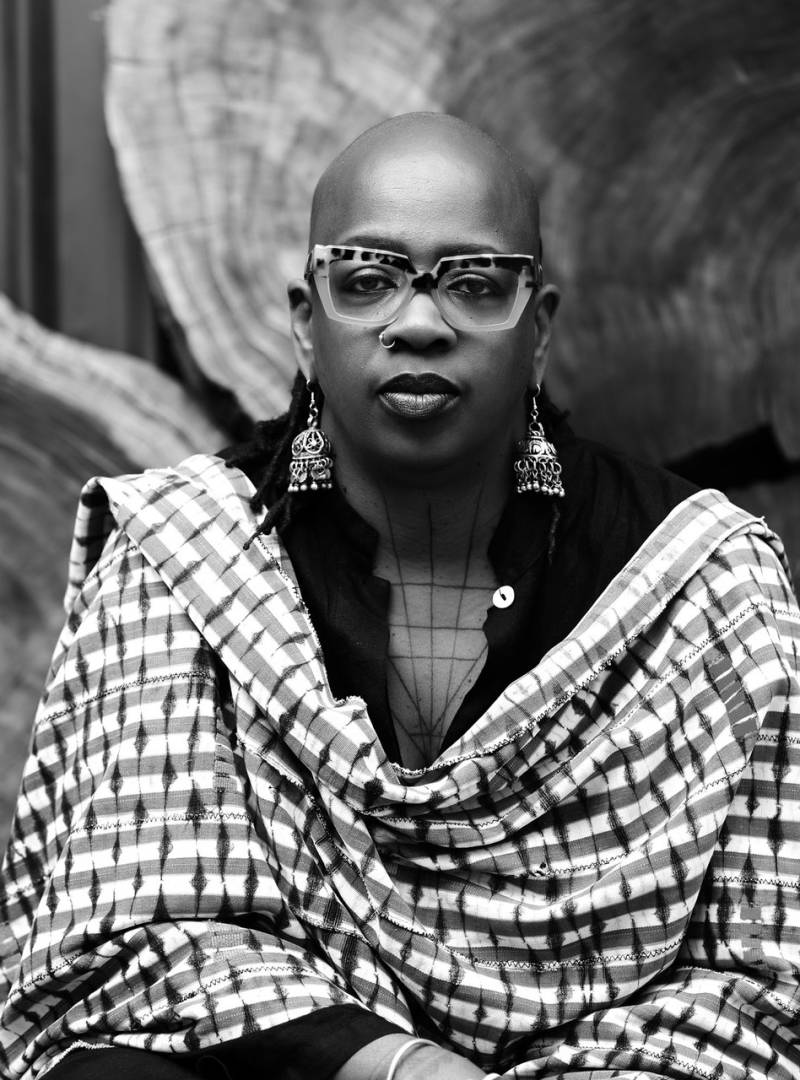
"caption": "Ashara Ekundayo of Artist As First Responder. ",
"credit": "Demondre Ward for Umber Publishing",
"altTag": "A black-and-white portrait of a female artist with a shaved head and glasses draped in a shawl.",
"description": null,
"imgSizes": {
"medium": {
"file": "https://cdn.kqed.org/wp-content/uploads/sites/2/2023/11/ashara-headshot-800x1080.jpg",
"width": 800,
"height": 1080,
"mimeType": "image/jpeg"
},
"thumbnail": {
"file": "https://cdn.kqed.org/wp-content/uploads/sites/2/2023/11/ashara-headshot-e1776986841581-160x153.jpg",
"width": 160,
"height": 153,
"mimeType": "image/jpeg"
},
"medium_large": {
"file": "https://cdn.kqed.org/wp-content/uploads/sites/2/2023/11/ashara-headshot-e1776986841581-768x735.jpg",
"width": 768,
"height": 735,
"mimeType": "image/jpeg"
},
"post-thumbnail": {
"file": "https://cdn.kqed.org/wp-content/uploads/sites/2/2023/11/ashara-headshot-e1776986841581-672x372.jpg",
"width": 672,
"height": 372,
"mimeType": "image/jpeg"
},
"twentyfourteen-full-width": {
"file": "https://cdn.kqed.org/wp-content/uploads/sites/2/2023/11/ashara-headshot-e1776986841581-945x576.jpg",
"width": 945,
"height": 576,
"mimeType": "image/jpeg"
},
"npr-cds-wide": {
"file": "https://cdn.kqed.org/wp-content/uploads/sites/2/2023/11/ashara-headshot-e1776986841581-945x675.jpg",
"width": 945,
"height": 675,
"mimeType": "image/jpeg"
},
"npr-cds-square": {
"file": "https://cdn.kqed.org/wp-content/uploads/sites/2/2023/11/ashara-headshot-e1776986841581-600x600.jpg",
"width": 600,
"height": 600,
"mimeType": "image/jpeg"
},
"kqedFullSize": {
"file": "https://cdn.kqed.org/wp-content/uploads/sites/2/2023/11/ashara-headshot-e1776986841581.jpg",
"width": 945,
"height": 905
}
},
"isLoading": false,
"fetchFailed": false
},
"arts_13988631": {
"type": "attachments",
"id": "arts_13988631",
"meta": {
"index": "attachments_1716263798",
"site": "arts",
"id": "13988631",
"found": true
},
"title": "The Peoples Joker_Vera Drew_TNW",
"publishDate": 1776382009,
"status": "inherit",
"parent": 13988628,
"modified": 1776382081,
"caption": "A still from Vera Drew's 'The People's Joker,' 2022.",
"credit": null,
"altTag": "person in joker costume smokes a cigarette",
"description": null,
"imgSizes": {
"thumbnail": {
"file": "https://cdn.kqed.org/wp-content/uploads/sites/2/2026/04/The-Peoples-Joker_Vera-Drew_TNW-160x90.jpeg",
"width": 160,
"height": 90,
"mimeType": "image/jpeg"
},
"medium_large": {
"file": "https://cdn.kqed.org/wp-content/uploads/sites/2/2026/04/The-Peoples-Joker_Vera-Drew_TNW-768x433.jpeg",
"width": 768,
"height": 433,
"mimeType": "image/jpeg"
},
"post-thumbnail": {
"file": "https://cdn.kqed.org/wp-content/uploads/sites/2/2026/04/The-Peoples-Joker_Vera-Drew_TNW-672x372.jpeg",
"width": 672,
"height": 372,
"mimeType": "image/jpeg"
},
"twentyfourteen-full-width": {
"file": "https://cdn.kqed.org/wp-content/uploads/sites/2/2026/04/The-Peoples-Joker_Vera-Drew_TNW-1038x576.jpeg",
"width": 1038,
"height": 576,
"mimeType": "image/jpeg"
},
"npr-cds-wide": {
"file": "https://cdn.kqed.org/wp-content/uploads/sites/2/2026/04/The-Peoples-Joker_Vera-Drew_TNW-1200x675.jpeg",
"width": 1200,
"height": 675,
"mimeType": "image/jpeg"
},
"npr-cds-square": {
"file": "https://cdn.kqed.org/wp-content/uploads/sites/2/2026/04/The-Peoples-Joker_Vera-Drew_TNW-600x600.jpeg",
"width": 600,
"height": 600,
"mimeType": "image/jpeg"
},
"kqedFullSize": {
"file": "https://cdn.kqed.org/wp-content/uploads/sites/2/2026/04/The-Peoples-Joker_Vera-Drew_TNW.jpeg",
"width": 1296,
"height": 730
}
},
"isLoading": false,
"fetchFailed": false
},
"arts_13988554": {
"type": "attachments",
"id": "arts_13988554",
"meta": {
"index": "attachments_1716263798",
"site": "arts",
"id": "13988554",
"found": true
},
"title": "Bomba with Aguacero Performance & Education",
"publishDate": 1776274601,
"status": "inherit",
"parent": 13988550,
"modified": 1776354863,
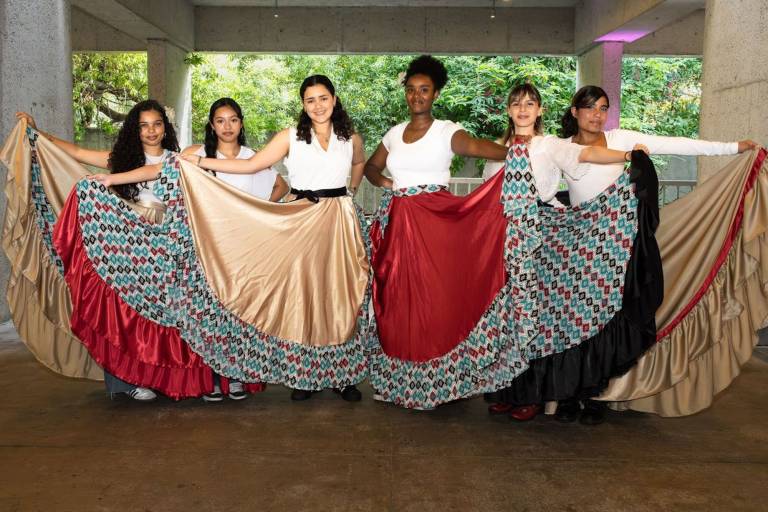
"caption": "Members of Aguacero Performance & Education's bomba performance group pose for a photo. ",
"credit": "Areito Photography",
"altTag": "Six young women pose while wearing bomba attire.",
"description": null,
"imgSizes": {
"thumbnail": {
"file": "https://cdn.kqed.org/wp-content/uploads/sites/2/2026/04/9tq-s17u-160x107.jpg",
"width": 160,
"height": 107,
"mimeType": "image/jpeg"
},
"medium_large": {
"file": "https://cdn.kqed.org/wp-content/uploads/sites/2/2026/04/9tq-s17u-768x512.jpg",
"width": 768,
"height": 512,
"mimeType": "image/jpeg"
},
"1536x1536": {
"file": "https://cdn.kqed.org/wp-content/uploads/sites/2/2026/04/9tq-s17u-1536x1024.jpg",
"width": 1536,
"height": 1024,
"mimeType": "image/jpeg"
},
"post-thumbnail": {
"file": "https://cdn.kqed.org/wp-content/uploads/sites/2/2026/04/9tq-s17u-672x372.jpg",
"width": 672,
"height": 372,
"mimeType": "image/jpeg"
},
"twentyfourteen-full-width": {
"file": "https://cdn.kqed.org/wp-content/uploads/sites/2/2026/04/9tq-s17u-1038x576.jpg",
"width": 1038,
"height": 576,
"mimeType": "image/jpeg"
},
"npr-cds-wide": {
"file": "https://cdn.kqed.org/wp-content/uploads/sites/2/2026/04/9tq-s17u-1200x675.jpg",
"width": 1200,
"height": 675,
"mimeType": "image/jpeg"
},
"npr-cds-square": {
"file": "https://cdn.kqed.org/wp-content/uploads/sites/2/2026/04/9tq-s17u-600x600.jpg",
"width": 600,
"height": 600,
"mimeType": "image/jpeg"
},
"kqedFullSize": {
"file": "https://cdn.kqed.org/wp-content/uploads/sites/2/2026/04/9tq-s17u.jpg",
"width": 2000,
"height": 1333
}
},
"isLoading": false,
"fetchFailed": false
},
"arts_13988517": {
"type": "attachments",
"id": "arts_13988517",
"meta": {
"index": "attachments_1716263798",
"site": "arts",
"id": "13988517",
"found": true
},
"title": "Mother Mary",
"publishDate": 1776189324,
"status": "inherit",
"parent": 13988515,
"modified": 1776189459,
"caption": "Michaela Coel and Anne Hathaway in a scene from ‘Mother Mary.’",
"credit": "Eric Zachanowich/A24",
"altTag": "Two women stand facing each other.",
"description": null,
"imgSizes": {
"medium": {
"file": "https://cdn.kqed.org/wp-content/uploads/sites/2/2026/04/Mother-Mary-2000x1334.jpg",
"width": 2000,
"height": 1334,
"mimeType": "image/jpeg"
},
"large": {
"file": "https://cdn.kqed.org/wp-content/uploads/sites/2/2026/04/Mother-Mary-2000x1334.jpg",
"width": 2000,
"height": 1334,
"mimeType": "image/jpeg"
},
"thumbnail": {
"file": "https://cdn.kqed.org/wp-content/uploads/sites/2/2026/04/Mother-Mary-160x107.jpg",
"width": 160,
"height": 107,
"mimeType": "image/jpeg"
},
"medium_large": {
"file": "https://cdn.kqed.org/wp-content/uploads/sites/2/2026/04/Mother-Mary-768x512.jpg",
"width": 768,
"height": 512,
"mimeType": "image/jpeg"
},
"1536x1536": {
"file": "https://cdn.kqed.org/wp-content/uploads/sites/2/2026/04/Mother-Mary-1536x1025.jpg",
"width": 1536,
"height": 1025,
"mimeType": "image/jpeg"
},
"2048x2048": {
"file": "https://cdn.kqed.org/wp-content/uploads/sites/2/2026/04/Mother-Mary-2048x1366.jpg",
"width": 2048,
"height": 1366,
"mimeType": "image/jpeg"
},
"post-thumbnail": {
"file": "https://cdn.kqed.org/wp-content/uploads/sites/2/2026/04/Mother-Mary-672x372.jpg",
"width": 672,
"height": 372,
"mimeType": "image/jpeg"
},
"twentyfourteen-full-width": {
"file": "https://cdn.kqed.org/wp-content/uploads/sites/2/2026/04/Mother-Mary-1038x576.jpg",
"width": 1038,
"height": 576,
"mimeType": "image/jpeg"
},
"full-width": {
"file": "https://cdn.kqed.org/wp-content/uploads/sites/2/2026/04/Mother-Mary-2000x1334.jpg",
"width": 2000,
"height": 1334,
"mimeType": "image/jpeg"
},
"npr-cds-wide": {
"file": "https://cdn.kqed.org/wp-content/uploads/sites/2/2026/04/Mother-Mary-1200x675.jpg",
"width": 1200,
"height": 675,
"mimeType": "image/jpeg"
},
"npr-cds-square": {
"file": "https://cdn.kqed.org/wp-content/uploads/sites/2/2026/04/Mother-Mary-600x600.jpg",
"width": 600,
"height": 600,
"mimeType": "image/jpeg"
},
"kqedFullSize": {
"file": "https://cdn.kqed.org/wp-content/uploads/sites/2/2026/04/Mother-Mary.jpg",
"width": 2160,
"height": 1441
}
},
"isLoading": false,
"fetchFailed": false
}
},
"audioPlayerReducer": {
"postId": "stream_live",
"isPaused": true,
"isPlaying": false,
"pfsActive": false,
"pledgeModalIsOpen": true,
"playerDrawerIsOpen": false,
"liveAudioPlayStartedAt": 0,
"liveAudioPlayContext": ""
},
"authorsReducer": {
"byline_arts_13989155": {
"type": "authors",
"id": "byline_arts_13989155",
"meta": {
"override": true
},
"slug": "byline_arts_13989155",
"name": "Claire Wu",
"isLoading": false
},
"byline_arts_13988515": {
"type": "authors",
"id": "byline_arts_13988515",
"meta": {
"override": true
},
"slug": "byline_arts_13988515",
"name": "Jake Coyle, The Associated Press",
"isLoading": false
},
"shotchkiss": {
"type": "authors",
"id": "61",
"meta": {
"index": "authors_1716337520",
"id": "61",
"found": true
},
"name": "Sarah Hotchkiss",
"firstName": "Sarah",
"lastName": "Hotchkiss",
"slug": "shotchkiss",
"email": "shotchkiss@kqed.org",
"display_author_email": true,
"staff_mastheads": [
"arts"
],
"title": "Senior Editor",
"bio": "Sarah Hotchkiss is a San Francisco \u003ca href=\"http://www.sarahhotchkiss.com\">artist\u003c/a> and arts writer. In 2019, she received the Dorothea & Leo Rabkin Foundation grant for visual art journalism and in 2020 she received a Society of Professional Journalists, Northern California award for excellence in arts and culture reporting.",
"avatar": "https://secure.gravatar.com/avatar/bc662df144b3d27fd8b1b6f1c2a420d34e91e53154d411bb7ad353cc8b6cea8d?s=600&d=blank&r=g",
"twitter": null,
"bluesky": null,
"facebook": null,
"instagram": null,
"linkedin": null,
"sites": [
{
"site": "",
"roles": [
"editor"
]
},
{
"site": "arts",
"roles": [
"Contributor",
"administrator"
]
},
{
"site": "artschool",
"roles": [
"administrator"
]
},
{
"site": "news",
"roles": [
"editor"
]
},
{
"site": "pop",
"roles": [
"administrator"
]
},
{
"site": "bayareabites",
"roles": [
"editor"
]
},
{
"site": "spark",
"roles": [
"editor"
]
},
{
"site": "checkplease",
"roles": [
"editor"
]
}
],
"headData": {
"title": "Sarah Hotchkiss | KQED",
"description": "Senior Editor",
"ogImgSrc": "https://secure.gravatar.com/avatar/bc662df144b3d27fd8b1b6f1c2a420d34e91e53154d411bb7ad353cc8b6cea8d?s=600&d=blank&r=g",
"twImgSrc": "https://secure.gravatar.com/avatar/bc662df144b3d27fd8b1b6f1c2a420d34e91e53154d411bb7ad353cc8b6cea8d?s=600&d=blank&r=g"
},
"isLoading": false,
"link": "/author/shotchkiss"
},
"gmeline": {
"type": "authors",
"id": "185",
"meta": {
"index": "authors_1716337520",
"id": "185",
"found": true
},
"name": "Gabe Meline",
"firstName": "Gabe",
"lastName": "Meline",
"slug": "gmeline",
"email": "gmeline@kqed.org",
"display_author_email": true,
"staff_mastheads": [
"arts"
],
"title": "Senior Editor, KQED Arts & Culture",
"bio": "Gabe Meline entered journalism at age 15 making photocopied zines, and has since earned awards from the Edward R. Murrow Awards, the Society for Professional Journalists, the Online Journalism Awards, the Association of Alternative Newsweeklies and the California Newspaper Publishers Association. Prior to KQED, he was the editor of the \u003cem>North Bay Bohemian\u003c/em> and a touring musician. He lives with his wife and daughter in his hometown of Santa Rosa, CA.",
"avatar": "https://secure.gravatar.com/avatar/5bebe57be0d8bc2dd318934feb47299e2d2d10cba28d09d8d7afb389a2ce2bdd?s=600&d=blank&r=g",
"twitter": null,
"bluesky": null,
"facebook": null,
"instagram": null,
"linkedin": null,
"sites": [
{
"site": "",
"roles": [
"editor"
]
},
{
"site": "arts",
"roles": [
"administrator"
]
},
{
"site": "artschool",
"roles": [
"editor"
]
},
{
"site": "news",
"roles": [
"author"
]
},
{
"site": "pop",
"roles": [
"editor"
]
},
{
"site": "bayareabites",
"roles": [
"editor"
]
},
{
"site": "food",
"roles": [
"editor"
]
},
{
"site": "forum",
"roles": [
"administrator"
]
},
{
"site": "liveblog",
"roles": [
"editor"
]
},
{
"site": "hiphop",
"roles": [
"editor"
]
}
],
"headData": {
"title": "Gabe Meline | KQED",
"description": "Senior Editor, KQED Arts & Culture",
"ogImgSrc": "https://secure.gravatar.com/avatar/5bebe57be0d8bc2dd318934feb47299e2d2d10cba28d09d8d7afb389a2ce2bdd?s=600&d=blank&r=g",
"twImgSrc": "https://secure.gravatar.com/avatar/5bebe57be0d8bc2dd318934feb47299e2d2d10cba28d09d8d7afb389a2ce2bdd?s=600&d=blank&r=g"
},
"isLoading": false,
"link": "/author/gmeline"
},
"ralexandra": {
"type": "authors",
"id": "11242",
"meta": {
"index": "authors_1716337520",
"id": "11242",
"found": true
},
"name": "Rae Alexandra",
"firstName": "Rae",
"lastName": "Alexandra",
"slug": "ralexandra",
"email": "ralexandra@kqed.org",
"display_author_email": true,
"staff_mastheads": [],
"title": "Reporter/Producer",
"bio": "Rae Alexandra is a Reporter/Producer for KQED Arts & Culture, and the creator/author of the \u003ca href=\"https://www.kqed.org/arts/program/rebel-girls-from-bay-area-history\">Rebel Girls From Bay Area History\u003c/a> and \u003ca href=\"https://www.kqed.org/bizarrebayarea\">Bizarre Bay Area\u003c/a> series. Her debut book, \u003ca href=\"https://citylights.com/politics-current-events-history/unsung-heroines35-women-who-changed/\">Unsung Heroines: 35 Women Who Changed the Bay Area\u003c/a> was published by City Lights in March 2026. In 2023, Rae was awarded an SPJ Excellence in Journalism Award for Arts & Culture. Rae was born and raised in Wales and subsequently — even after two decades in Northern California — still uses phrases that regularly baffle her coworkers.",
"avatar": "https://secure.gravatar.com/avatar/edfee8176c80cc0a382b051190f5341997df378a934a5774dcb0977732dfd401?s=600&d=blank&r=g",
"twitter": null,
"bluesky": null,
"facebook": null,
"instagram": null,
"linkedin": null,
"sites": [
{
"site": "arts",
"roles": [
"subscriber"
]
},
{
"site": "news",
"roles": [
"subscriber"
]
},
{
"site": "pop",
"roles": [
"subscriber"
]
},
{
"site": "bayareabites",
"roles": [
"subscriber"
]
},
{
"site": "science",
"roles": [
"subscriber"
]
}
],
"headData": {
"title": "Rae Alexandra | KQED",
"description": "Reporter/Producer",
"ogImgSrc": "https://secure.gravatar.com/avatar/edfee8176c80cc0a382b051190f5341997df378a934a5774dcb0977732dfd401?s=600&d=blank&r=g",
"twImgSrc": "https://secure.gravatar.com/avatar/edfee8176c80cc0a382b051190f5341997df378a934a5774dcb0977732dfd401?s=600&d=blank&r=g"
},
"isLoading": false,
"link": "/author/ralexandra"
},
"ogpenn": {
"type": "authors",
"id": "11491",
"meta": {
"index": "authors_1716337520",
"id": "11491",
"found": true
},
"name": "Pendarvis Harshaw",
"firstName": "Pendarvis",
"lastName": "Harshaw",
"slug": "ogpenn",
"email": "ogpenn@gmail.com",
"display_author_email": false,
"staff_mastheads": [
"arts"
],
"title": "Community Engagement Reporter",
"bio": "Pendarvis Harshaw is an educator, host and writer with KQED Arts.",
"avatar": "https://secure.gravatar.com/avatar/972b77ee8e3f346ae2b00622661187fbfabd059b5693bbdc1475ea7a722fd4cd?s=600&d=blank&r=g",
"twitter": null,
"bluesky": null,
"facebook": null,
"instagram": "ogpenn",
"linkedin": null,
"sites": [
{
"site": "arts",
"roles": [
"administrator"
]
},
{
"site": "news",
"roles": [
"editor"
]
},
{
"site": "bayareabites",
"roles": [
"author"
]
},
{
"site": "hiphop",
"roles": [
"editor"
]
}
],
"headData": {
"title": "Pendarvis Harshaw | KQED",
"description": "Community Engagement Reporter",
"ogImgSrc": "https://secure.gravatar.com/avatar/972b77ee8e3f346ae2b00622661187fbfabd059b5693bbdc1475ea7a722fd4cd?s=600&d=blank&r=g",
"twImgSrc": "https://secure.gravatar.com/avatar/972b77ee8e3f346ae2b00622661187fbfabd059b5693bbdc1475ea7a722fd4cd?s=600&d=blank&r=g"
},
"isLoading": false,
"link": "/author/ogpenn"
},
"btorres": {
"type": "authors",
"id": "11666",
"meta": {
"index": "authors_1716337520",
"id": "11666",
"found": true
},
"name": "Blanca Torres",
"firstName": "Blanca",
"lastName": "Torres",
"slug": "btorres",
"email": "btorres@kqed.org",
"display_author_email": true,
"staff_mastheads": [
"news"
],
"title": "Producer, Forum",
"bio": "Blanca Torres brings sharp news judgement and keen sense of lively conversation to her work as producer for Forum. She loves producing shows that leave listeners feeling like they heard distinctive voices, learned something new and gained a fresh perspective.\r\n\r\nShe joined KQED in January of 2020 after 16 years of working as a newspaper reporter most recently at the \u003cem>San Francisco Business Times,\u003c/em> where she wrote about real estate and economic development. Before that, she covered a variety of beats including crime, education, retail, workplace, the economy, consumer issues, and small business for the \u003cem>Contra Costa Times, Baltimore Sun\u003c/em> and\u003cem> The Seattle Times\u003c/em>. In addition to reporting, she worked as an editorial writer and columnist for the \u003cem>Seattle Times\u003c/em>. From 2017 to 2020, Blanca won a total of ten awards from the National Association of Real Estate Editors and won first place for land use reporting from the California News Publishers Association two years in a row. She is also a member and former board member for the National Association of Hispanic Journalists.\r\n\r\nA native of the Pacific Northwest, Blanca earned her bachelor's degree from Vanderbilt University in Nashville and a master's in fine arts in creative writing at Mills College. She lives in the East Bay with her family.",
"avatar": "https://secure.gravatar.com/avatar/50b49d19b14a1eed34f26ebf4681152cdd81574ed21851100871ccd29e578cdc?s=600&d=blank&r=g",
"twitter": "@blancawrites",
"bluesky": null,
"facebook": null,
"instagram": null,
"linkedin": null,
"sites": [
{
"site": "arts",
"roles": [
"editor"
]
},
{
"site": "news",
"roles": [
"editor"
]
},
{
"site": "forum",
"roles": [
"editor"
]
}
],
"headData": {
"title": "Blanca Torres | KQED",
"description": "Producer, Forum",
"ogImgSrc": "https://secure.gravatar.com/avatar/50b49d19b14a1eed34f26ebf4681152cdd81574ed21851100871ccd29e578cdc?s=600&d=blank&r=g",
"twImgSrc": "https://secure.gravatar.com/avatar/50b49d19b14a1eed34f26ebf4681152cdd81574ed21851100871ccd29e578cdc?s=600&d=blank&r=g"
},
"isLoading": false,
"link": "/author/btorres"
},
"djchavez": {
"type": "authors",
"id": "11905",
"meta": {
"index": "authors_1716337520",
"id": "11905",
"found": true
},
"name": "David John Chávez",
"firstName": "David John",
"lastName": "Chávez",
"slug": "djchavez",
"email": "theatrechavez@gmail.com",
"display_author_email": false,
"staff_mastheads": [],
"title": "KQED Contributor",
"bio": "Based in San José, David is a theater critic and reporter who who served as Executive Chair of the American Theatre Critics/Journalists Association (’22-’25), as well as a regular theater contributor to The Mercury News, San Francisco Chronicle, American Theatre Magazine and KQED, among other publications. He is a two-time juror for the Pulitzer Prize for Drama (’22-’23) and a 2020 fellow of the Eugene O'Neill National Critics Institute.",
"avatar": "https://secure.gravatar.com/avatar/5eaa3ce994228213820907c390795c28f7b97165c2b575f46d15fc9273a132b7?s=600&d=blank&r=g",
"twitter": null,
"bluesky": null,
"facebook": "https://www.facebook.com/bydavidjchavez",
"instagram": "https://www.instagram.com/davidjchavez/",
"linkedin": null,
"sites": [
{
"site": "arts",
"roles": [
"contributor"
]
}
],
"headData": {
"title": "David John Chávez | KQED",
"description": "KQED Contributor",
"ogImgSrc": "https://secure.gravatar.com/avatar/5eaa3ce994228213820907c390795c28f7b97165c2b575f46d15fc9273a132b7?s=600&d=blank&r=g",
"twImgSrc": "https://secure.gravatar.com/avatar/5eaa3ce994228213820907c390795c28f7b97165c2b575f46d15fc9273a132b7?s=600&d=blank&r=g"
},
"isLoading": false,
"link": "/author/djchavez"
}
},
"pagesReducer": {
"arts_category_the-do-list": {
"type": "terms",
"id": "arts_22313",
"meta": {
"index": "terms_1716263798",
"site": "arts",
"id": "22313",
"score": 13.107631
},
"name": "The Do List",
"slug": "the-do-list",
"taxonomy": "category",
"description": null,
"featImg": null,
"headData": {
"title": "The Do List | KQED Arts",
"description": null,
"ogTitle": null,
"ogDescription": null,
"ogImgId": null,
"twTitle": null,
"twDescription": null,
"twImgId": null
},
"ttid": 22325,
"isLoading": false,
"title": "The Do List",
"pageMeta": {
"site": "arts",
"WpPageTemplate": "page-topic-editorial",
"currentPage": 7
},
"blocks": [
{
"blockName": "kqed/post-list",
"attrs": {
"layout": "cardArticle2",
"query": "posts/arts?category=the-do-list",
"seeMore": false,
"paginated": true,
"page": 7
}
},
{
"blockName": "kqed/ad"
}
]
}
},
"pfsSessionReducer": {},
"postsReducer": {
"stream_live": {
"type": "live",
"id": "stream_live",
"audioUrl": "https://streams.kqed.org/kqedradio",
"title": "Live Stream",
"excerpt": "Live Stream information currently unavailable.",
"link": "/radio",
"featImg": "",
"label": {
"name": "KQED Live",
"link": "/"
}
},
"stream_kqedNewscast": {
"type": "posts",
"id": "stream_kqedNewscast",
"audioUrl": "https://www.kqed.org/.stream/anon/radio/RDnews/newscast.mp3?_=1",
"title": "KQED Newscast",
"featImg": "",
"label": {
"name": "88.5 FM",
"link": "/"
}
},
"arts_13989155": {
"type": "posts",
"id": "arts_13989155",
"meta": {
"index": "posts_1716263798",
"site": "arts",
"id": "13989155",
"score": null,
"sort": [
1777935383000
]
},
"guestAuthors": [],
"slug": "caamfest-2026-guide-bay-area-films-documentaries",
"title": "Six Must-See Bay Area Documentaries at CAAMFest 2026",
"publishDate": 1777935383,
"format": "aside",
"headTitle": "Six Must-See Bay Area Documentaries at CAAMFest 2026 | KQED",
"labelTerm": {},
"content": "\u003cp>The 44th \u003ca href=\"https://caamfest.com/2026/\">CAAMFest\u003c/a> kicks off May 7–10 in San Francisco’s Japantown, just as Asian American and Pacific Islander Heritage Month gets underway. At a time when Asian actors made up only \u003ca href=\"https://socialsciences.ucla.edu/wp-content/uploads/2026/03/UCLA-Hollywood-Diversity-Report-2026-Theatrical-Film-3-12-2026.pdf\">3.7% of lead roles\u003c/a> in the top theatrical films of 2025, this film festival paints a far more holistic portrait of Asian American storytelling. \u003c/p>\n\u003cp>CAAM, the Center for Asian American Media, is a nonprofit organization that funds, distributes and spotlights the works of Asian American filmmakers. This year, in addition to national and international titles, the festival has an especially strong selection of documentaries showcasing Bay Area stories.\u003c/p>\n\u003cp>These films explore our famously multicultural culinary scene, the rise of Silicon Valley Indian tech entrepreneurship, and the San Francisco Giants’ immense popularity in Japan, among other subjects. Here’s your guide to six very Bay Area documentaries:\u003c/p>\n\u003cfigure id=\"attachment_13989159\" class=\"wp-caption aligncenter\" style=\"max-width: 1920px\">\u003cimg loading=\"lazy\" decoding=\"async\" src=\"https://cdn.kqed.org/wp-content/uploads/sites/2/2026/05/Copy-of-Still-7-Ocean-Beach-_-Kaitlyn-Bui.jpg\" alt=\"person in hat holds crab in front of phone camera\" width=\"1920\" height=\"1080\" class=\"size-full wp-image-13989159\" srcset=\"https://cdn.kqed.org/wp-content/uploads/sites/2/2026/05/Copy-of-Still-7-Ocean-Beach-_-Kaitlyn-Bui.jpg 1920w, https://cdn.kqed.org/wp-content/uploads/sites/2/2026/05/Copy-of-Still-7-Ocean-Beach-_-Kaitlyn-Bui-160x90.jpg 160w, https://cdn.kqed.org/wp-content/uploads/sites/2/2026/05/Copy-of-Still-7-Ocean-Beach-_-Kaitlyn-Bui-768x432.jpg 768w, https://cdn.kqed.org/wp-content/uploads/sites/2/2026/05/Copy-of-Still-7-Ocean-Beach-_-Kaitlyn-Bui-1536x864.jpg 1536w, https://cdn.kqed.org/wp-content/uploads/sites/2/2026/05/Copy-of-Still-7-Ocean-Beach-_-Kaitlyn-Bui-1200x675.jpg 1200w\" sizes=\"auto, (max-width: 1920px) 100vw, 1920px\">\u003cfigcaption class=\"wp-caption-text\">Kaitlyn Bui in a scene from ‘Meals that Made Us.’ \u003ccite>(CAAMFest)\u003c/cite>\u003c/figcaption>\u003c/figure>\n\u003ch2>‘\u003ca href=\"https://caamfest.com/2026/movies/meals-that-made-us/\">Meals That Made Us\u003c/a>’\u003c/h2>\n\u003cp>\u003ci>May 8, 5:30 p.m.\u003cbr>\nAMC Kabuki\u003c/i>\u003c/p>\n\u003cp>Did you know there’s a Filipino restaurant in Oakland that doubles as a speakeasy mahjong den? What about the Sikh temple in San Jose, where a community member also leads a volunteer-run effort to cook and deliver meals to unhoused communities?\u003c/p>\n\u003cp>[ad fullwidth]\u003c/p>\n\u003cp>\u003cem>Meals That Made Us\u003c/em>, a new digital series directed by Nisha Balaram, explores how the Bay Area’s vibrant culinary landscape came to be. Episodes include ones on local foraging and crabbing, and the birth of modernized traditional cuisines by a new generation of tastemakers. Balaram demonstrates that food is more than simply nourishment for AAPI communities — it’s a form of language that breaks down borders.\u003c/p>\n\u003cp>In the series, Balaram interviews a plethora of restaurant owners, chefs, writers and social media personalities (including KQED Arts & Culture’s own \u003ca href=\"https://www.kqed.org/author/ltsai\">Luke Tsai\u003c/a>) who discuss the history of Asian immigration in the Bay Area and the evolution of their beloved heritage cuisines. \u003c/p>\n\u003cp>This screening will be followed by a live Q&A with the director and featured guests from the documentary. \u003c/p>\n\u003cfigure id=\"attachment_13989160\" class=\"wp-caption aligncenter\" style=\"max-width: 2000px\">\u003cimg loading=\"lazy\" decoding=\"async\" src=\"https://cdn.kqed.org/wp-content/uploads/sites/2/2026/05/AboutFace.Nutcracker-NYCB.Georgina-Pazcoguin_2000.jpg\" alt=\"ballerina leaps gracefully\" width=\"2000\" height=\"1125\" class=\"size-full wp-image-13989160\" srcset=\"https://cdn.kqed.org/wp-content/uploads/sites/2/2026/05/AboutFace.Nutcracker-NYCB.Georgina-Pazcoguin_2000.jpg 2000w, https://cdn.kqed.org/wp-content/uploads/sites/2/2026/05/AboutFace.Nutcracker-NYCB.Georgina-Pazcoguin_2000-160x90.jpg 160w, https://cdn.kqed.org/wp-content/uploads/sites/2/2026/05/AboutFace.Nutcracker-NYCB.Georgina-Pazcoguin_2000-768x432.jpg 768w, https://cdn.kqed.org/wp-content/uploads/sites/2/2026/05/AboutFace.Nutcracker-NYCB.Georgina-Pazcoguin_2000-1536x864.jpg 1536w, https://cdn.kqed.org/wp-content/uploads/sites/2/2026/05/AboutFace.Nutcracker-NYCB.Georgina-Pazcoguin_2000-1200x675.jpg 1200w\" sizes=\"auto, (max-width: 2000px) 100vw, 2000px\">\u003cfigcaption class=\"wp-caption-text\">Georgina Pazcoguin dances in the ‘Nutcracker’ at the New York City Ballet. \u003ccite>(CAAMFest)\u003c/cite>\u003c/figcaption>\u003c/figure>\n\u003ch2>‘\u003ca href=\"https://caamfest.com/2026/movies/about-face-disrupting-ballet/\">About Face: Disrupting Ballet\u003c/a>’\u003c/h2>\n\u003cp>\u003ci>May 9, 11 a.m.\u003cbr>\nAMC Kabuki\u003c/i>\u003c/p>\n\u003cp>“It’s true that one of the first acts of tyrants is to erase history, to wipe out the recorded history of a people.” \u003c/p>\n\u003cp>Can you guess where this quote is from?\u003c/p>\n\u003cp>If you somehow managed to guess that it’s one of the countless online hate comments made against Phil Chan, resident choreographer at the Oakland Ballet Company, in response to his mission to modify racist Asian caricatures in ballet, then you are correct. \u003c/p>\n\u003cp>Why does simply wanting to make an art form more inclusive incite accusations of tyranny? How can we address issues of orientalism and exoticization while preserving the artistry of ballet? These are the questions Jennifer Lin explores in her documentary, \u003cem>About Face: Disrupting Ballet\u003c/em>. \u003c/p>\n\u003cp>The film follows Chan and his longtime friend, Georgina Pazcoguin, who was the first female AAPI soloist at the New York City Ballet. The pair demonstrates that advocacy is about neither canceling classics nor erasing history, but about nurturing a more diverse future for the art form.\u003c/p>\n\u003cfigure id=\"attachment_13989161\" class=\"wp-caption aligncenter\" style=\"max-width: 2000px\">\u003cimg loading=\"lazy\" decoding=\"async\" src=\"https://cdn.kqed.org/wp-content/uploads/sites/2/2026/05/DaoOfThao_2000.jpg\" alt=\"Black man and Asian woman sit on bench and laugh\" width=\"2000\" height=\"1055\" class=\"size-full wp-image-13989161\" srcset=\"https://cdn.kqed.org/wp-content/uploads/sites/2/2026/05/DaoOfThao_2000.jpg 2000w, https://cdn.kqed.org/wp-content/uploads/sites/2/2026/05/DaoOfThao_2000-160x84.jpg 160w, https://cdn.kqed.org/wp-content/uploads/sites/2/2026/05/DaoOfThao_2000-768x405.jpg 768w, https://cdn.kqed.org/wp-content/uploads/sites/2/2026/05/DaoOfThao_2000-1536x810.jpg 1536w\" sizes=\"auto, (max-width: 2000px) 100vw, 2000px\">\u003cfigcaption class=\"wp-caption-text\">W. Kamau Bell and Thao Nguyen in a scene from ‘The Dao of Thao.’ \u003ccite>(CAAMFest)\u003c/cite>\u003c/figcaption>\u003c/figure>\n\u003ch2>‘\u003ca href=\"https://caamfest.com/2026/movies/the-dao-of-thao/\">The Dao of Thao\u003c/a>’\u003c/h2>\n\u003cp>\u003ci>May 9, 3 p.m.\u003cbr>\nAMC Kabuki\u003c/i>\u003c/p>\n\u003cp>Thao Nguyen’s life story is full of idiosyncrasies and surprises. The Bay Area theater performer and former artistic director of San Francisco’s Asian Pacific Islander Cultural Center is the daughter of Vietnamese war refugees. She’s also a queer woman who partnered with a cis white man, with whom she’s now raising their mixed-race son, all while pursuing a PhD at Stanford.\u003c/p>\n\u003cp>In Khai Thu Nguyen’s documentary \u003cem>The Dao of Thao\u003c/em>, produced by W. Kamau Bell, our loveable protagonist prepares for her next comedy show, which explores her intersecting Asian American and queer identities amid new motherhood. \u003c/p>\n\u003cp>What \u003cem>does\u003c/em> potty training have to do with institutional racism? Khai Thu Nguyen shows an artist navigating not only her personal life experiences, but also structural inequality, and doing it all through humorous yet humanistic on-stage storytelling.\u003c/p>\n\u003cfigure id=\"attachment_13989162\" class=\"wp-caption aligncenter\" style=\"max-width: 1573px\">\u003cimg loading=\"lazy\" decoding=\"async\" src=\"https://cdn.kqed.org/wp-content/uploads/sites/2/2026/05/Copy-of-BTC_Retro_Kanwal-1.jpg\" alt=\"Asian man and South Asian man in room filled with computers\" width=\"1573\" height=\"1126\" class=\"size-full wp-image-13989162\" srcset=\"https://cdn.kqed.org/wp-content/uploads/sites/2/2026/05/Copy-of-BTC_Retro_Kanwal-1.jpg 1573w, https://cdn.kqed.org/wp-content/uploads/sites/2/2026/05/Copy-of-BTC_Retro_Kanwal-1-160x115.jpg 160w, https://cdn.kqed.org/wp-content/uploads/sites/2/2026/05/Copy-of-BTC_Retro_Kanwal-1-768x550.jpg 768w, https://cdn.kqed.org/wp-content/uploads/sites/2/2026/05/Copy-of-BTC_Retro_Kanwal-1-1536x1100.jpg 1536w\" sizes=\"auto, (max-width: 1573px) 100vw, 1573px\">\u003cfigcaption class=\"wp-caption-text\">Kanwal Rekhi, right, in his early Silicon Valley days. \u003ccite>(CAAMFest)\u003c/cite>\u003c/figcaption>\u003c/figure>\n\u003ch2>‘\u003ca href=\"https://caamfest.com/2026/movies/breaking-the-code/\">Breaking the Code\u003c/a>’\u003c/h2>\n\u003cp>\u003ci>May 9, 5 p.m.\u003cbr>\nAMC Kabuki\u003c/i>\u003c/p>\n\u003cp>The phrase “Silicon Valley Indian Mafia” may sound familiar to anyone with proximity to the Bay Area tech scene. In \u003cem>Breaking the Code\u003c/em>, director Ben Rekhi documents the history of the mafia’s undisputed godfather, Kanwal Rekhi — who also happens to be his \u003cem>actual\u003c/em> father.\u003c/p>\n\u003cp>The public knows Kanwal Rekhi as the co-founder of Excelan and IndUS Entrepreneurs (TiE), and, most notably, as the first Indian American founder and CEO to take a venture-backed company public on NASDAQ in 1987.\u003c/p>\n\u003cp>But his private life tells the story of the son of an army general from India. Born with a stutter and ostracized from his family, he immigrates to America in search of a new life, only to face racial discrimination. The film is not just about a tech pioneer’s remarkable rise to success, but also an intimate portrait of family and sacrifice along the road to greatness in the entrepreneurial world.\u003c/p>\n\u003cp>\u003c!-- iframe plugin v.4.3 wordpress.org/plugins/iframe/ -->\u003cbr>\n\u003ciframe loading=\"lazy\" title=\"vimeo-player\" src=\"https://player.vimeo.com/video/1084748617?h=8a0d1dbe8e\" width=\"640\" height=\"360\" frameborder=\"0\" referrerpolicy=\"strict-origin-when-cross-origin\" allow=\"autoplay; fullscreen; picture-in-picture; clipboard-write; encrypted-media; web-share\" scrolling=\"yes\" class=\"iframe-class\">\u003c/iframe>\u003c/p>\n\u003ch2>‘\u003ca href=\"https://caamfest.com/2026/movies/diamond-diplomacy/\">Diamond Diplomacy\u003c/a>’\u003c/h2>\n\u003cp>\u003ci>May 10, 2 p.m.\u003cbr>\nAMC Kabuki\u003c/i>\u003c/p>\n\u003cp>You don’t have to be a baseball fan to enjoy Yuriko Gamo Romer’s \u003cem>Diamond Diplomacy\u003c/em>, a film chronicling the fascinating, century-long role the sport has played in strengthening diplomatic ties between America and Japan, even amid war. And in the center of that diplomacy is San Francisco.\u003c/p>\n\u003cp>It’s said that San Francisco Seals player Lefty O’Doul’s popularity in Japan may have briefly forestalled the heights of World War II. Beginning in 1964, when Masanori “Mashi” Murakami was recruited to play for the San Francisco Giants, cultural exchange between the two countries became literal: American players began signing with Japanese teams, and Japanese players with American teams.\u003c/p>\n\u003cp>The 2025 runner-up at the Library of Congress Lavine/Ken Burns Prize for Film, \u003cem>Diamond Diplomacy\u003c/em> presents a compelling history of baseball as a vehicle for community that transcends borders and time.\u003c/p>\n\u003cfigure id=\"attachment_13989164\" class=\"wp-caption aligncenter\" style=\"max-width: 2000px\">\u003cimg loading=\"lazy\" decoding=\"async\" src=\"https://cdn.kqed.org/wp-content/uploads/sites/2/2026/05/Copy-of-Grace-Yoo-with-sewing-machiness_2000.jpg\" alt=\"Asian woman seated at outdoor table smiling behind four sewing machines, comments on right\" width=\"2000\" height=\"1103\" class=\"size-full wp-image-13989164\" srcset=\"https://cdn.kqed.org/wp-content/uploads/sites/2/2026/05/Copy-of-Grace-Yoo-with-sewing-machiness_2000.jpg 2000w, https://cdn.kqed.org/wp-content/uploads/sites/2/2026/05/Copy-of-Grace-Yoo-with-sewing-machiness_2000-160x88.jpg 160w, https://cdn.kqed.org/wp-content/uploads/sites/2/2026/05/Copy-of-Grace-Yoo-with-sewing-machiness_2000-768x424.jpg 768w, https://cdn.kqed.org/wp-content/uploads/sites/2/2026/05/Copy-of-Grace-Yoo-with-sewing-machiness_2000-1536x847.jpg 1536w, https://cdn.kqed.org/wp-content/uploads/sites/2/2026/05/Copy-of-Grace-Yoo-with-sewing-machiness_2000-672x372.jpg 672w\" sizes=\"auto, (max-width: 2000px) 100vw, 2000px\">\u003cfigcaption class=\"wp-caption-text\">Grace Yoo, part of the Auntie Sewing Squad, with four sewing machines in a Facebook post. \u003ccite>(CAAMFest)\u003c/cite>\u003c/figcaption>\u003c/figure>\n\u003ch2>‘\u003ca href=\"https://caamfest.com/2026/movies/the-auntie-sewing-squad-resistance-playbook/\">The Auntie Sewing Squad Resistance Playbook\u003c/a>’\u003c/h2>\n\u003cp>\u003ci>May 10, 4:15 p.m.\u003cbr>\nAMC Kabuki\u003c/i>\u003c/p>\n\u003cp>When the government fails to protect its people during the deadly COVID-19 pandemic, the Auntie Sewing Squad (ASS) steps up! \u003c/p>\n\u003cp>Directed by San Francisco State University ethnic studies professor Valerie Soe, \u003cem>The Auntie Sewing Squad Resistance Playbook\u003c/em> tells the story of how a Facebook group blossomed into a mutual aid movement made up of BIPOC, queer “aunties.” During the pandemic, performance artist Kristina Wong started a small volunteer group to sew masks for hospitals and MUNI workers; it quickly grew into a network of thousands distributing masks and resources to vulnerable people, from rural farmers to Indigenous communities.\u003c/p>\n\u003cp>[ad floatright]\u003c/p>\n\u003cp>Humorous and uplifting, \u003cem>The Auntie Sewing Squad Resistance Playbook\u003c/em> is a testament to the power of solidarity and radical care in times of political strife.\u003c/p>\n\n",
"blocks": [],
"excerpt": "This year’s festival includes stories about local food, sports as diplomacy, and radical aunties.",
"status": "publish",
"parent": 0,
"modified": 1778086819,
"stats": {
"hasAudio": false,
"hasVideo": true,
"hasChartOrMap": false,
"iframeSrcs": [],
"hasGoogleForm": false,
"hasGallery": false,
"hasHearkenModule": false,
"hasPolis": false,
"paragraphCount": 33,
"wordCount": 1230
},
"headData": {
"title": "Six Must-See Bay Area Documentaries at CAAMFest 2026 | KQED",
"description": "This year’s festival includes stories about local food, sports as diplomacy, and radical aunties.",
"ogTitle": "",
"ogDescription": "",
"ogImgId": "",
"twTitle": "",
"twDescription": "",
"twImgId": "",
"schema": {
"@context": "https://schema.org",
"@type": "Article",
"headline": "Six Must-See Bay Area Documentaries at CAAMFest 2026",
"datePublished": "2026-05-04T15:56:23-07:00",
"dateModified": "2026-05-06T10:00:19-07:00",
"image": "https://cdn.kqed.org/wp-content/uploads/2020/02/KQED-OG-Image@1x.png"
}
},
"primaryCategory": {
"termId": 1,
"slug": "arts",
"name": "Arts"
},
"source": "The Do List",
"sourceUrl": "https://www.kqed.org/thedolist",
"sticky": false,
"nprByline": "Claire Wu",
"nprStoryId": "kqed-13989155",
"templateType": "standard",
"featuredImageType": "standard",
"excludeFromSiteSearch": "Include",
"showOnAuthorArchivePages": "No",
"articleAge": "0",
"path": "/arts/13989155/caamfest-2026-guide-bay-area-films-documentaries",
"audioTrackLength": null,
"parsedContent": [
{
"type": "contentString",
"content": "\u003cdiv class=\"post-body\">\u003cp>\u003cp>The 44th \u003ca href=\"https://caamfest.com/2026/\">CAAMFest\u003c/a> kicks off May 7–10 in San Francisco’s Japantown, just as Asian American and Pacific Islander Heritage Month gets underway. At a time when Asian actors made up only \u003ca href=\"https://socialsciences.ucla.edu/wp-content/uploads/2026/03/UCLA-Hollywood-Diversity-Report-2026-Theatrical-Film-3-12-2026.pdf\">3.7% of lead roles\u003c/a> in the top theatrical films of 2025, this film festival paints a far more holistic portrait of Asian American storytelling. \u003c/p>\n\u003cp>CAAM, the Center for Asian American Media, is a nonprofit organization that funds, distributes and spotlights the works of Asian American filmmakers. This year, in addition to national and international titles, the festival has an especially strong selection of documentaries showcasing Bay Area stories.\u003c/p>\n\u003cp>These films explore our famously multicultural culinary scene, the rise of Silicon Valley Indian tech entrepreneurship, and the San Francisco Giants’ immense popularity in Japan, among other subjects. Here’s your guide to six very Bay Area documentaries:\u003c/p>\n\u003cfigure id=\"attachment_13989159\" class=\"wp-caption aligncenter\" style=\"max-width: 1920px\">\u003cimg loading=\"lazy\" decoding=\"async\" src=\"https://cdn.kqed.org/wp-content/uploads/sites/2/2026/05/Copy-of-Still-7-Ocean-Beach-_-Kaitlyn-Bui.jpg\" alt=\"person in hat holds crab in front of phone camera\" width=\"1920\" height=\"1080\" class=\"size-full wp-image-13989159\" srcset=\"https://cdn.kqed.org/wp-content/uploads/sites/2/2026/05/Copy-of-Still-7-Ocean-Beach-_-Kaitlyn-Bui.jpg 1920w, https://cdn.kqed.org/wp-content/uploads/sites/2/2026/05/Copy-of-Still-7-Ocean-Beach-_-Kaitlyn-Bui-160x90.jpg 160w, https://cdn.kqed.org/wp-content/uploads/sites/2/2026/05/Copy-of-Still-7-Ocean-Beach-_-Kaitlyn-Bui-768x432.jpg 768w, https://cdn.kqed.org/wp-content/uploads/sites/2/2026/05/Copy-of-Still-7-Ocean-Beach-_-Kaitlyn-Bui-1536x864.jpg 1536w, https://cdn.kqed.org/wp-content/uploads/sites/2/2026/05/Copy-of-Still-7-Ocean-Beach-_-Kaitlyn-Bui-1200x675.jpg 1200w\" sizes=\"auto, (max-width: 1920px) 100vw, 1920px\">\u003cfigcaption class=\"wp-caption-text\">Kaitlyn Bui in a scene from ‘Meals that Made Us.’ \u003ccite>(CAAMFest)\u003c/cite>\u003c/figcaption>\u003c/figure>\n\u003ch2>‘\u003ca href=\"https://caamfest.com/2026/movies/meals-that-made-us/\">Meals That Made Us\u003c/a>’\u003c/h2>\n\u003cp>\u003ci>May 8, 5:30 p.m.\u003cbr>\nAMC Kabuki\u003c/i>\u003c/p>\n\u003cp>Did you know there’s a Filipino restaurant in Oakland that doubles as a speakeasy mahjong den? What about the Sikh temple in San Jose, where a community member also leads a volunteer-run effort to cook and deliver meals to unhoused communities?\u003c/p>\n\u003cp>\u003c/p>\u003c/div>",
"attributes": {
"named": {},
"numeric": []
}
},
{
"type": "component",
"content": "",
"name": "ad",
"attributes": {
"named": {
"label": "fullwidth"
},
"numeric": [
"fullwidth"
]
}
},
{
"type": "contentString",
"content": "\u003cdiv class=\"post-body\">\u003cp>\u003c/p>\n\u003cp>\u003cem>Meals That Made Us\u003c/em>, a new digital series directed by Nisha Balaram, explores how the Bay Area’s vibrant culinary landscape came to be. Episodes include ones on local foraging and crabbing, and the birth of modernized traditional cuisines by a new generation of tastemakers. Balaram demonstrates that food is more than simply nourishment for AAPI communities — it’s a form of language that breaks down borders.\u003c/p>\n\u003cp>In the series, Balaram interviews a plethora of restaurant owners, chefs, writers and social media personalities (including KQED Arts & Culture’s own \u003ca href=\"https://www.kqed.org/author/ltsai\">Luke Tsai\u003c/a>) who discuss the history of Asian immigration in the Bay Area and the evolution of their beloved heritage cuisines. \u003c/p>\n\u003cp>This screening will be followed by a live Q&A with the director and featured guests from the documentary. \u003c/p>\n\u003cfigure id=\"attachment_13989160\" class=\"wp-caption aligncenter\" style=\"max-width: 2000px\">\u003cimg loading=\"lazy\" decoding=\"async\" src=\"https://cdn.kqed.org/wp-content/uploads/sites/2/2026/05/AboutFace.Nutcracker-NYCB.Georgina-Pazcoguin_2000.jpg\" alt=\"ballerina leaps gracefully\" width=\"2000\" height=\"1125\" class=\"size-full wp-image-13989160\" srcset=\"https://cdn.kqed.org/wp-content/uploads/sites/2/2026/05/AboutFace.Nutcracker-NYCB.Georgina-Pazcoguin_2000.jpg 2000w, https://cdn.kqed.org/wp-content/uploads/sites/2/2026/05/AboutFace.Nutcracker-NYCB.Georgina-Pazcoguin_2000-160x90.jpg 160w, https://cdn.kqed.org/wp-content/uploads/sites/2/2026/05/AboutFace.Nutcracker-NYCB.Georgina-Pazcoguin_2000-768x432.jpg 768w, https://cdn.kqed.org/wp-content/uploads/sites/2/2026/05/AboutFace.Nutcracker-NYCB.Georgina-Pazcoguin_2000-1536x864.jpg 1536w, https://cdn.kqed.org/wp-content/uploads/sites/2/2026/05/AboutFace.Nutcracker-NYCB.Georgina-Pazcoguin_2000-1200x675.jpg 1200w\" sizes=\"auto, (max-width: 2000px) 100vw, 2000px\">\u003cfigcaption class=\"wp-caption-text\">Georgina Pazcoguin dances in the ‘Nutcracker’ at the New York City Ballet. \u003ccite>(CAAMFest)\u003c/cite>\u003c/figcaption>\u003c/figure>\n\u003ch2>‘\u003ca href=\"https://caamfest.com/2026/movies/about-face-disrupting-ballet/\">About Face: Disrupting Ballet\u003c/a>’\u003c/h2>\n\u003cp>\u003ci>May 9, 11 a.m.\u003cbr>\nAMC Kabuki\u003c/i>\u003c/p>\n\u003cp>“It’s true that one of the first acts of tyrants is to erase history, to wipe out the recorded history of a people.” \u003c/p>\n\u003cp>Can you guess where this quote is from?\u003c/p>\n\u003cp>If you somehow managed to guess that it’s one of the countless online hate comments made against Phil Chan, resident choreographer at the Oakland Ballet Company, in response to his mission to modify racist Asian caricatures in ballet, then you are correct. \u003c/p>\n\u003cp>Why does simply wanting to make an art form more inclusive incite accusations of tyranny? How can we address issues of orientalism and exoticization while preserving the artistry of ballet? These are the questions Jennifer Lin explores in her documentary, \u003cem>About Face: Disrupting Ballet\u003c/em>. \u003c/p>\n\u003cp>The film follows Chan and his longtime friend, Georgina Pazcoguin, who was the first female AAPI soloist at the New York City Ballet. The pair demonstrates that advocacy is about neither canceling classics nor erasing history, but about nurturing a more diverse future for the art form.\u003c/p>\n\u003cfigure id=\"attachment_13989161\" class=\"wp-caption aligncenter\" style=\"max-width: 2000px\">\u003cimg loading=\"lazy\" decoding=\"async\" src=\"https://cdn.kqed.org/wp-content/uploads/sites/2/2026/05/DaoOfThao_2000.jpg\" alt=\"Black man and Asian woman sit on bench and laugh\" width=\"2000\" height=\"1055\" class=\"size-full wp-image-13989161\" srcset=\"https://cdn.kqed.org/wp-content/uploads/sites/2/2026/05/DaoOfThao_2000.jpg 2000w, https://cdn.kqed.org/wp-content/uploads/sites/2/2026/05/DaoOfThao_2000-160x84.jpg 160w, https://cdn.kqed.org/wp-content/uploads/sites/2/2026/05/DaoOfThao_2000-768x405.jpg 768w, https://cdn.kqed.org/wp-content/uploads/sites/2/2026/05/DaoOfThao_2000-1536x810.jpg 1536w\" sizes=\"auto, (max-width: 2000px) 100vw, 2000px\">\u003cfigcaption class=\"wp-caption-text\">W. Kamau Bell and Thao Nguyen in a scene from ‘The Dao of Thao.’ \u003ccite>(CAAMFest)\u003c/cite>\u003c/figcaption>\u003c/figure>\n\u003ch2>‘\u003ca href=\"https://caamfest.com/2026/movies/the-dao-of-thao/\">The Dao of Thao\u003c/a>’\u003c/h2>\n\u003cp>\u003ci>May 9, 3 p.m.\u003cbr>\nAMC Kabuki\u003c/i>\u003c/p>\n\u003cp>Thao Nguyen’s life story is full of idiosyncrasies and surprises. The Bay Area theater performer and former artistic director of San Francisco’s Asian Pacific Islander Cultural Center is the daughter of Vietnamese war refugees. She’s also a queer woman who partnered with a cis white man, with whom she’s now raising their mixed-race son, all while pursuing a PhD at Stanford.\u003c/p>\n\u003cp>In Khai Thu Nguyen’s documentary \u003cem>The Dao of Thao\u003c/em>, produced by W. Kamau Bell, our loveable protagonist prepares for her next comedy show, which explores her intersecting Asian American and queer identities amid new motherhood. \u003c/p>\n\u003cp>What \u003cem>does\u003c/em> potty training have to do with institutional racism? Khai Thu Nguyen shows an artist navigating not only her personal life experiences, but also structural inequality, and doing it all through humorous yet humanistic on-stage storytelling.\u003c/p>\n\u003cfigure id=\"attachment_13989162\" class=\"wp-caption aligncenter\" style=\"max-width: 1573px\">\u003cimg loading=\"lazy\" decoding=\"async\" src=\"https://cdn.kqed.org/wp-content/uploads/sites/2/2026/05/Copy-of-BTC_Retro_Kanwal-1.jpg\" alt=\"Asian man and South Asian man in room filled with computers\" width=\"1573\" height=\"1126\" class=\"size-full wp-image-13989162\" srcset=\"https://cdn.kqed.org/wp-content/uploads/sites/2/2026/05/Copy-of-BTC_Retro_Kanwal-1.jpg 1573w, https://cdn.kqed.org/wp-content/uploads/sites/2/2026/05/Copy-of-BTC_Retro_Kanwal-1-160x115.jpg 160w, https://cdn.kqed.org/wp-content/uploads/sites/2/2026/05/Copy-of-BTC_Retro_Kanwal-1-768x550.jpg 768w, https://cdn.kqed.org/wp-content/uploads/sites/2/2026/05/Copy-of-BTC_Retro_Kanwal-1-1536x1100.jpg 1536w\" sizes=\"auto, (max-width: 1573px) 100vw, 1573px\">\u003cfigcaption class=\"wp-caption-text\">Kanwal Rekhi, right, in his early Silicon Valley days. \u003ccite>(CAAMFest)\u003c/cite>\u003c/figcaption>\u003c/figure>\n\u003ch2>‘\u003ca href=\"https://caamfest.com/2026/movies/breaking-the-code/\">Breaking the Code\u003c/a>’\u003c/h2>\n\u003cp>\u003ci>May 9, 5 p.m.\u003cbr>\nAMC Kabuki\u003c/i>\u003c/p>\n\u003cp>The phrase “Silicon Valley Indian Mafia” may sound familiar to anyone with proximity to the Bay Area tech scene. In \u003cem>Breaking the Code\u003c/em>, director Ben Rekhi documents the history of the mafia’s undisputed godfather, Kanwal Rekhi — who also happens to be his \u003cem>actual\u003c/em> father.\u003c/p>\n\u003cp>The public knows Kanwal Rekhi as the co-founder of Excelan and IndUS Entrepreneurs (TiE), and, most notably, as the first Indian American founder and CEO to take a venture-backed company public on NASDAQ in 1987.\u003c/p>\n\u003cp>But his private life tells the story of the son of an army general from India. Born with a stutter and ostracized from his family, he immigrates to America in search of a new life, only to face racial discrimination. The film is not just about a tech pioneer’s remarkable rise to success, but also an intimate portrait of family and sacrifice along the road to greatness in the entrepreneurial world.\u003c/p>\n\u003cp>\u003c!-- iframe plugin v.4.3 wordpress.org/plugins/iframe/ -->\u003cbr>\n\u003ciframe loading=\"lazy\" title=\"vimeo-player\" src=\"https://player.vimeo.com/video/1084748617?h=8a0d1dbe8e\" width=\"640\" height=\"360\" frameborder=\"0\" referrerpolicy=\"strict-origin-when-cross-origin\" allow=\"autoplay; fullscreen; picture-in-picture; clipboard-write; encrypted-media; web-share\" scrolling=\"yes\" class=\"iframe-class\">\u003c/iframe>\u003c/p>\n\u003ch2>‘\u003ca href=\"https://caamfest.com/2026/movies/diamond-diplomacy/\">Diamond Diplomacy\u003c/a>’\u003c/h2>\n\u003cp>\u003ci>May 10, 2 p.m.\u003cbr>\nAMC Kabuki\u003c/i>\u003c/p>\n\u003cp>You don’t have to be a baseball fan to enjoy Yuriko Gamo Romer’s \u003cem>Diamond Diplomacy\u003c/em>, a film chronicling the fascinating, century-long role the sport has played in strengthening diplomatic ties between America and Japan, even amid war. And in the center of that diplomacy is San Francisco.\u003c/p>\n\u003cp>It’s said that San Francisco Seals player Lefty O’Doul’s popularity in Japan may have briefly forestalled the heights of World War II. Beginning in 1964, when Masanori “Mashi” Murakami was recruited to play for the San Francisco Giants, cultural exchange between the two countries became literal: American players began signing with Japanese teams, and Japanese players with American teams.\u003c/p>\n\u003cp>The 2025 runner-up at the Library of Congress Lavine/Ken Burns Prize for Film, \u003cem>Diamond Diplomacy\u003c/em> presents a compelling history of baseball as a vehicle for community that transcends borders and time.\u003c/p>\n\u003cfigure id=\"attachment_13989164\" class=\"wp-caption aligncenter\" style=\"max-width: 2000px\">\u003cimg loading=\"lazy\" decoding=\"async\" src=\"https://cdn.kqed.org/wp-content/uploads/sites/2/2026/05/Copy-of-Grace-Yoo-with-sewing-machiness_2000.jpg\" alt=\"Asian woman seated at outdoor table smiling behind four sewing machines, comments on right\" width=\"2000\" height=\"1103\" class=\"size-full wp-image-13989164\" srcset=\"https://cdn.kqed.org/wp-content/uploads/sites/2/2026/05/Copy-of-Grace-Yoo-with-sewing-machiness_2000.jpg 2000w, https://cdn.kqed.org/wp-content/uploads/sites/2/2026/05/Copy-of-Grace-Yoo-with-sewing-machiness_2000-160x88.jpg 160w, https://cdn.kqed.org/wp-content/uploads/sites/2/2026/05/Copy-of-Grace-Yoo-with-sewing-machiness_2000-768x424.jpg 768w, https://cdn.kqed.org/wp-content/uploads/sites/2/2026/05/Copy-of-Grace-Yoo-with-sewing-machiness_2000-1536x847.jpg 1536w, https://cdn.kqed.org/wp-content/uploads/sites/2/2026/05/Copy-of-Grace-Yoo-with-sewing-machiness_2000-672x372.jpg 672w\" sizes=\"auto, (max-width: 2000px) 100vw, 2000px\">\u003cfigcaption class=\"wp-caption-text\">Grace Yoo, part of the Auntie Sewing Squad, with four sewing machines in a Facebook post. \u003ccite>(CAAMFest)\u003c/cite>\u003c/figcaption>\u003c/figure>\n\u003ch2>‘\u003ca href=\"https://caamfest.com/2026/movies/the-auntie-sewing-squad-resistance-playbook/\">The Auntie Sewing Squad Resistance Playbook\u003c/a>’\u003c/h2>\n\u003cp>\u003ci>May 10, 4:15 p.m.\u003cbr>\nAMC Kabuki\u003c/i>\u003c/p>\n\u003cp>When the government fails to protect its people during the deadly COVID-19 pandemic, the Auntie Sewing Squad (ASS) steps up! \u003c/p>\n\u003cp>Directed by San Francisco State University ethnic studies professor Valerie Soe, \u003cem>The Auntie Sewing Squad Resistance Playbook\u003c/em> tells the story of how a Facebook group blossomed into a mutual aid movement made up of BIPOC, queer “aunties.” During the pandemic, performance artist Kristina Wong started a small volunteer group to sew masks for hospitals and MUNI workers; it quickly grew into a network of thousands distributing masks and resources to vulnerable people, from rural farmers to Indigenous communities.\u003c/p>\n\u003cp>\u003c/p>\u003c/div>",
"attributes": {
"named": {},
"numeric": []
}
},
{
"type": "component",
"content": "",
"name": "ad",
"attributes": {
"named": {
"label": "floatright"
},
"numeric": [
"floatright"
]
}
},
{
"type": "contentString",
"content": "\u003cdiv class=\"post-body\">\u003cp>\u003c/p>\n\u003cp>Humorous and uplifting, \u003cem>The Auntie Sewing Squad Resistance Playbook\u003c/em> is a testament to the power of solidarity and radical care in times of political strife.\u003c/p>\n\n\u003c/div>\u003c/p>",
"attributes": {
"named": {},
"numeric": []
}
}
],
"link": "/arts/13989155/caamfest-2026-guide-bay-area-films-documentaries",
"authors": [
"byline_arts_13989155"
],
"programs": [
"arts_140"
],
"categories": [
"arts_1",
"arts_74",
"arts_22313"
],
"tags": [
"arts_4762",
"arts_10278",
"arts_1006",
"arts_585"
],
"featImg": "arts_13989159",
"label": "source_arts_13989155"
},
"arts_13989110": {
"type": "posts",
"id": "arts_13989110",
"meta": {
"index": "posts_1716263798",
"site": "arts",
"id": "13989110",
"score": null,
"sort": [
1777672682000
]
},
"guestAuthors": [],
"slug": "etruscan-art-legion-of-honor-review-ancient-italy-roman",
"title": "Forget the Roman Empire — Think About the Etruscans Instead",
"publishDate": 1777672682,
"format": "standard",
"headTitle": "Forget the Roman Empire — Think About the Etruscans Instead | KQED",
"labelTerm": {},
"content": "\u003cp>Empires get all the credit. And yet it was the Etruscans, the people who lived in present-day Tuscany between 900 and 100 B.C., who taught the Romans about viticulture, urban planning and complex hydraulic works. Without the Etruscans there would be no toga, or what we now call Roman numerals.\u003c/p>\n\u003cp>For too long, as curator Renée Dreyfus argues in her Legion of Honor exhibition \u003ci>\u003ca href=\"https://www.famsf.org/exhibitions/etruscans-heart-ancient-italy\">The Etruscans: From the Heart of Ancient Italy\u003c/a>\u003c/i>, Etruscan culture has been overshadowed by the Greeks and Romans. The Etruscans are considered “mysterious” or “unknowable,” but as the show’s introductory video says, we just need to dig deeper — literally.\u003c/p>\n\u003cp>\u003ci>The Etruscans\u003c/i> gathers the latest scholarship and over 150 objects for the largest-ever presentation of Etruscan art and artifacts outside of Italy. An international roster of over two dozen institutions has loaned what are clearly treasures to this show; some have left their host museums for the first time since they were discovered. \u003c/p>\n\u003cfigure id=\"attachment_13989112\" class=\"wp-caption aligncenter\" style=\"max-width: 2000px\">\u003cimg loading=\"lazy\" decoding=\"async\" src=\"https://cdn.kqed.org/wp-content/uploads/sites/2/2026/05/0589-Legion-Etruscans-Sexton_2000.jpg\" alt=\"curved display with objects in vitrines, show title in black on wall\" width=\"2000\" height=\"1334\" class=\"size-full wp-image-13989112\" srcset=\"https://cdn.kqed.org/wp-content/uploads/sites/2/2026/05/0589-Legion-Etruscans-Sexton_2000.jpg 2000w, https://cdn.kqed.org/wp-content/uploads/sites/2/2026/05/0589-Legion-Etruscans-Sexton_2000-160x107.jpg 160w, https://cdn.kqed.org/wp-content/uploads/sites/2/2026/05/0589-Legion-Etruscans-Sexton_2000-768x512.jpg 768w, https://cdn.kqed.org/wp-content/uploads/sites/2/2026/05/0589-Legion-Etruscans-Sexton_2000-1536x1025.jpg 1536w\" sizes=\"auto, (max-width: 2000px) 100vw, 2000px\">\u003cfigcaption class=\"wp-caption-text\">Installation view of ‘The Etruscans: From The Heart of Ancient Italy’ at the Legion of Honor. \u003ccite>(Photo by Gary Sexton; courtesy of the Fine Arts Museums of San Francisco)\u003c/cite>\u003c/figcaption>\u003c/figure>\n\u003cp>Much of what we see at the Legion of Honor comes from the tombs of the elite: finely wrought jewelry, delicately painted pottery, everything needed to live well in the afterlife. (This includes eating and partying — the Etruscans were devoted to their banquets.) \u003c/p>\n\u003cp>But the show also contains objects made for the living: a model for the study of divination, votive figures of the Etruscans’ many gods, and small bronzes found in the thermal waters of San Casciano dei Bagni. That model, the “Liver of Piacenza,” is one of the most remarkable objects on display. The life-sized bronze replica of a sheep’s liver is inscribed with the names of Etruscan deities; it acted as a guide to reading the entrails of sacrificed animals, which in turn determined the will of the gods. \u003c/p>\n\u003cfigure id=\"attachment_13989115\" class=\"wp-caption aligncenter\" style=\"max-width: 2000px\">\u003cimg loading=\"lazy\" decoding=\"async\" src=\"https://cdn.kqed.org/wp-content/uploads/sites/2/2026/05/MS_310311_20201118-01_2000.jpg\" alt=\"bronze object covered in inscriptions\" width=\"2000\" height=\"1500\" class=\"size-full wp-image-13989115\" srcset=\"https://cdn.kqed.org/wp-content/uploads/sites/2/2026/05/MS_310311_20201118-01_2000.jpg 2000w, https://cdn.kqed.org/wp-content/uploads/sites/2/2026/05/MS_310311_20201118-01_2000-160x120.jpg 160w, https://cdn.kqed.org/wp-content/uploads/sites/2/2026/05/MS_310311_20201118-01_2000-768x576.jpg 768w, https://cdn.kqed.org/wp-content/uploads/sites/2/2026/05/MS_310311_20201118-01_2000-1536x1152.jpg 1536w\" sizes=\"auto, (max-width: 2000px) 100vw, 2000px\">\u003cfigcaption class=\"wp-caption-text\">Etruscan model of a sheep’s liver, found in Piacenza, second century B.C. \u003ccite>(Courtesy of the Musei Civici di Palazzo Farnese, Piacenza)\u003c/cite>\u003c/figcaption>\u003c/figure>\n\u003cp>While the Etruscans used the Greek alphabet, generally read right to left, their language was a unique non-Indo-European tongue with no known antecedents or modern descendants. Most of the Etruscan writing that exists now is funerary inscriptions on objects, short phrases of ownership or dedication. But at the Legion of Honor — incredibly rare thing alert! — we also get to see the longest example of Etruscan writing: a wide, framed display on strips of linen that has its own incredible backstory.\u003c/p>\n\u003cp>[ad fullwidth]\u003c/p>\n\u003cp>The \u003ci>Liber linteus zagrabiensis\u003c/i> (Linen book of Zagreb) is the longest-surviving Etruscan text (aka Europe’s oldest book). Believed to be a calendar of ritual sacrifices and prayers, it dates back to the mid-third century B.C. The text exists \u003ci>only\u003c/i> because the manuscript was cut into strips and used to wrap an Egyptian mummy. Preserved by Egypt’s dry climate, the deconstructed book was identified as Etruscian writing in 1892, nearly 50 years after it was purchased in Alexandria.\u003c/p>\n\u003cfigure id=\"attachment_13989116\" class=\"wp-caption aligncenter\" style=\"max-width: 2000px\">\u003cimg loading=\"lazy\" decoding=\"async\" src=\"https://cdn.kqed.org/wp-content/uploads/sites/2/2026/05/0391-Legion-Etruscans-Sexton_2000.jpg\" alt=\"person stands in front of wide frame holding strips of linen\" width=\"2000\" height=\"1334\" class=\"size-full wp-image-13989116\" srcset=\"https://cdn.kqed.org/wp-content/uploads/sites/2/2026/05/0391-Legion-Etruscans-Sexton_2000.jpg 2000w, https://cdn.kqed.org/wp-content/uploads/sites/2/2026/05/0391-Legion-Etruscans-Sexton_2000-160x107.jpg 160w, https://cdn.kqed.org/wp-content/uploads/sites/2/2026/05/0391-Legion-Etruscans-Sexton_2000-768x512.jpg 768w, https://cdn.kqed.org/wp-content/uploads/sites/2/2026/05/0391-Legion-Etruscans-Sexton_2000-1536x1025.jpg 1536w\" sizes=\"auto, (max-width: 2000px) 100vw, 2000px\">\u003cfigcaption class=\"wp-caption-text\">Installation view of ‘Liber linteus zagrabiensis’ in ‘The Etruscans: From The Heart of Ancient Italy’ at the Legion of Honor. \u003ccite>(Photo by Gary Sexton; courtesy of the Fine Arts Museums of San Francisco)\u003c/cite>\u003c/figcaption>\u003c/figure>\n\u003cp>That may seem oh so long ago, but scholars and archeologists are still making new discoveries about the Etruscans today. The small sculptures excavated from the mud of San Casciano dei Bagni, on display in the exhibition’s final gallery, were found just two years ago. \u003c/p>\n\u003cp>It’s hard to make an ancient civilization come alive for modern audiences. It helps that so many of the objects on view are playful, animated: a handle made from a bent-backwards body, a wonderfully elongated figure, a cup in the shape of a leg. \u003ci>The Etruscans\u003c/i> also stresses again and again just what made these people unique, especially in comparison to the empire that eventually subsumed them. (Etruscans became Roman citizens in 89 B.C.)\u003c/p>\n\u003cfigure id=\"attachment_13989119\" class=\"wp-caption aligncenter\" style=\"max-width: 2000px\">\u003cimg loading=\"lazy\" decoding=\"async\" src=\"https://cdn.kqed.org/wp-content/uploads/sites/2/2026/05/DIGITAL-26-etruscans-web-image-R1-V8-cinerary-urn_2000.jpg\" alt=\"terracotta sculpture of man and woman lounging together\" width=\"2000\" height=\"1125\" class=\"size-full wp-image-13989119\" srcset=\"https://cdn.kqed.org/wp-content/uploads/sites/2/2026/05/DIGITAL-26-etruscans-web-image-R1-V8-cinerary-urn_2000.jpg 2000w, https://cdn.kqed.org/wp-content/uploads/sites/2/2026/05/DIGITAL-26-etruscans-web-image-R1-V8-cinerary-urn_2000-160x90.jpg 160w, https://cdn.kqed.org/wp-content/uploads/sites/2/2026/05/DIGITAL-26-etruscans-web-image-R1-V8-cinerary-urn_2000-768x432.jpg 768w, https://cdn.kqed.org/wp-content/uploads/sites/2/2026/05/DIGITAL-26-etruscans-web-image-R1-V8-cinerary-urn_2000-1536x864.jpg 1536w, https://cdn.kqed.org/wp-content/uploads/sites/2/2026/05/DIGITAL-26-etruscans-web-image-R1-V8-cinerary-urn_2000-1200x675.jpg 1200w\" sizes=\"auto, (max-width: 2000px) 100vw, 2000px\">\u003cfigcaption class=\"wp-caption-text\">Cinerary urn of the spouses, Etruscan, Caere, 520–500 B.C. \u003ccite>(Musée du Louvre)\u003c/cite>\u003c/figcaption>\u003c/figure>\n\u003cp>Women, in particular, enjoyed an elevated status in Etruscan society. They were highly literate, could inherit property, kept their maiden names and participated in public life. A reproduction of a painting in the Tomb of the Leopards spreads across one wall of the exhibition, showing both men and women lounging, conversing and generally enjoying themselves at a banquet. Greek symposia, in contrast, were the sole domain of aristocratic men.\u003c/p>\n\u003cp>The society that emerges through this exhibition is one of great wealth (the fine detail on the jewelry, holy moly) and great joy. Only people with a sense of delight would carve a toiletries box in the shape of a fawn. Or put such enigmatic and peaceful smiles on their renderings of the dead. You may emerge from the subterranean depths of the Legion of Honor wishing a bit more of Etruscan culture seeped its way into the Roman world, and, eventually, Western civilization.\u003c/p>\n\u003chr>\n\u003cp>\u003c/p>\n\u003cp>\u003ci>‘\u003ca href=\"https://www.famsf.org/exhibitions/etruscans-heart-ancient-italy\">The Etruscans: From the Heart of Ancient Italy\u003c/a>’ is on view at the Legion of Honor (100 34th Ave., San Francisco) May 2–Sept. 20, 2026.\u003c/i>\u003c/p>\n\n",
"blocks": [],
"excerpt": "At the Legion of Honor, a treasure trove of art and artifacts brings an ancient people out of the shadows.",
"status": "publish",
"parent": 0,
"modified": 1778277261,
"stats": {
"hasAudio": false,
"hasVideo": false,
"hasChartOrMap": false,
"iframeSrcs": [],
"hasGoogleForm": false,
"hasGallery": false,
"hasHearkenModule": false,
"hasPolis": false,
"paragraphCount": 14,
"wordCount": 893
},
"headData": {
"title": "‘Etruscans’ at Legion of Honor: Ancient Culture Gets its Due | KQED",
"description": "At the Legion of Honor, a treasure trove of art and artifacts brings an ancient people out of the shadows.",
"ogTitle": "Forget the Roman Empire — Think About the Etruscans Instead",
"ogDescription": "",
"ogImgId": "",
"twTitle": "Forget the Roman Empire — Think About the Etruscans Instead",
"twDescription": "",
"twImgId": "",
"socialTitle": "‘Etruscans’ at Legion of Honor: Ancient Culture Gets its Due %%page%% %%sep%% KQED",
"schema": {
"@context": "https://schema.org",
"@type": "Article",
"headline": "Forget the Roman Empire — Think About the Etruscans Instead",
"datePublished": "2026-05-01T14:58:02-07:00",
"dateModified": "2026-05-08T14:54:21-07:00",
"image": "https://cdn.kqed.org/wp-content/uploads/2020/02/KQED-OG-Image@1x.png"
}
},
"primaryCategory": {
"termId": 1,
"slug": "arts",
"name": "Arts"
},
"source": "The Do List",
"sourceUrl": "https://www.kqed.org/thedolist",
"sticky": false,
"WpOldSlug": "forget-the-roman-empire-think-about-the-etruscans-instead",
"nprStoryId": "kqed-13989110",
"templateType": "standard",
"featuredImageType": "standard",
"excludeFromSiteSearch": "Include",
"articleAge": "0",
"path": "/arts/13989110/etruscan-art-legion-of-honor-review-ancient-italy-roman",
"audioTrackLength": null,
"parsedContent": [
{
"type": "contentString",
"content": "\u003cdiv class=\"post-body\">\u003cp>\u003cp>Empires get all the credit. And yet it was the Etruscans, the people who lived in present-day Tuscany between 900 and 100 B.C., who taught the Romans about viticulture, urban planning and complex hydraulic works. Without the Etruscans there would be no toga, or what we now call Roman numerals.\u003c/p>\n\u003cp>For too long, as curator Renée Dreyfus argues in her Legion of Honor exhibition \u003ci>\u003ca href=\"https://www.famsf.org/exhibitions/etruscans-heart-ancient-italy\">The Etruscans: From the Heart of Ancient Italy\u003c/a>\u003c/i>, Etruscan culture has been overshadowed by the Greeks and Romans. The Etruscans are considered “mysterious” or “unknowable,” but as the show’s introductory video says, we just need to dig deeper — literally.\u003c/p>\n\u003cp>\u003ci>The Etruscans\u003c/i> gathers the latest scholarship and over 150 objects for the largest-ever presentation of Etruscan art and artifacts outside of Italy. An international roster of over two dozen institutions has loaned what are clearly treasures to this show; some have left their host museums for the first time since they were discovered. \u003c/p>\n\u003cfigure id=\"attachment_13989112\" class=\"wp-caption aligncenter\" style=\"max-width: 2000px\">\u003cimg loading=\"lazy\" decoding=\"async\" src=\"https://cdn.kqed.org/wp-content/uploads/sites/2/2026/05/0589-Legion-Etruscans-Sexton_2000.jpg\" alt=\"curved display with objects in vitrines, show title in black on wall\" width=\"2000\" height=\"1334\" class=\"size-full wp-image-13989112\" srcset=\"https://cdn.kqed.org/wp-content/uploads/sites/2/2026/05/0589-Legion-Etruscans-Sexton_2000.jpg 2000w, https://cdn.kqed.org/wp-content/uploads/sites/2/2026/05/0589-Legion-Etruscans-Sexton_2000-160x107.jpg 160w, https://cdn.kqed.org/wp-content/uploads/sites/2/2026/05/0589-Legion-Etruscans-Sexton_2000-768x512.jpg 768w, https://cdn.kqed.org/wp-content/uploads/sites/2/2026/05/0589-Legion-Etruscans-Sexton_2000-1536x1025.jpg 1536w\" sizes=\"auto, (max-width: 2000px) 100vw, 2000px\">\u003cfigcaption class=\"wp-caption-text\">Installation view of ‘The Etruscans: From The Heart of Ancient Italy’ at the Legion of Honor. \u003ccite>(Photo by Gary Sexton; courtesy of the Fine Arts Museums of San Francisco)\u003c/cite>\u003c/figcaption>\u003c/figure>\n\u003cp>Much of what we see at the Legion of Honor comes from the tombs of the elite: finely wrought jewelry, delicately painted pottery, everything needed to live well in the afterlife. (This includes eating and partying — the Etruscans were devoted to their banquets.) \u003c/p>\n\u003cp>But the show also contains objects made for the living: a model for the study of divination, votive figures of the Etruscans’ many gods, and small bronzes found in the thermal waters of San Casciano dei Bagni. That model, the “Liver of Piacenza,” is one of the most remarkable objects on display. The life-sized bronze replica of a sheep’s liver is inscribed with the names of Etruscan deities; it acted as a guide to reading the entrails of sacrificed animals, which in turn determined the will of the gods. \u003c/p>\n\u003cfigure id=\"attachment_13989115\" class=\"wp-caption aligncenter\" style=\"max-width: 2000px\">\u003cimg loading=\"lazy\" decoding=\"async\" src=\"https://cdn.kqed.org/wp-content/uploads/sites/2/2026/05/MS_310311_20201118-01_2000.jpg\" alt=\"bronze object covered in inscriptions\" width=\"2000\" height=\"1500\" class=\"size-full wp-image-13989115\" srcset=\"https://cdn.kqed.org/wp-content/uploads/sites/2/2026/05/MS_310311_20201118-01_2000.jpg 2000w, https://cdn.kqed.org/wp-content/uploads/sites/2/2026/05/MS_310311_20201118-01_2000-160x120.jpg 160w, https://cdn.kqed.org/wp-content/uploads/sites/2/2026/05/MS_310311_20201118-01_2000-768x576.jpg 768w, https://cdn.kqed.org/wp-content/uploads/sites/2/2026/05/MS_310311_20201118-01_2000-1536x1152.jpg 1536w\" sizes=\"auto, (max-width: 2000px) 100vw, 2000px\">\u003cfigcaption class=\"wp-caption-text\">Etruscan model of a sheep’s liver, found in Piacenza, second century B.C. \u003ccite>(Courtesy of the Musei Civici di Palazzo Farnese, Piacenza)\u003c/cite>\u003c/figcaption>\u003c/figure>\n\u003cp>While the Etruscans used the Greek alphabet, generally read right to left, their language was a unique non-Indo-European tongue with no known antecedents or modern descendants. Most of the Etruscan writing that exists now is funerary inscriptions on objects, short phrases of ownership or dedication. But at the Legion of Honor — incredibly rare thing alert! — we also get to see the longest example of Etruscan writing: a wide, framed display on strips of linen that has its own incredible backstory.\u003c/p>\n\u003cp>\u003c/p>\u003c/div>",
"attributes": {
"named": {},
"numeric": []
}
},
{
"type": "component",
"content": "",
"name": "ad",
"attributes": {
"named": {
"label": "fullwidth"
},
"numeric": [
"fullwidth"
]
}
},
{
"type": "contentString",
"content": "\u003cdiv class=\"post-body\">\u003cp>\u003c/p>\n\u003cp>The \u003ci>Liber linteus zagrabiensis\u003c/i> (Linen book of Zagreb) is the longest-surviving Etruscan text (aka Europe’s oldest book). Believed to be a calendar of ritual sacrifices and prayers, it dates back to the mid-third century B.C. The text exists \u003ci>only\u003c/i> because the manuscript was cut into strips and used to wrap an Egyptian mummy. Preserved by Egypt’s dry climate, the deconstructed book was identified as Etruscian writing in 1892, nearly 50 years after it was purchased in Alexandria.\u003c/p>\n\u003cfigure id=\"attachment_13989116\" class=\"wp-caption aligncenter\" style=\"max-width: 2000px\">\u003cimg loading=\"lazy\" decoding=\"async\" src=\"https://cdn.kqed.org/wp-content/uploads/sites/2/2026/05/0391-Legion-Etruscans-Sexton_2000.jpg\" alt=\"person stands in front of wide frame holding strips of linen\" width=\"2000\" height=\"1334\" class=\"size-full wp-image-13989116\" srcset=\"https://cdn.kqed.org/wp-content/uploads/sites/2/2026/05/0391-Legion-Etruscans-Sexton_2000.jpg 2000w, https://cdn.kqed.org/wp-content/uploads/sites/2/2026/05/0391-Legion-Etruscans-Sexton_2000-160x107.jpg 160w, https://cdn.kqed.org/wp-content/uploads/sites/2/2026/05/0391-Legion-Etruscans-Sexton_2000-768x512.jpg 768w, https://cdn.kqed.org/wp-content/uploads/sites/2/2026/05/0391-Legion-Etruscans-Sexton_2000-1536x1025.jpg 1536w\" sizes=\"auto, (max-width: 2000px) 100vw, 2000px\">\u003cfigcaption class=\"wp-caption-text\">Installation view of ‘Liber linteus zagrabiensis’ in ‘The Etruscans: From The Heart of Ancient Italy’ at the Legion of Honor. \u003ccite>(Photo by Gary Sexton; courtesy of the Fine Arts Museums of San Francisco)\u003c/cite>\u003c/figcaption>\u003c/figure>\n\u003cp>That may seem oh so long ago, but scholars and archeologists are still making new discoveries about the Etruscans today. The small sculptures excavated from the mud of San Casciano dei Bagni, on display in the exhibition’s final gallery, were found just two years ago. \u003c/p>\n\u003cp>It’s hard to make an ancient civilization come alive for modern audiences. It helps that so many of the objects on view are playful, animated: a handle made from a bent-backwards body, a wonderfully elongated figure, a cup in the shape of a leg. \u003ci>The Etruscans\u003c/i> also stresses again and again just what made these people unique, especially in comparison to the empire that eventually subsumed them. (Etruscans became Roman citizens in 89 B.C.)\u003c/p>\n\u003cfigure id=\"attachment_13989119\" class=\"wp-caption aligncenter\" style=\"max-width: 2000px\">\u003cimg loading=\"lazy\" decoding=\"async\" src=\"https://cdn.kqed.org/wp-content/uploads/sites/2/2026/05/DIGITAL-26-etruscans-web-image-R1-V8-cinerary-urn_2000.jpg\" alt=\"terracotta sculpture of man and woman lounging together\" width=\"2000\" height=\"1125\" class=\"size-full wp-image-13989119\" srcset=\"https://cdn.kqed.org/wp-content/uploads/sites/2/2026/05/DIGITAL-26-etruscans-web-image-R1-V8-cinerary-urn_2000.jpg 2000w, https://cdn.kqed.org/wp-content/uploads/sites/2/2026/05/DIGITAL-26-etruscans-web-image-R1-V8-cinerary-urn_2000-160x90.jpg 160w, https://cdn.kqed.org/wp-content/uploads/sites/2/2026/05/DIGITAL-26-etruscans-web-image-R1-V8-cinerary-urn_2000-768x432.jpg 768w, https://cdn.kqed.org/wp-content/uploads/sites/2/2026/05/DIGITAL-26-etruscans-web-image-R1-V8-cinerary-urn_2000-1536x864.jpg 1536w, https://cdn.kqed.org/wp-content/uploads/sites/2/2026/05/DIGITAL-26-etruscans-web-image-R1-V8-cinerary-urn_2000-1200x675.jpg 1200w\" sizes=\"auto, (max-width: 2000px) 100vw, 2000px\">\u003cfigcaption class=\"wp-caption-text\">Cinerary urn of the spouses, Etruscan, Caere, 520–500 B.C. \u003ccite>(Musée du Louvre)\u003c/cite>\u003c/figcaption>\u003c/figure>\n\u003cp>Women, in particular, enjoyed an elevated status in Etruscan society. They were highly literate, could inherit property, kept their maiden names and participated in public life. A reproduction of a painting in the Tomb of the Leopards spreads across one wall of the exhibition, showing both men and women lounging, conversing and generally enjoying themselves at a banquet. Greek symposia, in contrast, were the sole domain of aristocratic men.\u003c/p>\n\u003cp>The society that emerges through this exhibition is one of great wealth (the fine detail on the jewelry, holy moly) and great joy. Only people with a sense of delight would carve a toiletries box in the shape of a fawn. Or put such enigmatic and peaceful smiles on their renderings of the dead. You may emerge from the subterranean depths of the Legion of Honor wishing a bit more of Etruscan culture seeped its way into the Roman world, and, eventually, Western civilization.\u003c/p>\n\u003chr>\n\u003cp>\u003c/p>\n\u003cp>\u003ci>‘\u003ca href=\"https://www.famsf.org/exhibitions/etruscans-heart-ancient-italy\">The Etruscans: From the Heart of Ancient Italy\u003c/a>’ is on view at the Legion of Honor (100 34th Ave., San Francisco) May 2–Sept. 20, 2026.\u003c/i>\u003c/p>\n\n\u003c/div>\u003c/p>",
"attributes": {
"named": {},
"numeric": []
}
}
],
"link": "/arts/13989110/etruscan-art-legion-of-honor-review-ancient-italy-roman",
"authors": [
"61"
],
"programs": [
"arts_140"
],
"categories": [
"arts_1",
"arts_22313",
"arts_70"
],
"tags": [
"arts_10342",
"arts_4487",
"arts_10278",
"arts_1956",
"arts_769",
"arts_585"
],
"featImg": "arts_13989113",
"label": "source_arts_13989110"
},
"arts_13989071": {
"type": "posts",
"id": "arts_13989071",
"meta": {
"index": "posts_1716263798",
"site": "arts",
"id": "13989071",
"score": null,
"sort": [
1777663275000
]
},
"guestAuthors": [],
"slug": "jid-samara-cyn-stanford-free-show-blackfest",
"title": "Two Rising Stars of Hip-Hop to Play for Free at Stanford on Sunday",
"publishDate": 1777663275,
"format": "standard",
"headTitle": "Two Rising Stars of Hip-Hop to Play for Free at Stanford on Sunday | KQED",
"labelTerm": {},
"content": "\u003cp>Two of the biggest rising stars in hip-hop will descend upon Stanford’s campus this weekend for a free show, \u003ca href=\"https://live.stanford.edu/events/26-frost/blackfest/\">Stanford Blackfest\u003c/a>. On Sunday, May 3, \u003ca href=\"https://www.instagram.com/samaracyn/\">Samara Cyn\u003c/a> and \u003ca href=\"https://www.instagram.com/jidsv/\">J.I.D\u003c/a>. are set to rock the university’s outdoor amphitheater.\u003c/p>\n\u003cp>An annual showcase of top-tier talent combined with a family-reunion vibe, Stanford Blackfest \u003ca href=\"https://www.kqed.org/arts/13956365/larry-june-stanford-blackfest-free\">dates back five decades\u003c/a>. The event started as a social gathering for African American students, organized by the Black Community Services Center and the Black Student Union. Over the years it’s welcomed some of the biggest names in music, including Future, E-40, Kendrick Lamar and more. Last year, San Francisco’s Larry June brought a healthy dose of game to The Farm.\u003c/p>\n\u003cp>Cyn, a frequent collaborator with Oakland’s Ovrkast., has etched a large following over the past five years. The Los Angeles-based artist recently released \u003cem>Detour,\u003c/em> a follow-up to her acclaimed 2024 album \u003cem>The Drive Home\u003c/em>. Last year, she was named\u003ca href=\"https://www.billboard.com/music/rb-hip-hop/samara-cyn-backroads-hip-hop-rookie-of-month-may-2025-1235983647/\"> Billboard’s Hip-Hop Rookie of the Month\u003c/a>, was included in the \u003ca href=\"https://www.youtube.com/watch?v=gaYynzCLOgs\">2025 XXL Freshman class\u003c/a> and performed on \u003ca href=\"https://www.youtube.com/watch?v=AWBlOZ5L1bw\">\u003cem>The Daily Show\u003c/em>\u003c/a>.\u003c/p>\n\u003cp>https://www.youtube.com/watch?v=gaYynzCLOgs\u003c/p>\n\u003cp>J.I.D. is a former college football player who found his passion in wordplay, and rose to lyrical prominence as a member of J. Cole’s Dreamville Records.\u003c/p>\n\u003cp>[ad fullwidth]\u003c/p>\n\u003cp>\u003cem>The Never Story\u003c/em> and \u003cem>The Forever Story\u003c/em> are highlights of his output, which includes some notable EPs and a wide range of features with Eminem, Imagine Dragons and more. A Grammy-nominated wordsmith and Billboard-charting artist, his claim to fame is arguably the “\u003ca href=\"https://www.youtube.com/watch?v=MICViuyL4Lg\">Surround Sound Challenge\u003c/a>” (or “Ceiling Challenge”), a viral phenomenon of people dancing to his song “Surround Sound” as filmed from the ceiling.\u003c/p>\n\u003cp>Both Samara Cyn and J.I.D. are talented writers who can float melodically over beats, vocally harmonizing with heavy bass lines and mixing catchy hooks with clever wordplay. Given the talent on stage, attendees are advised to show up early and be prepared for a musical treat.\u003c/p>\n\u003chr>\n\u003cp>\u003c/p>\n\u003cp>\u003cem>Stanford Blackfest 2026 takes place May 3, 2026, at Stanford’s Frost Amphitheater (351 Lasuen St., Stanford). \u003ca href=\"https://live.stanford.edu/s/event?EventID=16602\">Details and more information here\u003c/a>.\u003c/em>\u003c/p>\n\n",
"blocks": [],
"excerpt": "This year's Blackfest at Stanford welcomes Samara Cyn and J.I.D. for a free concert.",
"status": "publish",
"parent": 0,
"modified": 1777663275,
"stats": {
"hasAudio": false,
"hasVideo": true,
"hasChartOrMap": false,
"iframeSrcs": [],
"hasGoogleForm": false,
"hasGallery": false,
"hasHearkenModule": false,
"hasPolis": false,
"paragraphCount": 9,
"wordCount": 374
},
"headData": {
"title": "Two Rising Stars of Hip-Hop to Play for Free at Stanford on Sunday | KQED",
"description": "This year's Blackfest at Stanford welcomes Samara Cyn and J.I.D. for a free concert.",
"ogTitle": "",
"ogDescription": "",
"ogImgId": "",
"twTitle": "",
"twDescription": "",
"twImgId": "",
"schema": {
"@context": "https://schema.org",
"@type": "Article",
"headline": "Two Rising Stars of Hip-Hop to Play for Free at Stanford on Sunday",
"datePublished": "2026-05-01T12:21:15-07:00",
"dateModified": "2026-05-01T12:21:15-07:00",
"image": "https://cdn.kqed.org/wp-content/uploads/2020/02/KQED-OG-Image@1x.png"
}
},
"primaryCategory": {
"termId": 1,
"slug": "arts",
"name": "Arts"
},
"source": "The Do List",
"sourceUrl": "https://www.kqed.org/thedolist",
"sticky": false,
"nprStoryId": "kqed-13989071",
"templateType": "standard",
"featuredImageType": "standard",
"excludeFromSiteSearch": "Include",
"articleAge": "0",
"path": "/arts/13989071/jid-samara-cyn-stanford-free-show-blackfest",
"audioTrackLength": null,
"parsedContent": [
{
"type": "contentString",
"content": "\u003cdiv class=\"post-body\">\u003cp>\u003cp>Two of the biggest rising stars in hip-hop will descend upon Stanford’s campus this weekend for a free show, \u003ca href=\"https://live.stanford.edu/events/26-frost/blackfest/\">Stanford Blackfest\u003c/a>. On Sunday, May 3, \u003ca href=\"https://www.instagram.com/samaracyn/\">Samara Cyn\u003c/a> and \u003ca href=\"https://www.instagram.com/jidsv/\">J.I.D\u003c/a>. are set to rock the university’s outdoor amphitheater.\u003c/p>\n\u003cp>An annual showcase of top-tier talent combined with a family-reunion vibe, Stanford Blackfest \u003ca href=\"https://www.kqed.org/arts/13956365/larry-june-stanford-blackfest-free\">dates back five decades\u003c/a>. The event started as a social gathering for African American students, organized by the Black Community Services Center and the Black Student Union. Over the years it’s welcomed some of the biggest names in music, including Future, E-40, Kendrick Lamar and more. Last year, San Francisco’s Larry June brought a healthy dose of game to The Farm.\u003c/p>\n\u003cp>Cyn, a frequent collaborator with Oakland’s Ovrkast., has etched a large following over the past five years. The Los Angeles-based artist recently released \u003cem>Detour,\u003c/em> a follow-up to her acclaimed 2024 album \u003cem>The Drive Home\u003c/em>. Last year, she was named\u003ca href=\"https://www.billboard.com/music/rb-hip-hop/samara-cyn-backroads-hip-hop-rookie-of-month-may-2025-1235983647/\"> Billboard’s Hip-Hop Rookie of the Month\u003c/a>, was included in the \u003ca href=\"https://www.youtube.com/watch?v=gaYynzCLOgs\">2025 XXL Freshman class\u003c/a> and performed on \u003ca href=\"https://www.youtube.com/watch?v=AWBlOZ5L1bw\">\u003cem>The Daily Show\u003c/em>\u003c/a>.\u003c/p>\u003c/p>\u003cp>\u003cspan class='utils-parseShortcode-shortcodes-__youtubeShortcode__embedYoutube'>\n \u003cspan class='utils-parseShortcode-shortcodes-__youtubeShortcode__embedYoutubeInside'>\n \u003ciframe\n loading='lazy'\n class='utils-parseShortcode-shortcodes-__youtubeShortcode__youtubePlayer'\n type='text/html'\n src='//www.youtube.com/embed/gaYynzCLOgs'\n title='//www.youtube.com/embed/gaYynzCLOgs'\n allowfullscreen='true'\n style='border:0;'>\u003c/iframe>\n \u003c/span>\n \u003c/span>\u003c/p>\u003cp>\u003cp>J.I.D. is a former college football player who found his passion in wordplay, and rose to lyrical prominence as a member of J. Cole’s Dreamville Records.\u003c/p>\n\u003cp>\u003c/p>\u003c/div>",
"attributes": {
"named": {},
"numeric": []
}
},
{
"type": "component",
"content": "",
"name": "ad",
"attributes": {
"named": {
"label": "fullwidth"
},
"numeric": [
"fullwidth"
]
}
},
{
"type": "contentString",
"content": "\u003cdiv class=\"post-body\">\u003cp>\u003c/p>\n\u003cp>\u003cem>The Never Story\u003c/em> and \u003cem>The Forever Story\u003c/em> are highlights of his output, which includes some notable EPs and a wide range of features with Eminem, Imagine Dragons and more. A Grammy-nominated wordsmith and Billboard-charting artist, his claim to fame is arguably the “\u003ca href=\"https://www.youtube.com/watch?v=MICViuyL4Lg\">Surround Sound Challenge\u003c/a>” (or “Ceiling Challenge”), a viral phenomenon of people dancing to his song “Surround Sound” as filmed from the ceiling.\u003c/p>\n\u003cp>Both Samara Cyn and J.I.D. are talented writers who can float melodically over beats, vocally harmonizing with heavy bass lines and mixing catchy hooks with clever wordplay. Given the talent on stage, attendees are advised to show up early and be prepared for a musical treat.\u003c/p>\n\u003chr>\n\u003cp>\u003c/p>\n\u003cp>\u003cem>Stanford Blackfest 2026 takes place May 3, 2026, at Stanford’s Frost Amphitheater (351 Lasuen St., Stanford). \u003ca href=\"https://live.stanford.edu/s/event?EventID=16602\">Details and more information here\u003c/a>.\u003c/em>\u003c/p>\n\n\u003c/div>\u003c/p>",
"attributes": {
"named": {},
"numeric": []
}
}
],
"link": "/arts/13989071/jid-samara-cyn-stanford-free-show-blackfest",
"authors": [
"11491"
],
"programs": [
"arts_140"
],
"categories": [
"arts_1",
"arts_69",
"arts_22313"
],
"tags": [
"arts_659",
"arts_831",
"arts_2309",
"arts_585"
],
"featImg": "arts_13989107",
"label": "source_arts_13989071"
},
"arts_13988951": {
"type": "posts",
"id": "arts_13988951",
"meta": {
"index": "posts_1716263798",
"site": "arts",
"id": "13988951",
"score": null,
"sort": [
1777413492000
]
},
"guestAuthors": [],
"slug": "25-years-of-hamburger-eyes-exhibit-review-ray-potes-sfpl-jewett-gallery",
"title": "Celebrate the Grit and Glory of ‘25 Years of Hamburger Eyes’ at the SF Public Library",
"publishDate": 1777413492,
"format": "standard",
"headTitle": "Celebrate the Grit and Glory of ‘25 Years of Hamburger Eyes’ at the SF Public Library | KQED",
"labelTerm": {},
"content": "\u003cp>If you were a Bay Area dirtbag in the early 2000s, you likely remember the thrill of seeing your people, your neighborhoods and your more nefarious activities reflected back at you in the street photography of the period. \u003cem>Vice\u003c/em> magazine is usually credited with popularizing the unfiltered and uncompromising aesthetic, but Bay Area photographers were arguably the underground leaders.\u003c/p>\n\u003cp>[aside postid='arts_13983681']At the forefront was \u003cem>\u003ca href=\"https://www.kqed.org/arts/10802/hamburger_eyes_the_odyssey\">Hamburger Eyes\u003c/a>\u003c/em>, a fanzine that captured and celebrated the everyday realities of city living in black-and-white candids. Founder and editor Ray Potes arrived in San Francisco (from San Diego) in 2003 and quickly began printing his zine on a Heidelberg press, with the assistance of his brother David. By 2007, Potes and his close collaborator Stefan Simikich had also set up the Photo Epicenter in the Mission District — an art gallery, dark room and social space. A year later came the first \u003cem>Hamburger Eyes\u003c/em> book: \u003ca href=\"https://powerhousebooks.com/books/hamburger-eyes-inside-burgerworld/\">\u003cem>Inside Burgerworld\u003c/em>\u003c/a>.\u003c/p>\n\u003cp>Potes has helmed or assisted countless photo projects in the time since, including his side project zine \u003cem>\u003ca href=\"https://rumorbooks.com/products/the-best-of-celly-brian-vol-3-hamburger-eyes\">Celly Brain\u003c/a>\u003c/em> which, for a time, offered an online cellphone photo portal that pre-dated Instagram.\u003c/p>\n\u003cfigure id=\"attachment_13988956\" class=\"wp-caption aligncenter\" style=\"max-width: 1600px\">\u003cimg loading=\"lazy\" decoding=\"async\" class=\"wp-image-13988956 size-full\" src=\"https://cdn.kqed.org/wp-content/uploads/sites/2/2026/04/Tobin-Yelland-The-Changsta.jpg\" alt=\"A woman lies with her upper face obscured by her own arm which is raised to reveal a hairy armpit. She sticks her tongue out.\" width=\"1600\" height=\"2000\" srcset=\"https://cdn.kqed.org/wp-content/uploads/sites/2/2026/04/Tobin-Yelland-The-Changsta.jpg 1600w, https://cdn.kqed.org/wp-content/uploads/sites/2/2026/04/Tobin-Yelland-The-Changsta-160x200.jpg 160w, https://cdn.kqed.org/wp-content/uploads/sites/2/2026/04/Tobin-Yelland-The-Changsta-768x960.jpg 768w, https://cdn.kqed.org/wp-content/uploads/sites/2/2026/04/Tobin-Yelland-The-Changsta-1229x1536.jpg 1229w\" sizes=\"auto, (max-width: 1600px) 100vw, 1600px\">\u003cfigcaption class=\"wp-caption-text\">Tobin Yelland, ‘The Changsta,’ 1992 in the Hamburger Eyes exhibit at the San Francisco Public Library. \u003ccite>(Courtesy of the San Francisco Public Library)\u003c/cite>\u003c/figcaption>\u003c/figure>\n\u003cp>For the next five months, the San Francisco Public Library’s Jewett Gallery is exhibiting work by 83 photographers who have featured in the pages of \u003cem>Hamburger Eyes\u003c/em>. These shots start with \u003ca href=\"https://www.tedpushinskyphotography.com/\">Ted Pushinsky\u003c/a>’s early-’80s street photography and transport viewers up to the present day, via images of everything and anything you can think of. Like kids lined up on a fairground ride, a dog carrying around a dead pigeon and an entirely wrecked automobile on the side of the road, adorned with a “FREE CAR” sign. The show is a fitting reflection of the chaos that \u003cem>Hamburger Eyes\u003c/em> has always embraced.\u003c/p>\n\u003cp>As usual, Potes (with co-curator Megan Merritt) has leaned into curious juxtapositions for \u003cem>The Continuing Story Of Life On Earth: 25 Years of Hamburger Eyes\u003c/em>. In one corner, a photo of an aging man showing off his torso of stick and poke tattoos sits underneath the image of posed, suburban family portraits discarded inside a dumpster. A cluster of microphone-wielding journalists sits directly above curious hands touching a giant yellow python. Near a shot of an old man sitting quietly in a laundromat is a photograph of a young man stuck halfway through a hole in a chainlink fence, while his skateboard waits patiently for him on the other side. It is a dizzying, consistently absorbing display.\u003c/p>\n\u003cp>[ad fullwidth]\u003c/p>\n\u003cp>Accompanying the anniversary celebration is a new book too. \u003cem>Hamburger Eyes — The First 25 Years\u003c/em> features 200 photographers, including the likes of \u003ca href=\"https://www.kqed.org/arts/13923399/honoring-dave-schubert-san-franciscos-wildest-street-photographer\">Dave Schubert\u003c/a>, \u003ca href=\"https://www.kqed.org/arts/13967132/tobin-yelland-skateboard-photography-san-francisco-deluxe-mission-dlx\">Tobin Yelland\u003c/a>, \u003ca href=\"https://www.instagram.com/tholden415/\">Troy Holden\u003c/a>, \u003ca href=\"https://www.instagram.com/teenwitchsf/\">Andrea Sonnenberg\u003c/a> and \u003cem>Mother Jones\u003c/em> photo director \u003ca href=\"https://www.markmurrmann.com/\">Mark Murrmann\u003c/a>. The work of Murrmann and Potes also features heavily in a free zine available only at the exhibition.\u003c/p>\n\u003cfigure id=\"attachment_13988971\" class=\"wp-caption aligncenter\" style=\"max-width: 2000px\">\u003cimg loading=\"lazy\" decoding=\"async\" class=\"size-full wp-image-13988971\" src=\"https://cdn.kqed.org/wp-content/uploads/sites/2/2026/04/042306HamburgerEyes_GH_022_qed.jpg\" alt=\"A white man with receding hairline examines a wall covered with black and white photo magnets, arranged on a white door. \" width=\"2000\" height=\"1333\" srcset=\"https://cdn.kqed.org/wp-content/uploads/sites/2/2026/04/042306HamburgerEyes_GH_022_qed.jpg 2000w, https://cdn.kqed.org/wp-content/uploads/sites/2/2026/04/042306HamburgerEyes_GH_022_qed-160x107.jpg 160w, https://cdn.kqed.org/wp-content/uploads/sites/2/2026/04/042306HamburgerEyes_GH_022_qed-768x512.jpg 768w, https://cdn.kqed.org/wp-content/uploads/sites/2/2026/04/042306HamburgerEyes_GH_022_qed-1536x1024.jpg 1536w\" sizes=\"auto, (max-width: 2000px) 100vw, 2000px\">\u003cfigcaption class=\"wp-caption-text\">A display of magnetic photographs allows visitors to create their own sequences during the ‘Hamburger Eyes: The First 25 Years’ exhibition at the Jewett Gallery at the San Francisco Public Library. \u003ccite>(Gustavo Hernandez)\u003c/cite>\u003c/figcaption>\u003c/figure>\n\u003cp>The importance of Potes’ indefatigable work highlighting photo talent cannot be overstated. His commitment to DIY forms of visual expression is not limited to his own output either. At the KQED-sponsored \u003ca href=\"https://www.kqed.org/event/6104\">Night of Ideas\u003c/a> earlier this month, Potes helmed a Hamburger Eyes panel that was followed by a zine-making workshop by Fish Juice’s Edie Trautwein, to encourage young creators to get involved. There is also a section at the library exhibit that offers visitors the chance to arrange a set of Potes’ magnetized photos into their own zine display.\u003c/p>\n\u003cp>For many of us who were first thrilled by the work in \u003cem>Hamburger Eyes\u003c/em> decades ago, our dirtbag days are firmly in the rearview. The fact that \u003cem>Hamburger Eyes\u003c/em> continues to survive and thrive on its own terms is truly an event to be celebrated.\u003c/p>\n\u003chr>\n\u003cp>\u003c/p>\n\u003cp>\u003cem>‘\u003ca href=\"https://sfpl.org/exhibits/2026/04/23/continuing-story-life-earth-25-years-hamburger-eyes\">The Continuing Story Of Life On Earth: 25 Years of Hamburger Eyes\u003c/a>’ is on view at the San Francisco Public Library’s Jewett Gallery through Sept. 24, 2026. The accompanying book ‘\u003ca href=\"https://hamburgereyes.com/2026/03/25/hamburger-eyes-the-first-25-years/\">Hamburger Eyes — The First 25 Years\u003c/a>’ is out now. \u003c/em>\u003c/p>\n\n",
"blocks": [],
"excerpt": "The groundbreaking street photography zine and book series has a summer-long exhibit at the main library.",
"status": "publish",
"parent": 0,
"modified": 1778700375,
"stats": {
"hasAudio": false,
"hasVideo": false,
"hasChartOrMap": false,
"iframeSrcs": [],
"hasGoogleForm": false,
"hasGallery": false,
"hasHearkenModule": false,
"hasPolis": false,
"paragraphCount": 11,
"wordCount": 723
},
"headData": {
"title": "Art Review: ‘25 Years of Hamburger Eyes’ at SFPL | KQED",
"description": "The groundbreaking street photography zine and book series has a summer-long exhibit at the main library.",
"ogTitle": "Celebrate ‘25 Years of Hamburger Eyes’ at the SF Public Library",
"ogDescription": "",
"ogImgId": "",
"twTitle": "Celebrate ‘25 Years of Hamburger Eyes’ at the SF Public Library",
"twDescription": "",
"twImgId": "",
"socialTitle": "Art Review: ‘25 Years of Hamburger Eyes’ at SFPL %%page%% %%sep%% KQED",
"schema": {
"@context": "https://schema.org",
"@type": "Article",
"headline": "Celebrate the Grit and Glory of ‘25 Years of Hamburger Eyes’ at the SF Public Library",
"datePublished": "2026-04-28T14:58:12-07:00",
"dateModified": "2026-05-13T12:26:15-07:00",
"image": "https://cdn.kqed.org/wp-content/uploads/2020/02/KQED-OG-Image@1x.png"
}
},
"primaryCategory": {
"termId": 1,
"slug": "arts",
"name": "Arts"
},
"source": "The Do List",
"sourceUrl": "https://www.kqed.org/thedolist",
"sticky": false,
"nprStoryId": "kqed-13988951",
"templateType": "standard",
"featuredImageType": "standard",
"excludeFromSiteSearch": "Include",
"articleAge": "0",
"path": "/arts/13988951/25-years-of-hamburger-eyes-exhibit-review-ray-potes-sfpl-jewett-gallery",
"audioTrackLength": null,
"parsedContent": [
{
"type": "contentString",
"content": "\u003cdiv class=\"post-body\">\u003cp>\u003cp>If you were a Bay Area dirtbag in the early 2000s, you likely remember the thrill of seeing your people, your neighborhoods and your more nefarious activities reflected back at you in the street photography of the period. \u003cem>Vice\u003c/em> magazine is usually credited with popularizing the unfiltered and uncompromising aesthetic, but Bay Area photographers were arguably the underground leaders.\u003c/p>\n\u003cp>\u003c/p>\u003c/div>",
"attributes": {
"named": {},
"numeric": []
}
},
{
"type": "component",
"content": "",
"name": "aside",
"attributes": {
"named": {
"postid": "arts_13983681",
"label": ""
},
"numeric": []
}
},
{
"type": "contentString",
"content": "\u003cdiv class=\"post-body\">\u003cp>At the forefront was \u003cem>\u003ca href=\"https://www.kqed.org/arts/10802/hamburger_eyes_the_odyssey\">Hamburger Eyes\u003c/a>\u003c/em>, a fanzine that captured and celebrated the everyday realities of city living in black-and-white candids. Founder and editor Ray Potes arrived in San Francisco (from San Diego) in 2003 and quickly began printing his zine on a Heidelberg press, with the assistance of his brother David. By 2007, Potes and his close collaborator Stefan Simikich had also set up the Photo Epicenter in the Mission District — an art gallery, dark room and social space. A year later came the first \u003cem>Hamburger Eyes\u003c/em> book: \u003ca href=\"https://powerhousebooks.com/books/hamburger-eyes-inside-burgerworld/\">\u003cem>Inside Burgerworld\u003c/em>\u003c/a>.\u003c/p>\n\u003cp>Potes has helmed or assisted countless photo projects in the time since, including his side project zine \u003cem>\u003ca href=\"https://rumorbooks.com/products/the-best-of-celly-brian-vol-3-hamburger-eyes\">Celly Brain\u003c/a>\u003c/em> which, for a time, offered an online cellphone photo portal that pre-dated Instagram.\u003c/p>\n\u003cfigure id=\"attachment_13988956\" class=\"wp-caption aligncenter\" style=\"max-width: 1600px\">\u003cimg loading=\"lazy\" decoding=\"async\" class=\"wp-image-13988956 size-full\" src=\"https://cdn.kqed.org/wp-content/uploads/sites/2/2026/04/Tobin-Yelland-The-Changsta.jpg\" alt=\"A woman lies with her upper face obscured by her own arm which is raised to reveal a hairy armpit. She sticks her tongue out.\" width=\"1600\" height=\"2000\" srcset=\"https://cdn.kqed.org/wp-content/uploads/sites/2/2026/04/Tobin-Yelland-The-Changsta.jpg 1600w, https://cdn.kqed.org/wp-content/uploads/sites/2/2026/04/Tobin-Yelland-The-Changsta-160x200.jpg 160w, https://cdn.kqed.org/wp-content/uploads/sites/2/2026/04/Tobin-Yelland-The-Changsta-768x960.jpg 768w, https://cdn.kqed.org/wp-content/uploads/sites/2/2026/04/Tobin-Yelland-The-Changsta-1229x1536.jpg 1229w\" sizes=\"auto, (max-width: 1600px) 100vw, 1600px\">\u003cfigcaption class=\"wp-caption-text\">Tobin Yelland, ‘The Changsta,’ 1992 in the Hamburger Eyes exhibit at the San Francisco Public Library. \u003ccite>(Courtesy of the San Francisco Public Library)\u003c/cite>\u003c/figcaption>\u003c/figure>\n\u003cp>For the next five months, the San Francisco Public Library’s Jewett Gallery is exhibiting work by 83 photographers who have featured in the pages of \u003cem>Hamburger Eyes\u003c/em>. These shots start with \u003ca href=\"https://www.tedpushinskyphotography.com/\">Ted Pushinsky\u003c/a>’s early-’80s street photography and transport viewers up to the present day, via images of everything and anything you can think of. Like kids lined up on a fairground ride, a dog carrying around a dead pigeon and an entirely wrecked automobile on the side of the road, adorned with a “FREE CAR” sign. The show is a fitting reflection of the chaos that \u003cem>Hamburger Eyes\u003c/em> has always embraced.\u003c/p>\n\u003cp>As usual, Potes (with co-curator Megan Merritt) has leaned into curious juxtapositions for \u003cem>The Continuing Story Of Life On Earth: 25 Years of Hamburger Eyes\u003c/em>. In one corner, a photo of an aging man showing off his torso of stick and poke tattoos sits underneath the image of posed, suburban family portraits discarded inside a dumpster. A cluster of microphone-wielding journalists sits directly above curious hands touching a giant yellow python. Near a shot of an old man sitting quietly in a laundromat is a photograph of a young man stuck halfway through a hole in a chainlink fence, while his skateboard waits patiently for him on the other side. It is a dizzying, consistently absorbing display.\u003c/p>\n\u003cp>\u003c/p>\u003c/div>",
"attributes": {
"named": {},
"numeric": []
}
},
{
"type": "component",
"content": "",
"name": "ad",
"attributes": {
"named": {
"label": "fullwidth"
},
"numeric": [
"fullwidth"
]
}
},
{
"type": "contentString",
"content": "\u003cdiv class=\"post-body\">\u003cp>\u003c/p>\n\u003cp>Accompanying the anniversary celebration is a new book too. \u003cem>Hamburger Eyes — The First 25 Years\u003c/em> features 200 photographers, including the likes of \u003ca href=\"https://www.kqed.org/arts/13923399/honoring-dave-schubert-san-franciscos-wildest-street-photographer\">Dave Schubert\u003c/a>, \u003ca href=\"https://www.kqed.org/arts/13967132/tobin-yelland-skateboard-photography-san-francisco-deluxe-mission-dlx\">Tobin Yelland\u003c/a>, \u003ca href=\"https://www.instagram.com/tholden415/\">Troy Holden\u003c/a>, \u003ca href=\"https://www.instagram.com/teenwitchsf/\">Andrea Sonnenberg\u003c/a> and \u003cem>Mother Jones\u003c/em> photo director \u003ca href=\"https://www.markmurrmann.com/\">Mark Murrmann\u003c/a>. The work of Murrmann and Potes also features heavily in a free zine available only at the exhibition.\u003c/p>\n\u003cfigure id=\"attachment_13988971\" class=\"wp-caption aligncenter\" style=\"max-width: 2000px\">\u003cimg loading=\"lazy\" decoding=\"async\" class=\"size-full wp-image-13988971\" src=\"https://cdn.kqed.org/wp-content/uploads/sites/2/2026/04/042306HamburgerEyes_GH_022_qed.jpg\" alt=\"A white man with receding hairline examines a wall covered with black and white photo magnets, arranged on a white door. \" width=\"2000\" height=\"1333\" srcset=\"https://cdn.kqed.org/wp-content/uploads/sites/2/2026/04/042306HamburgerEyes_GH_022_qed.jpg 2000w, https://cdn.kqed.org/wp-content/uploads/sites/2/2026/04/042306HamburgerEyes_GH_022_qed-160x107.jpg 160w, https://cdn.kqed.org/wp-content/uploads/sites/2/2026/04/042306HamburgerEyes_GH_022_qed-768x512.jpg 768w, https://cdn.kqed.org/wp-content/uploads/sites/2/2026/04/042306HamburgerEyes_GH_022_qed-1536x1024.jpg 1536w\" sizes=\"auto, (max-width: 2000px) 100vw, 2000px\">\u003cfigcaption class=\"wp-caption-text\">A display of magnetic photographs allows visitors to create their own sequences during the ‘Hamburger Eyes: The First 25 Years’ exhibition at the Jewett Gallery at the San Francisco Public Library. \u003ccite>(Gustavo Hernandez)\u003c/cite>\u003c/figcaption>\u003c/figure>\n\u003cp>The importance of Potes’ indefatigable work highlighting photo talent cannot be overstated. His commitment to DIY forms of visual expression is not limited to his own output either. At the KQED-sponsored \u003ca href=\"https://www.kqed.org/event/6104\">Night of Ideas\u003c/a> earlier this month, Potes helmed a Hamburger Eyes panel that was followed by a zine-making workshop by Fish Juice’s Edie Trautwein, to encourage young creators to get involved. There is also a section at the library exhibit that offers visitors the chance to arrange a set of Potes’ magnetized photos into their own zine display.\u003c/p>\n\u003cp>For many of us who were first thrilled by the work in \u003cem>Hamburger Eyes\u003c/em> decades ago, our dirtbag days are firmly in the rearview. The fact that \u003cem>Hamburger Eyes\u003c/em> continues to survive and thrive on its own terms is truly an event to be celebrated.\u003c/p>\n\u003chr>\n\u003cp>\u003c/p>\n\u003cp>\u003cem>‘\u003ca href=\"https://sfpl.org/exhibits/2026/04/23/continuing-story-life-earth-25-years-hamburger-eyes\">The Continuing Story Of Life On Earth: 25 Years of Hamburger Eyes\u003c/a>’ is on view at the San Francisco Public Library’s Jewett Gallery through Sept. 24, 2026. The accompanying book ‘\u003ca href=\"https://hamburgereyes.com/2026/03/25/hamburger-eyes-the-first-25-years/\">Hamburger Eyes — The First 25 Years\u003c/a>’ is out now. \u003c/em>\u003c/p>\n\n\u003c/div>\u003c/p>",
"attributes": {
"named": {},
"numeric": []
}
}
],
"link": "/arts/13988951/25-years-of-hamburger-eyes-exhibit-review-ray-potes-sfpl-jewett-gallery",
"authors": [
"11242"
],
"programs": [
"arts_140"
],
"categories": [
"arts_1",
"arts_73",
"arts_75",
"arts_22313"
],
"tags": [
"arts_10278",
"arts_822",
"arts_1146",
"arts_7221",
"arts_585",
"arts_914"
],
"featImg": "arts_13988952",
"label": "source_arts_13988951"
},
"arts_13988946": {
"type": "posts",
"id": "arts_13988946",
"meta": {
"index": "posts_1716263798",
"site": "arts",
"id": "13988946",
"score": null,
"sort": [
1777401550000
]
},
"guestAuthors": [],
"slug": "la-dona-corrientes-album-san-francisco",
"title": "La Doña Traveled to 5 Countries to Make Her Borderless Album, ‘Corrientes’",
"publishDate": 1777401550,
"format": "aside",
"headTitle": "La Doña Traveled to 5 Countries to Make Her Borderless Album, ‘Corrientes’ | KQED",
"labelTerm": {},
"content": "\u003cfigure id=\"attachment_13988957\" class=\"wp-caption aligncenter\" style=\"max-width: 2000px\">\u003cimg loading=\"lazy\" decoding=\"async\" class=\"size-full wp-image-13988957\" src=\"https://cdn.kqed.org/wp-content/uploads/sites/2/2026/04/042406LaDona_GH_004-Edit.jpg\" alt=\"\" width=\"2000\" height=\"1333\" srcset=\"https://cdn.kqed.org/wp-content/uploads/sites/2/2026/04/042406LaDona_GH_004-Edit.jpg 2000w, https://cdn.kqed.org/wp-content/uploads/sites/2/2026/04/042406LaDona_GH_004-Edit-160x107.jpg 160w, https://cdn.kqed.org/wp-content/uploads/sites/2/2026/04/042406LaDona_GH_004-Edit-768x512.jpg 768w, https://cdn.kqed.org/wp-content/uploads/sites/2/2026/04/042406LaDona_GH_004-Edit-1536x1024.jpg 1536w\" sizes=\"auto, (max-width: 2000px) 100vw, 2000px\">\u003cfigcaption class=\"wp-caption-text\">Cecilia Peña-Govea, known as La Doña, poses on the hood of her vintage Chevrolet Impala coupe in West Oakland on April 24, 2026. \u003ccite>(Gustavo Hernandez/KQED)\u003c/cite>\u003c/figcaption>\u003c/figure>\n\u003cp>\u003cstrong>\u003cem>This story was reported for K Onda KQED, a monthly newsletter focused on the Bay Area’s Latinx community. \u003ca href=\"https://www.kqed.org/newsletters/k-onda\">Click here to subscribe\u003c/a>.\u003c/em>\u003c/strong>\u003c/p>\n\u003cp>One of the songs on \u003ca href=\"https://www.kqed.org/arts/tag/la-dona\">La Doña\u003c/a>‘s new album, \u003cem>Corrientes\u003c/em>, tells the story of her parents’ 44-year-long partnership that started with a chance meeting when her dad was an undergraduate at UC Berkeley and her mom was a law student there.\u003c/p>\n\u003cp>That night, \u003ca href=\"https://www.instagram.com/ladona415/\">La Doña\u003c/a>‘s mom pulled a fiddle out of her car and played a song she called the “Jessie Polka,” a rendition of “Jesusita en Chihuahua,” a beloved folk song composed during the Mexican Revolution.\u003c/p>\n\u003cp>“From that moment on, they had this cultural exchange and this language that they shared,” says La Doña, whose real name is Cecilia Peña-Govea. “They were learning about each other and learning about their own roots and practices.”\u003c/p>\n\u003cp>Her song, “La Que Nos Unió” (“The One that United Us”) is set to an uptempo merengue beat, which, like polka, rouses listeners to get up and dance.\u003c/p>\n\u003cp>[ad fullwidth]\u003c/p>\n\u003cp>“[The song] is a celebration of their love and the legacy that I’m walking in and the beauty of the musical traditions that they endowed me with,” the 33-year-old says. “I wanted it to be a party song because they’re fun and they’re party animals.”\u003c/p>\n\u003cp>La Doña’s ethos of paying homage to tradition and history while bringing her own style reverberates throughout the 16 songs on \u003cem>Corrientes\u003c/em>, which comes out April 29. This is the second full-length record for the born-and-raised San Franciscan, who started releasing music in 2018.\u003c/p>\n\u003cp>\u003cem>Corrientes\u003c/em> is La Doña’s most ambitious and comprehensive project yet. She incorporates many genres, including some that are tried-and-true for her: cumbia, reggaeton, ranchera, bolero and salsa. She also branches out further into bachata, merengue, electronic dance music and son jarocho, a folk music style that originated in the Mexican state of Veracruz.\u003c/p>\n\u003cp>\u003cem>Corrientes\u003c/em> shows off La Doña’s deep understanding of music while showcasing her brilliance, versatility and expansive range as a singer and songwriter. The album feels like a multinational tour of Latin America with a passionate guide at the helm; while working on the album, she traveled to five countries and collaborated with 40 musicians. Her sultry vocals fit seamlessly, whether she’s singing in English, Spanish or both.\u003c/p>\n\u003cp>https://youtu.be/93ZK9i1wh5k?si=CcW-XD74gTUCrXqu\u003c/p>\n\u003cp>On the cheeky, “Frisco Hates You Too,” collaborators Jada Imani, Stoni and Qing Qi join La Doña for a delicious clap-back banger that takes aim at outsiders who try to force their aesthetics and preferences on Bay Area culture.\u003c/p>\n\u003cp>“If you were born and raised in San Francisco, you’ve always felt this impending doom, right? If gentrification doesn’t get me, then the earthquake’s going to get me. You always feel like something is going to remove you from your city or your space,” she says. “So ‘Frisco Hates You Too’ is related to a quote that Jimmy Fails says in [the movie] \u003ca href=\"https://www.kqed.org/arts/13858829/the-last-black-man-in-san-francisco-hits-home-in-oakland\">\u003cem>The Last Black Man in San Francisco\u003c/em>\u003c/a>, which is, ‘You can’t hate it unless you love it.’”\u003c/p>\n\u003cp>On the bolero, “Consiénteme,” (“Pamper Me”) she sings poetic stanzas in Spanish about passionate love and then switches to English for a spoken word plea for clarity about the relationship: “Dear redacted, did you mean it when you said you wanted to be my baby daddy?”\u003c/p>\n\u003cp>As an independent artist, La Doña takes risks both in music and activism. Her support of Palestinian people amid the war in Gaza has drawn backlash and cost her opportunities, she says, but silence for her is not an option.\u003c/p>\n\u003cp>https://youtu.be/3F5Jncvig3Y?si=AVUoLZOivTchyz0V\u003c/p>\n\u003cp>In the song, “Mentira y La Verdad,” (“Lies and Truth”) La Doña sings about how people have tried to pressure her to stop speaking out, but she refuses to back down.\u003c/p>\n\u003cp>“They come to my concerts. At night, they write to me always criticizing and demanding apologies, but my song today will sound louder tomorrow,” she sings in Spanish.\u003c/p>\n\u003cp>La Doña has a couple of Northern California performances planned, including a \u003ca href=\"https://www.theuctheatre.org/shows/la-dona-15-may\">release show on May 15 at Berkeley’s UC Theatre\u003c/a>, but has not yet set up a tour. She’s at a crossroads as she decides between different graduate school options for this fall.\u003c/p>\n\u003cp>La Doña sat down with KQED to talk about her artistry, her aesthetics and what might come next for her future.\u003c/p>\n\u003cp>\u003cem>This interview has been edited for length and clarity.\u003c/em>\u003c/p>\n\u003cfigure id=\"attachment_13988958\" class=\"wp-caption aligncenter\" style=\"max-width: 2000px\">\u003cimg loading=\"lazy\" decoding=\"async\" class=\"size-full wp-image-13988958\" src=\"https://cdn.kqed.org/wp-content/uploads/sites/2/2026/04/042406LaDona_GH_008-Edit.jpg\" alt=\"\" width=\"2000\" height=\"1333\" srcset=\"https://cdn.kqed.org/wp-content/uploads/sites/2/2026/04/042406LaDona_GH_008-Edit.jpg 2000w, https://cdn.kqed.org/wp-content/uploads/sites/2/2026/04/042406LaDona_GH_008-Edit-160x107.jpg 160w, https://cdn.kqed.org/wp-content/uploads/sites/2/2026/04/042406LaDona_GH_008-Edit-768x512.jpg 768w, https://cdn.kqed.org/wp-content/uploads/sites/2/2026/04/042406LaDona_GH_008-Edit-1536x1024.jpg 1536w\" sizes=\"auto, (max-width: 2000px) 100vw, 2000px\">\u003cfigcaption class=\"wp-caption-text\">La Doña poses in the inside of her vintage Chevrolet Impala coupe in West Oakland on April 24, 2026. \u003ccite>(Gustavo Hernandez/KQED)\u003c/cite>\u003c/figcaption>\u003c/figure>\n\u003cp>\u003cstrong>Blanca Torres:\u003c/strong> On this album, you have some salsa, you have some reggaeton, you have some banda and then the son jarocho. Is any of that new that you’re trying out, or is it all stuff that you’ve been working on for a while?\u003c/p>\n\u003cp>\u003cstrong>La Doña:\u003c/strong> I have been playing salsa since I was a very young girl, especially playing the trumpet. I also grew up listening to and playing a lot of corridos, rancheras, so that also feels very natural for me. Especially bolero, mambo, salsa, how these genres of music are moving freely between countries and across borders has informed so much of my writing and so much of my understanding, both of self and of genres and music in general. Was a stretch production-wise just because, yeah, there’s like 20 different styles on this album, right? Just the nature of getting together 40 musicians who all are masters in their craft. It was a huge undertaking.\u003c/p>\n\u003cp>\u003cstrong>How do you decide if you want a song in Spanish or in English or both? What’s kind of your creative process since you can access so many styles of music?\u003c/strong>\u003c/p>\n\u003cp>Conversationally, I’m more comfortable in English. Musically, I’m more comfortable in Spanish. When I’m writing lyrics or when the song is really led by a story or narrative, I begin composing in Spanish. Whereas if the material is more conversational, then I tend to lean towards English.\u003c/p>\n\u003cp>https://youtu.be/fokeuzQS4Ac?si=dQD1kudLICbeW7FV\u003c/p>\n\u003cp>\u003cstrong>Can you talk about taking very traditional styles and bringing in modern elements? Is that something intentional that you’re doing?\u003c/strong>\u003c/p>\n\u003cp>Everything that I create, I think about how it’s going to be received and how I’m going be able to present it to people because that’s one of the most special and important parts of music — how it is shared with other people in a live setting.\u003c/p>\n\u003cp>\u003cstrong>“Por Un Amor” starts out as a sad story and then it turns at the end. Where did that inspiration come from?\u003c/strong>\u003c/p>\n\u003cp>“Por Un Amor” is actually about my breakup with my ex. As a songwriter, as a storyteller, I always get to tell my story, and I always take up space. Also, I love him very much and honor his story and his side of the struggle. I definitely see that. So I wanted to represent that as well.\u003c/p>\n\u003cp>\u003cstrong>On “Mentira y La Verdad,” you sing about how people have tried to silence you for sharing political views. Can you talk about that song and this experience that you’ve had the last few years?\u003c/strong>\u003c/p>\n\u003cp>I have a very strong moral compass, and that has made it much harder to exist within the music industry because it is such an exploitative and usurping machine. Unfortunately in this system, in this society, we’re going to be engaging with different oppressive systems and we must maintain our own truths and integrity. That’s really the only way to make it out of it alive with our souls intact.\u003c/p>\n\u003cfigure id=\"attachment_13988959\" class=\"wp-caption aligncenter\" style=\"max-width: 2000px\">\u003cimg loading=\"lazy\" decoding=\"async\" class=\"size-full wp-image-13988959\" src=\"https://cdn.kqed.org/wp-content/uploads/sites/2/2026/04/042406LaDona_GH_016-Edit.jpg\" alt=\"\" width=\"2000\" height=\"1333\" srcset=\"https://cdn.kqed.org/wp-content/uploads/sites/2/2026/04/042406LaDona_GH_016-Edit.jpg 2000w, https://cdn.kqed.org/wp-content/uploads/sites/2/2026/04/042406LaDona_GH_016-Edit-160x107.jpg 160w, https://cdn.kqed.org/wp-content/uploads/sites/2/2026/04/042406LaDona_GH_016-Edit-768x512.jpg 768w, https://cdn.kqed.org/wp-content/uploads/sites/2/2026/04/042406LaDona_GH_016-Edit-1536x1024.jpg 1536w\" sizes=\"auto, (max-width: 2000px) 100vw, 2000px\">\u003cfigcaption class=\"wp-caption-text\">La Doña stands for a portrait against a painted brick wall in West Oakland on April 24, 2026. \u003ccite>(Gustavo Hernandez/KQED)\u003c/cite>\u003c/figcaption>\u003c/figure>\n\u003cp>\u003cstrong>Some people might look at you and say, “You’re living the dream, you’re making music, you’re performing.” Is that how you see your life?\u003c/strong>\u003c/p>\n\u003cp>I never wanted to be a musician. I had been playing music since I was so little and my parents always told me, “Get a union job. Get something that will pay the bills. Get a pension. You need to be able to retire and buy a house in the Bay Area.” I had these very pragmatic goals for my life.\u003c/p>\n\u003cp>When I started making music, all of that changed. I worked really hard, but I didn’t have an end goal of being a professional musician or a lifelong artist. I have maintained it because I do love music and I do love making music and I do love performing, but in terms of, is this my final form? I don’t think so.\u003c/p>\n\u003cp>\u003cstrong>You applied to a wide variety of graduate programs and schools for fall of 2026. Have you decided?\u003c/strong>\u003c/p>\n\u003cp>No, girl, I’m freaking out. I’m really trying to figure it out. And in short, no, I don’t know where I’m going yet.\u003c/p>\n\u003cp>https://youtu.be/y2a-_w4xRPU?si=1Y99SXRdE_WyMCZU\u003c/p>\n\u003cp>\u003cstrong>You’re clearly rooted in your identity as a Latina, as someone of Mexican descent, as someone from San Francisco. How does your look, your aesthetic relate to your artistry?\u003c/strong>\u003c/p>\n\u003cp>I’ve always looked like this. I’ve also acted like this, I’ve always sung like this. I’ve always been this person. Growing up seeing this Frisco-chola aesthetic and knowing that that’s where I feel comfortable, and that’s where I feel safe, and that is where I felt most like myself. But, also having the self-confidence to try new things and to lean into more adventurous styles and by learning how to sew and design at a young age.\u003c/p>\n\u003cp>I grew up in a household where my mom didn’t really buy me dresses. She didn’t buy me anything pink. I wasn’t allowed to have Barbies. I didn’t have dolls. I didn’t watch Disney. I didn’t watch TV. She wanted me to learn about myself outside of these Eurocentric, sexist and misogynistic views of femininity and what it meant to be a woman. I came to this iteration of myself by a lot of choice-making and a lot of research and a lot of conviction around how I want to look and how I want to present and what feels good for me.\u003c/p>\n\u003cfigure id=\"attachment_13988961\" class=\"wp-caption aligncenter\" style=\"max-width: 2000px\">\u003cimg loading=\"lazy\" decoding=\"async\" class=\"size-full wp-image-13988961\" src=\"https://cdn.kqed.org/wp-content/uploads/sites/2/2026/04/042406LaDona_GH_003_qed.jpg\" alt=\"\" width=\"2000\" height=\"1333\" srcset=\"https://cdn.kqed.org/wp-content/uploads/sites/2/2026/04/042406LaDona_GH_003_qed.jpg 2000w, https://cdn.kqed.org/wp-content/uploads/sites/2/2026/04/042406LaDona_GH_003_qed-160x107.jpg 160w, https://cdn.kqed.org/wp-content/uploads/sites/2/2026/04/042406LaDona_GH_003_qed-768x512.jpg 768w, https://cdn.kqed.org/wp-content/uploads/sites/2/2026/04/042406LaDona_GH_003_qed-1536x1024.jpg 1536w\" sizes=\"auto, (max-width: 2000px) 100vw, 2000px\">\u003cfigcaption class=\"wp-caption-text\">La Doña sits behind the wheel of her vintage Chevrolet Impala coupe in West Oakland on April 24, 2026. \u003ccite>(Gustavo Hernandez/KQED)\u003c/cite>\u003c/figcaption>\u003c/figure>\n\u003cp>\u003cstrong>Research and really understanding the history of music is super important to you, can you talk about that?\u003c/strong>\u003c/p>\n\u003cp>I’m already doing deep ethnographic work and auto-ethnographic work. I’m looking for different ways to talk and think about it. For me, this album was definitely about going deeper and not relying on parts of traditional music that have already been utilized or deemed acceptable or palatable by the general public, but looking at things that I am fascinated by, and that I think are important, and that might not really have as much visibility or as much space carved out within the pop canon.\u003c/p>\n\u003cp>\u003cstrong>What’s the best way for fans to support you?\u003c/strong>\u003c/p>\n\u003cp>I need you to listen to the music and I need you to expand your own experience of music, of self, of the world. Listen with an open mind, listen again, listen with a closed mind. I don’t care, just listen. And, come to the show and buy the vinyl.\u003c/p>\n\u003chr>\n\u003cp>[ad floatright]\u003c/p>\n\u003cp>\u003cem>La Doña performs at her \u003ca href=\"https://www.theuctheatre.org/shows/la-dona-15-may\">album release party at the UC Theatre\u003c/a> in Berkeley on May 15, followed by another concert on \u003ca href=\"https://www.harlows.com/event/buscabulla-x-la-do%c3%b1a/harlows/sacramento-california/\">May 17 at Harlow’s in Sacramento\u003c/a>. \u003c/em>\u003c/p>\n\n",
"blocks": [],
"excerpt": "The San Francisco singer-songwriter enlisted 40 master musicians to create a sound that's distinctly her own.",
"status": "publish",
"parent": 0,
"modified": 1778783941,
"stats": {
"hasAudio": false,
"hasVideo": false,
"hasChartOrMap": false,
"iframeSrcs": [],
"hasGoogleForm": false,
"hasGallery": false,
"hasHearkenModule": false,
"hasPolis": false,
"paragraphCount": 43,
"wordCount": 2132
},
"headData": {
"title": "La Doña Traveled to 5 Countries to Make Her Borderless Album, ‘Corrientes’ | KQED",
"description": "The San Francisco singer-songwriter enlisted 40 master musicians to create a sound that's distinctly her own.",
"ogTitle": "",
"ogDescription": "",
"ogImgId": "",
"twTitle": "",
"twDescription": "",
"twImgId": "",
"schema": {
"@context": "https://schema.org",
"@type": "Article",
"headline": "La Doña Traveled to 5 Countries to Make Her Borderless Album, ‘Corrientes’",
"datePublished": "2026-04-28T11:39:10-07:00",
"dateModified": "2026-05-14T11:39:01-07:00",
"image": "https://cdn.kqed.org/wp-content/uploads/2020/02/KQED-OG-Image@1x.png"
}
},
"primaryCategory": {
"termId": 1,
"slug": "arts",
"name": "Arts"
},
"source": "The Do List",
"sourceUrl": "https://www.kqed.org/thedolist",
"audioUrl": "https://traffic.omny.fm/d/clips/0af137ef-751e-4b19-a055-aaef00d2d578/ffca7e9f-6831-41c5-bcaf-aaef00f5a073/d7267425-62b5-4566-930a-b44a012ecbb0/audio.mp3",
"sticky": false,
"nprStoryId": "kqed-13988946",
"templateType": "standard",
"featuredImageType": "standard",
"excludeFromSiteSearch": "Include",
"articleAge": "0",
"path": "/arts/13988946/la-dona-corrientes-album-san-francisco",
"audioTrackLength": null,
"parsedContent": [
{
"type": "contentString",
"content": "\u003cdiv class=\"post-body\">\u003cp>\u003cfigure id=\"attachment_13988957\" class=\"wp-caption aligncenter\" style=\"max-width: 2000px\">\u003cimg loading=\"lazy\" decoding=\"async\" class=\"size-full wp-image-13988957\" src=\"https://cdn.kqed.org/wp-content/uploads/sites/2/2026/04/042406LaDona_GH_004-Edit.jpg\" alt=\"\" width=\"2000\" height=\"1333\" srcset=\"https://cdn.kqed.org/wp-content/uploads/sites/2/2026/04/042406LaDona_GH_004-Edit.jpg 2000w, https://cdn.kqed.org/wp-content/uploads/sites/2/2026/04/042406LaDona_GH_004-Edit-160x107.jpg 160w, https://cdn.kqed.org/wp-content/uploads/sites/2/2026/04/042406LaDona_GH_004-Edit-768x512.jpg 768w, https://cdn.kqed.org/wp-content/uploads/sites/2/2026/04/042406LaDona_GH_004-Edit-1536x1024.jpg 1536w\" sizes=\"auto, (max-width: 2000px) 100vw, 2000px\">\u003cfigcaption class=\"wp-caption-text\">Cecilia Peña-Govea, known as La Doña, poses on the hood of her vintage Chevrolet Impala coupe in West Oakland on April 24, 2026. \u003ccite>(Gustavo Hernandez/KQED)\u003c/cite>\u003c/figcaption>\u003c/figure>\n\u003cp>\u003cstrong>\u003cem>This story was reported for K Onda KQED, a monthly newsletter focused on the Bay Area’s Latinx community. \u003ca href=\"https://www.kqed.org/newsletters/k-onda\">Click here to subscribe\u003c/a>.\u003c/em>\u003c/strong>\u003c/p>\n\u003cp>One of the songs on \u003ca href=\"https://www.kqed.org/arts/tag/la-dona\">La Doña\u003c/a>‘s new album, \u003cem>Corrientes\u003c/em>, tells the story of her parents’ 44-year-long partnership that started with a chance meeting when her dad was an undergraduate at UC Berkeley and her mom was a law student there.\u003c/p>\n\u003cp>That night, \u003ca href=\"https://www.instagram.com/ladona415/\">La Doña\u003c/a>‘s mom pulled a fiddle out of her car and played a song she called the “Jessie Polka,” a rendition of “Jesusita en Chihuahua,” a beloved folk song composed during the Mexican Revolution.\u003c/p>\n\u003cp>“From that moment on, they had this cultural exchange and this language that they shared,” says La Doña, whose real name is Cecilia Peña-Govea. “They were learning about each other and learning about their own roots and practices.”\u003c/p>\n\u003cp>Her song, “La Que Nos Unió” (“The One that United Us”) is set to an uptempo merengue beat, which, like polka, rouses listeners to get up and dance.\u003c/p>\n\u003cp>\u003c/p>\u003c/div>",
"attributes": {
"named": {},
"numeric": []
}
},
{
"type": "component",
"content": "",
"name": "ad",
"attributes": {
"named": {
"label": "fullwidth"
},
"numeric": [
"fullwidth"
]
}
},
{
"type": "contentString",
"content": "\u003cdiv class=\"post-body\">\u003cp>\u003c/p>\n\u003cp>“[The song] is a celebration of their love and the legacy that I’m walking in and the beauty of the musical traditions that they endowed me with,” the 33-year-old says. “I wanted it to be a party song because they’re fun and they’re party animals.”\u003c/p>\n\u003cp>La Doña’s ethos of paying homage to tradition and history while bringing her own style reverberates throughout the 16 songs on \u003cem>Corrientes\u003c/em>, which comes out April 29. This is the second full-length record for the born-and-raised San Franciscan, who started releasing music in 2018.\u003c/p>\n\u003cp>\u003cem>Corrientes\u003c/em> is La Doña’s most ambitious and comprehensive project yet. She incorporates many genres, including some that are tried-and-true for her: cumbia, reggaeton, ranchera, bolero and salsa. She also branches out further into bachata, merengue, electronic dance music and son jarocho, a folk music style that originated in the Mexican state of Veracruz.\u003c/p>\n\u003cp>\u003cem>Corrientes\u003c/em> shows off La Doña’s deep understanding of music while showcasing her brilliance, versatility and expansive range as a singer and songwriter. The album feels like a multinational tour of Latin America with a passionate guide at the helm; while working on the album, she traveled to five countries and collaborated with 40 musicians. Her sultry vocals fit seamlessly, whether she’s singing in English, Spanish or both.\u003c/p>\u003c/p>\u003cp>\u003cspan class='utils-parseShortcode-shortcodes-__youtubeShortcode__embedYoutube'>\n \u003cspan class='utils-parseShortcode-shortcodes-__youtubeShortcode__embedYoutubeInside'>\n \u003ciframe\n loading='lazy'\n class='utils-parseShortcode-shortcodes-__youtubeShortcode__youtubePlayer'\n type='text/html'\n src='//www.youtube.com/embed/93ZK9i1wh5k'\n title='//www.youtube.com/embed/93ZK9i1wh5k'\n allowfullscreen='true'\n style='border:0;'>\u003c/iframe>\n \u003c/span>\n \u003c/span>\u003c/p>\u003cp>\u003cp>On the cheeky, “Frisco Hates You Too,” collaborators Jada Imani, Stoni and Qing Qi join La Doña for a delicious clap-back banger that takes aim at outsiders who try to force their aesthetics and preferences on Bay Area culture.\u003c/p>\n\u003cp>“If you were born and raised in San Francisco, you’ve always felt this impending doom, right? If gentrification doesn’t get me, then the earthquake’s going to get me. You always feel like something is going to remove you from your city or your space,” she says. “So ‘Frisco Hates You Too’ is related to a quote that Jimmy Fails says in [the movie] \u003ca href=\"https://www.kqed.org/arts/13858829/the-last-black-man-in-san-francisco-hits-home-in-oakland\">\u003cem>The Last Black Man in San Francisco\u003c/em>\u003c/a>, which is, ‘You can’t hate it unless you love it.’”\u003c/p>\n\u003cp>On the bolero, “Consiénteme,” (“Pamper Me”) she sings poetic stanzas in Spanish about passionate love and then switches to English for a spoken word plea for clarity about the relationship: “Dear redacted, did you mean it when you said you wanted to be my baby daddy?”\u003c/p>\n\u003cp>As an independent artist, La Doña takes risks both in music and activism. Her support of Palestinian people amid the war in Gaza has drawn backlash and cost her opportunities, she says, but silence for her is not an option.\u003c/p>\u003c/p>\u003cp>\u003cspan class='utils-parseShortcode-shortcodes-__youtubeShortcode__embedYoutube'>\n \u003cspan class='utils-parseShortcode-shortcodes-__youtubeShortcode__embedYoutubeInside'>\n \u003ciframe\n loading='lazy'\n class='utils-parseShortcode-shortcodes-__youtubeShortcode__youtubePlayer'\n type='text/html'\n src='//www.youtube.com/embed/3F5Jncvig3Y'\n title='//www.youtube.com/embed/3F5Jncvig3Y'\n allowfullscreen='true'\n style='border:0;'>\u003c/iframe>\n \u003c/span>\n \u003c/span>\u003c/p>\u003cp>\u003cp>In the song, “Mentira y La Verdad,” (“Lies and Truth”) La Doña sings about how people have tried to pressure her to stop speaking out, but she refuses to back down.\u003c/p>\n\u003cp>“They come to my concerts. At night, they write to me always criticizing and demanding apologies, but my song today will sound louder tomorrow,” she sings in Spanish.\u003c/p>\n\u003cp>La Doña has a couple of Northern California performances planned, including a \u003ca href=\"https://www.theuctheatre.org/shows/la-dona-15-may\">release show on May 15 at Berkeley’s UC Theatre\u003c/a>, but has not yet set up a tour. She’s at a crossroads as she decides between different graduate school options for this fall.\u003c/p>\n\u003cp>La Doña sat down with KQED to talk about her artistry, her aesthetics and what might come next for her future.\u003c/p>\n\u003cp>\u003cem>This interview has been edited for length and clarity.\u003c/em>\u003c/p>\n\u003cfigure id=\"attachment_13988958\" class=\"wp-caption aligncenter\" style=\"max-width: 2000px\">\u003cimg loading=\"lazy\" decoding=\"async\" class=\"size-full wp-image-13988958\" src=\"https://cdn.kqed.org/wp-content/uploads/sites/2/2026/04/042406LaDona_GH_008-Edit.jpg\" alt=\"\" width=\"2000\" height=\"1333\" srcset=\"https://cdn.kqed.org/wp-content/uploads/sites/2/2026/04/042406LaDona_GH_008-Edit.jpg 2000w, https://cdn.kqed.org/wp-content/uploads/sites/2/2026/04/042406LaDona_GH_008-Edit-160x107.jpg 160w, https://cdn.kqed.org/wp-content/uploads/sites/2/2026/04/042406LaDona_GH_008-Edit-768x512.jpg 768w, https://cdn.kqed.org/wp-content/uploads/sites/2/2026/04/042406LaDona_GH_008-Edit-1536x1024.jpg 1536w\" sizes=\"auto, (max-width: 2000px) 100vw, 2000px\">\u003cfigcaption class=\"wp-caption-text\">La Doña poses in the inside of her vintage Chevrolet Impala coupe in West Oakland on April 24, 2026. \u003ccite>(Gustavo Hernandez/KQED)\u003c/cite>\u003c/figcaption>\u003c/figure>\n\u003cp>\u003cstrong>Blanca Torres:\u003c/strong> On this album, you have some salsa, you have some reggaeton, you have some banda and then the son jarocho. Is any of that new that you’re trying out, or is it all stuff that you’ve been working on for a while?\u003c/p>\n\u003cp>\u003cstrong>La Doña:\u003c/strong> I have been playing salsa since I was a very young girl, especially playing the trumpet. I also grew up listening to and playing a lot of corridos, rancheras, so that also feels very natural for me. Especially bolero, mambo, salsa, how these genres of music are moving freely between countries and across borders has informed so much of my writing and so much of my understanding, both of self and of genres and music in general. Was a stretch production-wise just because, yeah, there’s like 20 different styles on this album, right? Just the nature of getting together 40 musicians who all are masters in their craft. It was a huge undertaking.\u003c/p>\n\u003cp>\u003cstrong>How do you decide if you want a song in Spanish or in English or both? What’s kind of your creative process since you can access so many styles of music?\u003c/strong>\u003c/p>\n\u003cp>Conversationally, I’m more comfortable in English. Musically, I’m more comfortable in Spanish. When I’m writing lyrics or when the song is really led by a story or narrative, I begin composing in Spanish. Whereas if the material is more conversational, then I tend to lean towards English.\u003c/p>\u003c/p>\u003cp>\u003cspan class='utils-parseShortcode-shortcodes-__youtubeShortcode__embedYoutube'>\n \u003cspan class='utils-parseShortcode-shortcodes-__youtubeShortcode__embedYoutubeInside'>\n \u003ciframe\n loading='lazy'\n class='utils-parseShortcode-shortcodes-__youtubeShortcode__youtubePlayer'\n type='text/html'\n src='//www.youtube.com/embed/fokeuzQS4Ac'\n title='//www.youtube.com/embed/fokeuzQS4Ac'\n allowfullscreen='true'\n style='border:0;'>\u003c/iframe>\n \u003c/span>\n \u003c/span>\u003c/p>\u003cp>\u003cp>\u003cstrong>Can you talk about taking very traditional styles and bringing in modern elements? Is that something intentional that you’re doing?\u003c/strong>\u003c/p>\n\u003cp>Everything that I create, I think about how it’s going to be received and how I’m going be able to present it to people because that’s one of the most special and important parts of music — how it is shared with other people in a live setting.\u003c/p>\n\u003cp>\u003cstrong>“Por Un Amor” starts out as a sad story and then it turns at the end. Where did that inspiration come from?\u003c/strong>\u003c/p>\n\u003cp>“Por Un Amor” is actually about my breakup with my ex. As a songwriter, as a storyteller, I always get to tell my story, and I always take up space. Also, I love him very much and honor his story and his side of the struggle. I definitely see that. So I wanted to represent that as well.\u003c/p>\n\u003cp>\u003cstrong>On “Mentira y La Verdad,” you sing about how people have tried to silence you for sharing political views. Can you talk about that song and this experience that you’ve had the last few years?\u003c/strong>\u003c/p>\n\u003cp>I have a very strong moral compass, and that has made it much harder to exist within the music industry because it is such an exploitative and usurping machine. Unfortunately in this system, in this society, we’re going to be engaging with different oppressive systems and we must maintain our own truths and integrity. That’s really the only way to make it out of it alive with our souls intact.\u003c/p>\n\u003cfigure id=\"attachment_13988959\" class=\"wp-caption aligncenter\" style=\"max-width: 2000px\">\u003cimg loading=\"lazy\" decoding=\"async\" class=\"size-full wp-image-13988959\" src=\"https://cdn.kqed.org/wp-content/uploads/sites/2/2026/04/042406LaDona_GH_016-Edit.jpg\" alt=\"\" width=\"2000\" height=\"1333\" srcset=\"https://cdn.kqed.org/wp-content/uploads/sites/2/2026/04/042406LaDona_GH_016-Edit.jpg 2000w, https://cdn.kqed.org/wp-content/uploads/sites/2/2026/04/042406LaDona_GH_016-Edit-160x107.jpg 160w, https://cdn.kqed.org/wp-content/uploads/sites/2/2026/04/042406LaDona_GH_016-Edit-768x512.jpg 768w, https://cdn.kqed.org/wp-content/uploads/sites/2/2026/04/042406LaDona_GH_016-Edit-1536x1024.jpg 1536w\" sizes=\"auto, (max-width: 2000px) 100vw, 2000px\">\u003cfigcaption class=\"wp-caption-text\">La Doña stands for a portrait against a painted brick wall in West Oakland on April 24, 2026. \u003ccite>(Gustavo Hernandez/KQED)\u003c/cite>\u003c/figcaption>\u003c/figure>\n\u003cp>\u003cstrong>Some people might look at you and say, “You’re living the dream, you’re making music, you’re performing.” Is that how you see your life?\u003c/strong>\u003c/p>\n\u003cp>I never wanted to be a musician. I had been playing music since I was so little and my parents always told me, “Get a union job. Get something that will pay the bills. Get a pension. You need to be able to retire and buy a house in the Bay Area.” I had these very pragmatic goals for my life.\u003c/p>\n\u003cp>When I started making music, all of that changed. I worked really hard, but I didn’t have an end goal of being a professional musician or a lifelong artist. I have maintained it because I do love music and I do love making music and I do love performing, but in terms of, is this my final form? I don’t think so.\u003c/p>\n\u003cp>\u003cstrong>You applied to a wide variety of graduate programs and schools for fall of 2026. Have you decided?\u003c/strong>\u003c/p>\n\u003cp>No, girl, I’m freaking out. I’m really trying to figure it out. And in short, no, I don’t know where I’m going yet.\u003c/p>\u003c/p>\u003cp>\u003cspan class='utils-parseShortcode-shortcodes-__youtubeShortcode__embedYoutube'>\n \u003cspan class='utils-parseShortcode-shortcodes-__youtubeShortcode__embedYoutubeInside'>\n \u003ciframe\n loading='lazy'\n class='utils-parseShortcode-shortcodes-__youtubeShortcode__youtubePlayer'\n type='text/html'\n src='//www.youtube.com/embed/y2a-_w4xRPU'\n title='//www.youtube.com/embed/y2a-_w4xRPU'\n allowfullscreen='true'\n style='border:0;'>\u003c/iframe>\n \u003c/span>\n \u003c/span>\u003c/p>\u003cp>\u003cp>\u003cstrong>You’re clearly rooted in your identity as a Latina, as someone of Mexican descent, as someone from San Francisco. How does your look, your aesthetic relate to your artistry?\u003c/strong>\u003c/p>\n\u003cp>I’ve always looked like this. I’ve also acted like this, I’ve always sung like this. I’ve always been this person. Growing up seeing this Frisco-chola aesthetic and knowing that that’s where I feel comfortable, and that’s where I feel safe, and that is where I felt most like myself. But, also having the self-confidence to try new things and to lean into more adventurous styles and by learning how to sew and design at a young age.\u003c/p>\n\u003cp>I grew up in a household where my mom didn’t really buy me dresses. She didn’t buy me anything pink. I wasn’t allowed to have Barbies. I didn’t have dolls. I didn’t watch Disney. I didn’t watch TV. She wanted me to learn about myself outside of these Eurocentric, sexist and misogynistic views of femininity and what it meant to be a woman. I came to this iteration of myself by a lot of choice-making and a lot of research and a lot of conviction around how I want to look and how I want to present and what feels good for me.\u003c/p>\n\u003cfigure id=\"attachment_13988961\" class=\"wp-caption aligncenter\" style=\"max-width: 2000px\">\u003cimg loading=\"lazy\" decoding=\"async\" class=\"size-full wp-image-13988961\" src=\"https://cdn.kqed.org/wp-content/uploads/sites/2/2026/04/042406LaDona_GH_003_qed.jpg\" alt=\"\" width=\"2000\" height=\"1333\" srcset=\"https://cdn.kqed.org/wp-content/uploads/sites/2/2026/04/042406LaDona_GH_003_qed.jpg 2000w, https://cdn.kqed.org/wp-content/uploads/sites/2/2026/04/042406LaDona_GH_003_qed-160x107.jpg 160w, https://cdn.kqed.org/wp-content/uploads/sites/2/2026/04/042406LaDona_GH_003_qed-768x512.jpg 768w, https://cdn.kqed.org/wp-content/uploads/sites/2/2026/04/042406LaDona_GH_003_qed-1536x1024.jpg 1536w\" sizes=\"auto, (max-width: 2000px) 100vw, 2000px\">\u003cfigcaption class=\"wp-caption-text\">La Doña sits behind the wheel of her vintage Chevrolet Impala coupe in West Oakland on April 24, 2026. \u003ccite>(Gustavo Hernandez/KQED)\u003c/cite>\u003c/figcaption>\u003c/figure>\n\u003cp>\u003cstrong>Research and really understanding the history of music is super important to you, can you talk about that?\u003c/strong>\u003c/p>\n\u003cp>I’m already doing deep ethnographic work and auto-ethnographic work. I’m looking for different ways to talk and think about it. For me, this album was definitely about going deeper and not relying on parts of traditional music that have already been utilized or deemed acceptable or palatable by the general public, but looking at things that I am fascinated by, and that I think are important, and that might not really have as much visibility or as much space carved out within the pop canon.\u003c/p>\n\u003cp>\u003cstrong>What’s the best way for fans to support you?\u003c/strong>\u003c/p>\n\u003cp>I need you to listen to the music and I need you to expand your own experience of music, of self, of the world. Listen with an open mind, listen again, listen with a closed mind. I don’t care, just listen. And, come to the show and buy the vinyl.\u003c/p>\n\u003chr>\n\u003cp>\u003c/p>\u003c/div>",
"attributes": {
"named": {},
"numeric": []
}
},
{
"type": "component",
"content": "",
"name": "ad",
"attributes": {
"named": {
"label": "floatright"
},
"numeric": [
"floatright"
]
}
},
{
"type": "contentString",
"content": "\u003cdiv class=\"post-body\">\u003cp>\u003c/p>\n\u003cp>\u003cem>La Doña performs at her \u003ca href=\"https://www.theuctheatre.org/shows/la-dona-15-may\">album release party at the UC Theatre\u003c/a> in Berkeley on May 15, followed by another concert on \u003ca href=\"https://www.harlows.com/event/buscabulla-x-la-do%c3%b1a/harlows/sacramento-california/\">May 17 at Harlow’s in Sacramento\u003c/a>. \u003c/em>\u003c/p>\n\n\u003c/div>\u003c/p>",
"attributes": {
"named": {},
"numeric": []
}
}
],
"link": "/arts/13988946/la-dona-corrientes-album-san-francisco",
"authors": [
"11666"
],
"programs": [
"arts_140"
],
"categories": [
"arts_1",
"arts_69",
"arts_22313"
],
"tags": [
"arts_10342",
"arts_10278",
"arts_22299",
"arts_2519",
"arts_5747",
"arts_1146"
],
"featImg": "arts_13988966",
"label": "source_arts_13988946"
},
"arts_13988875": {
"type": "posts",
"id": "arts_13988875",
"meta": {
"index": "posts_1716263798",
"site": "arts",
"id": "13988875",
"score": null,
"sort": [
1777320309000
]
},
"guestAuthors": [],
"slug": "celebrating-oaklands-betti-ono-gallery-a-decade-long-cultural-anchor",
"title": "Celebrating Oakland’s Betti Ono Gallery, a Decade-Long Cultural Anchor",
"publishDate": 1777320309,
"format": "standard",
"headTitle": "Celebrating Oakland’s Betti Ono Gallery, a Decade-Long Cultural Anchor | KQED",
"labelTerm": {},
"content": "\u003cp>From 2011 until 2021, the Betti Ono art gallery served as a community anchor in the heart of downtown Oakland. As a cultural incubator, it benefited a number of local and national creatives — myself included.\u003c/p>\n\u003cp>Inside the expansive windows of 1427 Broadway, the concept of the traditional white box gallery was flipped on its head.\u003c/p>\n\u003cp>Betti Ono showcased visual artists and musicians. It hosted joyous baby showers and somber vigils. It held lit parties and sultry poetry nights. It gave space to conversations about housing rights, and provided a home for multimedia pieces addressing the biggest social issues of the time.\u003c/p>\n\u003cp>When KQED launched \u003ca href=\"https://www.kqed.org/podcasts/rightnowish\">the \u003cem>Rightnowish\u003c/em> podcast\u003c/a>, it was the perfect venue for our first live event. The gallery, much like the podcast, was all about prioritizing art and community connections.\u003c/p>\n\u003cp>For a decade, some of the Bay Area’s most talented people frequented Betti Ono. In many ways, the people \u003cem>were\u003c/em> the art. Now, a documentary puts the significance of the gallery in its proper context.\u003c/p>\n\u003cp>[ad fullwidth]\u003c/p>\n\u003cp>https://www.youtube.com/watch?app=desktop&v=HC-asXWJ1vg&si=V1s6Qt3KoQRwCbXs\u003c/p>\n\u003cp>\u003ca href=\"https://www.youtube.com/watch?app=desktop&v=HC-asXWJ1vg&si=V1s6Qt3KoQRwCbXs\">\u003cem>Art and Everyday People: The Story of the Betti Ono Foundation\u003c/em>\u003c/a> charts the birth of Betti Ono, its impact and what’s next for the organization now, 15 years after its founding.\u003c/p>\n\u003cp>The short documentary film, directed by former KQED reporter \u003ca href=\"https://www.arianaproehl.com/\">Ariana Proehl\u003c/a>, shows “all the beautiful people” who frequented the space. Proehl predicts that \u003ca href=\"https://www.eventbrite.com/e/premiere-art-everyday-people-the-story-of-the-betti-ono-foundation-tickets-1986571180879\">the film’s free premiere this Wednesday at the New Parkway in Oakland\u003c/a> will be a much-needed reconvening of that community.\u003c/p>\n\u003cp>“It’s going to be a really great reunion for Betti Ono,” Proehl tells me during a video call, adding that right now, “we need some reminders of our power.”\u003c/p>\n\u003cp>One example of the film’s power is found in its photo montages, poetically presented over a score by Oakland-based musician and educator \u003ca href=\"https://chanelleignant.com/\">Chanelle Ignant\u003c/a>, also formerly of KQED.\u003c/p>\n\u003cp>[aside postID='arts_13810477']Each clip reveals a who’s-who of renowned artists, often smiling or sharing an embrace. Those include photographer \u003ca href=\"https://www.kqed.org/arts/13973477/photographer-brittsense-oakland-roots-coliseum\">Britt Sense\u003c/a>, singer \u003ca href=\"https://www.kqed.org/education/8355/8355\">Aisha Fukushima\u003c/a> and rapper \u003ca href=\"https://www.kqed.org/arts/13908051/rising-artist-ovrkast-makes-introspective-rap-for-cloudy-days\">Ovrkast.\u003c/a>, multitalented radio host \u003ca href=\"https://www.kqed.org/arts/13878784/how-theater-prepared-this-artist-for-the-funeral-home\">Paris Warr\u003c/a>, augmented reality artist \u003ca href=\"https://www.kqed.org/arts/13958122/black-terminus-ar-says-new-tech-is-for-the-people\">Damien McDuffie\u003c/a>, cultural icon \u003ca href=\"https://www.kqed.org/arts/13986932/emory-douglas-black-panthers-interview-aaacc-san-francisco\">Emory Douglas\u003c/a>, visual artists \u003ca href=\"https://www.kqed.org/arts/13909758/rightnowish-biglove-karen-and-malik-seneferu\">Karen and Malik Seneferu\u003c/a> and more.\u003c/p>\n\u003cp>The “\u003ca href=\"https://stoptellingwomentosmile.com/\">Stop Telling Women to Smile\u003c/a>” social campaign by \u003ca href=\"https://tlynnfaz.com/\">Tatyana Fazlalizadeh\u003c/a>, a visual artist who had a residency at Betti Ono, exemplifies the international reach of the gallery’s diaspora.\u003c/p>\n\u003cp>The \u003ca href=\"https://www.notonemoregirl.com/\">#NotOneMoreGirl\u003c/a> initiative, a push to end gender-based violence on public transit and a response to the killing of \u003ca href=\"https://www.kqed.org/arts/13837639/nia-wilson-and-the-war-on-black-women\">Nia Wilson\u003c/a>, underscores the gallery’s work locally.\u003c/p>\n\u003cp>And Betti Ono’s \u003ca href=\"https://www.bettiono.com/our-work-main/the-arts-and-civic-engagement-ace-youth-fellows\">Arts and Civic Engagement fellowship\u003c/a> (ACE), a space for youth to advance solutions to community issues, highlights the organization’s investment in the next generation.\u003c/p>\n\u003cfigure id=\"attachment_13988898\" class=\"wp-caption aligncenter\" style=\"max-width: 2000px\">\u003cimg loading=\"lazy\" decoding=\"async\" class=\"size-full wp-image-13988898\" src=\"https://cdn.kqed.org/wp-content/uploads/sites/2/2026/04/Art-Everyday-People-Film-Still-Anyka-Howard.png\" alt=\"An African American woman in a hat sitting while being interviewed. \" width=\"2000\" height=\"1121\" srcset=\"https://cdn.kqed.org/wp-content/uploads/sites/2/2026/04/Art-Everyday-People-Film-Still-Anyka-Howard.png 2000w, https://cdn.kqed.org/wp-content/uploads/sites/2/2026/04/Art-Everyday-People-Film-Still-Anyka-Howard-160x90.png 160w, https://cdn.kqed.org/wp-content/uploads/sites/2/2026/04/Art-Everyday-People-Film-Still-Anyka-Howard-768x430.png 768w, https://cdn.kqed.org/wp-content/uploads/sites/2/2026/04/Art-Everyday-People-Film-Still-Anyka-Howard-1536x861.png 1536w\" sizes=\"auto, (max-width: 2000px) 100vw, 2000px\">\u003cfigcaption class=\"wp-caption-text\">Anyka Howard, founder of Betti Ono, discussing the gallery’s history and future. \u003ccite>(Ariana Proehl)\u003c/cite>\u003c/figcaption>\u003c/figure>\n\u003cp>The film features conversations with muralist and printmaker \u003ca href=\"https://www.jessicasabogal.com\" target=\"_blank\" rel=\"noopener\">Jessica Sabogal\u003c/a> and photographer \u003ca href=\"http://www.kierrajohnson.com/\">Kierra Jenaé Johnson\u003c/a>, both of whom explain how the space incubated them as young artists and pushed them further in their careers.\u003c/p>\n\u003cp>Providing a larger context of Oakland in the 2010s are interviews with artist and curator \u003ca href=\"https://www.sh8peshiftyourlife.com/\">Zakiya Harris\u003c/a>, lyricist and educator \u003ca href=\"https://www.emceedodat.com/\">Davin “Do D.A.T.” Thompson\u003c/a> and journalist and author \u003ca href=\"https://www.kqed.org/author/earnold\">Eric K. Arnold\u003c/a>.\u003c/p>\n\u003cp>The three note that before Betti Ono, a rapidly changing downtown Oakland offered far too little space to the Black community largely responsible for the Town’s cultural currency. In the midst of those changes, Betti Ono founder \u003ca href=\"https://www.bettiono.com/team-anyka-howard\">Anyka Howard\u003c/a> returned to the Bay Area from Atlanta, bringing with her an appetite for community gatherings and artistic events.\u003c/p>\n\u003cp>Howard traces Betti Ono’s roots to 2010, when she started a weekly event called Smashbox Live, a “live arts experience that brings creative people together to network, collaborate, exchange ideas and also promote their practice.”\u003c/p>\n\u003cp>The idea took off, but the she was forced to change the name after receiving a cease-and-desist letter. She settled on a name inspired by funk singer and songwriter \u003ca href=\"https://www.npr.org/2022/02/13/1080151853/game-was-her-middle-name-the-world-was-never-ready-for-betty-davis\">Betty Davis\u003c/a> and multitalented artist and activist \u003ca href=\"https://www.tate.org.uk/art/artists/yoko-ono-1719\">Yoko Ono\u003c/a>. The two women, Howard says in the film, represented “this notion of smashing the box and challenging the status quo.”\u003c/p>\n\u003cfigure id=\"attachment_13988899\" class=\"wp-caption aligncenter\" style=\"max-width: 2000px\">\u003cimg loading=\"lazy\" decoding=\"async\" class=\"size-full wp-image-13988899\" src=\"https://cdn.kqed.org/wp-content/uploads/sites/2/2026/04/What-is-Buried-Is-Not-Lost-Karen-and-Malik-Seneferu-Exhibition-at-Betti-Ono-2012.jpg\" alt=\"Eight people gather to take a photo inside of an art gallery. \" width=\"2000\" height=\"1329\" srcset=\"https://cdn.kqed.org/wp-content/uploads/sites/2/2026/04/What-is-Buried-Is-Not-Lost-Karen-and-Malik-Seneferu-Exhibition-at-Betti-Ono-2012.jpg 2000w, https://cdn.kqed.org/wp-content/uploads/sites/2/2026/04/What-is-Buried-Is-Not-Lost-Karen-and-Malik-Seneferu-Exhibition-at-Betti-Ono-2012-160x106.jpg 160w, https://cdn.kqed.org/wp-content/uploads/sites/2/2026/04/What-is-Buried-Is-Not-Lost-Karen-and-Malik-Seneferu-Exhibition-at-Betti-Ono-2012-768x510.jpg 768w, https://cdn.kqed.org/wp-content/uploads/sites/2/2026/04/What-is-Buried-Is-Not-Lost-Karen-and-Malik-Seneferu-Exhibition-at-Betti-Ono-2012-1536x1021.jpg 1536w\" sizes=\"auto, (max-width: 2000px) 100vw, 2000px\">\u003cfigcaption class=\"wp-caption-text\">Artists gather for a photo during a 2012 exhibition titled ‘What is Buried Is Not Lost’ at Betti Ono gallery in downtown Oakland. \u003ccite>(Courtesy of Betti Ono)\u003c/cite>\u003c/figcaption>\u003c/figure>\n\u003cp>In the film, Howard opens up about her community work, and how it stems from generations of Black women committed to and caring for their people. As a child, Howard would accompany her great-grandmother as she visited the sick and infirm. She also watched her grandmother as she ran Richmond’s youth employment program, ensuring young people had summertime work.\u003c/p>\n\u003cp>“They weren’t waving flags,” Howard says in the film, discussing her family’s matriarchs. “They were just living in their truth.”\u003c/p>\n\u003cp>Through Betti Ono, Howard co-founded the \u003ca href=\"https://www.blacspace.coop/\">BlacSPACECooperative\u003c/a> and \u003ca href=\"https://eastbayexpress.com/oaklands-new-creative-neighborhoods-coalition-announces-first-meeting-2-1/\">the Oakland Creative Neighborhoods Coalition\u003c/a>. She pushed for cultural preservation, challenged city policy regarding arts funding and navigated instances of police scrutinizing large gatherings of people of color.\u003c/p>\n\u003cfigure id=\"attachment_13988900\" class=\"wp-caption aligncenter\" style=\"max-width: 2000px\">\u003cimg loading=\"lazy\" decoding=\"async\" class=\"size-full wp-image-13988900\" src=\"https://cdn.kqed.org/wp-content/uploads/sites/2/2026/04/Brittani-Sensabaugh-Opening-1-Credit-Jon-Crisp.jpg\" alt=\"A large gathering of African American women artists pose for a photo inside of a gallery.\" width=\"2000\" height=\"1279\" srcset=\"https://cdn.kqed.org/wp-content/uploads/sites/2/2026/04/Brittani-Sensabaugh-Opening-1-Credit-Jon-Crisp.jpg 2000w, https://cdn.kqed.org/wp-content/uploads/sites/2/2026/04/Brittani-Sensabaugh-Opening-1-Credit-Jon-Crisp-160x102.jpg 160w, https://cdn.kqed.org/wp-content/uploads/sites/2/2026/04/Brittani-Sensabaugh-Opening-1-Credit-Jon-Crisp-768x491.jpg 768w, https://cdn.kqed.org/wp-content/uploads/sites/2/2026/04/Brittani-Sensabaugh-Opening-1-Credit-Jon-Crisp-1536x982.jpg 1536w\" sizes=\"auto, (max-width: 2000px) 100vw, 2000px\">\u003cfigcaption class=\"wp-caption-text\">Betti Ono held over 60 exhibitions and public programs over the course of its 10-year run. \u003ccite>(Jon Crisp)\u003c/cite>\u003c/figcaption>\u003c/figure>\n\u003cp>While the gallery stood out amongst the changing face of Oakland by providing a space for creative communities to thrive, its backbone was that it was simply serving the people through art.\u003c/p>\n\u003cp>“That’s totally in line with what the Black Panthers were doing, what the Black Arts Movement was all about,” says Eric Arnold in the film. “This whole legacy of cultural arts in Oakland that goes back to the ’60s and ’70s, and really created a global movement that hasn’t stopped yet.”\u003c/p>\n\u003cp>In making the film, Proehl looked closely at how Betti Ono served the people, herself included.\u003c/p>\n\u003cp>A first-time filmmaker with a background in journalism and poetry, Proehl had wanted to make a film since the early 2000s, when she was enrolled as an ethnic studies student at UC Berkeley. She started off volunteering at the Women of Color Film Festival, an annual event at Berkeley’s Pacific Film Archive. “I ended up becoming a co-director and co-curator,” says Proehl. “At that point in time, I was like, ‘Oh, I really wanna make a documentary.’”\u003c/p>\n\u003cp>But desire and a camcorder weren’t enough. “I didn’t have the confidence, or the know-how,” reflects Proehl. When Howard and the Betti Ono team reached out for help telling the story of the organization ahead of its 15th anniversary, Proehl took it as a sign.\u003c/p>\n\u003cp>“It all culminates,” she says of her past work experience, informing this next step in her career. “I feel like I’m in my lane now, it feels really good.”\u003c/p>\n\u003cp>Her first move in that lane: telling the intimate story of one of the most significant spaces for artists in Oakland in the 15 years.\u003c/p>\n\u003cp>“Getting to see a woman’s — a Black woman’s vision,” says Proehl, describing Howard’s trajectory from simply wanting to “have an art night” to opening her own gallery and holding space for so many community members, “that’s just a beautiful thing.”\u003c/p>\n\u003chr>\n\u003cp>\u003cem>‘\u003ca href=\"https://www.eventbrite.com/e/premiere-art-everyday-people-the-story-of-the-betti-ono-foundation-tickets-1986571180879\">Art & Everyday People: The Story of the Betti Ono Foundation\u003c/a>‘ premieres on Wednesday, April 29, at 7 p.m. at the New Parkway Theater (474 24th St., Oakland). The screening will be followed by a Q&A with Anyka Howard and Ariana Proehl, hosted by Jada Imani.\u003c/em>\u003c/p>\n\u003cp>\u003cem>There will also be a post-screening reception at Night Heron, 1780 Telegraph Ave in Uptown Oakland. \u003c/em>\u003c/p>\n\u003cp>[ad floatright]\u003c/p>\n\u003cp>\u003cem>For more information \u003ca href=\"https://www.eventbrite.com/e/premiere-art-everyday-people-the-story-of-the-betti-ono-foundation-tickets-1986571180879\">check here.\u003c/a> \u003c/em>\u003c/p>\n\n",
"blocks": [],
"excerpt": "The former downtown community hub is the subject of a new documentary short, ‘Art and Everyday People.’",
"status": "publish",
"parent": 0,
"modified": 1777331168,
"stats": {
"hasAudio": false,
"hasVideo": true,
"hasChartOrMap": false,
"iframeSrcs": [],
"hasGoogleForm": false,
"hasGallery": false,
"hasHearkenModule": false,
"hasPolis": false,
"paragraphCount": 34,
"wordCount": 1344
},
"headData": {
"title": "New Film About Oakland's Betti Ono Gallery to Premiere | KQED",
"description": "The former downtown community hub is the subject of a new documentary short, ‘Art and Everyday People.’",
"ogTitle": "Celebrating Oakland’s Betti Ono Gallery, a Decade-Long Cultural Anchor",
"ogDescription": "",
"ogImgId": "",
"twTitle": "Celebrating Oakland’s Betti Ono Gallery, a Decade-Long Cultural Anchor",
"twDescription": "",
"twImgId": "",
"socialTitle": "New Film About Oakland's Betti Ono Gallery to Premiere %%page%% %%sep%% KQED",
"schema": {
"@context": "https://schema.org",
"@type": "Article",
"headline": "Celebrating Oakland’s Betti Ono Gallery, a Decade-Long Cultural Anchor",
"datePublished": "2026-04-27T13:05:09-07:00",
"dateModified": "2026-04-27T16:06:08-07:00",
"image": "https://cdn.kqed.org/wp-content/uploads/2020/02/KQED-OG-Image@1x.png"
}
},
"primaryCategory": {
"termId": 1,
"slug": "arts",
"name": "Arts"
},
"source": "The Do List",
"sourceUrl": "https://www.kqed.org/thedolist",
"sticky": false,
"nprStoryId": "kqed-13988875",
"templateType": "standard",
"featuredImageType": "standard",
"excludeFromSiteSearch": "Include",
"articleAge": "0",
"path": "/arts/13988875/celebrating-oaklands-betti-ono-gallery-a-decade-long-cultural-anchor",
"audioTrackLength": null,
"parsedContent": [
{
"type": "contentString",
"content": "\u003cdiv class=\"post-body\">\u003cp>\u003cp>From 2011 until 2021, the Betti Ono art gallery served as a community anchor in the heart of downtown Oakland. As a cultural incubator, it benefited a number of local and national creatives — myself included.\u003c/p>\n\u003cp>Inside the expansive windows of 1427 Broadway, the concept of the traditional white box gallery was flipped on its head.\u003c/p>\n\u003cp>Betti Ono showcased visual artists and musicians. It hosted joyous baby showers and somber vigils. It held lit parties and sultry poetry nights. It gave space to conversations about housing rights, and provided a home for multimedia pieces addressing the biggest social issues of the time.\u003c/p>\n\u003cp>When KQED launched \u003ca href=\"https://www.kqed.org/podcasts/rightnowish\">the \u003cem>Rightnowish\u003c/em> podcast\u003c/a>, it was the perfect venue for our first live event. The gallery, much like the podcast, was all about prioritizing art and community connections.\u003c/p>\n\u003cp>For a decade, some of the Bay Area’s most talented people frequented Betti Ono. In many ways, the people \u003cem>were\u003c/em> the art. Now, a documentary puts the significance of the gallery in its proper context.\u003c/p>\n\u003cp>\u003c/p>\u003c/div>",
"attributes": {
"named": {},
"numeric": []
}
},
{
"type": "component",
"content": "",
"name": "ad",
"attributes": {
"named": {
"label": "fullwidth"
},
"numeric": [
"fullwidth"
]
}
},
{
"type": "contentString",
"content": "\u003cdiv class=\"post-body\">\u003cp>\u003c/p>\u003c/p>\u003cp>\u003cspan class='utils-parseShortcode-shortcodes-__youtubeShortcode__embedYoutube'>\n \u003cspan class='utils-parseShortcode-shortcodes-__youtubeShortcode__embedYoutubeInside'>\n \u003ciframe\n loading='lazy'\n class='utils-parseShortcode-shortcodes-__youtubeShortcode__youtubePlayer'\n type='text/html'\n src='//www.youtube.com/embed/HC-asXWJ1vg'\n title='//www.youtube.com/embed/HC-asXWJ1vg'\n allowfullscreen='true'\n style='border:0;'>\u003c/iframe>\n \u003c/span>\n \u003c/span>\u003c/p>\u003cp>\u003cp>\u003ca href=\"https://www.youtube.com/watch?app=desktop&v=HC-asXWJ1vg&si=V1s6Qt3KoQRwCbXs\">\u003cem>Art and Everyday People: The Story of the Betti Ono Foundation\u003c/em>\u003c/a> charts the birth of Betti Ono, its impact and what’s next for the organization now, 15 years after its founding.\u003c/p>\n\u003cp>The short documentary film, directed by former KQED reporter \u003ca href=\"https://www.arianaproehl.com/\">Ariana Proehl\u003c/a>, shows “all the beautiful people” who frequented the space. Proehl predicts that \u003ca href=\"https://www.eventbrite.com/e/premiere-art-everyday-people-the-story-of-the-betti-ono-foundation-tickets-1986571180879\">the film’s free premiere this Wednesday at the New Parkway in Oakland\u003c/a> will be a much-needed reconvening of that community.\u003c/p>\n\u003cp>“It’s going to be a really great reunion for Betti Ono,” Proehl tells me during a video call, adding that right now, “we need some reminders of our power.”\u003c/p>\n\u003cp>One example of the film’s power is found in its photo montages, poetically presented over a score by Oakland-based musician and educator \u003ca href=\"https://chanelleignant.com/\">Chanelle Ignant\u003c/a>, also formerly of KQED.\u003c/p>\n\u003cp>\u003c/p>\u003c/div>",
"attributes": {
"named": {},
"numeric": []
}
},
{
"type": "component",
"content": "",
"name": "aside",
"attributes": {
"named": {
"postid": "arts_13810477",
"label": ""
},
"numeric": []
}
},
{
"type": "contentString",
"content": "\u003cdiv class=\"post-body\">\u003cp>Each clip reveals a who’s-who of renowned artists, often smiling or sharing an embrace. Those include photographer \u003ca href=\"https://www.kqed.org/arts/13973477/photographer-brittsense-oakland-roots-coliseum\">Britt Sense\u003c/a>, singer \u003ca href=\"https://www.kqed.org/education/8355/8355\">Aisha Fukushima\u003c/a> and rapper \u003ca href=\"https://www.kqed.org/arts/13908051/rising-artist-ovrkast-makes-introspective-rap-for-cloudy-days\">Ovrkast.\u003c/a>, multitalented radio host \u003ca href=\"https://www.kqed.org/arts/13878784/how-theater-prepared-this-artist-for-the-funeral-home\">Paris Warr\u003c/a>, augmented reality artist \u003ca href=\"https://www.kqed.org/arts/13958122/black-terminus-ar-says-new-tech-is-for-the-people\">Damien McDuffie\u003c/a>, cultural icon \u003ca href=\"https://www.kqed.org/arts/13986932/emory-douglas-black-panthers-interview-aaacc-san-francisco\">Emory Douglas\u003c/a>, visual artists \u003ca href=\"https://www.kqed.org/arts/13909758/rightnowish-biglove-karen-and-malik-seneferu\">Karen and Malik Seneferu\u003c/a> and more.\u003c/p>\n\u003cp>The “\u003ca href=\"https://stoptellingwomentosmile.com/\">Stop Telling Women to Smile\u003c/a>” social campaign by \u003ca href=\"https://tlynnfaz.com/\">Tatyana Fazlalizadeh\u003c/a>, a visual artist who had a residency at Betti Ono, exemplifies the international reach of the gallery’s diaspora.\u003c/p>\n\u003cp>The \u003ca href=\"https://www.notonemoregirl.com/\">#NotOneMoreGirl\u003c/a> initiative, a push to end gender-based violence on public transit and a response to the killing of \u003ca href=\"https://www.kqed.org/arts/13837639/nia-wilson-and-the-war-on-black-women\">Nia Wilson\u003c/a>, underscores the gallery’s work locally.\u003c/p>\n\u003cp>And Betti Ono’s \u003ca href=\"https://www.bettiono.com/our-work-main/the-arts-and-civic-engagement-ace-youth-fellows\">Arts and Civic Engagement fellowship\u003c/a> (ACE), a space for youth to advance solutions to community issues, highlights the organization’s investment in the next generation.\u003c/p>\n\u003cfigure id=\"attachment_13988898\" class=\"wp-caption aligncenter\" style=\"max-width: 2000px\">\u003cimg loading=\"lazy\" decoding=\"async\" class=\"size-full wp-image-13988898\" src=\"https://cdn.kqed.org/wp-content/uploads/sites/2/2026/04/Art-Everyday-People-Film-Still-Anyka-Howard.png\" alt=\"An African American woman in a hat sitting while being interviewed. \" width=\"2000\" height=\"1121\" srcset=\"https://cdn.kqed.org/wp-content/uploads/sites/2/2026/04/Art-Everyday-People-Film-Still-Anyka-Howard.png 2000w, https://cdn.kqed.org/wp-content/uploads/sites/2/2026/04/Art-Everyday-People-Film-Still-Anyka-Howard-160x90.png 160w, https://cdn.kqed.org/wp-content/uploads/sites/2/2026/04/Art-Everyday-People-Film-Still-Anyka-Howard-768x430.png 768w, https://cdn.kqed.org/wp-content/uploads/sites/2/2026/04/Art-Everyday-People-Film-Still-Anyka-Howard-1536x861.png 1536w\" sizes=\"auto, (max-width: 2000px) 100vw, 2000px\">\u003cfigcaption class=\"wp-caption-text\">Anyka Howard, founder of Betti Ono, discussing the gallery’s history and future. \u003ccite>(Ariana Proehl)\u003c/cite>\u003c/figcaption>\u003c/figure>\n\u003cp>The film features conversations with muralist and printmaker \u003ca href=\"https://www.jessicasabogal.com\" target=\"_blank\" rel=\"noopener\">Jessica Sabogal\u003c/a> and photographer \u003ca href=\"http://www.kierrajohnson.com/\">Kierra Jenaé Johnson\u003c/a>, both of whom explain how the space incubated them as young artists and pushed them further in their careers.\u003c/p>\n\u003cp>Providing a larger context of Oakland in the 2010s are interviews with artist and curator \u003ca href=\"https://www.sh8peshiftyourlife.com/\">Zakiya Harris\u003c/a>, lyricist and educator \u003ca href=\"https://www.emceedodat.com/\">Davin “Do D.A.T.” Thompson\u003c/a> and journalist and author \u003ca href=\"https://www.kqed.org/author/earnold\">Eric K. Arnold\u003c/a>.\u003c/p>\n\u003cp>The three note that before Betti Ono, a rapidly changing downtown Oakland offered far too little space to the Black community largely responsible for the Town’s cultural currency. In the midst of those changes, Betti Ono founder \u003ca href=\"https://www.bettiono.com/team-anyka-howard\">Anyka Howard\u003c/a> returned to the Bay Area from Atlanta, bringing with her an appetite for community gatherings and artistic events.\u003c/p>\n\u003cp>Howard traces Betti Ono’s roots to 2010, when she started a weekly event called Smashbox Live, a “live arts experience that brings creative people together to network, collaborate, exchange ideas and also promote their practice.”\u003c/p>\n\u003cp>The idea took off, but the she was forced to change the name after receiving a cease-and-desist letter. She settled on a name inspired by funk singer and songwriter \u003ca href=\"https://www.npr.org/2022/02/13/1080151853/game-was-her-middle-name-the-world-was-never-ready-for-betty-davis\">Betty Davis\u003c/a> and multitalented artist and activist \u003ca href=\"https://www.tate.org.uk/art/artists/yoko-ono-1719\">Yoko Ono\u003c/a>. The two women, Howard says in the film, represented “this notion of smashing the box and challenging the status quo.”\u003c/p>\n\u003cfigure id=\"attachment_13988899\" class=\"wp-caption aligncenter\" style=\"max-width: 2000px\">\u003cimg loading=\"lazy\" decoding=\"async\" class=\"size-full wp-image-13988899\" src=\"https://cdn.kqed.org/wp-content/uploads/sites/2/2026/04/What-is-Buried-Is-Not-Lost-Karen-and-Malik-Seneferu-Exhibition-at-Betti-Ono-2012.jpg\" alt=\"Eight people gather to take a photo inside of an art gallery. \" width=\"2000\" height=\"1329\" srcset=\"https://cdn.kqed.org/wp-content/uploads/sites/2/2026/04/What-is-Buried-Is-Not-Lost-Karen-and-Malik-Seneferu-Exhibition-at-Betti-Ono-2012.jpg 2000w, https://cdn.kqed.org/wp-content/uploads/sites/2/2026/04/What-is-Buried-Is-Not-Lost-Karen-and-Malik-Seneferu-Exhibition-at-Betti-Ono-2012-160x106.jpg 160w, https://cdn.kqed.org/wp-content/uploads/sites/2/2026/04/What-is-Buried-Is-Not-Lost-Karen-and-Malik-Seneferu-Exhibition-at-Betti-Ono-2012-768x510.jpg 768w, https://cdn.kqed.org/wp-content/uploads/sites/2/2026/04/What-is-Buried-Is-Not-Lost-Karen-and-Malik-Seneferu-Exhibition-at-Betti-Ono-2012-1536x1021.jpg 1536w\" sizes=\"auto, (max-width: 2000px) 100vw, 2000px\">\u003cfigcaption class=\"wp-caption-text\">Artists gather for a photo during a 2012 exhibition titled ‘What is Buried Is Not Lost’ at Betti Ono gallery in downtown Oakland. \u003ccite>(Courtesy of Betti Ono)\u003c/cite>\u003c/figcaption>\u003c/figure>\n\u003cp>In the film, Howard opens up about her community work, and how it stems from generations of Black women committed to and caring for their people. As a child, Howard would accompany her great-grandmother as she visited the sick and infirm. She also watched her grandmother as she ran Richmond’s youth employment program, ensuring young people had summertime work.\u003c/p>\n\u003cp>“They weren’t waving flags,” Howard says in the film, discussing her family’s matriarchs. “They were just living in their truth.”\u003c/p>\n\u003cp>Through Betti Ono, Howard co-founded the \u003ca href=\"https://www.blacspace.coop/\">BlacSPACECooperative\u003c/a> and \u003ca href=\"https://eastbayexpress.com/oaklands-new-creative-neighborhoods-coalition-announces-first-meeting-2-1/\">the Oakland Creative Neighborhoods Coalition\u003c/a>. She pushed for cultural preservation, challenged city policy regarding arts funding and navigated instances of police scrutinizing large gatherings of people of color.\u003c/p>\n\u003cfigure id=\"attachment_13988900\" class=\"wp-caption aligncenter\" style=\"max-width: 2000px\">\u003cimg loading=\"lazy\" decoding=\"async\" class=\"size-full wp-image-13988900\" src=\"https://cdn.kqed.org/wp-content/uploads/sites/2/2026/04/Brittani-Sensabaugh-Opening-1-Credit-Jon-Crisp.jpg\" alt=\"A large gathering of African American women artists pose for a photo inside of a gallery.\" width=\"2000\" height=\"1279\" srcset=\"https://cdn.kqed.org/wp-content/uploads/sites/2/2026/04/Brittani-Sensabaugh-Opening-1-Credit-Jon-Crisp.jpg 2000w, https://cdn.kqed.org/wp-content/uploads/sites/2/2026/04/Brittani-Sensabaugh-Opening-1-Credit-Jon-Crisp-160x102.jpg 160w, https://cdn.kqed.org/wp-content/uploads/sites/2/2026/04/Brittani-Sensabaugh-Opening-1-Credit-Jon-Crisp-768x491.jpg 768w, https://cdn.kqed.org/wp-content/uploads/sites/2/2026/04/Brittani-Sensabaugh-Opening-1-Credit-Jon-Crisp-1536x982.jpg 1536w\" sizes=\"auto, (max-width: 2000px) 100vw, 2000px\">\u003cfigcaption class=\"wp-caption-text\">Betti Ono held over 60 exhibitions and public programs over the course of its 10-year run. \u003ccite>(Jon Crisp)\u003c/cite>\u003c/figcaption>\u003c/figure>\n\u003cp>While the gallery stood out amongst the changing face of Oakland by providing a space for creative communities to thrive, its backbone was that it was simply serving the people through art.\u003c/p>\n\u003cp>“That’s totally in line with what the Black Panthers were doing, what the Black Arts Movement was all about,” says Eric Arnold in the film. “This whole legacy of cultural arts in Oakland that goes back to the ’60s and ’70s, and really created a global movement that hasn’t stopped yet.”\u003c/p>\n\u003cp>In making the film, Proehl looked closely at how Betti Ono served the people, herself included.\u003c/p>\n\u003cp>A first-time filmmaker with a background in journalism and poetry, Proehl had wanted to make a film since the early 2000s, when she was enrolled as an ethnic studies student at UC Berkeley. She started off volunteering at the Women of Color Film Festival, an annual event at Berkeley’s Pacific Film Archive. “I ended up becoming a co-director and co-curator,” says Proehl. “At that point in time, I was like, ‘Oh, I really wanna make a documentary.’”\u003c/p>\n\u003cp>But desire and a camcorder weren’t enough. “I didn’t have the confidence, or the know-how,” reflects Proehl. When Howard and the Betti Ono team reached out for help telling the story of the organization ahead of its 15th anniversary, Proehl took it as a sign.\u003c/p>\n\u003cp>“It all culminates,” she says of her past work experience, informing this next step in her career. “I feel like I’m in my lane now, it feels really good.”\u003c/p>\n\u003cp>Her first move in that lane: telling the intimate story of one of the most significant spaces for artists in Oakland in the 15 years.\u003c/p>\n\u003cp>“Getting to see a woman’s — a Black woman’s vision,” says Proehl, describing Howard’s trajectory from simply wanting to “have an art night” to opening her own gallery and holding space for so many community members, “that’s just a beautiful thing.”\u003c/p>\n\u003chr>\n\u003cp>\u003cem>‘\u003ca href=\"https://www.eventbrite.com/e/premiere-art-everyday-people-the-story-of-the-betti-ono-foundation-tickets-1986571180879\">Art & Everyday People: The Story of the Betti Ono Foundation\u003c/a>‘ premieres on Wednesday, April 29, at 7 p.m. at the New Parkway Theater (474 24th St., Oakland). The screening will be followed by a Q&A with Anyka Howard and Ariana Proehl, hosted by Jada Imani.\u003c/em>\u003c/p>\n\u003cp>\u003cem>There will also be a post-screening reception at Night Heron, 1780 Telegraph Ave in Uptown Oakland. \u003c/em>\u003c/p>\n\u003cp>\u003c/p>\u003c/div>",
"attributes": {
"named": {},
"numeric": []
}
},
{
"type": "component",
"content": "",
"name": "ad",
"attributes": {
"named": {
"label": "floatright"
},
"numeric": [
"floatright"
]
}
},
{
"type": "contentString",
"content": "\u003cdiv class=\"post-body\">\u003cp>\u003c/p>\n\u003cp>\u003cem>For more information \u003ca href=\"https://www.eventbrite.com/e/premiere-art-everyday-people-the-story-of-the-betti-ono-foundation-tickets-1986571180879\">check here.\u003c/a> \u003c/em>\u003c/p>\n\n\u003c/div>\u003c/p>",
"attributes": {
"named": {},
"numeric": []
}
}
],
"link": "/arts/13988875/celebrating-oaklands-betti-ono-gallery-a-decade-long-cultural-anchor",
"authors": [
"11491"
],
"programs": [
"arts_140"
],
"categories": [
"arts_1",
"arts_74",
"arts_22313",
"arts_70"
],
"tags": [
"arts_1346",
"arts_8167",
"arts_13672",
"arts_10278",
"arts_1143",
"arts_585"
],
"featImg": "arts_13988892",
"label": "source_arts_13988875"
},
"arts_13988874": {
"type": "posts",
"id": "arts_13988874",
"meta": {
"index": "posts_1716263798",
"site": "arts",
"id": "13988874",
"score": null,
"sort": [
1777307890000
]
},
"guestAuthors": [],
"slug": "vikingur-olafsson-interview-bach-beethoven-schubert-iceland-piano",
"title": "Víkingur Ólafsson Talks Bach, Nature and the Bay Area",
"publishDate": 1777307890,
"format": "standard",
"headTitle": "Víkingur Ólafsson Talks Bach, Nature and the Bay Area | KQED",
"labelTerm": {},
"content": "\u003cp>The Icelandic pianist Víkingur Ólafsson is one of the world’s most engrossing live performers of \u003ca href=\"https://www.kqed.org/arts/tag/classical-music\">classical piano music\u003c/a> right now. Dazzling yet nuanced, he visited the Bay Area twice last year: to \u003ca href=\"https://www.kqed.org/arts/13970454/john-adams-piano-concerto-vikingur-olafsson-san-francisco-symphony-review\">premiere an exciting new John Adams concerto\u003c/a> and to pull off \u003ca href=\"https://www.kqed.org/arts/13972538/review-vikingur-olafsson-goldberg-variations-davies-yuja-wang-canceled\">Bach’s Goldberg Variations from memory in a last-minute program switcheroo\u003c/a>.\u003c/p>\n\u003cp>The Goldberg Variations, in particular, rewired Ólafsson’s consciousness after performing them for more than a year in concert halls around the world: “Slowly, the work takes over your perception of reality, forcing you to notice how, really, everything can be viewed as a set of variations,” he says. “Places, events, people. Trees, leaves, houses, streets. Thoughts and ideas. Cells and DNA.”\u003c/p>\n\u003cp>Now, on a recent album on Deutsche Grammophon and \u003ca href=\"https://calperformances.org/events/2025-26/recital/vikingur-olafsson-piano-opus-109/\">in a concert this week presented by Cal Performances at Berkeley’s Zellerbach Hall\u003c/a>, the widely lauded 42-year-old pianist directs his attention to Beethoven’s Piano Sonata No. 30, adding context of Bach and Schubert to show the threads of imagination among three composers.\u003c/p>\n\u003cp>Ólafsson spoke with KQED about the Bay Area, his process and his home country of Iceland.\u003c/p>\n\u003cp>\u003cem>Interview has been edited for length and clarity.\u003c/em>\u003c/p>\n\u003cfigure id=\"attachment_13988880\" class=\"wp-caption aligncenter\" style=\"max-width: 1637px\">\u003cimg loading=\"lazy\" decoding=\"async\" class=\"size-full wp-image-13988880\" src=\"https://cdn.kqed.org/wp-content/uploads/sites/2/2026/04/VO-2-c-Markus-Jans.jpg\" alt=\"\" width=\"1637\" height=\"2000\" srcset=\"https://cdn.kqed.org/wp-content/uploads/sites/2/2026/04/VO-2-c-Markus-Jans.jpg 1637w, https://cdn.kqed.org/wp-content/uploads/sites/2/2026/04/VO-2-c-Markus-Jans-160x195.jpg 160w, https://cdn.kqed.org/wp-content/uploads/sites/2/2026/04/VO-2-c-Markus-Jans-768x938.jpg 768w, https://cdn.kqed.org/wp-content/uploads/sites/2/2026/04/VO-2-c-Markus-Jans-1257x1536.jpg 1257w\" sizes=\"auto, (max-width: 1637px) 100vw, 1637px\">\u003cfigcaption class=\"wp-caption-text\">Víkingur Ólafsson. \u003ccite>(Markus Jans)\u003c/cite>\u003c/figcaption>\u003c/figure>\n\u003cp>\u003cstrong>KQED: You keep coming back to the Bay Area. What are your general impressions of the region?\u003c/strong>\u003c/p>\n\u003cp>\u003cstrong>Víkingur Ólafsson\u003c/strong>: I love it so much. I could live there if it wasn’t so far away from home. It’s a perfect place. It has some of the most interesting people. And of course, it has one of the people who is dearest to me in the whole music world, \u003ca href=\"https://www.kqed.org/arts/tag/john-adams\">John Adams\u003c/a>. When I come to the Bay Area, I’m looking forward to it every time. I know I’ll have good conversations, excellent food and, hopefully, good performances.\u003c/p>\n\u003cp>I like Japantown — I very much like the restaurants there, and the vibe. The time before last when I was there, I went hiking, and it was just so wonderful. The coffee in the Bay Area is so excellent that you can almost go into any coffee shop, and this is unusual for the United States, but you can really get fabulous coffee everywhere.\u003c/p>\n\u003cp>[ad fullwidth]\u003c/p>\n\u003cp>\u003cstrong>You premiered John Adams’ newest concerto here. What is it like working with John Adams?\u003c/strong>\u003c/p>\n\u003cp>He’s the kind of composer that reinvents himself in every piece. You never know what you’re gonna get, except that it’s gonna be beautiful and fantastic, because he’s such an incredible creator in that sense. I was so excited by that, him writing a piece for me — the honor of my musical life, really. I have such high regard for this man on all levels. As a composer, but also just a musical thinker in general. It’s fantastic to talk with him about Debussy, or Bach or Beethoven.\u003c/p>\n\u003cp>[aside postID='arts_13970454']It helps that I have a very good relationship with him and consider him a dear friend, and an ally. We’ve known each other now for five years and spent time together in different parts of the world. And so it feels very personal, him writing me a concerto, and of course in the manner he did: a three-movement work, but in one connected structure, with that incredible Bach fantasia taking over the third movement. It’s such a stroke of genius, but it also felt very much like he was sort of tailor-making it for me. He created a world for me to inhabit very freely.\u003c/p>\n\u003cp>\u003cstrong>You have a new album, \u003cem>Opus 109\u003c/em>, which you’ll play in Berkeley. It seems very inspired by your time touring with the Goldberg Variations.\u003c/strong>\u003c/p>\n\u003cp>Once you spend a year with the Goldberg Variations, you start to see traces of it in so much of music that came after Bach. And nowhere, I believe, more than in the late works of Ludwig van Beethoven, when he comes back from that five-year silence and goes into what we now have come to call his third period. Beethoven’s revolution with the third period, this music of the future — I realized it was very much fueled by Bach.\u003c/p>\n\u003cp>Beethoven’s last three sonatas, Opus 109, 110, 111, these three sisters, they’re always played together. And I was actually gonna try to do that, to be a good boy for once, and do something like everybody does it. But I failed with that. I just didn’t like it. Opus 109 is such a perfect sonata, it really deserves to be the center of the program. I looked around and I saw very strong connections, especially with the second movement of Beethoven’s E minor sonata, Opus 90, written six years before the Opus 109.\u003c/p>\n\u003cp>https://youtu.be/DJs9AYlvSiM?si=RRNOtVBB8GrvMgKq\u003c/p>\n\u003cp>Then in the middle of those two sonatas, young Schubert, living in the same city as Beethoven, writes this E minor sonata that’s basically forgotten today. And it’s an absolute masterpiece of work. Later-time musicologists added a terrible scherzo, in A-flat major, found in the same sketchbook, but it’s just a rough draft. And then someone else found another E major movement, a rondo, which also is quite terrible, which was written two years before the other parts of that sonata. They put that as a fourth movement. I just looked at it and was like, “Well, the sonata is already complete in two movements.”\u003c/p>\n\u003cp>I also decided to put a little Bach into the mix. And I wasn’t sure if I could do it, but I wanted to test if I could actually do an entire album in E — just in one tonality, E major, E minor — and get away with it. And at least for me personally, I think you don’t really get tired of that tonality. I haven’t heard anyone complain yet.\u003c/p>\n\u003cp>[aside postID='arts_13972538']\u003cstrong>You said in your post-concert comments, last time you were here, that “One should never apologize for Johann Sebastian Bach.” Do you find yourself having to defend Bach against people who say that Bach is too mathematical, or architectural?\u003c/strong>\u003c/p>\n\u003cp>I mean, that’s like someone telling me that nature isn’t beautiful. I don’t have anything to say to them. I feel bad for them if they see no beauty, if they hear no beauty. There’s nothing to be said.\u003c/p>\n\u003cp>\u003cstrong>Is there anything about growing up in Iceland that has influenced your playing or your studies?\u003c/strong>\u003c/p>\n\u003cp>You could say the instability of Iceland, in every sense. The fact that it’s very much still being born as an island, with all the earthquakes, with all of the volcanoes, with the glaciers, with that fact that the nature there and the weather changes constantly. It’s an incredibly dynamic country.\u003c/p>\n\u003cfigure id=\"attachment_13988881\" class=\"wp-caption aligncenter\" style=\"max-width: 2000px\">\u003cimg loading=\"lazy\" decoding=\"async\" class=\"size-full wp-image-13988881\" src=\"https://cdn.kqed.org/wp-content/uploads/sites/2/2026/04/VO-4-c-Markus-Jans.jpg\" alt=\"\" width=\"2000\" height=\"1500\" srcset=\"https://cdn.kqed.org/wp-content/uploads/sites/2/2026/04/VO-4-c-Markus-Jans.jpg 2000w, https://cdn.kqed.org/wp-content/uploads/sites/2/2026/04/VO-4-c-Markus-Jans-160x120.jpg 160w, https://cdn.kqed.org/wp-content/uploads/sites/2/2026/04/VO-4-c-Markus-Jans-768x576.jpg 768w, https://cdn.kqed.org/wp-content/uploads/sites/2/2026/04/VO-4-c-Markus-Jans-1536x1152.jpg 1536w\" sizes=\"auto, (max-width: 2000px) 100vw, 2000px\">\u003cfigcaption class=\"wp-caption-text\">Víkingur Ólafsson. \u003ccite>(Markus Jans)\u003c/cite>\u003c/figcaption>\u003c/figure>\n\u003cp>And the fact that I come from a country where I had a much longer path than I might have had if I came from a different culture with more connections to the music industry. I became world-famous inside Iceland, and was completely unknown outside of Iceland. I was filling the house every night as a 21-year-old, but no one had heard of me! That gave me a lot of creative time in my youth and my formative years to experiment more than if I’d had an international career pushed upon me when I was 22 or 24.\u003c/p>\n\u003cp>There are so many other factors that are more subconscious than that. But I think the slowness of my path, although I wasn’t grateful for it at the time, helped me in that sense.\u003c/p>\n\u003chr>\n\u003cp>\u003cem>Víkingur Olafsson performs selections for solo piano by Beethoven, Bach and Schubert on Wednesday, April 29, presented by Cal Performances at Zellerbach Hall in Berkeley. \u003ca href=\"https://calperformances.org/events/2025-26/recital/vikingur-olafsson-piano-opus-109/\">More information and tickets here\u003c/a>. \u003c/em>\u003c/p>\n\u003cp>[ad floatright]\u003c/p>\n",
"blocks": [],
"excerpt": "Saying Bach is too mathematical ‘is like someone telling me that nature isn't beautiful,’ says the pianist. ",
"status": "publish",
"parent": 0,
"modified": 1777392555,
"stats": {
"hasAudio": false,
"hasVideo": false,
"hasChartOrMap": false,
"iframeSrcs": [],
"hasGoogleForm": false,
"hasGallery": false,
"hasHearkenModule": false,
"hasPolis": false,
"paragraphCount": 25,
"wordCount": 1374
},
"headData": {
"title": "Víkingur Ólafsson Talks Bach, Nature and the Bay Area | KQED",
"description": "Saying Bach is too mathematical ‘is like someone telling me that nature isn't beautiful,’ says the pianist. ",
"ogTitle": "",
"ogDescription": "",
"ogImgId": "",
"twTitle": "",
"twDescription": "",
"twImgId": "",
"schema": {
"@context": "https://schema.org",
"@type": "Article",
"headline": "Víkingur Ólafsson Talks Bach, Nature and the Bay Area",
"datePublished": "2026-04-27T09:38:10-07:00",
"dateModified": "2026-04-28T09:09:15-07:00",
"image": "https://cdn.kqed.org/wp-content/uploads/2020/02/KQED-OG-Image@1x.png"
}
},
"primaryCategory": {
"termId": 1,
"slug": "arts",
"name": "Arts"
},
"source": "The Do List",
"sourceUrl": "https://www.kqed.org/thedolist",
"sticky": false,
"nprStoryId": "kqed-13988874",
"templateType": "standard",
"featuredImageType": "standard",
"excludeFromSiteSearch": "Include",
"articleAge": "0",
"path": "/arts/13988874/vikingur-olafsson-interview-bach-beethoven-schubert-iceland-piano",
"audioTrackLength": null,
"parsedContent": [
{
"type": "contentString",
"content": "\u003cdiv class=\"post-body\">\u003cp>\u003cp>The Icelandic pianist Víkingur Ólafsson is one of the world’s most engrossing live performers of \u003ca href=\"https://www.kqed.org/arts/tag/classical-music\">classical piano music\u003c/a> right now. Dazzling yet nuanced, he visited the Bay Area twice last year: to \u003ca href=\"https://www.kqed.org/arts/13970454/john-adams-piano-concerto-vikingur-olafsson-san-francisco-symphony-review\">premiere an exciting new John Adams concerto\u003c/a> and to pull off \u003ca href=\"https://www.kqed.org/arts/13972538/review-vikingur-olafsson-goldberg-variations-davies-yuja-wang-canceled\">Bach’s Goldberg Variations from memory in a last-minute program switcheroo\u003c/a>.\u003c/p>\n\u003cp>The Goldberg Variations, in particular, rewired Ólafsson’s consciousness after performing them for more than a year in concert halls around the world: “Slowly, the work takes over your perception of reality, forcing you to notice how, really, everything can be viewed as a set of variations,” he says. “Places, events, people. Trees, leaves, houses, streets. Thoughts and ideas. Cells and DNA.”\u003c/p>\n\u003cp>Now, on a recent album on Deutsche Grammophon and \u003ca href=\"https://calperformances.org/events/2025-26/recital/vikingur-olafsson-piano-opus-109/\">in a concert this week presented by Cal Performances at Berkeley’s Zellerbach Hall\u003c/a>, the widely lauded 42-year-old pianist directs his attention to Beethoven’s Piano Sonata No. 30, adding context of Bach and Schubert to show the threads of imagination among three composers.\u003c/p>\n\u003cp>Ólafsson spoke with KQED about the Bay Area, his process and his home country of Iceland.\u003c/p>\n\u003cp>\u003cem>Interview has been edited for length and clarity.\u003c/em>\u003c/p>\n\u003cfigure id=\"attachment_13988880\" class=\"wp-caption aligncenter\" style=\"max-width: 1637px\">\u003cimg loading=\"lazy\" decoding=\"async\" class=\"size-full wp-image-13988880\" src=\"https://cdn.kqed.org/wp-content/uploads/sites/2/2026/04/VO-2-c-Markus-Jans.jpg\" alt=\"\" width=\"1637\" height=\"2000\" srcset=\"https://cdn.kqed.org/wp-content/uploads/sites/2/2026/04/VO-2-c-Markus-Jans.jpg 1637w, https://cdn.kqed.org/wp-content/uploads/sites/2/2026/04/VO-2-c-Markus-Jans-160x195.jpg 160w, https://cdn.kqed.org/wp-content/uploads/sites/2/2026/04/VO-2-c-Markus-Jans-768x938.jpg 768w, https://cdn.kqed.org/wp-content/uploads/sites/2/2026/04/VO-2-c-Markus-Jans-1257x1536.jpg 1257w\" sizes=\"auto, (max-width: 1637px) 100vw, 1637px\">\u003cfigcaption class=\"wp-caption-text\">Víkingur Ólafsson. \u003ccite>(Markus Jans)\u003c/cite>\u003c/figcaption>\u003c/figure>\n\u003cp>\u003cstrong>KQED: You keep coming back to the Bay Area. What are your general impressions of the region?\u003c/strong>\u003c/p>\n\u003cp>\u003cstrong>Víkingur Ólafsson\u003c/strong>: I love it so much. I could live there if it wasn’t so far away from home. It’s a perfect place. It has some of the most interesting people. And of course, it has one of the people who is dearest to me in the whole music world, \u003ca href=\"https://www.kqed.org/arts/tag/john-adams\">John Adams\u003c/a>. When I come to the Bay Area, I’m looking forward to it every time. I know I’ll have good conversations, excellent food and, hopefully, good performances.\u003c/p>\n\u003cp>I like Japantown — I very much like the restaurants there, and the vibe. The time before last when I was there, I went hiking, and it was just so wonderful. The coffee in the Bay Area is so excellent that you can almost go into any coffee shop, and this is unusual for the United States, but you can really get fabulous coffee everywhere.\u003c/p>\n\u003cp>\u003c/p>\u003c/div>",
"attributes": {
"named": {},
"numeric": []
}
},
{
"type": "component",
"content": "",
"name": "ad",
"attributes": {
"named": {
"label": "fullwidth"
},
"numeric": [
"fullwidth"
]
}
},
{
"type": "contentString",
"content": "\u003cdiv class=\"post-body\">\u003cp>\u003c/p>\n\u003cp>\u003cstrong>You premiered John Adams’ newest concerto here. What is it like working with John Adams?\u003c/strong>\u003c/p>\n\u003cp>He’s the kind of composer that reinvents himself in every piece. You never know what you’re gonna get, except that it’s gonna be beautiful and fantastic, because he’s such an incredible creator in that sense. I was so excited by that, him writing a piece for me — the honor of my musical life, really. I have such high regard for this man on all levels. As a composer, but also just a musical thinker in general. It’s fantastic to talk with him about Debussy, or Bach or Beethoven.\u003c/p>\n\u003cp>\u003c/p>\u003c/div>",
"attributes": {
"named": {},
"numeric": []
}
},
{
"type": "component",
"content": "",
"name": "aside",
"attributes": {
"named": {
"postid": "arts_13970454",
"label": ""
},
"numeric": []
}
},
{
"type": "contentString",
"content": "\u003cdiv class=\"post-body\">\u003cp>It helps that I have a very good relationship with him and consider him a dear friend, and an ally. We’ve known each other now for five years and spent time together in different parts of the world. And so it feels very personal, him writing me a concerto, and of course in the manner he did: a three-movement work, but in one connected structure, with that incredible Bach fantasia taking over the third movement. It’s such a stroke of genius, but it also felt very much like he was sort of tailor-making it for me. He created a world for me to inhabit very freely.\u003c/p>\n\u003cp>\u003cstrong>You have a new album, \u003cem>Opus 109\u003c/em>, which you’ll play in Berkeley. It seems very inspired by your time touring with the Goldberg Variations.\u003c/strong>\u003c/p>\n\u003cp>Once you spend a year with the Goldberg Variations, you start to see traces of it in so much of music that came after Bach. And nowhere, I believe, more than in the late works of Ludwig van Beethoven, when he comes back from that five-year silence and goes into what we now have come to call his third period. Beethoven’s revolution with the third period, this music of the future — I realized it was very much fueled by Bach.\u003c/p>\n\u003cp>Beethoven’s last three sonatas, Opus 109, 110, 111, these three sisters, they’re always played together. And I was actually gonna try to do that, to be a good boy for once, and do something like everybody does it. But I failed with that. I just didn’t like it. Opus 109 is such a perfect sonata, it really deserves to be the center of the program. I looked around and I saw very strong connections, especially with the second movement of Beethoven’s E minor sonata, Opus 90, written six years before the Opus 109.\u003c/p>\u003c/p>\u003cp>\u003cspan class='utils-parseShortcode-shortcodes-__youtubeShortcode__embedYoutube'>\n \u003cspan class='utils-parseShortcode-shortcodes-__youtubeShortcode__embedYoutubeInside'>\n \u003ciframe\n loading='lazy'\n class='utils-parseShortcode-shortcodes-__youtubeShortcode__youtubePlayer'\n type='text/html'\n src='//www.youtube.com/embed/DJs9AYlvSiM'\n title='//www.youtube.com/embed/DJs9AYlvSiM'\n allowfullscreen='true'\n style='border:0;'>\u003c/iframe>\n \u003c/span>\n \u003c/span>\u003c/p>\u003cp>\u003cp>Then in the middle of those two sonatas, young Schubert, living in the same city as Beethoven, writes this E minor sonata that’s basically forgotten today. And it’s an absolute masterpiece of work. Later-time musicologists added a terrible scherzo, in A-flat major, found in the same sketchbook, but it’s just a rough draft. And then someone else found another E major movement, a rondo, which also is quite terrible, which was written two years before the other parts of that sonata. They put that as a fourth movement. I just looked at it and was like, “Well, the sonata is already complete in two movements.”\u003c/p>\n\u003cp>I also decided to put a little Bach into the mix. And I wasn’t sure if I could do it, but I wanted to test if I could actually do an entire album in E — just in one tonality, E major, E minor — and get away with it. And at least for me personally, I think you don’t really get tired of that tonality. I haven’t heard anyone complain yet.\u003c/p>\n\u003cp>\u003c/p>\u003c/div>",
"attributes": {
"named": {},
"numeric": []
}
},
{
"type": "component",
"content": "",
"name": "aside",
"attributes": {
"named": {
"postid": "arts_13972538",
"label": ""
},
"numeric": []
}
},
{
"type": "contentString",
"content": "\u003cdiv class=\"post-body\">\u003cp>\u003cstrong>You said in your post-concert comments, last time you were here, that “One should never apologize for Johann Sebastian Bach.” Do you find yourself having to defend Bach against people who say that Bach is too mathematical, or architectural?\u003c/strong>\u003c/p>\n\u003cp>I mean, that’s like someone telling me that nature isn’t beautiful. I don’t have anything to say to them. I feel bad for them if they see no beauty, if they hear no beauty. There’s nothing to be said.\u003c/p>\n\u003cp>\u003cstrong>Is there anything about growing up in Iceland that has influenced your playing or your studies?\u003c/strong>\u003c/p>\n\u003cp>You could say the instability of Iceland, in every sense. The fact that it’s very much still being born as an island, with all the earthquakes, with all of the volcanoes, with the glaciers, with that fact that the nature there and the weather changes constantly. It’s an incredibly dynamic country.\u003c/p>\n\u003cfigure id=\"attachment_13988881\" class=\"wp-caption aligncenter\" style=\"max-width: 2000px\">\u003cimg loading=\"lazy\" decoding=\"async\" class=\"size-full wp-image-13988881\" src=\"https://cdn.kqed.org/wp-content/uploads/sites/2/2026/04/VO-4-c-Markus-Jans.jpg\" alt=\"\" width=\"2000\" height=\"1500\" srcset=\"https://cdn.kqed.org/wp-content/uploads/sites/2/2026/04/VO-4-c-Markus-Jans.jpg 2000w, https://cdn.kqed.org/wp-content/uploads/sites/2/2026/04/VO-4-c-Markus-Jans-160x120.jpg 160w, https://cdn.kqed.org/wp-content/uploads/sites/2/2026/04/VO-4-c-Markus-Jans-768x576.jpg 768w, https://cdn.kqed.org/wp-content/uploads/sites/2/2026/04/VO-4-c-Markus-Jans-1536x1152.jpg 1536w\" sizes=\"auto, (max-width: 2000px) 100vw, 2000px\">\u003cfigcaption class=\"wp-caption-text\">Víkingur Ólafsson. \u003ccite>(Markus Jans)\u003c/cite>\u003c/figcaption>\u003c/figure>\n\u003cp>And the fact that I come from a country where I had a much longer path than I might have had if I came from a different culture with more connections to the music industry. I became world-famous inside Iceland, and was completely unknown outside of Iceland. I was filling the house every night as a 21-year-old, but no one had heard of me! That gave me a lot of creative time in my youth and my formative years to experiment more than if I’d had an international career pushed upon me when I was 22 or 24.\u003c/p>\n\u003cp>There are so many other factors that are more subconscious than that. But I think the slowness of my path, although I wasn’t grateful for it at the time, helped me in that sense.\u003c/p>\n\u003chr>\n\u003cp>\u003cem>Víkingur Olafsson performs selections for solo piano by Beethoven, Bach and Schubert on Wednesday, April 29, presented by Cal Performances at Zellerbach Hall in Berkeley. \u003ca href=\"https://calperformances.org/events/2025-26/recital/vikingur-olafsson-piano-opus-109/\">More information and tickets here\u003c/a>. \u003c/em>\u003c/p>\n\u003cp>\u003c/p>\u003c/div>",
"attributes": {
"named": {},
"numeric": []
}
},
{
"type": "component",
"content": "",
"name": "ad",
"attributes": {
"named": {
"label": "floatright"
},
"numeric": [
"floatright"
]
}
},
{
"type": "contentString",
"content": "\u003cdiv class=\"post-body\">\u003cp>\u003c/p>\n\u003c/div>\u003c/p>",
"attributes": {
"named": {},
"numeric": []
}
}
],
"link": "/arts/13988874/vikingur-olafsson-interview-bach-beethoven-schubert-iceland-piano",
"authors": [
"185"
],
"programs": [
"arts_140"
],
"categories": [
"arts_1",
"arts_69",
"arts_22313"
],
"tags": [
"arts_1270",
"arts_2435",
"arts_1312",
"arts_10278",
"arts_585",
"arts_2880"
],
"featImg": "arts_13988879",
"label": "source_arts_13988874"
},
"arts_13988836": {
"type": "posts",
"id": "arts_13988836",
"meta": {
"index": "posts_1716263798",
"site": "arts",
"id": "13988836",
"score": null,
"sort": [
1776986944000
]
},
"guestAuthors": [],
"slug": "hamnet-review-act-san-francisco",
"title": "A Shakespeare Story in Need of Brushing Up",
"publishDate": 1776986944,
"format": "standard",
"headTitle": "A Shakespeare Story in Need of Brushing Up | KQED",
"labelTerm": {},
"content": "\u003cp>During one of the most critical scenes in the play \u003cem>Hamnet\u003c/em>, a grieving mother, Agnes, watches in awe at the theater world of her husband, William Shakespeare. A world of costumes and nightly death, it also inspires reverence, and she comes to understand that her late son was the quintessence of glory. \u003c/p>\n\u003cp>To see Agnes absorb \u003cem>Hamlet\u003c/em>’s every word despite not understanding most of them is to witness simultaneous grief and healing. For eternity, she realizes, one of the world’s greatest plays will be connected to one of the universe’s most perfect 11-year-old boys.\u003c/p>\n\u003cp>Running through May 24 at San Francisco’s American Conservatory Theater, \u003cem>Hamnet\u003c/em> gives agency to Shakespeare’s mysterious and enigmatic wife, known as Anne or Agnes. This is not a historical account of a woman who simply sat by as a dutiful spouse, raising three children in Stratford-upon-Avon as Shakespeare gallivanted through London’s seedy and bustling Elizabethan theater district. Nor is it \u003cem>Shakespeare in Love\u003c/em>, the 1998 film which portrays Anne as a loveless hindrance to Shakespeare’s quill and immortality. \u003c/p>\n\u003cfigure id=\"attachment_13988826\" class=\"wp-caption aligncenter\" style=\"max-width: 2000px\">\u003cimg loading=\"lazy\" decoding=\"async\" src=\"https://cdn.kqed.org/wp-content/uploads/sites/2/2026/04/1_HAMNET_KyleFlubacker.jpg\" alt=\"A man in blue and a woman with a flower crown nuzzle up against one another\" width=\"2000\" height=\"1334\" class=\"size-full wp-image-13988826\" srcset=\"https://cdn.kqed.org/wp-content/uploads/sites/2/2026/04/1_HAMNET_KyleFlubacker.jpg 2000w, https://cdn.kqed.org/wp-content/uploads/sites/2/2026/04/1_HAMNET_KyleFlubacker-160x107.jpg 160w, https://cdn.kqed.org/wp-content/uploads/sites/2/2026/04/1_HAMNET_KyleFlubacker-768x512.jpg 768w, https://cdn.kqed.org/wp-content/uploads/sites/2/2026/04/1_HAMNET_KyleFlubacker-1536x1025.jpg 1536w\" sizes=\"auto, (max-width: 2000px) 100vw, 2000px\">\u003cfigcaption class=\"wp-caption-text\">Rory Alexander and Kemi-Bo Jacobs as William and Agnes Shakespeare in the Royal Shakespeare Company’s ‘Hamnet’ at ACT in San Francisco. \u003ccite>(Kyle Flubacker)\u003c/cite>\u003c/figcaption>\u003c/figure>\n\u003cp>\u003cem>Hamnet\u003c/em> is more on par with the jukebox musical \u003cem>& Juliet\u003c/em>, in which Anne directly questions the misogyny of Shakespeare’s storytelling. (A young teenage girl throwing her life away for a dithering and pathetic boy who changes his passions like he changes his underwear? What kind of hot garbage is that, Will?) \u003c/p>\n\u003cp>Onstage at ACT, the battles between Agnes (Kemi-Bo Jacobs) and William (Rory Alexander) are filled with pain, as Shakespeare knows he has no choice but to make the four-day trek to London and continue writing plays that may someday change the world.\u003c/p>\n\u003cp>[ad fullwidth]\u003c/p>\n\u003cp>Lolita Chakrabarti’s adaptation from Maggie O’Farrell’s sweeping tale is a highly metaphoric jaunt through the thrill of new love — the mystery of this strange falcon girl who may have deep connections to witchcraft, and a base Latin tutor helping his father (Nigel Barrett) climb out of crippling debt.\u003c/p>\n\u003cfigure id=\"attachment_13988825\" class=\"wp-caption aligncenter\" style=\"max-width: 1320px\">\u003cimg loading=\"lazy\" decoding=\"async\" src=\"https://cdn.kqed.org/wp-content/uploads/sites/2/2026/04/5_HAMNET_KyleFlubacker.jpg\" alt=\"\" width=\"1320\" height=\"2000\" class=\"size-full wp-image-13988825\" srcset=\"https://cdn.kqed.org/wp-content/uploads/sites/2/2026/04/5_HAMNET_KyleFlubacker.jpg 1320w, https://cdn.kqed.org/wp-content/uploads/sites/2/2026/04/5_HAMNET_KyleFlubacker-160x242.jpg 160w, https://cdn.kqed.org/wp-content/uploads/sites/2/2026/04/5_HAMNET_KyleFlubacker-768x1164.jpg 768w, https://cdn.kqed.org/wp-content/uploads/sites/2/2026/04/5_HAMNET_KyleFlubacker-1014x1536.jpg 1014w\" sizes=\"auto, (max-width: 1320px) 100vw, 1320px\">\u003cfigcaption class=\"wp-caption-text\">Kemi-Bo Jacobs as Agnes (center), with Ajani Cabey as Hamnet and Saffron Dey as Judith in the Royal Shakespeare Company’s ‘Hamnet’ at ACT in San Francisco. \u003ccite>(Kyle Flubacker)\u003c/cite>\u003c/figcaption>\u003c/figure>\n\u003cp>In Erica Whyman’s astute direction, long swatches of material become babies and pregnancies. This theatrical approach complements a grand and rustic scenic design by Tom Piper, who also designed the costumes. Simon Baker’s soundscape leans heavily into deep bass to augment whispers and wisdom that form much of the play’s mystery. \u003c/p>\n\u003cp>Chakrabarti’s reimagined script veers somewhat from O’Farrell’s flashback-heavy 2020 novel. Yet it’s respectful to the novel’s great intentions (the stunning clarity in the book to describe a first tryst among the apples is staged beautifully here). \u003c/p>\n\u003cp>While much about ACT’s production works, it is not perfect. The initial sounds of child whispers are hard, if not impossible, to understand. While plenty of the show meets the story’s emotional demands, other moments fall toward a thinner, more unsatisfying end. Hard honesty moves through space with too much rapidity for an audience yearning for authenticity. \u003c/p>\n\u003cfigure id=\"attachment_13988824\" class=\"wp-caption aligncenter\" style=\"max-width: 2000px\">\u003cimg loading=\"lazy\" decoding=\"async\" src=\"https://cdn.kqed.org/wp-content/uploads/sites/2/2026/04/6_HAMNET_KyleFlubacker.jpg\" alt=\"\" width=\"2000\" height=\"1334\" class=\"size-full wp-image-13988824\" srcset=\"https://cdn.kqed.org/wp-content/uploads/sites/2/2026/04/6_HAMNET_KyleFlubacker.jpg 2000w, https://cdn.kqed.org/wp-content/uploads/sites/2/2026/04/6_HAMNET_KyleFlubacker-160x107.jpg 160w, https://cdn.kqed.org/wp-content/uploads/sites/2/2026/04/6_HAMNET_KyleFlubacker-768x512.jpg 768w, https://cdn.kqed.org/wp-content/uploads/sites/2/2026/04/6_HAMNET_KyleFlubacker-1536x1025.jpg 1536w\" sizes=\"auto, (max-width: 2000px) 100vw, 2000px\">\u003cfigcaption class=\"wp-caption-text\">Saffron Dey as Judith and Ajani Cabey as Hamnet in the Royal Shakespeare Company’s‘Hamnet’ at ACT in San Francisco. \u003ccite>(Kyle Flubacker)\u003c/cite>\u003c/figcaption>\u003c/figure>\n\u003cp>Some fantastic setups preface the second act’s more damaging moments. Anyone with the slightest knowledge of Shakespeare knows that Hamnet’s demise is near; a gentle, well-paced staging doesn’t make that any easier to digest. But take note of how Jacobs conveys the hurt. As in the Ocscar-winning 2025 film of \u003cem>Hamnet\u003c/em>, Jacobs’ cries as Agnes are guttural, produced from a place that only exists for those who’ve bore and lost a child. \u003c/p>\n\u003cp>While William channels his agony into his opus, unbeknownst to those mourning back home, the stoic Agnes is the face of devastation, conveyed by Jacobs using every ounce of her emotions. \u003c/p>\n\u003cp>Both John and Mary (Penny Layden) represent the issues that encompass Will as he navigates a scandalous pregnancy out of wedlock. While Barrett conveys the horror of John’s temper in O’Farrell’s novel, he’s equally delightful as the bumbling comic actor Will Kempe. And Troy Alexander as Barthlolomew is a gargantuan presence, taking charge when he sees fit. \u003c/p>\n\u003cp>Art will always have the power to heal weary souls, contextualizing some of existence’s most distressing moments. Hamnet needs a greater commitment to manifest its own quintessence, but the pathway is there for the taking. \u003c/p>\n\u003chr>\n\u003cp>\u003c/p>\n\u003cp>\u003cem>‘Hamnet’ runs through Sunday, May 24 at the Toni Rembe Theater in San Francisco. \u003ca href=\"https://www.act-sf.org/whats-on/2025-26-season/hamnet\">Tickets and more information here\u003c/a>. \u003c/em>\u003c/p>\n\n",
"blocks": [],
"excerpt": "Despite a somewhat uneven production at ACT, ‘Hamnet’ resonates with emotion.\r\n",
"status": "publish",
"parent": 0,
"modified": 1776986944,
"stats": {
"hasAudio": false,
"hasVideo": false,
"hasChartOrMap": false,
"iframeSrcs": [],
"hasGoogleForm": false,
"hasGallery": false,
"hasHearkenModule": false,
"hasPolis": false,
"paragraphCount": 16,
"wordCount": 834
},
"headData": {
"title": "Review: ‘Hamnet’ at ACT in San Francisco Needs Brushing Up | KQED",
"description": "Despite a somewhat uneven production at ACT, ‘Hamnet’ resonates with emotion.\r\n",
"ogTitle": "A Shakespeare Story in Need of Brushing Up",
"ogDescription": "",
"ogImgId": "",
"twTitle": "A Shakespeare Story in Need of Brushing Up",
"twDescription": "",
"twImgId": "",
"socialTitle": "Review: ‘Hamnet’ at ACT in San Francisco Needs Brushing Up %%page%% %%sep%% KQED",
"schema": {
"@context": "https://schema.org",
"@type": "Article",
"headline": "A Shakespeare Story in Need of Brushing Up",
"datePublished": "2026-04-23T16:29:04-07:00",
"dateModified": "2026-04-23T16:29:04-07:00",
"image": "https://cdn.kqed.org/wp-content/uploads/2020/02/KQED-OG-Image@1x.png"
}
},
"primaryCategory": {
"termId": 1,
"slug": "arts",
"name": "Arts"
},
"source": "The Do List",
"sourceUrl": "https://www.kqed.org/thedolist",
"sticky": false,
"nprStoryId": "kqed-13988836",
"templateType": "standard",
"featuredImageType": "standard",
"excludeFromSiteSearch": "Include",
"articleAge": "0",
"path": "/arts/13988836/hamnet-review-act-san-francisco",
"audioTrackLength": null,
"parsedContent": [
{
"type": "contentString",
"content": "\u003cdiv class=\"post-body\">\u003cp>\u003cp>During one of the most critical scenes in the play \u003cem>Hamnet\u003c/em>, a grieving mother, Agnes, watches in awe at the theater world of her husband, William Shakespeare. A world of costumes and nightly death, it also inspires reverence, and she comes to understand that her late son was the quintessence of glory. \u003c/p>\n\u003cp>To see Agnes absorb \u003cem>Hamlet\u003c/em>’s every word despite not understanding most of them is to witness simultaneous grief and healing. For eternity, she realizes, one of the world’s greatest plays will be connected to one of the universe’s most perfect 11-year-old boys.\u003c/p>\n\u003cp>Running through May 24 at San Francisco’s American Conservatory Theater, \u003cem>Hamnet\u003c/em> gives agency to Shakespeare’s mysterious and enigmatic wife, known as Anne or Agnes. This is not a historical account of a woman who simply sat by as a dutiful spouse, raising three children in Stratford-upon-Avon as Shakespeare gallivanted through London’s seedy and bustling Elizabethan theater district. Nor is it \u003cem>Shakespeare in Love\u003c/em>, the 1998 film which portrays Anne as a loveless hindrance to Shakespeare’s quill and immortality. \u003c/p>\n\u003cfigure id=\"attachment_13988826\" class=\"wp-caption aligncenter\" style=\"max-width: 2000px\">\u003cimg loading=\"lazy\" decoding=\"async\" src=\"https://cdn.kqed.org/wp-content/uploads/sites/2/2026/04/1_HAMNET_KyleFlubacker.jpg\" alt=\"A man in blue and a woman with a flower crown nuzzle up against one another\" width=\"2000\" height=\"1334\" class=\"size-full wp-image-13988826\" srcset=\"https://cdn.kqed.org/wp-content/uploads/sites/2/2026/04/1_HAMNET_KyleFlubacker.jpg 2000w, https://cdn.kqed.org/wp-content/uploads/sites/2/2026/04/1_HAMNET_KyleFlubacker-160x107.jpg 160w, https://cdn.kqed.org/wp-content/uploads/sites/2/2026/04/1_HAMNET_KyleFlubacker-768x512.jpg 768w, https://cdn.kqed.org/wp-content/uploads/sites/2/2026/04/1_HAMNET_KyleFlubacker-1536x1025.jpg 1536w\" sizes=\"auto, (max-width: 2000px) 100vw, 2000px\">\u003cfigcaption class=\"wp-caption-text\">Rory Alexander and Kemi-Bo Jacobs as William and Agnes Shakespeare in the Royal Shakespeare Company’s ‘Hamnet’ at ACT in San Francisco. \u003ccite>(Kyle Flubacker)\u003c/cite>\u003c/figcaption>\u003c/figure>\n\u003cp>\u003cem>Hamnet\u003c/em> is more on par with the jukebox musical \u003cem>& Juliet\u003c/em>, in which Anne directly questions the misogyny of Shakespeare’s storytelling. (A young teenage girl throwing her life away for a dithering and pathetic boy who changes his passions like he changes his underwear? What kind of hot garbage is that, Will?) \u003c/p>\n\u003cp>Onstage at ACT, the battles between Agnes (Kemi-Bo Jacobs) and William (Rory Alexander) are filled with pain, as Shakespeare knows he has no choice but to make the four-day trek to London and continue writing plays that may someday change the world.\u003c/p>\n\u003cp>\u003c/p>\u003c/div>",
"attributes": {
"named": {},
"numeric": []
}
},
{
"type": "component",
"content": "",
"name": "ad",
"attributes": {
"named": {
"label": "fullwidth"
},
"numeric": [
"fullwidth"
]
}
},
{
"type": "contentString",
"content": "\u003cdiv class=\"post-body\">\u003cp>\u003c/p>\n\u003cp>Lolita Chakrabarti’s adaptation from Maggie O’Farrell’s sweeping tale is a highly metaphoric jaunt through the thrill of new love — the mystery of this strange falcon girl who may have deep connections to witchcraft, and a base Latin tutor helping his father (Nigel Barrett) climb out of crippling debt.\u003c/p>\n\u003cfigure id=\"attachment_13988825\" class=\"wp-caption aligncenter\" style=\"max-width: 1320px\">\u003cimg loading=\"lazy\" decoding=\"async\" src=\"https://cdn.kqed.org/wp-content/uploads/sites/2/2026/04/5_HAMNET_KyleFlubacker.jpg\" alt=\"\" width=\"1320\" height=\"2000\" class=\"size-full wp-image-13988825\" srcset=\"https://cdn.kqed.org/wp-content/uploads/sites/2/2026/04/5_HAMNET_KyleFlubacker.jpg 1320w, https://cdn.kqed.org/wp-content/uploads/sites/2/2026/04/5_HAMNET_KyleFlubacker-160x242.jpg 160w, https://cdn.kqed.org/wp-content/uploads/sites/2/2026/04/5_HAMNET_KyleFlubacker-768x1164.jpg 768w, https://cdn.kqed.org/wp-content/uploads/sites/2/2026/04/5_HAMNET_KyleFlubacker-1014x1536.jpg 1014w\" sizes=\"auto, (max-width: 1320px) 100vw, 1320px\">\u003cfigcaption class=\"wp-caption-text\">Kemi-Bo Jacobs as Agnes (center), with Ajani Cabey as Hamnet and Saffron Dey as Judith in the Royal Shakespeare Company’s ‘Hamnet’ at ACT in San Francisco. \u003ccite>(Kyle Flubacker)\u003c/cite>\u003c/figcaption>\u003c/figure>\n\u003cp>In Erica Whyman’s astute direction, long swatches of material become babies and pregnancies. This theatrical approach complements a grand and rustic scenic design by Tom Piper, who also designed the costumes. Simon Baker’s soundscape leans heavily into deep bass to augment whispers and wisdom that form much of the play’s mystery. \u003c/p>\n\u003cp>Chakrabarti’s reimagined script veers somewhat from O’Farrell’s flashback-heavy 2020 novel. Yet it’s respectful to the novel’s great intentions (the stunning clarity in the book to describe a first tryst among the apples is staged beautifully here). \u003c/p>\n\u003cp>While much about ACT’s production works, it is not perfect. The initial sounds of child whispers are hard, if not impossible, to understand. While plenty of the show meets the story’s emotional demands, other moments fall toward a thinner, more unsatisfying end. Hard honesty moves through space with too much rapidity for an audience yearning for authenticity. \u003c/p>\n\u003cfigure id=\"attachment_13988824\" class=\"wp-caption aligncenter\" style=\"max-width: 2000px\">\u003cimg loading=\"lazy\" decoding=\"async\" src=\"https://cdn.kqed.org/wp-content/uploads/sites/2/2026/04/6_HAMNET_KyleFlubacker.jpg\" alt=\"\" width=\"2000\" height=\"1334\" class=\"size-full wp-image-13988824\" srcset=\"https://cdn.kqed.org/wp-content/uploads/sites/2/2026/04/6_HAMNET_KyleFlubacker.jpg 2000w, https://cdn.kqed.org/wp-content/uploads/sites/2/2026/04/6_HAMNET_KyleFlubacker-160x107.jpg 160w, https://cdn.kqed.org/wp-content/uploads/sites/2/2026/04/6_HAMNET_KyleFlubacker-768x512.jpg 768w, https://cdn.kqed.org/wp-content/uploads/sites/2/2026/04/6_HAMNET_KyleFlubacker-1536x1025.jpg 1536w\" sizes=\"auto, (max-width: 2000px) 100vw, 2000px\">\u003cfigcaption class=\"wp-caption-text\">Saffron Dey as Judith and Ajani Cabey as Hamnet in the Royal Shakespeare Company’s‘Hamnet’ at ACT in San Francisco. \u003ccite>(Kyle Flubacker)\u003c/cite>\u003c/figcaption>\u003c/figure>\n\u003cp>Some fantastic setups preface the second act’s more damaging moments. Anyone with the slightest knowledge of Shakespeare knows that Hamnet’s demise is near; a gentle, well-paced staging doesn’t make that any easier to digest. But take note of how Jacobs conveys the hurt. As in the Ocscar-winning 2025 film of \u003cem>Hamnet\u003c/em>, Jacobs’ cries as Agnes are guttural, produced from a place that only exists for those who’ve bore and lost a child. \u003c/p>\n\u003cp>While William channels his agony into his opus, unbeknownst to those mourning back home, the stoic Agnes is the face of devastation, conveyed by Jacobs using every ounce of her emotions. \u003c/p>\n\u003cp>Both John and Mary (Penny Layden) represent the issues that encompass Will as he navigates a scandalous pregnancy out of wedlock. While Barrett conveys the horror of John’s temper in O’Farrell’s novel, he’s equally delightful as the bumbling comic actor Will Kempe. And Troy Alexander as Barthlolomew is a gargantuan presence, taking charge when he sees fit. \u003c/p>\n\u003cp>Art will always have the power to heal weary souls, contextualizing some of existence’s most distressing moments. Hamnet needs a greater commitment to manifest its own quintessence, but the pathway is there for the taking. \u003c/p>\n\u003chr>\n\u003cp>\u003c/p>\n\u003cp>\u003cem>‘Hamnet’ runs through Sunday, May 24 at the Toni Rembe Theater in San Francisco. \u003ca href=\"https://www.act-sf.org/whats-on/2025-26-season/hamnet\">Tickets and more information here\u003c/a>. \u003c/em>\u003c/p>\n\n\u003c/div>\u003c/p>",
"attributes": {
"named": {},
"numeric": []
}
}
],
"link": "/arts/13988836/hamnet-review-act-san-francisco",
"authors": [
"11905"
],
"programs": [
"arts_140"
],
"categories": [
"arts_1",
"arts_22313",
"arts_967"
],
"tags": [
"arts_1238",
"arts_1175",
"arts_769",
"arts_1146",
"arts_2087",
"arts_585"
],
"featImg": "arts_13988823",
"label": "source_arts_13988836"
},
"arts_13988782": {
"type": "posts",
"id": "arts_13988782",
"meta": {
"index": "posts_1716263798",
"site": "arts",
"id": "13988782",
"score": null,
"sort": [
1776984232000
]
},
"guestAuthors": [],
"slug": "san-francisco-international-airport-sfo-museum-alison-saar",
"title": "A Conversation About Black Feminist Art Takes off at SFO",
"publishDate": 1776984232,
"format": "standard",
"headTitle": "A Conversation About Black Feminist Art Takes off at SFO | KQED",
"labelTerm": {},
"content": "\u003cp>In an average year, over 50 million people pass through San Francisco International Airport. Most of them are rushing to catch a plane or greet their loved ones. But how many travelers take time to enjoy the art?\u003c/p>\n\u003cp>Art can be found all throughout SFO’s terminals, and even outside of the building. In Terminal 3, \u003ca href=\"https://nmwa.org/art/artists/alison-saar/\">Alison Saar\u003c/a>‘s stainless steel sculpture \u003cem>\u003cspan class=\"font-bold italic\">Flourish\u003c/span>\u003c/em> (2021), of a little Black girl sitting on a stack of suitcases, offers an homage to immigrant roots and diversity.\u003c/p>\n\u003cp>The artist’s goal was to have “a different conversation” about displacement and inclusion, says Ashara Ekundayo, founder of the arts organization \u003ca href=\"https://www.artistasfirstresponder.com/\">Artist As First Responder\u003c/a>. “The great thing about her piece,” says Ekundayo, “is that it sits before security.”\u003c/p>\n\u003cp>Because of that, anyone can come to airport and see it. This Friday at SFO, the public is invited to a roundtable discussion with Saar and fellow artists \u003ca href=\"https://www.adiamillett.com/\">Adia Millett\u003c/a>, \u003ca href=\"https://grokipedia.com/page/eve_sandler\">Eve Sandler \u003c/a>and the duo \u003ca href=\"https://www.instagram.com/tallersanaa/\">Taller SANAA\u003c/a> (\u003ca href=\"https://www.shannastrauss.co/?utm_source=ig&utm_medium=social&utm_content=link_in_bio&fbclid=PAZXh0bgNhZW0CMTEAc3J0YwZhcHBfaWQMMjU2MjgxMDQwNTU4AAGnR8yVv7RGaM__KxytVLvejtgEuuA4wmZZgLH9_H6cLzq-vWx3Uv3o_bskN3M_aem_cOqLcWpSrp4zfnzZI_fYyg\">Shanna Strauss\u003c/a> and \u003ca href=\"https://www.jessicasabogal.com/\">Jessica Sabogal\u003c/a>), moderated by Ekundayo.\u003c/p>\n\u003cfigure id=\"attachment_13988804\" class=\"wp-caption aligncenter\" style=\"max-width: 2000px\">\u003cimg loading=\"lazy\" decoding=\"async\" class=\"wp-image-13988804 size-full\" src=\"https://cdn.kqed.org/wp-content/uploads/sites/2/2026/04/SFO1.jpg\" alt=\"\" width=\"2000\" height=\"1333\" srcset=\"https://cdn.kqed.org/wp-content/uploads/sites/2/2026/04/SFO1.jpg 2000w, https://cdn.kqed.org/wp-content/uploads/sites/2/2026/04/SFO1-160x107.jpg 160w, https://cdn.kqed.org/wp-content/uploads/sites/2/2026/04/SFO1-768x512.jpg 768w, https://cdn.kqed.org/wp-content/uploads/sites/2/2026/04/SFO1-1536x1024.jpg 1536w\" sizes=\"auto, (max-width: 2000px) 100vw, 2000px\">\u003cfigcaption class=\"wp-caption-text\">Alison Saar, ‘Flourish,’ 2021. \u003ccite>(Ethan Kaplan Photography.)\u003c/cite>\u003c/figcaption>\u003c/figure>\n\u003cp>The discussion, titled \u003ca href=\"https://www.eventbrite.com/e/reclaiming-histories-black-feminisms-and-visual-art-tickets-1986951839439?utm-campaign=social&utm-content=attendeeshare&utm-medium=discovery&utm-term=listing&utm-source=wsa&aff=ebdsshwebmobile\">\u003cem>Reclaiming Histories: Black Feminisms and Visual Art: A Roundtable Discussion\u003c/em>\u003c/a>, is part of a line of events leading up to the 50th anniversary of the \u003ca href=\"https://www.reed.edu/cres/assets/Combahee-River-Collective,-Black-Feminist-Statement,-How-We-Get-Free---Taylor.pdf\">Combahee River Collective’s statement.\u003c/a>\u003c/p>\n\u003cp>[ad fullwidth]\u003c/p>\n\u003cp>Written by a group of Black feminist artists and academics in April 1977, the statement is a manifesto on intersectional oppression and how liberation for Black women leads to liberation for all.\u003c/p>\n\u003cfigure id=\"attachment_13988834\" class=\"wp-caption alignright\" style=\"max-width: 2000px\">\u003cimg loading=\"lazy\" decoding=\"async\" class=\"size-full wp-image-13988834\" src=\"https://cdn.kqed.org/wp-content/uploads/sites/2/2026/04/Alison.jpg\" alt=\"\" width=\"2000\" height=\"2000\" srcset=\"https://cdn.kqed.org/wp-content/uploads/sites/2/2026/04/Alison.jpg 2000w, https://cdn.kqed.org/wp-content/uploads/sites/2/2026/04/Alison-160x160.jpg 160w, https://cdn.kqed.org/wp-content/uploads/sites/2/2026/04/Alison-768x768.jpg 768w, https://cdn.kqed.org/wp-content/uploads/sites/2/2026/04/Alison-1536x1536.jpg 1536w, https://cdn.kqed.org/wp-content/uploads/sites/2/2026/04/Alison-600x600.jpg 600w\" sizes=\"auto, (max-width: 2000px) 100vw, 2000px\">\u003cfigcaption class=\"wp-caption-text\">Alison Saar at Arion Press in San Francisco, 2024. \u003ccite>(Courtesy of L.A. Louver Venice CA. Photograph by Nicholas Lea Bruno)\u003c/cite>\u003c/figcaption>\u003c/figure>\n\u003cp>To guide the discussion, Ekundayo will pull from many of its concepts, as well as an analysis of the current state of art in San Francisco.\u003c/p>\n\u003cp>Two years ago, Ekundayo asked the San Francisco Arts Commission how many women were in the city’s Civic Art Collection holdings at SFO. “They gave me a list, it was very short,” she says.\u003c/p>\n\u003cp>That list grew even shorter when she asked how many of them were women of color. And shorter still when she asked how many were Black women.\u003c/p>\n\u003cp>There were only a few, recalls Ekundayo, they were \u003ca href=\"https://www.soulsgrowndeep.org/artist/louisiana-p-bendolph\">Louisiana Bendolph\u003c/a>, \u003ca href=\"https://www.instagram.com/mildredhoward/\">Mildred Howard\u003c/a> and Alison Saar.\u003c/p>\n\u003cp>The collection now includes the works of 15 artists who are Black women and gender-expansive people of color, including \u003ca href=\"https://www.kqed.org/arts/13877054/conjuring-the-ancestors-with-art\">Sydney Cain\u003c/a>, \u003ca href=\"https://www.kqed.org/arts/13886069/future-artifacts-gaze-back-in-erica-deemans-familiar-stranger\">Erica Deeman\u003c/a>, \u003ca href=\"https://www.instagram.com/ye.tunde/\">yétúndé ọlágbajú\u003c/a>, \u003ca href=\"https://www.kqed.org/arts/13986884/trina-michelle-robinson-open-your-eyes-to-water-review-root-division-500-capp-san-francisco\">Trina Michelle Robinson\u003c/a> and others.\u003c/p>\n\u003cp>In the spirit of the Combahee River Collective, addressing the history of institutions and the current state of arts in the community is Ekundayo’s larger goal. [aside postid='arts_13988742']\u003c/p>\n\u003cp>Along with archivist \u003ca href=\"https://linktr.ee/lisbettellefsen\">Lisbet Tellefsen\u003c/a> and artist and educator\u003ca href=\"https://www.courtneydesireemorris.com/\"> Dr. Courtney Desiree Morris\u003c/a>, Ekundayo is curating a website that will chart events leading up to the Statement’s 50th anniversary in 2027. It’s called \u003ca href=\"https://blackwhole.art/\">BlackW(hole).Art\u003c/a>.\u003c/p>\n\u003cp>The listings include film screenings and group archiving events, like one held earlier this month, where Ekundayo worked with Eastside Arts Alliance’s \u003ca href=\"https://www.eastsideartsalliance.org/archive-carp\">\u003cspan class=\"sqsrte-text-highlight\" data-text-attribute-id=\"1249e58e-0f20-48a1-91ed-443130327049\">Community Archival Resource Project\u003c/span>\u003c/a>. The collective invited people to contribute images to a community capsule. This was the first of four such events, and the next one will be on June 13 in partnership with the \u003ca href=\"https://www.bayarealesbianarchives.org/\">Bay Area Lesbian Archives\u003c/a>. [aside postid='arts_13987669']\u003c/p>\n\u003cp>All of these events, says Ekundayo, are representative of “a Black feminist praxis, beyond Black feminist thought.” She adds that the impact of the Combahee River Collective’s statement is in “the utility of Black women being free” and “facilitating the freedom of everyone else.”\u003c/p>\n\u003cp>As a capstone to this effort, in the spring of 2027, Ekundayo, Morris and company will partner with a number of institutions and community-based organizations to host a Black feminist symposium at UC Berkeley.\u003c/p>\n\u003cp>But for those who are either passing through the terminal, or have some time to stop by the airport tomorrow, they don’t have to wait to get a taste of what Ekundayo calls a “Black feminism visual offering.”\u003c/p>\n\u003chr>\n\u003cp>\u003c/p>\n\u003cp>\u003cem>\u003ca href=\"https://www.eventbrite.com/e/reclaiming-histories-black-feminisms-and-visual-art-tickets-1986951839439?utm-campaign=social&utm-content=attendeeshare&utm-medium=discovery&utm-term=listing&utm-source=wsa&aff=ebdsshwebmobile\">Reclaiming Histories: Black Feminisms and Visual Art: A Roundtable Discussion\u003c/a> takes place April 24 at 11 a.m. at SFO Museum-Louis A. Turpen Aviation Museum and Library (International Terminal Departures Level, San Francisco International Airport). \u003c/em>\u003c/p>\n\n",
"blocks": [],
"excerpt": "Ashara Ekundayo will lead a discussion with Alison Saar and other artists in the airport's museum, and anyone can attend.",
"status": "publish",
"parent": 0,
"modified": 1776993632,
"stats": {
"hasAudio": false,
"hasVideo": false,
"hasChartOrMap": false,
"iframeSrcs": [],
"hasGoogleForm": false,
"hasGallery": false,
"hasHearkenModule": false,
"hasPolis": false,
"paragraphCount": 20,
"wordCount": 726
},
"headData": {
"title": "A Conversation About Black Feminist Art Takes off at SFO | KQED",
"description": "Ashara Ekundayo will lead a discussion with Alison Saar and other artists in the airport's museum, and anyone can attend.",
"ogTitle": "",
"ogDescription": "",
"ogImgId": "",
"twTitle": "",
"twDescription": "",
"twImgId": "",
"schema": {
"@context": "https://schema.org",
"@type": "Article",
"headline": "A Conversation About Black Feminist Art Takes off at SFO",
"datePublished": "2026-04-23T15:43:52-07:00",
"dateModified": "2026-04-23T18:20:32-07:00",
"image": "https://cdn.kqed.org/wp-content/uploads/2020/02/KQED-OG-Image@1x.png"
}
},
"primaryCategory": {
"termId": 1,
"slug": "arts",
"name": "Arts"
},
"source": "The Do List",
"sourceUrl": "https://www.kqed.org/thedolist",
"sticky": false,
"WpOldSlug": "san-francisco-international-airport-museum-alison-saar",
"nprStoryId": "kqed-13988782",
"templateType": "standard",
"featuredImageType": "standard",
"subhead": "Did you even know the airport has a museum? ",
"excludeFromSiteSearch": "Include",
"articleAge": "0",
"path": "/arts/13988782/san-francisco-international-airport-sfo-museum-alison-saar",
"audioTrackLength": null,
"parsedContent": [
{
"type": "contentString",
"content": "\u003cdiv class=\"post-body\">\u003cp>\u003cp>In an average year, over 50 million people pass through San Francisco International Airport. Most of them are rushing to catch a plane or greet their loved ones. But how many travelers take time to enjoy the art?\u003c/p>\n\u003cp>Art can be found all throughout SFO’s terminals, and even outside of the building. In Terminal 3, \u003ca href=\"https://nmwa.org/art/artists/alison-saar/\">Alison Saar\u003c/a>‘s stainless steel sculpture \u003cem>\u003cspan class=\"font-bold italic\">Flourish\u003c/span>\u003c/em> (2021), of a little Black girl sitting on a stack of suitcases, offers an homage to immigrant roots and diversity.\u003c/p>\n\u003cp>The artist’s goal was to have “a different conversation” about displacement and inclusion, says Ashara Ekundayo, founder of the arts organization \u003ca href=\"https://www.artistasfirstresponder.com/\">Artist As First Responder\u003c/a>. “The great thing about her piece,” says Ekundayo, “is that it sits before security.”\u003c/p>\n\u003cp>Because of that, anyone can come to airport and see it. This Friday at SFO, the public is invited to a roundtable discussion with Saar and fellow artists \u003ca href=\"https://www.adiamillett.com/\">Adia Millett\u003c/a>, \u003ca href=\"https://grokipedia.com/page/eve_sandler\">Eve Sandler \u003c/a>and the duo \u003ca href=\"https://www.instagram.com/tallersanaa/\">Taller SANAA\u003c/a> (\u003ca href=\"https://www.shannastrauss.co/?utm_source=ig&utm_medium=social&utm_content=link_in_bio&fbclid=PAZXh0bgNhZW0CMTEAc3J0YwZhcHBfaWQMMjU2MjgxMDQwNTU4AAGnR8yVv7RGaM__KxytVLvejtgEuuA4wmZZgLH9_H6cLzq-vWx3Uv3o_bskN3M_aem_cOqLcWpSrp4zfnzZI_fYyg\">Shanna Strauss\u003c/a> and \u003ca href=\"https://www.jessicasabogal.com/\">Jessica Sabogal\u003c/a>), moderated by Ekundayo.\u003c/p>\n\u003cfigure id=\"attachment_13988804\" class=\"wp-caption aligncenter\" style=\"max-width: 2000px\">\u003cimg loading=\"lazy\" decoding=\"async\" class=\"wp-image-13988804 size-full\" src=\"https://cdn.kqed.org/wp-content/uploads/sites/2/2026/04/SFO1.jpg\" alt=\"\" width=\"2000\" height=\"1333\" srcset=\"https://cdn.kqed.org/wp-content/uploads/sites/2/2026/04/SFO1.jpg 2000w, https://cdn.kqed.org/wp-content/uploads/sites/2/2026/04/SFO1-160x107.jpg 160w, https://cdn.kqed.org/wp-content/uploads/sites/2/2026/04/SFO1-768x512.jpg 768w, https://cdn.kqed.org/wp-content/uploads/sites/2/2026/04/SFO1-1536x1024.jpg 1536w\" sizes=\"auto, (max-width: 2000px) 100vw, 2000px\">\u003cfigcaption class=\"wp-caption-text\">Alison Saar, ‘Flourish,’ 2021. \u003ccite>(Ethan Kaplan Photography.)\u003c/cite>\u003c/figcaption>\u003c/figure>\n\u003cp>The discussion, titled \u003ca href=\"https://www.eventbrite.com/e/reclaiming-histories-black-feminisms-and-visual-art-tickets-1986951839439?utm-campaign=social&utm-content=attendeeshare&utm-medium=discovery&utm-term=listing&utm-source=wsa&aff=ebdsshwebmobile\">\u003cem>Reclaiming Histories: Black Feminisms and Visual Art: A Roundtable Discussion\u003c/em>\u003c/a>, is part of a line of events leading up to the 50th anniversary of the \u003ca href=\"https://www.reed.edu/cres/assets/Combahee-River-Collective,-Black-Feminist-Statement,-How-We-Get-Free---Taylor.pdf\">Combahee River Collective’s statement.\u003c/a>\u003c/p>\n\u003cp>\u003c/p>\u003c/div>",
"attributes": {
"named": {},
"numeric": []
}
},
{
"type": "component",
"content": "",
"name": "ad",
"attributes": {
"named": {
"label": "fullwidth"
},
"numeric": [
"fullwidth"
]
}
},
{
"type": "contentString",
"content": "\u003cdiv class=\"post-body\">\u003cp>\u003c/p>\n\u003cp>Written by a group of Black feminist artists and academics in April 1977, the statement is a manifesto on intersectional oppression and how liberation for Black women leads to liberation for all.\u003c/p>\n\u003cfigure id=\"attachment_13988834\" class=\"wp-caption alignright\" style=\"max-width: 2000px\">\u003cimg loading=\"lazy\" decoding=\"async\" class=\"size-full wp-image-13988834\" src=\"https://cdn.kqed.org/wp-content/uploads/sites/2/2026/04/Alison.jpg\" alt=\"\" width=\"2000\" height=\"2000\" srcset=\"https://cdn.kqed.org/wp-content/uploads/sites/2/2026/04/Alison.jpg 2000w, https://cdn.kqed.org/wp-content/uploads/sites/2/2026/04/Alison-160x160.jpg 160w, https://cdn.kqed.org/wp-content/uploads/sites/2/2026/04/Alison-768x768.jpg 768w, https://cdn.kqed.org/wp-content/uploads/sites/2/2026/04/Alison-1536x1536.jpg 1536w, https://cdn.kqed.org/wp-content/uploads/sites/2/2026/04/Alison-600x600.jpg 600w\" sizes=\"auto, (max-width: 2000px) 100vw, 2000px\">\u003cfigcaption class=\"wp-caption-text\">Alison Saar at Arion Press in San Francisco, 2024. \u003ccite>(Courtesy of L.A. Louver Venice CA. Photograph by Nicholas Lea Bruno)\u003c/cite>\u003c/figcaption>\u003c/figure>\n\u003cp>To guide the discussion, Ekundayo will pull from many of its concepts, as well as an analysis of the current state of art in San Francisco.\u003c/p>\n\u003cp>Two years ago, Ekundayo asked the San Francisco Arts Commission how many women were in the city’s Civic Art Collection holdings at SFO. “They gave me a list, it was very short,” she says.\u003c/p>\n\u003cp>That list grew even shorter when she asked how many of them were women of color. And shorter still when she asked how many were Black women.\u003c/p>\n\u003cp>There were only a few, recalls Ekundayo, they were \u003ca href=\"https://www.soulsgrowndeep.org/artist/louisiana-p-bendolph\">Louisiana Bendolph\u003c/a>, \u003ca href=\"https://www.instagram.com/mildredhoward/\">Mildred Howard\u003c/a> and Alison Saar.\u003c/p>\n\u003cp>The collection now includes the works of 15 artists who are Black women and gender-expansive people of color, including \u003ca href=\"https://www.kqed.org/arts/13877054/conjuring-the-ancestors-with-art\">Sydney Cain\u003c/a>, \u003ca href=\"https://www.kqed.org/arts/13886069/future-artifacts-gaze-back-in-erica-deemans-familiar-stranger\">Erica Deeman\u003c/a>, \u003ca href=\"https://www.instagram.com/ye.tunde/\">yétúndé ọlágbajú\u003c/a>, \u003ca href=\"https://www.kqed.org/arts/13986884/trina-michelle-robinson-open-your-eyes-to-water-review-root-division-500-capp-san-francisco\">Trina Michelle Robinson\u003c/a> and others.\u003c/p>\n\u003cp>In the spirit of the Combahee River Collective, addressing the history of institutions and the current state of arts in the community is Ekundayo’s larger goal. \u003c/p>\u003c/div>",
"attributes": {
"named": {},
"numeric": []
}
},
{
"type": "component",
"content": "",
"name": "aside",
"attributes": {
"named": {
"postid": "arts_13988742",
"label": ""
},
"numeric": []
}
},
{
"type": "contentString",
"content": "\u003cdiv class=\"post-body\">\u003cp>\u003c/p>\n\u003cp>Along with archivist \u003ca href=\"https://linktr.ee/lisbettellefsen\">Lisbet Tellefsen\u003c/a> and artist and educator\u003ca href=\"https://www.courtneydesireemorris.com/\"> Dr. Courtney Desiree Morris\u003c/a>, Ekundayo is curating a website that will chart events leading up to the Statement’s 50th anniversary in 2027. It’s called \u003ca href=\"https://blackwhole.art/\">BlackW(hole).Art\u003c/a>.\u003c/p>\n\u003cp>The listings include film screenings and group archiving events, like one held earlier this month, where Ekundayo worked with Eastside Arts Alliance’s \u003ca href=\"https://www.eastsideartsalliance.org/archive-carp\">\u003cspan class=\"sqsrte-text-highlight\" data-text-attribute-id=\"1249e58e-0f20-48a1-91ed-443130327049\">Community Archival Resource Project\u003c/span>\u003c/a>. The collective invited people to contribute images to a community capsule. This was the first of four such events, and the next one will be on June 13 in partnership with the \u003ca href=\"https://www.bayarealesbianarchives.org/\">Bay Area Lesbian Archives\u003c/a>. \u003c/p>\u003c/div>",
"attributes": {
"named": {},
"numeric": []
}
},
{
"type": "component",
"content": "",
"name": "aside",
"attributes": {
"named": {
"postid": "arts_13987669",
"label": ""
},
"numeric": []
}
},
{
"type": "contentString",
"content": "\u003cdiv class=\"post-body\">\u003cp>\u003c/p>\n\u003cp>All of these events, says Ekundayo, are representative of “a Black feminist praxis, beyond Black feminist thought.” She adds that the impact of the Combahee River Collective’s statement is in “the utility of Black women being free” and “facilitating the freedom of everyone else.”\u003c/p>\n\u003cp>As a capstone to this effort, in the spring of 2027, Ekundayo, Morris and company will partner with a number of institutions and community-based organizations to host a Black feminist symposium at UC Berkeley.\u003c/p>\n\u003cp>But for those who are either passing through the terminal, or have some time to stop by the airport tomorrow, they don’t have to wait to get a taste of what Ekundayo calls a “Black feminism visual offering.”\u003c/p>\n\u003chr>\n\u003cp>\u003c/p>\n\u003cp>\u003cem>\u003ca href=\"https://www.eventbrite.com/e/reclaiming-histories-black-feminisms-and-visual-art-tickets-1986951839439?utm-campaign=social&utm-content=attendeeshare&utm-medium=discovery&utm-term=listing&utm-source=wsa&aff=ebdsshwebmobile\">Reclaiming Histories: Black Feminisms and Visual Art: A Roundtable Discussion\u003c/a> takes place April 24 at 11 a.m. at SFO Museum-Louis A. Turpen Aviation Museum and Library (International Terminal Departures Level, San Francisco International Airport). \u003c/em>\u003c/p>\n\n\u003c/div>\u003c/p>",
"attributes": {
"named": {},
"numeric": []
}
}
],
"link": "/arts/13988782/san-francisco-international-airport-sfo-museum-alison-saar",
"authors": [
"11491"
],
"programs": [
"arts_140"
],
"categories": [
"arts_1",
"arts_22313",
"arts_70"
],
"tags": [
"arts_21725",
"arts_21002",
"arts_1146",
"arts_4231"
],
"featImg": "arts_13937895",
"label": "source_arts_13988782"
},
"arts_13988628": {
"type": "posts",
"id": "arts_13988628",
"meta": {
"index": "posts_1716263798",
"site": "arts",
"id": "13988628",
"score": null,
"sort": [
1776383323000
]
},
"guestAuthors": [],
"slug": "trans-new-weird-new-queer-cinema-ybca-frameline-series",
"title": "What Is ‘Trans New Weird’? An Emerging Film Genre Screens at YBCA",
"publishDate": 1776383323,
"format": "standard",
"headTitle": "What Is ‘Trans New Weird’? An Emerging Film Genre Screens at YBCA | KQED",
"labelTerm": {},
"content": "\u003cp>There’s something happening in trans cinema right now. It’s playful, messy, campy and decidedly raw. Film programmers Gabi Grossman and Aidan Dick, both of Frameline, have coined the phrase “Trans New Weird” to describe this emerging genre coming from mostly trans directors.\u003c/p>\n\u003cp>“These films are extraordinarily playful,” Grossman says. “They’re also a reaction against the demand in certain more mainstream films for trans people to be ‘normal,’ whatever that means.”\u003c/p>\n\u003cp>She puts it another way: “They keep the weird in queer.”\u003c/p>\n\u003cp>To introduce this “new wave” of filmmaking to even more audiences, Grossman and Dick have now programmed a series of double features at Yerba Buena Center for the Arts. Spread across three months, \u003ca href=\"https://ybca.org/event/new-queer-cinema-x-trans-new-weird-who-owns-our-image/\">New Queer Cinema x Trans New Weird\u003c/a> pairs ’90s independent films with contemporary, thematic counterparts.\u003c/p>\n\u003cp>“It was important to give context and to showcase that nothing exists in a vacuum, right?” Grossman says. “Queer and trans artists have always been dreaming up new ways to demand dignity and equal rights.”\u003c/p>\n\u003cfigure id=\"attachment_13988634\" class=\"wp-caption aligncenter\" style=\"max-width: 1920px\">\u003cimg loading=\"lazy\" decoding=\"async\" class=\"size-full wp-image-13988634\" src=\"https://cdn.kqed.org/wp-content/uploads/sites/2/2026/04/Poison_Todd-Haynes_TNW.jpg\" alt=\"wet man screams upward\" width=\"1920\" height=\"1080\" srcset=\"https://cdn.kqed.org/wp-content/uploads/sites/2/2026/04/Poison_Todd-Haynes_TNW.jpg 1920w, https://cdn.kqed.org/wp-content/uploads/sites/2/2026/04/Poison_Todd-Haynes_TNW-160x90.jpg 160w, https://cdn.kqed.org/wp-content/uploads/sites/2/2026/04/Poison_Todd-Haynes_TNW-768x432.jpg 768w, https://cdn.kqed.org/wp-content/uploads/sites/2/2026/04/Poison_Todd-Haynes_TNW-1536x864.jpg 1536w, https://cdn.kqed.org/wp-content/uploads/sites/2/2026/04/Poison_Todd-Haynes_TNW-1200x675.jpg 1200w\" sizes=\"auto, (max-width: 1920px) 100vw, 1920px\">\u003cfigcaption class=\"wp-caption-text\">A still from Todd Haynes’ ‘Poison,’ 1991. \u003ccite>(Zeitgeist Films)\u003c/cite>\u003c/figcaption>\u003c/figure>\n\u003cp>First up on the schedule is “Who Owns Our Image,” featuring Todd Haynes’ \u003ci>Poison\u003c/i> (1991) and Vera Drew’s \u003ci>The People’s Joker\u003c/i> (2022). The movies will play back to back on Saturday, April 18, starting at 1 p.m.\u003c/p>\n\u003cp>[ad fullwidth]\u003c/p>\n\u003cp>Both borrow from and then upend traditional narrative conventions. Haynes channels three distinct genres for \u003ci>Poison\u003c/i>: a television news documentary, a B-movie horror flick, and a gritty prison diary. As the movie progresses, the storylines intercut more frequently and converge, avoiding narrative closure and transgressing “straight” film language.\u003c/p>\n\u003cp>“\u003ci>Poison\u003c/i>, when I first saw it, when I was a teenager, rewired my brain about what it was that a movie could be and what it was that a queer filmmaker could do,” Grossman says.\u003c/p>\n\u003cp>In \u003ci>The People’s Joker\u003c/i>, Drew takes on the canon of DC Comics, depicting the Joker as a trans woman trying to break into the Gotham comedy scene. The movie flits through the tones and styles of a variety of Batman eras; animated sequences create even more surreal possibilities. Proclaiming itself a “fair use film,” \u003ci>The People’s Joker\u003c/i> holds no intellectual property sacred. Drew refashions and remixes both characters and story lines toward her own moviemaking ends.\u003c/p>\n\u003cfigure id=\"attachment_13988632\" class=\"wp-caption aligncenter\" style=\"max-width: 1333px\">\u003cimg loading=\"lazy\" decoding=\"async\" class=\"size-full wp-image-13988632\" src=\"https://cdn.kqed.org/wp-content/uploads/sites/2/2026/04/unnamed-file.jpeg\" alt=\"Black person lowers classes\" width=\"1333\" height=\"750\" srcset=\"https://cdn.kqed.org/wp-content/uploads/sites/2/2026/04/unnamed-file.jpeg 1333w, https://cdn.kqed.org/wp-content/uploads/sites/2/2026/04/unnamed-file-160x90.jpeg 160w, https://cdn.kqed.org/wp-content/uploads/sites/2/2026/04/unnamed-file-768x432.jpeg 768w, https://cdn.kqed.org/wp-content/uploads/sites/2/2026/04/unnamed-file-1200x675.jpeg 1200w\" sizes=\"auto, (max-width: 1333px) 100vw, 1333px\">\u003cfigcaption class=\"wp-caption-text\">A still from Stephen Winters’ ‘Chocolate Babies,’ 1996. \u003ccite>(Frameline Distribution)\u003c/cite>\u003c/figcaption>\u003c/figure>\n\u003cp>“They’re playing with the same idea and doing so in completely different ways that speaks to their time and their place,” Grossman says of Haynes and Drew. Part of the goal in organizing the YBCA series is to create an artistic context — a lineage of independent cinema — that can bridge a generational gap in audiences.\u003c/p>\n\u003cp>“It’s really easy to get our blinders up and to think that we exist in this sort of isolated moment,” Grossman says. Yet thinking of the Reagan administration’s lack of response to the AIDS crisis, and the current proliferation of anti-trans bills, she says, “It’s hard not to see the parallels of what’s going on politically today.”\u003c/p>\n\u003cp>Next up for the series will be “\u003ca href=\"https://ybca.org/event/new-queer-cinema-x-trans-new-weird-queer-vigilantes/\">Queer Vigilantes\u003c/a>” on May 16, with Stephen Winter’s \u003ci>Chocolate Babies\u003c/i> (1996) and Alice Maio Mackay’s \u003ci>T Blockers\u003c/i> (2023). And on June 6, “\u003ca href=\"https://ybca.org/event/new-queer-cinema-x-trans-new-weird-teen-death-drive/\">Teen Death Drive\u003c/a>” will feature Gregg Araki’s \u003ci>Totally Fucked Up\u003c/i> (1993) and Jane Schoenbrun’s \u003ci>We’re All Going to the World’s Fair\u003c/i> (2021).\u003c/p>\n\u003cfigure id=\"attachment_13988633\" class=\"wp-caption aligncenter\" style=\"max-width: 1920px\">\u003cimg loading=\"lazy\" decoding=\"async\" class=\"size-full wp-image-13988633\" src=\"https://cdn.kqed.org/wp-content/uploads/sites/2/2026/04/Worlds-Fair.png\" alt=\"person with glowing face paint holds a fake eye to their own eye\" width=\"1920\" height=\"1080\" srcset=\"https://cdn.kqed.org/wp-content/uploads/sites/2/2026/04/Worlds-Fair.png 1920w, https://cdn.kqed.org/wp-content/uploads/sites/2/2026/04/Worlds-Fair-160x90.png 160w, https://cdn.kqed.org/wp-content/uploads/sites/2/2026/04/Worlds-Fair-768x432.png 768w, https://cdn.kqed.org/wp-content/uploads/sites/2/2026/04/Worlds-Fair-1536x864.png 1536w, https://cdn.kqed.org/wp-content/uploads/sites/2/2026/04/Worlds-Fair-1200x675.png 1200w\" sizes=\"auto, (max-width: 1920px) 100vw, 1920px\">\u003cfigcaption class=\"wp-caption-text\">A still from Jane Jane Schoenbrun’s ‘We’re All Going to the World’s Fair,’ 2021.\u003c/figcaption>\u003c/figure>\n\u003cp>If audiences emerge from all three Saturday screenings wanting more, Grossman is happy to report that \u003ca href=\"https://www.frameline.org/festival\">Frameline 50\u003c/a>, coming up June 17–27, will include a more extensive Trans New Weird program.\u003c/p>\n\u003cp>Ultimately, she hopes Trans New Weird films will inspire audiences just like the New Queer Cinema films inspired her the first time she saw them.\u003c/p>\n\u003cp>“We want to make you pick up a camera and go make something,” she says of the YBCA series. “This program is all in the spirit of getting people to make movies that reflect themselves, to make art that reflects their experience.”\u003c/p>\n\u003chr>\n\u003cp>\u003c/p>\n\u003cp>\u003ci>‘\u003ca href=\"https://ybca.org/event/new-queer-cinema-x-trans-new-weird-who-owns-our-image/\">New Queer Cinema x Trans New Weird: Who Owns Our Image?\u003c/a>’ plays at Yerba Buena Center for the Arts (701 Mission St., San Francisco) on Saturday, April 18, at 1 p.m. Future screenings will take place on May 16 and June 6, also at 1 p.m.\u003c/i>\u003c/p>\n\n",
"blocks": [],
"excerpt": "A series of double features pairs ’90s New Queer Cinema with ‘playful and messy’ trans cinema of today.",
"status": "publish",
"parent": 0,
"modified": 1777324286,
"stats": {
"hasAudio": false,
"hasVideo": false,
"hasChartOrMap": false,
"iframeSrcs": [],
"hasGoogleForm": false,
"hasGallery": false,
"hasHearkenModule": false,
"hasPolis": false,
"paragraphCount": 18,
"wordCount": 804
},
"headData": {
"title": "Wonderfully Weird Trans Cinema Screens at YBCA | KQED",
"description": "A series of double features pairs ’90s New Queer Cinema with ‘playful and messy’ trans cinema of today.",
"ogTitle": "What is ‘Trans New Weird’? An Emerging Film Genre Screens at YBCA",
"ogDescription": "",
"ogImgId": "",
"twTitle": "What is ‘Trans New Weird’? An Emerging Film Genre Screens at YBCA",
"twDescription": "",
"twImgId": "",
"socialTitle": "Wonderfully Weird Trans Cinema Screens at YBCA %%page%% %%sep%% KQED",
"schema": {
"@context": "https://schema.org",
"@type": "Article",
"headline": "What Is ‘Trans New Weird’? An Emerging Film Genre Screens at YBCA",
"datePublished": "2026-04-16T16:48:43-07:00",
"dateModified": "2026-04-27T14:11:26-07:00",
"image": "https://cdn.kqed.org/wp-content/uploads/2020/02/KQED-OG-Image@1x.png"
}
},
"primaryCategory": {
"termId": 1,
"slug": "arts",
"name": "Arts"
},
"source": "The Do List",
"sourceUrl": "https://www.kqed.org/thedolist",
"sticky": false,
"nprStoryId": "kqed-13988628",
"templateType": "standard",
"featuredImageType": "standard",
"excludeFromSiteSearch": "Include",
"articleAge": "0",
"path": "/arts/13988628/trans-new-weird-new-queer-cinema-ybca-frameline-series",
"audioTrackLength": null,
"parsedContent": [
{
"type": "contentString",
"content": "\u003cdiv class=\"post-body\">\u003cp>\u003cp>There’s something happening in trans cinema right now. It’s playful, messy, campy and decidedly raw. Film programmers Gabi Grossman and Aidan Dick, both of Frameline, have coined the phrase “Trans New Weird” to describe this emerging genre coming from mostly trans directors.\u003c/p>\n\u003cp>“These films are extraordinarily playful,” Grossman says. “They’re also a reaction against the demand in certain more mainstream films for trans people to be ‘normal,’ whatever that means.”\u003c/p>\n\u003cp>She puts it another way: “They keep the weird in queer.”\u003c/p>\n\u003cp>To introduce this “new wave” of filmmaking to even more audiences, Grossman and Dick have now programmed a series of double features at Yerba Buena Center for the Arts. Spread across three months, \u003ca href=\"https://ybca.org/event/new-queer-cinema-x-trans-new-weird-who-owns-our-image/\">New Queer Cinema x Trans New Weird\u003c/a> pairs ’90s independent films with contemporary, thematic counterparts.\u003c/p>\n\u003cp>“It was important to give context and to showcase that nothing exists in a vacuum, right?” Grossman says. “Queer and trans artists have always been dreaming up new ways to demand dignity and equal rights.”\u003c/p>\n\u003cfigure id=\"attachment_13988634\" class=\"wp-caption aligncenter\" style=\"max-width: 1920px\">\u003cimg loading=\"lazy\" decoding=\"async\" class=\"size-full wp-image-13988634\" src=\"https://cdn.kqed.org/wp-content/uploads/sites/2/2026/04/Poison_Todd-Haynes_TNW.jpg\" alt=\"wet man screams upward\" width=\"1920\" height=\"1080\" srcset=\"https://cdn.kqed.org/wp-content/uploads/sites/2/2026/04/Poison_Todd-Haynes_TNW.jpg 1920w, https://cdn.kqed.org/wp-content/uploads/sites/2/2026/04/Poison_Todd-Haynes_TNW-160x90.jpg 160w, https://cdn.kqed.org/wp-content/uploads/sites/2/2026/04/Poison_Todd-Haynes_TNW-768x432.jpg 768w, https://cdn.kqed.org/wp-content/uploads/sites/2/2026/04/Poison_Todd-Haynes_TNW-1536x864.jpg 1536w, https://cdn.kqed.org/wp-content/uploads/sites/2/2026/04/Poison_Todd-Haynes_TNW-1200x675.jpg 1200w\" sizes=\"auto, (max-width: 1920px) 100vw, 1920px\">\u003cfigcaption class=\"wp-caption-text\">A still from Todd Haynes’ ‘Poison,’ 1991. \u003ccite>(Zeitgeist Films)\u003c/cite>\u003c/figcaption>\u003c/figure>\n\u003cp>First up on the schedule is “Who Owns Our Image,” featuring Todd Haynes’ \u003ci>Poison\u003c/i> (1991) and Vera Drew’s \u003ci>The People’s Joker\u003c/i> (2022). The movies will play back to back on Saturday, April 18, starting at 1 p.m.\u003c/p>\n\u003cp>\u003c/p>\u003c/div>",
"attributes": {
"named": {},
"numeric": []
}
},
{
"type": "component",
"content": "",
"name": "ad",
"attributes": {
"named": {
"label": "fullwidth"
},
"numeric": [
"fullwidth"
]
}
},
{
"type": "contentString",
"content": "\u003cdiv class=\"post-body\">\u003cp>\u003c/p>\n\u003cp>Both borrow from and then upend traditional narrative conventions. Haynes channels three distinct genres for \u003ci>Poison\u003c/i>: a television news documentary, a B-movie horror flick, and a gritty prison diary. As the movie progresses, the storylines intercut more frequently and converge, avoiding narrative closure and transgressing “straight” film language.\u003c/p>\n\u003cp>“\u003ci>Poison\u003c/i>, when I first saw it, when I was a teenager, rewired my brain about what it was that a movie could be and what it was that a queer filmmaker could do,” Grossman says.\u003c/p>\n\u003cp>In \u003ci>The People’s Joker\u003c/i>, Drew takes on the canon of DC Comics, depicting the Joker as a trans woman trying to break into the Gotham comedy scene. The movie flits through the tones and styles of a variety of Batman eras; animated sequences create even more surreal possibilities. Proclaiming itself a “fair use film,” \u003ci>The People’s Joker\u003c/i> holds no intellectual property sacred. Drew refashions and remixes both characters and story lines toward her own moviemaking ends.\u003c/p>\n\u003cfigure id=\"attachment_13988632\" class=\"wp-caption aligncenter\" style=\"max-width: 1333px\">\u003cimg loading=\"lazy\" decoding=\"async\" class=\"size-full wp-image-13988632\" src=\"https://cdn.kqed.org/wp-content/uploads/sites/2/2026/04/unnamed-file.jpeg\" alt=\"Black person lowers classes\" width=\"1333\" height=\"750\" srcset=\"https://cdn.kqed.org/wp-content/uploads/sites/2/2026/04/unnamed-file.jpeg 1333w, https://cdn.kqed.org/wp-content/uploads/sites/2/2026/04/unnamed-file-160x90.jpeg 160w, https://cdn.kqed.org/wp-content/uploads/sites/2/2026/04/unnamed-file-768x432.jpeg 768w, https://cdn.kqed.org/wp-content/uploads/sites/2/2026/04/unnamed-file-1200x675.jpeg 1200w\" sizes=\"auto, (max-width: 1333px) 100vw, 1333px\">\u003cfigcaption class=\"wp-caption-text\">A still from Stephen Winters’ ‘Chocolate Babies,’ 1996. \u003ccite>(Frameline Distribution)\u003c/cite>\u003c/figcaption>\u003c/figure>\n\u003cp>“They’re playing with the same idea and doing so in completely different ways that speaks to their time and their place,” Grossman says of Haynes and Drew. Part of the goal in organizing the YBCA series is to create an artistic context — a lineage of independent cinema — that can bridge a generational gap in audiences.\u003c/p>\n\u003cp>“It’s really easy to get our blinders up and to think that we exist in this sort of isolated moment,” Grossman says. Yet thinking of the Reagan administration’s lack of response to the AIDS crisis, and the current proliferation of anti-trans bills, she says, “It’s hard not to see the parallels of what’s going on politically today.”\u003c/p>\n\u003cp>Next up for the series will be “\u003ca href=\"https://ybca.org/event/new-queer-cinema-x-trans-new-weird-queer-vigilantes/\">Queer Vigilantes\u003c/a>” on May 16, with Stephen Winter’s \u003ci>Chocolate Babies\u003c/i> (1996) and Alice Maio Mackay’s \u003ci>T Blockers\u003c/i> (2023). And on June 6, “\u003ca href=\"https://ybca.org/event/new-queer-cinema-x-trans-new-weird-teen-death-drive/\">Teen Death Drive\u003c/a>” will feature Gregg Araki’s \u003ci>Totally Fucked Up\u003c/i> (1993) and Jane Schoenbrun’s \u003ci>We’re All Going to the World’s Fair\u003c/i> (2021).\u003c/p>\n\u003cfigure id=\"attachment_13988633\" class=\"wp-caption aligncenter\" style=\"max-width: 1920px\">\u003cimg loading=\"lazy\" decoding=\"async\" class=\"size-full wp-image-13988633\" src=\"https://cdn.kqed.org/wp-content/uploads/sites/2/2026/04/Worlds-Fair.png\" alt=\"person with glowing face paint holds a fake eye to their own eye\" width=\"1920\" height=\"1080\" srcset=\"https://cdn.kqed.org/wp-content/uploads/sites/2/2026/04/Worlds-Fair.png 1920w, https://cdn.kqed.org/wp-content/uploads/sites/2/2026/04/Worlds-Fair-160x90.png 160w, https://cdn.kqed.org/wp-content/uploads/sites/2/2026/04/Worlds-Fair-768x432.png 768w, https://cdn.kqed.org/wp-content/uploads/sites/2/2026/04/Worlds-Fair-1536x864.png 1536w, https://cdn.kqed.org/wp-content/uploads/sites/2/2026/04/Worlds-Fair-1200x675.png 1200w\" sizes=\"auto, (max-width: 1920px) 100vw, 1920px\">\u003cfigcaption class=\"wp-caption-text\">A still from Jane Jane Schoenbrun’s ‘We’re All Going to the World’s Fair,’ 2021.\u003c/figcaption>\u003c/figure>\n\u003cp>If audiences emerge from all three Saturday screenings wanting more, Grossman is happy to report that \u003ca href=\"https://www.frameline.org/festival\">Frameline 50\u003c/a>, coming up June 17–27, will include a more extensive Trans New Weird program.\u003c/p>\n\u003cp>Ultimately, she hopes Trans New Weird films will inspire audiences just like the New Queer Cinema films inspired her the first time she saw them.\u003c/p>\n\u003cp>“We want to make you pick up a camera and go make something,” she says of the YBCA series. “This program is all in the spirit of getting people to make movies that reflect themselves, to make art that reflects their experience.”\u003c/p>\n\u003chr>\n\u003cp>\u003c/p>\n\u003cp>\u003ci>‘\u003ca href=\"https://ybca.org/event/new-queer-cinema-x-trans-new-weird-who-owns-our-image/\">New Queer Cinema x Trans New Weird: Who Owns Our Image?\u003c/a>’ plays at Yerba Buena Center for the Arts (701 Mission St., San Francisco) on Saturday, April 18, at 1 p.m. Future screenings will take place on May 16 and June 6, also at 1 p.m.\u003c/i>\u003c/p>\n\n\u003c/div>\u003c/p>",
"attributes": {
"named": {},
"numeric": []
}
}
],
"link": "/arts/13988628/trans-new-weird-new-queer-cinema-ybca-frameline-series",
"authors": [
"61"
],
"programs": [
"arts_140"
],
"categories": [
"arts_1",
"arts_74",
"arts_22313"
],
"tags": [
"arts_10278",
"arts_7666",
"arts_585",
"arts_1040",
"arts_1955"
],
"featImg": "arts_13988631",
"label": "source_arts_13988628"
},
"arts_13988550": {
"type": "posts",
"id": "arts_13988550",
"meta": {
"index": "posts_1716263798",
"site": "arts",
"id": "13988550",
"score": null,
"sort": [
1776364991000
]
},
"guestAuthors": [],
"slug": "enraizando-bomba-dance-bayview-opera-house-puerto-rico",
"title": "The Deep Roots of Puerto Rican Culture Come to the Bayview Opera House",
"publishDate": 1776364991,
"format": "standard",
"headTitle": "The Deep Roots of Puerto Rican Culture Come to the Bayview Opera House | KQED",
"labelTerm": {},
"content": "\u003cp>This weekend in San Francisco, the vibrant \u003ca href=\"https://events.humanitix.com/enraizar\">\u003cem>Enraizando\u003c/em>\u003c/a> dance production will give audiences a window into Puerto Rican history and culture.\u003c/p>\n\u003cp>During the performance, the rhythm of uptempo percussions will be intertwined with the footwork, fashion and flair of bomba dance. There’ll be singing and storytelling, as well as scenes from the island shown on a large screen while performers dance on stage, paying homage to their heritage and honoring their own maturation.\u003c/p>\n\u003cp>“Enraizando” translates to “rooting within.” This show, says producer and performer \u003ca href=\"https://www.instagram.com/bombaaguacero/\">Shefali Shah\u003c/a>, represents the journey of self-exploration.\u003c/p>\n\u003cp>For Shah, this process of using bomba to better understand her own roots started over 25 years ago. And now, through working with a group of young women, her endeavor has come full circle.\u003c/p>\n\u003cp>Shah grew up in Puerto Rico, the child of immigrants from India. While pursing higher education at UC Berkeley, she met \u003ca href=\"https://www.instagram.com/fantauzzi_brothers/\">Kahlil Jacobs-Fantauzzi\u003c/a>, who was then leading the student organization \u003ca href=\"https://www.apuertorriquena.org/\">Acción Boricua y Caribeña\u003c/a> (Puerto Rican and Caribbean Action).\u003c/p>\n\u003cp>[ad fullwidth]\u003c/p>\n\u003cp>Through that collective, Shah developed a deeper relationship to Puerto Rico.\u003c/p>\n\u003cfigure id=\"attachment_13988551\" class=\"wp-caption aligncenter\" style=\"max-width: 2000px\">\u003cimg loading=\"lazy\" decoding=\"async\" class=\"size-full wp-image-13988551\" src=\"https://cdn.kqed.org/wp-content/uploads/sites/2/2026/04/duAU0o9f.jpg\" alt=\"A woman in a bright top and colorful skirt dances as she takes a photo.\" width=\"2000\" height=\"1333\" srcset=\"https://cdn.kqed.org/wp-content/uploads/sites/2/2026/04/duAU0o9f.jpg 2000w, https://cdn.kqed.org/wp-content/uploads/sites/2/2026/04/duAU0o9f-160x107.jpg 160w, https://cdn.kqed.org/wp-content/uploads/sites/2/2026/04/duAU0o9f-768x512.jpg 768w, https://cdn.kqed.org/wp-content/uploads/sites/2/2026/04/duAU0o9f-1536x1024.jpg 1536w\" sizes=\"auto, (max-width: 2000px) 100vw, 2000px\">\u003cfigcaption class=\"wp-caption-text\">Multitalented artist Shefali Shah is the co-founder of the Aguacero ensemble. \u003ccite>(Areito Photography)\u003c/cite>\u003c/figcaption>\u003c/figure>\n\u003cp>“We learned about these political prisoners,” she says, telling the story of the Fuerzas Armadas de Liberación Nacional (\u003ca href=\"https://sk.sagepub.com/ency/edvol/ethnicity/chpt/puerto-rican-armed-forces-national-liberation-faln#_\">Armed Forces of National Liberation\u003c/a>), a Puerto Rican independence group known as FALN who had members incarcerated in the Federal Correctional Institute in Dublin on charges of weapons violations, theft, conspiracy and more.\u003c/p>\n\u003cp>The student group paid them visits, and simultaneously learned more about the social and political situation in the U.S. territory. “Through that process we also became more culturally aware and connected,” Shah reflects. “And my work here, to this day, has been rooted in this connection that I made with those women.”\u003c/p>\n\u003cp>[aside postID='arts_13881446' hero='https://cdn.kqed.org/wp-content/uploads/sites/2/2020/06/Mar-Maria-800x450.jpg']The incarcerated FALN members were released after President Clinton granted them clemency in 1999.\u003c/p>\n\u003cp>One year prior to that, in 1998, Shah took her first \u003ca href=\"https://www.kqed.org/arts/13881446/if-cities-could-dance-bomba\">bomba\u003c/a> class. She was familiar with the dance from her childhood, but it was through that class that she became immersed the oldest Puerto Rican musical tradition — one that began as a way to combat enslavement and colonial oppression, and has grown to represent Puerto Rico’s ongoing culture of resilience.\u003c/p>\n\u003cp>Not long after taking that class, Shah began working with percussionist \u003ca href=\"https://www.missionculturalcenter.org/hector-lugo\">Héctor Lugo\u003c/a>, another UC Berkeley connection. In 2002 Shah began teaching a class at Berkeley’s \u003ca href=\"https://lapena.org/\">La Peña Cultural Center\u003c/a> with Lugo, called the “\u003ca href=\"https://www.youtube.com/watch?v=dn2bC572S-E\">Bay Area Bomba y Plena Workshop\u003c/a>.”\u003c/p>\n\u003cp>In 2007 they tailored a class for children called \u003ca href=\"https://www.aguacerobomba.org/quenepas\">Quenepas\u003c/a>; some of those former students are now part of the \u003ci>Enraizando\u003c/i> production. With the aim of creating a safe space for young women to discuss social issues and freely express themselves, Shah uses bomba as a teaching tool.\u003c/p>\n\u003cfigure id=\"attachment_13988556\" class=\"wp-caption aligncenter\" style=\"max-width: 1280px\">\u003cimg loading=\"lazy\" decoding=\"async\" class=\"size-full wp-image-13988556\" src=\"https://cdn.kqed.org/wp-content/uploads/sites/2/2026/04/tPat4-WP.jpg\" alt=\"A trio of young women dance on stage, while a handful of children watch from the front row. \" width=\"1280\" height=\"853\" srcset=\"https://cdn.kqed.org/wp-content/uploads/sites/2/2026/04/tPat4-WP.jpg 1280w, https://cdn.kqed.org/wp-content/uploads/sites/2/2026/04/tPat4-WP-160x107.jpg 160w, https://cdn.kqed.org/wp-content/uploads/sites/2/2026/04/tPat4-WP-768x512.jpg 768w\" sizes=\"auto, (max-width: 1280px) 100vw, 1280px\">\u003cfigcaption class=\"wp-caption-text\">During the ‘Enraizando’ performance, drums will be played and dancers will twirl, as seven young women tell the story of finding themselves. \u003ccite>(Areito Photography)\u003c/cite>\u003c/figcaption>\u003c/figure>\n\u003cp>Not only does the dance — and its inherent storytelling — aid in the process of passing along cultural traditions, she says, it shows the young performers a way to grow from within. “They’re finding themselves through cultural and ancestral connections,” Shah explains.\u003c/p>\n\u003cp>“These young women have found a friendship that I’m hoping will last a lifetime,” Shah says, reflecting on all of the Saturdays the group has spent together over the past two years. “And now they’re going to share their part of what it means to transition into womanhood.”\u003c/p>\n\u003cp>The show, part of the larger 20th annual \u003ca href=\"https://www.cubacaribe.org/\">CubaCaribe festival\u003c/a>, runs April 17 and 18 at the Bayview Opera House, and concludes on April 19 with a unique performance at Shah’s second home for the past 26 years, La Peña.\u003c/p>\n\u003cp>There, attendees will enjoy what Shah has coined as \u003ca href=\"https://events.humanitix.com/bombatey\">\u003cem>Bombatey\u003c/em>\u003c/a>, an event that showcases bomba dance and an Indigenous Taíno ceremonial circle, or a “Boricua batey,” she says.\u003c/p>\n\u003cfigure id=\"attachment_13988555\" class=\"wp-caption aligncenter\" style=\"max-width: 2000px\">\u003cimg loading=\"lazy\" decoding=\"async\" class=\"size-full wp-image-13988555\" src=\"https://cdn.kqed.org/wp-content/uploads/sites/2/2026/04/6InJXJhy.jpg\" alt=\"Members of a bamba ensemble pose for a photo while wearing coordinated yellow shirts. \" width=\"2000\" height=\"1333\" srcset=\"https://cdn.kqed.org/wp-content/uploads/sites/2/2026/04/6InJXJhy.jpg 2000w, https://cdn.kqed.org/wp-content/uploads/sites/2/2026/04/6InJXJhy-160x107.jpg 160w, https://cdn.kqed.org/wp-content/uploads/sites/2/2026/04/6InJXJhy-768x512.jpg 768w, https://cdn.kqed.org/wp-content/uploads/sites/2/2026/04/6InJXJhy-1536x1024.jpg 1536w\" sizes=\"auto, (max-width: 2000px) 100vw, 2000px\">\u003cfigcaption class=\"wp-caption-text\">Members of the Aguacero ensemble pose for a photo at the Oakland Museum of California. \u003ccite>(Areito Photography)\u003c/cite>\u003c/figcaption>\u003c/figure>\n\u003cp>Friday and Saturday’s shows at the Bayview Opera House will also feature the Aguacero ensemble, directed by Shah and led by \u003ca href=\"https://www.bululusf.com/ayla-davila-bio\">Ayla Dávila\u003c/a> and Héctor Lugo. They’ll be joined by multidisciplinary artist \u003ca href=\"https://www.instagram.com/maritxellcarrero/\">Maritxell Carrero\u003c/a> and \u003ca href=\"https://theatre.ucsd.edu/people/faculty/performance-studies/jade-power-sotomayor.html\">Dr. Jade Power-Sotomayor\u003c/a>, director of the Chicanx Latinx Studies Program at UC San Diego. Bay Area-based percussionist and mentor Roman “Ito” Carrillo will perform, as will Puerto Rico-based MC and poet \u003ca href=\"https://www.yairamaren.com/\">Yairamaren Roman Maldonado\u003c/a> and Mari Luna, who is currently based in Boston, but started as a young musician working with Shah and Lugo as a part of the Quenepas group.\u003c/p>\n\u003cp>\u003ca href=\"https://www.instagram.com/reels/DV_GvmolMxQ/\">Videos and photos from Puerto Rico\u003c/a> made by Berkeley filmmaker \u003ca href=\"https://www.kqed.org/arts/13919309/puerto-rico-we-still-here-hurricane-documentary\">Eli Jacobs-Fantauzzi\u003c/a> will be displayed on the walls of the Opera House, and Shah herself will also take to the stage. (“I’m going to sing,” she says. “I’m also going to dance and play minor percussion.”)\u003c/p>\n\u003cp>But the focus of the show is the young women.\u003c/p>\n\u003cp>During one of their dance pieces, the younger women will show that they’re “reflections of the older women that love them,” says Shah. She notes that there are multiple families who will be performing during the event. And that kinship, Shah adds, is shown through dance moves that illustrate how they are “sisters that walk with them in life.”\u003c/p>\n\u003cp>The performance also explores the difficulties that young women face in learning to leave and become independent. But by relying on “rooting” and the lessons learned from bomba, Shah says people grow to understand the profound interconnectivity of community and history.\u003c/p>\n\u003cp>“Even when we leave,” she says, quoting a poem from the young performers of the \u003cem>\u003ca href=\"https://events.humanitix.com/enraizar\">Enraizando\u003c/a> \u003c/em>production, “we’re never really alone.”\u003c/p>\n\u003chr>\n\u003cp>\u003cem>‘\u003ca href=\"https://events.humanitix.com/enraizar\">Enraizando\u003c/a>’ takes place Friday, April 17 at 7 p.m. and Saturday, April 18 at 7 p.m. at the Bayview Opera House (4705 3rd St., San Francisco).\u003c/em>\u003c/p>\n\u003cp>\u003c/p>\n\u003cp>\u003cem>‘\u003ca href=\"https://events.humanitix.com/bombatey\">Bombatey\u003c/a>’ takes place at Sunday, April 19 at 2:30 p.m. at La Peña Cultural Center (3105 Shattuck Ave., Berkeley).\u003c/em>\u003c/p>\n\n",
"blocks": [],
"excerpt": "In Shefali Shah’s bomba show ‘Enraizando,’ young women showcase their growing independence through dance.",
"status": "publish",
"parent": 0,
"modified": 1776367628,
"stats": {
"hasAudio": false,
"hasVideo": false,
"hasChartOrMap": false,
"iframeSrcs": [],
"hasGoogleForm": false,
"hasGallery": false,
"hasHearkenModule": false,
"hasPolis": false,
"paragraphCount": 26,
"wordCount": 1097
},
"headData": {
"title": "A Bomba Dance Show Comes to Bayview Opera House | KQED",
"description": "In Shefali Shah’s bomba show ‘Enraizando,’ young women showcase their growing independence through dance.",
"ogTitle": "The Deep Roots of Puerto Rican Culture Come to the Bayview Opera House",
"ogDescription": "",
"ogImgId": "",
"twTitle": "The Deep Roots of Puerto Rican Culture Come to the Bayview Opera House",
"twDescription": "",
"twImgId": "",
"socialTitle": "A Bomba Dance Show Comes to Bayview Opera House %%page%% %%sep%% KQED",
"schema": {
"@context": "https://schema.org",
"@type": "Article",
"headline": "The Deep Roots of Puerto Rican Culture Come to the Bayview Opera House",
"datePublished": "2026-04-16T11:43:11-07:00",
"dateModified": "2026-04-16T12:27:08-07:00",
"image": "https://cdn.kqed.org/wp-content/uploads/2020/02/KQED-OG-Image@1x.png"
}
},
"primaryCategory": {
"termId": 1,
"slug": "arts",
"name": "Arts"
},
"source": "The Do List",
"sourceUrl": "https://www.kqed.org/thedolist",
"sticky": false,
"nprStoryId": "kqed-13988550",
"templateType": "standard",
"featuredImageType": "standard",
"subhead": "Through dancing storytelling, young performers learn about their roots. ",
"excludeFromSiteSearch": "Include",
"articleAge": "0",
"path": "/arts/13988550/enraizando-bomba-dance-bayview-opera-house-puerto-rico",
"audioTrackLength": null,
"parsedContent": [
{
"type": "contentString",
"content": "\u003cdiv class=\"post-body\">\u003cp>\u003cp>This weekend in San Francisco, the vibrant \u003ca href=\"https://events.humanitix.com/enraizar\">\u003cem>Enraizando\u003c/em>\u003c/a> dance production will give audiences a window into Puerto Rican history and culture.\u003c/p>\n\u003cp>During the performance, the rhythm of uptempo percussions will be intertwined with the footwork, fashion and flair of bomba dance. There’ll be singing and storytelling, as well as scenes from the island shown on a large screen while performers dance on stage, paying homage to their heritage and honoring their own maturation.\u003c/p>\n\u003cp>“Enraizando” translates to “rooting within.” This show, says producer and performer \u003ca href=\"https://www.instagram.com/bombaaguacero/\">Shefali Shah\u003c/a>, represents the journey of self-exploration.\u003c/p>\n\u003cp>For Shah, this process of using bomba to better understand her own roots started over 25 years ago. And now, through working with a group of young women, her endeavor has come full circle.\u003c/p>\n\u003cp>Shah grew up in Puerto Rico, the child of immigrants from India. While pursing higher education at UC Berkeley, she met \u003ca href=\"https://www.instagram.com/fantauzzi_brothers/\">Kahlil Jacobs-Fantauzzi\u003c/a>, who was then leading the student organization \u003ca href=\"https://www.apuertorriquena.org/\">Acción Boricua y Caribeña\u003c/a> (Puerto Rican and Caribbean Action).\u003c/p>\n\u003cp>\u003c/p>\u003c/div>",
"attributes": {
"named": {},
"numeric": []
}
},
{
"type": "component",
"content": "",
"name": "ad",
"attributes": {
"named": {
"label": "fullwidth"
},
"numeric": [
"fullwidth"
]
}
},
{
"type": "contentString",
"content": "\u003cdiv class=\"post-body\">\u003cp>\u003c/p>\n\u003cp>Through that collective, Shah developed a deeper relationship to Puerto Rico.\u003c/p>\n\u003cfigure id=\"attachment_13988551\" class=\"wp-caption aligncenter\" style=\"max-width: 2000px\">\u003cimg loading=\"lazy\" decoding=\"async\" class=\"size-full wp-image-13988551\" src=\"https://cdn.kqed.org/wp-content/uploads/sites/2/2026/04/duAU0o9f.jpg\" alt=\"A woman in a bright top and colorful skirt dances as she takes a photo.\" width=\"2000\" height=\"1333\" srcset=\"https://cdn.kqed.org/wp-content/uploads/sites/2/2026/04/duAU0o9f.jpg 2000w, https://cdn.kqed.org/wp-content/uploads/sites/2/2026/04/duAU0o9f-160x107.jpg 160w, https://cdn.kqed.org/wp-content/uploads/sites/2/2026/04/duAU0o9f-768x512.jpg 768w, https://cdn.kqed.org/wp-content/uploads/sites/2/2026/04/duAU0o9f-1536x1024.jpg 1536w\" sizes=\"auto, (max-width: 2000px) 100vw, 2000px\">\u003cfigcaption class=\"wp-caption-text\">Multitalented artist Shefali Shah is the co-founder of the Aguacero ensemble. \u003ccite>(Areito Photography)\u003c/cite>\u003c/figcaption>\u003c/figure>\n\u003cp>“We learned about these political prisoners,” she says, telling the story of the Fuerzas Armadas de Liberación Nacional (\u003ca href=\"https://sk.sagepub.com/ency/edvol/ethnicity/chpt/puerto-rican-armed-forces-national-liberation-faln#_\">Armed Forces of National Liberation\u003c/a>), a Puerto Rican independence group known as FALN who had members incarcerated in the Federal Correctional Institute in Dublin on charges of weapons violations, theft, conspiracy and more.\u003c/p>\n\u003cp>The student group paid them visits, and simultaneously learned more about the social and political situation in the U.S. territory. “Through that process we also became more culturally aware and connected,” Shah reflects. “And my work here, to this day, has been rooted in this connection that I made with those women.”\u003c/p>\n\u003cp>\u003c/p>\u003c/div>",
"attributes": {
"named": {},
"numeric": []
}
},
{
"type": "component",
"content": "",
"name": "aside",
"attributes": {
"named": {
"postid": "arts_13881446",
"hero": "https://cdn.kqed.org/wp-content/uploads/sites/2/2020/06/Mar-Maria-800x450.jpg",
"label": ""
},
"numeric": []
}
},
{
"type": "contentString",
"content": "\u003cdiv class=\"post-body\">\u003cp>The incarcerated FALN members were released after President Clinton granted them clemency in 1999.\u003c/p>\n\u003cp>One year prior to that, in 1998, Shah took her first \u003ca href=\"https://www.kqed.org/arts/13881446/if-cities-could-dance-bomba\">bomba\u003c/a> class. She was familiar with the dance from her childhood, but it was through that class that she became immersed the oldest Puerto Rican musical tradition — one that began as a way to combat enslavement and colonial oppression, and has grown to represent Puerto Rico’s ongoing culture of resilience.\u003c/p>\n\u003cp>Not long after taking that class, Shah began working with percussionist \u003ca href=\"https://www.missionculturalcenter.org/hector-lugo\">Héctor Lugo\u003c/a>, another UC Berkeley connection. In 2002 Shah began teaching a class at Berkeley’s \u003ca href=\"https://lapena.org/\">La Peña Cultural Center\u003c/a> with Lugo, called the “\u003ca href=\"https://www.youtube.com/watch?v=dn2bC572S-E\">Bay Area Bomba y Plena Workshop\u003c/a>.”\u003c/p>\n\u003cp>In 2007 they tailored a class for children called \u003ca href=\"https://www.aguacerobomba.org/quenepas\">Quenepas\u003c/a>; some of those former students are now part of the \u003ci>Enraizando\u003c/i> production. With the aim of creating a safe space for young women to discuss social issues and freely express themselves, Shah uses bomba as a teaching tool.\u003c/p>\n\u003cfigure id=\"attachment_13988556\" class=\"wp-caption aligncenter\" style=\"max-width: 1280px\">\u003cimg loading=\"lazy\" decoding=\"async\" class=\"size-full wp-image-13988556\" src=\"https://cdn.kqed.org/wp-content/uploads/sites/2/2026/04/tPat4-WP.jpg\" alt=\"A trio of young women dance on stage, while a handful of children watch from the front row. \" width=\"1280\" height=\"853\" srcset=\"https://cdn.kqed.org/wp-content/uploads/sites/2/2026/04/tPat4-WP.jpg 1280w, https://cdn.kqed.org/wp-content/uploads/sites/2/2026/04/tPat4-WP-160x107.jpg 160w, https://cdn.kqed.org/wp-content/uploads/sites/2/2026/04/tPat4-WP-768x512.jpg 768w\" sizes=\"auto, (max-width: 1280px) 100vw, 1280px\">\u003cfigcaption class=\"wp-caption-text\">During the ‘Enraizando’ performance, drums will be played and dancers will twirl, as seven young women tell the story of finding themselves. \u003ccite>(Areito Photography)\u003c/cite>\u003c/figcaption>\u003c/figure>\n\u003cp>Not only does the dance — and its inherent storytelling — aid in the process of passing along cultural traditions, she says, it shows the young performers a way to grow from within. “They’re finding themselves through cultural and ancestral connections,” Shah explains.\u003c/p>\n\u003cp>“These young women have found a friendship that I’m hoping will last a lifetime,” Shah says, reflecting on all of the Saturdays the group has spent together over the past two years. “And now they’re going to share their part of what it means to transition into womanhood.”\u003c/p>\n\u003cp>The show, part of the larger 20th annual \u003ca href=\"https://www.cubacaribe.org/\">CubaCaribe festival\u003c/a>, runs April 17 and 18 at the Bayview Opera House, and concludes on April 19 with a unique performance at Shah’s second home for the past 26 years, La Peña.\u003c/p>\n\u003cp>There, attendees will enjoy what Shah has coined as \u003ca href=\"https://events.humanitix.com/bombatey\">\u003cem>Bombatey\u003c/em>\u003c/a>, an event that showcases bomba dance and an Indigenous Taíno ceremonial circle, or a “Boricua batey,” she says.\u003c/p>\n\u003cfigure id=\"attachment_13988555\" class=\"wp-caption aligncenter\" style=\"max-width: 2000px\">\u003cimg loading=\"lazy\" decoding=\"async\" class=\"size-full wp-image-13988555\" src=\"https://cdn.kqed.org/wp-content/uploads/sites/2/2026/04/6InJXJhy.jpg\" alt=\"Members of a bamba ensemble pose for a photo while wearing coordinated yellow shirts. \" width=\"2000\" height=\"1333\" srcset=\"https://cdn.kqed.org/wp-content/uploads/sites/2/2026/04/6InJXJhy.jpg 2000w, https://cdn.kqed.org/wp-content/uploads/sites/2/2026/04/6InJXJhy-160x107.jpg 160w, https://cdn.kqed.org/wp-content/uploads/sites/2/2026/04/6InJXJhy-768x512.jpg 768w, https://cdn.kqed.org/wp-content/uploads/sites/2/2026/04/6InJXJhy-1536x1024.jpg 1536w\" sizes=\"auto, (max-width: 2000px) 100vw, 2000px\">\u003cfigcaption class=\"wp-caption-text\">Members of the Aguacero ensemble pose for a photo at the Oakland Museum of California. \u003ccite>(Areito Photography)\u003c/cite>\u003c/figcaption>\u003c/figure>\n\u003cp>Friday and Saturday’s shows at the Bayview Opera House will also feature the Aguacero ensemble, directed by Shah and led by \u003ca href=\"https://www.bululusf.com/ayla-davila-bio\">Ayla Dávila\u003c/a> and Héctor Lugo. They’ll be joined by multidisciplinary artist \u003ca href=\"https://www.instagram.com/maritxellcarrero/\">Maritxell Carrero\u003c/a> and \u003ca href=\"https://theatre.ucsd.edu/people/faculty/performance-studies/jade-power-sotomayor.html\">Dr. Jade Power-Sotomayor\u003c/a>, director of the Chicanx Latinx Studies Program at UC San Diego. Bay Area-based percussionist and mentor Roman “Ito” Carrillo will perform, as will Puerto Rico-based MC and poet \u003ca href=\"https://www.yairamaren.com/\">Yairamaren Roman Maldonado\u003c/a> and Mari Luna, who is currently based in Boston, but started as a young musician working with Shah and Lugo as a part of the Quenepas group.\u003c/p>\n\u003cp>\u003ca href=\"https://www.instagram.com/reels/DV_GvmolMxQ/\">Videos and photos from Puerto Rico\u003c/a> made by Berkeley filmmaker \u003ca href=\"https://www.kqed.org/arts/13919309/puerto-rico-we-still-here-hurricane-documentary\">Eli Jacobs-Fantauzzi\u003c/a> will be displayed on the walls of the Opera House, and Shah herself will also take to the stage. (“I’m going to sing,” she says. “I’m also going to dance and play minor percussion.”)\u003c/p>\n\u003cp>But the focus of the show is the young women.\u003c/p>\n\u003cp>During one of their dance pieces, the younger women will show that they’re “reflections of the older women that love them,” says Shah. She notes that there are multiple families who will be performing during the event. And that kinship, Shah adds, is shown through dance moves that illustrate how they are “sisters that walk with them in life.”\u003c/p>\n\u003cp>The performance also explores the difficulties that young women face in learning to leave and become independent. But by relying on “rooting” and the lessons learned from bomba, Shah says people grow to understand the profound interconnectivity of community and history.\u003c/p>\n\u003cp>“Even when we leave,” she says, quoting a poem from the young performers of the \u003cem>\u003ca href=\"https://events.humanitix.com/enraizar\">Enraizando\u003c/a> \u003c/em>production, “we’re never really alone.”\u003c/p>\n\u003chr>\n\u003cp>\u003cem>‘\u003ca href=\"https://events.humanitix.com/enraizar\">Enraizando\u003c/a>’ takes place Friday, April 17 at 7 p.m. and Saturday, April 18 at 7 p.m. at the Bayview Opera House (4705 3rd St., San Francisco).\u003c/em>\u003c/p>\n\u003cp>\u003c/p>\n\u003cp>\u003cem>‘\u003ca href=\"https://events.humanitix.com/bombatey\">Bombatey\u003c/a>’ takes place at Sunday, April 19 at 2:30 p.m. at La Peña Cultural Center (3105 Shattuck Ave., Berkeley).\u003c/em>\u003c/p>\n\n\u003c/div>\u003c/p>",
"attributes": {
"named": {},
"numeric": []
}
}
],
"link": "/arts/13988550/enraizando-bomba-dance-bayview-opera-house-puerto-rico",
"authors": [
"11491"
],
"programs": [
"arts_140"
],
"categories": [
"arts_1",
"arts_966",
"arts_22313"
],
"tags": [
"arts_4018",
"arts_11239",
"arts_10278",
"arts_585"
],
"featImg": "arts_13988554",
"label": "source_arts_13988550"
},
"arts_13988515": {
"type": "posts",
"id": "arts_13988515",
"meta": {
"index": "posts_1716263798",
"site": "arts",
"id": "13988515",
"score": null,
"sort": [
1776193066000
]
},
"guestAuthors": [],
"slug": "mother-mary-anne-hathaway-michaela-coel-a24-film-review",
"title": "In ‘Mother Mary,’ a Pop Star’s Costume Crisis Turns Existential",
"publishDate": 1776193066,
"format": "standard",
"headTitle": "In ‘Mother Mary,’ a Pop Star’s Costume Crisis Turns Existential | KQED",
"labelTerm": {},
"content": "\u003cp>A pop star’s need for a new dress sets in motion David Lowery’s \u003cem>Mother Mary\u003c/em>, a fitfully spellbinding chamber drama that grows more operatic with every stitch.\u003c/p>\n\u003cp>What might be a fairly routine affair — some performers change outfits nearly every song — is in Lowery’s latest taken to beguiling extremes when the pop star Mother Mary (Anne Hathaway) turns up wet and forlorn at the studio of her former fashion designer Sam Anselm (Michaela Coel).\u003c/p>\n\u003cp>Their reunion, after more than a decade of estrangement, reopens old wounds, stirs reinvention and spawns a ghost story sewn together, you could say, by phantom threads. It’s best at its least adorned, when Lowery leaves it to Hathaway and Coel, in a grand, shadowy workroom to work through their past. As the movie grows more abstract, it loses momentum. But an impassioned melodrama and a curiously sincere belief in the transformative power of pop music wrap \u003cem>Mother Mary\u003c/em> in a gothic garb all its own.\u003c/p>\n\u003cfigure id=\"attachment_13988518\" class=\"wp-caption aligncenter\" style=\"max-width: 1920px\">\u003cimg loading=\"lazy\" decoding=\"async\" class=\"size-full wp-image-13988518\" src=\"https://cdn.kqed.org/wp-content/uploads/sites/2/2026/04/Mother-Mary-Anne-Hathaway.jpg\" alt=\"Anne Hathaway pictured in a gold outfit and headpiece.\" width=\"1920\" height=\"1280\" srcset=\"https://cdn.kqed.org/wp-content/uploads/sites/2/2026/04/Mother-Mary-Anne-Hathaway.jpg 1920w, https://cdn.kqed.org/wp-content/uploads/sites/2/2026/04/Mother-Mary-Anne-Hathaway-160x107.jpg 160w, https://cdn.kqed.org/wp-content/uploads/sites/2/2026/04/Mother-Mary-Anne-Hathaway-768x512.jpg 768w, https://cdn.kqed.org/wp-content/uploads/sites/2/2026/04/Mother-Mary-Anne-Hathaway-1536x1024.jpg 1536w\" sizes=\"auto, (max-width: 1920px) 100vw, 1920px\">\u003cfigcaption class=\"wp-caption-text\">Anne Hathaway in ‘Mother Mary.’ \u003ccite>(Eric Zachanowich/A24)\u003c/cite>\u003c/figcaption>\u003c/figure>\n\u003cp>It is, at the least, the first movie that could be called an earnest attempt to meld Taylor Swift’s Eras Tour with \u003cem>A Christmas Carol\u003c/em>. Yet Lowery, whose previous films include \u003cem>A Ghost Story\u003c/em>, \u003cem>The Green Knight\u003c/em> and \u003cem>Ain’t Them Bodies Saints\u003c/em>, took real inspiration from Swift in fashioning Mother Mary, an arena-playing star whose faithful following has spiritual dimensions made explicit by her trademark halo. (The devil may wear Prada but Mother Mary doesn’t.) Her songs in the film — written by Charli xcx, Jack Antonoff, and FKA twigs, who also co-stars — also have real pop bona fides.\u003c/p>\n\u003cp>In the movie’s heightened opening, Sam senses her impending approach instinctively. “I could tell she was coming from a thousand miles away,” she narrates. When she does turn up, Sam is offish and reluctant but too curious not to pepper and prod Mary with questions. The many attending assistants around her eventually disperse — a little hesitantly because Sam is in the middle of preparing a new show — and the two withdraw to Sam’s cavernous studio.\u003c/p>\n\u003cp>[ad fullwidth]\u003c/p>\n\u003cp>“I need a dress,” says Mary. “Will you let me do whatever I like?” asks Sam.\u003c/p>\n\u003cfigure id=\"attachment_13988522\" class=\"wp-caption aligncenter\" style=\"max-width: 1658px\">\u003cimg loading=\"lazy\" decoding=\"async\" class=\"size-full wp-image-13988522\" src=\"https://cdn.kqed.org/wp-content/uploads/sites/2/2026/04/Mother-Mary-2.jpg\" alt=\"Two women sit cross-legged, facing each other, surrounded by candles and mannequins. \" width=\"1658\" height=\"1117\" srcset=\"https://cdn.kqed.org/wp-content/uploads/sites/2/2026/04/Mother-Mary-2.jpg 1658w, https://cdn.kqed.org/wp-content/uploads/sites/2/2026/04/Mother-Mary-2-160x108.jpg 160w, https://cdn.kqed.org/wp-content/uploads/sites/2/2026/04/Mother-Mary-2-768x517.jpg 768w, https://cdn.kqed.org/wp-content/uploads/sites/2/2026/04/Mother-Mary-2-1536x1035.jpg 1536w\" sizes=\"auto, (max-width: 1658px) 100vw, 1658px\">\u003cfigcaption class=\"wp-caption-text\">Michaela Coel and Anne Hathaway in a scene from ‘Mother Mary.’ \u003ccite>(Eric Zachanowich/A24)\u003c/cite>\u003c/figcaption>\u003c/figure>\n\u003cp>The charged dialogue that follows teases out their past. The two are identified as former best friends in the press notes, but, by the sharpness of feeling, I assumed they were once lovers. More importantly, perhaps, is that they were intense collaborators. Sam was with her from the beginning and helped turn Mother Mary into the icon she’s become. As she develops a concept for a new outfit, Sam envisions a train made up of each era’s celebrated looks.\u003c/p>\n\u003cp>The shedding of some past skin seems paramount, and it’s Sam’s artistry that enables it. Mary, in a crisis that goes beyond any outfit, struggles to articulate what she’s looking for. But Sam puts her finger on it: Clarity. In three days time, Mary is to perform her first concert since a fall on stage that’s rendered more like a near suicide.\u003c/p>\n\u003cp>https://www.youtube.com/watch?v=ATGaqU6Srcc\u003c/p>\n\u003cp>Hathaway makes not just a believable pop star but an indelible portrait of an artist’s ego in extremes. Her onstage power is massive — she tells Sam her new song “might be the greatest song in the history of songs” — but it’s derived from acutely apparent sensitivity and pain.\u003c/p>\n\u003cp>Still, the movie belongs to Coel, the creator of \u003cem>I May Destroy You\u003c/em>. \u003cem>Mother Mary\u003c/em> is the story of an exorcism, and she’s the exorcist. Charged with pulling out of Mary the hurt inside, Coel exquisitely performs the task with the precision of an elite surgeon.\u003c/p>\n\u003cp>[aside postID='arts_13988452' hero='https://cdn.kqed.org/wp-content/uploads/sites/2/2026/04/christophers.png']As it happens, \u003cem>Mother Mary\u003c/em> is one of two two-handers starring Coel out now, along with Steven Soderbergh’s \u003cem>The Christophers\u003c/em>, with Ian McKellen. Both depend extensively on two performers in a single location mulling the making of art. But while \u003cem>\u003ca href=\"https://www.kqed.org/arts/13988452/christophers-movie-review-steven-soderbergh-michaela-coel-mckellan\">The Christophers\u003c/a>\u003c/em> has the conviction to stick with its bare-bones set up, \u003cem>Mother Mary\u003c/em> grows increasingly surreal, sliding into body horror to unwrap a spiraling psychodrama.\u003c/p>\n\u003cp>Emotional wounds turn physical. The characters even walk through their past in Dickens-styled flashbacks. \u003cem>Mother Mary\u003c/em> gets more visually captivating but more tiresome. It puts on a fancy dress when threadbare worked just fine.\u003c/p>\n\u003chr>\n\u003cp>\u003c/p>\n\u003cp>\u003ci>‘Mother Mary’ opens in theaters on Friday, April 17.\u003c/i>\u003c/p>\n\n",
"blocks": [],
"excerpt": "Michaela Coel and Anne Hathaway star in a fitfully spellbinding chamber drama about a pop star’s wardrobe.",
"status": "publish",
"parent": 0,
"modified": 1776193119,
"stats": {
"hasAudio": false,
"hasVideo": true,
"hasChartOrMap": false,
"iframeSrcs": [],
"hasGoogleForm": false,
"hasGallery": false,
"hasHearkenModule": false,
"hasPolis": false,
"paragraphCount": 15,
"wordCount": 806
},
"headData": {
"title": "‘Mother Mary’ Review: A Costume Crisis Turns Existential | KQED",
"description": "Michaela Coel and Anne Hathaway star in a fitfully spellbinding chamber drama about a pop star’s wardrobe.",
"ogTitle": "In ‘Mother Mary,’ a Pop Star’s Costume Crisis Turns Existential",
"ogDescription": "",
"ogImgId": "",
"twTitle": "In ‘Mother Mary,’ a Pop Star’s Costume Crisis Turns Existential",
"twDescription": "",
"twImgId": "",
"socialTitle": "‘Mother Mary’ Review: A Costume Crisis Turns Existential %%page%% %%sep%% KQED",
"schema": {
"@context": "https://schema.org",
"@type": "Article",
"headline": "In ‘Mother Mary,’ a Pop Star’s Costume Crisis Turns Existential",
"datePublished": "2026-04-14T11:57:46-07:00",
"dateModified": "2026-04-14T11:58:39-07:00",
"image": "https://cdn.kqed.org/wp-content/uploads/2020/02/KQED-OG-Image@1x.png"
}
},
"primaryCategory": {
"termId": 1,
"slug": "arts",
"name": "Arts"
},
"source": "The Do List",
"sourceUrl": "https://www.kqed.org/thedolist",
"sticky": false,
"nprByline": "Jake Coyle, The Associated Press",
"templateType": "standard",
"featuredImageType": "standard",
"excludeFromSiteSearch": "Include",
"showOnAuthorArchivePages": "No",
"articleAge": "0",
"path": "/arts/13988515/mother-mary-anne-hathaway-michaela-coel-a24-film-review",
"audioTrackLength": null,
"parsedContent": [
{
"type": "contentString",
"content": "\u003cdiv class=\"post-body\">\u003cp>\u003cp>A pop star’s need for a new dress sets in motion David Lowery’s \u003cem>Mother Mary\u003c/em>, a fitfully spellbinding chamber drama that grows more operatic with every stitch.\u003c/p>\n\u003cp>What might be a fairly routine affair — some performers change outfits nearly every song — is in Lowery’s latest taken to beguiling extremes when the pop star Mother Mary (Anne Hathaway) turns up wet and forlorn at the studio of her former fashion designer Sam Anselm (Michaela Coel).\u003c/p>\n\u003cp>Their reunion, after more than a decade of estrangement, reopens old wounds, stirs reinvention and spawns a ghost story sewn together, you could say, by phantom threads. It’s best at its least adorned, when Lowery leaves it to Hathaway and Coel, in a grand, shadowy workroom to work through their past. As the movie grows more abstract, it loses momentum. But an impassioned melodrama and a curiously sincere belief in the transformative power of pop music wrap \u003cem>Mother Mary\u003c/em> in a gothic garb all its own.\u003c/p>\n\u003cfigure id=\"attachment_13988518\" class=\"wp-caption aligncenter\" style=\"max-width: 1920px\">\u003cimg loading=\"lazy\" decoding=\"async\" class=\"size-full wp-image-13988518\" src=\"https://cdn.kqed.org/wp-content/uploads/sites/2/2026/04/Mother-Mary-Anne-Hathaway.jpg\" alt=\"Anne Hathaway pictured in a gold outfit and headpiece.\" width=\"1920\" height=\"1280\" srcset=\"https://cdn.kqed.org/wp-content/uploads/sites/2/2026/04/Mother-Mary-Anne-Hathaway.jpg 1920w, https://cdn.kqed.org/wp-content/uploads/sites/2/2026/04/Mother-Mary-Anne-Hathaway-160x107.jpg 160w, https://cdn.kqed.org/wp-content/uploads/sites/2/2026/04/Mother-Mary-Anne-Hathaway-768x512.jpg 768w, https://cdn.kqed.org/wp-content/uploads/sites/2/2026/04/Mother-Mary-Anne-Hathaway-1536x1024.jpg 1536w\" sizes=\"auto, (max-width: 1920px) 100vw, 1920px\">\u003cfigcaption class=\"wp-caption-text\">Anne Hathaway in ‘Mother Mary.’ \u003ccite>(Eric Zachanowich/A24)\u003c/cite>\u003c/figcaption>\u003c/figure>\n\u003cp>It is, at the least, the first movie that could be called an earnest attempt to meld Taylor Swift’s Eras Tour with \u003cem>A Christmas Carol\u003c/em>. Yet Lowery, whose previous films include \u003cem>A Ghost Story\u003c/em>, \u003cem>The Green Knight\u003c/em> and \u003cem>Ain’t Them Bodies Saints\u003c/em>, took real inspiration from Swift in fashioning Mother Mary, an arena-playing star whose faithful following has spiritual dimensions made explicit by her trademark halo. (The devil may wear Prada but Mother Mary doesn’t.) Her songs in the film — written by Charli xcx, Jack Antonoff, and FKA twigs, who also co-stars — also have real pop bona fides.\u003c/p>\n\u003cp>In the movie’s heightened opening, Sam senses her impending approach instinctively. “I could tell she was coming from a thousand miles away,” she narrates. When she does turn up, Sam is offish and reluctant but too curious not to pepper and prod Mary with questions. The many attending assistants around her eventually disperse — a little hesitantly because Sam is in the middle of preparing a new show — and the two withdraw to Sam’s cavernous studio.\u003c/p>\n\u003cp>\u003c/p>\u003c/div>",
"attributes": {
"named": {},
"numeric": []
}
},
{
"type": "component",
"content": "",
"name": "ad",
"attributes": {
"named": {
"label": "fullwidth"
},
"numeric": [
"fullwidth"
]
}
},
{
"type": "contentString",
"content": "\u003cdiv class=\"post-body\">\u003cp>\u003c/p>\n\u003cp>“I need a dress,” says Mary. “Will you let me do whatever I like?” asks Sam.\u003c/p>\n\u003cfigure id=\"attachment_13988522\" class=\"wp-caption aligncenter\" style=\"max-width: 1658px\">\u003cimg loading=\"lazy\" decoding=\"async\" class=\"size-full wp-image-13988522\" src=\"https://cdn.kqed.org/wp-content/uploads/sites/2/2026/04/Mother-Mary-2.jpg\" alt=\"Two women sit cross-legged, facing each other, surrounded by candles and mannequins. \" width=\"1658\" height=\"1117\" srcset=\"https://cdn.kqed.org/wp-content/uploads/sites/2/2026/04/Mother-Mary-2.jpg 1658w, https://cdn.kqed.org/wp-content/uploads/sites/2/2026/04/Mother-Mary-2-160x108.jpg 160w, https://cdn.kqed.org/wp-content/uploads/sites/2/2026/04/Mother-Mary-2-768x517.jpg 768w, https://cdn.kqed.org/wp-content/uploads/sites/2/2026/04/Mother-Mary-2-1536x1035.jpg 1536w\" sizes=\"auto, (max-width: 1658px) 100vw, 1658px\">\u003cfigcaption class=\"wp-caption-text\">Michaela Coel and Anne Hathaway in a scene from ‘Mother Mary.’ \u003ccite>(Eric Zachanowich/A24)\u003c/cite>\u003c/figcaption>\u003c/figure>\n\u003cp>The charged dialogue that follows teases out their past. The two are identified as former best friends in the press notes, but, by the sharpness of feeling, I assumed they were once lovers. More importantly, perhaps, is that they were intense collaborators. Sam was with her from the beginning and helped turn Mother Mary into the icon she’s become. As she develops a concept for a new outfit, Sam envisions a train made up of each era’s celebrated looks.\u003c/p>\n\u003cp>The shedding of some past skin seems paramount, and it’s Sam’s artistry that enables it. Mary, in a crisis that goes beyond any outfit, struggles to articulate what she’s looking for. But Sam puts her finger on it: Clarity. In three days time, Mary is to perform her first concert since a fall on stage that’s rendered more like a near suicide.\u003c/p>\u003c/p>\u003cp>\u003cspan class='utils-parseShortcode-shortcodes-__youtubeShortcode__embedYoutube'>\n \u003cspan class='utils-parseShortcode-shortcodes-__youtubeShortcode__embedYoutubeInside'>\n \u003ciframe\n loading='lazy'\n class='utils-parseShortcode-shortcodes-__youtubeShortcode__youtubePlayer'\n type='text/html'\n src='//www.youtube.com/embed/ATGaqU6Srcc'\n title='//www.youtube.com/embed/ATGaqU6Srcc'\n allowfullscreen='true'\n style='border:0;'>\u003c/iframe>\n \u003c/span>\n \u003c/span>\u003c/p>\u003cp>\u003cp>Hathaway makes not just a believable pop star but an indelible portrait of an artist’s ego in extremes. Her onstage power is massive — she tells Sam her new song “might be the greatest song in the history of songs” — but it’s derived from acutely apparent sensitivity and pain.\u003c/p>\n\u003cp>Still, the movie belongs to Coel, the creator of \u003cem>I May Destroy You\u003c/em>. \u003cem>Mother Mary\u003c/em> is the story of an exorcism, and she’s the exorcist. Charged with pulling out of Mary the hurt inside, Coel exquisitely performs the task with the precision of an elite surgeon.\u003c/p>\n\u003cp>\u003c/p>\u003c/div>",
"attributes": {
"named": {},
"numeric": []
}
},
{
"type": "component",
"content": "",
"name": "aside",
"attributes": {
"named": {
"postid": "arts_13988452",
"hero": "https://cdn.kqed.org/wp-content/uploads/sites/2/2026/04/christophers.png",
"label": ""
},
"numeric": []
}
},
{
"type": "contentString",
"content": "\u003cdiv class=\"post-body\">\u003cp>As it happens, \u003cem>Mother Mary\u003c/em> is one of two two-handers starring Coel out now, along with Steven Soderbergh’s \u003cem>The Christophers\u003c/em>, with Ian McKellen. Both depend extensively on two performers in a single location mulling the making of art. But while \u003cem>\u003ca href=\"https://www.kqed.org/arts/13988452/christophers-movie-review-steven-soderbergh-michaela-coel-mckellan\">The Christophers\u003c/a>\u003c/em> has the conviction to stick with its bare-bones set up, \u003cem>Mother Mary\u003c/em> grows increasingly surreal, sliding into body horror to unwrap a spiraling psychodrama.\u003c/p>\n\u003cp>Emotional wounds turn physical. The characters even walk through their past in Dickens-styled flashbacks. \u003cem>Mother Mary\u003c/em> gets more visually captivating but more tiresome. It puts on a fancy dress when threadbare worked just fine.\u003c/p>\n\u003chr>\n\u003cp>\u003c/p>\n\u003cp>\u003ci>‘Mother Mary’ opens in theaters on Friday, April 17.\u003c/i>\u003c/p>\n\n\u003c/div>\u003c/p>",
"attributes": {
"named": {},
"numeric": []
}
}
],
"link": "/arts/13988515/mother-mary-anne-hathaway-michaela-coel-a24-film-review",
"authors": [
"byline_arts_13988515"
],
"programs": [
"arts_140"
],
"categories": [
"arts_1",
"arts_74",
"arts_69",
"arts_75",
"arts_22313"
],
"tags": [
"arts_12322",
"arts_3465",
"arts_769",
"arts_585"
],
"featImg": "arts_13988517",
"label": "source_arts_13988515"
}
},
"podcastsReducer": {
"isFetching": false,
"fetchFailed": false,
"hasFetched": false,
"podcasts": {}
},
"radioProgramsReducer": {
"isFetching": false,
"fetchFailed": false,
"hasFetched": false,
"radioPrograms": {}
},
"radioSearchSegmentsReducer": {},
"programsReducer": {
"all-things-considered": {
"id": "all-things-considered",
"title": "All Things Considered",
"info": "Every weekday, \u003cem>All Things Considered\u003c/em> hosts Robert Siegel, Audie Cornish, Ari Shapiro, and Kelly McEvers present the program's trademark mix of news, interviews, commentaries, reviews, and offbeat features. Michel Martin hosts on the weekends.",
"airtime": "MON-FRI 1pm-2pm, 4:30pm-6:30pm\u003cbr />SAT-SUN 5pm-6pm",
"imageSrc": "https://cdn.kqed.org/wp-content/uploads/2024/04/All-Things-Considered-Podcast-Tile-360x360-1.jpg",
"officialWebsiteLink": "https://www.npr.org/programs/all-things-considered/",
"meta": {
"site": "news",
"source": "npr"
},
"link": "/radio/program/all-things-considered"
},
"american-suburb-podcast": {
"id": "american-suburb-podcast",
"title": "American Suburb: The Podcast",
"tagline": "The flip side of gentrification, told through one town",
"info": "Gentrification is changing cities across America, forcing people from neighborhoods they have long called home. Call them the displaced. Now those priced out of the Bay Area are looking for a better life in an unlikely place. American Suburb follows this migration to one California town along the Delta, 45 miles from San Francisco. But is this once sleepy suburb ready for them?",
"imageSrc": "https://cdn.kqed.org/wp-content/uploads/2024/04/American-Suburb-Podcast-Tile-703x703-1.jpg",
"officialWebsiteLink": "/news/series/american-suburb-podcast",
"meta": {
"site": "news",
"source": "kqed",
"order": 19
},
"link": "/news/series/american-suburb-podcast/",
"subscribe": {
"npr": "https://rpb3r.app.goo.gl/RBrW",
"apple": "https://itunes.apple.com/WebObjects/MZStore.woa/wa/viewPodcast?mt=2&id=1287748328",
"tuneIn": "https://tunein.com/radio/American-Suburb-p1086805/",
"rss": "https://ww2.kqed.org/news/series/american-suburb-podcast/feed/podcast",
"google": "https://podcasts.google.com/feed/aHR0cHM6Ly9mZWVkcy5tZWdhcGhvbmUuZm0vS1FJTkMzMDExODgxNjA5"
}
},
"baycurious": {
"id": "baycurious",
"title": "Bay Curious",
"tagline": "Exploring the Bay Area, one question at a time",
"info": "KQED’s new podcast, Bay Curious, gets to the bottom of the mysteries — both profound and peculiar — that give the Bay Area its unique identity. And we’ll do it with your help! You ask the questions. You decide what Bay Curious investigates. And you join us on the journey to find the answers.",
"imageSrc": "https://cdn.kqed.org/wp-content/uploads/2024/04/Bay-Curious-Podcast-Tile-703x703-1.jpg",
"imageAlt": "KQED Bay Curious",
"officialWebsiteLink": "/news/series/baycurious",
"meta": {
"site": "news",
"source": "kqed",
"order": 3
},
"link": "/podcasts/baycurious",
"subscribe": {
"apple": "https://podcasts.apple.com/us/podcast/bay-curious/id1172473406",
"npr": "https://www.npr.org/podcasts/500557090/bay-curious",
"rss": "https://ww2.kqed.org/news/category/bay-curious-podcast/feed/podcast",
"amazon": "https://music.amazon.com/podcasts/9a90d476-aa04-455d-9a4c-0871ed6216d4/bay-curious",
"stitcher": "https://www.stitcher.com/podcast/kqed/bay-curious",
"spotify": "https://open.spotify.com/show/6O76IdmhixfijmhTZLIJ8k"
}
},
"bbc-world-service": {
"id": "bbc-world-service",
"title": "BBC World Service",
"info": "The day's top stories from BBC News compiled twice daily in the week, once at weekends.",
"airtime": "MON-FRI 9pm-10pm, TUE-FRI 1am-2am",
"imageSrc": "https://cdn.kqed.org/wp-content/uploads/2024/04/BBC-World-Service-Podcast-Tile-360x360-1.jpg",
"officialWebsiteLink": "https://www.bbc.co.uk/sounds/play/live:bbc_world_service",
"meta": {
"site": "news",
"source": "BBC World Service"
},
"link": "/radio/program/bbc-world-service",
"subscribe": {
"apple": "https://itunes.apple.com/us/podcast/global-news-podcast/id135067274?mt=2",
"tuneIn": "https://tunein.com/radio/BBC-World-Service-p455581/",
"rss": "https://podcasts.files.bbci.co.uk/p02nq0gn.rss"
}
},
"californiareport": {
"id": "californiareport",
"title": "The California Report",
"tagline": "California, day by day",
"info": "KQED’s statewide radio news program providing daily coverage of issues, trends and public policy decisions.",
"imageSrc": "https://cdn.kqed.org/wp-content/uploads/2024/04/The-California-Report-Podcast-Tile-703x703-1.jpg",
"imageAlt": "KQED The California Report",
"officialWebsiteLink": "/californiareport",
"meta": {
"site": "news",
"source": "kqed",
"order": 8
},
"link": "/californiareport",
"subscribe": {
"apple": "https://podcasts.apple.com/us/podcast/kqeds-the-california-report/id79681292",
"amazon": "https://music.amazon.com/podcasts/26099305-72af-4542-9dde-ac1807fe36d5/kqed-s-the-california-report",
"npr": "https://www.npr.org/podcasts/432285393/the-california-report",
"stitcher": "https://www.stitcher.com/podcast/kqedfm-kqeds-the-california-report-podcast-8838",
"rss": "https://ww2.kqed.org/news/tag/tcram/feed/podcast"
}
},
"californiareportmagazine": {
"id": "californiareportmagazine",
"title": "The California Report Magazine",
"tagline": "Your state, your stories",
"info": "Every week, The California Report Magazine takes you on a road trip for the ears: to visit the places and meet the people who make California unique. The in-depth storytelling podcast from the California Report.",
"airtime": "FRI 4:30pm-5pm, 6:30pm-7pm, 11pm-11:30pm",
"imageSrc": "https://cdn.kqed.org/wp-content/uploads/2024/04/The-California-Report-Magazine-Podcast-Tile-703x703-1.jpg",
"imageAlt": "KQED The California Report Magazine",
"officialWebsiteLink": "/californiareportmagazine",
"meta": {
"site": "news",
"source": "kqed",
"order": 10
},
"link": "/californiareportmagazine",
"subscribe": {
"apple": "https://podcasts.apple.com/us/podcast/the-california-report-magazine/id1314750545",
"google": "https://podcasts.google.com/feed/aHR0cHM6Ly9mZWVkcy5tZWdhcGhvbmUuZm0vS1FJTkM3NjkwNjk1OTAz",
"npr": "https://www.npr.org/podcasts/564733126/the-california-report-magazine",
"stitcher": "https://www.stitcher.com/podcast/kqed/the-california-report-magazine",
"rss": "https://ww2.kqed.org/news/tag/tcrmag/feed/podcast"
}
},
"city-arts": {
"id": "city-arts",
"title": "City Arts & Lectures",
"info": "A one-hour radio program to hear celebrated writers, artists and thinkers address contemporary ideas and values, often discussing the creative process. Please note: tapes or transcripts are not available",
"imageSrc": "https://ww2.kqed.org/radio/wp-content/uploads/sites/50/2018/05/cityartsandlecture-300x300.jpg",
"officialWebsiteLink": "https://www.cityarts.net/",
"airtime": "SUN 1pm-2pm, TUE 10pm, WED 1am",
"meta": {
"site": "news",
"source": "City Arts & Lectures"
},
"link": "https://www.cityarts.net",
"subscribe": {
"tuneIn": "https://tunein.com/radio/City-Arts-and-Lectures-p692/",
"rss": "https://www.cityarts.net/feed/"
}
},
"closealltabs": {
"id": "closealltabs",
"title": "Close All Tabs",
"tagline": "Your irreverent guide to the trends redefining our world",
"info": "Close All Tabs breaks down how digital culture shapes our world through thoughtful insights and irreverent humor.",
"imageSrc": "https://cdn.kqed.org/wp-content/uploads/2025/02/CAT_2_Tile-scaled.jpg",
"imageAlt": "KQED Close All Tabs",
"officialWebsiteLink": "/podcasts/closealltabs",
"meta": {
"site": "news",
"source": "kqed",
"order": 1
},
"link": "/podcasts/closealltabs",
"subscribe": {
"apple": "https://podcasts.apple.com/us/podcast/close-all-tabs/id214663465",
"rss": "https://feeds.megaphone.fm/KQINC6993880386",
"amazon": "https://music.amazon.com/podcasts/92d9d4ac-67a3-4eed-b10a-fb45d45b1ef2/close-all-tabs",
"spotify": "https://open.spotify.com/show/6LAJFHnGK1pYXYzv6SIol6?si=deb0cae19813417c"
}
},
"code-switch-life-kit": {
"id": "code-switch-life-kit",
"title": "Code Switch / Life Kit",
"info": "\u003cem>Code Switch\u003c/em>, which listeners will hear in the first part of the hour, has fearless and much-needed conversations about race. Hosted by journalists of color, the show tackles the subject of race head-on, exploring how it impacts every part of society — from politics and pop culture to history, sports and more.\u003cbr />\u003cbr />\u003cem>Life Kit\u003c/em>, which will be in the second part of the hour, guides you through spaces and feelings no one prepares you for — from finances to mental health, from workplace microaggressions to imposter syndrome, from relationships to parenting. The show features experts with real world experience and shares their knowledge. Because everyone needs a little help being human.\u003cbr />\u003cbr />\u003ca href=\"https://www.npr.org/podcasts/510312/codeswitch\">\u003cem>Code Switch\u003c/em> offical site and podcast\u003c/a>\u003cbr />\u003ca href=\"https://www.npr.org/lifekit\">\u003cem>Life Kit\u003c/em> offical site and podcast\u003c/a>\u003cbr />",
"airtime": "SUN 9pm-10pm",
"imageSrc": "https://cdn.kqed.org/wp-content/uploads/2024/04/Code-Switch-Life-Kit-Podcast-Tile-360x360-1.jpg",
"meta": {
"site": "radio",
"source": "npr"
},
"link": "/radio/program/code-switch-life-kit",
"subscribe": {
"apple": "https://podcasts.apple.com/podcast/1112190608?mt=2&at=11l79Y&ct=nprdirectory",
"google": "https://podcasts.google.com/feed/aHR0cHM6Ly93d3cubnByLm9yZy9yc3MvcG9kY2FzdC5waHA_aWQ9NTEwMzEy",
"spotify": "https://open.spotify.com/show/3bExJ9JQpkwNhoHvaIIuyV",
"rss": "https://feeds.npr.org/510312/podcast.xml"
}
},
"commonwealth-club": {
"id": "commonwealth-club",
"title": "Commonwealth Club of California Podcast",
"info": "The Commonwealth Club of California is the nation's oldest and largest public affairs forum. As a non-partisan forum, The Club brings to the public airwaves diverse viewpoints on important topics. The Club's weekly radio broadcast - the oldest in the U.S., dating back to 1924 - is carried across the nation on public radio stations and is now podcasting. Our website archive features audio of our recent programs, as well as selected speeches from our long and distinguished history. This podcast feed is usually updated twice a week and is always un-edited.",
"airtime": "THU 10pm, FRI 1am",
"imageSrc": "https://cdn.kqed.org/wp-content/uploads/2024/04/Commonwealth-Club-Podcast-Tile-360x360-1.jpg",
"officialWebsiteLink": "https://www.commonwealthclub.org/podcasts",
"meta": {
"site": "news",
"source": "Commonwealth Club of California"
},
"link": "/radio/program/commonwealth-club",
"subscribe": {
"apple": "https://itunes.apple.com/us/podcast/commonwealth-club-of-california-podcast/id976334034?mt=2",
"google": "https://podcasts.google.com/feed/aHR0cDovL3d3dy5jb21tb253ZWFsdGhjbHViLm9yZy9hdWRpby9wb2RjYXN0L3dlZWtseS54bWw",
"tuneIn": "https://tunein.com/radio/Commonwealth-Club-of-California-p1060/"
}
},
"forum": {
"id": "forum",
"title": "Forum",
"tagline": "The conversation starts here",
"info": "KQED’s live call-in program discussing local, state, national and international issues, as well as in-depth interviews.",
"airtime": "MON-FRI 9am-11am, 10pm-11pm",
"imageSrc": "https://cdn.kqed.org/wp-content/uploads/2024/04/Forum-Podcast-Tile-703x703-1.jpg",
"imageAlt": "KQED Forum with Mina Kim and Alexis Madrigal",
"officialWebsiteLink": "/forum",
"meta": {
"site": "news",
"source": "kqed",
"order": 9
},
"link": "/forum",
"subscribe": {
"apple": "https://podcasts.apple.com/us/podcast/kqeds-forum/id73329719",
"google": "https://podcasts.google.com/feed/aHR0cHM6Ly9mZWVkcy5tZWdhcGhvbmUuZm0vS1FJTkM5NTU3MzgxNjMz",
"npr": "https://www.npr.org/podcasts/432307980/forum",
"stitcher": "https://www.stitcher.com/podcast/kqedfm-kqeds-forum-podcast",
"rss": "https://feeds.megaphone.fm/KQINC9557381633"
}
},
"freakonomics-radio": {
"id": "freakonomics-radio",
"title": "Freakonomics Radio",
"info": "Freakonomics Radio is a one-hour award-winning podcast and public-radio project hosted by Stephen Dubner, with co-author Steve Levitt as a regular guest. It is produced in partnership with WNYC.",
"imageSrc": "https://ww2.kqed.org/news/wp-content/uploads/sites/10/2018/05/freakonomicsRadio.png",
"officialWebsiteLink": "http://freakonomics.com/",
"airtime": "SUN 1am-2am, SAT 3pm-4pm",
"meta": {
"site": "radio",
"source": "WNYC"
},
"link": "/radio/program/freakonomics-radio",
"subscribe": {
"npr": "https://rpb3r.app.goo.gl/4s8b",
"apple": "https://itunes.apple.com/us/podcast/freakonomics-radio/id354668519",
"tuneIn": "https://tunein.com/podcasts/WNYC-Podcasts/Freakonomics-Radio-p272293/",
"rss": "https://feeds.feedburner.com/freakonomicsradio"
}
},
"fresh-air": {
"id": "fresh-air",
"title": "Fresh Air",
"info": "Hosted by Terry Gross, \u003cem>Fresh Air from WHYY\u003c/em> is the Peabody Award-winning weekday magazine of contemporary arts and issues. One of public radio's most popular programs, Fresh Air features intimate conversations with today's biggest luminaries.",
"airtime": "MON-FRI 7pm-8pm",
"imageSrc": "https://cdn.kqed.org/wp-content/uploads/2024/04/Fresh-Air-Podcast-Tile-360x360-1.jpg",
"officialWebsiteLink": "https://www.npr.org/programs/fresh-air/",
"meta": {
"site": "radio",
"source": "npr"
},
"link": "/radio/program/fresh-air",
"subscribe": {
"npr": "https://rpb3r.app.goo.gl/4s8b",
"apple": "https://itunes.apple.com/WebObjects/MZStore.woa/wa/viewPodcast?s=143441&mt=2&id=214089682&at=11l79Y&ct=nprdirectory",
"tuneIn": "https://tunein.com/radio/Fresh-Air-p17/",
"rss": "https://feeds.npr.org/381444908/podcast.xml"
}
},
"here-and-now": {
"id": "here-and-now",
"title": "Here & Now",
"info": "A live production of NPR and WBUR Boston, in collaboration with stations across the country, Here & Now reflects the fluid world of news as it's happening in the middle of the day, with timely, in-depth news, interviews and conversation. Hosted by Robin Young, Jeremy Hobson and Tonya Mosley.",
"airtime": "MON-THU 11am-12pm",
"imageSrc": "https://cdn.kqed.org/wp-content/uploads/2024/04/Here-And-Now-Podcast-Tile-360x360-1.jpg",
"officialWebsiteLink": "http://www.wbur.org/hereandnow",
"meta": {
"site": "news",
"source": "npr"
},
"link": "/radio/program/here-and-now",
"subsdcribe": {
"apple": "https://itunes.apple.com/WebObjects/MZStore.woa/wa/viewPodcast?mt=2&id=426698661",
"tuneIn": "https://tunein.com/radio/Here--Now-p211/",
"rss": "https://feeds.npr.org/510051/podcast.xml"
}
},
"hidden-brain": {
"id": "hidden-brain",
"title": "Hidden Brain",
"info": "Shankar Vedantam uses science and storytelling to reveal the unconscious patterns that drive human behavior, shape our choices and direct our relationships.",
"imageSrc": "https://ww2.kqed.org/radio/wp-content/uploads/sites/50/2018/05/hiddenbrain.jpg",
"officialWebsiteLink": "https://www.npr.org/series/423302056/hidden-brain",
"airtime": "SUN 7pm-8pm",
"meta": {
"site": "news",
"source": "NPR"
},
"link": "/radio/program/hidden-brain",
"subscribe": {
"apple": "https://itunes.apple.com/us/podcast/hidden-brain/id1028908750?mt=2",
"tuneIn": "https://tunein.com/podcasts/Science-Podcasts/Hidden-Brain-p787503/",
"rss": "https://feeds.npr.org/510308/podcast.xml"
}
},
"how-i-built-this": {
"id": "how-i-built-this",
"title": "How I Built This with Guy Raz",
"info": "Guy Raz dives into the stories behind some of the world's best known companies. How I Built This weaves a narrative journey about innovators, entrepreneurs and idealists—and the movements they built.",
"imageSrc": "https://ww2.kqed.org/news/wp-content/uploads/sites/10/2018/05/howIBuiltThis.png",
"officialWebsiteLink": "https://www.npr.org/podcasts/510313/how-i-built-this",
"airtime": "SUN 7:30pm-8pm",
"meta": {
"site": "news",
"source": "npr"
},
"link": "/radio/program/how-i-built-this",
"subscribe": {
"npr": "https://rpb3r.app.goo.gl/3zxy",
"apple": "https://itunes.apple.com/us/podcast/how-i-built-this-with-guy-raz/id1150510297?mt=2",
"tuneIn": "https://tunein.com/podcasts/Arts--Culture-Podcasts/How-I-Built-This-p910896/",
"rss": "https://feeds.npr.org/510313/podcast.xml"
}
},
"hyphenacion": {
"id": "hyphenacion",
"title": "Hyphenación",
"tagline": "Where conversation and cultura meet",
"info": "What kind of no sabo word is Hyphenación? For us, it’s about living within a hyphenation. Like being a third-gen Mexican-American from the Texas border now living that Bay Area Chicano life. Like Xorje! Each week we bring together a couple of hyphenated Latinos to talk all about personal life choices: family, careers, relationships, belonging … everything is on the table. ",
"imageSrc": "https://cdn.kqed.org/wp-content/uploads/2025/03/Hyphenacion_FinalAssets_PodcastTile.png",
"imageAlt": "KQED Hyphenación",
"officialWebsiteLink": "/podcasts/hyphenacion",
"meta": {
"site": "news",
"source": "kqed",
"order": 15
},
"link": "/podcasts/hyphenacion",
"subscribe": {
"apple": "https://podcasts.apple.com/us/podcast/hyphenaci%C3%B3n/id1191591838",
"spotify": "https://open.spotify.com/show/2p3Fifq96nw9BPcmFdIq0o?si=39209f7b25774f38",
"youtube": "https://www.youtube.com/c/kqedarts",
"amazon": "https://music.amazon.com/podcasts/6c3dd23c-93fb-4aab-97ba-1725fa6315f1/hyphenaci%C3%B3n",
"rss": "https://feeds.megaphone.fm/KQINC2275451163"
}
},
"jerrybrown": {
"id": "jerrybrown",
"title": "The Political Mind of Jerry Brown",
"tagline": "Lessons from a lifetime in politics",
"info": "The Political Mind of Jerry Brown brings listeners the wisdom of the former Governor, Mayor, and presidential candidate. Scott Shafer interviewed Brown for more than 40 hours, covering the former governor's life and half-century in the political game – and Brown has some lessons he'd like to share. ",
"imageSrc": "https://cdn.kqed.org/wp-content/uploads/2024/04/The-Political-Mind-of-Jerry-Brown-Podcast-Tile-703x703-1.jpg",
"imageAlt": "KQED The Political Mind of Jerry Brown",
"officialWebsiteLink": "/podcasts/jerrybrown",
"meta": {
"site": "news",
"source": "kqed",
"order": 18
},
"link": "/podcasts/jerrybrown",
"subscribe": {
"npr": "https://www.npr.org/podcasts/790253322/the-political-mind-of-jerry-brown",
"apple": "https://itunes.apple.com/us/podcast/id1492194549",
"rss": "https://ww2.kqed.org/news/series/jerrybrown/feed/podcast/",
"tuneIn": "http://tun.in/pjGcK",
"stitcher": "https://www.stitcher.com/podcast/kqed/the-political-mind-of-jerry-brown",
"spotify": "https://open.spotify.com/show/54C1dmuyFyKMFttY6X2j6r?si=K8SgRCoISNK6ZbjpXrX5-w",
"amazon": "https://music.amazon.com/podcasts/44420f75-3b0e-4301-ab3b-16da6b09e543/the-political-mind-of-jerry-brown"
}
},
"latino-usa": {
"id": "latino-usa",
"title": "Latino USA",
"airtime": "MON 1am-2am, SUN 6pm-7pm",
"info": "Latino USA, the radio journal of news and culture, is the only national, English-language radio program produced from a Latino perspective.",
"imageSrc": "https://ww2.kqed.org/radio/wp-content/uploads/sites/50/2018/04/latinoUsa.jpg",
"officialWebsiteLink": "http://latinousa.org/",
"meta": {
"site": "news",
"source": "npr"
},
"link": "/radio/program/latino-usa",
"subscribe": {
"npr": "https://rpb3r.app.goo.gl/xtTd",
"apple": "https://itunes.apple.com/WebObjects/MZStore.woa/wa/viewPodcast?s=143441&mt=2&id=79681317&at=11l79Y&ct=nprdirectory",
"tuneIn": "https://tunein.com/radio/Latino-USA-p621/",
"rss": "https://feeds.npr.org/510016/podcast.xml"
}
},
"marketplace": {
"id": "marketplace",
"title": "Marketplace",
"info": "Our flagship program, helmed by Kai Ryssdal, examines what the day in money delivered, through stories, conversations, newsworthy numbers and more. Updated Monday through Friday at about 3:30 p.m. PT.",
"airtime": "MON-FRI 4pm-4:30pm, MON-WED 6:30pm-7pm",
"imageSrc": "https://cdn.kqed.org/wp-content/uploads/2024/04/Marketplace-Podcast-Tile-360x360-1.jpg",
"officialWebsiteLink": "https://www.marketplace.org/",
"meta": {
"site": "news",
"source": "American Public Media"
},
"link": "/radio/program/marketplace",
"subscribe": {
"apple": "https://itunes.apple.com/WebObjects/MZStore.woa/wa/viewPodcast?s=143441&mt=2&id=201853034&at=11l79Y&ct=nprdirectory",
"tuneIn": "https://tunein.com/radio/APM-Marketplace-p88/",
"rss": "https://feeds.publicradio.org/public_feeds/marketplace-pm/rss/rss"
}
},
"masters-of-scale": {
"id": "masters-of-scale",
"title": "Masters of Scale",
"info": "Masters of Scale is an original podcast in which LinkedIn co-founder and Greylock Partner Reid Hoffman sets out to describe and prove theories that explain how great entrepreneurs take their companies from zero to a gazillion in ingenious fashion.",
"airtime": "Every other Wednesday June 12 through October 16 at 8pm (repeats Thursdays at 2am)",
"imageSrc": "https://cdn.kqed.org/wp-content/uploads/2024/04/Masters-of-Scale-Podcast-Tile-360x360-1.jpg",
"officialWebsiteLink": "https://mastersofscale.com/",
"meta": {
"site": "radio",
"source": "WaitWhat"
},
"link": "/radio/program/masters-of-scale",
"subscribe": {
"apple": "http://mastersofscale.app.link/",
"rss": "https://rss.art19.com/masters-of-scale"
}
},
"mindshift": {
"id": "mindshift",
"title": "MindShift",
"tagline": "A podcast about the future of learning and how we raise our kids",
"info": "The MindShift podcast explores the innovations in education that are shaping how kids learn. Hosts Ki Sung and Katrina Schwartz introduce listeners to educators, researchers, parents and students who are developing effective ways to improve how kids learn. We cover topics like how fed-up administrators are developing surprising tactics to deal with classroom disruptions; how listening to podcasts are helping kids develop reading skills; the consequences of overparenting; and why interdisciplinary learning can engage students on all ends of the traditional achievement spectrum. This podcast is part of the MindShift education site, a division of KQED News. KQED is an NPR/PBS member station based in San Francisco. You can also visit the MindShift website for episodes and supplemental blog posts or tweet us \u003ca href=\"https://twitter.com/MindShiftKQED\">@MindShiftKQED\u003c/a> or visit us at \u003ca href=\"/mindshift\">MindShift.KQED.org\u003c/a>",
"imageSrc": "https://cdn.kqed.org/wp-content/uploads/2024/04/Mindshift-Podcast-Tile-703x703-1.jpg",
"imageAlt": "KQED MindShift: How We Will Learn",
"officialWebsiteLink": "/mindshift/",
"meta": {
"site": "news",
"source": "kqed",
"order": 12
},
"link": "/podcasts/mindshift",
"subscribe": {
"apple": "https://podcasts.apple.com/us/podcast/mindshift-podcast/id1078765985",
"google": "https://podcasts.google.com/feed/aHR0cHM6Ly9mZWVkcy5tZWdhcGhvbmUuZm0vS1FJTkM1NzY0NjAwNDI5",
"npr": "https://www.npr.org/podcasts/464615685/mind-shift-podcast",
"stitcher": "https://www.stitcher.com/podcast/kqed/stories-teachers-share",
"spotify": "https://open.spotify.com/show/0MxSpNYZKNprFLCl7eEtyx"
}
},
"morning-edition": {
"id": "morning-edition",
"title": "Morning Edition",
"info": "\u003cem>Morning Edition\u003c/em> takes listeners around the country and the world with multi-faceted stories and commentaries every weekday. Hosts Steve Inskeep, David Greene and Rachel Martin bring you the latest breaking news and features to prepare you for the day.",
"airtime": "MON-FRI 3am-9am",
"imageSrc": "https://cdn.kqed.org/wp-content/uploads/2024/04/Morning-Edition-Podcast-Tile-360x360-1.jpg",
"officialWebsiteLink": "https://www.npr.org/programs/morning-edition/",
"meta": {
"site": "news",
"source": "npr"
},
"link": "/radio/program/morning-edition"
},
"onourwatch": {
"id": "onourwatch",
"title": "On Our Watch",
"tagline": "Deeply-reported investigative journalism",
"info": "For decades, the process for how police police themselves has been inconsistent – if not opaque. In some states, like California, these proceedings were completely hidden. After a new police transparency law unsealed scores of internal affairs files, our reporters set out to examine these cases and the shadow world of police discipline. On Our Watch brings listeners into the rooms where officers are questioned and witnesses are interrogated to find out who this system is really protecting. Is it the officers, or the public they've sworn to serve?",
"imageSrc": "https://cdn.kqed.org/wp-content/uploads/2024/04/On-Our-Watch-Podcast-Tile-703x703-1.jpg",
"imageAlt": "On Our Watch from NPR and KQED",
"officialWebsiteLink": "/podcasts/onourwatch",
"meta": {
"site": "news",
"source": "kqed",
"order": 11
},
"link": "/podcasts/onourwatch",
"subscribe": {
"apple": "https://podcasts.apple.com/podcast/id1567098962",
"google": "https://podcasts.google.com/feed/aHR0cHM6Ly9mZWVkcy5ucHIub3JnLzUxMDM2MC9wb2RjYXN0LnhtbD9zYz1nb29nbGVwb2RjYXN0cw",
"npr": "https://rpb3r.app.goo.gl/onourwatch",
"spotify": "https://open.spotify.com/show/0OLWoyizopu6tY1XiuX70x",
"tuneIn": "https://tunein.com/radio/On-Our-Watch-p1436229/",
"stitcher": "https://www.stitcher.com/show/on-our-watch",
"rss": "https://feeds.npr.org/510360/podcast.xml"
}
},
"on-the-media": {
"id": "on-the-media",
"title": "On The Media",
"info": "Our weekly podcast explores how the media 'sausage' is made, casts an incisive eye on fluctuations in the marketplace of ideas, and examines threats to the freedom of information and expression in America and abroad. For one hour a week, the show tries to lift the veil from the process of \"making media,\" especially news media, because it's through that lens that we see the world and the world sees us",
"airtime": "SUN 2pm-3pm, MON 12am-1am",
"imageSrc": "https://ww2.kqed.org/radio/wp-content/uploads/sites/50/2018/04/onTheMedia.png",
"officialWebsiteLink": "https://www.wnycstudios.org/shows/otm",
"meta": {
"site": "news",
"source": "wnyc"
},
"link": "/radio/program/on-the-media",
"subscribe": {
"apple": "https://itunes.apple.com/us/podcast/on-the-media/id73330715?mt=2",
"tuneIn": "https://tunein.com/radio/On-the-Media-p69/",
"rss": "http://feeds.wnyc.org/onthemedia"
}
},
"pbs-newshour": {
"id": "pbs-newshour",
"title": "PBS NewsHour",
"info": "Analysis, background reports and updates from the PBS NewsHour putting today's news in context.",
"airtime": "MON-FRI 3pm-4pm",
"imageSrc": "https://cdn.kqed.org/wp-content/uploads/2024/04/PBS-News-Hour-Podcast-Tile-360x360-1.jpg",
"officialWebsiteLink": "https://www.pbs.org/newshour/",
"meta": {
"site": "news",
"source": "pbs"
},
"link": "/radio/program/pbs-newshour",
"subscribe": {
"apple": "https://itunes.apple.com/us/podcast/pbs-newshour-full-show/id394432287?mt=2",
"tuneIn": "https://tunein.com/radio/PBS-NewsHour---Full-Show-p425698/",
"rss": "https://www.pbs.org/newshour/feeds/rss/podcasts/show"
}
},
"perspectives": {
"id": "perspectives",
"title": "Perspectives",
"tagline": "KQED's series of daily listener commentaries since 1991",
"info": "KQED's series of daily listener commentaries since 1991.",
"imageSrc": "https://cdn.kqed.org/wp-content/uploads/2025/01/Perspectives_Tile_Final.jpg",
"imageAlt": "KQED Perspectives",
"officialWebsiteLink": "/perspectives/",
"meta": {
"site": "radio",
"source": "kqed",
"order": 14
},
"link": "/perspectives",
"subscribe": {
"apple": "https://podcasts.apple.com/us/podcast/id73801135",
"npr": "https://www.npr.org/podcasts/432309616/perspectives",
"rss": "https://ww2.kqed.org/perspectives/category/perspectives/feed/",
"google": "https://podcasts.google.com/feed/aHR0cHM6Ly93dzIua3FlZC5vcmcvcGVyc3BlY3RpdmVzL2NhdGVnb3J5L3BlcnNwZWN0aXZlcy9mZWVkLw"
}
},
"planet-money": {
"id": "planet-money",
"title": "Planet Money",
"info": "The economy explained. Imagine you could call up a friend and say, Meet me at the bar and tell me what's going on with the economy. Now imagine that's actually a fun evening.",
"airtime": "SUN 3pm-4pm",
"imageSrc": "https://ww2.kqed.org/radio/wp-content/uploads/sites/50/2018/04/planetmoney.jpg",
"officialWebsiteLink": "https://www.npr.org/sections/money/",
"meta": {
"site": "news",
"source": "npr"
},
"link": "/radio/program/planet-money",
"subscribe": {
"npr": "https://rpb3r.app.goo.gl/M4f5",
"apple": "https://itunes.apple.com/us/podcast/planet-money/id290783428?mt=2",
"tuneIn": "https://tunein.com/podcasts/Business--Economics-Podcasts/Planet-Money-p164680/",
"rss": "https://feeds.npr.org/510289/podcast.xml"
}
},
"politicalbreakdown": {
"id": "politicalbreakdown",
"title": "Political Breakdown",
"tagline": "Politics from a personal perspective",
"info": "Political Breakdown is a new series that explores the political intersection of California and the nation. Each week hosts Scott Shafer and Marisa Lagos are joined with a new special guest to unpack politics -- with personality — and offer an insider’s glimpse at how politics happens.",
"airtime": "THU 6:30pm-7pm",
"imageSrc": "https://cdn.kqed.org/wp-content/uploads/2024/04/Political-Breakdown-2024-Podcast-Tile-703x703-1.jpg",
"imageAlt": "KQED Political Breakdown",
"officialWebsiteLink": "/podcasts/politicalbreakdown",
"meta": {
"site": "radio",
"source": "kqed",
"order": 5
},
"link": "/podcasts/politicalbreakdown",
"subscribe": {
"apple": "https://podcasts.apple.com/us/podcast/political-breakdown/id1327641087",
"amazon": "https://music.amazon.com/podcasts/e0c2d153-ad36-4c8d-901d-f1da6a724824/political-breakdown",
"npr": "https://www.npr.org/podcasts/572155894/political-breakdown",
"stitcher": "https://www.stitcher.com/podcast/kqed/political-breakdown",
"spotify": "https://open.spotify.com/show/07RVyIjIdk2WDuVehvBMoN",
"rss": "https://ww2.kqed.org/news/tag/political-breakdown/feed/podcast"
}
},
"possible": {
"id": "possible",
"title": "Possible",
"info": "Possible is hosted by entrepreneur Reid Hoffman and writer Aria Finger. Together in Possible, Hoffman and Finger lead enlightening discussions about building a brighter collective future. The show features interviews with visionary guests like Trevor Noah, Sam Altman and Janette Sadik-Khan. Possible paints an optimistic portrait of the world we can create through science, policy, business, art and our shared humanity. It asks: What if everything goes right for once? How can we get there? Each episode also includes a short fiction story generated by advanced AI GPT-4, serving as a thought-provoking springboard to speculate how humanity could leverage technology for good.",
"airtime": "SUN 2pm",
"imageSrc": "https://cdn.kqed.org/wp-content/uploads/2024/04/Possible-Podcast-Tile-360x360-1.jpg",
"officialWebsiteLink": "https://www.possible.fm/",
"meta": {
"site": "news",
"source": "Possible"
},
"link": "/radio/program/possible",
"subscribe": {
"apple": "https://podcasts.apple.com/us/podcast/possible/id1677184070",
"spotify": "https://open.spotify.com/show/730YpdUSNlMyPQwNnyjp4k"
}
},
"pri-the-world": {
"id": "pri-the-world",
"title": "PRI's The World: Latest Edition",
"info": "Each weekday, host Marco Werman and his team of producers bring you the world's most interesting stories in an hour of radio that reminds us just how small our planet really is.",
"airtime": "MON-FRI 2pm-3pm",
"imageSrc": "https://cdn.kqed.org/wp-content/uploads/2024/04/The-World-Podcast-Tile-360x360-1.jpg",
"officialWebsiteLink": "https://www.pri.org/programs/the-world",
"meta": {
"site": "news",
"source": "PRI"
},
"link": "/radio/program/pri-the-world",
"subscribe": {
"apple": "https://itunes.apple.com/us/podcast/pris-the-world-latest-edition/id278196007?mt=2",
"tuneIn": "https://tunein.com/podcasts/News--Politics-Podcasts/PRIs-The-World-p24/",
"rss": "http://feeds.feedburner.com/pri/theworld"
}
},
"radiolab": {
"id": "radiolab",
"title": "Radiolab",
"info": "A two-time Peabody Award-winner, Radiolab is an investigation told through sounds and stories, and centered around one big idea. In the Radiolab world, information sounds like music and science and culture collide. Hosted by Jad Abumrad and Robert Krulwich, the show is designed for listeners who demand skepticism, but appreciate wonder. WNYC Studios is the producer of other leading podcasts including Freakonomics Radio, Death, Sex & Money, On the Media and many more.",
"airtime": "SUN 12am-1am, SAT 2pm-3pm",
"imageSrc": "https://ww2.kqed.org/radio/wp-content/uploads/sites/50/2018/04/radiolab1400.png",
"officialWebsiteLink": "https://www.wnycstudios.org/shows/radiolab/",
"meta": {
"site": "science",
"source": "WNYC"
},
"link": "/radio/program/radiolab",
"subscribe": {
"apple": "https://itunes.apple.com/us/podcast/radiolab/id152249110?mt=2",
"tuneIn": "https://tunein.com/radio/RadioLab-p68032/",
"rss": "https://feeds.wnyc.org/radiolab"
}
},
"reveal": {
"id": "reveal",
"title": "Reveal",
"info": "Created by The Center for Investigative Reporting and PRX, Reveal is public radios first one-hour weekly radio show and podcast dedicated to investigative reporting. Credible, fact based and without a partisan agenda, Reveal combines the power and artistry of driveway moment storytelling with data-rich reporting on critically important issues. The result is stories that inform and inspire, arming our listeners with information to right injustices, hold the powerful accountable and improve lives.Reveal is hosted by Al Letson and showcases the award-winning work of CIR and newsrooms large and small across the nation. In a radio and podcast market crowded with choices, Reveal focuses on important and often surprising stories that illuminate the world for our listeners.",
"airtime": "SAT 4pm-5pm",
"imageSrc": "https://ww2.kqed.org/radio/wp-content/uploads/sites/50/2018/04/reveal300px.png",
"officialWebsiteLink": "https://www.revealnews.org/episodes/",
"meta": {
"site": "news",
"source": "npr"
},
"link": "/radio/program/reveal",
"subscribe": {
"apple": "https://itunes.apple.com/us/podcast/reveal/id886009669",
"tuneIn": "https://tunein.com/radio/Reveal-p679597/",
"rss": "http://feeds.revealradio.org/revealpodcast"
}
},
"rightnowish": {
"id": "rightnowish",
"title": "Rightnowish",
"tagline": "Art is where you find it",
"info": "Rightnowish digs into life in the Bay Area right now… ish. Journalist Pendarvis Harshaw takes us to galleries painted on the sides of liquor stores in West Oakland. We'll dance in warehouses in the Bayview, make smoothies with kids in South Berkeley, and listen to classical music in a 1984 Cutlass Supreme in Richmond. Every week, Pen talks to movers and shakers about how the Bay Area shapes what they create, and how they shape the place we call home.",
"imageSrc": "https://cdn.kqed.org/wp-content/uploads/2024/04/Rightnowish-Podcast-Tile-500x500-1.jpg",
"imageAlt": "KQED Rightnowish with Pendarvis Harshaw",
"officialWebsiteLink": "/podcasts/rightnowish",
"meta": {
"site": "arts",
"source": "kqed",
"order": 16
},
"link": "/podcasts/rightnowish",
"subscribe": {
"npr": "https://www.npr.org/podcasts/721590300/rightnowish",
"rss": "https://ww2.kqed.org/arts/programs/rightnowish/feed/podcast",
"apple": "https://podcasts.apple.com/us/podcast/rightnowish/id1482187648",
"stitcher": "https://www.stitcher.com/podcast/kqed/rightnowish",
"google": "https://podcasts.google.com/feed/aHR0cHM6Ly9mZWVkcy5tZWdhcGhvbmUuZm0vS1FJTkMxMjU5MTY3NDc4",
"spotify": "https://open.spotify.com/show/7kEJuafTzTVan7B78ttz1I"
}
},
"science-friday": {
"id": "science-friday",
"title": "Science Friday",
"info": "Science Friday is a weekly science talk show, broadcast live over public radio stations nationwide. Each week, the show focuses on science topics that are in the news and tries to bring an educated, balanced discussion to bear on the scientific issues at hand. Panels of expert guests join host Ira Flatow, a veteran science journalist, to discuss science and to take questions from listeners during the call-in portion of the program.",
"airtime": "FRI 11am-1pm",
"imageSrc": "https://cdn.kqed.org/wp-content/uploads/2024/04/Science-Friday-Podcast-Tile-360x360-1.jpg",
"officialWebsiteLink": "https://www.wnycstudios.org/shows/science-friday",
"meta": {
"site": "news",
"source": "npr"
},
"link": "/radio/program/science-friday",
"subscribe": {
"apple": "https://itunes.apple.com/WebObjects/MZStore.woa/wa/viewPodcast?s=143441&mt=2&id=73329284&at=11l79Y&ct=nprdirectory",
"tuneIn": "https://tunein.com/radio/Science-Friday-p394/",
"rss": "http://feeds.wnyc.org/science-friday"
}
},
"snap-judgment": {
"id": "snap-judgment",
"title": "Snap Judgment",
"tagline": "Real stories with killer beats",
"info": "The Snap Judgment radio show and podcast mixes real stories with killer beats to produce cinematic, dramatic radio. Snap's musical brand of storytelling dares listeners to see the world through the eyes of another. This is storytelling... with a BEAT!! Snap first aired on public radio stations nationwide in July 2010. Today, Snap Judgment airs on over 450 public radio stations and is brought to the airwaves by KQED & PRX.",
"airtime": "SAT 1pm-2pm, 9pm-10pm",
"imageSrc": "https://cdn.kqed.org/wp-content/uploads/2024/05/Snap-Judgment-Podcast-Tile-703x703-1.jpg",
"imageAlt": "KQED Snap Judgment",
"officialWebsiteLink": "https://snapjudgment.org",
"meta": {
"site": "arts",
"source": "kqed",
"order": 4
},
"link": "https://snapjudgment.org",
"subscribe": {
"apple": "https://podcasts.apple.com/us/podcast/snap-judgment/id283657561",
"npr": "https://www.npr.org/podcasts/449018144/snap-judgment",
"stitcher": "https://www.pandora.com/podcast/snap-judgment/PC:241?source=stitcher-sunset",
"spotify": "https://open.spotify.com/show/3Cct7ZWmxHNAtLgBTqjC5v",
"rss": "https://snap.feed.snapjudgment.org/"
}
},
"soldout": {
"id": "soldout",
"title": "SOLD OUT: Rethinking Housing in America",
"tagline": "A new future for housing",
"info": "Sold Out: Rethinking Housing in America",
"imageSrc": "https://cdn.kqed.org/wp-content/uploads/2024/04/Sold-Out-Podcast-Tile-703x703-1.jpg",
"imageAlt": "KQED Sold Out: Rethinking Housing in America",
"officialWebsiteLink": "/podcasts/soldout",
"meta": {
"site": "news",
"source": "kqed",
"order": 13
},
"link": "/podcasts/soldout",
"subscribe": {
"npr": "https://www.npr.org/podcasts/911586047/s-o-l-d-o-u-t-a-new-future-for-housing",
"apple": "https://podcasts.apple.com/us/podcast/introducing-sold-out-rethinking-housing-in-america/id1531354937",
"rss": "https://feeds.megaphone.fm/soldout",
"spotify": "https://open.spotify.com/show/38dTBSk2ISFoPiyYNoKn1X",
"stitcher": "https://www.stitcher.com/podcast/kqed/sold-out-rethinking-housing-in-america",
"tunein": "https://tunein.com/radio/SOLD-OUT-Rethinking-Housing-in-America-p1365871/"
}
},
"spooked": {
"id": "spooked",
"title": "Spooked",
"tagline": "True-life supernatural stories",
"info": "",
"imageSrc": "https://cdn.kqed.org/wp-content/uploads/2024/10/Spooked-Podcast-Tile-703x703-1.jpg",
"imageAlt": "KQED Spooked",
"officialWebsiteLink": "https://spookedpodcast.org/",
"meta": {
"site": "news",
"source": "kqed",
"order": 7
},
"link": "https://spookedpodcast.org/",
"subscribe": {
"apple": "https://podcasts.apple.com/us/podcast/spooked/id1279361017",
"npr": "https://www.npr.org/podcasts/549547848/snap-judgment-presents-spooked",
"spotify": "https://open.spotify.com/show/76571Rfl3m7PLJQZKQIGCT",
"rss": "https://feeds.simplecast.com/TBotaapn"
}
},
"tech-nation": {
"id": "tech-nation",
"title": "Tech Nation Radio Podcast",
"info": "Tech Nation is a weekly public radio program, hosted by Dr. Moira Gunn. Founded in 1993, it has grown from a simple interview show to a multi-faceted production, featuring conversations with noted technology and science leaders, and a weekly science and technology-related commentary.",
"airtime": "FRI 10pm",
"imageSrc": "https://cdn.kqed.org/wp-content/uploads/2024/04/Tech-Nation-Radio-Podcast-Tile-360x360-1.jpg",
"officialWebsiteLink": "http://technation.podomatic.com/",
"meta": {
"site": "science",
"source": "Tech Nation Media"
},
"link": "/radio/program/tech-nation",
"subscribe": {
"rss": "https://technation.podomatic.com/rss2.xml"
}
},
"ted-radio-hour": {
"id": "ted-radio-hour",
"title": "TED Radio Hour",
"info": "The TED Radio Hour is a journey through fascinating ideas, astonishing inventions, fresh approaches to old problems, and new ways to think and create.",
"airtime": "SUN 3pm-4pm, SAT 10pm-11pm",
"imageSrc": "https://ww2.kqed.org/radio/wp-content/uploads/sites/50/2018/04/tedRadioHour.jpg",
"officialWebsiteLink": "https://www.npr.org/programs/ted-radio-hour/?showDate=2018-06-22",
"meta": {
"site": "news",
"source": "npr"
},
"link": "/radio/program/ted-radio-hour",
"subscribe": {
"npr": "https://rpb3r.app.goo.gl/8vsS",
"apple": "https://itunes.apple.com/WebObjects/MZStore.woa/wa/viewPodcast?s=143441&mt=2&id=523121474&at=11l79Y&ct=nprdirectory",
"tuneIn": "https://tunein.com/radio/TED-Radio-Hour-p418021/",
"rss": "https://feeds.npr.org/510298/podcast.xml"
}
},
"thebay": {
"id": "thebay",
"title": "The Bay",
"tagline": "Local news to keep you rooted",
"info": "Host Devin Katayama walks you through the biggest story of the day with reporters and newsmakers.",
"imageSrc": "https://cdn.kqed.org/wp-content/uploads/2024/04/The-Bay-Podcast-Tile-703x703-1.jpg",
"imageAlt": "KQED The Bay",
"officialWebsiteLink": "/podcasts/thebay",
"meta": {
"site": "radio",
"source": "kqed",
"order": 2
},
"link": "/podcasts/thebay",
"subscribe": {
"apple": "https://podcasts.apple.com/us/podcast/the-bay/id1350043452",
"amazon": "https://music.amazon.com/podcasts/d800ea4c-7a2c-42f2-b861-edaf78a5db0b/the-bay",
"npr": "https://www.npr.org/podcasts/586725995/the-bay",
"stitcher": "https://www.stitcher.com/podcast/kqed/the-bay",
"spotify": "https://open.spotify.com/show/4BIKBKIujizLHlIlBNaAqQ",
"rss": "https://feeds.megaphone.fm/KQINC8259786327"
}
},
"thelatest": {
"id": "thelatest",
"title": "The Latest",
"tagline": "Trusted local news in real time",
"info": "",
"imageSrc": "https://cdn.kqed.org/wp-content/uploads/2025/05/The-Latest-2025-Podcast-Tile-703x703-1.jpg",
"imageAlt": "KQED The Latest",
"officialWebsiteLink": "/thelatest",
"meta": {
"site": "news",
"source": "kqed",
"order": 6
},
"link": "/thelatest",
"subscribe": {
"apple": "https://podcasts.apple.com/us/podcast/the-latest-from-kqed/id1197721799",
"npr": "https://www.npr.org/podcasts/1257949365/the-latest-from-k-q-e-d",
"spotify": "https://open.spotify.com/show/5KIIXMgM9GTi5AepwOYvIZ?si=bd3053fec7244dba",
"rss": "https://feeds.megaphone.fm/KQINC9137121918"
}
},
"theleap": {
"id": "theleap",
"title": "The Leap",
"tagline": "What if you closed your eyes, and jumped?",
"info": "Stories about people making dramatic, risky changes, told by award-winning public radio reporter Judy Campbell.",
"imageSrc": "https://cdn.kqed.org/wp-content/uploads/2024/04/The-Leap-Podcast-Tile-703x703-1.jpg",
"imageAlt": "KQED The Leap",
"officialWebsiteLink": "/podcasts/theleap",
"meta": {
"site": "news",
"source": "kqed",
"order": 17
},
"link": "/podcasts/theleap",
"subscribe": {
"apple": "https://podcasts.apple.com/us/podcast/the-leap/id1046668171",
"npr": "https://www.npr.org/podcasts/447248267/the-leap",
"stitcher": "https://www.stitcher.com/podcast/kqed/the-leap",
"spotify": "https://open.spotify.com/show/3sSlVHHzU0ytLwuGs1SD1U",
"rss": "https://ww2.kqed.org/news/programs/the-leap/feed/podcast"
}
},
"the-moth-radio-hour": {
"id": "the-moth-radio-hour",
"title": "The Moth Radio Hour",
"info": "Since its launch in 1997, The Moth has presented thousands of true stories, told live and without notes, to standing-room-only crowds worldwide. Moth storytellers stand alone, under a spotlight, with only a microphone and a roomful of strangers. The storyteller and the audience embark on a high-wire act of shared experience which is both terrifying and exhilarating. Since 2008, The Moth podcast has featured many of our favorite stories told live on Moth stages around the country. For information on all of our programs and live events, visit themoth.org.",
"airtime": "SAT 8pm-9pm and SUN 11am-12pm",
"imageSrc": "https://ww2.kqed.org/radio/wp-content/uploads/sites/50/2018/04/theMoth.jpg",
"officialWebsiteLink": "https://themoth.org/",
"meta": {
"site": "arts",
"source": "prx"
},
"link": "/radio/program/the-moth-radio-hour",
"subscribe": {
"apple": "https://itunes.apple.com/us/podcast/the-moth-podcast/id275699983?mt=2",
"tuneIn": "https://tunein.com/radio/The-Moth-p273888/",
"rss": "http://feeds.themoth.org/themothpodcast"
}
},
"the-new-yorker-radio-hour": {
"id": "the-new-yorker-radio-hour",
"title": "The New Yorker Radio Hour",
"info": "The New Yorker Radio Hour is a weekly program presented by the magazine's editor, David Remnick, and produced by WNYC Studios and The New Yorker. Each episode features a diverse mix of interviews, profiles, storytelling, and an occasional burst of humor inspired by the magazine, and shaped by its writers, artists, and editors. This isn't a radio version of a magazine, but something all its own, reflecting the rich possibilities of audio storytelling and conversation. Theme music for the show was composed and performed by Merrill Garbus of tUnE-YArDs.",
"airtime": "SAT 10am-11am",
"imageSrc": "https://cdn.kqed.org/wp-content/uploads/2024/04/The-New-Yorker-Podcast-Tile-360x360-1.jpg",
"officialWebsiteLink": "https://www.wnycstudios.org/shows/tnyradiohour",
"meta": {
"site": "arts",
"source": "WNYC"
},
"link": "/radio/program/the-new-yorker-radio-hour",
"subscribe": {
"apple": "https://itunes.apple.com/us/podcast/id1050430296",
"tuneIn": "https://tunein.com/podcasts/WNYC-Podcasts/New-Yorker-Radio-Hour-p803804/",
"rss": "https://feeds.feedburner.com/newyorkerradiohour"
}
},
"the-sam-sanders-show": {
"id": "the-sam-sanders-show",
"title": "The Sam Sanders Show",
"info": "One of public radio's most dynamic voices, Sam Sanders helped launch The NPR Politics Podcast and hosted NPR's hit show It's Been A Minute. Now, the award-winning host returns with something brand new, The Sam Sanders Show. Every week, Sam Sanders and friends dig into the culture that shapes our lives: what's driving the biggest trends, how artists really think, and even the memes you can't stop scrolling past. Sam is beloved for his way of unpacking the world and bringing you up close to fresh currents and engaging conversations. The Sam Sanders Show is smart, funny and always a good time.",
"airtime": "FRI 12-1pm AND SAT 11am-12pm",
"imageSrc": "https://cdn.kqed.org/wp-content/uploads/2025/11/The-Sam-Sanders-Show-Podcast-Tile-400x400-1.jpg",
"officialWebsiteLink": "https://www.kcrw.com/shows/the-sam-sanders-show/latest",
"meta": {
"site": "arts",
"source": "KCRW"
},
"link": "https://www.kcrw.com/shows/the-sam-sanders-show/latest",
"subscribe": {
"rss": "https://feed.cdnstream1.com/zjb/feed/download/ac/28/59/ac28594c-e1d0-4231-8728-61865cdc80e8.xml"
}
},
"the-splendid-table": {
"id": "the-splendid-table",
"title": "The Splendid Table",
"info": "\u003cem>The Splendid Table\u003c/em> hosts our nation's conversations about cooking, sustainability and food culture.",
"imageSrc": "https://cdn.kqed.org/wp-content/uploads/2024/04/The-Splendid-Table-Podcast-Tile-360x360-1.jpg",
"officialWebsiteLink": "https://www.splendidtable.org/",
"airtime": "SUN 10-11 pm",
"meta": {
"site": "radio",
"source": "npr"
},
"link": "/radio/program/the-splendid-table"
},
"this-american-life": {
"id": "this-american-life",
"title": "This American Life",
"info": "This American Life is a weekly public radio show, heard by 2.2 million people on more than 500 stations. Another 2.5 million people download the weekly podcast. It is hosted by Ira Glass, produced in collaboration with Chicago Public Media, delivered to stations by PRX The Public Radio Exchange, and has won all of the major broadcasting awards.",
"airtime": "SAT 12pm-1pm, 7pm-8pm",
"imageSrc": "https://ww2.kqed.org/radio/wp-content/uploads/sites/50/2018/04/thisAmericanLife.png",
"officialWebsiteLink": "https://www.thisamericanlife.org/",
"meta": {
"site": "news",
"source": "wbez"
},
"link": "/radio/program/this-american-life",
"subscribe": {
"apple": "https://itunes.apple.com/WebObjects/MZStore.woa/wa/viewPodcast?s=143441&mt=2&id=201671138&at=11l79Y&ct=nprdirectory",
"rss": "https://www.thisamericanlife.org/podcast/rss.xml"
}
},
"tinydeskradio": {
"id": "tinydeskradio",
"title": "Tiny Desk Radio",
"info": "We're bringing the best of Tiny Desk to the airwaves, only on public radio.",
"airtime": "SUN 8pm and SAT 9pm",
"imageSrc": "https://cdn.kqed.org/wp-content/uploads/2025/04/300x300-For-Member-Station-Logo-Tiny-Desk-Radio-@2x.png",
"officialWebsiteLink": "https://www.npr.org/series/g-s1-52030/tiny-desk-radio",
"meta": {
"site": "news",
"source": "npr"
},
"link": "/radio/program/tinydeskradio",
"subscribe": {
"rss": "https://feeds.npr.org/g-s1-52030/rss.xml"
}
},
"wait-wait-dont-tell-me": {
"id": "wait-wait-dont-tell-me",
"title": "Wait Wait... Don't Tell Me!",
"info": "Peter Sagal and Bill Kurtis host the weekly NPR News quiz show alongside some of the best and brightest news and entertainment personalities.",
"airtime": "SUN 10am-11am, SAT 11am-12pm, SAT 6pm-7pm",
"imageSrc": "https://cdn.kqed.org/wp-content/uploads/2024/04/Wait-Wait-Podcast-Tile-300x300-1.jpg",
"officialWebsiteLink": "https://www.npr.org/programs/wait-wait-dont-tell-me/",
"meta": {
"site": "news",
"source": "npr"
},
"link": "/radio/program/wait-wait-dont-tell-me",
"subscribe": {
"npr": "https://rpb3r.app.goo.gl/Xogv",
"apple": "https://itunes.apple.com/WebObjects/MZStore.woa/wa/viewPodcast?s=143441&mt=2&id=121493804&at=11l79Y&ct=nprdirectory",
"tuneIn": "https://tunein.com/radio/Wait-Wait-Dont-Tell-Me-p46/",
"rss": "https://feeds.npr.org/344098539/podcast.xml"
}
},
"weekend-edition-saturday": {
"id": "weekend-edition-saturday",
"title": "Weekend Edition Saturday",
"info": "Weekend Edition Saturday wraps up the week's news and offers a mix of analysis and features on a wide range of topics, including arts, sports, entertainment, and human interest stories. The two-hour program is hosted by NPR's Peabody Award-winning Scott Simon.",
"airtime": "SAT 5am-10am",
"imageSrc": "https://cdn.kqed.org/wp-content/uploads/2024/04/Weekend-Edition-Podcast-Tile-360x360-1.jpg",
"officialWebsiteLink": "https://www.npr.org/programs/weekend-edition-saturday/",
"meta": {
"site": "news",
"source": "npr"
},
"link": "/radio/program/weekend-edition-saturday"
},
"weekend-edition-sunday": {
"id": "weekend-edition-sunday",
"title": "Weekend Edition Sunday",
"info": "Weekend Edition Sunday features interviews with newsmakers, artists, scientists, politicians, musicians, writers, theologians and historians. The program has covered news events from Nelson Mandela's 1990 release from a South African prison to the capture of Saddam Hussein.",
"airtime": "SUN 5am-10am",
"imageSrc": "https://cdn.kqed.org/wp-content/uploads/2024/04/Weekend-Edition-Podcast-Tile-360x360-1.jpg",
"officialWebsiteLink": "https://www.npr.org/programs/weekend-edition-sunday/",
"meta": {
"site": "news",
"source": "npr"
},
"link": "/radio/program/weekend-edition-sunday"
}
},
"racesReducer": {},
"racesGenElectionReducer": {},
"racesGenElection2026Reducer": {},
"racesGenElection2026PresidentialReducer": {},
"radioSchedulesReducer": {},
"listsReducer": {
"posts/arts?category=the-do-list": {
"isFetching": false,
"latestQuery": {
"from": 72,
"size": 12
},
"vitalsOnly": false,
"totalRequested": 12,
"isLoading": false,
"isLoadingMore": true,
"total": {
"value": 715,
"relation": "eq"
},
"items": [
"arts_13989155",
"arts_13989110",
"arts_13989071",
"arts_13988951",
"arts_13988946",
"arts_13988875",
"arts_13988874",
"arts_13988836",
"arts_13988782",
"arts_13988628",
"arts_13988550",
"arts_13988515"
],
"complete": true
}
},
"recallGuideReducer": {
"intros": {},
"policy": {},
"candidates": {}
},
"savedArticleReducer": {
"articles": [],
"status": {}
},
"newslettersReducer": {
"isFetching": false,
"fetchFailed": false,
"hasFetched": false,
"newsletters": {},
"isSubscribing": false,
"isUnsubscribing": false,
"subscribedNewsletters": {}
},
"termsReducer": {
"about": {
"name": "About",
"type": "terms",
"id": "about",
"slug": "about",
"link": "/about",
"taxonomy": "site"
},
"arts": {
"name": "Arts & Culture",
"grouping": [
"arts",
"pop",
"trulyca"
],
"description": "KQED Arts provides daily in-depth coverage of the Bay Area's music, art, film, performing arts, literature and arts news, as well as cultural commentary and criticism.",
"type": "terms",
"id": "arts",
"slug": "arts",
"link": "/arts",
"taxonomy": "site"
},
"artschool": {
"name": "Art School",
"parent": "arts",
"type": "terms",
"id": "artschool",
"slug": "artschool",
"link": "/artschool",
"taxonomy": "site"
},
"bayareabites": {
"name": "KQED food",
"grouping": [
"food",
"bayareabites",
"checkplease"
],
"parent": "food",
"type": "terms",
"id": "bayareabites",
"slug": "bayareabites",
"link": "/food",
"taxonomy": "site"
},
"bayareahiphop": {
"name": "Bay Area Hiphop",
"type": "terms",
"id": "bayareahiphop",
"slug": "bayareahiphop",
"link": "/bayareahiphop",
"taxonomy": "site"
},
"campaign21": {
"name": "Campaign 21",
"type": "terms",
"id": "campaign21",
"slug": "campaign21",
"link": "/campaign21",
"taxonomy": "site"
},
"careers": {
"name": "Careers",
"type": "terms",
"id": "careers",
"slug": "careers",
"link": "/careers",
"taxonomy": "site"
},
"checkplease": {
"name": "KQED food",
"grouping": [
"food",
"bayareabites",
"checkplease"
],
"parent": "food",
"type": "terms",
"id": "checkplease",
"slug": "checkplease",
"link": "/food",
"taxonomy": "site"
},
"education": {
"name": "Education",
"grouping": [
"education"
],
"type": "terms",
"id": "education",
"slug": "education",
"link": "/education",
"taxonomy": "site"
},
"elections": {
"name": "Elections",
"type": "terms",
"id": "elections",
"slug": "elections",
"link": "/elections",
"taxonomy": "site"
},
"events": {
"name": "Events",
"type": "terms",
"id": "events",
"slug": "events",
"link": "/events",
"taxonomy": "site"
},
"event": {
"name": "Event",
"alias": "events",
"type": "terms",
"id": "event",
"slug": "event",
"link": "/event",
"taxonomy": "site"
},
"filmschoolshorts": {
"name": "Film School Shorts",
"type": "terms",
"id": "filmschoolshorts",
"slug": "filmschoolshorts",
"link": "/filmschoolshorts",
"taxonomy": "site"
},
"food": {
"name": "KQED food",
"grouping": [
"food",
"bayareabites",
"checkplease"
],
"type": "terms",
"id": "food",
"slug": "food",
"link": "/food",
"taxonomy": "site"
},
"forum": {
"name": "Forum",
"relatedContentQuery": "posts/forum?",
"parent": "news",
"type": "terms",
"id": "forum",
"slug": "forum",
"link": "/forum",
"taxonomy": "site"
},
"futureofyou": {
"name": "Future of You",
"grouping": [
"science",
"futureofyou"
],
"parent": "science",
"type": "terms",
"id": "futureofyou",
"slug": "futureofyou",
"link": "/futureofyou",
"taxonomy": "site"
},
"jpepinheart": {
"name": "KQED food",
"relatedContentQuery": "posts/food,bayareabites,checkplease",
"parent": "food",
"type": "terms",
"id": "jpepinheart",
"slug": "jpepinheart",
"link": "/food",
"taxonomy": "site"
},
"liveblog": {
"name": "Live Blog",
"type": "terms",
"id": "liveblog",
"slug": "liveblog",
"link": "/liveblog",
"taxonomy": "site"
},
"livetv": {
"name": "Live TV",
"parent": "tv",
"type": "terms",
"id": "livetv",
"slug": "livetv",
"link": "/livetv",
"taxonomy": "site"
},
"lowdown": {
"name": "The Lowdown",
"relatedContentQuery": "posts/lowdown?",
"parent": "news",
"type": "terms",
"id": "lowdown",
"slug": "lowdown",
"link": "/lowdown",
"taxonomy": "site"
},
"mindshift": {
"name": "Mindshift",
"parent": "news",
"description": "MindShift explores the future of education by highlighting the innovative – and sometimes counterintuitive – ways educators and parents are helping all children succeed.",
"type": "terms",
"id": "mindshift",
"slug": "mindshift",
"link": "/mindshift",
"taxonomy": "site"
},
"news": {
"name": "News",
"grouping": [
"news",
"forum"
],
"type": "terms",
"id": "news",
"slug": "news",
"link": "/news",
"taxonomy": "site"
},
"newsletters": {
"name": "newsletters",
"type": "terms",
"id": "newsletters",
"slug": "newsletters",
"link": "/newsletters",
"taxonomy": "site"
},
"perspectives": {
"name": "Perspectives",
"parent": "radio",
"type": "terms",
"id": "perspectives",
"slug": "perspectives",
"link": "/perspectives",
"taxonomy": "site"
},
"podcasts": {
"name": "Podcasts",
"type": "terms",
"id": "podcasts",
"slug": "podcasts",
"link": "/podcasts",
"taxonomy": "site"
},
"pop": {
"name": "Pop",
"parent": "arts",
"type": "terms",
"id": "pop",
"slug": "pop",
"link": "/pop",
"taxonomy": "site"
},
"pressroom": {
"name": "Pressroom",
"type": "terms",
"id": "pressroom",
"slug": "pressroom",
"link": "/pressroom",
"taxonomy": "site"
},
"quest": {
"name": "Quest",
"parent": "science",
"type": "terms",
"id": "quest",
"slug": "quest",
"link": "/quest",
"taxonomy": "site"
},
"radio": {
"name": "Radio",
"grouping": [
"forum",
"perspectives"
],
"description": "Listen to KQED Public Radio – home of Forum and The California Report – on 88.5 FM in San Francisco, 89.3 FM in Sacramento, 88.3 FM in Santa Rosa and 88.1 FM in Martinez.",
"type": "terms",
"id": "radio",
"slug": "radio",
"link": "/radio",
"taxonomy": "site"
},
"root": {
"name": "KQED",
"image": "https://ww2.kqed.org/app/uploads/2020/02/KQED-OG-Image@1x.png",
"imageWidth": 1200,
"imageHeight": 630,
"headData": {
"title": "KQED | News, Radio, Podcasts, TV | Public Media for Northern California",
"description": "KQED provides public radio, television, and independent reporting on issues that matter to the Bay Area. We’re the NPR and PBS member station for Northern California."
},
"type": "terms",
"id": "root",
"slug": "root",
"link": "/root",
"taxonomy": "site"
},
"science": {
"name": "Science",
"grouping": [
"science",
"futureofyou"
],
"description": "KQED Science brings you award-winning science and environment coverage from the Bay Area and beyond.",
"type": "terms",
"id": "science",
"slug": "science",
"link": "/science",
"taxonomy": "site"
},
"stateofhealth": {
"name": "State of Health",
"parent": "science",
"type": "terms",
"id": "stateofhealth",
"slug": "stateofhealth",
"link": "/stateofhealth",
"taxonomy": "site"
},
"support": {
"name": "Support",
"type": "terms",
"id": "support",
"slug": "support",
"link": "/support",
"taxonomy": "site"
},
"thedolist": {
"name": "The Do List",
"parent": "arts",
"type": "terms",
"id": "thedolist",
"slug": "thedolist",
"link": "/thedolist",
"taxonomy": "site"
},
"trulyca": {
"name": "Truly CA",
"grouping": [
"arts",
"pop",
"trulyca"
],
"parent": "arts",
"type": "terms",
"id": "trulyca",
"slug": "trulyca",
"link": "/trulyca",
"taxonomy": "site"
},
"tv": {
"name": "TV",
"type": "terms",
"id": "tv",
"slug": "tv",
"link": "/tv",
"taxonomy": "site"
},
"voterguide": {
"name": "Voter Guide",
"parent": "elections",
"alias": "elections",
"type": "terms",
"id": "voterguide",
"slug": "voterguide",
"link": "/voterguide",
"taxonomy": "site"
},
"guiaelectoral": {
"name": "Guia Electoral",
"parent": "elections",
"alias": "elections",
"type": "terms",
"id": "guiaelectoral",
"slug": "guiaelectoral",
"link": "/guiaelectoral",
"taxonomy": "site"
},
"arts_category_the-do-list": {
"isLoading": true
},
"arts_22313": {
"type": "terms",
"id": "arts_22313",
"meta": {
"index": "terms_1716263798",
"site": "arts",
"id": "22313",
"found": true
},
"relationships": {},
"name": "The Do List",
"slug": "the-do-list",
"taxonomy": "category",
"description": null,
"featImg": null,
"headData": {
"title": "The Do List | KQED Arts",
"description": null,
"ogTitle": null,
"ogDescription": null,
"ogImgId": null,
"twTitle": null,
"twDescription": null,
"twImgId": null
},
"ttid": 22325,
"isLoading": false,
"link": "/arts/category/the-do-list"
},
"source_arts_13989155": {
"type": "terms",
"id": "source_arts_13989155",
"meta": {
"override": true
},
"name": "The Do List",
"link": "https://www.kqed.org/thedolist",
"isLoading": false
},
"source_arts_13989110": {
"type": "terms",
"id": "source_arts_13989110",
"meta": {
"override": true
},
"name": "The Do List",
"link": "https://www.kqed.org/thedolist",
"isLoading": false
},
"source_arts_13989071": {
"type": "terms",
"id": "source_arts_13989071",
"meta": {
"override": true
},
"name": "The Do List",
"link": "https://www.kqed.org/thedolist",
"isLoading": false
},
"source_arts_13988951": {
"type": "terms",
"id": "source_arts_13988951",
"meta": {
"override": true
},
"name": "The Do List",
"link": "https://www.kqed.org/thedolist",
"isLoading": false
},
"source_arts_13988946": {
"type": "terms",
"id": "source_arts_13988946",
"meta": {
"override": true
},
"name": "The Do List",
"link": "https://www.kqed.org/thedolist",
"isLoading": false
},
"source_arts_13988875": {
"type": "terms",
"id": "source_arts_13988875",
"meta": {
"override": true
},
"name": "The Do List",
"link": "https://www.kqed.org/thedolist",
"isLoading": false
},
"source_arts_13988874": {
"type": "terms",
"id": "source_arts_13988874",
"meta": {
"override": true
},
"name": "The Do List",
"link": "https://www.kqed.org/thedolist",
"isLoading": false
},
"source_arts_13988836": {
"type": "terms",
"id": "source_arts_13988836",
"meta": {
"override": true
},
"name": "The Do List",
"link": "https://www.kqed.org/thedolist",
"isLoading": false
},
"source_arts_13988782": {
"type": "terms",
"id": "source_arts_13988782",
"meta": {
"override": true
},
"name": "The Do List",
"link": "https://www.kqed.org/thedolist",
"isLoading": false
},
"source_arts_13988628": {
"type": "terms",
"id": "source_arts_13988628",
"meta": {
"override": true
},
"name": "The Do List",
"link": "https://www.kqed.org/thedolist",
"isLoading": false
},
"source_arts_13988550": {
"type": "terms",
"id": "source_arts_13988550",
"meta": {
"override": true
},
"name": "The Do List",
"link": "https://www.kqed.org/thedolist",
"isLoading": false
},
"source_arts_13988515": {
"type": "terms",
"id": "source_arts_13988515",
"meta": {
"override": true
},
"name": "The Do List",
"link": "https://www.kqed.org/thedolist",
"isLoading": false
},
"arts_140": {
"type": "terms",
"id": "arts_140",
"meta": {
"index": "terms_1716263798",
"site": "arts",
"id": "140",
"found": true
},
"relationships": {},
"name": "The Do List",
"slug": "the-do-list",
"taxonomy": "program",
"description": null,
"featImg": "https://cdn.kqed.org/wp-content/uploads/sites/2/2015/11/The-Do-LIst-logo-2014-horizontal-015.png",
"headData": {
"title": "The Do List Archives | KQED Arts",
"description": null,
"ogTitle": null,
"ogDescription": null,
"ogImgId": null,
"twTitle": null,
"twDescription": null,
"twImgId": null
},
"ttid": 141,
"isLoading": false,
"link": "/arts/program/the-do-list"
},
"arts_1": {
"type": "terms",
"id": "arts_1",
"meta": {
"index": "terms_1716263798",
"site": "arts",
"id": "1",
"found": true
},
"relationships": {},
"featImg": null,
"name": "Arts",
"description": null,
"taxonomy": "category",
"headData": {
"twImgId": null,
"twTitle": null,
"ogTitle": null,
"ogImgId": null,
"twDescription": null,
"description": null,
"title": "Arts Archives | KQED Arts",
"ogDescription": null
},
"ttid": 1,
"slug": "arts",
"isLoading": false,
"link": "/arts/category/arts"
},
"arts_74": {
"type": "terms",
"id": "arts_74",
"meta": {
"index": "terms_1716263798",
"site": "arts",
"id": "74",
"found": true
},
"relationships": {},
"featImg": null,
"name": "Movies",
"description": null,
"taxonomy": "category",
"headData": {
"twImgId": null,
"twTitle": null,
"ogTitle": null,
"ogImgId": null,
"twDescription": null,
"description": null,
"title": "Movies Archives | KQED Arts",
"ogDescription": null
},
"ttid": 75,
"slug": "movies",
"isLoading": false,
"link": "/arts/category/movies"
},
"arts_4762": {
"type": "terms",
"id": "arts_4762",
"meta": {
"index": "terms_1716263798",
"site": "arts",
"id": "4762",
"found": true
},
"relationships": {},
"featImg": null,
"name": "caamfest",
"description": null,
"taxonomy": "tag",
"headData": {
"twImgId": null,
"twTitle": null,
"ogTitle": null,
"ogImgId": null,
"twDescription": null,
"description": null,
"title": "caamfest Archives | KQED Arts",
"ogDescription": null
},
"ttid": 4774,
"slug": "caamfest",
"isLoading": false,
"link": "/arts/tag/caamfest"
},
"arts_10278": {
"type": "terms",
"id": "arts_10278",
"meta": {
"index": "terms_1716263798",
"site": "arts",
"id": "10278",
"found": true
},
"relationships": {},
"featImg": null,
"name": "featured-arts",
"description": null,
"taxonomy": "tag",
"headData": {
"twImgId": null,
"twTitle": null,
"ogTitle": null,
"ogImgId": null,
"twDescription": null,
"description": null,
"title": "featured-arts Archives | KQED Arts",
"ogDescription": null
},
"ttid": 10290,
"slug": "featured-arts",
"isLoading": false,
"link": "/arts/tag/featured-arts"
},
"arts_1006": {
"type": "terms",
"id": "arts_1006",
"meta": {
"index": "terms_1716263798",
"site": "arts",
"id": "1006",
"found": true
},
"relationships": {},
"featImg": null,
"name": "guide",
"description": null,
"taxonomy": "tag",
"headData": {
"twImgId": null,
"twTitle": null,
"ogTitle": null,
"ogImgId": null,
"twDescription": null,
"description": null,
"title": "guide Archives | KQED Arts",
"ogDescription": null
},
"ttid": 1023,
"slug": "guide",
"isLoading": false,
"link": "/arts/tag/guide"
},
"arts_585": {
"type": "terms",
"id": "arts_585",
"meta": {
"index": "terms_1716263798",
"site": "arts",
"id": "585",
"found": true
},
"relationships": {},
"featImg": null,
"name": "thedolist",
"description": null,
"taxonomy": "tag",
"headData": {
"twImgId": null,
"twTitle": null,
"ogTitle": null,
"ogImgId": null,
"twDescription": null,
"description": null,
"title": "thedolist Archives | KQED Arts",
"ogDescription": null
},
"ttid": 590,
"slug": "thedolist",
"isLoading": false,
"link": "/arts/tag/thedolist"
},
"arts_21866": {
"type": "terms",
"id": "arts_21866",
"meta": {
"index": "terms_1716263798",
"site": "arts",
"id": "21866",
"found": true
},
"relationships": {},
"featImg": null,
"name": "Arts and Culture",
"description": null,
"taxonomy": "interest",
"headData": {
"twImgId": null,
"twTitle": null,
"ogTitle": null,
"ogImgId": null,
"twDescription": null,
"description": null,
"title": "Arts and Culture Archives | KQED Arts",
"ogDescription": null
},
"ttid": 21878,
"slug": "arts-and-culture",
"isLoading": false,
"link": "/arts/interest/arts-and-culture"
},
"arts_21879": {
"type": "terms",
"id": "arts_21879",
"meta": {
"index": "terms_1716263798",
"site": "arts",
"id": "21879",
"found": true
},
"relationships": {},
"featImg": null,
"name": "Entertainment",
"description": null,
"taxonomy": "interest",
"headData": {
"twImgId": null,
"twTitle": null,
"ogTitle": null,
"ogImgId": null,
"twDescription": null,
"description": null,
"title": "Entertainment Archives | KQED Arts",
"ogDescription": null
},
"ttid": 21891,
"slug": "entertainment",
"isLoading": false,
"link": "/arts/interest/entertainment"
},
"arts_21859": {
"type": "terms",
"id": "arts_21859",
"meta": {
"index": "terms_1716263798",
"site": "arts",
"id": "21859",
"found": true
},
"relationships": {},
"featImg": null,
"name": "San Francisco",
"description": null,
"taxonomy": "interest",
"headData": {
"twImgId": null,
"twTitle": null,
"ogTitle": null,
"ogImgId": null,
"twDescription": null,
"description": null,
"title": "San Francisco Archives | KQED Arts",
"ogDescription": null
},
"ttid": 21871,
"slug": "san-francisco",
"isLoading": false,
"link": "/arts/interest/san-francisco"
},
"arts_70": {
"type": "terms",
"id": "arts_70",
"meta": {
"index": "terms_1716263798",
"site": "arts",
"id": "70",
"found": true
},
"relationships": {},
"featImg": null,
"name": "Visual Arts",
"description": null,
"taxonomy": "category",
"headData": {
"twImgId": null,
"twTitle": null,
"ogTitle": null,
"ogImgId": null,
"twDescription": null,
"description": null,
"title": "Visual Arts Archives | KQED Arts",
"ogDescription": null
},
"ttid": 71,
"slug": "visualarts",
"isLoading": false,
"link": "/arts/category/visualarts"
},
"arts_10342": {
"type": "terms",
"id": "arts_10342",
"meta": {
"index": "terms_1716263798",
"site": "arts",
"id": "10342",
"found": true
},
"relationships": {},
"featImg": null,
"name": "editorspick",
"description": null,
"taxonomy": "tag",
"headData": {
"twImgId": null,
"twTitle": null,
"ogTitle": null,
"ogImgId": null,
"twDescription": null,
"description": null,
"title": "editorspick Archives | KQED Arts",
"ogDescription": null
},
"ttid": 10354,
"slug": "editorspick",
"isLoading": false,
"link": "/arts/tag/editorspick"
},
"arts_4487": {
"type": "terms",
"id": "arts_4487",
"meta": {
"index": "terms_1716263798",
"site": "arts",
"id": "4487",
"found": true
},
"relationships": {},
"featImg": null,
"name": "FAMSF",
"description": null,
"taxonomy": "tag",
"headData": {
"twImgId": null,
"twTitle": null,
"ogTitle": null,
"ogImgId": null,
"twDescription": null,
"description": null,
"title": "FAMSF Archives | KQED Arts",
"ogDescription": null
},
"ttid": 4499,
"slug": "famsf",
"isLoading": false,
"link": "/arts/tag/famsf"
},
"arts_1956": {
"type": "terms",
"id": "arts_1956",
"meta": {
"index": "terms_1716263798",
"site": "arts",
"id": "1956",
"found": true
},
"relationships": {},
"name": "Legion of Honor",
"slug": "legion-of-honor",
"taxonomy": "tag",
"description": null,
"featImg": null,
"headData": {
"title": "Legion of Honor | KQED Arts",
"description": null,
"ogTitle": null,
"ogDescription": null,
"ogImgId": null,
"twTitle": null,
"twDescription": null,
"twImgId": null
},
"ttid": 1968,
"isLoading": false,
"link": "/arts/tag/legion-of-honor"
},
"arts_769": {
"type": "terms",
"id": "arts_769",
"meta": {
"index": "terms_1716263798",
"site": "arts",
"id": "769",
"found": true
},
"relationships": {},
"featImg": null,
"name": "review",
"description": null,
"taxonomy": "tag",
"headData": {
"twImgId": null,
"twTitle": null,
"ogTitle": null,
"ogImgId": null,
"twDescription": null,
"description": null,
"title": "review Archives | KQED Arts",
"ogDescription": null
},
"ttid": 787,
"slug": "review",
"isLoading": false,
"link": "/arts/tag/review"
},
"arts_69": {
"type": "terms",
"id": "arts_69",
"meta": {
"index": "terms_1716263798",
"site": "arts",
"id": "69",
"found": true
},
"relationships": {},
"featImg": null,
"name": "Music",
"description": null,
"taxonomy": "category",
"headData": {
"twImgId": null,
"twTitle": null,
"ogTitle": null,
"ogImgId": null,
"twDescription": null,
"description": null,
"title": "Music Archives | KQED Arts",
"ogDescription": null
},
"ttid": 70,
"slug": "music",
"isLoading": false,
"link": "/arts/category/music"
},
"arts_659": {
"type": "terms",
"id": "arts_659",
"meta": {
"index": "terms_1716263798",
"site": "arts",
"id": "659",
"found": true
},
"relationships": {},
"featImg": null,
"name": "free",
"description": null,
"taxonomy": "tag",
"headData": {
"twImgId": null,
"twTitle": null,
"ogTitle": null,
"ogImgId": null,
"twDescription": null,
"description": null,
"title": "free Archives | KQED Arts",
"ogDescription": null
},
"ttid": 668,
"slug": "free",
"isLoading": false,
"link": "/arts/tag/free"
},
"arts_831": {
"type": "terms",
"id": "arts_831",
"meta": {
"index": "terms_1716263798",
"site": "arts",
"id": "831",
"found": true
},
"relationships": {},
"featImg": null,
"name": "Hip Hop",
"description": null,
"taxonomy": "tag",
"headData": {
"twImgId": null,
"twTitle": null,
"socialTitle": "Fresh Off the Streets: Get Amped by the Bay's Hottest Hip-Hop Stories",
"ogTitle": null,
"ogImgId": null,
"twDescription": null,
"description": "Discover rising stars, hidden gems, and live events that'll keep your head nodding. Find your next favorite local hip hop artist right here.",
"metaRobotsNoIndex": "index",
"title": "Fresh Off the Streets: Get Amped by the Bay's Hottest Hip-Hop Stories",
"ogDescription": null
},
"ttid": 849,
"slug": "hip-hop",
"isLoading": false,
"link": "/arts/tag/hip-hop"
},
"arts_2309": {
"type": "terms",
"id": "arts_2309",
"meta": {
"index": "terms_1716263798",
"site": "arts",
"id": "2309",
"found": true
},
"relationships": {},
"featImg": null,
"name": "Stanford",
"description": null,
"taxonomy": "tag",
"headData": {
"twImgId": null,
"twTitle": null,
"ogTitle": null,
"ogImgId": null,
"twDescription": null,
"description": null,
"title": "Stanford Archives | KQED Arts",
"ogDescription": null
},
"ttid": 2321,
"slug": "stanford",
"isLoading": false,
"link": "/arts/tag/stanford"
},
"arts_73": {
"type": "terms",
"id": "arts_73",
"meta": {
"index": "terms_1716263798",
"site": "arts",
"id": "73",
"found": true
},
"relationships": {},
"featImg": null,
"name": "Books",
"description": null,
"taxonomy": "category",
"headData": {
"twImgId": null,
"twTitle": null,
"ogTitle": null,
"ogImgId": null,
"twDescription": null,
"description": null,
"title": "Books Archives | KQED Arts",
"ogDescription": null
},
"ttid": 74,
"slug": "literature",
"isLoading": false,
"link": "/arts/category/literature"
},
"arts_75": {
"type": "terms",
"id": "arts_75",
"meta": {
"index": "terms_1716263798",
"site": "arts",
"id": "75",
"found": true
},
"relationships": {},
"featImg": null,
"name": "Pop Culture",
"description": null,
"taxonomy": "category",
"headData": {
"twImgId": null,
"twTitle": null,
"ogTitle": null,
"ogImgId": null,
"twDescription": null,
"description": null,
"title": "Pop Culture Archives | KQED Arts",
"ogDescription": null
},
"ttid": 76,
"slug": "popculture",
"isLoading": false,
"link": "/arts/category/popculture"
},
"arts_822": {
"type": "terms",
"id": "arts_822",
"meta": {
"index": "terms_1716263798",
"site": "arts",
"id": "822",
"found": true
},
"relationships": {},
"featImg": null,
"name": "photography",
"description": null,
"taxonomy": "tag",
"headData": {
"twImgId": null,
"twTitle": null,
"ogTitle": null,
"ogImgId": null,
"twDescription": null,
"description": null,
"title": "photography Archives | KQED Arts",
"ogDescription": null
},
"ttid": 840,
"slug": "photography",
"isLoading": false,
"link": "/arts/tag/photography"
},
"arts_1146": {
"type": "terms",
"id": "arts_1146",
"meta": {
"index": "terms_1716263798",
"site": "arts",
"id": "1146",
"found": true
},
"relationships": {},
"featImg": null,
"name": "San Francisco",
"description": null,
"taxonomy": "tag",
"headData": {
"twImgId": null,
"twTitle": null,
"ogTitle": null,
"ogImgId": null,
"twDescription": null,
"description": null,
"title": "San Francisco Archives | KQED Arts",
"ogDescription": null
},
"ttid": 701,
"slug": "san-francisco",
"isLoading": false,
"link": "/arts/tag/san-francisco"
},
"arts_7221": {
"type": "terms",
"id": "arts_7221",
"meta": {
"index": "terms_1716263798",
"site": "arts",
"id": "7221",
"found": true
},
"relationships": {},
"featImg": null,
"name": "sfpl",
"description": null,
"taxonomy": "tag",
"headData": {
"twImgId": null,
"twTitle": null,
"ogTitle": null,
"ogImgId": null,
"twDescription": null,
"description": null,
"title": "sfpl Archives | KQED Arts",
"ogDescription": null
},
"ttid": 7233,
"slug": "sfpl",
"isLoading": false,
"link": "/arts/tag/sfpl"
},
"arts_914": {
"type": "terms",
"id": "arts_914",
"meta": {
"index": "terms_1716263798",
"site": "arts",
"id": "914",
"found": true
},
"relationships": {},
"featImg": null,
"name": "zines",
"description": null,
"taxonomy": "tag",
"headData": {
"twImgId": null,
"twTitle": null,
"ogTitle": null,
"ogImgId": null,
"twDescription": null,
"description": null,
"title": "zines Archives | KQED Arts",
"ogDescription": null
},
"ttid": 932,
"slug": "zines",
"isLoading": false,
"link": "/arts/tag/zines"
},
"arts_22299": {
"type": "terms",
"id": "arts_22299",
"meta": {
"index": "terms_1716263798",
"site": "arts",
"id": "22299",
"found": true
},
"relationships": {},
"name": "La Doña",
"slug": "la-dona",
"taxonomy": "tag",
"description": null,
"featImg": null,
"headData": {
"title": "La Doña | KQED Arts",
"description": null,
"ogTitle": null,
"ogDescription": null,
"ogImgId": null,
"twTitle": null,
"twDescription": null,
"twImgId": null
},
"ttid": 22311,
"isLoading": false,
"link": "/arts/tag/la-dona"
},
"arts_2519": {
"type": "terms",
"id": "arts_2519",
"meta": {
"index": "terms_1716263798",
"site": "arts",
"id": "2519",
"found": true
},
"relationships": {},
"featImg": null,
"name": "Latin music",
"description": null,
"taxonomy": "tag",
"headData": {
"twImgId": null,
"twTitle": null,
"ogTitle": null,
"ogImgId": null,
"twDescription": null,
"description": null,
"title": "Latin music Archives | KQED Arts",
"ogDescription": null
},
"ttid": 2531,
"slug": "latin-music",
"isLoading": false,
"link": "/arts/tag/latin-music"
},
"arts_5747": {
"type": "terms",
"id": "arts_5747",
"meta": {
"index": "terms_1716263798",
"site": "arts",
"id": "5747",
"found": true
},
"relationships": {},
"featImg": null,
"name": "latinx",
"description": null,
"taxonomy": "tag",
"headData": {
"twImgId": null,
"twTitle": null,
"ogTitle": null,
"ogImgId": null,
"twDescription": null,
"description": null,
"title": "latinx Archives | KQED Arts",
"ogDescription": null
},
"ttid": 5759,
"slug": "latinx",
"isLoading": false,
"link": "/arts/tag/latinx"
},
"arts_21870": {
"type": "terms",
"id": "arts_21870",
"meta": {
"index": "terms_1716263798",
"site": "arts",
"id": "21870",
"found": true
},
"relationships": {},
"featImg": null,
"name": "Events",
"description": null,
"taxonomy": "interest",
"headData": {
"twImgId": null,
"twTitle": null,
"ogTitle": null,
"ogImgId": null,
"twDescription": null,
"description": null,
"title": "Events Archives | KQED Arts",
"ogDescription": null
},
"ttid": 21882,
"slug": "events",
"isLoading": false,
"link": "/arts/interest/events"
},
"arts_1346": {
"type": "terms",
"id": "arts_1346",
"meta": {
"index": "terms_1716263798",
"site": "arts",
"id": "1346",
"found": true
},
"relationships": {},
"featImg": null,
"name": "Black Panthers",
"description": null,
"taxonomy": "tag",
"headData": {
"twImgId": null,
"twTitle": null,
"ogTitle": null,
"ogImgId": null,
"twDescription": null,
"description": null,
"title": "Black Panthers Archives | KQED Arts",
"ogDescription": null
},
"ttid": 1358,
"slug": "black-panthers",
"isLoading": false,
"link": "/arts/tag/black-panthers"
},
"arts_8167": {
"type": "terms",
"id": "arts_8167",
"meta": {
"index": "terms_1716263798",
"site": "arts",
"id": "8167",
"found": true
},
"relationships": {},
"featImg": null,
"name": "community",
"description": null,
"taxonomy": "tag",
"headData": {
"twImgId": null,
"twTitle": null,
"ogTitle": null,
"ogImgId": null,
"twDescription": null,
"description": null,
"title": "community Archives | KQED Arts",
"ogDescription": null
},
"ttid": 8179,
"slug": "community",
"isLoading": false,
"link": "/arts/tag/community"
},
"arts_13672": {
"type": "terms",
"id": "arts_13672",
"meta": {
"index": "terms_1716263798",
"site": "arts",
"id": "13672",
"found": true
},
"relationships": {},
"name": "Documentaries",
"slug": "documentaries",
"taxonomy": "tag",
"description": null,
"featImg": null,
"headData": {
"title": "Documentaries | KQED Arts",
"description": null,
"ogTitle": null,
"ogDescription": null,
"ogImgId": null,
"twTitle": null,
"twDescription": null,
"twImgId": null
},
"ttid": 13684,
"isLoading": false,
"link": "/arts/tag/documentaries"
},
"arts_1143": {
"type": "terms",
"id": "arts_1143",
"meta": {
"index": "terms_1716263798",
"site": "arts",
"id": "1143",
"found": true
},
"relationships": {},
"featImg": null,
"name": "Oakland",
"description": null,
"taxonomy": "tag",
"headData": {
"twImgId": null,
"twTitle": null,
"ogTitle": null,
"ogImgId": null,
"twDescription": null,
"description": null,
"title": "Oakland Archives | KQED Arts",
"ogDescription": null
},
"ttid": 692,
"slug": "oakland",
"isLoading": false,
"link": "/arts/tag/oakland"
},
"arts_21860": {
"type": "terms",
"id": "arts_21860",
"meta": {
"index": "terms_1716263798",
"site": "arts",
"id": "21860",
"found": true
},
"relationships": {},
"featImg": null,
"name": "Oakland",
"description": null,
"taxonomy": "interest",
"headData": {
"twImgId": null,
"twTitle": null,
"ogTitle": null,
"ogImgId": null,
"twDescription": null,
"description": null,
"title": "Oakland Archives | KQED Arts",
"ogDescription": null
},
"ttid": 21872,
"slug": "oakland",
"isLoading": false,
"link": "/arts/interest/oakland"
},
"arts_1270": {
"type": "terms",
"id": "arts_1270",
"meta": {
"index": "terms_1716263798",
"site": "arts",
"id": "1270",
"found": true
},
"relationships": {},
"featImg": null,
"name": "Berkeley",
"description": null,
"taxonomy": "tag",
"headData": {
"twImgId": null,
"twTitle": null,
"ogTitle": null,
"ogImgId": null,
"twDescription": null,
"description": null,
"title": "Berkeley Archives | KQED Arts",
"ogDescription": null
},
"ttid": 1282,
"slug": "berkeley",
"isLoading": false,
"link": "/arts/tag/berkeley"
},
"arts_2435": {
"type": "terms",
"id": "arts_2435",
"meta": {
"index": "terms_1716263798",
"site": "arts",
"id": "2435",
"found": true
},
"relationships": {},
"featImg": null,
"name": "Cal Performances",
"description": null,
"taxonomy": "tag",
"headData": {
"twImgId": null,
"twTitle": null,
"ogTitle": null,
"ogImgId": null,
"twDescription": null,
"description": null,
"title": "Cal Performances Archives | KQED Arts",
"ogDescription": null
},
"ttid": 2447,
"slug": "cal-performances",
"isLoading": false,
"link": "/arts/tag/cal-performances"
},
"arts_1312": {
"type": "terms",
"id": "arts_1312",
"meta": {
"index": "terms_1716263798",
"site": "arts",
"id": "1312",
"found": true
},
"relationships": {},
"featImg": null,
"name": "classical music",
"description": null,
"taxonomy": "tag",
"headData": {
"twImgId": null,
"twTitle": null,
"socialTitle": "From Symphony Hall to Hidden Gems: Bay Area's Classical Music Stories",
"ogTitle": null,
"ogImgId": null,
"twDescription": null,
"description": "Immerse yourself in the Bay Area's rich classical music world! KQED brings you news, educational resources, and event listings.",
"metaRobotsNoIndex": "index",
"title": "From Symphony Hall to Hidden Gems: Bay Area's Classical Music Stories",
"ogDescription": null
},
"ttid": 1324,
"slug": "classical-music",
"isLoading": false,
"link": "/arts/tag/classical-music"
},
"arts_2880": {
"type": "terms",
"id": "arts_2880",
"meta": {
"index": "terms_1716263798",
"site": "arts",
"id": "2880",
"found": true
},
"relationships": {},
"featImg": null,
"name": "Zellerbach Hall",
"description": null,
"taxonomy": "tag",
"headData": {
"twImgId": null,
"twTitle": null,
"ogTitle": null,
"ogImgId": null,
"twDescription": null,
"description": null,
"title": "Zellerbach Hall Archives | KQED Arts",
"ogDescription": null
},
"ttid": 2892,
"slug": "zellerbach-hall",
"isLoading": false,
"link": "/arts/tag/zellerbach-hall"
},
"arts_21872": {
"type": "terms",
"id": "arts_21872",
"meta": {
"index": "terms_1716263798",
"site": "arts",
"id": "21872",
"found": true
},
"relationships": {},
"featImg": null,
"name": "Berkeley",
"description": null,
"taxonomy": "interest",
"headData": {
"twImgId": null,
"twTitle": null,
"ogTitle": null,
"ogImgId": null,
"twDescription": null,
"description": null,
"title": "Berkeley Archives | KQED Arts",
"ogDescription": null
},
"ttid": 21884,
"slug": "berkeley",
"isLoading": false,
"link": "/arts/interest/berkeley"
},
"arts_967": {
"type": "terms",
"id": "arts_967",
"meta": {
"index": "terms_1716263798",
"site": "arts",
"id": "967",
"found": true
},
"relationships": {},
"featImg": null,
"name": "Theater",
"description": null,
"taxonomy": "category",
"headData": {
"twImgId": null,
"twTitle": null,
"ogTitle": null,
"ogImgId": null,
"twDescription": null,
"description": null,
"title": "Theater Archives | KQED Arts",
"ogDescription": null
},
"ttid": 985,
"slug": "theater",
"isLoading": false,
"link": "/arts/category/theater"
},
"arts_1238": {
"type": "terms",
"id": "arts_1238",
"meta": {
"index": "terms_1716263798",
"site": "arts",
"id": "1238",
"found": true
},
"relationships": {},
"featImg": null,
"name": "ACT",
"description": null,
"taxonomy": "tag",
"headData": {
"twImgId": null,
"twTitle": null,
"ogTitle": null,
"ogImgId": null,
"twDescription": null,
"description": null,
"title": "ACT Archives | KQED Arts",
"ogDescription": null
},
"ttid": 1250,
"slug": "act",
"isLoading": false,
"link": "/arts/tag/act"
},
"arts_1175": {
"type": "terms",
"id": "arts_1175",
"meta": {
"index": "terms_1716263798",
"site": "arts",
"id": "1175",
"found": true
},
"relationships": {},
"featImg": null,
"name": "American Conservatory Theater",
"description": null,
"taxonomy": "tag",
"headData": {
"twImgId": null,
"twTitle": null,
"ogTitle": null,
"ogImgId": null,
"twDescription": null,
"description": null,
"title": "American Conservatory Theater Archives | KQED Arts",
"ogDescription": null
},
"ttid": 1187,
"slug": "american-conservatory-theater",
"isLoading": false,
"link": "/arts/tag/american-conservatory-theater"
},
"arts_2087": {
"type": "terms",
"id": "arts_2087",
"meta": {
"index": "terms_1716263798",
"site": "arts",
"id": "2087",
"found": true
},
"relationships": {},
"featImg": null,
"name": "shakespeare",
"description": null,
"taxonomy": "tag",
"headData": {
"twImgId": null,
"twTitle": null,
"ogTitle": null,
"ogImgId": null,
"twDescription": null,
"description": null,
"title": "shakespeare Archives | KQED Arts",
"ogDescription": null
},
"ttid": 2099,
"slug": "shakespeare",
"isLoading": false,
"link": "/arts/tag/shakespeare"
},
"arts_21725": {
"type": "terms",
"id": "arts_21725",
"meta": {
"index": "terms_1716263798",
"site": "arts",
"id": "21725",
"found": true
},
"relationships": {},
"featImg": null,
"name": "Ashara Ekundayo",
"description": null,
"taxonomy": "tag",
"headData": {
"twImgId": null,
"twTitle": null,
"ogTitle": null,
"ogImgId": null,
"twDescription": null,
"description": null,
"title": "Ashara Ekundayo Archives | KQED Arts",
"ogDescription": null
},
"ttid": 21737,
"slug": "ashara-ekundayo",
"isLoading": false,
"link": "/arts/tag/ashara-ekundayo"
},
"arts_21002": {
"type": "terms",
"id": "arts_21002",
"meta": {
"index": "terms_1716263798",
"site": "arts",
"id": "21002",
"found": true
},
"relationships": {},
"featImg": null,
"name": "Black feminism",
"description": null,
"taxonomy": "tag",
"headData": {
"twImgId": null,
"twTitle": null,
"ogTitle": null,
"ogImgId": null,
"twDescription": null,
"description": null,
"title": "Black feminism Archives | KQED Arts",
"ogDescription": null
},
"ttid": 21014,
"slug": "black-feminism",
"isLoading": false,
"link": "/arts/tag/black-feminism"
},
"arts_4231": {
"type": "terms",
"id": "arts_4231",
"meta": {
"index": "terms_1716263798",
"site": "arts",
"id": "4231",
"found": true
},
"relationships": {},
"featImg": null,
"name": "SFO",
"description": null,
"taxonomy": "tag",
"headData": {
"twImgId": null,
"twTitle": null,
"ogTitle": null,
"ogImgId": null,
"twDescription": null,
"description": null,
"title": "SFO Archives | KQED Arts",
"ogDescription": null
},
"ttid": 4243,
"slug": "sfo",
"isLoading": false,
"link": "/arts/tag/sfo"
},
"arts_7666": {
"type": "terms",
"id": "arts_7666",
"meta": {
"index": "terms_1716263798",
"site": "arts",
"id": "7666",
"found": true
},
"relationships": {},
"name": "Frameline",
"slug": "frameline",
"taxonomy": "tag",
"description": null,
"featImg": null,
"headData": {
"title": "Frameline | KQED Arts",
"description": null,
"ogTitle": null,
"ogDescription": null,
"ogImgId": null,
"twTitle": null,
"twDescription": null,
"twImgId": null
},
"ttid": 7678,
"isLoading": false,
"link": "/arts/tag/frameline"
},
"arts_1040": {
"type": "terms",
"id": "arts_1040",
"meta": {
"index": "terms_1716263798",
"site": "arts",
"id": "1040",
"found": true
},
"relationships": {},
"featImg": null,
"name": "YBCA",
"description": null,
"taxonomy": "tag",
"headData": {
"twImgId": null,
"twTitle": null,
"ogTitle": null,
"ogImgId": null,
"twDescription": null,
"description": null,
"title": "YBCA Archives | KQED Arts",
"ogDescription": null
},
"ttid": 1057,
"slug": "ybca",
"isLoading": false,
"link": "/arts/tag/ybca"
},
"arts_1955": {
"type": "terms",
"id": "arts_1955",
"meta": {
"index": "terms_1716263798",
"site": "arts",
"id": "1955",
"found": true
},
"relationships": {},
"featImg": null,
"name": "Yerba Buena Center for the Arts",
"description": null,
"taxonomy": "tag",
"headData": {
"twImgId": null,
"twTitle": null,
"ogTitle": null,
"ogImgId": null,
"twDescription": null,
"description": null,
"title": "Yerba Buena Center for the Arts Archives | KQED Arts",
"ogDescription": null
},
"ttid": 1967,
"slug": "yerba-buena-center-for-the-arts",
"isLoading": false,
"link": "/arts/tag/yerba-buena-center-for-the-arts"
},
"arts_966": {
"type": "terms",
"id": "arts_966",
"meta": {
"index": "terms_1716263798",
"site": "arts",
"id": "966",
"found": true
},
"relationships": {},
"featImg": null,
"name": "Dance",
"description": null,
"taxonomy": "category",
"headData": {
"twImgId": null,
"twTitle": null,
"ogTitle": null,
"ogImgId": null,
"twDescription": null,
"description": null,
"title": "Dance Archives | KQED Arts",
"ogDescription": null
},
"ttid": 984,
"slug": "dance",
"isLoading": false,
"link": "/arts/category/dance"
},
"arts_4018": {
"type": "terms",
"id": "arts_4018",
"meta": {
"index": "terms_1716263798",
"site": "arts",
"id": "4018",
"found": true
},
"relationships": {},
"featImg": null,
"name": "bayview",
"description": null,
"taxonomy": "tag",
"headData": {
"twImgId": null,
"twTitle": null,
"ogTitle": null,
"ogImgId": null,
"twDescription": null,
"description": null,
"title": "bayview Archives | KQED Arts",
"ogDescription": null
},
"ttid": 4030,
"slug": "bayview",
"isLoading": false,
"link": "/arts/tag/bayview"
},
"arts_11239": {
"type": "terms",
"id": "arts_11239",
"meta": {
"index": "terms_1716263798",
"site": "arts",
"id": "11239",
"found": true
},
"relationships": {},
"featImg": null,
"name": "bomba",
"description": null,
"taxonomy": "tag",
"headData": {
"twImgId": null,
"twTitle": null,
"ogTitle": null,
"ogImgId": null,
"twDescription": null,
"description": null,
"title": "bomba Archives | KQED Arts",
"ogDescription": null
},
"ttid": 11251,
"slug": "bomba",
"isLoading": false,
"link": "/arts/tag/bomba"
},
"arts_12322": {
"type": "terms",
"id": "arts_12322",
"meta": {
"index": "terms_1716263798",
"site": "arts",
"id": "12322",
"found": true
},
"relationships": {},
"featImg": null,
"name": "films",
"description": null,
"taxonomy": "tag",
"headData": {
"twImgId": null,
"twTitle": null,
"ogTitle": null,
"ogImgId": null,
"twDescription": null,
"description": null,
"title": "films Archives | KQED Arts",
"ogDescription": null
},
"ttid": 12334,
"slug": "films",
"isLoading": false,
"link": "/arts/tag/films"
},
"arts_3465": {
"type": "terms",
"id": "arts_3465",
"meta": {
"index": "terms_1716263798",
"site": "arts",
"id": "3465",
"found": true
},
"relationships": {},
"featImg": null,
"name": "movies",
"description": null,
"taxonomy": "tag",
"headData": {
"twImgId": null,
"twTitle": null,
"ogTitle": null,
"ogImgId": null,
"twDescription": null,
"description": null,
"title": "movies Archives | KQED Arts",
"ogDescription": null
},
"ttid": 3477,
"slug": "movies",
"isLoading": false,
"link": "/arts/tag/movies"
}
},
"userPermissionsReducer": {
"wpLoggedIn": false
},
"eventsReducer": {},
"fssReducer": {},
"tvDailyScheduleReducer": {},
"tvWeeklyScheduleReducer": {},
"tvPrimetimeScheduleReducer": {},
"tvMonthlyScheduleReducer": {},
"userAccountReducer": {
"user": {
"email": null,
"emailStatus": "EMAIL_UNVALIDATED",
"loggedStatus": "LOGGED_OUT",
"loggingChecked": false,
"articles": [],
"firstName": null,
"lastName": null,
"phoneNumber": null,
"fetchingMembership": false,
"membershipError": false,
"memberships": [
{
"id": null,
"startDate": null,
"firstName": null,
"lastName": null,
"familyNumber": null,
"memberNumber": null,
"memberSince": null,
"expirationDate": null,
"pfsEligible": false,
"isSustaining": false,
"membershipLevel": "Prospect",
"membershipStatus": "Non Member",
"lastGiftDate": null,
"renewalDate": null,
"lastDonationAmount": null
}
]
},
"authModal": {
"isOpen": false,
"view": "LANDING_VIEW"
},
"error": null
},
"youthMediaReducer": {},
"checkPleaseReducer": {
"filterData": {
"region": {
"key": "Restaurant Region",
"filters": [
"Any Region"
]
},
"cuisine": {
"key": "Restaurant Cuisine",
"filters": [
"Any Cuisine"
]
}
},
"restaurantDataById": {},
"restaurantIdsSorted": [],
"error": null
},
"userAgentReducer": {
"userAgent": "Mozilla/5.0 AppleWebKit/537.36 (KHTML, like Gecko; compatible; ClaudeBot/1.0; +claudebot@anthropic.com)",
"isBot": true
},
"requestOutcomesReducer": {
"notFound": []
}
}