window.__IS_SSR__=true
window.__INITIAL_STATE__={
"attachmentsReducer": {
"audio_0": {
"type": "attachments",
"id": "audio_0",
"imgSizes": {
"kqedFullSize": {
"file": "https://ww2.kqed.org/news/wp-content/themes/KQED-unified/img/audio_bgs/background0.jpg"
}
}
},
"audio_1": {
"type": "attachments",
"id": "audio_1",
"imgSizes": {
"kqedFullSize": {
"file": "https://ww2.kqed.org/news/wp-content/themes/KQED-unified/img/audio_bgs/background1.jpg"
}
}
},
"audio_2": {
"type": "attachments",
"id": "audio_2",
"imgSizes": {
"kqedFullSize": {
"file": "https://ww2.kqed.org/news/wp-content/themes/KQED-unified/img/audio_bgs/background2.jpg"
}
}
},
"audio_3": {
"type": "attachments",
"id": "audio_3",
"imgSizes": {
"kqedFullSize": {
"file": "https://ww2.kqed.org/news/wp-content/themes/KQED-unified/img/audio_bgs/background3.jpg"
}
}
},
"audio_4": {
"type": "attachments",
"id": "audio_4",
"imgSizes": {
"kqedFullSize": {
"file": "https://ww2.kqed.org/news/wp-content/themes/KQED-unified/img/audio_bgs/background4.jpg"
}
}
},
"placeholder": {
"type": "attachments",
"id": "placeholder",
"imgSizes": {
"thumbnail": {
"file": "https://cdn.kqed.org/wp-content/uploads/2024/12/KQED-Default-Image-816638274-2000x1333-1-160x107.jpg",
"width": 160,
"height": 107,
"mimeType": "image/jpeg"
},
"medium": {
"file": "https://cdn.kqed.org/wp-content/uploads/2024/12/KQED-Default-Image-816638274-2000x1333-1-800x533.jpg",
"width": 800,
"height": 533,
"mimeType": "image/jpeg"
},
"medium_large": {
"file": "https://cdn.kqed.org/wp-content/uploads/2024/12/KQED-Default-Image-816638274-2000x1333-1-768x512.jpg",
"width": 768,
"height": 512,
"mimeType": "image/jpeg"
},
"large": {
"file": "https://cdn.kqed.org/wp-content/uploads/2024/12/KQED-Default-Image-816638274-2000x1333-1-1020x680.jpg",
"width": 1020,
"height": 680,
"mimeType": "image/jpeg"
},
"1536x1536": {
"file": "https://cdn.kqed.org/wp-content/uploads/2024/12/KQED-Default-Image-816638274-2000x1333-1-1536x1024.jpg",
"width": 1536,
"height": 1024,
"mimeType": "image/jpeg"
},
"fd-lrg": {
"file": "https://cdn.kqed.org/wp-content/uploads/2024/12/KQED-Default-Image-816638274-2000x1333-1-1536x1024.jpg",
"width": 1536,
"height": 1024,
"mimeType": "image/jpeg"
},
"fd-med": {
"file": "https://cdn.kqed.org/wp-content/uploads/2024/12/KQED-Default-Image-816638274-2000x1333-1-1020x680.jpg",
"width": 1020,
"height": 680,
"mimeType": "image/jpeg"
},
"fd-sm": {
"file": "https://cdn.kqed.org/wp-content/uploads/2024/12/KQED-Default-Image-816638274-2000x1333-1-800x533.jpg",
"width": 800,
"height": 533,
"mimeType": "image/jpeg"
},
"post-thumbnail": {
"file": "https://cdn.kqed.org/wp-content/uploads/2024/12/KQED-Default-Image-816638274-2000x1333-1-672x372.jpg",
"width": 672,
"height": 372,
"mimeType": "image/jpeg"
},
"twentyfourteen-full-width": {
"file": "https://cdn.kqed.org/wp-content/uploads/2024/12/KQED-Default-Image-816638274-2000x1333-1-1038x576.jpg",
"width": 1038,
"height": 576,
"mimeType": "image/jpeg"
},
"xxsmall": {
"file": "https://cdn.kqed.org/wp-content/uploads/2024/12/KQED-Default-Image-816638274-2000x1333-1-160x107.jpg",
"width": 160,
"height": 107,
"mimeType": "image/jpeg"
},
"xsmall": {
"file": "https://cdn.kqed.org/wp-content/uploads/2024/12/KQED-Default-Image-816638274-2000x1333-1-672x372.jpg",
"width": 672,
"height": 372,
"mimeType": "image/jpeg"
},
"small": {
"file": "https://cdn.kqed.org/wp-content/uploads/2024/12/KQED-Default-Image-816638274-2000x1333-1-672x372.jpg",
"width": 672,
"height": 372,
"mimeType": "image/jpeg"
},
"xlarge": {
"file": "https://cdn.kqed.org/wp-content/uploads/2024/12/KQED-Default-Image-816638274-2000x1333-1-1020x680.jpg",
"width": 1020,
"height": 680,
"mimeType": "image/jpeg"
},
"full-width": {
"file": "https://cdn.kqed.org/wp-content/uploads/2024/12/KQED-Default-Image-816638274-2000x1333-1-1920x1280.jpg",
"width": 1920,
"height": 1280,
"mimeType": "image/jpeg"
},
"guest-author-32": {
"file": "https://cdn.kqed.org/wp-content/uploads/2025/01/KQED-Default-Image-816638274-1333x1333-1-160x160.jpg",
"width": 32,
"height": 32,
"mimeType": "image/jpeg"
},
"guest-author-50": {
"file": "https://cdn.kqed.org/wp-content/uploads/2025/01/KQED-Default-Image-816638274-1333x1333-1-160x160.jpg",
"width": 50,
"height": 50,
"mimeType": "image/jpeg"
},
"guest-author-64": {
"file": "https://cdn.kqed.org/wp-content/uploads/2025/01/KQED-Default-Image-816638274-1333x1333-1-160x160.jpg",
"width": 64,
"height": 64,
"mimeType": "image/jpeg"
},
"guest-author-96": {
"file": "https://cdn.kqed.org/wp-content/uploads/2025/01/KQED-Default-Image-816638274-1333x1333-1-160x160.jpg",
"width": 96,
"height": 96,
"mimeType": "image/jpeg"
},
"guest-author-128": {
"file": "https://cdn.kqed.org/wp-content/uploads/2025/01/KQED-Default-Image-816638274-1333x1333-1-160x160.jpg",
"width": 128,
"height": 128,
"mimeType": "image/jpeg"
},
"detail": {
"file": "https://cdn.kqed.org/wp-content/uploads/2025/01/KQED-Default-Image-816638274-1333x1333-1-160x160.jpg",
"width": 160,
"height": 160,
"mimeType": "image/jpeg"
},
"kqedFullSize": {
"file": "https://cdn.kqed.org/wp-content/uploads/2024/12/KQED-Default-Image-816638274-2000x1333-1.jpg",
"width": 2000,
"height": 1333
}
}
},
"arts_13953126": {
"type": "attachments",
"id": "arts_13953126",
"meta": {
"index": "attachments_1716263798",
"site": "arts",
"id": "13953126",
"found": true
},
"parent": 13952796,
"imgSizes": {
"twentyfourteen-full-width": {
"file": "https://cdn.kqed.org/wp-content/uploads/sites/2/2024/02/sensoryoverload1-1038x576.jpg",
"width": 1038,
"mimeType": "image/jpeg",
"height": 576
},
"thumbnail": {
"file": "https://cdn.kqed.org/wp-content/uploads/sites/2/2024/02/sensoryoverload1-160x90.jpg",
"width": 160,
"mimeType": "image/jpeg",
"height": 90
},
"post-thumbnail": {
"file": "https://cdn.kqed.org/wp-content/uploads/sites/2/2024/02/sensoryoverload1-672x372.jpg",
"width": 672,
"mimeType": "image/jpeg",
"height": 372
},
"kqedFullSize": {
"file": "https://cdn.kqed.org/wp-content/uploads/sites/2/2024/02/sensoryoverload1-scaled.jpg",
"width": 2560,
"height": 1440
},
"2048x2048": {
"file": "https://cdn.kqed.org/wp-content/uploads/sites/2/2024/02/sensoryoverload1-2048x1152.jpg",
"width": 2048,
"mimeType": "image/jpeg",
"height": 1152
},
"large": {
"file": "https://cdn.kqed.org/wp-content/uploads/sites/2/2024/02/sensoryoverload1-1020x574.jpg",
"width": 1020,
"mimeType": "image/jpeg",
"height": 574
},
"1536x1536": {
"file": "https://cdn.kqed.org/wp-content/uploads/sites/2/2024/02/sensoryoverload1-1536x864.jpg",
"width": 1536,
"mimeType": "image/jpeg",
"height": 864
},
"full-width": {
"file": "https://cdn.kqed.org/wp-content/uploads/sites/2/2024/02/sensoryoverload1-1920x1080.jpg",
"width": 1920,
"mimeType": "image/jpeg",
"height": 1080
},
"medium": {
"file": "https://cdn.kqed.org/wp-content/uploads/sites/2/2024/02/sensoryoverload1-800x450.jpg",
"width": 800,
"mimeType": "image/jpeg",
"height": 450
},
"medium_large": {
"file": "https://cdn.kqed.org/wp-content/uploads/sites/2/2024/02/sensoryoverload1-768x432.jpg",
"width": 768,
"mimeType": "image/jpeg",
"height": 432
}
},
"publishDate": 1709144765,
"modified": 1709145934,
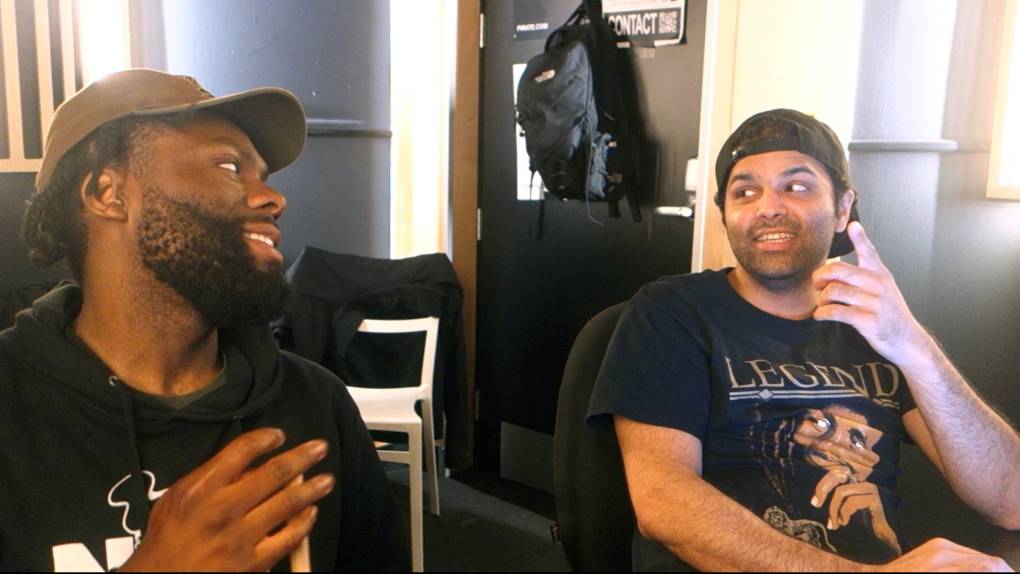
"caption": "Rapper Nimsins and software engineer and music producer Vinay Pai (left to right) generated beats using text prompts. They still feel conflicted about AI's implications for art. ",
"description": null,
"title": "sensoryoverload1",
"credit": "Rudrani Ghosh",
"status": "inherit",
"altTag": "Two collaborators smile at each other in a music studio.",
"isLoading": false,
"fetchFailed": false
},
"arts_13884929": {
"type": "attachments",
"id": "arts_13884929",
"meta": {
"index": "attachments_1716263798",
"site": "arts",
"id": "13884929",
"found": true
},
"parent": 13884928,
"imgSizes": {
"twentyfourteen-full-width": {
"file": "https://cdn.kqed.org/wp-content/uploads/sites/2/2020/08/gettyimages-1554415_wide-8f84f2146fb9f385da8ffe4f0491572041ed6040-1038x576.jpg",
"width": 1038,
"mimeType": "image/jpeg",
"height": 576
},
"thumbnail": {
"file": "https://cdn.kqed.org/wp-content/uploads/sites/2/2020/08/gettyimages-1554415_wide-8f84f2146fb9f385da8ffe4f0491572041ed6040-160x90.jpg",
"width": 160,
"mimeType": "image/jpeg",
"height": 90
},
"post-thumbnail": {
"file": "https://cdn.kqed.org/wp-content/uploads/sites/2/2020/08/gettyimages-1554415_wide-8f84f2146fb9f385da8ffe4f0491572041ed6040-672x372.jpg",
"width": 672,
"mimeType": "image/jpeg",
"height": 372
},
"kqedFullSize": {
"file": "https://cdn.kqed.org/wp-content/uploads/sites/2/2020/08/gettyimages-1554415_wide-8f84f2146fb9f385da8ffe4f0491572041ed6040-scaled-e1597708151946.jpg",
"width": 1920,
"height": 1079
},
"2048x2048": {
"file": "https://cdn.kqed.org/wp-content/uploads/sites/2/2020/08/gettyimages-1554415_wide-8f84f2146fb9f385da8ffe4f0491572041ed6040-2048x1152.jpg",
"width": 2048,
"mimeType": "image/jpeg",
"height": 1152
},
"large": {
"file": "https://cdn.kqed.org/wp-content/uploads/sites/2/2020/08/gettyimages-1554415_wide-8f84f2146fb9f385da8ffe4f0491572041ed6040-1020x574.jpg",
"width": 1020,
"mimeType": "image/jpeg",
"height": 574
},
"1536x1536": {
"file": "https://cdn.kqed.org/wp-content/uploads/sites/2/2020/08/gettyimages-1554415_wide-8f84f2146fb9f385da8ffe4f0491572041ed6040-1536x864.jpg",
"width": 1536,
"mimeType": "image/jpeg",
"height": 864
},
"full-width": {
"file": "https://cdn.kqed.org/wp-content/uploads/sites/2/2020/08/gettyimages-1554415_wide-8f84f2146fb9f385da8ffe4f0491572041ed6040-1920x1080.jpg",
"width": 1920,
"mimeType": "image/jpeg",
"height": 1080
},
"medium": {
"file": "https://cdn.kqed.org/wp-content/uploads/sites/2/2020/08/gettyimages-1554415_wide-8f84f2146fb9f385da8ffe4f0491572041ed6040-800x450.jpg",
"width": 800,
"mimeType": "image/jpeg",
"height": 450
},
"medium_large": {
"file": "https://cdn.kqed.org/wp-content/uploads/sites/2/2020/08/gettyimages-1554415_wide-8f84f2146fb9f385da8ffe4f0491572041ed6040-768x432.jpg",
"width": 768,
"mimeType": "image/jpeg",
"height": 432
}
},
"publishDate": 1597707913,
"modified": 1709075534,
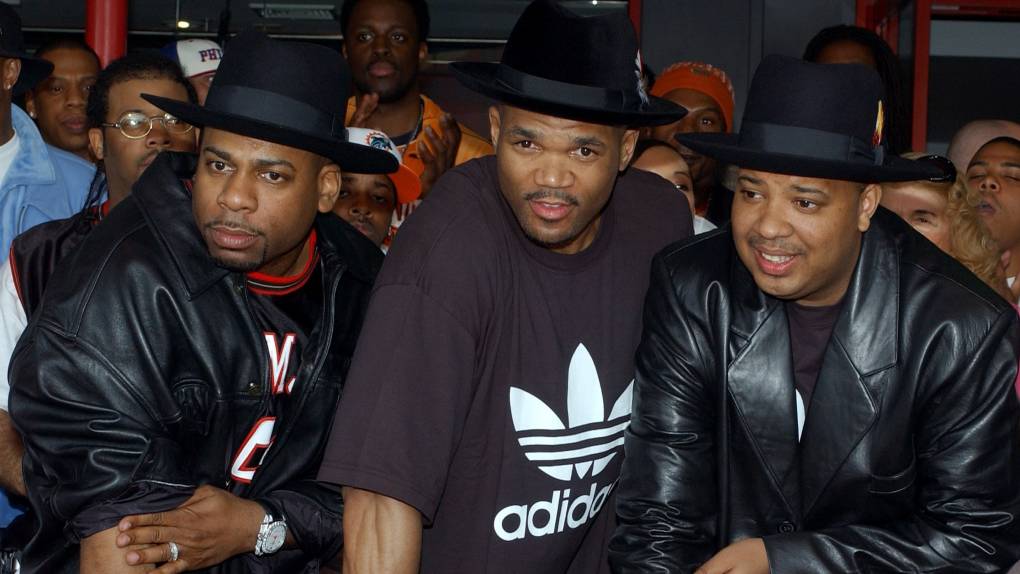
"caption": "(L) Jason ‘Jam Master Jay’ Mizell with Darryl ‘DMC’ McDaniels and Joseph ‘DJ Run’ Simmons of RUN-DMC.",
"description": null,
"title": "(L) Jason ‘Jam Master Jay’ Mizell with Darryl ‘DMC’ McDaniels and Joseph ‘DJ Run’ Simmons of RUN-DMC.",
"credit": "Vince Bucci/ Getty Images",
"status": "inherit",
"altTag": "Three Black men wearing black clothes and hats stand together in a line.",
"isLoading": false,
"fetchFailed": false
},
"arts_13953015": {
"type": "attachments",
"id": "arts_13953015",
"meta": {
"index": "attachments_1716263798",
"site": "arts",
"id": "13953015",
"found": true
},
"parent": 13953009,
"imgSizes": {
"twentyfourteen-full-width": {
"file": "https://cdn.kqed.org/wp-content/uploads/sites/2/2024/02/Screenshot-2024-02-26-at-12.07.32-PM-1038x576.png",
"width": 1038,
"mimeType": "image/png",
"height": 576
},
"thumbnail": {
"file": "https://cdn.kqed.org/wp-content/uploads/sites/2/2024/02/Screenshot-2024-02-26-at-12.07.32-PM-160x141.png",
"width": 160,
"mimeType": "image/png",
"height": 141
},
"post-thumbnail": {
"file": "https://cdn.kqed.org/wp-content/uploads/sites/2/2024/02/Screenshot-2024-02-26-at-12.07.32-PM-672x372.png",
"width": 672,
"mimeType": "image/png",
"height": 372
},
"kqedFullSize": {
"file": "https://cdn.kqed.org/wp-content/uploads/sites/2/2024/02/Screenshot-2024-02-26-at-12.07.32-PM.png",
"width": 1106,
"height": 972
},
"large": {
"file": "https://cdn.kqed.org/wp-content/uploads/sites/2/2024/02/Screenshot-2024-02-26-at-12.07.32-PM-1020x896.png",
"width": 1020,
"mimeType": "image/png",
"height": 896
},
"medium": {
"file": "https://cdn.kqed.org/wp-content/uploads/sites/2/2024/02/Screenshot-2024-02-26-at-12.07.32-PM-800x703.png",
"width": 800,
"mimeType": "image/png",
"height": 703
},
"medium_large": {
"file": "https://cdn.kqed.org/wp-content/uploads/sites/2/2024/02/Screenshot-2024-02-26-at-12.07.32-PM-768x675.png",
"width": 768,
"mimeType": "image/png",
"height": 675
}
},
"publishDate": 1708978103,
"modified": 1708994177,
"caption": "LOE Gino's new EP 'Everything Gone Be Aight' is a personal missive across six taut tracks.",
"description": "LOE Gino, posing for a photo while wearing a black shirt that reads \"NOT THE PLUG\" in colorful writing over his left chest area. ",
"title": "LOE Gino, posing for a photo while wearing a black shirt that reads \"NOT THE PLUG\" in colorful writing over his left chest area.",
"credit": "Jason 'Yeiseon' Hayes",
"status": "inherit",
"altTag": "LOE Gino, posing for a photo while wearing a black shirt that reads \"NOT THE PLUG\" in colorful writing over his left chest area.",
"isLoading": false,
"fetchFailed": false
},
"arts_13952978": {
"type": "attachments",
"id": "arts_13952978",
"meta": {
"index": "attachments_1716263798",
"site": "arts",
"id": "13952978",
"found": true
},
"parent": 0,
"imgSizes": {
"twentyfourteen-full-width": {
"file": "https://cdn.kqed.org/wp-content/uploads/sites/2/2024/02/240224-SUZANNE-CIANI-AT-GRACE-CATHEDRAL-MD-11-KQED-2-1038x576.jpg",
"width": 1038,
"mimeType": "image/jpeg",
"height": 576
},
"thumbnail": {
"file": "https://cdn.kqed.org/wp-content/uploads/sites/2/2024/02/240224-SUZANNE-CIANI-AT-GRACE-CATHEDRAL-MD-11-KQED-2-160x107.jpg",
"width": 160,
"mimeType": "image/jpeg",
"height": 107
},
"post-thumbnail": {
"file": "https://cdn.kqed.org/wp-content/uploads/sites/2/2024/02/240224-SUZANNE-CIANI-AT-GRACE-CATHEDRAL-MD-11-KQED-2-672x372.jpg",
"width": 672,
"mimeType": "image/jpeg",
"height": 372
},
"kqedFullSize": {
"file": "https://cdn.kqed.org/wp-content/uploads/sites/2/2024/02/240224-SUZANNE-CIANI-AT-GRACE-CATHEDRAL-MD-11-KQED-2.jpg",
"width": 2000,
"height": 1333
},
"large": {
"file": "https://cdn.kqed.org/wp-content/uploads/sites/2/2024/02/240224-SUZANNE-CIANI-AT-GRACE-CATHEDRAL-MD-11-KQED-2-1020x680.jpg",
"width": 1020,
"mimeType": "image/jpeg",
"height": 680
},
"1536x1536": {
"file": "https://cdn.kqed.org/wp-content/uploads/sites/2/2024/02/240224-SUZANNE-CIANI-AT-GRACE-CATHEDRAL-MD-11-KQED-2-1536x1024.jpg",
"width": 1536,
"mimeType": "image/jpeg",
"height": 1024
},
"full-width": {
"file": "https://cdn.kqed.org/wp-content/uploads/sites/2/2024/02/240224-SUZANNE-CIANI-AT-GRACE-CATHEDRAL-MD-11-KQED-2-1920x1280.jpg",
"width": 1920,
"mimeType": "image/jpeg",
"height": 1280
},
"medium": {
"file": "https://cdn.kqed.org/wp-content/uploads/sites/2/2024/02/240224-SUZANNE-CIANI-AT-GRACE-CATHEDRAL-MD-11-KQED-2-800x533.jpg",
"width": 800,
"mimeType": "image/jpeg",
"height": 533
},
"medium_large": {
"file": "https://cdn.kqed.org/wp-content/uploads/sites/2/2024/02/240224-SUZANNE-CIANI-AT-GRACE-CATHEDRAL-MD-11-KQED-2-768x512.jpg",
"width": 768,
"mimeType": "image/jpeg",
"height": 512
}
},
"publishDate": 1708907129,
"modified": 1708968577,
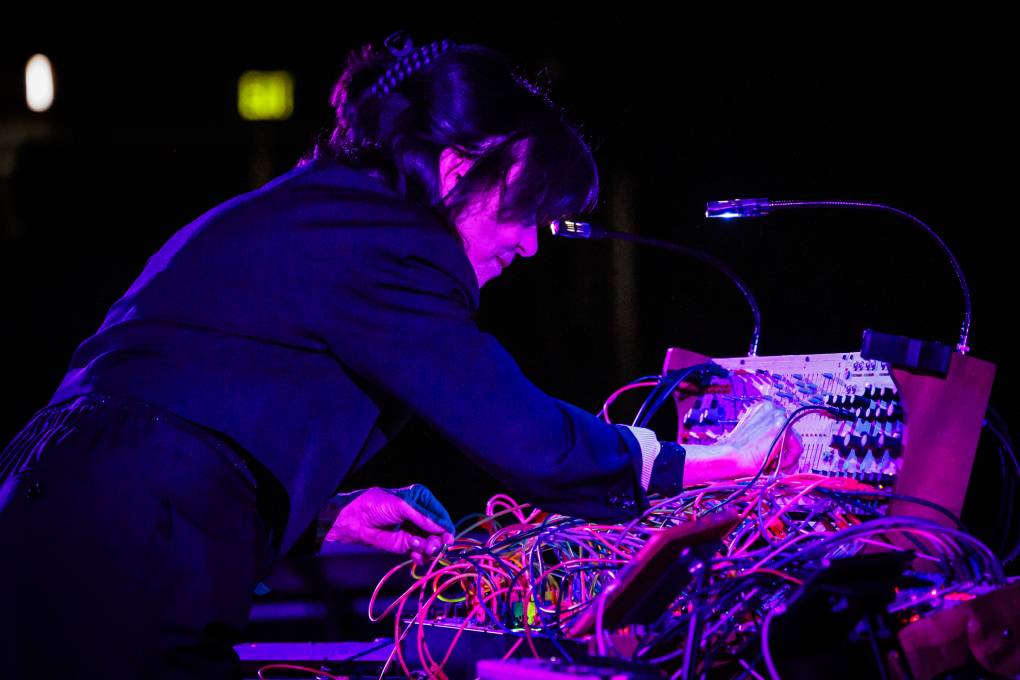
"caption": "Suzanne Ciani performs on her Buchla 200e at Grace Cathedral in San Francisco on Feb. 24, 2024.",
"description": null,
"title": "240224-SUZANNE CIANI AT GRACE CATHEDRAL-MD-11-KQED-2",
"credit": "Martin do Nascimento/KQED",
"status": "inherit",
"altTag": null,
"isLoading": false,
"fetchFailed": false
},
"arts_13952735": {
"type": "attachments",
"id": "arts_13952735",
"meta": {
"index": "attachments_1716263798",
"site": "arts",
"id": "13952735",
"found": true
},
"parent": 13952712,
"imgSizes": {
"twentyfourteen-full-width": {
"file": "https://cdn.kqed.org/wp-content/uploads/sites/2/2024/02/kingmakers-1038x576.png",
"width": 1038,
"mimeType": "image/png",
"height": 576
},
"thumbnail": {
"file": "https://cdn.kqed.org/wp-content/uploads/sites/2/2024/02/kingmakers-160x97.png",
"width": 160,
"mimeType": "image/png",
"height": 97
},
"post-thumbnail": {
"file": "https://cdn.kqed.org/wp-content/uploads/sites/2/2024/02/kingmakers-672x372.png",
"width": 672,
"mimeType": "image/png",
"height": 372
},
"kqedFullSize": {
"file": "https://cdn.kqed.org/wp-content/uploads/sites/2/2024/02/kingmakers-e1708562883271.png",
"width": 1920,
"height": 1161
},
"2048x2048": {
"file": "https://cdn.kqed.org/wp-content/uploads/sites/2/2024/02/kingmakers-2048x1239.png",
"width": 2048,
"mimeType": "image/png",
"height": 1239
},
"large": {
"file": "https://cdn.kqed.org/wp-content/uploads/sites/2/2024/02/kingmakers-1020x617.png",
"width": 1020,
"mimeType": "image/png",
"height": 617
},
"1536x1536": {
"file": "https://cdn.kqed.org/wp-content/uploads/sites/2/2024/02/kingmakers-1536x929.png",
"width": 1536,
"mimeType": "image/png",
"height": 929
},
"full-width": {
"file": "https://cdn.kqed.org/wp-content/uploads/sites/2/2024/02/kingmakers-1920x1161.png",
"width": 1920,
"mimeType": "image/png",
"height": 1161
},
"medium": {
"file": "https://cdn.kqed.org/wp-content/uploads/sites/2/2024/02/kingmakers-800x484.png",
"width": 800,
"mimeType": "image/png",
"height": 484
},
"medium_large": {
"file": "https://cdn.kqed.org/wp-content/uploads/sites/2/2024/02/kingmakers-768x464.png",
"width": 768,
"mimeType": "image/png",
"height": 464
}
},
"publishDate": 1708562736,
"modified": 1708618420,
"caption": "Young kings in KOO’s music video for ‘Glisten’ featuring Basi, Sequoiia, Ajai Kasim & 42k Lil.",
"description": null,
"title": "Young kings in KOO’s music video for ‘Glisten’ featuring Basi, Sequoiia, Ajai Kasim & 42k Lil.",
"credit": "Kingmakers of Oakland/YouTube",
"status": "inherit",
"altTag": "An illustration of two young Black men sitting on bicycles side by side. Both have small gold crowns hovering over their heads.",
"isLoading": false,
"fetchFailed": false
},
"arts_13952624": {
"type": "attachments",
"id": "arts_13952624",
"meta": {
"index": "attachments_1716263798",
"site": "arts",
"id": "13952624",
"found": true
},
"parent": 13952570,
"imgSizes": {
"twentyfourteen-full-width": {
"file": "https://cdn.kqed.org/wp-content/uploads/sites/2/2024/02/Screenshot-2024-02-20-at-12.01.15-PM-1038x576.png",
"width": 1038,
"mimeType": "image/png",
"height": 576
},
"thumbnail": {
"file": "https://cdn.kqed.org/wp-content/uploads/sites/2/2024/02/Screenshot-2024-02-20-at-12.01.15-PM-160x90.png",
"width": 160,
"mimeType": "image/png",
"height": 90
},
"post-thumbnail": {
"file": "https://cdn.kqed.org/wp-content/uploads/sites/2/2024/02/Screenshot-2024-02-20-at-12.01.15-PM-672x372.png",
"width": 672,
"mimeType": "image/png",
"height": 372
},
"kqedFullSize": {
"file": "https://cdn.kqed.org/wp-content/uploads/sites/2/2024/02/Screenshot-2024-02-20-at-12.01.15-PM.png",
"width": 2008,
"height": 1126
},
"large": {
"file": "https://cdn.kqed.org/wp-content/uploads/sites/2/2024/02/Screenshot-2024-02-20-at-12.01.15-PM-1020x572.png",
"width": 1020,
"mimeType": "image/png",
"height": 572
},
"1536x1536": {
"file": "https://cdn.kqed.org/wp-content/uploads/sites/2/2024/02/Screenshot-2024-02-20-at-12.01.15-PM-1536x861.png",
"width": 1536,
"mimeType": "image/png",
"height": 861
},
"full-width": {
"file": "https://cdn.kqed.org/wp-content/uploads/sites/2/2024/02/Screenshot-2024-02-20-at-12.01.15-PM-1920x1077.png",
"width": 1920,
"mimeType": "image/png",
"height": 1077
},
"medium": {
"file": "https://cdn.kqed.org/wp-content/uploads/sites/2/2024/02/Screenshot-2024-02-20-at-12.01.15-PM-800x449.png",
"width": 800,
"mimeType": "image/png",
"height": 449
},
"medium_large": {
"file": "https://cdn.kqed.org/wp-content/uploads/sites/2/2024/02/Screenshot-2024-02-20-at-12.01.15-PM-768x431.png",
"width": 768,
"mimeType": "image/png",
"height": 431
}
},
"publishDate": 1708459323,
"modified": 1708459353,
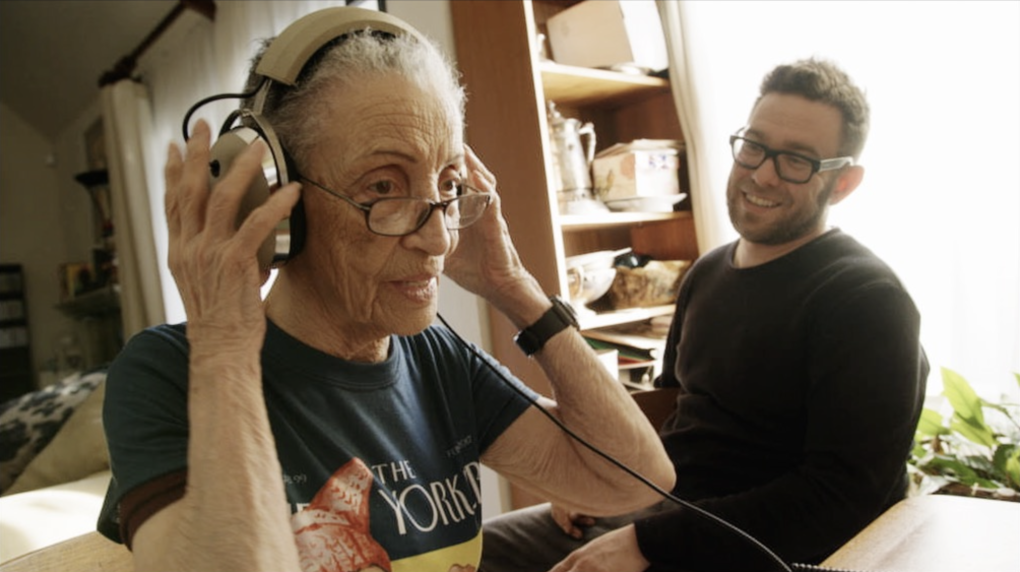
"caption": "Betty Reid Soskin listening to her own music as film director Bryan Gibel watches.",
"description": "Betty Reid Soskin listening to her own music as film director Bryan Gibel watches.",
"title": "Betty Reid Soskin listening to her own music as film director Bryan Gibel watches.",
"credit": "Via Bryan Gibel ",
"status": "inherit",
"altTag": "Betty Reid Soskin listening to her own music as film director Bryan Gibel watches.",
"isLoading": false,
"fetchFailed": false
},
"arts_13952650": {
"type": "attachments",
"id": "arts_13952650",
"meta": {
"index": "attachments_1716263798",
"site": "arts",
"id": "13952650",
"found": true
},
"parent": 13952420,
"imgSizes": {
"twentyfourteen-full-width": {
"file": "https://cdn.kqed.org/wp-content/uploads/sites/2/2024/02/Dolly.16x9-1038x576.jpg",
"width": 1038,
"mimeType": "image/jpeg",
"height": 576
},
"thumbnail": {
"file": "https://cdn.kqed.org/wp-content/uploads/sites/2/2024/02/Dolly.16x9-160x90.jpg",
"width": 160,
"mimeType": "image/jpeg",
"height": 90
},
"post-thumbnail": {
"file": "https://cdn.kqed.org/wp-content/uploads/sites/2/2024/02/Dolly.16x9-672x372.jpg",
"width": 672,
"mimeType": "image/jpeg",
"height": 372
},
"kqedFullSize": {
"file": "https://cdn.kqed.org/wp-content/uploads/sites/2/2024/02/Dolly.16x9.jpg",
"width": 1176,
"height": 662
},
"large": {
"file": "https://cdn.kqed.org/wp-content/uploads/sites/2/2024/02/Dolly.16x9-1020x574.jpg",
"width": 1020,
"mimeType": "image/jpeg",
"height": 574
},
"medium": {
"file": "https://cdn.kqed.org/wp-content/uploads/sites/2/2024/02/Dolly.16x9-800x450.jpg",
"width": 800,
"mimeType": "image/jpeg",
"height": 450
},
"medium_large": {
"file": "https://cdn.kqed.org/wp-content/uploads/sites/2/2024/02/Dolly.16x9-768x432.jpg",
"width": 768,
"mimeType": "image/jpeg",
"height": 432
}
},
"publishDate": 1708473337,
"modified": 1708473391,
"caption": "Our Lady of Dolly Parton and Saint Billy, the Boston Terrier. ",
"description": null,
"title": "Dolly.16x9",
"credit": "Courtesy of Dolly Parton",
"status": "inherit",
"altTag": "A blonde smiling woman bends down towards a bandana-wearing dog.",
"isLoading": false,
"fetchFailed": false
},
"arts_13952417": {
"type": "attachments",
"id": "arts_13952417",
"meta": {
"index": "attachments_1716263798",
"site": "arts",
"id": "13952417",
"found": true
},
"parent": 13952372,
"imgSizes": {
"twentyfourteen-full-width": {
"file": "https://cdn.kqed.org/wp-content/uploads/sites/2/2024/02/GettyImages-1309725971-1024x576.jpg",
"width": 1024,
"mimeType": "image/jpeg",
"height": 576
},
"thumbnail": {
"file": "https://cdn.kqed.org/wp-content/uploads/sites/2/2024/02/GettyImages-1309725971-160x107.jpg",
"width": 160,
"mimeType": "image/jpeg",
"height": 107
},
"post-thumbnail": {
"file": "https://cdn.kqed.org/wp-content/uploads/sites/2/2024/02/GettyImages-1309725971-672x372.jpg",
"width": 672,
"mimeType": "image/jpeg",
"height": 372
},
"kqedFullSize": {
"file": "https://cdn.kqed.org/wp-content/uploads/sites/2/2024/02/GettyImages-1309725971.jpg",
"width": 1024,
"height": 683
},
"large": {
"file": "https://cdn.kqed.org/wp-content/uploads/sites/2/2024/02/GettyImages-1309725971-1020x680.jpg",
"width": 1020,
"mimeType": "image/jpeg",
"height": 680
},
"medium": {
"file": "https://cdn.kqed.org/wp-content/uploads/sites/2/2024/02/GettyImages-1309725971-800x534.jpg",
"width": 800,
"mimeType": "image/jpeg",
"height": 534
},
"medium_large": {
"file": "https://cdn.kqed.org/wp-content/uploads/sites/2/2024/02/GettyImages-1309725971-768x512.jpg",
"width": 768,
"mimeType": "image/jpeg",
"height": 512
}
},
"publishDate": 1708034107,
"modified": 1708034142,
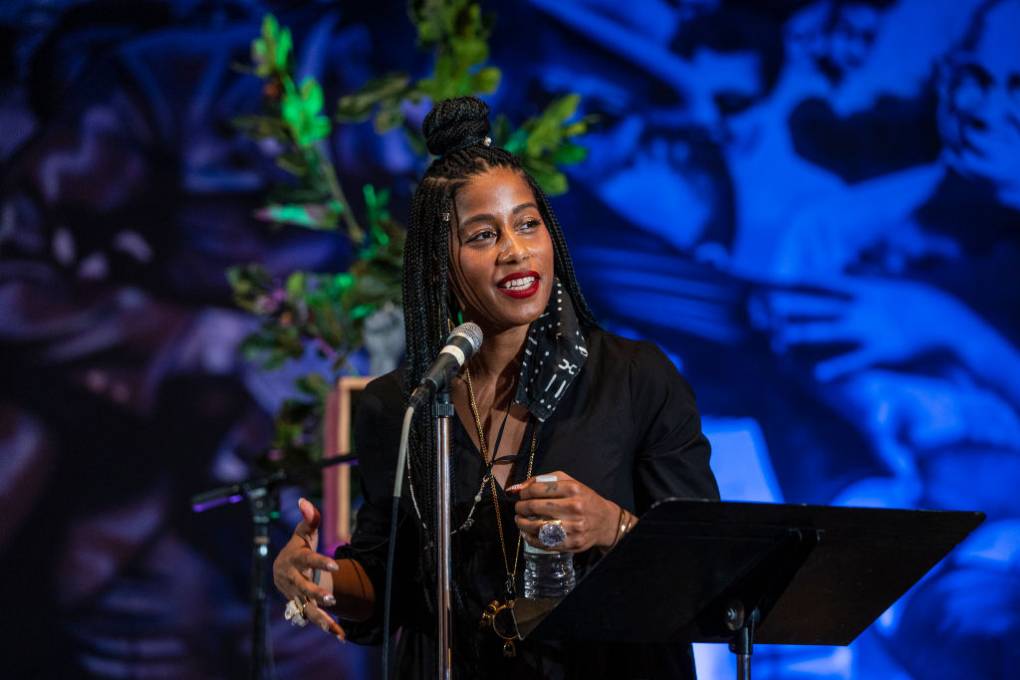
"caption": "aja monet speaks at Studio Be on March 28, 2021 in New Orleans, Louisiana.",
"description": null,
"title": "Aja Monet: A Women's History Month Poetry Session",
"credit": "Erika Goldring/Getty Images",
"status": "inherit",
"altTag": "A poet smiles at a podium.",
"isLoading": false,
"fetchFailed": false
},
"arts_13952412": {
"type": "attachments",
"id": "arts_13952412",
"meta": {
"index": "attachments_1716263798",
"site": "arts",
"id": "13952412",
"found": true
},
"parent": 13952409,
"imgSizes": {
"twentyfourteen-full-width": {
"file": "https://cdn.kqed.org/wp-content/uploads/sites/2/2024/02/Screen-Shot-2024-02-15-at-1.17.09-PM-1038x576.png",
"width": 1038,
"mimeType": "image/png",
"height": 576
},
"thumbnail": {
"file": "https://cdn.kqed.org/wp-content/uploads/sites/2/2024/02/Screen-Shot-2024-02-15-at-1.17.09-PM-160x104.png",
"width": 160,
"mimeType": "image/png",
"height": 104
},
"post-thumbnail": {
"file": "https://cdn.kqed.org/wp-content/uploads/sites/2/2024/02/Screen-Shot-2024-02-15-at-1.17.09-PM-672x372.png",
"width": 672,
"mimeType": "image/png",
"height": 372
},
"kqedFullSize": {
"file": "https://cdn.kqed.org/wp-content/uploads/sites/2/2024/02/Screen-Shot-2024-02-15-at-1.17.09-PM.png",
"width": 1748,
"height": 1132
},
"large": {
"file": "https://cdn.kqed.org/wp-content/uploads/sites/2/2024/02/Screen-Shot-2024-02-15-at-1.17.09-PM-1020x661.png",
"width": 1020,
"mimeType": "image/png",
"height": 661
},
"1536x1536": {
"file": "https://cdn.kqed.org/wp-content/uploads/sites/2/2024/02/Screen-Shot-2024-02-15-at-1.17.09-PM-1536x995.png",
"width": 1536,
"mimeType": "image/png",
"height": 995
},
"medium": {
"file": "https://cdn.kqed.org/wp-content/uploads/sites/2/2024/02/Screen-Shot-2024-02-15-at-1.17.09-PM-800x518.png",
"width": 800,
"mimeType": "image/png",
"height": 518
},
"medium_large": {
"file": "https://cdn.kqed.org/wp-content/uploads/sites/2/2024/02/Screen-Shot-2024-02-15-at-1.17.09-PM-768x497.png",
"width": 768,
"mimeType": "image/png",
"height": 497
}
},
"publishDate": 1708031886,
"modified": 1708031991,
"caption": "Jennifer Lopez in ‘This is Me… Now: A Love Story.’",
"description": null,
"title": "Jennifer Lopez in ‘This is Me… Now: A Love Story.’",
"credit": "Prime Video via AP",
"status": "inherit",
"altTag": "A beautiful middle-aged Latina lies in bed, hair tousled.",
"isLoading": false,
"fetchFailed": false
},
"arts_13934882": {
"type": "attachments",
"id": "arts_13934882",
"meta": {
"index": "attachments_1716263798",
"site": "arts",
"id": "13934882",
"found": true
},
"parent": 13934324,
"imgSizes": {
"twentyfourteen-full-width": {
"file": "https://ww2.kqed.org/app/uploads/sites/2/2023/09/Hiero.Group_.2023-1038x576.jpg",
"width": 1038,
"mimeType": "image/jpeg",
"height": 576
},
"thumbnail": {
"file": "https://ww2.kqed.org/app/uploads/sites/2/2023/09/Hiero.Group_.2023-160x120.jpg",
"width": 160,
"mimeType": "image/jpeg",
"height": 120
},
"post-thumbnail": {
"file": "https://ww2.kqed.org/app/uploads/sites/2/2023/09/Hiero.Group_.2023-672x372.jpg",
"width": 672,
"mimeType": "image/jpeg",
"height": 372
},
"kqedFullSize": {
"file": "https://ww2.kqed.org/app/uploads/sites/2/2023/09/Hiero.Group_.2023-scaled.jpg",
"width": 2560,
"height": 1920
},
"2048x2048": {
"file": "https://ww2.kqed.org/app/uploads/sites/2/2023/09/Hiero.Group_.2023-2048x1536.jpg",
"width": 2048,
"mimeType": "image/jpeg",
"height": 1536
},
"large": {
"file": "https://ww2.kqed.org/app/uploads/sites/2/2023/09/Hiero.Group_.2023-1020x765.jpg",
"width": 1020,
"mimeType": "image/jpeg",
"height": 765
},
"1536x1536": {
"file": "https://ww2.kqed.org/app/uploads/sites/2/2023/09/Hiero.Group_.2023-1536x1152.jpg",
"width": 1536,
"mimeType": "image/jpeg",
"height": 1152
},
"full-width": {
"file": "https://ww2.kqed.org/app/uploads/sites/2/2023/09/Hiero.Group_.2023-1920x1440.jpg",
"width": 1920,
"mimeType": "image/jpeg",
"height": 1440
},
"medium": {
"file": "https://ww2.kqed.org/app/uploads/sites/2/2023/09/Hiero.Group_.2023-800x600.jpg",
"width": 800,
"mimeType": "image/jpeg",
"height": 600
},
"medium_large": {
"file": "https://ww2.kqed.org/app/uploads/sites/2/2023/09/Hiero.Group_.2023-768x576.jpg",
"width": 768,
"mimeType": "image/jpeg",
"height": 576
}
},
"publishDate": 1695055392,
"modified": 1695055418,
"caption": "Hieroglyphics on stage at Hiero Day in Frank Ogawa Plaza, Oakland, Sept. 4, 2023.",
"description": null,
"title": "Hiero.Group.2023",
"credit": "Eric Arnold/KQED",
"status": "inherit",
"altTag": null,
"isLoading": false,
"fetchFailed": false
},
"arts_13952262": {
"type": "attachments",
"id": "arts_13952262",
"meta": {
"index": "attachments_1716263798",
"site": "arts",
"id": "13952262",
"found": true
},
"parent": 13952260,
"imgSizes": {
"twentyfourteen-full-width": {
"file": "https://cdn.kqed.org/wp-content/uploads/sites/2/2024/02/ISP.impact.MAIN_-1038x576.jpg",
"width": 1038,
"mimeType": "image/jpeg",
"height": 576
},
"thumbnail": {
"file": "https://cdn.kqed.org/wp-content/uploads/sites/2/2024/02/ISP.impact.MAIN_-160x90.jpg",
"width": 160,
"mimeType": "image/jpeg",
"height": 90
},
"post-thumbnail": {
"file": "https://cdn.kqed.org/wp-content/uploads/sites/2/2024/02/ISP.impact.MAIN_-672x372.jpg",
"width": 672,
"mimeType": "image/jpeg",
"height": 372
},
"kqedFullSize": {
"file": "https://cdn.kqed.org/wp-content/uploads/sites/2/2024/02/ISP.impact.MAIN_.jpg",
"width": 1080,
"height": 608
},
"large": {
"file": "https://cdn.kqed.org/wp-content/uploads/sites/2/2024/02/ISP.impact.MAIN_-1020x574.jpg",
"width": 1020,
"mimeType": "image/jpeg",
"height": 574
},
"medium": {
"file": "https://cdn.kqed.org/wp-content/uploads/sites/2/2024/02/ISP.impact.MAIN_-800x450.jpg",
"width": 800,
"mimeType": "image/jpeg",
"height": 450
},
"medium_large": {
"file": "https://cdn.kqed.org/wp-content/uploads/sites/2/2024/02/ISP.impact.MAIN_-768x432.jpg",
"width": 768,
"mimeType": "image/jpeg",
"height": 432
}
},
"publishDate": 1707897078,
"modified": 1707897388,
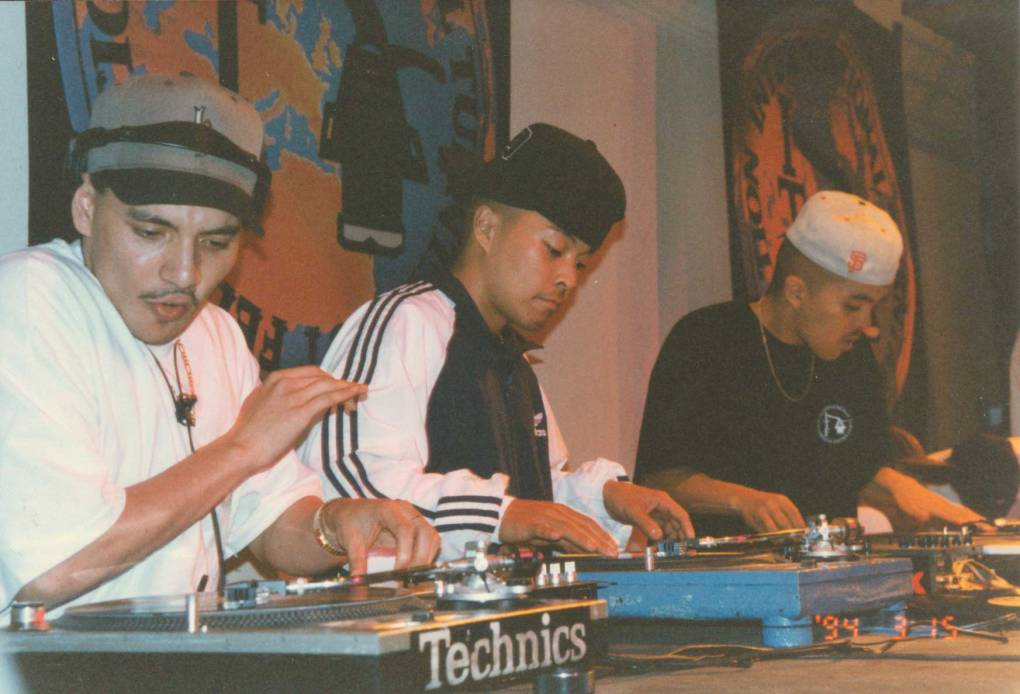
"caption": "The Invisibl Skratch Piklz' cultural impact over the past 40 years has been felt around the globe. The crew is pictured here backstage in San Francisco in 2017.",
"description": null,
"title": "ISP.impact.MAIN",
"credit": "Courtesy Shortkut",
"status": "inherit",
"altTag": null,
"isLoading": false,
"fetchFailed": false
},
"arts_13952226": {
"type": "attachments",
"id": "arts_13952226",
"meta": {
"index": "attachments_1716263798",
"site": "arts",
"id": "13952226",
"found": true
},
"parent": 13952208,
"imgSizes": {
"twentyfourteen-full-width": {
"file": "https://cdn.kqed.org/wp-content/uploads/sites/2/2024/02/ISP.all3_.MMMwShortkut-1038x576.jpg",
"width": 1038,
"mimeType": "image/jpeg",
"height": 576
},
"thumbnail": {
"file": "https://cdn.kqed.org/wp-content/uploads/sites/2/2024/02/ISP.all3_.MMMwShortkut-160x109.jpg",
"width": 160,
"mimeType": "image/jpeg",
"height": 109
},
"post-thumbnail": {
"file": "https://cdn.kqed.org/wp-content/uploads/sites/2/2024/02/ISP.all3_.MMMwShortkut-672x372.jpg",
"width": 672,
"mimeType": "image/jpeg",
"height": 372
},
"kqedFullSize": {
"file": "https://cdn.kqed.org/wp-content/uploads/sites/2/2024/02/ISP.all3_.MMMwShortkut.jpg",
"width": 1745,
"height": 1188
},
"large": {
"file": "https://cdn.kqed.org/wp-content/uploads/sites/2/2024/02/ISP.all3_.MMMwShortkut-1020x694.jpg",
"width": 1020,
"mimeType": "image/jpeg",
"height": 694
},
"1536x1536": {
"file": "https://cdn.kqed.org/wp-content/uploads/sites/2/2024/02/ISP.all3_.MMMwShortkut-1536x1046.jpg",
"width": 1536,
"mimeType": "image/jpeg",
"height": 1046
},
"medium": {
"file": "https://cdn.kqed.org/wp-content/uploads/sites/2/2024/02/ISP.all3_.MMMwShortkut-800x545.jpg",
"width": 800,
"mimeType": "image/jpeg",
"height": 545
},
"medium_large": {
"file": "https://cdn.kqed.org/wp-content/uploads/sites/2/2024/02/ISP.all3_.MMMwShortkut-768x523.jpg",
"width": 768,
"mimeType": "image/jpeg",
"height": 523
}
},
"publishDate": 1707885634,
"modified": 1707886423,
"caption": "The Invisibl Skratch Piklz' lineup of Mix Master Mike, Qbert and Shortkut.",
"description": null,
"title": "ISP.all3.MMMwShortkut",
"credit": "Courtesy Alex Aquino",
"status": "inherit",
"altTag": null,
"isLoading": false,
"fetchFailed": false
}
},
"audioPlayerReducer": {
"postId": "stream_live",
"isPaused": true,
"isPlaying": false,
"pfsActive": false,
"pledgeModalIsOpen": true,
"playerDrawerIsOpen": false,
"liveAudioPlayStartedAt": 0,
"liveAudioPlayContext": ""
},
"authorsReducer": {
"byline_arts_13953112": {
"type": "authors",
"id": "byline_arts_13953112",
"meta": {
"override": true
},
"slug": "byline_arts_13953112",
"name": "Cedar Attanasio, Associated Press",
"isLoading": false
},
"byline_arts_13952409": {
"type": "authors",
"id": "byline_arts_13952409",
"meta": {
"override": true
},
"slug": "byline_arts_13952409",
"name": "Jocelyn Noveck, Associated Press",
"isLoading": false
},
"gmeline": {
"type": "authors",
"id": "185",
"meta": {
"index": "authors_1716337520",
"id": "185",
"found": true
},
"name": "Gabe Meline",
"firstName": "Gabe",
"lastName": "Meline",
"slug": "gmeline",
"email": "gmeline@kqed.org",
"display_author_email": true,
"staff_mastheads": [
"arts"
],
"title": "Senior Editor, KQED Arts & Culture",
"bio": "Gabe Meline entered journalism at age 15 making photocopied zines, and has since earned awards from the Edward R. Murrow Awards, the Society for Professional Journalists, the Online Journalism Awards, the Association of Alternative Newsweeklies and the California Newspaper Publishers Association. Prior to KQED, he was the editor of the \u003cem>North Bay Bohemian\u003c/em> and a touring musician. He lives with his wife and daughter in his hometown of Santa Rosa, CA.",
"avatar": "https://secure.gravatar.com/avatar/5bebe57be0d8bc2dd318934feb47299e2d2d10cba28d09d8d7afb389a2ce2bdd?s=600&d=blank&r=g",
"twitter": null,
"bluesky": null,
"facebook": null,
"instagram": null,
"linkedin": null,
"sites": [
{
"site": "",
"roles": [
"editor"
]
},
{
"site": "arts",
"roles": [
"administrator"
]
},
{
"site": "artschool",
"roles": [
"editor"
]
},
{
"site": "news",
"roles": [
"author"
]
},
{
"site": "pop",
"roles": [
"editor"
]
},
{
"site": "bayareabites",
"roles": [
"editor"
]
},
{
"site": "food",
"roles": [
"editor"
]
},
{
"site": "forum",
"roles": [
"administrator"
]
},
{
"site": "liveblog",
"roles": [
"editor"
]
},
{
"site": "hiphop",
"roles": [
"editor"
]
}
],
"headData": {
"title": "Gabe Meline | KQED",
"description": "Senior Editor, KQED Arts & Culture",
"ogImgSrc": "https://secure.gravatar.com/avatar/5bebe57be0d8bc2dd318934feb47299e2d2d10cba28d09d8d7afb389a2ce2bdd?s=600&d=blank&r=g",
"twImgSrc": "https://secure.gravatar.com/avatar/5bebe57be0d8bc2dd318934feb47299e2d2d10cba28d09d8d7afb389a2ce2bdd?s=600&d=blank&r=g"
},
"isLoading": false,
"link": "/author/gmeline"
},
"ralexandra": {
"type": "authors",
"id": "11242",
"meta": {
"index": "authors_1716337520",
"id": "11242",
"found": true
},
"name": "Rae Alexandra",
"firstName": "Rae",
"lastName": "Alexandra",
"slug": "ralexandra",
"email": "ralexandra@kqed.org",
"display_author_email": true,
"staff_mastheads": [],
"title": "Reporter/Producer",
"bio": "Rae Alexandra is a Reporter/Producer for KQED Arts & Culture, and the creator/author of the \u003ca href=\"https://www.kqed.org/arts/program/rebel-girls-from-bay-area-history\">Rebel Girls From Bay Area History\u003c/a> and \u003ca href=\"https://www.kqed.org/bizarrebayarea\">Bizarre Bay Area\u003c/a> series. Her debut book, \u003ca href=\"https://citylights.com/politics-current-events-history/unsung-heroines35-women-who-changed/\">Unsung Heroines: 35 Women Who Changed the Bay Area\u003c/a> was published by City Lights in March 2026. In 2023, Rae was awarded an SPJ Excellence in Journalism Award for Arts & Culture. Rae was born and raised in Wales and subsequently — even after two decades in Northern California — still uses phrases that regularly baffle her coworkers.",
"avatar": "https://secure.gravatar.com/avatar/edfee8176c80cc0a382b051190f5341997df378a934a5774dcb0977732dfd401?s=600&d=blank&r=g",
"twitter": null,
"bluesky": null,
"facebook": null,
"instagram": null,
"linkedin": null,
"sites": [
{
"site": "arts",
"roles": [
"subscriber"
]
},
{
"site": "news",
"roles": [
"subscriber"
]
},
{
"site": "pop",
"roles": [
"subscriber"
]
},
{
"site": "bayareabites",
"roles": [
"subscriber"
]
},
{
"site": "science",
"roles": [
"subscriber"
]
}
],
"headData": {
"title": "Rae Alexandra | KQED",
"description": "Reporter/Producer",
"ogImgSrc": "https://secure.gravatar.com/avatar/edfee8176c80cc0a382b051190f5341997df378a934a5774dcb0977732dfd401?s=600&d=blank&r=g",
"twImgSrc": "https://secure.gravatar.com/avatar/edfee8176c80cc0a382b051190f5341997df378a934a5774dcb0977732dfd401?s=600&d=blank&r=g"
},
"isLoading": false,
"link": "/author/ralexandra"
},
"nvoynovskaya": {
"type": "authors",
"id": "11387",
"meta": {
"index": "authors_1716337520",
"id": "11387",
"found": true
},
"name": "Nastia Voynovskaya",
"firstName": "Nastia",
"lastName": "Voynovskaya",
"slug": "nvoynovskaya",
"email": "nvoynovskaya@kqed.org",
"display_author_email": false,
"staff_mastheads": [
"arts"
],
"title": "Editor and reporter",
"bio": "Nastia Voynovskaya is a reporter, editor and host at KQED Arts & Culture. She's been covering the arts in the Bay Area for over a decade, with a focus on music, queer culture, labor issues and grassroots organizing. She has edited KQED story series such as Trans Bay: A History of San Francisco's Gender-Diverse Community, and co-created KQED's Bay Area hip-hop history project, That's My Word. Nastia's work has been recognized by the Society of Professional Journalists and San Francisco Press Club. She regularly appears on podcasts and radio programs, including NPR's All Songs Considered, and hosts live events where music, culture and conversation meet.",
"avatar": "https://secure.gravatar.com/avatar/5025ee460e5a85d69ca20ea6c6f2f80d7e17795c828f61ea3aecfcd924e9042e?s=600&d=blank&r=g",
"twitter": null,
"bluesky": null,
"facebook": null,
"instagram": "https://www.instagram.com/nananastia/",
"linkedin": null,
"sites": [
{
"site": "",
"roles": [
"editor"
]
},
{
"site": "arts",
"roles": [
"administrator"
]
},
{
"site": "news",
"roles": [
"editor"
]
},
{
"site": "pop",
"roles": [
"administrator"
]
},
{
"site": "bayareabites",
"roles": [
"editor"
]
},
{
"site": "podcasts",
"roles": [
"editor"
]
},
{
"site": "hiphop",
"roles": [
"editor"
]
}
],
"headData": {
"title": "Nastia Voynovskaya | KQED",
"description": "Editor and reporter",
"ogImgSrc": "https://secure.gravatar.com/avatar/5025ee460e5a85d69ca20ea6c6f2f80d7e17795c828f61ea3aecfcd924e9042e?s=600&d=blank&r=g",
"twImgSrc": "https://secure.gravatar.com/avatar/5025ee460e5a85d69ca20ea6c6f2f80d7e17795c828f61ea3aecfcd924e9042e?s=600&d=blank&r=g"
},
"isLoading": false,
"link": "/author/nvoynovskaya"
},
"ogpenn": {
"type": "authors",
"id": "11491",
"meta": {
"index": "authors_1716337520",
"id": "11491",
"found": true
},
"name": "Pendarvis Harshaw",
"firstName": "Pendarvis",
"lastName": "Harshaw",
"slug": "ogpenn",
"email": "ogpenn@gmail.com",
"display_author_email": false,
"staff_mastheads": [
"arts"
],
"title": "Community Engagement Reporter",
"bio": "Pendarvis Harshaw is an educator, host and writer with KQED Arts.",
"avatar": "https://secure.gravatar.com/avatar/972b77ee8e3f346ae2b00622661187fbfabd059b5693bbdc1475ea7a722fd4cd?s=600&d=blank&r=g",
"twitter": null,
"bluesky": null,
"facebook": null,
"instagram": "ogpenn",
"linkedin": null,
"sites": [
{
"site": "arts",
"roles": [
"administrator"
]
},
{
"site": "news",
"roles": [
"editor"
]
},
{
"site": "bayareabites",
"roles": [
"author"
]
},
{
"site": "hiphop",
"roles": [
"editor"
]
}
],
"headData": {
"title": "Pendarvis Harshaw | KQED",
"description": "Community Engagement Reporter",
"ogImgSrc": "https://secure.gravatar.com/avatar/972b77ee8e3f346ae2b00622661187fbfabd059b5693bbdc1475ea7a722fd4cd?s=600&d=blank&r=g",
"twImgSrc": "https://secure.gravatar.com/avatar/972b77ee8e3f346ae2b00622661187fbfabd059b5693bbdc1475ea7a722fd4cd?s=600&d=blank&r=g"
},
"isLoading": false,
"link": "/author/ogpenn"
},
"achazaro": {
"type": "authors",
"id": "11748",
"meta": {
"index": "authors_1716337520",
"id": "11748",
"found": true
},
"name": "Alan Chazaro",
"firstName": "Alan",
"lastName": "Chazaro",
"slug": "achazaro",
"email": "agchazaro@gmail.com",
"display_author_email": true,
"staff_mastheads": [],
"title": "Food Writer and Reporter",
"bio": "Alan Chazaro is the author of \u003cem>This Is Not a Frank Ocean Cover Album\u003c/em> (Black Lawrence Press, 2019), \u003cem>Piñata Theory\u003c/em> (Black Lawrence Press, 2020), and \u003cem>Notes from the Eastern Span of the Bay Bridge\u003c/em> (Ghost City Press, 2021). He is a graduate of June Jordan’s Poetry for the People program at UC Berkeley and a former Lawrence Ferlinghetti Fellow at the University of San Francisco. He writes about sports, food, art, music, education, and culture while repping the Bay on \u003ca href=\"https://twitter.com/alan_chazaro\">Twitter\u003c/a> and \u003ca href=\"https://www.instagram.com/alan_chazaro/?hl=en\">Instagram\u003c/a> at @alan_chazaro.",
"avatar": "https://secure.gravatar.com/avatar/ea8b6dd970fc5c29e7a188e7d5861df7?s=600&d=blank&r=g",
"twitter": "alan_chazaro",
"facebook": null,
"instagram": null,
"linkedin": null,
"sites": [
{
"site": "arts",
"roles": [
"contributor"
]
},
{
"site": "news",
"roles": [
"editor"
]
}
],
"headData": {
"title": "Alan Chazaro | KQED",
"description": "Food Writer and Reporter",
"ogImgSrc": "https://secure.gravatar.com/avatar/ea8b6dd970fc5c29e7a188e7d5861df7?s=600&d=blank&r=g",
"twImgSrc": "https://secure.gravatar.com/avatar/ea8b6dd970fc5c29e7a188e7d5861df7?s=600&d=blank&r=g"
},
"isLoading": false,
"link": "/author/achazaro"
},
"earnold": {
"type": "authors",
"id": "11839",
"meta": {
"index": "authors_1716337520",
"id": "11839",
"found": true
},
"name": "Eric Arnold",
"firstName": "Eric",
"lastName": "Arnold",
"slug": "earnold",
"email": "earnold@kqed.org",
"display_author_email": false,
"staff_mastheads": [],
"title": "Contributing Editor, 'That's My Word'",
"bio": "Eric Arnold has covered hip-hop locally and nationally for over 30 years. Formerly the managing editor of \u003cem>4080\u003c/em> and columnist for \u003cem>The Source\u003c/em>, he chronicled hyphy’s rise and fall, co-curated the Oakland Museum of California’s first hip-hop exhibit in 2018 and won a 2022 Northern California Emmy Award for a mini-documentary on Oakland’s Boogaloo dance culture. He is a contributing editor for \u003cem>That’s My Word\u003c/em>, KQED's series on the history of Bay Area hip-hop.",
"avatar": "https://secure.gravatar.com/avatar/ede45b04898456ad0893a2811e78b0a2?s=600&d=blank&r=g",
"twitter": null,
"facebook": null,
"instagram": null,
"linkedin": null,
"sites": [
{
"site": "arts",
"roles": [
"contributor"
]
},
{
"site": "news",
"roles": [
"contributor"
]
},
{
"site": "hiphop",
"roles": [
"contributor"
]
}
],
"headData": {
"title": "Eric Arnold | KQED",
"description": "Contributing Editor, 'That's My Word'",
"ogImgSrc": "https://secure.gravatar.com/avatar/ede45b04898456ad0893a2811e78b0a2?s=600&d=blank&r=g",
"twImgSrc": "https://secure.gravatar.com/avatar/ede45b04898456ad0893a2811e78b0a2?s=600&d=blank&r=g"
},
"isLoading": false,
"link": "/author/earnold"
}
},
"pagesReducer": {
"arts_category_music": {
"type": "terms",
"id": "arts_69",
"meta": {
"index": "terms_1716263798",
"site": "arts",
"id": "69",
"score": 10.851397
},
"featImg": null,
"name": "Music",
"description": null,
"taxonomy": "category",
"headData": {
"twImgId": null,
"twTitle": null,
"ogTitle": null,
"ogImgId": null,
"twDescription": null,
"description": null,
"title": "Music Archives | KQED Arts",
"ogDescription": null
},
"ttid": 70,
"slug": "music",
"isLoading": false,
"title": "Music",
"pageMeta": {
"site": "arts",
"WpPageTemplate": "page-topic-editorial",
"currentPage": 59
},
"blocks": [
{
"blockName": "kqed/post-list",
"attrs": {
"layout": "cardArticle2",
"query": "posts/arts?category=music",
"seeMore": false,
"paginated": true,
"page": 59
}
},
{
"blockName": "kqed/ad"
}
]
}
},
"pfsSessionReducer": {},
"postsReducer": {
"stream_live": {
"type": "live",
"id": "stream_live",
"audioUrl": "https://streams.kqed.org/kqedradio",
"title": "Live Stream",
"excerpt": "Live Stream information currently unavailable.",
"link": "/radio",
"featImg": "",
"label": {
"name": "KQED Live",
"link": "/"
}
},
"stream_kqedNewscast": {
"type": "posts",
"id": "stream_kqedNewscast",
"audioUrl": "https://www.kqed.org/.stream/anon/radio/RDnews/newscast.mp3?_=1",
"title": "KQED Newscast",
"featImg": "",
"label": {
"name": "88.5 FM",
"link": "/"
}
},
"arts_13952796": {
"type": "posts",
"id": "arts_13952796",
"meta": {
"index": "posts_1716263798",
"site": "arts",
"id": "13952796",
"score": null,
"sort": [
1709147035000
]
},
"guestAuthors": [],
"slug": "nimsins-vinay-ai-album-documentary-sensory-overload",
"title": "A Bay Area Rapper and Software Engineer Made an AI Album in 24 Hours",
"publishDate": 1709147035,
"format": "standard",
"headTitle": "A Bay Area Rapper and Software Engineer Made an AI Album in 24 Hours | KQED",
"labelTerm": {
"site": "arts"
},
"content": "\u003cp>\u003cspan style=\"font-weight: 400\">Stop me if you’ve heard this one before: an East Oakland rapper and Berkeley software engineer fly to New York City to record an album at a DIY studio using beta open-sourced AI technology, then return to the Bay Area to finish it. Oh, and they do it all on a whim, within a total of 24 hours.\u003c/span>\u003c/p>\n\u003cp>\u003cspan style=\"font-weight: 400\">That’s the universe (or metaverse?) we live in today — in which community and creativity are inescapably intertwined with technologies we don’t completely understand, but are learning to maneuver in fast-moving, self-directed ways. \u003c/span>\u003c/p>\n\u003cp>\u003cspan style=\"font-weight: 400\">It’s a reality that \u003ca href=\"https://www.instagram.com/nimsins/?hl=en\">Nimsins\u003c/a> and \u003ca href=\"https://www.instagram.com/vinay___/?hl=en\">Vinay Pai\u003c/a> (the rapper and software engineer, respectively) hoped to leverage as friends and artists in their latest collaboration, \u003c/span>\u003ca href=\"https://open.spotify.com/album/7C8vShKWOIcbNXhqMHI7wa\">\u003ci>\u003cspan style=\"font-weight: 400\">SENSORY OVERLOAD\u003c/span>\u003c/i>\u003c/a>\u003cspan style=\"font-weight: 400\">. \u003c/span>\u003c/p>\n\u003cp>\u003cspan style=\"font-weight: 400\">Using a test version of Meta’s\u003c/span>\u003ca href=\"https://musicgen.com/\">\u003cspan style=\"font-weight: 400\"> MusicGen\u003c/span>\u003c/a>\u003cspan style=\"font-weight: 400\"> (which allows users to generate music from text prompts) and Hugging Face (an open source website where emerging AI research is shared for public use), the creative duo came together for what they’re claiming is the first album to use the latest generative music production technology.\u003c/span>\u003c/p>\n\u003cp>https://youtu.be/3DBv2ZxbOjU?feature=shared\u003c/p>\n\u003cp>[ad fullwidth]\u003c/p>\n\u003cp>\u003cspan style=\"font-weight: 400\">“One of my coworkers used to work on\u003c/span>\u003ca href=\"https://ai.meta.com/research/\">\u003cspan style=\"font-weight: 400\"> Fundamental AI Research [FAIR]\u003c/span>\u003c/a>\u003cspan style=\"font-weight: 400\"> at Meta. He worked on deep system stuff, not audio. He told me about [MusicGen] existing [before it went fully public],” says Pai, a UC Berkeley computer science graduate who came up with the idea and reached out to Nimsins, with whom he had previously worked on an album. (Pai also produces music under his first name, Vinay.) \u003c/span>\u003c/p>\n\u003cp>\u003cspan style=\"font-weight: 400\">The complete project includes the album, an AI-generated music video and a \u003c/span>\u003ca href=\"https://www.youtube.com/watch?v=lowvJWnXbe4\">\u003cspan style=\"font-weight: 400\">two-part (human-made) documentary\u003c/span>\u003c/a> \u003cspan style=\"font-weight: 400\">about the process. The goal wasn’t necessarily to make the best rap record of all time. It was more about experimenting with new advancements in AI that, at the time the project was recorded last summer, had just leaked to the public on research back channels.\u003c/span>\u003c/p>\n\u003cp>\u003cspan style=\"font-weight: 400\">The eight-track, 15-minute effort may indicate a growing trend among Bay Area musicians and adjacent hobbyists, who will likely rely more heavily on AI-augmented tools to make art. And it certainly raises questions that the artists themselves are still attempting to answer.\u003c/span>\u003c/p>\n\u003cp>\u003cspan style=\"font-weight: 400\">So you might be wondering: Is the album any good? And what is lost when human artists yield such a substantial part of their creativity to machine-learning algorithms?\u003c/span>\u003c/p>\n\u003cp>\u003c!-- iframe plugin v.4.3 wordpress.org/plugins/iframe/ -->\u003cbr>\n\u003ciframe loading=\"lazy\" style=\"border: 0; width: 100%; height: 120px;\" src=\"https://bandcamp.com/EmbeddedPlayer/album=3917933877/size=large/bgcol=ffffff/linkcol=0687f5/tracklist=false/artwork=small/transparent=true/\" width=\"100%\" height=\"500\" scrolling=\"yes\" class=\"iframe-class\" frameborder=\"0\">\u003c/iframe>\u003c/p>\n\u003ch2>Bridging tech and hip-hop in the shadows of Silicon Valley\u003c/h2>\n\u003cp>\u003cspan style=\"font-weight: 400\">Pai isn’t your ordinary software engineer. While studying at Cal in the mid-2010s, he began making hip-hop instrumentals in his spare moments, and met producer \u003c/span>\u003ca href=\"https://www.instagram.com/versaam__/\">\u003cspan style=\"font-weight: 400\">Versâam\u003c/span>\u003c/a>\u003cspan style=\"font-weight: 400\">, who was a student athlete on campus at the time. Versâam recognized Pai’s talents and enlisted him as an intern at\u003c/span>\u003ca href=\"https://www.complex.com/pop-culture/a/eric-arnold/rap-atlas-oakland\">\u003cspan style=\"font-weight: 400\"> Emeryville’s famed The Grill Studios\u003c/span>\u003c/a>\u003cspan style=\"font-weight: 400\">, where Bay Area rappers like SOB x RBE, Zaytoven, Richie Rich and so many others — including Nimsins — regularly appeared. \u003c/span>\u003c/p>\n\u003cp>\u003cspan style=\"font-weight: 400\">After two years at The Grill, Pai ascended in the local music industry, and went on to produce commercials for major companies like Coca-Cola to air during the 2021 FIFA World Cup. However, he often felt underpaid and undervalued for his work. Once the pandemic forced the studio where he worked to temporarily close, Pai pivoted to his background in engineering, opting for a career that could afford him to continue making music on the side. The right opportunity came for him at that moment: AI development.\u003c/span>\u003c/p>\n\u003cp>\u003cspan style=\"font-weight: 400\">“I’m not going to sit here and negotiate with [music executives] about pennies when someone can give me life-changing money to work on AI,” Pai says. “That was a year before the big AI boom. I was really fortunate to be put in that position.” \u003c/span>\u003c/p>\n\u003cp>\u003cspan style=\"font-weight: 400\">“AI is hitting a critical mass,” he continues. “The conversation I’m having with artists is about that. I feel lucky to be a bridge, being in the belly of the beast as far as knowing the technology. Let’s figure out a way [as artists] to use it and take advantage and elevate ourselves.”\u003c/span>\u003c/p>\n\u003cfigure id=\"attachment_13863297\" class=\"wp-caption aligncenter\" style=\"max-width: 800px\">\u003cimg loading=\"lazy\" decoding=\"async\" class=\"size-medium wp-image-13863297\" src=\"https://cdn.kqed.org/wp-content/uploads/sites/2/2019/08/StephCurry.Concordia-800x500.jpg\" alt=\"Nimsins (with daughter) meets Steph Curry at Concordia Park in East Oakland after the Warriors star helped unveil a new basketball court at the park.\" width=\"800\" height=\"500\" srcset=\"https://cdn.kqed.org/wp-content/uploads/sites/2/2019/08/StephCurry.Concordia.jpg 800w, https://cdn.kqed.org/wp-content/uploads/sites/2/2019/08/StephCurry.Concordia-160x100.jpg 160w, https://cdn.kqed.org/wp-content/uploads/sites/2/2019/08/StephCurry.Concordia-768x480.jpg 768w\" sizes=\"(max-width: 800px) 100vw, 800px\">\u003cfigcaption class=\"wp-caption-text\">Nimsins (and his daughter) with Steph Curry at a community event in 2019. \u003ccite>(@nimfromthaeast/Twitter)\u003c/cite>\u003c/figcaption>\u003c/figure>\n\u003cp>\u003cspan style=\"font-weight: 400\">On the other hand, Nimsins — who is\u003c/span>\u003ca href=\"https://www.kqed.org/arts/13910282/nimsins-raps-about-east-oakland-with-love\"> \u003cspan style=\"font-weight: 400\">a father and mentor to younger artists in East Oakland\u003c/span>\u003c/a>\u003cspan style=\"font-weight: 400\">, and is currently studying anthropology and Spanish at San José State University — isn’t embedded in tech. Listening to his discography, you get the sense he’s more interested in philosophy and breaking bread with his people than in profit gains and building an NFT portfolio.\u003c/span>\u003c/p>\n\u003cp>\u003cspan style=\"font-weight: 400\">For Nimsins, \u003c/span>\u003ci>\u003cspan style=\"font-weight: 400\">SENSORY OVERLOAD\u003c/span>\u003c/i>\u003cspan style=\"font-weight: 400\"> stemmed from his relationship with Pai — who Nimsins praises for simultaneously juggling his roles as a sound engineer, talent manager and vocalist on the album — and his own belief in experimenting with the unknown. After all, isn’t that what artists do — regardless of their technological era?\u003c/span>\u003c/p>\n\u003cp>\u003cspan style=\"font-weight: 400\">“We recorded some good parts on the album, but there’s some duds, too,” Nimsins admits. “We would sit there for hella long trying to find the right beat, finding the right prompt [to type into MusicGen]. There’s a point in the documentary when you can see how everyone’s spirit changes when we find a good beat. The spirit of collaboration hit the room in a different way.”\u003c/span>\u003c/p>\n\u003cp>And yet, music is also ultimately about the final output, and not just the process.\u003c/p>\n\u003cp>In the documentary’s first part, filmed in New York City, Pai riffs off the cuff: “The reason I play music is because it brings me joy to be in the wave. When you’re in the pocket playing [instruments] with other people, when you’re in sync with them, like when you’re freestyling or you’re in a cypher, when you’re in a band and everybody’s locked in, that’s the joy of music. At the end of the day though, the money doesn’t come from joy. The money comes from the product.” [aside postid='forum_2010101893314']\u003c/p>\n\u003cp>Pai’s outlook on the subject maintains a genuine \u003cem>h\u003c/em>\u003cem>ow can we learn to use this before it uses us?\u003c/em> tone throughout. But, of course, it may not be so simple in an industry where the “product” is also becoming devalued. Access to recording equipment has exploded, effectively decentralizing the music industry with an influx of content to stream on corporate platforms that, as Pai acknowledged, pay literal pennies.\u003c/p>\n\u003cp>To his credit, Pai seems to understand the layered, tangled mess of it all, and isn’t operating with AI blinders on, either.\u003c/p>\n\u003cp>“If you want to do what music is meant to do, which is uplift the spirit, to uplift the soul, to bring communities and people together, you have to keep those traditions alive somehow,” he says.\u003c/p>\n\u003cfigure id=\"attachment_13953130\" class=\"wp-caption aligncenter\" style=\"max-width: 800px\">\u003cimg loading=\"lazy\" decoding=\"async\" class=\"size-medium wp-image-13953130\" src=\"https://cdn.kqed.org/wp-content/uploads/sites/2/2024/02/sensoryoverload3-800x450.jpg\" alt=\"Two artists look at a computer together. \" width=\"800\" height=\"450\" srcset=\"https://cdn.kqed.org/wp-content/uploads/sites/2/2024/02/sensoryoverload3-800x450.jpg 800w, https://cdn.kqed.org/wp-content/uploads/sites/2/2024/02/sensoryoverload3-1020x574.jpg 1020w, https://cdn.kqed.org/wp-content/uploads/sites/2/2024/02/sensoryoverload3-160x90.jpg 160w, https://cdn.kqed.org/wp-content/uploads/sites/2/2024/02/sensoryoverload3-768x432.jpg 768w, https://cdn.kqed.org/wp-content/uploads/sites/2/2024/02/sensoryoverload3-1536x864.jpg 1536w, https://cdn.kqed.org/wp-content/uploads/sites/2/2024/02/sensoryoverload3-2048x1152.jpg 2048w, https://cdn.kqed.org/wp-content/uploads/sites/2/2024/02/sensoryoverload3-1920x1080.jpg 1920w\" sizes=\"(max-width: 800px) 100vw, 800px\">\u003cfigcaption class=\"wp-caption-text\">Nimsins and Vinay Pai (left to right) work in a studio in New York. \u003ccite>(Rudrani Ghosh)\u003c/cite>\u003c/figcaption>\u003c/figure>\n\u003ch2>Not completely automated… yet\u003c/h2>\n\u003cp>\u003cspan style=\"font-weight: 400\">“Japanese jazz.” “Black church music.” “Early 2000s Missy Elliott.” “Experimental psychedelic reggae.” “Nigerian drill.” “’90s DMX type upbeat beat.” “Lo-fi hip-hop with futuristic soul sample.”\u003c/span>\u003c/p>\n\u003cp>\u003cspan style=\"font-weight: 400\">These are all phrases that a room full of creatives churned out together while using MusicGen. The documentary reveals a loose yet meticulous process of back-and-forth deliberation between the engineering producer (Pai), the MC (Nimsins) and a variety of guest artists (friends, rappers, photographers, videographers) who rotate within the 24-hour window to add their two cents, lay down a verse, then dip.\u003c/span>\u003c/p>\n\u003cp>\u003cspan style=\"font-weight: 400\">The differences between any beat the skeleton crew approved or canned could be as nearly imperceptible as typing “drill beat with Japanese jazz sample” instead of “drill beat with experimental flute sample” into the text box. Using screenshare recordings, the documentary captures the hivemind brainstorm as each word is collectively supplied, spraying AI-generated noise in random directions before calibrating the aim with each pull of the new-phrase trigger. It’s an admittedly mesmerizing experience to witness, and one which subtly highlights a different kind of creative problem solving that goes into making an AI-assisted soundtrack.\u003c/span>\u003c/p>\n\u003cp>\u003cspan style=\"font-weight: 400\">At one point, the camera turns to Pai, who is asked about his thoughts on this emerging tech. His response is sobering, transparent and laden with complex truths: “It’s gonna make it a lot easier to express your ideas. People who don’t have the training, background or experience can get their ideas out way faster. So it’s going to empower a lot of people. But it’s definitely going to change the business.” \u003c/span>\u003c/p>\n\u003cp>\u003cspan style=\"font-weight: 400\">“If AI can make [an instrumental] in five seconds, way faster than me… it’s gonna fuck up the producer game for sure,” he adds. “But as artists you gotta adapt and find a way to create new forms of art.”\u003c/span>\u003c/p>\n\u003cp>\u003cspan style=\"font-weight: 400\">Nimsims doesn’t shy away from the contradictory elements that underpin the duo’s forward-thinking, if not opportunistic, AI-rap dabbling, either.\u003c/span>\u003c/p>\n\u003cfigure id=\"attachment_13953131\" class=\"wp-caption aligncenter\" style=\"max-width: 800px\">\u003cimg loading=\"lazy\" decoding=\"async\" class=\"size-medium wp-image-13953131\" src=\"https://cdn.kqed.org/wp-content/uploads/sites/2/2024/02/sensoryoverload2-800x450.jpg\" alt=\"A rapper in the booth.\" width=\"800\" height=\"450\" srcset=\"https://cdn.kqed.org/wp-content/uploads/sites/2/2024/02/sensoryoverload2-800x450.jpg 800w, https://cdn.kqed.org/wp-content/uploads/sites/2/2024/02/sensoryoverload2-1020x574.jpg 1020w, https://cdn.kqed.org/wp-content/uploads/sites/2/2024/02/sensoryoverload2-160x90.jpg 160w, https://cdn.kqed.org/wp-content/uploads/sites/2/2024/02/sensoryoverload2-768x432.jpg 768w, https://cdn.kqed.org/wp-content/uploads/sites/2/2024/02/sensoryoverload2-1536x864.jpg 1536w, https://cdn.kqed.org/wp-content/uploads/sites/2/2024/02/sensoryoverload2-2048x1152.jpg 2048w, https://cdn.kqed.org/wp-content/uploads/sites/2/2024/02/sensoryoverload2-1920x1080.jpg 1920w\" sizes=\"(max-width: 800px) 100vw, 800px\">\u003cfigcaption class=\"wp-caption-text\">Big Baby Gandhi records his feature on Nimsins’ ‘SENSORY OVERLOAD’ album. \u003ccite>(Rudrani Ghosh)\u003c/cite>\u003c/figcaption>\u003c/figure>\n\u003cp>\u003cspan style=\"font-weight: 400\">“I wouldn’t do it again myself,” says Nimsins. “I know hella dope producers. I like being hands on. It only worked because Vinay is someone I trust and enjoy. But I like to make my own beats, looking for samples, all that. It was something to do in the moment, like a challenge, something we should learn more about.”\u003c/span>\u003c/p>\n\u003cp>\u003cspan style=\"font-weight: 400\">On the opening track, “ALGORITHMS,” Nimsins spits with his usual word-bending subversion: “Face to the screen and screen to the face / …An algorithm with no rhythm to name / Had ideas, they beginning to fade / Was unique, now wе one and the same / With nobody to blamе, an entity without a thing we can name.” \u003c/span>\u003c/p>\n\u003cp>\u003cspan style=\"font-weight: 400\">The project involves nine credited musical artists — among them are Indian American rappers and Puerto Rican lyricists, who references are as varied as Islamic teachings and a full verse in Spanish. Considering it was written and recorded using pirate studios on both coasts of the country, all in 24 hours, the album low-key slaps and shows no discernable signs of automated production.\u003c/span>\u003c/p>\n\u003cp>\u003cspan style=\"font-weight: 400\">Call it new school, but you can’t knock the cyber hustle. Maybe the Too $horts and E-40s of tomorrow will just have to be out-the-high-tech-trunk with their digitized game in ways previous generations didn’t have to be. Maybe AI developers will supplant record labels.\u003c/span>\u003c/p>\n\u003cp>\u003cspan style=\"font-weight: 400\">Maybe we’ll have to embrace what the future holds for tech-savvy artists, and what tech-savvy artists hold for the future.\u003c/span>\u003c/p>\n\u003cp>\u003cimg loading=\"lazy\" decoding=\"async\" class=\"alignnone size-full wp-image-12127869\" src=\"https://cdn.kqed.org/wp-content/uploads/sites/2/2016/09/Q.Logo_.Break_.jpg\" alt=\"\" width=\"800\" height=\"78\" srcset=\"https://cdn.kqed.org/wp-content/uploads/sites/2/2016/09/Q.Logo_.Break_.jpg 800w, https://cdn.kqed.org/wp-content/uploads/sites/2/2016/09/Q.Logo_.Break_-400x39.jpg 400w, https://cdn.kqed.org/wp-content/uploads/sites/2/2016/09/Q.Logo_.Break_-768x75.jpg 768w\" sizes=\"(max-width: 800px) 100vw, 800px\">\u003c/p>\n\u003cp>[ad floatright]\u003c/p>\n\u003cp>\u003ci>\u003cspan style=\"font-weight: 400\">‘SENSORY OVERLOAD’ is available on Bandcamp. All proceeds from the album go to \u003c/span>\u003c/i>\u003ca href=\"https://brl-inc.org/\">\u003ci>\u003cspan style=\"font-weight: 400\">Beats Rhymes and Life\u003c/span>\u003c/i>\u003c/a>\u003ci>\u003cspan style=\"font-weight: 400\">, an Oakland-based non-profit for hip-hop education.\u003c/span>\u003c/i>\u003c/p>\n\n",
"blocks": [],
"excerpt": "Nimsins and Vinay Pai generated beats using text prompts. They still feel conflicted about it.",
"status": "publish",
"parent": 0,
"modified": 1726701906,
"stats": {
"hasAudio": false,
"hasVideo": false,
"hasChartOrMap": true,
"iframeSrcs": [
"https://bandcamp.com/EmbeddedPlayer/album=3917933877/size=large/bgcol=ffffff/linkcol=0687f5/tracklist=false/artwork=small/transparent=true/"
],
"hasGoogleForm": false,
"hasGallery": false,
"hasHearkenModule": false,
"hasPolis": false,
"paragraphCount": 36,
"wordCount": 1884
},
"headData": {
"title": "A Bay Area Rapper and Software Engineer Made an AI Album in 24 Hours | KQED",
"description": "Nimsins and Vinay Pai generated beats using text prompts. They still feel conflicted about it.",
"ogTitle": "",
"ogDescription": "",
"ogImgId": "",
"twTitle": "",
"twDescription": "",
"twImgId": "",
"schema": {
"@context": "https://schema.org",
"@type": "Article",
"headline": "A Bay Area Rapper and Software Engineer Made an AI Album in 24 Hours",
"datePublished": "2024-02-28T11:03:55-08:00",
"dateModified": "2024-09-18T16:25:06-07:00",
"image": "https://cdn.kqed.org/wp-content/uploads/2020/02/KQED-OG-Image@1x.png"
}
},
"sticky": false,
"templateType": "standard",
"featuredImageType": "standard",
"excludeFromSiteSearch": "Include",
"articleAge": "0",
"path": "/arts/13952796/nimsins-vinay-ai-album-documentary-sensory-overload",
"audioTrackLength": null,
"parsedContent": [
{
"type": "contentString",
"content": "\u003cdiv class=\"post-body\">\u003cp>\u003cp>\u003cspan style=\"font-weight: 400\">Stop me if you’ve heard this one before: an East Oakland rapper and Berkeley software engineer fly to New York City to record an album at a DIY studio using beta open-sourced AI technology, then return to the Bay Area to finish it. Oh, and they do it all on a whim, within a total of 24 hours.\u003c/span>\u003c/p>\n\u003cp>\u003cspan style=\"font-weight: 400\">That’s the universe (or metaverse?) we live in today — in which community and creativity are inescapably intertwined with technologies we don’t completely understand, but are learning to maneuver in fast-moving, self-directed ways. \u003c/span>\u003c/p>\n\u003cp>\u003cspan style=\"font-weight: 400\">It’s a reality that \u003ca href=\"https://www.instagram.com/nimsins/?hl=en\">Nimsins\u003c/a> and \u003ca href=\"https://www.instagram.com/vinay___/?hl=en\">Vinay Pai\u003c/a> (the rapper and software engineer, respectively) hoped to leverage as friends and artists in their latest collaboration, \u003c/span>\u003ca href=\"https://open.spotify.com/album/7C8vShKWOIcbNXhqMHI7wa\">\u003ci>\u003cspan style=\"font-weight: 400\">SENSORY OVERLOAD\u003c/span>\u003c/i>\u003c/a>\u003cspan style=\"font-weight: 400\">. \u003c/span>\u003c/p>\n\u003cp>\u003cspan style=\"font-weight: 400\">Using a test version of Meta’s\u003c/span>\u003ca href=\"https://musicgen.com/\">\u003cspan style=\"font-weight: 400\"> MusicGen\u003c/span>\u003c/a>\u003cspan style=\"font-weight: 400\"> (which allows users to generate music from text prompts) and Hugging Face (an open source website where emerging AI research is shared for public use), the creative duo came together for what they’re claiming is the first album to use the latest generative music production technology.\u003c/span>\u003c/p>\u003c/p>\u003cp>\u003cspan class='utils-parseShortcode-shortcodes-__youtubeShortcode__embedYoutube'>\n \u003cspan class='utils-parseShortcode-shortcodes-__youtubeShortcode__embedYoutubeInside'>\n \u003ciframe\n loading='lazy'\n class='utils-parseShortcode-shortcodes-__youtubeShortcode__youtubePlayer'\n type='text/html'\n src='//www.youtube.com/embed/3DBv2ZxbOjU'\n title='//www.youtube.com/embed/3DBv2ZxbOjU'\n allowfullscreen='true'\n style='border:0;'>\u003c/iframe>\n \u003c/span>\n \u003c/span>\u003c/p>\u003cp>\u003cp>\u003c/p>\u003c/div>",
"attributes": {
"named": {},
"numeric": []
}
},
{
"type": "component",
"content": "",
"name": "ad",
"attributes": {
"named": {
"label": "fullwidth"
},
"numeric": [
"fullwidth"
]
}
},
{
"type": "contentString",
"content": "\u003cdiv class=\"post-body\">\u003cp>\u003c/p>\n\u003cp>\u003cspan style=\"font-weight: 400\">“One of my coworkers used to work on\u003c/span>\u003ca href=\"https://ai.meta.com/research/\">\u003cspan style=\"font-weight: 400\"> Fundamental AI Research [FAIR]\u003c/span>\u003c/a>\u003cspan style=\"font-weight: 400\"> at Meta. He worked on deep system stuff, not audio. He told me about [MusicGen] existing [before it went fully public],” says Pai, a UC Berkeley computer science graduate who came up with the idea and reached out to Nimsins, with whom he had previously worked on an album. (Pai also produces music under his first name, Vinay.) \u003c/span>\u003c/p>\n\u003cp>\u003cspan style=\"font-weight: 400\">The complete project includes the album, an AI-generated music video and a \u003c/span>\u003ca href=\"https://www.youtube.com/watch?v=lowvJWnXbe4\">\u003cspan style=\"font-weight: 400\">two-part (human-made) documentary\u003c/span>\u003c/a> \u003cspan style=\"font-weight: 400\">about the process. The goal wasn’t necessarily to make the best rap record of all time. It was more about experimenting with new advancements in AI that, at the time the project was recorded last summer, had just leaked to the public on research back channels.\u003c/span>\u003c/p>\n\u003cp>\u003cspan style=\"font-weight: 400\">The eight-track, 15-minute effort may indicate a growing trend among Bay Area musicians and adjacent hobbyists, who will likely rely more heavily on AI-augmented tools to make art. And it certainly raises questions that the artists themselves are still attempting to answer.\u003c/span>\u003c/p>\n\u003cp>\u003cspan style=\"font-weight: 400\">So you might be wondering: Is the album any good? And what is lost when human artists yield such a substantial part of their creativity to machine-learning algorithms?\u003c/span>\u003c/p>\n\u003cp>\u003c!-- iframe plugin v.4.3 wordpress.org/plugins/iframe/ -->\u003cbr>\n\u003ciframe loading=\"lazy\" style=\"border: 0; width: 100%; height: 120px;\" src=\"https://bandcamp.com/EmbeddedPlayer/album=3917933877/size=large/bgcol=ffffff/linkcol=0687f5/tracklist=false/artwork=small/transparent=true/\" width=\"100%\" height=\"500\" scrolling=\"yes\" class=\"iframe-class\" frameborder=\"0\">\u003c/iframe>\u003c/p>\n\u003ch2>Bridging tech and hip-hop in the shadows of Silicon Valley\u003c/h2>\n\u003cp>\u003cspan style=\"font-weight: 400\">Pai isn’t your ordinary software engineer. While studying at Cal in the mid-2010s, he began making hip-hop instrumentals in his spare moments, and met producer \u003c/span>\u003ca href=\"https://www.instagram.com/versaam__/\">\u003cspan style=\"font-weight: 400\">Versâam\u003c/span>\u003c/a>\u003cspan style=\"font-weight: 400\">, who was a student athlete on campus at the time. Versâam recognized Pai’s talents and enlisted him as an intern at\u003c/span>\u003ca href=\"https://www.complex.com/pop-culture/a/eric-arnold/rap-atlas-oakland\">\u003cspan style=\"font-weight: 400\"> Emeryville’s famed The Grill Studios\u003c/span>\u003c/a>\u003cspan style=\"font-weight: 400\">, where Bay Area rappers like SOB x RBE, Zaytoven, Richie Rich and so many others — including Nimsins — regularly appeared. \u003c/span>\u003c/p>\n\u003cp>\u003cspan style=\"font-weight: 400\">After two years at The Grill, Pai ascended in the local music industry, and went on to produce commercials for major companies like Coca-Cola to air during the 2021 FIFA World Cup. However, he often felt underpaid and undervalued for his work. Once the pandemic forced the studio where he worked to temporarily close, Pai pivoted to his background in engineering, opting for a career that could afford him to continue making music on the side. The right opportunity came for him at that moment: AI development.\u003c/span>\u003c/p>\n\u003cp>\u003cspan style=\"font-weight: 400\">“I’m not going to sit here and negotiate with [music executives] about pennies when someone can give me life-changing money to work on AI,” Pai says. “That was a year before the big AI boom. I was really fortunate to be put in that position.” \u003c/span>\u003c/p>\n\u003cp>\u003cspan style=\"font-weight: 400\">“AI is hitting a critical mass,” he continues. “The conversation I’m having with artists is about that. I feel lucky to be a bridge, being in the belly of the beast as far as knowing the technology. Let’s figure out a way [as artists] to use it and take advantage and elevate ourselves.”\u003c/span>\u003c/p>\n\u003cfigure id=\"attachment_13863297\" class=\"wp-caption aligncenter\" style=\"max-width: 800px\">\u003cimg loading=\"lazy\" decoding=\"async\" class=\"size-medium wp-image-13863297\" src=\"https://cdn.kqed.org/wp-content/uploads/sites/2/2019/08/StephCurry.Concordia-800x500.jpg\" alt=\"Nimsins (with daughter) meets Steph Curry at Concordia Park in East Oakland after the Warriors star helped unveil a new basketball court at the park.\" width=\"800\" height=\"500\" srcset=\"https://cdn.kqed.org/wp-content/uploads/sites/2/2019/08/StephCurry.Concordia.jpg 800w, https://cdn.kqed.org/wp-content/uploads/sites/2/2019/08/StephCurry.Concordia-160x100.jpg 160w, https://cdn.kqed.org/wp-content/uploads/sites/2/2019/08/StephCurry.Concordia-768x480.jpg 768w\" sizes=\"(max-width: 800px) 100vw, 800px\">\u003cfigcaption class=\"wp-caption-text\">Nimsins (and his daughter) with Steph Curry at a community event in 2019. \u003ccite>(@nimfromthaeast/Twitter)\u003c/cite>\u003c/figcaption>\u003c/figure>\n\u003cp>\u003cspan style=\"font-weight: 400\">On the other hand, Nimsins — who is\u003c/span>\u003ca href=\"https://www.kqed.org/arts/13910282/nimsins-raps-about-east-oakland-with-love\"> \u003cspan style=\"font-weight: 400\">a father and mentor to younger artists in East Oakland\u003c/span>\u003c/a>\u003cspan style=\"font-weight: 400\">, and is currently studying anthropology and Spanish at San José State University — isn’t embedded in tech. Listening to his discography, you get the sense he’s more interested in philosophy and breaking bread with his people than in profit gains and building an NFT portfolio.\u003c/span>\u003c/p>\n\u003cp>\u003cspan style=\"font-weight: 400\">For Nimsins, \u003c/span>\u003ci>\u003cspan style=\"font-weight: 400\">SENSORY OVERLOAD\u003c/span>\u003c/i>\u003cspan style=\"font-weight: 400\"> stemmed from his relationship with Pai — who Nimsins praises for simultaneously juggling his roles as a sound engineer, talent manager and vocalist on the album — and his own belief in experimenting with the unknown. After all, isn’t that what artists do — regardless of their technological era?\u003c/span>\u003c/p>\n\u003cp>\u003cspan style=\"font-weight: 400\">“We recorded some good parts on the album, but there’s some duds, too,” Nimsins admits. “We would sit there for hella long trying to find the right beat, finding the right prompt [to type into MusicGen]. There’s a point in the documentary when you can see how everyone’s spirit changes when we find a good beat. The spirit of collaboration hit the room in a different way.”\u003c/span>\u003c/p>\n\u003cp>And yet, music is also ultimately about the final output, and not just the process.\u003c/p>\n\u003cp>In the documentary’s first part, filmed in New York City, Pai riffs off the cuff: “The reason I play music is because it brings me joy to be in the wave. When you’re in the pocket playing [instruments] with other people, when you’re in sync with them, like when you’re freestyling or you’re in a cypher, when you’re in a band and everybody’s locked in, that’s the joy of music. At the end of the day though, the money doesn’t come from joy. The money comes from the product.” \u003c/p>\u003c/div>",
"attributes": {
"named": {},
"numeric": []
}
},
{
"type": "component",
"content": "",
"name": "aside",
"attributes": {
"named": {
"postid": "forum_2010101893314",
"label": ""
},
"numeric": []
}
},
{
"type": "contentString",
"content": "\u003cdiv class=\"post-body\">\u003cp>\u003c/p>\n\u003cp>Pai’s outlook on the subject maintains a genuine \u003cem>h\u003c/em>\u003cem>ow can we learn to use this before it uses us?\u003c/em> tone throughout. But, of course, it may not be so simple in an industry where the “product” is also becoming devalued. Access to recording equipment has exploded, effectively decentralizing the music industry with an influx of content to stream on corporate platforms that, as Pai acknowledged, pay literal pennies.\u003c/p>\n\u003cp>To his credit, Pai seems to understand the layered, tangled mess of it all, and isn’t operating with AI blinders on, either.\u003c/p>\n\u003cp>“If you want to do what music is meant to do, which is uplift the spirit, to uplift the soul, to bring communities and people together, you have to keep those traditions alive somehow,” he says.\u003c/p>\n\u003cfigure id=\"attachment_13953130\" class=\"wp-caption aligncenter\" style=\"max-width: 800px\">\u003cimg loading=\"lazy\" decoding=\"async\" class=\"size-medium wp-image-13953130\" src=\"https://cdn.kqed.org/wp-content/uploads/sites/2/2024/02/sensoryoverload3-800x450.jpg\" alt=\"Two artists look at a computer together. \" width=\"800\" height=\"450\" srcset=\"https://cdn.kqed.org/wp-content/uploads/sites/2/2024/02/sensoryoverload3-800x450.jpg 800w, https://cdn.kqed.org/wp-content/uploads/sites/2/2024/02/sensoryoverload3-1020x574.jpg 1020w, https://cdn.kqed.org/wp-content/uploads/sites/2/2024/02/sensoryoverload3-160x90.jpg 160w, https://cdn.kqed.org/wp-content/uploads/sites/2/2024/02/sensoryoverload3-768x432.jpg 768w, https://cdn.kqed.org/wp-content/uploads/sites/2/2024/02/sensoryoverload3-1536x864.jpg 1536w, https://cdn.kqed.org/wp-content/uploads/sites/2/2024/02/sensoryoverload3-2048x1152.jpg 2048w, https://cdn.kqed.org/wp-content/uploads/sites/2/2024/02/sensoryoverload3-1920x1080.jpg 1920w\" sizes=\"(max-width: 800px) 100vw, 800px\">\u003cfigcaption class=\"wp-caption-text\">Nimsins and Vinay Pai (left to right) work in a studio in New York. \u003ccite>(Rudrani Ghosh)\u003c/cite>\u003c/figcaption>\u003c/figure>\n\u003ch2>Not completely automated… yet\u003c/h2>\n\u003cp>\u003cspan style=\"font-weight: 400\">“Japanese jazz.” “Black church music.” “Early 2000s Missy Elliott.” “Experimental psychedelic reggae.” “Nigerian drill.” “’90s DMX type upbeat beat.” “Lo-fi hip-hop with futuristic soul sample.”\u003c/span>\u003c/p>\n\u003cp>\u003cspan style=\"font-weight: 400\">These are all phrases that a room full of creatives churned out together while using MusicGen. The documentary reveals a loose yet meticulous process of back-and-forth deliberation between the engineering producer (Pai), the MC (Nimsins) and a variety of guest artists (friends, rappers, photographers, videographers) who rotate within the 24-hour window to add their two cents, lay down a verse, then dip.\u003c/span>\u003c/p>\n\u003cp>\u003cspan style=\"font-weight: 400\">The differences between any beat the skeleton crew approved or canned could be as nearly imperceptible as typing “drill beat with Japanese jazz sample” instead of “drill beat with experimental flute sample” into the text box. Using screenshare recordings, the documentary captures the hivemind brainstorm as each word is collectively supplied, spraying AI-generated noise in random directions before calibrating the aim with each pull of the new-phrase trigger. It’s an admittedly mesmerizing experience to witness, and one which subtly highlights a different kind of creative problem solving that goes into making an AI-assisted soundtrack.\u003c/span>\u003c/p>\n\u003cp>\u003cspan style=\"font-weight: 400\">At one point, the camera turns to Pai, who is asked about his thoughts on this emerging tech. His response is sobering, transparent and laden with complex truths: “It’s gonna make it a lot easier to express your ideas. People who don’t have the training, background or experience can get their ideas out way faster. So it’s going to empower a lot of people. But it’s definitely going to change the business.” \u003c/span>\u003c/p>\n\u003cp>\u003cspan style=\"font-weight: 400\">“If AI can make [an instrumental] in five seconds, way faster than me… it’s gonna fuck up the producer game for sure,” he adds. “But as artists you gotta adapt and find a way to create new forms of art.”\u003c/span>\u003c/p>\n\u003cp>\u003cspan style=\"font-weight: 400\">Nimsims doesn’t shy away from the contradictory elements that underpin the duo’s forward-thinking, if not opportunistic, AI-rap dabbling, either.\u003c/span>\u003c/p>\n\u003cfigure id=\"attachment_13953131\" class=\"wp-caption aligncenter\" style=\"max-width: 800px\">\u003cimg loading=\"lazy\" decoding=\"async\" class=\"size-medium wp-image-13953131\" src=\"https://cdn.kqed.org/wp-content/uploads/sites/2/2024/02/sensoryoverload2-800x450.jpg\" alt=\"A rapper in the booth.\" width=\"800\" height=\"450\" srcset=\"https://cdn.kqed.org/wp-content/uploads/sites/2/2024/02/sensoryoverload2-800x450.jpg 800w, https://cdn.kqed.org/wp-content/uploads/sites/2/2024/02/sensoryoverload2-1020x574.jpg 1020w, https://cdn.kqed.org/wp-content/uploads/sites/2/2024/02/sensoryoverload2-160x90.jpg 160w, https://cdn.kqed.org/wp-content/uploads/sites/2/2024/02/sensoryoverload2-768x432.jpg 768w, https://cdn.kqed.org/wp-content/uploads/sites/2/2024/02/sensoryoverload2-1536x864.jpg 1536w, https://cdn.kqed.org/wp-content/uploads/sites/2/2024/02/sensoryoverload2-2048x1152.jpg 2048w, https://cdn.kqed.org/wp-content/uploads/sites/2/2024/02/sensoryoverload2-1920x1080.jpg 1920w\" sizes=\"(max-width: 800px) 100vw, 800px\">\u003cfigcaption class=\"wp-caption-text\">Big Baby Gandhi records his feature on Nimsins’ ‘SENSORY OVERLOAD’ album. \u003ccite>(Rudrani Ghosh)\u003c/cite>\u003c/figcaption>\u003c/figure>\n\u003cp>\u003cspan style=\"font-weight: 400\">“I wouldn’t do it again myself,” says Nimsins. “I know hella dope producers. I like being hands on. It only worked because Vinay is someone I trust and enjoy. But I like to make my own beats, looking for samples, all that. It was something to do in the moment, like a challenge, something we should learn more about.”\u003c/span>\u003c/p>\n\u003cp>\u003cspan style=\"font-weight: 400\">On the opening track, “ALGORITHMS,” Nimsins spits with his usual word-bending subversion: “Face to the screen and screen to the face / …An algorithm with no rhythm to name / Had ideas, they beginning to fade / Was unique, now wе one and the same / With nobody to blamе, an entity without a thing we can name.” \u003c/span>\u003c/p>\n\u003cp>\u003cspan style=\"font-weight: 400\">The project involves nine credited musical artists — among them are Indian American rappers and Puerto Rican lyricists, who references are as varied as Islamic teachings and a full verse in Spanish. Considering it was written and recorded using pirate studios on both coasts of the country, all in 24 hours, the album low-key slaps and shows no discernable signs of automated production.\u003c/span>\u003c/p>\n\u003cp>\u003cspan style=\"font-weight: 400\">Call it new school, but you can’t knock the cyber hustle. Maybe the Too $horts and E-40s of tomorrow will just have to be out-the-high-tech-trunk with their digitized game in ways previous generations didn’t have to be. Maybe AI developers will supplant record labels.\u003c/span>\u003c/p>\n\u003cp>\u003cspan style=\"font-weight: 400\">Maybe we’ll have to embrace what the future holds for tech-savvy artists, and what tech-savvy artists hold for the future.\u003c/span>\u003c/p>\n\u003cp>\u003cimg loading=\"lazy\" decoding=\"async\" class=\"alignnone size-full wp-image-12127869\" src=\"https://cdn.kqed.org/wp-content/uploads/sites/2/2016/09/Q.Logo_.Break_.jpg\" alt=\"\" width=\"800\" height=\"78\" srcset=\"https://cdn.kqed.org/wp-content/uploads/sites/2/2016/09/Q.Logo_.Break_.jpg 800w, https://cdn.kqed.org/wp-content/uploads/sites/2/2016/09/Q.Logo_.Break_-400x39.jpg 400w, https://cdn.kqed.org/wp-content/uploads/sites/2/2016/09/Q.Logo_.Break_-768x75.jpg 768w\" sizes=\"(max-width: 800px) 100vw, 800px\">\u003c/p>\n\u003cp>\u003c/p>\u003c/div>",
"attributes": {
"named": {},
"numeric": []
}
},
{
"type": "component",
"content": "",
"name": "ad",
"attributes": {
"named": {
"label": "floatright"
},
"numeric": [
"floatright"
]
}
},
{
"type": "contentString",
"content": "\u003cdiv class=\"post-body\">\u003cp>\u003c/p>\n\u003cp>\u003ci>\u003cspan style=\"font-weight: 400\">‘SENSORY OVERLOAD’ is available on Bandcamp. All proceeds from the album go to \u003c/span>\u003c/i>\u003ca href=\"https://brl-inc.org/\">\u003ci>\u003cspan style=\"font-weight: 400\">Beats Rhymes and Life\u003c/span>\u003c/i>\u003c/a>\u003ci>\u003cspan style=\"font-weight: 400\">, an Oakland-based non-profit for hip-hop education.\u003c/span>\u003c/i>\u003c/p>\n\n\u003c/div>\u003c/p>",
"attributes": {
"named": {},
"numeric": []
}
}
],
"link": "/arts/13952796/nimsins-vinay-ai-album-documentary-sensory-overload",
"authors": [
"11748"
],
"categories": [
"arts_1",
"arts_2303",
"arts_69"
],
"tags": [
"arts_21891",
"arts_8505",
"arts_10342",
"arts_10278",
"arts_1935"
],
"featImg": "arts_13953126",
"label": "arts"
},
"arts_13953112": {
"type": "posts",
"id": "arts_13953112",
"meta": {
"index": "posts_1716263798",
"site": "arts",
"id": "13953112",
"score": null,
"sort": [
1709075704000
]
},
"parent": 0,
"labelTerm": {
"site": "arts"
},
"blocks": [],
"publishDate": 1709075704,
"format": "standard",
"title": "2 Men Convicted of Killing Run-DMC’s Jam Master Jay, Nearly 22 Years After His Death",
"headTitle": "2 Men Convicted of Killing Run-DMC’s Jam Master Jay, Nearly 22 Years After His Death | KQED",
"content": "\u003cp>Two men were convicted of murder Tuesday in the death of Run-DMC star Jam Master Jay, a brazen 2002 shooting in the rap legend’s studio.\u003c/p>\n\u003cp>An anonymous Brooklyn federal jury found Karl Jordan Jr. and Ronald Washington guilty of killing the pioneering DJ over what prosecutors characterized as revenge for a failed drug deal.\u003c/p>\n\u003cp>Jam Master Jay, born Jason Mizell, worked the turntables in Run-DMC as it helped hip-hop break into the pop music mainstream in the 1980s with such hits as “It’s Tricky” and a fresh take on Aerosmith’s “Walk This Way.”\u003c/p>\n\u003cp>[aside postid='arts_13827651']Like the slayings of rap icons Tupac Shakur and the Notorious B.I.G. in the late 1990s, the Oct. 30, 2002, shooting remained unsolved for years. Authorities were deluged with tips, rumors and theories but struggled to get witnesses to open up.\u003c/p>\n\u003cp>“It’s no mystery why it took years to indict and arrest the defendants,” Breon Peace, the top federal prosecutor in Brooklyn, told reporters after the verdict. “The witnesses in the recording studio knew the killers, and they were terrified that they would be retaliated against if they cooperated with law enforcement and identified the ruthless executioners of Mr. Mizell. But their strength and resolve in testifying at this trial were a triumph of right over wrong and courage over fear.”\u003c/p>\n\u003cp>[ad fullwidth]\u003c/p>\n\u003cp>Jordan, 40, was the famous DJ’s godson. Washington, 59, was an old friend who was bunking at the home of the DJ’s sister. Both men were arrested in 2020 and pleaded not guilty.\u003c/p>\n\u003cp>“Y’all just killed two innocent people,” Washington yelled at the jury following the guilty verdict.\u003c/p>\n\u003cp>Jordan’s supporters also erupted at the verdict, cursing the jury. “I love y’all,” Jordan said to the group who sat in the courtroom pews before they were escorted out by U.S. Marshalls after more yelling.\u003c/p>\n\u003cp>Lawyers for both men said they’ve made a formal request for the judge to set aside the jury’s guilty verdict and acquit them.\u003c/p>\n\u003cp>[aside postid='arts_13952208']“We’re optimistic,” one of Washington’s lawyers, Susan Kellman, told reporters. “My client did not do this. And the jury heard testimony about the person who did.”\u003c/p>\n\u003cp>The men’s names, or at least their nicknames, have been floated for decades in connection to the case. Authorities publicly named Washington as a suspect in 2007. He, meanwhile, told \u003cem>Playboy\u003c/em> magazine in 2003 he’d been outside the studio, heard the shots and saw “Little D” — one of Jordan’s monikers — racing out of the building.\u003c/p>\n\u003cp>Mizell had been part of Run-DMC’s anti-drug message, delivered through a public service announcement and such lyrics as “we are not thugs / we don’t use drugs.” But according to prosecutors and \u003ca href=\"https://apnews.com/article/jam-master-jay-run-dmc-murder-trial-e6d4ce2e42e7f542f072a1ae17feb7bb\">trial testimony\u003c/a>, he racked up debts after the group’s heyday and moonlighted as a cocaine middleman to cover his bills and habitual generosity to friends.\u003c/p>\n\u003cp>“He was a man who got involved in the drug game to take care of the people who depended on him,” Assistant U.S. Attorney Artie McConnell said in his summation.\u003c/p>\n\u003cp>Prosecution witnesses testified that in Mizell’s final months, he had a plan to acquire 10 kilograms of cocaine and sell it through Jordan, Washington and a Baltimore-based dealer. But the Baltimore connection refused to work with Washington, according to testimony.\u003c/p>\n\u003cp>According to prosecutors, Washington and Jordan went after Mizell for the sake of vengeance, greed and jealousy.\u003c/p>\n\u003cp>[aside postid='arts_13927349']Two eyewitnesses, former studio aide Uriel Rincon and former Mizell business manager Lydia High, testified that Washington blocked the door and ordered High to lie on the floor. She said he brandished a gun.\u003c/p>\n\u003cp>Rincon identified Jordan as the man who approached Mizell and exchanged a friendly greeting moments before shots rang out and one bullet wounded Rincon himself. Three other people, including a teenage singer who had just stopped by the studio to tout her demo tape, testified that they were in an adjoining room and heard but didn’t see what happened.\u003c/p>\n\u003cp>Other witnesses testified that Washington and Jordan made incriminating statements about the Mizell killing after it happened.\u003c/p>\n\u003cp>Neither Washington nor Jordan testified. Their lawyers questioned key prosecution witnesses’ credibility and their memories of the long-ago shooting, noting that some initially denied they could identify the attackers or had heard who they were.\u003c/p>\n\u003cp>“Virtually every witness changed their testimony 180 degrees,” Kellman told the judge during legal arguments.\u003c/p>\n\u003cp>The witnesses said they had been overwhelmed, loath to pass along secondhand information or scared for their lives.\u003c/p>\n\u003cp>Washington’s defense also tapped a retired psychology professor, who testified that people’s recollections of any event can become a blend of what they actually experienced and subsequently learned.\u003c/p>\n\u003cp>The trial shed limited light on a third defendant, Jay Bryant, who was charged last year after prosecutors said his DNA was found on a hat at the scene. They assert that he slipped into the studio building and let Washington and Jordan in through fire door in the back so they could avoid buzzing up.\u003c/p>\n\u003cp>Bryant has pleaded not guilty and is headed toward a separate trial.\u003c/p>\n\u003cp>[aside postid='pop_30466']Testimony suggested that he knew someone in common with his co-defendants, but there’s no indication that Bryant was close with Mizell, if indeed they ever met.\u003c/p>\n\u003cp>Bryant’s uncle testified that his nephew told him he shot Mizell after the DJ reached for a gun, a scenario no other witnesses described.\u003c/p>\n\u003cp>McConnell said Bryant was “involved, but he’s not the killer.” Prosecutors’ theory doesn’t even place Bryant in the studio, though that’s where authorities found the hat with DNA from him and other people — but not the other defendants, according to court filings.\u003c/p>\n\u003cp>Still, McConnell suggested that Jordan or Washington could accidentally have left the hat behind after Bryant came into contact with it. But lawyers for Washington and Jordan portrayed the garment as a key piece of evidence in their clients’ favor.\u003c/p>\n\u003cp>“Jay Bryant is literally reasonable doubt,” one of Jordan’s lawyers, Michael Hueston, told jurors.\u003c/p>\n\u003cp>While the case may complicate Mizell’s image, Syracuse University media professor J. Christopher Hamilton says it shouldn’t be blotted out.\u003c/p>\n\u003cp>If he was indeed involved in dealing drugs, “that doesn’t mean to say his achievements shouldn’t be lauded,” said Hamilton, a former entertainment lawyer and Brooklyn prosecutor who grew up partly in Mizell’s neighborhood. Hamilton argues that acceptance from local underworld figures was a necessity for successful rappers of the ’80s and ’90s.\u003c/p>\n\u003cp>[ad floatright]\u003c/p>\n\u003cp>“You don’t get these individuals without them walking through the gauntlet of the street,” Hamilton said.\u003c/p>\n\n",
"stats": {
"hasVideo": false,
"hasChartOrMap": false,
"hasAudio": false,
"hasPolis": false,
"wordCount": 1191,
"hasGoogleForm": false,
"hasGallery": false,
"hasHearkenModule": false,
"iframeSrcs": [],
"paragraphCount": 34
},
"modified": 1709076093,
"excerpt": "An anonymous Brooklyn federal jury found Karl Jordan Jr. and Ronald Washington guilty of killing the beloved DJ.",
"headData": {
"twImgId": "",
"twTitle": "2 Men Convicted of Killing Run-DMC’s Jam Master Jay, Nearly 22 Years After His Death",
"socialTitle": "Jam Master Jay’s Killers Convicted in Brooklyn %%page%% %%sep%% KQED",
"ogTitle": "2 Men Convicted of Killing Run-DMC’s Jam Master Jay, Nearly 22 Years After His Death",
"ogImgId": "",
"twDescription": "",
"description": "An anonymous Brooklyn federal jury found Karl Jordan Jr. and Ronald Washington guilty of killing the beloved DJ.",
"title": "Jam Master Jay’s Killers Convicted in Brooklyn | KQED",
"ogDescription": "",
"schema": {
"@context": "https://schema.org",
"@type": "Article",
"headline": "2 Men Convicted of Killing Run-DMC’s Jam Master Jay, Nearly 22 Years After His Death",
"datePublished": "2024-02-27T15:15:04-08:00",
"dateModified": "2024-02-27T15:21:33-08:00",
"image": "https://cdn.kqed.org/wp-content/uploads/2020/02/KQED-OG-Image@1x.png"
}
},
"guestAuthors": [],
"slug": "jam-master-jay-murder-convictions-karl-jordan-ronald-washington",
"status": "publish",
"templateType": "standard",
"nprByline": "Cedar Attanasio, Associated Press",
"excludeFromSiteSearch": "Include",
"featuredImageType": "standard",
"sticky": false,
"showOnAuthorArchivePages": "No",
"articleAge": "0",
"path": "/arts/13953112/jam-master-jay-murder-convictions-karl-jordan-ronald-washington",
"audioTrackLength": null,
"parsedContent": [
{
"type": "contentString",
"content": "\u003cdiv class=\"post-body\">\u003cp>\u003cp>Two men were convicted of murder Tuesday in the death of Run-DMC star Jam Master Jay, a brazen 2002 shooting in the rap legend’s studio.\u003c/p>\n\u003cp>An anonymous Brooklyn federal jury found Karl Jordan Jr. and Ronald Washington guilty of killing the pioneering DJ over what prosecutors characterized as revenge for a failed drug deal.\u003c/p>\n\u003cp>Jam Master Jay, born Jason Mizell, worked the turntables in Run-DMC as it helped hip-hop break into the pop music mainstream in the 1980s with such hits as “It’s Tricky” and a fresh take on Aerosmith’s “Walk This Way.”\u003c/p>\n\u003cp>\u003c/p>\u003c/div>",
"attributes": {
"named": {},
"numeric": []
}
},
{
"type": "component",
"content": "",
"name": "aside",
"attributes": {
"named": {
"postid": "arts_13827651",
"label": ""
},
"numeric": []
}
},
{
"type": "contentString",
"content": "\u003cdiv class=\"post-body\">\u003cp>Like the slayings of rap icons Tupac Shakur and the Notorious B.I.G. in the late 1990s, the Oct. 30, 2002, shooting remained unsolved for years. Authorities were deluged with tips, rumors and theories but struggled to get witnesses to open up.\u003c/p>\n\u003cp>“It’s no mystery why it took years to indict and arrest the defendants,” Breon Peace, the top federal prosecutor in Brooklyn, told reporters after the verdict. “The witnesses in the recording studio knew the killers, and they were terrified that they would be retaliated against if they cooperated with law enforcement and identified the ruthless executioners of Mr. Mizell. But their strength and resolve in testifying at this trial were a triumph of right over wrong and courage over fear.”\u003c/p>\n\u003cp>\u003c/p>\u003c/div>",
"attributes": {
"named": {},
"numeric": []
}
},
{
"type": "component",
"content": "",
"name": "ad",
"attributes": {
"named": {
"label": "fullwidth"
},
"numeric": [
"fullwidth"
]
}
},
{
"type": "contentString",
"content": "\u003cdiv class=\"post-body\">\u003cp>\u003c/p>\n\u003cp>Jordan, 40, was the famous DJ’s godson. Washington, 59, was an old friend who was bunking at the home of the DJ’s sister. Both men were arrested in 2020 and pleaded not guilty.\u003c/p>\n\u003cp>“Y’all just killed two innocent people,” Washington yelled at the jury following the guilty verdict.\u003c/p>\n\u003cp>Jordan’s supporters also erupted at the verdict, cursing the jury. “I love y’all,” Jordan said to the group who sat in the courtroom pews before they were escorted out by U.S. Marshalls after more yelling.\u003c/p>\n\u003cp>Lawyers for both men said they’ve made a formal request for the judge to set aside the jury’s guilty verdict and acquit them.\u003c/p>\n\u003cp>\u003c/p>\u003c/div>",
"attributes": {
"named": {},
"numeric": []
}
},
{
"type": "component",
"content": "",
"name": "aside",
"attributes": {
"named": {
"postid": "arts_13952208",
"label": ""
},
"numeric": []
}
},
{
"type": "contentString",
"content": "\u003cdiv class=\"post-body\">\u003cp>“We’re optimistic,” one of Washington’s lawyers, Susan Kellman, told reporters. “My client did not do this. And the jury heard testimony about the person who did.”\u003c/p>\n\u003cp>The men’s names, or at least their nicknames, have been floated for decades in connection to the case. Authorities publicly named Washington as a suspect in 2007. He, meanwhile, told \u003cem>Playboy\u003c/em> magazine in 2003 he’d been outside the studio, heard the shots and saw “Little D” — one of Jordan’s monikers — racing out of the building.\u003c/p>\n\u003cp>Mizell had been part of Run-DMC’s anti-drug message, delivered through a public service announcement and such lyrics as “we are not thugs / we don’t use drugs.” But according to prosecutors and \u003ca href=\"https://apnews.com/article/jam-master-jay-run-dmc-murder-trial-e6d4ce2e42e7f542f072a1ae17feb7bb\">trial testimony\u003c/a>, he racked up debts after the group’s heyday and moonlighted as a cocaine middleman to cover his bills and habitual generosity to friends.\u003c/p>\n\u003cp>“He was a man who got involved in the drug game to take care of the people who depended on him,” Assistant U.S. Attorney Artie McConnell said in his summation.\u003c/p>\n\u003cp>Prosecution witnesses testified that in Mizell’s final months, he had a plan to acquire 10 kilograms of cocaine and sell it through Jordan, Washington and a Baltimore-based dealer. But the Baltimore connection refused to work with Washington, according to testimony.\u003c/p>\n\u003cp>According to prosecutors, Washington and Jordan went after Mizell for the sake of vengeance, greed and jealousy.\u003c/p>\n\u003cp>\u003c/p>\u003c/div>",
"attributes": {
"named": {},
"numeric": []
}
},
{
"type": "component",
"content": "",
"name": "aside",
"attributes": {
"named": {
"postid": "arts_13927349",
"label": ""
},
"numeric": []
}
},
{
"type": "contentString",
"content": "\u003cdiv class=\"post-body\">\u003cp>Two eyewitnesses, former studio aide Uriel Rincon and former Mizell business manager Lydia High, testified that Washington blocked the door and ordered High to lie on the floor. She said he brandished a gun.\u003c/p>\n\u003cp>Rincon identified Jordan as the man who approached Mizell and exchanged a friendly greeting moments before shots rang out and one bullet wounded Rincon himself. Three other people, including a teenage singer who had just stopped by the studio to tout her demo tape, testified that they were in an adjoining room and heard but didn’t see what happened.\u003c/p>\n\u003cp>Other witnesses testified that Washington and Jordan made incriminating statements about the Mizell killing after it happened.\u003c/p>\n\u003cp>Neither Washington nor Jordan testified. Their lawyers questioned key prosecution witnesses’ credibility and their memories of the long-ago shooting, noting that some initially denied they could identify the attackers or had heard who they were.\u003c/p>\n\u003cp>“Virtually every witness changed their testimony 180 degrees,” Kellman told the judge during legal arguments.\u003c/p>\n\u003cp>The witnesses said they had been overwhelmed, loath to pass along secondhand information or scared for their lives.\u003c/p>\n\u003cp>Washington’s defense also tapped a retired psychology professor, who testified that people’s recollections of any event can become a blend of what they actually experienced and subsequently learned.\u003c/p>\n\u003cp>The trial shed limited light on a third defendant, Jay Bryant, who was charged last year after prosecutors said his DNA was found on a hat at the scene. They assert that he slipped into the studio building and let Washington and Jordan in through fire door in the back so they could avoid buzzing up.\u003c/p>\n\u003cp>Bryant has pleaded not guilty and is headed toward a separate trial.\u003c/p>\n\u003cp>\u003c/p>\u003c/div>",
"attributes": {
"named": {},
"numeric": []
}
},
{
"type": "component",
"content": "",
"name": "aside",
"attributes": {
"named": {
"postid": "pop_30466",
"label": ""
},
"numeric": []
}
},
{
"type": "contentString",
"content": "\u003cdiv class=\"post-body\">\u003cp>Testimony suggested that he knew someone in common with his co-defendants, but there’s no indication that Bryant was close with Mizell, if indeed they ever met.\u003c/p>\n\u003cp>Bryant’s uncle testified that his nephew told him he shot Mizell after the DJ reached for a gun, a scenario no other witnesses described.\u003c/p>\n\u003cp>McConnell said Bryant was “involved, but he’s not the killer.” Prosecutors’ theory doesn’t even place Bryant in the studio, though that’s where authorities found the hat with DNA from him and other people — but not the other defendants, according to court filings.\u003c/p>\n\u003cp>Still, McConnell suggested that Jordan or Washington could accidentally have left the hat behind after Bryant came into contact with it. But lawyers for Washington and Jordan portrayed the garment as a key piece of evidence in their clients’ favor.\u003c/p>\n\u003cp>“Jay Bryant is literally reasonable doubt,” one of Jordan’s lawyers, Michael Hueston, told jurors.\u003c/p>\n\u003cp>While the case may complicate Mizell’s image, Syracuse University media professor J. Christopher Hamilton says it shouldn’t be blotted out.\u003c/p>\n\u003cp>If he was indeed involved in dealing drugs, “that doesn’t mean to say his achievements shouldn’t be lauded,” said Hamilton, a former entertainment lawyer and Brooklyn prosecutor who grew up partly in Mizell’s neighborhood. Hamilton argues that acceptance from local underworld figures was a necessity for successful rappers of the ’80s and ’90s.\u003c/p>\n\u003cp>\u003c/p>\u003c/div>",
"attributes": {
"named": {},
"numeric": []
}
},
{
"type": "component",
"content": "",
"name": "ad",
"attributes": {
"named": {
"label": "floatright"
},
"numeric": [
"floatright"
]
}
},
{
"type": "contentString",
"content": "\u003cdiv class=\"post-body\">\u003cp>\u003c/p>\n\u003cp>“You don’t get these individuals without them walking through the gauntlet of the street,” Hamilton said.\u003c/p>\n\n\u003c/div>\u003c/p>",
"attributes": {
"named": {},
"numeric": []
}
}
],
"link": "/arts/13953112/jam-master-jay-murder-convictions-karl-jordan-ronald-washington",
"authors": [
"byline_arts_13953112"
],
"categories": [
"arts_1",
"arts_69",
"arts_235"
],
"tags": [
"arts_21822",
"arts_831"
],
"featImg": "arts_13884929",
"label": "arts"
},
"arts_13953009": {
"type": "posts",
"id": "arts_13953009",
"meta": {
"index": "posts_1716263798",
"site": "arts",
"id": "13953009",
"score": null,
"sort": [
1708994696000
]
},
"parent": 0,
"labelTerm": {
"site": "arts",
"term": 140
},
"blocks": [],
"publishDate": 1708994696,
"format": "standard",
"title": "Berkeley Rapper LOE Gino's Got Birkenstocks — and Bars",
"headTitle": "Berkeley Rapper LOE Gino’s Got Birkenstocks — and Bars | KQED",
"content": "\u003cp>A few things to know about Berkeley’s \u003ca href=\"https://www.instagram.com/loe.gino/\">LOE Gino\u003c/a>: He’s a rapper, delivery truck driver, and a self-proclaimed foodie. He avidly rocks Birkenstock sandals, \u003cem>with\u003c/em> socks, and has a clever way of putting personal pain into his art.\u003c/p>\n\u003cp>The first part of his stage name, LOE, stands for \u003ca href=\"https://www.berkeleyside.org/2021/07/22/berkeley-hip-hop-artist-loe-gino\">loyalty over everything\u003c/a>. The second part, Gino, comes from his late mother, Gina.\u003c/p>\n\u003cp>At 6’3″ with locs, shaved at the side, he stands out in a crowd — and he’s often in one. He’s rocked stages all over the region, from \u003ca href=\"https://www.instagram.com/p/CvxpteTyGdI/?img_index=1\">The Plant Queen\u003c/a> nursery shop in his hometown of Berkeley to \u003ca href=\"https://www.instagram.com/p/C3RNmJrR_Jd/\">LaRussell’s pergola in Vallejo\u003c/a>. Last fall, I saw him perform a full set at Lola’s Lounge in Sacramento — a good portion of it while holding his young son.\u003c/p>\n\u003cfigure id=\"attachment_13953018\" class=\"wp-caption aligncenter\" style=\"max-width: 2458px\">\u003cimg loading=\"lazy\" decoding=\"async\" class=\"size-full wp-image-13953018\" src=\"https://cdn.kqed.org/wp-content/uploads/sites/2/2024/02/Screenshot-2024-02-26-at-1.01.06-PM.png\" alt=\"Berkeley rapper LOE Gino looks skyward.\" width=\"2458\" height=\"1616\" srcset=\"https://cdn.kqed.org/wp-content/uploads/sites/2/2024/02/Screenshot-2024-02-26-at-1.01.06-PM.png 2458w, https://cdn.kqed.org/wp-content/uploads/sites/2/2024/02/Screenshot-2024-02-26-at-1.01.06-PM-800x526.png 800w, https://cdn.kqed.org/wp-content/uploads/sites/2/2024/02/Screenshot-2024-02-26-at-1.01.06-PM-1020x671.png 1020w, https://cdn.kqed.org/wp-content/uploads/sites/2/2024/02/Screenshot-2024-02-26-at-1.01.06-PM-160x105.png 160w, https://cdn.kqed.org/wp-content/uploads/sites/2/2024/02/Screenshot-2024-02-26-at-1.01.06-PM-768x505.png 768w, https://cdn.kqed.org/wp-content/uploads/sites/2/2024/02/Screenshot-2024-02-26-at-1.01.06-PM-1536x1010.png 1536w, https://cdn.kqed.org/wp-content/uploads/sites/2/2024/02/Screenshot-2024-02-26-at-1.01.06-PM-2048x1346.png 2048w, https://cdn.kqed.org/wp-content/uploads/sites/2/2024/02/Screenshot-2024-02-26-at-1.01.06-PM-1920x1262.png 1920w\" sizes=\"(max-width: 2458px) 100vw, 2458px\">\u003cfigcaption class=\"wp-caption-text\">Berkeley rapper LOE Gino looks skyward. \u003ccite>(Jason 'Yeiseon' Hayes)\u003c/cite>\u003c/figcaption>\u003c/figure>\n\u003cp>His bars are cerebral and relatable; another human writing to process their thoughts, and at the same time escape their thought process.\u003c/p>\n\u003cp>“Craft brew drinker, with the cold pizza / Thoughts everywhere, I’m a fucking over-thinker / Never trip when they catted, I just turned them into believers / Showed up for myself and that’s on Citas,” he says in the song “What’s Life Supposed To Look Like?”\u003c/p>\n\u003cp>[ad fullwidth]\u003c/p>\n\u003cp>That idea of showing up for yourself, or SUFY, is a guiding principle in his career and brand. When he invited me over to listen to his new project, I had to show up.\u003c/p>\n\u003cp>[aside postID='arts_13950855']Inside his home garage-slash studio space, Gino sat with his friend and multimedia producer, \u003ca href=\"https://www.instagram.com/cheatcodeproductions_/\" target=\"_blank\" rel=\"noopener\">Cheatcode\u003c/a>, who handed me a pair of studio headphones. The plan was for me to listen to Gino’s new release, \u003ca href=\"https://linktr.ee/loegino\">\u003ci>Everything Gone Be Aight\u003c/i>\u003c/a>, after which they’d film my reaction.\u003c/p>\n\u003cp>While I listened to the 15 minute-long project — head-nodding and stretching my legs on a pair of stairs in the backyard — they made small talk.\u003c/p>\n\u003cp>I can’t recall the last time I pulled up to an artist’s crib and listened to their newest work. Nothing like standing next to someone while they play a recording of themselves, pouring out their heart over drums, snares and guitar riffs. Assessing someone’s latest contribution to humanity while being right next to them. It can make for a very awkward situation. \u003cem>What if the album doesn’t slap?!\u003c/em>\u003c/p>\n\u003cp>That wasn’t the case.\u003c/p>\n\u003cp>[aside postID='arts_13950431']The first three tracks of \u003ci>Everything Gone Be Aight\u003c/i> are fun, full of clever bars and quality production. There’s a cold guitar solo from \u003ca href=\"https://www.instagram.com/gyrefunk/\" target=\"_blank\" rel=\"noopener\">Gyrefunk\u003c/a> on “Lox n Stocks,” and a dope drum breakdown by \u003ca href=\"https://www.instagram.com/deafheff/\" target=\"_blank\" rel=\"noopener\">Deaf Heff\u003c/a> on “Lavender Candles.” The EP’s lyrics reference the things that make Gino who he is: reflective walks in the Berkeley hills, thoughts about deceased loved ones, and Birkenstocks.\u003c/p>\n\u003cp>“Vices,” the fourth track, is a heavy one. I didn’t fully grasp the story being told on first listen, but two lines stood out: “Late night she was typing her essay / Bitch nigga came in the room gave her SA.” A few listens later, I understood that it’s Gino’s account of a young family member’s life both before and after surviving sexual assault.\u003c/p>\n\u003cp>Intimate details like these, both universal and personal, are present throughout the EP. Gino writes about seeing his mother take her last breath, his photosynthetic relationship with his radiant son and his appreciation for lavender and sage.\u003c/p>\n\u003cp>\u003ciframe loading=\"lazy\" title=\"Whats life supposed to look like?\" width=\"640\" height=\"480\" src=\"https://www.youtube.com/embed/YyqvBdS0lSI?list=OLAK5uy_ngXaY_qX7MZ28FRUug1Z1fjpIChdDAcdA\" frameborder=\"0\" allow=\"accelerometer; autoplay; clipboard-write; encrypted-media; gyroscope; picture-in-picture; web-share\" allowfullscreen>\u003c/iframe>\u003c/p>\n\u003cp>The project ends with “Brandon Greene,” a 90-second track with bright keys, airy synths and wispy background vocals from \u003ca href=\"https://www.instagram.com/shante_music/\" target=\"_blank\" rel=\"noopener\">Shanté\u003c/a>. Gino writes about pills and anxiety, a nod to the life story of a guy named Brandon, who Gino met at work. During a 20-minute conversation, Brandon opened up about his youthful addiction to pills, and how it manifested as an adult. Gino hasn’t seen or talked to Brandon since, but it’s clear from the track that his story left a lasting impression.\u003c/p>\n\u003cp>Days later, after a few listens, I called Gino and asked him about the inspiration behind this project as a whole. While on the job, between shouting instructions and making deliveries, he answered with “the hard shit I go through.” Laughing, he noted that being able to adjust and persevere are key, and that ultimately, it’s his ever-cool mindset that pushed him to make this music.\u003c/p>\n\u003cp>As he says: “Everything gone be alright, even when it’s looking like it’s not.”\u003c/p>\n\u003cp>\u003cimg loading=\"lazy\" decoding=\"async\" class=\"aligncenter size-full wp-image-12127869\" src=\"https://cdn.kqed.org/wp-content/uploads/sites/2/2016/09/Q.Logo_.Break_.jpg\" alt=\"\" width=\"800\" height=\"78\" srcset=\"https://cdn.kqed.org/wp-content/uploads/sites/2/2016/09/Q.Logo_.Break_.jpg 800w, https://cdn.kqed.org/wp-content/uploads/sites/2/2016/09/Q.Logo_.Break_-400x39.jpg 400w, https://cdn.kqed.org/wp-content/uploads/sites/2/2016/09/Q.Logo_.Break_-768x75.jpg 768w\" sizes=\"(max-width: 800px) 100vw, 800px\">\u003c/p>\n\u003cp>\u003c/p>\n\u003cp>\u003cem>LOE Gino’s ‘\u003ca href=\"https://linktr.ee/loegino\">\u003ci>Everything Gone Be Aight\u003c/i>\u003c/a>‘ is \u003ca href=\"https://linktr.ee/loegino\">out now\u003c/a>. He performs live on \u003ca href=\"https://www.etix.com/ticket/p/60493678/live-in-the-atriumloe-gino-dave-steezy-santa-cruz-the-catalyst-atrium\">Sunday, March 24 at the Catalyst Atrium in Santa Cruz\u003c/a>. \u003c/em>\u003c/p>\n\n",
"stats": {
"hasVideo": true,
"hasChartOrMap": false,
"hasAudio": false,
"hasPolis": false,
"wordCount": 829,
"hasGoogleForm": false,
"hasGallery": false,
"hasHearkenModule": false,
"iframeSrcs": [],
"paragraphCount": 21
},
"modified": 1709071162,
"excerpt": "LOE Gino raps with equal ease about heavy moments, like his mother's dying breath, and everyday joys.",
"headData": {
"twImgId": "",
"twTitle": "",
"ogTitle": "",
"ogImgId": "",
"twDescription": "",
"description": "LOE Gino raps with equal ease about heavy moments, like his mother's dying breath, and everyday joys.",
"title": "Berkeley Rapper LOE Gino's Got Birkenstocks — and Bars | KQED",
"ogDescription": "",
"schema": {
"@context": "https://schema.org",
"@type": "Article",
"headline": "Berkeley Rapper LOE Gino's Got Birkenstocks — and Bars",
"datePublished": "2024-02-26T16:44:56-08:00",
"dateModified": "2024-02-27T13:59:22-08:00",
"image": "https://cdn.kqed.org/wp-content/uploads/2020/02/KQED-OG-Image@1x.png"
}
},
"guestAuthors": [],
"slug": "loe-gino-berkeley-birkenstocks-and-bars",
"status": "publish",
"templateType": "standard",
"excludeFromSiteSearch": "Include",
"featuredImageType": "standard",
"sticky": false,
"articleAge": "0",
"path": "/arts/13953009/loe-gino-berkeley-birkenstocks-and-bars",
"audioTrackLength": null,
"parsedContent": [
{
"type": "contentString",
"content": "\u003cdiv class=\"post-body\">\u003cp>\u003cp>A few things to know about Berkeley’s \u003ca href=\"https://www.instagram.com/loe.gino/\">LOE Gino\u003c/a>: He’s a rapper, delivery truck driver, and a self-proclaimed foodie. He avidly rocks Birkenstock sandals, \u003cem>with\u003c/em> socks, and has a clever way of putting personal pain into his art.\u003c/p>\n\u003cp>The first part of his stage name, LOE, stands for \u003ca href=\"https://www.berkeleyside.org/2021/07/22/berkeley-hip-hop-artist-loe-gino\">loyalty over everything\u003c/a>. The second part, Gino, comes from his late mother, Gina.\u003c/p>\n\u003cp>At 6’3″ with locs, shaved at the side, he stands out in a crowd — and he’s often in one. He’s rocked stages all over the region, from \u003ca href=\"https://www.instagram.com/p/CvxpteTyGdI/?img_index=1\">The Plant Queen\u003c/a> nursery shop in his hometown of Berkeley to \u003ca href=\"https://www.instagram.com/p/C3RNmJrR_Jd/\">LaRussell’s pergola in Vallejo\u003c/a>. Last fall, I saw him perform a full set at Lola’s Lounge in Sacramento — a good portion of it while holding his young son.\u003c/p>\n\u003cfigure id=\"attachment_13953018\" class=\"wp-caption aligncenter\" style=\"max-width: 2458px\">\u003cimg loading=\"lazy\" decoding=\"async\" class=\"size-full wp-image-13953018\" src=\"https://cdn.kqed.org/wp-content/uploads/sites/2/2024/02/Screenshot-2024-02-26-at-1.01.06-PM.png\" alt=\"Berkeley rapper LOE Gino looks skyward.\" width=\"2458\" height=\"1616\" srcset=\"https://cdn.kqed.org/wp-content/uploads/sites/2/2024/02/Screenshot-2024-02-26-at-1.01.06-PM.png 2458w, https://cdn.kqed.org/wp-content/uploads/sites/2/2024/02/Screenshot-2024-02-26-at-1.01.06-PM-800x526.png 800w, https://cdn.kqed.org/wp-content/uploads/sites/2/2024/02/Screenshot-2024-02-26-at-1.01.06-PM-1020x671.png 1020w, https://cdn.kqed.org/wp-content/uploads/sites/2/2024/02/Screenshot-2024-02-26-at-1.01.06-PM-160x105.png 160w, https://cdn.kqed.org/wp-content/uploads/sites/2/2024/02/Screenshot-2024-02-26-at-1.01.06-PM-768x505.png 768w, https://cdn.kqed.org/wp-content/uploads/sites/2/2024/02/Screenshot-2024-02-26-at-1.01.06-PM-1536x1010.png 1536w, https://cdn.kqed.org/wp-content/uploads/sites/2/2024/02/Screenshot-2024-02-26-at-1.01.06-PM-2048x1346.png 2048w, https://cdn.kqed.org/wp-content/uploads/sites/2/2024/02/Screenshot-2024-02-26-at-1.01.06-PM-1920x1262.png 1920w\" sizes=\"(max-width: 2458px) 100vw, 2458px\">\u003cfigcaption class=\"wp-caption-text\">Berkeley rapper LOE Gino looks skyward. \u003ccite>(Jason 'Yeiseon' Hayes)\u003c/cite>\u003c/figcaption>\u003c/figure>\n\u003cp>His bars are cerebral and relatable; another human writing to process their thoughts, and at the same time escape their thought process.\u003c/p>\n\u003cp>“Craft brew drinker, with the cold pizza / Thoughts everywhere, I’m a fucking over-thinker / Never trip when they catted, I just turned them into believers / Showed up for myself and that’s on Citas,” he says in the song “What’s Life Supposed To Look Like?”\u003c/p>\n\u003cp>\u003c/p>\u003c/div>",
"attributes": {
"named": {},
"numeric": []
}
},
{
"type": "component",
"content": "",
"name": "ad",
"attributes": {
"named": {
"label": "fullwidth"
},
"numeric": [
"fullwidth"
]
}
},
{
"type": "contentString",
"content": "\u003cdiv class=\"post-body\">\u003cp>\u003c/p>\n\u003cp>That idea of showing up for yourself, or SUFY, is a guiding principle in his career and brand. When he invited me over to listen to his new project, I had to show up.\u003c/p>\n\u003cp>\u003c/p>\u003c/div>",
"attributes": {
"named": {},
"numeric": []
}
},
{
"type": "component",
"content": "",
"name": "aside",
"attributes": {
"named": {
"postid": "arts_13950855",
"label": ""
},
"numeric": []
}
},
{
"type": "contentString",
"content": "\u003cdiv class=\"post-body\">\u003cp>Inside his home garage-slash studio space, Gino sat with his friend and multimedia producer, \u003ca href=\"https://www.instagram.com/cheatcodeproductions_/\" target=\"_blank\" rel=\"noopener\">Cheatcode\u003c/a>, who handed me a pair of studio headphones. The plan was for me to listen to Gino’s new release, \u003ca href=\"https://linktr.ee/loegino\">\u003ci>Everything Gone Be Aight\u003c/i>\u003c/a>, after which they’d film my reaction.\u003c/p>\n\u003cp>While I listened to the 15 minute-long project — head-nodding and stretching my legs on a pair of stairs in the backyard — they made small talk.\u003c/p>\n\u003cp>I can’t recall the last time I pulled up to an artist’s crib and listened to their newest work. Nothing like standing next to someone while they play a recording of themselves, pouring out their heart over drums, snares and guitar riffs. Assessing someone’s latest contribution to humanity while being right next to them. It can make for a very awkward situation. \u003cem>What if the album doesn’t slap?!\u003c/em>\u003c/p>\n\u003cp>That wasn’t the case.\u003c/p>\n\u003cp>\u003c/p>\u003c/div>",
"attributes": {
"named": {},
"numeric": []
}
},
{
"type": "component",
"content": "",
"name": "aside",
"attributes": {
"named": {
"postid": "arts_13950431",
"label": ""
},
"numeric": []
}
},
{
"type": "contentString",
"content": "\u003cdiv class=\"post-body\">\u003cp>The first three tracks of \u003ci>Everything Gone Be Aight\u003c/i> are fun, full of clever bars and quality production. There’s a cold guitar solo from \u003ca href=\"https://www.instagram.com/gyrefunk/\" target=\"_blank\" rel=\"noopener\">Gyrefunk\u003c/a> on “Lox n Stocks,” and a dope drum breakdown by \u003ca href=\"https://www.instagram.com/deafheff/\" target=\"_blank\" rel=\"noopener\">Deaf Heff\u003c/a> on “Lavender Candles.” The EP’s lyrics reference the things that make Gino who he is: reflective walks in the Berkeley hills, thoughts about deceased loved ones, and Birkenstocks.\u003c/p>\n\u003cp>“Vices,” the fourth track, is a heavy one. I didn’t fully grasp the story being told on first listen, but two lines stood out: “Late night she was typing her essay / Bitch nigga came in the room gave her SA.” A few listens later, I understood that it’s Gino’s account of a young family member’s life both before and after surviving sexual assault.\u003c/p>\n\u003cp>Intimate details like these, both universal and personal, are present throughout the EP. Gino writes about seeing his mother take her last breath, his photosynthetic relationship with his radiant son and his appreciation for lavender and sage.\u003c/p>\n\u003cp>\u003ciframe loading=\"lazy\" title=\"Whats life supposed to look like?\" width=\"640\" height=\"480\" src=\"https://www.youtube.com/embed/YyqvBdS0lSI?list=OLAK5uy_ngXaY_qX7MZ28FRUug1Z1fjpIChdDAcdA\" frameborder=\"0\" allow=\"accelerometer; autoplay; clipboard-write; encrypted-media; gyroscope; picture-in-picture; web-share\" allowfullscreen>\u003c/iframe>\u003c/p>\n\u003cp>The project ends with “Brandon Greene,” a 90-second track with bright keys, airy synths and wispy background vocals from \u003ca href=\"https://www.instagram.com/shante_music/\" target=\"_blank\" rel=\"noopener\">Shanté\u003c/a>. Gino writes about pills and anxiety, a nod to the life story of a guy named Brandon, who Gino met at work. During a 20-minute conversation, Brandon opened up about his youthful addiction to pills, and how it manifested as an adult. Gino hasn’t seen or talked to Brandon since, but it’s clear from the track that his story left a lasting impression.\u003c/p>\n\u003cp>Days later, after a few listens, I called Gino and asked him about the inspiration behind this project as a whole. While on the job, between shouting instructions and making deliveries, he answered with “the hard shit I go through.” Laughing, he noted that being able to adjust and persevere are key, and that ultimately, it’s his ever-cool mindset that pushed him to make this music.\u003c/p>\n\u003cp>As he says: “Everything gone be alright, even when it’s looking like it’s not.”\u003c/p>\n\u003cp>\u003cimg loading=\"lazy\" decoding=\"async\" class=\"aligncenter size-full wp-image-12127869\" src=\"https://cdn.kqed.org/wp-content/uploads/sites/2/2016/09/Q.Logo_.Break_.jpg\" alt=\"\" width=\"800\" height=\"78\" srcset=\"https://cdn.kqed.org/wp-content/uploads/sites/2/2016/09/Q.Logo_.Break_.jpg 800w, https://cdn.kqed.org/wp-content/uploads/sites/2/2016/09/Q.Logo_.Break_-400x39.jpg 400w, https://cdn.kqed.org/wp-content/uploads/sites/2/2016/09/Q.Logo_.Break_-768x75.jpg 768w\" sizes=\"(max-width: 800px) 100vw, 800px\">\u003c/p>\n\u003cp>\u003c/p>\n\u003cp>\u003cem>LOE Gino’s ‘\u003ca href=\"https://linktr.ee/loegino\">\u003ci>Everything Gone Be Aight\u003c/i>\u003c/a>‘ is \u003ca href=\"https://linktr.ee/loegino\">out now\u003c/a>. He performs live on \u003ca href=\"https://www.etix.com/ticket/p/60493678/live-in-the-atriumloe-gino-dave-steezy-santa-cruz-the-catalyst-atrium\">Sunday, March 24 at the Catalyst Atrium in Santa Cruz\u003c/a>. \u003c/em>\u003c/p>\n\n\u003c/div>\u003c/p>",
"attributes": {
"named": {},
"numeric": []
}
}
],
"link": "/arts/13953009/loe-gino-berkeley-birkenstocks-and-bars",
"authors": [
"11491"
],
"programs": [
"arts_140"
],
"categories": [
"arts_1",
"arts_69"
],
"tags": [
"arts_1270",
"arts_831",
"arts_21978",
"arts_974",
"arts_5779",
"arts_585",
"arts_3800"
],
"featImg": "arts_13953015",
"label": "arts_140"
},
"arts_13952983": {
"type": "posts",
"id": "arts_13952983",
"meta": {
"index": "posts_1716263798",
"site": "arts",
"id": "13952983",
"score": null,
"sort": [
1708971236000
]
},
"parent": 0,
"labelTerm": {
"site": "arts"
},
"blocks": [],
"publishDate": 1708971236,
"format": "standard",
"title": "Suzanne Ciani Turns Grace Cathedral Into an Otherworldly House of Worship",
"headTitle": "Suzanne Ciani Turns Grace Cathedral Into an Otherworldly House of Worship | KQED",
"content": "\u003cp>Even before \u003ca href=\"https://www.kqed.org/forum/2010101904787/electronic-music-composer-suzanne-ciani-celebrates-groundbreaking-career\">Suzanne Ciani\u003c/a> played one note inside \u003ca href=\"https://www.kqed.org/arts/tag/grace-cathedral\">Grace Cathedral\u003c/a>, her headlining show on Saturday night felt like an \u003cem>event\u003c/em>. Outside, the full moon glistened behind the Top of the Mark, explosions of Lunar New Year fireworks reverberated from Chinatown below and a long line for her concert snaked down California Street on Nob Hill.\u003c/p>\n\u003cp>Ciani, the \u003ca href=\"https://www.kqed.org/forum/2010101904787/electronic-music-composer-suzanne-ciani-celebrates-groundbreaking-career\">groundbreaking analog synth composer\u003c/a> and Bay Area treasure, was here to celebrate the 40th anniversary of her debut studio album \u003cem>\u003ca href=\"https://www.youtube.com/watch?v=RusmM57kAJ4&list=PLJPztq7aAo9yis1OnYgI04ex2WVp0zBWo\">Seven Waves\u003c/a>\u003c/em>. As the sold-out crowd made of mostly 30- and 40-somethings filed into the cathedral — outfitted with quadraphonic speakers for the occasion — dozens took photos of the high ceilings, Ciani’s synthesizer and even the tech specs on the back of the speakers themselves.\u003c/p>\n\u003cfigure id=\"attachment_13952973\" class=\"wp-caption aligncenter\" style=\"max-width: 2000px\">\u003cimg loading=\"lazy\" decoding=\"async\" class=\"size-full wp-image-13952973\" src=\"https://cdn.kqed.org/wp-content/uploads/sites/2/2024/02/240224-SUZANNE-CIANI-AT-GRACE-CATHEDRAL-MD-07-KQED.jpg\" alt=\"\" width=\"2000\" height=\"1333\" srcset=\"https://cdn.kqed.org/wp-content/uploads/sites/2/2024/02/240224-SUZANNE-CIANI-AT-GRACE-CATHEDRAL-MD-07-KQED.jpg 2000w, https://cdn.kqed.org/wp-content/uploads/sites/2/2024/02/240224-SUZANNE-CIANI-AT-GRACE-CATHEDRAL-MD-07-KQED-800x533.jpg 800w, https://cdn.kqed.org/wp-content/uploads/sites/2/2024/02/240224-SUZANNE-CIANI-AT-GRACE-CATHEDRAL-MD-07-KQED-1020x680.jpg 1020w, https://cdn.kqed.org/wp-content/uploads/sites/2/2024/02/240224-SUZANNE-CIANI-AT-GRACE-CATHEDRAL-MD-07-KQED-160x107.jpg 160w, https://cdn.kqed.org/wp-content/uploads/sites/2/2024/02/240224-SUZANNE-CIANI-AT-GRACE-CATHEDRAL-MD-07-KQED-768x512.jpg 768w, https://cdn.kqed.org/wp-content/uploads/sites/2/2024/02/240224-SUZANNE-CIANI-AT-GRACE-CATHEDRAL-MD-07-KQED-1536x1024.jpg 1536w, https://cdn.kqed.org/wp-content/uploads/sites/2/2024/02/240224-SUZANNE-CIANI-AT-GRACE-CATHEDRAL-MD-07-KQED-1920x1280.jpg 1920w\" sizes=\"(max-width: 2000px) 100vw, 2000px\">\u003cfigcaption class=\"wp-caption-text\">Suzanne Ciani speaks prior to her performance of ‘Seven Waves’ at Grace Cathedral in San Francisco on Feb. 24, 2024. \u003ccite>(Martin do Nascimento/KQED)\u003c/cite>\u003c/figcaption>\u003c/figure>\n\u003cp>Ciani, who lives in Bolinas, welcomed her many friends in attendance, and introduced her Buchla 200e as “this instrument I’ve been playing for the past millions of years.” Then the 77-year-old icon sat down, started sending \u003cem>Seven Waves\u003c/em>’ distinct ocean wave sounds across the cathedral walls — bathed in light patterns — and took the audience on a journey.\u003c/p>\n\u003cp>Instead of performing a straight re-creation of the album, Ciani introduced an array of themes from \u003cem>Seven Waves\u003c/em>’ original multitracks, and over them hatched spontaneous compositions. Released in 1984, \u003cem>Seven Waves\u003c/em> is full of wondrous melodies, deep bass often in counterpoint and arpeggios typical of the New Age era. (I hesitate to say it, but in my brain, it’s filed next to \u003ca href=\"https://youtu.be/SCJKdajjYYM?si=qwv0KbyzMjaSWgdN\">Ray Lynch’s \u003cem>Deep Breakfast\u003c/em>\u003c/a>.) On Saturday night, however, her improvised deconstructions turned it into an entirely new, eerie, invigorating work for 2024.\u003c/p>\n\u003cfigure id=\"attachment_13952981\" class=\"wp-caption aligncenter\" style=\"max-width: 2000px\">\u003cimg loading=\"lazy\" decoding=\"async\" class=\"size-full wp-image-13952981\" src=\"https://cdn.kqed.org/wp-content/uploads/sites/2/2024/02/240224-SUZANNE-CIANI-AT-GRACE-CATHEDRAL-LIGHTS-GIF-MD-KQED.gif\" alt=\"\" width=\"2000\" height=\"1333\">\u003cfigcaption class=\"wp-caption-text\">A light projection show on the vaulted ceiling of Grace Cathedral in San Francisco as Suzanne Ciani performs on Feb. 24, 2024. \u003ccite>(Martin do Nascimento/KQED)\u003c/cite>\u003c/figcaption>\u003c/figure>\n\u003cp>Immediately it became clear just how much Ciani is an influence on modern film composers like Atticus Ross and Cliff Martinez, as well as recent darkwave bands like Kavinsky or Com Truise. Even more in focus was Ciani’s command of dynamics. Soft passages stayed soft; no small feat considering Grace Cathedral’s famous seven-second delay, and she knew just when to drop a sharp bass stab to rattle the pews.\u003c/p>\n\u003cp>[ad fullwidth]\u003c/p>\n\u003cp>After a while, the music worked its magic on the audience’s various mindstates (the announcer had acknowledged that “ushers are here to make sure you have the best trip possible”). A series of tones in 6/8 time evoked seagulls flying over the ocean; a syncopated, fuzzy bass provided the foundation for what sounded like disembodied human voices humorously trying to hold a conversation.\u003c/p>\n\u003cfigure id=\"attachment_13952970\" class=\"wp-caption aligncenter\" style=\"max-width: 2000px\">\u003cimg loading=\"lazy\" decoding=\"async\" class=\"size-full wp-image-13952970\" src=\"https://cdn.kqed.org/wp-content/uploads/sites/2/2024/02/240224-SUZANNE-CIANI-AT-GRACE-CATHEDRAL-MD-03-KQED.jpg\" alt=\"\" width=\"2000\" height=\"1333\" srcset=\"https://cdn.kqed.org/wp-content/uploads/sites/2/2024/02/240224-SUZANNE-CIANI-AT-GRACE-CATHEDRAL-MD-03-KQED.jpg 2000w, https://cdn.kqed.org/wp-content/uploads/sites/2/2024/02/240224-SUZANNE-CIANI-AT-GRACE-CATHEDRAL-MD-03-KQED-800x533.jpg 800w, https://cdn.kqed.org/wp-content/uploads/sites/2/2024/02/240224-SUZANNE-CIANI-AT-GRACE-CATHEDRAL-MD-03-KQED-1020x680.jpg 1020w, https://cdn.kqed.org/wp-content/uploads/sites/2/2024/02/240224-SUZANNE-CIANI-AT-GRACE-CATHEDRAL-MD-03-KQED-160x107.jpg 160w, https://cdn.kqed.org/wp-content/uploads/sites/2/2024/02/240224-SUZANNE-CIANI-AT-GRACE-CATHEDRAL-MD-03-KQED-768x512.jpg 768w, https://cdn.kqed.org/wp-content/uploads/sites/2/2024/02/240224-SUZANNE-CIANI-AT-GRACE-CATHEDRAL-MD-03-KQED-1536x1024.jpg 1536w, https://cdn.kqed.org/wp-content/uploads/sites/2/2024/02/240224-SUZANNE-CIANI-AT-GRACE-CATHEDRAL-MD-03-KQED-1920x1280.jpg 1920w\" sizes=\"(max-width: 2000px) 100vw, 2000px\">\u003cfigcaption class=\"wp-caption-text\">People file into Grace Cathedral in San Francisco to watch Suzanne Ciani perform Particles & Waves on Feb. 24, 2024. \u003ccite>(Martin do Nascimento/KQED)\u003c/cite>\u003c/figcaption>\u003c/figure>\n\u003cp>Finally, Ciani whittled her music down to pure percussive elements. Mixed with white noise, these transformed into near-gunshot sounds. As they fired out of successive speakers on either side of the nave, it felt for several minutes like being in the middle of a battlefield.\u003c/p>\n\u003cp>What came next? Peace, of course. Waves, waves and more waves, taking on new life with each audio ripple across the tall walls.\u003c/p>\n\u003cfigure id=\"attachment_13952971\" class=\"wp-caption aligncenter\" style=\"max-width: 2000px\">\u003cimg loading=\"lazy\" decoding=\"async\" class=\"size-full wp-image-13952971\" src=\"https://cdn.kqed.org/wp-content/uploads/sites/2/2024/02/240224-SUZANNE-CIANI-AT-GRACE-CATHEDRAL-MD-05-KQED.jpg\" alt=\"\" width=\"2000\" height=\"1333\" srcset=\"https://cdn.kqed.org/wp-content/uploads/sites/2/2024/02/240224-SUZANNE-CIANI-AT-GRACE-CATHEDRAL-MD-05-KQED.jpg 2000w, https://cdn.kqed.org/wp-content/uploads/sites/2/2024/02/240224-SUZANNE-CIANI-AT-GRACE-CATHEDRAL-MD-05-KQED-800x533.jpg 800w, https://cdn.kqed.org/wp-content/uploads/sites/2/2024/02/240224-SUZANNE-CIANI-AT-GRACE-CATHEDRAL-MD-05-KQED-1020x680.jpg 1020w, https://cdn.kqed.org/wp-content/uploads/sites/2/2024/02/240224-SUZANNE-CIANI-AT-GRACE-CATHEDRAL-MD-05-KQED-160x107.jpg 160w, https://cdn.kqed.org/wp-content/uploads/sites/2/2024/02/240224-SUZANNE-CIANI-AT-GRACE-CATHEDRAL-MD-05-KQED-768x512.jpg 768w, https://cdn.kqed.org/wp-content/uploads/sites/2/2024/02/240224-SUZANNE-CIANI-AT-GRACE-CATHEDRAL-MD-05-KQED-1536x1024.jpg 1536w, https://cdn.kqed.org/wp-content/uploads/sites/2/2024/02/240224-SUZANNE-CIANI-AT-GRACE-CATHEDRAL-MD-05-KQED-1920x1280.jpg 1920w\" sizes=\"(max-width: 2000px) 100vw, 2000px\">\u003cfigcaption class=\"wp-caption-text\">Fans make photos of Suzanne Ciani’s Buchla 200e at Grace Cathedral in San Francisco on Feb. 24, 2024. \u003ccite>(Martin do Nascimento/KQED)\u003c/cite>\u003c/figcaption>\u003c/figure>\n\u003cp>The cathedral is a haven for the spiritual. The synthesizer is a box for the mechanical. But with someone like Ciani in charge, mixing the two proved powerful, nearly human, as if the French Gothic building itself were speaking.\u003c/p>\n\u003cp>It even proved romantic. By the concert’s end, in the back, I counted five couples sitting with their arm around each other, head rested on the other’s shoulders, gazing into the sound and dreaming about forever.\u003c/p>\n\u003cp>\u003cimg loading=\"lazy\" decoding=\"async\" class=\"aligncenter size-full wp-image-12127869\" src=\"https://cdn.kqed.org/wp-content/uploads/sites/2/2016/09/Q.Logo_.Break_.jpg\" alt=\"\" width=\"800\" height=\"78\" srcset=\"https://cdn.kqed.org/wp-content/uploads/sites/2/2016/09/Q.Logo_.Break_.jpg 800w, https://cdn.kqed.org/wp-content/uploads/sites/2/2016/09/Q.Logo_.Break_-400x39.jpg 400w, https://cdn.kqed.org/wp-content/uploads/sites/2/2016/09/Q.Logo_.Break_-768x75.jpg 768w\" sizes=\"(max-width: 800px) 100vw, 800px\">\u003c/p>\n\u003cp>\u003c/p>\n\u003cp>\u003cem>Suzanne Ciani performed as part of the Noise Pop Festival, which continues through March 3; \u003ca href=\"https://noisepopfest.com/\">details here\u003c/a>. Ambient synth composer Steve Roach revisits his 1984 album ‘Structures From Silence’ at Grace Cathedral on April 6; \u003ca href=\"https://ageofreflections.com/Calendar\">details here\u003c/a>. \u003c/em>\u003c/p>\n\n",
"stats": {
"hasVideo": false,
"hasChartOrMap": false,
"hasAudio": false,
"hasPolis": false,
"wordCount": 714,
"hasGoogleForm": false,
"hasGallery": false,
"hasHearkenModule": false,
"iframeSrcs": [],
"paragraphCount": 14
},
"modified": 1708971322,
"excerpt": "On her Buchla 200e synthesizer, the 77-year-old icon took the audience on a journey into sound and light.",
"headData": {
"twImgId": "",
"twTitle": "Live Review: Suzanne Ciani Revisits ‘Seven Waves’ at Grace Cathedral",
"socialTitle": "Live Review: Suzanne Ciani Revisits ‘Seven Waves’ at Grace Cathedral in San Francisco %%page%% %%sep%% KQED",
"ogTitle": "Live Review: Suzanne Ciani Revisits ‘Seven Waves’ at Grace Cathedral",
"ogImgId": "",
"twDescription": "",
"description": "On her Buchla 200e synthesizer, the 77-year-old icon took the audience on a journey into sound and light.",
"title": "Live Review: Suzanne Ciani Revisits ‘Seven Waves’ at Grace Cathedral in San Francisco | KQED",
"ogDescription": "",
"schema": {
"@context": "https://schema.org",
"@type": "Article",
"headline": "Suzanne Ciani Turns Grace Cathedral Into an Otherworldly House of Worship",
"datePublished": "2024-02-26T10:13:56-08:00",
"dateModified": "2024-02-26T10:15:22-08:00",
"image": "https://cdn.kqed.org/wp-content/uploads/2020/02/KQED-OG-Image@1x.png"
}
},
"guestAuthors": [],
"slug": "suzanne-ciani-grace-cathedral-san-francisco-review",
"status": "publish",
"templateType": "standard",
"excludeFromSiteSearch": "Include",
"featuredImageType": "standard",
"sticky": false,
"WpOldSlug": "suzanne-ciani-turns-grace-cathedral-into-an-otherworldly-house-of-worship",
"articleAge": "0",
"path": "/arts/13952983/suzanne-ciani-grace-cathedral-san-francisco-review",
"audioTrackLength": null,
"parsedContent": [
{
"type": "contentString",
"content": "\u003cdiv class=\"post-body\">\u003cp>\u003cp>Even before \u003ca href=\"https://www.kqed.org/forum/2010101904787/electronic-music-composer-suzanne-ciani-celebrates-groundbreaking-career\">Suzanne Ciani\u003c/a> played one note inside \u003ca href=\"https://www.kqed.org/arts/tag/grace-cathedral\">Grace Cathedral\u003c/a>, her headlining show on Saturday night felt like an \u003cem>event\u003c/em>. Outside, the full moon glistened behind the Top of the Mark, explosions of Lunar New Year fireworks reverberated from Chinatown below and a long line for her concert snaked down California Street on Nob Hill.\u003c/p>\n\u003cp>Ciani, the \u003ca href=\"https://www.kqed.org/forum/2010101904787/electronic-music-composer-suzanne-ciani-celebrates-groundbreaking-career\">groundbreaking analog synth composer\u003c/a> and Bay Area treasure, was here to celebrate the 40th anniversary of her debut studio album \u003cem>\u003ca href=\"https://www.youtube.com/watch?v=RusmM57kAJ4&list=PLJPztq7aAo9yis1OnYgI04ex2WVp0zBWo\">Seven Waves\u003c/a>\u003c/em>. As the sold-out crowd made of mostly 30- and 40-somethings filed into the cathedral — outfitted with quadraphonic speakers for the occasion — dozens took photos of the high ceilings, Ciani’s synthesizer and even the tech specs on the back of the speakers themselves.\u003c/p>\n\u003cfigure id=\"attachment_13952973\" class=\"wp-caption aligncenter\" style=\"max-width: 2000px\">\u003cimg loading=\"lazy\" decoding=\"async\" class=\"size-full wp-image-13952973\" src=\"https://cdn.kqed.org/wp-content/uploads/sites/2/2024/02/240224-SUZANNE-CIANI-AT-GRACE-CATHEDRAL-MD-07-KQED.jpg\" alt=\"\" width=\"2000\" height=\"1333\" srcset=\"https://cdn.kqed.org/wp-content/uploads/sites/2/2024/02/240224-SUZANNE-CIANI-AT-GRACE-CATHEDRAL-MD-07-KQED.jpg 2000w, https://cdn.kqed.org/wp-content/uploads/sites/2/2024/02/240224-SUZANNE-CIANI-AT-GRACE-CATHEDRAL-MD-07-KQED-800x533.jpg 800w, https://cdn.kqed.org/wp-content/uploads/sites/2/2024/02/240224-SUZANNE-CIANI-AT-GRACE-CATHEDRAL-MD-07-KQED-1020x680.jpg 1020w, https://cdn.kqed.org/wp-content/uploads/sites/2/2024/02/240224-SUZANNE-CIANI-AT-GRACE-CATHEDRAL-MD-07-KQED-160x107.jpg 160w, https://cdn.kqed.org/wp-content/uploads/sites/2/2024/02/240224-SUZANNE-CIANI-AT-GRACE-CATHEDRAL-MD-07-KQED-768x512.jpg 768w, https://cdn.kqed.org/wp-content/uploads/sites/2/2024/02/240224-SUZANNE-CIANI-AT-GRACE-CATHEDRAL-MD-07-KQED-1536x1024.jpg 1536w, https://cdn.kqed.org/wp-content/uploads/sites/2/2024/02/240224-SUZANNE-CIANI-AT-GRACE-CATHEDRAL-MD-07-KQED-1920x1280.jpg 1920w\" sizes=\"(max-width: 2000px) 100vw, 2000px\">\u003cfigcaption class=\"wp-caption-text\">Suzanne Ciani speaks prior to her performance of ‘Seven Waves’ at Grace Cathedral in San Francisco on Feb. 24, 2024. \u003ccite>(Martin do Nascimento/KQED)\u003c/cite>\u003c/figcaption>\u003c/figure>\n\u003cp>Ciani, who lives in Bolinas, welcomed her many friends in attendance, and introduced her Buchla 200e as “this instrument I’ve been playing for the past millions of years.” Then the 77-year-old icon sat down, started sending \u003cem>Seven Waves\u003c/em>’ distinct ocean wave sounds across the cathedral walls — bathed in light patterns — and took the audience on a journey.\u003c/p>\n\u003cp>Instead of performing a straight re-creation of the album, Ciani introduced an array of themes from \u003cem>Seven Waves\u003c/em>’ original multitracks, and over them hatched spontaneous compositions. Released in 1984, \u003cem>Seven Waves\u003c/em> is full of wondrous melodies, deep bass often in counterpoint and arpeggios typical of the New Age era. (I hesitate to say it, but in my brain, it’s filed next to \u003ca href=\"https://youtu.be/SCJKdajjYYM?si=qwv0KbyzMjaSWgdN\">Ray Lynch’s \u003cem>Deep Breakfast\u003c/em>\u003c/a>.) On Saturday night, however, her improvised deconstructions turned it into an entirely new, eerie, invigorating work for 2024.\u003c/p>\n\u003cfigure id=\"attachment_13952981\" class=\"wp-caption aligncenter\" style=\"max-width: 2000px\">\u003cimg loading=\"lazy\" decoding=\"async\" class=\"size-full wp-image-13952981\" src=\"https://cdn.kqed.org/wp-content/uploads/sites/2/2024/02/240224-SUZANNE-CIANI-AT-GRACE-CATHEDRAL-LIGHTS-GIF-MD-KQED.gif\" alt=\"\" width=\"2000\" height=\"1333\">\u003cfigcaption class=\"wp-caption-text\">A light projection show on the vaulted ceiling of Grace Cathedral in San Francisco as Suzanne Ciani performs on Feb. 24, 2024. \u003ccite>(Martin do Nascimento/KQED)\u003c/cite>\u003c/figcaption>\u003c/figure>\n\u003cp>Immediately it became clear just how much Ciani is an influence on modern film composers like Atticus Ross and Cliff Martinez, as well as recent darkwave bands like Kavinsky or Com Truise. Even more in focus was Ciani’s command of dynamics. Soft passages stayed soft; no small feat considering Grace Cathedral’s famous seven-second delay, and she knew just when to drop a sharp bass stab to rattle the pews.\u003c/p>\n\u003cp>\u003c/p>\u003c/div>",
"attributes": {
"named": {},
"numeric": []
}
},
{
"type": "component",
"content": "",
"name": "ad",
"attributes": {
"named": {
"label": "fullwidth"
},
"numeric": [
"fullwidth"
]
}
},
{
"type": "contentString",
"content": "\u003cdiv class=\"post-body\">\u003cp>\u003c/p>\n\u003cp>After a while, the music worked its magic on the audience’s various mindstates (the announcer had acknowledged that “ushers are here to make sure you have the best trip possible”). A series of tones in 6/8 time evoked seagulls flying over the ocean; a syncopated, fuzzy bass provided the foundation for what sounded like disembodied human voices humorously trying to hold a conversation.\u003c/p>\n\u003cfigure id=\"attachment_13952970\" class=\"wp-caption aligncenter\" style=\"max-width: 2000px\">\u003cimg loading=\"lazy\" decoding=\"async\" class=\"size-full wp-image-13952970\" src=\"https://cdn.kqed.org/wp-content/uploads/sites/2/2024/02/240224-SUZANNE-CIANI-AT-GRACE-CATHEDRAL-MD-03-KQED.jpg\" alt=\"\" width=\"2000\" height=\"1333\" srcset=\"https://cdn.kqed.org/wp-content/uploads/sites/2/2024/02/240224-SUZANNE-CIANI-AT-GRACE-CATHEDRAL-MD-03-KQED.jpg 2000w, https://cdn.kqed.org/wp-content/uploads/sites/2/2024/02/240224-SUZANNE-CIANI-AT-GRACE-CATHEDRAL-MD-03-KQED-800x533.jpg 800w, https://cdn.kqed.org/wp-content/uploads/sites/2/2024/02/240224-SUZANNE-CIANI-AT-GRACE-CATHEDRAL-MD-03-KQED-1020x680.jpg 1020w, https://cdn.kqed.org/wp-content/uploads/sites/2/2024/02/240224-SUZANNE-CIANI-AT-GRACE-CATHEDRAL-MD-03-KQED-160x107.jpg 160w, https://cdn.kqed.org/wp-content/uploads/sites/2/2024/02/240224-SUZANNE-CIANI-AT-GRACE-CATHEDRAL-MD-03-KQED-768x512.jpg 768w, https://cdn.kqed.org/wp-content/uploads/sites/2/2024/02/240224-SUZANNE-CIANI-AT-GRACE-CATHEDRAL-MD-03-KQED-1536x1024.jpg 1536w, https://cdn.kqed.org/wp-content/uploads/sites/2/2024/02/240224-SUZANNE-CIANI-AT-GRACE-CATHEDRAL-MD-03-KQED-1920x1280.jpg 1920w\" sizes=\"(max-width: 2000px) 100vw, 2000px\">\u003cfigcaption class=\"wp-caption-text\">People file into Grace Cathedral in San Francisco to watch Suzanne Ciani perform Particles & Waves on Feb. 24, 2024. \u003ccite>(Martin do Nascimento/KQED)\u003c/cite>\u003c/figcaption>\u003c/figure>\n\u003cp>Finally, Ciani whittled her music down to pure percussive elements. Mixed with white noise, these transformed into near-gunshot sounds. As they fired out of successive speakers on either side of the nave, it felt for several minutes like being in the middle of a battlefield.\u003c/p>\n\u003cp>What came next? Peace, of course. Waves, waves and more waves, taking on new life with each audio ripple across the tall walls.\u003c/p>\n\u003cfigure id=\"attachment_13952971\" class=\"wp-caption aligncenter\" style=\"max-width: 2000px\">\u003cimg loading=\"lazy\" decoding=\"async\" class=\"size-full wp-image-13952971\" src=\"https://cdn.kqed.org/wp-content/uploads/sites/2/2024/02/240224-SUZANNE-CIANI-AT-GRACE-CATHEDRAL-MD-05-KQED.jpg\" alt=\"\" width=\"2000\" height=\"1333\" srcset=\"https://cdn.kqed.org/wp-content/uploads/sites/2/2024/02/240224-SUZANNE-CIANI-AT-GRACE-CATHEDRAL-MD-05-KQED.jpg 2000w, https://cdn.kqed.org/wp-content/uploads/sites/2/2024/02/240224-SUZANNE-CIANI-AT-GRACE-CATHEDRAL-MD-05-KQED-800x533.jpg 800w, https://cdn.kqed.org/wp-content/uploads/sites/2/2024/02/240224-SUZANNE-CIANI-AT-GRACE-CATHEDRAL-MD-05-KQED-1020x680.jpg 1020w, https://cdn.kqed.org/wp-content/uploads/sites/2/2024/02/240224-SUZANNE-CIANI-AT-GRACE-CATHEDRAL-MD-05-KQED-160x107.jpg 160w, https://cdn.kqed.org/wp-content/uploads/sites/2/2024/02/240224-SUZANNE-CIANI-AT-GRACE-CATHEDRAL-MD-05-KQED-768x512.jpg 768w, https://cdn.kqed.org/wp-content/uploads/sites/2/2024/02/240224-SUZANNE-CIANI-AT-GRACE-CATHEDRAL-MD-05-KQED-1536x1024.jpg 1536w, https://cdn.kqed.org/wp-content/uploads/sites/2/2024/02/240224-SUZANNE-CIANI-AT-GRACE-CATHEDRAL-MD-05-KQED-1920x1280.jpg 1920w\" sizes=\"(max-width: 2000px) 100vw, 2000px\">\u003cfigcaption class=\"wp-caption-text\">Fans make photos of Suzanne Ciani’s Buchla 200e at Grace Cathedral in San Francisco on Feb. 24, 2024. \u003ccite>(Martin do Nascimento/KQED)\u003c/cite>\u003c/figcaption>\u003c/figure>\n\u003cp>The cathedral is a haven for the spiritual. The synthesizer is a box for the mechanical. But with someone like Ciani in charge, mixing the two proved powerful, nearly human, as if the French Gothic building itself were speaking.\u003c/p>\n\u003cp>It even proved romantic. By the concert’s end, in the back, I counted five couples sitting with their arm around each other, head rested on the other’s shoulders, gazing into the sound and dreaming about forever.\u003c/p>\n\u003cp>\u003cimg loading=\"lazy\" decoding=\"async\" class=\"aligncenter size-full wp-image-12127869\" src=\"https://cdn.kqed.org/wp-content/uploads/sites/2/2016/09/Q.Logo_.Break_.jpg\" alt=\"\" width=\"800\" height=\"78\" srcset=\"https://cdn.kqed.org/wp-content/uploads/sites/2/2016/09/Q.Logo_.Break_.jpg 800w, https://cdn.kqed.org/wp-content/uploads/sites/2/2016/09/Q.Logo_.Break_-400x39.jpg 400w, https://cdn.kqed.org/wp-content/uploads/sites/2/2016/09/Q.Logo_.Break_-768x75.jpg 768w\" sizes=\"(max-width: 800px) 100vw, 800px\">\u003c/p>\n\u003cp>\u003c/p>\n\u003cp>\u003cem>Suzanne Ciani performed as part of the Noise Pop Festival, which continues through March 3; \u003ca href=\"https://noisepopfest.com/\">details here\u003c/a>. Ambient synth composer Steve Roach revisits his 1984 album ‘Structures From Silence’ at Grace Cathedral on April 6; \u003ca href=\"https://ageofreflections.com/Calendar\">details here\u003c/a>. \u003c/em>\u003c/p>\n\n\u003c/div>\u003c/p>",
"attributes": {
"named": {},
"numeric": []
}
}
],
"link": "/arts/13952983/suzanne-ciani-grace-cathedral-san-francisco-review",
"authors": [
"185"
],
"categories": [
"arts_1",
"arts_69"
],
"tags": [
"arts_10278",
"arts_1626",
"arts_21976",
"arts_769",
"arts_1146",
"arts_21974",
"arts_21975"
],
"featImg": "arts_13952978",
"label": "arts"
},
"arts_13952712": {
"type": "posts",
"id": "arts_13952712",
"meta": {
"index": "posts_1716263798",
"site": "arts",
"id": "13952712",
"score": null,
"sort": [
1708618452000
]
},
"guestAuthors": [],
"slug": "kingmakers-of-oakland-black-history-month-film-festival-music-videos",
"title": "Celebrate Black History, Cinema and Music With Kingmakers of Oakland",
"publishDate": 1708618452,
"format": "standard",
"headTitle": "Celebrate Black History, Cinema and Music With Kingmakers of Oakland | KQED",
"labelTerm": {
"term": 140,
"site": "arts"
},
"content": "\u003cp>\u003ca href=\"https://www.kingmakersofoakland.org/\">Kingmakers of Oakland\u003c/a> (KOO) is an East Bay nonprofit best known for working with educators and kids to improve educational outcomes for young Black men. That the organization works hard to make that process as engaging, inventive and dope as possible gets less attention — but it’s a huge reason for KOO’s success.\u003c/p>\n\u003cp>On Feb. 23, KOO will finally let its ingeniously creative side shine bright — so bright, in fact, that it needs a big screen.\u003c/p>\n\u003cp>[aside postid='arts_13952570']Held at Oakland’s New Parkway Theater, the KOO Film Festival will honor Black History Month with 18 short films by people involved with the organization’s programs. With a mixture of music videos, behind-the-scenes making-of summaries, and profiles of educators and students who’ve and made a difference in their communities, the evening celebrates Black animators, musicians, creators and everyone who’s made Kingmakers of Oakland what it is.\u003c/p>\n\u003cp>One film in the program is the music video for “I’m a King,” an empowering three-minute anthem featuring \u003ca href=\"https://www.instagram.com/basi.sts/\">Basi\u003c/a>, \u003ca href=\"https://soundcloud.com/amc_510\">Amari\u003c/a>, \u003ca href=\"https://music.apple.com/us/artist/42k-lil/1426737083\">42k Lil\u003c/a> and \u003ca href=\"https://soundcloud.com/antihero510\">Anti Hero 510\u003c/a>. The accompanying visuals juxtapose historical figures like Martin Luther King, Marcus Garvey and Malcolm X with thriving young men working together and finding their power today.\u003c/p>\n\u003cp>https://www.youtube.com/watch?v=8sefV3bBMk4\u003c/p>\n\u003cp>[ad fullwidth]\u003c/p>\n\u003cp>The track and video perfectly encapsulate the work that KOO does; certain lyrics even explain the importance of the organization’s mission. Sample: “I read this book on Marcus Garvey and I loved it / But the crazy thing about all them schools being public / Is that my teachers made it seem like all that Black lit was radical.”\u003c/p>\n\u003cp>“I’m a King” and the animated video “\u003ca href=\"https://www.youtube.com/watch?v=E8_ZVmtzsTQ\">Glisten\u003c/a>” — which also screens at the festival — are both taken from \u003cem>\u003ca href=\"https://open.spotify.com/album/1Ekg7wQkF21Kkr3CPt818t\">Full Royalty\u003c/a>, \u003c/em>a 14-track album by Kingmakers of Oakland that’s available to stream and download now.\u003c/p>\n\u003cp>\u003cimg loading=\"lazy\" decoding=\"async\" class=\"aligncenter size-medium wp-image-12127869\" src=\"https://ww2.kqed.org/arts/wp-content/uploads/sites/2/2016/09/Q.Logo_.Break_-800x78.jpg\" alt=\"\" width=\"800\" height=\"78\" srcset=\"https://cdn.kqed.org/wp-content/uploads/sites/2/2016/09/Q.Logo_.Break_.jpg 800w, https://cdn.kqed.org/wp-content/uploads/sites/2/2016/09/Q.Logo_.Break_-400x39.jpg 400w, https://cdn.kqed.org/wp-content/uploads/sites/2/2016/09/Q.Logo_.Break_-768x75.jpg 768w\" sizes=\"(max-width: 800px) 100vw, 800px\">\u003c/p>\n\u003cp>\u003c/p>\n\u003cp>\u003cem>The KOO Film Festival takes place Friday, Feb. 23, at the \u003ca href=\"https://www.thenewparkway.com/\">New Parkway Theater\u003c/a> (474 24th Street, Oakland) at 5 p.m. \u003ca href=\"https://www.eventbrite.com/e/koo-film-festival-black-history-celebration-tickets-804078740157\">Tickets and more details here\u003c/a>. \u003c/em>\u003c/p>\n\n",
"blocks": [],
"excerpt": "The KOO Film Festival honors Black History Month with a program of 18 short films in Oakland.",
"status": "publish",
"parent": 0,
"modified": 1726771025,
"stats": {
"hasAudio": false,
"hasVideo": true,
"hasChartOrMap": false,
"iframeSrcs": [],
"hasGoogleForm": false,
"hasGallery": false,
"hasHearkenModule": false,
"hasPolis": false,
"paragraphCount": 10,
"wordCount": 360
},
"headData": {
"title": "KOO Film Festival Hits New Parkway Theater in Oakland | KQED",
"description": "The KOO Film Festival honors Black History Month with a program of 18 short films in Oakland.",
"ogTitle": "Celebrate Black History, Cinema and Music With the Kingmakers of Oakland",
"ogDescription": "",
"ogImgId": "",
"twTitle": "Celebrate Black History, Cinema and Music With the Kingmakers of Oakland",
"twDescription": "",
"twImgId": "",
"socialTitle": "KOO Film Festival Hits New Parkway Theater in Oakland %%page%% %%sep%% KQED",
"schema": {
"@context": "https://schema.org",
"@type": "Article",
"headline": "Celebrate Black History, Cinema and Music With Kingmakers of Oakland",
"datePublished": "2024-02-22T08:14:12-08:00",
"dateModified": "2024-09-19T11:37:05-07:00",
"image": "https://cdn.kqed.org/wp-content/uploads/2020/02/KQED-OG-Image@1x.png"
}
},
"sticky": false,
"templateType": "standard",
"featuredImageType": "standard",
"excludeFromSiteSearch": "Include",
"articleAge": "0",
"path": "/arts/13952712/kingmakers-of-oakland-black-history-month-film-festival-music-videos",
"audioTrackLength": null,
"parsedContent": [
{
"type": "contentString",
"content": "\u003cdiv class=\"post-body\">\u003cp>\u003cp>\u003ca href=\"https://www.kingmakersofoakland.org/\">Kingmakers of Oakland\u003c/a> (KOO) is an East Bay nonprofit best known for working with educators and kids to improve educational outcomes for young Black men. That the organization works hard to make that process as engaging, inventive and dope as possible gets less attention — but it’s a huge reason for KOO’s success.\u003c/p>\n\u003cp>On Feb. 23, KOO will finally let its ingeniously creative side shine bright — so bright, in fact, that it needs a big screen.\u003c/p>\n\u003cp>\u003c/p>\u003c/div>",
"attributes": {
"named": {},
"numeric": []
}
},
{
"type": "component",
"content": "",
"name": "aside",
"attributes": {
"named": {
"postid": "arts_13952570",
"label": ""
},
"numeric": []
}
},
{
"type": "contentString",
"content": "\u003cdiv class=\"post-body\">\u003cp>Held at Oakland’s New Parkway Theater, the KOO Film Festival will honor Black History Month with 18 short films by people involved with the organization’s programs. With a mixture of music videos, behind-the-scenes making-of summaries, and profiles of educators and students who’ve and made a difference in their communities, the evening celebrates Black animators, musicians, creators and everyone who’s made Kingmakers of Oakland what it is.\u003c/p>\n\u003cp>One film in the program is the music video for “I’m a King,” an empowering three-minute anthem featuring \u003ca href=\"https://www.instagram.com/basi.sts/\">Basi\u003c/a>, \u003ca href=\"https://soundcloud.com/amc_510\">Amari\u003c/a>, \u003ca href=\"https://music.apple.com/us/artist/42k-lil/1426737083\">42k Lil\u003c/a> and \u003ca href=\"https://soundcloud.com/antihero510\">Anti Hero 510\u003c/a>. The accompanying visuals juxtapose historical figures like Martin Luther King, Marcus Garvey and Malcolm X with thriving young men working together and finding their power today.\u003c/p>\u003c/p>\u003cp>\u003cspan class='utils-parseShortcode-shortcodes-__youtubeShortcode__embedYoutube'>\n \u003cspan class='utils-parseShortcode-shortcodes-__youtubeShortcode__embedYoutubeInside'>\n \u003ciframe\n loading='lazy'\n class='utils-parseShortcode-shortcodes-__youtubeShortcode__youtubePlayer'\n type='text/html'\n src='//www.youtube.com/embed/8sefV3bBMk4'\n title='//www.youtube.com/embed/8sefV3bBMk4'\n allowfullscreen='true'\n style='border:0;'>\u003c/iframe>\n \u003c/span>\n \u003c/span>\u003c/p>\u003cp>\u003cp>\u003c/p>\u003c/div>",
"attributes": {
"named": {},
"numeric": []
}
},
{
"type": "component",
"content": "",
"name": "ad",
"attributes": {
"named": {
"label": "fullwidth"
},
"numeric": [
"fullwidth"
]
}
},
{
"type": "contentString",
"content": "\u003cdiv class=\"post-body\">\u003cp>\u003c/p>\n\u003cp>The track and video perfectly encapsulate the work that KOO does; certain lyrics even explain the importance of the organization’s mission. Sample: “I read this book on Marcus Garvey and I loved it / But the crazy thing about all them schools being public / Is that my teachers made it seem like all that Black lit was radical.”\u003c/p>\n\u003cp>“I’m a King” and the animated video “\u003ca href=\"https://www.youtube.com/watch?v=E8_ZVmtzsTQ\">Glisten\u003c/a>” — which also screens at the festival — are both taken from \u003cem>\u003ca href=\"https://open.spotify.com/album/1Ekg7wQkF21Kkr3CPt818t\">Full Royalty\u003c/a>, \u003c/em>a 14-track album by Kingmakers of Oakland that’s available to stream and download now.\u003c/p>\n\u003cp>\u003cimg loading=\"lazy\" decoding=\"async\" class=\"aligncenter size-medium wp-image-12127869\" src=\"https://ww2.kqed.org/arts/wp-content/uploads/sites/2/2016/09/Q.Logo_.Break_-800x78.jpg\" alt=\"\" width=\"800\" height=\"78\" srcset=\"https://cdn.kqed.org/wp-content/uploads/sites/2/2016/09/Q.Logo_.Break_.jpg 800w, https://cdn.kqed.org/wp-content/uploads/sites/2/2016/09/Q.Logo_.Break_-400x39.jpg 400w, https://cdn.kqed.org/wp-content/uploads/sites/2/2016/09/Q.Logo_.Break_-768x75.jpg 768w\" sizes=\"(max-width: 800px) 100vw, 800px\">\u003c/p>\n\u003cp>\u003c/p>\n\u003cp>\u003cem>The KOO Film Festival takes place Friday, Feb. 23, at the \u003ca href=\"https://www.thenewparkway.com/\">New Parkway Theater\u003c/a> (474 24th Street, Oakland) at 5 p.m. \u003ca href=\"https://www.eventbrite.com/e/koo-film-festival-black-history-celebration-tickets-804078740157\">Tickets and more details here\u003c/a>. \u003c/em>\u003c/p>\n\n\u003c/div>\u003c/p>",
"attributes": {
"named": {},
"numeric": []
}
}
],
"link": "/arts/13952712/kingmakers-of-oakland-black-history-month-film-festival-music-videos",
"authors": [
"11242"
],
"programs": [
"arts_140"
],
"categories": [
"arts_1",
"arts_74",
"arts_69",
"arts_75"
],
"tags": [
"arts_4725",
"arts_10278",
"arts_1201",
"arts_1143",
"arts_585"
],
"featImg": "arts_13952735",
"label": "arts_140"
},
"arts_13952570": {
"type": "posts",
"id": "arts_13952570",
"meta": {
"index": "posts_1716263798",
"site": "arts",
"id": "13952570",
"score": null,
"sort": [
1708535894000
]
},
"guestAuthors": [],
"slug": "betty-reid-soskin-music-documentary-sign-my-name-to-freedom",
"title": "At 102 Years Old, Betty Reid Soskin Revisits Her Music From the Civil Rights Era",
"publishDate": 1708535894,
"format": "standard",
"headTitle": "At 102 Years Old, Betty Reid Soskin Revisits Her Music From the Civil Rights Era | KQED",
"labelTerm": {
"site": "arts"
},
"content": "\u003cp>Betty Reid Soskin’s life story is a reminder that all of us are given just one life; and that, within it, there can be many lives lived. There’s now a film in production that’s set to drive that point home.\u003c/p>\n\u003cp>\u003ci>\u003ca href=\"https://www.signmynametofreedom.com/\" target=\"_blank\" rel=\"noopener\">Sign My Name To Freedom: The Lost Music of Betty Reid Soskin\u003c/a>\u003c/i>, directed by Bryan Gibel and co-directed by A.K. Sandhu, is a close look at how the Bay Area’s form of racism and redlining impacted Reid Soskin and her family, and how she used music to fight back.\u003c/p>\n\u003cp>\u003ciframe loading=\"lazy\" title=\"Sign My Name to Freedom 4-Minute Work Sample\" src=\"https://player.vimeo.com/video/858289902?h=745443a01e&dnt=1&app_id=122963\" width=\"640\" height=\"360\" frameborder=\"0\" allow=\"autoplay; fullscreen; picture-in-picture; clipboard-write; encrypted-media; web-share\">\u003c/iframe>\u003c/p>\n\u003cp>Reid Soskin has a fascinating story. She’s famously known as the woman who became the oldest United States Park Ranger in history, at age 85. This accomplishment was \u003ca href=\"https://twitter.com/BarackObama/status/1510286021182771200\" target=\"_blank\" rel=\"noopener\">celebrated by President Obama\u003c/a> on multiple occasions, including a message he sent to her in 2022 after she announced her\u003ca href=\"https://www.kqed.org/news/11910061/betty-reid-soskin-americas-oldest-park-ranger-retires-at-100\"> retirement at age 100\u003c/a>.\u003c/p>\n\u003cp>Reid Soskin, who has\u003ca href=\"https://www.wccusd.net/bettyreidsoskin\" target=\"_blank\" rel=\"noopener\"> a middle school named in her honor\u003c/a>, was also once the owner of \u003ca href=\"https://www.berkeleyside.org/2019/02/05/reids-records-californias-oldest-record-shop-to-close-in-the-fall\" target=\"_blank\" rel=\"noopener\">Reid’s Records\u003c/a> in Berkeley. A community hub and resource in the historically Black community of South Berkeley, the store operated for nearly 75 years. At the time of its closing, it was the oldest record store in California.\u003c/p>\n\u003cfigure id=\"attachment_13952585\" class=\"wp-caption aligncenter\" style=\"max-width: 2085px\">\u003cimg loading=\"lazy\" decoding=\"async\" class=\"size-full wp-image-13952585\" src=\"https://cdn.kqed.org/wp-content/uploads/sites/2/2024/02/BettyYoungWomanPortrait1-1-scaled.jpg\" alt=\"Betty Reid Soskin posing for a photo in the 1940s at Lake Merritt in Oakland.\" width=\"2085\" height=\"2560\" srcset=\"https://cdn.kqed.org/wp-content/uploads/sites/2/2024/02/BettyYoungWomanPortrait1-1-scaled.jpg 2085w, https://cdn.kqed.org/wp-content/uploads/sites/2/2024/02/BettyYoungWomanPortrait1-1-800x982.jpg 800w, https://cdn.kqed.org/wp-content/uploads/sites/2/2024/02/BettyYoungWomanPortrait1-1-1020x1252.jpg 1020w, https://cdn.kqed.org/wp-content/uploads/sites/2/2024/02/BettyYoungWomanPortrait1-1-160x196.jpg 160w, https://cdn.kqed.org/wp-content/uploads/sites/2/2024/02/BettyYoungWomanPortrait1-1-768x943.jpg 768w, https://cdn.kqed.org/wp-content/uploads/sites/2/2024/02/BettyYoungWomanPortrait1-1-1251x1536.jpg 1251w, https://cdn.kqed.org/wp-content/uploads/sites/2/2024/02/BettyYoungWomanPortrait1-1-1668x2048.jpg 1668w, https://cdn.kqed.org/wp-content/uploads/sites/2/2024/02/BettyYoungWomanPortrait1-1-1920x2357.jpg 1920w\" sizes=\"auto, (max-width: 2085px) 100vw, 2085px\">\u003cfigcaption class=\"wp-caption-text\">Betty Reid Soskin, pictured in the 1940s. \u003ccite>(Via Betty Reid Soskin)\u003c/cite>\u003c/figcaption>\u003c/figure>\n\u003cp>Gibel and Sandhu’s film goes even further back, picking up after Reid Soskin graduated from East Oakland’s Castlemont High School and started a family with her first husband, Mel Reid. After having children, Reid Soskin and her family moved to the other side of the Caldecott Tunnel, taking up residence in Walnut Creek, where they were one of the first African American families in town.\u003c/p>\n\u003cp>[ad fullwidth]\u003c/p>\n\u003cp>They were soon subject to racist harassment in their immediate community as well as at work, where Reid Soskin labored in the Boilermaker union during WWII.\u003c/p>\n\u003cp>These first-person experiences, coupled with reports of racist attacks across the country and war around the world, led to Reid Soskin writing songs to fight the powers that be.\u003c/p>\n\u003cp>\u003cem>Sign My Name to Freedom \u003c/em>is the title of the film (as well as her memoir and \u003ca href=\"https://www.zspace.org/signmyname\">a stage play about her life which premieres March 28\u003c/a>); it’s also the name of her best-known song.\u003c/p>\n\u003cp>In the documentary film, Reid Soskin (who’s now 102) listens to reel-to-reel tapes excavated from an old box that had been in her closet for nearly a half-century.\u003c/p>\n\u003cp>Cameras roll as she time-travels by revisiting her old lyrics, prompting recollections about world events at the time. The film also features interviews with Reid Soskin and her family, plus beautiful archival photos and home videos.\u003c/p>\n\u003cfigure id=\"attachment_13952587\" class=\"wp-caption aligncenter\" style=\"max-width: 1170px\">\u003cimg loading=\"lazy\" decoding=\"async\" class=\"size-full wp-image-13952587\" src=\"https://cdn.kqed.org/wp-content/uploads/sites/2/2024/02/Betty-in-60s-Asilomar-in-music-circle-1.jpg\" alt=\"A candid shot of Betty Reid Soskin in the 1960's holding a guitar while sitting in a music circle in the Asilomar area of Monterey Bay.\" width=\"1170\" height=\"1416\" srcset=\"https://cdn.kqed.org/wp-content/uploads/sites/2/2024/02/Betty-in-60s-Asilomar-in-music-circle-1.jpg 1170w, https://cdn.kqed.org/wp-content/uploads/sites/2/2024/02/Betty-in-60s-Asilomar-in-music-circle-1-800x968.jpg 800w, https://cdn.kqed.org/wp-content/uploads/sites/2/2024/02/Betty-in-60s-Asilomar-in-music-circle-1-1020x1234.jpg 1020w, https://cdn.kqed.org/wp-content/uploads/sites/2/2024/02/Betty-in-60s-Asilomar-in-music-circle-1-160x194.jpg 160w, https://cdn.kqed.org/wp-content/uploads/sites/2/2024/02/Betty-in-60s-Asilomar-in-music-circle-1-768x929.jpg 768w\" sizes=\"auto, (max-width: 1170px) 100vw, 1170px\">\u003cfigcaption class=\"wp-caption-text\">Betty Reid Soskin, in the 1960s, in a music circle in the Asilomar area of Monterey Bay. \u003ccite>(Via Betty Reid Soskin)\u003c/cite>\u003c/figcaption>\u003c/figure>\n\u003cp>In true Reid Soskin fashion, the film isn’t just about yesteryear, but what she’s doing now. It follows her to a 2018 performance at Oakland’s Paramount Theatre, where she, along with the Oakland Symphony and a 200-person choir, sang “Your Hand In Mine,” her tribute to the civil rights activist Fannie Lou Hamer.\u003c/p>\n\u003cp>The film is still in production, and the team is throwing events \u003ca href=\"https://seedandspark.com/fund/sign-my-name-to-freedom?fbclid=IwAR1MtauBei87wdBoF18zwG8npB9z_1Bvp5ujLomq1h1nRVf2EEtP1QhRb1I#story\" target=\"_blank\" rel=\"noopener\">to raise funds\u003c/a> for it. Upcoming events include an online screening on \u003ca href=\"https://www.signmynametofreedom.com/events/screening-discussion-the-untold-story-of-betty-reid-soskin-cbd84\" target=\"_blank\" rel=\"noopener\">Tuesday, Feb. 29\u003c/a>, in collaboration with the Zaccho Dance Company; an in-person event on \u003ca href=\"https://www.signmynametofreedom.com/events/screening-discussion-the-untold-story-of-betty-reid-soskin-tkbjh\" target=\"_blank\" rel=\"noopener\">Saturday, March 16, at the South Berkeley Library\u003c/a>; and a pop-up event held with the \u003ca href=\"https://rosietheriveter.org/\" target=\"_blank\" rel=\"noopener\">Rosie The Riveter Trust\u003c/a> on\u003ca href=\"https://www.eventbrite.com/e/sign-my-name-to-freedom-pop-up-tickets-824886566927?aff=erelexpmlt\" target=\"_blank\" rel=\"noopener\"> Friday, March 22\u003c/a> at the old Ford Assembly Plant in Richmond.\u003c/p>\n\u003chr>\n\u003cp>\u003c/p>\n\u003cp>\u003cem>More information about ‘Sign My Name To Freedom: The Lost Music of Betty Reid Soskin’ and upcoming events \u003ca href=\"https://www.signmynametofreedom.com/\" target=\"_blank\" rel=\"noopener\">can be found here\u003c/a>.\u003c/em>\u003c/p>\n\n",
"blocks": [],
"excerpt": "An upcoming documentary unearths the famed park ranger's original songs, unheard for 50 years.",
"status": "publish",
"parent": 0,
"modified": 1750185794,
"stats": {
"hasAudio": false,
"hasVideo": true,
"hasChartOrMap": false,
"iframeSrcs": [],
"hasGoogleForm": false,
"hasGallery": false,
"hasHearkenModule": false,
"hasPolis": false,
"paragraphCount": 16,
"wordCount": 635
},
"headData": {
"title": "At 102 Years Old, Betty Reid Soskin Revisits Her Music From the Civil Rights Era | KQED",
"description": "An upcoming documentary unearths the famed park ranger's original songs, unheard for 50 years.",
"ogTitle": "",
"ogDescription": "",
"ogImgId": "",
"twTitle": "",
"twDescription": "",
"twImgId": "",
"schema": {
"@context": "https://schema.org",
"@type": "Article",
"headline": "At 102 Years Old, Betty Reid Soskin Revisits Her Music From the Civil Rights Era",
"datePublished": "2024-02-21T09:18:14-08:00",
"dateModified": "2025-06-17T11:43:14-07:00",
"image": "https://cdn.kqed.org/wp-content/uploads/2020/02/KQED-OG-Image@1x.png"
}
},
"sticky": false,
"WpOldSlug": "at-102-years-old-betty-reid-soskin-revisits-her-music-from-the-civil-rights-era",
"templateType": "standard",
"featuredImageType": "standard",
"excludeFromSiteSearch": "Include",
"articleAge": "0",
"path": "/arts/13952570/betty-reid-soskin-music-documentary-sign-my-name-to-freedom",
"audioTrackLength": null,
"parsedContent": [
{
"type": "contentString",
"content": "\u003cdiv class=\"post-body\">\u003cp>\u003cp>Betty Reid Soskin’s life story is a reminder that all of us are given just one life; and that, within it, there can be many lives lived. There’s now a film in production that’s set to drive that point home.\u003c/p>\n\u003cp>\u003ci>\u003ca href=\"https://www.signmynametofreedom.com/\" target=\"_blank\" rel=\"noopener\">Sign My Name To Freedom: The Lost Music of Betty Reid Soskin\u003c/a>\u003c/i>, directed by Bryan Gibel and co-directed by A.K. Sandhu, is a close look at how the Bay Area’s form of racism and redlining impacted Reid Soskin and her family, and how she used music to fight back.\u003c/p>\n\u003cp>\u003ciframe loading=\"lazy\" title=\"Sign My Name to Freedom 4-Minute Work Sample\" src=\"https://player.vimeo.com/video/858289902?h=745443a01e&dnt=1&app_id=122963\" width=\"640\" height=\"360\" frameborder=\"0\" allow=\"autoplay; fullscreen; picture-in-picture; clipboard-write; encrypted-media; web-share\">\u003c/iframe>\u003c/p>\n\u003cp>Reid Soskin has a fascinating story. She’s famously known as the woman who became the oldest United States Park Ranger in history, at age 85. This accomplishment was \u003ca href=\"https://twitter.com/BarackObama/status/1510286021182771200\" target=\"_blank\" rel=\"noopener\">celebrated by President Obama\u003c/a> on multiple occasions, including a message he sent to her in 2022 after she announced her\u003ca href=\"https://www.kqed.org/news/11910061/betty-reid-soskin-americas-oldest-park-ranger-retires-at-100\"> retirement at age 100\u003c/a>.\u003c/p>\n\u003cp>Reid Soskin, who has\u003ca href=\"https://www.wccusd.net/bettyreidsoskin\" target=\"_blank\" rel=\"noopener\"> a middle school named in her honor\u003c/a>, was also once the owner of \u003ca href=\"https://www.berkeleyside.org/2019/02/05/reids-records-californias-oldest-record-shop-to-close-in-the-fall\" target=\"_blank\" rel=\"noopener\">Reid’s Records\u003c/a> in Berkeley. A community hub and resource in the historically Black community of South Berkeley, the store operated for nearly 75 years. At the time of its closing, it was the oldest record store in California.\u003c/p>\n\u003cfigure id=\"attachment_13952585\" class=\"wp-caption aligncenter\" style=\"max-width: 2085px\">\u003cimg loading=\"lazy\" decoding=\"async\" class=\"size-full wp-image-13952585\" src=\"https://cdn.kqed.org/wp-content/uploads/sites/2/2024/02/BettyYoungWomanPortrait1-1-scaled.jpg\" alt=\"Betty Reid Soskin posing for a photo in the 1940s at Lake Merritt in Oakland.\" width=\"2085\" height=\"2560\" srcset=\"https://cdn.kqed.org/wp-content/uploads/sites/2/2024/02/BettyYoungWomanPortrait1-1-scaled.jpg 2085w, https://cdn.kqed.org/wp-content/uploads/sites/2/2024/02/BettyYoungWomanPortrait1-1-800x982.jpg 800w, https://cdn.kqed.org/wp-content/uploads/sites/2/2024/02/BettyYoungWomanPortrait1-1-1020x1252.jpg 1020w, https://cdn.kqed.org/wp-content/uploads/sites/2/2024/02/BettyYoungWomanPortrait1-1-160x196.jpg 160w, https://cdn.kqed.org/wp-content/uploads/sites/2/2024/02/BettyYoungWomanPortrait1-1-768x943.jpg 768w, https://cdn.kqed.org/wp-content/uploads/sites/2/2024/02/BettyYoungWomanPortrait1-1-1251x1536.jpg 1251w, https://cdn.kqed.org/wp-content/uploads/sites/2/2024/02/BettyYoungWomanPortrait1-1-1668x2048.jpg 1668w, https://cdn.kqed.org/wp-content/uploads/sites/2/2024/02/BettyYoungWomanPortrait1-1-1920x2357.jpg 1920w\" sizes=\"auto, (max-width: 2085px) 100vw, 2085px\">\u003cfigcaption class=\"wp-caption-text\">Betty Reid Soskin, pictured in the 1940s. \u003ccite>(Via Betty Reid Soskin)\u003c/cite>\u003c/figcaption>\u003c/figure>\n\u003cp>Gibel and Sandhu’s film goes even further back, picking up after Reid Soskin graduated from East Oakland’s Castlemont High School and started a family with her first husband, Mel Reid. After having children, Reid Soskin and her family moved to the other side of the Caldecott Tunnel, taking up residence in Walnut Creek, where they were one of the first African American families in town.\u003c/p>\n\u003cp>\u003c/p>\u003c/div>",
"attributes": {
"named": {},
"numeric": []
}
},
{
"type": "component",
"content": "",
"name": "ad",
"attributes": {
"named": {
"label": "fullwidth"
},
"numeric": [
"fullwidth"
]
}
},
{
"type": "contentString",
"content": "\u003cdiv class=\"post-body\">\u003cp>\u003c/p>\n\u003cp>They were soon subject to racist harassment in their immediate community as well as at work, where Reid Soskin labored in the Boilermaker union during WWII.\u003c/p>\n\u003cp>These first-person experiences, coupled with reports of racist attacks across the country and war around the world, led to Reid Soskin writing songs to fight the powers that be.\u003c/p>\n\u003cp>\u003cem>Sign My Name to Freedom \u003c/em>is the title of the film (as well as her memoir and \u003ca href=\"https://www.zspace.org/signmyname\">a stage play about her life which premieres March 28\u003c/a>); it’s also the name of her best-known song.\u003c/p>\n\u003cp>In the documentary film, Reid Soskin (who’s now 102) listens to reel-to-reel tapes excavated from an old box that had been in her closet for nearly a half-century.\u003c/p>\n\u003cp>Cameras roll as she time-travels by revisiting her old lyrics, prompting recollections about world events at the time. The film also features interviews with Reid Soskin and her family, plus beautiful archival photos and home videos.\u003c/p>\n\u003cfigure id=\"attachment_13952587\" class=\"wp-caption aligncenter\" style=\"max-width: 1170px\">\u003cimg loading=\"lazy\" decoding=\"async\" class=\"size-full wp-image-13952587\" src=\"https://cdn.kqed.org/wp-content/uploads/sites/2/2024/02/Betty-in-60s-Asilomar-in-music-circle-1.jpg\" alt=\"A candid shot of Betty Reid Soskin in the 1960's holding a guitar while sitting in a music circle in the Asilomar area of Monterey Bay.\" width=\"1170\" height=\"1416\" srcset=\"https://cdn.kqed.org/wp-content/uploads/sites/2/2024/02/Betty-in-60s-Asilomar-in-music-circle-1.jpg 1170w, https://cdn.kqed.org/wp-content/uploads/sites/2/2024/02/Betty-in-60s-Asilomar-in-music-circle-1-800x968.jpg 800w, https://cdn.kqed.org/wp-content/uploads/sites/2/2024/02/Betty-in-60s-Asilomar-in-music-circle-1-1020x1234.jpg 1020w, https://cdn.kqed.org/wp-content/uploads/sites/2/2024/02/Betty-in-60s-Asilomar-in-music-circle-1-160x194.jpg 160w, https://cdn.kqed.org/wp-content/uploads/sites/2/2024/02/Betty-in-60s-Asilomar-in-music-circle-1-768x929.jpg 768w\" sizes=\"auto, (max-width: 1170px) 100vw, 1170px\">\u003cfigcaption class=\"wp-caption-text\">Betty Reid Soskin, in the 1960s, in a music circle in the Asilomar area of Monterey Bay. \u003ccite>(Via Betty Reid Soskin)\u003c/cite>\u003c/figcaption>\u003c/figure>\n\u003cp>In true Reid Soskin fashion, the film isn’t just about yesteryear, but what she’s doing now. It follows her to a 2018 performance at Oakland’s Paramount Theatre, where she, along with the Oakland Symphony and a 200-person choir, sang “Your Hand In Mine,” her tribute to the civil rights activist Fannie Lou Hamer.\u003c/p>\n\u003cp>The film is still in production, and the team is throwing events \u003ca href=\"https://seedandspark.com/fund/sign-my-name-to-freedom?fbclid=IwAR1MtauBei87wdBoF18zwG8npB9z_1Bvp5ujLomq1h1nRVf2EEtP1QhRb1I#story\" target=\"_blank\" rel=\"noopener\">to raise funds\u003c/a> for it. Upcoming events include an online screening on \u003ca href=\"https://www.signmynametofreedom.com/events/screening-discussion-the-untold-story-of-betty-reid-soskin-cbd84\" target=\"_blank\" rel=\"noopener\">Tuesday, Feb. 29\u003c/a>, in collaboration with the Zaccho Dance Company; an in-person event on \u003ca href=\"https://www.signmynametofreedom.com/events/screening-discussion-the-untold-story-of-betty-reid-soskin-tkbjh\" target=\"_blank\" rel=\"noopener\">Saturday, March 16, at the South Berkeley Library\u003c/a>; and a pop-up event held with the \u003ca href=\"https://rosietheriveter.org/\" target=\"_blank\" rel=\"noopener\">Rosie The Riveter Trust\u003c/a> on\u003ca href=\"https://www.eventbrite.com/e/sign-my-name-to-freedom-pop-up-tickets-824886566927?aff=erelexpmlt\" target=\"_blank\" rel=\"noopener\"> Friday, March 22\u003c/a> at the old Ford Assembly Plant in Richmond.\u003c/p>\n\u003chr>\n\u003cp>\u003c/p>\n\u003cp>\u003cem>More information about ‘Sign My Name To Freedom: The Lost Music of Betty Reid Soskin’ and upcoming events \u003ca href=\"https://www.signmynametofreedom.com/\" target=\"_blank\" rel=\"noopener\">can be found here\u003c/a>.\u003c/em>\u003c/p>\n\n\u003c/div>\u003c/p>",
"attributes": {
"named": {},
"numeric": []
}
}
],
"link": "/arts/13952570/betty-reid-soskin-music-documentary-sign-my-name-to-freedom",
"authors": [
"11491"
],
"categories": [
"arts_1",
"arts_69",
"arts_235"
],
"tags": [
"arts_1270",
"arts_21955",
"arts_4097",
"arts_13672",
"arts_10342",
"arts_10278",
"arts_1143",
"arts_3652",
"arts_21957"
],
"featImg": "arts_13952624",
"label": "arts"
},
"arts_13952420": {
"type": "posts",
"id": "arts_13952420",
"meta": {
"index": "posts_1716263798",
"site": "arts",
"id": "13952420",
"score": null,
"sort": [
1708474651000
]
},
"parent": 0,
"labelTerm": {
"site": "arts",
"term": 140
},
"blocks": [],
"publishDate": 1708474651,
"format": "standard",
"title": "‘Dolly Parton’s Pet Gala’ Is Like Taking Drugs That Never Leave Your System",
"headTitle": "‘Dolly Parton’s Pet Gala’ Is Like Taking Drugs That Never Leave Your System | KQED",
"content": "\u003cp>Do you like dogs? And \u003ca href=\"https://www.kqed.org/arts/13922004/dolly-partons-mountain-magic-christmas-special-nbc-miley-billy-ray-cyrus\">Dolly Parton\u003c/a>? And watching things that make you feel like your brain might fall out of your ear? Has CBS got a treat for you!\u003c/p>\n\u003cp>\u003cem>Dolly Parton’s Pet Gala \u003c/em>combines dog fashion shows, celebrity cameos, country music, active duty servicemembers, dog puns (“Ruff Lauren,” anyone?) and an uncomfortable amount of canned laughter. It is awkward and unintentionally hilarious and formulaic in an incredibly old-fashioned way. It also contains a segment where Jessica Simpson talks — entirely out of left field — about how large her breasts are. But I’m getting ahead of myself!\u003c/p>\n\u003cp>https://www.youtube.com/watch?v=pMpeG0u6fQE&t=15s\u003c/p>\n\u003cp>In order to fully convey the chaos that is this television production, I have broken down Dolly Parton’s rhinestone-encrusted fever dream into manageable segments. Try and stay with me as this spirals into ever-more-surreal territory.\u003c/p>\n\u003cp>Here is everything that happens in \u003cem>Dolly Parton’s Pet Gala\u003c/em>, premiering on CBS this week.\u003c/p>\n\u003ch2>Dog fashion shows\u003c/h2>\n\u003cp>There are five dog fashion shows peppered throughout this 90-minute special, with surprisingly few references to Dolly’s pet fashion line, \u003ca href=\"https://doggyparton.com/\">Doggy Parton\u003c/a>. (Not all of the pet outfits on display tonight are even in the line!)\u003c/p>\n\u003cp>[ad fullwidth]\u003c/p>\n\u003cp>Each fashion show is narrated by Jane Lynch (\u003cem>Best In Show\u003c/em>), who introduces dogs with names like Lucille Ball, La La, Lyra and — my personal favorite — Lieutenant Dan. (And yes, in case you were wondering, that dog \u003cem>is\u003c/em> missing two legs.) Lynch offers commentary like “Here’s Lemon, in a nod to heavy metal headbangers everywhere,” and starts the “Patriotic Pups”-themed runway by yelling “Are you ready to party like it’s 1776?” (She finishes it by shouting “Dog bless America!” because of course she does.)\u003c/p>\n\u003cp>This is, for some reason, genuinely compelling television.\u003c/p>\n\u003cp>[aside postid='pop_107990']One runway is soundtracked by KC of KC and the Sunshine Band performing “Boogie Shoes.” Another — specifically, the rock ‘n’ roll-themed runway — is soundtracked by teen guitar wizard \u003ca href=\"https://www.gracebowers.com/\">Grace Bowers\u003c/a>. Kelly Osborne wanders on a couple of times. Carson Kressley also shows up to co-commentate with Lynch and, in a subtle-not-subtle moment, tries to Jedi mind-trick middle America by staring directly into the camera and referring to “a beautiful trans …… formation.” All the while, the kid from \u003cem>Young Sheldon\u003c/em> sits in the front row chewing the scenery like a starving Rottweiler that’s just found a severed leg.\u003c/p>\n\u003cp>I can’t not look at all of it.\u003c/p>\n\u003cp>Dolly sits in for the final runway — a tribute to her most iconic fashion moments. All of a sudden, the doggy outfits come complete with fake boobs, blond wigs and false arms. Outfits from this segment include Dolly’s\u003ca href=\"https://www.youtube.com/watch?v=c1zJzr-kWsI\"> coat of many colors\u003c/a>, some of her festival get-ups and her \u003cem>9 to 5\u003c/em> lasso outfit. While watching this, I wrote in my notepad: “This runway is my new sleep paralysis demon.” I really, really mean that.\u003c/p>\n\u003cfigure id=\"attachment_13952795\" class=\"wp-caption aligncenter\" style=\"max-width: 1920px\">\u003cimg loading=\"lazy\" decoding=\"async\" class=\"size-full wp-image-13952795\" src=\"https://cdn.kqed.org/wp-content/uploads/sites/2/2024/02/glastonbury-e1708630821301.png\" alt=\"A dog in a costume stands on a runway.\" width=\"1920\" height=\"1223\">\u003cfigcaption class=\"wp-caption-text\">A dog wearing a wig. And also an outfit Dolly Parton wore when she played the Glastonbury Festival in 2014. Just go with it. \u003ccite>(CBS)\u003c/cite>\u003c/figcaption>\u003c/figure>\n\u003ch2>Country music: Live!\u003c/h2>\n\u003cp>Dolly opens the show with an absolutely preposterous rendition of “Puppy Love” that involves her barking and howling while cameras zoom in on the faces of happy dogs sitting in the audience. It might be the most wonderfully surreal television I have ever seen, with \u003cem>Twin Peaks\u003c/em> as the only serious contender.\u003c/p>\n\u003cp>[aside postid='arts_13889581']A country gentleman named Chris Janson shows up next, singing a song that references river banks, cold beers, trucks and Bass Pro Shops. I have never in my life had a bad time in a Bass Pro Shop, so I feel immediate kinship with Mr. Janson. The spell is broken moments later, however, when he performs “Hound Dog” while a literal Bloodhound wearing a tiny top hat lies behind him on an amp, howling. This is a step too far, even for me. (I think it was the top hat that did it.)\u003c/p>\n\u003cfigure id=\"attachment_13952798\" class=\"wp-caption aligncenter\" style=\"max-width: 1920px\">\u003cimg loading=\"lazy\" decoding=\"async\" class=\"size-full wp-image-13952798\" src=\"https://cdn.kqed.org/wp-content/uploads/sites/2/2024/02/hound-dog-e1708630968986.png\" alt=\"A man in a cowboy hat and black country shirt sits at a top hat-wearing Blood Hound.\" width=\"1920\" height=\"1125\">\u003cfigcaption class=\"wp-caption-text\">It’s the top hat, right? The top hat is offensive on some level. \u003ccite>(CBS)\u003c/cite>\u003c/figcaption>\u003c/figure>\n\u003cp>Carly Pierce, wearing an incomprehensibly constructed dress, shows up for duets of “9 to 5” and “Jolene” with Dolly. This is, of course, a seamless way to introduce a Dollywood reference into the proceedings, as Pierce apparently started performing there at age 16. (\u003ca href=\"https://www.kqed.org/arts/13922004/dolly-partons-mountain-magic-christmas-special-nbc-miley-billy-ray-cyrus\">It’s not a Dolly Parton TV special if it doesn’t include flagrant Dollywood promotion\u003c/a>!)\u003c/p>\n\u003cp>Joy Oladokun’s straightforward performance of “\u003ca href=\"https://www.youtube.com/watch?v=Ea9_egtJYMg\">If You’ve Got a Problem\u003c/a>” is gorgeous, but Lainey Wilson and Dolly performing “I Will Always Love You” is unequivocally the song of the night. Absolute belter, 10 out of 10. No notes if you ignore the outfits, both of which defy description.\u003c/p>\n\u003ch2>Random celebrities, doing the least\u003c/h2>\n\u003cp>Here are some famous people that show up in pre-recorded-at-home videos to talk about and/or to their dogs: Margaret Cho, Neil Patrick Harris, Drew Barrymore, Kristen Bell and Kristin Chenoweth.\u003c/p>\n\u003cp>[aside postid='arts_13922004']Here are some famous-ish people who show up in the studio to awkwardly introduce a segment, even though \u003cem>Entertainment Tonight\u003c/em>‘s Rachel Smith is doing most of the hosting: Kristin Cavallari, a musical duo named Tigirlily Gold, and Billy Ray Cyrus and his Australian wife. (Who is named Firerose, by the way. FIREROSE.)\u003c/p>\n\u003cp>There is even — and I was thoroughly taken aback when this started — an “In Memoriam” section featuring recently deceased dog-lovers. These include \u003ca href=\"https://www.kqed.org/arts/13932485/tributes-angus-cloud-euphoria-oakland-osa-kehlani-zendaya-kev-choice-jwalt\">Angus Cloud\u003c/a>, Tony Bennett, Tina Turner, Sinead O’Connor, tWitch (from \u003cem>The Ellen DeGeneres Show\u003c/em>) and many more. This is kind of sweet, but also fairly uncomfortable within the context.\u003c/p>\n\u003ch2>Dogs, doing the most\u003c/h2>\n\u003cp>Dogs that are service dogs. Dogs that are in the military. Dogs that do sports. Movie stunt dogs. Social media dogs. They all get a spotlight of one sort or another during \u003cem>Pet Gala\u003c/em>. At one point, Smith introduces a dog named Noodles like she’s just been asked out by Harry Styles, and I remain thoroughly confused hours after watching.\u003c/p>\n\u003cp>Oh, and Dolly reads a bedtime story to a room full of dogs too, but that’s to be expected, I suppose.\u003c/p>\n\u003cfigure id=\"attachment_13952799\" class=\"wp-caption aligncenter\" style=\"max-width: 2508px\">\u003cimg loading=\"lazy\" decoding=\"async\" class=\"size-full wp-image-13952799\" src=\"https://cdn.kqed.org/wp-content/uploads/sites/2/2024/02/bedtime.png\" alt=\"A woman in a rocking chair reads from a book. Scattered around her are dogs lying on blankets. A dalmatian approaches her.\" width=\"2508\" height=\"1476\" srcset=\"https://cdn.kqed.org/wp-content/uploads/sites/2/2024/02/bedtime.png 2508w, https://cdn.kqed.org/wp-content/uploads/sites/2/2024/02/bedtime-800x471.png 800w, https://cdn.kqed.org/wp-content/uploads/sites/2/2024/02/bedtime-1020x600.png 1020w, https://cdn.kqed.org/wp-content/uploads/sites/2/2024/02/bedtime-160x94.png 160w, https://cdn.kqed.org/wp-content/uploads/sites/2/2024/02/bedtime-768x452.png 768w, https://cdn.kqed.org/wp-content/uploads/sites/2/2024/02/bedtime-1536x904.png 1536w, https://cdn.kqed.org/wp-content/uploads/sites/2/2024/02/bedtime-2048x1205.png 2048w, https://cdn.kqed.org/wp-content/uploads/sites/2/2024/02/bedtime-1920x1130.png 1920w\" sizes=\"(max-width: 2508px) 100vw, 2508px\">\u003cfigcaption class=\"wp-caption-text\">This is one of the more normal things that happens in ‘Dolly Parton’s Pet Gala.’ Just FYI. \u003ccite>(CBS)\u003c/cite>\u003c/figcaption>\u003c/figure>\n\u003ch2>Takeaways\u003c/h2>\n\u003col>\n\u003cli>That this made it onto network television in 2024 is astounding.\u003c/li>\n\u003cli>Famous people will do literally anything for Dolly Parton.\u003c/li>\n\u003cli>This might be one of the greatest things I have ever seen on TV.\u003c/li>\n\u003c/ol>\n\u003cp>\u003cimg loading=\"lazy\" decoding=\"async\" class=\"aligncenter size-medium wp-image-12127869\" src=\"https://ww2.kqed.org/arts/wp-content/uploads/sites/2/2016/09/Q.Logo_.Break_-800x78.jpg\" alt=\"\" width=\"800\" height=\"78\" srcset=\"https://cdn.kqed.org/wp-content/uploads/sites/2/2016/09/Q.Logo_.Break_.jpg 800w, https://cdn.kqed.org/wp-content/uploads/sites/2/2016/09/Q.Logo_.Break_-400x39.jpg 400w, https://cdn.kqed.org/wp-content/uploads/sites/2/2016/09/Q.Logo_.Break_-768x75.jpg 768w\" sizes=\"(max-width: 800px) 100vw, 800px\">\u003c/p>\n\u003cp>[ad floatright]\u003c/p>\n\u003cp>\u003cem>‘Dolly Parton’s Pet Gala’ airs on CBS and streams on Paramount+ on Wednesday, Feb. 21 at 11 p.m. On demand viewing will also be available for Paramount+ Essential and Paramount+ with Showtime subscribers on Feb. 22.\u003c/em>\u003c/p>\n\n",
"stats": {
"hasVideo": true,
"hasChartOrMap": false,
"hasAudio": false,
"hasPolis": false,
"wordCount": 1193,
"hasGoogleForm": false,
"hasGallery": false,
"hasHearkenModule": false,
"iframeSrcs": [],
"paragraphCount": 23
},
"modified": 1708631964,
"excerpt": "Dogs in dresses! Canned laughter! Country music! Celebrities being awkward! You can't not watch it.",
"headData": {
"twImgId": "",
"twTitle": "‘Dolly Parton’s Pet Gala’ Is Like Taking Drugs That Never Leave Your System",
"socialTitle": "‘Dolly Parton’s Pet Gala’ TV Review: Surreal, Wholesome Hilarity %%page%% %%sep%% KQED",
"ogTitle": "‘Dolly Parton’s Pet Gala’ Is Like Taking Drugs That Never Leave Your System",
"ogImgId": "",
"twDescription": "",
"description": "Dogs in dresses! Canned laughter! Country music! Celebrities being awkward! You can't not watch it.",
"title": "‘Dolly Parton’s Pet Gala’ TV Review: Surreal, Wholesome Hilarity | KQED",
"ogDescription": "",
"schema": {
"@context": "https://schema.org",
"@type": "Article",
"headline": "‘Dolly Parton’s Pet Gala’ Is Like Taking Drugs That Never Leave Your System",
"datePublished": "2024-02-20T16:17:31-08:00",
"dateModified": "2024-02-22T11:59:24-08:00",
"image": "https://cdn.kqed.org/wp-content/uploads/2020/02/KQED-OG-Image@1x.png"
}
},
"guestAuthors": [],
"slug": "dolly-doggy-parton-pet-gala-review-cbs-tv-special-puppy-love",
"status": "publish",
"templateType": "standard",
"excludeFromSiteSearch": "Include",
"featuredImageType": "standard",
"sticky": false,
"articleAge": "0",
"path": "/arts/13952420/dolly-doggy-parton-pet-gala-review-cbs-tv-special-puppy-love",
"audioTrackLength": null,
"parsedContent": [
{
"type": "contentString",
"content": "\u003cdiv class=\"post-body\">\u003cp>\u003cp>Do you like dogs? And \u003ca href=\"https://www.kqed.org/arts/13922004/dolly-partons-mountain-magic-christmas-special-nbc-miley-billy-ray-cyrus\">Dolly Parton\u003c/a>? And watching things that make you feel like your brain might fall out of your ear? Has CBS got a treat for you!\u003c/p>\n\u003cp>\u003cem>Dolly Parton’s Pet Gala \u003c/em>combines dog fashion shows, celebrity cameos, country music, active duty servicemembers, dog puns (“Ruff Lauren,” anyone?) and an uncomfortable amount of canned laughter. It is awkward and unintentionally hilarious and formulaic in an incredibly old-fashioned way. It also contains a segment where Jessica Simpson talks — entirely out of left field — about how large her breasts are. But I’m getting ahead of myself!\u003c/p>\u003c/p>\u003cp>\u003cspan class='utils-parseShortcode-shortcodes-__youtubeShortcode__embedYoutube'>\n \u003cspan class='utils-parseShortcode-shortcodes-__youtubeShortcode__embedYoutubeInside'>\n \u003ciframe\n loading='lazy'\n class='utils-parseShortcode-shortcodes-__youtubeShortcode__youtubePlayer'\n type='text/html'\n src='//www.youtube.com/embed/pMpeG0u6fQE'\n title='//www.youtube.com/embed/pMpeG0u6fQE'\n allowfullscreen='true'\n style='border:0;'>\u003c/iframe>\n \u003c/span>\n \u003c/span>\u003c/p>\u003cp>\u003cp>In order to fully convey the chaos that is this television production, I have broken down Dolly Parton’s rhinestone-encrusted fever dream into manageable segments. Try and stay with me as this spirals into ever-more-surreal territory.\u003c/p>\n\u003cp>Here is everything that happens in \u003cem>Dolly Parton’s Pet Gala\u003c/em>, premiering on CBS this week.\u003c/p>\n\u003ch2>Dog fashion shows\u003c/h2>\n\u003cp>There are five dog fashion shows peppered throughout this 90-minute special, with surprisingly few references to Dolly’s pet fashion line, \u003ca href=\"https://doggyparton.com/\">Doggy Parton\u003c/a>. (Not all of the pet outfits on display tonight are even in the line!)\u003c/p>\n\u003cp>\u003c/p>\u003c/div>",
"attributes": {
"named": {},
"numeric": []
}
},
{
"type": "component",
"content": "",
"name": "ad",
"attributes": {
"named": {
"label": "fullwidth"
},
"numeric": [
"fullwidth"
]
}
},
{
"type": "contentString",
"content": "\u003cdiv class=\"post-body\">\u003cp>\u003c/p>\n\u003cp>Each fashion show is narrated by Jane Lynch (\u003cem>Best In Show\u003c/em>), who introduces dogs with names like Lucille Ball, La La, Lyra and — my personal favorite — Lieutenant Dan. (And yes, in case you were wondering, that dog \u003cem>is\u003c/em> missing two legs.) Lynch offers commentary like “Here’s Lemon, in a nod to heavy metal headbangers everywhere,” and starts the “Patriotic Pups”-themed runway by yelling “Are you ready to party like it’s 1776?” (She finishes it by shouting “Dog bless America!” because of course she does.)\u003c/p>\n\u003cp>This is, for some reason, genuinely compelling television.\u003c/p>\n\u003cp>\u003c/p>\u003c/div>",
"attributes": {
"named": {},
"numeric": []
}
},
{
"type": "component",
"content": "",
"name": "aside",
"attributes": {
"named": {
"postid": "pop_107990",
"label": ""
},
"numeric": []
}
},
{
"type": "contentString",
"content": "\u003cdiv class=\"post-body\">\u003cp>One runway is soundtracked by KC of KC and the Sunshine Band performing “Boogie Shoes.” Another — specifically, the rock ‘n’ roll-themed runway — is soundtracked by teen guitar wizard \u003ca href=\"https://www.gracebowers.com/\">Grace Bowers\u003c/a>. Kelly Osborne wanders on a couple of times. Carson Kressley also shows up to co-commentate with Lynch and, in a subtle-not-subtle moment, tries to Jedi mind-trick middle America by staring directly into the camera and referring to “a beautiful trans …… formation.” All the while, the kid from \u003cem>Young Sheldon\u003c/em> sits in the front row chewing the scenery like a starving Rottweiler that’s just found a severed leg.\u003c/p>\n\u003cp>I can’t not look at all of it.\u003c/p>\n\u003cp>Dolly sits in for the final runway — a tribute to her most iconic fashion moments. All of a sudden, the doggy outfits come complete with fake boobs, blond wigs and false arms. Outfits from this segment include Dolly’s\u003ca href=\"https://www.youtube.com/watch?v=c1zJzr-kWsI\"> coat of many colors\u003c/a>, some of her festival get-ups and her \u003cem>9 to 5\u003c/em> lasso outfit. While watching this, I wrote in my notepad: “This runway is my new sleep paralysis demon.” I really, really mean that.\u003c/p>\n\u003cfigure id=\"attachment_13952795\" class=\"wp-caption aligncenter\" style=\"max-width: 1920px\">\u003cimg loading=\"lazy\" decoding=\"async\" class=\"size-full wp-image-13952795\" src=\"https://cdn.kqed.org/wp-content/uploads/sites/2/2024/02/glastonbury-e1708630821301.png\" alt=\"A dog in a costume stands on a runway.\" width=\"1920\" height=\"1223\">\u003cfigcaption class=\"wp-caption-text\">A dog wearing a wig. And also an outfit Dolly Parton wore when she played the Glastonbury Festival in 2014. Just go with it. \u003ccite>(CBS)\u003c/cite>\u003c/figcaption>\u003c/figure>\n\u003ch2>Country music: Live!\u003c/h2>\n\u003cp>Dolly opens the show with an absolutely preposterous rendition of “Puppy Love” that involves her barking and howling while cameras zoom in on the faces of happy dogs sitting in the audience. It might be the most wonderfully surreal television I have ever seen, with \u003cem>Twin Peaks\u003c/em> as the only serious contender.\u003c/p>\n\u003cp>\u003c/p>\u003c/div>",
"attributes": {
"named": {},
"numeric": []
}
},
{
"type": "component",
"content": "",
"name": "aside",
"attributes": {
"named": {
"postid": "arts_13889581",
"label": ""
},
"numeric": []
}
},
{
"type": "contentString",
"content": "\u003cdiv class=\"post-body\">\u003cp>A country gentleman named Chris Janson shows up next, singing a song that references river banks, cold beers, trucks and Bass Pro Shops. I have never in my life had a bad time in a Bass Pro Shop, so I feel immediate kinship with Mr. Janson. The spell is broken moments later, however, when he performs “Hound Dog” while a literal Bloodhound wearing a tiny top hat lies behind him on an amp, howling. This is a step too far, even for me. (I think it was the top hat that did it.)\u003c/p>\n\u003cfigure id=\"attachment_13952798\" class=\"wp-caption aligncenter\" style=\"max-width: 1920px\">\u003cimg loading=\"lazy\" decoding=\"async\" class=\"size-full wp-image-13952798\" src=\"https://cdn.kqed.org/wp-content/uploads/sites/2/2024/02/hound-dog-e1708630968986.png\" alt=\"A man in a cowboy hat and black country shirt sits at a top hat-wearing Blood Hound.\" width=\"1920\" height=\"1125\">\u003cfigcaption class=\"wp-caption-text\">It’s the top hat, right? The top hat is offensive on some level. \u003ccite>(CBS)\u003c/cite>\u003c/figcaption>\u003c/figure>\n\u003cp>Carly Pierce, wearing an incomprehensibly constructed dress, shows up for duets of “9 to 5” and “Jolene” with Dolly. This is, of course, a seamless way to introduce a Dollywood reference into the proceedings, as Pierce apparently started performing there at age 16. (\u003ca href=\"https://www.kqed.org/arts/13922004/dolly-partons-mountain-magic-christmas-special-nbc-miley-billy-ray-cyrus\">It’s not a Dolly Parton TV special if it doesn’t include flagrant Dollywood promotion\u003c/a>!)\u003c/p>\n\u003cp>Joy Oladokun’s straightforward performance of “\u003ca href=\"https://www.youtube.com/watch?v=Ea9_egtJYMg\">If You’ve Got a Problem\u003c/a>” is gorgeous, but Lainey Wilson and Dolly performing “I Will Always Love You” is unequivocally the song of the night. Absolute belter, 10 out of 10. No notes if you ignore the outfits, both of which defy description.\u003c/p>\n\u003ch2>Random celebrities, doing the least\u003c/h2>\n\u003cp>Here are some famous people that show up in pre-recorded-at-home videos to talk about and/or to their dogs: Margaret Cho, Neil Patrick Harris, Drew Barrymore, Kristen Bell and Kristin Chenoweth.\u003c/p>\n\u003cp>\u003c/p>\u003c/div>",
"attributes": {
"named": {},
"numeric": []
}
},
{
"type": "component",
"content": "",
"name": "aside",
"attributes": {
"named": {
"postid": "arts_13922004",
"label": ""
},
"numeric": []
}
},
{
"type": "contentString",
"content": "\u003cdiv class=\"post-body\">\u003cp>Here are some famous-ish people who show up in the studio to awkwardly introduce a segment, even though \u003cem>Entertainment Tonight\u003c/em>‘s Rachel Smith is doing most of the hosting: Kristin Cavallari, a musical duo named Tigirlily Gold, and Billy Ray Cyrus and his Australian wife. (Who is named Firerose, by the way. FIREROSE.)\u003c/p>\n\u003cp>There is even — and I was thoroughly taken aback when this started — an “In Memoriam” section featuring recently deceased dog-lovers. These include \u003ca href=\"https://www.kqed.org/arts/13932485/tributes-angus-cloud-euphoria-oakland-osa-kehlani-zendaya-kev-choice-jwalt\">Angus Cloud\u003c/a>, Tony Bennett, Tina Turner, Sinead O’Connor, tWitch (from \u003cem>The Ellen DeGeneres Show\u003c/em>) and many more. This is kind of sweet, but also fairly uncomfortable within the context.\u003c/p>\n\u003ch2>Dogs, doing the most\u003c/h2>\n\u003cp>Dogs that are service dogs. Dogs that are in the military. Dogs that do sports. Movie stunt dogs. Social media dogs. They all get a spotlight of one sort or another during \u003cem>Pet Gala\u003c/em>. At one point, Smith introduces a dog named Noodles like she’s just been asked out by Harry Styles, and I remain thoroughly confused hours after watching.\u003c/p>\n\u003cp>Oh, and Dolly reads a bedtime story to a room full of dogs too, but that’s to be expected, I suppose.\u003c/p>\n\u003cfigure id=\"attachment_13952799\" class=\"wp-caption aligncenter\" style=\"max-width: 2508px\">\u003cimg loading=\"lazy\" decoding=\"async\" class=\"size-full wp-image-13952799\" src=\"https://cdn.kqed.org/wp-content/uploads/sites/2/2024/02/bedtime.png\" alt=\"A woman in a rocking chair reads from a book. Scattered around her are dogs lying on blankets. A dalmatian approaches her.\" width=\"2508\" height=\"1476\" srcset=\"https://cdn.kqed.org/wp-content/uploads/sites/2/2024/02/bedtime.png 2508w, https://cdn.kqed.org/wp-content/uploads/sites/2/2024/02/bedtime-800x471.png 800w, https://cdn.kqed.org/wp-content/uploads/sites/2/2024/02/bedtime-1020x600.png 1020w, https://cdn.kqed.org/wp-content/uploads/sites/2/2024/02/bedtime-160x94.png 160w, https://cdn.kqed.org/wp-content/uploads/sites/2/2024/02/bedtime-768x452.png 768w, https://cdn.kqed.org/wp-content/uploads/sites/2/2024/02/bedtime-1536x904.png 1536w, https://cdn.kqed.org/wp-content/uploads/sites/2/2024/02/bedtime-2048x1205.png 2048w, https://cdn.kqed.org/wp-content/uploads/sites/2/2024/02/bedtime-1920x1130.png 1920w\" sizes=\"(max-width: 2508px) 100vw, 2508px\">\u003cfigcaption class=\"wp-caption-text\">This is one of the more normal things that happens in ‘Dolly Parton’s Pet Gala.’ Just FYI. \u003ccite>(CBS)\u003c/cite>\u003c/figcaption>\u003c/figure>\n\u003ch2>Takeaways\u003c/h2>\n\u003col>\n\u003cli>That this made it onto network television in 2024 is astounding.\u003c/li>\n\u003cli>Famous people will do literally anything for Dolly Parton.\u003c/li>\n\u003cli>This might be one of the greatest things I have ever seen on TV.\u003c/li>\n\u003c/ol>\n\u003cp>\u003cimg loading=\"lazy\" decoding=\"async\" class=\"aligncenter size-medium wp-image-12127869\" src=\"https://ww2.kqed.org/arts/wp-content/uploads/sites/2/2016/09/Q.Logo_.Break_-800x78.jpg\" alt=\"\" width=\"800\" height=\"78\" srcset=\"https://cdn.kqed.org/wp-content/uploads/sites/2/2016/09/Q.Logo_.Break_.jpg 800w, https://cdn.kqed.org/wp-content/uploads/sites/2/2016/09/Q.Logo_.Break_-400x39.jpg 400w, https://cdn.kqed.org/wp-content/uploads/sites/2/2016/09/Q.Logo_.Break_-768x75.jpg 768w\" sizes=\"(max-width: 800px) 100vw, 800px\">\u003c/p>\n\u003cp>\u003c/p>\u003c/div>",
"attributes": {
"named": {},
"numeric": []
}
},
{
"type": "component",
"content": "",
"name": "ad",
"attributes": {
"named": {
"label": "floatright"
},
"numeric": [
"floatright"
]
}
},
{
"type": "contentString",
"content": "\u003cdiv class=\"post-body\">\u003cp>\u003c/p>\n\u003cp>\u003cem>‘Dolly Parton’s Pet Gala’ airs on CBS and streams on Paramount+ on Wednesday, Feb. 21 at 11 p.m. On demand viewing will also be available for Paramount+ Essential and Paramount+ with Showtime subscribers on Feb. 22.\u003c/em>\u003c/p>\n\n\u003c/div>\u003c/p>",
"attributes": {
"named": {},
"numeric": []
}
}
],
"link": "/arts/13952420/dolly-doggy-parton-pet-gala-review-cbs-tv-special-puppy-love",
"authors": [
"11242"
],
"programs": [
"arts_140"
],
"categories": [
"arts_1",
"arts_69",
"arts_75",
"arts_990"
],
"tags": [
"arts_9124",
"arts_8481",
"arts_7534",
"arts_8819",
"arts_4088",
"arts_769",
"arts_5422",
"arts_585",
"arts_2792"
],
"featImg": "arts_13952650",
"label": "arts_140"
},
"arts_13952372": {
"type": "posts",
"id": "arts_13952372",
"meta": {
"index": "posts_1716263798",
"site": "arts",
"id": "13952372",
"score": null,
"sort": [
1708035796000
]
},
"guestAuthors": [],
"slug": "aja-monet-poetry-interview-noise-pop-san-francisco",
"title": "How the Struggle for Liberation Made aja monet Into a Poet",
"publishDate": 1708035796,
"format": "standard",
"headTitle": "How the Struggle for Liberation Made aja monet Into a Poet | KQED",
"labelTerm": {
"term": 140,
"site": "arts"
},
"content": "\u003cp>In an age of information overload and doom scrolling, poetry is essential. A good poem can cut to the core of an issue more immediately than an entire tome of research. It can jolt you awake, stir you to action or whisk you into a dream space in which you completely reimagine your life and its possibilities.\u003c/p>\n\u003cp>In her work, \u003ca href=\"https://ajamonet.com/\">aja monet\u003c/a> accomplishes all of the above. The New York-raised, L.A.-based writer and performer calls herself a “surrealist blues poet.” Her Grammy-nominated 2023 album \u003ci>when the poems do what they do\u003c/i> pairs her words — alternately searing, comforting, grief-stricken or romantic — with jazz grounded in Afro-Caribbean rhythms. (Keyboard and flute stylings by Berkeley-raised siblings \u003ca href=\"https://www.kqed.org/arts/13911226/samora-pinderhughes-ybca-the-healing-project\">Samora\u003c/a> and \u003ca href=\"https://www.kqed.org/arts/13931138/liner-notes-flutist-and-vocalist-elena-pinderhughes-is-limitless\">Elena Pinderhughes\u003c/a> add to the record’s dynamic emotional landscape.)\u003c/p>\n\u003cp>\u003c!-- iframe plugin v.4.3 wordpress.org/plugins/iframe/ -->\u003cbr>\n\u003ciframe loading=\"lazy\" style=\"border: 0; width: 100%; height: 120px;\" src=\"https://bandcamp.com/EmbeddedPlayer/album=3097307146/size=large/bgcol=ffffff/linkcol=0687f5/tracklist=false/artwork=small/transparent=true/\" width=\"100%\" height=\"500\" scrolling=\"yes\" class=\"iframe-class\" frameborder=\"0\">\u003c/iframe>\u003c/p>\n\u003cp>monet’s years of community organizing inform her heart-swelling invocations of love and gut-wrenching reflections on violence inflicted upon Black Americans. She spent years in Florida working with \u003ca href=\"https://www.dreamdefenders.org/\">Dream Defenders\u003c/a>, a prison abolitionist organization formed after the killing of Trayvon Martin, and the \u003ca href=\"https://communityjusticeproject.com/\">Community Justice Project\u003c/a>, which offers free legal aid in Miami. When her star as a poet began to rise after winning the Nuyorican Poets Cafe Grand Slam competition in 2007, monet had already spent years immersed in work instead of chasing accolades. Her numerous poetry books and debut album alike blossomed out of the movement.\u003c/p>\n\u003cp>In addition to fighting for racial justice, monet has long been an advocate for Palestinian liberation, using her words to draw throughlines between human rights struggles around the globe. Most recently, she authored the foreword to \u003ca href=\"https://www.haymarketbooks.org/books/1744-rifqa\">\u003ci>Rifqa\u003c/i>\u003c/a>, the debut poetry collection by Palestinian writer, activist and \u003ca href=\"https://www.thenation.com/authors/mohammed-el-kurd/\">\u003ci>The Nation\u003c/i>\u003c/a> correspondent \u003ca href=\"https://www.mohammedelkurd.com/\">Muhammed El-Kurd\u003c/a>.\u003c/p>\n\u003cp>[ad fullwidth]\u003c/p>\n\u003cp>After sharing potent renditions of her poems on NPR’s Tiny Desk Concert last year, monet and her band make their San Francisco debut at the \u003ca href=\"http://events.noisepop.com/events/2024/2/29/aja-monet-tickets\">Swedish American Hall as part of Noise Pop\u003c/a> on Feb. 29. Ahead of the show, I spoke with her about writing for liberation, her growing platform and how her work resonates with the Bay’s deep legacy of revolutionary organizing.\u003c/p>\n\u003cp>\u003ci>This interview has been edited for length and clarity.\u003c/i>\u003c/p>\n\u003cfigure id=\"attachment_13952375\" class=\"wp-caption aligncenter\" style=\"max-width: 1024px\">\u003cimg loading=\"lazy\" decoding=\"async\" class=\"size-full wp-image-13952375\" src=\"https://cdn.kqed.org/wp-content/uploads/sites/2/2024/02/GettyImages-1407618974.jpg\" alt=\"A poet recites on stage with a keyboard player in the background.\" width=\"1024\" height=\"683\" srcset=\"https://cdn.kqed.org/wp-content/uploads/sites/2/2024/02/GettyImages-1407618974.jpg 1024w, https://cdn.kqed.org/wp-content/uploads/sites/2/2024/02/GettyImages-1407618974-800x534.jpg 800w, https://cdn.kqed.org/wp-content/uploads/sites/2/2024/02/GettyImages-1407618974-1020x680.jpg 1020w, https://cdn.kqed.org/wp-content/uploads/sites/2/2024/02/GettyImages-1407618974-160x107.jpg 160w, https://cdn.kqed.org/wp-content/uploads/sites/2/2024/02/GettyImages-1407618974-768x512.jpg 768w\" sizes=\"(max-width: 1024px) 100vw, 1024px\">\u003cfigcaption class=\"wp-caption-text\">aja monet performs during 2022 BRIC celebrate Brooklyn at Lena Horne Bandshell at Prospect Park on July 08, 2022 in New York City. \u003ccite>(Jason Mendez/Getty Images)\u003c/cite>\u003c/figcaption>\u003c/figure>\n\u003cp>\u003cb>Nastia Voynovskaya: \u003c/b>I’m excited that Noise Pop will be your first time performing in San Francisco. You’ve cited [Black Arts Movement co-founder and former San Francisco State University professor] Amiri Baraka and [\u003ci>for colored girls who have considered suicide\u003c/i> playwright] Ntozake Shange as influences, both of whom had a huge impact here in the Bay Area. What excites you about performing in the Bay Area in particular?\u003c/p>\n\u003cp>\u003cb>aja monet:\u003c/b> I think about the cultural legacy of what the Bay Area has created, in terms of people who have made an incredible impact, in this country and in the world. There’s the cultural work, but then there’s the organizing work that has made a huge impact on our movement and the ways that we approach ideas about social justice and freedom.\u003c/p>\n\u003cp>The Bay has a lot of significance to me. It was one of the first places I traveled on my own for a poetry competition when I was about 17 for Brave New Voices, which was hosted by Youth Speaks. Some of my best friends that I adore are from the Bay, and some of my favorite poets are from the Bay.\u003c/p>\n\u003cp>\u003cb>When you mention your favorite poets from the Bay, who comes to mind? \u003c/b>[aside postid='arts_13916674']\u003c/p>\n\u003cp>\u003ca href=\"https://www.kqed.org/arts/tag/tongo-eisen-martin\">Tongo Eisen-Martin\u003c/a>, \u003ca href=\"https://www.instagram.com/chinakahodge/\">Chinaka Hodge\u003c/a>. \u003ca href=\"https://mobrowne.com/index.html\">Mahogany Browne\u003c/a> is originally from the Bay. June Jordan isn’t from the Bay, but she spent some time at Berkeley, and one of the most influential programs that she implemented has been a guiding light and force for me as an educator, as an organizer and a facilitator. So thinking about the revolutionary blueprint of \u003ca href=\"https://africam.berkeley.edu/poetry-for-the-people/\">Poetry for the People\u003c/a> and what she was able to implement at UC Berkeley.\u003c/p>\n\u003cp>\u003cb>You’ve been an organizer for years. Whether it’s Black liberation or Palestinian liberation, these are long, multi-generational fights. How does poetry help fuel and sustain these movements for the long haul?\u003c/b>\u003c/p>\n\u003cp>I don’t want to make blanket statements about poetry because not all poets are effective in this way. Certain poets have reflected establishment values and have been very focused on an objective that is rooted in accolades and awards.\u003c/p>\n\u003cp>Then there are poets who understand poetry as the function of the people’s heart and spirit and truth. Poetry, to me, is more of an approach. It’s a way of being in the world. When I think about that, I think about poetry as the measure of one’s true devotion to their craft. And so when I say someone dances like a poet, or someone sings like a poet, or someone plays an instrument like a poet, what I’m saying is they have a very different sort of profound orientation toward their gift. It’s taking it to an elevated dimension, and it’s bringing it new meaning and depth. And so I think poetry is really like a possessive, obsessive sort of devotion that transcends into a deeper sort of core truth that is really resonant to the spirit. [pullquote citation='aja monet' size='large']‘I don’t think poets create movements; I think movements create poets.’[/pullquote]\u003c/p>\n\u003cp>It’s no longer just a surface-level approach to an idea or a deep emotion that we all struggle with as humans, whether that be love or anger or war, frustration or death. It’s really delving into why, how, who, what’s the meaning behind that happening. And I think that when you can harness that sort of depth, it automatically elevates the consciousness of the people and the value system and the North Star — the thing that one ends up working towards.\u003c/p>\n\u003cp>So movements are incredibly powerful for the poets that are created through them. I don’t think poets create movements; I think movements create poets. When one is really accessing that real, urgent depth, then I think that all of us are transformed by that pursuit. It’s delving into the interior landscape, which is what we usually say is ultimately the final frontier of our freedom movements.\u003c/p>\n\u003cp>https://youtu.be/_Y-X9CpSiQ0?si=R1gqf8oBAoH8GSps\u003c/p>\n\u003cp>\u003cb>Live music is a big component of your work. Why is that important to you, and how does it change how the audience might receive your words?\u003c/b>\u003c/p>\n\u003cp>I’ve always seen myself as a sort of word musician. Finding musicians who hope to elevate what you’re doing, to be in conversation with you — I mean, that’s ultimately the dream, because being a poet on a stage by yourself is pretty lonely. The co-creative part of being with the band is what excites me, and it allows me to be less in my head and more playful. You feel more protected. You’re on a battlefield with others, with fellow soldiers that are trying to struggle with ideas and cultural norms and push against structures that have kept us from really expressing ourselves with authenticity.\u003c/p>\n\u003cp>Ultimately on the stage, it’s one of the few places where Black people are able to express the full range of one’s emotions without the threat of death. One can be utterly angry, upset, crazed, even ecstatic, enthused, joyful. The range of our full humanity is safe when it’s seen as a performance. But what we do is — we ultimately know we’re doing ceremony. We’re doing spirit work. And I think somehow the stage protects that work. What the West has made into a consumer capitalist venture, it ultimately is really just ceremony, displaced.\u003c/p>\n\u003cfigure id=\"attachment_13952374\" class=\"wp-caption aligncenter\" style=\"max-width: 1024px\">\u003cimg loading=\"lazy\" decoding=\"async\" class=\"size-full wp-image-13952374\" src=\"https://cdn.kqed.org/wp-content/uploads/sites/2/2024/02/GettyImages-1988922565.jpg\" alt=\"A woman poses on the red carpet.\" width=\"1024\" height=\"683\" srcset=\"https://cdn.kqed.org/wp-content/uploads/sites/2/2024/02/GettyImages-1988922565.jpg 1024w, https://cdn.kqed.org/wp-content/uploads/sites/2/2024/02/GettyImages-1988922565-800x534.jpg 800w, https://cdn.kqed.org/wp-content/uploads/sites/2/2024/02/GettyImages-1988922565-1020x680.jpg 1020w, https://cdn.kqed.org/wp-content/uploads/sites/2/2024/02/GettyImages-1988922565-160x107.jpg 160w, https://cdn.kqed.org/wp-content/uploads/sites/2/2024/02/GettyImages-1988922565-768x512.jpg 768w\" sizes=\"(max-width: 1024px) 100vw, 1024px\">\u003cfigcaption class=\"wp-caption-text\">aja monet attends the 66th GRAMMY Awards at Crypto.com Arena on February 04, 2024 in Los Angeles, California. \u003ccite>(Jeff Kravitz/FilmMagic)\u003c/cite>\u003c/figcaption>\u003c/figure>\n\u003cp>\u003cb> Powerfully said. With your recent Grammy nomination, you’re getting recognized on a much larger platform. How does it feel getting validation from the entertainment industry?\u003c/b>\u003c/p>\n\u003cp>I don’t know if I’ve necessarily been acknowledged by the establishment quite yet. For me, the most meaningful thing about the nomination was people being excited about the work. Ultimately it takes people to say, “Nah, yo, whether they give this record an award or not … I’m going to support it because I know that it’s actually a quality thing done with intention, done with skill, with artistry, with creativity, with innovation, with spirit, with soul, with Black people in mind” — whatever it is that your metrics are.\u003c/p>\n\u003cp>We have to have some sort of, what are we measuring our worth towards? Who determines our value? And to me, it’ll always be the people. So that’s why I keep trying to remind folks, you know, when you like something, when you love something, when something really resonates with you, support it in every way, shape or form. We usually wait until we’re dead and gone to get our flowers. That’s kind of the expectation of poets, at least. Any opportunity as a living poet to be able to be appreciated and valued, I will never take for granted, ever.\u003c/p>\n\u003cp>If I could give awards to Sekou Sindiata, Amiri Baraka, June Jordan, I would give them all the awards they deserved and never got. As Black folks, as people of this time who care about the heart, the spirit, the soul, integrity, we have to not wait until people are dead and gone to acknowledge the impact of the work, and we must find ways to celebrate the things we love that don’t have us searching outside of ourselves for validation.\u003c/p>\n\u003cp>\u003cb>Well said. Now that you have more people’s attention, how do you want to use this moment?\u003c/b>\u003c/p>\n\u003cp>There are myriad issues that we are facing as humans in this time, in this life. And if I’m obedient to the gifts, if I’m obedient to the calling, then the work will do what it needs to do for this time.\u003c/p>\n\u003cp>That’s the way I have been orienting myself. Before, I used to think, “Well, I gotta speak to this. I gotta touch on this.” I think poetry in and of itself and how one moves, how one thinks and how one loves and how one relates — that’s how you show your values, and that’s how you show the concerns of the time. [aside postid='arts_13937865']\u003c/p>\n\u003cp>And so I’m not concerned with Palestine because it’s popular and everybody’s talking about it right now, and now people see, “Oh wow, it’s a genocide.” I’m concerned with Palestine because I have relationships with people who are Palestinian, who have changed my life. I’m concerned with Palestine because it affects my day-to-day life. You know what I mean? I’m concerned with the Congo because I have relationships with people that have impacted my life, and I know how this impacts the day-to-day of their lives.\u003c/p>\n\u003cp>So it’s not so much of like, “OK, well now I have attention. So let me bring everybody to this thing.” It’s just, how do you remain steadfast, consistent and of service to one’s calling and gift and be truthful to that and sincere to that? And hopefully, the truth will rise. The meat of it, the heart of it, the spirit and the musicality of it will reflect the best of who you are and what you’re trying to struggle with and the ideas you’re working through.\u003c/p>\n\u003cp>So I think it’ll change. I think I just want to continue to be able to create and to be provided the resources, the access, the ability to reach the people that I care about. So long as I’m here, let me just continue. I want to continue to do what I’m here to do.\u003c/p>\n\u003cp>\u003cimg loading=\"lazy\" decoding=\"async\" class=\"aligncenter size-full wp-image-12127869\" src=\"https://cdn.kqed.org/wp-content/uploads/sites/2/2016/09/Q.Logo_.Break_.jpg\" alt=\"\" width=\"800\" height=\"78\" srcset=\"https://cdn.kqed.org/wp-content/uploads/sites/2/2016/09/Q.Logo_.Break_.jpg 800w, https://cdn.kqed.org/wp-content/uploads/sites/2/2016/09/Q.Logo_.Break_-400x39.jpg 400w, https://cdn.kqed.org/wp-content/uploads/sites/2/2016/09/Q.Logo_.Break_-768x75.jpg 768w\" sizes=\"(max-width: 800px) 100vw, 800px\">\u003c/p>\n\u003cp>[ad floatright]\u003c/p>\n\u003cp>\u003cem>aja monet performs Thursday, Feb. 29, at the Swedish American Hall in San Francisco as part of Noise Pop. \u003ca href=\"http://events.noisepop.com/events/2024/2/29/aja-monet-tickets\">Tickets and details here\u003c/a>. \u003c/em>\u003c/p>\n\n",
"blocks": [],
"excerpt": "Ahead of her SF debut at Noise Pop, the organizer and Grammy-nominated poet talks politics, Palestine and process. ",
"status": "publish",
"parent": 0,
"modified": 1726700552,
"stats": {
"hasAudio": false,
"hasVideo": false,
"hasChartOrMap": true,
"iframeSrcs": [
"https://bandcamp.com/EmbeddedPlayer/album=3097307146/size=large/bgcol=ffffff/linkcol=0687f5/tracklist=false/artwork=small/transparent=true/"
],
"hasGoogleForm": false,
"hasGallery": false,
"hasHearkenModule": false,
"hasPolis": false,
"paragraphCount": 34,
"wordCount": 2125
},
"headData": {
"title": "How the Struggle for Liberation Made aja monet Into a Poet | KQED",
"description": "Ahead of her SF debut at Noise Pop, the organizer and Grammy-nominated poet talks politics, Palestine and process. ",
"ogTitle": "",
"ogDescription": "",
"ogImgId": "",
"twTitle": "",
"twDescription": "",
"twImgId": "",
"schema": {
"@context": "https://schema.org",
"@type": "Article",
"headline": "How the Struggle for Liberation Made aja monet Into a Poet",
"datePublished": "2024-02-15T14:23:16-08:00",
"dateModified": "2024-09-18T16:02:32-07:00",
"image": "https://cdn.kqed.org/wp-content/uploads/2020/02/KQED-OG-Image@1x.png"
}
},
"sticky": false,
"templateType": "standard",
"featuredImageType": "standard",
"excludeFromSiteSearch": "Include",
"articleAge": "0",
"path": "/arts/13952372/aja-monet-poetry-interview-noise-pop-san-francisco",
"audioTrackLength": null,
"parsedContent": [
{
"type": "contentString",
"content": "\u003cdiv class=\"post-body\">\u003cp>\u003cp>In an age of information overload and doom scrolling, poetry is essential. A good poem can cut to the core of an issue more immediately than an entire tome of research. It can jolt you awake, stir you to action or whisk you into a dream space in which you completely reimagine your life and its possibilities.\u003c/p>\n\u003cp>In her work, \u003ca href=\"https://ajamonet.com/\">aja monet\u003c/a> accomplishes all of the above. The New York-raised, L.A.-based writer and performer calls herself a “surrealist blues poet.” Her Grammy-nominated 2023 album \u003ci>when the poems do what they do\u003c/i> pairs her words — alternately searing, comforting, grief-stricken or romantic — with jazz grounded in Afro-Caribbean rhythms. (Keyboard and flute stylings by Berkeley-raised siblings \u003ca href=\"https://www.kqed.org/arts/13911226/samora-pinderhughes-ybca-the-healing-project\">Samora\u003c/a> and \u003ca href=\"https://www.kqed.org/arts/13931138/liner-notes-flutist-and-vocalist-elena-pinderhughes-is-limitless\">Elena Pinderhughes\u003c/a> add to the record’s dynamic emotional landscape.)\u003c/p>\n\u003cp>\u003c!-- iframe plugin v.4.3 wordpress.org/plugins/iframe/ -->\u003cbr>\n\u003ciframe loading=\"lazy\" style=\"border: 0; width: 100%; height: 120px;\" src=\"https://bandcamp.com/EmbeddedPlayer/album=3097307146/size=large/bgcol=ffffff/linkcol=0687f5/tracklist=false/artwork=small/transparent=true/\" width=\"100%\" height=\"500\" scrolling=\"yes\" class=\"iframe-class\" frameborder=\"0\">\u003c/iframe>\u003c/p>\n\u003cp>monet’s years of community organizing inform her heart-swelling invocations of love and gut-wrenching reflections on violence inflicted upon Black Americans. She spent years in Florida working with \u003ca href=\"https://www.dreamdefenders.org/\">Dream Defenders\u003c/a>, a prison abolitionist organization formed after the killing of Trayvon Martin, and the \u003ca href=\"https://communityjusticeproject.com/\">Community Justice Project\u003c/a>, which offers free legal aid in Miami. When her star as a poet began to rise after winning the Nuyorican Poets Cafe Grand Slam competition in 2007, monet had already spent years immersed in work instead of chasing accolades. Her numerous poetry books and debut album alike blossomed out of the movement.\u003c/p>\n\u003cp>In addition to fighting for racial justice, monet has long been an advocate for Palestinian liberation, using her words to draw throughlines between human rights struggles around the globe. Most recently, she authored the foreword to \u003ca href=\"https://www.haymarketbooks.org/books/1744-rifqa\">\u003ci>Rifqa\u003c/i>\u003c/a>, the debut poetry collection by Palestinian writer, activist and \u003ca href=\"https://www.thenation.com/authors/mohammed-el-kurd/\">\u003ci>The Nation\u003c/i>\u003c/a> correspondent \u003ca href=\"https://www.mohammedelkurd.com/\">Muhammed El-Kurd\u003c/a>.\u003c/p>\n\u003cp>\u003c/p>\u003c/div>",
"attributes": {
"named": {},
"numeric": []
}
},
{
"type": "component",
"content": "",
"name": "ad",
"attributes": {
"named": {
"label": "fullwidth"
},
"numeric": [
"fullwidth"
]
}
},
{
"type": "contentString",
"content": "\u003cdiv class=\"post-body\">\u003cp>\u003c/p>\n\u003cp>After sharing potent renditions of her poems on NPR’s Tiny Desk Concert last year, monet and her band make their San Francisco debut at the \u003ca href=\"http://events.noisepop.com/events/2024/2/29/aja-monet-tickets\">Swedish American Hall as part of Noise Pop\u003c/a> on Feb. 29. Ahead of the show, I spoke with her about writing for liberation, her growing platform and how her work resonates with the Bay’s deep legacy of revolutionary organizing.\u003c/p>\n\u003cp>\u003ci>This interview has been edited for length and clarity.\u003c/i>\u003c/p>\n\u003cfigure id=\"attachment_13952375\" class=\"wp-caption aligncenter\" style=\"max-width: 1024px\">\u003cimg loading=\"lazy\" decoding=\"async\" class=\"size-full wp-image-13952375\" src=\"https://cdn.kqed.org/wp-content/uploads/sites/2/2024/02/GettyImages-1407618974.jpg\" alt=\"A poet recites on stage with a keyboard player in the background.\" width=\"1024\" height=\"683\" srcset=\"https://cdn.kqed.org/wp-content/uploads/sites/2/2024/02/GettyImages-1407618974.jpg 1024w, https://cdn.kqed.org/wp-content/uploads/sites/2/2024/02/GettyImages-1407618974-800x534.jpg 800w, https://cdn.kqed.org/wp-content/uploads/sites/2/2024/02/GettyImages-1407618974-1020x680.jpg 1020w, https://cdn.kqed.org/wp-content/uploads/sites/2/2024/02/GettyImages-1407618974-160x107.jpg 160w, https://cdn.kqed.org/wp-content/uploads/sites/2/2024/02/GettyImages-1407618974-768x512.jpg 768w\" sizes=\"(max-width: 1024px) 100vw, 1024px\">\u003cfigcaption class=\"wp-caption-text\">aja monet performs during 2022 BRIC celebrate Brooklyn at Lena Horne Bandshell at Prospect Park on July 08, 2022 in New York City. \u003ccite>(Jason Mendez/Getty Images)\u003c/cite>\u003c/figcaption>\u003c/figure>\n\u003cp>\u003cb>Nastia Voynovskaya: \u003c/b>I’m excited that Noise Pop will be your first time performing in San Francisco. You’ve cited [Black Arts Movement co-founder and former San Francisco State University professor] Amiri Baraka and [\u003ci>for colored girls who have considered suicide\u003c/i> playwright] Ntozake Shange as influences, both of whom had a huge impact here in the Bay Area. What excites you about performing in the Bay Area in particular?\u003c/p>\n\u003cp>\u003cb>aja monet:\u003c/b> I think about the cultural legacy of what the Bay Area has created, in terms of people who have made an incredible impact, in this country and in the world. There’s the cultural work, but then there’s the organizing work that has made a huge impact on our movement and the ways that we approach ideas about social justice and freedom.\u003c/p>\n\u003cp>The Bay has a lot of significance to me. It was one of the first places I traveled on my own for a poetry competition when I was about 17 for Brave New Voices, which was hosted by Youth Speaks. Some of my best friends that I adore are from the Bay, and some of my favorite poets are from the Bay.\u003c/p>\n\u003cp>\u003cb>When you mention your favorite poets from the Bay, who comes to mind? \u003c/b>\u003c/p>\u003c/div>",
"attributes": {
"named": {},
"numeric": []
}
},
{
"type": "component",
"content": "",
"name": "aside",
"attributes": {
"named": {
"postid": "arts_13916674",
"label": ""
},
"numeric": []
}
},
{
"type": "contentString",
"content": "\u003cdiv class=\"post-body\">\u003cp>\u003c/p>\n\u003cp>\u003ca href=\"https://www.kqed.org/arts/tag/tongo-eisen-martin\">Tongo Eisen-Martin\u003c/a>, \u003ca href=\"https://www.instagram.com/chinakahodge/\">Chinaka Hodge\u003c/a>. \u003ca href=\"https://mobrowne.com/index.html\">Mahogany Browne\u003c/a> is originally from the Bay. June Jordan isn’t from the Bay, but she spent some time at Berkeley, and one of the most influential programs that she implemented has been a guiding light and force for me as an educator, as an organizer and a facilitator. So thinking about the revolutionary blueprint of \u003ca href=\"https://africam.berkeley.edu/poetry-for-the-people/\">Poetry for the People\u003c/a> and what she was able to implement at UC Berkeley.\u003c/p>\n\u003cp>\u003cb>You’ve been an organizer for years. Whether it’s Black liberation or Palestinian liberation, these are long, multi-generational fights. How does poetry help fuel and sustain these movements for the long haul?\u003c/b>\u003c/p>\n\u003cp>I don’t want to make blanket statements about poetry because not all poets are effective in this way. Certain poets have reflected establishment values and have been very focused on an objective that is rooted in accolades and awards.\u003c/p>\n\u003cp>Then there are poets who understand poetry as the function of the people’s heart and spirit and truth. Poetry, to me, is more of an approach. It’s a way of being in the world. When I think about that, I think about poetry as the measure of one’s true devotion to their craft. And so when I say someone dances like a poet, or someone sings like a poet, or someone plays an instrument like a poet, what I’m saying is they have a very different sort of profound orientation toward their gift. It’s taking it to an elevated dimension, and it’s bringing it new meaning and depth. And so I think poetry is really like a possessive, obsessive sort of devotion that transcends into a deeper sort of core truth that is really resonant to the spirit. \u003c/p>\u003c/div>",
"attributes": {
"named": {},
"numeric": []
}
},
{
"type": "component",
"content": "‘I don’t think poets create movements; I think movements create poets.’",
"name": "pullquote",
"attributes": {
"named": {
"citation": "aja monet",
"size": "large",
"label": ""
},
"numeric": []
}
},
{
"type": "contentString",
"content": "\u003cdiv class=\"post-body\">\u003cp>\u003c/p>\n\u003cp>It’s no longer just a surface-level approach to an idea or a deep emotion that we all struggle with as humans, whether that be love or anger or war, frustration or death. It’s really delving into why, how, who, what’s the meaning behind that happening. And I think that when you can harness that sort of depth, it automatically elevates the consciousness of the people and the value system and the North Star — the thing that one ends up working towards.\u003c/p>\n\u003cp>So movements are incredibly powerful for the poets that are created through them. I don’t think poets create movements; I think movements create poets. When one is really accessing that real, urgent depth, then I think that all of us are transformed by that pursuit. It’s delving into the interior landscape, which is what we usually say is ultimately the final frontier of our freedom movements.\u003c/p>\u003c/p>\u003cp>\u003cspan class='utils-parseShortcode-shortcodes-__youtubeShortcode__embedYoutube'>\n \u003cspan class='utils-parseShortcode-shortcodes-__youtubeShortcode__embedYoutubeInside'>\n \u003ciframe\n loading='lazy'\n class='utils-parseShortcode-shortcodes-__youtubeShortcode__youtubePlayer'\n type='text/html'\n src='//www.youtube.com/embed/_Y-X9CpSiQ0'\n title='//www.youtube.com/embed/_Y-X9CpSiQ0'\n allowfullscreen='true'\n style='border:0;'>\u003c/iframe>\n \u003c/span>\n \u003c/span>\u003c/p>\u003cp>\u003cp>\u003cb>Live music is a big component of your work. Why is that important to you, and how does it change how the audience might receive your words?\u003c/b>\u003c/p>\n\u003cp>I’ve always seen myself as a sort of word musician. Finding musicians who hope to elevate what you’re doing, to be in conversation with you — I mean, that’s ultimately the dream, because being a poet on a stage by yourself is pretty lonely. The co-creative part of being with the band is what excites me, and it allows me to be less in my head and more playful. You feel more protected. You’re on a battlefield with others, with fellow soldiers that are trying to struggle with ideas and cultural norms and push against structures that have kept us from really expressing ourselves with authenticity.\u003c/p>\n\u003cp>Ultimately on the stage, it’s one of the few places where Black people are able to express the full range of one’s emotions without the threat of death. One can be utterly angry, upset, crazed, even ecstatic, enthused, joyful. The range of our full humanity is safe when it’s seen as a performance. But what we do is — we ultimately know we’re doing ceremony. We’re doing spirit work. And I think somehow the stage protects that work. What the West has made into a consumer capitalist venture, it ultimately is really just ceremony, displaced.\u003c/p>\n\u003cfigure id=\"attachment_13952374\" class=\"wp-caption aligncenter\" style=\"max-width: 1024px\">\u003cimg loading=\"lazy\" decoding=\"async\" class=\"size-full wp-image-13952374\" src=\"https://cdn.kqed.org/wp-content/uploads/sites/2/2024/02/GettyImages-1988922565.jpg\" alt=\"A woman poses on the red carpet.\" width=\"1024\" height=\"683\" srcset=\"https://cdn.kqed.org/wp-content/uploads/sites/2/2024/02/GettyImages-1988922565.jpg 1024w, https://cdn.kqed.org/wp-content/uploads/sites/2/2024/02/GettyImages-1988922565-800x534.jpg 800w, https://cdn.kqed.org/wp-content/uploads/sites/2/2024/02/GettyImages-1988922565-1020x680.jpg 1020w, https://cdn.kqed.org/wp-content/uploads/sites/2/2024/02/GettyImages-1988922565-160x107.jpg 160w, https://cdn.kqed.org/wp-content/uploads/sites/2/2024/02/GettyImages-1988922565-768x512.jpg 768w\" sizes=\"(max-width: 1024px) 100vw, 1024px\">\u003cfigcaption class=\"wp-caption-text\">aja monet attends the 66th GRAMMY Awards at Crypto.com Arena on February 04, 2024 in Los Angeles, California. \u003ccite>(Jeff Kravitz/FilmMagic)\u003c/cite>\u003c/figcaption>\u003c/figure>\n\u003cp>\u003cb> Powerfully said. With your recent Grammy nomination, you’re getting recognized on a much larger platform. How does it feel getting validation from the entertainment industry?\u003c/b>\u003c/p>\n\u003cp>I don’t know if I’ve necessarily been acknowledged by the establishment quite yet. For me, the most meaningful thing about the nomination was people being excited about the work. Ultimately it takes people to say, “Nah, yo, whether they give this record an award or not … I’m going to support it because I know that it’s actually a quality thing done with intention, done with skill, with artistry, with creativity, with innovation, with spirit, with soul, with Black people in mind” — whatever it is that your metrics are.\u003c/p>\n\u003cp>We have to have some sort of, what are we measuring our worth towards? Who determines our value? And to me, it’ll always be the people. So that’s why I keep trying to remind folks, you know, when you like something, when you love something, when something really resonates with you, support it in every way, shape or form. We usually wait until we’re dead and gone to get our flowers. That’s kind of the expectation of poets, at least. Any opportunity as a living poet to be able to be appreciated and valued, I will never take for granted, ever.\u003c/p>\n\u003cp>If I could give awards to Sekou Sindiata, Amiri Baraka, June Jordan, I would give them all the awards they deserved and never got. As Black folks, as people of this time who care about the heart, the spirit, the soul, integrity, we have to not wait until people are dead and gone to acknowledge the impact of the work, and we must find ways to celebrate the things we love that don’t have us searching outside of ourselves for validation.\u003c/p>\n\u003cp>\u003cb>Well said. Now that you have more people’s attention, how do you want to use this moment?\u003c/b>\u003c/p>\n\u003cp>There are myriad issues that we are facing as humans in this time, in this life. And if I’m obedient to the gifts, if I’m obedient to the calling, then the work will do what it needs to do for this time.\u003c/p>\n\u003cp>That’s the way I have been orienting myself. Before, I used to think, “Well, I gotta speak to this. I gotta touch on this.” I think poetry in and of itself and how one moves, how one thinks and how one loves and how one relates — that’s how you show your values, and that’s how you show the concerns of the time. \u003c/p>\u003c/div>",
"attributes": {
"named": {},
"numeric": []
}
},
{
"type": "component",
"content": "",
"name": "aside",
"attributes": {
"named": {
"postid": "arts_13937865",
"label": ""
},
"numeric": []
}
},
{
"type": "contentString",
"content": "\u003cdiv class=\"post-body\">\u003cp>\u003c/p>\n\u003cp>And so I’m not concerned with Palestine because it’s popular and everybody’s talking about it right now, and now people see, “Oh wow, it’s a genocide.” I’m concerned with Palestine because I have relationships with people who are Palestinian, who have changed my life. I’m concerned with Palestine because it affects my day-to-day life. You know what I mean? I’m concerned with the Congo because I have relationships with people that have impacted my life, and I know how this impacts the day-to-day of their lives.\u003c/p>\n\u003cp>So it’s not so much of like, “OK, well now I have attention. So let me bring everybody to this thing.” It’s just, how do you remain steadfast, consistent and of service to one’s calling and gift and be truthful to that and sincere to that? And hopefully, the truth will rise. The meat of it, the heart of it, the spirit and the musicality of it will reflect the best of who you are and what you’re trying to struggle with and the ideas you’re working through.\u003c/p>\n\u003cp>So I think it’ll change. I think I just want to continue to be able to create and to be provided the resources, the access, the ability to reach the people that I care about. So long as I’m here, let me just continue. I want to continue to do what I’m here to do.\u003c/p>\n\u003cp>\u003cimg loading=\"lazy\" decoding=\"async\" class=\"aligncenter size-full wp-image-12127869\" src=\"https://cdn.kqed.org/wp-content/uploads/sites/2/2016/09/Q.Logo_.Break_.jpg\" alt=\"\" width=\"800\" height=\"78\" srcset=\"https://cdn.kqed.org/wp-content/uploads/sites/2/2016/09/Q.Logo_.Break_.jpg 800w, https://cdn.kqed.org/wp-content/uploads/sites/2/2016/09/Q.Logo_.Break_-400x39.jpg 400w, https://cdn.kqed.org/wp-content/uploads/sites/2/2016/09/Q.Logo_.Break_-768x75.jpg 768w\" sizes=\"(max-width: 800px) 100vw, 800px\">\u003c/p>\n\u003cp>\u003c/p>\u003c/div>",
"attributes": {
"named": {},
"numeric": []
}
},
{
"type": "component",
"content": "",
"name": "ad",
"attributes": {
"named": {
"label": "floatright"
},
"numeric": [
"floatright"
]
}
},
{
"type": "contentString",
"content": "\u003cdiv class=\"post-body\">\u003cp>\u003c/p>\n\u003cp>\u003cem>aja monet performs Thursday, Feb. 29, at the Swedish American Hall in San Francisco as part of Noise Pop. \u003ca href=\"http://events.noisepop.com/events/2024/2/29/aja-monet-tickets\">Tickets and details here\u003c/a>. \u003c/em>\u003c/p>\n\n\u003c/div>\u003c/p>",
"attributes": {
"named": {},
"numeric": []
}
}
],
"link": "/arts/13952372/aja-monet-poetry-interview-noise-pop-san-francisco",
"authors": [
"11387"
],
"programs": [
"arts_140"
],
"categories": [
"arts_1",
"arts_73",
"arts_835",
"arts_69"
],
"tags": [
"arts_10278",
"arts_1022",
"arts_1496",
"arts_585"
],
"featImg": "arts_13952417",
"label": "arts_140"
},
"arts_13952409": {
"type": "posts",
"id": "arts_13952409",
"meta": {
"index": "posts_1716263798",
"site": "arts",
"id": "13952409",
"score": null,
"sort": [
1708032232000
]
},
"parent": 0,
"labelTerm": {
"site": "arts",
"term": 140
},
"blocks": [],
"publishDate": 1708032232,
"format": "standard",
"title": "J.Lo’s Very Wacky, Very Wild, Very J.Lo Journey to Love in ‘This Is Me … Now’",
"headTitle": "J.Lo’s Very Wacky, Very Wild, Very J.Lo Journey to Love in ‘This Is Me … Now’ | KQED",
"content": "\u003cp>OK, so maybe we’re not tracking her jet travel online like amateur spies, or worrying on a diplomatic level whether she’ll make it to a football game.\u003c/p>\n\u003cp>But current Swift-mania aside, let’s not forget that another force of nature, J.Lo, has been the ultimate celebrity for decades. Singer. Dancer. Rom-com actor, charismatic and charming. Social media queen, and yes, tabloid magnet, with the very public ups and downs of her love life. Jennifer Lopez, now 54, has been doing this pop goddess thing for a very long time, and very well.\u003c/p>\n\u003cp>[aside postid='pop_21655']All of which is to say that when she sings now that she and her lover — Ben Affleck, obviously — don’t need to give a $%& about how others feel, well, who are we to argue? Who are we, really, to argue with J.Lo about anything?\u003c/p>\n\u003cp>Which is perhaps the perfect vantage point from which to assess the curious 65-minute creation that is \u003cem>This is Me… Now: A Love Story\u003c/em>, the movie accompanying her album out Friday. Some will call it a mere music video — it’s directed by Dave Meyers, who’s done hundreds — but it’s heftier than that. And if the plot feels truly chaotic, blending (deep breath here, please) mythology, astrology, autobiography, confessional, modern romantic comedy and Old Hollywood glamour (still with us?), it is so J.Lo — so very, very J.Lo — that it feels logical, too.\u003c/p>\n\u003cp>https://www.youtube.com/watch?v=Osu2N9gysYk&t=38s\u003c/p>\n\u003cp>[ad fullwidth]\u003c/p>\n\u003cp>Whether that means the film is, well, good, is probably a matter of how you feel about Lopez. Certainly, she’s brought everything to the table here: her talents, her fertile imagination and her wallet, too, self-financing when money fell through, to the tune of a reported $20 million. Talk about self-belief, which is the moral of the film, if expressed rather too quickly and conveniently. If you can’t love yourself, Lopez and co-writer Mark Walton tell us, you can’t really love anyone else.\u003c/p>\n\u003cp>[aside postid='pop_98212']Anyway, we told you there was a plot, so here goes. Lopez, though channeling her own life, doesn’t have a name in the film — she’s billed as “Artist.” But before we meet her, we begin with Puerto Rican mythology: the story of Alida and Taroo, star-crossed lovers from enemy tribes. They can’t be together, so the gods turn her into a red flower (Lopez appears in the animation as Alida), and Taroo into a hummingbird, destined to forever seek her. The Artist heard the tale as a child and decided what she wanted to be when she grew up: “in love.”\u003c/p>\n\u003cp>Now we see the modern Artist on the back of a motorcycle, riding across a beach, with a hunky man, face shielded. Then, screech — the motorcycle crashes. “Not all love stories have a happy ending,” she says.\u003c/p>\n\u003cp>The Artist’s adventure with love takes us to a \u003cem>Metropolis\u003c/em>-like sequence in a very dystopian-looking factory, its purpose not fully clear but in any case a great setting for one of many dance numbers. Lopez still has it, if you wondered. Turns out, though, the depleting oxygen and dancers in hazmat suits are all part of a dream. We learn this in the Artist’s therapy session the next day with her shrink (rapper Fat Joe, naturally).\u003c/p>\n\u003cfigure id=\"attachment_13952413\" class=\"wp-caption aligncenter\" style=\"max-width: 1720px\">\u003cimg loading=\"lazy\" decoding=\"async\" class=\"size-full wp-image-13952413\" src=\"https://cdn.kqed.org/wp-content/uploads/sites/2/2024/02/Screen-Shot-2024-02-15-at-1.20.27-PM.png\" alt=\"A woman wearing dirty work clothes hangs from a rusty sphere inside a factory.\" width=\"1720\" height=\"1142\" srcset=\"https://cdn.kqed.org/wp-content/uploads/sites/2/2024/02/Screen-Shot-2024-02-15-at-1.20.27-PM.png 1720w, https://cdn.kqed.org/wp-content/uploads/sites/2/2024/02/Screen-Shot-2024-02-15-at-1.20.27-PM-800x531.png 800w, https://cdn.kqed.org/wp-content/uploads/sites/2/2024/02/Screen-Shot-2024-02-15-at-1.20.27-PM-1020x677.png 1020w, https://cdn.kqed.org/wp-content/uploads/sites/2/2024/02/Screen-Shot-2024-02-15-at-1.20.27-PM-160x106.png 160w, https://cdn.kqed.org/wp-content/uploads/sites/2/2024/02/Screen-Shot-2024-02-15-at-1.20.27-PM-768x510.png 768w, https://cdn.kqed.org/wp-content/uploads/sites/2/2024/02/Screen-Shot-2024-02-15-at-1.20.27-PM-1536x1020.png 1536w\" sizes=\"(max-width: 1720px) 100vw, 1720px\">\u003cfigcaption class=\"wp-caption-text\">Jennifer Lopez in ‘This is Me… Now: A Love Story.’ \u003ccite>(Prime Video via AP)\u003c/cite>\u003c/figcaption>\u003c/figure>\n\u003cp>He asks how it’s going with the new guy. Not so well, it turns out — the guy’s a Libra (astrology is ever-present) and, more to the point, violent, as we learn in the song “Rebound” about a toxic relationship, with a powerful dance sequence that has her continually pulled back into an abuser’s clutches.\u003c/p>\n\u003cp>Time for the Zodiac Council to weigh in. Yes, up in the stars, led by Jane Fonda — yes Jane Fonda — not as J.Lo’s mother-in-law this time but as Sagittarius, yes the sign, who peers down at our girl and says: “I don’t get it!” Yup, agrees Libra, played by Trevor Noah — Libras and Leos are supposed to go well together. And so it goes, with others chiming in: Keke Palmer as Scorpio, Post Malone as Leo, Sofia Vergara as Cancer, Kim Petras as Virgo and even astrophysicist Neil deGrasse Tyson as Taurus.\u003c/p>\n\u003cp>[aside postid='arts_13952322']This wacky group is a celestial counterpart to a band of well-meaning friends down on Earth, those typical rom-com buddies who stage an intervention into her love life. Is the Artist is a sex addict? A love addict? Another addiction — to weddings, wink wink! — is explored in a big number where Lopez marries three different grooms.\u003c/p>\n\u003cp>It won’t shock you that the Artist ultimately learns to love herself, with a return to her roots (this is, after all, Jenny From the Block). If she didn’t, we wouldn’t have an audacious — but fun — recreation of Gene Kelly in \u003cem>Singin’ in the Rain\u003c/em>. We also wouldn’t have reason to hear the triumphant songs that comprise the new album, coming more than 20 years after \u003cem>This is Me … Then\u003c/em>, written during her first go-round with Affleck.\u003c/p>\n\u003cp>Famously, they broke up. Famously, they reunited. (Now-husband Affleck appears here, in a sly cameo we won’t spoil.) We watched it all. And we’ll keep watching this most durable of superstars. There will be more to come. But this is her, now.\u003c/p>\n\u003cp>\u003cimg loading=\"lazy\" decoding=\"async\" class=\"aligncenter size-medium wp-image-12127869\" src=\"https://ww2.kqed.org/arts/wp-content/uploads/sites/2/2016/09/Q.Logo_.Break_-800x78.jpg\" alt=\"\" width=\"800\" height=\"78\" srcset=\"https://cdn.kqed.org/wp-content/uploads/sites/2/2016/09/Q.Logo_.Break_.jpg 800w, https://cdn.kqed.org/wp-content/uploads/sites/2/2016/09/Q.Logo_.Break_-400x39.jpg 400w, https://cdn.kqed.org/wp-content/uploads/sites/2/2016/09/Q.Logo_.Break_-768x75.jpg 768w\" sizes=\"(max-width: 800px) 100vw, 800px\">\u003c/p>\n\u003cp>\u003c/p>\n\u003cp>\u003cem>‘This is Me… Now: A Love Story’ (both album and short film) are released nationwide on Feb. 16, 2024.\u003c/em>\u003c/p>\n\n",
"stats": {
"hasVideo": true,
"hasChartOrMap": false,
"hasAudio": false,
"hasPolis": false,
"wordCount": 1007,
"hasGoogleForm": false,
"hasGallery": false,
"hasHearkenModule": false,
"iframeSrcs": [],
"paragraphCount": 17
},
"modified": 1708032232,
"excerpt": "‘This is Me… Now: A Love Story’ is a curious 65-minute creation to accompany J. Lo’s new album.",
"headData": {
"twImgId": "",
"twTitle": "J.Lo’s Very Wacky, Very Wild, Very J.Lo Journey to Love in ‘This Is Me … Now’",
"socialTitle": "Jennifer Lopez’s New Self-Financed Film Is Bonkers %%page%% %%sep%% KQED",
"ogTitle": "J.Lo’s Very Wacky, Very Wild, Very J.Lo Journey to Love in ‘This Is Me … Now’",
"ogImgId": "",
"twDescription": "",
"description": "‘This is Me… Now: A Love Story’ is a curious 65-minute creation to accompany J. Lo’s new album.",
"title": "Jennifer Lopez’s New Self-Financed Film Is Bonkers | KQED",
"ogDescription": "",
"schema": {
"@context": "https://schema.org",
"@type": "Article",
"headline": "J.Lo’s Very Wacky, Very Wild, Very J.Lo Journey to Love in ‘This Is Me … Now’",
"datePublished": "2024-02-15T13:23:52-08:00",
"dateModified": "2024-02-15T13:23:52-08:00",
"image": "https://cdn.kqed.org/wp-content/uploads/2020/02/KQED-OG-Image@1x.png"
}
},
"guestAuthors": [],
"slug": "j-lo-this-is-me-now-album-short-film-review-weird",
"status": "publish",
"templateType": "standard",
"nprByline": "Jocelyn Noveck, Associated Press",
"excludeFromSiteSearch": "Include",
"featuredImageType": "standard",
"sticky": false,
"showOnAuthorArchivePages": "No",
"articleAge": "0",
"path": "/arts/13952409/j-lo-this-is-me-now-album-short-film-review-weird",
"audioTrackLength": null,
"parsedContent": [
{
"type": "contentString",
"content": "\u003cdiv class=\"post-body\">\u003cp>\u003cp>OK, so maybe we’re not tracking her jet travel online like amateur spies, or worrying on a diplomatic level whether she’ll make it to a football game.\u003c/p>\n\u003cp>But current Swift-mania aside, let’s not forget that another force of nature, J.Lo, has been the ultimate celebrity for decades. Singer. Dancer. Rom-com actor, charismatic and charming. Social media queen, and yes, tabloid magnet, with the very public ups and downs of her love life. Jennifer Lopez, now 54, has been doing this pop goddess thing for a very long time, and very well.\u003c/p>\n\u003cp>\u003c/p>\u003c/div>",
"attributes": {
"named": {},
"numeric": []
}
},
{
"type": "component",
"content": "",
"name": "aside",
"attributes": {
"named": {
"postid": "pop_21655",
"label": ""
},
"numeric": []
}
},
{
"type": "contentString",
"content": "\u003cdiv class=\"post-body\">\u003cp>All of which is to say that when she sings now that she and her lover — Ben Affleck, obviously — don’t need to give a $%& about how others feel, well, who are we to argue? Who are we, really, to argue with J.Lo about anything?\u003c/p>\n\u003cp>Which is perhaps the perfect vantage point from which to assess the curious 65-minute creation that is \u003cem>This is Me… Now: A Love Story\u003c/em>, the movie accompanying her album out Friday. Some will call it a mere music video — it’s directed by Dave Meyers, who’s done hundreds — but it’s heftier than that. And if the plot feels truly chaotic, blending (deep breath here, please) mythology, astrology, autobiography, confessional, modern romantic comedy and Old Hollywood glamour (still with us?), it is so J.Lo — so very, very J.Lo — that it feels logical, too.\u003c/p>\u003c/p>\u003cp>\u003cspan class='utils-parseShortcode-shortcodes-__youtubeShortcode__embedYoutube'>\n \u003cspan class='utils-parseShortcode-shortcodes-__youtubeShortcode__embedYoutubeInside'>\n \u003ciframe\n loading='lazy'\n class='utils-parseShortcode-shortcodes-__youtubeShortcode__youtubePlayer'\n type='text/html'\n src='//www.youtube.com/embed/Osu2N9gysYk'\n title='//www.youtube.com/embed/Osu2N9gysYk'\n allowfullscreen='true'\n style='border:0;'>\u003c/iframe>\n \u003c/span>\n \u003c/span>\u003c/p>\u003cp>\u003cp>\u003c/p>\u003c/div>",
"attributes": {
"named": {},
"numeric": []
}
},
{
"type": "component",
"content": "",
"name": "ad",
"attributes": {
"named": {
"label": "fullwidth"
},
"numeric": [
"fullwidth"
]
}
},
{
"type": "contentString",
"content": "\u003cdiv class=\"post-body\">\u003cp>\u003c/p>\n\u003cp>Whether that means the film is, well, good, is probably a matter of how you feel about Lopez. Certainly, she’s brought everything to the table here: her talents, her fertile imagination and her wallet, too, self-financing when money fell through, to the tune of a reported $20 million. Talk about self-belief, which is the moral of the film, if expressed rather too quickly and conveniently. If you can’t love yourself, Lopez and co-writer Mark Walton tell us, you can’t really love anyone else.\u003c/p>\n\u003cp>\u003c/p>\u003c/div>",
"attributes": {
"named": {},
"numeric": []
}
},
{
"type": "component",
"content": "",
"name": "aside",
"attributes": {
"named": {
"postid": "pop_98212",
"label": ""
},
"numeric": []
}
},
{
"type": "contentString",
"content": "\u003cdiv class=\"post-body\">\u003cp>Anyway, we told you there was a plot, so here goes. Lopez, though channeling her own life, doesn’t have a name in the film — she’s billed as “Artist.” But before we meet her, we begin with Puerto Rican mythology: the story of Alida and Taroo, star-crossed lovers from enemy tribes. They can’t be together, so the gods turn her into a red flower (Lopez appears in the animation as Alida), and Taroo into a hummingbird, destined to forever seek her. The Artist heard the tale as a child and decided what she wanted to be when she grew up: “in love.”\u003c/p>\n\u003cp>Now we see the modern Artist on the back of a motorcycle, riding across a beach, with a hunky man, face shielded. Then, screech — the motorcycle crashes. “Not all love stories have a happy ending,” she says.\u003c/p>\n\u003cp>The Artist’s adventure with love takes us to a \u003cem>Metropolis\u003c/em>-like sequence in a very dystopian-looking factory, its purpose not fully clear but in any case a great setting for one of many dance numbers. Lopez still has it, if you wondered. Turns out, though, the depleting oxygen and dancers in hazmat suits are all part of a dream. We learn this in the Artist’s therapy session the next day with her shrink (rapper Fat Joe, naturally).\u003c/p>\n\u003cfigure id=\"attachment_13952413\" class=\"wp-caption aligncenter\" style=\"max-width: 1720px\">\u003cimg loading=\"lazy\" decoding=\"async\" class=\"size-full wp-image-13952413\" src=\"https://cdn.kqed.org/wp-content/uploads/sites/2/2024/02/Screen-Shot-2024-02-15-at-1.20.27-PM.png\" alt=\"A woman wearing dirty work clothes hangs from a rusty sphere inside a factory.\" width=\"1720\" height=\"1142\" srcset=\"https://cdn.kqed.org/wp-content/uploads/sites/2/2024/02/Screen-Shot-2024-02-15-at-1.20.27-PM.png 1720w, https://cdn.kqed.org/wp-content/uploads/sites/2/2024/02/Screen-Shot-2024-02-15-at-1.20.27-PM-800x531.png 800w, https://cdn.kqed.org/wp-content/uploads/sites/2/2024/02/Screen-Shot-2024-02-15-at-1.20.27-PM-1020x677.png 1020w, https://cdn.kqed.org/wp-content/uploads/sites/2/2024/02/Screen-Shot-2024-02-15-at-1.20.27-PM-160x106.png 160w, https://cdn.kqed.org/wp-content/uploads/sites/2/2024/02/Screen-Shot-2024-02-15-at-1.20.27-PM-768x510.png 768w, https://cdn.kqed.org/wp-content/uploads/sites/2/2024/02/Screen-Shot-2024-02-15-at-1.20.27-PM-1536x1020.png 1536w\" sizes=\"(max-width: 1720px) 100vw, 1720px\">\u003cfigcaption class=\"wp-caption-text\">Jennifer Lopez in ‘This is Me… Now: A Love Story.’ \u003ccite>(Prime Video via AP)\u003c/cite>\u003c/figcaption>\u003c/figure>\n\u003cp>He asks how it’s going with the new guy. Not so well, it turns out — the guy’s a Libra (astrology is ever-present) and, more to the point, violent, as we learn in the song “Rebound” about a toxic relationship, with a powerful dance sequence that has her continually pulled back into an abuser’s clutches.\u003c/p>\n\u003cp>Time for the Zodiac Council to weigh in. Yes, up in the stars, led by Jane Fonda — yes Jane Fonda — not as J.Lo’s mother-in-law this time but as Sagittarius, yes the sign, who peers down at our girl and says: “I don’t get it!” Yup, agrees Libra, played by Trevor Noah — Libras and Leos are supposed to go well together. And so it goes, with others chiming in: Keke Palmer as Scorpio, Post Malone as Leo, Sofia Vergara as Cancer, Kim Petras as Virgo and even astrophysicist Neil deGrasse Tyson as Taurus.\u003c/p>\n\u003cp>\u003c/p>\u003c/div>",
"attributes": {
"named": {},
"numeric": []
}
},
{
"type": "component",
"content": "",
"name": "aside",
"attributes": {
"named": {
"postid": "arts_13952322",
"label": ""
},
"numeric": []
}
},
{
"type": "contentString",
"content": "\u003cdiv class=\"post-body\">\u003cp>This wacky group is a celestial counterpart to a band of well-meaning friends down on Earth, those typical rom-com buddies who stage an intervention into her love life. Is the Artist is a sex addict? A love addict? Another addiction — to weddings, wink wink! — is explored in a big number where Lopez marries three different grooms.\u003c/p>\n\u003cp>It won’t shock you that the Artist ultimately learns to love herself, with a return to her roots (this is, after all, Jenny From the Block). If she didn’t, we wouldn’t have an audacious — but fun — recreation of Gene Kelly in \u003cem>Singin’ in the Rain\u003c/em>. We also wouldn’t have reason to hear the triumphant songs that comprise the new album, coming more than 20 years after \u003cem>This is Me … Then\u003c/em>, written during her first go-round with Affleck.\u003c/p>\n\u003cp>Famously, they broke up. Famously, they reunited. (Now-husband Affleck appears here, in a sly cameo we won’t spoil.) We watched it all. And we’ll keep watching this most durable of superstars. There will be more to come. But this is her, now.\u003c/p>\n\u003cp>\u003cimg loading=\"lazy\" decoding=\"async\" class=\"aligncenter size-medium wp-image-12127869\" src=\"https://ww2.kqed.org/arts/wp-content/uploads/sites/2/2016/09/Q.Logo_.Break_-800x78.jpg\" alt=\"\" width=\"800\" height=\"78\" srcset=\"https://cdn.kqed.org/wp-content/uploads/sites/2/2016/09/Q.Logo_.Break_.jpg 800w, https://cdn.kqed.org/wp-content/uploads/sites/2/2016/09/Q.Logo_.Break_-400x39.jpg 400w, https://cdn.kqed.org/wp-content/uploads/sites/2/2016/09/Q.Logo_.Break_-768x75.jpg 768w\" sizes=\"(max-width: 800px) 100vw, 800px\">\u003c/p>\n\u003cp>\u003c/p>\n\u003cp>\u003cem>‘This is Me… Now: A Love Story’ (both album and short film) are released nationwide on Feb. 16, 2024.\u003c/em>\u003c/p>\n\n\u003c/div>\u003c/p>",
"attributes": {
"named": {},
"numeric": []
}
}
],
"link": "/arts/13952409/j-lo-this-is-me-now-album-short-film-review-weird",
"authors": [
"byline_arts_13952409"
],
"programs": [
"arts_140"
],
"categories": [
"arts_1",
"arts_74",
"arts_69",
"arts_75",
"arts_990"
],
"tags": [
"arts_21948",
"arts_769",
"arts_585"
],
"featImg": "arts_13952412",
"label": "arts_140"
},
"arts_13952322": {
"type": "posts",
"id": "arts_13952322",
"meta": {
"index": "posts_1716263798",
"site": "arts",
"id": "13952322",
"score": null,
"sort": [
1707957566000
]
},
"guestAuthors": [],
"slug": "these-bay-area-rap-legends-are-featured-in-88risings-latest-mega-album",
"title": "These Bay Area Rap Legends Are Featured in 88rising’s Latest Mega Album",
"publishDate": 1707957566,
"format": "standard",
"headTitle": "These Bay Area Rap Legends Are Featured in 88rising’s Latest Mega Album | KQED",
"labelTerm": {
"site": "arts"
},
"content": "\u003cp>For those in the know, 88rising — the Los Angeles-based, Asian American-owned music company that’s built a cult following around its quirky artistry and high-profile collaborations — has become a mainstay in American music since launching in 2015 (formerly as CXSHXNLY).\u003c/p>\n\u003cp>With a diversely niche and seemingly limitless sense of collective empowerment, the uncategorizable entity and record label has propelled many of the dopest music projects in recent memory. According to \u003ci>Time\u003c/i> magazine, “Alongside the recent surge in popularity of K-pop, as a producer and promoter \u003ca href=\"https://time.com/6316666/88rising-head-in-the-clouds-china/\">88rising has played a pivotal role in narrowing the gap between the Asian and Western music industries\u003c/a>. Its affiliated artists have topped charts internationally, soundtracked Marvel movies, and been embraced by massive festivals and stages around the world.”\u003c/p>\n\u003cp>To kick off this calendar year, 88rising delivered a certified banger with \u003ca href=\"https://www.onestowatch.com/en/blog/1999-write-the-future-88rising-futuristic-music-collective-hella\">the morphing collective 1999 WRITE THE FUTURE\u003c/a>’s album, \u003ci>\u003ca href=\"https://open.spotify.com/album/7nAFPtoN75FBt8WA0CQoBQ\">hella\u003c/a> \u003c/i>\u003ca href=\"https://open.spotify.com/album/7nAFPtoN75FBt8WA0CQoBQ\">\u003ci>(˃╭̣ ╮˂̣)✧♡‧o· ̊\u003c/i>\u003c/a>.\u003c/p>\n\u003cp>https://www.youtube.com/watch?v=JeYlDyxp1sY\u003c/p>\n\u003cp>The experimental, kaleidoscopic project — which clearly borrows its namesake from the Bay Area’s infinitely-supplied laboratory of slang — features artists from around the world that span across decades, including Offset, Ghostface Killah, Rick Ross, Busta Rhymes, Smino, Westside Gunn, De La Soul, BADBADNOTGOOD and more.\u003c/p>\n\u003cp>[ad fullwidth]\u003c/p>\n\u003cp>Among those who contributed to the invite-only recording cypher were \u003ca href=\"https://www.kqed.org/arts/13934676/souls-of-mischief-mural-oakland\">East Oakland’s Souls of Mischief\u003c/a>, Del the Funky Homosapien and San Francisco’s Dan the Automator.\u003c/p>\n\u003cp>Appearing as the fourth and sixteenth tracks on a 24-track compilation, the Bay Area emcees and producer summon the quintessentially chill and poetically funky Northern California vibes that first put them on the map in 1993 — when Souls of Mischief released the still-anthemic title track to their magnum opus, ‘\u003ci>93 Til Infinity\u003c/i>. Their success amorphously continued throughout the decades under the Hiero Imperium umbrella with a smattering of other releases, including Del’s \u003ca href=\"https://www.kqed.org/arts/13927692/del-funky-homosapien-no-need-for-alarm-30-years-anniversary\">\u003ci>No Need for Alarm\u003c/i>\u003c/a> and Deltron 3030’s (\u003ca href=\"https://www.passionweiss.com/2023/08/22/deltron-3030-review/\">Del and Dan the Automator’s futuristically-inspired subgroup\u003c/a>) \u003ci>Deltron 3030\u003c/i>. More recently, \u003ca href=\"https://www.kqed.org/arts/13934324/hiero-day-2023-oakland-review-photos\">they’ve upheld the infrastructure of the Bay Area’s rap scene\u003c/a> with their yearly festival, Hiero Day.\u003c/p>\n\u003cp>And though \u003ci>hella (˃╭̣ ╮˂̣)✧♡‧o· ̊\u003c/i> places the wizardly lyricists and producer over 30 years past their debuts, they sound as fresh and explosive on the mic as ever.\u003c/p>\n\u003cfigure id=\"attachment_13927683\" class=\"wp-caption alignnone\" style=\"max-width: 1024px\">\u003cimg loading=\"lazy\" decoding=\"async\" class=\"size-full wp-image-13927683\" src=\"https://cdn.kqed.org/wp-content/uploads/sites/2/2023/04/Del.ApolloTheater.1992.jpg\" alt=\"A man in a baseball cap, sunglasses, nose ring and sweatshirt holds a microphone out to the crowd\" width=\"1024\" height=\"681\" srcset=\"https://cdn.kqed.org/wp-content/uploads/sites/2/2023/04/Del.ApolloTheater.1992.jpg 1024w, https://cdn.kqed.org/wp-content/uploads/sites/2/2023/04/Del.ApolloTheater.1992-800x532.jpg 800w, https://cdn.kqed.org/wp-content/uploads/sites/2/2023/04/Del.ApolloTheater.1992-1020x678.jpg 1020w, https://cdn.kqed.org/wp-content/uploads/sites/2/2023/04/Del.ApolloTheater.1992-160x106.jpg 160w, https://cdn.kqed.org/wp-content/uploads/sites/2/2023/04/Del.ApolloTheater.1992-768x511.jpg 768w\" sizes=\"(max-width: 1024px) 100vw, 1024px\">\u003cfigcaption class=\"wp-caption-text\">Del the Funky Homosapien onstage at the Apollo Theater in Harlem on Feb. 22, 1992, the year before ‘No Need for Alarm.’ \u003ccite>(Al Pereira/Michael Ochs Archives/Getty Images)\u003c/cite>\u003c/figcaption>\u003c/figure>\n\u003cp>In one particularly smooth transition between Phesto Dee and Tajai in “yes LOvELy,” the emcees exchange a buttery rhyme scheme between each other like a cool handshake, all while loosely alluding to Northern California’s richly independent rap history, a local Major League Soccer team, the state’s tectonic geography and Bay Area political activism:\u003c/p>\n\u003cp>“Grown from the state of the bass kick break [Phesto Dee]/ Home of the Quakes where we make shit shake [Tajai].”\u003c/p>\n\u003cp>The song is laid over a Nujabes-esque cloud and wind rhythm, highlighting a liberated spirituality that the emcees riff on throughout the track with their groovy chorus: “We’re walking on clouds, wind surfing since birth / getting what we’re owed, we know what it’s worth / Souls ’round the globe, the whole of this Earth / shows, hit the road, the dough is dispersed.”\u003c/p>\n\u003cp>Del and Dan appear later in the album with “a LEAp in tIME,” a Japanese video game-sounding odyssey about “a leap in time, back to simpler days / when technological advances are minimal.” And yet, even in time-traveling backwards, Del remains expansive and mind-warping (“shit so deep it’s bending fools / Mr. Cool, everything I control is mystical”).\u003c/p>\n\u003cp>The sounds will transport veteran heads back to the days of backpacks stuffed with spraycans, and for new listeners, might open up an infinite portal of Bay Area discography.\u003c/p>\n\u003cp>Beyond the Bay Area virtuosos laying down their bars like ageless wonders, the album’s free-entry inclusion of rock, R&B and neo-soul delivers an all-encompassing snapshot of what music is becoming in 2024.\u003c/p>\n\u003cp>\u003c/p>\n\u003cp>\u003cimg loading=\"lazy\" decoding=\"async\" class=\"alignnone size-full wp-image-12127869\" src=\"https://cdn.kqed.org/wp-content/uploads/sites/2/2016/09/Q.Logo_.Break_.jpg\" alt=\"\" width=\"800\" height=\"78\" srcset=\"https://cdn.kqed.org/wp-content/uploads/sites/2/2016/09/Q.Logo_.Break_.jpg 800w, https://cdn.kqed.org/wp-content/uploads/sites/2/2016/09/Q.Logo_.Break_-400x39.jpg 400w, https://cdn.kqed.org/wp-content/uploads/sites/2/2016/09/Q.Logo_.Break_-768x75.jpg 768w\" sizes=\"(max-width: 800px) 100vw, 800px\">\u003c/p>\n\n",
"blocks": [],
"excerpt": "Souls of Mischief, Del the Funky Homosapien and San Francisco’s Dan the Automator make star turns.",
"status": "publish",
"parent": 0,
"modified": 1726757238,
"stats": {
"hasAudio": false,
"hasVideo": true,
"hasChartOrMap": false,
"iframeSrcs": [],
"hasGoogleForm": false,
"hasGallery": false,
"hasHearkenModule": false,
"hasPolis": false,
"paragraphCount": 16,
"wordCount": 733
},
"headData": {
"title": "These Bay Area Rap Legends Are Featured in 88rising’s Latest Mega Album | KQED",
"description": "Souls of Mischief, Del the Funky Homosapien and San Francisco’s Dan the Automator make star turns.",
"ogTitle": "",
"ogDescription": "",
"ogImgId": "",
"twTitle": "",
"twDescription": "",
"twImgId": "",
"schema": {
"@context": "https://schema.org",
"@type": "Article",
"headline": "These Bay Area Rap Legends Are Featured in 88rising’s Latest Mega Album",
"datePublished": "2024-02-14T16:39:26-08:00",
"dateModified": "2024-09-19T07:47:18-07:00",
"image": "https://cdn.kqed.org/wp-content/uploads/2020/02/KQED-OG-Image@1x.png"
}
},
"sticky": false,
"templateType": "standard",
"featuredImageType": "standard",
"excludeFromSiteSearch": "Include",
"articleAge": "0",
"path": "/arts/13952322/these-bay-area-rap-legends-are-featured-in-88risings-latest-mega-album",
"audioTrackLength": null,
"parsedContent": [
{
"type": "contentString",
"content": "\u003cdiv class=\"post-body\">\u003cp>\u003cp>For those in the know, 88rising — the Los Angeles-based, Asian American-owned music company that’s built a cult following around its quirky artistry and high-profile collaborations — has become a mainstay in American music since launching in 2015 (formerly as CXSHXNLY).\u003c/p>\n\u003cp>With a diversely niche and seemingly limitless sense of collective empowerment, the uncategorizable entity and record label has propelled many of the dopest music projects in recent memory. According to \u003ci>Time\u003c/i> magazine, “Alongside the recent surge in popularity of K-pop, as a producer and promoter \u003ca href=\"https://time.com/6316666/88rising-head-in-the-clouds-china/\">88rising has played a pivotal role in narrowing the gap between the Asian and Western music industries\u003c/a>. Its affiliated artists have topped charts internationally, soundtracked Marvel movies, and been embraced by massive festivals and stages around the world.”\u003c/p>\n\u003cp>To kick off this calendar year, 88rising delivered a certified banger with \u003ca href=\"https://www.onestowatch.com/en/blog/1999-write-the-future-88rising-futuristic-music-collective-hella\">the morphing collective 1999 WRITE THE FUTURE\u003c/a>’s album, \u003ci>\u003ca href=\"https://open.spotify.com/album/7nAFPtoN75FBt8WA0CQoBQ\">hella\u003c/a> \u003c/i>\u003ca href=\"https://open.spotify.com/album/7nAFPtoN75FBt8WA0CQoBQ\">\u003ci>(˃╭̣ ╮˂̣)✧♡‧o· ̊\u003c/i>\u003c/a>.\u003c/p>\u003c/p>\u003cp>\u003cspan class='utils-parseShortcode-shortcodes-__youtubeShortcode__embedYoutube'>\n \u003cspan class='utils-parseShortcode-shortcodes-__youtubeShortcode__embedYoutubeInside'>\n \u003ciframe\n loading='lazy'\n class='utils-parseShortcode-shortcodes-__youtubeShortcode__youtubePlayer'\n type='text/html'\n src='//www.youtube.com/embed/JeYlDyxp1sY'\n title='//www.youtube.com/embed/JeYlDyxp1sY'\n allowfullscreen='true'\n style='border:0;'>\u003c/iframe>\n \u003c/span>\n \u003c/span>\u003c/p>\u003cp>\u003cp>The experimental, kaleidoscopic project — which clearly borrows its namesake from the Bay Area’s infinitely-supplied laboratory of slang — features artists from around the world that span across decades, including Offset, Ghostface Killah, Rick Ross, Busta Rhymes, Smino, Westside Gunn, De La Soul, BADBADNOTGOOD and more.\u003c/p>\n\u003cp>\u003c/p>\u003c/div>",
"attributes": {
"named": {},
"numeric": []
}
},
{
"type": "component",
"content": "",
"name": "ad",
"attributes": {
"named": {
"label": "fullwidth"
},
"numeric": [
"fullwidth"
]
}
},
{
"type": "contentString",
"content": "\u003cdiv class=\"post-body\">\u003cp>\u003c/p>\n\u003cp>Among those who contributed to the invite-only recording cypher were \u003ca href=\"https://www.kqed.org/arts/13934676/souls-of-mischief-mural-oakland\">East Oakland’s Souls of Mischief\u003c/a>, Del the Funky Homosapien and San Francisco’s Dan the Automator.\u003c/p>\n\u003cp>Appearing as the fourth and sixteenth tracks on a 24-track compilation, the Bay Area emcees and producer summon the quintessentially chill and poetically funky Northern California vibes that first put them on the map in 1993 — when Souls of Mischief released the still-anthemic title track to their magnum opus, ‘\u003ci>93 Til Infinity\u003c/i>. Their success amorphously continued throughout the decades under the Hiero Imperium umbrella with a smattering of other releases, including Del’s \u003ca href=\"https://www.kqed.org/arts/13927692/del-funky-homosapien-no-need-for-alarm-30-years-anniversary\">\u003ci>No Need for Alarm\u003c/i>\u003c/a> and Deltron 3030’s (\u003ca href=\"https://www.passionweiss.com/2023/08/22/deltron-3030-review/\">Del and Dan the Automator’s futuristically-inspired subgroup\u003c/a>) \u003ci>Deltron 3030\u003c/i>. More recently, \u003ca href=\"https://www.kqed.org/arts/13934324/hiero-day-2023-oakland-review-photos\">they’ve upheld the infrastructure of the Bay Area’s rap scene\u003c/a> with their yearly festival, Hiero Day.\u003c/p>\n\u003cp>And though \u003ci>hella (˃╭̣ ╮˂̣)✧♡‧o· ̊\u003c/i> places the wizardly lyricists and producer over 30 years past their debuts, they sound as fresh and explosive on the mic as ever.\u003c/p>\n\u003cfigure id=\"attachment_13927683\" class=\"wp-caption alignnone\" style=\"max-width: 1024px\">\u003cimg loading=\"lazy\" decoding=\"async\" class=\"size-full wp-image-13927683\" src=\"https://cdn.kqed.org/wp-content/uploads/sites/2/2023/04/Del.ApolloTheater.1992.jpg\" alt=\"A man in a baseball cap, sunglasses, nose ring and sweatshirt holds a microphone out to the crowd\" width=\"1024\" height=\"681\" srcset=\"https://cdn.kqed.org/wp-content/uploads/sites/2/2023/04/Del.ApolloTheater.1992.jpg 1024w, https://cdn.kqed.org/wp-content/uploads/sites/2/2023/04/Del.ApolloTheater.1992-800x532.jpg 800w, https://cdn.kqed.org/wp-content/uploads/sites/2/2023/04/Del.ApolloTheater.1992-1020x678.jpg 1020w, https://cdn.kqed.org/wp-content/uploads/sites/2/2023/04/Del.ApolloTheater.1992-160x106.jpg 160w, https://cdn.kqed.org/wp-content/uploads/sites/2/2023/04/Del.ApolloTheater.1992-768x511.jpg 768w\" sizes=\"(max-width: 1024px) 100vw, 1024px\">\u003cfigcaption class=\"wp-caption-text\">Del the Funky Homosapien onstage at the Apollo Theater in Harlem on Feb. 22, 1992, the year before ‘No Need for Alarm.’ \u003ccite>(Al Pereira/Michael Ochs Archives/Getty Images)\u003c/cite>\u003c/figcaption>\u003c/figure>\n\u003cp>In one particularly smooth transition between Phesto Dee and Tajai in “yes LOvELy,” the emcees exchange a buttery rhyme scheme between each other like a cool handshake, all while loosely alluding to Northern California’s richly independent rap history, a local Major League Soccer team, the state’s tectonic geography and Bay Area political activism:\u003c/p>\n\u003cp>“Grown from the state of the bass kick break [Phesto Dee]/ Home of the Quakes where we make shit shake [Tajai].”\u003c/p>\n\u003cp>The song is laid over a Nujabes-esque cloud and wind rhythm, highlighting a liberated spirituality that the emcees riff on throughout the track with their groovy chorus: “We’re walking on clouds, wind surfing since birth / getting what we’re owed, we know what it’s worth / Souls ’round the globe, the whole of this Earth / shows, hit the road, the dough is dispersed.”\u003c/p>\n\u003cp>Del and Dan appear later in the album with “a LEAp in tIME,” a Japanese video game-sounding odyssey about “a leap in time, back to simpler days / when technological advances are minimal.” And yet, even in time-traveling backwards, Del remains expansive and mind-warping (“shit so deep it’s bending fools / Mr. Cool, everything I control is mystical”).\u003c/p>\n\u003cp>The sounds will transport veteran heads back to the days of backpacks stuffed with spraycans, and for new listeners, might open up an infinite portal of Bay Area discography.\u003c/p>\n\u003cp>Beyond the Bay Area virtuosos laying down their bars like ageless wonders, the album’s free-entry inclusion of rock, R&B and neo-soul delivers an all-encompassing snapshot of what music is becoming in 2024.\u003c/p>\n\u003cp>\u003c/p>\n\u003cp>\u003cimg loading=\"lazy\" decoding=\"async\" class=\"alignnone size-full wp-image-12127869\" src=\"https://cdn.kqed.org/wp-content/uploads/sites/2/2016/09/Q.Logo_.Break_.jpg\" alt=\"\" width=\"800\" height=\"78\" srcset=\"https://cdn.kqed.org/wp-content/uploads/sites/2/2016/09/Q.Logo_.Break_.jpg 800w, https://cdn.kqed.org/wp-content/uploads/sites/2/2016/09/Q.Logo_.Break_-400x39.jpg 400w, https://cdn.kqed.org/wp-content/uploads/sites/2/2016/09/Q.Logo_.Break_-768x75.jpg 768w\" sizes=\"(max-width: 800px) 100vw, 800px\">\u003c/p>\n\n\u003c/div>\u003c/p>",
"attributes": {
"named": {},
"numeric": []
}
}
],
"link": "/arts/13952322/these-bay-area-rap-legends-are-featured-in-88risings-latest-mega-album",
"authors": [
"11748"
],
"categories": [
"arts_1",
"arts_69"
],
"tags": [
"arts_8505",
"arts_1088",
"arts_2284",
"arts_974",
"arts_21785"
],
"featImg": "arts_13934882",
"label": "arts"
},
"arts_13952260": {
"type": "posts",
"id": "arts_13952260",
"meta": {
"index": "posts_1716263798",
"site": "arts",
"id": "13952260",
"score": null,
"sort": [
1707929631000
]
},
"guestAuthors": [],
"slug": "turntablism-invisibl-skratch-piklz-legacy-impact",
"title": "Turntablism’s Mightiest Heroes: The Legacy, Impact and Aesthetics of the Invisibl Skratch Piklz",
"publishDate": 1707929631,
"format": "aside",
"headTitle": "Turntablism’s Mightiest Heroes: The Legacy, Impact and Aesthetics of the Invisibl Skratch Piklz | KQED",
"labelTerm": {},
"content": "\u003cfigure id=\"attachment_13952272\" class=\"wp-caption aligncenter\" style=\"max-width: 1080px\">\u003cimg loading=\"lazy\" decoding=\"async\" class=\"size-full wp-image-13952272\" src=\"https://cdn.kqed.org/wp-content/uploads/sites/2/2024/02/ISP-backstage-in-SF-2017.jpg\" alt=\"\" width=\"1080\" height=\"1080\" srcset=\"https://cdn.kqed.org/wp-content/uploads/sites/2/2024/02/ISP-backstage-in-SF-2017.jpg 1080w, https://cdn.kqed.org/wp-content/uploads/sites/2/2024/02/ISP-backstage-in-SF-2017-800x800.jpg 800w, https://cdn.kqed.org/wp-content/uploads/sites/2/2024/02/ISP-backstage-in-SF-2017-1020x1020.jpg 1020w, https://cdn.kqed.org/wp-content/uploads/sites/2/2024/02/ISP-backstage-in-SF-2017-160x160.jpg 160w, https://cdn.kqed.org/wp-content/uploads/sites/2/2024/02/ISP-backstage-in-SF-2017-768x768.jpg 768w\" sizes=\"(max-width: 1080px) 100vw, 1080px\">\u003cfigcaption class=\"wp-caption-text\">The Invisibl Skratch Piklz’ cultural impact over the past 40 years has been felt around the globe. The crew is pictured here backstage in San Francisco in 2017. \u003ccite>(Courtesy Shortkut)\u003c/cite>\u003c/figcaption>\u003c/figure>\n\u003cp>\u003cem>\u003cstrong>Editor’s note\u003c/strong>: This story is part of \u003c/em>\u003ca href=\"https://www.kqed.org/bayareahiphop/\">That’s My Word\u003c/a>\u003cem>, KQED’s story series on \u003ca href=\"https://www.kqed.org/bayareahiphop/\">Bay Area hip-hop\u003c/a> history.\u003c/em>\u003c/p>\n\u003cp>On an overcast November day in Oakland, DJ Shortkut – a member of the Invisibl Skratch Piklz DJ crew – was the featured performer on a boat cruise, as part of the DMC World DJ Finals festivities. The weather didn’t get too rough during the two-hour tour, which meandered out to the Bay Bridge and back to port at Jack London Square. The worst was some mildly choppy squalls into fierce headwinds. Because this wasn’t your average boat cruise – its attendees mainly consisted of DJs from all over the world in town for the DMC battle – the ship’s crew circled around Treasure Island for a bit, instead of heading further out into the open sea.\u003c/p>\n\u003cp>The calmer waters allowed Shortkut, who had been playing a vibrant set of mostly classic midtempo hip-hop, to show off his mixing and scratching skills a bit. As the boat headed back toward its East Bay dock, Shortkut unleashed an impressive display of scratching skills that lasted for a good five minutes. As the boat neared its mooring, the DJ called his peers to the turntables. What followed was an unforgettable, and super-fun, display of global turntablism at its best, as each DJ in succession laid down a wicked scratch segment.\u003c/p>\n\u003cfigure id=\"attachment_13937761\" class=\"wp-caption aligncenter\" style=\"max-width: 2000px\">\u003cimg loading=\"lazy\" decoding=\"async\" class=\"size-full wp-image-13937761\" src=\"https://cdn.kqed.org/wp-content/uploads/sites/2/2023/11/231103-DMCBattle-22-BL-KQED.jpg\" alt=\"A person with a shaved head stands at a table as a screen behind them shows the images of several people.\" width=\"2000\" height=\"1333\" srcset=\"https://cdn.kqed.org/wp-content/uploads/sites/2/2023/11/231103-DMCBattle-22-BL-KQED.jpg 2000w, https://cdn.kqed.org/wp-content/uploads/sites/2/2023/11/231103-DMCBattle-22-BL-KQED-800x533.jpg 800w, https://cdn.kqed.org/wp-content/uploads/sites/2/2023/11/231103-DMCBattle-22-BL-KQED-1020x680.jpg 1020w, https://cdn.kqed.org/wp-content/uploads/sites/2/2023/11/231103-DMCBattle-22-BL-KQED-160x107.jpg 160w, https://cdn.kqed.org/wp-content/uploads/sites/2/2023/11/231103-DMCBattle-22-BL-KQED-768x512.jpg 768w, https://cdn.kqed.org/wp-content/uploads/sites/2/2023/11/231103-DMCBattle-22-BL-KQED-1536x1024.jpg 1536w, https://cdn.kqed.org/wp-content/uploads/sites/2/2023/11/231103-DMCBattle-22-BL-KQED-1920x1280.jpg 1920w\" sizes=\"(max-width: 2000px) 100vw, 2000px\">\u003cfigcaption class=\"wp-caption-text\">Shortkut performs with Invisibl Skratch Piklz during the DMC World DJ Finals at The Midway in San Francisco, Calif., on Nov. 3, 2023. \u003ccite>(Beth LaBerge/KQED)\u003c/cite>\u003c/figcaption>\u003c/figure>\n\u003cp>It seemed appropriate for Shortkut to be leading the activities. Once a battle entrant in the DMCs himself and understudy to fellow Piklz Qbert, Apollo, and Mix Master Mike, Shortkut has become an accomplished master in his own right – most recently playing an opening set on LL Cool J’s star-studded Hip Hop 50 tour. The message to the younger DJs on the boat was clear: keep developing your skills and be a balanced DJ who can rise to any occasion – scratching and beat-juggling skills are nice, but rocking a party with impeccable selection while displaying your skills is even better.\u003c/p>\n\u003ch2>Perfecting – and Teaching – the Art\u003c/h2>\n\u003cp>The Piklz first rose to prominence during the ’90s, winning multiple world DJ battle titles as a crew and individually while displaying innovative new techniques that elevated turntablism to unprecedented heights. After revolutionizing the artform and birthing scratch music as a genre, by the decade’s end, they had left an indelible mark on DJ culture and furthered its global reach.\u003c/p>\n\u003cfigure id=\"attachment_13952265\" class=\"wp-caption aligncenter\" style=\"max-width: 1759px\">\u003cimg loading=\"lazy\" decoding=\"async\" class=\"size-full wp-image-13952265\" src=\"https://cdn.kqed.org/wp-content/uploads/sites/2/2024/02/ISP.japan_.decks_.93.jpg\" alt=\"\" width=\"1759\" height=\"1196\" srcset=\"https://cdn.kqed.org/wp-content/uploads/sites/2/2024/02/ISP.japan_.decks_.93.jpg 1759w, https://cdn.kqed.org/wp-content/uploads/sites/2/2024/02/ISP.japan_.decks_.93-800x544.jpg 800w, https://cdn.kqed.org/wp-content/uploads/sites/2/2024/02/ISP.japan_.decks_.93-1020x694.jpg 1020w, https://cdn.kqed.org/wp-content/uploads/sites/2/2024/02/ISP.japan_.decks_.93-160x109.jpg 160w, https://cdn.kqed.org/wp-content/uploads/sites/2/2024/02/ISP.japan_.decks_.93-768x522.jpg 768w, https://cdn.kqed.org/wp-content/uploads/sites/2/2024/02/ISP.japan_.decks_.93-1536x1044.jpg 1536w\" sizes=\"(max-width: 1759px) 100vw, 1759px\">\u003cfigcaption class=\"wp-caption-text\">The Invisibl Skratch Piklz in Japan in 1993. \u003ccite>(Courtesy Alex Aquino)\u003c/cite>\u003c/figcaption>\u003c/figure>\n\u003cp>Christie Zee, the organizer for 2023’s DMC World Battle, held in San Francisco, has worked off and on for the London-based organization since 1998. She first became aware of the Piklz from an old boyfriend’s copy of DJ Qbert’s \u003cem>Demolition Pumpkin Squeeze Musik\u003c/em> mixtape – “It just had so much scratching and it was so fun,” she says. She recalls meeting the crew for the first time in 1999, at the DMC World Finals.\u003c/p>\n\u003cp>[ad fullwidth]\u003c/p>\n\u003cp>“I’m really delicate, really careful about (saying) \u003cem>pioneer\u003c/em> versus \u003cem>legend\u003c/em>, but I do think they were pioneering, because of things they’ve innovated and presented and invented,” she says. “They didn’t invent the scratch, but they just progressed the hell out of it.”\u003c/p>\n\u003cp>“Obviously they have titles under their belts,” says Rob Swift, a founding member of the X-Men/X-Ecutioners, the New York turntablists who famously battled the Piklz in 1996. “But for me, I would say their most pivotal contribution to DJing is teaching the art. Before the Invisibl Skratch Piklz, nobody was teaching. DJing was a secret art.”\u003c/p>\n\u003cfigure id=\"attachment_13952266\" class=\"wp-caption aligncenter\" style=\"max-width: 1759px\">\u003cimg loading=\"lazy\" decoding=\"async\" class=\"size-full wp-image-13952266\" src=\"https://cdn.kqed.org/wp-content/uploads/sites/2/2024/02/ISP.japan2_.jpg\" alt=\"\" width=\"1759\" height=\"1192\" srcset=\"https://cdn.kqed.org/wp-content/uploads/sites/2/2024/02/ISP.japan2_.jpg 1759w, https://cdn.kqed.org/wp-content/uploads/sites/2/2024/02/ISP.japan2_-800x542.jpg 800w, https://cdn.kqed.org/wp-content/uploads/sites/2/2024/02/ISP.japan2_-1020x691.jpg 1020w, https://cdn.kqed.org/wp-content/uploads/sites/2/2024/02/ISP.japan2_-160x108.jpg 160w, https://cdn.kqed.org/wp-content/uploads/sites/2/2024/02/ISP.japan2_-768x520.jpg 768w, https://cdn.kqed.org/wp-content/uploads/sites/2/2024/02/ISP.japan2_-1536x1041.jpg 1536w\" sizes=\"(max-width: 1759px) 100vw, 1759px\">\u003cfigcaption class=\"wp-caption-text\">Invisibl Skratch Piklz with Japanese fans, 1993. \u003ccite>(Courtesy Alex Aquino)\u003c/cite>\u003c/figcaption>\u003c/figure>\n\u003cp>Swift – who’s been teaching a DJ course at the New School for Liberal Arts in New York since 2014 – speaks from experience. Within months of Qbert developing the crab scratch, Swift was using the technique in battles. He cites the instructional \u003cem>Turntable TV\u003c/em> series of video tutorials as not only an inspiration for the X-Men, but also for other DJs and even corporate entities. As a result, more people started DJing and the culture grew.\u003c/p>\n\u003cp>“Before the Piklz, all of us had our own personal terminology for DJing. But the Piklz started (creating) terms that globally started to become accepted and become the consensus terms… Q started giving individual techniques specific names. In doing so, it made the art teachable, because you can’t teach someone by saying, yo, make it go \u003cem>wigga wigga wigga wigga\u003c/em>.\u003c/p>\n\u003cp>“Now these guys are selling videos to kids in Japan, kids in Canada, kids across the country, kids in Europe that had no clue how to do this shit… Myself, (Roc) Raida, Mista Sinista, (Total) Eclipse, we were inspired by Q, and we started teaching how to juggle, and we made videotapes just like them.” Without the Picklz, he says, there wouldn’t be “the ripple effects of what we see now, of all these DJ schools, all of these people teaching on YouTube, all these online tutorials, all these companies designing gear with all these effects.”\u003c/p>\n\u003cfigure id=\"attachment_13952270\" class=\"wp-caption aligncenter\" style=\"max-width: 1759px\">\u003cimg loading=\"lazy\" decoding=\"async\" class=\"size-full wp-image-13952270\" src=\"https://cdn.kqed.org/wp-content/uploads/sites/2/2024/02/ISP.Japan_.vestax.jpg\" alt=\"\" width=\"1759\" height=\"1156\" srcset=\"https://cdn.kqed.org/wp-content/uploads/sites/2/2024/02/ISP.Japan_.vestax.jpg 1759w, https://cdn.kqed.org/wp-content/uploads/sites/2/2024/02/ISP.Japan_.vestax-800x526.jpg 800w, https://cdn.kqed.org/wp-content/uploads/sites/2/2024/02/ISP.Japan_.vestax-1020x670.jpg 1020w, https://cdn.kqed.org/wp-content/uploads/sites/2/2024/02/ISP.Japan_.vestax-160x105.jpg 160w, https://cdn.kqed.org/wp-content/uploads/sites/2/2024/02/ISP.Japan_.vestax-768x505.jpg 768w, https://cdn.kqed.org/wp-content/uploads/sites/2/2024/02/ISP.Japan_.vestax-1536x1009.jpg 1536w\" sizes=\"(max-width: 1759px) 100vw, 1759px\">\u003cfigcaption class=\"wp-caption-text\">Invisibl Skratch Piklz at Vestax headquarters in Tokyo, Japan, to preview their signature mixer. \u003ccite>(Courtesy Alex Aquino)\u003c/cite>\u003c/figcaption>\u003c/figure>\n\u003ch2>Signature Models and Scratch Technique\u003c/h2>\n\u003cp>The Piklz also served as consultants to audio companies like Vestax and Ortofon to develop ISP-branded mixers and needles; more recently, Shortkut served as a brand ambassador for Serato’s vinyl emulation software. In a 2022 video tutorial for \u003cem>Wired\u003c/em>, the master turntablist demonstrates 15 levels of scratching, from the basic “baby scratch” to complex combos, rhythm and drum scratches, and the beat-juggle.\u003c/p>\n\u003cp>According to Shortkut, beat-juggling is “live manual remixing, basically, with two turntables and a mixer” utilizing two copies of the same record, or two different records. When done properly, the technique creates an entirely new beat using existing sounds.\u003c/p>\n\u003cp>Mix Master Mike estimates that he and Qbert have named hundreds of specific scratches. Among his original contributions is the “Tweaker,” which was developed accidentally, due to a power outage. “When you cut a turntable off, the sound still comes out of it” when the needle is left on the record. “You got to manually move the belt with your hand, which (makes) a totally way-out, dragging sound from the record.”\u003c/p>\n\u003cfigure id=\"attachment_13952268\" class=\"wp-caption aligncenter\" style=\"max-width: 1759px\">\u003cimg loading=\"lazy\" decoding=\"async\" src=\"https://cdn.kqed.org/wp-content/uploads/sites/2/2024/02/ISP.3fromsideshortkut.jpg\" alt=\"\" width=\"1759\" height=\"1186\" class=\"size-full wp-image-13952268\" srcset=\"https://cdn.kqed.org/wp-content/uploads/sites/2/2024/02/ISP.3fromsideshortkut.jpg 1759w, https://cdn.kqed.org/wp-content/uploads/sites/2/2024/02/ISP.3fromsideshortkut-800x539.jpg 800w, https://cdn.kqed.org/wp-content/uploads/sites/2/2024/02/ISP.3fromsideshortkut-1020x688.jpg 1020w, https://cdn.kqed.org/wp-content/uploads/sites/2/2024/02/ISP.3fromsideshortkut-160x108.jpg 160w, https://cdn.kqed.org/wp-content/uploads/sites/2/2024/02/ISP.3fromsideshortkut-768x518.jpg 768w, https://cdn.kqed.org/wp-content/uploads/sites/2/2024/02/ISP.3fromsideshortkut-1536x1036.jpg 1536w\" sizes=\"(max-width: 1759px) 100vw, 1759px\">\u003cfigcaption class=\"wp-caption-text\">Invisibl Skratch Piklz, mid-routine in Seattle, 1994. \u003ccite>(Courtesy Alex Aquino)\u003c/cite>\u003c/figcaption>\u003c/figure>\n\u003cp>In live shows, Mike deploys an arsenal of sound banks with trees of various audio samples for different instruments. He often improvises his sets – rarely playing the same scratch solo twice. With all the scratches he’s invented, “If I’m performing live, it’s all about if I can remember it on the spot.”\u003c/p>\n\u003cp>Qbert’s most ubiquitous scratch may be the crab, which uses the crossfader to chop the audio signal, similar to the transformer scratch. Unlike the transformer – performed with just thumb and forefinger – the crab utilizes a rapid tapping motion with the other three fingers, resulting in finer chops, like a triplet of 1/16th notes instead of quarter-notes. The crab can then be combined with other techniques like the stab, the tear, or the orbit to create an infinite number of scratch patterns.\u003c/p>\n\u003cp>Q says the crab has nothing to do with crustaceans, actually. It was originally called the crepe, based off a food order he’d made in Lebanon. Except no one could pronounce the rolled r’s of a Lebanese accent correctly. Among the other scratches he’s named personally, “there’s like the hydro, the laser, the phaser, the swipe, oh man, let’s see, there’s the clover tear, the prism scratch. … there’s so many.”\u003c/p>\n\u003cfigure id=\"attachment_13952274\" class=\"wp-caption aligncenter\" style=\"max-width: 749px\">\u003cimg loading=\"lazy\" decoding=\"async\" class=\"size-full wp-image-13952274\" src=\"https://cdn.kqed.org/wp-content/uploads/sites/2/2024/02/1996-Vestax-ISP-ad.jpg\" alt=\"\" width=\"749\" height=\"960\" srcset=\"https://cdn.kqed.org/wp-content/uploads/sites/2/2024/02/1996-Vestax-ISP-ad.jpg 749w, https://cdn.kqed.org/wp-content/uploads/sites/2/2024/02/1996-Vestax-ISP-ad-160x205.jpg 160w\" sizes=\"(max-width: 749px) 100vw, 749px\">\u003cfigcaption class=\"wp-caption-text\">A Vestax advertisement for the Invisibl Skratch Piklz’ signature mixer. \u003ccite>(Courtesy Shortkut)\u003c/cite>\u003c/figcaption>\u003c/figure>\n\u003ch2>100mph Backsliding Turkey Kuts\u003c/h2>\n\u003cp>The Piklz began developing tools for DJs with the original \u003cem>Battle Breaks\u003c/em> vinyl record, which resampled various sound effects and verbal phrases, making them more scratch-friendly and accessible. Their imprint Dirt Style has released dozens of such records over the decades with names like \u003cem>Bionic Booger Breaks\u003c/em>, \u003cem>Buttcrack Breaks\u003c/em>, or \u003cem>Scratch Fetishes of the Third Kind\u003c/em>. These records are sometimes credited to DJ Qbert, DJ Flare or Mix Master Mike, and sometimes credited to aliases like the Psychedelic Scratch Bastards, The Wax Fondler and Darth Fader.\u003c/p>\n\u003cp>\u003cem>Battle Breaks\u003c/em> led to another innovation: the \u003cem>Scratchy Seal\u003c/em> series of skipless records. As Qbert explains, there’s a science behind this. “If you look at the turntable, it spins at 33 ⅓ — 33.33333 (revolutions) per minute. If you just make the BPM of the sound effect 33-point-dee dee dee dee dee dee dee dee dee dee, the magic number, it’s all going to be repetitive. No matter where the needle jumps, it’s going to land on the same sound again.”\u003c/p>\n\u003cfigure id=\"attachment_13952264\" class=\"wp-caption aligncenter\" style=\"max-width: 1920px\">\u003cimg loading=\"lazy\" decoding=\"async\" class=\"size-full wp-image-13952264\" src=\"https://cdn.kqed.org/wp-content/uploads/sites/2/2024/02/AAA_Q_MMM_best_PhotobyJeffStrawBranding-2000.jpg\" alt=\"\" width=\"1920\" height=\"1280\" srcset=\"https://cdn.kqed.org/wp-content/uploads/sites/2/2024/02/AAA_Q_MMM_best_PhotobyJeffStrawBranding-2000.jpg 1920w, https://cdn.kqed.org/wp-content/uploads/sites/2/2024/02/AAA_Q_MMM_best_PhotobyJeffStrawBranding-2000-800x533.jpg 800w, https://cdn.kqed.org/wp-content/uploads/sites/2/2024/02/AAA_Q_MMM_best_PhotobyJeffStrawBranding-2000-1020x680.jpg 1020w, https://cdn.kqed.org/wp-content/uploads/sites/2/2024/02/AAA_Q_MMM_best_PhotobyJeffStrawBranding-2000-160x107.jpg 160w, https://cdn.kqed.org/wp-content/uploads/sites/2/2024/02/AAA_Q_MMM_best_PhotobyJeffStrawBranding-2000-768x512.jpg 768w, https://cdn.kqed.org/wp-content/uploads/sites/2/2024/02/AAA_Q_MMM_best_PhotobyJeffStrawBranding-2000-1536x1024.jpg 1536w\" sizes=\"(max-width: 1920px) 100vw, 1920px\">\u003cfigcaption class=\"wp-caption-text\">Qbert and Mix Master Mike backstage at the 2023 DMC championships in San Francisco. \u003ccite>(Jeff Straw)\u003c/cite>\u003c/figcaption>\u003c/figure>\n\u003cp>\u003cem>How\u003c/em> the Piklz scratched also made a difference. According to crew member D-Styles, prior to the Piklz, “a lot of the scratch styles were straight ahead. It was very on the beat. ” He likens the Piklz’ approach to Bird and Dizzy’s excursions in the bebop era – “being ahead of the beat, or behind the beat, being more free with it, not so (much) in the line.”\u003c/p>\n\u003cp>While there were other DJ crews before the Piklz, Swift says, the idea of a turntable orchestra was uncharted territory. “One guy would take a horn hit, another guy would take drums, the other guy would take vocals. Nobody was doing that before the Piklz.” This became a common practice, and led to the introduction of team routines in major battles. Qbert remarks that he and the other Piklz have been doing synchronized routines for so long, the communication between them has become telepathic. “It’s just kind of like walking in step.”\u003c/p>\n\u003cfigure id=\"attachment_13952269\" class=\"wp-caption aligncenter\" style=\"max-width: 1759px\">\u003cimg loading=\"lazy\" decoding=\"async\" src=\"https://cdn.kqed.org/wp-content/uploads/sites/2/2024/02/ISP.Qbert_.buckethead.jpg\" alt=\"\" width=\"1759\" height=\"1173\" class=\"size-full wp-image-13952269\" srcset=\"https://cdn.kqed.org/wp-content/uploads/sites/2/2024/02/ISP.Qbert_.buckethead.jpg 1759w, https://cdn.kqed.org/wp-content/uploads/sites/2/2024/02/ISP.Qbert_.buckethead-800x533.jpg 800w, https://cdn.kqed.org/wp-content/uploads/sites/2/2024/02/ISP.Qbert_.buckethead-1020x680.jpg 1020w, https://cdn.kqed.org/wp-content/uploads/sites/2/2024/02/ISP.Qbert_.buckethead-160x107.jpg 160w, https://cdn.kqed.org/wp-content/uploads/sites/2/2024/02/ISP.Qbert_.buckethead-768x512.jpg 768w, https://cdn.kqed.org/wp-content/uploads/sites/2/2024/02/ISP.Qbert_.buckethead-1536x1024.jpg 1536w\" sizes=\"(max-width: 1759px) 100vw, 1759px\">\u003cfigcaption class=\"wp-caption-text\">Qbert onstage with guitarist Buckethead at the Jazznojazz Festival in Zurich, 1995. \u003ccite>(Courtesy Alex Aquino)\u003c/cite>\u003c/figcaption>\u003c/figure>\n\u003cp>Another advancement was the first all-scratching record, i.e. a musical composition consisting entirely of scratched sounds. The scratch music trend resulted in a slew of solo releases — many of them on the now-defunct Bomb Hip Hop label – as well as group albums from the X-Ecutioners, The Allies, and Birdy Nam Nam, and one-offs like El Stew, an alternative supergroup featuring guitarist Buckethead, ISP alumni DJ Disk and producer Eddie Def. After turntablism’s initial wave died down in the early 2000s, the Piklz continued to develop the genre, which Shortkut says has become its own culture.\u003c/p>\n\u003cp>“It’s a niche market,” Qbert says. “But I’m totally immersed in it.”\u003c/p>\n\u003cfigure id=\"attachment_13952275\" class=\"wp-caption aligncenter\" style=\"max-width: 1920px\">\u003cimg loading=\"lazy\" decoding=\"async\" class=\"size-full wp-image-13952275\" src=\"https://cdn.kqed.org/wp-content/uploads/sites/2/2024/02/IMG_2459.jpg\" alt=\"\" width=\"1920\" height=\"1440\" srcset=\"https://cdn.kqed.org/wp-content/uploads/sites/2/2024/02/IMG_2459.jpg 1920w, https://cdn.kqed.org/wp-content/uploads/sites/2/2024/02/IMG_2459-800x600.jpg 800w, https://cdn.kqed.org/wp-content/uploads/sites/2/2024/02/IMG_2459-1020x765.jpg 1020w, https://cdn.kqed.org/wp-content/uploads/sites/2/2024/02/IMG_2459-160x120.jpg 160w, https://cdn.kqed.org/wp-content/uploads/sites/2/2024/02/IMG_2459-768x576.jpg 768w, https://cdn.kqed.org/wp-content/uploads/sites/2/2024/02/IMG_2459-1536x1152.jpg 1536w\" sizes=\"(max-width: 1920px) 100vw, 1920px\">\u003cfigcaption class=\"wp-caption-text\">Invisibl Skratch Piklz at a Red Bull event. \u003ccite>(Courtesy Shortkut)\u003c/cite>\u003c/figcaption>\u003c/figure>\n\u003ch2>‘It’s Just Some Human Shit, and It’s a Beautiful Thing’\u003c/h2>\n\u003cp>On his solo albums, Qbert has frequently explored sci-fi themes, beginning with 1998’s \u003cem>Wave Twisters\u003c/em>, and continuing with 2014’s \u003cem>Extraterrestria\u003c/em> and \u003cem>Galaxxxian\u003c/em>, 2020’s \u003cem>Origins (Wave Twisters 0)\u003c/em>, and 2022’s \u003cem>Next Cosmos\u003c/em>. He’s imagined what scratch music from across the galaxy might sound like, evoking starships navigating irradiated asteroid belts, alien creatures scurrying across cratered landscapes, and underwater temples emanating immemorial chants over percussive beats, while turning Rakim and Too Short phrases into Zen mantras. He’s done all this by embracing the musical possibilities of the turntable.\u003c/p>\n\u003cp>“On what other equipment could you make the sounds go backwards and forwards and just do all these weird things with it? You know, with your hands,” he says. Unlike pressing buttons on a computer, “this is like fucking connected to your soul. It’s not like AI can do it. It’s just some human shit, and it’s a beautiful thing.”\u003c/p>\n\u003cp>Mix Master Mike served as the official DJ for the Beastie Boys from 1998 up until 2012, later joined Cypress Hill, and has toured with arena rock giants Metallica, Guns ‘N’ Roses, and Godsmack, playing to crowds of up to 50,000. His solo catalog has expanded the turntablism field into new arenas – literally. “I’ve always targeted the rock audience,” Mike says. “I’m not just hip-hop. I’m everything around it. The greatness is having to conquer uncharted territories.\u003c/p>\n\u003cp>“I like to remain mysterious in that sense as far as being a mysterious artist and being unpredictable. I’m the risk taker, right? It’s therapeutic for me at this point, but it’s like I’m just taking it as a mission because nobody’s doing this.”\u003c/p>\n\u003cfigure id=\"attachment_13952267\" class=\"wp-caption aligncenter\" style=\"max-width: 1759px\">\u003cimg loading=\"lazy\" decoding=\"async\" class=\"size-full wp-image-13952267\" src=\"https://cdn.kqed.org/wp-content/uploads/sites/2/2024/02/ISP.MMMonthedecks.jpg\" alt=\"\" width=\"1759\" height=\"1196\" srcset=\"https://cdn.kqed.org/wp-content/uploads/sites/2/2024/02/ISP.MMMonthedecks.jpg 1759w, https://cdn.kqed.org/wp-content/uploads/sites/2/2024/02/ISP.MMMonthedecks-800x544.jpg 800w, https://cdn.kqed.org/wp-content/uploads/sites/2/2024/02/ISP.MMMonthedecks-1020x694.jpg 1020w, https://cdn.kqed.org/wp-content/uploads/sites/2/2024/02/ISP.MMMonthedecks-160x109.jpg 160w, https://cdn.kqed.org/wp-content/uploads/sites/2/2024/02/ISP.MMMonthedecks-768x522.jpg 768w, https://cdn.kqed.org/wp-content/uploads/sites/2/2024/02/ISP.MMMonthedecks-1536x1044.jpg 1536w\" sizes=\"(max-width: 1759px) 100vw, 1759px\">\u003cfigcaption class=\"wp-caption-text\">Mix Master Mike. \u003ccite>(Courtesy Alex Aquino)\u003c/cite>\u003c/figcaption>\u003c/figure>\n\u003cp>This philosophy extends from live shows to recordings. “Growing up, I was always listening to soundtrack music. Lalo Schifrin, Quincy Jones, Ennio Morricone.” His goal in making records is to capture a cinematic sense, to make “a soundtrack that can live forever.”\u003c/p>\n\u003cp>His newest release, 2023’s \u003cem>Opus X Magnum\u003c/em>, is a headphone album with arena sensibilities. Or vice-versa. There’s lots of subtle instrumental and sound effect-y passages, along with chest-pumping drums and serpentine basslines. The quieter moments are few, but precious. MMM’s Pikl heritage is evident in the way horns, keyboards and vocal phrases are scratched vicariously, resulting in twisty turns that keep your ears guessing what’s next. To the artist’s credit, \u003cem>Opus\u003c/em> does sound epically cinematic throughout, its constantly changing moods and textures suggesting perpetual motion and a full dose of adrenaline.\u003c/p>\n\u003cp>D-Styles’ two solo albums, released 17 years apart, illustrate his artistic growth. 2002’s \u003cem>Phantazmagorea\u003c/em> delves into dark themes, with vocal phrases seemingly selected for shock value, along with recognizable scratched snippets from KRS-One and Stetsasonic. 2019’s \u003cem>Noises In the Right Order\u003c/em> – inspired by a residency at Low End Theory, a club night frequented by lo-fi producers – recalls DJ Shadow’s \u003cem>Endtroducing\u003c/em> and the trip-hop era, while still using found vocals as documentary. D-Styles says \u003cem>Noises\u003c/em> was about being “more musical and less technical.” There’s plenty of scratching, but the emphasis is on overall composition.\u003c/p>\n\u003cfigure id=\"attachment_13952271\" class=\"wp-caption aligncenter\" style=\"max-width: 597px\">\u003cimg loading=\"lazy\" decoding=\"async\" class=\"size-full wp-image-13952271\" src=\"https://cdn.kqed.org/wp-content/uploads/sites/2/2024/02/ISP-at-HEIRO-DAY-2016.jpg\" alt=\"\" width=\"597\" height=\"506\" srcset=\"https://cdn.kqed.org/wp-content/uploads/sites/2/2024/02/ISP-at-HEIRO-DAY-2016.jpg 597w, https://cdn.kqed.org/wp-content/uploads/sites/2/2024/02/ISP-at-HEIRO-DAY-2016-160x136.jpg 160w\" sizes=\"(max-width: 597px) 100vw, 597px\">\u003cfigcaption class=\"wp-caption-text\">Invisibl Skratch Piklz at Hiero Day 2016 in Oakland. \u003ccite>(Courtesy Shortkut)\u003c/cite>\u003c/figcaption>\u003c/figure>\n\u003cp>Being a turntable composer, D-Styles maintains, means using scratching’s vocabulary as a musical language. “You look at it like an alphabet. You got chirps, you got flares, you got crabs, you got autobahns, you got Stewie’s, and all of that stuff. You can add swing to it, you could be ahead of the beat. Behind the beat. You can accent. There’s so much that goes into putting these combinations together.”\u003c/p>\n\u003ch2>Many Styles\u003c/h2>\n\u003cp>Apollo and Shortkut, meanwhile, joined forces with former ITF World Champion Vin Roc in 1999 to form Triple Threat, a DJ crew whose mission was to integrate turntablism into party-rocking live sets. “Just coming up as turntablists, we kind of like, created little monsters everywhere,” Apollo says. “All they would do is scratch in their bedrooms.” There’s more to DJing, he says, than just doing tricks and scratching and juggling.\u003c/p>\n\u003cp>Triple Threat released a well-received 2003 album, \u003cem>Many Styles\u003c/em>, which blended turntablist-oriented tracks with emcee features from Planet Asia, Black Thought, Souls of Mischief and Zion-I. The trio toured the United States and Asia regularly, and remained active up until the late 2010s. Apollo – who judged the DMC World Finals last year – still identifies as a Pikl, and says his focus nowadays is on upgrading his studio and reestablishing himself as a producer; he hopes to contribute some tracks to future ISP albums.\u003c/p>\n\u003cfigure id=\"attachment_13952276\" class=\"wp-caption aligncenter\" style=\"max-width: 1440px\">\u003cimg loading=\"lazy\" decoding=\"async\" src=\"https://cdn.kqed.org/wp-content/uploads/sites/2/2024/02/LLCoolJ.Ztrip_.shortkut.jpg\" alt=\"\" width=\"1440\" height=\"1920\" class=\"size-full wp-image-13952276\" srcset=\"https://cdn.kqed.org/wp-content/uploads/sites/2/2024/02/LLCoolJ.Ztrip_.shortkut.jpg 1440w, https://cdn.kqed.org/wp-content/uploads/sites/2/2024/02/LLCoolJ.Ztrip_.shortkut-800x1067.jpg 800w, https://cdn.kqed.org/wp-content/uploads/sites/2/2024/02/LLCoolJ.Ztrip_.shortkut-1020x1360.jpg 1020w, https://cdn.kqed.org/wp-content/uploads/sites/2/2024/02/LLCoolJ.Ztrip_.shortkut-160x213.jpg 160w, https://cdn.kqed.org/wp-content/uploads/sites/2/2024/02/LLCoolJ.Ztrip_.shortkut-768x1024.jpg 768w, https://cdn.kqed.org/wp-content/uploads/sites/2/2024/02/LLCoolJ.Ztrip_.shortkut-1152x1536.jpg 1152w\" sizes=\"(max-width: 1440px) 100vw, 1440px\">\u003cfigcaption class=\"wp-caption-text\">Shortkut, at right, on the F.O.R.C.E. Tour with (L–R) DJ Z-Trip, LL Cool J and DJ Jazzy Jeff. \u003ccite>(Courtesy Shortkut)\u003c/cite>\u003c/figcaption>\u003c/figure>\n\u003cp>Shortkut’s recorded output mainly consists of DJ mixtapes covering a wide variety of genres, but he did produce 2012’s “Twelve,” a funky, fun track with “Sesame Street”-esque vocal samples, for the Beat Junkies 45 Series, as well as 2017’s “Mini-Wheels,” a 7-inch single for Thud Rumble, and “Short Rugs,” a limited-edition slipmat designed for 45 rpm records and a 7-inch record with three skipless vinyl scratch tracks. He’s been an occasional headliner at DJ Platurn’s 45 Sessions party; playing all-vinyl sets, he says, helps him maintain his sanity.\u003c/p>\n\u003cp>After a lengthy break following 2000’s “final” performance, Qbert, Shortkut and D-Styles officially reformed as ISP for 2015’s \u003cem>The 13th Floor\u003c/em>, their first full-length release. “This was the first time as a scratch artist that I’ve felt able to do shows with the Piklz where people know the songs,” Shortkut says. The album’s moods range from dark to soulful to jazzy, and were intended to be templates for live performances that typically involve improvised scratch soloing over a structured song with defined instrumental parts.\u003c/p>\n\u003cfigure id=\"attachment_13952273\" class=\"wp-caption aligncenter\" style=\"max-width: 1500px\">\u003cimg loading=\"lazy\" decoding=\"async\" class=\"size-full wp-image-13952273\" src=\"https://cdn.kqed.org/wp-content/uploads/sites/2/2024/02/ISP-making-of-The-13th-Floor-album-Japan-2015.jpg\" alt=\"\" width=\"1500\" height=\"1000\" srcset=\"https://cdn.kqed.org/wp-content/uploads/sites/2/2024/02/ISP-making-of-The-13th-Floor-album-Japan-2015.jpg 1500w, https://cdn.kqed.org/wp-content/uploads/sites/2/2024/02/ISP-making-of-The-13th-Floor-album-Japan-2015-800x533.jpg 800w, https://cdn.kqed.org/wp-content/uploads/sites/2/2024/02/ISP-making-of-The-13th-Floor-album-Japan-2015-1020x680.jpg 1020w, https://cdn.kqed.org/wp-content/uploads/sites/2/2024/02/ISP-making-of-The-13th-Floor-album-Japan-2015-160x107.jpg 160w, https://cdn.kqed.org/wp-content/uploads/sites/2/2024/02/ISP-making-of-The-13th-Floor-album-Japan-2015-768x512.jpg 768w\" sizes=\"(max-width: 1500px) 100vw, 1500px\">\u003cfigcaption class=\"wp-caption-text\">The Invisibl Skratch Piklz in Japan, making their ’13th Floor’ album in 2015. \u003ccite>(Courtesy Shortkut)\u003c/cite>\u003c/figcaption>\u003c/figure>\n\u003cp>Many of \u003cem>The 13th Floor\u003c/em>’s compositional elements were developed by D-Styles, who went on to become an online instructor at the Beat Junkies Institute of Sound in 2019. He notes the Piklz are more than halfway through their next, as-yet-untitled album — several tracks from which they previewed live during their recent DMC showcase in San Francisco.\u003c/p>\n\u003cp>“My strength is, I’m always in the studio,” says D-Styles. “I always have these ideas, these sketches that I’ll try at home by myself. But I always have parts in mind, so if i have drums, I’ll be like, this is perfect for Shortkut. And then I have these keyboards, you know, these notes. So I’ll carry that side. And then I’ll give Q this (vocal) phrase. And I know he’ll know what to do with it.”\u003c/p>\n\u003ch2>Aesthetics That ‘Vibrate a Certain Way’\u003c/h2>\n\u003cp>Qbert maintains he’s still a student, trying to learn new things after all these years. He keeps pushing himself to new levels because he doesn’t want to repeat what he’s already done. “You got to come unique and original, or else it’s like, fucking wack. Or it’s, \u003cem>ah… he did the same shit last time\u003c/em>, you know? I don’t want to hear that.”\u003c/p>\n\u003cfigure id=\"attachment_13952294\" class=\"wp-caption aligncenter\" style=\"max-width: 1811px\">\u003cimg loading=\"lazy\" decoding=\"async\" src=\"https://cdn.kqed.org/wp-content/uploads/sites/2/2024/02/ISP.Qbert_.LPs_.jpg\" alt=\"\" width=\"1811\" height=\"600\" class=\"size-full wp-image-13952294\" srcset=\"https://cdn.kqed.org/wp-content/uploads/sites/2/2024/02/ISP.Qbert_.LPs_.jpg 1811w, https://cdn.kqed.org/wp-content/uploads/sites/2/2024/02/ISP.Qbert_.LPs_-800x265.jpg 800w, https://cdn.kqed.org/wp-content/uploads/sites/2/2024/02/ISP.Qbert_.LPs_-1020x338.jpg 1020w, https://cdn.kqed.org/wp-content/uploads/sites/2/2024/02/ISP.Qbert_.LPs_-160x53.jpg 160w, https://cdn.kqed.org/wp-content/uploads/sites/2/2024/02/ISP.Qbert_.LPs_-768x254.jpg 768w, https://cdn.kqed.org/wp-content/uploads/sites/2/2024/02/ISP.Qbert_.LPs_-1536x509.jpg 1536w\" sizes=\"(max-width: 1811px) 100vw, 1811px\">\u003cfigcaption class=\"wp-caption-text\">A sample of Qbert’s visual aesthetic from three full-length albums: ‘Extraterrestria,’ ‘Origins Wave Twisters 0,’ and ‘Next Cosmos in 5D.’\u003c/figcaption>\u003c/figure>\n\u003cp>The most sublime aspect of the Piklz legacy may be their aesthetic, best described as part kung-fu, part sci-fi, part zany humor, yet firmly grounded in DJ culture and hip-hop expression. This is reflected in Mike and Q’s outsize personalities. “Those two in particular are very much outside of this Earth,” says Christie Z, noting that Mike’s custom Serato vinyl is covered in Zectarian language. (In 2017, Qbert joined Mike for a duo performance of MMM’s alienesque single “Channel Zecktar” live at the NAMM showcase.) Artists are sometimes kooky, she says, but she’s used to it by now. “That’s what they do.”\u003c/p>\n\u003cp>Unsurprisingly, perhaps, Mike sees himself as a glowing, ultramagnetic, cosmic antenna. “I would say, you know, my brain is like a super cerebral satellite dish that I’m just logging into the channels in my mind, and I call it the access to the interstellar network, my own interstellar network that’s going on in my head.”\u003c/p>\n\u003cp>As for Qbert, “nowadays I work off of karma,” he says. Though he’s consulted for audio companies before, when he’s asked for input, he doesn’t insist on contractual agreements. “I’ll give you the honest truth.” If a mixer could be sleeker and more ergonomic, he’ll say so. He feels equipment makers could be more visionary and futuristic with their products. “They could put chromatherapy in these things, you know, they vibrate a certain way to make it heal you as a human.”\u003c/p>\n\u003cp>For all of Qbert’s zany sense of humor and embracing of otherworldliness, he’s remarkably down to earth at times. That is to say, his ideology isn’t illogical at all – just advanced.\u003c/p>\n\u003cp>“With any art, if you’re deep into it, you’re already touching infinity,” he says. “So you could do so many things in it that you haven’t done. And there’s freakin’ a bag of infinity left — that is never-ending.”\u003c/p>\n\u003cp>[ad floatright]\u003c/p>\n\u003cp>\u003cimg loading=\"lazy\" decoding=\"async\" class=\"aligncenter size-full wp-image-11687704\" src=\"https://cdn.kqed.org/wp-content/uploads/sites/2/2016/06/Turntable.Break_.jpg\" alt=\"\" width=\"800\" height=\"60\" srcset=\"https://cdn.kqed.org/wp-content/uploads/sites/2/2016/06/Turntable.Break_.jpg 800w, https://cdn.kqed.org/wp-content/uploads/sites/2/2016/06/Turntable.Break_-400x30.jpg 400w, https://cdn.kqed.org/wp-content/uploads/sites/2/2016/06/Turntable.Break_-768x58.jpg 768w\" sizes=\"(max-width: 800px) 100vw, 800px\">\u003c/p>\n\n",
"blocks": [],
"excerpt": "The Skratch Piklz' innovations in scratch technique, education and battle tools have impacted the globe. ",
"status": "publish",
"parent": 0,
"modified": 1726790337,
"stats": {
"hasAudio": false,
"hasVideo": false,
"hasChartOrMap": false,
"iframeSrcs": [],
"hasGoogleForm": false,
"hasGallery": false,
"hasHearkenModule": false,
"hasPolis": false,
"paragraphCount": 46,
"wordCount": 3685
},
"headData": {
"title": "Turntablism’s Mightiest Heroes: The Legacy, Impact and Aesthetics of the Invisibl Skratch Piklz | KQED",
"description": "The Skratch Piklz' innovations in scratch technique, education and battle tools have impacted the globe. ",
"ogTitle": "",
"ogDescription": "",
"ogImgId": "",
"twTitle": "",
"twDescription": "",
"twImgId": "",
"schema": {
"@context": "https://schema.org",
"@type": "Article",
"headline": "Turntablism’s Mightiest Heroes: The Legacy, Impact and Aesthetics of the Invisibl Skratch Piklz",
"datePublished": "2024-02-14T08:53:51-08:00",
"dateModified": "2024-09-19T16:58:57-07:00",
"image": "https://cdn.kqed.org/wp-content/uploads/2020/02/KQED-OG-Image@1x.png"
}
},
"source": "That's My Word",
"sourceUrl": "https://www.kqed.org/bayareahiphop",
"sticky": false,
"templateType": "standard",
"featuredImageType": "standard",
"excludeFromSiteSearch": "Include",
"articleAge": "0",
"path": "/arts/13952260/turntablism-invisibl-skratch-piklz-legacy-impact",
"audioTrackLength": null,
"parsedContent": [
{
"type": "contentString",
"content": "\u003cdiv class=\"post-body\">\u003cp>\u003cfigure id=\"attachment_13952272\" class=\"wp-caption aligncenter\" style=\"max-width: 1080px\">\u003cimg loading=\"lazy\" decoding=\"async\" class=\"size-full wp-image-13952272\" src=\"https://cdn.kqed.org/wp-content/uploads/sites/2/2024/02/ISP-backstage-in-SF-2017.jpg\" alt=\"\" width=\"1080\" height=\"1080\" srcset=\"https://cdn.kqed.org/wp-content/uploads/sites/2/2024/02/ISP-backstage-in-SF-2017.jpg 1080w, https://cdn.kqed.org/wp-content/uploads/sites/2/2024/02/ISP-backstage-in-SF-2017-800x800.jpg 800w, https://cdn.kqed.org/wp-content/uploads/sites/2/2024/02/ISP-backstage-in-SF-2017-1020x1020.jpg 1020w, https://cdn.kqed.org/wp-content/uploads/sites/2/2024/02/ISP-backstage-in-SF-2017-160x160.jpg 160w, https://cdn.kqed.org/wp-content/uploads/sites/2/2024/02/ISP-backstage-in-SF-2017-768x768.jpg 768w\" sizes=\"(max-width: 1080px) 100vw, 1080px\">\u003cfigcaption class=\"wp-caption-text\">The Invisibl Skratch Piklz’ cultural impact over the past 40 years has been felt around the globe. The crew is pictured here backstage in San Francisco in 2017. \u003ccite>(Courtesy Shortkut)\u003c/cite>\u003c/figcaption>\u003c/figure>\n\u003cp>\u003cem>\u003cstrong>Editor’s note\u003c/strong>: This story is part of \u003c/em>\u003ca href=\"https://www.kqed.org/bayareahiphop/\">That’s My Word\u003c/a>\u003cem>, KQED’s story series on \u003ca href=\"https://www.kqed.org/bayareahiphop/\">Bay Area hip-hop\u003c/a> history.\u003c/em>\u003c/p>\n\u003cp>On an overcast November day in Oakland, DJ Shortkut – a member of the Invisibl Skratch Piklz DJ crew – was the featured performer on a boat cruise, as part of the DMC World DJ Finals festivities. The weather didn’t get too rough during the two-hour tour, which meandered out to the Bay Bridge and back to port at Jack London Square. The worst was some mildly choppy squalls into fierce headwinds. Because this wasn’t your average boat cruise – its attendees mainly consisted of DJs from all over the world in town for the DMC battle – the ship’s crew circled around Treasure Island for a bit, instead of heading further out into the open sea.\u003c/p>\n\u003cp>The calmer waters allowed Shortkut, who had been playing a vibrant set of mostly classic midtempo hip-hop, to show off his mixing and scratching skills a bit. As the boat headed back toward its East Bay dock, Shortkut unleashed an impressive display of scratching skills that lasted for a good five minutes. As the boat neared its mooring, the DJ called his peers to the turntables. What followed was an unforgettable, and super-fun, display of global turntablism at its best, as each DJ in succession laid down a wicked scratch segment.\u003c/p>\n\u003cfigure id=\"attachment_13937761\" class=\"wp-caption aligncenter\" style=\"max-width: 2000px\">\u003cimg loading=\"lazy\" decoding=\"async\" class=\"size-full wp-image-13937761\" src=\"https://cdn.kqed.org/wp-content/uploads/sites/2/2023/11/231103-DMCBattle-22-BL-KQED.jpg\" alt=\"A person with a shaved head stands at a table as a screen behind them shows the images of several people.\" width=\"2000\" height=\"1333\" srcset=\"https://cdn.kqed.org/wp-content/uploads/sites/2/2023/11/231103-DMCBattle-22-BL-KQED.jpg 2000w, https://cdn.kqed.org/wp-content/uploads/sites/2/2023/11/231103-DMCBattle-22-BL-KQED-800x533.jpg 800w, https://cdn.kqed.org/wp-content/uploads/sites/2/2023/11/231103-DMCBattle-22-BL-KQED-1020x680.jpg 1020w, https://cdn.kqed.org/wp-content/uploads/sites/2/2023/11/231103-DMCBattle-22-BL-KQED-160x107.jpg 160w, https://cdn.kqed.org/wp-content/uploads/sites/2/2023/11/231103-DMCBattle-22-BL-KQED-768x512.jpg 768w, https://cdn.kqed.org/wp-content/uploads/sites/2/2023/11/231103-DMCBattle-22-BL-KQED-1536x1024.jpg 1536w, https://cdn.kqed.org/wp-content/uploads/sites/2/2023/11/231103-DMCBattle-22-BL-KQED-1920x1280.jpg 1920w\" sizes=\"(max-width: 2000px) 100vw, 2000px\">\u003cfigcaption class=\"wp-caption-text\">Shortkut performs with Invisibl Skratch Piklz during the DMC World DJ Finals at The Midway in San Francisco, Calif., on Nov. 3, 2023. \u003ccite>(Beth LaBerge/KQED)\u003c/cite>\u003c/figcaption>\u003c/figure>\n\u003cp>It seemed appropriate for Shortkut to be leading the activities. Once a battle entrant in the DMCs himself and understudy to fellow Piklz Qbert, Apollo, and Mix Master Mike, Shortkut has become an accomplished master in his own right – most recently playing an opening set on LL Cool J’s star-studded Hip Hop 50 tour. The message to the younger DJs on the boat was clear: keep developing your skills and be a balanced DJ who can rise to any occasion – scratching and beat-juggling skills are nice, but rocking a party with impeccable selection while displaying your skills is even better.\u003c/p>\n\u003ch2>Perfecting – and Teaching – the Art\u003c/h2>\n\u003cp>The Piklz first rose to prominence during the ’90s, winning multiple world DJ battle titles as a crew and individually while displaying innovative new techniques that elevated turntablism to unprecedented heights. After revolutionizing the artform and birthing scratch music as a genre, by the decade’s end, they had left an indelible mark on DJ culture and furthered its global reach.\u003c/p>\n\u003cfigure id=\"attachment_13952265\" class=\"wp-caption aligncenter\" style=\"max-width: 1759px\">\u003cimg loading=\"lazy\" decoding=\"async\" class=\"size-full wp-image-13952265\" src=\"https://cdn.kqed.org/wp-content/uploads/sites/2/2024/02/ISP.japan_.decks_.93.jpg\" alt=\"\" width=\"1759\" height=\"1196\" srcset=\"https://cdn.kqed.org/wp-content/uploads/sites/2/2024/02/ISP.japan_.decks_.93.jpg 1759w, https://cdn.kqed.org/wp-content/uploads/sites/2/2024/02/ISP.japan_.decks_.93-800x544.jpg 800w, https://cdn.kqed.org/wp-content/uploads/sites/2/2024/02/ISP.japan_.decks_.93-1020x694.jpg 1020w, https://cdn.kqed.org/wp-content/uploads/sites/2/2024/02/ISP.japan_.decks_.93-160x109.jpg 160w, https://cdn.kqed.org/wp-content/uploads/sites/2/2024/02/ISP.japan_.decks_.93-768x522.jpg 768w, https://cdn.kqed.org/wp-content/uploads/sites/2/2024/02/ISP.japan_.decks_.93-1536x1044.jpg 1536w\" sizes=\"(max-width: 1759px) 100vw, 1759px\">\u003cfigcaption class=\"wp-caption-text\">The Invisibl Skratch Piklz in Japan in 1993. \u003ccite>(Courtesy Alex Aquino)\u003c/cite>\u003c/figcaption>\u003c/figure>\n\u003cp>Christie Zee, the organizer for 2023’s DMC World Battle, held in San Francisco, has worked off and on for the London-based organization since 1998. She first became aware of the Piklz from an old boyfriend’s copy of DJ Qbert’s \u003cem>Demolition Pumpkin Squeeze Musik\u003c/em> mixtape – “It just had so much scratching and it was so fun,” she says. She recalls meeting the crew for the first time in 1999, at the DMC World Finals.\u003c/p>\n\u003cp>\u003c/p>\u003c/div>",
"attributes": {
"named": {},
"numeric": []
}
},
{
"type": "component",
"content": "",
"name": "ad",
"attributes": {
"named": {
"label": "fullwidth"
},
"numeric": [
"fullwidth"
]
}
},
{
"type": "contentString",
"content": "\u003cdiv class=\"post-body\">\u003cp>\u003c/p>\n\u003cp>“I’m really delicate, really careful about (saying) \u003cem>pioneer\u003c/em> versus \u003cem>legend\u003c/em>, but I do think they were pioneering, because of things they’ve innovated and presented and invented,” she says. “They didn’t invent the scratch, but they just progressed the hell out of it.”\u003c/p>\n\u003cp>“Obviously they have titles under their belts,” says Rob Swift, a founding member of the X-Men/X-Ecutioners, the New York turntablists who famously battled the Piklz in 1996. “But for me, I would say their most pivotal contribution to DJing is teaching the art. Before the Invisibl Skratch Piklz, nobody was teaching. DJing was a secret art.”\u003c/p>\n\u003cfigure id=\"attachment_13952266\" class=\"wp-caption aligncenter\" style=\"max-width: 1759px\">\u003cimg loading=\"lazy\" decoding=\"async\" class=\"size-full wp-image-13952266\" src=\"https://cdn.kqed.org/wp-content/uploads/sites/2/2024/02/ISP.japan2_.jpg\" alt=\"\" width=\"1759\" height=\"1192\" srcset=\"https://cdn.kqed.org/wp-content/uploads/sites/2/2024/02/ISP.japan2_.jpg 1759w, https://cdn.kqed.org/wp-content/uploads/sites/2/2024/02/ISP.japan2_-800x542.jpg 800w, https://cdn.kqed.org/wp-content/uploads/sites/2/2024/02/ISP.japan2_-1020x691.jpg 1020w, https://cdn.kqed.org/wp-content/uploads/sites/2/2024/02/ISP.japan2_-160x108.jpg 160w, https://cdn.kqed.org/wp-content/uploads/sites/2/2024/02/ISP.japan2_-768x520.jpg 768w, https://cdn.kqed.org/wp-content/uploads/sites/2/2024/02/ISP.japan2_-1536x1041.jpg 1536w\" sizes=\"(max-width: 1759px) 100vw, 1759px\">\u003cfigcaption class=\"wp-caption-text\">Invisibl Skratch Piklz with Japanese fans, 1993. \u003ccite>(Courtesy Alex Aquino)\u003c/cite>\u003c/figcaption>\u003c/figure>\n\u003cp>Swift – who’s been teaching a DJ course at the New School for Liberal Arts in New York since 2014 – speaks from experience. Within months of Qbert developing the crab scratch, Swift was using the technique in battles. He cites the instructional \u003cem>Turntable TV\u003c/em> series of video tutorials as not only an inspiration for the X-Men, but also for other DJs and even corporate entities. As a result, more people started DJing and the culture grew.\u003c/p>\n\u003cp>“Before the Piklz, all of us had our own personal terminology for DJing. But the Piklz started (creating) terms that globally started to become accepted and become the consensus terms… Q started giving individual techniques specific names. In doing so, it made the art teachable, because you can’t teach someone by saying, yo, make it go \u003cem>wigga wigga wigga wigga\u003c/em>.\u003c/p>\n\u003cp>“Now these guys are selling videos to kids in Japan, kids in Canada, kids across the country, kids in Europe that had no clue how to do this shit… Myself, (Roc) Raida, Mista Sinista, (Total) Eclipse, we were inspired by Q, and we started teaching how to juggle, and we made videotapes just like them.” Without the Picklz, he says, there wouldn’t be “the ripple effects of what we see now, of all these DJ schools, all of these people teaching on YouTube, all these online tutorials, all these companies designing gear with all these effects.”\u003c/p>\n\u003cfigure id=\"attachment_13952270\" class=\"wp-caption aligncenter\" style=\"max-width: 1759px\">\u003cimg loading=\"lazy\" decoding=\"async\" class=\"size-full wp-image-13952270\" src=\"https://cdn.kqed.org/wp-content/uploads/sites/2/2024/02/ISP.Japan_.vestax.jpg\" alt=\"\" width=\"1759\" height=\"1156\" srcset=\"https://cdn.kqed.org/wp-content/uploads/sites/2/2024/02/ISP.Japan_.vestax.jpg 1759w, https://cdn.kqed.org/wp-content/uploads/sites/2/2024/02/ISP.Japan_.vestax-800x526.jpg 800w, https://cdn.kqed.org/wp-content/uploads/sites/2/2024/02/ISP.Japan_.vestax-1020x670.jpg 1020w, https://cdn.kqed.org/wp-content/uploads/sites/2/2024/02/ISP.Japan_.vestax-160x105.jpg 160w, https://cdn.kqed.org/wp-content/uploads/sites/2/2024/02/ISP.Japan_.vestax-768x505.jpg 768w, https://cdn.kqed.org/wp-content/uploads/sites/2/2024/02/ISP.Japan_.vestax-1536x1009.jpg 1536w\" sizes=\"(max-width: 1759px) 100vw, 1759px\">\u003cfigcaption class=\"wp-caption-text\">Invisibl Skratch Piklz at Vestax headquarters in Tokyo, Japan, to preview their signature mixer. \u003ccite>(Courtesy Alex Aquino)\u003c/cite>\u003c/figcaption>\u003c/figure>\n\u003ch2>Signature Models and Scratch Technique\u003c/h2>\n\u003cp>The Piklz also served as consultants to audio companies like Vestax and Ortofon to develop ISP-branded mixers and needles; more recently, Shortkut served as a brand ambassador for Serato’s vinyl emulation software. In a 2022 video tutorial for \u003cem>Wired\u003c/em>, the master turntablist demonstrates 15 levels of scratching, from the basic “baby scratch” to complex combos, rhythm and drum scratches, and the beat-juggle.\u003c/p>\n\u003cp>According to Shortkut, beat-juggling is “live manual remixing, basically, with two turntables and a mixer” utilizing two copies of the same record, or two different records. When done properly, the technique creates an entirely new beat using existing sounds.\u003c/p>\n\u003cp>Mix Master Mike estimates that he and Qbert have named hundreds of specific scratches. Among his original contributions is the “Tweaker,” which was developed accidentally, due to a power outage. “When you cut a turntable off, the sound still comes out of it” when the needle is left on the record. “You got to manually move the belt with your hand, which (makes) a totally way-out, dragging sound from the record.”\u003c/p>\n\u003cfigure id=\"attachment_13952268\" class=\"wp-caption aligncenter\" style=\"max-width: 1759px\">\u003cimg loading=\"lazy\" decoding=\"async\" src=\"https://cdn.kqed.org/wp-content/uploads/sites/2/2024/02/ISP.3fromsideshortkut.jpg\" alt=\"\" width=\"1759\" height=\"1186\" class=\"size-full wp-image-13952268\" srcset=\"https://cdn.kqed.org/wp-content/uploads/sites/2/2024/02/ISP.3fromsideshortkut.jpg 1759w, https://cdn.kqed.org/wp-content/uploads/sites/2/2024/02/ISP.3fromsideshortkut-800x539.jpg 800w, https://cdn.kqed.org/wp-content/uploads/sites/2/2024/02/ISP.3fromsideshortkut-1020x688.jpg 1020w, https://cdn.kqed.org/wp-content/uploads/sites/2/2024/02/ISP.3fromsideshortkut-160x108.jpg 160w, https://cdn.kqed.org/wp-content/uploads/sites/2/2024/02/ISP.3fromsideshortkut-768x518.jpg 768w, https://cdn.kqed.org/wp-content/uploads/sites/2/2024/02/ISP.3fromsideshortkut-1536x1036.jpg 1536w\" sizes=\"(max-width: 1759px) 100vw, 1759px\">\u003cfigcaption class=\"wp-caption-text\">Invisibl Skratch Piklz, mid-routine in Seattle, 1994. \u003ccite>(Courtesy Alex Aquino)\u003c/cite>\u003c/figcaption>\u003c/figure>\n\u003cp>In live shows, Mike deploys an arsenal of sound banks with trees of various audio samples for different instruments. He often improvises his sets – rarely playing the same scratch solo twice. With all the scratches he’s invented, “If I’m performing live, it’s all about if I can remember it on the spot.”\u003c/p>\n\u003cp>Qbert’s most ubiquitous scratch may be the crab, which uses the crossfader to chop the audio signal, similar to the transformer scratch. Unlike the transformer – performed with just thumb and forefinger – the crab utilizes a rapid tapping motion with the other three fingers, resulting in finer chops, like a triplet of 1/16th notes instead of quarter-notes. The crab can then be combined with other techniques like the stab, the tear, or the orbit to create an infinite number of scratch patterns.\u003c/p>\n\u003cp>Q says the crab has nothing to do with crustaceans, actually. It was originally called the crepe, based off a food order he’d made in Lebanon. Except no one could pronounce the rolled r’s of a Lebanese accent correctly. Among the other scratches he’s named personally, “there’s like the hydro, the laser, the phaser, the swipe, oh man, let’s see, there’s the clover tear, the prism scratch. … there’s so many.”\u003c/p>\n\u003cfigure id=\"attachment_13952274\" class=\"wp-caption aligncenter\" style=\"max-width: 749px\">\u003cimg loading=\"lazy\" decoding=\"async\" class=\"size-full wp-image-13952274\" src=\"https://cdn.kqed.org/wp-content/uploads/sites/2/2024/02/1996-Vestax-ISP-ad.jpg\" alt=\"\" width=\"749\" height=\"960\" srcset=\"https://cdn.kqed.org/wp-content/uploads/sites/2/2024/02/1996-Vestax-ISP-ad.jpg 749w, https://cdn.kqed.org/wp-content/uploads/sites/2/2024/02/1996-Vestax-ISP-ad-160x205.jpg 160w\" sizes=\"(max-width: 749px) 100vw, 749px\">\u003cfigcaption class=\"wp-caption-text\">A Vestax advertisement for the Invisibl Skratch Piklz’ signature mixer. \u003ccite>(Courtesy Shortkut)\u003c/cite>\u003c/figcaption>\u003c/figure>\n\u003ch2>100mph Backsliding Turkey Kuts\u003c/h2>\n\u003cp>The Piklz began developing tools for DJs with the original \u003cem>Battle Breaks\u003c/em> vinyl record, which resampled various sound effects and verbal phrases, making them more scratch-friendly and accessible. Their imprint Dirt Style has released dozens of such records over the decades with names like \u003cem>Bionic Booger Breaks\u003c/em>, \u003cem>Buttcrack Breaks\u003c/em>, or \u003cem>Scratch Fetishes of the Third Kind\u003c/em>. These records are sometimes credited to DJ Qbert, DJ Flare or Mix Master Mike, and sometimes credited to aliases like the Psychedelic Scratch Bastards, The Wax Fondler and Darth Fader.\u003c/p>\n\u003cp>\u003cem>Battle Breaks\u003c/em> led to another innovation: the \u003cem>Scratchy Seal\u003c/em> series of skipless records. As Qbert explains, there’s a science behind this. “If you look at the turntable, it spins at 33 ⅓ — 33.33333 (revolutions) per minute. If you just make the BPM of the sound effect 33-point-dee dee dee dee dee dee dee dee dee dee, the magic number, it’s all going to be repetitive. No matter where the needle jumps, it’s going to land on the same sound again.”\u003c/p>\n\u003cfigure id=\"attachment_13952264\" class=\"wp-caption aligncenter\" style=\"max-width: 1920px\">\u003cimg loading=\"lazy\" decoding=\"async\" class=\"size-full wp-image-13952264\" src=\"https://cdn.kqed.org/wp-content/uploads/sites/2/2024/02/AAA_Q_MMM_best_PhotobyJeffStrawBranding-2000.jpg\" alt=\"\" width=\"1920\" height=\"1280\" srcset=\"https://cdn.kqed.org/wp-content/uploads/sites/2/2024/02/AAA_Q_MMM_best_PhotobyJeffStrawBranding-2000.jpg 1920w, https://cdn.kqed.org/wp-content/uploads/sites/2/2024/02/AAA_Q_MMM_best_PhotobyJeffStrawBranding-2000-800x533.jpg 800w, https://cdn.kqed.org/wp-content/uploads/sites/2/2024/02/AAA_Q_MMM_best_PhotobyJeffStrawBranding-2000-1020x680.jpg 1020w, https://cdn.kqed.org/wp-content/uploads/sites/2/2024/02/AAA_Q_MMM_best_PhotobyJeffStrawBranding-2000-160x107.jpg 160w, https://cdn.kqed.org/wp-content/uploads/sites/2/2024/02/AAA_Q_MMM_best_PhotobyJeffStrawBranding-2000-768x512.jpg 768w, https://cdn.kqed.org/wp-content/uploads/sites/2/2024/02/AAA_Q_MMM_best_PhotobyJeffStrawBranding-2000-1536x1024.jpg 1536w\" sizes=\"(max-width: 1920px) 100vw, 1920px\">\u003cfigcaption class=\"wp-caption-text\">Qbert and Mix Master Mike backstage at the 2023 DMC championships in San Francisco. \u003ccite>(Jeff Straw)\u003c/cite>\u003c/figcaption>\u003c/figure>\n\u003cp>\u003cem>How\u003c/em> the Piklz scratched also made a difference. According to crew member D-Styles, prior to the Piklz, “a lot of the scratch styles were straight ahead. It was very on the beat. ” He likens the Piklz’ approach to Bird and Dizzy’s excursions in the bebop era – “being ahead of the beat, or behind the beat, being more free with it, not so (much) in the line.”\u003c/p>\n\u003cp>While there were other DJ crews before the Piklz, Swift says, the idea of a turntable orchestra was uncharted territory. “One guy would take a horn hit, another guy would take drums, the other guy would take vocals. Nobody was doing that before the Piklz.” This became a common practice, and led to the introduction of team routines in major battles. Qbert remarks that he and the other Piklz have been doing synchronized routines for so long, the communication between them has become telepathic. “It’s just kind of like walking in step.”\u003c/p>\n\u003cfigure id=\"attachment_13952269\" class=\"wp-caption aligncenter\" style=\"max-width: 1759px\">\u003cimg loading=\"lazy\" decoding=\"async\" src=\"https://cdn.kqed.org/wp-content/uploads/sites/2/2024/02/ISP.Qbert_.buckethead.jpg\" alt=\"\" width=\"1759\" height=\"1173\" class=\"size-full wp-image-13952269\" srcset=\"https://cdn.kqed.org/wp-content/uploads/sites/2/2024/02/ISP.Qbert_.buckethead.jpg 1759w, https://cdn.kqed.org/wp-content/uploads/sites/2/2024/02/ISP.Qbert_.buckethead-800x533.jpg 800w, https://cdn.kqed.org/wp-content/uploads/sites/2/2024/02/ISP.Qbert_.buckethead-1020x680.jpg 1020w, https://cdn.kqed.org/wp-content/uploads/sites/2/2024/02/ISP.Qbert_.buckethead-160x107.jpg 160w, https://cdn.kqed.org/wp-content/uploads/sites/2/2024/02/ISP.Qbert_.buckethead-768x512.jpg 768w, https://cdn.kqed.org/wp-content/uploads/sites/2/2024/02/ISP.Qbert_.buckethead-1536x1024.jpg 1536w\" sizes=\"(max-width: 1759px) 100vw, 1759px\">\u003cfigcaption class=\"wp-caption-text\">Qbert onstage with guitarist Buckethead at the Jazznojazz Festival in Zurich, 1995. \u003ccite>(Courtesy Alex Aquino)\u003c/cite>\u003c/figcaption>\u003c/figure>\n\u003cp>Another advancement was the first all-scratching record, i.e. a musical composition consisting entirely of scratched sounds. The scratch music trend resulted in a slew of solo releases — many of them on the now-defunct Bomb Hip Hop label – as well as group albums from the X-Ecutioners, The Allies, and Birdy Nam Nam, and one-offs like El Stew, an alternative supergroup featuring guitarist Buckethead, ISP alumni DJ Disk and producer Eddie Def. After turntablism’s initial wave died down in the early 2000s, the Piklz continued to develop the genre, which Shortkut says has become its own culture.\u003c/p>\n\u003cp>“It’s a niche market,” Qbert says. “But I’m totally immersed in it.”\u003c/p>\n\u003cfigure id=\"attachment_13952275\" class=\"wp-caption aligncenter\" style=\"max-width: 1920px\">\u003cimg loading=\"lazy\" decoding=\"async\" class=\"size-full wp-image-13952275\" src=\"https://cdn.kqed.org/wp-content/uploads/sites/2/2024/02/IMG_2459.jpg\" alt=\"\" width=\"1920\" height=\"1440\" srcset=\"https://cdn.kqed.org/wp-content/uploads/sites/2/2024/02/IMG_2459.jpg 1920w, https://cdn.kqed.org/wp-content/uploads/sites/2/2024/02/IMG_2459-800x600.jpg 800w, https://cdn.kqed.org/wp-content/uploads/sites/2/2024/02/IMG_2459-1020x765.jpg 1020w, https://cdn.kqed.org/wp-content/uploads/sites/2/2024/02/IMG_2459-160x120.jpg 160w, https://cdn.kqed.org/wp-content/uploads/sites/2/2024/02/IMG_2459-768x576.jpg 768w, https://cdn.kqed.org/wp-content/uploads/sites/2/2024/02/IMG_2459-1536x1152.jpg 1536w\" sizes=\"(max-width: 1920px) 100vw, 1920px\">\u003cfigcaption class=\"wp-caption-text\">Invisibl Skratch Piklz at a Red Bull event. \u003ccite>(Courtesy Shortkut)\u003c/cite>\u003c/figcaption>\u003c/figure>\n\u003ch2>‘It’s Just Some Human Shit, and It’s a Beautiful Thing’\u003c/h2>\n\u003cp>On his solo albums, Qbert has frequently explored sci-fi themes, beginning with 1998’s \u003cem>Wave Twisters\u003c/em>, and continuing with 2014’s \u003cem>Extraterrestria\u003c/em> and \u003cem>Galaxxxian\u003c/em>, 2020’s \u003cem>Origins (Wave Twisters 0)\u003c/em>, and 2022’s \u003cem>Next Cosmos\u003c/em>. He’s imagined what scratch music from across the galaxy might sound like, evoking starships navigating irradiated asteroid belts, alien creatures scurrying across cratered landscapes, and underwater temples emanating immemorial chants over percussive beats, while turning Rakim and Too Short phrases into Zen mantras. He’s done all this by embracing the musical possibilities of the turntable.\u003c/p>\n\u003cp>“On what other equipment could you make the sounds go backwards and forwards and just do all these weird things with it? You know, with your hands,” he says. Unlike pressing buttons on a computer, “this is like fucking connected to your soul. It’s not like AI can do it. It’s just some human shit, and it’s a beautiful thing.”\u003c/p>\n\u003cp>Mix Master Mike served as the official DJ for the Beastie Boys from 1998 up until 2012, later joined Cypress Hill, and has toured with arena rock giants Metallica, Guns ‘N’ Roses, and Godsmack, playing to crowds of up to 50,000. His solo catalog has expanded the turntablism field into new arenas – literally. “I’ve always targeted the rock audience,” Mike says. “I’m not just hip-hop. I’m everything around it. The greatness is having to conquer uncharted territories.\u003c/p>\n\u003cp>“I like to remain mysterious in that sense as far as being a mysterious artist and being unpredictable. I’m the risk taker, right? It’s therapeutic for me at this point, but it’s like I’m just taking it as a mission because nobody’s doing this.”\u003c/p>\n\u003cfigure id=\"attachment_13952267\" class=\"wp-caption aligncenter\" style=\"max-width: 1759px\">\u003cimg loading=\"lazy\" decoding=\"async\" class=\"size-full wp-image-13952267\" src=\"https://cdn.kqed.org/wp-content/uploads/sites/2/2024/02/ISP.MMMonthedecks.jpg\" alt=\"\" width=\"1759\" height=\"1196\" srcset=\"https://cdn.kqed.org/wp-content/uploads/sites/2/2024/02/ISP.MMMonthedecks.jpg 1759w, https://cdn.kqed.org/wp-content/uploads/sites/2/2024/02/ISP.MMMonthedecks-800x544.jpg 800w, https://cdn.kqed.org/wp-content/uploads/sites/2/2024/02/ISP.MMMonthedecks-1020x694.jpg 1020w, https://cdn.kqed.org/wp-content/uploads/sites/2/2024/02/ISP.MMMonthedecks-160x109.jpg 160w, https://cdn.kqed.org/wp-content/uploads/sites/2/2024/02/ISP.MMMonthedecks-768x522.jpg 768w, https://cdn.kqed.org/wp-content/uploads/sites/2/2024/02/ISP.MMMonthedecks-1536x1044.jpg 1536w\" sizes=\"(max-width: 1759px) 100vw, 1759px\">\u003cfigcaption class=\"wp-caption-text\">Mix Master Mike. \u003ccite>(Courtesy Alex Aquino)\u003c/cite>\u003c/figcaption>\u003c/figure>\n\u003cp>This philosophy extends from live shows to recordings. “Growing up, I was always listening to soundtrack music. Lalo Schifrin, Quincy Jones, Ennio Morricone.” His goal in making records is to capture a cinematic sense, to make “a soundtrack that can live forever.”\u003c/p>\n\u003cp>His newest release, 2023’s \u003cem>Opus X Magnum\u003c/em>, is a headphone album with arena sensibilities. Or vice-versa. There’s lots of subtle instrumental and sound effect-y passages, along with chest-pumping drums and serpentine basslines. The quieter moments are few, but precious. MMM’s Pikl heritage is evident in the way horns, keyboards and vocal phrases are scratched vicariously, resulting in twisty turns that keep your ears guessing what’s next. To the artist’s credit, \u003cem>Opus\u003c/em> does sound epically cinematic throughout, its constantly changing moods and textures suggesting perpetual motion and a full dose of adrenaline.\u003c/p>\n\u003cp>D-Styles’ two solo albums, released 17 years apart, illustrate his artistic growth. 2002’s \u003cem>Phantazmagorea\u003c/em> delves into dark themes, with vocal phrases seemingly selected for shock value, along with recognizable scratched snippets from KRS-One and Stetsasonic. 2019’s \u003cem>Noises In the Right Order\u003c/em> – inspired by a residency at Low End Theory, a club night frequented by lo-fi producers – recalls DJ Shadow’s \u003cem>Endtroducing\u003c/em> and the trip-hop era, while still using found vocals as documentary. D-Styles says \u003cem>Noises\u003c/em> was about being “more musical and less technical.” There’s plenty of scratching, but the emphasis is on overall composition.\u003c/p>\n\u003cfigure id=\"attachment_13952271\" class=\"wp-caption aligncenter\" style=\"max-width: 597px\">\u003cimg loading=\"lazy\" decoding=\"async\" class=\"size-full wp-image-13952271\" src=\"https://cdn.kqed.org/wp-content/uploads/sites/2/2024/02/ISP-at-HEIRO-DAY-2016.jpg\" alt=\"\" width=\"597\" height=\"506\" srcset=\"https://cdn.kqed.org/wp-content/uploads/sites/2/2024/02/ISP-at-HEIRO-DAY-2016.jpg 597w, https://cdn.kqed.org/wp-content/uploads/sites/2/2024/02/ISP-at-HEIRO-DAY-2016-160x136.jpg 160w\" sizes=\"(max-width: 597px) 100vw, 597px\">\u003cfigcaption class=\"wp-caption-text\">Invisibl Skratch Piklz at Hiero Day 2016 in Oakland. \u003ccite>(Courtesy Shortkut)\u003c/cite>\u003c/figcaption>\u003c/figure>\n\u003cp>Being a turntable composer, D-Styles maintains, means using scratching’s vocabulary as a musical language. “You look at it like an alphabet. You got chirps, you got flares, you got crabs, you got autobahns, you got Stewie’s, and all of that stuff. You can add swing to it, you could be ahead of the beat. Behind the beat. You can accent. There’s so much that goes into putting these combinations together.”\u003c/p>\n\u003ch2>Many Styles\u003c/h2>\n\u003cp>Apollo and Shortkut, meanwhile, joined forces with former ITF World Champion Vin Roc in 1999 to form Triple Threat, a DJ crew whose mission was to integrate turntablism into party-rocking live sets. “Just coming up as turntablists, we kind of like, created little monsters everywhere,” Apollo says. “All they would do is scratch in their bedrooms.” There’s more to DJing, he says, than just doing tricks and scratching and juggling.\u003c/p>\n\u003cp>Triple Threat released a well-received 2003 album, \u003cem>Many Styles\u003c/em>, which blended turntablist-oriented tracks with emcee features from Planet Asia, Black Thought, Souls of Mischief and Zion-I. The trio toured the United States and Asia regularly, and remained active up until the late 2010s. Apollo – who judged the DMC World Finals last year – still identifies as a Pikl, and says his focus nowadays is on upgrading his studio and reestablishing himself as a producer; he hopes to contribute some tracks to future ISP albums.\u003c/p>\n\u003cfigure id=\"attachment_13952276\" class=\"wp-caption aligncenter\" style=\"max-width: 1440px\">\u003cimg loading=\"lazy\" decoding=\"async\" src=\"https://cdn.kqed.org/wp-content/uploads/sites/2/2024/02/LLCoolJ.Ztrip_.shortkut.jpg\" alt=\"\" width=\"1440\" height=\"1920\" class=\"size-full wp-image-13952276\" srcset=\"https://cdn.kqed.org/wp-content/uploads/sites/2/2024/02/LLCoolJ.Ztrip_.shortkut.jpg 1440w, https://cdn.kqed.org/wp-content/uploads/sites/2/2024/02/LLCoolJ.Ztrip_.shortkut-800x1067.jpg 800w, https://cdn.kqed.org/wp-content/uploads/sites/2/2024/02/LLCoolJ.Ztrip_.shortkut-1020x1360.jpg 1020w, https://cdn.kqed.org/wp-content/uploads/sites/2/2024/02/LLCoolJ.Ztrip_.shortkut-160x213.jpg 160w, https://cdn.kqed.org/wp-content/uploads/sites/2/2024/02/LLCoolJ.Ztrip_.shortkut-768x1024.jpg 768w, https://cdn.kqed.org/wp-content/uploads/sites/2/2024/02/LLCoolJ.Ztrip_.shortkut-1152x1536.jpg 1152w\" sizes=\"(max-width: 1440px) 100vw, 1440px\">\u003cfigcaption class=\"wp-caption-text\">Shortkut, at right, on the F.O.R.C.E. Tour with (L–R) DJ Z-Trip, LL Cool J and DJ Jazzy Jeff. \u003ccite>(Courtesy Shortkut)\u003c/cite>\u003c/figcaption>\u003c/figure>\n\u003cp>Shortkut’s recorded output mainly consists of DJ mixtapes covering a wide variety of genres, but he did produce 2012’s “Twelve,” a funky, fun track with “Sesame Street”-esque vocal samples, for the Beat Junkies 45 Series, as well as 2017’s “Mini-Wheels,” a 7-inch single for Thud Rumble, and “Short Rugs,” a limited-edition slipmat designed for 45 rpm records and a 7-inch record with three skipless vinyl scratch tracks. He’s been an occasional headliner at DJ Platurn’s 45 Sessions party; playing all-vinyl sets, he says, helps him maintain his sanity.\u003c/p>\n\u003cp>After a lengthy break following 2000’s “final” performance, Qbert, Shortkut and D-Styles officially reformed as ISP for 2015’s \u003cem>The 13th Floor\u003c/em>, their first full-length release. “This was the first time as a scratch artist that I’ve felt able to do shows with the Piklz where people know the songs,” Shortkut says. The album’s moods range from dark to soulful to jazzy, and were intended to be templates for live performances that typically involve improvised scratch soloing over a structured song with defined instrumental parts.\u003c/p>\n\u003cfigure id=\"attachment_13952273\" class=\"wp-caption aligncenter\" style=\"max-width: 1500px\">\u003cimg loading=\"lazy\" decoding=\"async\" class=\"size-full wp-image-13952273\" src=\"https://cdn.kqed.org/wp-content/uploads/sites/2/2024/02/ISP-making-of-The-13th-Floor-album-Japan-2015.jpg\" alt=\"\" width=\"1500\" height=\"1000\" srcset=\"https://cdn.kqed.org/wp-content/uploads/sites/2/2024/02/ISP-making-of-The-13th-Floor-album-Japan-2015.jpg 1500w, https://cdn.kqed.org/wp-content/uploads/sites/2/2024/02/ISP-making-of-The-13th-Floor-album-Japan-2015-800x533.jpg 800w, https://cdn.kqed.org/wp-content/uploads/sites/2/2024/02/ISP-making-of-The-13th-Floor-album-Japan-2015-1020x680.jpg 1020w, https://cdn.kqed.org/wp-content/uploads/sites/2/2024/02/ISP-making-of-The-13th-Floor-album-Japan-2015-160x107.jpg 160w, https://cdn.kqed.org/wp-content/uploads/sites/2/2024/02/ISP-making-of-The-13th-Floor-album-Japan-2015-768x512.jpg 768w\" sizes=\"(max-width: 1500px) 100vw, 1500px\">\u003cfigcaption class=\"wp-caption-text\">The Invisibl Skratch Piklz in Japan, making their ’13th Floor’ album in 2015. \u003ccite>(Courtesy Shortkut)\u003c/cite>\u003c/figcaption>\u003c/figure>\n\u003cp>Many of \u003cem>The 13th Floor\u003c/em>’s compositional elements were developed by D-Styles, who went on to become an online instructor at the Beat Junkies Institute of Sound in 2019. He notes the Piklz are more than halfway through their next, as-yet-untitled album — several tracks from which they previewed live during their recent DMC showcase in San Francisco.\u003c/p>\n\u003cp>“My strength is, I’m always in the studio,” says D-Styles. “I always have these ideas, these sketches that I’ll try at home by myself. But I always have parts in mind, so if i have drums, I’ll be like, this is perfect for Shortkut. And then I have these keyboards, you know, these notes. So I’ll carry that side. And then I’ll give Q this (vocal) phrase. And I know he’ll know what to do with it.”\u003c/p>\n\u003ch2>Aesthetics That ‘Vibrate a Certain Way’\u003c/h2>\n\u003cp>Qbert maintains he’s still a student, trying to learn new things after all these years. He keeps pushing himself to new levels because he doesn’t want to repeat what he’s already done. “You got to come unique and original, or else it’s like, fucking wack. Or it’s, \u003cem>ah… he did the same shit last time\u003c/em>, you know? I don’t want to hear that.”\u003c/p>\n\u003cfigure id=\"attachment_13952294\" class=\"wp-caption aligncenter\" style=\"max-width: 1811px\">\u003cimg loading=\"lazy\" decoding=\"async\" src=\"https://cdn.kqed.org/wp-content/uploads/sites/2/2024/02/ISP.Qbert_.LPs_.jpg\" alt=\"\" width=\"1811\" height=\"600\" class=\"size-full wp-image-13952294\" srcset=\"https://cdn.kqed.org/wp-content/uploads/sites/2/2024/02/ISP.Qbert_.LPs_.jpg 1811w, https://cdn.kqed.org/wp-content/uploads/sites/2/2024/02/ISP.Qbert_.LPs_-800x265.jpg 800w, https://cdn.kqed.org/wp-content/uploads/sites/2/2024/02/ISP.Qbert_.LPs_-1020x338.jpg 1020w, https://cdn.kqed.org/wp-content/uploads/sites/2/2024/02/ISP.Qbert_.LPs_-160x53.jpg 160w, https://cdn.kqed.org/wp-content/uploads/sites/2/2024/02/ISP.Qbert_.LPs_-768x254.jpg 768w, https://cdn.kqed.org/wp-content/uploads/sites/2/2024/02/ISP.Qbert_.LPs_-1536x509.jpg 1536w\" sizes=\"(max-width: 1811px) 100vw, 1811px\">\u003cfigcaption class=\"wp-caption-text\">A sample of Qbert’s visual aesthetic from three full-length albums: ‘Extraterrestria,’ ‘Origins Wave Twisters 0,’ and ‘Next Cosmos in 5D.’\u003c/figcaption>\u003c/figure>\n\u003cp>The most sublime aspect of the Piklz legacy may be their aesthetic, best described as part kung-fu, part sci-fi, part zany humor, yet firmly grounded in DJ culture and hip-hop expression. This is reflected in Mike and Q’s outsize personalities. “Those two in particular are very much outside of this Earth,” says Christie Z, noting that Mike’s custom Serato vinyl is covered in Zectarian language. (In 2017, Qbert joined Mike for a duo performance of MMM’s alienesque single “Channel Zecktar” live at the NAMM showcase.) Artists are sometimes kooky, she says, but she’s used to it by now. “That’s what they do.”\u003c/p>\n\u003cp>Unsurprisingly, perhaps, Mike sees himself as a glowing, ultramagnetic, cosmic antenna. “I would say, you know, my brain is like a super cerebral satellite dish that I’m just logging into the channels in my mind, and I call it the access to the interstellar network, my own interstellar network that’s going on in my head.”\u003c/p>\n\u003cp>As for Qbert, “nowadays I work off of karma,” he says. Though he’s consulted for audio companies before, when he’s asked for input, he doesn’t insist on contractual agreements. “I’ll give you the honest truth.” If a mixer could be sleeker and more ergonomic, he’ll say so. He feels equipment makers could be more visionary and futuristic with their products. “They could put chromatherapy in these things, you know, they vibrate a certain way to make it heal you as a human.”\u003c/p>\n\u003cp>For all of Qbert’s zany sense of humor and embracing of otherworldliness, he’s remarkably down to earth at times. That is to say, his ideology isn’t illogical at all – just advanced.\u003c/p>\n\u003cp>“With any art, if you’re deep into it, you’re already touching infinity,” he says. “So you could do so many things in it that you haven’t done. And there’s freakin’ a bag of infinity left — that is never-ending.”\u003c/p>\n\u003cp>\u003c/p>\u003c/div>",
"attributes": {
"named": {},
"numeric": []
}
},
{
"type": "component",
"content": "",
"name": "ad",
"attributes": {
"named": {
"label": "floatright"
},
"numeric": [
"floatright"
]
}
},
{
"type": "contentString",
"content": "\u003cdiv class=\"post-body\">\u003cp>\u003c/p>\n\u003cp>\u003cimg loading=\"lazy\" decoding=\"async\" class=\"aligncenter size-full wp-image-11687704\" src=\"https://cdn.kqed.org/wp-content/uploads/sites/2/2016/06/Turntable.Break_.jpg\" alt=\"\" width=\"800\" height=\"60\" srcset=\"https://cdn.kqed.org/wp-content/uploads/sites/2/2016/06/Turntable.Break_.jpg 800w, https://cdn.kqed.org/wp-content/uploads/sites/2/2016/06/Turntable.Break_-400x30.jpg 400w, https://cdn.kqed.org/wp-content/uploads/sites/2/2016/06/Turntable.Break_-768x58.jpg 768w\" sizes=\"(max-width: 800px) 100vw, 800px\">\u003c/p>\n\n\u003c/div>\u003c/p>",
"attributes": {
"named": {},
"numeric": []
}
}
],
"link": "/arts/13952260/turntablism-invisibl-skratch-piklz-legacy-impact",
"authors": [
"11839"
],
"series": [
"arts_22314"
],
"categories": [
"arts_1",
"arts_69"
],
"tags": [
"arts_2854",
"arts_21712",
"arts_2852",
"arts_17218",
"arts_21940",
"arts_1146",
"arts_19347",
"arts_21711"
],
"featImg": "arts_13952262",
"label": "source_arts_13952260"
},
"arts_13952208": {
"type": "posts",
"id": "arts_13952208",
"meta": {
"index": "posts_1716263798",
"site": "arts",
"id": "13952208",
"score": null,
"sort": [
1707929580000
]
},
"guestAuthors": [],
"slug": "invisibl-skratch-piklz-filipino-djs-daly-city-san-francisco-turntablism-history",
"title": "How The Invisibl Skratch Piklz Put San Francisco Turntablism on the DJ Map",
"publishDate": 1707929580,
"format": "standard",
"headTitle": "How The Invisibl Skratch Piklz Put San Francisco Turntablism on the DJ Map | KQED",
"labelTerm": {
"term": 22314,
"site": "arts"
},
"content": "\u003cp>\u003cem>\u003cstrong>Editor’s note\u003c/strong>: This story is part of \u003c/em>\u003ca href=\"https://www.kqed.org/bayareahiphop/\">That’s My Word\u003c/a>\u003cem>, KQED’s story series on \u003ca href=\"https://www.kqed.org/bayareahiphop/\">Bay Area hip-hop\u003c/a> history.\u003c/em>\u003c/p>\n\u003cp>On a recent Friday night in San Francisco, a couple thousand fans of DJ culture crammed into the cavernous main room of a nightclub in Hunters Point.\u003c/p>\n\u003cp>Inside The Midway, it was elbow room-only from the stage to the back patio; many of those in the crowd were DJs themselves. The scene recalled the late ’90s-early 2000s glory days of the Bay Area, when turntablism seemed destined to become the Next Big Thing, and DJ nights dominated SF’s club scene. No one was there to dance; it wasn’t that kind of party.\u003c/p>\n\u003cfigure id=\"attachment_13937762\" class=\"wp-caption aligncenter\" style=\"max-width: 2000px\">\u003cimg loading=\"lazy\" decoding=\"async\" class=\"size-full wp-image-13937762\" src=\"https://cdn.kqed.org/wp-content/uploads/sites/2/2023/11/231103-DMCBattle-28-BL-KQED.jpg\" alt=\"A person wearing a baseball cap stands at a table under fluorescent lighting.\" width=\"2000\" height=\"1333\" srcset=\"https://cdn.kqed.org/wp-content/uploads/sites/2/2023/11/231103-DMCBattle-28-BL-KQED.jpg 2000w, https://cdn.kqed.org/wp-content/uploads/sites/2/2023/11/231103-DMCBattle-28-BL-KQED-800x533.jpg 800w, https://cdn.kqed.org/wp-content/uploads/sites/2/2023/11/231103-DMCBattle-28-BL-KQED-1020x680.jpg 1020w, https://cdn.kqed.org/wp-content/uploads/sites/2/2023/11/231103-DMCBattle-28-BL-KQED-160x107.jpg 160w, https://cdn.kqed.org/wp-content/uploads/sites/2/2023/11/231103-DMCBattle-28-BL-KQED-768x512.jpg 768w, https://cdn.kqed.org/wp-content/uploads/sites/2/2023/11/231103-DMCBattle-28-BL-KQED-1536x1024.jpg 1536w, https://cdn.kqed.org/wp-content/uploads/sites/2/2023/11/231103-DMCBattle-28-BL-KQED-1920x1280.jpg 1920w\" sizes=\"(max-width: 2000px) 100vw, 2000px\">\u003cfigcaption class=\"wp-caption-text\">DJ Qbert performs with Invisibl Skratch Piklz during the DMC World DJ Finals at The Midway in San Francisco, Calif., on Nov. 3, 2023. \u003ccite>(Beth LaBerge/KQED)\u003c/cite>\u003c/figcaption>\u003c/figure>\n\u003cp>The occasion was the DMC World Championship DJ Battle Finals, with some of the best DJs in the world competing against each other. But there was another attraction too: live showcases by the Invisibl Skratch Piklz and Mix Master Mike, the legendary DJs who transformed the Bay Area into a turntablist Mecca during a seminal era for local hip-hop. DMC event organizer Christie Zee put the proceedings into their proper context: “You can’t have a battle in the Bay without the Skratch Piklz.”\u003c/p>\n\u003cp>As midnight approached, the lights dimmed, and the Piklz – Qbert, Shortkut and D-Styles – were announced to cheers that echoed throughout the high-ceilinged room. The Piklz opened with the 2015 ISP track “Fresh Out of FVCKs,” with its ominous electric organ melody that transitions into repeating melodic chords. A snare drum beat came in, followed by a rhythmically scratched snippet of a stuttering vocal phrase. The electric organ chords shifted into a chopped melody as the snare dropped out, then returned. And that’s all before the mind-bending scratch solos that followed.\u003c/p>\n\u003cp>[ad fullwidth]\u003c/p>\n\u003cp>The Piklz proceeded to display their musicality, keeping their technical acumen within the groove pocket with synchronized timing. As is customary with the Piklz, each played the part of a specific instrumentalist: D-Styles as the keyboardist, Shortkut as the drummer, and Qbert as the scratch soloist.\u003c/p>\n\u003cfigure id=\"attachment_13952244\" class=\"wp-caption aligncenter\" style=\"max-width: 1920px\">\u003cimg loading=\"lazy\" decoding=\"async\" class=\"size-full wp-image-13952244\" src=\"https://cdn.kqed.org/wp-content/uploads/sites/2/2024/02/MMM_DJ_mixer_PhotobyJeffStrawBranding-2275.jpg\" alt=\"\" width=\"1920\" height=\"1280\" srcset=\"https://cdn.kqed.org/wp-content/uploads/sites/2/2024/02/MMM_DJ_mixer_PhotobyJeffStrawBranding-2275.jpg 1920w, https://cdn.kqed.org/wp-content/uploads/sites/2/2024/02/MMM_DJ_mixer_PhotobyJeffStrawBranding-2275-800x533.jpg 800w, https://cdn.kqed.org/wp-content/uploads/sites/2/2024/02/MMM_DJ_mixer_PhotobyJeffStrawBranding-2275-1020x680.jpg 1020w, https://cdn.kqed.org/wp-content/uploads/sites/2/2024/02/MMM_DJ_mixer_PhotobyJeffStrawBranding-2275-160x107.jpg 160w, https://cdn.kqed.org/wp-content/uploads/sites/2/2024/02/MMM_DJ_mixer_PhotobyJeffStrawBranding-2275-768x512.jpg 768w, https://cdn.kqed.org/wp-content/uploads/sites/2/2024/02/MMM_DJ_mixer_PhotobyJeffStrawBranding-2275-1536x1024.jpg 1536w\" sizes=\"(max-width: 1920px) 100vw, 1920px\">\u003cfigcaption class=\"wp-caption-text\">Mix Master Mike at the DMC World DJ Finals at The Midway in San Francisco, Calif., on Nov. 3, 2023. \u003ccite>(Jeff Straw)\u003c/cite>\u003c/figcaption>\u003c/figure>\n\u003cp>A live version of “Death By A Thousand Paper Cuts” – a song from D-Styles’ 2019 album \u003cem>Noises In the Right Order\u003c/em> – and several unreleased ISP songs showed that \u003ca href=\"https://ccnmtl.columbia.edu/projects/jazzglossary/g/ghost_note.html\">ghost notes\u003c/a> aren’t just associated with jazz music. The turntable trio used the spaces between to impart a sense of presence and feel, a minimalist approach that allowed their scratches, cuts and juggles to resonate with maximum impact.\u003c/p>\n\u003cp>This would have been a hard act to follow for anyone but Mix Master Mike. The ISP co-founder, who’s been a solo artist since 1995 or so, has a gigantic stage presence and skills to match. A one-man musical blender, MMM unleashed a maelstrom of sonic fury, with bone-crunching drums, an entire range of musical and vocal phrases, and precise turntable cuts that deconstructed the individual pieces of a live performance — only to reconstruct all the fragments into an emotionally-thrilling pastiche. After his set, when Mike was celebrated with a Lifetime Achievement Award, the honor was clearly well-deserved.\u003c/p>\n\u003cp>The Invisible Skratch Piklz were celebrating, too – 2023 marks their 30th anniversary – and it’s safe to say no Bay Area crew has done more to advance the DJ artform. Along with New York’s X-Ecutioners and LA’s Beat Junkies, ISP have defined the term turntablist, carving out a cultural niche that rests on a hip-hop foundation but exists in its own space.\u003c/p>\n\u003cfigure id=\"attachment_13937759\" class=\"wp-caption aligncenter\" style=\"max-width: 2000px\">\u003cimg loading=\"lazy\" decoding=\"async\" class=\"size-full wp-image-13937759\" src=\"https://cdn.kqed.org/wp-content/uploads/sites/2/2023/11/231103-DMCBattle-13-BL-KQED.jpg\" alt=\"People stand in a crowd leaning on a barrier indoors.\" width=\"2000\" height=\"1333\" srcset=\"https://cdn.kqed.org/wp-content/uploads/sites/2/2023/11/231103-DMCBattle-13-BL-KQED.jpg 2000w, https://cdn.kqed.org/wp-content/uploads/sites/2/2023/11/231103-DMCBattle-13-BL-KQED-800x533.jpg 800w, https://cdn.kqed.org/wp-content/uploads/sites/2/2023/11/231103-DMCBattle-13-BL-KQED-1020x680.jpg 1020w, https://cdn.kqed.org/wp-content/uploads/sites/2/2023/11/231103-DMCBattle-13-BL-KQED-160x107.jpg 160w, https://cdn.kqed.org/wp-content/uploads/sites/2/2023/11/231103-DMCBattle-13-BL-KQED-768x512.jpg 768w, https://cdn.kqed.org/wp-content/uploads/sites/2/2023/11/231103-DMCBattle-13-BL-KQED-1536x1024.jpg 1536w, https://cdn.kqed.org/wp-content/uploads/sites/2/2023/11/231103-DMCBattle-13-BL-KQED-1920x1280.jpg 1920w\" sizes=\"(max-width: 2000px) 100vw, 2000px\">\u003cfigcaption class=\"wp-caption-text\">A crowd watches finalists compete during the DMC World DJ Finals at The Midway in San Francisco, Calif., on Nov. 3, 2023. \u003ccite>(Beth LaBerge/KQED)\u003c/cite>\u003c/figcaption>\u003c/figure>\n\u003cp>The Piklz have counted many firsts. As hip-hop’s relationship with the DJ has flipped from essential to inconsequential, they’ve maintained the DJ tradition for future generations, and extended its global reach. Over the past four decades, they’ve gone from students of the scratch to wizened masters of turntable music.\u003c/p>\n\u003cp>And like most cultural icons, their backstory is involved, multilayered and fascinating.\u003c/p>\n\u003cfigure id=\"attachment_13952236\" class=\"wp-caption aligncenter\" style=\"max-width: 1528px\">\u003cimg loading=\"lazy\" decoding=\"async\" class=\"size-full wp-image-13952236\" src=\"https://cdn.kqed.org/wp-content/uploads/sites/2/2024/02/q.sta_.jpg\" alt=\"\" width=\"1528\" height=\"1032\" srcset=\"https://cdn.kqed.org/wp-content/uploads/sites/2/2024/02/q.sta_.jpg 1528w, https://cdn.kqed.org/wp-content/uploads/sites/2/2024/02/q.sta_-800x540.jpg 800w, https://cdn.kqed.org/wp-content/uploads/sites/2/2024/02/q.sta_-1020x689.jpg 1020w, https://cdn.kqed.org/wp-content/uploads/sites/2/2024/02/q.sta_-160x108.jpg 160w, https://cdn.kqed.org/wp-content/uploads/sites/2/2024/02/q.sta_-768x519.jpg 768w\" sizes=\"(max-width: 1528px) 100vw, 1528px\">\u003cfigcaption class=\"wp-caption-text\">A young Qbert at a community hall mobile DJ dance party. \u003ccite>(Courtesy Shortkut)\u003c/cite>\u003c/figcaption>\u003c/figure>\n\u003ch2>The Garage Party Era\u003c/h2>\n\u003cp>The Invisibl Skratch Piklz story begins in what former ISP manager Alex Aquino calls the “pre-hip-hop era” of the late ’70s-early ’80s, when youth-oriented street dance intersected with pioneering mobile DJ crews and a Filipino-American tradition of garage parties.\u003c/p>\n\u003cp>“This was before breakdancing,” Aquino says. He recalls being 6 or 7 and seeing strutters, poppers and elements of DJ culture – including the Filipino mobile DJ crews who established a scene built around vinyl records, large stereo systems and frequent dance parties.\u003c/p>\n\u003cp>One of those Filipino DJs was Apollo Novicio, a.k.a. DJ Apollo, a founding member of ISP who spent his early childhood roaming around the Mission District. By the time he reached middle school, his family had relocated to Daly City – where he likely attended some of the same parties as Aquino. “Back in the day, they’d have garage parties and there would be a DJ in the corner of the garage, set up on a washing machine and dryer and stuff like that. And at the parties, they would have popping and locking circles. Strutting, popping and locking. Breakdancing wasn’t even here yet, really. This was, I’d say, early ’80s, and that was pretty much my first exposure to the DJing and dancing element of it.”\u003c/p>\n\u003cfigure id=\"attachment_13952292\" class=\"wp-caption aligncenter\" style=\"max-width: 1004px\">\u003cimg loading=\"lazy\" decoding=\"async\" src=\"https://cdn.kqed.org/wp-content/uploads/sites/2/2024/02/ISP.mobiledjparty.png\" alt=\"\" width=\"1004\" height=\"674\" class=\"size-full wp-image-13952292\" srcset=\"https://cdn.kqed.org/wp-content/uploads/sites/2/2024/02/ISP.mobiledjparty.png 1004w, https://cdn.kqed.org/wp-content/uploads/sites/2/2024/02/ISP.mobiledjparty-800x537.png 800w, https://cdn.kqed.org/wp-content/uploads/sites/2/2024/02/ISP.mobiledjparty-160x107.png 160w, https://cdn.kqed.org/wp-content/uploads/sites/2/2024/02/ISP.mobiledjparty-768x516.png 768w\" sizes=\"(max-width: 1004px) 100vw, 1004px\">\u003cfigcaption class=\"wp-caption-text\">Setup for a typical mobile DJ party in the early 1990s. \u003ccite>(Courtesy Shortkut)\u003c/cite>\u003c/figcaption>\u003c/figure>\n\u003cp>In 1982, Aquino remembers, a New York transplant named Oscar Sop had introduced B-boying and fat laces to the neighborhood, becoming one of the Bay Area’s first breakdancers. Meanwhile, the DJ crews were becoming more professional, and getting hired for weddings, quinceaneras, traditional Filipino celebrations and the occasional school dance party.\u003c/p>\n\u003cp>Apollo recalls “doing the strutting, popping, locking thing before B-boying got here.” Back then, “I didn’t even know it was hip-hop. I was such a young age. I’m like, just doing it and like, later on find out, oh, this is a hip-hop culture.”\u003c/p>\n\u003cp>In addition to dancing being popular among Filipino youth, he remembers DJ groups proliferating at local high schools. “It was just kind of like the thing to do,” he says. “All the kids would form DJ groups.”\u003c/p>\n\u003cp>“I don’t know how to explain (why), but there was a lot of Filipino mobile disc jockey groups,” says DJ Apollo. ”Back in the seventies, my older brothers and sisters, they used to collect music and listen to music. Everybody had to go to the record store and buy vinyl.”\u003c/p>\n\u003cfigure id=\"attachment_13952212\" class=\"wp-caption aligncenter\" style=\"max-width: 1030px\">\u003cimg loading=\"lazy\" decoding=\"async\" class=\"size-full wp-image-13952212\" src=\"https://cdn.kqed.org/wp-content/uploads/sites/2/2024/02/ISP.mobileDJparty.jpg\" alt=\"\" width=\"1030\" height=\"778\" srcset=\"https://cdn.kqed.org/wp-content/uploads/sites/2/2024/02/ISP.mobileDJparty.jpg 1030w, https://cdn.kqed.org/wp-content/uploads/sites/2/2024/02/ISP.mobileDJparty-800x604.jpg 800w, https://cdn.kqed.org/wp-content/uploads/sites/2/2024/02/ISP.mobileDJparty-1020x770.jpg 1020w, https://cdn.kqed.org/wp-content/uploads/sites/2/2024/02/ISP.mobileDJparty-160x121.jpg 160w, https://cdn.kqed.org/wp-content/uploads/sites/2/2024/02/ISP.mobileDJparty-768x580.jpg 768w\" sizes=\"(max-width: 1030px) 100vw, 1030px\">\u003cfigcaption class=\"wp-caption-text\">A mobile DJ party in 1991. \u003ccite>(Courtesy Shortkut)\u003c/cite>\u003c/figcaption>\u003c/figure>\n\u003cp>Dr. Oliver Wang, author of \u003cem>\u003ca href=\"https://www.dukeupress.edu/legions-of-boom\">Legions of Boom: Filipino American Mobile DJ Crews in the San Francisco Bay Area\u003c/a>\u003c/em> and a professor of sociology at CSU Long Beach, explains that “the mobile DJ scene that the Piklz’ members got their start in wasn’t an exclusively Filipino phenomenon at all; there were Black, White, Latino and Chinese crews around then too. But the Fil-Am scene flourished above and beyond those other groups because they had distinct advantages coming from an immigrant community with strong social ties and large social networks.”\u003c/p>\n\u003cp>In addition, Wang says, “Filipino American families have parties for practically any occasion — birthdays, debuts, christenings, graduations, or just plain house/garage parties for the heck of it. Importantly, those parties all wanted music, and that meant that DJs had all these opportunities to find gigs.”\u003c/p>\n\u003cp>By the time breakdancing became popularized through movies like \u003cem>Beat Street\u003c/em> and \u003cem>Breakin’,\u003c/em> Apollo says, “DJing was already here… there were dances every weekend, and DJ battles and showcases almost every other weekend. That’s how it was when I was growing up around the San Francisco and Daly City area in the early ’80s.”\u003c/p>\n\u003cfigure id=\"attachment_13952219\" class=\"wp-caption aligncenter\" style=\"max-width: 1163px\">\u003cimg loading=\"lazy\" decoding=\"async\" src=\"https://cdn.kqed.org/wp-content/uploads/sites/2/2024/02/rscdjs.jpg\" alt=\"\" width=\"1163\" height=\"831\" class=\"size-full wp-image-13952219\" srcset=\"https://cdn.kqed.org/wp-content/uploads/sites/2/2024/02/rscdjs.jpg 1163w, https://cdn.kqed.org/wp-content/uploads/sites/2/2024/02/rscdjs-800x572.jpg 800w, https://cdn.kqed.org/wp-content/uploads/sites/2/2024/02/rscdjs-1020x729.jpg 1020w, https://cdn.kqed.org/wp-content/uploads/sites/2/2024/02/rscdjs-160x114.jpg 160w, https://cdn.kqed.org/wp-content/uploads/sites/2/2024/02/rscdjs-768x549.jpg 768w\" sizes=\"(max-width: 1163px) 100vw, 1163px\">\u003cfigcaption class=\"wp-caption-text\">Appearing as FM2O (Furious Minds 2 Observe), Qbert, Mix Master Mike and Apollo perform at an ‘eco-rap’ show in San Francisco, circa 1989–1990. \u003ccite>(Courtesy Apollo)\u003c/cite>\u003c/figcaption>\u003c/figure>\n\u003cp>One of the top mobile DJ crews at that time was Unlimited Sounds. “They were like the biggest group from Daly City, and they were already established,” Apollo says. Many of the crew members were older and attended Jefferson High School. Apollo remembers hanging out at Serra Bowl, becoming friends with Unlimited Sounds and gradually being drawn into the world of DJing.\u003c/p>\n\u003cp>“Every day after school, I would just hang out at their garage and practice,” he says. “All the equipment was there, the records were all there, the lights, everything.”\u003c/p>\n\u003cp>Apollo saved his allowance and lunch money to buy his first set of turntables, and formed makeshift DJ crews with his friends. “We would gather our parents’ equipment, like home stereo equipment and gather it all up. I would get my parents’ home stereo system combined with my homies’ parents’ stereo system, combined with my other homie’s house system. And then we would put all the equipment together and we saw we had a DJ group.”\u003c/p>\n\u003cp>Apollo started making mixtapes — he still remembers the first time he had enough records to make an all-hip-hop tape — and eventually became good enough to join Unlimited Sounds in 1985, who at the time had gigs all over the Bay Area. That experience gave him a solid foundation in DJing parties and playing a wide variety of records, but he was more interested in “scratching, juggling, trick-mixing — turntablism before it was even called that.”\u003c/p>\n\u003cfigure id=\"attachment_13952233\" class=\"wp-caption aligncenter\" style=\"max-width: 600px\">\u003cimg loading=\"lazy\" decoding=\"async\" src=\"https://cdn.kqed.org/wp-content/uploads/sites/2/2024/02/RSC-DJs-Psycho-City-Cover.jpeg\" alt=\"\" width=\"600\" height=\"401\" class=\"size-full wp-image-13952233\" srcset=\"https://cdn.kqed.org/wp-content/uploads/sites/2/2024/02/RSC-DJs-Psycho-City-Cover.jpeg 600w, https://cdn.kqed.org/wp-content/uploads/sites/2/2024/02/RSC-DJs-Psycho-City-Cover-160x107.jpeg 160w\" sizes=\"(max-width: 600px) 100vw, 600px\">\u003cfigcaption class=\"wp-caption-text\">The Rock City DJs at the famed San Francisco graffiti spot Psycho City, January 1993. \u003ccite>(Courtesy Shortkut)\u003c/cite>\u003c/figcaption>\u003c/figure>\n\u003cp>Prior to joining Unlimited Sounds, Apollo had hooked up with another up-and-coming DJ who was becoming known for his pause-tape mixes and obsessive focus on scratching: Michael Anthony Schwartz, a.k.a. Mix Master Mike, a Filipino-German kid who attended Jeffferson, the same high school as Aquino and Apollo. Rather than practice the blends and beat-matching typically used at parties, though, Apollo and Mix Master Mike would “do more scratching or tricks, routines and that type of stuff.”\u003c/p>\n\u003cp>With those bedroom routines, a reimagining of the turntable’s possibilities had begun.\u003c/p>\n\u003ch2>‘Oh, Snap — What Did We Just Do?’\u003c/h2>\n\u003cp>Mix Master Mike didn’t come up in the mobile DJ scene. His early inspiration was seeing Run-DMC’s Jam Master Jay live.\u003c/p>\n\u003cp>Watching Jay DJ for DMC and Run, he says, he remembers thinking, “Oh, they’re using records, but they sound more like they’re a full-fledged band, you know? That was just profound to me, that he was using records and rocking the house, \u003cem>with just records\u003c/em>. And that’s when I immediately knew that’s what I wanted to be.”\u003c/p>\n\u003cfigure id=\"attachment_13952222\" class=\"wp-caption aligncenter\" style=\"max-width: 1732px\">\u003cimg loading=\"lazy\" decoding=\"async\" class=\"size-full wp-image-13952222\" src=\"https://cdn.kqed.org/wp-content/uploads/sites/2/2024/02/ISP.MMM_.japan_.subway.jpg\" alt=\"\" width=\"1732\" height=\"1177\" srcset=\"https://cdn.kqed.org/wp-content/uploads/sites/2/2024/02/ISP.MMM_.japan_.subway.jpg 1732w, https://cdn.kqed.org/wp-content/uploads/sites/2/2024/02/ISP.MMM_.japan_.subway-800x544.jpg 800w, https://cdn.kqed.org/wp-content/uploads/sites/2/2024/02/ISP.MMM_.japan_.subway-1020x693.jpg 1020w, https://cdn.kqed.org/wp-content/uploads/sites/2/2024/02/ISP.MMM_.japan_.subway-160x109.jpg 160w, https://cdn.kqed.org/wp-content/uploads/sites/2/2024/02/ISP.MMM_.japan_.subway-768x522.jpg 768w, https://cdn.kqed.org/wp-content/uploads/sites/2/2024/02/ISP.MMM_.japan_.subway-1536x1044.jpg 1536w\" sizes=\"(max-width: 1732px) 100vw, 1732px\">\u003cfigcaption class=\"wp-caption-text\">Mix Master Mike on the subway in Japan, 1993. \u003ccite>(Courtesy Alex Aquino)\u003c/cite>\u003c/figcaption>\u003c/figure>\n\u003cp>Not long after Run-DMC brought their Raising Hell tour to a sold-out Oakland Coliseum arena, Apollo and Mike formed an informal DJ crew called Together With Style (not to be confused with the SF graffiti crew of the same name) and held long practice sessions in Apollo’s garage.\u003c/p>\n\u003cp>But with Mike, “we did go hard on scratching and tricks and juggling – which later on turned into turntablism.”\u003c/p>\n\u003cp>Individually, they would take turns on Apollo’s set of turntables. But one day, they decided to work in tandem — a moment that altered the course of DJ history.\u003c/p>\n\u003cp>As Apollo remembers it: “Me and Mike were messing around with the turntables and… we’re like, well, let’s just do something together, since we don’t have to wait our turn (to practice). So I grabbed one turntable, and he grabbed the other turntable and we kind of just started making a beat with two records and one mixer. I got the bass kick and he grabbed the snare and we just started making a beat like, \u003cem>boom, cha, boom boom boom cha, boom boom\u003c/em>, you know? And then we’re just like, ‘Oh, snap, what did we just do? That was crazy.’”\u003c/p>\n\u003cfigure id=\"attachment_13952218\" class=\"wp-caption aligncenter\" style=\"max-width: 604px\">\u003cimg loading=\"lazy\" decoding=\"async\" class=\"size-full wp-image-13952218\" src=\"https://cdn.kqed.org/wp-content/uploads/sites/2/2024/02/10423_136960922731_697132731_2526758_2429020_n.jpg\" alt=\"\" width=\"604\" height=\"408\" srcset=\"https://cdn.kqed.org/wp-content/uploads/sites/2/2024/02/10423_136960922731_697132731_2526758_2429020_n.jpg 604w, https://cdn.kqed.org/wp-content/uploads/sites/2/2024/02/10423_136960922731_697132731_2526758_2429020_n-160x108.jpg 160w\" sizes=\"(max-width: 604px) 100vw, 604px\">\u003cfigcaption class=\"wp-caption-text\">The Rock Steady Crew DJs in 1991. \u003ccite>(Courtesy Apollo)\u003c/cite>\u003c/figcaption>\u003c/figure>\n\u003cp>Apollo and Mike would perfect the two-man routine over a period of several years, “and we just started performing it all over the place at showcases and dances, you know, wherever. People were seeing it and being amazed. We were amazed by it ourselves.”\u003c/p>\n\u003cp>[pullquote size='large' align='center' citation='DJ Apollo']I got the bass kick and he grabbed the snare and we just started making a beat like, boom, cha, boom boom boom cha, boom boom, you know? And then we’re just like, ‘Oh, snap, what did we just do?” [/pullquote] \u003c/p>\n\u003cp>One witness to the early routine was Richard Quitevis, an acquaintance of Mike and Apollo who went by the name DJ Qbert.\u003c/p>\n\u003cp>“Qbert saw it one time and he was amazed by it. He’s like, \u003cem>Oh, what is that?!?\u003c/em>,” Apollo says.\u003c/p>\n\u003ch2>Qbert Enters the Picture\u003c/h2>\n\u003cp>DJ Qbert grew up in San Francisco’s Excelsior district. Like Apollo, his first exposure to hip-hop precedes the term itself. He recalls fishing at Pier 39 at the age of 12 and seeing the Fillmore dance crew \u003ca href=\"https://www.youtube.com/watch?v=weKkAF9NdCI\">Demons of the Mind\u003c/a>. “There would be all these poppers; at the time they were called strutters. They would be playing this really fast electro music. And it was like, ‘Look at these robot-like guys in shiny little outfits with these silver hats.”\u003c/p>\n\u003cp>Qbert was fascinated not only with the vibrant dancers, but the sounds. “I was like, ‘Man, this is crazy. I love it, but where are they getting this music from?’”\u003c/p>\n\u003cfigure id=\"attachment_13952215\" class=\"wp-caption aligncenter\" style=\"max-width: 1371px\">\u003cimg loading=\"lazy\" decoding=\"async\" class=\"size-full wp-image-13952215\" src=\"https://cdn.kqed.org/wp-content/uploads/sites/2/2024/02/ISP-in-bologna.jpg\" alt=\"\" width=\"1371\" height=\"984\" srcset=\"https://cdn.kqed.org/wp-content/uploads/sites/2/2024/02/ISP-in-bologna.jpg 1371w, https://cdn.kqed.org/wp-content/uploads/sites/2/2024/02/ISP-in-bologna-800x574.jpg 800w, https://cdn.kqed.org/wp-content/uploads/sites/2/2024/02/ISP-in-bologna-1020x732.jpg 1020w, https://cdn.kqed.org/wp-content/uploads/sites/2/2024/02/ISP-in-bologna-160x115.jpg 160w, https://cdn.kqed.org/wp-content/uploads/sites/2/2024/02/ISP-in-bologna-768x551.jpg 768w\" sizes=\"(max-width: 1371px) 100vw, 1371px\">\u003cfigcaption class=\"wp-caption-text\">Shortkut, Mix Master Mike and Qbert gettin’ up in Bologna, Italy. \u003ccite>(Courtesy Shortkut)\u003c/cite>\u003c/figcaption>\u003c/figure>\n\u003cp>Qbert remembers early attempts at breakdancing with his friends, who fashioned their own makeshift outfits. But it was the DJ scratch – particularly the skills displayed by Mix Master Ice on UTFO’s 1985 single “\u003ca href=\"https://www.youtube.com/watch?v=0KE3-IyLsg8\">Leader of the Pack\u003c/a>” – that really drew his interest. “I just started collecting the music, always collecting the music. And that’s what made me become a DJ.”\u003c/p>\n\u003cp>One day, Qbert was asked to DJ a garage party. “Everybody was about 12, 13, 14, 15, and everybody was breaking in the garage. And we were playing all my records on a big-ass giant box. Like, you open the top and you put the record in, and you just let that play. And the kids were spinning and they couldn’t control themselves. They would spin and they would spin, right into the DJ box, the turntable box. That was my first time being a mobile DJ.”\u003c/p>\n\u003cp>He explains his early attraction to turntables and scratching: “You could manipulate sound by grabbing (the record), moving forward and backward,” he says, imitating a scratch sound. “It was like a toy. A toy that was like a musical instrument. I didn’t even know it was a musical instrument. I was just thinking of it as like, it just sounds crazy. You just pull sound out of the air and move it, like, ‘Oh, what a weird contraption.’”\u003c/p>\n\u003cp>Eventually, Q joined a mobile DJ crew called Live Style Productions, and came to the attention of Apollo and Mix Master Mike, who remember going to Balboa High School to see him spin.\u003c/p>\n\u003cp>“Q, we just knew from around the way,” Apollo says. “We would go to different showcases on the weekends and see him perform. And so we knew about Q.”\u003c/p>\n\u003cfigure id=\"attachment_13952240\" class=\"wp-caption aligncenter\" style=\"max-width: 600px\">\u003cimg loading=\"lazy\" decoding=\"async\" class=\"size-full wp-image-13952240\" src=\"https://cdn.kqed.org/wp-content/uploads/sites/2/2024/02/600_us_champ_trophy.jpg\" alt=\"\" width=\"600\" height=\"407\" srcset=\"https://cdn.kqed.org/wp-content/uploads/sites/2/2024/02/600_us_champ_trophy.jpg 600w, https://cdn.kqed.org/wp-content/uploads/sites/2/2024/02/600_us_champ_trophy-160x109.jpg 160w\" sizes=\"(max-width: 600px) 100vw, 600px\">\u003cfigcaption class=\"wp-caption-text\">Invisibl Skratch Piklz with the U.S. Championship trophy. \u003ccite>(Courtesy Shortkut)\u003c/cite>\u003c/figcaption>\u003c/figure>\n\u003cp>In 1991, Qbert entered the DMCs, winning the U.S. Championships and advancing all the way to the World Finals in London, where he took 2nd place. Aquino claims Qbert’s technical skills were so advanced, they went over most of the audience’s heads, but Qbert admits he got cocky and didn’t practice before his set: “I was sloppy,” he says. That loss instilled in him the importance of practicing, which he took to with rigorous discipline.\u003c/p>\n\u003ch2>The Turntables Might Wobble\u003c/h2>\n\u003cp>Hip-hop journalist and author Adisa Banjoko, a friend, recalls once being at Qbert’s house and hearing him scratch the rhythms of Rakim’s verses from Eric B. & Rakim’s “I Ain’t No Joke” – using entirely scratched tones to replicate Rakim’s stanzas. “You gotta record that,” Banjoko told Q, who just shrugged and said, “Nah, I do that all the time.”\u003c/p>\n\u003cp>Around this time, Apollo and Mike were honing their two-man routine and making beats with the intention of forming a rap crew, with them as producers and DJs. After returning from London with his U.S. title, Qbert introduced Mike and Apollo to a rapper who used to hang out at his house named Nim-FHD.\u003c/p>\n\u003cp>“This is where it all comes together,” Apollo says. “Me and Mike were making beats, and we always wanted to find a voice for our beats. And so when Qbert introduced us to this rapper, and when me and Mike heard that guy’s voice, Nim’s voice, we were like, ‘Oh man, that’s the voice for our music.’”\u003c/p>\n\u003cfigure id=\"attachment_13952232\" class=\"wp-caption aligncenter\" style=\"max-width: 604px\">\u003cimg loading=\"lazy\" decoding=\"async\" class=\"size-full wp-image-13952232\" src=\"https://cdn.kqed.org/wp-content/uploads/sites/2/2024/02/n1071373619_171639_1875.jpg\" alt=\"\" width=\"604\" height=\"416\" srcset=\"https://cdn.kqed.org/wp-content/uploads/sites/2/2024/02/n1071373619_171639_1875.jpg 604w, https://cdn.kqed.org/wp-content/uploads/sites/2/2024/02/n1071373619_171639_1875-160x110.jpg 160w\" sizes=\"(max-width: 604px) 100vw, 604px\">\u003cfigcaption class=\"wp-caption-text\">The extended crew. \u003ccite>(Courtesy Apollo)\u003c/cite>\u003c/figcaption>\u003c/figure>\n\u003cp>Apollo explained his vision to Nim, and they enlisted H2O, another emcee they met through Qbert, who also joined the group. “We told Q, do you want to be a part of the ‘\u003ca href=\"https://www.youtube.com/watch?v=Sd5gFx001qg\">Peter Piper\u003c/a>’ routine? And he was like, overjoyed. Like, ‘Let’s do it. Absolutely, let’s do it.’ So then we’re like… why don’t we become the DJs for this group that will be the first rap group with three DJs and two rappers? And we’ll do all the beats and scratching.”\u003c/p>\n\u003cp>They christened themselves FM2O – an acronym for “Furious Minds To Observe” — the first iteration of what would become the Invisibl Skratch Piklz. As Mike says, “it was definitely a meant-to-be moment, when I hooked up with Q.”\u003c/p>\n\u003cp>The group was managed by Aquino, who had left Unlimited Sounds and started throwing parties while trying to establish an independent hip-hop label, Ace Beat. While working on a demo tape, FM2O played local venues and music industry showcases like the Gavin Convention and New Music Seminar. In 1992, they appeared at the Omni in Oakland on a bill with Banjoko’s crew, Freedom T.R.O.O.P. 187, plus Organized Konfusion, Gangstarr and headliner Body Count. Epic as that lineup is, Apollo, Mike and Qbert’s orchestrated turntable segment during FM2O’s set was the absolute showstopper.\u003c/p>\n\u003cp>FM2O’s music was slightly ahead of its time; in the early ’90s, “alternative hip-hop” hadn’t yet established itself in the mainstream. No hip-hop group had ever featured three DJs, all of them scratch fanatics.\u003c/p>\n\u003cp>While Aquino tried unsuccessfully to secure FM2O a label deal, the DJs made moves in the battle scene.\u003c/p>\n\u003cfigure id=\"attachment_13952242\" class=\"wp-caption aligncenter\" style=\"max-width: 1920px\">\u003cimg loading=\"lazy\" decoding=\"async\" class=\"size-full wp-image-13952242\" src=\"https://cdn.kqed.org/wp-content/uploads/sites/2/2024/02/AAA_MMM_jacket_PhotobyJeffStrawBranding-2387.jpg\" alt=\"\" width=\"1920\" height=\"1280\" srcset=\"https://cdn.kqed.org/wp-content/uploads/sites/2/2024/02/AAA_MMM_jacket_PhotobyJeffStrawBranding-2387.jpg 1920w, https://cdn.kqed.org/wp-content/uploads/sites/2/2024/02/AAA_MMM_jacket_PhotobyJeffStrawBranding-2387-800x533.jpg 800w, https://cdn.kqed.org/wp-content/uploads/sites/2/2024/02/AAA_MMM_jacket_PhotobyJeffStrawBranding-2387-1020x680.jpg 1020w, https://cdn.kqed.org/wp-content/uploads/sites/2/2024/02/AAA_MMM_jacket_PhotobyJeffStrawBranding-2387-160x107.jpg 160w, https://cdn.kqed.org/wp-content/uploads/sites/2/2024/02/AAA_MMM_jacket_PhotobyJeffStrawBranding-2387-768x512.jpg 768w, https://cdn.kqed.org/wp-content/uploads/sites/2/2024/02/AAA_MMM_jacket_PhotobyJeffStrawBranding-2387-1536x1024.jpg 1536w\" sizes=\"(max-width: 1920px) 100vw, 1920px\">\u003cfigcaption class=\"wp-caption-text\">Mix Master Mike with his DMC Legend jacket at The Midway in San Francisco, 2023. \u003ccite>(Jeff Straw)\u003c/cite>\u003c/figcaption>\u003c/figure>\n\u003ch2>The First Major World Titles\u003c/h2>\n\u003cp>Qbert’s second-place 1991 DMC finish earned him props from Clark Kent, a well-respected New York DJ and producer of the New Music Seminar DJ Battle for World Supremacy. Kent asked Qbert to judge the 1992 battle alongside NYC heavyweights like EPMD’s DJ Scratch and Gangstarr’s DJ Premier. Mix Master Mike, meanwhile, entered as a contestant – and ended up winning the battle. (Ironically, Aquino says, instead of practicing before his routine, Mike had stayed up all night.)\u003c/p>\n\u003cp>\u003ca href=\"https://www.youtube.com/watch?v=ZLRprNA_GSk\">Video of the battle\u003c/a> – during which Mike performs eight different routines, besting Japan’s DJ Honda in the final showdown before taking on defending champ Supreme in a challenge match – confirms he was on a mission to crush all competition. He doubles up Word of Mouth’s “King Kut” with blinding speed and finesse, blends Schooly D and Flavor Flav phrases to dis “sucker DJs,” slows down the records to juggle entirely new beats, deconstructs the wax into a series of melodic tones, and maintains a sense of rhythmic mastery that’s chaotic and jarring but never veers out of control. Boisterous shouts from the crowd testify to Mike’s determined brilliance.\u003c/p>\n\u003cp>Billed as the Rocksteady DJs (with the blessing of Bronx B-boy legend Crazy Legs, from the Rock Steady Crew), Qbert, Mike and Apollo won the DMCs that same year with the “Peter Piper” routine. The following year, with DJ Apollo unavailable while touring as the Souls of Mischief’s DJ, Mike and Qbert, billed as the Dream Team, again won the DMC World Championship. Mike still remembers the anticipation and energy that went into the preparations for the battle, along with the ginseng they imbibed before their set “like Chinese martial arts masters.”\u003c/p>\n\u003cfigure id=\"attachment_13952237\" class=\"wp-caption aligncenter\" style=\"max-width: 600px\">\u003cimg loading=\"lazy\" decoding=\"async\" src=\"https://cdn.kqed.org/wp-content/uploads/sites/2/2024/02/l_f99accf3c766cef703abeb72c042e21e.jpg\" alt=\"\" width=\"600\" height=\"397\" class=\"size-full wp-image-13952237\" srcset=\"https://cdn.kqed.org/wp-content/uploads/sites/2/2024/02/l_f99accf3c766cef703abeb72c042e21e.jpg 600w, https://cdn.kqed.org/wp-content/uploads/sites/2/2024/02/l_f99accf3c766cef703abeb72c042e21e-160x106.jpg 160w\" sizes=\"(max-width: 600px) 100vw, 600px\">\u003cfigcaption class=\"wp-caption-text\">Mix Master Mike, pictured at center: ‘It was a discovery. Right? ‘Oh, shit. We could take this and flip it anyway we want to,’ you know?’ \u003ccite>(Courtesy Shortkut)\u003c/cite>\u003c/figcaption>\u003c/figure>\n\u003cp>These victories were culturally significant. Not only had no West Coast DJ ever been crowned a World Champion before, but no Filipino DJ had ever placed that high in a major competition.\u003c/p>\n\u003cp>To explain just how significant, it’s necessary to understand the evolution of the DJ artform.\u003c/p>\n\u003cp>The first development, playing “break” sections of records (known as breakbeats), was initially a clumsy needle-drop technique originated by hip-hop pioneer Kool Herc. Grandmaster Flash refined the DJ vocabulary with backspinning, cueing, cutting, punch phrasing, quick-mixing and reading the record like a clock. Grand Wizzard Theodore developed the basic scratch. Steve Dee invented the beat-juggle. But no DJ was doing synchronized team routines that reimagined the turntables as individual instruments prior to the Rocksteady DJs.\u003c/p>\n\u003cp>“That was an awesome thing,” Mike says. “It just started from a thought. The collective team, it was like it was a unit. We all had the same aspirations and goals of doing things people had never, ever seen or heard before. And it just spawned this whole movement. And it’s just something that we love to do. It was a discovery. Right? ‘Oh, shit. We could take this and flip it anyway we want to,’ you know? And that was the beauty of it.”\u003c/p>\n\u003cfigure id=\"attachment_13952220\" class=\"wp-caption aligncenter\" style=\"max-width: 2560px\">\u003cimg loading=\"lazy\" decoding=\"async\" class=\"size-full wp-image-13952220\" src=\"https://cdn.kqed.org/wp-content/uploads/sites/2/2024/02/ISP.japan_.jackets-scaled.jpg\" alt=\"\" width=\"2560\" height=\"1715\" srcset=\"https://cdn.kqed.org/wp-content/uploads/sites/2/2024/02/ISP.japan_.jackets-scaled.jpg 2560w, https://cdn.kqed.org/wp-content/uploads/sites/2/2024/02/ISP.japan_.jackets-800x536.jpg 800w, https://cdn.kqed.org/wp-content/uploads/sites/2/2024/02/ISP.japan_.jackets-1020x683.jpg 1020w, https://cdn.kqed.org/wp-content/uploads/sites/2/2024/02/ISP.japan_.jackets-160x107.jpg 160w, https://cdn.kqed.org/wp-content/uploads/sites/2/2024/02/ISP.japan_.jackets-768x515.jpg 768w, https://cdn.kqed.org/wp-content/uploads/sites/2/2024/02/ISP.japan_.jackets-1536x1029.jpg 1536w, https://cdn.kqed.org/wp-content/uploads/sites/2/2024/02/ISP.japan_.jackets-2048x1372.jpg 2048w, https://cdn.kqed.org/wp-content/uploads/sites/2/2024/02/ISP.japan_.jackets-1920x1286.jpg 1920w\" sizes=\"(max-width: 2560px) 100vw, 2560px\">\u003cfigcaption class=\"wp-caption-text\">Sporting championship jackets in Tokyo, 1993. \u003ccite>(Courtesy Alex Aquino)\u003c/cite>\u003c/figcaption>\u003c/figure>\n\u003cp>Their succession of three major titles in two years elevated the DJ artform and raised the bar for battles. Teams of three or more DJs would soon proliferate throughout the DJ universe, and battle routines became more well-rounded, with emphasis on scratching, beat-juggling, and musicality or rhythmic coherence, as well as sheer technical ability.\u003c/p>\n\u003cp>It also led to a backlash of sorts: Mike confirms that after dominating for three years in a row, his crew was politely asked to retire from the DMC competition. He characterizes the request as a “giving other people a chance to win type deal.” But to him and his other Bay Area battlers, “We felt like it wasn’t fair to us because we got a lot in the tank. Let’s go. Keep going. See how far we can go… we were ready to defend the next year. But unfortunately they wanted to make us judges.”\u003c/p>\n\u003cp>As it turned out, stepping away from the competitive battle scene proved to be a blessing in disguise. “After we stopped battling,” Mike says, “I was like, okay, what’s next? We’re going to make records now. I’m gonna become a full fledged artist, you know? I don’t want to be this DJ dude. I don’t want to be a DJ guy that’s playing other people’s records standing up there. We’ve done that already. I’m going to get in the studio and be a producer, and I’m going to make music out of this whole thing, like, springboard into making original compositions. And so that’s what I’m doing, to this day.”\u003c/p>\n\u003cfigure id=\"attachment_13952238\" class=\"wp-caption aligncenter\" style=\"max-width: 1430px\">\u003cimg loading=\"lazy\" decoding=\"async\" class=\"size-full wp-image-13952238\" src=\"https://cdn.kqed.org/wp-content/uploads/sites/2/2024/02/ISP-in-Hawaii-1996.jpg\" alt=\"\" width=\"1430\" height=\"1039\" srcset=\"https://cdn.kqed.org/wp-content/uploads/sites/2/2024/02/ISP-in-Hawaii-1996.jpg 1430w, https://cdn.kqed.org/wp-content/uploads/sites/2/2024/02/ISP-in-Hawaii-1996-800x581.jpg 800w, https://cdn.kqed.org/wp-content/uploads/sites/2/2024/02/ISP-in-Hawaii-1996-1020x741.jpg 1020w, https://cdn.kqed.org/wp-content/uploads/sites/2/2024/02/ISP-in-Hawaii-1996-160x116.jpg 160w, https://cdn.kqed.org/wp-content/uploads/sites/2/2024/02/ISP-in-Hawaii-1996-768x558.jpg 768w\" sizes=\"(max-width: 1430px) 100vw, 1430px\">\u003cfigcaption class=\"wp-caption-text\">Invisibl Skratch Piklz in Hawaii, 1996. \u003ccite>(Courtesy Shortkut)\u003c/cite>\u003c/figcaption>\u003c/figure>\n\u003cp>But first, the crew needed a new name. During their time DJing for FM2O, the three DJs were collectively known as Shadow of the Prophet, or simply, The Shadow. A chance encounter with an early-career DJ Shadow – who apologetically offered to change his name – led to Qbert graciously telling him that he could keep the name “Shadow,” and that he’d change his group’s name instead. “Rocksteady DJs” and “The Dream Team” were one-offs, for the most part. They needed something catchy that also reflected who they were.\u003c/p>\n\u003cp>One day it came to them. As Qbert recounts, “We was on one, and we were laughing and laughing. And I think Mix Master Mike said, “Why don’t we be called the Invisible Pickles? We were just cracking up and we were thinking about, you know, an invisible pickle.”\u003c/p>\n\u003cp>The next day, Qbert got a call from his pal Lou Quintanilla, a.k.a. DJ Disk. “And he said, ‘How about Invisible Scratch Pickles?’ I was like, that kind of sounds dope.” (Though it may sound abstract, the name is rooted in a concrete concept: the turntable as an “invisible instrument” that could be almost any instrument – drums, guitar, vocals, anything.) The crew’s offbeat sense of humor reflected in their new name had long been evident; in 1992, they released \u003cem>Battle Breaks\u003c/em>, one of the first DJ tool records specifically designed for scratching, officially credited to the Psychedelic Scratch Bastards on the Dirt Style label. In later years they would put out various releases under an affiliate record label that they named Galactic Butt Hair.\u003c/p>\n\u003cp>Before settling on the new name, though, they ran it by a younger DJ who was asked to join the crew — Jonathan Cruz, a.k.a. DJ Shortkut.\u003c/p>\n\u003cfigure id=\"attachment_13952228\" class=\"wp-caption aligncenter\" style=\"max-width: 1759px\">\u003cimg loading=\"lazy\" decoding=\"async\" class=\"size-full wp-image-13952228\" src=\"https://cdn.kqed.org/wp-content/uploads/sites/2/2024/02/ISP.shortkut.jpg\" alt=\"\" width=\"1759\" height=\"1193\" srcset=\"https://cdn.kqed.org/wp-content/uploads/sites/2/2024/02/ISP.shortkut.jpg 1759w, https://cdn.kqed.org/wp-content/uploads/sites/2/2024/02/ISP.shortkut-800x543.jpg 800w, https://cdn.kqed.org/wp-content/uploads/sites/2/2024/02/ISP.shortkut-1020x692.jpg 1020w, https://cdn.kqed.org/wp-content/uploads/sites/2/2024/02/ISP.shortkut-160x109.jpg 160w, https://cdn.kqed.org/wp-content/uploads/sites/2/2024/02/ISP.shortkut-768x521.jpg 768w, https://cdn.kqed.org/wp-content/uploads/sites/2/2024/02/ISP.shortkut-1536x1042.jpg 1536w\" sizes=\"(max-width: 1759px) 100vw, 1759px\">\u003cfigcaption class=\"wp-caption-text\">Shortkut. \u003ccite>(Courtesy Alex Aquino)\u003c/cite>\u003c/figcaption>\u003c/figure>\n\u003ch2>Electro and the Art of the Quick Mix\u003c/h2>\n\u003cp>Growing up in Daly City, Shortkut caught the DJ bug thanks to a Filipino mobile crew who played his 6th grade dance. He started DJing at age 13, after the local Filipino sound system culture had cycled through disco, metal, and New Wave, before arriving at hip-hop, freestyle and Miami bass.\u003c/p>\n\u003cp>One of Shortkut’s first exposures to a DJ battle took place in a large hall.“There would be about four to six sound systems separately set up in the one room with their own individual sound systems. Each group would get about like 20 minutes to do their thing, and then at the end of the night, whoever won. The word got out that group won, and then that’s who everyone wanted to book for school dances or birthday parties.”\u003c/p>\n\u003cp>Shortkut joined a crew called Just 2 Hype, which played freestyle, Miami bass and 808-laced Mantronix singles. “That’s why I think the Bay Area is specifically more scratch-DJ based,” he says, “because everyone scratched to fast beats, all the classic electro stuff.”\u003c/p>\n\u003cp>He also worked on perfecting the art of the quick-mix, changing up the record every four or eight bars. But records like DJ Jazzy Jeff’s “Live At Union Square” drew him into the world of scratch-mixing. “When I first started scratching, I just listened to records, basically. All the early records I used to buy, I would just try to copy what I heard on record.”\u003cbr>\nIn the late ’80s and early ’90s, he says, “I really got into embracing hip-hop” – catching up with records that hadn’t been hugely popular in the Filipino scene, and becoming further enthralled with scratching and beat-juggling. “That’s when I was first hearing about Qbert and Apollo and Mix Master Mike,” he says.\u003c/p>\n\u003cfigure id=\"attachment_13952223\" class=\"wp-caption aligncenter\" style=\"max-width: 1742px\">\u003cimg loading=\"lazy\" decoding=\"async\" src=\"https://cdn.kqed.org/wp-content/uploads/sites/2/2024/02/ISP.japan1_.jpg\" alt=\"\" width=\"1742\" height=\"1190\" class=\"size-full wp-image-13952223\" srcset=\"https://cdn.kqed.org/wp-content/uploads/sites/2/2024/02/ISP.japan1_.jpg 1742w, https://cdn.kqed.org/wp-content/uploads/sites/2/2024/02/ISP.japan1_-800x546.jpg 800w, https://cdn.kqed.org/wp-content/uploads/sites/2/2024/02/ISP.japan1_-1020x697.jpg 1020w, https://cdn.kqed.org/wp-content/uploads/sites/2/2024/02/ISP.japan1_-160x109.jpg 160w, https://cdn.kqed.org/wp-content/uploads/sites/2/2024/02/ISP.japan1_-768x525.jpg 768w, https://cdn.kqed.org/wp-content/uploads/sites/2/2024/02/ISP.japan1_-1536x1049.jpg 1536w\" sizes=\"(max-width: 1742px) 100vw, 1742px\">\u003cfigcaption class=\"wp-caption-text\">First trip to Japan, 1993. At far left is B-boy and dancer Richard Colón, a.k.a. Crazy Legs from the Rock Steady Crew. \u003ccite>(Courtesy Alex Aquino)\u003c/cite>\u003c/figcaption>\u003c/figure>\n\u003cp>Back then, Apollo was the big name, being from Unlimited Sounds. “He was the party rocker. But he was kind of the B-boy out of all the Filipino guys I knew.”\u003c/p>\n\u003cp>As he attempted to build his DJ skills, Shortkut remembers listening to cassette tapes of Qbert scratching and mixing. Initially, he had only basic equipment, and used belt-driven turntables. “I got better once I got to direct-drives because I already knew how to handle it and have a certain feel to it.”\u003c/p>\n\u003cp>Qbert winning the U.S. DMC Championship in 1991 was huge, he says. “We didn’t really have any role models, as a Filipino kid.” He took the win as validation – and inspiration.\u003c/p>\n\u003cp>“I lived about five minutes from Q’s house,” he says. “I used to go to Q’s house with the guy who taught me how to DJ. We both cold-called Q because we knew he was the one who had all the battle videos. So we would go to his house and dub the videos and while they were dubbing, me and Q would scratch.”\u003c/p>\n\u003cp>During this time, Shortkut says, Mike had moved to Sacramento, and Apollo was DJing for Branford Marsalis, “so I would hook up with Q and Disk a lot.” Q used to bring Shortkut and Disk along when he opened up shows in the Bay – affording the younger DJs valuable stage experience. Shortkut, Mike, and Q eventually formed a crew briefly called the Turntable Dragons, pre-ISP. Then, in 1993, Shortkut, Mike, and Q played a \u003ca href=\"https://www.kqed.org/arts/13935467/the-bomb-magazine-label-san-francisco-turntablism-djs\">Bomb Hip-Hop\u003c/a> Party – possibly the first time they had been billed as the Invisibl Skratch Piklz.\u003c/p>\n\u003cfigure id=\"attachment_13952239\" class=\"wp-caption aligncenter\" style=\"max-width: 250px\">\u003cimg loading=\"lazy\" decoding=\"async\" class=\"size-full wp-image-13952239\" src=\"https://cdn.kqed.org/wp-content/uploads/sites/2/2024/02/invisblskratchp_002-h.gif\" alt=\"\" width=\"250\" height=\"250\">\u003cfigcaption class=\"wp-caption-text\">The five-man crew. \u003ccite>(Courtesy Shortkut)\u003c/cite>\u003c/figcaption>\u003c/figure>\n\u003ch2>‘Everyone That Worked There Was Filipino’\u003c/h2>\n\u003cp>Dave Paul, publisher of \u003cem>Bomb Hip Hop Magazine\u003c/em>, coincidentally also began as a mobile DJ in 1984 with a crew called Midnight Connections. He tells a funny story about working an after-school job for Chevron. “I wasn’t that great. So they moved me from, like, the main Chevron on Geary Street over to one on California Street. And everyone that worked there was Filipino. Turned out everyone that worked there was also a DJ.”\u003c/p>\n\u003cp>Paul knew of Apollo from Unlimited Sounds, and had seen Qbert perform a famous “Mary Had A Little Lamb” routine during a San Jose battle around 1989 or 1990. “That really got his name out,” he says.\u003c/p>\n\u003cp>During the annual Gavin Convention in San Francisco, Bomb Hip Hop magazine would present live performance showcases. Paul booked the Piklz on multiple occasions, beginning in 1992, when they were still called the Rocksteady DJs.\u003c/p>\n\u003cp>According to Paul, the vibe of those early performances “was always sort of the \u003ca href=\"https://www.youtube.com/watch?v=kDLzGtQmMyw\">don’t-give-a-fuck style\u003c/a>. Like, things didn’t have to be clean. They were just really raw. And it was just ill. They were doing stuff that no one else was doing at the time.”\u003c/p>\n\u003cfigure id=\"attachment_10345320\" class=\"wp-caption aligncenter\" style=\"max-width: 800px\">\u003cimg loading=\"lazy\" decoding=\"async\" class=\"size-full wp-image-10345320\" src=\"https://cdn.kqed.org/wp-content/uploads/sites/2/2015/01/QBertMain.jpg\" alt=\"\" width=\"800\" height=\"450\" srcset=\"https://cdn.kqed.org/wp-content/uploads/sites/2/2015/01/QBertMain.jpg 800w, https://cdn.kqed.org/wp-content/uploads/sites/2/2015/01/QBertMain-400x225.jpg 400w\" sizes=\"(max-width: 800px) 100vw, 800px\">\u003cfigcaption class=\"wp-caption-text\">DJ QBert. \u003ccite>(Thud Rumble)\u003c/cite>\u003c/figcaption>\u003c/figure>\n\u003cp>After releasing a now-legendary compilation tape that featured Qbert along with a Canadian MC named Madchild, as well as local underground artists like Homeless Derelix, Blackalicious, Bored Stiff, and Mystik Journeymen, Bomb Hip Hop became a record label in 1995 with the release of \u003ca href=\"https://www.kqed.org/arts/13937489/best-bay-area-turntablism-scratch-dj-albums\">\u003cem>Return of the DJ Vol. 1\u003c/em>\u003c/a>.\u003c/p>\n\u003cp>That record essentially started the movement of turntablism as a musical genre. The Skratch Piklz (at that time, Qbert, Shortkut and Disk) were featured on “Invasion of the Octopus People,” while Mix Master Mike contributed his first official solo production, “Terrorwrist.”\u003c/p>\n\u003cp>\u003cem>Return of the DJ \u003c/em>evolved into a compilation series spanning multiple volumes, and inspired numerous others, like Om Records’ \u003cem>Deep Concentration\u003c/em> and Ubiquity’s \u003cem>Audio Alchemy\u003c/em> compilations. Asphodel, an alternative label known for ultra-underground somnolent, ambient, droney electronic music, signed the Skratch Piklz to a deal, which resulted in 1996’s single “Invisibl Skratch Piklz vs. Da Klamz Uv Deth,” which featured Qbert, Shortkut, and Mix Master Mike.\u003c/p>\n\u003cfigure id=\"attachment_13952246\" class=\"wp-caption aligncenter\" style=\"max-width: 1938px\">\u003cimg loading=\"lazy\" decoding=\"async\" class=\"size-full wp-image-13952246\" src=\"https://cdn.kqed.org/wp-content/uploads/sites/2/2024/02/ezgif-3-ae00e595ca.jpg\" alt=\"\" width=\"1938\" height=\"1882\" srcset=\"https://cdn.kqed.org/wp-content/uploads/sites/2/2024/02/ezgif-3-ae00e595ca.jpg 1938w, https://cdn.kqed.org/wp-content/uploads/sites/2/2024/02/ezgif-3-ae00e595ca-800x777.jpg 800w, https://cdn.kqed.org/wp-content/uploads/sites/2/2024/02/ezgif-3-ae00e595ca-1020x991.jpg 1020w, https://cdn.kqed.org/wp-content/uploads/sites/2/2024/02/ezgif-3-ae00e595ca-160x155.jpg 160w, https://cdn.kqed.org/wp-content/uploads/sites/2/2024/02/ezgif-3-ae00e595ca-768x746.jpg 768w, https://cdn.kqed.org/wp-content/uploads/sites/2/2024/02/ezgif-3-ae00e595ca-1536x1492.jpg 1536w, https://cdn.kqed.org/wp-content/uploads/sites/2/2024/02/ezgif-3-ae00e595ca-1920x1865.jpg 1920w\" sizes=\"(max-width: 1938px) 100vw, 1938px\">\u003cfigcaption class=\"wp-caption-text\">‘Invisibl Skratch Piklz vs. Da Clamz Uv Deth,’ 1997. \u003ccite>(Asphodel Records)\u003c/cite>\u003c/figcaption>\u003c/figure>\n\u003cp>“A very strange thing about that (single) is, I had just invented scratch music,” Qbert says. “Which is this thing where every sound is scratched. Drums are scratched, the hi-hats are scratched, the snare and vocals are scratched, the chords, every single thing is scratched! No matter what is in there. So that was tracked out — like, every track was off the turntables, making a complete scratch song.”\u003c/p>\n\u003cp>Turntablism spread quickly through San Francisco’s progressive club scene in the mid-’90s. Mark Herlihy’s art/performance collective Future Primitive established itself as an avant garde music label with a live recording of Shortkut and Cut Chemist at Cat’s Alley, on Folsom Street. An outer Tenderloin hole in the wall, Deco, became a headquarters for unfiltered, ultra-creative DJ expression in its basement, via “Many Styles” nights curated by Apollo. Qbert was part of the groundbreaking alternative hip-hop group Dr. Octagon along with producer Dan the Automator and MC Kool Keith, who recorded an indie classic that got re-released nationally by Dreamworks. To this day, Qbert’s scratch solo on Dr. Octagon’s “Earth People” stands out as a particular flashpoint, the turntable equivalent, perhaps, of the guitar solos on “Hotel California” or “Comfortably Numb.”\u003c/p>\n\u003cp>Needless to say, it’s not an empty boast when Mix Master Mike says he and the Skratch Piklz “pretty much created this genre of music.” No one was doing it before them, and many followed in their footsteps. Locally, the Bullet Proof Scratch Hamsters (aka the Space Travelers), Supernatural Turntable Artists, and the Oakland Faders all scratched and juggled. Live bands incorporating turntablists included Live Human (DJ Quest) and Soulstice (Mei-Lwun). New York’s X-Ecutioners were probably ISP’s closest counterparts nationally, having formed in 1989. But despite their turntable innovations, even they weren’t performing or recording as a \u003cem>band\u003c/em> until after the Skratch Piklz.\u003c/p>\n\u003cfigure id=\"attachment_13952245\" class=\"wp-caption aligncenter\" style=\"max-width: 1920px\">\u003cimg loading=\"lazy\" decoding=\"async\" class=\"size-full wp-image-13952245\" src=\"https://cdn.kqed.org/wp-content/uploads/sites/2/2024/02/AAA_Q_ISP_11_JeffStraw-2144.jpg\" alt=\"\" width=\"1920\" height=\"1280\" srcset=\"https://cdn.kqed.org/wp-content/uploads/sites/2/2024/02/AAA_Q_ISP_11_JeffStraw-2144.jpg 1920w, https://cdn.kqed.org/wp-content/uploads/sites/2/2024/02/AAA_Q_ISP_11_JeffStraw-2144-800x533.jpg 800w, https://cdn.kqed.org/wp-content/uploads/sites/2/2024/02/AAA_Q_ISP_11_JeffStraw-2144-1020x680.jpg 1020w, https://cdn.kqed.org/wp-content/uploads/sites/2/2024/02/AAA_Q_ISP_11_JeffStraw-2144-160x107.jpg 160w, https://cdn.kqed.org/wp-content/uploads/sites/2/2024/02/AAA_Q_ISP_11_JeffStraw-2144-768x512.jpg 768w, https://cdn.kqed.org/wp-content/uploads/sites/2/2024/02/AAA_Q_ISP_11_JeffStraw-2144-1536x1024.jpg 1536w\" sizes=\"(max-width: 1920px) 100vw, 1920px\">\u003cfigcaption class=\"wp-caption-text\">Invisibl Skratch Piklz at the DMC World DJ Finals at The Midway in San Francisco, Calif., on Nov. 3, 2023. \u003ccite>(Jeff Straw)\u003c/cite>\u003c/figcaption>\u003c/figure>\n\u003cp>Back when they were known as the X-Men, the X-Ecutioners faced off against the Piklz in a landmark 1996 battle in New York’s Manhattan Center – a contest so epic, it’s listed among \u003cem>Mixmag\u003c/em>’s \u003ca href=\"https://mixmag.net/feature/the-10-best-dj-scratch-battles-of-all-time\">Top 10 DJ Scratch Battles of All Time\u003c/a>. X-Ecutioners member and DJ historian Rob Swift says Qbert first came on his radar in 1991, when he beat X-Ecutioners founder Steve Dee to win the US DMC Finals.\u003c/p>\n\u003cp>“We thought he was Hawaiian,” Swift says, because Qbert appeared to be wearing a lei in the battle video. “We didn’t know that he was this Filipino DJ that came out of this Filipino community of DJs in the Bay Area. We didn’t know that there \u003cem>were\u003c/em> DJs out there.”\u003c/p>\n\u003cp>Swift later entered the 1991 New Music Seminar battle, where Qbert was a judge; the two exchanged numbers and began calling each other and exchanging videos regularly.\u003c/p>\n\u003cp>When rappers began increasingly excluding the DJ throughout the ’90s, he says he and Qbert would discuss what to do about it., “We would both be like, ‘You’ve got these rappers (not respecting the DJ). Fuck them, and we’re going to create our own DJ scene. If the music industry is going to turn their backs on DJing, we need to figure out a way to just create our own scene.’”\u003c/p>\n\u003cp>“And,” he adds, “that’s exactly what we did.”\u003c/p>\n\u003cfigure id=\"attachment_13952225\" class=\"wp-caption aligncenter\" style=\"max-width: 1759px\">\u003cimg loading=\"lazy\" decoding=\"async\" class=\"size-full wp-image-13952225\" src=\"https://cdn.kqed.org/wp-content/uploads/sites/2/2024/02/ISP.Lebanon.trophy.jpg\" alt=\"\" width=\"1759\" height=\"1166\" srcset=\"https://cdn.kqed.org/wp-content/uploads/sites/2/2024/02/ISP.Lebanon.trophy.jpg 1759w, https://cdn.kqed.org/wp-content/uploads/sites/2/2024/02/ISP.Lebanon.trophy-800x530.jpg 800w, https://cdn.kqed.org/wp-content/uploads/sites/2/2024/02/ISP.Lebanon.trophy-1020x676.jpg 1020w, https://cdn.kqed.org/wp-content/uploads/sites/2/2024/02/ISP.Lebanon.trophy-160x106.jpg 160w, https://cdn.kqed.org/wp-content/uploads/sites/2/2024/02/ISP.Lebanon.trophy-768x509.jpg 768w, https://cdn.kqed.org/wp-content/uploads/sites/2/2024/02/ISP.Lebanon.trophy-1536x1018.jpg 1536w\" sizes=\"(max-width: 1759px) 100vw, 1759px\">\u003cfigcaption class=\"wp-caption-text\">Invisibl Skratch Piklz in Lebanon. \u003ccite>(Courtesy Alex Aquino)\u003c/cite>\u003c/figcaption>\u003c/figure>\n\u003ch2>Enter the ITF — and D-Styles\u003c/h2>\n\u003cp>When the Pilkz battled the X-Ecutioners, it was as much about gaining respect for turntable culture as it was about individual bragging rights. Though the court of public opinion is still split on who won, the battle put a spotlight on both crews. As Swift says, “We started strategizing ways to book our own tours and create all-DJ competitions (like) the ITF, the International Turntablist Federation,” who organized the historic battle.\u003c/p>\n\u003cp>Founded by Alex Aquino with help from Shortkut, the ITF was established in 1995 and stayed active until 2005. It was intended as a cultural organization, and as somewhat of a critique of the DMC, which had become the only major DJ competition, following the demise of the New Music Seminar.\u003c/p>\n\u003cp>“Without the DMC,” Aquino says, “we wouldn’t have this world stage for the guys to be on. But after Q lost that first battle, we were like, something has to change.”\u003c/p>\n\u003cp>Specifically, the criteria. “And so, we were like, let’s do our own battle. Let’s have real turntablists and DJs judge it, like a New Music Seminar, but instead of just the one-on-one battle, the advancement class for the belt, let’s do a scratching category. Let’s do a beat-juggling category. And let’s do a team category. And that’s how we started out.”\u003c/p>\n\u003cfigure id=\"attachment_13952211\" class=\"wp-caption aligncenter\" style=\"max-width: 1366px\">\u003cimg loading=\"lazy\" decoding=\"async\" class=\"size-full wp-image-13952211\" src=\"https://cdn.kqed.org/wp-content/uploads/sites/2/2024/02/ISP.japan_.magazine.jpg\" alt=\"\" width=\"1366\" height=\"1834\" srcset=\"https://cdn.kqed.org/wp-content/uploads/sites/2/2024/02/ISP.japan_.magazine.jpg 1366w, https://cdn.kqed.org/wp-content/uploads/sites/2/2024/02/ISP.japan_.magazine-800x1074.jpg 800w, https://cdn.kqed.org/wp-content/uploads/sites/2/2024/02/ISP.japan_.magazine-1020x1369.jpg 1020w, https://cdn.kqed.org/wp-content/uploads/sites/2/2024/02/ISP.japan_.magazine-160x215.jpg 160w, https://cdn.kqed.org/wp-content/uploads/sites/2/2024/02/ISP.japan_.magazine-768x1031.jpg 768w, https://cdn.kqed.org/wp-content/uploads/sites/2/2024/02/ISP.japan_.magazine-1144x1536.jpg 1144w\" sizes=\"(max-width: 1366px) 100vw, 1366px\">\u003cfigcaption class=\"wp-caption-text\">In a Japanese magazine, date unknown. \u003ccite>(Courtesy Shortkut)\u003c/cite>\u003c/figcaption>\u003c/figure>\n\u003cp>DJs like Vin Roc, Babu, Craze, and A-Trak all won ITF titles, as did teams like the Allies and Beat Junkies. The ITF succeeded in giving turntablists a visible platform to showcase their skills and in further popularizing the artform in the U.S. and internationally. (In 1999, the DMC would add a team category, and the organization currently rotates additional categories, including Scratch, Portablist, and Beat Juggling.)\u003c/p>\n\u003cp>After \u003cem>Return of the DJ\u003c/em>’s “Octopus People,” with Apollo unavailable and Mix Master Mike pursuing a solo career, the Skratch Piklz needed new blood. For the next few years, ISP membership became somewhat fluid, swelling and contracting as new members joined for a while, before going off to do other projects. DJ Disk, DJ Flare, Canadian teenage prodigy A-Trak, and former Thud Rumble label manager Ritche Desuasido, a.k.a. Yogafrog, were all ISP members at one time or another, along with Shortkut.\u003c/p>\n\u003cp>In 1996, Beat Junkies member Dave Cuasito, a.k.a. D-Styles, joined the Piklz and became a linchpin for the group; Aquino calls him “the hidden master.” Though not as flashy or famous as Qbert, he’s well-respected in turntablist circles and has helped focus the Pilkz on compositional elements in their music while also being able to scratch, cut and juggle at a high level.\u003c/p>\n\u003cp>Born in the Philippines, D-Styles grew up in San Jose. Like the other Piklz, he was exposed to hip-hop through breaking and its accompanying soundtrack. “I would hear the songs that they were playing, but then they would scratch certain words and certain parts of that song. And so I was always curious how they were doing it.”\u003c/p>\n\u003cfigure id=\"attachment_13952229\" class=\"wp-caption aligncenter\" style=\"max-width: 1759px\">\u003cimg loading=\"lazy\" decoding=\"async\" class=\"size-full wp-image-13952229\" src=\"https://cdn.kqed.org/wp-content/uploads/sites/2/2024/02/ISP.qbert_.dst_.jpg\" alt=\"\" width=\"1759\" height=\"1168\" srcset=\"https://cdn.kqed.org/wp-content/uploads/sites/2/2024/02/ISP.qbert_.dst_.jpg 1759w, https://cdn.kqed.org/wp-content/uploads/sites/2/2024/02/ISP.qbert_.dst_-800x531.jpg 800w, https://cdn.kqed.org/wp-content/uploads/sites/2/2024/02/ISP.qbert_.dst_-1020x677.jpg 1020w, https://cdn.kqed.org/wp-content/uploads/sites/2/2024/02/ISP.qbert_.dst_-160x106.jpg 160w, https://cdn.kqed.org/wp-content/uploads/sites/2/2024/02/ISP.qbert_.dst_-768x510.jpg 768w, https://cdn.kqed.org/wp-content/uploads/sites/2/2024/02/ISP.qbert_.dst_-1536x1020.jpg 1536w\" sizes=\"(max-width: 1759px) 100vw, 1759px\">\u003cfigcaption class=\"wp-caption-text\">Grandmaster DXT and Qbert. \u003ccite>(Courtesy Alex Aquino)\u003c/cite>\u003c/figcaption>\u003c/figure>\n\u003cp>His answer came when he saw Grandmixer DST (now known as DXT)’s scratch segment on Herbie Hancock’s “Rockit.” After getting a basic Realistic mixer for his birthday, he, too, joined a mobile DJ crew (Sound City), who pooled their equipment like so many others – and spent their meager proceeds on post-gig Denny’s meals. After taking part in typical mobile battles with crews exchanging 20-minute sets, he discovered there was a battle specifically for scratch DJs, and competed in the 1993 DMC.\u003c/p>\n\u003cp>In 1996, he moved to San Francisco to attend college, but what he really wanted was to pursue music. He was already familiar with Mike, Qbert and Shortkut from the battle scene, and from hanging out on Tuesday night at Deco, a small speakeasy-style jazz bar with open turntables in the basement.\u003c/p>\n\u003cp>“One strange night, I got a phone call on my answering machine and it was Yogafrog and Q, and they were like, ‘Hey, man’ – I don’t know if they were drunk or what – but they were like, ‘we need to talk, man. We think we should all come together and form a crew.” They met up and talked, and soon after, he was asked to officially join the group.\u003c/p>\n\u003cp>D-Styles stoic demeanor compliments the other Piklz, yet beneath his focused concentration lies a punk rock attitude that aligns with Qbert’s philosophy that the only rule is there are no rules. Likewise, his turntable-composition approach balances the others’ battle-DJ backgrounds.\u003c/p>\n\u003cfigure id=\"attachment_13952235\" class=\"wp-caption aligncenter\" style=\"max-width: 636px\">\u003cimg loading=\"lazy\" decoding=\"async\" class=\"size-full wp-image-13952235\" src=\"https://cdn.kqed.org/wp-content/uploads/sites/2/2024/02/SK-A-TRAK-1997-at-Qs.png\" alt=\"\" width=\"636\" height=\"474\" srcset=\"https://cdn.kqed.org/wp-content/uploads/sites/2/2024/02/SK-A-TRAK-1997-at-Qs.png 636w, https://cdn.kqed.org/wp-content/uploads/sites/2/2024/02/SK-A-TRAK-1997-at-Qs-160x119.png 160w\" sizes=\"(max-width: 636px) 100vw, 636px\">\u003cfigcaption class=\"wp-caption-text\">Shortkut and A-Trak at Qbert’s place, 1997. \u003ccite>(Courtesy Shortkut)\u003c/cite>\u003c/figcaption>\u003c/figure>\n\u003cp>“As far as a turntable composer, I feel like we definitely embrace the more musical side of it, and less technical,” he says. “For the battle DJs, they really try to spray like a Uzi, you know what I mean? And just get off a bunch of power stuff and try to wow the the crowd and the judges. For music, it’s more about the long-term thing. We want to make music that’s timeless. And it’s not based off of a five-minute routine.”\u003c/p>\n\u003cp>With the core Piklz now set with Qbert, Shortkut and D-Styles, Mix Master Mike – who remained affiliated with the crew – says, “I felt like we had the perfect stew. Everyone had their own style, their own identity.”\u003c/p>\n\u003cp>Around this time, Mike began putting together his first solo album, \u003cem>Anti-Theft Device\u003c/em>, which he envisioned as “not an underground album (but) a worldwide release.” He imagined himself as a sonic transducer, attracting and reshaping matter into different forms. He drew on inspirations like Led Zeppelin’s John Bonham, early Public Enemy, Thelonious Monk, Rage Against the Machine and Ennio Morricone. He contemplated the subtlety of silence, of ghost notes and pregnant pauses. And then he went out and made an album with booming, deafening drums and thumping bass on nearly every track.\u003c/p>\n\u003cp>“I focused on the drums first,” Mike says. “I wanted to make sure those drums were hitting really hard.”\u003c/p>\n\u003cfigure id=\"attachment_13952249\" class=\"wp-caption aligncenter\" style=\"max-width: 1000px\">\u003cimg loading=\"lazy\" decoding=\"async\" class=\"size-full wp-image-13952249\" src=\"https://cdn.kqed.org/wp-content/uploads/sites/2/2024/02/MMM.antitheft.jpg\" alt=\"\" width=\"1000\" height=\"984\" srcset=\"https://cdn.kqed.org/wp-content/uploads/sites/2/2024/02/MMM.antitheft.jpg 1000w, https://cdn.kqed.org/wp-content/uploads/sites/2/2024/02/MMM.antitheft-800x787.jpg 800w, https://cdn.kqed.org/wp-content/uploads/sites/2/2024/02/MMM.antitheft-160x157.jpg 160w, https://cdn.kqed.org/wp-content/uploads/sites/2/2024/02/MMM.antitheft-768x756.jpg 768w\" sizes=\"(max-width: 1000px) 100vw, 1000px\">\u003cfigcaption class=\"wp-caption-text\">Mix Master Mike’s ‘Anti-Theft Device,’ 1998. \u003ccite>(Asphodel Records)\u003c/cite>\u003c/figcaption>\u003c/figure>\n\u003cp>On \u003cem>Anti-Theft Device\u003c/em>, the found sounds and quirky vocal samples (“NASA maintains this is \u003cem>not\u003c/em> Colonel Blaha’s voice”) often present on DJ mix tapes resurface often, along with boom-bap beats and scratched phrases, instruments and sound effects. There are elements of intoxicated or altered reality, and bug-out moments that suggest turboized vocoders spouting underwater propellers, or seemingly random musical sample generators harnessing infinite libraries of sound, from raga to reggae to rock.\u003c/p>\n\u003cp>“At the end of the day,” Mike says, “it’s about spearheading the evolution of the battle DJ – as artist, composer, tastemaker.”\u003c/p>\n\u003cp>While Mike was the first Pikl to make a solo album, Qbert crafted an especially ambitious concept for his first official solo debut. As Mike tells it, he had some extra tracks left over, which he gave to Qbert. “And he fuckin’, just like, went crazy on those beats. And then, yeah. It became \u003cem>Wave Twisters\u003c/em>.”\u003c/p>\n\u003cfigure id=\"attachment_13952250\" class=\"wp-caption aligncenter\" style=\"max-width: 600px\">\u003cimg loading=\"lazy\" decoding=\"async\" class=\"size-full wp-image-13952250\" src=\"https://cdn.kqed.org/wp-content/uploads/sites/2/2024/02/R-16932444-1610670653-3566.jpg\" alt=\"\" width=\"600\" height=\"600\" srcset=\"https://cdn.kqed.org/wp-content/uploads/sites/2/2024/02/R-16932444-1610670653-3566.jpg 600w, https://cdn.kqed.org/wp-content/uploads/sites/2/2024/02/R-16932444-1610670653-3566-160x160.jpg 160w\" sizes=\"(max-width: 600px) 100vw, 600px\">\u003cfigcaption class=\"wp-caption-text\">DJ Qbert’s ‘Wave Twisters,’ 1998. The album spawned a cult-classic 2001 animated film of the same name. \u003ccite>(Galactic Butt Hair Records)\u003c/cite>\u003c/figcaption>\u003c/figure>\n\u003ch2>Wave Twisters, the Beasties and Beyond\u003c/h2>\n\u003cp>\u003cem>Wave Twisters\u003c/em> holds the rare distinction of being a soundtrack around which a movie was later designed. The album received extremely positive reviews, making many music critics’ year-end lists. To this day, it’s regarded as one of the best turntablism albums of all time. Tracks like “Destination: Quasar 16.33.45.78” took ISP battle routines to new levels, imagining a battle in inner space between a heroic dental hygienist and the minions of a villain named Lord Ook. The track revels in sci-fi tropes, with vocal cues like “Attention, starship!” coloring the scratched, transformed and cut-up audio landscape.\u003c/p>\n\u003cp>According to Qbert, \u003cem>Wave Twisters\u003c/em> was willed into existence. “I intentionally foresaw it because in the back of my head, I was like, I’m gonna make every song like a storyline. It’s going to be a thing. And somebody’s going to animate this. And then out of nowhere, the universe made it all work.”\u003c/p>\n\u003cp>[aside postID='arts_13937489']Meanwhile, Mix Master Mike was setting his own intentions – around becoming a member of the Beastie Boys. A longtime fan of their music, he says, “even before I met them, I always thought I was the fourth Beastie, and I was the missing element.”\u003c/p>\n\u003cp>After meeting the Beasties’ MCA during a Rock Steady Crew anniversary in 1996, Mike took an unusual route to make his dreams come true. “I went up to MCA and introduced myself,” he recalls. “He knew who I was through all the competitions and the battles, and we exchanged phone numbers and went back home. And late at night, I would just leave these scratch messages on his answering machine. Two, three in the morning, just leaving these scratches on his machine, hoping that these transmissions would penetrate. Fortunately they did. \u003ca href=\"http://www.kqed.org/bayareahiphop/timeline#mix-master-mike-becomes-the-beastie-boys-dj\">And the rest is history\u003c/a>.”\u003c/p>\n\u003cfigure id=\"attachment_13952251\" class=\"wp-caption aligncenter\" style=\"max-width: 2560px\">\u003cimg loading=\"lazy\" decoding=\"async\" class=\"size-full wp-image-13952251\" src=\"https://cdn.kqed.org/wp-content/uploads/sites/2/2024/02/Beasties.MixMasterMike.2004-scaled.jpg\" alt=\"\" width=\"2560\" height=\"1611\" srcset=\"https://cdn.kqed.org/wp-content/uploads/sites/2/2024/02/Beasties.MixMasterMike.2004-scaled.jpg 2560w, https://cdn.kqed.org/wp-content/uploads/sites/2/2024/02/Beasties.MixMasterMike.2004-800x503.jpg 800w, https://cdn.kqed.org/wp-content/uploads/sites/2/2024/02/Beasties.MixMasterMike.2004-1020x642.jpg 1020w, https://cdn.kqed.org/wp-content/uploads/sites/2/2024/02/Beasties.MixMasterMike.2004-160x101.jpg 160w, https://cdn.kqed.org/wp-content/uploads/sites/2/2024/02/Beasties.MixMasterMike.2004-768x483.jpg 768w, https://cdn.kqed.org/wp-content/uploads/sites/2/2024/02/Beasties.MixMasterMike.2004-1536x967.jpg 1536w, https://cdn.kqed.org/wp-content/uploads/sites/2/2024/02/Beasties.MixMasterMike.2004-2048x1289.jpg 2048w, https://cdn.kqed.org/wp-content/uploads/sites/2/2024/02/Beasties.MixMasterMike.2004-1920x1208.jpg 1920w\" sizes=\"(max-width: 2560px) 100vw, 2560px\">\u003cfigcaption class=\"wp-caption-text\">(L-R) Mixmaster Mike, Mike Diamond, Adam ‘MCA’ Yauch, and Adam ‘Ad-Rock’ Horovitz of The Beastie Boys attend the MTV Europe Music Awards 2004 at Tor di Valle Nov. 18, 2004 in Rome, Italy. \u003ccite>(Bruno Vincent/Getty Images)\u003c/cite>\u003c/figcaption>\u003c/figure>\n\u003cp>Mike joined the Beasties in time for 1998’s \u003cem>Hello Nasty\u003c/em> album, remaining part of the group until MCA died of cancer in 2012 and the Beastie Boys disbanded. “So at the end of the day,” Mike says, “it’s all about power of intention, right? And my intention was to get in the band or work with the band.”\u003c/p>\n\u003cp>As the ’90s drew to a close, the Piklz weren’t quite done. They produced Skratchcon 2000, a scratching convention, bringing together pioneering masters and acolytes of DJ scratch music. “That was our old manager, Yogafrog,” Qbert says. “His idea to put on a convention called Scratchcon, that was a genius idea of his, and we should do a Part II. We got all the best, most popular scratchers on the planet to come through. It was huge. Steve Dee was there, even Aladdin, all the X-Ecutioners, everybody. It was amazing.”\u003c/p>\n\u003cfigure id=\"attachment_13952252\" class=\"wp-caption aligncenter\" style=\"max-width: 1500px\">\u003cimg loading=\"lazy\" decoding=\"async\" class=\"size-full wp-image-13952252\" src=\"https://cdn.kqed.org/wp-content/uploads/sites/2/2024/02/ISP.Garage.Group_.jpg\" alt=\"\" width=\"1500\" height=\"983\" srcset=\"https://cdn.kqed.org/wp-content/uploads/sites/2/2024/02/ISP.Garage.Group_.jpg 1500w, https://cdn.kqed.org/wp-content/uploads/sites/2/2024/02/ISP.Garage.Group_-800x524.jpg 800w, https://cdn.kqed.org/wp-content/uploads/sites/2/2024/02/ISP.Garage.Group_-1020x668.jpg 1020w, https://cdn.kqed.org/wp-content/uploads/sites/2/2024/02/ISP.Garage.Group_-160x105.jpg 160w, https://cdn.kqed.org/wp-content/uploads/sites/2/2024/02/ISP.Garage.Group_-768x503.jpg 768w\" sizes=\"(max-width: 1500px) 100vw, 1500px\">\u003cfigcaption class=\"wp-caption-text\">(L–R) Shortkut, D-Styles, Mix Master Mike, Yogafrog and QBert in QBert’s garage in the Excelsior District of San Francisco, 1998. \u003ccite>(Liz Hafalia /The San Francisco Chronicle via Getty Images))\u003c/cite>\u003c/figcaption>\u003c/figure>\n\u003cp>Skratchcon drew fans from all over the country, in addition to current and historic scratch DJs,for live showcases and demonstrations like DJ Radar’s introduction of scratch notation. The convention culminated with a live concert at the Fillmore Auditorium, billed at the time as the ISP’s last official performance. To this day, it stands as one of the highpoints of a decade overflowing with revolutionary developments in hip-hop DJ culture, which saw the Invisibl Skratch Piklz make history and become iconic representatives of turntablism.\u003c/p>\n\u003cp>As Mix Master Mike says, “There is no ceiling to this. No, it’s whatever you think about is whatever you create and whatever you can apply.”\u003c/p>\n\u003cp>[ad floatright]\u003c/p>\n\u003cp>\u003cimg loading=\"lazy\" decoding=\"async\" class=\"aligncenter size-full wp-image-11687704\" src=\"https://cdn.kqed.org/wp-content/uploads/sites/2/2016/06/Turntable.Break_.jpg\" alt=\"\" width=\"800\" height=\"60\" srcset=\"https://cdn.kqed.org/wp-content/uploads/sites/2/2016/06/Turntable.Break_.jpg 800w, https://cdn.kqed.org/wp-content/uploads/sites/2/2016/06/Turntable.Break_-400x30.jpg 400w, https://cdn.kqed.org/wp-content/uploads/sites/2/2016/06/Turntable.Break_-768x58.jpg 768w\" sizes=\"(max-width: 800px) 100vw, 800px\">\u003c/p>\n\n",
"blocks": [],
"excerpt": "A comprehensive history of the pioneering DJ crew, from Daly City garage parties to world domination.",
"status": "publish",
"parent": 0,
"modified": 1726790339,
"stats": {
"hasAudio": false,
"hasVideo": false,
"hasChartOrMap": false,
"iframeSrcs": [],
"hasGoogleForm": false,
"hasGallery": false,
"hasHearkenModule": false,
"hasPolis": false,
"paragraphCount": 121,
"wordCount": 8314
},
"headData": {
"title": "How The Invisibl Skratch Piklz Put San Francisco Turntablism on the DJ Map | KQED",
"description": "A comprehensive history of the pioneering DJ crew, from Daly City garage parties to world domination.",
"ogTitle": "",
"ogDescription": "",
"ogImgId": "",
"twTitle": "",
"twDescription": "",
"twImgId": "",
"schema": {
"@context": "https://schema.org",
"@type": "Article",
"headline": "How The Invisibl Skratch Piklz Put San Francisco Turntablism on the DJ Map",
"datePublished": "2024-02-14T08:53:00-08:00",
"dateModified": "2024-09-19T16:58:59-07:00",
"image": "https://cdn.kqed.org/wp-content/uploads/2020/02/KQED-OG-Image@1x.png"
}
},
"sticky": false,
"templateType": "standard",
"featuredImageType": "standard",
"excludeFromSiteSearch": "Include",
"articleAge": "0",
"path": "/arts/13952208/invisibl-skratch-piklz-filipino-djs-daly-city-san-francisco-turntablism-history",
"audioTrackLength": null,
"parsedContent": [
{
"type": "contentString",
"content": "\u003cdiv class=\"post-body\">\u003cp>\u003cp>\u003cem>\u003cstrong>Editor’s note\u003c/strong>: This story is part of \u003c/em>\u003ca href=\"https://www.kqed.org/bayareahiphop/\">That’s My Word\u003c/a>\u003cem>, KQED’s story series on \u003ca href=\"https://www.kqed.org/bayareahiphop/\">Bay Area hip-hop\u003c/a> history.\u003c/em>\u003c/p>\n\u003cp>On a recent Friday night in San Francisco, a couple thousand fans of DJ culture crammed into the cavernous main room of a nightclub in Hunters Point.\u003c/p>\n\u003cp>Inside The Midway, it was elbow room-only from the stage to the back patio; many of those in the crowd were DJs themselves. The scene recalled the late ’90s-early 2000s glory days of the Bay Area, when turntablism seemed destined to become the Next Big Thing, and DJ nights dominated SF’s club scene. No one was there to dance; it wasn’t that kind of party.\u003c/p>\n\u003cfigure id=\"attachment_13937762\" class=\"wp-caption aligncenter\" style=\"max-width: 2000px\">\u003cimg loading=\"lazy\" decoding=\"async\" class=\"size-full wp-image-13937762\" src=\"https://cdn.kqed.org/wp-content/uploads/sites/2/2023/11/231103-DMCBattle-28-BL-KQED.jpg\" alt=\"A person wearing a baseball cap stands at a table under fluorescent lighting.\" width=\"2000\" height=\"1333\" srcset=\"https://cdn.kqed.org/wp-content/uploads/sites/2/2023/11/231103-DMCBattle-28-BL-KQED.jpg 2000w, https://cdn.kqed.org/wp-content/uploads/sites/2/2023/11/231103-DMCBattle-28-BL-KQED-800x533.jpg 800w, https://cdn.kqed.org/wp-content/uploads/sites/2/2023/11/231103-DMCBattle-28-BL-KQED-1020x680.jpg 1020w, https://cdn.kqed.org/wp-content/uploads/sites/2/2023/11/231103-DMCBattle-28-BL-KQED-160x107.jpg 160w, https://cdn.kqed.org/wp-content/uploads/sites/2/2023/11/231103-DMCBattle-28-BL-KQED-768x512.jpg 768w, https://cdn.kqed.org/wp-content/uploads/sites/2/2023/11/231103-DMCBattle-28-BL-KQED-1536x1024.jpg 1536w, https://cdn.kqed.org/wp-content/uploads/sites/2/2023/11/231103-DMCBattle-28-BL-KQED-1920x1280.jpg 1920w\" sizes=\"(max-width: 2000px) 100vw, 2000px\">\u003cfigcaption class=\"wp-caption-text\">DJ Qbert performs with Invisibl Skratch Piklz during the DMC World DJ Finals at The Midway in San Francisco, Calif., on Nov. 3, 2023. \u003ccite>(Beth LaBerge/KQED)\u003c/cite>\u003c/figcaption>\u003c/figure>\n\u003cp>The occasion was the DMC World Championship DJ Battle Finals, with some of the best DJs in the world competing against each other. But there was another attraction too: live showcases by the Invisibl Skratch Piklz and Mix Master Mike, the legendary DJs who transformed the Bay Area into a turntablist Mecca during a seminal era for local hip-hop. DMC event organizer Christie Zee put the proceedings into their proper context: “You can’t have a battle in the Bay without the Skratch Piklz.”\u003c/p>\n\u003cp>As midnight approached, the lights dimmed, and the Piklz – Qbert, Shortkut and D-Styles – were announced to cheers that echoed throughout the high-ceilinged room. The Piklz opened with the 2015 ISP track “Fresh Out of FVCKs,” with its ominous electric organ melody that transitions into repeating melodic chords. A snare drum beat came in, followed by a rhythmically scratched snippet of a stuttering vocal phrase. The electric organ chords shifted into a chopped melody as the snare dropped out, then returned. And that’s all before the mind-bending scratch solos that followed.\u003c/p>\n\u003cp>\u003c/p>\u003c/div>",
"attributes": {
"named": {},
"numeric": []
}
},
{
"type": "component",
"content": "",
"name": "ad",
"attributes": {
"named": {
"label": "fullwidth"
},
"numeric": [
"fullwidth"
]
}
},
{
"type": "contentString",
"content": "\u003cdiv class=\"post-body\">\u003cp>\u003c/p>\n\u003cp>The Piklz proceeded to display their musicality, keeping their technical acumen within the groove pocket with synchronized timing. As is customary with the Piklz, each played the part of a specific instrumentalist: D-Styles as the keyboardist, Shortkut as the drummer, and Qbert as the scratch soloist.\u003c/p>\n\u003cfigure id=\"attachment_13952244\" class=\"wp-caption aligncenter\" style=\"max-width: 1920px\">\u003cimg loading=\"lazy\" decoding=\"async\" class=\"size-full wp-image-13952244\" src=\"https://cdn.kqed.org/wp-content/uploads/sites/2/2024/02/MMM_DJ_mixer_PhotobyJeffStrawBranding-2275.jpg\" alt=\"\" width=\"1920\" height=\"1280\" srcset=\"https://cdn.kqed.org/wp-content/uploads/sites/2/2024/02/MMM_DJ_mixer_PhotobyJeffStrawBranding-2275.jpg 1920w, https://cdn.kqed.org/wp-content/uploads/sites/2/2024/02/MMM_DJ_mixer_PhotobyJeffStrawBranding-2275-800x533.jpg 800w, https://cdn.kqed.org/wp-content/uploads/sites/2/2024/02/MMM_DJ_mixer_PhotobyJeffStrawBranding-2275-1020x680.jpg 1020w, https://cdn.kqed.org/wp-content/uploads/sites/2/2024/02/MMM_DJ_mixer_PhotobyJeffStrawBranding-2275-160x107.jpg 160w, https://cdn.kqed.org/wp-content/uploads/sites/2/2024/02/MMM_DJ_mixer_PhotobyJeffStrawBranding-2275-768x512.jpg 768w, https://cdn.kqed.org/wp-content/uploads/sites/2/2024/02/MMM_DJ_mixer_PhotobyJeffStrawBranding-2275-1536x1024.jpg 1536w\" sizes=\"(max-width: 1920px) 100vw, 1920px\">\u003cfigcaption class=\"wp-caption-text\">Mix Master Mike at the DMC World DJ Finals at The Midway in San Francisco, Calif., on Nov. 3, 2023. \u003ccite>(Jeff Straw)\u003c/cite>\u003c/figcaption>\u003c/figure>\n\u003cp>A live version of “Death By A Thousand Paper Cuts” – a song from D-Styles’ 2019 album \u003cem>Noises In the Right Order\u003c/em> – and several unreleased ISP songs showed that \u003ca href=\"https://ccnmtl.columbia.edu/projects/jazzglossary/g/ghost_note.html\">ghost notes\u003c/a> aren’t just associated with jazz music. The turntable trio used the spaces between to impart a sense of presence and feel, a minimalist approach that allowed their scratches, cuts and juggles to resonate with maximum impact.\u003c/p>\n\u003cp>This would have been a hard act to follow for anyone but Mix Master Mike. The ISP co-founder, who’s been a solo artist since 1995 or so, has a gigantic stage presence and skills to match. A one-man musical blender, MMM unleashed a maelstrom of sonic fury, with bone-crunching drums, an entire range of musical and vocal phrases, and precise turntable cuts that deconstructed the individual pieces of a live performance — only to reconstruct all the fragments into an emotionally-thrilling pastiche. After his set, when Mike was celebrated with a Lifetime Achievement Award, the honor was clearly well-deserved.\u003c/p>\n\u003cp>The Invisible Skratch Piklz were celebrating, too – 2023 marks their 30th anniversary – and it’s safe to say no Bay Area crew has done more to advance the DJ artform. Along with New York’s X-Ecutioners and LA’s Beat Junkies, ISP have defined the term turntablist, carving out a cultural niche that rests on a hip-hop foundation but exists in its own space.\u003c/p>\n\u003cfigure id=\"attachment_13937759\" class=\"wp-caption aligncenter\" style=\"max-width: 2000px\">\u003cimg loading=\"lazy\" decoding=\"async\" class=\"size-full wp-image-13937759\" src=\"https://cdn.kqed.org/wp-content/uploads/sites/2/2023/11/231103-DMCBattle-13-BL-KQED.jpg\" alt=\"People stand in a crowd leaning on a barrier indoors.\" width=\"2000\" height=\"1333\" srcset=\"https://cdn.kqed.org/wp-content/uploads/sites/2/2023/11/231103-DMCBattle-13-BL-KQED.jpg 2000w, https://cdn.kqed.org/wp-content/uploads/sites/2/2023/11/231103-DMCBattle-13-BL-KQED-800x533.jpg 800w, https://cdn.kqed.org/wp-content/uploads/sites/2/2023/11/231103-DMCBattle-13-BL-KQED-1020x680.jpg 1020w, https://cdn.kqed.org/wp-content/uploads/sites/2/2023/11/231103-DMCBattle-13-BL-KQED-160x107.jpg 160w, https://cdn.kqed.org/wp-content/uploads/sites/2/2023/11/231103-DMCBattle-13-BL-KQED-768x512.jpg 768w, https://cdn.kqed.org/wp-content/uploads/sites/2/2023/11/231103-DMCBattle-13-BL-KQED-1536x1024.jpg 1536w, https://cdn.kqed.org/wp-content/uploads/sites/2/2023/11/231103-DMCBattle-13-BL-KQED-1920x1280.jpg 1920w\" sizes=\"(max-width: 2000px) 100vw, 2000px\">\u003cfigcaption class=\"wp-caption-text\">A crowd watches finalists compete during the DMC World DJ Finals at The Midway in San Francisco, Calif., on Nov. 3, 2023. \u003ccite>(Beth LaBerge/KQED)\u003c/cite>\u003c/figcaption>\u003c/figure>\n\u003cp>The Piklz have counted many firsts. As hip-hop’s relationship with the DJ has flipped from essential to inconsequential, they’ve maintained the DJ tradition for future generations, and extended its global reach. Over the past four decades, they’ve gone from students of the scratch to wizened masters of turntable music.\u003c/p>\n\u003cp>And like most cultural icons, their backstory is involved, multilayered and fascinating.\u003c/p>\n\u003cfigure id=\"attachment_13952236\" class=\"wp-caption aligncenter\" style=\"max-width: 1528px\">\u003cimg loading=\"lazy\" decoding=\"async\" class=\"size-full wp-image-13952236\" src=\"https://cdn.kqed.org/wp-content/uploads/sites/2/2024/02/q.sta_.jpg\" alt=\"\" width=\"1528\" height=\"1032\" srcset=\"https://cdn.kqed.org/wp-content/uploads/sites/2/2024/02/q.sta_.jpg 1528w, https://cdn.kqed.org/wp-content/uploads/sites/2/2024/02/q.sta_-800x540.jpg 800w, https://cdn.kqed.org/wp-content/uploads/sites/2/2024/02/q.sta_-1020x689.jpg 1020w, https://cdn.kqed.org/wp-content/uploads/sites/2/2024/02/q.sta_-160x108.jpg 160w, https://cdn.kqed.org/wp-content/uploads/sites/2/2024/02/q.sta_-768x519.jpg 768w\" sizes=\"(max-width: 1528px) 100vw, 1528px\">\u003cfigcaption class=\"wp-caption-text\">A young Qbert at a community hall mobile DJ dance party. \u003ccite>(Courtesy Shortkut)\u003c/cite>\u003c/figcaption>\u003c/figure>\n\u003ch2>The Garage Party Era\u003c/h2>\n\u003cp>The Invisibl Skratch Piklz story begins in what former ISP manager Alex Aquino calls the “pre-hip-hop era” of the late ’70s-early ’80s, when youth-oriented street dance intersected with pioneering mobile DJ crews and a Filipino-American tradition of garage parties.\u003c/p>\n\u003cp>“This was before breakdancing,” Aquino says. He recalls being 6 or 7 and seeing strutters, poppers and elements of DJ culture – including the Filipino mobile DJ crews who established a scene built around vinyl records, large stereo systems and frequent dance parties.\u003c/p>\n\u003cp>One of those Filipino DJs was Apollo Novicio, a.k.a. DJ Apollo, a founding member of ISP who spent his early childhood roaming around the Mission District. By the time he reached middle school, his family had relocated to Daly City – where he likely attended some of the same parties as Aquino. “Back in the day, they’d have garage parties and there would be a DJ in the corner of the garage, set up on a washing machine and dryer and stuff like that. And at the parties, they would have popping and locking circles. Strutting, popping and locking. Breakdancing wasn’t even here yet, really. This was, I’d say, early ’80s, and that was pretty much my first exposure to the DJing and dancing element of it.”\u003c/p>\n\u003cfigure id=\"attachment_13952292\" class=\"wp-caption aligncenter\" style=\"max-width: 1004px\">\u003cimg loading=\"lazy\" decoding=\"async\" src=\"https://cdn.kqed.org/wp-content/uploads/sites/2/2024/02/ISP.mobiledjparty.png\" alt=\"\" width=\"1004\" height=\"674\" class=\"size-full wp-image-13952292\" srcset=\"https://cdn.kqed.org/wp-content/uploads/sites/2/2024/02/ISP.mobiledjparty.png 1004w, https://cdn.kqed.org/wp-content/uploads/sites/2/2024/02/ISP.mobiledjparty-800x537.png 800w, https://cdn.kqed.org/wp-content/uploads/sites/2/2024/02/ISP.mobiledjparty-160x107.png 160w, https://cdn.kqed.org/wp-content/uploads/sites/2/2024/02/ISP.mobiledjparty-768x516.png 768w\" sizes=\"(max-width: 1004px) 100vw, 1004px\">\u003cfigcaption class=\"wp-caption-text\">Setup for a typical mobile DJ party in the early 1990s. \u003ccite>(Courtesy Shortkut)\u003c/cite>\u003c/figcaption>\u003c/figure>\n\u003cp>In 1982, Aquino remembers, a New York transplant named Oscar Sop had introduced B-boying and fat laces to the neighborhood, becoming one of the Bay Area’s first breakdancers. Meanwhile, the DJ crews were becoming more professional, and getting hired for weddings, quinceaneras, traditional Filipino celebrations and the occasional school dance party.\u003c/p>\n\u003cp>Apollo recalls “doing the strutting, popping, locking thing before B-boying got here.” Back then, “I didn’t even know it was hip-hop. I was such a young age. I’m like, just doing it and like, later on find out, oh, this is a hip-hop culture.”\u003c/p>\n\u003cp>In addition to dancing being popular among Filipino youth, he remembers DJ groups proliferating at local high schools. “It was just kind of like the thing to do,” he says. “All the kids would form DJ groups.”\u003c/p>\n\u003cp>“I don’t know how to explain (why), but there was a lot of Filipino mobile disc jockey groups,” says DJ Apollo. ”Back in the seventies, my older brothers and sisters, they used to collect music and listen to music. Everybody had to go to the record store and buy vinyl.”\u003c/p>\n\u003cfigure id=\"attachment_13952212\" class=\"wp-caption aligncenter\" style=\"max-width: 1030px\">\u003cimg loading=\"lazy\" decoding=\"async\" class=\"size-full wp-image-13952212\" src=\"https://cdn.kqed.org/wp-content/uploads/sites/2/2024/02/ISP.mobileDJparty.jpg\" alt=\"\" width=\"1030\" height=\"778\" srcset=\"https://cdn.kqed.org/wp-content/uploads/sites/2/2024/02/ISP.mobileDJparty.jpg 1030w, https://cdn.kqed.org/wp-content/uploads/sites/2/2024/02/ISP.mobileDJparty-800x604.jpg 800w, https://cdn.kqed.org/wp-content/uploads/sites/2/2024/02/ISP.mobileDJparty-1020x770.jpg 1020w, https://cdn.kqed.org/wp-content/uploads/sites/2/2024/02/ISP.mobileDJparty-160x121.jpg 160w, https://cdn.kqed.org/wp-content/uploads/sites/2/2024/02/ISP.mobileDJparty-768x580.jpg 768w\" sizes=\"(max-width: 1030px) 100vw, 1030px\">\u003cfigcaption class=\"wp-caption-text\">A mobile DJ party in 1991. \u003ccite>(Courtesy Shortkut)\u003c/cite>\u003c/figcaption>\u003c/figure>\n\u003cp>Dr. Oliver Wang, author of \u003cem>\u003ca href=\"https://www.dukeupress.edu/legions-of-boom\">Legions of Boom: Filipino American Mobile DJ Crews in the San Francisco Bay Area\u003c/a>\u003c/em> and a professor of sociology at CSU Long Beach, explains that “the mobile DJ scene that the Piklz’ members got their start in wasn’t an exclusively Filipino phenomenon at all; there were Black, White, Latino and Chinese crews around then too. But the Fil-Am scene flourished above and beyond those other groups because they had distinct advantages coming from an immigrant community with strong social ties and large social networks.”\u003c/p>\n\u003cp>In addition, Wang says, “Filipino American families have parties for practically any occasion — birthdays, debuts, christenings, graduations, or just plain house/garage parties for the heck of it. Importantly, those parties all wanted music, and that meant that DJs had all these opportunities to find gigs.”\u003c/p>\n\u003cp>By the time breakdancing became popularized through movies like \u003cem>Beat Street\u003c/em> and \u003cem>Breakin’,\u003c/em> Apollo says, “DJing was already here… there were dances every weekend, and DJ battles and showcases almost every other weekend. That’s how it was when I was growing up around the San Francisco and Daly City area in the early ’80s.”\u003c/p>\n\u003cfigure id=\"attachment_13952219\" class=\"wp-caption aligncenter\" style=\"max-width: 1163px\">\u003cimg loading=\"lazy\" decoding=\"async\" src=\"https://cdn.kqed.org/wp-content/uploads/sites/2/2024/02/rscdjs.jpg\" alt=\"\" width=\"1163\" height=\"831\" class=\"size-full wp-image-13952219\" srcset=\"https://cdn.kqed.org/wp-content/uploads/sites/2/2024/02/rscdjs.jpg 1163w, https://cdn.kqed.org/wp-content/uploads/sites/2/2024/02/rscdjs-800x572.jpg 800w, https://cdn.kqed.org/wp-content/uploads/sites/2/2024/02/rscdjs-1020x729.jpg 1020w, https://cdn.kqed.org/wp-content/uploads/sites/2/2024/02/rscdjs-160x114.jpg 160w, https://cdn.kqed.org/wp-content/uploads/sites/2/2024/02/rscdjs-768x549.jpg 768w\" sizes=\"(max-width: 1163px) 100vw, 1163px\">\u003cfigcaption class=\"wp-caption-text\">Appearing as FM2O (Furious Minds 2 Observe), Qbert, Mix Master Mike and Apollo perform at an ‘eco-rap’ show in San Francisco, circa 1989–1990. \u003ccite>(Courtesy Apollo)\u003c/cite>\u003c/figcaption>\u003c/figure>\n\u003cp>One of the top mobile DJ crews at that time was Unlimited Sounds. “They were like the biggest group from Daly City, and they were already established,” Apollo says. Many of the crew members were older and attended Jefferson High School. Apollo remembers hanging out at Serra Bowl, becoming friends with Unlimited Sounds and gradually being drawn into the world of DJing.\u003c/p>\n\u003cp>“Every day after school, I would just hang out at their garage and practice,” he says. “All the equipment was there, the records were all there, the lights, everything.”\u003c/p>\n\u003cp>Apollo saved his allowance and lunch money to buy his first set of turntables, and formed makeshift DJ crews with his friends. “We would gather our parents’ equipment, like home stereo equipment and gather it all up. I would get my parents’ home stereo system combined with my homies’ parents’ stereo system, combined with my other homie’s house system. And then we would put all the equipment together and we saw we had a DJ group.”\u003c/p>\n\u003cp>Apollo started making mixtapes — he still remembers the first time he had enough records to make an all-hip-hop tape — and eventually became good enough to join Unlimited Sounds in 1985, who at the time had gigs all over the Bay Area. That experience gave him a solid foundation in DJing parties and playing a wide variety of records, but he was more interested in “scratching, juggling, trick-mixing — turntablism before it was even called that.”\u003c/p>\n\u003cfigure id=\"attachment_13952233\" class=\"wp-caption aligncenter\" style=\"max-width: 600px\">\u003cimg loading=\"lazy\" decoding=\"async\" src=\"https://cdn.kqed.org/wp-content/uploads/sites/2/2024/02/RSC-DJs-Psycho-City-Cover.jpeg\" alt=\"\" width=\"600\" height=\"401\" class=\"size-full wp-image-13952233\" srcset=\"https://cdn.kqed.org/wp-content/uploads/sites/2/2024/02/RSC-DJs-Psycho-City-Cover.jpeg 600w, https://cdn.kqed.org/wp-content/uploads/sites/2/2024/02/RSC-DJs-Psycho-City-Cover-160x107.jpeg 160w\" sizes=\"(max-width: 600px) 100vw, 600px\">\u003cfigcaption class=\"wp-caption-text\">The Rock City DJs at the famed San Francisco graffiti spot Psycho City, January 1993. \u003ccite>(Courtesy Shortkut)\u003c/cite>\u003c/figcaption>\u003c/figure>\n\u003cp>Prior to joining Unlimited Sounds, Apollo had hooked up with another up-and-coming DJ who was becoming known for his pause-tape mixes and obsessive focus on scratching: Michael Anthony Schwartz, a.k.a. Mix Master Mike, a Filipino-German kid who attended Jeffferson, the same high school as Aquino and Apollo. Rather than practice the blends and beat-matching typically used at parties, though, Apollo and Mix Master Mike would “do more scratching or tricks, routines and that type of stuff.”\u003c/p>\n\u003cp>With those bedroom routines, a reimagining of the turntable’s possibilities had begun.\u003c/p>\n\u003ch2>‘Oh, Snap — What Did We Just Do?’\u003c/h2>\n\u003cp>Mix Master Mike didn’t come up in the mobile DJ scene. His early inspiration was seeing Run-DMC’s Jam Master Jay live.\u003c/p>\n\u003cp>Watching Jay DJ for DMC and Run, he says, he remembers thinking, “Oh, they’re using records, but they sound more like they’re a full-fledged band, you know? That was just profound to me, that he was using records and rocking the house, \u003cem>with just records\u003c/em>. And that’s when I immediately knew that’s what I wanted to be.”\u003c/p>\n\u003cfigure id=\"attachment_13952222\" class=\"wp-caption aligncenter\" style=\"max-width: 1732px\">\u003cimg loading=\"lazy\" decoding=\"async\" class=\"size-full wp-image-13952222\" src=\"https://cdn.kqed.org/wp-content/uploads/sites/2/2024/02/ISP.MMM_.japan_.subway.jpg\" alt=\"\" width=\"1732\" height=\"1177\" srcset=\"https://cdn.kqed.org/wp-content/uploads/sites/2/2024/02/ISP.MMM_.japan_.subway.jpg 1732w, https://cdn.kqed.org/wp-content/uploads/sites/2/2024/02/ISP.MMM_.japan_.subway-800x544.jpg 800w, https://cdn.kqed.org/wp-content/uploads/sites/2/2024/02/ISP.MMM_.japan_.subway-1020x693.jpg 1020w, https://cdn.kqed.org/wp-content/uploads/sites/2/2024/02/ISP.MMM_.japan_.subway-160x109.jpg 160w, https://cdn.kqed.org/wp-content/uploads/sites/2/2024/02/ISP.MMM_.japan_.subway-768x522.jpg 768w, https://cdn.kqed.org/wp-content/uploads/sites/2/2024/02/ISP.MMM_.japan_.subway-1536x1044.jpg 1536w\" sizes=\"(max-width: 1732px) 100vw, 1732px\">\u003cfigcaption class=\"wp-caption-text\">Mix Master Mike on the subway in Japan, 1993. \u003ccite>(Courtesy Alex Aquino)\u003c/cite>\u003c/figcaption>\u003c/figure>\n\u003cp>Not long after Run-DMC brought their Raising Hell tour to a sold-out Oakland Coliseum arena, Apollo and Mike formed an informal DJ crew called Together With Style (not to be confused with the SF graffiti crew of the same name) and held long practice sessions in Apollo’s garage.\u003c/p>\n\u003cp>But with Mike, “we did go hard on scratching and tricks and juggling – which later on turned into turntablism.”\u003c/p>\n\u003cp>Individually, they would take turns on Apollo’s set of turntables. But one day, they decided to work in tandem — a moment that altered the course of DJ history.\u003c/p>\n\u003cp>As Apollo remembers it: “Me and Mike were messing around with the turntables and… we’re like, well, let’s just do something together, since we don’t have to wait our turn (to practice). So I grabbed one turntable, and he grabbed the other turntable and we kind of just started making a beat with two records and one mixer. I got the bass kick and he grabbed the snare and we just started making a beat like, \u003cem>boom, cha, boom boom boom cha, boom boom\u003c/em>, you know? And then we’re just like, ‘Oh, snap, what did we just do? That was crazy.’”\u003c/p>\n\u003cfigure id=\"attachment_13952218\" class=\"wp-caption aligncenter\" style=\"max-width: 604px\">\u003cimg loading=\"lazy\" decoding=\"async\" class=\"size-full wp-image-13952218\" src=\"https://cdn.kqed.org/wp-content/uploads/sites/2/2024/02/10423_136960922731_697132731_2526758_2429020_n.jpg\" alt=\"\" width=\"604\" height=\"408\" srcset=\"https://cdn.kqed.org/wp-content/uploads/sites/2/2024/02/10423_136960922731_697132731_2526758_2429020_n.jpg 604w, https://cdn.kqed.org/wp-content/uploads/sites/2/2024/02/10423_136960922731_697132731_2526758_2429020_n-160x108.jpg 160w\" sizes=\"(max-width: 604px) 100vw, 604px\">\u003cfigcaption class=\"wp-caption-text\">The Rock Steady Crew DJs in 1991. \u003ccite>(Courtesy Apollo)\u003c/cite>\u003c/figcaption>\u003c/figure>\n\u003cp>Apollo and Mike would perfect the two-man routine over a period of several years, “and we just started performing it all over the place at showcases and dances, you know, wherever. People were seeing it and being amazed. We were amazed by it ourselves.”\u003c/p>\n\u003cp>\u003c/p>\u003c/div>",
"attributes": {
"named": {},
"numeric": []
}
},
{
"type": "component",
"content": "I got the bass kick and he grabbed the snare and we just started making a beat like, boom, cha, boom boom boom cha, boom boom, you know? And then we’re just like, ‘Oh, snap, what did we just do?” ",
"name": "pullquote",
"attributes": {
"named": {
"size": "large",
"align": "center",
"citation": "DJ Apollo",
"label": ""
},
"numeric": []
}
},
{
"type": "contentString",
"content": "\u003cdiv class=\"post-body\">\u003cp> \u003c/p>\n\u003cp>One witness to the early routine was Richard Quitevis, an acquaintance of Mike and Apollo who went by the name DJ Qbert.\u003c/p>\n\u003cp>“Qbert saw it one time and he was amazed by it. He’s like, \u003cem>Oh, what is that?!?\u003c/em>,” Apollo says.\u003c/p>\n\u003ch2>Qbert Enters the Picture\u003c/h2>\n\u003cp>DJ Qbert grew up in San Francisco’s Excelsior district. Like Apollo, his first exposure to hip-hop precedes the term itself. He recalls fishing at Pier 39 at the age of 12 and seeing the Fillmore dance crew \u003ca href=\"https://www.youtube.com/watch?v=weKkAF9NdCI\">Demons of the Mind\u003c/a>. “There would be all these poppers; at the time they were called strutters. They would be playing this really fast electro music. And it was like, ‘Look at these robot-like guys in shiny little outfits with these silver hats.”\u003c/p>\n\u003cp>Qbert was fascinated not only with the vibrant dancers, but the sounds. “I was like, ‘Man, this is crazy. I love it, but where are they getting this music from?’”\u003c/p>\n\u003cfigure id=\"attachment_13952215\" class=\"wp-caption aligncenter\" style=\"max-width: 1371px\">\u003cimg loading=\"lazy\" decoding=\"async\" class=\"size-full wp-image-13952215\" src=\"https://cdn.kqed.org/wp-content/uploads/sites/2/2024/02/ISP-in-bologna.jpg\" alt=\"\" width=\"1371\" height=\"984\" srcset=\"https://cdn.kqed.org/wp-content/uploads/sites/2/2024/02/ISP-in-bologna.jpg 1371w, https://cdn.kqed.org/wp-content/uploads/sites/2/2024/02/ISP-in-bologna-800x574.jpg 800w, https://cdn.kqed.org/wp-content/uploads/sites/2/2024/02/ISP-in-bologna-1020x732.jpg 1020w, https://cdn.kqed.org/wp-content/uploads/sites/2/2024/02/ISP-in-bologna-160x115.jpg 160w, https://cdn.kqed.org/wp-content/uploads/sites/2/2024/02/ISP-in-bologna-768x551.jpg 768w\" sizes=\"(max-width: 1371px) 100vw, 1371px\">\u003cfigcaption class=\"wp-caption-text\">Shortkut, Mix Master Mike and Qbert gettin’ up in Bologna, Italy. \u003ccite>(Courtesy Shortkut)\u003c/cite>\u003c/figcaption>\u003c/figure>\n\u003cp>Qbert remembers early attempts at breakdancing with his friends, who fashioned their own makeshift outfits. But it was the DJ scratch – particularly the skills displayed by Mix Master Ice on UTFO’s 1985 single “\u003ca href=\"https://www.youtube.com/watch?v=0KE3-IyLsg8\">Leader of the Pack\u003c/a>” – that really drew his interest. “I just started collecting the music, always collecting the music. And that’s what made me become a DJ.”\u003c/p>\n\u003cp>One day, Qbert was asked to DJ a garage party. “Everybody was about 12, 13, 14, 15, and everybody was breaking in the garage. And we were playing all my records on a big-ass giant box. Like, you open the top and you put the record in, and you just let that play. And the kids were spinning and they couldn’t control themselves. They would spin and they would spin, right into the DJ box, the turntable box. That was my first time being a mobile DJ.”\u003c/p>\n\u003cp>He explains his early attraction to turntables and scratching: “You could manipulate sound by grabbing (the record), moving forward and backward,” he says, imitating a scratch sound. “It was like a toy. A toy that was like a musical instrument. I didn’t even know it was a musical instrument. I was just thinking of it as like, it just sounds crazy. You just pull sound out of the air and move it, like, ‘Oh, what a weird contraption.’”\u003c/p>\n\u003cp>Eventually, Q joined a mobile DJ crew called Live Style Productions, and came to the attention of Apollo and Mix Master Mike, who remember going to Balboa High School to see him spin.\u003c/p>\n\u003cp>“Q, we just knew from around the way,” Apollo says. “We would go to different showcases on the weekends and see him perform. And so we knew about Q.”\u003c/p>\n\u003cfigure id=\"attachment_13952240\" class=\"wp-caption aligncenter\" style=\"max-width: 600px\">\u003cimg loading=\"lazy\" decoding=\"async\" class=\"size-full wp-image-13952240\" src=\"https://cdn.kqed.org/wp-content/uploads/sites/2/2024/02/600_us_champ_trophy.jpg\" alt=\"\" width=\"600\" height=\"407\" srcset=\"https://cdn.kqed.org/wp-content/uploads/sites/2/2024/02/600_us_champ_trophy.jpg 600w, https://cdn.kqed.org/wp-content/uploads/sites/2/2024/02/600_us_champ_trophy-160x109.jpg 160w\" sizes=\"(max-width: 600px) 100vw, 600px\">\u003cfigcaption class=\"wp-caption-text\">Invisibl Skratch Piklz with the U.S. Championship trophy. \u003ccite>(Courtesy Shortkut)\u003c/cite>\u003c/figcaption>\u003c/figure>\n\u003cp>In 1991, Qbert entered the DMCs, winning the U.S. Championships and advancing all the way to the World Finals in London, where he took 2nd place. Aquino claims Qbert’s technical skills were so advanced, they went over most of the audience’s heads, but Qbert admits he got cocky and didn’t practice before his set: “I was sloppy,” he says. That loss instilled in him the importance of practicing, which he took to with rigorous discipline.\u003c/p>\n\u003ch2>The Turntables Might Wobble\u003c/h2>\n\u003cp>Hip-hop journalist and author Adisa Banjoko, a friend, recalls once being at Qbert’s house and hearing him scratch the rhythms of Rakim’s verses from Eric B. & Rakim’s “I Ain’t No Joke” – using entirely scratched tones to replicate Rakim’s stanzas. “You gotta record that,” Banjoko told Q, who just shrugged and said, “Nah, I do that all the time.”\u003c/p>\n\u003cp>Around this time, Apollo and Mike were honing their two-man routine and making beats with the intention of forming a rap crew, with them as producers and DJs. After returning from London with his U.S. title, Qbert introduced Mike and Apollo to a rapper who used to hang out at his house named Nim-FHD.\u003c/p>\n\u003cp>“This is where it all comes together,” Apollo says. “Me and Mike were making beats, and we always wanted to find a voice for our beats. And so when Qbert introduced us to this rapper, and when me and Mike heard that guy’s voice, Nim’s voice, we were like, ‘Oh man, that’s the voice for our music.’”\u003c/p>\n\u003cfigure id=\"attachment_13952232\" class=\"wp-caption aligncenter\" style=\"max-width: 604px\">\u003cimg loading=\"lazy\" decoding=\"async\" class=\"size-full wp-image-13952232\" src=\"https://cdn.kqed.org/wp-content/uploads/sites/2/2024/02/n1071373619_171639_1875.jpg\" alt=\"\" width=\"604\" height=\"416\" srcset=\"https://cdn.kqed.org/wp-content/uploads/sites/2/2024/02/n1071373619_171639_1875.jpg 604w, https://cdn.kqed.org/wp-content/uploads/sites/2/2024/02/n1071373619_171639_1875-160x110.jpg 160w\" sizes=\"(max-width: 604px) 100vw, 604px\">\u003cfigcaption class=\"wp-caption-text\">The extended crew. \u003ccite>(Courtesy Apollo)\u003c/cite>\u003c/figcaption>\u003c/figure>\n\u003cp>Apollo explained his vision to Nim, and they enlisted H2O, another emcee they met through Qbert, who also joined the group. “We told Q, do you want to be a part of the ‘\u003ca href=\"https://www.youtube.com/watch?v=Sd5gFx001qg\">Peter Piper\u003c/a>’ routine? And he was like, overjoyed. Like, ‘Let’s do it. Absolutely, let’s do it.’ So then we’re like… why don’t we become the DJs for this group that will be the first rap group with three DJs and two rappers? And we’ll do all the beats and scratching.”\u003c/p>\n\u003cp>They christened themselves FM2O – an acronym for “Furious Minds To Observe” — the first iteration of what would become the Invisibl Skratch Piklz. As Mike says, “it was definitely a meant-to-be moment, when I hooked up with Q.”\u003c/p>\n\u003cp>The group was managed by Aquino, who had left Unlimited Sounds and started throwing parties while trying to establish an independent hip-hop label, Ace Beat. While working on a demo tape, FM2O played local venues and music industry showcases like the Gavin Convention and New Music Seminar. In 1992, they appeared at the Omni in Oakland on a bill with Banjoko’s crew, Freedom T.R.O.O.P. 187, plus Organized Konfusion, Gangstarr and headliner Body Count. Epic as that lineup is, Apollo, Mike and Qbert’s orchestrated turntable segment during FM2O’s set was the absolute showstopper.\u003c/p>\n\u003cp>FM2O’s music was slightly ahead of its time; in the early ’90s, “alternative hip-hop” hadn’t yet established itself in the mainstream. No hip-hop group had ever featured three DJs, all of them scratch fanatics.\u003c/p>\n\u003cp>While Aquino tried unsuccessfully to secure FM2O a label deal, the DJs made moves in the battle scene.\u003c/p>\n\u003cfigure id=\"attachment_13952242\" class=\"wp-caption aligncenter\" style=\"max-width: 1920px\">\u003cimg loading=\"lazy\" decoding=\"async\" class=\"size-full wp-image-13952242\" src=\"https://cdn.kqed.org/wp-content/uploads/sites/2/2024/02/AAA_MMM_jacket_PhotobyJeffStrawBranding-2387.jpg\" alt=\"\" width=\"1920\" height=\"1280\" srcset=\"https://cdn.kqed.org/wp-content/uploads/sites/2/2024/02/AAA_MMM_jacket_PhotobyJeffStrawBranding-2387.jpg 1920w, https://cdn.kqed.org/wp-content/uploads/sites/2/2024/02/AAA_MMM_jacket_PhotobyJeffStrawBranding-2387-800x533.jpg 800w, https://cdn.kqed.org/wp-content/uploads/sites/2/2024/02/AAA_MMM_jacket_PhotobyJeffStrawBranding-2387-1020x680.jpg 1020w, https://cdn.kqed.org/wp-content/uploads/sites/2/2024/02/AAA_MMM_jacket_PhotobyJeffStrawBranding-2387-160x107.jpg 160w, https://cdn.kqed.org/wp-content/uploads/sites/2/2024/02/AAA_MMM_jacket_PhotobyJeffStrawBranding-2387-768x512.jpg 768w, https://cdn.kqed.org/wp-content/uploads/sites/2/2024/02/AAA_MMM_jacket_PhotobyJeffStrawBranding-2387-1536x1024.jpg 1536w\" sizes=\"(max-width: 1920px) 100vw, 1920px\">\u003cfigcaption class=\"wp-caption-text\">Mix Master Mike with his DMC Legend jacket at The Midway in San Francisco, 2023. \u003ccite>(Jeff Straw)\u003c/cite>\u003c/figcaption>\u003c/figure>\n\u003ch2>The First Major World Titles\u003c/h2>\n\u003cp>Qbert’s second-place 1991 DMC finish earned him props from Clark Kent, a well-respected New York DJ and producer of the New Music Seminar DJ Battle for World Supremacy. Kent asked Qbert to judge the 1992 battle alongside NYC heavyweights like EPMD’s DJ Scratch and Gangstarr’s DJ Premier. Mix Master Mike, meanwhile, entered as a contestant – and ended up winning the battle. (Ironically, Aquino says, instead of practicing before his routine, Mike had stayed up all night.)\u003c/p>\n\u003cp>\u003ca href=\"https://www.youtube.com/watch?v=ZLRprNA_GSk\">Video of the battle\u003c/a> – during which Mike performs eight different routines, besting Japan’s DJ Honda in the final showdown before taking on defending champ Supreme in a challenge match – confirms he was on a mission to crush all competition. He doubles up Word of Mouth’s “King Kut” with blinding speed and finesse, blends Schooly D and Flavor Flav phrases to dis “sucker DJs,” slows down the records to juggle entirely new beats, deconstructs the wax into a series of melodic tones, and maintains a sense of rhythmic mastery that’s chaotic and jarring but never veers out of control. Boisterous shouts from the crowd testify to Mike’s determined brilliance.\u003c/p>\n\u003cp>Billed as the Rocksteady DJs (with the blessing of Bronx B-boy legend Crazy Legs, from the Rock Steady Crew), Qbert, Mike and Apollo won the DMCs that same year with the “Peter Piper” routine. The following year, with DJ Apollo unavailable while touring as the Souls of Mischief’s DJ, Mike and Qbert, billed as the Dream Team, again won the DMC World Championship. Mike still remembers the anticipation and energy that went into the preparations for the battle, along with the ginseng they imbibed before their set “like Chinese martial arts masters.”\u003c/p>\n\u003cfigure id=\"attachment_13952237\" class=\"wp-caption aligncenter\" style=\"max-width: 600px\">\u003cimg loading=\"lazy\" decoding=\"async\" src=\"https://cdn.kqed.org/wp-content/uploads/sites/2/2024/02/l_f99accf3c766cef703abeb72c042e21e.jpg\" alt=\"\" width=\"600\" height=\"397\" class=\"size-full wp-image-13952237\" srcset=\"https://cdn.kqed.org/wp-content/uploads/sites/2/2024/02/l_f99accf3c766cef703abeb72c042e21e.jpg 600w, https://cdn.kqed.org/wp-content/uploads/sites/2/2024/02/l_f99accf3c766cef703abeb72c042e21e-160x106.jpg 160w\" sizes=\"(max-width: 600px) 100vw, 600px\">\u003cfigcaption class=\"wp-caption-text\">Mix Master Mike, pictured at center: ‘It was a discovery. Right? ‘Oh, shit. We could take this and flip it anyway we want to,’ you know?’ \u003ccite>(Courtesy Shortkut)\u003c/cite>\u003c/figcaption>\u003c/figure>\n\u003cp>These victories were culturally significant. Not only had no West Coast DJ ever been crowned a World Champion before, but no Filipino DJ had ever placed that high in a major competition.\u003c/p>\n\u003cp>To explain just how significant, it’s necessary to understand the evolution of the DJ artform.\u003c/p>\n\u003cp>The first development, playing “break” sections of records (known as breakbeats), was initially a clumsy needle-drop technique originated by hip-hop pioneer Kool Herc. Grandmaster Flash refined the DJ vocabulary with backspinning, cueing, cutting, punch phrasing, quick-mixing and reading the record like a clock. Grand Wizzard Theodore developed the basic scratch. Steve Dee invented the beat-juggle. But no DJ was doing synchronized team routines that reimagined the turntables as individual instruments prior to the Rocksteady DJs.\u003c/p>\n\u003cp>“That was an awesome thing,” Mike says. “It just started from a thought. The collective team, it was like it was a unit. We all had the same aspirations and goals of doing things people had never, ever seen or heard before. And it just spawned this whole movement. And it’s just something that we love to do. It was a discovery. Right? ‘Oh, shit. We could take this and flip it anyway we want to,’ you know? And that was the beauty of it.”\u003c/p>\n\u003cfigure id=\"attachment_13952220\" class=\"wp-caption aligncenter\" style=\"max-width: 2560px\">\u003cimg loading=\"lazy\" decoding=\"async\" class=\"size-full wp-image-13952220\" src=\"https://cdn.kqed.org/wp-content/uploads/sites/2/2024/02/ISP.japan_.jackets-scaled.jpg\" alt=\"\" width=\"2560\" height=\"1715\" srcset=\"https://cdn.kqed.org/wp-content/uploads/sites/2/2024/02/ISP.japan_.jackets-scaled.jpg 2560w, https://cdn.kqed.org/wp-content/uploads/sites/2/2024/02/ISP.japan_.jackets-800x536.jpg 800w, https://cdn.kqed.org/wp-content/uploads/sites/2/2024/02/ISP.japan_.jackets-1020x683.jpg 1020w, https://cdn.kqed.org/wp-content/uploads/sites/2/2024/02/ISP.japan_.jackets-160x107.jpg 160w, https://cdn.kqed.org/wp-content/uploads/sites/2/2024/02/ISP.japan_.jackets-768x515.jpg 768w, https://cdn.kqed.org/wp-content/uploads/sites/2/2024/02/ISP.japan_.jackets-1536x1029.jpg 1536w, https://cdn.kqed.org/wp-content/uploads/sites/2/2024/02/ISP.japan_.jackets-2048x1372.jpg 2048w, https://cdn.kqed.org/wp-content/uploads/sites/2/2024/02/ISP.japan_.jackets-1920x1286.jpg 1920w\" sizes=\"(max-width: 2560px) 100vw, 2560px\">\u003cfigcaption class=\"wp-caption-text\">Sporting championship jackets in Tokyo, 1993. \u003ccite>(Courtesy Alex Aquino)\u003c/cite>\u003c/figcaption>\u003c/figure>\n\u003cp>Their succession of three major titles in two years elevated the DJ artform and raised the bar for battles. Teams of three or more DJs would soon proliferate throughout the DJ universe, and battle routines became more well-rounded, with emphasis on scratching, beat-juggling, and musicality or rhythmic coherence, as well as sheer technical ability.\u003c/p>\n\u003cp>It also led to a backlash of sorts: Mike confirms that after dominating for three years in a row, his crew was politely asked to retire from the DMC competition. He characterizes the request as a “giving other people a chance to win type deal.” But to him and his other Bay Area battlers, “We felt like it wasn’t fair to us because we got a lot in the tank. Let’s go. Keep going. See how far we can go… we were ready to defend the next year. But unfortunately they wanted to make us judges.”\u003c/p>\n\u003cp>As it turned out, stepping away from the competitive battle scene proved to be a blessing in disguise. “After we stopped battling,” Mike says, “I was like, okay, what’s next? We’re going to make records now. I’m gonna become a full fledged artist, you know? I don’t want to be this DJ dude. I don’t want to be a DJ guy that’s playing other people’s records standing up there. We’ve done that already. I’m going to get in the studio and be a producer, and I’m going to make music out of this whole thing, like, springboard into making original compositions. And so that’s what I’m doing, to this day.”\u003c/p>\n\u003cfigure id=\"attachment_13952238\" class=\"wp-caption aligncenter\" style=\"max-width: 1430px\">\u003cimg loading=\"lazy\" decoding=\"async\" class=\"size-full wp-image-13952238\" src=\"https://cdn.kqed.org/wp-content/uploads/sites/2/2024/02/ISP-in-Hawaii-1996.jpg\" alt=\"\" width=\"1430\" height=\"1039\" srcset=\"https://cdn.kqed.org/wp-content/uploads/sites/2/2024/02/ISP-in-Hawaii-1996.jpg 1430w, https://cdn.kqed.org/wp-content/uploads/sites/2/2024/02/ISP-in-Hawaii-1996-800x581.jpg 800w, https://cdn.kqed.org/wp-content/uploads/sites/2/2024/02/ISP-in-Hawaii-1996-1020x741.jpg 1020w, https://cdn.kqed.org/wp-content/uploads/sites/2/2024/02/ISP-in-Hawaii-1996-160x116.jpg 160w, https://cdn.kqed.org/wp-content/uploads/sites/2/2024/02/ISP-in-Hawaii-1996-768x558.jpg 768w\" sizes=\"(max-width: 1430px) 100vw, 1430px\">\u003cfigcaption class=\"wp-caption-text\">Invisibl Skratch Piklz in Hawaii, 1996. \u003ccite>(Courtesy Shortkut)\u003c/cite>\u003c/figcaption>\u003c/figure>\n\u003cp>But first, the crew needed a new name. During their time DJing for FM2O, the three DJs were collectively known as Shadow of the Prophet, or simply, The Shadow. A chance encounter with an early-career DJ Shadow – who apologetically offered to change his name – led to Qbert graciously telling him that he could keep the name “Shadow,” and that he’d change his group’s name instead. “Rocksteady DJs” and “The Dream Team” were one-offs, for the most part. They needed something catchy that also reflected who they were.\u003c/p>\n\u003cp>One day it came to them. As Qbert recounts, “We was on one, and we were laughing and laughing. And I think Mix Master Mike said, “Why don’t we be called the Invisible Pickles? We were just cracking up and we were thinking about, you know, an invisible pickle.”\u003c/p>\n\u003cp>The next day, Qbert got a call from his pal Lou Quintanilla, a.k.a. DJ Disk. “And he said, ‘How about Invisible Scratch Pickles?’ I was like, that kind of sounds dope.” (Though it may sound abstract, the name is rooted in a concrete concept: the turntable as an “invisible instrument” that could be almost any instrument – drums, guitar, vocals, anything.) The crew’s offbeat sense of humor reflected in their new name had long been evident; in 1992, they released \u003cem>Battle Breaks\u003c/em>, one of the first DJ tool records specifically designed for scratching, officially credited to the Psychedelic Scratch Bastards on the Dirt Style label. In later years they would put out various releases under an affiliate record label that they named Galactic Butt Hair.\u003c/p>\n\u003cp>Before settling on the new name, though, they ran it by a younger DJ who was asked to join the crew — Jonathan Cruz, a.k.a. DJ Shortkut.\u003c/p>\n\u003cfigure id=\"attachment_13952228\" class=\"wp-caption aligncenter\" style=\"max-width: 1759px\">\u003cimg loading=\"lazy\" decoding=\"async\" class=\"size-full wp-image-13952228\" src=\"https://cdn.kqed.org/wp-content/uploads/sites/2/2024/02/ISP.shortkut.jpg\" alt=\"\" width=\"1759\" height=\"1193\" srcset=\"https://cdn.kqed.org/wp-content/uploads/sites/2/2024/02/ISP.shortkut.jpg 1759w, https://cdn.kqed.org/wp-content/uploads/sites/2/2024/02/ISP.shortkut-800x543.jpg 800w, https://cdn.kqed.org/wp-content/uploads/sites/2/2024/02/ISP.shortkut-1020x692.jpg 1020w, https://cdn.kqed.org/wp-content/uploads/sites/2/2024/02/ISP.shortkut-160x109.jpg 160w, https://cdn.kqed.org/wp-content/uploads/sites/2/2024/02/ISP.shortkut-768x521.jpg 768w, https://cdn.kqed.org/wp-content/uploads/sites/2/2024/02/ISP.shortkut-1536x1042.jpg 1536w\" sizes=\"(max-width: 1759px) 100vw, 1759px\">\u003cfigcaption class=\"wp-caption-text\">Shortkut. \u003ccite>(Courtesy Alex Aquino)\u003c/cite>\u003c/figcaption>\u003c/figure>\n\u003ch2>Electro and the Art of the Quick Mix\u003c/h2>\n\u003cp>Growing up in Daly City, Shortkut caught the DJ bug thanks to a Filipino mobile crew who played his 6th grade dance. He started DJing at age 13, after the local Filipino sound system culture had cycled through disco, metal, and New Wave, before arriving at hip-hop, freestyle and Miami bass.\u003c/p>\n\u003cp>One of Shortkut’s first exposures to a DJ battle took place in a large hall.“There would be about four to six sound systems separately set up in the one room with their own individual sound systems. Each group would get about like 20 minutes to do their thing, and then at the end of the night, whoever won. The word got out that group won, and then that’s who everyone wanted to book for school dances or birthday parties.”\u003c/p>\n\u003cp>Shortkut joined a crew called Just 2 Hype, which played freestyle, Miami bass and 808-laced Mantronix singles. “That’s why I think the Bay Area is specifically more scratch-DJ based,” he says, “because everyone scratched to fast beats, all the classic electro stuff.”\u003c/p>\n\u003cp>He also worked on perfecting the art of the quick-mix, changing up the record every four or eight bars. But records like DJ Jazzy Jeff’s “Live At Union Square” drew him into the world of scratch-mixing. “When I first started scratching, I just listened to records, basically. All the early records I used to buy, I would just try to copy what I heard on record.”\u003cbr>\nIn the late ’80s and early ’90s, he says, “I really got into embracing hip-hop” – catching up with records that hadn’t been hugely popular in the Filipino scene, and becoming further enthralled with scratching and beat-juggling. “That’s when I was first hearing about Qbert and Apollo and Mix Master Mike,” he says.\u003c/p>\n\u003cfigure id=\"attachment_13952223\" class=\"wp-caption aligncenter\" style=\"max-width: 1742px\">\u003cimg loading=\"lazy\" decoding=\"async\" src=\"https://cdn.kqed.org/wp-content/uploads/sites/2/2024/02/ISP.japan1_.jpg\" alt=\"\" width=\"1742\" height=\"1190\" class=\"size-full wp-image-13952223\" srcset=\"https://cdn.kqed.org/wp-content/uploads/sites/2/2024/02/ISP.japan1_.jpg 1742w, https://cdn.kqed.org/wp-content/uploads/sites/2/2024/02/ISP.japan1_-800x546.jpg 800w, https://cdn.kqed.org/wp-content/uploads/sites/2/2024/02/ISP.japan1_-1020x697.jpg 1020w, https://cdn.kqed.org/wp-content/uploads/sites/2/2024/02/ISP.japan1_-160x109.jpg 160w, https://cdn.kqed.org/wp-content/uploads/sites/2/2024/02/ISP.japan1_-768x525.jpg 768w, https://cdn.kqed.org/wp-content/uploads/sites/2/2024/02/ISP.japan1_-1536x1049.jpg 1536w\" sizes=\"(max-width: 1742px) 100vw, 1742px\">\u003cfigcaption class=\"wp-caption-text\">First trip to Japan, 1993. At far left is B-boy and dancer Richard Colón, a.k.a. Crazy Legs from the Rock Steady Crew. \u003ccite>(Courtesy Alex Aquino)\u003c/cite>\u003c/figcaption>\u003c/figure>\n\u003cp>Back then, Apollo was the big name, being from Unlimited Sounds. “He was the party rocker. But he was kind of the B-boy out of all the Filipino guys I knew.”\u003c/p>\n\u003cp>As he attempted to build his DJ skills, Shortkut remembers listening to cassette tapes of Qbert scratching and mixing. Initially, he had only basic equipment, and used belt-driven turntables. “I got better once I got to direct-drives because I already knew how to handle it and have a certain feel to it.”\u003c/p>\n\u003cp>Qbert winning the U.S. DMC Championship in 1991 was huge, he says. “We didn’t really have any role models, as a Filipino kid.” He took the win as validation – and inspiration.\u003c/p>\n\u003cp>“I lived about five minutes from Q’s house,” he says. “I used to go to Q’s house with the guy who taught me how to DJ. We both cold-called Q because we knew he was the one who had all the battle videos. So we would go to his house and dub the videos and while they were dubbing, me and Q would scratch.”\u003c/p>\n\u003cp>During this time, Shortkut says, Mike had moved to Sacramento, and Apollo was DJing for Branford Marsalis, “so I would hook up with Q and Disk a lot.” Q used to bring Shortkut and Disk along when he opened up shows in the Bay – affording the younger DJs valuable stage experience. Shortkut, Mike, and Q eventually formed a crew briefly called the Turntable Dragons, pre-ISP. Then, in 1993, Shortkut, Mike, and Q played a \u003ca href=\"https://www.kqed.org/arts/13935467/the-bomb-magazine-label-san-francisco-turntablism-djs\">Bomb Hip-Hop\u003c/a> Party – possibly the first time they had been billed as the Invisibl Skratch Piklz.\u003c/p>\n\u003cfigure id=\"attachment_13952239\" class=\"wp-caption aligncenter\" style=\"max-width: 250px\">\u003cimg loading=\"lazy\" decoding=\"async\" class=\"size-full wp-image-13952239\" src=\"https://cdn.kqed.org/wp-content/uploads/sites/2/2024/02/invisblskratchp_002-h.gif\" alt=\"\" width=\"250\" height=\"250\">\u003cfigcaption class=\"wp-caption-text\">The five-man crew. \u003ccite>(Courtesy Shortkut)\u003c/cite>\u003c/figcaption>\u003c/figure>\n\u003ch2>‘Everyone That Worked There Was Filipino’\u003c/h2>\n\u003cp>Dave Paul, publisher of \u003cem>Bomb Hip Hop Magazine\u003c/em>, coincidentally also began as a mobile DJ in 1984 with a crew called Midnight Connections. He tells a funny story about working an after-school job for Chevron. “I wasn’t that great. So they moved me from, like, the main Chevron on Geary Street over to one on California Street. And everyone that worked there was Filipino. Turned out everyone that worked there was also a DJ.”\u003c/p>\n\u003cp>Paul knew of Apollo from Unlimited Sounds, and had seen Qbert perform a famous “Mary Had A Little Lamb” routine during a San Jose battle around 1989 or 1990. “That really got his name out,” he says.\u003c/p>\n\u003cp>During the annual Gavin Convention in San Francisco, Bomb Hip Hop magazine would present live performance showcases. Paul booked the Piklz on multiple occasions, beginning in 1992, when they were still called the Rocksteady DJs.\u003c/p>\n\u003cp>According to Paul, the vibe of those early performances “was always sort of the \u003ca href=\"https://www.youtube.com/watch?v=kDLzGtQmMyw\">don’t-give-a-fuck style\u003c/a>. Like, things didn’t have to be clean. They were just really raw. And it was just ill. They were doing stuff that no one else was doing at the time.”\u003c/p>\n\u003cfigure id=\"attachment_10345320\" class=\"wp-caption aligncenter\" style=\"max-width: 800px\">\u003cimg loading=\"lazy\" decoding=\"async\" class=\"size-full wp-image-10345320\" src=\"https://cdn.kqed.org/wp-content/uploads/sites/2/2015/01/QBertMain.jpg\" alt=\"\" width=\"800\" height=\"450\" srcset=\"https://cdn.kqed.org/wp-content/uploads/sites/2/2015/01/QBertMain.jpg 800w, https://cdn.kqed.org/wp-content/uploads/sites/2/2015/01/QBertMain-400x225.jpg 400w\" sizes=\"(max-width: 800px) 100vw, 800px\">\u003cfigcaption class=\"wp-caption-text\">DJ QBert. \u003ccite>(Thud Rumble)\u003c/cite>\u003c/figcaption>\u003c/figure>\n\u003cp>After releasing a now-legendary compilation tape that featured Qbert along with a Canadian MC named Madchild, as well as local underground artists like Homeless Derelix, Blackalicious, Bored Stiff, and Mystik Journeymen, Bomb Hip Hop became a record label in 1995 with the release of \u003ca href=\"https://www.kqed.org/arts/13937489/best-bay-area-turntablism-scratch-dj-albums\">\u003cem>Return of the DJ Vol. 1\u003c/em>\u003c/a>.\u003c/p>\n\u003cp>That record essentially started the movement of turntablism as a musical genre. The Skratch Piklz (at that time, Qbert, Shortkut and Disk) were featured on “Invasion of the Octopus People,” while Mix Master Mike contributed his first official solo production, “Terrorwrist.”\u003c/p>\n\u003cp>\u003cem>Return of the DJ \u003c/em>evolved into a compilation series spanning multiple volumes, and inspired numerous others, like Om Records’ \u003cem>Deep Concentration\u003c/em> and Ubiquity’s \u003cem>Audio Alchemy\u003c/em> compilations. Asphodel, an alternative label known for ultra-underground somnolent, ambient, droney electronic music, signed the Skratch Piklz to a deal, which resulted in 1996’s single “Invisibl Skratch Piklz vs. Da Klamz Uv Deth,” which featured Qbert, Shortkut, and Mix Master Mike.\u003c/p>\n\u003cfigure id=\"attachment_13952246\" class=\"wp-caption aligncenter\" style=\"max-width: 1938px\">\u003cimg loading=\"lazy\" decoding=\"async\" class=\"size-full wp-image-13952246\" src=\"https://cdn.kqed.org/wp-content/uploads/sites/2/2024/02/ezgif-3-ae00e595ca.jpg\" alt=\"\" width=\"1938\" height=\"1882\" srcset=\"https://cdn.kqed.org/wp-content/uploads/sites/2/2024/02/ezgif-3-ae00e595ca.jpg 1938w, https://cdn.kqed.org/wp-content/uploads/sites/2/2024/02/ezgif-3-ae00e595ca-800x777.jpg 800w, https://cdn.kqed.org/wp-content/uploads/sites/2/2024/02/ezgif-3-ae00e595ca-1020x991.jpg 1020w, https://cdn.kqed.org/wp-content/uploads/sites/2/2024/02/ezgif-3-ae00e595ca-160x155.jpg 160w, https://cdn.kqed.org/wp-content/uploads/sites/2/2024/02/ezgif-3-ae00e595ca-768x746.jpg 768w, https://cdn.kqed.org/wp-content/uploads/sites/2/2024/02/ezgif-3-ae00e595ca-1536x1492.jpg 1536w, https://cdn.kqed.org/wp-content/uploads/sites/2/2024/02/ezgif-3-ae00e595ca-1920x1865.jpg 1920w\" sizes=\"(max-width: 1938px) 100vw, 1938px\">\u003cfigcaption class=\"wp-caption-text\">‘Invisibl Skratch Piklz vs. Da Clamz Uv Deth,’ 1997. \u003ccite>(Asphodel Records)\u003c/cite>\u003c/figcaption>\u003c/figure>\n\u003cp>“A very strange thing about that (single) is, I had just invented scratch music,” Qbert says. “Which is this thing where every sound is scratched. Drums are scratched, the hi-hats are scratched, the snare and vocals are scratched, the chords, every single thing is scratched! No matter what is in there. So that was tracked out — like, every track was off the turntables, making a complete scratch song.”\u003c/p>\n\u003cp>Turntablism spread quickly through San Francisco’s progressive club scene in the mid-’90s. Mark Herlihy’s art/performance collective Future Primitive established itself as an avant garde music label with a live recording of Shortkut and Cut Chemist at Cat’s Alley, on Folsom Street. An outer Tenderloin hole in the wall, Deco, became a headquarters for unfiltered, ultra-creative DJ expression in its basement, via “Many Styles” nights curated by Apollo. Qbert was part of the groundbreaking alternative hip-hop group Dr. Octagon along with producer Dan the Automator and MC Kool Keith, who recorded an indie classic that got re-released nationally by Dreamworks. To this day, Qbert’s scratch solo on Dr. Octagon’s “Earth People” stands out as a particular flashpoint, the turntable equivalent, perhaps, of the guitar solos on “Hotel California” or “Comfortably Numb.”\u003c/p>\n\u003cp>Needless to say, it’s not an empty boast when Mix Master Mike says he and the Skratch Piklz “pretty much created this genre of music.” No one was doing it before them, and many followed in their footsteps. Locally, the Bullet Proof Scratch Hamsters (aka the Space Travelers), Supernatural Turntable Artists, and the Oakland Faders all scratched and juggled. Live bands incorporating turntablists included Live Human (DJ Quest) and Soulstice (Mei-Lwun). New York’s X-Ecutioners were probably ISP’s closest counterparts nationally, having formed in 1989. But despite their turntable innovations, even they weren’t performing or recording as a \u003cem>band\u003c/em> until after the Skratch Piklz.\u003c/p>\n\u003cfigure id=\"attachment_13952245\" class=\"wp-caption aligncenter\" style=\"max-width: 1920px\">\u003cimg loading=\"lazy\" decoding=\"async\" class=\"size-full wp-image-13952245\" src=\"https://cdn.kqed.org/wp-content/uploads/sites/2/2024/02/AAA_Q_ISP_11_JeffStraw-2144.jpg\" alt=\"\" width=\"1920\" height=\"1280\" srcset=\"https://cdn.kqed.org/wp-content/uploads/sites/2/2024/02/AAA_Q_ISP_11_JeffStraw-2144.jpg 1920w, https://cdn.kqed.org/wp-content/uploads/sites/2/2024/02/AAA_Q_ISP_11_JeffStraw-2144-800x533.jpg 800w, https://cdn.kqed.org/wp-content/uploads/sites/2/2024/02/AAA_Q_ISP_11_JeffStraw-2144-1020x680.jpg 1020w, https://cdn.kqed.org/wp-content/uploads/sites/2/2024/02/AAA_Q_ISP_11_JeffStraw-2144-160x107.jpg 160w, https://cdn.kqed.org/wp-content/uploads/sites/2/2024/02/AAA_Q_ISP_11_JeffStraw-2144-768x512.jpg 768w, https://cdn.kqed.org/wp-content/uploads/sites/2/2024/02/AAA_Q_ISP_11_JeffStraw-2144-1536x1024.jpg 1536w\" sizes=\"(max-width: 1920px) 100vw, 1920px\">\u003cfigcaption class=\"wp-caption-text\">Invisibl Skratch Piklz at the DMC World DJ Finals at The Midway in San Francisco, Calif., on Nov. 3, 2023. \u003ccite>(Jeff Straw)\u003c/cite>\u003c/figcaption>\u003c/figure>\n\u003cp>Back when they were known as the X-Men, the X-Ecutioners faced off against the Piklz in a landmark 1996 battle in New York’s Manhattan Center – a contest so epic, it’s listed among \u003cem>Mixmag\u003c/em>’s \u003ca href=\"https://mixmag.net/feature/the-10-best-dj-scratch-battles-of-all-time\">Top 10 DJ Scratch Battles of All Time\u003c/a>. X-Ecutioners member and DJ historian Rob Swift says Qbert first came on his radar in 1991, when he beat X-Ecutioners founder Steve Dee to win the US DMC Finals.\u003c/p>\n\u003cp>“We thought he was Hawaiian,” Swift says, because Qbert appeared to be wearing a lei in the battle video. “We didn’t know that he was this Filipino DJ that came out of this Filipino community of DJs in the Bay Area. We didn’t know that there \u003cem>were\u003c/em> DJs out there.”\u003c/p>\n\u003cp>Swift later entered the 1991 New Music Seminar battle, where Qbert was a judge; the two exchanged numbers and began calling each other and exchanging videos regularly.\u003c/p>\n\u003cp>When rappers began increasingly excluding the DJ throughout the ’90s, he says he and Qbert would discuss what to do about it., “We would both be like, ‘You’ve got these rappers (not respecting the DJ). Fuck them, and we’re going to create our own DJ scene. If the music industry is going to turn their backs on DJing, we need to figure out a way to just create our own scene.’”\u003c/p>\n\u003cp>“And,” he adds, “that’s exactly what we did.”\u003c/p>\n\u003cfigure id=\"attachment_13952225\" class=\"wp-caption aligncenter\" style=\"max-width: 1759px\">\u003cimg loading=\"lazy\" decoding=\"async\" class=\"size-full wp-image-13952225\" src=\"https://cdn.kqed.org/wp-content/uploads/sites/2/2024/02/ISP.Lebanon.trophy.jpg\" alt=\"\" width=\"1759\" height=\"1166\" srcset=\"https://cdn.kqed.org/wp-content/uploads/sites/2/2024/02/ISP.Lebanon.trophy.jpg 1759w, https://cdn.kqed.org/wp-content/uploads/sites/2/2024/02/ISP.Lebanon.trophy-800x530.jpg 800w, https://cdn.kqed.org/wp-content/uploads/sites/2/2024/02/ISP.Lebanon.trophy-1020x676.jpg 1020w, https://cdn.kqed.org/wp-content/uploads/sites/2/2024/02/ISP.Lebanon.trophy-160x106.jpg 160w, https://cdn.kqed.org/wp-content/uploads/sites/2/2024/02/ISP.Lebanon.trophy-768x509.jpg 768w, https://cdn.kqed.org/wp-content/uploads/sites/2/2024/02/ISP.Lebanon.trophy-1536x1018.jpg 1536w\" sizes=\"(max-width: 1759px) 100vw, 1759px\">\u003cfigcaption class=\"wp-caption-text\">Invisibl Skratch Piklz in Lebanon. \u003ccite>(Courtesy Alex Aquino)\u003c/cite>\u003c/figcaption>\u003c/figure>\n\u003ch2>Enter the ITF — and D-Styles\u003c/h2>\n\u003cp>When the Pilkz battled the X-Ecutioners, it was as much about gaining respect for turntable culture as it was about individual bragging rights. Though the court of public opinion is still split on who won, the battle put a spotlight on both crews. As Swift says, “We started strategizing ways to book our own tours and create all-DJ competitions (like) the ITF, the International Turntablist Federation,” who organized the historic battle.\u003c/p>\n\u003cp>Founded by Alex Aquino with help from Shortkut, the ITF was established in 1995 and stayed active until 2005. It was intended as a cultural organization, and as somewhat of a critique of the DMC, which had become the only major DJ competition, following the demise of the New Music Seminar.\u003c/p>\n\u003cp>“Without the DMC,” Aquino says, “we wouldn’t have this world stage for the guys to be on. But after Q lost that first battle, we were like, something has to change.”\u003c/p>\n\u003cp>Specifically, the criteria. “And so, we were like, let’s do our own battle. Let’s have real turntablists and DJs judge it, like a New Music Seminar, but instead of just the one-on-one battle, the advancement class for the belt, let’s do a scratching category. Let’s do a beat-juggling category. And let’s do a team category. And that’s how we started out.”\u003c/p>\n\u003cfigure id=\"attachment_13952211\" class=\"wp-caption aligncenter\" style=\"max-width: 1366px\">\u003cimg loading=\"lazy\" decoding=\"async\" class=\"size-full wp-image-13952211\" src=\"https://cdn.kqed.org/wp-content/uploads/sites/2/2024/02/ISP.japan_.magazine.jpg\" alt=\"\" width=\"1366\" height=\"1834\" srcset=\"https://cdn.kqed.org/wp-content/uploads/sites/2/2024/02/ISP.japan_.magazine.jpg 1366w, https://cdn.kqed.org/wp-content/uploads/sites/2/2024/02/ISP.japan_.magazine-800x1074.jpg 800w, https://cdn.kqed.org/wp-content/uploads/sites/2/2024/02/ISP.japan_.magazine-1020x1369.jpg 1020w, https://cdn.kqed.org/wp-content/uploads/sites/2/2024/02/ISP.japan_.magazine-160x215.jpg 160w, https://cdn.kqed.org/wp-content/uploads/sites/2/2024/02/ISP.japan_.magazine-768x1031.jpg 768w, https://cdn.kqed.org/wp-content/uploads/sites/2/2024/02/ISP.japan_.magazine-1144x1536.jpg 1144w\" sizes=\"(max-width: 1366px) 100vw, 1366px\">\u003cfigcaption class=\"wp-caption-text\">In a Japanese magazine, date unknown. \u003ccite>(Courtesy Shortkut)\u003c/cite>\u003c/figcaption>\u003c/figure>\n\u003cp>DJs like Vin Roc, Babu, Craze, and A-Trak all won ITF titles, as did teams like the Allies and Beat Junkies. The ITF succeeded in giving turntablists a visible platform to showcase their skills and in further popularizing the artform in the U.S. and internationally. (In 1999, the DMC would add a team category, and the organization currently rotates additional categories, including Scratch, Portablist, and Beat Juggling.)\u003c/p>\n\u003cp>After \u003cem>Return of the DJ\u003c/em>’s “Octopus People,” with Apollo unavailable and Mix Master Mike pursuing a solo career, the Skratch Piklz needed new blood. For the next few years, ISP membership became somewhat fluid, swelling and contracting as new members joined for a while, before going off to do other projects. DJ Disk, DJ Flare, Canadian teenage prodigy A-Trak, and former Thud Rumble label manager Ritche Desuasido, a.k.a. Yogafrog, were all ISP members at one time or another, along with Shortkut.\u003c/p>\n\u003cp>In 1996, Beat Junkies member Dave Cuasito, a.k.a. D-Styles, joined the Piklz and became a linchpin for the group; Aquino calls him “the hidden master.” Though not as flashy or famous as Qbert, he’s well-respected in turntablist circles and has helped focus the Pilkz on compositional elements in their music while also being able to scratch, cut and juggle at a high level.\u003c/p>\n\u003cp>Born in the Philippines, D-Styles grew up in San Jose. Like the other Piklz, he was exposed to hip-hop through breaking and its accompanying soundtrack. “I would hear the songs that they were playing, but then they would scratch certain words and certain parts of that song. And so I was always curious how they were doing it.”\u003c/p>\n\u003cfigure id=\"attachment_13952229\" class=\"wp-caption aligncenter\" style=\"max-width: 1759px\">\u003cimg loading=\"lazy\" decoding=\"async\" class=\"size-full wp-image-13952229\" src=\"https://cdn.kqed.org/wp-content/uploads/sites/2/2024/02/ISP.qbert_.dst_.jpg\" alt=\"\" width=\"1759\" height=\"1168\" srcset=\"https://cdn.kqed.org/wp-content/uploads/sites/2/2024/02/ISP.qbert_.dst_.jpg 1759w, https://cdn.kqed.org/wp-content/uploads/sites/2/2024/02/ISP.qbert_.dst_-800x531.jpg 800w, https://cdn.kqed.org/wp-content/uploads/sites/2/2024/02/ISP.qbert_.dst_-1020x677.jpg 1020w, https://cdn.kqed.org/wp-content/uploads/sites/2/2024/02/ISP.qbert_.dst_-160x106.jpg 160w, https://cdn.kqed.org/wp-content/uploads/sites/2/2024/02/ISP.qbert_.dst_-768x510.jpg 768w, https://cdn.kqed.org/wp-content/uploads/sites/2/2024/02/ISP.qbert_.dst_-1536x1020.jpg 1536w\" sizes=\"(max-width: 1759px) 100vw, 1759px\">\u003cfigcaption class=\"wp-caption-text\">Grandmaster DXT and Qbert. \u003ccite>(Courtesy Alex Aquino)\u003c/cite>\u003c/figcaption>\u003c/figure>\n\u003cp>His answer came when he saw Grandmixer DST (now known as DXT)’s scratch segment on Herbie Hancock’s “Rockit.” After getting a basic Realistic mixer for his birthday, he, too, joined a mobile DJ crew (Sound City), who pooled their equipment like so many others – and spent their meager proceeds on post-gig Denny’s meals. After taking part in typical mobile battles with crews exchanging 20-minute sets, he discovered there was a battle specifically for scratch DJs, and competed in the 1993 DMC.\u003c/p>\n\u003cp>In 1996, he moved to San Francisco to attend college, but what he really wanted was to pursue music. He was already familiar with Mike, Qbert and Shortkut from the battle scene, and from hanging out on Tuesday night at Deco, a small speakeasy-style jazz bar with open turntables in the basement.\u003c/p>\n\u003cp>“One strange night, I got a phone call on my answering machine and it was Yogafrog and Q, and they were like, ‘Hey, man’ – I don’t know if they were drunk or what – but they were like, ‘we need to talk, man. We think we should all come together and form a crew.” They met up and talked, and soon after, he was asked to officially join the group.\u003c/p>\n\u003cp>D-Styles stoic demeanor compliments the other Piklz, yet beneath his focused concentration lies a punk rock attitude that aligns with Qbert’s philosophy that the only rule is there are no rules. Likewise, his turntable-composition approach balances the others’ battle-DJ backgrounds.\u003c/p>\n\u003cfigure id=\"attachment_13952235\" class=\"wp-caption aligncenter\" style=\"max-width: 636px\">\u003cimg loading=\"lazy\" decoding=\"async\" class=\"size-full wp-image-13952235\" src=\"https://cdn.kqed.org/wp-content/uploads/sites/2/2024/02/SK-A-TRAK-1997-at-Qs.png\" alt=\"\" width=\"636\" height=\"474\" srcset=\"https://cdn.kqed.org/wp-content/uploads/sites/2/2024/02/SK-A-TRAK-1997-at-Qs.png 636w, https://cdn.kqed.org/wp-content/uploads/sites/2/2024/02/SK-A-TRAK-1997-at-Qs-160x119.png 160w\" sizes=\"(max-width: 636px) 100vw, 636px\">\u003cfigcaption class=\"wp-caption-text\">Shortkut and A-Trak at Qbert’s place, 1997. \u003ccite>(Courtesy Shortkut)\u003c/cite>\u003c/figcaption>\u003c/figure>\n\u003cp>“As far as a turntable composer, I feel like we definitely embrace the more musical side of it, and less technical,” he says. “For the battle DJs, they really try to spray like a Uzi, you know what I mean? And just get off a bunch of power stuff and try to wow the the crowd and the judges. For music, it’s more about the long-term thing. We want to make music that’s timeless. And it’s not based off of a five-minute routine.”\u003c/p>\n\u003cp>With the core Piklz now set with Qbert, Shortkut and D-Styles, Mix Master Mike – who remained affiliated with the crew – says, “I felt like we had the perfect stew. Everyone had their own style, their own identity.”\u003c/p>\n\u003cp>Around this time, Mike began putting together his first solo album, \u003cem>Anti-Theft Device\u003c/em>, which he envisioned as “not an underground album (but) a worldwide release.” He imagined himself as a sonic transducer, attracting and reshaping matter into different forms. He drew on inspirations like Led Zeppelin’s John Bonham, early Public Enemy, Thelonious Monk, Rage Against the Machine and Ennio Morricone. He contemplated the subtlety of silence, of ghost notes and pregnant pauses. And then he went out and made an album with booming, deafening drums and thumping bass on nearly every track.\u003c/p>\n\u003cp>“I focused on the drums first,” Mike says. “I wanted to make sure those drums were hitting really hard.”\u003c/p>\n\u003cfigure id=\"attachment_13952249\" class=\"wp-caption aligncenter\" style=\"max-width: 1000px\">\u003cimg loading=\"lazy\" decoding=\"async\" class=\"size-full wp-image-13952249\" src=\"https://cdn.kqed.org/wp-content/uploads/sites/2/2024/02/MMM.antitheft.jpg\" alt=\"\" width=\"1000\" height=\"984\" srcset=\"https://cdn.kqed.org/wp-content/uploads/sites/2/2024/02/MMM.antitheft.jpg 1000w, https://cdn.kqed.org/wp-content/uploads/sites/2/2024/02/MMM.antitheft-800x787.jpg 800w, https://cdn.kqed.org/wp-content/uploads/sites/2/2024/02/MMM.antitheft-160x157.jpg 160w, https://cdn.kqed.org/wp-content/uploads/sites/2/2024/02/MMM.antitheft-768x756.jpg 768w\" sizes=\"(max-width: 1000px) 100vw, 1000px\">\u003cfigcaption class=\"wp-caption-text\">Mix Master Mike’s ‘Anti-Theft Device,’ 1998. \u003ccite>(Asphodel Records)\u003c/cite>\u003c/figcaption>\u003c/figure>\n\u003cp>On \u003cem>Anti-Theft Device\u003c/em>, the found sounds and quirky vocal samples (“NASA maintains this is \u003cem>not\u003c/em> Colonel Blaha’s voice”) often present on DJ mix tapes resurface often, along with boom-bap beats and scratched phrases, instruments and sound effects. There are elements of intoxicated or altered reality, and bug-out moments that suggest turboized vocoders spouting underwater propellers, or seemingly random musical sample generators harnessing infinite libraries of sound, from raga to reggae to rock.\u003c/p>\n\u003cp>“At the end of the day,” Mike says, “it’s about spearheading the evolution of the battle DJ – as artist, composer, tastemaker.”\u003c/p>\n\u003cp>While Mike was the first Pikl to make a solo album, Qbert crafted an especially ambitious concept for his first official solo debut. As Mike tells it, he had some extra tracks left over, which he gave to Qbert. “And he fuckin’, just like, went crazy on those beats. And then, yeah. It became \u003cem>Wave Twisters\u003c/em>.”\u003c/p>\n\u003cfigure id=\"attachment_13952250\" class=\"wp-caption aligncenter\" style=\"max-width: 600px\">\u003cimg loading=\"lazy\" decoding=\"async\" class=\"size-full wp-image-13952250\" src=\"https://cdn.kqed.org/wp-content/uploads/sites/2/2024/02/R-16932444-1610670653-3566.jpg\" alt=\"\" width=\"600\" height=\"600\" srcset=\"https://cdn.kqed.org/wp-content/uploads/sites/2/2024/02/R-16932444-1610670653-3566.jpg 600w, https://cdn.kqed.org/wp-content/uploads/sites/2/2024/02/R-16932444-1610670653-3566-160x160.jpg 160w\" sizes=\"(max-width: 600px) 100vw, 600px\">\u003cfigcaption class=\"wp-caption-text\">DJ Qbert’s ‘Wave Twisters,’ 1998. The album spawned a cult-classic 2001 animated film of the same name. \u003ccite>(Galactic Butt Hair Records)\u003c/cite>\u003c/figcaption>\u003c/figure>\n\u003ch2>Wave Twisters, the Beasties and Beyond\u003c/h2>\n\u003cp>\u003cem>Wave Twisters\u003c/em> holds the rare distinction of being a soundtrack around which a movie was later designed. The album received extremely positive reviews, making many music critics’ year-end lists. To this day, it’s regarded as one of the best turntablism albums of all time. Tracks like “Destination: Quasar 16.33.45.78” took ISP battle routines to new levels, imagining a battle in inner space between a heroic dental hygienist and the minions of a villain named Lord Ook. The track revels in sci-fi tropes, with vocal cues like “Attention, starship!” coloring the scratched, transformed and cut-up audio landscape.\u003c/p>\n\u003cp>According to Qbert, \u003cem>Wave Twisters\u003c/em> was willed into existence. “I intentionally foresaw it because in the back of my head, I was like, I’m gonna make every song like a storyline. It’s going to be a thing. And somebody’s going to animate this. And then out of nowhere, the universe made it all work.”\u003c/p>\n\u003cp>\u003c/p>\u003c/div>",
"attributes": {
"named": {},
"numeric": []
}
},
{
"type": "component",
"content": "",
"name": "aside",
"attributes": {
"named": {
"postid": "arts_13937489",
"label": ""
},
"numeric": []
}
},
{
"type": "contentString",
"content": "\u003cdiv class=\"post-body\">\u003cp>Meanwhile, Mix Master Mike was setting his own intentions – around becoming a member of the Beastie Boys. A longtime fan of their music, he says, “even before I met them, I always thought I was the fourth Beastie, and I was the missing element.”\u003c/p>\n\u003cp>After meeting the Beasties’ MCA during a Rock Steady Crew anniversary in 1996, Mike took an unusual route to make his dreams come true. “I went up to MCA and introduced myself,” he recalls. “He knew who I was through all the competitions and the battles, and we exchanged phone numbers and went back home. And late at night, I would just leave these scratch messages on his answering machine. Two, three in the morning, just leaving these scratches on his machine, hoping that these transmissions would penetrate. Fortunately they did. \u003ca href=\"http://www.kqed.org/bayareahiphop/timeline#mix-master-mike-becomes-the-beastie-boys-dj\">And the rest is history\u003c/a>.”\u003c/p>\n\u003cfigure id=\"attachment_13952251\" class=\"wp-caption aligncenter\" style=\"max-width: 2560px\">\u003cimg loading=\"lazy\" decoding=\"async\" class=\"size-full wp-image-13952251\" src=\"https://cdn.kqed.org/wp-content/uploads/sites/2/2024/02/Beasties.MixMasterMike.2004-scaled.jpg\" alt=\"\" width=\"2560\" height=\"1611\" srcset=\"https://cdn.kqed.org/wp-content/uploads/sites/2/2024/02/Beasties.MixMasterMike.2004-scaled.jpg 2560w, https://cdn.kqed.org/wp-content/uploads/sites/2/2024/02/Beasties.MixMasterMike.2004-800x503.jpg 800w, https://cdn.kqed.org/wp-content/uploads/sites/2/2024/02/Beasties.MixMasterMike.2004-1020x642.jpg 1020w, https://cdn.kqed.org/wp-content/uploads/sites/2/2024/02/Beasties.MixMasterMike.2004-160x101.jpg 160w, https://cdn.kqed.org/wp-content/uploads/sites/2/2024/02/Beasties.MixMasterMike.2004-768x483.jpg 768w, https://cdn.kqed.org/wp-content/uploads/sites/2/2024/02/Beasties.MixMasterMike.2004-1536x967.jpg 1536w, https://cdn.kqed.org/wp-content/uploads/sites/2/2024/02/Beasties.MixMasterMike.2004-2048x1289.jpg 2048w, https://cdn.kqed.org/wp-content/uploads/sites/2/2024/02/Beasties.MixMasterMike.2004-1920x1208.jpg 1920w\" sizes=\"(max-width: 2560px) 100vw, 2560px\">\u003cfigcaption class=\"wp-caption-text\">(L-R) Mixmaster Mike, Mike Diamond, Adam ‘MCA’ Yauch, and Adam ‘Ad-Rock’ Horovitz of The Beastie Boys attend the MTV Europe Music Awards 2004 at Tor di Valle Nov. 18, 2004 in Rome, Italy. \u003ccite>(Bruno Vincent/Getty Images)\u003c/cite>\u003c/figcaption>\u003c/figure>\n\u003cp>Mike joined the Beasties in time for 1998’s \u003cem>Hello Nasty\u003c/em> album, remaining part of the group until MCA died of cancer in 2012 and the Beastie Boys disbanded. “So at the end of the day,” Mike says, “it’s all about power of intention, right? And my intention was to get in the band or work with the band.”\u003c/p>\n\u003cp>As the ’90s drew to a close, the Piklz weren’t quite done. They produced Skratchcon 2000, a scratching convention, bringing together pioneering masters and acolytes of DJ scratch music. “That was our old manager, Yogafrog,” Qbert says. “His idea to put on a convention called Scratchcon, that was a genius idea of his, and we should do a Part II. We got all the best, most popular scratchers on the planet to come through. It was huge. Steve Dee was there, even Aladdin, all the X-Ecutioners, everybody. It was amazing.”\u003c/p>\n\u003cfigure id=\"attachment_13952252\" class=\"wp-caption aligncenter\" style=\"max-width: 1500px\">\u003cimg loading=\"lazy\" decoding=\"async\" class=\"size-full wp-image-13952252\" src=\"https://cdn.kqed.org/wp-content/uploads/sites/2/2024/02/ISP.Garage.Group_.jpg\" alt=\"\" width=\"1500\" height=\"983\" srcset=\"https://cdn.kqed.org/wp-content/uploads/sites/2/2024/02/ISP.Garage.Group_.jpg 1500w, https://cdn.kqed.org/wp-content/uploads/sites/2/2024/02/ISP.Garage.Group_-800x524.jpg 800w, https://cdn.kqed.org/wp-content/uploads/sites/2/2024/02/ISP.Garage.Group_-1020x668.jpg 1020w, https://cdn.kqed.org/wp-content/uploads/sites/2/2024/02/ISP.Garage.Group_-160x105.jpg 160w, https://cdn.kqed.org/wp-content/uploads/sites/2/2024/02/ISP.Garage.Group_-768x503.jpg 768w\" sizes=\"(max-width: 1500px) 100vw, 1500px\">\u003cfigcaption class=\"wp-caption-text\">(L–R) Shortkut, D-Styles, Mix Master Mike, Yogafrog and QBert in QBert’s garage in the Excelsior District of San Francisco, 1998. \u003ccite>(Liz Hafalia /The San Francisco Chronicle via Getty Images))\u003c/cite>\u003c/figcaption>\u003c/figure>\n\u003cp>Skratchcon drew fans from all over the country, in addition to current and historic scratch DJs,for live showcases and demonstrations like DJ Radar’s introduction of scratch notation. The convention culminated with a live concert at the Fillmore Auditorium, billed at the time as the ISP’s last official performance. To this day, it stands as one of the highpoints of a decade overflowing with revolutionary developments in hip-hop DJ culture, which saw the Invisibl Skratch Piklz make history and become iconic representatives of turntablism.\u003c/p>\n\u003cp>As Mix Master Mike says, “There is no ceiling to this. No, it’s whatever you think about is whatever you create and whatever you can apply.”\u003c/p>\n\u003cp>\u003c/p>\u003c/div>",
"attributes": {
"named": {},
"numeric": []
}
},
{
"type": "component",
"content": "",
"name": "ad",
"attributes": {
"named": {
"label": "floatright"
},
"numeric": [
"floatright"
]
}
},
{
"type": "contentString",
"content": "\u003cdiv class=\"post-body\">\u003cp>\u003c/p>\n\u003cp>\u003cimg loading=\"lazy\" decoding=\"async\" class=\"aligncenter size-full wp-image-11687704\" src=\"https://cdn.kqed.org/wp-content/uploads/sites/2/2016/06/Turntable.Break_.jpg\" alt=\"\" width=\"800\" height=\"60\" srcset=\"https://cdn.kqed.org/wp-content/uploads/sites/2/2016/06/Turntable.Break_.jpg 800w, https://cdn.kqed.org/wp-content/uploads/sites/2/2016/06/Turntable.Break_-400x30.jpg 400w, https://cdn.kqed.org/wp-content/uploads/sites/2/2016/06/Turntable.Break_-768x58.jpg 768w\" sizes=\"(max-width: 800px) 100vw, 800px\">\u003c/p>\n\n\u003c/div>\u003c/p>",
"attributes": {
"named": {},
"numeric": []
}
}
],
"link": "/arts/13952208/invisibl-skratch-piklz-filipino-djs-daly-city-san-francisco-turntablism-history",
"authors": [
"11839"
],
"series": [
"arts_22314"
],
"categories": [
"arts_1",
"arts_69"
],
"tags": [
"arts_2854",
"arts_21712",
"arts_2852",
"arts_10278",
"arts_831",
"arts_17218",
"arts_21940",
"arts_1146",
"arts_19347",
"arts_21711"
],
"featImg": "arts_13952226",
"label": "arts_22314"
}
},
"podcastsReducer": {
"isFetching": false,
"fetchFailed": false,
"hasFetched": false,
"podcasts": {}
},
"radioProgramsReducer": {
"isFetching": false,
"fetchFailed": false,
"hasFetched": false,
"radioPrograms": {}
},
"radioSearchSegmentsReducer": {},
"programsReducer": {
"all-things-considered": {
"id": "all-things-considered",
"title": "All Things Considered",
"info": "Every weekday, \u003cem>All Things Considered\u003c/em> hosts Robert Siegel, Audie Cornish, Ari Shapiro, and Kelly McEvers present the program's trademark mix of news, interviews, commentaries, reviews, and offbeat features. Michel Martin hosts on the weekends.",
"airtime": "MON-FRI 1pm-2pm, 4:30pm-6:30pm\u003cbr />SAT-SUN 5pm-6pm",
"imageSrc": "https://cdn.kqed.org/wp-content/uploads/2024/04/All-Things-Considered-Podcast-Tile-360x360-1.jpg",
"officialWebsiteLink": "https://www.npr.org/programs/all-things-considered/",
"meta": {
"site": "news",
"source": "npr"
},
"link": "/radio/program/all-things-considered"
},
"american-suburb-podcast": {
"id": "american-suburb-podcast",
"title": "American Suburb: The Podcast",
"tagline": "The flip side of gentrification, told through one town",
"info": "Gentrification is changing cities across America, forcing people from neighborhoods they have long called home. Call them the displaced. Now those priced out of the Bay Area are looking for a better life in an unlikely place. American Suburb follows this migration to one California town along the Delta, 45 miles from San Francisco. But is this once sleepy suburb ready for them?",
"imageSrc": "https://cdn.kqed.org/wp-content/uploads/2024/04/American-Suburb-Podcast-Tile-703x703-1.jpg",
"officialWebsiteLink": "/news/series/american-suburb-podcast",
"meta": {
"site": "news",
"source": "kqed",
"order": 19
},
"link": "/news/series/american-suburb-podcast/",
"subscribe": {
"npr": "https://rpb3r.app.goo.gl/RBrW",
"apple": "https://itunes.apple.com/WebObjects/MZStore.woa/wa/viewPodcast?mt=2&id=1287748328",
"tuneIn": "https://tunein.com/radio/American-Suburb-p1086805/",
"rss": "https://ww2.kqed.org/news/series/american-suburb-podcast/feed/podcast",
"google": "https://podcasts.google.com/feed/aHR0cHM6Ly9mZWVkcy5tZWdhcGhvbmUuZm0vS1FJTkMzMDExODgxNjA5"
}
},
"baycurious": {
"id": "baycurious",
"title": "Bay Curious",
"tagline": "Exploring the Bay Area, one question at a time",
"info": "KQED’s new podcast, Bay Curious, gets to the bottom of the mysteries — both profound and peculiar — that give the Bay Area its unique identity. And we’ll do it with your help! You ask the questions. You decide what Bay Curious investigates. And you join us on the journey to find the answers.",
"imageSrc": "https://cdn.kqed.org/wp-content/uploads/2024/04/Bay-Curious-Podcast-Tile-703x703-1.jpg",
"imageAlt": "KQED Bay Curious",
"officialWebsiteLink": "/news/series/baycurious",
"meta": {
"site": "news",
"source": "kqed",
"order": 3
},
"link": "/podcasts/baycurious",
"subscribe": {
"apple": "https://podcasts.apple.com/us/podcast/bay-curious/id1172473406",
"npr": "https://www.npr.org/podcasts/500557090/bay-curious",
"rss": "https://ww2.kqed.org/news/category/bay-curious-podcast/feed/podcast",
"amazon": "https://music.amazon.com/podcasts/9a90d476-aa04-455d-9a4c-0871ed6216d4/bay-curious",
"stitcher": "https://www.stitcher.com/podcast/kqed/bay-curious",
"spotify": "https://open.spotify.com/show/6O76IdmhixfijmhTZLIJ8k"
}
},
"bbc-world-service": {
"id": "bbc-world-service",
"title": "BBC World Service",
"info": "The day's top stories from BBC News compiled twice daily in the week, once at weekends.",
"airtime": "MON-FRI 9pm-10pm, TUE-FRI 1am-2am",
"imageSrc": "https://cdn.kqed.org/wp-content/uploads/2024/04/BBC-World-Service-Podcast-Tile-360x360-1.jpg",
"officialWebsiteLink": "https://www.bbc.co.uk/sounds/play/live:bbc_world_service",
"meta": {
"site": "news",
"source": "BBC World Service"
},
"link": "/radio/program/bbc-world-service",
"subscribe": {
"apple": "https://itunes.apple.com/us/podcast/global-news-podcast/id135067274?mt=2",
"tuneIn": "https://tunein.com/radio/BBC-World-Service-p455581/",
"rss": "https://podcasts.files.bbci.co.uk/p02nq0gn.rss"
}
},
"californiareport": {
"id": "californiareport",
"title": "The California Report",
"tagline": "California, day by day",
"info": "KQED’s statewide radio news program providing daily coverage of issues, trends and public policy decisions.",
"imageSrc": "https://cdn.kqed.org/wp-content/uploads/2024/04/The-California-Report-Podcast-Tile-703x703-1.jpg",
"imageAlt": "KQED The California Report",
"officialWebsiteLink": "/californiareport",
"meta": {
"site": "news",
"source": "kqed",
"order": 8
},
"link": "/californiareport",
"subscribe": {
"apple": "https://podcasts.apple.com/us/podcast/kqeds-the-california-report/id79681292",
"amazon": "https://music.amazon.com/podcasts/26099305-72af-4542-9dde-ac1807fe36d5/kqed-s-the-california-report",
"npr": "https://www.npr.org/podcasts/432285393/the-california-report",
"stitcher": "https://www.stitcher.com/podcast/kqedfm-kqeds-the-california-report-podcast-8838",
"rss": "https://ww2.kqed.org/news/tag/tcram/feed/podcast"
}
},
"californiareportmagazine": {
"id": "californiareportmagazine",
"title": "The California Report Magazine",
"tagline": "Your state, your stories",
"info": "Every week, The California Report Magazine takes you on a road trip for the ears: to visit the places and meet the people who make California unique. The in-depth storytelling podcast from the California Report.",
"airtime": "FRI 4:30pm-5pm, 6:30pm-7pm, 11pm-11:30pm",
"imageSrc": "https://cdn.kqed.org/wp-content/uploads/2024/04/The-California-Report-Magazine-Podcast-Tile-703x703-1.jpg",
"imageAlt": "KQED The California Report Magazine",
"officialWebsiteLink": "/californiareportmagazine",
"meta": {
"site": "news",
"source": "kqed",
"order": 10
},
"link": "/californiareportmagazine",
"subscribe": {
"apple": "https://podcasts.apple.com/us/podcast/the-california-report-magazine/id1314750545",
"google": "https://podcasts.google.com/feed/aHR0cHM6Ly9mZWVkcy5tZWdhcGhvbmUuZm0vS1FJTkM3NjkwNjk1OTAz",
"npr": "https://www.npr.org/podcasts/564733126/the-california-report-magazine",
"stitcher": "https://www.stitcher.com/podcast/kqed/the-california-report-magazine",
"rss": "https://ww2.kqed.org/news/tag/tcrmag/feed/podcast"
}
},
"city-arts": {
"id": "city-arts",
"title": "City Arts & Lectures",
"info": "A one-hour radio program to hear celebrated writers, artists and thinkers address contemporary ideas and values, often discussing the creative process. Please note: tapes or transcripts are not available",
"imageSrc": "https://ww2.kqed.org/radio/wp-content/uploads/sites/50/2018/05/cityartsandlecture-300x300.jpg",
"officialWebsiteLink": "https://www.cityarts.net/",
"airtime": "SUN 1pm-2pm, TUE 10pm, WED 1am",
"meta": {
"site": "news",
"source": "City Arts & Lectures"
},
"link": "https://www.cityarts.net",
"subscribe": {
"tuneIn": "https://tunein.com/radio/City-Arts-and-Lectures-p692/",
"rss": "https://www.cityarts.net/feed/"
}
},
"closealltabs": {
"id": "closealltabs",
"title": "Close All Tabs",
"tagline": "Your irreverent guide to the trends redefining our world",
"info": "Close All Tabs breaks down how digital culture shapes our world through thoughtful insights and irreverent humor.",
"imageSrc": "https://cdn.kqed.org/wp-content/uploads/2025/02/CAT_2_Tile-scaled.jpg",
"imageAlt": "KQED Close All Tabs",
"officialWebsiteLink": "/podcasts/closealltabs",
"meta": {
"site": "news",
"source": "kqed",
"order": 1
},
"link": "/podcasts/closealltabs",
"subscribe": {
"apple": "https://podcasts.apple.com/us/podcast/close-all-tabs/id214663465",
"rss": "https://feeds.megaphone.fm/KQINC6993880386",
"amazon": "https://music.amazon.com/podcasts/92d9d4ac-67a3-4eed-b10a-fb45d45b1ef2/close-all-tabs",
"spotify": "https://open.spotify.com/show/6LAJFHnGK1pYXYzv6SIol6?si=deb0cae19813417c"
}
},
"code-switch-life-kit": {
"id": "code-switch-life-kit",
"title": "Code Switch / Life Kit",
"info": "\u003cem>Code Switch\u003c/em>, which listeners will hear in the first part of the hour, has fearless and much-needed conversations about race. Hosted by journalists of color, the show tackles the subject of race head-on, exploring how it impacts every part of society — from politics and pop culture to history, sports and more.\u003cbr />\u003cbr />\u003cem>Life Kit\u003c/em>, which will be in the second part of the hour, guides you through spaces and feelings no one prepares you for — from finances to mental health, from workplace microaggressions to imposter syndrome, from relationships to parenting. The show features experts with real world experience and shares their knowledge. Because everyone needs a little help being human.\u003cbr />\u003cbr />\u003ca href=\"https://www.npr.org/podcasts/510312/codeswitch\">\u003cem>Code Switch\u003c/em> offical site and podcast\u003c/a>\u003cbr />\u003ca href=\"https://www.npr.org/lifekit\">\u003cem>Life Kit\u003c/em> offical site and podcast\u003c/a>\u003cbr />",
"airtime": "SUN 9pm-10pm",
"imageSrc": "https://cdn.kqed.org/wp-content/uploads/2024/04/Code-Switch-Life-Kit-Podcast-Tile-360x360-1.jpg",
"meta": {
"site": "radio",
"source": "npr"
},
"link": "/radio/program/code-switch-life-kit",
"subscribe": {
"apple": "https://podcasts.apple.com/podcast/1112190608?mt=2&at=11l79Y&ct=nprdirectory",
"google": "https://podcasts.google.com/feed/aHR0cHM6Ly93d3cubnByLm9yZy9yc3MvcG9kY2FzdC5waHA_aWQ9NTEwMzEy",
"spotify": "https://open.spotify.com/show/3bExJ9JQpkwNhoHvaIIuyV",
"rss": "https://feeds.npr.org/510312/podcast.xml"
}
},
"commonwealth-club": {
"id": "commonwealth-club",
"title": "Commonwealth Club of California Podcast",
"info": "The Commonwealth Club of California is the nation's oldest and largest public affairs forum. As a non-partisan forum, The Club brings to the public airwaves diverse viewpoints on important topics. The Club's weekly radio broadcast - the oldest in the U.S., dating back to 1924 - is carried across the nation on public radio stations and is now podcasting. Our website archive features audio of our recent programs, as well as selected speeches from our long and distinguished history. This podcast feed is usually updated twice a week and is always un-edited.",
"airtime": "THU 10pm, FRI 1am",
"imageSrc": "https://cdn.kqed.org/wp-content/uploads/2024/04/Commonwealth-Club-Podcast-Tile-360x360-1.jpg",
"officialWebsiteLink": "https://www.commonwealthclub.org/podcasts",
"meta": {
"site": "news",
"source": "Commonwealth Club of California"
},
"link": "/radio/program/commonwealth-club",
"subscribe": {
"apple": "https://itunes.apple.com/us/podcast/commonwealth-club-of-california-podcast/id976334034?mt=2",
"google": "https://podcasts.google.com/feed/aHR0cDovL3d3dy5jb21tb253ZWFsdGhjbHViLm9yZy9hdWRpby9wb2RjYXN0L3dlZWtseS54bWw",
"tuneIn": "https://tunein.com/radio/Commonwealth-Club-of-California-p1060/"
}
},
"forum": {
"id": "forum",
"title": "Forum",
"tagline": "The conversation starts here",
"info": "KQED’s live call-in program discussing local, state, national and international issues, as well as in-depth interviews.",
"airtime": "MON-FRI 9am-11am, 10pm-11pm",
"imageSrc": "https://cdn.kqed.org/wp-content/uploads/2024/04/Forum-Podcast-Tile-703x703-1.jpg",
"imageAlt": "KQED Forum with Mina Kim and Alexis Madrigal",
"officialWebsiteLink": "/forum",
"meta": {
"site": "news",
"source": "kqed",
"order": 9
},
"link": "/forum",
"subscribe": {
"apple": "https://podcasts.apple.com/us/podcast/kqeds-forum/id73329719",
"google": "https://podcasts.google.com/feed/aHR0cHM6Ly9mZWVkcy5tZWdhcGhvbmUuZm0vS1FJTkM5NTU3MzgxNjMz",
"npr": "https://www.npr.org/podcasts/432307980/forum",
"stitcher": "https://www.stitcher.com/podcast/kqedfm-kqeds-forum-podcast",
"rss": "https://feeds.megaphone.fm/KQINC9557381633"
}
},
"freakonomics-radio": {
"id": "freakonomics-radio",
"title": "Freakonomics Radio",
"info": "Freakonomics Radio is a one-hour award-winning podcast and public-radio project hosted by Stephen Dubner, with co-author Steve Levitt as a regular guest. It is produced in partnership with WNYC.",
"imageSrc": "https://ww2.kqed.org/news/wp-content/uploads/sites/10/2018/05/freakonomicsRadio.png",
"officialWebsiteLink": "http://freakonomics.com/",
"airtime": "SUN 1am-2am, SAT 3pm-4pm",
"meta": {
"site": "radio",
"source": "WNYC"
},
"link": "/radio/program/freakonomics-radio",
"subscribe": {
"npr": "https://rpb3r.app.goo.gl/4s8b",
"apple": "https://itunes.apple.com/us/podcast/freakonomics-radio/id354668519",
"tuneIn": "https://tunein.com/podcasts/WNYC-Podcasts/Freakonomics-Radio-p272293/",
"rss": "https://feeds.feedburner.com/freakonomicsradio"
}
},
"fresh-air": {
"id": "fresh-air",
"title": "Fresh Air",
"info": "Hosted by Terry Gross, \u003cem>Fresh Air from WHYY\u003c/em> is the Peabody Award-winning weekday magazine of contemporary arts and issues. One of public radio's most popular programs, Fresh Air features intimate conversations with today's biggest luminaries.",
"airtime": "MON-FRI 7pm-8pm",
"imageSrc": "https://cdn.kqed.org/wp-content/uploads/2024/04/Fresh-Air-Podcast-Tile-360x360-1.jpg",
"officialWebsiteLink": "https://www.npr.org/programs/fresh-air/",
"meta": {
"site": "radio",
"source": "npr"
},
"link": "/radio/program/fresh-air",
"subscribe": {
"npr": "https://rpb3r.app.goo.gl/4s8b",
"apple": "https://itunes.apple.com/WebObjects/MZStore.woa/wa/viewPodcast?s=143441&mt=2&id=214089682&at=11l79Y&ct=nprdirectory",
"tuneIn": "https://tunein.com/radio/Fresh-Air-p17/",
"rss": "https://feeds.npr.org/381444908/podcast.xml"
}
},
"here-and-now": {
"id": "here-and-now",
"title": "Here & Now",
"info": "A live production of NPR and WBUR Boston, in collaboration with stations across the country, Here & Now reflects the fluid world of news as it's happening in the middle of the day, with timely, in-depth news, interviews and conversation. Hosted by Robin Young, Jeremy Hobson and Tonya Mosley.",
"airtime": "MON-THU 11am-12pm",
"imageSrc": "https://cdn.kqed.org/wp-content/uploads/2024/04/Here-And-Now-Podcast-Tile-360x360-1.jpg",
"officialWebsiteLink": "http://www.wbur.org/hereandnow",
"meta": {
"site": "news",
"source": "npr"
},
"link": "/radio/program/here-and-now",
"subsdcribe": {
"apple": "https://itunes.apple.com/WebObjects/MZStore.woa/wa/viewPodcast?mt=2&id=426698661",
"tuneIn": "https://tunein.com/radio/Here--Now-p211/",
"rss": "https://feeds.npr.org/510051/podcast.xml"
}
},
"hidden-brain": {
"id": "hidden-brain",
"title": "Hidden Brain",
"info": "Shankar Vedantam uses science and storytelling to reveal the unconscious patterns that drive human behavior, shape our choices and direct our relationships.",
"imageSrc": "https://ww2.kqed.org/radio/wp-content/uploads/sites/50/2018/05/hiddenbrain.jpg",
"officialWebsiteLink": "https://www.npr.org/series/423302056/hidden-brain",
"airtime": "SUN 7pm-8pm",
"meta": {
"site": "news",
"source": "NPR"
},
"link": "/radio/program/hidden-brain",
"subscribe": {
"apple": "https://itunes.apple.com/us/podcast/hidden-brain/id1028908750?mt=2",
"tuneIn": "https://tunein.com/podcasts/Science-Podcasts/Hidden-Brain-p787503/",
"rss": "https://feeds.npr.org/510308/podcast.xml"
}
},
"how-i-built-this": {
"id": "how-i-built-this",
"title": "How I Built This with Guy Raz",
"info": "Guy Raz dives into the stories behind some of the world's best known companies. How I Built This weaves a narrative journey about innovators, entrepreneurs and idealists—and the movements they built.",
"imageSrc": "https://ww2.kqed.org/news/wp-content/uploads/sites/10/2018/05/howIBuiltThis.png",
"officialWebsiteLink": "https://www.npr.org/podcasts/510313/how-i-built-this",
"airtime": "SUN 7:30pm-8pm",
"meta": {
"site": "news",
"source": "npr"
},
"link": "/radio/program/how-i-built-this",
"subscribe": {
"npr": "https://rpb3r.app.goo.gl/3zxy",
"apple": "https://itunes.apple.com/us/podcast/how-i-built-this-with-guy-raz/id1150510297?mt=2",
"tuneIn": "https://tunein.com/podcasts/Arts--Culture-Podcasts/How-I-Built-This-p910896/",
"rss": "https://feeds.npr.org/510313/podcast.xml"
}
},
"hyphenacion": {
"id": "hyphenacion",
"title": "Hyphenación",
"tagline": "Where conversation and cultura meet",
"info": "What kind of no sabo word is Hyphenación? For us, it’s about living within a hyphenation. Like being a third-gen Mexican-American from the Texas border now living that Bay Area Chicano life. Like Xorje! Each week we bring together a couple of hyphenated Latinos to talk all about personal life choices: family, careers, relationships, belonging … everything is on the table. ",
"imageSrc": "https://cdn.kqed.org/wp-content/uploads/2025/03/Hyphenacion_FinalAssets_PodcastTile.png",
"imageAlt": "KQED Hyphenación",
"officialWebsiteLink": "/podcasts/hyphenacion",
"meta": {
"site": "news",
"source": "kqed",
"order": 15
},
"link": "/podcasts/hyphenacion",
"subscribe": {
"apple": "https://podcasts.apple.com/us/podcast/hyphenaci%C3%B3n/id1191591838",
"spotify": "https://open.spotify.com/show/2p3Fifq96nw9BPcmFdIq0o?si=39209f7b25774f38",
"youtube": "https://www.youtube.com/c/kqedarts",
"amazon": "https://music.amazon.com/podcasts/6c3dd23c-93fb-4aab-97ba-1725fa6315f1/hyphenaci%C3%B3n",
"rss": "https://feeds.megaphone.fm/KQINC2275451163"
}
},
"jerrybrown": {
"id": "jerrybrown",
"title": "The Political Mind of Jerry Brown",
"tagline": "Lessons from a lifetime in politics",
"info": "The Political Mind of Jerry Brown brings listeners the wisdom of the former Governor, Mayor, and presidential candidate. Scott Shafer interviewed Brown for more than 40 hours, covering the former governor's life and half-century in the political game – and Brown has some lessons he'd like to share. ",
"imageSrc": "https://cdn.kqed.org/wp-content/uploads/2024/04/The-Political-Mind-of-Jerry-Brown-Podcast-Tile-703x703-1.jpg",
"imageAlt": "KQED The Political Mind of Jerry Brown",
"officialWebsiteLink": "/podcasts/jerrybrown",
"meta": {
"site": "news",
"source": "kqed",
"order": 18
},
"link": "/podcasts/jerrybrown",
"subscribe": {
"npr": "https://www.npr.org/podcasts/790253322/the-political-mind-of-jerry-brown",
"apple": "https://itunes.apple.com/us/podcast/id1492194549",
"rss": "https://ww2.kqed.org/news/series/jerrybrown/feed/podcast/",
"tuneIn": "http://tun.in/pjGcK",
"stitcher": "https://www.stitcher.com/podcast/kqed/the-political-mind-of-jerry-brown",
"spotify": "https://open.spotify.com/show/54C1dmuyFyKMFttY6X2j6r?si=K8SgRCoISNK6ZbjpXrX5-w",
"amazon": "https://music.amazon.com/podcasts/44420f75-3b0e-4301-ab3b-16da6b09e543/the-political-mind-of-jerry-brown"
}
},
"latino-usa": {
"id": "latino-usa",
"title": "Latino USA",
"airtime": "MON 1am-2am, SUN 6pm-7pm",
"info": "Latino USA, the radio journal of news and culture, is the only national, English-language radio program produced from a Latino perspective.",
"imageSrc": "https://ww2.kqed.org/radio/wp-content/uploads/sites/50/2018/04/latinoUsa.jpg",
"officialWebsiteLink": "http://latinousa.org/",
"meta": {
"site": "news",
"source": "npr"
},
"link": "/radio/program/latino-usa",
"subscribe": {
"npr": "https://rpb3r.app.goo.gl/xtTd",
"apple": "https://itunes.apple.com/WebObjects/MZStore.woa/wa/viewPodcast?s=143441&mt=2&id=79681317&at=11l79Y&ct=nprdirectory",
"tuneIn": "https://tunein.com/radio/Latino-USA-p621/",
"rss": "https://feeds.npr.org/510016/podcast.xml"
}
},
"marketplace": {
"id": "marketplace",
"title": "Marketplace",
"info": "Our flagship program, helmed by Kai Ryssdal, examines what the day in money delivered, through stories, conversations, newsworthy numbers and more. Updated Monday through Friday at about 3:30 p.m. PT.",
"airtime": "MON-FRI 4pm-4:30pm, MON-WED 6:30pm-7pm",
"imageSrc": "https://cdn.kqed.org/wp-content/uploads/2024/04/Marketplace-Podcast-Tile-360x360-1.jpg",
"officialWebsiteLink": "https://www.marketplace.org/",
"meta": {
"site": "news",
"source": "American Public Media"
},
"link": "/radio/program/marketplace",
"subscribe": {
"apple": "https://itunes.apple.com/WebObjects/MZStore.woa/wa/viewPodcast?s=143441&mt=2&id=201853034&at=11l79Y&ct=nprdirectory",
"tuneIn": "https://tunein.com/radio/APM-Marketplace-p88/",
"rss": "https://feeds.publicradio.org/public_feeds/marketplace-pm/rss/rss"
}
},
"masters-of-scale": {
"id": "masters-of-scale",
"title": "Masters of Scale",
"info": "Masters of Scale is an original podcast in which LinkedIn co-founder and Greylock Partner Reid Hoffman sets out to describe and prove theories that explain how great entrepreneurs take their companies from zero to a gazillion in ingenious fashion.",
"airtime": "Every other Wednesday June 12 through October 16 at 8pm (repeats Thursdays at 2am)",
"imageSrc": "https://cdn.kqed.org/wp-content/uploads/2024/04/Masters-of-Scale-Podcast-Tile-360x360-1.jpg",
"officialWebsiteLink": "https://mastersofscale.com/",
"meta": {
"site": "radio",
"source": "WaitWhat"
},
"link": "/radio/program/masters-of-scale",
"subscribe": {
"apple": "http://mastersofscale.app.link/",
"rss": "https://rss.art19.com/masters-of-scale"
}
},
"mindshift": {
"id": "mindshift",
"title": "MindShift",
"tagline": "A podcast about the future of learning and how we raise our kids",
"info": "The MindShift podcast explores the innovations in education that are shaping how kids learn. Hosts Ki Sung and Katrina Schwartz introduce listeners to educators, researchers, parents and students who are developing effective ways to improve how kids learn. We cover topics like how fed-up administrators are developing surprising tactics to deal with classroom disruptions; how listening to podcasts are helping kids develop reading skills; the consequences of overparenting; and why interdisciplinary learning can engage students on all ends of the traditional achievement spectrum. This podcast is part of the MindShift education site, a division of KQED News. KQED is an NPR/PBS member station based in San Francisco. You can also visit the MindShift website for episodes and supplemental blog posts or tweet us \u003ca href=\"https://twitter.com/MindShiftKQED\">@MindShiftKQED\u003c/a> or visit us at \u003ca href=\"/mindshift\">MindShift.KQED.org\u003c/a>",
"imageSrc": "https://cdn.kqed.org/wp-content/uploads/2024/04/Mindshift-Podcast-Tile-703x703-1.jpg",
"imageAlt": "KQED MindShift: How We Will Learn",
"officialWebsiteLink": "/mindshift/",
"meta": {
"site": "news",
"source": "kqed",
"order": 12
},
"link": "/podcasts/mindshift",
"subscribe": {
"apple": "https://podcasts.apple.com/us/podcast/mindshift-podcast/id1078765985",
"google": "https://podcasts.google.com/feed/aHR0cHM6Ly9mZWVkcy5tZWdhcGhvbmUuZm0vS1FJTkM1NzY0NjAwNDI5",
"npr": "https://www.npr.org/podcasts/464615685/mind-shift-podcast",
"stitcher": "https://www.stitcher.com/podcast/kqed/stories-teachers-share",
"spotify": "https://open.spotify.com/show/0MxSpNYZKNprFLCl7eEtyx"
}
},
"morning-edition": {
"id": "morning-edition",
"title": "Morning Edition",
"info": "\u003cem>Morning Edition\u003c/em> takes listeners around the country and the world with multi-faceted stories and commentaries every weekday. Hosts Steve Inskeep, David Greene and Rachel Martin bring you the latest breaking news and features to prepare you for the day.",
"airtime": "MON-FRI 3am-9am",
"imageSrc": "https://cdn.kqed.org/wp-content/uploads/2024/04/Morning-Edition-Podcast-Tile-360x360-1.jpg",
"officialWebsiteLink": "https://www.npr.org/programs/morning-edition/",
"meta": {
"site": "news",
"source": "npr"
},
"link": "/radio/program/morning-edition"
},
"onourwatch": {
"id": "onourwatch",
"title": "On Our Watch",
"tagline": "Deeply-reported investigative journalism",
"info": "For decades, the process for how police police themselves has been inconsistent – if not opaque. In some states, like California, these proceedings were completely hidden. After a new police transparency law unsealed scores of internal affairs files, our reporters set out to examine these cases and the shadow world of police discipline. On Our Watch brings listeners into the rooms where officers are questioned and witnesses are interrogated to find out who this system is really protecting. Is it the officers, or the public they've sworn to serve?",
"imageSrc": "https://cdn.kqed.org/wp-content/uploads/2024/04/On-Our-Watch-Podcast-Tile-703x703-1.jpg",
"imageAlt": "On Our Watch from NPR and KQED",
"officialWebsiteLink": "/podcasts/onourwatch",
"meta": {
"site": "news",
"source": "kqed",
"order": 11
},
"link": "/podcasts/onourwatch",
"subscribe": {
"apple": "https://podcasts.apple.com/podcast/id1567098962",
"google": "https://podcasts.google.com/feed/aHR0cHM6Ly9mZWVkcy5ucHIub3JnLzUxMDM2MC9wb2RjYXN0LnhtbD9zYz1nb29nbGVwb2RjYXN0cw",
"npr": "https://rpb3r.app.goo.gl/onourwatch",
"spotify": "https://open.spotify.com/show/0OLWoyizopu6tY1XiuX70x",
"tuneIn": "https://tunein.com/radio/On-Our-Watch-p1436229/",
"stitcher": "https://www.stitcher.com/show/on-our-watch",
"rss": "https://feeds.npr.org/510360/podcast.xml"
}
},
"on-the-media": {
"id": "on-the-media",
"title": "On The Media",
"info": "Our weekly podcast explores how the media 'sausage' is made, casts an incisive eye on fluctuations in the marketplace of ideas, and examines threats to the freedom of information and expression in America and abroad. For one hour a week, the show tries to lift the veil from the process of \"making media,\" especially news media, because it's through that lens that we see the world and the world sees us",
"airtime": "SUN 2pm-3pm, MON 12am-1am",
"imageSrc": "https://ww2.kqed.org/radio/wp-content/uploads/sites/50/2018/04/onTheMedia.png",
"officialWebsiteLink": "https://www.wnycstudios.org/shows/otm",
"meta": {
"site": "news",
"source": "wnyc"
},
"link": "/radio/program/on-the-media",
"subscribe": {
"apple": "https://itunes.apple.com/us/podcast/on-the-media/id73330715?mt=2",
"tuneIn": "https://tunein.com/radio/On-the-Media-p69/",
"rss": "http://feeds.wnyc.org/onthemedia"
}
},
"pbs-newshour": {
"id": "pbs-newshour",
"title": "PBS NewsHour",
"info": "Analysis, background reports and updates from the PBS NewsHour putting today's news in context.",
"airtime": "MON-FRI 3pm-4pm",
"imageSrc": "https://cdn.kqed.org/wp-content/uploads/2024/04/PBS-News-Hour-Podcast-Tile-360x360-1.jpg",
"officialWebsiteLink": "https://www.pbs.org/newshour/",
"meta": {
"site": "news",
"source": "pbs"
},
"link": "/radio/program/pbs-newshour",
"subscribe": {
"apple": "https://itunes.apple.com/us/podcast/pbs-newshour-full-show/id394432287?mt=2",
"tuneIn": "https://tunein.com/radio/PBS-NewsHour---Full-Show-p425698/",
"rss": "https://www.pbs.org/newshour/feeds/rss/podcasts/show"
}
},
"perspectives": {
"id": "perspectives",
"title": "Perspectives",
"tagline": "KQED's series of daily listener commentaries since 1991",
"info": "KQED's series of daily listener commentaries since 1991.",
"imageSrc": "https://cdn.kqed.org/wp-content/uploads/2025/01/Perspectives_Tile_Final.jpg",
"imageAlt": "KQED Perspectives",
"officialWebsiteLink": "/perspectives/",
"meta": {
"site": "radio",
"source": "kqed",
"order": 14
},
"link": "/perspectives",
"subscribe": {
"apple": "https://podcasts.apple.com/us/podcast/id73801135",
"npr": "https://www.npr.org/podcasts/432309616/perspectives",
"rss": "https://ww2.kqed.org/perspectives/category/perspectives/feed/",
"google": "https://podcasts.google.com/feed/aHR0cHM6Ly93dzIua3FlZC5vcmcvcGVyc3BlY3RpdmVzL2NhdGVnb3J5L3BlcnNwZWN0aXZlcy9mZWVkLw"
}
},
"planet-money": {
"id": "planet-money",
"title": "Planet Money",
"info": "The economy explained. Imagine you could call up a friend and say, Meet me at the bar and tell me what's going on with the economy. Now imagine that's actually a fun evening.",
"airtime": "SUN 3pm-4pm",
"imageSrc": "https://ww2.kqed.org/radio/wp-content/uploads/sites/50/2018/04/planetmoney.jpg",
"officialWebsiteLink": "https://www.npr.org/sections/money/",
"meta": {
"site": "news",
"source": "npr"
},
"link": "/radio/program/planet-money",
"subscribe": {
"npr": "https://rpb3r.app.goo.gl/M4f5",
"apple": "https://itunes.apple.com/us/podcast/planet-money/id290783428?mt=2",
"tuneIn": "https://tunein.com/podcasts/Business--Economics-Podcasts/Planet-Money-p164680/",
"rss": "https://feeds.npr.org/510289/podcast.xml"
}
},
"politicalbreakdown": {
"id": "politicalbreakdown",
"title": "Political Breakdown",
"tagline": "Politics from a personal perspective",
"info": "Political Breakdown is a new series that explores the political intersection of California and the nation. Each week hosts Scott Shafer and Marisa Lagos are joined with a new special guest to unpack politics -- with personality — and offer an insider’s glimpse at how politics happens.",
"airtime": "THU 6:30pm-7pm",
"imageSrc": "https://cdn.kqed.org/wp-content/uploads/2024/04/Political-Breakdown-2024-Podcast-Tile-703x703-1.jpg",
"imageAlt": "KQED Political Breakdown",
"officialWebsiteLink": "/podcasts/politicalbreakdown",
"meta": {
"site": "radio",
"source": "kqed",
"order": 5
},
"link": "/podcasts/politicalbreakdown",
"subscribe": {
"apple": "https://podcasts.apple.com/us/podcast/political-breakdown/id1327641087",
"amazon": "https://music.amazon.com/podcasts/e0c2d153-ad36-4c8d-901d-f1da6a724824/political-breakdown",
"npr": "https://www.npr.org/podcasts/572155894/political-breakdown",
"stitcher": "https://www.stitcher.com/podcast/kqed/political-breakdown",
"spotify": "https://open.spotify.com/show/07RVyIjIdk2WDuVehvBMoN",
"rss": "https://ww2.kqed.org/news/tag/political-breakdown/feed/podcast"
}
},
"possible": {
"id": "possible",
"title": "Possible",
"info": "Possible is hosted by entrepreneur Reid Hoffman and writer Aria Finger. Together in Possible, Hoffman and Finger lead enlightening discussions about building a brighter collective future. The show features interviews with visionary guests like Trevor Noah, Sam Altman and Janette Sadik-Khan. Possible paints an optimistic portrait of the world we can create through science, policy, business, art and our shared humanity. It asks: What if everything goes right for once? How can we get there? Each episode also includes a short fiction story generated by advanced AI GPT-4, serving as a thought-provoking springboard to speculate how humanity could leverage technology for good.",
"airtime": "SUN 2pm",
"imageSrc": "https://cdn.kqed.org/wp-content/uploads/2024/04/Possible-Podcast-Tile-360x360-1.jpg",
"officialWebsiteLink": "https://www.possible.fm/",
"meta": {
"site": "news",
"source": "Possible"
},
"link": "/radio/program/possible",
"subscribe": {
"apple": "https://podcasts.apple.com/us/podcast/possible/id1677184070",
"spotify": "https://open.spotify.com/show/730YpdUSNlMyPQwNnyjp4k"
}
},
"pri-the-world": {
"id": "pri-the-world",
"title": "PRI's The World: Latest Edition",
"info": "Each weekday, host Marco Werman and his team of producers bring you the world's most interesting stories in an hour of radio that reminds us just how small our planet really is.",
"airtime": "MON-FRI 2pm-3pm",
"imageSrc": "https://cdn.kqed.org/wp-content/uploads/2024/04/The-World-Podcast-Tile-360x360-1.jpg",
"officialWebsiteLink": "https://www.pri.org/programs/the-world",
"meta": {
"site": "news",
"source": "PRI"
},
"link": "/radio/program/pri-the-world",
"subscribe": {
"apple": "https://itunes.apple.com/us/podcast/pris-the-world-latest-edition/id278196007?mt=2",
"tuneIn": "https://tunein.com/podcasts/News--Politics-Podcasts/PRIs-The-World-p24/",
"rss": "http://feeds.feedburner.com/pri/theworld"
}
},
"radiolab": {
"id": "radiolab",
"title": "Radiolab",
"info": "A two-time Peabody Award-winner, Radiolab is an investigation told through sounds and stories, and centered around one big idea. In the Radiolab world, information sounds like music and science and culture collide. Hosted by Jad Abumrad and Robert Krulwich, the show is designed for listeners who demand skepticism, but appreciate wonder. WNYC Studios is the producer of other leading podcasts including Freakonomics Radio, Death, Sex & Money, On the Media and many more.",
"airtime": "SUN 12am-1am, SAT 2pm-3pm",
"imageSrc": "https://ww2.kqed.org/radio/wp-content/uploads/sites/50/2018/04/radiolab1400.png",
"officialWebsiteLink": "https://www.wnycstudios.org/shows/radiolab/",
"meta": {
"site": "science",
"source": "WNYC"
},
"link": "/radio/program/radiolab",
"subscribe": {
"apple": "https://itunes.apple.com/us/podcast/radiolab/id152249110?mt=2",
"tuneIn": "https://tunein.com/radio/RadioLab-p68032/",
"rss": "https://feeds.wnyc.org/radiolab"
}
},
"reveal": {
"id": "reveal",
"title": "Reveal",
"info": "Created by The Center for Investigative Reporting and PRX, Reveal is public radios first one-hour weekly radio show and podcast dedicated to investigative reporting. Credible, fact based and without a partisan agenda, Reveal combines the power and artistry of driveway moment storytelling with data-rich reporting on critically important issues. The result is stories that inform and inspire, arming our listeners with information to right injustices, hold the powerful accountable and improve lives.Reveal is hosted by Al Letson and showcases the award-winning work of CIR and newsrooms large and small across the nation. In a radio and podcast market crowded with choices, Reveal focuses on important and often surprising stories that illuminate the world for our listeners.",
"airtime": "SAT 4pm-5pm",
"imageSrc": "https://ww2.kqed.org/radio/wp-content/uploads/sites/50/2018/04/reveal300px.png",
"officialWebsiteLink": "https://www.revealnews.org/episodes/",
"meta": {
"site": "news",
"source": "npr"
},
"link": "/radio/program/reveal",
"subscribe": {
"apple": "https://itunes.apple.com/us/podcast/reveal/id886009669",
"tuneIn": "https://tunein.com/radio/Reveal-p679597/",
"rss": "http://feeds.revealradio.org/revealpodcast"
}
},
"rightnowish": {
"id": "rightnowish",
"title": "Rightnowish",
"tagline": "Art is where you find it",
"info": "Rightnowish digs into life in the Bay Area right now… ish. Journalist Pendarvis Harshaw takes us to galleries painted on the sides of liquor stores in West Oakland. We'll dance in warehouses in the Bayview, make smoothies with kids in South Berkeley, and listen to classical music in a 1984 Cutlass Supreme in Richmond. Every week, Pen talks to movers and shakers about how the Bay Area shapes what they create, and how they shape the place we call home.",
"imageSrc": "https://cdn.kqed.org/wp-content/uploads/2024/04/Rightnowish-Podcast-Tile-500x500-1.jpg",
"imageAlt": "KQED Rightnowish with Pendarvis Harshaw",
"officialWebsiteLink": "/podcasts/rightnowish",
"meta": {
"site": "arts",
"source": "kqed",
"order": 16
},
"link": "/podcasts/rightnowish",
"subscribe": {
"npr": "https://www.npr.org/podcasts/721590300/rightnowish",
"rss": "https://ww2.kqed.org/arts/programs/rightnowish/feed/podcast",
"apple": "https://podcasts.apple.com/us/podcast/rightnowish/id1482187648",
"stitcher": "https://www.stitcher.com/podcast/kqed/rightnowish",
"google": "https://podcasts.google.com/feed/aHR0cHM6Ly9mZWVkcy5tZWdhcGhvbmUuZm0vS1FJTkMxMjU5MTY3NDc4",
"spotify": "https://open.spotify.com/show/7kEJuafTzTVan7B78ttz1I"
}
},
"science-friday": {
"id": "science-friday",
"title": "Science Friday",
"info": "Science Friday is a weekly science talk show, broadcast live over public radio stations nationwide. Each week, the show focuses on science topics that are in the news and tries to bring an educated, balanced discussion to bear on the scientific issues at hand. Panels of expert guests join host Ira Flatow, a veteran science journalist, to discuss science and to take questions from listeners during the call-in portion of the program.",
"airtime": "FRI 11am-1pm",
"imageSrc": "https://cdn.kqed.org/wp-content/uploads/2024/04/Science-Friday-Podcast-Tile-360x360-1.jpg",
"officialWebsiteLink": "https://www.wnycstudios.org/shows/science-friday",
"meta": {
"site": "news",
"source": "npr"
},
"link": "/radio/program/science-friday",
"subscribe": {
"apple": "https://itunes.apple.com/WebObjects/MZStore.woa/wa/viewPodcast?s=143441&mt=2&id=73329284&at=11l79Y&ct=nprdirectory",
"tuneIn": "https://tunein.com/radio/Science-Friday-p394/",
"rss": "http://feeds.wnyc.org/science-friday"
}
},
"snap-judgment": {
"id": "snap-judgment",
"title": "Snap Judgment",
"tagline": "Real stories with killer beats",
"info": "The Snap Judgment radio show and podcast mixes real stories with killer beats to produce cinematic, dramatic radio. Snap's musical brand of storytelling dares listeners to see the world through the eyes of another. This is storytelling... with a BEAT!! Snap first aired on public radio stations nationwide in July 2010. Today, Snap Judgment airs on over 450 public radio stations and is brought to the airwaves by KQED & PRX.",
"airtime": "SAT 1pm-2pm, 9pm-10pm",
"imageSrc": "https://cdn.kqed.org/wp-content/uploads/2024/05/Snap-Judgment-Podcast-Tile-703x703-1.jpg",
"imageAlt": "KQED Snap Judgment",
"officialWebsiteLink": "https://snapjudgment.org",
"meta": {
"site": "arts",
"source": "kqed",
"order": 4
},
"link": "https://snapjudgment.org",
"subscribe": {
"apple": "https://podcasts.apple.com/us/podcast/snap-judgment/id283657561",
"npr": "https://www.npr.org/podcasts/449018144/snap-judgment",
"stitcher": "https://www.pandora.com/podcast/snap-judgment/PC:241?source=stitcher-sunset",
"spotify": "https://open.spotify.com/show/3Cct7ZWmxHNAtLgBTqjC5v",
"rss": "https://snap.feed.snapjudgment.org/"
}
},
"soldout": {
"id": "soldout",
"title": "SOLD OUT: Rethinking Housing in America",
"tagline": "A new future for housing",
"info": "Sold Out: Rethinking Housing in America",
"imageSrc": "https://cdn.kqed.org/wp-content/uploads/2024/04/Sold-Out-Podcast-Tile-703x703-1.jpg",
"imageAlt": "KQED Sold Out: Rethinking Housing in America",
"officialWebsiteLink": "/podcasts/soldout",
"meta": {
"site": "news",
"source": "kqed",
"order": 13
},
"link": "/podcasts/soldout",
"subscribe": {
"npr": "https://www.npr.org/podcasts/911586047/s-o-l-d-o-u-t-a-new-future-for-housing",
"apple": "https://podcasts.apple.com/us/podcast/introducing-sold-out-rethinking-housing-in-america/id1531354937",
"rss": "https://feeds.megaphone.fm/soldout",
"spotify": "https://open.spotify.com/show/38dTBSk2ISFoPiyYNoKn1X",
"stitcher": "https://www.stitcher.com/podcast/kqed/sold-out-rethinking-housing-in-america",
"tunein": "https://tunein.com/radio/SOLD-OUT-Rethinking-Housing-in-America-p1365871/"
}
},
"spooked": {
"id": "spooked",
"title": "Spooked",
"tagline": "True-life supernatural stories",
"info": "",
"imageSrc": "https://cdn.kqed.org/wp-content/uploads/2024/10/Spooked-Podcast-Tile-703x703-1.jpg",
"imageAlt": "KQED Spooked",
"officialWebsiteLink": "https://spookedpodcast.org/",
"meta": {
"site": "news",
"source": "kqed",
"order": 7
},
"link": "https://spookedpodcast.org/",
"subscribe": {
"apple": "https://podcasts.apple.com/us/podcast/spooked/id1279361017",
"npr": "https://www.npr.org/podcasts/549547848/snap-judgment-presents-spooked",
"spotify": "https://open.spotify.com/show/76571Rfl3m7PLJQZKQIGCT",
"rss": "https://feeds.simplecast.com/TBotaapn"
}
},
"tech-nation": {
"id": "tech-nation",
"title": "Tech Nation Radio Podcast",
"info": "Tech Nation is a weekly public radio program, hosted by Dr. Moira Gunn. Founded in 1993, it has grown from a simple interview show to a multi-faceted production, featuring conversations with noted technology and science leaders, and a weekly science and technology-related commentary.",
"airtime": "FRI 10pm",
"imageSrc": "https://cdn.kqed.org/wp-content/uploads/2024/04/Tech-Nation-Radio-Podcast-Tile-360x360-1.jpg",
"officialWebsiteLink": "http://technation.podomatic.com/",
"meta": {
"site": "science",
"source": "Tech Nation Media"
},
"link": "/radio/program/tech-nation",
"subscribe": {
"rss": "https://technation.podomatic.com/rss2.xml"
}
},
"ted-radio-hour": {
"id": "ted-radio-hour",
"title": "TED Radio Hour",
"info": "The TED Radio Hour is a journey through fascinating ideas, astonishing inventions, fresh approaches to old problems, and new ways to think and create.",
"airtime": "SUN 3pm-4pm, SAT 10pm-11pm",
"imageSrc": "https://ww2.kqed.org/radio/wp-content/uploads/sites/50/2018/04/tedRadioHour.jpg",
"officialWebsiteLink": "https://www.npr.org/programs/ted-radio-hour/?showDate=2018-06-22",
"meta": {
"site": "news",
"source": "npr"
},
"link": "/radio/program/ted-radio-hour",
"subscribe": {
"npr": "https://rpb3r.app.goo.gl/8vsS",
"apple": "https://itunes.apple.com/WebObjects/MZStore.woa/wa/viewPodcast?s=143441&mt=2&id=523121474&at=11l79Y&ct=nprdirectory",
"tuneIn": "https://tunein.com/radio/TED-Radio-Hour-p418021/",
"rss": "https://feeds.npr.org/510298/podcast.xml"
}
},
"thebay": {
"id": "thebay",
"title": "The Bay",
"tagline": "Local news to keep you rooted",
"info": "Host Devin Katayama walks you through the biggest story of the day with reporters and newsmakers.",
"imageSrc": "https://cdn.kqed.org/wp-content/uploads/2024/04/The-Bay-Podcast-Tile-703x703-1.jpg",
"imageAlt": "KQED The Bay",
"officialWebsiteLink": "/podcasts/thebay",
"meta": {
"site": "radio",
"source": "kqed",
"order": 2
},
"link": "/podcasts/thebay",
"subscribe": {
"apple": "https://podcasts.apple.com/us/podcast/the-bay/id1350043452",
"amazon": "https://music.amazon.com/podcasts/d800ea4c-7a2c-42f2-b861-edaf78a5db0b/the-bay",
"npr": "https://www.npr.org/podcasts/586725995/the-bay",
"stitcher": "https://www.stitcher.com/podcast/kqed/the-bay",
"spotify": "https://open.spotify.com/show/4BIKBKIujizLHlIlBNaAqQ",
"rss": "https://feeds.megaphone.fm/KQINC8259786327"
}
},
"thelatest": {
"id": "thelatest",
"title": "The Latest",
"tagline": "Trusted local news in real time",
"info": "",
"imageSrc": "https://cdn.kqed.org/wp-content/uploads/2025/05/The-Latest-2025-Podcast-Tile-703x703-1.jpg",
"imageAlt": "KQED The Latest",
"officialWebsiteLink": "/thelatest",
"meta": {
"site": "news",
"source": "kqed",
"order": 6
},
"link": "/thelatest",
"subscribe": {
"apple": "https://podcasts.apple.com/us/podcast/the-latest-from-kqed/id1197721799",
"npr": "https://www.npr.org/podcasts/1257949365/the-latest-from-k-q-e-d",
"spotify": "https://open.spotify.com/show/5KIIXMgM9GTi5AepwOYvIZ?si=bd3053fec7244dba",
"rss": "https://feeds.megaphone.fm/KQINC9137121918"
}
},
"theleap": {
"id": "theleap",
"title": "The Leap",
"tagline": "What if you closed your eyes, and jumped?",
"info": "Stories about people making dramatic, risky changes, told by award-winning public radio reporter Judy Campbell.",
"imageSrc": "https://cdn.kqed.org/wp-content/uploads/2024/04/The-Leap-Podcast-Tile-703x703-1.jpg",
"imageAlt": "KQED The Leap",
"officialWebsiteLink": "/podcasts/theleap",
"meta": {
"site": "news",
"source": "kqed",
"order": 17
},
"link": "/podcasts/theleap",
"subscribe": {
"apple": "https://podcasts.apple.com/us/podcast/the-leap/id1046668171",
"npr": "https://www.npr.org/podcasts/447248267/the-leap",
"stitcher": "https://www.stitcher.com/podcast/kqed/the-leap",
"spotify": "https://open.spotify.com/show/3sSlVHHzU0ytLwuGs1SD1U",
"rss": "https://ww2.kqed.org/news/programs/the-leap/feed/podcast"
}
},
"the-moth-radio-hour": {
"id": "the-moth-radio-hour",
"title": "The Moth Radio Hour",
"info": "Since its launch in 1997, The Moth has presented thousands of true stories, told live and without notes, to standing-room-only crowds worldwide. Moth storytellers stand alone, under a spotlight, with only a microphone and a roomful of strangers. The storyteller and the audience embark on a high-wire act of shared experience which is both terrifying and exhilarating. Since 2008, The Moth podcast has featured many of our favorite stories told live on Moth stages around the country. For information on all of our programs and live events, visit themoth.org.",
"airtime": "SAT 8pm-9pm and SUN 11am-12pm",
"imageSrc": "https://ww2.kqed.org/radio/wp-content/uploads/sites/50/2018/04/theMoth.jpg",
"officialWebsiteLink": "https://themoth.org/",
"meta": {
"site": "arts",
"source": "prx"
},
"link": "/radio/program/the-moth-radio-hour",
"subscribe": {
"apple": "https://itunes.apple.com/us/podcast/the-moth-podcast/id275699983?mt=2",
"tuneIn": "https://tunein.com/radio/The-Moth-p273888/",
"rss": "http://feeds.themoth.org/themothpodcast"
}
},
"the-new-yorker-radio-hour": {
"id": "the-new-yorker-radio-hour",
"title": "The New Yorker Radio Hour",
"info": "The New Yorker Radio Hour is a weekly program presented by the magazine's editor, David Remnick, and produced by WNYC Studios and The New Yorker. Each episode features a diverse mix of interviews, profiles, storytelling, and an occasional burst of humor inspired by the magazine, and shaped by its writers, artists, and editors. This isn't a radio version of a magazine, but something all its own, reflecting the rich possibilities of audio storytelling and conversation. Theme music for the show was composed and performed by Merrill Garbus of tUnE-YArDs.",
"airtime": "SAT 10am-11am",
"imageSrc": "https://cdn.kqed.org/wp-content/uploads/2024/04/The-New-Yorker-Podcast-Tile-360x360-1.jpg",
"officialWebsiteLink": "https://www.wnycstudios.org/shows/tnyradiohour",
"meta": {
"site": "arts",
"source": "WNYC"
},
"link": "/radio/program/the-new-yorker-radio-hour",
"subscribe": {
"apple": "https://itunes.apple.com/us/podcast/id1050430296",
"tuneIn": "https://tunein.com/podcasts/WNYC-Podcasts/New-Yorker-Radio-Hour-p803804/",
"rss": "https://feeds.feedburner.com/newyorkerradiohour"
}
},
"the-sam-sanders-show": {
"id": "the-sam-sanders-show",
"title": "The Sam Sanders Show",
"info": "One of public radio's most dynamic voices, Sam Sanders helped launch The NPR Politics Podcast and hosted NPR's hit show It's Been A Minute. Now, the award-winning host returns with something brand new, The Sam Sanders Show. Every week, Sam Sanders and friends dig into the culture that shapes our lives: what's driving the biggest trends, how artists really think, and even the memes you can't stop scrolling past. Sam is beloved for his way of unpacking the world and bringing you up close to fresh currents and engaging conversations. The Sam Sanders Show is smart, funny and always a good time.",
"airtime": "FRI 12-1pm AND SAT 11am-12pm",
"imageSrc": "https://cdn.kqed.org/wp-content/uploads/2025/11/The-Sam-Sanders-Show-Podcast-Tile-400x400-1.jpg",
"officialWebsiteLink": "https://www.kcrw.com/shows/the-sam-sanders-show/latest",
"meta": {
"site": "arts",
"source": "KCRW"
},
"link": "https://www.kcrw.com/shows/the-sam-sanders-show/latest",
"subscribe": {
"rss": "https://feed.cdnstream1.com/zjb/feed/download/ac/28/59/ac28594c-e1d0-4231-8728-61865cdc80e8.xml"
}
},
"the-splendid-table": {
"id": "the-splendid-table",
"title": "The Splendid Table",
"info": "\u003cem>The Splendid Table\u003c/em> hosts our nation's conversations about cooking, sustainability and food culture.",
"imageSrc": "https://cdn.kqed.org/wp-content/uploads/2024/04/The-Splendid-Table-Podcast-Tile-360x360-1.jpg",
"officialWebsiteLink": "https://www.splendidtable.org/",
"airtime": "SUN 10-11 pm",
"meta": {
"site": "radio",
"source": "npr"
},
"link": "/radio/program/the-splendid-table"
},
"this-american-life": {
"id": "this-american-life",
"title": "This American Life",
"info": "This American Life is a weekly public radio show, heard by 2.2 million people on more than 500 stations. Another 2.5 million people download the weekly podcast. It is hosted by Ira Glass, produced in collaboration with Chicago Public Media, delivered to stations by PRX The Public Radio Exchange, and has won all of the major broadcasting awards.",
"airtime": "SAT 12pm-1pm, 7pm-8pm",
"imageSrc": "https://ww2.kqed.org/radio/wp-content/uploads/sites/50/2018/04/thisAmericanLife.png",
"officialWebsiteLink": "https://www.thisamericanlife.org/",
"meta": {
"site": "news",
"source": "wbez"
},
"link": "/radio/program/this-american-life",
"subscribe": {
"apple": "https://itunes.apple.com/WebObjects/MZStore.woa/wa/viewPodcast?s=143441&mt=2&id=201671138&at=11l79Y&ct=nprdirectory",
"rss": "https://www.thisamericanlife.org/podcast/rss.xml"
}
},
"tinydeskradio": {
"id": "tinydeskradio",
"title": "Tiny Desk Radio",
"info": "We're bringing the best of Tiny Desk to the airwaves, only on public radio.",
"airtime": "SUN 8pm and SAT 9pm",
"imageSrc": "https://cdn.kqed.org/wp-content/uploads/2025/04/300x300-For-Member-Station-Logo-Tiny-Desk-Radio-@2x.png",
"officialWebsiteLink": "https://www.npr.org/series/g-s1-52030/tiny-desk-radio",
"meta": {
"site": "news",
"source": "npr"
},
"link": "/radio/program/tinydeskradio",
"subscribe": {
"rss": "https://feeds.npr.org/g-s1-52030/rss.xml"
}
},
"wait-wait-dont-tell-me": {
"id": "wait-wait-dont-tell-me",
"title": "Wait Wait... Don't Tell Me!",
"info": "Peter Sagal and Bill Kurtis host the weekly NPR News quiz show alongside some of the best and brightest news and entertainment personalities.",
"airtime": "SUN 10am-11am, SAT 11am-12pm, SAT 6pm-7pm",
"imageSrc": "https://cdn.kqed.org/wp-content/uploads/2024/04/Wait-Wait-Podcast-Tile-300x300-1.jpg",
"officialWebsiteLink": "https://www.npr.org/programs/wait-wait-dont-tell-me/",
"meta": {
"site": "news",
"source": "npr"
},
"link": "/radio/program/wait-wait-dont-tell-me",
"subscribe": {
"npr": "https://rpb3r.app.goo.gl/Xogv",
"apple": "https://itunes.apple.com/WebObjects/MZStore.woa/wa/viewPodcast?s=143441&mt=2&id=121493804&at=11l79Y&ct=nprdirectory",
"tuneIn": "https://tunein.com/radio/Wait-Wait-Dont-Tell-Me-p46/",
"rss": "https://feeds.npr.org/344098539/podcast.xml"
}
},
"weekend-edition-saturday": {
"id": "weekend-edition-saturday",
"title": "Weekend Edition Saturday",
"info": "Weekend Edition Saturday wraps up the week's news and offers a mix of analysis and features on a wide range of topics, including arts, sports, entertainment, and human interest stories. The two-hour program is hosted by NPR's Peabody Award-winning Scott Simon.",
"airtime": "SAT 5am-10am",
"imageSrc": "https://cdn.kqed.org/wp-content/uploads/2024/04/Weekend-Edition-Podcast-Tile-360x360-1.jpg",
"officialWebsiteLink": "https://www.npr.org/programs/weekend-edition-saturday/",
"meta": {
"site": "news",
"source": "npr"
},
"link": "/radio/program/weekend-edition-saturday"
},
"weekend-edition-sunday": {
"id": "weekend-edition-sunday",
"title": "Weekend Edition Sunday",
"info": "Weekend Edition Sunday features interviews with newsmakers, artists, scientists, politicians, musicians, writers, theologians and historians. The program has covered news events from Nelson Mandela's 1990 release from a South African prison to the capture of Saddam Hussein.",
"airtime": "SUN 5am-10am",
"imageSrc": "https://cdn.kqed.org/wp-content/uploads/2024/04/Weekend-Edition-Podcast-Tile-360x360-1.jpg",
"officialWebsiteLink": "https://www.npr.org/programs/weekend-edition-sunday/",
"meta": {
"site": "news",
"source": "npr"
},
"link": "/radio/program/weekend-edition-sunday"
}
},
"racesReducer": {},
"racesGenElectionReducer": {},
"racesGenElection2026Reducer": {},
"racesGenElection2026PresidentialReducer": {},
"radioSchedulesReducer": {},
"listsReducer": {
"posts/arts?category=music": {
"isFetching": false,
"latestQuery": {
"from": 696,
"size": 12
},
"vitalsOnly": false,
"totalRequested": 12,
"isLoading": false,
"isLoadingMore": true,
"total": {
"value": 4930,
"relation": "eq"
},
"items": [
"arts_13952796",
"arts_13953112",
"arts_13953009",
"arts_13952983",
"arts_13952712",
"arts_13952570",
"arts_13952420",
"arts_13952372",
"arts_13952409",
"arts_13952322",
"arts_13952260",
"arts_13952208"
],
"complete": true
}
},
"recallGuideReducer": {
"intros": {},
"policy": {},
"candidates": {}
},
"savedArticleReducer": {
"articles": [],
"status": {}
},
"newslettersReducer": {
"isFetching": false,
"fetchFailed": false,
"hasFetched": false,
"newsletters": {},
"isSubscribing": false,
"isUnsubscribing": false,
"subscribedNewsletters": {}
},
"termsReducer": {
"about": {
"name": "About",
"type": "terms",
"id": "about",
"slug": "about",
"link": "/about",
"taxonomy": "site"
},
"arts": {
"name": "Arts & Culture",
"grouping": [
"arts",
"pop",
"trulyca"
],
"description": "KQED Arts provides daily in-depth coverage of the Bay Area's music, art, film, performing arts, literature and arts news, as well as cultural commentary and criticism.",
"type": "terms",
"id": "arts",
"slug": "arts",
"link": "/arts",
"taxonomy": "site"
},
"artschool": {
"name": "Art School",
"parent": "arts",
"type": "terms",
"id": "artschool",
"slug": "artschool",
"link": "/artschool",
"taxonomy": "site"
},
"bayareabites": {
"name": "KQED food",
"grouping": [
"food",
"bayareabites",
"checkplease"
],
"parent": "food",
"type": "terms",
"id": "bayareabites",
"slug": "bayareabites",
"link": "/food",
"taxonomy": "site"
},
"bayareahiphop": {
"name": "Bay Area Hiphop",
"type": "terms",
"id": "bayareahiphop",
"slug": "bayareahiphop",
"link": "/bayareahiphop",
"taxonomy": "site"
},
"campaign21": {
"name": "Campaign 21",
"type": "terms",
"id": "campaign21",
"slug": "campaign21",
"link": "/campaign21",
"taxonomy": "site"
},
"careers": {
"name": "Careers",
"type": "terms",
"id": "careers",
"slug": "careers",
"link": "/careers",
"taxonomy": "site"
},
"checkplease": {
"name": "KQED food",
"grouping": [
"food",
"bayareabites",
"checkplease"
],
"parent": "food",
"type": "terms",
"id": "checkplease",
"slug": "checkplease",
"link": "/food",
"taxonomy": "site"
},
"education": {
"name": "Education",
"grouping": [
"education"
],
"type": "terms",
"id": "education",
"slug": "education",
"link": "/education",
"taxonomy": "site"
},
"elections": {
"name": "Elections",
"type": "terms",
"id": "elections",
"slug": "elections",
"link": "/elections",
"taxonomy": "site"
},
"events": {
"name": "Events",
"type": "terms",
"id": "events",
"slug": "events",
"link": "/events",
"taxonomy": "site"
},
"event": {
"name": "Event",
"alias": "events",
"type": "terms",
"id": "event",
"slug": "event",
"link": "/event",
"taxonomy": "site"
},
"filmschoolshorts": {
"name": "Film School Shorts",
"type": "terms",
"id": "filmschoolshorts",
"slug": "filmschoolshorts",
"link": "/filmschoolshorts",
"taxonomy": "site"
},
"food": {
"name": "KQED food",
"grouping": [
"food",
"bayareabites",
"checkplease"
],
"type": "terms",
"id": "food",
"slug": "food",
"link": "/food",
"taxonomy": "site"
},
"forum": {
"name": "Forum",
"relatedContentQuery": "posts/forum?",
"parent": "news",
"type": "terms",
"id": "forum",
"slug": "forum",
"link": "/forum",
"taxonomy": "site"
},
"futureofyou": {
"name": "Future of You",
"grouping": [
"science",
"futureofyou"
],
"parent": "science",
"type": "terms",
"id": "futureofyou",
"slug": "futureofyou",
"link": "/futureofyou",
"taxonomy": "site"
},
"jpepinheart": {
"name": "KQED food",
"relatedContentQuery": "posts/food,bayareabites,checkplease",
"parent": "food",
"type": "terms",
"id": "jpepinheart",
"slug": "jpepinheart",
"link": "/food",
"taxonomy": "site"
},
"liveblog": {
"name": "Live Blog",
"type": "terms",
"id": "liveblog",
"slug": "liveblog",
"link": "/liveblog",
"taxonomy": "site"
},
"livetv": {
"name": "Live TV",
"parent": "tv",
"type": "terms",
"id": "livetv",
"slug": "livetv",
"link": "/livetv",
"taxonomy": "site"
},
"lowdown": {
"name": "The Lowdown",
"relatedContentQuery": "posts/lowdown?",
"parent": "news",
"type": "terms",
"id": "lowdown",
"slug": "lowdown",
"link": "/lowdown",
"taxonomy": "site"
},
"mindshift": {
"name": "Mindshift",
"parent": "news",
"description": "MindShift explores the future of education by highlighting the innovative – and sometimes counterintuitive – ways educators and parents are helping all children succeed.",
"type": "terms",
"id": "mindshift",
"slug": "mindshift",
"link": "/mindshift",
"taxonomy": "site"
},
"news": {
"name": "News",
"grouping": [
"news",
"forum"
],
"type": "terms",
"id": "news",
"slug": "news",
"link": "/news",
"taxonomy": "site"
},
"newsletters": {
"name": "newsletters",
"type": "terms",
"id": "newsletters",
"slug": "newsletters",
"link": "/newsletters",
"taxonomy": "site"
},
"perspectives": {
"name": "Perspectives",
"parent": "radio",
"type": "terms",
"id": "perspectives",
"slug": "perspectives",
"link": "/perspectives",
"taxonomy": "site"
},
"podcasts": {
"name": "Podcasts",
"type": "terms",
"id": "podcasts",
"slug": "podcasts",
"link": "/podcasts",
"taxonomy": "site"
},
"pop": {
"name": "Pop",
"parent": "arts",
"type": "terms",
"id": "pop",
"slug": "pop",
"link": "/pop",
"taxonomy": "site"
},
"pressroom": {
"name": "Pressroom",
"type": "terms",
"id": "pressroom",
"slug": "pressroom",
"link": "/pressroom",
"taxonomy": "site"
},
"quest": {
"name": "Quest",
"parent": "science",
"type": "terms",
"id": "quest",
"slug": "quest",
"link": "/quest",
"taxonomy": "site"
},
"radio": {
"name": "Radio",
"grouping": [
"forum",
"perspectives"
],
"description": "Listen to KQED Public Radio – home of Forum and The California Report – on 88.5 FM in San Francisco, 89.3 FM in Sacramento, 88.3 FM in Santa Rosa and 88.1 FM in Martinez.",
"type": "terms",
"id": "radio",
"slug": "radio",
"link": "/radio",
"taxonomy": "site"
},
"root": {
"name": "KQED",
"image": "https://ww2.kqed.org/app/uploads/2020/02/KQED-OG-Image@1x.png",
"imageWidth": 1200,
"imageHeight": 630,
"headData": {
"title": "KQED | News, Radio, Podcasts, TV | Public Media for Northern California",
"description": "KQED provides public radio, television, and independent reporting on issues that matter to the Bay Area. We’re the NPR and PBS member station for Northern California."
},
"type": "terms",
"id": "root",
"slug": "root",
"link": "/root",
"taxonomy": "site"
},
"science": {
"name": "Science",
"grouping": [
"science",
"futureofyou"
],
"description": "KQED Science brings you award-winning science and environment coverage from the Bay Area and beyond.",
"type": "terms",
"id": "science",
"slug": "science",
"link": "/science",
"taxonomy": "site"
},
"stateofhealth": {
"name": "State of Health",
"parent": "science",
"type": "terms",
"id": "stateofhealth",
"slug": "stateofhealth",
"link": "/stateofhealth",
"taxonomy": "site"
},
"support": {
"name": "Support",
"type": "terms",
"id": "support",
"slug": "support",
"link": "/support",
"taxonomy": "site"
},
"thedolist": {
"name": "The Do List",
"parent": "arts",
"type": "terms",
"id": "thedolist",
"slug": "thedolist",
"link": "/thedolist",
"taxonomy": "site"
},
"trulyca": {
"name": "Truly CA",
"grouping": [
"arts",
"pop",
"trulyca"
],
"parent": "arts",
"type": "terms",
"id": "trulyca",
"slug": "trulyca",
"link": "/trulyca",
"taxonomy": "site"
},
"tv": {
"name": "TV",
"type": "terms",
"id": "tv",
"slug": "tv",
"link": "/tv",
"taxonomy": "site"
},
"voterguide": {
"name": "Voter Guide",
"parent": "elections",
"alias": "elections",
"type": "terms",
"id": "voterguide",
"slug": "voterguide",
"link": "/voterguide",
"taxonomy": "site"
},
"guiaelectoral": {
"name": "Guia Electoral",
"parent": "elections",
"alias": "elections",
"type": "terms",
"id": "guiaelectoral",
"slug": "guiaelectoral",
"link": "/guiaelectoral",
"taxonomy": "site"
},
"arts_category_music": {
"isLoading": true
},
"arts_69": {
"type": "terms",
"id": "arts_69",
"meta": {
"index": "terms_1716263798",
"site": "arts",
"id": "69",
"found": true
},
"relationships": {},
"featImg": null,
"name": "Music",
"description": null,
"taxonomy": "category",
"headData": {
"twImgId": null,
"twTitle": null,
"ogTitle": null,
"ogImgId": null,
"twDescription": null,
"description": null,
"title": "Music Archives | KQED Arts",
"ogDescription": null
},
"ttid": 70,
"slug": "music",
"isLoading": false,
"link": "/arts/category/music"
},
"source_arts_13952260": {
"type": "terms",
"id": "source_arts_13952260",
"meta": {
"override": true
},
"name": "That's My Word",
"link": "https://www.kqed.org/bayareahiphop",
"isLoading": false
},
"arts_1": {
"type": "terms",
"id": "arts_1",
"meta": {
"index": "terms_1716263798",
"site": "arts",
"id": "1",
"found": true
},
"relationships": {},
"featImg": null,
"name": "Arts",
"description": null,
"taxonomy": "category",
"headData": {
"twImgId": null,
"twTitle": null,
"ogTitle": null,
"ogImgId": null,
"twDescription": null,
"description": null,
"title": "Arts Archives | KQED Arts",
"ogDescription": null
},
"ttid": 1,
"slug": "arts",
"isLoading": false,
"link": "/arts/category/arts"
},
"arts_2303": {
"type": "terms",
"id": "arts_2303",
"meta": {
"index": "terms_1716263798",
"site": "arts",
"id": "2303",
"found": true
},
"relationships": {},
"featImg": null,
"name": "Commentary",
"description": null,
"taxonomy": "category",
"headData": {
"twImgId": null,
"twTitle": null,
"ogTitle": null,
"ogImgId": null,
"twDescription": null,
"description": null,
"title": "Commentary Archives | KQED Arts",
"ogDescription": null
},
"ttid": 2315,
"slug": "commentary",
"isLoading": false,
"link": "/arts/category/commentary"
},
"arts_21891": {
"type": "terms",
"id": "arts_21891",
"meta": {
"index": "terms_1716263798",
"site": "arts",
"id": "21891",
"found": true
},
"relationships": {},
"featImg": null,
"name": "ai",
"description": null,
"taxonomy": "tag",
"headData": {
"twImgId": null,
"twTitle": null,
"ogTitle": null,
"ogImgId": null,
"twDescription": null,
"description": null,
"title": "ai Archives | KQED Arts",
"ogDescription": null
},
"ttid": 21903,
"slug": "ai",
"isLoading": false,
"link": "/arts/tag/ai"
},
"arts_8505": {
"type": "terms",
"id": "arts_8505",
"meta": {
"index": "terms_1716263798",
"site": "arts",
"id": "8505",
"found": true
},
"relationships": {},
"featImg": null,
"name": "bay area hip-hop",
"description": null,
"taxonomy": "tag",
"headData": {
"twImgId": null,
"twTitle": null,
"ogTitle": null,
"ogImgId": null,
"twDescription": null,
"description": null,
"title": "bay area hip-hop Archives | KQED Arts",
"ogDescription": null
},
"ttid": 8517,
"slug": "bay-area-hip-hop",
"isLoading": false,
"link": "/arts/tag/bay-area-hip-hop"
},
"arts_10342": {
"type": "terms",
"id": "arts_10342",
"meta": {
"index": "terms_1716263798",
"site": "arts",
"id": "10342",
"found": true
},
"relationships": {},
"featImg": null,
"name": "editorspick",
"description": null,
"taxonomy": "tag",
"headData": {
"twImgId": null,
"twTitle": null,
"ogTitle": null,
"ogImgId": null,
"twDescription": null,
"description": null,
"title": "editorspick Archives | KQED Arts",
"ogDescription": null
},
"ttid": 10354,
"slug": "editorspick",
"isLoading": false,
"link": "/arts/tag/editorspick"
},
"arts_10278": {
"type": "terms",
"id": "arts_10278",
"meta": {
"index": "terms_1716263798",
"site": "arts",
"id": "10278",
"found": true
},
"relationships": {},
"featImg": null,
"name": "featured-arts",
"description": null,
"taxonomy": "tag",
"headData": {
"twImgId": null,
"twTitle": null,
"ogTitle": null,
"ogImgId": null,
"twDescription": null,
"description": null,
"title": "featured-arts Archives | KQED Arts",
"ogDescription": null
},
"ttid": 10290,
"slug": "featured-arts",
"isLoading": false,
"link": "/arts/tag/featured-arts"
},
"arts_1935": {
"type": "terms",
"id": "arts_1935",
"meta": {
"index": "terms_1716263798",
"site": "arts",
"id": "1935",
"found": true
},
"relationships": {},
"featImg": null,
"name": "tech",
"description": null,
"taxonomy": "tag",
"headData": {
"twImgId": null,
"twTitle": null,
"ogTitle": null,
"ogImgId": null,
"twDescription": null,
"description": null,
"title": "tech Archives | KQED Arts",
"ogDescription": null
},
"ttid": 1947,
"slug": "tech",
"isLoading": false,
"link": "/arts/tag/tech"
},
"arts_235": {
"type": "terms",
"id": "arts_235",
"meta": {
"index": "terms_1716263798",
"site": "arts",
"id": "235",
"found": true
},
"relationships": {},
"featImg": null,
"name": "News",
"description": null,
"taxonomy": "category",
"headData": {
"twImgId": null,
"twTitle": null,
"ogTitle": null,
"ogImgId": null,
"twDescription": null,
"description": null,
"title": "News Archives | KQED Arts",
"ogDescription": null
},
"ttid": 236,
"slug": "news",
"isLoading": false,
"link": "/arts/category/news"
},
"arts_21822": {
"type": "terms",
"id": "arts_21822",
"meta": {
"index": "terms_1716263798",
"site": "arts",
"id": "21822",
"found": true
},
"relationships": {},
"featImg": null,
"name": "Crime",
"description": null,
"taxonomy": "tag",
"headData": {
"twImgId": null,
"twTitle": null,
"ogTitle": null,
"ogImgId": null,
"twDescription": null,
"description": null,
"title": "Crime Archives | KQED Arts",
"ogDescription": null
},
"ttid": 21834,
"slug": "crime",
"isLoading": false,
"link": "/arts/tag/crime"
},
"arts_831": {
"type": "terms",
"id": "arts_831",
"meta": {
"index": "terms_1716263798",
"site": "arts",
"id": "831",
"found": true
},
"relationships": {},
"featImg": null,
"name": "Hip Hop",
"description": null,
"taxonomy": "tag",
"headData": {
"twImgId": null,
"twTitle": null,
"socialTitle": "Fresh Off the Streets: Get Amped by the Bay's Hottest Hip-Hop Stories",
"ogTitle": null,
"ogImgId": null,
"twDescription": null,
"description": "Discover rising stars, hidden gems, and live events that'll keep your head nodding. Find your next favorite local hip hop artist right here.",
"metaRobotsNoIndex": "index",
"title": "Fresh Off the Streets: Get Amped by the Bay's Hottest Hip-Hop Stories",
"ogDescription": null
},
"ttid": 849,
"slug": "hip-hop",
"isLoading": false,
"link": "/arts/tag/hip-hop"
},
"arts_140": {
"type": "terms",
"id": "arts_140",
"meta": {
"index": "terms_1716263798",
"site": "arts",
"id": "140",
"found": true
},
"relationships": {},
"name": "The Do List",
"slug": "the-do-list",
"taxonomy": "program",
"description": null,
"featImg": "https://cdn.kqed.org/wp-content/uploads/sites/2/2015/11/The-Do-LIst-logo-2014-horizontal-015.png",
"headData": {
"title": "The Do List Archives | KQED Arts",
"description": null,
"ogTitle": null,
"ogDescription": null,
"ogImgId": null,
"twTitle": null,
"twDescription": null,
"twImgId": null
},
"ttid": 141,
"isLoading": false,
"link": "/arts/program/the-do-list"
},
"arts_1270": {
"type": "terms",
"id": "arts_1270",
"meta": {
"index": "terms_1716263798",
"site": "arts",
"id": "1270",
"found": true
},
"relationships": {},
"featImg": null,
"name": "Berkeley",
"description": null,
"taxonomy": "tag",
"headData": {
"twImgId": null,
"twTitle": null,
"ogTitle": null,
"ogImgId": null,
"twDescription": null,
"description": null,
"title": "Berkeley Archives | KQED Arts",
"ogDescription": null
},
"ttid": 1282,
"slug": "berkeley",
"isLoading": false,
"link": "/arts/tag/berkeley"
},
"arts_21978": {
"type": "terms",
"id": "arts_21978",
"meta": {
"index": "terms_1716263798",
"site": "arts",
"id": "21978",
"found": true
},
"relationships": {},
"featImg": null,
"name": "LOE Gino",
"description": null,
"taxonomy": "tag",
"headData": {
"twImgId": null,
"twTitle": null,
"ogTitle": null,
"ogImgId": null,
"twDescription": null,
"description": null,
"title": "LOE Gino Archives | KQED Arts",
"ogDescription": null
},
"ttid": 21990,
"slug": "loe-gino",
"isLoading": false,
"link": "/arts/tag/loe-gino"
},
"arts_974": {
"type": "terms",
"id": "arts_974",
"meta": {
"index": "terms_1716263798",
"site": "arts",
"id": "974",
"found": true
},
"relationships": {},
"featImg": null,
"name": "rap",
"description": null,
"taxonomy": "tag",
"headData": {
"twImgId": null,
"twTitle": null,
"ogTitle": null,
"ogImgId": null,
"twDescription": null,
"description": null,
"title": "rap Archives | KQED Arts",
"ogDescription": null
},
"ttid": 992,
"slug": "rap",
"isLoading": false,
"link": "/arts/tag/rap"
},
"arts_5779": {
"type": "terms",
"id": "arts_5779",
"meta": {
"index": "terms_1716263798",
"site": "arts",
"id": "5779",
"found": true
},
"relationships": {},
"featImg": null,
"name": "sacramento",
"description": null,
"taxonomy": "tag",
"headData": {
"twImgId": null,
"twTitle": null,
"ogTitle": null,
"ogImgId": null,
"twDescription": null,
"description": null,
"title": "sacramento Archives | KQED Arts",
"ogDescription": null
},
"ttid": 5791,
"slug": "sacramento",
"isLoading": false,
"link": "/arts/tag/sacramento"
},
"arts_585": {
"type": "terms",
"id": "arts_585",
"meta": {
"index": "terms_1716263798",
"site": "arts",
"id": "585",
"found": true
},
"relationships": {},
"featImg": null,
"name": "thedolist",
"description": null,
"taxonomy": "tag",
"headData": {
"twImgId": null,
"twTitle": null,
"ogTitle": null,
"ogImgId": null,
"twDescription": null,
"description": null,
"title": "thedolist Archives | KQED Arts",
"ogDescription": null
},
"ttid": 590,
"slug": "thedolist",
"isLoading": false,
"link": "/arts/tag/thedolist"
},
"arts_3800": {
"type": "terms",
"id": "arts_3800",
"meta": {
"index": "terms_1716263798",
"site": "arts",
"id": "3800",
"found": true
},
"relationships": {},
"featImg": null,
"name": "vallejo",
"description": null,
"taxonomy": "tag",
"headData": {
"twImgId": null,
"twTitle": null,
"ogTitle": null,
"ogImgId": null,
"twDescription": null,
"description": null,
"title": "vallejo Archives | KQED Arts",
"ogDescription": null
},
"ttid": 3812,
"slug": "vallejo",
"isLoading": false,
"link": "/arts/tag/vallejo"
},
"arts_1626": {
"type": "terms",
"id": "arts_1626",
"meta": {
"index": "terms_1716263798",
"site": "arts",
"id": "1626",
"found": true
},
"relationships": {},
"featImg": null,
"name": "Grace Cathedral",
"description": null,
"taxonomy": "tag",
"headData": {
"twImgId": null,
"twTitle": null,
"ogTitle": null,
"ogImgId": null,
"twDescription": null,
"description": null,
"title": "Grace Cathedral Archives | KQED Arts",
"ogDescription": null
},
"ttid": 1638,
"slug": "grace-cathedral",
"isLoading": false,
"link": "/arts/tag/grace-cathedral"
},
"arts_21976": {
"type": "terms",
"id": "arts_21976",
"meta": {
"index": "terms_1716263798",
"site": "arts",
"id": "21976",
"found": true
},
"relationships": {},
"featImg": null,
"name": "new age",
"description": null,
"taxonomy": "tag",
"headData": {
"twImgId": null,
"twTitle": null,
"ogTitle": null,
"ogImgId": null,
"twDescription": null,
"description": null,
"title": "new age Archives | KQED Arts",
"ogDescription": null
},
"ttid": 21988,
"slug": "new-age",
"isLoading": false,
"link": "/arts/tag/new-age"
},
"arts_769": {
"type": "terms",
"id": "arts_769",
"meta": {
"index": "terms_1716263798",
"site": "arts",
"id": "769",
"found": true
},
"relationships": {},
"featImg": null,
"name": "review",
"description": null,
"taxonomy": "tag",
"headData": {
"twImgId": null,
"twTitle": null,
"ogTitle": null,
"ogImgId": null,
"twDescription": null,
"description": null,
"title": "review Archives | KQED Arts",
"ogDescription": null
},
"ttid": 787,
"slug": "review",
"isLoading": false,
"link": "/arts/tag/review"
},
"arts_1146": {
"type": "terms",
"id": "arts_1146",
"meta": {
"index": "terms_1716263798",
"site": "arts",
"id": "1146",
"found": true
},
"relationships": {},
"featImg": null,
"name": "San Francisco",
"description": null,
"taxonomy": "tag",
"headData": {
"twImgId": null,
"twTitle": null,
"ogTitle": null,
"ogImgId": null,
"twDescription": null,
"description": null,
"title": "San Francisco Archives | KQED Arts",
"ogDescription": null
},
"ttid": 701,
"slug": "san-francisco",
"isLoading": false,
"link": "/arts/tag/san-francisco"
},
"arts_21974": {
"type": "terms",
"id": "arts_21974",
"meta": {
"index": "terms_1716263798",
"site": "arts",
"id": "21974",
"found": true
},
"relationships": {},
"featImg": null,
"name": "suzanne ciani",
"description": null,
"taxonomy": "tag",
"headData": {
"twImgId": null,
"twTitle": null,
"ogTitle": null,
"ogImgId": null,
"twDescription": null,
"description": null,
"title": "suzanne ciani Archives | KQED Arts",
"ogDescription": null
},
"ttid": 21986,
"slug": "suzanne-ciani",
"isLoading": false,
"link": "/arts/tag/suzanne-ciani"
},
"arts_21975": {
"type": "terms",
"id": "arts_21975",
"meta": {
"index": "terms_1716263798",
"site": "arts",
"id": "21975",
"found": true
},
"relationships": {},
"featImg": null,
"name": "synthesizer music",
"description": null,
"taxonomy": "tag",
"headData": {
"twImgId": null,
"twTitle": null,
"ogTitle": null,
"ogImgId": null,
"twDescription": null,
"description": null,
"title": "synthesizer music Archives | KQED Arts",
"ogDescription": null
},
"ttid": 21987,
"slug": "synthesizer-music",
"isLoading": false,
"link": "/arts/tag/synthesizer-music"
},
"arts_74": {
"type": "terms",
"id": "arts_74",
"meta": {
"index": "terms_1716263798",
"site": "arts",
"id": "74",
"found": true
},
"relationships": {},
"featImg": null,
"name": "Movies",
"description": null,
"taxonomy": "category",
"headData": {
"twImgId": null,
"twTitle": null,
"ogTitle": null,
"ogImgId": null,
"twDescription": null,
"description": null,
"title": "Movies Archives | KQED Arts",
"ogDescription": null
},
"ttid": 75,
"slug": "movies",
"isLoading": false,
"link": "/arts/category/movies"
},
"arts_75": {
"type": "terms",
"id": "arts_75",
"meta": {
"index": "terms_1716263798",
"site": "arts",
"id": "75",
"found": true
},
"relationships": {},
"featImg": null,
"name": "Pop Culture",
"description": null,
"taxonomy": "category",
"headData": {
"twImgId": null,
"twTitle": null,
"ogTitle": null,
"ogImgId": null,
"twDescription": null,
"description": null,
"title": "Pop Culture Archives | KQED Arts",
"ogDescription": null
},
"ttid": 76,
"slug": "popculture",
"isLoading": false,
"link": "/arts/category/popculture"
},
"arts_4725": {
"type": "terms",
"id": "arts_4725",
"meta": {
"index": "terms_1716263798",
"site": "arts",
"id": "4725",
"found": true
},
"relationships": {},
"featImg": null,
"name": "education",
"description": null,
"taxonomy": "tag",
"headData": {
"twImgId": null,
"twTitle": null,
"ogTitle": null,
"ogImgId": null,
"twDescription": null,
"description": null,
"title": "education Archives | KQED Arts",
"ogDescription": null
},
"ttid": 4737,
"slug": "education",
"isLoading": false,
"link": "/arts/tag/education"
},
"arts_1201": {
"type": "terms",
"id": "arts_1201",
"meta": {
"index": "terms_1716263798",
"site": "arts",
"id": "1201",
"found": true
},
"relationships": {},
"featImg": null,
"name": "film festivals",
"description": null,
"taxonomy": "tag",
"headData": {
"twImgId": null,
"twTitle": null,
"ogTitle": null,
"ogImgId": null,
"twDescription": null,
"description": null,
"title": "film festivals Archives | KQED Arts",
"ogDescription": null
},
"ttid": 1213,
"slug": "film-festivals",
"isLoading": false,
"link": "/arts/tag/film-festivals"
},
"arts_1143": {
"type": "terms",
"id": "arts_1143",
"meta": {
"index": "terms_1716263798",
"site": "arts",
"id": "1143",
"found": true
},
"relationships": {},
"featImg": null,
"name": "Oakland",
"description": null,
"taxonomy": "tag",
"headData": {
"twImgId": null,
"twTitle": null,
"ogTitle": null,
"ogImgId": null,
"twDescription": null,
"description": null,
"title": "Oakland Archives | KQED Arts",
"ogDescription": null
},
"ttid": 692,
"slug": "oakland",
"isLoading": false,
"link": "/arts/tag/oakland"
},
"arts_21955": {
"type": "terms",
"id": "arts_21955",
"meta": {
"index": "terms_1716263798",
"site": "arts",
"id": "21955",
"found": true
},
"relationships": {},
"featImg": null,
"name": "Betty Reid Soskin",
"description": null,
"taxonomy": "tag",
"headData": {
"twImgId": null,
"twTitle": null,
"ogTitle": null,
"ogImgId": null,
"twDescription": null,
"description": null,
"title": "Betty Reid Soskin Archives | KQED Arts",
"ogDescription": null
},
"ttid": 21967,
"slug": "betty-reid-soskin",
"isLoading": false,
"link": "/arts/tag/betty-reid-soskin"
},
"arts_4097": {
"type": "terms",
"id": "arts_4097",
"meta": {
"index": "terms_1716263798",
"site": "arts",
"id": "4097",
"found": true
},
"relationships": {},
"featImg": null,
"name": "black history",
"description": null,
"taxonomy": "tag",
"headData": {
"twImgId": null,
"twTitle": null,
"ogTitle": null,
"ogImgId": null,
"twDescription": null,
"description": null,
"title": "black history Archives | KQED Arts",
"ogDescription": null
},
"ttid": 4109,
"slug": "black-history",
"isLoading": false,
"link": "/arts/tag/black-history"
},
"arts_13672": {
"type": "terms",
"id": "arts_13672",
"meta": {
"index": "terms_1716263798",
"site": "arts",
"id": "13672",
"found": true
},
"relationships": {},
"name": "Documentaries",
"slug": "documentaries",
"taxonomy": "tag",
"description": null,
"featImg": null,
"headData": {
"title": "Documentaries | KQED Arts",
"description": null,
"ogTitle": null,
"ogDescription": null,
"ogImgId": null,
"twTitle": null,
"twDescription": null,
"twImgId": null
},
"ttid": 13684,
"isLoading": false,
"link": "/arts/tag/documentaries"
},
"arts_3652": {
"type": "terms",
"id": "arts_3652",
"meta": {
"index": "terms_1716263798",
"site": "arts",
"id": "3652",
"found": true
},
"relationships": {},
"featImg": null,
"name": "racism",
"description": null,
"taxonomy": "tag",
"headData": {
"twImgId": null,
"twTitle": null,
"ogTitle": null,
"ogImgId": null,
"twDescription": null,
"description": null,
"title": "racism Archives | KQED Arts",
"ogDescription": null
},
"ttid": 3664,
"slug": "racism",
"isLoading": false,
"link": "/arts/tag/racism"
},
"arts_21957": {
"type": "terms",
"id": "arts_21957",
"meta": {
"index": "terms_1716263798",
"site": "arts",
"id": "21957",
"found": true
},
"relationships": {},
"featImg": null,
"name": "Walnut Creek",
"description": null,
"taxonomy": "tag",
"headData": {
"twImgId": null,
"twTitle": null,
"ogTitle": null,
"ogImgId": null,
"twDescription": null,
"description": null,
"title": "Walnut Creek Archives | KQED Arts",
"ogDescription": null
},
"ttid": 21969,
"slug": "walnut-creek",
"isLoading": false,
"link": "/arts/tag/walnut-creek"
},
"arts_990": {
"type": "terms",
"id": "arts_990",
"meta": {
"index": "terms_1716263798",
"site": "arts",
"id": "990",
"found": true
},
"relationships": {},
"featImg": null,
"name": "TV",
"description": null,
"taxonomy": "category",
"headData": {
"twImgId": null,
"twTitle": null,
"ogTitle": null,
"ogImgId": null,
"twDescription": null,
"description": null,
"title": "TV Archives | KQED Arts",
"ogDescription": null
},
"ttid": 1008,
"slug": "tv",
"isLoading": false,
"link": "/arts/category/tv"
},
"arts_9124": {
"type": "terms",
"id": "arts_9124",
"meta": {
"index": "terms_1716263798",
"site": "arts",
"id": "9124",
"found": true
},
"relationships": {},
"name": "Animals",
"slug": "animals",
"taxonomy": "tag",
"description": null,
"featImg": null,
"headData": {
"title": "Animals | KQED Arts",
"description": null,
"ogTitle": null,
"ogDescription": null,
"ogImgId": null,
"twTitle": null,
"twDescription": null,
"twImgId": null
},
"ttid": 9136,
"isLoading": false,
"link": "/arts/tag/animals"
},
"arts_8481": {
"type": "terms",
"id": "arts_8481",
"meta": {
"index": "terms_1716263798",
"site": "arts",
"id": "8481",
"found": true
},
"relationships": {},
"featImg": null,
"name": "CBS",
"description": null,
"taxonomy": "tag",
"headData": {
"twImgId": null,
"twTitle": null,
"ogTitle": null,
"ogImgId": null,
"twDescription": null,
"description": null,
"title": "CBS Archives | KQED Arts",
"ogDescription": null
},
"ttid": 8493,
"slug": "cbs",
"isLoading": false,
"link": "/arts/tag/cbs"
},
"arts_7534": {
"type": "terms",
"id": "arts_7534",
"meta": {
"index": "terms_1716263798",
"site": "arts",
"id": "7534",
"found": true
},
"relationships": {},
"featImg": null,
"name": "country music",
"description": null,
"taxonomy": "tag",
"headData": {
"twImgId": null,
"twTitle": null,
"ogTitle": null,
"ogImgId": null,
"twDescription": null,
"description": null,
"title": "country music Archives | KQED Arts",
"ogDescription": null
},
"ttid": 7546,
"slug": "country-music",
"isLoading": false,
"link": "/arts/tag/country-music"
},
"arts_8819": {
"type": "terms",
"id": "arts_8819",
"meta": {
"index": "terms_1716263798",
"site": "arts",
"id": "8819",
"found": true
},
"relationships": {},
"featImg": null,
"name": "dogs",
"description": null,
"taxonomy": "tag",
"headData": {
"twImgId": null,
"twTitle": null,
"ogTitle": null,
"ogImgId": null,
"twDescription": null,
"description": null,
"title": "dogs Archives | KQED Arts",
"ogDescription": null
},
"ttid": 8831,
"slug": "dogs",
"isLoading": false,
"link": "/arts/tag/dogs"
},
"arts_4088": {
"type": "terms",
"id": "arts_4088",
"meta": {
"index": "terms_1716263798",
"site": "arts",
"id": "4088",
"found": true
},
"relationships": {},
"name": "Dolly Parton",
"slug": "dolly-parton",
"taxonomy": "tag",
"description": null,
"featImg": null,
"headData": {
"title": "Dolly Parton | KQED Arts",
"description": null,
"ogTitle": null,
"ogDescription": null,
"ogImgId": null,
"twTitle": null,
"twDescription": null,
"twImgId": null
},
"ttid": 4100,
"isLoading": false,
"link": "/arts/tag/dolly-parton"
},
"arts_5422": {
"type": "terms",
"id": "arts_5422",
"meta": {
"index": "terms_1716263798",
"site": "arts",
"id": "5422",
"found": true
},
"relationships": {},
"featImg": null,
"name": "television",
"description": null,
"taxonomy": "tag",
"headData": {
"twImgId": null,
"twTitle": null,
"ogTitle": null,
"ogImgId": null,
"twDescription": null,
"description": null,
"title": "television Archives | KQED Arts",
"ogDescription": null
},
"ttid": 5434,
"slug": "television",
"isLoading": false,
"link": "/arts/tag/television"
},
"arts_2792": {
"type": "terms",
"id": "arts_2792",
"meta": {
"index": "terms_1716263798",
"site": "arts",
"id": "2792",
"found": true
},
"relationships": {},
"featImg": null,
"name": "tv",
"description": null,
"taxonomy": "tag",
"headData": {
"twImgId": null,
"twTitle": null,
"ogTitle": null,
"ogImgId": null,
"twDescription": null,
"description": null,
"title": "tv Archives | KQED Arts",
"ogDescription": null
},
"ttid": 2804,
"slug": "tv",
"isLoading": false,
"link": "/arts/tag/tv"
},
"arts_73": {
"type": "terms",
"id": "arts_73",
"meta": {
"index": "terms_1716263798",
"site": "arts",
"id": "73",
"found": true
},
"relationships": {},
"featImg": null,
"name": "Books",
"description": null,
"taxonomy": "category",
"headData": {
"twImgId": null,
"twTitle": null,
"ogTitle": null,
"ogImgId": null,
"twDescription": null,
"description": null,
"title": "Books Archives | KQED Arts",
"ogDescription": null
},
"ttid": 74,
"slug": "literature",
"isLoading": false,
"link": "/arts/category/literature"
},
"arts_1022": {
"type": "terms",
"id": "arts_1022",
"meta": {
"index": "terms_1716263798",
"site": "arts",
"id": "1022",
"found": true
},
"relationships": {},
"featImg": null,
"name": "noise pop",
"description": null,
"taxonomy": "tag",
"headData": {
"twImgId": null,
"twTitle": null,
"ogTitle": null,
"ogImgId": null,
"twDescription": null,
"description": null,
"title": "noise pop Archives | KQED Arts",
"ogDescription": null
},
"ttid": 1039,
"slug": "noise-pop",
"isLoading": false,
"link": "/arts/tag/noise-pop"
},
"arts_1496": {
"type": "terms",
"id": "arts_1496",
"meta": {
"index": "terms_1716263798",
"site": "arts",
"id": "1496",
"found": true
},
"relationships": {},
"featImg": null,
"name": "Poetry",
"description": null,
"taxonomy": "tag",
"headData": {
"twImgId": null,
"twTitle": null,
"ogTitle": null,
"ogImgId": null,
"twDescription": null,
"description": null,
"title": "Poetry Archives | KQED Arts",
"ogDescription": null
},
"ttid": 1508,
"slug": "poetry",
"isLoading": false,
"link": "/arts/tag/poetry"
},
"arts_21948": {
"type": "terms",
"id": "arts_21948",
"meta": {
"index": "terms_1716263798",
"site": "arts",
"id": "21948",
"found": true
},
"relationships": {},
"featImg": null,
"name": "Jennifer Lopez",
"description": null,
"taxonomy": "tag",
"headData": {
"twImgId": null,
"twTitle": null,
"ogTitle": null,
"ogImgId": null,
"twDescription": null,
"description": null,
"title": "Jennifer Lopez Archives | KQED Arts",
"ogDescription": null
},
"ttid": 21960,
"slug": "jennifer-lopez",
"isLoading": false,
"link": "/arts/tag/jennifer-lopez"
},
"arts_1088": {
"type": "terms",
"id": "arts_1088",
"meta": {
"index": "terms_1716263798",
"site": "arts",
"id": "1088",
"found": true
},
"relationships": {},
"featImg": null,
"name": "Hiero Day",
"description": null,
"taxonomy": "tag",
"headData": {
"twImgId": null,
"twTitle": null,
"ogTitle": null,
"ogImgId": null,
"twDescription": null,
"description": null,
"title": "Hiero Day Archives | KQED Arts",
"ogDescription": null
},
"ttid": 1105,
"slug": "hiero-day",
"isLoading": false,
"link": "/arts/tag/hiero-day"
},
"arts_2284": {
"type": "terms",
"id": "arts_2284",
"meta": {
"index": "terms_1716263798",
"site": "arts",
"id": "2284",
"found": true
},
"relationships": {},
"featImg": null,
"name": "Hieroglyphics",
"description": null,
"taxonomy": "tag",
"headData": {
"twImgId": null,
"twTitle": null,
"ogTitle": null,
"ogImgId": null,
"twDescription": null,
"description": null,
"title": "Hieroglyphics Archives | KQED Arts",
"ogDescription": null
},
"ttid": 2296,
"slug": "hieroglyphics",
"isLoading": false,
"link": "/arts/tag/hieroglyphics"
},
"arts_21785": {
"type": "terms",
"id": "arts_21785",
"meta": {
"index": "terms_1716263798",
"site": "arts",
"id": "21785",
"found": true
},
"relationships": {},
"featImg": null,
"name": "souls of mischief",
"description": null,
"taxonomy": "tag",
"headData": {
"twImgId": null,
"twTitle": null,
"ogTitle": null,
"ogImgId": null,
"twDescription": null,
"description": null,
"title": "souls of mischief Archives | KQED Arts",
"ogDescription": null
},
"ttid": 21797,
"slug": "souls-of-mischief",
"isLoading": false,
"link": "/arts/tag/souls-of-mischief"
},
"arts_22314": {
"type": "terms",
"id": "arts_22314",
"meta": {
"index": "terms_1716263798",
"site": "arts",
"id": "22314",
"found": true
},
"relationships": {},
"name": "That’s My Word",
"slug": "thats-my-word",
"taxonomy": "series",
"description": null,
"featImg": null,
"headData": {
"title": "That’s My Word | KQED Arts",
"description": null,
"ogTitle": null,
"ogDescription": null,
"ogImgId": null,
"twTitle": null,
"twDescription": null,
"twImgId": null
},
"ttid": 22326,
"isLoading": false,
"link": "/arts/series/thats-my-word"
},
"arts_2854": {
"type": "terms",
"id": "arts_2854",
"meta": {
"index": "terms_1716263798",
"site": "arts",
"id": "2854",
"found": true
},
"relationships": {},
"featImg": null,
"name": "daly city",
"description": null,
"taxonomy": "tag",
"headData": {
"twImgId": null,
"twTitle": null,
"ogTitle": null,
"ogImgId": null,
"twDescription": null,
"description": null,
"title": "daly city Archives | KQED Arts",
"ogDescription": null
},
"ttid": 2866,
"slug": "daly-city",
"isLoading": false,
"link": "/arts/tag/daly-city"
},
"arts_21712": {
"type": "terms",
"id": "arts_21712",
"meta": {
"index": "terms_1716263798",
"site": "arts",
"id": "21712",
"found": true
},
"relationships": {},
"featImg": null,
"name": "dj qbert",
"description": null,
"taxonomy": "tag",
"headData": {
"twImgId": null,
"twTitle": null,
"ogTitle": null,
"ogImgId": null,
"twDescription": null,
"description": null,
"title": "dj qbert Archives | KQED Arts",
"ogDescription": null
},
"ttid": 21724,
"slug": "dj-qbert",
"isLoading": false,
"link": "/arts/tag/dj-qbert"
},
"arts_2852": {
"type": "terms",
"id": "arts_2852",
"meta": {
"index": "terms_1716263798",
"site": "arts",
"id": "2852",
"found": true
},
"relationships": {},
"featImg": null,
"name": "DJs",
"description": null,
"taxonomy": "tag",
"headData": {
"twImgId": null,
"twTitle": null,
"ogTitle": null,
"ogImgId": null,
"twDescription": null,
"description": null,
"title": "DJs Archives | KQED Arts",
"ogDescription": null
},
"ttid": 2864,
"slug": "djs",
"isLoading": false,
"link": "/arts/tag/djs"
},
"arts_17218": {
"type": "terms",
"id": "arts_17218",
"meta": {
"index": "terms_1716263798",
"site": "arts",
"id": "17218",
"found": true
},
"relationships": {},
"featImg": null,
"name": "Invisibl Skratch Piklz",
"description": null,
"taxonomy": "tag",
"headData": {
"twImgId": null,
"twTitle": null,
"ogTitle": null,
"ogImgId": null,
"twDescription": null,
"description": null,
"title": "Invisibl Skratch Piklz Archives | KQED Arts",
"ogDescription": null
},
"ttid": 17230,
"slug": "invisibl-skratch-piklz",
"isLoading": false,
"link": "/arts/tag/invisibl-skratch-piklz"
},
"arts_21940": {
"type": "terms",
"id": "arts_21940",
"meta": {
"index": "terms_1716263798",
"site": "arts",
"id": "21940",
"found": true
},
"relationships": {},
"featImg": null,
"name": "mix master mike",
"description": null,
"taxonomy": "tag",
"headData": {
"twImgId": null,
"twTitle": null,
"ogTitle": null,
"ogImgId": null,
"twDescription": null,
"description": null,
"title": "mix master mike Archives | KQED Arts",
"ogDescription": null
},
"ttid": 21952,
"slug": "mix-master-mike",
"isLoading": false,
"link": "/arts/tag/mix-master-mike"
},
"arts_19347": {
"type": "terms",
"id": "arts_19347",
"meta": {
"index": "terms_1716263798",
"site": "arts",
"id": "19347",
"found": true
},
"relationships": {},
"featImg": null,
"name": "tmw-latest",
"description": null,
"taxonomy": "tag",
"headData": {
"twImgId": null,
"twTitle": null,
"ogTitle": null,
"ogImgId": null,
"twDescription": null,
"description": null,
"title": "tmw-latest Archives | KQED Arts",
"ogDescription": null
},
"ttid": 19359,
"slug": "tmw-latest",
"isLoading": false,
"link": "/arts/tag/tmw-latest"
},
"arts_21711": {
"type": "terms",
"id": "arts_21711",
"meta": {
"index": "terms_1716263798",
"site": "arts",
"id": "21711",
"found": true
},
"relationships": {},
"featImg": null,
"name": "turntablism",
"description": null,
"taxonomy": "tag",
"headData": {
"twImgId": null,
"twTitle": null,
"ogTitle": null,
"ogImgId": null,
"twDescription": null,
"description": null,
"title": "turntablism Archives | KQED Arts",
"ogDescription": null
},
"ttid": 21723,
"slug": "turntablism",
"isLoading": false,
"link": "/arts/tag/turntablism"
}
},
"userPermissionsReducer": {
"wpLoggedIn": false
},
"eventsReducer": {},
"fssReducer": {},
"tvDailyScheduleReducer": {},
"tvWeeklyScheduleReducer": {},
"tvPrimetimeScheduleReducer": {},
"tvMonthlyScheduleReducer": {},
"userAccountReducer": {
"user": {
"email": null,
"emailStatus": "EMAIL_UNVALIDATED",
"loggedStatus": "LOGGED_OUT",
"loggingChecked": false,
"articles": [],
"firstName": null,
"lastName": null,
"phoneNumber": null,
"fetchingMembership": false,
"membershipError": false,
"memberships": [
{
"id": null,
"startDate": null,
"firstName": null,
"lastName": null,
"familyNumber": null,
"memberNumber": null,
"memberSince": null,
"expirationDate": null,
"pfsEligible": false,
"isSustaining": false,
"membershipLevel": "Prospect",
"membershipStatus": "Non Member",
"lastGiftDate": null,
"renewalDate": null,
"lastDonationAmount": null
}
]
},
"authModal": {
"isOpen": false,
"view": "LANDING_VIEW"
},
"error": null
},
"youthMediaReducer": {},
"checkPleaseReducer": {
"filterData": {
"region": {
"key": "Restaurant Region",
"filters": [
"Any Region"
]
},
"cuisine": {
"key": "Restaurant Cuisine",
"filters": [
"Any Cuisine"
]
}
},
"restaurantDataById": {},
"restaurantIdsSorted": [],
"error": null
},
"userAgentReducer": {
"userAgent": "Mozilla/5.0 AppleWebKit/537.36 (KHTML, like Gecko; compatible; ClaudeBot/1.0; +claudebot@anthropic.com)",
"isBot": true
},
"requestOutcomesReducer": {
"notFound": []
}
}