window.__IS_SSR__=true
window.__INITIAL_STATE__={
"attachmentsReducer": {
"audio_0": {
"type": "attachments",
"id": "audio_0",
"imgSizes": {
"kqedFullSize": {
"file": "https://ww2.kqed.org/news/wp-content/themes/KQED-unified/img/audio_bgs/background0.jpg"
}
}
},
"audio_1": {
"type": "attachments",
"id": "audio_1",
"imgSizes": {
"kqedFullSize": {
"file": "https://ww2.kqed.org/news/wp-content/themes/KQED-unified/img/audio_bgs/background1.jpg"
}
}
},
"audio_2": {
"type": "attachments",
"id": "audio_2",
"imgSizes": {
"kqedFullSize": {
"file": "https://ww2.kqed.org/news/wp-content/themes/KQED-unified/img/audio_bgs/background2.jpg"
}
}
},
"audio_3": {
"type": "attachments",
"id": "audio_3",
"imgSizes": {
"kqedFullSize": {
"file": "https://ww2.kqed.org/news/wp-content/themes/KQED-unified/img/audio_bgs/background3.jpg"
}
}
},
"audio_4": {
"type": "attachments",
"id": "audio_4",
"imgSizes": {
"kqedFullSize": {
"file": "https://ww2.kqed.org/news/wp-content/themes/KQED-unified/img/audio_bgs/background4.jpg"
}
}
},
"placeholder": {
"type": "attachments",
"id": "placeholder",
"imgSizes": {
"thumbnail": {
"file": "https://cdn.kqed.org/wp-content/uploads/2024/12/KQED-Default-Image-816638274-2000x1333-1-160x107.jpg",
"width": 160,
"height": 107,
"mimeType": "image/jpeg"
},
"medium": {
"file": "https://cdn.kqed.org/wp-content/uploads/2024/12/KQED-Default-Image-816638274-2000x1333-1-800x533.jpg",
"width": 800,
"height": 533,
"mimeType": "image/jpeg"
},
"medium_large": {
"file": "https://cdn.kqed.org/wp-content/uploads/2024/12/KQED-Default-Image-816638274-2000x1333-1-768x512.jpg",
"width": 768,
"height": 512,
"mimeType": "image/jpeg"
},
"large": {
"file": "https://cdn.kqed.org/wp-content/uploads/2024/12/KQED-Default-Image-816638274-2000x1333-1-1020x680.jpg",
"width": 1020,
"height": 680,
"mimeType": "image/jpeg"
},
"1536x1536": {
"file": "https://cdn.kqed.org/wp-content/uploads/2024/12/KQED-Default-Image-816638274-2000x1333-1-1536x1024.jpg",
"width": 1536,
"height": 1024,
"mimeType": "image/jpeg"
},
"fd-lrg": {
"file": "https://cdn.kqed.org/wp-content/uploads/2024/12/KQED-Default-Image-816638274-2000x1333-1-1536x1024.jpg",
"width": 1536,
"height": 1024,
"mimeType": "image/jpeg"
},
"fd-med": {
"file": "https://cdn.kqed.org/wp-content/uploads/2024/12/KQED-Default-Image-816638274-2000x1333-1-1020x680.jpg",
"width": 1020,
"height": 680,
"mimeType": "image/jpeg"
},
"fd-sm": {
"file": "https://cdn.kqed.org/wp-content/uploads/2024/12/KQED-Default-Image-816638274-2000x1333-1-800x533.jpg",
"width": 800,
"height": 533,
"mimeType": "image/jpeg"
},
"post-thumbnail": {
"file": "https://cdn.kqed.org/wp-content/uploads/2024/12/KQED-Default-Image-816638274-2000x1333-1-672x372.jpg",
"width": 672,
"height": 372,
"mimeType": "image/jpeg"
},
"twentyfourteen-full-width": {
"file": "https://cdn.kqed.org/wp-content/uploads/2024/12/KQED-Default-Image-816638274-2000x1333-1-1038x576.jpg",
"width": 1038,
"height": 576,
"mimeType": "image/jpeg"
},
"xxsmall": {
"file": "https://cdn.kqed.org/wp-content/uploads/2024/12/KQED-Default-Image-816638274-2000x1333-1-160x107.jpg",
"width": 160,
"height": 107,
"mimeType": "image/jpeg"
},
"xsmall": {
"file": "https://cdn.kqed.org/wp-content/uploads/2024/12/KQED-Default-Image-816638274-2000x1333-1-672x372.jpg",
"width": 672,
"height": 372,
"mimeType": "image/jpeg"
},
"small": {
"file": "https://cdn.kqed.org/wp-content/uploads/2024/12/KQED-Default-Image-816638274-2000x1333-1-672x372.jpg",
"width": 672,
"height": 372,
"mimeType": "image/jpeg"
},
"xlarge": {
"file": "https://cdn.kqed.org/wp-content/uploads/2024/12/KQED-Default-Image-816638274-2000x1333-1-1020x680.jpg",
"width": 1020,
"height": 680,
"mimeType": "image/jpeg"
},
"full-width": {
"file": "https://cdn.kqed.org/wp-content/uploads/2024/12/KQED-Default-Image-816638274-2000x1333-1-1920x1280.jpg",
"width": 1920,
"height": 1280,
"mimeType": "image/jpeg"
},
"guest-author-32": {
"file": "https://cdn.kqed.org/wp-content/uploads/2025/01/KQED-Default-Image-816638274-1333x1333-1-160x160.jpg",
"width": 32,
"height": 32,
"mimeType": "image/jpeg"
},
"guest-author-50": {
"file": "https://cdn.kqed.org/wp-content/uploads/2025/01/KQED-Default-Image-816638274-1333x1333-1-160x160.jpg",
"width": 50,
"height": 50,
"mimeType": "image/jpeg"
},
"guest-author-64": {
"file": "https://cdn.kqed.org/wp-content/uploads/2025/01/KQED-Default-Image-816638274-1333x1333-1-160x160.jpg",
"width": 64,
"height": 64,
"mimeType": "image/jpeg"
},
"guest-author-96": {
"file": "https://cdn.kqed.org/wp-content/uploads/2025/01/KQED-Default-Image-816638274-1333x1333-1-160x160.jpg",
"width": 96,
"height": 96,
"mimeType": "image/jpeg"
},
"guest-author-128": {
"file": "https://cdn.kqed.org/wp-content/uploads/2025/01/KQED-Default-Image-816638274-1333x1333-1-160x160.jpg",
"width": 128,
"height": 128,
"mimeType": "image/jpeg"
},
"detail": {
"file": "https://cdn.kqed.org/wp-content/uploads/2025/01/KQED-Default-Image-816638274-1333x1333-1-160x160.jpg",
"width": 160,
"height": 160,
"mimeType": "image/jpeg"
},
"kqedFullSize": {
"file": "https://cdn.kqed.org/wp-content/uploads/2024/12/KQED-Default-Image-816638274-2000x1333-1.jpg",
"width": 2000,
"height": 1333
}
}
},
"arts_13934340": {
"type": "attachments",
"id": "arts_13934340",
"meta": {
"index": "attachments_1716263798",
"site": "arts",
"id": "13934340",
"found": true
},
"parent": 13934324,
"imgSizes": {
"twentyfourteen-full-width": {
"file": "https://ww2.kqed.org/app/uploads/sites/2/2023/09/DSC00110-1038x576.jpg",
"width": 1038,
"mimeType": "image/jpeg",
"height": 576
},
"thumbnail": {
"file": "https://ww2.kqed.org/app/uploads/sites/2/2023/09/DSC00110-160x120.jpg",
"width": 160,
"mimeType": "image/jpeg",
"height": 120
},
"post-thumbnail": {
"file": "https://ww2.kqed.org/app/uploads/sites/2/2023/09/DSC00110-672x372.jpg",
"width": 672,
"mimeType": "image/jpeg",
"height": 372
},
"kqedFullSize": {
"file": "https://ww2.kqed.org/app/uploads/sites/2/2023/09/DSC00110.jpg",
"width": 1920,
"height": 1440
},
"large": {
"file": "https://ww2.kqed.org/app/uploads/sites/2/2023/09/DSC00110-1020x765.jpg",
"width": 1020,
"mimeType": "image/jpeg",
"height": 765
},
"1536x1536": {
"file": "https://ww2.kqed.org/app/uploads/sites/2/2023/09/DSC00110-1536x1152.jpg",
"width": 1536,
"mimeType": "image/jpeg",
"height": 1152
},
"medium": {
"file": "https://ww2.kqed.org/app/uploads/sites/2/2023/09/DSC00110-800x600.jpg",
"width": 800,
"mimeType": "image/jpeg",
"height": 600
},
"medium_large": {
"file": "https://ww2.kqed.org/app/uploads/sites/2/2023/09/DSC00110-768x576.jpg",
"width": 768,
"mimeType": "image/jpeg",
"height": 576
}
},
"publishDate": 1693958723,
"modified": 1693959635,
"caption": "Cellski on stage at Hiero Day in Frank Ogawa Plaza, Oakland, Sept. 4, 2023.",
"description": null,
"title": "DSC00110",
"credit": "Eric Arnold/KQED",
"status": "inherit",
"altTag": null,
"isLoading": false,
"fetchFailed": false
},
"arts_13952068": {
"type": "attachments",
"id": "arts_13952068",
"meta": {
"index": "attachments_1716263798",
"site": "arts",
"id": "13952068",
"found": true
},
"parent": 13952067,
"imgSizes": {
"twentyfourteen-full-width": {
"file": "https://cdn.kqed.org/wp-content/uploads/sites/2/2024/02/gettyimages-1463293152_slide-8e4dc1b2241222ecd7be5fafb973a2002ec60927-1038x576.jpg",
"width": 1038,
"mimeType": "image/jpeg",
"height": 576
},
"thumbnail": {
"file": "https://cdn.kqed.org/wp-content/uploads/sites/2/2024/02/gettyimages-1463293152_slide-8e4dc1b2241222ecd7be5fafb973a2002ec60927-160x107.jpg",
"width": 160,
"mimeType": "image/jpeg",
"height": 107
},
"post-thumbnail": {
"file": "https://cdn.kqed.org/wp-content/uploads/sites/2/2024/02/gettyimages-1463293152_slide-8e4dc1b2241222ecd7be5fafb973a2002ec60927-672x372.jpg",
"width": 672,
"mimeType": "image/jpeg",
"height": 372
},
"kqedFullSize": {
"file": "https://cdn.kqed.org/wp-content/uploads/sites/2/2024/02/gettyimages-1463293152_slide-8e4dc1b2241222ecd7be5fafb973a2002ec60927-scaled-e1707713330675.jpg",
"width": 1920,
"height": 1280
},
"2048x2048": {
"file": "https://cdn.kqed.org/wp-content/uploads/sites/2/2024/02/gettyimages-1463293152_slide-8e4dc1b2241222ecd7be5fafb973a2002ec60927-2048x1365.jpg",
"width": 2048,
"mimeType": "image/jpeg",
"height": 1365
},
"large": {
"file": "https://cdn.kqed.org/wp-content/uploads/sites/2/2024/02/gettyimages-1463293152_slide-8e4dc1b2241222ecd7be5fafb973a2002ec60927-1020x680.jpg",
"width": 1020,
"mimeType": "image/jpeg",
"height": 680
},
"1536x1536": {
"file": "https://cdn.kqed.org/wp-content/uploads/sites/2/2024/02/gettyimages-1463293152_slide-8e4dc1b2241222ecd7be5fafb973a2002ec60927-1536x1024.jpg",
"width": 1536,
"mimeType": "image/jpeg",
"height": 1024
},
"full-width": {
"file": "https://cdn.kqed.org/wp-content/uploads/sites/2/2024/02/gettyimages-1463293152_slide-8e4dc1b2241222ecd7be5fafb973a2002ec60927-1920x1280.jpg",
"width": 1920,
"mimeType": "image/jpeg",
"height": 1280
},
"medium": {
"file": "https://cdn.kqed.org/wp-content/uploads/sites/2/2024/02/gettyimages-1463293152_slide-8e4dc1b2241222ecd7be5fafb973a2002ec60927-800x533.jpg",
"width": 800,
"mimeType": "image/jpeg",
"height": 533
},
"medium_large": {
"file": "https://cdn.kqed.org/wp-content/uploads/sites/2/2024/02/gettyimages-1463293152_slide-8e4dc1b2241222ecd7be5fafb973a2002ec60927-768x512.jpg",
"width": 768,
"mimeType": "image/jpeg",
"height": 512
}
},
"publishDate": 1707712950,
"modified": 1707713465,
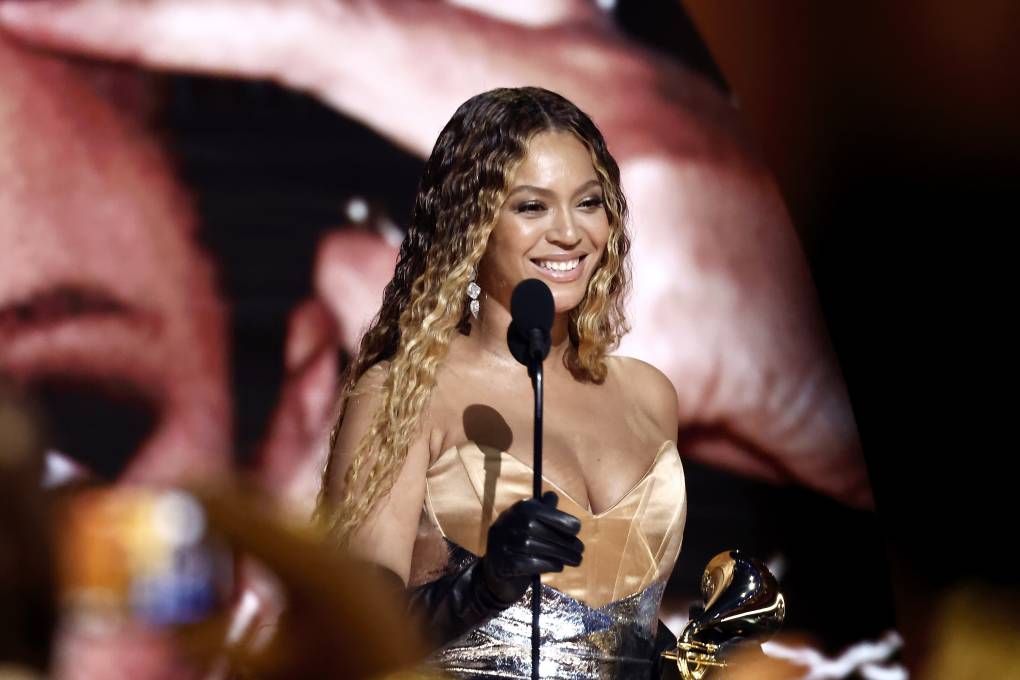
"caption": "Beyoncé accepts the Best Dance/Electronic Music Album award for ‘Renaissance’ onstage during the 2023 Grammy Awards.",
"description": null,
"title": "Beyoncé accepts the Best Dance/Electronic Music Album award for ‘Renaissance’ onstage during the 2023 Grammy Awards.",
"credit": "Frazer Harrison/ Getty Images",
"status": "inherit",
"altTag": "A Black woman wearing a gown stands on stage accepting an award. She is smiling.",
"isLoading": false,
"fetchFailed": false
},
"arts_13952026": {
"type": "attachments",
"id": "arts_13952026",
"meta": {
"index": "attachments_1716263798",
"site": "arts",
"id": "13952026",
"found": true
},
"parent": 13951954,
"imgSizes": {
"twentyfourteen-full-width": {
"file": "https://cdn.kqed.org/wp-content/uploads/sites/2/2024/02/240206-FRAK-MD-10-KQED-1-1038x576.jpg",
"width": 1038,
"mimeType": "image/jpeg",
"height": 576
},
"thumbnail": {
"file": "https://cdn.kqed.org/wp-content/uploads/sites/2/2024/02/240206-FRAK-MD-10-KQED-1-160x107.jpg",
"width": 160,
"mimeType": "image/jpeg",
"height": 107
},
"post-thumbnail": {
"file": "https://cdn.kqed.org/wp-content/uploads/sites/2/2024/02/240206-FRAK-MD-10-KQED-1-672x372.jpg",
"width": 672,
"mimeType": "image/jpeg",
"height": 372
},
"kqedFullSize": {
"file": "https://cdn.kqed.org/wp-content/uploads/sites/2/2024/02/240206-FRAK-MD-10-KQED-1.jpg",
"width": 2000,
"height": 1333
},
"large": {
"file": "https://cdn.kqed.org/wp-content/uploads/sites/2/2024/02/240206-FRAK-MD-10-KQED-1-1020x680.jpg",
"width": 1020,
"mimeType": "image/jpeg",
"height": 680
},
"1536x1536": {
"file": "https://cdn.kqed.org/wp-content/uploads/sites/2/2024/02/240206-FRAK-MD-10-KQED-1-1536x1024.jpg",
"width": 1536,
"mimeType": "image/jpeg",
"height": 1024
},
"full-width": {
"file": "https://cdn.kqed.org/wp-content/uploads/sites/2/2024/02/240206-FRAK-MD-10-KQED-1-1920x1280.jpg",
"width": 1920,
"mimeType": "image/jpeg",
"height": 1280
},
"medium": {
"file": "https://cdn.kqed.org/wp-content/uploads/sites/2/2024/02/240206-FRAK-MD-10-KQED-1-800x533.jpg",
"width": 800,
"mimeType": "image/jpeg",
"height": 533
},
"medium_large": {
"file": "https://cdn.kqed.org/wp-content/uploads/sites/2/2024/02/240206-FRAK-MD-10-KQED-1-768x512.jpg",
"width": 768,
"mimeType": "image/jpeg",
"height": 512
}
},
"publishDate": 1707500603,
"modified": 1707500623,
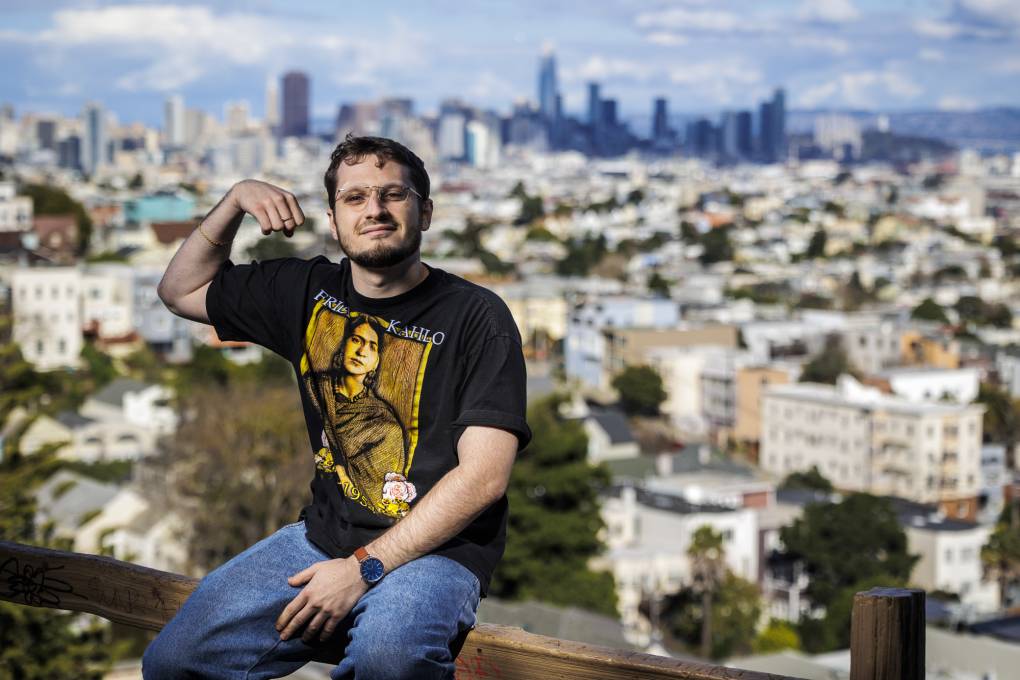
"caption": "Frak at Billy Goat Hill in San Francisco on Feb. 7, 2024.",
"description": null,
"title": "Frak at Billy Goat Hill in San Francisco on Feb. 7, 2024.",
"credit": "Martin do Nascimento/KQED",
"status": "inherit",
"altTag": "Rapper Frak sits in a park overlooking a view of the San Francisco skyline.",
"isLoading": false,
"fetchFailed": false
},
"arts_13951887": {
"type": "attachments",
"id": "arts_13951887",
"meta": {
"index": "attachments_1716263798",
"site": "arts",
"id": "13951887",
"found": true
},
"parent": 13951872,
"imgSizes": {
"twentyfourteen-full-width": {
"file": "https://cdn.kqed.org/wp-content/uploads/sites/2/2024/02/GettyImages-1402104833-1038x576.jpg",
"width": 1038,
"mimeType": "image/jpeg",
"height": 576
},
"thumbnail": {
"file": "https://cdn.kqed.org/wp-content/uploads/sites/2/2024/02/GettyImages-1402104833-160x107.jpg",
"width": 160,
"mimeType": "image/jpeg",
"height": 107
},
"post-thumbnail": {
"file": "https://cdn.kqed.org/wp-content/uploads/sites/2/2024/02/GettyImages-1402104833-672x372.jpg",
"width": 672,
"mimeType": "image/jpeg",
"height": 372
},
"kqedFullSize": {
"file": "https://cdn.kqed.org/wp-content/uploads/sites/2/2024/02/GettyImages-1402104833-scaled.jpg",
"width": 2560,
"height": 1707
},
"2048x2048": {
"file": "https://cdn.kqed.org/wp-content/uploads/sites/2/2024/02/GettyImages-1402104833-2048x1365.jpg",
"width": 2048,
"mimeType": "image/jpeg",
"height": 1365
},
"large": {
"file": "https://cdn.kqed.org/wp-content/uploads/sites/2/2024/02/GettyImages-1402104833-1020x680.jpg",
"width": 1020,
"mimeType": "image/jpeg",
"height": 680
},
"1536x1536": {
"file": "https://cdn.kqed.org/wp-content/uploads/sites/2/2024/02/GettyImages-1402104833-1536x1024.jpg",
"width": 1536,
"mimeType": "image/jpeg",
"height": 1024
},
"full-width": {
"file": "https://cdn.kqed.org/wp-content/uploads/sites/2/2024/02/GettyImages-1402104833-1920x1280.jpg",
"width": 1920,
"mimeType": "image/jpeg",
"height": 1280
},
"medium": {
"file": "https://cdn.kqed.org/wp-content/uploads/sites/2/2024/02/GettyImages-1402104833-800x533.jpg",
"width": 800,
"mimeType": "image/jpeg",
"height": 533
},
"medium_large": {
"file": "https://cdn.kqed.org/wp-content/uploads/sites/2/2024/02/GettyImages-1402104833-768x512.jpg",
"width": 768,
"mimeType": "image/jpeg",
"height": 512
}
},
"publishDate": 1707420315,
"modified": 1707420682,
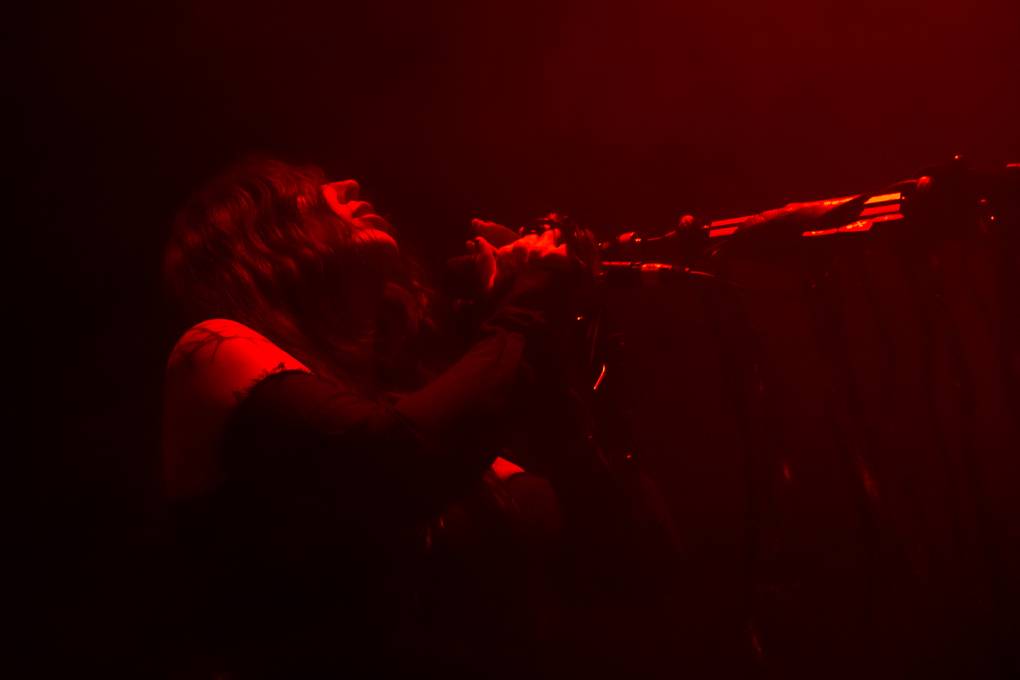
"caption": "Chelsea Wolfe performing in June 2022.",
"description": null,
"title": "Chelsea Wolfe Performs In Auckland",
"credit": "Dave Simpson/ WireImage",
"status": "inherit",
"altTag": "A woman tilts her head back while holding onto a microphone. She is dimly lit in red light.",
"isLoading": false,
"fetchFailed": false
},
"arts_13951784": {
"type": "attachments",
"id": "arts_13951784",
"meta": {
"index": "attachments_1716263798",
"site": "arts",
"id": "13951784",
"found": true
},
"parent": 13951693,
"imgSizes": {
"thumbnail": {
"file": "https://cdn.kqed.org/wp-content/uploads/sites/2/2024/02/Mary-Stallings-160x90.jpg",
"width": 160,
"mimeType": "image/jpeg",
"height": 90
},
"post-thumbnail": {
"file": "https://cdn.kqed.org/wp-content/uploads/sites/2/2024/02/Mary-Stallings-672x372.jpg",
"width": 672,
"mimeType": "image/jpeg",
"height": 372
},
"kqedFullSize": {
"file": "https://cdn.kqed.org/wp-content/uploads/sites/2/2024/02/Mary-Stallings.jpg",
"width": 951,
"height": 535
},
"medium": {
"file": "https://cdn.kqed.org/wp-content/uploads/sites/2/2024/02/Mary-Stallings-800x450.jpg",
"width": 800,
"mimeType": "image/jpeg",
"height": 450
},
"medium_large": {
"file": "https://cdn.kqed.org/wp-content/uploads/sites/2/2024/02/Mary-Stallings-768x432.jpg",
"width": 768,
"mimeType": "image/jpeg",
"height": 432
}
},
"publishDate": 1707342433,
"modified": 1707342499,
"caption": "Mary Stallings performs at Keys Jazz Bistro on Feb. 16 and 17. ",
"description": null,
"title": "Mary Stallings",
"credit": "Courtesy of the artist",
"status": "inherit",
"altTag": null,
"isLoading": false,
"fetchFailed": false
},
"arts_13951771": {
"type": "attachments",
"id": "arts_13951771",
"meta": {
"index": "attachments_1716263798",
"site": "arts",
"id": "13951771",
"found": true
},
"parent": 13951768,
"imgSizes": {
"twentyfourteen-full-width": {
"file": "https://cdn.kqed.org/wp-content/uploads/sites/2/2024/02/GettyImages-56403576-1038x576.jpg",
"width": 1038,
"mimeType": "image/jpeg",
"height": 576
},
"thumbnail": {
"file": "https://cdn.kqed.org/wp-content/uploads/sites/2/2024/02/GettyImages-56403576-160x107.jpg",
"width": 160,
"mimeType": "image/jpeg",
"height": 107
},
"post-thumbnail": {
"file": "https://cdn.kqed.org/wp-content/uploads/sites/2/2024/02/GettyImages-56403576-672x372.jpg",
"width": 672,
"mimeType": "image/jpeg",
"height": 372
},
"kqedFullSize": {
"file": "https://cdn.kqed.org/wp-content/uploads/sites/2/2024/02/GettyImages-56403576-scaled-e1707340495577.jpg",
"width": 1920,
"height": 1279
},
"2048x2048": {
"file": "https://cdn.kqed.org/wp-content/uploads/sites/2/2024/02/GettyImages-56403576-2048x1364.jpg",
"width": 2048,
"mimeType": "image/jpeg",
"height": 1364
},
"large": {
"file": "https://cdn.kqed.org/wp-content/uploads/sites/2/2024/02/GettyImages-56403576-1020x679.jpg",
"width": 1020,
"mimeType": "image/jpeg",
"height": 679
},
"1536x1536": {
"file": "https://cdn.kqed.org/wp-content/uploads/sites/2/2024/02/GettyImages-56403576-1536x1023.jpg",
"width": 1536,
"mimeType": "image/jpeg",
"height": 1023
},
"full-width": {
"file": "https://cdn.kqed.org/wp-content/uploads/sites/2/2024/02/GettyImages-56403576-1920x1279.jpg",
"width": 1920,
"mimeType": "image/jpeg",
"height": 1279
},
"medium": {
"file": "https://cdn.kqed.org/wp-content/uploads/sites/2/2024/02/GettyImages-56403576-800x533.jpg",
"width": 800,
"mimeType": "image/jpeg",
"height": 533
},
"medium_large": {
"file": "https://cdn.kqed.org/wp-content/uploads/sites/2/2024/02/GettyImages-56403576-768x512.jpg",
"width": 768,
"mimeType": "image/jpeg",
"height": 512
}
},
"publishDate": 1707340252,
"modified": 1707341043,
"caption": "A 49er and a Dolphin dancing* at the 1985 Super Bowl to classic Narada Michael Walden track, ‘We’re the 49ers.’ [*This is a lie.]",
"description": null,
"title": "A 49er and a Dolphin dancing* at the 1985 Super Bowl to classic Narada Michael Walden track, ‘We’re the 49ers.’ [*This is a lie.]",
"credit": "Focus on Sport via Getty Images",
"status": "inherit",
"altTag": "Football players from opposing teams face each other with one arm raised, their bodies slightly off the ground.",
"isLoading": false,
"fetchFailed": false
},
"arts_13951726": {
"type": "attachments",
"id": "arts_13951726",
"meta": {
"index": "attachments_1716263798",
"site": "arts",
"id": "13951726",
"found": true
},
"parent": 13951713,
"imgSizes": {
"twentyfourteen-full-width": {
"file": "https://cdn.kqed.org/wp-content/uploads/sites/2/2024/02/Credit_-Bellamy-Brewster-3_COVER-1038x576.jpg",
"width": 1038,
"mimeType": "image/jpeg",
"height": 576
},
"thumbnail": {
"file": "https://cdn.kqed.org/wp-content/uploads/sites/2/2024/02/Credit_-Bellamy-Brewster-3_COVER-160x90.jpg",
"width": 160,
"mimeType": "image/jpeg",
"height": 90
},
"post-thumbnail": {
"file": "https://cdn.kqed.org/wp-content/uploads/sites/2/2024/02/Credit_-Bellamy-Brewster-3_COVER-672x372.jpg",
"width": 672,
"mimeType": "image/jpeg",
"height": 372
},
"kqedFullSize": {
"file": "https://cdn.kqed.org/wp-content/uploads/sites/2/2024/02/Credit_-Bellamy-Brewster-3_COVER.jpg",
"width": 2000,
"height": 1125
},
"large": {
"file": "https://cdn.kqed.org/wp-content/uploads/sites/2/2024/02/Credit_-Bellamy-Brewster-3_COVER-1020x574.jpg",
"width": 1020,
"mimeType": "image/jpeg",
"height": 574
},
"1536x1536": {
"file": "https://cdn.kqed.org/wp-content/uploads/sites/2/2024/02/Credit_-Bellamy-Brewster-3_COVER-1536x864.jpg",
"width": 1536,
"mimeType": "image/jpeg",
"height": 864
},
"full-width": {
"file": "https://cdn.kqed.org/wp-content/uploads/sites/2/2024/02/Credit_-Bellamy-Brewster-3_COVER-1920x1080.jpg",
"width": 1920,
"mimeType": "image/jpeg",
"height": 1080
},
"medium": {
"file": "https://cdn.kqed.org/wp-content/uploads/sites/2/2024/02/Credit_-Bellamy-Brewster-3_COVER-800x450.jpg",
"width": 800,
"mimeType": "image/jpeg",
"height": 450
},
"medium_large": {
"file": "https://cdn.kqed.org/wp-content/uploads/sites/2/2024/02/Credit_-Bellamy-Brewster-3_COVER-768x432.jpg",
"width": 768,
"mimeType": "image/jpeg",
"height": 432
}
},
"publishDate": 1707267075,
"modified": 1707267255,
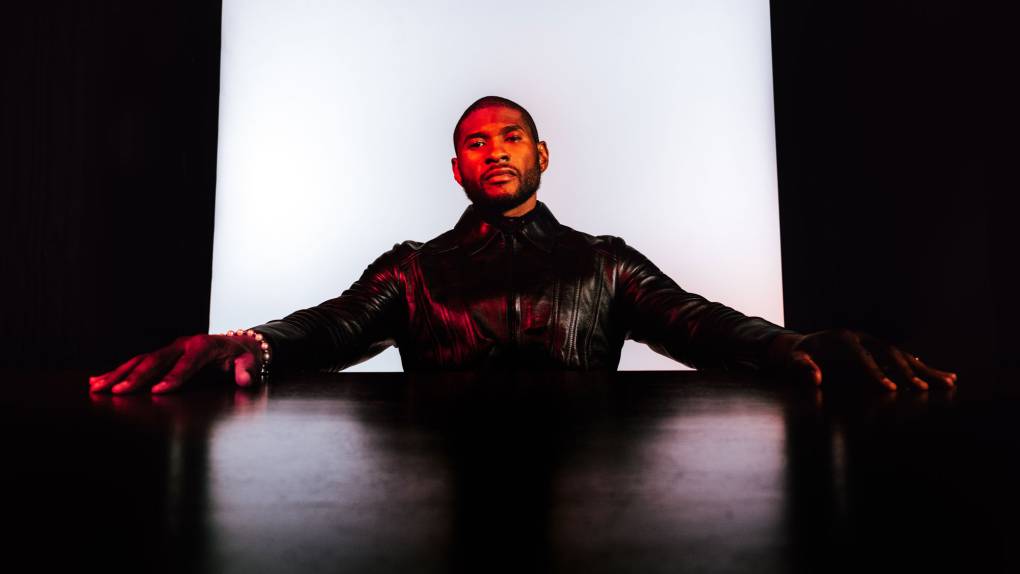
"caption": "Tickets for Usher’s North American tour ‘Past Present Future’ go on sale to the general public Feb. 12.",
"description": null,
"title": "Credit_-Bellamy-Brewster-3_COVER",
"credit": "Bellamy Brewster",
"status": "inherit",
"altTag": "Person lit red in black jacket sits with arms out over dark table",
"isLoading": false,
"fetchFailed": false
},
"arts_13951627": {
"type": "attachments",
"id": "arts_13951627",
"meta": {
"index": "attachments_1716263798",
"site": "arts",
"id": "13951627",
"found": true
},
"parent": 13951595,
"imgSizes": {
"twentyfourteen-full-width": {
"file": "https://cdn.kqed.org/wp-content/uploads/sites/2/2024/02/AudiumNewVoices_COVER-1038x576.jpg",
"width": 1038,
"mimeType": "image/jpeg",
"height": 576
},
"thumbnail": {
"file": "https://cdn.kqed.org/wp-content/uploads/sites/2/2024/02/AudiumNewVoices_COVER-160x90.jpg",
"width": 160,
"mimeType": "image/jpeg",
"height": 90
},
"post-thumbnail": {
"file": "https://cdn.kqed.org/wp-content/uploads/sites/2/2024/02/AudiumNewVoices_COVER-672x372.jpg",
"width": 672,
"mimeType": "image/jpeg",
"height": 372
},
"kqedFullSize": {
"file": "https://cdn.kqed.org/wp-content/uploads/sites/2/2024/02/AudiumNewVoices_COVER.jpg",
"width": 2000,
"height": 1125
},
"large": {
"file": "https://cdn.kqed.org/wp-content/uploads/sites/2/2024/02/AudiumNewVoices_COVER-1020x574.jpg",
"width": 1020,
"mimeType": "image/jpeg",
"height": 574
},
"1536x1536": {
"file": "https://cdn.kqed.org/wp-content/uploads/sites/2/2024/02/AudiumNewVoices_COVER-1536x864.jpg",
"width": 1536,
"mimeType": "image/jpeg",
"height": 864
},
"full-width": {
"file": "https://cdn.kqed.org/wp-content/uploads/sites/2/2024/02/AudiumNewVoices_COVER-1920x1080.jpg",
"width": 1920,
"mimeType": "image/jpeg",
"height": 1080
},
"medium": {
"file": "https://cdn.kqed.org/wp-content/uploads/sites/2/2024/02/AudiumNewVoices_COVER-800x450.jpg",
"width": 800,
"mimeType": "image/jpeg",
"height": 450
},
"medium_large": {
"file": "https://cdn.kqed.org/wp-content/uploads/sites/2/2024/02/AudiumNewVoices_COVER-768x432.jpg",
"width": 768,
"mimeType": "image/jpeg",
"height": 432
}
},
"publishDate": 1707188913,
"modified": 1707188968,
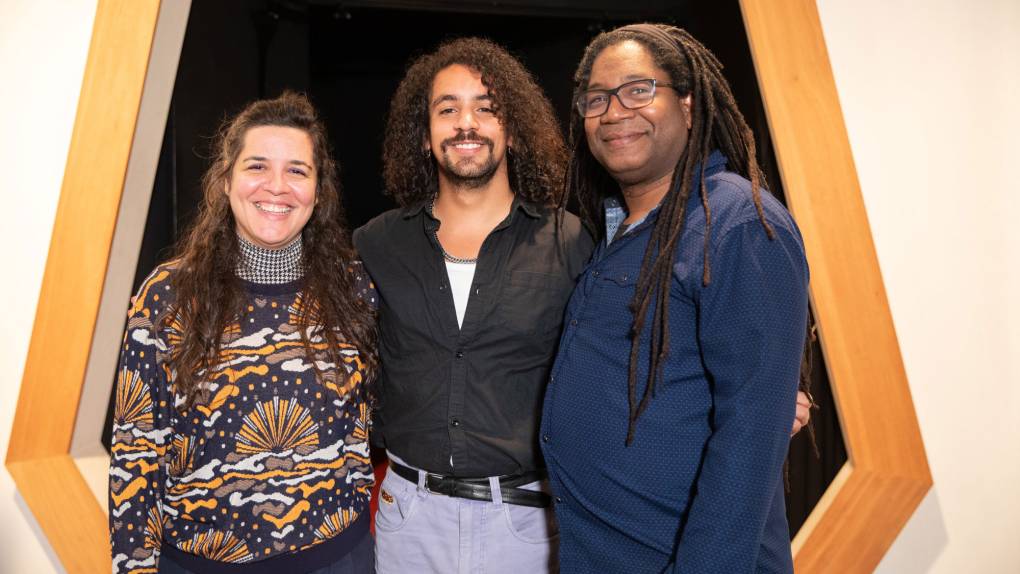
"caption": "The third iteration of the sound space’s annual residency culminates in live performances from sound artists (L–R) Danishta Rivero, Roco Córdova and Makana Muanga.",
"description": null,
"title": "AudiumNewVoices_COVER",
"credit": "Courtesy of Audium",
"status": "inherit",
"altTag": "Three people stand smiling in front of angular, portal-like doorway",
"isLoading": false,
"fetchFailed": false
},
"arts_13951546": {
"type": "attachments",
"id": "arts_13951546",
"meta": {
"index": "attachments_1716263798",
"site": "arts",
"id": "13951546",
"found": true
},
"parent": 13951425,
"imgSizes": {
"twentyfourteen-full-width": {
"file": "https://cdn.kqed.org/wp-content/uploads/sites/2/2024/02/Screen-Shot-2024-02-04-at-6.30.48-PM-1038x576.png",
"width": 1038,
"mimeType": "image/png",
"height": 576
},
"thumbnail": {
"file": "https://cdn.kqed.org/wp-content/uploads/sites/2/2024/02/Screen-Shot-2024-02-04-at-6.30.48-PM-160x97.png",
"width": 160,
"mimeType": "image/png",
"height": 97
},
"post-thumbnail": {
"file": "https://cdn.kqed.org/wp-content/uploads/sites/2/2024/02/Screen-Shot-2024-02-04-at-6.30.48-PM-672x372.png",
"width": 672,
"mimeType": "image/png",
"height": 372
},
"kqedFullSize": {
"file": "https://cdn.kqed.org/wp-content/uploads/sites/2/2024/02/Screen-Shot-2024-02-04-at-6.30.48-PM.png",
"width": 1186,
"height": 718
},
"large": {
"file": "https://cdn.kqed.org/wp-content/uploads/sites/2/2024/02/Screen-Shot-2024-02-04-at-6.30.48-PM-1020x618.png",
"width": 1020,
"mimeType": "image/png",
"height": 618
},
"medium": {
"file": "https://cdn.kqed.org/wp-content/uploads/sites/2/2024/02/Screen-Shot-2024-02-04-at-6.30.48-PM-800x484.png",
"width": 800,
"mimeType": "image/png",
"height": 484
},
"medium_large": {
"file": "https://cdn.kqed.org/wp-content/uploads/sites/2/2024/02/Screen-Shot-2024-02-04-at-6.30.48-PM-768x465.png",
"width": 768,
"mimeType": "image/png",
"height": 465
}
},
"publishDate": 1707156539,
"modified": 1707156597,
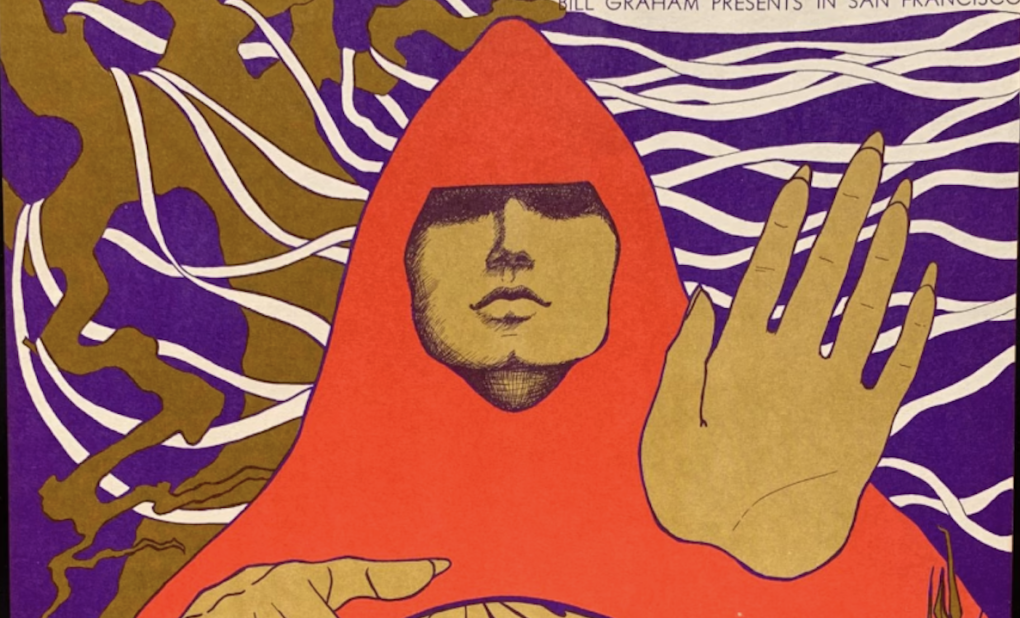
"caption": "A 1967 Bonnie MacLean design promoting Cream at the Fillmore.",
"description": null,
"title": "A 1967 Bonnie MacLean design promoting Cream at the Fillmore.",
"credit": "Courtesy of the Haight Street Art Center",
"status": "inherit",
"altTag": "A gold, purple and orange design showing a mystic and a crystal ball, one hand raised in wonder.",
"isLoading": false,
"fetchFailed": false
},
"arts_13951572": {
"type": "attachments",
"id": "arts_13951572",
"meta": {
"index": "attachments_1716263798",
"site": "arts",
"id": "13951572",
"found": true
},
"parent": 0,
"imgSizes": {
"twentyfourteen-full-width": {
"file": "https://cdn.kqed.org/wp-content/uploads/sites/2/2024/02/VictoriaMonet_Grammys_COVER-1038x576.jpg",
"width": 1038,
"mimeType": "image/jpeg",
"height": 576
},
"thumbnail": {
"file": "https://cdn.kqed.org/wp-content/uploads/sites/2/2024/02/VictoriaMonet_Grammys_COVER-160x118.jpg",
"width": 160,
"mimeType": "image/jpeg",
"height": 118
},
"post-thumbnail": {
"file": "https://cdn.kqed.org/wp-content/uploads/sites/2/2024/02/VictoriaMonet_Grammys_COVER-672x372.jpg",
"width": 672,
"mimeType": "image/jpeg",
"height": 372
},
"kqedFullSize": {
"file": "https://cdn.kqed.org/wp-content/uploads/sites/2/2024/02/VictoriaMonet_Grammys_COVER.jpg",
"width": 2000,
"height": 1472
},
"large": {
"file": "https://cdn.kqed.org/wp-content/uploads/sites/2/2024/02/VictoriaMonet_Grammys_COVER-1020x751.jpg",
"width": 1020,
"mimeType": "image/jpeg",
"height": 751
},
"1536x1536": {
"file": "https://cdn.kqed.org/wp-content/uploads/sites/2/2024/02/VictoriaMonet_Grammys_COVER-1536x1130.jpg",
"width": 1536,
"mimeType": "image/jpeg",
"height": 1130
},
"full-width": {
"file": "https://cdn.kqed.org/wp-content/uploads/sites/2/2024/02/VictoriaMonet_Grammys_COVER-1920x1413.jpg",
"width": 1920,
"mimeType": "image/jpeg",
"height": 1413
},
"medium": {
"file": "https://cdn.kqed.org/wp-content/uploads/sites/2/2024/02/VictoriaMonet_Grammys_COVER-800x589.jpg",
"width": 800,
"mimeType": "image/jpeg",
"height": 589
},
"medium_large": {
"file": "https://cdn.kqed.org/wp-content/uploads/sites/2/2024/02/VictoriaMonet_Grammys_COVER-768x565.jpg",
"width": 768,
"mimeType": "image/jpeg",
"height": 565
}
},
"publishDate": 1707164567,
"modified": 1707164675,
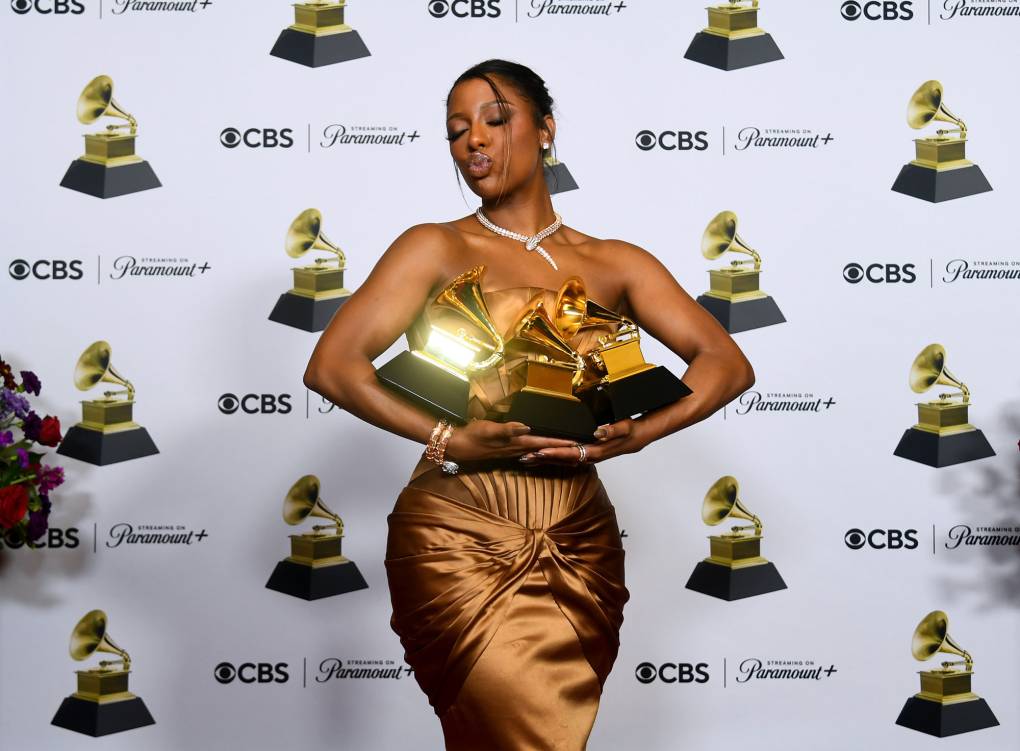
"caption": "Victoria Monét, winner of Best New Artist, Best Engineered Album, and Best R&B Album for 'Jaguar II,' poses during the 66th GRAMMY Awards at Crypto.com Arena on Feb. 4, 2024.",
"description": null,
"title": "VictoriaMonet_Grammys_COVER",
"credit": "Alberto E. Rodriguez/Getty Images for The Recording Academy",
"status": "inherit",
"altTag": "Person in strapless gown poses with puckered lips and three shining Grammy awards in arms",
"isLoading": false,
"fetchFailed": false
},
"arts_13951530": {
"type": "attachments",
"id": "arts_13951530",
"meta": {
"index": "attachments_1716263798",
"site": "arts",
"id": "13951530",
"found": true
},
"parent": 13951529,
"imgSizes": {
"twentyfourteen-full-width": {
"file": "https://cdn.kqed.org/wp-content/uploads/sites/2/2024/02/gettyimages-1986513650_custom-d12ff8ecb904a0b4d4e0f9619ebbc59ef2292633-1038x576.jpg",
"width": 1038,
"mimeType": "image/jpeg",
"height": 576
},
"thumbnail": {
"file": "https://cdn.kqed.org/wp-content/uploads/sites/2/2024/02/gettyimages-1986513650_custom-d12ff8ecb904a0b4d4e0f9619ebbc59ef2292633-160x115.jpg",
"width": 160,
"mimeType": "image/jpeg",
"height": 115
},
"post-thumbnail": {
"file": "https://cdn.kqed.org/wp-content/uploads/sites/2/2024/02/gettyimages-1986513650_custom-d12ff8ecb904a0b4d4e0f9619ebbc59ef2292633-672x372.jpg",
"width": 672,
"mimeType": "image/jpeg",
"height": 372
},
"kqedFullSize": {
"file": "https://cdn.kqed.org/wp-content/uploads/sites/2/2024/02/gettyimages-1986513650_custom-d12ff8ecb904a0b4d4e0f9619ebbc59ef2292633-scaled-e1707106163745.jpg",
"width": 1920,
"height": 1378
},
"2048x2048": {
"file": "https://cdn.kqed.org/wp-content/uploads/sites/2/2024/02/gettyimages-1986513650_custom-d12ff8ecb904a0b4d4e0f9619ebbc59ef2292633-2048x1469.jpg",
"width": 2048,
"mimeType": "image/jpeg",
"height": 1469
},
"large": {
"file": "https://cdn.kqed.org/wp-content/uploads/sites/2/2024/02/gettyimages-1986513650_custom-d12ff8ecb904a0b4d4e0f9619ebbc59ef2292633-1020x732.jpg",
"width": 1020,
"mimeType": "image/jpeg",
"height": 732
},
"1536x1536": {
"file": "https://cdn.kqed.org/wp-content/uploads/sites/2/2024/02/gettyimages-1986513650_custom-d12ff8ecb904a0b4d4e0f9619ebbc59ef2292633-1536x1102.jpg",
"width": 1536,
"mimeType": "image/jpeg",
"height": 1102
},
"full-width": {
"file": "https://cdn.kqed.org/wp-content/uploads/sites/2/2024/02/gettyimages-1986513650_custom-d12ff8ecb904a0b4d4e0f9619ebbc59ef2292633-1920x1377.jpg",
"width": 1920,
"mimeType": "image/jpeg",
"height": 1377
},
"medium": {
"file": "https://cdn.kqed.org/wp-content/uploads/sites/2/2024/02/gettyimages-1986513650_custom-d12ff8ecb904a0b4d4e0f9619ebbc59ef2292633-800x574.jpg",
"width": 800,
"mimeType": "image/jpeg",
"height": 574
},
"medium_large": {
"file": "https://cdn.kqed.org/wp-content/uploads/sites/2/2024/02/gettyimages-1986513650_custom-d12ff8ecb904a0b4d4e0f9619ebbc59ef2292633-768x551.jpg",
"width": 768,
"mimeType": "image/jpeg",
"height": 551
}
},
"publishDate": 1707105019,
"modified": 1707106281,
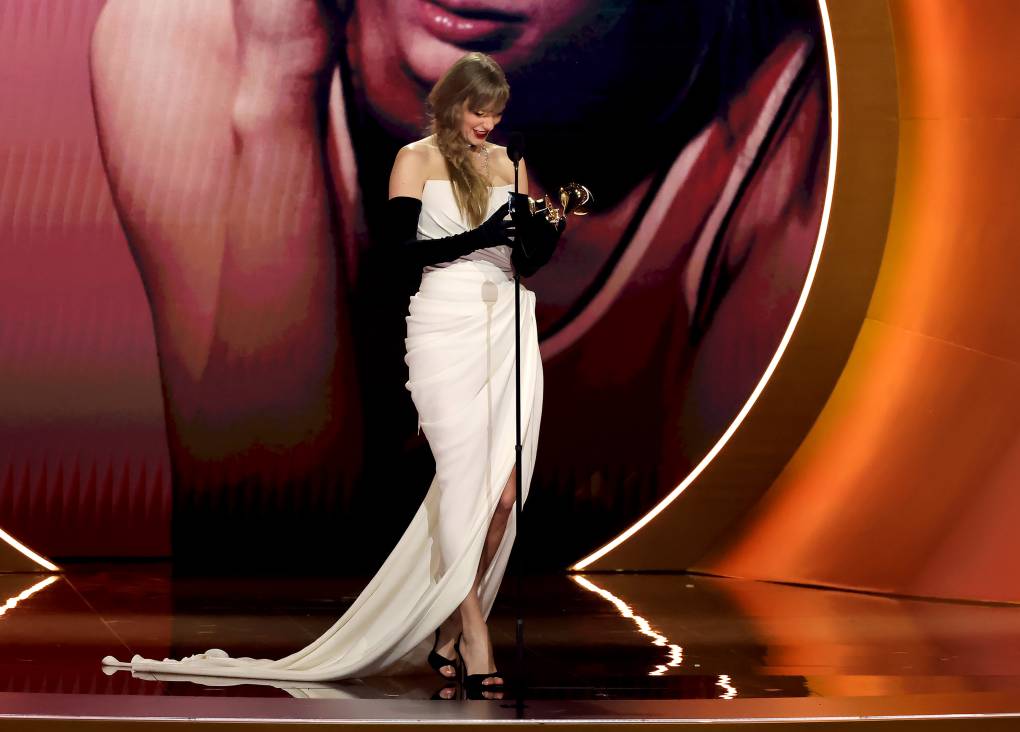
"caption": "During Taylor Swift's acceptance speech for Best Pop Vocal Album for ‘Midnights,’ the singer announced the release of her next album, ‘The Tortured Poets Department.’",
"description": null,
"title": "During Taylor Swift's acceptance speech for Best Pop Vocal Album for ‘Midnights,’ the singer announced the release of her next album, ‘The Tortured Poets Department.’",
"credit": "Kevin Winter/ Getty Images for The Recording Academy",
"status": "inherit",
"altTag": "Taylor Swift on stage clutching a trophy. She is wearing a white flowing gown and long black gloves.",
"isLoading": false,
"fetchFailed": false
},
"arts_13951525": {
"type": "attachments",
"id": "arts_13951525",
"meta": {
"index": "attachments_1716263798",
"site": "arts",
"id": "13951525",
"found": true
},
"parent": 13951471,
"imgSizes": {
"twentyfourteen-full-width": {
"file": "https://cdn.kqed.org/wp-content/uploads/sites/2/2024/02/Screen-Shot-2024-02-04-at-7.35.22-PM-1038x576.png",
"width": 1038,
"mimeType": "image/png",
"height": 576
},
"thumbnail": {
"file": "https://cdn.kqed.org/wp-content/uploads/sites/2/2024/02/Screen-Shot-2024-02-04-at-7.35.22-PM-160x92.png",
"width": 160,
"mimeType": "image/png",
"height": 92
},
"post-thumbnail": {
"file": "https://cdn.kqed.org/wp-content/uploads/sites/2/2024/02/Screen-Shot-2024-02-04-at-7.35.22-PM-672x372.png",
"width": 672,
"mimeType": "image/png",
"height": 372
},
"kqedFullSize": {
"file": "https://cdn.kqed.org/wp-content/uploads/sites/2/2024/02/Screen-Shot-2024-02-04-at-7.35.22-PM.png",
"width": 1598,
"height": 920
},
"large": {
"file": "https://cdn.kqed.org/wp-content/uploads/sites/2/2024/02/Screen-Shot-2024-02-04-at-7.35.22-PM-1020x587.png",
"width": 1020,
"mimeType": "image/png",
"height": 587
},
"1536x1536": {
"file": "https://cdn.kqed.org/wp-content/uploads/sites/2/2024/02/Screen-Shot-2024-02-04-at-7.35.22-PM-1536x884.png",
"width": 1536,
"mimeType": "image/png",
"height": 884
},
"medium": {
"file": "https://cdn.kqed.org/wp-content/uploads/sites/2/2024/02/Screen-Shot-2024-02-04-at-7.35.22-PM-800x461.png",
"width": 800,
"mimeType": "image/png",
"height": 461
},
"medium_large": {
"file": "https://cdn.kqed.org/wp-content/uploads/sites/2/2024/02/Screen-Shot-2024-02-04-at-7.35.22-PM-768x442.png",
"width": 768,
"mimeType": "image/png",
"height": 442
}
},
"publishDate": 1707104148,
"modified": 1707104200,
"caption": "(L-R) Phoebe Bridgers, Lucy Dacus, and Julien Baker of Boygenius.",
"description": null,
"title": "(L-R) Phoebe Bridgers, Lucy Dacus, and Julien Baker of Boygenius.",
"credit": "Kayla Oaddams/ WireImage",
"status": "inherit",
"altTag": "Three young women in matching white suits and red ties.",
"isLoading": false,
"fetchFailed": false
}
},
"audioPlayerReducer": {
"postId": "stream_live",
"isPaused": true,
"isPlaying": false,
"pfsActive": false,
"pledgeModalIsOpen": true,
"playerDrawerIsOpen": false,
"liveAudioPlayStartedAt": 0,
"liveAudioPlayContext": ""
},
"authorsReducer": {
"byline_arts_13952067": {
"type": "authors",
"id": "byline_arts_13952067",
"meta": {
"override": true
},
"slug": "byline_arts_13952067",
"name": "Rachel Treisman",
"isLoading": false
},
"byline_arts_13951872": {
"type": "authors",
"id": "byline_arts_13951872",
"meta": {
"override": true
},
"slug": "byline_arts_13951872",
"name": "Krysta Fauria, Associated Press",
"isLoading": false
},
"byline_arts_13951529": {
"type": "authors",
"id": "byline_arts_13951529",
"meta": {
"override": true
},
"slug": "byline_arts_13951529",
"name": "Anastasia Tsioulcas",
"isLoading": false
},
"shotchkiss": {
"type": "authors",
"id": "61",
"meta": {
"index": "authors_1716337520",
"id": "61",
"found": true
},
"name": "Sarah Hotchkiss",
"firstName": "Sarah",
"lastName": "Hotchkiss",
"slug": "shotchkiss",
"email": "shotchkiss@kqed.org",
"display_author_email": true,
"staff_mastheads": [
"arts"
],
"title": "Senior Editor",
"bio": "Sarah Hotchkiss is a San Francisco \u003ca href=\"http://www.sarahhotchkiss.com\">artist\u003c/a> and arts writer. In 2019, she received the Dorothea & Leo Rabkin Foundation grant for visual art journalism and in 2020 she received a Society of Professional Journalists, Northern California award for excellence in arts and culture reporting.",
"avatar": "https://secure.gravatar.com/avatar/bc662df144b3d27fd8b1b6f1c2a420d34e91e53154d411bb7ad353cc8b6cea8d?s=600&d=blank&r=g",
"twitter": null,
"bluesky": null,
"facebook": null,
"instagram": null,
"linkedin": null,
"sites": [
{
"site": "",
"roles": [
"editor"
]
},
{
"site": "arts",
"roles": [
"Contributor",
"administrator"
]
},
{
"site": "artschool",
"roles": [
"administrator"
]
},
{
"site": "news",
"roles": [
"editor"
]
},
{
"site": "pop",
"roles": [
"administrator"
]
},
{
"site": "bayareabites",
"roles": [
"editor"
]
},
{
"site": "spark",
"roles": [
"editor"
]
},
{
"site": "checkplease",
"roles": [
"editor"
]
}
],
"headData": {
"title": "Sarah Hotchkiss | KQED",
"description": "Senior Editor",
"ogImgSrc": "https://secure.gravatar.com/avatar/bc662df144b3d27fd8b1b6f1c2a420d34e91e53154d411bb7ad353cc8b6cea8d?s=600&d=blank&r=g",
"twImgSrc": "https://secure.gravatar.com/avatar/bc662df144b3d27fd8b1b6f1c2a420d34e91e53154d411bb7ad353cc8b6cea8d?s=600&d=blank&r=g"
},
"isLoading": false,
"link": "/author/shotchkiss"
},
"agilbert": {
"type": "authors",
"id": "86",
"meta": {
"index": "authors_1716337520",
"id": "86",
"found": true
},
"name": "Andrew Gilbert",
"firstName": "Andrew",
"lastName": "Gilbert",
"slug": "agilbert",
"email": "jazzscribe@aol.com",
"display_author_email": false,
"staff_mastheads": [],
"title": "KQED Contributor",
"bio": "A Los Angeles native based in the Berkeley area since 1996, Andrew Gilbert covers jazz, international music and dance for KQED's \u003ci>California Report, \u003c/i>the\u003ci> Mercury News\u003c/i>, \u003ci>San Francisco Chronicle\u003c/i>, \u003ci>Berkeleyside.com\u003c/i>, and other publications. He is available for weddings and bar and bat mitzvahs. #jazzscribe",
"avatar": "https://secure.gravatar.com/avatar/d7bcafdbefdd39e9a68f88724ca616eb4e7a5a6bff9cdfb62de652a1e1751471?s=600&d=blank&r=g",
"twitter": null,
"bluesky": null,
"facebook": null,
"instagram": null,
"linkedin": null,
"sites": [
{
"site": "arts",
"roles": [
"Contributor",
"author"
]
},
{
"site": "news",
"roles": [
"author"
]
}
],
"headData": {
"title": "Andrew Gilbert | KQED",
"description": "KQED Contributor",
"ogImgSrc": "https://secure.gravatar.com/avatar/d7bcafdbefdd39e9a68f88724ca616eb4e7a5a6bff9cdfb62de652a1e1751471?s=600&d=blank&r=g",
"twImgSrc": "https://secure.gravatar.com/avatar/d7bcafdbefdd39e9a68f88724ca616eb4e7a5a6bff9cdfb62de652a1e1751471?s=600&d=blank&r=g"
},
"isLoading": false,
"link": "/author/agilbert"
},
"kqedarts": {
"type": "authors",
"id": "92",
"meta": {
"index": "authors_1716337520",
"id": "92",
"found": true
},
"name": "KQED Arts",
"firstName": "KQED",
"lastName": "Arts",
"slug": "kqedarts",
"email": "arts@kqed.org",
"display_author_email": false,
"staff_mastheads": [],
"title": "KQED Staff",
"bio": null,
"avatar": "https://secure.gravatar.com/avatar/321c9ebfeb7736f9e55366a6d3399ab0?s=600&d=blank&r=g",
"twitter": null,
"facebook": null,
"instagram": "https://www.instagram.com/kqed_arts/",
"linkedin": null,
"sites": [
{
"site": "arts",
"roles": [
"contributor"
]
},
{
"site": "pop",
"roles": [
"contributor"
]
},
{
"site": "science",
"roles": [
"author"
]
},
{
"site": "food",
"roles": [
"contributor"
]
}
],
"headData": {
"title": "KQED Arts | KQED",
"description": "KQED Staff",
"ogImgSrc": "https://secure.gravatar.com/avatar/321c9ebfeb7736f9e55366a6d3399ab0?s=600&d=blank&r=g",
"twImgSrc": "https://secure.gravatar.com/avatar/321c9ebfeb7736f9e55366a6d3399ab0?s=600&d=blank&r=g"
},
"isLoading": false,
"link": "/author/kqedarts"
},
"ralexandra": {
"type": "authors",
"id": "11242",
"meta": {
"index": "authors_1716337520",
"id": "11242",
"found": true
},
"name": "Rae Alexandra",
"firstName": "Rae",
"lastName": "Alexandra",
"slug": "ralexandra",
"email": "ralexandra@kqed.org",
"display_author_email": true,
"staff_mastheads": [],
"title": "Reporter/Producer",
"bio": "Rae Alexandra is a Reporter/Producer for KQED Arts & Culture, and the creator/author of the \u003ca href=\"https://www.kqed.org/arts/program/rebel-girls-from-bay-area-history\">Rebel Girls From Bay Area History\u003c/a> and \u003ca href=\"https://www.kqed.org/bizarrebayarea\">Bizarre Bay Area\u003c/a> series. Her debut book, \u003ca href=\"https://citylights.com/politics-current-events-history/unsung-heroines35-women-who-changed/\">Unsung Heroines: 35 Women Who Changed the Bay Area\u003c/a> was published by City Lights in March 2026. In 2023, Rae was awarded an SPJ Excellence in Journalism Award for Arts & Culture. Rae was born and raised in Wales and subsequently — even after two decades in Northern California — still uses phrases that regularly baffle her coworkers.",
"avatar": "https://secure.gravatar.com/avatar/edfee8176c80cc0a382b051190f5341997df378a934a5774dcb0977732dfd401?s=600&d=blank&r=g",
"twitter": null,
"bluesky": null,
"facebook": null,
"instagram": null,
"linkedin": null,
"sites": [
{
"site": "arts",
"roles": [
"subscriber"
]
},
{
"site": "news",
"roles": [
"subscriber"
]
},
{
"site": "pop",
"roles": [
"subscriber"
]
},
{
"site": "bayareabites",
"roles": [
"subscriber"
]
},
{
"site": "science",
"roles": [
"subscriber"
]
}
],
"headData": {
"title": "Rae Alexandra | KQED",
"description": "Reporter/Producer",
"ogImgSrc": "https://secure.gravatar.com/avatar/edfee8176c80cc0a382b051190f5341997df378a934a5774dcb0977732dfd401?s=600&d=blank&r=g",
"twImgSrc": "https://secure.gravatar.com/avatar/edfee8176c80cc0a382b051190f5341997df378a934a5774dcb0977732dfd401?s=600&d=blank&r=g"
},
"isLoading": false,
"link": "/author/ralexandra"
},
"nvoynovskaya": {
"type": "authors",
"id": "11387",
"meta": {
"index": "authors_1716337520",
"id": "11387",
"found": true
},
"name": "Nastia Voynovskaya",
"firstName": "Nastia",
"lastName": "Voynovskaya",
"slug": "nvoynovskaya",
"email": "nvoynovskaya@kqed.org",
"display_author_email": false,
"staff_mastheads": [
"arts"
],
"title": "Editor and reporter",
"bio": "Nastia Voynovskaya is a reporter, editor and host at KQED Arts & Culture. She's been covering the arts in the Bay Area for over a decade, with a focus on music, queer culture, labor issues and grassroots organizing. She has edited KQED story series such as Trans Bay: A History of San Francisco's Gender-Diverse Community, and co-created KQED's Bay Area hip-hop history project, That's My Word. Nastia's work has been recognized by the Society of Professional Journalists and San Francisco Press Club. She regularly appears on podcasts and radio programs, including NPR's All Songs Considered, and hosts live events where music, culture and conversation meet.",
"avatar": "https://secure.gravatar.com/avatar/5025ee460e5a85d69ca20ea6c6f2f80d7e17795c828f61ea3aecfcd924e9042e?s=600&d=blank&r=g",
"twitter": null,
"bluesky": null,
"facebook": null,
"instagram": "https://www.instagram.com/nananastia/",
"linkedin": null,
"sites": [
{
"site": "",
"roles": [
"editor"
]
},
{
"site": "arts",
"roles": [
"administrator"
]
},
{
"site": "news",
"roles": [
"editor"
]
},
{
"site": "pop",
"roles": [
"administrator"
]
},
{
"site": "bayareabites",
"roles": [
"editor"
]
},
{
"site": "podcasts",
"roles": [
"editor"
]
},
{
"site": "hiphop",
"roles": [
"editor"
]
}
],
"headData": {
"title": "Nastia Voynovskaya | KQED",
"description": "Editor and reporter",
"ogImgSrc": "https://secure.gravatar.com/avatar/5025ee460e5a85d69ca20ea6c6f2f80d7e17795c828f61ea3aecfcd924e9042e?s=600&d=blank&r=g",
"twImgSrc": "https://secure.gravatar.com/avatar/5025ee460e5a85d69ca20ea6c6f2f80d7e17795c828f61ea3aecfcd924e9042e?s=600&d=blank&r=g"
},
"isLoading": false,
"link": "/author/nvoynovskaya"
},
"achazaro": {
"type": "authors",
"id": "11748",
"meta": {
"index": "authors_1716337520",
"id": "11748",
"found": true
},
"name": "Alan Chazaro",
"firstName": "Alan",
"lastName": "Chazaro",
"slug": "achazaro",
"email": "agchazaro@gmail.com",
"display_author_email": true,
"staff_mastheads": [],
"title": "Food Writer and Reporter",
"bio": "Alan Chazaro is the author of \u003cem>This Is Not a Frank Ocean Cover Album\u003c/em> (Black Lawrence Press, 2019), \u003cem>Piñata Theory\u003c/em> (Black Lawrence Press, 2020), and \u003cem>Notes from the Eastern Span of the Bay Bridge\u003c/em> (Ghost City Press, 2021). He is a graduate of June Jordan’s Poetry for the People program at UC Berkeley and a former Lawrence Ferlinghetti Fellow at the University of San Francisco. He writes about sports, food, art, music, education, and culture while repping the Bay on \u003ca href=\"https://twitter.com/alan_chazaro\">Twitter\u003c/a> and \u003ca href=\"https://www.instagram.com/alan_chazaro/?hl=en\">Instagram\u003c/a> at @alan_chazaro.",
"avatar": "https://secure.gravatar.com/avatar/ea8b6dd970fc5c29e7a188e7d5861df7?s=600&d=blank&r=g",
"twitter": "alan_chazaro",
"facebook": null,
"instagram": null,
"linkedin": null,
"sites": [
{
"site": "arts",
"roles": [
"contributor"
]
},
{
"site": "news",
"roles": [
"editor"
]
}
],
"headData": {
"title": "Alan Chazaro | KQED",
"description": "Food Writer and Reporter",
"ogImgSrc": "https://secure.gravatar.com/avatar/ea8b6dd970fc5c29e7a188e7d5861df7?s=600&d=blank&r=g",
"twImgSrc": "https://secure.gravatar.com/avatar/ea8b6dd970fc5c29e7a188e7d5861df7?s=600&d=blank&r=g"
},
"isLoading": false,
"link": "/author/achazaro"
}
},
"pagesReducer": {
"arts_category_music": {
"type": "terms",
"id": "arts_69",
"meta": {
"index": "terms_1716263798",
"site": "arts",
"id": "69",
"score": 10.851354
},
"featImg": null,
"name": "Music",
"description": null,
"taxonomy": "category",
"headData": {
"twImgId": null,
"twTitle": null,
"ogTitle": null,
"ogImgId": null,
"twDescription": null,
"description": null,
"title": "Music Archives | KQED Arts",
"ogDescription": null
},
"ttid": 70,
"slug": "music",
"isLoading": false,
"title": "Music",
"pageMeta": {
"site": "arts",
"WpPageTemplate": "page-topic-editorial",
"currentPage": 60
},
"blocks": [
{
"blockName": "kqed/post-list",
"attrs": {
"layout": "cardArticle2",
"query": "posts/arts?category=music",
"seeMore": false,
"paginated": true,
"page": 60
}
},
{
"blockName": "kqed/ad"
}
]
}
},
"pfsSessionReducer": {},
"postsReducer": {
"stream_live": {
"type": "live",
"id": "stream_live",
"audioUrl": "https://streams.kqed.org/kqedradio",
"title": "Live Stream",
"excerpt": "Live Stream information currently unavailable.",
"link": "/radio",
"featImg": "",
"label": {
"name": "KQED Live",
"link": "/"
}
},
"stream_kqedNewscast": {
"type": "posts",
"id": "stream_kqedNewscast",
"audioUrl": "https://www.kqed.org/.stream/anon/radio/RDnews/newscast.mp3?_=1",
"title": "KQED Newscast",
"featImg": "",
"label": {
"name": "88.5 FM",
"link": "/"
}
},
"arts_13952088": {
"type": "posts",
"id": "arts_13952088",
"meta": {
"index": "posts_1716263798",
"site": "arts",
"id": "13952088",
"score": null,
"sort": [
1707844518000
]
},
"guestAuthors": [],
"slug": "cellski-mr-predicter-live-band-frisco",
"title": "San Francisco's Cellski Announces First-Ever Live Band Show",
"publishDate": 1707844518,
"format": "standard",
"headTitle": "San Francisco’s Cellski Announces First-Ever Live Band Show | KQED",
"labelTerm": {
"term": 140,
"site": "arts"
},
"content": "\u003cp>There aren’t many Frisco rappers with as much flavor as \u003ca href=\"https://www.instagram.com/cellski415/?hl=en\">Cellski\u003c/a>. In 1994, the streetwise lyricist and producer helped give rise to mobb music in the 415 with his debut studio album, \u003ci>Mr. Predicter\u003c/i>. Now, for its 30th anniversary, he’ll perform the breakout LP with a live band on \u003ca href=\"https://www.brickandmortarmusic.com/event-details/13418813/cellski/\">Feb. 22 in San Francisco\u003c/a>.\u003c/p>\n\u003cp>At age 20, Cellski produced and engineered \u003cem>Mr. Predicter\u003c/em> himself, with the assistance of his friends Tomie Witherspoon (a.k.a. the famed rap engineer T.C., who will DJ the event) and Don Marsh, a.k.a. The Enhancer. After recording its 17 tracks, he released it on his own label, Inner City Records.\u003c/p>\n\u003cp>[aside postID='arts_13922141']As Cellski’s first ever show with a live band, the set will add songs from his 1998 release, \u003cem>Canadian Bacon and Hash Browns\u003c/em>, and will bring out San Francisco legends from \u003ca href=\"https://www.kqed.org/arts/13923766/rbl-posse-a-lesson-to-be-learned-album-cover\">RBL Posse\u003c/a>.\u003c/p>\n\u003cp>For his backing band, the emcee has teamed up with \u003ca href=\"https://www.instagram.com/topchefsband?igsh=MzRlODBiNWFlZA%3D%3D\">The Top Chefs\u003c/a>, a San Francisco band made up of \u003ca href=\"https://www.kqed.org/arts/13910221/family-not-a-group-san-francisco-rap\">Family Not A Group\u003c/a> members who’ve previously worked with rappers like SF’s Afterthought and Vallejo’s LaRussell.\u003c/p>\n\u003cp>https://www.youtube.com/watch?v=reRDnI-JIsY&list=OLAK5uy_kYuBvBEuw5PMn8cxzmTV4sOnHNwbu1GXI&index=5\u003c/p>\n\u003cp>[ad fullwidth]\u003c/p>\n\u003cp> \u003c/p>\n\u003cp>While Cellski’s work has been vastly underappreciated — part of \u003ca href=\"https://www.kqed.org/news/11957970/the-bays-overlooked-contributions-to-hip-hop\">a larger wave of historically overlooked San Francisco rappers \u003c/a>— he says he’s more concerned with assisting his community and being a pioneer in his own lane than chasing after fame.\u003c/p>\n\u003cp>“I’m independent,” he says proudly. “At 18 [years old], I went to \u003ca href=\"http://www.cityhallrecords.com/\">City Hall\u003c/a> and started my own label. Back then, you could sell $20,000 on your own and make the type of money these record labels wanted to sign you for. It didn’t make sense to sign if you could make money yourself.”\u003c/p>\n\u003cp>[aside postID='arts_13951122']Cellski’s cultivated a loyal fanbase beyond music as well. In recent years, he launched a streetwear brand and boutique, \u003ca href=\"https://www.instagram.com/chemicalbabycbc/?hl=en\">Chemical Baby Clothing\u003c/a>, as well as a “mash burger” pop-up, \u003ca href=\"https://www.kqed.org/arts/13922141/cellskis-big-mafi-burgers-come-with-a-side-of-sf-rap-history\">Big Mafi Burgers\u003c/a>, which often shows up at the parking lot of Levi’s Stadium before 49ers games or on a weekend afternoon in Golden Gate Park.\u003c/p>\n\u003cp>Whether you’re a Bay Area hip-hop OG or a newcomer, a live set from Mr. Predicter himself is a rare way to witness \u003ca href=\"https://www.kqed.org/arts/13895586/a-salute-to-san-francisco-rap\">San Francisco’s laudable rap legacy\u003c/a>.\u003c/p>\n\u003cp>\u003cimg loading=\"lazy\" decoding=\"async\" class=\"alignnone size-full wp-image-12127869\" src=\"https://cdn.kqed.org/wp-content/uploads/sites/2/2016/09/Q.Logo_.Break_.jpg\" alt=\"\" width=\"800\" height=\"78\" srcset=\"https://cdn.kqed.org/wp-content/uploads/sites/2/2016/09/Q.Logo_.Break_.jpg 800w, https://cdn.kqed.org/wp-content/uploads/sites/2/2016/09/Q.Logo_.Break_-400x39.jpg 400w, https://cdn.kqed.org/wp-content/uploads/sites/2/2016/09/Q.Logo_.Break_-768x75.jpg 768w\" sizes=\"(max-width: 800px) 100vw, 800px\">\u003c/p>\n\u003cp>\u003c/p>\n\u003cp>\u003ci>Cellski performs his album ‘Mr. Predicter’ with a live band on Thursday, Feb. 22, at the Brick & Mortar Music Hall in San Francisco. \u003c/i>\u003ca href=\"https://www.brickandmortarmusic.com/event-details/13418813/cellski/\">\u003ci>Ticket info and details here.\u003c/i>\u003c/a>\u003c/p>\n\n",
"blocks": [],
"excerpt": "Cellski performs his debut album 'Mr. Predicter' with a full band at Brick and Mortar Music Hall.",
"status": "publish",
"parent": 0,
"modified": 1728426515,
"stats": {
"hasAudio": false,
"hasVideo": true,
"hasChartOrMap": false,
"iframeSrcs": [],
"hasGoogleForm": false,
"hasGallery": false,
"hasHearkenModule": false,
"hasPolis": false,
"paragraphCount": 12,
"wordCount": 447
},
"headData": {
"title": "San Francisco's Cellski Announces First-Ever Live Band Show | KQED",
"description": "Cellski performs his debut album 'Mr. Predicter' with a full band at Brick and Mortar Music Hall.",
"ogTitle": "",
"ogDescription": "",
"ogImgId": "",
"twTitle": "",
"twDescription": "",
"twImgId": "",
"schema": {
"@context": "https://schema.org",
"@type": "Article",
"headline": "San Francisco's Cellski Announces First-Ever Live Band Show",
"datePublished": "2024-02-13T09:15:18-08:00",
"dateModified": "2024-10-08T15:28:35-07:00",
"image": "https://cdn.kqed.org/wp-content/uploads/2020/02/KQED-OG-Image@1x.png"
}
},
"sticky": false,
"templateType": "standard",
"featuredImageType": "standard",
"excludeFromSiteSearch": "Include",
"articleAge": "0",
"path": "/arts/13952088/cellski-mr-predicter-live-band-frisco",
"audioTrackLength": null,
"parsedContent": [
{
"type": "contentString",
"content": "\u003cdiv class=\"post-body\">\u003cp>\u003cp>There aren’t many Frisco rappers with as much flavor as \u003ca href=\"https://www.instagram.com/cellski415/?hl=en\">Cellski\u003c/a>. In 1994, the streetwise lyricist and producer helped give rise to mobb music in the 415 with his debut studio album, \u003ci>Mr. Predicter\u003c/i>. Now, for its 30th anniversary, he’ll perform the breakout LP with a live band on \u003ca href=\"https://www.brickandmortarmusic.com/event-details/13418813/cellski/\">Feb. 22 in San Francisco\u003c/a>.\u003c/p>\n\u003cp>At age 20, Cellski produced and engineered \u003cem>Mr. Predicter\u003c/em> himself, with the assistance of his friends Tomie Witherspoon (a.k.a. the famed rap engineer T.C., who will DJ the event) and Don Marsh, a.k.a. The Enhancer. After recording its 17 tracks, he released it on his own label, Inner City Records.\u003c/p>\n\u003cp>\u003c/p>\u003c/div>",
"attributes": {
"named": {},
"numeric": []
}
},
{
"type": "component",
"content": "",
"name": "aside",
"attributes": {
"named": {
"postid": "arts_13922141",
"label": ""
},
"numeric": []
}
},
{
"type": "contentString",
"content": "\u003cdiv class=\"post-body\">\u003cp>As Cellski’s first ever show with a live band, the set will add songs from his 1998 release, \u003cem>Canadian Bacon and Hash Browns\u003c/em>, and will bring out San Francisco legends from \u003ca href=\"https://www.kqed.org/arts/13923766/rbl-posse-a-lesson-to-be-learned-album-cover\">RBL Posse\u003c/a>.\u003c/p>\n\u003cp>For his backing band, the emcee has teamed up with \u003ca href=\"https://www.instagram.com/topchefsband?igsh=MzRlODBiNWFlZA%3D%3D\">The Top Chefs\u003c/a>, a San Francisco band made up of \u003ca href=\"https://www.kqed.org/arts/13910221/family-not-a-group-san-francisco-rap\">Family Not A Group\u003c/a> members who’ve previously worked with rappers like SF’s Afterthought and Vallejo’s LaRussell.\u003c/p>\u003c/p>\u003cp>\u003cspan class='utils-parseShortcode-shortcodes-__youtubeShortcode__embedYoutube'>\n \u003cspan class='utils-parseShortcode-shortcodes-__youtubeShortcode__embedYoutubeInside'>\n \u003ciframe\n loading='lazy'\n class='utils-parseShortcode-shortcodes-__youtubeShortcode__youtubePlayer'\n type='text/html'\n src='//www.youtube.com/embed/reRDnI-JIsY'\n title='//www.youtube.com/embed/reRDnI-JIsY'\n allowfullscreen='true'\n style='border:0;'>\u003c/iframe>\n \u003c/span>\n \u003c/span>\u003c/p>\u003cp>\u003cp>\u003c/p>\u003c/div>",
"attributes": {
"named": {},
"numeric": []
}
},
{
"type": "component",
"content": "",
"name": "ad",
"attributes": {
"named": {
"label": "fullwidth"
},
"numeric": [
"fullwidth"
]
}
},
{
"type": "contentString",
"content": "\u003cdiv class=\"post-body\">\u003cp>\u003c/p>\n\u003cp> \u003c/p>\n\u003cp>While Cellski’s work has been vastly underappreciated — part of \u003ca href=\"https://www.kqed.org/news/11957970/the-bays-overlooked-contributions-to-hip-hop\">a larger wave of historically overlooked San Francisco rappers \u003c/a>— he says he’s more concerned with assisting his community and being a pioneer in his own lane than chasing after fame.\u003c/p>\n\u003cp>“I’m independent,” he says proudly. “At 18 [years old], I went to \u003ca href=\"http://www.cityhallrecords.com/\">City Hall\u003c/a> and started my own label. Back then, you could sell $20,000 on your own and make the type of money these record labels wanted to sign you for. It didn’t make sense to sign if you could make money yourself.”\u003c/p>\n\u003cp>\u003c/p>\u003c/div>",
"attributes": {
"named": {},
"numeric": []
}
},
{
"type": "component",
"content": "",
"name": "aside",
"attributes": {
"named": {
"postid": "arts_13951122",
"label": ""
},
"numeric": []
}
},
{
"type": "contentString",
"content": "\u003cdiv class=\"post-body\">\u003cp>Cellski’s cultivated a loyal fanbase beyond music as well. In recent years, he launched a streetwear brand and boutique, \u003ca href=\"https://www.instagram.com/chemicalbabycbc/?hl=en\">Chemical Baby Clothing\u003c/a>, as well as a “mash burger” pop-up, \u003ca href=\"https://www.kqed.org/arts/13922141/cellskis-big-mafi-burgers-come-with-a-side-of-sf-rap-history\">Big Mafi Burgers\u003c/a>, which often shows up at the parking lot of Levi’s Stadium before 49ers games or on a weekend afternoon in Golden Gate Park.\u003c/p>\n\u003cp>Whether you’re a Bay Area hip-hop OG or a newcomer, a live set from Mr. Predicter himself is a rare way to witness \u003ca href=\"https://www.kqed.org/arts/13895586/a-salute-to-san-francisco-rap\">San Francisco’s laudable rap legacy\u003c/a>.\u003c/p>\n\u003cp>\u003cimg loading=\"lazy\" decoding=\"async\" class=\"alignnone size-full wp-image-12127869\" src=\"https://cdn.kqed.org/wp-content/uploads/sites/2/2016/09/Q.Logo_.Break_.jpg\" alt=\"\" width=\"800\" height=\"78\" srcset=\"https://cdn.kqed.org/wp-content/uploads/sites/2/2016/09/Q.Logo_.Break_.jpg 800w, https://cdn.kqed.org/wp-content/uploads/sites/2/2016/09/Q.Logo_.Break_-400x39.jpg 400w, https://cdn.kqed.org/wp-content/uploads/sites/2/2016/09/Q.Logo_.Break_-768x75.jpg 768w\" sizes=\"(max-width: 800px) 100vw, 800px\">\u003c/p>\n\u003cp>\u003c/p>\n\u003cp>\u003ci>Cellski performs his album ‘Mr. Predicter’ with a live band on Thursday, Feb. 22, at the Brick & Mortar Music Hall in San Francisco. \u003c/i>\u003ca href=\"https://www.brickandmortarmusic.com/event-details/13418813/cellski/\">\u003ci>Ticket info and details here.\u003c/i>\u003c/a>\u003c/p>\n\n\u003c/div>\u003c/p>",
"attributes": {
"named": {},
"numeric": []
}
}
],
"link": "/arts/13952088/cellski-mr-predicter-live-band-frisco",
"authors": [
"11748"
],
"programs": [
"arts_140"
],
"series": [
"arts_22314"
],
"categories": [
"arts_1",
"arts_69"
],
"tags": [
"arts_8505",
"arts_831",
"arts_1720",
"arts_974",
"arts_1146",
"arts_585"
],
"featImg": "arts_13934340",
"label": "arts_140"
},
"arts_13952067": {
"type": "posts",
"id": "arts_13952067",
"meta": {
"index": "posts_1716263798",
"site": "arts",
"id": "13952067",
"score": null,
"sort": [
1707713684000
]
},
"parent": 0,
"labelTerm": {
"site": "arts",
"term": 137
},
"blocks": [],
"publishDate": 1707713684,
"format": "standard",
"title": "Beyoncé Releases Two New Songs During the Super Bowl, Teasing More to Come",
"headTitle": "Beyoncé Releases Two New Songs During the Super Bowl, Teasing More to Come | KQED",
"content": "\u003cp>Beyoncé teased, announced and dropped new music in the span of less than an hour during Sunday’s Super Bowl.\u003c/p>\n\u003cp>“Okay, they ready! Drop the new music,” Beyoncé says in the final seconds of a \u003ca href=\"https://www.instagram.com/reel/C3Os7bUxELf/?utm_source=ig_web_copy_link&igsh=MzRlODBiNWFlZA==\">Verizon commercial\u003c/a> that aired during the third quarter.\u003c/p>\n\u003cp>[aside postid='arts_13873945']Social media, already \u003ca href=\"https://www.npr.org/2024/02/10/1230621176/super-bowl-58\">buzzing from the Super Bowl action\u003c/a> on and off the field (star-studded stands, halftime show and commercials included), went into a further frenzy.\u003c/p>\n\u003cp>Within minutes, Beyoncé’s accounts had made it official.\u003c/p>\n\u003cp>The star posted a minute-long \u003ca href=\"https://www.instagram.com/p/C3Ot8xfRIaA/\">video to Instagram\u003c/a> showing a taxi with a Texas vanity plate (“HOLD-EM”) driving through dusty roads, past radio towers and a sign for “Radio Texas.”\u003c/p>\n\u003cp>[ad fullwidth]\u003c/p>\n\u003cp>It ends with a crowd gathered in front of a billboard of her waving next to the words “Texas! Hold ’em,” as a song with those words starts to play. The video ends with: “act ii” and the date March 29.\u003c/p>\n\u003cp>Her \u003ca href=\"https://www.beyonce.com/\">official website \u003c/a>advertises the same video and date, as well as the name of two songs: “Texas Hold ‘Em” and “16 carriages.” Thirty-second snippets of both songs were \u003ca href=\"https://tidal.com/browse/album/344957697\">posted to Tidal\u003c/a> shortly thereafter. Then the full versions dropped on Spotify and YouTube.\u003c/p>\n\u003cp>https://www.youtube.com/watch?v=-fV37wdHG8U\u003c/p>\n\u003cp>The accompanying images show Beyoncé wearing cowboy hats and other decidedly Western wear.\u003c/p>\n\u003cp>Notably, Beyoncé \u003ca href=\"https://x.com/Beyonce/status/1542540338002219008?s=20\">advertised\u003c/a> her 2022 album \u003cem>Renaissance\u003c/em> as “act i.”\u003c/p>\n\u003cp>It \u003ca href=\"https://www.grammy.com/news/beyonce-most-grammys-in-history-renaissance-best-dance-electronic-album-2023-grammys-acceptance-speech\">won the Grammy\u003c/a> for best Dance/Electronic Music Album in 2023, a record-breaking 32nd for the Houston-born icon.\u003c/p>\n\u003cp>\u003c/p>\n\u003cp>https://www.youtube.com/watch?v=g92AYBlNOi0\u003c/p>\n\u003cdiv class=\"fullattribution\">Copyright 2024 NPR. To see more, \u003ca href=\"https://www.npr.org\">visit NPR\u003c/a>.\u003cimg decoding=\"async\" src=\"https://www.google-analytics.com/__utm.gif?utmac=UA-5828686-4&utmdt=Beyonc%C3%A9+releases+two+new+songs+during+the+Super+Bowl%2C+teasing+more+to+come&utme=8(APIKey)9(MDAxOTAwOTE4MDEyMTkxMDAzNjczZDljZA004)\">\u003c/div>\n\n",
"stats": {
"hasVideo": true,
"hasChartOrMap": false,
"hasAudio": false,
"hasPolis": false,
"wordCount": 292,
"hasGoogleForm": false,
"hasGallery": false,
"hasHearkenModule": false,
"iframeSrcs": [],
"paragraphCount": 12
},
"modified": 1707714120,
"excerpt": "Beyoncé teased, confirmed and dropped new music in the span of less than an hour during Sunday's Super Bowl.",
"headData": {
"twImgId": "",
"twTitle": "Beyoncé Releases Two New Songs During the Super Bowl, Teasing More to Come",
"socialTitle": "Beyoncé Won the Super Bowl, Dropping Two New Songs %%page%% %%sep%% KQED",
"ogTitle": "Beyoncé Releases Two New Songs During the Super Bowl, Teasing More to Come",
"ogImgId": "",
"twDescription": "",
"description": "Beyoncé teased, confirmed and dropped new music in the span of less than an hour during Sunday's Super Bowl.",
"title": "Beyoncé Won the Super Bowl, Dropping Two New Songs | KQED",
"ogDescription": "",
"schema": {
"@context": "https://schema.org",
"@type": "Article",
"headline": "Beyoncé Releases Two New Songs During the Super Bowl, Teasing More to Come",
"datePublished": "2024-02-11T20:54:44-08:00",
"dateModified": "2024-02-11T21:02:00-08:00",
"image": "https://cdn.kqed.org/wp-content/uploads/2020/02/KQED-OG-Image@1x.png"
}
},
"guestAuthors": [],
"slug": "beyonce-new-songs-super-bowl-16-carriages-texas-hold-em",
"status": "publish",
"nprApiLink": "http://api.npr.org/query?id=1230788187&apiKey=MDAxOTAwOTE4MDEyMTkxMDAzNjczZDljZA004",
"templateType": "standard",
"nprStoryDate": "Sun, 11 Feb 2024 21:58:46 -0500",
"excludeFromSiteSearch": "Include",
"nprLastModifiedDate": "Sun, 11 Feb 2024 21:58:46 -0500",
"featuredImageType": "standard",
"nprHtmlLink": "https://www.npr.org/2024/02/11/1230788187/beyonce-new-music-texas-hold-em?ft=nprml&f=1230788187",
"nprImageAgency": "Getty Images",
"nprStoryId": "1230788187",
"nprByline": "Rachel Treisman",
"sticky": false,
"nprImageCredit": "Frazer Harrison",
"showOnAuthorArchivePages": "No",
"articleAge": "0",
"nprRetrievedStory": "1",
"nprPubDate": "Sun, 11 Feb 2024 21:58:00 -0500",
"path": "/arts/13952067/beyonce-new-songs-super-bowl-16-carriages-texas-hold-em",
"audioTrackLength": null,
"parsedContent": [
{
"type": "contentString",
"content": "\u003cdiv class=\"post-body\">\u003cp>\u003cp>Beyoncé teased, announced and dropped new music in the span of less than an hour during Sunday’s Super Bowl.\u003c/p>\n\u003cp>“Okay, they ready! Drop the new music,” Beyoncé says in the final seconds of a \u003ca href=\"https://www.instagram.com/reel/C3Os7bUxELf/?utm_source=ig_web_copy_link&igsh=MzRlODBiNWFlZA==\">Verizon commercial\u003c/a> that aired during the third quarter.\u003c/p>\n\u003cp>\u003c/p>\u003c/div>",
"attributes": {
"named": {},
"numeric": []
}
},
{
"type": "component",
"content": "",
"name": "aside",
"attributes": {
"named": {
"postid": "arts_13873945",
"label": ""
},
"numeric": []
}
},
{
"type": "contentString",
"content": "\u003cdiv class=\"post-body\">\u003cp>Social media, already \u003ca href=\"https://www.npr.org/2024/02/10/1230621176/super-bowl-58\">buzzing from the Super Bowl action\u003c/a> on and off the field (star-studded stands, halftime show and commercials included), went into a further frenzy.\u003c/p>\n\u003cp>Within minutes, Beyoncé’s accounts had made it official.\u003c/p>\n\u003cp>The star posted a minute-long \u003ca href=\"https://www.instagram.com/p/C3Ot8xfRIaA/\">video to Instagram\u003c/a> showing a taxi with a Texas vanity plate (“HOLD-EM”) driving through dusty roads, past radio towers and a sign for “Radio Texas.”\u003c/p>\n\u003cp>\u003c/p>\u003c/div>",
"attributes": {
"named": {},
"numeric": []
}
},
{
"type": "component",
"content": "",
"name": "ad",
"attributes": {
"named": {
"label": "fullwidth"
},
"numeric": [
"fullwidth"
]
}
},
{
"type": "contentString",
"content": "\u003cdiv class=\"post-body\">\u003cp>\u003c/p>\n\u003cp>It ends with a crowd gathered in front of a billboard of her waving next to the words “Texas! Hold ’em,” as a song with those words starts to play. The video ends with: “act ii” and the date March 29.\u003c/p>\n\u003cp>Her \u003ca href=\"https://www.beyonce.com/\">official website \u003c/a>advertises the same video and date, as well as the name of two songs: “Texas Hold ‘Em” and “16 carriages.” Thirty-second snippets of both songs were \u003ca href=\"https://tidal.com/browse/album/344957697\">posted to Tidal\u003c/a> shortly thereafter. Then the full versions dropped on Spotify and YouTube.\u003c/p>\u003c/p>\u003cp>\u003cspan class='utils-parseShortcode-shortcodes-__youtubeShortcode__embedYoutube'>\n \u003cspan class='utils-parseShortcode-shortcodes-__youtubeShortcode__embedYoutubeInside'>\n \u003ciframe\n loading='lazy'\n class='utils-parseShortcode-shortcodes-__youtubeShortcode__youtubePlayer'\n type='text/html'\n src='//www.youtube.com/embed/-fV37wdHG8U'\n title='//www.youtube.com/embed/-fV37wdHG8U'\n allowfullscreen='true'\n style='border:0;'>\u003c/iframe>\n \u003c/span>\n \u003c/span>\u003c/p>\u003cp>\u003cp>The accompanying images show Beyoncé wearing cowboy hats and other decidedly Western wear.\u003c/p>\n\u003cp>Notably, Beyoncé \u003ca href=\"https://x.com/Beyonce/status/1542540338002219008?s=20\">advertised\u003c/a> her 2022 album \u003cem>Renaissance\u003c/em> as “act i.”\u003c/p>\n\u003cp>It \u003ca href=\"https://www.grammy.com/news/beyonce-most-grammys-in-history-renaissance-best-dance-electronic-album-2023-grammys-acceptance-speech\">won the Grammy\u003c/a> for best Dance/Electronic Music Album in 2023, a record-breaking 32nd for the Houston-born icon.\u003c/p>\n\u003cp>\u003c/p>\u003c/p>\u003cp>\u003cspan class='utils-parseShortcode-shortcodes-__youtubeShortcode__embedYoutube'>\n \u003cspan class='utils-parseShortcode-shortcodes-__youtubeShortcode__embedYoutubeInside'>\n \u003ciframe\n loading='lazy'\n class='utils-parseShortcode-shortcodes-__youtubeShortcode__youtubePlayer'\n type='text/html'\n src='//www.youtube.com/embed/g92AYBlNOi0'\n title='//www.youtube.com/embed/g92AYBlNOi0'\n allowfullscreen='true'\n style='border:0;'>\u003c/iframe>\n \u003c/span>\n \u003c/span>\u003c/p>\u003cp>\u003cdiv class=\"fullattribution\">Copyright 2024 NPR. To see more, \u003ca href=\"https://www.npr.org\">visit NPR\u003c/a>.\u003cimg decoding=\"async\" src=\"https://www.google-analytics.com/__utm.gif?utmac=UA-5828686-4&utmdt=Beyonc%C3%A9+releases+two+new+songs+during+the+Super+Bowl%2C+teasing+more+to+come&utme=8(APIKey)9(MDAxOTAwOTE4MDEyMTkxMDAzNjczZDljZA004)\">\u003c/div>\n\n\u003c/div>\u003c/p>",
"attributes": {
"named": {},
"numeric": []
}
}
],
"link": "/arts/13952067/beyonce-new-songs-super-bowl-16-carriages-texas-hold-em",
"authors": [
"byline_arts_13952067"
],
"categories": [
"arts_1",
"arts_69",
"arts_75"
],
"tags": [
"arts_1686",
"arts_7534",
"arts_10278",
"arts_2624",
"arts_3842"
],
"affiliates": [
"arts_137"
],
"featImg": "arts_13952068",
"label": "arts_137"
},
"arts_13951954": {
"type": "posts",
"id": "arts_13951954",
"meta": {
"index": "posts_1716263798",
"site": "arts",
"id": "13951954",
"score": null,
"sort": [
1707499965000
]
},
"parent": 0,
"labelTerm": {
"site": "arts"
},
"blocks": [],
"publishDate": 1707499965,
"format": "standard",
"title": "With Sway's Blessing, SF Rapper Frak Is Ready to Level Up",
"headTitle": "With Sway’s Blessing, SF Rapper Frak Is Ready to Level Up | KQED",
"content": "\u003cp>[dropcap]I[/dropcap]n January, \u003ca href=\"https://www.instagram.com/fraktheperson\">Frak\u003c/a> got the break he’d spent years training for: rapping for hip-hop kingmaker Sway Calloway on his SiriusXM show, \u003ci>Sway in the Morning\u003c/i>, live in New York City.\u003c/p>\n\u003cp>To turn up the heat, Sway and co-host Heather B. brought out the Fugees’ Wyclef Jean and Santa Rosa’s Ray Luv, who once rhymed with Tupac. The legends at the table gave Frak an improbable list of words to incorporate into a freestyle. And somehow, on the spot, Frak fit “pterodactyl,” “ubiquitous,” “proton” and “University of Michigan” into a cohesive verse that had Sway wide-eyed with disbelief and yelling “come on!” with hearty approval.\u003c/p>\n\u003cp>“He got that DNA in him, he’s not playing with you,” said Wyclef.\u003c/p>\n\u003cp>“Frak, congratulations, bro, this is a dream come true for you, man, and you rocked that shit — it didn’t turn into a nightmare, aight?!” exclaimed Sway, satisfied that his pupil beat the master’s challenge.\u003c/p>\n\u003cp>https://youtu.be/xD-waw6pXN0?si=eFBQ5-Pdf4EpDGYP\u003c/p>\n\u003cp>[ad fullwidth]\u003c/p>\n\u003cp>The energy in that SiriusXM studio was supercharged with excitement. “There was a lot of trust involved with him trusting me to kill it in that high-stakes, potentially viral moment,” Frak reflects now with gratitude. “It was dope.”\u003c/p>\n\u003cp>Co-signs from certified OGs filled him with the motivation he needed. As soon as Frak touched down in San Francisco, where he was born and raised, he announced a \u003ca href=\"https://posh.vip/e/fraks-bday-bonanza\">Feb. 17 concert and birthday celebration at El Rio\u003c/a> with his collective, the 17-member-deep \u003ca href=\"https://www.instagram.com/familynotagroup__/\">Family Not a Group\u003c/a>, where he plans to recreate some of that freestyle magic on stage. And his momentum just kept going: Earlier this week, Frak made his debut as co-host on a new \u003ca href=\"https://www.youtube.com/live/3el-t0Pzqbo?si=XWt8Uj4EUtVRyvKC\">Thizzler YouTube show called \u003ci>Bar Wars\u003c/i>\u003c/a>, where he talks current events and hosts rap competitions with hyphy hitmaker D-Lo, Thizzler’s C Lee and rapper-comedian King Boolu. Right afterward, he dropped a new single called “\u003ca href=\"https://youtu.be/A9koFr6cD8k?si=rtuTRgaDTS-1Oomt\">Splain\u003c/a>,” the first from his upcoming album, \u003ci>Uncanny Valley\u003c/i>.\u003c/p>\n\u003cp>“I have all this music that I’ve been holding back because I was waiting for the perfect time, and after the Sway thing, it’s really put a fire under me to be really consistent,” Frak says on a recent afternoon at Billy Goat Hill, a tranquil park in Noe Valley with immaculate views of the San Francisco skyline. [aside postid='arts_13950855']\u003c/p>\n\u003cp>[dropcap]F[/dropcap]rak chose this spot for our interview because it’s where he spent countless hours freestyling with friends growing up. “I even freestyled here alone once, which is kind of sad, looking back,” he jokes as we stand among the trees.\u003c/p>\n\u003cp>Frak’s journey in rap started before he entered high school, when he was a \u003ci>College Dropout\u003c/i> obsessive regularly posting on a site called KanyeTalk.com. He, fellow Family Not a Group member Kaly Jay and Hurd-Bird (who grew up to be sports journalist Sean Hurd) had a \u003ca href=\"https://www.instagram.com/p/C1VASWcvQgw/\">group called 4real\u003c/a>. “The fourth member was the music. We were really deep and corny,” Frak says with a grin.\u003c/p>\n\u003cfigure id=\"attachment_13951766\" class=\"wp-caption aligncenter\" style=\"max-width: 2000px\">\u003cimg loading=\"lazy\" decoding=\"async\" class=\"size-full wp-image-13951766\" src=\"https://cdn.kqed.org/wp-content/uploads/sites/2/2024/02/240206-FRAK-MD-07-KQED.jpg\" alt=\"\" width=\"2000\" height=\"1333\" srcset=\"https://cdn.kqed.org/wp-content/uploads/sites/2/2024/02/240206-FRAK-MD-07-KQED.jpg 2000w, https://cdn.kqed.org/wp-content/uploads/sites/2/2024/02/240206-FRAK-MD-07-KQED-800x533.jpg 800w, https://cdn.kqed.org/wp-content/uploads/sites/2/2024/02/240206-FRAK-MD-07-KQED-1020x680.jpg 1020w, https://cdn.kqed.org/wp-content/uploads/sites/2/2024/02/240206-FRAK-MD-07-KQED-160x107.jpg 160w, https://cdn.kqed.org/wp-content/uploads/sites/2/2024/02/240206-FRAK-MD-07-KQED-768x512.jpg 768w, https://cdn.kqed.org/wp-content/uploads/sites/2/2024/02/240206-FRAK-MD-07-KQED-1536x1024.jpg 1536w, https://cdn.kqed.org/wp-content/uploads/sites/2/2024/02/240206-FRAK-MD-07-KQED-1920x1280.jpg 1920w\" sizes=\"(max-width: 2000px) 100vw, 2000px\">\u003cfigcaption class=\"wp-caption-text\">Frak at Billy Goat Hill in San Francisco on Feb. 7, 2024. \u003ccite>(Martin do Nascimento/KQED)\u003c/cite>\u003c/figcaption>\u003c/figure>\n\u003cp>Frak is self-deprecating for someone who’s been winning rap accolades since he was a 15-year-old member of Youth Speaks, the long-running San Francisco spoken-word poetry program. He won the organization’s MC Olympics, which earned him the prize of opening for Casey Veggies and pre-fame Travis Scott at Oakland’s New Parish.\u003c/p>\n\u003cp>The competition opened many doors: One of the judges was Baba Zumbi, Zion I’s late, beloved MC, who became Frak’s mentor. Another judge, Jamie DeWolf, invited Frak to perform at his anarchist variety show Rumpus & Ruckus Revival (formerly Tourettes Without Regrets).\u003c/p>\n\u003cp>When Frak got there, he realized he had been signed up for a rap battle against his will. Although reluctant (“I’m a conscious, positive artist,” he remembers thinking), he embraced the challenge. “It was like you’re collaborating with someone by insulting each other,” he learned that night. [aside postid='arts_13937068']\u003c/p>\n\u003cp>[dropcap]F[/dropcap]rom there, Frak delved into battle rap, perhaps the niche where he’s best known today. Though part of hip-hop culture, battle rap is closer to spoken word and theater than music — opponents rap mostly pre-written verses a cappella. Some, like Frak, eke out victories through sneaky humor and clever wordplay, while others embrace the role of villain with overbearing body language and volume.\u003c/p>\n\u003cp>In a\u003cem> \u003c/em>\u003ca href=\"https://www.newyorker.com/news/our-columnists/battle-raps-unwoke-representation-politics\">\u003ci>New Yorker \u003c/i>column\u003c/a>, writer Jay Caspian Kang once called battle rap “a community of problematic dudes who stand around on a stage and yell insults at one another for an audience of other problematic dudes.”\u003c/p>\n\u003cp>“Some people condescend it in that way, as do I. But I actually do think if aliens came to Earth like 20,000 years from now, I think battle rap is the most evolved writing that’s ever happened in society,” Frak says.\u003c/p>\n\u003cfigure id=\"attachment_13951764\" class=\"wp-caption aligncenter\" style=\"max-width: 2000px\">\u003cimg loading=\"lazy\" decoding=\"async\" class=\"size-full wp-image-13951764\" src=\"https://cdn.kqed.org/wp-content/uploads/sites/2/2024/02/240206-FRAK-MD-05-KQED.jpg\" alt=\"\" width=\"2000\" height=\"1333\" srcset=\"https://cdn.kqed.org/wp-content/uploads/sites/2/2024/02/240206-FRAK-MD-05-KQED.jpg 2000w, https://cdn.kqed.org/wp-content/uploads/sites/2/2024/02/240206-FRAK-MD-05-KQED-800x533.jpg 800w, https://cdn.kqed.org/wp-content/uploads/sites/2/2024/02/240206-FRAK-MD-05-KQED-1020x680.jpg 1020w, https://cdn.kqed.org/wp-content/uploads/sites/2/2024/02/240206-FRAK-MD-05-KQED-160x107.jpg 160w, https://cdn.kqed.org/wp-content/uploads/sites/2/2024/02/240206-FRAK-MD-05-KQED-768x512.jpg 768w, https://cdn.kqed.org/wp-content/uploads/sites/2/2024/02/240206-FRAK-MD-05-KQED-1536x1024.jpg 1536w, https://cdn.kqed.org/wp-content/uploads/sites/2/2024/02/240206-FRAK-MD-05-KQED-1920x1280.jpg 1920w\" sizes=\"(max-width: 2000px) 100vw, 2000px\">\u003cfigcaption class=\"wp-caption-text\">Frak at Billy Goat Hill in San Francisco on Feb. 7, 2024. \u003ccite>(Martin do Nascimento/KQED)\u003c/cite>\u003c/figcaption>\u003c/figure>\n\u003cp>With a month to prepare before each battle (“It’s a … stressful process where I become a shitty boyfriend and disappear into my own world,” he says), rappers do extensive opposition research to land the lowest of blows. Potentially offensive topics like race, religion and sexuality aren’t off limits.\u003c/p>\n\u003cp>In Frak’s case, opponents tend to go after his relative privilege, his whiteness and his Jewish identity (they’ve also made digs at the fact that his dad is an astronomer). In a way, getting constantly called out for things he can’t change has pushed him into a sort of radical self-acceptance. People might assume he’s a hip-hop outsider — cognizant of his place in a Black art form, he refers to himself as a “guest in the culture” — but his sincerity and meticulous craftsmanship inevitably disarm doubters when he grabs a microphone. [aside postid='arts_13951328']\u003c/p>\n\u003cp>Frak is applying that same growth mindset now to his recorded music and other upcoming projects, including a pilot episode of a battle rap-based cartoon. When it comes to songwriting, it’s not just word nerds that he’s trying to appeal to: Tracks like the new “Splain” and “\u003ca href=\"https://youtu.be/r0BwBgbiisg?si=BUlNy_EiyADnxczJ\">Gelato\u003c/a>,” featuring Jada Imani’s velvety neo-soul vocals, showcase a more laid-back, melodic style that feels at home over fuzzed-out, stoner-y jazz beats and Bay-centric blaps alike. He also plays with zeitgeist-y topics: San Francisco’s gentrification is a recurring touchpoint, and \u003ci>Uncanny Valley\u003c/i> riffs on how the rise of AI has bent the corners of what’s real or possible.\u003c/p>\n\u003cfigure id=\"attachment_13951763\" class=\"wp-caption aligncenter\" style=\"max-width: 2000px\">\u003cimg loading=\"lazy\" decoding=\"async\" class=\"size-full wp-image-13951763\" src=\"https://cdn.kqed.org/wp-content/uploads/sites/2/2024/02/240206-FRAK-MD-03-KQED.jpg\" alt=\"\" width=\"2000\" height=\"1333\" srcset=\"https://cdn.kqed.org/wp-content/uploads/sites/2/2024/02/240206-FRAK-MD-03-KQED.jpg 2000w, https://cdn.kqed.org/wp-content/uploads/sites/2/2024/02/240206-FRAK-MD-03-KQED-800x533.jpg 800w, https://cdn.kqed.org/wp-content/uploads/sites/2/2024/02/240206-FRAK-MD-03-KQED-1020x680.jpg 1020w, https://cdn.kqed.org/wp-content/uploads/sites/2/2024/02/240206-FRAK-MD-03-KQED-160x107.jpg 160w, https://cdn.kqed.org/wp-content/uploads/sites/2/2024/02/240206-FRAK-MD-03-KQED-768x512.jpg 768w, https://cdn.kqed.org/wp-content/uploads/sites/2/2024/02/240206-FRAK-MD-03-KQED-1536x1024.jpg 1536w, https://cdn.kqed.org/wp-content/uploads/sites/2/2024/02/240206-FRAK-MD-03-KQED-1920x1280.jpg 1920w\" sizes=\"(max-width: 2000px) 100vw, 2000px\">\u003cfigcaption class=\"wp-caption-text\">Frak at Billy Goat Hill in San Francisco on Feb. 7, 2024. \u003ccite>(Martin do Nascimento/KQED)\u003c/cite>\u003c/figcaption>\u003c/figure>\n\u003cp>Frak had a stint in Los Angeles to pursue his creative dreams and returned to San Francisco during the pandemic. For now, he’s perfectly happy staying rooted in his hometown, where \u003ca href=\"https://www.kqed.org/arts/13937068/rent-check-mike-evans-jr-family-not-group-san-francisco\">collaborations and new projects\u003c/a> are constantly percolating for him and Family Not a Group, which includes comedians, rappers, singers and DJs, many of whom are community organizers and educators by day.\u003c/p>\n\u003cp>“I feel like we kind of created our own subculture in San Francisco,” he says. “Like, we made it poppin’ again and decided to take it upon ourselves to make fun nightlife, and throw concerts and studio sessions where artists can meet each other. So that energy that I felt bubbling up really solidified [my] wanting to stay in the Bay Area and work on making the Bay Area lit.”\u003c/p>\n\u003cp>\u003cimg loading=\"lazy\" decoding=\"async\" class=\"aligncenter size-full wp-image-12127869\" src=\"https://cdn.kqed.org/wp-content/uploads/sites/2/2016/09/Q.Logo_.Break_.jpg\" alt=\"\" width=\"800\" height=\"78\" srcset=\"https://cdn.kqed.org/wp-content/uploads/sites/2/2016/09/Q.Logo_.Break_.jpg 800w, https://cdn.kqed.org/wp-content/uploads/sites/2/2016/09/Q.Logo_.Break_-400x39.jpg 400w, https://cdn.kqed.org/wp-content/uploads/sites/2/2016/09/Q.Logo_.Break_-768x75.jpg 768w\" sizes=\"(max-width: 800px) 100vw, 800px\">\u003c/p>\n\u003cp>[ad floatright]\u003c/p>\n\u003cp>\u003cem>Frak’s B-Day Bonanza takes place on Saturday, Feb. 17, at El Rio in San Francisco, with performances from Oflo, Grand-O, Pass, Kaly Jay, Xanubis and Ash, and DJ sets from Baghead, Made By Harry, Will Randolph V, Jenset, 2-E2 and DJSay. \u003ca href=\"https://posh.vip/e/fraks-bday-bonanza\">Details and tickets here\u003c/a>.\u003c/em>\u003c/p>\n\n",
"stats": {
"hasVideo": false,
"hasChartOrMap": false,
"hasAudio": false,
"hasPolis": false,
"wordCount": 1404,
"hasGoogleForm": false,
"hasGallery": false,
"hasHearkenModule": false,
"iframeSrcs": [],
"paragraphCount": 24
},
"modified": 1707515847,
"excerpt": "After a supercharged freestyle on 'Sway in the Morning,' Frak turns his sights to a new album.",
"headData": {
"twImgId": "",
"twTitle": "",
"ogTitle": "",
"ogImgId": "",
"twDescription": "",
"description": "After a supercharged freestyle on 'Sway in the Morning,' Frak turns his sights to a new album.",
"title": "With Sway's Blessing, SF Rapper Frak Is Ready to Level Up | KQED",
"ogDescription": "",
"schema": {
"@context": "https://schema.org",
"@type": "Article",
"headline": "With Sway's Blessing, SF Rapper Frak Is Ready to Level Up",
"datePublished": "2024-02-09T09:32:45-08:00",
"dateModified": "2024-02-09T13:57:27-08:00",
"image": "https://cdn.kqed.org/wp-content/uploads/2020/02/KQED-OG-Image@1x.png"
}
},
"guestAuthors": [],
"slug": "frak-san-francisco-rapper-family-not-a-group",
"status": "publish",
"templateType": "standard",
"excludeFromSiteSearch": "Include",
"featuredImageType": "standard",
"sticky": false,
"articleAge": "0",
"path": "/arts/13951954/frak-san-francisco-rapper-family-not-a-group",
"audioTrackLength": null,
"parsedContent": [
{
"type": "contentString",
"content": "\u003cdiv class=\"post-body\">\u003cp>\u003cp>\u003c/p>\u003cp>\u003cspan class=\"utils-parseShortcode-shortcodes-__dropcapShortcode__dropcap\">I\u003c/span>\u003c/p>\u003cp>n January, \u003ca href=\"https://www.instagram.com/fraktheperson\">Frak\u003c/a> got the break he’d spent years training for: rapping for hip-hop kingmaker Sway Calloway on his SiriusXM show, \u003ci>Sway in the Morning\u003c/i>, live in New York City.\u003c/p>\n\u003cp>To turn up the heat, Sway and co-host Heather B. brought out the Fugees’ Wyclef Jean and Santa Rosa’s Ray Luv, who once rhymed with Tupac. The legends at the table gave Frak an improbable list of words to incorporate into a freestyle. And somehow, on the spot, Frak fit “pterodactyl,” “ubiquitous,” “proton” and “University of Michigan” into a cohesive verse that had Sway wide-eyed with disbelief and yelling “come on!” with hearty approval.\u003c/p>\n\u003cp>“He got that DNA in him, he’s not playing with you,” said Wyclef.\u003c/p>\n\u003cp>“Frak, congratulations, bro, this is a dream come true for you, man, and you rocked that shit — it didn’t turn into a nightmare, aight?!” exclaimed Sway, satisfied that his pupil beat the master’s challenge.\u003c/p>\u003c/p>\u003cp>\u003cspan class='utils-parseShortcode-shortcodes-__youtubeShortcode__embedYoutube'>\n \u003cspan class='utils-parseShortcode-shortcodes-__youtubeShortcode__embedYoutubeInside'>\n \u003ciframe\n loading='lazy'\n class='utils-parseShortcode-shortcodes-__youtubeShortcode__youtubePlayer'\n type='text/html'\n src='//www.youtube.com/embed/xD-waw6pXN0'\n title='//www.youtube.com/embed/xD-waw6pXN0'\n allowfullscreen='true'\n style='border:0;'>\u003c/iframe>\n \u003c/span>\n \u003c/span>\u003c/p>\u003cp>\u003cp>\u003c/p>\u003c/div>",
"attributes": {
"named": {},
"numeric": []
}
},
{
"type": "component",
"content": "",
"name": "ad",
"attributes": {
"named": {
"label": "fullwidth"
},
"numeric": [
"fullwidth"
]
}
},
{
"type": "contentString",
"content": "\u003cdiv class=\"post-body\">\u003cp>\u003c/p>\n\u003cp>The energy in that SiriusXM studio was supercharged with excitement. “There was a lot of trust involved with him trusting me to kill it in that high-stakes, potentially viral moment,” Frak reflects now with gratitude. “It was dope.”\u003c/p>\n\u003cp>Co-signs from certified OGs filled him with the motivation he needed. As soon as Frak touched down in San Francisco, where he was born and raised, he announced a \u003ca href=\"https://posh.vip/e/fraks-bday-bonanza\">Feb. 17 concert and birthday celebration at El Rio\u003c/a> with his collective, the 17-member-deep \u003ca href=\"https://www.instagram.com/familynotagroup__/\">Family Not a Group\u003c/a>, where he plans to recreate some of that freestyle magic on stage. And his momentum just kept going: Earlier this week, Frak made his debut as co-host on a new \u003ca href=\"https://www.youtube.com/live/3el-t0Pzqbo?si=XWt8Uj4EUtVRyvKC\">Thizzler YouTube show called \u003ci>Bar Wars\u003c/i>\u003c/a>, where he talks current events and hosts rap competitions with hyphy hitmaker D-Lo, Thizzler’s C Lee and rapper-comedian King Boolu. Right afterward, he dropped a new single called “\u003ca href=\"https://youtu.be/A9koFr6cD8k?si=rtuTRgaDTS-1Oomt\">Splain\u003c/a>,” the first from his upcoming album, \u003ci>Uncanny Valley\u003c/i>.\u003c/p>\n\u003cp>“I have all this music that I’ve been holding back because I was waiting for the perfect time, and after the Sway thing, it’s really put a fire under me to be really consistent,” Frak says on a recent afternoon at Billy Goat Hill, a tranquil park in Noe Valley with immaculate views of the San Francisco skyline. \u003c/p>\u003c/div>",
"attributes": {
"named": {},
"numeric": []
}
},
{
"type": "component",
"content": "",
"name": "aside",
"attributes": {
"named": {
"postid": "arts_13950855",
"label": ""
},
"numeric": []
}
},
{
"type": "contentString",
"content": "\u003cdiv class=\"post-body\">\u003cp>\u003c/p>\n\u003cp>\u003c/p>\u003cp>\u003cspan class=\"utils-parseShortcode-shortcodes-__dropcapShortcode__dropcap\">F\u003c/span>\u003c/p>\u003cp>rak chose this spot for our interview because it’s where he spent countless hours freestyling with friends growing up. “I even freestyled here alone once, which is kind of sad, looking back,” he jokes as we stand among the trees.\u003c/p>\n\u003cp>Frak’s journey in rap started before he entered high school, when he was a \u003ci>College Dropout\u003c/i> obsessive regularly posting on a site called KanyeTalk.com. He, fellow Family Not a Group member Kaly Jay and Hurd-Bird (who grew up to be sports journalist Sean Hurd) had a \u003ca href=\"https://www.instagram.com/p/C1VASWcvQgw/\">group called 4real\u003c/a>. “The fourth member was the music. We were really deep and corny,” Frak says with a grin.\u003c/p>\n\u003cfigure id=\"attachment_13951766\" class=\"wp-caption aligncenter\" style=\"max-width: 2000px\">\u003cimg loading=\"lazy\" decoding=\"async\" class=\"size-full wp-image-13951766\" src=\"https://cdn.kqed.org/wp-content/uploads/sites/2/2024/02/240206-FRAK-MD-07-KQED.jpg\" alt=\"\" width=\"2000\" height=\"1333\" srcset=\"https://cdn.kqed.org/wp-content/uploads/sites/2/2024/02/240206-FRAK-MD-07-KQED.jpg 2000w, https://cdn.kqed.org/wp-content/uploads/sites/2/2024/02/240206-FRAK-MD-07-KQED-800x533.jpg 800w, https://cdn.kqed.org/wp-content/uploads/sites/2/2024/02/240206-FRAK-MD-07-KQED-1020x680.jpg 1020w, https://cdn.kqed.org/wp-content/uploads/sites/2/2024/02/240206-FRAK-MD-07-KQED-160x107.jpg 160w, https://cdn.kqed.org/wp-content/uploads/sites/2/2024/02/240206-FRAK-MD-07-KQED-768x512.jpg 768w, https://cdn.kqed.org/wp-content/uploads/sites/2/2024/02/240206-FRAK-MD-07-KQED-1536x1024.jpg 1536w, https://cdn.kqed.org/wp-content/uploads/sites/2/2024/02/240206-FRAK-MD-07-KQED-1920x1280.jpg 1920w\" sizes=\"(max-width: 2000px) 100vw, 2000px\">\u003cfigcaption class=\"wp-caption-text\">Frak at Billy Goat Hill in San Francisco on Feb. 7, 2024. \u003ccite>(Martin do Nascimento/KQED)\u003c/cite>\u003c/figcaption>\u003c/figure>\n\u003cp>Frak is self-deprecating for someone who’s been winning rap accolades since he was a 15-year-old member of Youth Speaks, the long-running San Francisco spoken-word poetry program. He won the organization’s MC Olympics, which earned him the prize of opening for Casey Veggies and pre-fame Travis Scott at Oakland’s New Parish.\u003c/p>\n\u003cp>The competition opened many doors: One of the judges was Baba Zumbi, Zion I’s late, beloved MC, who became Frak’s mentor. Another judge, Jamie DeWolf, invited Frak to perform at his anarchist variety show Rumpus & Ruckus Revival (formerly Tourettes Without Regrets).\u003c/p>\n\u003cp>When Frak got there, he realized he had been signed up for a rap battle against his will. Although reluctant (“I’m a conscious, positive artist,” he remembers thinking), he embraced the challenge. “It was like you’re collaborating with someone by insulting each other,” he learned that night. \u003c/p>\u003c/div>",
"attributes": {
"named": {},
"numeric": []
}
},
{
"type": "component",
"content": "",
"name": "aside",
"attributes": {
"named": {
"postid": "arts_13937068",
"label": ""
},
"numeric": []
}
},
{
"type": "contentString",
"content": "\u003cdiv class=\"post-body\">\u003cp>\u003c/p>\n\u003cp>\u003c/p>\u003cp>\u003cspan class=\"utils-parseShortcode-shortcodes-__dropcapShortcode__dropcap\">F\u003c/span>\u003c/p>\u003cp>rom there, Frak delved into battle rap, perhaps the niche where he’s best known today. Though part of hip-hop culture, battle rap is closer to spoken word and theater than music — opponents rap mostly pre-written verses a cappella. Some, like Frak, eke out victories through sneaky humor and clever wordplay, while others embrace the role of villain with overbearing body language and volume.\u003c/p>\n\u003cp>In a\u003cem> \u003c/em>\u003ca href=\"https://www.newyorker.com/news/our-columnists/battle-raps-unwoke-representation-politics\">\u003ci>New Yorker \u003c/i>column\u003c/a>, writer Jay Caspian Kang once called battle rap “a community of problematic dudes who stand around on a stage and yell insults at one another for an audience of other problematic dudes.”\u003c/p>\n\u003cp>“Some people condescend it in that way, as do I. But I actually do think if aliens came to Earth like 20,000 years from now, I think battle rap is the most evolved writing that’s ever happened in society,” Frak says.\u003c/p>\n\u003cfigure id=\"attachment_13951764\" class=\"wp-caption aligncenter\" style=\"max-width: 2000px\">\u003cimg loading=\"lazy\" decoding=\"async\" class=\"size-full wp-image-13951764\" src=\"https://cdn.kqed.org/wp-content/uploads/sites/2/2024/02/240206-FRAK-MD-05-KQED.jpg\" alt=\"\" width=\"2000\" height=\"1333\" srcset=\"https://cdn.kqed.org/wp-content/uploads/sites/2/2024/02/240206-FRAK-MD-05-KQED.jpg 2000w, https://cdn.kqed.org/wp-content/uploads/sites/2/2024/02/240206-FRAK-MD-05-KQED-800x533.jpg 800w, https://cdn.kqed.org/wp-content/uploads/sites/2/2024/02/240206-FRAK-MD-05-KQED-1020x680.jpg 1020w, https://cdn.kqed.org/wp-content/uploads/sites/2/2024/02/240206-FRAK-MD-05-KQED-160x107.jpg 160w, https://cdn.kqed.org/wp-content/uploads/sites/2/2024/02/240206-FRAK-MD-05-KQED-768x512.jpg 768w, https://cdn.kqed.org/wp-content/uploads/sites/2/2024/02/240206-FRAK-MD-05-KQED-1536x1024.jpg 1536w, https://cdn.kqed.org/wp-content/uploads/sites/2/2024/02/240206-FRAK-MD-05-KQED-1920x1280.jpg 1920w\" sizes=\"(max-width: 2000px) 100vw, 2000px\">\u003cfigcaption class=\"wp-caption-text\">Frak at Billy Goat Hill in San Francisco on Feb. 7, 2024. \u003ccite>(Martin do Nascimento/KQED)\u003c/cite>\u003c/figcaption>\u003c/figure>\n\u003cp>With a month to prepare before each battle (“It’s a … stressful process where I become a shitty boyfriend and disappear into my own world,” he says), rappers do extensive opposition research to land the lowest of blows. Potentially offensive topics like race, religion and sexuality aren’t off limits.\u003c/p>\n\u003cp>In Frak’s case, opponents tend to go after his relative privilege, his whiteness and his Jewish identity (they’ve also made digs at the fact that his dad is an astronomer). In a way, getting constantly called out for things he can’t change has pushed him into a sort of radical self-acceptance. People might assume he’s a hip-hop outsider — cognizant of his place in a Black art form, he refers to himself as a “guest in the culture” — but his sincerity and meticulous craftsmanship inevitably disarm doubters when he grabs a microphone. \u003c/p>\u003c/div>",
"attributes": {
"named": {},
"numeric": []
}
},
{
"type": "component",
"content": "",
"name": "aside",
"attributes": {
"named": {
"postid": "arts_13951328",
"label": ""
},
"numeric": []
}
},
{
"type": "contentString",
"content": "\u003cdiv class=\"post-body\">\u003cp>\u003c/p>\n\u003cp>Frak is applying that same growth mindset now to his recorded music and other upcoming projects, including a pilot episode of a battle rap-based cartoon. When it comes to songwriting, it’s not just word nerds that he’s trying to appeal to: Tracks like the new “Splain” and “\u003ca href=\"https://youtu.be/r0BwBgbiisg?si=BUlNy_EiyADnxczJ\">Gelato\u003c/a>,” featuring Jada Imani’s velvety neo-soul vocals, showcase a more laid-back, melodic style that feels at home over fuzzed-out, stoner-y jazz beats and Bay-centric blaps alike. He also plays with zeitgeist-y topics: San Francisco’s gentrification is a recurring touchpoint, and \u003ci>Uncanny Valley\u003c/i> riffs on how the rise of AI has bent the corners of what’s real or possible.\u003c/p>\n\u003cfigure id=\"attachment_13951763\" class=\"wp-caption aligncenter\" style=\"max-width: 2000px\">\u003cimg loading=\"lazy\" decoding=\"async\" class=\"size-full wp-image-13951763\" src=\"https://cdn.kqed.org/wp-content/uploads/sites/2/2024/02/240206-FRAK-MD-03-KQED.jpg\" alt=\"\" width=\"2000\" height=\"1333\" srcset=\"https://cdn.kqed.org/wp-content/uploads/sites/2/2024/02/240206-FRAK-MD-03-KQED.jpg 2000w, https://cdn.kqed.org/wp-content/uploads/sites/2/2024/02/240206-FRAK-MD-03-KQED-800x533.jpg 800w, https://cdn.kqed.org/wp-content/uploads/sites/2/2024/02/240206-FRAK-MD-03-KQED-1020x680.jpg 1020w, https://cdn.kqed.org/wp-content/uploads/sites/2/2024/02/240206-FRAK-MD-03-KQED-160x107.jpg 160w, https://cdn.kqed.org/wp-content/uploads/sites/2/2024/02/240206-FRAK-MD-03-KQED-768x512.jpg 768w, https://cdn.kqed.org/wp-content/uploads/sites/2/2024/02/240206-FRAK-MD-03-KQED-1536x1024.jpg 1536w, https://cdn.kqed.org/wp-content/uploads/sites/2/2024/02/240206-FRAK-MD-03-KQED-1920x1280.jpg 1920w\" sizes=\"(max-width: 2000px) 100vw, 2000px\">\u003cfigcaption class=\"wp-caption-text\">Frak at Billy Goat Hill in San Francisco on Feb. 7, 2024. \u003ccite>(Martin do Nascimento/KQED)\u003c/cite>\u003c/figcaption>\u003c/figure>\n\u003cp>Frak had a stint in Los Angeles to pursue his creative dreams and returned to San Francisco during the pandemic. For now, he’s perfectly happy staying rooted in his hometown, where \u003ca href=\"https://www.kqed.org/arts/13937068/rent-check-mike-evans-jr-family-not-group-san-francisco\">collaborations and new projects\u003c/a> are constantly percolating for him and Family Not a Group, which includes comedians, rappers, singers and DJs, many of whom are community organizers and educators by day.\u003c/p>\n\u003cp>“I feel like we kind of created our own subculture in San Francisco,” he says. “Like, we made it poppin’ again and decided to take it upon ourselves to make fun nightlife, and throw concerts and studio sessions where artists can meet each other. So that energy that I felt bubbling up really solidified [my] wanting to stay in the Bay Area and work on making the Bay Area lit.”\u003c/p>\n\u003cp>\u003cimg loading=\"lazy\" decoding=\"async\" class=\"aligncenter size-full wp-image-12127869\" src=\"https://cdn.kqed.org/wp-content/uploads/sites/2/2016/09/Q.Logo_.Break_.jpg\" alt=\"\" width=\"800\" height=\"78\" srcset=\"https://cdn.kqed.org/wp-content/uploads/sites/2/2016/09/Q.Logo_.Break_.jpg 800w, https://cdn.kqed.org/wp-content/uploads/sites/2/2016/09/Q.Logo_.Break_-400x39.jpg 400w, https://cdn.kqed.org/wp-content/uploads/sites/2/2016/09/Q.Logo_.Break_-768x75.jpg 768w\" sizes=\"(max-width: 800px) 100vw, 800px\">\u003c/p>\n\u003cp>\u003c/p>\u003c/div>",
"attributes": {
"named": {},
"numeric": []
}
},
{
"type": "component",
"content": "",
"name": "ad",
"attributes": {
"named": {
"label": "floatright"
},
"numeric": [
"floatright"
]
}
},
{
"type": "contentString",
"content": "\u003cdiv class=\"post-body\">\u003cp>\u003c/p>\n\u003cp>\u003cem>Frak’s B-Day Bonanza takes place on Saturday, Feb. 17, at El Rio in San Francisco, with performances from Oflo, Grand-O, Pass, Kaly Jay, Xanubis and Ash, and DJ sets from Baghead, Made By Harry, Will Randolph V, Jenset, 2-E2 and DJSay. \u003ca href=\"https://posh.vip/e/fraks-bday-bonanza\">Details and tickets here\u003c/a>.\u003c/em>\u003c/p>\n\n\u003c/div>\u003c/p>",
"attributes": {
"named": {},
"numeric": []
}
}
],
"link": "/arts/13951954/frak-san-francisco-rapper-family-not-a-group",
"authors": [
"11387"
],
"categories": [
"arts_1",
"arts_69"
],
"tags": [
"arts_8505",
"arts_21930",
"arts_10278"
],
"featImg": "arts_13952026",
"label": "arts"
},
"arts_13951872": {
"type": "posts",
"id": "arts_13951872",
"meta": {
"index": "posts_1716263798",
"site": "arts",
"id": "13951872",
"score": null,
"sort": [
1707420136000
]
},
"parent": 0,
"labelTerm": {
"site": "arts",
"term": 140
},
"blocks": [],
"publishDate": 1707420136,
"format": "standard",
"title": "Chelsea Wolfe Says Witchcraft and Sobriety Informed Her Latest Album",
"headTitle": "Chelsea Wolfe Says Witchcraft and Sobriety Informed Her Latest Album | KQED",
"content": "\u003cp>Often in popular culture, witchcraft is associated with a kind of feminist reclamation of power and spite-fueled revenge.\u003c/p>\n\u003cp>And although Chelsea Wolfe’s new album is arguably her most spiritual yet, dripping with poetic lyricism about tarot, underworlds and bathing in blood, the process of making it has been marked by a time of healing, joy and relinquishing control.\u003c/p>\n\u003cp>“Over the years, as I’ve embraced a path of witchcraft and following the cycles of the seasons and the cycles of the moon, I put that into my writing process a lot, and I’ve started to share that more because this has been such a positive, wonderful thing in my life,” Wolfe explains.\u003c/p>\n\u003cp>[aside postid='arts_13951564']Witchcraft’s influence has meant an increased attentiveness to letting each record “be what it wants to be,” the singer, songwriter and musician says — which can sometimes be overtly mystical, like pulling a tarot card for “clarity and guidance” on what she is about to write, or more ostensibly mundane.\u003c/p>\n\u003cp>Take, for example, her songwriting process for \u003cem>She Reaches Out to She Reaches Out to She\u003c/em>. Although Wolfe frequently brings nearly finished demos to the studio to be fine-tuned and recorded for an album, this time around, she decided to work with producer Dave Sitek, who heavily transformed her rock-sounding songs.\u003c/p>\n\u003cp>[ad fullwidth]\u003c/p>\n\u003cp>“This one felt like it wanted to lean more electronic, a little bit more of that trip-hop influence that I’ve dabbled with over the years,” she says of her embrace of the genre which blends hip-hop and electronica.\u003c/p>\n\u003cp>https://www.youtube.com/watch?v=L0o2GraeMlo\u003c/p>\n\u003cp>And while Wolfe is pleased with where she allowed those songs to go, it was still difficult to let it happen after years of holding onto them during the pandemic.\u003c/p>\n\u003cp>“When you do have a lot of time to sit with the demos, sometimes it can be hard to then give them over to someone and hear all the changes,” she says. “But something about this place in my life and kind of what this record is about, thematically, it just felt right.”\u003c/p>\n\u003cp>Part of what informed this idea of letting go and shedding exoskeletons — “a spectral reminder of all that we’ve become,” she sings in one song — was beginning a journey of sobriety.\u003c/p>\n\u003cp>[aside postid='arts_114628']“I got sober from alcohol in early 2021, and I had already started this record. It’s interesting to kind of hear the songs that I started before that and the way that they changed,” she recalls. “That created a lot of openness and clarity in my life and my creativity that I just was then naturally channeling into this music. It became a lot about rebirth.”\u003c/p>\n\u003cp>Wolfe’s music is hard to categorize, but she is known for her tendency to blend folk music with heavier subgenres like gothic rock and doom metal. She’s aware of the specific taste required for people to enjoy it — “It’s not party music,” she laughs — but has never been afraid to stand her creative ground.\u003c/p>\n\u003cp>“There’s been collaborations that I’ve been asked to do that I felt like they just weren’t right for me. And maybe it would have given me a lot of exposure or more payment down the line,” she says. “I try to live simply and not have to do things that I don’t feel like I’m aligned with just for money. I know that’s a privilege.”\u003c/p>\n\u003cp>But she has found resourceful ways, in addition to touring, to make a living with which she feels artistically comfortable, such as collaborating with composer Tyler Bates on the soundtrack for the 2022 slasher film, \u003cem>X\u003c/em>, which stars Mia Goth.\u003c/p>\n\u003cp>Director Ti West remembers wanting to experiment with a more avant-garde sound and talking to Bates about how best to achieve it.\u003c/p>\n\u003cp>“I kind of pitched this idea to Tyler that it’d be great to have a vocal-driven score,” West says. “It just seemed conceptually like a really weird and interesting idea to not just have the same old horror score that you hear over and over again.”\u003c/p>\n\u003cp>Bates, who had admired Wolfe’s music for years and had already worked with her once before, knew she’d be perfect. He came to her with the idea to use her voice to make “percussive sounds” throughout, including laughter, growling and even sexual noises — particularly apt given the movie follows a pornographic film crew in the ‘70s.\u003c/p>\n\u003cp>https://www.youtube.com/watch?v=quXqq2q0MmA\u003c/p>\n\u003cp>“She looked at me like, ‘What do you want me to do?’” Bates laughs as he recalls explaining his proposal.\u003c/p>\n\u003cp>But West, aware of their unconventional request, says Wolfe quickly rose to the occasion, making a big difference in the finished film.\u003c/p>\n\u003cp>“It’s hugely important. Music, certainly in a horror movie, is something that’s going to curate the tone,” West says. “At least for me, it’s something I’m thinking about before I even make the movie.”\u003c/p>\n\u003cp>[aside postid='arts_13950877']Bates teases that he and Wolfe have continued this method in the score for \u003cem>MaXXXine\u003c/em>, the highly anticipated final film of the trilogy, which stars Elizabeth Debicki and singer Halsey alongside Goth.\u003c/p>\n\u003cp>Between working on the \u003cem>MaXXXine\u003c/em> score and gearing up for her album release and upcoming tour, Wolfe has been particularly intentional about taking time for self-reflection and being present amid a busy schedule.\u003c/p>\n\u003cp>That has of course involved witchcraft, though, like her music, she resists attempts to put walls around what that means.\u003c/p>\n\u003cp>“Witchcraft in itself isn’t a religion. It’s not like we all gather somewhere,” she says. “Just because someone practices witchcraft doesn’t mean that they’re going to resonate with everybody else who does.”\u003c/p>\n\u003cp>\u003cimg loading=\"lazy\" decoding=\"async\" class=\"aligncenter size-medium wp-image-12127869\" src=\"https://ww2.kqed.org/arts/wp-content/uploads/sites/2/2016/09/Q.Logo_.Break_-800x78.jpg\" alt=\"\" width=\"800\" height=\"78\" srcset=\"https://cdn.kqed.org/wp-content/uploads/sites/2/2016/09/Q.Logo_.Break_.jpg 800w, https://cdn.kqed.org/wp-content/uploads/sites/2/2016/09/Q.Logo_.Break_-400x39.jpg 400w, https://cdn.kqed.org/wp-content/uploads/sites/2/2016/09/Q.Logo_.Break_-768x75.jpg 768w\" sizes=\"(max-width: 800px) 100vw, 800px\">\u003c/p>\n\u003cp>\u003c/p>\n\u003cp>\u003cem>Chelsea Wolfe’s new album, ‘She Reaches Out to She Reaches Out to She’ is released on Feb. 9, 2024 via Loma Vista Recordings.\u003c/em>\u003c/p>\n\n",
"stats": {
"hasVideo": true,
"hasChartOrMap": false,
"hasAudio": false,
"hasPolis": false,
"wordCount": 1068,
"hasGoogleForm": false,
"hasGallery": false,
"hasHearkenModule": false,
"iframeSrcs": [],
"paragraphCount": 27
},
"modified": 1707421203,
"excerpt": "‘She Reaches Out to She Reaches Out to She’ is the seventh studio full-length by the Sacramento-raised artist. ",
"headData": {
"twImgId": "",
"twTitle": "Chelsea Wolfe Says Witchcraft and Sobriety Informed Her Latest Album",
"socialTitle": "Interview: Chelsea Wolfe Talks Witchcraft and Her New Album %%page%% %%sep%% KQED",
"ogTitle": "Chelsea Wolfe Says Witchcraft and Sobriety Informed Her Latest Album",
"ogImgId": "",
"twDescription": "",
"description": "‘She Reaches Out to She Reaches Out to She’ is the seventh studio full-length by the Sacramento-raised artist. ",
"title": "Interview: Chelsea Wolfe Talks Witchcraft and Her New Album | KQED",
"ogDescription": "",
"schema": {
"@context": "https://schema.org",
"@type": "Article",
"headline": "Chelsea Wolfe Says Witchcraft and Sobriety Informed Her Latest Album",
"datePublished": "2024-02-08T11:22:16-08:00",
"dateModified": "2024-02-08T11:40:03-08:00",
"image": "https://cdn.kqed.org/wp-content/uploads/2020/02/KQED-OG-Image@1x.png"
}
},
"guestAuthors": [],
"slug": "chelsea-wolfes-new-album-she-reaches-out-to-she-loma-vista",
"status": "publish",
"templateType": "standard",
"nprByline": "Krysta Fauria, Associated Press",
"excludeFromSiteSearch": "Include",
"featuredImageType": "standard",
"sticky": false,
"showOnAuthorArchivePages": "No",
"articleAge": "0",
"path": "/arts/13951872/chelsea-wolfes-new-album-she-reaches-out-to-she-loma-vista",
"audioTrackLength": null,
"parsedContent": [
{
"type": "contentString",
"content": "\u003cdiv class=\"post-body\">\u003cp>\u003cp>Often in popular culture, witchcraft is associated with a kind of feminist reclamation of power and spite-fueled revenge.\u003c/p>\n\u003cp>And although Chelsea Wolfe’s new album is arguably her most spiritual yet, dripping with poetic lyricism about tarot, underworlds and bathing in blood, the process of making it has been marked by a time of healing, joy and relinquishing control.\u003c/p>\n\u003cp>“Over the years, as I’ve embraced a path of witchcraft and following the cycles of the seasons and the cycles of the moon, I put that into my writing process a lot, and I’ve started to share that more because this has been such a positive, wonderful thing in my life,” Wolfe explains.\u003c/p>\n\u003cp>\u003c/p>\u003c/div>",
"attributes": {
"named": {},
"numeric": []
}
},
{
"type": "component",
"content": "",
"name": "aside",
"attributes": {
"named": {
"postid": "arts_13951564",
"label": ""
},
"numeric": []
}
},
{
"type": "contentString",
"content": "\u003cdiv class=\"post-body\">\u003cp>Witchcraft’s influence has meant an increased attentiveness to letting each record “be what it wants to be,” the singer, songwriter and musician says — which can sometimes be overtly mystical, like pulling a tarot card for “clarity and guidance” on what she is about to write, or more ostensibly mundane.\u003c/p>\n\u003cp>Take, for example, her songwriting process for \u003cem>She Reaches Out to She Reaches Out to She\u003c/em>. Although Wolfe frequently brings nearly finished demos to the studio to be fine-tuned and recorded for an album, this time around, she decided to work with producer Dave Sitek, who heavily transformed her rock-sounding songs.\u003c/p>\n\u003cp>\u003c/p>\u003c/div>",
"attributes": {
"named": {},
"numeric": []
}
},
{
"type": "component",
"content": "",
"name": "ad",
"attributes": {
"named": {
"label": "fullwidth"
},
"numeric": [
"fullwidth"
]
}
},
{
"type": "contentString",
"content": "\u003cdiv class=\"post-body\">\u003cp>\u003c/p>\n\u003cp>“This one felt like it wanted to lean more electronic, a little bit more of that trip-hop influence that I’ve dabbled with over the years,” she says of her embrace of the genre which blends hip-hop and electronica.\u003c/p>\u003c/p>\u003cp>\u003cspan class='utils-parseShortcode-shortcodes-__youtubeShortcode__embedYoutube'>\n \u003cspan class='utils-parseShortcode-shortcodes-__youtubeShortcode__embedYoutubeInside'>\n \u003ciframe\n loading='lazy'\n class='utils-parseShortcode-shortcodes-__youtubeShortcode__youtubePlayer'\n type='text/html'\n src='//www.youtube.com/embed/L0o2GraeMlo'\n title='//www.youtube.com/embed/L0o2GraeMlo'\n allowfullscreen='true'\n style='border:0;'>\u003c/iframe>\n \u003c/span>\n \u003c/span>\u003c/p>\u003cp>\u003cp>And while Wolfe is pleased with where she allowed those songs to go, it was still difficult to let it happen after years of holding onto them during the pandemic.\u003c/p>\n\u003cp>“When you do have a lot of time to sit with the demos, sometimes it can be hard to then give them over to someone and hear all the changes,” she says. “But something about this place in my life and kind of what this record is about, thematically, it just felt right.”\u003c/p>\n\u003cp>Part of what informed this idea of letting go and shedding exoskeletons — “a spectral reminder of all that we’ve become,” she sings in one song — was beginning a journey of sobriety.\u003c/p>\n\u003cp>\u003c/p>\u003c/div>",
"attributes": {
"named": {},
"numeric": []
}
},
{
"type": "component",
"content": "",
"name": "aside",
"attributes": {
"named": {
"postid": "arts_114628",
"label": ""
},
"numeric": []
}
},
{
"type": "contentString",
"content": "\u003cdiv class=\"post-body\">\u003cp>“I got sober from alcohol in early 2021, and I had already started this record. It’s interesting to kind of hear the songs that I started before that and the way that they changed,” she recalls. “That created a lot of openness and clarity in my life and my creativity that I just was then naturally channeling into this music. It became a lot about rebirth.”\u003c/p>\n\u003cp>Wolfe’s music is hard to categorize, but she is known for her tendency to blend folk music with heavier subgenres like gothic rock and doom metal. She’s aware of the specific taste required for people to enjoy it — “It’s not party music,” she laughs — but has never been afraid to stand her creative ground.\u003c/p>\n\u003cp>“There’s been collaborations that I’ve been asked to do that I felt like they just weren’t right for me. And maybe it would have given me a lot of exposure or more payment down the line,” she says. “I try to live simply and not have to do things that I don’t feel like I’m aligned with just for money. I know that’s a privilege.”\u003c/p>\n\u003cp>But she has found resourceful ways, in addition to touring, to make a living with which she feels artistically comfortable, such as collaborating with composer Tyler Bates on the soundtrack for the 2022 slasher film, \u003cem>X\u003c/em>, which stars Mia Goth.\u003c/p>\n\u003cp>Director Ti West remembers wanting to experiment with a more avant-garde sound and talking to Bates about how best to achieve it.\u003c/p>\n\u003cp>“I kind of pitched this idea to Tyler that it’d be great to have a vocal-driven score,” West says. “It just seemed conceptually like a really weird and interesting idea to not just have the same old horror score that you hear over and over again.”\u003c/p>\n\u003cp>Bates, who had admired Wolfe’s music for years and had already worked with her once before, knew she’d be perfect. He came to her with the idea to use her voice to make “percussive sounds” throughout, including laughter, growling and even sexual noises — particularly apt given the movie follows a pornographic film crew in the ‘70s.\u003c/p>\u003c/p>\u003cp>\u003cspan class='utils-parseShortcode-shortcodes-__youtubeShortcode__embedYoutube'>\n \u003cspan class='utils-parseShortcode-shortcodes-__youtubeShortcode__embedYoutubeInside'>\n \u003ciframe\n loading='lazy'\n class='utils-parseShortcode-shortcodes-__youtubeShortcode__youtubePlayer'\n type='text/html'\n src='//www.youtube.com/embed/quXqq2q0MmA'\n title='//www.youtube.com/embed/quXqq2q0MmA'\n allowfullscreen='true'\n style='border:0;'>\u003c/iframe>\n \u003c/span>\n \u003c/span>\u003c/p>\u003cp>\u003cp>“She looked at me like, ‘What do you want me to do?’” Bates laughs as he recalls explaining his proposal.\u003c/p>\n\u003cp>But West, aware of their unconventional request, says Wolfe quickly rose to the occasion, making a big difference in the finished film.\u003c/p>\n\u003cp>“It’s hugely important. Music, certainly in a horror movie, is something that’s going to curate the tone,” West says. “At least for me, it’s something I’m thinking about before I even make the movie.”\u003c/p>\n\u003cp>\u003c/p>\u003c/div>",
"attributes": {
"named": {},
"numeric": []
}
},
{
"type": "component",
"content": "",
"name": "aside",
"attributes": {
"named": {
"postid": "arts_13950877",
"label": ""
},
"numeric": []
}
},
{
"type": "contentString",
"content": "\u003cdiv class=\"post-body\">\u003cp>Bates teases that he and Wolfe have continued this method in the score for \u003cem>MaXXXine\u003c/em>, the highly anticipated final film of the trilogy, which stars Elizabeth Debicki and singer Halsey alongside Goth.\u003c/p>\n\u003cp>Between working on the \u003cem>MaXXXine\u003c/em> score and gearing up for her album release and upcoming tour, Wolfe has been particularly intentional about taking time for self-reflection and being present amid a busy schedule.\u003c/p>\n\u003cp>That has of course involved witchcraft, though, like her music, she resists attempts to put walls around what that means.\u003c/p>\n\u003cp>“Witchcraft in itself isn’t a religion. It’s not like we all gather somewhere,” she says. “Just because someone practices witchcraft doesn’t mean that they’re going to resonate with everybody else who does.”\u003c/p>\n\u003cp>\u003cimg loading=\"lazy\" decoding=\"async\" class=\"aligncenter size-medium wp-image-12127869\" src=\"https://ww2.kqed.org/arts/wp-content/uploads/sites/2/2016/09/Q.Logo_.Break_-800x78.jpg\" alt=\"\" width=\"800\" height=\"78\" srcset=\"https://cdn.kqed.org/wp-content/uploads/sites/2/2016/09/Q.Logo_.Break_.jpg 800w, https://cdn.kqed.org/wp-content/uploads/sites/2/2016/09/Q.Logo_.Break_-400x39.jpg 400w, https://cdn.kqed.org/wp-content/uploads/sites/2/2016/09/Q.Logo_.Break_-768x75.jpg 768w\" sizes=\"(max-width: 800px) 100vw, 800px\">\u003c/p>\n\u003cp>\u003c/p>\n\u003cp>\u003cem>Chelsea Wolfe’s new album, ‘She Reaches Out to She Reaches Out to She’ is released on Feb. 9, 2024 via Loma Vista Recordings.\u003c/em>\u003c/p>\n\n\u003c/div>\u003c/p>",
"attributes": {
"named": {},
"numeric": []
}
}
],
"link": "/arts/13951872/chelsea-wolfes-new-album-she-reaches-out-to-she-loma-vista",
"authors": [
"byline_arts_13951872"
],
"programs": [
"arts_140"
],
"categories": [
"arts_1",
"arts_69",
"arts_75"
],
"tags": [
"arts_1050",
"arts_2624",
"arts_585"
],
"featImg": "arts_13951887",
"label": "arts_140"
},
"arts_13951693": {
"type": "posts",
"id": "arts_13951693",
"meta": {
"index": "posts_1716263798",
"site": "arts",
"id": "13951693",
"score": null,
"sort": [
1707351491000
]
},
"guestAuthors": [],
"slug": "black-history-valentines-day-concerts-jazz-soul-sf-bay-area",
"title": "Black History and Love Intertwine at These February Bay Area Concerts",
"publishDate": 1707351491,
"format": "standard",
"headTitle": "Black History and Love Intertwine at These February Bay Area Concerts | KQED",
"labelTerm": {
"site": "arts"
},
"content": "\u003cp>I’m hardly the first person to note that setting aside the four weeks of February to celebrate Black history can feel a little backhanded, given that it’s shortest month of the year. But the heart of winter also contains a holiday dedicated to romance, love and eros, and too little has been made of Black History Month’s coupling with Valentine’s Day, particularly given Black music’s essential role as the soundtrack for love in all its many manifestations. [aside postid='arts_13925077']\u003c/p>\n\u003cp>No force in American culture better evokes the jumbled, intermingled emotions, impulses and sensations we stuff into the Hermione’s handbag definition of love, which encompasses everything from carnal longing for a forbidden caress to desperate desire for unity with God. And in much the same way that classical Persian poets like Rumi and Hafez transmute spiritual ardor into the language of earthly passion, soul and R&B can transpose the ecstasy of Sunday morning worship into Saturday night revelry.\u003c/p>\n\u003cp>The Bay Area is blessed with a multitude of artists who are eloquent in these musical love languages, like the polymathic actor, songwriter, event curator and smoldering soulman Martin Luther McCoy. He’s celebrating Feb. 14 with a tribute to Sade at the SFJAZZ Center, “\u003ca href=\"https://www.sfjazz.org/tickets/productions/23-24/martin-luther-mccoy-sade-tribute/\">No Ordinary Love\u003c/a>,” a concert in which he’ll be slipping some of his original songs into the mix. (McCoy performs another Sade tribute on March 9 at \u003ca href=\"https://blackcatsf.turntabletickets.com/\">San Francisco’s Black Cat\u003c/a>, followed by a Prince tribute on March 10.)\u003c/p>\n\u003cp>Growing up in San Francisco, McCoy absorbed a broad sacred-to-secular spectrum of Black music, picking up Parliament from his older brother while “my parents were more into gospel and the church,” he said.\u003c/p>\n\u003cp>https://www.youtube.com/watch?v=he3DB5AqKpw\u003c/p>\n\u003cp>[ad fullwidth]\u003c/p>\n\u003cp>The McCoy household resounded with the artists who pioneered the soul aesthetic, like Dinah Washington, Ray Charles and Sam Cooke, whose classic live album \u003cem>Sam Cooke at the Copa “\u003c/em>was playing on the car tape deck every time we’d go to church,” he recalled. While Sade’s music eschews gospel’s melismatic drama in favor of lithe, cool-toned lines, McCoy brings extroverted fervor to every musical situation, whether he’s in singer-songwriter mode, accompanying himself on acoustic guitar, or belting out Sly Stone anthems with the SFJAZZ Collective. He’s releasing a new album Feb. 14, \u003cem>Welcome Back Love\u003c/em>, making his own statement about the enduring power of romantic Black music. And on March\u003c/p>\n\u003cp>For suave, swoon-inducing old-school R&B, no Bay Area artist has carried the torch with more style than Nicolas Bearde, who performs at North Beach’s \u003ca href=\"https://keysjazzbistro.com/upcoming-shows/\">Keys Jazz Bistro Feb. 10\u003c/a>, \u003ca href=\"https://www.caltix.com/e/saturday-nicolas-bearde-valentines-special-2/tickets\">Mama Kins in San Jose\u003c/a> on Valentine’s Day and Oakland’s \u003ca href=\"https://piedmontpiano.com/calendar/2024/2/18/nicolas-bearde\">Piedmont Piano Company Feb. 18\u003c/a>. He brings a vast world of experience to the stage, from performances with Linda Tillery’s field-hollers-to-hip-hop Cultural Heritage Choir to Bobby McFerrin’s improvisation-laced a cappella Voicestra and its spin-off SoVoSó.\u003c/p>\n\u003cp>https://www.youtube.com/watch?v=jOddHmSeQ5w\u003c/p>\n\u003cp>As a solo artist he earned an avid following crooning sophisticated R&B, but Bearde has evolved in recent years into a captivating jazz singer whose easy-going authority on ballads and mid-tempo swingers distinguished his 2019 album \u003cem>I Remember You: The Music of Nat King Cole.\u003c/em> He notes that the marriage of church and nightclub was “somewhat controversial at first.”\u003c/p>\n\u003cp>“The AME church I went to as a young person in Nashville would never have allowed a drum kit and electric bass,” he said. “That was devil music. The only thing you’d have is piano. Not even a tambourine. But the church a block away, when that band got to thumping sometimes I wished I could have got in there. It sounded like they were having a good time.”\u003c/p>\n\u003cp>When you’re looking for swaggering blues-drenched authority, Jamie Davis is the cat to call. He’s the headliner Feb. 17 at “\u003ca href=\"https://www.lesherartscenter.org/Home/Components/Calendar/Event/16606/3094\">Playing In the Key of Life\u003c/a>” at Walnut Creek’s Lesher Center for the Arts, where the Unity Music Foundation presents a fundraiser for scholarships supporting talented young musicians. A commanding baritone, Davis sings with a big band on a program that also includes performances by multi-instrumentalist Kyle Athayde, vocalist Clairdee and special guest drummer Greg Errico, a founding member of Sly and The Family Stone. [aside postid='arts_13951713']\u003c/p>\n\u003cp>One of the finest male vocalists in jazz, Davis can belt the blues, croon American Songbook ballads with a warm, burnished tone, and deliver Stevie Wonder hits with soulful authority. Born and raised in Ohio, he experienced music’s transporting power at his father’s Pentecostal church, where he first performed in the choir and then came into his own as a soloist. Always interested in a range of styles and idioms, he moved to San Francisco in the mid-1970s and established himself with top players like trumpeter Eddie Henderson and tenor saxophonist Pharoah Sanders.\u003c/p>\n\u003cp>https://www.youtube.com/watch?v=v14m0fi2QSM\u003c/p>\n\u003cp>Davis got his big break when word reached him indirectly that he’d been hired for the Basie Orchestra in 2000. While legendary pianist and bandleader Count Basie died in 1984, the orchestra has continued to build on its storied history as a showcase for great jazz singers, from Jimmy Rushing and Billie Holiday in the 1930s to San Francisco great Mary Stallings in the 1970s. (The orchestra just won its first Grammy, taking home the best large jazz ensemble album trophy for \u003cem>Basie Swings the Blues.\u003c/em>)\u003c/p>\n\u003cp>https://www.youtube.com/watch?v=jJi3u-O4vwM\u003c/p>\n\u003cp>Speaking of Clairdee and Mary Stallings, they’re both playing Keys Jazz Bistro next week. A sparking vocalist who infuses even melancholy material with a sense of optimism, Clairdee plays a run of \u003ca href=\"https://keysjazzbistro.com/event/clairdees-valentines-show/\">four Valentine’s shows Feb. 14-15\u003c/a>. And Stallings, who has established Keys as a premiere venue for vocalists with monthly appearances, \u003ca href=\"https://keysjazzbistro.com/event/mary-stallings-10/\">returns on Feb. 16-17\u003c/a>. The fact that she sounds magnificent at 81 makes it tempting to joke about her deal with the devil, but Stallings found her calling at seven years old at the First African Methodist Episcopal Zion Church on Geary Street. [aside postid='arts_13951430']\u003c/p>\n\u003cp>Sitting in the upstairs pews looking down at a gospel choir from Chicago, “something hit me,” she told journalist Rich Scheinin in a \u003ca href=\"https://www.sfjazz.org/onthecorner/qa-with-mary-stallings\">2020 interview\u003c/a>. “You can’t separate the music from the religious aspect, the spiritual aspect. This music is a spiritual thing. I was a little girl of seven years old, and I was touched. And when I came home, I told my mother, ‘Mama, I want to be singer. I want to sing! I want to sing!’”\u003c/p>\n\u003cp>[ad floatright]\u003c/p>\n\u003cp>\u003cimg loading=\"lazy\" decoding=\"async\" class=\"aligncenter size-full wp-image-12127869\" src=\"https://cdn.kqed.org/wp-content/uploads/sites/2/2016/09/Q.Logo_.Break_.jpg\" alt=\"\" width=\"800\" height=\"78\" srcset=\"https://cdn.kqed.org/wp-content/uploads/sites/2/2016/09/Q.Logo_.Break_.jpg 800w, https://cdn.kqed.org/wp-content/uploads/sites/2/2016/09/Q.Logo_.Break_-400x39.jpg 400w, https://cdn.kqed.org/wp-content/uploads/sites/2/2016/09/Q.Logo_.Break_-768x75.jpg 768w\" sizes=\"(max-width: 800px) 100vw, 800px\">\u003c/p>\n\n",
"blocks": [],
"excerpt": "Martin Luther McCoy, Mary Stallings and more offer a smooth soundtrack for Valentine's Day and Black History Month.",
"status": "publish",
"parent": 0,
"modified": 1726757282,
"stats": {
"hasAudio": false,
"hasVideo": true,
"hasChartOrMap": false,
"iframeSrcs": [],
"hasGoogleForm": false,
"hasGallery": false,
"hasHearkenModule": false,
"hasPolis": false,
"paragraphCount": 16,
"wordCount": 1168
},
"headData": {
"title": "Black History and Love Intertwine at February Bay Area Concerts | KQED",
"description": "Martin Luther McCoy, Mary Stallings and more offer a smooth soundtrack for Valentine's Day and Black History Month.",
"ogTitle": "",
"ogDescription": "",
"ogImgId": "",
"twTitle": "",
"twDescription": "",
"twImgId": "",
"socialTitle": "Black History and Love Intertwine at February Bay Area Concerts %%page%% %%sep%% KQED",
"schema": {
"@context": "https://schema.org",
"@type": "Article",
"headline": "Black History and Love Intertwine at These February Bay Area Concerts",
"datePublished": "2024-02-07T16:18:11-08:00",
"dateModified": "2024-09-19T07:48:02-07:00",
"image": "https://cdn.kqed.org/wp-content/uploads/2020/02/KQED-OG-Image@1x.png"
}
},
"sticky": false,
"templateType": "standard",
"featuredImageType": "standard",
"excludeFromSiteSearch": "Include",
"articleAge": "0",
"path": "/arts/13951693/black-history-valentines-day-concerts-jazz-soul-sf-bay-area",
"audioTrackLength": null,
"parsedContent": [
{
"type": "contentString",
"content": "\u003cdiv class=\"post-body\">\u003cp>\u003cp>I’m hardly the first person to note that setting aside the four weeks of February to celebrate Black history can feel a little backhanded, given that it’s shortest month of the year. But the heart of winter also contains a holiday dedicated to romance, love and eros, and too little has been made of Black History Month’s coupling with Valentine’s Day, particularly given Black music’s essential role as the soundtrack for love in all its many manifestations. \u003c/p>\u003c/div>",
"attributes": {
"named": {},
"numeric": []
}
},
{
"type": "component",
"content": "",
"name": "aside",
"attributes": {
"named": {
"postid": "arts_13925077",
"label": ""
},
"numeric": []
}
},
{
"type": "contentString",
"content": "\u003cdiv class=\"post-body\">\u003cp>\u003c/p>\n\u003cp>No force in American culture better evokes the jumbled, intermingled emotions, impulses and sensations we stuff into the Hermione’s handbag definition of love, which encompasses everything from carnal longing for a forbidden caress to desperate desire for unity with God. And in much the same way that classical Persian poets like Rumi and Hafez transmute spiritual ardor into the language of earthly passion, soul and R&B can transpose the ecstasy of Sunday morning worship into Saturday night revelry.\u003c/p>\n\u003cp>The Bay Area is blessed with a multitude of artists who are eloquent in these musical love languages, like the polymathic actor, songwriter, event curator and smoldering soulman Martin Luther McCoy. He’s celebrating Feb. 14 with a tribute to Sade at the SFJAZZ Center, “\u003ca href=\"https://www.sfjazz.org/tickets/productions/23-24/martin-luther-mccoy-sade-tribute/\">No Ordinary Love\u003c/a>,” a concert in which he’ll be slipping some of his original songs into the mix. (McCoy performs another Sade tribute on March 9 at \u003ca href=\"https://blackcatsf.turntabletickets.com/\">San Francisco’s Black Cat\u003c/a>, followed by a Prince tribute on March 10.)\u003c/p>\n\u003cp>Growing up in San Francisco, McCoy absorbed a broad sacred-to-secular spectrum of Black music, picking up Parliament from his older brother while “my parents were more into gospel and the church,” he said.\u003c/p>\u003c/p>\u003cp>\u003cspan class='utils-parseShortcode-shortcodes-__youtubeShortcode__embedYoutube'>\n \u003cspan class='utils-parseShortcode-shortcodes-__youtubeShortcode__embedYoutubeInside'>\n \u003ciframe\n loading='lazy'\n class='utils-parseShortcode-shortcodes-__youtubeShortcode__youtubePlayer'\n type='text/html'\n src='//www.youtube.com/embed/he3DB5AqKpw'\n title='//www.youtube.com/embed/he3DB5AqKpw'\n allowfullscreen='true'\n style='border:0;'>\u003c/iframe>\n \u003c/span>\n \u003c/span>\u003c/p>\u003cp>\u003cp>\u003c/p>\u003c/div>",
"attributes": {
"named": {},
"numeric": []
}
},
{
"type": "component",
"content": "",
"name": "ad",
"attributes": {
"named": {
"label": "fullwidth"
},
"numeric": [
"fullwidth"
]
}
},
{
"type": "contentString",
"content": "\u003cdiv class=\"post-body\">\u003cp>\u003c/p>\n\u003cp>The McCoy household resounded with the artists who pioneered the soul aesthetic, like Dinah Washington, Ray Charles and Sam Cooke, whose classic live album \u003cem>Sam Cooke at the Copa “\u003c/em>was playing on the car tape deck every time we’d go to church,” he recalled. While Sade’s music eschews gospel’s melismatic drama in favor of lithe, cool-toned lines, McCoy brings extroverted fervor to every musical situation, whether he’s in singer-songwriter mode, accompanying himself on acoustic guitar, or belting out Sly Stone anthems with the SFJAZZ Collective. He’s releasing a new album Feb. 14, \u003cem>Welcome Back Love\u003c/em>, making his own statement about the enduring power of romantic Black music. And on March\u003c/p>\n\u003cp>For suave, swoon-inducing old-school R&B, no Bay Area artist has carried the torch with more style than Nicolas Bearde, who performs at North Beach’s \u003ca href=\"https://keysjazzbistro.com/upcoming-shows/\">Keys Jazz Bistro Feb. 10\u003c/a>, \u003ca href=\"https://www.caltix.com/e/saturday-nicolas-bearde-valentines-special-2/tickets\">Mama Kins in San Jose\u003c/a> on Valentine’s Day and Oakland’s \u003ca href=\"https://piedmontpiano.com/calendar/2024/2/18/nicolas-bearde\">Piedmont Piano Company Feb. 18\u003c/a>. He brings a vast world of experience to the stage, from performances with Linda Tillery’s field-hollers-to-hip-hop Cultural Heritage Choir to Bobby McFerrin’s improvisation-laced a cappella Voicestra and its spin-off SoVoSó.\u003c/p>\u003c/p>\u003cp>\u003cspan class='utils-parseShortcode-shortcodes-__youtubeShortcode__embedYoutube'>\n \u003cspan class='utils-parseShortcode-shortcodes-__youtubeShortcode__embedYoutubeInside'>\n \u003ciframe\n loading='lazy'\n class='utils-parseShortcode-shortcodes-__youtubeShortcode__youtubePlayer'\n type='text/html'\n src='//www.youtube.com/embed/jOddHmSeQ5w'\n title='//www.youtube.com/embed/jOddHmSeQ5w'\n allowfullscreen='true'\n style='border:0;'>\u003c/iframe>\n \u003c/span>\n \u003c/span>\u003c/p>\u003cp>\u003cp>As a solo artist he earned an avid following crooning sophisticated R&B, but Bearde has evolved in recent years into a captivating jazz singer whose easy-going authority on ballads and mid-tempo swingers distinguished his 2019 album \u003cem>I Remember You: The Music of Nat King Cole.\u003c/em> He notes that the marriage of church and nightclub was “somewhat controversial at first.”\u003c/p>\n\u003cp>“The AME church I went to as a young person in Nashville would never have allowed a drum kit and electric bass,” he said. “That was devil music. The only thing you’d have is piano. Not even a tambourine. But the church a block away, when that band got to thumping sometimes I wished I could have got in there. It sounded like they were having a good time.”\u003c/p>\n\u003cp>When you’re looking for swaggering blues-drenched authority, Jamie Davis is the cat to call. He’s the headliner Feb. 17 at “\u003ca href=\"https://www.lesherartscenter.org/Home/Components/Calendar/Event/16606/3094\">Playing In the Key of Life\u003c/a>” at Walnut Creek’s Lesher Center for the Arts, where the Unity Music Foundation presents a fundraiser for scholarships supporting talented young musicians. A commanding baritone, Davis sings with a big band on a program that also includes performances by multi-instrumentalist Kyle Athayde, vocalist Clairdee and special guest drummer Greg Errico, a founding member of Sly and The Family Stone. \u003c/p>\u003c/div>",
"attributes": {
"named": {},
"numeric": []
}
},
{
"type": "component",
"content": "",
"name": "aside",
"attributes": {
"named": {
"postid": "arts_13951713",
"label": ""
},
"numeric": []
}
},
{
"type": "contentString",
"content": "\u003cdiv class=\"post-body\">\u003cp>\u003c/p>\n\u003cp>One of the finest male vocalists in jazz, Davis can belt the blues, croon American Songbook ballads with a warm, burnished tone, and deliver Stevie Wonder hits with soulful authority. Born and raised in Ohio, he experienced music’s transporting power at his father’s Pentecostal church, where he first performed in the choir and then came into his own as a soloist. Always interested in a range of styles and idioms, he moved to San Francisco in the mid-1970s and established himself with top players like trumpeter Eddie Henderson and tenor saxophonist Pharoah Sanders.\u003c/p>\u003c/p>\u003cp>\u003cspan class='utils-parseShortcode-shortcodes-__youtubeShortcode__embedYoutube'>\n \u003cspan class='utils-parseShortcode-shortcodes-__youtubeShortcode__embedYoutubeInside'>\n \u003ciframe\n loading='lazy'\n class='utils-parseShortcode-shortcodes-__youtubeShortcode__youtubePlayer'\n type='text/html'\n src='//www.youtube.com/embed/v14m0fi2QSM'\n title='//www.youtube.com/embed/v14m0fi2QSM'\n allowfullscreen='true'\n style='border:0;'>\u003c/iframe>\n \u003c/span>\n \u003c/span>\u003c/p>\u003cp>\u003cp>Davis got his big break when word reached him indirectly that he’d been hired for the Basie Orchestra in 2000. While legendary pianist and bandleader Count Basie died in 1984, the orchestra has continued to build on its storied history as a showcase for great jazz singers, from Jimmy Rushing and Billie Holiday in the 1930s to San Francisco great Mary Stallings in the 1970s. (The orchestra just won its first Grammy, taking home the best large jazz ensemble album trophy for \u003cem>Basie Swings the Blues.\u003c/em>)\u003c/p>\u003c/p>\u003cp>\u003cspan class='utils-parseShortcode-shortcodes-__youtubeShortcode__embedYoutube'>\n \u003cspan class='utils-parseShortcode-shortcodes-__youtubeShortcode__embedYoutubeInside'>\n \u003ciframe\n loading='lazy'\n class='utils-parseShortcode-shortcodes-__youtubeShortcode__youtubePlayer'\n type='text/html'\n src='//www.youtube.com/embed/jJi3u-O4vwM'\n title='//www.youtube.com/embed/jJi3u-O4vwM'\n allowfullscreen='true'\n style='border:0;'>\u003c/iframe>\n \u003c/span>\n \u003c/span>\u003c/p>\u003cp>\u003cp>Speaking of Clairdee and Mary Stallings, they’re both playing Keys Jazz Bistro next week. A sparking vocalist who infuses even melancholy material with a sense of optimism, Clairdee plays a run of \u003ca href=\"https://keysjazzbistro.com/event/clairdees-valentines-show/\">four Valentine’s shows Feb. 14-15\u003c/a>. And Stallings, who has established Keys as a premiere venue for vocalists with monthly appearances, \u003ca href=\"https://keysjazzbistro.com/event/mary-stallings-10/\">returns on Feb. 16-17\u003c/a>. The fact that she sounds magnificent at 81 makes it tempting to joke about her deal with the devil, but Stallings found her calling at seven years old at the First African Methodist Episcopal Zion Church on Geary Street. \u003c/p>\u003c/div>",
"attributes": {
"named": {},
"numeric": []
}
},
{
"type": "component",
"content": "",
"name": "aside",
"attributes": {
"named": {
"postid": "arts_13951430",
"label": ""
},
"numeric": []
}
},
{
"type": "contentString",
"content": "\u003cdiv class=\"post-body\">\u003cp>\u003c/p>\n\u003cp>Sitting in the upstairs pews looking down at a gospel choir from Chicago, “something hit me,” she told journalist Rich Scheinin in a \u003ca href=\"https://www.sfjazz.org/onthecorner/qa-with-mary-stallings\">2020 interview\u003c/a>. “You can’t separate the music from the religious aspect, the spiritual aspect. This music is a spiritual thing. I was a little girl of seven years old, and I was touched. And when I came home, I told my mother, ‘Mama, I want to be singer. I want to sing! I want to sing!’”\u003c/p>\n\u003cp>\u003c/p>\u003c/div>",
"attributes": {
"named": {},
"numeric": []
}
},
{
"type": "component",
"content": "",
"name": "ad",
"attributes": {
"named": {
"label": "floatright"
},
"numeric": [
"floatright"
]
}
},
{
"type": "contentString",
"content": "\u003cdiv class=\"post-body\">\u003cp>\u003c/p>\n\u003cp>\u003cimg loading=\"lazy\" decoding=\"async\" class=\"aligncenter size-full wp-image-12127869\" src=\"https://cdn.kqed.org/wp-content/uploads/sites/2/2016/09/Q.Logo_.Break_.jpg\" alt=\"\" width=\"800\" height=\"78\" srcset=\"https://cdn.kqed.org/wp-content/uploads/sites/2/2016/09/Q.Logo_.Break_.jpg 800w, https://cdn.kqed.org/wp-content/uploads/sites/2/2016/09/Q.Logo_.Break_-400x39.jpg 400w, https://cdn.kqed.org/wp-content/uploads/sites/2/2016/09/Q.Logo_.Break_-768x75.jpg 768w\" sizes=\"(max-width: 800px) 100vw, 800px\">\u003c/p>\n\n\u003c/div>\u003c/p>",
"attributes": {
"named": {},
"numeric": []
}
}
],
"link": "/arts/13951693/black-history-valentines-day-concerts-jazz-soul-sf-bay-area",
"authors": [
"86"
],
"categories": [
"arts_1",
"arts_69"
],
"tags": [
"arts_4096",
"arts_10278",
"arts_924",
"arts_2048",
"arts_3923"
],
"featImg": "arts_13951784",
"label": "arts"
},
"arts_13951768": {
"type": "posts",
"id": "arts_13951768",
"meta": {
"index": "posts_1716263798",
"site": "arts",
"id": "13951768",
"score": null,
"sort": [
1707345712000
]
},
"parent": 0,
"labelTerm": {
"site": "arts"
},
"blocks": [],
"publishDate": 1707345712,
"format": "standard",
"title": "A 49ers Anthem Charges Back From the ’80s for Super Bowl Sunday",
"headTitle": "A 49ers Anthem Charges Back From the ’80s for Super Bowl Sunday | KQED",
"content": "\u003cp>Look. We already have the perfect anthem for the moment the 49ers beat Taylor Swift’s boyfriend in this year’s Super Bowl. It’s by \u003ca href=\"https://www.kqed.org/arts/tag/saweetie\">Saweetie\u003c/a> and \u003ca href=\"https://www.kqed.org/arts/tag/p-lo\">P-Lo\u003c/a> and it’s called “\u003ca href=\"https://www.kqed.org/arts/13951349/genius-new-series-mlk-x-malcolm-national-geographic-disney-hulu-streaming\">Do It For the Bay.\u003c/a>”\u003c/p>\n\u003cp>Done. Dusted. Play on repeat.\u003c/p>\n\u003cp>[aside postid='arts_13950697']But there’s another anthem vying for your attention this week. This time by Marin County producer-musician Narada Michael Walden, who, some may recall, was behind the classic 1984 Niners anthem “We’re the 49ers.”\u003c/p>\n\u003cp>The song utilized manly group vocals, cutting-edge synthesizer techniques, and uplifting lyrics like: “We don’t take no stuff / Everybody knows we’re too tough / And we ain’t gonna stop ’til we get enough.”\u003c/p>\n\u003cp>Just lifts the spirits, don’t it?\u003c/p>\n\u003cp>[ad fullwidth]\u003c/p>\n\u003cp>Check out this little slice of early-’80s glory to find out what Reagan-era fans were singing when the 49ers beat the Miami Dolphins in the 1985 Super Bowl:\u003c/p>\n\u003cp>https://www.youtube.com/watch?v=r30hNEQnn6c\u003c/p>\n\u003cp>I think we can all agree that this throwback to a simpler time did not need an update. Nonetheless, Narada Michael Walden has remade his former hit, 40 years later.\u003c/p>\n\u003cp>[aside postid='arts_13951328']The new version utilizes (*checks notes*) manly group vocals, cutting-edge synthesizer techniques, and uplifting lyrics. The best part is when several of the players have their skills broken down. Memorize these lyrics now, so you can unfurl them on Sunday and perplex your gathered family:\u003c/p>\n\u003cp>“Brandon Aiyuk, with \u003ca href=\"https://www.foxsports.com/watch/fmc-pzrmfv45b6qkpvmz\">the ladybug on his shoe\u003c/a>, catches all the miracle passes that are thrown to him, you dig?”\u003c/p>\n\u003cp>“Deebo Samuel, cheetah speed, shifty moves make defenders bleed!”\u003c/p>\n\u003cp>“Kittle, with the fire in his eyes, catches high above the sky!”\u003c/p>\n\u003cp>And my personal favorite:\u003c/p>\n\u003cp>“Shanahan schemes! Unstoppable. A man.”\u003c/p>\n\u003cp>Pure poetry. Listen below:\u003c/p>\n\u003cp>\u003c/p>\n\u003cp>https://www.youtube.com/watch?v=FIwJnqjeX-k\u003c/p>\n\n",
"stats": {
"hasVideo": true,
"hasChartOrMap": false,
"hasAudio": false,
"hasPolis": false,
"wordCount": 334,
"hasGoogleForm": false,
"hasGallery": false,
"hasHearkenModule": false,
"iframeSrcs": [],
"paragraphCount": 16
},
"modified": 1707345712,
"excerpt": "Narada Michael Walden has re-recorded his 1984 hit ‘We’re the 49ers.’ Let’s take a listen, shall we?",
"headData": {
"twImgId": "",
"twTitle": "",
"ogTitle": "",
"ogImgId": "",
"twDescription": "",
"description": "Narada Michael Walden has re-recorded his 1984 hit ‘We’re the 49ers.’ Let’s take a listen, shall we?",
"title": "A 49ers Anthem Charges Back From the ’80s for Super Bowl Sunday | KQED",
"ogDescription": "",
"schema": {
"@context": "https://schema.org",
"@type": "Article",
"headline": "A 49ers Anthem Charges Back From the ’80s for Super Bowl Sunday",
"datePublished": "2024-02-07T14:41:52-08:00",
"dateModified": "2024-02-07T14:41:52-08:00",
"image": "https://cdn.kqed.org/wp-content/uploads/2020/02/KQED-OG-Image@1x.png"
}
},
"guestAuthors": [],
"slug": "were-the-49ers-80s-anthem-super-bowl-narada-michael-walden",
"status": "publish",
"templateType": "standard",
"excludeFromSiteSearch": "Include",
"featuredImageType": "standard",
"sticky": false,
"articleAge": "0",
"path": "/arts/13951768/were-the-49ers-80s-anthem-super-bowl-narada-michael-walden",
"audioTrackLength": null,
"parsedContent": [
{
"type": "contentString",
"content": "\u003cdiv class=\"post-body\">\u003cp>\u003cp>Look. We already have the perfect anthem for the moment the 49ers beat Taylor Swift’s boyfriend in this year’s Super Bowl. It’s by \u003ca href=\"https://www.kqed.org/arts/tag/saweetie\">Saweetie\u003c/a> and \u003ca href=\"https://www.kqed.org/arts/tag/p-lo\">P-Lo\u003c/a> and it’s called “\u003ca href=\"https://www.kqed.org/arts/13951349/genius-new-series-mlk-x-malcolm-national-geographic-disney-hulu-streaming\">Do It For the Bay.\u003c/a>”\u003c/p>\n\u003cp>Done. Dusted. Play on repeat.\u003c/p>\n\u003cp>\u003c/p>\u003c/div>",
"attributes": {
"named": {},
"numeric": []
}
},
{
"type": "component",
"content": "",
"name": "aside",
"attributes": {
"named": {
"postid": "arts_13950697",
"label": ""
},
"numeric": []
}
},
{
"type": "contentString",
"content": "\u003cdiv class=\"post-body\">\u003cp>But there’s another anthem vying for your attention this week. This time by Marin County producer-musician Narada Michael Walden, who, some may recall, was behind the classic 1984 Niners anthem “We’re the 49ers.”\u003c/p>\n\u003cp>The song utilized manly group vocals, cutting-edge synthesizer techniques, and uplifting lyrics like: “We don’t take no stuff / Everybody knows we’re too tough / And we ain’t gonna stop ’til we get enough.”\u003c/p>\n\u003cp>Just lifts the spirits, don’t it?\u003c/p>\n\u003cp>\u003c/p>\u003c/div>",
"attributes": {
"named": {},
"numeric": []
}
},
{
"type": "component",
"content": "",
"name": "ad",
"attributes": {
"named": {
"label": "fullwidth"
},
"numeric": [
"fullwidth"
]
}
},
{
"type": "contentString",
"content": "\u003cdiv class=\"post-body\">\u003cp>\u003c/p>\n\u003cp>Check out this little slice of early-’80s glory to find out what Reagan-era fans were singing when the 49ers beat the Miami Dolphins in the 1985 Super Bowl:\u003c/p>\u003c/p>\u003cp>\u003cspan class='utils-parseShortcode-shortcodes-__youtubeShortcode__embedYoutube'>\n \u003cspan class='utils-parseShortcode-shortcodes-__youtubeShortcode__embedYoutubeInside'>\n \u003ciframe\n loading='lazy'\n class='utils-parseShortcode-shortcodes-__youtubeShortcode__youtubePlayer'\n type='text/html'\n src='//www.youtube.com/embed/r30hNEQnn6c'\n title='//www.youtube.com/embed/r30hNEQnn6c'\n allowfullscreen='true'\n style='border:0;'>\u003c/iframe>\n \u003c/span>\n \u003c/span>\u003c/p>\u003cp>\u003cp>I think we can all agree that this throwback to a simpler time did not need an update. Nonetheless, Narada Michael Walden has remade his former hit, 40 years later.\u003c/p>\n\u003cp>\u003c/p>\u003c/div>",
"attributes": {
"named": {},
"numeric": []
}
},
{
"type": "component",
"content": "",
"name": "aside",
"attributes": {
"named": {
"postid": "arts_13951328",
"label": ""
},
"numeric": []
}
},
{
"type": "contentString",
"content": "\u003cdiv class=\"post-body\">\u003cp>The new version utilizes (*checks notes*) manly group vocals, cutting-edge synthesizer techniques, and uplifting lyrics. The best part is when several of the players have their skills broken down. Memorize these lyrics now, so you can unfurl them on Sunday and perplex your gathered family:\u003c/p>\n\u003cp>“Brandon Aiyuk, with \u003ca href=\"https://www.foxsports.com/watch/fmc-pzrmfv45b6qkpvmz\">the ladybug on his shoe\u003c/a>, catches all the miracle passes that are thrown to him, you dig?”\u003c/p>\n\u003cp>“Deebo Samuel, cheetah speed, shifty moves make defenders bleed!”\u003c/p>\n\u003cp>“Kittle, with the fire in his eyes, catches high above the sky!”\u003c/p>\n\u003cp>And my personal favorite:\u003c/p>\n\u003cp>“Shanahan schemes! Unstoppable. A man.”\u003c/p>\n\u003cp>Pure poetry. Listen below:\u003c/p>\n\u003cp>\u003c/p>\u003c/p>\u003cp>\u003cspan class='utils-parseShortcode-shortcodes-__youtubeShortcode__embedYoutube'>\n \u003cspan class='utils-parseShortcode-shortcodes-__youtubeShortcode__embedYoutubeInside'>\n \u003ciframe\n loading='lazy'\n class='utils-parseShortcode-shortcodes-__youtubeShortcode__youtubePlayer'\n type='text/html'\n src='//www.youtube.com/embed/FIwJnqjeX-k'\n title='//www.youtube.com/embed/FIwJnqjeX-k'\n allowfullscreen='true'\n style='border:0;'>\u003c/iframe>\n \u003c/span>\n \u003c/span>\u003c/p>\u003cp>\n\u003c/div>\u003c/p>",
"attributes": {
"named": {},
"numeric": []
}
}
],
"link": "/arts/13951768/were-the-49ers-80s-anthem-super-bowl-narada-michael-walden",
"authors": [
"11242"
],
"categories": [
"arts_1",
"arts_69",
"arts_75",
"arts_13238"
],
"tags": [
"arts_21897",
"arts_3842"
],
"featImg": "arts_13951771",
"label": "arts"
},
"arts_13951713": {
"type": "posts",
"id": "arts_13951713",
"meta": {
"index": "posts_1716263798",
"site": "arts",
"id": "13951713",
"score": null,
"sort": [
1707267330000
]
},
"parent": 0,
"labelTerm": {
"site": "arts"
},
"blocks": [],
"publishDate": 1707267330,
"format": "standard",
"title": "Ticket Alert: Usher Is Coming to Oakland Arena in September",
"headTitle": "Ticket Alert: Usher Is Coming to Oakland Arena in September | KQED",
"content": "\u003cp>The multi-platinum, Grammy Award-winning, mononymic R&B singer Usher stops by the Oakland Arena Sept. 28 and 29 on a North American tour titled “USHER: Past Present Future.” General tickets go on sale Feb. 12 at 10 a.m., with Citi and Verizon presales beginning 10 a.m. on Feb. 7.\u003c/p>\n\u003cp>For those who haven’t had a chance to be serenaded (aka \u003ca href=\"https://www.usatoday.com/story/entertainment/music/2023/08/15/usher-keke-palmer-boyfriend-music-video/70595069007/\">question their own relationships\u003c/a>) during Usher’s sold-out two-year residency in Las Vegas, perhaps this tour is your chance. The 2024 tour marks 30 years of performing for the artist, who will release his ninth studio album, \u003ci>COMING HOME\u003c/i>, on Feb. 9. Days later, he’ll perform the halftime show at the 58th Super Bowl (go Niners!). \u003c/p>\n\u003cp>So if you’re on the fence about this one, you’ll have 12 to 14 minutes of Usher performing in an arena to help you decide about a longer show — and a heftier price tag. \u003c/p>\n\u003cp>Good luck to all the ticket seekers; find \u003ca href=\"https://www.livenation.com/artist/K8vZ9171bMV/usher-events\">more information on how to get them here\u003c/a>.\u003c/p>\n\u003cp>[ad fullwidth]\u003c/p>\u003cp>\u003c/p>\n",
"stats": {
"hasVideo": false,
"hasChartOrMap": false,
"hasAudio": false,
"hasPolis": false,
"wordCount": 187,
"hasGoogleForm": false,
"hasGallery": false,
"hasHearkenModule": false,
"iframeSrcs": [],
"paragraphCount": 6
},
"modified": 1707267330,
"excerpt": "How to get tickets for Usher, star of the Niners’ Super Bowl halftime show.",
"headData": {
"twImgId": "",
"twTitle": "",
"ogTitle": "",
"ogImgId": "",
"twDescription": "",
"description": "How to get tickets for Usher, star of the Niners’ Super Bowl halftime show.",
"title": "Ticket Alert: Usher Is Coming to Oakland Arena in September | KQED",
"ogDescription": "",
"schema": {
"@context": "https://schema.org",
"@type": "Article",
"headline": "Ticket Alert: Usher Is Coming to Oakland Arena in September",
"datePublished": "2024-02-06T16:55:30-08:00",
"dateModified": "2024-02-06T16:55:30-08:00",
"image": "https://cdn.kqed.org/wp-content/uploads/2020/02/KQED-OG-Image@1x.png"
}
},
"guestAuthors": [],
"slug": "ticket-alert-usher-oakland-arena-super-bowl-halftime-show",
"status": "publish",
"templateType": "standard",
"excludeFromSiteSearch": "Include",
"featuredImageType": "standard",
"sticky": false,
"articleAge": "0",
"path": "/arts/13951713/ticket-alert-usher-oakland-arena-super-bowl-halftime-show",
"audioTrackLength": null,
"parsedContent": [
{
"type": "contentString",
"content": "\u003cdiv class=\"post-body\">\u003cp>\u003cp>The multi-platinum, Grammy Award-winning, mononymic R&B singer Usher stops by the Oakland Arena Sept. 28 and 29 on a North American tour titled “USHER: Past Present Future.” General tickets go on sale Feb. 12 at 10 a.m., with Citi and Verizon presales beginning 10 a.m. on Feb. 7.\u003c/p>\n\u003cp>For those who haven’t had a chance to be serenaded (aka \u003ca href=\"https://www.usatoday.com/story/entertainment/music/2023/08/15/usher-keke-palmer-boyfriend-music-video/70595069007/\">question their own relationships\u003c/a>) during Usher’s sold-out two-year residency in Las Vegas, perhaps this tour is your chance. The 2024 tour marks 30 years of performing for the artist, who will release his ninth studio album, \u003ci>COMING HOME\u003c/i>, on Feb. 9. Days later, he’ll perform the halftime show at the 58th Super Bowl (go Niners!). \u003c/p>\n\u003cp>So if you’re on the fence about this one, you’ll have 12 to 14 minutes of Usher performing in an arena to help you decide about a longer show — and a heftier price tag. \u003c/p>\n\u003cp>Good luck to all the ticket seekers; find \u003ca href=\"https://www.livenation.com/artist/K8vZ9171bMV/usher-events\">more information on how to get them here\u003c/a>.\u003c/p>\n\u003cp>\u003c/p>\u003c/div>",
"attributes": {
"named": {},
"numeric": []
}
},
{
"type": "component",
"content": "",
"name": "ad",
"attributes": {
"named": {
"label": "fullwidth"
},
"numeric": [
"fullwidth"
]
}
},
{
"type": "contentString",
"content": "\u003cdiv class=\"post-body\">\u003cp>\u003c/p>\u003cp>\u003c/p>\n\u003c/div>\u003c/p>",
"attributes": {
"named": {},
"numeric": []
}
}
],
"link": "/arts/13951713/ticket-alert-usher-oakland-arena-super-bowl-halftime-show",
"authors": [
"61"
],
"categories": [
"arts_1",
"arts_69"
],
"tags": [
"arts_1143",
"arts_924",
"arts_3842",
"arts_700",
"arts_4798"
],
"featImg": "arts_13951726",
"label": "arts"
},
"arts_13951595": {
"type": "posts",
"id": "arts_13951595",
"meta": {
"index": "posts_1716263798",
"site": "arts",
"id": "13951595",
"score": null,
"sort": [
1707180303000
]
},
"parent": 0,
"labelTerm": {
"site": "arts",
"term": 140
},
"blocks": [],
"publishDate": 1707180303,
"format": "audio",
"title": "Audium Keeps Experimental Sounds Flowing with ‘New Voices III’",
"headTitle": "Audium Keeps Experimental Sounds Flowing with ‘New Voices III’ | KQED",
"content": "\u003cp>From its outward appearance, \u003ca href=\"https://www.audium.org/\">Audium\u003c/a>, a one-of-a-kind theater on San Francisco’s Bush Street, is fairly nondescript. But then again, so is Mary Poppins’ magical carpet bag. Inside both, we get infinite possibilities of imaginative space. Mary’s medium is delight. Audium’s is sound.\u003c/p>\n\u003cp>As Audium’s David Shaff \u003ca href=\"https://www.kqed.org/arts/13909188/audium-residency-san-francisco-sound\">told KQED\u003c/a> in 2022: “There’s 176 speakers, we turn the lights out, you listen for an hour, and hopefully it takes you somewhere.”\u003c/p>\n\u003cp>[aside postID='arts_13951535']For decades, Audium was programmed by David’s father, Stan Shaff, who founded the space with Doug McEachern in 1967 (it moved to its current 49-seat theater in 1975). In 2018, the younger Shaff took the reins, opening the theater up to new composers, new sounds and — in all likelihood — new audiences.\u003c/p>\n\u003cp>Since 2022, Audium has hosted \u003ca href=\"https://www.kqed.org/arts/13909188/audium-residency-san-francisco-sound\">an annual residency\u003c/a> for artists to create new pieces for the theater’s ultra-surround sound system. \u003ci>\u003ca href=\"https://www.audium.org/new-voices-iii/\">Audium: New Voices III\u003c/a>\u003c/i>, opening Feb. 8, is the culmination of the latest residency, featuring live performances of new work from three local sound artists: \u003ca href=\"https://linktr.ee/rococordova\">Roco Córdova\u003c/a>, \u003ca href=\"http://www.danishtarivero.com/index.html\">Danishta Rivero\u003c/a> and \u003ca href=\"https://www.redartifact.art/\">Makana Muanga\u003c/a>.\u003c/p>\n\u003cp>Rivero, an improviser, performer and sound artist, is best known for her solo performances as Caribay and as one half of the electro-acoustic duo \u003ca href=\"https://soundcloud.com/voicehandler\">Voicehandler\u003c/a>. At Audium, Rivero’s “Heretical Voicings” is an attempt to fuse her voice with the building itself. She promises to deliver “a resounding yes with an exclamation mark,” full of bodily sounds like “a scream, a prayer, a burp.”\u003c/p>\n\u003cp>[ad fullwidth]\u003c/p>\n\u003cp>[aside postID='arts_13940325']Córdova’s piece takes a direct look at the humanitarian crisis in Gaza, using their own voice, samples from online media and field recordings from Gaza to create a sonic experience of the war’s ongoing effects. \u003c/p>\n\u003cp>“I don’t think art should be a place of escape, but a place of confronting and opening conversations,” Córdova says in an \u003ca href=\"https://youtu.be/z_6vW5W0Gc8?feature=shared\">Audium video\u003c/a> announcing the upcoming show. \u003c/p>\n\u003cp>Muanga, too, hopes to bring audiences to a place of deeper connection. His composition, “Kukusanyika Pamoja,” includes interviews with family and friends alongside “densely synthesized landscapes.” His performances will begin with a bit of group interaction, to better prepare audience members for a collective pitch-black sonic experience. \u003c/p>\n\u003cp>“I do really want to see if it’s possible to take a group of strangers, bring them in, give them a shared experience and have them come out a community,” Muanga says.\u003c/p>\n\u003cp>And with that, Audium’s great sonic experiment continues.\u003c/p>\n\u003cp>\u003cimg loading=\"lazy\" decoding=\"async\" src=\"https://cdn.kqed.org/wp-content/uploads/sites/2/2016/09/Q.Logo_.Break_.jpg\" alt=\"\" width=\"800\" height=\"78\" class=\"aligncenter size-full wp-image-12127869\" srcset=\"https://cdn.kqed.org/wp-content/uploads/sites/2/2016/09/Q.Logo_.Break_.jpg 800w, https://cdn.kqed.org/wp-content/uploads/sites/2/2016/09/Q.Logo_.Break_-400x39.jpg 400w, https://cdn.kqed.org/wp-content/uploads/sites/2/2016/09/Q.Logo_.Break_-768x75.jpg 768w\" sizes=\"(max-width: 800px) 100vw, 800px\">\u003c/p>\n\u003cp>\u003c/p>\n\u003cp>\u003ci>Roco Córdova, Danishta Rivero and Makana Muanga perform live in ‘\u003ca href=\"https://www.audium.org/new-voices-iii/\">Audium: New Voices III\u003c/a>’ Feb. 8–March 30, 2024 at Audium (1616 Bush St., San Francisco).\u003c/i>\u003c/p>\n\n",
"stats": {
"hasVideo": false,
"hasChartOrMap": false,
"hasAudio": false,
"hasPolis": false,
"wordCount": 482,
"hasGoogleForm": false,
"hasGallery": false,
"hasHearkenModule": false,
"iframeSrcs": [],
"paragraphCount": 14
},
"modified": 1708033137,
"excerpt": "The sound space hosts live performances of new work from Roco Córdova, Danishta Rivero and Makana Muanga.",
"headData": {
"twImgId": "",
"twTitle": "Audium Keeps the Experimental Sounds Flowing with ‘New Voices III’",
"socialTitle": "Audium’s ‘New Voices III’: Experimental Sounds Performed Live %%page%% %%sep%% KQED",
"ogTitle": "Audium Keeps the Experimental Sounds Flowing with ‘New Voices III’",
"ogImgId": "",
"twDescription": "",
"description": "The sound space hosts live performances of new work from Roco Córdova, Danishta Rivero and Makana Muanga.",
"title": "Audium’s ‘New Voices III’: Experimental Sounds Performed Live | KQED",
"ogDescription": "",
"schema": {
"@context": "https://schema.org",
"@type": "Article",
"headline": "Audium Keeps Experimental Sounds Flowing with ‘New Voices III’",
"datePublished": "2024-02-05T16:45:03-08:00",
"dateModified": "2024-02-15T13:38:57-08:00",
"image": "https://cdn.kqed.org/wp-content/uploads/2020/02/KQED-OG-Image@1x.png"
}
},
"guestAuthors": [],
"slug": "audium-new-voices-iii",
"status": "publish",
"templateType": "standard",
"audioUrl": "https://traffic.omny.fm/d/clips/0af137ef-751e-4b19-a055-aaef00d2d578/ffca7e9f-6831-41c5-bcaf-aaef00f5a073/25e3f427-bffb-4f24-a75b-b11100246cd0/audio.mp3",
"excludeFromSiteSearch": "Include",
"featuredImageType": "standard",
"sticky": false,
"articleAge": "0",
"path": "/arts/13951595/audium-new-voices-iii",
"audioTrackLength": null,
"parsedContent": [
{
"type": "contentString",
"content": "\u003cdiv class=\"post-body\">\u003cp>\u003cp>From its outward appearance, \u003ca href=\"https://www.audium.org/\">Audium\u003c/a>, a one-of-a-kind theater on San Francisco’s Bush Street, is fairly nondescript. But then again, so is Mary Poppins’ magical carpet bag. Inside both, we get infinite possibilities of imaginative space. Mary’s medium is delight. Audium’s is sound.\u003c/p>\n\u003cp>As Audium’s David Shaff \u003ca href=\"https://www.kqed.org/arts/13909188/audium-residency-san-francisco-sound\">told KQED\u003c/a> in 2022: “There’s 176 speakers, we turn the lights out, you listen for an hour, and hopefully it takes you somewhere.”\u003c/p>\n\u003cp>\u003c/p>\u003c/div>",
"attributes": {
"named": {},
"numeric": []
}
},
{
"type": "component",
"content": "",
"name": "aside",
"attributes": {
"named": {
"postid": "arts_13951535",
"label": ""
},
"numeric": []
}
},
{
"type": "contentString",
"content": "\u003cdiv class=\"post-body\">\u003cp>For decades, Audium was programmed by David’s father, Stan Shaff, who founded the space with Doug McEachern in 1967 (it moved to its current 49-seat theater in 1975). In 2018, the younger Shaff took the reins, opening the theater up to new composers, new sounds and — in all likelihood — new audiences.\u003c/p>\n\u003cp>Since 2022, Audium has hosted \u003ca href=\"https://www.kqed.org/arts/13909188/audium-residency-san-francisco-sound\">an annual residency\u003c/a> for artists to create new pieces for the theater’s ultra-surround sound system. \u003ci>\u003ca href=\"https://www.audium.org/new-voices-iii/\">Audium: New Voices III\u003c/a>\u003c/i>, opening Feb. 8, is the culmination of the latest residency, featuring live performances of new work from three local sound artists: \u003ca href=\"https://linktr.ee/rococordova\">Roco Córdova\u003c/a>, \u003ca href=\"http://www.danishtarivero.com/index.html\">Danishta Rivero\u003c/a> and \u003ca href=\"https://www.redartifact.art/\">Makana Muanga\u003c/a>.\u003c/p>\n\u003cp>Rivero, an improviser, performer and sound artist, is best known for her solo performances as Caribay and as one half of the electro-acoustic duo \u003ca href=\"https://soundcloud.com/voicehandler\">Voicehandler\u003c/a>. At Audium, Rivero’s “Heretical Voicings” is an attempt to fuse her voice with the building itself. She promises to deliver “a resounding yes with an exclamation mark,” full of bodily sounds like “a scream, a prayer, a burp.”\u003c/p>\n\u003cp>\u003c/p>\u003c/div>",
"attributes": {
"named": {},
"numeric": []
}
},
{
"type": "component",
"content": "",
"name": "ad",
"attributes": {
"named": {
"label": "fullwidth"
},
"numeric": [
"fullwidth"
]
}
},
{
"type": "contentString",
"content": "\u003cdiv class=\"post-body\">\u003cp>\u003c/p>\n\u003cp>\u003c/p>\u003c/div>",
"attributes": {
"named": {},
"numeric": []
}
},
{
"type": "component",
"content": "",
"name": "aside",
"attributes": {
"named": {
"postid": "arts_13940325",
"label": ""
},
"numeric": []
}
},
{
"type": "contentString",
"content": "\u003cdiv class=\"post-body\">\u003cp>Córdova’s piece takes a direct look at the humanitarian crisis in Gaza, using their own voice, samples from online media and field recordings from Gaza to create a sonic experience of the war’s ongoing effects. \u003c/p>\n\u003cp>“I don’t think art should be a place of escape, but a place of confronting and opening conversations,” Córdova says in an \u003ca href=\"https://youtu.be/z_6vW5W0Gc8?feature=shared\">Audium video\u003c/a> announcing the upcoming show. \u003c/p>\n\u003cp>Muanga, too, hopes to bring audiences to a place of deeper connection. His composition, “Kukusanyika Pamoja,” includes interviews with family and friends alongside “densely synthesized landscapes.” His performances will begin with a bit of group interaction, to better prepare audience members for a collective pitch-black sonic experience. \u003c/p>\n\u003cp>“I do really want to see if it’s possible to take a group of strangers, bring them in, give them a shared experience and have them come out a community,” Muanga says.\u003c/p>\n\u003cp>And with that, Audium’s great sonic experiment continues.\u003c/p>\n\u003cp>\u003cimg loading=\"lazy\" decoding=\"async\" src=\"https://cdn.kqed.org/wp-content/uploads/sites/2/2016/09/Q.Logo_.Break_.jpg\" alt=\"\" width=\"800\" height=\"78\" class=\"aligncenter size-full wp-image-12127869\" srcset=\"https://cdn.kqed.org/wp-content/uploads/sites/2/2016/09/Q.Logo_.Break_.jpg 800w, https://cdn.kqed.org/wp-content/uploads/sites/2/2016/09/Q.Logo_.Break_-400x39.jpg 400w, https://cdn.kqed.org/wp-content/uploads/sites/2/2016/09/Q.Logo_.Break_-768x75.jpg 768w\" sizes=\"(max-width: 800px) 100vw, 800px\">\u003c/p>\n\u003cp>\u003c/p>\n\u003cp>\u003ci>Roco Córdova, Danishta Rivero and Makana Muanga perform live in ‘\u003ca href=\"https://www.audium.org/new-voices-iii/\">Audium: New Voices III\u003c/a>’ Feb. 8–March 30, 2024 at Audium (1616 Bush St., San Francisco).\u003c/i>\u003c/p>\n\n\u003c/div>\u003c/p>",
"attributes": {
"named": {},
"numeric": []
}
}
],
"link": "/arts/13951595/audium-new-voices-iii",
"authors": [
"61"
],
"programs": [
"arts_140"
],
"categories": [
"arts_1",
"arts_69"
],
"tags": [
"arts_16655",
"arts_10278",
"arts_3993",
"arts_585"
],
"featImg": "arts_13951627",
"label": "arts_140"
},
"arts_13951425": {
"type": "posts",
"id": "arts_13951425",
"meta": {
"index": "posts_1716263798",
"site": "arts",
"id": "13951425",
"score": null,
"sort": [
1707169802000
]
},
"parent": 0,
"labelTerm": {
"site": "arts",
"term": 140
},
"blocks": [],
"publishDate": 1707169802,
"format": "aside",
"title": "A Striking New Exhibit Celebrates 50 Years of ‘Women of Rock Art’",
"headTitle": "A Striking New Exhibit Celebrates 50 Years of ‘Women of Rock Art’ | KQED",
"content": "\u003cfigure id=\"attachment_13951426\" class=\"wp-caption aligncenter\" style=\"max-width: 812px\">\u003cimg loading=\"lazy\" decoding=\"async\" class=\"size-full wp-image-13951426\" src=\"https://cdn.kqed.org/wp-content/uploads/sites/2/2024/02/Screen-Shot-2024-02-02-at-1.17.53-AM.png\" alt=\"A gold, purple and orange design showing a mystic and a crystal ball, one hand raised in wonder.\" width=\"812\" height=\"1186\" srcset=\"https://cdn.kqed.org/wp-content/uploads/sites/2/2024/02/Screen-Shot-2024-02-02-at-1.17.53-AM.png 812w, https://cdn.kqed.org/wp-content/uploads/sites/2/2024/02/Screen-Shot-2024-02-02-at-1.17.53-AM-800x1168.png 800w, https://cdn.kqed.org/wp-content/uploads/sites/2/2024/02/Screen-Shot-2024-02-02-at-1.17.53-AM-160x234.png 160w, https://cdn.kqed.org/wp-content/uploads/sites/2/2024/02/Screen-Shot-2024-02-02-at-1.17.53-AM-768x1122.png 768w\" sizes=\"(max-width: 812px) 100vw, 812px\">\u003cfigcaption class=\"wp-caption-text\">A 1967 Bonnie MacLean design promoting Cream at the Fillmore. \u003ccite>(Courtesy of the Haight Street Art Center)\u003c/cite>\u003c/figcaption>\u003c/figure>\n\u003cp>On Feb. 4, 2020, the world lost Bonnie MacLean — an artist whose work adorned \u003ca href=\"https://www.kqed.org/arts/13414955/without-charles-sullivan-thered-be-no-fillmore-as-we-know-it\">Fillmore\u003c/a> music posters throughout the Summer of Love. MacLean’s images encompassed elements of art nouveau, psychedelia and hippie culture. They used high contrast colors for maximum impact. And they advertised concerts for the likes of Jefferson Airplane, The Who, Chuck Berry, The Doors, Donovan and Pink Floyd.\u003c/p>\n\u003cp>[aside postid='arts_13950359']During her time making the Fillmore — and San Francisco — a more beautiful place, MacClean designed just 32 posters. Nine of those collectors’ items are currently on display as part of \u003ca href=\"https://haightstreetart.org/pages/women-of-rock-art\">\u003cem>Women of Rock Art: 1965-2023\u003c/em>\u003c/a>, a new exhibit at the Haight Street Art Center curated by Ben Marks. The show focuses exclusively on female poster artists, many of whom hail from the Bay Area or lived here at some point. (They may not have local links, but the striking work of \u003ca href=\"https://www.taramcpherson.com/\">Tara McPherson\u003c/a>, \u003ca href=\"https://isadorabullock.art/\">Isadora Bullock\u003c/a>, \u003ca href=\"https://www.housandarts.com/\">Chelsea Housand\u003c/a>, \u003ca href=\"https://www.sadiemaysart.com/about\">Sadie May\u003c/a> and \u003ca href=\"https://mishkawestell.com/posters/\">Mishka Westell\u003c/a> feels perfectly at home in this show.)\u003c/p>\n\u003cp>The exhibit is a jaunt through this particular brand of rock ‘n’ roll artwork through the decades — almost all of which reflects its era and the influences of the women making it. Two hundred pieces by 55 artists are included, starting with hand-drawn hallucinogen-inspired experiments of the 1960s. That style was perfected by Berkeley-born \u003ca href=\"https://www.johnmccarty.org/sam-sirdofsky/\">Samantha Sirdofsky\u003c/a>, but lovingly and more loosely played with by others, including a mysterious artist known only as Marjorie. The screen-printed work of Coralie Russo carries similar silhouettes to her peers but a simpler, bolder color palette — a product of her tool of choice.\u003c/p>\n\u003cfigure id=\"attachment_13951568\" class=\"wp-caption aligncenter\" style=\"max-width: 552px\">\u003cimg loading=\"lazy\" decoding=\"async\" class=\"size-full wp-image-13951568\" src=\"https://cdn.kqed.org/wp-content/uploads/sites/2/2024/02/420398214_1130167161752507_5972252161436470687_n.jpg\" alt=\"Illustration of a woman's face, facing forward, wearing a winged helmet with a peace sign on it.\" width=\"552\" height=\"736\" srcset=\"https://cdn.kqed.org/wp-content/uploads/sites/2/2024/02/420398214_1130167161752507_5972252161436470687_n.jpg 552w, https://cdn.kqed.org/wp-content/uploads/sites/2/2024/02/420398214_1130167161752507_5972252161436470687_n-160x213.jpg 160w\" sizes=\"(max-width: 552px) 100vw, 552px\">\u003cfigcaption class=\"wp-caption-text\">A 1967 anti-draft benefit poster by Coralie Russo. \u003ccite>(Rae Alexandra)\u003c/cite>\u003c/figcaption>\u003c/figure>\n\u003cp>The posters from this period aren’t just for live shows. Some promote anti-draft benefits, children’s events and one Grateful Dead concert that also featured “mime troupe puppets.” Given the limited opportunities available for female artists of the period, it’s no wonder they were advertising some of the more fringe gatherings.\u003c/p>\n\u003cp>[aside postid='arts_13950886']It’s well established that the art of San Francisco’s 1960s music scene was dominated by the so-called “Big Five”: Stanley Mouse, Alton Kelley, Victor Moscoco, Rick Griffin and Wes Wilson. Bonnie MacLean was only granted more opportunities at the Fillmore after Bill Graham and Wes Wilson had a difference of opinion and Wilson quit. MacLean was readily available — she was married to Graham at the time. Even so, before Wilson left she had been relegated to painting noticeboards within the venue.\u003c/p>\n\u003cp>[ad fullwidth]\u003c/p>\n\u003cp>Most of the exhibit is presented without comment and that’s no accident either. Curator Ben Marks explained to KQED that despite his best efforts, little is known today about some of the earliest women featured. Thankfully, the exhibit’s introductory statement acknowledges just what these women were up against at the dawn of the artform.\u003c/p>\n\u003cfigure id=\"attachment_13951587\" class=\"wp-caption aligncenter\" style=\"max-width: 1660px\">\u003cimg loading=\"lazy\" decoding=\"async\" class=\"size-full wp-image-13951587\" src=\"https://cdn.kqed.org/wp-content/uploads/sites/2/2024/02/Screen-Shot-2024-02-05-at-1.27.07-PM.png\" alt=\"A wall of scrappy multicolored flyers advertising concerts.\" width=\"1660\" height=\"1080\" srcset=\"https://cdn.kqed.org/wp-content/uploads/sites/2/2024/02/Screen-Shot-2024-02-05-at-1.27.07-PM.png 1660w, https://cdn.kqed.org/wp-content/uploads/sites/2/2024/02/Screen-Shot-2024-02-05-at-1.27.07-PM-800x520.png 800w, https://cdn.kqed.org/wp-content/uploads/sites/2/2024/02/Screen-Shot-2024-02-05-at-1.27.07-PM-1020x664.png 1020w, https://cdn.kqed.org/wp-content/uploads/sites/2/2024/02/Screen-Shot-2024-02-05-at-1.27.07-PM-160x104.png 160w, https://cdn.kqed.org/wp-content/uploads/sites/2/2024/02/Screen-Shot-2024-02-05-at-1.27.07-PM-768x500.png 768w, https://cdn.kqed.org/wp-content/uploads/sites/2/2024/02/Screen-Shot-2024-02-05-at-1.27.07-PM-1536x999.png 1536w\" sizes=\"(max-width: 1660px) 100vw, 1660px\">\u003cfigcaption class=\"wp-caption-text\">‘Women of Rock Art’ also features a wall of 1980s flyers donated by Seattle punk band, Student Nurse. \u003ccite>(Rae Alexandra)\u003c/cite>\u003c/figcaption>\u003c/figure>\n\u003cp>Post-1960s, \u003cem>Women of Rock Art\u003c/em> rather starkly leaps straight into the 1980s — a jump made all the more jarring by that decade’s shift away from paint to photography. That style is best embodied here by \u003ca href=\"https://www.kqed.org/news/11966749/meet-the-woman-behind-the-fillmores-famous-posters\">the work of Arlene Owseichik\u003c/a>, but feels a touch impersonal by comparison to everything around it. No fault of the artist: The work embodies that decade’s hard lean away from the crowded, swirling aesthetics of the 1970s and into a new, cleaner, MTV-infused modernity.\u003c/p>\n\u003cp>[aside postid='news_11966749']Work on display here from the ’90s demonstrates valiant attempts at combining photos and screen-printing on the same poster. That method was sadly short-lived, and dynamic posters here for Throwing Muses, Big Star and Lush will make you wonder why we gave up on it altogether.\u003c/p>\n\u003cp>The new millennium brought with it a return to hyper-detailed and hand-drawn pieces, like that of Bay Area artists \u003ca href=\"https://www.laurenyurkovich.com/\">Lauren Yurkovich\u003c/a> and \u003ca href=\"https://alexandrafischerstudio.com/\">Alexandra Fischer\u003c/a>. There have been few obvious trend shifts in the last 20 years either — a post-modern reflection of the ways in which music culture has become more egalitarian since the dawn of the internet.\u003c/p>\n\u003cp>It is, however, impossible to ignore the sense of full circularity when looking at some of the newest posters on display. One 2022 Soul Asylum promo by \u003ca href=\"https://www.carolynferris.com/\">Carolyn Ferris\u003c/a> — featuring a woman’s face in side profile with band names unfurling in front of her in waves — appears to be a direct homage to a 1967 Bonnie MacLean piece elsewhere in the exhibit. And Oakland-based artist \u003ca href=\"https://caitlinmattisson.com/\">Caitlin Mattison\u003c/a> combines hyper-detailed modern techniques with aesthetics that clearly hark back to the work of the women that came before her.\u003c/p>\n\u003cfigure id=\"attachment_13951554\" class=\"wp-caption aligncenter\" style=\"max-width: 1995px\">\u003cimg loading=\"lazy\" decoding=\"async\" class=\"size-full wp-image-13951554\" src=\"https://cdn.kqed.org/wp-content/uploads/sites/2/2024/02/20240201_163620-scaled.jpg\" alt=\"Illustration featuring a bohemian looking woman sitting on a horseshoe and surrounded by wilderness.\" width=\"1995\" height=\"2560\" srcset=\"https://cdn.kqed.org/wp-content/uploads/sites/2/2024/02/20240201_163620-scaled.jpg 1995w, https://cdn.kqed.org/wp-content/uploads/sites/2/2024/02/20240201_163620-800x1026.jpg 800w, https://cdn.kqed.org/wp-content/uploads/sites/2/2024/02/20240201_163620-1020x1309.jpg 1020w, https://cdn.kqed.org/wp-content/uploads/sites/2/2024/02/20240201_163620-160x205.jpg 160w, https://cdn.kqed.org/wp-content/uploads/sites/2/2024/02/20240201_163620-768x985.jpg 768w, https://cdn.kqed.org/wp-content/uploads/sites/2/2024/02/20240201_163620-1197x1536.jpg 1197w, https://cdn.kqed.org/wp-content/uploads/sites/2/2024/02/20240201_163620-1596x2048.jpg 1596w, https://cdn.kqed.org/wp-content/uploads/sites/2/2024/02/20240201_163620-1920x2463.jpg 1920w\" sizes=\"(max-width: 1995px) 100vw, 1995px\">\u003cfigcaption class=\"wp-caption-text\">Caitlin Mattison’s poster for last year’s Hardly Strictly Bluegrass festival. \u003ccite>(Rae Alexandra)\u003c/cite>\u003c/figcaption>\u003c/figure>\n\u003cp>All of which would no doubt thrill Bonnie MacLean. In one interview a few years before her death, MacLean noted: “I think handwork needs to be kept alive. It’s something people are inclined to do naturally. It’s something we have a human built-in desire to do. It always has been. It still is.”\u003c/p>\n\u003cp>\u003cimg loading=\"lazy\" decoding=\"async\" class=\"aligncenter size-medium wp-image-12127869\" src=\"https://ww2.kqed.org/arts/wp-content/uploads/sites/2/2016/09/Q.Logo_.Break_-800x78.jpg\" alt=\"\" width=\"800\" height=\"78\" srcset=\"https://cdn.kqed.org/wp-content/uploads/sites/2/2016/09/Q.Logo_.Break_.jpg 800w, https://cdn.kqed.org/wp-content/uploads/sites/2/2016/09/Q.Logo_.Break_-400x39.jpg 400w, https://cdn.kqed.org/wp-content/uploads/sites/2/2016/09/Q.Logo_.Break_-768x75.jpg 768w\" sizes=\"(max-width: 800px) 100vw, 800px\">\u003c/p>\n\u003cp>\u003c/p>\n\u003cp>\u003cem>‘Women of Rock Art: 1965-2023’ is on display now through April 14, 2024. Artist and photographer Arlene Owseichik will appear for a Q&A on Feb. 9 at 6 p.m. An official opening party will take place on Feb. 16 at 6 p.m. Visit the \u003ca href=\"https://haightstreetart.org/\">Haight Street Art Center website\u003c/a> for details.\u003c/em>\u003c/p>\n\n",
"stats": {
"hasVideo": false,
"hasChartOrMap": false,
"hasAudio": false,
"hasPolis": false,
"wordCount": 963,
"hasGoogleForm": false,
"hasGallery": false,
"hasHearkenModule": false,
"iframeSrcs": [],
"paragraphCount": 15
},
"modified": 1709667632,
"excerpt": "The new Haight St. Art Center show displays the work of female poster artists dating back to the Summer of Love.",
"headData": {
"twImgId": "",
"twTitle": "A Striking New Exhibit Celebrates 50 Years of ‘Women of Rock Art’",
"socialTitle": "Review: Rock ‘N’ Roll Poster Art at the Haight St. Art Center %%page%% %%sep%% KQED",
"ogTitle": "A Striking New Exhibit Celebrates 50 Years of ‘Women of Rock Art’",
"ogImgId": "",
"twDescription": "",
"description": "The new Haight St. Art Center show displays the work of female poster artists dating back to the Summer of Love.",
"title": "Review: Rock ‘N’ Roll Poster Art at the Haight St. Art Center | KQED",
"ogDescription": "",
"schema": {
"@context": "https://schema.org",
"@type": "Article",
"headline": "A Striking New Exhibit Celebrates 50 Years of ‘Women of Rock Art’",
"datePublished": "2024-02-05T13:50:02-08:00",
"dateModified": "2024-03-05T11:40:32-08:00",
"image": "https://cdn.kqed.org/wp-content/uploads/2020/02/KQED-OG-Image@1x.png"
}
},
"guestAuthors": [],
"slug": "women-of-rock-art-haight-st-center-bonnie-maclean-tara-mcpherson",
"status": "publish",
"templateType": "standard",
"audioUrl": "https://traffic.omny.fm/d/clips/0af137ef-751e-4b19-a055-aaef00d2d578/ffca7e9f-6831-4[…]f-aaef00f5a073/53db4b91-18ac-4c8c-820f-b1240148344c/audio.mp3",
"excludeFromSiteSearch": "Include",
"featuredImageType": "standard",
"sticky": false,
"articleAge": "0",
"path": "/arts/13951425/women-of-rock-art-haight-st-center-bonnie-maclean-tara-mcpherson",
"audioTrackLength": null,
"parsedContent": [
{
"type": "contentString",
"content": "\u003cdiv class=\"post-body\">\u003cp>\u003cfigure id=\"attachment_13951426\" class=\"wp-caption aligncenter\" style=\"max-width: 812px\">\u003cimg loading=\"lazy\" decoding=\"async\" class=\"size-full wp-image-13951426\" src=\"https://cdn.kqed.org/wp-content/uploads/sites/2/2024/02/Screen-Shot-2024-02-02-at-1.17.53-AM.png\" alt=\"A gold, purple and orange design showing a mystic and a crystal ball, one hand raised in wonder.\" width=\"812\" height=\"1186\" srcset=\"https://cdn.kqed.org/wp-content/uploads/sites/2/2024/02/Screen-Shot-2024-02-02-at-1.17.53-AM.png 812w, https://cdn.kqed.org/wp-content/uploads/sites/2/2024/02/Screen-Shot-2024-02-02-at-1.17.53-AM-800x1168.png 800w, https://cdn.kqed.org/wp-content/uploads/sites/2/2024/02/Screen-Shot-2024-02-02-at-1.17.53-AM-160x234.png 160w, https://cdn.kqed.org/wp-content/uploads/sites/2/2024/02/Screen-Shot-2024-02-02-at-1.17.53-AM-768x1122.png 768w\" sizes=\"(max-width: 812px) 100vw, 812px\">\u003cfigcaption class=\"wp-caption-text\">A 1967 Bonnie MacLean design promoting Cream at the Fillmore. \u003ccite>(Courtesy of the Haight Street Art Center)\u003c/cite>\u003c/figcaption>\u003c/figure>\n\u003cp>On Feb. 4, 2020, the world lost Bonnie MacLean — an artist whose work adorned \u003ca href=\"https://www.kqed.org/arts/13414955/without-charles-sullivan-thered-be-no-fillmore-as-we-know-it\">Fillmore\u003c/a> music posters throughout the Summer of Love. MacLean’s images encompassed elements of art nouveau, psychedelia and hippie culture. They used high contrast colors for maximum impact. And they advertised concerts for the likes of Jefferson Airplane, The Who, Chuck Berry, The Doors, Donovan and Pink Floyd.\u003c/p>\n\u003cp>\u003c/p>\u003c/div>",
"attributes": {
"named": {},
"numeric": []
}
},
{
"type": "component",
"content": "",
"name": "aside",
"attributes": {
"named": {
"postid": "arts_13950359",
"label": ""
},
"numeric": []
}
},
{
"type": "contentString",
"content": "\u003cdiv class=\"post-body\">\u003cp>During her time making the Fillmore — and San Francisco — a more beautiful place, MacClean designed just 32 posters. Nine of those collectors’ items are currently on display as part of \u003ca href=\"https://haightstreetart.org/pages/women-of-rock-art\">\u003cem>Women of Rock Art: 1965-2023\u003c/em>\u003c/a>, a new exhibit at the Haight Street Art Center curated by Ben Marks. The show focuses exclusively on female poster artists, many of whom hail from the Bay Area or lived here at some point. (They may not have local links, but the striking work of \u003ca href=\"https://www.taramcpherson.com/\">Tara McPherson\u003c/a>, \u003ca href=\"https://isadorabullock.art/\">Isadora Bullock\u003c/a>, \u003ca href=\"https://www.housandarts.com/\">Chelsea Housand\u003c/a>, \u003ca href=\"https://www.sadiemaysart.com/about\">Sadie May\u003c/a> and \u003ca href=\"https://mishkawestell.com/posters/\">Mishka Westell\u003c/a> feels perfectly at home in this show.)\u003c/p>\n\u003cp>The exhibit is a jaunt through this particular brand of rock ‘n’ roll artwork through the decades — almost all of which reflects its era and the influences of the women making it. Two hundred pieces by 55 artists are included, starting with hand-drawn hallucinogen-inspired experiments of the 1960s. That style was perfected by Berkeley-born \u003ca href=\"https://www.johnmccarty.org/sam-sirdofsky/\">Samantha Sirdofsky\u003c/a>, but lovingly and more loosely played with by others, including a mysterious artist known only as Marjorie. The screen-printed work of Coralie Russo carries similar silhouettes to her peers but a simpler, bolder color palette — a product of her tool of choice.\u003c/p>\n\u003cfigure id=\"attachment_13951568\" class=\"wp-caption aligncenter\" style=\"max-width: 552px\">\u003cimg loading=\"lazy\" decoding=\"async\" class=\"size-full wp-image-13951568\" src=\"https://cdn.kqed.org/wp-content/uploads/sites/2/2024/02/420398214_1130167161752507_5972252161436470687_n.jpg\" alt=\"Illustration of a woman's face, facing forward, wearing a winged helmet with a peace sign on it.\" width=\"552\" height=\"736\" srcset=\"https://cdn.kqed.org/wp-content/uploads/sites/2/2024/02/420398214_1130167161752507_5972252161436470687_n.jpg 552w, https://cdn.kqed.org/wp-content/uploads/sites/2/2024/02/420398214_1130167161752507_5972252161436470687_n-160x213.jpg 160w\" sizes=\"(max-width: 552px) 100vw, 552px\">\u003cfigcaption class=\"wp-caption-text\">A 1967 anti-draft benefit poster by Coralie Russo. \u003ccite>(Rae Alexandra)\u003c/cite>\u003c/figcaption>\u003c/figure>\n\u003cp>The posters from this period aren’t just for live shows. Some promote anti-draft benefits, children’s events and one Grateful Dead concert that also featured “mime troupe puppets.” Given the limited opportunities available for female artists of the period, it’s no wonder they were advertising some of the more fringe gatherings.\u003c/p>\n\u003cp>\u003c/p>\u003c/div>",
"attributes": {
"named": {},
"numeric": []
}
},
{
"type": "component",
"content": "",
"name": "aside",
"attributes": {
"named": {
"postid": "arts_13950886",
"label": ""
},
"numeric": []
}
},
{
"type": "contentString",
"content": "\u003cdiv class=\"post-body\">\u003cp>It’s well established that the art of San Francisco’s 1960s music scene was dominated by the so-called “Big Five”: Stanley Mouse, Alton Kelley, Victor Moscoco, Rick Griffin and Wes Wilson. Bonnie MacLean was only granted more opportunities at the Fillmore after Bill Graham and Wes Wilson had a difference of opinion and Wilson quit. MacLean was readily available — she was married to Graham at the time. Even so, before Wilson left she had been relegated to painting noticeboards within the venue.\u003c/p>\n\u003cp>\u003c/p>\u003c/div>",
"attributes": {
"named": {},
"numeric": []
}
},
{
"type": "component",
"content": "",
"name": "ad",
"attributes": {
"named": {
"label": "fullwidth"
},
"numeric": [
"fullwidth"
]
}
},
{
"type": "contentString",
"content": "\u003cdiv class=\"post-body\">\u003cp>\u003c/p>\n\u003cp>Most of the exhibit is presented without comment and that’s no accident either. Curator Ben Marks explained to KQED that despite his best efforts, little is known today about some of the earliest women featured. Thankfully, the exhibit’s introductory statement acknowledges just what these women were up against at the dawn of the artform.\u003c/p>\n\u003cfigure id=\"attachment_13951587\" class=\"wp-caption aligncenter\" style=\"max-width: 1660px\">\u003cimg loading=\"lazy\" decoding=\"async\" class=\"size-full wp-image-13951587\" src=\"https://cdn.kqed.org/wp-content/uploads/sites/2/2024/02/Screen-Shot-2024-02-05-at-1.27.07-PM.png\" alt=\"A wall of scrappy multicolored flyers advertising concerts.\" width=\"1660\" height=\"1080\" srcset=\"https://cdn.kqed.org/wp-content/uploads/sites/2/2024/02/Screen-Shot-2024-02-05-at-1.27.07-PM.png 1660w, https://cdn.kqed.org/wp-content/uploads/sites/2/2024/02/Screen-Shot-2024-02-05-at-1.27.07-PM-800x520.png 800w, https://cdn.kqed.org/wp-content/uploads/sites/2/2024/02/Screen-Shot-2024-02-05-at-1.27.07-PM-1020x664.png 1020w, https://cdn.kqed.org/wp-content/uploads/sites/2/2024/02/Screen-Shot-2024-02-05-at-1.27.07-PM-160x104.png 160w, https://cdn.kqed.org/wp-content/uploads/sites/2/2024/02/Screen-Shot-2024-02-05-at-1.27.07-PM-768x500.png 768w, https://cdn.kqed.org/wp-content/uploads/sites/2/2024/02/Screen-Shot-2024-02-05-at-1.27.07-PM-1536x999.png 1536w\" sizes=\"(max-width: 1660px) 100vw, 1660px\">\u003cfigcaption class=\"wp-caption-text\">‘Women of Rock Art’ also features a wall of 1980s flyers donated by Seattle punk band, Student Nurse. \u003ccite>(Rae Alexandra)\u003c/cite>\u003c/figcaption>\u003c/figure>\n\u003cp>Post-1960s, \u003cem>Women of Rock Art\u003c/em> rather starkly leaps straight into the 1980s — a jump made all the more jarring by that decade’s shift away from paint to photography. That style is best embodied here by \u003ca href=\"https://www.kqed.org/news/11966749/meet-the-woman-behind-the-fillmores-famous-posters\">the work of Arlene Owseichik\u003c/a>, but feels a touch impersonal by comparison to everything around it. No fault of the artist: The work embodies that decade’s hard lean away from the crowded, swirling aesthetics of the 1970s and into a new, cleaner, MTV-infused modernity.\u003c/p>\n\u003cp>\u003c/p>\u003c/div>",
"attributes": {
"named": {},
"numeric": []
}
},
{
"type": "component",
"content": "",
"name": "aside",
"attributes": {
"named": {
"postid": "news_11966749",
"label": ""
},
"numeric": []
}
},
{
"type": "contentString",
"content": "\u003cdiv class=\"post-body\">\u003cp>Work on display here from the ’90s demonstrates valiant attempts at combining photos and screen-printing on the same poster. That method was sadly short-lived, and dynamic posters here for Throwing Muses, Big Star and Lush will make you wonder why we gave up on it altogether.\u003c/p>\n\u003cp>The new millennium brought with it a return to hyper-detailed and hand-drawn pieces, like that of Bay Area artists \u003ca href=\"https://www.laurenyurkovich.com/\">Lauren Yurkovich\u003c/a> and \u003ca href=\"https://alexandrafischerstudio.com/\">Alexandra Fischer\u003c/a>. There have been few obvious trend shifts in the last 20 years either — a post-modern reflection of the ways in which music culture has become more egalitarian since the dawn of the internet.\u003c/p>\n\u003cp>It is, however, impossible to ignore the sense of full circularity when looking at some of the newest posters on display. One 2022 Soul Asylum promo by \u003ca href=\"https://www.carolynferris.com/\">Carolyn Ferris\u003c/a> — featuring a woman’s face in side profile with band names unfurling in front of her in waves — appears to be a direct homage to a 1967 Bonnie MacLean piece elsewhere in the exhibit. And Oakland-based artist \u003ca href=\"https://caitlinmattisson.com/\">Caitlin Mattison\u003c/a> combines hyper-detailed modern techniques with aesthetics that clearly hark back to the work of the women that came before her.\u003c/p>\n\u003cfigure id=\"attachment_13951554\" class=\"wp-caption aligncenter\" style=\"max-width: 1995px\">\u003cimg loading=\"lazy\" decoding=\"async\" class=\"size-full wp-image-13951554\" src=\"https://cdn.kqed.org/wp-content/uploads/sites/2/2024/02/20240201_163620-scaled.jpg\" alt=\"Illustration featuring a bohemian looking woman sitting on a horseshoe and surrounded by wilderness.\" width=\"1995\" height=\"2560\" srcset=\"https://cdn.kqed.org/wp-content/uploads/sites/2/2024/02/20240201_163620-scaled.jpg 1995w, https://cdn.kqed.org/wp-content/uploads/sites/2/2024/02/20240201_163620-800x1026.jpg 800w, https://cdn.kqed.org/wp-content/uploads/sites/2/2024/02/20240201_163620-1020x1309.jpg 1020w, https://cdn.kqed.org/wp-content/uploads/sites/2/2024/02/20240201_163620-160x205.jpg 160w, https://cdn.kqed.org/wp-content/uploads/sites/2/2024/02/20240201_163620-768x985.jpg 768w, https://cdn.kqed.org/wp-content/uploads/sites/2/2024/02/20240201_163620-1197x1536.jpg 1197w, https://cdn.kqed.org/wp-content/uploads/sites/2/2024/02/20240201_163620-1596x2048.jpg 1596w, https://cdn.kqed.org/wp-content/uploads/sites/2/2024/02/20240201_163620-1920x2463.jpg 1920w\" sizes=\"(max-width: 1995px) 100vw, 1995px\">\u003cfigcaption class=\"wp-caption-text\">Caitlin Mattison’s poster for last year’s Hardly Strictly Bluegrass festival. \u003ccite>(Rae Alexandra)\u003c/cite>\u003c/figcaption>\u003c/figure>\n\u003cp>All of which would no doubt thrill Bonnie MacLean. In one interview a few years before her death, MacLean noted: “I think handwork needs to be kept alive. It’s something people are inclined to do naturally. It’s something we have a human built-in desire to do. It always has been. It still is.”\u003c/p>\n\u003cp>\u003cimg loading=\"lazy\" decoding=\"async\" class=\"aligncenter size-medium wp-image-12127869\" src=\"https://ww2.kqed.org/arts/wp-content/uploads/sites/2/2016/09/Q.Logo_.Break_-800x78.jpg\" alt=\"\" width=\"800\" height=\"78\" srcset=\"https://cdn.kqed.org/wp-content/uploads/sites/2/2016/09/Q.Logo_.Break_.jpg 800w, https://cdn.kqed.org/wp-content/uploads/sites/2/2016/09/Q.Logo_.Break_-400x39.jpg 400w, https://cdn.kqed.org/wp-content/uploads/sites/2/2016/09/Q.Logo_.Break_-768x75.jpg 768w\" sizes=\"(max-width: 800px) 100vw, 800px\">\u003c/p>\n\u003cp>\u003c/p>\n\u003cp>\u003cem>‘Women of Rock Art: 1965-2023’ is on display now through April 14, 2024. Artist and photographer Arlene Owseichik will appear for a Q&A on Feb. 9 at 6 p.m. An official opening party will take place on Feb. 16 at 6 p.m. Visit the \u003ca href=\"https://haightstreetart.org/\">Haight Street Art Center website\u003c/a> for details.\u003c/em>\u003c/p>\n\n\u003c/div>\u003c/p>",
"attributes": {
"named": {},
"numeric": []
}
}
],
"link": "/arts/13951425/women-of-rock-art-haight-st-center-bonnie-maclean-tara-mcpherson",
"authors": [
"11242"
],
"programs": [
"arts_140"
],
"categories": [
"arts_1",
"arts_69",
"arts_75"
],
"tags": [
"arts_10342",
"arts_10278",
"arts_1806",
"arts_1761",
"arts_585"
],
"featImg": "arts_13951546",
"label": "arts_140"
},
"arts_13951564": {
"type": "posts",
"id": "arts_13951564",
"meta": {
"index": "posts_1716263798",
"site": "arts",
"id": "13951564",
"score": null,
"sort": [
1707165810000
]
},
"parent": 0,
"labelTerm": {
"site": "arts"
},
"blocks": [],
"publishDate": 1707165810,
"format": "standard",
"title": "At the 2024 Grammys, Northern California Artists Win Big",
"headTitle": "At the 2024 Grammys, Northern California Artists Win Big | KQED",
"content": "\u003cp>The 2024 Grammy Awards yielded some exciting moments for musicians with Bay Area ties, with multiple wins for Sacramento-born R&B musician Victoria Monét and Ukiah-raised alt rocker Phoebe Bridgers, courtesy of her work in supergroup boygenius. \u003c/p>\n\u003cp>[aside postID='arts_13951529,arts_13951471' label='More Grammys Coverage']The Grammy broadcast also opened with a surprise appearance from longtime San Francisco resident Tracy Chapman, the folk musician who performed her 1988 hit “Fast Car” for the first time in years, duetting with country star Luke Combs. Lindsay Zoladz from the \u003cem>New York Times\u003c/em> called it “\u003ca href=\"https://www.nytimes.com/2024/02/05/arts/music/tracy-chapman-fast-car-grammys.html\">a genuine moment of warmth and unity\u003c/a>.”\u003c/p>\n\u003cp>Combs’ rendition of “Fast Car,” which won song of the year at the Country Music Association Awards last November, sticks closely to Chapman’s original, indelible song. It was a triumphant moment for Chapman, with the audience on their feet and Combs’ respect clearly evident. \u003c/p>\n\u003cp>Bay Area winners were plentiful Sunday. Monét, who was nominated in seven categories for her debut album \u003ci>Jaguar II\u003c/i>, took home three wins: Best R&B Album; Best Engineered Album, Non-Classical; and Best New Artist. \u003c/p>\n\u003cp>“Thank you to the champagne servers of tonight, that’s my first thank you,” Monét said in an emotional acceptance speech that touched on her 15-year journey through the music industry. “My roots have been growing underneath ground unseen for so long, and I feel like today I’m sprouting.”\u003c/p>\n\u003cp>[ad fullwidth]\u003c/p>\n\u003cp>https://youtu.be/k9GhN19eItE?feature=shared\u003c/p>\n\u003cp>Bridgers came into the night with seven nominations and took home four wins: Best Pop Duo/Group Performance for her featured spot on SZA’s “Ghost in the Machine,” Best Rock Performance and Best Rock Song with \u003ca href=\"https://youtu.be/OS48Lp34Zic?feature=shared\">boygenius\u003c/a> for “Not Strong Enough,” and Best Alternative Music Album for the group’s \u003ci>the record\u003c/i>.\u003c/p>\n\u003cp>Dressed in matching white suits, the band of three women — Bridgers, Lucy Dacus and Julien Baker — was giddy on stage. “It’s just been a constant scream,” Bridgers said of the night after the group’s third win. \u003c/p>\n\u003cp>San Francisco’s very own Metallica took home their ninth Grammy Award last night, winning Best Metal Performance for “72 Seasons” from their album of the same name. (This is their first win since 2009, for those keeping track.)\u003c/p>\n\u003cp>https://youtu.be/cTsE_8JNhqE?feature=shared\u003c/p>\n\u003cp>In a testimony to Bay Area eclecticism, the region was repped across even more musical genres. San Anselmo-based tabla master Zakir Hussain won two awards with Béla Fleck and Edgar Meyer: Best Global Music Performance for “Pashto” and Best Contemporary Instrumental Album \u003ci>As We Speak\u003c/i>. With his group Shakti, Hussain also won Best Global Music Album for \u003cem>This Moment\u003c/em>.\u003c/p>\n\u003cp>And \u003ca href=\"https://www.kqed.org/arts/13924654/triple-threat-bay-area-bluegrass-musician-goes-for-grammy-gold\">Molly Tuttle\u003c/a>, raised in Palo Alto, won Best Bluegrass Album with her band Golden Highway for \u003ci>City of Gold\u003c/i>. \u003c/p>\n\u003cp>In possibly the most tangential Bay Area tie, Skrillex spent part of his childhood in San Francisco. Therefore the DJ’s Best Dance/Electronic Recording win (along with Fred again.. and Flowdan) for “Rumble,” which he produced and mixed, is also \u003ci>our\u003c/i> win. \u003c/p>\n\u003cp>\u003c/p>\n\u003cp>\u003cem>Click here for \u003ca href=\"https://www.grammy.com/news/2024-grammys-nominations-full-winners-nominees-list\">a complete list of the 2024 Grammy Award nominees and winners\u003c/a>.\u003c/em>\u003c/p>\n\n",
"stats": {
"hasVideo": false,
"hasChartOrMap": false,
"hasAudio": false,
"hasPolis": false,
"wordCount": 559,
"hasGoogleForm": false,
"hasGallery": false,
"hasHearkenModule": false,
"iframeSrcs": [],
"paragraphCount": 14
},
"modified": 1707165810,
"excerpt": "Tracy Chapman stole the show; Victoria Monét and Phoebe Bridgers took home seven Grammys between them.",
"headData": {
"twImgId": "",
"twTitle": "",
"ogTitle": "",
"ogImgId": "",
"twDescription": "",
"description": "Tracy Chapman stole the show; Victoria Monét and Phoebe Bridgers took home seven Grammys between them.",
"title": "At the 2024 Grammys, Northern California Artists Win Big | KQED",
"ogDescription": "",
"schema": {
"@context": "https://schema.org",
"@type": "Article",
"headline": "At the 2024 Grammys, Northern California Artists Win Big",
"datePublished": "2024-02-05T12:43:30-08:00",
"dateModified": "2024-02-05T12:43:30-08:00",
"image": "https://cdn.kqed.org/wp-content/uploads/2020/02/KQED-OG-Image@1x.png"
}
},
"guestAuthors": [],
"slug": "2024-grammys-tracy-chapman-victoria-monet-boygenius",
"status": "publish",
"templateType": "standard",
"excludeFromSiteSearch": "Include",
"featuredImageType": "standard",
"sticky": false,
"articleAge": "0",
"path": "/arts/13951564/2024-grammys-tracy-chapman-victoria-monet-boygenius",
"audioTrackLength": null,
"parsedContent": [
{
"type": "contentString",
"content": "\u003cdiv class=\"post-body\">\u003cp>\u003cp>The 2024 Grammy Awards yielded some exciting moments for musicians with Bay Area ties, with multiple wins for Sacramento-born R&B musician Victoria Monét and Ukiah-raised alt rocker Phoebe Bridgers, courtesy of her work in supergroup boygenius. \u003c/p>\n\u003cp>\u003c/p>\u003c/div>",
"attributes": {
"named": {},
"numeric": []
}
},
{
"type": "component",
"content": "",
"name": "aside",
"attributes": {
"named": {
"postid": "arts_13951529,arts_13951471",
"label": "More Grammys Coverage "
},
"numeric": []
}
},
{
"type": "contentString",
"content": "\u003cdiv class=\"post-body\">\u003cp>The Grammy broadcast also opened with a surprise appearance from longtime San Francisco resident Tracy Chapman, the folk musician who performed her 1988 hit “Fast Car” for the first time in years, duetting with country star Luke Combs. Lindsay Zoladz from the \u003cem>New York Times\u003c/em> called it “\u003ca href=\"https://www.nytimes.com/2024/02/05/arts/music/tracy-chapman-fast-car-grammys.html\">a genuine moment of warmth and unity\u003c/a>.”\u003c/p>\n\u003cp>Combs’ rendition of “Fast Car,” which won song of the year at the Country Music Association Awards last November, sticks closely to Chapman’s original, indelible song. It was a triumphant moment for Chapman, with the audience on their feet and Combs’ respect clearly evident. \u003c/p>\n\u003cp>Bay Area winners were plentiful Sunday. Monét, who was nominated in seven categories for her debut album \u003ci>Jaguar II\u003c/i>, took home three wins: Best R&B Album; Best Engineered Album, Non-Classical; and Best New Artist. \u003c/p>\n\u003cp>“Thank you to the champagne servers of tonight, that’s my first thank you,” Monét said in an emotional acceptance speech that touched on her 15-year journey through the music industry. “My roots have been growing underneath ground unseen for so long, and I feel like today I’m sprouting.”\u003c/p>\n\u003cp>\u003c/p>\u003c/div>",
"attributes": {
"named": {},
"numeric": []
}
},
{
"type": "component",
"content": "",
"name": "ad",
"attributes": {
"named": {
"label": "fullwidth"
},
"numeric": [
"fullwidth"
]
}
},
{
"type": "contentString",
"content": "\u003cdiv class=\"post-body\">\u003cp>\u003c/p>\u003c/p>\u003cp>\u003cspan class='utils-parseShortcode-shortcodes-__youtubeShortcode__embedYoutube'>\n \u003cspan class='utils-parseShortcode-shortcodes-__youtubeShortcode__embedYoutubeInside'>\n \u003ciframe\n loading='lazy'\n class='utils-parseShortcode-shortcodes-__youtubeShortcode__youtubePlayer'\n type='text/html'\n src='//www.youtube.com/embed/k9GhN19eItE'\n title='//www.youtube.com/embed/k9GhN19eItE'\n allowfullscreen='true'\n style='border:0;'>\u003c/iframe>\n \u003c/span>\n \u003c/span>\u003c/p>\u003cp>\u003cp>Bridgers came into the night with seven nominations and took home four wins: Best Pop Duo/Group Performance for her featured spot on SZA’s “Ghost in the Machine,” Best Rock Performance and Best Rock Song with \u003ca href=\"https://youtu.be/OS48Lp34Zic?feature=shared\">boygenius\u003c/a> for “Not Strong Enough,” and Best Alternative Music Album for the group’s \u003ci>the record\u003c/i>.\u003c/p>\n\u003cp>Dressed in matching white suits, the band of three women — Bridgers, Lucy Dacus and Julien Baker — was giddy on stage. “It’s just been a constant scream,” Bridgers said of the night after the group’s third win. \u003c/p>\n\u003cp>San Francisco’s very own Metallica took home their ninth Grammy Award last night, winning Best Metal Performance for “72 Seasons” from their album of the same name. (This is their first win since 2009, for those keeping track.)\u003c/p>\u003c/p>\u003cp>\u003cspan class='utils-parseShortcode-shortcodes-__youtubeShortcode__embedYoutube'>\n \u003cspan class='utils-parseShortcode-shortcodes-__youtubeShortcode__embedYoutubeInside'>\n \u003ciframe\n loading='lazy'\n class='utils-parseShortcode-shortcodes-__youtubeShortcode__youtubePlayer'\n type='text/html'\n src='//www.youtube.com/embed/cTsE_8JNhqE'\n title='//www.youtube.com/embed/cTsE_8JNhqE'\n allowfullscreen='true'\n style='border:0;'>\u003c/iframe>\n \u003c/span>\n \u003c/span>\u003c/p>\u003cp>\u003cp>In a testimony to Bay Area eclecticism, the region was repped across even more musical genres. San Anselmo-based tabla master Zakir Hussain won two awards with Béla Fleck and Edgar Meyer: Best Global Music Performance for “Pashto” and Best Contemporary Instrumental Album \u003ci>As We Speak\u003c/i>. With his group Shakti, Hussain also won Best Global Music Album for \u003cem>This Moment\u003c/em>.\u003c/p>\n\u003cp>And \u003ca href=\"https://www.kqed.org/arts/13924654/triple-threat-bay-area-bluegrass-musician-goes-for-grammy-gold\">Molly Tuttle\u003c/a>, raised in Palo Alto, won Best Bluegrass Album with her band Golden Highway for \u003ci>City of Gold\u003c/i>. \u003c/p>\n\u003cp>In possibly the most tangential Bay Area tie, Skrillex spent part of his childhood in San Francisco. Therefore the DJ’s Best Dance/Electronic Recording win (along with Fred again.. and Flowdan) for “Rumble,” which he produced and mixed, is also \u003ci>our\u003c/i> win. \u003c/p>\n\u003cp>\u003c/p>\n\u003cp>\u003cem>Click here for \u003ca href=\"https://www.grammy.com/news/2024-grammys-nominations-full-winners-nominees-list\">a complete list of the 2024 Grammy Award nominees and winners\u003c/a>.\u003c/em>\u003c/p>\n\n\u003c/div>\u003c/p>",
"attributes": {
"named": {},
"numeric": []
}
}
],
"link": "/arts/13951564/2024-grammys-tracy-chapman-victoria-monet-boygenius",
"authors": [
"61"
],
"categories": [
"arts_1",
"arts_69"
],
"tags": [
"arts_21916"
],
"featImg": "arts_13951572",
"label": "arts"
},
"arts_13951529": {
"type": "posts",
"id": "arts_13951529",
"meta": {
"index": "posts_1716263798",
"site": "arts",
"id": "13951529",
"score": null,
"sort": [
1707106661000
]
},
"parent": 0,
"labelTerm": {
"site": "arts",
"term": 137
},
"blocks": [],
"publishDate": 1707106661,
"format": "standard",
"title": "At the 2024 Grammys, Taylor Swift and Tracy Chapman Offer Surprises",
"headTitle": "At the 2024 Grammys, Taylor Swift and Tracy Chapman Offer Surprises | KQED",
"content": "\u003cp>From blockbuster concert events like Beyoncé’s \u003cem>RENAISSANCE\u003c/em> and Taylor Swift’s \u003cem>Eras\u003c/em> tour, to the massive hit in Greta Gerwig’s \u003cem>Barbie\u003c/em>, 2023 was “\u003ca href=\"https://www.kqed.org/arts/13933011/taylor-swift-beyonce-barbie-greta-gerwig-margot-robbie-summer-2023\">the year of the girl.\u003c/a>” That streak continued at the 66th Grammy Awards, with young women artists who made their mark on the pop charts this past year dominating the major categories.\u003c/p>\n\u003cp>Seven out of eight artists \u003ca href=\"https://www.npr.org/2024/02/04/1228452956/here-are-the-2024-grammy-award-winners\">nominated for\u003c/a> the album of the year category are for albums by women artists under the age of 40: the rock group boygenius, Miley Cyrus, Lana Del Rey, Janelle Monáe, Olivia Rodrigo, Taylor Swift and SZA.\u003c/p>\n\u003cp>[aside postid='arts_13951471']The outlier in that group is five-time Grammy winner Jon Batiste, who is nominated for six awards tonight and who took home the album of the year trophy in 2022 for \u003cem>We Are\u003c/em>. But the category’s inclusion of women artists across the pop and R&B spectrum stands in stark contrast to candidates nominated last year, which included Latin pop star Bad Bunny, rock band Coldplay and a win by Harry Styles’ \u003cem>Harry’s House \u003c/em>over Beyoncé’s \u003cem>RENAISSANCE\u003c/em>.\u003c/p>\n\u003cp>Tonight’s main event, hosted by comedian Trevor Noah, opened with a medley of two new songs performed by Dua Lipa — her recent single “Houdini” and the unreleased “Training Season,” both from her forthcoming studio album — sandwiching a snippet from her song from the \u003cem>Barbie\u003c/em> soundtrack, “Dance the Night.”\u003c/p>\n\u003cp>In the first televised award presentation of the evening, Miley Cyrus won best pop solo performance for her song “Flowers.” As she noted a few minutes later during a raucous performance of the hit, it was her first-ever Grammy win. Cyrus took full advantage of the spotlight during the performance, ribbing the audience for not singing along to the song more at the start, and throwing her mic down at its end.\u003c/p>\n\u003cp>[ad fullwidth]\u003c/p>\n\u003cp>https://www.youtube.com/watch?v=gzlpHYXIzdY\u003c/p>\n\u003cp>Never one to be upstaged, Taylor Swift took her turn at the spotlight — while accepting her 13th career Grammy, this time for best pop vocal album — to let the audience and her fans in on a secret: she has a new album on the way, \u003cem>The Tortured Poets Department\u003c/em>, dropping April 19.\u003c/p>\n\u003cp>[aside postid='arts_13951430']The Grammys are notable (or infamous) for their unlikely live collaborations, but one of the most hotly anticipated joint performances of this year was Luke Combs and Tracy Chapman’s duet on Chapman’s song “Fast Car,” which Combs has brought back into the public eye. Chapman, who performed the song at the Grammys 35 years ago, when it was nominated for record and song of the year and she won best new artist along with two other prizes, was not announced as a performer.\u003c/p>\n\u003cp>Colombian singer and songwriter Karol G took home the award for best musica urbana album, for her album\u003cem>Mañana Será Bonito\u003c/em>. “This is my first time at the Grammys, and this is my first time holding my own,” Karol G said during her acceptance speech.\u003c/p>\n\u003cp>SZA performed a duet of two of her hits: “Snooze” and “Kill Bill,” the first with a stage set featuring a literal dumpster fire, and the second with references to Quentin Tarantino’s films of the same name. Later, she won the Grammy for best R&B song for “Snooze,” thanking her family and team. “You don’t understand, I came really, really far, and it feels very fake,” she said during her emotional speech. “I’m not a very attractive crier.”\u003c/p>\n\u003cp>https://www.youtube.com/watch?v=FMKQIgh85Kk\u003c/p>\n\u003cp>Billie Eilish performed her song “What Was I Made For?” from the \u003cem>Barbie\u003c/em> soundtrack, which beat out three other cuts from the soundtrack (Dua Lipa’s “Dance the Night,” Ryan Gosling’s “I’m Just Ken,” and Nicki Minaj and Ice Spice’s “Barbie World”) to win the Grammy for best song written for visual media earlier in the night. ”\u003c/p>\n\u003cp>Since there are actually 94 Grammy categories, most awards are presented hours before the televised ceremony. Among the winners in that pre-telecast ceremony were boygenius, the indie supergroup composed of singer-songwriters Lucy Dacus, Julien Baker and Phoebe Bridgers, who took home three awards for best rock song, best rock performance and best alternative music album for its release \u003cem>the record\u003c/em>. SZA, nominated for nine Grammys, the most of any artist, earned her first two in the best progressive R&B and best pop duo/group performance categories, the latter for “Ghost In The Machine,” featuring boygenius member Bridgers.\u003c/p>\n\u003cp>\u003c/p>\n\u003cp>Killer Mike’s solo autobiographical album, \u003cem>Michael\u003c/em>, and his first in more than a decade, won in three of the four rap categories, taking home best rap performance, best rap song and best rap album. The rapper was handcuffed and escorted out of the venue by police shortly before the televised ceremony, according to \u003ca href=\"https://variety.com/2024/music/news/killer-mike-grammys-handcuffs-1235897372/#recipient_hashed=d0fb2ac9319a8fb7706ab82ce78458eb2dfd3070a4bcba67337ace27f83e7f94&recipient_salt=118e54f0cf77b06b8ed467582be14fb86e395ab39cc76a7c88524fc23b243123\">a report\u003c/a> in \u003cem>Variety\u003c/em>. When reached by NPR, the LAPD did not provide more information about reports of the arrest.\u003c/p>\n\u003cdiv class=\"fullattribution\">\u003cem>Copyright 2024 NPR. To see more, \u003ca href=\"https://www.npr.org\">visit NPR\u003c/a>.\u003cimg decoding=\"async\" src=\"https://www.google-analytics.com/__utm.gif?utmac=UA-5828686-4&utmdt=At+the+2024+Grammys%2C+Tracy+Chapman+and+Taylor+Swift+offer+surprises&utme=8(APIKey)9(MDAxOTAwOTE4MDEyMTkxMDAzNjczZDljZA004)\">\u003c/em>\u003c/div>\n\n",
"stats": {
"hasVideo": true,
"hasChartOrMap": false,
"hasAudio": false,
"hasPolis": false,
"wordCount": 895,
"hasGoogleForm": false,
"hasGallery": false,
"hasHearkenModule": false,
"iframeSrcs": [],
"paragraphCount": 14
},
"modified": 1707106661,
"excerpt": "Energetic performances and wins by women dominated the 66th Grammy Awards. ",
"headData": {
"twImgId": "",
"twTitle": "At the 2024 Grammys, Taylor Swift and Tracy Chapman Offer Surprises",
"socialTitle": "Taylor Swift Announces New Album at the Grammys %%page%% %%sep%% KQED",
"ogTitle": "At the 2024 Grammys, Taylor Swift and Tracy Chapman Offer Surprises",
"ogImgId": "",
"twDescription": "",
"description": "Energetic performances and wins by women dominated the 66th Grammy Awards. ",
"title": "Taylor Swift Announces New Album at the Grammys | KQED",
"ogDescription": "",
"schema": {
"@context": "https://schema.org",
"@type": "Article",
"headline": "At the 2024 Grammys, Taylor Swift and Tracy Chapman Offer Surprises",
"datePublished": "2024-02-04T20:17:41-08:00",
"dateModified": "2024-02-04T20:17:41-08:00",
"image": "https://cdn.kqed.org/wp-content/uploads/2020/02/KQED-OG-Image@1x.png"
}
},
"guestAuthors": [],
"slug": "grammy-awards-2024-taylor-swift-new-album",
"status": "publish",
"nprApiLink": "http://api.npr.org/query?id=1228748198&apiKey=MDAxOTAwOTE4MDEyMTkxMDAzNjczZDljZA004",
"templateType": "standard",
"nprStoryDate": "Sun, 04 Feb 2024 22:03:14 -0500",
"excludeFromSiteSearch": "Include",
"nprLastModifiedDate": "Sun, 04 Feb 2024 22:03:14 -0500",
"featuredImageType": "standard",
"nprHtmlLink": "https://www.npr.org/2024/02/04/1228748198/2024-grammy-awards-winners-performances?ft=nprml&f=1228748198",
"nprImageAgency": "Getty Images for The Recording Academy",
"nprStoryId": "1228748198",
"nprByline": "Anastasia Tsioulcas",
"sticky": false,
"nprImageCredit": "Kevin Winter",
"showOnAuthorArchivePages": "No",
"articleAge": "0",
"nprRetrievedStory": "1",
"nprPubDate": "Sun, 04 Feb 2024 22:03:00 -0500",
"path": "/arts/13951529/grammy-awards-2024-taylor-swift-new-album",
"audioTrackLength": null,
"parsedContent": [
{
"type": "contentString",
"content": "\u003cdiv class=\"post-body\">\u003cp>\u003cp>From blockbuster concert events like Beyoncé’s \u003cem>RENAISSANCE\u003c/em> and Taylor Swift’s \u003cem>Eras\u003c/em> tour, to the massive hit in Greta Gerwig’s \u003cem>Barbie\u003c/em>, 2023 was “\u003ca href=\"https://www.kqed.org/arts/13933011/taylor-swift-beyonce-barbie-greta-gerwig-margot-robbie-summer-2023\">the year of the girl.\u003c/a>” That streak continued at the 66th Grammy Awards, with young women artists who made their mark on the pop charts this past year dominating the major categories.\u003c/p>\n\u003cp>Seven out of eight artists \u003ca href=\"https://www.npr.org/2024/02/04/1228452956/here-are-the-2024-grammy-award-winners\">nominated for\u003c/a> the album of the year category are for albums by women artists under the age of 40: the rock group boygenius, Miley Cyrus, Lana Del Rey, Janelle Monáe, Olivia Rodrigo, Taylor Swift and SZA.\u003c/p>\n\u003cp>\u003c/p>\u003c/div>",
"attributes": {
"named": {},
"numeric": []
}
},
{
"type": "component",
"content": "",
"name": "aside",
"attributes": {
"named": {
"postid": "arts_13951471",
"label": ""
},
"numeric": []
}
},
{
"type": "contentString",
"content": "\u003cdiv class=\"post-body\">\u003cp>The outlier in that group is five-time Grammy winner Jon Batiste, who is nominated for six awards tonight and who took home the album of the year trophy in 2022 for \u003cem>We Are\u003c/em>. But the category’s inclusion of women artists across the pop and R&B spectrum stands in stark contrast to candidates nominated last year, which included Latin pop star Bad Bunny, rock band Coldplay and a win by Harry Styles’ \u003cem>Harry’s House \u003c/em>over Beyoncé’s \u003cem>RENAISSANCE\u003c/em>.\u003c/p>\n\u003cp>Tonight’s main event, hosted by comedian Trevor Noah, opened with a medley of two new songs performed by Dua Lipa — her recent single “Houdini” and the unreleased “Training Season,” both from her forthcoming studio album — sandwiching a snippet from her song from the \u003cem>Barbie\u003c/em> soundtrack, “Dance the Night.”\u003c/p>\n\u003cp>In the first televised award presentation of the evening, Miley Cyrus won best pop solo performance for her song “Flowers.” As she noted a few minutes later during a raucous performance of the hit, it was her first-ever Grammy win. Cyrus took full advantage of the spotlight during the performance, ribbing the audience for not singing along to the song more at the start, and throwing her mic down at its end.\u003c/p>\n\u003cp>\u003c/p>\u003c/div>",
"attributes": {
"named": {},
"numeric": []
}
},
{
"type": "component",
"content": "",
"name": "ad",
"attributes": {
"named": {
"label": "fullwidth"
},
"numeric": [
"fullwidth"
]
}
},
{
"type": "contentString",
"content": "\u003cdiv class=\"post-body\">\u003cp>\u003c/p>\u003c/p>\u003cp>\u003cspan class='utils-parseShortcode-shortcodes-__youtubeShortcode__embedYoutube'>\n \u003cspan class='utils-parseShortcode-shortcodes-__youtubeShortcode__embedYoutubeInside'>\n \u003ciframe\n loading='lazy'\n class='utils-parseShortcode-shortcodes-__youtubeShortcode__youtubePlayer'\n type='text/html'\n src='//www.youtube.com/embed/gzlpHYXIzdY'\n title='//www.youtube.com/embed/gzlpHYXIzdY'\n allowfullscreen='true'\n style='border:0;'>\u003c/iframe>\n \u003c/span>\n \u003c/span>\u003c/p>\u003cp>\u003cp>Never one to be upstaged, Taylor Swift took her turn at the spotlight — while accepting her 13th career Grammy, this time for best pop vocal album — to let the audience and her fans in on a secret: she has a new album on the way, \u003cem>The Tortured Poets Department\u003c/em>, dropping April 19.\u003c/p>\n\u003cp>\u003c/p>\u003c/div>",
"attributes": {
"named": {},
"numeric": []
}
},
{
"type": "component",
"content": "",
"name": "aside",
"attributes": {
"named": {
"postid": "arts_13951430",
"label": ""
},
"numeric": []
}
},
{
"type": "contentString",
"content": "\u003cdiv class=\"post-body\">\u003cp>The Grammys are notable (or infamous) for their unlikely live collaborations, but one of the most hotly anticipated joint performances of this year was Luke Combs and Tracy Chapman’s duet on Chapman’s song “Fast Car,” which Combs has brought back into the public eye. Chapman, who performed the song at the Grammys 35 years ago, when it was nominated for record and song of the year and she won best new artist along with two other prizes, was not announced as a performer.\u003c/p>\n\u003cp>Colombian singer and songwriter Karol G took home the award for best musica urbana album, for her album\u003cem>Mañana Será Bonito\u003c/em>. “This is my first time at the Grammys, and this is my first time holding my own,” Karol G said during her acceptance speech.\u003c/p>\n\u003cp>SZA performed a duet of two of her hits: “Snooze” and “Kill Bill,” the first with a stage set featuring a literal dumpster fire, and the second with references to Quentin Tarantino’s films of the same name. Later, she won the Grammy for best R&B song for “Snooze,” thanking her family and team. “You don’t understand, I came really, really far, and it feels very fake,” she said during her emotional speech. “I’m not a very attractive crier.”\u003c/p>\u003c/p>\u003cp>\u003cspan class='utils-parseShortcode-shortcodes-__youtubeShortcode__embedYoutube'>\n \u003cspan class='utils-parseShortcode-shortcodes-__youtubeShortcode__embedYoutubeInside'>\n \u003ciframe\n loading='lazy'\n class='utils-parseShortcode-shortcodes-__youtubeShortcode__youtubePlayer'\n type='text/html'\n src='//www.youtube.com/embed/FMKQIgh85Kk'\n title='//www.youtube.com/embed/FMKQIgh85Kk'\n allowfullscreen='true'\n style='border:0;'>\u003c/iframe>\n \u003c/span>\n \u003c/span>\u003c/p>\u003cp>\u003cp>Billie Eilish performed her song “What Was I Made For?” from the \u003cem>Barbie\u003c/em> soundtrack, which beat out three other cuts from the soundtrack (Dua Lipa’s “Dance the Night,” Ryan Gosling’s “I’m Just Ken,” and Nicki Minaj and Ice Spice’s “Barbie World”) to win the Grammy for best song written for visual media earlier in the night. ”\u003c/p>\n\u003cp>Since there are actually 94 Grammy categories, most awards are presented hours before the televised ceremony. Among the winners in that pre-telecast ceremony were boygenius, the indie supergroup composed of singer-songwriters Lucy Dacus, Julien Baker and Phoebe Bridgers, who took home three awards for best rock song, best rock performance and best alternative music album for its release \u003cem>the record\u003c/em>. SZA, nominated for nine Grammys, the most of any artist, earned her first two in the best progressive R&B and best pop duo/group performance categories, the latter for “Ghost In The Machine,” featuring boygenius member Bridgers.\u003c/p>\n\u003cp>\u003c/p>\n\u003cp>Killer Mike’s solo autobiographical album, \u003cem>Michael\u003c/em>, and his first in more than a decade, won in three of the four rap categories, taking home best rap performance, best rap song and best rap album. The rapper was handcuffed and escorted out of the venue by police shortly before the televised ceremony, according to \u003ca href=\"https://variety.com/2024/music/news/killer-mike-grammys-handcuffs-1235897372/#recipient_hashed=d0fb2ac9319a8fb7706ab82ce78458eb2dfd3070a4bcba67337ace27f83e7f94&recipient_salt=118e54f0cf77b06b8ed467582be14fb86e395ab39cc76a7c88524fc23b243123\">a report\u003c/a> in \u003cem>Variety\u003c/em>. When reached by NPR, the LAPD did not provide more information about reports of the arrest.\u003c/p>\n\u003cdiv class=\"fullattribution\">\u003cem>Copyright 2024 NPR. To see more, \u003ca href=\"https://www.npr.org\">visit NPR\u003c/a>.\u003cimg decoding=\"async\" src=\"https://www.google-analytics.com/__utm.gif?utmac=UA-5828686-4&utmdt=At+the+2024+Grammys%2C+Tracy+Chapman+and+Taylor+Swift+offer+surprises&utme=8(APIKey)9(MDAxOTAwOTE4MDEyMTkxMDAzNjczZDljZA004)\">\u003c/em>\u003c/div>\n\n\u003c/div>\u003c/p>",
"attributes": {
"named": {},
"numeric": []
}
}
],
"link": "/arts/13951529/grammy-awards-2024-taylor-swift-new-album",
"authors": [
"byline_arts_13951529"
],
"categories": [
"arts_1",
"arts_69",
"arts_75"
],
"tags": [
"arts_9943",
"arts_8417",
"arts_1685",
"arts_3026"
],
"affiliates": [
"arts_137"
],
"featImg": "arts_13951530",
"label": "arts_137"
},
"arts_13951471": {
"type": "posts",
"id": "arts_13951471",
"meta": {
"index": "posts_1716263798",
"site": "arts",
"id": "13951471",
"score": null,
"sort": [
1707104629000
]
},
"parent": 0,
"labelTerm": {
"site": "arts",
"term": 137
},
"blocks": [],
"publishDate": 1707104629,
"format": "aside",
"title": "Red Carpet Looks From the 2024 Grammy Awards",
"headTitle": "Red Carpet Looks From the 2024 Grammy Awards | KQED",
"content": "\u003cp>The 66th annual Grammy Award show is in full swing. Trevor Noah is hosting for his fourth consecutive year at Crypto.com Arena in Los Angeles, CA. Some big names are attending including SZA, who has nine nominations for her album \u003cem>SOS\u003c/em>, as well as Victoria Monét, Phoebe Bridgers, Taylor Swift and more.\u003c/p>\n\u003cp>A number of artists will perform live during the show. Joni Mitchell, a nominee tonight and a nine Grammy award winner, will be performing at the show tonight for the first time. Her live album \u003cem>Joni Mitchell in Newport\u003c/em> is up for best folk album.\u003c/p>\n\u003cp>Here are some of the most memorable looks of the night.\u003c/p>\n\u003cfigure id=\"attachment_13951526\" class=\"wp-caption aligncenter\" style=\"max-width: 1707px\">\u003cimg loading=\"lazy\" decoding=\"async\" class=\"size-full wp-image-13951526\" src=\"https://cdn.kqed.org/wp-content/uploads/sites/2/2024/02/GettyImages-1986539539-scaled.jpg\" alt=\"A white woman in a high cut white flowing gown and long black gloves.\" width=\"1707\" height=\"2560\" srcset=\"https://cdn.kqed.org/wp-content/uploads/sites/2/2024/02/GettyImages-1986539539-scaled.jpg 1707w, https://cdn.kqed.org/wp-content/uploads/sites/2/2024/02/GettyImages-1986539539-800x1200.jpg 800w, https://cdn.kqed.org/wp-content/uploads/sites/2/2024/02/GettyImages-1986539539-1020x1530.jpg 1020w, https://cdn.kqed.org/wp-content/uploads/sites/2/2024/02/GettyImages-1986539539-160x240.jpg 160w, https://cdn.kqed.org/wp-content/uploads/sites/2/2024/02/GettyImages-1986539539-768x1152.jpg 768w, https://cdn.kqed.org/wp-content/uploads/sites/2/2024/02/GettyImages-1986539539-1024x1536.jpg 1024w, https://cdn.kqed.org/wp-content/uploads/sites/2/2024/02/GettyImages-1986539539-1365x2048.jpg 1365w, https://cdn.kqed.org/wp-content/uploads/sites/2/2024/02/GettyImages-1986539539-1920x2880.jpg 1920w\" sizes=\"(max-width: 1707px) 100vw, 1707px\">\u003cfigcaption class=\"wp-caption-text\">Taylor Swift. \u003ccite>(Jeff Kravitz/ FilmMagic)\u003c/cite>\u003c/figcaption>\u003c/figure>\n\u003cfigure id=\"attachment_13951473\" class=\"wp-caption aligncenter\" style=\"max-width: 1710px\">\u003cimg loading=\"lazy\" decoding=\"async\" class=\"size-full wp-image-13951473\" src=\"https://cdn.kqed.org/wp-content/uploads/sites/2/2024/02/gettyimages-1986096056_custom-8a8fa8595ffc8e48f7ea2f45bb2f3b34187dbd2c-scaled.jpg\" alt=\"A Black man in a green suit and a Black woman in a tight rose gold gown stand on the red carpet. The woman is holding a small child.\" width=\"1710\" height=\"2560\" srcset=\"https://cdn.kqed.org/wp-content/uploads/sites/2/2024/02/gettyimages-1986096056_custom-8a8fa8595ffc8e48f7ea2f45bb2f3b34187dbd2c-scaled.jpg 1710w, https://cdn.kqed.org/wp-content/uploads/sites/2/2024/02/gettyimages-1986096056_custom-8a8fa8595ffc8e48f7ea2f45bb2f3b34187dbd2c-800x1198.jpg 800w, https://cdn.kqed.org/wp-content/uploads/sites/2/2024/02/gettyimages-1986096056_custom-8a8fa8595ffc8e48f7ea2f45bb2f3b34187dbd2c-1020x1527.jpg 1020w, https://cdn.kqed.org/wp-content/uploads/sites/2/2024/02/gettyimages-1986096056_custom-8a8fa8595ffc8e48f7ea2f45bb2f3b34187dbd2c-160x240.jpg 160w, https://cdn.kqed.org/wp-content/uploads/sites/2/2024/02/gettyimages-1986096056_custom-8a8fa8595ffc8e48f7ea2f45bb2f3b34187dbd2c-768x1150.jpg 768w, https://cdn.kqed.org/wp-content/uploads/sites/2/2024/02/gettyimages-1986096056_custom-8a8fa8595ffc8e48f7ea2f45bb2f3b34187dbd2c-1026x1536.jpg 1026w, https://cdn.kqed.org/wp-content/uploads/sites/2/2024/02/gettyimages-1986096056_custom-8a8fa8595ffc8e48f7ea2f45bb2f3b34187dbd2c-1368x2048.jpg 1368w, https://cdn.kqed.org/wp-content/uploads/sites/2/2024/02/gettyimages-1986096056_custom-8a8fa8595ffc8e48f7ea2f45bb2f3b34187dbd2c-1920x2874.jpg 1920w\" sizes=\"(max-width: 1710px) 100vw, 1710px\">\u003cfigcaption class=\"wp-caption-text\">John Gaines, Victoria Monét, and Hazel Monét Gaines. \u003ccite>(Kayla Oaddams/ WireImage)\u003c/cite>\u003c/figcaption>\u003c/figure>\n\u003cfigure id=\"attachment_13951502\" class=\"wp-caption aligncenter\" style=\"max-width: 864px\">\u003cimg loading=\"lazy\" decoding=\"async\" class=\"size-full wp-image-13951502\" src=\"https://cdn.kqed.org/wp-content/uploads/sites/2/2024/02/Screen-Shot-2024-02-04-at-6.33.54-PM.png\" alt=\"A Black woman strikes a pose in a plunging PVC and silver gown.\" width=\"864\" height=\"1316\" srcset=\"https://cdn.kqed.org/wp-content/uploads/sites/2/2024/02/Screen-Shot-2024-02-04-at-6.33.54-PM.png 864w, https://cdn.kqed.org/wp-content/uploads/sites/2/2024/02/Screen-Shot-2024-02-04-at-6.33.54-PM-800x1219.png 800w, https://cdn.kqed.org/wp-content/uploads/sites/2/2024/02/Screen-Shot-2024-02-04-at-6.33.54-PM-160x244.png 160w, https://cdn.kqed.org/wp-content/uploads/sites/2/2024/02/Screen-Shot-2024-02-04-at-6.33.54-PM-768x1170.png 768w\" sizes=\"(max-width: 864px) 100vw, 864px\">\u003cfigcaption class=\"wp-caption-text\">Janelle Monae. \u003ccite>(Matt Winkelmeyer/Getty Images for The Recording Academy)\u003c/cite>\u003c/figcaption>\u003c/figure>\n\u003cfigure id=\"attachment_13951503\" class=\"wp-caption aligncenter\" style=\"max-width: 862px\">\u003cimg loading=\"lazy\" decoding=\"async\" class=\"size-full wp-image-13951503\" src=\"https://cdn.kqed.org/wp-content/uploads/sites/2/2024/02/Screen-Shot-2024-02-04-at-6.35.36-PM.png\" alt=\"A tattooed woman stands in a sheer skin toned gown in the red carpet. She is looking over her shoulder.\" width=\"862\" height=\"1326\" srcset=\"https://cdn.kqed.org/wp-content/uploads/sites/2/2024/02/Screen-Shot-2024-02-04-at-6.35.36-PM.png 862w, https://cdn.kqed.org/wp-content/uploads/sites/2/2024/02/Screen-Shot-2024-02-04-at-6.35.36-PM-800x1231.png 800w, https://cdn.kqed.org/wp-content/uploads/sites/2/2024/02/Screen-Shot-2024-02-04-at-6.35.36-PM-160x246.png 160w, https://cdn.kqed.org/wp-content/uploads/sites/2/2024/02/Screen-Shot-2024-02-04-at-6.35.36-PM-768x1181.png 768w\" sizes=\"(max-width: 862px) 100vw, 862px\">\u003cfigcaption class=\"wp-caption-text\">Doja Cat. \u003ccite>(Jordan Strauss/ Invision/ AP)\u003c/cite>\u003c/figcaption>\u003c/figure>\n\u003cfigure id=\"attachment_13951504\" class=\"wp-caption aligncenter\" style=\"max-width: 1707px\">\u003cimg loading=\"lazy\" decoding=\"async\" class=\"size-full wp-image-13951504\" src=\"https://cdn.kqed.org/wp-content/uploads/sites/2/2024/02/GettyImages-1986476579-scaled.jpg\" alt=\"A woman with cascading dark hair stands on the red carpet wearing a tight white gown.\" width=\"1707\" height=\"2560\" srcset=\"https://cdn.kqed.org/wp-content/uploads/sites/2/2024/02/GettyImages-1986476579-scaled.jpg 1707w, https://cdn.kqed.org/wp-content/uploads/sites/2/2024/02/GettyImages-1986476579-800x1200.jpg 800w, https://cdn.kqed.org/wp-content/uploads/sites/2/2024/02/GettyImages-1986476579-1020x1530.jpg 1020w, https://cdn.kqed.org/wp-content/uploads/sites/2/2024/02/GettyImages-1986476579-160x240.jpg 160w, https://cdn.kqed.org/wp-content/uploads/sites/2/2024/02/GettyImages-1986476579-768x1152.jpg 768w, https://cdn.kqed.org/wp-content/uploads/sites/2/2024/02/GettyImages-1986476579-1024x1536.jpg 1024w, https://cdn.kqed.org/wp-content/uploads/sites/2/2024/02/GettyImages-1986476579-1365x2048.jpg 1365w, https://cdn.kqed.org/wp-content/uploads/sites/2/2024/02/GettyImages-1986476579-1920x2880.jpg 1920w\" sizes=\"(max-width: 1707px) 100vw, 1707px\">\u003cfigcaption class=\"wp-caption-text\">Olivia Rodrigo. \u003ccite>(Kayla Oaddams/ WireImage)\u003c/cite>\u003c/figcaption>\u003c/figure>\n\u003cfigure id=\"attachment_13951505\" class=\"wp-caption aligncenter\" style=\"max-width: 860px\">\u003cimg loading=\"lazy\" decoding=\"async\" class=\"size-full wp-image-13951505\" src=\"https://cdn.kqed.org/wp-content/uploads/sites/2/2024/02/Screen-Shot-2024-02-04-at-6.40.39-PM.png\" alt=\"A woman with big hair stands on the red carpet in a gold sheer gown.\" width=\"860\" height=\"1298\" srcset=\"https://cdn.kqed.org/wp-content/uploads/sites/2/2024/02/Screen-Shot-2024-02-04-at-6.40.39-PM.png 860w, https://cdn.kqed.org/wp-content/uploads/sites/2/2024/02/Screen-Shot-2024-02-04-at-6.40.39-PM-800x1207.png 800w, https://cdn.kqed.org/wp-content/uploads/sites/2/2024/02/Screen-Shot-2024-02-04-at-6.40.39-PM-160x241.png 160w, https://cdn.kqed.org/wp-content/uploads/sites/2/2024/02/Screen-Shot-2024-02-04-at-6.40.39-PM-768x1159.png 768w\" sizes=\"(max-width: 860px) 100vw, 860px\">\u003cfigcaption class=\"wp-caption-text\">Miley Cyrus. \u003ccite>(Frazer Harrison/ Getty Images)\u003c/cite>\u003c/figcaption>\u003c/figure>\n\u003cfigure id=\"attachment_13951476\" class=\"wp-caption aligncenter\" style=\"max-width: 1818px\">\u003cimg loading=\"lazy\" decoding=\"async\" class=\"size-full wp-image-13951476\" src=\"https://cdn.kqed.org/wp-content/uploads/sites/2/2024/02/gettyimages-1986261016_custom-de7f432d40b105e7f9ae46f72d1ac98c20d9157f-scaled.jpg\" alt=\"A slender blond woman in a black and silver dress and a bald man in black suit and sunglasses stand on the red carpet with two young girls in black dresses.\" width=\"1818\" height=\"2560\" srcset=\"https://cdn.kqed.org/wp-content/uploads/sites/2/2024/02/gettyimages-1986261016_custom-de7f432d40b105e7f9ae46f72d1ac98c20d9157f-scaled.jpg 1818w, https://cdn.kqed.org/wp-content/uploads/sites/2/2024/02/gettyimages-1986261016_custom-de7f432d40b105e7f9ae46f72d1ac98c20d9157f-800x1126.jpg 800w, https://cdn.kqed.org/wp-content/uploads/sites/2/2024/02/gettyimages-1986261016_custom-de7f432d40b105e7f9ae46f72d1ac98c20d9157f-1020x1436.jpg 1020w, https://cdn.kqed.org/wp-content/uploads/sites/2/2024/02/gettyimages-1986261016_custom-de7f432d40b105e7f9ae46f72d1ac98c20d9157f-160x225.jpg 160w, https://cdn.kqed.org/wp-content/uploads/sites/2/2024/02/gettyimages-1986261016_custom-de7f432d40b105e7f9ae46f72d1ac98c20d9157f-768x1081.jpg 768w, https://cdn.kqed.org/wp-content/uploads/sites/2/2024/02/gettyimages-1986261016_custom-de7f432d40b105e7f9ae46f72d1ac98c20d9157f-1091x1536.jpg 1091w, https://cdn.kqed.org/wp-content/uploads/sites/2/2024/02/gettyimages-1986261016_custom-de7f432d40b105e7f9ae46f72d1ac98c20d9157f-1455x2048.jpg 1455w, https://cdn.kqed.org/wp-content/uploads/sites/2/2024/02/gettyimages-1986261016_custom-de7f432d40b105e7f9ae46f72d1ac98c20d9157f-1920x2703.jpg 1920w\" sizes=\"(max-width: 1818px) 100vw, 1818px\">\u003cfigcaption class=\"wp-caption-text\">Alexis Roderick, Billy Joel, Della Joel and Remy Joel \u003ccite>(Matt Winkelmeyer/ Getty Images for The Recording Academy)\u003c/cite>\u003c/figcaption>\u003c/figure>\n\u003cfigure id=\"attachment_13951506\" class=\"wp-caption aligncenter\" style=\"max-width: 1707px\">\u003cimg loading=\"lazy\" decoding=\"async\" class=\"size-full wp-image-13951506\" src=\"https://cdn.kqed.org/wp-content/uploads/sites/2/2024/02/GettyImages-1986204941-scaled.jpg\" alt=\"A young woman with red and black hair stands on the red carpet wearing oversized black pants and a bomber jacket.\" width=\"1707\" height=\"2560\" srcset=\"https://cdn.kqed.org/wp-content/uploads/sites/2/2024/02/GettyImages-1986204941-scaled.jpg 1707w, https://cdn.kqed.org/wp-content/uploads/sites/2/2024/02/GettyImages-1986204941-800x1200.jpg 800w, https://cdn.kqed.org/wp-content/uploads/sites/2/2024/02/GettyImages-1986204941-1020x1530.jpg 1020w, https://cdn.kqed.org/wp-content/uploads/sites/2/2024/02/GettyImages-1986204941-160x240.jpg 160w, https://cdn.kqed.org/wp-content/uploads/sites/2/2024/02/GettyImages-1986204941-768x1152.jpg 768w, https://cdn.kqed.org/wp-content/uploads/sites/2/2024/02/GettyImages-1986204941-1024x1536.jpg 1024w, https://cdn.kqed.org/wp-content/uploads/sites/2/2024/02/GettyImages-1986204941-1365x2048.jpg 1365w, https://cdn.kqed.org/wp-content/uploads/sites/2/2024/02/GettyImages-1986204941-1920x2880.jpg 1920w\" sizes=\"(max-width: 1707px) 100vw, 1707px\">\u003cfigcaption class=\"wp-caption-text\">Billie Eilish. \u003ccite>(Kayla Oaddams/ WireImage)\u003c/cite>\u003c/figcaption>\u003c/figure>\n\u003cfigure id=\"attachment_13951507\" class=\"wp-caption aligncenter\" style=\"max-width: 866px\">\u003cimg loading=\"lazy\" decoding=\"async\" class=\"size-full wp-image-13951507\" src=\"https://cdn.kqed.org/wp-content/uploads/sites/2/2024/02/Screen-Shot-2024-02-04-at-6.48.15-PM.png\" alt=\"A smiling Black woman wearing a plunging silver gown.\" width=\"866\" height=\"1228\" srcset=\"https://cdn.kqed.org/wp-content/uploads/sites/2/2024/02/Screen-Shot-2024-02-04-at-6.48.15-PM.png 866w, https://cdn.kqed.org/wp-content/uploads/sites/2/2024/02/Screen-Shot-2024-02-04-at-6.48.15-PM-800x1134.png 800w, https://cdn.kqed.org/wp-content/uploads/sites/2/2024/02/Screen-Shot-2024-02-04-at-6.48.15-PM-160x227.png 160w, https://cdn.kqed.org/wp-content/uploads/sites/2/2024/02/Screen-Shot-2024-02-04-at-6.48.15-PM-768x1089.png 768w\" sizes=\"(max-width: 866px) 100vw, 866px\">\u003cfigcaption class=\"wp-caption-text\">Coco Jones. \u003ccite>(Matt Winkelmeyer/ Getty Images for The Recording Academy)\u003c/cite>\u003c/figcaption>\u003c/figure>\n\u003cfigure id=\"attachment_13951478\" class=\"wp-caption aligncenter\" style=\"max-width: 1871px\">\u003cimg loading=\"lazy\" decoding=\"async\" class=\"size-full wp-image-13951478\" src=\"https://cdn.kqed.org/wp-content/uploads/sites/2/2024/02/gettyimages-1986154109_custom-a5e323e0f2eef6e01f49dc39891204f7865a53ae-scaled.jpg\" alt=\"A woman with long red hair wearing a plunging silver and sheer dress.\" width=\"1871\" height=\"2560\" srcset=\"https://cdn.kqed.org/wp-content/uploads/sites/2/2024/02/gettyimages-1986154109_custom-a5e323e0f2eef6e01f49dc39891204f7865a53ae-scaled.jpg 1871w, https://cdn.kqed.org/wp-content/uploads/sites/2/2024/02/gettyimages-1986154109_custom-a5e323e0f2eef6e01f49dc39891204f7865a53ae-800x1094.jpg 800w, https://cdn.kqed.org/wp-content/uploads/sites/2/2024/02/gettyimages-1986154109_custom-a5e323e0f2eef6e01f49dc39891204f7865a53ae-1020x1395.jpg 1020w, https://cdn.kqed.org/wp-content/uploads/sites/2/2024/02/gettyimages-1986154109_custom-a5e323e0f2eef6e01f49dc39891204f7865a53ae-160x219.jpg 160w, https://cdn.kqed.org/wp-content/uploads/sites/2/2024/02/gettyimages-1986154109_custom-a5e323e0f2eef6e01f49dc39891204f7865a53ae-768x1051.jpg 768w, https://cdn.kqed.org/wp-content/uploads/sites/2/2024/02/gettyimages-1986154109_custom-a5e323e0f2eef6e01f49dc39891204f7865a53ae-1123x1536.jpg 1123w, https://cdn.kqed.org/wp-content/uploads/sites/2/2024/02/gettyimages-1986154109_custom-a5e323e0f2eef6e01f49dc39891204f7865a53ae-1497x2048.jpg 1497w, https://cdn.kqed.org/wp-content/uploads/sites/2/2024/02/gettyimages-1986154109_custom-a5e323e0f2eef6e01f49dc39891204f7865a53ae-1920x2627.jpg 1920w\" sizes=\"(max-width: 1871px) 100vw, 1871px\">\u003cfigcaption class=\"wp-caption-text\">Dua Lipa. \u003ccite>(Matt Winkelmeyer/ Getty Images for The Recording Academy)\u003c/cite>\u003c/figcaption>\u003c/figure>\n\u003cfigure id=\"attachment_13951508\" class=\"wp-caption aligncenter\" style=\"max-width: 862px\">\u003cimg loading=\"lazy\" decoding=\"async\" class=\"size-full wp-image-13951508\" src=\"https://cdn.kqed.org/wp-content/uploads/sites/2/2024/02/Screen-Shot-2024-02-04-at-6.52.14-PM.png\" alt=\"A smiling man in an all black tudedo.\" width=\"862\" height=\"1284\" srcset=\"https://cdn.kqed.org/wp-content/uploads/sites/2/2024/02/Screen-Shot-2024-02-04-at-6.52.14-PM.png 862w, https://cdn.kqed.org/wp-content/uploads/sites/2/2024/02/Screen-Shot-2024-02-04-at-6.52.14-PM-800x1192.png 800w, https://cdn.kqed.org/wp-content/uploads/sites/2/2024/02/Screen-Shot-2024-02-04-at-6.52.14-PM-160x238.png 160w, https://cdn.kqed.org/wp-content/uploads/sites/2/2024/02/Screen-Shot-2024-02-04-at-6.52.14-PM-768x1144.png 768w\" sizes=\"(max-width: 862px) 100vw, 862px\">\u003cfigcaption class=\"wp-caption-text\">Noah Kahan. \u003ccite>(Matt Winkelmeyer/Getty Images for The Recording Academy)\u003c/cite>\u003c/figcaption>\u003c/figure>\n\u003cfigure id=\"attachment_13951509\" class=\"wp-caption aligncenter\" style=\"max-width: 1707px\">\u003cimg loading=\"lazy\" decoding=\"async\" class=\"size-full wp-image-13951509\" src=\"https://cdn.kqed.org/wp-content/uploads/sites/2/2024/02/GettyImages-1986036640-scaled.jpg\" alt=\"Three young women in matching white suits and red ties.\" width=\"1707\" height=\"2560\" srcset=\"https://cdn.kqed.org/wp-content/uploads/sites/2/2024/02/GettyImages-1986036640-scaled.jpg 1707w, https://cdn.kqed.org/wp-content/uploads/sites/2/2024/02/GettyImages-1986036640-800x1200.jpg 800w, https://cdn.kqed.org/wp-content/uploads/sites/2/2024/02/GettyImages-1986036640-1020x1530.jpg 1020w, https://cdn.kqed.org/wp-content/uploads/sites/2/2024/02/GettyImages-1986036640-160x240.jpg 160w, https://cdn.kqed.org/wp-content/uploads/sites/2/2024/02/GettyImages-1986036640-768x1152.jpg 768w, https://cdn.kqed.org/wp-content/uploads/sites/2/2024/02/GettyImages-1986036640-1024x1536.jpg 1024w, https://cdn.kqed.org/wp-content/uploads/sites/2/2024/02/GettyImages-1986036640-1365x2048.jpg 1365w, https://cdn.kqed.org/wp-content/uploads/sites/2/2024/02/GettyImages-1986036640-1920x2880.jpg 1920w\" sizes=\"(max-width: 1707px) 100vw, 1707px\">\u003cfigcaption class=\"wp-caption-text\">(L-R) Phoebe Bridgers, Lucy Dacus, and Julien Baker of Boygenius. \u003ccite>(Kayla Oaddams/ WireImage)\u003c/cite>\u003c/figcaption>\u003c/figure>\n\u003cfigure id=\"attachment_13951480\" class=\"wp-caption aligncenter\" style=\"max-width: 1804px\">\u003cimg loading=\"lazy\" decoding=\"async\" class=\"size-full wp-image-13951480\" src=\"https://cdn.kqed.org/wp-content/uploads/sites/2/2024/02/gettyimages-1986285428_custom-ebc16f62530f5626c4fba70e74a43148ed58e753-scaled.jpg\" alt=\"A man in an embroidered suit and a woman in a shiny pale blue gown.\" width=\"1804\" height=\"2560\" srcset=\"https://cdn.kqed.org/wp-content/uploads/sites/2/2024/02/gettyimages-1986285428_custom-ebc16f62530f5626c4fba70e74a43148ed58e753-scaled.jpg 1804w, https://cdn.kqed.org/wp-content/uploads/sites/2/2024/02/gettyimages-1986285428_custom-ebc16f62530f5626c4fba70e74a43148ed58e753-800x1135.jpg 800w, https://cdn.kqed.org/wp-content/uploads/sites/2/2024/02/gettyimages-1986285428_custom-ebc16f62530f5626c4fba70e74a43148ed58e753-1020x1448.jpg 1020w, https://cdn.kqed.org/wp-content/uploads/sites/2/2024/02/gettyimages-1986285428_custom-ebc16f62530f5626c4fba70e74a43148ed58e753-160x227.jpg 160w, https://cdn.kqed.org/wp-content/uploads/sites/2/2024/02/gettyimages-1986285428_custom-ebc16f62530f5626c4fba70e74a43148ed58e753-768x1090.jpg 768w, https://cdn.kqed.org/wp-content/uploads/sites/2/2024/02/gettyimages-1986285428_custom-ebc16f62530f5626c4fba70e74a43148ed58e753-1082x1536.jpg 1082w, https://cdn.kqed.org/wp-content/uploads/sites/2/2024/02/gettyimages-1986285428_custom-ebc16f62530f5626c4fba70e74a43148ed58e753-1443x2048.jpg 1443w, https://cdn.kqed.org/wp-content/uploads/sites/2/2024/02/gettyimages-1986285428_custom-ebc16f62530f5626c4fba70e74a43148ed58e753-1920x2725.jpg 1920w\" sizes=\"(max-width: 1804px) 100vw, 1804px\">\u003cfigcaption class=\"wp-caption-text\">Peso Pluma and Nicki Nicole. \u003ccite>(Matt Winkelmeyer/ Getty Images for The Recording Academy)\u003c/cite>\u003c/figcaption>\u003c/figure>\n\u003cfigure id=\"attachment_13951510\" class=\"wp-caption aligncenter\" style=\"max-width: 864px\">\u003cimg loading=\"lazy\" decoding=\"async\" class=\"size-full wp-image-13951510\" src=\"https://cdn.kqed.org/wp-content/uploads/sites/2/2024/02/Screen-Shot-2024-02-04-at-6.57.45-PM.png\" alt=\"A young white women stands smiling in a cropped corset and black skirt.\" width=\"864\" height=\"1326\" srcset=\"https://cdn.kqed.org/wp-content/uploads/sites/2/2024/02/Screen-Shot-2024-02-04-at-6.57.45-PM.png 864w, https://cdn.kqed.org/wp-content/uploads/sites/2/2024/02/Screen-Shot-2024-02-04-at-6.57.45-PM-800x1228.png 800w, https://cdn.kqed.org/wp-content/uploads/sites/2/2024/02/Screen-Shot-2024-02-04-at-6.57.45-PM-160x246.png 160w, https://cdn.kqed.org/wp-content/uploads/sites/2/2024/02/Screen-Shot-2024-02-04-at-6.57.45-PM-768x1179.png 768w\" sizes=\"(max-width: 864px) 100vw, 864px\">\u003cfigcaption class=\"wp-caption-text\">Gracie Abrams. \u003ccite>(Frazer Harrison/ Getty Images)\u003c/cite>\u003c/figcaption>\u003c/figure>\n\u003cfigure id=\"attachment_13951511\" class=\"wp-caption aligncenter\" style=\"max-width: 860px\">\u003cimg loading=\"lazy\" decoding=\"async\" class=\"size-full wp-image-13951511\" src=\"https://cdn.kqed.org/wp-content/uploads/sites/2/2024/02/Screen-Shot-2024-02-04-at-6.59.58-PM.png\" alt=\"A man in a brown elaborately patterned suit stands with a woman in a high cut silver gown.\" width=\"860\" height=\"1218\" srcset=\"https://cdn.kqed.org/wp-content/uploads/sites/2/2024/02/Screen-Shot-2024-02-04-at-6.59.58-PM.png 860w, https://cdn.kqed.org/wp-content/uploads/sites/2/2024/02/Screen-Shot-2024-02-04-at-6.59.58-PM-800x1133.png 800w, https://cdn.kqed.org/wp-content/uploads/sites/2/2024/02/Screen-Shot-2024-02-04-at-6.59.58-PM-160x227.png 160w, https://cdn.kqed.org/wp-content/uploads/sites/2/2024/02/Screen-Shot-2024-02-04-at-6.59.58-PM-768x1088.png 768w\" sizes=\"(max-width: 860px) 100vw, 860px\">\u003cfigcaption class=\"wp-caption-text\">Calvin Harris and Vick Hope. \u003ccite>(Frazer Harrison/ Getty Images)\u003c/cite>\u003c/figcaption>\u003c/figure>\n\u003cfigure id=\"attachment_13951512\" class=\"wp-caption aligncenter\" style=\"max-width: 864px\">\u003cimg loading=\"lazy\" decoding=\"async\" class=\"size-full wp-image-13951512\" src=\"https://cdn.kqed.org/wp-content/uploads/sites/2/2024/02/Screen-Shot-2024-02-04-at-7.02.17-PM.png\" alt=\"A woman with long brown hair poses in a sheer, very frilled skirt and pink top.\" width=\"864\" height=\"1170\" srcset=\"https://cdn.kqed.org/wp-content/uploads/sites/2/2024/02/Screen-Shot-2024-02-04-at-7.02.17-PM.png 864w, https://cdn.kqed.org/wp-content/uploads/sites/2/2024/02/Screen-Shot-2024-02-04-at-7.02.17-PM-800x1083.png 800w, https://cdn.kqed.org/wp-content/uploads/sites/2/2024/02/Screen-Shot-2024-02-04-at-7.02.17-PM-160x217.png 160w, https://cdn.kqed.org/wp-content/uploads/sites/2/2024/02/Screen-Shot-2024-02-04-at-7.02.17-PM-768x1040.png 768w\" sizes=\"(max-width: 864px) 100vw, 864px\">\u003cfigcaption class=\"wp-caption-text\">Paty Cantu. \u003ccite>(Matt Winkelmeyer/ Getty Images for The Recording Academy)\u003c/cite>\u003c/figcaption>\u003c/figure>\n\u003cfigure id=\"attachment_13951484\" class=\"wp-caption aligncenter\" style=\"max-width: 1684px\">\u003cimg loading=\"lazy\" decoding=\"async\" class=\"size-full wp-image-13951484\" src=\"https://cdn.kqed.org/wp-content/uploads/sites/2/2024/02/gettyimages-1986219918_custom-a8b9e169b7e6df7e8e2b421f4ff3460ac3cc7cbd-scaled.jpg\" alt=\"A man in a neon yellow suit and a woman in a lilac fitted gown.\" width=\"1684\" height=\"2560\" srcset=\"https://cdn.kqed.org/wp-content/uploads/sites/2/2024/02/gettyimages-1986219918_custom-a8b9e169b7e6df7e8e2b421f4ff3460ac3cc7cbd-scaled.jpg 1684w, https://cdn.kqed.org/wp-content/uploads/sites/2/2024/02/gettyimages-1986219918_custom-a8b9e169b7e6df7e8e2b421f4ff3460ac3cc7cbd-800x1216.jpg 800w, https://cdn.kqed.org/wp-content/uploads/sites/2/2024/02/gettyimages-1986219918_custom-a8b9e169b7e6df7e8e2b421f4ff3460ac3cc7cbd-1020x1551.jpg 1020w, https://cdn.kqed.org/wp-content/uploads/sites/2/2024/02/gettyimages-1986219918_custom-a8b9e169b7e6df7e8e2b421f4ff3460ac3cc7cbd-160x243.jpg 160w, https://cdn.kqed.org/wp-content/uploads/sites/2/2024/02/gettyimages-1986219918_custom-a8b9e169b7e6df7e8e2b421f4ff3460ac3cc7cbd-768x1167.jpg 768w, https://cdn.kqed.org/wp-content/uploads/sites/2/2024/02/gettyimages-1986219918_custom-a8b9e169b7e6df7e8e2b421f4ff3460ac3cc7cbd-1010x1536.jpg 1010w, https://cdn.kqed.org/wp-content/uploads/sites/2/2024/02/gettyimages-1986219918_custom-a8b9e169b7e6df7e8e2b421f4ff3460ac3cc7cbd-1347x2048.jpg 1347w, https://cdn.kqed.org/wp-content/uploads/sites/2/2024/02/gettyimages-1986219918_custom-a8b9e169b7e6df7e8e2b421f4ff3460ac3cc7cbd-1920x2919.jpg 1920w\" sizes=\"(max-width: 1684px) 100vw, 1684px\">\u003cfigcaption class=\"wp-caption-text\">Michael Trotter Jr. and Tanya Trotter. \u003ccite>(Matt Winkelmeyer/ Getty Images for The Recording Academy)\u003c/cite>\u003c/figcaption>\u003c/figure>\n\u003cfigure id=\"attachment_13951513\" class=\"wp-caption aligncenter\" style=\"max-width: 860px\">\u003cimg loading=\"lazy\" decoding=\"async\" class=\"size-full wp-image-13951513\" src=\"https://cdn.kqed.org/wp-content/uploads/sites/2/2024/02/Screen-Shot-2024-02-04-at-7.05.54-PM.png\" alt=\"A man in a patchwork suit.\" width=\"860\" height=\"1294\" srcset=\"https://cdn.kqed.org/wp-content/uploads/sites/2/2024/02/Screen-Shot-2024-02-04-at-7.05.54-PM.png 860w, https://cdn.kqed.org/wp-content/uploads/sites/2/2024/02/Screen-Shot-2024-02-04-at-7.05.54-PM-800x1204.png 800w, https://cdn.kqed.org/wp-content/uploads/sites/2/2024/02/Screen-Shot-2024-02-04-at-7.05.54-PM-160x241.png 160w, https://cdn.kqed.org/wp-content/uploads/sites/2/2024/02/Screen-Shot-2024-02-04-at-7.05.54-PM-768x1156.png 768w\" sizes=\"(max-width: 860px) 100vw, 860px\">\u003cfigcaption class=\"wp-caption-text\">Ed Sheeran. \u003ccite>(Frazer Harrison/ Getty Images)\u003c/cite>\u003c/figcaption>\u003c/figure>\n\u003cfigure id=\"attachment_13951486\" class=\"wp-caption aligncenter\" style=\"max-width: 1690px\">\u003cimg loading=\"lazy\" decoding=\"async\" class=\"size-full wp-image-13951486\" src=\"https://cdn.kqed.org/wp-content/uploads/sites/2/2024/02/gettyimages-1986220436_custom-37a30414683ff4ae216933a6548d857329336365.jpg\" alt=\"A striking woman in a white gown with oversized collar.\" width=\"1690\" height=\"2452\" srcset=\"https://cdn.kqed.org/wp-content/uploads/sites/2/2024/02/gettyimages-1986220436_custom-37a30414683ff4ae216933a6548d857329336365.jpg 1690w, https://cdn.kqed.org/wp-content/uploads/sites/2/2024/02/gettyimages-1986220436_custom-37a30414683ff4ae216933a6548d857329336365-800x1161.jpg 800w, https://cdn.kqed.org/wp-content/uploads/sites/2/2024/02/gettyimages-1986220436_custom-37a30414683ff4ae216933a6548d857329336365-1020x1480.jpg 1020w, https://cdn.kqed.org/wp-content/uploads/sites/2/2024/02/gettyimages-1986220436_custom-37a30414683ff4ae216933a6548d857329336365-160x232.jpg 160w, https://cdn.kqed.org/wp-content/uploads/sites/2/2024/02/gettyimages-1986220436_custom-37a30414683ff4ae216933a6548d857329336365-768x1114.jpg 768w, https://cdn.kqed.org/wp-content/uploads/sites/2/2024/02/gettyimages-1986220436_custom-37a30414683ff4ae216933a6548d857329336365-1059x1536.jpg 1059w, https://cdn.kqed.org/wp-content/uploads/sites/2/2024/02/gettyimages-1986220436_custom-37a30414683ff4ae216933a6548d857329336365-1412x2048.jpg 1412w\" sizes=\"(max-width: 1690px) 100vw, 1690px\">\u003cfigcaption class=\"wp-caption-text\">Kat Graham. \u003ccite>(Frazer Harrison/ Getty Images)\u003c/cite>\u003c/figcaption>\u003c/figure>\n\u003cfigure id=\"attachment_13951514\" class=\"wp-caption aligncenter\" style=\"max-width: 864px\">\u003cimg loading=\"lazy\" decoding=\"async\" class=\"size-full wp-image-13951514\" src=\"https://cdn.kqed.org/wp-content/uploads/sites/2/2024/02/Screen-Shot-2024-02-04-at-7.08.22-PM.png\" alt=\"A Black woman with a lip piercing and cropped hair stands in a silver and black gown.\" width=\"864\" height=\"1194\" srcset=\"https://cdn.kqed.org/wp-content/uploads/sites/2/2024/02/Screen-Shot-2024-02-04-at-7.08.22-PM.png 864w, https://cdn.kqed.org/wp-content/uploads/sites/2/2024/02/Screen-Shot-2024-02-04-at-7.08.22-PM-800x1106.png 800w, https://cdn.kqed.org/wp-content/uploads/sites/2/2024/02/Screen-Shot-2024-02-04-at-7.08.22-PM-160x221.png 160w, https://cdn.kqed.org/wp-content/uploads/sites/2/2024/02/Screen-Shot-2024-02-04-at-7.08.22-PM-768x1061.png 768w\" sizes=\"(max-width: 864px) 100vw, 864px\">\u003cfigcaption class=\"wp-caption-text\">Fantasia Barrino. \u003ccite>(Frazer Harrison/ Getty Images)\u003c/cite>\u003c/figcaption>\u003c/figure>\n\u003cfigure id=\"attachment_13951515\" class=\"wp-caption aligncenter\" style=\"max-width: 862px\">\u003cimg loading=\"lazy\" decoding=\"async\" class=\"size-full wp-image-13951515\" src=\"https://cdn.kqed.org/wp-content/uploads/sites/2/2024/02/Screen-Shot-2024-02-04-at-7.10.10-PM.png\" alt=\"Two Black men wearing sunglasses and oversized shirts and pants stand side by side. One of them has a small boy at his side.\" width=\"862\" height=\"1216\" srcset=\"https://cdn.kqed.org/wp-content/uploads/sites/2/2024/02/Screen-Shot-2024-02-04-at-7.10.10-PM.png 862w, https://cdn.kqed.org/wp-content/uploads/sites/2/2024/02/Screen-Shot-2024-02-04-at-7.10.10-PM-800x1129.png 800w, https://cdn.kqed.org/wp-content/uploads/sites/2/2024/02/Screen-Shot-2024-02-04-at-7.10.10-PM-160x226.png 160w, https://cdn.kqed.org/wp-content/uploads/sites/2/2024/02/Screen-Shot-2024-02-04-at-7.10.10-PM-768x1083.png 768w\" sizes=\"(max-width: 862px) 100vw, 862px\">\u003cfigcaption class=\"wp-caption-text\">Big Hit and Hit-Boy. \u003ccite>(Frazer Harrison/ Getty Images)\u003c/cite>\u003c/figcaption>\u003c/figure>\n\u003cfigure id=\"attachment_13951516\" class=\"wp-caption aligncenter\" style=\"max-width: 864px\">\u003cimg loading=\"lazy\" decoding=\"async\" class=\"size-full wp-image-13951516\" src=\"https://cdn.kqed.org/wp-content/uploads/sites/2/2024/02/Screen-Shot-2024-02-04-at-7.12.10-PM.png\" alt=\"A Black man wearing a shiny black Versace suit and sunglasses.\" width=\"864\" height=\"1178\" srcset=\"https://cdn.kqed.org/wp-content/uploads/sites/2/2024/02/Screen-Shot-2024-02-04-at-7.12.10-PM.png 864w, https://cdn.kqed.org/wp-content/uploads/sites/2/2024/02/Screen-Shot-2024-02-04-at-7.12.10-PM-800x1091.png 800w, https://cdn.kqed.org/wp-content/uploads/sites/2/2024/02/Screen-Shot-2024-02-04-at-7.12.10-PM-160x218.png 160w, https://cdn.kqed.org/wp-content/uploads/sites/2/2024/02/Screen-Shot-2024-02-04-at-7.12.10-PM-768x1047.png 768w\" sizes=\"(max-width: 864px) 100vw, 864px\">\u003cfigcaption class=\"wp-caption-text\">Babyface. \u003ccite>(Matt Winkelmeyer/ Getty Images for The Recording Academy)\u003c/cite>\u003c/figcaption>\u003c/figure>\n\u003cfigure id=\"attachment_13951517\" class=\"wp-caption aligncenter\" style=\"max-width: 862px\">\u003cimg loading=\"lazy\" decoding=\"async\" class=\"size-full wp-image-13951517\" src=\"https://cdn.kqed.org/wp-content/uploads/sites/2/2024/02/Screen-Shot-2024-02-04-at-7.14.02-PM.png\" alt=\"A woman in a beige hat and cascading multicolor dress.\" width=\"862\" height=\"1238\" srcset=\"https://cdn.kqed.org/wp-content/uploads/sites/2/2024/02/Screen-Shot-2024-02-04-at-7.14.02-PM.png 862w, https://cdn.kqed.org/wp-content/uploads/sites/2/2024/02/Screen-Shot-2024-02-04-at-7.14.02-PM-800x1149.png 800w, https://cdn.kqed.org/wp-content/uploads/sites/2/2024/02/Screen-Shot-2024-02-04-at-7.14.02-PM-160x230.png 160w, https://cdn.kqed.org/wp-content/uploads/sites/2/2024/02/Screen-Shot-2024-02-04-at-7.14.02-PM-768x1103.png 768w\" sizes=\"(max-width: 862px) 100vw, 862px\">\u003cfigcaption class=\"wp-caption-text\">Lauren Daigle. \u003ccite>(Matt Winkelmeyer/ Getty Images for The Recording Academy)\u003c/cite>\u003c/figcaption>\u003c/figure>\n\u003cfigure id=\"attachment_13951491\" class=\"wp-caption aligncenter\" style=\"max-width: 1688px\">\u003cimg loading=\"lazy\" decoding=\"async\" class=\"size-full wp-image-13951491\" src=\"https://cdn.kqed.org/wp-content/uploads/sites/2/2024/02/gettyimages-1986063826_custom-c2661e793822b239b81cd2bf4587beddec235084-scaled.jpg\" alt=\"A man wearing a black suit with very long sleeves.\" width=\"1688\" height=\"2560\" srcset=\"https://cdn.kqed.org/wp-content/uploads/sites/2/2024/02/gettyimages-1986063826_custom-c2661e793822b239b81cd2bf4587beddec235084-scaled.jpg 1688w, https://cdn.kqed.org/wp-content/uploads/sites/2/2024/02/gettyimages-1986063826_custom-c2661e793822b239b81cd2bf4587beddec235084-800x1213.jpg 800w, https://cdn.kqed.org/wp-content/uploads/sites/2/2024/02/gettyimages-1986063826_custom-c2661e793822b239b81cd2bf4587beddec235084-1020x1547.jpg 1020w, https://cdn.kqed.org/wp-content/uploads/sites/2/2024/02/gettyimages-1986063826_custom-c2661e793822b239b81cd2bf4587beddec235084-160x243.jpg 160w, https://cdn.kqed.org/wp-content/uploads/sites/2/2024/02/gettyimages-1986063826_custom-c2661e793822b239b81cd2bf4587beddec235084-768x1165.jpg 768w, https://cdn.kqed.org/wp-content/uploads/sites/2/2024/02/gettyimages-1986063826_custom-c2661e793822b239b81cd2bf4587beddec235084-1013x1536.jpg 1013w, https://cdn.kqed.org/wp-content/uploads/sites/2/2024/02/gettyimages-1986063826_custom-c2661e793822b239b81cd2bf4587beddec235084-1350x2048.jpg 1350w, https://cdn.kqed.org/wp-content/uploads/sites/2/2024/02/gettyimages-1986063826_custom-c2661e793822b239b81cd2bf4587beddec235084-1920x2912.jpg 1920w\" sizes=\"(max-width: 1688px) 100vw, 1688px\">\u003cfigcaption class=\"wp-caption-text\">Luis Figueroa. \u003ccite>(Frazer Harrison/ Getty Images)\u003c/cite>\u003c/figcaption>\u003c/figure>\n\u003cfigure id=\"attachment_13951518\" class=\"wp-caption aligncenter\" style=\"max-width: 864px\">\u003cimg loading=\"lazy\" decoding=\"async\" class=\"size-full wp-image-13951518\" src=\"https://cdn.kqed.org/wp-content/uploads/sites/2/2024/02/Screen-Shot-2024-02-04-at-7.17.31-PM.png\" alt=\"A Black woman wearing a red gown with structured straps that sprout into feathers over her head.\" width=\"864\" height=\"1302\" srcset=\"https://cdn.kqed.org/wp-content/uploads/sites/2/2024/02/Screen-Shot-2024-02-04-at-7.17.31-PM.png 864w, https://cdn.kqed.org/wp-content/uploads/sites/2/2024/02/Screen-Shot-2024-02-04-at-7.17.31-PM-800x1206.png 800w, https://cdn.kqed.org/wp-content/uploads/sites/2/2024/02/Screen-Shot-2024-02-04-at-7.17.31-PM-160x241.png 160w, https://cdn.kqed.org/wp-content/uploads/sites/2/2024/02/Screen-Shot-2024-02-04-at-7.17.31-PM-768x1157.png 768w\" sizes=\"(max-width: 864px) 100vw, 864px\">\u003cfigcaption class=\"wp-caption-text\">Dawn Richard. \u003ccite>(Matt Winkelmeyer/ Getty Images for The Recording Academy)\u003c/cite>\u003c/figcaption>\u003c/figure>\n\u003cfigure id=\"attachment_13951493\" class=\"wp-caption aligncenter\" style=\"max-width: 1698px\">\u003cimg loading=\"lazy\" decoding=\"async\" class=\"size-full wp-image-13951493\" src=\"https://cdn.kqed.org/wp-content/uploads/sites/2/2024/02/gettyimages-1986027176_custom-5cc671e7860ce4cd2b3c52b6794c59d04a5186bb-scaled.jpg\" alt=\"A white man with scruffy facial hair in a black suit.\" width=\"1698\" height=\"2560\" srcset=\"https://cdn.kqed.org/wp-content/uploads/sites/2/2024/02/gettyimages-1986027176_custom-5cc671e7860ce4cd2b3c52b6794c59d04a5186bb-scaled.jpg 1698w, https://cdn.kqed.org/wp-content/uploads/sites/2/2024/02/gettyimages-1986027176_custom-5cc671e7860ce4cd2b3c52b6794c59d04a5186bb-800x1206.jpg 800w, https://cdn.kqed.org/wp-content/uploads/sites/2/2024/02/gettyimages-1986027176_custom-5cc671e7860ce4cd2b3c52b6794c59d04a5186bb-1020x1538.jpg 1020w, https://cdn.kqed.org/wp-content/uploads/sites/2/2024/02/gettyimages-1986027176_custom-5cc671e7860ce4cd2b3c52b6794c59d04a5186bb-160x241.jpg 160w, https://cdn.kqed.org/wp-content/uploads/sites/2/2024/02/gettyimages-1986027176_custom-5cc671e7860ce4cd2b3c52b6794c59d04a5186bb-768x1158.jpg 768w, https://cdn.kqed.org/wp-content/uploads/sites/2/2024/02/gettyimages-1986027176_custom-5cc671e7860ce4cd2b3c52b6794c59d04a5186bb-1019x1536.jpg 1019w, https://cdn.kqed.org/wp-content/uploads/sites/2/2024/02/gettyimages-1986027176_custom-5cc671e7860ce4cd2b3c52b6794c59d04a5186bb-1358x2048.jpg 1358w, https://cdn.kqed.org/wp-content/uploads/sites/2/2024/02/gettyimages-1986027176_custom-5cc671e7860ce4cd2b3c52b6794c59d04a5186bb-1920x2895.jpg 1920w\" sizes=\"(max-width: 1698px) 100vw, 1698px\">\u003cfigcaption class=\"wp-caption-text\">Josh Groban. \u003ccite>(Frazer Harrison/ Getty Images)\u003c/cite>\u003c/figcaption>\u003c/figure>\n\u003cfigure id=\"attachment_13951519\" class=\"wp-caption aligncenter\" style=\"max-width: 862px\">\u003cimg loading=\"lazy\" decoding=\"async\" class=\"size-full wp-image-13951519\" src=\"https://cdn.kqed.org/wp-content/uploads/sites/2/2024/02/Screen-Shot-2024-02-04-at-7.20.45-PM.png\" alt=\"A Black man with shoulder length dreadlocks stands wearing a white shirt, black pants and sunglasses.\" width=\"862\" height=\"1296\" srcset=\"https://cdn.kqed.org/wp-content/uploads/sites/2/2024/02/Screen-Shot-2024-02-04-at-7.20.45-PM.png 862w, https://cdn.kqed.org/wp-content/uploads/sites/2/2024/02/Screen-Shot-2024-02-04-at-7.20.45-PM-800x1203.png 800w, https://cdn.kqed.org/wp-content/uploads/sites/2/2024/02/Screen-Shot-2024-02-04-at-7.20.45-PM-160x241.png 160w, https://cdn.kqed.org/wp-content/uploads/sites/2/2024/02/Screen-Shot-2024-02-04-at-7.20.45-PM-768x1155.png 768w\" sizes=\"(max-width: 862px) 100vw, 862px\">\u003cfigcaption class=\"wp-caption-text\">Eric Burton. \u003ccite>(Matt Winkelmeyer/ Getty Images for The Recording Academy)\u003c/cite>\u003c/figcaption>\u003c/figure>\n\u003cfigure id=\"attachment_13951520\" class=\"wp-caption aligncenter\" style=\"max-width: 860px\">\u003cimg loading=\"lazy\" decoding=\"async\" class=\"size-full wp-image-13951520\" src=\"https://cdn.kqed.org/wp-content/uploads/sites/2/2024/02/Screen-Shot-2024-02-04-at-7.22.37-PM.png\" alt=\"A young blond woman glances over her shoulder and smiles. She is wearing an off the shoulder black dress.\" width=\"860\" height=\"1286\" srcset=\"https://cdn.kqed.org/wp-content/uploads/sites/2/2024/02/Screen-Shot-2024-02-04-at-7.22.37-PM.png 860w, https://cdn.kqed.org/wp-content/uploads/sites/2/2024/02/Screen-Shot-2024-02-04-at-7.22.37-PM-800x1196.png 800w, https://cdn.kqed.org/wp-content/uploads/sites/2/2024/02/Screen-Shot-2024-02-04-at-7.22.37-PM-160x239.png 160w, https://cdn.kqed.org/wp-content/uploads/sites/2/2024/02/Screen-Shot-2024-02-04-at-7.22.37-PM-768x1148.png 768w\" sizes=\"(max-width: 860px) 100vw, 860px\">\u003cfigcaption class=\"wp-caption-text\">Charlotte Lawrence. \u003ccite>(Neilson Barnard/ Getty Images for The Recording Academy)\u003c/cite>\u003c/figcaption>\u003c/figure>\n\u003cfigure id=\"attachment_13951521\" class=\"wp-caption aligncenter\" style=\"max-width: 860px\">\u003cimg loading=\"lazy\" decoding=\"async\" class=\"size-full wp-image-13951521\" src=\"https://cdn.kqed.org/wp-content/uploads/sites/2/2024/02/Screen-Shot-2024-02-04-at-7.24.16-PM.png\" alt=\"A woman wearing an orange suit and pink blouse.\" width=\"860\" height=\"1270\" srcset=\"https://cdn.kqed.org/wp-content/uploads/sites/2/2024/02/Screen-Shot-2024-02-04-at-7.24.16-PM.png 860w, https://cdn.kqed.org/wp-content/uploads/sites/2/2024/02/Screen-Shot-2024-02-04-at-7.24.16-PM-800x1181.png 800w, https://cdn.kqed.org/wp-content/uploads/sites/2/2024/02/Screen-Shot-2024-02-04-at-7.24.16-PM-160x236.png 160w, https://cdn.kqed.org/wp-content/uploads/sites/2/2024/02/Screen-Shot-2024-02-04-at-7.24.16-PM-768x1134.png 768w\" sizes=\"(max-width: 860px) 100vw, 860px\">\u003cfigcaption class=\"wp-caption-text\">Brandi Carlile. \u003ccite>(ROBYN BECK/ AFP via Getty Images)\u003c/cite>\u003c/figcaption>\u003c/figure>\n\u003cfigure id=\"attachment_13951522\" class=\"wp-caption aligncenter\" style=\"max-width: 860px\">\u003cimg loading=\"lazy\" decoding=\"async\" class=\"size-full wp-image-13951522\" src=\"https://cdn.kqed.org/wp-content/uploads/sites/2/2024/02/Screen-Shot-2024-02-04-at-7.25.45-PM.png\" alt=\"A man in a Black suit clutches the pregnant belly of a woman wearing a flowing white gown.\" width=\"860\" height=\"1298\" srcset=\"https://cdn.kqed.org/wp-content/uploads/sites/2/2024/02/Screen-Shot-2024-02-04-at-7.25.45-PM.png 860w, https://cdn.kqed.org/wp-content/uploads/sites/2/2024/02/Screen-Shot-2024-02-04-at-7.25.45-PM-800x1207.png 800w, https://cdn.kqed.org/wp-content/uploads/sites/2/2024/02/Screen-Shot-2024-02-04-at-7.25.45-PM-160x241.png 160w, https://cdn.kqed.org/wp-content/uploads/sites/2/2024/02/Screen-Shot-2024-02-04-at-7.25.45-PM-768x1159.png 768w\" sizes=\"(max-width: 860px) 100vw, 860px\">\u003cfigcaption class=\"wp-caption-text\">Jessica Ledon and David Guetta. \u003ccite>(Frazer Harrison/ Getty Images)\u003c/cite>\u003c/figcaption>\u003c/figure>\n\u003cfigure id=\"attachment_13951523\" class=\"wp-caption aligncenter\" style=\"max-width: 862px\">\u003cimg loading=\"lazy\" decoding=\"async\" class=\"size-full wp-image-13951523\" src=\"https://cdn.kqed.org/wp-content/uploads/sites/2/2024/02/Screen-Shot-2024-02-04-at-7.27.32-PM.png\" alt=\"A woman wearing a flowing orange gown.\" width=\"862\" height=\"1354\" srcset=\"https://cdn.kqed.org/wp-content/uploads/sites/2/2024/02/Screen-Shot-2024-02-04-at-7.27.32-PM.png 862w, https://cdn.kqed.org/wp-content/uploads/sites/2/2024/02/Screen-Shot-2024-02-04-at-7.27.32-PM-800x1257.png 800w, https://cdn.kqed.org/wp-content/uploads/sites/2/2024/02/Screen-Shot-2024-02-04-at-7.27.32-PM-160x251.png 160w, https://cdn.kqed.org/wp-content/uploads/sites/2/2024/02/Screen-Shot-2024-02-04-at-7.27.32-PM-768x1206.png 768w\" sizes=\"(max-width: 862px) 100vw, 862px\">\u003cfigcaption class=\"wp-caption-text\">Tessa Brooks. \u003ccite>(Frazer Harrison/ Getty Images)\u003c/cite>\u003c/figcaption>\u003c/figure>\n\u003cfigure id=\"attachment_13951524\" class=\"wp-caption aligncenter\" style=\"max-width: 862px\">\u003cimg loading=\"lazy\" decoding=\"async\" class=\"size-full wp-image-13951524\" src=\"https://cdn.kqed.org/wp-content/uploads/sites/2/2024/02/Screen-Shot-2024-02-04-at-7.29.09-PM.png\" alt=\"A white man with curly brown hair and glasses wearing black pants and green and gold band jacket.\" width=\"862\" height=\"1326\" srcset=\"https://cdn.kqed.org/wp-content/uploads/sites/2/2024/02/Screen-Shot-2024-02-04-at-7.29.09-PM.png 862w, https://cdn.kqed.org/wp-content/uploads/sites/2/2024/02/Screen-Shot-2024-02-04-at-7.29.09-PM-800x1231.png 800w, https://cdn.kqed.org/wp-content/uploads/sites/2/2024/02/Screen-Shot-2024-02-04-at-7.29.09-PM-160x246.png 160w, https://cdn.kqed.org/wp-content/uploads/sites/2/2024/02/Screen-Shot-2024-02-04-at-7.29.09-PM-768x1181.png 768w\" sizes=\"(max-width: 862px) 100vw, 862px\">\u003cfigcaption class=\"wp-caption-text\">Tessa Brooks. \u003ccite>(Marc Whitmore Kevin Mazur/ Getty Images for The Recording Academy)\u003c/cite>\u003c/figcaption>\u003c/figure>\n\u003cfigure id=\"attachment_13951500\" class=\"wp-caption aligncenter\" style=\"max-width: 1770px\">\u003cimg loading=\"lazy\" decoding=\"async\" class=\"size-full wp-image-13951500\" src=\"https://cdn.kqed.org/wp-content/uploads/sites/2/2024/02/gettyimages-1986022651_custom-7a6d5725822e321f84d5c59209e2fa503d986547-scaled.jpg\" alt=\"A woman wearing bloomers, a pink shirt and oversized red shoulder accessories.\" width=\"1770\" height=\"2560\" srcset=\"https://cdn.kqed.org/wp-content/uploads/sites/2/2024/02/gettyimages-1986022651_custom-7a6d5725822e321f84d5c59209e2fa503d986547-scaled.jpg 1770w, https://cdn.kqed.org/wp-content/uploads/sites/2/2024/02/gettyimages-1986022651_custom-7a6d5725822e321f84d5c59209e2fa503d986547-800x1157.jpg 800w, https://cdn.kqed.org/wp-content/uploads/sites/2/2024/02/gettyimages-1986022651_custom-7a6d5725822e321f84d5c59209e2fa503d986547-1020x1475.jpg 1020w, https://cdn.kqed.org/wp-content/uploads/sites/2/2024/02/gettyimages-1986022651_custom-7a6d5725822e321f84d5c59209e2fa503d986547-160x231.jpg 160w, https://cdn.kqed.org/wp-content/uploads/sites/2/2024/02/gettyimages-1986022651_custom-7a6d5725822e321f84d5c59209e2fa503d986547-768x1111.jpg 768w, https://cdn.kqed.org/wp-content/uploads/sites/2/2024/02/gettyimages-1986022651_custom-7a6d5725822e321f84d5c59209e2fa503d986547-1062x1536.jpg 1062w, https://cdn.kqed.org/wp-content/uploads/sites/2/2024/02/gettyimages-1986022651_custom-7a6d5725822e321f84d5c59209e2fa503d986547-1416x2048.jpg 1416w, https://cdn.kqed.org/wp-content/uploads/sites/2/2024/02/gettyimages-1986022651_custom-7a6d5725822e321f84d5c59209e2fa503d986547-1920x2777.jpg 1920w\" sizes=\"(max-width: 1770px) 100vw, 1770px\">\u003cfigcaption class=\"wp-caption-text\">Montaigne. \u003ccite>(Matt Winkelmeyer/ Getty Images for The Recording Academy)\u003c/cite>\u003c/figcaption>\u003c/figure>\n\u003cdiv class=\"fullattribution\">\u003cem>Copyright 2024 NPR. To see more, \u003ca href=\"https://www.npr.org\">visit NPR\u003c/a>.\u003cimg decoding=\"async\" src=\"https://www.google-analytics.com/__utm.gif?utmac=UA-5828686-4&utmdt=Red+carpet+looks+from+the+2024+Grammy+Awards&utme=8(APIKey)9(MDAxOTAwOTE4MDEyMTkxMDAzNjczZDljZA004)\">\u003c/em>\u003c/div>\n\u003cp>[ad fullwidth]\u003c/p>\u003cp>\u003c/p>\n",
"stats": {
"hasVideo": false,
"hasChartOrMap": false,
"hasAudio": false,
"hasPolis": false,
"wordCount": 418,
"hasGoogleForm": false,
"hasGallery": false,
"hasHearkenModule": false,
"iframeSrcs": [],
"paragraphCount": 5
},
"modified": 1707104629,
"excerpt": "Check out some of the this year’s most memorable red carpet looks from the 66th annual Grammy Awards.",
"headData": {
"twImgId": "",
"twTitle": "Red Carpet Looks From the 2024 Grammy Awards",
"socialTitle": "Grammys 2024: Fashions on the Red Carpet %%page%% %%sep%% KQED",
"ogTitle": "Red Carpet Looks From the 2024 Grammy Awards",
"ogImgId": "",
"twDescription": "",
"description": "Check out some of the this year’s most memorable red carpet looks from the 66th annual Grammy Awards.",
"title": "Grammys 2024: Fashions on the Red Carpet | KQED",
"ogDescription": "",
"schema": {
"@context": "https://schema.org",
"@type": "Article",
"headline": "Red Carpet Looks From the 2024 Grammy Awards",
"datePublished": "2024-02-04T19:43:49-08:00",
"dateModified": "2024-02-04T19:43:49-08:00",
"image": "https://cdn.kqed.org/wp-content/uploads/2020/02/KQED-OG-Image@1x.png"
}
},
"guestAuthors": [],
"slug": "2024-grammy-awards-red-carpet-fashion",
"status": "publish",
"nprApiLink": "http://api.npr.org/query?id=1228979366&apiKey=MDAxOTAwOTE4MDEyMTkxMDAzNjczZDljZA004",
"templateType": "standard",
"nprStoryDate": "Sun, 04 Feb 2024 18:04:55 -0500",
"excludeFromSiteSearch": "Include",
"nprLastModifiedDate": "Sun, 04 Feb 2024 21:17:33 -0500",
"featuredImageType": "standard",
"nprHtmlLink": "https://www.npr.org/sections/pictureshow/2024/02/04/1228979366/red-carpet-looks-from-the-2024-grammy-awards?ft=nprml&f=1228979366",
"nprImageAgency": "Jordan Strauss/Invision/AP",
"nprStoryId": "1228979366",
"sticky": false,
"articleAge": "0",
"nprRetrievedStory": "1",
"nprPubDate": "Sun, 04 Feb 2024 21:17:00 -0500",
"path": "/arts/13951471/2024-grammy-awards-red-carpet-fashion",
"audioTrackLength": null,
"parsedContent": [
{
"type": "contentString",
"content": "\u003cdiv class=\"post-body\">\u003cp>\u003cp>The 66th annual Grammy Award show is in full swing. Trevor Noah is hosting for his fourth consecutive year at Crypto.com Arena in Los Angeles, CA. Some big names are attending including SZA, who has nine nominations for her album \u003cem>SOS\u003c/em>, as well as Victoria Monét, Phoebe Bridgers, Taylor Swift and more.\u003c/p>\n\u003cp>A number of artists will perform live during the show. Joni Mitchell, a nominee tonight and a nine Grammy award winner, will be performing at the show tonight for the first time. Her live album \u003cem>Joni Mitchell in Newport\u003c/em> is up for best folk album.\u003c/p>\n\u003cp>Here are some of the most memorable looks of the night.\u003c/p>\n\u003cfigure id=\"attachment_13951526\" class=\"wp-caption aligncenter\" style=\"max-width: 1707px\">\u003cimg loading=\"lazy\" decoding=\"async\" class=\"size-full wp-image-13951526\" src=\"https://cdn.kqed.org/wp-content/uploads/sites/2/2024/02/GettyImages-1986539539-scaled.jpg\" alt=\"A white woman in a high cut white flowing gown and long black gloves.\" width=\"1707\" height=\"2560\" srcset=\"https://cdn.kqed.org/wp-content/uploads/sites/2/2024/02/GettyImages-1986539539-scaled.jpg 1707w, https://cdn.kqed.org/wp-content/uploads/sites/2/2024/02/GettyImages-1986539539-800x1200.jpg 800w, https://cdn.kqed.org/wp-content/uploads/sites/2/2024/02/GettyImages-1986539539-1020x1530.jpg 1020w, https://cdn.kqed.org/wp-content/uploads/sites/2/2024/02/GettyImages-1986539539-160x240.jpg 160w, https://cdn.kqed.org/wp-content/uploads/sites/2/2024/02/GettyImages-1986539539-768x1152.jpg 768w, https://cdn.kqed.org/wp-content/uploads/sites/2/2024/02/GettyImages-1986539539-1024x1536.jpg 1024w, https://cdn.kqed.org/wp-content/uploads/sites/2/2024/02/GettyImages-1986539539-1365x2048.jpg 1365w, https://cdn.kqed.org/wp-content/uploads/sites/2/2024/02/GettyImages-1986539539-1920x2880.jpg 1920w\" sizes=\"(max-width: 1707px) 100vw, 1707px\">\u003cfigcaption class=\"wp-caption-text\">Taylor Swift. \u003ccite>(Jeff Kravitz/ FilmMagic)\u003c/cite>\u003c/figcaption>\u003c/figure>\n\u003cfigure id=\"attachment_13951473\" class=\"wp-caption aligncenter\" style=\"max-width: 1710px\">\u003cimg loading=\"lazy\" decoding=\"async\" class=\"size-full wp-image-13951473\" src=\"https://cdn.kqed.org/wp-content/uploads/sites/2/2024/02/gettyimages-1986096056_custom-8a8fa8595ffc8e48f7ea2f45bb2f3b34187dbd2c-scaled.jpg\" alt=\"A Black man in a green suit and a Black woman in a tight rose gold gown stand on the red carpet. The woman is holding a small child.\" width=\"1710\" height=\"2560\" srcset=\"https://cdn.kqed.org/wp-content/uploads/sites/2/2024/02/gettyimages-1986096056_custom-8a8fa8595ffc8e48f7ea2f45bb2f3b34187dbd2c-scaled.jpg 1710w, https://cdn.kqed.org/wp-content/uploads/sites/2/2024/02/gettyimages-1986096056_custom-8a8fa8595ffc8e48f7ea2f45bb2f3b34187dbd2c-800x1198.jpg 800w, https://cdn.kqed.org/wp-content/uploads/sites/2/2024/02/gettyimages-1986096056_custom-8a8fa8595ffc8e48f7ea2f45bb2f3b34187dbd2c-1020x1527.jpg 1020w, https://cdn.kqed.org/wp-content/uploads/sites/2/2024/02/gettyimages-1986096056_custom-8a8fa8595ffc8e48f7ea2f45bb2f3b34187dbd2c-160x240.jpg 160w, https://cdn.kqed.org/wp-content/uploads/sites/2/2024/02/gettyimages-1986096056_custom-8a8fa8595ffc8e48f7ea2f45bb2f3b34187dbd2c-768x1150.jpg 768w, https://cdn.kqed.org/wp-content/uploads/sites/2/2024/02/gettyimages-1986096056_custom-8a8fa8595ffc8e48f7ea2f45bb2f3b34187dbd2c-1026x1536.jpg 1026w, https://cdn.kqed.org/wp-content/uploads/sites/2/2024/02/gettyimages-1986096056_custom-8a8fa8595ffc8e48f7ea2f45bb2f3b34187dbd2c-1368x2048.jpg 1368w, https://cdn.kqed.org/wp-content/uploads/sites/2/2024/02/gettyimages-1986096056_custom-8a8fa8595ffc8e48f7ea2f45bb2f3b34187dbd2c-1920x2874.jpg 1920w\" sizes=\"(max-width: 1710px) 100vw, 1710px\">\u003cfigcaption class=\"wp-caption-text\">John Gaines, Victoria Monét, and Hazel Monét Gaines. \u003ccite>(Kayla Oaddams/ WireImage)\u003c/cite>\u003c/figcaption>\u003c/figure>\n\u003cfigure id=\"attachment_13951502\" class=\"wp-caption aligncenter\" style=\"max-width: 864px\">\u003cimg loading=\"lazy\" decoding=\"async\" class=\"size-full wp-image-13951502\" src=\"https://cdn.kqed.org/wp-content/uploads/sites/2/2024/02/Screen-Shot-2024-02-04-at-6.33.54-PM.png\" alt=\"A Black woman strikes a pose in a plunging PVC and silver gown.\" width=\"864\" height=\"1316\" srcset=\"https://cdn.kqed.org/wp-content/uploads/sites/2/2024/02/Screen-Shot-2024-02-04-at-6.33.54-PM.png 864w, https://cdn.kqed.org/wp-content/uploads/sites/2/2024/02/Screen-Shot-2024-02-04-at-6.33.54-PM-800x1219.png 800w, https://cdn.kqed.org/wp-content/uploads/sites/2/2024/02/Screen-Shot-2024-02-04-at-6.33.54-PM-160x244.png 160w, https://cdn.kqed.org/wp-content/uploads/sites/2/2024/02/Screen-Shot-2024-02-04-at-6.33.54-PM-768x1170.png 768w\" sizes=\"(max-width: 864px) 100vw, 864px\">\u003cfigcaption class=\"wp-caption-text\">Janelle Monae. \u003ccite>(Matt Winkelmeyer/Getty Images for The Recording Academy)\u003c/cite>\u003c/figcaption>\u003c/figure>\n\u003cfigure id=\"attachment_13951503\" class=\"wp-caption aligncenter\" style=\"max-width: 862px\">\u003cimg loading=\"lazy\" decoding=\"async\" class=\"size-full wp-image-13951503\" src=\"https://cdn.kqed.org/wp-content/uploads/sites/2/2024/02/Screen-Shot-2024-02-04-at-6.35.36-PM.png\" alt=\"A tattooed woman stands in a sheer skin toned gown in the red carpet. She is looking over her shoulder.\" width=\"862\" height=\"1326\" srcset=\"https://cdn.kqed.org/wp-content/uploads/sites/2/2024/02/Screen-Shot-2024-02-04-at-6.35.36-PM.png 862w, https://cdn.kqed.org/wp-content/uploads/sites/2/2024/02/Screen-Shot-2024-02-04-at-6.35.36-PM-800x1231.png 800w, https://cdn.kqed.org/wp-content/uploads/sites/2/2024/02/Screen-Shot-2024-02-04-at-6.35.36-PM-160x246.png 160w, https://cdn.kqed.org/wp-content/uploads/sites/2/2024/02/Screen-Shot-2024-02-04-at-6.35.36-PM-768x1181.png 768w\" sizes=\"(max-width: 862px) 100vw, 862px\">\u003cfigcaption class=\"wp-caption-text\">Doja Cat. \u003ccite>(Jordan Strauss/ Invision/ AP)\u003c/cite>\u003c/figcaption>\u003c/figure>\n\u003cfigure id=\"attachment_13951504\" class=\"wp-caption aligncenter\" style=\"max-width: 1707px\">\u003cimg loading=\"lazy\" decoding=\"async\" class=\"size-full wp-image-13951504\" src=\"https://cdn.kqed.org/wp-content/uploads/sites/2/2024/02/GettyImages-1986476579-scaled.jpg\" alt=\"A woman with cascading dark hair stands on the red carpet wearing a tight white gown.\" width=\"1707\" height=\"2560\" srcset=\"https://cdn.kqed.org/wp-content/uploads/sites/2/2024/02/GettyImages-1986476579-scaled.jpg 1707w, https://cdn.kqed.org/wp-content/uploads/sites/2/2024/02/GettyImages-1986476579-800x1200.jpg 800w, https://cdn.kqed.org/wp-content/uploads/sites/2/2024/02/GettyImages-1986476579-1020x1530.jpg 1020w, https://cdn.kqed.org/wp-content/uploads/sites/2/2024/02/GettyImages-1986476579-160x240.jpg 160w, https://cdn.kqed.org/wp-content/uploads/sites/2/2024/02/GettyImages-1986476579-768x1152.jpg 768w, https://cdn.kqed.org/wp-content/uploads/sites/2/2024/02/GettyImages-1986476579-1024x1536.jpg 1024w, https://cdn.kqed.org/wp-content/uploads/sites/2/2024/02/GettyImages-1986476579-1365x2048.jpg 1365w, https://cdn.kqed.org/wp-content/uploads/sites/2/2024/02/GettyImages-1986476579-1920x2880.jpg 1920w\" sizes=\"(max-width: 1707px) 100vw, 1707px\">\u003cfigcaption class=\"wp-caption-text\">Olivia Rodrigo. \u003ccite>(Kayla Oaddams/ WireImage)\u003c/cite>\u003c/figcaption>\u003c/figure>\n\u003cfigure id=\"attachment_13951505\" class=\"wp-caption aligncenter\" style=\"max-width: 860px\">\u003cimg loading=\"lazy\" decoding=\"async\" class=\"size-full wp-image-13951505\" src=\"https://cdn.kqed.org/wp-content/uploads/sites/2/2024/02/Screen-Shot-2024-02-04-at-6.40.39-PM.png\" alt=\"A woman with big hair stands on the red carpet in a gold sheer gown.\" width=\"860\" height=\"1298\" srcset=\"https://cdn.kqed.org/wp-content/uploads/sites/2/2024/02/Screen-Shot-2024-02-04-at-6.40.39-PM.png 860w, https://cdn.kqed.org/wp-content/uploads/sites/2/2024/02/Screen-Shot-2024-02-04-at-6.40.39-PM-800x1207.png 800w, https://cdn.kqed.org/wp-content/uploads/sites/2/2024/02/Screen-Shot-2024-02-04-at-6.40.39-PM-160x241.png 160w, https://cdn.kqed.org/wp-content/uploads/sites/2/2024/02/Screen-Shot-2024-02-04-at-6.40.39-PM-768x1159.png 768w\" sizes=\"(max-width: 860px) 100vw, 860px\">\u003cfigcaption class=\"wp-caption-text\">Miley Cyrus. \u003ccite>(Frazer Harrison/ Getty Images)\u003c/cite>\u003c/figcaption>\u003c/figure>\n\u003cfigure id=\"attachment_13951476\" class=\"wp-caption aligncenter\" style=\"max-width: 1818px\">\u003cimg loading=\"lazy\" decoding=\"async\" class=\"size-full wp-image-13951476\" src=\"https://cdn.kqed.org/wp-content/uploads/sites/2/2024/02/gettyimages-1986261016_custom-de7f432d40b105e7f9ae46f72d1ac98c20d9157f-scaled.jpg\" alt=\"A slender blond woman in a black and silver dress and a bald man in black suit and sunglasses stand on the red carpet with two young girls in black dresses.\" width=\"1818\" height=\"2560\" srcset=\"https://cdn.kqed.org/wp-content/uploads/sites/2/2024/02/gettyimages-1986261016_custom-de7f432d40b105e7f9ae46f72d1ac98c20d9157f-scaled.jpg 1818w, https://cdn.kqed.org/wp-content/uploads/sites/2/2024/02/gettyimages-1986261016_custom-de7f432d40b105e7f9ae46f72d1ac98c20d9157f-800x1126.jpg 800w, https://cdn.kqed.org/wp-content/uploads/sites/2/2024/02/gettyimages-1986261016_custom-de7f432d40b105e7f9ae46f72d1ac98c20d9157f-1020x1436.jpg 1020w, https://cdn.kqed.org/wp-content/uploads/sites/2/2024/02/gettyimages-1986261016_custom-de7f432d40b105e7f9ae46f72d1ac98c20d9157f-160x225.jpg 160w, https://cdn.kqed.org/wp-content/uploads/sites/2/2024/02/gettyimages-1986261016_custom-de7f432d40b105e7f9ae46f72d1ac98c20d9157f-768x1081.jpg 768w, https://cdn.kqed.org/wp-content/uploads/sites/2/2024/02/gettyimages-1986261016_custom-de7f432d40b105e7f9ae46f72d1ac98c20d9157f-1091x1536.jpg 1091w, https://cdn.kqed.org/wp-content/uploads/sites/2/2024/02/gettyimages-1986261016_custom-de7f432d40b105e7f9ae46f72d1ac98c20d9157f-1455x2048.jpg 1455w, https://cdn.kqed.org/wp-content/uploads/sites/2/2024/02/gettyimages-1986261016_custom-de7f432d40b105e7f9ae46f72d1ac98c20d9157f-1920x2703.jpg 1920w\" sizes=\"(max-width: 1818px) 100vw, 1818px\">\u003cfigcaption class=\"wp-caption-text\">Alexis Roderick, Billy Joel, Della Joel and Remy Joel \u003ccite>(Matt Winkelmeyer/ Getty Images for The Recording Academy)\u003c/cite>\u003c/figcaption>\u003c/figure>\n\u003cfigure id=\"attachment_13951506\" class=\"wp-caption aligncenter\" style=\"max-width: 1707px\">\u003cimg loading=\"lazy\" decoding=\"async\" class=\"size-full wp-image-13951506\" src=\"https://cdn.kqed.org/wp-content/uploads/sites/2/2024/02/GettyImages-1986204941-scaled.jpg\" alt=\"A young woman with red and black hair stands on the red carpet wearing oversized black pants and a bomber jacket.\" width=\"1707\" height=\"2560\" srcset=\"https://cdn.kqed.org/wp-content/uploads/sites/2/2024/02/GettyImages-1986204941-scaled.jpg 1707w, https://cdn.kqed.org/wp-content/uploads/sites/2/2024/02/GettyImages-1986204941-800x1200.jpg 800w, https://cdn.kqed.org/wp-content/uploads/sites/2/2024/02/GettyImages-1986204941-1020x1530.jpg 1020w, https://cdn.kqed.org/wp-content/uploads/sites/2/2024/02/GettyImages-1986204941-160x240.jpg 160w, https://cdn.kqed.org/wp-content/uploads/sites/2/2024/02/GettyImages-1986204941-768x1152.jpg 768w, https://cdn.kqed.org/wp-content/uploads/sites/2/2024/02/GettyImages-1986204941-1024x1536.jpg 1024w, https://cdn.kqed.org/wp-content/uploads/sites/2/2024/02/GettyImages-1986204941-1365x2048.jpg 1365w, https://cdn.kqed.org/wp-content/uploads/sites/2/2024/02/GettyImages-1986204941-1920x2880.jpg 1920w\" sizes=\"(max-width: 1707px) 100vw, 1707px\">\u003cfigcaption class=\"wp-caption-text\">Billie Eilish. \u003ccite>(Kayla Oaddams/ WireImage)\u003c/cite>\u003c/figcaption>\u003c/figure>\n\u003cfigure id=\"attachment_13951507\" class=\"wp-caption aligncenter\" style=\"max-width: 866px\">\u003cimg loading=\"lazy\" decoding=\"async\" class=\"size-full wp-image-13951507\" src=\"https://cdn.kqed.org/wp-content/uploads/sites/2/2024/02/Screen-Shot-2024-02-04-at-6.48.15-PM.png\" alt=\"A smiling Black woman wearing a plunging silver gown.\" width=\"866\" height=\"1228\" srcset=\"https://cdn.kqed.org/wp-content/uploads/sites/2/2024/02/Screen-Shot-2024-02-04-at-6.48.15-PM.png 866w, https://cdn.kqed.org/wp-content/uploads/sites/2/2024/02/Screen-Shot-2024-02-04-at-6.48.15-PM-800x1134.png 800w, https://cdn.kqed.org/wp-content/uploads/sites/2/2024/02/Screen-Shot-2024-02-04-at-6.48.15-PM-160x227.png 160w, https://cdn.kqed.org/wp-content/uploads/sites/2/2024/02/Screen-Shot-2024-02-04-at-6.48.15-PM-768x1089.png 768w\" sizes=\"(max-width: 866px) 100vw, 866px\">\u003cfigcaption class=\"wp-caption-text\">Coco Jones. \u003ccite>(Matt Winkelmeyer/ Getty Images for The Recording Academy)\u003c/cite>\u003c/figcaption>\u003c/figure>\n\u003cfigure id=\"attachment_13951478\" class=\"wp-caption aligncenter\" style=\"max-width: 1871px\">\u003cimg loading=\"lazy\" decoding=\"async\" class=\"size-full wp-image-13951478\" src=\"https://cdn.kqed.org/wp-content/uploads/sites/2/2024/02/gettyimages-1986154109_custom-a5e323e0f2eef6e01f49dc39891204f7865a53ae-scaled.jpg\" alt=\"A woman with long red hair wearing a plunging silver and sheer dress.\" width=\"1871\" height=\"2560\" srcset=\"https://cdn.kqed.org/wp-content/uploads/sites/2/2024/02/gettyimages-1986154109_custom-a5e323e0f2eef6e01f49dc39891204f7865a53ae-scaled.jpg 1871w, https://cdn.kqed.org/wp-content/uploads/sites/2/2024/02/gettyimages-1986154109_custom-a5e323e0f2eef6e01f49dc39891204f7865a53ae-800x1094.jpg 800w, https://cdn.kqed.org/wp-content/uploads/sites/2/2024/02/gettyimages-1986154109_custom-a5e323e0f2eef6e01f49dc39891204f7865a53ae-1020x1395.jpg 1020w, https://cdn.kqed.org/wp-content/uploads/sites/2/2024/02/gettyimages-1986154109_custom-a5e323e0f2eef6e01f49dc39891204f7865a53ae-160x219.jpg 160w, https://cdn.kqed.org/wp-content/uploads/sites/2/2024/02/gettyimages-1986154109_custom-a5e323e0f2eef6e01f49dc39891204f7865a53ae-768x1051.jpg 768w, https://cdn.kqed.org/wp-content/uploads/sites/2/2024/02/gettyimages-1986154109_custom-a5e323e0f2eef6e01f49dc39891204f7865a53ae-1123x1536.jpg 1123w, https://cdn.kqed.org/wp-content/uploads/sites/2/2024/02/gettyimages-1986154109_custom-a5e323e0f2eef6e01f49dc39891204f7865a53ae-1497x2048.jpg 1497w, https://cdn.kqed.org/wp-content/uploads/sites/2/2024/02/gettyimages-1986154109_custom-a5e323e0f2eef6e01f49dc39891204f7865a53ae-1920x2627.jpg 1920w\" sizes=\"(max-width: 1871px) 100vw, 1871px\">\u003cfigcaption class=\"wp-caption-text\">Dua Lipa. \u003ccite>(Matt Winkelmeyer/ Getty Images for The Recording Academy)\u003c/cite>\u003c/figcaption>\u003c/figure>\n\u003cfigure id=\"attachment_13951508\" class=\"wp-caption aligncenter\" style=\"max-width: 862px\">\u003cimg loading=\"lazy\" decoding=\"async\" class=\"size-full wp-image-13951508\" src=\"https://cdn.kqed.org/wp-content/uploads/sites/2/2024/02/Screen-Shot-2024-02-04-at-6.52.14-PM.png\" alt=\"A smiling man in an all black tudedo.\" width=\"862\" height=\"1284\" srcset=\"https://cdn.kqed.org/wp-content/uploads/sites/2/2024/02/Screen-Shot-2024-02-04-at-6.52.14-PM.png 862w, https://cdn.kqed.org/wp-content/uploads/sites/2/2024/02/Screen-Shot-2024-02-04-at-6.52.14-PM-800x1192.png 800w, https://cdn.kqed.org/wp-content/uploads/sites/2/2024/02/Screen-Shot-2024-02-04-at-6.52.14-PM-160x238.png 160w, https://cdn.kqed.org/wp-content/uploads/sites/2/2024/02/Screen-Shot-2024-02-04-at-6.52.14-PM-768x1144.png 768w\" sizes=\"(max-width: 862px) 100vw, 862px\">\u003cfigcaption class=\"wp-caption-text\">Noah Kahan. \u003ccite>(Matt Winkelmeyer/Getty Images for The Recording Academy)\u003c/cite>\u003c/figcaption>\u003c/figure>\n\u003cfigure id=\"attachment_13951509\" class=\"wp-caption aligncenter\" style=\"max-width: 1707px\">\u003cimg loading=\"lazy\" decoding=\"async\" class=\"size-full wp-image-13951509\" src=\"https://cdn.kqed.org/wp-content/uploads/sites/2/2024/02/GettyImages-1986036640-scaled.jpg\" alt=\"Three young women in matching white suits and red ties.\" width=\"1707\" height=\"2560\" srcset=\"https://cdn.kqed.org/wp-content/uploads/sites/2/2024/02/GettyImages-1986036640-scaled.jpg 1707w, https://cdn.kqed.org/wp-content/uploads/sites/2/2024/02/GettyImages-1986036640-800x1200.jpg 800w, https://cdn.kqed.org/wp-content/uploads/sites/2/2024/02/GettyImages-1986036640-1020x1530.jpg 1020w, https://cdn.kqed.org/wp-content/uploads/sites/2/2024/02/GettyImages-1986036640-160x240.jpg 160w, https://cdn.kqed.org/wp-content/uploads/sites/2/2024/02/GettyImages-1986036640-768x1152.jpg 768w, https://cdn.kqed.org/wp-content/uploads/sites/2/2024/02/GettyImages-1986036640-1024x1536.jpg 1024w, https://cdn.kqed.org/wp-content/uploads/sites/2/2024/02/GettyImages-1986036640-1365x2048.jpg 1365w, https://cdn.kqed.org/wp-content/uploads/sites/2/2024/02/GettyImages-1986036640-1920x2880.jpg 1920w\" sizes=\"(max-width: 1707px) 100vw, 1707px\">\u003cfigcaption class=\"wp-caption-text\">(L-R) Phoebe Bridgers, Lucy Dacus, and Julien Baker of Boygenius. \u003ccite>(Kayla Oaddams/ WireImage)\u003c/cite>\u003c/figcaption>\u003c/figure>\n\u003cfigure id=\"attachment_13951480\" class=\"wp-caption aligncenter\" style=\"max-width: 1804px\">\u003cimg loading=\"lazy\" decoding=\"async\" class=\"size-full wp-image-13951480\" src=\"https://cdn.kqed.org/wp-content/uploads/sites/2/2024/02/gettyimages-1986285428_custom-ebc16f62530f5626c4fba70e74a43148ed58e753-scaled.jpg\" alt=\"A man in an embroidered suit and a woman in a shiny pale blue gown.\" width=\"1804\" height=\"2560\" srcset=\"https://cdn.kqed.org/wp-content/uploads/sites/2/2024/02/gettyimages-1986285428_custom-ebc16f62530f5626c4fba70e74a43148ed58e753-scaled.jpg 1804w, https://cdn.kqed.org/wp-content/uploads/sites/2/2024/02/gettyimages-1986285428_custom-ebc16f62530f5626c4fba70e74a43148ed58e753-800x1135.jpg 800w, https://cdn.kqed.org/wp-content/uploads/sites/2/2024/02/gettyimages-1986285428_custom-ebc16f62530f5626c4fba70e74a43148ed58e753-1020x1448.jpg 1020w, https://cdn.kqed.org/wp-content/uploads/sites/2/2024/02/gettyimages-1986285428_custom-ebc16f62530f5626c4fba70e74a43148ed58e753-160x227.jpg 160w, https://cdn.kqed.org/wp-content/uploads/sites/2/2024/02/gettyimages-1986285428_custom-ebc16f62530f5626c4fba70e74a43148ed58e753-768x1090.jpg 768w, https://cdn.kqed.org/wp-content/uploads/sites/2/2024/02/gettyimages-1986285428_custom-ebc16f62530f5626c4fba70e74a43148ed58e753-1082x1536.jpg 1082w, https://cdn.kqed.org/wp-content/uploads/sites/2/2024/02/gettyimages-1986285428_custom-ebc16f62530f5626c4fba70e74a43148ed58e753-1443x2048.jpg 1443w, https://cdn.kqed.org/wp-content/uploads/sites/2/2024/02/gettyimages-1986285428_custom-ebc16f62530f5626c4fba70e74a43148ed58e753-1920x2725.jpg 1920w\" sizes=\"(max-width: 1804px) 100vw, 1804px\">\u003cfigcaption class=\"wp-caption-text\">Peso Pluma and Nicki Nicole. \u003ccite>(Matt Winkelmeyer/ Getty Images for The Recording Academy)\u003c/cite>\u003c/figcaption>\u003c/figure>\n\u003cfigure id=\"attachment_13951510\" class=\"wp-caption aligncenter\" style=\"max-width: 864px\">\u003cimg loading=\"lazy\" decoding=\"async\" class=\"size-full wp-image-13951510\" src=\"https://cdn.kqed.org/wp-content/uploads/sites/2/2024/02/Screen-Shot-2024-02-04-at-6.57.45-PM.png\" alt=\"A young white women stands smiling in a cropped corset and black skirt.\" width=\"864\" height=\"1326\" srcset=\"https://cdn.kqed.org/wp-content/uploads/sites/2/2024/02/Screen-Shot-2024-02-04-at-6.57.45-PM.png 864w, https://cdn.kqed.org/wp-content/uploads/sites/2/2024/02/Screen-Shot-2024-02-04-at-6.57.45-PM-800x1228.png 800w, https://cdn.kqed.org/wp-content/uploads/sites/2/2024/02/Screen-Shot-2024-02-04-at-6.57.45-PM-160x246.png 160w, https://cdn.kqed.org/wp-content/uploads/sites/2/2024/02/Screen-Shot-2024-02-04-at-6.57.45-PM-768x1179.png 768w\" sizes=\"(max-width: 864px) 100vw, 864px\">\u003cfigcaption class=\"wp-caption-text\">Gracie Abrams. \u003ccite>(Frazer Harrison/ Getty Images)\u003c/cite>\u003c/figcaption>\u003c/figure>\n\u003cfigure id=\"attachment_13951511\" class=\"wp-caption aligncenter\" style=\"max-width: 860px\">\u003cimg loading=\"lazy\" decoding=\"async\" class=\"size-full wp-image-13951511\" src=\"https://cdn.kqed.org/wp-content/uploads/sites/2/2024/02/Screen-Shot-2024-02-04-at-6.59.58-PM.png\" alt=\"A man in a brown elaborately patterned suit stands with a woman in a high cut silver gown.\" width=\"860\" height=\"1218\" srcset=\"https://cdn.kqed.org/wp-content/uploads/sites/2/2024/02/Screen-Shot-2024-02-04-at-6.59.58-PM.png 860w, https://cdn.kqed.org/wp-content/uploads/sites/2/2024/02/Screen-Shot-2024-02-04-at-6.59.58-PM-800x1133.png 800w, https://cdn.kqed.org/wp-content/uploads/sites/2/2024/02/Screen-Shot-2024-02-04-at-6.59.58-PM-160x227.png 160w, https://cdn.kqed.org/wp-content/uploads/sites/2/2024/02/Screen-Shot-2024-02-04-at-6.59.58-PM-768x1088.png 768w\" sizes=\"(max-width: 860px) 100vw, 860px\">\u003cfigcaption class=\"wp-caption-text\">Calvin Harris and Vick Hope. \u003ccite>(Frazer Harrison/ Getty Images)\u003c/cite>\u003c/figcaption>\u003c/figure>\n\u003cfigure id=\"attachment_13951512\" class=\"wp-caption aligncenter\" style=\"max-width: 864px\">\u003cimg loading=\"lazy\" decoding=\"async\" class=\"size-full wp-image-13951512\" src=\"https://cdn.kqed.org/wp-content/uploads/sites/2/2024/02/Screen-Shot-2024-02-04-at-7.02.17-PM.png\" alt=\"A woman with long brown hair poses in a sheer, very frilled skirt and pink top.\" width=\"864\" height=\"1170\" srcset=\"https://cdn.kqed.org/wp-content/uploads/sites/2/2024/02/Screen-Shot-2024-02-04-at-7.02.17-PM.png 864w, https://cdn.kqed.org/wp-content/uploads/sites/2/2024/02/Screen-Shot-2024-02-04-at-7.02.17-PM-800x1083.png 800w, https://cdn.kqed.org/wp-content/uploads/sites/2/2024/02/Screen-Shot-2024-02-04-at-7.02.17-PM-160x217.png 160w, https://cdn.kqed.org/wp-content/uploads/sites/2/2024/02/Screen-Shot-2024-02-04-at-7.02.17-PM-768x1040.png 768w\" sizes=\"(max-width: 864px) 100vw, 864px\">\u003cfigcaption class=\"wp-caption-text\">Paty Cantu. \u003ccite>(Matt Winkelmeyer/ Getty Images for The Recording Academy)\u003c/cite>\u003c/figcaption>\u003c/figure>\n\u003cfigure id=\"attachment_13951484\" class=\"wp-caption aligncenter\" style=\"max-width: 1684px\">\u003cimg loading=\"lazy\" decoding=\"async\" class=\"size-full wp-image-13951484\" src=\"https://cdn.kqed.org/wp-content/uploads/sites/2/2024/02/gettyimages-1986219918_custom-a8b9e169b7e6df7e8e2b421f4ff3460ac3cc7cbd-scaled.jpg\" alt=\"A man in a neon yellow suit and a woman in a lilac fitted gown.\" width=\"1684\" height=\"2560\" srcset=\"https://cdn.kqed.org/wp-content/uploads/sites/2/2024/02/gettyimages-1986219918_custom-a8b9e169b7e6df7e8e2b421f4ff3460ac3cc7cbd-scaled.jpg 1684w, https://cdn.kqed.org/wp-content/uploads/sites/2/2024/02/gettyimages-1986219918_custom-a8b9e169b7e6df7e8e2b421f4ff3460ac3cc7cbd-800x1216.jpg 800w, https://cdn.kqed.org/wp-content/uploads/sites/2/2024/02/gettyimages-1986219918_custom-a8b9e169b7e6df7e8e2b421f4ff3460ac3cc7cbd-1020x1551.jpg 1020w, https://cdn.kqed.org/wp-content/uploads/sites/2/2024/02/gettyimages-1986219918_custom-a8b9e169b7e6df7e8e2b421f4ff3460ac3cc7cbd-160x243.jpg 160w, https://cdn.kqed.org/wp-content/uploads/sites/2/2024/02/gettyimages-1986219918_custom-a8b9e169b7e6df7e8e2b421f4ff3460ac3cc7cbd-768x1167.jpg 768w, https://cdn.kqed.org/wp-content/uploads/sites/2/2024/02/gettyimages-1986219918_custom-a8b9e169b7e6df7e8e2b421f4ff3460ac3cc7cbd-1010x1536.jpg 1010w, https://cdn.kqed.org/wp-content/uploads/sites/2/2024/02/gettyimages-1986219918_custom-a8b9e169b7e6df7e8e2b421f4ff3460ac3cc7cbd-1347x2048.jpg 1347w, https://cdn.kqed.org/wp-content/uploads/sites/2/2024/02/gettyimages-1986219918_custom-a8b9e169b7e6df7e8e2b421f4ff3460ac3cc7cbd-1920x2919.jpg 1920w\" sizes=\"(max-width: 1684px) 100vw, 1684px\">\u003cfigcaption class=\"wp-caption-text\">Michael Trotter Jr. and Tanya Trotter. \u003ccite>(Matt Winkelmeyer/ Getty Images for The Recording Academy)\u003c/cite>\u003c/figcaption>\u003c/figure>\n\u003cfigure id=\"attachment_13951513\" class=\"wp-caption aligncenter\" style=\"max-width: 860px\">\u003cimg loading=\"lazy\" decoding=\"async\" class=\"size-full wp-image-13951513\" src=\"https://cdn.kqed.org/wp-content/uploads/sites/2/2024/02/Screen-Shot-2024-02-04-at-7.05.54-PM.png\" alt=\"A man in a patchwork suit.\" width=\"860\" height=\"1294\" srcset=\"https://cdn.kqed.org/wp-content/uploads/sites/2/2024/02/Screen-Shot-2024-02-04-at-7.05.54-PM.png 860w, https://cdn.kqed.org/wp-content/uploads/sites/2/2024/02/Screen-Shot-2024-02-04-at-7.05.54-PM-800x1204.png 800w, https://cdn.kqed.org/wp-content/uploads/sites/2/2024/02/Screen-Shot-2024-02-04-at-7.05.54-PM-160x241.png 160w, https://cdn.kqed.org/wp-content/uploads/sites/2/2024/02/Screen-Shot-2024-02-04-at-7.05.54-PM-768x1156.png 768w\" sizes=\"(max-width: 860px) 100vw, 860px\">\u003cfigcaption class=\"wp-caption-text\">Ed Sheeran. \u003ccite>(Frazer Harrison/ Getty Images)\u003c/cite>\u003c/figcaption>\u003c/figure>\n\u003cfigure id=\"attachment_13951486\" class=\"wp-caption aligncenter\" style=\"max-width: 1690px\">\u003cimg loading=\"lazy\" decoding=\"async\" class=\"size-full wp-image-13951486\" src=\"https://cdn.kqed.org/wp-content/uploads/sites/2/2024/02/gettyimages-1986220436_custom-37a30414683ff4ae216933a6548d857329336365.jpg\" alt=\"A striking woman in a white gown with oversized collar.\" width=\"1690\" height=\"2452\" srcset=\"https://cdn.kqed.org/wp-content/uploads/sites/2/2024/02/gettyimages-1986220436_custom-37a30414683ff4ae216933a6548d857329336365.jpg 1690w, https://cdn.kqed.org/wp-content/uploads/sites/2/2024/02/gettyimages-1986220436_custom-37a30414683ff4ae216933a6548d857329336365-800x1161.jpg 800w, https://cdn.kqed.org/wp-content/uploads/sites/2/2024/02/gettyimages-1986220436_custom-37a30414683ff4ae216933a6548d857329336365-1020x1480.jpg 1020w, https://cdn.kqed.org/wp-content/uploads/sites/2/2024/02/gettyimages-1986220436_custom-37a30414683ff4ae216933a6548d857329336365-160x232.jpg 160w, https://cdn.kqed.org/wp-content/uploads/sites/2/2024/02/gettyimages-1986220436_custom-37a30414683ff4ae216933a6548d857329336365-768x1114.jpg 768w, https://cdn.kqed.org/wp-content/uploads/sites/2/2024/02/gettyimages-1986220436_custom-37a30414683ff4ae216933a6548d857329336365-1059x1536.jpg 1059w, https://cdn.kqed.org/wp-content/uploads/sites/2/2024/02/gettyimages-1986220436_custom-37a30414683ff4ae216933a6548d857329336365-1412x2048.jpg 1412w\" sizes=\"(max-width: 1690px) 100vw, 1690px\">\u003cfigcaption class=\"wp-caption-text\">Kat Graham. \u003ccite>(Frazer Harrison/ Getty Images)\u003c/cite>\u003c/figcaption>\u003c/figure>\n\u003cfigure id=\"attachment_13951514\" class=\"wp-caption aligncenter\" style=\"max-width: 864px\">\u003cimg loading=\"lazy\" decoding=\"async\" class=\"size-full wp-image-13951514\" src=\"https://cdn.kqed.org/wp-content/uploads/sites/2/2024/02/Screen-Shot-2024-02-04-at-7.08.22-PM.png\" alt=\"A Black woman with a lip piercing and cropped hair stands in a silver and black gown.\" width=\"864\" height=\"1194\" srcset=\"https://cdn.kqed.org/wp-content/uploads/sites/2/2024/02/Screen-Shot-2024-02-04-at-7.08.22-PM.png 864w, https://cdn.kqed.org/wp-content/uploads/sites/2/2024/02/Screen-Shot-2024-02-04-at-7.08.22-PM-800x1106.png 800w, https://cdn.kqed.org/wp-content/uploads/sites/2/2024/02/Screen-Shot-2024-02-04-at-7.08.22-PM-160x221.png 160w, https://cdn.kqed.org/wp-content/uploads/sites/2/2024/02/Screen-Shot-2024-02-04-at-7.08.22-PM-768x1061.png 768w\" sizes=\"(max-width: 864px) 100vw, 864px\">\u003cfigcaption class=\"wp-caption-text\">Fantasia Barrino. \u003ccite>(Frazer Harrison/ Getty Images)\u003c/cite>\u003c/figcaption>\u003c/figure>\n\u003cfigure id=\"attachment_13951515\" class=\"wp-caption aligncenter\" style=\"max-width: 862px\">\u003cimg loading=\"lazy\" decoding=\"async\" class=\"size-full wp-image-13951515\" src=\"https://cdn.kqed.org/wp-content/uploads/sites/2/2024/02/Screen-Shot-2024-02-04-at-7.10.10-PM.png\" alt=\"Two Black men wearing sunglasses and oversized shirts and pants stand side by side. One of them has a small boy at his side.\" width=\"862\" height=\"1216\" srcset=\"https://cdn.kqed.org/wp-content/uploads/sites/2/2024/02/Screen-Shot-2024-02-04-at-7.10.10-PM.png 862w, https://cdn.kqed.org/wp-content/uploads/sites/2/2024/02/Screen-Shot-2024-02-04-at-7.10.10-PM-800x1129.png 800w, https://cdn.kqed.org/wp-content/uploads/sites/2/2024/02/Screen-Shot-2024-02-04-at-7.10.10-PM-160x226.png 160w, https://cdn.kqed.org/wp-content/uploads/sites/2/2024/02/Screen-Shot-2024-02-04-at-7.10.10-PM-768x1083.png 768w\" sizes=\"(max-width: 862px) 100vw, 862px\">\u003cfigcaption class=\"wp-caption-text\">Big Hit and Hit-Boy. \u003ccite>(Frazer Harrison/ Getty Images)\u003c/cite>\u003c/figcaption>\u003c/figure>\n\u003cfigure id=\"attachment_13951516\" class=\"wp-caption aligncenter\" style=\"max-width: 864px\">\u003cimg loading=\"lazy\" decoding=\"async\" class=\"size-full wp-image-13951516\" src=\"https://cdn.kqed.org/wp-content/uploads/sites/2/2024/02/Screen-Shot-2024-02-04-at-7.12.10-PM.png\" alt=\"A Black man wearing a shiny black Versace suit and sunglasses.\" width=\"864\" height=\"1178\" srcset=\"https://cdn.kqed.org/wp-content/uploads/sites/2/2024/02/Screen-Shot-2024-02-04-at-7.12.10-PM.png 864w, https://cdn.kqed.org/wp-content/uploads/sites/2/2024/02/Screen-Shot-2024-02-04-at-7.12.10-PM-800x1091.png 800w, https://cdn.kqed.org/wp-content/uploads/sites/2/2024/02/Screen-Shot-2024-02-04-at-7.12.10-PM-160x218.png 160w, https://cdn.kqed.org/wp-content/uploads/sites/2/2024/02/Screen-Shot-2024-02-04-at-7.12.10-PM-768x1047.png 768w\" sizes=\"(max-width: 864px) 100vw, 864px\">\u003cfigcaption class=\"wp-caption-text\">Babyface. \u003ccite>(Matt Winkelmeyer/ Getty Images for The Recording Academy)\u003c/cite>\u003c/figcaption>\u003c/figure>\n\u003cfigure id=\"attachment_13951517\" class=\"wp-caption aligncenter\" style=\"max-width: 862px\">\u003cimg loading=\"lazy\" decoding=\"async\" class=\"size-full wp-image-13951517\" src=\"https://cdn.kqed.org/wp-content/uploads/sites/2/2024/02/Screen-Shot-2024-02-04-at-7.14.02-PM.png\" alt=\"A woman in a beige hat and cascading multicolor dress.\" width=\"862\" height=\"1238\" srcset=\"https://cdn.kqed.org/wp-content/uploads/sites/2/2024/02/Screen-Shot-2024-02-04-at-7.14.02-PM.png 862w, https://cdn.kqed.org/wp-content/uploads/sites/2/2024/02/Screen-Shot-2024-02-04-at-7.14.02-PM-800x1149.png 800w, https://cdn.kqed.org/wp-content/uploads/sites/2/2024/02/Screen-Shot-2024-02-04-at-7.14.02-PM-160x230.png 160w, https://cdn.kqed.org/wp-content/uploads/sites/2/2024/02/Screen-Shot-2024-02-04-at-7.14.02-PM-768x1103.png 768w\" sizes=\"(max-width: 862px) 100vw, 862px\">\u003cfigcaption class=\"wp-caption-text\">Lauren Daigle. \u003ccite>(Matt Winkelmeyer/ Getty Images for The Recording Academy)\u003c/cite>\u003c/figcaption>\u003c/figure>\n\u003cfigure id=\"attachment_13951491\" class=\"wp-caption aligncenter\" style=\"max-width: 1688px\">\u003cimg loading=\"lazy\" decoding=\"async\" class=\"size-full wp-image-13951491\" src=\"https://cdn.kqed.org/wp-content/uploads/sites/2/2024/02/gettyimages-1986063826_custom-c2661e793822b239b81cd2bf4587beddec235084-scaled.jpg\" alt=\"A man wearing a black suit with very long sleeves.\" width=\"1688\" height=\"2560\" srcset=\"https://cdn.kqed.org/wp-content/uploads/sites/2/2024/02/gettyimages-1986063826_custom-c2661e793822b239b81cd2bf4587beddec235084-scaled.jpg 1688w, https://cdn.kqed.org/wp-content/uploads/sites/2/2024/02/gettyimages-1986063826_custom-c2661e793822b239b81cd2bf4587beddec235084-800x1213.jpg 800w, https://cdn.kqed.org/wp-content/uploads/sites/2/2024/02/gettyimages-1986063826_custom-c2661e793822b239b81cd2bf4587beddec235084-1020x1547.jpg 1020w, https://cdn.kqed.org/wp-content/uploads/sites/2/2024/02/gettyimages-1986063826_custom-c2661e793822b239b81cd2bf4587beddec235084-160x243.jpg 160w, https://cdn.kqed.org/wp-content/uploads/sites/2/2024/02/gettyimages-1986063826_custom-c2661e793822b239b81cd2bf4587beddec235084-768x1165.jpg 768w, https://cdn.kqed.org/wp-content/uploads/sites/2/2024/02/gettyimages-1986063826_custom-c2661e793822b239b81cd2bf4587beddec235084-1013x1536.jpg 1013w, https://cdn.kqed.org/wp-content/uploads/sites/2/2024/02/gettyimages-1986063826_custom-c2661e793822b239b81cd2bf4587beddec235084-1350x2048.jpg 1350w, https://cdn.kqed.org/wp-content/uploads/sites/2/2024/02/gettyimages-1986063826_custom-c2661e793822b239b81cd2bf4587beddec235084-1920x2912.jpg 1920w\" sizes=\"(max-width: 1688px) 100vw, 1688px\">\u003cfigcaption class=\"wp-caption-text\">Luis Figueroa. \u003ccite>(Frazer Harrison/ Getty Images)\u003c/cite>\u003c/figcaption>\u003c/figure>\n\u003cfigure id=\"attachment_13951518\" class=\"wp-caption aligncenter\" style=\"max-width: 864px\">\u003cimg loading=\"lazy\" decoding=\"async\" class=\"size-full wp-image-13951518\" src=\"https://cdn.kqed.org/wp-content/uploads/sites/2/2024/02/Screen-Shot-2024-02-04-at-7.17.31-PM.png\" alt=\"A Black woman wearing a red gown with structured straps that sprout into feathers over her head.\" width=\"864\" height=\"1302\" srcset=\"https://cdn.kqed.org/wp-content/uploads/sites/2/2024/02/Screen-Shot-2024-02-04-at-7.17.31-PM.png 864w, https://cdn.kqed.org/wp-content/uploads/sites/2/2024/02/Screen-Shot-2024-02-04-at-7.17.31-PM-800x1206.png 800w, https://cdn.kqed.org/wp-content/uploads/sites/2/2024/02/Screen-Shot-2024-02-04-at-7.17.31-PM-160x241.png 160w, https://cdn.kqed.org/wp-content/uploads/sites/2/2024/02/Screen-Shot-2024-02-04-at-7.17.31-PM-768x1157.png 768w\" sizes=\"(max-width: 864px) 100vw, 864px\">\u003cfigcaption class=\"wp-caption-text\">Dawn Richard. \u003ccite>(Matt Winkelmeyer/ Getty Images for The Recording Academy)\u003c/cite>\u003c/figcaption>\u003c/figure>\n\u003cfigure id=\"attachment_13951493\" class=\"wp-caption aligncenter\" style=\"max-width: 1698px\">\u003cimg loading=\"lazy\" decoding=\"async\" class=\"size-full wp-image-13951493\" src=\"https://cdn.kqed.org/wp-content/uploads/sites/2/2024/02/gettyimages-1986027176_custom-5cc671e7860ce4cd2b3c52b6794c59d04a5186bb-scaled.jpg\" alt=\"A white man with scruffy facial hair in a black suit.\" width=\"1698\" height=\"2560\" srcset=\"https://cdn.kqed.org/wp-content/uploads/sites/2/2024/02/gettyimages-1986027176_custom-5cc671e7860ce4cd2b3c52b6794c59d04a5186bb-scaled.jpg 1698w, https://cdn.kqed.org/wp-content/uploads/sites/2/2024/02/gettyimages-1986027176_custom-5cc671e7860ce4cd2b3c52b6794c59d04a5186bb-800x1206.jpg 800w, https://cdn.kqed.org/wp-content/uploads/sites/2/2024/02/gettyimages-1986027176_custom-5cc671e7860ce4cd2b3c52b6794c59d04a5186bb-1020x1538.jpg 1020w, https://cdn.kqed.org/wp-content/uploads/sites/2/2024/02/gettyimages-1986027176_custom-5cc671e7860ce4cd2b3c52b6794c59d04a5186bb-160x241.jpg 160w, https://cdn.kqed.org/wp-content/uploads/sites/2/2024/02/gettyimages-1986027176_custom-5cc671e7860ce4cd2b3c52b6794c59d04a5186bb-768x1158.jpg 768w, https://cdn.kqed.org/wp-content/uploads/sites/2/2024/02/gettyimages-1986027176_custom-5cc671e7860ce4cd2b3c52b6794c59d04a5186bb-1019x1536.jpg 1019w, https://cdn.kqed.org/wp-content/uploads/sites/2/2024/02/gettyimages-1986027176_custom-5cc671e7860ce4cd2b3c52b6794c59d04a5186bb-1358x2048.jpg 1358w, https://cdn.kqed.org/wp-content/uploads/sites/2/2024/02/gettyimages-1986027176_custom-5cc671e7860ce4cd2b3c52b6794c59d04a5186bb-1920x2895.jpg 1920w\" sizes=\"(max-width: 1698px) 100vw, 1698px\">\u003cfigcaption class=\"wp-caption-text\">Josh Groban. \u003ccite>(Frazer Harrison/ Getty Images)\u003c/cite>\u003c/figcaption>\u003c/figure>\n\u003cfigure id=\"attachment_13951519\" class=\"wp-caption aligncenter\" style=\"max-width: 862px\">\u003cimg loading=\"lazy\" decoding=\"async\" class=\"size-full wp-image-13951519\" src=\"https://cdn.kqed.org/wp-content/uploads/sites/2/2024/02/Screen-Shot-2024-02-04-at-7.20.45-PM.png\" alt=\"A Black man with shoulder length dreadlocks stands wearing a white shirt, black pants and sunglasses.\" width=\"862\" height=\"1296\" srcset=\"https://cdn.kqed.org/wp-content/uploads/sites/2/2024/02/Screen-Shot-2024-02-04-at-7.20.45-PM.png 862w, https://cdn.kqed.org/wp-content/uploads/sites/2/2024/02/Screen-Shot-2024-02-04-at-7.20.45-PM-800x1203.png 800w, https://cdn.kqed.org/wp-content/uploads/sites/2/2024/02/Screen-Shot-2024-02-04-at-7.20.45-PM-160x241.png 160w, https://cdn.kqed.org/wp-content/uploads/sites/2/2024/02/Screen-Shot-2024-02-04-at-7.20.45-PM-768x1155.png 768w\" sizes=\"(max-width: 862px) 100vw, 862px\">\u003cfigcaption class=\"wp-caption-text\">Eric Burton. \u003ccite>(Matt Winkelmeyer/ Getty Images for The Recording Academy)\u003c/cite>\u003c/figcaption>\u003c/figure>\n\u003cfigure id=\"attachment_13951520\" class=\"wp-caption aligncenter\" style=\"max-width: 860px\">\u003cimg loading=\"lazy\" decoding=\"async\" class=\"size-full wp-image-13951520\" src=\"https://cdn.kqed.org/wp-content/uploads/sites/2/2024/02/Screen-Shot-2024-02-04-at-7.22.37-PM.png\" alt=\"A young blond woman glances over her shoulder and smiles. She is wearing an off the shoulder black dress.\" width=\"860\" height=\"1286\" srcset=\"https://cdn.kqed.org/wp-content/uploads/sites/2/2024/02/Screen-Shot-2024-02-04-at-7.22.37-PM.png 860w, https://cdn.kqed.org/wp-content/uploads/sites/2/2024/02/Screen-Shot-2024-02-04-at-7.22.37-PM-800x1196.png 800w, https://cdn.kqed.org/wp-content/uploads/sites/2/2024/02/Screen-Shot-2024-02-04-at-7.22.37-PM-160x239.png 160w, https://cdn.kqed.org/wp-content/uploads/sites/2/2024/02/Screen-Shot-2024-02-04-at-7.22.37-PM-768x1148.png 768w\" sizes=\"(max-width: 860px) 100vw, 860px\">\u003cfigcaption class=\"wp-caption-text\">Charlotte Lawrence. \u003ccite>(Neilson Barnard/ Getty Images for The Recording Academy)\u003c/cite>\u003c/figcaption>\u003c/figure>\n\u003cfigure id=\"attachment_13951521\" class=\"wp-caption aligncenter\" style=\"max-width: 860px\">\u003cimg loading=\"lazy\" decoding=\"async\" class=\"size-full wp-image-13951521\" src=\"https://cdn.kqed.org/wp-content/uploads/sites/2/2024/02/Screen-Shot-2024-02-04-at-7.24.16-PM.png\" alt=\"A woman wearing an orange suit and pink blouse.\" width=\"860\" height=\"1270\" srcset=\"https://cdn.kqed.org/wp-content/uploads/sites/2/2024/02/Screen-Shot-2024-02-04-at-7.24.16-PM.png 860w, https://cdn.kqed.org/wp-content/uploads/sites/2/2024/02/Screen-Shot-2024-02-04-at-7.24.16-PM-800x1181.png 800w, https://cdn.kqed.org/wp-content/uploads/sites/2/2024/02/Screen-Shot-2024-02-04-at-7.24.16-PM-160x236.png 160w, https://cdn.kqed.org/wp-content/uploads/sites/2/2024/02/Screen-Shot-2024-02-04-at-7.24.16-PM-768x1134.png 768w\" sizes=\"(max-width: 860px) 100vw, 860px\">\u003cfigcaption class=\"wp-caption-text\">Brandi Carlile. \u003ccite>(ROBYN BECK/ AFP via Getty Images)\u003c/cite>\u003c/figcaption>\u003c/figure>\n\u003cfigure id=\"attachment_13951522\" class=\"wp-caption aligncenter\" style=\"max-width: 860px\">\u003cimg loading=\"lazy\" decoding=\"async\" class=\"size-full wp-image-13951522\" src=\"https://cdn.kqed.org/wp-content/uploads/sites/2/2024/02/Screen-Shot-2024-02-04-at-7.25.45-PM.png\" alt=\"A man in a Black suit clutches the pregnant belly of a woman wearing a flowing white gown.\" width=\"860\" height=\"1298\" srcset=\"https://cdn.kqed.org/wp-content/uploads/sites/2/2024/02/Screen-Shot-2024-02-04-at-7.25.45-PM.png 860w, https://cdn.kqed.org/wp-content/uploads/sites/2/2024/02/Screen-Shot-2024-02-04-at-7.25.45-PM-800x1207.png 800w, https://cdn.kqed.org/wp-content/uploads/sites/2/2024/02/Screen-Shot-2024-02-04-at-7.25.45-PM-160x241.png 160w, https://cdn.kqed.org/wp-content/uploads/sites/2/2024/02/Screen-Shot-2024-02-04-at-7.25.45-PM-768x1159.png 768w\" sizes=\"(max-width: 860px) 100vw, 860px\">\u003cfigcaption class=\"wp-caption-text\">Jessica Ledon and David Guetta. \u003ccite>(Frazer Harrison/ Getty Images)\u003c/cite>\u003c/figcaption>\u003c/figure>\n\u003cfigure id=\"attachment_13951523\" class=\"wp-caption aligncenter\" style=\"max-width: 862px\">\u003cimg loading=\"lazy\" decoding=\"async\" class=\"size-full wp-image-13951523\" src=\"https://cdn.kqed.org/wp-content/uploads/sites/2/2024/02/Screen-Shot-2024-02-04-at-7.27.32-PM.png\" alt=\"A woman wearing a flowing orange gown.\" width=\"862\" height=\"1354\" srcset=\"https://cdn.kqed.org/wp-content/uploads/sites/2/2024/02/Screen-Shot-2024-02-04-at-7.27.32-PM.png 862w, https://cdn.kqed.org/wp-content/uploads/sites/2/2024/02/Screen-Shot-2024-02-04-at-7.27.32-PM-800x1257.png 800w, https://cdn.kqed.org/wp-content/uploads/sites/2/2024/02/Screen-Shot-2024-02-04-at-7.27.32-PM-160x251.png 160w, https://cdn.kqed.org/wp-content/uploads/sites/2/2024/02/Screen-Shot-2024-02-04-at-7.27.32-PM-768x1206.png 768w\" sizes=\"(max-width: 862px) 100vw, 862px\">\u003cfigcaption class=\"wp-caption-text\">Tessa Brooks. \u003ccite>(Frazer Harrison/ Getty Images)\u003c/cite>\u003c/figcaption>\u003c/figure>\n\u003cfigure id=\"attachment_13951524\" class=\"wp-caption aligncenter\" style=\"max-width: 862px\">\u003cimg loading=\"lazy\" decoding=\"async\" class=\"size-full wp-image-13951524\" src=\"https://cdn.kqed.org/wp-content/uploads/sites/2/2024/02/Screen-Shot-2024-02-04-at-7.29.09-PM.png\" alt=\"A white man with curly brown hair and glasses wearing black pants and green and gold band jacket.\" width=\"862\" height=\"1326\" srcset=\"https://cdn.kqed.org/wp-content/uploads/sites/2/2024/02/Screen-Shot-2024-02-04-at-7.29.09-PM.png 862w, https://cdn.kqed.org/wp-content/uploads/sites/2/2024/02/Screen-Shot-2024-02-04-at-7.29.09-PM-800x1231.png 800w, https://cdn.kqed.org/wp-content/uploads/sites/2/2024/02/Screen-Shot-2024-02-04-at-7.29.09-PM-160x246.png 160w, https://cdn.kqed.org/wp-content/uploads/sites/2/2024/02/Screen-Shot-2024-02-04-at-7.29.09-PM-768x1181.png 768w\" sizes=\"(max-width: 862px) 100vw, 862px\">\u003cfigcaption class=\"wp-caption-text\">Tessa Brooks. \u003ccite>(Marc Whitmore Kevin Mazur/ Getty Images for The Recording Academy)\u003c/cite>\u003c/figcaption>\u003c/figure>\n\u003cfigure id=\"attachment_13951500\" class=\"wp-caption aligncenter\" style=\"max-width: 1770px\">\u003cimg loading=\"lazy\" decoding=\"async\" class=\"size-full wp-image-13951500\" src=\"https://cdn.kqed.org/wp-content/uploads/sites/2/2024/02/gettyimages-1986022651_custom-7a6d5725822e321f84d5c59209e2fa503d986547-scaled.jpg\" alt=\"A woman wearing bloomers, a pink shirt and oversized red shoulder accessories.\" width=\"1770\" height=\"2560\" srcset=\"https://cdn.kqed.org/wp-content/uploads/sites/2/2024/02/gettyimages-1986022651_custom-7a6d5725822e321f84d5c59209e2fa503d986547-scaled.jpg 1770w, https://cdn.kqed.org/wp-content/uploads/sites/2/2024/02/gettyimages-1986022651_custom-7a6d5725822e321f84d5c59209e2fa503d986547-800x1157.jpg 800w, https://cdn.kqed.org/wp-content/uploads/sites/2/2024/02/gettyimages-1986022651_custom-7a6d5725822e321f84d5c59209e2fa503d986547-1020x1475.jpg 1020w, https://cdn.kqed.org/wp-content/uploads/sites/2/2024/02/gettyimages-1986022651_custom-7a6d5725822e321f84d5c59209e2fa503d986547-160x231.jpg 160w, https://cdn.kqed.org/wp-content/uploads/sites/2/2024/02/gettyimages-1986022651_custom-7a6d5725822e321f84d5c59209e2fa503d986547-768x1111.jpg 768w, https://cdn.kqed.org/wp-content/uploads/sites/2/2024/02/gettyimages-1986022651_custom-7a6d5725822e321f84d5c59209e2fa503d986547-1062x1536.jpg 1062w, https://cdn.kqed.org/wp-content/uploads/sites/2/2024/02/gettyimages-1986022651_custom-7a6d5725822e321f84d5c59209e2fa503d986547-1416x2048.jpg 1416w, https://cdn.kqed.org/wp-content/uploads/sites/2/2024/02/gettyimages-1986022651_custom-7a6d5725822e321f84d5c59209e2fa503d986547-1920x2777.jpg 1920w\" sizes=\"(max-width: 1770px) 100vw, 1770px\">\u003cfigcaption class=\"wp-caption-text\">Montaigne. \u003ccite>(Matt Winkelmeyer/ Getty Images for The Recording Academy)\u003c/cite>\u003c/figcaption>\u003c/figure>\n\u003cdiv class=\"fullattribution\">\u003cem>Copyright 2024 NPR. To see more, \u003ca href=\"https://www.npr.org\">visit NPR\u003c/a>.\u003cimg decoding=\"async\" src=\"https://www.google-analytics.com/__utm.gif?utmac=UA-5828686-4&utmdt=Red+carpet+looks+from+the+2024+Grammy+Awards&utme=8(APIKey)9(MDAxOTAwOTE4MDEyMTkxMDAzNjczZDljZA004)\">\u003c/em>\u003c/div>\n\u003cp>\u003c/p>\u003c/div>",
"attributes": {
"named": {},
"numeric": []
}
},
{
"type": "component",
"content": "",
"name": "ad",
"attributes": {
"named": {
"label": "fullwidth"
},
"numeric": [
"fullwidth"
]
}
},
{
"type": "contentString",
"content": "\u003cdiv class=\"post-body\">\u003cp>\u003c/p>\u003cp>\u003c/p>\n\u003c/div>\u003c/p>",
"attributes": {
"named": {},
"numeric": []
}
}
],
"link": "/arts/13951471/2024-grammy-awards-red-carpet-fashion",
"authors": [
"92"
],
"categories": [
"arts_1",
"arts_76",
"arts_69",
"arts_75"
],
"tags": [
"arts_9943",
"arts_8417",
"arts_1685"
],
"affiliates": [
"arts_137"
],
"featImg": "arts_13951525",
"label": "arts_137"
}
},
"podcastsReducer": {
"isFetching": false,
"fetchFailed": false,
"hasFetched": false,
"podcasts": {}
},
"radioProgramsReducer": {
"isFetching": false,
"fetchFailed": false,
"hasFetched": false,
"radioPrograms": {}
},
"radioSearchSegmentsReducer": {},
"programsReducer": {
"all-things-considered": {
"id": "all-things-considered",
"title": "All Things Considered",
"info": "Every weekday, \u003cem>All Things Considered\u003c/em> hosts Robert Siegel, Audie Cornish, Ari Shapiro, and Kelly McEvers present the program's trademark mix of news, interviews, commentaries, reviews, and offbeat features. Michel Martin hosts on the weekends.",
"airtime": "MON-FRI 1pm-2pm, 4:30pm-6:30pm\u003cbr />SAT-SUN 5pm-6pm",
"imageSrc": "https://cdn.kqed.org/wp-content/uploads/2024/04/All-Things-Considered-Podcast-Tile-360x360-1.jpg",
"officialWebsiteLink": "https://www.npr.org/programs/all-things-considered/",
"meta": {
"site": "news",
"source": "npr"
},
"link": "/radio/program/all-things-considered"
},
"american-suburb-podcast": {
"id": "american-suburb-podcast",
"title": "American Suburb: The Podcast",
"tagline": "The flip side of gentrification, told through one town",
"info": "Gentrification is changing cities across America, forcing people from neighborhoods they have long called home. Call them the displaced. Now those priced out of the Bay Area are looking for a better life in an unlikely place. American Suburb follows this migration to one California town along the Delta, 45 miles from San Francisco. But is this once sleepy suburb ready for them?",
"imageSrc": "https://cdn.kqed.org/wp-content/uploads/2024/04/American-Suburb-Podcast-Tile-703x703-1.jpg",
"officialWebsiteLink": "/news/series/american-suburb-podcast",
"meta": {
"site": "news",
"source": "kqed",
"order": 19
},
"link": "/news/series/american-suburb-podcast/",
"subscribe": {
"npr": "https://rpb3r.app.goo.gl/RBrW",
"apple": "https://itunes.apple.com/WebObjects/MZStore.woa/wa/viewPodcast?mt=2&id=1287748328",
"tuneIn": "https://tunein.com/radio/American-Suburb-p1086805/",
"rss": "https://ww2.kqed.org/news/series/american-suburb-podcast/feed/podcast",
"google": "https://podcasts.google.com/feed/aHR0cHM6Ly9mZWVkcy5tZWdhcGhvbmUuZm0vS1FJTkMzMDExODgxNjA5"
}
},
"baycurious": {
"id": "baycurious",
"title": "Bay Curious",
"tagline": "Exploring the Bay Area, one question at a time",
"info": "KQED’s new podcast, Bay Curious, gets to the bottom of the mysteries — both profound and peculiar — that give the Bay Area its unique identity. And we’ll do it with your help! You ask the questions. You decide what Bay Curious investigates. And you join us on the journey to find the answers.",
"imageSrc": "https://cdn.kqed.org/wp-content/uploads/2024/04/Bay-Curious-Podcast-Tile-703x703-1.jpg",
"imageAlt": "KQED Bay Curious",
"officialWebsiteLink": "/news/series/baycurious",
"meta": {
"site": "news",
"source": "kqed",
"order": 3
},
"link": "/podcasts/baycurious",
"subscribe": {
"apple": "https://podcasts.apple.com/us/podcast/bay-curious/id1172473406",
"npr": "https://www.npr.org/podcasts/500557090/bay-curious",
"rss": "https://ww2.kqed.org/news/category/bay-curious-podcast/feed/podcast",
"amazon": "https://music.amazon.com/podcasts/9a90d476-aa04-455d-9a4c-0871ed6216d4/bay-curious",
"stitcher": "https://www.stitcher.com/podcast/kqed/bay-curious",
"spotify": "https://open.spotify.com/show/6O76IdmhixfijmhTZLIJ8k"
}
},
"bbc-world-service": {
"id": "bbc-world-service",
"title": "BBC World Service",
"info": "The day's top stories from BBC News compiled twice daily in the week, once at weekends.",
"airtime": "MON-FRI 9pm-10pm, TUE-FRI 1am-2am",
"imageSrc": "https://cdn.kqed.org/wp-content/uploads/2024/04/BBC-World-Service-Podcast-Tile-360x360-1.jpg",
"officialWebsiteLink": "https://www.bbc.co.uk/sounds/play/live:bbc_world_service",
"meta": {
"site": "news",
"source": "BBC World Service"
},
"link": "/radio/program/bbc-world-service",
"subscribe": {
"apple": "https://itunes.apple.com/us/podcast/global-news-podcast/id135067274?mt=2",
"tuneIn": "https://tunein.com/radio/BBC-World-Service-p455581/",
"rss": "https://podcasts.files.bbci.co.uk/p02nq0gn.rss"
}
},
"californiareport": {
"id": "californiareport",
"title": "The California Report",
"tagline": "California, day by day",
"info": "KQED’s statewide radio news program providing daily coverage of issues, trends and public policy decisions.",
"imageSrc": "https://cdn.kqed.org/wp-content/uploads/2024/04/The-California-Report-Podcast-Tile-703x703-1.jpg",
"imageAlt": "KQED The California Report",
"officialWebsiteLink": "/californiareport",
"meta": {
"site": "news",
"source": "kqed",
"order": 8
},
"link": "/californiareport",
"subscribe": {
"apple": "https://podcasts.apple.com/us/podcast/kqeds-the-california-report/id79681292",
"amazon": "https://music.amazon.com/podcasts/26099305-72af-4542-9dde-ac1807fe36d5/kqed-s-the-california-report",
"npr": "https://www.npr.org/podcasts/432285393/the-california-report",
"stitcher": "https://www.stitcher.com/podcast/kqedfm-kqeds-the-california-report-podcast-8838",
"rss": "https://ww2.kqed.org/news/tag/tcram/feed/podcast"
}
},
"californiareportmagazine": {
"id": "californiareportmagazine",
"title": "The California Report Magazine",
"tagline": "Your state, your stories",
"info": "Every week, The California Report Magazine takes you on a road trip for the ears: to visit the places and meet the people who make California unique. The in-depth storytelling podcast from the California Report.",
"airtime": "FRI 4:30pm-5pm, 6:30pm-7pm, 11pm-11:30pm",
"imageSrc": "https://cdn.kqed.org/wp-content/uploads/2024/04/The-California-Report-Magazine-Podcast-Tile-703x703-1.jpg",
"imageAlt": "KQED The California Report Magazine",
"officialWebsiteLink": "/californiareportmagazine",
"meta": {
"site": "news",
"source": "kqed",
"order": 10
},
"link": "/californiareportmagazine",
"subscribe": {
"apple": "https://podcasts.apple.com/us/podcast/the-california-report-magazine/id1314750545",
"google": "https://podcasts.google.com/feed/aHR0cHM6Ly9mZWVkcy5tZWdhcGhvbmUuZm0vS1FJTkM3NjkwNjk1OTAz",
"npr": "https://www.npr.org/podcasts/564733126/the-california-report-magazine",
"stitcher": "https://www.stitcher.com/podcast/kqed/the-california-report-magazine",
"rss": "https://ww2.kqed.org/news/tag/tcrmag/feed/podcast"
}
},
"city-arts": {
"id": "city-arts",
"title": "City Arts & Lectures",
"info": "A one-hour radio program to hear celebrated writers, artists and thinkers address contemporary ideas and values, often discussing the creative process. Please note: tapes or transcripts are not available",
"imageSrc": "https://ww2.kqed.org/radio/wp-content/uploads/sites/50/2018/05/cityartsandlecture-300x300.jpg",
"officialWebsiteLink": "https://www.cityarts.net/",
"airtime": "SUN 1pm-2pm, TUE 10pm, WED 1am",
"meta": {
"site": "news",
"source": "City Arts & Lectures"
},
"link": "https://www.cityarts.net",
"subscribe": {
"tuneIn": "https://tunein.com/radio/City-Arts-and-Lectures-p692/",
"rss": "https://www.cityarts.net/feed/"
}
},
"closealltabs": {
"id": "closealltabs",
"title": "Close All Tabs",
"tagline": "Your irreverent guide to the trends redefining our world",
"info": "Close All Tabs breaks down how digital culture shapes our world through thoughtful insights and irreverent humor.",
"imageSrc": "https://cdn.kqed.org/wp-content/uploads/2025/02/CAT_2_Tile-scaled.jpg",
"imageAlt": "KQED Close All Tabs",
"officialWebsiteLink": "/podcasts/closealltabs",
"meta": {
"site": "news",
"source": "kqed",
"order": 1
},
"link": "/podcasts/closealltabs",
"subscribe": {
"apple": "https://podcasts.apple.com/us/podcast/close-all-tabs/id214663465",
"rss": "https://feeds.megaphone.fm/KQINC6993880386",
"amazon": "https://music.amazon.com/podcasts/92d9d4ac-67a3-4eed-b10a-fb45d45b1ef2/close-all-tabs",
"spotify": "https://open.spotify.com/show/6LAJFHnGK1pYXYzv6SIol6?si=deb0cae19813417c"
}
},
"code-switch-life-kit": {
"id": "code-switch-life-kit",
"title": "Code Switch / Life Kit",
"info": "\u003cem>Code Switch\u003c/em>, which listeners will hear in the first part of the hour, has fearless and much-needed conversations about race. Hosted by journalists of color, the show tackles the subject of race head-on, exploring how it impacts every part of society — from politics and pop culture to history, sports and more.\u003cbr />\u003cbr />\u003cem>Life Kit\u003c/em>, which will be in the second part of the hour, guides you through spaces and feelings no one prepares you for — from finances to mental health, from workplace microaggressions to imposter syndrome, from relationships to parenting. The show features experts with real world experience and shares their knowledge. Because everyone needs a little help being human.\u003cbr />\u003cbr />\u003ca href=\"https://www.npr.org/podcasts/510312/codeswitch\">\u003cem>Code Switch\u003c/em> offical site and podcast\u003c/a>\u003cbr />\u003ca href=\"https://www.npr.org/lifekit\">\u003cem>Life Kit\u003c/em> offical site and podcast\u003c/a>\u003cbr />",
"airtime": "SUN 9pm-10pm",
"imageSrc": "https://cdn.kqed.org/wp-content/uploads/2024/04/Code-Switch-Life-Kit-Podcast-Tile-360x360-1.jpg",
"meta": {
"site": "radio",
"source": "npr"
},
"link": "/radio/program/code-switch-life-kit",
"subscribe": {
"apple": "https://podcasts.apple.com/podcast/1112190608?mt=2&at=11l79Y&ct=nprdirectory",
"google": "https://podcasts.google.com/feed/aHR0cHM6Ly93d3cubnByLm9yZy9yc3MvcG9kY2FzdC5waHA_aWQ9NTEwMzEy",
"spotify": "https://open.spotify.com/show/3bExJ9JQpkwNhoHvaIIuyV",
"rss": "https://feeds.npr.org/510312/podcast.xml"
}
},
"commonwealth-club": {
"id": "commonwealth-club",
"title": "Commonwealth Club of California Podcast",
"info": "The Commonwealth Club of California is the nation's oldest and largest public affairs forum. As a non-partisan forum, The Club brings to the public airwaves diverse viewpoints on important topics. The Club's weekly radio broadcast - the oldest in the U.S., dating back to 1924 - is carried across the nation on public radio stations and is now podcasting. Our website archive features audio of our recent programs, as well as selected speeches from our long and distinguished history. This podcast feed is usually updated twice a week and is always un-edited.",
"airtime": "THU 10pm, FRI 1am",
"imageSrc": "https://cdn.kqed.org/wp-content/uploads/2024/04/Commonwealth-Club-Podcast-Tile-360x360-1.jpg",
"officialWebsiteLink": "https://www.commonwealthclub.org/podcasts",
"meta": {
"site": "news",
"source": "Commonwealth Club of California"
},
"link": "/radio/program/commonwealth-club",
"subscribe": {
"apple": "https://itunes.apple.com/us/podcast/commonwealth-club-of-california-podcast/id976334034?mt=2",
"google": "https://podcasts.google.com/feed/aHR0cDovL3d3dy5jb21tb253ZWFsdGhjbHViLm9yZy9hdWRpby9wb2RjYXN0L3dlZWtseS54bWw",
"tuneIn": "https://tunein.com/radio/Commonwealth-Club-of-California-p1060/"
}
},
"forum": {
"id": "forum",
"title": "Forum",
"tagline": "The conversation starts here",
"info": "KQED’s live call-in program discussing local, state, national and international issues, as well as in-depth interviews.",
"airtime": "MON-FRI 9am-11am, 10pm-11pm",
"imageSrc": "https://cdn.kqed.org/wp-content/uploads/2024/04/Forum-Podcast-Tile-703x703-1.jpg",
"imageAlt": "KQED Forum with Mina Kim and Alexis Madrigal",
"officialWebsiteLink": "/forum",
"meta": {
"site": "news",
"source": "kqed",
"order": 9
},
"link": "/forum",
"subscribe": {
"apple": "https://podcasts.apple.com/us/podcast/kqeds-forum/id73329719",
"google": "https://podcasts.google.com/feed/aHR0cHM6Ly9mZWVkcy5tZWdhcGhvbmUuZm0vS1FJTkM5NTU3MzgxNjMz",
"npr": "https://www.npr.org/podcasts/432307980/forum",
"stitcher": "https://www.stitcher.com/podcast/kqedfm-kqeds-forum-podcast",
"rss": "https://feeds.megaphone.fm/KQINC9557381633"
}
},
"freakonomics-radio": {
"id": "freakonomics-radio",
"title": "Freakonomics Radio",
"info": "Freakonomics Radio is a one-hour award-winning podcast and public-radio project hosted by Stephen Dubner, with co-author Steve Levitt as a regular guest. It is produced in partnership with WNYC.",
"imageSrc": "https://ww2.kqed.org/news/wp-content/uploads/sites/10/2018/05/freakonomicsRadio.png",
"officialWebsiteLink": "http://freakonomics.com/",
"airtime": "SUN 1am-2am, SAT 3pm-4pm",
"meta": {
"site": "radio",
"source": "WNYC"
},
"link": "/radio/program/freakonomics-radio",
"subscribe": {
"npr": "https://rpb3r.app.goo.gl/4s8b",
"apple": "https://itunes.apple.com/us/podcast/freakonomics-radio/id354668519",
"tuneIn": "https://tunein.com/podcasts/WNYC-Podcasts/Freakonomics-Radio-p272293/",
"rss": "https://feeds.feedburner.com/freakonomicsradio"
}
},
"fresh-air": {
"id": "fresh-air",
"title": "Fresh Air",
"info": "Hosted by Terry Gross, \u003cem>Fresh Air from WHYY\u003c/em> is the Peabody Award-winning weekday magazine of contemporary arts and issues. One of public radio's most popular programs, Fresh Air features intimate conversations with today's biggest luminaries.",
"airtime": "MON-FRI 7pm-8pm",
"imageSrc": "https://cdn.kqed.org/wp-content/uploads/2024/04/Fresh-Air-Podcast-Tile-360x360-1.jpg",
"officialWebsiteLink": "https://www.npr.org/programs/fresh-air/",
"meta": {
"site": "radio",
"source": "npr"
},
"link": "/radio/program/fresh-air",
"subscribe": {
"npr": "https://rpb3r.app.goo.gl/4s8b",
"apple": "https://itunes.apple.com/WebObjects/MZStore.woa/wa/viewPodcast?s=143441&mt=2&id=214089682&at=11l79Y&ct=nprdirectory",
"tuneIn": "https://tunein.com/radio/Fresh-Air-p17/",
"rss": "https://feeds.npr.org/381444908/podcast.xml"
}
},
"here-and-now": {
"id": "here-and-now",
"title": "Here & Now",
"info": "A live production of NPR and WBUR Boston, in collaboration with stations across the country, Here & Now reflects the fluid world of news as it's happening in the middle of the day, with timely, in-depth news, interviews and conversation. Hosted by Robin Young, Jeremy Hobson and Tonya Mosley.",
"airtime": "MON-THU 11am-12pm",
"imageSrc": "https://cdn.kqed.org/wp-content/uploads/2024/04/Here-And-Now-Podcast-Tile-360x360-1.jpg",
"officialWebsiteLink": "http://www.wbur.org/hereandnow",
"meta": {
"site": "news",
"source": "npr"
},
"link": "/radio/program/here-and-now",
"subsdcribe": {
"apple": "https://itunes.apple.com/WebObjects/MZStore.woa/wa/viewPodcast?mt=2&id=426698661",
"tuneIn": "https://tunein.com/radio/Here--Now-p211/",
"rss": "https://feeds.npr.org/510051/podcast.xml"
}
},
"hidden-brain": {
"id": "hidden-brain",
"title": "Hidden Brain",
"info": "Shankar Vedantam uses science and storytelling to reveal the unconscious patterns that drive human behavior, shape our choices and direct our relationships.",
"imageSrc": "https://ww2.kqed.org/radio/wp-content/uploads/sites/50/2018/05/hiddenbrain.jpg",
"officialWebsiteLink": "https://www.npr.org/series/423302056/hidden-brain",
"airtime": "SUN 7pm-8pm",
"meta": {
"site": "news",
"source": "NPR"
},
"link": "/radio/program/hidden-brain",
"subscribe": {
"apple": "https://itunes.apple.com/us/podcast/hidden-brain/id1028908750?mt=2",
"tuneIn": "https://tunein.com/podcasts/Science-Podcasts/Hidden-Brain-p787503/",
"rss": "https://feeds.npr.org/510308/podcast.xml"
}
},
"how-i-built-this": {
"id": "how-i-built-this",
"title": "How I Built This with Guy Raz",
"info": "Guy Raz dives into the stories behind some of the world's best known companies. How I Built This weaves a narrative journey about innovators, entrepreneurs and idealists—and the movements they built.",
"imageSrc": "https://ww2.kqed.org/news/wp-content/uploads/sites/10/2018/05/howIBuiltThis.png",
"officialWebsiteLink": "https://www.npr.org/podcasts/510313/how-i-built-this",
"airtime": "SUN 7:30pm-8pm",
"meta": {
"site": "news",
"source": "npr"
},
"link": "/radio/program/how-i-built-this",
"subscribe": {
"npr": "https://rpb3r.app.goo.gl/3zxy",
"apple": "https://itunes.apple.com/us/podcast/how-i-built-this-with-guy-raz/id1150510297?mt=2",
"tuneIn": "https://tunein.com/podcasts/Arts--Culture-Podcasts/How-I-Built-This-p910896/",
"rss": "https://feeds.npr.org/510313/podcast.xml"
}
},
"hyphenacion": {
"id": "hyphenacion",
"title": "Hyphenación",
"tagline": "Where conversation and cultura meet",
"info": "What kind of no sabo word is Hyphenación? For us, it’s about living within a hyphenation. Like being a third-gen Mexican-American from the Texas border now living that Bay Area Chicano life. Like Xorje! Each week we bring together a couple of hyphenated Latinos to talk all about personal life choices: family, careers, relationships, belonging … everything is on the table. ",
"imageSrc": "https://cdn.kqed.org/wp-content/uploads/2025/03/Hyphenacion_FinalAssets_PodcastTile.png",
"imageAlt": "KQED Hyphenación",
"officialWebsiteLink": "/podcasts/hyphenacion",
"meta": {
"site": "news",
"source": "kqed",
"order": 15
},
"link": "/podcasts/hyphenacion",
"subscribe": {
"apple": "https://podcasts.apple.com/us/podcast/hyphenaci%C3%B3n/id1191591838",
"spotify": "https://open.spotify.com/show/2p3Fifq96nw9BPcmFdIq0o?si=39209f7b25774f38",
"youtube": "https://www.youtube.com/c/kqedarts",
"amazon": "https://music.amazon.com/podcasts/6c3dd23c-93fb-4aab-97ba-1725fa6315f1/hyphenaci%C3%B3n",
"rss": "https://feeds.megaphone.fm/KQINC2275451163"
}
},
"jerrybrown": {
"id": "jerrybrown",
"title": "The Political Mind of Jerry Brown",
"tagline": "Lessons from a lifetime in politics",
"info": "The Political Mind of Jerry Brown brings listeners the wisdom of the former Governor, Mayor, and presidential candidate. Scott Shafer interviewed Brown for more than 40 hours, covering the former governor's life and half-century in the political game – and Brown has some lessons he'd like to share. ",
"imageSrc": "https://cdn.kqed.org/wp-content/uploads/2024/04/The-Political-Mind-of-Jerry-Brown-Podcast-Tile-703x703-1.jpg",
"imageAlt": "KQED The Political Mind of Jerry Brown",
"officialWebsiteLink": "/podcasts/jerrybrown",
"meta": {
"site": "news",
"source": "kqed",
"order": 18
},
"link": "/podcasts/jerrybrown",
"subscribe": {
"npr": "https://www.npr.org/podcasts/790253322/the-political-mind-of-jerry-brown",
"apple": "https://itunes.apple.com/us/podcast/id1492194549",
"rss": "https://ww2.kqed.org/news/series/jerrybrown/feed/podcast/",
"tuneIn": "http://tun.in/pjGcK",
"stitcher": "https://www.stitcher.com/podcast/kqed/the-political-mind-of-jerry-brown",
"spotify": "https://open.spotify.com/show/54C1dmuyFyKMFttY6X2j6r?si=K8SgRCoISNK6ZbjpXrX5-w",
"amazon": "https://music.amazon.com/podcasts/44420f75-3b0e-4301-ab3b-16da6b09e543/the-political-mind-of-jerry-brown"
}
},
"latino-usa": {
"id": "latino-usa",
"title": "Latino USA",
"airtime": "MON 1am-2am, SUN 6pm-7pm",
"info": "Latino USA, the radio journal of news and culture, is the only national, English-language radio program produced from a Latino perspective.",
"imageSrc": "https://ww2.kqed.org/radio/wp-content/uploads/sites/50/2018/04/latinoUsa.jpg",
"officialWebsiteLink": "http://latinousa.org/",
"meta": {
"site": "news",
"source": "npr"
},
"link": "/radio/program/latino-usa",
"subscribe": {
"npr": "https://rpb3r.app.goo.gl/xtTd",
"apple": "https://itunes.apple.com/WebObjects/MZStore.woa/wa/viewPodcast?s=143441&mt=2&id=79681317&at=11l79Y&ct=nprdirectory",
"tuneIn": "https://tunein.com/radio/Latino-USA-p621/",
"rss": "https://feeds.npr.org/510016/podcast.xml"
}
},
"marketplace": {
"id": "marketplace",
"title": "Marketplace",
"info": "Our flagship program, helmed by Kai Ryssdal, examines what the day in money delivered, through stories, conversations, newsworthy numbers and more. Updated Monday through Friday at about 3:30 p.m. PT.",
"airtime": "MON-FRI 4pm-4:30pm, MON-WED 6:30pm-7pm",
"imageSrc": "https://cdn.kqed.org/wp-content/uploads/2024/04/Marketplace-Podcast-Tile-360x360-1.jpg",
"officialWebsiteLink": "https://www.marketplace.org/",
"meta": {
"site": "news",
"source": "American Public Media"
},
"link": "/radio/program/marketplace",
"subscribe": {
"apple": "https://itunes.apple.com/WebObjects/MZStore.woa/wa/viewPodcast?s=143441&mt=2&id=201853034&at=11l79Y&ct=nprdirectory",
"tuneIn": "https://tunein.com/radio/APM-Marketplace-p88/",
"rss": "https://feeds.publicradio.org/public_feeds/marketplace-pm/rss/rss"
}
},
"masters-of-scale": {
"id": "masters-of-scale",
"title": "Masters of Scale",
"info": "Masters of Scale is an original podcast in which LinkedIn co-founder and Greylock Partner Reid Hoffman sets out to describe and prove theories that explain how great entrepreneurs take their companies from zero to a gazillion in ingenious fashion.",
"airtime": "Every other Wednesday June 12 through October 16 at 8pm (repeats Thursdays at 2am)",
"imageSrc": "https://cdn.kqed.org/wp-content/uploads/2024/04/Masters-of-Scale-Podcast-Tile-360x360-1.jpg",
"officialWebsiteLink": "https://mastersofscale.com/",
"meta": {
"site": "radio",
"source": "WaitWhat"
},
"link": "/radio/program/masters-of-scale",
"subscribe": {
"apple": "http://mastersofscale.app.link/",
"rss": "https://rss.art19.com/masters-of-scale"
}
},
"mindshift": {
"id": "mindshift",
"title": "MindShift",
"tagline": "A podcast about the future of learning and how we raise our kids",
"info": "The MindShift podcast explores the innovations in education that are shaping how kids learn. Hosts Ki Sung and Katrina Schwartz introduce listeners to educators, researchers, parents and students who are developing effective ways to improve how kids learn. We cover topics like how fed-up administrators are developing surprising tactics to deal with classroom disruptions; how listening to podcasts are helping kids develop reading skills; the consequences of overparenting; and why interdisciplinary learning can engage students on all ends of the traditional achievement spectrum. This podcast is part of the MindShift education site, a division of KQED News. KQED is an NPR/PBS member station based in San Francisco. You can also visit the MindShift website for episodes and supplemental blog posts or tweet us \u003ca href=\"https://twitter.com/MindShiftKQED\">@MindShiftKQED\u003c/a> or visit us at \u003ca href=\"/mindshift\">MindShift.KQED.org\u003c/a>",
"imageSrc": "https://cdn.kqed.org/wp-content/uploads/2024/04/Mindshift-Podcast-Tile-703x703-1.jpg",
"imageAlt": "KQED MindShift: How We Will Learn",
"officialWebsiteLink": "/mindshift/",
"meta": {
"site": "news",
"source": "kqed",
"order": 12
},
"link": "/podcasts/mindshift",
"subscribe": {
"apple": "https://podcasts.apple.com/us/podcast/mindshift-podcast/id1078765985",
"google": "https://podcasts.google.com/feed/aHR0cHM6Ly9mZWVkcy5tZWdhcGhvbmUuZm0vS1FJTkM1NzY0NjAwNDI5",
"npr": "https://www.npr.org/podcasts/464615685/mind-shift-podcast",
"stitcher": "https://www.stitcher.com/podcast/kqed/stories-teachers-share",
"spotify": "https://open.spotify.com/show/0MxSpNYZKNprFLCl7eEtyx"
}
},
"morning-edition": {
"id": "morning-edition",
"title": "Morning Edition",
"info": "\u003cem>Morning Edition\u003c/em> takes listeners around the country and the world with multi-faceted stories and commentaries every weekday. Hosts Steve Inskeep, David Greene and Rachel Martin bring you the latest breaking news and features to prepare you for the day.",
"airtime": "MON-FRI 3am-9am",
"imageSrc": "https://cdn.kqed.org/wp-content/uploads/2024/04/Morning-Edition-Podcast-Tile-360x360-1.jpg",
"officialWebsiteLink": "https://www.npr.org/programs/morning-edition/",
"meta": {
"site": "news",
"source": "npr"
},
"link": "/radio/program/morning-edition"
},
"onourwatch": {
"id": "onourwatch",
"title": "On Our Watch",
"tagline": "Deeply-reported investigative journalism",
"info": "For decades, the process for how police police themselves has been inconsistent – if not opaque. In some states, like California, these proceedings were completely hidden. After a new police transparency law unsealed scores of internal affairs files, our reporters set out to examine these cases and the shadow world of police discipline. On Our Watch brings listeners into the rooms where officers are questioned and witnesses are interrogated to find out who this system is really protecting. Is it the officers, or the public they've sworn to serve?",
"imageSrc": "https://cdn.kqed.org/wp-content/uploads/2024/04/On-Our-Watch-Podcast-Tile-703x703-1.jpg",
"imageAlt": "On Our Watch from NPR and KQED",
"officialWebsiteLink": "/podcasts/onourwatch",
"meta": {
"site": "news",
"source": "kqed",
"order": 11
},
"link": "/podcasts/onourwatch",
"subscribe": {
"apple": "https://podcasts.apple.com/podcast/id1567098962",
"google": "https://podcasts.google.com/feed/aHR0cHM6Ly9mZWVkcy5ucHIub3JnLzUxMDM2MC9wb2RjYXN0LnhtbD9zYz1nb29nbGVwb2RjYXN0cw",
"npr": "https://rpb3r.app.goo.gl/onourwatch",
"spotify": "https://open.spotify.com/show/0OLWoyizopu6tY1XiuX70x",
"tuneIn": "https://tunein.com/radio/On-Our-Watch-p1436229/",
"stitcher": "https://www.stitcher.com/show/on-our-watch",
"rss": "https://feeds.npr.org/510360/podcast.xml"
}
},
"on-the-media": {
"id": "on-the-media",
"title": "On The Media",
"info": "Our weekly podcast explores how the media 'sausage' is made, casts an incisive eye on fluctuations in the marketplace of ideas, and examines threats to the freedom of information and expression in America and abroad. For one hour a week, the show tries to lift the veil from the process of \"making media,\" especially news media, because it's through that lens that we see the world and the world sees us",
"airtime": "SUN 2pm-3pm, MON 12am-1am",
"imageSrc": "https://ww2.kqed.org/radio/wp-content/uploads/sites/50/2018/04/onTheMedia.png",
"officialWebsiteLink": "https://www.wnycstudios.org/shows/otm",
"meta": {
"site": "news",
"source": "wnyc"
},
"link": "/radio/program/on-the-media",
"subscribe": {
"apple": "https://itunes.apple.com/us/podcast/on-the-media/id73330715?mt=2",
"tuneIn": "https://tunein.com/radio/On-the-Media-p69/",
"rss": "http://feeds.wnyc.org/onthemedia"
}
},
"pbs-newshour": {
"id": "pbs-newshour",
"title": "PBS NewsHour",
"info": "Analysis, background reports and updates from the PBS NewsHour putting today's news in context.",
"airtime": "MON-FRI 3pm-4pm",
"imageSrc": "https://cdn.kqed.org/wp-content/uploads/2024/04/PBS-News-Hour-Podcast-Tile-360x360-1.jpg",
"officialWebsiteLink": "https://www.pbs.org/newshour/",
"meta": {
"site": "news",
"source": "pbs"
},
"link": "/radio/program/pbs-newshour",
"subscribe": {
"apple": "https://itunes.apple.com/us/podcast/pbs-newshour-full-show/id394432287?mt=2",
"tuneIn": "https://tunein.com/radio/PBS-NewsHour---Full-Show-p425698/",
"rss": "https://www.pbs.org/newshour/feeds/rss/podcasts/show"
}
},
"perspectives": {
"id": "perspectives",
"title": "Perspectives",
"tagline": "KQED's series of daily listener commentaries since 1991",
"info": "KQED's series of daily listener commentaries since 1991.",
"imageSrc": "https://cdn.kqed.org/wp-content/uploads/2025/01/Perspectives_Tile_Final.jpg",
"imageAlt": "KQED Perspectives",
"officialWebsiteLink": "/perspectives/",
"meta": {
"site": "radio",
"source": "kqed",
"order": 14
},
"link": "/perspectives",
"subscribe": {
"apple": "https://podcasts.apple.com/us/podcast/id73801135",
"npr": "https://www.npr.org/podcasts/432309616/perspectives",
"rss": "https://ww2.kqed.org/perspectives/category/perspectives/feed/",
"google": "https://podcasts.google.com/feed/aHR0cHM6Ly93dzIua3FlZC5vcmcvcGVyc3BlY3RpdmVzL2NhdGVnb3J5L3BlcnNwZWN0aXZlcy9mZWVkLw"
}
},
"planet-money": {
"id": "planet-money",
"title": "Planet Money",
"info": "The economy explained. Imagine you could call up a friend and say, Meet me at the bar and tell me what's going on with the economy. Now imagine that's actually a fun evening.",
"airtime": "SUN 3pm-4pm",
"imageSrc": "https://ww2.kqed.org/radio/wp-content/uploads/sites/50/2018/04/planetmoney.jpg",
"officialWebsiteLink": "https://www.npr.org/sections/money/",
"meta": {
"site": "news",
"source": "npr"
},
"link": "/radio/program/planet-money",
"subscribe": {
"npr": "https://rpb3r.app.goo.gl/M4f5",
"apple": "https://itunes.apple.com/us/podcast/planet-money/id290783428?mt=2",
"tuneIn": "https://tunein.com/podcasts/Business--Economics-Podcasts/Planet-Money-p164680/",
"rss": "https://feeds.npr.org/510289/podcast.xml"
}
},
"politicalbreakdown": {
"id": "politicalbreakdown",
"title": "Political Breakdown",
"tagline": "Politics from a personal perspective",
"info": "Political Breakdown is a new series that explores the political intersection of California and the nation. Each week hosts Scott Shafer and Marisa Lagos are joined with a new special guest to unpack politics -- with personality — and offer an insider’s glimpse at how politics happens.",
"airtime": "THU 6:30pm-7pm",
"imageSrc": "https://cdn.kqed.org/wp-content/uploads/2024/04/Political-Breakdown-2024-Podcast-Tile-703x703-1.jpg",
"imageAlt": "KQED Political Breakdown",
"officialWebsiteLink": "/podcasts/politicalbreakdown",
"meta": {
"site": "radio",
"source": "kqed",
"order": 5
},
"link": "/podcasts/politicalbreakdown",
"subscribe": {
"apple": "https://podcasts.apple.com/us/podcast/political-breakdown/id1327641087",
"amazon": "https://music.amazon.com/podcasts/e0c2d153-ad36-4c8d-901d-f1da6a724824/political-breakdown",
"npr": "https://www.npr.org/podcasts/572155894/political-breakdown",
"stitcher": "https://www.stitcher.com/podcast/kqed/political-breakdown",
"spotify": "https://open.spotify.com/show/07RVyIjIdk2WDuVehvBMoN",
"rss": "https://ww2.kqed.org/news/tag/political-breakdown/feed/podcast"
}
},
"possible": {
"id": "possible",
"title": "Possible",
"info": "Possible is hosted by entrepreneur Reid Hoffman and writer Aria Finger. Together in Possible, Hoffman and Finger lead enlightening discussions about building a brighter collective future. The show features interviews with visionary guests like Trevor Noah, Sam Altman and Janette Sadik-Khan. Possible paints an optimistic portrait of the world we can create through science, policy, business, art and our shared humanity. It asks: What if everything goes right for once? How can we get there? Each episode also includes a short fiction story generated by advanced AI GPT-4, serving as a thought-provoking springboard to speculate how humanity could leverage technology for good.",
"airtime": "SUN 2pm",
"imageSrc": "https://cdn.kqed.org/wp-content/uploads/2024/04/Possible-Podcast-Tile-360x360-1.jpg",
"officialWebsiteLink": "https://www.possible.fm/",
"meta": {
"site": "news",
"source": "Possible"
},
"link": "/radio/program/possible",
"subscribe": {
"apple": "https://podcasts.apple.com/us/podcast/possible/id1677184070",
"spotify": "https://open.spotify.com/show/730YpdUSNlMyPQwNnyjp4k"
}
},
"pri-the-world": {
"id": "pri-the-world",
"title": "PRI's The World: Latest Edition",
"info": "Each weekday, host Marco Werman and his team of producers bring you the world's most interesting stories in an hour of radio that reminds us just how small our planet really is.",
"airtime": "MON-FRI 2pm-3pm",
"imageSrc": "https://cdn.kqed.org/wp-content/uploads/2024/04/The-World-Podcast-Tile-360x360-1.jpg",
"officialWebsiteLink": "https://www.pri.org/programs/the-world",
"meta": {
"site": "news",
"source": "PRI"
},
"link": "/radio/program/pri-the-world",
"subscribe": {
"apple": "https://itunes.apple.com/us/podcast/pris-the-world-latest-edition/id278196007?mt=2",
"tuneIn": "https://tunein.com/podcasts/News--Politics-Podcasts/PRIs-The-World-p24/",
"rss": "http://feeds.feedburner.com/pri/theworld"
}
},
"radiolab": {
"id": "radiolab",
"title": "Radiolab",
"info": "A two-time Peabody Award-winner, Radiolab is an investigation told through sounds and stories, and centered around one big idea. In the Radiolab world, information sounds like music and science and culture collide. Hosted by Jad Abumrad and Robert Krulwich, the show is designed for listeners who demand skepticism, but appreciate wonder. WNYC Studios is the producer of other leading podcasts including Freakonomics Radio, Death, Sex & Money, On the Media and many more.",
"airtime": "SUN 12am-1am, SAT 2pm-3pm",
"imageSrc": "https://ww2.kqed.org/radio/wp-content/uploads/sites/50/2018/04/radiolab1400.png",
"officialWebsiteLink": "https://www.wnycstudios.org/shows/radiolab/",
"meta": {
"site": "science",
"source": "WNYC"
},
"link": "/radio/program/radiolab",
"subscribe": {
"apple": "https://itunes.apple.com/us/podcast/radiolab/id152249110?mt=2",
"tuneIn": "https://tunein.com/radio/RadioLab-p68032/",
"rss": "https://feeds.wnyc.org/radiolab"
}
},
"reveal": {
"id": "reveal",
"title": "Reveal",
"info": "Created by The Center for Investigative Reporting and PRX, Reveal is public radios first one-hour weekly radio show and podcast dedicated to investigative reporting. Credible, fact based and without a partisan agenda, Reveal combines the power and artistry of driveway moment storytelling with data-rich reporting on critically important issues. The result is stories that inform and inspire, arming our listeners with information to right injustices, hold the powerful accountable and improve lives.Reveal is hosted by Al Letson and showcases the award-winning work of CIR and newsrooms large and small across the nation. In a radio and podcast market crowded with choices, Reveal focuses on important and often surprising stories that illuminate the world for our listeners.",
"airtime": "SAT 4pm-5pm",
"imageSrc": "https://ww2.kqed.org/radio/wp-content/uploads/sites/50/2018/04/reveal300px.png",
"officialWebsiteLink": "https://www.revealnews.org/episodes/",
"meta": {
"site": "news",
"source": "npr"
},
"link": "/radio/program/reveal",
"subscribe": {
"apple": "https://itunes.apple.com/us/podcast/reveal/id886009669",
"tuneIn": "https://tunein.com/radio/Reveal-p679597/",
"rss": "http://feeds.revealradio.org/revealpodcast"
}
},
"rightnowish": {
"id": "rightnowish",
"title": "Rightnowish",
"tagline": "Art is where you find it",
"info": "Rightnowish digs into life in the Bay Area right now… ish. Journalist Pendarvis Harshaw takes us to galleries painted on the sides of liquor stores in West Oakland. We'll dance in warehouses in the Bayview, make smoothies with kids in South Berkeley, and listen to classical music in a 1984 Cutlass Supreme in Richmond. Every week, Pen talks to movers and shakers about how the Bay Area shapes what they create, and how they shape the place we call home.",
"imageSrc": "https://cdn.kqed.org/wp-content/uploads/2024/04/Rightnowish-Podcast-Tile-500x500-1.jpg",
"imageAlt": "KQED Rightnowish with Pendarvis Harshaw",
"officialWebsiteLink": "/podcasts/rightnowish",
"meta": {
"site": "arts",
"source": "kqed",
"order": 16
},
"link": "/podcasts/rightnowish",
"subscribe": {
"npr": "https://www.npr.org/podcasts/721590300/rightnowish",
"rss": "https://ww2.kqed.org/arts/programs/rightnowish/feed/podcast",
"apple": "https://podcasts.apple.com/us/podcast/rightnowish/id1482187648",
"stitcher": "https://www.stitcher.com/podcast/kqed/rightnowish",
"google": "https://podcasts.google.com/feed/aHR0cHM6Ly9mZWVkcy5tZWdhcGhvbmUuZm0vS1FJTkMxMjU5MTY3NDc4",
"spotify": "https://open.spotify.com/show/7kEJuafTzTVan7B78ttz1I"
}
},
"science-friday": {
"id": "science-friday",
"title": "Science Friday",
"info": "Science Friday is a weekly science talk show, broadcast live over public radio stations nationwide. Each week, the show focuses on science topics that are in the news and tries to bring an educated, balanced discussion to bear on the scientific issues at hand. Panels of expert guests join host Ira Flatow, a veteran science journalist, to discuss science and to take questions from listeners during the call-in portion of the program.",
"airtime": "FRI 11am-1pm",
"imageSrc": "https://cdn.kqed.org/wp-content/uploads/2024/04/Science-Friday-Podcast-Tile-360x360-1.jpg",
"officialWebsiteLink": "https://www.wnycstudios.org/shows/science-friday",
"meta": {
"site": "news",
"source": "npr"
},
"link": "/radio/program/science-friday",
"subscribe": {
"apple": "https://itunes.apple.com/WebObjects/MZStore.woa/wa/viewPodcast?s=143441&mt=2&id=73329284&at=11l79Y&ct=nprdirectory",
"tuneIn": "https://tunein.com/radio/Science-Friday-p394/",
"rss": "http://feeds.wnyc.org/science-friday"
}
},
"snap-judgment": {
"id": "snap-judgment",
"title": "Snap Judgment",
"tagline": "Real stories with killer beats",
"info": "The Snap Judgment radio show and podcast mixes real stories with killer beats to produce cinematic, dramatic radio. Snap's musical brand of storytelling dares listeners to see the world through the eyes of another. This is storytelling... with a BEAT!! Snap first aired on public radio stations nationwide in July 2010. Today, Snap Judgment airs on over 450 public radio stations and is brought to the airwaves by KQED & PRX.",
"airtime": "SAT 1pm-2pm, 9pm-10pm",
"imageSrc": "https://cdn.kqed.org/wp-content/uploads/2024/05/Snap-Judgment-Podcast-Tile-703x703-1.jpg",
"imageAlt": "KQED Snap Judgment",
"officialWebsiteLink": "https://snapjudgment.org",
"meta": {
"site": "arts",
"source": "kqed",
"order": 4
},
"link": "https://snapjudgment.org",
"subscribe": {
"apple": "https://podcasts.apple.com/us/podcast/snap-judgment/id283657561",
"npr": "https://www.npr.org/podcasts/449018144/snap-judgment",
"stitcher": "https://www.pandora.com/podcast/snap-judgment/PC:241?source=stitcher-sunset",
"spotify": "https://open.spotify.com/show/3Cct7ZWmxHNAtLgBTqjC5v",
"rss": "https://snap.feed.snapjudgment.org/"
}
},
"soldout": {
"id": "soldout",
"title": "SOLD OUT: Rethinking Housing in America",
"tagline": "A new future for housing",
"info": "Sold Out: Rethinking Housing in America",
"imageSrc": "https://cdn.kqed.org/wp-content/uploads/2024/04/Sold-Out-Podcast-Tile-703x703-1.jpg",
"imageAlt": "KQED Sold Out: Rethinking Housing in America",
"officialWebsiteLink": "/podcasts/soldout",
"meta": {
"site": "news",
"source": "kqed",
"order": 13
},
"link": "/podcasts/soldout",
"subscribe": {
"npr": "https://www.npr.org/podcasts/911586047/s-o-l-d-o-u-t-a-new-future-for-housing",
"apple": "https://podcasts.apple.com/us/podcast/introducing-sold-out-rethinking-housing-in-america/id1531354937",
"rss": "https://feeds.megaphone.fm/soldout",
"spotify": "https://open.spotify.com/show/38dTBSk2ISFoPiyYNoKn1X",
"stitcher": "https://www.stitcher.com/podcast/kqed/sold-out-rethinking-housing-in-america",
"tunein": "https://tunein.com/radio/SOLD-OUT-Rethinking-Housing-in-America-p1365871/"
}
},
"spooked": {
"id": "spooked",
"title": "Spooked",
"tagline": "True-life supernatural stories",
"info": "",
"imageSrc": "https://cdn.kqed.org/wp-content/uploads/2024/10/Spooked-Podcast-Tile-703x703-1.jpg",
"imageAlt": "KQED Spooked",
"officialWebsiteLink": "https://spookedpodcast.org/",
"meta": {
"site": "news",
"source": "kqed",
"order": 7
},
"link": "https://spookedpodcast.org/",
"subscribe": {
"apple": "https://podcasts.apple.com/us/podcast/spooked/id1279361017",
"npr": "https://www.npr.org/podcasts/549547848/snap-judgment-presents-spooked",
"spotify": "https://open.spotify.com/show/76571Rfl3m7PLJQZKQIGCT",
"rss": "https://feeds.simplecast.com/TBotaapn"
}
},
"tech-nation": {
"id": "tech-nation",
"title": "Tech Nation Radio Podcast",
"info": "Tech Nation is a weekly public radio program, hosted by Dr. Moira Gunn. Founded in 1993, it has grown from a simple interview show to a multi-faceted production, featuring conversations with noted technology and science leaders, and a weekly science and technology-related commentary.",
"airtime": "FRI 10pm",
"imageSrc": "https://cdn.kqed.org/wp-content/uploads/2024/04/Tech-Nation-Radio-Podcast-Tile-360x360-1.jpg",
"officialWebsiteLink": "http://technation.podomatic.com/",
"meta": {
"site": "science",
"source": "Tech Nation Media"
},
"link": "/radio/program/tech-nation",
"subscribe": {
"rss": "https://technation.podomatic.com/rss2.xml"
}
},
"ted-radio-hour": {
"id": "ted-radio-hour",
"title": "TED Radio Hour",
"info": "The TED Radio Hour is a journey through fascinating ideas, astonishing inventions, fresh approaches to old problems, and new ways to think and create.",
"airtime": "SUN 3pm-4pm, SAT 10pm-11pm",
"imageSrc": "https://ww2.kqed.org/radio/wp-content/uploads/sites/50/2018/04/tedRadioHour.jpg",
"officialWebsiteLink": "https://www.npr.org/programs/ted-radio-hour/?showDate=2018-06-22",
"meta": {
"site": "news",
"source": "npr"
},
"link": "/radio/program/ted-radio-hour",
"subscribe": {
"npr": "https://rpb3r.app.goo.gl/8vsS",
"apple": "https://itunes.apple.com/WebObjects/MZStore.woa/wa/viewPodcast?s=143441&mt=2&id=523121474&at=11l79Y&ct=nprdirectory",
"tuneIn": "https://tunein.com/radio/TED-Radio-Hour-p418021/",
"rss": "https://feeds.npr.org/510298/podcast.xml"
}
},
"thebay": {
"id": "thebay",
"title": "The Bay",
"tagline": "Local news to keep you rooted",
"info": "Host Devin Katayama walks you through the biggest story of the day with reporters and newsmakers.",
"imageSrc": "https://cdn.kqed.org/wp-content/uploads/2024/04/The-Bay-Podcast-Tile-703x703-1.jpg",
"imageAlt": "KQED The Bay",
"officialWebsiteLink": "/podcasts/thebay",
"meta": {
"site": "radio",
"source": "kqed",
"order": 2
},
"link": "/podcasts/thebay",
"subscribe": {
"apple": "https://podcasts.apple.com/us/podcast/the-bay/id1350043452",
"amazon": "https://music.amazon.com/podcasts/d800ea4c-7a2c-42f2-b861-edaf78a5db0b/the-bay",
"npr": "https://www.npr.org/podcasts/586725995/the-bay",
"stitcher": "https://www.stitcher.com/podcast/kqed/the-bay",
"spotify": "https://open.spotify.com/show/4BIKBKIujizLHlIlBNaAqQ",
"rss": "https://feeds.megaphone.fm/KQINC8259786327"
}
},
"thelatest": {
"id": "thelatest",
"title": "The Latest",
"tagline": "Trusted local news in real time",
"info": "",
"imageSrc": "https://cdn.kqed.org/wp-content/uploads/2025/05/The-Latest-2025-Podcast-Tile-703x703-1.jpg",
"imageAlt": "KQED The Latest",
"officialWebsiteLink": "/thelatest",
"meta": {
"site": "news",
"source": "kqed",
"order": 6
},
"link": "/thelatest",
"subscribe": {
"apple": "https://podcasts.apple.com/us/podcast/the-latest-from-kqed/id1197721799",
"npr": "https://www.npr.org/podcasts/1257949365/the-latest-from-k-q-e-d",
"spotify": "https://open.spotify.com/show/5KIIXMgM9GTi5AepwOYvIZ?si=bd3053fec7244dba",
"rss": "https://feeds.megaphone.fm/KQINC9137121918"
}
},
"theleap": {
"id": "theleap",
"title": "The Leap",
"tagline": "What if you closed your eyes, and jumped?",
"info": "Stories about people making dramatic, risky changes, told by award-winning public radio reporter Judy Campbell.",
"imageSrc": "https://cdn.kqed.org/wp-content/uploads/2024/04/The-Leap-Podcast-Tile-703x703-1.jpg",
"imageAlt": "KQED The Leap",
"officialWebsiteLink": "/podcasts/theleap",
"meta": {
"site": "news",
"source": "kqed",
"order": 17
},
"link": "/podcasts/theleap",
"subscribe": {
"apple": "https://podcasts.apple.com/us/podcast/the-leap/id1046668171",
"npr": "https://www.npr.org/podcasts/447248267/the-leap",
"stitcher": "https://www.stitcher.com/podcast/kqed/the-leap",
"spotify": "https://open.spotify.com/show/3sSlVHHzU0ytLwuGs1SD1U",
"rss": "https://ww2.kqed.org/news/programs/the-leap/feed/podcast"
}
},
"the-moth-radio-hour": {
"id": "the-moth-radio-hour",
"title": "The Moth Radio Hour",
"info": "Since its launch in 1997, The Moth has presented thousands of true stories, told live and without notes, to standing-room-only crowds worldwide. Moth storytellers stand alone, under a spotlight, with only a microphone and a roomful of strangers. The storyteller and the audience embark on a high-wire act of shared experience which is both terrifying and exhilarating. Since 2008, The Moth podcast has featured many of our favorite stories told live on Moth stages around the country. For information on all of our programs and live events, visit themoth.org.",
"airtime": "SAT 8pm-9pm and SUN 11am-12pm",
"imageSrc": "https://ww2.kqed.org/radio/wp-content/uploads/sites/50/2018/04/theMoth.jpg",
"officialWebsiteLink": "https://themoth.org/",
"meta": {
"site": "arts",
"source": "prx"
},
"link": "/radio/program/the-moth-radio-hour",
"subscribe": {
"apple": "https://itunes.apple.com/us/podcast/the-moth-podcast/id275699983?mt=2",
"tuneIn": "https://tunein.com/radio/The-Moth-p273888/",
"rss": "http://feeds.themoth.org/themothpodcast"
}
},
"the-new-yorker-radio-hour": {
"id": "the-new-yorker-radio-hour",
"title": "The New Yorker Radio Hour",
"info": "The New Yorker Radio Hour is a weekly program presented by the magazine's editor, David Remnick, and produced by WNYC Studios and The New Yorker. Each episode features a diverse mix of interviews, profiles, storytelling, and an occasional burst of humor inspired by the magazine, and shaped by its writers, artists, and editors. This isn't a radio version of a magazine, but something all its own, reflecting the rich possibilities of audio storytelling and conversation. Theme music for the show was composed and performed by Merrill Garbus of tUnE-YArDs.",
"airtime": "SAT 10am-11am",
"imageSrc": "https://cdn.kqed.org/wp-content/uploads/2024/04/The-New-Yorker-Podcast-Tile-360x360-1.jpg",
"officialWebsiteLink": "https://www.wnycstudios.org/shows/tnyradiohour",
"meta": {
"site": "arts",
"source": "WNYC"
},
"link": "/radio/program/the-new-yorker-radio-hour",
"subscribe": {
"apple": "https://itunes.apple.com/us/podcast/id1050430296",
"tuneIn": "https://tunein.com/podcasts/WNYC-Podcasts/New-Yorker-Radio-Hour-p803804/",
"rss": "https://feeds.feedburner.com/newyorkerradiohour"
}
},
"the-sam-sanders-show": {
"id": "the-sam-sanders-show",
"title": "The Sam Sanders Show",
"info": "One of public radio's most dynamic voices, Sam Sanders helped launch The NPR Politics Podcast and hosted NPR's hit show It's Been A Minute. Now, the award-winning host returns with something brand new, The Sam Sanders Show. Every week, Sam Sanders and friends dig into the culture that shapes our lives: what's driving the biggest trends, how artists really think, and even the memes you can't stop scrolling past. Sam is beloved for his way of unpacking the world and bringing you up close to fresh currents and engaging conversations. The Sam Sanders Show is smart, funny and always a good time.",
"airtime": "FRI 12-1pm AND SAT 11am-12pm",
"imageSrc": "https://cdn.kqed.org/wp-content/uploads/2025/11/The-Sam-Sanders-Show-Podcast-Tile-400x400-1.jpg",
"officialWebsiteLink": "https://www.kcrw.com/shows/the-sam-sanders-show/latest",
"meta": {
"site": "arts",
"source": "KCRW"
},
"link": "https://www.kcrw.com/shows/the-sam-sanders-show/latest",
"subscribe": {
"rss": "https://feed.cdnstream1.com/zjb/feed/download/ac/28/59/ac28594c-e1d0-4231-8728-61865cdc80e8.xml"
}
},
"the-splendid-table": {
"id": "the-splendid-table",
"title": "The Splendid Table",
"info": "\u003cem>The Splendid Table\u003c/em> hosts our nation's conversations about cooking, sustainability and food culture.",
"imageSrc": "https://cdn.kqed.org/wp-content/uploads/2024/04/The-Splendid-Table-Podcast-Tile-360x360-1.jpg",
"officialWebsiteLink": "https://www.splendidtable.org/",
"airtime": "SUN 10-11 pm",
"meta": {
"site": "radio",
"source": "npr"
},
"link": "/radio/program/the-splendid-table"
},
"this-american-life": {
"id": "this-american-life",
"title": "This American Life",
"info": "This American Life is a weekly public radio show, heard by 2.2 million people on more than 500 stations. Another 2.5 million people download the weekly podcast. It is hosted by Ira Glass, produced in collaboration with Chicago Public Media, delivered to stations by PRX The Public Radio Exchange, and has won all of the major broadcasting awards.",
"airtime": "SAT 12pm-1pm, 7pm-8pm",
"imageSrc": "https://ww2.kqed.org/radio/wp-content/uploads/sites/50/2018/04/thisAmericanLife.png",
"officialWebsiteLink": "https://www.thisamericanlife.org/",
"meta": {
"site": "news",
"source": "wbez"
},
"link": "/radio/program/this-american-life",
"subscribe": {
"apple": "https://itunes.apple.com/WebObjects/MZStore.woa/wa/viewPodcast?s=143441&mt=2&id=201671138&at=11l79Y&ct=nprdirectory",
"rss": "https://www.thisamericanlife.org/podcast/rss.xml"
}
},
"tinydeskradio": {
"id": "tinydeskradio",
"title": "Tiny Desk Radio",
"info": "We're bringing the best of Tiny Desk to the airwaves, only on public radio.",
"airtime": "SUN 8pm and SAT 9pm",
"imageSrc": "https://cdn.kqed.org/wp-content/uploads/2025/04/300x300-For-Member-Station-Logo-Tiny-Desk-Radio-@2x.png",
"officialWebsiteLink": "https://www.npr.org/series/g-s1-52030/tiny-desk-radio",
"meta": {
"site": "news",
"source": "npr"
},
"link": "/radio/program/tinydeskradio",
"subscribe": {
"rss": "https://feeds.npr.org/g-s1-52030/rss.xml"
}
},
"wait-wait-dont-tell-me": {
"id": "wait-wait-dont-tell-me",
"title": "Wait Wait... Don't Tell Me!",
"info": "Peter Sagal and Bill Kurtis host the weekly NPR News quiz show alongside some of the best and brightest news and entertainment personalities.",
"airtime": "SUN 10am-11am, SAT 11am-12pm, SAT 6pm-7pm",
"imageSrc": "https://cdn.kqed.org/wp-content/uploads/2024/04/Wait-Wait-Podcast-Tile-300x300-1.jpg",
"officialWebsiteLink": "https://www.npr.org/programs/wait-wait-dont-tell-me/",
"meta": {
"site": "news",
"source": "npr"
},
"link": "/radio/program/wait-wait-dont-tell-me",
"subscribe": {
"npr": "https://rpb3r.app.goo.gl/Xogv",
"apple": "https://itunes.apple.com/WebObjects/MZStore.woa/wa/viewPodcast?s=143441&mt=2&id=121493804&at=11l79Y&ct=nprdirectory",
"tuneIn": "https://tunein.com/radio/Wait-Wait-Dont-Tell-Me-p46/",
"rss": "https://feeds.npr.org/344098539/podcast.xml"
}
},
"weekend-edition-saturday": {
"id": "weekend-edition-saturday",
"title": "Weekend Edition Saturday",
"info": "Weekend Edition Saturday wraps up the week's news and offers a mix of analysis and features on a wide range of topics, including arts, sports, entertainment, and human interest stories. The two-hour program is hosted by NPR's Peabody Award-winning Scott Simon.",
"airtime": "SAT 5am-10am",
"imageSrc": "https://cdn.kqed.org/wp-content/uploads/2024/04/Weekend-Edition-Podcast-Tile-360x360-1.jpg",
"officialWebsiteLink": "https://www.npr.org/programs/weekend-edition-saturday/",
"meta": {
"site": "news",
"source": "npr"
},
"link": "/radio/program/weekend-edition-saturday"
},
"weekend-edition-sunday": {
"id": "weekend-edition-sunday",
"title": "Weekend Edition Sunday",
"info": "Weekend Edition Sunday features interviews with newsmakers, artists, scientists, politicians, musicians, writers, theologians and historians. The program has covered news events from Nelson Mandela's 1990 release from a South African prison to the capture of Saddam Hussein.",
"airtime": "SUN 5am-10am",
"imageSrc": "https://cdn.kqed.org/wp-content/uploads/2024/04/Weekend-Edition-Podcast-Tile-360x360-1.jpg",
"officialWebsiteLink": "https://www.npr.org/programs/weekend-edition-sunday/",
"meta": {
"site": "news",
"source": "npr"
},
"link": "/radio/program/weekend-edition-sunday"
}
},
"racesReducer": {},
"racesGenElectionReducer": {},
"racesGenElection2026Reducer": {},
"racesGenElection2026PresidentialReducer": {},
"radioSchedulesReducer": {},
"listsReducer": {
"posts/arts?category=music": {
"isFetching": false,
"latestQuery": {
"from": 708,
"size": 12
},
"vitalsOnly": false,
"totalRequested": 12,
"isLoading": false,
"isLoadingMore": true,
"total": {
"value": 4930,
"relation": "eq"
},
"items": [
"arts_13952088",
"arts_13952067",
"arts_13951954",
"arts_13951872",
"arts_13951693",
"arts_13951768",
"arts_13951713",
"arts_13951595",
"arts_13951425",
"arts_13951564",
"arts_13951529",
"arts_13951471"
],
"complete": true
}
},
"recallGuideReducer": {
"intros": {},
"policy": {},
"candidates": {}
},
"savedArticleReducer": {
"articles": [],
"status": {}
},
"newslettersReducer": {
"isFetching": false,
"fetchFailed": false,
"hasFetched": false,
"newsletters": {},
"isSubscribing": false,
"isUnsubscribing": false,
"subscribedNewsletters": {}
},
"termsReducer": {
"about": {
"name": "About",
"type": "terms",
"id": "about",
"slug": "about",
"link": "/about",
"taxonomy": "site"
},
"arts": {
"name": "Arts & Culture",
"grouping": [
"arts",
"pop",
"trulyca"
],
"description": "KQED Arts provides daily in-depth coverage of the Bay Area's music, art, film, performing arts, literature and arts news, as well as cultural commentary and criticism.",
"type": "terms",
"id": "arts",
"slug": "arts",
"link": "/arts",
"taxonomy": "site"
},
"artschool": {
"name": "Art School",
"parent": "arts",
"type": "terms",
"id": "artschool",
"slug": "artschool",
"link": "/artschool",
"taxonomy": "site"
},
"bayareabites": {
"name": "KQED food",
"grouping": [
"food",
"bayareabites",
"checkplease"
],
"parent": "food",
"type": "terms",
"id": "bayareabites",
"slug": "bayareabites",
"link": "/food",
"taxonomy": "site"
},
"bayareahiphop": {
"name": "Bay Area Hiphop",
"type": "terms",
"id": "bayareahiphop",
"slug": "bayareahiphop",
"link": "/bayareahiphop",
"taxonomy": "site"
},
"campaign21": {
"name": "Campaign 21",
"type": "terms",
"id": "campaign21",
"slug": "campaign21",
"link": "/campaign21",
"taxonomy": "site"
},
"careers": {
"name": "Careers",
"type": "terms",
"id": "careers",
"slug": "careers",
"link": "/careers",
"taxonomy": "site"
},
"checkplease": {
"name": "KQED food",
"grouping": [
"food",
"bayareabites",
"checkplease"
],
"parent": "food",
"type": "terms",
"id": "checkplease",
"slug": "checkplease",
"link": "/food",
"taxonomy": "site"
},
"education": {
"name": "Education",
"grouping": [
"education"
],
"type": "terms",
"id": "education",
"slug": "education",
"link": "/education",
"taxonomy": "site"
},
"elections": {
"name": "Elections",
"type": "terms",
"id": "elections",
"slug": "elections",
"link": "/elections",
"taxonomy": "site"
},
"events": {
"name": "Events",
"type": "terms",
"id": "events",
"slug": "events",
"link": "/events",
"taxonomy": "site"
},
"event": {
"name": "Event",
"alias": "events",
"type": "terms",
"id": "event",
"slug": "event",
"link": "/event",
"taxonomy": "site"
},
"filmschoolshorts": {
"name": "Film School Shorts",
"type": "terms",
"id": "filmschoolshorts",
"slug": "filmschoolshorts",
"link": "/filmschoolshorts",
"taxonomy": "site"
},
"food": {
"name": "KQED food",
"grouping": [
"food",
"bayareabites",
"checkplease"
],
"type": "terms",
"id": "food",
"slug": "food",
"link": "/food",
"taxonomy": "site"
},
"forum": {
"name": "Forum",
"relatedContentQuery": "posts/forum?",
"parent": "news",
"type": "terms",
"id": "forum",
"slug": "forum",
"link": "/forum",
"taxonomy": "site"
},
"futureofyou": {
"name": "Future of You",
"grouping": [
"science",
"futureofyou"
],
"parent": "science",
"type": "terms",
"id": "futureofyou",
"slug": "futureofyou",
"link": "/futureofyou",
"taxonomy": "site"
},
"jpepinheart": {
"name": "KQED food",
"relatedContentQuery": "posts/food,bayareabites,checkplease",
"parent": "food",
"type": "terms",
"id": "jpepinheart",
"slug": "jpepinheart",
"link": "/food",
"taxonomy": "site"
},
"liveblog": {
"name": "Live Blog",
"type": "terms",
"id": "liveblog",
"slug": "liveblog",
"link": "/liveblog",
"taxonomy": "site"
},
"livetv": {
"name": "Live TV",
"parent": "tv",
"type": "terms",
"id": "livetv",
"slug": "livetv",
"link": "/livetv",
"taxonomy": "site"
},
"lowdown": {
"name": "The Lowdown",
"relatedContentQuery": "posts/lowdown?",
"parent": "news",
"type": "terms",
"id": "lowdown",
"slug": "lowdown",
"link": "/lowdown",
"taxonomy": "site"
},
"mindshift": {
"name": "Mindshift",
"parent": "news",
"description": "MindShift explores the future of education by highlighting the innovative – and sometimes counterintuitive – ways educators and parents are helping all children succeed.",
"type": "terms",
"id": "mindshift",
"slug": "mindshift",
"link": "/mindshift",
"taxonomy": "site"
},
"news": {
"name": "News",
"grouping": [
"news",
"forum"
],
"type": "terms",
"id": "news",
"slug": "news",
"link": "/news",
"taxonomy": "site"
},
"newsletters": {
"name": "newsletters",
"type": "terms",
"id": "newsletters",
"slug": "newsletters",
"link": "/newsletters",
"taxonomy": "site"
},
"perspectives": {
"name": "Perspectives",
"parent": "radio",
"type": "terms",
"id": "perspectives",
"slug": "perspectives",
"link": "/perspectives",
"taxonomy": "site"
},
"podcasts": {
"name": "Podcasts",
"type": "terms",
"id": "podcasts",
"slug": "podcasts",
"link": "/podcasts",
"taxonomy": "site"
},
"pop": {
"name": "Pop",
"parent": "arts",
"type": "terms",
"id": "pop",
"slug": "pop",
"link": "/pop",
"taxonomy": "site"
},
"pressroom": {
"name": "Pressroom",
"type": "terms",
"id": "pressroom",
"slug": "pressroom",
"link": "/pressroom",
"taxonomy": "site"
},
"quest": {
"name": "Quest",
"parent": "science",
"type": "terms",
"id": "quest",
"slug": "quest",
"link": "/quest",
"taxonomy": "site"
},
"radio": {
"name": "Radio",
"grouping": [
"forum",
"perspectives"
],
"description": "Listen to KQED Public Radio – home of Forum and The California Report – on 88.5 FM in San Francisco, 89.3 FM in Sacramento, 88.3 FM in Santa Rosa and 88.1 FM in Martinez.",
"type": "terms",
"id": "radio",
"slug": "radio",
"link": "/radio",
"taxonomy": "site"
},
"root": {
"name": "KQED",
"image": "https://ww2.kqed.org/app/uploads/2020/02/KQED-OG-Image@1x.png",
"imageWidth": 1200,
"imageHeight": 630,
"headData": {
"title": "KQED | News, Radio, Podcasts, TV | Public Media for Northern California",
"description": "KQED provides public radio, television, and independent reporting on issues that matter to the Bay Area. We’re the NPR and PBS member station for Northern California."
},
"type": "terms",
"id": "root",
"slug": "root",
"link": "/root",
"taxonomy": "site"
},
"science": {
"name": "Science",
"grouping": [
"science",
"futureofyou"
],
"description": "KQED Science brings you award-winning science and environment coverage from the Bay Area and beyond.",
"type": "terms",
"id": "science",
"slug": "science",
"link": "/science",
"taxonomy": "site"
},
"stateofhealth": {
"name": "State of Health",
"parent": "science",
"type": "terms",
"id": "stateofhealth",
"slug": "stateofhealth",
"link": "/stateofhealth",
"taxonomy": "site"
},
"support": {
"name": "Support",
"type": "terms",
"id": "support",
"slug": "support",
"link": "/support",
"taxonomy": "site"
},
"thedolist": {
"name": "The Do List",
"parent": "arts",
"type": "terms",
"id": "thedolist",
"slug": "thedolist",
"link": "/thedolist",
"taxonomy": "site"
},
"trulyca": {
"name": "Truly CA",
"grouping": [
"arts",
"pop",
"trulyca"
],
"parent": "arts",
"type": "terms",
"id": "trulyca",
"slug": "trulyca",
"link": "/trulyca",
"taxonomy": "site"
},
"tv": {
"name": "TV",
"type": "terms",
"id": "tv",
"slug": "tv",
"link": "/tv",
"taxonomy": "site"
},
"voterguide": {
"name": "Voter Guide",
"parent": "elections",
"alias": "elections",
"type": "terms",
"id": "voterguide",
"slug": "voterguide",
"link": "/voterguide",
"taxonomy": "site"
},
"guiaelectoral": {
"name": "Guia Electoral",
"parent": "elections",
"alias": "elections",
"type": "terms",
"id": "guiaelectoral",
"slug": "guiaelectoral",
"link": "/guiaelectoral",
"taxonomy": "site"
},
"arts_category_music": {
"isLoading": true
},
"arts_69": {
"type": "terms",
"id": "arts_69",
"meta": {
"index": "terms_1716263798",
"site": "arts",
"id": "69",
"found": true
},
"relationships": {},
"featImg": null,
"name": "Music",
"description": null,
"taxonomy": "category",
"headData": {
"twImgId": null,
"twTitle": null,
"ogTitle": null,
"ogImgId": null,
"twDescription": null,
"description": null,
"title": "Music Archives | KQED Arts",
"ogDescription": null
},
"ttid": 70,
"slug": "music",
"isLoading": false,
"link": "/arts/category/music"
},
"arts_140": {
"type": "terms",
"id": "arts_140",
"meta": {
"index": "terms_1716263798",
"site": "arts",
"id": "140",
"found": true
},
"relationships": {},
"name": "The Do List",
"slug": "the-do-list",
"taxonomy": "program",
"description": null,
"featImg": "https://cdn.kqed.org/wp-content/uploads/sites/2/2015/11/The-Do-LIst-logo-2014-horizontal-015.png",
"headData": {
"title": "The Do List Archives | KQED Arts",
"description": null,
"ogTitle": null,
"ogDescription": null,
"ogImgId": null,
"twTitle": null,
"twDescription": null,
"twImgId": null
},
"ttid": 141,
"isLoading": false,
"link": "/arts/program/the-do-list"
},
"arts_22314": {
"type": "terms",
"id": "arts_22314",
"meta": {
"index": "terms_1716263798",
"site": "arts",
"id": "22314",
"found": true
},
"relationships": {},
"name": "That’s My Word",
"slug": "thats-my-word",
"taxonomy": "series",
"description": null,
"featImg": null,
"headData": {
"title": "That’s My Word | KQED Arts",
"description": null,
"ogTitle": null,
"ogDescription": null,
"ogImgId": null,
"twTitle": null,
"twDescription": null,
"twImgId": null
},
"ttid": 22326,
"isLoading": false,
"link": "/arts/series/thats-my-word"
},
"arts_1": {
"type": "terms",
"id": "arts_1",
"meta": {
"index": "terms_1716263798",
"site": "arts",
"id": "1",
"found": true
},
"relationships": {},
"featImg": null,
"name": "Arts",
"description": null,
"taxonomy": "category",
"headData": {
"twImgId": null,
"twTitle": null,
"ogTitle": null,
"ogImgId": null,
"twDescription": null,
"description": null,
"title": "Arts Archives | KQED Arts",
"ogDescription": null
},
"ttid": 1,
"slug": "arts",
"isLoading": false,
"link": "/arts/category/arts"
},
"arts_8505": {
"type": "terms",
"id": "arts_8505",
"meta": {
"index": "terms_1716263798",
"site": "arts",
"id": "8505",
"found": true
},
"relationships": {},
"featImg": null,
"name": "bay area hip-hop",
"description": null,
"taxonomy": "tag",
"headData": {
"twImgId": null,
"twTitle": null,
"ogTitle": null,
"ogImgId": null,
"twDescription": null,
"description": null,
"title": "bay area hip-hop Archives | KQED Arts",
"ogDescription": null
},
"ttid": 8517,
"slug": "bay-area-hip-hop",
"isLoading": false,
"link": "/arts/tag/bay-area-hip-hop"
},
"arts_831": {
"type": "terms",
"id": "arts_831",
"meta": {
"index": "terms_1716263798",
"site": "arts",
"id": "831",
"found": true
},
"relationships": {},
"featImg": null,
"name": "Hip Hop",
"description": null,
"taxonomy": "tag",
"headData": {
"twImgId": null,
"twTitle": null,
"socialTitle": "Fresh Off the Streets: Get Amped by the Bay's Hottest Hip-Hop Stories",
"ogTitle": null,
"ogImgId": null,
"twDescription": null,
"description": "Discover rising stars, hidden gems, and live events that'll keep your head nodding. Find your next favorite local hip hop artist right here.",
"metaRobotsNoIndex": "index",
"title": "Fresh Off the Streets: Get Amped by the Bay's Hottest Hip-Hop Stories",
"ogDescription": null
},
"ttid": 849,
"slug": "hip-hop",
"isLoading": false,
"link": "/arts/tag/hip-hop"
},
"arts_1720": {
"type": "terms",
"id": "arts_1720",
"meta": {
"index": "terms_1716263798",
"site": "arts",
"id": "1720",
"found": true
},
"relationships": {},
"featImg": null,
"name": "local music",
"description": null,
"taxonomy": "tag",
"headData": {
"twImgId": null,
"twTitle": null,
"ogTitle": null,
"ogImgId": null,
"twDescription": null,
"description": null,
"title": "local music Archives | KQED Arts",
"ogDescription": null
},
"ttid": 1732,
"slug": "local-music",
"isLoading": false,
"link": "/arts/tag/local-music"
},
"arts_974": {
"type": "terms",
"id": "arts_974",
"meta": {
"index": "terms_1716263798",
"site": "arts",
"id": "974",
"found": true
},
"relationships": {},
"featImg": null,
"name": "rap",
"description": null,
"taxonomy": "tag",
"headData": {
"twImgId": null,
"twTitle": null,
"ogTitle": null,
"ogImgId": null,
"twDescription": null,
"description": null,
"title": "rap Archives | KQED Arts",
"ogDescription": null
},
"ttid": 992,
"slug": "rap",
"isLoading": false,
"link": "/arts/tag/rap"
},
"arts_1146": {
"type": "terms",
"id": "arts_1146",
"meta": {
"index": "terms_1716263798",
"site": "arts",
"id": "1146",
"found": true
},
"relationships": {},
"featImg": null,
"name": "San Francisco",
"description": null,
"taxonomy": "tag",
"headData": {
"twImgId": null,
"twTitle": null,
"ogTitle": null,
"ogImgId": null,
"twDescription": null,
"description": null,
"title": "San Francisco Archives | KQED Arts",
"ogDescription": null
},
"ttid": 701,
"slug": "san-francisco",
"isLoading": false,
"link": "/arts/tag/san-francisco"
},
"arts_585": {
"type": "terms",
"id": "arts_585",
"meta": {
"index": "terms_1716263798",
"site": "arts",
"id": "585",
"found": true
},
"relationships": {},
"featImg": null,
"name": "thedolist",
"description": null,
"taxonomy": "tag",
"headData": {
"twImgId": null,
"twTitle": null,
"ogTitle": null,
"ogImgId": null,
"twDescription": null,
"description": null,
"title": "thedolist Archives | KQED Arts",
"ogDescription": null
},
"ttid": 590,
"slug": "thedolist",
"isLoading": false,
"link": "/arts/tag/thedolist"
},
"arts_75": {
"type": "terms",
"id": "arts_75",
"meta": {
"index": "terms_1716263798",
"site": "arts",
"id": "75",
"found": true
},
"relationships": {},
"featImg": null,
"name": "Pop Culture",
"description": null,
"taxonomy": "category",
"headData": {
"twImgId": null,
"twTitle": null,
"ogTitle": null,
"ogImgId": null,
"twDescription": null,
"description": null,
"title": "Pop Culture Archives | KQED Arts",
"ogDescription": null
},
"ttid": 76,
"slug": "popculture",
"isLoading": false,
"link": "/arts/category/popculture"
},
"arts_1686": {
"type": "terms",
"id": "arts_1686",
"meta": {
"index": "terms_1716263798",
"site": "arts",
"id": "1686",
"found": true
},
"relationships": {},
"featImg": null,
"name": "beyonce",
"description": null,
"taxonomy": "tag",
"headData": {
"twImgId": null,
"twTitle": null,
"ogTitle": null,
"ogImgId": null,
"twDescription": null,
"description": null,
"title": "beyonce Archives | KQED Arts",
"ogDescription": null
},
"ttid": 1698,
"slug": "beyonce",
"isLoading": false,
"link": "/arts/tag/beyonce"
},
"arts_7534": {
"type": "terms",
"id": "arts_7534",
"meta": {
"index": "terms_1716263798",
"site": "arts",
"id": "7534",
"found": true
},
"relationships": {},
"featImg": null,
"name": "country music",
"description": null,
"taxonomy": "tag",
"headData": {
"twImgId": null,
"twTitle": null,
"ogTitle": null,
"ogImgId": null,
"twDescription": null,
"description": null,
"title": "country music Archives | KQED Arts",
"ogDescription": null
},
"ttid": 7546,
"slug": "country-music",
"isLoading": false,
"link": "/arts/tag/country-music"
},
"arts_10278": {
"type": "terms",
"id": "arts_10278",
"meta": {
"index": "terms_1716263798",
"site": "arts",
"id": "10278",
"found": true
},
"relationships": {},
"featImg": null,
"name": "featured-arts",
"description": null,
"taxonomy": "tag",
"headData": {
"twImgId": null,
"twTitle": null,
"ogTitle": null,
"ogImgId": null,
"twDescription": null,
"description": null,
"title": "featured-arts Archives | KQED Arts",
"ogDescription": null
},
"ttid": 10290,
"slug": "featured-arts",
"isLoading": false,
"link": "/arts/tag/featured-arts"
},
"arts_2624": {
"type": "terms",
"id": "arts_2624",
"meta": {
"index": "terms_1716263798",
"site": "arts",
"id": "2624",
"found": true
},
"relationships": {},
"featImg": null,
"name": "new music",
"description": null,
"taxonomy": "tag",
"headData": {
"twImgId": null,
"twTitle": null,
"ogTitle": null,
"ogImgId": null,
"twDescription": null,
"description": null,
"title": "new music Archives | KQED Arts",
"ogDescription": null
},
"ttid": 2636,
"slug": "new-music",
"isLoading": false,
"link": "/arts/tag/new-music"
},
"arts_3842": {
"type": "terms",
"id": "arts_3842",
"meta": {
"index": "terms_1716263798",
"site": "arts",
"id": "3842",
"found": true
},
"relationships": {},
"featImg": null,
"name": "Super Bowl",
"description": null,
"taxonomy": "tag",
"headData": {
"twImgId": null,
"twTitle": null,
"ogTitle": null,
"ogImgId": null,
"twDescription": null,
"description": null,
"title": "Super Bowl Archives | KQED Arts",
"ogDescription": null
},
"ttid": 3854,
"slug": "super-bowl",
"isLoading": false,
"link": "/arts/tag/super-bowl"
},
"arts_137": {
"type": "terms",
"id": "arts_137",
"meta": {
"index": "terms_1716263798",
"site": "arts",
"id": "137",
"found": true
},
"relationships": {},
"featImg": "https://ww2.kqed.org/app/uploads/sites/2/2014/04/logo-npr-lg1.png",
"name": "NPR",
"description": null,
"taxonomy": "affiliate",
"headData": {
"twImgId": null,
"twTitle": null,
"ogTitle": null,
"ogImgId": null,
"twDescription": null,
"description": null,
"title": "NPR Archives | KQED Arts",
"ogDescription": null
},
"ttid": 138,
"slug": "npr",
"isLoading": false,
"link": "/arts/affiliate/npr"
},
"arts_21930": {
"type": "terms",
"id": "arts_21930",
"meta": {
"index": "terms_1716263798",
"site": "arts",
"id": "21930",
"found": true
},
"relationships": {},
"featImg": null,
"name": "Family Not a Group",
"description": null,
"taxonomy": "tag",
"headData": {
"twImgId": null,
"twTitle": null,
"ogTitle": null,
"ogImgId": null,
"twDescription": null,
"description": null,
"title": "Family Not a Group Archives | KQED Arts",
"ogDescription": null
},
"ttid": 21942,
"slug": "family-not-a-group",
"isLoading": false,
"link": "/arts/tag/family-not-a-group"
},
"arts_1050": {
"type": "terms",
"id": "arts_1050",
"meta": {
"index": "terms_1716263798",
"site": "arts",
"id": "1050",
"found": true
},
"relationships": {},
"featImg": null,
"name": "interview",
"description": null,
"taxonomy": "tag",
"headData": {
"twImgId": null,
"twTitle": null,
"ogTitle": null,
"ogImgId": null,
"twDescription": null,
"description": null,
"title": "interview Archives | KQED Arts",
"ogDescription": null
},
"ttid": 1067,
"slug": "interview",
"isLoading": false,
"link": "/arts/tag/interview"
},
"arts_4096": {
"type": "terms",
"id": "arts_4096",
"meta": {
"index": "terms_1716263798",
"site": "arts",
"id": "4096",
"found": true
},
"relationships": {},
"featImg": null,
"name": "black history month",
"description": null,
"taxonomy": "tag",
"headData": {
"twImgId": null,
"twTitle": null,
"ogTitle": null,
"ogImgId": null,
"twDescription": null,
"description": null,
"title": "black history month Archives | KQED Arts",
"ogDescription": null
},
"ttid": 4108,
"slug": "black-history-month",
"isLoading": false,
"link": "/arts/tag/black-history-month"
},
"arts_924": {
"type": "terms",
"id": "arts_924",
"meta": {
"index": "terms_1716263798",
"site": "arts",
"id": "924",
"found": true
},
"relationships": {},
"featImg": null,
"name": "R&B",
"description": null,
"taxonomy": "tag",
"headData": {
"twImgId": null,
"twTitle": null,
"ogTitle": null,
"ogImgId": null,
"twDescription": null,
"description": null,
"title": "R&B Archives | KQED Arts",
"ogDescription": null
},
"ttid": 942,
"slug": "rb",
"isLoading": false,
"link": "/arts/tag/rb"
},
"arts_2048": {
"type": "terms",
"id": "arts_2048",
"meta": {
"index": "terms_1716263798",
"site": "arts",
"id": "2048",
"found": true
},
"relationships": {},
"featImg": null,
"name": "SFJAZZ",
"description": null,
"taxonomy": "tag",
"headData": {
"twImgId": null,
"twTitle": null,
"ogTitle": null,
"ogImgId": null,
"twDescription": null,
"description": null,
"title": "SFJAZZ Archives | KQED Arts",
"ogDescription": null
},
"ttid": 2060,
"slug": "sfjazz",
"isLoading": false,
"link": "/arts/tag/sfjazz"
},
"arts_3923": {
"type": "terms",
"id": "arts_3923",
"meta": {
"index": "terms_1716263798",
"site": "arts",
"id": "3923",
"found": true
},
"relationships": {},
"featImg": null,
"name": "valentines day",
"description": null,
"taxonomy": "tag",
"headData": {
"twImgId": null,
"twTitle": null,
"ogTitle": null,
"ogImgId": null,
"twDescription": null,
"description": null,
"title": "valentines day Archives | KQED Arts",
"ogDescription": null
},
"ttid": 3935,
"slug": "valentines-day",
"isLoading": false,
"link": "/arts/tag/valentines-day"
},
"arts_13238": {
"type": "terms",
"id": "arts_13238",
"meta": {
"index": "terms_1716263798",
"site": "arts",
"id": "13238",
"found": true
},
"relationships": {},
"featImg": null,
"name": "Sports",
"description": null,
"taxonomy": "category",
"headData": {
"twImgId": null,
"twTitle": null,
"ogTitle": null,
"ogImgId": null,
"twDescription": null,
"description": null,
"title": "Sports Archives | KQED Arts",
"ogDescription": null
},
"ttid": 13250,
"slug": "sports",
"isLoading": false,
"link": "/arts/category/sports"
},
"arts_21897": {
"type": "terms",
"id": "arts_21897",
"meta": {
"index": "terms_1716263798",
"site": "arts",
"id": "21897",
"found": true
},
"relationships": {},
"featImg": null,
"name": "49ers",
"description": null,
"taxonomy": "tag",
"headData": {
"twImgId": null,
"twTitle": null,
"ogTitle": null,
"ogImgId": null,
"twDescription": null,
"description": null,
"title": "49ers Archives | KQED Arts",
"ogDescription": null
},
"ttid": 21909,
"slug": "49ers",
"isLoading": false,
"link": "/arts/tag/49ers"
},
"arts_1143": {
"type": "terms",
"id": "arts_1143",
"meta": {
"index": "terms_1716263798",
"site": "arts",
"id": "1143",
"found": true
},
"relationships": {},
"featImg": null,
"name": "Oakland",
"description": null,
"taxonomy": "tag",
"headData": {
"twImgId": null,
"twTitle": null,
"ogTitle": null,
"ogImgId": null,
"twDescription": null,
"description": null,
"title": "Oakland Archives | KQED Arts",
"ogDescription": null
},
"ttid": 692,
"slug": "oakland",
"isLoading": false,
"link": "/arts/tag/oakland"
},
"arts_700": {
"type": "terms",
"id": "arts_700",
"meta": {
"index": "terms_1716263798",
"site": "arts",
"id": "700",
"found": true
},
"relationships": {},
"featImg": null,
"name": "ticket alert",
"description": null,
"taxonomy": "tag",
"headData": {
"twImgId": null,
"twTitle": null,
"ogTitle": null,
"ogImgId": null,
"twDescription": null,
"description": null,
"title": "ticket alert Archives | KQED Arts",
"ogDescription": null
},
"ttid": 711,
"slug": "ticket-alert",
"isLoading": false,
"link": "/arts/tag/ticket-alert"
},
"arts_4798": {
"type": "terms",
"id": "arts_4798",
"meta": {
"index": "terms_1716263798",
"site": "arts",
"id": "4798",
"found": true
},
"relationships": {},
"featImg": null,
"name": "tickets",
"description": null,
"taxonomy": "tag",
"headData": {
"twImgId": null,
"twTitle": null,
"ogTitle": null,
"ogImgId": null,
"twDescription": null,
"description": null,
"title": "tickets Archives | KQED Arts",
"ogDescription": null
},
"ttid": 4810,
"slug": "tickets",
"isLoading": false,
"link": "/arts/tag/tickets"
},
"arts_16655": {
"type": "terms",
"id": "arts_16655",
"meta": {
"index": "terms_1716263798",
"site": "arts",
"id": "16655",
"found": true
},
"relationships": {},
"featImg": null,
"name": "audium",
"description": null,
"taxonomy": "tag",
"headData": {
"twImgId": null,
"twTitle": null,
"ogTitle": null,
"ogImgId": null,
"twDescription": null,
"description": null,
"title": "audium Archives | KQED Arts",
"ogDescription": null
},
"ttid": 16667,
"slug": "audium",
"isLoading": false,
"link": "/arts/tag/audium"
},
"arts_3993": {
"type": "terms",
"id": "arts_3993",
"meta": {
"index": "terms_1716263798",
"site": "arts",
"id": "3993",
"found": true
},
"relationships": {},
"featImg": null,
"name": "sound art",
"description": null,
"taxonomy": "tag",
"headData": {
"twImgId": null,
"twTitle": null,
"ogTitle": null,
"ogImgId": null,
"twDescription": null,
"description": null,
"title": "sound art Archives | KQED Arts",
"ogDescription": null
},
"ttid": 4005,
"slug": "sound-art",
"isLoading": false,
"link": "/arts/tag/sound-art"
},
"arts_10342": {
"type": "terms",
"id": "arts_10342",
"meta": {
"index": "terms_1716263798",
"site": "arts",
"id": "10342",
"found": true
},
"relationships": {},
"featImg": null,
"name": "editorspick",
"description": null,
"taxonomy": "tag",
"headData": {
"twImgId": null,
"twTitle": null,
"ogTitle": null,
"ogImgId": null,
"twDescription": null,
"description": null,
"title": "editorspick Archives | KQED Arts",
"ogDescription": null
},
"ttid": 10354,
"slug": "editorspick",
"isLoading": false,
"link": "/arts/tag/editorspick"
},
"arts_1806": {
"type": "terms",
"id": "arts_1806",
"meta": {
"index": "terms_1716263798",
"site": "arts",
"id": "1806",
"found": true
},
"relationships": {},
"featImg": null,
"name": "fillmore",
"description": null,
"taxonomy": "tag",
"headData": {
"twImgId": null,
"twTitle": null,
"ogTitle": null,
"ogImgId": null,
"twDescription": null,
"description": null,
"title": "fillmore Archives | KQED Arts",
"ogDescription": null
},
"ttid": 1818,
"slug": "fillmore",
"isLoading": false,
"link": "/arts/tag/fillmore"
},
"arts_1761": {
"type": "terms",
"id": "arts_1761",
"meta": {
"index": "terms_1716263798",
"site": "arts",
"id": "1761",
"found": true
},
"relationships": {},
"featImg": null,
"name": "summer of love",
"description": null,
"taxonomy": "tag",
"headData": {
"twImgId": null,
"twTitle": null,
"ogTitle": null,
"ogImgId": null,
"twDescription": null,
"description": null,
"title": "summer of love Archives | KQED Arts",
"ogDescription": null
},
"ttid": 1773,
"slug": "summer-of-love",
"isLoading": false,
"link": "/arts/tag/summer-of-love"
},
"arts_21916": {
"type": "terms",
"id": "arts_21916",
"meta": {
"index": "terms_1716263798",
"site": "arts",
"id": "21916",
"found": true
},
"relationships": {},
"featImg": null,
"name": "grammy awards",
"description": null,
"taxonomy": "tag",
"headData": {
"twImgId": null,
"twTitle": null,
"ogTitle": null,
"ogImgId": null,
"twDescription": null,
"description": null,
"title": "grammy awards Archives | KQED Arts",
"ogDescription": null
},
"ttid": 21928,
"slug": "grammy-awards",
"isLoading": false,
"link": "/arts/tag/grammy-awards"
},
"arts_9943": {
"type": "terms",
"id": "arts_9943",
"meta": {
"index": "terms_1716263798",
"site": "arts",
"id": "9943",
"found": true
},
"relationships": {},
"featImg": null,
"name": "Awards",
"description": null,
"taxonomy": "tag",
"headData": {
"twImgId": null,
"twTitle": null,
"ogTitle": null,
"ogImgId": null,
"twDescription": null,
"description": null,
"title": "Awards Archives | KQED Arts",
"ogDescription": null
},
"ttid": 9955,
"slug": "awards",
"isLoading": false,
"link": "/arts/tag/awards"
},
"arts_8417": {
"type": "terms",
"id": "arts_8417",
"meta": {
"index": "terms_1716263798",
"site": "arts",
"id": "8417",
"found": true
},
"relationships": {},
"featImg": null,
"name": "awards shows",
"description": null,
"taxonomy": "tag",
"headData": {
"twImgId": null,
"twTitle": null,
"ogTitle": null,
"ogImgId": null,
"twDescription": null,
"description": null,
"title": "awards shows Archives | KQED Arts",
"ogDescription": null
},
"ttid": 8429,
"slug": "awards-shows",
"isLoading": false,
"link": "/arts/tag/awards-shows"
},
"arts_1685": {
"type": "terms",
"id": "arts_1685",
"meta": {
"index": "terms_1716263798",
"site": "arts",
"id": "1685",
"found": true
},
"relationships": {},
"featImg": null,
"name": "grammys",
"description": null,
"taxonomy": "tag",
"headData": {
"twImgId": null,
"twTitle": null,
"ogTitle": null,
"ogImgId": null,
"twDescription": null,
"description": null,
"title": "grammys Archives | KQED Arts",
"ogDescription": null
},
"ttid": 1697,
"slug": "grammys",
"isLoading": false,
"link": "/arts/tag/grammys"
},
"arts_3026": {
"type": "terms",
"id": "arts_3026",
"meta": {
"index": "terms_1716263798",
"site": "arts",
"id": "3026",
"found": true
},
"relationships": {},
"featImg": null,
"name": "Taylor Swift",
"description": null,
"taxonomy": "tag",
"headData": {
"twImgId": null,
"twTitle": null,
"ogTitle": null,
"ogImgId": null,
"twDescription": null,
"description": null,
"title": "Taylor Swift Archives | KQED Arts",
"ogDescription": null
},
"ttid": 3038,
"slug": "taylor-swift",
"isLoading": false,
"link": "/arts/tag/taylor-swift"
},
"arts_76": {
"type": "terms",
"id": "arts_76",
"meta": {
"index": "terms_1716263798",
"site": "arts",
"id": "76",
"found": true
},
"relationships": {},
"featImg": null,
"name": "Fashion/Design",
"description": null,
"taxonomy": "category",
"headData": {
"twImgId": null,
"twTitle": null,
"ogTitle": null,
"ogImgId": null,
"twDescription": null,
"description": null,
"title": "Fashion/Design Archives | KQED Arts",
"ogDescription": null
},
"ttid": 77,
"slug": "design",
"isLoading": false,
"link": "/arts/category/design"
}
},
"userPermissionsReducer": {
"wpLoggedIn": false
},
"eventsReducer": {},
"fssReducer": {},
"tvDailyScheduleReducer": {},
"tvWeeklyScheduleReducer": {},
"tvPrimetimeScheduleReducer": {},
"tvMonthlyScheduleReducer": {},
"userAccountReducer": {
"user": {
"email": null,
"emailStatus": "EMAIL_UNVALIDATED",
"loggedStatus": "LOGGED_OUT",
"loggingChecked": false,
"articles": [],
"firstName": null,
"lastName": null,
"phoneNumber": null,
"fetchingMembership": false,
"membershipError": false,
"memberships": [
{
"id": null,
"startDate": null,
"firstName": null,
"lastName": null,
"familyNumber": null,
"memberNumber": null,
"memberSince": null,
"expirationDate": null,
"pfsEligible": false,
"isSustaining": false,
"membershipLevel": "Prospect",
"membershipStatus": "Non Member",
"lastGiftDate": null,
"renewalDate": null,
"lastDonationAmount": null
}
]
},
"authModal": {
"isOpen": false,
"view": "LANDING_VIEW"
},
"error": null
},
"youthMediaReducer": {},
"checkPleaseReducer": {
"filterData": {
"region": {
"key": "Restaurant Region",
"filters": [
"Any Region"
]
},
"cuisine": {
"key": "Restaurant Cuisine",
"filters": [
"Any Cuisine"
]
}
},
"restaurantDataById": {},
"restaurantIdsSorted": [],
"error": null
},
"userAgentReducer": {
"userAgent": "Mozilla/5.0 AppleWebKit/537.36 (KHTML, like Gecko; compatible; ClaudeBot/1.0; +claudebot@anthropic.com)",
"isBot": true
},
"requestOutcomesReducer": {
"notFound": []
}
}