window.__IS_SSR__=true
window.__INITIAL_STATE__={
"attachmentsReducer": {
"audio_0": {
"type": "attachments",
"id": "audio_0",
"imgSizes": {
"kqedFullSize": {
"file": "https://ww2.kqed.org/news/wp-content/themes/KQED-unified/img/audio_bgs/background0.jpg"
}
}
},
"audio_1": {
"type": "attachments",
"id": "audio_1",
"imgSizes": {
"kqedFullSize": {
"file": "https://ww2.kqed.org/news/wp-content/themes/KQED-unified/img/audio_bgs/background1.jpg"
}
}
},
"audio_2": {
"type": "attachments",
"id": "audio_2",
"imgSizes": {
"kqedFullSize": {
"file": "https://ww2.kqed.org/news/wp-content/themes/KQED-unified/img/audio_bgs/background2.jpg"
}
}
},
"audio_3": {
"type": "attachments",
"id": "audio_3",
"imgSizes": {
"kqedFullSize": {
"file": "https://ww2.kqed.org/news/wp-content/themes/KQED-unified/img/audio_bgs/background3.jpg"
}
}
},
"audio_4": {
"type": "attachments",
"id": "audio_4",
"imgSizes": {
"kqedFullSize": {
"file": "https://ww2.kqed.org/news/wp-content/themes/KQED-unified/img/audio_bgs/background4.jpg"
}
}
},
"placeholder": {
"type": "attachments",
"id": "placeholder",
"imgSizes": {
"thumbnail": {
"file": "https://cdn.kqed.org/wp-content/uploads/2024/12/KQED-Default-Image-816638274-2000x1333-1-160x107.jpg",
"width": 160,
"height": 107,
"mimeType": "image/jpeg"
},
"medium": {
"file": "https://cdn.kqed.org/wp-content/uploads/2024/12/KQED-Default-Image-816638274-2000x1333-1-800x533.jpg",
"width": 800,
"height": 533,
"mimeType": "image/jpeg"
},
"medium_large": {
"file": "https://cdn.kqed.org/wp-content/uploads/2024/12/KQED-Default-Image-816638274-2000x1333-1-768x512.jpg",
"width": 768,
"height": 512,
"mimeType": "image/jpeg"
},
"large": {
"file": "https://cdn.kqed.org/wp-content/uploads/2024/12/KQED-Default-Image-816638274-2000x1333-1-1020x680.jpg",
"width": 1020,
"height": 680,
"mimeType": "image/jpeg"
},
"1536x1536": {
"file": "https://cdn.kqed.org/wp-content/uploads/2024/12/KQED-Default-Image-816638274-2000x1333-1-1536x1024.jpg",
"width": 1536,
"height": 1024,
"mimeType": "image/jpeg"
},
"fd-lrg": {
"file": "https://cdn.kqed.org/wp-content/uploads/2024/12/KQED-Default-Image-816638274-2000x1333-1-1536x1024.jpg",
"width": 1536,
"height": 1024,
"mimeType": "image/jpeg"
},
"fd-med": {
"file": "https://cdn.kqed.org/wp-content/uploads/2024/12/KQED-Default-Image-816638274-2000x1333-1-1020x680.jpg",
"width": 1020,
"height": 680,
"mimeType": "image/jpeg"
},
"fd-sm": {
"file": "https://cdn.kqed.org/wp-content/uploads/2024/12/KQED-Default-Image-816638274-2000x1333-1-800x533.jpg",
"width": 800,
"height": 533,
"mimeType": "image/jpeg"
},
"post-thumbnail": {
"file": "https://cdn.kqed.org/wp-content/uploads/2024/12/KQED-Default-Image-816638274-2000x1333-1-672x372.jpg",
"width": 672,
"height": 372,
"mimeType": "image/jpeg"
},
"twentyfourteen-full-width": {
"file": "https://cdn.kqed.org/wp-content/uploads/2024/12/KQED-Default-Image-816638274-2000x1333-1-1038x576.jpg",
"width": 1038,
"height": 576,
"mimeType": "image/jpeg"
},
"xxsmall": {
"file": "https://cdn.kqed.org/wp-content/uploads/2024/12/KQED-Default-Image-816638274-2000x1333-1-160x107.jpg",
"width": 160,
"height": 107,
"mimeType": "image/jpeg"
},
"xsmall": {
"file": "https://cdn.kqed.org/wp-content/uploads/2024/12/KQED-Default-Image-816638274-2000x1333-1-672x372.jpg",
"width": 672,
"height": 372,
"mimeType": "image/jpeg"
},
"small": {
"file": "https://cdn.kqed.org/wp-content/uploads/2024/12/KQED-Default-Image-816638274-2000x1333-1-672x372.jpg",
"width": 672,
"height": 372,
"mimeType": "image/jpeg"
},
"xlarge": {
"file": "https://cdn.kqed.org/wp-content/uploads/2024/12/KQED-Default-Image-816638274-2000x1333-1-1020x680.jpg",
"width": 1020,
"height": 680,
"mimeType": "image/jpeg"
},
"full-width": {
"file": "https://cdn.kqed.org/wp-content/uploads/2024/12/KQED-Default-Image-816638274-2000x1333-1-1920x1280.jpg",
"width": 1920,
"height": 1280,
"mimeType": "image/jpeg"
},
"guest-author-32": {
"file": "https://cdn.kqed.org/wp-content/uploads/2025/01/KQED-Default-Image-816638274-1333x1333-1-160x160.jpg",
"width": 32,
"height": 32,
"mimeType": "image/jpeg"
},
"guest-author-50": {
"file": "https://cdn.kqed.org/wp-content/uploads/2025/01/KQED-Default-Image-816638274-1333x1333-1-160x160.jpg",
"width": 50,
"height": 50,
"mimeType": "image/jpeg"
},
"guest-author-64": {
"file": "https://cdn.kqed.org/wp-content/uploads/2025/01/KQED-Default-Image-816638274-1333x1333-1-160x160.jpg",
"width": 64,
"height": 64,
"mimeType": "image/jpeg"
},
"guest-author-96": {
"file": "https://cdn.kqed.org/wp-content/uploads/2025/01/KQED-Default-Image-816638274-1333x1333-1-160x160.jpg",
"width": 96,
"height": 96,
"mimeType": "image/jpeg"
},
"guest-author-128": {
"file": "https://cdn.kqed.org/wp-content/uploads/2025/01/KQED-Default-Image-816638274-1333x1333-1-160x160.jpg",
"width": 128,
"height": 128,
"mimeType": "image/jpeg"
},
"detail": {
"file": "https://cdn.kqed.org/wp-content/uploads/2025/01/KQED-Default-Image-816638274-1333x1333-1-160x160.jpg",
"width": 160,
"height": 160,
"mimeType": "image/jpeg"
},
"kqedFullSize": {
"file": "https://cdn.kqed.org/wp-content/uploads/2024/12/KQED-Default-Image-816638274-2000x1333-1.jpg",
"width": 2000,
"height": 1333
}
}
},
"arts_10297719": {
"type": "attachments",
"id": "arts_10297719",
"meta": {
"index": "attachments_1716263798",
"site": "arts",
"id": "10297719",
"found": true
},
"title": "Yoshis",
"publishDate": 1421116208,
"status": "inherit",
"parent": 10297603,
"modified": 1742314674,
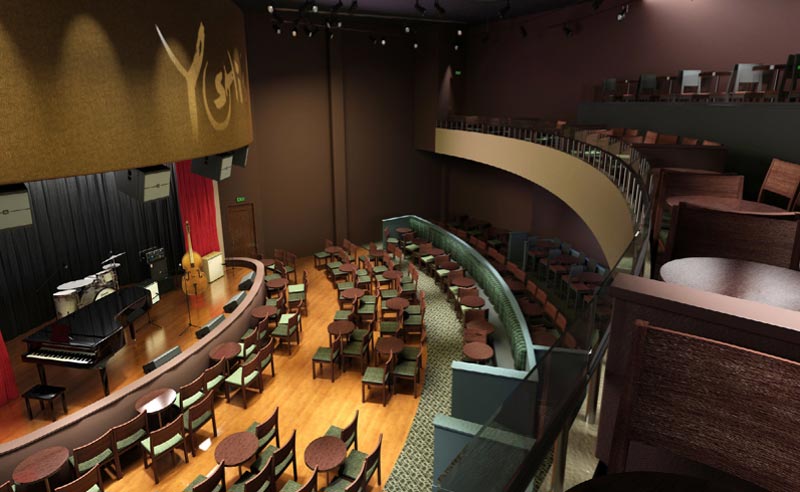
"caption": "Yoshi's, the Fillmore Heritage Center's anchor tenant, closed in 2014. ",
"credit": "Yoshi's SF",
"altTag": "view inside music venue with stage and balcony seating",
"description": "Yoshi's, the Fillmore Heritage Center's anchor tenant, closed in 2014. ",
"imgSizes": {
"thumbnail": {
"file": "https://cdn.kqed.org/wp-content/uploads/sites/2/2015/01/Yoshis-400x246.jpg",
"width": 400,
"height": 246,
"mimeType": "image/jpeg"
},
"post-thumbnail": {
"file": "https://cdn.kqed.org/wp-content/uploads/sites/2/2015/01/Yoshis-672x372.jpg",
"width": 672,
"height": 372,
"mimeType": "image/jpeg"
},
"guest-author-32": {
"file": "https://cdn.kqed.org/wp-content/uploads/sites/2/2015/01/Yoshis-32x32.jpg",
"width": 32,
"height": 32,
"mimeType": "image/jpeg"
},
"guest-author-64": {
"file": "https://cdn.kqed.org/wp-content/uploads/sites/2/2015/01/Yoshis-64x64.jpg",
"width": 64,
"height": 64,
"mimeType": "image/jpeg"
},
"guest-author-96": {
"file": "https://cdn.kqed.org/wp-content/uploads/sites/2/2015/01/Yoshis-96x96.jpg",
"width": 96,
"height": 96,
"mimeType": "image/jpeg"
},
"guest-author-128": {
"file": "https://cdn.kqed.org/wp-content/uploads/sites/2/2015/01/Yoshis-128x128.jpg",
"width": 128,
"height": 128,
"mimeType": "image/jpeg"
},
"detail": {
"file": "https://cdn.kqed.org/wp-content/uploads/sites/2/2015/01/Yoshis-75x75.jpg",
"width": 75,
"height": 75,
"mimeType": "image/jpeg"
},
"kqedFullSize": {
"file": "https://cdn.kqed.org/wp-content/uploads/sites/2/2015/01/Yoshis.jpg",
"width": 800,
"height": 492
}
},
"isLoading": false,
"fetchFailed": false
},
"arts_10295516": {
"type": "attachments",
"id": "arts_10295516",
"meta": {
"index": "attachments_1716263798",
"site": "arts",
"id": "10295516",
"found": true
},
"parent": 10295403,
"imgSizes": {
"thumbnail": {
"file": "https://ww2.kqed.org/app/uploads/sites/2/2015/01/Coup-400x225.jpg",
"width": 400,
"mimeType": "image/jpeg",
"height": 225
},
"post-thumbnail": {
"file": "https://ww2.kqed.org/app/uploads/sites/2/2015/01/Coup-672x372.jpg",
"width": 672,
"mimeType": "image/jpeg",
"height": 372
},
"kqedFullSize": {
"file": "https://ww2.kqed.org/app/uploads/sites/2/2015/01/Coup.jpg",
"width": 814,
"height": 458
},
"guest-author-96": {
"file": "https://ww2.kqed.org/app/uploads/sites/2/2015/01/Coup-96x96.jpg",
"width": 96,
"mimeType": "image/jpeg",
"height": 96
},
"medium": {
"file": "https://ww2.kqed.org/app/uploads/sites/2/2015/01/Coup-800x450.jpg",
"width": 800,
"mimeType": "image/jpeg",
"height": 450
},
"guest-author-64": {
"file": "https://ww2.kqed.org/app/uploads/sites/2/2015/01/Coup-64x64.jpg",
"width": 64,
"mimeType": "image/jpeg",
"height": 64
},
"detail": {
"file": "https://ww2.kqed.org/app/uploads/sites/2/2015/01/Coup-75x75.jpg",
"width": 75,
"mimeType": "image/jpeg",
"height": 75
},
"guest-author-32": {
"file": "https://ww2.kqed.org/app/uploads/sites/2/2015/01/Coup-32x32.jpg",
"width": 32,
"mimeType": "image/jpeg",
"height": 32
},
"guest-author-128": {
"file": "https://ww2.kqed.org/app/uploads/sites/2/2015/01/Coup-128x128.jpg",
"width": 128,
"mimeType": "image/jpeg",
"height": 128
}
},
"publishDate": 1421053003,
"modified": 1421962439,
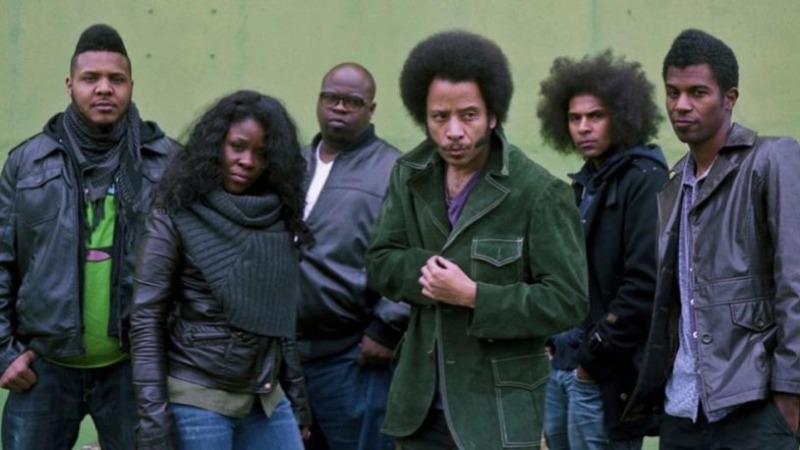
"caption": "The Coup plays Jan. 23 with Le Vice and Ren the Vinyl Archaeologist at the Independent.",
"description": null,
"title": "The Coup",
"credit": "Todd Cooper",
"status": "inherit",
"isLoading": false,
"fetchFailed": false
},
"arts_10280034": {
"type": "attachments",
"id": "arts_10280034",
"meta": {
"index": "attachments_1716263798",
"site": "arts",
"id": "10280034",
"found": true
},
"parent": 10280033,
"imgSizes": {
"thumbnail": {
"file": "https://ww2.kqed.org/app/uploads/sites/2/2015/01/BottlerockMain-400x225.jpg",
"width": 400,
"mimeType": "image/jpeg",
"height": 225
},
"post-thumbnail": {
"file": "https://ww2.kqed.org/app/uploads/sites/2/2015/01/BottlerockMain-672x372.jpg",
"width": 672,
"mimeType": "image/jpeg",
"height": 372
},
"kqedFullSize": {
"file": "https://ww2.kqed.org/app/uploads/sites/2/2015/01/BottlerockMain.jpg",
"width": 800,
"height": 450
},
"guest-author-96": {
"file": "https://ww2.kqed.org/app/uploads/sites/2/2015/01/BottlerockMain-96x96.jpg",
"width": 96,
"mimeType": "image/jpeg",
"height": 96
},
"guest-author-64": {
"file": "https://ww2.kqed.org/app/uploads/sites/2/2015/01/BottlerockMain-64x64.jpg",
"width": 64,
"mimeType": "image/jpeg",
"height": 64
},
"detail": {
"file": "https://ww2.kqed.org/app/uploads/sites/2/2015/01/BottlerockMain-75x75.jpg",
"width": 75,
"mimeType": "image/jpeg",
"height": 75
},
"guest-author-32": {
"file": "https://ww2.kqed.org/app/uploads/sites/2/2015/01/BottlerockMain-32x32.jpg",
"width": 32,
"mimeType": "image/jpeg",
"height": 32
},
"guest-author-128": {
"file": "https://ww2.kqed.org/app/uploads/sites/2/2015/01/BottlerockMain-128x128.jpg",
"width": 128,
"mimeType": "image/jpeg",
"height": 128
}
},
"publishDate": 1420562772,
"modified": 1420562804,
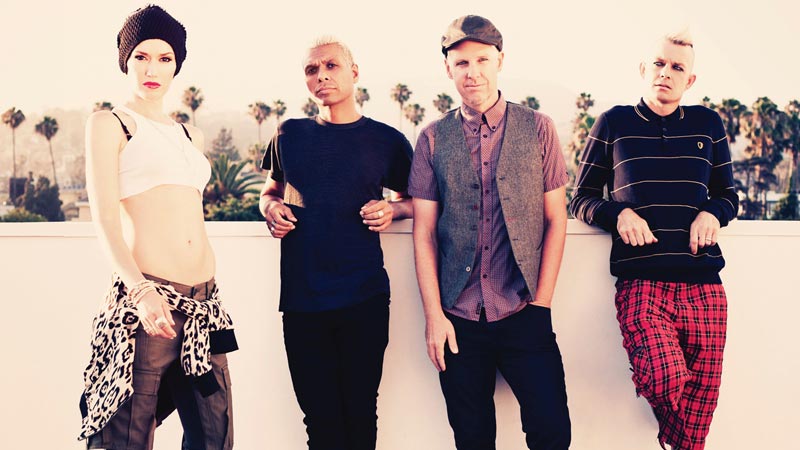
"caption": "A reunited No Doubt is one of the few 1990s bands at this year's BottleRock.",
"description": null,
"title": "BottlerockMain",
"credit": null,
"status": "inherit",
"isLoading": false,
"fetchFailed": false
},
"arts_10278929": {
"type": "attachments",
"id": "arts_10278929",
"meta": {
"index": "attachments_1716263798",
"site": "arts",
"id": "10278929",
"found": true
},
"parent": 10278818,
"imgSizes": {
"thumbnail": {
"file": "https://ww2.kqed.org/app/uploads/sites/2/2015/01/STLawrence-400x225.jpg",
"width": 400,
"mimeType": "image/jpeg",
"height": 225
},
"post-thumbnail": {
"file": "https://ww2.kqed.org/app/uploads/sites/2/2015/01/STLawrence-672x372.jpg",
"width": 672,
"mimeType": "image/jpeg",
"height": 372
},
"kqedFullSize": {
"file": "https://ww2.kqed.org/app/uploads/sites/2/2015/01/STLawrence.jpg",
"width": 800,
"height": 450
},
"guest-author-96": {
"file": "https://ww2.kqed.org/app/uploads/sites/2/2015/01/STLawrence-96x96.jpg",
"width": 96,
"mimeType": "image/jpeg",
"height": 96
},
"guest-author-64": {
"file": "https://ww2.kqed.org/app/uploads/sites/2/2015/01/STLawrence-64x64.jpg",
"width": 64,
"mimeType": "image/jpeg",
"height": 64
},
"detail": {
"file": "https://ww2.kqed.org/app/uploads/sites/2/2015/01/STLawrence-75x75.jpg",
"width": 75,
"mimeType": "image/jpeg",
"height": 75
},
"guest-author-32": {
"file": "https://ww2.kqed.org/app/uploads/sites/2/2015/01/STLawrence-32x32.jpg",
"width": 32,
"mimeType": "image/jpeg",
"height": 32
},
"guest-author-128": {
"file": "https://ww2.kqed.org/app/uploads/sites/2/2015/01/STLawrence-128x128.jpg",
"width": 128,
"mimeType": "image/jpeg",
"height": 128
}
},
"publishDate": 1420525578,
"modified": 1420525733,
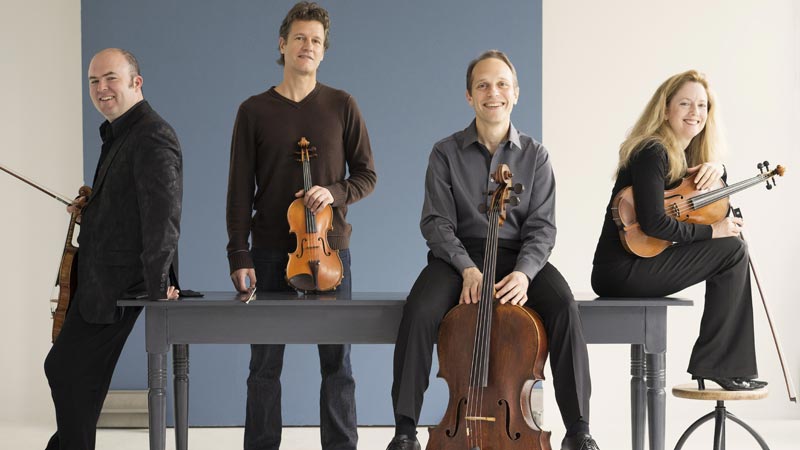
"caption": "This month's premiere marks John Adams' third collaboration with the St. Lawrence String Quartet. (Photo: Marco Borggreve)",
"description": null,
"title": "STLawrence",
"credit": null,
"status": "inherit",
"isLoading": false,
"fetchFailed": false
},
"arts_10269488": {
"type": "attachments",
"id": "arts_10269488",
"meta": {
"index": "attachments_1716263798",
"site": "arts",
"id": "10269488",
"found": true
},
"parent": 10269487,
"imgSizes": {
"thumbnail": {
"file": "https://ww2.kqed.org/app/uploads/sites/2/2015/01/weyes-blood-400x225.jpg",
"width": 400,
"mimeType": "image/jpeg",
"height": 225
},
"post-thumbnail": {
"file": "https://ww2.kqed.org/app/uploads/sites/2/2015/01/weyes-blood-672x372.jpg",
"width": 672,
"mimeType": "image/jpeg",
"height": 372
},
"kqedFullSize": {
"file": "https://ww2.kqed.org/app/uploads/sites/2/2015/01/weyes-blood.jpg",
"width": 800,
"height": 450
},
"guest-author-96": {
"file": "https://ww2.kqed.org/app/uploads/sites/2/2015/01/weyes-blood-96x96.jpg",
"width": 96,
"mimeType": "image/jpeg",
"height": 96
},
"guest-author-64": {
"file": "https://ww2.kqed.org/app/uploads/sites/2/2015/01/weyes-blood-64x64.jpg",
"width": 64,
"mimeType": "image/jpeg",
"height": 64
},
"detail": {
"file": "https://ww2.kqed.org/app/uploads/sites/2/2015/01/weyes-blood-75x75.jpg",
"width": 75,
"mimeType": "image/jpeg",
"height": 75
},
"guest-author-32": {
"file": "https://ww2.kqed.org/app/uploads/sites/2/2015/01/weyes-blood-32x32.jpg",
"width": 32,
"mimeType": "image/jpeg",
"height": 32
},
"guest-author-128": {
"file": "https://ww2.kqed.org/app/uploads/sites/2/2015/01/weyes-blood-128x128.jpg",
"width": 128,
"mimeType": "image/jpeg",
"height": 128
}
},
"publishDate": 1420228032,
"modified": 1420231834,
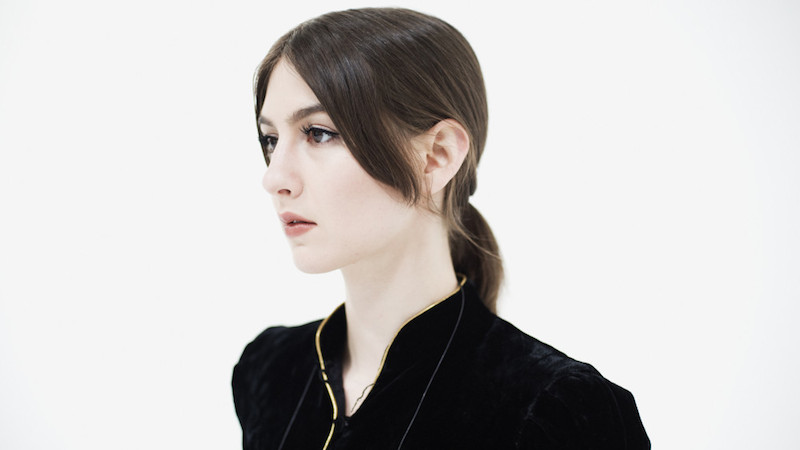
"caption": "Weyes Blood plays the Hemlock on Jan. 27.",
"description": null,
"title": "Weyes Blood",
"credit": null,
"status": "inherit",
"isLoading": false,
"fetchFailed": false
},
"arts_10261418": {
"type": "attachments",
"id": "arts_10261418",
"meta": {
"index": "attachments_1716263798",
"site": "arts",
"id": "10261418",
"found": true
},
"parent": 10223548,
"imgSizes": {
"thumbnail": {
"file": "https://ww2.kqed.org/app/uploads/sites/2/2014/12/filmoflife-400x225.jpg",
"width": 400,
"mimeType": "image/jpeg",
"height": 225
},
"post-thumbnail": {
"file": "https://ww2.kqed.org/app/uploads/sites/2/2014/12/filmoflife-672x372.jpg",
"width": 672,
"mimeType": "image/jpeg",
"height": 372
},
"kqedFullSize": {
"file": "https://ww2.kqed.org/app/uploads/sites/2/2014/12/filmoflife.jpg",
"width": 800,
"height": 450
},
"guest-author-96": {
"file": "https://ww2.kqed.org/app/uploads/sites/2/2014/12/filmoflife-96x96.jpg",
"width": 96,
"mimeType": "image/jpeg",
"height": 96
},
"guest-author-64": {
"file": "https://ww2.kqed.org/app/uploads/sites/2/2014/12/filmoflife-64x64.jpg",
"width": 64,
"mimeType": "image/jpeg",
"height": 64
},
"detail": {
"file": "https://ww2.kqed.org/app/uploads/sites/2/2014/12/filmoflife-75x75.jpg",
"width": 75,
"mimeType": "image/jpeg",
"height": 75
},
"guest-author-32": {
"file": "https://ww2.kqed.org/app/uploads/sites/2/2014/12/filmoflife-32x32.jpg",
"width": 32,
"mimeType": "image/jpeg",
"height": 32
},
"guest-author-128": {
"file": "https://ww2.kqed.org/app/uploads/sites/2/2014/12/filmoflife-128x128.jpg",
"width": 128,
"mimeType": "image/jpeg",
"height": 128
}
},
"publishDate": 1419976338,
"modified": 1419976354,
"caption": "Cover of \u003ci>Film of Life\u003c/i>",
"description": null,
"title": "filmoflife",
"credit": null,
"status": "inherit",
"isLoading": false,
"fetchFailed": false
},
"arts_10261789": {
"type": "attachments",
"id": "arts_10261789",
"meta": {
"index": "attachments_1716263798",
"site": "arts",
"id": "10261789",
"found": true
},
"parent": 10261780,
"imgSizes": {
"thumbnail": {
"file": "https://ww2.kqed.org/app/uploads/sites/2/2014/12/Aislers-SetBOH-400x226.jpeg",
"width": 400,
"mimeType": "image/jpeg",
"height": 226
},
"post-thumbnail": {
"file": "https://ww2.kqed.org/app/uploads/sites/2/2014/12/Aislers-SetBOH-672x372.jpeg",
"width": 672,
"mimeType": "image/jpeg",
"height": 372
},
"kqedFullSize": {
"file": "https://ww2.kqed.org/app/uploads/sites/2/2014/12/Aislers-SetBOH.jpeg",
"width": 800,
"height": 453
},
"guest-author-96": {
"file": "https://ww2.kqed.org/app/uploads/sites/2/2014/12/Aislers-SetBOH-96x96.jpeg",
"width": 96,
"mimeType": "image/jpeg",
"height": 96
},
"guest-author-64": {
"file": "https://ww2.kqed.org/app/uploads/sites/2/2014/12/Aislers-SetBOH-64x64.jpeg",
"width": 64,
"mimeType": "image/jpeg",
"height": 64
},
"detail": {
"file": "https://ww2.kqed.org/app/uploads/sites/2/2014/12/Aislers-SetBOH-75x75.jpeg",
"width": 75,
"mimeType": "image/jpeg",
"height": 75
},
"guest-author-32": {
"file": "https://ww2.kqed.org/app/uploads/sites/2/2014/12/Aislers-SetBOH-32x32.jpeg",
"width": 32,
"mimeType": "image/jpeg",
"height": 32
},
"guest-author-128": {
"file": "https://ww2.kqed.org/app/uploads/sites/2/2014/12/Aislers-SetBOH-128x128.jpeg",
"width": 128,
"mimeType": "image/jpeg",
"height": 128
}
},
"publishDate": 1419988051,
"modified": 1419988081,
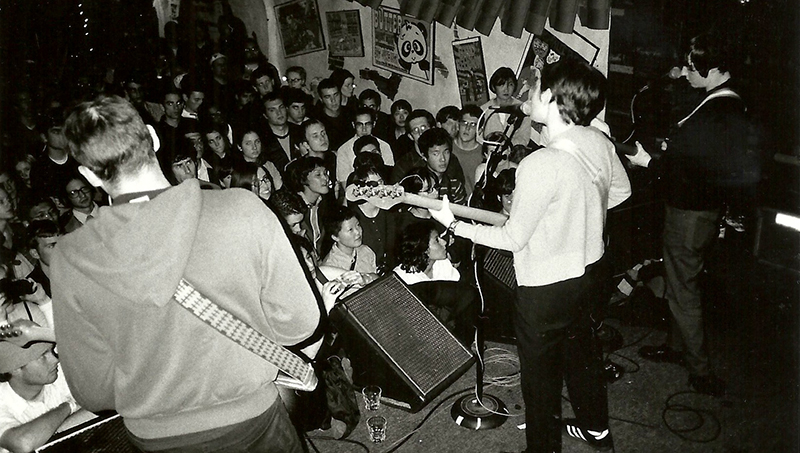
"caption": "The Aislers Set, live at Bottom of the Hill. ",
"description": "The Aislers Set, live at Bottom of the Hill. Courtesy of AV Linton",
"title": "Aislers SetBOH",
"credit": "Courtesy of AV Linton",
"status": "inherit",
"isLoading": false,
"fetchFailed": false
},
"arts_10261791": {
"type": "attachments",
"id": "arts_10261791",
"meta": {
"index": "attachments_1716263798",
"site": "arts",
"id": "10261791",
"found": true
},
"parent": 10261417,
"imgSizes": {
"thumbnail": {
"file": "https://ww2.kqed.org/app/uploads/sites/2/2014/12/pizap.com14199876902541-400x184.jpg",
"width": 400,
"mimeType": "image/jpeg",
"height": 184
},
"post-thumbnail": {
"file": "https://ww2.kqed.org/app/uploads/sites/2/2014/12/pizap.com14199876902541-672x372.jpg",
"width": 672,
"mimeType": "image/jpeg",
"height": 372
},
"kqedFullSize": {
"file": "https://ww2.kqed.org/app/uploads/sites/2/2014/12/pizap.com14199876902541-e1419988227806.jpg",
"width": 800,
"height": 369
},
"guest-author-96": {
"file": "https://ww2.kqed.org/app/uploads/sites/2/2014/12/pizap.com14199876902541-96x96.jpg",
"width": 96,
"mimeType": "image/jpeg",
"height": 96
},
"medium": {
"file": "https://ww2.kqed.org/app/uploads/sites/2/2014/12/pizap.com14199876902541-800x369.jpg",
"width": 800,
"mimeType": "image/jpeg",
"height": 369
},
"guest-author-64": {
"file": "https://ww2.kqed.org/app/uploads/sites/2/2014/12/pizap.com14199876902541-64x64.jpg",
"width": 64,
"mimeType": "image/jpeg",
"height": 64
},
"detail": {
"file": "https://ww2.kqed.org/app/uploads/sites/2/2014/12/pizap.com14199876902541-75x75.jpg",
"width": 75,
"mimeType": "image/jpeg",
"height": 75
},
"guest-author-32": {
"file": "https://ww2.kqed.org/app/uploads/sites/2/2014/12/pizap.com14199876902541-32x32.jpg",
"width": 32,
"mimeType": "image/jpeg",
"height": 32
},
"guest-author-128": {
"file": "https://ww2.kqed.org/app/uploads/sites/2/2014/12/pizap.com14199876902541-128x128.jpg",
"width": 128,
"mimeType": "image/jpeg",
"height": 128
}
},
"publishDate": 1419988210,
"modified": 1419988210,
"caption": null,
"description": null,
"title": "pizap.com14199876902541",
"credit": null,
"status": "inherit",
"isLoading": false,
"fetchFailed": false
},
"arts_10258595": {
"type": "attachments",
"id": "arts_10258595",
"meta": {
"index": "attachments_1716263798",
"site": "arts",
"id": "10258595",
"found": true
},
"parent": 10258465,
"imgSizes": {
"thumbnail": {
"file": "https://ww2.kqed.org/app/uploads/sites/2/2014/12/AmbroseMain.AutumnDeWilde-400x225.jpg",
"width": 400,
"mimeType": "image/jpeg",
"height": 225
},
"post-thumbnail": {
"file": "https://ww2.kqed.org/app/uploads/sites/2/2014/12/AmbroseMain.AutumnDeWilde-672x372.jpg",
"width": 672,
"mimeType": "image/jpeg",
"height": 372
},
"kqedFullSize": {
"file": "https://ww2.kqed.org/app/uploads/sites/2/2014/12/AmbroseMain.AutumnDeWilde.jpg",
"width": 800,
"height": 450
},
"guest-author-96": {
"file": "https://ww2.kqed.org/app/uploads/sites/2/2014/12/AmbroseMain.AutumnDeWilde-96x96.jpg",
"width": 96,
"mimeType": "image/jpeg",
"height": 96
},
"guest-author-64": {
"file": "https://ww2.kqed.org/app/uploads/sites/2/2014/12/AmbroseMain.AutumnDeWilde-64x64.jpg",
"width": 64,
"mimeType": "image/jpeg",
"height": 64
},
"detail": {
"file": "https://ww2.kqed.org/app/uploads/sites/2/2014/12/AmbroseMain.AutumnDeWilde-75x75.jpg",
"width": 75,
"mimeType": "image/jpeg",
"height": 75
},
"guest-author-32": {
"file": "https://ww2.kqed.org/app/uploads/sites/2/2014/12/AmbroseMain.AutumnDeWilde-32x32.jpg",
"width": 32,
"mimeType": "image/jpeg",
"height": 32
},
"guest-author-128": {
"file": "https://ww2.kqed.org/app/uploads/sites/2/2014/12/AmbroseMain.AutumnDeWilde-128x128.jpg",
"width": 128,
"mimeType": "image/jpeg",
"height": 128
}
},
"publishDate": 1419890239,
"modified": 1546631859,
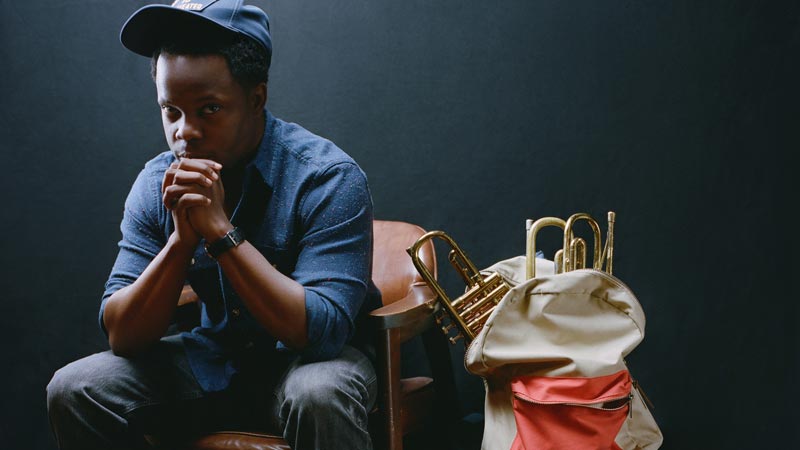
"caption": "Trumpeter Ambrose Akinmusire, just one of many California jazz artists who released exceptional albums in 2014. (Photo: Autumn DeWilde)",
"description": "Trumpeter Ambrose Akinmusire, just one of many California jazz artists who released exceptional albums in 2014. (Photo: Autumn DeWilde)",
"title": "AmbroseMain.AutumnDeWilde",
"credit": null,
"status": "inherit",
"isLoading": false,
"fetchFailed": false
},
"arts_10253010": {
"type": "attachments",
"id": "arts_10253010",
"meta": {
"index": "attachments_1716263798",
"site": "arts",
"id": "10253010",
"found": true
},
"parent": 10252891,
"imgSizes": {
"thumbnail": {
"file": "https://ww2.kqed.org/app/uploads/sites/2/2014/12/MaceoMain-400x225.jpg",
"width": 400,
"mimeType": "image/jpeg",
"height": 225
},
"post-thumbnail": {
"file": "https://ww2.kqed.org/app/uploads/sites/2/2014/12/MaceoMain-672x372.jpg",
"width": 672,
"mimeType": "image/jpeg",
"height": 372
},
"kqedFullSize": {
"file": "https://ww2.kqed.org/app/uploads/sites/2/2014/12/MaceoMain.jpg",
"width": 800,
"height": 450
},
"guest-author-96": {
"file": "https://ww2.kqed.org/app/uploads/sites/2/2014/12/MaceoMain-96x96.jpg",
"width": 96,
"mimeType": "image/jpeg",
"height": 96
},
"guest-author-64": {
"file": "https://ww2.kqed.org/app/uploads/sites/2/2014/12/MaceoMain-64x64.jpg",
"width": 64,
"mimeType": "image/jpeg",
"height": 64
},
"detail": {
"file": "https://ww2.kqed.org/app/uploads/sites/2/2014/12/MaceoMain-75x75.jpg",
"width": 75,
"mimeType": "image/jpeg",
"height": 75
},
"guest-author-32": {
"file": "https://ww2.kqed.org/app/uploads/sites/2/2014/12/MaceoMain-32x32.jpg",
"width": 32,
"mimeType": "image/jpeg",
"height": 32
},
"guest-author-128": {
"file": "https://ww2.kqed.org/app/uploads/sites/2/2014/12/MaceoMain-128x128.jpg",
"width": 128,
"mimeType": "image/jpeg",
"height": 128
}
},
"publishDate": 1419721947,
"modified": 1419721967,
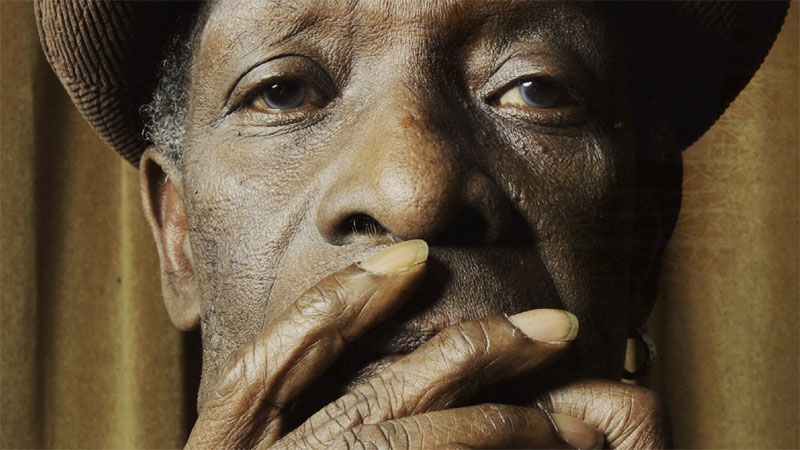
"caption": "(Photo: Ines Kaiser)",
"description": null,
"title": "MaceoMain",
"credit": null,
"status": "inherit",
"isLoading": false,
"fetchFailed": false
}
},
"audioPlayerReducer": {
"postId": "stream_live",
"isPaused": true,
"isPlaying": false,
"pfsActive": false,
"pledgeModalIsOpen": true,
"playerDrawerIsOpen": false,
"liveAudioPlayStartedAt": 0,
"liveAudioPlayContext": ""
},
"authorsReducer": {
"128435": {
"type": "authors",
"id": "128435",
"meta": {
"override": true
},
"slug": "128435",
"name": "Jonathan Curiel",
"firstName": "Jonathan",
"lastName": "Curiel",
"bio": "Jonathan Curiel has written widely about music, film, books, art, photography and other cultural subjects. \u003ci>SF Weekly's\u003c/i> art critic, he is a former staff writer with the \u003ci>San Francisco Chronicle\u003c/i>, and has also written on the arts for \u003ca href=\"http://www.salon.com/\">Salon\u003c/a>, the \u003ci>Christian Science Monitor\u003c/i>, \u003ci>The Wire\u003c/i> (a London music magazine), \u003ci>Tablet\u003c/i> and \u003ci>GlobalPost\u003c/i>. He has researched architecture at England's Oxford University, taught music journalism at the UCLA Herb Alpert School of Music, and been a juror at the San Francisco International Film Festival.",
"email": "jonathancuriel@hotmail.com",
"isLoading": false
},
"agilbert": {
"type": "authors",
"id": "86",
"meta": {
"index": "authors_1716337520",
"id": "86",
"found": true
},
"name": "Andrew Gilbert",
"firstName": "Andrew",
"lastName": "Gilbert",
"slug": "agilbert",
"email": "jazzscribe@aol.com",
"display_author_email": false,
"staff_mastheads": [],
"title": "KQED Contributor",
"bio": "A Los Angeles native based in the Berkeley area since 1996, Andrew Gilbert covers jazz, international music and dance for KQED's \u003ci>California Report, \u003c/i>the\u003ci> Mercury News\u003c/i>, \u003ci>San Francisco Chronicle\u003c/i>, \u003ci>Berkeleyside.com\u003c/i>, and other publications. He is available for weddings and bar and bat mitzvahs. #jazzscribe",
"avatar": "https://secure.gravatar.com/avatar/d7bcafdbefdd39e9a68f88724ca616eb4e7a5a6bff9cdfb62de652a1e1751471?s=600&d=blank&r=g",
"twitter": null,
"bluesky": null,
"facebook": null,
"instagram": null,
"linkedin": null,
"sites": [
{
"site": "arts",
"roles": [
"Contributor",
"author"
]
},
{
"site": "news",
"roles": [
"author"
]
}
],
"headData": {
"title": "Andrew Gilbert | KQED",
"description": "KQED Contributor",
"ogImgSrc": "https://secure.gravatar.com/avatar/d7bcafdbefdd39e9a68f88724ca616eb4e7a5a6bff9cdfb62de652a1e1751471?s=600&d=blank&r=g",
"twImgSrc": "https://secure.gravatar.com/avatar/d7bcafdbefdd39e9a68f88724ca616eb4e7a5a6bff9cdfb62de652a1e1751471?s=600&d=blank&r=g"
},
"isLoading": false,
"link": "/author/agilbert"
},
"baybridged": {
"type": "authors",
"id": "178",
"meta": {
"index": "authors_1716337520",
"id": "178",
"found": true
},
"name": "The Bay Bridged",
"firstName": "The Bay",
"lastName": "Bridged",
"slug": "baybridged",
"email": "thebaybridged@gmail.com",
"display_author_email": false,
"staff_mastheads": [],
"title": "KQED Contributor",
"bio": null,
"avatar": "https://secure.gravatar.com/avatar/211daad5386ad504c39c31f3e16cfae45ec7b0ad32ecca7ee64cfd9b7eb76609?s=600&d=blank&r=g",
"twitter": null,
"bluesky": null,
"facebook": null,
"instagram": null,
"linkedin": null,
"sites": [
{
"site": "arts",
"roles": [
"subscriber"
]
}
],
"headData": {
"title": "The Bay Bridged | KQED",
"description": "KQED Contributor",
"ogImgSrc": "https://secure.gravatar.com/avatar/211daad5386ad504c39c31f3e16cfae45ec7b0ad32ecca7ee64cfd9b7eb76609?s=600&d=blank&r=g",
"twImgSrc": "https://secure.gravatar.com/avatar/211daad5386ad504c39c31f3e16cfae45ec7b0ad32ecca7ee64cfd9b7eb76609?s=600&d=blank&r=g"
},
"isLoading": false,
"link": "/author/baybridged"
},
"gmeline": {
"type": "authors",
"id": "185",
"meta": {
"index": "authors_1716337520",
"id": "185",
"found": true
},
"name": "Gabe Meline",
"firstName": "Gabe",
"lastName": "Meline",
"slug": "gmeline",
"email": "gmeline@kqed.org",
"display_author_email": true,
"staff_mastheads": [
"arts"
],
"title": "Senior Editor, KQED Arts & Culture",
"bio": "Gabe Meline entered journalism at age 15 making photocopied zines, and has since earned awards from the Edward R. Murrow Awards, the Society for Professional Journalists, the Online Journalism Awards, the Association of Alternative Newsweeklies and the California Newspaper Publishers Association. Prior to KQED, he was the editor of the \u003cem>North Bay Bohemian\u003c/em> and a touring musician. He lives with his wife and daughter in his hometown of Santa Rosa, CA.",
"avatar": "https://secure.gravatar.com/avatar/5bebe57be0d8bc2dd318934feb47299e2d2d10cba28d09d8d7afb389a2ce2bdd?s=600&d=blank&r=g",
"twitter": null,
"bluesky": null,
"facebook": null,
"instagram": null,
"linkedin": null,
"sites": [
{
"site": "",
"roles": [
"editor"
]
},
{
"site": "arts",
"roles": [
"administrator"
]
},
{
"site": "artschool",
"roles": [
"editor"
]
},
{
"site": "news",
"roles": [
"author"
]
},
{
"site": "pop",
"roles": [
"editor"
]
},
{
"site": "bayareabites",
"roles": [
"editor"
]
},
{
"site": "food",
"roles": [
"editor"
]
},
{
"site": "forum",
"roles": [
"administrator"
]
},
{
"site": "liveblog",
"roles": [
"editor"
]
},
{
"site": "hiphop",
"roles": [
"editor"
]
}
],
"headData": {
"title": "Gabe Meline | KQED",
"description": "Senior Editor, KQED Arts & Culture",
"ogImgSrc": "https://secure.gravatar.com/avatar/5bebe57be0d8bc2dd318934feb47299e2d2d10cba28d09d8d7afb389a2ce2bdd?s=600&d=blank&r=g",
"twImgSrc": "https://secure.gravatar.com/avatar/5bebe57be0d8bc2dd318934feb47299e2d2d10cba28d09d8d7afb389a2ce2bdd?s=600&d=blank&r=g"
},
"isLoading": false,
"link": "/author/gmeline"
},
"thedolist": {
"type": "authors",
"id": "3215",
"meta": {
"index": "authors_1716337520",
"id": "3215",
"found": true
},
"name": "The Do List",
"firstName": "Do",
"lastName": "List",
"slug": "thedolist",
"email": "harold.check+dolist@gmail.com",
"display_author_email": false,
"staff_mastheads": [],
"title": null,
"bio": "The Do List scours the Bay Area for superb and surprising performing arts events, with an eye for local talent, new discoveries, and fun opportunities across the price spectrum. Every Friday morning at 6:23 and 8:23am on KQED Radio, you can hear Do List regulars Cy Musiker and David Wiegand discuss the upcoming week's best picks.",
"avatar": "https://secure.gravatar.com/avatar/25ef8068d096493f649195742621360d?s=600&d=blank&r=g",
"twitter": null,
"facebook": null,
"instagram": null,
"linkedin": null,
"sites": [
{
"site": "arts",
"roles": [
"contributor"
]
}
],
"headData": {
"title": "The Do List | KQED",
"description": null,
"ogImgSrc": "https://secure.gravatar.com/avatar/25ef8068d096493f649195742621360d?s=600&d=blank&r=g",
"twImgSrc": "https://secure.gravatar.com/avatar/25ef8068d096493f649195742621360d?s=600&d=blank&r=g"
},
"isLoading": false,
"link": "/author/thedolist"
},
"dburlison": {
"type": "authors",
"id": "3216",
"meta": {
"index": "authors_1716337520",
"id": "3216",
"found": true
},
"name": "Dani Burlison",
"firstName": "Dani",
"lastName": "Burlison",
"slug": "dburlison",
"email": "danisavestheworld@yahoo.com",
"display_author_email": false,
"staff_mastheads": [],
"title": null,
"bio": "\u003cb id=\"yui_3_16_0_1_1416414652499_5365\" class=\"yiv3033141065\">Dani Burlison\u003c/b> is an award-winning writer, teacher and North Bay resident with a special interest in California's fascinating subcultures. You can find her commentary on writing, feminism, social justice and life with two teen daughters on Twitter at @DaniBurlison.",
"avatar": "https://secure.gravatar.com/avatar/c0b371463a220978c947a5c4ce2da294?s=600&d=blank&r=g",
"twitter": null,
"facebook": null,
"instagram": null,
"linkedin": null,
"sites": [
{
"site": "arts",
"roles": [
"contributor"
]
}
],
"headData": {
"title": "Dani Burlison | KQED",
"description": null,
"ogImgSrc": "https://secure.gravatar.com/avatar/c0b371463a220978c947a5c4ce2da294?s=600&d=blank&r=g",
"twImgSrc": "https://secure.gravatar.com/avatar/c0b371463a220978c947a5c4ce2da294?s=600&d=blank&r=g"
},
"isLoading": false,
"link": "/author/dburlison"
}
},
"pagesReducer": {
"arts_category_music": {
"type": "terms",
"id": "arts_69",
"meta": {
"index": "terms_1716263798",
"site": "arts",
"id": "69",
"score": 10.850847
},
"featImg": null,
"name": "Music",
"description": null,
"taxonomy": "category",
"headData": {
"twImgId": null,
"twTitle": null,
"ogTitle": null,
"ogImgId": null,
"twDescription": null,
"description": null,
"title": "Music Archives | KQED Arts",
"ogDescription": null
},
"ttid": 70,
"slug": "music",
"isLoading": false,
"title": "Music",
"pageMeta": {
"site": "arts",
"WpPageTemplate": "page-topic-editorial",
"currentPage": 347
},
"blocks": [
{
"blockName": "kqed/post-list",
"attrs": {
"layout": "cardArticle2",
"query": "posts/arts?category=music",
"seeMore": false,
"paginated": true,
"page": 347
}
},
{
"blockName": "kqed/ad"
}
]
}
},
"pfsSessionReducer": {},
"postsReducer": {
"stream_live": {
"type": "live",
"id": "stream_live",
"audioUrl": "https://streams.kqed.org/kqedradio",
"title": "Live Stream",
"excerpt": "Live Stream information currently unavailable.",
"link": "/radio",
"featImg": "",
"label": {
"name": "KQED Live",
"link": "/"
}
},
"stream_kqedNewscast": {
"type": "posts",
"id": "stream_kqedNewscast",
"audioUrl": "https://www.kqed.org/.stream/anon/radio/RDnews/newscast.mp3?_=1",
"title": "KQED Newscast",
"featImg": "",
"label": {
"name": "88.5 FM",
"link": "/"
}
},
"arts_10297603": {
"type": "posts",
"id": "arts_10297603",
"meta": {
"index": "posts_1716263798",
"site": "arts",
"id": "10297603",
"score": null,
"sort": [
1421116541000
]
},
"parent": 0,
"labelTerm": {
"site": "arts"
},
"blocks": [],
"publishDate": 1421116541,
"format": "standard",
"title": "The Addition, Formerly Yoshi's in San Francisco, to Abruptly Close",
"headTitle": "The Addition, Formerly Yoshi’s in San Francisco, to Abruptly Close | KQED",
"content": "\u003cp>In a statement by its ownership group today, it was announced that Fillmore Street music venue \u003ca href=\"http://www.theaddition.com/\" target=\"_blank\" rel=\"noopener\">The Addition\u003c/a> will cease operations almost immediately. The venue’s doors will close this Wednesday, Jan. 14.\u003c/p>\n\u003cp>The management team of Fillmore Live Entertainment Group (FLEG) explained that the sudden closure is due to “some financial hardships resulting from reduced revenue since the takeover in July.”\u003c/p>\n\u003cp>From July to October of last year, Fillmore Live operated the former Yoshi’s, rebranding it as the Addition in October and booking less jazz artists, which had been Yoshi’s specialty. \u003c/p>\n\u003cp>Artistic director Peter Williams, a 12-year veteran of Yoshi’s who came to the Addition just two months ago, in November, told KQED that he has no regrets. “The ownership group and Michael Johnson in particular were great, and I was thrilled to have the chance to do this,” he said.\u003c/p>\n\u003cp>The 28,000 square-foot, two-story club opened after construction costs of approximately $15 million, roughly half of which was supplied by a redevelopment loan. That loan added to a $4.4 million loan from the redevelopment agency in 2004, and a $5.5 million loan from the City of San Francisco for the Fillmore Heritage Center, which housed Yoshi’s. \u003c/p>\n\u003cp>[ad fullwidth]\u003c/p>\n\u003cp>In \u003ca href=\"http://newfillmore.com/2014/07/04/how-the-yoshis-deal-went-down/\" target=\"_blank\" rel=\"noopener\">a post\u003c/a> on The New Fillmore titled ‘\u003ca href=\"http://newfillmore.com/2014/07/04/how-the-yoshis-deal-went-down/\" target=\"_blank\" rel=\"noopener\">How the Yoshi’s Deal Went Down\u003c/a>,’ Chris Barnett details the club’s 2012 bankruptcy and subsequent restructuring, which resulted in $4.8 million of Yoshi’s redevelopment agency debt written off and other debts still unpaid.\u003c/p>\n\u003cp>Asked about the status of those debts, Williams said today: “I do not know the answer to this.”\u003c/p>\n\u003cp>According to the ownership group’s statement, Fillmore Live is “in the process of determining how to address existing liabilities of the business, and will be in touch at the earliest possible time. FLEG is also seeking a potential lead partner to take over operations at the earliest possible time, and continue to present quality headline entertainment, in addition to re-concepting the existing restaurant.”\u003c/p>\n\u003cp>\u003c/p>\n\u003cp>As for the venue’s upcoming calendar—which had included jazz legend Bobby Hutcherson, comedian Kristen Schaal, Ethiopian treasure Mulatu Astatke and a hotly anticipated Autotune-free acoustic performance by R&B singer T-Pain—\u003ca href=\"http://www.ticketfly.com/venue/2649-the-addition-formerly-yoshis-san-francisco/\" target=\"_blank\" rel=\"noopener\">all shows have been canceled\u003c/a>. “At this time, there are no plans to reschedule” select shows at other venues, Williams said.\u003c/p>\n\n",
"stats": {
"hasVideo": false,
"hasChartOrMap": false,
"hasAudio": false,
"hasPolis": false,
"wordCount": 419,
"hasGoogleForm": false,
"hasGallery": false,
"hasHearkenModule": false,
"iframeSrcs": [],
"paragraphCount": 11
},
"modified": 1705047752,
"excerpt": "In a statement by its ownership group today, it was announced that Fillmore Street music venue The Addition will cease operations this Wednesday, Jan. 14.",
"headData": {
"twImgId": "",
"twTitle": "",
"ogTitle": "",
"ogImgId": "",
"twDescription": "",
"description": "In a statement by its ownership group today, it was announced that Fillmore Street music venue The Addition will cease operations this Wednesday, Jan. 14.",
"title": "The Addition, Formerly Yoshi's in San Francisco, to Abruptly Close | KQED",
"ogDescription": "",
"schema": {
"@context": "https://schema.org",
"@type": "Article",
"headline": "The Addition, Formerly Yoshi's in San Francisco, to Abruptly Close",
"datePublished": "2015-01-12T18:35:41-08:00",
"dateModified": "2024-01-12T00:22:32-08:00",
"image": "https://cdn.kqed.org/wp-content/uploads/2020/02/KQED-OG-Image@1x.png"
}
},
"guestAuthors": [],
"slug": "the-addition-formerly-yoshis-in-san-francisco-to-abruptly-close",
"status": "publish",
"sticky": false,
"path": "/arts/10297603/the-addition-formerly-yoshis-in-san-francisco-to-abruptly-close",
"audioTrackLength": null,
"parsedContent": [
{
"type": "contentString",
"content": "\u003cdiv class=\"post-body\">\u003cp>\u003cp>In a statement by its ownership group today, it was announced that Fillmore Street music venue \u003ca href=\"http://www.theaddition.com/\" target=\"_blank\" rel=\"noopener\">The Addition\u003c/a> will cease operations almost immediately. The venue’s doors will close this Wednesday, Jan. 14.\u003c/p>\n\u003cp>The management team of Fillmore Live Entertainment Group (FLEG) explained that the sudden closure is due to “some financial hardships resulting from reduced revenue since the takeover in July.”\u003c/p>\n\u003cp>From July to October of last year, Fillmore Live operated the former Yoshi’s, rebranding it as the Addition in October and booking less jazz artists, which had been Yoshi’s specialty. \u003c/p>\n\u003cp>Artistic director Peter Williams, a 12-year veteran of Yoshi’s who came to the Addition just two months ago, in November, told KQED that he has no regrets. “The ownership group and Michael Johnson in particular were great, and I was thrilled to have the chance to do this,” he said.\u003c/p>\n\u003cp>The 28,000 square-foot, two-story club opened after construction costs of approximately $15 million, roughly half of which was supplied by a redevelopment loan. That loan added to a $4.4 million loan from the redevelopment agency in 2004, and a $5.5 million loan from the City of San Francisco for the Fillmore Heritage Center, which housed Yoshi’s. \u003c/p>\n\u003cp>\u003c/p>\u003c/div>",
"attributes": {
"named": {},
"numeric": []
}
},
{
"type": "component",
"content": "",
"name": "ad",
"attributes": {
"named": {
"label": "fullwidth"
},
"numeric": [
"fullwidth"
]
}
},
{
"type": "contentString",
"content": "\u003cdiv class=\"post-body\">\u003cp>\u003c/p>\n\u003cp>In \u003ca href=\"http://newfillmore.com/2014/07/04/how-the-yoshis-deal-went-down/\" target=\"_blank\" rel=\"noopener\">a post\u003c/a> on The New Fillmore titled ‘\u003ca href=\"http://newfillmore.com/2014/07/04/how-the-yoshis-deal-went-down/\" target=\"_blank\" rel=\"noopener\">How the Yoshi’s Deal Went Down\u003c/a>,’ Chris Barnett details the club’s 2012 bankruptcy and subsequent restructuring, which resulted in $4.8 million of Yoshi’s redevelopment agency debt written off and other debts still unpaid.\u003c/p>\n\u003cp>Asked about the status of those debts, Williams said today: “I do not know the answer to this.”\u003c/p>\n\u003cp>According to the ownership group’s statement, Fillmore Live is “in the process of determining how to address existing liabilities of the business, and will be in touch at the earliest possible time. FLEG is also seeking a potential lead partner to take over operations at the earliest possible time, and continue to present quality headline entertainment, in addition to re-concepting the existing restaurant.”\u003c/p>\n\u003cp>\u003c/p>\n\u003cp>As for the venue’s upcoming calendar—which had included jazz legend Bobby Hutcherson, comedian Kristen Schaal, Ethiopian treasure Mulatu Astatke and a hotly anticipated Autotune-free acoustic performance by R&B singer T-Pain—\u003ca href=\"http://www.ticketfly.com/venue/2649-the-addition-formerly-yoshis-san-francisco/\" target=\"_blank\" rel=\"noopener\">all shows have been canceled\u003c/a>. “At this time, there are no plans to reschedule” select shows at other venues, Williams said.\u003c/p>\n\n\u003c/div>\u003c/p>",
"attributes": {
"named": {},
"numeric": []
}
}
],
"link": "/arts/10297603/the-addition-formerly-yoshis-in-san-francisco-to-abruptly-close",
"authors": [
"185"
],
"categories": [
"arts_69"
],
"tags": [
"arts_596"
],
"featImg": "arts_10297719",
"label": "arts"
},
"arts_10295403": {
"type": "posts",
"id": "arts_10295403",
"meta": {
"index": "posts_1716263798",
"site": "arts",
"id": "10295403",
"score": null,
"sort": [
1421071222000
]
},
"parent": 0,
"labelTerm": {
"site": "arts",
"term": 140
},
"blocks": [],
"publishDate": 1421071222,
"format": "standard",
"title": "The Coup's Political Intellect, Then and Now",
"headTitle": "The Coup’s Political Intellect, Then and Now | KQED",
"content": "\u003caside class=\"event-info alignright\">\n\u003cfigure>\u003ca href=\"http://ww2.kqed.org/arts/programs/the-do-list/\">\u003cimg decoding=\"async\" src=\"http://ww2.kqed.org/wp-content/themes/KQED-unified/img/thedolist_icon.png\" alt=\"\" width=\"100\">\u003c/a>\u003c/figure>\n\u003ch3>\u003ca href=\"http://ww2.kqed.org/arts/the-do-list/the-coup/\">Event Information\u003c/a>\u003c/h3>\n\u003ch4>The Coup\u003c/h4>\n\u003cdiv class=\"event-desc\">Street-level insight from Oakland hip-hop torchbearers.\u003c/div>\n\u003cdiv class=\"event-dates\">\n\u003ch4>Jan 23, 2015\u003c/h4>\n\u003c/div>\n\u003cdiv class=\"event-venue\">The Independent\u003c/div>\n\u003cul>\n\u003cli>\u003ca href=\"http://ww2.kqed.org/arts/the-do-list/the-coup/\">Details and tickets\u003c/a>\u003c/li>\n\u003c/ul>\n\u003c/aside>\n\u003cp>Oakland hip-hop from 1993 was on my mind recently, what with YBCA’s recent \u003ca href=\"http://ww2.kqed.org/arts/2014/12/22/93-til-infinity-watch-bay-area-musicians-remix-classic-90s-hip-hop/\" target=\"_blank\" rel=\"noopener\">\u003cem>Clas/Sick Hip-Hop: 1993 Edition\u003c/em>\u003c/a> and talking with curator Marc Bamuthi Joseph about \u003ca href=\"http://ww2.kqed.org/arts/2014/11/05/the-top-five-hip-hop-songs-from-1993-with-marc-bamuthi-joseph/\" target=\"_blank\" rel=\"noopener\">his five favorite hip-hop songs of the year\u003c/a>.\u003c/p>\n\u003cp>In the midst of thinking about that hallowed year, I kept an informal running list of Bay Area rap albums released in 1993. The unfinished list, incomplete as it is, is still pretty staggering:\u003c/p>\n\u003cp>The Coup – Kill My Landlord\u003cbr>\nSouls of Mischief – ’93 til Infinity\u003cbr>\nThe Click – Down & Dirty\u003cbr>\nE-40 – Federal\u003cbr>\nToo Short – Get In Where You Fit In\u003cbr>\nMac Dre – Young Black Brotha\u003cbr>\nDre Dog – The New Jim Jones\u003cbr>\nDel the Funkee Homosapien – No Need for Alarm\u003cbr>\nI.M.P. – Back in the Days\u003cbr>\nMac Mall – Illegal Business\u003cbr>\n2Pac – Strictly 4 my N.I.G.G.A.Z.\u003cbr>\nDJ Shadow – Entropy 12”\u003cbr>\nTotally Insane – Goin’ Insane\u003cbr>\nDigital Underground – The Body-Hat Syndrome\u003cbr>\nSpice 1 – 187 He Wrote\u003cbr>\nConscious Daughters – Ear to the Street\u003cbr>\nTotal Devastation – S/T\u003cbr>\nAnt Banks – Sittin’ on Somethin’ Phat\u003cbr>\nDru Down – Fools From the Street\u003cbr>\nJT the Bigga Figga – Playaz in the Game\u003cbr>\nRhythmX – Long Overdue\u003cbr>\nCold World Hustlers – Cold Streets\u003cbr>\nCapital Tax – The Swoll Package\u003cbr>\nSan Quinn – Don’t Cross Me\u003cbr>\nD-Bone – Black Man\u003cbr>\nHerm – Trying to Survive in the Ghetto\u003cbr>\nSeagram – The Dark Roads\u003c/p>\n\u003cp>Looking back, artists like Tupac and DJ Shadow would go on to worldwide fame; others, like San Quinn and Dre Dog, remain mostly local phenomena to this day. But if you had to pick the smartest, most politically minded album from the bunch? By far, it’s the Coup’s \u003cem>Kill My Landlord\u003c/em>.\u003c/p>\n\u003cp>Take, for example, opening track “\u003ca href=\"http://ohhla.com/anonymous/coup_the/landlord/dig_it.cou.txt\" target=\"_blank\" rel=\"noopener\">Dig It!\u003c/a>,” which begins by referencing \u003cem>The Communist Manifesto\u003c/em>, Che Guevara, Kwame Nkrumah, the Black Power salute, cuts in welfare, the numbing power of television, and President George H.W. Bush’s policy on Haitian refugees. And that’s all \u003cem>before\u003c/em> the first chorus hits—all in all, a hell of an introductory verse on a debut album.\u003c/p>\n\u003cp>[ad fullwidth]\u003c/p>\n\u003cp>Can you imagine being a teenager in the midwest in 1993, the year Eric Clapton swept the Grammys with “Tears in Heaven” and \u003cem>Beauty and the Beast\u003c/em> was inescapable, and coming across this?\u003c/p>\n\u003cp>[youtube http://www.youtube.com/watch?v=IU_RZNk1Kfs]\u003c/p>\n\u003cp>I mention this not as a nostalgic look back, but to illuminate just how powerfully the Coup arrived out of the gate. Musically, the band has changed with every album, while lyrically staying relevant as ever. Moreover, in conquering the obstacles over the years—from their \u003ca href=\"http://youtu.be/0xDd6ZzKnMM?t=7m39s\" target=\"_blank\" rel=\"noopener\">World Trade Center-themed cover art being pulled\u003c/a> for 2001’s \u003cem>Party Music\u003c/em>, to their \u003ca href=\"http://www.cocaineblunts.com/blunts/?p=341\" target=\"_blank\" rel=\"noopener\">tour bus overturning and catching on fire\u003c/a>, to being \u003ca href=\"http://search.wikileaks.org/gifiles/?viewemailid=1641873\" target=\"_blank\" rel=\"noopener\">officially watched by surveillance agents\u003c/a>—the Coup has only emerged stronger.\u003c/p>\n\u003cp>They’ve also stuck to an addictive combination of smart lyrics and physically liberating, get-down funk, which is on full display \u003ca href=\"http://www.ticketfly.com/event/726863-coup-san-francisco/\" target=\"_blank\" rel=\"noopener\">Jan. 23 at the Independent\u003c/a>. To see frontman Boots Riley lead his live band is to witness a master at work; even his dance moves come across with a confrontational subtext. The Coup’s most recent album, \u003cem>Sorry to Bother You\u003c/em>, \u003ca href=\"https://www.youtube.com/playlist?annotation_id=annotation_229374&feature=iv&list=PLJ7QPuvv91Jtv4Xyw6XnpuqrmJC_WSyQ6&src_vid=acT_PSAZ7BQ\" target=\"_blank\" rel=\"noopener\">available to stream here\u003c/a>, precedes the screenplay of the same name by Riley, which was \u003ca href=\"http://store.mcsweeneys.net/products/mcsweeney-s-issue-48?taxon_id=5\" target=\"_blank\" rel=\"noopener\">recently released in McSweeny’s Issue 48\u003c/a>.\u003c/p>\n\u003cp>\u003c/p>\n\u003cp>Naturally, the story’s set in the city that’s referenced in the last line of “Dig It!”: Oakland, California, 94610.\u003c/p>\n\n",
"stats": {
"hasVideo": true,
"hasChartOrMap": false,
"hasAudio": false,
"hasPolis": false,
"wordCount": 641,
"hasGoogleForm": false,
"hasGallery": false,
"hasHearkenModule": false,
"iframeSrcs": [],
"paragraphCount": 12
},
"modified": 1705047755,
"excerpt": "Even as far back as their 1993 debut \u003ci>Kill My Landlord\u003c/i>, the Coup peddled in book smarts, cultural know-how and street intellect.",
"headData": {
"twImgId": "",
"twTitle": "",
"ogTitle": "",
"ogImgId": "",
"twDescription": "",
"description": "Even as far back as their 1993 debut Kill My Landlord, the Coup peddled in book smarts, cultural know-how and street intellect.",
"title": "The Coup's Political Intellect, Then and Now | KQED",
"ogDescription": "",
"schema": {
"@context": "https://schema.org",
"@type": "Article",
"headline": "The Coup's Political Intellect, Then and Now",
"datePublished": "2015-01-12T06:00:22-08:00",
"dateModified": "2024-01-12T00:22:35-08:00",
"image": "https://cdn.kqed.org/wp-content/uploads/2020/02/KQED-OG-Image@1x.png"
}
},
"guestAuthors": [],
"slug": "the-coups-consistent-intellect-then-and-now",
"status": "publish",
"sticky": false,
"path": "/arts/10295403/the-coups-consistent-intellect-then-and-now",
"audioTrackLength": null,
"parsedContent": [
{
"type": "contentString",
"content": "\u003cdiv class=\"post-body\">\u003cp>\u003caside class=\"event-info alignright\">\n\u003cfigure>\u003ca href=\"http://ww2.kqed.org/arts/programs/the-do-list/\">\u003cimg decoding=\"async\" src=\"http://ww2.kqed.org/wp-content/themes/KQED-unified/img/thedolist_icon.png\" alt=\"\" width=\"100\">\u003c/a>\u003c/figure>\n\u003ch3>\u003ca href=\"http://ww2.kqed.org/arts/the-do-list/the-coup/\">Event Information\u003c/a>\u003c/h3>\n\u003ch4>The Coup\u003c/h4>\n\u003cdiv class=\"event-desc\">Street-level insight from Oakland hip-hop torchbearers.\u003c/div>\n\u003cdiv class=\"event-dates\">\n\u003ch4>Jan 23, 2015\u003c/h4>\n\u003c/div>\n\u003cdiv class=\"event-venue\">The Independent\u003c/div>\n\u003cul>\n\u003cli>\u003ca href=\"http://ww2.kqed.org/arts/the-do-list/the-coup/\">Details and tickets\u003c/a>\u003c/li>\n\u003c/ul>\n\u003c/aside>\n\u003cp>Oakland hip-hop from 1993 was on my mind recently, what with YBCA’s recent \u003ca href=\"http://ww2.kqed.org/arts/2014/12/22/93-til-infinity-watch-bay-area-musicians-remix-classic-90s-hip-hop/\" target=\"_blank\" rel=\"noopener\">\u003cem>Clas/Sick Hip-Hop: 1993 Edition\u003c/em>\u003c/a> and talking with curator Marc Bamuthi Joseph about \u003ca href=\"http://ww2.kqed.org/arts/2014/11/05/the-top-five-hip-hop-songs-from-1993-with-marc-bamuthi-joseph/\" target=\"_blank\" rel=\"noopener\">his five favorite hip-hop songs of the year\u003c/a>.\u003c/p>\n\u003cp>In the midst of thinking about that hallowed year, I kept an informal running list of Bay Area rap albums released in 1993. The unfinished list, incomplete as it is, is still pretty staggering:\u003c/p>\n\u003cp>The Coup – Kill My Landlord\u003cbr>\nSouls of Mischief – ’93 til Infinity\u003cbr>\nThe Click – Down & Dirty\u003cbr>\nE-40 – Federal\u003cbr>\nToo Short – Get In Where You Fit In\u003cbr>\nMac Dre – Young Black Brotha\u003cbr>\nDre Dog – The New Jim Jones\u003cbr>\nDel the Funkee Homosapien – No Need for Alarm\u003cbr>\nI.M.P. – Back in the Days\u003cbr>\nMac Mall – Illegal Business\u003cbr>\n2Pac – Strictly 4 my N.I.G.G.A.Z.\u003cbr>\nDJ Shadow – Entropy 12”\u003cbr>\nTotally Insane – Goin’ Insane\u003cbr>\nDigital Underground – The Body-Hat Syndrome\u003cbr>\nSpice 1 – 187 He Wrote\u003cbr>\nConscious Daughters – Ear to the Street\u003cbr>\nTotal Devastation – S/T\u003cbr>\nAnt Banks – Sittin’ on Somethin’ Phat\u003cbr>\nDru Down – Fools From the Street\u003cbr>\nJT the Bigga Figga – Playaz in the Game\u003cbr>\nRhythmX – Long Overdue\u003cbr>\nCold World Hustlers – Cold Streets\u003cbr>\nCapital Tax – The Swoll Package\u003cbr>\nSan Quinn – Don’t Cross Me\u003cbr>\nD-Bone – Black Man\u003cbr>\nHerm – Trying to Survive in the Ghetto\u003cbr>\nSeagram – The Dark Roads\u003c/p>\n\u003cp>Looking back, artists like Tupac and DJ Shadow would go on to worldwide fame; others, like San Quinn and Dre Dog, remain mostly local phenomena to this day. But if you had to pick the smartest, most politically minded album from the bunch? By far, it’s the Coup’s \u003cem>Kill My Landlord\u003c/em>.\u003c/p>\n\u003cp>Take, for example, opening track “\u003ca href=\"http://ohhla.com/anonymous/coup_the/landlord/dig_it.cou.txt\" target=\"_blank\" rel=\"noopener\">Dig It!\u003c/a>,” which begins by referencing \u003cem>The Communist Manifesto\u003c/em>, Che Guevara, Kwame Nkrumah, the Black Power salute, cuts in welfare, the numbing power of television, and President George H.W. Bush’s policy on Haitian refugees. And that’s all \u003cem>before\u003c/em> the first chorus hits—all in all, a hell of an introductory verse on a debut album.\u003c/p>\n\u003cp>\u003c/p>\u003c/div>",
"attributes": {
"named": {},
"numeric": []
}
},
{
"type": "component",
"content": "",
"name": "ad",
"attributes": {
"named": {
"label": "fullwidth"
},
"numeric": [
"fullwidth"
]
}
},
{
"type": "contentString",
"content": "\u003cdiv class=\"post-body\">\u003cp>\u003c/p>\n\u003cp>Can you imagine being a teenager in the midwest in 1993, the year Eric Clapton swept the Grammys with “Tears in Heaven” and \u003cem>Beauty and the Beast\u003c/em> was inescapable, and coming across this?\u003c/p>\n\u003cp>\u003c/p>\u003cp>\u003cspan class='utils-parseShortcode-shortcodes-__youtubeShortcode__embedYoutube'>\n \u003cspan class='utils-parseShortcode-shortcodes-__youtubeShortcode__embedYoutubeInside'>\n \u003ciframe\n loading='lazy'\n class='utils-parseShortcode-shortcodes-__youtubeShortcode__youtubePlayer'\n type='text/html'\n src='//www.youtube.com/embed/IU_RZNk1Kfs'\n title='//www.youtube.com/embed/IU_RZNk1Kfs'\n allowfullscreen='true'\n style='border:0;'>\u003c/iframe>\n \u003c/span>\n \u003c/span>\u003c/p>\u003cp>\u003c/p>\n\u003cp>I mention this not as a nostalgic look back, but to illuminate just how powerfully the Coup arrived out of the gate. Musically, the band has changed with every album, while lyrically staying relevant as ever. Moreover, in conquering the obstacles over the years—from their \u003ca href=\"http://youtu.be/0xDd6ZzKnMM?t=7m39s\" target=\"_blank\" rel=\"noopener\">World Trade Center-themed cover art being pulled\u003c/a> for 2001’s \u003cem>Party Music\u003c/em>, to their \u003ca href=\"http://www.cocaineblunts.com/blunts/?p=341\" target=\"_blank\" rel=\"noopener\">tour bus overturning and catching on fire\u003c/a>, to being \u003ca href=\"http://search.wikileaks.org/gifiles/?viewemailid=1641873\" target=\"_blank\" rel=\"noopener\">officially watched by surveillance agents\u003c/a>—the Coup has only emerged stronger.\u003c/p>\n\u003cp>They’ve also stuck to an addictive combination of smart lyrics and physically liberating, get-down funk, which is on full display \u003ca href=\"http://www.ticketfly.com/event/726863-coup-san-francisco/\" target=\"_blank\" rel=\"noopener\">Jan. 23 at the Independent\u003c/a>. To see frontman Boots Riley lead his live band is to witness a master at work; even his dance moves come across with a confrontational subtext. The Coup’s most recent album, \u003cem>Sorry to Bother You\u003c/em>, \u003ca href=\"https://www.youtube.com/playlist?annotation_id=annotation_229374&feature=iv&list=PLJ7QPuvv91Jtv4Xyw6XnpuqrmJC_WSyQ6&src_vid=acT_PSAZ7BQ\" target=\"_blank\" rel=\"noopener\">available to stream here\u003c/a>, precedes the screenplay of the same name by Riley, which was \u003ca href=\"http://store.mcsweeneys.net/products/mcsweeney-s-issue-48?taxon_id=5\" target=\"_blank\" rel=\"noopener\">recently released in McSweeny’s Issue 48\u003c/a>.\u003c/p>\n\u003cp>\u003c/p>\n\u003cp>Naturally, the story’s set in the city that’s referenced in the last line of “Dig It!”: Oakland, California, 94610.\u003c/p>\n\n\u003c/div>\u003c/p>",
"attributes": {
"named": {},
"numeric": []
}
}
],
"link": "/arts/10295403/the-coups-consistent-intellect-then-and-now",
"authors": [
"185"
],
"programs": [
"arts_140"
],
"categories": [
"arts_69"
],
"tags": [
"arts_596",
"arts_626"
],
"featImg": "arts_10295516",
"label": "arts_140"
},
"arts_10286527": {
"type": "posts",
"id": "arts_10286527",
"meta": {
"index": "posts_1716263798",
"site": "arts",
"id": "10286527",
"score": null,
"sort": [
1420776051000
]
},
"parent": 0,
"labelTerm": {
"site": "arts",
"term": 140
},
"blocks": [],
"publishDate": 1420776051,
"format": "audio",
"title": "Radio Show: Hot Stuff",
"headTitle": "Radio Show: Hot Stuff | KQED",
"content": "\u003caside class=\"aligncenter\">\n\u003ch4>Cy Musiker and David Wiegand share their picks for great events around the Bay Area this week.\u003c/h4>\n\u003cp>http://www.kqed.org/.stream/anon/radio/thedolist/2015/01/20150109tdl.mp3\u003c/p>\n\u003c/aside>\n\u003cdiv class=\"callout aligncenter noborder\">\n\u003ch3>\u003cimg loading=\"lazy\" decoding=\"async\" class=\"alignright size-thumbnail wp-image-10280626\" src=\"http://ww2.kqed.org/arts/wp-content/uploads/sites/2/2015/01/outtasites-400x224.jpg\" alt=\"The Outta Sites\" width=\"400\" height=\"224\" srcset=\"https://cdn.kqed.org/wp-content/uploads/sites/2/2015/01/outtasites-400x224.jpg 400w, https://cdn.kqed.org/wp-content/uploads/sites/2/2015/01/outtasites-800x449.jpg 800w, https://cdn.kqed.org/wp-content/uploads/sites/2/2015/01/outtasites.jpg 985w\" sizes=\"(max-width: 400px) 100vw, 400px\">The Outta Sites\u003c/h3>\n\u003cp>There may only be six actual dances in the Wilson Pickett hit song “Land of 1,000 Dances,” but if you’re headed to the weekend’s show by the Outta Sites, you might want to brush up on some of the classics: the Hully Gully, the Mashed Potato, the Twist \u003ca href=\"http://img.cdandlp.com/2013/05/imgL/115951013.jpg\" target=\"_blank\" rel=\"noopener\">and more\u003c/a>. Culling liberally from the big-beat sound of the mid-1960s, the band often appears in matching suits, choreographed dance moves and that wonderfully tinny organ sound that permeated so many scratchy 45s. Two members come from the band Los Straitjackets, so rest assured, they know their vintage sound like the back of their Stratocasters. \u003ca href=\"http://ww2.kqed.org/arts/the-do-list/the-outta-sites/\">Details and ticket information here\u003c/a>.\u003c/p>\n\u003c/div>\n\u003cdiv class=\"callout aligncenter noborder\">\n\u003ch3>Hot Couture\u003c/h3>\n\u003cp>The Crucible, the industrial arts hub in West Oakland, has tasked designers with an almost spiritual quest: Create designs inspired by the four elements—air, earth, fire and water. The result is a pyro-tastic fashion spectacle with 38 designs from 10 different designers. Needless to say, there will be fire extinguishers handy as models sashay down the runway. \u003ca href=\"http://ww2.kqed.org/arts/the-do-list/hot-couture/\">Details and ticket information here\u003c/a>.\u003c/p>\n\u003c/div>\n\u003cdiv class=\"callout aligncenter noborder\">\n\u003ch3>\u003cimg loading=\"lazy\" decoding=\"async\" class=\"alignright size-thumbnail wp-image-10280632\" src=\"http://ww2.kqed.org/arts/wp-content/uploads/sites/2/2015/01/flesheaters-400x225.jpg\" alt=\"Flesh Eaters\" width=\"400\" height=\"225\" srcset=\"https://cdn.kqed.org/wp-content/uploads/sites/2/2015/01/flesheaters-400x225.jpg 400w, https://cdn.kqed.org/wp-content/uploads/sites/2/2015/01/flesheaters-800x450.jpg 800w, https://cdn.kqed.org/wp-content/uploads/sites/2/2015/01/flesheaters-1180x663.jpg 1180w, https://cdn.kqed.org/wp-content/uploads/sites/2/2015/01/flesheaters.jpg 1920w\" sizes=\"(max-width: 400px) 100vw, 400px\">The Flesh Eaters\u003c/h3>\n\u003cp>Even if the Flesh Eaters had only released the singular album \u003cem>A Minute to Pray, a Second to Die\u003c/em>, they’d have carved their place in Los Angeles punk rock history. Luckily, the album is newly reissued by Superior Viaduct, which has triggered the wonderful consequence of a West Coast tour featuring the classic Flesh Eaters lineup: vocalist Chris D, along with John Doe and D.J. Bonebrake from the band X, Steve Berlin from Los Lobos, and Bill Bateman from the Blasters. There are entire tunnels of terror in Chris D’s morbid vocals, and, surrounded by esteemed players, they should enjoy a fine jazz- and blues-influenced backing over which to soar for this reunion show. \u003ca href=\"http://ww2.kqed.org/arts/the-do-list/the-flesh-eaters/\">Details and ticket information here\u003c/a>.\u003c/p>\n\u003c/div>\n\u003cdiv class=\"callout aligncenter noborder\">\n\u003ch3>\u003cimg loading=\"lazy\" decoding=\"async\" class=\"alignright size-thumbnail wp-image-10258081\" src=\"http://ww2.kqed.org/arts/wp-content/uploads/sites/2/2014/12/SFP-WendyWhelan-081-400x224.jpg\" alt=\"Wendy Whelan\" width=\"400\" height=\"224\" srcset=\"https://cdn.kqed.org/wp-content/uploads/sites/2/2014/12/SFP-WendyWhelan-081-400x224.jpg 400w, https://cdn.kqed.org/wp-content/uploads/sites/2/2014/12/SFP-WendyWhelan-081-800x449.jpg 800w, https://cdn.kqed.org/wp-content/uploads/sites/2/2014/12/SFP-WendyWhelan-081-1180x663.jpg 1180w, https://cdn.kqed.org/wp-content/uploads/sites/2/2014/12/SFP-WendyWhelan-081.jpg 1762w\" sizes=\"(max-width: 400px) 100vw, 400px\">Wendy Whalen, \u003cem>Restless Creature\u003c/em>\u003c/h3>\n\u003cp>Wendy Whelan, who retired from a 20-year career at New York City Ballet last fall, has named this program of duets between her and four of New York’s most adventurous dancer-choreographers aptly. Sinewy as a Greyhound, Whelan has always seemed more “creature” than ballerina. She is known for her sharp intelligence, and it shows in her choice of commissioned artists. Brian Brooks is a mesmerizing minimalist, Kyle Abraham combines a hip-hop background with formal rigor, Alejandro Cerrudo tends towards slinky European-influenced movement, and Joshua Beamish is a heart-laid-bare Canadian more accustomed to choreographing for women on pointe. \u003cem>Restless Creature\u003c/em> is a chance to sample four important new creative voices, and one arresting dancer. \u003ca href=\"http://ww2.kqed.org/arts/the-do-list/restless-creature/%E2%80%8E\">Details and ticket information here\u003c/a>.\u003c/p>\n\u003ch3>\u003cimg loading=\"lazy\" decoding=\"async\" class=\"alignright size-thumbnail wp-image-10288877\" src=\"http://ww2.kqed.org/arts/wp-content/uploads/sites/2/2015/01/asq-400x353.jpg\" alt=\"asq\" width=\"400\" height=\"353\" srcset=\"https://cdn.kqed.org/wp-content/uploads/sites/2/2015/01/asq-400x353.jpg 400w, https://cdn.kqed.org/wp-content/uploads/sites/2/2015/01/asq.jpg 468w\" sizes=\"(max-width: 400px) 100vw, 400px\">Alexander String Quartet\u003c/h3>\n\u003cp>The \u003ca href=\"http://www.asq4.com/home.htm\" target=\"_blank\" rel=\"noopener\">Alexander String Quartet\u003c/a> continues its ambitious \u003cem>Mozart in Vienna\u003c/em> series on Jan. 17 at the SFJAZZ Center. Joined by guest viola Andrew Duckles, the masterful quartet performs Mozart’s Quartet in D Major (“Hoffmeister”) and Viola Quintet in C Major. Hosting the special 10am performance is composer and music historian Robert Greenberg. \u003ca href=\"http://sfperformances.org/performances/1415/ASQSF.html\" target=\"_blank\" rel=\"noopener\">Details and tickets here\u003c/a>. The group also plays Mozart with Greenberg on hand on Jan. 11 at the Mondavi Center at UC Davis; \u003ca href=\"http://www.mondaviarts.org/events/event.cfm?event_id=1495&season=2014\" target=\"_blank\" rel=\"noopener\">details and ticket information here\u003c/a>.\u003c/p>\n\u003c/div>\n\u003cdiv class=\"callout aligncenter noborder\">\n\u003ch3>\u003cimg loading=\"lazy\" decoding=\"async\" class=\"alignright size-thumbnail wp-image-10283279\" src=\"http://ww2.kqed.org/arts/wp-content/uploads/sites/2/2015/01/MTT_583x336-400x230.jpg\" alt=\"Michael Tilson Thomas\" width=\"400\" height=\"230\" srcset=\"https://cdn.kqed.org/wp-content/uploads/sites/2/2015/01/MTT_583x336-400x230.jpg 400w, https://cdn.kqed.org/wp-content/uploads/sites/2/2015/01/MTT_583x336.jpg 583w\" sizes=\"(max-width: 400px) 100vw, 400px\">Michael Tilson Thomas 70th Birthday Gala\u003c/h3>\n\u003cp>Between officially tying the knot with longtime partner \u003cspan class=\"st\">Joshua Mark Robison\u003c/span> and launching the terrific classical-nightclub series \u003ca href=\"http://ww2.kqed.org/arts/2014/12/15/live-review-soundbox-classical-goes-clubbing/\" target=\"_blank\" rel=\"noopener\">SoundBox\u003c/a>, Michael Tilson Thomas has had quite the eventful year. And look at that—the guy’s turning 70, too. The San Francisco Symphony Music Director celebrates with a performance of Liszt’s \u003cem>Hexameron\u003c/em>, a piece rarely performed due to one obvious obstacle: it calls for six pianos to be lugged onto the stage. Tilson Thomas has assembled a who’s-who of pianists to perform the challenging work with symphony orchestra, including Emanuel Ax, Jean-Yves Thibaudet, Yuja Wang, Jeremy Denk, and Marc-André Hamelin in what’s sure to be a thrilling performance. \u003ca href=\"//ww2.kqed.org/arts/the-do-list/mtt-birthday-gala/\">Details and ticket information here\u003c/a>.\u003c/p>\n\u003c/div>\n\u003cp>[ad fullwidth]\u003c/p>\u003cp>\u003c/p>\n",
"stats": {
"hasVideo": false,
"hasChartOrMap": false,
"hasAudio": true,
"hasPolis": false,
"wordCount": 697,
"hasGoogleForm": false,
"hasGallery": false,
"hasHearkenModule": false,
"iframeSrcs": [],
"paragraphCount": 8
},
"modified": 1705047763,
"excerpt": "Cy Musiker and David Wiegand share their picks for great events around the Bay Area this week.",
"headData": {
"twImgId": "",
"twTitle": "",
"ogTitle": "",
"ogImgId": "",
"twDescription": "",
"description": "Cy Musiker and David Wiegand share their picks for great events around the Bay Area this week.",
"title": "Radio Show: Hot Stuff | KQED",
"ogDescription": "",
"schema": {
"@context": "https://schema.org",
"@type": "Article",
"headline": "Radio Show: Hot Stuff",
"datePublished": "2015-01-08T20:00:51-08:00",
"dateModified": "2024-01-12T00:22:43-08:00",
"image": "https://cdn.kqed.org/wp-content/uploads/2020/02/KQED-OG-Image@1x.png"
}
},
"guestAuthors": [],
"slug": "radio-show-hot-stuff",
"status": "publish",
"sticky": false,
"path": "/arts/10286527/radio-show-hot-stuff",
"audioUrl": "http://www.kqed.org/.stream/anon/radio/thedolist/2015/01/20150109tdl.mp3",
"audioDuration": null,
"audioTrackLength": null,
"parsedContent": [
{
"type": "contentString",
"content": "\u003cdiv class=\"post-body\">\u003cp>\u003caside class=\"aligncenter\">\n\u003ch4>Cy Musiker and David Wiegand share their picks for great events around the Bay Area this week.\u003c/h4>\u003c/p>\u003c/div>",
"attributes": {
"named": {},
"numeric": []
}
},
{
"type": "component",
"content": "",
"name": "audioLink",
"attributes": {
"named": {
"src": "http://www.kqed.org/.stream/anon/radio/thedolist/2015/01/20150109tdl.mp3"
},
"numeric": []
}
},
{
"type": "contentString",
"content": "\u003cdiv class=\"post-body\">\u003cp>\u003c/aside>\n\u003cdiv class=\"callout aligncenter noborder\">\n\u003ch3>\u003cimg loading=\"lazy\" decoding=\"async\" class=\"alignright size-thumbnail wp-image-10280626\" src=\"http://ww2.kqed.org/arts/wp-content/uploads/sites/2/2015/01/outtasites-400x224.jpg\" alt=\"The Outta Sites\" width=\"400\" height=\"224\" srcset=\"https://cdn.kqed.org/wp-content/uploads/sites/2/2015/01/outtasites-400x224.jpg 400w, https://cdn.kqed.org/wp-content/uploads/sites/2/2015/01/outtasites-800x449.jpg 800w, https://cdn.kqed.org/wp-content/uploads/sites/2/2015/01/outtasites.jpg 985w\" sizes=\"(max-width: 400px) 100vw, 400px\">The Outta Sites\u003c/h3>\n\u003cp>There may only be six actual dances in the Wilson Pickett hit song “Land of 1,000 Dances,” but if you’re headed to the weekend’s show by the Outta Sites, you might want to brush up on some of the classics: the Hully Gully, the Mashed Potato, the Twist \u003ca href=\"http://img.cdandlp.com/2013/05/imgL/115951013.jpg\" target=\"_blank\" rel=\"noopener\">and more\u003c/a>. Culling liberally from the big-beat sound of the mid-1960s, the band often appears in matching suits, choreographed dance moves and that wonderfully tinny organ sound that permeated so many scratchy 45s. Two members come from the band Los Straitjackets, so rest assured, they know their vintage sound like the back of their Stratocasters. \u003ca href=\"http://ww2.kqed.org/arts/the-do-list/the-outta-sites/\">Details and ticket information here\u003c/a>.\u003c/p>\n\u003c/div>\n\u003cdiv class=\"callout aligncenter noborder\">\n\u003ch3>Hot Couture\u003c/h3>\n\u003cp>The Crucible, the industrial arts hub in West Oakland, has tasked designers with an almost spiritual quest: Create designs inspired by the four elements—air, earth, fire and water. The result is a pyro-tastic fashion spectacle with 38 designs from 10 different designers. Needless to say, there will be fire extinguishers handy as models sashay down the runway. \u003ca href=\"http://ww2.kqed.org/arts/the-do-list/hot-couture/\">Details and ticket information here\u003c/a>.\u003c/p>\n\u003c/div>\n\u003cdiv class=\"callout aligncenter noborder\">\n\u003ch3>\u003cimg loading=\"lazy\" decoding=\"async\" class=\"alignright size-thumbnail wp-image-10280632\" src=\"http://ww2.kqed.org/arts/wp-content/uploads/sites/2/2015/01/flesheaters-400x225.jpg\" alt=\"Flesh Eaters\" width=\"400\" height=\"225\" srcset=\"https://cdn.kqed.org/wp-content/uploads/sites/2/2015/01/flesheaters-400x225.jpg 400w, https://cdn.kqed.org/wp-content/uploads/sites/2/2015/01/flesheaters-800x450.jpg 800w, https://cdn.kqed.org/wp-content/uploads/sites/2/2015/01/flesheaters-1180x663.jpg 1180w, https://cdn.kqed.org/wp-content/uploads/sites/2/2015/01/flesheaters.jpg 1920w\" sizes=\"(max-width: 400px) 100vw, 400px\">The Flesh Eaters\u003c/h3>\n\u003cp>Even if the Flesh Eaters had only released the singular album \u003cem>A Minute to Pray, a Second to Die\u003c/em>, they’d have carved their place in Los Angeles punk rock history. Luckily, the album is newly reissued by Superior Viaduct, which has triggered the wonderful consequence of a West Coast tour featuring the classic Flesh Eaters lineup: vocalist Chris D, along with John Doe and D.J. Bonebrake from the band X, Steve Berlin from Los Lobos, and Bill Bateman from the Blasters. There are entire tunnels of terror in Chris D’s morbid vocals, and, surrounded by esteemed players, they should enjoy a fine jazz- and blues-influenced backing over which to soar for this reunion show. \u003ca href=\"http://ww2.kqed.org/arts/the-do-list/the-flesh-eaters/\">Details and ticket information here\u003c/a>.\u003c/p>\n\u003c/div>\n\u003cdiv class=\"callout aligncenter noborder\">\n\u003ch3>\u003cimg loading=\"lazy\" decoding=\"async\" class=\"alignright size-thumbnail wp-image-10258081\" src=\"http://ww2.kqed.org/arts/wp-content/uploads/sites/2/2014/12/SFP-WendyWhelan-081-400x224.jpg\" alt=\"Wendy Whelan\" width=\"400\" height=\"224\" srcset=\"https://cdn.kqed.org/wp-content/uploads/sites/2/2014/12/SFP-WendyWhelan-081-400x224.jpg 400w, https://cdn.kqed.org/wp-content/uploads/sites/2/2014/12/SFP-WendyWhelan-081-800x449.jpg 800w, https://cdn.kqed.org/wp-content/uploads/sites/2/2014/12/SFP-WendyWhelan-081-1180x663.jpg 1180w, https://cdn.kqed.org/wp-content/uploads/sites/2/2014/12/SFP-WendyWhelan-081.jpg 1762w\" sizes=\"(max-width: 400px) 100vw, 400px\">Wendy Whalen, \u003cem>Restless Creature\u003c/em>\u003c/h3>\n\u003cp>Wendy Whelan, who retired from a 20-year career at New York City Ballet last fall, has named this program of duets between her and four of New York’s most adventurous dancer-choreographers aptly. Sinewy as a Greyhound, Whelan has always seemed more “creature” than ballerina. She is known for her sharp intelligence, and it shows in her choice of commissioned artists. Brian Brooks is a mesmerizing minimalist, Kyle Abraham combines a hip-hop background with formal rigor, Alejandro Cerrudo tends towards slinky European-influenced movement, and Joshua Beamish is a heart-laid-bare Canadian more accustomed to choreographing for women on pointe. \u003cem>Restless Creature\u003c/em> is a chance to sample four important new creative voices, and one arresting dancer. \u003ca href=\"http://ww2.kqed.org/arts/the-do-list/restless-creature/%E2%80%8E\">Details and ticket information here\u003c/a>.\u003c/p>\n\u003ch3>\u003cimg loading=\"lazy\" decoding=\"async\" class=\"alignright size-thumbnail wp-image-10288877\" src=\"http://ww2.kqed.org/arts/wp-content/uploads/sites/2/2015/01/asq-400x353.jpg\" alt=\"asq\" width=\"400\" height=\"353\" srcset=\"https://cdn.kqed.org/wp-content/uploads/sites/2/2015/01/asq-400x353.jpg 400w, https://cdn.kqed.org/wp-content/uploads/sites/2/2015/01/asq.jpg 468w\" sizes=\"(max-width: 400px) 100vw, 400px\">Alexander String Quartet\u003c/h3>\n\u003cp>The \u003ca href=\"http://www.asq4.com/home.htm\" target=\"_blank\" rel=\"noopener\">Alexander String Quartet\u003c/a> continues its ambitious \u003cem>Mozart in Vienna\u003c/em> series on Jan. 17 at the SFJAZZ Center. Joined by guest viola Andrew Duckles, the masterful quartet performs Mozart’s Quartet in D Major (“Hoffmeister”) and Viola Quintet in C Major. Hosting the special 10am performance is composer and music historian Robert Greenberg. \u003ca href=\"http://sfperformances.org/performances/1415/ASQSF.html\" target=\"_blank\" rel=\"noopener\">Details and tickets here\u003c/a>. The group also plays Mozart with Greenberg on hand on Jan. 11 at the Mondavi Center at UC Davis; \u003ca href=\"http://www.mondaviarts.org/events/event.cfm?event_id=1495&season=2014\" target=\"_blank\" rel=\"noopener\">details and ticket information here\u003c/a>.\u003c/p>\n\u003c/div>\n\u003cdiv class=\"callout aligncenter noborder\">\n\u003ch3>\u003cimg loading=\"lazy\" decoding=\"async\" class=\"alignright size-thumbnail wp-image-10283279\" src=\"http://ww2.kqed.org/arts/wp-content/uploads/sites/2/2015/01/MTT_583x336-400x230.jpg\" alt=\"Michael Tilson Thomas\" width=\"400\" height=\"230\" srcset=\"https://cdn.kqed.org/wp-content/uploads/sites/2/2015/01/MTT_583x336-400x230.jpg 400w, https://cdn.kqed.org/wp-content/uploads/sites/2/2015/01/MTT_583x336.jpg 583w\" sizes=\"(max-width: 400px) 100vw, 400px\">Michael Tilson Thomas 70th Birthday Gala\u003c/h3>\n\u003cp>Between officially tying the knot with longtime partner \u003cspan class=\"st\">Joshua Mark Robison\u003c/span> and launching the terrific classical-nightclub series \u003ca href=\"http://ww2.kqed.org/arts/2014/12/15/live-review-soundbox-classical-goes-clubbing/\" target=\"_blank\" rel=\"noopener\">SoundBox\u003c/a>, Michael Tilson Thomas has had quite the eventful year. And look at that—the guy’s turning 70, too. The San Francisco Symphony Music Director celebrates with a performance of Liszt’s \u003cem>Hexameron\u003c/em>, a piece rarely performed due to one obvious obstacle: it calls for six pianos to be lugged onto the stage. Tilson Thomas has assembled a who’s-who of pianists to perform the challenging work with symphony orchestra, including Emanuel Ax, Jean-Yves Thibaudet, Yuja Wang, Jeremy Denk, and Marc-André Hamelin in what’s sure to be a thrilling performance. \u003ca href=\"//ww2.kqed.org/arts/the-do-list/mtt-birthday-gala/\">Details and ticket information here\u003c/a>.\u003c/p>\n\u003c/div>\n\u003cp>\u003c/p>\u003c/div>",
"attributes": {
"named": {},
"numeric": []
}
},
{
"type": "component",
"content": "",
"name": "ad",
"attributes": {
"named": {
"label": "fullwidth"
},
"numeric": [
"fullwidth"
]
}
},
{
"type": "contentString",
"content": "\u003cdiv class=\"post-body\">\u003cp>\u003c/p>\u003cp>\u003c/p>\n\u003c/div>\u003c/p>",
"attributes": {
"named": {},
"numeric": []
}
}
],
"link": "/arts/10286527/radio-show-hot-stuff",
"authors": [
"3215"
],
"programs": [
"arts_140"
],
"categories": [
"arts_76",
"arts_69"
],
"tags": [
"arts_626"
],
"featImg": "arts_10280614",
"label": "arts_140"
},
"arts_10278693": {
"type": "posts",
"id": "arts_10278693",
"meta": {
"index": "posts_1716263798",
"site": "arts",
"id": "10278693",
"score": null,
"sort": [
1420578016000
]
},
"parent": 0,
"labelTerm": {
"site": "arts",
"term": 140
},
"blocks": [],
"publishDate": 1420578016,
"format": "standard",
"title": "Celebrating Sugar Pie DeSanto, Oakland's Soul Survivor",
"headTitle": "Celebrating Sugar Pie DeSanto, Oakland’s Soul Survivor | KQED",
"content": "\u003cp>Six decades after humble beginnings that led to gigs with James Brown and recording with childhood friend Etta James, singer Sugar Pie DeSanto is as lively as ever as she approaches 80 years old. Her life and work is celebrated at an upcoming event, the Filipina Diasporic Kitchen’s \u003cem>Afropino!\u003c/em>, at One Fam Community Event Center in West Oakland’s 7th Street district.\u003c/p>\n\u003cp>“When I was a young girl my mother played concert piano, and I just always had it in me to do this. I always wanted to be on the stage. That’s what I loved to do,” says DeSanto, by phone from her home in Oakland. “Back in those days, we didn’t have the blues because we’re not southern people.” \u003c/p>\n\u003cp>After her early exposure to classical piano, DeSanto, born Umpeylia Marsema Balinton, began entering and winning talent contests around San Francisco in the 1950s. One such contest in 1954 impressed musician and record producer Johnny Otis so much that he asked to record her, and christened her with the name Little Miss Sugar Pie.\u003c/p>\n\u003cp>A few years later, in 1959, DeSanto was offered the chance of a lifetime: performing as the opening act for James Brown for two consecutive years.\u003c/p>\n\u003cp>“It was quite an experience. He was a good boss and he was a nice person—unless you messed up his music. Then you’d hear from him,” laughs DeSanto. “Other than that, he was all about his music. Period. He never missed a note. Working with him was an honor and we got along real good.”\u003c/p>\n\u003cfigure id=\"attachment_10278697\" class=\"wp-caption alignright\" style=\"max-width: 400px\">\u003cimg loading=\"lazy\" decoding=\"async\" src=\"http://ww2.kqed.org/arts/wp-content/uploads/sites/2/2015/01/Sugarpie.CRED_.MichaelAlbov-e1420520370418.jpg\" alt=\"Sugar Pie DeSanto\" width=\"400\" height=\"400\" class=\"size-full wp-image-10278697\" srcset=\"https://cdn.kqed.org/wp-content/uploads/sites/2/2015/01/Sugarpie.CRED_.MichaelAlbov-e1420520370418.jpg 498w, https://cdn.kqed.org/wp-content/uploads/sites/2/2015/01/Sugarpie.CRED_.MichaelAlbov-e1420520370418-400x400.jpg 400w, https://cdn.kqed.org/wp-content/uploads/sites/2/2015/01/Sugarpie.CRED_.MichaelAlbov-e1420520370418-32x32.jpg 32w, https://cdn.kqed.org/wp-content/uploads/sites/2/2015/01/Sugarpie.CRED_.MichaelAlbov-e1420520370418-64x64.jpg 64w, https://cdn.kqed.org/wp-content/uploads/sites/2/2015/01/Sugarpie.CRED_.MichaelAlbov-e1420520370418-96x96.jpg 96w, https://cdn.kqed.org/wp-content/uploads/sites/2/2015/01/Sugarpie.CRED_.MichaelAlbov-e1420520370418-128x128.jpg 128w, https://cdn.kqed.org/wp-content/uploads/sites/2/2015/01/Sugarpie.CRED_.MichaelAlbov-e1420520370418-75x75.jpg 75w\" sizes=\"(max-width: 400px) 100vw, 400px\">\u003cfigcaption class=\"wp-caption-text\">(Photo: Michael Albov) \u003ccite>(Michael Albov)\u003c/cite>\u003c/figcaption>\u003c/figure>\n\u003cp>DeSanto performed her hit singles “I Want to Know,” “Soulful Dress,” “Slip-in Mules” and many others from her Chess Records recordings in venues like New York’s Apollo Theater, the Uptown Theater in Philadelphia, the Howard in Washington and the Regal Theater in Chicago. She was often referred to as the “Female James Brown,” yet as a woman in the 1950s and 1960s male-dominated music scene, DeSanto had her work cut out for her.\u003c/p>\n\u003cp>[ad fullwidth]\u003c/p>\n\u003cp>“It was kind of hard during that time. We wasn’t put out then the way we are put out today, you know, like Whitney Houston and all those kinds of people,” she says. “In those days [women] were kind of, let’s say, left behind. We were kind of the background women, even if you had good records, no matter who you were.” \u003c/p>\n\u003cp>DeSanto continues to have a mighty stage presence, even though she stands at 4 feet 11 inches. She’s feisty, confident and energetic; characteristics which surely propelled her through the early years playing with Brown and being the only female act at the 1964 American Folk Blues Festival. Her stage act includes comedic stories, soulful R&B tunes and, until a recent neck surgery, some wild dancing and acrobatics.\u003c/p>\n\u003cp>“Its not all about the record, you have to portray you. And not only that, but this is what kills me: when an entertainer goes out there, stands there like a stick, holding the microphone for two hours. No movement, no nothing,” she says. “Oh my God, I almost die because I want to see feeling there. How can you stand there like a stick? I don’t understand how they do that. Even today, I can’t do that. I have to move.” \u003c/p>\n\u003cp>True to her word, DeSanto kicked off her shoes and somersaulted across the stage—in a dress—when honored with a Pioneer Award by the Rhythm and Blues Foundation in 2008. She recognizes how far the music industry has come in terms of celebrating women and other marginalized artists, yet she still prefers music and the aesthetic of performers reminiscent of what she calls “the olden days.”\u003c/p>\n\u003cfigure id=\"attachment_10278694\" class=\"wp-caption alignright\" style=\"max-width: 400px\">\u003cimg loading=\"lazy\" decoding=\"async\" src=\"http://ww2.kqed.org/arts/wp-content/uploads/sites/2/2015/01/sugarpie-e1420520410588-400x301.jpg\" alt=\"Sugar Pie DeSanto\" width=\"400\" height=\"301\" class=\"size-thumbnail wp-image-10278694\">\u003cfigcaption class=\"wp-caption-text\">Sugar Pie DeSanto says that female singers in the ’50s and ’60s “were kind of the background women, even if you had good records.”\u003c/figcaption>\u003c/figure>\n\u003cp>“I go for the old music with the good stories. It’s just different with music today. It’s just not the same and you don’t really hear a lot of good records [with] a lot of good stories,” she says. “And in my day—and even now—my kind of entertaining, we were dressy and looking our best. I ain’t about to go on TV with raggedy jeans and a raggedy shirt. If you really went by the laws and rules of being a top entertainer you’ll find out it takes a lot of work. It takes a lot.”\u003c/p>\n\u003cp>These days, nearly a decade after a tragic fire killed her husband and destroyed her Oakland apartment, DeSanto is recovering from neck surgery, putting her wild stage performances temporarily on hold. She has, however, begun recording a new album with her label, Oakland-based Jasman Records, which she hopes to complete later this year. In the meantime, The Filipina Diasporic Kitchen honors her with a night of food, music, videos, storytelling and art at this month’s Afropino!, a monthly pop-up event.\u003c/p>\n\u003cp>“I’ve always been a Sugar Pie DeSanto fan,” says event organizer and caterer, Anita De Asis. But for De Asis, the event is more than just a celebration of DeSanto—it’s a gathering with a taste of cultural resistance and political perspective. “Afropino night is also part of a larger effort,” she adds, “to push back on gentrification, on displacement and on the erasure of history.”\u003c/p>\n\u003cp>De Asis continues: “The context of the moment we are in, with the banner ‘Black Lives Matter’ being a demand and a rallying call, claiming and creating space to celebrate blackness is of the essence, as well as showing that there is a history, a legacy of powerful and beautiful and deep solidarity and love between blacks and Filipinos.” \u003c/p>\n\u003cp>With DeSanto’s six decades of success as a courageous and strong woman of African-American and Filipino descent, celebrating her career at this event—which will have lumpia, pinakbet, mongo bean dishes and other traditional Filipino food to nosh on—is the perfect way to kick off the monthly pop-up series and the brand new year.\u003c/p>\n\u003cp>“The pop-ups in this series will be about much more than just good food,” says De Asis. “They are about art, culture, history and solidarity, too.”\u003c/p>\n\u003cp>Though DeSanto plans to attend the event, fans will have to wait until later this spring to experience her timeless songs and stage acrobatics.\u003c/p>\n\u003cp>[ad floatright]\u003c/p>\n\u003cp>“I’m not tired of it, I love it, but 79 is no joke, okay? So I’m hanging in there best I can,” says DeSanto. “I’m looking forward to returning. If its God’s will, I will return.”\u003c/p>\n\n",
"stats": {
"hasVideo": false,
"hasChartOrMap": false,
"hasAudio": false,
"hasPolis": false,
"wordCount": 1203,
"hasGoogleForm": false,
"hasGallery": false,
"hasHearkenModule": false,
"iframeSrcs": [],
"paragraphCount": 20
},
"modified": 1705047775,
"excerpt": "A talk with singer Sugar Pie DeSanto, honored at a Jan. 9 event in Oakland and lively as ever as she approaches the age of 80.",
"headData": {
"twImgId": "",
"twTitle": "",
"ogTitle": "",
"ogImgId": "",
"twDescription": "",
"description": "A talk with singer Sugar Pie DeSanto, honored at a Jan. 9 event in Oakland and lively as ever as she approaches the age of 80.",
"title": "Celebrating Sugar Pie DeSanto, Oakland's Soul Survivor | KQED",
"ogDescription": "",
"schema": {
"@context": "https://schema.org",
"@type": "Article",
"headline": "Celebrating Sugar Pie DeSanto, Oakland's Soul Survivor",
"datePublished": "2015-01-06T13:00:16-08:00",
"dateModified": "2024-01-12T00:22:55-08:00",
"image": "https://cdn.kqed.org/wp-content/uploads/2020/02/KQED-OG-Image@1x.png"
}
},
"guestAuthors": [],
"slug": "celebrating-sugar-pie-desanto-oaklands-soul-survivor",
"status": "publish",
"sticky": false,
"path": "/arts/10278693/celebrating-sugar-pie-desanto-oaklands-soul-survivor",
"audioTrackLength": null,
"parsedContent": [
{
"type": "contentString",
"content": "\u003cdiv class=\"post-body\">\u003cp>\u003cp>Six decades after humble beginnings that led to gigs with James Brown and recording with childhood friend Etta James, singer Sugar Pie DeSanto is as lively as ever as she approaches 80 years old. Her life and work is celebrated at an upcoming event, the Filipina Diasporic Kitchen’s \u003cem>Afropino!\u003c/em>, at One Fam Community Event Center in West Oakland’s 7th Street district.\u003c/p>\n\u003cp>“When I was a young girl my mother played concert piano, and I just always had it in me to do this. I always wanted to be on the stage. That’s what I loved to do,” says DeSanto, by phone from her home in Oakland. “Back in those days, we didn’t have the blues because we’re not southern people.” \u003c/p>\n\u003cp>After her early exposure to classical piano, DeSanto, born Umpeylia Marsema Balinton, began entering and winning talent contests around San Francisco in the 1950s. One such contest in 1954 impressed musician and record producer Johnny Otis so much that he asked to record her, and christened her with the name Little Miss Sugar Pie.\u003c/p>\n\u003cp>A few years later, in 1959, DeSanto was offered the chance of a lifetime: performing as the opening act for James Brown for two consecutive years.\u003c/p>\n\u003cp>“It was quite an experience. He was a good boss and he was a nice person—unless you messed up his music. Then you’d hear from him,” laughs DeSanto. “Other than that, he was all about his music. Period. He never missed a note. Working with him was an honor and we got along real good.”\u003c/p>\n\u003cfigure id=\"attachment_10278697\" class=\"wp-caption alignright\" style=\"max-width: 400px\">\u003cimg loading=\"lazy\" decoding=\"async\" src=\"http://ww2.kqed.org/arts/wp-content/uploads/sites/2/2015/01/Sugarpie.CRED_.MichaelAlbov-e1420520370418.jpg\" alt=\"Sugar Pie DeSanto\" width=\"400\" height=\"400\" class=\"size-full wp-image-10278697\" srcset=\"https://cdn.kqed.org/wp-content/uploads/sites/2/2015/01/Sugarpie.CRED_.MichaelAlbov-e1420520370418.jpg 498w, https://cdn.kqed.org/wp-content/uploads/sites/2/2015/01/Sugarpie.CRED_.MichaelAlbov-e1420520370418-400x400.jpg 400w, https://cdn.kqed.org/wp-content/uploads/sites/2/2015/01/Sugarpie.CRED_.MichaelAlbov-e1420520370418-32x32.jpg 32w, https://cdn.kqed.org/wp-content/uploads/sites/2/2015/01/Sugarpie.CRED_.MichaelAlbov-e1420520370418-64x64.jpg 64w, https://cdn.kqed.org/wp-content/uploads/sites/2/2015/01/Sugarpie.CRED_.MichaelAlbov-e1420520370418-96x96.jpg 96w, https://cdn.kqed.org/wp-content/uploads/sites/2/2015/01/Sugarpie.CRED_.MichaelAlbov-e1420520370418-128x128.jpg 128w, https://cdn.kqed.org/wp-content/uploads/sites/2/2015/01/Sugarpie.CRED_.MichaelAlbov-e1420520370418-75x75.jpg 75w\" sizes=\"(max-width: 400px) 100vw, 400px\">\u003cfigcaption class=\"wp-caption-text\">(Photo: Michael Albov) \u003ccite>(Michael Albov)\u003c/cite>\u003c/figcaption>\u003c/figure>\n\u003cp>DeSanto performed her hit singles “I Want to Know,” “Soulful Dress,” “Slip-in Mules” and many others from her Chess Records recordings in venues like New York’s Apollo Theater, the Uptown Theater in Philadelphia, the Howard in Washington and the Regal Theater in Chicago. She was often referred to as the “Female James Brown,” yet as a woman in the 1950s and 1960s male-dominated music scene, DeSanto had her work cut out for her.\u003c/p>\n\u003cp>\u003c/p>\u003c/div>",
"attributes": {
"named": {},
"numeric": []
}
},
{
"type": "component",
"content": "",
"name": "ad",
"attributes": {
"named": {
"label": "fullwidth"
},
"numeric": [
"fullwidth"
]
}
},
{
"type": "contentString",
"content": "\u003cdiv class=\"post-body\">\u003cp>\u003c/p>\n\u003cp>“It was kind of hard during that time. We wasn’t put out then the way we are put out today, you know, like Whitney Houston and all those kinds of people,” she says. “In those days [women] were kind of, let’s say, left behind. We were kind of the background women, even if you had good records, no matter who you were.” \u003c/p>\n\u003cp>DeSanto continues to have a mighty stage presence, even though she stands at 4 feet 11 inches. She’s feisty, confident and energetic; characteristics which surely propelled her through the early years playing with Brown and being the only female act at the 1964 American Folk Blues Festival. Her stage act includes comedic stories, soulful R&B tunes and, until a recent neck surgery, some wild dancing and acrobatics.\u003c/p>\n\u003cp>“Its not all about the record, you have to portray you. And not only that, but this is what kills me: when an entertainer goes out there, stands there like a stick, holding the microphone for two hours. No movement, no nothing,” she says. “Oh my God, I almost die because I want to see feeling there. How can you stand there like a stick? I don’t understand how they do that. Even today, I can’t do that. I have to move.” \u003c/p>\n\u003cp>True to her word, DeSanto kicked off her shoes and somersaulted across the stage—in a dress—when honored with a Pioneer Award by the Rhythm and Blues Foundation in 2008. She recognizes how far the music industry has come in terms of celebrating women and other marginalized artists, yet she still prefers music and the aesthetic of performers reminiscent of what she calls “the olden days.”\u003c/p>\n\u003cfigure id=\"attachment_10278694\" class=\"wp-caption alignright\" style=\"max-width: 400px\">\u003cimg loading=\"lazy\" decoding=\"async\" src=\"http://ww2.kqed.org/arts/wp-content/uploads/sites/2/2015/01/sugarpie-e1420520410588-400x301.jpg\" alt=\"Sugar Pie DeSanto\" width=\"400\" height=\"301\" class=\"size-thumbnail wp-image-10278694\">\u003cfigcaption class=\"wp-caption-text\">Sugar Pie DeSanto says that female singers in the ’50s and ’60s “were kind of the background women, even if you had good records.”\u003c/figcaption>\u003c/figure>\n\u003cp>“I go for the old music with the good stories. It’s just different with music today. It’s just not the same and you don’t really hear a lot of good records [with] a lot of good stories,” she says. “And in my day—and even now—my kind of entertaining, we were dressy and looking our best. I ain’t about to go on TV with raggedy jeans and a raggedy shirt. If you really went by the laws and rules of being a top entertainer you’ll find out it takes a lot of work. It takes a lot.”\u003c/p>\n\u003cp>These days, nearly a decade after a tragic fire killed her husband and destroyed her Oakland apartment, DeSanto is recovering from neck surgery, putting her wild stage performances temporarily on hold. She has, however, begun recording a new album with her label, Oakland-based Jasman Records, which she hopes to complete later this year. In the meantime, The Filipina Diasporic Kitchen honors her with a night of food, music, videos, storytelling and art at this month’s Afropino!, a monthly pop-up event.\u003c/p>\n\u003cp>“I’ve always been a Sugar Pie DeSanto fan,” says event organizer and caterer, Anita De Asis. But for De Asis, the event is more than just a celebration of DeSanto—it’s a gathering with a taste of cultural resistance and political perspective. “Afropino night is also part of a larger effort,” she adds, “to push back on gentrification, on displacement and on the erasure of history.”\u003c/p>\n\u003cp>De Asis continues: “The context of the moment we are in, with the banner ‘Black Lives Matter’ being a demand and a rallying call, claiming and creating space to celebrate blackness is of the essence, as well as showing that there is a history, a legacy of powerful and beautiful and deep solidarity and love between blacks and Filipinos.” \u003c/p>\n\u003cp>With DeSanto’s six decades of success as a courageous and strong woman of African-American and Filipino descent, celebrating her career at this event—which will have lumpia, pinakbet, mongo bean dishes and other traditional Filipino food to nosh on—is the perfect way to kick off the monthly pop-up series and the brand new year.\u003c/p>\n\u003cp>“The pop-ups in this series will be about much more than just good food,” says De Asis. “They are about art, culture, history and solidarity, too.”\u003c/p>\n\u003cp>Though DeSanto plans to attend the event, fans will have to wait until later this spring to experience her timeless songs and stage acrobatics.\u003c/p>\n\u003cp>\u003c/p>\u003c/div>",
"attributes": {
"named": {},
"numeric": []
}
},
{
"type": "component",
"content": "",
"name": "ad",
"attributes": {
"named": {
"label": "floatright"
},
"numeric": [
"floatright"
]
}
},
{
"type": "contentString",
"content": "\u003cdiv class=\"post-body\">\u003cp>\u003c/p>\n\u003cp>“I’m not tired of it, I love it, but 79 is no joke, okay? So I’m hanging in there best I can,” says DeSanto. “I’m looking forward to returning. If its God’s will, I will return.”\u003c/p>\n\n\u003c/div>\u003c/p>",
"attributes": {
"named": {},
"numeric": []
}
}
],
"link": "/arts/10278693/celebrating-sugar-pie-desanto-oaklands-soul-survivor",
"authors": [
"3216"
],
"programs": [
"arts_140"
],
"categories": [
"arts_69"
],
"tags": [
"arts_596",
"arts_626"
],
"featImg": "arts_10278695",
"label": "arts_140"
},
"arts_10280033": {
"type": "posts",
"id": "arts_10280033",
"meta": {
"index": "posts_1716263798",
"site": "arts",
"id": "10280033",
"score": null,
"sort": [
1420562833000
]
},
"parent": 0,
"labelTerm": {
"site": "arts",
"term": 140
},
"blocks": [],
"publishDate": 1420562833,
"format": "standard",
"title": "BottleRock 2015 Lineup: Robert Plant, No Doubt, Imagine Dragons, More",
"headTitle": "BottleRock 2015 Lineup: Robert Plant, No Doubt, Imagine Dragons, More | KQED",
"content": "\u003cp>The lineup for the third-annual \u003ca href=\"http://www.bottlerocknapavalley.com/\" target=\"_blank\" rel=\"noopener\">BottleRock\u003c/a> music festival in Napa has been announced, including Robert Plant, No Doubt, Imagine Dragons, Snoop Dogg, the Avett Brothers, Passion Pit, Foster the People, American Authors, Echosmith, Public Enemy and many, many more.\u003c/p>\n\u003cp>Apparently receiving the memo that last year’s fest was far too heavy on ’90s has-beens (yes, there was an \u003ca href=\"https://www.youtube.com/watch?v=4OM7oJ4y_Ik\" target=\"_blank\" rel=\"noopener\">actual duet\u003c/a> between the Spin Doctors and Blues Traveler’s John Popper), promoters this year have thrown together a welcome mix of current acts with the occasional curveball (the Gipsy Kings, Preservation Hall Jazz Band) and plenty of local bands (Con Brio, the Brothers Comatose, Afrolicious and many more).\u003c/p>\n\u003cp>Led Zeppelin frontman Robert Plant, having turned to a gothic type of folk music in recent years, should prove a popular draw in Napa, as should the return of Gwen Stefani and No Doubt—one of the few 1990s bands on this year’s bill.\u003c/p>\n\u003cp>BottleRock runs May 29-31 at the Napa Valley Fairgrounds, and tickets go on sale Jan. 8. In standard big-festival fashion these days, $235 three-day passes go on sale first, with price increases leading up to the festival date and single-day tickets to be announced at a later date.\u003c/p>\n\u003cp>Full lineup below.\u003c/p>\n\u003cp>[ad fullwidth]\u003c/p>\n\u003cp>\u003cstrong>BottleRock 2015 | May 29-31, Napa Valley Fairgrounds\u003c/strong>\u003c/p>\n\u003cp>\u003c/p>\n\u003cp>No Doubt\u003cbr>\nImagine Dragons\u003cbr>\nRobert Plant\u003cbr>\nThe Avett Brothers\u003cbr>\nFoster the People\u003cbr>\nCage the Elephant\u003cbr>\nSnoop Dogg\u003cbr>\nCapital Cities\u003cbr>\nYoung the Giant\u003cbr>\nAWOLNATION\u003cbr>\nMichael Franti and Spearhead\u003cbr>\nGipsy Kings\u003cbr>\nPortugal the Man\u003cbr>\nAmerican Authors\u003cbr>\nPublic Enemy\u003cbr>\nTrampled by Turtles\u003cbr>\nZZ Ward\u003cbr>\nEchosmith\u003cbr>\nThe Chris Robinson Brotherhood\u003cbr>\nScott Weiland & the Wildabouts\u003cbr>\nXavier Rudd and the United Nations\u003cbr>\nLos Lobos\u003cbr>\nLettuce\u003cbr>\nPreservation Hall Jazz Band\u003cbr>\nAer\u003cbr>\nThe Mowglis\u003cbr>\nJJ Grey & Mofro\u003cbr>\nKopecky\u003cbr>\nBig Talk\u003cbr>\nCourtney Barnett\u003cbr>\nTristan Prettyman\u003cbr>\nSister Sparrow & the Dirty Birds\u003cbr>\nGrizfolk\u003cbr>\nPeople Under the Stairs\u003cbr>\nVacationer\u003cbr>\nThe Last Internationale\u003cbr>\nBrothers Comatose\u003cbr>\nKnox Hamilton\u003cbr>\nThe Record Company\u003cbr>\nFinish Ticket\u003cbr>\nMoonalice\u003cbr>\nThe London Souls\u003cbr>\nWild Ones\u003cbr>\nLos Amigos Invisibles\u003cbr>\nZella Day\u003cbr>\nBlack English\u003cbr>\nKawehi\u003cbr>\nEmily Wolfe\u003cbr>\nAfrolicious\u003cbr>\nCon Brio\u003cbr>\nThe Frail\u003cbr>\nWildlife Control\u003cbr>\nSneakout\u003cbr>\nBattle Tapes\u003cbr>\nThe Trims\u003cbr>\nTransfer\u003cbr>\nFritz Montana\u003cbr>\nEagle Wolf Snake\u003cbr>\nThe Iron Heart\u003cbr>\nThe Bad Jones\u003cbr>\nThe Deadlies\u003cbr>\nGrasschild\u003cbr>\nPion 2 Zion\u003cbr>\nSilverado Pickups\u003cbr>\nPassion Pit\u003cbr>\nBrett Dennen\u003cbr>\nRyan Sims Band\u003cbr>\nMatt Moon\u003cbr>\nSielle\u003cbr>\nThe Walsh\u003cbr>\nNapa Crossroads\u003c/p>\n\n",
"stats": {
"hasVideo": false,
"hasChartOrMap": false,
"hasAudio": false,
"hasPolis": false,
"wordCount": 389,
"hasGoogleForm": false,
"hasGallery": false,
"hasHearkenModule": false,
"iframeSrcs": [],
"paragraphCount": 9
},
"modified": 1705047777,
"excerpt": "\"No more '90s nostalgia!\" the people screamed, and promoters listened—with few exceptions, BottleRock 2015 brings a welcome mix of current acts and genre curveballs.",
"headData": {
"twImgId": "",
"twTitle": "",
"ogTitle": "",
"ogImgId": "",
"twDescription": "",
"description": ""No more '90s nostalgia!" the people screamed, and promoters listened—with few exceptions, BottleRock 2015 brings a welcome mix of current acts and genre curveballs.",
"title": "BottleRock 2015 Lineup: Robert Plant, No Doubt, Imagine Dragons, More | KQED",
"ogDescription": "",
"schema": {
"@context": "https://schema.org",
"@type": "Article",
"headline": "BottleRock 2015 Lineup: Robert Plant, No Doubt, Imagine Dragons, More",
"datePublished": "2015-01-06T08:47:13-08:00",
"dateModified": "2024-01-12T00:22:57-08:00",
"image": "https://cdn.kqed.org/wp-content/uploads/2020/02/KQED-OG-Image@1x.png"
}
},
"guestAuthors": [],
"slug": "bottlerock-2015-lineup-robert-plant-no-doubt-imagine-dragons-much-more",
"status": "publish",
"sticky": false,
"path": "/arts/10280033/bottlerock-2015-lineup-robert-plant-no-doubt-imagine-dragons-much-more",
"audioTrackLength": null,
"parsedContent": [
{
"type": "contentString",
"content": "\u003cdiv class=\"post-body\">\u003cp>\u003cp>The lineup for the third-annual \u003ca href=\"http://www.bottlerocknapavalley.com/\" target=\"_blank\" rel=\"noopener\">BottleRock\u003c/a> music festival in Napa has been announced, including Robert Plant, No Doubt, Imagine Dragons, Snoop Dogg, the Avett Brothers, Passion Pit, Foster the People, American Authors, Echosmith, Public Enemy and many, many more.\u003c/p>\n\u003cp>Apparently receiving the memo that last year’s fest was far too heavy on ’90s has-beens (yes, there was an \u003ca href=\"https://www.youtube.com/watch?v=4OM7oJ4y_Ik\" target=\"_blank\" rel=\"noopener\">actual duet\u003c/a> between the Spin Doctors and Blues Traveler’s John Popper), promoters this year have thrown together a welcome mix of current acts with the occasional curveball (the Gipsy Kings, Preservation Hall Jazz Band) and plenty of local bands (Con Brio, the Brothers Comatose, Afrolicious and many more).\u003c/p>\n\u003cp>Led Zeppelin frontman Robert Plant, having turned to a gothic type of folk music in recent years, should prove a popular draw in Napa, as should the return of Gwen Stefani and No Doubt—one of the few 1990s bands on this year’s bill.\u003c/p>\n\u003cp>BottleRock runs May 29-31 at the Napa Valley Fairgrounds, and tickets go on sale Jan. 8. In standard big-festival fashion these days, $235 three-day passes go on sale first, with price increases leading up to the festival date and single-day tickets to be announced at a later date.\u003c/p>\n\u003cp>Full lineup below.\u003c/p>\n\u003cp>\u003c/p>\u003c/div>",
"attributes": {
"named": {},
"numeric": []
}
},
{
"type": "component",
"content": "",
"name": "ad",
"attributes": {
"named": {
"label": "fullwidth"
},
"numeric": [
"fullwidth"
]
}
},
{
"type": "contentString",
"content": "\u003cdiv class=\"post-body\">\u003cp>\u003c/p>\n\u003cp>\u003cstrong>BottleRock 2015 | May 29-31, Napa Valley Fairgrounds\u003c/strong>\u003c/p>\n\u003cp>\u003c/p>\n\u003cp>No Doubt\u003cbr>\nImagine Dragons\u003cbr>\nRobert Plant\u003cbr>\nThe Avett Brothers\u003cbr>\nFoster the People\u003cbr>\nCage the Elephant\u003cbr>\nSnoop Dogg\u003cbr>\nCapital Cities\u003cbr>\nYoung the Giant\u003cbr>\nAWOLNATION\u003cbr>\nMichael Franti and Spearhead\u003cbr>\nGipsy Kings\u003cbr>\nPortugal the Man\u003cbr>\nAmerican Authors\u003cbr>\nPublic Enemy\u003cbr>\nTrampled by Turtles\u003cbr>\nZZ Ward\u003cbr>\nEchosmith\u003cbr>\nThe Chris Robinson Brotherhood\u003cbr>\nScott Weiland & the Wildabouts\u003cbr>\nXavier Rudd and the United Nations\u003cbr>\nLos Lobos\u003cbr>\nLettuce\u003cbr>\nPreservation Hall Jazz Band\u003cbr>\nAer\u003cbr>\nThe Mowglis\u003cbr>\nJJ Grey & Mofro\u003cbr>\nKopecky\u003cbr>\nBig Talk\u003cbr>\nCourtney Barnett\u003cbr>\nTristan Prettyman\u003cbr>\nSister Sparrow & the Dirty Birds\u003cbr>\nGrizfolk\u003cbr>\nPeople Under the Stairs\u003cbr>\nVacationer\u003cbr>\nThe Last Internationale\u003cbr>\nBrothers Comatose\u003cbr>\nKnox Hamilton\u003cbr>\nThe Record Company\u003cbr>\nFinish Ticket\u003cbr>\nMoonalice\u003cbr>\nThe London Souls\u003cbr>\nWild Ones\u003cbr>\nLos Amigos Invisibles\u003cbr>\nZella Day\u003cbr>\nBlack English\u003cbr>\nKawehi\u003cbr>\nEmily Wolfe\u003cbr>\nAfrolicious\u003cbr>\nCon Brio\u003cbr>\nThe Frail\u003cbr>\nWildlife Control\u003cbr>\nSneakout\u003cbr>\nBattle Tapes\u003cbr>\nThe Trims\u003cbr>\nTransfer\u003cbr>\nFritz Montana\u003cbr>\nEagle Wolf Snake\u003cbr>\nThe Iron Heart\u003cbr>\nThe Bad Jones\u003cbr>\nThe Deadlies\u003cbr>\nGrasschild\u003cbr>\nPion 2 Zion\u003cbr>\nSilverado Pickups\u003cbr>\nPassion Pit\u003cbr>\nBrett Dennen\u003cbr>\nRyan Sims Band\u003cbr>\nMatt Moon\u003cbr>\nSielle\u003cbr>\nThe Walsh\u003cbr>\nNapa Crossroads\u003c/p>\n\n\u003c/div>\u003c/p>",
"attributes": {
"named": {},
"numeric": []
}
}
],
"link": "/arts/10280033/bottlerock-2015-lineup-robert-plant-no-doubt-imagine-dragons-much-more",
"authors": [
"185"
],
"programs": [
"arts_140"
],
"categories": [
"arts_69"
],
"tags": [
"arts_596"
],
"featImg": "arts_10280034",
"label": "arts_140"
},
"arts_10278818": {
"type": "posts",
"id": "arts_10278818",
"meta": {
"index": "posts_1716263798",
"site": "arts",
"id": "10278818",
"score": null,
"sort": [
1420552823000
]
},
"parent": 0,
"labelTerm": {
"site": "arts",
"term": 140
},
"blocks": [],
"publishDate": 1420552823,
"format": "standard",
"title": "John Adams World Premiere Highlights a Standout Month for Chamber Music",
"headTitle": "John Adams World Premiere Highlights a Standout Month for Chamber Music | KQED",
"content": "\u003cp>It’s always a thrill to witness a world premiere of a new work by a prominent composer, and next week’s performance by the \u003ca href=\"http://slsq.com/\" target=\"_blank\" rel=\"noopener\">St. Lawrence String Quartet\u003c/a> offers just that. In an ongoing series at Stanford’s Bing Concert Hall to celebrate the quartet’s 25th anniversary, a clear highlight is the Jan. 18 unveiling of John Adams’ Second Quartet.\u003c/p>\n\u003cp>Adams and the St. Lawrence share a fruitful relationship dating back to the composer’s first quartet, which was given a West Coast premiere and recording for Nonesuch Records by the quartet. The St. Lawrence also premiered Adams’ \u003cem>Absolute Jest\u003c/em> with the San Francisco Symphony during the symphony’s centennial season.\u003c/p>\n\u003cp>As for what audiences can expect of the new work—performed in a program alongside Haydn and Beethoven—Adams sounds a note of experimentation.\u003c/p>\n\u003cp>“What I appreciate about my friends in the St. Lawrence is their willingness to let me literally ‘improvise’ on them as if they were a piano or a drum, and I a crazy man beating away with only the roughest outlines of what I want,” Adams says. “They will go the distance with me, allow me to try and fail, and they will indulge my seizures of doubt, frustration and indecision, all the while providing intuitions and frequently brilliant suggestions of their own.”\u003c/p>\n\u003cp>Tickets to the performance, priced at $35–$75, are available \u003ca href=\"http://live.stanford.edu/calendar/january-2015/st-lawrence-string-quartet\" target=\"_blank\" rel=\"noopener\">here\u003c/a>.\u003c/p>\n\u003cp>[ad fullwidth]\u003c/p>\n\u003cp>Chamber music fans truly have an abundance of riches for the rest of January. The \u003ca href=\"http://www.asq4.com/home.htm\" target=\"_blank\" rel=\"noopener\">Alexander String Quartet\u003c/a> continues its ambitious \u003cem>Mozart in Vienna\u003c/em> series on Jan. 17 at the SFJAZZ Center. Joined by guest viola Andrew Duckles, the masterful quartet performs Mozart’s Quartet in D Major (“Hoffmeister”) and Viola Quintet in C Major. Hosting the special 10am performance is composer and music historian Robert Greenberg. \u003ca href=\"http://sfperformances.org/performances/1415/ASQSF.html\" target=\"_blank\" rel=\"noopener\">Details and tickets here\u003c/a>.\u003c/p>\n\u003cp>At the Noe Valley Ministry, another world premiere is underway: \u003cem>Full Fathom Five\u003c/em>, by the promising young composer \u003ca href=\"http://www.liamwade.com/about.html\" target=\"_blank\" rel=\"noopener\">Liam Wade\u003c/a>, features soprano Ann Moss in a Jan. 25 concert hosted by cellist Emil Miland. Celebrating Noe Valley Chamber Music’s return to the church, the program includes pieces by Michel Merlet, Lou Harrison, David Conte and more. Miland himself even teams with pianist and composer Jake Heggie for three songs by Noel Coward. \u003ca href=\"http://nvcm.org/next-concert/\" target=\"_blank\" rel=\"noopener\">Details and tickets here\u003c/a>.\u003c/p>\n\u003cp>Across the bridge to the north, Mill Valley Chamber Music hosts clarinetist \u003ca href=\"http://www.juilliard.edu/faculty/jon-manasse\" target=\"_blank\" rel=\"noopener\">Jon Manasse\u003c/a> and pianist \u003ca href=\"http://www.jonnakamatsu.com/biography/\" target=\"_blank\" rel=\"noopener\">Jon Nakamatsu\u003c/a> on Jan. 25. In a collaboration called “meltingly beautiful” by the \u003cem>New York Times\u003c/em>, the duo presents pieces by Brahms, Chopin, Poulenc, Stravinsky and more inside Mt. Tamalpais Methodist Church. \u003ca href=\"http://www.chambermusicmillvalley.org/\" target=\"_blank\" rel=\"noopener\">Details and tickets here\u003c/a>.\u003c/p>\n\u003cp>\u003c/p>\n\u003cp>Further north, at the beautiful “modern grange” that is \u003ca href=\"http://healdsburgshed.com/about/\" target=\"_blank\" rel=\"noopener\">SHED in Healdsburg\u003c/a>, the \u003ca href=\"http://www.szymanowski-quartet.com/quartet_engl.htm\" target=\"_blank\" rel=\"noopener\">Szymanowski Quartet\u003c/a> performs on Feb. 4. Hailing from Warsaw, the group plans a program of composers both Polish and Ukrainian. Presented by Brave New Music, which \u003ca href=\"http://bravenewmusic.org/about/\" target=\"_blank\" rel=\"noopener\">promotes a more casual concert atmosphere\u003c/a> than most classical fans may be used to, the concert also features a string quartet rendition of Mussorgsky’s \u003cem>Pictures at an Exhibition\u003c/em>. \u003ca href=\"http://bravenewmusic.org/schedule/\" target=\"_blank\" rel=\"noopener\">Details and tickets here\u003c/a>.\u003c/p>\n\n",
"stats": {
"hasVideo": false,
"hasChartOrMap": false,
"hasAudio": false,
"hasPolis": false,
"wordCount": 531,
"hasGoogleForm": false,
"hasGallery": false,
"hasHearkenModule": false,
"iframeSrcs": [],
"paragraphCount": 11
},
"modified": 1705047780,
"excerpt": "From concert halls and cathedrals to the \"modern grange,\" a roundup of January's chamber music highlights around the Bay Area.",
"headData": {
"twImgId": "",
"twTitle": "",
"ogTitle": "",
"ogImgId": "",
"twDescription": "",
"description": "From concert halls and cathedrals to the "modern grange," a roundup of January's chamber music highlights around the Bay Area.",
"title": "John Adams World Premiere Highlights a Standout Month for Chamber Music | KQED",
"ogDescription": "",
"schema": {
"@context": "https://schema.org",
"@type": "Article",
"headline": "John Adams World Premiere Highlights a Standout Month for Chamber Music",
"datePublished": "2015-01-06T06:00:23-08:00",
"dateModified": "2024-01-12T00:23:00-08:00",
"image": "https://cdn.kqed.org/wp-content/uploads/2020/02/KQED-OG-Image@1x.png"
}
},
"guestAuthors": [],
"slug": "john-adams-world-premiere-highlights-a-standout-month-for-chamber-music",
"status": "publish",
"sticky": false,
"path": "/arts/10278818/john-adams-world-premiere-highlights-a-standout-month-for-chamber-music",
"audioTrackLength": null,
"parsedContent": [
{
"type": "contentString",
"content": "\u003cdiv class=\"post-body\">\u003cp>\u003cp>It’s always a thrill to witness a world premiere of a new work by a prominent composer, and next week’s performance by the \u003ca href=\"http://slsq.com/\" target=\"_blank\" rel=\"noopener\">St. Lawrence String Quartet\u003c/a> offers just that. In an ongoing series at Stanford’s Bing Concert Hall to celebrate the quartet’s 25th anniversary, a clear highlight is the Jan. 18 unveiling of John Adams’ Second Quartet.\u003c/p>\n\u003cp>Adams and the St. Lawrence share a fruitful relationship dating back to the composer’s first quartet, which was given a West Coast premiere and recording for Nonesuch Records by the quartet. The St. Lawrence also premiered Adams’ \u003cem>Absolute Jest\u003c/em> with the San Francisco Symphony during the symphony’s centennial season.\u003c/p>\n\u003cp>As for what audiences can expect of the new work—performed in a program alongside Haydn and Beethoven—Adams sounds a note of experimentation.\u003c/p>\n\u003cp>“What I appreciate about my friends in the St. Lawrence is their willingness to let me literally ‘improvise’ on them as if they were a piano or a drum, and I a crazy man beating away with only the roughest outlines of what I want,” Adams says. “They will go the distance with me, allow me to try and fail, and they will indulge my seizures of doubt, frustration and indecision, all the while providing intuitions and frequently brilliant suggestions of their own.”\u003c/p>\n\u003cp>Tickets to the performance, priced at $35–$75, are available \u003ca href=\"http://live.stanford.edu/calendar/january-2015/st-lawrence-string-quartet\" target=\"_blank\" rel=\"noopener\">here\u003c/a>.\u003c/p>\n\u003cp>\u003c/p>\u003c/div>",
"attributes": {
"named": {},
"numeric": []
}
},
{
"type": "component",
"content": "",
"name": "ad",
"attributes": {
"named": {
"label": "fullwidth"
},
"numeric": [
"fullwidth"
]
}
},
{
"type": "contentString",
"content": "\u003cdiv class=\"post-body\">\u003cp>\u003c/p>\n\u003cp>Chamber music fans truly have an abundance of riches for the rest of January. The \u003ca href=\"http://www.asq4.com/home.htm\" target=\"_blank\" rel=\"noopener\">Alexander String Quartet\u003c/a> continues its ambitious \u003cem>Mozart in Vienna\u003c/em> series on Jan. 17 at the SFJAZZ Center. Joined by guest viola Andrew Duckles, the masterful quartet performs Mozart’s Quartet in D Major (“Hoffmeister”) and Viola Quintet in C Major. Hosting the special 10am performance is composer and music historian Robert Greenberg. \u003ca href=\"http://sfperformances.org/performances/1415/ASQSF.html\" target=\"_blank\" rel=\"noopener\">Details and tickets here\u003c/a>.\u003c/p>\n\u003cp>At the Noe Valley Ministry, another world premiere is underway: \u003cem>Full Fathom Five\u003c/em>, by the promising young composer \u003ca href=\"http://www.liamwade.com/about.html\" target=\"_blank\" rel=\"noopener\">Liam Wade\u003c/a>, features soprano Ann Moss in a Jan. 25 concert hosted by cellist Emil Miland. Celebrating Noe Valley Chamber Music’s return to the church, the program includes pieces by Michel Merlet, Lou Harrison, David Conte and more. Miland himself even teams with pianist and composer Jake Heggie for three songs by Noel Coward. \u003ca href=\"http://nvcm.org/next-concert/\" target=\"_blank\" rel=\"noopener\">Details and tickets here\u003c/a>.\u003c/p>\n\u003cp>Across the bridge to the north, Mill Valley Chamber Music hosts clarinetist \u003ca href=\"http://www.juilliard.edu/faculty/jon-manasse\" target=\"_blank\" rel=\"noopener\">Jon Manasse\u003c/a> and pianist \u003ca href=\"http://www.jonnakamatsu.com/biography/\" target=\"_blank\" rel=\"noopener\">Jon Nakamatsu\u003c/a> on Jan. 25. In a collaboration called “meltingly beautiful” by the \u003cem>New York Times\u003c/em>, the duo presents pieces by Brahms, Chopin, Poulenc, Stravinsky and more inside Mt. Tamalpais Methodist Church. \u003ca href=\"http://www.chambermusicmillvalley.org/\" target=\"_blank\" rel=\"noopener\">Details and tickets here\u003c/a>.\u003c/p>\n\u003cp>\u003c/p>\n\u003cp>Further north, at the beautiful “modern grange” that is \u003ca href=\"http://healdsburgshed.com/about/\" target=\"_blank\" rel=\"noopener\">SHED in Healdsburg\u003c/a>, the \u003ca href=\"http://www.szymanowski-quartet.com/quartet_engl.htm\" target=\"_blank\" rel=\"noopener\">Szymanowski Quartet\u003c/a> performs on Feb. 4. Hailing from Warsaw, the group plans a program of composers both Polish and Ukrainian. Presented by Brave New Music, which \u003ca href=\"http://bravenewmusic.org/about/\" target=\"_blank\" rel=\"noopener\">promotes a more casual concert atmosphere\u003c/a> than most classical fans may be used to, the concert also features a string quartet rendition of Mussorgsky’s \u003cem>Pictures at an Exhibition\u003c/em>. \u003ca href=\"http://bravenewmusic.org/schedule/\" target=\"_blank\" rel=\"noopener\">Details and tickets here\u003c/a>.\u003c/p>\n\n\u003c/div>\u003c/p>",
"attributes": {
"named": {},
"numeric": []
}
}
],
"link": "/arts/10278818/john-adams-world-premiere-highlights-a-standout-month-for-chamber-music",
"authors": [
"185"
],
"programs": [
"arts_140"
],
"categories": [
"arts_69"
],
"tags": [
"arts_596",
"arts_626"
],
"featImg": "arts_10278929",
"label": "arts_140"
},
"arts_10269487": {
"type": "posts",
"id": "arts_10269487",
"meta": {
"index": "posts_1716263798",
"site": "arts",
"id": "10269487",
"score": null,
"sort": [
1420311633000
]
},
"parent": 0,
"labelTerm": {
"site": "arts",
"term": 147
},
"blocks": [],
"publishDate": 1420311633,
"format": "audio",
"title": "Live This Month: January 2015",
"headTitle": "Live This Month: January 2015 | KQED",
"content": "\u003caside class=\"aligncenter\">\n\u003ch4>Listen to The Bay Bridged mix of bands playing the Bay Area this month, including tracks by Weyes Blood, Tiaras, the Soft White Sixties, Natalie Mering, the Portland Cello Project and more.\u003c/h4>\n\u003cp>http://media.libsyn.com/media/thebaybridged/LTM_January_2015.mp3\u003cbr>\n\u003c/p>\u003c/aside>\n\u003cp>If you haven’t adopted too many resolutions, consider adding this one to whatever you’ve already got lined up: resolve to go see more live music in 2015!\u003c/p>\n\u003cp>As this month’s podcast shows, January offers plenty of killer concert offerings, including a number of local bands with new albums. \u003cstrong>\u003ca href=\"https://www.facebook.com/tiarasxo\">Tiaras\u003c/a>\u003c/strong> is comprised of former members of stellar groups Ganglians and Blasted Canyons—the new band is more than just a sum of those parts, though, soaring on a dynamic, melodic sound. \u003cstrong>\u003ca href=\"https://www.facebook.com/HappyFangs\">Happy Fangs\u003c/a>\u003c/strong> has been building a buzz around SF for a while now, and the trio’s debut LP, \u003cem>Capricorn\u003c/em>, delivers punchy, energetic noise pop. And while the \u003cstrong>\u003ca href=\"https://www.facebook.com/thesoftwhitesixties\">Soft White Sixties\u003c/a>\u003c/strong> don’t have a new record, the ascendant rock and roll group is sure to thrill during their Wednesday night residency at the Brick & Mortar Music Hall all month long.\u003c/p>\n\u003cp>\u003cstrong>\u003ca href=\"https://www.facebook.com/cultofyouth\">Cult of Youth\u003c/a>\u003c/strong> describe their latest album, \u003cem>Final Days\u003c/em>, as “post-industrial \u003cem>Pet Sounds\u003c/em>,” a nod to how dense the group’s gloomy post-punk sounds. On the folkier side of things, Natalie Mering provided vocals on Ariel Pink’s \u003cem>Mature Themes\u003c/em>, and her commanding voice is front and center in \u003cstrong>\u003ca href=\"https://www.facebook.com/pages/Weyes-Blood/210391499001392\">Weyes Blood\u003c/a>\u003c/strong>. Mering just released her second LP under that moniker, \u003cem>The Innocents\u003c/em>, on Mexican Summer. Finally, we don’t normally include a lot of string groups on the podcast, but, then again, most string groups don’t have as much of an interest in indie rock as the \u003cstrong>\u003ca href=\"https://www.facebook.com/portlandcelloproject\">Portland Cello Project\u003c/a>\u003c/strong>, whose latest album, \u003cem>to e.s.\u003c/em>, is a mix of Elliott Smith covers and new works inspired by Smith’s music.\u003c/p>\n\u003cp>Enjoy the podcast—and then go see some concerts!\u003c/p>\n\u003cp>\u003cspan style=\"text-decoration: underline\">\u003cstrong>About the bands:\u003c/strong>\u003c/span>\u003c/p>\n\u003cp>[ad fullwidth]\u003c/p>\n\u003cp>\u003cstrong>\u003ca href=\"https://www.facebook.com/thesoftwhitesixties\">The Soft White Sixties\u003c/a>\u003c/strong> – “Lemon Squeezer”\u003cbr>\nPerforming at the \u003ca href=\"http://brickandmortarmusic.com/shows.cfm\">Brick & Mortar Music Hall\u003c/a> every Wednesday in January.\u003c/p>\n\u003cp>\u003cstrong>\u003ca href=\"http://www.thevaselines.co.uk/\">The Vaselines\u003c/a>\u003c/strong> – “Last Half Hour”\u003cbr>\nComing to \u003ca href=\"http://www.theindependentsf.com/\">The Independent\u003c/a> on Jan. 27; Loch Lomond opens the show.\u003c/p>\n\u003cp>\u003cstrong>\u003ca href=\"https://www.facebook.com/tiarasxo\">Tiaras\u003c/a>\u003c/strong> – “Thought I Could Know”\u003cbr>\nThe SF band plays the \u003ca href=\"http://www.hemlocktavern.com/calendar/2015-01/\">Hemlock Tavern\u003c/a> on Jan. 7 and \u003ca href=\"http://www.elriosf.com/calendar/\">El Rio\u003c/a> on Jan. 8.\u003c/p>\n\u003cp>\u003cstrong>\u003ca href=\"https://www.facebook.com/sugarcandymountain\">Sugar Candy Mountain\u003c/a>\u003c/strong> – “Soak Up the City”\u003cbr>\nTopping an all-local show with Fine Points, Li Xi, and DJ Royal Oakie on Jan. 28 at \u003ca href=\"http://clubleos.com/shows.cfm\">Leo’s\u003c/a>.\u003c/p>\n\u003cp>\u003cstrong>\u003ca href=\"https://www.facebook.com/monsterral\">Monster Rally\u003c/a> & \u003ca href=\"https://www.facebook.com/jaystonemelodics\">Jay Stone\u003c/a>\u003c/strong> – “Recollection”\u003cbr>\nThe duo headlines \u003ca href=\"http://clubleos.com/shows.cfm\">Leo’s\u003c/a> with Queens D. Light and Kid Trails on Jan. 24.\u003c/p>\n\u003cp>\u003cstrong>\u003ca href=\"https://www.facebook.com/lordraja\">Lord RAJA\u003c/a>\u003c/strong> – “Spilt Out In Cursive”\u003cbr>\nTouring with Beacon, both bands arrive at the \u003ca href=\"http://www.rickshawstop.com/calendar/\">Rickshaw Stop\u003c/a> on Jan. 28.\u003c/p>\n\u003cp>\u003cstrong>\u003ca href=\"https://www.facebook.com/KendraMcKinleyMusic\">Kendra McKinley\u003c/a>\u003c/strong> – “Convince Me”\u003cbr>\nThe singer-songwriter performs at \u003ca href=\"http://thefillmore.com/calendar/\">The Fillmore\u003c/a> with Rainbow Girls, The Hot Toddies, and The She’s on Jan. 31.\u003c/p>\n\u003cp>\u003cstrong>\u003ca href=\"https://www.facebook.com/HappyFangs\">Happy Fangs\u003c/a>\u003c/strong> – “Contagious”\u003cbr>\nHappy Fangs’ album release show takes place on Jan. 31 at the \u003ca href=\"http://www.rickshawstop.com/calendar/\">Rickshaw Stop\u003c/a>; also performing: The Trims and Survival Guide.\u003c/p>\n\u003cp>\u003cstrong>\u003ca href=\"https://www.facebook.com/pages/Chain-And-The-Gang/133309403368602\">Chain and the Gang\u003c/a>\u003c/strong> – “Devitalize”\u003cbr>\nPlaying with Flesh World and Skate Laws on Jan. 14 at the \u003ca href=\"http://www.makeoutroom.com/calendar.html\">Make-Out Room\u003c/a>.\u003c/p>\n\u003cp>\u003cstrong>\u003ca href=\"https://www.facebook.com/cultofyouth\">Cult of Youth\u003c/a>\u003c/strong> – “Empty Faction”\u003cbr>\nThe band headlines the \u003ca href=\"http://elbo.com/Calendar.php\">Elbo Room\u003c/a> on Jan. 24, alongside performances by Hive Mind and Skander and a DJ set by Ning Nong.\u003c/p>\n\u003cp>\u003cstrong>\u003ca href=\"https://www.facebook.com/portlandcelloproject\">Portland Cello Project\u003c/a>\u003c/strong> -“Between The Bars”\u003cbr>\nOn Jan. 24, the band performs at \u003ca href=\"http://www.thechapelsf.com/\">The Chapel\u003c/a>.\u003c/p>\n\u003cp>\u003cstrong>\u003ca href=\"https://www.facebook.com/sfbalms\">Balms\u003c/a>\u003c/strong> – “Golden Hair”\u003cbr>\nOpening for O and Annie Girl & the Flight on Jan. 15 at the \u003ca href=\"http://www.rickshawstop.com/calendar/\">Rickshaw Stop\u003c/a>.\u003c/p>\n\u003cp>\u003cstrong>\u003ca href=\"https://www.facebook.com/HelmsAlee\">Helms Alee\u003c/a>\u003c/strong> – “Pleasure Center”\u003cbr>\nOn Jan. 28, the band’s tour with Marriages arrives at the \u003ca href=\"http://www.hemlocktavern.com/calendar/2015-01/\">Hemlock Tavern\u003c/a>; Glaciers will open the show.\u003c/p>\n\u003cp>\u003cstrong>\u003ca href=\"https://www.facebook.com/pages/Weyes-Blood/210391499001392\">Weyes Blood\u003c/a>\u003c/strong> – “Land of Broken Dreams”\u003cbr>\nComing to the \u003ca href=\"http://www.hemlocktavern.com/calendar/2015-01/\">Hemlock Tavern\u003c/a> on Jan. 27 with Meg Baird.\u003c/p>\n\u003cp>\u003c/p>\n\u003cp>\u003cstrong>\u003ca href=\"https://www.facebook.com/Phosphorescentmusic\">Phosphorescent\u003c/a>\u003c/strong> – “You Can Make Me Feel Bad”\u003cbr>\nPhosphorescent’s Matthew Houck performs a solo show at the \u003ca href=\"http://www.slimspresents.com/\">Great American Music Hall\u003c/a> on Jan. 22.\u003c/p>\n\n",
"stats": {
"hasVideo": false,
"hasChartOrMap": false,
"hasAudio": false,
"hasPolis": false,
"wordCount": 704,
"hasGoogleForm": false,
"hasGallery": false,
"hasHearkenModule": false,
"iframeSrcs": [],
"paragraphCount": 22
},
"modified": 1705047791,
"excerpt": "Listen to The Bay Bridged mix of bands playing the Bay Area this month, including tracks by Weyes Blood, Tiaras, the Soft White Sixties, Natalie Mering, the Portland Cello Project and more.",
"headData": {
"twImgId": "",
"twTitle": "",
"ogTitle": "",
"ogImgId": "",
"twDescription": "",
"description": "Listen to The Bay Bridged mix of bands playing the Bay Area this month, including tracks by Weyes Blood, Tiaras, the Soft White Sixties, Natalie Mering, the Portland Cello Project and more.",
"title": "Live This Month: January 2015 | KQED",
"ogDescription": "",
"schema": {
"@context": "https://schema.org",
"@type": "Article",
"headline": "Live This Month: January 2015",
"datePublished": "2015-01-03T11:00:33-08:00",
"dateModified": "2024-01-12T00:23:11-08:00",
"image": "https://cdn.kqed.org/wp-content/uploads/2020/02/KQED-OG-Image@1x.png"
}
},
"guestAuthors": [],
"slug": "live-this-month-january-2015",
"status": "publish",
"sticky": false,
"path": "/arts/10269487/live-this-month-january-2015",
"audioUrl": "http://media.libsyn.com/media/thebaybridged/LTM_January_2015.mp3",
"audioDuration": null,
"audioTrackLength": null,
"parsedContent": [
{
"type": "contentString",
"content": "\u003cdiv class=\"post-body\">\u003cp>\u003caside class=\"aligncenter\">\n\u003ch4>Listen to The Bay Bridged mix of bands playing the Bay Area this month, including tracks by Weyes Blood, Tiaras, the Soft White Sixties, Natalie Mering, the Portland Cello Project and more.\u003c/h4>\n\u003cp>http://media.libsyn.com/media/thebaybridged/LTM_January_2015.mp3\u003cbr>\n\u003c/p>\u003c/aside>\n\u003cp>If you haven’t adopted too many resolutions, consider adding this one to whatever you’ve already got lined up: resolve to go see more live music in 2015!\u003c/p>\n\u003cp>As this month’s podcast shows, January offers plenty of killer concert offerings, including a number of local bands with new albums. \u003cstrong>\u003ca href=\"https://www.facebook.com/tiarasxo\">Tiaras\u003c/a>\u003c/strong> is comprised of former members of stellar groups Ganglians and Blasted Canyons—the new band is more than just a sum of those parts, though, soaring on a dynamic, melodic sound. \u003cstrong>\u003ca href=\"https://www.facebook.com/HappyFangs\">Happy Fangs\u003c/a>\u003c/strong> has been building a buzz around SF for a while now, and the trio’s debut LP, \u003cem>Capricorn\u003c/em>, delivers punchy, energetic noise pop. And while the \u003cstrong>\u003ca href=\"https://www.facebook.com/thesoftwhitesixties\">Soft White Sixties\u003c/a>\u003c/strong> don’t have a new record, the ascendant rock and roll group is sure to thrill during their Wednesday night residency at the Brick & Mortar Music Hall all month long.\u003c/p>\n\u003cp>\u003cstrong>\u003ca href=\"https://www.facebook.com/cultofyouth\">Cult of Youth\u003c/a>\u003c/strong> describe their latest album, \u003cem>Final Days\u003c/em>, as “post-industrial \u003cem>Pet Sounds\u003c/em>,” a nod to how dense the group’s gloomy post-punk sounds. On the folkier side of things, Natalie Mering provided vocals on Ariel Pink’s \u003cem>Mature Themes\u003c/em>, and her commanding voice is front and center in \u003cstrong>\u003ca href=\"https://www.facebook.com/pages/Weyes-Blood/210391499001392\">Weyes Blood\u003c/a>\u003c/strong>. Mering just released her second LP under that moniker, \u003cem>The Innocents\u003c/em>, on Mexican Summer. Finally, we don’t normally include a lot of string groups on the podcast, but, then again, most string groups don’t have as much of an interest in indie rock as the \u003cstrong>\u003ca href=\"https://www.facebook.com/portlandcelloproject\">Portland Cello Project\u003c/a>\u003c/strong>, whose latest album, \u003cem>to e.s.\u003c/em>, is a mix of Elliott Smith covers and new works inspired by Smith’s music.\u003c/p>\n\u003cp>Enjoy the podcast—and then go see some concerts!\u003c/p>\n\u003cp>\u003cspan style=\"text-decoration: underline\">\u003cstrong>About the bands:\u003c/strong>\u003c/span>\u003c/p>\n\u003cp>\u003c/p>\u003c/div>",
"attributes": {
"named": {},
"numeric": []
}
},
{
"type": "component",
"content": "",
"name": "ad",
"attributes": {
"named": {
"label": "fullwidth"
},
"numeric": [
"fullwidth"
]
}
},
{
"type": "contentString",
"content": "\u003cdiv class=\"post-body\">\u003cp>\u003c/p>\n\u003cp>\u003cstrong>\u003ca href=\"https://www.facebook.com/thesoftwhitesixties\">The Soft White Sixties\u003c/a>\u003c/strong> – “Lemon Squeezer”\u003cbr>\nPerforming at the \u003ca href=\"http://brickandmortarmusic.com/shows.cfm\">Brick & Mortar Music Hall\u003c/a> every Wednesday in January.\u003c/p>\n\u003cp>\u003cstrong>\u003ca href=\"http://www.thevaselines.co.uk/\">The Vaselines\u003c/a>\u003c/strong> – “Last Half Hour”\u003cbr>\nComing to \u003ca href=\"http://www.theindependentsf.com/\">The Independent\u003c/a> on Jan. 27; Loch Lomond opens the show.\u003c/p>\n\u003cp>\u003cstrong>\u003ca href=\"https://www.facebook.com/tiarasxo\">Tiaras\u003c/a>\u003c/strong> – “Thought I Could Know”\u003cbr>\nThe SF band plays the \u003ca href=\"http://www.hemlocktavern.com/calendar/2015-01/\">Hemlock Tavern\u003c/a> on Jan. 7 and \u003ca href=\"http://www.elriosf.com/calendar/\">El Rio\u003c/a> on Jan. 8.\u003c/p>\n\u003cp>\u003cstrong>\u003ca href=\"https://www.facebook.com/sugarcandymountain\">Sugar Candy Mountain\u003c/a>\u003c/strong> – “Soak Up the City”\u003cbr>\nTopping an all-local show with Fine Points, Li Xi, and DJ Royal Oakie on Jan. 28 at \u003ca href=\"http://clubleos.com/shows.cfm\">Leo’s\u003c/a>.\u003c/p>\n\u003cp>\u003cstrong>\u003ca href=\"https://www.facebook.com/monsterral\">Monster Rally\u003c/a> & \u003ca href=\"https://www.facebook.com/jaystonemelodics\">Jay Stone\u003c/a>\u003c/strong> – “Recollection”\u003cbr>\nThe duo headlines \u003ca href=\"http://clubleos.com/shows.cfm\">Leo’s\u003c/a> with Queens D. Light and Kid Trails on Jan. 24.\u003c/p>\n\u003cp>\u003cstrong>\u003ca href=\"https://www.facebook.com/lordraja\">Lord RAJA\u003c/a>\u003c/strong> – “Spilt Out In Cursive”\u003cbr>\nTouring with Beacon, both bands arrive at the \u003ca href=\"http://www.rickshawstop.com/calendar/\">Rickshaw Stop\u003c/a> on Jan. 28.\u003c/p>\n\u003cp>\u003cstrong>\u003ca href=\"https://www.facebook.com/KendraMcKinleyMusic\">Kendra McKinley\u003c/a>\u003c/strong> – “Convince Me”\u003cbr>\nThe singer-songwriter performs at \u003ca href=\"http://thefillmore.com/calendar/\">The Fillmore\u003c/a> with Rainbow Girls, The Hot Toddies, and The She’s on Jan. 31.\u003c/p>\n\u003cp>\u003cstrong>\u003ca href=\"https://www.facebook.com/HappyFangs\">Happy Fangs\u003c/a>\u003c/strong> – “Contagious”\u003cbr>\nHappy Fangs’ album release show takes place on Jan. 31 at the \u003ca href=\"http://www.rickshawstop.com/calendar/\">Rickshaw Stop\u003c/a>; also performing: The Trims and Survival Guide.\u003c/p>\n\u003cp>\u003cstrong>\u003ca href=\"https://www.facebook.com/pages/Chain-And-The-Gang/133309403368602\">Chain and the Gang\u003c/a>\u003c/strong> – “Devitalize”\u003cbr>\nPlaying with Flesh World and Skate Laws on Jan. 14 at the \u003ca href=\"http://www.makeoutroom.com/calendar.html\">Make-Out Room\u003c/a>.\u003c/p>\n\u003cp>\u003cstrong>\u003ca href=\"https://www.facebook.com/cultofyouth\">Cult of Youth\u003c/a>\u003c/strong> – “Empty Faction”\u003cbr>\nThe band headlines the \u003ca href=\"http://elbo.com/Calendar.php\">Elbo Room\u003c/a> on Jan. 24, alongside performances by Hive Mind and Skander and a DJ set by Ning Nong.\u003c/p>\n\u003cp>\u003cstrong>\u003ca href=\"https://www.facebook.com/portlandcelloproject\">Portland Cello Project\u003c/a>\u003c/strong> -“Between The Bars”\u003cbr>\nOn Jan. 24, the band performs at \u003ca href=\"http://www.thechapelsf.com/\">The Chapel\u003c/a>.\u003c/p>\n\u003cp>\u003cstrong>\u003ca href=\"https://www.facebook.com/sfbalms\">Balms\u003c/a>\u003c/strong> – “Golden Hair”\u003cbr>\nOpening for O and Annie Girl & the Flight on Jan. 15 at the \u003ca href=\"http://www.rickshawstop.com/calendar/\">Rickshaw Stop\u003c/a>.\u003c/p>\n\u003cp>\u003cstrong>\u003ca href=\"https://www.facebook.com/HelmsAlee\">Helms Alee\u003c/a>\u003c/strong> – “Pleasure Center”\u003cbr>\nOn Jan. 28, the band’s tour with Marriages arrives at the \u003ca href=\"http://www.hemlocktavern.com/calendar/2015-01/\">Hemlock Tavern\u003c/a>; Glaciers will open the show.\u003c/p>\n\u003cp>\u003cstrong>\u003ca href=\"https://www.facebook.com/pages/Weyes-Blood/210391499001392\">Weyes Blood\u003c/a>\u003c/strong> – “Land of Broken Dreams”\u003cbr>\nComing to the \u003ca href=\"http://www.hemlocktavern.com/calendar/2015-01/\">Hemlock Tavern\u003c/a> on Jan. 27 with Meg Baird.\u003c/p>\n\u003cp>\u003c/p>\n\u003cp>\u003cstrong>\u003ca href=\"https://www.facebook.com/Phosphorescentmusic\">Phosphorescent\u003c/a>\u003c/strong> – “You Can Make Me Feel Bad”\u003cbr>\nPhosphorescent’s Matthew Houck performs a solo show at the \u003ca href=\"http://www.slimspresents.com/\">Great American Music Hall\u003c/a> on Jan. 22.\u003c/p>\n\n\u003c/div>\u003c/p>",
"attributes": {
"named": {},
"numeric": []
}
}
],
"link": "/arts/10269487/live-this-month-january-2015",
"authors": [
"178"
],
"categories": [
"arts_69"
],
"tags": [
"arts_596"
],
"affiliates": [
"arts_147"
],
"featImg": "arts_10269488",
"label": "arts_147"
},
"arts_10223548": {
"type": "posts",
"id": "arts_10223548",
"meta": {
"index": "posts_1716263798",
"site": "arts",
"id": "10223548",
"score": null,
"sort": [
1420059615000
]
},
"parent": 0,
"labelTerm": {
"site": "arts"
},
"blocks": [],
"publishDate": 1420059615,
"format": "standard",
"title": "My Musical Regrets: The Best Releases I Almost Didn't Write About in 2014",
"headTitle": "My Musical Regrets: The Best Releases I Almost Didn’t Write About in 2014 | KQED",
"content": "\u003cp>Everyone knows “My Way,” the Paul Anka-penned opus that Frank Sinatra turned into a wallowing sermon about mistakes that were \u003cem>sort of\u003c/em> made. “Regrets,” Ol’ Blue Eyes intones, “I’ve had a few, but then again too few to mention.” Not me. In 2014, why didn’t I write about that awesome new album by the Nigerian drummer-composer Tony Allen? And why didn’t I give praise to that indelible release by Sarajevo singer Amira Medunjanin? Three words: “Not too late.”\u003c/p>\n\u003cp>As we say goodbye to 2014, here’s a roundup of the year’s best releases that came my way. Notice the caveat “came my way.” The albums that entered my milieu were all jazz and global music. I’ve narrowed them down to seven big releases for the 14th year of the 21st century. Without further ado (but with adieu, as in “adieu to 2014”), here are the best global and jazz albums that almost never made it to the virtual pages of KQED Arts.\u003c/p>\n\u003cdiv class=\"callout noborder\">\n\u003ca href=\"http://ww2.kqed.org/arts/wp-content/uploads/sites/2/2014/12/AmiraM-e1419976687600.jpg\">\u003cimg loading=\"lazy\" decoding=\"async\" src=\"http://ww2.kqed.org/arts/wp-content/uploads/sites/2/2014/12/AmiraM-e1419976687600.jpg\" alt=\"AmiraM\" width=\"250\" height=\"250\" class=\"alignleft size-full wp-image-10223551\">\u003c/a>\n\u003ch3>7. Amira Medunjanin — \u003cem>Silk & Stone\u003c/em>\u003c/h3>\n\u003ch5>World Village\u003c/h5>\n\u003cp>Aided by instruments like the oud and kanun that give her songs a visceral punch, Amira Medunjanin reaches soulful heights with traditional Balkan songs. On tunes like “Sto Te Nema,” you feel the sorrow of centuries, while “Elena Kerko” transports the listener to a place that’s alive with jazzy feelings, as if skipping into a new frontier.\n\u003c/p>\u003c/div>\n\u003cdiv class=\"callout noborder\">\n\u003ca href=\"http://ww2.kqed.org/arts/wp-content/uploads/sites/2/2014/12/Senses.jpg\">\u003cimg loading=\"lazy\" decoding=\"async\" src=\"http://ww2.kqed.org/arts/wp-content/uploads/sites/2/2014/12/Senses.jpg\" alt=\"Senses\" width=\"250\" height=\"250\" class=\"alignleft size-full wp-image-10223553\" srcset=\"https://cdn.kqed.org/wp-content/uploads/sites/2/2014/12/Senses.jpg 250w, https://cdn.kqed.org/wp-content/uploads/sites/2/2014/12/Senses-32x32.jpg 32w, https://cdn.kqed.org/wp-content/uploads/sites/2/2014/12/Senses-64x64.jpg 64w, https://cdn.kqed.org/wp-content/uploads/sites/2/2014/12/Senses-96x96.jpg 96w, https://cdn.kqed.org/wp-content/uploads/sites/2/2014/12/Senses-128x128.jpg 128w, https://cdn.kqed.org/wp-content/uploads/sites/2/2014/12/Senses-75x75.jpg 75w\" sizes=\"(max-width: 250px) 100vw, 250px\">\u003c/a> \n\u003ch3>6. Omar Sosa — \u003cem>Senses\u003c/em>\u003c/h3>\n\u003ch5>Melodia\u003c/h5>\n\u003cp>With this album, recorded in 2012 at the Experimental Media and Performing Arts Center in Troy, New York, the Cuban-American reconfirms his status as one of his generation’s most adroit pianists and composers. Not quite 50, Sosa lives in that space where classical, jazz, and Latin music dance around the edges of songs that find their way to moving conclusions.\n\u003c/p>\u003c/div>\n\u003cdiv class=\"callout noborder\">\n\u003ca href=\"http://ww2.kqed.org/arts/wp-content/uploads/sites/2/2014/12/FBB-e1419976647658.jpeg\">\u003cimg loading=\"lazy\" decoding=\"async\" src=\"http://ww2.kqed.org/arts/wp-content/uploads/sites/2/2014/12/FBB-e1419976647658.jpeg\" alt=\"FBB\" width=\"250\" height=\"250\" class=\"alignleft size-full wp-image-10223554\">\u003c/a>\n\u003ch3>5. Sibelius Academy Folk Big Band — \u003cem>FBB\u003c/em>\u003c/h3>\n\u003ch5>Siba\u003c/h5>\n\u003cp>In two decades of writing about music, I’ve never encountered an album this playful, this infectious, and this Finnish. Based in Finland, the Sibelius Academy Folk Big Band has more than 40 members, and – somehow, playing without a conductor – they coordinate their voices, and their \u003ca href=\"http://en.wikipedia.org/wiki/Kantele\" target=\"_blank\" rel=\"noopener\">kanteles\u003c/a>, violins, accordions, guitars, and other instruments into a cohesive buffet that makes you want to dance, \u003cem>Sound of Music\u003c/em> style. \u003cem>FBB\u003c/em> is their first album. It won’t be their last.\n\u003c/p>\u003c/div>\n\u003cdiv class=\"callout noborder\">\n\u003ca href=\"http://ww2.kqed.org/arts/wp-content/uploads/sites/2/2014/12/The-Master-e1419976612352.jpg\">\u003cimg loading=\"lazy\" decoding=\"async\" src=\"http://ww2.kqed.org/arts/wp-content/uploads/sites/2/2014/12/The-Master-e1419976612352.jpg\" alt=\"The-Master\" width=\"250\" height=\"250\" class=\"alignleft size-full wp-image-10223556\">\u003c/a>\n\u003ch3>4. Warren Cuccurullo and Ustad Sultan Khan — \u003cem>The Master\u003c/em>\u003c/h3>\n\u003ch5>Six Degrees\u003c/h5>\n\u003cp>On this pairing between India’s greatest \u003ca href=\"http://en.wikipedia.org/wiki/Sarangi\" target=\"_blank\" rel=\"noopener\">sarangi \u003c/a>player and \u003ca href=\"http://en.wikipedia.org/wiki/Warren_Cuccurullo\" target=\"_blank\" rel=\"noopener\">the guitarist who fueled Duran Duran and Frank Zappa’s band\u003c/a>, the atmosphere is thick with the subcontinent’s beautiful traditions and Cuccurullo’s moody strings and electronics. Some of the songs get stuck in a kind of musical no-man’s land, but when the album connects – as it does on the opening song \u003ca href=\"http://cuccurullokhan.bandcamp.com/track/the-lost-master\" target=\"_blank\" rel=\"noopener\">“The Lost Master” \u003c/a>– there’s nothing like it. \u003ca href=\"http://en.wikipedia.org/wiki/Sultan_Khan_%28musician%29\" target=\"_blank\" rel=\"noopener\">Khan\u003c/a>, who died in 2011, never got to hear the released version of the album, which was recorded in 1998.\n\u003c/p>\u003c/div>\n\u003cdiv class=\"callout noborder\">\n\u003ca href=\"http://ww2.kqed.org/arts/wp-content/uploads/sites/2/2014/12/PedroLuisFerrer-e1419976568779.jpg\">\u003cimg loading=\"lazy\" decoding=\"async\" src=\"http://ww2.kqed.org/arts/wp-content/uploads/sites/2/2014/12/PedroLuisFerrer-e1419976568779.jpg\" alt=\"PedroLuisFerrer\" width=\"250\" height=\"250\" class=\"alignleft size-full wp-image-10223558\">\u003c/a>\n\u003ch3>3. Pedro Luis Ferrer — \u003cem>Final\u003c/em>\u003c/h3>\n\u003ch5>Escondida Records\u003c/h5>\n\u003cp>From his birthplace of Cuba, \u003ca href=\"http://www.motherjones.com/media/2005/06/underground-man-interview-pedro-luis-ferrer\" target=\"_blank\" rel=\"noopener\">Pedro Luis Ferrer\u003c/a> has produced a series of acoustic albums through the years that are self-contained pastiches of Cuban culture and Ferrer’s life. Ferrer calls his music \u003cem>changuisa,\u003c/em> and he usually records with family members, including his daughter Lena, whose resonant voice complements Ferrer’s and gives his releases – including \u003cem>Final\u003c/em> – a generous familiarity that is beautiful to hear.\n\u003c/p>\u003c/div>\n\u003cdiv class=\"callout noborder\">\n\u003ca href=\"http://ww2.kqed.org/arts/wp-content/uploads/sites/2/2014/12/Atash-e1419976544405.jpg\">\u003cimg loading=\"lazy\" decoding=\"async\" src=\"http://ww2.kqed.org/arts/wp-content/uploads/sites/2/2014/12/Atash-e1419976544405.jpg\" alt=\"Atash\" width=\"250\" height=\"250\" class=\"alignleft size-full wp-image-10223560\">\u003c/a>\n\u003ch3>2. Atash — \u003cem>Everything Is Music\u003c/em>\u003c/h3>\n\u003ch5>Ars Mundi Productions\u003c/h5>\n\u003cp>Based in Austin, Texas, \u003ca href=\"http://atash.com/about/\" target=\"_blank\" rel=\"noopener\">Atash\u003c/a> is the embodiment of global music that knows no borders. Iranian-born Mohammad Firoozi ignites Atash with his deeply felt words, Florida native Jason McKenzie drives the songs with tabla and other drums, Indian sitarist Indrajit Banerjee adds his acclaimed sounds, Guinean balafon and djembe player Aboubacar Sylla gives voice to his inspiring instruments, musical director Roberto Paolo Riggio provides the strings (violin, viola, oud) – and that’s really just the start. From this album’s very first song, Atash gets things moving and keeps it there for the better part of a long, long hour.\n\u003c/p>\u003c/div>\n\u003cdiv class=\"callout noborder\">\n\u003ca href=\"http://ww2.kqed.org/arts/wp-content/uploads/sites/2/2014/12/Tony-Allen-e1419976514591.jpg\">\u003cimg loading=\"lazy\" decoding=\"async\" src=\"http://ww2.kqed.org/arts/wp-content/uploads/sites/2/2014/12/Tony-Allen-e1419976514591.jpg\" alt=\"Tony Allen\" width=\"250\" height=\"250\" class=\"alignleft size-full wp-image-10223561\">\u003c/a>\n\u003ch3>1. Tony Allen — \u003cem>Film of Life\u003c/em>\u003c/h3>\n\u003ch5>Jazz Village\u003c/h5>\n\u003cp>You can hear the influence of \u003ca href=\"http://en.wikipedia.org/wiki/Fela_Kuti\" target=\"_blank\" rel=\"noopener\">Fela Kuti \u003c/a>and \u003ca href=\"http://en.wikipedia.org/wiki/Afrobeat\" target=\"_blank\" rel=\"noopener\">Afrobeat\u003c/a> on this electrifying album, and that’s for a good reason: \u003ca href=\"http://en.wikipedia.org/wiki/Tony_Allen_%28musician%29\" target=\"_blank\" rel=\"noopener\">Tony Allen\u003c/a> \u003cem>is\u003c/em> Afrobeat, the drummer who was Fela’s counterpoint in the Afrobeat movement that defined Nigerian music in the 1970s. But Allen goes way beyond Afrobeat here, with influences from Jamaica, Europe, and America fitting into a modern stew that veers from psychedelic to flat-out funky. Allen even sings, lending his voice to an album that deserves the highest possible accolades.\n\u003c/p>\u003c/div>\n\u003cp>So, there you go. Here’s to a year of no regrets in 2015.\u003c/p>\n\u003cp>[ad fullwidth]\u003c/p>\u003cp>\u003c/p>\n",
"stats": {
"hasVideo": false,
"hasChartOrMap": false,
"hasAudio": false,
"hasPolis": false,
"wordCount": 844,
"hasGoogleForm": false,
"hasGallery": false,
"hasHearkenModule": false,
"iframeSrcs": [],
"paragraphCount": 12
},
"modified": 1705047804,
"excerpt": "As we say goodbye to 2014, here's a roundup of the year's best releases that came my way, but I somehow failed to cover.",
"headData": {
"twImgId": "",
"twTitle": "",
"ogTitle": "",
"ogImgId": "",
"twDescription": "",
"description": "As we say goodbye to 2014, here's a roundup of the year's best releases that came my way, but I somehow failed to cover.",
"title": "My Musical Regrets: The Best Releases I Almost Didn't Write About in 2014 | KQED",
"ogDescription": "",
"schema": {
"@context": "https://schema.org",
"@type": "Article",
"headline": "My Musical Regrets: The Best Releases I Almost Didn't Write About in 2014",
"datePublished": "2014-12-31T13:00:15-08:00",
"dateModified": "2024-01-12T00:23:24-08:00",
"image": "https://cdn.kqed.org/wp-content/uploads/2020/02/KQED-OG-Image@1x.png"
}
},
"guestAuthors": [
{
"userLogin": "jonathan-curiel",
"firstName": "Jonathan",
"lastName": "Curiel",
"website": "",
"displayName": "Jonathan Curiel",
"linkedAccount": "jcuriel",
"nickname": "",
"description": "Jonathan Curiel has written widely about music, film, books, art, photography and other cultural subjects. \u003ci>SF Weekly's\u003c/i> art critic, he is a former staff writer with the \u003ci>San Francisco Chronicle\u003c/i>, and has also written on the arts for \u003ca href=\"http://www.salon.com/\">Salon\u003c/a>, the \u003ci>Christian Science Monitor\u003c/i>, \u003ci>The Wire\u003c/i> (a London music magazine), \u003ci>Tablet\u003c/i> and \u003ci>GlobalPost\u003c/i>. He has researched architecture at England's Oxford University, taught music journalism at the UCLA Herb Alpert School of Music, and been a juror at the San Francisco International Film Festival.",
"userEmail": "jonathancuriel@hotmail.com",
"ID": "128435",
"type": "guest-author",
"userNicename": "jonathan-curiel"
}
],
"slug": "my-musical-regrets-the-best-releases-i-almost-didnt-write-about-in-2014",
"status": "publish",
"sticky": false,
"path": "/arts/10223548/my-musical-regrets-the-best-releases-i-almost-didnt-write-about-in-2014",
"audioTrackLength": null,
"parsedContent": [
{
"type": "contentString",
"content": "\u003cdiv class=\"post-body\">\u003cp>\u003cp>Everyone knows “My Way,” the Paul Anka-penned opus that Frank Sinatra turned into a wallowing sermon about mistakes that were \u003cem>sort of\u003c/em> made. “Regrets,” Ol’ Blue Eyes intones, “I’ve had a few, but then again too few to mention.” Not me. In 2014, why didn’t I write about that awesome new album by the Nigerian drummer-composer Tony Allen? And why didn’t I give praise to that indelible release by Sarajevo singer Amira Medunjanin? Three words: “Not too late.”\u003c/p>\n\u003cp>As we say goodbye to 2014, here’s a roundup of the year’s best releases that came my way. Notice the caveat “came my way.” The albums that entered my milieu were all jazz and global music. I’ve narrowed them down to seven big releases for the 14th year of the 21st century. Without further ado (but with adieu, as in “adieu to 2014”), here are the best global and jazz albums that almost never made it to the virtual pages of KQED Arts.\u003c/p>\n\u003cdiv class=\"callout noborder\">\n\u003ca href=\"http://ww2.kqed.org/arts/wp-content/uploads/sites/2/2014/12/AmiraM-e1419976687600.jpg\">\u003cimg loading=\"lazy\" decoding=\"async\" src=\"http://ww2.kqed.org/arts/wp-content/uploads/sites/2/2014/12/AmiraM-e1419976687600.jpg\" alt=\"AmiraM\" width=\"250\" height=\"250\" class=\"alignleft size-full wp-image-10223551\">\u003c/a>\n\u003ch3>7. Amira Medunjanin — \u003cem>Silk & Stone\u003c/em>\u003c/h3>\n\u003ch5>World Village\u003c/h5>\n\u003cp>Aided by instruments like the oud and kanun that give her songs a visceral punch, Amira Medunjanin reaches soulful heights with traditional Balkan songs. On tunes like “Sto Te Nema,” you feel the sorrow of centuries, while “Elena Kerko” transports the listener to a place that’s alive with jazzy feelings, as if skipping into a new frontier.\n\u003c/p>\u003c/div>\n\u003cdiv class=\"callout noborder\">\n\u003ca href=\"http://ww2.kqed.org/arts/wp-content/uploads/sites/2/2014/12/Senses.jpg\">\u003cimg loading=\"lazy\" decoding=\"async\" src=\"http://ww2.kqed.org/arts/wp-content/uploads/sites/2/2014/12/Senses.jpg\" alt=\"Senses\" width=\"250\" height=\"250\" class=\"alignleft size-full wp-image-10223553\" srcset=\"https://cdn.kqed.org/wp-content/uploads/sites/2/2014/12/Senses.jpg 250w, https://cdn.kqed.org/wp-content/uploads/sites/2/2014/12/Senses-32x32.jpg 32w, https://cdn.kqed.org/wp-content/uploads/sites/2/2014/12/Senses-64x64.jpg 64w, https://cdn.kqed.org/wp-content/uploads/sites/2/2014/12/Senses-96x96.jpg 96w, https://cdn.kqed.org/wp-content/uploads/sites/2/2014/12/Senses-128x128.jpg 128w, https://cdn.kqed.org/wp-content/uploads/sites/2/2014/12/Senses-75x75.jpg 75w\" sizes=\"(max-width: 250px) 100vw, 250px\">\u003c/a> \n\u003ch3>6. Omar Sosa — \u003cem>Senses\u003c/em>\u003c/h3>\n\u003ch5>Melodia\u003c/h5>\n\u003cp>With this album, recorded in 2012 at the Experimental Media and Performing Arts Center in Troy, New York, the Cuban-American reconfirms his status as one of his generation’s most adroit pianists and composers. Not quite 50, Sosa lives in that space where classical, jazz, and Latin music dance around the edges of songs that find their way to moving conclusions.\n\u003c/p>\u003c/div>\n\u003cdiv class=\"callout noborder\">\n\u003ca href=\"http://ww2.kqed.org/arts/wp-content/uploads/sites/2/2014/12/FBB-e1419976647658.jpeg\">\u003cimg loading=\"lazy\" decoding=\"async\" src=\"http://ww2.kqed.org/arts/wp-content/uploads/sites/2/2014/12/FBB-e1419976647658.jpeg\" alt=\"FBB\" width=\"250\" height=\"250\" class=\"alignleft size-full wp-image-10223554\">\u003c/a>\n\u003ch3>5. Sibelius Academy Folk Big Band — \u003cem>FBB\u003c/em>\u003c/h3>\n\u003ch5>Siba\u003c/h5>\n\u003cp>In two decades of writing about music, I’ve never encountered an album this playful, this infectious, and this Finnish. Based in Finland, the Sibelius Academy Folk Big Band has more than 40 members, and – somehow, playing without a conductor – they coordinate their voices, and their \u003ca href=\"http://en.wikipedia.org/wiki/Kantele\" target=\"_blank\" rel=\"noopener\">kanteles\u003c/a>, violins, accordions, guitars, and other instruments into a cohesive buffet that makes you want to dance, \u003cem>Sound of Music\u003c/em> style. \u003cem>FBB\u003c/em> is their first album. It won’t be their last.\n\u003c/p>\u003c/div>\n\u003cdiv class=\"callout noborder\">\n\u003ca href=\"http://ww2.kqed.org/arts/wp-content/uploads/sites/2/2014/12/The-Master-e1419976612352.jpg\">\u003cimg loading=\"lazy\" decoding=\"async\" src=\"http://ww2.kqed.org/arts/wp-content/uploads/sites/2/2014/12/The-Master-e1419976612352.jpg\" alt=\"The-Master\" width=\"250\" height=\"250\" class=\"alignleft size-full wp-image-10223556\">\u003c/a>\n\u003ch3>4. Warren Cuccurullo and Ustad Sultan Khan — \u003cem>The Master\u003c/em>\u003c/h3>\n\u003ch5>Six Degrees\u003c/h5>\n\u003cp>On this pairing between India’s greatest \u003ca href=\"http://en.wikipedia.org/wiki/Sarangi\" target=\"_blank\" rel=\"noopener\">sarangi \u003c/a>player and \u003ca href=\"http://en.wikipedia.org/wiki/Warren_Cuccurullo\" target=\"_blank\" rel=\"noopener\">the guitarist who fueled Duran Duran and Frank Zappa’s band\u003c/a>, the atmosphere is thick with the subcontinent’s beautiful traditions and Cuccurullo’s moody strings and electronics. Some of the songs get stuck in a kind of musical no-man’s land, but when the album connects – as it does on the opening song \u003ca href=\"http://cuccurullokhan.bandcamp.com/track/the-lost-master\" target=\"_blank\" rel=\"noopener\">“The Lost Master” \u003c/a>– there’s nothing like it. \u003ca href=\"http://en.wikipedia.org/wiki/Sultan_Khan_%28musician%29\" target=\"_blank\" rel=\"noopener\">Khan\u003c/a>, who died in 2011, never got to hear the released version of the album, which was recorded in 1998.\n\u003c/p>\u003c/div>\n\u003cdiv class=\"callout noborder\">\n\u003ca href=\"http://ww2.kqed.org/arts/wp-content/uploads/sites/2/2014/12/PedroLuisFerrer-e1419976568779.jpg\">\u003cimg loading=\"lazy\" decoding=\"async\" src=\"http://ww2.kqed.org/arts/wp-content/uploads/sites/2/2014/12/PedroLuisFerrer-e1419976568779.jpg\" alt=\"PedroLuisFerrer\" width=\"250\" height=\"250\" class=\"alignleft size-full wp-image-10223558\">\u003c/a>\n\u003ch3>3. Pedro Luis Ferrer — \u003cem>Final\u003c/em>\u003c/h3>\n\u003ch5>Escondida Records\u003c/h5>\n\u003cp>From his birthplace of Cuba, \u003ca href=\"http://www.motherjones.com/media/2005/06/underground-man-interview-pedro-luis-ferrer\" target=\"_blank\" rel=\"noopener\">Pedro Luis Ferrer\u003c/a> has produced a series of acoustic albums through the years that are self-contained pastiches of Cuban culture and Ferrer’s life. Ferrer calls his music \u003cem>changuisa,\u003c/em> and he usually records with family members, including his daughter Lena, whose resonant voice complements Ferrer’s and gives his releases – including \u003cem>Final\u003c/em> – a generous familiarity that is beautiful to hear.\n\u003c/p>\u003c/div>\n\u003cdiv class=\"callout noborder\">\n\u003ca href=\"http://ww2.kqed.org/arts/wp-content/uploads/sites/2/2014/12/Atash-e1419976544405.jpg\">\u003cimg loading=\"lazy\" decoding=\"async\" src=\"http://ww2.kqed.org/arts/wp-content/uploads/sites/2/2014/12/Atash-e1419976544405.jpg\" alt=\"Atash\" width=\"250\" height=\"250\" class=\"alignleft size-full wp-image-10223560\">\u003c/a>\n\u003ch3>2. Atash — \u003cem>Everything Is Music\u003c/em>\u003c/h3>\n\u003ch5>Ars Mundi Productions\u003c/h5>\n\u003cp>Based in Austin, Texas, \u003ca href=\"http://atash.com/about/\" target=\"_blank\" rel=\"noopener\">Atash\u003c/a> is the embodiment of global music that knows no borders. Iranian-born Mohammad Firoozi ignites Atash with his deeply felt words, Florida native Jason McKenzie drives the songs with tabla and other drums, Indian sitarist Indrajit Banerjee adds his acclaimed sounds, Guinean balafon and djembe player Aboubacar Sylla gives voice to his inspiring instruments, musical director Roberto Paolo Riggio provides the strings (violin, viola, oud) – and that’s really just the start. From this album’s very first song, Atash gets things moving and keeps it there for the better part of a long, long hour.\n\u003c/p>\u003c/div>\n\u003cdiv class=\"callout noborder\">\n\u003ca href=\"http://ww2.kqed.org/arts/wp-content/uploads/sites/2/2014/12/Tony-Allen-e1419976514591.jpg\">\u003cimg loading=\"lazy\" decoding=\"async\" src=\"http://ww2.kqed.org/arts/wp-content/uploads/sites/2/2014/12/Tony-Allen-e1419976514591.jpg\" alt=\"Tony Allen\" width=\"250\" height=\"250\" class=\"alignleft size-full wp-image-10223561\">\u003c/a>\n\u003ch3>1. Tony Allen — \u003cem>Film of Life\u003c/em>\u003c/h3>\n\u003ch5>Jazz Village\u003c/h5>\n\u003cp>You can hear the influence of \u003ca href=\"http://en.wikipedia.org/wiki/Fela_Kuti\" target=\"_blank\" rel=\"noopener\">Fela Kuti \u003c/a>and \u003ca href=\"http://en.wikipedia.org/wiki/Afrobeat\" target=\"_blank\" rel=\"noopener\">Afrobeat\u003c/a> on this electrifying album, and that’s for a good reason: \u003ca href=\"http://en.wikipedia.org/wiki/Tony_Allen_%28musician%29\" target=\"_blank\" rel=\"noopener\">Tony Allen\u003c/a> \u003cem>is\u003c/em> Afrobeat, the drummer who was Fela’s counterpoint in the Afrobeat movement that defined Nigerian music in the 1970s. But Allen goes way beyond Afrobeat here, with influences from Jamaica, Europe, and America fitting into a modern stew that veers from psychedelic to flat-out funky. Allen even sings, lending his voice to an album that deserves the highest possible accolades.\n\u003c/p>\u003c/div>\n\u003cp>So, there you go. Here’s to a year of no regrets in 2015.\u003c/p>\n\u003cp>\u003c/p>\u003c/div>",
"attributes": {
"named": {},
"numeric": []
}
},
{
"type": "component",
"content": "",
"name": "ad",
"attributes": {
"named": {
"label": "fullwidth"
},
"numeric": [
"fullwidth"
]
}
},
{
"type": "contentString",
"content": "\u003cdiv class=\"post-body\">\u003cp>\u003c/p>\u003cp>\u003c/p>\n\u003c/div>\u003c/p>",
"attributes": {
"named": {},
"numeric": []
}
}
],
"link": "/arts/10223548/my-musical-regrets-the-best-releases-i-almost-didnt-write-about-in-2014",
"authors": [
"128435"
],
"categories": [
"arts_69"
],
"tags": [
"arts_596"
],
"featImg": "arts_10261418",
"label": "arts"
},
"arts_10261780": {
"type": "posts",
"id": "arts_10261780",
"meta": {
"index": "posts_1716263798",
"site": "arts",
"id": "10261780",
"score": null,
"sort": [
1419998437000
]
},
"parent": 0,
"labelTerm": {
"site": "arts"
},
"blocks": [],
"publishDate": 1419998437,
"format": "standard",
"title": "Local Scenesters Take to 'Forum' to Say Club Scene Not Endangered",
"headTitle": "Local Scenesters Take to ‘Forum’ to Say Club Scene Not Endangered | KQED",
"content": "\u003caside class=\"aligncenter\">[soundcloud url=”https://api.soundcloud.com/tracks/183791095″ params=”color=ff5500&auto_play=false&hide_related=false&show_comments=true&show_user=true&show_reposts=false” width=”100%” height=”166″ iframe=”true” /]\u003c/aside>\n\u003cp>With big money coming in and small bands moving out, the popular viewpoint in San Francisco is that nightclubs currently face a precarious future. But on \u003cem>Forum\u003c/em> this morning, a panel of key players in the music scene discussed the current obstacles that nightclubs face, from rising rents and zoning issues to the ever-present danger of neighbor complaints, and found that maybe the situation isn’t as dire as it seems.\u003c/p>\n\u003cp>\u003cem>SF Weekly\u003c/em> music editor Emma Silvers began the conversation by pointing out that the current discussion may be a bit overblown: though the Elbo Room in the Mission District is threatened with conversion into condos, the two other venues most cited as canaries in the club coalmine—Yoshi’s SF and Cafe du Nord—have already or will soon reopen as the Addition and the Swedish American Hall, respectively. Additionally, the Addition is booked by Peter Williams, a veteran of the original Yoshi’s SF, and the Swedish American Hall will be booked by long-running esteemed promoters Noise Pop.\u003c/p>\n\u003cp>Silvers made other key points, including the flowering of venues in Oakland, the under-the-radar venues that have always comprised the city’s musical soul, and the need for BART to run past midnight (who could argue?).\u003c/p>\n\u003cp>Jocelyn Kane, Executive Director of the Entertainment Commission of San Francisco, spoke about zoning issues surrounding nightclubs and the city’s efforts to protect nightclubs from threats, particularly from “complainy-pants” neighbors who move in and immediately deluge the city with noise complaints from a club that’s thrived in the neighborhood for decades. Of particular interest is Supervisor London Breed’s new initiative, recently introduced, to shield nightclubs from such complaints.\u003c/p>\n\u003cp>Bottom of the Hill co-owner Lynn Schwarz clarified that her club was not closing, but does express concern that planned nearby developments could bring problems—not just with complaining neighbors, but with eliminating the club’s longtime allure of copious parking.\u003c/p>\n\u003cp>[ad fullwidth]\u003c/p>\n\u003cp>\u003c/p>\n\u003cp>And Terrance Alan, board member for the California Music and Culture Association, brought a veteran’s view of the current environment in the city. Having been involved in rave promotion and other underground events in the ’80s and ’90s, Alan spoke to the once-abundant community of underground venues and the bygone days of cheap warehouse rent. Still, he emphasizes that the times have always changed in San Francisco, and the music scene has always adapted.\u003c/p>\n\n",
"stats": {
"hasVideo": false,
"hasChartOrMap": false,
"hasAudio": false,
"hasPolis": false,
"wordCount": 460,
"hasGoogleForm": false,
"hasGallery": false,
"hasHearkenModule": false,
"iframeSrcs": [],
"paragraphCount": 8
},
"modified": 1705047810,
"excerpt": "On 'Forum' this morning, a panel of key players in the music scene discussed the current obstacles that nightclubs face, from rising rents and zoning issues to the ever-present danger of neighbor complaints—and found that maybe the situation isn't as dire as it seems.",
"headData": {
"twImgId": "",
"twTitle": "",
"ogTitle": "",
"ogImgId": "",
"twDescription": "",
"description": "On 'Forum' this morning, a panel of key players in the music scene discussed the current obstacles that nightclubs face, from rising rents and zoning issues to the ever-present danger of neighbor complaints—and found that maybe the situation isn't as dire as it seems.",
"title": "Local Scenesters Take to 'Forum' to Say Club Scene Not Endangered | KQED",
"ogDescription": "",
"schema": {
"@context": "https://schema.org",
"@type": "Article",
"headline": "Local Scenesters Take to 'Forum' to Say Club Scene Not Endangered",
"datePublished": "2014-12-30T20:00:37-08:00",
"dateModified": "2024-01-12T00:23:30-08:00",
"image": "https://cdn.kqed.org/wp-content/uploads/2020/02/KQED-OG-Image@1x.png"
}
},
"guestAuthors": [],
"slug": "local-scenesters-take-to-forum-to-say-club-scene-not-endangered",
"status": "publish",
"sticky": false,
"path": "/arts/10261780/local-scenesters-take-to-forum-to-say-club-scene-not-endangered",
"audioTrackLength": null,
"parsedContent": [
{
"type": "contentString",
"content": "\u003cdiv class=\"post-body\">\u003cp>\u003caside class=\"aligncenter\">\u003c/p>\u003cp>\u003cdiv class='utils-parseShortcode-shortcodes-__shortcodes__shortcodeWrapper'>\n \u003ciframe width='”100%”' height='”166″'\n scrolling='no' frameborder='no'\n src='https://w.soundcloud.com/player/?url=”https://api.soundcloud.com/tracks/183791095″&visual=true&”color=ff5500&auto_play=false&hide_related=false&show_comments=true&show_user=true&show_reposts=false”'\n title='”https://api.soundcloud.com/tracks/183791095″'>\n \u003c/iframe>\n \u003c/div>\u003c/p>\u003cp>\u003c/aside>\n\u003cp>With big money coming in and small bands moving out, the popular viewpoint in San Francisco is that nightclubs currently face a precarious future. But on \u003cem>Forum\u003c/em> this morning, a panel of key players in the music scene discussed the current obstacles that nightclubs face, from rising rents and zoning issues to the ever-present danger of neighbor complaints, and found that maybe the situation isn’t as dire as it seems.\u003c/p>\n\u003cp>\u003cem>SF Weekly\u003c/em> music editor Emma Silvers began the conversation by pointing out that the current discussion may be a bit overblown: though the Elbo Room in the Mission District is threatened with conversion into condos, the two other venues most cited as canaries in the club coalmine—Yoshi’s SF and Cafe du Nord—have already or will soon reopen as the Addition and the Swedish American Hall, respectively. Additionally, the Addition is booked by Peter Williams, a veteran of the original Yoshi’s SF, and the Swedish American Hall will be booked by long-running esteemed promoters Noise Pop.\u003c/p>\n\u003cp>Silvers made other key points, including the flowering of venues in Oakland, the under-the-radar venues that have always comprised the city’s musical soul, and the need for BART to run past midnight (who could argue?).\u003c/p>\n\u003cp>Jocelyn Kane, Executive Director of the Entertainment Commission of San Francisco, spoke about zoning issues surrounding nightclubs and the city’s efforts to protect nightclubs from threats, particularly from “complainy-pants” neighbors who move in and immediately deluge the city with noise complaints from a club that’s thrived in the neighborhood for decades. Of particular interest is Supervisor London Breed’s new initiative, recently introduced, to shield nightclubs from such complaints.\u003c/p>\n\u003cp>Bottom of the Hill co-owner Lynn Schwarz clarified that her club was not closing, but does express concern that planned nearby developments could bring problems—not just with complaining neighbors, but with eliminating the club’s longtime allure of copious parking.\u003c/p>\n\u003cp>\u003c/p>\u003c/div>",
"attributes": {
"named": {},
"numeric": []
}
},
{
"type": "component",
"content": "",
"name": "ad",
"attributes": {
"named": {
"label": "fullwidth"
},
"numeric": [
"fullwidth"
]
}
},
{
"type": "contentString",
"content": "\u003cdiv class=\"post-body\">\u003cp>\u003c/p>\n\u003cp>\u003c/p>\n\u003cp>And Terrance Alan, board member for the California Music and Culture Association, brought a veteran’s view of the current environment in the city. Having been involved in rave promotion and other underground events in the ’80s and ’90s, Alan spoke to the once-abundant community of underground venues and the bygone days of cheap warehouse rent. Still, he emphasizes that the times have always changed in San Francisco, and the music scene has always adapted.\u003c/p>\n\n\u003c/div>\u003c/p>",
"attributes": {
"named": {},
"numeric": []
}
}
],
"link": "/arts/10261780/local-scenesters-take-to-forum-to-say-club-scene-not-endangered",
"authors": [
"185"
],
"categories": [
"arts_69",
"arts_235"
],
"tags": [
"arts_596"
],
"featImg": "arts_10261789",
"label": "arts"
},
"arts_10261417": {
"type": "posts",
"id": "arts_10261417",
"meta": {
"index": "posts_1716263798",
"site": "arts",
"id": "10261417",
"score": null,
"sort": [
1419989458000
]
},
"parent": 0,
"labelTerm": {
"site": "arts"
},
"blocks": [],
"publishDate": 1419989458,
"format": "standard",
"title": "2014 Pop Quiz: How Well Do You Know the Year in Pop Music?",
"headTitle": "2014 Pop Quiz: How Well Do You Know the Year in Pop Music? | KQED",
"content": "\u003cp>Between headlines, box office lines and tabloids in supermarket lines, 2014 was a big year for pop-music stories. Just how much did you pay attention to it all?\u003c/p>\n\u003cp>Test your knowledge below as we proudly present:\u003c/p>\n\u003ch2>The 2014 Pop Music Quiz!\u003c/h2>\n\u003cp>[polldaddy type=\"iframe\" survey=\"A32A4687EA974CA1\" height=\"auto\" domain=\"kqed\" id=\"how-well-do-you-know-year-in-pop-music\"]\u003c/p>\n\u003cp>[ad fullwidth]\u003c/p>\u003cp>\u003c/p>\n",
"stats": {
"hasVideo": false,
"hasChartOrMap": false,
"hasAudio": false,
"hasPolis": false,
"wordCount": 63,
"hasGoogleForm": false,
"hasGallery": false,
"hasHearkenModule": false,
"iframeSrcs": [],
"paragraphCount": 5
},
"modified": 1705047811,
"excerpt": "Elevators! Grammy Awards! Petulant celebrities! Test your knowledge of 2014's biggest pop-music moments with our fun 15-question quiz.",
"headData": {
"twImgId": "",
"twTitle": "",
"ogTitle": "",
"ogImgId": "",
"twDescription": "",
"description": "Elevators! Grammy Awards! Petulant celebrities! Test your knowledge of 2014's biggest pop-music moments with our fun 15-question quiz.",
"title": "2014 Pop Quiz: How Well Do You Know the Year in Pop Music? | KQED",
"ogDescription": "",
"schema": {
"@context": "https://schema.org",
"@type": "Article",
"headline": "2014 Pop Quiz: How Well Do You Know the Year in Pop Music?",
"datePublished": "2014-12-30T17:30:58-08:00",
"dateModified": "2024-01-12T00:23:31-08:00",
"image": "https://cdn.kqed.org/wp-content/uploads/2020/02/KQED-OG-Image@1x.png"
}
},
"guestAuthors": [],
"slug": "2014-pop-quiz-how-well-do-you-know-the-year-in-pop-music",
"status": "publish",
"sticky": false,
"path": "/arts/10261417/2014-pop-quiz-how-well-do-you-know-the-year-in-pop-music",
"audioTrackLength": null,
"parsedContent": [
{
"type": "contentString",
"content": "\u003cdiv class=\"post-body\">\u003cp>\u003cp>Between headlines, box office lines and tabloids in supermarket lines, 2014 was a big year for pop-music stories. Just how much did you pay attention to it all?\u003c/p>\n\u003cp>Test your knowledge below as we proudly present:\u003c/p>\n\u003ch2>The 2014 Pop Music Quiz!\u003c/h2>\n\u003cp>[polldaddy type=\"iframe\" survey=\"A32A4687EA974CA1\" height=\"auto\" domain=\"kqed\" id=\"how-well-do-you-know-year-in-pop-music\"]\u003c/p>\n\u003cp>\u003c/p>\u003c/div>",
"attributes": {
"named": {},
"numeric": []
}
},
{
"type": "component",
"content": "",
"name": "ad",
"attributes": {
"named": {
"label": "fullwidth"
},
"numeric": [
"fullwidth"
]
}
},
{
"type": "contentString",
"content": "\u003cdiv class=\"post-body\">\u003cp>\u003c/p>\u003cp>\u003c/p>\n\u003c/div>\u003c/p>",
"attributes": {
"named": {},
"numeric": []
}
}
],
"link": "/arts/10261417/2014-pop-quiz-how-well-do-you-know-the-year-in-pop-music",
"authors": [
"185"
],
"categories": [
"arts_69"
],
"tags": [
"arts_596"
],
"featImg": "arts_10261791",
"label": "arts"
},
"arts_10258465": {
"type": "posts",
"id": "arts_10258465",
"meta": {
"index": "posts_1716263798",
"site": "arts",
"id": "10258465",
"score": null,
"sort": [
1419897617000
]
},
"parent": 0,
"labelTerm": {
"site": "arts"
},
"blocks": [],
"publishDate": 1419897617,
"format": "standard",
"title": "The Golden State of Jazz: Top California Jazz Releases of 2014",
"headTitle": "The Golden State of Jazz: Top California Jazz Releases of 2014 | KQED",
"content": "\u003cp>I listened to more than 120 albums released by California jazz artists in 2014 (and around another five dozen representing other styles and traditions), and there’s been no shortage of memorable music. Looking back over the year, what’s most impressive is the number of musicians seeking to expand their expressive capabilities while burrowing into well-established forms or pushing at jazz’s already blurred borders.\u003c/p>\n\u003cp>These are my 10 favorite California jazz releases this year, in alphabetical order. (An asterisk indicates I reviewed the album for the California Report.)\u003c/p>\n\u003cdiv class=\"callout noborder\">\n\u003cimg loading=\"lazy\" decoding=\"async\" class=\"alignleft size-full wp-image-10239227\" src=\"http://ww2.kqed.org/arts/wp-content/uploads/sites/2/2014/12/AmbroseAkinsmure.jpg\" alt=\"Ambrose Akinmusire\" width=\"400\" height=\"400\">\n\u003ch3>Ambrose Akinmusire – \u003cem>The Imagined Savior is Far Easier to Paint\u003c/em>*\u003c/h3>\n\u003ch5>(Blue Note)\u003c/h5>\n\u003cp>East Bay-raised, Los Angeles-based trumpeter Ambrose Akinmusire continues to live up to his vast promise with a brooding, thoughtful and ultimately sublime album that builds upon his sterling working quintet featuring pianist Sam Harris, bassist Harish Raghavan, tenor saxophonist Walter Smith III, and drummer Justin Brown (a fellow Berkeley High alum). With settings for string quartet and special guests like folk/jazz vocalist Becca Stevens and Canadian singer/songwriter Cold Speck, \u003cem>The Imagined Savior\u003c/em> contains a multitude of sonic moods while never feeling fractured or disjointed.\u003c/p>\u003c/div>\n\u003cdiv class=\"callout noborder\">\n\u003cimg loading=\"lazy\" decoding=\"async\" class=\"alignleft size-full wp-image-10239227\" src=\"http://ww2.kqed.org/arts/wp-content/uploads/sites/2/2014/12/LaurieAntonioli.jpg\" alt=\"Laurie Antonioli\" width=\"400\" height=\"400\">\n\u003ch3>Laurie Antonioli – \u003cem>Songs of Shadow, Songs of Light\u003c/em>\u003c/h3>\n\u003ch5>(Origin)\u003c/h5>\n\u003cp>Several of Joni Mitchell’s songs are firmly established in the jazz repertoire, but no singer before Bay Area veteran Laurie Antonioli has wrought as fine a balance between the original sources and her own vivid emotional and improvisational palette. It’s a journey that wouldn’t be possible without her supple American Dreams Band, with saxophonist Sheldon Brown, pianist Matt Clark, guitarist Dave MacNab, bassist John Shifflett, and drummer Jason Lewis.\u003c/p>\u003c/div>\n\u003cdiv class=\"callout noborder\">\n\u003cimg loading=\"lazy\" decoding=\"async\" class=\"alignleft size-full wp-image-10239227\" src=\"http://ww2.kqed.org/arts/wp-content/uploads/sites/2/2014/12/WilBlades.jpg\" alt=\"Wil Blades\" width=\"400\" height=\"400\">\n\u003ch3>Wil Blades – \u003cem>Field Notes\u003c/em>\u003c/h3>\n\u003ch5>(Royal Potato Family)\u003c/h5>\n\u003cp>Berkeley Hammond B-3 organist Wil Blades gets his groove on with his fierce and inventive trio featuring guitarist Jeff Parker and drummer Simon Lott. Lithe and earthy, Blades’ shack-shaking music never strays far from its dance-inducing roots, though he’s adept at slipping piquant new vintages into familiar bottles.\u003c/p>\u003c/div>\n\u003cdiv class=\"callout noborder\">\n\u003cimg loading=\"lazy\" decoding=\"async\" class=\"alignleft size-full wp-image-10239227\" src=\"http://ww2.kqed.org/arts/wp-content/uploads/sites/2/2014/12/BillyChilds.jpg\" alt=\"Billy Childs\" width=\"400\" height=\"400\">\n\u003ch3>Billy Childs – \u003cem>Map to the Treasure: Reimagining Laura Nyro\u003c/em>*\u003c/h3>\n\u003ch5>(Sony Masterworks)\u003c/h5>\n\u003cp>Hands down my favorite album of the year, this passionate love letter to the late singer/songwriter Laura Nyro from Los Angeles pianist/arranger Billy Childs is a spectacularly ambitious project that succeeds on every level — particularly casting. From Renée Fleming and Yo-Yo Ma’s magnificent “New York Tendaberry” and Ledisi’s “Stoned Soul Picnic” to Shawn Colvin and Chris Botti’s “Save the Country” and Alison Krauss and Jerry Douglas’ killer closer “When I Die,” Childs’ beautifully wrought arrangements feature consistently inspired matches of songs, singers, and instrumentalists.\u003c/p>\u003c/div>\n\u003cdiv class=\"callout noborder\">\n\u003cimg loading=\"lazy\" decoding=\"async\" class=\"alignleft size-full wp-image-10239227\" src=\"http://ww2.kqed.org/arts/wp-content/uploads/sites/2/2014/12/CrossingBorders.jpg\" alt=\"Crossing Borders\" width=\"400\" height=\"400\">\n\u003ch3>Crossing Borders – \u003cem>Mess Around\u003c/em>\u003c/h3>\n\u003ch5>(RenJenStromKin)\u003c/h5>\n\u003cp>Combining three South Bay stalwarts—saxophonist Kristen Strom, guitarist Scott Sorkin and drummer Jason Lewis—with two British Columbia mainstays in the form of vocalist/pianist Jennifer Scott and bassist Rene Worst, “crossing borders” describes the band’s stylistic proclivities as aptly as its bi-national membership. A working ensemble that’s honed material designed to showcase burnished lyricism, subtle interplay and supple phrasing, the band has a compelling cohesion which might flow from featuring two married couples (Lewis is the odd man out).\u003c/p>\u003c/div>\n\u003cdiv class=\"callout noborder\">\n\u003cimg loading=\"lazy\" decoding=\"async\" class=\"alignleft size-full wp-image-10239227\" src=\"http://ww2.kqed.org/arts/wp-content/uploads/sites/2/2014/12/Hofmann.jpg\" alt=\"Holly Hofmann\" width=\"400\" height=\"400\">\n\u003ch3>Holly Hofmann – \u003cem>Low Life: The Alto Flute Project\u003c/em>\u003c/h3>\n\u003ch5>(Capri Records)\u003c/h5>\n\u003cp>Long recognized as one of jazz’s premier flutists, San Diegan Holly Hofmann devotes an entire album to the lustrous alto flute, an appealing instrument with a fatter tone and lower register than the far more familiar C flute. Working with her husband, the brilliant pianist Mike Wofford, and an all-star rhythm section of bassist John Clayton, drummer Jeff Hamilton, and guitarist Anthony Wilson, she mostly focuses on strong contemporary material by the likes of Mulgrew Miller, Pat Metheny and her bandmates.\u003c/p>\u003c/div>\n\u003cdiv class=\"callout noborder\">\n\u003cimg loading=\"lazy\" decoding=\"async\" class=\"alignleft size-full wp-image-10239227\" src=\"http://ww2.kqed.org/arts/wp-content/uploads/sites/2/2014/12/AzarLawrence.jpg\" alt=\"Azar Lawrence\" width=\"400\" height=\"400\">\n\u003ch3>Azar Lawrence – \u003cem>The Seeker\u003c/em>\u003c/h3>\n\u003ch5>(Sunnyside)\u003c/h5>\n\u003cp>Well into his career’s welcome and impressive second act, tenor and soprano saxophonist Azar Lawrence has returned to the prodigious form of the early 1970s, when he kept company with powerhouse masters like McCoy Tyner, Woody Shaw and Elvin Jones. His fourth release since his revival, \u003cem>The Seeker\u003c/em> hurls him back into a spiritual quest accompanied by hi-octane players like trumpeter Nicholas Payton, bassist Essiet Okun Essiet, drummer Jeff “Tain” Watts, and Venezuelan pianist Benito Gonzalez, a rising star to watch.\u003c/p>\u003c/div>\n\u003cdiv class=\"callout noborder\">\n\u003cimg loading=\"lazy\" decoding=\"async\" class=\"alignleft size-full wp-image-10239227\" src=\"http://ww2.kqed.org/arts/wp-content/uploads/sites/2/2014/12/Hafez.jpg\" alt=\"Hafez Modirzadeh\" width=\"400\" height=\"400\">\n\u003ch3>Hafez Modirzadeh – \u003cem>In Convergence Liberation\u003c/em>\u003c/h3>\n\u003ch5>(Pi Recordings)\u003c/h5>\n\u003cp>An undersung Bay Area treasure, saxophonist/composer Hafez Modirzadeh is an artist who reveals unexpected connections between notes, scales and entire traditions. With three disparate suites, this dauntingly ambitious project features the adventurous string quartet Ethel and a host of singular improvisers, including Iraqi-American trumpeter Amir ElSaffar and vocalist Mili Bermejo, who combines a deep knowledge of jazz with Mexican and Argentine song.\u003c/p>\u003c/div>\n\u003cdiv class=\"callout noborder\">\n\u003cimg loading=\"lazy\" decoding=\"async\" class=\"alignleft size-full wp-image-10239227\" src=\"http://ww2.kqed.org/arts/wp-content/uploads/sites/2/2014/12/MichaelOneill.jpg\" alt=\"Michael O'Neill\" width=\"400\" height=\"400\">\n\u003ch3>Michael O’Neill & Kenny Washington – \u003cem>New Beginnings\u003c/em>\u003c/h3>\n\u003ch5>(Jazzmo Records)\u003c/h5>\n\u003cp>Quite simply the most exciting male vocalist in jazz, Oakland-based Kenny Washington has collaborated fruitfully over the past decade with saxophonist/arranger Michael O’Neill, who leads a top-shelf band here with trumpeter Erik Jekabson, bassist Dan Feiszli, drummer Alan Hall, and special guest pianist Geoffrey Keezer. With well-worn standards like “Stella By Starlight” and “Fly Me to the Moon,” the program might look unadventurous, but O’Neill creates wondrous settings in which the supremely soulful Washington can soar.\u003c/p>\u003c/div>\n\u003cdiv class=\"callout noborder\">\n\u003cimg loading=\"lazy\" decoding=\"async\" class=\"alignleft size-full wp-image-10239227\" src=\"http://ww2.kqed.org/arts/wp-content/uploads/sites/2/2014/12/DennyZeitlin.jpg\" alt=\"Denny Zeitlin\" width=\"400\" height=\"400\">\n\u003ch3>Denny Zeitlin – \u003cem>Stairway to the Stars\u003c/em>\u003c/h3>\n\u003ch5>(Sunnyside)\u003c/h5>\n\u003cp>The inimitable Bay Area pianist Denny Zeitlin and his East Coast bandmates Buster Williams (bass) and Matt Wilson (drums) have recorded several superlative albums together, but this release goes back to the beginning, capturing the birth of one of the 21st century’s most rewarding trios. Recorded at the Jazz Bakery in 2001 — the band’s first club date — the 10 exuberant, joyful tracks alternate between rhapsodic discovery and headlong, ferociously swinging jaunts.\u003c/p>\u003c/div>\n\u003ch4>Another 10 Highly Recommended Albums:\u003c/h4>\n\u003cp>\u003cstrong>Bristle\u003c/strong> – \u003cem>Future(s) Now(s)\u003c/em> (Queen Bee)\u003cbr>\n\u003cstrong>Jeff Denson & Joshua White\u003c/strong> – \u003cem>I’ll Fly Away\u003c/em> (pfMentum)*\u003cbr>\n\u003cstrong>Bobby Hutcherson\u003c/strong> – \u003cem>Enjoy the View\u003c/em> (Blue Note)\u003cbr>\n\u003cstrong>Erik Jekabson Quartet plus John Santos\u003c/strong> – \u003cem>Live at the Hillside Club\u003c/em> (Jekab’s Music)\u003cbr>\n\u003cstrong>The L.A. Treasures Project\u003c/strong> – \u003cem>Live at Alvas Showroom\u003c/em> (Capri Records)\u003cbr>\n\u003cstrong>Mo’Fone\u003c/strong> – \u003cem>‘Fonology\u003c/em> (Evander Music)\u003cbr>\n\u003cstrong>Joshua Redman\u003c/strong> – \u003cem>Trios Live\u003c/em> (Nonesuch)\u003cbr>\n\u003cstrong>Wadada Leo Smith\u003c/strong> – \u003cem>The Great Lakes Suite\u003c/em> (TUM)\u003cbr>\n\u003cstrong>Tierney Sutton\u003c/strong> – \u003cem>Paris Sessions\u003c/em> (BFM Jazz)\u003cbr>\n\u003cstrong>Harvey Wainapel\u003c/strong> – \u003cem>Amigos Brasileiros Vol. 2\u003c/em> (Jazzmission Records)\u003c/p>\n\u003cp>[ad fullwidth]\u003c/p>\u003cp>[ad floatright]\u003c/p>\n",
"stats": {
"hasVideo": false,
"hasChartOrMap": false,
"hasAudio": false,
"hasPolis": false,
"wordCount": 1104,
"hasGoogleForm": false,
"hasGallery": false,
"hasHearkenModule": false,
"iframeSrcs": [],
"paragraphCount": 15
},
"modified": 1705047814,
"excerpt": "Andrew Gilbert picks the best jazz releases from California in 2014.",
"headData": {
"twImgId": "",
"twTitle": "",
"ogTitle": "",
"ogImgId": "",
"twDescription": "",
"description": "Andrew Gilbert picks the best jazz releases from California in 2014.",
"title": "The Golden State of Jazz: Top California Jazz Releases of 2014 | KQED",
"ogDescription": "",
"schema": {
"@context": "https://schema.org",
"@type": "Article",
"headline": "The Golden State of Jazz: Top California Jazz Releases of 2014",
"datePublished": "2014-12-29T16:00:17-08:00",
"dateModified": "2024-01-12T00:23:34-08:00",
"image": "https://cdn.kqed.org/wp-content/uploads/2020/02/KQED-OG-Image@1x.png"
}
},
"guestAuthors": [],
"slug": "the-golden-state-of-jazz-top-california-jazz-releases-of-2014",
"status": "publish",
"sticky": false,
"path": "/arts/10258465/the-golden-state-of-jazz-top-california-jazz-releases-of-2014",
"audioTrackLength": null,
"parsedContent": [
{
"type": "contentString",
"content": "\u003cdiv class=\"post-body\">\u003cp>\u003cp>I listened to more than 120 albums released by California jazz artists in 2014 (and around another five dozen representing other styles and traditions), and there’s been no shortage of memorable music. Looking back over the year, what’s most impressive is the number of musicians seeking to expand their expressive capabilities while burrowing into well-established forms or pushing at jazz’s already blurred borders.\u003c/p>\n\u003cp>These are my 10 favorite California jazz releases this year, in alphabetical order. (An asterisk indicates I reviewed the album for the California Report.)\u003c/p>\n\u003cdiv class=\"callout noborder\">\n\u003cimg loading=\"lazy\" decoding=\"async\" class=\"alignleft size-full wp-image-10239227\" src=\"http://ww2.kqed.org/arts/wp-content/uploads/sites/2/2014/12/AmbroseAkinsmure.jpg\" alt=\"Ambrose Akinmusire\" width=\"400\" height=\"400\">\n\u003ch3>Ambrose Akinmusire – \u003cem>The Imagined Savior is Far Easier to Paint\u003c/em>*\u003c/h3>\n\u003ch5>(Blue Note)\u003c/h5>\n\u003cp>East Bay-raised, Los Angeles-based trumpeter Ambrose Akinmusire continues to live up to his vast promise with a brooding, thoughtful and ultimately sublime album that builds upon his sterling working quintet featuring pianist Sam Harris, bassist Harish Raghavan, tenor saxophonist Walter Smith III, and drummer Justin Brown (a fellow Berkeley High alum). With settings for string quartet and special guests like folk/jazz vocalist Becca Stevens and Canadian singer/songwriter Cold Speck, \u003cem>The Imagined Savior\u003c/em> contains a multitude of sonic moods while never feeling fractured or disjointed.\u003c/p>\u003c/div>\n\u003cdiv class=\"callout noborder\">\n\u003cimg loading=\"lazy\" decoding=\"async\" class=\"alignleft size-full wp-image-10239227\" src=\"http://ww2.kqed.org/arts/wp-content/uploads/sites/2/2014/12/LaurieAntonioli.jpg\" alt=\"Laurie Antonioli\" width=\"400\" height=\"400\">\n\u003ch3>Laurie Antonioli – \u003cem>Songs of Shadow, Songs of Light\u003c/em>\u003c/h3>\n\u003ch5>(Origin)\u003c/h5>\n\u003cp>Several of Joni Mitchell’s songs are firmly established in the jazz repertoire, but no singer before Bay Area veteran Laurie Antonioli has wrought as fine a balance between the original sources and her own vivid emotional and improvisational palette. It’s a journey that wouldn’t be possible without her supple American Dreams Band, with saxophonist Sheldon Brown, pianist Matt Clark, guitarist Dave MacNab, bassist John Shifflett, and drummer Jason Lewis.\u003c/p>\u003c/div>\n\u003cdiv class=\"callout noborder\">\n\u003cimg loading=\"lazy\" decoding=\"async\" class=\"alignleft size-full wp-image-10239227\" src=\"http://ww2.kqed.org/arts/wp-content/uploads/sites/2/2014/12/WilBlades.jpg\" alt=\"Wil Blades\" width=\"400\" height=\"400\">\n\u003ch3>Wil Blades – \u003cem>Field Notes\u003c/em>\u003c/h3>\n\u003ch5>(Royal Potato Family)\u003c/h5>\n\u003cp>Berkeley Hammond B-3 organist Wil Blades gets his groove on with his fierce and inventive trio featuring guitarist Jeff Parker and drummer Simon Lott. Lithe and earthy, Blades’ shack-shaking music never strays far from its dance-inducing roots, though he’s adept at slipping piquant new vintages into familiar bottles.\u003c/p>\u003c/div>\n\u003cdiv class=\"callout noborder\">\n\u003cimg loading=\"lazy\" decoding=\"async\" class=\"alignleft size-full wp-image-10239227\" src=\"http://ww2.kqed.org/arts/wp-content/uploads/sites/2/2014/12/BillyChilds.jpg\" alt=\"Billy Childs\" width=\"400\" height=\"400\">\n\u003ch3>Billy Childs – \u003cem>Map to the Treasure: Reimagining Laura Nyro\u003c/em>*\u003c/h3>\n\u003ch5>(Sony Masterworks)\u003c/h5>\n\u003cp>Hands down my favorite album of the year, this passionate love letter to the late singer/songwriter Laura Nyro from Los Angeles pianist/arranger Billy Childs is a spectacularly ambitious project that succeeds on every level — particularly casting. From Renée Fleming and Yo-Yo Ma’s magnificent “New York Tendaberry” and Ledisi’s “Stoned Soul Picnic” to Shawn Colvin and Chris Botti’s “Save the Country” and Alison Krauss and Jerry Douglas’ killer closer “When I Die,” Childs’ beautifully wrought arrangements feature consistently inspired matches of songs, singers, and instrumentalists.\u003c/p>\u003c/div>\n\u003cdiv class=\"callout noborder\">\n\u003cimg loading=\"lazy\" decoding=\"async\" class=\"alignleft size-full wp-image-10239227\" src=\"http://ww2.kqed.org/arts/wp-content/uploads/sites/2/2014/12/CrossingBorders.jpg\" alt=\"Crossing Borders\" width=\"400\" height=\"400\">\n\u003ch3>Crossing Borders – \u003cem>Mess Around\u003c/em>\u003c/h3>\n\u003ch5>(RenJenStromKin)\u003c/h5>\n\u003cp>Combining three South Bay stalwarts—saxophonist Kristen Strom, guitarist Scott Sorkin and drummer Jason Lewis—with two British Columbia mainstays in the form of vocalist/pianist Jennifer Scott and bassist Rene Worst, “crossing borders” describes the band’s stylistic proclivities as aptly as its bi-national membership. A working ensemble that’s honed material designed to showcase burnished lyricism, subtle interplay and supple phrasing, the band has a compelling cohesion which might flow from featuring two married couples (Lewis is the odd man out).\u003c/p>\u003c/div>\n\u003cdiv class=\"callout noborder\">\n\u003cimg loading=\"lazy\" decoding=\"async\" class=\"alignleft size-full wp-image-10239227\" src=\"http://ww2.kqed.org/arts/wp-content/uploads/sites/2/2014/12/Hofmann.jpg\" alt=\"Holly Hofmann\" width=\"400\" height=\"400\">\n\u003ch3>Holly Hofmann – \u003cem>Low Life: The Alto Flute Project\u003c/em>\u003c/h3>\n\u003ch5>(Capri Records)\u003c/h5>\n\u003cp>Long recognized as one of jazz’s premier flutists, San Diegan Holly Hofmann devotes an entire album to the lustrous alto flute, an appealing instrument with a fatter tone and lower register than the far more familiar C flute. Working with her husband, the brilliant pianist Mike Wofford, and an all-star rhythm section of bassist John Clayton, drummer Jeff Hamilton, and guitarist Anthony Wilson, she mostly focuses on strong contemporary material by the likes of Mulgrew Miller, Pat Metheny and her bandmates.\u003c/p>\u003c/div>\n\u003cdiv class=\"callout noborder\">\n\u003cimg loading=\"lazy\" decoding=\"async\" class=\"alignleft size-full wp-image-10239227\" src=\"http://ww2.kqed.org/arts/wp-content/uploads/sites/2/2014/12/AzarLawrence.jpg\" alt=\"Azar Lawrence\" width=\"400\" height=\"400\">\n\u003ch3>Azar Lawrence – \u003cem>The Seeker\u003c/em>\u003c/h3>\n\u003ch5>(Sunnyside)\u003c/h5>\n\u003cp>Well into his career’s welcome and impressive second act, tenor and soprano saxophonist Azar Lawrence has returned to the prodigious form of the early 1970s, when he kept company with powerhouse masters like McCoy Tyner, Woody Shaw and Elvin Jones. His fourth release since his revival, \u003cem>The Seeker\u003c/em> hurls him back into a spiritual quest accompanied by hi-octane players like trumpeter Nicholas Payton, bassist Essiet Okun Essiet, drummer Jeff “Tain” Watts, and Venezuelan pianist Benito Gonzalez, a rising star to watch.\u003c/p>\u003c/div>\n\u003cdiv class=\"callout noborder\">\n\u003cimg loading=\"lazy\" decoding=\"async\" class=\"alignleft size-full wp-image-10239227\" src=\"http://ww2.kqed.org/arts/wp-content/uploads/sites/2/2014/12/Hafez.jpg\" alt=\"Hafez Modirzadeh\" width=\"400\" height=\"400\">\n\u003ch3>Hafez Modirzadeh – \u003cem>In Convergence Liberation\u003c/em>\u003c/h3>\n\u003ch5>(Pi Recordings)\u003c/h5>\n\u003cp>An undersung Bay Area treasure, saxophonist/composer Hafez Modirzadeh is an artist who reveals unexpected connections between notes, scales and entire traditions. With three disparate suites, this dauntingly ambitious project features the adventurous string quartet Ethel and a host of singular improvisers, including Iraqi-American trumpeter Amir ElSaffar and vocalist Mili Bermejo, who combines a deep knowledge of jazz with Mexican and Argentine song.\u003c/p>\u003c/div>\n\u003cdiv class=\"callout noborder\">\n\u003cimg loading=\"lazy\" decoding=\"async\" class=\"alignleft size-full wp-image-10239227\" src=\"http://ww2.kqed.org/arts/wp-content/uploads/sites/2/2014/12/MichaelOneill.jpg\" alt=\"Michael O'Neill\" width=\"400\" height=\"400\">\n\u003ch3>Michael O’Neill & Kenny Washington – \u003cem>New Beginnings\u003c/em>\u003c/h3>\n\u003ch5>(Jazzmo Records)\u003c/h5>\n\u003cp>Quite simply the most exciting male vocalist in jazz, Oakland-based Kenny Washington has collaborated fruitfully over the past decade with saxophonist/arranger Michael O’Neill, who leads a top-shelf band here with trumpeter Erik Jekabson, bassist Dan Feiszli, drummer Alan Hall, and special guest pianist Geoffrey Keezer. With well-worn standards like “Stella By Starlight” and “Fly Me to the Moon,” the program might look unadventurous, but O’Neill creates wondrous settings in which the supremely soulful Washington can soar.\u003c/p>\u003c/div>\n\u003cdiv class=\"callout noborder\">\n\u003cimg loading=\"lazy\" decoding=\"async\" class=\"alignleft size-full wp-image-10239227\" src=\"http://ww2.kqed.org/arts/wp-content/uploads/sites/2/2014/12/DennyZeitlin.jpg\" alt=\"Denny Zeitlin\" width=\"400\" height=\"400\">\n\u003ch3>Denny Zeitlin – \u003cem>Stairway to the Stars\u003c/em>\u003c/h3>\n\u003ch5>(Sunnyside)\u003c/h5>\n\u003cp>The inimitable Bay Area pianist Denny Zeitlin and his East Coast bandmates Buster Williams (bass) and Matt Wilson (drums) have recorded several superlative albums together, but this release goes back to the beginning, capturing the birth of one of the 21st century’s most rewarding trios. Recorded at the Jazz Bakery in 2001 — the band’s first club date — the 10 exuberant, joyful tracks alternate between rhapsodic discovery and headlong, ferociously swinging jaunts.\u003c/p>\u003c/div>\n\u003ch4>Another 10 Highly Recommended Albums:\u003c/h4>\n\u003cp>\u003cstrong>Bristle\u003c/strong> – \u003cem>Future(s) Now(s)\u003c/em> (Queen Bee)\u003cbr>\n\u003cstrong>Jeff Denson & Joshua White\u003c/strong> – \u003cem>I’ll Fly Away\u003c/em> (pfMentum)*\u003cbr>\n\u003cstrong>Bobby Hutcherson\u003c/strong> – \u003cem>Enjoy the View\u003c/em> (Blue Note)\u003cbr>\n\u003cstrong>Erik Jekabson Quartet plus John Santos\u003c/strong> – \u003cem>Live at the Hillside Club\u003c/em> (Jekab’s Music)\u003cbr>\n\u003cstrong>The L.A. Treasures Project\u003c/strong> – \u003cem>Live at Alvas Showroom\u003c/em> (Capri Records)\u003cbr>\n\u003cstrong>Mo’Fone\u003c/strong> – \u003cem>‘Fonology\u003c/em> (Evander Music)\u003cbr>\n\u003cstrong>Joshua Redman\u003c/strong> – \u003cem>Trios Live\u003c/em> (Nonesuch)\u003cbr>\n\u003cstrong>Wadada Leo Smith\u003c/strong> – \u003cem>The Great Lakes Suite\u003c/em> (TUM)\u003cbr>\n\u003cstrong>Tierney Sutton\u003c/strong> – \u003cem>Paris Sessions\u003c/em> (BFM Jazz)\u003cbr>\n\u003cstrong>Harvey Wainapel\u003c/strong> – \u003cem>Amigos Brasileiros Vol. 2\u003c/em> (Jazzmission Records)\u003c/p>\n\u003cp>\u003c/p>\u003c/div>",
"attributes": {
"named": {},
"numeric": []
}
},
{
"type": "component",
"content": "",
"name": "ad",
"attributes": {
"named": {
"label": "fullwidth"
},
"numeric": [
"fullwidth"
]
}
},
{
"type": "contentString",
"content": "\u003cdiv class=\"post-body\">\u003cp>\u003c/p>\u003cp>\u003c/p>\u003c/div>",
"attributes": {
"named": {},
"numeric": []
}
},
{
"type": "component",
"content": "",
"name": "ad",
"attributes": {
"named": {
"label": "floatright"
},
"numeric": [
"floatright"
]
}
},
{
"type": "contentString",
"content": "\u003cdiv class=\"post-body\">\u003cp>\u003c/p>\n\u003c/div>\u003c/p>",
"attributes": {
"named": {},
"numeric": []
}
}
],
"link": "/arts/10258465/the-golden-state-of-jazz-top-california-jazz-releases-of-2014",
"authors": [
"86"
],
"categories": [
"arts_69"
],
"tags": [
"arts_596"
],
"featImg": "arts_10258595",
"label": "arts"
},
"arts_10252891": {
"type": "posts",
"id": "arts_10252891",
"meta": {
"index": "posts_1716263798",
"site": "arts",
"id": "10252891",
"score": null,
"sort": [
1419724810000
]
},
"parent": 0,
"labelTerm": {
"site": "arts",
"term": 140
},
"blocks": [],
"publishDate": 1419724810,
"format": "standard",
"title": "Blowin' Heat: Maceo Parker On James Brown, 'Get On Up,' Ferguson, and Musical Unity",
"headTitle": "Blowin’ Heat: Maceo Parker On James Brown, ‘Get On Up,’ Ferguson, and Musical Unity | KQED",
"content": "\u003caside class=\"event-info alignright\">\n\u003cfigure>\u003ca href=\"http://ww2.kqed.org/arts/programs/the-do-list/\">\u003cimg decoding=\"async\" src=\"http://ww2.kqed.org/wp-content/themes/KQED-unified/img/thedolist_icon.png\" alt=\"\" width=\"100\">\u003c/a>\u003c/figure>\n\u003ch3>\u003ca href=\"http://ww2.kqed.org/arts/the-do-list/maceo-parker/\">Event Information\u003c/a>\u003c/h3>\n\u003ch4>Maceo Parker\u003c/h4>\n\u003cdiv class=\"event-desc\">Saxophone great lays down the funk.\u003c/div>\n\u003cdiv class=\"event-dates\">\n\u003ch4>Dec. 31, 2014-Jan. 3, 2015\u003c/h4>\n\u003c/div>\n\u003cdiv class=\"event-venue\">SFJAZZ Center\u003c/div>\n\u003cul>\n\u003cli>\u003ca href=\"http://ww2.kqed.org/arts/the-do-list/maceo-parker/\">Details and tickets\u003c/a>\u003c/li>\n\u003c/ul>\n\u003c/aside>\n\u003cp>As key player and music director for James Brown’s band in its heyday, Maceo Parker’s influence on modern music is immeasurable. The stamp of Parker’s sound – the revolutionary way he transformed his horn into a percussion instrument – is embedded in the music of Bruno Mars, Kanye West, Meaghan Trainor, Justin Timberlake and countless others. When Prince needs a sax player, who does he call? You guessed it: Maceo.\u003c/p>\n\u003cp>Before his shows at the SFJAZZ Center this week, I caught up with Parker, now 71, on the phone from his hometown of Kinston, North Carolina. In tracing the sound he calls “2% jazz, 98% funky stuff” (incidentally, his autobiography \u003cem>\u003ca href=\"http://www.chicagoreviewpress.com/98--funky-stuff-products-9781613743461.php?page_id=21\" target=\"_blank\" rel=\"noopener\">98% Funky Stuff\u003c/a>\u003c/em> is an excellent read), it only made sense to start with Parker’s fateful first encounter with the Godfather of Soul.\u003c/p>\n\u003cp>– \u003c/p>\n\u003cp>\u003cstrong>There’s a great passage in your book about meeting James Brown for the first time. How nervous were you standing there in the parking lot of the Greensboro Coliseum, when your brother Melvin asked James if you could have a job?\u003c/strong>\u003c/p>\n\u003cp>Not nervous at all. Because I knew what I had. I knew I had a talent, and it didn’t matter where I went professionally. Somehow if it hadn’t worked out with the James Brown thing, I still knew I had something, that somebody out there would hear me and would appreciate what I was doing. So no, I was never lost.\u003c/p>\n\u003cp>[ad fullwidth]\u003c/p>\n\u003cp>The only nervous part about it was I’m standing face-to-face with James Brown! But I still knew what I could do. The same thing if somebody was challenging me to a foot race—chances are I’m going to win, because I knew I was a fast runner.\u003c/p>\n\u003cp>\u003cstrong>And you had already backed up Marvin Gaye at that point too.\u003c/strong>\u003c/p>\n\u003cp>Yeah, and he never forgot it! He never forgot that. We were college students. I saw him about eight years later, and he remembered it.\u003c/p>\n\u003cp>\u003cimg loading=\"lazy\" decoding=\"async\" src=\"http://ww2.kqed.org/arts/wp-content/uploads/sites/2/2014/12/Maceo.SB_.jpg\" alt=\"Maceo.SB\" width=\"400\" height=\"528\" class=\"alignright size-full wp-image-10253131\">\u003cstrong>James Brown has a reputation for being a pretty unpredictable person, and your book corroborates that. Is there a particular incident with him that you can say surprised you the most?\u003c/strong>\u003c/p>\n\u003cp>Surprised me the most… You know what? This may not be what you’re looking for, but the drug use. I had sworn to myself as a high school student that if somehow I got into traveling, playing the saxophone and playing music, that drugs would not be a part of it. That was something that I really, really etched in my mind, and I promised myself that it just wouldn’t be. And when we first got there, he wasn’t doing that. But James couldn’t handle the fact that he was getting older, the footwork stuff was slowing down, and he just got into the drug abuse. Missing gigs and forgetting stuff on stage and all that. That’s what really surprised me most. Because it was so much a change from when we first met.\u003c/p>\n\u003cp>\u003cstrong>As much of a tyrant as he could sometimes be, you seemed to take pity on him, especially in the ’80s. Did you feel sorry for him at all?\u003c/strong>\u003c/p>\n\u003cp>Yeah. But especially before we even met him, he was really, really strong into his thing. I think I’ve said it before, that James Brown created the music because he had to have something to dance to. He knew he had the ability to dance, with all those splits and stuff. To me, that should have been strength enough to keep him going full steam ahead, rather than give in to the drug thing.\u003c/p>\n\u003cp>\u003cstrong>There was a movie this year about James Brown, in which you were portrayed by the actor Craig Robinson, \u003cem>Get on Up\u003c/em>. What were your thoughts on it?\u003c/strong>\u003c/p>\n\u003cp>I feel like every time they had Craig Robinson, as me, open my mouth to speak, I’m swearing, and it wasn’t like that. We didn’t swear to each other like that. When we got together and James wasn’t around, sometimes we’d just do it, but it wasn’t 100 percent. People that know me say, “Oh my God. Oh my goodness, why are you …” Every time the guy opens his mouth, he’s swearing! I wasn’t brought up like that.\u003c/p>\n\u003cp>I also happened to recently be in New York with Jack Bart, the son of Ben Bart, James’ manager. Ben Bart was played by Dan Aykroyd, and after the movie he and I was talking. He said, “Maceo, remember the funeral scene where James is throwing dirt on my dad’s casket in the ground?” I said, “Oh yeah, I remember that.” He told me the way it actually went, James didn’t even come to the funeral!\u003c/p>\n\u003cp>\u003cstrong>There’s also an argument in that movie that you have with James during rehearsal. Did that argument really happen?\u003c/strong>\u003c/p>\n\u003cp>No part of that. They felt like they wanted to write it like they did. I don’t remember ever having any argument about time signatures, because even if we thought stuff was “wrong,” we would do it anyway because it’s James Brown, if that’s what he hears. You know what I mean? “Wrong” is probably a strong word. Maybe I’ll say “different” rather than “wrong,” but it’s James Brown, and we would do it if that’s the way he hears it.\u003c/p>\n\u003cp>[youtube http://www.youtube.com/watch?v=Vr6hOZ-OHKM&w=560&h=315]\u003c/p>\n\u003cp>\u003cstrong>You’ve talked a little bit about the emergence of hip-hop, and how you always liked the music but wished the artist would credit and compensate the original sources for samples. How have royalties from sampling been for you?\u003c/strong>\u003c/p>\n\u003cp>If anything, all of it went to James Brown. I didn’t really demand credit back then. I just felt like my hands were tied a little bit in demanding, and maybe that’s what he wanted. In fact he even released some stuff, like Maceo & the Macks, with “Soul Power ’74,” that I was not compensated for. That’s just the way it was.\u003c/p>\n\u003cp>\u003cstrong>With that in mind, how did it feel to have De La Soul get in touch with you, and want you in the studio to \u003ca href=\"https://www.youtube.com/watch?v=Svw1b--jKCE\" target=\"_blank\" rel=\"noopener\">play live on their album\u003c/a>?\u003c/strong>\u003c/p>\n\u003cp>That’s what you want! We were exploited a lot. You learn as you go and it’s the nature of how it’s done. Sometimes you’re exploited and sometimes you’re not.\u003c/p>\n\u003cp>\u003cstrong>Another person that hired you instead of sampling you is Prince, who you played with for several years. You tend to respect his privacy, and say simply that he’s genius. What did you learn from your time playing with him?\u003c/strong>\u003c/p>\n\u003cp>That I was right: he is a genius. The sensitive thing about his privacy still holds, because I promised that to him, but he is a sweetheart and a genius, and I’ll always love him. I don’t say too much about it, but I respect his wishes. From my small time that I had working with him, it was beautiful. I will always treasure those times.\u003c/p>\n\u003cp>\u003cimg loading=\"lazy\" decoding=\"async\" src=\"http://ww2.kqed.org/arts/wp-content/uploads/sites/2/2014/12/Mace.SB2_.jpg\" alt=\"Mace.SB2\" width=\"400\" height=\"317\" class=\"alignright size-full wp-image-10253135\">\u003cstrong>Your whole life has been interwoven with civil rights, from the first time you saw Ray Charles and there was a rope separating the audience, to your older brother’s work with the civil rights movement, to the show you played with James Brown in Boston after Dr. King was assassinated. We’ve got protests going on all over the country right now from the Ferguson case, and the Eric Garner case. What do you make of the aftermath of these cases?\u003c/strong>\u003c/p>\n\u003cp>I don’t like the destructive part, the “let’s burn this” and all that, but clearly there has to be something. You got to be in some protests, but peaceful protests. That’s my take on it. And this is what I think a little bit about law enforcement: First of all, you have to weigh the situation. And then, in that weighing of the situation, think, “Is this worth somebody dying?” With the law enforcement people, those with the weapons and the chokeholds and all that, is it worth perhaps somebody dying?\u003c/p>\n\u003cp>I mean, “I can’t breathe.” I can’t breathe means I can’t breathe. I know my strength. If I’m gritting my teeth, which means I’m trying to use all the strength that I have for five or six minutes or whatever it is around your neck, then I don’t care what the outcome is. I’m trying to really, really hurt somebody. It’s not like I got the guy by the shoulder or the arm or the foot. He’s got him by the neck, and he’s saying with a little voice, “I can’t breathe. I can’t breathe,” and this doesn’t matter? Come on now.\u003c/p>\n\u003cp>In the framework of police procedures and law, there’s got to be a moment of… somebody’s got to back off a little bit. Somebody got to back off a little bit from normal standard procedures. Somebody’s got to back off a little bit if it looks like whatever it is, it’s going to lead to somebody dying. Why didn’t we just come up with something where nobody dies? That’s all I’m saying.\u003c/p>\n\u003cp>\u003cstrong>After all the civil-rights advances that you participated in—it’s been 50 years since the lunch counter protest in Greensboro, where you were going to college—are you surprised that after 50 years we’re still facing the same issues?\u003c/strong>\u003c/p>\n\u003cp>A little bit. It’s hard for me to understand how people could have slavery and then go to church on Sunday and everything is cool. It’s hard for me to get past that. But that’s the way it was. And there’s lot of people in the South whose ideologies from way back then, some of it is still going on, really. It’s part of people’s character, part of their upbringing and part of their creed, part of their culture.\u003c/p>\n\u003cp>That’s why it’s so important and so rewarding to be on the stage and there’s no division, there’s no split, there’s no A-side or B-side. Everybody wins, nobody loses. That’s what is so enjoyable about entertaining. It’s just entertaining. That’s what we do.\u003c/p>\n\u003cp>\u003cstrong>It sounds like what’s most important to you is bringing people together, especially in a atmosphere right now that’s tense.\u003c/strong>\u003c/p>\n\u003cp>Yeah, exactly. I was even thinking how can musicians, how can entertainers … how can we go and diffuse some situations? Music, it just makes people’s lives better and helps them think better, and have positive thoughts. Hopefully you can get it to those who for whatever reason have negative thoughts. Sometimes they can get things to listen to and just make it better.\u003c/p>\n\u003cp>If you do come to my show, you’ll hear me say all the time throughout my performance, “We love you. We love you. We love to love. We love you.” I just like ending it that way. “On behalf of all of us, always remember, always remember: we love you.”\u003c/p>\n\u003cp>[ad floatright]\u003c/p>\n\u003cp>\u003cem>Maceo Parker plays Dec. 31-Jan. 3 at the SFJAZZ Center in San Francisco. Interview has been condensed for length and clarity.\u003c/em>\u003c/p>\n\n",
"stats": {
"hasVideo": true,
"hasChartOrMap": false,
"hasAudio": false,
"hasPolis": false,
"wordCount": 2062,
"hasGoogleForm": false,
"hasGallery": false,
"hasHearkenModule": false,
"iframeSrcs": [],
"paragraphCount": 37
},
"modified": 1705047819,
"excerpt": "Before he plays San Francisco this week, Maceo Parker talks about working with legends, the recent James Brown biopic, and excessive force by police.",
"headData": {
"twImgId": "",
"twTitle": "",
"ogTitle": "",
"ogImgId": "",
"twDescription": "",
"description": "Before he plays San Francisco this week, Maceo Parker talks about working with legends, the recent James Brown biopic, and excessive force by police.",
"title": "Blowin' Heat: Maceo Parker On James Brown, 'Get On Up,' Ferguson, and Musical Unity | KQED",
"ogDescription": "",
"schema": {
"@context": "https://schema.org",
"@type": "Article",
"headline": "Blowin' Heat: Maceo Parker On James Brown, 'Get On Up,' Ferguson, and Musical Unity",
"datePublished": "2014-12-27T16:00:10-08:00",
"dateModified": "2024-01-12T00:23:39-08:00",
"image": "https://cdn.kqed.org/wp-content/uploads/2020/02/KQED-OG-Image@1x.png"
}
},
"guestAuthors": [],
"slug": "blowin-heat-maceo-parker-on-james-brown-get-on-up-ferguson-and-musical-unity",
"status": "publish",
"sticky": false,
"path": "/arts/10252891/blowin-heat-maceo-parker-on-james-brown-get-on-up-ferguson-and-musical-unity",
"audioTrackLength": null,
"parsedContent": [
{
"type": "contentString",
"content": "\u003cdiv class=\"post-body\">\u003cp>\u003caside class=\"event-info alignright\">\n\u003cfigure>\u003ca href=\"http://ww2.kqed.org/arts/programs/the-do-list/\">\u003cimg decoding=\"async\" src=\"http://ww2.kqed.org/wp-content/themes/KQED-unified/img/thedolist_icon.png\" alt=\"\" width=\"100\">\u003c/a>\u003c/figure>\n\u003ch3>\u003ca href=\"http://ww2.kqed.org/arts/the-do-list/maceo-parker/\">Event Information\u003c/a>\u003c/h3>\n\u003ch4>Maceo Parker\u003c/h4>\n\u003cdiv class=\"event-desc\">Saxophone great lays down the funk.\u003c/div>\n\u003cdiv class=\"event-dates\">\n\u003ch4>Dec. 31, 2014-Jan. 3, 2015\u003c/h4>\n\u003c/div>\n\u003cdiv class=\"event-venue\">SFJAZZ Center\u003c/div>\n\u003cul>\n\u003cli>\u003ca href=\"http://ww2.kqed.org/arts/the-do-list/maceo-parker/\">Details and tickets\u003c/a>\u003c/li>\n\u003c/ul>\n\u003c/aside>\n\u003cp>As key player and music director for James Brown’s band in its heyday, Maceo Parker’s influence on modern music is immeasurable. The stamp of Parker’s sound – the revolutionary way he transformed his horn into a percussion instrument – is embedded in the music of Bruno Mars, Kanye West, Meaghan Trainor, Justin Timberlake and countless others. When Prince needs a sax player, who does he call? You guessed it: Maceo.\u003c/p>\n\u003cp>Before his shows at the SFJAZZ Center this week, I caught up with Parker, now 71, on the phone from his hometown of Kinston, North Carolina. In tracing the sound he calls “2% jazz, 98% funky stuff” (incidentally, his autobiography \u003cem>\u003ca href=\"http://www.chicagoreviewpress.com/98--funky-stuff-products-9781613743461.php?page_id=21\" target=\"_blank\" rel=\"noopener\">98% Funky Stuff\u003c/a>\u003c/em> is an excellent read), it only made sense to start with Parker’s fateful first encounter with the Godfather of Soul.\u003c/p>\n\u003cp>– \u003c/p>\n\u003cp>\u003cstrong>There’s a great passage in your book about meeting James Brown for the first time. How nervous were you standing there in the parking lot of the Greensboro Coliseum, when your brother Melvin asked James if you could have a job?\u003c/strong>\u003c/p>\n\u003cp>Not nervous at all. Because I knew what I had. I knew I had a talent, and it didn’t matter where I went professionally. Somehow if it hadn’t worked out with the James Brown thing, I still knew I had something, that somebody out there would hear me and would appreciate what I was doing. So no, I was never lost.\u003c/p>\n\u003cp>\u003c/p>\u003c/div>",
"attributes": {
"named": {},
"numeric": []
}
},
{
"type": "component",
"content": "",
"name": "ad",
"attributes": {
"named": {
"label": "fullwidth"
},
"numeric": [
"fullwidth"
]
}
},
{
"type": "contentString",
"content": "\u003cdiv class=\"post-body\">\u003cp>\u003c/p>\n\u003cp>The only nervous part about it was I’m standing face-to-face with James Brown! But I still knew what I could do. The same thing if somebody was challenging me to a foot race—chances are I’m going to win, because I knew I was a fast runner.\u003c/p>\n\u003cp>\u003cstrong>And you had already backed up Marvin Gaye at that point too.\u003c/strong>\u003c/p>\n\u003cp>Yeah, and he never forgot it! He never forgot that. We were college students. I saw him about eight years later, and he remembered it.\u003c/p>\n\u003cp>\u003cimg loading=\"lazy\" decoding=\"async\" src=\"http://ww2.kqed.org/arts/wp-content/uploads/sites/2/2014/12/Maceo.SB_.jpg\" alt=\"Maceo.SB\" width=\"400\" height=\"528\" class=\"alignright size-full wp-image-10253131\">\u003cstrong>James Brown has a reputation for being a pretty unpredictable person, and your book corroborates that. Is there a particular incident with him that you can say surprised you the most?\u003c/strong>\u003c/p>\n\u003cp>Surprised me the most… You know what? This may not be what you’re looking for, but the drug use. I had sworn to myself as a high school student that if somehow I got into traveling, playing the saxophone and playing music, that drugs would not be a part of it. That was something that I really, really etched in my mind, and I promised myself that it just wouldn’t be. And when we first got there, he wasn’t doing that. But James couldn’t handle the fact that he was getting older, the footwork stuff was slowing down, and he just got into the drug abuse. Missing gigs and forgetting stuff on stage and all that. That’s what really surprised me most. Because it was so much a change from when we first met.\u003c/p>\n\u003cp>\u003cstrong>As much of a tyrant as he could sometimes be, you seemed to take pity on him, especially in the ’80s. Did you feel sorry for him at all?\u003c/strong>\u003c/p>\n\u003cp>Yeah. But especially before we even met him, he was really, really strong into his thing. I think I’ve said it before, that James Brown created the music because he had to have something to dance to. He knew he had the ability to dance, with all those splits and stuff. To me, that should have been strength enough to keep him going full steam ahead, rather than give in to the drug thing.\u003c/p>\n\u003cp>\u003cstrong>There was a movie this year about James Brown, in which you were portrayed by the actor Craig Robinson, \u003cem>Get on Up\u003c/em>. What were your thoughts on it?\u003c/strong>\u003c/p>\n\u003cp>I feel like every time they had Craig Robinson, as me, open my mouth to speak, I’m swearing, and it wasn’t like that. We didn’t swear to each other like that. When we got together and James wasn’t around, sometimes we’d just do it, but it wasn’t 100 percent. People that know me say, “Oh my God. Oh my goodness, why are you …” Every time the guy opens his mouth, he’s swearing! I wasn’t brought up like that.\u003c/p>\n\u003cp>I also happened to recently be in New York with Jack Bart, the son of Ben Bart, James’ manager. Ben Bart was played by Dan Aykroyd, and after the movie he and I was talking. He said, “Maceo, remember the funeral scene where James is throwing dirt on my dad’s casket in the ground?” I said, “Oh yeah, I remember that.” He told me the way it actually went, James didn’t even come to the funeral!\u003c/p>\n\u003cp>\u003cstrong>There’s also an argument in that movie that you have with James during rehearsal. Did that argument really happen?\u003c/strong>\u003c/p>\n\u003cp>No part of that. They felt like they wanted to write it like they did. I don’t remember ever having any argument about time signatures, because even if we thought stuff was “wrong,” we would do it anyway because it’s James Brown, if that’s what he hears. You know what I mean? “Wrong” is probably a strong word. Maybe I’ll say “different” rather than “wrong,” but it’s James Brown, and we would do it if that’s the way he hears it.\u003c/p>\n\u003cp>\u003c/p>\u003cp>\u003cspan class='utils-parseShortcode-shortcodes-__youtubeShortcode__embedYoutube'>\n \u003cspan class='utils-parseShortcode-shortcodes-__youtubeShortcode__embedYoutubeInside'>\n \u003ciframe\n loading='lazy'\n class='utils-parseShortcode-shortcodes-__youtubeShortcode__youtubePlayer'\n type='text/html'\n src='//www.youtube.com/embed/Vr6hOZ-OHKM'\n title='//www.youtube.com/embed/Vr6hOZ-OHKM'\n allowfullscreen='true'\n style='border:0;'>\u003c/iframe>\n \u003c/span>\n \u003c/span>\u003c/p>\u003cp>\u003c/p>\n\u003cp>\u003cstrong>You’ve talked a little bit about the emergence of hip-hop, and how you always liked the music but wished the artist would credit and compensate the original sources for samples. How have royalties from sampling been for you?\u003c/strong>\u003c/p>\n\u003cp>If anything, all of it went to James Brown. I didn’t really demand credit back then. I just felt like my hands were tied a little bit in demanding, and maybe that’s what he wanted. In fact he even released some stuff, like Maceo & the Macks, with “Soul Power ’74,” that I was not compensated for. That’s just the way it was.\u003c/p>\n\u003cp>\u003cstrong>With that in mind, how did it feel to have De La Soul get in touch with you, and want you in the studio to \u003ca href=\"https://www.youtube.com/watch?v=Svw1b--jKCE\" target=\"_blank\" rel=\"noopener\">play live on their album\u003c/a>?\u003c/strong>\u003c/p>\n\u003cp>That’s what you want! We were exploited a lot. You learn as you go and it’s the nature of how it’s done. Sometimes you’re exploited and sometimes you’re not.\u003c/p>\n\u003cp>\u003cstrong>Another person that hired you instead of sampling you is Prince, who you played with for several years. You tend to respect his privacy, and say simply that he’s genius. What did you learn from your time playing with him?\u003c/strong>\u003c/p>\n\u003cp>That I was right: he is a genius. The sensitive thing about his privacy still holds, because I promised that to him, but he is a sweetheart and a genius, and I’ll always love him. I don’t say too much about it, but I respect his wishes. From my small time that I had working with him, it was beautiful. I will always treasure those times.\u003c/p>\n\u003cp>\u003cimg loading=\"lazy\" decoding=\"async\" src=\"http://ww2.kqed.org/arts/wp-content/uploads/sites/2/2014/12/Mace.SB2_.jpg\" alt=\"Mace.SB2\" width=\"400\" height=\"317\" class=\"alignright size-full wp-image-10253135\">\u003cstrong>Your whole life has been interwoven with civil rights, from the first time you saw Ray Charles and there was a rope separating the audience, to your older brother’s work with the civil rights movement, to the show you played with James Brown in Boston after Dr. King was assassinated. We’ve got protests going on all over the country right now from the Ferguson case, and the Eric Garner case. What do you make of the aftermath of these cases?\u003c/strong>\u003c/p>\n\u003cp>I don’t like the destructive part, the “let’s burn this” and all that, but clearly there has to be something. You got to be in some protests, but peaceful protests. That’s my take on it. And this is what I think a little bit about law enforcement: First of all, you have to weigh the situation. And then, in that weighing of the situation, think, “Is this worth somebody dying?” With the law enforcement people, those with the weapons and the chokeholds and all that, is it worth perhaps somebody dying?\u003c/p>\n\u003cp>I mean, “I can’t breathe.” I can’t breathe means I can’t breathe. I know my strength. If I’m gritting my teeth, which means I’m trying to use all the strength that I have for five or six minutes or whatever it is around your neck, then I don’t care what the outcome is. I’m trying to really, really hurt somebody. It’s not like I got the guy by the shoulder or the arm or the foot. He’s got him by the neck, and he’s saying with a little voice, “I can’t breathe. I can’t breathe,” and this doesn’t matter? Come on now.\u003c/p>\n\u003cp>In the framework of police procedures and law, there’s got to be a moment of… somebody’s got to back off a little bit. Somebody got to back off a little bit from normal standard procedures. Somebody’s got to back off a little bit if it looks like whatever it is, it’s going to lead to somebody dying. Why didn’t we just come up with something where nobody dies? That’s all I’m saying.\u003c/p>\n\u003cp>\u003cstrong>After all the civil-rights advances that you participated in—it’s been 50 years since the lunch counter protest in Greensboro, where you were going to college—are you surprised that after 50 years we’re still facing the same issues?\u003c/strong>\u003c/p>\n\u003cp>A little bit. It’s hard for me to understand how people could have slavery and then go to church on Sunday and everything is cool. It’s hard for me to get past that. But that’s the way it was. And there’s lot of people in the South whose ideologies from way back then, some of it is still going on, really. It’s part of people’s character, part of their upbringing and part of their creed, part of their culture.\u003c/p>\n\u003cp>That’s why it’s so important and so rewarding to be on the stage and there’s no division, there’s no split, there’s no A-side or B-side. Everybody wins, nobody loses. That’s what is so enjoyable about entertaining. It’s just entertaining. That’s what we do.\u003c/p>\n\u003cp>\u003cstrong>It sounds like what’s most important to you is bringing people together, especially in a atmosphere right now that’s tense.\u003c/strong>\u003c/p>\n\u003cp>Yeah, exactly. I was even thinking how can musicians, how can entertainers … how can we go and diffuse some situations? Music, it just makes people’s lives better and helps them think better, and have positive thoughts. Hopefully you can get it to those who for whatever reason have negative thoughts. Sometimes they can get things to listen to and just make it better.\u003c/p>\n\u003cp>If you do come to my show, you’ll hear me say all the time throughout my performance, “We love you. We love you. We love to love. We love you.” I just like ending it that way. “On behalf of all of us, always remember, always remember: we love you.”\u003c/p>\n\u003cp>\u003c/p>\u003c/div>",
"attributes": {
"named": {},
"numeric": []
}
},
{
"type": "component",
"content": "",
"name": "ad",
"attributes": {
"named": {
"label": "floatright"
},
"numeric": [
"floatright"
]
}
},
{
"type": "contentString",
"content": "\u003cdiv class=\"post-body\">\u003cp>\u003c/p>\n\u003cp>\u003cem>Maceo Parker plays Dec. 31-Jan. 3 at the SFJAZZ Center in San Francisco. Interview has been condensed for length and clarity.\u003c/em>\u003c/p>\n\n\u003c/div>\u003c/p>",
"attributes": {
"named": {},
"numeric": []
}
}
],
"link": "/arts/10252891/blowin-heat-maceo-parker-on-james-brown-get-on-up-ferguson-and-musical-unity",
"authors": [
"185"
],
"programs": [
"arts_140"
],
"categories": [
"arts_69"
],
"tags": [
"arts_596",
"arts_626"
],
"featImg": "arts_10253010",
"label": "arts_140"
}
},
"podcastsReducer": {
"isFetching": false,
"fetchFailed": false,
"hasFetched": false,
"podcasts": {}
},
"radioProgramsReducer": {
"isFetching": false,
"fetchFailed": false,
"hasFetched": false,
"radioPrograms": {}
},
"radioSearchSegmentsReducer": {},
"programsReducer": {
"all-things-considered": {
"id": "all-things-considered",
"title": "All Things Considered",
"info": "Every weekday, \u003cem>All Things Considered\u003c/em> hosts Robert Siegel, Audie Cornish, Ari Shapiro, and Kelly McEvers present the program's trademark mix of news, interviews, commentaries, reviews, and offbeat features. Michel Martin hosts on the weekends.",
"airtime": "MON-FRI 1pm-2pm, 4:30pm-6:30pm\u003cbr />SAT-SUN 5pm-6pm",
"imageSrc": "https://cdn.kqed.org/wp-content/uploads/2024/04/All-Things-Considered-Podcast-Tile-360x360-1.jpg",
"officialWebsiteLink": "https://www.npr.org/programs/all-things-considered/",
"meta": {
"site": "news",
"source": "npr"
},
"link": "/radio/program/all-things-considered"
},
"american-suburb-podcast": {
"id": "american-suburb-podcast",
"title": "American Suburb: The Podcast",
"tagline": "The flip side of gentrification, told through one town",
"info": "Gentrification is changing cities across America, forcing people from neighborhoods they have long called home. Call them the displaced. Now those priced out of the Bay Area are looking for a better life in an unlikely place. American Suburb follows this migration to one California town along the Delta, 45 miles from San Francisco. But is this once sleepy suburb ready for them?",
"imageSrc": "https://cdn.kqed.org/wp-content/uploads/2024/04/American-Suburb-Podcast-Tile-703x703-1.jpg",
"officialWebsiteLink": "/news/series/american-suburb-podcast",
"meta": {
"site": "news",
"source": "kqed",
"order": 19
},
"link": "/news/series/american-suburb-podcast/",
"subscribe": {
"npr": "https://rpb3r.app.goo.gl/RBrW",
"apple": "https://itunes.apple.com/WebObjects/MZStore.woa/wa/viewPodcast?mt=2&id=1287748328",
"tuneIn": "https://tunein.com/radio/American-Suburb-p1086805/",
"rss": "https://ww2.kqed.org/news/series/american-suburb-podcast/feed/podcast",
"google": "https://podcasts.google.com/feed/aHR0cHM6Ly9mZWVkcy5tZWdhcGhvbmUuZm0vS1FJTkMzMDExODgxNjA5"
}
},
"baycurious": {
"id": "baycurious",
"title": "Bay Curious",
"tagline": "Exploring the Bay Area, one question at a time",
"info": "KQED’s new podcast, Bay Curious, gets to the bottom of the mysteries — both profound and peculiar — that give the Bay Area its unique identity. And we’ll do it with your help! You ask the questions. You decide what Bay Curious investigates. And you join us on the journey to find the answers.",
"imageSrc": "https://cdn.kqed.org/wp-content/uploads/2024/04/Bay-Curious-Podcast-Tile-703x703-1.jpg",
"imageAlt": "KQED Bay Curious",
"officialWebsiteLink": "/news/series/baycurious",
"meta": {
"site": "news",
"source": "kqed",
"order": 3
},
"link": "/podcasts/baycurious",
"subscribe": {
"apple": "https://podcasts.apple.com/us/podcast/bay-curious/id1172473406",
"npr": "https://www.npr.org/podcasts/500557090/bay-curious",
"rss": "https://ww2.kqed.org/news/category/bay-curious-podcast/feed/podcast",
"amazon": "https://music.amazon.com/podcasts/9a90d476-aa04-455d-9a4c-0871ed6216d4/bay-curious",
"stitcher": "https://www.stitcher.com/podcast/kqed/bay-curious",
"spotify": "https://open.spotify.com/show/6O76IdmhixfijmhTZLIJ8k"
}
},
"bbc-world-service": {
"id": "bbc-world-service",
"title": "BBC World Service",
"info": "The day's top stories from BBC News compiled twice daily in the week, once at weekends.",
"airtime": "MON-FRI 9pm-10pm, TUE-FRI 1am-2am",
"imageSrc": "https://cdn.kqed.org/wp-content/uploads/2024/04/BBC-World-Service-Podcast-Tile-360x360-1.jpg",
"officialWebsiteLink": "https://www.bbc.co.uk/sounds/play/live:bbc_world_service",
"meta": {
"site": "news",
"source": "BBC World Service"
},
"link": "/radio/program/bbc-world-service",
"subscribe": {
"apple": "https://itunes.apple.com/us/podcast/global-news-podcast/id135067274?mt=2",
"tuneIn": "https://tunein.com/radio/BBC-World-Service-p455581/",
"rss": "https://podcasts.files.bbci.co.uk/p02nq0gn.rss"
}
},
"californiareport": {
"id": "californiareport",
"title": "The California Report",
"tagline": "California, day by day",
"info": "KQED’s statewide radio news program providing daily coverage of issues, trends and public policy decisions.",
"imageSrc": "https://cdn.kqed.org/wp-content/uploads/2024/04/The-California-Report-Podcast-Tile-703x703-1.jpg",
"imageAlt": "KQED The California Report",
"officialWebsiteLink": "/californiareport",
"meta": {
"site": "news",
"source": "kqed",
"order": 8
},
"link": "/californiareport",
"subscribe": {
"apple": "https://podcasts.apple.com/us/podcast/kqeds-the-california-report/id79681292",
"amazon": "https://music.amazon.com/podcasts/26099305-72af-4542-9dde-ac1807fe36d5/kqed-s-the-california-report",
"npr": "https://www.npr.org/podcasts/432285393/the-california-report",
"stitcher": "https://www.stitcher.com/podcast/kqedfm-kqeds-the-california-report-podcast-8838",
"rss": "https://ww2.kqed.org/news/tag/tcram/feed/podcast"
}
},
"californiareportmagazine": {
"id": "californiareportmagazine",
"title": "The California Report Magazine",
"tagline": "Your state, your stories",
"info": "Every week, The California Report Magazine takes you on a road trip for the ears: to visit the places and meet the people who make California unique. The in-depth storytelling podcast from the California Report.",
"airtime": "FRI 4:30pm-5pm, 6:30pm-7pm, 11pm-11:30pm",
"imageSrc": "https://cdn.kqed.org/wp-content/uploads/2024/04/The-California-Report-Magazine-Podcast-Tile-703x703-1.jpg",
"imageAlt": "KQED The California Report Magazine",
"officialWebsiteLink": "/californiareportmagazine",
"meta": {
"site": "news",
"source": "kqed",
"order": 10
},
"link": "/californiareportmagazine",
"subscribe": {
"apple": "https://podcasts.apple.com/us/podcast/the-california-report-magazine/id1314750545",
"google": "https://podcasts.google.com/feed/aHR0cHM6Ly9mZWVkcy5tZWdhcGhvbmUuZm0vS1FJTkM3NjkwNjk1OTAz",
"npr": "https://www.npr.org/podcasts/564733126/the-california-report-magazine",
"stitcher": "https://www.stitcher.com/podcast/kqed/the-california-report-magazine",
"rss": "https://ww2.kqed.org/news/tag/tcrmag/feed/podcast"
}
},
"city-arts": {
"id": "city-arts",
"title": "City Arts & Lectures",
"info": "A one-hour radio program to hear celebrated writers, artists and thinkers address contemporary ideas and values, often discussing the creative process. Please note: tapes or transcripts are not available",
"imageSrc": "https://ww2.kqed.org/radio/wp-content/uploads/sites/50/2018/05/cityartsandlecture-300x300.jpg",
"officialWebsiteLink": "https://www.cityarts.net/",
"airtime": "SUN 1pm-2pm, TUE 10pm, WED 1am",
"meta": {
"site": "news",
"source": "City Arts & Lectures"
},
"link": "https://www.cityarts.net",
"subscribe": {
"tuneIn": "https://tunein.com/radio/City-Arts-and-Lectures-p692/",
"rss": "https://www.cityarts.net/feed/"
}
},
"closealltabs": {
"id": "closealltabs",
"title": "Close All Tabs",
"tagline": "Your irreverent guide to the trends redefining our world",
"info": "Close All Tabs breaks down how digital culture shapes our world through thoughtful insights and irreverent humor.",
"imageSrc": "https://cdn.kqed.org/wp-content/uploads/2025/02/CAT_2_Tile-scaled.jpg",
"imageAlt": "KQED Close All Tabs",
"officialWebsiteLink": "/podcasts/closealltabs",
"meta": {
"site": "news",
"source": "kqed",
"order": 1
},
"link": "/podcasts/closealltabs",
"subscribe": {
"apple": "https://podcasts.apple.com/us/podcast/close-all-tabs/id214663465",
"rss": "https://feeds.megaphone.fm/KQINC6993880386",
"amazon": "https://music.amazon.com/podcasts/92d9d4ac-67a3-4eed-b10a-fb45d45b1ef2/close-all-tabs",
"spotify": "https://open.spotify.com/show/6LAJFHnGK1pYXYzv6SIol6?si=deb0cae19813417c"
}
},
"code-switch-life-kit": {
"id": "code-switch-life-kit",
"title": "Code Switch / Life Kit",
"info": "\u003cem>Code Switch\u003c/em>, which listeners will hear in the first part of the hour, has fearless and much-needed conversations about race. Hosted by journalists of color, the show tackles the subject of race head-on, exploring how it impacts every part of society — from politics and pop culture to history, sports and more.\u003cbr />\u003cbr />\u003cem>Life Kit\u003c/em>, which will be in the second part of the hour, guides you through spaces and feelings no one prepares you for — from finances to mental health, from workplace microaggressions to imposter syndrome, from relationships to parenting. The show features experts with real world experience and shares their knowledge. Because everyone needs a little help being human.\u003cbr />\u003cbr />\u003ca href=\"https://www.npr.org/podcasts/510312/codeswitch\">\u003cem>Code Switch\u003c/em> offical site and podcast\u003c/a>\u003cbr />\u003ca href=\"https://www.npr.org/lifekit\">\u003cem>Life Kit\u003c/em> offical site and podcast\u003c/a>\u003cbr />",
"airtime": "SUN 9pm-10pm",
"imageSrc": "https://cdn.kqed.org/wp-content/uploads/2024/04/Code-Switch-Life-Kit-Podcast-Tile-360x360-1.jpg",
"meta": {
"site": "radio",
"source": "npr"
},
"link": "/radio/program/code-switch-life-kit",
"subscribe": {
"apple": "https://podcasts.apple.com/podcast/1112190608?mt=2&at=11l79Y&ct=nprdirectory",
"google": "https://podcasts.google.com/feed/aHR0cHM6Ly93d3cubnByLm9yZy9yc3MvcG9kY2FzdC5waHA_aWQ9NTEwMzEy",
"spotify": "https://open.spotify.com/show/3bExJ9JQpkwNhoHvaIIuyV",
"rss": "https://feeds.npr.org/510312/podcast.xml"
}
},
"commonwealth-club": {
"id": "commonwealth-club",
"title": "Commonwealth Club of California Podcast",
"info": "The Commonwealth Club of California is the nation's oldest and largest public affairs forum. As a non-partisan forum, The Club brings to the public airwaves diverse viewpoints on important topics. The Club's weekly radio broadcast - the oldest in the U.S., dating back to 1924 - is carried across the nation on public radio stations and is now podcasting. Our website archive features audio of our recent programs, as well as selected speeches from our long and distinguished history. This podcast feed is usually updated twice a week and is always un-edited.",
"airtime": "THU 10pm, FRI 1am",
"imageSrc": "https://cdn.kqed.org/wp-content/uploads/2024/04/Commonwealth-Club-Podcast-Tile-360x360-1.jpg",
"officialWebsiteLink": "https://www.commonwealthclub.org/podcasts",
"meta": {
"site": "news",
"source": "Commonwealth Club of California"
},
"link": "/radio/program/commonwealth-club",
"subscribe": {
"apple": "https://itunes.apple.com/us/podcast/commonwealth-club-of-california-podcast/id976334034?mt=2",
"google": "https://podcasts.google.com/feed/aHR0cDovL3d3dy5jb21tb253ZWFsdGhjbHViLm9yZy9hdWRpby9wb2RjYXN0L3dlZWtseS54bWw",
"tuneIn": "https://tunein.com/radio/Commonwealth-Club-of-California-p1060/"
}
},
"forum": {
"id": "forum",
"title": "Forum",
"tagline": "The conversation starts here",
"info": "KQED’s live call-in program discussing local, state, national and international issues, as well as in-depth interviews.",
"airtime": "MON-FRI 9am-11am, 10pm-11pm",
"imageSrc": "https://cdn.kqed.org/wp-content/uploads/2024/04/Forum-Podcast-Tile-703x703-1.jpg",
"imageAlt": "KQED Forum with Mina Kim and Alexis Madrigal",
"officialWebsiteLink": "/forum",
"meta": {
"site": "news",
"source": "kqed",
"order": 9
},
"link": "/forum",
"subscribe": {
"apple": "https://podcasts.apple.com/us/podcast/kqeds-forum/id73329719",
"google": "https://podcasts.google.com/feed/aHR0cHM6Ly9mZWVkcy5tZWdhcGhvbmUuZm0vS1FJTkM5NTU3MzgxNjMz",
"npr": "https://www.npr.org/podcasts/432307980/forum",
"stitcher": "https://www.stitcher.com/podcast/kqedfm-kqeds-forum-podcast",
"rss": "https://feeds.megaphone.fm/KQINC9557381633"
}
},
"freakonomics-radio": {
"id": "freakonomics-radio",
"title": "Freakonomics Radio",
"info": "Freakonomics Radio is a one-hour award-winning podcast and public-radio project hosted by Stephen Dubner, with co-author Steve Levitt as a regular guest. It is produced in partnership with WNYC.",
"imageSrc": "https://ww2.kqed.org/news/wp-content/uploads/sites/10/2018/05/freakonomicsRadio.png",
"officialWebsiteLink": "http://freakonomics.com/",
"airtime": "SUN 1am-2am, SAT 3pm-4pm",
"meta": {
"site": "radio",
"source": "WNYC"
},
"link": "/radio/program/freakonomics-radio",
"subscribe": {
"npr": "https://rpb3r.app.goo.gl/4s8b",
"apple": "https://itunes.apple.com/us/podcast/freakonomics-radio/id354668519",
"tuneIn": "https://tunein.com/podcasts/WNYC-Podcasts/Freakonomics-Radio-p272293/",
"rss": "https://feeds.feedburner.com/freakonomicsradio"
}
},
"fresh-air": {
"id": "fresh-air",
"title": "Fresh Air",
"info": "Hosted by Terry Gross, \u003cem>Fresh Air from WHYY\u003c/em> is the Peabody Award-winning weekday magazine of contemporary arts and issues. One of public radio's most popular programs, Fresh Air features intimate conversations with today's biggest luminaries.",
"airtime": "MON-FRI 7pm-8pm",
"imageSrc": "https://cdn.kqed.org/wp-content/uploads/2024/04/Fresh-Air-Podcast-Tile-360x360-1.jpg",
"officialWebsiteLink": "https://www.npr.org/programs/fresh-air/",
"meta": {
"site": "radio",
"source": "npr"
},
"link": "/radio/program/fresh-air",
"subscribe": {
"npr": "https://rpb3r.app.goo.gl/4s8b",
"apple": "https://itunes.apple.com/WebObjects/MZStore.woa/wa/viewPodcast?s=143441&mt=2&id=214089682&at=11l79Y&ct=nprdirectory",
"tuneIn": "https://tunein.com/radio/Fresh-Air-p17/",
"rss": "https://feeds.npr.org/381444908/podcast.xml"
}
},
"here-and-now": {
"id": "here-and-now",
"title": "Here & Now",
"info": "A live production of NPR and WBUR Boston, in collaboration with stations across the country, Here & Now reflects the fluid world of news as it's happening in the middle of the day, with timely, in-depth news, interviews and conversation. Hosted by Robin Young, Jeremy Hobson and Tonya Mosley.",
"airtime": "MON-THU 11am-12pm",
"imageSrc": "https://cdn.kqed.org/wp-content/uploads/2024/04/Here-And-Now-Podcast-Tile-360x360-1.jpg",
"officialWebsiteLink": "http://www.wbur.org/hereandnow",
"meta": {
"site": "news",
"source": "npr"
},
"link": "/radio/program/here-and-now",
"subsdcribe": {
"apple": "https://itunes.apple.com/WebObjects/MZStore.woa/wa/viewPodcast?mt=2&id=426698661",
"tuneIn": "https://tunein.com/radio/Here--Now-p211/",
"rss": "https://feeds.npr.org/510051/podcast.xml"
}
},
"hidden-brain": {
"id": "hidden-brain",
"title": "Hidden Brain",
"info": "Shankar Vedantam uses science and storytelling to reveal the unconscious patterns that drive human behavior, shape our choices and direct our relationships.",
"imageSrc": "https://ww2.kqed.org/radio/wp-content/uploads/sites/50/2018/05/hiddenbrain.jpg",
"officialWebsiteLink": "https://www.npr.org/series/423302056/hidden-brain",
"airtime": "SUN 7pm-8pm",
"meta": {
"site": "news",
"source": "NPR"
},
"link": "/radio/program/hidden-brain",
"subscribe": {
"apple": "https://itunes.apple.com/us/podcast/hidden-brain/id1028908750?mt=2",
"tuneIn": "https://tunein.com/podcasts/Science-Podcasts/Hidden-Brain-p787503/",
"rss": "https://feeds.npr.org/510308/podcast.xml"
}
},
"how-i-built-this": {
"id": "how-i-built-this",
"title": "How I Built This with Guy Raz",
"info": "Guy Raz dives into the stories behind some of the world's best known companies. How I Built This weaves a narrative journey about innovators, entrepreneurs and idealists—and the movements they built.",
"imageSrc": "https://ww2.kqed.org/news/wp-content/uploads/sites/10/2018/05/howIBuiltThis.png",
"officialWebsiteLink": "https://www.npr.org/podcasts/510313/how-i-built-this",
"airtime": "SUN 7:30pm-8pm",
"meta": {
"site": "news",
"source": "npr"
},
"link": "/radio/program/how-i-built-this",
"subscribe": {
"npr": "https://rpb3r.app.goo.gl/3zxy",
"apple": "https://itunes.apple.com/us/podcast/how-i-built-this-with-guy-raz/id1150510297?mt=2",
"tuneIn": "https://tunein.com/podcasts/Arts--Culture-Podcasts/How-I-Built-This-p910896/",
"rss": "https://feeds.npr.org/510313/podcast.xml"
}
},
"hyphenacion": {
"id": "hyphenacion",
"title": "Hyphenación",
"tagline": "Where conversation and cultura meet",
"info": "What kind of no sabo word is Hyphenación? For us, it’s about living within a hyphenation. Like being a third-gen Mexican-American from the Texas border now living that Bay Area Chicano life. Like Xorje! Each week we bring together a couple of hyphenated Latinos to talk all about personal life choices: family, careers, relationships, belonging … everything is on the table. ",
"imageSrc": "https://cdn.kqed.org/wp-content/uploads/2025/03/Hyphenacion_FinalAssets_PodcastTile.png",
"imageAlt": "KQED Hyphenación",
"officialWebsiteLink": "/podcasts/hyphenacion",
"meta": {
"site": "news",
"source": "kqed",
"order": 15
},
"link": "/podcasts/hyphenacion",
"subscribe": {
"apple": "https://podcasts.apple.com/us/podcast/hyphenaci%C3%B3n/id1191591838",
"spotify": "https://open.spotify.com/show/2p3Fifq96nw9BPcmFdIq0o?si=39209f7b25774f38",
"youtube": "https://www.youtube.com/c/kqedarts",
"amazon": "https://music.amazon.com/podcasts/6c3dd23c-93fb-4aab-97ba-1725fa6315f1/hyphenaci%C3%B3n",
"rss": "https://feeds.megaphone.fm/KQINC2275451163"
}
},
"jerrybrown": {
"id": "jerrybrown",
"title": "The Political Mind of Jerry Brown",
"tagline": "Lessons from a lifetime in politics",
"info": "The Political Mind of Jerry Brown brings listeners the wisdom of the former Governor, Mayor, and presidential candidate. Scott Shafer interviewed Brown for more than 40 hours, covering the former governor's life and half-century in the political game – and Brown has some lessons he'd like to share. ",
"imageSrc": "https://cdn.kqed.org/wp-content/uploads/2024/04/The-Political-Mind-of-Jerry-Brown-Podcast-Tile-703x703-1.jpg",
"imageAlt": "KQED The Political Mind of Jerry Brown",
"officialWebsiteLink": "/podcasts/jerrybrown",
"meta": {
"site": "news",
"source": "kqed",
"order": 18
},
"link": "/podcasts/jerrybrown",
"subscribe": {
"npr": "https://www.npr.org/podcasts/790253322/the-political-mind-of-jerry-brown",
"apple": "https://itunes.apple.com/us/podcast/id1492194549",
"rss": "https://ww2.kqed.org/news/series/jerrybrown/feed/podcast/",
"tuneIn": "http://tun.in/pjGcK",
"stitcher": "https://www.stitcher.com/podcast/kqed/the-political-mind-of-jerry-brown",
"spotify": "https://open.spotify.com/show/54C1dmuyFyKMFttY6X2j6r?si=K8SgRCoISNK6ZbjpXrX5-w",
"amazon": "https://music.amazon.com/podcasts/44420f75-3b0e-4301-ab3b-16da6b09e543/the-political-mind-of-jerry-brown"
}
},
"latino-usa": {
"id": "latino-usa",
"title": "Latino USA",
"airtime": "MON 1am-2am, SUN 6pm-7pm",
"info": "Latino USA, the radio journal of news and culture, is the only national, English-language radio program produced from a Latino perspective.",
"imageSrc": "https://ww2.kqed.org/radio/wp-content/uploads/sites/50/2018/04/latinoUsa.jpg",
"officialWebsiteLink": "http://latinousa.org/",
"meta": {
"site": "news",
"source": "npr"
},
"link": "/radio/program/latino-usa",
"subscribe": {
"npr": "https://rpb3r.app.goo.gl/xtTd",
"apple": "https://itunes.apple.com/WebObjects/MZStore.woa/wa/viewPodcast?s=143441&mt=2&id=79681317&at=11l79Y&ct=nprdirectory",
"tuneIn": "https://tunein.com/radio/Latino-USA-p621/",
"rss": "https://feeds.npr.org/510016/podcast.xml"
}
},
"marketplace": {
"id": "marketplace",
"title": "Marketplace",
"info": "Our flagship program, helmed by Kai Ryssdal, examines what the day in money delivered, through stories, conversations, newsworthy numbers and more. Updated Monday through Friday at about 3:30 p.m. PT.",
"airtime": "MON-FRI 4pm-4:30pm, MON-WED 6:30pm-7pm",
"imageSrc": "https://cdn.kqed.org/wp-content/uploads/2024/04/Marketplace-Podcast-Tile-360x360-1.jpg",
"officialWebsiteLink": "https://www.marketplace.org/",
"meta": {
"site": "news",
"source": "American Public Media"
},
"link": "/radio/program/marketplace",
"subscribe": {
"apple": "https://itunes.apple.com/WebObjects/MZStore.woa/wa/viewPodcast?s=143441&mt=2&id=201853034&at=11l79Y&ct=nprdirectory",
"tuneIn": "https://tunein.com/radio/APM-Marketplace-p88/",
"rss": "https://feeds.publicradio.org/public_feeds/marketplace-pm/rss/rss"
}
},
"masters-of-scale": {
"id": "masters-of-scale",
"title": "Masters of Scale",
"info": "Masters of Scale is an original podcast in which LinkedIn co-founder and Greylock Partner Reid Hoffman sets out to describe and prove theories that explain how great entrepreneurs take their companies from zero to a gazillion in ingenious fashion.",
"airtime": "Every other Wednesday June 12 through October 16 at 8pm (repeats Thursdays at 2am)",
"imageSrc": "https://cdn.kqed.org/wp-content/uploads/2024/04/Masters-of-Scale-Podcast-Tile-360x360-1.jpg",
"officialWebsiteLink": "https://mastersofscale.com/",
"meta": {
"site": "radio",
"source": "WaitWhat"
},
"link": "/radio/program/masters-of-scale",
"subscribe": {
"apple": "http://mastersofscale.app.link/",
"rss": "https://rss.art19.com/masters-of-scale"
}
},
"mindshift": {
"id": "mindshift",
"title": "MindShift",
"tagline": "A podcast about the future of learning and how we raise our kids",
"info": "The MindShift podcast explores the innovations in education that are shaping how kids learn. Hosts Ki Sung and Katrina Schwartz introduce listeners to educators, researchers, parents and students who are developing effective ways to improve how kids learn. We cover topics like how fed-up administrators are developing surprising tactics to deal with classroom disruptions; how listening to podcasts are helping kids develop reading skills; the consequences of overparenting; and why interdisciplinary learning can engage students on all ends of the traditional achievement spectrum. This podcast is part of the MindShift education site, a division of KQED News. KQED is an NPR/PBS member station based in San Francisco. You can also visit the MindShift website for episodes and supplemental blog posts or tweet us \u003ca href=\"https://twitter.com/MindShiftKQED\">@MindShiftKQED\u003c/a> or visit us at \u003ca href=\"/mindshift\">MindShift.KQED.org\u003c/a>",
"imageSrc": "https://cdn.kqed.org/wp-content/uploads/2024/04/Mindshift-Podcast-Tile-703x703-1.jpg",
"imageAlt": "KQED MindShift: How We Will Learn",
"officialWebsiteLink": "/mindshift/",
"meta": {
"site": "news",
"source": "kqed",
"order": 12
},
"link": "/podcasts/mindshift",
"subscribe": {
"apple": "https://podcasts.apple.com/us/podcast/mindshift-podcast/id1078765985",
"google": "https://podcasts.google.com/feed/aHR0cHM6Ly9mZWVkcy5tZWdhcGhvbmUuZm0vS1FJTkM1NzY0NjAwNDI5",
"npr": "https://www.npr.org/podcasts/464615685/mind-shift-podcast",
"stitcher": "https://www.stitcher.com/podcast/kqed/stories-teachers-share",
"spotify": "https://open.spotify.com/show/0MxSpNYZKNprFLCl7eEtyx"
}
},
"morning-edition": {
"id": "morning-edition",
"title": "Morning Edition",
"info": "\u003cem>Morning Edition\u003c/em> takes listeners around the country and the world with multi-faceted stories and commentaries every weekday. Hosts Steve Inskeep, David Greene and Rachel Martin bring you the latest breaking news and features to prepare you for the day.",
"airtime": "MON-FRI 3am-9am",
"imageSrc": "https://cdn.kqed.org/wp-content/uploads/2024/04/Morning-Edition-Podcast-Tile-360x360-1.jpg",
"officialWebsiteLink": "https://www.npr.org/programs/morning-edition/",
"meta": {
"site": "news",
"source": "npr"
},
"link": "/radio/program/morning-edition"
},
"onourwatch": {
"id": "onourwatch",
"title": "On Our Watch",
"tagline": "Deeply-reported investigative journalism",
"info": "For decades, the process for how police police themselves has been inconsistent – if not opaque. In some states, like California, these proceedings were completely hidden. After a new police transparency law unsealed scores of internal affairs files, our reporters set out to examine these cases and the shadow world of police discipline. On Our Watch brings listeners into the rooms where officers are questioned and witnesses are interrogated to find out who this system is really protecting. Is it the officers, or the public they've sworn to serve?",
"imageSrc": "https://cdn.kqed.org/wp-content/uploads/2024/04/On-Our-Watch-Podcast-Tile-703x703-1.jpg",
"imageAlt": "On Our Watch from NPR and KQED",
"officialWebsiteLink": "/podcasts/onourwatch",
"meta": {
"site": "news",
"source": "kqed",
"order": 11
},
"link": "/podcasts/onourwatch",
"subscribe": {
"apple": "https://podcasts.apple.com/podcast/id1567098962",
"google": "https://podcasts.google.com/feed/aHR0cHM6Ly9mZWVkcy5ucHIub3JnLzUxMDM2MC9wb2RjYXN0LnhtbD9zYz1nb29nbGVwb2RjYXN0cw",
"npr": "https://rpb3r.app.goo.gl/onourwatch",
"spotify": "https://open.spotify.com/show/0OLWoyizopu6tY1XiuX70x",
"tuneIn": "https://tunein.com/radio/On-Our-Watch-p1436229/",
"stitcher": "https://www.stitcher.com/show/on-our-watch",
"rss": "https://feeds.npr.org/510360/podcast.xml"
}
},
"on-the-media": {
"id": "on-the-media",
"title": "On The Media",
"info": "Our weekly podcast explores how the media 'sausage' is made, casts an incisive eye on fluctuations in the marketplace of ideas, and examines threats to the freedom of information and expression in America and abroad. For one hour a week, the show tries to lift the veil from the process of \"making media,\" especially news media, because it's through that lens that we see the world and the world sees us",
"airtime": "SUN 2pm-3pm, MON 12am-1am",
"imageSrc": "https://ww2.kqed.org/radio/wp-content/uploads/sites/50/2018/04/onTheMedia.png",
"officialWebsiteLink": "https://www.wnycstudios.org/shows/otm",
"meta": {
"site": "news",
"source": "wnyc"
},
"link": "/radio/program/on-the-media",
"subscribe": {
"apple": "https://itunes.apple.com/us/podcast/on-the-media/id73330715?mt=2",
"tuneIn": "https://tunein.com/radio/On-the-Media-p69/",
"rss": "http://feeds.wnyc.org/onthemedia"
}
},
"pbs-newshour": {
"id": "pbs-newshour",
"title": "PBS NewsHour",
"info": "Analysis, background reports and updates from the PBS NewsHour putting today's news in context.",
"airtime": "MON-FRI 3pm-4pm",
"imageSrc": "https://cdn.kqed.org/wp-content/uploads/2024/04/PBS-News-Hour-Podcast-Tile-360x360-1.jpg",
"officialWebsiteLink": "https://www.pbs.org/newshour/",
"meta": {
"site": "news",
"source": "pbs"
},
"link": "/radio/program/pbs-newshour",
"subscribe": {
"apple": "https://itunes.apple.com/us/podcast/pbs-newshour-full-show/id394432287?mt=2",
"tuneIn": "https://tunein.com/radio/PBS-NewsHour---Full-Show-p425698/",
"rss": "https://www.pbs.org/newshour/feeds/rss/podcasts/show"
}
},
"perspectives": {
"id": "perspectives",
"title": "Perspectives",
"tagline": "KQED's series of daily listener commentaries since 1991",
"info": "KQED's series of daily listener commentaries since 1991.",
"imageSrc": "https://cdn.kqed.org/wp-content/uploads/2025/01/Perspectives_Tile_Final.jpg",
"imageAlt": "KQED Perspectives",
"officialWebsiteLink": "/perspectives/",
"meta": {
"site": "radio",
"source": "kqed",
"order": 14
},
"link": "/perspectives",
"subscribe": {
"apple": "https://podcasts.apple.com/us/podcast/id73801135",
"npr": "https://www.npr.org/podcasts/432309616/perspectives",
"rss": "https://ww2.kqed.org/perspectives/category/perspectives/feed/",
"google": "https://podcasts.google.com/feed/aHR0cHM6Ly93dzIua3FlZC5vcmcvcGVyc3BlY3RpdmVzL2NhdGVnb3J5L3BlcnNwZWN0aXZlcy9mZWVkLw"
}
},
"planet-money": {
"id": "planet-money",
"title": "Planet Money",
"info": "The economy explained. Imagine you could call up a friend and say, Meet me at the bar and tell me what's going on with the economy. Now imagine that's actually a fun evening.",
"airtime": "SUN 3pm-4pm",
"imageSrc": "https://ww2.kqed.org/radio/wp-content/uploads/sites/50/2018/04/planetmoney.jpg",
"officialWebsiteLink": "https://www.npr.org/sections/money/",
"meta": {
"site": "news",
"source": "npr"
},
"link": "/radio/program/planet-money",
"subscribe": {
"npr": "https://rpb3r.app.goo.gl/M4f5",
"apple": "https://itunes.apple.com/us/podcast/planet-money/id290783428?mt=2",
"tuneIn": "https://tunein.com/podcasts/Business--Economics-Podcasts/Planet-Money-p164680/",
"rss": "https://feeds.npr.org/510289/podcast.xml"
}
},
"politicalbreakdown": {
"id": "politicalbreakdown",
"title": "Political Breakdown",
"tagline": "Politics from a personal perspective",
"info": "Political Breakdown is a new series that explores the political intersection of California and the nation. Each week hosts Scott Shafer and Marisa Lagos are joined with a new special guest to unpack politics -- with personality — and offer an insider’s glimpse at how politics happens.",
"airtime": "THU 6:30pm-7pm",
"imageSrc": "https://cdn.kqed.org/wp-content/uploads/2024/04/Political-Breakdown-2024-Podcast-Tile-703x703-1.jpg",
"imageAlt": "KQED Political Breakdown",
"officialWebsiteLink": "/podcasts/politicalbreakdown",
"meta": {
"site": "radio",
"source": "kqed",
"order": 5
},
"link": "/podcasts/politicalbreakdown",
"subscribe": {
"apple": "https://podcasts.apple.com/us/podcast/political-breakdown/id1327641087",
"amazon": "https://music.amazon.com/podcasts/e0c2d153-ad36-4c8d-901d-f1da6a724824/political-breakdown",
"npr": "https://www.npr.org/podcasts/572155894/political-breakdown",
"stitcher": "https://www.stitcher.com/podcast/kqed/political-breakdown",
"spotify": "https://open.spotify.com/show/07RVyIjIdk2WDuVehvBMoN",
"rss": "https://ww2.kqed.org/news/tag/political-breakdown/feed/podcast"
}
},
"possible": {
"id": "possible",
"title": "Possible",
"info": "Possible is hosted by entrepreneur Reid Hoffman and writer Aria Finger. Together in Possible, Hoffman and Finger lead enlightening discussions about building a brighter collective future. The show features interviews with visionary guests like Trevor Noah, Sam Altman and Janette Sadik-Khan. Possible paints an optimistic portrait of the world we can create through science, policy, business, art and our shared humanity. It asks: What if everything goes right for once? How can we get there? Each episode also includes a short fiction story generated by advanced AI GPT-4, serving as a thought-provoking springboard to speculate how humanity could leverage technology for good.",
"airtime": "SUN 2pm",
"imageSrc": "https://cdn.kqed.org/wp-content/uploads/2024/04/Possible-Podcast-Tile-360x360-1.jpg",
"officialWebsiteLink": "https://www.possible.fm/",
"meta": {
"site": "news",
"source": "Possible"
},
"link": "/radio/program/possible",
"subscribe": {
"apple": "https://podcasts.apple.com/us/podcast/possible/id1677184070",
"spotify": "https://open.spotify.com/show/730YpdUSNlMyPQwNnyjp4k"
}
},
"pri-the-world": {
"id": "pri-the-world",
"title": "PRI's The World: Latest Edition",
"info": "Each weekday, host Marco Werman and his team of producers bring you the world's most interesting stories in an hour of radio that reminds us just how small our planet really is.",
"airtime": "MON-FRI 2pm-3pm",
"imageSrc": "https://cdn.kqed.org/wp-content/uploads/2024/04/The-World-Podcast-Tile-360x360-1.jpg",
"officialWebsiteLink": "https://www.pri.org/programs/the-world",
"meta": {
"site": "news",
"source": "PRI"
},
"link": "/radio/program/pri-the-world",
"subscribe": {
"apple": "https://itunes.apple.com/us/podcast/pris-the-world-latest-edition/id278196007?mt=2",
"tuneIn": "https://tunein.com/podcasts/News--Politics-Podcasts/PRIs-The-World-p24/",
"rss": "http://feeds.feedburner.com/pri/theworld"
}
},
"radiolab": {
"id": "radiolab",
"title": "Radiolab",
"info": "A two-time Peabody Award-winner, Radiolab is an investigation told through sounds and stories, and centered around one big idea. In the Radiolab world, information sounds like music and science and culture collide. Hosted by Jad Abumrad and Robert Krulwich, the show is designed for listeners who demand skepticism, but appreciate wonder. WNYC Studios is the producer of other leading podcasts including Freakonomics Radio, Death, Sex & Money, On the Media and many more.",
"airtime": "SUN 12am-1am, SAT 2pm-3pm",
"imageSrc": "https://ww2.kqed.org/radio/wp-content/uploads/sites/50/2018/04/radiolab1400.png",
"officialWebsiteLink": "https://www.wnycstudios.org/shows/radiolab/",
"meta": {
"site": "science",
"source": "WNYC"
},
"link": "/radio/program/radiolab",
"subscribe": {
"apple": "https://itunes.apple.com/us/podcast/radiolab/id152249110?mt=2",
"tuneIn": "https://tunein.com/radio/RadioLab-p68032/",
"rss": "https://feeds.wnyc.org/radiolab"
}
},
"reveal": {
"id": "reveal",
"title": "Reveal",
"info": "Created by The Center for Investigative Reporting and PRX, Reveal is public radios first one-hour weekly radio show and podcast dedicated to investigative reporting. Credible, fact based and without a partisan agenda, Reveal combines the power and artistry of driveway moment storytelling with data-rich reporting on critically important issues. The result is stories that inform and inspire, arming our listeners with information to right injustices, hold the powerful accountable and improve lives.Reveal is hosted by Al Letson and showcases the award-winning work of CIR and newsrooms large and small across the nation. In a radio and podcast market crowded with choices, Reveal focuses on important and often surprising stories that illuminate the world for our listeners.",
"airtime": "SAT 4pm-5pm",
"imageSrc": "https://ww2.kqed.org/radio/wp-content/uploads/sites/50/2018/04/reveal300px.png",
"officialWebsiteLink": "https://www.revealnews.org/episodes/",
"meta": {
"site": "news",
"source": "npr"
},
"link": "/radio/program/reveal",
"subscribe": {
"apple": "https://itunes.apple.com/us/podcast/reveal/id886009669",
"tuneIn": "https://tunein.com/radio/Reveal-p679597/",
"rss": "http://feeds.revealradio.org/revealpodcast"
}
},
"rightnowish": {
"id": "rightnowish",
"title": "Rightnowish",
"tagline": "Art is where you find it",
"info": "Rightnowish digs into life in the Bay Area right now… ish. Journalist Pendarvis Harshaw takes us to galleries painted on the sides of liquor stores in West Oakland. We'll dance in warehouses in the Bayview, make smoothies with kids in South Berkeley, and listen to classical music in a 1984 Cutlass Supreme in Richmond. Every week, Pen talks to movers and shakers about how the Bay Area shapes what they create, and how they shape the place we call home.",
"imageSrc": "https://cdn.kqed.org/wp-content/uploads/2024/04/Rightnowish-Podcast-Tile-500x500-1.jpg",
"imageAlt": "KQED Rightnowish with Pendarvis Harshaw",
"officialWebsiteLink": "/podcasts/rightnowish",
"meta": {
"site": "arts",
"source": "kqed",
"order": 16
},
"link": "/podcasts/rightnowish",
"subscribe": {
"npr": "https://www.npr.org/podcasts/721590300/rightnowish",
"rss": "https://ww2.kqed.org/arts/programs/rightnowish/feed/podcast",
"apple": "https://podcasts.apple.com/us/podcast/rightnowish/id1482187648",
"stitcher": "https://www.stitcher.com/podcast/kqed/rightnowish",
"google": "https://podcasts.google.com/feed/aHR0cHM6Ly9mZWVkcy5tZWdhcGhvbmUuZm0vS1FJTkMxMjU5MTY3NDc4",
"spotify": "https://open.spotify.com/show/7kEJuafTzTVan7B78ttz1I"
}
},
"science-friday": {
"id": "science-friday",
"title": "Science Friday",
"info": "Science Friday is a weekly science talk show, broadcast live over public radio stations nationwide. Each week, the show focuses on science topics that are in the news and tries to bring an educated, balanced discussion to bear on the scientific issues at hand. Panels of expert guests join host Ira Flatow, a veteran science journalist, to discuss science and to take questions from listeners during the call-in portion of the program.",
"airtime": "FRI 11am-1pm",
"imageSrc": "https://cdn.kqed.org/wp-content/uploads/2024/04/Science-Friday-Podcast-Tile-360x360-1.jpg",
"officialWebsiteLink": "https://www.wnycstudios.org/shows/science-friday",
"meta": {
"site": "news",
"source": "npr"
},
"link": "/radio/program/science-friday",
"subscribe": {
"apple": "https://itunes.apple.com/WebObjects/MZStore.woa/wa/viewPodcast?s=143441&mt=2&id=73329284&at=11l79Y&ct=nprdirectory",
"tuneIn": "https://tunein.com/radio/Science-Friday-p394/",
"rss": "http://feeds.wnyc.org/science-friday"
}
},
"snap-judgment": {
"id": "snap-judgment",
"title": "Snap Judgment",
"tagline": "Real stories with killer beats",
"info": "The Snap Judgment radio show and podcast mixes real stories with killer beats to produce cinematic, dramatic radio. Snap's musical brand of storytelling dares listeners to see the world through the eyes of another. This is storytelling... with a BEAT!! Snap first aired on public radio stations nationwide in July 2010. Today, Snap Judgment airs on over 450 public radio stations and is brought to the airwaves by KQED & PRX.",
"airtime": "SAT 1pm-2pm, 9pm-10pm",
"imageSrc": "https://cdn.kqed.org/wp-content/uploads/2024/05/Snap-Judgment-Podcast-Tile-703x703-1.jpg",
"imageAlt": "KQED Snap Judgment",
"officialWebsiteLink": "https://snapjudgment.org",
"meta": {
"site": "arts",
"source": "kqed",
"order": 4
},
"link": "https://snapjudgment.org",
"subscribe": {
"apple": "https://podcasts.apple.com/us/podcast/snap-judgment/id283657561",
"npr": "https://www.npr.org/podcasts/449018144/snap-judgment",
"stitcher": "https://www.pandora.com/podcast/snap-judgment/PC:241?source=stitcher-sunset",
"spotify": "https://open.spotify.com/show/3Cct7ZWmxHNAtLgBTqjC5v",
"rss": "https://snap.feed.snapjudgment.org/"
}
},
"soldout": {
"id": "soldout",
"title": "SOLD OUT: Rethinking Housing in America",
"tagline": "A new future for housing",
"info": "Sold Out: Rethinking Housing in America",
"imageSrc": "https://cdn.kqed.org/wp-content/uploads/2024/04/Sold-Out-Podcast-Tile-703x703-1.jpg",
"imageAlt": "KQED Sold Out: Rethinking Housing in America",
"officialWebsiteLink": "/podcasts/soldout",
"meta": {
"site": "news",
"source": "kqed",
"order": 13
},
"link": "/podcasts/soldout",
"subscribe": {
"npr": "https://www.npr.org/podcasts/911586047/s-o-l-d-o-u-t-a-new-future-for-housing",
"apple": "https://podcasts.apple.com/us/podcast/introducing-sold-out-rethinking-housing-in-america/id1531354937",
"rss": "https://feeds.megaphone.fm/soldout",
"spotify": "https://open.spotify.com/show/38dTBSk2ISFoPiyYNoKn1X",
"stitcher": "https://www.stitcher.com/podcast/kqed/sold-out-rethinking-housing-in-america",
"tunein": "https://tunein.com/radio/SOLD-OUT-Rethinking-Housing-in-America-p1365871/"
}
},
"spooked": {
"id": "spooked",
"title": "Spooked",
"tagline": "True-life supernatural stories",
"info": "",
"imageSrc": "https://cdn.kqed.org/wp-content/uploads/2024/10/Spooked-Podcast-Tile-703x703-1.jpg",
"imageAlt": "KQED Spooked",
"officialWebsiteLink": "https://spookedpodcast.org/",
"meta": {
"site": "news",
"source": "kqed",
"order": 7
},
"link": "https://spookedpodcast.org/",
"subscribe": {
"apple": "https://podcasts.apple.com/us/podcast/spooked/id1279361017",
"npr": "https://www.npr.org/podcasts/549547848/snap-judgment-presents-spooked",
"spotify": "https://open.spotify.com/show/76571Rfl3m7PLJQZKQIGCT",
"rss": "https://feeds.simplecast.com/TBotaapn"
}
},
"tech-nation": {
"id": "tech-nation",
"title": "Tech Nation Radio Podcast",
"info": "Tech Nation is a weekly public radio program, hosted by Dr. Moira Gunn. Founded in 1993, it has grown from a simple interview show to a multi-faceted production, featuring conversations with noted technology and science leaders, and a weekly science and technology-related commentary.",
"airtime": "FRI 10pm",
"imageSrc": "https://cdn.kqed.org/wp-content/uploads/2024/04/Tech-Nation-Radio-Podcast-Tile-360x360-1.jpg",
"officialWebsiteLink": "http://technation.podomatic.com/",
"meta": {
"site": "science",
"source": "Tech Nation Media"
},
"link": "/radio/program/tech-nation",
"subscribe": {
"rss": "https://technation.podomatic.com/rss2.xml"
}
},
"ted-radio-hour": {
"id": "ted-radio-hour",
"title": "TED Radio Hour",
"info": "The TED Radio Hour is a journey through fascinating ideas, astonishing inventions, fresh approaches to old problems, and new ways to think and create.",
"airtime": "SUN 3pm-4pm, SAT 10pm-11pm",
"imageSrc": "https://ww2.kqed.org/radio/wp-content/uploads/sites/50/2018/04/tedRadioHour.jpg",
"officialWebsiteLink": "https://www.npr.org/programs/ted-radio-hour/?showDate=2018-06-22",
"meta": {
"site": "news",
"source": "npr"
},
"link": "/radio/program/ted-radio-hour",
"subscribe": {
"npr": "https://rpb3r.app.goo.gl/8vsS",
"apple": "https://itunes.apple.com/WebObjects/MZStore.woa/wa/viewPodcast?s=143441&mt=2&id=523121474&at=11l79Y&ct=nprdirectory",
"tuneIn": "https://tunein.com/radio/TED-Radio-Hour-p418021/",
"rss": "https://feeds.npr.org/510298/podcast.xml"
}
},
"thebay": {
"id": "thebay",
"title": "The Bay",
"tagline": "Local news to keep you rooted",
"info": "Host Devin Katayama walks you through the biggest story of the day with reporters and newsmakers.",
"imageSrc": "https://cdn.kqed.org/wp-content/uploads/2024/04/The-Bay-Podcast-Tile-703x703-1.jpg",
"imageAlt": "KQED The Bay",
"officialWebsiteLink": "/podcasts/thebay",
"meta": {
"site": "radio",
"source": "kqed",
"order": 2
},
"link": "/podcasts/thebay",
"subscribe": {
"apple": "https://podcasts.apple.com/us/podcast/the-bay/id1350043452",
"amazon": "https://music.amazon.com/podcasts/d800ea4c-7a2c-42f2-b861-edaf78a5db0b/the-bay",
"npr": "https://www.npr.org/podcasts/586725995/the-bay",
"stitcher": "https://www.stitcher.com/podcast/kqed/the-bay",
"spotify": "https://open.spotify.com/show/4BIKBKIujizLHlIlBNaAqQ",
"rss": "https://feeds.megaphone.fm/KQINC8259786327"
}
},
"thelatest": {
"id": "thelatest",
"title": "The Latest",
"tagline": "Trusted local news in real time",
"info": "",
"imageSrc": "https://cdn.kqed.org/wp-content/uploads/2025/05/The-Latest-2025-Podcast-Tile-703x703-1.jpg",
"imageAlt": "KQED The Latest",
"officialWebsiteLink": "/thelatest",
"meta": {
"site": "news",
"source": "kqed",
"order": 6
},
"link": "/thelatest",
"subscribe": {
"apple": "https://podcasts.apple.com/us/podcast/the-latest-from-kqed/id1197721799",
"npr": "https://www.npr.org/podcasts/1257949365/the-latest-from-k-q-e-d",
"spotify": "https://open.spotify.com/show/5KIIXMgM9GTi5AepwOYvIZ?si=bd3053fec7244dba",
"rss": "https://feeds.megaphone.fm/KQINC9137121918"
}
},
"theleap": {
"id": "theleap",
"title": "The Leap",
"tagline": "What if you closed your eyes, and jumped?",
"info": "Stories about people making dramatic, risky changes, told by award-winning public radio reporter Judy Campbell.",
"imageSrc": "https://cdn.kqed.org/wp-content/uploads/2024/04/The-Leap-Podcast-Tile-703x703-1.jpg",
"imageAlt": "KQED The Leap",
"officialWebsiteLink": "/podcasts/theleap",
"meta": {
"site": "news",
"source": "kqed",
"order": 17
},
"link": "/podcasts/theleap",
"subscribe": {
"apple": "https://podcasts.apple.com/us/podcast/the-leap/id1046668171",
"npr": "https://www.npr.org/podcasts/447248267/the-leap",
"stitcher": "https://www.stitcher.com/podcast/kqed/the-leap",
"spotify": "https://open.spotify.com/show/3sSlVHHzU0ytLwuGs1SD1U",
"rss": "https://ww2.kqed.org/news/programs/the-leap/feed/podcast"
}
},
"the-moth-radio-hour": {
"id": "the-moth-radio-hour",
"title": "The Moth Radio Hour",
"info": "Since its launch in 1997, The Moth has presented thousands of true stories, told live and without notes, to standing-room-only crowds worldwide. Moth storytellers stand alone, under a spotlight, with only a microphone and a roomful of strangers. The storyteller and the audience embark on a high-wire act of shared experience which is both terrifying and exhilarating. Since 2008, The Moth podcast has featured many of our favorite stories told live on Moth stages around the country. For information on all of our programs and live events, visit themoth.org.",
"airtime": "SAT 8pm-9pm and SUN 11am-12pm",
"imageSrc": "https://ww2.kqed.org/radio/wp-content/uploads/sites/50/2018/04/theMoth.jpg",
"officialWebsiteLink": "https://themoth.org/",
"meta": {
"site": "arts",
"source": "prx"
},
"link": "/radio/program/the-moth-radio-hour",
"subscribe": {
"apple": "https://itunes.apple.com/us/podcast/the-moth-podcast/id275699983?mt=2",
"tuneIn": "https://tunein.com/radio/The-Moth-p273888/",
"rss": "http://feeds.themoth.org/themothpodcast"
}
},
"the-new-yorker-radio-hour": {
"id": "the-new-yorker-radio-hour",
"title": "The New Yorker Radio Hour",
"info": "The New Yorker Radio Hour is a weekly program presented by the magazine's editor, David Remnick, and produced by WNYC Studios and The New Yorker. Each episode features a diverse mix of interviews, profiles, storytelling, and an occasional burst of humor inspired by the magazine, and shaped by its writers, artists, and editors. This isn't a radio version of a magazine, but something all its own, reflecting the rich possibilities of audio storytelling and conversation. Theme music for the show was composed and performed by Merrill Garbus of tUnE-YArDs.",
"airtime": "SAT 10am-11am",
"imageSrc": "https://cdn.kqed.org/wp-content/uploads/2024/04/The-New-Yorker-Podcast-Tile-360x360-1.jpg",
"officialWebsiteLink": "https://www.wnycstudios.org/shows/tnyradiohour",
"meta": {
"site": "arts",
"source": "WNYC"
},
"link": "/radio/program/the-new-yorker-radio-hour",
"subscribe": {
"apple": "https://itunes.apple.com/us/podcast/id1050430296",
"tuneIn": "https://tunein.com/podcasts/WNYC-Podcasts/New-Yorker-Radio-Hour-p803804/",
"rss": "https://feeds.feedburner.com/newyorkerradiohour"
}
},
"the-sam-sanders-show": {
"id": "the-sam-sanders-show",
"title": "The Sam Sanders Show",
"info": "One of public radio's most dynamic voices, Sam Sanders helped launch The NPR Politics Podcast and hosted NPR's hit show It's Been A Minute. Now, the award-winning host returns with something brand new, The Sam Sanders Show. Every week, Sam Sanders and friends dig into the culture that shapes our lives: what's driving the biggest trends, how artists really think, and even the memes you can't stop scrolling past. Sam is beloved for his way of unpacking the world and bringing you up close to fresh currents and engaging conversations. The Sam Sanders Show is smart, funny and always a good time.",
"airtime": "FRI 12-1pm AND SAT 11am-12pm",
"imageSrc": "https://cdn.kqed.org/wp-content/uploads/2025/11/The-Sam-Sanders-Show-Podcast-Tile-400x400-1.jpg",
"officialWebsiteLink": "https://www.kcrw.com/shows/the-sam-sanders-show/latest",
"meta": {
"site": "arts",
"source": "KCRW"
},
"link": "https://www.kcrw.com/shows/the-sam-sanders-show/latest",
"subscribe": {
"rss": "https://feed.cdnstream1.com/zjb/feed/download/ac/28/59/ac28594c-e1d0-4231-8728-61865cdc80e8.xml"
}
},
"the-splendid-table": {
"id": "the-splendid-table",
"title": "The Splendid Table",
"info": "\u003cem>The Splendid Table\u003c/em> hosts our nation's conversations about cooking, sustainability and food culture.",
"imageSrc": "https://cdn.kqed.org/wp-content/uploads/2024/04/The-Splendid-Table-Podcast-Tile-360x360-1.jpg",
"officialWebsiteLink": "https://www.splendidtable.org/",
"airtime": "SUN 10-11 pm",
"meta": {
"site": "radio",
"source": "npr"
},
"link": "/radio/program/the-splendid-table"
},
"this-american-life": {
"id": "this-american-life",
"title": "This American Life",
"info": "This American Life is a weekly public radio show, heard by 2.2 million people on more than 500 stations. Another 2.5 million people download the weekly podcast. It is hosted by Ira Glass, produced in collaboration with Chicago Public Media, delivered to stations by PRX The Public Radio Exchange, and has won all of the major broadcasting awards.",
"airtime": "SAT 12pm-1pm, 7pm-8pm",
"imageSrc": "https://ww2.kqed.org/radio/wp-content/uploads/sites/50/2018/04/thisAmericanLife.png",
"officialWebsiteLink": "https://www.thisamericanlife.org/",
"meta": {
"site": "news",
"source": "wbez"
},
"link": "/radio/program/this-american-life",
"subscribe": {
"apple": "https://itunes.apple.com/WebObjects/MZStore.woa/wa/viewPodcast?s=143441&mt=2&id=201671138&at=11l79Y&ct=nprdirectory",
"rss": "https://www.thisamericanlife.org/podcast/rss.xml"
}
},
"tinydeskradio": {
"id": "tinydeskradio",
"title": "Tiny Desk Radio",
"info": "We're bringing the best of Tiny Desk to the airwaves, only on public radio.",
"airtime": "SUN 8pm and SAT 9pm",
"imageSrc": "https://cdn.kqed.org/wp-content/uploads/2025/04/300x300-For-Member-Station-Logo-Tiny-Desk-Radio-@2x.png",
"officialWebsiteLink": "https://www.npr.org/series/g-s1-52030/tiny-desk-radio",
"meta": {
"site": "news",
"source": "npr"
},
"link": "/radio/program/tinydeskradio",
"subscribe": {
"rss": "https://feeds.npr.org/g-s1-52030/rss.xml"
}
},
"wait-wait-dont-tell-me": {
"id": "wait-wait-dont-tell-me",
"title": "Wait Wait... Don't Tell Me!",
"info": "Peter Sagal and Bill Kurtis host the weekly NPR News quiz show alongside some of the best and brightest news and entertainment personalities.",
"airtime": "SUN 10am-11am, SAT 11am-12pm, SAT 6pm-7pm",
"imageSrc": "https://cdn.kqed.org/wp-content/uploads/2024/04/Wait-Wait-Podcast-Tile-300x300-1.jpg",
"officialWebsiteLink": "https://www.npr.org/programs/wait-wait-dont-tell-me/",
"meta": {
"site": "news",
"source": "npr"
},
"link": "/radio/program/wait-wait-dont-tell-me",
"subscribe": {
"npr": "https://rpb3r.app.goo.gl/Xogv",
"apple": "https://itunes.apple.com/WebObjects/MZStore.woa/wa/viewPodcast?s=143441&mt=2&id=121493804&at=11l79Y&ct=nprdirectory",
"tuneIn": "https://tunein.com/radio/Wait-Wait-Dont-Tell-Me-p46/",
"rss": "https://feeds.npr.org/344098539/podcast.xml"
}
},
"weekend-edition-saturday": {
"id": "weekend-edition-saturday",
"title": "Weekend Edition Saturday",
"info": "Weekend Edition Saturday wraps up the week's news and offers a mix of analysis and features on a wide range of topics, including arts, sports, entertainment, and human interest stories. The two-hour program is hosted by NPR's Peabody Award-winning Scott Simon.",
"airtime": "SAT 5am-10am",
"imageSrc": "https://cdn.kqed.org/wp-content/uploads/2024/04/Weekend-Edition-Podcast-Tile-360x360-1.jpg",
"officialWebsiteLink": "https://www.npr.org/programs/weekend-edition-saturday/",
"meta": {
"site": "news",
"source": "npr"
},
"link": "/radio/program/weekend-edition-saturday"
},
"weekend-edition-sunday": {
"id": "weekend-edition-sunday",
"title": "Weekend Edition Sunday",
"info": "Weekend Edition Sunday features interviews with newsmakers, artists, scientists, politicians, musicians, writers, theologians and historians. The program has covered news events from Nelson Mandela's 1990 release from a South African prison to the capture of Saddam Hussein.",
"airtime": "SUN 5am-10am",
"imageSrc": "https://cdn.kqed.org/wp-content/uploads/2024/04/Weekend-Edition-Podcast-Tile-360x360-1.jpg",
"officialWebsiteLink": "https://www.npr.org/programs/weekend-edition-sunday/",
"meta": {
"site": "news",
"source": "npr"
},
"link": "/radio/program/weekend-edition-sunday"
}
},
"racesReducer": {},
"racesGenElectionReducer": {},
"racesGenElection2026Reducer": {},
"racesGenElection2026PresidentialReducer": {},
"radioSchedulesReducer": {},
"listsReducer": {
"posts/arts?category=music": {
"isFetching": false,
"latestQuery": {
"from": 4152,
"size": 12
},
"vitalsOnly": false,
"totalRequested": 12,
"isLoading": false,
"isLoadingMore": true,
"total": {
"value": 4930,
"relation": "eq"
},
"items": [
"arts_10297603",
"arts_10295403",
"arts_10286527",
"arts_10278693",
"arts_10280033",
"arts_10278818",
"arts_10269487",
"arts_10223548",
"arts_10261780",
"arts_10261417",
"arts_10258465",
"arts_10252891"
],
"complete": true
}
},
"recallGuideReducer": {
"intros": {},
"policy": {},
"candidates": {}
},
"savedArticleReducer": {
"articles": [],
"status": {}
},
"newslettersReducer": {
"isFetching": false,
"fetchFailed": false,
"hasFetched": false,
"newsletters": {},
"isSubscribing": false,
"isUnsubscribing": false,
"subscribedNewsletters": {}
},
"termsReducer": {
"about": {
"name": "About",
"type": "terms",
"id": "about",
"slug": "about",
"link": "/about",
"taxonomy": "site"
},
"arts": {
"name": "Arts & Culture",
"grouping": [
"arts",
"pop",
"trulyca"
],
"description": "KQED Arts provides daily in-depth coverage of the Bay Area's music, art, film, performing arts, literature and arts news, as well as cultural commentary and criticism.",
"type": "terms",
"id": "arts",
"slug": "arts",
"link": "/arts",
"taxonomy": "site"
},
"artschool": {
"name": "Art School",
"parent": "arts",
"type": "terms",
"id": "artschool",
"slug": "artschool",
"link": "/artschool",
"taxonomy": "site"
},
"bayareabites": {
"name": "KQED food",
"grouping": [
"food",
"bayareabites",
"checkplease"
],
"parent": "food",
"type": "terms",
"id": "bayareabites",
"slug": "bayareabites",
"link": "/food",
"taxonomy": "site"
},
"bayareahiphop": {
"name": "Bay Area Hiphop",
"type": "terms",
"id": "bayareahiphop",
"slug": "bayareahiphop",
"link": "/bayareahiphop",
"taxonomy": "site"
},
"campaign21": {
"name": "Campaign 21",
"type": "terms",
"id": "campaign21",
"slug": "campaign21",
"link": "/campaign21",
"taxonomy": "site"
},
"careers": {
"name": "Careers",
"type": "terms",
"id": "careers",
"slug": "careers",
"link": "/careers",
"taxonomy": "site"
},
"checkplease": {
"name": "KQED food",
"grouping": [
"food",
"bayareabites",
"checkplease"
],
"parent": "food",
"type": "terms",
"id": "checkplease",
"slug": "checkplease",
"link": "/food",
"taxonomy": "site"
},
"education": {
"name": "Education",
"grouping": [
"education"
],
"type": "terms",
"id": "education",
"slug": "education",
"link": "/education",
"taxonomy": "site"
},
"elections": {
"name": "Elections",
"type": "terms",
"id": "elections",
"slug": "elections",
"link": "/elections",
"taxonomy": "site"
},
"events": {
"name": "Events",
"type": "terms",
"id": "events",
"slug": "events",
"link": "/events",
"taxonomy": "site"
},
"event": {
"name": "Event",
"alias": "events",
"type": "terms",
"id": "event",
"slug": "event",
"link": "/event",
"taxonomy": "site"
},
"filmschoolshorts": {
"name": "Film School Shorts",
"type": "terms",
"id": "filmschoolshorts",
"slug": "filmschoolshorts",
"link": "/filmschoolshorts",
"taxonomy": "site"
},
"food": {
"name": "KQED food",
"grouping": [
"food",
"bayareabites",
"checkplease"
],
"type": "terms",
"id": "food",
"slug": "food",
"link": "/food",
"taxonomy": "site"
},
"forum": {
"name": "Forum",
"relatedContentQuery": "posts/forum?",
"parent": "news",
"type": "terms",
"id": "forum",
"slug": "forum",
"link": "/forum",
"taxonomy": "site"
},
"futureofyou": {
"name": "Future of You",
"grouping": [
"science",
"futureofyou"
],
"parent": "science",
"type": "terms",
"id": "futureofyou",
"slug": "futureofyou",
"link": "/futureofyou",
"taxonomy": "site"
},
"jpepinheart": {
"name": "KQED food",
"relatedContentQuery": "posts/food,bayareabites,checkplease",
"parent": "food",
"type": "terms",
"id": "jpepinheart",
"slug": "jpepinheart",
"link": "/food",
"taxonomy": "site"
},
"liveblog": {
"name": "Live Blog",
"type": "terms",
"id": "liveblog",
"slug": "liveblog",
"link": "/liveblog",
"taxonomy": "site"
},
"livetv": {
"name": "Live TV",
"parent": "tv",
"type": "terms",
"id": "livetv",
"slug": "livetv",
"link": "/livetv",
"taxonomy": "site"
},
"lowdown": {
"name": "The Lowdown",
"relatedContentQuery": "posts/lowdown?",
"parent": "news",
"type": "terms",
"id": "lowdown",
"slug": "lowdown",
"link": "/lowdown",
"taxonomy": "site"
},
"mindshift": {
"name": "Mindshift",
"parent": "news",
"description": "MindShift explores the future of education by highlighting the innovative – and sometimes counterintuitive – ways educators and parents are helping all children succeed.",
"type": "terms",
"id": "mindshift",
"slug": "mindshift",
"link": "/mindshift",
"taxonomy": "site"
},
"news": {
"name": "News",
"grouping": [
"news",
"forum"
],
"type": "terms",
"id": "news",
"slug": "news",
"link": "/news",
"taxonomy": "site"
},
"newsletters": {
"name": "newsletters",
"type": "terms",
"id": "newsletters",
"slug": "newsletters",
"link": "/newsletters",
"taxonomy": "site"
},
"perspectives": {
"name": "Perspectives",
"parent": "radio",
"type": "terms",
"id": "perspectives",
"slug": "perspectives",
"link": "/perspectives",
"taxonomy": "site"
},
"podcasts": {
"name": "Podcasts",
"type": "terms",
"id": "podcasts",
"slug": "podcasts",
"link": "/podcasts",
"taxonomy": "site"
},
"pop": {
"name": "Pop",
"parent": "arts",
"type": "terms",
"id": "pop",
"slug": "pop",
"link": "/pop",
"taxonomy": "site"
},
"pressroom": {
"name": "Pressroom",
"type": "terms",
"id": "pressroom",
"slug": "pressroom",
"link": "/pressroom",
"taxonomy": "site"
},
"quest": {
"name": "Quest",
"parent": "science",
"type": "terms",
"id": "quest",
"slug": "quest",
"link": "/quest",
"taxonomy": "site"
},
"radio": {
"name": "Radio",
"grouping": [
"forum",
"perspectives"
],
"description": "Listen to KQED Public Radio – home of Forum and The California Report – on 88.5 FM in San Francisco, 89.3 FM in Sacramento, 88.3 FM in Santa Rosa and 88.1 FM in Martinez.",
"type": "terms",
"id": "radio",
"slug": "radio",
"link": "/radio",
"taxonomy": "site"
},
"root": {
"name": "KQED",
"image": "https://ww2.kqed.org/app/uploads/2020/02/KQED-OG-Image@1x.png",
"imageWidth": 1200,
"imageHeight": 630,
"headData": {
"title": "KQED | News, Radio, Podcasts, TV | Public Media for Northern California",
"description": "KQED provides public radio, television, and independent reporting on issues that matter to the Bay Area. We’re the NPR and PBS member station for Northern California."
},
"type": "terms",
"id": "root",
"slug": "root",
"link": "/root",
"taxonomy": "site"
},
"science": {
"name": "Science",
"grouping": [
"science",
"futureofyou"
],
"description": "KQED Science brings you award-winning science and environment coverage from the Bay Area and beyond.",
"type": "terms",
"id": "science",
"slug": "science",
"link": "/science",
"taxonomy": "site"
},
"stateofhealth": {
"name": "State of Health",
"parent": "science",
"type": "terms",
"id": "stateofhealth",
"slug": "stateofhealth",
"link": "/stateofhealth",
"taxonomy": "site"
},
"support": {
"name": "Support",
"type": "terms",
"id": "support",
"slug": "support",
"link": "/support",
"taxonomy": "site"
},
"thedolist": {
"name": "The Do List",
"parent": "arts",
"type": "terms",
"id": "thedolist",
"slug": "thedolist",
"link": "/thedolist",
"taxonomy": "site"
},
"trulyca": {
"name": "Truly CA",
"grouping": [
"arts",
"pop",
"trulyca"
],
"parent": "arts",
"type": "terms",
"id": "trulyca",
"slug": "trulyca",
"link": "/trulyca",
"taxonomy": "site"
},
"tv": {
"name": "TV",
"type": "terms",
"id": "tv",
"slug": "tv",
"link": "/tv",
"taxonomy": "site"
},
"voterguide": {
"name": "Voter Guide",
"parent": "elections",
"alias": "elections",
"type": "terms",
"id": "voterguide",
"slug": "voterguide",
"link": "/voterguide",
"taxonomy": "site"
},
"guiaelectoral": {
"name": "Guia Electoral",
"parent": "elections",
"alias": "elections",
"type": "terms",
"id": "guiaelectoral",
"slug": "guiaelectoral",
"link": "/guiaelectoral",
"taxonomy": "site"
},
"arts_category_music": {
"isLoading": true
},
"arts_69": {
"type": "terms",
"id": "arts_69",
"meta": {
"index": "terms_1716263798",
"site": "arts",
"id": "69",
"found": true
},
"relationships": {},
"featImg": null,
"name": "Music",
"description": null,
"taxonomy": "category",
"headData": {
"twImgId": null,
"twTitle": null,
"ogTitle": null,
"ogImgId": null,
"twDescription": null,
"description": null,
"title": "Music Archives | KQED Arts",
"ogDescription": null
},
"ttid": 70,
"slug": "music",
"isLoading": false,
"link": "/arts/category/music"
},
"arts_596": {
"type": "terms",
"id": "arts_596",
"meta": {
"index": "terms_1716263798",
"site": "arts",
"id": "596",
"found": true
},
"relationships": {},
"featImg": null,
"name": "ntv",
"description": null,
"taxonomy": "tag",
"headData": {
"twImgId": null,
"twTitle": null,
"ogTitle": null,
"ogImgId": null,
"twDescription": null,
"description": null,
"title": "ntv Archives | KQED Arts",
"ogDescription": null
},
"ttid": 602,
"slug": "ntv",
"isLoading": false,
"link": "/arts/tag/ntv"
},
"arts_140": {
"type": "terms",
"id": "arts_140",
"meta": {
"index": "terms_1716263798",
"site": "arts",
"id": "140",
"found": true
},
"relationships": {},
"name": "The Do List",
"slug": "the-do-list",
"taxonomy": "program",
"description": null,
"featImg": "https://cdn.kqed.org/wp-content/uploads/sites/2/2015/11/The-Do-LIst-logo-2014-horizontal-015.png",
"headData": {
"title": "The Do List Archives | KQED Arts",
"description": null,
"ogTitle": null,
"ogDescription": null,
"ogImgId": null,
"twTitle": null,
"twDescription": null,
"twImgId": null
},
"ttid": 141,
"isLoading": false,
"link": "/arts/program/the-do-list"
},
"arts_626": {
"type": "terms",
"id": "arts_626",
"meta": {
"index": "terms_1716263798",
"site": "arts",
"id": "626",
"found": true
},
"relationships": {},
"featImg": null,
"name": "the-do-list-featured",
"description": null,
"taxonomy": "tag",
"headData": {
"twImgId": null,
"twTitle": null,
"ogTitle": null,
"ogImgId": null,
"twDescription": null,
"description": null,
"title": "the-do-list-featured Archives | KQED Arts",
"ogDescription": null
},
"ttid": 634,
"slug": "the-do-list-featured",
"isLoading": false,
"link": "/arts/tag/the-do-list-featured"
},
"arts_76": {
"type": "terms",
"id": "arts_76",
"meta": {
"index": "terms_1716263798",
"site": "arts",
"id": "76",
"found": true
},
"relationships": {},
"featImg": null,
"name": "Fashion/Design",
"description": null,
"taxonomy": "category",
"headData": {
"twImgId": null,
"twTitle": null,
"ogTitle": null,
"ogImgId": null,
"twDescription": null,
"description": null,
"title": "Fashion/Design Archives | KQED Arts",
"ogDescription": null
},
"ttid": 77,
"slug": "design",
"isLoading": false,
"link": "/arts/category/design"
},
"arts_147": {
"type": "terms",
"id": "arts_147",
"meta": {
"index": "terms_1716263798",
"site": "arts",
"id": "147",
"found": true
},
"relationships": {},
"featImg": "https://ww2.kqed.org/app/uploads/sites/2/2014/04/logo-thebaybridged1.png",
"name": "The Bay Bridged",
"description": null,
"taxonomy": "affiliate",
"headData": {
"twImgId": null,
"twTitle": null,
"ogTitle": null,
"ogImgId": null,
"twDescription": null,
"description": null,
"title": "The Bay Bridged Archives | KQED Arts",
"ogDescription": null
},
"ttid": 148,
"slug": "the-bay-bridged",
"isLoading": false,
"link": "/arts/affiliate/the-bay-bridged"
},
"arts_235": {
"type": "terms",
"id": "arts_235",
"meta": {
"index": "terms_1716263798",
"site": "arts",
"id": "235",
"found": true
},
"relationships": {},
"featImg": null,
"name": "News",
"description": null,
"taxonomy": "category",
"headData": {
"twImgId": null,
"twTitle": null,
"ogTitle": null,
"ogImgId": null,
"twDescription": null,
"description": null,
"title": "News Archives | KQED Arts",
"ogDescription": null
},
"ttid": 236,
"slug": "news",
"isLoading": false,
"link": "/arts/category/news"
}
},
"userPermissionsReducer": {
"wpLoggedIn": false
},
"eventsReducer": {},
"fssReducer": {},
"tvDailyScheduleReducer": {},
"tvWeeklyScheduleReducer": {},
"tvPrimetimeScheduleReducer": {},
"tvMonthlyScheduleReducer": {},
"userAccountReducer": {
"user": {
"email": null,
"emailStatus": "EMAIL_UNVALIDATED",
"loggedStatus": "LOGGED_OUT",
"loggingChecked": false,
"articles": [],
"firstName": null,
"lastName": null,
"phoneNumber": null,
"fetchingMembership": false,
"membershipError": false,
"memberships": [
{
"id": null,
"startDate": null,
"firstName": null,
"lastName": null,
"familyNumber": null,
"memberNumber": null,
"memberSince": null,
"expirationDate": null,
"pfsEligible": false,
"isSustaining": false,
"membershipLevel": "Prospect",
"membershipStatus": "Non Member",
"lastGiftDate": null,
"renewalDate": null,
"lastDonationAmount": null
}
]
},
"authModal": {
"isOpen": false,
"view": "LANDING_VIEW"
},
"error": null
},
"youthMediaReducer": {},
"checkPleaseReducer": {
"filterData": {
"region": {
"key": "Restaurant Region",
"filters": [
"Any Region"
]
},
"cuisine": {
"key": "Restaurant Cuisine",
"filters": [
"Any Cuisine"
]
}
},
"restaurantDataById": {},
"restaurantIdsSorted": [],
"error": null
},
"userAgentReducer": {
"userAgent": "Mozilla/5.0 AppleWebKit/537.36 (KHTML, like Gecko; compatible; ClaudeBot/1.0; +claudebot@anthropic.com)",
"isBot": true
},
"requestOutcomesReducer": {
"notFound": []
}
}