window.__IS_SSR__=true
window.__INITIAL_STATE__={
"attachmentsReducer": {
"audio_0": {
"type": "attachments",
"id": "audio_0",
"imgSizes": {
"kqedFullSize": {
"file": "https://ww2.kqed.org/news/wp-content/themes/KQED-unified/img/audio_bgs/background0.jpg"
}
}
},
"audio_1": {
"type": "attachments",
"id": "audio_1",
"imgSizes": {
"kqedFullSize": {
"file": "https://ww2.kqed.org/news/wp-content/themes/KQED-unified/img/audio_bgs/background1.jpg"
}
}
},
"audio_2": {
"type": "attachments",
"id": "audio_2",
"imgSizes": {
"kqedFullSize": {
"file": "https://ww2.kqed.org/news/wp-content/themes/KQED-unified/img/audio_bgs/background2.jpg"
}
}
},
"audio_3": {
"type": "attachments",
"id": "audio_3",
"imgSizes": {
"kqedFullSize": {
"file": "https://ww2.kqed.org/news/wp-content/themes/KQED-unified/img/audio_bgs/background3.jpg"
}
}
},
"audio_4": {
"type": "attachments",
"id": "audio_4",
"imgSizes": {
"kqedFullSize": {
"file": "https://ww2.kqed.org/news/wp-content/themes/KQED-unified/img/audio_bgs/background4.jpg"
}
}
},
"placeholder": {
"type": "attachments",
"id": "placeholder",
"imgSizes": {
"thumbnail": {
"file": "https://cdn.kqed.org/wp-content/uploads/2024/12/KQED-Default-Image-816638274-2000x1333-1-160x107.jpg",
"width": 160,
"height": 107,
"mimeType": "image/jpeg"
},
"medium": {
"file": "https://cdn.kqed.org/wp-content/uploads/2024/12/KQED-Default-Image-816638274-2000x1333-1-800x533.jpg",
"width": 800,
"height": 533,
"mimeType": "image/jpeg"
},
"medium_large": {
"file": "https://cdn.kqed.org/wp-content/uploads/2024/12/KQED-Default-Image-816638274-2000x1333-1-768x512.jpg",
"width": 768,
"height": 512,
"mimeType": "image/jpeg"
},
"large": {
"file": "https://cdn.kqed.org/wp-content/uploads/2024/12/KQED-Default-Image-816638274-2000x1333-1-1020x680.jpg",
"width": 1020,
"height": 680,
"mimeType": "image/jpeg"
},
"1536x1536": {
"file": "https://cdn.kqed.org/wp-content/uploads/2024/12/KQED-Default-Image-816638274-2000x1333-1-1536x1024.jpg",
"width": 1536,
"height": 1024,
"mimeType": "image/jpeg"
},
"fd-lrg": {
"file": "https://cdn.kqed.org/wp-content/uploads/2024/12/KQED-Default-Image-816638274-2000x1333-1-1536x1024.jpg",
"width": 1536,
"height": 1024,
"mimeType": "image/jpeg"
},
"fd-med": {
"file": "https://cdn.kqed.org/wp-content/uploads/2024/12/KQED-Default-Image-816638274-2000x1333-1-1020x680.jpg",
"width": 1020,
"height": 680,
"mimeType": "image/jpeg"
},
"fd-sm": {
"file": "https://cdn.kqed.org/wp-content/uploads/2024/12/KQED-Default-Image-816638274-2000x1333-1-800x533.jpg",
"width": 800,
"height": 533,
"mimeType": "image/jpeg"
},
"post-thumbnail": {
"file": "https://cdn.kqed.org/wp-content/uploads/2024/12/KQED-Default-Image-816638274-2000x1333-1-672x372.jpg",
"width": 672,
"height": 372,
"mimeType": "image/jpeg"
},
"twentyfourteen-full-width": {
"file": "https://cdn.kqed.org/wp-content/uploads/2024/12/KQED-Default-Image-816638274-2000x1333-1-1038x576.jpg",
"width": 1038,
"height": 576,
"mimeType": "image/jpeg"
},
"xxsmall": {
"file": "https://cdn.kqed.org/wp-content/uploads/2024/12/KQED-Default-Image-816638274-2000x1333-1-160x107.jpg",
"width": 160,
"height": 107,
"mimeType": "image/jpeg"
},
"xsmall": {
"file": "https://cdn.kqed.org/wp-content/uploads/2024/12/KQED-Default-Image-816638274-2000x1333-1-672x372.jpg",
"width": 672,
"height": 372,
"mimeType": "image/jpeg"
},
"small": {
"file": "https://cdn.kqed.org/wp-content/uploads/2024/12/KQED-Default-Image-816638274-2000x1333-1-672x372.jpg",
"width": 672,
"height": 372,
"mimeType": "image/jpeg"
},
"xlarge": {
"file": "https://cdn.kqed.org/wp-content/uploads/2024/12/KQED-Default-Image-816638274-2000x1333-1-1020x680.jpg",
"width": 1020,
"height": 680,
"mimeType": "image/jpeg"
},
"full-width": {
"file": "https://cdn.kqed.org/wp-content/uploads/2024/12/KQED-Default-Image-816638274-2000x1333-1-1920x1280.jpg",
"width": 1920,
"height": 1280,
"mimeType": "image/jpeg"
},
"guest-author-32": {
"file": "https://cdn.kqed.org/wp-content/uploads/2025/01/KQED-Default-Image-816638274-1333x1333-1-160x160.jpg",
"width": 32,
"height": 32,
"mimeType": "image/jpeg"
},
"guest-author-50": {
"file": "https://cdn.kqed.org/wp-content/uploads/2025/01/KQED-Default-Image-816638274-1333x1333-1-160x160.jpg",
"width": 50,
"height": 50,
"mimeType": "image/jpeg"
},
"guest-author-64": {
"file": "https://cdn.kqed.org/wp-content/uploads/2025/01/KQED-Default-Image-816638274-1333x1333-1-160x160.jpg",
"width": 64,
"height": 64,
"mimeType": "image/jpeg"
},
"guest-author-96": {
"file": "https://cdn.kqed.org/wp-content/uploads/2025/01/KQED-Default-Image-816638274-1333x1333-1-160x160.jpg",
"width": 96,
"height": 96,
"mimeType": "image/jpeg"
},
"guest-author-128": {
"file": "https://cdn.kqed.org/wp-content/uploads/2025/01/KQED-Default-Image-816638274-1333x1333-1-160x160.jpg",
"width": 128,
"height": 128,
"mimeType": "image/jpeg"
},
"detail": {
"file": "https://cdn.kqed.org/wp-content/uploads/2025/01/KQED-Default-Image-816638274-1333x1333-1-160x160.jpg",
"width": 160,
"height": 160,
"mimeType": "image/jpeg"
},
"kqedFullSize": {
"file": "https://cdn.kqed.org/wp-content/uploads/2024/12/KQED-Default-Image-816638274-2000x1333-1.jpg",
"width": 2000,
"height": 1333
}
}
},
"arts_10565705": {
"type": "attachments",
"id": "arts_10565705",
"meta": {
"index": "attachments_1716263798",
"site": "arts",
"id": "10565705",
"found": true
},
"parent": 10552092,
"imgSizes": {
"thumbnail": {
"file": "https://ww2.kqed.org/app/uploads/sites/2/2015/04/DUCKWRTH.ChristineTing-400x225.jpg",
"width": 400,
"mimeType": "image/jpeg",
"height": 225
},
"fd-sm": {
"file": "https://ww2.kqed.org/app/uploads/sites/2/2015/04/DUCKWRTH.ChristineTing-320x180.jpg",
"width": 320,
"mimeType": "image/jpeg",
"height": 180
},
"post-thumbnail": {
"file": "https://ww2.kqed.org/app/uploads/sites/2/2015/04/DUCKWRTH.ChristineTing-672x372.jpg",
"width": 672,
"mimeType": "image/jpeg",
"height": 372
},
"kqedFullSize": {
"file": "https://ww2.kqed.org/app/uploads/sites/2/2015/04/DUCKWRTH.ChristineTing.jpg",
"width": 800,
"height": 450
},
"fd-med": {
"file": "https://ww2.kqed.org/app/uploads/sites/2/2015/04/DUCKWRTH.ChristineTing-768x432.jpg",
"width": 768,
"mimeType": "image/jpeg",
"height": 432
},
"guest-author-96": {
"file": "https://ww2.kqed.org/app/uploads/sites/2/2015/04/DUCKWRTH.ChristineTing-96x96.jpg",
"width": 96,
"mimeType": "image/jpeg",
"height": 96
},
"medium": {
"file": "https://ww2.kqed.org/app/uploads/sites/2/2015/04/DUCKWRTH.ChristineTing-800x450.jpg",
"width": 800,
"mimeType": "image/jpeg",
"height": 450
},
"guest-author-64": {
"file": "https://ww2.kqed.org/app/uploads/sites/2/2015/04/DUCKWRTH.ChristineTing-64x64.jpg",
"width": 64,
"mimeType": "image/jpeg",
"height": 64
},
"detail": {
"file": "https://ww2.kqed.org/app/uploads/sites/2/2015/04/DUCKWRTH.ChristineTing-75x75.jpg",
"width": 75,
"mimeType": "image/jpeg",
"height": 75
},
"guest-author-32": {
"file": "https://ww2.kqed.org/app/uploads/sites/2/2015/04/DUCKWRTH.ChristineTing-32x32.jpg",
"width": 32,
"mimeType": "image/jpeg",
"height": 32
},
"guest-author-128": {
"file": "https://ww2.kqed.org/app/uploads/sites/2/2015/04/DUCKWRTH.ChristineTing-128x128.jpg",
"width": 128,
"mimeType": "image/jpeg",
"height": 128
}
},
"publishDate": 1429220204,
"modified": 1429220297,
"caption": "Even after leaving Academy of Art University, DUCKWRTH stayed in the Bay Area for four more years. (Photo: Christine Ting)",
"description": null,
"title": "DUCKWRTH.ChristineTing",
"credit": null,
"status": "inherit",
"isLoading": false,
"fetchFailed": false
},
"arts_10564950": {
"type": "attachments",
"id": "arts_10564950",
"meta": {
"index": "attachments_1716263798",
"site": "arts",
"id": "10564950",
"found": true
},
"parent": 10557667,
"imgSizes": {
"twentyfourteen-full-width": {
"file": "https://ww2.kqed.org/app/uploads/sites/2/2015/04/JANISIAN-1038x576.jpg",
"width": 1038,
"mimeType": "image/jpeg",
"height": 576
},
"thumbnail": {
"file": "https://ww2.kqed.org/app/uploads/sites/2/2015/04/JANISIAN-400x225.jpg",
"width": 400,
"mimeType": "image/jpeg",
"height": 225
},
"fd-sm": {
"file": "https://ww2.kqed.org/app/uploads/sites/2/2015/04/JANISIAN-320x180.jpg",
"width": 320,
"mimeType": "image/jpeg",
"height": 180
},
"post-thumbnail": {
"file": "https://ww2.kqed.org/app/uploads/sites/2/2015/04/JANISIAN-672x372.jpg",
"width": 672,
"mimeType": "image/jpeg",
"height": 372
},
"kqedFullSize": {
"file": "https://ww2.kqed.org/app/uploads/sites/2/2015/04/JANISIAN.jpg",
"width": 1400,
"height": 788
},
"large": {
"file": "https://ww2.kqed.org/app/uploads/sites/2/2015/04/JANISIAN-1180x664.jpg",
"width": 1180,
"mimeType": "image/jpeg",
"height": 664
},
"guest-author-96": {
"file": "https://ww2.kqed.org/app/uploads/sites/2/2015/04/JANISIAN-96x96.jpg",
"width": 96,
"mimeType": "image/jpeg",
"height": 96
},
"medium": {
"file": "https://ww2.kqed.org/app/uploads/sites/2/2015/04/JANISIAN-800x450.jpg",
"width": 800,
"mimeType": "image/jpeg",
"height": 450
},
"guest-author-64": {
"file": "https://ww2.kqed.org/app/uploads/sites/2/2015/04/JANISIAN-64x64.jpg",
"width": 64,
"mimeType": "image/jpeg",
"height": 64
},
"guest-author-32": {
"file": "https://ww2.kqed.org/app/uploads/sites/2/2015/04/JANISIAN-32x32.jpg",
"width": 32,
"mimeType": "image/jpeg",
"height": 32
},
"fd-lrg": {
"file": "https://ww2.kqed.org/app/uploads/sites/2/2015/04/JANISIAN-1180x664.jpg",
"width": 1180,
"mimeType": "image/jpeg",
"height": 664
},
"fd-med": {
"file": "https://ww2.kqed.org/app/uploads/sites/2/2015/04/JANISIAN-768x432.jpg",
"width": 768,
"mimeType": "image/jpeg",
"height": 432
},
"detail": {
"file": "https://ww2.kqed.org/app/uploads/sites/2/2015/04/JANISIAN-75x75.jpg",
"width": 75,
"mimeType": "image/jpeg",
"height": 75
},
"guest-author-128": {
"file": "https://ww2.kqed.org/app/uploads/sites/2/2015/04/JANISIAN-128x128.jpg",
"width": 128,
"mimeType": "image/jpeg",
"height": 128
}
},
"publishDate": 1429198721,
"modified": 1429198774,
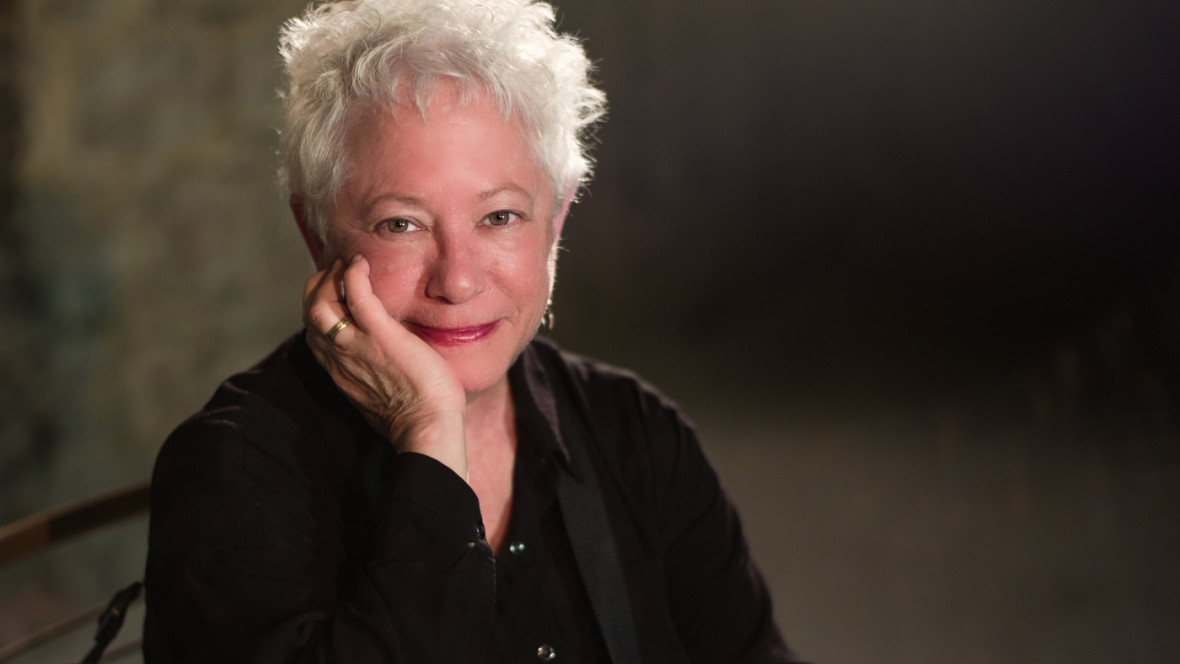
"caption": "Those who grew up listening to Janis Ian's folk songs might be surprised at her secondary career.",
"description": null,
"title": "JANISIAN",
"credit": null,
"status": "inherit",
"isLoading": false,
"fetchFailed": false
},
"arts_10560330": {
"type": "attachments",
"id": "arts_10560330",
"meta": {
"index": "attachments_1716263798",
"site": "arts",
"id": "10560330",
"found": true
},
"parent": 10560329,
"imgSizes": {
"twentyfourteen-full-width": {
"file": "https://ww2.kqed.org/app/uploads/sites/2/2015/04/98056471_wide-115ddc24f5570cb1ef9c8ce0b794425c976c88b5-1038x576.jpg",
"width": 1038,
"mimeType": "image/jpeg",
"height": 576
},
"thumbnail": {
"file": "https://ww2.kqed.org/app/uploads/sites/2/2015/04/98056471_wide-115ddc24f5570cb1ef9c8ce0b794425c976c88b5-400x225.jpg",
"width": 400,
"mimeType": "image/jpeg",
"height": 225
},
"fd-sm": {
"file": "https://ww2.kqed.org/app/uploads/sites/2/2015/04/98056471_wide-115ddc24f5570cb1ef9c8ce0b794425c976c88b5-320x180.jpg",
"width": 320,
"mimeType": "image/jpeg",
"height": 180
},
"post-thumbnail": {
"file": "https://ww2.kqed.org/app/uploads/sites/2/2015/04/98056471_wide-115ddc24f5570cb1ef9c8ce0b794425c976c88b5-672x372.jpg",
"width": 672,
"mimeType": "image/jpeg",
"height": 372
},
"kqedFullSize": {
"file": "https://ww2.kqed.org/app/uploads/sites/2/2015/04/98056471_wide-115ddc24f5570cb1ef9c8ce0b794425c976c88b5-e1429058930658.jpg",
"width": 800,
"height": 450
},
"large": {
"file": "https://ww2.kqed.org/app/uploads/sites/2/2015/04/98056471_wide-115ddc24f5570cb1ef9c8ce0b794425c976c88b5-1180x664.jpg",
"width": 1180,
"mimeType": "image/jpeg",
"height": 664
},
"guest-author-96": {
"file": "https://ww2.kqed.org/app/uploads/sites/2/2015/04/98056471_wide-115ddc24f5570cb1ef9c8ce0b794425c976c88b5-96x96.jpg",
"width": 96,
"mimeType": "image/jpeg",
"height": 96
},
"medium": {
"file": "https://ww2.kqed.org/app/uploads/sites/2/2015/04/98056471_wide-115ddc24f5570cb1ef9c8ce0b794425c976c88b5-800x450.jpg",
"width": 800,
"mimeType": "image/jpeg",
"height": 450
},
"guest-author-64": {
"file": "https://ww2.kqed.org/app/uploads/sites/2/2015/04/98056471_wide-115ddc24f5570cb1ef9c8ce0b794425c976c88b5-64x64.jpg",
"width": 64,
"mimeType": "image/jpeg",
"height": 64
},
"guest-author-32": {
"file": "https://ww2.kqed.org/app/uploads/sites/2/2015/04/98056471_wide-115ddc24f5570cb1ef9c8ce0b794425c976c88b5-32x32.jpg",
"width": 32,
"mimeType": "image/jpeg",
"height": 32
},
"fd-lrg": {
"file": "https://ww2.kqed.org/app/uploads/sites/2/2015/04/98056471_wide-115ddc24f5570cb1ef9c8ce0b794425c976c88b5-1180x664.jpg",
"width": 1180,
"mimeType": "image/jpeg",
"height": 664
},
"fd-med": {
"file": "https://ww2.kqed.org/app/uploads/sites/2/2015/04/98056471_wide-115ddc24f5570cb1ef9c8ce0b794425c976c88b5-768x432.jpg",
"width": 768,
"mimeType": "image/jpeg",
"height": 432
},
"detail": {
"file": "https://ww2.kqed.org/app/uploads/sites/2/2015/04/98056471_wide-115ddc24f5570cb1ef9c8ce0b794425c976c88b5-75x75.jpg",
"width": 75,
"mimeType": "image/jpeg",
"height": 75
},
"guest-author-128": {
"file": "https://ww2.kqed.org/app/uploads/sites/2/2015/04/98056471_wide-115ddc24f5570cb1ef9c8ce0b794425c976c88b5-128x128.jpg",
"width": 128,
"mimeType": "image/jpeg",
"height": 128
}
},
"publishDate": 1429058854,
"modified": 1429058854,
"caption": null,
"description": "Percy Sledge performs in Montgomery, Ala., in 201",
"title": "Percy Sledge performs in Montgomery, Ala., in 2010.",
"credit": null,
"status": "inherit",
"isLoading": false,
"fetchFailed": false
},
"arts_10559272": {
"type": "attachments",
"id": "arts_10559272",
"meta": {
"index": "attachments_1716263798",
"site": "arts",
"id": "10559272",
"found": true
},
"parent": 10559158,
"imgSizes": {
"thumbnail": {
"file": "https://ww2.kqed.org/app/uploads/sites/2/2015/04/KEVIN-SPACEY-400x225.jpg",
"width": 400,
"mimeType": "image/jpeg",
"height": 225
},
"fd-sm": {
"file": "https://ww2.kqed.org/app/uploads/sites/2/2015/04/KEVIN-SPACEY-320x180.jpg",
"width": 320,
"mimeType": "image/jpeg",
"height": 180
},
"post-thumbnail": {
"file": "https://ww2.kqed.org/app/uploads/sites/2/2015/04/KEVIN-SPACEY-672x372.jpg",
"width": 672,
"mimeType": "image/jpeg",
"height": 372
},
"kqedFullSize": {
"file": "https://ww2.kqed.org/app/uploads/sites/2/2015/04/KEVIN-SPACEY.jpg",
"width": 800,
"height": 450
},
"fd-med": {
"file": "https://ww2.kqed.org/app/uploads/sites/2/2015/04/KEVIN-SPACEY-768x432.jpg",
"width": 768,
"mimeType": "image/jpeg",
"height": 432
},
"guest-author-96": {
"file": "https://ww2.kqed.org/app/uploads/sites/2/2015/04/KEVIN-SPACEY-96x96.jpg",
"width": 96,
"mimeType": "image/jpeg",
"height": 96
},
"medium": {
"file": "https://ww2.kqed.org/app/uploads/sites/2/2015/04/KEVIN-SPACEY-800x450.jpg",
"width": 800,
"mimeType": "image/jpeg",
"height": 450
},
"guest-author-64": {
"file": "https://ww2.kqed.org/app/uploads/sites/2/2015/04/KEVIN-SPACEY-64x64.jpg",
"width": 64,
"mimeType": "image/jpeg",
"height": 64
},
"detail": {
"file": "https://ww2.kqed.org/app/uploads/sites/2/2015/04/KEVIN-SPACEY-75x75.jpg",
"width": 75,
"mimeType": "image/jpeg",
"height": 75
},
"guest-author-32": {
"file": "https://ww2.kqed.org/app/uploads/sites/2/2015/04/KEVIN-SPACEY-32x32.jpg",
"width": 32,
"mimeType": "image/jpeg",
"height": 32
},
"guest-author-128": {
"file": "https://ww2.kqed.org/app/uploads/sites/2/2015/04/KEVIN-SPACEY-128x128.jpg",
"width": 128,
"mimeType": "image/jpeg",
"height": 128
}
},
"publishDate": 1429028251,
"modified": 1429028344,
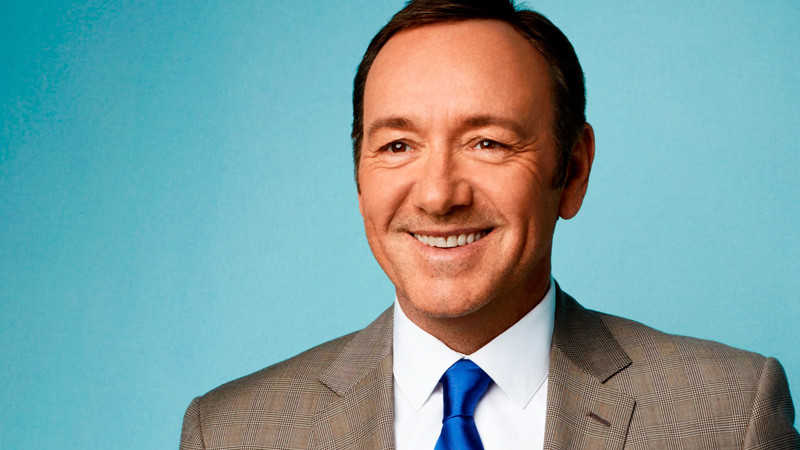
"caption": "Kevin Spacey performs at the Green Music Center on July 18.",
"description": null,
"title": "KEVIN-SPACEY",
"credit": null,
"status": "inherit",
"isLoading": false,
"fetchFailed": false
},
"arts_10548327": {
"type": "attachments",
"id": "arts_10548327",
"meta": {
"index": "attachments_1716263798",
"site": "arts",
"id": "10548327",
"found": true
},
"parent": 10548326,
"imgSizes": {
"thumbnail": {
"file": "https://ww2.kqed.org/app/uploads/sites/2/2015/04/Oakland-400x225.jpg",
"width": 400,
"mimeType": "image/jpeg",
"height": 225
},
"fd-sm": {
"file": "https://ww2.kqed.org/app/uploads/sites/2/2015/04/Oakland-320x180.jpg",
"width": 320,
"mimeType": "image/jpeg",
"height": 180
},
"post-thumbnail": {
"file": "https://ww2.kqed.org/app/uploads/sites/2/2015/04/Oakland-672x372.jpg",
"width": 672,
"mimeType": "image/jpeg",
"height": 372
},
"kqedFullSize": {
"file": "https://ww2.kqed.org/app/uploads/sites/2/2015/04/Oakland.jpg",
"width": 800,
"height": 450
},
"fd-med": {
"file": "https://ww2.kqed.org/app/uploads/sites/2/2015/04/Oakland-768x432.jpg",
"width": 768,
"mimeType": "image/jpeg",
"height": 432
},
"guest-author-96": {
"file": "https://ww2.kqed.org/app/uploads/sites/2/2015/04/Oakland-96x96.jpg",
"width": 96,
"mimeType": "image/jpeg",
"height": 96
},
"medium": {
"file": "https://ww2.kqed.org/app/uploads/sites/2/2015/04/Oakland-800x450.jpg",
"width": 800,
"mimeType": "image/jpeg",
"height": 450
},
"guest-author-64": {
"file": "https://ww2.kqed.org/app/uploads/sites/2/2015/04/Oakland-64x64.jpg",
"width": 64,
"mimeType": "image/jpeg",
"height": 64
},
"detail": {
"file": "https://ww2.kqed.org/app/uploads/sites/2/2015/04/Oakland-75x75.jpg",
"width": 75,
"mimeType": "image/jpeg",
"height": 75
},
"guest-author-32": {
"file": "https://ww2.kqed.org/app/uploads/sites/2/2015/04/Oakland-32x32.jpg",
"width": 32,
"mimeType": "image/jpeg",
"height": 32
},
"guest-author-128": {
"file": "https://ww2.kqed.org/app/uploads/sites/2/2015/04/Oakland-128x128.jpg",
"width": 128,
"mimeType": "image/jpeg",
"height": 128
}
},
"publishDate": 1428681471,
"modified": 1428681500,
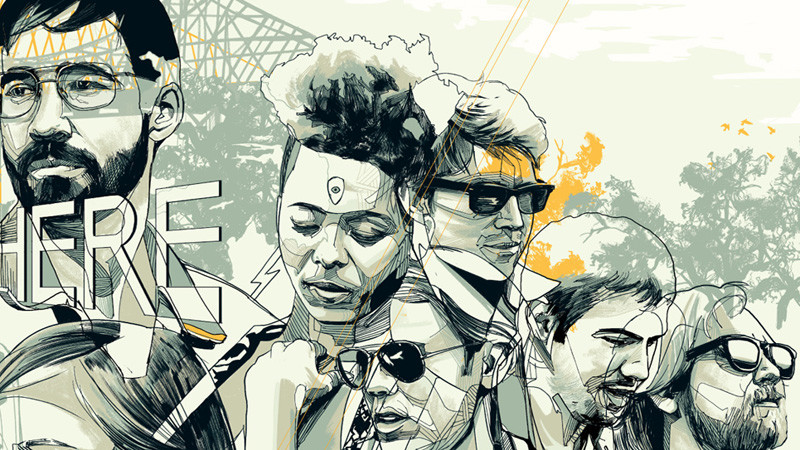
"caption": "Detail of album cover art. (Illustration: Oliver Barrett)",
"description": null,
"title": "Oakland",
"credit": null,
"status": "inherit",
"isLoading": false,
"fetchFailed": false
},
"arts_10546850": {
"type": "attachments",
"id": "arts_10546850",
"meta": {
"index": "attachments_1716263798",
"site": "arts",
"id": "10546850",
"found": true
},
"parent": 10546738,
"imgSizes": {
"thumbnail": {
"file": "https://ww2.kqed.org/app/uploads/sites/2/2015/04/Gandalf-2-400x225.jpg",
"width": 400,
"mimeType": "image/jpeg",
"height": 225
},
"fd-sm": {
"file": "https://ww2.kqed.org/app/uploads/sites/2/2015/04/Gandalf-2-320x180.jpg",
"width": 320,
"mimeType": "image/jpeg",
"height": 180
},
"post-thumbnail": {
"file": "https://ww2.kqed.org/app/uploads/sites/2/2015/04/Gandalf-2-672x372.jpg",
"width": 672,
"mimeType": "image/jpeg",
"height": 372
},
"kqedFullSize": {
"file": "https://ww2.kqed.org/app/uploads/sites/2/2015/04/Gandalf-2.jpg",
"width": 800,
"height": 450
},
"fd-med": {
"file": "https://ww2.kqed.org/app/uploads/sites/2/2015/04/Gandalf-2-768x432.jpg",
"width": 768,
"mimeType": "image/jpeg",
"height": 432
},
"guest-author-96": {
"file": "https://ww2.kqed.org/app/uploads/sites/2/2015/04/Gandalf-2-96x96.jpg",
"width": 96,
"mimeType": "image/jpeg",
"height": 96
},
"medium": {
"file": "https://ww2.kqed.org/app/uploads/sites/2/2015/04/Gandalf-2-800x450.jpg",
"width": 800,
"mimeType": "image/jpeg",
"height": 450
},
"guest-author-64": {
"file": "https://ww2.kqed.org/app/uploads/sites/2/2015/04/Gandalf-2-64x64.jpg",
"width": 64,
"mimeType": "image/jpeg",
"height": 64
},
"detail": {
"file": "https://ww2.kqed.org/app/uploads/sites/2/2015/04/Gandalf-2-75x75.jpg",
"width": 75,
"mimeType": "image/jpeg",
"height": 75
},
"guest-author-32": {
"file": "https://ww2.kqed.org/app/uploads/sites/2/2015/04/Gandalf-2-32x32.jpg",
"width": 32,
"mimeType": "image/jpeg",
"height": 32
},
"guest-author-128": {
"file": "https://ww2.kqed.org/app/uploads/sites/2/2015/04/Gandalf-2-128x128.jpg",
"width": 128,
"mimeType": "image/jpeg",
"height": 128
}
},
"publishDate": 1428632599,
"modified": 1428632647,
"caption": "Fans of the \u003cem>Lord of the Rings\u003c/em> trilogy have the chance to see all three films with live symphonic orchestra accompaniment in San Jose.",
"description": null,
"title": "Gandalf-2",
"credit": null,
"status": "inherit",
"isLoading": false,
"fetchFailed": false
},
"arts_10541068": {
"type": "attachments",
"id": "arts_10541068",
"meta": {
"index": "attachments_1716263798",
"site": "arts",
"id": "10541068",
"found": true
},
"parent": 10540951,
"imgSizes": {
"twentyfourteen-full-width": {
"file": "https://ww2.kqed.org/app/uploads/sites/2/2015/04/LizHarris-1038x576.jpg",
"width": 1038,
"mimeType": "image/jpeg",
"height": 576
},
"thumbnail": {
"file": "https://ww2.kqed.org/app/uploads/sites/2/2015/04/LizHarris-400x225.jpg",
"width": 400,
"mimeType": "image/jpeg",
"height": 225
},
"fd-sm": {
"file": "https://ww2.kqed.org/app/uploads/sites/2/2015/04/LizHarris-320x180.jpg",
"width": 320,
"mimeType": "image/jpeg",
"height": 180
},
"post-thumbnail": {
"file": "https://ww2.kqed.org/app/uploads/sites/2/2015/04/LizHarris-672x372.jpg",
"width": 672,
"mimeType": "image/jpeg",
"height": 372
},
"kqedFullSize": {
"file": "https://ww2.kqed.org/app/uploads/sites/2/2015/04/LizHarris.jpg",
"width": 1400,
"height": 788
},
"large": {
"file": "https://ww2.kqed.org/app/uploads/sites/2/2015/04/LizHarris-1180x664.jpg",
"width": 1180,
"mimeType": "image/jpeg",
"height": 664
},
"guest-author-96": {
"file": "https://ww2.kqed.org/app/uploads/sites/2/2015/04/LizHarris-96x96.jpg",
"width": 96,
"mimeType": "image/jpeg",
"height": 96
},
"medium": {
"file": "https://ww2.kqed.org/app/uploads/sites/2/2015/04/LizHarris-800x450.jpg",
"width": 800,
"mimeType": "image/jpeg",
"height": 450
},
"guest-author-64": {
"file": "https://ww2.kqed.org/app/uploads/sites/2/2015/04/LizHarris-64x64.jpg",
"width": 64,
"mimeType": "image/jpeg",
"height": 64
},
"guest-author-32": {
"file": "https://ww2.kqed.org/app/uploads/sites/2/2015/04/LizHarris-32x32.jpg",
"width": 32,
"mimeType": "image/jpeg",
"height": 32
},
"fd-lrg": {
"file": "https://ww2.kqed.org/app/uploads/sites/2/2015/04/LizHarris-1180x664.jpg",
"width": 1180,
"mimeType": "image/jpeg",
"height": 664
},
"fd-med": {
"file": "https://ww2.kqed.org/app/uploads/sites/2/2015/04/LizHarris-768x432.jpg",
"width": 768,
"mimeType": "image/jpeg",
"height": 432
},
"detail": {
"file": "https://ww2.kqed.org/app/uploads/sites/2/2015/04/LizHarris-75x75.jpg",
"width": 75,
"mimeType": "image/jpeg",
"height": 75
},
"guest-author-128": {
"file": "https://ww2.kqed.org/app/uploads/sites/2/2015/04/LizHarris-128x128.jpg",
"width": 128,
"mimeType": "image/jpeg",
"height": 128
}
},
"publishDate": 1428452641,
"modified": 1428453696,
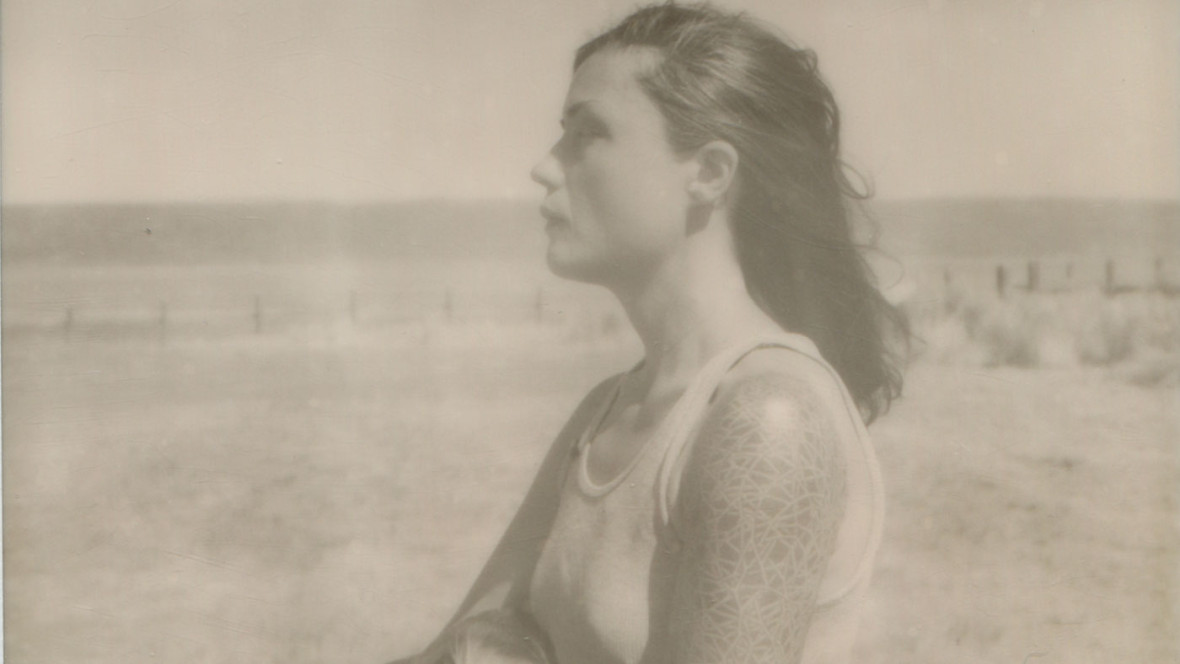
"caption": "Liz Harris. (Photo courtesy the artist)",
"description": null,
"title": "LizHarris",
"credit": null,
"status": "inherit",
"isLoading": false,
"fetchFailed": false
},
"arts_10540716": {
"type": "attachments",
"id": "arts_10540716",
"meta": {
"index": "attachments_1716263798",
"site": "arts",
"id": "10540716",
"found": true
},
"parent": 10540715,
"imgSizes": {
"twentyfourteen-full-width": {
"file": "https://ww2.kqed.org/app/uploads/sites/2/2015/04/mad-men-season-6_custom-a59ccdeddc5d2e702d357ed505ba4e041ff8e7f2-e1428441710174-1038x576.jpg",
"width": 1038,
"mimeType": "image/jpeg",
"height": 576
},
"thumbnail": {
"file": "https://ww2.kqed.org/app/uploads/sites/2/2015/04/mad-men-season-6_custom-a59ccdeddc5d2e702d357ed505ba4e041ff8e7f2-e1428441710174-400x226.jpg",
"width": 400,
"mimeType": "image/jpeg",
"height": 226
},
"fd-sm": {
"file": "https://ww2.kqed.org/app/uploads/sites/2/2015/04/mad-men-season-6_custom-a59ccdeddc5d2e702d357ed505ba4e041ff8e7f2-e1428441710174-320x180.jpg",
"width": 320,
"mimeType": "image/jpeg",
"height": 180
},
"post-thumbnail": {
"file": "https://ww2.kqed.org/app/uploads/sites/2/2015/04/mad-men-season-6_custom-a59ccdeddc5d2e702d357ed505ba4e041ff8e7f2-e1428441710174-672x372.jpg",
"width": 672,
"mimeType": "image/jpeg",
"height": 372
},
"kqedFullSize": {
"file": "https://ww2.kqed.org/app/uploads/sites/2/2015/04/mad-men-season-6_custom-a59ccdeddc5d2e702d357ed505ba4e041ff8e7f2-e1428441723677.jpg",
"width": 800,
"height": 451
},
"large": {
"file": "https://ww2.kqed.org/app/uploads/sites/2/2015/04/mad-men-season-6_custom-a59ccdeddc5d2e702d357ed505ba4e041ff8e7f2-e1428441710174-1180x665.jpg",
"width": 1180,
"mimeType": "image/jpeg",
"height": 665
},
"guest-author-96": {
"file": "https://ww2.kqed.org/app/uploads/sites/2/2015/04/mad-men-season-6_custom-a59ccdeddc5d2e702d357ed505ba4e041ff8e7f2-e1428441710174-96x96.jpg",
"width": 96,
"mimeType": "image/jpeg",
"height": 96
},
"medium": {
"file": "https://ww2.kqed.org/app/uploads/sites/2/2015/04/mad-men-season-6_custom-a59ccdeddc5d2e702d357ed505ba4e041ff8e7f2-e1428441710174-800x451.jpg",
"width": 800,
"mimeType": "image/jpeg",
"height": 451
},
"guest-author-64": {
"file": "https://ww2.kqed.org/app/uploads/sites/2/2015/04/mad-men-season-6_custom-a59ccdeddc5d2e702d357ed505ba4e041ff8e7f2-e1428441710174-64x64.jpg",
"width": 64,
"mimeType": "image/jpeg",
"height": 64
},
"guest-author-32": {
"file": "https://ww2.kqed.org/app/uploads/sites/2/2015/04/mad-men-season-6_custom-a59ccdeddc5d2e702d357ed505ba4e041ff8e7f2-e1428441710174-32x32.jpg",
"width": 32,
"mimeType": "image/jpeg",
"height": 32
},
"fd-lrg": {
"file": "https://ww2.kqed.org/app/uploads/sites/2/2015/04/mad-men-season-6_custom-a59ccdeddc5d2e702d357ed505ba4e041ff8e7f2-e1428441710174-1180x665.jpg",
"width": 1180,
"mimeType": "image/jpeg",
"height": 665
},
"fd-med": {
"file": "https://ww2.kqed.org/app/uploads/sites/2/2015/04/mad-men-season-6_custom-a59ccdeddc5d2e702d357ed505ba4e041ff8e7f2-e1428441710174-768x433.jpg",
"width": 768,
"mimeType": "image/jpeg",
"height": 433
},
"detail": {
"file": "https://ww2.kqed.org/app/uploads/sites/2/2015/04/mad-men-season-6_custom-a59ccdeddc5d2e702d357ed505ba4e041ff8e7f2-e1428441710174-75x75.jpg",
"width": 75,
"mimeType": "image/jpeg",
"height": 75
},
"guest-author-128": {
"file": "https://ww2.kqed.org/app/uploads/sites/2/2015/04/mad-men-season-6_custom-a59ccdeddc5d2e702d357ed505ba4e041ff8e7f2-e1428441710174-128x128.jpg",
"width": 128,
"mimeType": "image/jpeg",
"height": 128
}
},
"publishDate": 1428441394,
"modified": 1428441394,
"caption": null,
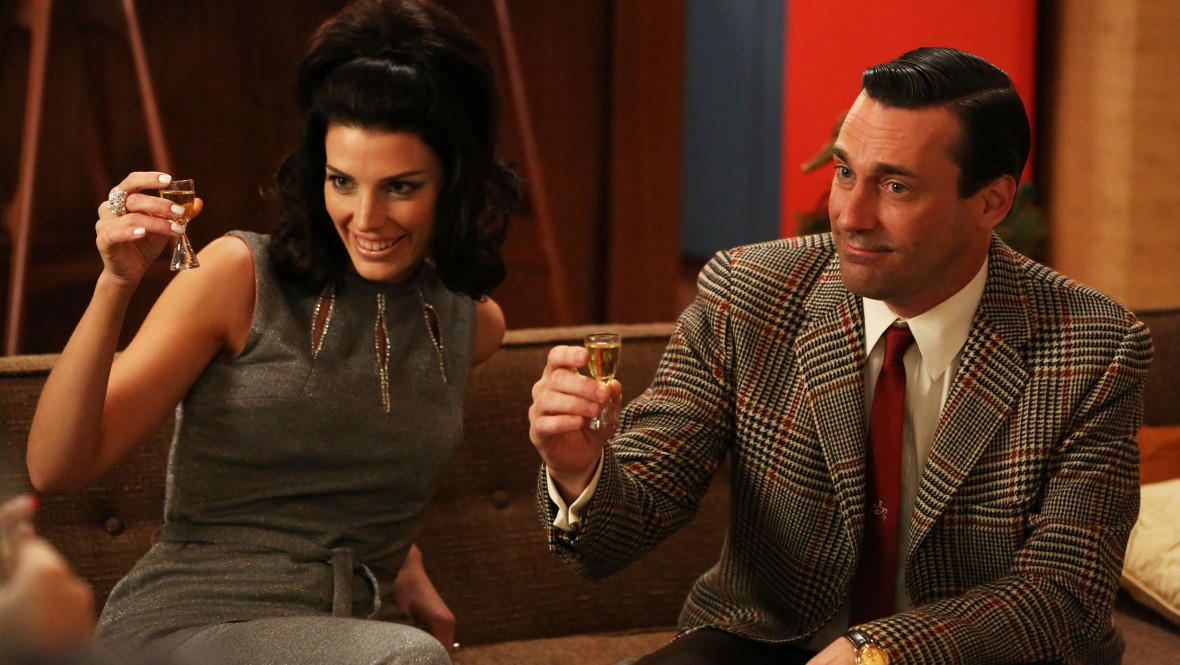
"description": "Megan Draper (Jessica Pare) and Don Draper (Jon Hamm) in an episode of \u003cem>Mad Men\u003c/em>'s sixth season",
"title": "Megan Draper (Jessica Pare) and Don Draper (Jon Hamm) in an episode of Mad Men's sixth season.",
"credit": null,
"status": "inherit",
"isLoading": false,
"fetchFailed": false
},
"arts_10533189": {
"type": "attachments",
"id": "arts_10533189",
"meta": {
"index": "attachments_1716263798",
"site": "arts",
"id": "10533189",
"found": true
},
"parent": 10533188,
"imgSizes": {
"thumbnail": {
"file": "https://ww2.kqed.org/app/uploads/sites/2/2015/04/CaseyVeggies-400x225.jpg",
"width": 400,
"mimeType": "image/jpeg",
"height": 225
},
"fd-sm": {
"file": "https://ww2.kqed.org/app/uploads/sites/2/2015/04/CaseyVeggies-320x180.jpg",
"width": 320,
"mimeType": "image/jpeg",
"height": 180
},
"post-thumbnail": {
"file": "https://ww2.kqed.org/app/uploads/sites/2/2015/04/CaseyVeggies-672x372.jpg",
"width": 672,
"mimeType": "image/jpeg",
"height": 372
},
"kqedFullSize": {
"file": "https://ww2.kqed.org/app/uploads/sites/2/2015/04/CaseyVeggies.jpg",
"width": 800,
"height": 450
},
"fd-med": {
"file": "https://ww2.kqed.org/app/uploads/sites/2/2015/04/CaseyVeggies-768x432.jpg",
"width": 768,
"mimeType": "image/jpeg",
"height": 432
},
"guest-author-96": {
"file": "https://ww2.kqed.org/app/uploads/sites/2/2015/04/CaseyVeggies-96x96.jpg",
"width": 96,
"mimeType": "image/jpeg",
"height": 96
},
"medium": {
"file": "https://ww2.kqed.org/app/uploads/sites/2/2015/04/CaseyVeggies-800x450.jpg",
"width": 800,
"mimeType": "image/jpeg",
"height": 450
},
"guest-author-64": {
"file": "https://ww2.kqed.org/app/uploads/sites/2/2015/04/CaseyVeggies-64x64.jpg",
"width": 64,
"mimeType": "image/jpeg",
"height": 64
},
"detail": {
"file": "https://ww2.kqed.org/app/uploads/sites/2/2015/04/CaseyVeggies-75x75.jpg",
"width": 75,
"mimeType": "image/jpeg",
"height": 75
},
"guest-author-32": {
"file": "https://ww2.kqed.org/app/uploads/sites/2/2015/04/CaseyVeggies-32x32.jpg",
"width": 32,
"mimeType": "image/jpeg",
"height": 32
},
"guest-author-128": {
"file": "https://ww2.kqed.org/app/uploads/sites/2/2015/04/CaseyVeggies-128x128.jpg",
"width": 128,
"mimeType": "image/jpeg",
"height": 128
}
},
"publishDate": 1428208649,
"modified": 1428208795,
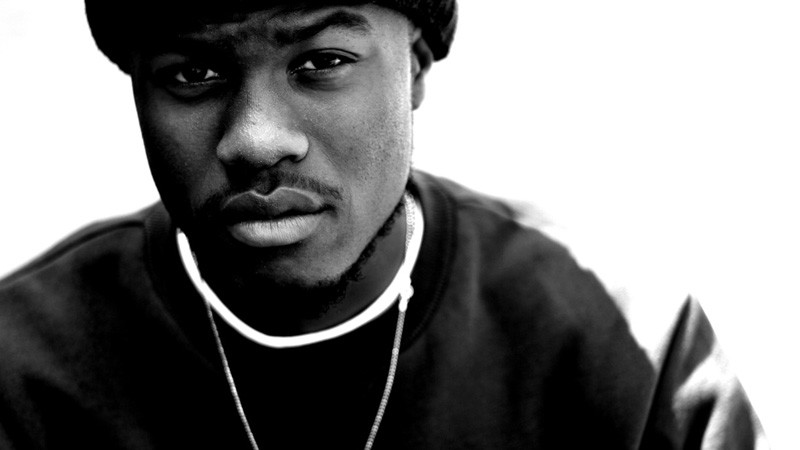
"caption": "Casey Veggies, pictured, headlines the April 9 benefit.",
"description": null,
"title": "CaseyVeggies",
"credit": null,
"status": "inherit",
"isLoading": false,
"fetchFailed": false
},
"arts_10523624": {
"type": "attachments",
"id": "arts_10523624",
"meta": {
"index": "attachments_1716263798",
"site": "arts",
"id": "10523624",
"found": true
},
"parent": 0,
"imgSizes": {
"thumbnail": {
"file": "https://ww2.kqed.org/app/uploads/sites/2/2015/04/The-Soft-Moon-400x225.jpg",
"width": 400,
"mimeType": "image/jpeg",
"height": 225
},
"fd-sm": {
"file": "https://ww2.kqed.org/app/uploads/sites/2/2015/04/The-Soft-Moon-320x180.jpg",
"width": 320,
"mimeType": "image/jpeg",
"height": 180
},
"post-thumbnail": {
"file": "https://ww2.kqed.org/app/uploads/sites/2/2015/04/The-Soft-Moon-672x372.jpg",
"width": 672,
"mimeType": "image/jpeg",
"height": 372
},
"kqedFullSize": {
"file": "https://ww2.kqed.org/app/uploads/sites/2/2015/04/The-Soft-Moon.jpg",
"width": 800,
"height": 450
},
"fd-med": {
"file": "https://ww2.kqed.org/app/uploads/sites/2/2015/04/The-Soft-Moon-768x432.jpg",
"width": 768,
"mimeType": "image/jpeg",
"height": 432
},
"guest-author-96": {
"file": "https://ww2.kqed.org/app/uploads/sites/2/2015/04/The-Soft-Moon-96x96.jpg",
"width": 96,
"mimeType": "image/jpeg",
"height": 96
},
"medium": {
"file": "https://ww2.kqed.org/app/uploads/sites/2/2015/04/The-Soft-Moon-800x450.jpg",
"width": 800,
"mimeType": "image/jpeg",
"height": 450
},
"guest-author-64": {
"file": "https://ww2.kqed.org/app/uploads/sites/2/2015/04/The-Soft-Moon-64x64.jpg",
"width": 64,
"mimeType": "image/jpeg",
"height": 64
},
"detail": {
"file": "https://ww2.kqed.org/app/uploads/sites/2/2015/04/The-Soft-Moon-75x75.jpg",
"width": 75,
"mimeType": "image/jpeg",
"height": 75
},
"guest-author-32": {
"file": "https://ww2.kqed.org/app/uploads/sites/2/2015/04/The-Soft-Moon-32x32.jpg",
"width": 32,
"mimeType": "image/jpeg",
"height": 32
},
"guest-author-128": {
"file": "https://ww2.kqed.org/app/uploads/sites/2/2015/04/The-Soft-Moon-128x128.jpg",
"width": 128,
"mimeType": "image/jpeg",
"height": 128
}
},
"publishDate": 1427918213,
"modified": 1428205758,
"caption": "The Soft Moon plays the Chapel on April 28.",
"description": null,
"title": "The Soft Moon",
"credit": null,
"status": "inherit",
"isLoading": false,
"fetchFailed": false
},
"arts_10520107": {
"type": "attachments",
"id": "arts_10520107",
"meta": {
"index": "attachments_1716263798",
"site": "arts",
"id": "10520107",
"found": true
},
"parent": 10519989,
"imgSizes": {
"twentyfourteen-full-width": {
"file": "https://ww2.kqed.org/app/uploads/sites/2/2015/03/editedrvsq-1038x576.jpg",
"width": 1038,
"mimeType": "image/jpeg",
"height": 576
},
"thumbnail": {
"file": "https://ww2.kqed.org/app/uploads/sites/2/2015/03/editedrvsq-400x225.jpg",
"width": 400,
"mimeType": "image/jpeg",
"height": 225
},
"fd-sm": {
"file": "https://ww2.kqed.org/app/uploads/sites/2/2015/03/editedrvsq-320x180.jpg",
"width": 320,
"mimeType": "image/jpeg",
"height": 180
},
"post-thumbnail": {
"file": "https://ww2.kqed.org/app/uploads/sites/2/2015/03/editedrvsq-672x372.jpg",
"width": 672,
"mimeType": "image/jpeg",
"height": 372
},
"kqedFullSize": {
"file": "https://ww2.kqed.org/app/uploads/sites/2/2015/03/editedrvsq.jpg",
"width": 1920,
"height": 1080
},
"large": {
"file": "https://ww2.kqed.org/app/uploads/sites/2/2015/03/editedrvsq-1180x664.jpg",
"width": 1180,
"mimeType": "image/jpeg",
"height": 664
},
"guest-author-96": {
"file": "https://ww2.kqed.org/app/uploads/sites/2/2015/03/editedrvsq-96x96.jpg",
"width": 96,
"mimeType": "image/jpeg",
"height": 96
},
"medium": {
"file": "https://ww2.kqed.org/app/uploads/sites/2/2015/03/editedrvsq-800x450.jpg",
"width": 800,
"mimeType": "image/jpeg",
"height": 450
},
"guest-author-64": {
"file": "https://ww2.kqed.org/app/uploads/sites/2/2015/03/editedrvsq-64x64.jpg",
"width": 64,
"mimeType": "image/jpeg",
"height": 64
},
"guest-author-32": {
"file": "https://ww2.kqed.org/app/uploads/sites/2/2015/03/editedrvsq-32x32.jpg",
"width": 32,
"mimeType": "image/jpeg",
"height": 32
},
"fd-lrg": {
"file": "https://ww2.kqed.org/app/uploads/sites/2/2015/03/editedrvsq-1180x664.jpg",
"width": 1180,
"mimeType": "image/jpeg",
"height": 664
},
"fd-med": {
"file": "https://ww2.kqed.org/app/uploads/sites/2/2015/03/editedrvsq-768x432.jpg",
"width": 768,
"mimeType": "image/jpeg",
"height": 432
},
"detail": {
"file": "https://ww2.kqed.org/app/uploads/sites/2/2015/03/editedrvsq-75x75.jpg",
"width": 75,
"mimeType": "image/jpeg",
"height": 75
},
"guest-author-128": {
"file": "https://ww2.kqed.org/app/uploads/sites/2/2015/03/editedrvsq-128x128.jpg",
"width": 128,
"mimeType": "image/jpeg",
"height": 128
}
},
"publishDate": 1427814967,
"modified": 1428040793,
"caption": "The Real Vocal String Quartet performs at the Switchboard Music Festival on April 4. (Photo: Lenny Gonzalez)",
"description": null,
"title": "editedrvsq",
"credit": null,
"status": "inherit",
"isLoading": false,
"fetchFailed": false
},
"arts_10506880": {
"type": "attachments",
"id": "arts_10506880",
"meta": {
"index": "attachments_1716263798",
"site": "arts",
"id": "10506880",
"found": true
},
"parent": 10506875,
"imgSizes": {
"thumbnail": {
"file": "https://ww2.kqed.org/app/uploads/sites/2/2015/03/Andy-trumpet-400x225.jpg",
"width": 400,
"mimeType": "image/jpeg",
"height": 225
},
"fd-sm": {
"file": "https://ww2.kqed.org/app/uploads/sites/2/2015/03/Andy-trumpet-320x180.jpg",
"width": 320,
"mimeType": "image/jpeg",
"height": 180
},
"kqedFullSize": {
"file": "https://ww2.kqed.org/app/uploads/sites/2/2015/03/Andy-trumpet.jpg",
"width": 620,
"height": 349
},
"guest-author-96": {
"file": "https://ww2.kqed.org/app/uploads/sites/2/2015/03/Andy-trumpet-96x96.jpg",
"width": 96,
"mimeType": "image/jpeg",
"height": 96
},
"guest-author-64": {
"file": "https://ww2.kqed.org/app/uploads/sites/2/2015/03/Andy-trumpet-64x64.jpg",
"width": 64,
"mimeType": "image/jpeg",
"height": 64
},
"detail": {
"file": "https://ww2.kqed.org/app/uploads/sites/2/2015/03/Andy-trumpet-75x75.jpg",
"width": 75,
"mimeType": "image/jpeg",
"height": 75
},
"guest-author-32": {
"file": "https://ww2.kqed.org/app/uploads/sites/2/2015/03/Andy-trumpet-32x32.jpg",
"width": 32,
"mimeType": "image/jpeg",
"height": 32
},
"guest-author-128": {
"file": "https://ww2.kqed.org/app/uploads/sites/2/2015/03/Andy-trumpet-128x128.jpg",
"width": 128,
"mimeType": "image/jpeg",
"height": 128
}
},
"publishDate": 1427421717,
"modified": 1427924948,
"caption": "Andy Lopez in his band class at Cook Middle School. ",
"description": null,
"title": "Andy Lopez Trumpet",
"credit": null,
"status": "inherit",
"isLoading": false,
"fetchFailed": false
}
},
"audioPlayerReducer": {
"postId": "stream_live",
"isPaused": true,
"isPlaying": false,
"pfsActive": false,
"pledgeModalIsOpen": true,
"playerDrawerIsOpen": false,
"liveAudioPlayStartedAt": 0,
"liveAudioPlayContext": ""
},
"authorsReducer": {
"byline_arts_10557667": {
"type": "authors",
"id": "byline_arts_10557667",
"meta": {
"override": true
},
"slug": "byline_arts_10557667",
"name": "Rachel Dovey",
"isLoading": false
},
"byline_arts_10560329": {
"type": "authors",
"id": "byline_arts_10560329",
"meta": {
"override": true
},
"slug": "byline_arts_10560329",
"name": "Mandalit del Barco",
"isLoading": false
},
"byline_arts_10540951": {
"type": "authors",
"id": "byline_arts_10540951",
"meta": {
"override": true
},
"slug": "byline_arts_10540951",
"name": "Geeta Dayal",
"isLoading": false
},
"byline_arts_10540715": {
"type": "authors",
"id": "byline_arts_10540715",
"meta": {
"override": true
},
"slug": "byline_arts_10540715",
"name": "Chris Molanphy",
"isLoading": false
},
"baybridged": {
"type": "authors",
"id": "178",
"meta": {
"index": "authors_1716337520",
"id": "178",
"found": true
},
"name": "The Bay Bridged",
"firstName": "The Bay",
"lastName": "Bridged",
"slug": "baybridged",
"email": "thebaybridged@gmail.com",
"display_author_email": false,
"staff_mastheads": [],
"title": "KQED Contributor",
"bio": null,
"avatar": "https://secure.gravatar.com/avatar/211daad5386ad504c39c31f3e16cfae45ec7b0ad32ecca7ee64cfd9b7eb76609?s=600&d=blank&r=g",
"twitter": null,
"bluesky": null,
"facebook": null,
"instagram": null,
"linkedin": null,
"sites": [
{
"site": "arts",
"roles": [
"subscriber"
]
}
],
"headData": {
"title": "The Bay Bridged | KQED",
"description": "KQED Contributor",
"ogImgSrc": "https://secure.gravatar.com/avatar/211daad5386ad504c39c31f3e16cfae45ec7b0ad32ecca7ee64cfd9b7eb76609?s=600&d=blank&r=g",
"twImgSrc": "https://secure.gravatar.com/avatar/211daad5386ad504c39c31f3e16cfae45ec7b0ad32ecca7ee64cfd9b7eb76609?s=600&d=blank&r=g"
},
"isLoading": false,
"link": "/author/baybridged"
},
"gmeline": {
"type": "authors",
"id": "185",
"meta": {
"index": "authors_1716337520",
"id": "185",
"found": true
},
"name": "Gabe Meline",
"firstName": "Gabe",
"lastName": "Meline",
"slug": "gmeline",
"email": "gmeline@kqed.org",
"display_author_email": true,
"staff_mastheads": [
"arts"
],
"title": "Senior Editor, KQED Arts & Culture",
"bio": "Gabe Meline entered journalism at age 15 making photocopied zines, and has since earned awards from the Edward R. Murrow Awards, the Society for Professional Journalists, the Online Journalism Awards, the Association of Alternative Newsweeklies and the California Newspaper Publishers Association. Prior to KQED, he was the editor of the \u003cem>North Bay Bohemian\u003c/em> and a touring musician. He lives with his wife and daughter in his hometown of Santa Rosa, CA.",
"avatar": "https://secure.gravatar.com/avatar/5bebe57be0d8bc2dd318934feb47299e2d2d10cba28d09d8d7afb389a2ce2bdd?s=600&d=blank&r=g",
"twitter": null,
"bluesky": null,
"facebook": null,
"instagram": null,
"linkedin": null,
"sites": [
{
"site": "",
"roles": [
"editor"
]
},
{
"site": "arts",
"roles": [
"administrator"
]
},
{
"site": "artschool",
"roles": [
"editor"
]
},
{
"site": "news",
"roles": [
"author"
]
},
{
"site": "pop",
"roles": [
"editor"
]
},
{
"site": "bayareabites",
"roles": [
"editor"
]
},
{
"site": "food",
"roles": [
"editor"
]
},
{
"site": "forum",
"roles": [
"administrator"
]
},
{
"site": "liveblog",
"roles": [
"editor"
]
},
{
"site": "hiphop",
"roles": [
"editor"
]
}
],
"headData": {
"title": "Gabe Meline | KQED",
"description": "Senior Editor, KQED Arts & Culture",
"ogImgSrc": "https://secure.gravatar.com/avatar/5bebe57be0d8bc2dd318934feb47299e2d2d10cba28d09d8d7afb389a2ce2bdd?s=600&d=blank&r=g",
"twImgSrc": "https://secure.gravatar.com/avatar/5bebe57be0d8bc2dd318934feb47299e2d2d10cba28d09d8d7afb389a2ce2bdd?s=600&d=blank&r=g"
},
"isLoading": false,
"link": "/author/gmeline"
},
"aeghan": {
"type": "authors",
"id": "195",
"meta": {
"index": "authors_1716337520",
"id": "195",
"found": true
},
"name": "Adizah Eghan",
"firstName": "Adizah",
"lastName": "Eghan",
"slug": "aeghan",
"email": "adizah.e@gmail.com",
"display_author_email": false,
"staff_mastheads": [],
"title": "KQED Contributor",
"bio": "Adizah Eghan is a former reporter at KQED News and writer for KQED Arts. She caught the radio bug as an intern for PRI's The World and landed in KQED's newsroom after a stint teaching English in India. She covers culture, the arts, and global music in the Bay Area. This is where she tweets: \u003ca class=\"ProfileHeaderCard-screennameLink u-linkComplex js-nav\" style=\"color: #8899a6;\" href=\"https://twitter.com/Adizah_E\">@\u003cspan class=\"u-linkComplex-target\">Adizah_E\u003c/span>\u003c/a>",
"avatar": "https://secure.gravatar.com/avatar/d6e30ed9ca504243b4d8ee5d7ca32324?s=600&d=blank&r=g",
"twitter": "Adizah_E",
"facebook": null,
"instagram": null,
"linkedin": null,
"sites": [
{
"site": "arts",
"roles": [
"contributor"
]
},
{
"site": "news",
"roles": [
"subscriber"
]
},
{
"site": "stateofhealth",
"roles": [
"author"
]
}
],
"headData": {
"title": "Adizah Eghan | KQED",
"description": "KQED Contributor",
"ogImgSrc": "https://secure.gravatar.com/avatar/d6e30ed9ca504243b4d8ee5d7ca32324?s=600&d=blank&r=g",
"twImgSrc": "https://secure.gravatar.com/avatar/d6e30ed9ca504243b4d8ee5d7ca32324?s=600&d=blank&r=g"
},
"isLoading": false,
"link": "/author/aeghan"
},
"thedolist": {
"type": "authors",
"id": "3215",
"meta": {
"index": "authors_1716337520",
"id": "3215",
"found": true
},
"name": "The Do List",
"firstName": "Do",
"lastName": "List",
"slug": "thedolist",
"email": "harold.check+dolist@gmail.com",
"display_author_email": false,
"staff_mastheads": [],
"title": null,
"bio": "The Do List scours the Bay Area for superb and surprising performing arts events, with an eye for local talent, new discoveries, and fun opportunities across the price spectrum. Every Friday morning at 6:23 and 8:23am on KQED Radio, you can hear Do List regulars Cy Musiker and David Wiegand discuss the upcoming week's best picks.",
"avatar": "https://secure.gravatar.com/avatar/25ef8068d096493f649195742621360d?s=600&d=blank&r=g",
"twitter": null,
"facebook": null,
"instagram": null,
"linkedin": null,
"sites": [
{
"site": "arts",
"roles": [
"contributor"
]
}
],
"headData": {
"title": "The Do List | KQED",
"description": null,
"ogImgSrc": "https://secure.gravatar.com/avatar/25ef8068d096493f649195742621360d?s=600&d=blank&r=g",
"twImgSrc": "https://secure.gravatar.com/avatar/25ef8068d096493f649195742621360d?s=600&d=blank&r=g"
},
"isLoading": false,
"link": "/author/thedolist"
},
"dburlison": {
"type": "authors",
"id": "3216",
"meta": {
"index": "authors_1716337520",
"id": "3216",
"found": true
},
"name": "Dani Burlison",
"firstName": "Dani",
"lastName": "Burlison",
"slug": "dburlison",
"email": "danisavestheworld@yahoo.com",
"display_author_email": false,
"staff_mastheads": [],
"title": null,
"bio": "\u003cb id=\"yui_3_16_0_1_1416414652499_5365\" class=\"yiv3033141065\">Dani Burlison\u003c/b> is an award-winning writer, teacher and North Bay resident with a special interest in California's fascinating subcultures. You can find her commentary on writing, feminism, social justice and life with two teen daughters on Twitter at @DaniBurlison.",
"avatar": "https://secure.gravatar.com/avatar/c0b371463a220978c947a5c4ce2da294?s=600&d=blank&r=g",
"twitter": null,
"facebook": null,
"instagram": null,
"linkedin": null,
"sites": [
{
"site": "arts",
"roles": [
"contributor"
]
}
],
"headData": {
"title": "Dani Burlison | KQED",
"description": null,
"ogImgSrc": "https://secure.gravatar.com/avatar/c0b371463a220978c947a5c4ce2da294?s=600&d=blank&r=g",
"twImgSrc": "https://secure.gravatar.com/avatar/c0b371463a220978c947a5c4ce2da294?s=600&d=blank&r=g"
},
"isLoading": false,
"link": "/author/dburlison"
}
},
"pagesReducer": {
"arts_category_music": {
"type": "terms",
"id": "arts_69",
"meta": {
"index": "terms_1716263798",
"site": "arts",
"id": "69",
"score": 10.850889
},
"featImg": null,
"name": "Music",
"description": null,
"taxonomy": "category",
"headData": {
"twImgId": null,
"twTitle": null,
"ogTitle": null,
"ogImgId": null,
"twDescription": null,
"description": null,
"title": "Music Archives | KQED Arts",
"ogDescription": null
},
"ttid": 70,
"slug": "music",
"isLoading": false,
"title": "Music",
"pageMeta": {
"site": "arts",
"WpPageTemplate": "page-topic-editorial",
"currentPage": 341
},
"blocks": [
{
"blockName": "kqed/post-list",
"attrs": {
"layout": "cardArticle2",
"query": "posts/arts?category=music",
"seeMore": false,
"paginated": true,
"page": 341
}
},
{
"blockName": "kqed/ad"
}
]
}
},
"pfsSessionReducer": {},
"postsReducer": {
"stream_live": {
"type": "live",
"id": "stream_live",
"audioUrl": "https://streams.kqed.org/kqedradio",
"title": "Live Stream",
"excerpt": "Live Stream information currently unavailable.",
"link": "/radio",
"featImg": "",
"label": {
"name": "KQED Live",
"link": "/"
}
},
"stream_kqedNewscast": {
"type": "posts",
"id": "stream_kqedNewscast",
"audioUrl": "https://www.kqed.org/.stream/anon/radio/RDnews/newscast.mp3?_=1",
"title": "KQED Newscast",
"featImg": "",
"label": {
"name": "88.5 FM",
"link": "/"
}
},
"arts_10552092": {
"type": "posts",
"id": "arts_10552092",
"meta": {
"index": "posts_1716263798",
"site": "arts",
"id": "10552092",
"score": null,
"sort": [
1429222543000
]
},
"parent": 0,
"labelTerm": {
"site": "arts",
"term": 140
},
"blocks": [],
"publishDate": 1429222543,
"format": "standard",
"title": "Five Things to Know About DUCKWRTH",
"headTitle": "Five Things to Know About DUCKWRTH | KQED",
"content": "\u003caside class=\"event-info alignright\">\n\u003cfigure>\u003ca href=\"http://ww2.kqed.org/arts/programs/the-do-list/\">\u003cimg decoding=\"async\" src=\"http://ww2.kqed.org/wp-content/themes/KQED-unified/img/thedolist_icon.png\" alt=\"\" width=\"100\">\u003c/a>\u003c/figure>\n\u003ch3>\u003ca href=\"http://ww2.kqed.org/arts/the-do-list/duckwrth-x-the-kickdrums/\" target=\"_blank\" rel=\"noopener\">Event Information\u003c/a>\u003c/h3>\n\u003ch2>DUCKWRTH x the KickDrums\u003c/h2>\n\u003cdiv class=\"event-desc\">Hip-hop artist unveils new project.\u003c/div>\n\u003cdiv class=\"event-dates\">\n\u003ch4>Apr. 17, 2015\u003c/h4>\n\u003c/div>\n\u003cdiv class=\"event-venue\">Brick & Mortar Music Hall\u003c/div>\n\u003cul>\n\u003cli>\u003ca href=\"http://ww2.kqed.org/arts/the-do-list/duckwrth-x-the-kickdrums/\" target=\"_blank\" rel=\"noopener\">Details and tickets\u003c/a>\u003c/li>\n\u003c/ul>\n\u003c/aside>\n\u003cp>Charged with creative energy and a precise holistic vision for his art, DUCKWRTH is the musician you ought to know. He’s ethereal yet tenacious, a rare combination for the so-called archetypal hip-hop artist. But the 26-year-old South Central native is anything but typical; he’s a singer, rapper, and graphic designer who marches proudly to the beat of his own drum, and who is slated to release a new musical project — \u003ci>\u003ca href=\"http://uarenowhere.com/\">NOWHERE\u003c/a>\u003c/i> — in collaboration with Alex Fitts of \u003ca href=\"http://thekickdrums.com/\">The KickDrums\u003c/a>.\u003c/p>\n\u003cp>Fitts has worked with the likes of A$AP Rocky, Lana Del Rey, Kanye West, and Freddie Gibbs, among others, and the partnership integrates a hitherto unheard punk side into DUCKWRTH’s sound. The anti-police brutality single “\u003ca href=\"https://www.youtube.com/watch?v=x2hBmP52YNQ\" target=\"_blank\" rel=\"noopener\">Super Soaker\u003c/a>” is an exciting preview of what to expect from \u003ci>NOWHERE\u003c/i>, which drops this summer, and which sees its San Francisco live debut this Friday.\u003c/p>\n\u003cp>But in the meantime, here are five things you ought to know about this wordsmith from L.A.:\u003c/p>\n\u003ch2>1. Earth to DUCKWRTH… His Upbringing Was Strict\u003c/h2>\n\u003cp>DUCKWRTH calls himself a GPK (Grand Pastor’s Kid). Raised in the home of a Pentecostal pastor’s daughter, he was sheltered from a lot when he was young: “I couldn’t really listen to hip-hop… I couldn’t go outside until I was about 16, ’cause my mom thought I was going to get shot in South Central.” He was the standout kid who didn’t fit in, and as a result developed an affinity for all things extraterrestrial. “I really just created my own weird world when I was young,” he says, “and I kind of never left.”\u003c/p>\n\u003ch2>2. Cartoons are His Thing\u003c/h2>\n\u003cp>His \u003ca href=\"https://instagram.com/duckwrth/\" target=\"_blank\" rel=\"noopener\">graphic design work\u003c/a> has a cartoonish vibe à la early ’90s Nickelodeon, but surprisingly, the artist didn’t have cable growing up. Instead, he watched PBS, because “they had more cartoons going than any other station.” These days he watches plenty of Cartoon Network, and he’s a huge anime fan, too.\u003c/p>\n\u003cfigure id=\"attachment_10560467\" class=\"wp-caption alignright\" style=\"max-width: 300px\">\u003ca href=\"http://ww2.kqed.org/arts/wp-content/uploads/sites/2/2015/04/bw8.jpg\">\u003cimg loading=\"lazy\" decoding=\"async\" class=\"wp-image-10560467 size-thumbnail\" src=\"http://ww2.kqed.org/arts/wp-content/uploads/sites/2/2015/04/ByMancyDuck3.jpg\" alt=\"bw8\" width=\"300\" height=\"500\">\u003c/a>\u003cfigcaption class=\"wp-caption-text\">DUCKWRTH® Photo credit: Mancy\u003c/figcaption>\u003c/figure>\n\u003ch2>3. DUCKWRTH’s Style = “Sporty Cultural”\u003c/h2>\n\u003cp>Looking at the art-school dropout, it’s evident that many unique elements come together to make up DUCKWRTH’s fashion aesthetic. On any given day he’s ’90s, punk, Tokyo street style, Andre 3000, or a mix of it all. He likes bright primary and secondary colors. He wears brass rings with precious gems on his fingers and a clashing neon green fake g-shock, only a couple inches away, on his wrist. Not to mention the “fakies” he’s been rocking on his feet lately: formerly plain white sneakers decorated with cherry blossoms, Japanese characters and a faux Nike logo, created with a couple of sharpies in a moment of boredom. “I couldn’t get the Jordans and stuff,” he says of his self-designed kicks. “When I got a little bit older, I didn’t want them anymore. I wanted to create my own shoe.” \u003c/p>\n\u003ch2>4. He Reps the Bay.\u003c/h2>\n\u003cp>DUCKWRTH moved to San Francisco to study graphic design, visual media, and web design at Academy of Art University back in 2006. He dropped out after four years, but stayed in the city for four more working with a collective he created called “Them Hellas.” He’s hoping to help bring the entertainment industry to the Bay Area, which he calls a “creative bubble”: “I learned a lot of my creativity from the Bay Area… and there’s a lot of cool sounds and art, just creativity itself in the Bay Area.”\u003c/p>\n\u003ch2>5. Outkast, Bad Brains, N.E.R.D., Kanye West, the Casualties, and No Doubt are all Influences.\u003c/h2>\n\u003cp>Truthfully, there’s a whole laundry list of acts that helped a young DUCKWRTH blossom into the artist he is today. He started listening to hip-hop in the early 2000s, but his teens were mostly about punk and other rock music. With each project, DUCKWRTH continues to create his own high-energy colorful musical sound, and this one is no different. “A lot of my stuff from the past has been very hip-hop oriented,” he says. “In this album I get to sing a lot more, ’cause I was singing before I was rapping.” Plus, he’s adopted the rebellious attitude of punk to create his own musical reaction to the social and political climate.\u003c/p>\n\u003cp>[ad fullwidth]\u003c/p>\n\u003cp>“S U P E R S O A K E R” by DUCKWRTH® x The KickDrums:\u003c/p>\n\u003cp style=\"text-align: center\">[youtube http://www.youtube.com/watch?v=p-8inktOKsE&w=560&h=315]\u003c/p>\n\u003cp>\u003c/p>\n\u003cp> \u003cbr>\n\u003cem>Check out \u003ca href=\"https://instagram.com/explore/tags/hoverboys/\">#hoverboys\u003c/a> on Instagram and keep your eyes and ears out for videos and zines surrounding the \u003ci>NOWHERE\u003c/i> project.\u003c/em>\u003c/p>\n\n",
"stats": {
"hasVideo": true,
"hasChartOrMap": false,
"hasAudio": false,
"hasPolis": false,
"wordCount": 863,
"hasGoogleForm": false,
"hasGallery": false,
"hasHearkenModule": false,
"iframeSrcs": [],
"paragraphCount": 11
},
"modified": 1705047274,
"excerpt": "In advance of DUCKWRTH's showcase this Friday in San Francisco, here's what you need to know about the 26-year-old hip-hop artist and graphic designer.",
"headData": {
"twImgId": "",
"twTitle": "",
"ogTitle": "",
"ogImgId": "",
"twDescription": "",
"description": "In advance of DUCKWRTH's showcase this Friday in San Francisco, here's what you need to know about the 26-year-old hip-hop artist and graphic designer.",
"title": "Five Things to Know About DUCKWRTH | KQED",
"ogDescription": "",
"schema": {
"@context": "https://schema.org",
"@type": "Article",
"headline": "Five Things to Know About DUCKWRTH",
"datePublished": "2015-04-16T15:15:43-07:00",
"dateModified": "2024-01-12T00:14:34-08:00",
"image": "https://cdn.kqed.org/wp-content/uploads/2020/02/KQED-OG-Image@1x.png"
}
},
"guestAuthors": [],
"slug": "five-things-to-know-about-duckwrth",
"status": "publish",
"sticky": false,
"path": "/arts/10552092/five-things-to-know-about-duckwrth",
"audioTrackLength": null,
"parsedContent": [
{
"type": "contentString",
"content": "\u003cdiv class=\"post-body\">\u003cp>\u003caside class=\"event-info alignright\">\n\u003cfigure>\u003ca href=\"http://ww2.kqed.org/arts/programs/the-do-list/\">\u003cimg decoding=\"async\" src=\"http://ww2.kqed.org/wp-content/themes/KQED-unified/img/thedolist_icon.png\" alt=\"\" width=\"100\">\u003c/a>\u003c/figure>\n\u003ch3>\u003ca href=\"http://ww2.kqed.org/arts/the-do-list/duckwrth-x-the-kickdrums/\" target=\"_blank\" rel=\"noopener\">Event Information\u003c/a>\u003c/h3>\n\u003ch2>DUCKWRTH x the KickDrums\u003c/h2>\n\u003cdiv class=\"event-desc\">Hip-hop artist unveils new project.\u003c/div>\n\u003cdiv class=\"event-dates\">\n\u003ch4>Apr. 17, 2015\u003c/h4>\n\u003c/div>\n\u003cdiv class=\"event-venue\">Brick & Mortar Music Hall\u003c/div>\n\u003cul>\n\u003cli>\u003ca href=\"http://ww2.kqed.org/arts/the-do-list/duckwrth-x-the-kickdrums/\" target=\"_blank\" rel=\"noopener\">Details and tickets\u003c/a>\u003c/li>\n\u003c/ul>\n\u003c/aside>\n\u003cp>Charged with creative energy and a precise holistic vision for his art, DUCKWRTH is the musician you ought to know. He’s ethereal yet tenacious, a rare combination for the so-called archetypal hip-hop artist. But the 26-year-old South Central native is anything but typical; he’s a singer, rapper, and graphic designer who marches proudly to the beat of his own drum, and who is slated to release a new musical project — \u003ci>\u003ca href=\"http://uarenowhere.com/\">NOWHERE\u003c/a>\u003c/i> — in collaboration with Alex Fitts of \u003ca href=\"http://thekickdrums.com/\">The KickDrums\u003c/a>.\u003c/p>\n\u003cp>Fitts has worked with the likes of A$AP Rocky, Lana Del Rey, Kanye West, and Freddie Gibbs, among others, and the partnership integrates a hitherto unheard punk side into DUCKWRTH’s sound. The anti-police brutality single “\u003ca href=\"https://www.youtube.com/watch?v=x2hBmP52YNQ\" target=\"_blank\" rel=\"noopener\">Super Soaker\u003c/a>” is an exciting preview of what to expect from \u003ci>NOWHERE\u003c/i>, which drops this summer, and which sees its San Francisco live debut this Friday.\u003c/p>\n\u003cp>But in the meantime, here are five things you ought to know about this wordsmith from L.A.:\u003c/p>\n\u003ch2>1. Earth to DUCKWRTH… His Upbringing Was Strict\u003c/h2>\n\u003cp>DUCKWRTH calls himself a GPK (Grand Pastor’s Kid). Raised in the home of a Pentecostal pastor’s daughter, he was sheltered from a lot when he was young: “I couldn’t really listen to hip-hop… I couldn’t go outside until I was about 16, ’cause my mom thought I was going to get shot in South Central.” He was the standout kid who didn’t fit in, and as a result developed an affinity for all things extraterrestrial. “I really just created my own weird world when I was young,” he says, “and I kind of never left.”\u003c/p>\n\u003ch2>2. Cartoons are His Thing\u003c/h2>\n\u003cp>His \u003ca href=\"https://instagram.com/duckwrth/\" target=\"_blank\" rel=\"noopener\">graphic design work\u003c/a> has a cartoonish vibe à la early ’90s Nickelodeon, but surprisingly, the artist didn’t have cable growing up. Instead, he watched PBS, because “they had more cartoons going than any other station.” These days he watches plenty of Cartoon Network, and he’s a huge anime fan, too.\u003c/p>\n\u003cfigure id=\"attachment_10560467\" class=\"wp-caption alignright\" style=\"max-width: 300px\">\u003ca href=\"http://ww2.kqed.org/arts/wp-content/uploads/sites/2/2015/04/bw8.jpg\">\u003cimg loading=\"lazy\" decoding=\"async\" class=\"wp-image-10560467 size-thumbnail\" src=\"http://ww2.kqed.org/arts/wp-content/uploads/sites/2/2015/04/ByMancyDuck3.jpg\" alt=\"bw8\" width=\"300\" height=\"500\">\u003c/a>\u003cfigcaption class=\"wp-caption-text\">DUCKWRTH® Photo credit: Mancy\u003c/figcaption>\u003c/figure>\n\u003ch2>3. DUCKWRTH’s Style = “Sporty Cultural”\u003c/h2>\n\u003cp>Looking at the art-school dropout, it’s evident that many unique elements come together to make up DUCKWRTH’s fashion aesthetic. On any given day he’s ’90s, punk, Tokyo street style, Andre 3000, or a mix of it all. He likes bright primary and secondary colors. He wears brass rings with precious gems on his fingers and a clashing neon green fake g-shock, only a couple inches away, on his wrist. Not to mention the “fakies” he’s been rocking on his feet lately: formerly plain white sneakers decorated with cherry blossoms, Japanese characters and a faux Nike logo, created with a couple of sharpies in a moment of boredom. “I couldn’t get the Jordans and stuff,” he says of his self-designed kicks. “When I got a little bit older, I didn’t want them anymore. I wanted to create my own shoe.” \u003c/p>\n\u003ch2>4. He Reps the Bay.\u003c/h2>\n\u003cp>DUCKWRTH moved to San Francisco to study graphic design, visual media, and web design at Academy of Art University back in 2006. He dropped out after four years, but stayed in the city for four more working with a collective he created called “Them Hellas.” He’s hoping to help bring the entertainment industry to the Bay Area, which he calls a “creative bubble”: “I learned a lot of my creativity from the Bay Area… and there’s a lot of cool sounds and art, just creativity itself in the Bay Area.”\u003c/p>\n\u003ch2>5. Outkast, Bad Brains, N.E.R.D., Kanye West, the Casualties, and No Doubt are all Influences.\u003c/h2>\n\u003cp>Truthfully, there’s a whole laundry list of acts that helped a young DUCKWRTH blossom into the artist he is today. He started listening to hip-hop in the early 2000s, but his teens were mostly about punk and other rock music. With each project, DUCKWRTH continues to create his own high-energy colorful musical sound, and this one is no different. “A lot of my stuff from the past has been very hip-hop oriented,” he says. “In this album I get to sing a lot more, ’cause I was singing before I was rapping.” Plus, he’s adopted the rebellious attitude of punk to create his own musical reaction to the social and political climate.\u003c/p>\n\u003cp>\u003c/p>\u003c/div>",
"attributes": {
"named": {},
"numeric": []
}
},
{
"type": "component",
"content": "",
"name": "ad",
"attributes": {
"named": {
"label": "fullwidth"
},
"numeric": [
"fullwidth"
]
}
},
{
"type": "contentString",
"content": "\u003cdiv class=\"post-body\">\u003cp>\u003c/p>\n\u003cp>“S U P E R S O A K E R” by DUCKWRTH® x The KickDrums:\u003c/p>\n\u003cp style=\"text-align: center\">\u003c/p>\u003cp>\u003cspan class='utils-parseShortcode-shortcodes-__youtubeShortcode__embedYoutube'>\n \u003cspan class='utils-parseShortcode-shortcodes-__youtubeShortcode__embedYoutubeInside'>\n \u003ciframe\n loading='lazy'\n class='utils-parseShortcode-shortcodes-__youtubeShortcode__youtubePlayer'\n type='text/html'\n src='//www.youtube.com/embed/p-8inktOKsE'\n title='//www.youtube.com/embed/p-8inktOKsE'\n allowfullscreen='true'\n style='border:0;'>\u003c/iframe>\n \u003c/span>\n \u003c/span>\u003c/p>\u003cp>\u003c/p>\n\u003cp>\u003c/p>\n\u003cp> \u003cbr>\n\u003cem>Check out \u003ca href=\"https://instagram.com/explore/tags/hoverboys/\">#hoverboys\u003c/a> on Instagram and keep your eyes and ears out for videos and zines surrounding the \u003ci>NOWHERE\u003c/i> project.\u003c/em>\u003c/p>\n\n\u003c/div>\u003c/p>",
"attributes": {
"named": {},
"numeric": []
}
}
],
"link": "/arts/10552092/five-things-to-know-about-duckwrth",
"authors": [
"195"
],
"programs": [
"arts_140"
],
"categories": [
"arts_69"
],
"tags": [
"arts_596"
],
"featImg": "arts_10565705",
"label": "arts_140"
},
"arts_10557667": {
"type": "posts",
"id": "arts_10557667",
"meta": {
"index": "posts_1716263798",
"site": "arts",
"id": "10557667",
"score": null,
"sort": [
1429200003000
]
},
"parent": 0,
"labelTerm": {
"site": "arts",
"term": 140
},
"blocks": [],
"publishDate": 1429200003,
"format": "image",
"title": "Reassessing Janis Ian: 1970s Folk Icon, Modern-Day Sci-Fi Queen",
"headTitle": "Reassessing Janis Ian: 1970s Folk Icon, Modern-Day Sci-Fi Queen | KQED",
"content": "\u003cp>You probably know Janis Ian from her five-decade folk legacy — not from her short stories about spirit possession and intergalactic sex spies.\u003c/p>\n\u003cp>But Ian, the singer and songwriter behind the 1975 Grammy-winning hit “\u003ca href=\"https://www.youtube.com/watch?v=lhFnOAwr96o\" target=\"_blank\" rel=\"noopener\">At Seventeen\u003c/a>,” also writes sci-fi. She’s attended \u003ca href=\"http://www.janisian.com/lyrics/shadow.php\" target=\"_blank\" rel=\"noopener\">at least one Worldcon\u003c/a>, published stories in compilations edited by Mike Resnick and Tamora Pierce and, in 2003, helped assemble \u003ca href=\"http://www.amazon.com/Stars-Original-Stories-Based-Songs/dp/1480597449\">an anthology of stories\u003c/a> by Hugo and Nebula award-winning authors based on her own songs.\u003c/p>\n\u003cp>When she performs in the Bay Area this coming week, she’ll probably be singing, not reading, and her lyrical contributions to folk history’s more radical side are reason enough to attend. Over the last 50 years, she’s covered domestic violence, incest, teenage body alienation and even \u003ca href=\"http://www.janisian.com/lyrics/toooldtogo.php\" target=\"_blank\" rel=\"noopener\">rape culture\u003c/a> (in 1967, at that, when hashtags were still just number signs), taking many a nuanced look at the politics surrounding girls’ bodies, and the ways those politics are internalized.\u003c/p>\n\u003caside class=\"event-info alignright\">\n\u003cfigure>\u003ca href=\"http://ww2.kqed.org/arts/programs/the-do-list/\" target=\"_blank\" rel=\"noopener\">\u003cimg decoding=\"async\" src=\"http://ww2.kqed.org/wp-content/themes/KQED-unified/img/thedolist_icon.png\" alt=\"\" width=\"100\">\u003c/a>\u003c/figure>\n\u003ch3>Event Information\u003c/h3>\n\u003ch2>Janis Ian & Tom Paxton\u003c/h2>\n\u003cdiv class=\"event-desc\">Three shows in the Bay Area.\u003c/div>\n\u003cdiv class=\"event-dates\">\n\u003ch4>Apr. 22, 2015\u003c/h4>\n\u003c/div>\n\u003cdiv class=\"event-venue\">Rio Theatre\u003c/div>\n\u003cul>\n\u003cli>\u003ca href=\"http://ww2.kqed.org/arts/the-do-list/janis-ian-tom-paxton-2/\" target=\"_blank\" rel=\"noopener\">Details and tickets\u003c/a>\u003c/li>\n\u003c/ul>\n\u003cdiv class=\"event-dates\">\n\u003ch4>Apr. 25–26, 2015\u003c/h4>\n\u003c/div>\n\u003cdiv class=\"event-venue\">Freight & Salvage\u003c/div>\n\u003cul>\n\u003cli>\u003ca href=\"http://ww2.kqed.org/arts/the-do-list/janis-ian-tom-paxton/\" target=\"_blank\" rel=\"noopener\">Details and tickets\u003c/a>\u003c/li>\n\u003c/ul>\n\u003c/aside>\n\u003cp>In other words, her music matters. But so does her sci-fi. And a strange symmetry comes from pairing her songs with the stories she’s written and edited, which also take on power dynamics and sexuality but feature ghost boyfriends and digital purgatories full of stairs.\u003c/p>\n\u003cp>Take “\u003ca href=\"http://www.janisian.com/albums/breaking.php\" target=\"_blank\" rel=\"noopener\">His Hands\u003c/a>,” from her 1993 album \u003cem>Breaking Silence\u003c/em>. A mixture of soft vocals and dangerous, grinding-in-a-dive-bar-at-2am guitar swing, the song pulls you in then shoves you away, building tension through the narrator’s ambivalence.\u003c/p>\n\u003cp>[ad fullwidth]\u003c/p>\n\u003cp>“His hands, they never hit me sober,” she sings. “His hands, they never marked my face.”\u003c/p>\n\u003cp>It’s a complex, defiant look at abuse that both condemns the unnamed “he” while humanizing him, revealing that she loved him, that she left him and that he, too, had once been a victim. You probably wouldn’t expect it to inspire a story about a planet-hopping sociopath forced to undergo a sex change. But it did: Ian’s “\u003ca href=\"http://www.janisian.com/reading/sciencefiction.php#second\" target=\"_blank\" rel=\"noopener\">Second Person Unmasked\u003c/a>,” which appears in the anthology \u003cem>Stars: Original Stories Based on the Songs of Janis Ian.\u003c/em>\u003c/p>\n\u003cp>\u003cimg loading=\"lazy\" decoding=\"async\" src=\"http://ww2.kqed.org/arts/wp-content/uploads/sites/2/2015/04/starsnew.jpg\" alt=\"starsnew\" width=\"250\" height=\"388\" class=\"alignleft size-full wp-image-10564952\">The “he” in that story (written, effectively, as “you”) carries a spring-loaded double switchblade, wears a belt with a sharpened buckle and has a high forehead, which in Ian’s words has “don’t-fuck-with-me written across it in lines that took decades to accumulate.” He’s an obvious predator — a literal lady killer — and from his homophobia to his conquistador walk, he’s easy to hate.\u003c/p>\n\u003cp>But then, when two blonde girls with silver necklaces seduce him, trap him, and ship him off in a cargo freighter; when he’s sold into slavery, re-educated, starved and then changed into a sociopath-trapping girl himself, you start to pity him. Not really — “he” was terrible, even if “she” isn’t — but the story plays with your initial repulsion. Like the song, it takes a hard look at both the cyclical nature of abuse and the structural links between gender hierarchy and violence.\u003c/p>\n\u003cp>Or take what is probably Ian’s most well known song, “At Seventeen.” Post-\u003cem>30 Rock\u003c/em>, when \u003ca href=\"https://www.youtube.com/watch?v=HIaBrH_uVQg\" target=\"_blank\" rel=\"noopener\">a drunk Liz Lemon did karaoke to the song\u003c/a> and someone from the crowd heckled “You’re bumming us out!,” it’s easy to dismiss the sad-sack anthem everyone knows so well: “I learned the truth at seventeen / That love was meant for beauty queens.” But though the song’s ubiquity makes it feel dated, it’s about more than being, in Ian’s words, one of the “ugly duckling girls.” It’s a deep look at the very concept of prettiness — the sexism and racism folded into who, exactly, defines it; the fact that it can control your life.\u003c/p>\n\u003cfigure id=\"attachment_10564955\" class=\"wp-caption alignright\" style=\"max-width: 640px\">\u003cimg loading=\"lazy\" decoding=\"async\" src=\"http://ww2.kqed.org/arts/wp-content/uploads/sites/2/2015/04/janis-ian-between-the-lines.jpg\" alt=\"Janis Ian's 1975 album Between the Lines, which featured "At Seventeen."\" width=\"640\" height=\"625\" class=\"size-full wp-image-10564955\" srcset=\"https://cdn.kqed.org/wp-content/uploads/sites/2/2015/04/janis-ian-between-the-lines.jpg 640w, https://cdn.kqed.org/wp-content/uploads/sites/2/2015/04/janis-ian-between-the-lines-400x391.jpg 400w, https://cdn.kqed.org/wp-content/uploads/sites/2/2015/04/janis-ian-between-the-lines-614x600.jpg 614w, https://cdn.kqed.org/wp-content/uploads/sites/2/2015/04/janis-ian-between-the-lines-320x313.jpg 320w, https://cdn.kqed.org/wp-content/uploads/sites/2/2015/04/janis-ian-between-the-lines-32x32.jpg 32w, https://cdn.kqed.org/wp-content/uploads/sites/2/2015/04/janis-ian-between-the-lines-64x64.jpg 64w\" sizes=\"(max-width: 640px) 100vw, 640px\">\u003cfigcaption class=\"wp-caption-text\">Janis Ian’s 1975 album \u003cem>Between the Lines\u003c/em>, which featured “At Seventeen.”\u003c/figcaption>\u003c/figure>\n\u003cp>And in \u003cem>Stars\u003c/em>, it inspired a story about a supernatural suicide pact.\u003c/p>\n\u003cp>Written by Terry Bisson, the story is called “Come Dance With Me,” and opens with a boy and girl standing on a metal desk tying nooses around each other’s necks.\u003c/p>\n\u003cp>They’re trying to enter The Realm, an afterlife seen only by performing a specific ritual: Sit down at your computer, turn on repetitive music (preferably with the same four chords over and over), type in a secret URL, hit return, enter the user name you’re prepared to use for all eternity, and type the password: Kevork. When you see The Realm from this side it’s all stairs, no floor, no ceiling, and it looks so decadent that “even the shadows are gold.”\u003c/p>\n\u003cp>But that’s just to see it. To enter, you have to die.\u003c/p>\n\u003cp>The story follows Amaranth, the girl, and her futile attempts to get there. When she finally does, briefly, before being whisked out by paramedics, it’s grey, full of concrete instead of gold, and although she can still whisper, she’s lost her voice. It’s obviously a departure from the details of Ian’s hit (which mentioned neither suicide nor secret URL) but it \u003cem>feels\u003c/em> the same. It feels like self-devaluation for a disembodied ideal; like the bulimia that myself and so many of my friends struggled with at Amaranth’s age; like the anxious buzzing that comes with willing yourself to take up less and less space. It feels like being a teenage girl.\u003c/p>\n\u003cp>\u003cimg loading=\"lazy\" decoding=\"async\" src=\"http://ww2.kqed.org/arts/wp-content/uploads/sites/2/2015/04/newvoices250.jpg\" alt=\"newvoices250\" width=\"250\" height=\"404\" class=\"alignleft size-full wp-image-10564959\">And those are only two stories — one written by Ian, one inspired by Ian. She’s also written about sister wives on a planet with two moons (\u003cem>Mahmoud’s Wives\u003c/em>) and spirits who can possess bodies, but can’t control hearts (\u003ca href=\"https://books.google.com/books?id=SGWJ2tCwevUC&pg=PA43&lpg=PA43&dq=Eli+%26+The+Dybbuk+Janis+Ian&source=bl&ots=gy9ZGCv9r8&sig=0INouSRJlP7Jgyc72LkBXDp1e8U&hl=en&sa=X&ei=2LomVZ_JEo2rogTC2oGYCQ&ved=0CEAQ6AEwBg#v=onepage&q=Eli%20%26%20The%20Dybbuk%20Janis%20Ian&f=false\" target=\"_blank\" rel=\"noopener\">\u003cem>Eli and the Dybbuk\u003c/em>\u003c/a>). The anthology she helped compile contains a temporary apocalypse, a high-school reunion and a sad mermaid with scales like feathers, “so light-colored they all but disappeared into the green-gold skin.”\u003c/p>\n\u003cp>[ad floatright]\u003c/p>\n\u003cp>Bottom line: If you’re a Janis Ian fan, you should read her sci-fi. Here’s \u003ca href=\"http://www.janisian.com/reading/sciencefiction.php#second\" target=\"_blank\" rel=\"noopener\">a comprehensive list with links\u003c/a>. Her complex, controversial songs are an indispensable part of the folk cannon, and the weird stories they’ve inspired don’t just deepen and complement them — they do it with spaceships, micro-gravity and haunted phones.\u003c/p>\n\n",
"stats": {
"hasVideo": false,
"hasChartOrMap": false,
"hasAudio": false,
"hasPolis": false,
"wordCount": 1171,
"hasGoogleForm": false,
"hasGallery": false,
"hasHearkenModule": false,
"iframeSrcs": [],
"paragraphCount": 19
},
"modified": 1705047277,
"excerpt": "Those who grew up listening to Janis Ian's folk songs might be surprised at her secondary career as a sci-fi author, whose stories bristle with the same raw honesty as her earliest hits.",
"headData": {
"twImgId": "",
"twTitle": "",
"ogTitle": "",
"ogImgId": "",
"twDescription": "",
"description": "Those who grew up listening to Janis Ian's folk songs might be surprised at her secondary career as a sci-fi author, whose stories bristle with the same raw honesty as her earliest hits.",
"title": "Reassessing Janis Ian: 1970s Folk Icon, Modern-Day Sci-Fi Queen | KQED",
"ogDescription": "",
"schema": {
"@context": "https://schema.org",
"@type": "Article",
"headline": "Reassessing Janis Ian: 1970s Folk Icon, Modern-Day Sci-Fi Queen",
"datePublished": "2015-04-16T09:00:03-07:00",
"dateModified": "2024-01-12T00:14:37-08:00",
"image": "https://cdn.kqed.org/wp-content/uploads/2020/02/KQED-OG-Image@1x.png"
}
},
"guestAuthors": [],
"slug": "reassessing-janis-ian-folk-icon-sci-fi-queen",
"status": "publish",
"nprByline": "Rachel Dovey",
"sticky": false,
"path": "/arts/10557667/reassessing-janis-ian-folk-icon-sci-fi-queen",
"audioTrackLength": null,
"parsedContent": [
{
"type": "contentString",
"content": "\u003cdiv class=\"post-body\">\u003cp>\u003cp>You probably know Janis Ian from her five-decade folk legacy — not from her short stories about spirit possession and intergalactic sex spies.\u003c/p>\n\u003cp>But Ian, the singer and songwriter behind the 1975 Grammy-winning hit “\u003ca href=\"https://www.youtube.com/watch?v=lhFnOAwr96o\" target=\"_blank\" rel=\"noopener\">At Seventeen\u003c/a>,” also writes sci-fi. She’s attended \u003ca href=\"http://www.janisian.com/lyrics/shadow.php\" target=\"_blank\" rel=\"noopener\">at least one Worldcon\u003c/a>, published stories in compilations edited by Mike Resnick and Tamora Pierce and, in 2003, helped assemble \u003ca href=\"http://www.amazon.com/Stars-Original-Stories-Based-Songs/dp/1480597449\">an anthology of stories\u003c/a> by Hugo and Nebula award-winning authors based on her own songs.\u003c/p>\n\u003cp>When she performs in the Bay Area this coming week, she’ll probably be singing, not reading, and her lyrical contributions to folk history’s more radical side are reason enough to attend. Over the last 50 years, she’s covered domestic violence, incest, teenage body alienation and even \u003ca href=\"http://www.janisian.com/lyrics/toooldtogo.php\" target=\"_blank\" rel=\"noopener\">rape culture\u003c/a> (in 1967, at that, when hashtags were still just number signs), taking many a nuanced look at the politics surrounding girls’ bodies, and the ways those politics are internalized.\u003c/p>\n\u003caside class=\"event-info alignright\">\n\u003cfigure>\u003ca href=\"http://ww2.kqed.org/arts/programs/the-do-list/\" target=\"_blank\" rel=\"noopener\">\u003cimg decoding=\"async\" src=\"http://ww2.kqed.org/wp-content/themes/KQED-unified/img/thedolist_icon.png\" alt=\"\" width=\"100\">\u003c/a>\u003c/figure>\n\u003ch3>Event Information\u003c/h3>\n\u003ch2>Janis Ian & Tom Paxton\u003c/h2>\n\u003cdiv class=\"event-desc\">Three shows in the Bay Area.\u003c/div>\n\u003cdiv class=\"event-dates\">\n\u003ch4>Apr. 22, 2015\u003c/h4>\n\u003c/div>\n\u003cdiv class=\"event-venue\">Rio Theatre\u003c/div>\n\u003cul>\n\u003cli>\u003ca href=\"http://ww2.kqed.org/arts/the-do-list/janis-ian-tom-paxton-2/\" target=\"_blank\" rel=\"noopener\">Details and tickets\u003c/a>\u003c/li>\n\u003c/ul>\n\u003cdiv class=\"event-dates\">\n\u003ch4>Apr. 25–26, 2015\u003c/h4>\n\u003c/div>\n\u003cdiv class=\"event-venue\">Freight & Salvage\u003c/div>\n\u003cul>\n\u003cli>\u003ca href=\"http://ww2.kqed.org/arts/the-do-list/janis-ian-tom-paxton/\" target=\"_blank\" rel=\"noopener\">Details and tickets\u003c/a>\u003c/li>\n\u003c/ul>\n\u003c/aside>\n\u003cp>In other words, her music matters. But so does her sci-fi. And a strange symmetry comes from pairing her songs with the stories she’s written and edited, which also take on power dynamics and sexuality but feature ghost boyfriends and digital purgatories full of stairs.\u003c/p>\n\u003cp>Take “\u003ca href=\"http://www.janisian.com/albums/breaking.php\" target=\"_blank\" rel=\"noopener\">His Hands\u003c/a>,” from her 1993 album \u003cem>Breaking Silence\u003c/em>. A mixture of soft vocals and dangerous, grinding-in-a-dive-bar-at-2am guitar swing, the song pulls you in then shoves you away, building tension through the narrator’s ambivalence.\u003c/p>\n\u003cp>\u003c/p>\u003c/div>",
"attributes": {
"named": {},
"numeric": []
}
},
{
"type": "component",
"content": "",
"name": "ad",
"attributes": {
"named": {
"label": "fullwidth"
},
"numeric": [
"fullwidth"
]
}
},
{
"type": "contentString",
"content": "\u003cdiv class=\"post-body\">\u003cp>\u003c/p>\n\u003cp>“His hands, they never hit me sober,” she sings. “His hands, they never marked my face.”\u003c/p>\n\u003cp>It’s a complex, defiant look at abuse that both condemns the unnamed “he” while humanizing him, revealing that she loved him, that she left him and that he, too, had once been a victim. You probably wouldn’t expect it to inspire a story about a planet-hopping sociopath forced to undergo a sex change. But it did: Ian’s “\u003ca href=\"http://www.janisian.com/reading/sciencefiction.php#second\" target=\"_blank\" rel=\"noopener\">Second Person Unmasked\u003c/a>,” which appears in the anthology \u003cem>Stars: Original Stories Based on the Songs of Janis Ian.\u003c/em>\u003c/p>\n\u003cp>\u003cimg loading=\"lazy\" decoding=\"async\" src=\"http://ww2.kqed.org/arts/wp-content/uploads/sites/2/2015/04/starsnew.jpg\" alt=\"starsnew\" width=\"250\" height=\"388\" class=\"alignleft size-full wp-image-10564952\">The “he” in that story (written, effectively, as “you”) carries a spring-loaded double switchblade, wears a belt with a sharpened buckle and has a high forehead, which in Ian’s words has “don’t-fuck-with-me written across it in lines that took decades to accumulate.” He’s an obvious predator — a literal lady killer — and from his homophobia to his conquistador walk, he’s easy to hate.\u003c/p>\n\u003cp>But then, when two blonde girls with silver necklaces seduce him, trap him, and ship him off in a cargo freighter; when he’s sold into slavery, re-educated, starved and then changed into a sociopath-trapping girl himself, you start to pity him. Not really — “he” was terrible, even if “she” isn’t — but the story plays with your initial repulsion. Like the song, it takes a hard look at both the cyclical nature of abuse and the structural links between gender hierarchy and violence.\u003c/p>\n\u003cp>Or take what is probably Ian’s most well known song, “At Seventeen.” Post-\u003cem>30 Rock\u003c/em>, when \u003ca href=\"https://www.youtube.com/watch?v=HIaBrH_uVQg\" target=\"_blank\" rel=\"noopener\">a drunk Liz Lemon did karaoke to the song\u003c/a> and someone from the crowd heckled “You’re bumming us out!,” it’s easy to dismiss the sad-sack anthem everyone knows so well: “I learned the truth at seventeen / That love was meant for beauty queens.” But though the song’s ubiquity makes it feel dated, it’s about more than being, in Ian’s words, one of the “ugly duckling girls.” It’s a deep look at the very concept of prettiness — the sexism and racism folded into who, exactly, defines it; the fact that it can control your life.\u003c/p>\n\u003cfigure id=\"attachment_10564955\" class=\"wp-caption alignright\" style=\"max-width: 640px\">\u003cimg loading=\"lazy\" decoding=\"async\" src=\"http://ww2.kqed.org/arts/wp-content/uploads/sites/2/2015/04/janis-ian-between-the-lines.jpg\" alt=\"Janis Ian's 1975 album Between the Lines, which featured "At Seventeen."\" width=\"640\" height=\"625\" class=\"size-full wp-image-10564955\" srcset=\"https://cdn.kqed.org/wp-content/uploads/sites/2/2015/04/janis-ian-between-the-lines.jpg 640w, https://cdn.kqed.org/wp-content/uploads/sites/2/2015/04/janis-ian-between-the-lines-400x391.jpg 400w, https://cdn.kqed.org/wp-content/uploads/sites/2/2015/04/janis-ian-between-the-lines-614x600.jpg 614w, https://cdn.kqed.org/wp-content/uploads/sites/2/2015/04/janis-ian-between-the-lines-320x313.jpg 320w, https://cdn.kqed.org/wp-content/uploads/sites/2/2015/04/janis-ian-between-the-lines-32x32.jpg 32w, https://cdn.kqed.org/wp-content/uploads/sites/2/2015/04/janis-ian-between-the-lines-64x64.jpg 64w\" sizes=\"(max-width: 640px) 100vw, 640px\">\u003cfigcaption class=\"wp-caption-text\">Janis Ian’s 1975 album \u003cem>Between the Lines\u003c/em>, which featured “At Seventeen.”\u003c/figcaption>\u003c/figure>\n\u003cp>And in \u003cem>Stars\u003c/em>, it inspired a story about a supernatural suicide pact.\u003c/p>\n\u003cp>Written by Terry Bisson, the story is called “Come Dance With Me,” and opens with a boy and girl standing on a metal desk tying nooses around each other’s necks.\u003c/p>\n\u003cp>They’re trying to enter The Realm, an afterlife seen only by performing a specific ritual: Sit down at your computer, turn on repetitive music (preferably with the same four chords over and over), type in a secret URL, hit return, enter the user name you’re prepared to use for all eternity, and type the password: Kevork. When you see The Realm from this side it’s all stairs, no floor, no ceiling, and it looks so decadent that “even the shadows are gold.”\u003c/p>\n\u003cp>But that’s just to see it. To enter, you have to die.\u003c/p>\n\u003cp>The story follows Amaranth, the girl, and her futile attempts to get there. When she finally does, briefly, before being whisked out by paramedics, it’s grey, full of concrete instead of gold, and although she can still whisper, she’s lost her voice. It’s obviously a departure from the details of Ian’s hit (which mentioned neither suicide nor secret URL) but it \u003cem>feels\u003c/em> the same. It feels like self-devaluation for a disembodied ideal; like the bulimia that myself and so many of my friends struggled with at Amaranth’s age; like the anxious buzzing that comes with willing yourself to take up less and less space. It feels like being a teenage girl.\u003c/p>\n\u003cp>\u003cimg loading=\"lazy\" decoding=\"async\" src=\"http://ww2.kqed.org/arts/wp-content/uploads/sites/2/2015/04/newvoices250.jpg\" alt=\"newvoices250\" width=\"250\" height=\"404\" class=\"alignleft size-full wp-image-10564959\">And those are only two stories — one written by Ian, one inspired by Ian. She’s also written about sister wives on a planet with two moons (\u003cem>Mahmoud’s Wives\u003c/em>) and spirits who can possess bodies, but can’t control hearts (\u003ca href=\"https://books.google.com/books?id=SGWJ2tCwevUC&pg=PA43&lpg=PA43&dq=Eli+%26+The+Dybbuk+Janis+Ian&source=bl&ots=gy9ZGCv9r8&sig=0INouSRJlP7Jgyc72LkBXDp1e8U&hl=en&sa=X&ei=2LomVZ_JEo2rogTC2oGYCQ&ved=0CEAQ6AEwBg#v=onepage&q=Eli%20%26%20The%20Dybbuk%20Janis%20Ian&f=false\" target=\"_blank\" rel=\"noopener\">\u003cem>Eli and the Dybbuk\u003c/em>\u003c/a>). The anthology she helped compile contains a temporary apocalypse, a high-school reunion and a sad mermaid with scales like feathers, “so light-colored they all but disappeared into the green-gold skin.”\u003c/p>\n\u003cp>\u003c/p>\u003c/div>",
"attributes": {
"named": {},
"numeric": []
}
},
{
"type": "component",
"content": "",
"name": "ad",
"attributes": {
"named": {
"label": "floatright"
},
"numeric": [
"floatright"
]
}
},
{
"type": "contentString",
"content": "\u003cdiv class=\"post-body\">\u003cp>\u003c/p>\n\u003cp>Bottom line: If you’re a Janis Ian fan, you should read her sci-fi. Here’s \u003ca href=\"http://www.janisian.com/reading/sciencefiction.php#second\" target=\"_blank\" rel=\"noopener\">a comprehensive list with links\u003c/a>. Her complex, controversial songs are an indispensable part of the folk cannon, and the weird stories they’ve inspired don’t just deepen and complement them — they do it with spaceships, micro-gravity and haunted phones.\u003c/p>\n\n\u003c/div>\u003c/p>",
"attributes": {
"named": {},
"numeric": []
}
}
],
"link": "/arts/10557667/reassessing-janis-ian-folk-icon-sci-fi-queen",
"authors": [
"byline_arts_10557667"
],
"programs": [
"arts_140"
],
"categories": [
"arts_69"
],
"tags": [
"arts_596",
"arts_626"
],
"featImg": "arts_10564950",
"label": "arts_140"
},
"arts_10560329": {
"type": "posts",
"id": "arts_10560329",
"meta": {
"index": "posts_1716263798",
"site": "arts",
"id": "10560329",
"score": null,
"sort": [
1429059061000
]
},
"parent": 0,
"labelTerm": {
"site": "arts",
"term": 137
},
"blocks": [],
"publishDate": 1429059061,
"format": "standard",
"title": "Percy Sledge Had a Voice the Whole World Heard",
"headTitle": "Percy Sledge Had a Voice the Whole World Heard | KQED",
"content": "\u003cp>Soul singer \u003ca href=\"http://www.npr.org/artists/15406033/percy-sledge\" target=\"_blank\" rel=\"noopener\">Percy Sledge\u003c/a> epitomized Southern soul in ballads like “When A Man Loves A Woman,” which became a massive international hit when it came out in 1966. Sledge died Tuesday morning of natural causes in East Baton Rouge, La. He was 74.\u003c/p>\n\u003cp>When he was inducted into the Rock and Roll Hall of Fame in 2005, Sledge told the audience about having been born in tiny Leighton, Ala., in 1940, and about growing up working in the cotton fields.\u003c/p>\n\u003cp>“[I was] 10 years old, singing my songs in the fields, picking and chopping cotton. And my boss man tells me one day, he said, ‘Perce?’ He said, ‘That voice that you use comin’ out of your throat, the whole world is gonna hear one day.’ ”\u003c/p>\n\u003cp>Later, as a hospital orderly, Sledge continued singing for his patients, who made the same prediction. On weekends, he sang with a group called the Esquires Combo. One night in 1966, he was performing at an Elks Club, where DJ and record producer Quinn Ivy happened to be in the audience. Sledge \u003ca href=\"http://www.npr.org/templates/story/story.php?storyId=3930799\" target=\"_blank\" rel=\"noopener\">told NPR in 2004\u003c/a> that he hummed a melody for Ivy, who told him to go home and turn it into a song.\u003c/p>\n\u003cp>“So I went home and stayed home for two or three weeks,” Sledge said, “and came back and he asked me, he said, ‘Percy, have you come up with any lyrics on “Why’d You Leave Me Baby”?’\u003c/p>\n\u003cp>[ad fullwidth]\u003c/p>\n\u003cp>“I said, ‘No, Quinn, you know how it is, when a man loves a woman, he can’t think anyway.’\u003c/p>\n\u003cp>“So he said, ‘That’s it. If you could write lyrics around that title, I think you’d have a smash.’ And that’s how it began.”\u003c/p>\n\u003cp>https://www.youtube.com/watch?v=EYb84BDMbi0\u003c/p>\n\u003cp>Sledge recorded his song in 1966 at the Muscle Shoals Sound Studio, giving songwriting credit to his organist and bassist. The song shot to the top of the pop and R&B charts and, over the years, became an iconic soul anthem. “When A Man Loves A Woman” has been used in countless film soundtracks and commercials, inspired a film by the same name and earned Michael Bolton a Grammy for his cover years later. It was Sledge’s most well-known song. But he did have others, like 1968’s “Take Time To Know Her,” which put him in the Top 20 again.\u003c/p>\n\u003cp>Sledge’s ballads had a lot of country music in them. It was the kind of music he’d heard growing up, and he mixed it with blues and soul.\u003c/p>\n\u003cp>“Guys like me and \u003ca href=\"http://www.npr.org/artists/14951033/ray-charles\" target=\"_blank\" rel=\"noopener\">Ray Charles\u003c/a>, when we was coming up through our days, country music and soul music was just a very thin line between the two,” he said.\u003c/p>\n\u003cp>\u003c/p>\n\u003cp>Sledge continued to make albums, and was performing until just a few years ago — always including his signature song. \u003c/p>\n\u003cdiv class=\"fullattribution\">Copyright 2015 NPR. To see more, visit http://www.npr.org/.\u003cimg decoding=\"async\" src=\"http://www.google-analytics.com/__utm.gif?utmac=UA-5828686-4&utmdt=Percy+Sledge+Had+A+Voice+The+Whole+World+Heard&utme=8(APIKey)9(MDAxOTAwOTE4MDEyMTkxMDAzNjczZDljZA004)\">\u003c/div>\n\n",
"stats": {
"hasVideo": true,
"hasChartOrMap": false,
"hasAudio": false,
"hasPolis": false,
"wordCount": 529,
"hasGoogleForm": false,
"hasGallery": false,
"hasHearkenModule": false,
"iframeSrcs": [],
"paragraphCount": 13
},
"modified": 1705047283,
"excerpt": "Best known for 1966's iconic hit \"When A Man Loves A Woman,\" the Alabama singer found success blending R&B with a hint of country. Sledge died Tuesday at 74.",
"headData": {
"twImgId": "",
"twTitle": "",
"ogTitle": "",
"ogImgId": "",
"twDescription": "",
"description": "Best known for 1966's iconic hit "When A Man Loves A Woman," the Alabama singer found success blending R&B with a hint of country. Sledge died Tuesday at 74.",
"title": "Percy Sledge Had a Voice the Whole World Heard | KQED",
"ogDescription": "",
"schema": {
"@context": "https://schema.org",
"@type": "Article",
"headline": "Percy Sledge Had a Voice the Whole World Heard",
"datePublished": "2015-04-14T17:51:01-07:00",
"dateModified": "2024-01-12T00:14:43-08:00",
"image": "https://cdn.kqed.org/wp-content/uploads/2020/02/KQED-OG-Image@1x.png"
}
},
"guestAuthors": [],
"slug": "percy-sledge-had-a-voice-the-whole-world-heard",
"status": "publish",
"nprApiLink": "http://api.npr.org/query?id=399596752&apiKey=MDAxOTAwOTE4MDEyMTkxMDAzNjczZDljZA004",
"nprByline": "Mandalit del Barco",
"nprStoryDate": "Tue, 14 Apr 2015 16:26:00 -0400",
"nprLastModifiedDate": "Tue, 14 Apr 2015 19:31:49 -0400",
"sticky": false,
"nprHtmlLink": "http://www.npr.org/blogs/therecord/2015/04/14/399596752/percy-sledge-had-a-voice-the-whole-world-heard?ft=nprml&f=399596752",
"nprAudio": "http://pd.npr.org/anon.npr-mp3/npr/atc/2015/04/20150414_atc_percy_sledge_had_a_voice_the_whole_world_heard.mp3?orgId=1&topicId=1039&e=399596752&d=182&ft=nprml&f=399596752",
"nprAudioM3u": "http://api.npr.org/m3u/1399641490-33fa4f.m3u?orgId=1&topicId=1039&e=399596752&d=182&ft=nprml&f=399596752",
"nprStoryId": "399596752",
"nprRetrievedStory": "1",
"nprPubDate": "Tue, 14 Apr 2015 19:45:00 -0400",
"path": "/arts/10560329/percy-sledge-had-a-voice-the-whole-world-heard",
"audioUrl": "http://pd.npr.org/anon.npr-mp3/npr/atc/2015/04/20150414_atc_percy_sledge_had_a_voice_the_whole_world_heard.mp3?orgId=1&topicId=1039&e=399596752&d=182&ft=nprml&f=399596752",
"audioTrackLength": null,
"parsedContent": [
{
"type": "contentString",
"content": "\u003cdiv class=\"post-body\">\u003cp>\u003cp>Soul singer \u003ca href=\"http://www.npr.org/artists/15406033/percy-sledge\" target=\"_blank\" rel=\"noopener\">Percy Sledge\u003c/a> epitomized Southern soul in ballads like “When A Man Loves A Woman,” which became a massive international hit when it came out in 1966. Sledge died Tuesday morning of natural causes in East Baton Rouge, La. He was 74.\u003c/p>\n\u003cp>When he was inducted into the Rock and Roll Hall of Fame in 2005, Sledge told the audience about having been born in tiny Leighton, Ala., in 1940, and about growing up working in the cotton fields.\u003c/p>\n\u003cp>“[I was] 10 years old, singing my songs in the fields, picking and chopping cotton. And my boss man tells me one day, he said, ‘Perce?’ He said, ‘That voice that you use comin’ out of your throat, the whole world is gonna hear one day.’ ”\u003c/p>\n\u003cp>Later, as a hospital orderly, Sledge continued singing for his patients, who made the same prediction. On weekends, he sang with a group called the Esquires Combo. One night in 1966, he was performing at an Elks Club, where DJ and record producer Quinn Ivy happened to be in the audience. Sledge \u003ca href=\"http://www.npr.org/templates/story/story.php?storyId=3930799\" target=\"_blank\" rel=\"noopener\">told NPR in 2004\u003c/a> that he hummed a melody for Ivy, who told him to go home and turn it into a song.\u003c/p>\n\u003cp>“So I went home and stayed home for two or three weeks,” Sledge said, “and came back and he asked me, he said, ‘Percy, have you come up with any lyrics on “Why’d You Leave Me Baby”?’\u003c/p>\n\u003cp>\u003c/p>\u003c/div>",
"attributes": {
"named": {},
"numeric": []
}
},
{
"type": "component",
"content": "",
"name": "ad",
"attributes": {
"named": {
"label": "fullwidth"
},
"numeric": [
"fullwidth"
]
}
},
{
"type": "contentString",
"content": "\u003cdiv class=\"post-body\">\u003cp>\u003c/p>\n\u003cp>“I said, ‘No, Quinn, you know how it is, when a man loves a woman, he can’t think anyway.’\u003c/p>\n\u003cp>“So he said, ‘That’s it. If you could write lyrics around that title, I think you’d have a smash.’ And that’s how it began.”\u003c/p>\u003c/p>\u003cp>\u003cspan class='utils-parseShortcode-shortcodes-__youtubeShortcode__embedYoutube'>\n \u003cspan class='utils-parseShortcode-shortcodes-__youtubeShortcode__embedYoutubeInside'>\n \u003ciframe\n loading='lazy'\n class='utils-parseShortcode-shortcodes-__youtubeShortcode__youtubePlayer'\n type='text/html'\n src='//www.youtube.com/embed/EYb84BDMbi0'\n title='//www.youtube.com/embed/EYb84BDMbi0'\n allowfullscreen='true'\n style='border:0;'>\u003c/iframe>\n \u003c/span>\n \u003c/span>\u003c/p>\u003cp>\u003cp>Sledge recorded his song in 1966 at the Muscle Shoals Sound Studio, giving songwriting credit to his organist and bassist. The song shot to the top of the pop and R&B charts and, over the years, became an iconic soul anthem. “When A Man Loves A Woman” has been used in countless film soundtracks and commercials, inspired a film by the same name and earned Michael Bolton a Grammy for his cover years later. It was Sledge’s most well-known song. But he did have others, like 1968’s “Take Time To Know Her,” which put him in the Top 20 again.\u003c/p>\n\u003cp>Sledge’s ballads had a lot of country music in them. It was the kind of music he’d heard growing up, and he mixed it with blues and soul.\u003c/p>\n\u003cp>“Guys like me and \u003ca href=\"http://www.npr.org/artists/14951033/ray-charles\" target=\"_blank\" rel=\"noopener\">Ray Charles\u003c/a>, when we was coming up through our days, country music and soul music was just a very thin line between the two,” he said.\u003c/p>\n\u003cp>\u003c/p>\n\u003cp>Sledge continued to make albums, and was performing until just a few years ago — always including his signature song. \u003c/p>\n\u003cdiv class=\"fullattribution\">Copyright 2015 NPR. To see more, visit http://www.npr.org/.\u003cimg decoding=\"async\" src=\"http://www.google-analytics.com/__utm.gif?utmac=UA-5828686-4&utmdt=Percy+Sledge+Had+A+Voice+The+Whole+World+Heard&utme=8(APIKey)9(MDAxOTAwOTE4MDEyMTkxMDAzNjczZDljZA004)\">\u003c/div>\n\n\u003c/div>\u003c/p>",
"attributes": {
"named": {},
"numeric": []
}
}
],
"link": "/arts/10560329/percy-sledge-had-a-voice-the-whole-world-heard",
"authors": [
"byline_arts_10560329"
],
"categories": [
"arts_69"
],
"affiliates": [
"arts_137"
],
"featImg": "arts_10560330",
"label": "arts_137"
},
"arts_10559158": {
"type": "posts",
"id": "arts_10559158",
"meta": {
"index": "posts_1716263798",
"site": "arts",
"id": "10559158",
"score": null,
"sort": [
1429028866000
]
},
"parent": 0,
"labelTerm": {
"site": "arts",
"term": 140
},
"blocks": [],
"publishDate": 1429028866,
"format": "standard",
"title": "Ticket Alert: Kevin Spacey, Many Others at Green Music Center 2015-16 Season",
"headTitle": "Ticket Alert: Kevin Spacey, Many Others at Green Music Center 2015-16 Season | KQED",
"content": "\u003cp>Sure, you know him from \u003cem>House of Cards\u003c/em> and \u003cem>The Usual Suspects\u003c/em>, but unless you caught his labor-of-love Bobby Darin biopic \u003cem>Under the Sea\u003c/em>, you might not know that Kevin Spacey can sing — and darn well, at that. The last time he gave such a performance in the Bay Area, in 2004, he \u003ca href=\"http://www.sfgate.com/music/article/Kevin-Spacey-takes-love-of-Bobby-Darin-to-a-whole-2666893.php\" target=\"_blank\" rel=\"noopener\">sold out Bimbo’s 365 Club\u003c/a> faster than you can say “Keyser Söze.” \u003c/p>\n\u003cp>Now, as part of the Green Music Center’s \u003ca href=\"http://gmc.sonoma.edu/1516\" target=\"_blank\" rel=\"noopener\">2015-16 season\u003c/a> in Rohnert Park, the actor finally returns for an evening of standards on July 18. Tickets — starting at $35 — go on sale to Mastercard holders today, April 14, at 10am, and to the general public on Tuesday, April 21, at 10am. \u003ca href=\"http://gmc.sonoma.edu/event/2593477-kevin-spacey\" target=\"_blank\" rel=\"noopener\">Get tickets here\u003c/a>.\u003c/p>\n\u003cp>Perhaps the best part? Spacey’s performance features an open back wall of the center’s ornate main hall, with casual seating out on the expansive lawn at Sonoma State University. \u003ca href=\"http://citysound.bohemian.com/2012/10/01/review-and-photos-santa-rosa-symphony-orchestral-opening-at-the-green-music-center/\" target=\"_blank\" rel=\"noopener\">Not a bad way to see a show there\u003c/a>, indeed.\u003c/p>\n\u003cp>The actor leads a season at the Green Music Center that includes Lang Lang, Joshua Bell, Chucho Valdés, Chris Thile, Habib Koité, Andre Watts, Martina McBride, David Grisman, Anoushka Shankar, Chick Corea & Béla Fleck, Wynton Marsalis, Pink Martini, Orquesta Buena Vista Social Club, Cameron Carpenter and many more. \u003ca href=\"http://gmc.sonoma.edu/1516\" target=\"_blank\" rel=\"noopener\">See the full season lineup here\u003c/a>.\u003c/p>\n\u003cp>[ad fullwidth]\u003c/p>\u003cp>\u003c/p>\n",
"stats": {
"hasVideo": false,
"hasChartOrMap": false,
"hasAudio": false,
"hasPolis": false,
"wordCount": 238,
"hasGoogleForm": false,
"hasGallery": false,
"hasHearkenModule": false,
"iframeSrcs": [],
"paragraphCount": 6
},
"modified": 1705047289,
"excerpt": "The actor leads a season that includes Lang Lang, Joshua Bell, Chucho Valdés, Chris Thile, Habib Koité, Martina McBride, David Grisman, Anoushka Shankar, Orquesta Buena Vista Social Club and many more.",
"headData": {
"twImgId": "",
"twTitle": "",
"ogTitle": "",
"ogImgId": "",
"twDescription": "",
"description": "The actor leads a season that includes Lang Lang, Joshua Bell, Chucho Valdés, Chris Thile, Habib Koité, Martina McBride, David Grisman, Anoushka Shankar, Orquesta Buena Vista Social Club and many more.",
"title": "Ticket Alert: Kevin Spacey, Many Others at Green Music Center 2015-16 Season | KQED",
"ogDescription": "",
"schema": {
"@context": "https://schema.org",
"@type": "Article",
"headline": "Ticket Alert: Kevin Spacey, Many Others at Green Music Center 2015-16 Season",
"datePublished": "2015-04-14T09:27:46-07:00",
"dateModified": "2024-01-12T00:14:49-08:00",
"image": "https://cdn.kqed.org/wp-content/uploads/2020/02/KQED-OG-Image@1x.png"
}
},
"guestAuthors": [],
"slug": "ticket-alert-kevin-spacey-many-others-at-green-music-center-2015-16-season",
"status": "publish",
"sticky": false,
"path": "/arts/10559158/ticket-alert-kevin-spacey-many-others-at-green-music-center-2015-16-season",
"audioTrackLength": null,
"parsedContent": [
{
"type": "contentString",
"content": "\u003cdiv class=\"post-body\">\u003cp>\u003cp>Sure, you know him from \u003cem>House of Cards\u003c/em> and \u003cem>The Usual Suspects\u003c/em>, but unless you caught his labor-of-love Bobby Darin biopic \u003cem>Under the Sea\u003c/em>, you might not know that Kevin Spacey can sing — and darn well, at that. The last time he gave such a performance in the Bay Area, in 2004, he \u003ca href=\"http://www.sfgate.com/music/article/Kevin-Spacey-takes-love-of-Bobby-Darin-to-a-whole-2666893.php\" target=\"_blank\" rel=\"noopener\">sold out Bimbo’s 365 Club\u003c/a> faster than you can say “Keyser Söze.” \u003c/p>\n\u003cp>Now, as part of the Green Music Center’s \u003ca href=\"http://gmc.sonoma.edu/1516\" target=\"_blank\" rel=\"noopener\">2015-16 season\u003c/a> in Rohnert Park, the actor finally returns for an evening of standards on July 18. Tickets — starting at $35 — go on sale to Mastercard holders today, April 14, at 10am, and to the general public on Tuesday, April 21, at 10am. \u003ca href=\"http://gmc.sonoma.edu/event/2593477-kevin-spacey\" target=\"_blank\" rel=\"noopener\">Get tickets here\u003c/a>.\u003c/p>\n\u003cp>Perhaps the best part? Spacey’s performance features an open back wall of the center’s ornate main hall, with casual seating out on the expansive lawn at Sonoma State University. \u003ca href=\"http://citysound.bohemian.com/2012/10/01/review-and-photos-santa-rosa-symphony-orchestral-opening-at-the-green-music-center/\" target=\"_blank\" rel=\"noopener\">Not a bad way to see a show there\u003c/a>, indeed.\u003c/p>\n\u003cp>The actor leads a season at the Green Music Center that includes Lang Lang, Joshua Bell, Chucho Valdés, Chris Thile, Habib Koité, Andre Watts, Martina McBride, David Grisman, Anoushka Shankar, Chick Corea & Béla Fleck, Wynton Marsalis, Pink Martini, Orquesta Buena Vista Social Club, Cameron Carpenter and many more. \u003ca href=\"http://gmc.sonoma.edu/1516\" target=\"_blank\" rel=\"noopener\">See the full season lineup here\u003c/a>.\u003c/p>\n\u003cp>\u003c/p>\u003c/div>",
"attributes": {
"named": {},
"numeric": []
}
},
{
"type": "component",
"content": "",
"name": "ad",
"attributes": {
"named": {
"label": "fullwidth"
},
"numeric": [
"fullwidth"
]
}
},
{
"type": "contentString",
"content": "\u003cdiv class=\"post-body\">\u003cp>\u003c/p>\u003cp>\u003c/p>\n\u003c/div>\u003c/p>",
"attributes": {
"named": {},
"numeric": []
}
}
],
"link": "/arts/10559158/ticket-alert-kevin-spacey-many-others-at-green-music-center-2015-16-season",
"authors": [
"185"
],
"programs": [
"arts_140"
],
"categories": [
"arts_69"
],
"tags": [
"arts_596"
],
"featImg": "arts_10559272",
"label": "arts_140"
},
"arts_10548326": {
"type": "posts",
"id": "arts_10548326",
"meta": {
"index": "posts_1716263798",
"site": "arts",
"id": "10548326",
"score": null,
"sort": [
1428683411000
]
},
"parent": 0,
"labelTerm": {
"site": "arts"
},
"blocks": [],
"publishDate": 1428683411,
"format": "standard",
"title": "Bandcamp Kicks Off 'City Guide' Series with Music from Oakland",
"headTitle": "Bandcamp Kicks Off ‘City Guide’ Series with Music from Oakland | KQED",
"content": "\u003cp>Remember a few years back, when every musician you know was arguing at otherwise-fun parties about the \u003ca href=\"http://doughnutmag.com/tutorials/music-promotion/bandcamp-vs-reverbnation-vs-soundcloud-part-one/\" target=\"_blank\" rel=\"noopener\">upsides and downsides\u003c/a> of using ReverbNation or Soundcloud or Bandcamp? You probably don’t hear those discussions anymore, because for bands that want to get paid, Bandcamp \u003ca href=\"http://www.billboard.com/biz/articles/news/digital-and-mobile/6494559/bandcamp-hits-100-million-payout-milestone-plans-artist\" target=\"_blank\" rel=\"noopener\">pretty much won out\u003c/a>. (For artists who just want to get heard, and especially for DJ mixes, Soundcloud serves an equally useful purpose.)\u003c/p>\n\u003cp>This week brings another way Bandcamp interacts with artists: by assembling ‘City Guide’ compilations — pressed on vinyl and packaged with extensive liner notes — showcasing a cross-section of each city’s talent. Proudly, they’ve \u003ca href=\"http://bandcampcityguides.bandcamp.com/album/oakland\" target=\"_blank\" rel=\"noopener\">chosen Oakland\u003c/a> to launch the series.\u003c/p>\n\u003cfigure id=\"attachment_10548328\" class=\"wp-caption alignright\" style=\"max-width: 640px\">\u003cimg loading=\"lazy\" decoding=\"async\" src=\"http://ww2.kqed.org/arts/wp-content/uploads/sites/2/2015/04/BandcampOakland.jpg\" alt=\"The gatefold LP includes extensive liner notes about The Town. (Courtesy Bandcamp)\" width=\"640\" height=\"425\" class=\"size-full wp-image-10548328\" srcset=\"https://cdn.kqed.org/wp-content/uploads/sites/2/2015/04/BandcampOakland.jpg 640w, https://cdn.kqed.org/wp-content/uploads/sites/2/2015/04/BandcampOakland-400x266.jpg 400w, https://cdn.kqed.org/wp-content/uploads/sites/2/2015/04/BandcampOakland-320x213.jpg 320w\" sizes=\"(max-width: 640px) 100vw, 640px\">\u003cfigcaption class=\"wp-caption-text\">The gatefold LP includes extensive liner notes about The Town. (Courtesy Bandcamp)\u003c/figcaption>\u003c/figure>\n\u003cp>Compiled by Andrew Jervis, the 11 tracks include music from \u003ca href=\"http://ww2.kqed.org/arts/2014/08/25/bells-atlas-get-back-in-the-highlife-again/\" target=\"_blank\" rel=\"noopener\">Bells Atlas\u003c/a>, \u003ca href=\"http://ww2.kqed.org/arts/2015/03/15/listen-in-dissecting-waterstriders-new-single-nowhere-now/\" target=\"_blank\" rel=\"noopener\">Waterstrider\u003c/a>, Rahsaan Ahmad & Headnotic, \u003ca href=\"http://ww2.kqed.org/news/2015/04/05/despite-severe-arthritis-pianist-gets-second-chance-at-stardom\" target=\"_blank\" rel=\"noopener\">Astronauts, etc.\u003c/a>, Sugar Candy Mountain, Sun Hop Fat, \u003ca href=\"http://ww2.kqed.org/arts/2014/06/17/the-peace-and-not-so-quiet-of-hickey-fest-2014/\" target=\"_blank\" rel=\"noopener\">Ash Reiter\u003c/a>, Kid Trails, Guy Fox, \u003ca href=\"http://www.eastbayexpress.com/oakland/queens-dlight-bucks-the-hip-hop-status-quo/Content?oid=4109465\" target=\"_blank\" rel=\"noopener\">Queens D. Light\u003c/a>, and Asonic Garcia. The liner notes go into each band’s favorite record stores, cafes, venues, hiking spots and more, set against \u003ca href=\"https://www.flickr.com/photos/thomashawk/14611440523/\" target=\"_blank\" rel=\"noopener\">Thomas Hawk’s stunning photo of an Oakland sunset\u003c/a>. In other words, no matter how much one might argue for some of the harder punk and hip-hop from the city, you gotta admit, they did their research.\u003c/p>\n\u003cp>\u003ca href=\"http://bandcampcityguides.bandcamp.com/album/oakland\" target=\"_blank\" rel=\"noopener\">Check it out here to stream it in full\u003c/a>. The download is $7, but should you wanna grab the LP, it’s $18, and ships out June 10.\u003c/p>\n\u003cp>[ad fullwidth]\u003c/p>\u003cp>\u003c/p>\n",
"stats": {
"hasVideo": false,
"hasChartOrMap": false,
"hasAudio": false,
"hasPolis": false,
"wordCount": 255,
"hasGoogleForm": false,
"hasGallery": false,
"hasHearkenModule": false,
"iframeSrcs": [],
"paragraphCount": 6
},
"modified": 1705047305,
"excerpt": "Bandcamp picks Oakland as the inaugural city in its new series highlighting different regions' music scenes with an 11-track gatefold LP.",
"headData": {
"twImgId": "",
"twTitle": "",
"ogTitle": "",
"ogImgId": "",
"twDescription": "",
"description": "Bandcamp picks Oakland as the inaugural city in its new series highlighting different regions' music scenes with an 11-track gatefold LP.",
"title": "Bandcamp Kicks Off 'City Guide' Series with Music from Oakland | KQED",
"ogDescription": "",
"schema": {
"@context": "https://schema.org",
"@type": "Article",
"headline": "Bandcamp Kicks Off 'City Guide' Series with Music from Oakland",
"datePublished": "2015-04-10T09:30:11-07:00",
"dateModified": "2024-01-12T00:15:05-08:00",
"image": "https://cdn.kqed.org/wp-content/uploads/2020/02/KQED-OG-Image@1x.png"
}
},
"guestAuthors": [],
"slug": "bandcamp-kicks-off-city-guide-series-with-music-from-oakland",
"status": "publish",
"sticky": false,
"path": "/arts/10548326/bandcamp-kicks-off-city-guide-series-with-music-from-oakland",
"audioTrackLength": null,
"parsedContent": [
{
"type": "contentString",
"content": "\u003cdiv class=\"post-body\">\u003cp>\u003cp>Remember a few years back, when every musician you know was arguing at otherwise-fun parties about the \u003ca href=\"http://doughnutmag.com/tutorials/music-promotion/bandcamp-vs-reverbnation-vs-soundcloud-part-one/\" target=\"_blank\" rel=\"noopener\">upsides and downsides\u003c/a> of using ReverbNation or Soundcloud or Bandcamp? You probably don’t hear those discussions anymore, because for bands that want to get paid, Bandcamp \u003ca href=\"http://www.billboard.com/biz/articles/news/digital-and-mobile/6494559/bandcamp-hits-100-million-payout-milestone-plans-artist\" target=\"_blank\" rel=\"noopener\">pretty much won out\u003c/a>. (For artists who just want to get heard, and especially for DJ mixes, Soundcloud serves an equally useful purpose.)\u003c/p>\n\u003cp>This week brings another way Bandcamp interacts with artists: by assembling ‘City Guide’ compilations — pressed on vinyl and packaged with extensive liner notes — showcasing a cross-section of each city’s talent. Proudly, they’ve \u003ca href=\"http://bandcampcityguides.bandcamp.com/album/oakland\" target=\"_blank\" rel=\"noopener\">chosen Oakland\u003c/a> to launch the series.\u003c/p>\n\u003cfigure id=\"attachment_10548328\" class=\"wp-caption alignright\" style=\"max-width: 640px\">\u003cimg loading=\"lazy\" decoding=\"async\" src=\"http://ww2.kqed.org/arts/wp-content/uploads/sites/2/2015/04/BandcampOakland.jpg\" alt=\"The gatefold LP includes extensive liner notes about The Town. (Courtesy Bandcamp)\" width=\"640\" height=\"425\" class=\"size-full wp-image-10548328\" srcset=\"https://cdn.kqed.org/wp-content/uploads/sites/2/2015/04/BandcampOakland.jpg 640w, https://cdn.kqed.org/wp-content/uploads/sites/2/2015/04/BandcampOakland-400x266.jpg 400w, https://cdn.kqed.org/wp-content/uploads/sites/2/2015/04/BandcampOakland-320x213.jpg 320w\" sizes=\"(max-width: 640px) 100vw, 640px\">\u003cfigcaption class=\"wp-caption-text\">The gatefold LP includes extensive liner notes about The Town. (Courtesy Bandcamp)\u003c/figcaption>\u003c/figure>\n\u003cp>Compiled by Andrew Jervis, the 11 tracks include music from \u003ca href=\"http://ww2.kqed.org/arts/2014/08/25/bells-atlas-get-back-in-the-highlife-again/\" target=\"_blank\" rel=\"noopener\">Bells Atlas\u003c/a>, \u003ca href=\"http://ww2.kqed.org/arts/2015/03/15/listen-in-dissecting-waterstriders-new-single-nowhere-now/\" target=\"_blank\" rel=\"noopener\">Waterstrider\u003c/a>, Rahsaan Ahmad & Headnotic, \u003ca href=\"http://ww2.kqed.org/news/2015/04/05/despite-severe-arthritis-pianist-gets-second-chance-at-stardom\" target=\"_blank\" rel=\"noopener\">Astronauts, etc.\u003c/a>, Sugar Candy Mountain, Sun Hop Fat, \u003ca href=\"http://ww2.kqed.org/arts/2014/06/17/the-peace-and-not-so-quiet-of-hickey-fest-2014/\" target=\"_blank\" rel=\"noopener\">Ash Reiter\u003c/a>, Kid Trails, Guy Fox, \u003ca href=\"http://www.eastbayexpress.com/oakland/queens-dlight-bucks-the-hip-hop-status-quo/Content?oid=4109465\" target=\"_blank\" rel=\"noopener\">Queens D. Light\u003c/a>, and Asonic Garcia. The liner notes go into each band’s favorite record stores, cafes, venues, hiking spots and more, set against \u003ca href=\"https://www.flickr.com/photos/thomashawk/14611440523/\" target=\"_blank\" rel=\"noopener\">Thomas Hawk’s stunning photo of an Oakland sunset\u003c/a>. In other words, no matter how much one might argue for some of the harder punk and hip-hop from the city, you gotta admit, they did their research.\u003c/p>\n\u003cp>\u003ca href=\"http://bandcampcityguides.bandcamp.com/album/oakland\" target=\"_blank\" rel=\"noopener\">Check it out here to stream it in full\u003c/a>. The download is $7, but should you wanna grab the LP, it’s $18, and ships out June 10.\u003c/p>\n\u003cp>\u003c/p>\u003c/div>",
"attributes": {
"named": {},
"numeric": []
}
},
{
"type": "component",
"content": "",
"name": "ad",
"attributes": {
"named": {
"label": "fullwidth"
},
"numeric": [
"fullwidth"
]
}
},
{
"type": "contentString",
"content": "\u003cdiv class=\"post-body\">\u003cp>\u003c/p>\u003cp>\u003c/p>\n\u003c/div>\u003c/p>",
"attributes": {
"named": {},
"numeric": []
}
}
],
"link": "/arts/10548326/bandcamp-kicks-off-city-guide-series-with-music-from-oakland",
"authors": [
"185"
],
"categories": [
"arts_69"
],
"tags": [
"arts_596"
],
"featImg": "arts_10548327",
"label": "arts"
},
"arts_10546738": {
"type": "posts",
"id": "arts_10546738",
"meta": {
"index": "posts_1716263798",
"site": "arts",
"id": "10546738",
"score": null,
"sort": [
1428633053000
]
},
"guestAuthors": [],
"slug": "from-gandalfs-and-ginsbergs-to-fischers-and-finger-puppets",
"title": "From Gandalfs and Ginsbergs to Fischers and Finger Puppets",
"publishDate": 1428633053,
"format": "audio",
"headTitle": "From Gandalfs and Ginsbergs to Fischers and Finger Puppets | KQED",
"labelTerm": {
"term": 140,
"site": "arts"
},
"content": "\u003caside class=\"aligncenter\">\n\u003ch4>Cy Musiker and David Wiegand share their picks for great events around the Bay Area this week, including the a live score to ‘Lord of the Rings,’ a historic poetry re-creation, a famous backup singer and more.\u003c/h4>\n\u003cp>http://www.kqed.org/.stream/anon/radio/thedolist/2015/04/20150410tdl.mp3\u003cbr>\n\u003c/p>\u003c/aside>\n\u003cdiv class=\"callout aligncenter noborder\">\n\u003ch3>\u003cimg loading=\"lazy\" decoding=\"async\" src=\"http://ww2.kqed.org/arts/wp-content/uploads/sites/2/2015/04/lotr-400x225.jpg\" alt=\"Lord of the Rings\" width=\"400\" height=\"225\" class=\"alignright size-thumbnail wp-image-10546505\" srcset=\"https://cdn.kqed.org/wp-content/uploads/sites/2/2015/04/lotr-400x225.jpg 400w, https://cdn.kqed.org/wp-content/uploads/sites/2/2015/04/lotr.jpg 800w, https://cdn.kqed.org/wp-content/uploads/sites/2/2015/04/lotr-768x432.jpg 768w, https://cdn.kqed.org/wp-content/uploads/sites/2/2015/04/lotr-320x180.jpg 320w\" sizes=\"(max-width: 400px) 100vw, 400px\">Symphony Silicon Valley and ‘Lord of the Rings’\u003c/h3>\n\u003cp>Howard Shore’s score to the Lord of the Rings film trilogy is full of emotion and drama, and those aspects of the music are sure to be magnified when Symphony Silicon Valley presents a screening of all three films with live symphony orchestra and choral accompaniment. Conducted by Shih-Hung Young, who specializes in live-score performances, the show is all about going big: not only is the film projected in HD on a 48-ft. screen, but between the musicians and singers — from the Symphony Silicon Valley Chorale, Cantabile Youth Singers, and Ragazzi Boys Chorus — the number of people on stage totals 250. This same series sold out at Lincoln Center in New York City with a Swiss orchestra, making Symphony Silicon Valley the first American orchestra to undertake the ambitious project. \u003ca href=\"http://ww2.kqed.org/arts/the-do-list/symphony-silicon-valley-plays-lord-of-the-rings/\">Details and ticket information here\u003c/a>.\u003c/p>\n\u003c/div>\n\u003cdiv class=\"callout aligncenter noborder\">\n\u003ch3>\u003cimg loading=\"lazy\" decoding=\"async\" src=\"http://ww2.kqed.org/arts/wp-content/uploads/sites/2/2015/03/LearsShadow-400x225.jpg\" alt=\"LearsShadow\" width=\"400\" height=\"225\" class=\"alignright size-thumbnail wp-image-10521255\" srcset=\"https://cdn.kqed.org/wp-content/uploads/sites/2/2015/03/LearsShadow-400x225.jpg 400w, https://cdn.kqed.org/wp-content/uploads/sites/2/2015/03/LearsShadow-800x450.jpg 800w, https://cdn.kqed.org/wp-content/uploads/sites/2/2015/03/LearsShadow-1180x664.jpg 1180w, https://cdn.kqed.org/wp-content/uploads/sites/2/2015/03/LearsShadow-768x432.jpg 768w, https://cdn.kqed.org/wp-content/uploads/sites/2/2015/03/LearsShadow-320x180.jpg 320w, https://cdn.kqed.org/wp-content/uploads/sites/2/2015/03/LearsShadow.jpg 1920w\" sizes=\"(max-width: 400px) 100vw, 400px\">‘Lear’s Shadow’\u003c/h3>\n\u003cp>A longtime Bay Area comedic treasure from his early days in the Pickle Family circus to his many hilarious roles at Berkeley Rep and ACT, Geoff Hoyle unveils his latest solo show at the Marsh, where his son Dan also frequently performs. Now Hoyle the Elder takes on the role of a Fool so iconic that he has no other name, the one from King Lear, at last getting a chance to tell his own side of the story. \u003ca href=\"http://ww2.kqed.org/arts/the-do-list/lears-shadow/\">Details and ticket information here\u003c/a>.\u003c/p>\n\u003c/div>\n\u003cdiv class=\"callout aligncenter noborder\">\n\u003ch3>\u003cimg loading=\"lazy\" decoding=\"async\" src=\"http://ww2.kqed.org/arts/wp-content/uploads/sites/2/2015/03/Lear_0020-400x225.jpg\" alt=\"Lear_0020\" width=\"400\" height=\"225\" class=\"alignright size-thumbnail wp-image-10521256\" srcset=\"https://cdn.kqed.org/wp-content/uploads/sites/2/2015/03/Lear_0020-400x225.jpg 400w, https://cdn.kqed.org/wp-content/uploads/sites/2/2015/03/Lear_0020-800x450.jpg 800w, https://cdn.kqed.org/wp-content/uploads/sites/2/2015/03/Lear_0020-1180x664.jpg 1180w, https://cdn.kqed.org/wp-content/uploads/sites/2/2015/03/Lear_0020-768x432.jpg 768w, https://cdn.kqed.org/wp-content/uploads/sites/2/2015/03/Lear_0020-320x180.jpg 320w, https://cdn.kqed.org/wp-content/uploads/sites/2/2015/03/Lear_0020.jpg 1920w\" sizes=\"(max-width: 400px) 100vw, 400px\">‘King Lear’\u003c/h3>\n\u003cp>Sebastopol husband-and-wife team Conrad Bishop and Elizabeth Fuller, aka theater company the Independent Eye, unveil a two-person King Lear in which all the other characters are played by almost 30 puppets — some life-sized, some hand puppets and some finger puppets. The old king and his Fool are the only true humans here, Lear obsessively reenacting the story of his tragic fall in the confines of an aluminum cage as the Fool spurs him on. \u003ca href=\"http://ww2.kqed.org/arts/the-do-list/king-lear-2/\">Details and ticket information here\u003c/a>.\u003c/p>\n\u003c/div>\n\u003cdiv class=\"callout aligncenter noborder\">\n\u003ch3>\u003cimg loading=\"lazy\" decoding=\"async\" src=\"http://ww2.kqed.org/arts/wp-content/uploads/sites/2/2015/04/DA-400x225.jpg\" alt=\"DA\" width=\"400\" height=\"225\" class=\"alignright size-thumbnail wp-image-10546737\" srcset=\"https://cdn.kqed.org/wp-content/uploads/sites/2/2015/04/DA-400x225.jpg 400w, https://cdn.kqed.org/wp-content/uploads/sites/2/2015/04/DA.jpg 800w, https://cdn.kqed.org/wp-content/uploads/sites/2/2015/04/DA-768x432.jpg 768w, https://cdn.kqed.org/wp-content/uploads/sites/2/2015/04/DA-320x180.jpg 320w\" sizes=\"(max-width: 400px) 100vw, 400px\">Lisa Fischer\u003c/h3>\n\u003cp>If you’ve ever seen the Rolling Stones in the past 25 years, you’ve heard the voice of Lisa Fischer. And if you saw the documentary 20 Feet From Stardom — about the talented, out-of-the-shadows backup singers of the world — you learned her story. Born in Brooklyn and brought into the spotlight by Luther Vandross, Fischer would go on to perform as a backup singer with the Stones, Tina Turner, Sting, David Bowie and many more. In the years since her minor 1991 hit, “How Can I Ease the Pain,” Fischer’s solo career has turned toward jazz standards and unique pop interpretations. \u003ca href=\"http://ww2.kqed.org/arts/the-do-list/lisa-fischer/\">Details and ticket information here\u003c/a>.\u003c/p>\n\u003c/div>\n\u003cdiv class=\"callout aligncenter noborder\">\n\u003ch3>\u003cimg loading=\"lazy\" decoding=\"async\" src=\"http://ww2.kqed.org/arts/wp-content/uploads/sites/2/2015/04/TR-PROMO-1-1-400x225.jpg\" alt=\"TR PROMO 1-1\" width=\"400\" height=\"225\" class=\"alignright size-thumbnail wp-image-10546155\" srcset=\"https://cdn.kqed.org/wp-content/uploads/sites/2/2015/04/TR-PROMO-1-1-400x225.jpg 400w, https://cdn.kqed.org/wp-content/uploads/sites/2/2015/04/TR-PROMO-1-1-800x450.jpg 800w, https://cdn.kqed.org/wp-content/uploads/sites/2/2015/04/TR-PROMO-1-1-1180x664.jpg 1180w, https://cdn.kqed.org/wp-content/uploads/sites/2/2015/04/TR-PROMO-1-1-768x432.jpg 768w, https://cdn.kqed.org/wp-content/uploads/sites/2/2015/04/TR-PROMO-1-1-320x180.jpg 320w, https://cdn.kqed.org/wp-content/uploads/sites/2/2015/04/TR-PROMO-1-1.jpg 1920w\" sizes=\"(max-width: 400px) 100vw, 400px\">The Relationship\u003c/h3>\n\u003cp>Back in 2006, Weezer guitarist Brian Bell met Die Hunns/former U.S. Bombs guitarist Nate Shaw, and a rough-hewn but eminently lighthearted brand of pogo-ready power pop was born. While the former’s band has enjoyed a resurgence in popularity over the past year after releasing a respectably rocking record (and Weezer fans will likely find plenty to enjoy here), the Relationship is its own animal. The band’s new 7-inch, featuring jaunty ’70s guitar riffs and glam-rock piano with a punk sensibility on the single “Oh Allen” and chunky, Cars-esque hooks on “Temptations,” should land the four-piece a spot on at least a few summertime driving mixes. They’ll test-drive the new tunes at two affordable Bay Area shows this week, hitting Moe’s Alley in Santa Cruz on April 16 before cruising to San Francisco. \u003ca href=\"http://ww2.kqed.org/arts/the-do-list/the-relationship/\">Details and ticket information here\u003c/a>.\u003c/p>\n\u003c/div>\n\u003cdiv class=\"callout aligncenter noborder\">\n\u003ch3>\u003cimg loading=\"lazy\" decoding=\"async\" src=\"http://ww2.kqed.org/arts/wp-content/uploads/sites/2/2015/04/RexrothCellar-400x225.jpg\" alt=\"Kenneth Rexroth (Courtesy Peter Maravelis)\" width=\"400\" height=\"225\" class=\"alignright size-thumbnail wp-image-10546391\" srcset=\"https://cdn.kqed.org/wp-content/uploads/sites/2/2015/04/RexrothCellar-400x225.jpg 400w, https://cdn.kqed.org/wp-content/uploads/sites/2/2015/04/RexrothCellar-800x450.jpg 800w, https://cdn.kqed.org/wp-content/uploads/sites/2/2015/04/RexrothCellar-1180x664.jpg 1180w, https://cdn.kqed.org/wp-content/uploads/sites/2/2015/04/RexrothCellar-768x432.jpg 768w, https://cdn.kqed.org/wp-content/uploads/sites/2/2015/04/RexrothCellar-320x180.jpg 320w, https://cdn.kqed.org/wp-content/uploads/sites/2/2015/04/RexrothCellar.jpg 1920w\" sizes=\"(max-width: 400px) 100vw, 400px\">‘Beat Explosion’\u003c/h3>\n\u003cp>One Friday evening in October 1955, a young, then-unknown writer named Allen Ginsberg stood before a crowd at 3119 Fillmore Street in San Francisco (then home to the Six Gallery) and delivered the first public reading of “Howl,” the filthy, exuberant, book-length poem that would become the subject of a landmark First Amendment case before the U.S. Supreme Court. Some 60 years later, the Beats’ influence is still keenly felt in San Francisco’s literary scene, in no small part thanks to the poem’s original publisher and City Lights Books founder Lawrence Ferlinghetti, who celebrated his 96th birthday last month. This North Beach celebration, co-presented by City Lights and Stanford Continuing Studies, will see rising Bay Area poets Joshua Merchant, Gabriel Cortez, Joyce Lee, Daniel Riddle Rodriguez and Lisa Evans in character, reading the work of their forebears — including Ginsberg, Gary Snyder, Philip Lamantia, Michael McClure, and Philip Whalen — to recreate that fateful first performance hosted by Kenneth Rexroth (pictured). Music from the Ear Candy Trio kicks off the evening. \u003ca href=\"http://ww2.kqed.org/arts/the-do-list/beat-explosion-the-6-gallery-and-the-birth-of-the-beats/\">Details and ticket information here\u003c/a>.\n\u003c/p>\u003c/div>\n\u003cdiv class=\"callout aligncenter noborder\">\n\u003ch3>\u003cimg loading=\"lazy\" decoding=\"async\" src=\"http://ww2.kqed.org/arts/wp-content/uploads/sites/2/2015/04/10339553_641862002555409_5190257917317245610_n-1-400x225.jpg\" alt=\"Santa Clara County Poet Laureate David Perez\" width=\"400\" height=\"225\" class=\"alignright size-thumbnail wp-image-10546274\" srcset=\"https://cdn.kqed.org/wp-content/uploads/sites/2/2015/04/10339553_641862002555409_5190257917317245610_n-1-400x225.jpg 400w, https://cdn.kqed.org/wp-content/uploads/sites/2/2015/04/10339553_641862002555409_5190257917317245610_n-1-800x450.jpg 800w, https://cdn.kqed.org/wp-content/uploads/sites/2/2015/04/10339553_641862002555409_5190257917317245610_n-1-768x432.jpg 768w, https://cdn.kqed.org/wp-content/uploads/sites/2/2015/04/10339553_641862002555409_5190257917317245610_n-1-320x180.jpg 320w, https://cdn.kqed.org/wp-content/uploads/sites/2/2015/04/10339553_641862002555409_5190257917317245610_n-1.jpg 1024w\" sizes=\"(max-width: 400px) 100vw, 400px\">Sixth Annual Poetry Invitational\u003c/h3>\n\u003cp>While San Francisco is busy celebrating the 60th anniversary of Allen Ginsberg’s iconic “Howl,” this annual South Bay event highlights local scribes of the present and future. Bay Area poets from multiple generations perform new, original works inspired by the exhibits currently on view at San Jose Museum of Art, while surrounded by the source of their inspiration. Featured this year are San Mateo County Poet Laureate Caroline Goodwin; Livermore Poet Laureate Kevin Gunn; Connie Post, former poet laureate of Livermore; and more. David Perez (pictured), the poet laureate of Santa Clara County, a repeat guest on NPR’s “Snap Judgment,” and a formidable author in his own right, serves as host for the evening, which is co-sponsored by Poetry Center San Jose. \u003ca href=\"http://ww2.kqed.org/arts/the-do-list/6th-annual-poetry-invitational/\">Details and ticket information here\u003c/a>.\u003c/p>\n\u003c/div>\n\u003cdiv class=\"callout aligncenter noborder\">\n\u003ch3>\u003cimg loading=\"lazy\" decoding=\"async\" src=\"http://ww2.kqed.org/arts/wp-content/uploads/sites/2/2015/02/Mats-400x226.jpg\" alt=\"Mats\" width=\"400\" height=\"226\" class=\"alignright size-thumbnail wp-image-10376949\" srcset=\"https://cdn.kqed.org/wp-content/uploads/sites/2/2015/02/Mats-400x226.jpg 400w, https://cdn.kqed.org/wp-content/uploads/sites/2/2015/02/Mats.jpg 800w\" sizes=\"(max-width: 400px) 100vw, 400px\">The Replacements\u003c/h3>\n\u003cp>Among the more frustrating aspects of the Replacements’ 2013 reunion was that the band only played scattered festivals, leaving a full tour — and the entire Bay Area — in the dust. Which is what makes their show at the newly remodeled Masonic on Nob Hill so exciting for fans. And for those suspicious that the band might play mostly songs from their later albums like \u003cem>All Shook Down\u003c/em> and \u003cem>Don’t Tell a Soul\u003c/em>, uh, \u003ca href=\"http://www.setlist.fm/setlist/the-replacements/2013/historic-fort-york-toronto-on-canada-33c6007d.html\" target=\"_blank\" rel=\"noopener\">look at this setlist from their first show since 1991\u003c/a>, in Toronto. Look at it! For those who didn’t see \u003ca href=\"http://ww2.kqed.org/arts/2015/02/09/ticket-alert-the-replacements/\" target=\"_blank\" rel=\"noopener\">our Ticket Alert about the show\u003c/a>, all tickets are sold out, but we feel compelled to mention it in case longtime fans want to try the secondhand market. \u003ca href=\"http://ww2.kqed.org/arts/2015/02/09/ticket-alert-the-replacements/\">Details and ticket information here\u003c/a>.\u003c/p>\n\u003c/div>\n\u003cp>[ad fullwidth]\u003c/p>\u003cp>[ad floatright]\u003c/p>\n",
"blocks": [],
"excerpt": "Cy Musiker and David Wiegand share their picks for great events around the Bay Area this week, including the a live score to 'Lord of the Rings,' a historic poetry re-creation, a famous backup singer and more.",
"status": "publish",
"parent": 0,
"modified": 1726781919,
"stats": {
"hasAudio": true,
"hasVideo": false,
"hasChartOrMap": false,
"iframeSrcs": [],
"hasGoogleForm": false,
"hasGallery": false,
"hasHearkenModule": false,
"hasPolis": false,
"paragraphCount": 10,
"wordCount": 1133
},
"headData": {
"title": "From Gandalfs and Ginsbergs to Fischers and Finger Puppets | KQED",
"description": "Cy Musiker and David Wiegand share their picks for great events around the Bay Area this week, including the a live score to 'Lord of the Rings,' a historic poetry re-creation, a famous backup singer and more.",
"ogTitle": "",
"ogDescription": "",
"ogImgId": "",
"twTitle": "",
"twDescription": "",
"twImgId": "",
"schema": {
"@context": "https://schema.org",
"@type": "Article",
"headline": "From Gandalfs and Ginsbergs to Fischers and Finger Puppets",
"datePublished": "2015-04-09T19:30:53-07:00",
"dateModified": "2024-09-19T14:38:39-07:00",
"image": "https://cdn.kqed.org/wp-content/uploads/2020/02/KQED-OG-Image@1x.png"
}
},
"sticky": false,
"path": "/arts/10546738/from-gandalfs-and-ginsbergs-to-fischers-and-finger-puppets",
"audioUrl": "http://www.kqed.org/.stream/anon/radio/thedolist/2015/04/20150410tdl.mp3",
"audioDuration": null,
"audioTrackLength": null,
"parsedContent": [
{
"type": "contentString",
"content": "\u003cdiv class=\"post-body\">\u003cp>\u003caside class=\"aligncenter\">\n\u003ch4>Cy Musiker and David Wiegand share their picks for great events around the Bay Area this week, including the a live score to ‘Lord of the Rings,’ a historic poetry re-creation, a famous backup singer and more.\u003c/h4>\n\u003cp>http://www.kqed.org/.stream/anon/radio/thedolist/2015/04/20150410tdl.mp3\u003cbr>\n\u003c/p>\u003c/aside>\n\u003cdiv class=\"callout aligncenter noborder\">\n\u003ch3>\u003cimg loading=\"lazy\" decoding=\"async\" src=\"http://ww2.kqed.org/arts/wp-content/uploads/sites/2/2015/04/lotr-400x225.jpg\" alt=\"Lord of the Rings\" width=\"400\" height=\"225\" class=\"alignright size-thumbnail wp-image-10546505\" srcset=\"https://cdn.kqed.org/wp-content/uploads/sites/2/2015/04/lotr-400x225.jpg 400w, https://cdn.kqed.org/wp-content/uploads/sites/2/2015/04/lotr.jpg 800w, https://cdn.kqed.org/wp-content/uploads/sites/2/2015/04/lotr-768x432.jpg 768w, https://cdn.kqed.org/wp-content/uploads/sites/2/2015/04/lotr-320x180.jpg 320w\" sizes=\"(max-width: 400px) 100vw, 400px\">Symphony Silicon Valley and ‘Lord of the Rings’\u003c/h3>\n\u003cp>Howard Shore’s score to the Lord of the Rings film trilogy is full of emotion and drama, and those aspects of the music are sure to be magnified when Symphony Silicon Valley presents a screening of all three films with live symphony orchestra and choral accompaniment. Conducted by Shih-Hung Young, who specializes in live-score performances, the show is all about going big: not only is the film projected in HD on a 48-ft. screen, but between the musicians and singers — from the Symphony Silicon Valley Chorale, Cantabile Youth Singers, and Ragazzi Boys Chorus — the number of people on stage totals 250. This same series sold out at Lincoln Center in New York City with a Swiss orchestra, making Symphony Silicon Valley the first American orchestra to undertake the ambitious project. \u003ca href=\"http://ww2.kqed.org/arts/the-do-list/symphony-silicon-valley-plays-lord-of-the-rings/\">Details and ticket information here\u003c/a>.\u003c/p>\n\u003c/div>\n\u003cdiv class=\"callout aligncenter noborder\">\n\u003ch3>\u003cimg loading=\"lazy\" decoding=\"async\" src=\"http://ww2.kqed.org/arts/wp-content/uploads/sites/2/2015/03/LearsShadow-400x225.jpg\" alt=\"LearsShadow\" width=\"400\" height=\"225\" class=\"alignright size-thumbnail wp-image-10521255\" srcset=\"https://cdn.kqed.org/wp-content/uploads/sites/2/2015/03/LearsShadow-400x225.jpg 400w, https://cdn.kqed.org/wp-content/uploads/sites/2/2015/03/LearsShadow-800x450.jpg 800w, https://cdn.kqed.org/wp-content/uploads/sites/2/2015/03/LearsShadow-1180x664.jpg 1180w, https://cdn.kqed.org/wp-content/uploads/sites/2/2015/03/LearsShadow-768x432.jpg 768w, https://cdn.kqed.org/wp-content/uploads/sites/2/2015/03/LearsShadow-320x180.jpg 320w, https://cdn.kqed.org/wp-content/uploads/sites/2/2015/03/LearsShadow.jpg 1920w\" sizes=\"(max-width: 400px) 100vw, 400px\">‘Lear’s Shadow’\u003c/h3>\n\u003cp>A longtime Bay Area comedic treasure from his early days in the Pickle Family circus to his many hilarious roles at Berkeley Rep and ACT, Geoff Hoyle unveils his latest solo show at the Marsh, where his son Dan also frequently performs. Now Hoyle the Elder takes on the role of a Fool so iconic that he has no other name, the one from King Lear, at last getting a chance to tell his own side of the story. \u003ca href=\"http://ww2.kqed.org/arts/the-do-list/lears-shadow/\">Details and ticket information here\u003c/a>.\u003c/p>\n\u003c/div>\n\u003cdiv class=\"callout aligncenter noborder\">\n\u003ch3>\u003cimg loading=\"lazy\" decoding=\"async\" src=\"http://ww2.kqed.org/arts/wp-content/uploads/sites/2/2015/03/Lear_0020-400x225.jpg\" alt=\"Lear_0020\" width=\"400\" height=\"225\" class=\"alignright size-thumbnail wp-image-10521256\" srcset=\"https://cdn.kqed.org/wp-content/uploads/sites/2/2015/03/Lear_0020-400x225.jpg 400w, https://cdn.kqed.org/wp-content/uploads/sites/2/2015/03/Lear_0020-800x450.jpg 800w, https://cdn.kqed.org/wp-content/uploads/sites/2/2015/03/Lear_0020-1180x664.jpg 1180w, https://cdn.kqed.org/wp-content/uploads/sites/2/2015/03/Lear_0020-768x432.jpg 768w, https://cdn.kqed.org/wp-content/uploads/sites/2/2015/03/Lear_0020-320x180.jpg 320w, https://cdn.kqed.org/wp-content/uploads/sites/2/2015/03/Lear_0020.jpg 1920w\" sizes=\"(max-width: 400px) 100vw, 400px\">‘King Lear’\u003c/h3>\n\u003cp>Sebastopol husband-and-wife team Conrad Bishop and Elizabeth Fuller, aka theater company the Independent Eye, unveil a two-person King Lear in which all the other characters are played by almost 30 puppets — some life-sized, some hand puppets and some finger puppets. The old king and his Fool are the only true humans here, Lear obsessively reenacting the story of his tragic fall in the confines of an aluminum cage as the Fool spurs him on. \u003ca href=\"http://ww2.kqed.org/arts/the-do-list/king-lear-2/\">Details and ticket information here\u003c/a>.\u003c/p>\n\u003c/div>\n\u003cdiv class=\"callout aligncenter noborder\">\n\u003ch3>\u003cimg loading=\"lazy\" decoding=\"async\" src=\"http://ww2.kqed.org/arts/wp-content/uploads/sites/2/2015/04/DA-400x225.jpg\" alt=\"DA\" width=\"400\" height=\"225\" class=\"alignright size-thumbnail wp-image-10546737\" srcset=\"https://cdn.kqed.org/wp-content/uploads/sites/2/2015/04/DA-400x225.jpg 400w, https://cdn.kqed.org/wp-content/uploads/sites/2/2015/04/DA.jpg 800w, https://cdn.kqed.org/wp-content/uploads/sites/2/2015/04/DA-768x432.jpg 768w, https://cdn.kqed.org/wp-content/uploads/sites/2/2015/04/DA-320x180.jpg 320w\" sizes=\"(max-width: 400px) 100vw, 400px\">Lisa Fischer\u003c/h3>\n\u003cp>If you’ve ever seen the Rolling Stones in the past 25 years, you’ve heard the voice of Lisa Fischer. And if you saw the documentary 20 Feet From Stardom — about the talented, out-of-the-shadows backup singers of the world — you learned her story. Born in Brooklyn and brought into the spotlight by Luther Vandross, Fischer would go on to perform as a backup singer with the Stones, Tina Turner, Sting, David Bowie and many more. In the years since her minor 1991 hit, “How Can I Ease the Pain,” Fischer’s solo career has turned toward jazz standards and unique pop interpretations. \u003ca href=\"http://ww2.kqed.org/arts/the-do-list/lisa-fischer/\">Details and ticket information here\u003c/a>.\u003c/p>\n\u003c/div>\n\u003cdiv class=\"callout aligncenter noborder\">\n\u003ch3>\u003cimg loading=\"lazy\" decoding=\"async\" src=\"http://ww2.kqed.org/arts/wp-content/uploads/sites/2/2015/04/TR-PROMO-1-1-400x225.jpg\" alt=\"TR PROMO 1-1\" width=\"400\" height=\"225\" class=\"alignright size-thumbnail wp-image-10546155\" srcset=\"https://cdn.kqed.org/wp-content/uploads/sites/2/2015/04/TR-PROMO-1-1-400x225.jpg 400w, https://cdn.kqed.org/wp-content/uploads/sites/2/2015/04/TR-PROMO-1-1-800x450.jpg 800w, https://cdn.kqed.org/wp-content/uploads/sites/2/2015/04/TR-PROMO-1-1-1180x664.jpg 1180w, https://cdn.kqed.org/wp-content/uploads/sites/2/2015/04/TR-PROMO-1-1-768x432.jpg 768w, https://cdn.kqed.org/wp-content/uploads/sites/2/2015/04/TR-PROMO-1-1-320x180.jpg 320w, https://cdn.kqed.org/wp-content/uploads/sites/2/2015/04/TR-PROMO-1-1.jpg 1920w\" sizes=\"(max-width: 400px) 100vw, 400px\">The Relationship\u003c/h3>\n\u003cp>Back in 2006, Weezer guitarist Brian Bell met Die Hunns/former U.S. Bombs guitarist Nate Shaw, and a rough-hewn but eminently lighthearted brand of pogo-ready power pop was born. While the former’s band has enjoyed a resurgence in popularity over the past year after releasing a respectably rocking record (and Weezer fans will likely find plenty to enjoy here), the Relationship is its own animal. The band’s new 7-inch, featuring jaunty ’70s guitar riffs and glam-rock piano with a punk sensibility on the single “Oh Allen” and chunky, Cars-esque hooks on “Temptations,” should land the four-piece a spot on at least a few summertime driving mixes. They’ll test-drive the new tunes at two affordable Bay Area shows this week, hitting Moe’s Alley in Santa Cruz on April 16 before cruising to San Francisco. \u003ca href=\"http://ww2.kqed.org/arts/the-do-list/the-relationship/\">Details and ticket information here\u003c/a>.\u003c/p>\n\u003c/div>\n\u003cdiv class=\"callout aligncenter noborder\">\n\u003ch3>\u003cimg loading=\"lazy\" decoding=\"async\" src=\"http://ww2.kqed.org/arts/wp-content/uploads/sites/2/2015/04/RexrothCellar-400x225.jpg\" alt=\"Kenneth Rexroth (Courtesy Peter Maravelis)\" width=\"400\" height=\"225\" class=\"alignright size-thumbnail wp-image-10546391\" srcset=\"https://cdn.kqed.org/wp-content/uploads/sites/2/2015/04/RexrothCellar-400x225.jpg 400w, https://cdn.kqed.org/wp-content/uploads/sites/2/2015/04/RexrothCellar-800x450.jpg 800w, https://cdn.kqed.org/wp-content/uploads/sites/2/2015/04/RexrothCellar-1180x664.jpg 1180w, https://cdn.kqed.org/wp-content/uploads/sites/2/2015/04/RexrothCellar-768x432.jpg 768w, https://cdn.kqed.org/wp-content/uploads/sites/2/2015/04/RexrothCellar-320x180.jpg 320w, https://cdn.kqed.org/wp-content/uploads/sites/2/2015/04/RexrothCellar.jpg 1920w\" sizes=\"(max-width: 400px) 100vw, 400px\">‘Beat Explosion’\u003c/h3>\n\u003cp>One Friday evening in October 1955, a young, then-unknown writer named Allen Ginsberg stood before a crowd at 3119 Fillmore Street in San Francisco (then home to the Six Gallery) and delivered the first public reading of “Howl,” the filthy, exuberant, book-length poem that would become the subject of a landmark First Amendment case before the U.S. Supreme Court. Some 60 years later, the Beats’ influence is still keenly felt in San Francisco’s literary scene, in no small part thanks to the poem’s original publisher and City Lights Books founder Lawrence Ferlinghetti, who celebrated his 96th birthday last month. This North Beach celebration, co-presented by City Lights and Stanford Continuing Studies, will see rising Bay Area poets Joshua Merchant, Gabriel Cortez, Joyce Lee, Daniel Riddle Rodriguez and Lisa Evans in character, reading the work of their forebears — including Ginsberg, Gary Snyder, Philip Lamantia, Michael McClure, and Philip Whalen — to recreate that fateful first performance hosted by Kenneth Rexroth (pictured). Music from the Ear Candy Trio kicks off the evening. \u003ca href=\"http://ww2.kqed.org/arts/the-do-list/beat-explosion-the-6-gallery-and-the-birth-of-the-beats/\">Details and ticket information here\u003c/a>.\n\u003c/p>\u003c/div>\n\u003cdiv class=\"callout aligncenter noborder\">\n\u003ch3>\u003cimg loading=\"lazy\" decoding=\"async\" src=\"http://ww2.kqed.org/arts/wp-content/uploads/sites/2/2015/04/10339553_641862002555409_5190257917317245610_n-1-400x225.jpg\" alt=\"Santa Clara County Poet Laureate David Perez\" width=\"400\" height=\"225\" class=\"alignright size-thumbnail wp-image-10546274\" srcset=\"https://cdn.kqed.org/wp-content/uploads/sites/2/2015/04/10339553_641862002555409_5190257917317245610_n-1-400x225.jpg 400w, https://cdn.kqed.org/wp-content/uploads/sites/2/2015/04/10339553_641862002555409_5190257917317245610_n-1-800x450.jpg 800w, https://cdn.kqed.org/wp-content/uploads/sites/2/2015/04/10339553_641862002555409_5190257917317245610_n-1-768x432.jpg 768w, https://cdn.kqed.org/wp-content/uploads/sites/2/2015/04/10339553_641862002555409_5190257917317245610_n-1-320x180.jpg 320w, https://cdn.kqed.org/wp-content/uploads/sites/2/2015/04/10339553_641862002555409_5190257917317245610_n-1.jpg 1024w\" sizes=\"(max-width: 400px) 100vw, 400px\">Sixth Annual Poetry Invitational\u003c/h3>\n\u003cp>While San Francisco is busy celebrating the 60th anniversary of Allen Ginsberg’s iconic “Howl,” this annual South Bay event highlights local scribes of the present and future. Bay Area poets from multiple generations perform new, original works inspired by the exhibits currently on view at San Jose Museum of Art, while surrounded by the source of their inspiration. Featured this year are San Mateo County Poet Laureate Caroline Goodwin; Livermore Poet Laureate Kevin Gunn; Connie Post, former poet laureate of Livermore; and more. David Perez (pictured), the poet laureate of Santa Clara County, a repeat guest on NPR’s “Snap Judgment,” and a formidable author in his own right, serves as host for the evening, which is co-sponsored by Poetry Center San Jose. \u003ca href=\"http://ww2.kqed.org/arts/the-do-list/6th-annual-poetry-invitational/\">Details and ticket information here\u003c/a>.\u003c/p>\n\u003c/div>\n\u003cdiv class=\"callout aligncenter noborder\">\n\u003ch3>\u003cimg loading=\"lazy\" decoding=\"async\" src=\"http://ww2.kqed.org/arts/wp-content/uploads/sites/2/2015/02/Mats-400x226.jpg\" alt=\"Mats\" width=\"400\" height=\"226\" class=\"alignright size-thumbnail wp-image-10376949\" srcset=\"https://cdn.kqed.org/wp-content/uploads/sites/2/2015/02/Mats-400x226.jpg 400w, https://cdn.kqed.org/wp-content/uploads/sites/2/2015/02/Mats.jpg 800w\" sizes=\"(max-width: 400px) 100vw, 400px\">The Replacements\u003c/h3>\n\u003cp>Among the more frustrating aspects of the Replacements’ 2013 reunion was that the band only played scattered festivals, leaving a full tour — and the entire Bay Area — in the dust. Which is what makes their show at the newly remodeled Masonic on Nob Hill so exciting for fans. And for those suspicious that the band might play mostly songs from their later albums like \u003cem>All Shook Down\u003c/em> and \u003cem>Don’t Tell a Soul\u003c/em>, uh, \u003ca href=\"http://www.setlist.fm/setlist/the-replacements/2013/historic-fort-york-toronto-on-canada-33c6007d.html\" target=\"_blank\" rel=\"noopener\">look at this setlist from their first show since 1991\u003c/a>, in Toronto. Look at it! For those who didn’t see \u003ca href=\"http://ww2.kqed.org/arts/2015/02/09/ticket-alert-the-replacements/\" target=\"_blank\" rel=\"noopener\">our Ticket Alert about the show\u003c/a>, all tickets are sold out, but we feel compelled to mention it in case longtime fans want to try the secondhand market. \u003ca href=\"http://ww2.kqed.org/arts/2015/02/09/ticket-alert-the-replacements/\">Details and ticket information here\u003c/a>.\u003c/p>\n\u003c/div>\n\u003cp>\u003c/p>\u003c/div>",
"attributes": {
"named": {},
"numeric": []
}
},
{
"type": "component",
"content": "",
"name": "ad",
"attributes": {
"named": {
"label": "fullwidth"
},
"numeric": [
"fullwidth"
]
}
},
{
"type": "contentString",
"content": "\u003cdiv class=\"post-body\">\u003cp>\u003c/p>\u003cp>\u003c/p>\u003c/div>",
"attributes": {
"named": {},
"numeric": []
}
},
{
"type": "component",
"content": "",
"name": "ad",
"attributes": {
"named": {
"label": "floatright"
},
"numeric": [
"floatright"
]
}
},
{
"type": "contentString",
"content": "\u003cdiv class=\"post-body\">\u003cp>\u003c/p>\n\u003c/div>\u003c/p>",
"attributes": {
"named": {},
"numeric": []
}
}
],
"link": "/arts/10546738/from-gandalfs-and-ginsbergs-to-fischers-and-finger-puppets",
"authors": [
"3215"
],
"programs": [
"arts_140"
],
"categories": [
"arts_69"
],
"tags": [
"arts_596",
"arts_626"
],
"featImg": "arts_10546850",
"label": "arts_140"
},
"arts_10540951": {
"type": "posts",
"id": "arts_10540951",
"meta": {
"index": "posts_1716263798",
"site": "arts",
"id": "10540951",
"score": null,
"sort": [
1428458447000
]
},
"parent": 0,
"labelTerm": {
"site": "arts"
},
"blocks": [],
"publishDate": 1428458447,
"format": "image",
"title": "Interview: Grouper and Paul Clipson Discuss 'Hypnosis Display'",
"headTitle": "Interview: Grouper and Paul Clipson Discuss ‘Hypnosis Display’ | KQED",
"content": "\u003caside class=\"event-info alignright\">\n\u003cfigure>\u003ca href=\"http://ww2.kqed.org/arts/programs/the-do-list/\">\u003cimg decoding=\"async\" src=\"http://ww2.kqed.org/wp-content/themes/KQED-unified/img/thedolist_icon.png\" alt=\"\" width=\"100\">\u003c/a>\u003c/figure>\n\u003ch3>\u003ca href=\"http://ww2.kqed.org/arts/the-do-list/crossroads-2015/\" target=\"_blank\" rel=\"noopener\">Event Information\u003c/a>\u003c/h3>\n\u003ch2>Crossroads 2015\u003c/h2>\n\u003cdiv class=\"event-desc\">Annual festival of experimental film.\u003c/div>\n\u003cdiv class=\"event-dates\">\n\u003ch4>Apr. 10–12, 2015\u003c/h4>\n\u003c/div>\n\u003cdiv class=\"event-venue\">Victoria Theatre\u003c/div>\n\u003cul>\n\u003cli>\u003ca href=\"http://ww2.kqed.org/arts/the-do-list/crossroads-2015/\" target=\"_blank\" rel=\"noopener\">Details and tickets\u003c/a>\u003c/li>\n\u003c/ul>\n\u003c/aside>\n\u003cp>\u003cem>Hypnosis Display\u003c/em> is a dreamlike 16mm film and sound collaboration by Bay Area filmmaker \u003ca href=\"http://www.withinmirrors.org/\" target=\"_blank\" rel=\"noopener\">Paul Clipson\u003c/a> and Oregon-based artist and musician Liz Harris, also known as \u003ca href=\"https://sites.google.com/site/yellowelectric/\" target=\"_blank\" rel=\"noopener\">Grouper\u003c/a>. The mesmerizing feature-length work, exploring themes of the American landscape, is performed live on Friday, April 10, as part of the Crossroads Film Festival at the Victoria Theatre in San Francisco.\u003c/p>\n\u003cp>\u003cstrong>How did you two first meet? How did you end up collaborating?\u003c/strong>\u003c/p>\n\u003cp>\u003cstrong>Paul Clipson:\u003c/strong> We knew each other through mutual friends in music. I was doing a lot of shows in the past several years with different musicians. So there was a shared environment. [The musician] \u003ca href=\"http://www.shiningskull.org/\" target=\"_blank\" rel=\"noopener\">Jefre Cantu-Ledesma\u003c/a> was one person I did a lot of film screenings with, and Liz knows him as well. There were a couple opportunities where we worked together, Liz and I, on single shows… the few times that we worked together on certain performances, they seemed kind of inspired and magical.\u003c/p>\n\u003cp>She had a chance to do a commission in Britain; she was invited to score a silent film. She said, “Instead of playing to a famous film, how about playing to a new piece? How about commissioning something original?”\u003c/p>\n\u003cp>\u003cstrong>Liz Harris (Grouper):\u003c/strong> They were down for me to write my own proposal, and very interested in the idea of me working with Paul. We pitched it and they went for it, to this company in the UK called Leeds Opera North. This is the first time we’ve worked on something so comprehensive — we’ve only done live music shows in the past, and this project was a bit more involved.\u003c/p>\n\u003cfigure id=\"attachment_10541076\" class=\"wp-caption alignright\" style=\"max-width: 640px\">\u003cimg loading=\"lazy\" decoding=\"async\" src=\"http://ww2.kqed.org/arts/wp-content/uploads/sites/2/2015/04/Hypnosis1.jpg\" alt=\"Paul Clipson & Grouper: Hypnosis Display.\" width=\"640\" height=\"468\" class=\"size-full wp-image-10541076\" srcset=\"https://cdn.kqed.org/wp-content/uploads/sites/2/2015/04/Hypnosis1.jpg 640w, https://cdn.kqed.org/wp-content/uploads/sites/2/2015/04/Hypnosis1-400x293.jpg 400w, https://cdn.kqed.org/wp-content/uploads/sites/2/2015/04/Hypnosis1-320x234.jpg 320w\" sizes=\"(max-width: 640px) 100vw, 640px\">\u003cfigcaption class=\"wp-caption-text\">Paul Clipson & Grouper: \u003cem>Hypnosis Display\u003c/em>.\u003c/figcaption>\u003c/figure>\n\u003cp>\u003cstrong>Can you talk about the themes in the work? What were you trying to explore?\u003c/strong>\u003c/p>\n\u003cp>[ad fullwidth]\u003c/p>\n\u003cp>\u003cstrong>Liz:\u003c/strong> The length was interesting — it was set by the commission. They wanted a 75-minute film. Paul prefers to work in these short rushes, these 10-20 minute films. But the subject matter is kind of endlessly resonant. We were asked to make a film about the American landscape — whatever that meant to us. It’s not like we were short of inspiration. One of the ways we went about tackling this larger project while maintaining what was most interesting of how we work together, the magical unplanned synchronization between the image and sound, was making a loose structure that we both agreed to follow, different subjects. But beyond that we didn’t talk about how either of us were interpreting. It was really open. We like this idea of working together but not in a way where we were constantly showing each other what we were working on. We just set a few of the same parameters we were working from, but made the interpretation kind of open… we had a great day where we walked across the Golden Gate Bridge recording sound and footage together; other than that we mostly left each other alone.\u003c/p>\n\u003cp>\u003cstrong>Paul:\u003c/strong> We both started with the idea of environment — not necessarily on the idea of America, but we both have perspectives on our past and our experiences living in the U.S., so we started with that, this kind of basic response. As people who study and take things in visually, we started on a metabolic level in a way on the rhythm of the experience of spaces. We thought: let’s try that, let’s try recording things and collecting things, based on memories and dreams and projections of our criticisms and reactions of things and our memories of experiences in the past, and even echoes of things in the culture of the country, the problematic history. Even in a more distant way, in echoes of things, making a very clear statement, wanting to create an environment of the experience of the space, to occupy that presentation in a very strange way.\u003c/p>\n\u003cp>I’m drawn to Liz’s work because it has an incredible emotional register. I think it’s the reason a lot of people find meaning in her work. There’s a lot of beauty and sense of experience — even if it’s disturbing, there’s this kind of generosity in her music.\u003c/p>\n\u003cfigure id=\"attachment_10541078\" class=\"wp-caption alignright\" style=\"max-width: 640px\">\u003cimg loading=\"lazy\" decoding=\"async\" src=\"http://ww2.kqed.org/arts/wp-content/uploads/sites/2/2015/04/Hypnosis6.jpg\" alt=\"Paul Clipson & Grouper: Hypnosis Display.\" width=\"640\" height=\"469\" class=\"size-full wp-image-10541078\" srcset=\"https://cdn.kqed.org/wp-content/uploads/sites/2/2015/04/Hypnosis6.jpg 640w, https://cdn.kqed.org/wp-content/uploads/sites/2/2015/04/Hypnosis6-400x293.jpg 400w, https://cdn.kqed.org/wp-content/uploads/sites/2/2015/04/Hypnosis6-320x235.jpg 320w\" sizes=\"(max-width: 640px) 100vw, 640px\">\u003cfigcaption class=\"wp-caption-text\">Paul Clipson & Grouper: \u003cem>Hypnosis Display\u003c/em>.\u003c/figcaption>\u003c/figure>\n\u003cp>\u003cstrong>Talk a bit about the process of creating \u003cem>Hypnosis Display\u003c/em>.\u003c/strong>\u003c/p>\n\u003cp>\u003cstrong>Paul:\u003c/strong> We just started sharing ideas in a non-temporal, a non-structured way. We didn’t say when and where. I have a full-time job, but I had the chance to travel along the coast, go to New York, to L.A. a few times. I would just tell Liz, and she would tell me things like, “I want to field record this, I want to go out on the river and record a ship going by.” We were just talking about what was exciting us or inspiring us. We would talk about films or about music, things that seemed to relate to this, things that we were attracted to, and we would tell the other one what it was about it.\u003c/p>\n\u003cp>One of my favorite films is \u003cem>Zabriskie Point\u003c/em>. It was a major flop and it has some problems, but what’s interesting is that it’s a collage. The film is this collage of experiences of America. It’s really experimental… I think of an artist like a painter or sculptor or a musician, someone working in different forms and using all kinds of approaches, trying to put it all together. \u003c/p>\n\u003cp>I shoot a lot in terms of size too — spaces in a macro perspective and a micro perspective. Vast spaces that could be a mile away, and juxtaposing those senses. I also tried to structure the film through that sort of prism, so there would be times where there would almost be a Swiftian, \u003cem>Gulliver’s Travels\u003c/em> thing, so that sound could create a perspective. The quietude of the sound. An immense sound that dwarfs you. Because Liz can do that too — she uses very simple means to do incredible things. She’s working with different instruments for different projects; in this case she’s using cassette tapes. What’s cool and relates in our work is that limitation — I’ve used 16mm and Super 8. I’m very drawn to forms that have certain limitations but in the rigidity of the form, you suddenly have this freedom. Sometimes that relates to the thematics of what you’re doing, I often find that shooting in film inspires me to go out and record space like a field recording — going out and doing research.\u003c/p>\n\u003cp>There’s a sense that [Hypnosis Display] is a bit of a weird shared dream. So it has uncertainty of where it’s going, that’s something we wanted to preserve, Liz and I. There’s something different about it than the rest of our work…I was a bit more organized doing this because of the length of it. I wanted to have a dynamic, feel good about it, and there was a concern to make sure there was a spring, a coil to it, so it would continue and have some dynamism, some energy.\u003c/p>\n\u003cfigure id=\"attachment_10541079\" class=\"wp-caption alignright\" style=\"max-width: 640px\">\u003cimg loading=\"lazy\" decoding=\"async\" src=\"http://ww2.kqed.org/arts/wp-content/uploads/sites/2/2015/04/Hypnosis7.jpg\" alt=\"Paul Clipson & Grouper: Hypnosis Display.\" width=\"640\" height=\"461\" class=\"size-full wp-image-10541079\" srcset=\"https://cdn.kqed.org/wp-content/uploads/sites/2/2015/04/Hypnosis7.jpg 640w, https://cdn.kqed.org/wp-content/uploads/sites/2/2015/04/Hypnosis7-400x288.jpg 400w, https://cdn.kqed.org/wp-content/uploads/sites/2/2015/04/Hypnosis7-320x231.jpg 320w\" sizes=\"(max-width: 640px) 100vw, 640px\">\u003cfigcaption class=\"wp-caption-text\">Paul Clipson & Grouper: \u003cem>Hypnosis Display\u003c/em>.\u003c/figcaption>\u003c/figure>\n\u003cp>\u003cstrong>Liz:\u003c/strong> In the past I’ve been interested in these meditative sound landscapes. Here I was really thinking more about distinct punctuation, and really distinctly separate rooms within this larger topic. \u003c/p>\n\u003cp>I wanted to use a lot of industrial machine noise, so I went out and took a lot of source recordings, and I listened back to all these recordings of trains and bridges and machine noises. I heard melodies kind of within that. It’s not a very traditional song structure. I hear songs, but it’s lots of static, lots of space hum, someone going up and down a stairwell. I hear a really distinct structure in it, but they’re not traditional songs. There are melodic parts in it, but it’s mostly these field recordings, put together the way you might put elements in a song…\u003c/p>\n\u003cp>I am really drawn to sounds that make the motion of repeating but don’t exactly repeat. I use a lot of these recordings of cars driving over the same metal grate on the Golden Gate Bridge over and over. I’ve done a little bit of minimal processing, and there’s live processing. I’ll pitch down the tapes, bring down the bass. I was attracted to a lot of lower frequency sound, a lot of menacing sound. Not for the sake of being menacing, [but] it is resonant source material with regards to relating back to some of the themes. I don’t think I was overtly thinking of America the whole time when I was working on this, to be honest, but… this idea of industry and city landscapes, and a moving landscape and a westward landscape, whether it’s referenced in cars or trains, grittier machine sounds found their way in. They’re counterbalanced by a lot of the West Coast sounds. There are a lot of ocean recordings in there, though they sound a whole lot like some of the car and freeway recordings in the end. \u003c/p>\n\u003cp>It’s important for Paul and I to make the film open to the viewers, to make the connection they want to make, as a flexible fabric. My music does come from an emotional place, it’s going to be coming from that foundation. It’s not an intentional thing; it’s just how I operate, the language that I work in… people can take whatever they want from it.\u003c/p>\n\u003cp>[ad floatright]\u003c/p>\n\u003cp>\u003cstrong>Paul:\u003c/strong> Some of it seems so composed, the images and the sound, it’s completely not connected, these wonderful things that happen every time. She has this score; she’s not improvising. She’s created a sonic fabric and she has a score that she follows… She has these plates of sound that she’s made, they flow together. I have these sections of film, when the two go together, it’s kind of this shaking earthquake… it was a very exciting project to do.\u003c/p>\n\n",
"stats": {
"hasVideo": false,
"hasChartOrMap": false,
"hasAudio": false,
"hasPolis": false,
"wordCount": 1769,
"hasGoogleForm": false,
"hasGallery": false,
"hasHearkenModule": false,
"iframeSrcs": [],
"paragraphCount": 21
},
"modified": 1705047320,
"excerpt": "The musician and the filmmaker discuss their joint project, a mesmerizing feature-length work exploring themes of the American landscape.",
"headData": {
"twImgId": "",
"twTitle": "",
"ogTitle": "",
"ogImgId": "",
"twDescription": "",
"description": "The musician and the filmmaker discuss their joint project, a mesmerizing feature-length work exploring themes of the American landscape.",
"title": "Interview: Grouper and Paul Clipson Discuss 'Hypnosis Display' | KQED",
"ogDescription": "",
"schema": {
"@context": "https://schema.org",
"@type": "Article",
"headline": "Interview: Grouper and Paul Clipson Discuss 'Hypnosis Display'",
"datePublished": "2015-04-07T19:00:47-07:00",
"dateModified": "2024-01-12T00:15:20-08:00",
"image": "https://cdn.kqed.org/wp-content/uploads/2020/02/KQED-OG-Image@1x.png"
}
},
"guestAuthors": [],
"slug": "interview-grouper-and-paul-clipson-discuss-hypnosis-display",
"status": "publish",
"nprByline": "Geeta Dayal",
"sticky": false,
"path": "/arts/10540951/interview-grouper-and-paul-clipson-discuss-hypnosis-display",
"audioTrackLength": null,
"parsedContent": [
{
"type": "contentString",
"content": "\u003cdiv class=\"post-body\">\u003cp>\u003caside class=\"event-info alignright\">\n\u003cfigure>\u003ca href=\"http://ww2.kqed.org/arts/programs/the-do-list/\">\u003cimg decoding=\"async\" src=\"http://ww2.kqed.org/wp-content/themes/KQED-unified/img/thedolist_icon.png\" alt=\"\" width=\"100\">\u003c/a>\u003c/figure>\n\u003ch3>\u003ca href=\"http://ww2.kqed.org/arts/the-do-list/crossroads-2015/\" target=\"_blank\" rel=\"noopener\">Event Information\u003c/a>\u003c/h3>\n\u003ch2>Crossroads 2015\u003c/h2>\n\u003cdiv class=\"event-desc\">Annual festival of experimental film.\u003c/div>\n\u003cdiv class=\"event-dates\">\n\u003ch4>Apr. 10–12, 2015\u003c/h4>\n\u003c/div>\n\u003cdiv class=\"event-venue\">Victoria Theatre\u003c/div>\n\u003cul>\n\u003cli>\u003ca href=\"http://ww2.kqed.org/arts/the-do-list/crossroads-2015/\" target=\"_blank\" rel=\"noopener\">Details and tickets\u003c/a>\u003c/li>\n\u003c/ul>\n\u003c/aside>\n\u003cp>\u003cem>Hypnosis Display\u003c/em> is a dreamlike 16mm film and sound collaboration by Bay Area filmmaker \u003ca href=\"http://www.withinmirrors.org/\" target=\"_blank\" rel=\"noopener\">Paul Clipson\u003c/a> and Oregon-based artist and musician Liz Harris, also known as \u003ca href=\"https://sites.google.com/site/yellowelectric/\" target=\"_blank\" rel=\"noopener\">Grouper\u003c/a>. The mesmerizing feature-length work, exploring themes of the American landscape, is performed live on Friday, April 10, as part of the Crossroads Film Festival at the Victoria Theatre in San Francisco.\u003c/p>\n\u003cp>\u003cstrong>How did you two first meet? How did you end up collaborating?\u003c/strong>\u003c/p>\n\u003cp>\u003cstrong>Paul Clipson:\u003c/strong> We knew each other through mutual friends in music. I was doing a lot of shows in the past several years with different musicians. So there was a shared environment. [The musician] \u003ca href=\"http://www.shiningskull.org/\" target=\"_blank\" rel=\"noopener\">Jefre Cantu-Ledesma\u003c/a> was one person I did a lot of film screenings with, and Liz knows him as well. There were a couple opportunities where we worked together, Liz and I, on single shows… the few times that we worked together on certain performances, they seemed kind of inspired and magical.\u003c/p>\n\u003cp>She had a chance to do a commission in Britain; she was invited to score a silent film. She said, “Instead of playing to a famous film, how about playing to a new piece? How about commissioning something original?”\u003c/p>\n\u003cp>\u003cstrong>Liz Harris (Grouper):\u003c/strong> They were down for me to write my own proposal, and very interested in the idea of me working with Paul. We pitched it and they went for it, to this company in the UK called Leeds Opera North. This is the first time we’ve worked on something so comprehensive — we’ve only done live music shows in the past, and this project was a bit more involved.\u003c/p>\n\u003cfigure id=\"attachment_10541076\" class=\"wp-caption alignright\" style=\"max-width: 640px\">\u003cimg loading=\"lazy\" decoding=\"async\" src=\"http://ww2.kqed.org/arts/wp-content/uploads/sites/2/2015/04/Hypnosis1.jpg\" alt=\"Paul Clipson & Grouper: Hypnosis Display.\" width=\"640\" height=\"468\" class=\"size-full wp-image-10541076\" srcset=\"https://cdn.kqed.org/wp-content/uploads/sites/2/2015/04/Hypnosis1.jpg 640w, https://cdn.kqed.org/wp-content/uploads/sites/2/2015/04/Hypnosis1-400x293.jpg 400w, https://cdn.kqed.org/wp-content/uploads/sites/2/2015/04/Hypnosis1-320x234.jpg 320w\" sizes=\"(max-width: 640px) 100vw, 640px\">\u003cfigcaption class=\"wp-caption-text\">Paul Clipson & Grouper: \u003cem>Hypnosis Display\u003c/em>.\u003c/figcaption>\u003c/figure>\n\u003cp>\u003cstrong>Can you talk about the themes in the work? What were you trying to explore?\u003c/strong>\u003c/p>\n\u003cp>\u003c/p>\u003c/div>",
"attributes": {
"named": {},
"numeric": []
}
},
{
"type": "component",
"content": "",
"name": "ad",
"attributes": {
"named": {
"label": "fullwidth"
},
"numeric": [
"fullwidth"
]
}
},
{
"type": "contentString",
"content": "\u003cdiv class=\"post-body\">\u003cp>\u003c/p>\n\u003cp>\u003cstrong>Liz:\u003c/strong> The length was interesting — it was set by the commission. They wanted a 75-minute film. Paul prefers to work in these short rushes, these 10-20 minute films. But the subject matter is kind of endlessly resonant. We were asked to make a film about the American landscape — whatever that meant to us. It’s not like we were short of inspiration. One of the ways we went about tackling this larger project while maintaining what was most interesting of how we work together, the magical unplanned synchronization between the image and sound, was making a loose structure that we both agreed to follow, different subjects. But beyond that we didn’t talk about how either of us were interpreting. It was really open. We like this idea of working together but not in a way where we were constantly showing each other what we were working on. We just set a few of the same parameters we were working from, but made the interpretation kind of open… we had a great day where we walked across the Golden Gate Bridge recording sound and footage together; other than that we mostly left each other alone.\u003c/p>\n\u003cp>\u003cstrong>Paul:\u003c/strong> We both started with the idea of environment — not necessarily on the idea of America, but we both have perspectives on our past and our experiences living in the U.S., so we started with that, this kind of basic response. As people who study and take things in visually, we started on a metabolic level in a way on the rhythm of the experience of spaces. We thought: let’s try that, let’s try recording things and collecting things, based on memories and dreams and projections of our criticisms and reactions of things and our memories of experiences in the past, and even echoes of things in the culture of the country, the problematic history. Even in a more distant way, in echoes of things, making a very clear statement, wanting to create an environment of the experience of the space, to occupy that presentation in a very strange way.\u003c/p>\n\u003cp>I’m drawn to Liz’s work because it has an incredible emotional register. I think it’s the reason a lot of people find meaning in her work. There’s a lot of beauty and sense of experience — even if it’s disturbing, there’s this kind of generosity in her music.\u003c/p>\n\u003cfigure id=\"attachment_10541078\" class=\"wp-caption alignright\" style=\"max-width: 640px\">\u003cimg loading=\"lazy\" decoding=\"async\" src=\"http://ww2.kqed.org/arts/wp-content/uploads/sites/2/2015/04/Hypnosis6.jpg\" alt=\"Paul Clipson & Grouper: Hypnosis Display.\" width=\"640\" height=\"469\" class=\"size-full wp-image-10541078\" srcset=\"https://cdn.kqed.org/wp-content/uploads/sites/2/2015/04/Hypnosis6.jpg 640w, https://cdn.kqed.org/wp-content/uploads/sites/2/2015/04/Hypnosis6-400x293.jpg 400w, https://cdn.kqed.org/wp-content/uploads/sites/2/2015/04/Hypnosis6-320x235.jpg 320w\" sizes=\"(max-width: 640px) 100vw, 640px\">\u003cfigcaption class=\"wp-caption-text\">Paul Clipson & Grouper: \u003cem>Hypnosis Display\u003c/em>.\u003c/figcaption>\u003c/figure>\n\u003cp>\u003cstrong>Talk a bit about the process of creating \u003cem>Hypnosis Display\u003c/em>.\u003c/strong>\u003c/p>\n\u003cp>\u003cstrong>Paul:\u003c/strong> We just started sharing ideas in a non-temporal, a non-structured way. We didn’t say when and where. I have a full-time job, but I had the chance to travel along the coast, go to New York, to L.A. a few times. I would just tell Liz, and she would tell me things like, “I want to field record this, I want to go out on the river and record a ship going by.” We were just talking about what was exciting us or inspiring us. We would talk about films or about music, things that seemed to relate to this, things that we were attracted to, and we would tell the other one what it was about it.\u003c/p>\n\u003cp>One of my favorite films is \u003cem>Zabriskie Point\u003c/em>. It was a major flop and it has some problems, but what’s interesting is that it’s a collage. The film is this collage of experiences of America. It’s really experimental… I think of an artist like a painter or sculptor or a musician, someone working in different forms and using all kinds of approaches, trying to put it all together. \u003c/p>\n\u003cp>I shoot a lot in terms of size too — spaces in a macro perspective and a micro perspective. Vast spaces that could be a mile away, and juxtaposing those senses. I also tried to structure the film through that sort of prism, so there would be times where there would almost be a Swiftian, \u003cem>Gulliver’s Travels\u003c/em> thing, so that sound could create a perspective. The quietude of the sound. An immense sound that dwarfs you. Because Liz can do that too — she uses very simple means to do incredible things. She’s working with different instruments for different projects; in this case she’s using cassette tapes. What’s cool and relates in our work is that limitation — I’ve used 16mm and Super 8. I’m very drawn to forms that have certain limitations but in the rigidity of the form, you suddenly have this freedom. Sometimes that relates to the thematics of what you’re doing, I often find that shooting in film inspires me to go out and record space like a field recording — going out and doing research.\u003c/p>\n\u003cp>There’s a sense that [Hypnosis Display] is a bit of a weird shared dream. So it has uncertainty of where it’s going, that’s something we wanted to preserve, Liz and I. There’s something different about it than the rest of our work…I was a bit more organized doing this because of the length of it. I wanted to have a dynamic, feel good about it, and there was a concern to make sure there was a spring, a coil to it, so it would continue and have some dynamism, some energy.\u003c/p>\n\u003cfigure id=\"attachment_10541079\" class=\"wp-caption alignright\" style=\"max-width: 640px\">\u003cimg loading=\"lazy\" decoding=\"async\" src=\"http://ww2.kqed.org/arts/wp-content/uploads/sites/2/2015/04/Hypnosis7.jpg\" alt=\"Paul Clipson & Grouper: Hypnosis Display.\" width=\"640\" height=\"461\" class=\"size-full wp-image-10541079\" srcset=\"https://cdn.kqed.org/wp-content/uploads/sites/2/2015/04/Hypnosis7.jpg 640w, https://cdn.kqed.org/wp-content/uploads/sites/2/2015/04/Hypnosis7-400x288.jpg 400w, https://cdn.kqed.org/wp-content/uploads/sites/2/2015/04/Hypnosis7-320x231.jpg 320w\" sizes=\"(max-width: 640px) 100vw, 640px\">\u003cfigcaption class=\"wp-caption-text\">Paul Clipson & Grouper: \u003cem>Hypnosis Display\u003c/em>.\u003c/figcaption>\u003c/figure>\n\u003cp>\u003cstrong>Liz:\u003c/strong> In the past I’ve been interested in these meditative sound landscapes. Here I was really thinking more about distinct punctuation, and really distinctly separate rooms within this larger topic. \u003c/p>\n\u003cp>I wanted to use a lot of industrial machine noise, so I went out and took a lot of source recordings, and I listened back to all these recordings of trains and bridges and machine noises. I heard melodies kind of within that. It’s not a very traditional song structure. I hear songs, but it’s lots of static, lots of space hum, someone going up and down a stairwell. I hear a really distinct structure in it, but they’re not traditional songs. There are melodic parts in it, but it’s mostly these field recordings, put together the way you might put elements in a song…\u003c/p>\n\u003cp>I am really drawn to sounds that make the motion of repeating but don’t exactly repeat. I use a lot of these recordings of cars driving over the same metal grate on the Golden Gate Bridge over and over. I’ve done a little bit of minimal processing, and there’s live processing. I’ll pitch down the tapes, bring down the bass. I was attracted to a lot of lower frequency sound, a lot of menacing sound. Not for the sake of being menacing, [but] it is resonant source material with regards to relating back to some of the themes. I don’t think I was overtly thinking of America the whole time when I was working on this, to be honest, but… this idea of industry and city landscapes, and a moving landscape and a westward landscape, whether it’s referenced in cars or trains, grittier machine sounds found their way in. They’re counterbalanced by a lot of the West Coast sounds. There are a lot of ocean recordings in there, though they sound a whole lot like some of the car and freeway recordings in the end. \u003c/p>\n\u003cp>It’s important for Paul and I to make the film open to the viewers, to make the connection they want to make, as a flexible fabric. My music does come from an emotional place, it’s going to be coming from that foundation. It’s not an intentional thing; it’s just how I operate, the language that I work in… people can take whatever they want from it.\u003c/p>\n\u003cp>\u003c/p>\u003c/div>",
"attributes": {
"named": {},
"numeric": []
}
},
{
"type": "component",
"content": "",
"name": "ad",
"attributes": {
"named": {
"label": "floatright"
},
"numeric": [
"floatright"
]
}
},
{
"type": "contentString",
"content": "\u003cdiv class=\"post-body\">\u003cp>\u003c/p>\n\u003cp>\u003cstrong>Paul:\u003c/strong> Some of it seems so composed, the images and the sound, it’s completely not connected, these wonderful things that happen every time. She has this score; she’s not improvising. She’s created a sonic fabric and she has a score that she follows… She has these plates of sound that she’s made, they flow together. I have these sections of film, when the two go together, it’s kind of this shaking earthquake… it was a very exciting project to do.\u003c/p>\n\n\u003c/div>\u003c/p>",
"attributes": {
"named": {},
"numeric": []
}
}
],
"link": "/arts/10540951/interview-grouper-and-paul-clipson-discuss-hypnosis-display",
"authors": [
"byline_arts_10540951"
],
"categories": [
"arts_74",
"arts_69"
],
"tags": [
"arts_596",
"arts_989",
"arts_626"
],
"featImg": "arts_10541068",
"label": "arts"
},
"arts_10540715": {
"type": "posts",
"id": "arts_10540715",
"meta": {
"index": "posts_1716263798",
"site": "arts",
"id": "10540715",
"score": null,
"sort": [
1428441734000
]
},
"parent": 0,
"labelTerm": {
"site": "arts",
"term": 137
},
"blocks": [],
"publishDate": 1428441734,
"format": "standard",
"title": "A (Nearly) Comprehensive Guide to the Music of 'Mad Men'",
"headTitle": "A (Nearly) Comprehensive Guide to the Music of ‘Mad Men’ | KQED",
"content": "\u003cp>Pay a visit to New York City’s Museum of the Moving Image to see its blockbuster show \u003cem>Matthew Weiner’s Mad Men\u003c/em>, and toward the end of the exhibit you will find a lonely kiosk. It’s easy to overlook — by the time you’ve waded through the throngs of museumgoers, and snaked your way through the \u003ca href=\"http://www.wnyc.org/story/how-mad-men-got-its-style/\" target=\"_blank\" rel=\"noopener\">lovingly preserved costumes\u003c/a> and \u003ca href=\"http://untappedcities.com/2015/03/11/step-onto-set-of-mad-men-in-exhibit-matthew-weiners-mad-men-at-museum-of-moving-image/\" target=\"_blank\" rel=\"noopener\">meticulously recreated sets\u003c/a> of Don Draper’s office and Betty Draper’s kitchen, this standee with a screen and two sets of dangling headphones feels like an afterthought.\u003c/p>\n\u003cp>This modest display commemorates the music of \u003cem>Mad Men\u003c/em> — touch the screen and pick a song. Show creator Matthew Weiner will tell you why Mr. Acker Bilk’s “\u003ca href=\"https://www.youtube.com/watch?v=8QXiSBeP0jQ\" target=\"_blank\" rel=\"noopener\">Stranger on the Shore\u003c/a>,” a strangely sultry instrumental by a British clarinetist that happened to be \u003cem>Billboard\u003c/em>‘s No. 1 song of 1962, appeared on the show. Twice.\u003c/p>\n\u003cp>Given how much bric-a-brac is packed into the MOMI exhibit, it’s understandable that they couldn’t devote more space to \u003cem>Mad Men\u003c/em>‘s music — but really, this forlorn kiosk should be a surround-sound amphitheater. The music that Weiner has employed over seven seasons of his acclaimed AMC advertising-industry melodrama, which began its final half-season of episodes Sunday night, has been every bit as integral to the show’s thesis about 1960s America as its actors, costumes and production design. Especially if you’re a pop-chart nerd like me, the music of \u003cem>Mad Men\u003c/em> has felt smart, iconoclastic and (mostly) right on.\u003c/p>\n\u003cp>In telling the story of the fictional ad agency Sterling Cooper, Weiner has strived to capture the 1960s as they were lived, not the decade many selectively remember — \u003ca href=\"https://www.youtube.com/watch?v=CUh5bMjfBtE\" target=\"_blank\" rel=\"noopener\">the hagiographic “Sixties”\u003c/a> from countless documentaries and public-TV pledge drives — and that extends to the songs. \u003ca href=\"http://www.npr.org/artists/15193203/bob-dylan\" target=\"_blank\" rel=\"noopener\">Bob Dylan\u003c/a>‘s “The Times They Are a-Changin'” hasn’t appeared once, nor has his “Blowin’ in the Wind.” There’s been no “For What It’s Worth” by the Buffalo Springfield, no “A Change Is Gonna Come” from \u003ca href=\"http://www.npr.org/artists/15402012/sam-cooke\" target=\"_blank\" rel=\"noopener\">Sam Cooke\u003c/a>, nor even the Kingsmen’s “Louie, Louie.” \u003ca href=\"http://www.npr.org/artists/15229570/the-beatles\" target=\"_blank\" rel=\"noopener\">The Beatles\u003c/a> made a (\u003ca href=\"http://artsbeat.blogs.nytimes.com/2012/05/07/how-mad-men-landed-the-beatles-all-you-need-is-love-and-250000/?_r=0\" target=\"_blank\" rel=\"noopener\">very expensive\u003c/a>) appearance in one episode, but it had nothing to do with \u003cem>Sgt. Pepper\u003c/em> or the Summer of Love; another time, when the Fabs’ “I Want to Hold Your Hand” was featured, it was only briefly whistled by lead character Don Draper. You’d think the Lovin’ Spoonful’s “Summer in the City” would have been a gimme, since the show is set in the dirty streets of pre–fiscal crisis New York, but nope.\u003c/p>\n\u003cp>Avoiding these great but overused songs would just be contrarianism by Weiner if he weren’t so exacting about the songs he \u003cem>does\u003c/em> include. Though they are unlikely to pop up on oldies radio today, many of \u003cem>Mad Men\u003c/em>‘s songs were megasmashes in their day. The fact is, on the radio and the charts, the ’60s was generally a pretty schmaltzy decade, not the nonstop Boomer-rock paradise of repute. (Yes, even the late ’60s.) Pick up any \u003ca href=\"http://www.amazon.com/The-Billboard-Book-Number-Hits/dp/0823076776\" target=\"_blank\" rel=\"noopener\">\u003cem>Billboard\u003c/em> book\u003c/a> commemorating the \u003ca href=\"http://www.npr.org/blogs/therecord/2013/08/16/207879695/how-the-hot-100-became-americas-hit-barometer\" target=\"_blank\" rel=\"noopener\">Hot 100\u003c/a> hits of yesteryear, and as you leaf through the ’60s you’ll be presented less with classics by Jimi Hendrix or The Who than by curios like the Singing Nun, The Tornados, Kyu Sakamoto, Paul Mauriat and Jeannie C. Riley. All of these one-hit-wonder acts have been showcased on \u003cem>Mad Men\u003c/em>, alongside a handful of undeniable classics by the Stones, The Beach Boys and Frank Sinatra.\u003c/p>\n\u003cp>[ad fullwidth]\u003c/p>\n\u003cp>The show’s fans have noticed, and appreciated, Weiner’s attention to musical minutiae — they have crowdsourced \u003ca href=\"http://www.tunefind.com/show/mad-men\" target=\"_blank\" rel=\"noopener\">lists of every detectable song in every episode\u003c/a>. One time, just before the show’s fifth-season premiere, some attentive critics even got Weiner to swap a Dusty Springfield song that was anachronistic to the season’s 1966 timeline by just a few months; \u003ca href=\"http://www.ew.com/article/2012/03/19/mad-men-song-change\" target=\"_blank\" rel=\"noopener\">he changed it\u003c/a> just before the episode aired, thanking the critics and attesting to his “deep appreciation for details.” (You don’t say, Matt.)\u003c/p>\n\u003cp>Below, I’ve collected a bunch of the show’s cleverest song choices since its 2007 premiere and, where applicable, run down some \u003cem>Billboard\u003c/em> chart stats. I’ve stuck to original recordings (so there’s no \u003ca href=\"https://www.youtube.com/watch?v=ngf2zHq4FEI\" target=\"_blank\" rel=\"noopener\">Megan Draper cooing “Zou Bisou Bisou”\u003c/a> here, captivating as that is) and grouped them by theme, to help try to answer to question of why the music in this show is so rewarding. As critic Hanna Rosin astutely \u003ca href=\"http://www.slate.com/articles/arts/tv_club/features/2015/mad_men_season_7_part_2/episode_1/mad_men_season_7_recapped_slate_s_tv_club_dissects_each_new_episode_1.html\" target=\"_blank\" rel=\"noopener\">notes\u003c/a> this week in \u003cem>Slate\u003c/em>, “Weiner has a genius for making scenes that are stagey and mannered yet nonetheless emotionally affecting, by capturing the small moments.” Indeed, the music of \u003cem>Mad Men\u003c/em> is often the stagiest thing about the show, and yet these small musical moments, many under a minute long, consistently pay off with delight and satisfaction — even when the song is as obvious as “Satisfaction.”\u003c/p>\n\u003ch3>\u003cstrong>Hit Instrumentals\u003c/strong>\u003c/h3>\n\u003cul>\n\u003cli>Percy Faith and His Orchestra, “\u003ca href=\"https://www.youtube.com/watch?v=BaXzeQoWTko\" target=\"_blank\" rel=\"noopener\">Theme from \u003cem>A Summer Place\u003c/em>\u003c/a>\u003cem>,\u003c/em>” No. 1, 1960 (\u003cem>Mad Men\u003c/em> season 2, episode 5, “The New Girl”)\u003c/li>\n\u003cli>The Tornados, “\u003ca href=\"https://www.youtube.com/watch?v=eBYdp84AwuU\" target=\"_blank\" rel=\"noopener\">Telstar\u003c/a>,” No. 1, 1962 (\u003cem>MM\u003c/em> season 2, episode 10, “The Inheritance”)\u003c/li>\n\u003cli>Mr. Acker Bilk, “\u003ca href=\"https://www.youtube.com/watch?v=8QXiSBeP0jQ\" target=\"_blank\" rel=\"noopener\">Stranger on the Shore\u003c/a>,” No. 1, 1962 (\u003cem>MM\u003c/em> season 2, episode 13, “Meditations in an Emergency” and season 6, episode 11, “Favors”)\u003c/li>\n\u003cli>Herb Alpert & The Tijuana Brass, “\u003ca href=\"https://www.youtube.com/watch?v=dgcV8PrCLcs\" target=\"_blank\" rel=\"noopener\">Casino Royale\u003c/a>,” No. 27, 1967 (\u003cem>MM\u003c/em> season 5, episode 13, “The Phantom”)\u003c/li>\n\u003cli>Paul Mauriat and His Orchestra, “\u003ca href=\"https://www.youtube.com/watch?v=QTo9-lmZ6oE\" target=\"_blank\" rel=\"noopener\">Love Is Blue\u003c/a>,” No. 1, 1968 (\u003cem>MM\u003c/em> season 6, episode 5, “The Flood”)\u003c/li>\n\u003c/ul>\n\u003cp>Sure, the ’60s had Motown, British Invasion, psychedelia — but the pop instrumental was a greater chart presence than many remember. \u003cem>Billboard\u003c/em>‘s No. 1 song of 1960 was Percy Faith’s “Theme from \u003cem>A Summer Place\u003c/em>,” and the aforementioned “Stranger on the Shore” was tops for 1962; both have appeared on \u003cem>Mad Men\u003c/em>. Trumpeter Herb Alpert and his Tijuana Brass also make a brief appearance — they were the \u003ca href=\"http://soundcheck.wnyc.org/story/315007-was-hit-chris-molanphy-herb-alperts-surprising-success/\" target=\"_blank\" rel=\"noopener\">second-biggest album-chart act of the ’60s\u003c/a>, after the Beatles.\u003c/p>\n\u003cp>So while most of \u003cem>Mad Men\u003c/em>‘s orchestral soundtrack is provided by the show’s longtime composer \u003ca href=\"http://strongplacemusic.com\" target=\"_blank\" rel=\"noopener\">David Carbonara\u003c/a>, Weiner has also seeded the show with instrumentals that were the aural wallpaper of their day. In 1962 alone, three instrumentals topped \u003cem>Billboard\u003c/em>‘s Hot 100 — the most ever in a single year — and in season two, set in ’62, two of these songs make appearances: Bilk’s “Stranger on the Shore,” and the short-lived British band the Tornados, with their \u003ca href=\"http://soundcheck.wnyc.org/story/that-was-hit-telstar/\" target=\"_blank\" rel=\"noopener\">space-age ode to a communications satellite\u003c/a> “Telstar.” (Oddly, the only ’62 instrumental chart-topper left untouched by Weiner is David Rose’s bawdy “\u003ca href=\"https://www.youtube.com/watch?v=5bLX06yR3wY\" target=\"_blank\" rel=\"noopener\">The Stripper\u003c/a>.”) “Telstar” is a particularly clever Easter egg, playing at the end of an \u003ca href=\"http://madmen.wikia.com/wiki/The_Inheritance\" target=\"_blank\" rel=\"noopener\">episode\u003c/a> in which adman Don Draper strong-arms his way into a West Coast aerospace conference.\u003c/p>\n\u003cp>Even as the show enters the politically charged late ’60s, soothing instrumental hits keep on coming — Weiner juxtaposes heavy events with frilly mass culture to depict how America’s \u003ca href=\"http://chnm.gmu.edu/hardhats/silent.html\" target=\"_blank\" rel=\"noopener\">Silent Majority\u003c/a> pacified itself. In the season five \u003ca href=\"http://madmen.wikia.com/wiki/The_Phantom\" target=\"_blank\" rel=\"noopener\">finale\u003c/a>, as Draper visits a local movie palace, Alpert’s suave “Casino Royale” plays over the opening credits of the 1967 James Bond spoof of the same name; its appearance is incidental but also plays wittily off of Draper’s status as the show’s faux-Bond and serial \u003ca href=\"http://www.javasbachelorpad.com/whippedcream.html\" target=\"_blank\" rel=\"noopener\">bachelor\u003c/a>. By 1968 — the year of fiery protest, national tragedy and blues-rock — French orchestra leader Paul Mauriat was atop the charts with his baroque \u003ca href=\"http://www.wsj.com/articles/SB10001424052702304200804579163670969242120\" target=\"_blank\" rel=\"noopener\">harpsichord jam\u003c/a> “Love Is Blue.” It’s the closing song of the \u003ca href=\"http://madmen.wikia.com/wiki/The_Flood\" target=\"_blank\" rel=\"noopener\">episode\u003c/a> dealing with the Martin Luther King Jr., assassination, the same episode that finds Don \u003ca href=\"http://blogs.artinfo.com/spotlight/2013/04/30/%E2%80%9Cmad-men%E2%80%9D-an-obsessive%E2%80%99s-guide-to-cultural-references-season-6-ep-5/\" target=\"_blank\" rel=\"noopener\">back at the movies with his son\u003c/a>, taking in \u003cem>Planet of the Apes\u003c/em>.\u003c/p>\n\u003ch3>\u003cstrong>Easy Listening\u003c/strong>\u003c/h3>\n\u003cul>\n\u003cli>Vic Damone, “\u003ca href=\"https://www.youtube.com/watch?v=dJ4yJM-vquw\" target=\"_blank\" rel=\"noopener\">On the Street Where You Live\u003c/a>,” No. 4, 1956 (MM season 1, episode 1, “Smoke Gets in Your Eyes”)\u003c/li>\n\u003cli>Jack Jones, “\u003ca href=\"https://www.youtube.com/watch?v=9EAELtJgD6A\" target=\"_blank\" rel=\"noopener\">Lollipops and Roses\u003c/a>,” No. 66, 1962 (\u003cem>MM\u003c/em> season 2, episode 3, “The Benefactor”)\u003c/li>\n\u003cli>Brenda Lee, “\u003ca href=\"http://www.dailymotion.com/video/x1140a2_brenda-lee-break-it-to-me-gently_music\" target=\"_blank\" rel=\"noopener\">Break It to Me Gently\u003c/a>,” No. 4, 1962 (\u003cem>MM\u003c/em> season 2, episode 7, “The Gold Violin”)\u003c/li>\n\u003cli>Patti Page, “\u003ca href=\"https://www.youtube.com/watch?v=HT2ao0rcxoA\" target=\"_blank\" rel=\"noopener\">Old Cape Cod\u003c/a>” No. 3, 1957 (\u003cem>MM\u003c/em> season 4, episode 3, “The Good News”)\u003c/li>\n\u003cli>Jim Reeves, “\u003ca href=\"https://www.youtube.com/watch?v=tOCCvN8YDuc\" target=\"_blank\" rel=\"noopener\">Welcome to My World\u003c/a>” No. 2 Country, 1964 (\u003cem>MM\u003c/em> season 4, episode 11, “Chinese Wall”)\u003c/li>\n\u003cli>Blood, Sweat & Tears, “\u003ca href=\"https://www.youtube.com/watch?v=VKuqaZ0DQtk\" target=\"_blank\" rel=\"noopener\">You’ve Made Me So Very Happy\u003c/a>,” No. 2, 1969 (MM season 7, episode 5, “The Runaways”)\u003c/li>\n\u003c/ul>\n\u003cp>Central to the premise of \u003cem>Mad Men\u003c/em> is that it is told through the eyes of pre–Baby Boomers, for whom the 1960s’ folkways and cultural uprisings come less as shocks than as irritants. The character of Don Draper was born in the 1920s, Roger Sterling in the 1910s; even young copywriter Peggy Olson’s birthdate precedes America’s entry into World War II. While some of the show’s sharpest moments find Draper, at the cusp of his forties, confronted by rock (we’ll get to that Beatles moment in a minute), Weiner also cossets Draper’s generation with songs they might find appealing — and not all of them were, at that point, oldies.\u003c/p>\n\u003cp>Scenes involving Don’s first wife Betty are often soundtracked with prerock songs, starting right with \u003cem>Mad Men\u003c/em>‘s premiere episode: As Don returns home to the suburbs after one of his urban assignations to an unaware Betty, the show concludes with a mid-’50s hit by crooner Vic Damone, “On the Street Where You Live” (taken from a musical, \u003cem>My Fair Lady\u003c/em>, that was still commanding Broadway in 1960). Or in season two, after a tense client dinner, Don and Betty drive home with the radio playing the syrupy 1962 ballad “Roses and Lollipops” — bitterly ironic as the alienated Betty weeps. And not all of these easy-listening chestnuts involve the show’s older characters. In season four, as Don gently flirts with (and is rebuffed by) the niece of his California secret-keeper Anna, he dances with the young woman to a Patti Page song that was a hit when he was 30 and she perhaps 12 — reinforcing the yawning generation gap between them.\u003c/p>\n\u003cp>One of my favorite musical moments of the entire series came in the first half of this final season, at a party thrown by Don’s second wife Megan in her new L.A. home. It’s the summer of ’69 — the dresses are short, the party guests stoned. And what edgy, street-fightin’ record is spinning on the hi-fi? The blowsy AM-radio staple “You’ve Made Me So Very Happy” by Blood Sweat & Tears, a nominal “rock” song with a schmaltz core that spent much of the prior spring parked in the \u003cem>Billboard\u003c/em> Top 10. It is exactly the kind of unhip song that would be playing at a party in 1969 (and exactly the kind of record no other TV show or movie set in the ’60s would have put on its soundtrack). As if knowing the song isn’t quite cool enough for her party, Megan pulls the record off and implores her musician friends to play.\u003c/p>\n\u003ch3>\u003cstrong>Quirky Smashes\u003c/strong>\u003c/h3>\n\u003cul>\n\u003cli>Bob Newhart, “\u003ca href=\"https://www.youtube.com/watch?v=BBMm00P3QT0\" target=\"_blank\" rel=\"noopener\">Driving Instructor\u003c/a>,” No. 1 album, 1960 (\u003cem>MM\u003c/em> season 1, episode 4, “New Amsterdam”)\u003c/li>\n\u003cli>Kyo Sakamoto, “\u003ca href=\"https://www.youtube.com/watch?v=jxIxX7mnsso\" target=\"_blank\" rel=\"noopener\">Sukiyaki\u003c/a>” No. 1, 1963 (\u003cem>MM\u003c/em> season 2, episode 2, “Flight 1”)\u003c/li>\n\u003cli>The Singing Nun, “\u003ca href=\"https://www.youtube.com/watch?v=n295hjktHD0\" target=\"_blank\" rel=\"noopener\">Dominique\u003c/a>,” No. 1, 1963 (\u003cem>MM\u003c/em> season 3, episode 10, “The Color Blue”)\u003c/li>\n\u003cli>Nashville Teens, “\u003ca href=\"https://www.youtube.com/watch?v=eGuZY6NVXqU\" target=\"_blank\" rel=\"noopener\">Tobacco Road\u003c/a>,” No. 14, 1964 (\u003cem>MM\u003c/em> season 4, episode 1, “Public Relations”)\u003c/li>\n\u003cli>Petula Clark, “\u003ca href=\"https://www.youtube.com/watch?v=ws-dbq0CDtc\" target=\"_blank\" rel=\"noopener\">I Know a Place\u003c/a>,” No. 3, 1965 (\u003cem>MM\u003c/em> season 4, episode 9, “The Beautiful Girls”)\u003c/li>\n\u003cli>Shirley Ellis, “\u003ca href=\"https://www.youtube.com/watch?v=5MJLi5_dyn0\" target=\"_blank\" rel=\"noopener\">The Name Game\u003c/a>,” No. 3, 1964–65 (\u003cem>MM\u003c/em> season 4, episode 13, “Tomorrowland”)\u003c/li>\n\u003cli>Jeannie C. Riley, “\u003ca href=\"https://www.youtube.com/watch?v=aOZPBUu7Fro\" target=\"_blank\" rel=\"noopener\">Harper Valley P.T.A.\u003c/a>,” No. 1, 1968 (MM season 6, episode 10, “A Tale of Two Cities”)\u003c/li>\n\u003c/ul>\n\u003cp>In a season one episode, four junior Sterling Cooper admen gather in oily executive Pete Campbell’s office to listen to a comedy album. Not just any album — it’s \u003ca href=\"http://stolendress.com/comedyonvinyl/Episode%202%20-%20Bob%20Newhart%20-%20The%20Button-Down%20Mind/expand-news_1.jpg\" target=\"_blank\" rel=\"noopener\">\u003cem>The Button-Down Mind of Bob Newhart\u003c/em>\u003c/a>, 1960’s top-selling LP and the first comedy disc to win the Grammy for Album of the Year (a feat repeated only one more time by a comedy disc, Vaughn Meader’s Kennedy-spoofing \u003cem>The First Family\u003c/em>). Here again is a side of the ’60s that Weiner unearths and celebrates — the curiosities, the detritus, the cheese, some of it surprisingly enduring. It takes a puckish sense of humor to feature a song by peppy British hitmaker Petula Clark, and then choose not her enduring smash “\u003ca href=\"https://www.youtube.com/watch?v=Zx06XNfDvk0\" target=\"_blank\" rel=\"noopener\">Downtown\u003c/a>” but rather its soundalike followup hit, “\u003ca href=\"https://www.youtube.com/watch?v=ws-dbq0CDtc\" target=\"_blank\" rel=\"noopener\">I Know a Place\u003c/a>.”\u003c/p>\n\u003cp>Many of these quirky hits are strategically placed for period-accurate ambience — and gentle commentary. When Don arrives at the apartment of his season three mistress, schoolteacher Suzanne Farrell, spinning on her turntable is the late-’63 French-language smash “Dominique” by the Singing Nun — a perfect encapsulation, for Don, of her alluring innocence. In season four, Shirley Ellis’s tongue-twisting, banana-fanna-fo-fanning hit “The Name Game” plays on the jukebox of a diner where Don brings his kids. In season six, when the too-old-to-be-hip Sterling Cooper men visit L.A. and attend a house party filled with poseurs and hangers-on, in the background is Jeannie C. Riley’s sassy, poseur-destroying 1968 chart-topper “Harper Valley P.T.A.”\u003c/p>\n\u003cp>TV bloggers did catch one apparent anachronism in the episode that features Kyo Sakamoto’s smash “Sukiyaki.” This \u003ca href=\"http://www.songfacts.com/detail.php?id=1230\" target=\"_blank\" rel=\"noopener\">mistitled\u003c/a>, \u003ca href=\"http://soundcheck.wnyc.org/story/298161-was-hit-many-lives-sukiyaki/\" target=\"_blank\" rel=\"noopener\">oft-covered\u003c/a> hit became the only all-Japanese song to top the U.S. charts in 1963. However, it appears in \u003cem>Mad Men\u003c/em>‘s season two premiere, set in the spring of 1962. Leave it to detail-oriented Weiner to find an escape hatch: The song was in fact first released in Japan in 1961, under its original title “Ue o Muite Arukō,” and in the episode, it’s playing as Don breaks up with a client at … a Japanese restaurant, one that could maybe, plausibly have had the record in its original pressing. As the Singing Nun might say, \u003cem>touché\u003c/em>.\u003c/p>\n\u003ch3>\u003cstrong>Deep Cuts\u003c/strong>\u003c/h3>\n\u003cul>\n\u003cli>Peter, Paul & Mary, “\u003ca href=\"https://www.youtube.com/watch?v=jE8NSvD7LSE\" target=\"_blank\" rel=\"noopener\">Early in the Morning\u003c/a>,” No. 1 album, 1962 (\u003cem>MM\u003c/em> season 2, episode 8, “A Night to Remember”)\u003c/li>\n\u003cli>Bob Dylan, “\u003ca href=\"https://www.youtube.com/watch?v=UL4vZMFYXZk\" target=\"_blank\" rel=\"noopener\">Don’t Think Twice, Its All Right\u003c/a>,” 1963 (\u003cem>MM\u003c/em> season 1, episode 13, “The Wheel”)\u003c/li>\n\u003cli>Roy Orbison, “\u003ca href=\"https://www.youtube.com/watch?v=DyK5ew4m6JU\" target=\"_blank\" rel=\"noopener\">Shahdaroba\u003c/a>,” 1963 (MM season 3, episode 13, “Shut the Door. Have a Seat.”)\u003c/li>\n\u003cli>Simon & Garfunkel, “\u003ca href=\"https://www.youtube.com/watch?v=kIlHdCpY4Kw\" target=\"_blank\" rel=\"noopener\">Bleecker Street\u003c/a>,” 1964 (\u003cem>MM\u003c/em> season 4, episode 7, “The Suitcase”)\u003c/li>\n\u003cli>The Crystals, “\u003ca href=\"https://www.youtube.com/watch?v=f20Oz9Yr_So\" target=\"_blank\" rel=\"noopener\">He Hit Me (It Felt Like a Kiss)\u003c/a>,” 1962 (\u003cem>MM\u003c/em> season 5, episode 4, “Mystery Date”)\u003c/li>\n\u003cli>The Beach Boys, “\u003ca href=\"https://www.youtube.com/watch?v=NR7_TbMIVnA\" target=\"_blank\" rel=\"noopener\">I Just Wasn’t Made For These Times\u003c/a>” 1966 (MM season 5, episode 6, “Far Away Places”)\u003c/li>\n\u003cli>The Beatles, “\u003ca href=\"https://www.youtube.com/watch?v=5tV0l62RZ80\" target=\"_blank\" rel=\"noopener\">Tomorrow Never Knows\u003c/a>,” 1966 (\u003cem>MM\u003c/em> season 5, episode 8, “Lady Lazarus”)\u003c/li>\n\u003cli>Nancy Sinatra, “\u003ca href=\"https://www.youtube.com/watch?v=UY9kzLL2zD0\" target=\"_blank\" rel=\"noopener\">You Only Live Twice\u003c/a>,” No. 44, 1967 (\u003cem>MM\u003c/em> season 5, episode 13, “The Phantom”)\u003c/li>\n\u003cli>Serge Gainsbourg & Brigitte Bardot, “\u003ca href=\"https://www.youtube.com/watch?v=dY9PY4r83p8\" target=\"_blank\" rel=\"noopener\">Bonnie and Clyde\u003c/a>,” 1968 (\u003cem>MM\u003c/em> season 6, episode 4, “To Have and to Hold”)\u003c/li>\n\u003cli>The Monkees, “\u003ca href=\"https://www.youtube.com/watch?v=mdd5xI9l7Ns\" target=\"_blank\" rel=\"noopener\">Porpoise Song (Theme from \u003cem>Head\u003c/em>)\u003c/a>,” No. 62, 1968 (\u003cem>MM\u003c/em> season 6, episode 12, “The Quality of Mercy”)\u003c/li>\n\u003cli>The Zombies, “\u003ca href=\"https://www.youtube.com/watch?v=kI2lTwY0Jx8\" target=\"_blank\" rel=\"noopener\">This Will Be Our Year\u003c/a>,” 1968 (\u003cem>MM\u003c/em> season 7, episode 2, “A Day’s Work”)\u003c/li>\n\u003c/ul>\n\u003cp>It would be nuts for Weiner to avoid totemic ’60s artists fully. Generally, when he has decided to invoke the decade’s folkie bards and pop eminences, he makes his song choices count — at least half the time, he chooses non-hits, invoking everyone from Roy Orbison to The Zombies without the accompanying \u003cem>duh\u003c/em> moment.\u003c/p>\n\u003cp>Peter, Paul and Mary’s 1962 debut album was a huge seller, but \u003cem>Mad Men\u003c/em> avoids its campfire hits (“If I Had a Hammer,” “Lemon Tree”) for the more definitive opener “Early in the Morning.” Speaking of PPM, they had the hit with “Don’t Think Twice, It’s All Right,” not Dylan, but it’s Bob’s version that closes the show’s first season, \u003ca href=\"http://www.pastemagazine.com/blogs/lists/2012/03/tonight-after-nearly-a-year.html\" target=\"_blank\" rel=\"noopener\">very memorably\u003c/a>. Hall of Fame producer Phil Spector is represented not by the Ronettes’ “Be My Baby” or the Righteous Brothers’ “You’ve Lost That Lovin’ Feeling” but rather the \u003ca href=\"http://www.songfacts.com/detail.php?id=2790\" target=\"_blank\" rel=\"noopener\">controversial\u003c/a>, radio-banned and brutally ironic Crystals single “He Hit Me (It Felt Like a Kiss).” The Beach Boys and the Monkees, each band a prolific hitmaker, are represented by two of their trippiest non-hits. And since “You Only Live Twice” was actually one of Nancy Sinatra’s smaller ’60s hits, the song may now be more associated with Don Draper — how great was \u003ca href=\"https://www.youtube.com/watch?v=YocBfe1N598\">that season five finale montage\u003c/a>? — than James Bond.\u003c/p>\n\u003cp>As for the Fab Four, Weiner \u003ca href=\"http://blogs.courant.com/roger_catlin_tv_eye/2010/09/mad-men-going-to-the-beatles.html\" target=\"_blank\" rel=\"noopener\">telegraphed\u003c/a> the Beatles’ influence on the show (Don buying his daughter Sally’s affection with tickets to their 1965 Shea Stadium gig) long before he had the budget to license their music. When he finally did in 2012, he went with an especially heady Lennon cut — “Tomorrow Never Knows,” the closing track on the quite literally pivotal album \u003cem>Revolver\u003c/em> — and has an exasperated, unimpressed Draper lift the needle off the record before the song even finishes. NPR’s own Ann Powers \u003ca href=\"http://www.npr.org/blogs/therecord/2012/05/08/152287119/mad-mens-beatles-coup-misses-the-mark\" target=\"_blank\" rel=\"noopener\">questioned\u003c/a> Weiner’s use of the song, and whether it would ever have alienated a savvy ad man like Don. But let’s pause and admire Weiner’s chutzpah one more time: You have one quarter-million-dollar budget to devote to licensing one Beatles song — the very act is guaranteed media attention — and you choose one of their thorniest and least radio-friendly (albeit one of their greatest)? Talk about meta: Weiner’s “Tomorrow Never Knows” scene was his own \u003ca href=\"https://www.flickr.com/photos/sophieh/5534736604/\" target=\"_blank\" rel=\"noopener\">tobacco letter\u003c/a>, an advertisement for its own daring that became more about the show’s influence than about the show’s content. If it wasn’t one of \u003cem>Mad Men\u003c/em>‘s best musical moments, it was perhaps the show’s most savvy — Don Draper himself could have dreamed it up.\u003c/p>\n\u003ch3>\u003cstrong>Iconic Signposts\u003c/strong>\u003c/h3>\n\u003cul>\n\u003cli>Chubby Checker, “\u003ca href=\"https://www.youtube.com/watch?v=pHGXwQeUk7M\">The Twist\u003c/a>,” No. 1, 1960 and No. 1, 1962 (\u003cem>MM\u003c/em> season 1, episode 8, “The Hobo Code”)\u003c/li>\n\u003cli>The Rolling Stones, “\u003ca href=\"https://www.youtube.com/watch?v=HoxRFOr_sQ0\" target=\"_blank\" rel=\"noopener\">(I Can’t Get No) Satisfaction\u003c/a>,” No. 1, 1965 (\u003cem>MM\u003c/em> season 4, episode 8, “The Summer Man”)\u003c/li>\n\u003cli>Sonny & Cher, “\u003ca href=\"https://www.youtube.com/watch?v=BERd61bDY7k\" target=\"_blank\" rel=\"noopener\">I Got You Babe\u003c/a>,” No. 1, 1965 (\u003cem>MM\u003c/em> season 4, episode 13, “Tomorrowland”)\u003c/li>\n\u003cli>Dusty Springfield, “\u003ca href=\"https://www.youtube.com/watch?v=QR4vE9xL3yk\" target=\"_blank\" rel=\"noopener\">You Don’t Have to Say You Love Me\u003c/a>,” No. 4, 1966 (\u003cem>MM\u003c/em> season 5, episode 1–2, “A Little Kiss”)\u003c/li>\n\u003cli>The Kinks, “\u003ca href=\"https://www.youtube.com/watch?v=dk3Ei_yoI4c\" target=\"_blank\" rel=\"noopener\">You Really Got Me\u003c/a>,” No. 7, 1964 (\u003cem>MM\u003c/em> season 5, episode 11, “The Other Woman”)\u003c/li>\n\u003cli>Big Brother and the Holding Company, “\u003ca href=\"https://www.youtube.com/watch?v=9hcxbIln3sc\" target=\"_blank\" rel=\"noopener\">Piece of My Heart\u003c/a>,” No. 12, 1968 (\u003cem>MM\u003c/em> season 6, episode 10, “A Tale of Two Cities”)\u003c/li>\n\u003cli>Judy Collins, “\u003ca href=\"https://www.youtube.com/watch?v=A7Xm30heHms\" target=\"_blank\" rel=\"noopener\">Both Sides Now\u003c/a>” No. 8, 1968 (\u003cem>MM\u003c/em> season 6, episode 13, “In Care Of”)\u003c/li>\n\u003cli>The Spencer Davis Group, “\u003ca href=\"https://www.youtube.com/watch?v=POCUgBSVENQ\" target=\"_blank\" rel=\"noopener\">I’m a Man\u003c/a>,” No. 10, 1967 (\u003cem>MM\u003c/em> season 7, episode 1, “Time Zones”)\u003c/li>\n\u003cli>Waylon Jennings, “\u003ca href=\"https://www.youtube.com/watch?v=CPv5NZR_Wtk\" target=\"_blank\" rel=\"noopener\">Only Daddy That’ll Walk the Line\u003c/a>,” No. 2 Country, 1968 (\u003cem>MM\u003c/em> season 7, episode 5, “The Runaways”)\u003c/li>\n\u003cli>Frank Sinatra, “\u003ca href=\"https://vimeo.com/30105597\" target=\"_blank\" rel=\"noopener\">My Way\u003c/a>,” No. 27, 1969 (\u003cem>MM\u003c/em> season 7, episode 6, “The Strategy”)\u003c/li>\n\u003cli>Peggy Lee, “\u003ca href=\"https://www.youtube.com/watch?v=LCRZZC-DH7M\" target=\"_blank\" rel=\"noopener\">Is That All There Is?\u003c/a>” No. 11, 1969 (\u003cem>MM\u003c/em> season 7, episode 8, “Severance”)\u003c/li>\n\u003c/ul>\n\u003cp>Here’s the other half of the “totemic” category — the dozen or so of times \u003cem>Mad Men\u003c/em> has gone straight for the jugular, choosing songs that were not only huge hits but still clearly read as ’60s iconography. One of the very best came early: flirty Peggy Olson \u003ca href=\"https://www.youtube.com/watch?v=NJy8pZ5T0kQ\" target=\"_blank\" rel=\"noopener\">sidling up\u003c/a> to \u003ca href=\"http://petecampbellsbitchface.tumblr.com\" target=\"_blank\" rel=\"noopener\">bitch-faced\u003c/a> Pete Campbell to the strains of the 1960 über-smash “The Twist.” Super-obvious, right? But for those of us with \u003cem>Billboard\u003c/em> mojo, it’s a clever moment — Chubby Checker’s smash hit No. 1 twice (the only Hot 100 hit ever to do so), catching on first with teenagers before finding a toehold with club-going adults and topping the chart all over again. Peggy, \u003cem>Mad Men\u003c/em>‘s ultimate liminal character, is a one-woman representation of both audiences, twisting her arrival into self-assured adulthood. No wonder the petty, controlling Pete doesn’t want to dance with her.\u003c/p>\n\u003cp>“The Twist” is a rare early–\u003cem>Mad Men\u003c/em> example of a signpost hit. Most of these expensive-to-license smashes appeared after season four, suggesting Weiner was more hamstrung by his fledgling show’s budget early on than by any deliberate artistic choice. But even over the last few seasons, Weiner has spent his newfound clout on coveted songs just infrequently enough to make their appearance feel indelible rather than inevitable. If you’ve watched the show devotedly, I barely need to detail these killer scenes: Don “Summer Man” Draper \u003ca href=\"http://blogs.pioneerlocal.com/entertainment/madmen-summerman.jpg\" target=\"_blank\" rel=\"noopener\">roaming the streets\u003c/a> to the Stones’ “Satisfaction”; Peggy \u003ca href=\"https://www.youtube.com/watch?v=8i5SpIxx_A4#t=5m1s\" target=\"_blank\" rel=\"noopener\">ditching Sterling Cooper\u003c/a> with a sassy smirk to the Kinks’ “You Really Got Me”; Pete \u003ca href=\"https://www.youtube.com/watch?v=jTHg2ApnkO8\" target=\"_blank\" rel=\"noopener\">toking up\u003c/a> to the liberating yowl of Janis’s “Piece of My Heart”; Megan \u003ca href=\"https://www.youtube.com/watch?v=-qfYmNHyX80\" target=\"_blank\" rel=\"noopener\">picking up\u003c/a> Don at LAX in a convertible as Steve Winwood bleats Spencer Davis’s “I’m a Man”; Don and Peggy \u003ca href=\"https://www.youtube.com/watch?v=7Zp3qMGN-8U\" target=\"_blank\" rel=\"noopener\">slow-dancing\u003c/a> to Frank’s definitive “My Way.”\u003c/p>\n\u003cp>Most of these songs are not used \u003ca href=\"http://filmsound.org/terminology/diegetic.htm\" target=\"_blank\" rel=\"noopener\">diegetically\u003c/a> — “My Way” is playing on an on-screen radio, but otherwise it’s debatable whether, say, Peggy is thinking about the Kinks at her moment of freedom. But the fact that these songs were all big hits is essential to these scenes — they define the background of the characters’ lives. If Sunday’s first episode of season 7.2 is any indication, Weiner plans to keep deploying iconic tunes on his way to the exit. Peggy Lee’s immortal late-1969 single “Is That All There Is?” bookended the episode, an \u003ca href=\"http://www.vulture.com/2015/04/is-that-all-there-is-mad-men-peggy-lee.html\" target=\"_blank\" rel=\"noopener\">inevitable\u003c/a>, none-too-subtle evocation of the exhaustion of the ’60s and the protagonists’ emotional voids, even after getting everything they thought they wanted.\u003c/p>\n\u003cp>For me, though, none of these moments tops the most moving use of music in \u003cem>Mad Men\u003c/em>‘s history, the \u003ca href=\"https://www.youtube.com/watch?v=B4uXj5cB_I8\" target=\"_blank\" rel=\"noopener\">finale of season six\u003c/a>. Don has just been released by Sterling Cooper for self-immolating during a Hershey pitch, picking the worst possible moment to reveal his unhappy childhood and fraudulent biography to a key client. It’s Thanksgiving Day 1968, and Don picks up his kids — but before driving them to dinner, the confessional and newly unfettered Don brings them to a derelict, abandoned Victorian house now surrounded by projects: the seedy brothel from his childhood. “This,” Don tells the kids, “is where I grew up” — and up pops Judy Collins’s achingly beautiful cover of Joni Mitchell’s “Both Sides Now,” its \u003ca href=\"http://jonimitchell.com/music/song.cfm?id=83\" target=\"_blank\" rel=\"noopener\">lyrics\u003c/a> a dreamy fantasia pierced with self-lacerating regret (a Mitchell trademark). It’s the dialogue in Don’s head, in song.\u003c/p>\n\u003cp>[ad floatright]\u003c/p>\n\u003cp>One final detail: The week before Thanksgiving 1968, Collins’s “Both Sides Now” \u003ca href=\"http://books.google.com/books?id=vQoEAAAAMBAJ&lpg=PA1&pg=PA80#v=onepage&q&f=false\" target=\"_blank\" rel=\"noopener\">leapt into the Top 20 on the Hot 100\u003c/a>, on its way to a Top 10 peak just before Christmas. Teenage Sally Draper — or better yet, pubescent Bobby Draper — may well have owned the 45. Like every great musical moment over \u003cem>Mad Men\u003c/em>‘s seven seasons, it’s true to the story, true to the characters and true to life. \u003c/p>\n\u003cdiv class=\"fullattribution\">Copyright 2015 NPR. To see more, visit http://www.npr.org/.\u003cimg decoding=\"async\" src=\"http://www.google-analytics.com/__utm.gif?utmac=UA-5828686-4&utmdt=A+%28Nearly%29+Comprehensive+Guide+To+The+Music+Of+%27Mad+Men%27&utme=8(APIKey)9(MDAxOTAwOTE4MDEyMTkxMDAzNjczZDljZA004)\">\u003c/div>\n\n",
"stats": {
"hasVideo": false,
"hasChartOrMap": false,
"hasAudio": false,
"hasPolis": false,
"wordCount": 4291,
"hasGoogleForm": false,
"hasGallery": false,
"hasHearkenModule": false,
"iframeSrcs": [],
"paragraphCount": 26
},
"modified": 1705047323,
"excerpt": "From \"The Twist\" to \"Is That All There Is?,\" the songs that \u003cem>Mad Men \u003c/em>uses to depict the 1960s are perfect — but often unpredictable — representations of the decade's slow evolution.",
"headData": {
"twImgId": "",
"twTitle": "",
"ogTitle": "",
"ogImgId": "",
"twDescription": "",
"description": "From "The Twist" to "Is That All There Is?," the songs that Mad Men uses to depict the 1960s are perfect — but often unpredictable — representations of the decade's slow evolution.",
"title": "A (Nearly) Comprehensive Guide to the Music of 'Mad Men' | KQED",
"ogDescription": "",
"schema": {
"@context": "https://schema.org",
"@type": "Article",
"headline": "A (Nearly) Comprehensive Guide to the Music of 'Mad Men'",
"datePublished": "2015-04-07T14:22:14-07:00",
"dateModified": "2024-01-12T00:15:23-08:00",
"image": "https://cdn.kqed.org/wp-content/uploads/2020/02/KQED-OG-Image@1x.png"
}
},
"guestAuthors": [],
"slug": "a-nearly-comprehensive-guide-to-the-music-of-mad-men",
"status": "publish",
"nprApiLink": "http://api.npr.org/query?id=398036767&apiKey=MDAxOTAwOTE4MDEyMTkxMDAzNjczZDljZA004",
"nprByline": "Chris Molanphy",
"nprStoryDate": "Tue, 07 Apr 2015 11:56:44 -0400",
"nprLastModifiedDate": "Tue, 07 Apr 2015 11:56:44 -0400",
"sticky": false,
"nprHtmlLink": "http://www.npr.org/blogs/therecord/2015/04/07/398036767/a-nearly-comprehensive-guide-to-the-music-of-mad-men?ft=nprml&f=398036767",
"nprStoryId": "398036767",
"nprRetrievedStory": "1",
"nprPubDate": "Tue, 07 Apr 2015 11:56:00 -0400",
"path": "/arts/10540715/a-nearly-comprehensive-guide-to-the-music-of-mad-men",
"audioTrackLength": null,
"parsedContent": [
{
"type": "contentString",
"content": "\u003cdiv class=\"post-body\">\u003cp>\u003cp>Pay a visit to New York City’s Museum of the Moving Image to see its blockbuster show \u003cem>Matthew Weiner’s Mad Men\u003c/em>, and toward the end of the exhibit you will find a lonely kiosk. It’s easy to overlook — by the time you’ve waded through the throngs of museumgoers, and snaked your way through the \u003ca href=\"http://www.wnyc.org/story/how-mad-men-got-its-style/\" target=\"_blank\" rel=\"noopener\">lovingly preserved costumes\u003c/a> and \u003ca href=\"http://untappedcities.com/2015/03/11/step-onto-set-of-mad-men-in-exhibit-matthew-weiners-mad-men-at-museum-of-moving-image/\" target=\"_blank\" rel=\"noopener\">meticulously recreated sets\u003c/a> of Don Draper’s office and Betty Draper’s kitchen, this standee with a screen and two sets of dangling headphones feels like an afterthought.\u003c/p>\n\u003cp>This modest display commemorates the music of \u003cem>Mad Men\u003c/em> — touch the screen and pick a song. Show creator Matthew Weiner will tell you why Mr. Acker Bilk’s “\u003ca href=\"https://www.youtube.com/watch?v=8QXiSBeP0jQ\" target=\"_blank\" rel=\"noopener\">Stranger on the Shore\u003c/a>,” a strangely sultry instrumental by a British clarinetist that happened to be \u003cem>Billboard\u003c/em>‘s No. 1 song of 1962, appeared on the show. Twice.\u003c/p>\n\u003cp>Given how much bric-a-brac is packed into the MOMI exhibit, it’s understandable that they couldn’t devote more space to \u003cem>Mad Men\u003c/em>‘s music — but really, this forlorn kiosk should be a surround-sound amphitheater. The music that Weiner has employed over seven seasons of his acclaimed AMC advertising-industry melodrama, which began its final half-season of episodes Sunday night, has been every bit as integral to the show’s thesis about 1960s America as its actors, costumes and production design. Especially if you’re a pop-chart nerd like me, the music of \u003cem>Mad Men\u003c/em> has felt smart, iconoclastic and (mostly) right on.\u003c/p>\n\u003cp>In telling the story of the fictional ad agency Sterling Cooper, Weiner has strived to capture the 1960s as they were lived, not the decade many selectively remember — \u003ca href=\"https://www.youtube.com/watch?v=CUh5bMjfBtE\" target=\"_blank\" rel=\"noopener\">the hagiographic “Sixties”\u003c/a> from countless documentaries and public-TV pledge drives — and that extends to the songs. \u003ca href=\"http://www.npr.org/artists/15193203/bob-dylan\" target=\"_blank\" rel=\"noopener\">Bob Dylan\u003c/a>‘s “The Times They Are a-Changin'” hasn’t appeared once, nor has his “Blowin’ in the Wind.” There’s been no “For What It’s Worth” by the Buffalo Springfield, no “A Change Is Gonna Come” from \u003ca href=\"http://www.npr.org/artists/15402012/sam-cooke\" target=\"_blank\" rel=\"noopener\">Sam Cooke\u003c/a>, nor even the Kingsmen’s “Louie, Louie.” \u003ca href=\"http://www.npr.org/artists/15229570/the-beatles\" target=\"_blank\" rel=\"noopener\">The Beatles\u003c/a> made a (\u003ca href=\"http://artsbeat.blogs.nytimes.com/2012/05/07/how-mad-men-landed-the-beatles-all-you-need-is-love-and-250000/?_r=0\" target=\"_blank\" rel=\"noopener\">very expensive\u003c/a>) appearance in one episode, but it had nothing to do with \u003cem>Sgt. Pepper\u003c/em> or the Summer of Love; another time, when the Fabs’ “I Want to Hold Your Hand” was featured, it was only briefly whistled by lead character Don Draper. You’d think the Lovin’ Spoonful’s “Summer in the City” would have been a gimme, since the show is set in the dirty streets of pre–fiscal crisis New York, but nope.\u003c/p>\n\u003cp>Avoiding these great but overused songs would just be contrarianism by Weiner if he weren’t so exacting about the songs he \u003cem>does\u003c/em> include. Though they are unlikely to pop up on oldies radio today, many of \u003cem>Mad Men\u003c/em>‘s songs were megasmashes in their day. The fact is, on the radio and the charts, the ’60s was generally a pretty schmaltzy decade, not the nonstop Boomer-rock paradise of repute. (Yes, even the late ’60s.) Pick up any \u003ca href=\"http://www.amazon.com/The-Billboard-Book-Number-Hits/dp/0823076776\" target=\"_blank\" rel=\"noopener\">\u003cem>Billboard\u003c/em> book\u003c/a> commemorating the \u003ca href=\"http://www.npr.org/blogs/therecord/2013/08/16/207879695/how-the-hot-100-became-americas-hit-barometer\" target=\"_blank\" rel=\"noopener\">Hot 100\u003c/a> hits of yesteryear, and as you leaf through the ’60s you’ll be presented less with classics by Jimi Hendrix or The Who than by curios like the Singing Nun, The Tornados, Kyu Sakamoto, Paul Mauriat and Jeannie C. Riley. All of these one-hit-wonder acts have been showcased on \u003cem>Mad Men\u003c/em>, alongside a handful of undeniable classics by the Stones, The Beach Boys and Frank Sinatra.\u003c/p>\n\u003cp>\u003c/p>\u003c/div>",
"attributes": {
"named": {},
"numeric": []
}
},
{
"type": "component",
"content": "",
"name": "ad",
"attributes": {
"named": {
"label": "fullwidth"
},
"numeric": [
"fullwidth"
]
}
},
{
"type": "contentString",
"content": "\u003cdiv class=\"post-body\">\u003cp>\u003c/p>\n\u003cp>The show’s fans have noticed, and appreciated, Weiner’s attention to musical minutiae — they have crowdsourced \u003ca href=\"http://www.tunefind.com/show/mad-men\" target=\"_blank\" rel=\"noopener\">lists of every detectable song in every episode\u003c/a>. One time, just before the show’s fifth-season premiere, some attentive critics even got Weiner to swap a Dusty Springfield song that was anachronistic to the season’s 1966 timeline by just a few months; \u003ca href=\"http://www.ew.com/article/2012/03/19/mad-men-song-change\" target=\"_blank\" rel=\"noopener\">he changed it\u003c/a> just before the episode aired, thanking the critics and attesting to his “deep appreciation for details.” (You don’t say, Matt.)\u003c/p>\n\u003cp>Below, I’ve collected a bunch of the show’s cleverest song choices since its 2007 premiere and, where applicable, run down some \u003cem>Billboard\u003c/em> chart stats. I’ve stuck to original recordings (so there’s no \u003ca href=\"https://www.youtube.com/watch?v=ngf2zHq4FEI\" target=\"_blank\" rel=\"noopener\">Megan Draper cooing “Zou Bisou Bisou”\u003c/a> here, captivating as that is) and grouped them by theme, to help try to answer to question of why the music in this show is so rewarding. As critic Hanna Rosin astutely \u003ca href=\"http://www.slate.com/articles/arts/tv_club/features/2015/mad_men_season_7_part_2/episode_1/mad_men_season_7_recapped_slate_s_tv_club_dissects_each_new_episode_1.html\" target=\"_blank\" rel=\"noopener\">notes\u003c/a> this week in \u003cem>Slate\u003c/em>, “Weiner has a genius for making scenes that are stagey and mannered yet nonetheless emotionally affecting, by capturing the small moments.” Indeed, the music of \u003cem>Mad Men\u003c/em> is often the stagiest thing about the show, and yet these small musical moments, many under a minute long, consistently pay off with delight and satisfaction — even when the song is as obvious as “Satisfaction.”\u003c/p>\n\u003ch3>\u003cstrong>Hit Instrumentals\u003c/strong>\u003c/h3>\n\u003cul>\n\u003cli>Percy Faith and His Orchestra, “\u003ca href=\"https://www.youtube.com/watch?v=BaXzeQoWTko\" target=\"_blank\" rel=\"noopener\">Theme from \u003cem>A Summer Place\u003c/em>\u003c/a>\u003cem>,\u003c/em>” No. 1, 1960 (\u003cem>Mad Men\u003c/em> season 2, episode 5, “The New Girl”)\u003c/li>\n\u003cli>The Tornados, “\u003ca href=\"https://www.youtube.com/watch?v=eBYdp84AwuU\" target=\"_blank\" rel=\"noopener\">Telstar\u003c/a>,” No. 1, 1962 (\u003cem>MM\u003c/em> season 2, episode 10, “The Inheritance”)\u003c/li>\n\u003cli>Mr. Acker Bilk, “\u003ca href=\"https://www.youtube.com/watch?v=8QXiSBeP0jQ\" target=\"_blank\" rel=\"noopener\">Stranger on the Shore\u003c/a>,” No. 1, 1962 (\u003cem>MM\u003c/em> season 2, episode 13, “Meditations in an Emergency” and season 6, episode 11, “Favors”)\u003c/li>\n\u003cli>Herb Alpert & The Tijuana Brass, “\u003ca href=\"https://www.youtube.com/watch?v=dgcV8PrCLcs\" target=\"_blank\" rel=\"noopener\">Casino Royale\u003c/a>,” No. 27, 1967 (\u003cem>MM\u003c/em> season 5, episode 13, “The Phantom”)\u003c/li>\n\u003cli>Paul Mauriat and His Orchestra, “\u003ca href=\"https://www.youtube.com/watch?v=QTo9-lmZ6oE\" target=\"_blank\" rel=\"noopener\">Love Is Blue\u003c/a>,” No. 1, 1968 (\u003cem>MM\u003c/em> season 6, episode 5, “The Flood”)\u003c/li>\n\u003c/ul>\n\u003cp>Sure, the ’60s had Motown, British Invasion, psychedelia — but the pop instrumental was a greater chart presence than many remember. \u003cem>Billboard\u003c/em>‘s No. 1 song of 1960 was Percy Faith’s “Theme from \u003cem>A Summer Place\u003c/em>,” and the aforementioned “Stranger on the Shore” was tops for 1962; both have appeared on \u003cem>Mad Men\u003c/em>. Trumpeter Herb Alpert and his Tijuana Brass also make a brief appearance — they were the \u003ca href=\"http://soundcheck.wnyc.org/story/315007-was-hit-chris-molanphy-herb-alperts-surprising-success/\" target=\"_blank\" rel=\"noopener\">second-biggest album-chart act of the ’60s\u003c/a>, after the Beatles.\u003c/p>\n\u003cp>So while most of \u003cem>Mad Men\u003c/em>‘s orchestral soundtrack is provided by the show’s longtime composer \u003ca href=\"http://strongplacemusic.com\" target=\"_blank\" rel=\"noopener\">David Carbonara\u003c/a>, Weiner has also seeded the show with instrumentals that were the aural wallpaper of their day. In 1962 alone, three instrumentals topped \u003cem>Billboard\u003c/em>‘s Hot 100 — the most ever in a single year — and in season two, set in ’62, two of these songs make appearances: Bilk’s “Stranger on the Shore,” and the short-lived British band the Tornados, with their \u003ca href=\"http://soundcheck.wnyc.org/story/that-was-hit-telstar/\" target=\"_blank\" rel=\"noopener\">space-age ode to a communications satellite\u003c/a> “Telstar.” (Oddly, the only ’62 instrumental chart-topper left untouched by Weiner is David Rose’s bawdy “\u003ca href=\"https://www.youtube.com/watch?v=5bLX06yR3wY\" target=\"_blank\" rel=\"noopener\">The Stripper\u003c/a>.”) “Telstar” is a particularly clever Easter egg, playing at the end of an \u003ca href=\"http://madmen.wikia.com/wiki/The_Inheritance\" target=\"_blank\" rel=\"noopener\">episode\u003c/a> in which adman Don Draper strong-arms his way into a West Coast aerospace conference.\u003c/p>\n\u003cp>Even as the show enters the politically charged late ’60s, soothing instrumental hits keep on coming — Weiner juxtaposes heavy events with frilly mass culture to depict how America’s \u003ca href=\"http://chnm.gmu.edu/hardhats/silent.html\" target=\"_blank\" rel=\"noopener\">Silent Majority\u003c/a> pacified itself. In the season five \u003ca href=\"http://madmen.wikia.com/wiki/The_Phantom\" target=\"_blank\" rel=\"noopener\">finale\u003c/a>, as Draper visits a local movie palace, Alpert’s suave “Casino Royale” plays over the opening credits of the 1967 James Bond spoof of the same name; its appearance is incidental but also plays wittily off of Draper’s status as the show’s faux-Bond and serial \u003ca href=\"http://www.javasbachelorpad.com/whippedcream.html\" target=\"_blank\" rel=\"noopener\">bachelor\u003c/a>. By 1968 — the year of fiery protest, national tragedy and blues-rock — French orchestra leader Paul Mauriat was atop the charts with his baroque \u003ca href=\"http://www.wsj.com/articles/SB10001424052702304200804579163670969242120\" target=\"_blank\" rel=\"noopener\">harpsichord jam\u003c/a> “Love Is Blue.” It’s the closing song of the \u003ca href=\"http://madmen.wikia.com/wiki/The_Flood\" target=\"_blank\" rel=\"noopener\">episode\u003c/a> dealing with the Martin Luther King Jr., assassination, the same episode that finds Don \u003ca href=\"http://blogs.artinfo.com/spotlight/2013/04/30/%E2%80%9Cmad-men%E2%80%9D-an-obsessive%E2%80%99s-guide-to-cultural-references-season-6-ep-5/\" target=\"_blank\" rel=\"noopener\">back at the movies with his son\u003c/a>, taking in \u003cem>Planet of the Apes\u003c/em>.\u003c/p>\n\u003ch3>\u003cstrong>Easy Listening\u003c/strong>\u003c/h3>\n\u003cul>\n\u003cli>Vic Damone, “\u003ca href=\"https://www.youtube.com/watch?v=dJ4yJM-vquw\" target=\"_blank\" rel=\"noopener\">On the Street Where You Live\u003c/a>,” No. 4, 1956 (MM season 1, episode 1, “Smoke Gets in Your Eyes”)\u003c/li>\n\u003cli>Jack Jones, “\u003ca href=\"https://www.youtube.com/watch?v=9EAELtJgD6A\" target=\"_blank\" rel=\"noopener\">Lollipops and Roses\u003c/a>,” No. 66, 1962 (\u003cem>MM\u003c/em> season 2, episode 3, “The Benefactor”)\u003c/li>\n\u003cli>Brenda Lee, “\u003ca href=\"http://www.dailymotion.com/video/x1140a2_brenda-lee-break-it-to-me-gently_music\" target=\"_blank\" rel=\"noopener\">Break It to Me Gently\u003c/a>,” No. 4, 1962 (\u003cem>MM\u003c/em> season 2, episode 7, “The Gold Violin”)\u003c/li>\n\u003cli>Patti Page, “\u003ca href=\"https://www.youtube.com/watch?v=HT2ao0rcxoA\" target=\"_blank\" rel=\"noopener\">Old Cape Cod\u003c/a>” No. 3, 1957 (\u003cem>MM\u003c/em> season 4, episode 3, “The Good News”)\u003c/li>\n\u003cli>Jim Reeves, “\u003ca href=\"https://www.youtube.com/watch?v=tOCCvN8YDuc\" target=\"_blank\" rel=\"noopener\">Welcome to My World\u003c/a>” No. 2 Country, 1964 (\u003cem>MM\u003c/em> season 4, episode 11, “Chinese Wall”)\u003c/li>\n\u003cli>Blood, Sweat & Tears, “\u003ca href=\"https://www.youtube.com/watch?v=VKuqaZ0DQtk\" target=\"_blank\" rel=\"noopener\">You’ve Made Me So Very Happy\u003c/a>,” No. 2, 1969 (MM season 7, episode 5, “The Runaways”)\u003c/li>\n\u003c/ul>\n\u003cp>Central to the premise of \u003cem>Mad Men\u003c/em> is that it is told through the eyes of pre–Baby Boomers, for whom the 1960s’ folkways and cultural uprisings come less as shocks than as irritants. The character of Don Draper was born in the 1920s, Roger Sterling in the 1910s; even young copywriter Peggy Olson’s birthdate precedes America’s entry into World War II. While some of the show’s sharpest moments find Draper, at the cusp of his forties, confronted by rock (we’ll get to that Beatles moment in a minute), Weiner also cossets Draper’s generation with songs they might find appealing — and not all of them were, at that point, oldies.\u003c/p>\n\u003cp>Scenes involving Don’s first wife Betty are often soundtracked with prerock songs, starting right with \u003cem>Mad Men\u003c/em>‘s premiere episode: As Don returns home to the suburbs after one of his urban assignations to an unaware Betty, the show concludes with a mid-’50s hit by crooner Vic Damone, “On the Street Where You Live” (taken from a musical, \u003cem>My Fair Lady\u003c/em>, that was still commanding Broadway in 1960). Or in season two, after a tense client dinner, Don and Betty drive home with the radio playing the syrupy 1962 ballad “Roses and Lollipops” — bitterly ironic as the alienated Betty weeps. And not all of these easy-listening chestnuts involve the show’s older characters. In season four, as Don gently flirts with (and is rebuffed by) the niece of his California secret-keeper Anna, he dances with the young woman to a Patti Page song that was a hit when he was 30 and she perhaps 12 — reinforcing the yawning generation gap between them.\u003c/p>\n\u003cp>One of my favorite musical moments of the entire series came in the first half of this final season, at a party thrown by Don’s second wife Megan in her new L.A. home. It’s the summer of ’69 — the dresses are short, the party guests stoned. And what edgy, street-fightin’ record is spinning on the hi-fi? The blowsy AM-radio staple “You’ve Made Me So Very Happy” by Blood Sweat & Tears, a nominal “rock” song with a schmaltz core that spent much of the prior spring parked in the \u003cem>Billboard\u003c/em> Top 10. It is exactly the kind of unhip song that would be playing at a party in 1969 (and exactly the kind of record no other TV show or movie set in the ’60s would have put on its soundtrack). As if knowing the song isn’t quite cool enough for her party, Megan pulls the record off and implores her musician friends to play.\u003c/p>\n\u003ch3>\u003cstrong>Quirky Smashes\u003c/strong>\u003c/h3>\n\u003cul>\n\u003cli>Bob Newhart, “\u003ca href=\"https://www.youtube.com/watch?v=BBMm00P3QT0\" target=\"_blank\" rel=\"noopener\">Driving Instructor\u003c/a>,” No. 1 album, 1960 (\u003cem>MM\u003c/em> season 1, episode 4, “New Amsterdam”)\u003c/li>\n\u003cli>Kyo Sakamoto, “\u003ca href=\"https://www.youtube.com/watch?v=jxIxX7mnsso\" target=\"_blank\" rel=\"noopener\">Sukiyaki\u003c/a>” No. 1, 1963 (\u003cem>MM\u003c/em> season 2, episode 2, “Flight 1”)\u003c/li>\n\u003cli>The Singing Nun, “\u003ca href=\"https://www.youtube.com/watch?v=n295hjktHD0\" target=\"_blank\" rel=\"noopener\">Dominique\u003c/a>,” No. 1, 1963 (\u003cem>MM\u003c/em> season 3, episode 10, “The Color Blue”)\u003c/li>\n\u003cli>Nashville Teens, “\u003ca href=\"https://www.youtube.com/watch?v=eGuZY6NVXqU\" target=\"_blank\" rel=\"noopener\">Tobacco Road\u003c/a>,” No. 14, 1964 (\u003cem>MM\u003c/em> season 4, episode 1, “Public Relations”)\u003c/li>\n\u003cli>Petula Clark, “\u003ca href=\"https://www.youtube.com/watch?v=ws-dbq0CDtc\" target=\"_blank\" rel=\"noopener\">I Know a Place\u003c/a>,” No. 3, 1965 (\u003cem>MM\u003c/em> season 4, episode 9, “The Beautiful Girls”)\u003c/li>\n\u003cli>Shirley Ellis, “\u003ca href=\"https://www.youtube.com/watch?v=5MJLi5_dyn0\" target=\"_blank\" rel=\"noopener\">The Name Game\u003c/a>,” No. 3, 1964–65 (\u003cem>MM\u003c/em> season 4, episode 13, “Tomorrowland”)\u003c/li>\n\u003cli>Jeannie C. Riley, “\u003ca href=\"https://www.youtube.com/watch?v=aOZPBUu7Fro\" target=\"_blank\" rel=\"noopener\">Harper Valley P.T.A.\u003c/a>,” No. 1, 1968 (MM season 6, episode 10, “A Tale of Two Cities”)\u003c/li>\n\u003c/ul>\n\u003cp>In a season one episode, four junior Sterling Cooper admen gather in oily executive Pete Campbell’s office to listen to a comedy album. Not just any album — it’s \u003ca href=\"http://stolendress.com/comedyonvinyl/Episode%202%20-%20Bob%20Newhart%20-%20The%20Button-Down%20Mind/expand-news_1.jpg\" target=\"_blank\" rel=\"noopener\">\u003cem>The Button-Down Mind of Bob Newhart\u003c/em>\u003c/a>, 1960’s top-selling LP and the first comedy disc to win the Grammy for Album of the Year (a feat repeated only one more time by a comedy disc, Vaughn Meader’s Kennedy-spoofing \u003cem>The First Family\u003c/em>). Here again is a side of the ’60s that Weiner unearths and celebrates — the curiosities, the detritus, the cheese, some of it surprisingly enduring. It takes a puckish sense of humor to feature a song by peppy British hitmaker Petula Clark, and then choose not her enduring smash “\u003ca href=\"https://www.youtube.com/watch?v=Zx06XNfDvk0\" target=\"_blank\" rel=\"noopener\">Downtown\u003c/a>” but rather its soundalike followup hit, “\u003ca href=\"https://www.youtube.com/watch?v=ws-dbq0CDtc\" target=\"_blank\" rel=\"noopener\">I Know a Place\u003c/a>.”\u003c/p>\n\u003cp>Many of these quirky hits are strategically placed for period-accurate ambience — and gentle commentary. When Don arrives at the apartment of his season three mistress, schoolteacher Suzanne Farrell, spinning on her turntable is the late-’63 French-language smash “Dominique” by the Singing Nun — a perfect encapsulation, for Don, of her alluring innocence. In season four, Shirley Ellis’s tongue-twisting, banana-fanna-fo-fanning hit “The Name Game” plays on the jukebox of a diner where Don brings his kids. In season six, when the too-old-to-be-hip Sterling Cooper men visit L.A. and attend a house party filled with poseurs and hangers-on, in the background is Jeannie C. Riley’s sassy, poseur-destroying 1968 chart-topper “Harper Valley P.T.A.”\u003c/p>\n\u003cp>TV bloggers did catch one apparent anachronism in the episode that features Kyo Sakamoto’s smash “Sukiyaki.” This \u003ca href=\"http://www.songfacts.com/detail.php?id=1230\" target=\"_blank\" rel=\"noopener\">mistitled\u003c/a>, \u003ca href=\"http://soundcheck.wnyc.org/story/298161-was-hit-many-lives-sukiyaki/\" target=\"_blank\" rel=\"noopener\">oft-covered\u003c/a> hit became the only all-Japanese song to top the U.S. charts in 1963. However, it appears in \u003cem>Mad Men\u003c/em>‘s season two premiere, set in the spring of 1962. Leave it to detail-oriented Weiner to find an escape hatch: The song was in fact first released in Japan in 1961, under its original title “Ue o Muite Arukō,” and in the episode, it’s playing as Don breaks up with a client at … a Japanese restaurant, one that could maybe, plausibly have had the record in its original pressing. As the Singing Nun might say, \u003cem>touché\u003c/em>.\u003c/p>\n\u003ch3>\u003cstrong>Deep Cuts\u003c/strong>\u003c/h3>\n\u003cul>\n\u003cli>Peter, Paul & Mary, “\u003ca href=\"https://www.youtube.com/watch?v=jE8NSvD7LSE\" target=\"_blank\" rel=\"noopener\">Early in the Morning\u003c/a>,” No. 1 album, 1962 (\u003cem>MM\u003c/em> season 2, episode 8, “A Night to Remember”)\u003c/li>\n\u003cli>Bob Dylan, “\u003ca href=\"https://www.youtube.com/watch?v=UL4vZMFYXZk\" target=\"_blank\" rel=\"noopener\">Don’t Think Twice, Its All Right\u003c/a>,” 1963 (\u003cem>MM\u003c/em> season 1, episode 13, “The Wheel”)\u003c/li>\n\u003cli>Roy Orbison, “\u003ca href=\"https://www.youtube.com/watch?v=DyK5ew4m6JU\" target=\"_blank\" rel=\"noopener\">Shahdaroba\u003c/a>,” 1963 (MM season 3, episode 13, “Shut the Door. Have a Seat.”)\u003c/li>\n\u003cli>Simon & Garfunkel, “\u003ca href=\"https://www.youtube.com/watch?v=kIlHdCpY4Kw\" target=\"_blank\" rel=\"noopener\">Bleecker Street\u003c/a>,” 1964 (\u003cem>MM\u003c/em> season 4, episode 7, “The Suitcase”)\u003c/li>\n\u003cli>The Crystals, “\u003ca href=\"https://www.youtube.com/watch?v=f20Oz9Yr_So\" target=\"_blank\" rel=\"noopener\">He Hit Me (It Felt Like a Kiss)\u003c/a>,” 1962 (\u003cem>MM\u003c/em> season 5, episode 4, “Mystery Date”)\u003c/li>\n\u003cli>The Beach Boys, “\u003ca href=\"https://www.youtube.com/watch?v=NR7_TbMIVnA\" target=\"_blank\" rel=\"noopener\">I Just Wasn’t Made For These Times\u003c/a>” 1966 (MM season 5, episode 6, “Far Away Places”)\u003c/li>\n\u003cli>The Beatles, “\u003ca href=\"https://www.youtube.com/watch?v=5tV0l62RZ80\" target=\"_blank\" rel=\"noopener\">Tomorrow Never Knows\u003c/a>,” 1966 (\u003cem>MM\u003c/em> season 5, episode 8, “Lady Lazarus”)\u003c/li>\n\u003cli>Nancy Sinatra, “\u003ca href=\"https://www.youtube.com/watch?v=UY9kzLL2zD0\" target=\"_blank\" rel=\"noopener\">You Only Live Twice\u003c/a>,” No. 44, 1967 (\u003cem>MM\u003c/em> season 5, episode 13, “The Phantom”)\u003c/li>\n\u003cli>Serge Gainsbourg & Brigitte Bardot, “\u003ca href=\"https://www.youtube.com/watch?v=dY9PY4r83p8\" target=\"_blank\" rel=\"noopener\">Bonnie and Clyde\u003c/a>,” 1968 (\u003cem>MM\u003c/em> season 6, episode 4, “To Have and to Hold”)\u003c/li>\n\u003cli>The Monkees, “\u003ca href=\"https://www.youtube.com/watch?v=mdd5xI9l7Ns\" target=\"_blank\" rel=\"noopener\">Porpoise Song (Theme from \u003cem>Head\u003c/em>)\u003c/a>,” No. 62, 1968 (\u003cem>MM\u003c/em> season 6, episode 12, “The Quality of Mercy”)\u003c/li>\n\u003cli>The Zombies, “\u003ca href=\"https://www.youtube.com/watch?v=kI2lTwY0Jx8\" target=\"_blank\" rel=\"noopener\">This Will Be Our Year\u003c/a>,” 1968 (\u003cem>MM\u003c/em> season 7, episode 2, “A Day’s Work”)\u003c/li>\n\u003c/ul>\n\u003cp>It would be nuts for Weiner to avoid totemic ’60s artists fully. Generally, when he has decided to invoke the decade’s folkie bards and pop eminences, he makes his song choices count — at least half the time, he chooses non-hits, invoking everyone from Roy Orbison to The Zombies without the accompanying \u003cem>duh\u003c/em> moment.\u003c/p>\n\u003cp>Peter, Paul and Mary’s 1962 debut album was a huge seller, but \u003cem>Mad Men\u003c/em> avoids its campfire hits (“If I Had a Hammer,” “Lemon Tree”) for the more definitive opener “Early in the Morning.” Speaking of PPM, they had the hit with “Don’t Think Twice, It’s All Right,” not Dylan, but it’s Bob’s version that closes the show’s first season, \u003ca href=\"http://www.pastemagazine.com/blogs/lists/2012/03/tonight-after-nearly-a-year.html\" target=\"_blank\" rel=\"noopener\">very memorably\u003c/a>. Hall of Fame producer Phil Spector is represented not by the Ronettes’ “Be My Baby” or the Righteous Brothers’ “You’ve Lost That Lovin’ Feeling” but rather the \u003ca href=\"http://www.songfacts.com/detail.php?id=2790\" target=\"_blank\" rel=\"noopener\">controversial\u003c/a>, radio-banned and brutally ironic Crystals single “He Hit Me (It Felt Like a Kiss).” The Beach Boys and the Monkees, each band a prolific hitmaker, are represented by two of their trippiest non-hits. And since “You Only Live Twice” was actually one of Nancy Sinatra’s smaller ’60s hits, the song may now be more associated with Don Draper — how great was \u003ca href=\"https://www.youtube.com/watch?v=YocBfe1N598\">that season five finale montage\u003c/a>? — than James Bond.\u003c/p>\n\u003cp>As for the Fab Four, Weiner \u003ca href=\"http://blogs.courant.com/roger_catlin_tv_eye/2010/09/mad-men-going-to-the-beatles.html\" target=\"_blank\" rel=\"noopener\">telegraphed\u003c/a> the Beatles’ influence on the show (Don buying his daughter Sally’s affection with tickets to their 1965 Shea Stadium gig) long before he had the budget to license their music. When he finally did in 2012, he went with an especially heady Lennon cut — “Tomorrow Never Knows,” the closing track on the quite literally pivotal album \u003cem>Revolver\u003c/em> — and has an exasperated, unimpressed Draper lift the needle off the record before the song even finishes. NPR’s own Ann Powers \u003ca href=\"http://www.npr.org/blogs/therecord/2012/05/08/152287119/mad-mens-beatles-coup-misses-the-mark\" target=\"_blank\" rel=\"noopener\">questioned\u003c/a> Weiner’s use of the song, and whether it would ever have alienated a savvy ad man like Don. But let’s pause and admire Weiner’s chutzpah one more time: You have one quarter-million-dollar budget to devote to licensing one Beatles song — the very act is guaranteed media attention — and you choose one of their thorniest and least radio-friendly (albeit one of their greatest)? Talk about meta: Weiner’s “Tomorrow Never Knows” scene was his own \u003ca href=\"https://www.flickr.com/photos/sophieh/5534736604/\" target=\"_blank\" rel=\"noopener\">tobacco letter\u003c/a>, an advertisement for its own daring that became more about the show’s influence than about the show’s content. If it wasn’t one of \u003cem>Mad Men\u003c/em>‘s best musical moments, it was perhaps the show’s most savvy — Don Draper himself could have dreamed it up.\u003c/p>\n\u003ch3>\u003cstrong>Iconic Signposts\u003c/strong>\u003c/h3>\n\u003cul>\n\u003cli>Chubby Checker, “\u003ca href=\"https://www.youtube.com/watch?v=pHGXwQeUk7M\">The Twist\u003c/a>,” No. 1, 1960 and No. 1, 1962 (\u003cem>MM\u003c/em> season 1, episode 8, “The Hobo Code”)\u003c/li>\n\u003cli>The Rolling Stones, “\u003ca href=\"https://www.youtube.com/watch?v=HoxRFOr_sQ0\" target=\"_blank\" rel=\"noopener\">(I Can’t Get No) Satisfaction\u003c/a>,” No. 1, 1965 (\u003cem>MM\u003c/em> season 4, episode 8, “The Summer Man”)\u003c/li>\n\u003cli>Sonny & Cher, “\u003ca href=\"https://www.youtube.com/watch?v=BERd61bDY7k\" target=\"_blank\" rel=\"noopener\">I Got You Babe\u003c/a>,” No. 1, 1965 (\u003cem>MM\u003c/em> season 4, episode 13, “Tomorrowland”)\u003c/li>\n\u003cli>Dusty Springfield, “\u003ca href=\"https://www.youtube.com/watch?v=QR4vE9xL3yk\" target=\"_blank\" rel=\"noopener\">You Don’t Have to Say You Love Me\u003c/a>,” No. 4, 1966 (\u003cem>MM\u003c/em> season 5, episode 1–2, “A Little Kiss”)\u003c/li>\n\u003cli>The Kinks, “\u003ca href=\"https://www.youtube.com/watch?v=dk3Ei_yoI4c\" target=\"_blank\" rel=\"noopener\">You Really Got Me\u003c/a>,” No. 7, 1964 (\u003cem>MM\u003c/em> season 5, episode 11, “The Other Woman”)\u003c/li>\n\u003cli>Big Brother and the Holding Company, “\u003ca href=\"https://www.youtube.com/watch?v=9hcxbIln3sc\" target=\"_blank\" rel=\"noopener\">Piece of My Heart\u003c/a>,” No. 12, 1968 (\u003cem>MM\u003c/em> season 6, episode 10, “A Tale of Two Cities”)\u003c/li>\n\u003cli>Judy Collins, “\u003ca href=\"https://www.youtube.com/watch?v=A7Xm30heHms\" target=\"_blank\" rel=\"noopener\">Both Sides Now\u003c/a>” No. 8, 1968 (\u003cem>MM\u003c/em> season 6, episode 13, “In Care Of”)\u003c/li>\n\u003cli>The Spencer Davis Group, “\u003ca href=\"https://www.youtube.com/watch?v=POCUgBSVENQ\" target=\"_blank\" rel=\"noopener\">I’m a Man\u003c/a>,” No. 10, 1967 (\u003cem>MM\u003c/em> season 7, episode 1, “Time Zones”)\u003c/li>\n\u003cli>Waylon Jennings, “\u003ca href=\"https://www.youtube.com/watch?v=CPv5NZR_Wtk\" target=\"_blank\" rel=\"noopener\">Only Daddy That’ll Walk the Line\u003c/a>,” No. 2 Country, 1968 (\u003cem>MM\u003c/em> season 7, episode 5, “The Runaways”)\u003c/li>\n\u003cli>Frank Sinatra, “\u003ca href=\"https://vimeo.com/30105597\" target=\"_blank\" rel=\"noopener\">My Way\u003c/a>,” No. 27, 1969 (\u003cem>MM\u003c/em> season 7, episode 6, “The Strategy”)\u003c/li>\n\u003cli>Peggy Lee, “\u003ca href=\"https://www.youtube.com/watch?v=LCRZZC-DH7M\" target=\"_blank\" rel=\"noopener\">Is That All There Is?\u003c/a>” No. 11, 1969 (\u003cem>MM\u003c/em> season 7, episode 8, “Severance”)\u003c/li>\n\u003c/ul>\n\u003cp>Here’s the other half of the “totemic” category — the dozen or so of times \u003cem>Mad Men\u003c/em> has gone straight for the jugular, choosing songs that were not only huge hits but still clearly read as ’60s iconography. One of the very best came early: flirty Peggy Olson \u003ca href=\"https://www.youtube.com/watch?v=NJy8pZ5T0kQ\" target=\"_blank\" rel=\"noopener\">sidling up\u003c/a> to \u003ca href=\"http://petecampbellsbitchface.tumblr.com\" target=\"_blank\" rel=\"noopener\">bitch-faced\u003c/a> Pete Campbell to the strains of the 1960 über-smash “The Twist.” Super-obvious, right? But for those of us with \u003cem>Billboard\u003c/em> mojo, it’s a clever moment — Chubby Checker’s smash hit No. 1 twice (the only Hot 100 hit ever to do so), catching on first with teenagers before finding a toehold with club-going adults and topping the chart all over again. Peggy, \u003cem>Mad Men\u003c/em>‘s ultimate liminal character, is a one-woman representation of both audiences, twisting her arrival into self-assured adulthood. No wonder the petty, controlling Pete doesn’t want to dance with her.\u003c/p>\n\u003cp>“The Twist” is a rare early–\u003cem>Mad Men\u003c/em> example of a signpost hit. Most of these expensive-to-license smashes appeared after season four, suggesting Weiner was more hamstrung by his fledgling show’s budget early on than by any deliberate artistic choice. But even over the last few seasons, Weiner has spent his newfound clout on coveted songs just infrequently enough to make their appearance feel indelible rather than inevitable. If you’ve watched the show devotedly, I barely need to detail these killer scenes: Don “Summer Man” Draper \u003ca href=\"http://blogs.pioneerlocal.com/entertainment/madmen-summerman.jpg\" target=\"_blank\" rel=\"noopener\">roaming the streets\u003c/a> to the Stones’ “Satisfaction”; Peggy \u003ca href=\"https://www.youtube.com/watch?v=8i5SpIxx_A4#t=5m1s\" target=\"_blank\" rel=\"noopener\">ditching Sterling Cooper\u003c/a> with a sassy smirk to the Kinks’ “You Really Got Me”; Pete \u003ca href=\"https://www.youtube.com/watch?v=jTHg2ApnkO8\" target=\"_blank\" rel=\"noopener\">toking up\u003c/a> to the liberating yowl of Janis’s “Piece of My Heart”; Megan \u003ca href=\"https://www.youtube.com/watch?v=-qfYmNHyX80\" target=\"_blank\" rel=\"noopener\">picking up\u003c/a> Don at LAX in a convertible as Steve Winwood bleats Spencer Davis’s “I’m a Man”; Don and Peggy \u003ca href=\"https://www.youtube.com/watch?v=7Zp3qMGN-8U\" target=\"_blank\" rel=\"noopener\">slow-dancing\u003c/a> to Frank’s definitive “My Way.”\u003c/p>\n\u003cp>Most of these songs are not used \u003ca href=\"http://filmsound.org/terminology/diegetic.htm\" target=\"_blank\" rel=\"noopener\">diegetically\u003c/a> — “My Way” is playing on an on-screen radio, but otherwise it’s debatable whether, say, Peggy is thinking about the Kinks at her moment of freedom. But the fact that these songs were all big hits is essential to these scenes — they define the background of the characters’ lives. If Sunday’s first episode of season 7.2 is any indication, Weiner plans to keep deploying iconic tunes on his way to the exit. Peggy Lee’s immortal late-1969 single “Is That All There Is?” bookended the episode, an \u003ca href=\"http://www.vulture.com/2015/04/is-that-all-there-is-mad-men-peggy-lee.html\" target=\"_blank\" rel=\"noopener\">inevitable\u003c/a>, none-too-subtle evocation of the exhaustion of the ’60s and the protagonists’ emotional voids, even after getting everything they thought they wanted.\u003c/p>\n\u003cp>For me, though, none of these moments tops the most moving use of music in \u003cem>Mad Men\u003c/em>‘s history, the \u003ca href=\"https://www.youtube.com/watch?v=B4uXj5cB_I8\" target=\"_blank\" rel=\"noopener\">finale of season six\u003c/a>. Don has just been released by Sterling Cooper for self-immolating during a Hershey pitch, picking the worst possible moment to reveal his unhappy childhood and fraudulent biography to a key client. It’s Thanksgiving Day 1968, and Don picks up his kids — but before driving them to dinner, the confessional and newly unfettered Don brings them to a derelict, abandoned Victorian house now surrounded by projects: the seedy brothel from his childhood. “This,” Don tells the kids, “is where I grew up” — and up pops Judy Collins’s achingly beautiful cover of Joni Mitchell’s “Both Sides Now,” its \u003ca href=\"http://jonimitchell.com/music/song.cfm?id=83\" target=\"_blank\" rel=\"noopener\">lyrics\u003c/a> a dreamy fantasia pierced with self-lacerating regret (a Mitchell trademark). It’s the dialogue in Don’s head, in song.\u003c/p>\n\u003cp>\u003c/p>\u003c/div>",
"attributes": {
"named": {},
"numeric": []
}
},
{
"type": "component",
"content": "",
"name": "ad",
"attributes": {
"named": {
"label": "floatright"
},
"numeric": [
"floatright"
]
}
},
{
"type": "contentString",
"content": "\u003cdiv class=\"post-body\">\u003cp>\u003c/p>\n\u003cp>One final detail: The week before Thanksgiving 1968, Collins’s “Both Sides Now” \u003ca href=\"http://books.google.com/books?id=vQoEAAAAMBAJ&lpg=PA1&pg=PA80#v=onepage&q&f=false\" target=\"_blank\" rel=\"noopener\">leapt into the Top 20 on the Hot 100\u003c/a>, on its way to a Top 10 peak just before Christmas. Teenage Sally Draper — or better yet, pubescent Bobby Draper — may well have owned the 45. Like every great musical moment over \u003cem>Mad Men\u003c/em>‘s seven seasons, it’s true to the story, true to the characters and true to life. \u003c/p>\n\u003cdiv class=\"fullattribution\">Copyright 2015 NPR. To see more, visit http://www.npr.org/.\u003cimg decoding=\"async\" src=\"http://www.google-analytics.com/__utm.gif?utmac=UA-5828686-4&utmdt=A+%28Nearly%29+Comprehensive+Guide+To+The+Music+Of+%27Mad+Men%27&utme=8(APIKey)9(MDAxOTAwOTE4MDEyMTkxMDAzNjczZDljZA004)\">\u003c/div>\n\n\u003c/div>\u003c/p>",
"attributes": {
"named": {},
"numeric": []
}
}
],
"link": "/arts/10540715/a-nearly-comprehensive-guide-to-the-music-of-mad-men",
"authors": [
"byline_arts_10540715"
],
"categories": [
"arts_69"
],
"tags": [
"arts_1425"
],
"affiliates": [
"arts_137"
],
"featImg": "arts_10540716",
"label": "arts_137"
},
"arts_10526486": {
"type": "posts",
"id": "arts_10526486",
"meta": {
"index": "posts_1716263798",
"site": "arts",
"id": "10526486",
"score": null,
"sort": [
1428260436000
]
},
"guestAuthors": [],
"slug": "in-oakland-a-hip-hop-benefit-for-eric-garners-family",
"title": "In Oakland, a Hip-Hop Benefit for Eric Garner's Family",
"publishDate": 1428260436,
"format": "standard",
"headTitle": "In Oakland, a Hip-Hop Benefit for Eric Garner’s Family | KQED",
"labelTerm": {
"term": 140,
"site": "arts"
},
"content": "\u003caside class=\"event-info alignright\">\n\u003cfigure>\u003ca href=\"http://ww2.kqed.org/arts/programs/the-do-list/\">\u003cimg decoding=\"async\" src=\"http://ww2.kqed.org/wp-content/themes/KQED-unified/img/thedolist_icon.png\" alt=\"\" width=\"100\">\u003c/a>\u003c/figure>\n\u003ch3>\u003ca href=\"http://ww2.kqed.org/arts/the-do-list/concert-for-justice/\" target=\"_blank\" rel=\"noopener\">Event Information\u003c/a>\u003c/h3>\n\u003ch2>Concert for Justice\u003c/h2>\n\u003cdiv class=\"event-desc\">Hip-hop benefit for Eric Garner’s family.\u003c/div>\n\u003cdiv class=\"event-dates\">\n\u003ch4>Apr. 9, 2015\u003c/h4>\n\u003c/div>\n\u003cdiv class=\"event-venue\">The New Parish\u003c/div>\n\u003cul>\n\u003cli>\u003ca href=\"http://ww2.kqed.org/arts/the-do-list/concert-for-justice/\" target=\"_blank\" rel=\"noopener\">Details and tickets\u003c/a>\u003c/li>\n\u003c/ul>\n\u003c/aside>\n\u003cp>Matt Geffen felt helpless. \u003c/p>\n\u003cp>A sophomore at Marin Academy in San Rafael, Geffen was shocked and moved by the video circulating all over social media, showing Staten Island law enforcement fatally asphyxiating Eric Garner in an illegal chokehold on the sidewalk. He followed the outpouring of anger on social media, saw his favorite artists release songs about the incident, and watched protesters march down Telegraph Ave. in Berkeley. But “most importantly,” Geffen tells me, “I saw a conversation about injustice and racism take place and stop as quickly as it started. That was the part that really bothered me.”\u003c/p>\n\u003cp>Geffen didn’t want the conversation to die. Teaming up with Oakland arts group HGMNY, he started contacting hip-hop artists — Childish Gambino, Macklemore, Watsky, Lil B, anyone — in an effort to put together a benefit for Garner’s family. Casey Veggies, who sprung from Los Angeles’ Odd Future collective, signed on. So did Dizzy Wright, the Billboard-charting rapper from Las Vegas. Finally, Pell, a rapper from New Orleans displaced by Hurricane Katrina and now based in Mississippi, confirmed as well. All three agreed to perform for reduced fees. The New Parish offered their stage at a reduced rate.\u003c/p>\n\u003cp>Geffen started feeling less helpless.\u003c/p>\n\u003cp>“The outpouring of support was definitely something that kept us motivated,” Geffen says, noting that law enforcement’s disproportionate targeting of black males and overreach of authority is a coast-to-coast issue. “Not just in Marin City, but in Marin as a whole, I see groups of people powerless against police force. Whether it’s the homeless or the mentally ill, police brutality isn’t entirely a racial issue, but rather an abuse of power issue. You know there’s something wrong with the relationship between the police and the community when there are entire ethnic groups and minorities living in fear of being pulled over for their skin color or being frisked just because they don’t know where they will spend the night.”\u003c/p>\n\u003cp>[ad fullwidth]\u003c/p>\n\u003cp>Special guests at the show on April 9 include Garner’s eldest daughter Erica Garner, who hosts the show, and Rev. Wanda Johnson, the mother of Oscar Grant, who will speak from the stage. “Eric Garner might have been killed in New York, but Oscar Grant was killed less than five miles from where the benefit is taking place,” Geffen says, “and the next name we see in the headlines might be someone killed in our backyard.”\u003c/p>\n\u003cp>\u003c/p>\n\u003cp>All profits from the night will be donated to the family of Eric Garner. What’s more, the conversation will keep going. It has to.\u003c/p>\n\n",
"blocks": [],
"excerpt": "A hip-hop show in Oakland, with Eric Garner's daughter and Oscar Grant's mother as special guests, raises money for Garner's family; Casey Veggies, Dizzy Wright and Pell perform.",
"status": "publish",
"parent": 0,
"modified": 1726700348,
"stats": {
"hasAudio": false,
"hasVideo": false,
"hasChartOrMap": false,
"iframeSrcs": [],
"hasGoogleForm": false,
"hasGallery": false,
"hasHearkenModule": false,
"hasPolis": false,
"paragraphCount": 9,
"wordCount": 481
},
"headData": {
"title": "In Oakland, a Hip-Hop Benefit for Eric Garner's Family | KQED",
"description": "A hip-hop show in Oakland, with Eric Garner's daughter and Oscar Grant's mother as special guests, raises money for Garner's family; Casey Veggies, Dizzy Wright and Pell perform.",
"ogTitle": "",
"ogDescription": "",
"ogImgId": "",
"twTitle": "",
"twDescription": "",
"twImgId": "",
"schema": {
"@context": "https://schema.org",
"@type": "Article",
"headline": "In Oakland, a Hip-Hop Benefit for Eric Garner's Family",
"datePublished": "2015-04-05T12:00:36-07:00",
"dateModified": "2024-09-18T15:59:08-07:00",
"image": "https://cdn.kqed.org/wp-content/uploads/2020/02/KQED-OG-Image@1x.png"
}
},
"sticky": false,
"path": "/arts/10526486/in-oakland-a-hip-hop-benefit-for-eric-garners-family",
"audioTrackLength": null,
"parsedContent": [
{
"type": "contentString",
"content": "\u003cdiv class=\"post-body\">\u003cp>\u003caside class=\"event-info alignright\">\n\u003cfigure>\u003ca href=\"http://ww2.kqed.org/arts/programs/the-do-list/\">\u003cimg decoding=\"async\" src=\"http://ww2.kqed.org/wp-content/themes/KQED-unified/img/thedolist_icon.png\" alt=\"\" width=\"100\">\u003c/a>\u003c/figure>\n\u003ch3>\u003ca href=\"http://ww2.kqed.org/arts/the-do-list/concert-for-justice/\" target=\"_blank\" rel=\"noopener\">Event Information\u003c/a>\u003c/h3>\n\u003ch2>Concert for Justice\u003c/h2>\n\u003cdiv class=\"event-desc\">Hip-hop benefit for Eric Garner’s family.\u003c/div>\n\u003cdiv class=\"event-dates\">\n\u003ch4>Apr. 9, 2015\u003c/h4>\n\u003c/div>\n\u003cdiv class=\"event-venue\">The New Parish\u003c/div>\n\u003cul>\n\u003cli>\u003ca href=\"http://ww2.kqed.org/arts/the-do-list/concert-for-justice/\" target=\"_blank\" rel=\"noopener\">Details and tickets\u003c/a>\u003c/li>\n\u003c/ul>\n\u003c/aside>\n\u003cp>Matt Geffen felt helpless. \u003c/p>\n\u003cp>A sophomore at Marin Academy in San Rafael, Geffen was shocked and moved by the video circulating all over social media, showing Staten Island law enforcement fatally asphyxiating Eric Garner in an illegal chokehold on the sidewalk. He followed the outpouring of anger on social media, saw his favorite artists release songs about the incident, and watched protesters march down Telegraph Ave. in Berkeley. But “most importantly,” Geffen tells me, “I saw a conversation about injustice and racism take place and stop as quickly as it started. That was the part that really bothered me.”\u003c/p>\n\u003cp>Geffen didn’t want the conversation to die. Teaming up with Oakland arts group HGMNY, he started contacting hip-hop artists — Childish Gambino, Macklemore, Watsky, Lil B, anyone — in an effort to put together a benefit for Garner’s family. Casey Veggies, who sprung from Los Angeles’ Odd Future collective, signed on. So did Dizzy Wright, the Billboard-charting rapper from Las Vegas. Finally, Pell, a rapper from New Orleans displaced by Hurricane Katrina and now based in Mississippi, confirmed as well. All three agreed to perform for reduced fees. The New Parish offered their stage at a reduced rate.\u003c/p>\n\u003cp>Geffen started feeling less helpless.\u003c/p>\n\u003cp>“The outpouring of support was definitely something that kept us motivated,” Geffen says, noting that law enforcement’s disproportionate targeting of black males and overreach of authority is a coast-to-coast issue. “Not just in Marin City, but in Marin as a whole, I see groups of people powerless against police force. Whether it’s the homeless or the mentally ill, police brutality isn’t entirely a racial issue, but rather an abuse of power issue. You know there’s something wrong with the relationship between the police and the community when there are entire ethnic groups and minorities living in fear of being pulled over for their skin color or being frisked just because they don’t know where they will spend the night.”\u003c/p>\n\u003cp>\u003c/p>\u003c/div>",
"attributes": {
"named": {},
"numeric": []
}
},
{
"type": "component",
"content": "",
"name": "ad",
"attributes": {
"named": {
"label": "fullwidth"
},
"numeric": [
"fullwidth"
]
}
},
{
"type": "contentString",
"content": "\u003cdiv class=\"post-body\">\u003cp>\u003c/p>\n\u003cp>Special guests at the show on April 9 include Garner’s eldest daughter Erica Garner, who hosts the show, and Rev. Wanda Johnson, the mother of Oscar Grant, who will speak from the stage. “Eric Garner might have been killed in New York, but Oscar Grant was killed less than five miles from where the benefit is taking place,” Geffen says, “and the next name we see in the headlines might be someone killed in our backyard.”\u003c/p>\n\u003cp>\u003c/p>\n\u003cp>All profits from the night will be donated to the family of Eric Garner. What’s more, the conversation will keep going. It has to.\u003c/p>\n\n\u003c/div>\u003c/p>",
"attributes": {
"named": {},
"numeric": []
}
}
],
"link": "/arts/10526486/in-oakland-a-hip-hop-benefit-for-eric-garners-family",
"authors": [
"185"
],
"programs": [
"arts_140"
],
"categories": [
"arts_69"
],
"tags": [
"arts_596",
"arts_626"
],
"featImg": "arts_10533189",
"label": "arts_140"
},
"arts_10523627": {
"type": "posts",
"id": "arts_10523627",
"meta": {
"index": "posts_1716263798",
"site": "arts",
"id": "10523627",
"score": null,
"sort": [
1428246042000
]
},
"parent": 0,
"labelTerm": {
"site": "arts",
"term": 147
},
"blocks": [],
"publishDate": 1428246042,
"format": "audio",
"title": "Live This Month: April 2015",
"headTitle": "Live This Month: April 2015 | KQED",
"content": "\u003caside class=\"aligncenter\">\n\u003ch4>Listen to The Bay Bridged mix of bands playing the Bay Area this month, including tracks by Waxahatchee, Clark, Culture Abuse, Ride and more.\u003c/h4>\n\u003cp>http://media.libsyn.com/media/thebaybridged/LTM_April_2015.mp3\u003cbr>\n\u003c/p>\u003c/aside>\n\u003cp>\u003cem>In \u003ca href=\"http://www.thebaybridged.com/category/podcast/live-this-month/\">Live This Month\u003c/a>, we sample some of the great local and out-of-town bands performing in the coming month in the San Francisco Bay Area.\u003c/em>\u003c/p>\n\u003cp>It sure is a great time to be a fan of classic dream-pop and shoegaze music, with the recently-reunited \u003cstrong>\u003ca href=\"https://www.facebook.com/RideOX4\">Ride\u003c/a>\u003c/strong> hitting the U.S. this month for their first stateside shows in 20 years. By contrast, Warren Defever, leader of longtime 4AD act \u003cstrong>\u003ca href=\"http://www.hisnameisalive.com/\">His Name is Alive\u003c/a>\u003c/strong>, has kept that band actively releasing records since its inception, but the experimental group’s 25th anniversary tour across the United States is certainly a notable event. And these highlights are to say nothing of the Jesus & Mary Chain’s arrival here next month.\u003c/p>\n\u003cp>A number of former locals are also playing big shows in April. \u003cstrong>\u003ca href=\"https://www.facebook.com/thesoftmoon\">The Soft Moon\u003c/a>\u003c/strong> first gained acclaim while based in Oakland, but Luis Vasquez relocated to Europe to create his dark electronic-pop album \u003cem>Deeper\u003c/em>. Meanwhile, \u003cstrong>\u003ca href=\"https://www.facebook.com/wovepartnership\">Wove\u003c/a>\u003c/strong>’s heavy guitar-driven jams are sure to sound great at the Great American Music Hall. The show is the biggest local date yet for the new band, which evolved out of Nate Mercereau’s beloved A Million Billion Dying Suns.\u003c/p>\n\u003cp>On the local front, Oakland “hard mod” band \u003cstrong>\u003ca href=\"https://www.facebook.com/hardleft77\">Hard Left\u003c/a>\u003c/strong>, which includes Slumberland Records’ Mike Schulman, is releasing its debut LP \u003cem>We Are Hard Left\u003c/em> with a Hemlock Tavern show. If you’re more inclined toward indie pop, be sure to check out \u003cem>Nowhere Now\u003c/em>, the first full-length from Oakland’s \u003cstrong>\u003ca href=\"https://www.facebook.com/waterstridermusic\">Waterstrider\u003c/a>\u003c/strong>. Finally, regardless of your concert budget, there’s a great free show at the Brick & Mortar Music Hall on April 7 with \u003cstrong>\u003ca href=\"http://cultureabuse.bandcamp.com/\">Culture Abuse\u003c/a>\u003c/strong>; we’ve included a track from them in the mix, but Scraper and Never Young are awesome local bands on the bill as well.\u003c/p>\n\u003cp>Enjoy the podcast… and then go see some concerts!\u003c/p>\n\u003cp>[ad fullwidth]\u003c/p>\n\u003cp>\u003cspan style=\"text-decoration: underline\">\u003cstrong>About the bands:\u003c/strong>\u003c/span>\u003c/p>\n\u003cp>\u003cstrong>\u003ca href=\"https://www.facebook.com/ladylambjams\">Lady Lamb\u003c/a>\u003c/strong> – “Billions of Eyes”\u003cbr>\nJoined by Rathborne and Sea Knight, Aly Spaltro comes to the \u003ca href=\"http://www.rickshawstop.com/calendar/\">Rickshaw Stop\u003c/a> on April 25.\u003c/p>\n\u003cp>\u003cstrong>\u003ca href=\"https://www.facebook.com/pages/The-Strange-Land/461954940540901\">The Strange Land\u003c/a>\u003c/strong> – “Specter”\u003cbr>\nOpening for Wand and CCR Headcleaner on April 15 at \u003ca href=\"http://www.bottomofthehill.com/calendar.html\">Bottom of the Hill\u003c/a>.\u003c/p>\n\u003cp>\u003cstrong>\u003ca href=\"https://www.facebook.com/hardleft77\">Hard Left\u003c/a>\u003c/strong> – “Kicking It Off”\u003cbr>\nReleasing \u003cem>We Are Hard Left\u003c/em> with a show at the Hemlock Tavern on April 30.\u003c/p>\n\u003cp>\u003cstrong>\u003ca href=\"https://www.facebook.com/waxahatchee\">Waxahatchee\u003c/a>\u003c/strong> – “Air”\t\u003cbr>\nPerforming alongside Girlpool and Crabapple on April 29 at the \u003ca href=\"http://www.slimspresents.com/calendar/?dmonth=4&dyear=2015\">Great American Music Hall\u003c/a>.\u003c/p>\n\u003cp>\u003cstrong>\u003ca href=\"https://www.facebook.com/throttleclark\">Clark\u003c/a>\u003c/strong> – “Winter Linn”\u003cbr>\nOn April 23, Clark’s tour with Nosaj Thing comes to \u003ca href=\"http://www.theindependentsf.com/\">The Independent\u003c/a>.\u003c/p>\n\u003cp>\u003cstrong>\u003ca href=\"https://www.facebook.com/dinnerveryofficial\">Dinner\u003c/a>\u003c/strong> – “Going Out”\u003cbr>\nSupporting Mac DeMarco on April 20 at \u003ca href=\"http://www.theindependentsf.com/\">The Independent\u003c/a>.\u003c/p>\n\u003cp>\u003cstrong>\u003ca href=\"https://soundcloud.com/brogan-bentley\">Brogan Bentley\u003c/a>\u003c/strong> – “Smoke”\u003cbr>\nPerforming at \u003ca href=\"http://www.pushthefeeling.com/\">Underground SF\u003c/a> on April 4 and \u003ca href=\"http://www.theindependentsf.com/\">The Independent\u003c/a> on April 25.\u003c/p>\n\u003cp>\u003cstrong>\u003ca href=\"http://cultureabuse.bandcamp.com/\">Culture Abuse\u003c/a>\u003c/strong> – “Take It Out On Yourself”\u003cbr>\nPlaying a free show on April 7 at the \u003ca href=\"http://brickandmortarmusic.com/shows.cfm\">Brick & Mortar Music Hall\u003c/a> with fellow locals Scraper and Never Young.\u003c/p>\n\u003cp>\u003cstrong>\u003ca href=\"https://www.facebook.com/wovepartnership\">Wove\u003c/a>\u003c/strong> – “On and On”\u003cbr>\nCo-headlining the \u003ca href=\"http://www.slimspresents.com/calendar/?dmonth=4&dyear=2015\">Great American Music Hall\u003c/a> on April 18 with Creepers; Chasms and Emotional also perform.\u003c/p>\n\u003cp>\u003cstrong>\u003ca href=\"https://www.facebook.com/waterstridermusic\">Waterstrider\u003c/a>\u003c/strong> – “White Light”\u003cbr>\nOn April 30, the Oakland band celebrates the release of \u003cem>Nowhere Now\u003c/em> with In the Valley Below and Freedom Fry at the \u003ca href=\"http://www.rickshawstop.com/calendar/\">Rickshaw Stop\u003c/a>.\u003c/p>\n\u003cp>\u003cstrong>\u003ca href=\"https://www.facebook.com/thesoftmoon\">The Soft Moon\u003c/a>\u003c/strong> – “Black”\u003cbr>\nGirl Tears and Skull Katalog support The Soft Moon at \u003ca href=\"http://www.thechapelsf.com/\">The Chapel\u003c/a> on April 28.\u003c/p>\n\u003cp>\u003cstrong>\u003ca href=\"https://www.facebook.com/RideOX4\">Ride\u003c/a>\u003c/strong> – “Leave Them All Behind”\u003cbr>\nThe reunited band performs at \u003ca href=\"http://www.thewarfieldtheatre.com/\">The Warfield\u003c/a> on April 13.\u003c/p>\n\u003cp>\u003cstrong>\u003ca href=\"https://www.facebook.com/kathryncalder\">Kathryn Calder\u003c/a>\u003c/strong> – “Take A Little Time”\u003cbr>\nComing to the \u003ca href=\"http://www.hotelutah.com/calendar\">Hotel Utah\u003c/a> on April 29 with Ismay.\u003c/p>\n\u003cp>\u003c/p>\n\u003cp>\u003cstrong>\u003ca href=\"http://www.hisnameisalive.com/\">His Name is Alive\u003c/a>\u003c/strong> – “African Violet Casts A Spell”\u003cbr>\nOn April 7, the band’s 25th anniversary tour comes to the \u003ca href=\"http://www.rickshawstop.com/calendar/\">Rickshaw Stop\u003c/a>; Future Twin and Golden Drugs open the show.\u003c/p>\n\n",
"stats": {
"hasVideo": false,
"hasChartOrMap": false,
"hasAudio": false,
"hasPolis": false,
"wordCount": 680,
"hasGoogleForm": false,
"hasGallery": false,
"hasHearkenModule": false,
"iframeSrcs": [],
"paragraphCount": 22
},
"modified": 1705047334,
"excerpt": "Listen to The Bay Bridged mix of bands playing the Bay Area this month, including tracks by Waxahatchee, Clark, Culture Abuse, Ride and more.",
"headData": {
"twImgId": "",
"twTitle": "",
"ogTitle": "",
"ogImgId": "",
"twDescription": "",
"description": "Listen to The Bay Bridged mix of bands playing the Bay Area this month, including tracks by Waxahatchee, Clark, Culture Abuse, Ride and more.",
"title": "Live This Month: April 2015 | KQED",
"ogDescription": "",
"schema": {
"@context": "https://schema.org",
"@type": "Article",
"headline": "Live This Month: April 2015",
"datePublished": "2015-04-05T08:00:42-07:00",
"dateModified": "2024-01-12T00:15:34-08:00",
"image": "https://cdn.kqed.org/wp-content/uploads/2020/02/KQED-OG-Image@1x.png"
}
},
"guestAuthors": [],
"slug": "live-this-month-april-2015",
"status": "publish",
"sticky": false,
"path": "/arts/10523627/live-this-month-april-2015",
"audioTrackLength": null,
"parsedContent": [
{
"type": "contentString",
"content": "\u003cdiv class=\"post-body\">\u003cp>\u003caside class=\"aligncenter\">\n\u003ch4>Listen to The Bay Bridged mix of bands playing the Bay Area this month, including tracks by Waxahatchee, Clark, Culture Abuse, Ride and more.\u003c/h4>\n\u003cp>http://media.libsyn.com/media/thebaybridged/LTM_April_2015.mp3\u003cbr>\n\u003c/p>\u003c/aside>\n\u003cp>\u003cem>In \u003ca href=\"http://www.thebaybridged.com/category/podcast/live-this-month/\">Live This Month\u003c/a>, we sample some of the great local and out-of-town bands performing in the coming month in the San Francisco Bay Area.\u003c/em>\u003c/p>\n\u003cp>It sure is a great time to be a fan of classic dream-pop and shoegaze music, with the recently-reunited \u003cstrong>\u003ca href=\"https://www.facebook.com/RideOX4\">Ride\u003c/a>\u003c/strong> hitting the U.S. this month for their first stateside shows in 20 years. By contrast, Warren Defever, leader of longtime 4AD act \u003cstrong>\u003ca href=\"http://www.hisnameisalive.com/\">His Name is Alive\u003c/a>\u003c/strong>, has kept that band actively releasing records since its inception, but the experimental group’s 25th anniversary tour across the United States is certainly a notable event. And these highlights are to say nothing of the Jesus & Mary Chain’s arrival here next month.\u003c/p>\n\u003cp>A number of former locals are also playing big shows in April. \u003cstrong>\u003ca href=\"https://www.facebook.com/thesoftmoon\">The Soft Moon\u003c/a>\u003c/strong> first gained acclaim while based in Oakland, but Luis Vasquez relocated to Europe to create his dark electronic-pop album \u003cem>Deeper\u003c/em>. Meanwhile, \u003cstrong>\u003ca href=\"https://www.facebook.com/wovepartnership\">Wove\u003c/a>\u003c/strong>’s heavy guitar-driven jams are sure to sound great at the Great American Music Hall. The show is the biggest local date yet for the new band, which evolved out of Nate Mercereau’s beloved A Million Billion Dying Suns.\u003c/p>\n\u003cp>On the local front, Oakland “hard mod” band \u003cstrong>\u003ca href=\"https://www.facebook.com/hardleft77\">Hard Left\u003c/a>\u003c/strong>, which includes Slumberland Records’ Mike Schulman, is releasing its debut LP \u003cem>We Are Hard Left\u003c/em> with a Hemlock Tavern show. If you’re more inclined toward indie pop, be sure to check out \u003cem>Nowhere Now\u003c/em>, the first full-length from Oakland’s \u003cstrong>\u003ca href=\"https://www.facebook.com/waterstridermusic\">Waterstrider\u003c/a>\u003c/strong>. Finally, regardless of your concert budget, there’s a great free show at the Brick & Mortar Music Hall on April 7 with \u003cstrong>\u003ca href=\"http://cultureabuse.bandcamp.com/\">Culture Abuse\u003c/a>\u003c/strong>; we’ve included a track from them in the mix, but Scraper and Never Young are awesome local bands on the bill as well.\u003c/p>\n\u003cp>Enjoy the podcast… and then go see some concerts!\u003c/p>\n\u003cp>\u003c/p>\u003c/div>",
"attributes": {
"named": {},
"numeric": []
}
},
{
"type": "component",
"content": "",
"name": "ad",
"attributes": {
"named": {
"label": "fullwidth"
},
"numeric": [
"fullwidth"
]
}
},
{
"type": "contentString",
"content": "\u003cdiv class=\"post-body\">\u003cp>\u003c/p>\n\u003cp>\u003cspan style=\"text-decoration: underline\">\u003cstrong>About the bands:\u003c/strong>\u003c/span>\u003c/p>\n\u003cp>\u003cstrong>\u003ca href=\"https://www.facebook.com/ladylambjams\">Lady Lamb\u003c/a>\u003c/strong> – “Billions of Eyes”\u003cbr>\nJoined by Rathborne and Sea Knight, Aly Spaltro comes to the \u003ca href=\"http://www.rickshawstop.com/calendar/\">Rickshaw Stop\u003c/a> on April 25.\u003c/p>\n\u003cp>\u003cstrong>\u003ca href=\"https://www.facebook.com/pages/The-Strange-Land/461954940540901\">The Strange Land\u003c/a>\u003c/strong> – “Specter”\u003cbr>\nOpening for Wand and CCR Headcleaner on April 15 at \u003ca href=\"http://www.bottomofthehill.com/calendar.html\">Bottom of the Hill\u003c/a>.\u003c/p>\n\u003cp>\u003cstrong>\u003ca href=\"https://www.facebook.com/hardleft77\">Hard Left\u003c/a>\u003c/strong> – “Kicking It Off”\u003cbr>\nReleasing \u003cem>We Are Hard Left\u003c/em> with a show at the Hemlock Tavern on April 30.\u003c/p>\n\u003cp>\u003cstrong>\u003ca href=\"https://www.facebook.com/waxahatchee\">Waxahatchee\u003c/a>\u003c/strong> – “Air”\t\u003cbr>\nPerforming alongside Girlpool and Crabapple on April 29 at the \u003ca href=\"http://www.slimspresents.com/calendar/?dmonth=4&dyear=2015\">Great American Music Hall\u003c/a>.\u003c/p>\n\u003cp>\u003cstrong>\u003ca href=\"https://www.facebook.com/throttleclark\">Clark\u003c/a>\u003c/strong> – “Winter Linn”\u003cbr>\nOn April 23, Clark’s tour with Nosaj Thing comes to \u003ca href=\"http://www.theindependentsf.com/\">The Independent\u003c/a>.\u003c/p>\n\u003cp>\u003cstrong>\u003ca href=\"https://www.facebook.com/dinnerveryofficial\">Dinner\u003c/a>\u003c/strong> – “Going Out”\u003cbr>\nSupporting Mac DeMarco on April 20 at \u003ca href=\"http://www.theindependentsf.com/\">The Independent\u003c/a>.\u003c/p>\n\u003cp>\u003cstrong>\u003ca href=\"https://soundcloud.com/brogan-bentley\">Brogan Bentley\u003c/a>\u003c/strong> – “Smoke”\u003cbr>\nPerforming at \u003ca href=\"http://www.pushthefeeling.com/\">Underground SF\u003c/a> on April 4 and \u003ca href=\"http://www.theindependentsf.com/\">The Independent\u003c/a> on April 25.\u003c/p>\n\u003cp>\u003cstrong>\u003ca href=\"http://cultureabuse.bandcamp.com/\">Culture Abuse\u003c/a>\u003c/strong> – “Take It Out On Yourself”\u003cbr>\nPlaying a free show on April 7 at the \u003ca href=\"http://brickandmortarmusic.com/shows.cfm\">Brick & Mortar Music Hall\u003c/a> with fellow locals Scraper and Never Young.\u003c/p>\n\u003cp>\u003cstrong>\u003ca href=\"https://www.facebook.com/wovepartnership\">Wove\u003c/a>\u003c/strong> – “On and On”\u003cbr>\nCo-headlining the \u003ca href=\"http://www.slimspresents.com/calendar/?dmonth=4&dyear=2015\">Great American Music Hall\u003c/a> on April 18 with Creepers; Chasms and Emotional also perform.\u003c/p>\n\u003cp>\u003cstrong>\u003ca href=\"https://www.facebook.com/waterstridermusic\">Waterstrider\u003c/a>\u003c/strong> – “White Light”\u003cbr>\nOn April 30, the Oakland band celebrates the release of \u003cem>Nowhere Now\u003c/em> with In the Valley Below and Freedom Fry at the \u003ca href=\"http://www.rickshawstop.com/calendar/\">Rickshaw Stop\u003c/a>.\u003c/p>\n\u003cp>\u003cstrong>\u003ca href=\"https://www.facebook.com/thesoftmoon\">The Soft Moon\u003c/a>\u003c/strong> – “Black”\u003cbr>\nGirl Tears and Skull Katalog support The Soft Moon at \u003ca href=\"http://www.thechapelsf.com/\">The Chapel\u003c/a> on April 28.\u003c/p>\n\u003cp>\u003cstrong>\u003ca href=\"https://www.facebook.com/RideOX4\">Ride\u003c/a>\u003c/strong> – “Leave Them All Behind”\u003cbr>\nThe reunited band performs at \u003ca href=\"http://www.thewarfieldtheatre.com/\">The Warfield\u003c/a> on April 13.\u003c/p>\n\u003cp>\u003cstrong>\u003ca href=\"https://www.facebook.com/kathryncalder\">Kathryn Calder\u003c/a>\u003c/strong> – “Take A Little Time”\u003cbr>\nComing to the \u003ca href=\"http://www.hotelutah.com/calendar\">Hotel Utah\u003c/a> on April 29 with Ismay.\u003c/p>\n\u003cp>\u003c/p>\n\u003cp>\u003cstrong>\u003ca href=\"http://www.hisnameisalive.com/\">His Name is Alive\u003c/a>\u003c/strong> – “African Violet Casts A Spell”\u003cbr>\nOn April 7, the band’s 25th anniversary tour comes to the \u003ca href=\"http://www.rickshawstop.com/calendar/\">Rickshaw Stop\u003c/a>; Future Twin and Golden Drugs open the show.\u003c/p>\n\n\u003c/div>\u003c/p>",
"attributes": {
"named": {},
"numeric": []
}
}
],
"link": "/arts/10523627/live-this-month-april-2015",
"authors": [
"178"
],
"categories": [
"arts_69"
],
"tags": [
"arts_596"
],
"affiliates": [
"arts_147"
],
"featImg": "arts_10523624",
"label": "arts_147"
},
"arts_10527450": {
"type": "posts",
"id": "arts_10527450",
"meta": {
"index": "posts_1716263798",
"site": "arts",
"id": "10527450",
"score": null,
"sort": [
1428066006000
]
},
"guestAuthors": [],
"slug": "searching-for-switchboards-salesmen-sounds-of-nature-and-more",
"title": "Searching for Switchboards, Salesmen, Sounds of Nature and More",
"publishDate": 1428066006,
"format": "standard",
"headTitle": "Searching for Switchboards, Salesmen, Sounds of Nature and More | KQED",
"labelTerm": {
"term": 140,
"site": "arts"
},
"content": "\u003caside class=\"aligncenter\">\n\u003ch4>Cy Musiker and David Wiegand share their picks for great events around the Bay Area this week, including the Switchboard Music Festival, ‘Death of a Salesman,’ Alonzo King LINES Ballet, His Name Is Alive and more.\u003c/h4>\n\u003cp>http://www.kqed.org/.stream/anon/radio/thedolist/2015/04/20150403tdl.mp3\u003cbr>\n\u003c/p>\u003c/aside>\n\u003cdiv class=\"callout aligncenter noborder\">\n\u003ch3>\u003cimg loading=\"lazy\" decoding=\"async\" src=\"http://ww2.kqed.org/arts/wp-content/uploads/sites/2/2015/04/BlackSpirituals-400x221.jpg\" alt=\"Black Spirituals\" width=\"400\" height=\"221\" class=\"alignright size-thumbnail wp-image-10527455\" srcset=\"https://cdn.kqed.org/wp-content/uploads/sites/2/2015/04/BlackSpirituals-400x221.jpg 400w, https://cdn.kqed.org/wp-content/uploads/sites/2/2015/04/BlackSpirituals.jpg 800w, https://cdn.kqed.org/wp-content/uploads/sites/2/2015/04/BlackSpirituals-768x423.jpg 768w, https://cdn.kqed.org/wp-content/uploads/sites/2/2015/04/BlackSpirituals-320x176.jpg 320w, https://cdn.kqed.org/wp-content/uploads/sites/2/2015/04/BlackSpirituals-672x372.jpg 672w\" sizes=\"(max-width: 400px) 100vw, 400px\">Switchboard Music Festival\u003c/h3>\n\u003cp>Every spring, the Switchboard Festival highlights the kind of music they describe as “fall[ing] in the cracks between genres” — the dreamy modern jazz, droning improvised electronic music, or the clarinet-and-sax duo that samples the sound of Yosemite’s waterfalls who would normally be too weird for the standard niche festival. The Real Vocal String Quartet (pictured at top) do a mean Regina Spektor cover, Oakland duo Black Spirituals (pictured here) create atmospheric soundscapes, and capping the festival is an extended reimagining of Terry Riley’s groundbreaking composition \u003cem>In C\u003c/em>. A ticket buys entry for all of the festival’s nonstop eight hours of music, and thanks to a unique setup, audience members can come and go freely throughout the day without disrupting the musicians. \u003ca href=\"http://ww2.kqed.org/arts/the-do-list/switchboard-music-festival/\">Details and ticket information here\u003c/a>.\u003c/p>\n\u003c/div>\n\u003cdiv class=\"callout aligncenter noborder\">\n\u003ch3>\u003cimg loading=\"lazy\" decoding=\"async\" src=\"http://ww2.kqed.org/arts/wp-content/uploads/sites/2/2015/04/DeathofSalesman-400x225.jpg\" alt=\"DeathofSalesman\" width=\"400\" height=\"225\" class=\"alignright size-thumbnail wp-image-10527575\" srcset=\"https://cdn.kqed.org/wp-content/uploads/sites/2/2015/04/DeathofSalesman-400x225.jpg 400w, https://cdn.kqed.org/wp-content/uploads/sites/2/2015/04/DeathofSalesman.jpg 800w, https://cdn.kqed.org/wp-content/uploads/sites/2/2015/04/DeathofSalesman-768x432.jpg 768w, https://cdn.kqed.org/wp-content/uploads/sites/2/2015/04/DeathofSalesman-320x180.jpg 320w\" sizes=\"(max-width: 400px) 100vw, 400px\">‘Death of a Salesman’\u003c/h3>\n\u003cp>Arthur Miller was born 100 years ago this year, and so theater companies all around the country are presenting his plays. His best-known work, \u003cem>Death of a Salesman\u003c/em>, remains the definitive statement on the American Dream. In San Jose Stage’s production directed by Kenneth Kelleher, San Jose Stage Artistic Director Randall King plays Willy Loman, the tired, broken father who urges his son to choose a better future. Willy is the ultimate tragic hero, sad and self-delusional; in Kelleher’s words, \u003cem>Salesman\u003c/em> “melds the past and the present into a tale that examines time and the American meaning of life.” The play runs though April 26. \u003ca href=\"http://ww2.kqed.org/arts/the-do-list/death-of-a-salesman/\">Details and ticket information here\u003c/a>.\u003c/p>\n\u003c/div>\n\u003cdiv class=\"callout aligncenter noborder\">\n\u003ch3>\u003cimg loading=\"lazy\" decoding=\"async\" src=\"http://ww2.kqed.org/arts/wp-content/uploads/sites/2/2015/04/Magma-400x225.jpg\" alt=\"Magma\" width=\"400\" height=\"225\" class=\"alignright size-thumbnail wp-image-10527696\" srcset=\"https://cdn.kqed.org/wp-content/uploads/sites/2/2015/04/Magma-400x225.jpg 400w, https://cdn.kqed.org/wp-content/uploads/sites/2/2015/04/Magma.jpg 800w, https://cdn.kqed.org/wp-content/uploads/sites/2/2015/04/Magma-768x432.jpg 768w, https://cdn.kqed.org/wp-content/uploads/sites/2/2015/04/Magma-320x180.jpg 320w\" sizes=\"(max-width: 400px) 100vw, 400px\">Magma\u003c/h3>\n\u003cp>In a Venn diagram of “weirdest,” “longest-running” and “band from France,” Magma sits completely at the center. The group, defined largely as prog-rock but also encompassing elements of jazz, classical, choral madrigals, experimental noise and more, plays a rare show in the U.S. at Slim’s. Founding drummer and main composer Christian Vander has a knack for the unexpected, be it uncommon time signatures or wild cross-pollinations of styles, garnering the band a strong cult following around the globe. From the band’s first album — a concept record of humans who flee Earth and take up residency on the planet Kobaïa, Magma has performed in an invented language, Kobaïan, much like the Icelandic band Sigur Ros would do decades later. Prog fans won’t want to miss this rare stateside performance. \u003ca href=\"http://ww2.kqed.org/arts/the-do-list/magma/\">Details and ticket information here\u003c/a>.\u003c/p>\n\u003c/div>\n\u003cdiv class=\"callout aligncenter noborder\">\n\u003ch3>\u003cimg loading=\"lazy\" decoding=\"async\" src=\"http://ww2.kqed.org/arts/wp-content/uploads/sites/2/2015/02/KaraWilkes1-400x225.jpg\" alt=\"Kara Wilkes\" width=\"400\" height=\"225\" class=\"alignright size-thumbnail wp-image-10417105\" srcset=\"https://cdn.kqed.org/wp-content/uploads/sites/2/2015/02/KaraWilkes1-400x225.jpg 400w, https://cdn.kqed.org/wp-content/uploads/sites/2/2015/02/KaraWilkes1-800x450.jpg 800w, https://cdn.kqed.org/wp-content/uploads/sites/2/2015/02/KaraWilkes1-1180x664.jpg 1180w\" sizes=\"(max-width: 400px) 100vw, 400px\">Alonzo King LINES Ballet\u003c/h3>\n\u003cp>How many reasons do you need to see Alonzo King’s LINES Ballet? This season, the company’s 32nd, brings another bold collaboration, this time with natural soundscape artist Bernie Krause, whose recordings of animal ecosystems will be shaped by composer Richard Blackford. Add to that the return of King’s “Concerto for Two Violins,” with the Bach performed live by the Philharmonia Baroque Chamber Players. But the two top reasons to see LINES are King’s visionary movement style–sleek, virtuosic, and alive to burning moments of vulnerability–and the heart-laid-bare dancers, led by stately Kara Wilkes (pictured). \u003ca href=\"http://ww2.kqed.org/arts/the-do-list/alonzo-kings-lines-ballet/\">Details and ticket information here\u003c/a>.\u003c/p>\n\u003c/div>\n\u003cdiv class=\"callout aligncenter noborder\">\n\u003ch3>\u003cimg loading=\"lazy\" decoding=\"async\" src=\"http://ww2.kqed.org/arts/wp-content/uploads/sites/2/2015/04/HisNameIsAlive-400x225.jpg\" alt=\"HisNameIsAlive\" width=\"400\" height=\"225\" class=\"alignright size-thumbnail wp-image-10527706\" srcset=\"https://cdn.kqed.org/wp-content/uploads/sites/2/2015/04/HisNameIsAlive-400x225.jpg 400w, https://cdn.kqed.org/wp-content/uploads/sites/2/2015/04/HisNameIsAlive.jpg 800w, https://cdn.kqed.org/wp-content/uploads/sites/2/2015/04/HisNameIsAlive-768x432.jpg 768w, https://cdn.kqed.org/wp-content/uploads/sites/2/2015/04/HisNameIsAlive-320x180.jpg 320w\" sizes=\"(max-width: 400px) 100vw, 400px\">His Name Is Alive\u003c/h3>\n\u003cp>“Livonia” sounds like the name of an ancient Scandinavian village full of centuries-old wooden churches and haunted stone buildings, but no: it’s the Michigan hometown of Warren Defever, founder of the long-running musical outfit His Name is Alive. But the imagery is nonetheless on point. Defever occupies a medieval headspace in his music, and over the years has employed a rotating cast of female singers to explore his gothic outlook. Through it all, he’s remained rooted in Wisconsin, even titling His Name Is Alive’s debut album \u003cem>Livonia\u003c/em>, released on the UK label 4AD in 1990. (The fact that it started as a demo tape called \u003cem>I Had Sex With God\u003c/em> should give audiences a hint of the irreverence to expect at this intimate, small-club show.) \u003ca href=\"http://ww2.kqed.org/arts/the-do-list/his-name-is-alive/\">Details and ticket information here\u003c/a>.\u003c/p>\n\u003c/div>\u003cp>[ad fullwidth]\u003c/p>\u003cp>\u003c/p>\n",
"blocks": [],
"excerpt": "Cy Musiker and David Wiegand share their picks for great events around the Bay Area this week, including the Switchboard Music Festival, 'Death of a Salesman,' Alonzo King LINES Ballet, His Name Is Alive and more.",
"status": "publish",
"parent": 0,
"modified": 1726781922,
"stats": {
"hasAudio": true,
"hasVideo": false,
"hasChartOrMap": false,
"iframeSrcs": [],
"hasGoogleForm": false,
"hasGallery": false,
"hasHearkenModule": false,
"hasPolis": false,
"paragraphCount": 7,
"wordCount": 735
},
"headData": {
"title": "Searching for Switchboards, Salesmen, Sounds of Nature and More | KQED",
"description": "Cy Musiker and David Wiegand share their picks for great events around the Bay Area this week, including the Switchboard Music Festival, 'Death of a Salesman,' Alonzo King LINES Ballet, His Name Is Alive and more.",
"ogTitle": "",
"ogDescription": "",
"ogImgId": "",
"twTitle": "",
"twDescription": "",
"twImgId": "",
"schema": {
"@context": "https://schema.org",
"@type": "Article",
"headline": "Searching for Switchboards, Salesmen, Sounds of Nature and More",
"datePublished": "2015-04-03T06:00:06-07:00",
"dateModified": "2024-09-19T14:38:42-07:00",
"image": "https://cdn.kqed.org/wp-content/uploads/2020/02/KQED-OG-Image@1x.png"
}
},
"sticky": false,
"path": "/arts/10527450/searching-for-switchboards-salesmen-sounds-of-nature-and-more",
"audioUrl": "http://www.kqed.org/.stream/anon/radio/thedolist/2015/04/20150403tdl.mp3",
"audioDuration": null,
"audioTrackLength": null,
"parsedContent": [
{
"type": "contentString",
"content": "\u003cdiv class=\"post-body\">\u003cp>\u003caside class=\"aligncenter\">\n\u003ch4>Cy Musiker and David Wiegand share their picks for great events around the Bay Area this week, including the Switchboard Music Festival, ‘Death of a Salesman,’ Alonzo King LINES Ballet, His Name Is Alive and more.\u003c/h4>\n\u003cp>http://www.kqed.org/.stream/anon/radio/thedolist/2015/04/20150403tdl.mp3\u003cbr>\n\u003c/p>\u003c/aside>\n\u003cdiv class=\"callout aligncenter noborder\">\n\u003ch3>\u003cimg loading=\"lazy\" decoding=\"async\" src=\"http://ww2.kqed.org/arts/wp-content/uploads/sites/2/2015/04/BlackSpirituals-400x221.jpg\" alt=\"Black Spirituals\" width=\"400\" height=\"221\" class=\"alignright size-thumbnail wp-image-10527455\" srcset=\"https://cdn.kqed.org/wp-content/uploads/sites/2/2015/04/BlackSpirituals-400x221.jpg 400w, https://cdn.kqed.org/wp-content/uploads/sites/2/2015/04/BlackSpirituals.jpg 800w, https://cdn.kqed.org/wp-content/uploads/sites/2/2015/04/BlackSpirituals-768x423.jpg 768w, https://cdn.kqed.org/wp-content/uploads/sites/2/2015/04/BlackSpirituals-320x176.jpg 320w, https://cdn.kqed.org/wp-content/uploads/sites/2/2015/04/BlackSpirituals-672x372.jpg 672w\" sizes=\"(max-width: 400px) 100vw, 400px\">Switchboard Music Festival\u003c/h3>\n\u003cp>Every spring, the Switchboard Festival highlights the kind of music they describe as “fall[ing] in the cracks between genres” — the dreamy modern jazz, droning improvised electronic music, or the clarinet-and-sax duo that samples the sound of Yosemite’s waterfalls who would normally be too weird for the standard niche festival. The Real Vocal String Quartet (pictured at top) do a mean Regina Spektor cover, Oakland duo Black Spirituals (pictured here) create atmospheric soundscapes, and capping the festival is an extended reimagining of Terry Riley’s groundbreaking composition \u003cem>In C\u003c/em>. A ticket buys entry for all of the festival’s nonstop eight hours of music, and thanks to a unique setup, audience members can come and go freely throughout the day without disrupting the musicians. \u003ca href=\"http://ww2.kqed.org/arts/the-do-list/switchboard-music-festival/\">Details and ticket information here\u003c/a>.\u003c/p>\n\u003c/div>\n\u003cdiv class=\"callout aligncenter noborder\">\n\u003ch3>\u003cimg loading=\"lazy\" decoding=\"async\" src=\"http://ww2.kqed.org/arts/wp-content/uploads/sites/2/2015/04/DeathofSalesman-400x225.jpg\" alt=\"DeathofSalesman\" width=\"400\" height=\"225\" class=\"alignright size-thumbnail wp-image-10527575\" srcset=\"https://cdn.kqed.org/wp-content/uploads/sites/2/2015/04/DeathofSalesman-400x225.jpg 400w, https://cdn.kqed.org/wp-content/uploads/sites/2/2015/04/DeathofSalesman.jpg 800w, https://cdn.kqed.org/wp-content/uploads/sites/2/2015/04/DeathofSalesman-768x432.jpg 768w, https://cdn.kqed.org/wp-content/uploads/sites/2/2015/04/DeathofSalesman-320x180.jpg 320w\" sizes=\"(max-width: 400px) 100vw, 400px\">‘Death of a Salesman’\u003c/h3>\n\u003cp>Arthur Miller was born 100 years ago this year, and so theater companies all around the country are presenting his plays. His best-known work, \u003cem>Death of a Salesman\u003c/em>, remains the definitive statement on the American Dream. In San Jose Stage’s production directed by Kenneth Kelleher, San Jose Stage Artistic Director Randall King plays Willy Loman, the tired, broken father who urges his son to choose a better future. Willy is the ultimate tragic hero, sad and self-delusional; in Kelleher’s words, \u003cem>Salesman\u003c/em> “melds the past and the present into a tale that examines time and the American meaning of life.” The play runs though April 26. \u003ca href=\"http://ww2.kqed.org/arts/the-do-list/death-of-a-salesman/\">Details and ticket information here\u003c/a>.\u003c/p>\n\u003c/div>\n\u003cdiv class=\"callout aligncenter noborder\">\n\u003ch3>\u003cimg loading=\"lazy\" decoding=\"async\" src=\"http://ww2.kqed.org/arts/wp-content/uploads/sites/2/2015/04/Magma-400x225.jpg\" alt=\"Magma\" width=\"400\" height=\"225\" class=\"alignright size-thumbnail wp-image-10527696\" srcset=\"https://cdn.kqed.org/wp-content/uploads/sites/2/2015/04/Magma-400x225.jpg 400w, https://cdn.kqed.org/wp-content/uploads/sites/2/2015/04/Magma.jpg 800w, https://cdn.kqed.org/wp-content/uploads/sites/2/2015/04/Magma-768x432.jpg 768w, https://cdn.kqed.org/wp-content/uploads/sites/2/2015/04/Magma-320x180.jpg 320w\" sizes=\"(max-width: 400px) 100vw, 400px\">Magma\u003c/h3>\n\u003cp>In a Venn diagram of “weirdest,” “longest-running” and “band from France,” Magma sits completely at the center. The group, defined largely as prog-rock but also encompassing elements of jazz, classical, choral madrigals, experimental noise and more, plays a rare show in the U.S. at Slim’s. Founding drummer and main composer Christian Vander has a knack for the unexpected, be it uncommon time signatures or wild cross-pollinations of styles, garnering the band a strong cult following around the globe. From the band’s first album — a concept record of humans who flee Earth and take up residency on the planet Kobaïa, Magma has performed in an invented language, Kobaïan, much like the Icelandic band Sigur Ros would do decades later. Prog fans won’t want to miss this rare stateside performance. \u003ca href=\"http://ww2.kqed.org/arts/the-do-list/magma/\">Details and ticket information here\u003c/a>.\u003c/p>\n\u003c/div>\n\u003cdiv class=\"callout aligncenter noborder\">\n\u003ch3>\u003cimg loading=\"lazy\" decoding=\"async\" src=\"http://ww2.kqed.org/arts/wp-content/uploads/sites/2/2015/02/KaraWilkes1-400x225.jpg\" alt=\"Kara Wilkes\" width=\"400\" height=\"225\" class=\"alignright size-thumbnail wp-image-10417105\" srcset=\"https://cdn.kqed.org/wp-content/uploads/sites/2/2015/02/KaraWilkes1-400x225.jpg 400w, https://cdn.kqed.org/wp-content/uploads/sites/2/2015/02/KaraWilkes1-800x450.jpg 800w, https://cdn.kqed.org/wp-content/uploads/sites/2/2015/02/KaraWilkes1-1180x664.jpg 1180w\" sizes=\"(max-width: 400px) 100vw, 400px\">Alonzo King LINES Ballet\u003c/h3>\n\u003cp>How many reasons do you need to see Alonzo King’s LINES Ballet? This season, the company’s 32nd, brings another bold collaboration, this time with natural soundscape artist Bernie Krause, whose recordings of animal ecosystems will be shaped by composer Richard Blackford. Add to that the return of King’s “Concerto for Two Violins,” with the Bach performed live by the Philharmonia Baroque Chamber Players. But the two top reasons to see LINES are King’s visionary movement style–sleek, virtuosic, and alive to burning moments of vulnerability–and the heart-laid-bare dancers, led by stately Kara Wilkes (pictured). \u003ca href=\"http://ww2.kqed.org/arts/the-do-list/alonzo-kings-lines-ballet/\">Details and ticket information here\u003c/a>.\u003c/p>\n\u003c/div>\n\u003cdiv class=\"callout aligncenter noborder\">\n\u003ch3>\u003cimg loading=\"lazy\" decoding=\"async\" src=\"http://ww2.kqed.org/arts/wp-content/uploads/sites/2/2015/04/HisNameIsAlive-400x225.jpg\" alt=\"HisNameIsAlive\" width=\"400\" height=\"225\" class=\"alignright size-thumbnail wp-image-10527706\" srcset=\"https://cdn.kqed.org/wp-content/uploads/sites/2/2015/04/HisNameIsAlive-400x225.jpg 400w, https://cdn.kqed.org/wp-content/uploads/sites/2/2015/04/HisNameIsAlive.jpg 800w, https://cdn.kqed.org/wp-content/uploads/sites/2/2015/04/HisNameIsAlive-768x432.jpg 768w, https://cdn.kqed.org/wp-content/uploads/sites/2/2015/04/HisNameIsAlive-320x180.jpg 320w\" sizes=\"(max-width: 400px) 100vw, 400px\">His Name Is Alive\u003c/h3>\n\u003cp>“Livonia” sounds like the name of an ancient Scandinavian village full of centuries-old wooden churches and haunted stone buildings, but no: it’s the Michigan hometown of Warren Defever, founder of the long-running musical outfit His Name is Alive. But the imagery is nonetheless on point. Defever occupies a medieval headspace in his music, and over the years has employed a rotating cast of female singers to explore his gothic outlook. Through it all, he’s remained rooted in Wisconsin, even titling His Name Is Alive’s debut album \u003cem>Livonia\u003c/em>, released on the UK label 4AD in 1990. (The fact that it started as a demo tape called \u003cem>I Had Sex With God\u003c/em> should give audiences a hint of the irreverence to expect at this intimate, small-club show.) \u003ca href=\"http://ww2.kqed.org/arts/the-do-list/his-name-is-alive/\">Details and ticket information here\u003c/a>.\u003c/p>\n\u003c/div>\u003cp>\u003c/p>\u003c/div>",
"attributes": {
"named": {},
"numeric": []
}
},
{
"type": "component",
"content": "",
"name": "ad",
"attributes": {
"named": {
"label": "fullwidth"
},
"numeric": [
"fullwidth"
]
}
},
{
"type": "contentString",
"content": "\u003cdiv class=\"post-body\">\u003cp>\u003c/p>\u003cp>\u003c/p>\n\u003c/div>\u003c/p>",
"attributes": {
"named": {},
"numeric": []
}
}
],
"link": "/arts/10527450/searching-for-switchboards-salesmen-sounds-of-nature-and-more",
"authors": [
"3215"
],
"programs": [
"arts_140"
],
"categories": [
"arts_69"
],
"tags": [
"arts_596",
"arts_626"
],
"featImg": "arts_10520107",
"label": "arts_140"
},
"arts_10506875": {
"type": "posts",
"id": "arts_10506875",
"meta": {
"index": "posts_1716263798",
"site": "arts",
"id": "10506875",
"score": null,
"sort": [
1427940028000
]
},
"guestAuthors": [],
"slug": "andy-lopezs-memory-honored-with-fundraising-for-music-programs",
"title": "Honoring a Slain Teen's Memory with Support for His School Band",
"publishDate": 1427940028,
"format": "standard",
"headTitle": "Honoring a Slain Teen’s Memory with Support for His School Band | KQED",
"labelTerm": {
"site": "arts"
},
"content": "\u003caside class=\"event-info alignright\">\n\u003cfigure>\u003ca href=\"http://ww2.kqed.org/arts/programs/the-do-list/\">\u003cimg decoding=\"async\" src=\"http://ww2.kqed.org/wp-content/themes/KQED-unified/img/thedolist_icon.png\" alt=\"\" width=\"100\">\u003c/a>\u003c/figure>\n\u003ch3>\u003ca href=\"http://ww2.kqed.org/arts/the-do-list/create-again-honoring-the-memory-of-andy-lopez/\" target=\"_blank\" rel=\"noopener\">Event Information\u003c/a>\u003c/h3>\n\u003ch2>‘Create Again’\u003c/h2>\n\u003cdiv class=\"event-desc\">Benefit concert honoring memory of Andy Lopez.\u003c/div>\n\u003cdiv class=\"event-dates\">\n\u003ch4>Apr. 4, 2015\u003c/h4>\n\u003c/div>\n\u003cdiv class=\"event-venue\">Arlene Francis Center\u003c/div>\n\u003cul>\n\u003cli>\u003ca href=\"http://ww2.kqed.org/arts/the-do-list/create-again-honoring-the-memory-of-andy-lopez/\" target=\"_blank\" rel=\"noopener\">Details and tickets\u003c/a>\u003c/li>\n\u003c/ul>\n\u003c/aside>\n\u003cp>The October 2013 shooting death of 13-year old Andy Lopez by Sonoma County sheriff deputy Erick Gelhaus left the community of Roseland, a largely Latino area in unincorporated Santa Rosa, in a state of ongoing shock.\u003c/p>\n\u003cp>And as details emerged about the shooting — including the news that \u003ca href=\"http://www.bohemian.com/northbay/gun-crazy/Content?oid=2502580&showFullText=true\" target=\"_blank\" rel=\"noopener\">only ten seconds elapsed\u003c/a> between the deputy calling in a suspicious person and radioing again after shooting the boy seven times from behind — \u003ca href=\"https://www.facebook.com/AndysYouthTeam?fref=ts\">students organized\u003c/a> and led ongoing walkouts that were met with overpowering police presence, complete with helicopters overhead and police cars lining the entrance of \u003ca href=\"http://www.srcs.k12.ca.us/Schools/Pages/Lawrence-Cook.aspx\">Lawrence Cook Middle School\u003c/a>, where Andy had been an eighth-grade student.\u003c/p>\n\u003cp>Though news about the incident was covered from the \u003ca href=\"http://www.nytimes.com/2013/10/24/us/boy-13-carrying-toy-guns-is-shot-dead-by-deputies.html?_r=0\">\u003cem>New York Times\u003c/em>\u003c/a> to the \u003ca href=\"http://www.bbc.com/news/world-us-canada-24648974\">BBC\u003c/a>, few media outlets focused on Lopez’s peers and classmates at Cook Middle School. The school, which sits at the western reach of Roseland, serves a district where the majority of kids qualify for free school meals, and many are English language learners. And it has an extremely limited budget for enrichment programs like music, art or athletics.\u003c/p>\n\u003cfigure id=\"attachment_10506876\" class=\"wp-caption alignright\" style=\"max-width: 640px\">\u003cimg loading=\"lazy\" decoding=\"async\" src=\"http://ww2.kqed.org/arts/wp-content/uploads/sites/2/2015/03/Andy-lopez-1180x664.jpg\" alt=\"Andy Lopez attended Lawrence Cook Middle School before he was shot and killed by local law enforcement in 2013.\" width=\"640\" height=\"360\" class=\"size-large wp-image-10506876\" srcset=\"https://cdn.kqed.org/wp-content/uploads/sites/2/2015/03/Andy-lopez-1180x664.jpg 1180w, https://cdn.kqed.org/wp-content/uploads/sites/2/2015/03/Andy-lopez-400x225.jpg 400w, https://cdn.kqed.org/wp-content/uploads/sites/2/2015/03/Andy-lopez-800x450.jpg 800w, https://cdn.kqed.org/wp-content/uploads/sites/2/2015/03/Andy-lopez-768x432.jpg 768w, https://cdn.kqed.org/wp-content/uploads/sites/2/2015/03/Andy-lopez-320x180.jpg 320w, https://cdn.kqed.org/wp-content/uploads/sites/2/2015/03/Andy-lopez.jpg 1280w\" sizes=\"(max-width: 640px) 100vw, 640px\">\u003cfigcaption class=\"wp-caption-text\">Andy Lopez attended Lawrence Cook Middle School before he was shot and killed by local law enforcement in 2013.\u003c/figcaption>\u003c/figure>\n\u003cp>“It was rough going at first, especially with all of the walk-outs and protests. Last year was just kind of tough all along; the feelings, the raw nerves anytime something came up,” says Lawrence Cook Middle School’s performing arts teacher, Mark Mayer. “\u003ca href=\"http://www.restorativeresources.org/\">Restorative Justice\u003c/a> came in and started working last year and there were some psychologists who came to the school. A lot of the students would meet with them whenever they had an issue, they would just head down to the office and they would be available.”\u003c/p>\n\u003cp>In addition to staging walkouts, creating altars and meeting in groups, many of the young teens wore T-shirts and hoodies with Andy’s name and face printed on them. (My daughter, a student at the school, reported students duct-taping Andy’s old locker shut and blocking off access to his desks in order to memorialize him.) Parents pasted their cars with \u003ca href=\"https://www.facebook.com/JusticeforAndyLopez?fref=ts\">Justice for Andy Lopez\u003c/a> stickers. Students lashed out at campus security. The bleak atmosphere on campus continued for weeks, with each day a reminder that Andy was gone.\u003c/p>\n\u003cp>[ad fullwidth]\u003c/p>\n\u003cp>Along with counseling services and community meetings, students were able to cope through involvement in the school’s music program. Because Andy had played trumpet in the school band, the first step in honoring his memory and processing classmates’ grief was for the band to perform the winter concert as a tribute.\u003c/p>\n\u003cp>Programs for the concert displayed Lopez’s photograph and a written dedication. The band performed several songs he had been working on at the time of his death. His trumpet was placed in an empty seat near the stage. According to Mayer, the students’ involvement in the concert helped them tremendously — even as Cook’s performing arts program faces continuous financial struggles.\u003c/p>\n\u003cp>“When I first got to Cook, we got about $900–$1,000 at the beginning of every year for supplies and such. Now we have nothing,” says Mayer, who has been with the district for twelve years. “The district does do instrument repairs and things like that over the summer. But other than that, we’re on our own.”\u003c/p>\n\u003cp>Mayer says the program relies on fundraising organizations like \u003ca href=\"http://schoolsplus.org/\">Schools Plus\u003c/a> or money from selling candy bars to cover transportation and other expenses.\u003c/p>\n\u003cp>“Good old band candy bars,” he says with a sigh. “That’s how we raise money for the buses to get to the different parades and other things we do.”\u003c/p>\n\u003cfigure id=\"attachment_10523869\" class=\"wp-caption aligncenter\" style=\"max-width: 1100px\">\u003cimg loading=\"lazy\" decoding=\"async\" src=\"http://ww2.kqed.org/arts/wp-content/uploads/sites/2/2015/04/CookMiddleSchool.jpg\" alt=\"The current band class at Cook Middle School, with band director Mark Mayer at right. (Photo: Darwin Meiners)\" width=\"1100\" height=\"619\" class=\"size-full wp-image-10523869\" srcset=\"https://cdn.kqed.org/wp-content/uploads/sites/2/2015/04/CookMiddleSchool.jpg 1100w, https://cdn.kqed.org/wp-content/uploads/sites/2/2015/04/CookMiddleSchool-400x225.jpg 400w, https://cdn.kqed.org/wp-content/uploads/sites/2/2015/04/CookMiddleSchool-800x450.jpg 800w, https://cdn.kqed.org/wp-content/uploads/sites/2/2015/04/CookMiddleSchool-768x432.jpg 768w, https://cdn.kqed.org/wp-content/uploads/sites/2/2015/04/CookMiddleSchool-320x180.jpg 320w\" sizes=\"(max-width: 1100px) 100vw, 1100px\">\u003cfigcaption class=\"wp-caption-text\">The current band class at Cook Middle School, with band director Mark Mayer at right. (Photo: Darwin Meiners)\u003c/figcaption>\u003c/figure>\n\u003cp>According to John Bribiescas of Schools Plus, a nonprofit foundation that raises funds for performing arts and athletics programs at 11 different schools in Santa Rosa, Roseland has the region’s lowest overall ranking on \u003ca href=\"http://www.pressdemocrat.com/news/stories/2426914-181/close-to-home-addressing-inequities\" target=\"_blank\" rel=\"noopener\">an index that codifies “well being”\u003c/a>. Roseland’s rating is 2.79 out of 10, compared to the city’s Bennett Valley district, on the more affluent east side of town, which is rated at 8.47.\u003c/p>\n\u003cp>“It’s the west side, it’s the disparities that we all know about, like being low-income,” Bribiescas says of the marginalized community with a large immigrant population. “Whereas Maria Carrillo and Montgomery High, a lot of students get private lessons starting at five years old, and they get to middle school and there’s a demand, a need for band classes. Not so on the other side of town.”\u003c/p>\n\u003cp>Some schools on the west side of town, like Comstock Middle School and Piner High School, lost their band classes entirely long ago. But after eight years without a band class, Comstock \u003ca href=\"http://www.pressdemocrat.com/lifestyle/2677404-181/comstock-band-teacher-brings-back?page=0\" target=\"_blank\" rel=\"noopener\">began a new music program last year\u003c/a>, with help from Schools Plus. And when those students enter Piner High School next fall, the school will have a band class for the first time in a decade.\u003c/p>\n\u003cp>Bribiescas says that citywide, about 12,000 students benefit from funding provided by Schools Plus, both in the arts and athletics programs. And at Cook, about 600 kids each year are able participate in music or after school sports. This spring, the school will receive $12,000, split evenly for arts and sports; 100% of those funds will support the kids directly, as none of the funds are allowed to be allocated for teacher salaries.\u003c/p>\n\u003cfigure id=\"attachment_10506879\" class=\"wp-caption alignright\" style=\"max-width: 540px\">\u003cimg loading=\"lazy\" decoding=\"async\" src=\"http://ww2.kqed.org/arts/wp-content/uploads/sites/2/2015/03/Andy-muraledited.jpg\" alt=\"A mural created by artist Mario Uribe of 13-year old Andy Lopez in Santa Rosa. (Photo: Dani Burlison)\" width=\"540\" height=\"574\" class=\"size-full wp-image-10506879\" srcset=\"https://cdn.kqed.org/wp-content/uploads/sites/2/2015/03/Andy-muraledited.jpg 540w, https://cdn.kqed.org/wp-content/uploads/sites/2/2015/03/Andy-muraledited-400x425.jpg 400w, https://cdn.kqed.org/wp-content/uploads/sites/2/2015/03/Andy-muraledited-320x340.jpg 320w\" sizes=\"(max-width: 540px) 100vw, 540px\">\u003cfigcaption class=\"wp-caption-text\">A mural created by artist Mario Uribe of 13-year old Andy Lopez in Santa Rosa. (Photo: Dani Burlison)\u003c/figcaption>\u003c/figure>\n\u003cp>Still, Mayer says the program can use any help available, including funds and instruments provided through an April 4 benefit concert in Santa Rosa. \u003ca href=\"https://www.facebook.com/events/880477691971434/\">Create Again: Honoring the Memory of Andy Lopez\u003c/a>, planned by Santa Rosa musician Darwin Meiners, has already acquired a new trumpet and clarinet for Mayer’s band program. All proceeds from the concert — and from \u003ca href=\"https://www.indiegogo.com/projects/create-again-honoring-the-memory-of-andy-lopez\" target=\"_blank\" rel=\"noopener\">autographed auction items\u003c/a> donated by members of Operation Ivy, Built to Spill, Guided by Voices, the Violent Femmes and other well-known bands — will go directly to the school.\u003c/p>\n\u003cp>Mayer says even though most instruments the school loans to its students are old and worn, it’s important to provide a music program for kids who may otherwise display behavioral issues.\u003c/p>\n\u003cp>“For the most part, it’s an elective and they want to be there. They want to learn how to play an instrument, or they’re in performing arts and want to perform, sing, dance,” he says. “I hear [about] the behavior problems, but I don’t see it the way the other teachers do.”\u003c/p>\n\u003cp>Now, nearly 18 months after Lopez’s death, Mayer says the school atmosphere is much better, though many of his students still miss Lopez and are continuing to cope. Groups of kids around Roseland still wear Andy’s name and photograph on their shirts. Several families are working to turn the site of his death into a community park. A public mural of Andy has been created by local artist Mario Uribe.\u003c/p>\n\u003cp>[ad floatright]\u003c/p>\n\u003cp>And even as there are no easy solutions or quick fixes to a devastating loss of a child, the Roseland community and its allies continue to ensure that both Andy’s memory — and the Lawrence Cook Middle School band program — remain strong.\u003c/p>\n\n",
"blocks": [],
"excerpt": "Eighteen months after the fatal shooting of Andy Lopez by law enforcement, several fundraising efforts for his school's music program are underway. ",
"status": "publish",
"parent": 0,
"modified": 1726702219,
"stats": {
"hasAudio": false,
"hasVideo": false,
"hasChartOrMap": false,
"iframeSrcs": [],
"hasGoogleForm": false,
"hasGallery": false,
"hasHearkenModule": false,
"hasPolis": false,
"paragraphCount": 21,
"wordCount": 1316
},
"headData": {
"title": "Honoring a Slain Teen's Memory with Support for His School Band | KQED",
"description": "Eighteen months after the fatal shooting of Andy Lopez by law enforcement, several fundraising efforts for his school's music program are underway. ",
"ogTitle": "",
"ogDescription": "",
"ogImgId": "",
"twTitle": "",
"twDescription": "",
"twImgId": "",
"schema": {
"@context": "https://schema.org",
"@type": "Article",
"headline": "Honoring a Slain Teen's Memory with Support for His School Band",
"datePublished": "2015-04-01T19:00:28-07:00",
"dateModified": "2024-09-18T16:30:19-07:00",
"image": "https://cdn.kqed.org/wp-content/uploads/2020/02/KQED-OG-Image@1x.png"
}
},
"sticky": false,
"path": "/arts/10506875/andy-lopezs-memory-honored-with-fundraising-for-music-programs",
"audioTrackLength": null,
"parsedContent": [
{
"type": "contentString",
"content": "\u003cdiv class=\"post-body\">\u003cp>\u003caside class=\"event-info alignright\">\n\u003cfigure>\u003ca href=\"http://ww2.kqed.org/arts/programs/the-do-list/\">\u003cimg decoding=\"async\" src=\"http://ww2.kqed.org/wp-content/themes/KQED-unified/img/thedolist_icon.png\" alt=\"\" width=\"100\">\u003c/a>\u003c/figure>\n\u003ch3>\u003ca href=\"http://ww2.kqed.org/arts/the-do-list/create-again-honoring-the-memory-of-andy-lopez/\" target=\"_blank\" rel=\"noopener\">Event Information\u003c/a>\u003c/h3>\n\u003ch2>‘Create Again’\u003c/h2>\n\u003cdiv class=\"event-desc\">Benefit concert honoring memory of Andy Lopez.\u003c/div>\n\u003cdiv class=\"event-dates\">\n\u003ch4>Apr. 4, 2015\u003c/h4>\n\u003c/div>\n\u003cdiv class=\"event-venue\">Arlene Francis Center\u003c/div>\n\u003cul>\n\u003cli>\u003ca href=\"http://ww2.kqed.org/arts/the-do-list/create-again-honoring-the-memory-of-andy-lopez/\" target=\"_blank\" rel=\"noopener\">Details and tickets\u003c/a>\u003c/li>\n\u003c/ul>\n\u003c/aside>\n\u003cp>The October 2013 shooting death of 13-year old Andy Lopez by Sonoma County sheriff deputy Erick Gelhaus left the community of Roseland, a largely Latino area in unincorporated Santa Rosa, in a state of ongoing shock.\u003c/p>\n\u003cp>And as details emerged about the shooting — including the news that \u003ca href=\"http://www.bohemian.com/northbay/gun-crazy/Content?oid=2502580&showFullText=true\" target=\"_blank\" rel=\"noopener\">only ten seconds elapsed\u003c/a> between the deputy calling in a suspicious person and radioing again after shooting the boy seven times from behind — \u003ca href=\"https://www.facebook.com/AndysYouthTeam?fref=ts\">students organized\u003c/a> and led ongoing walkouts that were met with overpowering police presence, complete with helicopters overhead and police cars lining the entrance of \u003ca href=\"http://www.srcs.k12.ca.us/Schools/Pages/Lawrence-Cook.aspx\">Lawrence Cook Middle School\u003c/a>, where Andy had been an eighth-grade student.\u003c/p>\n\u003cp>Though news about the incident was covered from the \u003ca href=\"http://www.nytimes.com/2013/10/24/us/boy-13-carrying-toy-guns-is-shot-dead-by-deputies.html?_r=0\">\u003cem>New York Times\u003c/em>\u003c/a> to the \u003ca href=\"http://www.bbc.com/news/world-us-canada-24648974\">BBC\u003c/a>, few media outlets focused on Lopez’s peers and classmates at Cook Middle School. The school, which sits at the western reach of Roseland, serves a district where the majority of kids qualify for free school meals, and many are English language learners. And it has an extremely limited budget for enrichment programs like music, art or athletics.\u003c/p>\n\u003cfigure id=\"attachment_10506876\" class=\"wp-caption alignright\" style=\"max-width: 640px\">\u003cimg loading=\"lazy\" decoding=\"async\" src=\"http://ww2.kqed.org/arts/wp-content/uploads/sites/2/2015/03/Andy-lopez-1180x664.jpg\" alt=\"Andy Lopez attended Lawrence Cook Middle School before he was shot and killed by local law enforcement in 2013.\" width=\"640\" height=\"360\" class=\"size-large wp-image-10506876\" srcset=\"https://cdn.kqed.org/wp-content/uploads/sites/2/2015/03/Andy-lopez-1180x664.jpg 1180w, https://cdn.kqed.org/wp-content/uploads/sites/2/2015/03/Andy-lopez-400x225.jpg 400w, https://cdn.kqed.org/wp-content/uploads/sites/2/2015/03/Andy-lopez-800x450.jpg 800w, https://cdn.kqed.org/wp-content/uploads/sites/2/2015/03/Andy-lopez-768x432.jpg 768w, https://cdn.kqed.org/wp-content/uploads/sites/2/2015/03/Andy-lopez-320x180.jpg 320w, https://cdn.kqed.org/wp-content/uploads/sites/2/2015/03/Andy-lopez.jpg 1280w\" sizes=\"(max-width: 640px) 100vw, 640px\">\u003cfigcaption class=\"wp-caption-text\">Andy Lopez attended Lawrence Cook Middle School before he was shot and killed by local law enforcement in 2013.\u003c/figcaption>\u003c/figure>\n\u003cp>“It was rough going at first, especially with all of the walk-outs and protests. Last year was just kind of tough all along; the feelings, the raw nerves anytime something came up,” says Lawrence Cook Middle School’s performing arts teacher, Mark Mayer. “\u003ca href=\"http://www.restorativeresources.org/\">Restorative Justice\u003c/a> came in and started working last year and there were some psychologists who came to the school. A lot of the students would meet with them whenever they had an issue, they would just head down to the office and they would be available.”\u003c/p>\n\u003cp>In addition to staging walkouts, creating altars and meeting in groups, many of the young teens wore T-shirts and hoodies with Andy’s name and face printed on them. (My daughter, a student at the school, reported students duct-taping Andy’s old locker shut and blocking off access to his desks in order to memorialize him.) Parents pasted their cars with \u003ca href=\"https://www.facebook.com/JusticeforAndyLopez?fref=ts\">Justice for Andy Lopez\u003c/a> stickers. Students lashed out at campus security. The bleak atmosphere on campus continued for weeks, with each day a reminder that Andy was gone.\u003c/p>\n\u003cp>\u003c/p>\u003c/div>",
"attributes": {
"named": {},
"numeric": []
}
},
{
"type": "component",
"content": "",
"name": "ad",
"attributes": {
"named": {
"label": "fullwidth"
},
"numeric": [
"fullwidth"
]
}
},
{
"type": "contentString",
"content": "\u003cdiv class=\"post-body\">\u003cp>\u003c/p>\n\u003cp>Along with counseling services and community meetings, students were able to cope through involvement in the school’s music program. Because Andy had played trumpet in the school band, the first step in honoring his memory and processing classmates’ grief was for the band to perform the winter concert as a tribute.\u003c/p>\n\u003cp>Programs for the concert displayed Lopez’s photograph and a written dedication. The band performed several songs he had been working on at the time of his death. His trumpet was placed in an empty seat near the stage. According to Mayer, the students’ involvement in the concert helped them tremendously — even as Cook’s performing arts program faces continuous financial struggles.\u003c/p>\n\u003cp>“When I first got to Cook, we got about $900–$1,000 at the beginning of every year for supplies and such. Now we have nothing,” says Mayer, who has been with the district for twelve years. “The district does do instrument repairs and things like that over the summer. But other than that, we’re on our own.”\u003c/p>\n\u003cp>Mayer says the program relies on fundraising organizations like \u003ca href=\"http://schoolsplus.org/\">Schools Plus\u003c/a> or money from selling candy bars to cover transportation and other expenses.\u003c/p>\n\u003cp>“Good old band candy bars,” he says with a sigh. “That’s how we raise money for the buses to get to the different parades and other things we do.”\u003c/p>\n\u003cfigure id=\"attachment_10523869\" class=\"wp-caption aligncenter\" style=\"max-width: 1100px\">\u003cimg loading=\"lazy\" decoding=\"async\" src=\"http://ww2.kqed.org/arts/wp-content/uploads/sites/2/2015/04/CookMiddleSchool.jpg\" alt=\"The current band class at Cook Middle School, with band director Mark Mayer at right. (Photo: Darwin Meiners)\" width=\"1100\" height=\"619\" class=\"size-full wp-image-10523869\" srcset=\"https://cdn.kqed.org/wp-content/uploads/sites/2/2015/04/CookMiddleSchool.jpg 1100w, https://cdn.kqed.org/wp-content/uploads/sites/2/2015/04/CookMiddleSchool-400x225.jpg 400w, https://cdn.kqed.org/wp-content/uploads/sites/2/2015/04/CookMiddleSchool-800x450.jpg 800w, https://cdn.kqed.org/wp-content/uploads/sites/2/2015/04/CookMiddleSchool-768x432.jpg 768w, https://cdn.kqed.org/wp-content/uploads/sites/2/2015/04/CookMiddleSchool-320x180.jpg 320w\" sizes=\"(max-width: 1100px) 100vw, 1100px\">\u003cfigcaption class=\"wp-caption-text\">The current band class at Cook Middle School, with band director Mark Mayer at right. (Photo: Darwin Meiners)\u003c/figcaption>\u003c/figure>\n\u003cp>According to John Bribiescas of Schools Plus, a nonprofit foundation that raises funds for performing arts and athletics programs at 11 different schools in Santa Rosa, Roseland has the region’s lowest overall ranking on \u003ca href=\"http://www.pressdemocrat.com/news/stories/2426914-181/close-to-home-addressing-inequities\" target=\"_blank\" rel=\"noopener\">an index that codifies “well being”\u003c/a>. Roseland’s rating is 2.79 out of 10, compared to the city’s Bennett Valley district, on the more affluent east side of town, which is rated at 8.47.\u003c/p>\n\u003cp>“It’s the west side, it’s the disparities that we all know about, like being low-income,” Bribiescas says of the marginalized community with a large immigrant population. “Whereas Maria Carrillo and Montgomery High, a lot of students get private lessons starting at five years old, and they get to middle school and there’s a demand, a need for band classes. Not so on the other side of town.”\u003c/p>\n\u003cp>Some schools on the west side of town, like Comstock Middle School and Piner High School, lost their band classes entirely long ago. But after eight years without a band class, Comstock \u003ca href=\"http://www.pressdemocrat.com/lifestyle/2677404-181/comstock-band-teacher-brings-back?page=0\" target=\"_blank\" rel=\"noopener\">began a new music program last year\u003c/a>, with help from Schools Plus. And when those students enter Piner High School next fall, the school will have a band class for the first time in a decade.\u003c/p>\n\u003cp>Bribiescas says that citywide, about 12,000 students benefit from funding provided by Schools Plus, both in the arts and athletics programs. And at Cook, about 600 kids each year are able participate in music or after school sports. This spring, the school will receive $12,000, split evenly for arts and sports; 100% of those funds will support the kids directly, as none of the funds are allowed to be allocated for teacher salaries.\u003c/p>\n\u003cfigure id=\"attachment_10506879\" class=\"wp-caption alignright\" style=\"max-width: 540px\">\u003cimg loading=\"lazy\" decoding=\"async\" src=\"http://ww2.kqed.org/arts/wp-content/uploads/sites/2/2015/03/Andy-muraledited.jpg\" alt=\"A mural created by artist Mario Uribe of 13-year old Andy Lopez in Santa Rosa. (Photo: Dani Burlison)\" width=\"540\" height=\"574\" class=\"size-full wp-image-10506879\" srcset=\"https://cdn.kqed.org/wp-content/uploads/sites/2/2015/03/Andy-muraledited.jpg 540w, https://cdn.kqed.org/wp-content/uploads/sites/2/2015/03/Andy-muraledited-400x425.jpg 400w, https://cdn.kqed.org/wp-content/uploads/sites/2/2015/03/Andy-muraledited-320x340.jpg 320w\" sizes=\"(max-width: 540px) 100vw, 540px\">\u003cfigcaption class=\"wp-caption-text\">A mural created by artist Mario Uribe of 13-year old Andy Lopez in Santa Rosa. (Photo: Dani Burlison)\u003c/figcaption>\u003c/figure>\n\u003cp>Still, Mayer says the program can use any help available, including funds and instruments provided through an April 4 benefit concert in Santa Rosa. \u003ca href=\"https://www.facebook.com/events/880477691971434/\">Create Again: Honoring the Memory of Andy Lopez\u003c/a>, planned by Santa Rosa musician Darwin Meiners, has already acquired a new trumpet and clarinet for Mayer’s band program. All proceeds from the concert — and from \u003ca href=\"https://www.indiegogo.com/projects/create-again-honoring-the-memory-of-andy-lopez\" target=\"_blank\" rel=\"noopener\">autographed auction items\u003c/a> donated by members of Operation Ivy, Built to Spill, Guided by Voices, the Violent Femmes and other well-known bands — will go directly to the school.\u003c/p>\n\u003cp>Mayer says even though most instruments the school loans to its students are old and worn, it’s important to provide a music program for kids who may otherwise display behavioral issues.\u003c/p>\n\u003cp>“For the most part, it’s an elective and they want to be there. They want to learn how to play an instrument, or they’re in performing arts and want to perform, sing, dance,” he says. “I hear [about] the behavior problems, but I don’t see it the way the other teachers do.”\u003c/p>\n\u003cp>Now, nearly 18 months after Lopez’s death, Mayer says the school atmosphere is much better, though many of his students still miss Lopez and are continuing to cope. Groups of kids around Roseland still wear Andy’s name and photograph on their shirts. Several families are working to turn the site of his death into a community park. A public mural of Andy has been created by local artist Mario Uribe.\u003c/p>\n\u003cp>\u003c/p>\u003c/div>",
"attributes": {
"named": {},
"numeric": []
}
},
{
"type": "component",
"content": "",
"name": "ad",
"attributes": {
"named": {
"label": "floatright"
},
"numeric": [
"floatright"
]
}
},
{
"type": "contentString",
"content": "\u003cdiv class=\"post-body\">\u003cp>\u003c/p>\n\u003cp>And even as there are no easy solutions or quick fixes to a devastating loss of a child, the Roseland community and its allies continue to ensure that both Andy’s memory — and the Lawrence Cook Middle School band program — remain strong.\u003c/p>\n\n\u003c/div>\u003c/p>",
"attributes": {
"named": {},
"numeric": []
}
}
],
"link": "/arts/10506875/andy-lopezs-memory-honored-with-fundraising-for-music-programs",
"authors": [
"3216"
],
"categories": [
"arts_69"
],
"tags": [
"arts_596"
],
"featImg": "arts_10506880",
"label": "arts"
}
},
"podcastsReducer": {
"isFetching": false,
"fetchFailed": false,
"hasFetched": false,
"podcasts": {}
},
"radioProgramsReducer": {
"isFetching": false,
"fetchFailed": false,
"hasFetched": false,
"radioPrograms": {}
},
"radioSearchSegmentsReducer": {},
"programsReducer": {
"all-things-considered": {
"id": "all-things-considered",
"title": "All Things Considered",
"info": "Every weekday, \u003cem>All Things Considered\u003c/em> hosts Robert Siegel, Audie Cornish, Ari Shapiro, and Kelly McEvers present the program's trademark mix of news, interviews, commentaries, reviews, and offbeat features. Michel Martin hosts on the weekends.",
"airtime": "MON-FRI 1pm-2pm, 4:30pm-6:30pm\u003cbr />SAT-SUN 5pm-6pm",
"imageSrc": "https://cdn.kqed.org/wp-content/uploads/2024/04/All-Things-Considered-Podcast-Tile-360x360-1.jpg",
"officialWebsiteLink": "https://www.npr.org/programs/all-things-considered/",
"meta": {
"site": "news",
"source": "npr"
},
"link": "/radio/program/all-things-considered"
},
"american-suburb-podcast": {
"id": "american-suburb-podcast",
"title": "American Suburb: The Podcast",
"tagline": "The flip side of gentrification, told through one town",
"info": "Gentrification is changing cities across America, forcing people from neighborhoods they have long called home. Call them the displaced. Now those priced out of the Bay Area are looking for a better life in an unlikely place. American Suburb follows this migration to one California town along the Delta, 45 miles from San Francisco. But is this once sleepy suburb ready for them?",
"imageSrc": "https://cdn.kqed.org/wp-content/uploads/2024/04/American-Suburb-Podcast-Tile-703x703-1.jpg",
"officialWebsiteLink": "/news/series/american-suburb-podcast",
"meta": {
"site": "news",
"source": "kqed",
"order": 19
},
"link": "/news/series/american-suburb-podcast/",
"subscribe": {
"npr": "https://rpb3r.app.goo.gl/RBrW",
"apple": "https://itunes.apple.com/WebObjects/MZStore.woa/wa/viewPodcast?mt=2&id=1287748328",
"tuneIn": "https://tunein.com/radio/American-Suburb-p1086805/",
"rss": "https://ww2.kqed.org/news/series/american-suburb-podcast/feed/podcast",
"google": "https://podcasts.google.com/feed/aHR0cHM6Ly9mZWVkcy5tZWdhcGhvbmUuZm0vS1FJTkMzMDExODgxNjA5"
}
},
"baycurious": {
"id": "baycurious",
"title": "Bay Curious",
"tagline": "Exploring the Bay Area, one question at a time",
"info": "KQED’s new podcast, Bay Curious, gets to the bottom of the mysteries — both profound and peculiar — that give the Bay Area its unique identity. And we’ll do it with your help! You ask the questions. You decide what Bay Curious investigates. And you join us on the journey to find the answers.",
"imageSrc": "https://cdn.kqed.org/wp-content/uploads/2024/04/Bay-Curious-Podcast-Tile-703x703-1.jpg",
"imageAlt": "KQED Bay Curious",
"officialWebsiteLink": "/news/series/baycurious",
"meta": {
"site": "news",
"source": "kqed",
"order": 3
},
"link": "/podcasts/baycurious",
"subscribe": {
"apple": "https://podcasts.apple.com/us/podcast/bay-curious/id1172473406",
"npr": "https://www.npr.org/podcasts/500557090/bay-curious",
"rss": "https://ww2.kqed.org/news/category/bay-curious-podcast/feed/podcast",
"amazon": "https://music.amazon.com/podcasts/9a90d476-aa04-455d-9a4c-0871ed6216d4/bay-curious",
"stitcher": "https://www.stitcher.com/podcast/kqed/bay-curious",
"spotify": "https://open.spotify.com/show/6O76IdmhixfijmhTZLIJ8k"
}
},
"bbc-world-service": {
"id": "bbc-world-service",
"title": "BBC World Service",
"info": "The day's top stories from BBC News compiled twice daily in the week, once at weekends.",
"airtime": "MON-FRI 9pm-10pm, TUE-FRI 1am-2am",
"imageSrc": "https://cdn.kqed.org/wp-content/uploads/2024/04/BBC-World-Service-Podcast-Tile-360x360-1.jpg",
"officialWebsiteLink": "https://www.bbc.co.uk/sounds/play/live:bbc_world_service",
"meta": {
"site": "news",
"source": "BBC World Service"
},
"link": "/radio/program/bbc-world-service",
"subscribe": {
"apple": "https://itunes.apple.com/us/podcast/global-news-podcast/id135067274?mt=2",
"tuneIn": "https://tunein.com/radio/BBC-World-Service-p455581/",
"rss": "https://podcasts.files.bbci.co.uk/p02nq0gn.rss"
}
},
"californiareport": {
"id": "californiareport",
"title": "The California Report",
"tagline": "California, day by day",
"info": "KQED’s statewide radio news program providing daily coverage of issues, trends and public policy decisions.",
"imageSrc": "https://cdn.kqed.org/wp-content/uploads/2024/04/The-California-Report-Podcast-Tile-703x703-1.jpg",
"imageAlt": "KQED The California Report",
"officialWebsiteLink": "/californiareport",
"meta": {
"site": "news",
"source": "kqed",
"order": 8
},
"link": "/californiareport",
"subscribe": {
"apple": "https://podcasts.apple.com/us/podcast/kqeds-the-california-report/id79681292",
"amazon": "https://music.amazon.com/podcasts/26099305-72af-4542-9dde-ac1807fe36d5/kqed-s-the-california-report",
"npr": "https://www.npr.org/podcasts/432285393/the-california-report",
"stitcher": "https://www.stitcher.com/podcast/kqedfm-kqeds-the-california-report-podcast-8838",
"rss": "https://ww2.kqed.org/news/tag/tcram/feed/podcast"
}
},
"californiareportmagazine": {
"id": "californiareportmagazine",
"title": "The California Report Magazine",
"tagline": "Your state, your stories",
"info": "Every week, The California Report Magazine takes you on a road trip for the ears: to visit the places and meet the people who make California unique. The in-depth storytelling podcast from the California Report.",
"airtime": "FRI 4:30pm-5pm, 6:30pm-7pm, 11pm-11:30pm",
"imageSrc": "https://cdn.kqed.org/wp-content/uploads/2024/04/The-California-Report-Magazine-Podcast-Tile-703x703-1.jpg",
"imageAlt": "KQED The California Report Magazine",
"officialWebsiteLink": "/californiareportmagazine",
"meta": {
"site": "news",
"source": "kqed",
"order": 10
},
"link": "/californiareportmagazine",
"subscribe": {
"apple": "https://podcasts.apple.com/us/podcast/the-california-report-magazine/id1314750545",
"google": "https://podcasts.google.com/feed/aHR0cHM6Ly9mZWVkcy5tZWdhcGhvbmUuZm0vS1FJTkM3NjkwNjk1OTAz",
"npr": "https://www.npr.org/podcasts/564733126/the-california-report-magazine",
"stitcher": "https://www.stitcher.com/podcast/kqed/the-california-report-magazine",
"rss": "https://ww2.kqed.org/news/tag/tcrmag/feed/podcast"
}
},
"city-arts": {
"id": "city-arts",
"title": "City Arts & Lectures",
"info": "A one-hour radio program to hear celebrated writers, artists and thinkers address contemporary ideas and values, often discussing the creative process. Please note: tapes or transcripts are not available",
"imageSrc": "https://ww2.kqed.org/radio/wp-content/uploads/sites/50/2018/05/cityartsandlecture-300x300.jpg",
"officialWebsiteLink": "https://www.cityarts.net/",
"airtime": "SUN 1pm-2pm, TUE 10pm, WED 1am",
"meta": {
"site": "news",
"source": "City Arts & Lectures"
},
"link": "https://www.cityarts.net",
"subscribe": {
"tuneIn": "https://tunein.com/radio/City-Arts-and-Lectures-p692/",
"rss": "https://www.cityarts.net/feed/"
}
},
"closealltabs": {
"id": "closealltabs",
"title": "Close All Tabs",
"tagline": "Your irreverent guide to the trends redefining our world",
"info": "Close All Tabs breaks down how digital culture shapes our world through thoughtful insights and irreverent humor.",
"imageSrc": "https://cdn.kqed.org/wp-content/uploads/2025/02/CAT_2_Tile-scaled.jpg",
"imageAlt": "KQED Close All Tabs",
"officialWebsiteLink": "/podcasts/closealltabs",
"meta": {
"site": "news",
"source": "kqed",
"order": 1
},
"link": "/podcasts/closealltabs",
"subscribe": {
"apple": "https://podcasts.apple.com/us/podcast/close-all-tabs/id214663465",
"rss": "https://feeds.megaphone.fm/KQINC6993880386",
"amazon": "https://music.amazon.com/podcasts/92d9d4ac-67a3-4eed-b10a-fb45d45b1ef2/close-all-tabs",
"spotify": "https://open.spotify.com/show/6LAJFHnGK1pYXYzv6SIol6?si=deb0cae19813417c"
}
},
"code-switch-life-kit": {
"id": "code-switch-life-kit",
"title": "Code Switch / Life Kit",
"info": "\u003cem>Code Switch\u003c/em>, which listeners will hear in the first part of the hour, has fearless and much-needed conversations about race. Hosted by journalists of color, the show tackles the subject of race head-on, exploring how it impacts every part of society — from politics and pop culture to history, sports and more.\u003cbr />\u003cbr />\u003cem>Life Kit\u003c/em>, which will be in the second part of the hour, guides you through spaces and feelings no one prepares you for — from finances to mental health, from workplace microaggressions to imposter syndrome, from relationships to parenting. The show features experts with real world experience and shares their knowledge. Because everyone needs a little help being human.\u003cbr />\u003cbr />\u003ca href=\"https://www.npr.org/podcasts/510312/codeswitch\">\u003cem>Code Switch\u003c/em> offical site and podcast\u003c/a>\u003cbr />\u003ca href=\"https://www.npr.org/lifekit\">\u003cem>Life Kit\u003c/em> offical site and podcast\u003c/a>\u003cbr />",
"airtime": "SUN 9pm-10pm",
"imageSrc": "https://cdn.kqed.org/wp-content/uploads/2024/04/Code-Switch-Life-Kit-Podcast-Tile-360x360-1.jpg",
"meta": {
"site": "radio",
"source": "npr"
},
"link": "/radio/program/code-switch-life-kit",
"subscribe": {
"apple": "https://podcasts.apple.com/podcast/1112190608?mt=2&at=11l79Y&ct=nprdirectory",
"google": "https://podcasts.google.com/feed/aHR0cHM6Ly93d3cubnByLm9yZy9yc3MvcG9kY2FzdC5waHA_aWQ9NTEwMzEy",
"spotify": "https://open.spotify.com/show/3bExJ9JQpkwNhoHvaIIuyV",
"rss": "https://feeds.npr.org/510312/podcast.xml"
}
},
"commonwealth-club": {
"id": "commonwealth-club",
"title": "Commonwealth Club of California Podcast",
"info": "The Commonwealth Club of California is the nation's oldest and largest public affairs forum. As a non-partisan forum, The Club brings to the public airwaves diverse viewpoints on important topics. The Club's weekly radio broadcast - the oldest in the U.S., dating back to 1924 - is carried across the nation on public radio stations and is now podcasting. Our website archive features audio of our recent programs, as well as selected speeches from our long and distinguished history. This podcast feed is usually updated twice a week and is always un-edited.",
"airtime": "THU 10pm, FRI 1am",
"imageSrc": "https://cdn.kqed.org/wp-content/uploads/2024/04/Commonwealth-Club-Podcast-Tile-360x360-1.jpg",
"officialWebsiteLink": "https://www.commonwealthclub.org/podcasts",
"meta": {
"site": "news",
"source": "Commonwealth Club of California"
},
"link": "/radio/program/commonwealth-club",
"subscribe": {
"apple": "https://itunes.apple.com/us/podcast/commonwealth-club-of-california-podcast/id976334034?mt=2",
"google": "https://podcasts.google.com/feed/aHR0cDovL3d3dy5jb21tb253ZWFsdGhjbHViLm9yZy9hdWRpby9wb2RjYXN0L3dlZWtseS54bWw",
"tuneIn": "https://tunein.com/radio/Commonwealth-Club-of-California-p1060/"
}
},
"forum": {
"id": "forum",
"title": "Forum",
"tagline": "The conversation starts here",
"info": "KQED’s live call-in program discussing local, state, national and international issues, as well as in-depth interviews.",
"airtime": "MON-FRI 9am-11am, 10pm-11pm",
"imageSrc": "https://cdn.kqed.org/wp-content/uploads/2024/04/Forum-Podcast-Tile-703x703-1.jpg",
"imageAlt": "KQED Forum with Mina Kim and Alexis Madrigal",
"officialWebsiteLink": "/forum",
"meta": {
"site": "news",
"source": "kqed",
"order": 9
},
"link": "/forum",
"subscribe": {
"apple": "https://podcasts.apple.com/us/podcast/kqeds-forum/id73329719",
"google": "https://podcasts.google.com/feed/aHR0cHM6Ly9mZWVkcy5tZWdhcGhvbmUuZm0vS1FJTkM5NTU3MzgxNjMz",
"npr": "https://www.npr.org/podcasts/432307980/forum",
"stitcher": "https://www.stitcher.com/podcast/kqedfm-kqeds-forum-podcast",
"rss": "https://feeds.megaphone.fm/KQINC9557381633"
}
},
"freakonomics-radio": {
"id": "freakonomics-radio",
"title": "Freakonomics Radio",
"info": "Freakonomics Radio is a one-hour award-winning podcast and public-radio project hosted by Stephen Dubner, with co-author Steve Levitt as a regular guest. It is produced in partnership with WNYC.",
"imageSrc": "https://ww2.kqed.org/news/wp-content/uploads/sites/10/2018/05/freakonomicsRadio.png",
"officialWebsiteLink": "http://freakonomics.com/",
"airtime": "SUN 1am-2am, SAT 3pm-4pm",
"meta": {
"site": "radio",
"source": "WNYC"
},
"link": "/radio/program/freakonomics-radio",
"subscribe": {
"npr": "https://rpb3r.app.goo.gl/4s8b",
"apple": "https://itunes.apple.com/us/podcast/freakonomics-radio/id354668519",
"tuneIn": "https://tunein.com/podcasts/WNYC-Podcasts/Freakonomics-Radio-p272293/",
"rss": "https://feeds.feedburner.com/freakonomicsradio"
}
},
"fresh-air": {
"id": "fresh-air",
"title": "Fresh Air",
"info": "Hosted by Terry Gross, \u003cem>Fresh Air from WHYY\u003c/em> is the Peabody Award-winning weekday magazine of contemporary arts and issues. One of public radio's most popular programs, Fresh Air features intimate conversations with today's biggest luminaries.",
"airtime": "MON-FRI 7pm-8pm",
"imageSrc": "https://cdn.kqed.org/wp-content/uploads/2024/04/Fresh-Air-Podcast-Tile-360x360-1.jpg",
"officialWebsiteLink": "https://www.npr.org/programs/fresh-air/",
"meta": {
"site": "radio",
"source": "npr"
},
"link": "/radio/program/fresh-air",
"subscribe": {
"npr": "https://rpb3r.app.goo.gl/4s8b",
"apple": "https://itunes.apple.com/WebObjects/MZStore.woa/wa/viewPodcast?s=143441&mt=2&id=214089682&at=11l79Y&ct=nprdirectory",
"tuneIn": "https://tunein.com/radio/Fresh-Air-p17/",
"rss": "https://feeds.npr.org/381444908/podcast.xml"
}
},
"here-and-now": {
"id": "here-and-now",
"title": "Here & Now",
"info": "A live production of NPR and WBUR Boston, in collaboration with stations across the country, Here & Now reflects the fluid world of news as it's happening in the middle of the day, with timely, in-depth news, interviews and conversation. Hosted by Robin Young, Jeremy Hobson and Tonya Mosley.",
"airtime": "MON-THU 11am-12pm",
"imageSrc": "https://cdn.kqed.org/wp-content/uploads/2024/04/Here-And-Now-Podcast-Tile-360x360-1.jpg",
"officialWebsiteLink": "http://www.wbur.org/hereandnow",
"meta": {
"site": "news",
"source": "npr"
},
"link": "/radio/program/here-and-now",
"subsdcribe": {
"apple": "https://itunes.apple.com/WebObjects/MZStore.woa/wa/viewPodcast?mt=2&id=426698661",
"tuneIn": "https://tunein.com/radio/Here--Now-p211/",
"rss": "https://feeds.npr.org/510051/podcast.xml"
}
},
"hidden-brain": {
"id": "hidden-brain",
"title": "Hidden Brain",
"info": "Shankar Vedantam uses science and storytelling to reveal the unconscious patterns that drive human behavior, shape our choices and direct our relationships.",
"imageSrc": "https://ww2.kqed.org/radio/wp-content/uploads/sites/50/2018/05/hiddenbrain.jpg",
"officialWebsiteLink": "https://www.npr.org/series/423302056/hidden-brain",
"airtime": "SUN 7pm-8pm",
"meta": {
"site": "news",
"source": "NPR"
},
"link": "/radio/program/hidden-brain",
"subscribe": {
"apple": "https://itunes.apple.com/us/podcast/hidden-brain/id1028908750?mt=2",
"tuneIn": "https://tunein.com/podcasts/Science-Podcasts/Hidden-Brain-p787503/",
"rss": "https://feeds.npr.org/510308/podcast.xml"
}
},
"how-i-built-this": {
"id": "how-i-built-this",
"title": "How I Built This with Guy Raz",
"info": "Guy Raz dives into the stories behind some of the world's best known companies. How I Built This weaves a narrative journey about innovators, entrepreneurs and idealists—and the movements they built.",
"imageSrc": "https://ww2.kqed.org/news/wp-content/uploads/sites/10/2018/05/howIBuiltThis.png",
"officialWebsiteLink": "https://www.npr.org/podcasts/510313/how-i-built-this",
"airtime": "SUN 7:30pm-8pm",
"meta": {
"site": "news",
"source": "npr"
},
"link": "/radio/program/how-i-built-this",
"subscribe": {
"npr": "https://rpb3r.app.goo.gl/3zxy",
"apple": "https://itunes.apple.com/us/podcast/how-i-built-this-with-guy-raz/id1150510297?mt=2",
"tuneIn": "https://tunein.com/podcasts/Arts--Culture-Podcasts/How-I-Built-This-p910896/",
"rss": "https://feeds.npr.org/510313/podcast.xml"
}
},
"hyphenacion": {
"id": "hyphenacion",
"title": "Hyphenación",
"tagline": "Where conversation and cultura meet",
"info": "What kind of no sabo word is Hyphenación? For us, it’s about living within a hyphenation. Like being a third-gen Mexican-American from the Texas border now living that Bay Area Chicano life. Like Xorje! Each week we bring together a couple of hyphenated Latinos to talk all about personal life choices: family, careers, relationships, belonging … everything is on the table. ",
"imageSrc": "https://cdn.kqed.org/wp-content/uploads/2025/03/Hyphenacion_FinalAssets_PodcastTile.png",
"imageAlt": "KQED Hyphenación",
"officialWebsiteLink": "/podcasts/hyphenacion",
"meta": {
"site": "news",
"source": "kqed",
"order": 15
},
"link": "/podcasts/hyphenacion",
"subscribe": {
"apple": "https://podcasts.apple.com/us/podcast/hyphenaci%C3%B3n/id1191591838",
"spotify": "https://open.spotify.com/show/2p3Fifq96nw9BPcmFdIq0o?si=39209f7b25774f38",
"youtube": "https://www.youtube.com/c/kqedarts",
"amazon": "https://music.amazon.com/podcasts/6c3dd23c-93fb-4aab-97ba-1725fa6315f1/hyphenaci%C3%B3n",
"rss": "https://feeds.megaphone.fm/KQINC2275451163"
}
},
"jerrybrown": {
"id": "jerrybrown",
"title": "The Political Mind of Jerry Brown",
"tagline": "Lessons from a lifetime in politics",
"info": "The Political Mind of Jerry Brown brings listeners the wisdom of the former Governor, Mayor, and presidential candidate. Scott Shafer interviewed Brown for more than 40 hours, covering the former governor's life and half-century in the political game – and Brown has some lessons he'd like to share. ",
"imageSrc": "https://cdn.kqed.org/wp-content/uploads/2024/04/The-Political-Mind-of-Jerry-Brown-Podcast-Tile-703x703-1.jpg",
"imageAlt": "KQED The Political Mind of Jerry Brown",
"officialWebsiteLink": "/podcasts/jerrybrown",
"meta": {
"site": "news",
"source": "kqed",
"order": 18
},
"link": "/podcasts/jerrybrown",
"subscribe": {
"npr": "https://www.npr.org/podcasts/790253322/the-political-mind-of-jerry-brown",
"apple": "https://itunes.apple.com/us/podcast/id1492194549",
"rss": "https://ww2.kqed.org/news/series/jerrybrown/feed/podcast/",
"tuneIn": "http://tun.in/pjGcK",
"stitcher": "https://www.stitcher.com/podcast/kqed/the-political-mind-of-jerry-brown",
"spotify": "https://open.spotify.com/show/54C1dmuyFyKMFttY6X2j6r?si=K8SgRCoISNK6ZbjpXrX5-w",
"amazon": "https://music.amazon.com/podcasts/44420f75-3b0e-4301-ab3b-16da6b09e543/the-political-mind-of-jerry-brown"
}
},
"latino-usa": {
"id": "latino-usa",
"title": "Latino USA",
"airtime": "MON 1am-2am, SUN 6pm-7pm",
"info": "Latino USA, the radio journal of news and culture, is the only national, English-language radio program produced from a Latino perspective.",
"imageSrc": "https://ww2.kqed.org/radio/wp-content/uploads/sites/50/2018/04/latinoUsa.jpg",
"officialWebsiteLink": "http://latinousa.org/",
"meta": {
"site": "news",
"source": "npr"
},
"link": "/radio/program/latino-usa",
"subscribe": {
"npr": "https://rpb3r.app.goo.gl/xtTd",
"apple": "https://itunes.apple.com/WebObjects/MZStore.woa/wa/viewPodcast?s=143441&mt=2&id=79681317&at=11l79Y&ct=nprdirectory",
"tuneIn": "https://tunein.com/radio/Latino-USA-p621/",
"rss": "https://feeds.npr.org/510016/podcast.xml"
}
},
"marketplace": {
"id": "marketplace",
"title": "Marketplace",
"info": "Our flagship program, helmed by Kai Ryssdal, examines what the day in money delivered, through stories, conversations, newsworthy numbers and more. Updated Monday through Friday at about 3:30 p.m. PT.",
"airtime": "MON-FRI 4pm-4:30pm, MON-WED 6:30pm-7pm",
"imageSrc": "https://cdn.kqed.org/wp-content/uploads/2024/04/Marketplace-Podcast-Tile-360x360-1.jpg",
"officialWebsiteLink": "https://www.marketplace.org/",
"meta": {
"site": "news",
"source": "American Public Media"
},
"link": "/radio/program/marketplace",
"subscribe": {
"apple": "https://itunes.apple.com/WebObjects/MZStore.woa/wa/viewPodcast?s=143441&mt=2&id=201853034&at=11l79Y&ct=nprdirectory",
"tuneIn": "https://tunein.com/radio/APM-Marketplace-p88/",
"rss": "https://feeds.publicradio.org/public_feeds/marketplace-pm/rss/rss"
}
},
"masters-of-scale": {
"id": "masters-of-scale",
"title": "Masters of Scale",
"info": "Masters of Scale is an original podcast in which LinkedIn co-founder and Greylock Partner Reid Hoffman sets out to describe and prove theories that explain how great entrepreneurs take their companies from zero to a gazillion in ingenious fashion.",
"airtime": "Every other Wednesday June 12 through October 16 at 8pm (repeats Thursdays at 2am)",
"imageSrc": "https://cdn.kqed.org/wp-content/uploads/2024/04/Masters-of-Scale-Podcast-Tile-360x360-1.jpg",
"officialWebsiteLink": "https://mastersofscale.com/",
"meta": {
"site": "radio",
"source": "WaitWhat"
},
"link": "/radio/program/masters-of-scale",
"subscribe": {
"apple": "http://mastersofscale.app.link/",
"rss": "https://rss.art19.com/masters-of-scale"
}
},
"mindshift": {
"id": "mindshift",
"title": "MindShift",
"tagline": "A podcast about the future of learning and how we raise our kids",
"info": "The MindShift podcast explores the innovations in education that are shaping how kids learn. Hosts Ki Sung and Katrina Schwartz introduce listeners to educators, researchers, parents and students who are developing effective ways to improve how kids learn. We cover topics like how fed-up administrators are developing surprising tactics to deal with classroom disruptions; how listening to podcasts are helping kids develop reading skills; the consequences of overparenting; and why interdisciplinary learning can engage students on all ends of the traditional achievement spectrum. This podcast is part of the MindShift education site, a division of KQED News. KQED is an NPR/PBS member station based in San Francisco. You can also visit the MindShift website for episodes and supplemental blog posts or tweet us \u003ca href=\"https://twitter.com/MindShiftKQED\">@MindShiftKQED\u003c/a> or visit us at \u003ca href=\"/mindshift\">MindShift.KQED.org\u003c/a>",
"imageSrc": "https://cdn.kqed.org/wp-content/uploads/2024/04/Mindshift-Podcast-Tile-703x703-1.jpg",
"imageAlt": "KQED MindShift: How We Will Learn",
"officialWebsiteLink": "/mindshift/",
"meta": {
"site": "news",
"source": "kqed",
"order": 12
},
"link": "/podcasts/mindshift",
"subscribe": {
"apple": "https://podcasts.apple.com/us/podcast/mindshift-podcast/id1078765985",
"google": "https://podcasts.google.com/feed/aHR0cHM6Ly9mZWVkcy5tZWdhcGhvbmUuZm0vS1FJTkM1NzY0NjAwNDI5",
"npr": "https://www.npr.org/podcasts/464615685/mind-shift-podcast",
"stitcher": "https://www.stitcher.com/podcast/kqed/stories-teachers-share",
"spotify": "https://open.spotify.com/show/0MxSpNYZKNprFLCl7eEtyx"
}
},
"morning-edition": {
"id": "morning-edition",
"title": "Morning Edition",
"info": "\u003cem>Morning Edition\u003c/em> takes listeners around the country and the world with multi-faceted stories and commentaries every weekday. Hosts Steve Inskeep, David Greene and Rachel Martin bring you the latest breaking news and features to prepare you for the day.",
"airtime": "MON-FRI 3am-9am",
"imageSrc": "https://cdn.kqed.org/wp-content/uploads/2024/04/Morning-Edition-Podcast-Tile-360x360-1.jpg",
"officialWebsiteLink": "https://www.npr.org/programs/morning-edition/",
"meta": {
"site": "news",
"source": "npr"
},
"link": "/radio/program/morning-edition"
},
"onourwatch": {
"id": "onourwatch",
"title": "On Our Watch",
"tagline": "Deeply-reported investigative journalism",
"info": "For decades, the process for how police police themselves has been inconsistent – if not opaque. In some states, like California, these proceedings were completely hidden. After a new police transparency law unsealed scores of internal affairs files, our reporters set out to examine these cases and the shadow world of police discipline. On Our Watch brings listeners into the rooms where officers are questioned and witnesses are interrogated to find out who this system is really protecting. Is it the officers, or the public they've sworn to serve?",
"imageSrc": "https://cdn.kqed.org/wp-content/uploads/2024/04/On-Our-Watch-Podcast-Tile-703x703-1.jpg",
"imageAlt": "On Our Watch from NPR and KQED",
"officialWebsiteLink": "/podcasts/onourwatch",
"meta": {
"site": "news",
"source": "kqed",
"order": 11
},
"link": "/podcasts/onourwatch",
"subscribe": {
"apple": "https://podcasts.apple.com/podcast/id1567098962",
"google": "https://podcasts.google.com/feed/aHR0cHM6Ly9mZWVkcy5ucHIub3JnLzUxMDM2MC9wb2RjYXN0LnhtbD9zYz1nb29nbGVwb2RjYXN0cw",
"npr": "https://rpb3r.app.goo.gl/onourwatch",
"spotify": "https://open.spotify.com/show/0OLWoyizopu6tY1XiuX70x",
"tuneIn": "https://tunein.com/radio/On-Our-Watch-p1436229/",
"stitcher": "https://www.stitcher.com/show/on-our-watch",
"rss": "https://feeds.npr.org/510360/podcast.xml"
}
},
"on-the-media": {
"id": "on-the-media",
"title": "On The Media",
"info": "Our weekly podcast explores how the media 'sausage' is made, casts an incisive eye on fluctuations in the marketplace of ideas, and examines threats to the freedom of information and expression in America and abroad. For one hour a week, the show tries to lift the veil from the process of \"making media,\" especially news media, because it's through that lens that we see the world and the world sees us",
"airtime": "SUN 2pm-3pm, MON 12am-1am",
"imageSrc": "https://ww2.kqed.org/radio/wp-content/uploads/sites/50/2018/04/onTheMedia.png",
"officialWebsiteLink": "https://www.wnycstudios.org/shows/otm",
"meta": {
"site": "news",
"source": "wnyc"
},
"link": "/radio/program/on-the-media",
"subscribe": {
"apple": "https://itunes.apple.com/us/podcast/on-the-media/id73330715?mt=2",
"tuneIn": "https://tunein.com/radio/On-the-Media-p69/",
"rss": "http://feeds.wnyc.org/onthemedia"
}
},
"pbs-newshour": {
"id": "pbs-newshour",
"title": "PBS NewsHour",
"info": "Analysis, background reports and updates from the PBS NewsHour putting today's news in context.",
"airtime": "MON-FRI 3pm-4pm",
"imageSrc": "https://cdn.kqed.org/wp-content/uploads/2024/04/PBS-News-Hour-Podcast-Tile-360x360-1.jpg",
"officialWebsiteLink": "https://www.pbs.org/newshour/",
"meta": {
"site": "news",
"source": "pbs"
},
"link": "/radio/program/pbs-newshour",
"subscribe": {
"apple": "https://itunes.apple.com/us/podcast/pbs-newshour-full-show/id394432287?mt=2",
"tuneIn": "https://tunein.com/radio/PBS-NewsHour---Full-Show-p425698/",
"rss": "https://www.pbs.org/newshour/feeds/rss/podcasts/show"
}
},
"perspectives": {
"id": "perspectives",
"title": "Perspectives",
"tagline": "KQED's series of daily listener commentaries since 1991",
"info": "KQED's series of daily listener commentaries since 1991.",
"imageSrc": "https://cdn.kqed.org/wp-content/uploads/2025/01/Perspectives_Tile_Final.jpg",
"imageAlt": "KQED Perspectives",
"officialWebsiteLink": "/perspectives/",
"meta": {
"site": "radio",
"source": "kqed",
"order": 14
},
"link": "/perspectives",
"subscribe": {
"apple": "https://podcasts.apple.com/us/podcast/id73801135",
"npr": "https://www.npr.org/podcasts/432309616/perspectives",
"rss": "https://ww2.kqed.org/perspectives/category/perspectives/feed/",
"google": "https://podcasts.google.com/feed/aHR0cHM6Ly93dzIua3FlZC5vcmcvcGVyc3BlY3RpdmVzL2NhdGVnb3J5L3BlcnNwZWN0aXZlcy9mZWVkLw"
}
},
"planet-money": {
"id": "planet-money",
"title": "Planet Money",
"info": "The economy explained. Imagine you could call up a friend and say, Meet me at the bar and tell me what's going on with the economy. Now imagine that's actually a fun evening.",
"airtime": "SUN 3pm-4pm",
"imageSrc": "https://ww2.kqed.org/radio/wp-content/uploads/sites/50/2018/04/planetmoney.jpg",
"officialWebsiteLink": "https://www.npr.org/sections/money/",
"meta": {
"site": "news",
"source": "npr"
},
"link": "/radio/program/planet-money",
"subscribe": {
"npr": "https://rpb3r.app.goo.gl/M4f5",
"apple": "https://itunes.apple.com/us/podcast/planet-money/id290783428?mt=2",
"tuneIn": "https://tunein.com/podcasts/Business--Economics-Podcasts/Planet-Money-p164680/",
"rss": "https://feeds.npr.org/510289/podcast.xml"
}
},
"politicalbreakdown": {
"id": "politicalbreakdown",
"title": "Political Breakdown",
"tagline": "Politics from a personal perspective",
"info": "Political Breakdown is a new series that explores the political intersection of California and the nation. Each week hosts Scott Shafer and Marisa Lagos are joined with a new special guest to unpack politics -- with personality — and offer an insider’s glimpse at how politics happens.",
"airtime": "THU 6:30pm-7pm",
"imageSrc": "https://cdn.kqed.org/wp-content/uploads/2024/04/Political-Breakdown-2024-Podcast-Tile-703x703-1.jpg",
"imageAlt": "KQED Political Breakdown",
"officialWebsiteLink": "/podcasts/politicalbreakdown",
"meta": {
"site": "radio",
"source": "kqed",
"order": 5
},
"link": "/podcasts/politicalbreakdown",
"subscribe": {
"apple": "https://podcasts.apple.com/us/podcast/political-breakdown/id1327641087",
"amazon": "https://music.amazon.com/podcasts/e0c2d153-ad36-4c8d-901d-f1da6a724824/political-breakdown",
"npr": "https://www.npr.org/podcasts/572155894/political-breakdown",
"stitcher": "https://www.stitcher.com/podcast/kqed/political-breakdown",
"spotify": "https://open.spotify.com/show/07RVyIjIdk2WDuVehvBMoN",
"rss": "https://ww2.kqed.org/news/tag/political-breakdown/feed/podcast"
}
},
"possible": {
"id": "possible",
"title": "Possible",
"info": "Possible is hosted by entrepreneur Reid Hoffman and writer Aria Finger. Together in Possible, Hoffman and Finger lead enlightening discussions about building a brighter collective future. The show features interviews with visionary guests like Trevor Noah, Sam Altman and Janette Sadik-Khan. Possible paints an optimistic portrait of the world we can create through science, policy, business, art and our shared humanity. It asks: What if everything goes right for once? How can we get there? Each episode also includes a short fiction story generated by advanced AI GPT-4, serving as a thought-provoking springboard to speculate how humanity could leverage technology for good.",
"airtime": "SUN 2pm",
"imageSrc": "https://cdn.kqed.org/wp-content/uploads/2024/04/Possible-Podcast-Tile-360x360-1.jpg",
"officialWebsiteLink": "https://www.possible.fm/",
"meta": {
"site": "news",
"source": "Possible"
},
"link": "/radio/program/possible",
"subscribe": {
"apple": "https://podcasts.apple.com/us/podcast/possible/id1677184070",
"spotify": "https://open.spotify.com/show/730YpdUSNlMyPQwNnyjp4k"
}
},
"pri-the-world": {
"id": "pri-the-world",
"title": "PRI's The World: Latest Edition",
"info": "Each weekday, host Marco Werman and his team of producers bring you the world's most interesting stories in an hour of radio that reminds us just how small our planet really is.",
"airtime": "MON-FRI 2pm-3pm",
"imageSrc": "https://cdn.kqed.org/wp-content/uploads/2024/04/The-World-Podcast-Tile-360x360-1.jpg",
"officialWebsiteLink": "https://www.pri.org/programs/the-world",
"meta": {
"site": "news",
"source": "PRI"
},
"link": "/radio/program/pri-the-world",
"subscribe": {
"apple": "https://itunes.apple.com/us/podcast/pris-the-world-latest-edition/id278196007?mt=2",
"tuneIn": "https://tunein.com/podcasts/News--Politics-Podcasts/PRIs-The-World-p24/",
"rss": "http://feeds.feedburner.com/pri/theworld"
}
},
"radiolab": {
"id": "radiolab",
"title": "Radiolab",
"info": "A two-time Peabody Award-winner, Radiolab is an investigation told through sounds and stories, and centered around one big idea. In the Radiolab world, information sounds like music and science and culture collide. Hosted by Jad Abumrad and Robert Krulwich, the show is designed for listeners who demand skepticism, but appreciate wonder. WNYC Studios is the producer of other leading podcasts including Freakonomics Radio, Death, Sex & Money, On the Media and many more.",
"airtime": "SUN 12am-1am, SAT 2pm-3pm",
"imageSrc": "https://ww2.kqed.org/radio/wp-content/uploads/sites/50/2018/04/radiolab1400.png",
"officialWebsiteLink": "https://www.wnycstudios.org/shows/radiolab/",
"meta": {
"site": "science",
"source": "WNYC"
},
"link": "/radio/program/radiolab",
"subscribe": {
"apple": "https://itunes.apple.com/us/podcast/radiolab/id152249110?mt=2",
"tuneIn": "https://tunein.com/radio/RadioLab-p68032/",
"rss": "https://feeds.wnyc.org/radiolab"
}
},
"reveal": {
"id": "reveal",
"title": "Reveal",
"info": "Created by The Center for Investigative Reporting and PRX, Reveal is public radios first one-hour weekly radio show and podcast dedicated to investigative reporting. Credible, fact based and without a partisan agenda, Reveal combines the power and artistry of driveway moment storytelling with data-rich reporting on critically important issues. The result is stories that inform and inspire, arming our listeners with information to right injustices, hold the powerful accountable and improve lives.Reveal is hosted by Al Letson and showcases the award-winning work of CIR and newsrooms large and small across the nation. In a radio and podcast market crowded with choices, Reveal focuses on important and often surprising stories that illuminate the world for our listeners.",
"airtime": "SAT 4pm-5pm",
"imageSrc": "https://ww2.kqed.org/radio/wp-content/uploads/sites/50/2018/04/reveal300px.png",
"officialWebsiteLink": "https://www.revealnews.org/episodes/",
"meta": {
"site": "news",
"source": "npr"
},
"link": "/radio/program/reveal",
"subscribe": {
"apple": "https://itunes.apple.com/us/podcast/reveal/id886009669",
"tuneIn": "https://tunein.com/radio/Reveal-p679597/",
"rss": "http://feeds.revealradio.org/revealpodcast"
}
},
"rightnowish": {
"id": "rightnowish",
"title": "Rightnowish",
"tagline": "Art is where you find it",
"info": "Rightnowish digs into life in the Bay Area right now… ish. Journalist Pendarvis Harshaw takes us to galleries painted on the sides of liquor stores in West Oakland. We'll dance in warehouses in the Bayview, make smoothies with kids in South Berkeley, and listen to classical music in a 1984 Cutlass Supreme in Richmond. Every week, Pen talks to movers and shakers about how the Bay Area shapes what they create, and how they shape the place we call home.",
"imageSrc": "https://cdn.kqed.org/wp-content/uploads/2024/04/Rightnowish-Podcast-Tile-500x500-1.jpg",
"imageAlt": "KQED Rightnowish with Pendarvis Harshaw",
"officialWebsiteLink": "/podcasts/rightnowish",
"meta": {
"site": "arts",
"source": "kqed",
"order": 16
},
"link": "/podcasts/rightnowish",
"subscribe": {
"npr": "https://www.npr.org/podcasts/721590300/rightnowish",
"rss": "https://ww2.kqed.org/arts/programs/rightnowish/feed/podcast",
"apple": "https://podcasts.apple.com/us/podcast/rightnowish/id1482187648",
"stitcher": "https://www.stitcher.com/podcast/kqed/rightnowish",
"google": "https://podcasts.google.com/feed/aHR0cHM6Ly9mZWVkcy5tZWdhcGhvbmUuZm0vS1FJTkMxMjU5MTY3NDc4",
"spotify": "https://open.spotify.com/show/7kEJuafTzTVan7B78ttz1I"
}
},
"science-friday": {
"id": "science-friday",
"title": "Science Friday",
"info": "Science Friday is a weekly science talk show, broadcast live over public radio stations nationwide. Each week, the show focuses on science topics that are in the news and tries to bring an educated, balanced discussion to bear on the scientific issues at hand. Panels of expert guests join host Ira Flatow, a veteran science journalist, to discuss science and to take questions from listeners during the call-in portion of the program.",
"airtime": "FRI 11am-1pm",
"imageSrc": "https://cdn.kqed.org/wp-content/uploads/2024/04/Science-Friday-Podcast-Tile-360x360-1.jpg",
"officialWebsiteLink": "https://www.wnycstudios.org/shows/science-friday",
"meta": {
"site": "news",
"source": "npr"
},
"link": "/radio/program/science-friday",
"subscribe": {
"apple": "https://itunes.apple.com/WebObjects/MZStore.woa/wa/viewPodcast?s=143441&mt=2&id=73329284&at=11l79Y&ct=nprdirectory",
"tuneIn": "https://tunein.com/radio/Science-Friday-p394/",
"rss": "http://feeds.wnyc.org/science-friday"
}
},
"snap-judgment": {
"id": "snap-judgment",
"title": "Snap Judgment",
"tagline": "Real stories with killer beats",
"info": "The Snap Judgment radio show and podcast mixes real stories with killer beats to produce cinematic, dramatic radio. Snap's musical brand of storytelling dares listeners to see the world through the eyes of another. This is storytelling... with a BEAT!! Snap first aired on public radio stations nationwide in July 2010. Today, Snap Judgment airs on over 450 public radio stations and is brought to the airwaves by KQED & PRX.",
"airtime": "SAT 1pm-2pm, 9pm-10pm",
"imageSrc": "https://cdn.kqed.org/wp-content/uploads/2024/05/Snap-Judgment-Podcast-Tile-703x703-1.jpg",
"imageAlt": "KQED Snap Judgment",
"officialWebsiteLink": "https://snapjudgment.org",
"meta": {
"site": "arts",
"source": "kqed",
"order": 4
},
"link": "https://snapjudgment.org",
"subscribe": {
"apple": "https://podcasts.apple.com/us/podcast/snap-judgment/id283657561",
"npr": "https://www.npr.org/podcasts/449018144/snap-judgment",
"stitcher": "https://www.pandora.com/podcast/snap-judgment/PC:241?source=stitcher-sunset",
"spotify": "https://open.spotify.com/show/3Cct7ZWmxHNAtLgBTqjC5v",
"rss": "https://snap.feed.snapjudgment.org/"
}
},
"soldout": {
"id": "soldout",
"title": "SOLD OUT: Rethinking Housing in America",
"tagline": "A new future for housing",
"info": "Sold Out: Rethinking Housing in America",
"imageSrc": "https://cdn.kqed.org/wp-content/uploads/2024/04/Sold-Out-Podcast-Tile-703x703-1.jpg",
"imageAlt": "KQED Sold Out: Rethinking Housing in America",
"officialWebsiteLink": "/podcasts/soldout",
"meta": {
"site": "news",
"source": "kqed",
"order": 13
},
"link": "/podcasts/soldout",
"subscribe": {
"npr": "https://www.npr.org/podcasts/911586047/s-o-l-d-o-u-t-a-new-future-for-housing",
"apple": "https://podcasts.apple.com/us/podcast/introducing-sold-out-rethinking-housing-in-america/id1531354937",
"rss": "https://feeds.megaphone.fm/soldout",
"spotify": "https://open.spotify.com/show/38dTBSk2ISFoPiyYNoKn1X",
"stitcher": "https://www.stitcher.com/podcast/kqed/sold-out-rethinking-housing-in-america",
"tunein": "https://tunein.com/radio/SOLD-OUT-Rethinking-Housing-in-America-p1365871/"
}
},
"spooked": {
"id": "spooked",
"title": "Spooked",
"tagline": "True-life supernatural stories",
"info": "",
"imageSrc": "https://cdn.kqed.org/wp-content/uploads/2024/10/Spooked-Podcast-Tile-703x703-1.jpg",
"imageAlt": "KQED Spooked",
"officialWebsiteLink": "https://spookedpodcast.org/",
"meta": {
"site": "news",
"source": "kqed",
"order": 7
},
"link": "https://spookedpodcast.org/",
"subscribe": {
"apple": "https://podcasts.apple.com/us/podcast/spooked/id1279361017",
"npr": "https://www.npr.org/podcasts/549547848/snap-judgment-presents-spooked",
"spotify": "https://open.spotify.com/show/76571Rfl3m7PLJQZKQIGCT",
"rss": "https://feeds.simplecast.com/TBotaapn"
}
},
"tech-nation": {
"id": "tech-nation",
"title": "Tech Nation Radio Podcast",
"info": "Tech Nation is a weekly public radio program, hosted by Dr. Moira Gunn. Founded in 1993, it has grown from a simple interview show to a multi-faceted production, featuring conversations with noted technology and science leaders, and a weekly science and technology-related commentary.",
"airtime": "FRI 10pm",
"imageSrc": "https://cdn.kqed.org/wp-content/uploads/2024/04/Tech-Nation-Radio-Podcast-Tile-360x360-1.jpg",
"officialWebsiteLink": "http://technation.podomatic.com/",
"meta": {
"site": "science",
"source": "Tech Nation Media"
},
"link": "/radio/program/tech-nation",
"subscribe": {
"rss": "https://technation.podomatic.com/rss2.xml"
}
},
"ted-radio-hour": {
"id": "ted-radio-hour",
"title": "TED Radio Hour",
"info": "The TED Radio Hour is a journey through fascinating ideas, astonishing inventions, fresh approaches to old problems, and new ways to think and create.",
"airtime": "SUN 3pm-4pm, SAT 10pm-11pm",
"imageSrc": "https://ww2.kqed.org/radio/wp-content/uploads/sites/50/2018/04/tedRadioHour.jpg",
"officialWebsiteLink": "https://www.npr.org/programs/ted-radio-hour/?showDate=2018-06-22",
"meta": {
"site": "news",
"source": "npr"
},
"link": "/radio/program/ted-radio-hour",
"subscribe": {
"npr": "https://rpb3r.app.goo.gl/8vsS",
"apple": "https://itunes.apple.com/WebObjects/MZStore.woa/wa/viewPodcast?s=143441&mt=2&id=523121474&at=11l79Y&ct=nprdirectory",
"tuneIn": "https://tunein.com/radio/TED-Radio-Hour-p418021/",
"rss": "https://feeds.npr.org/510298/podcast.xml"
}
},
"thebay": {
"id": "thebay",
"title": "The Bay",
"tagline": "Local news to keep you rooted",
"info": "Host Devin Katayama walks you through the biggest story of the day with reporters and newsmakers.",
"imageSrc": "https://cdn.kqed.org/wp-content/uploads/2024/04/The-Bay-Podcast-Tile-703x703-1.jpg",
"imageAlt": "KQED The Bay",
"officialWebsiteLink": "/podcasts/thebay",
"meta": {
"site": "radio",
"source": "kqed",
"order": 2
},
"link": "/podcasts/thebay",
"subscribe": {
"apple": "https://podcasts.apple.com/us/podcast/the-bay/id1350043452",
"amazon": "https://music.amazon.com/podcasts/d800ea4c-7a2c-42f2-b861-edaf78a5db0b/the-bay",
"npr": "https://www.npr.org/podcasts/586725995/the-bay",
"stitcher": "https://www.stitcher.com/podcast/kqed/the-bay",
"spotify": "https://open.spotify.com/show/4BIKBKIujizLHlIlBNaAqQ",
"rss": "https://feeds.megaphone.fm/KQINC8259786327"
}
},
"thelatest": {
"id": "thelatest",
"title": "The Latest",
"tagline": "Trusted local news in real time",
"info": "",
"imageSrc": "https://cdn.kqed.org/wp-content/uploads/2025/05/The-Latest-2025-Podcast-Tile-703x703-1.jpg",
"imageAlt": "KQED The Latest",
"officialWebsiteLink": "/thelatest",
"meta": {
"site": "news",
"source": "kqed",
"order": 6
},
"link": "/thelatest",
"subscribe": {
"apple": "https://podcasts.apple.com/us/podcast/the-latest-from-kqed/id1197721799",
"npr": "https://www.npr.org/podcasts/1257949365/the-latest-from-k-q-e-d",
"spotify": "https://open.spotify.com/show/5KIIXMgM9GTi5AepwOYvIZ?si=bd3053fec7244dba",
"rss": "https://feeds.megaphone.fm/KQINC9137121918"
}
},
"theleap": {
"id": "theleap",
"title": "The Leap",
"tagline": "What if you closed your eyes, and jumped?",
"info": "Stories about people making dramatic, risky changes, told by award-winning public radio reporter Judy Campbell.",
"imageSrc": "https://cdn.kqed.org/wp-content/uploads/2024/04/The-Leap-Podcast-Tile-703x703-1.jpg",
"imageAlt": "KQED The Leap",
"officialWebsiteLink": "/podcasts/theleap",
"meta": {
"site": "news",
"source": "kqed",
"order": 17
},
"link": "/podcasts/theleap",
"subscribe": {
"apple": "https://podcasts.apple.com/us/podcast/the-leap/id1046668171",
"npr": "https://www.npr.org/podcasts/447248267/the-leap",
"stitcher": "https://www.stitcher.com/podcast/kqed/the-leap",
"spotify": "https://open.spotify.com/show/3sSlVHHzU0ytLwuGs1SD1U",
"rss": "https://ww2.kqed.org/news/programs/the-leap/feed/podcast"
}
},
"the-moth-radio-hour": {
"id": "the-moth-radio-hour",
"title": "The Moth Radio Hour",
"info": "Since its launch in 1997, The Moth has presented thousands of true stories, told live and without notes, to standing-room-only crowds worldwide. Moth storytellers stand alone, under a spotlight, with only a microphone and a roomful of strangers. The storyteller and the audience embark on a high-wire act of shared experience which is both terrifying and exhilarating. Since 2008, The Moth podcast has featured many of our favorite stories told live on Moth stages around the country. For information on all of our programs and live events, visit themoth.org.",
"airtime": "SAT 8pm-9pm and SUN 11am-12pm",
"imageSrc": "https://ww2.kqed.org/radio/wp-content/uploads/sites/50/2018/04/theMoth.jpg",
"officialWebsiteLink": "https://themoth.org/",
"meta": {
"site": "arts",
"source": "prx"
},
"link": "/radio/program/the-moth-radio-hour",
"subscribe": {
"apple": "https://itunes.apple.com/us/podcast/the-moth-podcast/id275699983?mt=2",
"tuneIn": "https://tunein.com/radio/The-Moth-p273888/",
"rss": "http://feeds.themoth.org/themothpodcast"
}
},
"the-new-yorker-radio-hour": {
"id": "the-new-yorker-radio-hour",
"title": "The New Yorker Radio Hour",
"info": "The New Yorker Radio Hour is a weekly program presented by the magazine's editor, David Remnick, and produced by WNYC Studios and The New Yorker. Each episode features a diverse mix of interviews, profiles, storytelling, and an occasional burst of humor inspired by the magazine, and shaped by its writers, artists, and editors. This isn't a radio version of a magazine, but something all its own, reflecting the rich possibilities of audio storytelling and conversation. Theme music for the show was composed and performed by Merrill Garbus of tUnE-YArDs.",
"airtime": "SAT 10am-11am",
"imageSrc": "https://cdn.kqed.org/wp-content/uploads/2024/04/The-New-Yorker-Podcast-Tile-360x360-1.jpg",
"officialWebsiteLink": "https://www.wnycstudios.org/shows/tnyradiohour",
"meta": {
"site": "arts",
"source": "WNYC"
},
"link": "/radio/program/the-new-yorker-radio-hour",
"subscribe": {
"apple": "https://itunes.apple.com/us/podcast/id1050430296",
"tuneIn": "https://tunein.com/podcasts/WNYC-Podcasts/New-Yorker-Radio-Hour-p803804/",
"rss": "https://feeds.feedburner.com/newyorkerradiohour"
}
},
"the-sam-sanders-show": {
"id": "the-sam-sanders-show",
"title": "The Sam Sanders Show",
"info": "One of public radio's most dynamic voices, Sam Sanders helped launch The NPR Politics Podcast and hosted NPR's hit show It's Been A Minute. Now, the award-winning host returns with something brand new, The Sam Sanders Show. Every week, Sam Sanders and friends dig into the culture that shapes our lives: what's driving the biggest trends, how artists really think, and even the memes you can't stop scrolling past. Sam is beloved for his way of unpacking the world and bringing you up close to fresh currents and engaging conversations. The Sam Sanders Show is smart, funny and always a good time.",
"airtime": "FRI 12-1pm AND SAT 11am-12pm",
"imageSrc": "https://cdn.kqed.org/wp-content/uploads/2025/11/The-Sam-Sanders-Show-Podcast-Tile-400x400-1.jpg",
"officialWebsiteLink": "https://www.kcrw.com/shows/the-sam-sanders-show/latest",
"meta": {
"site": "arts",
"source": "KCRW"
},
"link": "https://www.kcrw.com/shows/the-sam-sanders-show/latest",
"subscribe": {
"rss": "https://feed.cdnstream1.com/zjb/feed/download/ac/28/59/ac28594c-e1d0-4231-8728-61865cdc80e8.xml"
}
},
"the-splendid-table": {
"id": "the-splendid-table",
"title": "The Splendid Table",
"info": "\u003cem>The Splendid Table\u003c/em> hosts our nation's conversations about cooking, sustainability and food culture.",
"imageSrc": "https://cdn.kqed.org/wp-content/uploads/2024/04/The-Splendid-Table-Podcast-Tile-360x360-1.jpg",
"officialWebsiteLink": "https://www.splendidtable.org/",
"airtime": "SUN 10-11 pm",
"meta": {
"site": "radio",
"source": "npr"
},
"link": "/radio/program/the-splendid-table"
},
"this-american-life": {
"id": "this-american-life",
"title": "This American Life",
"info": "This American Life is a weekly public radio show, heard by 2.2 million people on more than 500 stations. Another 2.5 million people download the weekly podcast. It is hosted by Ira Glass, produced in collaboration with Chicago Public Media, delivered to stations by PRX The Public Radio Exchange, and has won all of the major broadcasting awards.",
"airtime": "SAT 12pm-1pm, 7pm-8pm",
"imageSrc": "https://ww2.kqed.org/radio/wp-content/uploads/sites/50/2018/04/thisAmericanLife.png",
"officialWebsiteLink": "https://www.thisamericanlife.org/",
"meta": {
"site": "news",
"source": "wbez"
},
"link": "/radio/program/this-american-life",
"subscribe": {
"apple": "https://itunes.apple.com/WebObjects/MZStore.woa/wa/viewPodcast?s=143441&mt=2&id=201671138&at=11l79Y&ct=nprdirectory",
"rss": "https://www.thisamericanlife.org/podcast/rss.xml"
}
},
"tinydeskradio": {
"id": "tinydeskradio",
"title": "Tiny Desk Radio",
"info": "We're bringing the best of Tiny Desk to the airwaves, only on public radio.",
"airtime": "SUN 8pm and SAT 9pm",
"imageSrc": "https://cdn.kqed.org/wp-content/uploads/2025/04/300x300-For-Member-Station-Logo-Tiny-Desk-Radio-@2x.png",
"officialWebsiteLink": "https://www.npr.org/series/g-s1-52030/tiny-desk-radio",
"meta": {
"site": "news",
"source": "npr"
},
"link": "/radio/program/tinydeskradio",
"subscribe": {
"rss": "https://feeds.npr.org/g-s1-52030/rss.xml"
}
},
"wait-wait-dont-tell-me": {
"id": "wait-wait-dont-tell-me",
"title": "Wait Wait... Don't Tell Me!",
"info": "Peter Sagal and Bill Kurtis host the weekly NPR News quiz show alongside some of the best and brightest news and entertainment personalities.",
"airtime": "SUN 10am-11am, SAT 11am-12pm, SAT 6pm-7pm",
"imageSrc": "https://cdn.kqed.org/wp-content/uploads/2024/04/Wait-Wait-Podcast-Tile-300x300-1.jpg",
"officialWebsiteLink": "https://www.npr.org/programs/wait-wait-dont-tell-me/",
"meta": {
"site": "news",
"source": "npr"
},
"link": "/radio/program/wait-wait-dont-tell-me",
"subscribe": {
"npr": "https://rpb3r.app.goo.gl/Xogv",
"apple": "https://itunes.apple.com/WebObjects/MZStore.woa/wa/viewPodcast?s=143441&mt=2&id=121493804&at=11l79Y&ct=nprdirectory",
"tuneIn": "https://tunein.com/radio/Wait-Wait-Dont-Tell-Me-p46/",
"rss": "https://feeds.npr.org/344098539/podcast.xml"
}
},
"weekend-edition-saturday": {
"id": "weekend-edition-saturday",
"title": "Weekend Edition Saturday",
"info": "Weekend Edition Saturday wraps up the week's news and offers a mix of analysis and features on a wide range of topics, including arts, sports, entertainment, and human interest stories. The two-hour program is hosted by NPR's Peabody Award-winning Scott Simon.",
"airtime": "SAT 5am-10am",
"imageSrc": "https://cdn.kqed.org/wp-content/uploads/2024/04/Weekend-Edition-Podcast-Tile-360x360-1.jpg",
"officialWebsiteLink": "https://www.npr.org/programs/weekend-edition-saturday/",
"meta": {
"site": "news",
"source": "npr"
},
"link": "/radio/program/weekend-edition-saturday"
},
"weekend-edition-sunday": {
"id": "weekend-edition-sunday",
"title": "Weekend Edition Sunday",
"info": "Weekend Edition Sunday features interviews with newsmakers, artists, scientists, politicians, musicians, writers, theologians and historians. The program has covered news events from Nelson Mandela's 1990 release from a South African prison to the capture of Saddam Hussein.",
"airtime": "SUN 5am-10am",
"imageSrc": "https://cdn.kqed.org/wp-content/uploads/2024/04/Weekend-Edition-Podcast-Tile-360x360-1.jpg",
"officialWebsiteLink": "https://www.npr.org/programs/weekend-edition-sunday/",
"meta": {
"site": "news",
"source": "npr"
},
"link": "/radio/program/weekend-edition-sunday"
}
},
"racesReducer": {},
"racesGenElectionReducer": {},
"racesGenElection2026Reducer": {},
"racesGenElection2026PresidentialReducer": {},
"radioSchedulesReducer": {},
"listsReducer": {
"posts/arts?category=music": {
"isFetching": false,
"latestQuery": {
"from": 4080,
"size": 12
},
"vitalsOnly": false,
"totalRequested": 12,
"isLoading": false,
"isLoadingMore": true,
"total": {
"value": 4930,
"relation": "eq"
},
"items": [
"arts_10552092",
"arts_10557667",
"arts_10560329",
"arts_10559158",
"arts_10548326",
"arts_10546738",
"arts_10540951",
"arts_10540715",
"arts_10526486",
"arts_10523627",
"arts_10527450",
"arts_10506875"
],
"complete": true
}
},
"recallGuideReducer": {
"intros": {},
"policy": {},
"candidates": {}
},
"savedArticleReducer": {
"articles": [],
"status": {}
},
"newslettersReducer": {
"isFetching": false,
"fetchFailed": false,
"hasFetched": false,
"newsletters": {},
"isSubscribing": false,
"isUnsubscribing": false,
"subscribedNewsletters": {}
},
"termsReducer": {
"about": {
"name": "About",
"type": "terms",
"id": "about",
"slug": "about",
"link": "/about",
"taxonomy": "site"
},
"arts": {
"name": "Arts & Culture",
"grouping": [
"arts",
"pop",
"trulyca"
],
"description": "KQED Arts provides daily in-depth coverage of the Bay Area's music, art, film, performing arts, literature and arts news, as well as cultural commentary and criticism.",
"type": "terms",
"id": "arts",
"slug": "arts",
"link": "/arts",
"taxonomy": "site"
},
"artschool": {
"name": "Art School",
"parent": "arts",
"type": "terms",
"id": "artschool",
"slug": "artschool",
"link": "/artschool",
"taxonomy": "site"
},
"bayareabites": {
"name": "KQED food",
"grouping": [
"food",
"bayareabites",
"checkplease"
],
"parent": "food",
"type": "terms",
"id": "bayareabites",
"slug": "bayareabites",
"link": "/food",
"taxonomy": "site"
},
"bayareahiphop": {
"name": "Bay Area Hiphop",
"type": "terms",
"id": "bayareahiphop",
"slug": "bayareahiphop",
"link": "/bayareahiphop",
"taxonomy": "site"
},
"campaign21": {
"name": "Campaign 21",
"type": "terms",
"id": "campaign21",
"slug": "campaign21",
"link": "/campaign21",
"taxonomy": "site"
},
"careers": {
"name": "Careers",
"type": "terms",
"id": "careers",
"slug": "careers",
"link": "/careers",
"taxonomy": "site"
},
"checkplease": {
"name": "KQED food",
"grouping": [
"food",
"bayareabites",
"checkplease"
],
"parent": "food",
"type": "terms",
"id": "checkplease",
"slug": "checkplease",
"link": "/food",
"taxonomy": "site"
},
"education": {
"name": "Education",
"grouping": [
"education"
],
"type": "terms",
"id": "education",
"slug": "education",
"link": "/education",
"taxonomy": "site"
},
"elections": {
"name": "Elections",
"type": "terms",
"id": "elections",
"slug": "elections",
"link": "/elections",
"taxonomy": "site"
},
"events": {
"name": "Events",
"type": "terms",
"id": "events",
"slug": "events",
"link": "/events",
"taxonomy": "site"
},
"event": {
"name": "Event",
"alias": "events",
"type": "terms",
"id": "event",
"slug": "event",
"link": "/event",
"taxonomy": "site"
},
"filmschoolshorts": {
"name": "Film School Shorts",
"type": "terms",
"id": "filmschoolshorts",
"slug": "filmschoolshorts",
"link": "/filmschoolshorts",
"taxonomy": "site"
},
"food": {
"name": "KQED food",
"grouping": [
"food",
"bayareabites",
"checkplease"
],
"type": "terms",
"id": "food",
"slug": "food",
"link": "/food",
"taxonomy": "site"
},
"forum": {
"name": "Forum",
"relatedContentQuery": "posts/forum?",
"parent": "news",
"type": "terms",
"id": "forum",
"slug": "forum",
"link": "/forum",
"taxonomy": "site"
},
"futureofyou": {
"name": "Future of You",
"grouping": [
"science",
"futureofyou"
],
"parent": "science",
"type": "terms",
"id": "futureofyou",
"slug": "futureofyou",
"link": "/futureofyou",
"taxonomy": "site"
},
"jpepinheart": {
"name": "KQED food",
"relatedContentQuery": "posts/food,bayareabites,checkplease",
"parent": "food",
"type": "terms",
"id": "jpepinheart",
"slug": "jpepinheart",
"link": "/food",
"taxonomy": "site"
},
"liveblog": {
"name": "Live Blog",
"type": "terms",
"id": "liveblog",
"slug": "liveblog",
"link": "/liveblog",
"taxonomy": "site"
},
"livetv": {
"name": "Live TV",
"parent": "tv",
"type": "terms",
"id": "livetv",
"slug": "livetv",
"link": "/livetv",
"taxonomy": "site"
},
"lowdown": {
"name": "The Lowdown",
"relatedContentQuery": "posts/lowdown?",
"parent": "news",
"type": "terms",
"id": "lowdown",
"slug": "lowdown",
"link": "/lowdown",
"taxonomy": "site"
},
"mindshift": {
"name": "Mindshift",
"parent": "news",
"description": "MindShift explores the future of education by highlighting the innovative – and sometimes counterintuitive – ways educators and parents are helping all children succeed.",
"type": "terms",
"id": "mindshift",
"slug": "mindshift",
"link": "/mindshift",
"taxonomy": "site"
},
"news": {
"name": "News",
"grouping": [
"news",
"forum"
],
"type": "terms",
"id": "news",
"slug": "news",
"link": "/news",
"taxonomy": "site"
},
"newsletters": {
"name": "newsletters",
"type": "terms",
"id": "newsletters",
"slug": "newsletters",
"link": "/newsletters",
"taxonomy": "site"
},
"perspectives": {
"name": "Perspectives",
"parent": "radio",
"type": "terms",
"id": "perspectives",
"slug": "perspectives",
"link": "/perspectives",
"taxonomy": "site"
},
"podcasts": {
"name": "Podcasts",
"type": "terms",
"id": "podcasts",
"slug": "podcasts",
"link": "/podcasts",
"taxonomy": "site"
},
"pop": {
"name": "Pop",
"parent": "arts",
"type": "terms",
"id": "pop",
"slug": "pop",
"link": "/pop",
"taxonomy": "site"
},
"pressroom": {
"name": "Pressroom",
"type": "terms",
"id": "pressroom",
"slug": "pressroom",
"link": "/pressroom",
"taxonomy": "site"
},
"quest": {
"name": "Quest",
"parent": "science",
"type": "terms",
"id": "quest",
"slug": "quest",
"link": "/quest",
"taxonomy": "site"
},
"radio": {
"name": "Radio",
"grouping": [
"forum",
"perspectives"
],
"description": "Listen to KQED Public Radio – home of Forum and The California Report – on 88.5 FM in San Francisco, 89.3 FM in Sacramento, 88.3 FM in Santa Rosa and 88.1 FM in Martinez.",
"type": "terms",
"id": "radio",
"slug": "radio",
"link": "/radio",
"taxonomy": "site"
},
"root": {
"name": "KQED",
"image": "https://ww2.kqed.org/app/uploads/2020/02/KQED-OG-Image@1x.png",
"imageWidth": 1200,
"imageHeight": 630,
"headData": {
"title": "KQED | News, Radio, Podcasts, TV | Public Media for Northern California",
"description": "KQED provides public radio, television, and independent reporting on issues that matter to the Bay Area. We’re the NPR and PBS member station for Northern California."
},
"type": "terms",
"id": "root",
"slug": "root",
"link": "/root",
"taxonomy": "site"
},
"science": {
"name": "Science",
"grouping": [
"science",
"futureofyou"
],
"description": "KQED Science brings you award-winning science and environment coverage from the Bay Area and beyond.",
"type": "terms",
"id": "science",
"slug": "science",
"link": "/science",
"taxonomy": "site"
},
"stateofhealth": {
"name": "State of Health",
"parent": "science",
"type": "terms",
"id": "stateofhealth",
"slug": "stateofhealth",
"link": "/stateofhealth",
"taxonomy": "site"
},
"support": {
"name": "Support",
"type": "terms",
"id": "support",
"slug": "support",
"link": "/support",
"taxonomy": "site"
},
"thedolist": {
"name": "The Do List",
"parent": "arts",
"type": "terms",
"id": "thedolist",
"slug": "thedolist",
"link": "/thedolist",
"taxonomy": "site"
},
"trulyca": {
"name": "Truly CA",
"grouping": [
"arts",
"pop",
"trulyca"
],
"parent": "arts",
"type": "terms",
"id": "trulyca",
"slug": "trulyca",
"link": "/trulyca",
"taxonomy": "site"
},
"tv": {
"name": "TV",
"type": "terms",
"id": "tv",
"slug": "tv",
"link": "/tv",
"taxonomy": "site"
},
"voterguide": {
"name": "Voter Guide",
"parent": "elections",
"alias": "elections",
"type": "terms",
"id": "voterguide",
"slug": "voterguide",
"link": "/voterguide",
"taxonomy": "site"
},
"guiaelectoral": {
"name": "Guia Electoral",
"parent": "elections",
"alias": "elections",
"type": "terms",
"id": "guiaelectoral",
"slug": "guiaelectoral",
"link": "/guiaelectoral",
"taxonomy": "site"
},
"arts_category_music": {
"isLoading": true
},
"arts_69": {
"type": "terms",
"id": "arts_69",
"meta": {
"index": "terms_1716263798",
"site": "arts",
"id": "69",
"found": true
},
"relationships": {},
"featImg": null,
"name": "Music",
"description": null,
"taxonomy": "category",
"headData": {
"twImgId": null,
"twTitle": null,
"ogTitle": null,
"ogImgId": null,
"twDescription": null,
"description": null,
"title": "Music Archives | KQED Arts",
"ogDescription": null
},
"ttid": 70,
"slug": "music",
"isLoading": false,
"link": "/arts/category/music"
},
"arts_140": {
"type": "terms",
"id": "arts_140",
"meta": {
"index": "terms_1716263798",
"site": "arts",
"id": "140",
"found": true
},
"relationships": {},
"name": "The Do List",
"slug": "the-do-list",
"taxonomy": "program",
"description": null,
"featImg": "https://cdn.kqed.org/wp-content/uploads/sites/2/2015/11/The-Do-LIst-logo-2014-horizontal-015.png",
"headData": {
"title": "The Do List Archives | KQED Arts",
"description": null,
"ogTitle": null,
"ogDescription": null,
"ogImgId": null,
"twTitle": null,
"twDescription": null,
"twImgId": null
},
"ttid": 141,
"isLoading": false,
"link": "/arts/program/the-do-list"
},
"arts_596": {
"type": "terms",
"id": "arts_596",
"meta": {
"index": "terms_1716263798",
"site": "arts",
"id": "596",
"found": true
},
"relationships": {},
"featImg": null,
"name": "ntv",
"description": null,
"taxonomy": "tag",
"headData": {
"twImgId": null,
"twTitle": null,
"ogTitle": null,
"ogImgId": null,
"twDescription": null,
"description": null,
"title": "ntv Archives | KQED Arts",
"ogDescription": null
},
"ttid": 602,
"slug": "ntv",
"isLoading": false,
"link": "/arts/tag/ntv"
},
"arts_626": {
"type": "terms",
"id": "arts_626",
"meta": {
"index": "terms_1716263798",
"site": "arts",
"id": "626",
"found": true
},
"relationships": {},
"featImg": null,
"name": "the-do-list-featured",
"description": null,
"taxonomy": "tag",
"headData": {
"twImgId": null,
"twTitle": null,
"ogTitle": null,
"ogImgId": null,
"twDescription": null,
"description": null,
"title": "the-do-list-featured Archives | KQED Arts",
"ogDescription": null
},
"ttid": 634,
"slug": "the-do-list-featured",
"isLoading": false,
"link": "/arts/tag/the-do-list-featured"
},
"arts_137": {
"type": "terms",
"id": "arts_137",
"meta": {
"index": "terms_1716263798",
"site": "arts",
"id": "137",
"found": true
},
"relationships": {},
"featImg": "https://ww2.kqed.org/app/uploads/sites/2/2014/04/logo-npr-lg1.png",
"name": "NPR",
"description": null,
"taxonomy": "affiliate",
"headData": {
"twImgId": null,
"twTitle": null,
"ogTitle": null,
"ogImgId": null,
"twDescription": null,
"description": null,
"title": "NPR Archives | KQED Arts",
"ogDescription": null
},
"ttid": 138,
"slug": "npr",
"isLoading": false,
"link": "/arts/affiliate/npr"
},
"arts_74": {
"type": "terms",
"id": "arts_74",
"meta": {
"index": "terms_1716263798",
"site": "arts",
"id": "74",
"found": true
},
"relationships": {},
"featImg": null,
"name": "Movies",
"description": null,
"taxonomy": "category",
"headData": {
"twImgId": null,
"twTitle": null,
"ogTitle": null,
"ogImgId": null,
"twDescription": null,
"description": null,
"title": "Movies Archives | KQED Arts",
"ogDescription": null
},
"ttid": 75,
"slug": "movies",
"isLoading": false,
"link": "/arts/category/movies"
},
"arts_989": {
"type": "terms",
"id": "arts_989",
"meta": {
"index": "terms_1716263798",
"site": "arts",
"id": "989",
"found": true
},
"relationships": {},
"featImg": null,
"name": "Q&A",
"description": null,
"taxonomy": "tag",
"headData": {
"twImgId": null,
"twTitle": null,
"ogTitle": null,
"ogImgId": null,
"twDescription": null,
"description": null,
"title": "Q&A Archives | KQED Arts",
"ogDescription": null
},
"ttid": 1007,
"slug": "qa",
"isLoading": false,
"link": "/arts/tag/qa"
},
"arts_1425": {
"type": "terms",
"id": "arts_1425",
"meta": {
"index": "terms_1716263798",
"site": "arts",
"id": "1425",
"found": true
},
"relationships": {},
"featImg": null,
"name": "Janis",
"description": null,
"taxonomy": "tag",
"headData": {
"twImgId": null,
"twTitle": null,
"ogTitle": null,
"ogImgId": null,
"twDescription": null,
"description": null,
"title": "Janis Archives | KQED Arts",
"ogDescription": null
},
"ttid": 1437,
"slug": "janis",
"isLoading": false,
"link": "/arts/tag/janis"
},
"arts_147": {
"type": "terms",
"id": "arts_147",
"meta": {
"index": "terms_1716263798",
"site": "arts",
"id": "147",
"found": true
},
"relationships": {},
"featImg": "https://ww2.kqed.org/app/uploads/sites/2/2014/04/logo-thebaybridged1.png",
"name": "The Bay Bridged",
"description": null,
"taxonomy": "affiliate",
"headData": {
"twImgId": null,
"twTitle": null,
"ogTitle": null,
"ogImgId": null,
"twDescription": null,
"description": null,
"title": "The Bay Bridged Archives | KQED Arts",
"ogDescription": null
},
"ttid": 148,
"slug": "the-bay-bridged",
"isLoading": false,
"link": "/arts/affiliate/the-bay-bridged"
}
},
"userPermissionsReducer": {
"wpLoggedIn": false
},
"eventsReducer": {},
"fssReducer": {},
"tvDailyScheduleReducer": {},
"tvWeeklyScheduleReducer": {},
"tvPrimetimeScheduleReducer": {},
"tvMonthlyScheduleReducer": {},
"userAccountReducer": {
"user": {
"email": null,
"emailStatus": "EMAIL_UNVALIDATED",
"loggedStatus": "LOGGED_OUT",
"loggingChecked": false,
"articles": [],
"firstName": null,
"lastName": null,
"phoneNumber": null,
"fetchingMembership": false,
"membershipError": false,
"memberships": [
{
"id": null,
"startDate": null,
"firstName": null,
"lastName": null,
"familyNumber": null,
"memberNumber": null,
"memberSince": null,
"expirationDate": null,
"pfsEligible": false,
"isSustaining": false,
"membershipLevel": "Prospect",
"membershipStatus": "Non Member",
"lastGiftDate": null,
"renewalDate": null,
"lastDonationAmount": null
}
]
},
"authModal": {
"isOpen": false,
"view": "LANDING_VIEW"
},
"error": null
},
"youthMediaReducer": {},
"checkPleaseReducer": {
"filterData": {
"region": {
"key": "Restaurant Region",
"filters": [
"Any Region"
]
},
"cuisine": {
"key": "Restaurant Cuisine",
"filters": [
"Any Cuisine"
]
}
},
"restaurantDataById": {},
"restaurantIdsSorted": [],
"error": null
},
"userAgentReducer": {
"userAgent": "Mozilla/5.0 AppleWebKit/537.36 (KHTML, like Gecko; compatible; ClaudeBot/1.0; +claudebot@anthropic.com)",
"isBot": true
},
"requestOutcomesReducer": {
"notFound": []
}
}