window.__IS_SSR__=true
window.__INITIAL_STATE__={
"attachmentsReducer": {
"audio_0": {
"type": "attachments",
"id": "audio_0",
"imgSizes": {
"kqedFullSize": {
"file": "https://ww2.kqed.org/news/wp-content/themes/KQED-unified/img/audio_bgs/background0.jpg"
}
}
},
"audio_1": {
"type": "attachments",
"id": "audio_1",
"imgSizes": {
"kqedFullSize": {
"file": "https://ww2.kqed.org/news/wp-content/themes/KQED-unified/img/audio_bgs/background1.jpg"
}
}
},
"audio_2": {
"type": "attachments",
"id": "audio_2",
"imgSizes": {
"kqedFullSize": {
"file": "https://ww2.kqed.org/news/wp-content/themes/KQED-unified/img/audio_bgs/background2.jpg"
}
}
},
"audio_3": {
"type": "attachments",
"id": "audio_3",
"imgSizes": {
"kqedFullSize": {
"file": "https://ww2.kqed.org/news/wp-content/themes/KQED-unified/img/audio_bgs/background3.jpg"
}
}
},
"audio_4": {
"type": "attachments",
"id": "audio_4",
"imgSizes": {
"kqedFullSize": {
"file": "https://ww2.kqed.org/news/wp-content/themes/KQED-unified/img/audio_bgs/background4.jpg"
}
}
},
"placeholder": {
"type": "attachments",
"id": "placeholder",
"imgSizes": {
"thumbnail": {
"file": "https://cdn.kqed.org/wp-content/uploads/2024/12/KQED-Default-Image-816638274-2000x1333-1-160x107.jpg",
"width": 160,
"height": 107,
"mimeType": "image/jpeg"
},
"medium": {
"file": "https://cdn.kqed.org/wp-content/uploads/2024/12/KQED-Default-Image-816638274-2000x1333-1-800x533.jpg",
"width": 800,
"height": 533,
"mimeType": "image/jpeg"
},
"medium_large": {
"file": "https://cdn.kqed.org/wp-content/uploads/2024/12/KQED-Default-Image-816638274-2000x1333-1-768x512.jpg",
"width": 768,
"height": 512,
"mimeType": "image/jpeg"
},
"large": {
"file": "https://cdn.kqed.org/wp-content/uploads/2024/12/KQED-Default-Image-816638274-2000x1333-1-1020x680.jpg",
"width": 1020,
"height": 680,
"mimeType": "image/jpeg"
},
"1536x1536": {
"file": "https://cdn.kqed.org/wp-content/uploads/2024/12/KQED-Default-Image-816638274-2000x1333-1-1536x1024.jpg",
"width": 1536,
"height": 1024,
"mimeType": "image/jpeg"
},
"fd-lrg": {
"file": "https://cdn.kqed.org/wp-content/uploads/2024/12/KQED-Default-Image-816638274-2000x1333-1-1536x1024.jpg",
"width": 1536,
"height": 1024,
"mimeType": "image/jpeg"
},
"fd-med": {
"file": "https://cdn.kqed.org/wp-content/uploads/2024/12/KQED-Default-Image-816638274-2000x1333-1-1020x680.jpg",
"width": 1020,
"height": 680,
"mimeType": "image/jpeg"
},
"fd-sm": {
"file": "https://cdn.kqed.org/wp-content/uploads/2024/12/KQED-Default-Image-816638274-2000x1333-1-800x533.jpg",
"width": 800,
"height": 533,
"mimeType": "image/jpeg"
},
"post-thumbnail": {
"file": "https://cdn.kqed.org/wp-content/uploads/2024/12/KQED-Default-Image-816638274-2000x1333-1-672x372.jpg",
"width": 672,
"height": 372,
"mimeType": "image/jpeg"
},
"twentyfourteen-full-width": {
"file": "https://cdn.kqed.org/wp-content/uploads/2024/12/KQED-Default-Image-816638274-2000x1333-1-1038x576.jpg",
"width": 1038,
"height": 576,
"mimeType": "image/jpeg"
},
"xxsmall": {
"file": "https://cdn.kqed.org/wp-content/uploads/2024/12/KQED-Default-Image-816638274-2000x1333-1-160x107.jpg",
"width": 160,
"height": 107,
"mimeType": "image/jpeg"
},
"xsmall": {
"file": "https://cdn.kqed.org/wp-content/uploads/2024/12/KQED-Default-Image-816638274-2000x1333-1-672x372.jpg",
"width": 672,
"height": 372,
"mimeType": "image/jpeg"
},
"small": {
"file": "https://cdn.kqed.org/wp-content/uploads/2024/12/KQED-Default-Image-816638274-2000x1333-1-672x372.jpg",
"width": 672,
"height": 372,
"mimeType": "image/jpeg"
},
"xlarge": {
"file": "https://cdn.kqed.org/wp-content/uploads/2024/12/KQED-Default-Image-816638274-2000x1333-1-1020x680.jpg",
"width": 1020,
"height": 680,
"mimeType": "image/jpeg"
},
"full-width": {
"file": "https://cdn.kqed.org/wp-content/uploads/2024/12/KQED-Default-Image-816638274-2000x1333-1-1920x1280.jpg",
"width": 1920,
"height": 1280,
"mimeType": "image/jpeg"
},
"guest-author-32": {
"file": "https://cdn.kqed.org/wp-content/uploads/2025/01/KQED-Default-Image-816638274-1333x1333-1-160x160.jpg",
"width": 32,
"height": 32,
"mimeType": "image/jpeg"
},
"guest-author-50": {
"file": "https://cdn.kqed.org/wp-content/uploads/2025/01/KQED-Default-Image-816638274-1333x1333-1-160x160.jpg",
"width": 50,
"height": 50,
"mimeType": "image/jpeg"
},
"guest-author-64": {
"file": "https://cdn.kqed.org/wp-content/uploads/2025/01/KQED-Default-Image-816638274-1333x1333-1-160x160.jpg",
"width": 64,
"height": 64,
"mimeType": "image/jpeg"
},
"guest-author-96": {
"file": "https://cdn.kqed.org/wp-content/uploads/2025/01/KQED-Default-Image-816638274-1333x1333-1-160x160.jpg",
"width": 96,
"height": 96,
"mimeType": "image/jpeg"
},
"guest-author-128": {
"file": "https://cdn.kqed.org/wp-content/uploads/2025/01/KQED-Default-Image-816638274-1333x1333-1-160x160.jpg",
"width": 128,
"height": 128,
"mimeType": "image/jpeg"
},
"detail": {
"file": "https://cdn.kqed.org/wp-content/uploads/2025/01/KQED-Default-Image-816638274-1333x1333-1-160x160.jpg",
"width": 160,
"height": 160,
"mimeType": "image/jpeg"
},
"kqedFullSize": {
"file": "https://cdn.kqed.org/wp-content/uploads/2024/12/KQED-Default-Image-816638274-2000x1333-1.jpg",
"width": 2000,
"height": 1333
}
}
},
"arts_13815765": {
"type": "attachments",
"id": "arts_13815765",
"meta": {
"index": "attachments_1716263798",
"site": "arts",
"id": "13815765",
"found": true
},
"parent": 13815764,
"imgSizes": {
"small": {
"file": "https://ww2.kqed.org/app/uploads/sites/2/2017/11/gettyimages-508729916-1a562f86f7166595fd0d7d057c4c0f8079401c4f-e1511395578877-520x292.jpg",
"width": 520,
"mimeType": "image/jpeg",
"height": 292
},
"twentyfourteen-full-width": {
"file": "https://ww2.kqed.org/app/uploads/sites/2/2017/11/gettyimages-508729916-1a562f86f7166595fd0d7d057c4c0f8079401c4f-e1511395578877-1038x576.jpg",
"width": 1038,
"mimeType": "image/jpeg",
"height": 576
},
"thumbnail": {
"file": "https://ww2.kqed.org/app/uploads/sites/2/2017/11/gettyimages-508729916-1a562f86f7166595fd0d7d057c4c0f8079401c4f-e1511395578877-160x90.jpg",
"width": 160,
"mimeType": "image/jpeg",
"height": 90
},
"fd-sm": {
"file": "https://ww2.kqed.org/app/uploads/sites/2/2017/11/gettyimages-508729916-1a562f86f7166595fd0d7d057c4c0f8079401c4f-e1511395578877-960x540.jpg",
"width": 960,
"mimeType": "image/jpeg",
"height": 540
},
"post-thumbnail": {
"file": "https://ww2.kqed.org/app/uploads/sites/2/2017/11/gettyimages-508729916-1a562f86f7166595fd0d7d057c4c0f8079401c4f-e1511395578877-672x372.jpg",
"width": 672,
"mimeType": "image/jpeg",
"height": 372
},
"xsmall": {
"file": "https://ww2.kqed.org/app/uploads/sites/2/2017/11/gettyimages-508729916-1a562f86f7166595fd0d7d057c4c0f8079401c4f-e1511395578877-375x211.jpg",
"width": 375,
"mimeType": "image/jpeg",
"height": 211
},
"kqedFullSize": {
"file": "https://ww2.kqed.org/app/uploads/sites/2/2017/11/gettyimages-508729916-1a562f86f7166595fd0d7d057c4c0f8079401c4f-e1511395578877.jpg",
"width": 3934,
"height": 2212
},
"large": {
"file": "https://ww2.kqed.org/app/uploads/sites/2/2017/11/gettyimages-508729916-1a562f86f7166595fd0d7d057c4c0f8079401c4f-e1511395578877-1020x574.jpg",
"width": 1020,
"mimeType": "image/jpeg",
"height": 574
},
"xlarge": {
"file": "https://ww2.kqed.org/app/uploads/sites/2/2017/11/gettyimages-508729916-1a562f86f7166595fd0d7d057c4c0f8079401c4f-e1511395578877-1180x663.jpg",
"width": 1180,
"mimeType": "image/jpeg",
"height": 663
},
"guest-author-50": {
"file": "https://ww2.kqed.org/app/uploads/sites/2/2017/11/gettyimages-508729916-1a562f86f7166595fd0d7d057c4c0f8079401c4f-e1511395578877-50x50.jpg",
"width": 50,
"mimeType": "image/jpeg",
"height": 50
},
"guest-author-96": {
"file": "https://ww2.kqed.org/app/uploads/sites/2/2017/11/gettyimages-508729916-1a562f86f7166595fd0d7d057c4c0f8079401c4f-e1511395578877-96x96.jpg",
"width": 96,
"mimeType": "image/jpeg",
"height": 96
},
"medium": {
"file": "https://ww2.kqed.org/app/uploads/sites/2/2017/11/gettyimages-508729916-1a562f86f7166595fd0d7d057c4c0f8079401c4f-e1511395578877-800x450.jpg",
"width": 800,
"mimeType": "image/jpeg",
"height": 450
},
"guest-author-64": {
"file": "https://ww2.kqed.org/app/uploads/sites/2/2017/11/gettyimages-508729916-1a562f86f7166595fd0d7d057c4c0f8079401c4f-e1511395578877-64x64.jpg",
"width": 64,
"mimeType": "image/jpeg",
"height": 64
},
"guest-author-32": {
"file": "https://ww2.kqed.org/app/uploads/sites/2/2017/11/gettyimages-508729916-1a562f86f7166595fd0d7d057c4c0f8079401c4f-e1511395578877-32x32.jpg",
"width": 32,
"mimeType": "image/jpeg",
"height": 32
},
"fd-lrg": {
"file": "https://ww2.kqed.org/app/uploads/sites/2/2017/11/gettyimages-508729916-1a562f86f7166595fd0d7d057c4c0f8079401c4f-e1511395578877-1920x1080.jpg",
"width": 1920,
"mimeType": "image/jpeg",
"height": 1080
},
"fd-med": {
"file": "https://ww2.kqed.org/app/uploads/sites/2/2017/11/gettyimages-508729916-1a562f86f7166595fd0d7d057c4c0f8079401c4f-e1511395578877-1180x663.jpg",
"width": 1180,
"mimeType": "image/jpeg",
"height": 663
},
"full-width": {
"file": "https://ww2.kqed.org/app/uploads/sites/2/2017/11/gettyimages-508729916-1a562f86f7166595fd0d7d057c4c0f8079401c4f-e1511395578877-1920x1080.jpg",
"width": 1920,
"mimeType": "image/jpeg",
"height": 1080
},
"detail": {
"file": "https://ww2.kqed.org/app/uploads/sites/2/2017/11/gettyimages-508729916-1a562f86f7166595fd0d7d057c4c0f8079401c4f-e1511395578877-150x150.jpg",
"width": 150,
"mimeType": "image/jpeg",
"height": 150
},
"medium_large": {
"file": "https://ww2.kqed.org/app/uploads/sites/2/2017/11/gettyimages-508729916-1a562f86f7166595fd0d7d057c4c0f8079401c4f-e1511395578877-768x432.jpg",
"width": 768,
"mimeType": "image/jpeg",
"height": 432
},
"guest-author-128": {
"file": "https://ww2.kqed.org/app/uploads/sites/2/2017/11/gettyimages-508729916-1a562f86f7166595fd0d7d057c4c0f8079401c4f-e1511395578877-128x128.jpg",
"width": 128,
"mimeType": "image/jpeg",
"height": 128
},
"xxsmall": {
"file": "https://ww2.kqed.org/app/uploads/sites/2/2017/11/gettyimages-508729916-1a562f86f7166595fd0d7d057c4c0f8079401c4f-e1511395578877-240x135.jpg",
"width": 240,
"mimeType": "image/jpeg",
"height": 135
}
},
"publishDate": 1511394822,
"modified": 1511395544,
"caption": "azz singers, Dave Lambert (left), Annie Ross and Jon Hendricks with Canon L. John Collins on the steps of St Paul's Cathedral in London in 1959. Jon Hendricks died on November 22 at the age of 96.",
"description": "Jazz singers, Dave Lambert (left), Annie Ross and Jon Hendricks with Canon L. John Collins on the steps of St Paul's Cathedral in London in 1959. Jon Hendricks died on November 22 at the age of 96.",
"title": "Jazz singers, Dave Lambert (left), Annie Ross and Jon Hendricks with Canon L. John Collins on the steps of St Paul's Cathedral in London in 1959. Jon Hendricks died on November 22 at the age of 96.",
"credit": "Keystone/Getty Images",
"status": "inherit",
"isLoading": false,
"fetchFailed": false
},
"arts_13815747": {
"type": "attachments",
"id": "arts_13815747",
"meta": {
"index": "attachments_1716263798",
"site": "arts",
"id": "13815747",
"found": true
},
"parent": 13815744,
"imgSizes": {
"small": {
"file": "https://ww2.kqed.org/app/uploads/sites/2/2017/11/Olivia-OBrien-520x519.jpg",
"width": 520,
"mimeType": "image/jpeg",
"height": 519
},
"twentyfourteen-full-width": {
"file": "https://ww2.kqed.org/app/uploads/sites/2/2017/11/Olivia-OBrien-960x576.jpg",
"width": 960,
"mimeType": "image/jpeg",
"height": 576
},
"thumbnail": {
"file": "https://ww2.kqed.org/app/uploads/sites/2/2017/11/Olivia-OBrien-160x160.jpg",
"width": 160,
"mimeType": "image/jpeg",
"height": 160
},
"fd-sm": {
"file": "https://ww2.kqed.org/app/uploads/sites/2/2017/11/Olivia-OBrien-960x958.jpg",
"width": 960,
"mimeType": "image/jpeg",
"height": 958
},
"post-thumbnail": {
"file": "https://ww2.kqed.org/app/uploads/sites/2/2017/11/Olivia-OBrien-672x372.jpg",
"width": 672,
"mimeType": "image/jpeg",
"height": 372
},
"xsmall": {
"file": "https://ww2.kqed.org/app/uploads/sites/2/2017/11/Olivia-OBrien-375x374.jpg",
"width": 375,
"mimeType": "image/jpeg",
"height": 374
},
"kqedFullSize": {
"file": "https://ww2.kqed.org/app/uploads/sites/2/2017/11/Olivia-OBrien.jpg",
"width": 960,
"height": 958
},
"guest-author-50": {
"file": "https://ww2.kqed.org/app/uploads/sites/2/2017/11/Olivia-OBrien-50x50.jpg",
"width": 50,
"mimeType": "image/jpeg",
"height": 50
},
"guest-author-96": {
"file": "https://ww2.kqed.org/app/uploads/sites/2/2017/11/Olivia-OBrien-96x96.jpg",
"width": 96,
"mimeType": "image/jpeg",
"height": 96
},
"medium": {
"file": "https://ww2.kqed.org/app/uploads/sites/2/2017/11/Olivia-OBrien-800x798.jpg",
"width": 800,
"mimeType": "image/jpeg",
"height": 798
},
"guest-author-64": {
"file": "https://ww2.kqed.org/app/uploads/sites/2/2017/11/Olivia-OBrien-64x64.jpg",
"width": 64,
"mimeType": "image/jpeg",
"height": 64
},
"guest-author-32": {
"file": "https://ww2.kqed.org/app/uploads/sites/2/2017/11/Olivia-OBrien-32x32.jpg",
"width": 32,
"mimeType": "image/jpeg",
"height": 32
},
"detail": {
"file": "https://ww2.kqed.org/app/uploads/sites/2/2017/11/Olivia-OBrien-150x150.jpg",
"width": 150,
"mimeType": "image/jpeg",
"height": 150
},
"medium_large": {
"file": "https://ww2.kqed.org/app/uploads/sites/2/2017/11/Olivia-OBrien-768x766.jpg",
"width": 768,
"mimeType": "image/jpeg",
"height": 766
},
"guest-author-128": {
"file": "https://ww2.kqed.org/app/uploads/sites/2/2017/11/Olivia-OBrien-128x128.jpg",
"width": 128,
"mimeType": "image/jpeg",
"height": 128
},
"xxsmall": {
"file": "https://ww2.kqed.org/app/uploads/sites/2/2017/11/Olivia-OBrien-240x240.jpg",
"width": 240,
"mimeType": "image/jpeg",
"height": 240
}
},
"publishDate": 1511390293,
"modified": 1511390330,
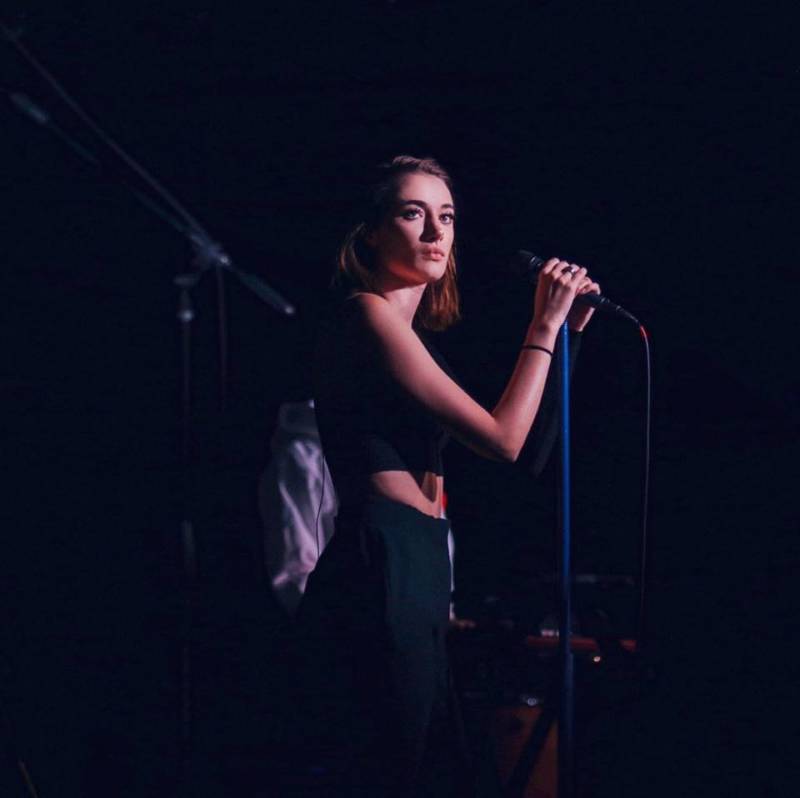
"caption": "Olivia O;Brien comes to the Redwood Barn at Gundlach Bundschu",
"description": "Olivia O;Brien comes to the Redwood Barn at Gundlach Bundschu",
"title": "Olivia O;Brien comes to the Redwood Barn at Gundlach Bundschu",
"credit": "Photo: Courtesy of Olivia O'Brien",
"status": "inherit",
"isLoading": false,
"fetchFailed": false
},
"arts_13815694": {
"type": "attachments",
"id": "arts_13815694",
"meta": {
"index": "attachments_1716263798",
"site": "arts",
"id": "13815694",
"found": true
},
"parent": 13815688,
"imgSizes": {
"small": {
"file": "https://ww2.kqed.org/app/uploads/sites/2/2017/11/IMG_E3966-e1511386363911-520x278.jpg",
"width": 520,
"mimeType": "image/jpeg",
"height": 278
},
"twentyfourteen-full-width": {
"file": "https://ww2.kqed.org/app/uploads/sites/2/2017/11/IMG_E3966-e1511386363911-1038x576.jpg",
"width": 1038,
"mimeType": "image/jpeg",
"height": 576
},
"thumbnail": {
"file": "https://ww2.kqed.org/app/uploads/sites/2/2017/11/IMG_E3966-e1511386363911-160x86.jpg",
"width": 160,
"mimeType": "image/jpeg",
"height": 86
},
"fd-sm": {
"file": "https://ww2.kqed.org/app/uploads/sites/2/2017/11/IMG_E3966-e1511386363911-960x513.jpg",
"width": 960,
"mimeType": "image/jpeg",
"height": 513
},
"post-thumbnail": {
"file": "https://ww2.kqed.org/app/uploads/sites/2/2017/11/IMG_E3966-e1511386363911-672x372.jpg",
"width": 672,
"mimeType": "image/jpeg",
"height": 372
},
"xsmall": {
"file": "https://ww2.kqed.org/app/uploads/sites/2/2017/11/IMG_E3966-e1511386363911-375x201.jpg",
"width": 375,
"mimeType": "image/jpeg",
"height": 201
},
"kqedFullSize": {
"file": "https://ww2.kqed.org/app/uploads/sites/2/2017/11/IMG_E3966-e1511386363911.jpg",
"width": 3067,
"height": 1640
},
"large": {
"file": "https://ww2.kqed.org/app/uploads/sites/2/2017/11/IMG_E3966-e1511386363911-1020x545.jpg",
"width": 1020,
"mimeType": "image/jpeg",
"height": 545
},
"xlarge": {
"file": "https://ww2.kqed.org/app/uploads/sites/2/2017/11/IMG_E3966-e1511386363911-1180x631.jpg",
"width": 1180,
"mimeType": "image/jpeg",
"height": 631
},
"guest-author-50": {
"file": "https://ww2.kqed.org/app/uploads/sites/2/2017/11/IMG_E3966-e1511386363911-50x50.jpg",
"width": 50,
"mimeType": "image/jpeg",
"height": 50
},
"guest-author-96": {
"file": "https://ww2.kqed.org/app/uploads/sites/2/2017/11/IMG_E3966-e1511386363911-96x96.jpg",
"width": 96,
"mimeType": "image/jpeg",
"height": 96
},
"medium": {
"file": "https://ww2.kqed.org/app/uploads/sites/2/2017/11/IMG_E3966-e1511386363911-800x428.jpg",
"width": 800,
"mimeType": "image/jpeg",
"height": 428
},
"guest-author-64": {
"file": "https://ww2.kqed.org/app/uploads/sites/2/2017/11/IMG_E3966-e1511386363911-64x64.jpg",
"width": 64,
"mimeType": "image/jpeg",
"height": 64
},
"guest-author-32": {
"file": "https://ww2.kqed.org/app/uploads/sites/2/2017/11/IMG_E3966-e1511386363911-32x32.jpg",
"width": 32,
"mimeType": "image/jpeg",
"height": 32
},
"fd-lrg": {
"file": "https://ww2.kqed.org/app/uploads/sites/2/2017/11/IMG_E3966-e1511386363911-1920x1027.jpg",
"width": 1920,
"mimeType": "image/jpeg",
"height": 1027
},
"fd-med": {
"file": "https://ww2.kqed.org/app/uploads/sites/2/2017/11/IMG_E3966-e1511386363911-1180x631.jpg",
"width": 1180,
"mimeType": "image/jpeg",
"height": 631
},
"full-width": {
"file": "https://ww2.kqed.org/app/uploads/sites/2/2017/11/IMG_E3966-e1511386363911-1920x1027.jpg",
"width": 1920,
"mimeType": "image/jpeg",
"height": 1027
},
"detail": {
"file": "https://ww2.kqed.org/app/uploads/sites/2/2017/11/IMG_E3966-e1511386363911-150x150.jpg",
"width": 150,
"mimeType": "image/jpeg",
"height": 150
},
"medium_large": {
"file": "https://ww2.kqed.org/app/uploads/sites/2/2017/11/IMG_E3966-e1511386363911-768x411.jpg",
"width": 768,
"mimeType": "image/jpeg",
"height": 411
},
"guest-author-128": {
"file": "https://ww2.kqed.org/app/uploads/sites/2/2017/11/IMG_E3966-e1511386363911-128x128.jpg",
"width": 128,
"mimeType": "image/jpeg",
"height": 128
},
"xxsmall": {
"file": "https://ww2.kqed.org/app/uploads/sites/2/2017/11/IMG_E3966-e1511386363911-240x128.jpg",
"width": 240,
"mimeType": "image/jpeg",
"height": 128
}
},
"publishDate": 1511374103,
"modified": 1511386412,
"caption": "Scorched sculptures by Bruce Johnson on the grounds of the Luther Burbank Center for the Arts in Santa Rosa",
"description": "Scorched sculptures by Bruce Johnson on the grounds of the Luther Burbank Center for the Arts in Santa Rosa",
"title": "Scorched sculptures by Bruce Johnson on the grounds of the Luther Burbank Center for the Arts in Santa Rosa",
"credit": "Photo: Cy Musiker/KQED",
"status": "inherit",
"isLoading": false,
"fetchFailed": false
},
"arts_13815654": {
"type": "attachments",
"id": "arts_13815654",
"meta": {
"index": "attachments_1716263798",
"site": "arts",
"id": "13815654",
"found": true
},
"parent": 13815647,
"imgSizes": {
"small": {
"file": "https://ww2.kqed.org/app/uploads/sites/2/2017/11/32_Cory-Weaver_GGW_Paul-Appleby_JNai-Bridges-1-520x293.jpg",
"width": 520,
"mimeType": "image/jpeg",
"height": 293
},
"twentyfourteen-full-width": {
"file": "https://ww2.kqed.org/app/uploads/sites/2/2017/11/32_Cory-Weaver_GGW_Paul-Appleby_JNai-Bridges-1-1038x576.jpg",
"width": 1038,
"mimeType": "image/jpeg",
"height": 576
},
"thumbnail": {
"file": "https://ww2.kqed.org/app/uploads/sites/2/2017/11/32_Cory-Weaver_GGW_Paul-Appleby_JNai-Bridges-1-160x90.jpg",
"width": 160,
"mimeType": "image/jpeg",
"height": 90
},
"fd-sm": {
"file": "https://ww2.kqed.org/app/uploads/sites/2/2017/11/32_Cory-Weaver_GGW_Paul-Appleby_JNai-Bridges-1-960x540.jpg",
"width": 960,
"mimeType": "image/jpeg",
"height": 540
},
"post-thumbnail": {
"file": "https://ww2.kqed.org/app/uploads/sites/2/2017/11/32_Cory-Weaver_GGW_Paul-Appleby_JNai-Bridges-1-672x372.jpg",
"width": 672,
"mimeType": "image/jpeg",
"height": 372
},
"xsmall": {
"file": "https://ww2.kqed.org/app/uploads/sites/2/2017/11/32_Cory-Weaver_GGW_Paul-Appleby_JNai-Bridges-1-375x211.jpg",
"width": 375,
"mimeType": "image/jpeg",
"height": 211
},
"kqedFullSize": {
"file": "https://ww2.kqed.org/app/uploads/sites/2/2017/11/32_Cory-Weaver_GGW_Paul-Appleby_JNai-Bridges-1.jpg",
"width": 1920,
"height": 1080
},
"large": {
"file": "https://ww2.kqed.org/app/uploads/sites/2/2017/11/32_Cory-Weaver_GGW_Paul-Appleby_JNai-Bridges-1-1020x574.jpg",
"width": 1020,
"mimeType": "image/jpeg",
"height": 574
},
"xlarge": {
"file": "https://ww2.kqed.org/app/uploads/sites/2/2017/11/32_Cory-Weaver_GGW_Paul-Appleby_JNai-Bridges-1-1180x664.jpg",
"width": 1180,
"mimeType": "image/jpeg",
"height": 664
},
"guest-author-50": {
"file": "https://ww2.kqed.org/app/uploads/sites/2/2017/11/32_Cory-Weaver_GGW_Paul-Appleby_JNai-Bridges-1-50x50.jpg",
"width": 50,
"mimeType": "image/jpeg",
"height": 50
},
"guest-author-96": {
"file": "https://ww2.kqed.org/app/uploads/sites/2/2017/11/32_Cory-Weaver_GGW_Paul-Appleby_JNai-Bridges-1-96x96.jpg",
"width": 96,
"mimeType": "image/jpeg",
"height": 96
},
"medium": {
"file": "https://ww2.kqed.org/app/uploads/sites/2/2017/11/32_Cory-Weaver_GGW_Paul-Appleby_JNai-Bridges-1-800x450.jpg",
"width": 800,
"mimeType": "image/jpeg",
"height": 450
},
"guest-author-64": {
"file": "https://ww2.kqed.org/app/uploads/sites/2/2017/11/32_Cory-Weaver_GGW_Paul-Appleby_JNai-Bridges-1-64x64.jpg",
"width": 64,
"mimeType": "image/jpeg",
"height": 64
},
"guest-author-32": {
"file": "https://ww2.kqed.org/app/uploads/sites/2/2017/11/32_Cory-Weaver_GGW_Paul-Appleby_JNai-Bridges-1-32x32.jpg",
"width": 32,
"mimeType": "image/jpeg",
"height": 32
},
"fd-lrg": {
"file": "https://ww2.kqed.org/app/uploads/sites/2/2017/11/32_Cory-Weaver_GGW_Paul-Appleby_JNai-Bridges-1-1920x1080.jpg",
"width": 1920,
"mimeType": "image/jpeg",
"height": 1080
},
"fd-med": {
"file": "https://ww2.kqed.org/app/uploads/sites/2/2017/11/32_Cory-Weaver_GGW_Paul-Appleby_JNai-Bridges-1-1180x664.jpg",
"width": 1180,
"mimeType": "image/jpeg",
"height": 664
},
"full-width": {
"file": "https://ww2.kqed.org/app/uploads/sites/2/2017/11/32_Cory-Weaver_GGW_Paul-Appleby_JNai-Bridges-1-1920x1080.jpg",
"width": 1920,
"mimeType": "image/jpeg",
"height": 1080
},
"detail": {
"file": "https://ww2.kqed.org/app/uploads/sites/2/2017/11/32_Cory-Weaver_GGW_Paul-Appleby_JNai-Bridges-1-150x150.jpg",
"width": 150,
"mimeType": "image/jpeg",
"height": 150
},
"medium_large": {
"file": "https://ww2.kqed.org/app/uploads/sites/2/2017/11/32_Cory-Weaver_GGW_Paul-Appleby_JNai-Bridges-1-768x432.jpg",
"width": 768,
"mimeType": "image/jpeg",
"height": 432
},
"guest-author-128": {
"file": "https://ww2.kqed.org/app/uploads/sites/2/2017/11/32_Cory-Weaver_GGW_Paul-Appleby_JNai-Bridges-1-128x128.jpg",
"width": 128,
"mimeType": "image/jpeg",
"height": 128
},
"xxsmall": {
"file": "https://ww2.kqed.org/app/uploads/sites/2/2017/11/32_Cory-Weaver_GGW_Paul-Appleby_JNai-Bridges-1-240x135.jpg",
"width": 240,
"mimeType": "image/jpeg",
"height": 135
}
},
"publishDate": 1511349363,
"modified": 1511384206,
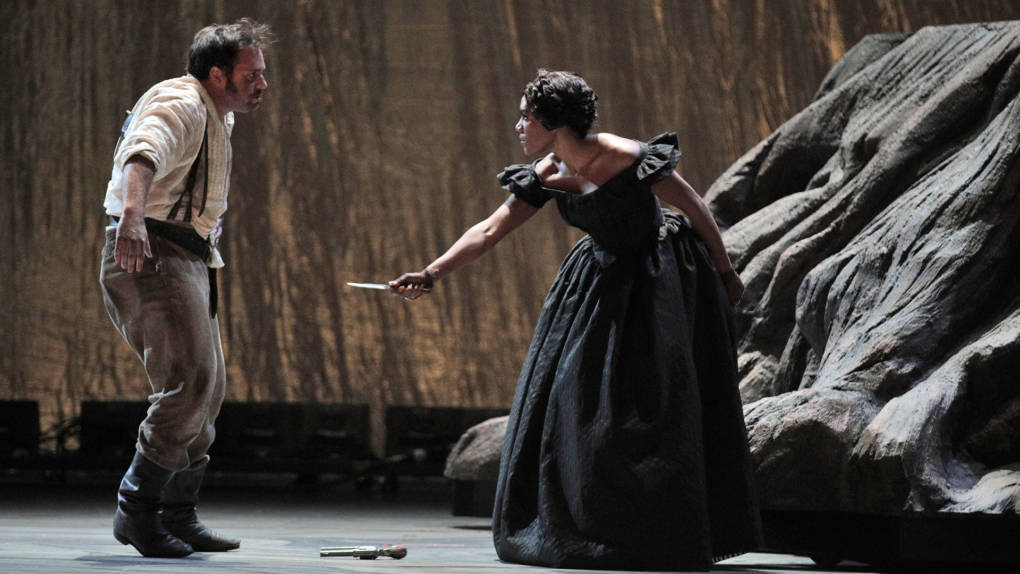
"caption": "Paul Appleby as Joe Cannon and J'Nai Bridges as Josefa Segovia in John Adams' 'Girls of the Golden West.'",
"description": "Paul Appleby as Joe Cannon and J'Nai Bridges as Josefa Segovia in John Adams' 'Girls of the Golden West.'",
"title": "32_Cory Weaver_GGW_Paul Appleby_J'Nai Bridges",
"credit": "Cory Weaver/San Francisco Opera",
"status": "inherit",
"isLoading": false,
"fetchFailed": false
},
"arts_13815644": {
"type": "attachments",
"id": "arts_13815644",
"meta": {
"index": "attachments_1716263798",
"site": "arts",
"id": "13815644",
"found": true
},
"parent": 13815643,
"imgSizes": {
"small": {
"file": "https://ww2.kqed.org/app/uploads/sites/2/2017/11/gettyimages-3136008-0ed4e83a46c2044ff44c7fafbc3f4e9b3006190f-520x390.jpg",
"width": 520,
"mimeType": "image/jpeg",
"height": 390
},
"twentyfourteen-full-width": {
"file": "https://ww2.kqed.org/app/uploads/sites/2/2017/11/gettyimages-3136008-0ed4e83a46c2044ff44c7fafbc3f4e9b3006190f-1038x576.jpg",
"width": 1038,
"mimeType": "image/jpeg",
"height": 576
},
"thumbnail": {
"file": "https://ww2.kqed.org/app/uploads/sites/2/2017/11/gettyimages-3136008-0ed4e83a46c2044ff44c7fafbc3f4e9b3006190f-160x120.jpg",
"width": 160,
"mimeType": "image/jpeg",
"height": 120
},
"fd-sm": {
"file": "https://ww2.kqed.org/app/uploads/sites/2/2017/11/gettyimages-3136008-0ed4e83a46c2044ff44c7fafbc3f4e9b3006190f-960x720.jpg",
"width": 960,
"mimeType": "image/jpeg",
"height": 720
},
"post-thumbnail": {
"file": "https://ww2.kqed.org/app/uploads/sites/2/2017/11/gettyimages-3136008-0ed4e83a46c2044ff44c7fafbc3f4e9b3006190f-672x372.jpg",
"width": 672,
"mimeType": "image/jpeg",
"height": 372
},
"xsmall": {
"file": "https://ww2.kqed.org/app/uploads/sites/2/2017/11/gettyimages-3136008-0ed4e83a46c2044ff44c7fafbc3f4e9b3006190f-375x281.jpg",
"width": 375,
"mimeType": "image/jpeg",
"height": 281
},
"kqedFullSize": {
"file": "https://ww2.kqed.org/app/uploads/sites/2/2017/11/gettyimages-3136008-0ed4e83a46c2044ff44c7fafbc3f4e9b3006190f.jpg",
"width": 3535,
"height": 2650
},
"large": {
"file": "https://ww2.kqed.org/app/uploads/sites/2/2017/11/gettyimages-3136008-0ed4e83a46c2044ff44c7fafbc3f4e9b3006190f-1020x765.jpg",
"width": 1020,
"mimeType": "image/jpeg",
"height": 765
},
"xlarge": {
"file": "https://ww2.kqed.org/app/uploads/sites/2/2017/11/gettyimages-3136008-0ed4e83a46c2044ff44c7fafbc3f4e9b3006190f-1180x885.jpg",
"width": 1180,
"mimeType": "image/jpeg",
"height": 885
},
"guest-author-50": {
"file": "https://ww2.kqed.org/app/uploads/sites/2/2017/11/gettyimages-3136008-0ed4e83a46c2044ff44c7fafbc3f4e9b3006190f-50x50.jpg",
"width": 50,
"mimeType": "image/jpeg",
"height": 50
},
"guest-author-96": {
"file": "https://ww2.kqed.org/app/uploads/sites/2/2017/11/gettyimages-3136008-0ed4e83a46c2044ff44c7fafbc3f4e9b3006190f-96x96.jpg",
"width": 96,
"mimeType": "image/jpeg",
"height": 96
},
"medium": {
"file": "https://ww2.kqed.org/app/uploads/sites/2/2017/11/gettyimages-3136008-0ed4e83a46c2044ff44c7fafbc3f4e9b3006190f-800x600.jpg",
"width": 800,
"mimeType": "image/jpeg",
"height": 600
},
"guest-author-64": {
"file": "https://ww2.kqed.org/app/uploads/sites/2/2017/11/gettyimages-3136008-0ed4e83a46c2044ff44c7fafbc3f4e9b3006190f-64x64.jpg",
"width": 64,
"mimeType": "image/jpeg",
"height": 64
},
"guest-author-32": {
"file": "https://ww2.kqed.org/app/uploads/sites/2/2017/11/gettyimages-3136008-0ed4e83a46c2044ff44c7fafbc3f4e9b3006190f-32x32.jpg",
"width": 32,
"mimeType": "image/jpeg",
"height": 32
},
"fd-lrg": {
"file": "https://ww2.kqed.org/app/uploads/sites/2/2017/11/gettyimages-3136008-0ed4e83a46c2044ff44c7fafbc3f4e9b3006190f-1920x1439.jpg",
"width": 1920,
"mimeType": "image/jpeg",
"height": 1439
},
"fd-med": {
"file": "https://ww2.kqed.org/app/uploads/sites/2/2017/11/gettyimages-3136008-0ed4e83a46c2044ff44c7fafbc3f4e9b3006190f-1180x885.jpg",
"width": 1180,
"mimeType": "image/jpeg",
"height": 885
},
"full-width": {
"file": "https://ww2.kqed.org/app/uploads/sites/2/2017/11/gettyimages-3136008-0ed4e83a46c2044ff44c7fafbc3f4e9b3006190f-1920x1439.jpg",
"width": 1920,
"mimeType": "image/jpeg",
"height": 1439
},
"detail": {
"file": "https://ww2.kqed.org/app/uploads/sites/2/2017/11/gettyimages-3136008-0ed4e83a46c2044ff44c7fafbc3f4e9b3006190f-150x150.jpg",
"width": 150,
"mimeType": "image/jpeg",
"height": 150
},
"medium_large": {
"file": "https://ww2.kqed.org/app/uploads/sites/2/2017/11/gettyimages-3136008-0ed4e83a46c2044ff44c7fafbc3f4e9b3006190f-768x576.jpg",
"width": 768,
"mimeType": "image/jpeg",
"height": 576
},
"guest-author-128": {
"file": "https://ww2.kqed.org/app/uploads/sites/2/2017/11/gettyimages-3136008-0ed4e83a46c2044ff44c7fafbc3f4e9b3006190f-128x128.jpg",
"width": 128,
"mimeType": "image/jpeg",
"height": 128
},
"xxsmall": {
"file": "https://ww2.kqed.org/app/uploads/sites/2/2017/11/gettyimages-3136008-0ed4e83a46c2044ff44c7fafbc3f4e9b3006190f-240x180.jpg",
"width": 240,
"mimeType": "image/jpeg",
"height": 180
}
},
"publishDate": 1511337274,
"modified": 1511337478,
"caption": "David Cassidy walks down a street in London in April 1974.",
"description": "David Cassidy walks down a street in London in April 1974.",
"title": "David Cassidy walks down a street in London in April 1974.",
"credit": "Ellidge/Getty Images",
"status": "inherit",
"isLoading": false,
"fetchFailed": false
},
"arts_13815636": {
"type": "attachments",
"id": "arts_13815636",
"meta": {
"index": "attachments_1716263798",
"site": "arts",
"id": "13815636",
"found": true
},
"parent": 13815635,
"imgSizes": {
"small": {
"file": "https://ww2.kqed.org/app/uploads/sites/2/2017/11/gettyimages-857703736_slide-c0134245c4f8d236ad5ff2d548b4235f38bf77e0-e1511315928862-520x292.jpg",
"width": 520,
"mimeType": "image/jpeg",
"height": 292
},
"twentyfourteen-full-width": {
"file": "https://ww2.kqed.org/app/uploads/sites/2/2017/11/gettyimages-857703736_slide-c0134245c4f8d236ad5ff2d548b4235f38bf77e0-e1511315928862-1038x576.jpg",
"width": 1038,
"mimeType": "image/jpeg",
"height": 576
},
"thumbnail": {
"file": "https://ww2.kqed.org/app/uploads/sites/2/2017/11/gettyimages-857703736_slide-c0134245c4f8d236ad5ff2d548b4235f38bf77e0-e1511315928862-160x90.jpg",
"width": 160,
"mimeType": "image/jpeg",
"height": 90
},
"fd-sm": {
"file": "https://ww2.kqed.org/app/uploads/sites/2/2017/11/gettyimages-857703736_slide-c0134245c4f8d236ad5ff2d548b4235f38bf77e0-e1511315928862-960x540.jpg",
"width": 960,
"mimeType": "image/jpeg",
"height": 540
},
"post-thumbnail": {
"file": "https://ww2.kqed.org/app/uploads/sites/2/2017/11/gettyimages-857703736_slide-c0134245c4f8d236ad5ff2d548b4235f38bf77e0-e1511315928862-672x372.jpg",
"width": 672,
"mimeType": "image/jpeg",
"height": 372
},
"xsmall": {
"file": "https://ww2.kqed.org/app/uploads/sites/2/2017/11/gettyimages-857703736_slide-c0134245c4f8d236ad5ff2d548b4235f38bf77e0-e1511315928862-375x211.jpg",
"width": 375,
"mimeType": "image/jpeg",
"height": 211
},
"kqedFullSize": {
"file": "https://ww2.kqed.org/app/uploads/sites/2/2017/11/gettyimages-857703736_slide-c0134245c4f8d236ad5ff2d548b4235f38bf77e0-e1511315928862.jpg",
"width": 3986,
"height": 2242
},
"large": {
"file": "https://ww2.kqed.org/app/uploads/sites/2/2017/11/gettyimages-857703736_slide-c0134245c4f8d236ad5ff2d548b4235f38bf77e0-e1511315928862-1020x574.jpg",
"width": 1020,
"mimeType": "image/jpeg",
"height": 574
},
"xlarge": {
"file": "https://ww2.kqed.org/app/uploads/sites/2/2017/11/gettyimages-857703736_slide-c0134245c4f8d236ad5ff2d548b4235f38bf77e0-e1511315928862-1180x664.jpg",
"width": 1180,
"mimeType": "image/jpeg",
"height": 664
},
"guest-author-50": {
"file": "https://ww2.kqed.org/app/uploads/sites/2/2017/11/gettyimages-857703736_slide-c0134245c4f8d236ad5ff2d548b4235f38bf77e0-e1511315928862-50x50.jpg",
"width": 50,
"mimeType": "image/jpeg",
"height": 50
},
"guest-author-96": {
"file": "https://ww2.kqed.org/app/uploads/sites/2/2017/11/gettyimages-857703736_slide-c0134245c4f8d236ad5ff2d548b4235f38bf77e0-e1511315928862-96x96.jpg",
"width": 96,
"mimeType": "image/jpeg",
"height": 96
},
"medium": {
"file": "https://ww2.kqed.org/app/uploads/sites/2/2017/11/gettyimages-857703736_slide-c0134245c4f8d236ad5ff2d548b4235f38bf77e0-e1511315928862-800x450.jpg",
"width": 800,
"mimeType": "image/jpeg",
"height": 450
},
"guest-author-64": {
"file": "https://ww2.kqed.org/app/uploads/sites/2/2017/11/gettyimages-857703736_slide-c0134245c4f8d236ad5ff2d548b4235f38bf77e0-e1511315928862-64x64.jpg",
"width": 64,
"mimeType": "image/jpeg",
"height": 64
},
"guest-author-32": {
"file": "https://ww2.kqed.org/app/uploads/sites/2/2017/11/gettyimages-857703736_slide-c0134245c4f8d236ad5ff2d548b4235f38bf77e0-e1511315928862-32x32.jpg",
"width": 32,
"mimeType": "image/jpeg",
"height": 32
},
"fd-lrg": {
"file": "https://ww2.kqed.org/app/uploads/sites/2/2017/11/gettyimages-857703736_slide-c0134245c4f8d236ad5ff2d548b4235f38bf77e0-e1511315928862-1920x1080.jpg",
"width": 1920,
"mimeType": "image/jpeg",
"height": 1080
},
"fd-med": {
"file": "https://ww2.kqed.org/app/uploads/sites/2/2017/11/gettyimages-857703736_slide-c0134245c4f8d236ad5ff2d548b4235f38bf77e0-e1511315928862-1180x664.jpg",
"width": 1180,
"mimeType": "image/jpeg",
"height": 664
},
"full-width": {
"file": "https://ww2.kqed.org/app/uploads/sites/2/2017/11/gettyimages-857703736_slide-c0134245c4f8d236ad5ff2d548b4235f38bf77e0-e1511315928862-1920x1080.jpg",
"width": 1920,
"mimeType": "image/jpeg",
"height": 1080
},
"detail": {
"file": "https://ww2.kqed.org/app/uploads/sites/2/2017/11/gettyimages-857703736_slide-c0134245c4f8d236ad5ff2d548b4235f38bf77e0-e1511315928862-150x150.jpg",
"width": 150,
"mimeType": "image/jpeg",
"height": 150
},
"medium_large": {
"file": "https://ww2.kqed.org/app/uploads/sites/2/2017/11/gettyimages-857703736_slide-c0134245c4f8d236ad5ff2d548b4235f38bf77e0-e1511315928862-768x432.jpg",
"width": 768,
"mimeType": "image/jpeg",
"height": 432
},
"guest-author-128": {
"file": "https://ww2.kqed.org/app/uploads/sites/2/2017/11/gettyimages-857703736_slide-c0134245c4f8d236ad5ff2d548b4235f38bf77e0-e1511315928862-128x128.jpg",
"width": 128,
"mimeType": "image/jpeg",
"height": 128
},
"xxsmall": {
"file": "https://ww2.kqed.org/app/uploads/sites/2/2017/11/gettyimages-857703736_slide-c0134245c4f8d236ad5ff2d548b4235f38bf77e0-e1511315928862-240x135.jpg",
"width": 240,
"mimeType": "image/jpeg",
"height": 135
}
},
"publishDate": 1511315070,
"modified": 1511315687,
"caption": "Multiple lawsuits have been filed by victims of the Oct. 1 mass shooting in Las Vegas. The company that owns the Mandalay Bay, MGM Resorts International, is among the parties being sued.",
"description": "Multiple lawsuits have been filed by victims of the Oct. 1 mass shooting in Las Vegas. The company that owns the Mandalay Bay, MGM Resorts International, is among the parties being sued.",
"title": "Multiple lawsuits have been filed by victims of the Oct. 1 mass shooting in Las Vegas. The company that owns the Mandalay Bay, MGM Resorts International, is among the parties being sued.",
"credit": null,
"status": "inherit",
"isLoading": false,
"fetchFailed": false
},
"arts_13815578": {
"type": "attachments",
"id": "arts_13815578",
"meta": {
"index": "attachments_1716263798",
"site": "arts",
"id": "13815578",
"found": true
},
"parent": 13815577,
"imgSizes": {
"small": {
"file": "https://ww2.kqed.org/app/uploads/sites/2/2017/11/undefined_wide-bbecb3b0be6fa371b59d50366e2506b405724973-520x292.jpg",
"width": 520,
"mimeType": "image/jpeg",
"height": 292
},
"twentyfourteen-full-width": {
"file": "https://ww2.kqed.org/app/uploads/sites/2/2017/11/undefined_wide-bbecb3b0be6fa371b59d50366e2506b405724973-1038x576.jpg",
"width": 1038,
"mimeType": "image/jpeg",
"height": 576
},
"thumbnail": {
"file": "https://ww2.kqed.org/app/uploads/sites/2/2017/11/undefined_wide-bbecb3b0be6fa371b59d50366e2506b405724973-160x90.jpg",
"width": 160,
"mimeType": "image/jpeg",
"height": 90
},
"fd-sm": {
"file": "https://ww2.kqed.org/app/uploads/sites/2/2017/11/undefined_wide-bbecb3b0be6fa371b59d50366e2506b405724973-960x540.jpg",
"width": 960,
"mimeType": "image/jpeg",
"height": 540
},
"post-thumbnail": {
"file": "https://ww2.kqed.org/app/uploads/sites/2/2017/11/undefined_wide-bbecb3b0be6fa371b59d50366e2506b405724973-672x372.jpg",
"width": 672,
"mimeType": "image/jpeg",
"height": 372
},
"xsmall": {
"file": "https://ww2.kqed.org/app/uploads/sites/2/2017/11/undefined_wide-bbecb3b0be6fa371b59d50366e2506b405724973-375x211.jpg",
"width": 375,
"mimeType": "image/jpeg",
"height": 211
},
"kqedFullSize": {
"file": "https://ww2.kqed.org/app/uploads/sites/2/2017/11/undefined_wide-bbecb3b0be6fa371b59d50366e2506b405724973.jpg",
"width": 1998,
"height": 1123
},
"large": {
"file": "https://ww2.kqed.org/app/uploads/sites/2/2017/11/undefined_wide-bbecb3b0be6fa371b59d50366e2506b405724973-1020x573.jpg",
"width": 1020,
"mimeType": "image/jpeg",
"height": 573
},
"xlarge": {
"file": "https://ww2.kqed.org/app/uploads/sites/2/2017/11/undefined_wide-bbecb3b0be6fa371b59d50366e2506b405724973-1180x663.jpg",
"width": 1180,
"mimeType": "image/jpeg",
"height": 663
},
"guest-author-50": {
"file": "https://ww2.kqed.org/app/uploads/sites/2/2017/11/undefined_wide-bbecb3b0be6fa371b59d50366e2506b405724973-50x50.jpg",
"width": 50,
"mimeType": "image/jpeg",
"height": 50
},
"guest-author-96": {
"file": "https://ww2.kqed.org/app/uploads/sites/2/2017/11/undefined_wide-bbecb3b0be6fa371b59d50366e2506b405724973-96x96.jpg",
"width": 96,
"mimeType": "image/jpeg",
"height": 96
},
"medium": {
"file": "https://ww2.kqed.org/app/uploads/sites/2/2017/11/undefined_wide-bbecb3b0be6fa371b59d50366e2506b405724973-800x450.jpg",
"width": 800,
"mimeType": "image/jpeg",
"height": 450
},
"guest-author-64": {
"file": "https://ww2.kqed.org/app/uploads/sites/2/2017/11/undefined_wide-bbecb3b0be6fa371b59d50366e2506b405724973-64x64.jpg",
"width": 64,
"mimeType": "image/jpeg",
"height": 64
},
"guest-author-32": {
"file": "https://ww2.kqed.org/app/uploads/sites/2/2017/11/undefined_wide-bbecb3b0be6fa371b59d50366e2506b405724973-32x32.jpg",
"width": 32,
"mimeType": "image/jpeg",
"height": 32
},
"fd-lrg": {
"file": "https://ww2.kqed.org/app/uploads/sites/2/2017/11/undefined_wide-bbecb3b0be6fa371b59d50366e2506b405724973-1920x1079.jpg",
"width": 1920,
"mimeType": "image/jpeg",
"height": 1079
},
"fd-med": {
"file": "https://ww2.kqed.org/app/uploads/sites/2/2017/11/undefined_wide-bbecb3b0be6fa371b59d50366e2506b405724973-1180x663.jpg",
"width": 1180,
"mimeType": "image/jpeg",
"height": 663
},
"full-width": {
"file": "https://ww2.kqed.org/app/uploads/sites/2/2017/11/undefined_wide-bbecb3b0be6fa371b59d50366e2506b405724973-1920x1079.jpg",
"width": 1920,
"mimeType": "image/jpeg",
"height": 1079
},
"detail": {
"file": "https://ww2.kqed.org/app/uploads/sites/2/2017/11/undefined_wide-bbecb3b0be6fa371b59d50366e2506b405724973-150x150.jpg",
"width": 150,
"mimeType": "image/jpeg",
"height": 150
},
"medium_large": {
"file": "https://ww2.kqed.org/app/uploads/sites/2/2017/11/undefined_wide-bbecb3b0be6fa371b59d50366e2506b405724973-768x432.jpg",
"width": 768,
"mimeType": "image/jpeg",
"height": 432
},
"guest-author-128": {
"file": "https://ww2.kqed.org/app/uploads/sites/2/2017/11/undefined_wide-bbecb3b0be6fa371b59d50366e2506b405724973-128x128.jpg",
"width": 128,
"mimeType": "image/jpeg",
"height": 128
},
"xxsmall": {
"file": "https://ww2.kqed.org/app/uploads/sites/2/2017/11/undefined_wide-bbecb3b0be6fa371b59d50366e2506b405724973-240x135.jpg",
"width": 240,
"mimeType": "image/jpeg",
"height": 135
}
},
"publishDate": 1511293623,
"modified": 1511293708,
"caption": "Swedish singer Robyn, performing in Boston. The pop star was one of thousands who signed on to a letter excoriating sexual harassment and abuse in the music industry.",
"description": "Swedish singer Robyn, performing in Boston. The pop star was one of thousands who signed on to a letter excoriating sexual harassment and abuse in the music industry.",
"title": "Swedish singer Robyn, performing in Boston. The pop star was one of thousands who signed on to a letter excoriating sexual harassment and abuse in the music industry.",
"credit": "Natasha Moustache/WireImage",
"status": "inherit",
"isLoading": false,
"fetchFailed": false
},
"arts_13815521": {
"type": "attachments",
"id": "arts_13815521",
"meta": {
"index": "attachments_1716263798",
"site": "arts",
"id": "13815521",
"found": true
},
"parent": 13815519,
"imgSizes": {
"small": {
"file": "https://ww2.kqed.org/app/uploads/sites/2/2017/11/Mel-Martin-70s-520x298.jpg",
"width": 520,
"mimeType": "image/jpeg",
"height": 298
},
"thumbnail": {
"file": "https://ww2.kqed.org/app/uploads/sites/2/2017/11/Mel-Martin-70s-160x92.jpg",
"width": 160,
"mimeType": "image/jpeg",
"height": 92
},
"post-thumbnail": {
"file": "https://ww2.kqed.org/app/uploads/sites/2/2017/11/Mel-Martin-70s-672x372.jpg",
"width": 672,
"mimeType": "image/jpeg",
"height": 372
},
"xsmall": {
"file": "https://ww2.kqed.org/app/uploads/sites/2/2017/11/Mel-Martin-70s-375x215.jpg",
"width": 375,
"mimeType": "image/jpeg",
"height": 215
},
"kqedFullSize": {
"file": "https://ww2.kqed.org/app/uploads/sites/2/2017/11/Mel-Martin-70s.jpg",
"width": 800,
"height": 459
},
"guest-author-50": {
"file": "https://ww2.kqed.org/app/uploads/sites/2/2017/11/Mel-Martin-70s-50x50.jpg",
"width": 50,
"mimeType": "image/jpeg",
"height": 50
},
"guest-author-96": {
"file": "https://ww2.kqed.org/app/uploads/sites/2/2017/11/Mel-Martin-70s-96x96.jpg",
"width": 96,
"mimeType": "image/jpeg",
"height": 96
},
"medium": {
"file": "https://ww2.kqed.org/app/uploads/sites/2/2017/11/Mel-Martin-70s-800x459.jpg",
"width": 800,
"mimeType": "image/jpeg",
"height": 459
},
"guest-author-64": {
"file": "https://ww2.kqed.org/app/uploads/sites/2/2017/11/Mel-Martin-70s-64x64.jpg",
"width": 64,
"mimeType": "image/jpeg",
"height": 64
},
"guest-author-32": {
"file": "https://ww2.kqed.org/app/uploads/sites/2/2017/11/Mel-Martin-70s-32x32.jpg",
"width": 32,
"mimeType": "image/jpeg",
"height": 32
},
"detail": {
"file": "https://ww2.kqed.org/app/uploads/sites/2/2017/11/Mel-Martin-70s-150x150.jpg",
"width": 150,
"mimeType": "image/jpeg",
"height": 150
},
"medium_large": {
"file": "https://ww2.kqed.org/app/uploads/sites/2/2017/11/Mel-Martin-70s-768x441.jpg",
"width": 768,
"mimeType": "image/jpeg",
"height": 441
},
"guest-author-128": {
"file": "https://ww2.kqed.org/app/uploads/sites/2/2017/11/Mel-Martin-70s-128x128.jpg",
"width": 128,
"mimeType": "image/jpeg",
"height": 128
},
"xxsmall": {
"file": "https://ww2.kqed.org/app/uploads/sites/2/2017/11/Mel-Martin-70s-240x138.jpg",
"width": 240,
"mimeType": "image/jpeg",
"height": 138
}
},
"publishDate": 1511215072,
"modified": 1511215289,
"caption": "Mel Martin playing tenor sax between Bobby Hutcherson (left) and Bobby Watson (right). In the back left corner is Mulgrew Miller on piano",
"description": "Mel Martin playing tenor sax between Bobby Hutcherson (left) and Bobby Watson (right). In the back left corner is Mulgrew Miller on piano",
"title": "Mel Martin '70s",
"credit": "Courtesy of the Martin family",
"status": "inherit",
"isLoading": false,
"fetchFailed": false
},
"arts_13815408": {
"type": "attachments",
"id": "arts_13815408",
"meta": {
"index": "attachments_1716263798",
"site": "arts",
"id": "13815408",
"found": true
},
"parent": 13815407,
"imgSizes": {
"small": {
"file": "https://ww2.kqed.org/app/uploads/sites/2/2017/11/The-Young-Bros-520x292.jpg",
"width": 520,
"mimeType": "image/jpeg",
"height": 292
},
"twentyfourteen-full-width": {
"file": "https://ww2.kqed.org/app/uploads/sites/2/2017/11/The-Young-Bros-1038x576.jpg",
"width": 1038,
"mimeType": "image/jpeg",
"height": 576
},
"thumbnail": {
"file": "https://ww2.kqed.org/app/uploads/sites/2/2017/11/The-Young-Bros-160x90.jpg",
"width": 160,
"mimeType": "image/jpeg",
"height": 90
},
"fd-sm": {
"file": "https://ww2.kqed.org/app/uploads/sites/2/2017/11/The-Young-Bros-960x539.jpg",
"width": 960,
"mimeType": "image/jpeg",
"height": 539
},
"post-thumbnail": {
"file": "https://ww2.kqed.org/app/uploads/sites/2/2017/11/The-Young-Bros-672x372.jpg",
"width": 672,
"mimeType": "image/jpeg",
"height": 372
},
"xsmall": {
"file": "https://ww2.kqed.org/app/uploads/sites/2/2017/11/The-Young-Bros-375x211.jpg",
"width": 375,
"mimeType": "image/jpeg",
"height": 211
},
"kqedFullSize": {
"file": "https://ww2.kqed.org/app/uploads/sites/2/2017/11/The-Young-Bros.jpg",
"width": 1276,
"height": 717
},
"large": {
"file": "https://ww2.kqed.org/app/uploads/sites/2/2017/11/The-Young-Bros-1020x573.jpg",
"width": 1020,
"mimeType": "image/jpeg",
"height": 573
},
"xlarge": {
"file": "https://ww2.kqed.org/app/uploads/sites/2/2017/11/The-Young-Bros-1180x663.jpg",
"width": 1180,
"mimeType": "image/jpeg",
"height": 663
},
"guest-author-50": {
"file": "https://ww2.kqed.org/app/uploads/sites/2/2017/11/The-Young-Bros-50x50.jpg",
"width": 50,
"mimeType": "image/jpeg",
"height": 50
},
"guest-author-96": {
"file": "https://ww2.kqed.org/app/uploads/sites/2/2017/11/The-Young-Bros-96x96.jpg",
"width": 96,
"mimeType": "image/jpeg",
"height": 96
},
"medium": {
"file": "https://ww2.kqed.org/app/uploads/sites/2/2017/11/The-Young-Bros-800x450.jpg",
"width": 800,
"mimeType": "image/jpeg",
"height": 450
},
"guest-author-64": {
"file": "https://ww2.kqed.org/app/uploads/sites/2/2017/11/The-Young-Bros-64x64.jpg",
"width": 64,
"mimeType": "image/jpeg",
"height": 64
},
"guest-author-32": {
"file": "https://ww2.kqed.org/app/uploads/sites/2/2017/11/The-Young-Bros-32x32.jpg",
"width": 32,
"mimeType": "image/jpeg",
"height": 32
},
"fd-med": {
"file": "https://ww2.kqed.org/app/uploads/sites/2/2017/11/The-Young-Bros-1180x663.jpg",
"width": 1180,
"mimeType": "image/jpeg",
"height": 663
},
"detail": {
"file": "https://ww2.kqed.org/app/uploads/sites/2/2017/11/The-Young-Bros-150x150.jpg",
"width": 150,
"mimeType": "image/jpeg",
"height": 150
},
"medium_large": {
"file": "https://ww2.kqed.org/app/uploads/sites/2/2017/11/The-Young-Bros-768x432.jpg",
"width": 768,
"mimeType": "image/jpeg",
"height": 432
},
"guest-author-128": {
"file": "https://ww2.kqed.org/app/uploads/sites/2/2017/11/The-Young-Bros-128x128.jpg",
"width": 128,
"mimeType": "image/jpeg",
"height": 128
},
"xxsmall": {
"file": "https://ww2.kqed.org/app/uploads/sites/2/2017/11/The-Young-Bros-240x135.jpg",
"width": 240,
"mimeType": "image/jpeg",
"height": 135
}
},
"publishDate": 1511044391,
"modified": 1511044464,
"caption": "Angus (L) and Malcolm Young of the hard rock group ACDC inaugurate 22 March 2000 the first street in the world bearing their group's name in Leganes, 29 kms from Madrid. ",
"description": "Angus (L) and Malcolm Young of the hard rock group ACDC inaugurate 22 March 2000 the first street in the world bearing their group's name in Leganes, 29 kms from Madrid. ",
"title": "The Young Bros",
"credit": "Christophe Simon/AFP/Getty Images",
"status": "inherit",
"isLoading": false,
"fetchFailed": false
},
"news_11632117": {
"type": "attachments",
"id": "news_11632117",
"meta": {
"index": "attachments_1716263798",
"site": "news",
"id": "11632117",
"found": true
},
"parent": 11631543,
"imgSizes": {
"small": {
"file": "https://ww2.kqed.org/app/uploads/sites/10/2017/11/DomingoMain-2-520x476.jpg",
"width": 520,
"mimeType": "image/jpeg",
"height": 476
},
"twentyfourteen-full-width": {
"file": "https://ww2.kqed.org/app/uploads/sites/10/2017/11/DomingoMain-2-1038x576.jpg",
"width": 1038,
"mimeType": "image/jpeg",
"height": 576
},
"thumbnail": {
"file": "https://ww2.kqed.org/app/uploads/sites/10/2017/11/DomingoMain-2-160x147.jpg",
"width": 160,
"mimeType": "image/jpeg",
"height": 147
},
"fd-sm": {
"file": "https://ww2.kqed.org/app/uploads/sites/10/2017/11/DomingoMain-2-960x880.jpg",
"width": 960,
"mimeType": "image/jpeg",
"height": 880
},
"post-thumbnail": {
"file": "https://ww2.kqed.org/app/uploads/sites/10/2017/11/DomingoMain-2-672x372.jpg",
"width": 672,
"mimeType": "image/jpeg",
"height": 372
},
"xsmall": {
"file": "https://ww2.kqed.org/app/uploads/sites/10/2017/11/DomingoMain-2-375x344.jpg",
"width": 375,
"mimeType": "image/jpeg",
"height": 344
},
"kqedFullSize": {
"file": "https://ww2.kqed.org/app/uploads/sites/10/2017/11/DomingoMain-2.jpg",
"width": 1920,
"height": 1759
},
"large": {
"file": "https://ww2.kqed.org/app/uploads/sites/10/2017/11/DomingoMain-2-1020x934.jpg",
"width": 1020,
"mimeType": "image/jpeg",
"height": 934
},
"xlarge": {
"file": "https://ww2.kqed.org/app/uploads/sites/10/2017/11/DomingoMain-2-1180x1081.jpg",
"width": 1180,
"mimeType": "image/jpeg",
"height": 1081
},
"guest-author-50": {
"file": "https://ww2.kqed.org/app/uploads/sites/10/2017/11/DomingoMain-2-50x50.jpg",
"width": 50,
"mimeType": "image/jpeg",
"height": 50
},
"guest-author-96": {
"file": "https://ww2.kqed.org/app/uploads/sites/10/2017/11/DomingoMain-2-96x96.jpg",
"width": 96,
"mimeType": "image/jpeg",
"height": 96
},
"medium": {
"file": "https://ww2.kqed.org/app/uploads/sites/10/2017/11/DomingoMain-2-800x733.jpg",
"width": 800,
"mimeType": "image/jpeg",
"height": 733
},
"guest-author-64": {
"file": "https://ww2.kqed.org/app/uploads/sites/10/2017/11/DomingoMain-2-64x64.jpg",
"width": 64,
"mimeType": "image/jpeg",
"height": 64
},
"guest-author-32": {
"file": "https://ww2.kqed.org/app/uploads/sites/10/2017/11/DomingoMain-2-32x32.jpg",
"width": 32,
"mimeType": "image/jpeg",
"height": 32
},
"fd-lrg": {
"file": "https://ww2.kqed.org/app/uploads/sites/10/2017/11/DomingoMain-2-1920x1759.jpg",
"width": 1920,
"mimeType": "image/jpeg",
"height": 1759
},
"fd-med": {
"file": "https://ww2.kqed.org/app/uploads/sites/10/2017/11/DomingoMain-2-1180x1081.jpg",
"width": 1180,
"mimeType": "image/jpeg",
"height": 1081
},
"full-width": {
"file": "https://ww2.kqed.org/app/uploads/sites/10/2017/11/DomingoMain-2-1920x1759.jpg",
"width": 1920,
"mimeType": "image/jpeg",
"height": 1759
},
"detail": {
"file": "https://ww2.kqed.org/app/uploads/sites/10/2017/11/DomingoMain-2-150x150.jpg",
"width": 150,
"mimeType": "image/jpeg",
"height": 150
},
"guest-author-128": {
"file": "https://ww2.kqed.org/app/uploads/sites/10/2017/11/DomingoMain-2-128x128.jpg",
"width": 128,
"mimeType": "image/jpeg",
"height": 128
},
"xxsmall": {
"file": "https://ww2.kqed.org/app/uploads/sites/10/2017/11/DomingoMain-2-240x220.jpg",
"width": 240,
"mimeType": "image/jpeg",
"height": 220
}
},
"publishDate": 1510973498,
"modified": 1510973525,
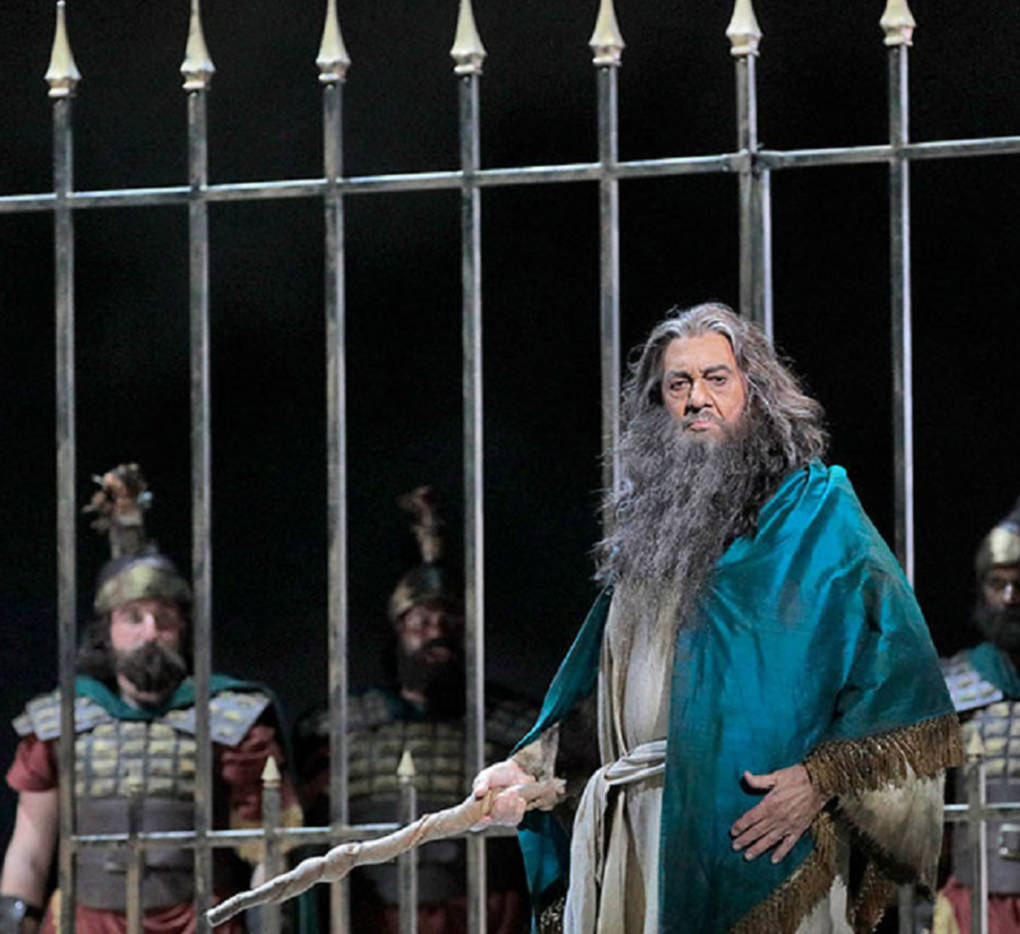
"caption": "Plácido Domingo in LA Opera’s 2017 production of Giuseppe Verdi’s ‘Nabucco.'",
"description": "Plácido Domingo in LA Opera’s 2017 production of Giuseppe Verdi’s ‘Nabucco.'",
"title": "DomingoMain",
"credit": "Ken Howard/LA Opera",
"status": "inherit",
"isLoading": false,
"fetchFailed": false
},
"arts_13815228": {
"type": "attachments",
"id": "arts_13815228",
"meta": {
"index": "attachments_1716263798",
"site": "arts",
"id": "13815228",
"found": true
},
"parent": 13814982,
"imgSizes": {
"small": {
"file": "https://ww2.kqed.org/app/uploads/sites/2/2017/11/DSC_0536-1-520x293.jpg",
"width": 520,
"mimeType": "image/jpeg",
"height": 293
},
"twentyfourteen-full-width": {
"file": "https://ww2.kqed.org/app/uploads/sites/2/2017/11/DSC_0536-1-1038x576.jpg",
"width": 1038,
"mimeType": "image/jpeg",
"height": 576
},
"thumbnail": {
"file": "https://ww2.kqed.org/app/uploads/sites/2/2017/11/DSC_0536-1-160x90.jpg",
"width": 160,
"mimeType": "image/jpeg",
"height": 90
},
"fd-sm": {
"file": "https://ww2.kqed.org/app/uploads/sites/2/2017/11/DSC_0536-1-960x540.jpg",
"width": 960,
"mimeType": "image/jpeg",
"height": 540
},
"post-thumbnail": {
"file": "https://ww2.kqed.org/app/uploads/sites/2/2017/11/DSC_0536-1-672x372.jpg",
"width": 672,
"mimeType": "image/jpeg",
"height": 372
},
"xsmall": {
"file": "https://ww2.kqed.org/app/uploads/sites/2/2017/11/DSC_0536-1-375x211.jpg",
"width": 375,
"mimeType": "image/jpeg",
"height": 211
},
"kqedFullSize": {
"file": "https://ww2.kqed.org/app/uploads/sites/2/2017/11/DSC_0536-1-e1510861163942.jpg",
"width": 1920,
"height": 1080
},
"large": {
"file": "https://ww2.kqed.org/app/uploads/sites/2/2017/11/DSC_0536-1-1020x574.jpg",
"width": 1020,
"mimeType": "image/jpeg",
"height": 574
},
"xlarge": {
"file": "https://ww2.kqed.org/app/uploads/sites/2/2017/11/DSC_0536-1-1180x664.jpg",
"width": 1180,
"mimeType": "image/jpeg",
"height": 664
},
"guest-author-50": {
"file": "https://ww2.kqed.org/app/uploads/sites/2/2017/11/DSC_0536-1-50x50.jpg",
"width": 50,
"mimeType": "image/jpeg",
"height": 50
},
"guest-author-96": {
"file": "https://ww2.kqed.org/app/uploads/sites/2/2017/11/DSC_0536-1-96x96.jpg",
"width": 96,
"mimeType": "image/jpeg",
"height": 96
},
"medium": {
"file": "https://ww2.kqed.org/app/uploads/sites/2/2017/11/DSC_0536-1-800x450.jpg",
"width": 800,
"mimeType": "image/jpeg",
"height": 450
},
"guest-author-64": {
"file": "https://ww2.kqed.org/app/uploads/sites/2/2017/11/DSC_0536-1-64x64.jpg",
"width": 64,
"mimeType": "image/jpeg",
"height": 64
},
"guest-author-32": {
"file": "https://ww2.kqed.org/app/uploads/sites/2/2017/11/DSC_0536-1-32x32.jpg",
"width": 32,
"mimeType": "image/jpeg",
"height": 32
},
"fd-lrg": {
"file": "https://ww2.kqed.org/app/uploads/sites/2/2017/11/DSC_0536-1-1920x1080.jpg",
"width": 1920,
"mimeType": "image/jpeg",
"height": 1080
},
"fd-med": {
"file": "https://ww2.kqed.org/app/uploads/sites/2/2017/11/DSC_0536-1-1180x664.jpg",
"width": 1180,
"mimeType": "image/jpeg",
"height": 664
},
"full-width": {
"file": "https://ww2.kqed.org/app/uploads/sites/2/2017/11/DSC_0536-1-1920x1080.jpg",
"width": 1920,
"mimeType": "image/jpeg",
"height": 1080
},
"detail": {
"file": "https://ww2.kqed.org/app/uploads/sites/2/2017/11/DSC_0536-1-150x150.jpg",
"width": 150,
"mimeType": "image/jpeg",
"height": 150
},
"medium_large": {
"file": "https://ww2.kqed.org/app/uploads/sites/2/2017/11/DSC_0536-1-768x432.jpg",
"width": 768,
"mimeType": "image/jpeg",
"height": 432
},
"guest-author-128": {
"file": "https://ww2.kqed.org/app/uploads/sites/2/2017/11/DSC_0536-1-128x128.jpg",
"width": 128,
"mimeType": "image/jpeg",
"height": 128
},
"xxsmall": {
"file": "https://ww2.kqed.org/app/uploads/sites/2/2017/11/DSC_0536-1-240x135.jpg",
"width": 240,
"mimeType": "image/jpeg",
"height": 135
}
},
"publishDate": 1510861133,
"modified": 1510861260,
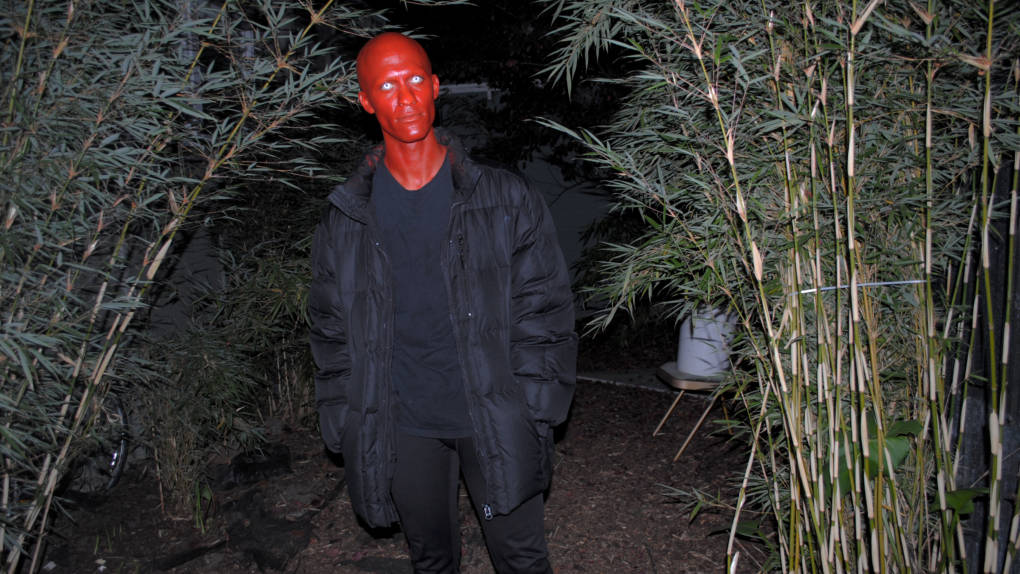
"caption": "Tyler Holmes' eclectic, DIY brand of electronic music is as off-kilter as their daring makeup looks. ",
"description": "Tyler Holmes' eclectic, DIY brand of electronic music is as off-kilter as their daring makeup looks. ",
"title": "DSC_0536",
"credit": "Nastia Voynovskaya",
"status": "inherit",
"isLoading": false,
"fetchFailed": false
},
"arts_13815244": {
"type": "attachments",
"id": "arts_13815244",
"meta": {
"index": "attachments_1716263798",
"site": "arts",
"id": "13815244",
"found": true
},
"parent": 13815164,
"imgSizes": {
"small": {
"file": "https://ww2.kqed.org/app/uploads/sites/2/2017/11/Chuck-Mosley-FB-520x293.jpg",
"width": 520,
"mimeType": "image/jpeg",
"height": 293
},
"twentyfourteen-full-width": {
"file": "https://ww2.kqed.org/app/uploads/sites/2/2017/11/Chuck-Mosley-FB-1038x576.jpg",
"width": 1038,
"mimeType": "image/jpeg",
"height": 576
},
"thumbnail": {
"file": "https://ww2.kqed.org/app/uploads/sites/2/2017/11/Chuck-Mosley-FB-160x90.jpg",
"width": 160,
"mimeType": "image/jpeg",
"height": 90
},
"fd-sm": {
"file": "https://ww2.kqed.org/app/uploads/sites/2/2017/11/Chuck-Mosley-FB-960x540.jpg",
"width": 960,
"mimeType": "image/jpeg",
"height": 540
},
"post-thumbnail": {
"file": "https://ww2.kqed.org/app/uploads/sites/2/2017/11/Chuck-Mosley-FB-672x372.jpg",
"width": 672,
"mimeType": "image/jpeg",
"height": 372
},
"xsmall": {
"file": "https://ww2.kqed.org/app/uploads/sites/2/2017/11/Chuck-Mosley-FB-375x211.jpg",
"width": 375,
"mimeType": "image/jpeg",
"height": 211
},
"kqedFullSize": {
"file": "https://ww2.kqed.org/app/uploads/sites/2/2017/11/Chuck-Mosley-FB.jpg",
"width": 1920,
"height": 1080
},
"large": {
"file": "https://ww2.kqed.org/app/uploads/sites/2/2017/11/Chuck-Mosley-FB-1020x574.jpg",
"width": 1020,
"mimeType": "image/jpeg",
"height": 574
},
"xlarge": {
"file": "https://ww2.kqed.org/app/uploads/sites/2/2017/11/Chuck-Mosley-FB-1180x664.jpg",
"width": 1180,
"mimeType": "image/jpeg",
"height": 664
},
"guest-author-50": {
"file": "https://ww2.kqed.org/app/uploads/sites/2/2017/11/Chuck-Mosley-FB-50x50.jpg",
"width": 50,
"mimeType": "image/jpeg",
"height": 50
},
"guest-author-96": {
"file": "https://ww2.kqed.org/app/uploads/sites/2/2017/11/Chuck-Mosley-FB-96x96.jpg",
"width": 96,
"mimeType": "image/jpeg",
"height": 96
},
"medium": {
"file": "https://ww2.kqed.org/app/uploads/sites/2/2017/11/Chuck-Mosley-FB-800x450.jpg",
"width": 800,
"mimeType": "image/jpeg",
"height": 450
},
"guest-author-64": {
"file": "https://ww2.kqed.org/app/uploads/sites/2/2017/11/Chuck-Mosley-FB-64x64.jpg",
"width": 64,
"mimeType": "image/jpeg",
"height": 64
},
"guest-author-32": {
"file": "https://ww2.kqed.org/app/uploads/sites/2/2017/11/Chuck-Mosley-FB-32x32.jpg",
"width": 32,
"mimeType": "image/jpeg",
"height": 32
},
"fd-lrg": {
"file": "https://ww2.kqed.org/app/uploads/sites/2/2017/11/Chuck-Mosley-FB-1920x1080.jpg",
"width": 1920,
"mimeType": "image/jpeg",
"height": 1080
},
"fd-med": {
"file": "https://ww2.kqed.org/app/uploads/sites/2/2017/11/Chuck-Mosley-FB-1180x664.jpg",
"width": 1180,
"mimeType": "image/jpeg",
"height": 664
},
"full-width": {
"file": "https://ww2.kqed.org/app/uploads/sites/2/2017/11/Chuck-Mosley-FB-1920x1080.jpg",
"width": 1920,
"mimeType": "image/jpeg",
"height": 1080
},
"detail": {
"file": "https://ww2.kqed.org/app/uploads/sites/2/2017/11/Chuck-Mosley-FB-150x150.jpg",
"width": 150,
"mimeType": "image/jpeg",
"height": 150
},
"medium_large": {
"file": "https://ww2.kqed.org/app/uploads/sites/2/2017/11/Chuck-Mosley-FB-768x432.jpg",
"width": 768,
"mimeType": "image/jpeg",
"height": 432
},
"guest-author-128": {
"file": "https://ww2.kqed.org/app/uploads/sites/2/2017/11/Chuck-Mosley-FB-128x128.jpg",
"width": 128,
"mimeType": "image/jpeg",
"height": 128
},
"xxsmall": {
"file": "https://ww2.kqed.org/app/uploads/sites/2/2017/11/Chuck-Mosley-FB-240x135.jpg",
"width": 240,
"mimeType": "image/jpeg",
"height": 135
}
},
"publishDate": 1510871239,
"modified": 1510871607,
"caption": "Chuck Mosley in 2013",
"description": "Chuck Mosley in 2013",
"title": "Chuck Mosley FB",
"credit": "via Facebook",
"status": "inherit",
"isLoading": false,
"fetchFailed": false
}
},
"audioPlayerReducer": {
"postId": "stream_live",
"isPaused": true,
"isPlaying": false,
"pfsActive": false,
"pledgeModalIsOpen": true,
"playerDrawerIsOpen": false,
"liveAudioPlayStartedAt": 0,
"liveAudioPlayContext": ""
},
"authorsReducer": {
"byline_arts_13815764": {
"type": "authors",
"id": "byline_arts_13815764",
"meta": {
"override": true
},
"slug": "byline_arts_13815764",
"name": "Lara Pellegrinelli",
"isLoading": false
},
"byline_arts_13815643": {
"type": "authors",
"id": "byline_arts_13815643",
"meta": {
"override": true
},
"slug": "byline_arts_13815643",
"name": "Anastasia Tsioulcas",
"isLoading": false
},
"byline_arts_13815635": {
"type": "authors",
"id": "byline_arts_13815635",
"meta": {
"override": true
},
"slug": "byline_arts_13815635",
"name": "Laurel Wamsley",
"isLoading": false
},
"byline_arts_13815577": {
"type": "authors",
"id": "byline_arts_13815577",
"meta": {
"override": true
},
"slug": "byline_arts_13815577",
"name": "Andrew Flanagan",
"isLoading": false
},
"byline_arts_13815407": {
"type": "authors",
"id": "byline_arts_13815407",
"meta": {
"override": true
},
"slug": "byline_arts_13815407",
"name": "Mark Kennedy, Associated Press",
"isLoading": false
},
"cmusiker": {
"type": "authors",
"id": "32",
"meta": {
"index": "authors_1716337520",
"id": "32",
"found": true
},
"name": "Cy Musiker",
"firstName": "Cy",
"lastName": "Musiker",
"slug": "cmusiker",
"email": "cmusiker@kqed.org",
"display_author_email": false,
"staff_mastheads": [],
"title": "KQED Contributor",
"bio": "Cy Musiker is a former co-host of The Do List and a former reporter covering the arts for KQED News and The California Report. He loves live performance, especially great theater, jazz, roots music, anything by Mahler. Cy has an MJ from UC Berkeley's School of Journalism, and got his BA from Hampshire College. His work has been recognized by the Society for Professional Journalists with their Sigma Delta Chi Award for Public Service in Journalism. When he can, Cy likes to swim in Tomales Bay, run with his dog in the East Bay Hills, and hike the Sierra.",
"avatar": "https://secure.gravatar.com/avatar/05eaba5c5696ce8f062e4ea2df428a43?s=600&d=blank&r=g",
"twitter": null,
"facebook": null,
"instagram": null,
"linkedin": null,
"sites": [
{
"site": "arts",
"roles": [
"Contributor",
"subscriber"
]
},
{
"site": "news",
"roles": [
"author"
]
},
{
"site": "bayareabites",
"roles": [
"contributor"
]
}
],
"headData": {
"title": "Cy Musiker | KQED",
"description": "KQED Contributor",
"ogImgSrc": "https://secure.gravatar.com/avatar/05eaba5c5696ce8f062e4ea2df428a43?s=600&d=blank&r=g",
"twImgSrc": "https://secure.gravatar.com/avatar/05eaba5c5696ce8f062e4ea2df428a43?s=600&d=blank&r=g"
},
"isLoading": false,
"link": "/author/cmusiker"
},
"kjones": {
"type": "authors",
"id": "93",
"meta": {
"index": "authors_1716337520",
"id": "93",
"found": true
},
"name": "Kevin L. Jones",
"firstName": "Kevin",
"lastName": "Jones",
"slug": "kjones",
"email": "kjones@kqed.org",
"display_author_email": false,
"staff_mastheads": [],
"title": null,
"bio": null,
"avatar": "https://secure.gravatar.com/avatar/12c65b5633ed39d0a59bb7f497eff645?s=600&d=blank&r=g",
"twitter": null,
"facebook": null,
"instagram": null,
"linkedin": null,
"sites": [
{
"site": "arts",
"roles": [
"subscriber"
]
},
{
"site": "styleguide",
"roles": [
"contributor"
]
},
{
"site": "artschool",
"roles": [
"subscriber"
]
},
{
"site": "news",
"roles": [
"subscriber"
]
},
{
"site": "pop",
"roles": [
"subscriber"
]
}
],
"headData": {
"title": "Kevin L. Jones | KQED",
"description": null,
"ogImgSrc": "https://secure.gravatar.com/avatar/12c65b5633ed39d0a59bb7f497eff645?s=600&d=blank&r=g",
"twImgSrc": "https://secure.gravatar.com/avatar/12c65b5633ed39d0a59bb7f497eff645?s=600&d=blank&r=g"
},
"isLoading": false,
"link": "/author/kjones"
},
"scuevas": {
"type": "authors",
"id": "2600",
"meta": {
"index": "authors_1716337520",
"id": "2600",
"found": true
},
"name": "Steven Cuevas",
"firstName": "Steven",
"lastName": "Cuevas",
"slug": "scuevas",
"email": "scuevas@kqed.org",
"display_author_email": false,
"staff_mastheads": [],
"title": "KQED Contributor",
"bio": "Steven is a former Los Angeles bureau chief for The California Report.\r\n\r\nHe reports on an array of issues across the Southland, from immigration and regional politics to religion, the performing arts and pop culture.\r\n\r\nPrior to joining KQED in 2012, Steven covered Inland southern California for KPCC in Pasadena. He also helped establish the first newsroom at \u003ca href=\"http://kut.org/\">KUT\u003c/a> in Austin, Texas where he was a general assignment reporter.\r\n\r\nSteven has received numerous awards for his reporting including an RTNDA Edward R. Murrow Award for investigative reporting in addition to awards from the LA Press Club, the Associated Press and the Society for Professional Journalists.\r\n\r\nSteven grew up in and around San Francisco and now lives in Pasadena just a short jog from the foot of the San Gabriel Mountains.",
"avatar": "https://secure.gravatar.com/avatar/2d253580794f8e026100fae05cfabbbd4889b4fe15146146cacb82a01974c538?s=600&d=blank&r=g",
"twitter": null,
"bluesky": null,
"facebook": null,
"instagram": null,
"linkedin": null,
"sites": [
{
"site": "news",
"roles": [
"subscriber"
]
}
],
"headData": {
"title": "Steven Cuevas | KQED",
"description": "KQED Contributor",
"ogImgSrc": "https://secure.gravatar.com/avatar/2d253580794f8e026100fae05cfabbbd4889b4fe15146146cacb82a01974c538?s=600&d=blank&r=g",
"twImgSrc": "https://secure.gravatar.com/avatar/2d253580794f8e026100fae05cfabbbd4889b4fe15146146cacb82a01974c538?s=600&d=blank&r=g"
},
"isLoading": false,
"link": "/author/scuevas"
},
"jbote": {
"type": "authors",
"id": "11371",
"meta": {
"index": "authors_1716337520",
"id": "11371",
"found": true
},
"name": "Joshua Bote",
"firstName": "Joshua",
"lastName": "Bote",
"slug": "jbote",
"email": "jbote@kqed.org",
"display_author_email": false,
"staff_mastheads": [],
"title": null,
"bio": "\u003cp class=\"p1\">Joshua Bote is an intern for KQED Arts. A senior at UC Berkeley, Joshua previously served as the Arts & Entertainment Editor at \u003ci>The Daily Californian\u003c/i>, UC Berkeley’s independently-run student newspaper. His work has been published in the \u003cem>East Bay Express.\u003c/em>\u003c/p>\r\n\u003cp class=\"p1\">He’s deeply enamored with Twitter culture, Carly Rae Jepsen, and love-oriented podcasts. He's also slowly learning to appreciate bad award shows. Follow him on Twitter \u003ca href=\"http://twitter.com/joshuaboat\">@joshuaboat\u003c/a>.\u003c/p>",
"avatar": "https://secure.gravatar.com/avatar/f060759cb27bc8b191022334ab99fc5a?s=600&d=blank&r=g",
"twitter": null,
"facebook": null,
"instagram": null,
"linkedin": null,
"sites": [
{
"site": "arts",
"roles": [
"author"
]
}
],
"headData": {
"title": "Joshua Bote | KQED",
"description": null,
"ogImgSrc": "https://secure.gravatar.com/avatar/f060759cb27bc8b191022334ab99fc5a?s=600&d=blank&r=g",
"twImgSrc": "https://secure.gravatar.com/avatar/f060759cb27bc8b191022334ab99fc5a?s=600&d=blank&r=g"
},
"isLoading": false,
"link": "/author/jbote"
},
"nvoynovskaya": {
"type": "authors",
"id": "11387",
"meta": {
"index": "authors_1716337520",
"id": "11387",
"found": true
},
"name": "Nastia Voynovskaya",
"firstName": "Nastia",
"lastName": "Voynovskaya",
"slug": "nvoynovskaya",
"email": "nvoynovskaya@kqed.org",
"display_author_email": false,
"staff_mastheads": [
"arts"
],
"title": "Editor and reporter",
"bio": "Nastia Voynovskaya is a reporter, editor and host at KQED Arts & Culture. She's been covering the arts in the Bay Area for over a decade, with a focus on music, queer culture, labor issues and grassroots organizing. She has edited KQED story series such as Trans Bay: A History of San Francisco's Gender-Diverse Community, and co-created KQED's Bay Area hip-hop history project, That's My Word. Nastia's work has been recognized by the Society of Professional Journalists and San Francisco Press Club. She regularly appears on podcasts and radio programs, including NPR's All Songs Considered, and hosts live events where music, culture and conversation meet.",
"avatar": "https://secure.gravatar.com/avatar/5025ee460e5a85d69ca20ea6c6f2f80d7e17795c828f61ea3aecfcd924e9042e?s=600&d=blank&r=g",
"twitter": null,
"bluesky": null,
"facebook": null,
"instagram": "https://www.instagram.com/nananastia/",
"linkedin": null,
"sites": [
{
"site": "",
"roles": [
"editor"
]
},
{
"site": "arts",
"roles": [
"administrator"
]
},
{
"site": "news",
"roles": [
"editor"
]
},
{
"site": "pop",
"roles": [
"administrator"
]
},
{
"site": "bayareabites",
"roles": [
"editor"
]
},
{
"site": "podcasts",
"roles": [
"editor"
]
},
{
"site": "hiphop",
"roles": [
"editor"
]
}
],
"headData": {
"title": "Nastia Voynovskaya | KQED",
"description": "Editor and reporter",
"ogImgSrc": "https://secure.gravatar.com/avatar/5025ee460e5a85d69ca20ea6c6f2f80d7e17795c828f61ea3aecfcd924e9042e?s=600&d=blank&r=g",
"twImgSrc": "https://secure.gravatar.com/avatar/5025ee460e5a85d69ca20ea6c6f2f80d7e17795c828f61ea3aecfcd924e9042e?s=600&d=blank&r=g"
},
"isLoading": false,
"link": "/author/nvoynovskaya"
}
},
"pagesReducer": {
"arts_category_music": {
"type": "terms",
"id": "arts_69",
"meta": {
"index": "terms_1716263798",
"site": "arts",
"id": "69",
"score": 10.851903
},
"featImg": null,
"name": "Music",
"description": null,
"taxonomy": "category",
"headData": {
"twImgId": null,
"twTitle": null,
"ogTitle": null,
"ogImgId": null,
"twDescription": null,
"description": null,
"title": "Music Archives | KQED Arts",
"ogDescription": null
},
"ttid": 70,
"slug": "music",
"isLoading": false,
"title": "Music",
"pageMeta": {
"site": "arts",
"WpPageTemplate": "page-topic-editorial",
"currentPage": 208
},
"blocks": [
{
"blockName": "kqed/post-list",
"attrs": {
"layout": "cardArticle2",
"query": "posts/arts?category=music",
"seeMore": false,
"paginated": true,
"page": 208
}
},
{
"blockName": "kqed/ad"
}
]
}
},
"pfsSessionReducer": {},
"postsReducer": {
"stream_live": {
"type": "live",
"id": "stream_live",
"audioUrl": "https://streams.kqed.org/kqedradio",
"title": "Live Stream",
"excerpt": "Live Stream information currently unavailable.",
"link": "/radio",
"featImg": "",
"label": {
"name": "KQED Live",
"link": "/"
}
},
"stream_kqedNewscast": {
"type": "posts",
"id": "stream_kqedNewscast",
"audioUrl": "https://www.kqed.org/.stream/anon/radio/RDnews/newscast.mp3?_=1",
"title": "KQED Newscast",
"featImg": "",
"label": {
"name": "88.5 FM",
"link": "/"
}
},
"arts_13815764": {
"type": "posts",
"id": "arts_13815764",
"meta": {
"index": "posts_1716263798",
"site": "arts",
"id": "13815764",
"score": null,
"sort": [
1511395643000
]
},
"parent": 0,
"labelTerm": {
"site": "arts",
"term": 137
},
"blocks": [],
"publishDate": 1511395643,
"format": "standard",
"title": "Jon Hendricks, Genre-Pushing Jazz Vocalist, Dead at 96",
"headTitle": "Jon Hendricks, Genre-Pushing Jazz Vocalist, Dead at 96 | KQED",
"content": "\u003cp>\u003ca href=\"http://www.npr.org/artists/17931003/jon-hendricks\" target=\"_blank\" rel=\"noopener\">Jon Hendricks\u003c/a>, the singer and songwriter who \u003cem>Time\u003c/em> Magazine called the “James Joyce of jive,” died today in New York at the age of 96. Hendricks was best known for his work in the pioneering vocal jazz trio Lambert, Hendricks and Ross. His death was confirmed by fellow singer and composer Kurt Elling and Hendricks’ publicist, Don Lucoff.\u003c/p>\n\u003cp>First and foremost, he was a storyteller: funny, dexterous with language and erudite. Jon Hendricks could reference practically anything in his lyrics – from the controversy over Shakespeare’s identity to the Spanish Civil War – and make them swing.\u003c/p>\n\u003cp>Still, he’ll be remembered best for his mini-oral histories of the jazz world — like his lyrics for Count Basie’s 1930’s classic “Jumpin’ at the Woodside.”\u003c/p>\n\u003cp>“The Woodside is a hotel on 125th [St.] and 8th Avenue,” Hendricks \u003ca href=\"http://www.npr.org/2011/09/16/140532273/john-hendricks-the-father-of-vocalese-at-90\" target=\"_blank\" rel=\"noopener\">told NPR\u003c/a> in 2011. “Everybody stayed there because you didn’t have to go to bed at nine or 10. You could have jam session at 3 a.m. Old vaudevillians and musicians ran the hotel, the man and his wife. And so I told that story.”\u003c/p>\n\u003cp>Like his idol, the poet Paul Lawrence Dunbar, Hendricks penned folk poetry. Only he chose his words to mimic the sounds of instruments, fitting texts not just to melodies, but the most technically demanding jazz solos.\u003c/p>\n\u003cp>[ad fullwidth]\u003c/p>\n\u003cp>“Who would think to do a lyric for the John Coltrane, for any John Coltrane solo? That’s highly complex music,” said the late singer Al Jarreau, talking to NPR \u003ca href=\"http://www.npr.org/sections/ablogsupreme/2011/09/16/140533374/voices-al-jarreau-on-jon-hendricks\" target=\"_blank\" rel=\"noopener\">in 2011\u003c/a>. Jarreau sang with Hendricks on his 1990 album \u003cem>Freddie Freeloader\u003c/em>.\u003c/p>\n\u003cp>“Similarly, there’s very highly complex music in the Basie book, very highly complex music in the Miles [Davis] book,” Jarreau continued. “And to have the idea that yes, I can write a lyric for this stuff that makes sense and I’ll even sing the solos, the great classic solos — just wild.”\u003c/p>\n\u003cp>Jon Carl Hendricks was born in Newark, Ohio in 1921, the son of a minister and one of 14 children.\u003c/p>\n\u003cp>“I was always precocious about English language and the King James Bible especially,” Hendricks told NPR, “because my job in my family was to assist my father and look up in the King James whatever he wanted to use as a text for his sermon that Sunday.”\u003c/p>\n\u003cp>As a youngster, Hendricks performed with piano virtuoso Art Tatum. He studied law on the G.I. Bill after World War II, but abandoned jurisprudence for jazz at the suggestion of legend Charlie Parker. He moved to New York City and supported himself ghostwriting lyrics for Tin Pan Alley, until he found a kindred spirit.\u003c/p>\n\u003cp>“Dave Lambert and I were looking for something to do before we died. Before we starved death!” Hendricks recalled. “That’s literally true. Dave said, ‘We both like Basie. Why don’t you write lyrics to four Basie tunes and we’ll take them uptown and sell them as an album?'”\u003c/p>\n\u003cp>They did. \u003cem>Sing a Song of Basie\u003c/em> became a hit in 1957. And, with the addition of singer Annie Ross, the trio Lambert, Hendricks, and Ross was voted the most popular vocal group in the world for the next five years by readers of \u003cem>Melody Maker\u003c/em> Magazine.\u003c/p>\n\u003cp>After they split up in 1962, Hendricks turned up in some unlikely places: as the lyricist for the No. 1 hit \u003ca href=\"https://www.youtube.com/watch?v=jf-cCL3TOCo\">“Yeh Yeh”\u003c/a> by British R&B singer Georgie Fame and singing about race riots with a fledgling rock band called The Warlocks — soon rechristened the Grateful Dead.\u003c/p>\n\u003cp>Hendricks worked as a music critic, taught college and wrote for the theater, singing with family groups that sometimes included young talents—among them singer Bobby McFerrin. In 1985, Hendricks collaborated with The Manhattan Transfer on their album \u003cem>Vocalese\u003c/em>, for which they won seven Grammy Awards.\u003c/p>\n\u003cp>Jon Hendricks was a professor of Jazz at the University of Toledo, where he previously studied law. An NEA Jazz Master, he served on the Kennedy Center Honors committee under three presidents.\u003c/p>\n\u003cp>A reunion with Annie Ross in 2000, during the revival of the swing style, introduced him to a new generation. He continued performing almost to the end of his life. But one thing Hendricks seldom did was sing other writer’s lyrics.\u003c/p>\n\u003cp>“Jon Hendricks always will be the greatest of jazz lyricists,” says Kurt Elling, in a statement on the news. “I can’t imagine him being surprised that his wife Judith thought of him as a mystical offspring of William Shakespeare.”\u003c/p>\n\u003cp>Asked why he wasn’t content to sing the words of other people, Hendricks would point to the discrimination against African-Americans in Tin Pan Alley. That, and one minor flaw he saw in the pop songs of the day: “Well, they weren’t deep enough for me. They didn’t go deep enough.”\u003c/p>\n\u003cp>\u003c/p>\n\u003cp>Fortunately, Jon Hendricks did. \u003c/p>\n\u003cdiv class=\"fullattribution\">Copyright 2017 NPR. To see more, visit http://www.npr.org/.\u003cimg decoding=\"async\" src=\"https://www.google-analytics.com/__utm.gif?utmac=UA-5828686-4&utmdt=Jon+Hendricks%2C+Genre-Pushing+Jazz+Vocalist%2C+Dead+At+96&utme=8(APIKey)9(MDAxOTAwOTE4MDEyMTkxMDAzNjczZDljZA004)\">\u003c/div>\n\n",
"stats": {
"hasVideo": false,
"hasChartOrMap": false,
"hasAudio": false,
"hasPolis": false,
"wordCount": 870,
"hasGoogleForm": false,
"hasGallery": false,
"hasHearkenModule": false,
"iframeSrcs": [],
"paragraphCount": 21
},
"modified": 1705029055,
"excerpt": "The jazz singer and songwriter died Wednesday in Manhattan at the age of 96.",
"headData": {
"twImgId": "",
"twTitle": "",
"ogTitle": "",
"ogImgId": "",
"twDescription": "",
"description": "The jazz singer and songwriter died Wednesday in Manhattan at the age of 96.",
"title": "Jon Hendricks, Genre-Pushing Jazz Vocalist, Dead at 96 | KQED",
"ogDescription": "",
"schema": {
"@context": "https://schema.org",
"@type": "Article",
"headline": "Jon Hendricks, Genre-Pushing Jazz Vocalist, Dead at 96",
"datePublished": "2017-11-22T16:07:23-08:00",
"dateModified": "2024-01-11T19:10:55-08:00",
"image": "https://cdn.kqed.org/wp-content/uploads/2020/02/KQED-OG-Image@1x.png"
}
},
"guestAuthors": [],
"slug": "jon-hendricks-genre-pushing-jazz-vocalist-dead-at-96",
"status": "publish",
"nprApiLink": "http://api.npr.org/query?id=529907015&apiKey=MDAxOTAwOTE4MDEyMTkxMDAzNjczZDljZA004",
"nprByline": "Lara Pellegrinelli",
"nprStoryDate": "Wed, 22 Nov 2017 17:22:26 -0500",
"nprLastModifiedDate": "Wed, 22 Nov 2017 18:13:20 -0500",
"sticky": false,
"nprHtmlLink": "https://www.npr.org/sections/therecord/2017/11/22/529907015/jon-hendricks-genre-pushing-jazz-vocalist-dead-at-96?ft=nprml&f=529907015",
"nprImageAgency": "Getty Images",
"nprImageCredit": "Keystone",
"nprStoryId": "529907015",
"nprRetrievedStory": "1",
"nprPubDate": "Wed, 22 Nov 2017 18:13:00 -0500",
"path": "/arts/13815764/jon-hendricks-genre-pushing-jazz-vocalist-dead-at-96",
"audioTrackLength": null,
"parsedContent": [
{
"type": "contentString",
"content": "\u003cdiv class=\"post-body\">\u003cp>\u003cp>\u003ca href=\"http://www.npr.org/artists/17931003/jon-hendricks\" target=\"_blank\" rel=\"noopener\">Jon Hendricks\u003c/a>, the singer and songwriter who \u003cem>Time\u003c/em> Magazine called the “James Joyce of jive,” died today in New York at the age of 96. Hendricks was best known for his work in the pioneering vocal jazz trio Lambert, Hendricks and Ross. His death was confirmed by fellow singer and composer Kurt Elling and Hendricks’ publicist, Don Lucoff.\u003c/p>\n\u003cp>First and foremost, he was a storyteller: funny, dexterous with language and erudite. Jon Hendricks could reference practically anything in his lyrics – from the controversy over Shakespeare’s identity to the Spanish Civil War – and make them swing.\u003c/p>\n\u003cp>Still, he’ll be remembered best for his mini-oral histories of the jazz world — like his lyrics for Count Basie’s 1930’s classic “Jumpin’ at the Woodside.”\u003c/p>\n\u003cp>“The Woodside is a hotel on 125th [St.] and 8th Avenue,” Hendricks \u003ca href=\"http://www.npr.org/2011/09/16/140532273/john-hendricks-the-father-of-vocalese-at-90\" target=\"_blank\" rel=\"noopener\">told NPR\u003c/a> in 2011. “Everybody stayed there because you didn’t have to go to bed at nine or 10. You could have jam session at 3 a.m. Old vaudevillians and musicians ran the hotel, the man and his wife. And so I told that story.”\u003c/p>\n\u003cp>Like his idol, the poet Paul Lawrence Dunbar, Hendricks penned folk poetry. Only he chose his words to mimic the sounds of instruments, fitting texts not just to melodies, but the most technically demanding jazz solos.\u003c/p>\n\u003cp>\u003c/p>\u003c/div>",
"attributes": {
"named": {},
"numeric": []
}
},
{
"type": "component",
"content": "",
"name": "ad",
"attributes": {
"named": {
"label": "fullwidth"
},
"numeric": [
"fullwidth"
]
}
},
{
"type": "contentString",
"content": "\u003cdiv class=\"post-body\">\u003cp>\u003c/p>\n\u003cp>“Who would think to do a lyric for the John Coltrane, for any John Coltrane solo? That’s highly complex music,” said the late singer Al Jarreau, talking to NPR \u003ca href=\"http://www.npr.org/sections/ablogsupreme/2011/09/16/140533374/voices-al-jarreau-on-jon-hendricks\" target=\"_blank\" rel=\"noopener\">in 2011\u003c/a>. Jarreau sang with Hendricks on his 1990 album \u003cem>Freddie Freeloader\u003c/em>.\u003c/p>\n\u003cp>“Similarly, there’s very highly complex music in the Basie book, very highly complex music in the Miles [Davis] book,” Jarreau continued. “And to have the idea that yes, I can write a lyric for this stuff that makes sense and I’ll even sing the solos, the great classic solos — just wild.”\u003c/p>\n\u003cp>Jon Carl Hendricks was born in Newark, Ohio in 1921, the son of a minister and one of 14 children.\u003c/p>\n\u003cp>“I was always precocious about English language and the King James Bible especially,” Hendricks told NPR, “because my job in my family was to assist my father and look up in the King James whatever he wanted to use as a text for his sermon that Sunday.”\u003c/p>\n\u003cp>As a youngster, Hendricks performed with piano virtuoso Art Tatum. He studied law on the G.I. Bill after World War II, but abandoned jurisprudence for jazz at the suggestion of legend Charlie Parker. He moved to New York City and supported himself ghostwriting lyrics for Tin Pan Alley, until he found a kindred spirit.\u003c/p>\n\u003cp>“Dave Lambert and I were looking for something to do before we died. Before we starved death!” Hendricks recalled. “That’s literally true. Dave said, ‘We both like Basie. Why don’t you write lyrics to four Basie tunes and we’ll take them uptown and sell them as an album?'”\u003c/p>\n\u003cp>They did. \u003cem>Sing a Song of Basie\u003c/em> became a hit in 1957. And, with the addition of singer Annie Ross, the trio Lambert, Hendricks, and Ross was voted the most popular vocal group in the world for the next five years by readers of \u003cem>Melody Maker\u003c/em> Magazine.\u003c/p>\n\u003cp>After they split up in 1962, Hendricks turned up in some unlikely places: as the lyricist for the No. 1 hit \u003ca href=\"https://www.youtube.com/watch?v=jf-cCL3TOCo\">“Yeh Yeh”\u003c/a> by British R&B singer Georgie Fame and singing about race riots with a fledgling rock band called The Warlocks — soon rechristened the Grateful Dead.\u003c/p>\n\u003cp>Hendricks worked as a music critic, taught college and wrote for the theater, singing with family groups that sometimes included young talents—among them singer Bobby McFerrin. In 1985, Hendricks collaborated with The Manhattan Transfer on their album \u003cem>Vocalese\u003c/em>, for which they won seven Grammy Awards.\u003c/p>\n\u003cp>Jon Hendricks was a professor of Jazz at the University of Toledo, where he previously studied law. An NEA Jazz Master, he served on the Kennedy Center Honors committee under three presidents.\u003c/p>\n\u003cp>A reunion with Annie Ross in 2000, during the revival of the swing style, introduced him to a new generation. He continued performing almost to the end of his life. But one thing Hendricks seldom did was sing other writer’s lyrics.\u003c/p>\n\u003cp>“Jon Hendricks always will be the greatest of jazz lyricists,” says Kurt Elling, in a statement on the news. “I can’t imagine him being surprised that his wife Judith thought of him as a mystical offspring of William Shakespeare.”\u003c/p>\n\u003cp>Asked why he wasn’t content to sing the words of other people, Hendricks would point to the discrimination against African-Americans in Tin Pan Alley. That, and one minor flaw he saw in the pop songs of the day: “Well, they weren’t deep enough for me. They didn’t go deep enough.”\u003c/p>\n\u003cp>\u003c/p>\n\u003cp>Fortunately, Jon Hendricks did. \u003c/p>\n\u003cdiv class=\"fullattribution\">Copyright 2017 NPR. To see more, visit http://www.npr.org/.\u003cimg decoding=\"async\" src=\"https://www.google-analytics.com/__utm.gif?utmac=UA-5828686-4&utmdt=Jon+Hendricks%2C+Genre-Pushing+Jazz+Vocalist%2C+Dead+At+96&utme=8(APIKey)9(MDAxOTAwOTE4MDEyMTkxMDAzNjczZDljZA004)\">\u003c/div>\n\n\u003c/div>\u003c/p>",
"attributes": {
"named": {},
"numeric": []
}
}
],
"link": "/arts/13815764/jon-hendricks-genre-pushing-jazz-vocalist-dead-at-96",
"authors": [
"byline_arts_13815764"
],
"categories": [
"arts_69",
"arts_235"
],
"tags": [
"arts_1254",
"arts_596"
],
"affiliates": [
"arts_137"
],
"featImg": "arts_13815765",
"label": "arts_137"
},
"arts_13815744": {
"type": "posts",
"id": "arts_13815744",
"meta": {
"index": "posts_1716263798",
"site": "arts",
"id": "13815744",
"score": null,
"sort": [
1511393361000
]
},
"guestAuthors": [],
"slug": "pop-songstress-from-north-bay-returns-for-fire-benefit-in-sonoma",
"title": "Pop Songstress from North Bay Returns for Fire Benefit in Sonoma",
"publishDate": 1511393361,
"format": "standard",
"headTitle": "Pop Songstress from North Bay Returns for Fire Benefit in Sonoma | KQED",
"labelTerm": {
"term": 140,
"site": "arts"
},
"content": "\u003cp>Teens suffered the same traumas as their parents during the North Bay Fires. They too lost their homes, their possessions, the places they love the most, even if they hated life in a small town. Olivia O’Brien, the 17-year-old songstress, can relate. O’Brien lives in Los Angeles now, but she grew up in Napa, and she doesn’t have many fond memories of the city. She says she was bullied by other kids, but she was still heartbroken when she heard about the fire.\u003c/p>\n\u003cp>“The one thing I really loved was the scenery, the vineyards the hills,” she told me by phone after a recording session. “If I was feeling sad, I could just take a drive up into the hills, up on Partrick Road, and it would just always make me feel better. So when I heard about the fire, the most devastating thing for me was all that beautiful stuff had burned down.”\u003c/p>\n\u003cp>Gundlach Bundschu Winery President Jeff Bundschu has booked O’Brien for an all ages fire benefit concert at the winery’s Redwood Barn. The little 200-seat music hall should fill up fast.\u003ca href=\"http://www.gunbun.com/event/olivia-obrien-north-bay-fire-relief-benefit-concert/\" target=\"_blank\" rel=\"noopener\"> Details here.\u003c/a>\u003c/p>\n\u003cp>https://www.youtube.com/watch?v=Th0btDcWHqQ\u003c/p>\n\u003cp>[ad fullwidth]\u003c/p>\u003cp>\u003c/p>\n",
"blocks": [],
"excerpt": "Napa born teen songstress Olivia O'Brien plays a fire benefit at Gundlach Bundschu's Redwood Barn ",
"status": "publish",
"parent": 0,
"modified": 1726781963,
"stats": {
"hasAudio": false,
"hasVideo": true,
"hasChartOrMap": false,
"iframeSrcs": [],
"hasGoogleForm": false,
"hasGallery": false,
"hasHearkenModule": false,
"hasPolis": false,
"paragraphCount": 5,
"wordCount": 212
},
"headData": {
"title": "Pop Songstress from North Bay Returns for Fire Benefit in Sonoma | KQED",
"description": "Napa born teen songstress Olivia O'Brien plays a fire benefit at Gundlach Bundschu's Redwood Barn ",
"ogTitle": "",
"ogDescription": "",
"ogImgId": "",
"twTitle": "",
"twDescription": "",
"twImgId": "",
"schema": {
"@context": "https://schema.org",
"@type": "Article",
"headline": "Pop Songstress from North Bay Returns for Fire Benefit in Sonoma",
"datePublished": "2017-11-22T15:29:21-08:00",
"dateModified": "2024-09-19T14:39:23-07:00",
"image": "https://cdn.kqed.org/wp-content/uploads/2020/02/KQED-OG-Image@1x.png"
}
},
"sticky": false,
"path": "/arts/13815744/pop-songstress-from-north-bay-returns-for-fire-benefit-in-sonoma",
"audioTrackLength": null,
"parsedContent": [
{
"type": "contentString",
"content": "\u003cdiv class=\"post-body\">\u003cp>\u003cp>Teens suffered the same traumas as their parents during the North Bay Fires. They too lost their homes, their possessions, the places they love the most, even if they hated life in a small town. Olivia O’Brien, the 17-year-old songstress, can relate. O’Brien lives in Los Angeles now, but she grew up in Napa, and she doesn’t have many fond memories of the city. She says she was bullied by other kids, but she was still heartbroken when she heard about the fire.\u003c/p>\n\u003cp>“The one thing I really loved was the scenery, the vineyards the hills,” she told me by phone after a recording session. “If I was feeling sad, I could just take a drive up into the hills, up on Partrick Road, and it would just always make me feel better. So when I heard about the fire, the most devastating thing for me was all that beautiful stuff had burned down.”\u003c/p>\n\u003cp>Gundlach Bundschu Winery President Jeff Bundschu has booked O’Brien for an all ages fire benefit concert at the winery’s Redwood Barn. The little 200-seat music hall should fill up fast.\u003ca href=\"http://www.gunbun.com/event/olivia-obrien-north-bay-fire-relief-benefit-concert/\" target=\"_blank\" rel=\"noopener\"> Details here.\u003c/a>\u003c/p>\u003c/p>\u003cp>\u003cspan class='utils-parseShortcode-shortcodes-__youtubeShortcode__embedYoutube'>\n \u003cspan class='utils-parseShortcode-shortcodes-__youtubeShortcode__embedYoutubeInside'>\n \u003ciframe\n loading='lazy'\n class='utils-parseShortcode-shortcodes-__youtubeShortcode__youtubePlayer'\n type='text/html'\n src='//www.youtube.com/embed/Th0btDcWHqQ'\n title='//www.youtube.com/embed/Th0btDcWHqQ'\n allowfullscreen='true'\n style='border:0;'>\u003c/iframe>\n \u003c/span>\n \u003c/span>\u003c/p>\u003cp>\u003cp>\u003c/p>\u003c/div>",
"attributes": {
"named": {},
"numeric": []
}
},
{
"type": "component",
"content": "",
"name": "ad",
"attributes": {
"named": {
"label": "fullwidth"
},
"numeric": [
"fullwidth"
]
}
},
{
"type": "contentString",
"content": "\u003cdiv class=\"post-body\">\u003cp>\u003c/p>\u003cp>\u003c/p>\n\u003c/div>\u003c/p>",
"attributes": {
"named": {},
"numeric": []
}
}
],
"link": "/arts/13815744/pop-songstress-from-north-bay-returns-for-fire-benefit-in-sonoma",
"authors": [
"32"
],
"programs": [
"arts_140"
],
"categories": [
"arts_69",
"arts_235",
"arts_75"
],
"tags": [
"arts_1006",
"arts_3204"
],
"featImg": "arts_13815747",
"label": "arts_140"
},
"arts_13815688": {
"type": "posts",
"id": "arts_13815688",
"meta": {
"index": "posts_1716263798",
"site": "arts",
"id": "13815688",
"score": null,
"sort": [
1511389229000
]
},
"guestAuthors": [],
"slug": "the-cultural-heart-of-sonoma-county-beats-on-despite-the-fires",
"title": "The Cultural Heart of Sonoma County Beats on Despite the Fires",
"publishDate": 1511389229,
"format": "standard",
"headTitle": "The Cultural Heart of Sonoma County Beats on Despite the Fires | KQED",
"labelTerm": {
"term": 140,
"site": "arts"
},
"content": "\u003cp>We produced the Do List from the stage of the Luther Burbank Center For the Arts in Santa Rosa, because for so many, it’s the cultural and communal heart of the city. Formerly a church, the sprawling campus offers music shows with a lot of country stars and other performances, a sculpture garden, classrooms and a community gathering space. \u003c/p>\n\u003cp>“For generations, people have had their weddings here,” executive director Rick Nowlin told us before we recorded the show. “They come to exhibitions here. I speak to people and I’ll say, ‘How many people have been to the center?’ And invariably everyone, everyone will raise their hands.”\u003c/p>\n\u003cfigure id=\"attachment_11334382\" class=\"wp-caption aligncenter\" style=\"max-width: 800px\">\u003cimg loading=\"lazy\" decoding=\"async\" class=\"size-medium wp-image-11334382\" src=\"https://ww2.kqed.org/arts/wp-content/uploads/sites/2/2016/02/LBCMAIN-800x450.jpg\" alt=\"The Luther Burbank Center, pictured in 2009.\" width=\"800\" height=\"450\" srcset=\"https://cdn.kqed.org/wp-content/uploads/sites/2/2016/02/LBCMAIN-800x450.jpg 800w, https://cdn.kqed.org/wp-content/uploads/sites/2/2016/02/LBCMAIN-400x225.jpg 400w, https://cdn.kqed.org/wp-content/uploads/sites/2/2016/02/LBCMAIN-768x432.jpg 768w, https://cdn.kqed.org/wp-content/uploads/sites/2/2016/02/LBCMAIN-1180x663.jpg 1180w, https://cdn.kqed.org/wp-content/uploads/sites/2/2016/02/LBCMAIN-960x540.jpg 960w, https://cdn.kqed.org/wp-content/uploads/sites/2/2016/02/LBCMAIN.jpg 1567w\" sizes=\"(max-width: 800px) 100vw, 800px\">\u003cfigcaption class=\"wp-caption-text\">The Luther Burbank Center, pictured in 2009. \u003ccite>(Wiki/StephenG3)\u003c/cite>\u003c/figcaption>\u003c/figure>\n\u003cp>As Gabe Meline noted, it’s a minor miracle the center still stands. The fire destroyed sculptures, landscaping, part of an instrument library, and classrooms. Thankfully the main auditorium and a smaller black box theater are in good shape.\u003c/p>\n\u003cp>We’re highlighting just two of the center’s many upcoming shows, the first being a demonstration of the center’s strong country music programming:\u003c/p>\n\u003cp>\u003cstrong>Nov. 26:\u003c/strong> Dwight Yoakam, a preacher of the Bakersfield sound, \u003ca href=\"https://lutherburbankcenter.org/event/dwight-yoakam/\" target=\"_blank\" rel=\"noopener\">Details here.\u003c/a>\u003c/p>\n\u003cp>[ad fullwidth]\u003c/p>\n\u003cp>And here’s a show by Sacramento’s Ballet Folklorico demonstrating the center’s commitment to the Latino community:\u003c/p>\n\u003cp>\u003cstrong>Dec. 8: \u003c/strong>11th Annual Posada Navideña by Ballet Folklórico de Sacramento \u003ca href=\"https://lutherburbankcenter.org/event/11th-posada-navidena/\" target=\"_blank\" rel=\"noopener\">Details here.\u003c/a>\u003c/p>\n\u003cp>\u003c/p>\n\u003cp>https://www.youtube.com/watch?v=ovTNQflSECc\u003c/p>\n\n",
"blocks": [],
"excerpt": null,
"status": "publish",
"parent": 0,
"modified": 1726781965,
"stats": {
"hasAudio": false,
"hasVideo": true,
"hasChartOrMap": false,
"iframeSrcs": [],
"hasGoogleForm": false,
"hasGallery": false,
"hasHearkenModule": false,
"hasPolis": false,
"paragraphCount": 9,
"wordCount": 256
},
"headData": {
"title": "The Cultural Heart of Sonoma County Beats on Despite the Fires | KQED",
"description": "We produced the Do List from the stage of the Luther Burbank Center For the Arts in Santa Rosa, because for so many, it's the cultural and communal heart of the city. Formerly a church, the sprawling campus offers music shows with a lot of country stars and other performances, a sculpture garden, classrooms and a community gathering space. "For generations, people have had their weddings here," executive director Rick Nowlin told us before we recorded the show. "They come to exhibitions here. I speak to people and I'll say, 'How many people have been to the center?' And invariably",
"ogTitle": "",
"ogDescription": "",
"ogImgId": "",
"twTitle": "",
"twDescription": "",
"twImgId": "",
"schema": {
"@context": "https://schema.org",
"@type": "Article",
"headline": "The Cultural Heart of Sonoma County Beats on Despite the Fires",
"datePublished": "2017-11-22T14:20:29-08:00",
"dateModified": "2024-09-19T14:39:25-07:00",
"image": "https://cdn.kqed.org/wp-content/uploads/2020/02/KQED-OG-Image@1x.png"
}
},
"sticky": false,
"path": "/arts/13815688/the-cultural-heart-of-sonoma-county-beats-on-despite-the-fires",
"audioTrackLength": null,
"parsedContent": [
{
"type": "contentString",
"content": "\u003cdiv class=\"post-body\">\u003cp>\u003cp>We produced the Do List from the stage of the Luther Burbank Center For the Arts in Santa Rosa, because for so many, it’s the cultural and communal heart of the city. Formerly a church, the sprawling campus offers music shows with a lot of country stars and other performances, a sculpture garden, classrooms and a community gathering space. \u003c/p>\n\u003cp>“For generations, people have had their weddings here,” executive director Rick Nowlin told us before we recorded the show. “They come to exhibitions here. I speak to people and I’ll say, ‘How many people have been to the center?’ And invariably everyone, everyone will raise their hands.”\u003c/p>\n\u003cfigure id=\"attachment_11334382\" class=\"wp-caption aligncenter\" style=\"max-width: 800px\">\u003cimg loading=\"lazy\" decoding=\"async\" class=\"size-medium wp-image-11334382\" src=\"https://ww2.kqed.org/arts/wp-content/uploads/sites/2/2016/02/LBCMAIN-800x450.jpg\" alt=\"The Luther Burbank Center, pictured in 2009.\" width=\"800\" height=\"450\" srcset=\"https://cdn.kqed.org/wp-content/uploads/sites/2/2016/02/LBCMAIN-800x450.jpg 800w, https://cdn.kqed.org/wp-content/uploads/sites/2/2016/02/LBCMAIN-400x225.jpg 400w, https://cdn.kqed.org/wp-content/uploads/sites/2/2016/02/LBCMAIN-768x432.jpg 768w, https://cdn.kqed.org/wp-content/uploads/sites/2/2016/02/LBCMAIN-1180x663.jpg 1180w, https://cdn.kqed.org/wp-content/uploads/sites/2/2016/02/LBCMAIN-960x540.jpg 960w, https://cdn.kqed.org/wp-content/uploads/sites/2/2016/02/LBCMAIN.jpg 1567w\" sizes=\"(max-width: 800px) 100vw, 800px\">\u003cfigcaption class=\"wp-caption-text\">The Luther Burbank Center, pictured in 2009. \u003ccite>(Wiki/StephenG3)\u003c/cite>\u003c/figcaption>\u003c/figure>\n\u003cp>As Gabe Meline noted, it’s a minor miracle the center still stands. The fire destroyed sculptures, landscaping, part of an instrument library, and classrooms. Thankfully the main auditorium and a smaller black box theater are in good shape.\u003c/p>\n\u003cp>We’re highlighting just two of the center’s many upcoming shows, the first being a demonstration of the center’s strong country music programming:\u003c/p>\n\u003cp>\u003cstrong>Nov. 26:\u003c/strong> Dwight Yoakam, a preacher of the Bakersfield sound, \u003ca href=\"https://lutherburbankcenter.org/event/dwight-yoakam/\" target=\"_blank\" rel=\"noopener\">Details here.\u003c/a>\u003c/p>\n\u003cp>\u003c/p>\u003c/div>",
"attributes": {
"named": {},
"numeric": []
}
},
{
"type": "component",
"content": "",
"name": "ad",
"attributes": {
"named": {
"label": "fullwidth"
},
"numeric": [
"fullwidth"
]
}
},
{
"type": "contentString",
"content": "\u003cdiv class=\"post-body\">\u003cp>\u003c/p>\n\u003cp>And here’s a show by Sacramento’s Ballet Folklorico demonstrating the center’s commitment to the Latino community:\u003c/p>\n\u003cp>\u003cstrong>Dec. 8: \u003c/strong>11th Annual Posada Navideña by Ballet Folklórico de Sacramento \u003ca href=\"https://lutherburbankcenter.org/event/11th-posada-navidena/\" target=\"_blank\" rel=\"noopener\">Details here.\u003c/a>\u003c/p>\n\u003cp>\u003c/p>\u003c/p>\u003cp>\u003cspan class='utils-parseShortcode-shortcodes-__youtubeShortcode__embedYoutube'>\n \u003cspan class='utils-parseShortcode-shortcodes-__youtubeShortcode__embedYoutubeInside'>\n \u003ciframe\n loading='lazy'\n class='utils-parseShortcode-shortcodes-__youtubeShortcode__youtubePlayer'\n type='text/html'\n src='//www.youtube.com/embed/ovTNQflSECc'\n title='//www.youtube.com/embed/ovTNQflSECc'\n allowfullscreen='true'\n style='border:0;'>\u003c/iframe>\n \u003c/span>\n \u003c/span>\u003c/p>\u003cp>\n\u003c/div>\u003c/p>",
"attributes": {
"named": {},
"numeric": []
}
}
],
"link": "/arts/13815688/the-cultural-heart-of-sonoma-county-beats-on-despite-the-fires",
"authors": [
"32"
],
"programs": [
"arts_140"
],
"categories": [
"arts_1",
"arts_69",
"arts_967"
],
"tags": [
"arts_7534",
"arts_879",
"arts_1006",
"arts_6387",
"arts_596"
],
"featImg": "arts_13815694",
"label": "arts_140"
},
"arts_13815647": {
"type": "posts",
"id": "arts_13815647",
"meta": {
"index": "posts_1716263798",
"site": "arts",
"id": "13815647",
"score": null,
"sort": [
1511372782000
]
},
"parent": 0,
"labelTerm": {
"site": "arts"
},
"blocks": [],
"publishDate": 1511372782,
"format": "image",
"title": "'Girls of the Golden West' is Nothing Like Your High School History Book",
"headTitle": "‘Girls of the Golden West’ is Nothing Like Your High School History Book | KQED",
"content": "\u003cp>School history books and Western movies typically portray the California Gold Rush as a time when white pioneers ventured west to a lawless and near-desolate land, to strike it rich. But accounts from the period portray a much more complicated society — one where different ethnic groups mingled and often clashed; where gender roles slowly began to shift away from Old World conventions.\u003c/p>\n\u003cp>With \u003ca href=\"https://sfopera.com/1718season/201718-season/goldenwest/\" target=\"_blank\" rel=\"noopener\">San Francisco Opera’s\u003c/a> \u003cem>Girls of the Golden West\u003c/em>, composer \u003ca href=\"https://ww2.kqed.org/arts/2017/02/07/why-john-adams-wont-write-an-opera-about-president-trump/\" target=\"_blank\" rel=\"noopener\">John Adams\u003c/a> and librettist-director Peter Sellars give a much more nuanced take on this historical period. The new opera, which had its world premiere last night on Nov. 21 and runs through Dec. 10, centers on the tales of three women from radically different backgrounds — an East Coast dame, a Mexican waitress, and a Chinese sex worker — and one man, an escaped slave.\u003c/p>\n\u003cp>Adams and Sellars cobbled these stories together from poems, letters, diaries, and literature from the period that represented a cross-section of voices: famous ones like Frederick Douglass, Mark Twain, and Alfonsina Storni as well as lesser-known miners, runaway slaves, Chinese railroad workers, and white settlers.\u003c/p>\n\u003cfigure id=\"attachment_13815655\" class=\"wp-caption alignright\" style=\"max-width: 800px\">\u003cimg loading=\"lazy\" decoding=\"async\" class=\"size-medium wp-image-13815655\" src=\"https://ww2.kqed.org/arts/wp-content/uploads/sites/2/2017/11/04_Cory-Weaver_GGW_Davone-Tines_Julia-Bullock-800x1133.jpg\" alt=\"Davóne Tines as Ned Peters and Julia Bullock as Dame Shirley in John Adams' 'Girls of the Golden West.'\" width=\"800\" height=\"1133\" srcset=\"https://cdn.kqed.org/wp-content/uploads/sites/2/2017/11/04_Cory-Weaver_GGW_Davone-Tines_Julia-Bullock.jpg 800w, https://cdn.kqed.org/wp-content/uploads/sites/2/2017/11/04_Cory-Weaver_GGW_Davone-Tines_Julia-Bullock-160x227.jpg 160w, https://cdn.kqed.org/wp-content/uploads/sites/2/2017/11/04_Cory-Weaver_GGW_Davone-Tines_Julia-Bullock-768x1088.jpg 768w, https://cdn.kqed.org/wp-content/uploads/sites/2/2017/11/04_Cory-Weaver_GGW_Davone-Tines_Julia-Bullock-240x340.jpg 240w, https://cdn.kqed.org/wp-content/uploads/sites/2/2017/11/04_Cory-Weaver_GGW_Davone-Tines_Julia-Bullock-375x531.jpg 375w, https://cdn.kqed.org/wp-content/uploads/sites/2/2017/11/04_Cory-Weaver_GGW_Davone-Tines_Julia-Bullock-520x736.jpg 520w\" sizes=\"(max-width: 800px) 100vw, 800px\">\u003cfigcaption class=\"wp-caption-text\">Davóne Tines as Ned Peters and Julia Bullock as Dame Shirley in John Adams’ ‘Girls of the Golden West.’ \u003ccite>(Cory Weaver/San Francisco Opera)\u003c/cite>\u003c/figcaption>\u003c/figure>\n\u003cp>Dame Shirley, a well-off doctor’s wife who settles in the mining camp Rich Bar, is a witty and insightful narrator who holds together the complicated, overlapping storylines of \u003cem>Girls of the Golden West\u003c/em>. Soprano Julia Bullock is humorous and campy as Shirley in the first act, when her rich-lady sensibilities clash with the harsh realities of the camp. But she also brings about some of the most emotionally poignant moments in the second act, when white settlers, restless and angry from their Gold Rush dreams not panning out, begin an onslaught of racist attacks on other residents of the area.\u003c/p>\n\u003cp>Shirley’s character was based on the real-life physician’s wife Louise Amelia Clappe, whose 1851-52 letters, published as \u003cem>The Shirley Papers\u003c/em>, informed much of Sellars’ libretto. As Shirley, Bullock provides many of the historical details that make the opera feel real in lieu of props or complicated set design, and her crystalline voice is one of the most beautiful of the production.\u003c/p>\n\u003cp>[ad fullwidth]\u003c/p>\n\u003cp>Bass-baritone Davóne Tines’ Ned Peters, a runaway slave who becomes friends with Dame Shirley on her journey — and yes, there are some hints of flirtation between the two — delivers another one of the most compelling moments in \u003cem>Girls of the Golden West\u003c/em>. When drunken, rowdy white miners revel in a sinister 4th of July celebration that reeks of racism, he delivers a passionate speech based on Frederick Douglass’ “What to a slave is the 4th of July?,” echoing questions of freedom and racial inequality that are still relevant today.\u003c/p>\n\u003cfigure id=\"attachment_13815656\" class=\"wp-caption aligncenter\" style=\"max-width: 800px\">\u003cimg loading=\"lazy\" decoding=\"async\" class=\"size-medium wp-image-13815656\" src=\"https://ww2.kqed.org/arts/wp-content/uploads/sites/2/2017/11/07_Stefan-Cohen_Ryan-McKinny_Paul-Appleby-800x534.jpg\" alt=\"Ryan McKinny as Clarence and Paul Appleby as Joe Cannon with the San Francisco Opera Chorus in John Adams' 'Girls of the Golden West.'\" width=\"800\" height=\"534\" srcset=\"https://cdn.kqed.org/wp-content/uploads/sites/2/2017/11/07_Stefan-Cohen_Ryan-McKinny_Paul-Appleby.jpg 800w, https://cdn.kqed.org/wp-content/uploads/sites/2/2017/11/07_Stefan-Cohen_Ryan-McKinny_Paul-Appleby-160x107.jpg 160w, https://cdn.kqed.org/wp-content/uploads/sites/2/2017/11/07_Stefan-Cohen_Ryan-McKinny_Paul-Appleby-768x513.jpg 768w, https://cdn.kqed.org/wp-content/uploads/sites/2/2017/11/07_Stefan-Cohen_Ryan-McKinny_Paul-Appleby-240x160.jpg 240w, https://cdn.kqed.org/wp-content/uploads/sites/2/2017/11/07_Stefan-Cohen_Ryan-McKinny_Paul-Appleby-375x250.jpg 375w, https://cdn.kqed.org/wp-content/uploads/sites/2/2017/11/07_Stefan-Cohen_Ryan-McKinny_Paul-Appleby-520x347.jpg 520w\" sizes=\"(max-width: 800px) 100vw, 800px\">\u003cfigcaption class=\"wp-caption-text\">Ryan McKinny as Clarence and Paul Appleby as Joe Cannon with the San Francisco Opera Chorus in John Adams’ ‘Girls of the Golden West.’ \u003ccite>(Stefan Cohen/San Francisco Opera)\u003c/cite>\u003c/figcaption>\u003c/figure>\n\u003cp>While \u003cem>Girls of the Golden West\u003c/em> isn’t heavy-handed in its political messaging, it’s hard not to draw parallels between these violent, torch-bearing miners and the mobs of white supremacists we’ve seen at recent events like Charlottesville. Motivated by a lethal cocktail of racism and economic insecurity, miners who failed to strike it rich in the Gold Rush take their anger out on Latino, Asian, black, and Native people in the area, culminating in brutal attacks.\u003c/p>\n\u003cp>Much like it does in the real world, the white settlers’ racism merges with sexism in several of \u003cem>Girls of the Golden West\u003c/em>’s most dramatic plot points, as when they harass Chinese sex worker Ah Sing (played by soprano Hye Jung Lee), or when they lynch waitress Josefa Segovia (mezzo-soprano J’Nai Bridges), who kills a man in self-defense.\u003c/p>\n\u003cp>The opera doesn’t sugarcoat these traumatic and unjust happenings, but it also leaves room for the women to speak their piece. Ah Sing, who sings about being sold into sex slavery at 10 years old but takes a certain level of pride in her business acumen as an adult, has a rich, complicated backstory. And Segovia, based on a real-life woman who was hanged over the Yuba River, displays simultaneous grit and tenderness in her journey of love and survival.\u003c/p>\n\u003cfigure id=\"attachment_13815657\" class=\"wp-caption aligncenter\" style=\"max-width: 800px\">\u003cimg loading=\"lazy\" decoding=\"async\" class=\"size-medium wp-image-13815657\" src=\"https://ww2.kqed.org/arts/wp-content/uploads/sites/2/2017/11/17_Cory-Weaver_GGW_Hye-Jung-Lee-800x537.jpg\" alt=\"Hye Jung Lee as Ah Sing in John Adams' 'Girls of the Golden West.'\" width=\"800\" height=\"537\" srcset=\"https://cdn.kqed.org/wp-content/uploads/sites/2/2017/11/17_Cory-Weaver_GGW_Hye-Jung-Lee.jpg 800w, https://cdn.kqed.org/wp-content/uploads/sites/2/2017/11/17_Cory-Weaver_GGW_Hye-Jung-Lee-160x107.jpg 160w, https://cdn.kqed.org/wp-content/uploads/sites/2/2017/11/17_Cory-Weaver_GGW_Hye-Jung-Lee-768x516.jpg 768w, https://cdn.kqed.org/wp-content/uploads/sites/2/2017/11/17_Cory-Weaver_GGW_Hye-Jung-Lee-240x161.jpg 240w, https://cdn.kqed.org/wp-content/uploads/sites/2/2017/11/17_Cory-Weaver_GGW_Hye-Jung-Lee-375x252.jpg 375w, https://cdn.kqed.org/wp-content/uploads/sites/2/2017/11/17_Cory-Weaver_GGW_Hye-Jung-Lee-520x349.jpg 520w\" sizes=\"(max-width: 800px) 100vw, 800px\">\u003cfigcaption class=\"wp-caption-text\">Hye Jung Lee as Ah Sing in John Adams’ ‘Girls of the Golden West.’ \u003ccite>(Cory Weaver/San Francisco Opera)\u003c/cite>\u003c/figcaption>\u003c/figure>\n\u003cp>These characters give \u003cem>Girls of the Golden West\u003c/em> its depth, but Sellars could have taken the opera up another notch by including stories from indigenous people from the area. Native Americans are only mentioned twice in passing — once when Dame Shirley describes Native women in a racist, insulting way, and another instance in reference to a massacre. Surely there are Native people from history whose stories could have been incorporated into the opera as skillfully as the others.\u003c/p>\n\u003cp>In terms of casting, San Francisco Opera has done an admirable job featuring young, diverse, stand-out talent. None of the actors are big names yet, but they’re being heralded as rising stars — especially \u003ca href=\"https://www.newyorker.com/culture/culture-desk/the-artistry-of-the-soprano-julia-bullock\" target=\"_blank\" rel=\"noopener\">Bullock\u003c/a> and \u003ca href=\"http://beta.latimes.com/entertainment/arts/la-ca-cm-davone-tines-el-nino-20161208-htmlstory.html\" target=\"_blank\" rel=\"noopener\">Tines\u003c/a>. It was an admirable and surprising choice for Adams cast Bullock, who is African American, as Shirley, a white woman, especially given the preponderance of white actors in brownface in Western movies and the biases that exist in Hollywood (and opera) casting today.\u003c/p>\n\u003cp>\u003cem>Girls of the Golden West\u003c/em> is a fictionalized account, but even so, Sellars and Adams are opening up a timely dialogue about our state history that helps us better understand the present.\u003c/p>\n\u003cp>\u003c/p>\n\u003cp>\u003cimg loading=\"lazy\" decoding=\"async\" class=\"alignright size-medium wp-image-12127869\" src=\"https://ww2.kqed.org/arts/wp-content/uploads/sites/2/2016/09/Q.Logo_.Break_-800x78.jpg\" alt=\"\" width=\"800\" height=\"78\" srcset=\"https://cdn.kqed.org/wp-content/uploads/sites/2/2016/09/Q.Logo_.Break_.jpg 800w, https://cdn.kqed.org/wp-content/uploads/sites/2/2016/09/Q.Logo_.Break_-400x39.jpg 400w, https://cdn.kqed.org/wp-content/uploads/sites/2/2016/09/Q.Logo_.Break_-768x75.jpg 768w\" sizes=\"(max-width: 800px) 100vw, 800px\">\u003c/p>\n\n",
"stats": {
"hasVideo": false,
"hasChartOrMap": false,
"hasAudio": false,
"hasPolis": false,
"wordCount": 970,
"hasGoogleForm": false,
"hasGallery": false,
"hasHearkenModule": false,
"iframeSrcs": [],
"paragraphCount": 15
},
"modified": 1705029061,
"excerpt": "John Adams' new opera scrubs the white-washing from the California Gold Rush.",
"headData": {
"twImgId": "",
"twTitle": "",
"ogTitle": "",
"ogImgId": "",
"twDescription": "",
"description": "John Adams' new opera scrubs the white-washing from the California Gold Rush.",
"title": "'Girls of the Golden West' is Nothing Like Your High School History Book | KQED",
"ogDescription": "",
"schema": {
"@context": "https://schema.org",
"@type": "Article",
"headline": "'Girls of the Golden West' is Nothing Like Your High School History Book",
"datePublished": "2017-11-22T09:46:22-08:00",
"dateModified": "2024-01-11T19:11:01-08:00",
"image": "https://cdn.kqed.org/wp-content/uploads/2020/02/KQED-OG-Image@1x.png"
}
},
"guestAuthors": [],
"slug": "girls-of-the-golden-west-is-nothing-like-your-high-school-history-book",
"status": "publish",
"sticky": false,
"path": "/arts/13815647/girls-of-the-golden-west-is-nothing-like-your-high-school-history-book",
"audioTrackLength": null,
"parsedContent": [
{
"type": "contentString",
"content": "\u003cdiv class=\"post-body\">\u003cp>\u003cp>School history books and Western movies typically portray the California Gold Rush as a time when white pioneers ventured west to a lawless and near-desolate land, to strike it rich. But accounts from the period portray a much more complicated society — one where different ethnic groups mingled and often clashed; where gender roles slowly began to shift away from Old World conventions.\u003c/p>\n\u003cp>With \u003ca href=\"https://sfopera.com/1718season/201718-season/goldenwest/\" target=\"_blank\" rel=\"noopener\">San Francisco Opera’s\u003c/a> \u003cem>Girls of the Golden West\u003c/em>, composer \u003ca href=\"https://ww2.kqed.org/arts/2017/02/07/why-john-adams-wont-write-an-opera-about-president-trump/\" target=\"_blank\" rel=\"noopener\">John Adams\u003c/a> and librettist-director Peter Sellars give a much more nuanced take on this historical period. The new opera, which had its world premiere last night on Nov. 21 and runs through Dec. 10, centers on the tales of three women from radically different backgrounds — an East Coast dame, a Mexican waitress, and a Chinese sex worker — and one man, an escaped slave.\u003c/p>\n\u003cp>Adams and Sellars cobbled these stories together from poems, letters, diaries, and literature from the period that represented a cross-section of voices: famous ones like Frederick Douglass, Mark Twain, and Alfonsina Storni as well as lesser-known miners, runaway slaves, Chinese railroad workers, and white settlers.\u003c/p>\n\u003cfigure id=\"attachment_13815655\" class=\"wp-caption alignright\" style=\"max-width: 800px\">\u003cimg loading=\"lazy\" decoding=\"async\" class=\"size-medium wp-image-13815655\" src=\"https://ww2.kqed.org/arts/wp-content/uploads/sites/2/2017/11/04_Cory-Weaver_GGW_Davone-Tines_Julia-Bullock-800x1133.jpg\" alt=\"Davóne Tines as Ned Peters and Julia Bullock as Dame Shirley in John Adams' 'Girls of the Golden West.'\" width=\"800\" height=\"1133\" srcset=\"https://cdn.kqed.org/wp-content/uploads/sites/2/2017/11/04_Cory-Weaver_GGW_Davone-Tines_Julia-Bullock.jpg 800w, https://cdn.kqed.org/wp-content/uploads/sites/2/2017/11/04_Cory-Weaver_GGW_Davone-Tines_Julia-Bullock-160x227.jpg 160w, https://cdn.kqed.org/wp-content/uploads/sites/2/2017/11/04_Cory-Weaver_GGW_Davone-Tines_Julia-Bullock-768x1088.jpg 768w, https://cdn.kqed.org/wp-content/uploads/sites/2/2017/11/04_Cory-Weaver_GGW_Davone-Tines_Julia-Bullock-240x340.jpg 240w, https://cdn.kqed.org/wp-content/uploads/sites/2/2017/11/04_Cory-Weaver_GGW_Davone-Tines_Julia-Bullock-375x531.jpg 375w, https://cdn.kqed.org/wp-content/uploads/sites/2/2017/11/04_Cory-Weaver_GGW_Davone-Tines_Julia-Bullock-520x736.jpg 520w\" sizes=\"(max-width: 800px) 100vw, 800px\">\u003cfigcaption class=\"wp-caption-text\">Davóne Tines as Ned Peters and Julia Bullock as Dame Shirley in John Adams’ ‘Girls of the Golden West.’ \u003ccite>(Cory Weaver/San Francisco Opera)\u003c/cite>\u003c/figcaption>\u003c/figure>\n\u003cp>Dame Shirley, a well-off doctor’s wife who settles in the mining camp Rich Bar, is a witty and insightful narrator who holds together the complicated, overlapping storylines of \u003cem>Girls of the Golden West\u003c/em>. Soprano Julia Bullock is humorous and campy as Shirley in the first act, when her rich-lady sensibilities clash with the harsh realities of the camp. But she also brings about some of the most emotionally poignant moments in the second act, when white settlers, restless and angry from their Gold Rush dreams not panning out, begin an onslaught of racist attacks on other residents of the area.\u003c/p>\n\u003cp>Shirley’s character was based on the real-life physician’s wife Louise Amelia Clappe, whose 1851-52 letters, published as \u003cem>The Shirley Papers\u003c/em>, informed much of Sellars’ libretto. As Shirley, Bullock provides many of the historical details that make the opera feel real in lieu of props or complicated set design, and her crystalline voice is one of the most beautiful of the production.\u003c/p>\n\u003cp>\u003c/p>\u003c/div>",
"attributes": {
"named": {},
"numeric": []
}
},
{
"type": "component",
"content": "",
"name": "ad",
"attributes": {
"named": {
"label": "fullwidth"
},
"numeric": [
"fullwidth"
]
}
},
{
"type": "contentString",
"content": "\u003cdiv class=\"post-body\">\u003cp>\u003c/p>\n\u003cp>Bass-baritone Davóne Tines’ Ned Peters, a runaway slave who becomes friends with Dame Shirley on her journey — and yes, there are some hints of flirtation between the two — delivers another one of the most compelling moments in \u003cem>Girls of the Golden West\u003c/em>. When drunken, rowdy white miners revel in a sinister 4th of July celebration that reeks of racism, he delivers a passionate speech based on Frederick Douglass’ “What to a slave is the 4th of July?,” echoing questions of freedom and racial inequality that are still relevant today.\u003c/p>\n\u003cfigure id=\"attachment_13815656\" class=\"wp-caption aligncenter\" style=\"max-width: 800px\">\u003cimg loading=\"lazy\" decoding=\"async\" class=\"size-medium wp-image-13815656\" src=\"https://ww2.kqed.org/arts/wp-content/uploads/sites/2/2017/11/07_Stefan-Cohen_Ryan-McKinny_Paul-Appleby-800x534.jpg\" alt=\"Ryan McKinny as Clarence and Paul Appleby as Joe Cannon with the San Francisco Opera Chorus in John Adams' 'Girls of the Golden West.'\" width=\"800\" height=\"534\" srcset=\"https://cdn.kqed.org/wp-content/uploads/sites/2/2017/11/07_Stefan-Cohen_Ryan-McKinny_Paul-Appleby.jpg 800w, https://cdn.kqed.org/wp-content/uploads/sites/2/2017/11/07_Stefan-Cohen_Ryan-McKinny_Paul-Appleby-160x107.jpg 160w, https://cdn.kqed.org/wp-content/uploads/sites/2/2017/11/07_Stefan-Cohen_Ryan-McKinny_Paul-Appleby-768x513.jpg 768w, https://cdn.kqed.org/wp-content/uploads/sites/2/2017/11/07_Stefan-Cohen_Ryan-McKinny_Paul-Appleby-240x160.jpg 240w, https://cdn.kqed.org/wp-content/uploads/sites/2/2017/11/07_Stefan-Cohen_Ryan-McKinny_Paul-Appleby-375x250.jpg 375w, https://cdn.kqed.org/wp-content/uploads/sites/2/2017/11/07_Stefan-Cohen_Ryan-McKinny_Paul-Appleby-520x347.jpg 520w\" sizes=\"(max-width: 800px) 100vw, 800px\">\u003cfigcaption class=\"wp-caption-text\">Ryan McKinny as Clarence and Paul Appleby as Joe Cannon with the San Francisco Opera Chorus in John Adams’ ‘Girls of the Golden West.’ \u003ccite>(Stefan Cohen/San Francisco Opera)\u003c/cite>\u003c/figcaption>\u003c/figure>\n\u003cp>While \u003cem>Girls of the Golden West\u003c/em> isn’t heavy-handed in its political messaging, it’s hard not to draw parallels between these violent, torch-bearing miners and the mobs of white supremacists we’ve seen at recent events like Charlottesville. Motivated by a lethal cocktail of racism and economic insecurity, miners who failed to strike it rich in the Gold Rush take their anger out on Latino, Asian, black, and Native people in the area, culminating in brutal attacks.\u003c/p>\n\u003cp>Much like it does in the real world, the white settlers’ racism merges with sexism in several of \u003cem>Girls of the Golden West\u003c/em>’s most dramatic plot points, as when they harass Chinese sex worker Ah Sing (played by soprano Hye Jung Lee), or when they lynch waitress Josefa Segovia (mezzo-soprano J’Nai Bridges), who kills a man in self-defense.\u003c/p>\n\u003cp>The opera doesn’t sugarcoat these traumatic and unjust happenings, but it also leaves room for the women to speak their piece. Ah Sing, who sings about being sold into sex slavery at 10 years old but takes a certain level of pride in her business acumen as an adult, has a rich, complicated backstory. And Segovia, based on a real-life woman who was hanged over the Yuba River, displays simultaneous grit and tenderness in her journey of love and survival.\u003c/p>\n\u003cfigure id=\"attachment_13815657\" class=\"wp-caption aligncenter\" style=\"max-width: 800px\">\u003cimg loading=\"lazy\" decoding=\"async\" class=\"size-medium wp-image-13815657\" src=\"https://ww2.kqed.org/arts/wp-content/uploads/sites/2/2017/11/17_Cory-Weaver_GGW_Hye-Jung-Lee-800x537.jpg\" alt=\"Hye Jung Lee as Ah Sing in John Adams' 'Girls of the Golden West.'\" width=\"800\" height=\"537\" srcset=\"https://cdn.kqed.org/wp-content/uploads/sites/2/2017/11/17_Cory-Weaver_GGW_Hye-Jung-Lee.jpg 800w, https://cdn.kqed.org/wp-content/uploads/sites/2/2017/11/17_Cory-Weaver_GGW_Hye-Jung-Lee-160x107.jpg 160w, https://cdn.kqed.org/wp-content/uploads/sites/2/2017/11/17_Cory-Weaver_GGW_Hye-Jung-Lee-768x516.jpg 768w, https://cdn.kqed.org/wp-content/uploads/sites/2/2017/11/17_Cory-Weaver_GGW_Hye-Jung-Lee-240x161.jpg 240w, https://cdn.kqed.org/wp-content/uploads/sites/2/2017/11/17_Cory-Weaver_GGW_Hye-Jung-Lee-375x252.jpg 375w, https://cdn.kqed.org/wp-content/uploads/sites/2/2017/11/17_Cory-Weaver_GGW_Hye-Jung-Lee-520x349.jpg 520w\" sizes=\"(max-width: 800px) 100vw, 800px\">\u003cfigcaption class=\"wp-caption-text\">Hye Jung Lee as Ah Sing in John Adams’ ‘Girls of the Golden West.’ \u003ccite>(Cory Weaver/San Francisco Opera)\u003c/cite>\u003c/figcaption>\u003c/figure>\n\u003cp>These characters give \u003cem>Girls of the Golden West\u003c/em> its depth, but Sellars could have taken the opera up another notch by including stories from indigenous people from the area. Native Americans are only mentioned twice in passing — once when Dame Shirley describes Native women in a racist, insulting way, and another instance in reference to a massacre. Surely there are Native people from history whose stories could have been incorporated into the opera as skillfully as the others.\u003c/p>\n\u003cp>In terms of casting, San Francisco Opera has done an admirable job featuring young, diverse, stand-out talent. None of the actors are big names yet, but they’re being heralded as rising stars — especially \u003ca href=\"https://www.newyorker.com/culture/culture-desk/the-artistry-of-the-soprano-julia-bullock\" target=\"_blank\" rel=\"noopener\">Bullock\u003c/a> and \u003ca href=\"http://beta.latimes.com/entertainment/arts/la-ca-cm-davone-tines-el-nino-20161208-htmlstory.html\" target=\"_blank\" rel=\"noopener\">Tines\u003c/a>. It was an admirable and surprising choice for Adams cast Bullock, who is African American, as Shirley, a white woman, especially given the preponderance of white actors in brownface in Western movies and the biases that exist in Hollywood (and opera) casting today.\u003c/p>\n\u003cp>\u003cem>Girls of the Golden West\u003c/em> is a fictionalized account, but even so, Sellars and Adams are opening up a timely dialogue about our state history that helps us better understand the present.\u003c/p>\n\u003cp>\u003c/p>\n\u003cp>\u003cimg loading=\"lazy\" decoding=\"async\" class=\"alignright size-medium wp-image-12127869\" src=\"https://ww2.kqed.org/arts/wp-content/uploads/sites/2/2016/09/Q.Logo_.Break_-800x78.jpg\" alt=\"\" width=\"800\" height=\"78\" srcset=\"https://cdn.kqed.org/wp-content/uploads/sites/2/2016/09/Q.Logo_.Break_.jpg 800w, https://cdn.kqed.org/wp-content/uploads/sites/2/2016/09/Q.Logo_.Break_-400x39.jpg 400w, https://cdn.kqed.org/wp-content/uploads/sites/2/2016/09/Q.Logo_.Break_-768x75.jpg 768w\" sizes=\"(max-width: 800px) 100vw, 800px\">\u003c/p>\n\n\u003c/div>\u003c/p>",
"attributes": {
"named": {},
"numeric": []
}
}
],
"link": "/arts/13815647/girls-of-the-golden-west-is-nothing-like-your-high-school-history-book",
"authors": [
"11387"
],
"categories": [
"arts_69",
"arts_967"
],
"tags": [
"arts_1118",
"arts_2254",
"arts_1677",
"arts_596"
],
"featImg": "arts_13815654",
"label": "arts"
},
"arts_13815643": {
"type": "posts",
"id": "arts_13815643",
"meta": {
"index": "posts_1716263798",
"site": "arts",
"id": "13815643",
"score": null,
"sort": [
1511337643000
]
},
"parent": 0,
"labelTerm": {
"site": "arts",
"term": 137
},
"blocks": [],
"publishDate": 1511337643,
"format": "standard",
"title": "David Cassidy, Singer and 1970s TV Heartthrob, Dies at 67",
"headTitle": "David Cassidy, Singer and 1970s TV Heartthrob, Dies at 67 | KQED",
"content": "\u003cp>One of the biggest music and television stars of the 1970s has died: David Cassidy, who played the adolescent, aspiring musician on the TV show “The Patridge Family” and who became a teen-dream pop idol in his own right, was 67 years old.\u003c/p>\n\u003cp>Cassidy revealed to \u003ca href=\"http://people.com/celebrity/david-cassidy-dementia\" target=\"_blank\" rel=\"noopener\">\u003cem>People\u003c/em> Magazine\u003c/a> in February 2017 that he had been diagnosed with dementia and would stop performing. He also shared that both his grandfather and mother had suffered from dementia before him.\u003c/p>\n\u003cp>Cassidy was \u003ca href=\"http://www.cnn.com/2017/02/21/health/david-cassidy-dementia/index.html\" target=\"_blank\" rel=\"noopener\">reported\u003c/a> to be in critical condition on Nov. 19 with organ failure, and was hospitalized in the Fort Lauderdale, Fla. area. He died Tuesday night of liver failure.\u003c/p>\n\u003cp>David Cassidy was born in 1950 in New York City to two performers, singer and actor Jack Cassidy and actress Evelyn Ward; his parents later divorced, and in 1956 his father wed another actress, Shirley Jones. Cassidy spent a large chunk of his childhood in suburban West Orange, N.J., being raised by his maternal grandparents, but eventually decided to follow in his parents’ professional footsteps.\u003c/p>\n\u003cp>Still a teenager, he ping-ponged between Los Angeles and New York before signing a contract with his father and Jones’ manager. He went to California for a screen test in 1969; the camera loved Cassidy’s glowing, preternaturally boyish good looks, and in short order he had booked episodes of several high-profile TV series, including \u003cem>Bonanza \u003c/em>and \u003cem>Marcus Welby, M.D.\u003c/em>\u003c/p>\n\u003cp>[ad fullwidth]\u003c/p>\n\u003cp>Within a year of his screen test, he had been signed to his life-changing role as the oldest child in a family of five aspiring pop singers and their musically gifted mother — played by Shirley Jones, Cassidy’s real-life stepmother. By the time he was 20, Cassidy was one of the world’s most recognizable television and music stars, even though he had never sung publicly until he became Keith Partridge.\u003c/p>\n\u003cp>(The original idea was that all of the child actors would lip-sync the Partridge Family’s musical numbers; shortly after the show went into production, the dusky-voiced Cassidy convinced the show’s producers that he could hold his own vocally alongside Jones, who had already starred in film versions of musicals, including \u003cem>Oklahoma\u003c/em>, \u003cem>Carousel \u003c/em>and \u003cem>The Music Man\u003c/em>.)\u003c/p>\n\u003cp>https://www.youtube.com/watch?v=wJYSu2OVCGM\u003c/p>\n\u003cp>Within two months of the debut of \u003cem>The Partridge Family\u003c/em> on ABC in September 1970, Cassidy had a \u003ca href=\"http://www.billboard.com/music/the-partridge-family\" target=\"_blank\" rel=\"noopener\">No. 1\u003c/a> hit on the Billboard Hot 100 chart — “I Think I Love You” — billed as “The Partridge Family Starring Shirley Jones Featuring David Cassidy.”\u003c/p>\n\u003cp>https://www.youtube.com/watch?v=NvgzNEPhYQA\u003c/p>\n\u003cp>During an era when the Big Three broadcast networks still had a monolithic hold on pop culture, Cassidy’s picture was suddenly everywhere — not just on the fronts of magazines and record albums, but on lunch boxes, posters, cereal boxes and toys. He sold out concert venues across the globe, from New York’s Madison Square Garden to stadiums in London and Melbourne.\u003c/p>\n\u003cp>By 1972, Cassidy already was aching to shed his bubble-gum persona. Like legions of teenage stars before and after him, he played up his sex appeal to underscore his adulthood; in a \u003ca href=\"http://www.rollingstone.com/music/features/naked-lunch-box-19720511\" target=\"_blank\" rel=\"noopener\">cover story\u003c/a> for \u003cem>Rolling Stone — \u003c/em>with a portrait shot by Annie Leibowitz cropped \u003ca href=\"http://sunsetgun.tumblr.com/post/91670184665/david-cassidy-by-annie-leibovitz-i-think-this-is\" target=\"_blank\" rel=\"noopener\">just below\u003c/a> the top of his pubic hair — he talked about his drug use: “Not smack,” he explained, “but grass and speed and psychedelics.”\u003c/p>\n\u003cp>\u003cem>The Partridge Family\u003c/em> was cancelled in 1974; Cassidy had some success as a solo musical act after that, but he felt as if he couldn’t escape being Keith Partridge.\u003c/p>\n\u003cp>“They’re merchandising your name and your face and your likeness,” he told NPR in 1981. “And I felt kind of robbed of my identity.”\u003c/p>\n\u003cp>Cassidy left acting for about three years while he tried to figure out what to do next. By the 1980s, he had started to appear in musical theater, both on Broadway and in London’s West End.\u003c/p>\n\u003cp>But in his personal life, he eventually seemed to spin out entirely. In the 2010s, he had a string of arrests on drunk-driving charges in \u003ca href=\"https://www.cbsnews.com/news/david-cassidy-arrested-partridge-family-star-accused-of-drunk-driving-in-fla/\" target=\"_blank\" rel=\"noopener\">Florida\u003c/a>, \u003ca href=\"http://www.syracuse.com/entertainment/index.ssf/2015/05/david_cassidy_sentenced_upstate_new_york_dwi_case.html\" target=\"_blank\" rel=\"noopener\">New York\u003c/a> and \u003ca href=\"http://losangeles.cbslocal.com/2014/01/11/chp-david-cassidy-arrested-for-drunk-driving-near-lax/\" target=\"_blank\" rel=\"noopener\">California\u003c/a>. In 2014 he told CNN, “I am \u003ca href=\"http://www.cnn.com/2014/03/26/showbiz/celebrity-news-gossip/david-cassidy-piers-morgan-interview/index.html\" target=\"_blank\" rel=\"noopener\">most definitely\u003c/a> an alcoholic.” The following year, he declared bankruptcy and was charged with a \u003ca href=\"http://www.latimes.com/entertainment/gossip/la-et-mg-david-cassidy-charged-hit-and-run-foreclosure-auction-20151002-story.html\" target=\"_blank\" rel=\"noopener\">hit-and-run\u003c/a> in Fort Lauderdale.\u003c/p>\n\u003cp>David Cassidy is survived by two children, Beau and Katie Cassidy; his ex-wife, Sue Shifrin-Cassidy; his half-brothers Shaun, Patrick and Ryan Cassidy; his stepmother, Shirley Jones; and several nieces and nephews. \u003c/p>\n\u003cp>\u003c/p>\n\u003cp>https://www.youtube.com/watch?v=zIy1rOb8EYU\u003c/p>\n\u003cdiv class=\"fullattribution\">Copyright 2017 NPR. To see more, visit http://www.npr.org/.\u003cimg decoding=\"async\" src=\"https://www.google-analytics.com/__utm.gif?utmac=UA-5828686-4&utmdt=David+Cassidy%2C+Singer+And+1970s+TV+Heartthrob%2C+Dies+At+67&utme=8(APIKey)9(MDAxOTAwOTE4MDEyMTkxMDAzNjczZDljZA004)\">\u003c/div>\n\n",
"stats": {
"hasVideo": true,
"hasChartOrMap": false,
"hasAudio": false,
"hasPolis": false,
"wordCount": 799,
"hasGoogleForm": false,
"hasGallery": false,
"hasHearkenModule": false,
"iframeSrcs": [],
"paragraphCount": 17
},
"modified": 1705029063,
"excerpt": "Cassidy's role as an adolescent aspiring musician on the TV show \u003cem>The Partridge Family\u003c/em> turned him into a real-life, teen-dream pop idol.",
"headData": {
"twImgId": "",
"twTitle": "",
"ogTitle": "",
"ogImgId": "",
"twDescription": "",
"description": "Cassidy's role as an adolescent aspiring musician on the TV show The Partridge Family turned him into a real-life, teen-dream pop idol.",
"title": "David Cassidy, Singer and 1970s TV Heartthrob, Dies at 67 | KQED",
"ogDescription": "",
"schema": {
"@context": "https://schema.org",
"@type": "Article",
"headline": "David Cassidy, Singer and 1970s TV Heartthrob, Dies at 67",
"datePublished": "2017-11-22T00:00:43-08:00",
"dateModified": "2024-01-11T19:11:03-08:00",
"image": "https://cdn.kqed.org/wp-content/uploads/2020/02/KQED-OG-Image@1x.png"
}
},
"guestAuthors": [],
"slug": "david-cassidy-singer-and-1970s-tv-heartthrob-dies-at-67",
"status": "publish",
"nprApiLink": "http://api.npr.org/query?id=565094594&apiKey=MDAxOTAwOTE4MDEyMTkxMDAzNjczZDljZA004",
"nprByline": "Anastasia Tsioulcas",
"nprStoryDate": "Tue, 21 Nov 2017 21:35:00 -0500",
"nprLastModifiedDate": "Tue, 21 Nov 2017 21:57:42 -0500",
"sticky": false,
"nprHtmlLink": "https://www.npr.org/sections/thetwo-way/2017/11/21/565094594/david-cassidy-singer-and-1970s-tv-heartthrob-dies-at-67?ft=nprml&f=565094594",
"nprImageAgency": "Getty Images",
"nprImageCredit": "Ellidge",
"nprStoryId": "565094594",
"nprRetrievedStory": "1",
"nprPubDate": "Tue, 21 Nov 2017 21:42:00 -0500",
"path": "/arts/13815643/david-cassidy-singer-and-1970s-tv-heartthrob-dies-at-67",
"audioTrackLength": null,
"parsedContent": [
{
"type": "contentString",
"content": "\u003cdiv class=\"post-body\">\u003cp>\u003cp>One of the biggest music and television stars of the 1970s has died: David Cassidy, who played the adolescent, aspiring musician on the TV show “The Patridge Family” and who became a teen-dream pop idol in his own right, was 67 years old.\u003c/p>\n\u003cp>Cassidy revealed to \u003ca href=\"http://people.com/celebrity/david-cassidy-dementia\" target=\"_blank\" rel=\"noopener\">\u003cem>People\u003c/em> Magazine\u003c/a> in February 2017 that he had been diagnosed with dementia and would stop performing. He also shared that both his grandfather and mother had suffered from dementia before him.\u003c/p>\n\u003cp>Cassidy was \u003ca href=\"http://www.cnn.com/2017/02/21/health/david-cassidy-dementia/index.html\" target=\"_blank\" rel=\"noopener\">reported\u003c/a> to be in critical condition on Nov. 19 with organ failure, and was hospitalized in the Fort Lauderdale, Fla. area. He died Tuesday night of liver failure.\u003c/p>\n\u003cp>David Cassidy was born in 1950 in New York City to two performers, singer and actor Jack Cassidy and actress Evelyn Ward; his parents later divorced, and in 1956 his father wed another actress, Shirley Jones. Cassidy spent a large chunk of his childhood in suburban West Orange, N.J., being raised by his maternal grandparents, but eventually decided to follow in his parents’ professional footsteps.\u003c/p>\n\u003cp>Still a teenager, he ping-ponged between Los Angeles and New York before signing a contract with his father and Jones’ manager. He went to California for a screen test in 1969; the camera loved Cassidy’s glowing, preternaturally boyish good looks, and in short order he had booked episodes of several high-profile TV series, including \u003cem>Bonanza \u003c/em>and \u003cem>Marcus Welby, M.D.\u003c/em>\u003c/p>\n\u003cp>\u003c/p>\u003c/div>",
"attributes": {
"named": {},
"numeric": []
}
},
{
"type": "component",
"content": "",
"name": "ad",
"attributes": {
"named": {
"label": "fullwidth"
},
"numeric": [
"fullwidth"
]
}
},
{
"type": "contentString",
"content": "\u003cdiv class=\"post-body\">\u003cp>\u003c/p>\n\u003cp>Within a year of his screen test, he had been signed to his life-changing role as the oldest child in a family of five aspiring pop singers and their musically gifted mother — played by Shirley Jones, Cassidy’s real-life stepmother. By the time he was 20, Cassidy was one of the world’s most recognizable television and music stars, even though he had never sung publicly until he became Keith Partridge.\u003c/p>\n\u003cp>(The original idea was that all of the child actors would lip-sync the Partridge Family’s musical numbers; shortly after the show went into production, the dusky-voiced Cassidy convinced the show’s producers that he could hold his own vocally alongside Jones, who had already starred in film versions of musicals, including \u003cem>Oklahoma\u003c/em>, \u003cem>Carousel \u003c/em>and \u003cem>The Music Man\u003c/em>.)\u003c/p>\u003c/p>\u003cp>\u003cspan class='utils-parseShortcode-shortcodes-__youtubeShortcode__embedYoutube'>\n \u003cspan class='utils-parseShortcode-shortcodes-__youtubeShortcode__embedYoutubeInside'>\n \u003ciframe\n loading='lazy'\n class='utils-parseShortcode-shortcodes-__youtubeShortcode__youtubePlayer'\n type='text/html'\n src='//www.youtube.com/embed/wJYSu2OVCGM'\n title='//www.youtube.com/embed/wJYSu2OVCGM'\n allowfullscreen='true'\n style='border:0;'>\u003c/iframe>\n \u003c/span>\n \u003c/span>\u003c/p>\u003cp>\u003cp>Within two months of the debut of \u003cem>The Partridge Family\u003c/em> on ABC in September 1970, Cassidy had a \u003ca href=\"http://www.billboard.com/music/the-partridge-family\" target=\"_blank\" rel=\"noopener\">No. 1\u003c/a> hit on the Billboard Hot 100 chart — “I Think I Love You” — billed as “The Partridge Family Starring Shirley Jones Featuring David Cassidy.”\u003c/p>\u003c/p>\u003cp>\u003cspan class='utils-parseShortcode-shortcodes-__youtubeShortcode__embedYoutube'>\n \u003cspan class='utils-parseShortcode-shortcodes-__youtubeShortcode__embedYoutubeInside'>\n \u003ciframe\n loading='lazy'\n class='utils-parseShortcode-shortcodes-__youtubeShortcode__youtubePlayer'\n type='text/html'\n src='//www.youtube.com/embed/NvgzNEPhYQA'\n title='//www.youtube.com/embed/NvgzNEPhYQA'\n allowfullscreen='true'\n style='border:0;'>\u003c/iframe>\n \u003c/span>\n \u003c/span>\u003c/p>\u003cp>\u003cp>During an era when the Big Three broadcast networks still had a monolithic hold on pop culture, Cassidy’s picture was suddenly everywhere — not just on the fronts of magazines and record albums, but on lunch boxes, posters, cereal boxes and toys. He sold out concert venues across the globe, from New York’s Madison Square Garden to stadiums in London and Melbourne.\u003c/p>\n\u003cp>By 1972, Cassidy already was aching to shed his bubble-gum persona. Like legions of teenage stars before and after him, he played up his sex appeal to underscore his adulthood; in a \u003ca href=\"http://www.rollingstone.com/music/features/naked-lunch-box-19720511\" target=\"_blank\" rel=\"noopener\">cover story\u003c/a> for \u003cem>Rolling Stone — \u003c/em>with a portrait shot by Annie Leibowitz cropped \u003ca href=\"http://sunsetgun.tumblr.com/post/91670184665/david-cassidy-by-annie-leibovitz-i-think-this-is\" target=\"_blank\" rel=\"noopener\">just below\u003c/a> the top of his pubic hair — he talked about his drug use: “Not smack,” he explained, “but grass and speed and psychedelics.”\u003c/p>\n\u003cp>\u003cem>The Partridge Family\u003c/em> was cancelled in 1974; Cassidy had some success as a solo musical act after that, but he felt as if he couldn’t escape being Keith Partridge.\u003c/p>\n\u003cp>“They’re merchandising your name and your face and your likeness,” he told NPR in 1981. “And I felt kind of robbed of my identity.”\u003c/p>\n\u003cp>Cassidy left acting for about three years while he tried to figure out what to do next. By the 1980s, he had started to appear in musical theater, both on Broadway and in London’s West End.\u003c/p>\n\u003cp>But in his personal life, he eventually seemed to spin out entirely. In the 2010s, he had a string of arrests on drunk-driving charges in \u003ca href=\"https://www.cbsnews.com/news/david-cassidy-arrested-partridge-family-star-accused-of-drunk-driving-in-fla/\" target=\"_blank\" rel=\"noopener\">Florida\u003c/a>, \u003ca href=\"http://www.syracuse.com/entertainment/index.ssf/2015/05/david_cassidy_sentenced_upstate_new_york_dwi_case.html\" target=\"_blank\" rel=\"noopener\">New York\u003c/a> and \u003ca href=\"http://losangeles.cbslocal.com/2014/01/11/chp-david-cassidy-arrested-for-drunk-driving-near-lax/\" target=\"_blank\" rel=\"noopener\">California\u003c/a>. In 2014 he told CNN, “I am \u003ca href=\"http://www.cnn.com/2014/03/26/showbiz/celebrity-news-gossip/david-cassidy-piers-morgan-interview/index.html\" target=\"_blank\" rel=\"noopener\">most definitely\u003c/a> an alcoholic.” The following year, he declared bankruptcy and was charged with a \u003ca href=\"http://www.latimes.com/entertainment/gossip/la-et-mg-david-cassidy-charged-hit-and-run-foreclosure-auction-20151002-story.html\" target=\"_blank\" rel=\"noopener\">hit-and-run\u003c/a> in Fort Lauderdale.\u003c/p>\n\u003cp>David Cassidy is survived by two children, Beau and Katie Cassidy; his ex-wife, Sue Shifrin-Cassidy; his half-brothers Shaun, Patrick and Ryan Cassidy; his stepmother, Shirley Jones; and several nieces and nephews. \u003c/p>\n\u003cp>\u003c/p>\u003c/p>\u003cp>\u003cspan class='utils-parseShortcode-shortcodes-__youtubeShortcode__embedYoutube'>\n \u003cspan class='utils-parseShortcode-shortcodes-__youtubeShortcode__embedYoutubeInside'>\n \u003ciframe\n loading='lazy'\n class='utils-parseShortcode-shortcodes-__youtubeShortcode__youtubePlayer'\n type='text/html'\n src='//www.youtube.com/embed/zIy1rOb8EYU'\n title='//www.youtube.com/embed/zIy1rOb8EYU'\n allowfullscreen='true'\n style='border:0;'>\u003c/iframe>\n \u003c/span>\n \u003c/span>\u003c/p>\u003cp>\u003cdiv class=\"fullattribution\">Copyright 2017 NPR. To see more, visit http://www.npr.org/.\u003cimg decoding=\"async\" src=\"https://www.google-analytics.com/__utm.gif?utmac=UA-5828686-4&utmdt=David+Cassidy%2C+Singer+And+1970s+TV+Heartthrob%2C+Dies+At+67&utme=8(APIKey)9(MDAxOTAwOTE4MDEyMTkxMDAzNjczZDljZA004)\">\u003c/div>\n\n\u003c/div>\u003c/p>",
"attributes": {
"named": {},
"numeric": []
}
}
],
"link": "/arts/13815643/david-cassidy-singer-and-1970s-tv-heartthrob-dies-at-67",
"authors": [
"byline_arts_13815643"
],
"categories": [
"arts_69",
"arts_235",
"arts_75",
"arts_990"
],
"tags": [
"arts_1448",
"arts_1118",
"arts_596",
"arts_1091"
],
"affiliates": [
"arts_137"
],
"featImg": "arts_13815644",
"label": "arts_137"
},
"arts_13815635": {
"type": "posts",
"id": "arts_13815635",
"meta": {
"index": "posts_1716263798",
"site": "arts",
"id": "13815635",
"score": null,
"sort": [
1511316089000
]
},
"parent": 0,
"labelTerm": {
"site": "arts",
"term": 137
},
"blocks": [],
"publishDate": 1511316089,
"format": "standard",
"title": "Hundreds of Victims of Las Vegas Shooting File Lawsuits",
"headTitle": "Hundreds of Victims of Las Vegas Shooting File Lawsuits | KQED",
"content": "\u003cp>Hundreds of victims of the Oct. 1 shooting in Las Vegas filed five lawsuits in Los Angeles Superior Court on Monday.\u003c/p>\n\u003cp>The largest of the suits names 450 plaintiffs. Among those being sued are MGM Resorts International, owner of the Mandalay Bay resort; Live Nation, organizer of the country music festival at which 58 people were killed; and the estate of Stephen Paddock, the shooter.\u003c/p>\n\u003cp>The victims claim negligence by both MGM and Live Nation. They accuse MGM of not having adequate security policies, not properly training staff, not properly surveilling the premises, and failing to respond quickly when security guard Jesus Campos was shot. The suit alleges that Paddock’s VIP status as a high-stakes gambler gave him access to a service elevator at the Mandalay Bay, which he used to stockpile weapons and ammunition in the days before the shooting.\u003c/p>\n\u003cp>In Live Nation’s case, the plaintiffs say the company failed to provide enough exits or properly train employees “in case of a foreseeable event, such as a terrorist attack or other emergency.”\u003c/p>\n\u003cp>The shooter’s estate is being sued for assault, battery and intentional infliction of emotional distress.\u003c/p>\n\u003cp>[ad fullwidth]\u003c/p>\n\u003cp>The attorney heading the lawsuits, Muhammad Aziz, \u003ca href=\"https://www.reuters.com/article/us-lasvegas-shooting-lawsuit/hundreds-of-las-vegas-shooting-victims-file-lawsuits-in-california-court-idUSKBN1DK2OX\">told\u003c/a> Reuters that the cases were filed in California because most of the plaintiffs are from that state and received treatment there. He also noted that Live Nation is based in the state.\u003c/p>\n\u003cp>Last week, a different law firm filed 14 suits in Nevada court. In addition to MGM, Live Nation, and Paddock’s estate, these suits also name the manufacturers of the bump stock devices found in Paddock’s hotel suite. Attorneys for the plaintiffs argue that the shooting could have been stopped, and that the lawsuits are intended to prompt policy changes so it can’t happen again.\u003c/p>\n\u003cp>Similar to the California lawsuits, the suits filed in Nevada argue that MGM assisted Paddock in transporting his arsenal by giving him access to a service elevator not open to the public, and that the Mandalay Bay failed to adequately monitor the hotel premises, discover his weapons, have gunshot detection devices in hotel rooms, or have adequate procedures to handle an active shooter situation. The suit alleges that Live Nation failed to provide adequate exits or properly train staff to handle emergencies.\u003c/p>\n\u003cp>“The evidence we’ve seen thus far clearly indicates that the defendants were culpable in contributing to the 58 victims who lost their lives and the thousands more still suffering from severe injuries that will take years to overcome, if ever,” said attorney Antonio Romanucci in a press release. He is also lead counsel in lawsuits related to the 2016 shooting at Orlando’s Pulse nightclub.\u003c/p>\n\u003cp>Live Nation told NPR that it does not typically comment on ongoing litigation.\u003c/p>\n\u003cp>MGM wrote in a statement to NPR: “The incident that took place on October 1st was a terrible tragedy perpetrated by an evil man. These kinds of lawsuits are not unexpected and we intend to defend ourselves against them. That said, out of respect for the victims, we will give our response through the appropriate legal channels.”\u003c/p>\n\u003cp>It won’t be easy to prove the venues were negligent.\u003c/p>\n\u003cp>“One can’t blame the hotel for not predicting that this gunman would go up to their 32nd floor with an arsenal and break out the windows and start firing at people,” Tom Russell, a personal injury lawyer and law professor at the University of Denver \u003ca href=\"https://www.npr.org/2017/10/13/557520555/lawsuits-begin-after-las-vegas-massacre\">told\u003c/a> NPR’s Kirk Siegler. He said venues can also be victims, in the form of lost business or other harms.\u003c/p>\n\u003cp>As Kirk reported last month, victims sued the theater chain Cinemark after the 2012 Aurora, Colo., movie theater shooting. But the victims lost their suit, and were ordered to pay Cinemark’s legal fees. A legal expert also said that lawsuits against the gun industry tend to be unsuccessful.\u003c/p>\n\u003cp>“Laws like the Protection of Lawful Commerce in Arms Act passed as recently as 2005 broadly exempt the gun industry from any tort lawsuits when criminals use their products,” Kirk reported. “Meanwhile some victims, as in one motion already filed in Las Vegas, go after the gunman’s assets. But even if they win, there’s rarely enough money to go around.”\u003c/p>\n\u003cp>C. Chad Pinkerton, an attorney in the California suits, told the Associated Press that the shooting could have been avoided if officials had implemented safety recommendations and followed the weapons policies they had.\u003c/p>\n\u003cp>\u003c/p>\n\u003cp>“We know in this day and age that evil does happen, and we have to protect against that,” he told the AP. “This was the largest venue security failure in U.S. history.” \u003c/p>\n\u003cdiv class=\"fullattribution\">Copyright 2017 NPR. To see more, visit http://www.npr.org/.\u003cimg decoding=\"async\" src=\"https://www.google-analytics.com/__utm.gif?utmac=UA-5828686-4&utmdt=Hundreds+Of+Victims+Of+Las+Vegas+Shooting+File+Lawsuits&utme=8(APIKey)9(MDAxOTAwOTE4MDEyMTkxMDAzNjczZDljZA004)\">\u003c/div>\n\n",
"stats": {
"hasVideo": false,
"hasChartOrMap": false,
"hasAudio": false,
"hasPolis": false,
"wordCount": 815,
"hasGoogleForm": false,
"hasGallery": false,
"hasHearkenModule": false,
"iframeSrcs": [],
"paragraphCount": 19
},
"modified": 1705029064,
"excerpt": "Defendants in the suits include MGM Resorts International, which owns the Mandalay Bay, and Live Nation, the organizer of the country music festival at which 58 people were killed last month.",
"headData": {
"twImgId": "",
"twTitle": "",
"ogTitle": "",
"ogImgId": "",
"twDescription": "",
"description": "Defendants in the suits include MGM Resorts International, which owns the Mandalay Bay, and Live Nation, the organizer of the country music festival at which 58 people were killed last month.",
"title": "Hundreds of Victims of Las Vegas Shooting File Lawsuits | KQED",
"ogDescription": "",
"schema": {
"@context": "https://schema.org",
"@type": "Article",
"headline": "Hundreds of Victims of Las Vegas Shooting File Lawsuits",
"datePublished": "2017-11-21T18:01:29-08:00",
"dateModified": "2024-01-11T19:11:04-08:00",
"image": "https://cdn.kqed.org/wp-content/uploads/2020/02/KQED-OG-Image@1x.png"
}
},
"guestAuthors": [],
"slug": "hundreds-of-victims-of-las-vegas-shooting-file-lawsuits",
"status": "publish",
"nprApiLink": "http://api.npr.org/query?id=565732881&apiKey=MDAxOTAwOTE4MDEyMTkxMDAzNjczZDljZA004",
"nprByline": "Laurel Wamsley",
"nprStoryDate": "Tue, 21 Nov 2017 14:58:00 -0500",
"nprLastModifiedDate": "Tue, 21 Nov 2017 15:11:28 -0500",
"sticky": false,
"nprHtmlLink": "https://www.npr.org/sections/thetwo-way/2017/11/21/565732881/hundreds-of-victims-of-las-vegas-shooting-file-lawsuits?ft=nprml&f=565732881",
"nprImageAgency": "AFP/Getty Images",
"nprImageCredit": "Robyn Beck",
"nprStoryId": "565732881",
"nprRetrievedStory": "1",
"nprPubDate": "Tue, 21 Nov 2017 15:11:00 -0500",
"path": "/arts/13815635/hundreds-of-victims-of-las-vegas-shooting-file-lawsuits",
"audioTrackLength": null,
"parsedContent": [
{
"type": "contentString",
"content": "\u003cdiv class=\"post-body\">\u003cp>\u003cp>Hundreds of victims of the Oct. 1 shooting in Las Vegas filed five lawsuits in Los Angeles Superior Court on Monday.\u003c/p>\n\u003cp>The largest of the suits names 450 plaintiffs. Among those being sued are MGM Resorts International, owner of the Mandalay Bay resort; Live Nation, organizer of the country music festival at which 58 people were killed; and the estate of Stephen Paddock, the shooter.\u003c/p>\n\u003cp>The victims claim negligence by both MGM and Live Nation. They accuse MGM of not having adequate security policies, not properly training staff, not properly surveilling the premises, and failing to respond quickly when security guard Jesus Campos was shot. The suit alleges that Paddock’s VIP status as a high-stakes gambler gave him access to a service elevator at the Mandalay Bay, which he used to stockpile weapons and ammunition in the days before the shooting.\u003c/p>\n\u003cp>In Live Nation’s case, the plaintiffs say the company failed to provide enough exits or properly train employees “in case of a foreseeable event, such as a terrorist attack or other emergency.”\u003c/p>\n\u003cp>The shooter’s estate is being sued for assault, battery and intentional infliction of emotional distress.\u003c/p>\n\u003cp>\u003c/p>\u003c/div>",
"attributes": {
"named": {},
"numeric": []
}
},
{
"type": "component",
"content": "",
"name": "ad",
"attributes": {
"named": {
"label": "fullwidth"
},
"numeric": [
"fullwidth"
]
}
},
{
"type": "contentString",
"content": "\u003cdiv class=\"post-body\">\u003cp>\u003c/p>\n\u003cp>The attorney heading the lawsuits, Muhammad Aziz, \u003ca href=\"https://www.reuters.com/article/us-lasvegas-shooting-lawsuit/hundreds-of-las-vegas-shooting-victims-file-lawsuits-in-california-court-idUSKBN1DK2OX\">told\u003c/a> Reuters that the cases were filed in California because most of the plaintiffs are from that state and received treatment there. He also noted that Live Nation is based in the state.\u003c/p>\n\u003cp>Last week, a different law firm filed 14 suits in Nevada court. In addition to MGM, Live Nation, and Paddock’s estate, these suits also name the manufacturers of the bump stock devices found in Paddock’s hotel suite. Attorneys for the plaintiffs argue that the shooting could have been stopped, and that the lawsuits are intended to prompt policy changes so it can’t happen again.\u003c/p>\n\u003cp>Similar to the California lawsuits, the suits filed in Nevada argue that MGM assisted Paddock in transporting his arsenal by giving him access to a service elevator not open to the public, and that the Mandalay Bay failed to adequately monitor the hotel premises, discover his weapons, have gunshot detection devices in hotel rooms, or have adequate procedures to handle an active shooter situation. The suit alleges that Live Nation failed to provide adequate exits or properly train staff to handle emergencies.\u003c/p>\n\u003cp>“The evidence we’ve seen thus far clearly indicates that the defendants were culpable in contributing to the 58 victims who lost their lives and the thousands more still suffering from severe injuries that will take years to overcome, if ever,” said attorney Antonio Romanucci in a press release. He is also lead counsel in lawsuits related to the 2016 shooting at Orlando’s Pulse nightclub.\u003c/p>\n\u003cp>Live Nation told NPR that it does not typically comment on ongoing litigation.\u003c/p>\n\u003cp>MGM wrote in a statement to NPR: “The incident that took place on October 1st was a terrible tragedy perpetrated by an evil man. These kinds of lawsuits are not unexpected and we intend to defend ourselves against them. That said, out of respect for the victims, we will give our response through the appropriate legal channels.”\u003c/p>\n\u003cp>It won’t be easy to prove the venues were negligent.\u003c/p>\n\u003cp>“One can’t blame the hotel for not predicting that this gunman would go up to their 32nd floor with an arsenal and break out the windows and start firing at people,” Tom Russell, a personal injury lawyer and law professor at the University of Denver \u003ca href=\"https://www.npr.org/2017/10/13/557520555/lawsuits-begin-after-las-vegas-massacre\">told\u003c/a> NPR’s Kirk Siegler. He said venues can also be victims, in the form of lost business or other harms.\u003c/p>\n\u003cp>As Kirk reported last month, victims sued the theater chain Cinemark after the 2012 Aurora, Colo., movie theater shooting. But the victims lost their suit, and were ordered to pay Cinemark’s legal fees. A legal expert also said that lawsuits against the gun industry tend to be unsuccessful.\u003c/p>\n\u003cp>“Laws like the Protection of Lawful Commerce in Arms Act passed as recently as 2005 broadly exempt the gun industry from any tort lawsuits when criminals use their products,” Kirk reported. “Meanwhile some victims, as in one motion already filed in Las Vegas, go after the gunman’s assets. But even if they win, there’s rarely enough money to go around.”\u003c/p>\n\u003cp>C. Chad Pinkerton, an attorney in the California suits, told the Associated Press that the shooting could have been avoided if officials had implemented safety recommendations and followed the weapons policies they had.\u003c/p>\n\u003cp>\u003c/p>\n\u003cp>“We know in this day and age that evil does happen, and we have to protect against that,” he told the AP. “This was the largest venue security failure in U.S. history.” \u003c/p>\n\u003cdiv class=\"fullattribution\">Copyright 2017 NPR. To see more, visit http://www.npr.org/.\u003cimg decoding=\"async\" src=\"https://www.google-analytics.com/__utm.gif?utmac=UA-5828686-4&utmdt=Hundreds+Of+Victims+Of+Las+Vegas+Shooting+File+Lawsuits&utme=8(APIKey)9(MDAxOTAwOTE4MDEyMTkxMDAzNjczZDljZA004)\">\u003c/div>\n\n\u003c/div>\u003c/p>",
"attributes": {
"named": {},
"numeric": []
}
}
],
"link": "/arts/13815635/hundreds-of-victims-of-las-vegas-shooting-file-lawsuits",
"authors": [
"byline_arts_13815635"
],
"categories": [
"arts_69",
"arts_235"
],
"tags": [
"arts_1448",
"arts_1118",
"arts_3219",
"arts_596"
],
"affiliates": [
"arts_137"
],
"featImg": "arts_13815636",
"label": "arts_137"
},
"arts_13815577": {
"type": "posts",
"id": "arts_13815577",
"meta": {
"index": "posts_1716263798",
"site": "arts",
"id": "13815577",
"score": null,
"sort": [
1511294409000
]
},
"parent": 0,
"labelTerm": {
"site": "arts",
"term": 137
},
"blocks": [],
"publishDate": 1511294409,
"format": "standard",
"title": "2,000 Women from Swedish Music Industry Sign #MeToo Letter",
"headTitle": "2,000 Women from Swedish Music Industry Sign #MeToo Letter | KQED",
"content": "\u003cp>“We know who you are.”\u003c/p>\n\u003cp>So concludes a letter, part of the #MeToo campaign addressing and confronting sexual harassment and assault in the workplace and beyond, signed by more than 2,000 women within the Swedish music industry. They work for companies big and small, including major and independent labels, promoters like Live Nation, the streaming service Spotify (which was founded in the country) and high-profile artists like Robyn and The Cardigans’ Nina Persson. The \u003ca href=\"https://www.dn.se/kultur-noje/1993-women-in-the-swedish-music-industry-behind-appeal-against-sexism/\" target=\"_blank\" rel=\"noopener\">letter\u003c/a> and the \u003ca href=\"https://www.dn.se/kultur-noje/de-har-skrivit-under-uppropet-narmusikentystnar/\" target=\"_blank\" rel=\"noopener\">list of signatories\u003c/a> was published over the weekend by the \u003cem>Dagens Nyheter\u003c/em> newspaper.\u003c/p>\n\u003cp>It includes nine stories, submitted anonymously and without naming the perpetrators involved, describing experiences of deeply disrespectful and demeaning treatment and of harrowing sexual violence, including rape. It claims to have gathered hundreds more while collecting signatures. The stories “describe things that happen every day,” it reads.\u003c/p>\n\u003cp>“The people who reproduce the culture of silence,” it continues, “and make sure it is kept in place, are the same men who sit on TV programmes, in t-shirts with feminist aphorisms written on them, or who set quotas for how many female artists should be booked to play at big festivals.\u003c/p>\n\u003cp>“The discrepancy between words and actions is enormous, and the values and policies, which are decided in the industry concerning sexism and equality, are all nice words on blank papers.”\u003c/p>\n\u003cp>[ad fullwidth]\u003c/p>\n\u003cp>The letter was the result of a closed Facebook group with around 3,000 women members and initiated by women in the Swedish music business.\u003c/p>\n\u003cp>First Aid Kit, the Swedish duo of sisters Klara and Johanna Söderberg who added their names to the letter, say the letter is directed at global power structures, regardless of industry. ” This problem isn’t unique for Sweden or the music industry,” they write in an email to NPR Music. “This is a global structural problem that needs to change. We hope we can inspire women in all industries to speak out against sexual harassment. We already know of other countries who are working on their own letters.”\u003c/p>\n\u003cp>To that end, the sisters write that a response from the International Federation of the Phonographic Industry, a global recording industry trade body, is “creating a plan of action. They want to support the victims, making it easier to file police reports and get legal advice. Hopefully this will lead to a major change in the industry.”\u003c/p>\n\u003cp>Immediately following the letter’s publication, though seemingly with no direct connection to it, an executive from the Swedish division of major label Warner Music Group was placed on leave following allegations of sexual misconduct by ten women, as \u003ca href=\"https://www.aftonbladet.se/nojesbladet/a/gXbo5/skivbolagschefen-anklagas-for-sexuella-trakasserier\" target=\"_blank\" rel=\"noopener\">reported by \u003cem>Aftonbladet\u003c/em>\u003c/a>. Warner Music Group provided this statement when reached for comment: “We have a code of conduct regarding harassment of any kind and these allegations are being treated very seriously. We have suspended the individual concerned while a thorough independent investigation is conducted. We’ve also held an internal meeting in Stockholm to reiterate to our team the avenues available to make any complaints and how carefully and swiftly we will respond.”\u003c/p>\n\u003cp>While unnamed for now, the executive is the first from a major music company to be placed on leave since the \u003ca href=\"https://www.npr.org/tags/555982871/harvey-weinstein\" target=\"_blank\" rel=\"noopener\">Harvey Weinstein revelations\u003c/a>, which many see as a turning point in how sexual harassment and assault allegations are received and dealt with.\u003c/p>\n\u003cp>The accounts now arrive daily. As this story was being written and edited, Evan Stephen of the band \u003ca href=\"https://www.npr.org/artists/484364070/pinegrove\" target=\"_blank\" rel=\"noopener\">Pinegrove\u003c/a> posted \u003ca href=\"https://www.facebook.com/Pinegroveband/posts/10155748505559774\" target=\"_blank\" rel=\"noopener\">a lengthy missive\u003c/a> to Facebook in which he admits to “sexual coercion,” also announcing his band was canceling its upcoming tour.\u003c/p>\n\u003cp>Just yesterday, veteran television presenter \u003ca href=\"https://www.npr.org/sections/thetwo-way/2017/11/20/565542031/charlie-rose-is-accused-of-sexual-harassment-by-eight-women\" target=\"_blank\" rel=\"noopener\">Charlie Rose\u003c/a> was \u003ca href=\"https://www.npr.org/sections/thetwo-way/2017/11/20/565542031/charlie-rose-is-accused-of-sexual-harassment-by-eight-women\" target=\"_blank\" rel=\"noopener\">fired by CBS\u003c/a> and \u003cem>New York Times\u003c/em> White House correspondent Glenn Thrush was suspended from his job in the wake of accusations of sexual misconduct. One senior news executive for NPR, Mike Oreskes, was \u003ca href=\"https://www.npr.org/2017/11/01/561427869/top-npr-new-executive-mike-oreskes-resigns-amid-allegations-of-sexual-harassment\" target=\"_blank\" rel=\"noopener\">fired\u003c/a> following accusations of inappropriate behavior towards colleagues, while another, chief news editor David Sweeney, was \u003ca href=\"https://www.npr.org/2017/11/16/564629232/chairman-steps-down-as-npr-grapples-with-harassment-crisis\" target=\"_blank\" rel=\"noopener\">placed on leave\u003c/a> pending an investigation.\u003c/p>\n\u003cp>“Victims of sexual harassment and assault have many times been made to feel shameful for what has been done to them,” the Söderbergs write. “We need to put the shame back where it belongs, which is with the perpetrators and the people protecting them. We will no longer be silent. We will listen to and support each other fully. Together, we are strong.”\u003c/p>\n\u003chr>\n\u003cp>\u003c/p>\n\u003cp>\u003cem>\u003cstrong>Updated\u003c/strong> 2:06 p.m., Nov. 21 with additional information about the letter’s organization and quotes from First Aid Kit.\u003c/em> \u003c/p>\n\u003cdiv class=\"fullattribution\">Copyright 2017 NPR. To see more, visit http://www.npr.org/.\u003cimg decoding=\"async\" src=\"https://www.google-analytics.com/__utm.gif?utmac=UA-5828686-4&utmdt=2%2C000+Women+From+Swedish+Music+Industry+Sign+%23MeToo+Letter&utme=8(APIKey)9(MDAxOTAwOTE4MDEyMTkxMDAzNjczZDljZA004)\">\u003c/div>\n\n",
"stats": {
"hasVideo": false,
"hasChartOrMap": false,
"hasAudio": false,
"hasPolis": false,
"wordCount": 782,
"hasGoogleForm": false,
"hasGallery": false,
"hasHearkenModule": false,
"iframeSrcs": [],
"paragraphCount": 16
},
"modified": 1705029069,
"excerpt": "The women shared shocking stories of disrespect and physical abuse. Seemingly unrelated, a leading executive from one of the country's largest labels was suspended shortly after.",
"headData": {
"twImgId": "",
"twTitle": "",
"ogTitle": "",
"ogImgId": "",
"twDescription": "",
"description": "The women shared shocking stories of disrespect and physical abuse. Seemingly unrelated, a leading executive from one of the country's largest labels was suspended shortly after.",
"title": "2,000 Women from Swedish Music Industry Sign #MeToo Letter | KQED",
"ogDescription": "",
"schema": {
"@context": "https://schema.org",
"@type": "Article",
"headline": "2,000 Women from Swedish Music Industry Sign #MeToo Letter",
"datePublished": "2017-11-21T12:00:09-08:00",
"dateModified": "2024-01-11T19:11:09-08:00",
"image": "https://cdn.kqed.org/wp-content/uploads/2020/02/KQED-OG-Image@1x.png"
}
},
"guestAuthors": [],
"slug": "2000-women-from-swedish-music-industry-sign-metoo-letter",
"status": "publish",
"nprApiLink": "http://api.npr.org/query?id=565688729&apiKey=MDAxOTAwOTE4MDEyMTkxMDAzNjczZDljZA004",
"nprByline": "Andrew Flanagan",
"nprStoryDate": "Tue, 21 Nov 2017 13:37:00 -0500",
"nprLastModifiedDate": "Tue, 21 Nov 2017 14:19:24 -0500",
"sticky": false,
"nprHtmlLink": "https://www.npr.org/sections/therecord/2017/11/21/565688729/enter-title?ft=nprml&f=565688729",
"nprImageAgency": "WireImage",
"nprImageCredit": "Natasha Moustache",
"nprStoryId": "565688729",
"nprRetrievedStory": "1",
"nprPubDate": "Tue, 21 Nov 2017 14:19:00 -0500",
"path": "/arts/13815577/2000-women-from-swedish-music-industry-sign-metoo-letter",
"audioTrackLength": null,
"parsedContent": [
{
"type": "contentString",
"content": "\u003cdiv class=\"post-body\">\u003cp>\u003cp>“We know who you are.”\u003c/p>\n\u003cp>So concludes a letter, part of the #MeToo campaign addressing and confronting sexual harassment and assault in the workplace and beyond, signed by more than 2,000 women within the Swedish music industry. They work for companies big and small, including major and independent labels, promoters like Live Nation, the streaming service Spotify (which was founded in the country) and high-profile artists like Robyn and The Cardigans’ Nina Persson. The \u003ca href=\"https://www.dn.se/kultur-noje/1993-women-in-the-swedish-music-industry-behind-appeal-against-sexism/\" target=\"_blank\" rel=\"noopener\">letter\u003c/a> and the \u003ca href=\"https://www.dn.se/kultur-noje/de-har-skrivit-under-uppropet-narmusikentystnar/\" target=\"_blank\" rel=\"noopener\">list of signatories\u003c/a> was published over the weekend by the \u003cem>Dagens Nyheter\u003c/em> newspaper.\u003c/p>\n\u003cp>It includes nine stories, submitted anonymously and without naming the perpetrators involved, describing experiences of deeply disrespectful and demeaning treatment and of harrowing sexual violence, including rape. It claims to have gathered hundreds more while collecting signatures. The stories “describe things that happen every day,” it reads.\u003c/p>\n\u003cp>“The people who reproduce the culture of silence,” it continues, “and make sure it is kept in place, are the same men who sit on TV programmes, in t-shirts with feminist aphorisms written on them, or who set quotas for how many female artists should be booked to play at big festivals.\u003c/p>\n\u003cp>“The discrepancy between words and actions is enormous, and the values and policies, which are decided in the industry concerning sexism and equality, are all nice words on blank papers.”\u003c/p>\n\u003cp>\u003c/p>\u003c/div>",
"attributes": {
"named": {},
"numeric": []
}
},
{
"type": "component",
"content": "",
"name": "ad",
"attributes": {
"named": {
"label": "fullwidth"
},
"numeric": [
"fullwidth"
]
}
},
{
"type": "contentString",
"content": "\u003cdiv class=\"post-body\">\u003cp>\u003c/p>\n\u003cp>The letter was the result of a closed Facebook group with around 3,000 women members and initiated by women in the Swedish music business.\u003c/p>\n\u003cp>First Aid Kit, the Swedish duo of sisters Klara and Johanna Söderberg who added their names to the letter, say the letter is directed at global power structures, regardless of industry. ” This problem isn’t unique for Sweden or the music industry,” they write in an email to NPR Music. “This is a global structural problem that needs to change. We hope we can inspire women in all industries to speak out against sexual harassment. We already know of other countries who are working on their own letters.”\u003c/p>\n\u003cp>To that end, the sisters write that a response from the International Federation of the Phonographic Industry, a global recording industry trade body, is “creating a plan of action. They want to support the victims, making it easier to file police reports and get legal advice. Hopefully this will lead to a major change in the industry.”\u003c/p>\n\u003cp>Immediately following the letter’s publication, though seemingly with no direct connection to it, an executive from the Swedish division of major label Warner Music Group was placed on leave following allegations of sexual misconduct by ten women, as \u003ca href=\"https://www.aftonbladet.se/nojesbladet/a/gXbo5/skivbolagschefen-anklagas-for-sexuella-trakasserier\" target=\"_blank\" rel=\"noopener\">reported by \u003cem>Aftonbladet\u003c/em>\u003c/a>. Warner Music Group provided this statement when reached for comment: “We have a code of conduct regarding harassment of any kind and these allegations are being treated very seriously. We have suspended the individual concerned while a thorough independent investigation is conducted. We’ve also held an internal meeting in Stockholm to reiterate to our team the avenues available to make any complaints and how carefully and swiftly we will respond.”\u003c/p>\n\u003cp>While unnamed for now, the executive is the first from a major music company to be placed on leave since the \u003ca href=\"https://www.npr.org/tags/555982871/harvey-weinstein\" target=\"_blank\" rel=\"noopener\">Harvey Weinstein revelations\u003c/a>, which many see as a turning point in how sexual harassment and assault allegations are received and dealt with.\u003c/p>\n\u003cp>The accounts now arrive daily. As this story was being written and edited, Evan Stephen of the band \u003ca href=\"https://www.npr.org/artists/484364070/pinegrove\" target=\"_blank\" rel=\"noopener\">Pinegrove\u003c/a> posted \u003ca href=\"https://www.facebook.com/Pinegroveband/posts/10155748505559774\" target=\"_blank\" rel=\"noopener\">a lengthy missive\u003c/a> to Facebook in which he admits to “sexual coercion,” also announcing his band was canceling its upcoming tour.\u003c/p>\n\u003cp>Just yesterday, veteran television presenter \u003ca href=\"https://www.npr.org/sections/thetwo-way/2017/11/20/565542031/charlie-rose-is-accused-of-sexual-harassment-by-eight-women\" target=\"_blank\" rel=\"noopener\">Charlie Rose\u003c/a> was \u003ca href=\"https://www.npr.org/sections/thetwo-way/2017/11/20/565542031/charlie-rose-is-accused-of-sexual-harassment-by-eight-women\" target=\"_blank\" rel=\"noopener\">fired by CBS\u003c/a> and \u003cem>New York Times\u003c/em> White House correspondent Glenn Thrush was suspended from his job in the wake of accusations of sexual misconduct. One senior news executive for NPR, Mike Oreskes, was \u003ca href=\"https://www.npr.org/2017/11/01/561427869/top-npr-new-executive-mike-oreskes-resigns-amid-allegations-of-sexual-harassment\" target=\"_blank\" rel=\"noopener\">fired\u003c/a> following accusations of inappropriate behavior towards colleagues, while another, chief news editor David Sweeney, was \u003ca href=\"https://www.npr.org/2017/11/16/564629232/chairman-steps-down-as-npr-grapples-with-harassment-crisis\" target=\"_blank\" rel=\"noopener\">placed on leave\u003c/a> pending an investigation.\u003c/p>\n\u003cp>“Victims of sexual harassment and assault have many times been made to feel shameful for what has been done to them,” the Söderbergs write. “We need to put the shame back where it belongs, which is with the perpetrators and the people protecting them. We will no longer be silent. We will listen to and support each other fully. Together, we are strong.”\u003c/p>\n\u003chr>\n\u003cp>\u003c/p>\n\u003cp>\u003cem>\u003cstrong>Updated\u003c/strong> 2:06 p.m., Nov. 21 with additional information about the letter’s organization and quotes from First Aid Kit.\u003c/em> \u003c/p>\n\u003cdiv class=\"fullattribution\">Copyright 2017 NPR. To see more, visit http://www.npr.org/.\u003cimg decoding=\"async\" src=\"https://www.google-analytics.com/__utm.gif?utmac=UA-5828686-4&utmdt=2%2C000+Women+From+Swedish+Music+Industry+Sign+%23MeToo+Letter&utme=8(APIKey)9(MDAxOTAwOTE4MDEyMTkxMDAzNjczZDljZA004)\">\u003c/div>\n\n\u003c/div>\u003c/p>",
"attributes": {
"named": {},
"numeric": []
}
}
],
"link": "/arts/13815577/2000-women-from-swedish-music-industry-sign-metoo-letter",
"authors": [
"byline_arts_13815577"
],
"categories": [
"arts_69",
"arts_235"
],
"tags": [
"arts_1448",
"arts_1118",
"arts_596",
"arts_6012"
],
"affiliates": [
"arts_137"
],
"featImg": "arts_13815578",
"label": "arts_137"
},
"arts_13815519": {
"type": "posts",
"id": "arts_13815519",
"meta": {
"index": "posts_1716263798",
"site": "arts",
"id": "13815519",
"score": null,
"sort": [
1511231424000
]
},
"guestAuthors": [],
"slug": "mel-martin-stalwart-of-the-bay-area-jazz-scene-dead-at-75",
"title": "Mel Martin, Stalwart of the Bay Area Jazz Scene, Dead at 75",
"publishDate": 1511231424,
"format": "standard",
"headTitle": "Mel Martin, Stalwart of the Bay Area Jazz Scene, Dead at 75 | KQED",
"labelTerm": {
"site": "arts"
},
"content": "\u003cp>Mel Martin, a multi-instrumentalist and composer who dedicated his life to the Bay Area jazz scene, died last week at the age of 75.\u003c/p>\n\u003cp>Martin died of a heart attack on Friday, Nov. 17, according to his daughter Sara Breindel. Her announcement of his passing on \u003ca href=\"https://www.facebook.com/Melissma7/posts/10213567892683980?pnref=story\" target=\"_blank\" rel=\"noopener\">Facebook\u003c/a> inspired in an outpouring of condolences on social media.\u003c/p>\n\u003cp>“I am in mourning, shocked, and saddened beyond words. Jazz Saxophone Giant, Mel Martin has just passed,” jazz guitarist Steve Homan \u003ca href=\"https://www.facebook.com/permalink.php?story_fbid=1892492484399408&id=100009160245792\" target=\"_blank\" rel=\"noopener\">wrote\u003c/a>. “It is so hard to even share this news. Your beautiful music, and the times we shared the stage, playing music together, will be with me always.”\u003c/p>\n\u003cp>https://www.youtube.com/watch?v=r_VIYkpt_vU\u003c/p>\n\u003cp>Martin played with many legendary artists over his 60-year career in music, backing up jazz greats like Dizzy Gillespie and Ella Fitzgerald and playing alongside stars in others genres like Frank Sinatra, James Brown and Tom Waits.\u003c/p>\n\u003cp>[ad fullwidth]\u003c/p>\n\u003cp>Born in Sacramento, Martin fell in love with jazz at the age of 12. Though Martin’s parents loved music and played piano at home, they hoped that their only son would take over the family real estate business. But Martin never showed any interest; instead, he spent much of his time at jazz clubs watching legends like Benny Goodman, Duke Ellington, Woody Herman and Cannonball Adderly.\u003c/p>\n\u003cp>“He discovered jazz and there was no stopping him,” Breindel said.\u003c/p>\n\u003cp>Originally a clarinet player, Martin began playing saxophone and flute as teenager in the music program at Sacramento High School. It was around then that he landed his first big gig playing with legendary jazz guitarist Wes Montgomery. According to Martin’s \u003ca href=\"http://www.melmartin.com/html_pages/bios.html\" target=\"_blank\" rel=\"noopener\">bio\u003c/a> on his website, by then, the Montgomery brothers (Wes, Monk and Buddy) were living in Sacramento and playing shows around town. Martin was already confident enough in his abilities to jam with other working musicians, so he got the nerve to ask the brothers if he could join them on flute.\u003c/p>\n\u003cp>“All of a sudden I was up there and I noticed I’d never sounded so good in my life. When you play with great musicians, you tend to up your game,” Martin wrote on his website. “At another gig Wes wrote out the changes to ‘West Cost Blues’ on a napkin that I still have.”\u003c/p>\n\u003cfigure id=\"attachment_13815535\" class=\"wp-caption aligncenter\" style=\"max-width: 800px\">\u003cimg loading=\"lazy\" decoding=\"async\" class=\"size-medium wp-image-13815535\" src=\"https://ww2.kqed.org/arts/wp-content/uploads/sites/2/2017/11/Mel-and-Dizzy-800x568.jpg\" alt=\"Mel Martin with Dizzy Gillespie\" width=\"800\" height=\"568\" srcset=\"https://cdn.kqed.org/wp-content/uploads/sites/2/2017/11/Mel-and-Dizzy-800x568.jpg 800w, https://cdn.kqed.org/wp-content/uploads/sites/2/2017/11/Mel-and-Dizzy-160x114.jpg 160w, https://cdn.kqed.org/wp-content/uploads/sites/2/2017/11/Mel-and-Dizzy-768x545.jpg 768w, https://cdn.kqed.org/wp-content/uploads/sites/2/2017/11/Mel-and-Dizzy.jpg 960w, https://cdn.kqed.org/wp-content/uploads/sites/2/2017/11/Mel-and-Dizzy-240x170.jpg 240w, https://cdn.kqed.org/wp-content/uploads/sites/2/2017/11/Mel-and-Dizzy-375x266.jpg 375w, https://cdn.kqed.org/wp-content/uploads/sites/2/2017/11/Mel-and-Dizzy-520x369.jpg 520w\" sizes=\"(max-width: 800px) 100vw, 800px\">\u003cfigcaption class=\"wp-caption-text\">Mel Martin with Dizzy Gillespie \u003ccite>(Courtesy of the Martin family)\u003c/cite>\u003c/figcaption>\u003c/figure>\n\u003cp>After high school, Martin moved to San Francisco to attend San Francisco State University (SFSU), where he majored in music. He didn’t stay long, as he found the school “disappointing” compared to the excellent program at his high school.\u003c/p>\n\u003cp>“The streets, however, were another story,” Martin said in a \u003ca href=\"http://www.bestsaxophonewebsiteever.com/what-makes-saxophone-stalwart-mel-martin-tick/\" target=\"_blank\" rel=\"noopener\">2011 interview\u003c/a>.\u003c/p>\n\u003cp>Martin then began playing with fellow SFSU student \u003ca href=\"http://www.johnhandy.com/\" target=\"_blank\" rel=\"noopener\">John Handy\u003c/a> in his Freedom Band — an experience Martin would later describe as his first time “working within a real jazz situation.” He spent the rest of the ’60s living the jazz life: Gigging at jazz clubs around the Bay Area, like Bop City and the Jazz Workshop, and staying up until the early morning hanging out with fellow jazz players.\u003c/p>\n\u003cp>In the ’70s, Martin began making a name for himself in the emerging jazz fusion scene. Among the groups he played and recorded with were \u003ca href=\"https://www.youtube.com/watch?v=ANSzlPKdLII\" target=\"_blank\" rel=\"noopener\">Azteca\u003c/a>, the Latin-fusion group led by legendary percussionists Coke Escovedo and Pete Escovedo; and \u003ca href=\"https://www.discogs.com/Sir-Douglas-Quintet-2-Honkey-Blues/release/2982700\" target=\"_blank\" rel=\"noopener\">Doug Sahm’s Honkey Blues Band\u003c/a>, the influential Texan musician’s short-lived band in San Francisco. He also played on recordings by Boz Scaggs, Chuck Berry and Dr. John, among many others.\u003c/p>\n\u003cp>https://www.youtube.com/watch?v=ISc5AUZ81IA\u003c/p>\n\u003cp>In 1977, Martin started \u003ca href=\"https://www.discogs.com/artist/569851-Listen\" target=\"_blank\" rel=\"noopener\">Listen\u003c/a>, his jazz fusion group whose first two albums — 1977’s \u003ci>Featuring Mel Martin\u003c/i> and 1978’s \u003ci>Growing\u003c/i> — brought him real acclaim, including the Musician Of The Year award from the San Francisco chapter of National Academy of Recording Arts & Sciences (NARAS), the same organization that hosts the GRAMMY Awards. The first Listen record also won the BAMMY for Best Jazz Album that same year.\u003c/p>\n\u003cfigure id=\"attachment_13815552\" class=\"wp-caption alignright\" style=\"max-width: 496px\">\u003cimg loading=\"lazy\" decoding=\"async\" class=\"size-full wp-image-13815552\" src=\"https://ww2.kqed.org/arts/wp-content/uploads/sites/2/2017/11/Mel-Martin-at-KEystone-Korner.jpg\" alt=\"Mel Martin at Keystone Korner in the '70s. Martin was a regular at the legendary jazz club\" width=\"496\" height=\"684\" srcset=\"https://cdn.kqed.org/wp-content/uploads/sites/2/2017/11/Mel-Martin-at-KEystone-Korner.jpg 496w, https://cdn.kqed.org/wp-content/uploads/sites/2/2017/11/Mel-Martin-at-KEystone-Korner-160x221.jpg 160w, https://cdn.kqed.org/wp-content/uploads/sites/2/2017/11/Mel-Martin-at-KEystone-Korner-240x331.jpg 240w, https://cdn.kqed.org/wp-content/uploads/sites/2/2017/11/Mel-Martin-at-KEystone-Korner-375x517.jpg 375w\" sizes=\"(max-width: 496px) 100vw, 496px\">\u003cfigcaption class=\"wp-caption-text\">Mel Martin at Keystone Korner in the ’70s. Martin was a regular at the legendary jazz club \u003ccite>(Brian McMillen/Courtesy of Todd Barkan)\u003c/cite>\u003c/figcaption>\u003c/figure>\n\u003cp>Martin was also a working composer and studio musician, writing and recording parts for a wide variety of projects, including commercials and even animated shorts on \u003ci>\u003ca href=\"https://www.youtube.com/watch?v=fhd8bcl7cdo\" target=\"_blank\" rel=\"noopener\">Sesame Street\u003c/a>\u003c/i>. He contributed music for the TV show \u003cem>t\u003c/em>\u003ci>he Twilight Zone,\u003c/i> and movies like the \u003cem>t\u003c/em>\u003ci>he Warriors,\u003c/i> \u003cem>Rumblefish\u003c/em> and \u003cem>Invasion of the Body Snatchers\u003c/em>.\u003c/p>\n\u003cp>Martin was a member of the musicians’ union and always had some kind of recording studio set up at his house. Even during periods when he was often playing live, he was still working on new music.\u003c/p>\n\u003cp>“His first love was definitely jazz but he played TV shows, commercials — whatever they would hire him for,” Breindel said. “I grew up with music around me 24 hours a day, in recording studios and concert halls and night clubs. There were always musicians in our house.”\u003c/p>\n\u003cp>After years of looking to the future of music, Martin began looking back at the legacy of jazz in the ’80s and ’90s. He started projects like the Mel Martin All-Star Big Band and the bebop tribute group Bebop & Beyond, who recorded albums of music by Thelonious Monk and Dizzy Gillespie — artists Martin backed on multiple occasions in his later years. Martin later started a tribute band dedicated to one of his heroes, Benny Carter. He received five grants from the National Endowment for the Arts for his tribute and preservation work.\u003c/p>\n\u003cp>https://www.youtube.com/watch?v=JbicfHwS21M\u003c/p>\n\u003cp>In his later years, Martin dedicated much of his time to teaching and mentoring younger musicians. After an 11-year stint teaching at the Stanford Jazz Workshop, he went on to tutor students at his home in Novato and at schools around Marin County. He also spent numerous hours on the internet discussing music, most notably on his popular Facebook group \u003ca href=\"https://www.facebook.com/groups/MMJazzSaxophone/\" target=\"_blank\" rel=\"noopener\">MEL MARTIN’S JAZZ SAXOPHONE FORUM\u003c/a>, which currently has over 2,000 members. Breindel says her father was on his computer, reaching out to his musician friends on social media when he died.\u003c/p>\n\u003cp>“He did not isolate himself at all. His thing was to share the music and really connect with people on that level,” she said.\u003c/p>\n\u003cp>https://www.facebook.com/photo.php?fbid=10155048314177452&set=p.10155048314177452\u003c/p>\n\u003cp>Breindel is a college-educated classical musician herself. “I wanted to rebel against my father and have all the notes written down for me,” she said, adding that there will probably be a musical celebration for her father at some point. But she feels that the big band concert Martin organized for his 75th birthday at Filoli Gardens, which included a lot of his old musician friends, was a perfect sendoff for him as he was able to play and enjoy it.\u003c/p>\n\u003cp>“It really felt like an honor and a tribute to my father’s life,” Breindel said. “I’m so glad he did that because now that I look back, I can see it was a bit of a farewell.”\u003c/p>\n\u003cp>[ad floatright]\u003c/p>\n\u003cp>\u003cimg loading=\"lazy\" decoding=\"async\" class=\"alignright size-medium wp-image-12127869\" src=\"https://ww2.kqed.org/arts/wp-content/uploads/sites/2/2016/09/Q.Logo_.Break_-800x78.jpg\" alt=\"\" width=\"800\" height=\"78\" srcset=\"https://cdn.kqed.org/wp-content/uploads/sites/2/2016/09/Q.Logo_.Break_.jpg 800w, https://cdn.kqed.org/wp-content/uploads/sites/2/2016/09/Q.Logo_.Break_-400x39.jpg 400w, https://cdn.kqed.org/wp-content/uploads/sites/2/2016/09/Q.Logo_.Break_-768x75.jpg 768w\" sizes=\"(max-width: 800px) 100vw, 800px\">\u003c/p>\n\n",
"blocks": [],
"excerpt": "The founder of Bay Area Jazz institutions such as Listen and Bebop & Beyond died suddenly at his home.",
"status": "publish",
"parent": 0,
"modified": 1726706848,
"stats": {
"hasAudio": false,
"hasVideo": true,
"hasChartOrMap": false,
"iframeSrcs": [],
"hasGoogleForm": false,
"hasGallery": false,
"hasHearkenModule": false,
"hasPolis": false,
"paragraphCount": 24,
"wordCount": 1230
},
"headData": {
"title": "Mel Martin, Stalwart of the Bay Area Jazz Scene, Dead at 75 | KQED",
"description": "The founder of Bay Area Jazz institutions such as Listen and Bebop & Beyond died suddenly at his home.",
"ogTitle": "",
"ogDescription": "",
"ogImgId": "",
"twTitle": "",
"twDescription": "",
"twImgId": "",
"schema": {
"@context": "https://schema.org",
"@type": "Article",
"headline": "Mel Martin, Stalwart of the Bay Area Jazz Scene, Dead at 75",
"datePublished": "2017-11-20T18:30:24-08:00",
"dateModified": "2024-09-18T17:47:28-07:00",
"image": "https://cdn.kqed.org/wp-content/uploads/2020/02/KQED-OG-Image@1x.png"
}
},
"sticky": false,
"path": "/arts/13815519/mel-martin-stalwart-of-the-bay-area-jazz-scene-dead-at-75",
"audioTrackLength": null,
"parsedContent": [
{
"type": "contentString",
"content": "\u003cdiv class=\"post-body\">\u003cp>\u003cp>Mel Martin, a multi-instrumentalist and composer who dedicated his life to the Bay Area jazz scene, died last week at the age of 75.\u003c/p>\n\u003cp>Martin died of a heart attack on Friday, Nov. 17, according to his daughter Sara Breindel. Her announcement of his passing on \u003ca href=\"https://www.facebook.com/Melissma7/posts/10213567892683980?pnref=story\" target=\"_blank\" rel=\"noopener\">Facebook\u003c/a> inspired in an outpouring of condolences on social media.\u003c/p>\n\u003cp>“I am in mourning, shocked, and saddened beyond words. Jazz Saxophone Giant, Mel Martin has just passed,” jazz guitarist Steve Homan \u003ca href=\"https://www.facebook.com/permalink.php?story_fbid=1892492484399408&id=100009160245792\" target=\"_blank\" rel=\"noopener\">wrote\u003c/a>. “It is so hard to even share this news. Your beautiful music, and the times we shared the stage, playing music together, will be with me always.”\u003c/p>\u003c/p>\u003cp>\u003cspan class='utils-parseShortcode-shortcodes-__youtubeShortcode__embedYoutube'>\n \u003cspan class='utils-parseShortcode-shortcodes-__youtubeShortcode__embedYoutubeInside'>\n \u003ciframe\n loading='lazy'\n class='utils-parseShortcode-shortcodes-__youtubeShortcode__youtubePlayer'\n type='text/html'\n src='//www.youtube.com/embed/r_VIYkpt_vU'\n title='//www.youtube.com/embed/r_VIYkpt_vU'\n allowfullscreen='true'\n style='border:0;'>\u003c/iframe>\n \u003c/span>\n \u003c/span>\u003c/p>\u003cp>\u003cp>Martin played with many legendary artists over his 60-year career in music, backing up jazz greats like Dizzy Gillespie and Ella Fitzgerald and playing alongside stars in others genres like Frank Sinatra, James Brown and Tom Waits.\u003c/p>\n\u003cp>\u003c/p>\u003c/div>",
"attributes": {
"named": {},
"numeric": []
}
},
{
"type": "component",
"content": "",
"name": "ad",
"attributes": {
"named": {
"label": "fullwidth"
},
"numeric": [
"fullwidth"
]
}
},
{
"type": "contentString",
"content": "\u003cdiv class=\"post-body\">\u003cp>\u003c/p>\n\u003cp>Born in Sacramento, Martin fell in love with jazz at the age of 12. Though Martin’s parents loved music and played piano at home, they hoped that their only son would take over the family real estate business. But Martin never showed any interest; instead, he spent much of his time at jazz clubs watching legends like Benny Goodman, Duke Ellington, Woody Herman and Cannonball Adderly.\u003c/p>\n\u003cp>“He discovered jazz and there was no stopping him,” Breindel said.\u003c/p>\n\u003cp>Originally a clarinet player, Martin began playing saxophone and flute as teenager in the music program at Sacramento High School. It was around then that he landed his first big gig playing with legendary jazz guitarist Wes Montgomery. According to Martin’s \u003ca href=\"http://www.melmartin.com/html_pages/bios.html\" target=\"_blank\" rel=\"noopener\">bio\u003c/a> on his website, by then, the Montgomery brothers (Wes, Monk and Buddy) were living in Sacramento and playing shows around town. Martin was already confident enough in his abilities to jam with other working musicians, so he got the nerve to ask the brothers if he could join them on flute.\u003c/p>\n\u003cp>“All of a sudden I was up there and I noticed I’d never sounded so good in my life. When you play with great musicians, you tend to up your game,” Martin wrote on his website. “At another gig Wes wrote out the changes to ‘West Cost Blues’ on a napkin that I still have.”\u003c/p>\n\u003cfigure id=\"attachment_13815535\" class=\"wp-caption aligncenter\" style=\"max-width: 800px\">\u003cimg loading=\"lazy\" decoding=\"async\" class=\"size-medium wp-image-13815535\" src=\"https://ww2.kqed.org/arts/wp-content/uploads/sites/2/2017/11/Mel-and-Dizzy-800x568.jpg\" alt=\"Mel Martin with Dizzy Gillespie\" width=\"800\" height=\"568\" srcset=\"https://cdn.kqed.org/wp-content/uploads/sites/2/2017/11/Mel-and-Dizzy-800x568.jpg 800w, https://cdn.kqed.org/wp-content/uploads/sites/2/2017/11/Mel-and-Dizzy-160x114.jpg 160w, https://cdn.kqed.org/wp-content/uploads/sites/2/2017/11/Mel-and-Dizzy-768x545.jpg 768w, https://cdn.kqed.org/wp-content/uploads/sites/2/2017/11/Mel-and-Dizzy.jpg 960w, https://cdn.kqed.org/wp-content/uploads/sites/2/2017/11/Mel-and-Dizzy-240x170.jpg 240w, https://cdn.kqed.org/wp-content/uploads/sites/2/2017/11/Mel-and-Dizzy-375x266.jpg 375w, https://cdn.kqed.org/wp-content/uploads/sites/2/2017/11/Mel-and-Dizzy-520x369.jpg 520w\" sizes=\"(max-width: 800px) 100vw, 800px\">\u003cfigcaption class=\"wp-caption-text\">Mel Martin with Dizzy Gillespie \u003ccite>(Courtesy of the Martin family)\u003c/cite>\u003c/figcaption>\u003c/figure>\n\u003cp>After high school, Martin moved to San Francisco to attend San Francisco State University (SFSU), where he majored in music. He didn’t stay long, as he found the school “disappointing” compared to the excellent program at his high school.\u003c/p>\n\u003cp>“The streets, however, were another story,” Martin said in a \u003ca href=\"http://www.bestsaxophonewebsiteever.com/what-makes-saxophone-stalwart-mel-martin-tick/\" target=\"_blank\" rel=\"noopener\">2011 interview\u003c/a>.\u003c/p>\n\u003cp>Martin then began playing with fellow SFSU student \u003ca href=\"http://www.johnhandy.com/\" target=\"_blank\" rel=\"noopener\">John Handy\u003c/a> in his Freedom Band — an experience Martin would later describe as his first time “working within a real jazz situation.” He spent the rest of the ’60s living the jazz life: Gigging at jazz clubs around the Bay Area, like Bop City and the Jazz Workshop, and staying up until the early morning hanging out with fellow jazz players.\u003c/p>\n\u003cp>In the ’70s, Martin began making a name for himself in the emerging jazz fusion scene. Among the groups he played and recorded with were \u003ca href=\"https://www.youtube.com/watch?v=ANSzlPKdLII\" target=\"_blank\" rel=\"noopener\">Azteca\u003c/a>, the Latin-fusion group led by legendary percussionists Coke Escovedo and Pete Escovedo; and \u003ca href=\"https://www.discogs.com/Sir-Douglas-Quintet-2-Honkey-Blues/release/2982700\" target=\"_blank\" rel=\"noopener\">Doug Sahm’s Honkey Blues Band\u003c/a>, the influential Texan musician’s short-lived band in San Francisco. He also played on recordings by Boz Scaggs, Chuck Berry and Dr. John, among many others.\u003c/p>\u003c/p>\u003cp>\u003cspan class='utils-parseShortcode-shortcodes-__youtubeShortcode__embedYoutube'>\n \u003cspan class='utils-parseShortcode-shortcodes-__youtubeShortcode__embedYoutubeInside'>\n \u003ciframe\n loading='lazy'\n class='utils-parseShortcode-shortcodes-__youtubeShortcode__youtubePlayer'\n type='text/html'\n src='//www.youtube.com/embed/ISc5AUZ81IA'\n title='//www.youtube.com/embed/ISc5AUZ81IA'\n allowfullscreen='true'\n style='border:0;'>\u003c/iframe>\n \u003c/span>\n \u003c/span>\u003c/p>\u003cp>\u003cp>In 1977, Martin started \u003ca href=\"https://www.discogs.com/artist/569851-Listen\" target=\"_blank\" rel=\"noopener\">Listen\u003c/a>, his jazz fusion group whose first two albums — 1977’s \u003ci>Featuring Mel Martin\u003c/i> and 1978’s \u003ci>Growing\u003c/i> — brought him real acclaim, including the Musician Of The Year award from the San Francisco chapter of National Academy of Recording Arts & Sciences (NARAS), the same organization that hosts the GRAMMY Awards. The first Listen record also won the BAMMY for Best Jazz Album that same year.\u003c/p>\n\u003cfigure id=\"attachment_13815552\" class=\"wp-caption alignright\" style=\"max-width: 496px\">\u003cimg loading=\"lazy\" decoding=\"async\" class=\"size-full wp-image-13815552\" src=\"https://ww2.kqed.org/arts/wp-content/uploads/sites/2/2017/11/Mel-Martin-at-KEystone-Korner.jpg\" alt=\"Mel Martin at Keystone Korner in the '70s. Martin was a regular at the legendary jazz club\" width=\"496\" height=\"684\" srcset=\"https://cdn.kqed.org/wp-content/uploads/sites/2/2017/11/Mel-Martin-at-KEystone-Korner.jpg 496w, https://cdn.kqed.org/wp-content/uploads/sites/2/2017/11/Mel-Martin-at-KEystone-Korner-160x221.jpg 160w, https://cdn.kqed.org/wp-content/uploads/sites/2/2017/11/Mel-Martin-at-KEystone-Korner-240x331.jpg 240w, https://cdn.kqed.org/wp-content/uploads/sites/2/2017/11/Mel-Martin-at-KEystone-Korner-375x517.jpg 375w\" sizes=\"(max-width: 496px) 100vw, 496px\">\u003cfigcaption class=\"wp-caption-text\">Mel Martin at Keystone Korner in the ’70s. Martin was a regular at the legendary jazz club \u003ccite>(Brian McMillen/Courtesy of Todd Barkan)\u003c/cite>\u003c/figcaption>\u003c/figure>\n\u003cp>Martin was also a working composer and studio musician, writing and recording parts for a wide variety of projects, including commercials and even animated shorts on \u003ci>\u003ca href=\"https://www.youtube.com/watch?v=fhd8bcl7cdo\" target=\"_blank\" rel=\"noopener\">Sesame Street\u003c/a>\u003c/i>. He contributed music for the TV show \u003cem>t\u003c/em>\u003ci>he Twilight Zone,\u003c/i> and movies like the \u003cem>t\u003c/em>\u003ci>he Warriors,\u003c/i> \u003cem>Rumblefish\u003c/em> and \u003cem>Invasion of the Body Snatchers\u003c/em>.\u003c/p>\n\u003cp>Martin was a member of the musicians’ union and always had some kind of recording studio set up at his house. Even during periods when he was often playing live, he was still working on new music.\u003c/p>\n\u003cp>“His first love was definitely jazz but he played TV shows, commercials — whatever they would hire him for,” Breindel said. “I grew up with music around me 24 hours a day, in recording studios and concert halls and night clubs. There were always musicians in our house.”\u003c/p>\n\u003cp>After years of looking to the future of music, Martin began looking back at the legacy of jazz in the ’80s and ’90s. He started projects like the Mel Martin All-Star Big Band and the bebop tribute group Bebop & Beyond, who recorded albums of music by Thelonious Monk and Dizzy Gillespie — artists Martin backed on multiple occasions in his later years. Martin later started a tribute band dedicated to one of his heroes, Benny Carter. He received five grants from the National Endowment for the Arts for his tribute and preservation work.\u003c/p>\u003c/p>\u003cp>\u003cspan class='utils-parseShortcode-shortcodes-__youtubeShortcode__embedYoutube'>\n \u003cspan class='utils-parseShortcode-shortcodes-__youtubeShortcode__embedYoutubeInside'>\n \u003ciframe\n loading='lazy'\n class='utils-parseShortcode-shortcodes-__youtubeShortcode__youtubePlayer'\n type='text/html'\n src='//www.youtube.com/embed/JbicfHwS21M'\n title='//www.youtube.com/embed/JbicfHwS21M'\n allowfullscreen='true'\n style='border:0;'>\u003c/iframe>\n \u003c/span>\n \u003c/span>\u003c/p>\u003cp>\u003cp>In his later years, Martin dedicated much of his time to teaching and mentoring younger musicians. After an 11-year stint teaching at the Stanford Jazz Workshop, he went on to tutor students at his home in Novato and at schools around Marin County. He also spent numerous hours on the internet discussing music, most notably on his popular Facebook group \u003ca href=\"https://www.facebook.com/groups/MMJazzSaxophone/\" target=\"_blank\" rel=\"noopener\">MEL MARTIN’S JAZZ SAXOPHONE FORUM\u003c/a>, which currently has over 2,000 members. Breindel says her father was on his computer, reaching out to his musician friends on social media when he died.\u003c/p>\n\u003cp>“He did not isolate himself at all. His thing was to share the music and really connect with people on that level,” she said.\u003c/p>\n\u003cp>https://www.facebook.com/photo.php?fbid=10155048314177452&set=p.10155048314177452\u003c/p>\n\u003cp>Breindel is a college-educated classical musician herself. “I wanted to rebel against my father and have all the notes written down for me,” she said, adding that there will probably be a musical celebration for her father at some point. But she feels that the big band concert Martin organized for his 75th birthday at Filoli Gardens, which included a lot of his old musician friends, was a perfect sendoff for him as he was able to play and enjoy it.\u003c/p>\n\u003cp>“It really felt like an honor and a tribute to my father’s life,” Breindel said. “I’m so glad he did that because now that I look back, I can see it was a bit of a farewell.”\u003c/p>\n\u003cp>\u003c/p>\u003c/div>",
"attributes": {
"named": {},
"numeric": []
}
},
{
"type": "component",
"content": "",
"name": "ad",
"attributes": {
"named": {
"label": "floatright"
},
"numeric": [
"floatright"
]
}
},
{
"type": "contentString",
"content": "\u003cdiv class=\"post-body\">\u003cp>\u003c/p>\n\u003cp>\u003cimg loading=\"lazy\" decoding=\"async\" class=\"alignright size-medium wp-image-12127869\" src=\"https://ww2.kqed.org/arts/wp-content/uploads/sites/2/2016/09/Q.Logo_.Break_-800x78.jpg\" alt=\"\" width=\"800\" height=\"78\" srcset=\"https://cdn.kqed.org/wp-content/uploads/sites/2/2016/09/Q.Logo_.Break_.jpg 800w, https://cdn.kqed.org/wp-content/uploads/sites/2/2016/09/Q.Logo_.Break_-400x39.jpg 400w, https://cdn.kqed.org/wp-content/uploads/sites/2/2016/09/Q.Logo_.Break_-768x75.jpg 768w\" sizes=\"(max-width: 800px) 100vw, 800px\">\u003c/p>\n\n\u003c/div>\u003c/p>",
"attributes": {
"named": {},
"numeric": []
}
}
],
"link": "/arts/13815519/mel-martin-stalwart-of-the-bay-area-jazz-scene-dead-at-75",
"authors": [
"93"
],
"categories": [
"arts_69",
"arts_235"
],
"tags": [
"arts_1448",
"arts_1420",
"arts_596",
"arts_1091"
],
"featImg": "arts_13815521",
"label": "arts"
},
"arts_13815407": {
"type": "posts",
"id": "arts_13815407",
"meta": {
"index": "posts_1716263798",
"site": "arts",
"id": "13815407",
"score": null,
"sort": [
1511044958000
]
},
"guestAuthors": [],
"slug": "acdc-founding-member-malcolm-young-dead-at-64",
"title": "AC/DC Founding Member Malcolm Young Dead at 64",
"publishDate": 1511044958,
"format": "standard",
"headTitle": "AC/DC Founding Member Malcolm Young Dead at 64 | KQED",
"labelTerm": {
"site": "arts"
},
"content": "\u003cp>Malcolm Young, the rhythm guitarist and guiding force behind the bawdy hard rock band AC/DC who helped create such head-banging anthems as “Highway to Hell,” “Hells Bells” and “Back in Black,” has died. He was 64.\u003c/p>\n\u003cp>AC/DC announced the death Saturday on their official Facebook page and website Saturday. A representative for the band confirmed that the posts were true. The posts did not say when or where Young died, but said the performer had been suffering from dementia. He was diagnosed in 2014.\u003c/p>\n\u003cp>“It is with deepest sorrow that we inform you of the death of Malcolm Young, beloved husband, father, grandfather and brother. Malcolm had been suffering from Dementia for several years and passed away peacefully with his family by his bedside,” one of the posts read.\u003c/p>\n\u003cp>The family put out a statement posted on the band’s website calling Young a “visionary who inspired many.”\u003c/p>\n\u003cp>https://www.youtube.com/watch?v=uIXV0cir4-E\u003c/p>\n\u003cp>[ad fullwidth]\u003c/p>\n\u003cp>While Young’s younger brother, Angus, the group’s school-uniform-wearing lead guitarist, was the public face of the band, Malcolm Young was its key writer and leader, the member the rest of the band watched for onstage changes and cutoffs.\u003c/p>\n\u003cp>AC/DC were remarkably consistent for over 40 years with its mix of driving hard rock, lusty lyrics and bluesy shuffles, selling over 200 million albums, surviving the loss of its first singer and creating one of the greatest rock records ever in \u003cem>Back in Black\u003c/em>, the world’s second best-selling album behind Michael Jackson’s \u003cem>Thriller\u003c/em>.\u003c/p>\n\u003cp>Several musicians paid their respects to Malcolm Young on social media, writing about his influence and impact in music.\u003c/p>\n\u003cp>“It is a sad day in rock and roll. Malcolm Young was my friend and the heart and soul of AC/DC. I had some of the best times of my life with him on our 1984 European tour,” Eddie Van Halen tweeted on Saturday. “He will be missed and my deepest condolences to his family, bandmates and friends.”\u003c/p>\n\u003cp>“The driving engine of AC/DC has died. A tragic end for a sometimes unsung icon. One of the true greats. RIP,” Paul Stanley, of Kiss, wrote on Twitter.\u003cbr>\nScott Ian, of Anthrax, posted a photo of his Malcolm Young tattoo and said “what he means to me is unquantifiable.”\u003c/p>\n\u003cfigure id=\"attachment_13815410\" class=\"wp-caption aligncenter\" style=\"max-width: 800px\">\u003cimg loading=\"lazy\" decoding=\"async\" src=\"https://ww2.kqed.org/arts/wp-content/uploads/sites/2/2017/11/Old-ACDC-800x533.jpg\" alt=\"(LtoR) Singer Brian Johnson performs next to guitarists Malcolm Young and Angus Young of Australian legendary hard rock band AC/DC at the Palais Omnisport of Paris Bercy, on September 15, 1984 in Paris. \" width=\"800\" height=\"533\" class=\"size-medium wp-image-13815410\" srcset=\"https://cdn.kqed.org/wp-content/uploads/sites/2/2017/11/Old-ACDC-800x533.jpg 800w, https://cdn.kqed.org/wp-content/uploads/sites/2/2017/11/Old-ACDC-160x107.jpg 160w, https://cdn.kqed.org/wp-content/uploads/sites/2/2017/11/Old-ACDC-768x512.jpg 768w, https://cdn.kqed.org/wp-content/uploads/sites/2/2017/11/Old-ACDC-1020x680.jpg 1020w, https://cdn.kqed.org/wp-content/uploads/sites/2/2017/11/Old-ACDC-1920x1280.jpg 1920w, https://cdn.kqed.org/wp-content/uploads/sites/2/2017/11/Old-ACDC-1180x787.jpg 1180w, https://cdn.kqed.org/wp-content/uploads/sites/2/2017/11/Old-ACDC-960x640.jpg 960w, https://cdn.kqed.org/wp-content/uploads/sites/2/2017/11/Old-ACDC-240x160.jpg 240w, https://cdn.kqed.org/wp-content/uploads/sites/2/2017/11/Old-ACDC-375x250.jpg 375w, https://cdn.kqed.org/wp-content/uploads/sites/2/2017/11/Old-ACDC-520x347.jpg 520w\" sizes=\"(max-width: 800px) 100vw, 800px\">\u003cfigcaption class=\"wp-caption-text\">(LtoR) Singer Brian Johnson performs next to guitarists Malcolm Young and Angus Young of Australian legendary hard rock band AC/DC at the Palais Omnisport of Paris Bercy, on September 15, 1984 in Paris. \u003ccite>(Jean-Claude Coutausse/AFP/Getty Images)\u003c/cite>\u003c/figcaption>\u003c/figure>\n\u003cp>Mike Portnoy, co-founder of Dream Theater, called him “one of the great rhythm guitar players of all time.”\u003c/p>\n\u003cp>The Glasgow-born Young brothers — who moved to Sydney, Australia, with their parents, sister and five older brothers in 1963 — formed the band in 1973. They were inspired to choose the high-energy name AC/DC from the back of a sewing machine owned by their sister, Margaret.\u003c/p>\n\u003cp>Angus experimented with several different stage costumes at first — including a gorilla suit and a Zorro outfit — but the school uniform was a natural, since he was only 16 at the time.\u003c/p>\n\u003cp>The Youngs went through several drummers and bass guitarists, finally settling on Phil Rudd on drums in 1974 and Englishman Cliff Williams on bass three years later. Their original singer was fired after a few months when they discovered Bon Scott, who was originally hired as the band’s driver.\u003c/p>\n\u003cp>By 1980, the band was on a roll, known for its high energy performances and predictably hard-charging songs. Their album \u003cem>Highway To Hell\u003c/em> was certified gold in America and made it into the top 25 Billboard album charts, and the single “Touch Too Much” became their first UK Top 30 hit. But on Feb. 18, 1980, everything changed — Scott died of asphyxiation after choking on his own vomit after an all-night drinking binge.\u003c/p>\n\u003cp>https://www.youtube.com/watch?v=pAgnJDJN4VA\u003c/p>\n\u003cp>The band decided to keep going and hired English vocalist Brian Johnson at the helm. The newly reconfigured group channeled their grief into songwriting and put out 1980’s \u003cem>Back In Black\u003c/em>, with the songs “You Shook Me All Night Long,” “Rock and Roll Ain’t Noise Pollution” and “Hells Bells.” The cover of the album was black, in honor of Scott’s death.\u003c/p>\n\u003cp>The band continued with a studio or live album every few years , blending their huge guitar riffs with rebellious and often sophomoric lyrics — song titles include “Big Balls,” “Beating Around the Bush,” “Let Me Put My Love Into You” and “Stiff Upper Lip.” AC/DC won only a single Grammy Award, for best hard rock performance in 2009 for “War Machine.”\u003c/p>\n\u003cp>Rolling Stone said in 1980 that “the AC/DC sound is nothing more and nothing less than aggressively catchy song hooks brutalized by a revved-up boogie rhythm, Malcolm’s jackhammer riffing, Angus’ guitar histrionics and Johnson’s bloodcurdling bawl.”\u003c/p>\n\u003cp>In the book \u003cem>The Youngs: The Brothers Who Built AC/DC\u003c/em> by Jesse Fink, Angus Young said the formula worked. “We’ve got the basic thing kids want,” he said. “They want to rock and that’s it. They want to be part of the band as a mass. When you hit a guitar chord, a lot of the kids in the audience are hitting it with you. They’re so much into the band they’re going through all the motions with you. If you can get the mass to react as a whole, then that’s the ideal thing. That’s what a lot of bands lack, and why the critics are wrong.”\u003c/p>\n\u003cp>AC/DC’s infectious, driving sound stretched further than rock arenas. The song “Shoot to Thrill” was heard in the film \u003cem>The Avengers\u003c/em>, “Back in Black” made it into \u003cem>The Muppets\u003c/em>, “Dirty Deeds Done Dirt Cheap” was played in \u003cem>Bridesmaids\u003c/em> and their songs were included in the \u003cem>Iron Man\u003c/em> franchise. On TV, the band’s music was heard in everything from \u003cem>Top Gear\u003c/em>, the \u003cem>Hawaii Five-0\u003c/em> reboot, \u003cem>Glee\u003c/em>, \u003cem>CSI: Miami\u003c/em> and \u003cem>The Voice\u003c/em>.\u003c/p>\n\u003cp>https://www.youtube.com/watch?v=7qbexsdSxo8\u003c/p>\n\u003cp>Though the band championed good-natured hell-raising, it had to weather suggestions in the 1980s that they were a threat to the moral fabric of society. There were rumors the band’s name stood for Anti-Christ/Devil’s Children and many were shocked when it was learned that serial murderer and rapist Richard Ramirez identified himself as a fan and left an AC/DC baseball cap behind at a crime scene.\u003c/p>\n\u003cp>In 2014, the band released “Rock or Bust,” the first AC/DC album without Malcolm Young. Even so, he is very present on the record since the 11 songs are credited to the Young brothers (Angus said he built the album from guitar hooks the two had accumulated over the years).\u003c/p>\n\u003cp>Around the album’s release, Angus Young told The Associated Press that Malcolm was doing fine, but that he couldn’t perform anymore.\u003c/p>\n\u003cp>“It was progressing further, but he knew he couldn’t do it,” Angus Young said of his older brother’s dementia. “He had continued as long as he could, still writing. But he said to me, ‘Keep it going.'”\u003c/p>\n\u003cp>[ad floatright]\u003c/p>\n\u003cp>The fate of the band was also put into doubt by the retirement of Williams, legal trouble for Rudd and Johnson’s hearing loss, which forced him to leave. The band enlisted Guns N’ Roses frontman Axl Rose to sing on tour in 2016.\u003c/p>\n\n",
"blocks": [],
"excerpt": "While his younger brother Angus was the public face of the band, Malcolm was its key writer and leader",
"status": "publish",
"parent": 0,
"modified": 1726706855,
"stats": {
"hasAudio": false,
"hasVideo": true,
"hasChartOrMap": false,
"iframeSrcs": [],
"hasGoogleForm": false,
"hasGallery": false,
"hasHearkenModule": false,
"hasPolis": false,
"paragraphCount": 26,
"wordCount": 1343
},
"headData": {
"title": "AC/DC Founding Member Malcolm Young Dead at 64 | KQED",
"description": "While his younger brother Angus was the public face of the band, Malcolm was its key writer and leader",
"ogTitle": "",
"ogDescription": "",
"ogImgId": "",
"twTitle": "",
"twDescription": "",
"twImgId": "",
"schema": {
"@context": "https://schema.org",
"@type": "Article",
"headline": "AC/DC Founding Member Malcolm Young Dead at 64",
"datePublished": "2017-11-18T14:42:38-08:00",
"dateModified": "2024-09-18T17:47:35-07:00",
"image": "https://cdn.kqed.org/wp-content/uploads/2020/02/KQED-OG-Image@1x.png"
}
},
"sticky": false,
"nprByline": "Mark Kennedy, Associated Press",
"path": "/arts/13815407/acdc-founding-member-malcolm-young-dead-at-64",
"audioTrackLength": null,
"parsedContent": [
{
"type": "contentString",
"content": "\u003cdiv class=\"post-body\">\u003cp>\u003cp>Malcolm Young, the rhythm guitarist and guiding force behind the bawdy hard rock band AC/DC who helped create such head-banging anthems as “Highway to Hell,” “Hells Bells” and “Back in Black,” has died. He was 64.\u003c/p>\n\u003cp>AC/DC announced the death Saturday on their official Facebook page and website Saturday. A representative for the band confirmed that the posts were true. The posts did not say when or where Young died, but said the performer had been suffering from dementia. He was diagnosed in 2014.\u003c/p>\n\u003cp>“It is with deepest sorrow that we inform you of the death of Malcolm Young, beloved husband, father, grandfather and brother. Malcolm had been suffering from Dementia for several years and passed away peacefully with his family by his bedside,” one of the posts read.\u003c/p>\n\u003cp>The family put out a statement posted on the band’s website calling Young a “visionary who inspired many.”\u003c/p>\u003c/p>\u003cp>\u003cspan class='utils-parseShortcode-shortcodes-__youtubeShortcode__embedYoutube'>\n \u003cspan class='utils-parseShortcode-shortcodes-__youtubeShortcode__embedYoutubeInside'>\n \u003ciframe\n loading='lazy'\n class='utils-parseShortcode-shortcodes-__youtubeShortcode__youtubePlayer'\n type='text/html'\n src='//www.youtube.com/embed/uIXV0cir4-E'\n title='//www.youtube.com/embed/uIXV0cir4-E'\n allowfullscreen='true'\n style='border:0;'>\u003c/iframe>\n \u003c/span>\n \u003c/span>\u003c/p>\u003cp>\u003cp>\u003c/p>\u003c/div>",
"attributes": {
"named": {},
"numeric": []
}
},
{
"type": "component",
"content": "",
"name": "ad",
"attributes": {
"named": {
"label": "fullwidth"
},
"numeric": [
"fullwidth"
]
}
},
{
"type": "contentString",
"content": "\u003cdiv class=\"post-body\">\u003cp>\u003c/p>\n\u003cp>While Young’s younger brother, Angus, the group’s school-uniform-wearing lead guitarist, was the public face of the band, Malcolm Young was its key writer and leader, the member the rest of the band watched for onstage changes and cutoffs.\u003c/p>\n\u003cp>AC/DC were remarkably consistent for over 40 years with its mix of driving hard rock, lusty lyrics and bluesy shuffles, selling over 200 million albums, surviving the loss of its first singer and creating one of the greatest rock records ever in \u003cem>Back in Black\u003c/em>, the world’s second best-selling album behind Michael Jackson’s \u003cem>Thriller\u003c/em>.\u003c/p>\n\u003cp>Several musicians paid their respects to Malcolm Young on social media, writing about his influence and impact in music.\u003c/p>\n\u003cp>“It is a sad day in rock and roll. Malcolm Young was my friend and the heart and soul of AC/DC. I had some of the best times of my life with him on our 1984 European tour,” Eddie Van Halen tweeted on Saturday. “He will be missed and my deepest condolences to his family, bandmates and friends.”\u003c/p>\n\u003cp>“The driving engine of AC/DC has died. A tragic end for a sometimes unsung icon. One of the true greats. RIP,” Paul Stanley, of Kiss, wrote on Twitter.\u003cbr>\nScott Ian, of Anthrax, posted a photo of his Malcolm Young tattoo and said “what he means to me is unquantifiable.”\u003c/p>\n\u003cfigure id=\"attachment_13815410\" class=\"wp-caption aligncenter\" style=\"max-width: 800px\">\u003cimg loading=\"lazy\" decoding=\"async\" src=\"https://ww2.kqed.org/arts/wp-content/uploads/sites/2/2017/11/Old-ACDC-800x533.jpg\" alt=\"(LtoR) Singer Brian Johnson performs next to guitarists Malcolm Young and Angus Young of Australian legendary hard rock band AC/DC at the Palais Omnisport of Paris Bercy, on September 15, 1984 in Paris. \" width=\"800\" height=\"533\" class=\"size-medium wp-image-13815410\" srcset=\"https://cdn.kqed.org/wp-content/uploads/sites/2/2017/11/Old-ACDC-800x533.jpg 800w, https://cdn.kqed.org/wp-content/uploads/sites/2/2017/11/Old-ACDC-160x107.jpg 160w, https://cdn.kqed.org/wp-content/uploads/sites/2/2017/11/Old-ACDC-768x512.jpg 768w, https://cdn.kqed.org/wp-content/uploads/sites/2/2017/11/Old-ACDC-1020x680.jpg 1020w, https://cdn.kqed.org/wp-content/uploads/sites/2/2017/11/Old-ACDC-1920x1280.jpg 1920w, https://cdn.kqed.org/wp-content/uploads/sites/2/2017/11/Old-ACDC-1180x787.jpg 1180w, https://cdn.kqed.org/wp-content/uploads/sites/2/2017/11/Old-ACDC-960x640.jpg 960w, https://cdn.kqed.org/wp-content/uploads/sites/2/2017/11/Old-ACDC-240x160.jpg 240w, https://cdn.kqed.org/wp-content/uploads/sites/2/2017/11/Old-ACDC-375x250.jpg 375w, https://cdn.kqed.org/wp-content/uploads/sites/2/2017/11/Old-ACDC-520x347.jpg 520w\" sizes=\"(max-width: 800px) 100vw, 800px\">\u003cfigcaption class=\"wp-caption-text\">(LtoR) Singer Brian Johnson performs next to guitarists Malcolm Young and Angus Young of Australian legendary hard rock band AC/DC at the Palais Omnisport of Paris Bercy, on September 15, 1984 in Paris. \u003ccite>(Jean-Claude Coutausse/AFP/Getty Images)\u003c/cite>\u003c/figcaption>\u003c/figure>\n\u003cp>Mike Portnoy, co-founder of Dream Theater, called him “one of the great rhythm guitar players of all time.”\u003c/p>\n\u003cp>The Glasgow-born Young brothers — who moved to Sydney, Australia, with their parents, sister and five older brothers in 1963 — formed the band in 1973. They were inspired to choose the high-energy name AC/DC from the back of a sewing machine owned by their sister, Margaret.\u003c/p>\n\u003cp>Angus experimented with several different stage costumes at first — including a gorilla suit and a Zorro outfit — but the school uniform was a natural, since he was only 16 at the time.\u003c/p>\n\u003cp>The Youngs went through several drummers and bass guitarists, finally settling on Phil Rudd on drums in 1974 and Englishman Cliff Williams on bass three years later. Their original singer was fired after a few months when they discovered Bon Scott, who was originally hired as the band’s driver.\u003c/p>\n\u003cp>By 1980, the band was on a roll, known for its high energy performances and predictably hard-charging songs. Their album \u003cem>Highway To Hell\u003c/em> was certified gold in America and made it into the top 25 Billboard album charts, and the single “Touch Too Much” became their first UK Top 30 hit. But on Feb. 18, 1980, everything changed — Scott died of asphyxiation after choking on his own vomit after an all-night drinking binge.\u003c/p>\u003c/p>\u003cp>\u003cspan class='utils-parseShortcode-shortcodes-__youtubeShortcode__embedYoutube'>\n \u003cspan class='utils-parseShortcode-shortcodes-__youtubeShortcode__embedYoutubeInside'>\n \u003ciframe\n loading='lazy'\n class='utils-parseShortcode-shortcodes-__youtubeShortcode__youtubePlayer'\n type='text/html'\n src='//www.youtube.com/embed/pAgnJDJN4VA'\n title='//www.youtube.com/embed/pAgnJDJN4VA'\n allowfullscreen='true'\n style='border:0;'>\u003c/iframe>\n \u003c/span>\n \u003c/span>\u003c/p>\u003cp>\u003cp>The band decided to keep going and hired English vocalist Brian Johnson at the helm. The newly reconfigured group channeled their grief into songwriting and put out 1980’s \u003cem>Back In Black\u003c/em>, with the songs “You Shook Me All Night Long,” “Rock and Roll Ain’t Noise Pollution” and “Hells Bells.” The cover of the album was black, in honor of Scott’s death.\u003c/p>\n\u003cp>The band continued with a studio or live album every few years , blending their huge guitar riffs with rebellious and often sophomoric lyrics — song titles include “Big Balls,” “Beating Around the Bush,” “Let Me Put My Love Into You” and “Stiff Upper Lip.” AC/DC won only a single Grammy Award, for best hard rock performance in 2009 for “War Machine.”\u003c/p>\n\u003cp>Rolling Stone said in 1980 that “the AC/DC sound is nothing more and nothing less than aggressively catchy song hooks brutalized by a revved-up boogie rhythm, Malcolm’s jackhammer riffing, Angus’ guitar histrionics and Johnson’s bloodcurdling bawl.”\u003c/p>\n\u003cp>In the book \u003cem>The Youngs: The Brothers Who Built AC/DC\u003c/em> by Jesse Fink, Angus Young said the formula worked. “We’ve got the basic thing kids want,” he said. “They want to rock and that’s it. They want to be part of the band as a mass. When you hit a guitar chord, a lot of the kids in the audience are hitting it with you. They’re so much into the band they’re going through all the motions with you. If you can get the mass to react as a whole, then that’s the ideal thing. That’s what a lot of bands lack, and why the critics are wrong.”\u003c/p>\n\u003cp>AC/DC’s infectious, driving sound stretched further than rock arenas. The song “Shoot to Thrill” was heard in the film \u003cem>The Avengers\u003c/em>, “Back in Black” made it into \u003cem>The Muppets\u003c/em>, “Dirty Deeds Done Dirt Cheap” was played in \u003cem>Bridesmaids\u003c/em> and their songs were included in the \u003cem>Iron Man\u003c/em> franchise. On TV, the band’s music was heard in everything from \u003cem>Top Gear\u003c/em>, the \u003cem>Hawaii Five-0\u003c/em> reboot, \u003cem>Glee\u003c/em>, \u003cem>CSI: Miami\u003c/em> and \u003cem>The Voice\u003c/em>.\u003c/p>\u003c/p>\u003cp>\u003cspan class='utils-parseShortcode-shortcodes-__youtubeShortcode__embedYoutube'>\n \u003cspan class='utils-parseShortcode-shortcodes-__youtubeShortcode__embedYoutubeInside'>\n \u003ciframe\n loading='lazy'\n class='utils-parseShortcode-shortcodes-__youtubeShortcode__youtubePlayer'\n type='text/html'\n src='//www.youtube.com/embed/7qbexsdSxo8'\n title='//www.youtube.com/embed/7qbexsdSxo8'\n allowfullscreen='true'\n style='border:0;'>\u003c/iframe>\n \u003c/span>\n \u003c/span>\u003c/p>\u003cp>\u003cp>Though the band championed good-natured hell-raising, it had to weather suggestions in the 1980s that they were a threat to the moral fabric of society. There were rumors the band’s name stood for Anti-Christ/Devil’s Children and many were shocked when it was learned that serial murderer and rapist Richard Ramirez identified himself as a fan and left an AC/DC baseball cap behind at a crime scene.\u003c/p>\n\u003cp>In 2014, the band released “Rock or Bust,” the first AC/DC album without Malcolm Young. Even so, he is very present on the record since the 11 songs are credited to the Young brothers (Angus said he built the album from guitar hooks the two had accumulated over the years).\u003c/p>\n\u003cp>Around the album’s release, Angus Young told The Associated Press that Malcolm was doing fine, but that he couldn’t perform anymore.\u003c/p>\n\u003cp>“It was progressing further, but he knew he couldn’t do it,” Angus Young said of his older brother’s dementia. “He had continued as long as he could, still writing. But he said to me, ‘Keep it going.'”\u003c/p>\n\u003cp>\u003c/p>\u003c/div>",
"attributes": {
"named": {},
"numeric": []
}
},
{
"type": "component",
"content": "",
"name": "ad",
"attributes": {
"named": {
"label": "floatright"
},
"numeric": [
"floatright"
]
}
},
{
"type": "contentString",
"content": "\u003cdiv class=\"post-body\">\u003cp>\u003c/p>\n\u003cp>The fate of the band was also put into doubt by the retirement of Williams, legal trouble for Rudd and Johnson’s hearing loss, which forced him to leave. The band enlisted Guns N’ Roses frontman Axl Rose to sing on tour in 2016.\u003c/p>\n\n\u003c/div>\u003c/p>",
"attributes": {
"named": {},
"numeric": []
}
}
],
"link": "/arts/13815407/acdc-founding-member-malcolm-young-dead-at-64",
"authors": [
"byline_arts_13815407"
],
"categories": [
"arts_69",
"arts_235"
],
"tags": [
"arts_1448",
"arts_596",
"arts_1091"
],
"featImg": "arts_13815408",
"label": "arts"
},
"news_11631543": {
"type": "posts",
"id": "news_11631543",
"meta": {
"index": "posts_1716263798",
"site": "news",
"id": "11631543",
"score": null,
"sort": [
1510973061000
]
},
"guestAuthors": [],
"slug": "legendary-tenor-marks-50-years-as-la-opera-pioneer-and-leader",
"title": "A Legendary Tenor Marks 50 Years as LA Opera Pioneer and Leader",
"publishDate": 1510973061,
"format": "audio",
"headTitle": "A Legendary Tenor Marks 50 Years as LA Opera Pioneer and Leader | KQED",
"labelTerm": {
"term": 72,
"site": "news"
},
"content": "\u003cp>It’s not your typical opera setting. The auditorium is small. The audience didn’t pay a dime to get in. And the performers have limited stage experience — except one.\u003c/p>\n\u003cp>It was a rare opportunity to see \u003ca href=\"http://www.placidodomingo.com/\" target=\"_blank\" rel=\"noopener\">Plácido Domingo\u003c/a>, \u003cem>teacher\u003c/em>, leading a master class at UCLA this past weekend with four young singers including Eric Levintow, a 25-year-old tenor from San Francisco.\u003c/p>\n\u003cp>After listening to Levintow performing the aria “Una Furtiva Lagrima,” from \u003ca href=\"https://en.wikipedia.org/wiki/Gaetano_Donizetti\">Gaetano Donizetti\u003c/a>’s “L’Elisir d’Amore,” Domingo tells him to sing it again. This time he gently interrupts Levintow throughout to discuss character motivation and phrasing. He corrects breathing and posture.\u003c/p>\n\u003cp>Domingo joined UCLA as an adjunct professor in 1994. The master class performance was part of a daylong event honoring his dedication to music education and the arts in Los Angeles — a celebration that included \u003ca href=\"http://newsroom.ucla.edu/stories/opera-legend-placido-domingo-receives-ucla-medal\" rel=\"noopener\" target=\"_blank\">awarding him\u003c/a> the university’s highest honor: the UCLA Medal.\u003c/p>\n\u003cfigure id=\"attachment_11631566\" class=\"wp-caption alignright\" style=\"max-width: 640px\">\u003ca href=\"https://ww2.kqed.org/news/wp-content/uploads/sites/10/2017/11/IMG_3210.jpg\">\u003cimg loading=\"lazy\" decoding=\"async\" src=\"https://ww2.kqed.org/news/wp-content/uploads/sites/10/2017/11/IMG_3210-1020x680.jpg\" alt=\"\" width=\"640\" height=\"427\" class=\"size-large wp-image-11631566\" srcset=\"https://cdn.kqed.org/wp-content/uploads/sites/10/2017/11/IMG_3210-1020x680.jpg 1020w, https://cdn.kqed.org/wp-content/uploads/sites/10/2017/11/IMG_3210-160x107.jpg 160w, https://cdn.kqed.org/wp-content/uploads/sites/10/2017/11/IMG_3210-800x533.jpg 800w, https://cdn.kqed.org/wp-content/uploads/sites/10/2017/11/IMG_3210.jpg 1920w, https://cdn.kqed.org/wp-content/uploads/sites/10/2017/11/IMG_3210-1180x787.jpg 1180w, https://cdn.kqed.org/wp-content/uploads/sites/10/2017/11/IMG_3210-960x640.jpg 960w, https://cdn.kqed.org/wp-content/uploads/sites/10/2017/11/IMG_3210-240x160.jpg 240w, https://cdn.kqed.org/wp-content/uploads/sites/10/2017/11/IMG_3210-375x250.jpg 375w, https://cdn.kqed.org/wp-content/uploads/sites/10/2017/11/IMG_3210-520x347.jpg 520w\" sizes=\"(max-width: 640px) 100vw, 640px\">\u003c/a>\u003cfigcaption class=\"wp-caption-text\">Plácido Domingo with tenor Eric Levintow at a recent master class performance at UCLA. \u003ccite>(Steven Cuevas / KQED)\u003c/cite>\u003c/figcaption>\u003c/figure>\n\u003cp>“When I first came to Los Angeles 50 years ago, I never could’ve imagined that this city would someday become a second home,” he said in prepared remarks. “The world was just beginning to open up for me.”\u003c/p>\n\u003cp>[ad fullwidth]\u003c/p>\n\u003cp>Domingo first set foot on a Los Angeles opera stage in 1967, playing the king \u003ca href=\"http://www.nytimes.com/1964/08/09/ginasteras-don-rodrigo.html\" target=\"_blank\" rel=\"noopener\">Don Rodrigo\u003c/a> in composer Alberto Ginastera’s jagged, modern opera of the same name.\u003c/p>\n\u003cp>“It was my first visit to Los Angeles and when you’re 26 years [old] and you’re coming to Hollywood, it’s very exciting,” he said.\u003c/p>\n\u003cp>Following the medal ceremony, master class and a private reception, Domingo settled into a backstage green room with his wife and opera stage director Marta close by, just as she has been for the past 55 years.\u003c/p>\n\u003cp>“And then I was involved in really forming \u003ca href=\"https://www.laopera.org/\">LA Opera\u003c/a>,” said Domingo. “I [got] the idea that I should move the people to have an opera company. And we did, and here we are.”\u003c/p>\n\u003cp>Before Domingo, opera in Los Angeles battled for a place in the spotlight. Performances tended to be upstaged by the more established Los Angeles Philharmonic. There was an over-reliance on visiting opera companies. But LA Opera CEO Christopher Koelsch says Domingo tapped into a hunger — and rallied a group of local and loyal benefactors who’ve helped grow and sustain LA Opera for over 30 years.\u003c/p>\n\u003cfigure id=\"attachment_11631568\" class=\"wp-caption aligncenter\" style=\"max-width: 800px\">\u003cimg loading=\"lazy\" decoding=\"async\" class=\"size-medium wp-image-11631568\" src=\"https://ww2.kqed.org/news/wp-content/uploads/sites/10/2017/11/IMG_7468-800x600.jpg\" alt=\"\" width=\"800\" height=\"600\" srcset=\"https://cdn.kqed.org/wp-content/uploads/sites/10/2017/11/IMG_7468-800x600.jpg 800w, https://cdn.kqed.org/wp-content/uploads/sites/10/2017/11/IMG_7468-160x120.jpg 160w, https://cdn.kqed.org/wp-content/uploads/sites/10/2017/11/IMG_7468-1020x765.jpg 1020w, https://cdn.kqed.org/wp-content/uploads/sites/10/2017/11/IMG_7468.jpg 1920w, https://cdn.kqed.org/wp-content/uploads/sites/10/2017/11/IMG_7468-1180x885.jpg 1180w, https://cdn.kqed.org/wp-content/uploads/sites/10/2017/11/IMG_7468-960x720.jpg 960w, https://cdn.kqed.org/wp-content/uploads/sites/10/2017/11/IMG_7468-240x180.jpg 240w, https://cdn.kqed.org/wp-content/uploads/sites/10/2017/11/IMG_7468-375x281.jpg 375w, https://cdn.kqed.org/wp-content/uploads/sites/10/2017/11/IMG_7468-520x390.jpg 520w\" sizes=\"(max-width: 800px) 100vw, 800px\">\u003cfigcaption class=\"wp-caption-text\">Plácido and Marta Domingo at a private reception after he received the UCLA Medal on Nov 12. \u003ccite>(Steven Cuevas / KQED)\u003c/cite>\u003c/figcaption>\u003c/figure>\n\u003cp>“I don’t think it’s going too far to say that opera in Los Angeles would not exist without his leadership,” Koelsch said. “I think in the end he’s an evangelist for the art form. I think he saw an incredible opportunity here, a growing density of culture.”\u003c/p>\n\u003cp>While LA Opera took flight in the mid-1980s, Domingo was at his zenith, in demand as both a performer and a conductor across the globe.\u003c/p>\n\u003cp>But as he cut back on performing, his LA Opera duties expanded, from artistic consultant to general director following \u003ca href=\"http://articles.latimes.com/2002/jan/04/local/me-20173\" rel=\"noopener\" target=\"_blank\">the passing\u003c/a> of founding director Peter Hemmings 15 years ago. \u003c/p>\n\u003cp>“I would love very much that the company can grow at the turn of the decade,” said Domingo. “Where we are now about six or seven productions [per season], my dream would be that we can have like eight productions.”\u003c/p>\n\u003cp>LA Opera dialed back on main stage productions during the global economic crisis. But under Domingo’s leadership, the company also launched a program to showcase new, \u003ca href=\"http://www.latimes.com/entertainment/arts/la-et-cm-la-opera-persona-review-20171111-story.html\" target=\"_blank\" rel=\"noopener\">more experimental works\u003c/a> at smaller venues through its Off Grand initiative.\u003c/p>\n\u003cp>“There are still things he wants to accomplish and I have so much respect for that idea of a quest,” Koelsch said. “That’s an incredible energy to organize an opera house around. It pushes the entire entity to try and reach that goal.”\u003c/p>\n\u003cp>This weekend, Domingo wraps up a monthlong engagement at LA Opera playing, as he did 50 years ago, a king. This time however it’s the aging king who descends into madness at the heart of \u003ca href=\"https://www.laopera.org/season/1718-Season/Nabucco/\" target=\"_blank\" rel=\"noopener\">Giuseppe Verdi’s “Nabucco.”\u003c/a>\u003c/p>\n\u003cp>It’s an intensely physical role that has the 76-year-old tenor falling to his knees, getting yanked around by henchmen and delivering one aria while sprawled on his belly.\u003c/p>\n\u003cp>“One is tempted to say that this guy has a bargain with some really important supernatural beings,” laughs \u003ca href=\"https://www.music.ucla.edu/kazaras-peter\" target=\"_blank\" rel=\"noopener\">Peter Kazaras, \u003c/a>the director of Opera UCLA who first saw Domingo on stage in the late 1960s.\u003c/p>\n\u003cfigure id=\"attachment_11631581\" class=\"wp-caption aligncenter\" style=\"max-width: 800px\">\u003cimg loading=\"lazy\" decoding=\"async\" class=\"size-medium wp-image-11631581\" src=\"https://ww2.kqed.org/news/wp-content/uploads/sites/10/2017/11/nab_2497p-800x533.jpg\" alt=\"\" width=\"800\" height=\"533\" srcset=\"https://cdn.kqed.org/wp-content/uploads/sites/10/2017/11/nab_2497p-800x533.jpg 800w, https://cdn.kqed.org/wp-content/uploads/sites/10/2017/11/nab_2497p-160x107.jpg 160w, https://cdn.kqed.org/wp-content/uploads/sites/10/2017/11/nab_2497p-1020x680.jpg 1020w, https://cdn.kqed.org/wp-content/uploads/sites/10/2017/11/nab_2497p.jpg 1920w, https://cdn.kqed.org/wp-content/uploads/sites/10/2017/11/nab_2497p-1180x787.jpg 1180w, https://cdn.kqed.org/wp-content/uploads/sites/10/2017/11/nab_2497p-960x640.jpg 960w, https://cdn.kqed.org/wp-content/uploads/sites/10/2017/11/nab_2497p-240x160.jpg 240w, https://cdn.kqed.org/wp-content/uploads/sites/10/2017/11/nab_2497p-375x250.jpg 375w, https://cdn.kqed.org/wp-content/uploads/sites/10/2017/11/nab_2497p-520x347.jpg 520w\" sizes=\"(max-width: 800px) 100vw, 800px\">\u003cfigcaption class=\"wp-caption-text\">Plácido Domingo in L.A. Opera’s 2017 production of Giuseppe Verdi’s ‘Nabucco’ \u003ccite>(Steven Cuevas / KQED)\u003c/cite>\u003c/figcaption>\u003c/figure>\n\u003cp>“Most people at his age, they physically cannot do it. The apparatus has given out,” Kazaras said. “He’s like a pitcher who is still pitching at the age of 50. So it seems clear that he’ll go for as long as he wants to go.”\u003c/p>\n\u003cp>“Music is my life, opera is my life,” Domingo said softly, his voice quavering a bit during his comments at UCLA. “And I feel blessed to have been given a gift that I can share with other people, and that I can use to bring joy into their lives.”\u003c/p>\n\u003cfigure id=\"attachment_11631584\" class=\"wp-caption alignright\" style=\"max-width: 800px\">\u003cimg loading=\"lazy\" decoding=\"async\" class=\"size-medium wp-image-11631584\" src=\"https://ww2.kqed.org/news/wp-content/uploads/sites/10/2017/11/IMG_3196-800x533.jpg\" alt=\"\" width=\"800\" height=\"533\" srcset=\"https://cdn.kqed.org/wp-content/uploads/sites/10/2017/11/IMG_3196-800x533.jpg 800w, https://cdn.kqed.org/wp-content/uploads/sites/10/2017/11/IMG_3196-160x107.jpg 160w, https://cdn.kqed.org/wp-content/uploads/sites/10/2017/11/IMG_3196-1020x680.jpg 1020w, https://cdn.kqed.org/wp-content/uploads/sites/10/2017/11/IMG_3196.jpg 1920w, https://cdn.kqed.org/wp-content/uploads/sites/10/2017/11/IMG_3196-1180x787.jpg 1180w, https://cdn.kqed.org/wp-content/uploads/sites/10/2017/11/IMG_3196-960x640.jpg 960w, https://cdn.kqed.org/wp-content/uploads/sites/10/2017/11/IMG_3196-240x160.jpg 240w, https://cdn.kqed.org/wp-content/uploads/sites/10/2017/11/IMG_3196-375x250.jpg 375w, https://cdn.kqed.org/wp-content/uploads/sites/10/2017/11/IMG_3196-520x347.jpg 520w\" sizes=\"(max-width: 800px) 100vw, 800px\">\u003cfigcaption class=\"wp-caption-text\">Plácido Domingo delivers remarks after receiving the UCLA Medal on Nov 12. \u003ccite>(Steven Cuevas / KQED)\u003c/cite>\u003c/figcaption>\u003c/figure>\n\u003cp>Despite some recent health setbacks, Domingo continues to perform and conduct around the world, though his main-stage opera performances are getting further and further apart.\u003c/p>\n\u003cp>But Domingo confirms that he intends to perform in the yet to be announced 2018-2019 LA Opera season.\u003c/p>\n\u003cp>“Surely if I am in a good voice and if I am in good health. And if the planet is still here, then yes,” he laughed.\u003c/p>\n\u003cp>\u003c/p>\n\u003cp>Plácido Domingo closes out the LA Opera season this weekend with a 50th anniversary tribute concert and one final performance of Verdi’s “Nabucco.”\u003c/p>\n\n",
"blocks": [],
"excerpt": "Plácido Domingo first appeared on a Los Angeles stage in 1967 -- and became a moving force in creating the city's celebrated company.",
"status": "publish",
"parent": 0,
"modified": 1721110951,
"stats": {
"hasAudio": false,
"hasVideo": false,
"hasChartOrMap": false,
"iframeSrcs": [],
"hasGoogleForm": false,
"hasGallery": false,
"hasHearkenModule": false,
"hasPolis": false,
"paragraphCount": 27,
"wordCount": 1067
},
"headData": {
"title": "A Legendary Tenor Marks 50 Years as LA Opera Pioneer and Leader | KQED",
"description": "Plácido Domingo first appeared on a Los Angeles stage in 1967 -- and became a moving force in creating the city's celebrated company.",
"ogTitle": "",
"ogDescription": "",
"ogImgId": "",
"twTitle": "",
"twDescription": "",
"twImgId": "",
"schema": {
"@context": "https://schema.org",
"@type": "NewsArticle",
"headline": "A Legendary Tenor Marks 50 Years as LA Opera Pioneer and Leader",
"datePublished": "2017-11-17T18:44:21-08:00",
"dateModified": "2024-07-15T23:22:31-07:00",
"image": "https://cdn.kqed.org/wp-content/uploads/2020/02/KQED-OG-Image@1x.png",
"isAccessibleForFree": "True",
"publisher": {
"@type": "NewsMediaOrganization",
"@id": "https://www.kqed.org/#organization",
"name": "KQED",
"logo": "https://cdn.kqed.org/wp-content/uploads/2020/02/KQED-OG-Image@1x.png",
"url": "https://www.kqed.org",
"sameAs": [
"https://www.facebook.com/KQED",
"https://twitter.com/KQED",
"https://www.instagram.com/kqed/",
"https://www.tiktok.com/@kqedofficial",
"https://www.linkedin.com/company/kqed",
"https://www.youtube.com/channel/UCeC0IOo7i1P_61zVUWbJ4nw"
]
}
}
},
"audioUrl": "https://www.kqed.org/.stream/anon/radio/tcrmag/2017/11/TCRMagPlacidoDomingo1.mp3",
"sticky": false,
"path": "/news/11631543/legendary-tenor-marks-50-years-as-la-opera-pioneer-and-leader",
"audioDuration": 385000,
"audioTrackLength": null,
"parsedContent": [
{
"type": "contentString",
"content": "\u003cdiv class=\"post-body\">\u003cp>\u003cp>It’s not your typical opera setting. The auditorium is small. The audience didn’t pay a dime to get in. And the performers have limited stage experience — except one.\u003c/p>\n\u003cp>It was a rare opportunity to see \u003ca href=\"http://www.placidodomingo.com/\" target=\"_blank\" rel=\"noopener\">Plácido Domingo\u003c/a>, \u003cem>teacher\u003c/em>, leading a master class at UCLA this past weekend with four young singers including Eric Levintow, a 25-year-old tenor from San Francisco.\u003c/p>\n\u003cp>After listening to Levintow performing the aria “Una Furtiva Lagrima,” from \u003ca href=\"https://en.wikipedia.org/wiki/Gaetano_Donizetti\">Gaetano Donizetti\u003c/a>’s “L’Elisir d’Amore,” Domingo tells him to sing it again. This time he gently interrupts Levintow throughout to discuss character motivation and phrasing. He corrects breathing and posture.\u003c/p>\n\u003cp>Domingo joined UCLA as an adjunct professor in 1994. The master class performance was part of a daylong event honoring his dedication to music education and the arts in Los Angeles — a celebration that included \u003ca href=\"http://newsroom.ucla.edu/stories/opera-legend-placido-domingo-receives-ucla-medal\" rel=\"noopener\" target=\"_blank\">awarding him\u003c/a> the university’s highest honor: the UCLA Medal.\u003c/p>\n\u003cfigure id=\"attachment_11631566\" class=\"wp-caption alignright\" style=\"max-width: 640px\">\u003ca href=\"https://ww2.kqed.org/news/wp-content/uploads/sites/10/2017/11/IMG_3210.jpg\">\u003cimg loading=\"lazy\" decoding=\"async\" src=\"https://ww2.kqed.org/news/wp-content/uploads/sites/10/2017/11/IMG_3210-1020x680.jpg\" alt=\"\" width=\"640\" height=\"427\" class=\"size-large wp-image-11631566\" srcset=\"https://cdn.kqed.org/wp-content/uploads/sites/10/2017/11/IMG_3210-1020x680.jpg 1020w, https://cdn.kqed.org/wp-content/uploads/sites/10/2017/11/IMG_3210-160x107.jpg 160w, https://cdn.kqed.org/wp-content/uploads/sites/10/2017/11/IMG_3210-800x533.jpg 800w, https://cdn.kqed.org/wp-content/uploads/sites/10/2017/11/IMG_3210.jpg 1920w, https://cdn.kqed.org/wp-content/uploads/sites/10/2017/11/IMG_3210-1180x787.jpg 1180w, https://cdn.kqed.org/wp-content/uploads/sites/10/2017/11/IMG_3210-960x640.jpg 960w, https://cdn.kqed.org/wp-content/uploads/sites/10/2017/11/IMG_3210-240x160.jpg 240w, https://cdn.kqed.org/wp-content/uploads/sites/10/2017/11/IMG_3210-375x250.jpg 375w, https://cdn.kqed.org/wp-content/uploads/sites/10/2017/11/IMG_3210-520x347.jpg 520w\" sizes=\"(max-width: 640px) 100vw, 640px\">\u003c/a>\u003cfigcaption class=\"wp-caption-text\">Plácido Domingo with tenor Eric Levintow at a recent master class performance at UCLA. \u003ccite>(Steven Cuevas / KQED)\u003c/cite>\u003c/figcaption>\u003c/figure>\n\u003cp>“When I first came to Los Angeles 50 years ago, I never could’ve imagined that this city would someday become a second home,” he said in prepared remarks. “The world was just beginning to open up for me.”\u003c/p>\n\u003cp>\u003c/p>\u003c/div>",
"attributes": {
"named": {},
"numeric": []
}
},
{
"type": "component",
"content": "",
"name": "ad",
"attributes": {
"named": {
"label": "fullwidth"
},
"numeric": [
"fullwidth"
]
}
},
{
"type": "contentString",
"content": "\u003cdiv class=\"post-body\">\u003cp>\u003c/p>\n\u003cp>Domingo first set foot on a Los Angeles opera stage in 1967, playing the king \u003ca href=\"http://www.nytimes.com/1964/08/09/ginasteras-don-rodrigo.html\" target=\"_blank\" rel=\"noopener\">Don Rodrigo\u003c/a> in composer Alberto Ginastera’s jagged, modern opera of the same name.\u003c/p>\n\u003cp>“It was my first visit to Los Angeles and when you’re 26 years [old] and you’re coming to Hollywood, it’s very exciting,” he said.\u003c/p>\n\u003cp>Following the medal ceremony, master class and a private reception, Domingo settled into a backstage green room with his wife and opera stage director Marta close by, just as she has been for the past 55 years.\u003c/p>\n\u003cp>“And then I was involved in really forming \u003ca href=\"https://www.laopera.org/\">LA Opera\u003c/a>,” said Domingo. “I [got] the idea that I should move the people to have an opera company. And we did, and here we are.”\u003c/p>\n\u003cp>Before Domingo, opera in Los Angeles battled for a place in the spotlight. Performances tended to be upstaged by the more established Los Angeles Philharmonic. There was an over-reliance on visiting opera companies. But LA Opera CEO Christopher Koelsch says Domingo tapped into a hunger — and rallied a group of local and loyal benefactors who’ve helped grow and sustain LA Opera for over 30 years.\u003c/p>\n\u003cfigure id=\"attachment_11631568\" class=\"wp-caption aligncenter\" style=\"max-width: 800px\">\u003cimg loading=\"lazy\" decoding=\"async\" class=\"size-medium wp-image-11631568\" src=\"https://ww2.kqed.org/news/wp-content/uploads/sites/10/2017/11/IMG_7468-800x600.jpg\" alt=\"\" width=\"800\" height=\"600\" srcset=\"https://cdn.kqed.org/wp-content/uploads/sites/10/2017/11/IMG_7468-800x600.jpg 800w, https://cdn.kqed.org/wp-content/uploads/sites/10/2017/11/IMG_7468-160x120.jpg 160w, https://cdn.kqed.org/wp-content/uploads/sites/10/2017/11/IMG_7468-1020x765.jpg 1020w, https://cdn.kqed.org/wp-content/uploads/sites/10/2017/11/IMG_7468.jpg 1920w, https://cdn.kqed.org/wp-content/uploads/sites/10/2017/11/IMG_7468-1180x885.jpg 1180w, https://cdn.kqed.org/wp-content/uploads/sites/10/2017/11/IMG_7468-960x720.jpg 960w, https://cdn.kqed.org/wp-content/uploads/sites/10/2017/11/IMG_7468-240x180.jpg 240w, https://cdn.kqed.org/wp-content/uploads/sites/10/2017/11/IMG_7468-375x281.jpg 375w, https://cdn.kqed.org/wp-content/uploads/sites/10/2017/11/IMG_7468-520x390.jpg 520w\" sizes=\"(max-width: 800px) 100vw, 800px\">\u003cfigcaption class=\"wp-caption-text\">Plácido and Marta Domingo at a private reception after he received the UCLA Medal on Nov 12. \u003ccite>(Steven Cuevas / KQED)\u003c/cite>\u003c/figcaption>\u003c/figure>\n\u003cp>“I don’t think it’s going too far to say that opera in Los Angeles would not exist without his leadership,” Koelsch said. “I think in the end he’s an evangelist for the art form. I think he saw an incredible opportunity here, a growing density of culture.”\u003c/p>\n\u003cp>While LA Opera took flight in the mid-1980s, Domingo was at his zenith, in demand as both a performer and a conductor across the globe.\u003c/p>\n\u003cp>But as he cut back on performing, his LA Opera duties expanded, from artistic consultant to general director following \u003ca href=\"http://articles.latimes.com/2002/jan/04/local/me-20173\" rel=\"noopener\" target=\"_blank\">the passing\u003c/a> of founding director Peter Hemmings 15 years ago. \u003c/p>\n\u003cp>“I would love very much that the company can grow at the turn of the decade,” said Domingo. “Where we are now about six or seven productions [per season], my dream would be that we can have like eight productions.”\u003c/p>\n\u003cp>LA Opera dialed back on main stage productions during the global economic crisis. But under Domingo’s leadership, the company also launched a program to showcase new, \u003ca href=\"http://www.latimes.com/entertainment/arts/la-et-cm-la-opera-persona-review-20171111-story.html\" target=\"_blank\" rel=\"noopener\">more experimental works\u003c/a> at smaller venues through its Off Grand initiative.\u003c/p>\n\u003cp>“There are still things he wants to accomplish and I have so much respect for that idea of a quest,” Koelsch said. “That’s an incredible energy to organize an opera house around. It pushes the entire entity to try and reach that goal.”\u003c/p>\n\u003cp>This weekend, Domingo wraps up a monthlong engagement at LA Opera playing, as he did 50 years ago, a king. This time however it’s the aging king who descends into madness at the heart of \u003ca href=\"https://www.laopera.org/season/1718-Season/Nabucco/\" target=\"_blank\" rel=\"noopener\">Giuseppe Verdi’s “Nabucco.”\u003c/a>\u003c/p>\n\u003cp>It’s an intensely physical role that has the 76-year-old tenor falling to his knees, getting yanked around by henchmen and delivering one aria while sprawled on his belly.\u003c/p>\n\u003cp>“One is tempted to say that this guy has a bargain with some really important supernatural beings,” laughs \u003ca href=\"https://www.music.ucla.edu/kazaras-peter\" target=\"_blank\" rel=\"noopener\">Peter Kazaras, \u003c/a>the director of Opera UCLA who first saw Domingo on stage in the late 1960s.\u003c/p>\n\u003cfigure id=\"attachment_11631581\" class=\"wp-caption aligncenter\" style=\"max-width: 800px\">\u003cimg loading=\"lazy\" decoding=\"async\" class=\"size-medium wp-image-11631581\" src=\"https://ww2.kqed.org/news/wp-content/uploads/sites/10/2017/11/nab_2497p-800x533.jpg\" alt=\"\" width=\"800\" height=\"533\" srcset=\"https://cdn.kqed.org/wp-content/uploads/sites/10/2017/11/nab_2497p-800x533.jpg 800w, https://cdn.kqed.org/wp-content/uploads/sites/10/2017/11/nab_2497p-160x107.jpg 160w, https://cdn.kqed.org/wp-content/uploads/sites/10/2017/11/nab_2497p-1020x680.jpg 1020w, https://cdn.kqed.org/wp-content/uploads/sites/10/2017/11/nab_2497p.jpg 1920w, https://cdn.kqed.org/wp-content/uploads/sites/10/2017/11/nab_2497p-1180x787.jpg 1180w, https://cdn.kqed.org/wp-content/uploads/sites/10/2017/11/nab_2497p-960x640.jpg 960w, https://cdn.kqed.org/wp-content/uploads/sites/10/2017/11/nab_2497p-240x160.jpg 240w, https://cdn.kqed.org/wp-content/uploads/sites/10/2017/11/nab_2497p-375x250.jpg 375w, https://cdn.kqed.org/wp-content/uploads/sites/10/2017/11/nab_2497p-520x347.jpg 520w\" sizes=\"(max-width: 800px) 100vw, 800px\">\u003cfigcaption class=\"wp-caption-text\">Plácido Domingo in L.A. Opera’s 2017 production of Giuseppe Verdi’s ‘Nabucco’ \u003ccite>(Steven Cuevas / KQED)\u003c/cite>\u003c/figcaption>\u003c/figure>\n\u003cp>“Most people at his age, they physically cannot do it. The apparatus has given out,” Kazaras said. “He’s like a pitcher who is still pitching at the age of 50. So it seems clear that he’ll go for as long as he wants to go.”\u003c/p>\n\u003cp>“Music is my life, opera is my life,” Domingo said softly, his voice quavering a bit during his comments at UCLA. “And I feel blessed to have been given a gift that I can share with other people, and that I can use to bring joy into their lives.”\u003c/p>\n\u003cfigure id=\"attachment_11631584\" class=\"wp-caption alignright\" style=\"max-width: 800px\">\u003cimg loading=\"lazy\" decoding=\"async\" class=\"size-medium wp-image-11631584\" src=\"https://ww2.kqed.org/news/wp-content/uploads/sites/10/2017/11/IMG_3196-800x533.jpg\" alt=\"\" width=\"800\" height=\"533\" srcset=\"https://cdn.kqed.org/wp-content/uploads/sites/10/2017/11/IMG_3196-800x533.jpg 800w, https://cdn.kqed.org/wp-content/uploads/sites/10/2017/11/IMG_3196-160x107.jpg 160w, https://cdn.kqed.org/wp-content/uploads/sites/10/2017/11/IMG_3196-1020x680.jpg 1020w, https://cdn.kqed.org/wp-content/uploads/sites/10/2017/11/IMG_3196.jpg 1920w, https://cdn.kqed.org/wp-content/uploads/sites/10/2017/11/IMG_3196-1180x787.jpg 1180w, https://cdn.kqed.org/wp-content/uploads/sites/10/2017/11/IMG_3196-960x640.jpg 960w, https://cdn.kqed.org/wp-content/uploads/sites/10/2017/11/IMG_3196-240x160.jpg 240w, https://cdn.kqed.org/wp-content/uploads/sites/10/2017/11/IMG_3196-375x250.jpg 375w, https://cdn.kqed.org/wp-content/uploads/sites/10/2017/11/IMG_3196-520x347.jpg 520w\" sizes=\"(max-width: 800px) 100vw, 800px\">\u003cfigcaption class=\"wp-caption-text\">Plácido Domingo delivers remarks after receiving the UCLA Medal on Nov 12. \u003ccite>(Steven Cuevas / KQED)\u003c/cite>\u003c/figcaption>\u003c/figure>\n\u003cp>Despite some recent health setbacks, Domingo continues to perform and conduct around the world, though his main-stage opera performances are getting further and further apart.\u003c/p>\n\u003cp>But Domingo confirms that he intends to perform in the yet to be announced 2018-2019 LA Opera season.\u003c/p>\n\u003cp>“Surely if I am in a good voice and if I am in good health. And if the planet is still here, then yes,” he laughed.\u003c/p>\n\u003cp>\u003c/p>\n\u003cp>Plácido Domingo closes out the LA Opera season this weekend with a 50th anniversary tribute concert and one final performance of Verdi’s “Nabucco.”\u003c/p>\n\n\u003c/div>\u003c/p>",
"attributes": {
"named": {},
"numeric": []
}
}
],
"link": "/news/11631543/legendary-tenor-marks-50-years-as-la-opera-pioneer-and-leader",
"authors": [
"2600"
],
"programs": [
"news_72"
],
"categories": [
"news_223",
"news_8"
],
"tags": [
"news_19133",
"news_4",
"news_1425",
"news_17286"
],
"featImg": "news_11632117",
"label": "news_72"
},
"arts_13814982": {
"type": "posts",
"id": "arts_13814982",
"meta": {
"index": "posts_1716263798",
"site": "arts",
"id": "13814982",
"score": null,
"sort": [
1510873252000
]
},
"parent": 0,
"labelTerm": {
"site": "arts"
},
"blocks": [],
"publishDate": 1510873252,
"format": "image",
"title": "Tyler Holmes Is Here For Your Inner Freak",
"headTitle": "Tyler Holmes Is Here For Your Inner Freak | KQED",
"content": "\u003cp>On a chilly recent Tuesday evening, \u003ca href=\"https://tylerholmes.bandcamp.com/\" target=\"_blank\" rel=\"noopener\">Tyler Holmes\u003c/a> meets me on the porch with all visible body parts painted red, wearing glowing colored contacts shining like reflectors. Even though I grew up on Marilyn Manson and regularly watch horror movies, I can’t help but feel slightly spooked.\u003c/p>\n\u003cp>That feeling dissipates when Holmes (who uses the pronoun “they”) cracks an easy smile and tells me that their roommate, the drag performer and musician \u003ca href=\"https://vainhein.bandcamp.com/\" target=\"_blank\" rel=\"noopener\">vainhein\u003c/a> (who is out of drag and bustling in the kitchen), just finished painting them for my arrival. As we sit down on the couch to talk, some red makeup smudges onto the collar of Holmes’ puffer jacket, revealing a bit of the person behind the costume.\u003c/p>\n\u003cp>Holmes puts on the new Kelela album and asks me about my day, excitedly chit-chatting about their job teaching art to fourth graders at an after-school program. As I settle into the mundane, weeknight rhythm of the house, charmingly cluttered with art and musical instruments, it becomes easy to get used to the musician’s shocking appearance.\u003c/p>\n\u003cp>“I’m never gonna be Brad Pitt, that’s not my thing,” Holmes jokes.\u003c/p>\n\u003cfigure id=\"attachment_13815229\" class=\"wp-caption aligncenter\" style=\"max-width: 800px\">\u003cimg loading=\"lazy\" decoding=\"async\" class=\"size-medium wp-image-13815229\" src=\"https://ww2.kqed.org/arts/wp-content/uploads/sites/2/2017/11/DSC_0529-800x536.jpg\" alt=\"Tyler Holmes released their new EP, 'DEMO,' with Oakland's Ratskin Records last month. \" width=\"800\" height=\"536\" srcset=\"https://cdn.kqed.org/wp-content/uploads/sites/2/2017/11/DSC_0529-800x536.jpg 800w, https://cdn.kqed.org/wp-content/uploads/sites/2/2017/11/DSC_0529-160x107.jpg 160w, https://cdn.kqed.org/wp-content/uploads/sites/2/2017/11/DSC_0529-768x514.jpg 768w, https://cdn.kqed.org/wp-content/uploads/sites/2/2017/11/DSC_0529-1020x683.jpg 1020w, https://cdn.kqed.org/wp-content/uploads/sites/2/2017/11/DSC_0529-1920x1285.jpg 1920w, https://cdn.kqed.org/wp-content/uploads/sites/2/2017/11/DSC_0529-1180x790.jpg 1180w, https://cdn.kqed.org/wp-content/uploads/sites/2/2017/11/DSC_0529-960x643.jpg 960w, https://cdn.kqed.org/wp-content/uploads/sites/2/2017/11/DSC_0529-240x161.jpg 240w, https://cdn.kqed.org/wp-content/uploads/sites/2/2017/11/DSC_0529-375x251.jpg 375w, https://cdn.kqed.org/wp-content/uploads/sites/2/2017/11/DSC_0529-520x348.jpg 520w\" sizes=\"(max-width: 800px) 100vw, 800px\">\u003cfigcaption class=\"wp-caption-text\">Tyler Holmes released their new EP, ‘DEMO,’ with Oakland’s Ratskin Records last month. \u003ccite>(Nastia Voynovskaya)\u003c/cite>\u003c/figcaption>\u003c/figure>\n\u003cp>Holmes, who is originally from Novato, has been a prominent figure in Oakland’s experimental music scene since \u003ca href=\"https://ratskinrecords.bandcamp.com/\" target=\"_blank\" rel=\"noopener\">Ratskin Records\u003c/a> — the local label celebrated for its roster of forward-thinking, diverse experimental musicians — released their album, \u003ca href=\"https://tylerholmes.bandcamp.com/album/invisible-island\" target=\"_blank\" rel=\"noopener\">\u003cem>Invisible Island\u003c/em>\u003c/a>, last year. The project is a fever dream of glitchy samples, industrial synth lines, and full-out deconstructed noise. Its harsh, digitized elements dance around catchy synthpop melodies and Holmes’ raps and R&B vocal stylings. With Holmes’ savvy splicing of these disparate influences, the adventurous project makes its challenging content accessible through playful, poppy fun.\u003c/p>\n\u003cp>[ad fullwidth]\u003c/p>\n\u003cp>“I’ve always responded to variety, so I think expressing variety in a way that is palatable and pretty is really what I would like to do,” Holmes says.\u003c/p>\n\u003cfigure id=\"attachment_13815230\" class=\"wp-caption alignright\" style=\"max-width: 500px\">\u003cimg loading=\"lazy\" decoding=\"async\" class=\"size-full wp-image-13815230\" src=\"https://ww2.kqed.org/arts/wp-content/uploads/sites/2/2017/11/TylerHolmes_InvisibleIslandAlbumArt_UseTHIS_Final.jpg\" alt=\"Makeup artist Jader transformed Tyler Holmes into an otherworldly alien for the album art of Holmes' project, 'Invisible Island.'\" width=\"500\" height=\"750\" srcset=\"https://cdn.kqed.org/wp-content/uploads/sites/2/2017/11/TylerHolmes_InvisibleIslandAlbumArt_UseTHIS_Final.jpg 500w, https://cdn.kqed.org/wp-content/uploads/sites/2/2017/11/TylerHolmes_InvisibleIslandAlbumArt_UseTHIS_Final-160x240.jpg 160w, https://cdn.kqed.org/wp-content/uploads/sites/2/2017/11/TylerHolmes_InvisibleIslandAlbumArt_UseTHIS_Final-240x360.jpg 240w, https://cdn.kqed.org/wp-content/uploads/sites/2/2017/11/TylerHolmes_InvisibleIslandAlbumArt_UseTHIS_Final-375x563.jpg 375w\" sizes=\"(max-width: 500px) 100vw, 500px\">\u003cfigcaption class=\"wp-caption-text\">Makeup artist Jader transformed Tyler Holmes into an otherworldly alien for the album art of Holmes’ project, ‘Invisible Island.’ \u003ccite>(Jader)\u003c/cite>\u003c/figcaption>\u003c/figure>\n\u003cp>Holmes built on that foundation for their new EP, \u003ca href=\"https://ratskinrecords.bandcamp.com/album/tyler-holmes-demo\" target=\"_blank\" rel=\"noopener\">\u003cem>DEMO\u003c/em>\u003c/a>, which came out last month digitally and on cassette through Ratskin. It takes its name from the idea that human beings are always evolving — a demo version of ourselves, never a finished product.\u003c/p>\n\u003cp>Holmes made the project in the wake of a four-year relationship. “\u003cem>Invisible Island\u003c/em> had a lot of things with video games and drugs, being lit,” says Holmes. “\u003cem>DEMO\u003c/em> is a little bit more introspective; it’s more about me viewing myself as a demo or an almost finished version and being okay with the different demos instead of being any one thing.”\u003c/p>\n\u003cp>Unlike the hodgepodge of sounds on \u003cem>Invisible Island\u003c/em>, \u003cem>DEMO\u003c/em> narrows its focus to experimental pop with an interplay of textured electronics that shift from soaring and melodic to gritty pounding to droning. The project is eclectic in typical Holmes fashion, but the artist swaps the rap and R&B elements of their previous work for a deeper exploration of electronic subgenres like noise, synthpop, and industrial.\u003c/p>\n\u003cp>\u003c!-- iframe plugin v.4.3 wordpress.org/plugins/iframe/ -->\u003cbr>\n\u003ciframe loading=\"lazy\" style=\"border: 0; width: 100%; height: 120px;\" src=\"https://bandcamp.com/EmbeddedPlayer/album=773938110/size=large/bgcol=ffffff/linkcol=0687f5/tracklist=false/artwork=small/transparent=true/\" width=\"100%\" height=\"500\" scrolling=\"yes\" class=\"iframe-class\" frameborder=\"0\">\u003c/iframe>\u003c/p>\n\u003cp>Holmes’ unusual, technologically ancient recording process — which relies on primitive software, distorted and looped vocals, homemade instruments, and field recordings — is as inventive as their sound. “I still have my old desktop computer that’s probably 20 years old, a computer mic, and I use Sound Recorder 1994 or 1995. It records 60 second blocks of sounds but it has really good control because you can double it, reverse it, chop it to a quarter of a second, so I use that to sample drum sounds or make drum sounds out of random things.”\u003c/p>\n\u003cp>The in-between-ness of Holmes’ music exemplifies other aspects of their life that defy classification. “We change everyday, so trying to pin that down is hard to me,” they say. “I’m a lot of things: I’m a queer person, I’m a mixed-race person. For me, trying to attach to any of those like, I’m an R&B artist or I’m a rapper — even when I was a rapper, I’d sample Grouper for my beats because I wanted more texture and more stuff in there.”\u003c/p>\n\u003cp>\u003c!-- iframe plugin v.4.3 wordpress.org/plugins/iframe/ -->\u003cbr>\n\u003ciframe loading=\"lazy\" style=\"border: 0; width: 100%; height: 120px;\" src=\"https://bandcamp.com/EmbeddedPlayer/album=2262840849/size=large/bgcol=ffffff/linkcol=0687f5/tracklist=false/artwork=small/transparent=true/\" width=\"100%\" height=\"500\" scrolling=\"yes\" class=\"iframe-class\" frameborder=\"0\">\u003c/iframe>\u003c/p>\n\u003cp>Fittingly, Holmes runs with a circle of gender non-conforming artists who are constantly reinventing the wheel of — well, any and every art form they can, really. \u003ca href=\"http://www.jadervision.com/\" target=\"_blank\" rel=\"noopener\">Jader\u003c/a>, the San Francisco performer and makeup artist whose otherworldly looks make \u003ca href=\"https://www.instagram.com/heyparkerday/?hl=en\" target=\"_blank\" rel=\"noopener\">Parker Day’s photography\u003c/a> seem tame, created Holmes’ technicolor, bug-eyed alien getup for the album art of \u003cem>Invisible Island\u003c/em>. For \u003ca href=\"https://tylerholmes.bandcamp.com/album/s-p-o-r-t\" target=\"_blank\" rel=\"noopener\">\u003cem>S P O R T\u003c/em>\u003c/a>, Holmes’ 2015 project Ratskin reissued on cassette last month, Jader painted Holmes green and turquoise and smashed their face into a piece of glass; their face paint splatters against the two-dimensional surface, making Holmes look more like a watercolor painting than a flesh-and-blood human.\u003c/p>\n\u003cfigure id=\"attachment_13815235\" class=\"wp-caption alignright\" style=\"max-width: 500px\">\u003cimg loading=\"lazy\" decoding=\"async\" class=\"size-full wp-image-13815235\" src=\"https://ww2.kqed.org/arts/wp-content/uploads/sites/2/2017/11/Jader_Good-Sport_2015.jpg\" alt=\"Jader painted Tyler Holmes' face and smashed it against glass for the album art of 'S P O R T.'\" width=\"500\" height=\"750\" srcset=\"https://cdn.kqed.org/wp-content/uploads/sites/2/2017/11/Jader_Good-Sport_2015.jpg 500w, https://cdn.kqed.org/wp-content/uploads/sites/2/2017/11/Jader_Good-Sport_2015-160x240.jpg 160w, https://cdn.kqed.org/wp-content/uploads/sites/2/2017/11/Jader_Good-Sport_2015-240x360.jpg 240w, https://cdn.kqed.org/wp-content/uploads/sites/2/2017/11/Jader_Good-Sport_2015-375x563.jpg 375w\" sizes=\"(max-width: 500px) 100vw, 500px\">\u003cfigcaption class=\"wp-caption-text\">Jader painted Tyler Holmes’ face and smashed it against glass for the album art of ‘S P O R T.’ \u003ccite>(Jader)\u003c/cite>\u003c/figcaption>\u003c/figure>\n\u003cp>This past summer, Holmes went on a cross-country tour with longtime collaborators San Cha, Sister Mantos, and Reyna the Ripper. (San Cha, Holmes, vainhein, and San Francisco drag queen \u003ca href=\"https://ww2.kqed.org/arts/2017/06/20/storytime-and-stilettos-with-persia/\" target=\"_blank\" rel=\"noopener\">Persia\u003c/a> once had a group called Daddie$ Pla$tik, whose anti-gentrification electroclash song “\u003ca href=\"https://www.youtube.com/watch?v=5xyqbc7SQ4w\" target=\"_blank\" rel=\"noopener\">Google Google Apps Apps\u003c/a>” made a splash in the local scene in 2013.) Unfortunately, the tour ended in an unexpected tragedy: Reyna the Ripper was shot in the lung during a random attack in Puerto Rico, and San Cha and Holmes missed their flights back to the mainland to care for their friend.\u003c/p>\n\u003cp>“San Cha and I were sleeping on an air mattress in a hospital in Puerto Rico for a month,” says Holmes, breathing out a sigh that their friend is recovering and has returned to the States. “Puerto Rico ended kind of abruptly, and that whole experience was so scary and so much drama that I said, ‘I want to come home and teach my kids and that’s it.'”\u003c/p>\n\u003cp>\u003c!-- iframe plugin v.4.3 wordpress.org/plugins/iframe/ -->\u003cbr>\n\u003ciframe loading=\"lazy\" style=\"border: 0; width: 100%; height: 120px;\" src=\"https://bandcamp.com/EmbeddedPlayer/album=3496251761/size=large/bgcol=ffffff/linkcol=0687f5/tracklist=false/artwork=small/transparent=true/\" width=\"100%\" height=\"500\" scrolling=\"yes\" class=\"iframe-class\" frameborder=\"0\">\u003c/iframe>\u003c/p>\n\u003cp>Still, they agreed to two final shows before taking a temporary hiatus: They played a release show for \u003cem>DEMO\u003c/em> at ProArts Gallery in Downtown Oakland for Ratskin Records’ residency there, and they have an upcoming performance at the San Francisco gay bar the Stud alongside several other experimental electronic artists and drag performers, including Persia.\u003c/p>\n\u003cp>“This is what I’m here for,” Holmes says. “To bring the freak everywhere and tell people and show people and share their freakiness with them. Like, ‘Yes, y’all!'”\u003c/p>\n\u003cp>\u003cimg loading=\"lazy\" decoding=\"async\" class=\"alignright size-medium wp-image-12127869\" src=\"https://ww2.kqed.org/arts/wp-content/uploads/sites/2/2016/09/Q.Logo_.Break_-800x78.jpg\" alt=\"\" width=\"800\" height=\"78\" srcset=\"https://cdn.kqed.org/wp-content/uploads/sites/2/2016/09/Q.Logo_.Break_.jpg 800w, https://cdn.kqed.org/wp-content/uploads/sites/2/2016/09/Q.Logo_.Break_-400x39.jpg 400w, https://cdn.kqed.org/wp-content/uploads/sites/2/2016/09/Q.Logo_.Break_-768x75.jpg 768w\" sizes=\"(max-width: 800px) 100vw, 800px\">\u003c/p>\n\u003cp>\u003cem>Tyler Holmes performs at the Stud in San Francisco on Nov. 17. Details \u003ca href=\"https://www.studsf.com/new-events/https/wwwfacebookcom/events/286803218505185\" target=\"_blank\" rel=\"noopener\">here\u003c/a>. \u003c/em>\u003c/p>\n\u003cp>[ad floatright]\u003c/p>\n\u003cp>\u003cimg loading=\"lazy\" decoding=\"async\" class=\"size-medium wp-image-13815228\" src=\"https://ww2.kqed.org/arts/wp-content/uploads/sites/2/2017/11/DSC_0536-1-800x450.jpg\" alt=\"Tyler Holmes' eclectic, DIY brand of electronic music is as off-kilter as their daring makeup looks.\" width=\"0\" height=\"0\">\u003c/p>\n\n",
"stats": {
"hasVideo": false,
"hasChartOrMap": true,
"hasAudio": false,
"hasPolis": false,
"wordCount": 1185,
"hasGoogleForm": false,
"hasGallery": false,
"hasHearkenModule": false,
"iframeSrcs": [
"https://bandcamp.com/EmbeddedPlayer/album=773938110/size=large/bgcol=ffffff/linkcol=0687f5/tracklist=false/artwork=small/transparent=true/",
"https://bandcamp.com/EmbeddedPlayer/album=2262840849/size=large/bgcol=ffffff/linkcol=0687f5/tracklist=false/artwork=small/transparent=true/",
"https://bandcamp.com/EmbeddedPlayer/album=3496251761/size=large/bgcol=ffffff/linkcol=0687f5/tracklist=false/artwork=small/transparent=true/"
],
"paragraphCount": 24
},
"modified": 1705029091,
"excerpt": "The experimental artist's new EP embraces the in-between-ness of genre, gender, and identity. ",
"headData": {
"twImgId": "",
"twTitle": "",
"ogTitle": "",
"ogImgId": "",
"twDescription": "",
"description": "The experimental artist's new EP embraces the in-between-ness of genre, gender, and identity. ",
"title": "Tyler Holmes Is Here For Your Inner Freak | KQED",
"ogDescription": "",
"schema": {
"@context": "https://schema.org",
"@type": "Article",
"headline": "Tyler Holmes Is Here For Your Inner Freak",
"datePublished": "2017-11-16T15:00:52-08:00",
"dateModified": "2024-01-11T19:11:31-08:00",
"image": "https://cdn.kqed.org/wp-content/uploads/2020/02/KQED-OG-Image@1x.png"
}
},
"guestAuthors": [],
"slug": "tyler-holmes-is-here-for-your-inner-freak",
"status": "publish",
"sticky": false,
"path": "/arts/13814982/tyler-holmes-is-here-for-your-inner-freak",
"audioTrackLength": null,
"parsedContent": [
{
"type": "contentString",
"content": "\u003cdiv class=\"post-body\">\u003cp>\u003cp>On a chilly recent Tuesday evening, \u003ca href=\"https://tylerholmes.bandcamp.com/\" target=\"_blank\" rel=\"noopener\">Tyler Holmes\u003c/a> meets me on the porch with all visible body parts painted red, wearing glowing colored contacts shining like reflectors. Even though I grew up on Marilyn Manson and regularly watch horror movies, I can’t help but feel slightly spooked.\u003c/p>\n\u003cp>That feeling dissipates when Holmes (who uses the pronoun “they”) cracks an easy smile and tells me that their roommate, the drag performer and musician \u003ca href=\"https://vainhein.bandcamp.com/\" target=\"_blank\" rel=\"noopener\">vainhein\u003c/a> (who is out of drag and bustling in the kitchen), just finished painting them for my arrival. As we sit down on the couch to talk, some red makeup smudges onto the collar of Holmes’ puffer jacket, revealing a bit of the person behind the costume.\u003c/p>\n\u003cp>Holmes puts on the new Kelela album and asks me about my day, excitedly chit-chatting about their job teaching art to fourth graders at an after-school program. As I settle into the mundane, weeknight rhythm of the house, charmingly cluttered with art and musical instruments, it becomes easy to get used to the musician’s shocking appearance.\u003c/p>\n\u003cp>“I’m never gonna be Brad Pitt, that’s not my thing,” Holmes jokes.\u003c/p>\n\u003cfigure id=\"attachment_13815229\" class=\"wp-caption aligncenter\" style=\"max-width: 800px\">\u003cimg loading=\"lazy\" decoding=\"async\" class=\"size-medium wp-image-13815229\" src=\"https://ww2.kqed.org/arts/wp-content/uploads/sites/2/2017/11/DSC_0529-800x536.jpg\" alt=\"Tyler Holmes released their new EP, 'DEMO,' with Oakland's Ratskin Records last month. \" width=\"800\" height=\"536\" srcset=\"https://cdn.kqed.org/wp-content/uploads/sites/2/2017/11/DSC_0529-800x536.jpg 800w, https://cdn.kqed.org/wp-content/uploads/sites/2/2017/11/DSC_0529-160x107.jpg 160w, https://cdn.kqed.org/wp-content/uploads/sites/2/2017/11/DSC_0529-768x514.jpg 768w, https://cdn.kqed.org/wp-content/uploads/sites/2/2017/11/DSC_0529-1020x683.jpg 1020w, https://cdn.kqed.org/wp-content/uploads/sites/2/2017/11/DSC_0529-1920x1285.jpg 1920w, https://cdn.kqed.org/wp-content/uploads/sites/2/2017/11/DSC_0529-1180x790.jpg 1180w, https://cdn.kqed.org/wp-content/uploads/sites/2/2017/11/DSC_0529-960x643.jpg 960w, https://cdn.kqed.org/wp-content/uploads/sites/2/2017/11/DSC_0529-240x161.jpg 240w, https://cdn.kqed.org/wp-content/uploads/sites/2/2017/11/DSC_0529-375x251.jpg 375w, https://cdn.kqed.org/wp-content/uploads/sites/2/2017/11/DSC_0529-520x348.jpg 520w\" sizes=\"(max-width: 800px) 100vw, 800px\">\u003cfigcaption class=\"wp-caption-text\">Tyler Holmes released their new EP, ‘DEMO,’ with Oakland’s Ratskin Records last month. \u003ccite>(Nastia Voynovskaya)\u003c/cite>\u003c/figcaption>\u003c/figure>\n\u003cp>Holmes, who is originally from Novato, has been a prominent figure in Oakland’s experimental music scene since \u003ca href=\"https://ratskinrecords.bandcamp.com/\" target=\"_blank\" rel=\"noopener\">Ratskin Records\u003c/a> — the local label celebrated for its roster of forward-thinking, diverse experimental musicians — released their album, \u003ca href=\"https://tylerholmes.bandcamp.com/album/invisible-island\" target=\"_blank\" rel=\"noopener\">\u003cem>Invisible Island\u003c/em>\u003c/a>, last year. The project is a fever dream of glitchy samples, industrial synth lines, and full-out deconstructed noise. Its harsh, digitized elements dance around catchy synthpop melodies and Holmes’ raps and R&B vocal stylings. With Holmes’ savvy splicing of these disparate influences, the adventurous project makes its challenging content accessible through playful, poppy fun.\u003c/p>\n\u003cp>\u003c/p>\u003c/div>",
"attributes": {
"named": {},
"numeric": []
}
},
{
"type": "component",
"content": "",
"name": "ad",
"attributes": {
"named": {
"label": "fullwidth"
},
"numeric": [
"fullwidth"
]
}
},
{
"type": "contentString",
"content": "\u003cdiv class=\"post-body\">\u003cp>\u003c/p>\n\u003cp>“I’ve always responded to variety, so I think expressing variety in a way that is palatable and pretty is really what I would like to do,” Holmes says.\u003c/p>\n\u003cfigure id=\"attachment_13815230\" class=\"wp-caption alignright\" style=\"max-width: 500px\">\u003cimg loading=\"lazy\" decoding=\"async\" class=\"size-full wp-image-13815230\" src=\"https://ww2.kqed.org/arts/wp-content/uploads/sites/2/2017/11/TylerHolmes_InvisibleIslandAlbumArt_UseTHIS_Final.jpg\" alt=\"Makeup artist Jader transformed Tyler Holmes into an otherworldly alien for the album art of Holmes' project, 'Invisible Island.'\" width=\"500\" height=\"750\" srcset=\"https://cdn.kqed.org/wp-content/uploads/sites/2/2017/11/TylerHolmes_InvisibleIslandAlbumArt_UseTHIS_Final.jpg 500w, https://cdn.kqed.org/wp-content/uploads/sites/2/2017/11/TylerHolmes_InvisibleIslandAlbumArt_UseTHIS_Final-160x240.jpg 160w, https://cdn.kqed.org/wp-content/uploads/sites/2/2017/11/TylerHolmes_InvisibleIslandAlbumArt_UseTHIS_Final-240x360.jpg 240w, https://cdn.kqed.org/wp-content/uploads/sites/2/2017/11/TylerHolmes_InvisibleIslandAlbumArt_UseTHIS_Final-375x563.jpg 375w\" sizes=\"(max-width: 500px) 100vw, 500px\">\u003cfigcaption class=\"wp-caption-text\">Makeup artist Jader transformed Tyler Holmes into an otherworldly alien for the album art of Holmes’ project, ‘Invisible Island.’ \u003ccite>(Jader)\u003c/cite>\u003c/figcaption>\u003c/figure>\n\u003cp>Holmes built on that foundation for their new EP, \u003ca href=\"https://ratskinrecords.bandcamp.com/album/tyler-holmes-demo\" target=\"_blank\" rel=\"noopener\">\u003cem>DEMO\u003c/em>\u003c/a>, which came out last month digitally and on cassette through Ratskin. It takes its name from the idea that human beings are always evolving — a demo version of ourselves, never a finished product.\u003c/p>\n\u003cp>Holmes made the project in the wake of a four-year relationship. “\u003cem>Invisible Island\u003c/em> had a lot of things with video games and drugs, being lit,” says Holmes. “\u003cem>DEMO\u003c/em> is a little bit more introspective; it’s more about me viewing myself as a demo or an almost finished version and being okay with the different demos instead of being any one thing.”\u003c/p>\n\u003cp>Unlike the hodgepodge of sounds on \u003cem>Invisible Island\u003c/em>, \u003cem>DEMO\u003c/em> narrows its focus to experimental pop with an interplay of textured electronics that shift from soaring and melodic to gritty pounding to droning. The project is eclectic in typical Holmes fashion, but the artist swaps the rap and R&B elements of their previous work for a deeper exploration of electronic subgenres like noise, synthpop, and industrial.\u003c/p>\n\u003cp>\u003c!-- iframe plugin v.4.3 wordpress.org/plugins/iframe/ -->\u003cbr>\n\u003ciframe loading=\"lazy\" style=\"border: 0; width: 100%; height: 120px;\" src=\"https://bandcamp.com/EmbeddedPlayer/album=773938110/size=large/bgcol=ffffff/linkcol=0687f5/tracklist=false/artwork=small/transparent=true/\" width=\"100%\" height=\"500\" scrolling=\"yes\" class=\"iframe-class\" frameborder=\"0\">\u003c/iframe>\u003c/p>\n\u003cp>Holmes’ unusual, technologically ancient recording process — which relies on primitive software, distorted and looped vocals, homemade instruments, and field recordings — is as inventive as their sound. “I still have my old desktop computer that’s probably 20 years old, a computer mic, and I use Sound Recorder 1994 or 1995. It records 60 second blocks of sounds but it has really good control because you can double it, reverse it, chop it to a quarter of a second, so I use that to sample drum sounds or make drum sounds out of random things.”\u003c/p>\n\u003cp>The in-between-ness of Holmes’ music exemplifies other aspects of their life that defy classification. “We change everyday, so trying to pin that down is hard to me,” they say. “I’m a lot of things: I’m a queer person, I’m a mixed-race person. For me, trying to attach to any of those like, I’m an R&B artist or I’m a rapper — even when I was a rapper, I’d sample Grouper for my beats because I wanted more texture and more stuff in there.”\u003c/p>\n\u003cp>\u003c!-- iframe plugin v.4.3 wordpress.org/plugins/iframe/ -->\u003cbr>\n\u003ciframe loading=\"lazy\" style=\"border: 0; width: 100%; height: 120px;\" src=\"https://bandcamp.com/EmbeddedPlayer/album=2262840849/size=large/bgcol=ffffff/linkcol=0687f5/tracklist=false/artwork=small/transparent=true/\" width=\"100%\" height=\"500\" scrolling=\"yes\" class=\"iframe-class\" frameborder=\"0\">\u003c/iframe>\u003c/p>\n\u003cp>Fittingly, Holmes runs with a circle of gender non-conforming artists who are constantly reinventing the wheel of — well, any and every art form they can, really. \u003ca href=\"http://www.jadervision.com/\" target=\"_blank\" rel=\"noopener\">Jader\u003c/a>, the San Francisco performer and makeup artist whose otherworldly looks make \u003ca href=\"https://www.instagram.com/heyparkerday/?hl=en\" target=\"_blank\" rel=\"noopener\">Parker Day’s photography\u003c/a> seem tame, created Holmes’ technicolor, bug-eyed alien getup for the album art of \u003cem>Invisible Island\u003c/em>. For \u003ca href=\"https://tylerholmes.bandcamp.com/album/s-p-o-r-t\" target=\"_blank\" rel=\"noopener\">\u003cem>S P O R T\u003c/em>\u003c/a>, Holmes’ 2015 project Ratskin reissued on cassette last month, Jader painted Holmes green and turquoise and smashed their face into a piece of glass; their face paint splatters against the two-dimensional surface, making Holmes look more like a watercolor painting than a flesh-and-blood human.\u003c/p>\n\u003cfigure id=\"attachment_13815235\" class=\"wp-caption alignright\" style=\"max-width: 500px\">\u003cimg loading=\"lazy\" decoding=\"async\" class=\"size-full wp-image-13815235\" src=\"https://ww2.kqed.org/arts/wp-content/uploads/sites/2/2017/11/Jader_Good-Sport_2015.jpg\" alt=\"Jader painted Tyler Holmes' face and smashed it against glass for the album art of 'S P O R T.'\" width=\"500\" height=\"750\" srcset=\"https://cdn.kqed.org/wp-content/uploads/sites/2/2017/11/Jader_Good-Sport_2015.jpg 500w, https://cdn.kqed.org/wp-content/uploads/sites/2/2017/11/Jader_Good-Sport_2015-160x240.jpg 160w, https://cdn.kqed.org/wp-content/uploads/sites/2/2017/11/Jader_Good-Sport_2015-240x360.jpg 240w, https://cdn.kqed.org/wp-content/uploads/sites/2/2017/11/Jader_Good-Sport_2015-375x563.jpg 375w\" sizes=\"(max-width: 500px) 100vw, 500px\">\u003cfigcaption class=\"wp-caption-text\">Jader painted Tyler Holmes’ face and smashed it against glass for the album art of ‘S P O R T.’ \u003ccite>(Jader)\u003c/cite>\u003c/figcaption>\u003c/figure>\n\u003cp>This past summer, Holmes went on a cross-country tour with longtime collaborators San Cha, Sister Mantos, and Reyna the Ripper. (San Cha, Holmes, vainhein, and San Francisco drag queen \u003ca href=\"https://ww2.kqed.org/arts/2017/06/20/storytime-and-stilettos-with-persia/\" target=\"_blank\" rel=\"noopener\">Persia\u003c/a> once had a group called Daddie$ Pla$tik, whose anti-gentrification electroclash song “\u003ca href=\"https://www.youtube.com/watch?v=5xyqbc7SQ4w\" target=\"_blank\" rel=\"noopener\">Google Google Apps Apps\u003c/a>” made a splash in the local scene in 2013.) Unfortunately, the tour ended in an unexpected tragedy: Reyna the Ripper was shot in the lung during a random attack in Puerto Rico, and San Cha and Holmes missed their flights back to the mainland to care for their friend.\u003c/p>\n\u003cp>“San Cha and I were sleeping on an air mattress in a hospital in Puerto Rico for a month,” says Holmes, breathing out a sigh that their friend is recovering and has returned to the States. “Puerto Rico ended kind of abruptly, and that whole experience was so scary and so much drama that I said, ‘I want to come home and teach my kids and that’s it.'”\u003c/p>\n\u003cp>\u003c!-- iframe plugin v.4.3 wordpress.org/plugins/iframe/ -->\u003cbr>\n\u003ciframe loading=\"lazy\" style=\"border: 0; width: 100%; height: 120px;\" src=\"https://bandcamp.com/EmbeddedPlayer/album=3496251761/size=large/bgcol=ffffff/linkcol=0687f5/tracklist=false/artwork=small/transparent=true/\" width=\"100%\" height=\"500\" scrolling=\"yes\" class=\"iframe-class\" frameborder=\"0\">\u003c/iframe>\u003c/p>\n\u003cp>Still, they agreed to two final shows before taking a temporary hiatus: They played a release show for \u003cem>DEMO\u003c/em> at ProArts Gallery in Downtown Oakland for Ratskin Records’ residency there, and they have an upcoming performance at the San Francisco gay bar the Stud alongside several other experimental electronic artists and drag performers, including Persia.\u003c/p>\n\u003cp>“This is what I’m here for,” Holmes says. “To bring the freak everywhere and tell people and show people and share their freakiness with them. Like, ‘Yes, y’all!'”\u003c/p>\n\u003cp>\u003cimg loading=\"lazy\" decoding=\"async\" class=\"alignright size-medium wp-image-12127869\" src=\"https://ww2.kqed.org/arts/wp-content/uploads/sites/2/2016/09/Q.Logo_.Break_-800x78.jpg\" alt=\"\" width=\"800\" height=\"78\" srcset=\"https://cdn.kqed.org/wp-content/uploads/sites/2/2016/09/Q.Logo_.Break_.jpg 800w, https://cdn.kqed.org/wp-content/uploads/sites/2/2016/09/Q.Logo_.Break_-400x39.jpg 400w, https://cdn.kqed.org/wp-content/uploads/sites/2/2016/09/Q.Logo_.Break_-768x75.jpg 768w\" sizes=\"(max-width: 800px) 100vw, 800px\">\u003c/p>\n\u003cp>\u003cem>Tyler Holmes performs at the Stud in San Francisco on Nov. 17. Details \u003ca href=\"https://www.studsf.com/new-events/https/wwwfacebookcom/events/286803218505185\" target=\"_blank\" rel=\"noopener\">here\u003c/a>. \u003c/em>\u003c/p>\n\u003cp>\u003c/p>\u003c/div>",
"attributes": {
"named": {},
"numeric": []
}
},
{
"type": "component",
"content": "",
"name": "ad",
"attributes": {
"named": {
"label": "floatright"
},
"numeric": [
"floatright"
]
}
},
{
"type": "contentString",
"content": "\u003cdiv class=\"post-body\">\u003cp>\u003c/p>\n\u003cp>\u003cimg loading=\"lazy\" decoding=\"async\" class=\"size-medium wp-image-13815228\" src=\"https://ww2.kqed.org/arts/wp-content/uploads/sites/2/2017/11/DSC_0536-1-800x450.jpg\" alt=\"Tyler Holmes' eclectic, DIY brand of electronic music is as off-kilter as their daring makeup looks.\" width=\"0\" height=\"0\">\u003c/p>\n\n\u003c/div>\u003c/p>",
"attributes": {
"named": {},
"numeric": []
}
}
],
"link": "/arts/13814982/tyler-holmes-is-here-for-your-inner-freak",
"authors": [
"11387"
],
"categories": [
"arts_69"
],
"tags": [
"arts_1118",
"arts_596",
"arts_3140",
"arts_3139"
],
"featImg": "arts_13815228",
"label": "arts"
},
"arts_13815164": {
"type": "posts",
"id": "arts_13815164",
"meta": {
"index": "posts_1716263798",
"site": "arts",
"id": "13815164",
"score": null,
"sort": [
1510872339000
]
},
"guestAuthors": [],
"slug": "chuck-mosley-original-faith-no-more-singer-dead-at-57",
"title": "Chuck Mosley, Original Faith No More Singer, Dead at 57",
"publishDate": 1510872339,
"format": "standard",
"headTitle": "Chuck Mosley, Original Faith No More Singer, Dead at 57 | KQED",
"labelTerm": {
"site": "arts"
},
"content": "\u003cp>Chuck Mosley, best known as the original singer of Faith No More, died unexpectedly on Nov. 9 due to a possible heroin overdose — an addiction that may have resulted from a debilitating back injury sustained after a bus accident in 1994. He was 57.\u003c/p>\n\u003cp>Thom Hazaert, a friend of Mosley who heads A&R for metal label EMP Label Group, says that Mosley may have developed his addiction in the year he spent recovering from the injury.\u003cem> \u003c/em>The accident, \u003ca href=\"http://www.nationalrockreview.com/album-reviews/chuck-mosley-life-faith\" target=\"_blank\" rel=\"noopener\">as reported by the \u003cem>National Rock Review \u003c/em>in 2014\u003c/a>, took place on the first week of tour for Cement’s second album, \u003cem>The Man With the Action Hair, \u003c/em>after the band’s bus driver fell asleep at the wheel.\u003c/p>\n\u003cp>“He was in a horrible bus accident and broke his back, like, 30 years ago, and out of that, I think, is where his addictions developed from,” says Hazaert in an interview with KQED. “He’s been clean for a couple of years and we’ve been working really hard to keep him working and keep him clean.”\u003c/p>\n\u003cp>A statement issued by the Mosley family writes that Mosley passed away “due to the disease of addiction.”\u003c/p>\n\u003cp>“We’re sharing the manner in which he passed, in the hopes that it might serve as a warning or wake up call or beacon to anyone else struggling to fight for sobriety,” read the statement.\u003c/p>\n\u003cp>[ad fullwidth]\u003c/p>\n\u003cp>Celebrity news outlet \u003ca href=\"http://www.tmz.com/2017/11/14/faith-no-more-chuck-mosley-dead-heroin-overdose/\" target=\"_blank\" rel=\"noopener\">TMZ reports\u003c/a> that Mosley was found by Logan at their Cleveland home surrounded by drug paraphernalia. The cause of death is yet to be confirmed by the Cuyahoga County Medical Examiner’s Office, though TMZ speculates that his death resulted from a heroin overdose.\u003c/p>\n\u003cp>https://www.youtube.com/watch?v=d1g9PFtSCKw\u003c/p>\n\u003cp>In a statement issued by Faith No More, they commemorated Mosley’s creativity and verve:\u003c/p>\n\u003cblockquote>\u003cp>He was a reckless and caterwauling force of energy who delivered with conviction and helped set us on a track of uniqueness and originality that would not have developed the way it had had he not been a part.\u003c/p>\u003c/blockquote>\n\u003cp>Mosley was born in Hollywood, California, and raised by adoptive parents. He later relocated to San Francisco, where he joined Faith No More in 1985 as its first permanent vocalist. Before then, Mosely was among a rotating cast of lead singers, and he took over the position from Courtney Love. He also had a brief stint in local post-punk group Haircuts That Kill.\u003c/p>\n\u003cp>In 1985, the band’s debut album \u003cem>We Care A Lot\u003c/em> was released on San Francisco indie label Mordam Records as its inaugural release. Mosley would go on to front the band for 1987’s \u003cem>Introduce Yourself\u003c/em>, Faith No More’s first album for a major label.\u003c/p>\n\u003cp>It was around this time where Faith No More, along with the likes of Red Hot Chili Peppers and Fishbone, rose into prominence as architects of the burgeoning funk-metal scene. But inter-band tensions resulted in Mosley being fired from the band in 1988. The following year, he sued Faith No More for partnership assets from the band’s two first albums.\u003c/p>\n\u003cp>https://www.youtube.com/watch?v=aGYZNgeJ6TM\u003c/p>\n\u003cp>Mosley would go on to form another funk-metal group, Cement, after a brief stint with legendary hardcore outfit Bad Brains. Cement would release two albums before Mosley relocated to Cleveland in 1996.\u003c/p>\n\u003cp>Mosley’s return to music, more than a decade after Cement’s dissolution, was received with much fanfare. He released music under his own name in 2009 with contributions from members of KORN and Faith No More. This year, he contributed vocals to industrial supergroup \u003ca href=\"https://www.facebook.com/primitiveraceband/\" target=\"_blank\" rel=\"noopener\">Primitive Race\u003c/a>‘s second album \u003cem>Soul Pretender.\u003c/em>\u003c/p>\n\u003cp>In 2010, he performed with Faith No More during a hometown reunion show at the Warfield in San Francisco, which was his first performance with the band since parting ways nearly 30 years before. His last appearance in San Francisco was in 2016 at the Great American Music Hall in honor of \u003cem>We Care a Lot\u003c/em>‘s 30th anniversary re-issue. Both shows were billed under “Chuck Mosley + Friends.”\u003c/p>\n\u003cp>But prior to — and after these shows — Mosley was touring independently for much of 2016 and 2017 after signing to EMP Label Group.\u003c/p>\n\u003cp>Hazaert, who discovered Faith No More growing up in Green Bay, Wisconsin after \u003cem>We Care a Lot\u003c/em> was released, played an active role in Mosley’s musical comeback. After Mosley was signed to the label, Hazaert helped to arrange Mosley’s latest tours, including the \u003cem>Reintroduce Yourself \u003c/em>tour that concluded just last month.\u003c/p>\n\u003cp>“When I started working with Chuck,” he continues. “he had been out of business for 10, 15 years or more, and me and Doug [Esper], his tour manager, we basically dragged him kicking and screaming back into doing it.”\u003c/p>\n\u003cp>But Hazaert, who has recovered from addiction himself, says that he wanted to ensure that Mosley would continue on his road to recovery — especially after he learned of Mosley’s history with addiction.\u003c/p>\n\u003cp>“It’s amazing to see the outpouring of love after he passed away, but it’s kind of sad,” he said. “I wish we would have had these last two years when he was doing stuff and we were pushing and he was working so f*cking hard, going out and playing for 20 people some nights.”\u003c/p>\n\u003cp>https://www.youtube.com/watch?v=49L2LyqHJb0\u003c/p>\n\u003cp>Hazaert expressed his gratitude for working closely with Mosley during his return to music. But more than that, he was glad to spend time with Mosley in the weeks before his death. They both attended the Loudwire Music Awards on Oct. 24, and met up in Wisconsin a couple weeks ago before Mosley headed back to Cleveland.\u003c/p>\n\u003cp>“Chuck was such a down-to-earth, humble guy, and that’s what made him so great,” Hazaert said. “When they made that f*cking guy, they broke the mold and threw it away.”\u003c/p>\n\u003cp>Mosley is survived by his long-term partner Pip Logan, daughters Erica and Sophie Mosley, and grandson Wolfgang Logan Mosley.\u003c/p>\n\u003cp>[ad floatright]\u003c/p>\n\u003cp>\u003cem>Chuck Mosley’s former tour manager, Douglas Esper, set up a GoFundMe to offset costs for a private memorial service and for a public concert to honor Mosley’s life. \u003ca href=\"https://www.gofundme.com/chuckmosley\" target=\"_blank\" rel=\"noopener\">Find more information here\u003c/a>.\u003c/em>\u003c/p>\n\n",
"blocks": [],
"excerpt": "Mosley, who fronted the San Francisco band for its first two albums, passed away a month after a solo tour",
"status": "publish",
"parent": 0,
"modified": 1726706866,
"stats": {
"hasAudio": false,
"hasVideo": true,
"hasChartOrMap": false,
"iframeSrcs": [],
"hasGoogleForm": false,
"hasGallery": false,
"hasHearkenModule": false,
"hasPolis": false,
"paragraphCount": 25,
"wordCount": 1084
},
"headData": {
"title": "Chuck Mosley, Original Faith No More Singer, Dead at 57 | KQED",
"description": "Mosley, who fronted the San Francisco band for its first two albums, passed away a month after a solo tour",
"ogTitle": "",
"ogDescription": "",
"ogImgId": "",
"twTitle": "",
"twDescription": "",
"twImgId": "",
"schema": {
"@context": "https://schema.org",
"@type": "Article",
"headline": "Chuck Mosley, Original Faith No More Singer, Dead at 57",
"datePublished": "2017-11-16T14:45:39-08:00",
"dateModified": "2024-09-18T17:47:46-07:00",
"image": "https://cdn.kqed.org/wp-content/uploads/2020/02/KQED-OG-Image@1x.png"
}
},
"sticky": false,
"path": "/arts/13815164/chuck-mosley-original-faith-no-more-singer-dead-at-57",
"audioTrackLength": null,
"parsedContent": [
{
"type": "contentString",
"content": "\u003cdiv class=\"post-body\">\u003cp>\u003cp>Chuck Mosley, best known as the original singer of Faith No More, died unexpectedly on Nov. 9 due to a possible heroin overdose — an addiction that may have resulted from a debilitating back injury sustained after a bus accident in 1994. He was 57.\u003c/p>\n\u003cp>Thom Hazaert, a friend of Mosley who heads A&R for metal label EMP Label Group, says that Mosley may have developed his addiction in the year he spent recovering from the injury.\u003cem> \u003c/em>The accident, \u003ca href=\"http://www.nationalrockreview.com/album-reviews/chuck-mosley-life-faith\" target=\"_blank\" rel=\"noopener\">as reported by the \u003cem>National Rock Review \u003c/em>in 2014\u003c/a>, took place on the first week of tour for Cement’s second album, \u003cem>The Man With the Action Hair, \u003c/em>after the band’s bus driver fell asleep at the wheel.\u003c/p>\n\u003cp>“He was in a horrible bus accident and broke his back, like, 30 years ago, and out of that, I think, is where his addictions developed from,” says Hazaert in an interview with KQED. “He’s been clean for a couple of years and we’ve been working really hard to keep him working and keep him clean.”\u003c/p>\n\u003cp>A statement issued by the Mosley family writes that Mosley passed away “due to the disease of addiction.”\u003c/p>\n\u003cp>“We’re sharing the manner in which he passed, in the hopes that it might serve as a warning or wake up call or beacon to anyone else struggling to fight for sobriety,” read the statement.\u003c/p>\n\u003cp>\u003c/p>\u003c/div>",
"attributes": {
"named": {},
"numeric": []
}
},
{
"type": "component",
"content": "",
"name": "ad",
"attributes": {
"named": {
"label": "fullwidth"
},
"numeric": [
"fullwidth"
]
}
},
{
"type": "contentString",
"content": "\u003cdiv class=\"post-body\">\u003cp>\u003c/p>\n\u003cp>Celebrity news outlet \u003ca href=\"http://www.tmz.com/2017/11/14/faith-no-more-chuck-mosley-dead-heroin-overdose/\" target=\"_blank\" rel=\"noopener\">TMZ reports\u003c/a> that Mosley was found by Logan at their Cleveland home surrounded by drug paraphernalia. The cause of death is yet to be confirmed by the Cuyahoga County Medical Examiner’s Office, though TMZ speculates that his death resulted from a heroin overdose.\u003c/p>\u003c/p>\u003cp>\u003cspan class='utils-parseShortcode-shortcodes-__youtubeShortcode__embedYoutube'>\n \u003cspan class='utils-parseShortcode-shortcodes-__youtubeShortcode__embedYoutubeInside'>\n \u003ciframe\n loading='lazy'\n class='utils-parseShortcode-shortcodes-__youtubeShortcode__youtubePlayer'\n type='text/html'\n src='//www.youtube.com/embed/d1g9PFtSCKw'\n title='//www.youtube.com/embed/d1g9PFtSCKw'\n allowfullscreen='true'\n style='border:0;'>\u003c/iframe>\n \u003c/span>\n \u003c/span>\u003c/p>\u003cp>\u003cp>In a statement issued by Faith No More, they commemorated Mosley’s creativity and verve:\u003c/p>\n\u003cblockquote>\u003cp>He was a reckless and caterwauling force of energy who delivered with conviction and helped set us on a track of uniqueness and originality that would not have developed the way it had had he not been a part.\u003c/p>\u003c/blockquote>\n\u003cp>Mosley was born in Hollywood, California, and raised by adoptive parents. He later relocated to San Francisco, where he joined Faith No More in 1985 as its first permanent vocalist. Before then, Mosely was among a rotating cast of lead singers, and he took over the position from Courtney Love. He also had a brief stint in local post-punk group Haircuts That Kill.\u003c/p>\n\u003cp>In 1985, the band’s debut album \u003cem>We Care A Lot\u003c/em> was released on San Francisco indie label Mordam Records as its inaugural release. Mosley would go on to front the band for 1987’s \u003cem>Introduce Yourself\u003c/em>, Faith No More’s first album for a major label.\u003c/p>\n\u003cp>It was around this time where Faith No More, along with the likes of Red Hot Chili Peppers and Fishbone, rose into prominence as architects of the burgeoning funk-metal scene. But inter-band tensions resulted in Mosley being fired from the band in 1988. The following year, he sued Faith No More for partnership assets from the band’s two first albums.\u003c/p>\u003c/p>\u003cp>\u003cspan class='utils-parseShortcode-shortcodes-__youtubeShortcode__embedYoutube'>\n \u003cspan class='utils-parseShortcode-shortcodes-__youtubeShortcode__embedYoutubeInside'>\n \u003ciframe\n loading='lazy'\n class='utils-parseShortcode-shortcodes-__youtubeShortcode__youtubePlayer'\n type='text/html'\n src='//www.youtube.com/embed/aGYZNgeJ6TM'\n title='//www.youtube.com/embed/aGYZNgeJ6TM'\n allowfullscreen='true'\n style='border:0;'>\u003c/iframe>\n \u003c/span>\n \u003c/span>\u003c/p>\u003cp>\u003cp>Mosley would go on to form another funk-metal group, Cement, after a brief stint with legendary hardcore outfit Bad Brains. Cement would release two albums before Mosley relocated to Cleveland in 1996.\u003c/p>\n\u003cp>Mosley’s return to music, more than a decade after Cement’s dissolution, was received with much fanfare. He released music under his own name in 2009 with contributions from members of KORN and Faith No More. This year, he contributed vocals to industrial supergroup \u003ca href=\"https://www.facebook.com/primitiveraceband/\" target=\"_blank\" rel=\"noopener\">Primitive Race\u003c/a>‘s second album \u003cem>Soul Pretender.\u003c/em>\u003c/p>\n\u003cp>In 2010, he performed with Faith No More during a hometown reunion show at the Warfield in San Francisco, which was his first performance with the band since parting ways nearly 30 years before. His last appearance in San Francisco was in 2016 at the Great American Music Hall in honor of \u003cem>We Care a Lot\u003c/em>‘s 30th anniversary re-issue. Both shows were billed under “Chuck Mosley + Friends.”\u003c/p>\n\u003cp>But prior to — and after these shows — Mosley was touring independently for much of 2016 and 2017 after signing to EMP Label Group.\u003c/p>\n\u003cp>Hazaert, who discovered Faith No More growing up in Green Bay, Wisconsin after \u003cem>We Care a Lot\u003c/em> was released, played an active role in Mosley’s musical comeback. After Mosley was signed to the label, Hazaert helped to arrange Mosley’s latest tours, including the \u003cem>Reintroduce Yourself \u003c/em>tour that concluded just last month.\u003c/p>\n\u003cp>“When I started working with Chuck,” he continues. “he had been out of business for 10, 15 years or more, and me and Doug [Esper], his tour manager, we basically dragged him kicking and screaming back into doing it.”\u003c/p>\n\u003cp>But Hazaert, who has recovered from addiction himself, says that he wanted to ensure that Mosley would continue on his road to recovery — especially after he learned of Mosley’s history with addiction.\u003c/p>\n\u003cp>“It’s amazing to see the outpouring of love after he passed away, but it’s kind of sad,” he said. “I wish we would have had these last two years when he was doing stuff and we were pushing and he was working so f*cking hard, going out and playing for 20 people some nights.”\u003c/p>\u003c/p>\u003cp>\u003cspan class='utils-parseShortcode-shortcodes-__youtubeShortcode__embedYoutube'>\n \u003cspan class='utils-parseShortcode-shortcodes-__youtubeShortcode__embedYoutubeInside'>\n \u003ciframe\n loading='lazy'\n class='utils-parseShortcode-shortcodes-__youtubeShortcode__youtubePlayer'\n type='text/html'\n src='//www.youtube.com/embed/49L2LyqHJb0'\n title='//www.youtube.com/embed/49L2LyqHJb0'\n allowfullscreen='true'\n style='border:0;'>\u003c/iframe>\n \u003c/span>\n \u003c/span>\u003c/p>\u003cp>\u003cp>Hazaert expressed his gratitude for working closely with Mosley during his return to music. But more than that, he was glad to spend time with Mosley in the weeks before his death. They both attended the Loudwire Music Awards on Oct. 24, and met up in Wisconsin a couple weeks ago before Mosley headed back to Cleveland.\u003c/p>\n\u003cp>“Chuck was such a down-to-earth, humble guy, and that’s what made him so great,” Hazaert said. “When they made that f*cking guy, they broke the mold and threw it away.”\u003c/p>\n\u003cp>Mosley is survived by his long-term partner Pip Logan, daughters Erica and Sophie Mosley, and grandson Wolfgang Logan Mosley.\u003c/p>\n\u003cp>\u003c/p>\u003c/div>",
"attributes": {
"named": {},
"numeric": []
}
},
{
"type": "component",
"content": "",
"name": "ad",
"attributes": {
"named": {
"label": "floatright"
},
"numeric": [
"floatright"
]
}
},
{
"type": "contentString",
"content": "\u003cdiv class=\"post-body\">\u003cp>\u003c/p>\n\u003cp>\u003cem>Chuck Mosley’s former tour manager, Douglas Esper, set up a GoFundMe to offset costs for a private memorial service and for a public concert to honor Mosley’s life. \u003ca href=\"https://www.gofundme.com/chuckmosley\" target=\"_blank\" rel=\"noopener\">Find more information here\u003c/a>.\u003c/em>\u003c/p>\n\n\u003c/div>\u003c/p>",
"attributes": {
"named": {},
"numeric": []
}
}
],
"link": "/arts/13815164/chuck-mosley-original-faith-no-more-singer-dead-at-57",
"authors": [
"11371"
],
"categories": [
"arts_69",
"arts_235"
],
"tags": [
"arts_1448",
"arts_596"
],
"featImg": "arts_13815244",
"label": "arts"
}
},
"podcastsReducer": {
"isFetching": false,
"fetchFailed": false,
"hasFetched": false,
"podcasts": {}
},
"radioProgramsReducer": {
"isFetching": false,
"fetchFailed": false,
"hasFetched": false,
"radioPrograms": {}
},
"radioSearchSegmentsReducer": {},
"programsReducer": {
"all-things-considered": {
"id": "all-things-considered",
"title": "All Things Considered",
"info": "Every weekday, \u003cem>All Things Considered\u003c/em> hosts Robert Siegel, Audie Cornish, Ari Shapiro, and Kelly McEvers present the program's trademark mix of news, interviews, commentaries, reviews, and offbeat features. Michel Martin hosts on the weekends.",
"airtime": "MON-FRI 1pm-2pm, 4:30pm-6:30pm\u003cbr />SAT-SUN 5pm-6pm",
"imageSrc": "https://cdn.kqed.org/wp-content/uploads/2024/04/All-Things-Considered-Podcast-Tile-360x360-1.jpg",
"officialWebsiteLink": "https://www.npr.org/programs/all-things-considered/",
"meta": {
"site": "news",
"source": "npr"
},
"link": "/radio/program/all-things-considered"
},
"american-suburb-podcast": {
"id": "american-suburb-podcast",
"title": "American Suburb: The Podcast",
"tagline": "The flip side of gentrification, told through one town",
"info": "Gentrification is changing cities across America, forcing people from neighborhoods they have long called home. Call them the displaced. Now those priced out of the Bay Area are looking for a better life in an unlikely place. American Suburb follows this migration to one California town along the Delta, 45 miles from San Francisco. But is this once sleepy suburb ready for them?",
"imageSrc": "https://cdn.kqed.org/wp-content/uploads/2024/04/American-Suburb-Podcast-Tile-703x703-1.jpg",
"officialWebsiteLink": "/news/series/american-suburb-podcast",
"meta": {
"site": "news",
"source": "kqed",
"order": 19
},
"link": "/news/series/american-suburb-podcast/",
"subscribe": {
"npr": "https://rpb3r.app.goo.gl/RBrW",
"apple": "https://itunes.apple.com/WebObjects/MZStore.woa/wa/viewPodcast?mt=2&id=1287748328",
"tuneIn": "https://tunein.com/radio/American-Suburb-p1086805/",
"rss": "https://ww2.kqed.org/news/series/american-suburb-podcast/feed/podcast",
"google": "https://podcasts.google.com/feed/aHR0cHM6Ly9mZWVkcy5tZWdhcGhvbmUuZm0vS1FJTkMzMDExODgxNjA5"
}
},
"baycurious": {
"id": "baycurious",
"title": "Bay Curious",
"tagline": "Exploring the Bay Area, one question at a time",
"info": "KQED’s new podcast, Bay Curious, gets to the bottom of the mysteries — both profound and peculiar — that give the Bay Area its unique identity. And we’ll do it with your help! You ask the questions. You decide what Bay Curious investigates. And you join us on the journey to find the answers.",
"imageSrc": "https://cdn.kqed.org/wp-content/uploads/2024/04/Bay-Curious-Podcast-Tile-703x703-1.jpg",
"imageAlt": "KQED Bay Curious",
"officialWebsiteLink": "/news/series/baycurious",
"meta": {
"site": "news",
"source": "kqed",
"order": 3
},
"link": "/podcasts/baycurious",
"subscribe": {
"apple": "https://podcasts.apple.com/us/podcast/bay-curious/id1172473406",
"npr": "https://www.npr.org/podcasts/500557090/bay-curious",
"rss": "https://ww2.kqed.org/news/category/bay-curious-podcast/feed/podcast",
"amazon": "https://music.amazon.com/podcasts/9a90d476-aa04-455d-9a4c-0871ed6216d4/bay-curious",
"stitcher": "https://www.stitcher.com/podcast/kqed/bay-curious",
"spotify": "https://open.spotify.com/show/6O76IdmhixfijmhTZLIJ8k"
}
},
"bbc-world-service": {
"id": "bbc-world-service",
"title": "BBC World Service",
"info": "The day's top stories from BBC News compiled twice daily in the week, once at weekends.",
"airtime": "MON-FRI 9pm-10pm, TUE-FRI 1am-2am",
"imageSrc": "https://cdn.kqed.org/wp-content/uploads/2024/04/BBC-World-Service-Podcast-Tile-360x360-1.jpg",
"officialWebsiteLink": "https://www.bbc.co.uk/sounds/play/live:bbc_world_service",
"meta": {
"site": "news",
"source": "BBC World Service"
},
"link": "/radio/program/bbc-world-service",
"subscribe": {
"apple": "https://itunes.apple.com/us/podcast/global-news-podcast/id135067274?mt=2",
"tuneIn": "https://tunein.com/radio/BBC-World-Service-p455581/",
"rss": "https://podcasts.files.bbci.co.uk/p02nq0gn.rss"
}
},
"californiareport": {
"id": "californiareport",
"title": "The California Report",
"tagline": "California, day by day",
"info": "KQED’s statewide radio news program providing daily coverage of issues, trends and public policy decisions.",
"imageSrc": "https://cdn.kqed.org/wp-content/uploads/2024/04/The-California-Report-Podcast-Tile-703x703-1.jpg",
"imageAlt": "KQED The California Report",
"officialWebsiteLink": "/californiareport",
"meta": {
"site": "news",
"source": "kqed",
"order": 8
},
"link": "/californiareport",
"subscribe": {
"apple": "https://podcasts.apple.com/us/podcast/kqeds-the-california-report/id79681292",
"amazon": "https://music.amazon.com/podcasts/26099305-72af-4542-9dde-ac1807fe36d5/kqed-s-the-california-report",
"npr": "https://www.npr.org/podcasts/432285393/the-california-report",
"stitcher": "https://www.stitcher.com/podcast/kqedfm-kqeds-the-california-report-podcast-8838",
"rss": "https://ww2.kqed.org/news/tag/tcram/feed/podcast"
}
},
"californiareportmagazine": {
"id": "californiareportmagazine",
"title": "The California Report Magazine",
"tagline": "Your state, your stories",
"info": "Every week, The California Report Magazine takes you on a road trip for the ears: to visit the places and meet the people who make California unique. The in-depth storytelling podcast from the California Report.",
"airtime": "FRI 4:30pm-5pm, 6:30pm-7pm, 11pm-11:30pm",
"imageSrc": "https://cdn.kqed.org/wp-content/uploads/2024/04/The-California-Report-Magazine-Podcast-Tile-703x703-1.jpg",
"imageAlt": "KQED The California Report Magazine",
"officialWebsiteLink": "/californiareportmagazine",
"meta": {
"site": "news",
"source": "kqed",
"order": 10
},
"link": "/californiareportmagazine",
"subscribe": {
"apple": "https://podcasts.apple.com/us/podcast/the-california-report-magazine/id1314750545",
"google": "https://podcasts.google.com/feed/aHR0cHM6Ly9mZWVkcy5tZWdhcGhvbmUuZm0vS1FJTkM3NjkwNjk1OTAz",
"npr": "https://www.npr.org/podcasts/564733126/the-california-report-magazine",
"stitcher": "https://www.stitcher.com/podcast/kqed/the-california-report-magazine",
"rss": "https://ww2.kqed.org/news/tag/tcrmag/feed/podcast"
}
},
"city-arts": {
"id": "city-arts",
"title": "City Arts & Lectures",
"info": "A one-hour radio program to hear celebrated writers, artists and thinkers address contemporary ideas and values, often discussing the creative process. Please note: tapes or transcripts are not available",
"imageSrc": "https://ww2.kqed.org/radio/wp-content/uploads/sites/50/2018/05/cityartsandlecture-300x300.jpg",
"officialWebsiteLink": "https://www.cityarts.net/",
"airtime": "SUN 1pm-2pm, TUE 10pm, WED 1am",
"meta": {
"site": "news",
"source": "City Arts & Lectures"
},
"link": "https://www.cityarts.net",
"subscribe": {
"tuneIn": "https://tunein.com/radio/City-Arts-and-Lectures-p692/",
"rss": "https://www.cityarts.net/feed/"
}
},
"closealltabs": {
"id": "closealltabs",
"title": "Close All Tabs",
"tagline": "Your irreverent guide to the trends redefining our world",
"info": "Close All Tabs breaks down how digital culture shapes our world through thoughtful insights and irreverent humor.",
"imageSrc": "https://cdn.kqed.org/wp-content/uploads/2025/02/CAT_2_Tile-scaled.jpg",
"imageAlt": "KQED Close All Tabs",
"officialWebsiteLink": "/podcasts/closealltabs",
"meta": {
"site": "news",
"source": "kqed",
"order": 1
},
"link": "/podcasts/closealltabs",
"subscribe": {
"apple": "https://podcasts.apple.com/us/podcast/close-all-tabs/id214663465",
"rss": "https://feeds.megaphone.fm/KQINC6993880386",
"amazon": "https://music.amazon.com/podcasts/92d9d4ac-67a3-4eed-b10a-fb45d45b1ef2/close-all-tabs",
"spotify": "https://open.spotify.com/show/6LAJFHnGK1pYXYzv6SIol6?si=deb0cae19813417c"
}
},
"code-switch-life-kit": {
"id": "code-switch-life-kit",
"title": "Code Switch / Life Kit",
"info": "\u003cem>Code Switch\u003c/em>, which listeners will hear in the first part of the hour, has fearless and much-needed conversations about race. Hosted by journalists of color, the show tackles the subject of race head-on, exploring how it impacts every part of society — from politics and pop culture to history, sports and more.\u003cbr />\u003cbr />\u003cem>Life Kit\u003c/em>, which will be in the second part of the hour, guides you through spaces and feelings no one prepares you for — from finances to mental health, from workplace microaggressions to imposter syndrome, from relationships to parenting. The show features experts with real world experience and shares their knowledge. Because everyone needs a little help being human.\u003cbr />\u003cbr />\u003ca href=\"https://www.npr.org/podcasts/510312/codeswitch\">\u003cem>Code Switch\u003c/em> offical site and podcast\u003c/a>\u003cbr />\u003ca href=\"https://www.npr.org/lifekit\">\u003cem>Life Kit\u003c/em> offical site and podcast\u003c/a>\u003cbr />",
"airtime": "SUN 9pm-10pm",
"imageSrc": "https://cdn.kqed.org/wp-content/uploads/2024/04/Code-Switch-Life-Kit-Podcast-Tile-360x360-1.jpg",
"meta": {
"site": "radio",
"source": "npr"
},
"link": "/radio/program/code-switch-life-kit",
"subscribe": {
"apple": "https://podcasts.apple.com/podcast/1112190608?mt=2&at=11l79Y&ct=nprdirectory",
"google": "https://podcasts.google.com/feed/aHR0cHM6Ly93d3cubnByLm9yZy9yc3MvcG9kY2FzdC5waHA_aWQ9NTEwMzEy",
"spotify": "https://open.spotify.com/show/3bExJ9JQpkwNhoHvaIIuyV",
"rss": "https://feeds.npr.org/510312/podcast.xml"
}
},
"commonwealth-club": {
"id": "commonwealth-club",
"title": "Commonwealth Club of California Podcast",
"info": "The Commonwealth Club of California is the nation's oldest and largest public affairs forum. As a non-partisan forum, The Club brings to the public airwaves diverse viewpoints on important topics. The Club's weekly radio broadcast - the oldest in the U.S., dating back to 1924 - is carried across the nation on public radio stations and is now podcasting. Our website archive features audio of our recent programs, as well as selected speeches from our long and distinguished history. This podcast feed is usually updated twice a week and is always un-edited.",
"airtime": "THU 10pm, FRI 1am",
"imageSrc": "https://cdn.kqed.org/wp-content/uploads/2024/04/Commonwealth-Club-Podcast-Tile-360x360-1.jpg",
"officialWebsiteLink": "https://www.commonwealthclub.org/podcasts",
"meta": {
"site": "news",
"source": "Commonwealth Club of California"
},
"link": "/radio/program/commonwealth-club",
"subscribe": {
"apple": "https://itunes.apple.com/us/podcast/commonwealth-club-of-california-podcast/id976334034?mt=2",
"google": "https://podcasts.google.com/feed/aHR0cDovL3d3dy5jb21tb253ZWFsdGhjbHViLm9yZy9hdWRpby9wb2RjYXN0L3dlZWtseS54bWw",
"tuneIn": "https://tunein.com/radio/Commonwealth-Club-of-California-p1060/"
}
},
"forum": {
"id": "forum",
"title": "Forum",
"tagline": "The conversation starts here",
"info": "KQED’s live call-in program discussing local, state, national and international issues, as well as in-depth interviews.",
"airtime": "MON-FRI 9am-11am, 10pm-11pm",
"imageSrc": "https://cdn.kqed.org/wp-content/uploads/2024/04/Forum-Podcast-Tile-703x703-1.jpg",
"imageAlt": "KQED Forum with Mina Kim and Alexis Madrigal",
"officialWebsiteLink": "/forum",
"meta": {
"site": "news",
"source": "kqed",
"order": 9
},
"link": "/forum",
"subscribe": {
"apple": "https://podcasts.apple.com/us/podcast/kqeds-forum/id73329719",
"google": "https://podcasts.google.com/feed/aHR0cHM6Ly9mZWVkcy5tZWdhcGhvbmUuZm0vS1FJTkM5NTU3MzgxNjMz",
"npr": "https://www.npr.org/podcasts/432307980/forum",
"stitcher": "https://www.stitcher.com/podcast/kqedfm-kqeds-forum-podcast",
"rss": "https://feeds.megaphone.fm/KQINC9557381633"
}
},
"freakonomics-radio": {
"id": "freakonomics-radio",
"title": "Freakonomics Radio",
"info": "Freakonomics Radio is a one-hour award-winning podcast and public-radio project hosted by Stephen Dubner, with co-author Steve Levitt as a regular guest. It is produced in partnership with WNYC.",
"imageSrc": "https://ww2.kqed.org/news/wp-content/uploads/sites/10/2018/05/freakonomicsRadio.png",
"officialWebsiteLink": "http://freakonomics.com/",
"airtime": "SUN 1am-2am, SAT 3pm-4pm",
"meta": {
"site": "radio",
"source": "WNYC"
},
"link": "/radio/program/freakonomics-radio",
"subscribe": {
"npr": "https://rpb3r.app.goo.gl/4s8b",
"apple": "https://itunes.apple.com/us/podcast/freakonomics-radio/id354668519",
"tuneIn": "https://tunein.com/podcasts/WNYC-Podcasts/Freakonomics-Radio-p272293/",
"rss": "https://feeds.feedburner.com/freakonomicsradio"
}
},
"fresh-air": {
"id": "fresh-air",
"title": "Fresh Air",
"info": "Hosted by Terry Gross, \u003cem>Fresh Air from WHYY\u003c/em> is the Peabody Award-winning weekday magazine of contemporary arts and issues. One of public radio's most popular programs, Fresh Air features intimate conversations with today's biggest luminaries.",
"airtime": "MON-FRI 7pm-8pm",
"imageSrc": "https://cdn.kqed.org/wp-content/uploads/2024/04/Fresh-Air-Podcast-Tile-360x360-1.jpg",
"officialWebsiteLink": "https://www.npr.org/programs/fresh-air/",
"meta": {
"site": "radio",
"source": "npr"
},
"link": "/radio/program/fresh-air",
"subscribe": {
"npr": "https://rpb3r.app.goo.gl/4s8b",
"apple": "https://itunes.apple.com/WebObjects/MZStore.woa/wa/viewPodcast?s=143441&mt=2&id=214089682&at=11l79Y&ct=nprdirectory",
"tuneIn": "https://tunein.com/radio/Fresh-Air-p17/",
"rss": "https://feeds.npr.org/381444908/podcast.xml"
}
},
"here-and-now": {
"id": "here-and-now",
"title": "Here & Now",
"info": "A live production of NPR and WBUR Boston, in collaboration with stations across the country, Here & Now reflects the fluid world of news as it's happening in the middle of the day, with timely, in-depth news, interviews and conversation. Hosted by Robin Young, Jeremy Hobson and Tonya Mosley.",
"airtime": "MON-THU 11am-12pm",
"imageSrc": "https://cdn.kqed.org/wp-content/uploads/2024/04/Here-And-Now-Podcast-Tile-360x360-1.jpg",
"officialWebsiteLink": "http://www.wbur.org/hereandnow",
"meta": {
"site": "news",
"source": "npr"
},
"link": "/radio/program/here-and-now",
"subsdcribe": {
"apple": "https://itunes.apple.com/WebObjects/MZStore.woa/wa/viewPodcast?mt=2&id=426698661",
"tuneIn": "https://tunein.com/radio/Here--Now-p211/",
"rss": "https://feeds.npr.org/510051/podcast.xml"
}
},
"hidden-brain": {
"id": "hidden-brain",
"title": "Hidden Brain",
"info": "Shankar Vedantam uses science and storytelling to reveal the unconscious patterns that drive human behavior, shape our choices and direct our relationships.",
"imageSrc": "https://ww2.kqed.org/radio/wp-content/uploads/sites/50/2018/05/hiddenbrain.jpg",
"officialWebsiteLink": "https://www.npr.org/series/423302056/hidden-brain",
"airtime": "SUN 7pm-8pm",
"meta": {
"site": "news",
"source": "NPR"
},
"link": "/radio/program/hidden-brain",
"subscribe": {
"apple": "https://itunes.apple.com/us/podcast/hidden-brain/id1028908750?mt=2",
"tuneIn": "https://tunein.com/podcasts/Science-Podcasts/Hidden-Brain-p787503/",
"rss": "https://feeds.npr.org/510308/podcast.xml"
}
},
"how-i-built-this": {
"id": "how-i-built-this",
"title": "How I Built This with Guy Raz",
"info": "Guy Raz dives into the stories behind some of the world's best known companies. How I Built This weaves a narrative journey about innovators, entrepreneurs and idealists—and the movements they built.",
"imageSrc": "https://ww2.kqed.org/news/wp-content/uploads/sites/10/2018/05/howIBuiltThis.png",
"officialWebsiteLink": "https://www.npr.org/podcasts/510313/how-i-built-this",
"airtime": "SUN 7:30pm-8pm",
"meta": {
"site": "news",
"source": "npr"
},
"link": "/radio/program/how-i-built-this",
"subscribe": {
"npr": "https://rpb3r.app.goo.gl/3zxy",
"apple": "https://itunes.apple.com/us/podcast/how-i-built-this-with-guy-raz/id1150510297?mt=2",
"tuneIn": "https://tunein.com/podcasts/Arts--Culture-Podcasts/How-I-Built-This-p910896/",
"rss": "https://feeds.npr.org/510313/podcast.xml"
}
},
"hyphenacion": {
"id": "hyphenacion",
"title": "Hyphenación",
"tagline": "Where conversation and cultura meet",
"info": "What kind of no sabo word is Hyphenación? For us, it’s about living within a hyphenation. Like being a third-gen Mexican-American from the Texas border now living that Bay Area Chicano life. Like Xorje! Each week we bring together a couple of hyphenated Latinos to talk all about personal life choices: family, careers, relationships, belonging … everything is on the table. ",
"imageSrc": "https://cdn.kqed.org/wp-content/uploads/2025/03/Hyphenacion_FinalAssets_PodcastTile.png",
"imageAlt": "KQED Hyphenación",
"officialWebsiteLink": "/podcasts/hyphenacion",
"meta": {
"site": "news",
"source": "kqed",
"order": 15
},
"link": "/podcasts/hyphenacion",
"subscribe": {
"apple": "https://podcasts.apple.com/us/podcast/hyphenaci%C3%B3n/id1191591838",
"spotify": "https://open.spotify.com/show/2p3Fifq96nw9BPcmFdIq0o?si=39209f7b25774f38",
"youtube": "https://www.youtube.com/c/kqedarts",
"amazon": "https://music.amazon.com/podcasts/6c3dd23c-93fb-4aab-97ba-1725fa6315f1/hyphenaci%C3%B3n",
"rss": "https://feeds.megaphone.fm/KQINC2275451163"
}
},
"jerrybrown": {
"id": "jerrybrown",
"title": "The Political Mind of Jerry Brown",
"tagline": "Lessons from a lifetime in politics",
"info": "The Political Mind of Jerry Brown brings listeners the wisdom of the former Governor, Mayor, and presidential candidate. Scott Shafer interviewed Brown for more than 40 hours, covering the former governor's life and half-century in the political game – and Brown has some lessons he'd like to share. ",
"imageSrc": "https://cdn.kqed.org/wp-content/uploads/2024/04/The-Political-Mind-of-Jerry-Brown-Podcast-Tile-703x703-1.jpg",
"imageAlt": "KQED The Political Mind of Jerry Brown",
"officialWebsiteLink": "/podcasts/jerrybrown",
"meta": {
"site": "news",
"source": "kqed",
"order": 18
},
"link": "/podcasts/jerrybrown",
"subscribe": {
"npr": "https://www.npr.org/podcasts/790253322/the-political-mind-of-jerry-brown",
"apple": "https://itunes.apple.com/us/podcast/id1492194549",
"rss": "https://ww2.kqed.org/news/series/jerrybrown/feed/podcast/",
"tuneIn": "http://tun.in/pjGcK",
"stitcher": "https://www.stitcher.com/podcast/kqed/the-political-mind-of-jerry-brown",
"spotify": "https://open.spotify.com/show/54C1dmuyFyKMFttY6X2j6r?si=K8SgRCoISNK6ZbjpXrX5-w",
"amazon": "https://music.amazon.com/podcasts/44420f75-3b0e-4301-ab3b-16da6b09e543/the-political-mind-of-jerry-brown"
}
},
"latino-usa": {
"id": "latino-usa",
"title": "Latino USA",
"airtime": "MON 1am-2am, SUN 6pm-7pm",
"info": "Latino USA, the radio journal of news and culture, is the only national, English-language radio program produced from a Latino perspective.",
"imageSrc": "https://ww2.kqed.org/radio/wp-content/uploads/sites/50/2018/04/latinoUsa.jpg",
"officialWebsiteLink": "http://latinousa.org/",
"meta": {
"site": "news",
"source": "npr"
},
"link": "/radio/program/latino-usa",
"subscribe": {
"npr": "https://rpb3r.app.goo.gl/xtTd",
"apple": "https://itunes.apple.com/WebObjects/MZStore.woa/wa/viewPodcast?s=143441&mt=2&id=79681317&at=11l79Y&ct=nprdirectory",
"tuneIn": "https://tunein.com/radio/Latino-USA-p621/",
"rss": "https://feeds.npr.org/510016/podcast.xml"
}
},
"marketplace": {
"id": "marketplace",
"title": "Marketplace",
"info": "Our flagship program, helmed by Kai Ryssdal, examines what the day in money delivered, through stories, conversations, newsworthy numbers and more. Updated Monday through Friday at about 3:30 p.m. PT.",
"airtime": "MON-FRI 4pm-4:30pm, MON-WED 6:30pm-7pm",
"imageSrc": "https://cdn.kqed.org/wp-content/uploads/2024/04/Marketplace-Podcast-Tile-360x360-1.jpg",
"officialWebsiteLink": "https://www.marketplace.org/",
"meta": {
"site": "news",
"source": "American Public Media"
},
"link": "/radio/program/marketplace",
"subscribe": {
"apple": "https://itunes.apple.com/WebObjects/MZStore.woa/wa/viewPodcast?s=143441&mt=2&id=201853034&at=11l79Y&ct=nprdirectory",
"tuneIn": "https://tunein.com/radio/APM-Marketplace-p88/",
"rss": "https://feeds.publicradio.org/public_feeds/marketplace-pm/rss/rss"
}
},
"masters-of-scale": {
"id": "masters-of-scale",
"title": "Masters of Scale",
"info": "Masters of Scale is an original podcast in which LinkedIn co-founder and Greylock Partner Reid Hoffman sets out to describe and prove theories that explain how great entrepreneurs take their companies from zero to a gazillion in ingenious fashion.",
"airtime": "Every other Wednesday June 12 through October 16 at 8pm (repeats Thursdays at 2am)",
"imageSrc": "https://cdn.kqed.org/wp-content/uploads/2024/04/Masters-of-Scale-Podcast-Tile-360x360-1.jpg",
"officialWebsiteLink": "https://mastersofscale.com/",
"meta": {
"site": "radio",
"source": "WaitWhat"
},
"link": "/radio/program/masters-of-scale",
"subscribe": {
"apple": "http://mastersofscale.app.link/",
"rss": "https://rss.art19.com/masters-of-scale"
}
},
"mindshift": {
"id": "mindshift",
"title": "MindShift",
"tagline": "A podcast about the future of learning and how we raise our kids",
"info": "The MindShift podcast explores the innovations in education that are shaping how kids learn. Hosts Ki Sung and Katrina Schwartz introduce listeners to educators, researchers, parents and students who are developing effective ways to improve how kids learn. We cover topics like how fed-up administrators are developing surprising tactics to deal with classroom disruptions; how listening to podcasts are helping kids develop reading skills; the consequences of overparenting; and why interdisciplinary learning can engage students on all ends of the traditional achievement spectrum. This podcast is part of the MindShift education site, a division of KQED News. KQED is an NPR/PBS member station based in San Francisco. You can also visit the MindShift website for episodes and supplemental blog posts or tweet us \u003ca href=\"https://twitter.com/MindShiftKQED\">@MindShiftKQED\u003c/a> or visit us at \u003ca href=\"/mindshift\">MindShift.KQED.org\u003c/a>",
"imageSrc": "https://cdn.kqed.org/wp-content/uploads/2024/04/Mindshift-Podcast-Tile-703x703-1.jpg",
"imageAlt": "KQED MindShift: How We Will Learn",
"officialWebsiteLink": "/mindshift/",
"meta": {
"site": "news",
"source": "kqed",
"order": 12
},
"link": "/podcasts/mindshift",
"subscribe": {
"apple": "https://podcasts.apple.com/us/podcast/mindshift-podcast/id1078765985",
"google": "https://podcasts.google.com/feed/aHR0cHM6Ly9mZWVkcy5tZWdhcGhvbmUuZm0vS1FJTkM1NzY0NjAwNDI5",
"npr": "https://www.npr.org/podcasts/464615685/mind-shift-podcast",
"stitcher": "https://www.stitcher.com/podcast/kqed/stories-teachers-share",
"spotify": "https://open.spotify.com/show/0MxSpNYZKNprFLCl7eEtyx"
}
},
"morning-edition": {
"id": "morning-edition",
"title": "Morning Edition",
"info": "\u003cem>Morning Edition\u003c/em> takes listeners around the country and the world with multi-faceted stories and commentaries every weekday. Hosts Steve Inskeep, David Greene and Rachel Martin bring you the latest breaking news and features to prepare you for the day.",
"airtime": "MON-FRI 3am-9am",
"imageSrc": "https://cdn.kqed.org/wp-content/uploads/2024/04/Morning-Edition-Podcast-Tile-360x360-1.jpg",
"officialWebsiteLink": "https://www.npr.org/programs/morning-edition/",
"meta": {
"site": "news",
"source": "npr"
},
"link": "/radio/program/morning-edition"
},
"onourwatch": {
"id": "onourwatch",
"title": "On Our Watch",
"tagline": "Deeply-reported investigative journalism",
"info": "For decades, the process for how police police themselves has been inconsistent – if not opaque. In some states, like California, these proceedings were completely hidden. After a new police transparency law unsealed scores of internal affairs files, our reporters set out to examine these cases and the shadow world of police discipline. On Our Watch brings listeners into the rooms where officers are questioned and witnesses are interrogated to find out who this system is really protecting. Is it the officers, or the public they've sworn to serve?",
"imageSrc": "https://cdn.kqed.org/wp-content/uploads/2024/04/On-Our-Watch-Podcast-Tile-703x703-1.jpg",
"imageAlt": "On Our Watch from NPR and KQED",
"officialWebsiteLink": "/podcasts/onourwatch",
"meta": {
"site": "news",
"source": "kqed",
"order": 11
},
"link": "/podcasts/onourwatch",
"subscribe": {
"apple": "https://podcasts.apple.com/podcast/id1567098962",
"google": "https://podcasts.google.com/feed/aHR0cHM6Ly9mZWVkcy5ucHIub3JnLzUxMDM2MC9wb2RjYXN0LnhtbD9zYz1nb29nbGVwb2RjYXN0cw",
"npr": "https://rpb3r.app.goo.gl/onourwatch",
"spotify": "https://open.spotify.com/show/0OLWoyizopu6tY1XiuX70x",
"tuneIn": "https://tunein.com/radio/On-Our-Watch-p1436229/",
"stitcher": "https://www.stitcher.com/show/on-our-watch",
"rss": "https://feeds.npr.org/510360/podcast.xml"
}
},
"on-the-media": {
"id": "on-the-media",
"title": "On The Media",
"info": "Our weekly podcast explores how the media 'sausage' is made, casts an incisive eye on fluctuations in the marketplace of ideas, and examines threats to the freedom of information and expression in America and abroad. For one hour a week, the show tries to lift the veil from the process of \"making media,\" especially news media, because it's through that lens that we see the world and the world sees us",
"airtime": "SUN 2pm-3pm, MON 12am-1am",
"imageSrc": "https://ww2.kqed.org/radio/wp-content/uploads/sites/50/2018/04/onTheMedia.png",
"officialWebsiteLink": "https://www.wnycstudios.org/shows/otm",
"meta": {
"site": "news",
"source": "wnyc"
},
"link": "/radio/program/on-the-media",
"subscribe": {
"apple": "https://itunes.apple.com/us/podcast/on-the-media/id73330715?mt=2",
"tuneIn": "https://tunein.com/radio/On-the-Media-p69/",
"rss": "http://feeds.wnyc.org/onthemedia"
}
},
"pbs-newshour": {
"id": "pbs-newshour",
"title": "PBS NewsHour",
"info": "Analysis, background reports and updates from the PBS NewsHour putting today's news in context.",
"airtime": "MON-FRI 3pm-4pm",
"imageSrc": "https://cdn.kqed.org/wp-content/uploads/2024/04/PBS-News-Hour-Podcast-Tile-360x360-1.jpg",
"officialWebsiteLink": "https://www.pbs.org/newshour/",
"meta": {
"site": "news",
"source": "pbs"
},
"link": "/radio/program/pbs-newshour",
"subscribe": {
"apple": "https://itunes.apple.com/us/podcast/pbs-newshour-full-show/id394432287?mt=2",
"tuneIn": "https://tunein.com/radio/PBS-NewsHour---Full-Show-p425698/",
"rss": "https://www.pbs.org/newshour/feeds/rss/podcasts/show"
}
},
"perspectives": {
"id": "perspectives",
"title": "Perspectives",
"tagline": "KQED's series of daily listener commentaries since 1991",
"info": "KQED's series of daily listener commentaries since 1991.",
"imageSrc": "https://cdn.kqed.org/wp-content/uploads/2025/01/Perspectives_Tile_Final.jpg",
"imageAlt": "KQED Perspectives",
"officialWebsiteLink": "/perspectives/",
"meta": {
"site": "radio",
"source": "kqed",
"order": 14
},
"link": "/perspectives",
"subscribe": {
"apple": "https://podcasts.apple.com/us/podcast/id73801135",
"npr": "https://www.npr.org/podcasts/432309616/perspectives",
"rss": "https://ww2.kqed.org/perspectives/category/perspectives/feed/",
"google": "https://podcasts.google.com/feed/aHR0cHM6Ly93dzIua3FlZC5vcmcvcGVyc3BlY3RpdmVzL2NhdGVnb3J5L3BlcnNwZWN0aXZlcy9mZWVkLw"
}
},
"planet-money": {
"id": "planet-money",
"title": "Planet Money",
"info": "The economy explained. Imagine you could call up a friend and say, Meet me at the bar and tell me what's going on with the economy. Now imagine that's actually a fun evening.",
"airtime": "SUN 3pm-4pm",
"imageSrc": "https://ww2.kqed.org/radio/wp-content/uploads/sites/50/2018/04/planetmoney.jpg",
"officialWebsiteLink": "https://www.npr.org/sections/money/",
"meta": {
"site": "news",
"source": "npr"
},
"link": "/radio/program/planet-money",
"subscribe": {
"npr": "https://rpb3r.app.goo.gl/M4f5",
"apple": "https://itunes.apple.com/us/podcast/planet-money/id290783428?mt=2",
"tuneIn": "https://tunein.com/podcasts/Business--Economics-Podcasts/Planet-Money-p164680/",
"rss": "https://feeds.npr.org/510289/podcast.xml"
}
},
"politicalbreakdown": {
"id": "politicalbreakdown",
"title": "Political Breakdown",
"tagline": "Politics from a personal perspective",
"info": "Political Breakdown is a new series that explores the political intersection of California and the nation. Each week hosts Scott Shafer and Marisa Lagos are joined with a new special guest to unpack politics -- with personality — and offer an insider’s glimpse at how politics happens.",
"airtime": "THU 6:30pm-7pm",
"imageSrc": "https://cdn.kqed.org/wp-content/uploads/2024/04/Political-Breakdown-2024-Podcast-Tile-703x703-1.jpg",
"imageAlt": "KQED Political Breakdown",
"officialWebsiteLink": "/podcasts/politicalbreakdown",
"meta": {
"site": "radio",
"source": "kqed",
"order": 5
},
"link": "/podcasts/politicalbreakdown",
"subscribe": {
"apple": "https://podcasts.apple.com/us/podcast/political-breakdown/id1327641087",
"amazon": "https://music.amazon.com/podcasts/e0c2d153-ad36-4c8d-901d-f1da6a724824/political-breakdown",
"npr": "https://www.npr.org/podcasts/572155894/political-breakdown",
"stitcher": "https://www.stitcher.com/podcast/kqed/political-breakdown",
"spotify": "https://open.spotify.com/show/07RVyIjIdk2WDuVehvBMoN",
"rss": "https://ww2.kqed.org/news/tag/political-breakdown/feed/podcast"
}
},
"possible": {
"id": "possible",
"title": "Possible",
"info": "Possible is hosted by entrepreneur Reid Hoffman and writer Aria Finger. Together in Possible, Hoffman and Finger lead enlightening discussions about building a brighter collective future. The show features interviews with visionary guests like Trevor Noah, Sam Altman and Janette Sadik-Khan. Possible paints an optimistic portrait of the world we can create through science, policy, business, art and our shared humanity. It asks: What if everything goes right for once? How can we get there? Each episode also includes a short fiction story generated by advanced AI GPT-4, serving as a thought-provoking springboard to speculate how humanity could leverage technology for good.",
"airtime": "SUN 2pm",
"imageSrc": "https://cdn.kqed.org/wp-content/uploads/2024/04/Possible-Podcast-Tile-360x360-1.jpg",
"officialWebsiteLink": "https://www.possible.fm/",
"meta": {
"site": "news",
"source": "Possible"
},
"link": "/radio/program/possible",
"subscribe": {
"apple": "https://podcasts.apple.com/us/podcast/possible/id1677184070",
"spotify": "https://open.spotify.com/show/730YpdUSNlMyPQwNnyjp4k"
}
},
"pri-the-world": {
"id": "pri-the-world",
"title": "PRI's The World: Latest Edition",
"info": "Each weekday, host Marco Werman and his team of producers bring you the world's most interesting stories in an hour of radio that reminds us just how small our planet really is.",
"airtime": "MON-FRI 2pm-3pm",
"imageSrc": "https://cdn.kqed.org/wp-content/uploads/2024/04/The-World-Podcast-Tile-360x360-1.jpg",
"officialWebsiteLink": "https://www.pri.org/programs/the-world",
"meta": {
"site": "news",
"source": "PRI"
},
"link": "/radio/program/pri-the-world",
"subscribe": {
"apple": "https://itunes.apple.com/us/podcast/pris-the-world-latest-edition/id278196007?mt=2",
"tuneIn": "https://tunein.com/podcasts/News--Politics-Podcasts/PRIs-The-World-p24/",
"rss": "http://feeds.feedburner.com/pri/theworld"
}
},
"radiolab": {
"id": "radiolab",
"title": "Radiolab",
"info": "A two-time Peabody Award-winner, Radiolab is an investigation told through sounds and stories, and centered around one big idea. In the Radiolab world, information sounds like music and science and culture collide. Hosted by Jad Abumrad and Robert Krulwich, the show is designed for listeners who demand skepticism, but appreciate wonder. WNYC Studios is the producer of other leading podcasts including Freakonomics Radio, Death, Sex & Money, On the Media and many more.",
"airtime": "SUN 12am-1am, SAT 2pm-3pm",
"imageSrc": "https://ww2.kqed.org/radio/wp-content/uploads/sites/50/2018/04/radiolab1400.png",
"officialWebsiteLink": "https://www.wnycstudios.org/shows/radiolab/",
"meta": {
"site": "science",
"source": "WNYC"
},
"link": "/radio/program/radiolab",
"subscribe": {
"apple": "https://itunes.apple.com/us/podcast/radiolab/id152249110?mt=2",
"tuneIn": "https://tunein.com/radio/RadioLab-p68032/",
"rss": "https://feeds.wnyc.org/radiolab"
}
},
"reveal": {
"id": "reveal",
"title": "Reveal",
"info": "Created by The Center for Investigative Reporting and PRX, Reveal is public radios first one-hour weekly radio show and podcast dedicated to investigative reporting. Credible, fact based and without a partisan agenda, Reveal combines the power and artistry of driveway moment storytelling with data-rich reporting on critically important issues. The result is stories that inform and inspire, arming our listeners with information to right injustices, hold the powerful accountable and improve lives.Reveal is hosted by Al Letson and showcases the award-winning work of CIR and newsrooms large and small across the nation. In a radio and podcast market crowded with choices, Reveal focuses on important and often surprising stories that illuminate the world for our listeners.",
"airtime": "SAT 4pm-5pm",
"imageSrc": "https://ww2.kqed.org/radio/wp-content/uploads/sites/50/2018/04/reveal300px.png",
"officialWebsiteLink": "https://www.revealnews.org/episodes/",
"meta": {
"site": "news",
"source": "npr"
},
"link": "/radio/program/reveal",
"subscribe": {
"apple": "https://itunes.apple.com/us/podcast/reveal/id886009669",
"tuneIn": "https://tunein.com/radio/Reveal-p679597/",
"rss": "http://feeds.revealradio.org/revealpodcast"
}
},
"rightnowish": {
"id": "rightnowish",
"title": "Rightnowish",
"tagline": "Art is where you find it",
"info": "Rightnowish digs into life in the Bay Area right now… ish. Journalist Pendarvis Harshaw takes us to galleries painted on the sides of liquor stores in West Oakland. We'll dance in warehouses in the Bayview, make smoothies with kids in South Berkeley, and listen to classical music in a 1984 Cutlass Supreme in Richmond. Every week, Pen talks to movers and shakers about how the Bay Area shapes what they create, and how they shape the place we call home.",
"imageSrc": "https://cdn.kqed.org/wp-content/uploads/2024/04/Rightnowish-Podcast-Tile-500x500-1.jpg",
"imageAlt": "KQED Rightnowish with Pendarvis Harshaw",
"officialWebsiteLink": "/podcasts/rightnowish",
"meta": {
"site": "arts",
"source": "kqed",
"order": 16
},
"link": "/podcasts/rightnowish",
"subscribe": {
"npr": "https://www.npr.org/podcasts/721590300/rightnowish",
"rss": "https://ww2.kqed.org/arts/programs/rightnowish/feed/podcast",
"apple": "https://podcasts.apple.com/us/podcast/rightnowish/id1482187648",
"stitcher": "https://www.stitcher.com/podcast/kqed/rightnowish",
"google": "https://podcasts.google.com/feed/aHR0cHM6Ly9mZWVkcy5tZWdhcGhvbmUuZm0vS1FJTkMxMjU5MTY3NDc4",
"spotify": "https://open.spotify.com/show/7kEJuafTzTVan7B78ttz1I"
}
},
"science-friday": {
"id": "science-friday",
"title": "Science Friday",
"info": "Science Friday is a weekly science talk show, broadcast live over public radio stations nationwide. Each week, the show focuses on science topics that are in the news and tries to bring an educated, balanced discussion to bear on the scientific issues at hand. Panels of expert guests join host Ira Flatow, a veteran science journalist, to discuss science and to take questions from listeners during the call-in portion of the program.",
"airtime": "FRI 11am-1pm",
"imageSrc": "https://cdn.kqed.org/wp-content/uploads/2024/04/Science-Friday-Podcast-Tile-360x360-1.jpg",
"officialWebsiteLink": "https://www.wnycstudios.org/shows/science-friday",
"meta": {
"site": "news",
"source": "npr"
},
"link": "/radio/program/science-friday",
"subscribe": {
"apple": "https://itunes.apple.com/WebObjects/MZStore.woa/wa/viewPodcast?s=143441&mt=2&id=73329284&at=11l79Y&ct=nprdirectory",
"tuneIn": "https://tunein.com/radio/Science-Friday-p394/",
"rss": "http://feeds.wnyc.org/science-friday"
}
},
"snap-judgment": {
"id": "snap-judgment",
"title": "Snap Judgment",
"tagline": "Real stories with killer beats",
"info": "The Snap Judgment radio show and podcast mixes real stories with killer beats to produce cinematic, dramatic radio. Snap's musical brand of storytelling dares listeners to see the world through the eyes of another. This is storytelling... with a BEAT!! Snap first aired on public radio stations nationwide in July 2010. Today, Snap Judgment airs on over 450 public radio stations and is brought to the airwaves by KQED & PRX.",
"airtime": "SAT 1pm-2pm, 9pm-10pm",
"imageSrc": "https://cdn.kqed.org/wp-content/uploads/2024/05/Snap-Judgment-Podcast-Tile-703x703-1.jpg",
"imageAlt": "KQED Snap Judgment",
"officialWebsiteLink": "https://snapjudgment.org",
"meta": {
"site": "arts",
"source": "kqed",
"order": 4
},
"link": "https://snapjudgment.org",
"subscribe": {
"apple": "https://podcasts.apple.com/us/podcast/snap-judgment/id283657561",
"npr": "https://www.npr.org/podcasts/449018144/snap-judgment",
"stitcher": "https://www.pandora.com/podcast/snap-judgment/PC:241?source=stitcher-sunset",
"spotify": "https://open.spotify.com/show/3Cct7ZWmxHNAtLgBTqjC5v",
"rss": "https://snap.feed.snapjudgment.org/"
}
},
"soldout": {
"id": "soldout",
"title": "SOLD OUT: Rethinking Housing in America",
"tagline": "A new future for housing",
"info": "Sold Out: Rethinking Housing in America",
"imageSrc": "https://cdn.kqed.org/wp-content/uploads/2024/04/Sold-Out-Podcast-Tile-703x703-1.jpg",
"imageAlt": "KQED Sold Out: Rethinking Housing in America",
"officialWebsiteLink": "/podcasts/soldout",
"meta": {
"site": "news",
"source": "kqed",
"order": 13
},
"link": "/podcasts/soldout",
"subscribe": {
"npr": "https://www.npr.org/podcasts/911586047/s-o-l-d-o-u-t-a-new-future-for-housing",
"apple": "https://podcasts.apple.com/us/podcast/introducing-sold-out-rethinking-housing-in-america/id1531354937",
"rss": "https://feeds.megaphone.fm/soldout",
"spotify": "https://open.spotify.com/show/38dTBSk2ISFoPiyYNoKn1X",
"stitcher": "https://www.stitcher.com/podcast/kqed/sold-out-rethinking-housing-in-america",
"tunein": "https://tunein.com/radio/SOLD-OUT-Rethinking-Housing-in-America-p1365871/"
}
},
"spooked": {
"id": "spooked",
"title": "Spooked",
"tagline": "True-life supernatural stories",
"info": "",
"imageSrc": "https://cdn.kqed.org/wp-content/uploads/2024/10/Spooked-Podcast-Tile-703x703-1.jpg",
"imageAlt": "KQED Spooked",
"officialWebsiteLink": "https://spookedpodcast.org/",
"meta": {
"site": "news",
"source": "kqed",
"order": 7
},
"link": "https://spookedpodcast.org/",
"subscribe": {
"apple": "https://podcasts.apple.com/us/podcast/spooked/id1279361017",
"npr": "https://www.npr.org/podcasts/549547848/snap-judgment-presents-spooked",
"spotify": "https://open.spotify.com/show/76571Rfl3m7PLJQZKQIGCT",
"rss": "https://feeds.simplecast.com/TBotaapn"
}
},
"tech-nation": {
"id": "tech-nation",
"title": "Tech Nation Radio Podcast",
"info": "Tech Nation is a weekly public radio program, hosted by Dr. Moira Gunn. Founded in 1993, it has grown from a simple interview show to a multi-faceted production, featuring conversations with noted technology and science leaders, and a weekly science and technology-related commentary.",
"airtime": "FRI 10pm",
"imageSrc": "https://cdn.kqed.org/wp-content/uploads/2024/04/Tech-Nation-Radio-Podcast-Tile-360x360-1.jpg",
"officialWebsiteLink": "http://technation.podomatic.com/",
"meta": {
"site": "science",
"source": "Tech Nation Media"
},
"link": "/radio/program/tech-nation",
"subscribe": {
"rss": "https://technation.podomatic.com/rss2.xml"
}
},
"ted-radio-hour": {
"id": "ted-radio-hour",
"title": "TED Radio Hour",
"info": "The TED Radio Hour is a journey through fascinating ideas, astonishing inventions, fresh approaches to old problems, and new ways to think and create.",
"airtime": "SUN 3pm-4pm, SAT 10pm-11pm",
"imageSrc": "https://ww2.kqed.org/radio/wp-content/uploads/sites/50/2018/04/tedRadioHour.jpg",
"officialWebsiteLink": "https://www.npr.org/programs/ted-radio-hour/?showDate=2018-06-22",
"meta": {
"site": "news",
"source": "npr"
},
"link": "/radio/program/ted-radio-hour",
"subscribe": {
"npr": "https://rpb3r.app.goo.gl/8vsS",
"apple": "https://itunes.apple.com/WebObjects/MZStore.woa/wa/viewPodcast?s=143441&mt=2&id=523121474&at=11l79Y&ct=nprdirectory",
"tuneIn": "https://tunein.com/radio/TED-Radio-Hour-p418021/",
"rss": "https://feeds.npr.org/510298/podcast.xml"
}
},
"thebay": {
"id": "thebay",
"title": "The Bay",
"tagline": "Local news to keep you rooted",
"info": "Host Devin Katayama walks you through the biggest story of the day with reporters and newsmakers.",
"imageSrc": "https://cdn.kqed.org/wp-content/uploads/2024/04/The-Bay-Podcast-Tile-703x703-1.jpg",
"imageAlt": "KQED The Bay",
"officialWebsiteLink": "/podcasts/thebay",
"meta": {
"site": "radio",
"source": "kqed",
"order": 2
},
"link": "/podcasts/thebay",
"subscribe": {
"apple": "https://podcasts.apple.com/us/podcast/the-bay/id1350043452",
"amazon": "https://music.amazon.com/podcasts/d800ea4c-7a2c-42f2-b861-edaf78a5db0b/the-bay",
"npr": "https://www.npr.org/podcasts/586725995/the-bay",
"stitcher": "https://www.stitcher.com/podcast/kqed/the-bay",
"spotify": "https://open.spotify.com/show/4BIKBKIujizLHlIlBNaAqQ",
"rss": "https://feeds.megaphone.fm/KQINC8259786327"
}
},
"thelatest": {
"id": "thelatest",
"title": "The Latest",
"tagline": "Trusted local news in real time",
"info": "",
"imageSrc": "https://cdn.kqed.org/wp-content/uploads/2025/05/The-Latest-2025-Podcast-Tile-703x703-1.jpg",
"imageAlt": "KQED The Latest",
"officialWebsiteLink": "/thelatest",
"meta": {
"site": "news",
"source": "kqed",
"order": 6
},
"link": "/thelatest",
"subscribe": {
"apple": "https://podcasts.apple.com/us/podcast/the-latest-from-kqed/id1197721799",
"npr": "https://www.npr.org/podcasts/1257949365/the-latest-from-k-q-e-d",
"spotify": "https://open.spotify.com/show/5KIIXMgM9GTi5AepwOYvIZ?si=bd3053fec7244dba",
"rss": "https://feeds.megaphone.fm/KQINC9137121918"
}
},
"theleap": {
"id": "theleap",
"title": "The Leap",
"tagline": "What if you closed your eyes, and jumped?",
"info": "Stories about people making dramatic, risky changes, told by award-winning public radio reporter Judy Campbell.",
"imageSrc": "https://cdn.kqed.org/wp-content/uploads/2024/04/The-Leap-Podcast-Tile-703x703-1.jpg",
"imageAlt": "KQED The Leap",
"officialWebsiteLink": "/podcasts/theleap",
"meta": {
"site": "news",
"source": "kqed",
"order": 17
},
"link": "/podcasts/theleap",
"subscribe": {
"apple": "https://podcasts.apple.com/us/podcast/the-leap/id1046668171",
"npr": "https://www.npr.org/podcasts/447248267/the-leap",
"stitcher": "https://www.stitcher.com/podcast/kqed/the-leap",
"spotify": "https://open.spotify.com/show/3sSlVHHzU0ytLwuGs1SD1U",
"rss": "https://ww2.kqed.org/news/programs/the-leap/feed/podcast"
}
},
"the-moth-radio-hour": {
"id": "the-moth-radio-hour",
"title": "The Moth Radio Hour",
"info": "Since its launch in 1997, The Moth has presented thousands of true stories, told live and without notes, to standing-room-only crowds worldwide. Moth storytellers stand alone, under a spotlight, with only a microphone and a roomful of strangers. The storyteller and the audience embark on a high-wire act of shared experience which is both terrifying and exhilarating. Since 2008, The Moth podcast has featured many of our favorite stories told live on Moth stages around the country. For information on all of our programs and live events, visit themoth.org.",
"airtime": "SAT 8pm-9pm and SUN 11am-12pm",
"imageSrc": "https://ww2.kqed.org/radio/wp-content/uploads/sites/50/2018/04/theMoth.jpg",
"officialWebsiteLink": "https://themoth.org/",
"meta": {
"site": "arts",
"source": "prx"
},
"link": "/radio/program/the-moth-radio-hour",
"subscribe": {
"apple": "https://itunes.apple.com/us/podcast/the-moth-podcast/id275699983?mt=2",
"tuneIn": "https://tunein.com/radio/The-Moth-p273888/",
"rss": "http://feeds.themoth.org/themothpodcast"
}
},
"the-new-yorker-radio-hour": {
"id": "the-new-yorker-radio-hour",
"title": "The New Yorker Radio Hour",
"info": "The New Yorker Radio Hour is a weekly program presented by the magazine's editor, David Remnick, and produced by WNYC Studios and The New Yorker. Each episode features a diverse mix of interviews, profiles, storytelling, and an occasional burst of humor inspired by the magazine, and shaped by its writers, artists, and editors. This isn't a radio version of a magazine, but something all its own, reflecting the rich possibilities of audio storytelling and conversation. Theme music for the show was composed and performed by Merrill Garbus of tUnE-YArDs.",
"airtime": "SAT 10am-11am",
"imageSrc": "https://cdn.kqed.org/wp-content/uploads/2024/04/The-New-Yorker-Podcast-Tile-360x360-1.jpg",
"officialWebsiteLink": "https://www.wnycstudios.org/shows/tnyradiohour",
"meta": {
"site": "arts",
"source": "WNYC"
},
"link": "/radio/program/the-new-yorker-radio-hour",
"subscribe": {
"apple": "https://itunes.apple.com/us/podcast/id1050430296",
"tuneIn": "https://tunein.com/podcasts/WNYC-Podcasts/New-Yorker-Radio-Hour-p803804/",
"rss": "https://feeds.feedburner.com/newyorkerradiohour"
}
},
"the-sam-sanders-show": {
"id": "the-sam-sanders-show",
"title": "The Sam Sanders Show",
"info": "One of public radio's most dynamic voices, Sam Sanders helped launch The NPR Politics Podcast and hosted NPR's hit show It's Been A Minute. Now, the award-winning host returns with something brand new, The Sam Sanders Show. Every week, Sam Sanders and friends dig into the culture that shapes our lives: what's driving the biggest trends, how artists really think, and even the memes you can't stop scrolling past. Sam is beloved for his way of unpacking the world and bringing you up close to fresh currents and engaging conversations. The Sam Sanders Show is smart, funny and always a good time.",
"airtime": "FRI 12-1pm AND SAT 11am-12pm",
"imageSrc": "https://cdn.kqed.org/wp-content/uploads/2025/11/The-Sam-Sanders-Show-Podcast-Tile-400x400-1.jpg",
"officialWebsiteLink": "https://www.kcrw.com/shows/the-sam-sanders-show/latest",
"meta": {
"site": "arts",
"source": "KCRW"
},
"link": "https://www.kcrw.com/shows/the-sam-sanders-show/latest",
"subscribe": {
"rss": "https://feed.cdnstream1.com/zjb/feed/download/ac/28/59/ac28594c-e1d0-4231-8728-61865cdc80e8.xml"
}
},
"the-splendid-table": {
"id": "the-splendid-table",
"title": "The Splendid Table",
"info": "\u003cem>The Splendid Table\u003c/em> hosts our nation's conversations about cooking, sustainability and food culture.",
"imageSrc": "https://cdn.kqed.org/wp-content/uploads/2024/04/The-Splendid-Table-Podcast-Tile-360x360-1.jpg",
"officialWebsiteLink": "https://www.splendidtable.org/",
"airtime": "SUN 10-11 pm",
"meta": {
"site": "radio",
"source": "npr"
},
"link": "/radio/program/the-splendid-table"
},
"this-american-life": {
"id": "this-american-life",
"title": "This American Life",
"info": "This American Life is a weekly public radio show, heard by 2.2 million people on more than 500 stations. Another 2.5 million people download the weekly podcast. It is hosted by Ira Glass, produced in collaboration with Chicago Public Media, delivered to stations by PRX The Public Radio Exchange, and has won all of the major broadcasting awards.",
"airtime": "SAT 12pm-1pm, 7pm-8pm",
"imageSrc": "https://ww2.kqed.org/radio/wp-content/uploads/sites/50/2018/04/thisAmericanLife.png",
"officialWebsiteLink": "https://www.thisamericanlife.org/",
"meta": {
"site": "news",
"source": "wbez"
},
"link": "/radio/program/this-american-life",
"subscribe": {
"apple": "https://itunes.apple.com/WebObjects/MZStore.woa/wa/viewPodcast?s=143441&mt=2&id=201671138&at=11l79Y&ct=nprdirectory",
"rss": "https://www.thisamericanlife.org/podcast/rss.xml"
}
},
"tinydeskradio": {
"id": "tinydeskradio",
"title": "Tiny Desk Radio",
"info": "We're bringing the best of Tiny Desk to the airwaves, only on public radio.",
"airtime": "SUN 8pm and SAT 9pm",
"imageSrc": "https://cdn.kqed.org/wp-content/uploads/2025/04/300x300-For-Member-Station-Logo-Tiny-Desk-Radio-@2x.png",
"officialWebsiteLink": "https://www.npr.org/series/g-s1-52030/tiny-desk-radio",
"meta": {
"site": "news",
"source": "npr"
},
"link": "/radio/program/tinydeskradio",
"subscribe": {
"rss": "https://feeds.npr.org/g-s1-52030/rss.xml"
}
},
"wait-wait-dont-tell-me": {
"id": "wait-wait-dont-tell-me",
"title": "Wait Wait... Don't Tell Me!",
"info": "Peter Sagal and Bill Kurtis host the weekly NPR News quiz show alongside some of the best and brightest news and entertainment personalities.",
"airtime": "SUN 10am-11am, SAT 11am-12pm, SAT 6pm-7pm",
"imageSrc": "https://cdn.kqed.org/wp-content/uploads/2024/04/Wait-Wait-Podcast-Tile-300x300-1.jpg",
"officialWebsiteLink": "https://www.npr.org/programs/wait-wait-dont-tell-me/",
"meta": {
"site": "news",
"source": "npr"
},
"link": "/radio/program/wait-wait-dont-tell-me",
"subscribe": {
"npr": "https://rpb3r.app.goo.gl/Xogv",
"apple": "https://itunes.apple.com/WebObjects/MZStore.woa/wa/viewPodcast?s=143441&mt=2&id=121493804&at=11l79Y&ct=nprdirectory",
"tuneIn": "https://tunein.com/radio/Wait-Wait-Dont-Tell-Me-p46/",
"rss": "https://feeds.npr.org/344098539/podcast.xml"
}
},
"weekend-edition-saturday": {
"id": "weekend-edition-saturday",
"title": "Weekend Edition Saturday",
"info": "Weekend Edition Saturday wraps up the week's news and offers a mix of analysis and features on a wide range of topics, including arts, sports, entertainment, and human interest stories. The two-hour program is hosted by NPR's Peabody Award-winning Scott Simon.",
"airtime": "SAT 5am-10am",
"imageSrc": "https://cdn.kqed.org/wp-content/uploads/2024/04/Weekend-Edition-Podcast-Tile-360x360-1.jpg",
"officialWebsiteLink": "https://www.npr.org/programs/weekend-edition-saturday/",
"meta": {
"site": "news",
"source": "npr"
},
"link": "/radio/program/weekend-edition-saturday"
},
"weekend-edition-sunday": {
"id": "weekend-edition-sunday",
"title": "Weekend Edition Sunday",
"info": "Weekend Edition Sunday features interviews with newsmakers, artists, scientists, politicians, musicians, writers, theologians and historians. The program has covered news events from Nelson Mandela's 1990 release from a South African prison to the capture of Saddam Hussein.",
"airtime": "SUN 5am-10am",
"imageSrc": "https://cdn.kqed.org/wp-content/uploads/2024/04/Weekend-Edition-Podcast-Tile-360x360-1.jpg",
"officialWebsiteLink": "https://www.npr.org/programs/weekend-edition-sunday/",
"meta": {
"site": "news",
"source": "npr"
},
"link": "/radio/program/weekend-edition-sunday"
}
},
"racesReducer": {},
"racesGenElectionReducer": {},
"racesGenElection2026Reducer": {},
"racesGenElection2026PresidentialReducer": {},
"radioSchedulesReducer": {},
"listsReducer": {
"posts/arts?category=music": {
"isFetching": false,
"latestQuery": {
"from": 2484,
"size": 12
},
"vitalsOnly": false,
"totalRequested": 12,
"isLoading": false,
"isLoadingMore": true,
"total": {
"value": 4934,
"relation": "eq"
},
"items": [
"arts_13815764",
"arts_13815744",
"arts_13815688",
"arts_13815647",
"arts_13815643",
"arts_13815635",
"arts_13815577",
"arts_13815519",
"arts_13815407",
"news_11631543",
"arts_13814982",
"arts_13815164"
],
"complete": true
}
},
"recallGuideReducer": {
"intros": {},
"policy": {},
"candidates": {}
},
"savedArticleReducer": {
"articles": [],
"status": {}
},
"newslettersReducer": {
"isFetching": false,
"fetchFailed": false,
"hasFetched": false,
"newsletters": {},
"isSubscribing": false,
"isUnsubscribing": false,
"subscribedNewsletters": {}
},
"termsReducer": {
"about": {
"name": "About",
"type": "terms",
"id": "about",
"slug": "about",
"link": "/about",
"taxonomy": "site"
},
"arts": {
"name": "Arts & Culture",
"grouping": [
"arts",
"pop",
"trulyca"
],
"description": "KQED Arts provides daily in-depth coverage of the Bay Area's music, art, film, performing arts, literature and arts news, as well as cultural commentary and criticism.",
"type": "terms",
"id": "arts",
"slug": "arts",
"link": "/arts",
"taxonomy": "site"
},
"artschool": {
"name": "Art School",
"parent": "arts",
"type": "terms",
"id": "artschool",
"slug": "artschool",
"link": "/artschool",
"taxonomy": "site"
},
"bayareabites": {
"name": "KQED food",
"grouping": [
"food",
"bayareabites",
"checkplease"
],
"parent": "food",
"type": "terms",
"id": "bayareabites",
"slug": "bayareabites",
"link": "/food",
"taxonomy": "site"
},
"bayareahiphop": {
"name": "Bay Area Hiphop",
"type": "terms",
"id": "bayareahiphop",
"slug": "bayareahiphop",
"link": "/bayareahiphop",
"taxonomy": "site"
},
"campaign21": {
"name": "Campaign 21",
"type": "terms",
"id": "campaign21",
"slug": "campaign21",
"link": "/campaign21",
"taxonomy": "site"
},
"careers": {
"name": "Careers",
"type": "terms",
"id": "careers",
"slug": "careers",
"link": "/careers",
"taxonomy": "site"
},
"checkplease": {
"name": "KQED food",
"grouping": [
"food",
"bayareabites",
"checkplease"
],
"parent": "food",
"type": "terms",
"id": "checkplease",
"slug": "checkplease",
"link": "/food",
"taxonomy": "site"
},
"education": {
"name": "Education",
"grouping": [
"education"
],
"type": "terms",
"id": "education",
"slug": "education",
"link": "/education",
"taxonomy": "site"
},
"elections": {
"name": "Elections",
"type": "terms",
"id": "elections",
"slug": "elections",
"link": "/elections",
"taxonomy": "site"
},
"events": {
"name": "Events",
"type": "terms",
"id": "events",
"slug": "events",
"link": "/events",
"taxonomy": "site"
},
"event": {
"name": "Event",
"alias": "events",
"type": "terms",
"id": "event",
"slug": "event",
"link": "/event",
"taxonomy": "site"
},
"filmschoolshorts": {
"name": "Film School Shorts",
"type": "terms",
"id": "filmschoolshorts",
"slug": "filmschoolshorts",
"link": "/filmschoolshorts",
"taxonomy": "site"
},
"food": {
"name": "KQED food",
"grouping": [
"food",
"bayareabites",
"checkplease"
],
"type": "terms",
"id": "food",
"slug": "food",
"link": "/food",
"taxonomy": "site"
},
"forum": {
"name": "Forum",
"relatedContentQuery": "posts/forum?",
"parent": "news",
"type": "terms",
"id": "forum",
"slug": "forum",
"link": "/forum",
"taxonomy": "site"
},
"futureofyou": {
"name": "Future of You",
"grouping": [
"science",
"futureofyou"
],
"parent": "science",
"type": "terms",
"id": "futureofyou",
"slug": "futureofyou",
"link": "/futureofyou",
"taxonomy": "site"
},
"jpepinheart": {
"name": "KQED food",
"relatedContentQuery": "posts/food,bayareabites,checkplease",
"parent": "food",
"type": "terms",
"id": "jpepinheart",
"slug": "jpepinheart",
"link": "/food",
"taxonomy": "site"
},
"liveblog": {
"name": "Live Blog",
"type": "terms",
"id": "liveblog",
"slug": "liveblog",
"link": "/liveblog",
"taxonomy": "site"
},
"livetv": {
"name": "Live TV",
"parent": "tv",
"type": "terms",
"id": "livetv",
"slug": "livetv",
"link": "/livetv",
"taxonomy": "site"
},
"lowdown": {
"name": "The Lowdown",
"relatedContentQuery": "posts/lowdown?",
"parent": "news",
"type": "terms",
"id": "lowdown",
"slug": "lowdown",
"link": "/lowdown",
"taxonomy": "site"
},
"mindshift": {
"name": "Mindshift",
"parent": "news",
"description": "MindShift explores the future of education by highlighting the innovative – and sometimes counterintuitive – ways educators and parents are helping all children succeed.",
"type": "terms",
"id": "mindshift",
"slug": "mindshift",
"link": "/mindshift",
"taxonomy": "site"
},
"news": {
"name": "News",
"grouping": [
"news",
"forum"
],
"type": "terms",
"id": "news",
"slug": "news",
"link": "/news",
"taxonomy": "site"
},
"newsletters": {
"name": "newsletters",
"type": "terms",
"id": "newsletters",
"slug": "newsletters",
"link": "/newsletters",
"taxonomy": "site"
},
"perspectives": {
"name": "Perspectives",
"parent": "radio",
"type": "terms",
"id": "perspectives",
"slug": "perspectives",
"link": "/perspectives",
"taxonomy": "site"
},
"podcasts": {
"name": "Podcasts",
"type": "terms",
"id": "podcasts",
"slug": "podcasts",
"link": "/podcasts",
"taxonomy": "site"
},
"pop": {
"name": "Pop",
"parent": "arts",
"type": "terms",
"id": "pop",
"slug": "pop",
"link": "/pop",
"taxonomy": "site"
},
"pressroom": {
"name": "Pressroom",
"type": "terms",
"id": "pressroom",
"slug": "pressroom",
"link": "/pressroom",
"taxonomy": "site"
},
"quest": {
"name": "Quest",
"parent": "science",
"type": "terms",
"id": "quest",
"slug": "quest",
"link": "/quest",
"taxonomy": "site"
},
"radio": {
"name": "Radio",
"grouping": [
"forum",
"perspectives"
],
"description": "Listen to KQED Public Radio – home of Forum and The California Report – on 88.5 FM in San Francisco, 89.3 FM in Sacramento, 88.3 FM in Santa Rosa and 88.1 FM in Martinez.",
"type": "terms",
"id": "radio",
"slug": "radio",
"link": "/radio",
"taxonomy": "site"
},
"root": {
"name": "KQED",
"image": "https://ww2.kqed.org/app/uploads/2020/02/KQED-OG-Image@1x.png",
"imageWidth": 1200,
"imageHeight": 630,
"headData": {
"title": "KQED | News, Radio, Podcasts, TV | Public Media for Northern California",
"description": "KQED provides public radio, television, and independent reporting on issues that matter to the Bay Area. We’re the NPR and PBS member station for Northern California."
},
"type": "terms",
"id": "root",
"slug": "root",
"link": "/root",
"taxonomy": "site"
},
"science": {
"name": "Science",
"grouping": [
"science",
"futureofyou"
],
"description": "KQED Science brings you award-winning science and environment coverage from the Bay Area and beyond.",
"type": "terms",
"id": "science",
"slug": "science",
"link": "/science",
"taxonomy": "site"
},
"stateofhealth": {
"name": "State of Health",
"parent": "science",
"type": "terms",
"id": "stateofhealth",
"slug": "stateofhealth",
"link": "/stateofhealth",
"taxonomy": "site"
},
"support": {
"name": "Support",
"type": "terms",
"id": "support",
"slug": "support",
"link": "/support",
"taxonomy": "site"
},
"thedolist": {
"name": "The Do List",
"parent": "arts",
"type": "terms",
"id": "thedolist",
"slug": "thedolist",
"link": "/thedolist",
"taxonomy": "site"
},
"trulyca": {
"name": "Truly CA",
"grouping": [
"arts",
"pop",
"trulyca"
],
"parent": "arts",
"type": "terms",
"id": "trulyca",
"slug": "trulyca",
"link": "/trulyca",
"taxonomy": "site"
},
"tv": {
"name": "TV",
"type": "terms",
"id": "tv",
"slug": "tv",
"link": "/tv",
"taxonomy": "site"
},
"voterguide": {
"name": "Voter Guide",
"parent": "elections",
"alias": "elections",
"type": "terms",
"id": "voterguide",
"slug": "voterguide",
"link": "/voterguide",
"taxonomy": "site"
},
"guiaelectoral": {
"name": "Guia Electoral",
"parent": "elections",
"alias": "elections",
"type": "terms",
"id": "guiaelectoral",
"slug": "guiaelectoral",
"link": "/guiaelectoral",
"taxonomy": "site"
},
"arts_category_music": {
"isLoading": true
},
"arts_69": {
"type": "terms",
"id": "arts_69",
"meta": {
"index": "terms_1716263798",
"site": "arts",
"id": "69",
"found": true
},
"relationships": {},
"featImg": null,
"name": "Music",
"description": null,
"taxonomy": "category",
"headData": {
"twImgId": null,
"twTitle": null,
"ogTitle": null,
"ogImgId": null,
"twDescription": null,
"description": null,
"title": "Music Archives | KQED Arts",
"ogDescription": null
},
"ttid": 70,
"slug": "music",
"isLoading": false,
"link": "/arts/category/music"
},
"arts_235": {
"type": "terms",
"id": "arts_235",
"meta": {
"index": "terms_1716263798",
"site": "arts",
"id": "235",
"found": true
},
"relationships": {},
"featImg": null,
"name": "News",
"description": null,
"taxonomy": "category",
"headData": {
"twImgId": null,
"twTitle": null,
"ogTitle": null,
"ogImgId": null,
"twDescription": null,
"description": null,
"title": "News Archives | KQED Arts",
"ogDescription": null
},
"ttid": 236,
"slug": "news",
"isLoading": false,
"link": "/arts/category/news"
},
"arts_1254": {
"type": "terms",
"id": "arts_1254",
"meta": {
"index": "terms_1716263798",
"site": "arts",
"id": "1254",
"found": true
},
"relationships": {},
"featImg": null,
"name": "exclude",
"description": null,
"taxonomy": "tag",
"headData": {
"twImgId": null,
"twTitle": null,
"ogTitle": null,
"ogImgId": null,
"twDescription": null,
"description": null,
"title": "exclude Archives | KQED Arts",
"ogDescription": null
},
"ttid": 1266,
"slug": "exclude",
"isLoading": false,
"link": "/arts/tag/exclude"
},
"arts_596": {
"type": "terms",
"id": "arts_596",
"meta": {
"index": "terms_1716263798",
"site": "arts",
"id": "596",
"found": true
},
"relationships": {},
"featImg": null,
"name": "ntv",
"description": null,
"taxonomy": "tag",
"headData": {
"twImgId": null,
"twTitle": null,
"ogTitle": null,
"ogImgId": null,
"twDescription": null,
"description": null,
"title": "ntv Archives | KQED Arts",
"ogDescription": null
},
"ttid": 602,
"slug": "ntv",
"isLoading": false,
"link": "/arts/tag/ntv"
},
"arts_137": {
"type": "terms",
"id": "arts_137",
"meta": {
"index": "terms_1716263798",
"site": "arts",
"id": "137",
"found": true
},
"relationships": {},
"featImg": "https://ww2.kqed.org/app/uploads/sites/2/2014/04/logo-npr-lg1.png",
"name": "NPR",
"description": null,
"taxonomy": "affiliate",
"headData": {
"twImgId": null,
"twTitle": null,
"ogTitle": null,
"ogImgId": null,
"twDescription": null,
"description": null,
"title": "NPR Archives | KQED Arts",
"ogDescription": null
},
"ttid": 138,
"slug": "npr",
"isLoading": false,
"link": "/arts/affiliate/npr"
},
"arts_140": {
"type": "terms",
"id": "arts_140",
"meta": {
"index": "terms_1716263798",
"site": "arts",
"id": "140",
"found": true
},
"relationships": {},
"name": "The Do List",
"slug": "the-do-list",
"taxonomy": "program",
"description": null,
"featImg": "https://cdn.kqed.org/wp-content/uploads/sites/2/2015/11/The-Do-LIst-logo-2014-horizontal-015.png",
"headData": {
"title": "The Do List Archives | KQED Arts",
"description": null,
"ogTitle": null,
"ogDescription": null,
"ogImgId": null,
"twTitle": null,
"twDescription": null,
"twImgId": null
},
"ttid": 141,
"isLoading": false,
"link": "/arts/program/the-do-list"
},
"arts_75": {
"type": "terms",
"id": "arts_75",
"meta": {
"index": "terms_1716263798",
"site": "arts",
"id": "75",
"found": true
},
"relationships": {},
"featImg": null,
"name": "Pop Culture",
"description": null,
"taxonomy": "category",
"headData": {
"twImgId": null,
"twTitle": null,
"ogTitle": null,
"ogImgId": null,
"twDescription": null,
"description": null,
"title": "Pop Culture Archives | KQED Arts",
"ogDescription": null
},
"ttid": 76,
"slug": "popculture",
"isLoading": false,
"link": "/arts/category/popculture"
},
"arts_1006": {
"type": "terms",
"id": "arts_1006",
"meta": {
"index": "terms_1716263798",
"site": "arts",
"id": "1006",
"found": true
},
"relationships": {},
"featImg": null,
"name": "guide",
"description": null,
"taxonomy": "tag",
"headData": {
"twImgId": null,
"twTitle": null,
"ogTitle": null,
"ogImgId": null,
"twDescription": null,
"description": null,
"title": "guide Archives | KQED Arts",
"ogDescription": null
},
"ttid": 1023,
"slug": "guide",
"isLoading": false,
"link": "/arts/tag/guide"
},
"arts_3204": {
"type": "terms",
"id": "arts_3204",
"meta": {
"index": "terms_1716263798",
"site": "arts",
"id": "3204",
"found": true
},
"relationships": {},
"featImg": null,
"name": "Olivia O'Brien",
"description": null,
"taxonomy": "tag",
"headData": {
"twImgId": null,
"twTitle": null,
"ogTitle": null,
"ogImgId": null,
"twDescription": null,
"description": null,
"title": "Olivia O'Brien Archives | KQED Arts",
"ogDescription": null
},
"ttid": 3216,
"slug": "olivia-obrien",
"isLoading": false,
"link": "/arts/tag/olivia-obrien"
},
"arts_1": {
"type": "terms",
"id": "arts_1",
"meta": {
"index": "terms_1716263798",
"site": "arts",
"id": "1",
"found": true
},
"relationships": {},
"featImg": null,
"name": "Arts",
"description": null,
"taxonomy": "category",
"headData": {
"twImgId": null,
"twTitle": null,
"ogTitle": null,
"ogImgId": null,
"twDescription": null,
"description": null,
"title": "Arts Archives | KQED Arts",
"ogDescription": null
},
"ttid": 1,
"slug": "arts",
"isLoading": false,
"link": "/arts/category/arts"
},
"arts_967": {
"type": "terms",
"id": "arts_967",
"meta": {
"index": "terms_1716263798",
"site": "arts",
"id": "967",
"found": true
},
"relationships": {},
"featImg": null,
"name": "Theater",
"description": null,
"taxonomy": "category",
"headData": {
"twImgId": null,
"twTitle": null,
"ogTitle": null,
"ogImgId": null,
"twDescription": null,
"description": null,
"title": "Theater Archives | KQED Arts",
"ogDescription": null
},
"ttid": 985,
"slug": "theater",
"isLoading": false,
"link": "/arts/category/theater"
},
"arts_7534": {
"type": "terms",
"id": "arts_7534",
"meta": {
"index": "terms_1716263798",
"site": "arts",
"id": "7534",
"found": true
},
"relationships": {},
"featImg": null,
"name": "country music",
"description": null,
"taxonomy": "tag",
"headData": {
"twImgId": null,
"twTitle": null,
"ogTitle": null,
"ogImgId": null,
"twDescription": null,
"description": null,
"title": "country music Archives | KQED Arts",
"ogDescription": null
},
"ttid": 7546,
"slug": "country-music",
"isLoading": false,
"link": "/arts/tag/country-music"
},
"arts_879": {
"type": "terms",
"id": "arts_879",
"meta": {
"index": "terms_1716263798",
"site": "arts",
"id": "879",
"found": true
},
"relationships": {},
"featImg": null,
"name": "dance",
"description": "Covering dance events in the Bay Area and more.",
"taxonomy": "tag",
"headData": {
"twImgId": null,
"twTitle": null,
"ogTitle": null,
"ogImgId": null,
"twDescription": null,
"description": "Covering dance events in the Bay Area and more.",
"title": "dance Archives | KQED Arts",
"ogDescription": null
},
"ttid": 897,
"slug": "dance",
"isLoading": false,
"link": "/arts/tag/dance"
},
"arts_6387": {
"type": "terms",
"id": "arts_6387",
"meta": {
"index": "terms_1716263798",
"site": "arts",
"id": "6387",
"found": true
},
"relationships": {},
"featImg": null,
"name": "music venues",
"description": null,
"taxonomy": "tag",
"headData": {
"twImgId": null,
"twTitle": null,
"ogTitle": null,
"ogImgId": null,
"twDescription": null,
"description": null,
"title": "music venues Archives | KQED Arts",
"ogDescription": null
},
"ttid": 6399,
"slug": "music-venues",
"isLoading": false,
"link": "/arts/tag/music-venues"
},
"arts_1118": {
"type": "terms",
"id": "arts_1118",
"meta": {
"index": "terms_1716263798",
"site": "arts",
"id": "1118",
"found": true
},
"relationships": {},
"featImg": null,
"name": "featured",
"description": null,
"taxonomy": "tag",
"headData": {
"twImgId": null,
"twTitle": null,
"ogTitle": null,
"ogImgId": null,
"twDescription": null,
"description": null,
"title": "featured Archives | KQED Arts",
"ogDescription": null
},
"ttid": 1135,
"slug": "featured",
"isLoading": false,
"link": "/arts/tag/featured"
},
"arts_2254": {
"type": "terms",
"id": "arts_2254",
"meta": {
"index": "terms_1716263798",
"site": "arts",
"id": "2254",
"found": true
},
"relationships": {},
"featImg": null,
"name": "Girls of the Golden West",
"description": null,
"taxonomy": "tag",
"headData": {
"twImgId": null,
"twTitle": null,
"ogTitle": null,
"ogImgId": null,
"twDescription": null,
"description": null,
"title": "Girls of the Golden West Archives | KQED Arts",
"ogDescription": null
},
"ttid": 2266,
"slug": "girls-of-the-golden-west",
"isLoading": false,
"link": "/arts/tag/girls-of-the-golden-west"
},
"arts_1677": {
"type": "terms",
"id": "arts_1677",
"meta": {
"index": "terms_1716263798",
"site": "arts",
"id": "1677",
"found": true
},
"relationships": {},
"featImg": null,
"name": "john adams",
"description": null,
"taxonomy": "tag",
"headData": {
"twImgId": null,
"twTitle": null,
"ogTitle": null,
"ogImgId": null,
"twDescription": null,
"description": null,
"title": "john adams Archives | KQED Arts",
"ogDescription": null
},
"ttid": 1689,
"slug": "john-adams",
"isLoading": false,
"link": "/arts/tag/john-adams"
},
"arts_990": {
"type": "terms",
"id": "arts_990",
"meta": {
"index": "terms_1716263798",
"site": "arts",
"id": "990",
"found": true
},
"relationships": {},
"featImg": null,
"name": "TV",
"description": null,
"taxonomy": "category",
"headData": {
"twImgId": null,
"twTitle": null,
"ogTitle": null,
"ogImgId": null,
"twDescription": null,
"description": null,
"title": "TV Archives | KQED Arts",
"ogDescription": null
},
"ttid": 1008,
"slug": "tv",
"isLoading": false,
"link": "/arts/category/tv"
},
"arts_1448": {
"type": "terms",
"id": "arts_1448",
"meta": {
"index": "terms_1716263798",
"site": "arts",
"id": "1448",
"found": true
},
"relationships": {},
"featImg": null,
"name": "art wire",
"description": null,
"taxonomy": "tag",
"headData": {
"twImgId": null,
"twTitle": null,
"ogTitle": null,
"ogImgId": null,
"twDescription": null,
"description": null,
"title": "art wire Archives | KQED Arts",
"ogDescription": null
},
"ttid": 1460,
"slug": "art-wire",
"isLoading": false,
"link": "/arts/tag/art-wire"
},
"arts_1091": {
"type": "terms",
"id": "arts_1091",
"meta": {
"index": "terms_1716263798",
"site": "arts",
"id": "1091",
"found": true
},
"relationships": {},
"featImg": null,
"name": "obit",
"description": null,
"taxonomy": "tag",
"headData": {
"twImgId": null,
"twTitle": null,
"ogTitle": null,
"ogImgId": null,
"twDescription": null,
"description": null,
"title": "obit Archives | KQED Arts",
"ogDescription": null
},
"ttid": 1108,
"slug": "obit",
"isLoading": false,
"link": "/arts/tag/obit"
},
"arts_3219": {
"type": "terms",
"id": "arts_3219",
"meta": {
"index": "terms_1716263798",
"site": "arts",
"id": "3219",
"found": true
},
"relationships": {},
"featImg": null,
"name": "Live Nation",
"description": null,
"taxonomy": "tag",
"headData": {
"twImgId": null,
"twTitle": null,
"ogTitle": null,
"ogImgId": null,
"twDescription": null,
"description": null,
"title": "Live Nation Archives | KQED Arts",
"ogDescription": null
},
"ttid": 3231,
"slug": "live-nation",
"isLoading": false,
"link": "/arts/tag/live-nation"
},
"arts_6012": {
"type": "terms",
"id": "arts_6012",
"meta": {
"index": "terms_1716263798",
"site": "arts",
"id": "6012",
"found": true
},
"relationships": {},
"featImg": null,
"name": "pop music",
"description": null,
"taxonomy": "tag",
"headData": {
"twImgId": null,
"twTitle": null,
"ogTitle": null,
"ogImgId": null,
"twDescription": null,
"description": null,
"title": "pop music Archives | KQED Arts",
"ogDescription": null
},
"ttid": 6024,
"slug": "pop-music",
"isLoading": false,
"link": "/arts/tag/pop-music"
},
"arts_1420": {
"type": "terms",
"id": "arts_1420",
"meta": {
"index": "terms_1716263798",
"site": "arts",
"id": "1420",
"found": true
},
"relationships": {},
"featImg": null,
"name": "jazz",
"description": null,
"taxonomy": "tag",
"headData": {
"twImgId": null,
"twTitle": null,
"ogTitle": null,
"ogImgId": null,
"twDescription": null,
"description": null,
"title": "jazz Archives | KQED Arts",
"ogDescription": null
},
"ttid": 1432,
"slug": "jazz",
"isLoading": false,
"link": "/arts/tag/jazz"
},
"news_72": {
"type": "terms",
"id": "news_72",
"meta": {
"index": "terms_1716263798",
"site": "news",
"id": "72",
"found": true
},
"relationships": {},
"featImg": "https://ww2.kqed.org/app/uploads/sites/10/2014/10/TCR-2-Logo-Web-Banners-03.png",
"name": "The California Report",
"description": null,
"taxonomy": "program",
"headData": {
"twImgId": null,
"twTitle": null,
"ogTitle": null,
"ogImgId": null,
"twDescription": null,
"description": null,
"title": "The California Report Archives | KQED News",
"ogDescription": null
},
"ttid": 6969,
"slug": "the-california-report",
"isLoading": false,
"link": "/news/program/the-california-report"
},
"news_223": {
"type": "terms",
"id": "news_223",
"meta": {
"index": "terms_1716263798",
"site": "news",
"id": "223",
"found": true
},
"relationships": {},
"featImg": null,
"name": "Arts and Culture",
"description": null,
"taxonomy": "category",
"headData": {
"twImgId": null,
"twTitle": null,
"ogTitle": null,
"ogImgId": null,
"twDescription": null,
"description": null,
"title": "Arts and Culture Archives | KQED News",
"ogDescription": null
},
"ttid": 231,
"slug": "arts-and-culture",
"isLoading": false,
"link": "/news/category/arts-and-culture"
},
"news_8": {
"type": "terms",
"id": "news_8",
"meta": {
"index": "terms_1716263798",
"site": "news",
"id": "8",
"found": true
},
"relationships": {},
"featImg": null,
"name": "News",
"description": null,
"taxonomy": "category",
"headData": {
"twImgId": null,
"twTitle": null,
"ogTitle": null,
"ogImgId": null,
"twDescription": null,
"description": null,
"title": "News Archives | KQED News",
"ogDescription": null
},
"ttid": 8,
"slug": "news",
"isLoading": false,
"link": "/news/category/news"
},
"news_19133": {
"type": "terms",
"id": "news_19133",
"meta": {
"index": "terms_1716263798",
"site": "news",
"id": "19133",
"found": true
},
"relationships": {},
"featImg": null,
"name": "Arts",
"description": null,
"taxonomy": "tag",
"headData": {
"twImgId": null,
"twTitle": null,
"ogTitle": null,
"ogImgId": null,
"twDescription": null,
"description": null,
"title": "Arts Archives | KQED News",
"ogDescription": null
},
"ttid": 19150,
"slug": "arts",
"isLoading": false,
"link": "/news/tag/arts"
},
"news_4": {
"type": "terms",
"id": "news_4",
"meta": {
"index": "terms_1716263798",
"site": "news",
"id": "4",
"found": true
},
"relationships": {},
"featImg": null,
"name": "los angeles",
"description": null,
"taxonomy": "tag",
"headData": {
"twImgId": null,
"twTitle": null,
"ogTitle": null,
"ogImgId": null,
"twDescription": null,
"description": null,
"title": "los angeles Archives | KQED News",
"ogDescription": null
},
"ttid": 4,
"slug": "los-angeles",
"isLoading": false,
"link": "/news/tag/los-angeles"
},
"news_1425": {
"type": "terms",
"id": "news_1425",
"meta": {
"index": "terms_1716263798",
"site": "news",
"id": "1425",
"found": true
},
"relationships": {},
"featImg": null,
"name": "music",
"description": null,
"taxonomy": "tag",
"headData": {
"twImgId": null,
"twTitle": null,
"ogTitle": null,
"ogImgId": null,
"twDescription": null,
"description": null,
"title": "music Archives | KQED News",
"ogDescription": null
},
"ttid": 1437,
"slug": "music",
"isLoading": false,
"link": "/news/tag/music"
},
"news_17286": {
"type": "terms",
"id": "news_17286",
"meta": {
"index": "terms_1716263798",
"site": "news",
"id": "17286",
"found": true
},
"relationships": {},
"featImg": null,
"name": "tcr",
"description": null,
"taxonomy": "tag",
"headData": {
"twImgId": null,
"twTitle": null,
"ogTitle": null,
"ogImgId": null,
"twDescription": null,
"description": null,
"title": "tcr Archives | KQED News",
"ogDescription": null
},
"ttid": 17318,
"slug": "tcr",
"isLoading": false,
"link": "/news/tag/tcr"
},
"arts_3140": {
"type": "terms",
"id": "arts_3140",
"meta": {
"index": "terms_1716263798",
"site": "arts",
"id": "3140",
"found": true
},
"relationships": {},
"featImg": null,
"name": "Ratskin Records",
"description": null,
"taxonomy": "tag",
"headData": {
"twImgId": null,
"twTitle": null,
"ogTitle": null,
"ogImgId": null,
"twDescription": null,
"description": null,
"title": "Ratskin Records Archives | KQED Arts",
"ogDescription": null
},
"ttid": 3152,
"slug": "ratskin-records",
"isLoading": false,
"link": "/arts/tag/ratskin-records"
},
"arts_3139": {
"type": "terms",
"id": "arts_3139",
"meta": {
"index": "terms_1716263798",
"site": "arts",
"id": "3139",
"found": true
},
"relationships": {},
"featImg": null,
"name": "Tyler Holmes",
"description": null,
"taxonomy": "tag",
"headData": {
"twImgId": null,
"twTitle": null,
"ogTitle": null,
"ogImgId": null,
"twDescription": null,
"description": null,
"title": "Tyler Holmes Archives | KQED Arts",
"ogDescription": null
},
"ttid": 3151,
"slug": "tyler-holmes",
"isLoading": false,
"link": "/arts/tag/tyler-holmes"
}
},
"userPermissionsReducer": {
"wpLoggedIn": false
},
"eventsReducer": {},
"fssReducer": {},
"tvDailyScheduleReducer": {},
"tvWeeklyScheduleReducer": {},
"tvPrimetimeScheduleReducer": {},
"tvMonthlyScheduleReducer": {},
"userAccountReducer": {
"user": {
"email": null,
"emailStatus": "EMAIL_UNVALIDATED",
"loggedStatus": "LOGGED_OUT",
"loggingChecked": false,
"articles": [],
"firstName": null,
"lastName": null,
"phoneNumber": null,
"fetchingMembership": false,
"membershipError": false,
"memberships": [
{
"id": null,
"startDate": null,
"firstName": null,
"lastName": null,
"familyNumber": null,
"memberNumber": null,
"memberSince": null,
"expirationDate": null,
"pfsEligible": false,
"isSustaining": false,
"membershipLevel": "Prospect",
"membershipStatus": "Non Member",
"lastGiftDate": null,
"renewalDate": null,
"lastDonationAmount": null
}
]
},
"authModal": {
"isOpen": false,
"view": "LANDING_VIEW"
},
"error": null
},
"youthMediaReducer": {},
"checkPleaseReducer": {
"filterData": {
"region": {
"key": "Restaurant Region",
"filters": [
"Any Region"
]
},
"cuisine": {
"key": "Restaurant Cuisine",
"filters": [
"Any Cuisine"
]
}
},
"restaurantDataById": {},
"restaurantIdsSorted": [],
"error": null
},
"userAgentReducer": {
"userAgent": "Mozilla/5.0 AppleWebKit/537.36 (KHTML, like Gecko; compatible; ClaudeBot/1.0; +claudebot@anthropic.com)",
"isBot": true
},
"requestOutcomesReducer": {
"notFound": []
}
}