window.__IS_SSR__=true
window.__INITIAL_STATE__={
"attachmentsReducer": {
"audio_0": {
"type": "attachments",
"id": "audio_0",
"imgSizes": {
"kqedFullSize": {
"file": "https://ww2.kqed.org/news/wp-content/themes/KQED-unified/img/audio_bgs/background0.jpg"
}
}
},
"audio_1": {
"type": "attachments",
"id": "audio_1",
"imgSizes": {
"kqedFullSize": {
"file": "https://ww2.kqed.org/news/wp-content/themes/KQED-unified/img/audio_bgs/background1.jpg"
}
}
},
"audio_2": {
"type": "attachments",
"id": "audio_2",
"imgSizes": {
"kqedFullSize": {
"file": "https://ww2.kqed.org/news/wp-content/themes/KQED-unified/img/audio_bgs/background2.jpg"
}
}
},
"audio_3": {
"type": "attachments",
"id": "audio_3",
"imgSizes": {
"kqedFullSize": {
"file": "https://ww2.kqed.org/news/wp-content/themes/KQED-unified/img/audio_bgs/background3.jpg"
}
}
},
"audio_4": {
"type": "attachments",
"id": "audio_4",
"imgSizes": {
"kqedFullSize": {
"file": "https://ww2.kqed.org/news/wp-content/themes/KQED-unified/img/audio_bgs/background4.jpg"
}
}
},
"placeholder": {
"type": "attachments",
"id": "placeholder",
"imgSizes": {
"thumbnail": {
"file": "https://cdn.kqed.org/wp-content/uploads/2024/12/KQED-Default-Image-816638274-2000x1333-1-160x107.jpg",
"width": 160,
"height": 107,
"mimeType": "image/jpeg"
},
"medium": {
"file": "https://cdn.kqed.org/wp-content/uploads/2024/12/KQED-Default-Image-816638274-2000x1333-1-800x533.jpg",
"width": 800,
"height": 533,
"mimeType": "image/jpeg"
},
"medium_large": {
"file": "https://cdn.kqed.org/wp-content/uploads/2024/12/KQED-Default-Image-816638274-2000x1333-1-768x512.jpg",
"width": 768,
"height": 512,
"mimeType": "image/jpeg"
},
"large": {
"file": "https://cdn.kqed.org/wp-content/uploads/2024/12/KQED-Default-Image-816638274-2000x1333-1-1020x680.jpg",
"width": 1020,
"height": 680,
"mimeType": "image/jpeg"
},
"1536x1536": {
"file": "https://cdn.kqed.org/wp-content/uploads/2024/12/KQED-Default-Image-816638274-2000x1333-1-1536x1024.jpg",
"width": 1536,
"height": 1024,
"mimeType": "image/jpeg"
},
"fd-lrg": {
"file": "https://cdn.kqed.org/wp-content/uploads/2024/12/KQED-Default-Image-816638274-2000x1333-1-1536x1024.jpg",
"width": 1536,
"height": 1024,
"mimeType": "image/jpeg"
},
"fd-med": {
"file": "https://cdn.kqed.org/wp-content/uploads/2024/12/KQED-Default-Image-816638274-2000x1333-1-1020x680.jpg",
"width": 1020,
"height": 680,
"mimeType": "image/jpeg"
},
"fd-sm": {
"file": "https://cdn.kqed.org/wp-content/uploads/2024/12/KQED-Default-Image-816638274-2000x1333-1-800x533.jpg",
"width": 800,
"height": 533,
"mimeType": "image/jpeg"
},
"post-thumbnail": {
"file": "https://cdn.kqed.org/wp-content/uploads/2024/12/KQED-Default-Image-816638274-2000x1333-1-672x372.jpg",
"width": 672,
"height": 372,
"mimeType": "image/jpeg"
},
"twentyfourteen-full-width": {
"file": "https://cdn.kqed.org/wp-content/uploads/2024/12/KQED-Default-Image-816638274-2000x1333-1-1038x576.jpg",
"width": 1038,
"height": 576,
"mimeType": "image/jpeg"
},
"xxsmall": {
"file": "https://cdn.kqed.org/wp-content/uploads/2024/12/KQED-Default-Image-816638274-2000x1333-1-160x107.jpg",
"width": 160,
"height": 107,
"mimeType": "image/jpeg"
},
"xsmall": {
"file": "https://cdn.kqed.org/wp-content/uploads/2024/12/KQED-Default-Image-816638274-2000x1333-1-672x372.jpg",
"width": 672,
"height": 372,
"mimeType": "image/jpeg"
},
"small": {
"file": "https://cdn.kqed.org/wp-content/uploads/2024/12/KQED-Default-Image-816638274-2000x1333-1-672x372.jpg",
"width": 672,
"height": 372,
"mimeType": "image/jpeg"
},
"xlarge": {
"file": "https://cdn.kqed.org/wp-content/uploads/2024/12/KQED-Default-Image-816638274-2000x1333-1-1020x680.jpg",
"width": 1020,
"height": 680,
"mimeType": "image/jpeg"
},
"full-width": {
"file": "https://cdn.kqed.org/wp-content/uploads/2024/12/KQED-Default-Image-816638274-2000x1333-1-1920x1280.jpg",
"width": 1920,
"height": 1280,
"mimeType": "image/jpeg"
},
"guest-author-32": {
"file": "https://cdn.kqed.org/wp-content/uploads/2025/01/KQED-Default-Image-816638274-1333x1333-1-160x160.jpg",
"width": 32,
"height": 32,
"mimeType": "image/jpeg"
},
"guest-author-50": {
"file": "https://cdn.kqed.org/wp-content/uploads/2025/01/KQED-Default-Image-816638274-1333x1333-1-160x160.jpg",
"width": 50,
"height": 50,
"mimeType": "image/jpeg"
},
"guest-author-64": {
"file": "https://cdn.kqed.org/wp-content/uploads/2025/01/KQED-Default-Image-816638274-1333x1333-1-160x160.jpg",
"width": 64,
"height": 64,
"mimeType": "image/jpeg"
},
"guest-author-96": {
"file": "https://cdn.kqed.org/wp-content/uploads/2025/01/KQED-Default-Image-816638274-1333x1333-1-160x160.jpg",
"width": 96,
"height": 96,
"mimeType": "image/jpeg"
},
"guest-author-128": {
"file": "https://cdn.kqed.org/wp-content/uploads/2025/01/KQED-Default-Image-816638274-1333x1333-1-160x160.jpg",
"width": 128,
"height": 128,
"mimeType": "image/jpeg"
},
"detail": {
"file": "https://cdn.kqed.org/wp-content/uploads/2025/01/KQED-Default-Image-816638274-1333x1333-1-160x160.jpg",
"width": 160,
"height": 160,
"mimeType": "image/jpeg"
},
"kqedFullSize": {
"file": "https://cdn.kqed.org/wp-content/uploads/2024/12/KQED-Default-Image-816638274-2000x1333-1.jpg",
"width": 2000,
"height": 1333
}
}
},
"arts_13819241": {
"type": "attachments",
"id": "arts_13819241",
"meta": {
"index": "attachments_1716263798",
"site": "arts",
"id": "13819241",
"found": true
},
"parent": 13819239,
"imgSizes": {
"small": {
"file": "https://ww2.kqed.org/app/uploads/sites/2/2018/01/Edwin_Hawkins_Singers_3_Re-520x293.jpg",
"width": 520,
"mimeType": "image/jpeg",
"height": 293
},
"thumbnail": {
"file": "https://ww2.kqed.org/app/uploads/sites/2/2018/01/Edwin_Hawkins_Singers_3_Re-160x90.jpg",
"width": 160,
"mimeType": "image/jpeg",
"height": 90
},
"post-thumbnail": {
"file": "https://ww2.kqed.org/app/uploads/sites/2/2018/01/Edwin_Hawkins_Singers_3_Re-672x372.jpg",
"width": 672,
"mimeType": "image/jpeg",
"height": 372
},
"xsmall": {
"file": "https://ww2.kqed.org/app/uploads/sites/2/2018/01/Edwin_Hawkins_Singers_3_Re-375x211.jpg",
"width": 375,
"mimeType": "image/jpeg",
"height": 211
},
"kqedFullSize": {
"file": "https://ww2.kqed.org/app/uploads/sites/2/2018/01/Edwin_Hawkins_Singers_3_Re.jpg",
"width": 800,
"height": 450
},
"guest-author-50": {
"file": "https://ww2.kqed.org/app/uploads/sites/2/2018/01/Edwin_Hawkins_Singers_3_Re-50x50.jpg",
"width": 50,
"mimeType": "image/jpeg",
"height": 50
},
"guest-author-96": {
"file": "https://ww2.kqed.org/app/uploads/sites/2/2018/01/Edwin_Hawkins_Singers_3_Re-96x96.jpg",
"width": 96,
"mimeType": "image/jpeg",
"height": 96
},
"medium": {
"file": "https://ww2.kqed.org/app/uploads/sites/2/2018/01/Edwin_Hawkins_Singers_3_Re-800x450.jpg",
"width": 800,
"mimeType": "image/jpeg",
"height": 450
},
"guest-author-64": {
"file": "https://ww2.kqed.org/app/uploads/sites/2/2018/01/Edwin_Hawkins_Singers_3_Re-64x64.jpg",
"width": 64,
"mimeType": "image/jpeg",
"height": 64
},
"guest-author-32": {
"file": "https://ww2.kqed.org/app/uploads/sites/2/2018/01/Edwin_Hawkins_Singers_3_Re-32x32.jpg",
"width": 32,
"mimeType": "image/jpeg",
"height": 32
},
"detail": {
"file": "https://ww2.kqed.org/app/uploads/sites/2/2018/01/Edwin_Hawkins_Singers_3_Re-150x150.jpg",
"width": 150,
"mimeType": "image/jpeg",
"height": 150
},
"medium_large": {
"file": "https://ww2.kqed.org/app/uploads/sites/2/2018/01/Edwin_Hawkins_Singers_3_Re-768x432.jpg",
"width": 768,
"mimeType": "image/jpeg",
"height": 432
},
"guest-author-128": {
"file": "https://ww2.kqed.org/app/uploads/sites/2/2018/01/Edwin_Hawkins_Singers_3_Re-128x128.jpg",
"width": 128,
"mimeType": "image/jpeg",
"height": 128
},
"xxsmall": {
"file": "https://ww2.kqed.org/app/uploads/sites/2/2018/01/Edwin_Hawkins_Singers_3_Re-240x135.jpg",
"width": 240,
"mimeType": "image/jpeg",
"height": 135
}
},
"publishDate": 1516121213,
"modified": 1516121248,
"caption": "The Edwin Hawkins Singers in the Netherlands, performing in 1970.",
"description": "The Edwin Hawkins Singers in the Netherlands, performing in 1970.",
"title": "Edwin_Hawkins_Singers_3_(Re",
"credit": "Netherlands National Archive",
"status": "inherit",
"isLoading": false,
"fetchFailed": false
},
"arts_13819170": {
"type": "attachments",
"id": "arts_13819170",
"meta": {
"index": "attachments_1716263798",
"site": "arts",
"id": "13819170",
"found": true
},
"parent": 13819169,
"imgSizes": {
"small": {
"file": "https://ww2.kqed.org/app/uploads/sites/2/2018/01/gettyimages-545406022_wide-dce33227b3b36541dc4151e7652533168b9f1227-520x292.jpg",
"width": 520,
"mimeType": "image/jpeg",
"height": 292
},
"twentyfourteen-full-width": {
"file": "https://ww2.kqed.org/app/uploads/sites/2/2018/01/gettyimages-545406022_wide-dce33227b3b36541dc4151e7652533168b9f1227-1038x576.jpg",
"width": 1038,
"mimeType": "image/jpeg",
"height": 576
},
"thumbnail": {
"file": "https://ww2.kqed.org/app/uploads/sites/2/2018/01/gettyimages-545406022_wide-dce33227b3b36541dc4151e7652533168b9f1227-160x90.jpg",
"width": 160,
"mimeType": "image/jpeg",
"height": 90
},
"fd-sm": {
"file": "https://ww2.kqed.org/app/uploads/sites/2/2018/01/gettyimages-545406022_wide-dce33227b3b36541dc4151e7652533168b9f1227-960x540.jpg",
"width": 960,
"mimeType": "image/jpeg",
"height": 540
},
"post-thumbnail": {
"file": "https://ww2.kqed.org/app/uploads/sites/2/2018/01/gettyimages-545406022_wide-dce33227b3b36541dc4151e7652533168b9f1227-672x372.jpg",
"width": 672,
"mimeType": "image/jpeg",
"height": 372
},
"xsmall": {
"file": "https://ww2.kqed.org/app/uploads/sites/2/2018/01/gettyimages-545406022_wide-dce33227b3b36541dc4151e7652533168b9f1227-375x211.jpg",
"width": 375,
"mimeType": "image/jpeg",
"height": 211
},
"kqedFullSize": {
"file": "https://ww2.kqed.org/app/uploads/sites/2/2018/01/gettyimages-545406022_wide-dce33227b3b36541dc4151e7652533168b9f1227.jpg",
"width": 2048,
"height": 1152
},
"large": {
"file": "https://ww2.kqed.org/app/uploads/sites/2/2018/01/gettyimages-545406022_wide-dce33227b3b36541dc4151e7652533168b9f1227-1020x574.jpg",
"width": 1020,
"mimeType": "image/jpeg",
"height": 574
},
"xlarge": {
"file": "https://ww2.kqed.org/app/uploads/sites/2/2018/01/gettyimages-545406022_wide-dce33227b3b36541dc4151e7652533168b9f1227-1180x664.jpg",
"width": 1180,
"mimeType": "image/jpeg",
"height": 664
},
"guest-author-50": {
"file": "https://ww2.kqed.org/app/uploads/sites/2/2018/01/gettyimages-545406022_wide-dce33227b3b36541dc4151e7652533168b9f1227-50x50.jpg",
"width": 50,
"mimeType": "image/jpeg",
"height": 50
},
"guest-author-96": {
"file": "https://ww2.kqed.org/app/uploads/sites/2/2018/01/gettyimages-545406022_wide-dce33227b3b36541dc4151e7652533168b9f1227-96x96.jpg",
"width": 96,
"mimeType": "image/jpeg",
"height": 96
},
"medium": {
"file": "https://ww2.kqed.org/app/uploads/sites/2/2018/01/gettyimages-545406022_wide-dce33227b3b36541dc4151e7652533168b9f1227-800x450.jpg",
"width": 800,
"mimeType": "image/jpeg",
"height": 450
},
"guest-author-64": {
"file": "https://ww2.kqed.org/app/uploads/sites/2/2018/01/gettyimages-545406022_wide-dce33227b3b36541dc4151e7652533168b9f1227-64x64.jpg",
"width": 64,
"mimeType": "image/jpeg",
"height": 64
},
"guest-author-32": {
"file": "https://ww2.kqed.org/app/uploads/sites/2/2018/01/gettyimages-545406022_wide-dce33227b3b36541dc4151e7652533168b9f1227-32x32.jpg",
"width": 32,
"mimeType": "image/jpeg",
"height": 32
},
"fd-lrg": {
"file": "https://ww2.kqed.org/app/uploads/sites/2/2018/01/gettyimages-545406022_wide-dce33227b3b36541dc4151e7652533168b9f1227-1920x1080.jpg",
"width": 1920,
"mimeType": "image/jpeg",
"height": 1080
},
"fd-med": {
"file": "https://ww2.kqed.org/app/uploads/sites/2/2018/01/gettyimages-545406022_wide-dce33227b3b36541dc4151e7652533168b9f1227-1180x664.jpg",
"width": 1180,
"mimeType": "image/jpeg",
"height": 664
},
"full-width": {
"file": "https://ww2.kqed.org/app/uploads/sites/2/2018/01/gettyimages-545406022_wide-dce33227b3b36541dc4151e7652533168b9f1227-1920x1080.jpg",
"width": 1920,
"mimeType": "image/jpeg",
"height": 1080
},
"detail": {
"file": "https://ww2.kqed.org/app/uploads/sites/2/2018/01/gettyimages-545406022_wide-dce33227b3b36541dc4151e7652533168b9f1227-150x150.jpg",
"width": 150,
"mimeType": "image/jpeg",
"height": 150
},
"medium_large": {
"file": "https://ww2.kqed.org/app/uploads/sites/2/2018/01/gettyimages-545406022_wide-dce33227b3b36541dc4151e7652533168b9f1227-768x432.jpg",
"width": 768,
"mimeType": "image/jpeg",
"height": 432
},
"guest-author-128": {
"file": "https://ww2.kqed.org/app/uploads/sites/2/2018/01/gettyimages-545406022_wide-dce33227b3b36541dc4151e7652533168b9f1227-128x128.jpg",
"width": 128,
"mimeType": "image/jpeg",
"height": 128
},
"xxsmall": {
"file": "https://ww2.kqed.org/app/uploads/sites/2/2018/01/gettyimages-545406022_wide-dce33227b3b36541dc4151e7652533168b9f1227-240x135.jpg",
"width": 240,
"mimeType": "image/jpeg",
"height": 135
}
},
"publishDate": 1516042333,
"modified": 1516042333,
"caption": null,
"description": "Irish singer Dolores O'Riordan of the Irish band The Cranberries, performing in Cognac, France, in 2016.",
"title": "Irish singer Dolores O'Riordan of the Irish band The Cranberries, performing in Cognac, France, in 2016.",
"credit": null,
"status": "inherit",
"isLoading": false,
"fetchFailed": false
},
"news_11642040": {
"type": "attachments",
"id": "news_11642040",
"meta": {
"index": "attachments_1716263798",
"site": "news",
"id": "11642040",
"found": true
},
"parent": 11642039,
"imgSizes": {
"small": {
"file": "https://ww2.kqed.org/app/uploads/sites/10/2018/01/figureskater_wide-4057165d0e972e68347f25e1f1cc471ce48a38a6-520x292.jpg",
"width": 520,
"mimeType": "image/jpeg",
"height": 292
},
"twentyfourteen-full-width": {
"file": "https://ww2.kqed.org/app/uploads/sites/10/2018/01/figureskater_wide-4057165d0e972e68347f25e1f1cc471ce48a38a6-1038x576.jpg",
"width": 1038,
"mimeType": "image/jpeg",
"height": 576
},
"thumbnail": {
"file": "https://ww2.kqed.org/app/uploads/sites/10/2018/01/figureskater_wide-4057165d0e972e68347f25e1f1cc471ce48a38a6-160x90.jpg",
"width": 160,
"mimeType": "image/jpeg",
"height": 90
},
"fd-sm": {
"file": "https://ww2.kqed.org/app/uploads/sites/10/2018/01/figureskater_wide-4057165d0e972e68347f25e1f1cc471ce48a38a6-960x540.jpg",
"width": 960,
"mimeType": "image/jpeg",
"height": 540
},
"post-thumbnail": {
"file": "https://ww2.kqed.org/app/uploads/sites/10/2018/01/figureskater_wide-4057165d0e972e68347f25e1f1cc471ce48a38a6-672x372.jpg",
"width": 672,
"mimeType": "image/jpeg",
"height": 372
},
"xsmall": {
"file": "https://ww2.kqed.org/app/uploads/sites/10/2018/01/figureskater_wide-4057165d0e972e68347f25e1f1cc471ce48a38a6-375x211.jpg",
"width": 375,
"mimeType": "image/jpeg",
"height": 211
},
"kqedFullSize": {
"file": "https://ww2.kqed.org/app/uploads/sites/10/2018/01/figureskater_wide-4057165d0e972e68347f25e1f1cc471ce48a38a6-e1515984012221.jpg",
"width": 1920,
"height": 1080
},
"large": {
"file": "https://ww2.kqed.org/app/uploads/sites/10/2018/01/figureskater_wide-4057165d0e972e68347f25e1f1cc471ce48a38a6-1020x574.jpg",
"width": 1020,
"mimeType": "image/jpeg",
"height": 574
},
"xlarge": {
"file": "https://ww2.kqed.org/app/uploads/sites/10/2018/01/figureskater_wide-4057165d0e972e68347f25e1f1cc471ce48a38a6-1180x664.jpg",
"width": 1180,
"mimeType": "image/jpeg",
"height": 664
},
"guest-author-50": {
"file": "https://ww2.kqed.org/app/uploads/sites/10/2018/01/figureskater_wide-4057165d0e972e68347f25e1f1cc471ce48a38a6-50x50.jpg",
"width": 50,
"mimeType": "image/jpeg",
"height": 50
},
"guest-author-96": {
"file": "https://ww2.kqed.org/app/uploads/sites/10/2018/01/figureskater_wide-4057165d0e972e68347f25e1f1cc471ce48a38a6-96x96.jpg",
"width": 96,
"mimeType": "image/jpeg",
"height": 96
},
"medium": {
"file": "https://ww2.kqed.org/app/uploads/sites/10/2018/01/figureskater_wide-4057165d0e972e68347f25e1f1cc471ce48a38a6-800x450.jpg",
"width": 800,
"mimeType": "image/jpeg",
"height": 450
},
"guest-author-64": {
"file": "https://ww2.kqed.org/app/uploads/sites/10/2018/01/figureskater_wide-4057165d0e972e68347f25e1f1cc471ce48a38a6-64x64.jpg",
"width": 64,
"mimeType": "image/jpeg",
"height": 64
},
"guest-author-32": {
"file": "https://ww2.kqed.org/app/uploads/sites/10/2018/01/figureskater_wide-4057165d0e972e68347f25e1f1cc471ce48a38a6-32x32.jpg",
"width": 32,
"mimeType": "image/jpeg",
"height": 32
},
"fd-lrg": {
"file": "https://ww2.kqed.org/app/uploads/sites/10/2018/01/figureskater_wide-4057165d0e972e68347f25e1f1cc471ce48a38a6-1920x1080.jpg",
"width": 1920,
"mimeType": "image/jpeg",
"height": 1080
},
"fd-med": {
"file": "https://ww2.kqed.org/app/uploads/sites/10/2018/01/figureskater_wide-4057165d0e972e68347f25e1f1cc471ce48a38a6-1180x664.jpg",
"width": 1180,
"mimeType": "image/jpeg",
"height": 664
},
"full-width": {
"file": "https://ww2.kqed.org/app/uploads/sites/10/2018/01/figureskater_wide-4057165d0e972e68347f25e1f1cc471ce48a38a6-1920x1080.jpg",
"width": 1920,
"mimeType": "image/jpeg",
"height": 1080
},
"detail": {
"file": "https://ww2.kqed.org/app/uploads/sites/10/2018/01/figureskater_wide-4057165d0e972e68347f25e1f1cc471ce48a38a6-150x150.jpg",
"width": 150,
"mimeType": "image/jpeg",
"height": 150
},
"guest-author-128": {
"file": "https://ww2.kqed.org/app/uploads/sites/10/2018/01/figureskater_wide-4057165d0e972e68347f25e1f1cc471ce48a38a6-128x128.jpg",
"width": 128,
"mimeType": "image/jpeg",
"height": 128
},
"xxsmall": {
"file": "https://ww2.kqed.org/app/uploads/sites/10/2018/01/figureskater_wide-4057165d0e972e68347f25e1f1cc471ce48a38a6-240x135.jpg",
"width": 240,
"mimeType": "image/jpeg",
"height": 135
}
},
"publishDate": 1515983231,
"modified": 1515983999,
"caption": "Jason Brown competed in the men's short program during the 2018 U.S. Figure Skating Championships in San Jose, Calif., with a song from Hamilton, the musical.",
"description": "Jason Brown competed in the men's short program during the 2018 U.S. Figure Skating Championships in San Jose, Calif., with a song from \u003cem>Hamilton,\u003c/em> the musical.",
"title": "Jason Brown competed in the men's short program during the 2018 U.S. Figure Skating Championships in San Jose, Calif., with a song from Hamilton, the musical.",
"credit": "Matthew Stockman/Getty Images",
"status": "inherit",
"isLoading": false,
"fetchFailed": false
},
"news_11641437": {
"type": "attachments",
"id": "news_11641437",
"meta": {
"index": "attachments_1716263798",
"site": "news",
"id": "11641437",
"found": true
},
"parent": 11641425,
"imgSizes": {
"small": {
"file": "https://ww2.kqed.org/app/uploads/sites/10/2018/01/RS28840_InCar2-qut-520x293.jpg",
"width": 520,
"mimeType": "image/jpeg",
"height": 293
},
"twentyfourteen-full-width": {
"file": "https://ww2.kqed.org/app/uploads/sites/10/2018/01/RS28840_InCar2-qut-1038x576.jpg",
"width": 1038,
"mimeType": "image/jpeg",
"height": 576
},
"thumbnail": {
"file": "https://ww2.kqed.org/app/uploads/sites/10/2018/01/RS28840_InCar2-qut-160x90.jpg",
"width": 160,
"mimeType": "image/jpeg",
"height": 90
},
"fd-sm": {
"file": "https://ww2.kqed.org/app/uploads/sites/10/2018/01/RS28840_InCar2-qut-960x540.jpg",
"width": 960,
"mimeType": "image/jpeg",
"height": 540
},
"post-thumbnail": {
"file": "https://ww2.kqed.org/app/uploads/sites/10/2018/01/RS28840_InCar2-qut-672x372.jpg",
"width": 672,
"mimeType": "image/jpeg",
"height": 372
},
"xsmall": {
"file": "https://ww2.kqed.org/app/uploads/sites/10/2018/01/RS28840_InCar2-qut-375x211.jpg",
"width": 375,
"mimeType": "image/jpeg",
"height": 211
},
"kqedFullSize": {
"file": "https://ww2.kqed.org/app/uploads/sites/10/2018/01/RS28840_InCar2-qut.jpg",
"width": 1920,
"height": 1080
},
"large": {
"file": "https://ww2.kqed.org/app/uploads/sites/10/2018/01/RS28840_InCar2-qut-1020x574.jpg",
"width": 1020,
"mimeType": "image/jpeg",
"height": 574
},
"xlarge": {
"file": "https://ww2.kqed.org/app/uploads/sites/10/2018/01/RS28840_InCar2-qut-1180x664.jpg",
"width": 1180,
"mimeType": "image/jpeg",
"height": 664
},
"guest-author-50": {
"file": "https://ww2.kqed.org/app/uploads/sites/10/2018/01/RS28840_InCar2-qut-50x50.jpg",
"width": 50,
"mimeType": "image/jpeg",
"height": 50
},
"guest-author-96": {
"file": "https://ww2.kqed.org/app/uploads/sites/10/2018/01/RS28840_InCar2-qut-96x96.jpg",
"width": 96,
"mimeType": "image/jpeg",
"height": 96
},
"medium": {
"file": "https://ww2.kqed.org/app/uploads/sites/10/2018/01/RS28840_InCar2-qut-800x450.jpg",
"width": 800,
"mimeType": "image/jpeg",
"height": 450
},
"guest-author-64": {
"file": "https://ww2.kqed.org/app/uploads/sites/10/2018/01/RS28840_InCar2-qut-64x64.jpg",
"width": 64,
"mimeType": "image/jpeg",
"height": 64
},
"guest-author-32": {
"file": "https://ww2.kqed.org/app/uploads/sites/10/2018/01/RS28840_InCar2-qut-32x32.jpg",
"width": 32,
"mimeType": "image/jpeg",
"height": 32
},
"fd-lrg": {
"file": "https://ww2.kqed.org/app/uploads/sites/10/2018/01/RS28840_InCar2-qut-1920x1080.jpg",
"width": 1920,
"mimeType": "image/jpeg",
"height": 1080
},
"fd-med": {
"file": "https://ww2.kqed.org/app/uploads/sites/10/2018/01/RS28840_InCar2-qut-1180x664.jpg",
"width": 1180,
"mimeType": "image/jpeg",
"height": 664
},
"full-width": {
"file": "https://ww2.kqed.org/app/uploads/sites/10/2018/01/RS28840_InCar2-qut-1920x1080.jpg",
"width": 1920,
"mimeType": "image/jpeg",
"height": 1080
},
"detail": {
"file": "https://ww2.kqed.org/app/uploads/sites/10/2018/01/RS28840_InCar2-qut-150x150.jpg",
"width": 150,
"mimeType": "image/jpeg",
"height": 150
},
"guest-author-128": {
"file": "https://ww2.kqed.org/app/uploads/sites/10/2018/01/RS28840_InCar2-qut-128x128.jpg",
"width": 128,
"mimeType": "image/jpeg",
"height": 128
},
"xxsmall": {
"file": "https://ww2.kqed.org/app/uploads/sites/10/2018/01/RS28840_InCar2-qut-240x135.jpg",
"width": 240,
"mimeType": "image/jpeg",
"height": 135
}
},
"publishDate": 1515694432,
"modified": 1515695405,
"caption": "Ashel Eldridge calls himself the Lyft Rapper, freestyling for passengers about goofy topics and more serious issues.",
"description": null,
"title": "RS28840_InCar2-qut",
"credit": "Ashel Eldridge",
"status": "inherit",
"isLoading": false,
"fetchFailed": false
},
"arts_13819028": {
"type": "attachments",
"id": "arts_13819028",
"meta": {
"index": "attachments_1716263798",
"site": "arts",
"id": "13819028",
"found": true
},
"parent": 13819027,
"imgSizes": {
"small": {
"file": "https://ww2.kqed.org/app/uploads/sites/2/2018/01/jawbox_40_wide-99d12ff170a09cc268b3f1a4924891c12dd89b57-520x292.jpg",
"width": 520,
"mimeType": "image/jpeg",
"height": 292
},
"twentyfourteen-full-width": {
"file": "https://ww2.kqed.org/app/uploads/sites/2/2018/01/jawbox_40_wide-99d12ff170a09cc268b3f1a4924891c12dd89b57-1038x576.jpg",
"width": 1038,
"mimeType": "image/jpeg",
"height": 576
},
"thumbnail": {
"file": "https://ww2.kqed.org/app/uploads/sites/2/2018/01/jawbox_40_wide-99d12ff170a09cc268b3f1a4924891c12dd89b57-160x90.jpg",
"width": 160,
"mimeType": "image/jpeg",
"height": 90
},
"fd-sm": {
"file": "https://ww2.kqed.org/app/uploads/sites/2/2018/01/jawbox_40_wide-99d12ff170a09cc268b3f1a4924891c12dd89b57-960x540.jpg",
"width": 960,
"mimeType": "image/jpeg",
"height": 540
},
"post-thumbnail": {
"file": "https://ww2.kqed.org/app/uploads/sites/2/2018/01/jawbox_40_wide-99d12ff170a09cc268b3f1a4924891c12dd89b57-672x372.jpg",
"width": 672,
"mimeType": "image/jpeg",
"height": 372
},
"xsmall": {
"file": "https://ww2.kqed.org/app/uploads/sites/2/2018/01/jawbox_40_wide-99d12ff170a09cc268b3f1a4924891c12dd89b57-375x211.jpg",
"width": 375,
"mimeType": "image/jpeg",
"height": 211
},
"kqedFullSize": {
"file": "https://ww2.kqed.org/app/uploads/sites/2/2018/01/jawbox_40_wide-99d12ff170a09cc268b3f1a4924891c12dd89b57.jpg",
"width": 2048,
"height": 1152
},
"large": {
"file": "https://ww2.kqed.org/app/uploads/sites/2/2018/01/jawbox_40_wide-99d12ff170a09cc268b3f1a4924891c12dd89b57-1020x574.jpg",
"width": 1020,
"mimeType": "image/jpeg",
"height": 574
},
"xlarge": {
"file": "https://ww2.kqed.org/app/uploads/sites/2/2018/01/jawbox_40_wide-99d12ff170a09cc268b3f1a4924891c12dd89b57-1180x664.jpg",
"width": 1180,
"mimeType": "image/jpeg",
"height": 664
},
"guest-author-50": {
"file": "https://ww2.kqed.org/app/uploads/sites/2/2018/01/jawbox_40_wide-99d12ff170a09cc268b3f1a4924891c12dd89b57-50x50.jpg",
"width": 50,
"mimeType": "image/jpeg",
"height": 50
},
"guest-author-96": {
"file": "https://ww2.kqed.org/app/uploads/sites/2/2018/01/jawbox_40_wide-99d12ff170a09cc268b3f1a4924891c12dd89b57-96x96.jpg",
"width": 96,
"mimeType": "image/jpeg",
"height": 96
},
"medium": {
"file": "https://ww2.kqed.org/app/uploads/sites/2/2018/01/jawbox_40_wide-99d12ff170a09cc268b3f1a4924891c12dd89b57-800x450.jpg",
"width": 800,
"mimeType": "image/jpeg",
"height": 450
},
"guest-author-64": {
"file": "https://ww2.kqed.org/app/uploads/sites/2/2018/01/jawbox_40_wide-99d12ff170a09cc268b3f1a4924891c12dd89b57-64x64.jpg",
"width": 64,
"mimeType": "image/jpeg",
"height": 64
},
"guest-author-32": {
"file": "https://ww2.kqed.org/app/uploads/sites/2/2018/01/jawbox_40_wide-99d12ff170a09cc268b3f1a4924891c12dd89b57-32x32.jpg",
"width": 32,
"mimeType": "image/jpeg",
"height": 32
},
"fd-lrg": {
"file": "https://ww2.kqed.org/app/uploads/sites/2/2018/01/jawbox_40_wide-99d12ff170a09cc268b3f1a4924891c12dd89b57-1920x1080.jpg",
"width": 1920,
"mimeType": "image/jpeg",
"height": 1080
},
"fd-med": {
"file": "https://ww2.kqed.org/app/uploads/sites/2/2018/01/jawbox_40_wide-99d12ff170a09cc268b3f1a4924891c12dd89b57-1180x664.jpg",
"width": 1180,
"mimeType": "image/jpeg",
"height": 664
},
"full-width": {
"file": "https://ww2.kqed.org/app/uploads/sites/2/2018/01/jawbox_40_wide-99d12ff170a09cc268b3f1a4924891c12dd89b57-1920x1080.jpg",
"width": 1920,
"mimeType": "image/jpeg",
"height": 1080
},
"detail": {
"file": "https://ww2.kqed.org/app/uploads/sites/2/2018/01/jawbox_40_wide-99d12ff170a09cc268b3f1a4924891c12dd89b57-150x150.jpg",
"width": 150,
"mimeType": "image/jpeg",
"height": 150
},
"medium_large": {
"file": "https://ww2.kqed.org/app/uploads/sites/2/2018/01/jawbox_40_wide-99d12ff170a09cc268b3f1a4924891c12dd89b57-768x432.jpg",
"width": 768,
"mimeType": "image/jpeg",
"height": 432
},
"guest-author-128": {
"file": "https://ww2.kqed.org/app/uploads/sites/2/2018/01/jawbox_40_wide-99d12ff170a09cc268b3f1a4924891c12dd89b57-128x128.jpg",
"width": 128,
"mimeType": "image/jpeg",
"height": 128
},
"xxsmall": {
"file": "https://ww2.kqed.org/app/uploads/sites/2/2018/01/jawbox_40_wide-99d12ff170a09cc268b3f1a4924891c12dd89b57-240x135.jpg",
"width": 240,
"mimeType": "image/jpeg",
"height": 135
}
},
"publishDate": 1515783203,
"modified": 1515784009,
"caption": "Jawbox. From left: drummer Zach Barocas; bassist Kim Coletta; guitarist Bill Barbot; singer and vocalist J. Robbins.",
"description": "Jawbox. From left: drummer Zach Barocas; bassist Kim Coletta; guitarist Bill Barbot; singer and vocalist J. Robbins.",
"title": "Jawbox. From left: drummer Zach Barocas; bassist Kim Coletta; guitarist Bill Barbot; singer and vocalist J. Robbins.",
"credit": "Artist photo",
"status": "inherit",
"isLoading": false,
"fetchFailed": false
},
"arts_13818875": {
"type": "attachments",
"id": "arts_13818875",
"meta": {
"index": "attachments_1716263798",
"site": "arts",
"id": "13818875",
"found": true
},
"parent": 13818873,
"imgSizes": {
"small": {
"file": "https://ww2.kqed.org/app/uploads/sites/2/2018/01/18.-Glenn-Sherley-with-Johnny-Cash-by-Dan-Poush-e1515635644717-520x293.jpg",
"width": 520,
"mimeType": "image/jpeg",
"height": 293
},
"twentyfourteen-full-width": {
"file": "https://ww2.kqed.org/app/uploads/sites/2/2018/01/18.-Glenn-Sherley-with-Johnny-Cash-by-Dan-Poush-e1515635644717-1038x576.jpg",
"width": 1038,
"mimeType": "image/jpeg",
"height": 576
},
"thumbnail": {
"file": "https://ww2.kqed.org/app/uploads/sites/2/2018/01/18.-Glenn-Sherley-with-Johnny-Cash-by-Dan-Poush-e1515635644717-160x90.jpg",
"width": 160,
"mimeType": "image/jpeg",
"height": 90
},
"fd-sm": {
"file": "https://ww2.kqed.org/app/uploads/sites/2/2018/01/18.-Glenn-Sherley-with-Johnny-Cash-by-Dan-Poush-e1515635644717-960x541.jpg",
"width": 960,
"mimeType": "image/jpeg",
"height": 541
},
"post-thumbnail": {
"file": "https://ww2.kqed.org/app/uploads/sites/2/2018/01/18.-Glenn-Sherley-with-Johnny-Cash-by-Dan-Poush-e1515635644717-672x372.jpg",
"width": 672,
"mimeType": "image/jpeg",
"height": 372
},
"xsmall": {
"file": "https://ww2.kqed.org/app/uploads/sites/2/2018/01/18.-Glenn-Sherley-with-Johnny-Cash-by-Dan-Poush-e1515635644717-375x211.jpg",
"width": 375,
"mimeType": "image/jpeg",
"height": 211
},
"kqedFullSize": {
"file": "https://ww2.kqed.org/app/uploads/sites/2/2018/01/18.-Glenn-Sherley-with-Johnny-Cash-by-Dan-Poush-e1515635644717.jpg",
"width": 1817,
"height": 1024
},
"large": {
"file": "https://ww2.kqed.org/app/uploads/sites/2/2018/01/18.-Glenn-Sherley-with-Johnny-Cash-by-Dan-Poush-e1515635644717-1020x575.jpg",
"width": 1020,
"mimeType": "image/jpeg",
"height": 575
},
"xlarge": {
"file": "https://ww2.kqed.org/app/uploads/sites/2/2018/01/18.-Glenn-Sherley-with-Johnny-Cash-by-Dan-Poush-e1515635644717-1180x665.jpg",
"width": 1180,
"mimeType": "image/jpeg",
"height": 665
},
"guest-author-50": {
"file": "https://ww2.kqed.org/app/uploads/sites/2/2018/01/18.-Glenn-Sherley-with-Johnny-Cash-by-Dan-Poush-e1515635644717-50x50.jpg",
"width": 50,
"mimeType": "image/jpeg",
"height": 50
},
"guest-author-96": {
"file": "https://ww2.kqed.org/app/uploads/sites/2/2018/01/18.-Glenn-Sherley-with-Johnny-Cash-by-Dan-Poush-e1515635644717-96x96.jpg",
"width": 96,
"mimeType": "image/jpeg",
"height": 96
},
"medium": {
"file": "https://ww2.kqed.org/app/uploads/sites/2/2018/01/18.-Glenn-Sherley-with-Johnny-Cash-by-Dan-Poush-e1515635644717-800x451.jpg",
"width": 800,
"mimeType": "image/jpeg",
"height": 451
},
"guest-author-64": {
"file": "https://ww2.kqed.org/app/uploads/sites/2/2018/01/18.-Glenn-Sherley-with-Johnny-Cash-by-Dan-Poush-e1515635644717-64x64.jpg",
"width": 64,
"mimeType": "image/jpeg",
"height": 64
},
"guest-author-32": {
"file": "https://ww2.kqed.org/app/uploads/sites/2/2018/01/18.-Glenn-Sherley-with-Johnny-Cash-by-Dan-Poush-e1515635644717-32x32.jpg",
"width": 32,
"mimeType": "image/jpeg",
"height": 32
},
"fd-lrg": {
"file": "https://ww2.kqed.org/app/uploads/sites/2/2018/01/18.-Glenn-Sherley-with-Johnny-Cash-by-Dan-Poush-1920x1308.jpg",
"width": 1920,
"mimeType": "image/jpeg",
"height": 1308
},
"fd-med": {
"file": "https://ww2.kqed.org/app/uploads/sites/2/2018/01/18.-Glenn-Sherley-with-Johnny-Cash-by-Dan-Poush-e1515635644717-1180x665.jpg",
"width": 1180,
"mimeType": "image/jpeg",
"height": 665
},
"full-width": {
"file": "https://ww2.kqed.org/app/uploads/sites/2/2018/01/18.-Glenn-Sherley-with-Johnny-Cash-by-Dan-Poush-1920x1308.jpg",
"width": 1920,
"mimeType": "image/jpeg",
"height": 1308
},
"detail": {
"file": "https://ww2.kqed.org/app/uploads/sites/2/2018/01/18.-Glenn-Sherley-with-Johnny-Cash-by-Dan-Poush-e1515635644717-150x150.jpg",
"width": 150,
"mimeType": "image/jpeg",
"height": 150
},
"medium_large": {
"file": "https://ww2.kqed.org/app/uploads/sites/2/2018/01/18.-Glenn-Sherley-with-Johnny-Cash-by-Dan-Poush-e1515635644717-768x433.jpg",
"width": 768,
"mimeType": "image/jpeg",
"height": 433
},
"guest-author-128": {
"file": "https://ww2.kqed.org/app/uploads/sites/2/2018/01/18.-Glenn-Sherley-with-Johnny-Cash-by-Dan-Poush-e1515635644717-128x128.jpg",
"width": 128,
"mimeType": "image/jpeg",
"height": 128
},
"xxsmall": {
"file": "https://ww2.kqed.org/app/uploads/sites/2/2018/01/18.-Glenn-Sherley-with-Johnny-Cash-by-Dan-Poush-e1515635644717-240x135.jpg",
"width": 240,
"mimeType": "image/jpeg",
"height": 135
}
},
"publishDate": 1515635444,
"modified": 1515635792,
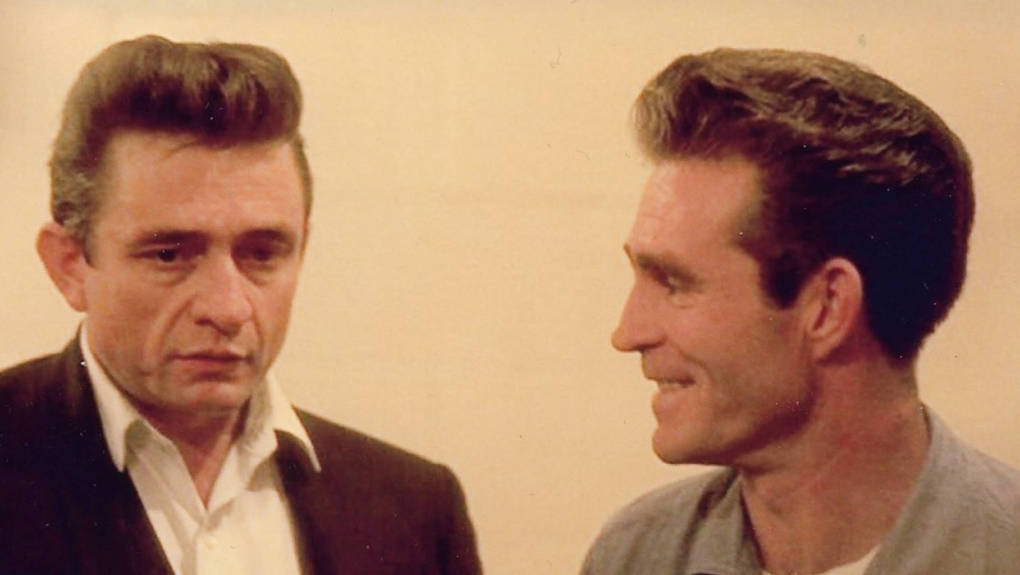
"caption": "Johnny Cash with Glen Sherley. The famous singer met the convict the day he recorded his legendary album ‘Johnny Cash at Folsom Prison’ on January 13 1968. ",
"description": "Johnny Cash with Glen Sherley. The famous singer met the convict the day he recorded his legendary album Johnny Cash at Folsom Prison on January 13 1968. ",
"title": "Johnny Cash with Glen Sherley",
"credit": "Photo: Dan Poush",
"status": "inherit",
"isLoading": false,
"fetchFailed": false
},
"arts_13818948": {
"type": "attachments",
"id": "arts_13818948",
"meta": {
"index": "attachments_1716263798",
"site": "arts",
"id": "13818948",
"found": true
},
"parent": 13818742,
"imgSizes": {
"small": {
"file": "https://ww2.kqed.org/app/uploads/sites/2/2018/01/wizard-apprentice-520x293.jpg",
"width": 520,
"mimeType": "image/jpeg",
"height": 293
},
"twentyfourteen-full-width": {
"file": "https://ww2.kqed.org/app/uploads/sites/2/2018/01/wizard-apprentice-1038x576.jpg",
"width": 1038,
"mimeType": "image/jpeg",
"height": 576
},
"thumbnail": {
"file": "https://ww2.kqed.org/app/uploads/sites/2/2018/01/wizard-apprentice-160x90.jpg",
"width": 160,
"mimeType": "image/jpeg",
"height": 90
},
"fd-sm": {
"file": "https://ww2.kqed.org/app/uploads/sites/2/2018/01/wizard-apprentice-960x540.jpg",
"width": 960,
"mimeType": "image/jpeg",
"height": 540
},
"post-thumbnail": {
"file": "https://ww2.kqed.org/app/uploads/sites/2/2018/01/wizard-apprentice-672x372.jpg",
"width": 672,
"mimeType": "image/jpeg",
"height": 372
},
"xsmall": {
"file": "https://ww2.kqed.org/app/uploads/sites/2/2018/01/wizard-apprentice-375x211.jpg",
"width": 375,
"mimeType": "image/jpeg",
"height": 211
},
"kqedFullSize": {
"file": "https://ww2.kqed.org/app/uploads/sites/2/2018/01/wizard-apprentice.jpg",
"width": 1920,
"height": 1080
},
"large": {
"file": "https://ww2.kqed.org/app/uploads/sites/2/2018/01/wizard-apprentice-1020x574.jpg",
"width": 1020,
"mimeType": "image/jpeg",
"height": 574
},
"xlarge": {
"file": "https://ww2.kqed.org/app/uploads/sites/2/2018/01/wizard-apprentice-1180x664.jpg",
"width": 1180,
"mimeType": "image/jpeg",
"height": 664
},
"guest-author-50": {
"file": "https://ww2.kqed.org/app/uploads/sites/2/2018/01/wizard-apprentice-50x50.jpg",
"width": 50,
"mimeType": "image/jpeg",
"height": 50
},
"guest-author-96": {
"file": "https://ww2.kqed.org/app/uploads/sites/2/2018/01/wizard-apprentice-96x96.jpg",
"width": 96,
"mimeType": "image/jpeg",
"height": 96
},
"medium": {
"file": "https://ww2.kqed.org/app/uploads/sites/2/2018/01/wizard-apprentice-800x450.jpg",
"width": 800,
"mimeType": "image/jpeg",
"height": 450
},
"guest-author-64": {
"file": "https://ww2.kqed.org/app/uploads/sites/2/2018/01/wizard-apprentice-64x64.jpg",
"width": 64,
"mimeType": "image/jpeg",
"height": 64
},
"guest-author-32": {
"file": "https://ww2.kqed.org/app/uploads/sites/2/2018/01/wizard-apprentice-32x32.jpg",
"width": 32,
"mimeType": "image/jpeg",
"height": 32
},
"fd-lrg": {
"file": "https://ww2.kqed.org/app/uploads/sites/2/2018/01/wizard-apprentice-1920x1080.jpg",
"width": 1920,
"mimeType": "image/jpeg",
"height": 1080
},
"fd-med": {
"file": "https://ww2.kqed.org/app/uploads/sites/2/2018/01/wizard-apprentice-1180x664.jpg",
"width": 1180,
"mimeType": "image/jpeg",
"height": 664
},
"full-width": {
"file": "https://ww2.kqed.org/app/uploads/sites/2/2018/01/wizard-apprentice-1920x1080.jpg",
"width": 1920,
"mimeType": "image/jpeg",
"height": 1080
},
"detail": {
"file": "https://ww2.kqed.org/app/uploads/sites/2/2018/01/wizard-apprentice-150x150.jpg",
"width": 150,
"mimeType": "image/jpeg",
"height": 150
},
"medium_large": {
"file": "https://ww2.kqed.org/app/uploads/sites/2/2018/01/wizard-apprentice-768x432.jpg",
"width": 768,
"mimeType": "image/jpeg",
"height": 432
},
"guest-author-128": {
"file": "https://ww2.kqed.org/app/uploads/sites/2/2018/01/wizard-apprentice-128x128.jpg",
"width": 128,
"mimeType": "image/jpeg",
"height": 128
},
"xxsmall": {
"file": "https://ww2.kqed.org/app/uploads/sites/2/2018/01/wizard-apprentice-240x135.jpg",
"width": 240,
"mimeType": "image/jpeg",
"height": 135
}
},
"publishDate": 1515702355,
"modified": 1515702515,
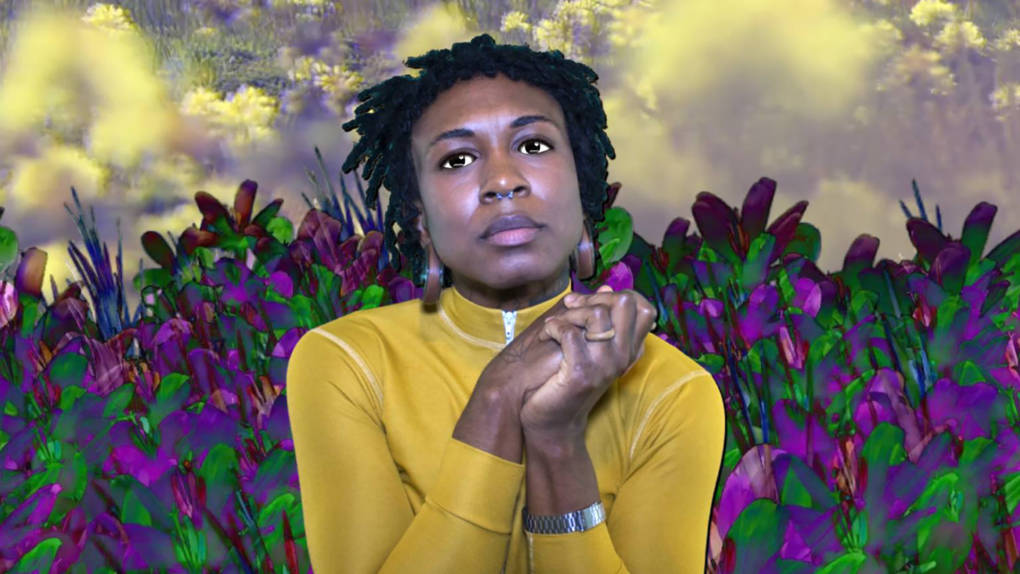
"caption": "Wizard Apprentice uses a digital avatar to reveal painful emotional experiences and hard truths.",
"description": "Wizard Apprentice uses a digital avatar to reveal painful emotional experiences and hard truths.",
"title": "wizard apprentice",
"credit": "Wizard Apprentice",
"status": "inherit",
"isLoading": false,
"fetchFailed": false
},
"arts_13818692": {
"type": "attachments",
"id": "arts_13818692",
"meta": {
"index": "attachments_1716263798",
"site": "arts",
"id": "13818692",
"found": true
},
"parent": 13818687,
"imgSizes": {
"small": {
"file": "https://ww2.kqed.org/app/uploads/sites/2/2018/01/Charles-Dutoit-4x6-520x347.jpg",
"width": 520,
"mimeType": "image/jpeg",
"height": 347
},
"twentyfourteen-full-width": {
"file": "https://ww2.kqed.org/app/uploads/sites/2/2018/01/Charles-Dutoit-4x6-1038x576.jpg",
"width": 1038,
"mimeType": "image/jpeg",
"height": 576
},
"thumbnail": {
"file": "https://ww2.kqed.org/app/uploads/sites/2/2018/01/Charles-Dutoit-4x6-160x107.jpg",
"width": 160,
"mimeType": "image/jpeg",
"height": 107
},
"fd-sm": {
"file": "https://ww2.kqed.org/app/uploads/sites/2/2018/01/Charles-Dutoit-4x6-960x640.jpg",
"width": 960,
"mimeType": "image/jpeg",
"height": 640
},
"post-thumbnail": {
"file": "https://ww2.kqed.org/app/uploads/sites/2/2018/01/Charles-Dutoit-4x6-672x372.jpg",
"width": 672,
"mimeType": "image/jpeg",
"height": 372
},
"xsmall": {
"file": "https://ww2.kqed.org/app/uploads/sites/2/2018/01/Charles-Dutoit-4x6-375x250.jpg",
"width": 375,
"mimeType": "image/jpeg",
"height": 250
},
"kqedFullSize": {
"file": "https://ww2.kqed.org/app/uploads/sites/2/2018/01/Charles-Dutoit-4x6.jpg",
"width": 1800,
"height": 1200
},
"large": {
"file": "https://ww2.kqed.org/app/uploads/sites/2/2018/01/Charles-Dutoit-4x6-1020x680.jpg",
"width": 1020,
"mimeType": "image/jpeg",
"height": 680
},
"xlarge": {
"file": "https://ww2.kqed.org/app/uploads/sites/2/2018/01/Charles-Dutoit-4x6-1180x787.jpg",
"width": 1180,
"mimeType": "image/jpeg",
"height": 787
},
"guest-author-50": {
"file": "https://ww2.kqed.org/app/uploads/sites/2/2018/01/Charles-Dutoit-4x6-50x50.jpg",
"width": 50,
"mimeType": "image/jpeg",
"height": 50
},
"guest-author-96": {
"file": "https://ww2.kqed.org/app/uploads/sites/2/2018/01/Charles-Dutoit-4x6-96x96.jpg",
"width": 96,
"mimeType": "image/jpeg",
"height": 96
},
"medium": {
"file": "https://ww2.kqed.org/app/uploads/sites/2/2018/01/Charles-Dutoit-4x6-800x533.jpg",
"width": 800,
"mimeType": "image/jpeg",
"height": 533
},
"guest-author-64": {
"file": "https://ww2.kqed.org/app/uploads/sites/2/2018/01/Charles-Dutoit-4x6-64x64.jpg",
"width": 64,
"mimeType": "image/jpeg",
"height": 64
},
"guest-author-32": {
"file": "https://ww2.kqed.org/app/uploads/sites/2/2018/01/Charles-Dutoit-4x6-32x32.jpg",
"width": 32,
"mimeType": "image/jpeg",
"height": 32
},
"fd-med": {
"file": "https://ww2.kqed.org/app/uploads/sites/2/2018/01/Charles-Dutoit-4x6-1180x787.jpg",
"width": 1180,
"mimeType": "image/jpeg",
"height": 787
},
"detail": {
"file": "https://ww2.kqed.org/app/uploads/sites/2/2018/01/Charles-Dutoit-4x6-150x150.jpg",
"width": 150,
"mimeType": "image/jpeg",
"height": 150
},
"medium_large": {
"file": "https://ww2.kqed.org/app/uploads/sites/2/2018/01/Charles-Dutoit-4x6-768x512.jpg",
"width": 768,
"mimeType": "image/jpeg",
"height": 512
},
"guest-author-128": {
"file": "https://ww2.kqed.org/app/uploads/sites/2/2018/01/Charles-Dutoit-4x6-128x128.jpg",
"width": 128,
"mimeType": "image/jpeg",
"height": 128
},
"xxsmall": {
"file": "https://ww2.kqed.org/app/uploads/sites/2/2018/01/Charles-Dutoit-4x6-240x160.jpg",
"width": 240,
"mimeType": "image/jpeg",
"height": 160
}
},
"publishDate": 1515454380,
"modified": 1515713600,
"caption": "Charles Dutoit.",
"description": "Four women have accused Charles Dutoit of sexual misconduct in incidents spanning 1985-2010.",
"title": "Charles-Dutoit-4x6",
"credit": "San Francisco Symphony",
"status": "inherit",
"isLoading": false,
"fetchFailed": false
},
"arts_13818877": {
"type": "attachments",
"id": "arts_13818877",
"meta": {
"index": "attachments_1716263798",
"site": "arts",
"id": "13818877",
"found": true
},
"parent": 13818860,
"imgSizes": {
"small": {
"file": "https://ww2.kqed.org/app/uploads/sites/2/2018/01/Tiffany-Austin-sings-an-excerpt-from-of-Harriets-Spirit.-Opera-Parallèle-e1515635660471-520x267.jpg",
"width": 520,
"mimeType": "image/jpeg",
"height": 267
},
"twentyfourteen-full-width": {
"file": "https://ww2.kqed.org/app/uploads/sites/2/2018/01/Tiffany-Austin-sings-an-excerpt-from-of-Harriets-Spirit.-Opera-Parallèle-e1515635660471-1038x576.jpg",
"width": 1038,
"mimeType": "image/jpeg",
"height": 576
},
"thumbnail": {
"file": "https://ww2.kqed.org/app/uploads/sites/2/2018/01/Tiffany-Austin-sings-an-excerpt-from-of-Harriets-Spirit.-Opera-Parallèle-e1515635660471-160x82.jpg",
"width": 160,
"mimeType": "image/jpeg",
"height": 82
},
"fd-sm": {
"file": "https://ww2.kqed.org/app/uploads/sites/2/2018/01/Tiffany-Austin-sings-an-excerpt-from-of-Harriets-Spirit.-Opera-Parallèle-e1515635660471-960x492.jpg",
"width": 960,
"mimeType": "image/jpeg",
"height": 492
},
"post-thumbnail": {
"file": "https://ww2.kqed.org/app/uploads/sites/2/2018/01/Tiffany-Austin-sings-an-excerpt-from-of-Harriets-Spirit.-Opera-Parallèle-e1515635660471-672x372.jpg",
"width": 672,
"mimeType": "image/jpeg",
"height": 372
},
"xsmall": {
"file": "https://ww2.kqed.org/app/uploads/sites/2/2018/01/Tiffany-Austin-sings-an-excerpt-from-of-Harriets-Spirit.-Opera-Parallèle-e1515635660471-375x192.jpg",
"width": 375,
"mimeType": "image/jpeg",
"height": 192
},
"kqedFullSize": {
"file": "https://ww2.kqed.org/app/uploads/sites/2/2018/01/Tiffany-Austin-sings-an-excerpt-from-of-Harriets-Spirit.-Opera-Parallèle-e1515635660471.jpg",
"width": 1280,
"height": 656
},
"large": {
"file": "https://ww2.kqed.org/app/uploads/sites/2/2018/01/Tiffany-Austin-sings-an-excerpt-from-of-Harriets-Spirit.-Opera-Parallèle-e1515635660471-1020x523.jpg",
"width": 1020,
"mimeType": "image/jpeg",
"height": 523
},
"xlarge": {
"file": "https://ww2.kqed.org/app/uploads/sites/2/2018/01/Tiffany-Austin-sings-an-excerpt-from-of-Harriets-Spirit.-Opera-Parallèle-e1515635660471-1180x605.jpg",
"width": 1180,
"mimeType": "image/jpeg",
"height": 605
},
"guest-author-50": {
"file": "https://ww2.kqed.org/app/uploads/sites/2/2018/01/Tiffany-Austin-sings-an-excerpt-from-of-Harriets-Spirit.-Opera-Parallèle-e1515635660471-50x50.jpg",
"width": 50,
"mimeType": "image/jpeg",
"height": 50
},
"guest-author-96": {
"file": "https://ww2.kqed.org/app/uploads/sites/2/2018/01/Tiffany-Austin-sings-an-excerpt-from-of-Harriets-Spirit.-Opera-Parallèle-e1515635660471-96x96.jpg",
"width": 96,
"mimeType": "image/jpeg",
"height": 96
},
"medium": {
"file": "https://ww2.kqed.org/app/uploads/sites/2/2018/01/Tiffany-Austin-sings-an-excerpt-from-of-Harriets-Spirit.-Opera-Parallèle-e1515635660471-800x410.jpg",
"width": 800,
"mimeType": "image/jpeg",
"height": 410
},
"guest-author-64": {
"file": "https://ww2.kqed.org/app/uploads/sites/2/2018/01/Tiffany-Austin-sings-an-excerpt-from-of-Harriets-Spirit.-Opera-Parallèle-e1515635660471-64x64.jpg",
"width": 64,
"mimeType": "image/jpeg",
"height": 64
},
"guest-author-32": {
"file": "https://ww2.kqed.org/app/uploads/sites/2/2018/01/Tiffany-Austin-sings-an-excerpt-from-of-Harriets-Spirit.-Opera-Parallèle-e1515635660471-32x32.jpg",
"width": 32,
"mimeType": "image/jpeg",
"height": 32
},
"fd-med": {
"file": "https://ww2.kqed.org/app/uploads/sites/2/2018/01/Tiffany-Austin-sings-an-excerpt-from-of-Harriets-Spirit.-Opera-Parallèle-e1515635660471-1180x605.jpg",
"width": 1180,
"mimeType": "image/jpeg",
"height": 605
},
"detail": {
"file": "https://ww2.kqed.org/app/uploads/sites/2/2018/01/Tiffany-Austin-sings-an-excerpt-from-of-Harriets-Spirit.-Opera-Parallèle-e1515635660471-150x150.jpg",
"width": 150,
"mimeType": "image/jpeg",
"height": 150
},
"medium_large": {
"file": "https://ww2.kqed.org/app/uploads/sites/2/2018/01/Tiffany-Austin-sings-an-excerpt-from-of-Harriets-Spirit.-Opera-Parallèle-e1515635660471-768x394.jpg",
"width": 768,
"mimeType": "image/jpeg",
"height": 394
},
"guest-author-128": {
"file": "https://ww2.kqed.org/app/uploads/sites/2/2018/01/Tiffany-Austin-sings-an-excerpt-from-of-Harriets-Spirit.-Opera-Parallèle-e1515635660471-128x128.jpg",
"width": 128,
"mimeType": "image/jpeg",
"height": 128
},
"xxsmall": {
"file": "https://ww2.kqed.org/app/uploads/sites/2/2018/01/Tiffany-Austin-sings-an-excerpt-from-of-Harriets-Spirit.-Opera-Parallèle-e1515635660471-240x123.jpg",
"width": 240,
"mimeType": "image/jpeg",
"height": 123
}
},
"publishDate": 1515635571,
"modified": 1515692890,
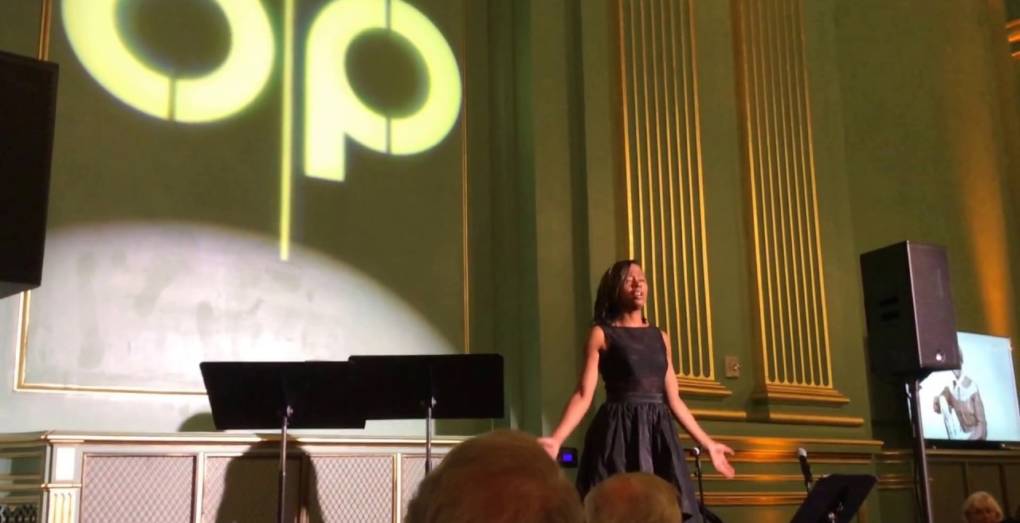
"caption": "Tiffany Austin sings an excerpt from of 'Harriet's Spirit' for Opera Parallèle.",
"description": "Tiffany Austin sings an excerpt from of 'Harriet's Spirit' for Opera Parallèle.",
"title": "Tiffany Austin sings an excerpt from of Harriet's Spirit. Opera Parallèle",
"credit": "Photo: Courtesy of Opera Parallèle",
"status": "inherit",
"isLoading": false,
"fetchFailed": false
},
"arts_13818800": {
"type": "attachments",
"id": "arts_13818800",
"meta": {
"index": "attachments_1716263798",
"site": "arts",
"id": "13818800",
"found": true
},
"parent": 13818798,
"imgSizes": {
"small": {
"file": "https://ww2.kqed.org/app/uploads/sites/2/2018/01/Black-Comix-Arts-Festival-e1515611142705-520x309.jpg",
"width": 520,
"mimeType": "image/jpeg",
"height": 309
},
"twentyfourteen-full-width": {
"file": "https://ww2.kqed.org/app/uploads/sites/2/2018/01/Black-Comix-Arts-Festival-e1515611142705-1038x576.jpg",
"width": 1038,
"mimeType": "image/jpeg",
"height": 576
},
"thumbnail": {
"file": "https://ww2.kqed.org/app/uploads/sites/2/2018/01/Black-Comix-Arts-Festival-e1515611142705-160x95.jpg",
"width": 160,
"mimeType": "image/jpeg",
"height": 95
},
"fd-sm": {
"file": "https://ww2.kqed.org/app/uploads/sites/2/2018/01/Black-Comix-Arts-Festival-e1515611142705-960x570.jpg",
"width": 960,
"mimeType": "image/jpeg",
"height": 570
},
"post-thumbnail": {
"file": "https://ww2.kqed.org/app/uploads/sites/2/2018/01/Black-Comix-Arts-Festival-e1515611142705-672x372.jpg",
"width": 672,
"mimeType": "image/jpeg",
"height": 372
},
"xsmall": {
"file": "https://ww2.kqed.org/app/uploads/sites/2/2018/01/Black-Comix-Arts-Festival-e1515611142705-375x223.jpg",
"width": 375,
"mimeType": "image/jpeg",
"height": 223
},
"kqedFullSize": {
"file": "https://ww2.kqed.org/app/uploads/sites/2/2018/01/Black-Comix-Arts-Festival-e1515611142705.jpg",
"width": 1393,
"height": 827
},
"large": {
"file": "https://ww2.kqed.org/app/uploads/sites/2/2018/01/Black-Comix-Arts-Festival-e1515611142705-1020x606.jpg",
"width": 1020,
"mimeType": "image/jpeg",
"height": 606
},
"xlarge": {
"file": "https://ww2.kqed.org/app/uploads/sites/2/2018/01/Black-Comix-Arts-Festival-e1515611142705-1180x701.jpg",
"width": 1180,
"mimeType": "image/jpeg",
"height": 701
},
"guest-author-50": {
"file": "https://ww2.kqed.org/app/uploads/sites/2/2018/01/Black-Comix-Arts-Festival-e1515611142705-50x50.jpg",
"width": 50,
"mimeType": "image/jpeg",
"height": 50
},
"guest-author-96": {
"file": "https://ww2.kqed.org/app/uploads/sites/2/2018/01/Black-Comix-Arts-Festival-e1515611142705-96x96.jpg",
"width": 96,
"mimeType": "image/jpeg",
"height": 96
},
"medium": {
"file": "https://ww2.kqed.org/app/uploads/sites/2/2018/01/Black-Comix-Arts-Festival-e1515611142705-800x475.jpg",
"width": 800,
"mimeType": "image/jpeg",
"height": 475
},
"guest-author-64": {
"file": "https://ww2.kqed.org/app/uploads/sites/2/2018/01/Black-Comix-Arts-Festival-e1515611142705-64x64.jpg",
"width": 64,
"mimeType": "image/jpeg",
"height": 64
},
"guest-author-32": {
"file": "https://ww2.kqed.org/app/uploads/sites/2/2018/01/Black-Comix-Arts-Festival-e1515611142705-32x32.jpg",
"width": 32,
"mimeType": "image/jpeg",
"height": 32
},
"fd-med": {
"file": "https://ww2.kqed.org/app/uploads/sites/2/2018/01/Black-Comix-Arts-Festival-e1515611142705-1180x701.jpg",
"width": 1180,
"mimeType": "image/jpeg",
"height": 701
},
"detail": {
"file": "https://ww2.kqed.org/app/uploads/sites/2/2018/01/Black-Comix-Arts-Festival-e1515611142705-150x150.jpg",
"width": 150,
"mimeType": "image/jpeg",
"height": 150
},
"medium_large": {
"file": "https://ww2.kqed.org/app/uploads/sites/2/2018/01/Black-Comix-Arts-Festival-e1515611142705-768x456.jpg",
"width": 768,
"mimeType": "image/jpeg",
"height": 456
},
"guest-author-128": {
"file": "https://ww2.kqed.org/app/uploads/sites/2/2018/01/Black-Comix-Arts-Festival-e1515611142705-128x128.jpg",
"width": 128,
"mimeType": "image/jpeg",
"height": 128
},
"xxsmall": {
"file": "https://ww2.kqed.org/app/uploads/sites/2/2018/01/Black-Comix-Arts-Festival-e1515611142705-240x142.jpg",
"width": 240,
"mimeType": "image/jpeg",
"height": 142
}
},
"publishDate": 1515610996,
"modified": 1515611089,
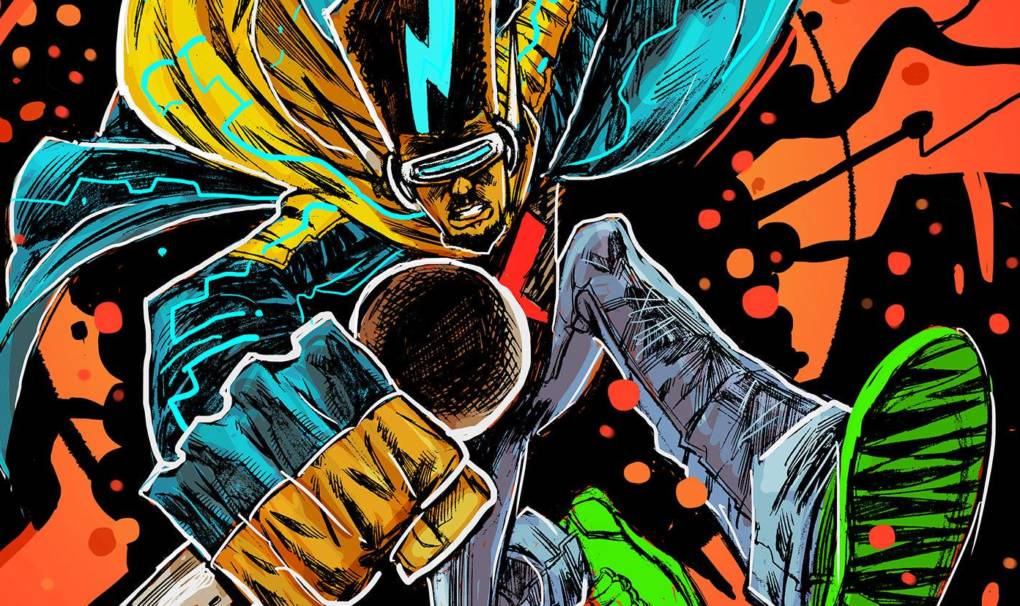
"caption": "The Black Comix Arts Festival comes to San Francisco ",
"description": "The Black Comix Arts Festival comes to San Francisco ",
"title": "The Black Comix Arts Festival comes to San Francisco",
"credit": "Photo: Courtesy of Black Comix Festival",
"status": "inherit",
"isLoading": false,
"fetchFailed": false
},
"arts_13818846": {
"type": "attachments",
"id": "arts_13818846",
"meta": {
"index": "attachments_1716263798",
"site": "arts",
"id": "13818846",
"found": true
},
"parent": 13818838,
"imgSizes": {
"small": {
"file": "https://ww2.kqed.org/app/uploads/sites/2/2018/01/La-Gente-Photo-by-Odell-Hussey--e1515631651517-520x292.jpg",
"width": 520,
"mimeType": "image/jpeg",
"height": 292
},
"twentyfourteen-full-width": {
"file": "https://ww2.kqed.org/app/uploads/sites/2/2018/01/La-Gente-Photo-by-Odell-Hussey--960x576.jpg",
"width": 960,
"mimeType": "image/jpeg",
"height": 576
},
"thumbnail": {
"file": "https://ww2.kqed.org/app/uploads/sites/2/2018/01/La-Gente-Photo-by-Odell-Hussey--e1515631651517-160x90.jpg",
"width": 160,
"mimeType": "image/jpeg",
"height": 90
},
"fd-sm": {
"file": "https://ww2.kqed.org/app/uploads/sites/2/2018/01/La-Gente-Photo-by-Odell-Hussey--960x640.jpg",
"width": 960,
"mimeType": "image/jpeg",
"height": 640
},
"post-thumbnail": {
"file": "https://ww2.kqed.org/app/uploads/sites/2/2018/01/La-Gente-Photo-by-Odell-Hussey--e1515631651517-672x372.jpg",
"width": 672,
"mimeType": "image/jpeg",
"height": 372
},
"xsmall": {
"file": "https://ww2.kqed.org/app/uploads/sites/2/2018/01/La-Gente-Photo-by-Odell-Hussey--e1515631651517-375x211.jpg",
"width": 375,
"mimeType": "image/jpeg",
"height": 211
},
"kqedFullSize": {
"file": "https://ww2.kqed.org/app/uploads/sites/2/2018/01/La-Gente-Photo-by-Odell-Hussey--e1515631651517.jpg",
"width": 921,
"height": 518
},
"guest-author-50": {
"file": "https://ww2.kqed.org/app/uploads/sites/2/2018/01/La-Gente-Photo-by-Odell-Hussey--e1515631651517-50x50.jpg",
"width": 50,
"mimeType": "image/jpeg",
"height": 50
},
"guest-author-96": {
"file": "https://ww2.kqed.org/app/uploads/sites/2/2018/01/La-Gente-Photo-by-Odell-Hussey--e1515631651517-96x96.jpg",
"width": 96,
"mimeType": "image/jpeg",
"height": 96
},
"medium": {
"file": "https://ww2.kqed.org/app/uploads/sites/2/2018/01/La-Gente-Photo-by-Odell-Hussey--e1515631651517-800x450.jpg",
"width": 800,
"mimeType": "image/jpeg",
"height": 450
},
"guest-author-64": {
"file": "https://ww2.kqed.org/app/uploads/sites/2/2018/01/La-Gente-Photo-by-Odell-Hussey--e1515631651517-64x64.jpg",
"width": 64,
"mimeType": "image/jpeg",
"height": 64
},
"guest-author-32": {
"file": "https://ww2.kqed.org/app/uploads/sites/2/2018/01/La-Gente-Photo-by-Odell-Hussey--e1515631651517-32x32.jpg",
"width": 32,
"mimeType": "image/jpeg",
"height": 32
},
"detail": {
"file": "https://ww2.kqed.org/app/uploads/sites/2/2018/01/La-Gente-Photo-by-Odell-Hussey--e1515631651517-150x150.jpg",
"width": 150,
"mimeType": "image/jpeg",
"height": 150
},
"medium_large": {
"file": "https://ww2.kqed.org/app/uploads/sites/2/2018/01/La-Gente-Photo-by-Odell-Hussey--e1515631651517-768x432.jpg",
"width": 768,
"mimeType": "image/jpeg",
"height": 432
},
"guest-author-128": {
"file": "https://ww2.kqed.org/app/uploads/sites/2/2018/01/La-Gente-Photo-by-Odell-Hussey--e1515631651517-128x128.jpg",
"width": 128,
"mimeType": "image/jpeg",
"height": 128
},
"xxsmall": {
"file": "https://ww2.kqed.org/app/uploads/sites/2/2018/01/La-Gente-Photo-by-Odell-Hussey--e1515631651517-240x135.jpg",
"width": 240,
"mimeType": "image/jpeg",
"height": 135
}
},
"publishDate": 1515631573,
"modified": 1515631621,
"caption": "La Gente plays Slim's on Friday January 12th",
"description": "La Gente plays Slim's on Friday January 12th",
"title": "La Gente plays Slim's on Friday January 12th",
"credit": "Photo: Odell Hussey",
"status": "inherit",
"isLoading": false,
"fetchFailed": false
},
"arts_13818822": {
"type": "attachments",
"id": "arts_13818822",
"meta": {
"index": "attachments_1716263798",
"site": "arts",
"id": "13818822",
"found": true
},
"parent": 13818821,
"imgSizes": {
"small": {
"file": "https://ww2.kqed.org/app/uploads/sites/2/2018/01/Michael-Morgan-leads-the-Oakland-Symphony-in-a-concert-curated-by-W.-Kamau-Bell-e1515621900776-520x286.jpg",
"width": 520,
"mimeType": "image/jpeg",
"height": 286
},
"twentyfourteen-full-width": {
"file": "https://ww2.kqed.org/app/uploads/sites/2/2018/01/Michael-Morgan-leads-the-Oakland-Symphony-in-a-concert-curated-by-W.-Kamau-Bell-1000x576.jpg",
"width": 1000,
"mimeType": "image/jpeg",
"height": 576
},
"thumbnail": {
"file": "https://ww2.kqed.org/app/uploads/sites/2/2018/01/Michael-Morgan-leads-the-Oakland-Symphony-in-a-concert-curated-by-W.-Kamau-Bell-e1515621900776-160x88.jpg",
"width": 160,
"mimeType": "image/jpeg",
"height": 88
},
"fd-sm": {
"file": "https://ww2.kqed.org/app/uploads/sites/2/2018/01/Michael-Morgan-leads-the-Oakland-Symphony-in-a-concert-curated-by-W.-Kamau-Bell-e1515621900776-960x528.jpg",
"width": 960,
"mimeType": "image/jpeg",
"height": 528
},
"post-thumbnail": {
"file": "https://ww2.kqed.org/app/uploads/sites/2/2018/01/Michael-Morgan-leads-the-Oakland-Symphony-in-a-concert-curated-by-W.-Kamau-Bell-e1515621900776-672x372.jpg",
"width": 672,
"mimeType": "image/jpeg",
"height": 372
},
"xsmall": {
"file": "https://ww2.kqed.org/app/uploads/sites/2/2018/01/Michael-Morgan-leads-the-Oakland-Symphony-in-a-concert-curated-by-W.-Kamau-Bell-e1515621900776-375x206.jpg",
"width": 375,
"mimeType": "image/jpeg",
"height": 206
},
"kqedFullSize": {
"file": "https://ww2.kqed.org/app/uploads/sites/2/2018/01/Michael-Morgan-leads-the-Oakland-Symphony-in-a-concert-curated-by-W.-Kamau-Bell-e1515621900776.jpg",
"width": 1000,
"height": 550
},
"guest-author-50": {
"file": "https://ww2.kqed.org/app/uploads/sites/2/2018/01/Michael-Morgan-leads-the-Oakland-Symphony-in-a-concert-curated-by-W.-Kamau-Bell-e1515621900776-50x50.jpg",
"width": 50,
"mimeType": "image/jpeg",
"height": 50
},
"guest-author-96": {
"file": "https://ww2.kqed.org/app/uploads/sites/2/2018/01/Michael-Morgan-leads-the-Oakland-Symphony-in-a-concert-curated-by-W.-Kamau-Bell-e1515621900776-96x96.jpg",
"width": 96,
"mimeType": "image/jpeg",
"height": 96
},
"medium": {
"file": "https://ww2.kqed.org/app/uploads/sites/2/2018/01/Michael-Morgan-leads-the-Oakland-Symphony-in-a-concert-curated-by-W.-Kamau-Bell-e1515621900776-800x440.jpg",
"width": 800,
"mimeType": "image/jpeg",
"height": 440
},
"guest-author-64": {
"file": "https://ww2.kqed.org/app/uploads/sites/2/2018/01/Michael-Morgan-leads-the-Oakland-Symphony-in-a-concert-curated-by-W.-Kamau-Bell-e1515621900776-64x64.jpg",
"width": 64,
"mimeType": "image/jpeg",
"height": 64
},
"guest-author-32": {
"file": "https://ww2.kqed.org/app/uploads/sites/2/2018/01/Michael-Morgan-leads-the-Oakland-Symphony-in-a-concert-curated-by-W.-Kamau-Bell-e1515621900776-32x32.jpg",
"width": 32,
"mimeType": "image/jpeg",
"height": 32
},
"detail": {
"file": "https://ww2.kqed.org/app/uploads/sites/2/2018/01/Michael-Morgan-leads-the-Oakland-Symphony-in-a-concert-curated-by-W.-Kamau-Bell-e1515621900776-150x150.jpg",
"width": 150,
"mimeType": "image/jpeg",
"height": 150
},
"medium_large": {
"file": "https://ww2.kqed.org/app/uploads/sites/2/2018/01/Michael-Morgan-leads-the-Oakland-Symphony-in-a-concert-curated-by-W.-Kamau-Bell-e1515621900776-768x422.jpg",
"width": 768,
"mimeType": "image/jpeg",
"height": 422
},
"guest-author-128": {
"file": "https://ww2.kqed.org/app/uploads/sites/2/2018/01/Michael-Morgan-leads-the-Oakland-Symphony-in-a-concert-curated-by-W.-Kamau-Bell-e1515621900776-128x128.jpg",
"width": 128,
"mimeType": "image/jpeg",
"height": 128
},
"xxsmall": {
"file": "https://ww2.kqed.org/app/uploads/sites/2/2018/01/Michael-Morgan-leads-the-Oakland-Symphony-in-a-concert-curated-by-W.-Kamau-Bell-e1515621900776-240x132.jpg",
"width": 240,
"mimeType": "image/jpeg",
"height": 132
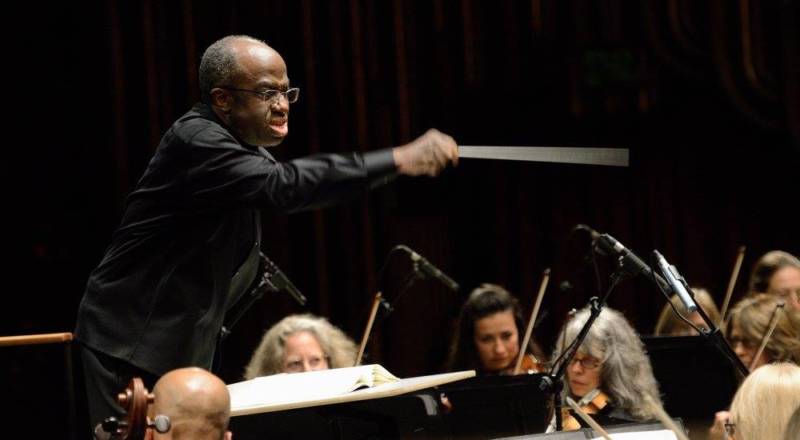
}
},
"publishDate": 1515621591,
"modified": 1629516891,
"caption": "Michael Morgan leads the Oakland Symphony Jan. 19, 2018 in a concert curated by W. Kamau Bell.",
"description": "Michael Morgan leads the Oakland Symphony Jan. 19 in a concert curated by W. Kamau Bell.",
"title": "Michael Morgan leads the Oakland Symphony in a concert curated by W. Kamau Bell",
"credit": "Photo: Courtesy of Oakland Symphony",
"status": "inherit",
"altTag": "Michael Morgan leads the Oakland Symphony Jan. 19 in a concert curated by W. Kamau Bell.",
"isLoading": false,
"fetchFailed": false
}
},
"audioPlayerReducer": {
"postId": "stream_live",
"isPaused": true,
"isPlaying": false,
"pfsActive": false,
"pledgeModalIsOpen": true,
"playerDrawerIsOpen": false,
"liveAudioPlayStartedAt": 0,
"liveAudioPlayContext": ""
},
"authorsReducer": {
"byline_arts_13819239": {
"type": "authors",
"id": "byline_arts_13819239",
"meta": {
"override": true
},
"slug": "byline_arts_13819239",
"name": "Doreen McCallister",
"isLoading": false
},
"byline_arts_13819169": {
"type": "authors",
"id": "byline_arts_13819169",
"meta": {
"override": true
},
"slug": "byline_arts_13819169",
"name": "Anastasia Tsioulcas",
"isLoading": false
},
"byline_news_11642039": {
"type": "authors",
"id": "byline_news_11642039",
"meta": {
"override": true
},
"slug": "byline_news_11642039",
"name": "\u003cstrong/>Wynne Davis\u003c/strong>",
"isLoading": false
},
"byline_news_11641425": {
"type": "authors",
"id": "byline_news_11641425",
"meta": {
"override": true
},
"slug": "byline_news_11641425",
"name": "Allen Young",
"isLoading": false
},
"byline_arts_13819027": {
"type": "authors",
"id": "byline_arts_13819027",
"meta": {
"override": true
},
"slug": "byline_arts_13819027",
"name": "Steve Knopper",
"isLoading": false
},
"byline_arts_13818965": {
"type": "authors",
"id": "byline_arts_13818965",
"meta": {
"override": true
},
"slug": "byline_arts_13818965",
"name": "Jocelyn Gecker and Janie Har, Associated Press",
"isLoading": false
},
"cmusiker": {
"type": "authors",
"id": "32",
"meta": {
"index": "authors_1716337520",
"id": "32",
"found": true
},
"name": "Cy Musiker",
"firstName": "Cy",
"lastName": "Musiker",
"slug": "cmusiker",
"email": "cmusiker@kqed.org",
"display_author_email": false,
"staff_mastheads": [],
"title": "KQED Contributor",
"bio": "Cy Musiker is a former co-host of The Do List and a former reporter covering the arts for KQED News and The California Report. He loves live performance, especially great theater, jazz, roots music, anything by Mahler. Cy has an MJ from UC Berkeley's School of Journalism, and got his BA from Hampshire College. His work has been recognized by the Society for Professional Journalists with their Sigma Delta Chi Award for Public Service in Journalism. When he can, Cy likes to swim in Tomales Bay, run with his dog in the East Bay Hills, and hike the Sierra.",
"avatar": "https://secure.gravatar.com/avatar/05eaba5c5696ce8f062e4ea2df428a43?s=600&d=blank&r=g",
"twitter": null,
"facebook": null,
"instagram": null,
"linkedin": null,
"sites": [
{
"site": "arts",
"roles": [
"Contributor",
"subscriber"
]
},
{
"site": "news",
"roles": [
"author"
]
},
{
"site": "bayareabites",
"roles": [
"contributor"
]
}
],
"headData": {
"title": "Cy Musiker | KQED",
"description": "KQED Contributor",
"ogImgSrc": "https://secure.gravatar.com/avatar/05eaba5c5696ce8f062e4ea2df428a43?s=600&d=blank&r=g",
"twImgSrc": "https://secure.gravatar.com/avatar/05eaba5c5696ce8f062e4ea2df428a43?s=600&d=blank&r=g"
},
"isLoading": false,
"link": "/author/cmusiker"
},
"cveltman": {
"type": "authors",
"id": "8608",
"meta": {
"index": "authors_1716337520",
"id": "8608",
"found": true
},
"name": "Chloe Veltman",
"firstName": "Chloe",
"lastName": "Veltman",
"slug": "cveltman",
"email": "cveltman@kqed.org",
"display_author_email": true,
"staff_mastheads": [],
"title": "Arts and Culture Reporter",
"bio": "Chloe Veltman is a former arts and culture reporter for KQED. Prior to joining the organization, she launched and led the arts bureau at Colorado Public Radio, served as the Bay Area's culture columnist for the New York Times, and was the founder, host and executive producer of VoiceBox, a national award-winning weekly podcast/radio show and live events series all about the human voice. Chloe is the recipient of numerous prizes, grants and fellowships including a Webby Award for her work on interactive storytelling, both the John S Knight Journalism Fellowship and Humanities Center Fellowship at Stanford University, the Sundance Arts Writing Fellowship and a Library of Congress Research Fellowship. She is the author of the book \"On Acting\" and has appeared as a guest lecturer at Yale University and the San Francisco Conservatory of Music among other institutions. She holds a BA in english literature from King's College, Cambridge, and a Masters in Dramaturgy from the Central School of Speech and Drama/Harvard Institute for Advanced Theater Training.\r\n\u003ca href=\"https://www.chloeveltman.com\">www.chloeveltman.com\u003c/a>",
"avatar": "https://secure.gravatar.com/avatar/55403394b00a1ddab683952c2eb2cf85?s=600&d=blank&r=g",
"twitter": "chloeveltman",
"facebook": null,
"instagram": null,
"linkedin": null,
"sites": [
{
"site": "arts",
"roles": []
},
{
"site": "news",
"roles": [
"author"
]
},
{
"site": "pop",
"roles": [
"editor"
]
},
{
"site": "science",
"roles": []
}
],
"headData": {
"title": "Chloe Veltman | KQED",
"description": "Arts and Culture Reporter",
"ogImgSrc": "https://secure.gravatar.com/avatar/55403394b00a1ddab683952c2eb2cf85?s=600&d=blank&r=g",
"twImgSrc": "https://secure.gravatar.com/avatar/55403394b00a1ddab683952c2eb2cf85?s=600&d=blank&r=g"
},
"isLoading": false,
"link": "/author/cveltman"
},
"nvoynovskaya": {
"type": "authors",
"id": "11387",
"meta": {
"index": "authors_1716337520",
"id": "11387",
"found": true
},
"name": "Nastia Voynovskaya",
"firstName": "Nastia",
"lastName": "Voynovskaya",
"slug": "nvoynovskaya",
"email": "nvoynovskaya@kqed.org",
"display_author_email": false,
"staff_mastheads": [
"arts"
],
"title": "Editor and reporter",
"bio": "Nastia Voynovskaya is a reporter, editor and host at KQED Arts & Culture. She's been covering the arts in the Bay Area for over a decade, with a focus on music, queer culture, labor issues and grassroots organizing. She has edited KQED story series such as Trans Bay: A History of San Francisco's Gender-Diverse Community, and co-created KQED's Bay Area hip-hop history project, That's My Word. Nastia's work has been recognized by the Society of Professional Journalists and San Francisco Press Club. She regularly appears on podcasts and radio programs, including NPR's All Songs Considered, and hosts live events where music, culture and conversation meet.",
"avatar": "https://secure.gravatar.com/avatar/5025ee460e5a85d69ca20ea6c6f2f80d7e17795c828f61ea3aecfcd924e9042e?s=600&d=blank&r=g",
"twitter": null,
"bluesky": null,
"facebook": null,
"instagram": "https://www.instagram.com/nananastia/",
"linkedin": null,
"sites": [
{
"site": "",
"roles": [
"editor"
]
},
{
"site": "arts",
"roles": [
"administrator"
]
},
{
"site": "news",
"roles": [
"editor"
]
},
{
"site": "pop",
"roles": [
"administrator"
]
},
{
"site": "bayareabites",
"roles": [
"editor"
]
},
{
"site": "podcasts",
"roles": [
"editor"
]
},
{
"site": "hiphop",
"roles": [
"editor"
]
}
],
"headData": {
"title": "Nastia Voynovskaya | KQED",
"description": "Editor and reporter",
"ogImgSrc": "https://secure.gravatar.com/avatar/5025ee460e5a85d69ca20ea6c6f2f80d7e17795c828f61ea3aecfcd924e9042e?s=600&d=blank&r=g",
"twImgSrc": "https://secure.gravatar.com/avatar/5025ee460e5a85d69ca20ea6c6f2f80d7e17795c828f61ea3aecfcd924e9042e?s=600&d=blank&r=g"
},
"isLoading": false,
"link": "/author/nvoynovskaya"
}
},
"pagesReducer": {
"arts_category_music": {
"type": "terms",
"id": "arts_69",
"meta": {
"index": "terms_1716263798",
"site": "arts",
"id": "69",
"score": 10.851903
},
"featImg": null,
"name": "Music",
"description": null,
"taxonomy": "category",
"headData": {
"twImgId": null,
"twTitle": null,
"ogTitle": null,
"ogImgId": null,
"twDescription": null,
"description": null,
"title": "Music Archives | KQED Arts",
"ogDescription": null
},
"ttid": 70,
"slug": "music",
"isLoading": false,
"title": "Music",
"pageMeta": {
"site": "arts",
"WpPageTemplate": "page-topic-editorial",
"currentPage": 201
},
"blocks": [
{
"blockName": "kqed/post-list",
"attrs": {
"layout": "cardArticle2",
"query": "posts/arts?category=music",
"seeMore": false,
"paginated": true,
"page": 201
}
},
{
"blockName": "kqed/ad"
}
]
}
},
"pfsSessionReducer": {},
"postsReducer": {
"stream_live": {
"type": "live",
"id": "stream_live",
"audioUrl": "https://streams.kqed.org/kqedradio",
"title": "Live Stream",
"excerpt": "Live Stream information currently unavailable.",
"link": "/radio",
"featImg": "",
"label": {
"name": "KQED Live",
"link": "/"
}
},
"stream_kqedNewscast": {
"type": "posts",
"id": "stream_kqedNewscast",
"audioUrl": "https://www.kqed.org/.stream/anon/radio/RDnews/newscast.mp3?_=1",
"title": "KQED Newscast",
"featImg": "",
"label": {
"name": "88.5 FM",
"link": "/"
}
},
"arts_13819239": {
"type": "posts",
"id": "arts_13819239",
"meta": {
"index": "posts_1716263798",
"site": "arts",
"id": "13819239",
"score": null,
"sort": [
1516121312000
]
},
"parent": 0,
"labelTerm": {
"site": "arts",
"term": 137
},
"blocks": [],
"publishDate": 1516121312,
"format": "standard",
"title": "Oakland's Gospel Star Edwin Hawkins, Known For 'Oh Happy Day,' Dies At 74",
"headTitle": "Oakland’s Gospel Star Edwin Hawkins, Known For ‘Oh Happy Day,’ Dies At 74 | KQED",
"content": "\u003cp>Grammy Award-winning singer Edwin Hawkins died on Monday at his home in Pleasanton, Calif.\u003c/p>\n\u003cp>His publicist Bill Carpenter told news organizations that the cause was pancreatic cancer. Hawkins was 74.\u003c/p>\n\u003cp>A native of Oakland, Hawkins had been performing with his family and in church groups since he was a boy. In the late 1960s, when Hawkins was in his 20s, he helped form the Northern California State Youth Choir. The group recorded its first album, \u003cem>Let Us Go Into the House of the Lord\u003c/em>.\u003c/p>\n\u003cp>The \u003ca href=\"https://www.nytimes.com/2018/01/15/obituaries/edwin-hawkins-dead-gospel-singer.html?_r=0\">New York Times reports\u003c/a>:\u003c/p>\n\u003cblockquote>\n\u003cp>“The record rendered songs of praise with a rhythm-and-blues sensibility. A disc jockey at the Bay Area FM station KSAN, Abe Kesh, began playing one particular track, “Oh Happy Day.”\u003c/p>\n\u003cp>“The catchy song spread, and, with the group renamed the Edwin Hawkins Singers, it was released as a single and eventually reached No. 4 on the Billboard pop chart and No. 2 on the R&B chart.”\u003c/p>\n\u003c/blockquote>\n\u003cp>In 1970, “Oh Happy Day” won a Grammy for best soul gospel performance. The unusual pop hit was an inspiration to music historian Mitch Myers. He reflected on the song during a segment of \u003ca href=\"https://www.npr.org/templates/story/story.php?storyId=890702\">All Things Considered\u003c/a> on Christmas Day in 2002.\u003c/p>\n\u003cp>[ad fullwidth]\u003c/p>\n\u003cp>For its is simple message of hope, spirit and goodwill to mankind, Myers said he wished “Oh Happy Day” to Christians, Jews, Muslims, Buddhists and followers of every other religious persuasion, including agnostics and atheists as well.\u003c/p>\n\u003cp>The gospel song was an inspiration to other types of singers as well, The Associated Press reports:\u003c/p>\n\u003cblockquote>\n\u003cp>“George Harrison would cite “Oh Happy Day” as inspiration for his hit “My Sweet Lord,” and Glen Campbell reached the adult contemporary charts with his own version of the Hawkins performance. Elvis Presley, Johnny Mathis and numerous others also would record it.”\u003c/p>\n\u003c/blockquote>\n\u003cp>Throughout his career, Edwin Hawkins won a total of four Grammys, and he was voted into the Christian Music Hall of Fame in 2007.\u003c/p>\n\u003cp>\u003c/p>\n\u003cp>Hawkins’ younger brother \u003ca href=\"https://www.npr.org/templates/story/story.php?storyId=128466057\">Walter died in 2010 \u003c/a>at the age of 61. Walter Hawkins — also a Grammy Award singer-songwriter and pastor of Love Center church in Oakland — died after a long bout with cancer. \u003c/p>\n\u003cdiv class=\"fullattribution\">Copyright 2018 NPR. To see more, visit http://www.npr.org/.\u003cimg decoding=\"async\" src=\"https://www.google-analytics.com/__utm.gif?utmac=UA-5828686-4&utmdt=Gospel+Star+Edwin+Hawkins%2C+Known+For+%27Oh+Happy+Day%2C%27+Dies+At+74&utme=8(APIKey)9(MDAxOTAwOTE4MDEyMTkxMDAzNjczZDljZA004)\">\u003c/div>\n\n",
"stats": {
"hasVideo": false,
"hasChartOrMap": false,
"hasAudio": false,
"hasPolis": false,
"wordCount": 388,
"hasGoogleForm": false,
"hasGallery": false,
"hasHearkenModule": false,
"iframeSrcs": [],
"paragraphCount": 14
},
"modified": 1705028765,
"excerpt": "In 1970, the Edwin Hawkins singers won a Grammy for best soul gospel performance for \"Oh Happy Day.\" It became an unexpected hit when a San Francisco disc jockey began playing the song.",
"headData": {
"twImgId": "",
"twTitle": "",
"ogTitle": "",
"ogImgId": "",
"twDescription": "",
"description": "In 1970, the Edwin Hawkins singers won a Grammy for best soul gospel performance for "Oh Happy Day." It became an unexpected hit when a San Francisco disc jockey began playing the song.",
"title": "Oakland's Gospel Star Edwin Hawkins, Known For 'Oh Happy Day,' Dies At 74 | KQED",
"ogDescription": "",
"schema": {
"@context": "https://schema.org",
"@type": "Article",
"headline": "Oakland's Gospel Star Edwin Hawkins, Known For 'Oh Happy Day,' Dies At 74",
"datePublished": "2018-01-16T08:48:32-08:00",
"dateModified": "2024-01-11T19:06:05-08:00",
"image": "https://cdn.kqed.org/wp-content/uploads/2020/02/KQED-OG-Image@1x.png"
}
},
"guestAuthors": [],
"slug": "gospel-star-edwin-hawkins-known-for-oh-happy-day-dies-at-74",
"status": "publish",
"nprApiLink": "http://api.npr.org/query?id=578235211&apiKey=MDAxOTAwOTE4MDEyMTkxMDAzNjczZDljZA004",
"nprByline": "Doreen McCallister",
"nprStoryDate": "Tue, 16 Jan 2018 04:05:00 -0500",
"nprLastModifiedDate": "Tue, 16 Jan 2018 08:59:55 -0500",
"sticky": false,
"nprHtmlLink": "https://www.npr.org/sections/thetwo-way/2018/01/16/578235211/gospel-star-edwin-hawkins-known-for-oh-happy-day-dies-at-74?ft=nprml&f=578235211",
"nprStoryId": "578235211",
"nprRetrievedStory": "1",
"nprPubDate": "Tue, 16 Jan 2018 08:59:00 -0500",
"path": "/arts/13819239/gospel-star-edwin-hawkins-known-for-oh-happy-day-dies-at-74",
"audioTrackLength": null,
"parsedContent": [
{
"type": "contentString",
"content": "\u003cdiv class=\"post-body\">\u003cp>\u003cp>Grammy Award-winning singer Edwin Hawkins died on Monday at his home in Pleasanton, Calif.\u003c/p>\n\u003cp>His publicist Bill Carpenter told news organizations that the cause was pancreatic cancer. Hawkins was 74.\u003c/p>\n\u003cp>A native of Oakland, Hawkins had been performing with his family and in church groups since he was a boy. In the late 1960s, when Hawkins was in his 20s, he helped form the Northern California State Youth Choir. The group recorded its first album, \u003cem>Let Us Go Into the House of the Lord\u003c/em>.\u003c/p>\n\u003cp>The \u003ca href=\"https://www.nytimes.com/2018/01/15/obituaries/edwin-hawkins-dead-gospel-singer.html?_r=0\">New York Times reports\u003c/a>:\u003c/p>\n\u003cblockquote>\n\u003cp>“The record rendered songs of praise with a rhythm-and-blues sensibility. A disc jockey at the Bay Area FM station KSAN, Abe Kesh, began playing one particular track, “Oh Happy Day.”\u003c/p>\n\u003cp>“The catchy song spread, and, with the group renamed the Edwin Hawkins Singers, it was released as a single and eventually reached No. 4 on the Billboard pop chart and No. 2 on the R&B chart.”\u003c/p>\n\u003c/blockquote>\n\u003cp>In 1970, “Oh Happy Day” won a Grammy for best soul gospel performance. The unusual pop hit was an inspiration to music historian Mitch Myers. He reflected on the song during a segment of \u003ca href=\"https://www.npr.org/templates/story/story.php?storyId=890702\">All Things Considered\u003c/a> on Christmas Day in 2002.\u003c/p>\n\u003cp>\u003c/p>\u003c/div>",
"attributes": {
"named": {},
"numeric": []
}
},
{
"type": "component",
"content": "",
"name": "ad",
"attributes": {
"named": {
"label": "fullwidth"
},
"numeric": [
"fullwidth"
]
}
},
{
"type": "contentString",
"content": "\u003cdiv class=\"post-body\">\u003cp>\u003c/p>\n\u003cp>For its is simple message of hope, spirit and goodwill to mankind, Myers said he wished “Oh Happy Day” to Christians, Jews, Muslims, Buddhists and followers of every other religious persuasion, including agnostics and atheists as well.\u003c/p>\n\u003cp>The gospel song was an inspiration to other types of singers as well, The Associated Press reports:\u003c/p>\n\u003cblockquote>\n\u003cp>“George Harrison would cite “Oh Happy Day” as inspiration for his hit “My Sweet Lord,” and Glen Campbell reached the adult contemporary charts with his own version of the Hawkins performance. Elvis Presley, Johnny Mathis and numerous others also would record it.”\u003c/p>\n\u003c/blockquote>\n\u003cp>Throughout his career, Edwin Hawkins won a total of four Grammys, and he was voted into the Christian Music Hall of Fame in 2007.\u003c/p>\n\u003cp>\u003c/p>\n\u003cp>Hawkins’ younger brother \u003ca href=\"https://www.npr.org/templates/story/story.php?storyId=128466057\">Walter died in 2010 \u003c/a>at the age of 61. Walter Hawkins — also a Grammy Award singer-songwriter and pastor of Love Center church in Oakland — died after a long bout with cancer. \u003c/p>\n\u003cdiv class=\"fullattribution\">Copyright 2018 NPR. To see more, visit http://www.npr.org/.\u003cimg decoding=\"async\" src=\"https://www.google-analytics.com/__utm.gif?utmac=UA-5828686-4&utmdt=Gospel+Star+Edwin+Hawkins%2C+Known+For+%27Oh+Happy+Day%2C%27+Dies+At+74&utme=8(APIKey)9(MDAxOTAwOTE4MDEyMTkxMDAzNjczZDljZA004)\">\u003c/div>\n\n\u003c/div>\u003c/p>",
"attributes": {
"named": {},
"numeric": []
}
}
],
"link": "/arts/13819239/gospel-star-edwin-hawkins-known-for-oh-happy-day-dies-at-74",
"authors": [
"byline_arts_13819239"
],
"categories": [
"arts_69"
],
"tags": [
"arts_1118",
"arts_596",
"arts_1143",
"arts_1091"
],
"affiliates": [
"arts_137"
],
"featImg": "arts_13819241",
"label": "arts_137"
},
"arts_13819169": {
"type": "posts",
"id": "arts_13819169",
"meta": {
"index": "posts_1716263798",
"site": "arts",
"id": "13819169",
"score": null,
"sort": [
1516042525000
]
},
"parent": 0,
"labelTerm": {
"site": "arts",
"term": 137
},
"blocks": [],
"publishDate": 1516042525,
"format": "standard",
"title": "The Cranberries' Dolores O'Riordan Dies At 46",
"headTitle": "The Cranberries’ Dolores O’Riordan Dies At 46 | KQED",
"content": "\u003cp>Dolores O’Riordan, the lead singer of the band The Cranberries, has died suddenly at age 46.\u003c/p>\n\u003cp>O’Riordan defined the sound of The Cranberries — with hit songs like “Linger,” “Salvation” and “Zombie.” She brought a particularly Irish inflection to pop charts around the world.\u003c/p>\n\u003cp>Her publicist confirmed that O’Riordan died suddenly Monday in London, where she had been recording. No other information about her death was immediately available.\u003c/p>\n\u003cp>“To all those who follow and support Irish music, Irish musicians and the performing arts her death will be a big loss,” Irish President Michael Higgins said, \u003ca href=\"https://www.irishtimes.com/culture/music/cranberries-lead-singer-dolores-o-riordan-dies-at-age-of-46-1.3356279\">according to The Irish Times\u003c/a>. \u003c/p>\n\u003cdiv class=\"fullattribution\">Copyright 2018 NPR. To see more, visit http://www.npr.org/.\u003cimg decoding=\"async\" src=\"https://www.google-analytics.com/__utm.gif?utmac=UA-5828686-4&utmdt=The+Cranberries%27+Dolores+O%27Riordan+Dies+At+46&utme=8(APIKey)9(MDAxOTAwOTE4MDEyMTkxMDAzNjczZDljZA004)\">\u003c/div>\n\u003cp>[ad fullwidth]\u003c/p>\u003cp>\u003c/p>\n",
"stats": {
"hasVideo": false,
"hasChartOrMap": false,
"hasAudio": false,
"hasPolis": false,
"wordCount": 127,
"hasGoogleForm": false,
"hasGallery": false,
"hasHearkenModule": false,
"iframeSrcs": [],
"paragraphCount": 6
},
"modified": 1705028768,
"excerpt": "The lead singer of the popular Irish band died suddenly Monday in London, where she had been recording.",
"headData": {
"twImgId": "",
"twTitle": "",
"ogTitle": "",
"ogImgId": "",
"twDescription": "",
"description": "The lead singer of the popular Irish band died suddenly Monday in London, where she had been recording.",
"title": "The Cranberries' Dolores O'Riordan Dies At 46 | KQED",
"ogDescription": "",
"schema": {
"@context": "https://schema.org",
"@type": "Article",
"headline": "The Cranberries' Dolores O'Riordan Dies At 46",
"datePublished": "2018-01-15T10:55:25-08:00",
"dateModified": "2024-01-11T19:06:08-08:00",
"image": "https://cdn.kqed.org/wp-content/uploads/2020/02/KQED-OG-Image@1x.png"
}
},
"guestAuthors": [],
"slug": "the-cranberries-dolores-oriordan-dies-at-46",
"status": "publish",
"nprApiLink": "http://api.npr.org/query?id=578138269&apiKey=MDAxOTAwOTE4MDEyMTkxMDAzNjczZDljZA004",
"nprByline": "Anastasia Tsioulcas",
"nprStoryDate": "Mon, 15 Jan 2018 13:29:19 -0500",
"nprLastModifiedDate": "Mon, 15 Jan 2018 13:35:38 -0500",
"sticky": false,
"nprHtmlLink": "https://www.npr.org/sections/thetwo-way/2018/01/15/578138269/the-cranberries-dolores-o-riordan-dies-at-46?ft=nprml&f=578138269",
"nprImageAgency": "AFP/Getty Images",
"nprImageCredit": "Guillaume Souvant",
"nprStoryId": "578138269",
"nprRetrievedStory": "1",
"nprPubDate": "Mon, 15 Jan 2018 13:35:00 -0500",
"path": "/arts/13819169/the-cranberries-dolores-oriordan-dies-at-46",
"audioTrackLength": null,
"parsedContent": [
{
"type": "contentString",
"content": "\u003cdiv class=\"post-body\">\u003cp>\u003cp>Dolores O’Riordan, the lead singer of the band The Cranberries, has died suddenly at age 46.\u003c/p>\n\u003cp>O’Riordan defined the sound of The Cranberries — with hit songs like “Linger,” “Salvation” and “Zombie.” She brought a particularly Irish inflection to pop charts around the world.\u003c/p>\n\u003cp>Her publicist confirmed that O’Riordan died suddenly Monday in London, where she had been recording. No other information about her death was immediately available.\u003c/p>\n\u003cp>“To all those who follow and support Irish music, Irish musicians and the performing arts her death will be a big loss,” Irish President Michael Higgins said, \u003ca href=\"https://www.irishtimes.com/culture/music/cranberries-lead-singer-dolores-o-riordan-dies-at-age-of-46-1.3356279\">according to The Irish Times\u003c/a>. \u003c/p>\n\u003cdiv class=\"fullattribution\">Copyright 2018 NPR. To see more, visit http://www.npr.org/.\u003cimg decoding=\"async\" src=\"https://www.google-analytics.com/__utm.gif?utmac=UA-5828686-4&utmdt=The+Cranberries%27+Dolores+O%27Riordan+Dies+At+46&utme=8(APIKey)9(MDAxOTAwOTE4MDEyMTkxMDAzNjczZDljZA004)\">\u003c/div>\n\u003cp>\u003c/p>\u003c/div>",
"attributes": {
"named": {},
"numeric": []
}
},
{
"type": "component",
"content": "",
"name": "ad",
"attributes": {
"named": {
"label": "fullwidth"
},
"numeric": [
"fullwidth"
]
}
},
{
"type": "contentString",
"content": "\u003cdiv class=\"post-body\">\u003cp>\u003c/p>\u003cp>\u003c/p>\n\u003c/div>\u003c/p>",
"attributes": {
"named": {},
"numeric": []
}
}
],
"link": "/arts/13819169/the-cranberries-dolores-oriordan-dies-at-46",
"authors": [
"byline_arts_13819169"
],
"categories": [
"arts_69"
],
"tags": [
"arts_1118",
"arts_596",
"arts_1091"
],
"affiliates": [
"arts_137"
],
"featImg": "arts_13819170",
"label": "arts_137"
},
"news_11642039": {
"type": "posts",
"id": "news_11642039",
"meta": {
"index": "posts_1716263798",
"site": "news",
"id": "11642039",
"score": null,
"sort": [
1516024836000
]
},
"guestAuthors": [],
"slug": "it-may-look-the-same-but-olympic-figure-skating-will-sound-different-in-2018",
"title": "It May Look the Same, But Olympic Figure Skating Will Sound Different in 2018",
"publishDate": 1516024836,
"format": "standard",
"headTitle": "It May Look the Same, But Olympic Figure Skating Will Sound Different in 2018 | KQED",
"labelTerm": {},
"content": "\u003cp>During the Pyeongchang 2018 Winter Olympics, figure skaters will still dazzle audiences with triple axles and quadruple salchows and routines presented with elegance.\u003c/p>\n\u003cp>But this year the sport might sound different: Pyeongchang will be the first Olympics where skaters in the men’s, women’s and pairs categories can use vocal music in their routines.\u003c/p>\n\u003cp>The change isn’t new; the International Skating Union voted on the issue in 2012. But the vote included a provision that the change would take place in the 2014-15 season — after the Sochi Olympics finished.\u003c/p>\n\u003cp>The decision came as the governing body hopes to reach a wider audience — and after the U.S. Championships it seems like that may be working.\u003c/p>\n\u003cp>At the U.S. National Championships in San Jose, Calif., skater Jimmy Ma started his short program routine with music that left the commentators disagreeing about what genre it was. Then about halfway through, the bass dropped and Lil Jon’s voice belted out “turn down for what?” That’s when the crowd went crazy.\u003c/p>\n\u003cp>[ad fullwidth]\u003c/p>\n\u003cp>[youtube https://www.youtube.com/watch?v=Ar0e16LVAq8&w=560&h=315]\u003c/p>\n\u003cp>Audiences should expect to see more routines set to music with lyrics, be it from a rapper like Lil Jon or one of the many hits from Hamilton, \u003cem>USA Today \u003c/em>sports reporter Maggie Hendricks told \u003cem>All Things Considered \u003c/em>host Kelly McEvers, adding that it makes for fun, engaging moments on the ice.\u003c/p>\n\u003cp>“And why not? Figure skating should be fun,” she said.\u003c/p>\n\u003cp>[contextly_sidebar id=”FHGrqtBwRHajdjSIVomCn5pFiUSp0LyY”]\u003c/p>\n\u003cp>By allowing music with vocals, Hendricks says the audience can get to know the skaters in more ways than before, pointing out that for Ma chose a piece a very different piece, a composition by Sergei Rachmaninoff, for his long program.\u003c/p>\n\u003cp>“So, you know, we have this balance of skater and learning about who they are in ways that we never could when you were having lyricless music or just classical pieces or opera pieces,” she says. “You’re just getting this whole new side of them.”\u003c/p>\n\u003cp>This is definitely the case with one of Hendricks’ favorite skating performances to vocal music: Last year Yuzuru Hanyu, the reigning world champion and Olympic champion, chose to perform “Let’s Go Crazy” by Prince at the International Skating Union’s Grand Prix in 2016.\u003c/p>\n\u003cp>[youtube https://www.youtube.com/watch?v=yX7TGkEEH2A&w=560&h=315]\u003c/p>\n\u003cp>“He’s one of the best skaters to ever walk this earth,” she says. “He has very much a rock star swagger. In Japan, he is a rock star. The way he brings the spins, you start to see Prince’s music happening on the ice when you see Yuzuru Hanyu skate to it. … And even at one point, he sort of takes his leg behind his head and plays it like he’s playing a guitar.”\u003c/p>\n\u003cp>Though many performances involving vocal music were a hit, Hendricks says sometimes they don’t work out so well.\u003c/p>\n\u003cp>“Tessa Virtue and Scott Moir are Canadian figure skaters … an amazing pair, but in their short program they have — sandwiched between ‘Oye Como Va’ and ‘Sympathy For The Devil,’ — ‘Hotel California’ by The Eagles,” Hendricks says. “It’s just so disappointing.”\u003c/p>\n\u003cp>However, Ma’s performance and others’, including \u003ca href=\"https://www.youtube.com/watch?v=BwhRhgXDajI&t=191s\" target=\"_blank\" rel=\"noopener\">Jason Brown’s\u003c/a> and \u003ca href=\"https://www.youtube.com/watch?v=4vFOcOPq2O0&t=4s\" target=\"_blank\" rel=\"noopener\">Bradie Tennell’s,\u003c/a> did catch the attention of some who expressed their approval of the policy change on Twitter.\u003c/p>\n\u003cp>“When a figure skating program goes viral, there’s somebody watching that somewhere and saying, ‘hey, maybe I can try figure skating,’ And that is a huge part of the Olympics … every sport gets a little bump,” Hendricks says. “It gets some people interested in it and trying it, because they’ve saw it and they saw something in it.\u003c/p>\n\u003cp>\u003c/p>\n\u003cp>“I don’t know if all of the young kids out there would have necessarily seen something of themselves in the Rachmaninoff, but they sure as heck would see it in the Lil Jon version.”\u003c/p>\n\u003cdiv class=\"fullattribution\">Copyright 2018 NPR. To see more, visit http://www.npr.org/.\u003cimg decoding=\"async\" src=\"https://www.google-analytics.com/__utm.gif?utmac=UA-5828686-4&utmdt=It+May+Look+The+Same%2C+But+Olympic+Figure+Skating+Will+Sound+Different+In+2018&utme=8(APIKey)9(MDAxOTAwOTE4MDEyMTkxMDAzNjczZDljZA004)\">\u003c/div>\n\n",
"blocks": [],
"excerpt": "The Winter Olympics in Pyeongchang will be the first to allow figure skaters to perform to vocal music. ",
"status": "publish",
"parent": 0,
"modified": 1721113748,
"stats": {
"hasAudio": false,
"hasVideo": true,
"hasChartOrMap": false,
"iframeSrcs": [],
"hasGoogleForm": false,
"hasGallery": false,
"hasHearkenModule": false,
"hasPolis": false,
"paragraphCount": 21,
"wordCount": 734
},
"headData": {
"title": "It May Look the Same, But Olympic Figure Skating Will Sound Different in 2018 | KQED",
"description": "The Winter Olympics in Pyeongchang will be the first to allow figure skaters to perform to vocal music. ",
"ogTitle": "",
"ogDescription": "",
"ogImgId": "",
"twTitle": "",
"twDescription": "",
"twImgId": "",
"schema": {
"@context": "https://schema.org",
"@type": "NewsArticle",
"headline": "It May Look the Same, But Olympic Figure Skating Will Sound Different in 2018",
"datePublished": "2018-01-15T06:00:36-08:00",
"dateModified": "2024-07-16T00:09:08-07:00",
"image": "https://cdn.kqed.org/wp-content/uploads/2020/02/KQED-OG-Image@1x.png",
"isAccessibleForFree": "True",
"publisher": {
"@type": "NewsMediaOrganization",
"@id": "https://www.kqed.org/#organization",
"name": "KQED",
"logo": "https://cdn.kqed.org/wp-content/uploads/2020/02/KQED-OG-Image@1x.png",
"url": "https://www.kqed.org",
"sameAs": [
"https://www.facebook.com/KQED",
"https://twitter.com/KQED",
"https://www.instagram.com/kqed/",
"https://www.tiktok.com/@kqedofficial",
"https://www.linkedin.com/company/kqed",
"https://www.youtube.com/channel/UCeC0IOo7i1P_61zVUWbJ4nw"
]
}
}
},
"source": "NPR",
"sourceUrl": "www.npr.org",
"sticky": false,
"nprImageCredit": "Matthew Stockman",
"nprByline": "\u003cstrong/>Wynne Davis\u003c/strong>",
"nprImageAgency": "Getty Images",
"nprStoryId": "577405707",
"nprApiLink": "http://api.npr.org/query?id=577405707&apiKey=MDAxOTAwOTE4MDEyMTkxMDAzNjczZDljZA004",
"nprHtmlLink": "https://www.npr.org/sections/thetorch/2018/01/13/577405707/it-may-look-the-same-but-olympic-figure-skating-will-sound-different-in-2018?ft=nprml&f=577405707",
"nprRetrievedStory": "1",
"nprPubDate": "Sat, 13 Jan 2018 10:33:00 -0500",
"nprStoryDate": "Sat, 13 Jan 2018 10:33:25 -0500",
"nprLastModifiedDate": "Sat, 13 Jan 2018 10:41:23 -0500",
"path": "/news/11642039/it-may-look-the-same-but-olympic-figure-skating-will-sound-different-in-2018",
"audioTrackLength": null,
"parsedContent": [
{
"type": "contentString",
"content": "\u003cdiv class=\"post-body\">\u003cp>\u003cp>During the Pyeongchang 2018 Winter Olympics, figure skaters will still dazzle audiences with triple axles and quadruple salchows and routines presented with elegance.\u003c/p>\n\u003cp>But this year the sport might sound different: Pyeongchang will be the first Olympics where skaters in the men’s, women’s and pairs categories can use vocal music in their routines.\u003c/p>\n\u003cp>The change isn’t new; the International Skating Union voted on the issue in 2012. But the vote included a provision that the change would take place in the 2014-15 season — after the Sochi Olympics finished.\u003c/p>\n\u003cp>The decision came as the governing body hopes to reach a wider audience — and after the U.S. Championships it seems like that may be working.\u003c/p>\n\u003cp>At the U.S. National Championships in San Jose, Calif., skater Jimmy Ma started his short program routine with music that left the commentators disagreeing about what genre it was. Then about halfway through, the bass dropped and Lil Jon’s voice belted out “turn down for what?” That’s when the crowd went crazy.\u003c/p>\n\u003cp>\u003c/p>\u003c/div>",
"attributes": {
"named": {},
"numeric": []
}
},
{
"type": "component",
"content": "",
"name": "ad",
"attributes": {
"named": {
"label": "fullwidth"
},
"numeric": [
"fullwidth"
]
}
},
{
"type": "contentString",
"content": "\u003cdiv class=\"post-body\">\u003cp>\u003c/p>\n\u003cp>\u003c/p>\u003cp>\u003cspan class='utils-parseShortcode-shortcodes-__youtubeShortcode__embedYoutube'>\n \u003cspan class='utils-parseShortcode-shortcodes-__youtubeShortcode__embedYoutubeInside'>\n \u003ciframe\n loading='lazy'\n class='utils-parseShortcode-shortcodes-__youtubeShortcode__youtubePlayer'\n type='text/html'\n src='//www.youtube.com/embed/Ar0e16LVAq8'\n title='//www.youtube.com/embed/Ar0e16LVAq8'\n allowfullscreen='true'\n style='border:0;'>\u003c/iframe>\n \u003c/span>\n \u003c/span>\u003c/p>\u003cp>\u003c/p>\n\u003cp>Audiences should expect to see more routines set to music with lyrics, be it from a rapper like Lil Jon or one of the many hits from Hamilton, \u003cem>USA Today \u003c/em>sports reporter Maggie Hendricks told \u003cem>All Things Considered \u003c/em>host Kelly McEvers, adding that it makes for fun, engaging moments on the ice.\u003c/p>\n\u003cp>“And why not? Figure skating should be fun,” she said.\u003c/p>\n\u003cp>\u003c/p>\u003cp>\u003c/p>\u003cp>\u003c/p>\n\u003cp>By allowing music with vocals, Hendricks says the audience can get to know the skaters in more ways than before, pointing out that for Ma chose a piece a very different piece, a composition by Sergei Rachmaninoff, for his long program.\u003c/p>\n\u003cp>“So, you know, we have this balance of skater and learning about who they are in ways that we never could when you were having lyricless music or just classical pieces or opera pieces,” she says. “You’re just getting this whole new side of them.”\u003c/p>\n\u003cp>This is definitely the case with one of Hendricks’ favorite skating performances to vocal music: Last year Yuzuru Hanyu, the reigning world champion and Olympic champion, chose to perform “Let’s Go Crazy” by Prince at the International Skating Union’s Grand Prix in 2016.\u003c/p>\n\u003cp>\u003c/p>\u003cp>\u003cspan class='utils-parseShortcode-shortcodes-__youtubeShortcode__embedYoutube'>\n \u003cspan class='utils-parseShortcode-shortcodes-__youtubeShortcode__embedYoutubeInside'>\n \u003ciframe\n loading='lazy'\n class='utils-parseShortcode-shortcodes-__youtubeShortcode__youtubePlayer'\n type='text/html'\n src='//www.youtube.com/embed/yX7TGkEEH2A'\n title='//www.youtube.com/embed/yX7TGkEEH2A'\n allowfullscreen='true'\n style='border:0;'>\u003c/iframe>\n \u003c/span>\n \u003c/span>\u003c/p>\u003cp>\u003c/p>\n\u003cp>“He’s one of the best skaters to ever walk this earth,” she says. “He has very much a rock star swagger. In Japan, he is a rock star. The way he brings the spins, you start to see Prince’s music happening on the ice when you see Yuzuru Hanyu skate to it. … And even at one point, he sort of takes his leg behind his head and plays it like he’s playing a guitar.”\u003c/p>\n\u003cp>Though many performances involving vocal music were a hit, Hendricks says sometimes they don’t work out so well.\u003c/p>\n\u003cp>“Tessa Virtue and Scott Moir are Canadian figure skaters … an amazing pair, but in their short program they have — sandwiched between ‘Oye Como Va’ and ‘Sympathy For The Devil,’ — ‘Hotel California’ by The Eagles,” Hendricks says. “It’s just so disappointing.”\u003c/p>\n\u003cp>However, Ma’s performance and others’, including \u003ca href=\"https://www.youtube.com/watch?v=BwhRhgXDajI&t=191s\" target=\"_blank\" rel=\"noopener\">Jason Brown’s\u003c/a> and \u003ca href=\"https://www.youtube.com/watch?v=4vFOcOPq2O0&t=4s\" target=\"_blank\" rel=\"noopener\">Bradie Tennell’s,\u003c/a> did catch the attention of some who expressed their approval of the policy change on Twitter.\u003c/p>\n\u003cp>“When a figure skating program goes viral, there’s somebody watching that somewhere and saying, ‘hey, maybe I can try figure skating,’ And that is a huge part of the Olympics … every sport gets a little bump,” Hendricks says. “It gets some people interested in it and trying it, because they’ve saw it and they saw something in it.\u003c/p>\n\u003cp>\u003c/p>\n\u003cp>“I don’t know if all of the young kids out there would have necessarily seen something of themselves in the Rachmaninoff, but they sure as heck would see it in the Lil Jon version.”\u003c/p>\n\u003cdiv class=\"fullattribution\">Copyright 2018 NPR. To see more, visit http://www.npr.org/.\u003cimg decoding=\"async\" src=\"https://www.google-analytics.com/__utm.gif?utmac=UA-5828686-4&utmdt=It+May+Look+The+Same%2C+But+Olympic+Figure+Skating+Will+Sound+Different+In+2018&utme=8(APIKey)9(MDAxOTAwOTE4MDEyMTkxMDAzNjczZDljZA004)\">\u003c/div>\n\n\u003c/div>\u003c/p>",
"attributes": {
"named": {},
"numeric": []
}
}
],
"link": "/news/11642039/it-may-look-the-same-but-olympic-figure-skating-will-sound-different-in-2018",
"authors": [
"byline_news_11642039"
],
"programs": [
"news_6944",
"news_72"
],
"categories": [
"news_223",
"news_8"
],
"tags": [
"news_1425",
"news_2808",
"news_34078"
],
"featImg": "news_11642040",
"label": "source_news_11642039"
},
"news_11641425": {
"type": "posts",
"id": "news_11641425",
"meta": {
"index": "posts_1716263798",
"site": "news",
"id": "11641425",
"score": null,
"sort": [
1515801961000
]
},
"guestAuthors": [],
"slug": "hop-in-your-lyft-rapper-has-arrived",
"title": "Hop in, Your Lyft Rapper Has Arrived",
"publishDate": 1515801961,
"format": "audio",
"headTitle": "Hop in, Your Lyft Rapper Has Arrived | KQED",
"labelTerm": {
"term": 72,
"site": "news"
},
"content": "\u003cp>For anyone who has taken a Lyft ride, the signature bell sound announcing the driver’s arrival might be the only sound they hear for the duration of the trip.\u003c/p>\n\u003cp>Ride-hailing can be a silent and somewhat awkward experience. But one Bay Area driver seeks to establish a human connection with everyone who steps into his white Prius, with some spontaneous entertainment.\u003c/p>\n\u003cfigure id=\"attachment_11641436\" class=\"wp-caption aligncenter\" style=\"max-width: 800px\">\u003cimg loading=\"lazy\" decoding=\"async\" class=\"size-medium wp-image-11641436\" src=\"https://ww2.kqed.org/news/wp-content/uploads/sites/10/2018/01/RS28829_23120117_934141496736552_2567588069972442369_o28129-qut-800x507.jpg\" alt=\"\" width=\"800\" height=\"507\" srcset=\"https://cdn.kqed.org/wp-content/uploads/sites/10/2018/01/RS28829_23120117_934141496736552_2567588069972442369_o28129-qut-800x507.jpg 800w, https://cdn.kqed.org/wp-content/uploads/sites/10/2018/01/RS28829_23120117_934141496736552_2567588069972442369_o28129-qut-160x101.jpg 160w, https://cdn.kqed.org/wp-content/uploads/sites/10/2018/01/RS28829_23120117_934141496736552_2567588069972442369_o28129-qut-1020x646.jpg 1020w, https://cdn.kqed.org/wp-content/uploads/sites/10/2018/01/RS28829_23120117_934141496736552_2567588069972442369_o28129-qut-960x608.jpg 960w, https://cdn.kqed.org/wp-content/uploads/sites/10/2018/01/RS28829_23120117_934141496736552_2567588069972442369_o28129-qut-240x152.jpg 240w, https://cdn.kqed.org/wp-content/uploads/sites/10/2018/01/RS28829_23120117_934141496736552_2567588069972442369_o28129-qut-375x237.jpg 375w, https://cdn.kqed.org/wp-content/uploads/sites/10/2018/01/RS28829_23120117_934141496736552_2567588069972442369_o28129-qut-520x329.jpg 520w, https://cdn.kqed.org/wp-content/uploads/sites/10/2018/01/RS28829_23120117_934141496736552_2567588069972442369_o28129-qut.jpg 1137w\" sizes=\"(max-width: 800px) 100vw, 800px\">\u003cfigcaption class=\"wp-caption-text\">Ashel Eldridge has a YouTube channel called the Legend of the Lyft Rapper. \u003ccite>(Ashel Eldridge)\u003c/cite>\u003c/figcaption>\u003c/figure>\n\u003cp>Oakland-based Ashel Eldridge calls himself The Lyft Rapper. He asks his passengers to come up with a topic and a style of music, and he makes up a song, on the spot, while driving to the destination.\u003c/p>\n\u003cp>Riders often make goofy requests — asking for songs about deli sandwiches, pizza or popcorn — but Eldridge’s freestyle flows often gravitate into more complex commentary about social issues.\u003c/p>\n\u003cp>He says he loves it when riders request songs about immigration, gentrification or community health.\u003c/p>\n\u003cp>[ad fullwidth]\u003c/p>\n\u003cp>https://www.youtube.com/watch?v=LDA1N2Y3gag\u003c/p>\n\u003cp>Elridge, who also goes by the emcee name Seasunz, says his mission is to elevate the consciousness of his community by helping people understand the forces that may be manipulating them.\u003c/p>\n\u003cp>His passengers say they’re startled at first when their Lyft driver begins rapping to them. But after the song, they admit the Lyft Rapper has turned a typically mundane trip into an unforgettable experience.\u003c/p>\n\u003cp>“Clearly I got to witness a very high level of creativity and being able to think on the spot,” said Tom Cheng, a UC Berkeley student.\u003c/p>\n\u003cp>Cheng, who was on his way to take the GRE, asked Eldridge to rap about anxiety and uncertainty.\u003c/p>\n\u003cfigure id=\"attachment_11641433\" class=\"wp-caption aligncenter\" style=\"max-width: 800px\">\u003cimg loading=\"lazy\" decoding=\"async\" class=\"size-medium wp-image-11641433\" src=\"https://ww2.kqed.org/news/wp-content/uploads/sites/10/2018/01/RS28848_TomCheng2-qut-800x450.jpg\" alt=\"\" width=\"800\" height=\"450\" srcset=\"https://cdn.kqed.org/wp-content/uploads/sites/10/2018/01/RS28848_TomCheng2-qut-800x450.jpg 800w, https://cdn.kqed.org/wp-content/uploads/sites/10/2018/01/RS28848_TomCheng2-qut-160x90.jpg 160w, https://cdn.kqed.org/wp-content/uploads/sites/10/2018/01/RS28848_TomCheng2-qut-1020x574.jpg 1020w, https://cdn.kqed.org/wp-content/uploads/sites/10/2018/01/RS28848_TomCheng2-qut.jpg 1920w, https://cdn.kqed.org/wp-content/uploads/sites/10/2018/01/RS28848_TomCheng2-qut-1180x664.jpg 1180w, https://cdn.kqed.org/wp-content/uploads/sites/10/2018/01/RS28848_TomCheng2-qut-960x540.jpg 960w, https://cdn.kqed.org/wp-content/uploads/sites/10/2018/01/RS28848_TomCheng2-qut-240x135.jpg 240w, https://cdn.kqed.org/wp-content/uploads/sites/10/2018/01/RS28848_TomCheng2-qut-375x211.jpg 375w, https://cdn.kqed.org/wp-content/uploads/sites/10/2018/01/RS28848_TomCheng2-qut-520x293.jpg 520w\" sizes=\"(max-width: 800px) 100vw, 800px\">\u003cfigcaption class=\"wp-caption-text\">Tom Cheng was on his way to take the GRE when he met — and was sung to by — the Lyft Rapper. \u003ccite>(Allen Young/KQED)\u003c/cite>\u003c/figcaption>\u003c/figure>\n\u003cp>“I think everyone has a very interesting life story, and [the Lyft Rapper] is definitely one that should be heard,” said Cheng.\u003c/p>\n\u003cp>Eldridge said he started rapping for his ride-hailing passengers a few years ago as a way to pass the time behind the wheel.\u003c/p>\n\u003cp>Eventually, he decided to turn it into a show for his YouTube channel called \u003ca href=\"https://www.youtube.com/channel/UCDc1Jp-2EIDmYsA7q1r-9lQ\" target=\"_blank\" rel=\"noopener\">The Legend of the Lyft Rapper\u003c/a>. The beats are all copyright-free. After the song, passengers give their consent to be recorded.\u003c/p>\n\u003cfigure id=\"attachment_11641440\" class=\"wp-caption aligncenter\" style=\"max-width: 800px\">\u003cimg loading=\"lazy\" decoding=\"async\" class=\"size-medium wp-image-11641440\" src=\"https://ww2.kqed.org/news/wp-content/uploads/sites/10/2018/01/RS28833_12801194_10153934628935270_8627821588379718627_n-qut-800x800.jpg\" alt=\"\" width=\"800\" height=\"800\" srcset=\"https://cdn.kqed.org/wp-content/uploads/sites/10/2018/01/RS28833_12801194_10153934628935270_8627821588379718627_n-qut-800x800.jpg 800w, https://cdn.kqed.org/wp-content/uploads/sites/10/2018/01/RS28833_12801194_10153934628935270_8627821588379718627_n-qut-160x160.jpg 160w, https://cdn.kqed.org/wp-content/uploads/sites/10/2018/01/RS28833_12801194_10153934628935270_8627821588379718627_n-qut.jpg 960w, https://cdn.kqed.org/wp-content/uploads/sites/10/2018/01/RS28833_12801194_10153934628935270_8627821588379718627_n-qut-240x240.jpg 240w, https://cdn.kqed.org/wp-content/uploads/sites/10/2018/01/RS28833_12801194_10153934628935270_8627821588379718627_n-qut-375x375.jpg 375w, https://cdn.kqed.org/wp-content/uploads/sites/10/2018/01/RS28833_12801194_10153934628935270_8627821588379718627_n-qut-520x520.jpg 520w, https://cdn.kqed.org/wp-content/uploads/sites/10/2018/01/RS28833_12801194_10153934628935270_8627821588379718627_n-qut-32x32.jpg 32w, https://cdn.kqed.org/wp-content/uploads/sites/10/2018/01/RS28833_12801194_10153934628935270_8627821588379718627_n-qut-50x50.jpg 50w, https://cdn.kqed.org/wp-content/uploads/sites/10/2018/01/RS28833_12801194_10153934628935270_8627821588379718627_n-qut-64x64.jpg 64w, https://cdn.kqed.org/wp-content/uploads/sites/10/2018/01/RS28833_12801194_10153934628935270_8627821588379718627_n-qut-96x96.jpg 96w, https://cdn.kqed.org/wp-content/uploads/sites/10/2018/01/RS28833_12801194_10153934628935270_8627821588379718627_n-qut-128x128.jpg 128w, https://cdn.kqed.org/wp-content/uploads/sites/10/2018/01/RS28833_12801194_10153934628935270_8627821588379718627_n-qut-150x150.jpg 150w\" sizes=\"(max-width: 800px) 100vw, 800px\">\u003cfigcaption class=\"wp-caption-text\">Eldridge grew up in Chicago, where his grandfather was a preacher. \u003ccite>(Ashel Eldridge)\u003c/cite>\u003c/figcaption>\u003c/figure>\n\u003cp>Eldridge draws inspiration from his family, starting with his grandfather, who was a minister. As a boy growing up in Chicago, Eldridge would sit in church each week and listen to his grandfather preach.\u003c/p>\n\u003cp>“It’s poetry,” said Eldridge, describing his grandfather. “How he [starts] the sermon, how he ends it, what he says and doesn’t say, his pausing, how he raises his voice, all that I was attracted to. … It was the storytelling.”\u003c/p>\n\u003cp>Eldridge said he hopes the stories he’s telling through his songs provide his passengers with a greater awareness of the forces that impact their stress and well-being.\u003c/p>\n\u003cfigure id=\"attachment_11641441\" class=\"wp-caption aligncenter\" style=\"max-width: 800px\">\u003cimg loading=\"lazy\" decoding=\"async\" class=\"size-medium wp-image-11641441\" src=\"https://ww2.kqed.org/news/wp-content/uploads/sites/10/2018/01/RS28830_alt_670-800x373.png\" alt=\"\" width=\"800\" height=\"373\" srcset=\"https://cdn.kqed.org/wp-content/uploads/sites/10/2018/01/RS28830_alt_670-800x373.png 800w, https://cdn.kqed.org/wp-content/uploads/sites/10/2018/01/RS28830_alt_670-160x75.png 160w, https://cdn.kqed.org/wp-content/uploads/sites/10/2018/01/RS28830_alt_670-1020x476.png 1020w, https://cdn.kqed.org/wp-content/uploads/sites/10/2018/01/RS28830_alt_670-1180x551.png 1180w, https://cdn.kqed.org/wp-content/uploads/sites/10/2018/01/RS28830_alt_670-960x448.png 960w, https://cdn.kqed.org/wp-content/uploads/sites/10/2018/01/RS28830_alt_670-240x112.png 240w, https://cdn.kqed.org/wp-content/uploads/sites/10/2018/01/RS28830_alt_670-375x175.png 375w, https://cdn.kqed.org/wp-content/uploads/sites/10/2018/01/RS28830_alt_670-520x243.png 520w, https://cdn.kqed.org/wp-content/uploads/sites/10/2018/01/RS28830_alt_670.png 1665w\" sizes=\"(max-width: 800px) 100vw, 800px\">\u003cfigcaption class=\"wp-caption-text\">Eldridge is part of a nonprofit called Hip Hop is Green, which uses live hip hop to raise awareness about community health. \u003ccite>(Ashel Eldridge)\u003c/cite>\u003c/figcaption>\u003c/figure>\n\u003cp>His activism extends beyond the driver’s seat: Eldridge is part of a nonprofit called Hip Hop is Green, which hosts dinners and uses live hip-hop to raise awareness about community health.\u003c/p>\n\u003cp>He says he learned about the importance of healthy eating from his grandmother, who died of diabetes, and his aunt, Geraldine Eldridge, who was a former member of the Black Panther Party. The Panthers are known in part for creating an array of community social programs, including free breakfasts for school kids.\u003c/p>\n\u003cp>https://www.youtube.com/watch?v=7PJIt4vp1BU\u003c/p>\n\u003cp>Eldridge believes that new forms of in-person performance art will naturally emerge as workers are replaced by machines, including drivers for ride-hailing companies as companies convert to driverless cars.\u003c/p>\n\u003cp>While machines can replace drivers, Eldridge argues that companies won’t be able to replace the human connection that people crave to avoid loneliness throughout the day.\u003c/p>\n\u003cp>“It’s something inherently human to create art, which is based off the moment,” Eldridge said.\u003c/p>\n\u003cp>\u003c/p>\n\u003cp>“It’s based off of the bumps in the road, the left turn or right turn, what we ate today. What’s going in the news, what’s going on in people’s personal lives. All those things are playing into the music.”\u003c/p>\n\n",
"blocks": [],
"excerpt": "Oakland’s Ashel Eldridge calls himself the Lyft Rapper, freestyling for passengers about goofy topics and more serious issues like immigration and gentrification.",
"status": "publish",
"parent": 0,
"modified": 1726009170,
"stats": {
"hasAudio": false,
"hasVideo": true,
"hasChartOrMap": false,
"iframeSrcs": [],
"hasGoogleForm": false,
"hasGallery": false,
"hasHearkenModule": false,
"hasPolis": false,
"paragraphCount": 23,
"wordCount": 764
},
"headData": {
"title": "Hop in, Your Lyft Rapper Has Arrived | KQED",
"description": "Oakland’s Ashel Eldridge calls himself the Lyft Rapper, freestyling for passengers about goofy topics and more serious issues like immigration and gentrification.",
"ogTitle": "",
"ogDescription": "",
"ogImgId": "",
"twTitle": "",
"twDescription": "",
"twImgId": "",
"schema": {
"@context": "https://schema.org",
"@type": "NewsArticle",
"headline": "Hop in, Your Lyft Rapper Has Arrived",
"datePublished": "2018-01-12T16:06:01-08:00",
"dateModified": "2024-09-10T15:59:30-07:00",
"image": "https://cdn.kqed.org/wp-content/uploads/2020/02/KQED-OG-Image@1x.png",
"isAccessibleForFree": "True",
"publisher": {
"@type": "NewsMediaOrganization",
"@id": "https://www.kqed.org/#organization",
"name": "KQED",
"logo": "https://cdn.kqed.org/wp-content/uploads/2020/02/KQED-OG-Image@1x.png",
"url": "https://www.kqed.org",
"sameAs": [
"https://www.facebook.com/KQED",
"https://twitter.com/KQED",
"https://www.instagram.com/kqed/",
"https://www.tiktok.com/@kqedofficial",
"https://www.linkedin.com/company/kqed",
"https://www.youtube.com/channel/UCeC0IOo7i1P_61zVUWbJ4nw"
]
}
}
},
"audioUrl": "https://www.kqed.org/.stream/anon/radio/tcrmag/2018/01/LyftRapper2.mp3",
"sticky": false,
"nprByline": "Allen Young",
"path": "/news/11641425/hop-in-your-lyft-rapper-has-arrived",
"audioTrackLength": null,
"parsedContent": [
{
"type": "contentString",
"content": "\u003cdiv class=\"post-body\">\u003cp>\u003cp>For anyone who has taken a Lyft ride, the signature bell sound announcing the driver’s arrival might be the only sound they hear for the duration of the trip.\u003c/p>\n\u003cp>Ride-hailing can be a silent and somewhat awkward experience. But one Bay Area driver seeks to establish a human connection with everyone who steps into his white Prius, with some spontaneous entertainment.\u003c/p>\n\u003cfigure id=\"attachment_11641436\" class=\"wp-caption aligncenter\" style=\"max-width: 800px\">\u003cimg loading=\"lazy\" decoding=\"async\" class=\"size-medium wp-image-11641436\" src=\"https://ww2.kqed.org/news/wp-content/uploads/sites/10/2018/01/RS28829_23120117_934141496736552_2567588069972442369_o28129-qut-800x507.jpg\" alt=\"\" width=\"800\" height=\"507\" srcset=\"https://cdn.kqed.org/wp-content/uploads/sites/10/2018/01/RS28829_23120117_934141496736552_2567588069972442369_o28129-qut-800x507.jpg 800w, https://cdn.kqed.org/wp-content/uploads/sites/10/2018/01/RS28829_23120117_934141496736552_2567588069972442369_o28129-qut-160x101.jpg 160w, https://cdn.kqed.org/wp-content/uploads/sites/10/2018/01/RS28829_23120117_934141496736552_2567588069972442369_o28129-qut-1020x646.jpg 1020w, https://cdn.kqed.org/wp-content/uploads/sites/10/2018/01/RS28829_23120117_934141496736552_2567588069972442369_o28129-qut-960x608.jpg 960w, https://cdn.kqed.org/wp-content/uploads/sites/10/2018/01/RS28829_23120117_934141496736552_2567588069972442369_o28129-qut-240x152.jpg 240w, https://cdn.kqed.org/wp-content/uploads/sites/10/2018/01/RS28829_23120117_934141496736552_2567588069972442369_o28129-qut-375x237.jpg 375w, https://cdn.kqed.org/wp-content/uploads/sites/10/2018/01/RS28829_23120117_934141496736552_2567588069972442369_o28129-qut-520x329.jpg 520w, https://cdn.kqed.org/wp-content/uploads/sites/10/2018/01/RS28829_23120117_934141496736552_2567588069972442369_o28129-qut.jpg 1137w\" sizes=\"(max-width: 800px) 100vw, 800px\">\u003cfigcaption class=\"wp-caption-text\">Ashel Eldridge has a YouTube channel called the Legend of the Lyft Rapper. \u003ccite>(Ashel Eldridge)\u003c/cite>\u003c/figcaption>\u003c/figure>\n\u003cp>Oakland-based Ashel Eldridge calls himself The Lyft Rapper. He asks his passengers to come up with a topic and a style of music, and he makes up a song, on the spot, while driving to the destination.\u003c/p>\n\u003cp>Riders often make goofy requests — asking for songs about deli sandwiches, pizza or popcorn — but Eldridge’s freestyle flows often gravitate into more complex commentary about social issues.\u003c/p>\n\u003cp>He says he loves it when riders request songs about immigration, gentrification or community health.\u003c/p>\n\u003cp>\u003c/p>\u003c/div>",
"attributes": {
"named": {},
"numeric": []
}
},
{
"type": "component",
"content": "",
"name": "ad",
"attributes": {
"named": {
"label": "fullwidth"
},
"numeric": [
"fullwidth"
]
}
},
{
"type": "contentString",
"content": "\u003cdiv class=\"post-body\">\u003cp>\u003c/p>\u003c/p>\u003cp>\u003cspan class='utils-parseShortcode-shortcodes-__youtubeShortcode__embedYoutube'>\n \u003cspan class='utils-parseShortcode-shortcodes-__youtubeShortcode__embedYoutubeInside'>\n \u003ciframe\n loading='lazy'\n class='utils-parseShortcode-shortcodes-__youtubeShortcode__youtubePlayer'\n type='text/html'\n src='//www.youtube.com/embed/LDA1N2Y3gag'\n title='//www.youtube.com/embed/LDA1N2Y3gag'\n allowfullscreen='true'\n style='border:0;'>\u003c/iframe>\n \u003c/span>\n \u003c/span>\u003c/p>\u003cp>\u003cp>Elridge, who also goes by the emcee name Seasunz, says his mission is to elevate the consciousness of his community by helping people understand the forces that may be manipulating them.\u003c/p>\n\u003cp>His passengers say they’re startled at first when their Lyft driver begins rapping to them. But after the song, they admit the Lyft Rapper has turned a typically mundane trip into an unforgettable experience.\u003c/p>\n\u003cp>“Clearly I got to witness a very high level of creativity and being able to think on the spot,” said Tom Cheng, a UC Berkeley student.\u003c/p>\n\u003cp>Cheng, who was on his way to take the GRE, asked Eldridge to rap about anxiety and uncertainty.\u003c/p>\n\u003cfigure id=\"attachment_11641433\" class=\"wp-caption aligncenter\" style=\"max-width: 800px\">\u003cimg loading=\"lazy\" decoding=\"async\" class=\"size-medium wp-image-11641433\" src=\"https://ww2.kqed.org/news/wp-content/uploads/sites/10/2018/01/RS28848_TomCheng2-qut-800x450.jpg\" alt=\"\" width=\"800\" height=\"450\" srcset=\"https://cdn.kqed.org/wp-content/uploads/sites/10/2018/01/RS28848_TomCheng2-qut-800x450.jpg 800w, https://cdn.kqed.org/wp-content/uploads/sites/10/2018/01/RS28848_TomCheng2-qut-160x90.jpg 160w, https://cdn.kqed.org/wp-content/uploads/sites/10/2018/01/RS28848_TomCheng2-qut-1020x574.jpg 1020w, https://cdn.kqed.org/wp-content/uploads/sites/10/2018/01/RS28848_TomCheng2-qut.jpg 1920w, https://cdn.kqed.org/wp-content/uploads/sites/10/2018/01/RS28848_TomCheng2-qut-1180x664.jpg 1180w, https://cdn.kqed.org/wp-content/uploads/sites/10/2018/01/RS28848_TomCheng2-qut-960x540.jpg 960w, https://cdn.kqed.org/wp-content/uploads/sites/10/2018/01/RS28848_TomCheng2-qut-240x135.jpg 240w, https://cdn.kqed.org/wp-content/uploads/sites/10/2018/01/RS28848_TomCheng2-qut-375x211.jpg 375w, https://cdn.kqed.org/wp-content/uploads/sites/10/2018/01/RS28848_TomCheng2-qut-520x293.jpg 520w\" sizes=\"(max-width: 800px) 100vw, 800px\">\u003cfigcaption class=\"wp-caption-text\">Tom Cheng was on his way to take the GRE when he met — and was sung to by — the Lyft Rapper. \u003ccite>(Allen Young/KQED)\u003c/cite>\u003c/figcaption>\u003c/figure>\n\u003cp>“I think everyone has a very interesting life story, and [the Lyft Rapper] is definitely one that should be heard,” said Cheng.\u003c/p>\n\u003cp>Eldridge said he started rapping for his ride-hailing passengers a few years ago as a way to pass the time behind the wheel.\u003c/p>\n\u003cp>Eventually, he decided to turn it into a show for his YouTube channel called \u003ca href=\"https://www.youtube.com/channel/UCDc1Jp-2EIDmYsA7q1r-9lQ\" target=\"_blank\" rel=\"noopener\">The Legend of the Lyft Rapper\u003c/a>. The beats are all copyright-free. After the song, passengers give their consent to be recorded.\u003c/p>\n\u003cfigure id=\"attachment_11641440\" class=\"wp-caption aligncenter\" style=\"max-width: 800px\">\u003cimg loading=\"lazy\" decoding=\"async\" class=\"size-medium wp-image-11641440\" src=\"https://ww2.kqed.org/news/wp-content/uploads/sites/10/2018/01/RS28833_12801194_10153934628935270_8627821588379718627_n-qut-800x800.jpg\" alt=\"\" width=\"800\" height=\"800\" srcset=\"https://cdn.kqed.org/wp-content/uploads/sites/10/2018/01/RS28833_12801194_10153934628935270_8627821588379718627_n-qut-800x800.jpg 800w, https://cdn.kqed.org/wp-content/uploads/sites/10/2018/01/RS28833_12801194_10153934628935270_8627821588379718627_n-qut-160x160.jpg 160w, https://cdn.kqed.org/wp-content/uploads/sites/10/2018/01/RS28833_12801194_10153934628935270_8627821588379718627_n-qut.jpg 960w, https://cdn.kqed.org/wp-content/uploads/sites/10/2018/01/RS28833_12801194_10153934628935270_8627821588379718627_n-qut-240x240.jpg 240w, https://cdn.kqed.org/wp-content/uploads/sites/10/2018/01/RS28833_12801194_10153934628935270_8627821588379718627_n-qut-375x375.jpg 375w, https://cdn.kqed.org/wp-content/uploads/sites/10/2018/01/RS28833_12801194_10153934628935270_8627821588379718627_n-qut-520x520.jpg 520w, https://cdn.kqed.org/wp-content/uploads/sites/10/2018/01/RS28833_12801194_10153934628935270_8627821588379718627_n-qut-32x32.jpg 32w, https://cdn.kqed.org/wp-content/uploads/sites/10/2018/01/RS28833_12801194_10153934628935270_8627821588379718627_n-qut-50x50.jpg 50w, https://cdn.kqed.org/wp-content/uploads/sites/10/2018/01/RS28833_12801194_10153934628935270_8627821588379718627_n-qut-64x64.jpg 64w, https://cdn.kqed.org/wp-content/uploads/sites/10/2018/01/RS28833_12801194_10153934628935270_8627821588379718627_n-qut-96x96.jpg 96w, https://cdn.kqed.org/wp-content/uploads/sites/10/2018/01/RS28833_12801194_10153934628935270_8627821588379718627_n-qut-128x128.jpg 128w, https://cdn.kqed.org/wp-content/uploads/sites/10/2018/01/RS28833_12801194_10153934628935270_8627821588379718627_n-qut-150x150.jpg 150w\" sizes=\"(max-width: 800px) 100vw, 800px\">\u003cfigcaption class=\"wp-caption-text\">Eldridge grew up in Chicago, where his grandfather was a preacher. \u003ccite>(Ashel Eldridge)\u003c/cite>\u003c/figcaption>\u003c/figure>\n\u003cp>Eldridge draws inspiration from his family, starting with his grandfather, who was a minister. As a boy growing up in Chicago, Eldridge would sit in church each week and listen to his grandfather preach.\u003c/p>\n\u003cp>“It’s poetry,” said Eldridge, describing his grandfather. “How he [starts] the sermon, how he ends it, what he says and doesn’t say, his pausing, how he raises his voice, all that I was attracted to. … It was the storytelling.”\u003c/p>\n\u003cp>Eldridge said he hopes the stories he’s telling through his songs provide his passengers with a greater awareness of the forces that impact their stress and well-being.\u003c/p>\n\u003cfigure id=\"attachment_11641441\" class=\"wp-caption aligncenter\" style=\"max-width: 800px\">\u003cimg loading=\"lazy\" decoding=\"async\" class=\"size-medium wp-image-11641441\" src=\"https://ww2.kqed.org/news/wp-content/uploads/sites/10/2018/01/RS28830_alt_670-800x373.png\" alt=\"\" width=\"800\" height=\"373\" srcset=\"https://cdn.kqed.org/wp-content/uploads/sites/10/2018/01/RS28830_alt_670-800x373.png 800w, https://cdn.kqed.org/wp-content/uploads/sites/10/2018/01/RS28830_alt_670-160x75.png 160w, https://cdn.kqed.org/wp-content/uploads/sites/10/2018/01/RS28830_alt_670-1020x476.png 1020w, https://cdn.kqed.org/wp-content/uploads/sites/10/2018/01/RS28830_alt_670-1180x551.png 1180w, https://cdn.kqed.org/wp-content/uploads/sites/10/2018/01/RS28830_alt_670-960x448.png 960w, https://cdn.kqed.org/wp-content/uploads/sites/10/2018/01/RS28830_alt_670-240x112.png 240w, https://cdn.kqed.org/wp-content/uploads/sites/10/2018/01/RS28830_alt_670-375x175.png 375w, https://cdn.kqed.org/wp-content/uploads/sites/10/2018/01/RS28830_alt_670-520x243.png 520w, https://cdn.kqed.org/wp-content/uploads/sites/10/2018/01/RS28830_alt_670.png 1665w\" sizes=\"(max-width: 800px) 100vw, 800px\">\u003cfigcaption class=\"wp-caption-text\">Eldridge is part of a nonprofit called Hip Hop is Green, which uses live hip hop to raise awareness about community health. \u003ccite>(Ashel Eldridge)\u003c/cite>\u003c/figcaption>\u003c/figure>\n\u003cp>His activism extends beyond the driver’s seat: Eldridge is part of a nonprofit called Hip Hop is Green, which hosts dinners and uses live hip-hop to raise awareness about community health.\u003c/p>\n\u003cp>He says he learned about the importance of healthy eating from his grandmother, who died of diabetes, and his aunt, Geraldine Eldridge, who was a former member of the Black Panther Party. The Panthers are known in part for creating an array of community social programs, including free breakfasts for school kids.\u003c/p>\u003c/p>\u003cp>\u003cspan class='utils-parseShortcode-shortcodes-__youtubeShortcode__embedYoutube'>\n \u003cspan class='utils-parseShortcode-shortcodes-__youtubeShortcode__embedYoutubeInside'>\n \u003ciframe\n loading='lazy'\n class='utils-parseShortcode-shortcodes-__youtubeShortcode__youtubePlayer'\n type='text/html'\n src='//www.youtube.com/embed/7PJIt4vp1BU'\n title='//www.youtube.com/embed/7PJIt4vp1BU'\n allowfullscreen='true'\n style='border:0;'>\u003c/iframe>\n \u003c/span>\n \u003c/span>\u003c/p>\u003cp>\u003cp>Eldridge believes that new forms of in-person performance art will naturally emerge as workers are replaced by machines, including drivers for ride-hailing companies as companies convert to driverless cars.\u003c/p>\n\u003cp>While machines can replace drivers, Eldridge argues that companies won’t be able to replace the human connection that people crave to avoid loneliness throughout the day.\u003c/p>\n\u003cp>“It’s something inherently human to create art, which is based off the moment,” Eldridge said.\u003c/p>\n\u003cp>\u003c/p>\n\u003cp>“It’s based off of the bumps in the road, the left turn or right turn, what we ate today. What’s going in the news, what’s going on in people’s personal lives. All those things are playing into the music.”\u003c/p>\n\n\u003c/div>\u003c/p>",
"attributes": {
"named": {},
"numeric": []
}
}
],
"link": "/news/11641425/hop-in-your-lyft-rapper-has-arrived",
"authors": [
"byline_news_11641425"
],
"programs": [
"news_6944",
"news_72"
],
"categories": [
"news_223",
"news_457",
"news_8"
],
"tags": [
"news_19129",
"news_20013",
"news_18543",
"news_18477",
"news_4524",
"news_1425",
"news_17286"
],
"featImg": "news_11641437",
"label": "news_72"
},
"arts_13819027": {
"type": "posts",
"id": "arts_13819027",
"meta": {
"index": "posts_1716263798",
"site": "arts",
"id": "13819027",
"score": null,
"sort": [
1515787247000
]
},
"parent": 0,
"labelTerm": {
"site": "arts"
},
"blocks": [],
"publishDate": 1515787247,
"format": "standard",
"title": "The Grunge Gold Rush",
"headTitle": "The Grunge Gold Rush | KQED",
"content": "\u003cp>\u003cstrong>On the most humiliating day of Jawbox’s career\u003c/strong>, guitarist Bill Barbot was wearing a colorfully striped cotton T-shirt, white Calvin Klein jeans and Persol sunglasses and standing in a suburban New Jersey grocery store. Underneath orange and purple balloons and a hand-printed “Juicy Cubed Beef 59¢/lb.” sign, he held his guitar in the air, poised to smash it into a cart full of junk food. To Barbot’s left were his bandmates: drummer Zach Barocas, in a cream-colored jacket, bassist Kim Coletta in an impeccable red dress and singer J. Robbins, upside-down, clutching a microphone, cord between his teeth.\u003c/p>\n\u003cp>Up to this point, in 1994, Barbot’s Washington, D.C.-born hardcore band had spent all five years of its existence trying to live up to a certain punk-rock ethical standard set by Fugazi, Rites of Spring and other defiantly self-sufficient bands.\u003c/p>\n\u003cp>“We were part of a community that didn’t get the attention or the notice from the music industry or the music press and major labels, and it galvanized us, and made us feel like, ‘F*** everybody,'” Barbot recalls.\u003c/p>\n\u003cp>The self-managed Jawbox had the good fortune — or misfortune, as we’ll learn — of sounding a bit like Nirvana. In January, 1992, 26 years ago now, \u003cem>Nevermind\u003c/em> hit No. 1 on the \u003cem>Billboard \u003c/em>album charts, displacing Michael Jackson’s \u003cem>Dangerous\u003c/em>, an event that fundamentally restructured the record business in ways still visible to the naked eye. (Would we have Five Seconds Of Summer without Kurt and Co.?) Every major record label suddenly needed its own Nirvana, and had plenty of cash to find one.\u003c/p>\n\u003cp>The Grunge Gold Rush was a unique three-year period, from roughly 1992 to 1995, when roaring, anti-everything bands such as Butthole Surfers, Foetus and Ween had benefactors who paid them hundreds of thousands, even millions, for doing what they’d always done. Swept up in the record industry’s net during this time were lasting rock superstars (Pearl Jam, Stone Temple Pilots, Tool) and commercial flops that never had any business being close to a major label (Cell, Quicksand, Steel Pole Bath Tub, Jawbox).\u003c/p>\n\u003cp>[ad fullwidth]\u003c/p>\n\u003cp>“You could make up a band, [and] make up a quote about them [that] Kurt Cobain said. The Melvins were the greatest example. Kurt liked The Melvins, so everybody had to go sign The Melvins,” recalls Janet Billig Rich, who spent the early ’90s managing bands like Nirvana, Smashing Pumpkins, Hole and the Lemonheads. “Everyone was a little shocked. Everything got really easy because it was this economy — Nirvana became an economy.”\u003c/p>\n\u003cp>This new, grunge-centric economy instantly destroyed the careers of hair-metal stars, from Poison to Bon Jovi. “I remember distinctly watching one A&R woman hiding in an office because \u003ca href=\"https://www.youtube.com/watch?v=ziL2FyIg1_I\">BulletBoys\u003c/a> showed up and she wanted to drop them — and this was a band that, one or two years earlier, was selling a ton of records,” recalls Larry Hardy, founder of indie label \u003ca href=\"https://intheredrecords.com/\">In The Red\u003c/a> and a talent scout for major label Warner Bros. during the period. “Now everyone was looking for the next Nirvana, and she wouldn’t even face them.”\u003c/p>\n\u003cp>Polydor Records’ Joe Bosso, a metal expert who had been a contributing editor to \u003cem>Guitar World\u003c/em>, immediately subscribed to \u003cem>Maximum Rocknroll, \u003c/em>a venerable (and \u003ca href=\"http://www.maximumrocknroll.com/\">still-publishing\u003c/a>) punk-rock magazine. Bosso, an A&R scout, stopped paying attention to influential metal managers and lawyers who were “shopping something kind of tired” and emphasized grimy punk clubs like Brownies and CBGB in New York. “We started looking for bands with one-word titles, like Truckdriver,” he recalls.\u003c/p>\n\u003cp>Mike Gitter, a punk-rock specialist who was starting out as an A&R man for major label Atlantic Records, home of hair-metal veterans White Lion, Ratt and Mr. Big, had been friendly with Jawbox singer Robbins and started hanging around the band’s shows and, in 1993, offered up a record deal. With the help of an attorney and a Chicago concert promoter they knew, Jawbox negotiated a $100,000 advance to make its Atlantic debut, \u003cem>For Your Own Special Sweetheart\u003c/em>, which everybody hoped would make them stars. After taxes and expenses, divided four ways, the advance turned into “walking-around money,” Barbot recalls. Jawbox also received a $75,000 advance from song-publishing giant Warner/Chappell. “For them, it was like a rounding error, but for us, for like three weeks, we were rolling in cash,” Barbot adds of the publishing money. Jawbox’ members paid off college loans and credit-card debt.\u003c/p>\n\u003cp>“Everything felt right,” recalls Ken Weinstein, Jawbox’s Atlantic publicist at the time. “It was this big, big launch-pad moment.”\u003c/p>\n\u003cp>As part of the launch pad, Weinstein signed off on \u003ca href=\"http://lindasimpson.org/wordpress/wp-content/uploads/2011/05/a1.jpg\" rel=\"noopener\" target=\"_blank\">the “Juicy Cubed Beef” shoot\u003c/a> — for \u003cem>Details \u003c/em>magazine — at an abandoned grocery store in Secaucus, New Jersey, with celebrity photographer David LaChapelle. Jawbox felt weird about the opportunity, but trusted Weinstein and agreed. The band left New York City in an RV at 9 p.m., more anxious and grumpy than usual because they were set to tour Europe the following day. New York-area traffic put them on the road for two hours, and when they arrived, they waited for four or five more hours as LaChapelle and his team prepped the store. A “bazillion people” were on hand, Barbot recalls, including camera and lighting techs and extras; the big-haired drag queen who portrayed a suburban shopper; a stoner dude cradling a salami. Robbins was so despondent about betraying his punk principles for a glossy photo shoot that he spent all of his downtime in a bar down the block.\u003c/p>\n\u003cp>Despite the big-time publicity, 1994’s \u003cem>For Your Own Special Sweetheart\u003c/em>, while hailed by critics, sold just 100,000 copies — a devastating flop in those days (but \u003ca href=\"http://www.billboard.com/articles/columns/chart-beat/7998826/nf-first-no-1-album-billboard-200-chart-perception\">enough to debut\u003c/a> at No. 1 in today’s sales-depleted world).\u003c/p>\n\u003cp>Jawbox kept touring, but the band couldn’t weather the lack of commercial success. It made one more poor-selling album for Atlantic — this time on the label’s TAG subsidiary, which Jawbox nicknamed “Toe Tag Records” for its uncanny ability to ignore promising bands — before breaking up in 1997. Today, Robbins continues to make music (his first post-Jawbox album is almost defiantly non-melodic). Barbot does website development and design for nonprofit foundations. Coletta has been a teacher and librarian. Barocas went to film school and became a writer, director and musician.\u003c/p>\n\u003cp>“We had the chance to grab the brass ring,” Barbot says today, “and we missed.”\u003c/p>\n\u003cp>\u003cstrong>The search for the next Nirvana\u003c/strong> was similar to the time when record men in suits chased psychedelic-rock bands in the wake of the Grateful Dead in the late ’60s, or when A&R scouts traveled the world for post-“My Sharona” bands with skinny ties in the late ’70s. The difference between this era and those of “Dark Star” and “My Sharona” was that major labels were richer than ever, thanks to the combination of endlessly booming CD sales, MTV and revenue-generating pop megastars such as Michael Jackson and Whitney Houston. In 1992, the year \u003cem>Nevermind\u003c/em> broke, total record sales increased to nearly 900 million and a value of more than $9 billion, according to the Recording Industry Association of America. Hip-hop’s lengthy bling period began around the same time, thanks to labels’ fat marketing budgets, MTV and, most importantly, exciting new talent such as 2Pac, Dr. Dre and Snoop Doggy Dogg.\u003c/p>\n\u003cp>“You’re at the very tail end of the real record-company largesse of the ’80s,” Billig Rich recalls. “You could still get, like, $10,000 in cash to take the band to Vegas — and somehow that was ‘promotion.’ There was a lot of money thrown around. It was un-f******-believable.”\u003cstrong> \u003c/strong>Adds Atlantic’s Gitter: “There were people helping to pay artists’ rent.”\u003c/p>\n\u003cp>Every major label sent platoons of A&R scouts all over the world, armed with yearly expense budgets of up to $100,000 to wine and dine every halfway-decent (or sometimes not-decent-at-all) band in flannel shirts making dissonant guitar noise. Helmet, an unknown band that had Nirvana’s bludgeoning power but none of its radio-friendly melodies, signed to Interscope Records for a reported $1 million. Dave Katznelson, a Warner Bros. Records A&R vice president, paid In the Red Records’ Larry Hardy $5,000 per band to simply alert him to new discoveries, such as the Jon Spencer Blues Explosion. Virgin Records spent more than $1 million on Royal Trux, not realizing there were only two people in the band; Jennifer Herrema and Neil Hagerty had to scramble to find musicians to back them so they could play a showcase at Los Angeles’ Viper Room, on the Sunset Strip, for the many label scouts involved in that bidding war.\u003c/p>\n\u003cp>“Geffen was the first to call up,” Herrema recalls. “They paid for everybody’s flights, hotels for 10 to 12 days, per diems. They put us in a rehearsal space in Glendale. We were like, ‘F***, somebody’s going to finance a cool experiment for us.’ We stayed at the Beverly Garland Hotel.”\u003c/p>\n\u003cp>Some of the bands, like Royal Trux, managed to hang onto their windfalls long after their albums went bust and their labels dropped them. The members of Royal Trux retained their business manager, made sound investments — and live off the money to this day.\u003c/p>\n\u003cp>“I own a home,” Herrema says. “We didn’t really screw it up, as far as the money.” Other bands learned quickly just how thin these label advances could be. While lawyers, producers, stylists and video directors got rich, bands often wound up with tiny stipends. The $1.5 million advance Geffen Records gave to Cell, a promising punk-rock band, for a seven-record deal turned into about $30,000 per member, enough for each to quit his day job — and regret it later. Its 1994 sophomore album, \u003cem>Living Room,\u003c/em> tanked so hard the band soon broke up.\u003c/p>\n\u003cp>In addition to grunge, equally noisy punk and metal bands (and hip-hop acts… but that’s a different story) were the subjects of elaborate bidding wars at the time. Or, as former Circle Jerks and Black Flag frontman Keith Morris calls them: sweepstakes. “Warner Bros. signs Green Day. We also have the Guns N’ Roses sweepstakes. We also have the Nirvana sweepstakes. All these sweepstakes,” says Morris, a punk-rock pioneer whose early-’90s band Bug Lamp received a $300,000 major-label offer, before the band disintegrated without ever making a record. “All of a sudden there’s a lot of opportunity and these ultra-mega-corporate, bigger-than-God record labels are throwing around more money than Fort Knox.”\u003c/p>\n\u003cfigure id=\"attachment_13819032\" class=\"wp-caption aligncenter\" style=\"max-width: 800px\">\u003cimg loading=\"lazy\" decoding=\"async\" src=\"https://ww2.kqed.org/arts/wp-content/uploads/sites/2/2018/01/DanielJohnston-1-800x533.jpg\" alt=\"Daniel Johnston performs during the 2005 South By South West Music Festival in Austin, Texas. The singer-songwriter gained mainstream attention in the 1990s via Kurt Cobain, and still performs to this day.\" width=\"800\" height=\"533\" class=\"size-medium wp-image-13819032\" srcset=\"https://cdn.kqed.org/wp-content/uploads/sites/2/2018/01/DanielJohnston-1.jpg 800w, https://cdn.kqed.org/wp-content/uploads/sites/2/2018/01/DanielJohnston-1-160x107.jpg 160w, https://cdn.kqed.org/wp-content/uploads/sites/2/2018/01/DanielJohnston-1-768x512.jpg 768w, https://cdn.kqed.org/wp-content/uploads/sites/2/2018/01/DanielJohnston-1-240x160.jpg 240w, https://cdn.kqed.org/wp-content/uploads/sites/2/2018/01/DanielJohnston-1-375x250.jpg 375w, https://cdn.kqed.org/wp-content/uploads/sites/2/2018/01/DanielJohnston-1-520x346.jpg 520w\" sizes=\"(max-width: 800px) 100vw, 800px\">\u003cfigcaption class=\"wp-caption-text\">Daniel Johnston performs during the 2005 South By South West Music Festival in Austin, Texas. The singer-songwriter gained mainstream attention in the 1990s via Kurt Cobain, and still performs to this day. \u003ccite>(Jana Birchum/Getty Images)\u003c/cite>\u003c/figcaption>\u003c/figure>\n\u003cp>\u003cstrong>Atlantic Records’ first step\u003c/strong> into the Grunge Gold Rush was to promote Danny Goldberg — a fortysomething senior A&R vice president who’d spent much of the previous decade managing abrasive and noisy bands like Hole, Sonic Youth, The Beastie Boys and Nirvana itself — to president. “It was a moment when Atlantic needed to catch up with that era of rock ‘n’ roll,” Goldberg says today. “There were people who had a more particular post-modern or alternative rock or punk or grunge background than I did, but there was no question that an affiliation with Nirvana was just a huge source of credibility in talking to a lot of the kinds of artists we tried to sign — and did sign — at Atlantic.”\u003c/p>\n\u003cp>Goldberg immediately rearranged the furniture, emphasizing the new genre of “alternative rock” at the expense of its metal stars. On his first day on the job, A&R reps Jason Flom and Tom Carolan asked him to meet with a new band, Mighty Joe Young, which would soon change its name to Stone Temple Pilots. A number of rival labels were after the band, too, but Atlantic won out because of Goldberg’s Nirvana connections. The Lemonheads, who’d sold just 30,000 copies of their 1990 album “Lovey,” suddenly had an Atlantic Records marketing budget — soon “It’s a Shame About Ray” was on the radio and singer Evan Dando was a superstar. Flom, a metal specialist, went with the flow, informing Goldberg of a weird song by one of the label’s weirdest bands — King Missile’s “Detachable Penis.” Goldberg agreed it could be a hit in the bizarro pop landscape Nirvana had created. It surged on MTV.\u003c/p>\n\u003cp>Under Goldberg’s leadership, Atlantic signed an artist with maybe the most minimal ability to sell records of anybody in the ’90s, and possibly ever: Daniel Johnston, a talented singer-songwriter from Texas who struggled daily with bipolar disorder and other forms of mental illness. Johnston had moved from his family home in West Virginia to live on his own in Austin, Texas and in 1980 began to release self-produced cassettes of his endearingly high-pitched voice set to herky-jerky guitar-picking and the occasional tinny keyboard. “Hi, how are you!” he exults, in what sounds like a song recorded on a telephone answering machine, at the beginning of his 1983 album titled after the phrase. “Every morning, he got up,” he sings, “dreading the moment he had to be awake.” An independent label, Homestead, began to put out Johnston’s music on actual records. Word spread about this brilliant but troubled songwriter, to the point that Nirvana’s Kurt Cobain wore a Johnston shirt on MTV.\u003c/p>\n\u003cp>“That was like the watershed moment,” recalls Jeff Tartakov, who befriended Johnston in 1985 and became his manager.\u003c/p>\n\u003cp>Yves Beauvais, Atlantic’s longtime A&R man and jazz specialist, was a Johnston fan and wanted to take him on as a passion project. Beauvais was close with Atlantic’s co-founder, the late Ahmet Ertegun, and he proposed giving Johnston a deal similar to that of a jazz musician. Maybe he’d just sell 25,000 to 50,000 albums, but it would still be worth it for the prestige of having a widely respected artist on the label. Atlantic offered Johnston a deal in the “low six figures” — less than $500,000, as one of his managers recalls — for seven albums. But Atlantic reserved the right to drop Johnston after any of the albums. He wound up making just one, 1994’s \u003cem>Fun\u003c/em>. Produced by kindred Austin spirit Paul Leary of the Butthole Surfers, \u003cem>Fun \u003c/em>was a focused and hard-rocking album, complete with spontaneous burping, which suggested, briefly and improbably, that Johnston really could be the next Nirvana. The album sold roughly 16,000 copies and Atlantic dropped him, but that money (as well as a lucrative publishing deal) still provides for Johnston.\u003c/p>\n\u003cp>“They started releasing these old tapes, you know?” Johnston, now 56, says of his Atlantic years, in a brief phone interview from his Texas home. “And they got very popular, and I’m a rich man because of it.”\u003c/p>\n\u003cp>\u003cstrong>During the Grunge Gold Rush\u003c/strong>, Gitter, the Atlantic A&R man who signed Jawbox, couldn’t believe how much money he was getting to do his job. He had an expense account of $25,000 to $30,000 a year, earmarked for taking Nirvana-ish bands to tony restaurants and bars. “We were all living pretty exciting, dynamic and well-fed lives,” Gitter says. “It was ‘let’s have a meal with band A, B or C, let’s go to the Zen Palate,’ because we loved going to the Zen Palate. It was the usual record-company dinner, that went into the thousands.” Gitter knew the noisy bands on Fugazi singer Ian MacKaye’s independent label Dischord Records had automatic credibility with the Nirvana crowd and were capable of selling concert tickets. It didn’t matter that MacKaye wouldn’t go near a major label — executives approached MacKaye about “having lunch,” and while some in the music business say they’ve heard rumors of multimillion-dollar offers, the singer says discussions never evolved to the point of numbers. “We were never hungry, or available,” MacKaye says via e-mail.\u003c/p>\n\u003cp>During a September 1993 show at New York’s Roseland Ballroom, Atlantic Records’ Ahmet Ertegun, “mysteriously appeared” in Fugazi’s dressing room after the band finished playing, MacKaye says. He had no idea who Ertegun was, and when Ertegun said he ran Atlantic, MacKaye assumed he’d showed up to see Jawbox open the show, since they were signed to his label. But Ertegun appeared to have no idea who Jawbox was, and he made clear he’d come to see Fugazi. “He was a very pleasant guy,” recalls MacKaye, adding that he didn’t learn about Ertegun’s history until afterwards. “Though we were clear that we weren’t interested in working with Atlantic, I had hoped to get a chance to meet up with him again just to hear some of his stories.”\u003c/p>\n\u003cp>Most bands, who had toiled for years in dingy clubs just to make a few hundred bucks a night, were not as tied to their principles as Fugazi (or even Jawbox). They were delighted with this newfound financial success. To woo Cop Shoot Cop, a political noise-rock band destined to never have a hit, Interscope Records put up its twentysomething members in the Mondrian hotel in West Hollywood, where the band partied all night in a Jacuzzi, later signing for $150,000.\u003c/p>\n\u003cp>For the most part, the Grunge Gold Rush was a harmless rock ‘n’ roll story, a redistribution of record-business wealth from one kind of band to another. But for some bands, unprepared for a sudden influx of money and fame, this period had dark and tragic consequences. Drugs had always been part of the underground rock scene, but the combination of drugs and money was too much for certain addicts in newly big-time bands.\u003c/p>\n\u003cfigure id=\"attachment_13819033\" class=\"wp-caption aligncenter\" style=\"max-width: 800px\">\u003cimg loading=\"lazy\" decoding=\"async\" src=\"https://ww2.kqed.org/arts/wp-content/uploads/sites/2/2018/01/Hootie-800x475.jpg\" alt=\"Hootie and the Blowfish pose for photographers with their Grammy Awards in 1996. \" width=\"800\" height=\"475\" class=\"size-medium wp-image-13819033\" srcset=\"https://cdn.kqed.org/wp-content/uploads/sites/2/2018/01/Hootie.jpg 800w, https://cdn.kqed.org/wp-content/uploads/sites/2/2018/01/Hootie-160x95.jpg 160w, https://cdn.kqed.org/wp-content/uploads/sites/2/2018/01/Hootie-768x456.jpg 768w, https://cdn.kqed.org/wp-content/uploads/sites/2/2018/01/Hootie-240x143.jpg 240w, https://cdn.kqed.org/wp-content/uploads/sites/2/2018/01/Hootie-375x223.jpg 375w, https://cdn.kqed.org/wp-content/uploads/sites/2/2018/01/Hootie-520x309.jpg 520w\" sizes=\"(max-width: 800px) 100vw, 800px\">\u003cfigcaption class=\"wp-caption-text\">Hootie and the Blowfish pose for photographers with their Grammy Awards in 1996. \u003ccite>(JEFF HAYNES/AFP/Getty Images)\u003c/cite>\u003c/figcaption>\u003c/figure>\n\u003cp>\u003cstrong>The Meat Puppets were a cautionary tale.\u003c/strong> When Cobain brought them onstage as guest stars during Nirvana’s “MTV Unplugged” performance, the hardworking, stringy-haired, improvisational punk-rock trio from Phoenix, Arizona instantly transformed into valuable rock stars. After that appearance, brothers Cris and Curt Kirkwood and drummer Derrick Bostrom showed up for a meeting at their major record label, PolyGram, in a Manhattan skyscraper. The band passed the massive security desk in the lobby and took an endless escalator in lieu of two flights of stairs. “As we’re going up, there’s open space and high ceilings, and on one wall, there’s a gigantic picture of [rappers] Salt-N-Pepa on the wall, like 50 by 30 feet,” bassist Cris Kirkwood recalls. “And on the other wall it was \u003cem>us\u003c/em>. It was like, ‘What the f***?’ And it was like, ‘Holy s***. Well, that’s the biggest f*****’ picture I’ve ever seen of myself,'” he continues. “All of a sudden, we were going to be the focus of that quarter and we were going to [anchor] their rock section.”\u003c/p>\n\u003cp>PolyGram chose the band’s catchy new single “Backwater” as the label’s marketing focus and threw its promotions-and-publicity might onto MTV, magazines like \u003cem>Rolling Stone \u003c/em>and \u003cem>SPIN\u003c/em>, and rock radio. The plan worked. By Mariah Carey standards “Backwater” was a minor hit, reaching No. 2 on the \u003cem>Billboard \u003c/em>Album Rock chart, and the album \u003cem>Too High To Die\u003c/em> merely went gold. Regardless, the experience changed the band’s life forever. “We definitely got a little bit of money coming in when that happened,” Kirkwood says.\u003c/p>\n\u003cp>The Meat Puppets had dabbled in recreational drugs for years, particularly pot and acid. In the late ’90s, the Kirkwoods’ mother, Vera Renstrom, died of cancer, and Cris’ wife, Michelle Tardif, died of a drug overdose in the couple’s Tempe, Arizona, home. Soon Cris was spending his time, as his brother Curt \u003ca href=\"http://www.phoenixnewtimes.com/news/shooting-star-6421612\">would tell the \u003cem>Phoenix New Times\u003c/em>\u003c/a>, “probing inside an abscess on his stomach with a needle, searching for a vein.” It didn’t help that PolyGram, one of the biggest record labels, had sent The Meat Puppets on tour all summer to open for Stone Temple Pilots, a band led by an addict of its own, singer Scott Weiland, who would \u003ca href=\"https://www.npr.org/sections/thetwo-way/2015/12/04/458449271/singer-scott-weiland-dies-on-tour-at-age-48\">die in 2015\u003c/a> of an accidental overdose.\u003c/p>\n\u003cp>“I absolutely sought solace in dope. For sure, the fact I had money at that point — more money than I’d ever had — contributed to that,” Cris Kirkwood says today. “Actually getting better is easier to put off till tomorrow when you have the finances to keep at it today . . . Having more money made it easier to stay f***** up, and then things just got tragic right away. It got to the point where I wasn’t functional.” The long-stable Meat Puppets suddenly imploded. They broke up for several years as Cris struggled to subdue his addiction. Today, he has been clean for years and tours all the old punk clubs, reunited with his brother in the Meat Puppets, although the band replaced original drummer Bostrom with Ted Marcus.\u003c/p>\n\u003cp>\u003cstrong>The Grunge Gold Rush ended\u003c/strong> with a different kind of tragedy — and a new beginning.\u003c/p>\n\u003cp>Atlantic’s Tim Sommer, one of Goldberg’s trusted A&R men, wanted his next Nirvana to have the same rock ‘n’ roll spirit. In April 1993, he fell in love with The Gits, a punk band with a dynamic frontwoman, Mia Zapata. They’d formed in Ohio, but when Nirvana and Soundgarden began to take off, Zapata and her three bandmates moved to Seattle in an attempt to soak in the exploding scene. Sommer approached The Gits to be his first signing. He shook hands with them on a record deal in July.\u003c/p>\n\u003cp>Three days later, at 3:20 a.m. on 24th Avenue South in the Capitol Hill area of Seattle, Zapata, 27, was found dead after being assaulted, raped and strangled with her own sweatshirt cord. Zapata’s death was a mystery for nearly 11 years, until a jury convicted a Florida fisherman, Jesus Mezquia, of first-degree murder in March 2004. “She was brilliant,” the band’s drummer, Steve Moriarty, Zapata’s friend since their days at Antioch College in Ohio, \u003ca href=\"http://community.seattletimes.nwsource.com/archive/?date=19930710&slug=1710365\">told the \u003cem>Seattle Times\u003c/em>\u003c/a>\u003cem>.\u003c/em> “She was a blues singer and a jazz singer and a punk singer all at once.”\u003c/p>\n\u003cp>Like anyone who’d ever known Zapata, Sommer mourned. Then he went back to work.\u003c/p>\n\u003cp>Goldberg had put an EP on his desk in a stack with some other CDs recommended by Atlantic’s sales department. It was a band from South Carolina, playing what Sommer termed the “mid-south college circuit” — a route focusing on college towns from Alabama through to Georgia, South Carolina and North Carolina pioneered by R.E.M. and later utilized by The Dave Matthews Band. “A lot of bands who knew how to play that circuit, playing very regularly, were making a good living,” Sommer says. “If you did well on that circuit, it was generally a good indicator you’d do well nationally.”\u003c/p>\n\u003cp>Sommer listened to the EP. It didn’t sound anything like Nirvana. He decided the band was worth checking out anyway. In August 1993, he flew to Charleston, South Carolina, to see Hootie and The Blowfish for the first time. “I knew instantly I wanted to sign them within half of the first song,” he recalls.\u003c/p>\n\u003cp>[ad floatright]\u003c/p>\n\u003cp>The record industry was still obsessed with Cell and Medicine and Cop Shoot Cop and Royal Trux, but when Hootie’s \u003cem>Cracked Rear View\u003c/em> album sold 15 million copies, its genteel success opened a new lane, of softer pop and rock, with zero ear-shredding guitars. It pointed the way to the boy bands and Britneys who would dominate the final, pre-Napster, super-rich days of the business. \u003c/p>\n\u003cdiv class=\"fullattribution\">Copyright 2018 NPR. To see more, visit http://www.npr.org/.\u003cimg decoding=\"async\" src=\"https://www.google-analytics.com/__utm.gif?utmac=UA-5828686-4&utmdt=The+Grunge+Gold+Rush&utme=8(APIKey)9(MDAxOTAwOTE4MDEyMTkxMDAzNjczZDljZA004)\">\u003c/div>\n\n",
"stats": {
"hasVideo": false,
"hasChartOrMap": false,
"hasAudio": false,
"hasPolis": false,
"wordCount": 4297,
"hasGoogleForm": false,
"hasGallery": false,
"hasHearkenModule": false,
"iframeSrcs": [],
"paragraphCount": 44
},
"modified": 1705028777,
"excerpt": "The feeding frenzy in the wake of Nirvana's success was an ill-advised search that led, in a way, to Hootie and The Blowfish. Is there a lesson here?",
"headData": {
"twImgId": "",
"twTitle": "",
"ogTitle": "",
"ogImgId": "",
"twDescription": "",
"description": "The feeding frenzy in the wake of Nirvana's success was an ill-advised search that led, in a way, to Hootie and The Blowfish. Is there a lesson here?",
"title": "The Grunge Gold Rush | KQED",
"ogDescription": "",
"schema": {
"@context": "https://schema.org",
"@type": "Article",
"headline": "The Grunge Gold Rush",
"datePublished": "2018-01-12T12:00:47-08:00",
"dateModified": "2024-01-11T19:06:17-08:00",
"image": "https://cdn.kqed.org/wp-content/uploads/2020/02/KQED-OG-Image@1x.png"
}
},
"guestAuthors": [],
"slug": "the-grunge-gold-rush",
"status": "publish",
"nprApiLink": "http://api.npr.org/query?id=577063077&apiKey=MDAxOTAwOTE4MDEyMTkxMDAzNjczZDljZA004",
"nprByline": "Steve Knopper",
"nprStoryDate": "Fri, 12 Jan 2018 06:38:00 -0500",
"nprLastModifiedDate": "Fri, 12 Jan 2018 12:22:04 -0500",
"sticky": false,
"nprHtmlLink": "https://www.npr.org/sections/therecord/2018/01/12/577063077/the-grunge-gold-rush?ft=nprml&f=577063077",
"nprImageAgency": "Courtesy of the artist",
"nprStoryId": "577063077",
"nprRetrievedStory": "1",
"nprPubDate": "Fri, 12 Jan 2018 12:12:00 -0500",
"path": "/arts/13819027/the-grunge-gold-rush",
"audioTrackLength": null,
"parsedContent": [
{
"type": "contentString",
"content": "\u003cdiv class=\"post-body\">\u003cp>\u003cp>\u003cstrong>On the most humiliating day of Jawbox’s career\u003c/strong>, guitarist Bill Barbot was wearing a colorfully striped cotton T-shirt, white Calvin Klein jeans and Persol sunglasses and standing in a suburban New Jersey grocery store. Underneath orange and purple balloons and a hand-printed “Juicy Cubed Beef 59¢/lb.” sign, he held his guitar in the air, poised to smash it into a cart full of junk food. To Barbot’s left were his bandmates: drummer Zach Barocas, in a cream-colored jacket, bassist Kim Coletta in an impeccable red dress and singer J. Robbins, upside-down, clutching a microphone, cord between his teeth.\u003c/p>\n\u003cp>Up to this point, in 1994, Barbot’s Washington, D.C.-born hardcore band had spent all five years of its existence trying to live up to a certain punk-rock ethical standard set by Fugazi, Rites of Spring and other defiantly self-sufficient bands.\u003c/p>\n\u003cp>“We were part of a community that didn’t get the attention or the notice from the music industry or the music press and major labels, and it galvanized us, and made us feel like, ‘F*** everybody,'” Barbot recalls.\u003c/p>\n\u003cp>The self-managed Jawbox had the good fortune — or misfortune, as we’ll learn — of sounding a bit like Nirvana. In January, 1992, 26 years ago now, \u003cem>Nevermind\u003c/em> hit No. 1 on the \u003cem>Billboard \u003c/em>album charts, displacing Michael Jackson’s \u003cem>Dangerous\u003c/em>, an event that fundamentally restructured the record business in ways still visible to the naked eye. (Would we have Five Seconds Of Summer without Kurt and Co.?) Every major record label suddenly needed its own Nirvana, and had plenty of cash to find one.\u003c/p>\n\u003cp>The Grunge Gold Rush was a unique three-year period, from roughly 1992 to 1995, when roaring, anti-everything bands such as Butthole Surfers, Foetus and Ween had benefactors who paid them hundreds of thousands, even millions, for doing what they’d always done. Swept up in the record industry’s net during this time were lasting rock superstars (Pearl Jam, Stone Temple Pilots, Tool) and commercial flops that never had any business being close to a major label (Cell, Quicksand, Steel Pole Bath Tub, Jawbox).\u003c/p>\n\u003cp>\u003c/p>\u003c/div>",
"attributes": {
"named": {},
"numeric": []
}
},
{
"type": "component",
"content": "",
"name": "ad",
"attributes": {
"named": {
"label": "fullwidth"
},
"numeric": [
"fullwidth"
]
}
},
{
"type": "contentString",
"content": "\u003cdiv class=\"post-body\">\u003cp>\u003c/p>\n\u003cp>“You could make up a band, [and] make up a quote about them [that] Kurt Cobain said. The Melvins were the greatest example. Kurt liked The Melvins, so everybody had to go sign The Melvins,” recalls Janet Billig Rich, who spent the early ’90s managing bands like Nirvana, Smashing Pumpkins, Hole and the Lemonheads. “Everyone was a little shocked. Everything got really easy because it was this economy — Nirvana became an economy.”\u003c/p>\n\u003cp>This new, grunge-centric economy instantly destroyed the careers of hair-metal stars, from Poison to Bon Jovi. “I remember distinctly watching one A&R woman hiding in an office because \u003ca href=\"https://www.youtube.com/watch?v=ziL2FyIg1_I\">BulletBoys\u003c/a> showed up and she wanted to drop them — and this was a band that, one or two years earlier, was selling a ton of records,” recalls Larry Hardy, founder of indie label \u003ca href=\"https://intheredrecords.com/\">In The Red\u003c/a> and a talent scout for major label Warner Bros. during the period. “Now everyone was looking for the next Nirvana, and she wouldn’t even face them.”\u003c/p>\n\u003cp>Polydor Records’ Joe Bosso, a metal expert who had been a contributing editor to \u003cem>Guitar World\u003c/em>, immediately subscribed to \u003cem>Maximum Rocknroll, \u003c/em>a venerable (and \u003ca href=\"http://www.maximumrocknroll.com/\">still-publishing\u003c/a>) punk-rock magazine. Bosso, an A&R scout, stopped paying attention to influential metal managers and lawyers who were “shopping something kind of tired” and emphasized grimy punk clubs like Brownies and CBGB in New York. “We started looking for bands with one-word titles, like Truckdriver,” he recalls.\u003c/p>\n\u003cp>Mike Gitter, a punk-rock specialist who was starting out as an A&R man for major label Atlantic Records, home of hair-metal veterans White Lion, Ratt and Mr. Big, had been friendly with Jawbox singer Robbins and started hanging around the band’s shows and, in 1993, offered up a record deal. With the help of an attorney and a Chicago concert promoter they knew, Jawbox negotiated a $100,000 advance to make its Atlantic debut, \u003cem>For Your Own Special Sweetheart\u003c/em>, which everybody hoped would make them stars. After taxes and expenses, divided four ways, the advance turned into “walking-around money,” Barbot recalls. Jawbox also received a $75,000 advance from song-publishing giant Warner/Chappell. “For them, it was like a rounding error, but for us, for like three weeks, we were rolling in cash,” Barbot adds of the publishing money. Jawbox’ members paid off college loans and credit-card debt.\u003c/p>\n\u003cp>“Everything felt right,” recalls Ken Weinstein, Jawbox’s Atlantic publicist at the time. “It was this big, big launch-pad moment.”\u003c/p>\n\u003cp>As part of the launch pad, Weinstein signed off on \u003ca href=\"http://lindasimpson.org/wordpress/wp-content/uploads/2011/05/a1.jpg\" rel=\"noopener\" target=\"_blank\">the “Juicy Cubed Beef” shoot\u003c/a> — for \u003cem>Details \u003c/em>magazine — at an abandoned grocery store in Secaucus, New Jersey, with celebrity photographer David LaChapelle. Jawbox felt weird about the opportunity, but trusted Weinstein and agreed. The band left New York City in an RV at 9 p.m., more anxious and grumpy than usual because they were set to tour Europe the following day. New York-area traffic put them on the road for two hours, and when they arrived, they waited for four or five more hours as LaChapelle and his team prepped the store. A “bazillion people” were on hand, Barbot recalls, including camera and lighting techs and extras; the big-haired drag queen who portrayed a suburban shopper; a stoner dude cradling a salami. Robbins was so despondent about betraying his punk principles for a glossy photo shoot that he spent all of his downtime in a bar down the block.\u003c/p>\n\u003cp>Despite the big-time publicity, 1994’s \u003cem>For Your Own Special Sweetheart\u003c/em>, while hailed by critics, sold just 100,000 copies — a devastating flop in those days (but \u003ca href=\"http://www.billboard.com/articles/columns/chart-beat/7998826/nf-first-no-1-album-billboard-200-chart-perception\">enough to debut\u003c/a> at No. 1 in today’s sales-depleted world).\u003c/p>\n\u003cp>Jawbox kept touring, but the band couldn’t weather the lack of commercial success. It made one more poor-selling album for Atlantic — this time on the label’s TAG subsidiary, which Jawbox nicknamed “Toe Tag Records” for its uncanny ability to ignore promising bands — before breaking up in 1997. Today, Robbins continues to make music (his first post-Jawbox album is almost defiantly non-melodic). Barbot does website development and design for nonprofit foundations. Coletta has been a teacher and librarian. Barocas went to film school and became a writer, director and musician.\u003c/p>\n\u003cp>“We had the chance to grab the brass ring,” Barbot says today, “and we missed.”\u003c/p>\n\u003cp>\u003cstrong>The search for the next Nirvana\u003c/strong> was similar to the time when record men in suits chased psychedelic-rock bands in the wake of the Grateful Dead in the late ’60s, or when A&R scouts traveled the world for post-“My Sharona” bands with skinny ties in the late ’70s. The difference between this era and those of “Dark Star” and “My Sharona” was that major labels were richer than ever, thanks to the combination of endlessly booming CD sales, MTV and revenue-generating pop megastars such as Michael Jackson and Whitney Houston. In 1992, the year \u003cem>Nevermind\u003c/em> broke, total record sales increased to nearly 900 million and a value of more than $9 billion, according to the Recording Industry Association of America. Hip-hop’s lengthy bling period began around the same time, thanks to labels’ fat marketing budgets, MTV and, most importantly, exciting new talent such as 2Pac, Dr. Dre and Snoop Doggy Dogg.\u003c/p>\n\u003cp>“You’re at the very tail end of the real record-company largesse of the ’80s,” Billig Rich recalls. “You could still get, like, $10,000 in cash to take the band to Vegas — and somehow that was ‘promotion.’ There was a lot of money thrown around. It was un-f******-believable.”\u003cstrong> \u003c/strong>Adds Atlantic’s Gitter: “There were people helping to pay artists’ rent.”\u003c/p>\n\u003cp>Every major label sent platoons of A&R scouts all over the world, armed with yearly expense budgets of up to $100,000 to wine and dine every halfway-decent (or sometimes not-decent-at-all) band in flannel shirts making dissonant guitar noise. Helmet, an unknown band that had Nirvana’s bludgeoning power but none of its radio-friendly melodies, signed to Interscope Records for a reported $1 million. Dave Katznelson, a Warner Bros. Records A&R vice president, paid In the Red Records’ Larry Hardy $5,000 per band to simply alert him to new discoveries, such as the Jon Spencer Blues Explosion. Virgin Records spent more than $1 million on Royal Trux, not realizing there were only two people in the band; Jennifer Herrema and Neil Hagerty had to scramble to find musicians to back them so they could play a showcase at Los Angeles’ Viper Room, on the Sunset Strip, for the many label scouts involved in that bidding war.\u003c/p>\n\u003cp>“Geffen was the first to call up,” Herrema recalls. “They paid for everybody’s flights, hotels for 10 to 12 days, per diems. They put us in a rehearsal space in Glendale. We were like, ‘F***, somebody’s going to finance a cool experiment for us.’ We stayed at the Beverly Garland Hotel.”\u003c/p>\n\u003cp>Some of the bands, like Royal Trux, managed to hang onto their windfalls long after their albums went bust and their labels dropped them. The members of Royal Trux retained their business manager, made sound investments — and live off the money to this day.\u003c/p>\n\u003cp>“I own a home,” Herrema says. “We didn’t really screw it up, as far as the money.” Other bands learned quickly just how thin these label advances could be. While lawyers, producers, stylists and video directors got rich, bands often wound up with tiny stipends. The $1.5 million advance Geffen Records gave to Cell, a promising punk-rock band, for a seven-record deal turned into about $30,000 per member, enough for each to quit his day job — and regret it later. Its 1994 sophomore album, \u003cem>Living Room,\u003c/em> tanked so hard the band soon broke up.\u003c/p>\n\u003cp>In addition to grunge, equally noisy punk and metal bands (and hip-hop acts… but that’s a different story) were the subjects of elaborate bidding wars at the time. Or, as former Circle Jerks and Black Flag frontman Keith Morris calls them: sweepstakes. “Warner Bros. signs Green Day. We also have the Guns N’ Roses sweepstakes. We also have the Nirvana sweepstakes. All these sweepstakes,” says Morris, a punk-rock pioneer whose early-’90s band Bug Lamp received a $300,000 major-label offer, before the band disintegrated without ever making a record. “All of a sudden there’s a lot of opportunity and these ultra-mega-corporate, bigger-than-God record labels are throwing around more money than Fort Knox.”\u003c/p>\n\u003cfigure id=\"attachment_13819032\" class=\"wp-caption aligncenter\" style=\"max-width: 800px\">\u003cimg loading=\"lazy\" decoding=\"async\" src=\"https://ww2.kqed.org/arts/wp-content/uploads/sites/2/2018/01/DanielJohnston-1-800x533.jpg\" alt=\"Daniel Johnston performs during the 2005 South By South West Music Festival in Austin, Texas. The singer-songwriter gained mainstream attention in the 1990s via Kurt Cobain, and still performs to this day.\" width=\"800\" height=\"533\" class=\"size-medium wp-image-13819032\" srcset=\"https://cdn.kqed.org/wp-content/uploads/sites/2/2018/01/DanielJohnston-1.jpg 800w, https://cdn.kqed.org/wp-content/uploads/sites/2/2018/01/DanielJohnston-1-160x107.jpg 160w, https://cdn.kqed.org/wp-content/uploads/sites/2/2018/01/DanielJohnston-1-768x512.jpg 768w, https://cdn.kqed.org/wp-content/uploads/sites/2/2018/01/DanielJohnston-1-240x160.jpg 240w, https://cdn.kqed.org/wp-content/uploads/sites/2/2018/01/DanielJohnston-1-375x250.jpg 375w, https://cdn.kqed.org/wp-content/uploads/sites/2/2018/01/DanielJohnston-1-520x346.jpg 520w\" sizes=\"(max-width: 800px) 100vw, 800px\">\u003cfigcaption class=\"wp-caption-text\">Daniel Johnston performs during the 2005 South By South West Music Festival in Austin, Texas. The singer-songwriter gained mainstream attention in the 1990s via Kurt Cobain, and still performs to this day. \u003ccite>(Jana Birchum/Getty Images)\u003c/cite>\u003c/figcaption>\u003c/figure>\n\u003cp>\u003cstrong>Atlantic Records’ first step\u003c/strong> into the Grunge Gold Rush was to promote Danny Goldberg — a fortysomething senior A&R vice president who’d spent much of the previous decade managing abrasive and noisy bands like Hole, Sonic Youth, The Beastie Boys and Nirvana itself — to president. “It was a moment when Atlantic needed to catch up with that era of rock ‘n’ roll,” Goldberg says today. “There were people who had a more particular post-modern or alternative rock or punk or grunge background than I did, but there was no question that an affiliation with Nirvana was just a huge source of credibility in talking to a lot of the kinds of artists we tried to sign — and did sign — at Atlantic.”\u003c/p>\n\u003cp>Goldberg immediately rearranged the furniture, emphasizing the new genre of “alternative rock” at the expense of its metal stars. On his first day on the job, A&R reps Jason Flom and Tom Carolan asked him to meet with a new band, Mighty Joe Young, which would soon change its name to Stone Temple Pilots. A number of rival labels were after the band, too, but Atlantic won out because of Goldberg’s Nirvana connections. The Lemonheads, who’d sold just 30,000 copies of their 1990 album “Lovey,” suddenly had an Atlantic Records marketing budget — soon “It’s a Shame About Ray” was on the radio and singer Evan Dando was a superstar. Flom, a metal specialist, went with the flow, informing Goldberg of a weird song by one of the label’s weirdest bands — King Missile’s “Detachable Penis.” Goldberg agreed it could be a hit in the bizarro pop landscape Nirvana had created. It surged on MTV.\u003c/p>\n\u003cp>Under Goldberg’s leadership, Atlantic signed an artist with maybe the most minimal ability to sell records of anybody in the ’90s, and possibly ever: Daniel Johnston, a talented singer-songwriter from Texas who struggled daily with bipolar disorder and other forms of mental illness. Johnston had moved from his family home in West Virginia to live on his own in Austin, Texas and in 1980 began to release self-produced cassettes of his endearingly high-pitched voice set to herky-jerky guitar-picking and the occasional tinny keyboard. “Hi, how are you!” he exults, in what sounds like a song recorded on a telephone answering machine, at the beginning of his 1983 album titled after the phrase. “Every morning, he got up,” he sings, “dreading the moment he had to be awake.” An independent label, Homestead, began to put out Johnston’s music on actual records. Word spread about this brilliant but troubled songwriter, to the point that Nirvana’s Kurt Cobain wore a Johnston shirt on MTV.\u003c/p>\n\u003cp>“That was like the watershed moment,” recalls Jeff Tartakov, who befriended Johnston in 1985 and became his manager.\u003c/p>\n\u003cp>Yves Beauvais, Atlantic’s longtime A&R man and jazz specialist, was a Johnston fan and wanted to take him on as a passion project. Beauvais was close with Atlantic’s co-founder, the late Ahmet Ertegun, and he proposed giving Johnston a deal similar to that of a jazz musician. Maybe he’d just sell 25,000 to 50,000 albums, but it would still be worth it for the prestige of having a widely respected artist on the label. Atlantic offered Johnston a deal in the “low six figures” — less than $500,000, as one of his managers recalls — for seven albums. But Atlantic reserved the right to drop Johnston after any of the albums. He wound up making just one, 1994’s \u003cem>Fun\u003c/em>. Produced by kindred Austin spirit Paul Leary of the Butthole Surfers, \u003cem>Fun \u003c/em>was a focused and hard-rocking album, complete with spontaneous burping, which suggested, briefly and improbably, that Johnston really could be the next Nirvana. The album sold roughly 16,000 copies and Atlantic dropped him, but that money (as well as a lucrative publishing deal) still provides for Johnston.\u003c/p>\n\u003cp>“They started releasing these old tapes, you know?” Johnston, now 56, says of his Atlantic years, in a brief phone interview from his Texas home. “And they got very popular, and I’m a rich man because of it.”\u003c/p>\n\u003cp>\u003cstrong>During the Grunge Gold Rush\u003c/strong>, Gitter, the Atlantic A&R man who signed Jawbox, couldn’t believe how much money he was getting to do his job. He had an expense account of $25,000 to $30,000 a year, earmarked for taking Nirvana-ish bands to tony restaurants and bars. “We were all living pretty exciting, dynamic and well-fed lives,” Gitter says. “It was ‘let’s have a meal with band A, B or C, let’s go to the Zen Palate,’ because we loved going to the Zen Palate. It was the usual record-company dinner, that went into the thousands.” Gitter knew the noisy bands on Fugazi singer Ian MacKaye’s independent label Dischord Records had automatic credibility with the Nirvana crowd and were capable of selling concert tickets. It didn’t matter that MacKaye wouldn’t go near a major label — executives approached MacKaye about “having lunch,” and while some in the music business say they’ve heard rumors of multimillion-dollar offers, the singer says discussions never evolved to the point of numbers. “We were never hungry, or available,” MacKaye says via e-mail.\u003c/p>\n\u003cp>During a September 1993 show at New York’s Roseland Ballroom, Atlantic Records’ Ahmet Ertegun, “mysteriously appeared” in Fugazi’s dressing room after the band finished playing, MacKaye says. He had no idea who Ertegun was, and when Ertegun said he ran Atlantic, MacKaye assumed he’d showed up to see Jawbox open the show, since they were signed to his label. But Ertegun appeared to have no idea who Jawbox was, and he made clear he’d come to see Fugazi. “He was a very pleasant guy,” recalls MacKaye, adding that he didn’t learn about Ertegun’s history until afterwards. “Though we were clear that we weren’t interested in working with Atlantic, I had hoped to get a chance to meet up with him again just to hear some of his stories.”\u003c/p>\n\u003cp>Most bands, who had toiled for years in dingy clubs just to make a few hundred bucks a night, were not as tied to their principles as Fugazi (or even Jawbox). They were delighted with this newfound financial success. To woo Cop Shoot Cop, a political noise-rock band destined to never have a hit, Interscope Records put up its twentysomething members in the Mondrian hotel in West Hollywood, where the band partied all night in a Jacuzzi, later signing for $150,000.\u003c/p>\n\u003cp>For the most part, the Grunge Gold Rush was a harmless rock ‘n’ roll story, a redistribution of record-business wealth from one kind of band to another. But for some bands, unprepared for a sudden influx of money and fame, this period had dark and tragic consequences. Drugs had always been part of the underground rock scene, but the combination of drugs and money was too much for certain addicts in newly big-time bands.\u003c/p>\n\u003cfigure id=\"attachment_13819033\" class=\"wp-caption aligncenter\" style=\"max-width: 800px\">\u003cimg loading=\"lazy\" decoding=\"async\" src=\"https://ww2.kqed.org/arts/wp-content/uploads/sites/2/2018/01/Hootie-800x475.jpg\" alt=\"Hootie and the Blowfish pose for photographers with their Grammy Awards in 1996. \" width=\"800\" height=\"475\" class=\"size-medium wp-image-13819033\" srcset=\"https://cdn.kqed.org/wp-content/uploads/sites/2/2018/01/Hootie.jpg 800w, https://cdn.kqed.org/wp-content/uploads/sites/2/2018/01/Hootie-160x95.jpg 160w, https://cdn.kqed.org/wp-content/uploads/sites/2/2018/01/Hootie-768x456.jpg 768w, https://cdn.kqed.org/wp-content/uploads/sites/2/2018/01/Hootie-240x143.jpg 240w, https://cdn.kqed.org/wp-content/uploads/sites/2/2018/01/Hootie-375x223.jpg 375w, https://cdn.kqed.org/wp-content/uploads/sites/2/2018/01/Hootie-520x309.jpg 520w\" sizes=\"(max-width: 800px) 100vw, 800px\">\u003cfigcaption class=\"wp-caption-text\">Hootie and the Blowfish pose for photographers with their Grammy Awards in 1996. \u003ccite>(JEFF HAYNES/AFP/Getty Images)\u003c/cite>\u003c/figcaption>\u003c/figure>\n\u003cp>\u003cstrong>The Meat Puppets were a cautionary tale.\u003c/strong> When Cobain brought them onstage as guest stars during Nirvana’s “MTV Unplugged” performance, the hardworking, stringy-haired, improvisational punk-rock trio from Phoenix, Arizona instantly transformed into valuable rock stars. After that appearance, brothers Cris and Curt Kirkwood and drummer Derrick Bostrom showed up for a meeting at their major record label, PolyGram, in a Manhattan skyscraper. The band passed the massive security desk in the lobby and took an endless escalator in lieu of two flights of stairs. “As we’re going up, there’s open space and high ceilings, and on one wall, there’s a gigantic picture of [rappers] Salt-N-Pepa on the wall, like 50 by 30 feet,” bassist Cris Kirkwood recalls. “And on the other wall it was \u003cem>us\u003c/em>. It was like, ‘What the f***?’ And it was like, ‘Holy s***. Well, that’s the biggest f*****’ picture I’ve ever seen of myself,'” he continues. “All of a sudden, we were going to be the focus of that quarter and we were going to [anchor] their rock section.”\u003c/p>\n\u003cp>PolyGram chose the band’s catchy new single “Backwater” as the label’s marketing focus and threw its promotions-and-publicity might onto MTV, magazines like \u003cem>Rolling Stone \u003c/em>and \u003cem>SPIN\u003c/em>, and rock radio. The plan worked. By Mariah Carey standards “Backwater” was a minor hit, reaching No. 2 on the \u003cem>Billboard \u003c/em>Album Rock chart, and the album \u003cem>Too High To Die\u003c/em> merely went gold. Regardless, the experience changed the band’s life forever. “We definitely got a little bit of money coming in when that happened,” Kirkwood says.\u003c/p>\n\u003cp>The Meat Puppets had dabbled in recreational drugs for years, particularly pot and acid. In the late ’90s, the Kirkwoods’ mother, Vera Renstrom, died of cancer, and Cris’ wife, Michelle Tardif, died of a drug overdose in the couple’s Tempe, Arizona, home. Soon Cris was spending his time, as his brother Curt \u003ca href=\"http://www.phoenixnewtimes.com/news/shooting-star-6421612\">would tell the \u003cem>Phoenix New Times\u003c/em>\u003c/a>, “probing inside an abscess on his stomach with a needle, searching for a vein.” It didn’t help that PolyGram, one of the biggest record labels, had sent The Meat Puppets on tour all summer to open for Stone Temple Pilots, a band led by an addict of its own, singer Scott Weiland, who would \u003ca href=\"https://www.npr.org/sections/thetwo-way/2015/12/04/458449271/singer-scott-weiland-dies-on-tour-at-age-48\">die in 2015\u003c/a> of an accidental overdose.\u003c/p>\n\u003cp>“I absolutely sought solace in dope. For sure, the fact I had money at that point — more money than I’d ever had — contributed to that,” Cris Kirkwood says today. “Actually getting better is easier to put off till tomorrow when you have the finances to keep at it today . . . Having more money made it easier to stay f***** up, and then things just got tragic right away. It got to the point where I wasn’t functional.” The long-stable Meat Puppets suddenly imploded. They broke up for several years as Cris struggled to subdue his addiction. Today, he has been clean for years and tours all the old punk clubs, reunited with his brother in the Meat Puppets, although the band replaced original drummer Bostrom with Ted Marcus.\u003c/p>\n\u003cp>\u003cstrong>The Grunge Gold Rush ended\u003c/strong> with a different kind of tragedy — and a new beginning.\u003c/p>\n\u003cp>Atlantic’s Tim Sommer, one of Goldberg’s trusted A&R men, wanted his next Nirvana to have the same rock ‘n’ roll spirit. In April 1993, he fell in love with The Gits, a punk band with a dynamic frontwoman, Mia Zapata. They’d formed in Ohio, but when Nirvana and Soundgarden began to take off, Zapata and her three bandmates moved to Seattle in an attempt to soak in the exploding scene. Sommer approached The Gits to be his first signing. He shook hands with them on a record deal in July.\u003c/p>\n\u003cp>Three days later, at 3:20 a.m. on 24th Avenue South in the Capitol Hill area of Seattle, Zapata, 27, was found dead after being assaulted, raped and strangled with her own sweatshirt cord. Zapata’s death was a mystery for nearly 11 years, until a jury convicted a Florida fisherman, Jesus Mezquia, of first-degree murder in March 2004. “She was brilliant,” the band’s drummer, Steve Moriarty, Zapata’s friend since their days at Antioch College in Ohio, \u003ca href=\"http://community.seattletimes.nwsource.com/archive/?date=19930710&slug=1710365\">told the \u003cem>Seattle Times\u003c/em>\u003c/a>\u003cem>.\u003c/em> “She was a blues singer and a jazz singer and a punk singer all at once.”\u003c/p>\n\u003cp>Like anyone who’d ever known Zapata, Sommer mourned. Then he went back to work.\u003c/p>\n\u003cp>Goldberg had put an EP on his desk in a stack with some other CDs recommended by Atlantic’s sales department. It was a band from South Carolina, playing what Sommer termed the “mid-south college circuit” — a route focusing on college towns from Alabama through to Georgia, South Carolina and North Carolina pioneered by R.E.M. and later utilized by The Dave Matthews Band. “A lot of bands who knew how to play that circuit, playing very regularly, were making a good living,” Sommer says. “If you did well on that circuit, it was generally a good indicator you’d do well nationally.”\u003c/p>\n\u003cp>Sommer listened to the EP. It didn’t sound anything like Nirvana. He decided the band was worth checking out anyway. In August 1993, he flew to Charleston, South Carolina, to see Hootie and The Blowfish for the first time. “I knew instantly I wanted to sign them within half of the first song,” he recalls.\u003c/p>\n\u003cp>\u003c/p>\u003c/div>",
"attributes": {
"named": {},
"numeric": []
}
},
{
"type": "component",
"content": "",
"name": "ad",
"attributes": {
"named": {
"label": "floatright"
},
"numeric": [
"floatright"
]
}
},
{
"type": "contentString",
"content": "\u003cdiv class=\"post-body\">\u003cp>\u003c/p>\n\u003cp>The record industry was still obsessed with Cell and Medicine and Cop Shoot Cop and Royal Trux, but when Hootie’s \u003cem>Cracked Rear View\u003c/em> album sold 15 million copies, its genteel success opened a new lane, of softer pop and rock, with zero ear-shredding guitars. It pointed the way to the boy bands and Britneys who would dominate the final, pre-Napster, super-rich days of the business. \u003c/p>\n\u003cdiv class=\"fullattribution\">Copyright 2018 NPR. To see more, visit http://www.npr.org/.\u003cimg decoding=\"async\" src=\"https://www.google-analytics.com/__utm.gif?utmac=UA-5828686-4&utmdt=The+Grunge+Gold+Rush&utme=8(APIKey)9(MDAxOTAwOTE4MDEyMTkxMDAzNjczZDljZA004)\">\u003c/div>\n\n\u003c/div>\u003c/p>",
"attributes": {
"named": {},
"numeric": []
}
}
],
"link": "/arts/13819027/the-grunge-gold-rush",
"authors": [
"byline_arts_13819027"
],
"categories": [
"arts_69"
],
"tags": [
"arts_1118",
"arts_596",
"arts_905"
],
"featImg": "arts_13819028",
"label": "arts"
},
"arts_13818873": {
"type": "posts",
"id": "arts_13818873",
"meta": {
"index": "posts_1716263798",
"site": "arts",
"id": "13818873",
"score": null,
"sort": [
1515718944000
]
},
"parent": 0,
"labelTerm": {
"site": "arts"
},
"blocks": [],
"publishDate": 1515718944,
"format": "audio",
"title": "The Story of Johnny Cash's Unlikely Collaboration with a Folsom Inmate",
"headTitle": "The Story of Johnny Cash’s Unlikely Collaboration with a Folsom Inmate | KQED",
"content": "\u003cp>The night before Johnny Cash’s legendary Jan. 13, 1968 appearance at Folsom Prison, a prison minister handed him a recording of inmate Glen Sherley’s song inspired by the penitentiary’s imposing granite chapel.\u003c/p>\n\u003cp>“John says, ‘Well, anybody got a tape recorder?’ So I raised my hand,” recalls Gene Beley, then a young reporter for the Ventura Star Free Press, who was there at the time. “And we put this little demo tape on there and it was ‘Greystone Chapel’ by Glen Sherley. And he says, ‘I want to record it.'”\u003c/p>\n\u003cfigure id=\"attachment_13818895\" class=\"wp-caption aligncenter\" style=\"max-width: 800px\">\u003cimg loading=\"lazy\" decoding=\"async\" class=\"size-medium wp-image-13818895\" src=\"https://ww2.kqed.org/arts/wp-content/uploads/sites/2/2018/01/Greystone-Chapel-courtesy-CDCR-800x450.jpg\" alt=\"Greystone Chapel at Folsom Prison. The granite building was the inspiration for Glen Sherley's song of the same title.\" width=\"800\" height=\"450\" srcset=\"https://cdn.kqed.org/wp-content/uploads/sites/2/2018/01/Greystone-Chapel-courtesy-CDCR-800x450.jpg 800w, https://cdn.kqed.org/wp-content/uploads/sites/2/2018/01/Greystone-Chapel-courtesy-CDCR-160x90.jpg 160w, https://cdn.kqed.org/wp-content/uploads/sites/2/2018/01/Greystone-Chapel-courtesy-CDCR-768x432.jpg 768w, https://cdn.kqed.org/wp-content/uploads/sites/2/2018/01/Greystone-Chapel-courtesy-CDCR-1020x573.jpg 1020w, https://cdn.kqed.org/wp-content/uploads/sites/2/2018/01/Greystone-Chapel-courtesy-CDCR-1920x1079.jpg 1920w, https://cdn.kqed.org/wp-content/uploads/sites/2/2018/01/Greystone-Chapel-courtesy-CDCR-1180x663.jpg 1180w, https://cdn.kqed.org/wp-content/uploads/sites/2/2018/01/Greystone-Chapel-courtesy-CDCR-960x540.jpg 960w, https://cdn.kqed.org/wp-content/uploads/sites/2/2018/01/Greystone-Chapel-courtesy-CDCR-240x135.jpg 240w, https://cdn.kqed.org/wp-content/uploads/sites/2/2018/01/Greystone-Chapel-courtesy-CDCR-375x211.jpg 375w, https://cdn.kqed.org/wp-content/uploads/sites/2/2018/01/Greystone-Chapel-courtesy-CDCR-520x292.jpg 520w, https://cdn.kqed.org/wp-content/uploads/sites/2/2018/01/Greystone-Chapel-courtesy-CDCR.jpg 2048w\" sizes=\"(max-width: 800px) 100vw, 800px\">\u003cfigcaption class=\"wp-caption-text\">Greystone Chapel at Folsom Prison. The granite building was the inspiration for Glen Sherley’s song of the same title. \u003ccite>(Photo: Kristina Khokhobashvili/California Department of Corrections)\u003c/cite>\u003c/figcaption>\u003c/figure>\n\u003cp>Beley says Cash copied down the lyrics in his hotel room and started working on the song. The reporter later caught the rehearsal on tape. (If you listen to the audio at the top of this story, you can hear Cash and his band practice the new song. This tape has never been heard before by the public.)\u003c/p>\n\u003cp>The next morning — 50 years ago this week — Cash and his entourage headed out to record what would become one of the most influential albums of the twentieth century, \u003cem>Johnny Cash at Folsom Prison\u003c/em>.\u003c/p>\n\u003cfigure id=\"attachment_13818897\" class=\"wp-caption aligncenter\" style=\"max-width: 800px\">\u003cimg loading=\"lazy\" decoding=\"async\" class=\"size-medium wp-image-13818897\" src=\"https://ww2.kqed.org/arts/wp-content/uploads/sites/2/2018/01/Gene-Beley-1-800x600.jpg\" alt=\"Gene Beley, formerly a reporter with the Ventura Star Free Press, poses with his copy of Cash's seminal 1968 album. Beley traveled alongside Cash for the gig and recorded the rehearsal the night before and the concert.\" width=\"800\" height=\"600\" srcset=\"https://cdn.kqed.org/wp-content/uploads/sites/2/2018/01/Gene-Beley-1-800x600.jpg 800w, https://cdn.kqed.org/wp-content/uploads/sites/2/2018/01/Gene-Beley-1-160x120.jpg 160w, https://cdn.kqed.org/wp-content/uploads/sites/2/2018/01/Gene-Beley-1-768x576.jpg 768w, https://cdn.kqed.org/wp-content/uploads/sites/2/2018/01/Gene-Beley-1-1020x765.jpg 1020w, https://cdn.kqed.org/wp-content/uploads/sites/2/2018/01/Gene-Beley-1-1920x1440.jpg 1920w, https://cdn.kqed.org/wp-content/uploads/sites/2/2018/01/Gene-Beley-1-1180x885.jpg 1180w, https://cdn.kqed.org/wp-content/uploads/sites/2/2018/01/Gene-Beley-1-960x720.jpg 960w, https://cdn.kqed.org/wp-content/uploads/sites/2/2018/01/Gene-Beley-1-240x180.jpg 240w, https://cdn.kqed.org/wp-content/uploads/sites/2/2018/01/Gene-Beley-1-375x281.jpg 375w, https://cdn.kqed.org/wp-content/uploads/sites/2/2018/01/Gene-Beley-1-520x390.jpg 520w, https://cdn.kqed.org/wp-content/uploads/sites/2/2018/01/Gene-Beley-1.jpg 2048w\" sizes=\"(max-width: 800px) 100vw, 800px\">\u003cfigcaption class=\"wp-caption-text\">Gene Beley, formerly a reporter with the Ventura Star Free Press, poses with his copy of Cash’s seminal 1968 album. Beley traveled alongside Cash for the gig and recorded the rehearsal the night before the concert. \u003ccite>(Photo: Chloe Veltman/KQED)\u003c/cite>\u003c/figcaption>\u003c/figure>\n\u003cp>Beley says Cash received a rapturous welcome at the penitentiary, located northeast of Sacramento. “All the guys screaming and hollering and hootin’ and whistlin,” Beley says. “I had never been to another show that had those kind of reactions.”\u003c/p>\n\u003cp>[ad fullwidth]\u003c/p>\n\u003cp>Glen Sherley had a front-row seat in the prison’s drab cafeteria for\u003cbr>\nthe show. The convict was doing time for armed robbery. He had no idea that Cash had gotten hold of his song when Cash announced, “This song was written by our friend Glen Sherley. I hope we do your song justice, Glen.”\u003c/p>\n\u003cp>\u003ciframe loading=\"lazy\" title='\"Greystone Chapel\" -- Glen Sherley' width=\"500\" height=\"375\" src=\"https://www.youtube.com/embed/HEsSOFwPbws?feature=oembed\" frameborder=\"0\" allow=\"accelerometer; autoplay; clipboard-write; encrypted-media; gyroscope; picture-in-picture; web-share\" allowfullscreen>\u003c/iframe>\u003c/p>\n\u003cp>Starting in 1957, Cash performed many prison concerts over the years, including four dates at Folsom.\u003c/p>\n\u003cp>But the 1968 gig helped to relaunch the singer’s career, which was floundering at the time in large part due to his dependence on prescription pills.\u003c/p>\n\u003cp>It also boosted Cash’s ongoing campaign for prison reform. That’s an issue his daughter Tara Cash Schwoebel says her father had long held dear. “It really spoke to his rebellious side,” Schwoebel says. “He had a passion for just standing up for these people who were locked up and treated so poorly.”\u003c/p>\n\u003cfigure id=\"attachment_13818896\" class=\"wp-caption alignright\" style=\"max-width: 640px\">\u003cimg loading=\"lazy\" decoding=\"async\" class=\"size-full wp-image-13818896\" src=\"https://ww2.kqed.org/arts/wp-content/uploads/sites/2/2018/01/johnny-cash-and-tara-cash-schwoebel.jpg\" alt=\"Johnny Cash with his daughter Tara.\" width=\"640\" height=\"480\" srcset=\"https://cdn.kqed.org/wp-content/uploads/sites/2/2018/01/johnny-cash-and-tara-cash-schwoebel.jpg 640w, https://cdn.kqed.org/wp-content/uploads/sites/2/2018/01/johnny-cash-and-tara-cash-schwoebel-160x120.jpg 160w, https://cdn.kqed.org/wp-content/uploads/sites/2/2018/01/johnny-cash-and-tara-cash-schwoebel-240x180.jpg 240w, https://cdn.kqed.org/wp-content/uploads/sites/2/2018/01/johnny-cash-and-tara-cash-schwoebel-375x281.jpg 375w, https://cdn.kqed.org/wp-content/uploads/sites/2/2018/01/johnny-cash-and-tara-cash-schwoebel-520x390.jpg 520w\" sizes=\"(max-width: 640px) 100vw, 640px\">\u003cfigcaption class=\"wp-caption-text\">Johnny Cash with his daughter Tara. \u003ccite>(Photo: Courtesy Tara Cash Schwoebel)\u003c/cite>\u003c/figcaption>\u003c/figure>\n\u003cp>Cash and Sherley hit it off. A life‐long Christian who believed strongly in redemption, Cash did a lot to get his new friend on the right path. In 1971, he lobbied successfully to get the handsome inmate paroled, and gave him a job as a performer with his band. He even helped Sherley cut his own album.\u003c/p>\n\u003cp>Sherley did his best to adjust to his new life on the outside. He joined Cash’s crusade for prison reform, even testifying alongside his mentor at a U.S. Senate subcommittee hearing on the issue in 1972.\u003c/p>\n\u003cp>He also got married, and adopted a son. Keith Sherley remembers his dad fondly. “My dad had a great laugh and a great smile,” he says. “We did a lot of things together and he was fun.”\u003c/p>\n\u003cfigure id=\"attachment_13818898\" class=\"wp-caption alignright\" style=\"max-width: 582px\">\u003cimg loading=\"lazy\" decoding=\"async\" class=\"size-full wp-image-13818898\" src=\"https://ww2.kqed.org/arts/wp-content/uploads/sites/2/2018/01/Johnny_Cash_and_The_Tennessee_Three_1963-.png\" alt='Johnny Cash and the Tennessee Three. WS \"Fluke\" Holland on drums' width=\"582\" height=\"324\" srcset=\"https://cdn.kqed.org/wp-content/uploads/sites/2/2018/01/Johnny_Cash_and_The_Tennessee_Three_1963-.png 582w, https://cdn.kqed.org/wp-content/uploads/sites/2/2018/01/Johnny_Cash_and_The_Tennessee_Three_1963--160x89.png 160w, https://cdn.kqed.org/wp-content/uploads/sites/2/2018/01/Johnny_Cash_and_The_Tennessee_Three_1963--240x134.png 240w, https://cdn.kqed.org/wp-content/uploads/sites/2/2018/01/Johnny_Cash_and_The_Tennessee_Three_1963--375x209.png 375w, https://cdn.kqed.org/wp-content/uploads/sites/2/2018/01/Johnny_Cash_and_The_Tennessee_Three_1963--520x289.png 520w\" sizes=\"(max-width: 582px) 100vw, 582px\">\u003cfigcaption class=\"wp-caption-text\">Johnny Cash and the Tennessee Three. WS “Fluke” Holland on drums. \u003ccite>(Photo: Courtesy WS \"Fluke\" Holland)\u003c/cite>\u003c/figcaption>\u003c/figure>\n\u003cp>And Cash’s drummer, WS “Fluke” Holland, says Sherley was a real gentleman on the road. “I don’t know of anybody I’ve ever been around who was nicer than Glen Sherley,” Holland says.\u003c/p>\n\u003cp>But Sherley found it hard to cope with being thrust under the spotlight after years in prison. Keith Sherley says his dad was battling drug addiction and wasn’t easy to live with. “There was a lot of domestic trouble between he and my mom,” Keith Sherley says. “There was a lot of problems with being consistent; with being reliable.”\u003c/p>\n\u003cp>The issues bled into his professional life.\u003cstrong> \u003c/strong>Schwoebel says the parolee’s behavior became increasingly threatening and erratic. “And so my father realized that it was time to kind of break ties with him,” she says.\u003c/p>\n\u003cfigure id=\"attachment_13818903\" class=\"wp-caption aligncenter\" style=\"max-width: 800px\">\u003cimg loading=\"lazy\" decoding=\"async\" class=\"size-medium wp-image-13818903\" src=\"https://ww2.kqed.org/arts/wp-content/uploads/sites/2/2018/01/IMG_0559-800x533.jpg\" alt=\"Folsom Prison's imposing gatehouse.\" width=\"800\" height=\"533\" srcset=\"https://cdn.kqed.org/wp-content/uploads/sites/2/2018/01/IMG_0559-800x533.jpg 800w, https://cdn.kqed.org/wp-content/uploads/sites/2/2018/01/IMG_0559-160x107.jpg 160w, https://cdn.kqed.org/wp-content/uploads/sites/2/2018/01/IMG_0559-768x512.jpg 768w, https://cdn.kqed.org/wp-content/uploads/sites/2/2018/01/IMG_0559-1020x680.jpg 1020w, https://cdn.kqed.org/wp-content/uploads/sites/2/2018/01/IMG_0559-1920x1280.jpg 1920w, https://cdn.kqed.org/wp-content/uploads/sites/2/2018/01/IMG_0559-1180x787.jpg 1180w, https://cdn.kqed.org/wp-content/uploads/sites/2/2018/01/IMG_0559-960x640.jpg 960w, https://cdn.kqed.org/wp-content/uploads/sites/2/2018/01/IMG_0559-240x160.jpg 240w, https://cdn.kqed.org/wp-content/uploads/sites/2/2018/01/IMG_0559-375x250.jpg 375w, https://cdn.kqed.org/wp-content/uploads/sites/2/2018/01/IMG_0559-520x347.jpg 520w, https://cdn.kqed.org/wp-content/uploads/sites/2/2018/01/IMG_0559.jpg 2048w\" sizes=\"(max-width: 800px) 100vw, 800px\">\u003cfigcaption class=\"wp-caption-text\">Folsom Prison’s imposing gatehouse. \u003ccite>(Photo: Kristina Khokhobashvili/California Department of Corrections)\u003c/cite>\u003c/figcaption>\u003c/figure>\n\u003cp>Eventually, Cash kicked Sherley out of the band. His marriage ended and his life spiraled out of control. He wound up living with his brother in California and worked on a feedlot near Salinas. In 1978, he killed himself. He was 42.\u003c/p>\n\u003cp>Schwoebel says her father was devastated. “It was a wakeup call that he realized he couldn’t save everybody,” she says.\u003c/p>\n\u003cp>On the day Cash heard the tragic news, the singer drew a picture in his journal of a bird flying away from a prison cell window. Keith Sherley says he was shown the journal page by a Cash scholar.\u003c/p>\n\u003cp>“And beneath it, he wrote the caption, ‘The Lord has set my soul free,'” Keith Sherley says, recalling that these are words from “Greystone Chapel,” the song that first brought the two men together. “I think John understood that released his soul, and that he was finally free from whatever demons that he had been dealing with.”\u003c/p>\n\u003cp>\u003cimg loading=\"lazy\" decoding=\"async\" class=\"aligncenter size-full wp-image-12127869\" src=\"https://ww2.kqed.org/arts/wp-content/uploads/sites/2/2016/09/Q.Logo_.Break_.jpg\" alt=\"\" width=\"800\" height=\"78\" srcset=\"https://cdn.kqed.org/wp-content/uploads/sites/2/2016/09/Q.Logo_.Break_.jpg 800w, https://cdn.kqed.org/wp-content/uploads/sites/2/2016/09/Q.Logo_.Break_-400x39.jpg 400w, https://cdn.kqed.org/wp-content/uploads/sites/2/2016/09/Q.Logo_.Break_-768x75.jpg 768w\" sizes=\"(max-width: 800px) 100vw, 800px\">\u003c/p>\n\u003cp>\u003c/p>\n\u003cp>\u003cem>With thanks to Gene Beley and Sony for providing access to and permission to use a few seconds of footage from Cash’s as-yet-unreleased Jan 12, 1968 rehearsal tape. \u003c/em>\u003c/p>\n\n",
"stats": {
"hasVideo": true,
"hasChartOrMap": false,
"hasAudio": false,
"hasPolis": false,
"wordCount": 1013,
"hasGoogleForm": false,
"hasGallery": false,
"hasHearkenModule": false,
"iframeSrcs": [],
"paragraphCount": 24
},
"modified": 1705028782,
"excerpt": "This bittersweet story of redemption-gone-wrong features unreleased audio from the night before the Man in Black performed his legendary session at Folsom on Jan. 13, 1968.",
"headData": {
"twImgId": "",
"twTitle": "",
"ogTitle": "",
"ogImgId": "",
"twDescription": "",
"description": "This bittersweet story of redemption-gone-wrong features unreleased audio from the night before the Man in Black performed his legendary session at Folsom on Jan. 13, 1968.",
"title": "The Story of Johnny Cash's Unlikely Collaboration with a Folsom Inmate | KQED",
"ogDescription": "",
"schema": {
"@context": "https://schema.org",
"@type": "Article",
"headline": "The Story of Johnny Cash's Unlikely Collaboration with a Folsom Inmate",
"datePublished": "2018-01-11T17:02:24-08:00",
"dateModified": "2024-01-11T19:06:22-08:00",
"image": "https://cdn.kqed.org/wp-content/uploads/2020/02/KQED-OG-Image@1x.png"
}
},
"guestAuthors": [],
"slug": "how-johnny-cashs-friendship-with-a-folsom-inmate-tested-his-beliefs",
"status": "publish",
"templateType": "standard",
"audioUrl": "https://www.kqed.org/.stream/anon/radio/tcr/2018/01/Folsom50thVeltman180112.mp3",
"featuredImageType": "standard",
"sticky": false,
"audioTrackLength": 275,
"path": "/arts/13818873/how-johnny-cashs-friendship-with-a-folsom-inmate-tested-his-beliefs",
"audioDuration": 260000,
"parsedContent": [
{
"type": "contentString",
"content": "\u003cdiv class=\"post-body\">\u003cp>\u003cp>The night before Johnny Cash’s legendary Jan. 13, 1968 appearance at Folsom Prison, a prison minister handed him a recording of inmate Glen Sherley’s song inspired by the penitentiary’s imposing granite chapel.\u003c/p>\n\u003cp>“John says, ‘Well, anybody got a tape recorder?’ So I raised my hand,” recalls Gene Beley, then a young reporter for the Ventura Star Free Press, who was there at the time. “And we put this little demo tape on there and it was ‘Greystone Chapel’ by Glen Sherley. And he says, ‘I want to record it.'”\u003c/p>\n\u003cfigure id=\"attachment_13818895\" class=\"wp-caption aligncenter\" style=\"max-width: 800px\">\u003cimg loading=\"lazy\" decoding=\"async\" class=\"size-medium wp-image-13818895\" src=\"https://ww2.kqed.org/arts/wp-content/uploads/sites/2/2018/01/Greystone-Chapel-courtesy-CDCR-800x450.jpg\" alt=\"Greystone Chapel at Folsom Prison. The granite building was the inspiration for Glen Sherley's song of the same title.\" width=\"800\" height=\"450\" srcset=\"https://cdn.kqed.org/wp-content/uploads/sites/2/2018/01/Greystone-Chapel-courtesy-CDCR-800x450.jpg 800w, https://cdn.kqed.org/wp-content/uploads/sites/2/2018/01/Greystone-Chapel-courtesy-CDCR-160x90.jpg 160w, https://cdn.kqed.org/wp-content/uploads/sites/2/2018/01/Greystone-Chapel-courtesy-CDCR-768x432.jpg 768w, https://cdn.kqed.org/wp-content/uploads/sites/2/2018/01/Greystone-Chapel-courtesy-CDCR-1020x573.jpg 1020w, https://cdn.kqed.org/wp-content/uploads/sites/2/2018/01/Greystone-Chapel-courtesy-CDCR-1920x1079.jpg 1920w, https://cdn.kqed.org/wp-content/uploads/sites/2/2018/01/Greystone-Chapel-courtesy-CDCR-1180x663.jpg 1180w, https://cdn.kqed.org/wp-content/uploads/sites/2/2018/01/Greystone-Chapel-courtesy-CDCR-960x540.jpg 960w, https://cdn.kqed.org/wp-content/uploads/sites/2/2018/01/Greystone-Chapel-courtesy-CDCR-240x135.jpg 240w, https://cdn.kqed.org/wp-content/uploads/sites/2/2018/01/Greystone-Chapel-courtesy-CDCR-375x211.jpg 375w, https://cdn.kqed.org/wp-content/uploads/sites/2/2018/01/Greystone-Chapel-courtesy-CDCR-520x292.jpg 520w, https://cdn.kqed.org/wp-content/uploads/sites/2/2018/01/Greystone-Chapel-courtesy-CDCR.jpg 2048w\" sizes=\"(max-width: 800px) 100vw, 800px\">\u003cfigcaption class=\"wp-caption-text\">Greystone Chapel at Folsom Prison. The granite building was the inspiration for Glen Sherley’s song of the same title. \u003ccite>(Photo: Kristina Khokhobashvili/California Department of Corrections)\u003c/cite>\u003c/figcaption>\u003c/figure>\n\u003cp>Beley says Cash copied down the lyrics in his hotel room and started working on the song. The reporter later caught the rehearsal on tape. (If you listen to the audio at the top of this story, you can hear Cash and his band practice the new song. This tape has never been heard before by the public.)\u003c/p>\n\u003cp>The next morning — 50 years ago this week — Cash and his entourage headed out to record what would become one of the most influential albums of the twentieth century, \u003cem>Johnny Cash at Folsom Prison\u003c/em>.\u003c/p>\n\u003cfigure id=\"attachment_13818897\" class=\"wp-caption aligncenter\" style=\"max-width: 800px\">\u003cimg loading=\"lazy\" decoding=\"async\" class=\"size-medium wp-image-13818897\" src=\"https://ww2.kqed.org/arts/wp-content/uploads/sites/2/2018/01/Gene-Beley-1-800x600.jpg\" alt=\"Gene Beley, formerly a reporter with the Ventura Star Free Press, poses with his copy of Cash's seminal 1968 album. Beley traveled alongside Cash for the gig and recorded the rehearsal the night before and the concert.\" width=\"800\" height=\"600\" srcset=\"https://cdn.kqed.org/wp-content/uploads/sites/2/2018/01/Gene-Beley-1-800x600.jpg 800w, https://cdn.kqed.org/wp-content/uploads/sites/2/2018/01/Gene-Beley-1-160x120.jpg 160w, https://cdn.kqed.org/wp-content/uploads/sites/2/2018/01/Gene-Beley-1-768x576.jpg 768w, https://cdn.kqed.org/wp-content/uploads/sites/2/2018/01/Gene-Beley-1-1020x765.jpg 1020w, https://cdn.kqed.org/wp-content/uploads/sites/2/2018/01/Gene-Beley-1-1920x1440.jpg 1920w, https://cdn.kqed.org/wp-content/uploads/sites/2/2018/01/Gene-Beley-1-1180x885.jpg 1180w, https://cdn.kqed.org/wp-content/uploads/sites/2/2018/01/Gene-Beley-1-960x720.jpg 960w, https://cdn.kqed.org/wp-content/uploads/sites/2/2018/01/Gene-Beley-1-240x180.jpg 240w, https://cdn.kqed.org/wp-content/uploads/sites/2/2018/01/Gene-Beley-1-375x281.jpg 375w, https://cdn.kqed.org/wp-content/uploads/sites/2/2018/01/Gene-Beley-1-520x390.jpg 520w, https://cdn.kqed.org/wp-content/uploads/sites/2/2018/01/Gene-Beley-1.jpg 2048w\" sizes=\"(max-width: 800px) 100vw, 800px\">\u003cfigcaption class=\"wp-caption-text\">Gene Beley, formerly a reporter with the Ventura Star Free Press, poses with his copy of Cash’s seminal 1968 album. Beley traveled alongside Cash for the gig and recorded the rehearsal the night before the concert. \u003ccite>(Photo: Chloe Veltman/KQED)\u003c/cite>\u003c/figcaption>\u003c/figure>\n\u003cp>Beley says Cash received a rapturous welcome at the penitentiary, located northeast of Sacramento. “All the guys screaming and hollering and hootin’ and whistlin,” Beley says. “I had never been to another show that had those kind of reactions.”\u003c/p>\n\u003cp>\u003c/p>\u003c/div>",
"attributes": {
"named": {},
"numeric": []
}
},
{
"type": "component",
"content": "",
"name": "ad",
"attributes": {
"named": {
"label": "fullwidth"
},
"numeric": [
"fullwidth"
]
}
},
{
"type": "contentString",
"content": "\u003cdiv class=\"post-body\">\u003cp>\u003c/p>\n\u003cp>Glen Sherley had a front-row seat in the prison’s drab cafeteria for\u003cbr>\nthe show. The convict was doing time for armed robbery. He had no idea that Cash had gotten hold of his song when Cash announced, “This song was written by our friend Glen Sherley. I hope we do your song justice, Glen.”\u003c/p>\n\u003cp>\u003ciframe loading=\"lazy\" title='\"Greystone Chapel\" -- Glen Sherley' width=\"500\" height=\"375\" src=\"https://www.youtube.com/embed/HEsSOFwPbws?feature=oembed\" frameborder=\"0\" allow=\"accelerometer; autoplay; clipboard-write; encrypted-media; gyroscope; picture-in-picture; web-share\" allowfullscreen>\u003c/iframe>\u003c/p>\n\u003cp>Starting in 1957, Cash performed many prison concerts over the years, including four dates at Folsom.\u003c/p>\n\u003cp>But the 1968 gig helped to relaunch the singer’s career, which was floundering at the time in large part due to his dependence on prescription pills.\u003c/p>\n\u003cp>It also boosted Cash’s ongoing campaign for prison reform. That’s an issue his daughter Tara Cash Schwoebel says her father had long held dear. “It really spoke to his rebellious side,” Schwoebel says. “He had a passion for just standing up for these people who were locked up and treated so poorly.”\u003c/p>\n\u003cfigure id=\"attachment_13818896\" class=\"wp-caption alignright\" style=\"max-width: 640px\">\u003cimg loading=\"lazy\" decoding=\"async\" class=\"size-full wp-image-13818896\" src=\"https://ww2.kqed.org/arts/wp-content/uploads/sites/2/2018/01/johnny-cash-and-tara-cash-schwoebel.jpg\" alt=\"Johnny Cash with his daughter Tara.\" width=\"640\" height=\"480\" srcset=\"https://cdn.kqed.org/wp-content/uploads/sites/2/2018/01/johnny-cash-and-tara-cash-schwoebel.jpg 640w, https://cdn.kqed.org/wp-content/uploads/sites/2/2018/01/johnny-cash-and-tara-cash-schwoebel-160x120.jpg 160w, https://cdn.kqed.org/wp-content/uploads/sites/2/2018/01/johnny-cash-and-tara-cash-schwoebel-240x180.jpg 240w, https://cdn.kqed.org/wp-content/uploads/sites/2/2018/01/johnny-cash-and-tara-cash-schwoebel-375x281.jpg 375w, https://cdn.kqed.org/wp-content/uploads/sites/2/2018/01/johnny-cash-and-tara-cash-schwoebel-520x390.jpg 520w\" sizes=\"(max-width: 640px) 100vw, 640px\">\u003cfigcaption class=\"wp-caption-text\">Johnny Cash with his daughter Tara. \u003ccite>(Photo: Courtesy Tara Cash Schwoebel)\u003c/cite>\u003c/figcaption>\u003c/figure>\n\u003cp>Cash and Sherley hit it off. A life‐long Christian who believed strongly in redemption, Cash did a lot to get his new friend on the right path. In 1971, he lobbied successfully to get the handsome inmate paroled, and gave him a job as a performer with his band. He even helped Sherley cut his own album.\u003c/p>\n\u003cp>Sherley did his best to adjust to his new life on the outside. He joined Cash’s crusade for prison reform, even testifying alongside his mentor at a U.S. Senate subcommittee hearing on the issue in 1972.\u003c/p>\n\u003cp>He also got married, and adopted a son. Keith Sherley remembers his dad fondly. “My dad had a great laugh and a great smile,” he says. “We did a lot of things together and he was fun.”\u003c/p>\n\u003cfigure id=\"attachment_13818898\" class=\"wp-caption alignright\" style=\"max-width: 582px\">\u003cimg loading=\"lazy\" decoding=\"async\" class=\"size-full wp-image-13818898\" src=\"https://ww2.kqed.org/arts/wp-content/uploads/sites/2/2018/01/Johnny_Cash_and_The_Tennessee_Three_1963-.png\" alt='Johnny Cash and the Tennessee Three. WS \"Fluke\" Holland on drums' width=\"582\" height=\"324\" srcset=\"https://cdn.kqed.org/wp-content/uploads/sites/2/2018/01/Johnny_Cash_and_The_Tennessee_Three_1963-.png 582w, https://cdn.kqed.org/wp-content/uploads/sites/2/2018/01/Johnny_Cash_and_The_Tennessee_Three_1963--160x89.png 160w, https://cdn.kqed.org/wp-content/uploads/sites/2/2018/01/Johnny_Cash_and_The_Tennessee_Three_1963--240x134.png 240w, https://cdn.kqed.org/wp-content/uploads/sites/2/2018/01/Johnny_Cash_and_The_Tennessee_Three_1963--375x209.png 375w, https://cdn.kqed.org/wp-content/uploads/sites/2/2018/01/Johnny_Cash_and_The_Tennessee_Three_1963--520x289.png 520w\" sizes=\"(max-width: 582px) 100vw, 582px\">\u003cfigcaption class=\"wp-caption-text\">Johnny Cash and the Tennessee Three. WS “Fluke” Holland on drums. \u003ccite>(Photo: Courtesy WS \"Fluke\" Holland)\u003c/cite>\u003c/figcaption>\u003c/figure>\n\u003cp>And Cash’s drummer, WS “Fluke” Holland, says Sherley was a real gentleman on the road. “I don’t know of anybody I’ve ever been around who was nicer than Glen Sherley,” Holland says.\u003c/p>\n\u003cp>But Sherley found it hard to cope with being thrust under the spotlight after years in prison. Keith Sherley says his dad was battling drug addiction and wasn’t easy to live with. “There was a lot of domestic trouble between he and my mom,” Keith Sherley says. “There was a lot of problems with being consistent; with being reliable.”\u003c/p>\n\u003cp>The issues bled into his professional life.\u003cstrong> \u003c/strong>Schwoebel says the parolee’s behavior became increasingly threatening and erratic. “And so my father realized that it was time to kind of break ties with him,” she says.\u003c/p>\n\u003cfigure id=\"attachment_13818903\" class=\"wp-caption aligncenter\" style=\"max-width: 800px\">\u003cimg loading=\"lazy\" decoding=\"async\" class=\"size-medium wp-image-13818903\" src=\"https://ww2.kqed.org/arts/wp-content/uploads/sites/2/2018/01/IMG_0559-800x533.jpg\" alt=\"Folsom Prison's imposing gatehouse.\" width=\"800\" height=\"533\" srcset=\"https://cdn.kqed.org/wp-content/uploads/sites/2/2018/01/IMG_0559-800x533.jpg 800w, https://cdn.kqed.org/wp-content/uploads/sites/2/2018/01/IMG_0559-160x107.jpg 160w, https://cdn.kqed.org/wp-content/uploads/sites/2/2018/01/IMG_0559-768x512.jpg 768w, https://cdn.kqed.org/wp-content/uploads/sites/2/2018/01/IMG_0559-1020x680.jpg 1020w, https://cdn.kqed.org/wp-content/uploads/sites/2/2018/01/IMG_0559-1920x1280.jpg 1920w, https://cdn.kqed.org/wp-content/uploads/sites/2/2018/01/IMG_0559-1180x787.jpg 1180w, https://cdn.kqed.org/wp-content/uploads/sites/2/2018/01/IMG_0559-960x640.jpg 960w, https://cdn.kqed.org/wp-content/uploads/sites/2/2018/01/IMG_0559-240x160.jpg 240w, https://cdn.kqed.org/wp-content/uploads/sites/2/2018/01/IMG_0559-375x250.jpg 375w, https://cdn.kqed.org/wp-content/uploads/sites/2/2018/01/IMG_0559-520x347.jpg 520w, https://cdn.kqed.org/wp-content/uploads/sites/2/2018/01/IMG_0559.jpg 2048w\" sizes=\"(max-width: 800px) 100vw, 800px\">\u003cfigcaption class=\"wp-caption-text\">Folsom Prison’s imposing gatehouse. \u003ccite>(Photo: Kristina Khokhobashvili/California Department of Corrections)\u003c/cite>\u003c/figcaption>\u003c/figure>\n\u003cp>Eventually, Cash kicked Sherley out of the band. His marriage ended and his life spiraled out of control. He wound up living with his brother in California and worked on a feedlot near Salinas. In 1978, he killed himself. He was 42.\u003c/p>\n\u003cp>Schwoebel says her father was devastated. “It was a wakeup call that he realized he couldn’t save everybody,” she says.\u003c/p>\n\u003cp>On the day Cash heard the tragic news, the singer drew a picture in his journal of a bird flying away from a prison cell window. Keith Sherley says he was shown the journal page by a Cash scholar.\u003c/p>\n\u003cp>“And beneath it, he wrote the caption, ‘The Lord has set my soul free,'” Keith Sherley says, recalling that these are words from “Greystone Chapel,” the song that first brought the two men together. “I think John understood that released his soul, and that he was finally free from whatever demons that he had been dealing with.”\u003c/p>\n\u003cp>\u003cimg loading=\"lazy\" decoding=\"async\" class=\"aligncenter size-full wp-image-12127869\" src=\"https://ww2.kqed.org/arts/wp-content/uploads/sites/2/2016/09/Q.Logo_.Break_.jpg\" alt=\"\" width=\"800\" height=\"78\" srcset=\"https://cdn.kqed.org/wp-content/uploads/sites/2/2016/09/Q.Logo_.Break_.jpg 800w, https://cdn.kqed.org/wp-content/uploads/sites/2/2016/09/Q.Logo_.Break_-400x39.jpg 400w, https://cdn.kqed.org/wp-content/uploads/sites/2/2016/09/Q.Logo_.Break_-768x75.jpg 768w\" sizes=\"(max-width: 800px) 100vw, 800px\">\u003c/p>\n\u003cp>\u003c/p>\n\u003cp>\u003cem>With thanks to Gene Beley and Sony for providing access to and permission to use a few seconds of footage from Cash’s as-yet-unreleased Jan 12, 1968 rehearsal tape. \u003c/em>\u003c/p>\n\n\u003c/div>\u003c/p>",
"attributes": {
"named": {},
"numeric": []
}
}
],
"link": "/arts/13818873/how-johnny-cashs-friendship-with-a-folsom-inmate-tested-his-beliefs",
"authors": [
"8608"
],
"categories": [
"arts_69",
"arts_235"
],
"tags": [
"arts_1037",
"arts_7534",
"arts_7535",
"arts_1119",
"arts_1118",
"arts_596",
"arts_1526"
],
"featImg": "arts_13818875",
"label": "arts"
},
"arts_13818742": {
"type": "posts",
"id": "arts_13818742",
"meta": {
"index": "posts_1716263798",
"site": "arts",
"id": "13818742",
"score": null,
"sort": [
1515714868000
]
},
"guestAuthors": [],
"slug": "wizard-apprentices-music-is-a-crash-course-in-self-reflection",
"title": "Wizard Apprentice's Music is a Crash-Course in Self-Reflection",
"publishDate": 1515714868,
"format": "image",
"headTitle": "Wizard Apprentice’s Music is a Crash-Course in Self-Reflection | KQED",
"labelTerm": {
"site": "arts"
},
"content": "\u003cp>Nearly everyone has identified with a character or celebrity who embodies some part of their personality they’re not proud of. Take\u003ca href=\"https://www.popsugar.com/entertainment/Dro-Really-Open-Marriage-Insecure-44059790\" target=\"_blank\" rel=\"noopener\"> Molly’s self-sabotaging dating choices\u003c/a> in \u003cem>Insecure\u003c/em>, \u003ca href=\"https://twitter.com/sosadtoday?ref_src=twsrc%5Egoogle%7Ctwcamp%5Eserp%7Ctwgr%5Eauthor\" target=\"_blank\" rel=\"noopener\">So Sad Today’s\u003c/a> navel-gazing tweets about depression, or \u003ca href=\"http://www.mtv.com/news/interactive/futures-reign/\" target=\"_blank\" rel=\"noopener\">Future’s\u003c/a> nihilistic lyrics about hedonism and detachment. These aren’t traits or behaviors anyone would want to include in their bio, but seeing them play out in pop culture and the media is a reminder that everyone goes through things that don’t align with their ideal selves.\u003c/p>\n\u003cp>That gratifying feeling, of having darker, less-seen sides of ourselves acknowledged, is one of the key reasons why \u003ca href=\"http://www.url-gurl.com/\" target=\"_blank\" rel=\"noopener\">Wizard Apprentice’s\u003c/a> work is so appealing.\u003c/p>\n\u003cp>The experimental singer and digital artist, whose real name is Tieraney Carter, sings about unflattering feelings that are hard enough for listeners to admit to themselves, let alone to strangers who aren’t their therapists. But as confessional as her music is, the artist seems most comfortable delivering her radically honest message through a digital screen. In her live shows, she sings candidly about self-doubt and jealousy; getting hurt and hurting others. After baring herself in verse, however, she crouches down and disappears from view while an animated projection of herself explains her lyrics in a robotic, text-to-speech voice.\u003c/p>\n\u003cp>https://youtu.be/ISPp4X2qKao\u003c/p>\n\u003cp>“I’m an introvert, but I also am kind of an exhibitionist,” Carter tells me over Skype — which, in the context of her work, seems like the most appropriate medium for our interview. “I think the reason I am so introverted is I’m afraid that there’s not enough space or acceptance for my whole self in public spaces.”\u003c/p>\n\u003cp>[ad fullwidth]\u003c/p>\n\u003cp>Her digital work, however, is where she opens up completely.\u003c/p>\n\u003cp>While other artists tend to present themselves with a sheen of optimism, proclaiming their belief in themselves and their skills, Carter has a song, “I Am Invisible,” about the possibility of creating work that will ultimately go unnoticed by most people and institutions.\u003c/p>\n\u003cp>The track, she says, came out of her own battle with jealousy. “I definitely have challenges with that a lot, in terms of seeing different friends gain more visibility or seeing extremely famous people and feeling jealous or feeling desire for those things.”\u003c/p>\n\u003cp>The lyrics of “I Am Invisible” are an affirmation that helped Carter focus on herself instead of feeling envious of others. “I am free from the pressure of being special / I welcome the potential of being mediocre / I welcome the likeliness of being anonymous,” she sings over atmospheric synths and sporadic blips. Her singing style is unadorned, even a little mumblecore, as if she’s putting her diary entry to melody.\u003c/p>\n\u003cp>https://youtu.be/uhhEJLQ-9Nk\u003c/p>\n\u003cp>“I Am Invisible” is brutally honest, but, ultimately, it flips a potentially depressing statement into something more liberatory. “It is enough to be myself / To have myself as an audience,” Carter sings, as if reciting a prayer to rid herself of the impulse to compare herself to others.\u003c/p>\n\u003cp>“I think it’s hard to make art or music without being hassled by this celebrity or fame narrative that’s so dominant,” she says. “It’s hard to figure out what other pathways there are as an artist.”\u003c/p>\n\u003cp>The Jungian psychological concept of the \u003ca href=\"https://en.wikipedia.org/wiki/Shadow_(psychology)\" target=\"_blank\" rel=\"noopener\">shadow self\u003c/a> is a major guiding principle in Carter’s work. The shadow self is the subconscious, where suppressed emotions and personality traits reign. And “shadow work,” the process of acknowledging, processing, and seeking wisdom from these darker feelings and impulses, has become a popular concept in self-help and spirituality, especially among millennials who are \u003ca href=\"https://openspace.sfmoma.org/2017/03/when-spiritual-meets-digital/\" target=\"_blank\" rel=\"noopener\">likelier to trust Instagram gurus than organized religion\u003c/a>. Carter learned about it from a YouTuber named \u003ca href=\"https://youtu.be/2s8I3yq-Kmo\" target=\"_blank\" rel=\"noopener\">Teal Swan\u003c/a>, whose videos she found when she was going through a period of heartbreak.\u003c/p>\n\u003cp>“I do a lot of highly customized spiritual practices,” she says with a laugh, citing meditation and Yoruba as two major influences. “I feel like a messy, grab-bag spiritual person. I’m a little afraid of organized traditions, so it’s hard for me to try to get deep into a practice with a particular temple or house.”\u003c/p>\n\u003cp>https://youtu.be/t2pozJFWzzc\u003c/p>\n\u003cp>Carter delves into her shadow work practice with “Shadow Sundays,” a YouTube series where she shares her journeys in self-reflection. In one, she candidly talks about how her self-image was throttled by a bad haircut. In others, she openly discusses \u003ca href=\"https://www.youtube.com/watch?v=kcXy2ixQjvg&t=9s\" target=\"_blank\" rel=\"noopener\">her relationship with money\u003c/a> and the \u003ca href=\"https://www.youtube.com/watch?v=cX7407k4KLA&t=184s\" target=\"_blank\" rel=\"noopener\">cognitive dissonance\u003c/a> she feels when her life doesn’t match up with her progressive political ideals. Her candid self-reflection opens up unexpectedly profound lines of inquiry.\u003c/p>\n\u003cp>“I’ve spent a lot of time over the years actively getting to know painful emotional states within myself,” she says in her video for “\u003ca href=\"https://youtu.be/ISPp4X2qKao\" target=\"_blank\" rel=\"noopener\">Keep It Cool\u003c/a>,” a song about concealing her attention-seeking ways. “It seems that if they trust me to listen, they come more gently and leave more quickly.”\u003c/p>\n\u003cp>At this point, Carter is a self-taught expert, and she’s facilitating a \u003ca href=\"http://www.practicalrecords.info/post/169545786326/shadow-self-self-reflection-workshop-with-wizard\" target=\"_blank\" rel=\"noopener\">workshop\u003c/a> on shadow work on Jan. 27 at PAM, an experimental theater in LA. The class is a fundraiser for \u003ca href=\"http://www.practicalrecords.info/\" target=\"_blank\" rel=\"noopener\">Practical Records\u003c/a>, a new tape label Carter is involved with that spotlights queer, experimental artists.\u003c/p>\n\u003cp>Carter, who is loosely based in Oakland but has traveled frequently over the past several years, will be back in the Bay Area for a few weeks for a Practical Records show at El Rio on Jan. 19 before hitting the road again for tour. A lot of the dates haven’t been booked yet, but Carter has faith in her network of underground artists — spanning from Seattle to Gainesville, Florida — whom she’s met through touring and her cult YouTube channel, \u003ca href=\"https://www.youtube.com/channel/UC73O_7DN3eklVoq8gFov2EA\" target=\"_blank\" rel=\"noopener\">U.R.L.G.U.R.L.\u003c/a>, where she also \u003ca href=\"https://www.youtube.com/watch?v=d1pBzcUpARg&list=PLZ7-I0Pa1sELN9X30LV7WU6_D8kppnpEv\" target=\"_blank\" rel=\"noopener\">interviews fellow queer, experimental artists\u003c/a> as a fictional, masculine persona reminiscent of \u003ca href=\"https://www.youtube.com/user/SwaysUniverse\" target=\"_blank\" rel=\"noopener\">Sway\u003c/a> from his MTV days.\u003c/p>\n\u003cp>https://youtu.be/nEyCnvAL-tA\u003c/p>\n\u003cp>For all the emphasis on shadow work in her practice, Carter’s work doesn’t bring about pessimism — quite the opposite, actually. By inspiring listeners to confront their difficult, ugly emotions, she helps them emerge feeling a little wiser and a little lighter.\u003c/p>\n\u003cp>\u003cimg loading=\"lazy\" decoding=\"async\" class=\"alignright size-medium wp-image-12127869\" src=\"https://ww2.kqed.org/arts/wp-content/uploads/sites/2/2016/09/Q.Logo_.Break_-800x78.jpg\" alt=\"\" width=\"800\" height=\"78\" srcset=\"https://cdn.kqed.org/wp-content/uploads/sites/2/2016/09/Q.Logo_.Break_.jpg 800w, https://cdn.kqed.org/wp-content/uploads/sites/2/2016/09/Q.Logo_.Break_-400x39.jpg 400w, https://cdn.kqed.org/wp-content/uploads/sites/2/2016/09/Q.Logo_.Break_-768x75.jpg 768w\" sizes=\"(max-width: 800px) 100vw, 800px\">\u003c/p>\n\u003cp>\u003cem>Wizard Apprentice performs at El Rio in San Francisco on Jan. 19. More info \u003ca href=\"https://www.facebook.com/events/1615235595198862/\" target=\"_blank\" rel=\"noopener\">here\u003c/a>. \u003c/em>\u003c/p>\n\u003cp>[ad floatright]\u003c/p>\n\u003cp>\u003cimg loading=\"lazy\" decoding=\"async\" src=\"https://ww2.kqed.org/arts/wp-content/uploads/sites/2/2018/01/wizard-apprentice-800x450.jpg\" alt=\"Wizard Apprentice uses a digital avatar to reveal painful emotional experiences and hard truths.\" width=\"0\" height=\"0\" class=\"size-medium wp-image-13818948\" srcset=\"https://cdn.kqed.org/wp-content/uploads/sites/2/2018/01/wizard-apprentice-800x450.jpg 800w, https://cdn.kqed.org/wp-content/uploads/sites/2/2018/01/wizard-apprentice-160x90.jpg 160w, https://cdn.kqed.org/wp-content/uploads/sites/2/2018/01/wizard-apprentice-768x432.jpg 768w, https://cdn.kqed.org/wp-content/uploads/sites/2/2018/01/wizard-apprentice-1020x574.jpg 1020w, https://cdn.kqed.org/wp-content/uploads/sites/2/2018/01/wizard-apprentice.jpg 1920w, https://cdn.kqed.org/wp-content/uploads/sites/2/2018/01/wizard-apprentice-1180x664.jpg 1180w, https://cdn.kqed.org/wp-content/uploads/sites/2/2018/01/wizard-apprentice-960x540.jpg 960w, https://cdn.kqed.org/wp-content/uploads/sites/2/2018/01/wizard-apprentice-240x135.jpg 240w, https://cdn.kqed.org/wp-content/uploads/sites/2/2018/01/wizard-apprentice-375x211.jpg 375w, https://cdn.kqed.org/wp-content/uploads/sites/2/2018/01/wizard-apprentice-520x293.jpg 520w\" sizes=\"(max-width: 800px) 100vw, 800px\">\u003c/p>\n\n",
"blocks": [],
"excerpt": "The experimental singer makes music and digital art for introverts, uncovering resonant truths in the process. ",
"status": "publish",
"parent": 0,
"modified": 1726701487,
"stats": {
"hasAudio": false,
"hasVideo": false,
"hasChartOrMap": false,
"iframeSrcs": [],
"hasGoogleForm": false,
"hasGallery": false,
"hasHearkenModule": false,
"hasPolis": false,
"paragraphCount": 22,
"wordCount": 1113
},
"headData": {
"title": "Wizard Apprentice's Music is a Crash-Course in Self-Reflection | KQED",
"description": "The experimental singer makes music and digital art for introverts, uncovering resonant truths in the process. ",
"ogTitle": "",
"ogDescription": "",
"ogImgId": "",
"twTitle": "",
"twDescription": "",
"twImgId": "",
"schema": {
"@context": "https://schema.org",
"@type": "Article",
"headline": "Wizard Apprentice's Music is a Crash-Course in Self-Reflection",
"datePublished": "2018-01-11T15:54:28-08:00",
"dateModified": "2024-09-18T16:18:07-07:00",
"image": "https://cdn.kqed.org/wp-content/uploads/2020/02/KQED-OG-Image@1x.png"
}
},
"sticky": false,
"path": "/arts/13818742/wizard-apprentices-music-is-a-crash-course-in-self-reflection",
"audioTrackLength": null,
"parsedContent": [
{
"type": "contentString",
"content": "\u003cdiv class=\"post-body\">\u003cp>\u003cp>Nearly everyone has identified with a character or celebrity who embodies some part of their personality they’re not proud of. Take\u003ca href=\"https://www.popsugar.com/entertainment/Dro-Really-Open-Marriage-Insecure-44059790\" target=\"_blank\" rel=\"noopener\"> Molly’s self-sabotaging dating choices\u003c/a> in \u003cem>Insecure\u003c/em>, \u003ca href=\"https://twitter.com/sosadtoday?ref_src=twsrc%5Egoogle%7Ctwcamp%5Eserp%7Ctwgr%5Eauthor\" target=\"_blank\" rel=\"noopener\">So Sad Today’s\u003c/a> navel-gazing tweets about depression, or \u003ca href=\"http://www.mtv.com/news/interactive/futures-reign/\" target=\"_blank\" rel=\"noopener\">Future’s\u003c/a> nihilistic lyrics about hedonism and detachment. These aren’t traits or behaviors anyone would want to include in their bio, but seeing them play out in pop culture and the media is a reminder that everyone goes through things that don’t align with their ideal selves.\u003c/p>\n\u003cp>That gratifying feeling, of having darker, less-seen sides of ourselves acknowledged, is one of the key reasons why \u003ca href=\"http://www.url-gurl.com/\" target=\"_blank\" rel=\"noopener\">Wizard Apprentice’s\u003c/a> work is so appealing.\u003c/p>\n\u003cp>The experimental singer and digital artist, whose real name is Tieraney Carter, sings about unflattering feelings that are hard enough for listeners to admit to themselves, let alone to strangers who aren’t their therapists. But as confessional as her music is, the artist seems most comfortable delivering her radically honest message through a digital screen. In her live shows, she sings candidly about self-doubt and jealousy; getting hurt and hurting others. After baring herself in verse, however, she crouches down and disappears from view while an animated projection of herself explains her lyrics in a robotic, text-to-speech voice.\u003c/p>\u003c/p>\u003cp>\u003cspan class='utils-parseShortcode-shortcodes-__youtubeShortcode__embedYoutube'>\n \u003cspan class='utils-parseShortcode-shortcodes-__youtubeShortcode__embedYoutubeInside'>\n \u003ciframe\n loading='lazy'\n class='utils-parseShortcode-shortcodes-__youtubeShortcode__youtubePlayer'\n type='text/html'\n src='//www.youtube.com/embed/ISPp4X2qKao'\n title='//www.youtube.com/embed/ISPp4X2qKao'\n allowfullscreen='true'\n style='border:0;'>\u003c/iframe>\n \u003c/span>\n \u003c/span>\u003c/p>\u003cp>\u003cp>“I’m an introvert, but I also am kind of an exhibitionist,” Carter tells me over Skype — which, in the context of her work, seems like the most appropriate medium for our interview. “I think the reason I am so introverted is I’m afraid that there’s not enough space or acceptance for my whole self in public spaces.”\u003c/p>\n\u003cp>\u003c/p>\u003c/div>",
"attributes": {
"named": {},
"numeric": []
}
},
{
"type": "component",
"content": "",
"name": "ad",
"attributes": {
"named": {
"label": "fullwidth"
},
"numeric": [
"fullwidth"
]
}
},
{
"type": "contentString",
"content": "\u003cdiv class=\"post-body\">\u003cp>\u003c/p>\n\u003cp>Her digital work, however, is where she opens up completely.\u003c/p>\n\u003cp>While other artists tend to present themselves with a sheen of optimism, proclaiming their belief in themselves and their skills, Carter has a song, “I Am Invisible,” about the possibility of creating work that will ultimately go unnoticed by most people and institutions.\u003c/p>\n\u003cp>The track, she says, came out of her own battle with jealousy. “I definitely have challenges with that a lot, in terms of seeing different friends gain more visibility or seeing extremely famous people and feeling jealous or feeling desire for those things.”\u003c/p>\n\u003cp>The lyrics of “I Am Invisible” are an affirmation that helped Carter focus on herself instead of feeling envious of others. “I am free from the pressure of being special / I welcome the potential of being mediocre / I welcome the likeliness of being anonymous,” she sings over atmospheric synths and sporadic blips. Her singing style is unadorned, even a little mumblecore, as if she’s putting her diary entry to melody.\u003c/p>\u003c/p>\u003cp>\u003cspan class='utils-parseShortcode-shortcodes-__youtubeShortcode__embedYoutube'>\n \u003cspan class='utils-parseShortcode-shortcodes-__youtubeShortcode__embedYoutubeInside'>\n \u003ciframe\n loading='lazy'\n class='utils-parseShortcode-shortcodes-__youtubeShortcode__youtubePlayer'\n type='text/html'\n src='//www.youtube.com/embed/uhhEJLQ-9Nk'\n title='//www.youtube.com/embed/uhhEJLQ-9Nk'\n allowfullscreen='true'\n style='border:0;'>\u003c/iframe>\n \u003c/span>\n \u003c/span>\u003c/p>\u003cp>\u003cp>“I Am Invisible” is brutally honest, but, ultimately, it flips a potentially depressing statement into something more liberatory. “It is enough to be myself / To have myself as an audience,” Carter sings, as if reciting a prayer to rid herself of the impulse to compare herself to others.\u003c/p>\n\u003cp>“I think it’s hard to make art or music without being hassled by this celebrity or fame narrative that’s so dominant,” she says. “It’s hard to figure out what other pathways there are as an artist.”\u003c/p>\n\u003cp>The Jungian psychological concept of the \u003ca href=\"https://en.wikipedia.org/wiki/Shadow_(psychology)\" target=\"_blank\" rel=\"noopener\">shadow self\u003c/a> is a major guiding principle in Carter’s work. The shadow self is the subconscious, where suppressed emotions and personality traits reign. And “shadow work,” the process of acknowledging, processing, and seeking wisdom from these darker feelings and impulses, has become a popular concept in self-help and spirituality, especially among millennials who are \u003ca href=\"https://openspace.sfmoma.org/2017/03/when-spiritual-meets-digital/\" target=\"_blank\" rel=\"noopener\">likelier to trust Instagram gurus than organized religion\u003c/a>. Carter learned about it from a YouTuber named \u003ca href=\"https://youtu.be/2s8I3yq-Kmo\" target=\"_blank\" rel=\"noopener\">Teal Swan\u003c/a>, whose videos she found when she was going through a period of heartbreak.\u003c/p>\n\u003cp>“I do a lot of highly customized spiritual practices,” she says with a laugh, citing meditation and Yoruba as two major influences. “I feel like a messy, grab-bag spiritual person. I’m a little afraid of organized traditions, so it’s hard for me to try to get deep into a practice with a particular temple or house.”\u003c/p>\u003c/p>\u003cp>\u003cspan class='utils-parseShortcode-shortcodes-__youtubeShortcode__embedYoutube'>\n \u003cspan class='utils-parseShortcode-shortcodes-__youtubeShortcode__embedYoutubeInside'>\n \u003ciframe\n loading='lazy'\n class='utils-parseShortcode-shortcodes-__youtubeShortcode__youtubePlayer'\n type='text/html'\n src='//www.youtube.com/embed/t2pozJFWzzc'\n title='//www.youtube.com/embed/t2pozJFWzzc'\n allowfullscreen='true'\n style='border:0;'>\u003c/iframe>\n \u003c/span>\n \u003c/span>\u003c/p>\u003cp>\u003cp>Carter delves into her shadow work practice with “Shadow Sundays,” a YouTube series where she shares her journeys in self-reflection. In one, she candidly talks about how her self-image was throttled by a bad haircut. In others, she openly discusses \u003ca href=\"https://www.youtube.com/watch?v=kcXy2ixQjvg&t=9s\" target=\"_blank\" rel=\"noopener\">her relationship with money\u003c/a> and the \u003ca href=\"https://www.youtube.com/watch?v=cX7407k4KLA&t=184s\" target=\"_blank\" rel=\"noopener\">cognitive dissonance\u003c/a> she feels when her life doesn’t match up with her progressive political ideals. Her candid self-reflection opens up unexpectedly profound lines of inquiry.\u003c/p>\n\u003cp>“I’ve spent a lot of time over the years actively getting to know painful emotional states within myself,” she says in her video for “\u003ca href=\"https://youtu.be/ISPp4X2qKao\" target=\"_blank\" rel=\"noopener\">Keep It Cool\u003c/a>,” a song about concealing her attention-seeking ways. “It seems that if they trust me to listen, they come more gently and leave more quickly.”\u003c/p>\n\u003cp>At this point, Carter is a self-taught expert, and she’s facilitating a \u003ca href=\"http://www.practicalrecords.info/post/169545786326/shadow-self-self-reflection-workshop-with-wizard\" target=\"_blank\" rel=\"noopener\">workshop\u003c/a> on shadow work on Jan. 27 at PAM, an experimental theater in LA. The class is a fundraiser for \u003ca href=\"http://www.practicalrecords.info/\" target=\"_blank\" rel=\"noopener\">Practical Records\u003c/a>, a new tape label Carter is involved with that spotlights queer, experimental artists.\u003c/p>\n\u003cp>Carter, who is loosely based in Oakland but has traveled frequently over the past several years, will be back in the Bay Area for a few weeks for a Practical Records show at El Rio on Jan. 19 before hitting the road again for tour. A lot of the dates haven’t been booked yet, but Carter has faith in her network of underground artists — spanning from Seattle to Gainesville, Florida — whom she’s met through touring and her cult YouTube channel, \u003ca href=\"https://www.youtube.com/channel/UC73O_7DN3eklVoq8gFov2EA\" target=\"_blank\" rel=\"noopener\">U.R.L.G.U.R.L.\u003c/a>, where she also \u003ca href=\"https://www.youtube.com/watch?v=d1pBzcUpARg&list=PLZ7-I0Pa1sELN9X30LV7WU6_D8kppnpEv\" target=\"_blank\" rel=\"noopener\">interviews fellow queer, experimental artists\u003c/a> as a fictional, masculine persona reminiscent of \u003ca href=\"https://www.youtube.com/user/SwaysUniverse\" target=\"_blank\" rel=\"noopener\">Sway\u003c/a> from his MTV days.\u003c/p>\u003c/p>\u003cp>\u003cspan class='utils-parseShortcode-shortcodes-__youtubeShortcode__embedYoutube'>\n \u003cspan class='utils-parseShortcode-shortcodes-__youtubeShortcode__embedYoutubeInside'>\n \u003ciframe\n loading='lazy'\n class='utils-parseShortcode-shortcodes-__youtubeShortcode__youtubePlayer'\n type='text/html'\n src='//www.youtube.com/embed/nEyCnvAL-tA'\n title='//www.youtube.com/embed/nEyCnvAL-tA'\n allowfullscreen='true'\n style='border:0;'>\u003c/iframe>\n \u003c/span>\n \u003c/span>\u003c/p>\u003cp>\u003cp>For all the emphasis on shadow work in her practice, Carter’s work doesn’t bring about pessimism — quite the opposite, actually. By inspiring listeners to confront their difficult, ugly emotions, she helps them emerge feeling a little wiser and a little lighter.\u003c/p>\n\u003cp>\u003cimg loading=\"lazy\" decoding=\"async\" class=\"alignright size-medium wp-image-12127869\" src=\"https://ww2.kqed.org/arts/wp-content/uploads/sites/2/2016/09/Q.Logo_.Break_-800x78.jpg\" alt=\"\" width=\"800\" height=\"78\" srcset=\"https://cdn.kqed.org/wp-content/uploads/sites/2/2016/09/Q.Logo_.Break_.jpg 800w, https://cdn.kqed.org/wp-content/uploads/sites/2/2016/09/Q.Logo_.Break_-400x39.jpg 400w, https://cdn.kqed.org/wp-content/uploads/sites/2/2016/09/Q.Logo_.Break_-768x75.jpg 768w\" sizes=\"(max-width: 800px) 100vw, 800px\">\u003c/p>\n\u003cp>\u003cem>Wizard Apprentice performs at El Rio in San Francisco on Jan. 19. More info \u003ca href=\"https://www.facebook.com/events/1615235595198862/\" target=\"_blank\" rel=\"noopener\">here\u003c/a>. \u003c/em>\u003c/p>\n\u003cp>\u003c/p>\u003c/div>",
"attributes": {
"named": {},
"numeric": []
}
},
{
"type": "component",
"content": "",
"name": "ad",
"attributes": {
"named": {
"label": "floatright"
},
"numeric": [
"floatright"
]
}
},
{
"type": "contentString",
"content": "\u003cdiv class=\"post-body\">\u003cp>\u003c/p>\n\u003cp>\u003cimg loading=\"lazy\" decoding=\"async\" src=\"https://ww2.kqed.org/arts/wp-content/uploads/sites/2/2018/01/wizard-apprentice-800x450.jpg\" alt=\"Wizard Apprentice uses a digital avatar to reveal painful emotional experiences and hard truths.\" width=\"0\" height=\"0\" class=\"size-medium wp-image-13818948\" srcset=\"https://cdn.kqed.org/wp-content/uploads/sites/2/2018/01/wizard-apprentice-800x450.jpg 800w, https://cdn.kqed.org/wp-content/uploads/sites/2/2018/01/wizard-apprentice-160x90.jpg 160w, https://cdn.kqed.org/wp-content/uploads/sites/2/2018/01/wizard-apprentice-768x432.jpg 768w, https://cdn.kqed.org/wp-content/uploads/sites/2/2018/01/wizard-apprentice-1020x574.jpg 1020w, https://cdn.kqed.org/wp-content/uploads/sites/2/2018/01/wizard-apprentice.jpg 1920w, https://cdn.kqed.org/wp-content/uploads/sites/2/2018/01/wizard-apprentice-1180x664.jpg 1180w, https://cdn.kqed.org/wp-content/uploads/sites/2/2018/01/wizard-apprentice-960x540.jpg 960w, https://cdn.kqed.org/wp-content/uploads/sites/2/2018/01/wizard-apprentice-240x135.jpg 240w, https://cdn.kqed.org/wp-content/uploads/sites/2/2018/01/wizard-apprentice-375x211.jpg 375w, https://cdn.kqed.org/wp-content/uploads/sites/2/2018/01/wizard-apprentice-520x293.jpg 520w\" sizes=\"(max-width: 800px) 100vw, 800px\">\u003c/p>\n\n\u003c/div>\u003c/p>",
"attributes": {
"named": {},
"numeric": []
}
}
],
"link": "/arts/13818742/wizard-apprentices-music-is-a-crash-course-in-self-reflection",
"authors": [
"11387"
],
"categories": [
"arts_69"
],
"tags": [
"arts_3607",
"arts_1118",
"arts_3608",
"arts_596"
],
"featImg": "arts_13818948",
"label": "arts"
},
"arts_13818965": {
"type": "posts",
"id": "arts_13818965",
"meta": {
"index": "posts_1716263798",
"site": "arts",
"id": "13818965",
"score": null,
"sort": [
1515713607000
]
},
"guestAuthors": [],
"slug": "conductor-dropped-by-sf-symphony-faces-new-assault-allegations-including-rape",
"title": "Conductor Dropped by SF Symphony Faces New Assault Allegations, Including Rape",
"publishDate": 1515713607,
"format": "standard",
"headTitle": "Conductor Dropped by SF Symphony Faces New Assault Allegations, Including Rape | KQED",
"labelTerm": {
"site": "arts"
},
"content": "\u003cp>SAN FRANCISCO (AP) — Six more women have stepped forward to accuse prominent conductor Charles Dutoit of sexually assaulting them in the United States, France and Canada, including a musician who says the maestro raped her in 1988.\u003c/p>\n\u003cp>The women say they were compelled to speak out after The Associated Press published a story Dec. 21 detailing accusations from three singers and a musician who said Dutoit forcibly restrained them, groped them and kissed them without permission.\u003c/p>\n\u003cp>The 81-year-old Grammy-winning conductor emphatically denied the accusations, but eight major orchestras immediately distanced themselves from him, and two launched their own investigations.\u003c/p>\n\u003cp>Dutoit had been scheduled to conduct the Royal Philharmonic Orchestra at San Francisco’s Davies Symphony Hall on Jan. 28 and 29, but was \u003ca href=\"https://ww2.kqed.org/arts/2018/01/08/replacement-at-podium-named-after-sexual-misconduct-charges/\" rel=\"noopener\" target=\"_blank\">immediately dropped from the program\u003c/a> after the initial allegations first surfaced in December. This week, the San Francisco Symphony released a statement that Dutoit will be replaced by Thierry Fischer. \u003c/p>\n\u003cp>The new accusers said they were angered by Dutoit’s initial denial and wanted to show the scope of his sexual misconduct during his globe-trotting career. They said the Swiss-born conductor attacked them in Paris, Montreal and the United States over a four-decade period, starting in the late 1970s.\u003c/p>\n\u003cp>[ad fullwidth]\u003c/p>\n\u003cp>Dutoit had been principal conductor and artistic director of the Royal Philharmonic Orchestra in London. Hours after the AP sent Dutoit and the Royal Philharmonic detailed summaries of the new allegations, the orchestra announced Wednesday that he was leaving those posts.\u003c/p>\n\u003cp>Dutoit issued a statement saying he was “appalled and sickened” to be accused “of the heinous crime of rape.”\u003c/p>\n\u003cp>“I am shaken to the core by this bewildering and baseless charge. To this, I submit my categorical and complete denial,” he said.\u003c/p>\n\u003cp>Dutoit also has held such notable positions as music director of the Montreal Symphony Orchestra and chief conductor of the Philadelphia Orchestra.\u003c/p>\n\u003cp>The woman who accused the conductor of raping her said the assault occurred when she was working with Dutoit at an orchestra on the East Coast of the U.S. The AP does not publish the names of people who say they are victims of sexual assault without their permission so, to protect her identity, the AP also is not disclosing the instrument she plays, her orchestra or the city where she said she was attacked.\u003c/p>\n\u003cp>Three of her colleagues in the same orchestra told the AP that the woman confided in them after the encounter.\u003c/p>\n\u003cp>One of the new accusers told the AP that the Boston Symphony was aware of the famed conductor’s behavior and looked the other way. The symphony declined to answer repeated questions from AP about whether it had received prior complaints about Dutoit, a regular guest conductor since 1981.\u003c/p>\n\u003cp>The musician accusing Dutoit of rape was then 28 and auditioning for an orchestra in early 1988 while he was guest-conducting. She said they were staying at the same hotel and rode the elevator together up to their shared floor one night.\u003c/p>\n\u003cp>“As soon as I got to my room, the phone rang. It was Maestro Dutoit,” she said.\u003c/p>\n\u003cp>She had heard rumors about inappropriate behavior but said she thought nothing of it when Dutoit told her his luggage was broken and asked if she had a specific tool sometimes used to fix musical instruments. He invited her to come in when she brought it to his room, she said, first offering her a drink, which she declined. Within minutes, he forced himself on her, she said.\u003c/p>\n\u003cp>“He came closer to me and tried to kiss me, and held my head so strongly it ripped my earring out,” said the musician, now in her 50s. “He pinned my wrists to the wall and pushed me to the bed.”\u003c/p>\n\u003cp>“His pants were down in a split second and he was inside me before I could blink,” she said. She said she started crying, told him to stop and that she was married, but that it made no difference.\u003c/p>\n\u003cp>When she blurted out that she was not on birth control, he quickly pushed her out the door, she said. “‘I’ll get some condoms and I’ll get you back,'” she quoted him as telling her.\u003c/p>\n\u003cp>AP spoke with two male musicians who said she confided in them immediately after the encounter. One of them recalled she was afraid to be alone and said he served as her chaperone at subsequent concerts. Another said he urged her to report Dutoit to police but that she never did. “I was so afraid I would never be asked to play again,” she told the AP.\u003c/p>\n\u003cp>A third man who joined her orchestra after the attack said he had generally known for years that something had happened with Dutoit, but did not learn the details until a decade ago.\u003c/p>\n\u003cp>All three spoke on condition of anonymity to protect the musician’s identity and because they remain professional musicians and said they fear retribution within the industry.\u003c/p>\n\u003cp>French soprano Anne-Sophie Schmidt was 31 in May 1995 when she said Dutoit began singling her out for attention. She was singing the principal female role in Debussy’s “Pelleas and Melisande” with Dutoit conducting the Orchestre National de France in Paris.\u003c/p>\n\u003cp>Dutoit offered her rides home in his chauffeured car, then started leaving messages on her answering machine telling her she was “marvelous” and that he desired her, she said. She said he became angry when she ignored his advances and began humiliating her in front of the orchestra — a tactic mentioned by other accusers in interviews with the AP.\u003c/p>\n\u003cp>On the day of a dress rehearsal at the Theatre des Champs-Elysees, she said, she found herself in an empty hallway with the conductor.\u003c/p>\n\u003cp>“He came out of his dressing room and he jumped on me, pushed me against the wall and started to touch me everywhere, on my chest, between my legs. He forced me to kiss him. I fought back, and I pushed him away,” Schmidt, now retired from opera, said in a telephone interview from southern France.\u003c/p>\n\u003cp>Shortly after the opera’s run ended, she said, Dutoit dropped her from future recitals and concerts around the world, she said.\u003c/p>\n\u003cp>Two of Schmidt’s friends told the AP she described the experience to them several years ago.\u003c/p>\n\u003cp>One, a Paris-based lawyer, said Schmidt told him Dutoit had “wanted to sleep with her and she refused, and he canceled all their concerts.” The attorney, who works in the music industry, asked not to be identified because of fear of retribution.\u003c/p>\n\u003cp>The other, Suzanne Delorme, recalled Schmidt saying that Dutoit had harassed her, humiliated her during rehearsals and at one point “cornered her and touched her all over her body.”\u003c/p>\n\u003cp>“When I read what the other women were saying, how he cornered them against a wall, it was exactly what he did to me,” Schmidt said.\u003c/p>\n\u003cp>Musician Mary Lou Basaraba was in her early 20s and working as a journalist in the winter of 1977-78 when the Montreal Symphony Orchestra asked her to interview Dutoit for an in-house publication, she said. She said she was told Dutoit had specifically requested her for the interview, to be held at his apartment.\u003c/p>\n\u003cp>Within minutes of her arrival, she said, Dutoit forced himself on her, kissing her and placing his hands on her breasts and crotch. “It was so uninvited, it was so crass,” said Basaraba, now the chorus master for the California Philharmonic and Golden State Pops Orchestra.\u003c/p>\n\u003cp>She pushed him away, she said, insisting she was there to work. He later walked her to a cab, where she remembers him saying: “‘I find you very charming. I’d like you to be the woman in my life when I’m in Montreal.'”\u003c/p>\n\u003cp>Basaraba’s ex-husband, conductor Clyde Mitchell, who played French horn in Montreal under Dutoit, said she told him about the maestro “attacking her on the sofa in his apartment.” A friend, Nancy Newman, also said Basaraba told her years ago that Dutoit “chased her around the room” and “asked her to be his mistress.”\u003c/p>\n\u003cp>Years later, in 1991, when Dutoit was conducting at the LA Opera, Basaraba said, he called her twice on the day of a performance and asked her to come to his hotel room after the show. She did not go, she said.\u003c/p>\n\u003cp>Canadian soprano Pauline Vaillancourt told the AP that Dutoit tried to force himself on her in March 1981 after inviting her to dinner “to discuss work” after her performance as a soloist with the Montreal Symphony.\u003c/p>\n\u003cp>As he drove her home, she said, he pulled the car into a dark spot, groped her breasts and legs and asked her to come back to his room. She told the AP she pushed him away and insisted he drive her home.\u003c/p>\n\u003cp>“When I opened the car door to return home, he told me, ‘I need this after a concert. I need a woman to come home with me,'” she said. “He said it like he was angry that I had taken away something he needed.”\u003c/p>\n\u003cp>Vaillancourt’s brother said his sister told him of the incident the next day. Dutoit had “touched her breast and made it clear that if she wanted to pursue her career it would help if she was more cooperative with him, which she declined,” said Jean-Eudes Vaillancourt, a pianist, conductor and classical music professor at the University of Montreal.\u003c/p>\n\u003cp>In the light of the growing accusations against Dutoit, Pauline Vaillancourt, now 72, said she wonders: “Does that mean he did this to someone after each concert?”\u003c/p>\n\u003cp>Pianist Jenny Q. Chai, now 34, said she encountered Dutoit by chance after a Philadelphia Orchestra concert in the early 2000s. Chai had gone backstage hoping to meet acclaimed pianist Martha Argerich, one of Dutoit’s ex-wives, but instead was greeted by the conductor, who she said spoke with her, then leaned forward, kissing her cheeks and lips and trying to put his tongue in her mouth while touching her body.\u003c/p>\n\u003cp>And Fiona Allan, now 50, said Dutoit pushed her against the wall and put his hand on her breast when she delivered documents to his dressing room while interning in 1997 at the Tanglewood festival, the summer home of the Boston Symphony Orchestra.\u003c/p>\n\u003cp>Allan, now chief executive of the Birmingham Hippodrome Theatre in England, said she fled the room and encountered Ray Wellbaum, the Boston Symphony’s then-orchestra manager, who told her that officials had received complaints about Dutoit from other women and warned her not go into his room alone.\u003c/p>\n\u003cp>“I said, ‘It’s too late. I’ve already been in there,'” Allan recalled.\u003c/p>\n\u003cp>Both women’s accounts were first reported in the classical music blog Slipped Disc.\u003c/p>\n\u003cp>A friend who also is a pianist said he recalls Chai visiting him in 2000 or 2001 and telling him she had attempted to see Argerich backstage after a concert and that Dutoit “tried to kiss her on the lips with his tongue sticking out in front of everyone.” The friend asked not to be identified because he still works in the industry.\u003c/p>\n\u003cp>Chris Stafford, chief executive at the Curve theater in Leicester, England, said Allan told him in 2015 that Dutoit had groped her in his dressing room while at Tanglewood.\u003c/p>\n\u003cp>The Boston Symphony was the first orchestra to announce that it was ending its relationship with Dutoit and has said it is hiring a law firm to investigate Allan’s allegations.\u003c/p>\n\u003cp>[ad floatright]\u003c/p>\n\u003cp>The symphony said Wellbaum retired in 2016. He did not return a message left at his home seeking comment.\u003c/p>\n\n",
"blocks": [],
"excerpt": "After allegations first surfaced in December, Charles Dutoit has been accused by six more women of sexual harassment and assault.",
"status": "publish",
"parent": 0,
"modified": 1726706769,
"stats": {
"hasAudio": false,
"hasVideo": false,
"hasChartOrMap": false,
"iframeSrcs": [],
"hasGoogleForm": false,
"hasGallery": false,
"hasHearkenModule": false,
"hasPolis": false,
"paragraphCount": 51,
"wordCount": 2021
},
"headData": {
"title": "Conductor Dropped by SF Symphony Faces New Assault Allegations, Including Rape | KQED",
"description": "After allegations first surfaced in December, Charles Dutoit has been accused by six more women of sexual harassment and assault.",
"ogTitle": "",
"ogDescription": "",
"ogImgId": "",
"twTitle": "",
"twDescription": "",
"twImgId": "",
"schema": {
"@context": "https://schema.org",
"@type": "Article",
"headline": "Conductor Dropped by SF Symphony Faces New Assault Allegations, Including Rape",
"datePublished": "2018-01-11T15:33:27-08:00",
"dateModified": "2024-09-18T17:46:09-07:00",
"image": "https://cdn.kqed.org/wp-content/uploads/2020/02/KQED-OG-Image@1x.png"
}
},
"sticky": false,
"nprByline": "Jocelyn Gecker and Janie Har, Associated Press",
"path": "/arts/13818965/conductor-dropped-by-sf-symphony-faces-new-assault-allegations-including-rape",
"audioTrackLength": null,
"parsedContent": [
{
"type": "contentString",
"content": "\u003cdiv class=\"post-body\">\u003cp>\u003cp>SAN FRANCISCO (AP) — Six more women have stepped forward to accuse prominent conductor Charles Dutoit of sexually assaulting them in the United States, France and Canada, including a musician who says the maestro raped her in 1988.\u003c/p>\n\u003cp>The women say they were compelled to speak out after The Associated Press published a story Dec. 21 detailing accusations from three singers and a musician who said Dutoit forcibly restrained them, groped them and kissed them without permission.\u003c/p>\n\u003cp>The 81-year-old Grammy-winning conductor emphatically denied the accusations, but eight major orchestras immediately distanced themselves from him, and two launched their own investigations.\u003c/p>\n\u003cp>Dutoit had been scheduled to conduct the Royal Philharmonic Orchestra at San Francisco’s Davies Symphony Hall on Jan. 28 and 29, but was \u003ca href=\"https://ww2.kqed.org/arts/2018/01/08/replacement-at-podium-named-after-sexual-misconduct-charges/\" rel=\"noopener\" target=\"_blank\">immediately dropped from the program\u003c/a> after the initial allegations first surfaced in December. This week, the San Francisco Symphony released a statement that Dutoit will be replaced by Thierry Fischer. \u003c/p>\n\u003cp>The new accusers said they were angered by Dutoit’s initial denial and wanted to show the scope of his sexual misconduct during his globe-trotting career. They said the Swiss-born conductor attacked them in Paris, Montreal and the United States over a four-decade period, starting in the late 1970s.\u003c/p>\n\u003cp>\u003c/p>\u003c/div>",
"attributes": {
"named": {},
"numeric": []
}
},
{
"type": "component",
"content": "",
"name": "ad",
"attributes": {
"named": {
"label": "fullwidth"
},
"numeric": [
"fullwidth"
]
}
},
{
"type": "contentString",
"content": "\u003cdiv class=\"post-body\">\u003cp>\u003c/p>\n\u003cp>Dutoit had been principal conductor and artistic director of the Royal Philharmonic Orchestra in London. Hours after the AP sent Dutoit and the Royal Philharmonic detailed summaries of the new allegations, the orchestra announced Wednesday that he was leaving those posts.\u003c/p>\n\u003cp>Dutoit issued a statement saying he was “appalled and sickened” to be accused “of the heinous crime of rape.”\u003c/p>\n\u003cp>“I am shaken to the core by this bewildering and baseless charge. To this, I submit my categorical and complete denial,” he said.\u003c/p>\n\u003cp>Dutoit also has held such notable positions as music director of the Montreal Symphony Orchestra and chief conductor of the Philadelphia Orchestra.\u003c/p>\n\u003cp>The woman who accused the conductor of raping her said the assault occurred when she was working with Dutoit at an orchestra on the East Coast of the U.S. The AP does not publish the names of people who say they are victims of sexual assault without their permission so, to protect her identity, the AP also is not disclosing the instrument she plays, her orchestra or the city where she said she was attacked.\u003c/p>\n\u003cp>Three of her colleagues in the same orchestra told the AP that the woman confided in them after the encounter.\u003c/p>\n\u003cp>One of the new accusers told the AP that the Boston Symphony was aware of the famed conductor’s behavior and looked the other way. The symphony declined to answer repeated questions from AP about whether it had received prior complaints about Dutoit, a regular guest conductor since 1981.\u003c/p>\n\u003cp>The musician accusing Dutoit of rape was then 28 and auditioning for an orchestra in early 1988 while he was guest-conducting. She said they were staying at the same hotel and rode the elevator together up to their shared floor one night.\u003c/p>\n\u003cp>“As soon as I got to my room, the phone rang. It was Maestro Dutoit,” she said.\u003c/p>\n\u003cp>She had heard rumors about inappropriate behavior but said she thought nothing of it when Dutoit told her his luggage was broken and asked if she had a specific tool sometimes used to fix musical instruments. He invited her to come in when she brought it to his room, she said, first offering her a drink, which she declined. Within minutes, he forced himself on her, she said.\u003c/p>\n\u003cp>“He came closer to me and tried to kiss me, and held my head so strongly it ripped my earring out,” said the musician, now in her 50s. “He pinned my wrists to the wall and pushed me to the bed.”\u003c/p>\n\u003cp>“His pants were down in a split second and he was inside me before I could blink,” she said. She said she started crying, told him to stop and that she was married, but that it made no difference.\u003c/p>\n\u003cp>When she blurted out that she was not on birth control, he quickly pushed her out the door, she said. “‘I’ll get some condoms and I’ll get you back,'” she quoted him as telling her.\u003c/p>\n\u003cp>AP spoke with two male musicians who said she confided in them immediately after the encounter. One of them recalled she was afraid to be alone and said he served as her chaperone at subsequent concerts. Another said he urged her to report Dutoit to police but that she never did. “I was so afraid I would never be asked to play again,” she told the AP.\u003c/p>\n\u003cp>A third man who joined her orchestra after the attack said he had generally known for years that something had happened with Dutoit, but did not learn the details until a decade ago.\u003c/p>\n\u003cp>All three spoke on condition of anonymity to protect the musician’s identity and because they remain professional musicians and said they fear retribution within the industry.\u003c/p>\n\u003cp>French soprano Anne-Sophie Schmidt was 31 in May 1995 when she said Dutoit began singling her out for attention. She was singing the principal female role in Debussy’s “Pelleas and Melisande” with Dutoit conducting the Orchestre National de France in Paris.\u003c/p>\n\u003cp>Dutoit offered her rides home in his chauffeured car, then started leaving messages on her answering machine telling her she was “marvelous” and that he desired her, she said. She said he became angry when she ignored his advances and began humiliating her in front of the orchestra — a tactic mentioned by other accusers in interviews with the AP.\u003c/p>\n\u003cp>On the day of a dress rehearsal at the Theatre des Champs-Elysees, she said, she found herself in an empty hallway with the conductor.\u003c/p>\n\u003cp>“He came out of his dressing room and he jumped on me, pushed me against the wall and started to touch me everywhere, on my chest, between my legs. He forced me to kiss him. I fought back, and I pushed him away,” Schmidt, now retired from opera, said in a telephone interview from southern France.\u003c/p>\n\u003cp>Shortly after the opera’s run ended, she said, Dutoit dropped her from future recitals and concerts around the world, she said.\u003c/p>\n\u003cp>Two of Schmidt’s friends told the AP she described the experience to them several years ago.\u003c/p>\n\u003cp>One, a Paris-based lawyer, said Schmidt told him Dutoit had “wanted to sleep with her and she refused, and he canceled all their concerts.” The attorney, who works in the music industry, asked not to be identified because of fear of retribution.\u003c/p>\n\u003cp>The other, Suzanne Delorme, recalled Schmidt saying that Dutoit had harassed her, humiliated her during rehearsals and at one point “cornered her and touched her all over her body.”\u003c/p>\n\u003cp>“When I read what the other women were saying, how he cornered them against a wall, it was exactly what he did to me,” Schmidt said.\u003c/p>\n\u003cp>Musician Mary Lou Basaraba was in her early 20s and working as a journalist in the winter of 1977-78 when the Montreal Symphony Orchestra asked her to interview Dutoit for an in-house publication, she said. She said she was told Dutoit had specifically requested her for the interview, to be held at his apartment.\u003c/p>\n\u003cp>Within minutes of her arrival, she said, Dutoit forced himself on her, kissing her and placing his hands on her breasts and crotch. “It was so uninvited, it was so crass,” said Basaraba, now the chorus master for the California Philharmonic and Golden State Pops Orchestra.\u003c/p>\n\u003cp>She pushed him away, she said, insisting she was there to work. He later walked her to a cab, where she remembers him saying: “‘I find you very charming. I’d like you to be the woman in my life when I’m in Montreal.'”\u003c/p>\n\u003cp>Basaraba’s ex-husband, conductor Clyde Mitchell, who played French horn in Montreal under Dutoit, said she told him about the maestro “attacking her on the sofa in his apartment.” A friend, Nancy Newman, also said Basaraba told her years ago that Dutoit “chased her around the room” and “asked her to be his mistress.”\u003c/p>\n\u003cp>Years later, in 1991, when Dutoit was conducting at the LA Opera, Basaraba said, he called her twice on the day of a performance and asked her to come to his hotel room after the show. She did not go, she said.\u003c/p>\n\u003cp>Canadian soprano Pauline Vaillancourt told the AP that Dutoit tried to force himself on her in March 1981 after inviting her to dinner “to discuss work” after her performance as a soloist with the Montreal Symphony.\u003c/p>\n\u003cp>As he drove her home, she said, he pulled the car into a dark spot, groped her breasts and legs and asked her to come back to his room. She told the AP she pushed him away and insisted he drive her home.\u003c/p>\n\u003cp>“When I opened the car door to return home, he told me, ‘I need this after a concert. I need a woman to come home with me,'” she said. “He said it like he was angry that I had taken away something he needed.”\u003c/p>\n\u003cp>Vaillancourt’s brother said his sister told him of the incident the next day. Dutoit had “touched her breast and made it clear that if she wanted to pursue her career it would help if she was more cooperative with him, which she declined,” said Jean-Eudes Vaillancourt, a pianist, conductor and classical music professor at the University of Montreal.\u003c/p>\n\u003cp>In the light of the growing accusations against Dutoit, Pauline Vaillancourt, now 72, said she wonders: “Does that mean he did this to someone after each concert?”\u003c/p>\n\u003cp>Pianist Jenny Q. Chai, now 34, said she encountered Dutoit by chance after a Philadelphia Orchestra concert in the early 2000s. Chai had gone backstage hoping to meet acclaimed pianist Martha Argerich, one of Dutoit’s ex-wives, but instead was greeted by the conductor, who she said spoke with her, then leaned forward, kissing her cheeks and lips and trying to put his tongue in her mouth while touching her body.\u003c/p>\n\u003cp>And Fiona Allan, now 50, said Dutoit pushed her against the wall and put his hand on her breast when she delivered documents to his dressing room while interning in 1997 at the Tanglewood festival, the summer home of the Boston Symphony Orchestra.\u003c/p>\n\u003cp>Allan, now chief executive of the Birmingham Hippodrome Theatre in England, said she fled the room and encountered Ray Wellbaum, the Boston Symphony’s then-orchestra manager, who told her that officials had received complaints about Dutoit from other women and warned her not go into his room alone.\u003c/p>\n\u003cp>“I said, ‘It’s too late. I’ve already been in there,'” Allan recalled.\u003c/p>\n\u003cp>Both women’s accounts were first reported in the classical music blog Slipped Disc.\u003c/p>\n\u003cp>A friend who also is a pianist said he recalls Chai visiting him in 2000 or 2001 and telling him she had attempted to see Argerich backstage after a concert and that Dutoit “tried to kiss her on the lips with his tongue sticking out in front of everyone.” The friend asked not to be identified because he still works in the industry.\u003c/p>\n\u003cp>Chris Stafford, chief executive at the Curve theater in Leicester, England, said Allan told him in 2015 that Dutoit had groped her in his dressing room while at Tanglewood.\u003c/p>\n\u003cp>The Boston Symphony was the first orchestra to announce that it was ending its relationship with Dutoit and has said it is hiring a law firm to investigate Allan’s allegations.\u003c/p>\n\u003cp>\u003c/p>\u003c/div>",
"attributes": {
"named": {},
"numeric": []
}
},
{
"type": "component",
"content": "",
"name": "ad",
"attributes": {
"named": {
"label": "floatright"
},
"numeric": [
"floatright"
]
}
},
{
"type": "contentString",
"content": "\u003cdiv class=\"post-body\">\u003cp>\u003c/p>\n\u003cp>The symphony said Wellbaum retired in 2016. He did not return a message left at his home seeking comment.\u003c/p>\n\n\u003c/div>\u003c/p>",
"attributes": {
"named": {},
"numeric": []
}
}
],
"link": "/arts/13818965/conductor-dropped-by-sf-symphony-faces-new-assault-allegations-including-rape",
"authors": [
"byline_arts_13818965"
],
"categories": [
"arts_69",
"arts_235"
],
"tags": [
"arts_596",
"arts_1367"
],
"featImg": "arts_13818692",
"label": "arts"
},
"arts_13818860": {
"type": "posts",
"id": "arts_13818860",
"meta": {
"index": "posts_1716263798",
"site": "arts",
"id": "13818860",
"score": null,
"sort": [
1515700805000
]
},
"guestAuthors": [],
"slug": "an-opera-about-bullying-draws-advice-from-harriet-tubmans-spirit",
"title": "An Opera About Bullying Draws Advice from Harriet Tubman's Spirit",
"publishDate": 1515700805,
"format": "standard",
"headTitle": "An Opera About Bullying Draws Advice from Harriet Tubman’s Spirit | KQED",
"labelTerm": {
"term": 140,
"site": "arts"
},
"content": "\u003cp>Opera Parallèle, the little San Francisco company, is presenting the world premiere of a new opera inspired by the life of abolitionist Harriet Tubman.\u003c/p>\n\u003cp>It’s an opera for kids, just 45 minutes long, created with eighth-grade students from San Francisco’s Rooftop Alternative School. But adults might find the music and talented cast equally compelling.\u003c/p>\n\u003cp>\u003cem>Harriet’s Spirit\u003c/em> is about a modern-day middle schooler who learns to stand up to bullies with guidance from the ghost of Tubman. The music is by San Francisco composer, bassist and bandleader Marcus Shelby, with jazz (and now opera) singer Tiffany Austin playing the part of Tubman, and the full-voiced 23-year-old Christabel Nunoo as eighth grader Modesty.\u003c/p>\n\u003cfigure id=\"attachment_13818878\" class=\"wp-caption aligncenter\" style=\"max-width: 630px\">\u003cimg loading=\"lazy\" decoding=\"async\" class=\"size-full wp-image-13818878\" src=\"https://ww2.kqed.org/arts/wp-content/uploads/sites/2/2018/01/Jazz-bassist-Marcus-Shelby-wrote-the-score-for-Harriets-Spirit-a-new-opera-for-kids-and-adults.jpg\" alt=\"Jazz bassist Marcus Shelby wrote the score for 'Harriet's Spirit,' a new opera for kids and adults\" width=\"630\" height=\"365\" srcset=\"https://cdn.kqed.org/wp-content/uploads/sites/2/2018/01/Jazz-bassist-Marcus-Shelby-wrote-the-score-for-Harriets-Spirit-a-new-opera-for-kids-and-adults.jpg 630w, https://cdn.kqed.org/wp-content/uploads/sites/2/2018/01/Jazz-bassist-Marcus-Shelby-wrote-the-score-for-Harriets-Spirit-a-new-opera-for-kids-and-adults-160x93.jpg 160w, https://cdn.kqed.org/wp-content/uploads/sites/2/2018/01/Jazz-bassist-Marcus-Shelby-wrote-the-score-for-Harriets-Spirit-a-new-opera-for-kids-and-adults-240x139.jpg 240w, https://cdn.kqed.org/wp-content/uploads/sites/2/2018/01/Jazz-bassist-Marcus-Shelby-wrote-the-score-for-Harriets-Spirit-a-new-opera-for-kids-and-adults-375x217.jpg 375w, https://cdn.kqed.org/wp-content/uploads/sites/2/2018/01/Jazz-bassist-Marcus-Shelby-wrote-the-score-for-Harriets-Spirit-a-new-opera-for-kids-and-adults-520x301.jpg 520w\" sizes=\"(max-width: 630px) 100vw, 630px\">\u003cfigcaption class=\"wp-caption-text\">Jazz bassist Marcus Shelby wrote the score for ‘Harriet’s Spirit,’ a new opera for kids and adults. \u003ccite>(Photo: Courtesy of Marcus Shelby)\u003c/cite>\u003c/figcaption>\u003c/figure>\n\u003cp>During a break at a recent rehearsal, I asked Austin how she approaches playing the iconic pre-Civil War abolitionist and Union spy. “I think about my grandmother,” she said. “My grandmother came up in rural Louisiana. She suffered a lot going through segregation and the violence and discrimination that was happening there. But when my grandmother had her children, and her grandchildren, she had to balance pushing them along with being soft. So that’s the spirit I try to invoke when I deliver these songs. There’s a weight, but also a gentleness to it.”\u003c/p>\n\u003cp>As for the music, “I make sure there’s a grit and some darkness in there with the light,” Austin said.\u003c/p>\n\u003cfigure id=\"attachment_13818876\" class=\"wp-caption aligncenter\" style=\"max-width: 567px\">\u003cimg loading=\"lazy\" decoding=\"async\" class=\"size-full wp-image-13818876\" src=\"https://ww2.kqed.org/arts/wp-content/uploads/sites/2/2018/01/Director-Erin-Neff-works-with-8th-graders-from-Rooftop-Alternative-School-on-a-scene-from-the-new-opera-Harriets-Spirit-e1515636669337.jpg\" alt=\"Director Erin Neff works with 8th graders from Rooftop Alternative School on a scene from the new opera 'Harriet's Spirit'\" width=\"567\" height=\"348\" srcset=\"https://cdn.kqed.org/wp-content/uploads/sites/2/2018/01/Director-Erin-Neff-works-with-8th-graders-from-Rooftop-Alternative-School-on-a-scene-from-the-new-opera-Harriets-Spirit-e1515636669337.jpg 567w, https://cdn.kqed.org/wp-content/uploads/sites/2/2018/01/Director-Erin-Neff-works-with-8th-graders-from-Rooftop-Alternative-School-on-a-scene-from-the-new-opera-Harriets-Spirit-e1515636669337-160x98.jpg 160w, https://cdn.kqed.org/wp-content/uploads/sites/2/2018/01/Director-Erin-Neff-works-with-8th-graders-from-Rooftop-Alternative-School-on-a-scene-from-the-new-opera-Harriets-Spirit-e1515636669337-240x147.jpg 240w, https://cdn.kqed.org/wp-content/uploads/sites/2/2018/01/Director-Erin-Neff-works-with-8th-graders-from-Rooftop-Alternative-School-on-a-scene-from-the-new-opera-Harriets-Spirit-e1515636669337-375x230.jpg 375w, https://cdn.kqed.org/wp-content/uploads/sites/2/2018/01/Director-Erin-Neff-works-with-8th-graders-from-Rooftop-Alternative-School-on-a-scene-from-the-new-opera-Harriets-Spirit-e1515636669337-520x319.jpg 520w\" sizes=\"(max-width: 567px) 100vw, 567px\">\u003cfigcaption class=\"wp-caption-text\">Director Erin Neff works with 8th graders from Rooftop Alternative School work on a scene from the new opera ‘Harriet’s Spirit.’ \u003ccite>(Photo: Courtesy of Opera Parallèle)\u003c/cite>\u003c/figcaption>\u003c/figure>\n\u003cp>The libretto is by Roma Olvera, Opera Parallèle’s education director, who said that in writing for Tubman’s voice, she tried to capture her courage — noting how after Tubman escaped to freedom, she returned to the south to free many others. “She said ‘I was free and they should be free,’ Olvera said, quoting Tubman. “So it’s up to us,” Olvera said, “and our inner spirit to free ourselves, and seek people who can help us do that.”\u003c/p>\n\u003cp>[ad fullwidth]\u003c/p>\n\u003cp>There are only three performances of the opera this time around, on Jan. 18 and 20, but Olvera said the company hopes to expand and re-stage it again. Details \u003ca href=\"https://operaparallele.org/harriets-spirit/\" target=\"_blank\" rel=\"noopener\">here.\u003c/a>\u003c/p>\n\u003cp>\u003c/p>\n\u003cp>\u003cimg loading=\"lazy\" decoding=\"async\" class=\"aligncenter size-medium wp-image-12127869\" src=\"https://ww2.kqed.org/arts/wp-content/uploads/sites/2/2016/09/Q.Logo_.Break_-800x78.jpg\" alt=\"\" width=\"800\" height=\"78\" srcset=\"https://cdn.kqed.org/wp-content/uploads/sites/2/2016/09/Q.Logo_.Break_.jpg 800w, https://cdn.kqed.org/wp-content/uploads/sites/2/2016/09/Q.Logo_.Break_-400x39.jpg 400w, https://cdn.kqed.org/wp-content/uploads/sites/2/2016/09/Q.Logo_.Break_-768x75.jpg 768w\" sizes=\"(max-width: 800px) 100vw, 800px\">\u003c/p>\n\n",
"blocks": [],
"excerpt": "A new opera conjures Harriet Tubman's spirit as a guide for a bullied middle schooler.",
"status": "publish",
"parent": 0,
"modified": 1726781921,
"stats": {
"hasAudio": false,
"hasVideo": false,
"hasChartOrMap": false,
"iframeSrcs": [],
"hasGoogleForm": false,
"hasGallery": false,
"hasHearkenModule": false,
"hasPolis": false,
"paragraphCount": 10,
"wordCount": 437
},
"headData": {
"title": "An Opera About Bullying Draws Advice from Harriet Tubman's Spirit | KQED",
"description": "A new opera conjures Harriet Tubman's spirit as a guide for a bullied middle schooler.",
"ogTitle": "",
"ogDescription": "",
"ogImgId": "",
"twTitle": "",
"twDescription": "",
"twImgId": "",
"schema": {
"@context": "https://schema.org",
"@type": "Article",
"headline": "An Opera About Bullying Draws Advice from Harriet Tubman's Spirit",
"datePublished": "2018-01-11T12:00:05-08:00",
"dateModified": "2024-09-19T14:38:41-07:00",
"image": "https://cdn.kqed.org/wp-content/uploads/2020/02/KQED-OG-Image@1x.png"
}
},
"sticky": false,
"path": "/arts/13818860/an-opera-about-bullying-draws-advice-from-harriet-tubmans-spirit",
"audioTrackLength": null,
"parsedContent": [
{
"type": "contentString",
"content": "\u003cdiv class=\"post-body\">\u003cp>\u003cp>Opera Parallèle, the little San Francisco company, is presenting the world premiere of a new opera inspired by the life of abolitionist Harriet Tubman.\u003c/p>\n\u003cp>It’s an opera for kids, just 45 minutes long, created with eighth-grade students from San Francisco’s Rooftop Alternative School. But adults might find the music and talented cast equally compelling.\u003c/p>\n\u003cp>\u003cem>Harriet’s Spirit\u003c/em> is about a modern-day middle schooler who learns to stand up to bullies with guidance from the ghost of Tubman. The music is by San Francisco composer, bassist and bandleader Marcus Shelby, with jazz (and now opera) singer Tiffany Austin playing the part of Tubman, and the full-voiced 23-year-old Christabel Nunoo as eighth grader Modesty.\u003c/p>\n\u003cfigure id=\"attachment_13818878\" class=\"wp-caption aligncenter\" style=\"max-width: 630px\">\u003cimg loading=\"lazy\" decoding=\"async\" class=\"size-full wp-image-13818878\" src=\"https://ww2.kqed.org/arts/wp-content/uploads/sites/2/2018/01/Jazz-bassist-Marcus-Shelby-wrote-the-score-for-Harriets-Spirit-a-new-opera-for-kids-and-adults.jpg\" alt=\"Jazz bassist Marcus Shelby wrote the score for 'Harriet's Spirit,' a new opera for kids and adults\" width=\"630\" height=\"365\" srcset=\"https://cdn.kqed.org/wp-content/uploads/sites/2/2018/01/Jazz-bassist-Marcus-Shelby-wrote-the-score-for-Harriets-Spirit-a-new-opera-for-kids-and-adults.jpg 630w, https://cdn.kqed.org/wp-content/uploads/sites/2/2018/01/Jazz-bassist-Marcus-Shelby-wrote-the-score-for-Harriets-Spirit-a-new-opera-for-kids-and-adults-160x93.jpg 160w, https://cdn.kqed.org/wp-content/uploads/sites/2/2018/01/Jazz-bassist-Marcus-Shelby-wrote-the-score-for-Harriets-Spirit-a-new-opera-for-kids-and-adults-240x139.jpg 240w, https://cdn.kqed.org/wp-content/uploads/sites/2/2018/01/Jazz-bassist-Marcus-Shelby-wrote-the-score-for-Harriets-Spirit-a-new-opera-for-kids-and-adults-375x217.jpg 375w, https://cdn.kqed.org/wp-content/uploads/sites/2/2018/01/Jazz-bassist-Marcus-Shelby-wrote-the-score-for-Harriets-Spirit-a-new-opera-for-kids-and-adults-520x301.jpg 520w\" sizes=\"(max-width: 630px) 100vw, 630px\">\u003cfigcaption class=\"wp-caption-text\">Jazz bassist Marcus Shelby wrote the score for ‘Harriet’s Spirit,’ a new opera for kids and adults. \u003ccite>(Photo: Courtesy of Marcus Shelby)\u003c/cite>\u003c/figcaption>\u003c/figure>\n\u003cp>During a break at a recent rehearsal, I asked Austin how she approaches playing the iconic pre-Civil War abolitionist and Union spy. “I think about my grandmother,” she said. “My grandmother came up in rural Louisiana. She suffered a lot going through segregation and the violence and discrimination that was happening there. But when my grandmother had her children, and her grandchildren, she had to balance pushing them along with being soft. So that’s the spirit I try to invoke when I deliver these songs. There’s a weight, but also a gentleness to it.”\u003c/p>\n\u003cp>As for the music, “I make sure there’s a grit and some darkness in there with the light,” Austin said.\u003c/p>\n\u003cfigure id=\"attachment_13818876\" class=\"wp-caption aligncenter\" style=\"max-width: 567px\">\u003cimg loading=\"lazy\" decoding=\"async\" class=\"size-full wp-image-13818876\" src=\"https://ww2.kqed.org/arts/wp-content/uploads/sites/2/2018/01/Director-Erin-Neff-works-with-8th-graders-from-Rooftop-Alternative-School-on-a-scene-from-the-new-opera-Harriets-Spirit-e1515636669337.jpg\" alt=\"Director Erin Neff works with 8th graders from Rooftop Alternative School on a scene from the new opera 'Harriet's Spirit'\" width=\"567\" height=\"348\" srcset=\"https://cdn.kqed.org/wp-content/uploads/sites/2/2018/01/Director-Erin-Neff-works-with-8th-graders-from-Rooftop-Alternative-School-on-a-scene-from-the-new-opera-Harriets-Spirit-e1515636669337.jpg 567w, https://cdn.kqed.org/wp-content/uploads/sites/2/2018/01/Director-Erin-Neff-works-with-8th-graders-from-Rooftop-Alternative-School-on-a-scene-from-the-new-opera-Harriets-Spirit-e1515636669337-160x98.jpg 160w, https://cdn.kqed.org/wp-content/uploads/sites/2/2018/01/Director-Erin-Neff-works-with-8th-graders-from-Rooftop-Alternative-School-on-a-scene-from-the-new-opera-Harriets-Spirit-e1515636669337-240x147.jpg 240w, https://cdn.kqed.org/wp-content/uploads/sites/2/2018/01/Director-Erin-Neff-works-with-8th-graders-from-Rooftop-Alternative-School-on-a-scene-from-the-new-opera-Harriets-Spirit-e1515636669337-375x230.jpg 375w, https://cdn.kqed.org/wp-content/uploads/sites/2/2018/01/Director-Erin-Neff-works-with-8th-graders-from-Rooftop-Alternative-School-on-a-scene-from-the-new-opera-Harriets-Spirit-e1515636669337-520x319.jpg 520w\" sizes=\"(max-width: 567px) 100vw, 567px\">\u003cfigcaption class=\"wp-caption-text\">Director Erin Neff works with 8th graders from Rooftop Alternative School work on a scene from the new opera ‘Harriet’s Spirit.’ \u003ccite>(Photo: Courtesy of Opera Parallèle)\u003c/cite>\u003c/figcaption>\u003c/figure>\n\u003cp>The libretto is by Roma Olvera, Opera Parallèle’s education director, who said that in writing for Tubman’s voice, she tried to capture her courage — noting how after Tubman escaped to freedom, she returned to the south to free many others. “She said ‘I was free and they should be free,’ Olvera said, quoting Tubman. “So it’s up to us,” Olvera said, “and our inner spirit to free ourselves, and seek people who can help us do that.”\u003c/p>\n\u003cp>\u003c/p>\u003c/div>",
"attributes": {
"named": {},
"numeric": []
}
},
{
"type": "component",
"content": "",
"name": "ad",
"attributes": {
"named": {
"label": "fullwidth"
},
"numeric": [
"fullwidth"
]
}
},
{
"type": "contentString",
"content": "\u003cdiv class=\"post-body\">\u003cp>\u003c/p>\n\u003cp>There are only three performances of the opera this time around, on Jan. 18 and 20, but Olvera said the company hopes to expand and re-stage it again. Details \u003ca href=\"https://operaparallele.org/harriets-spirit/\" target=\"_blank\" rel=\"noopener\">here.\u003c/a>\u003c/p>\n\u003cp>\u003c/p>\n\u003cp>\u003cimg loading=\"lazy\" decoding=\"async\" class=\"aligncenter size-medium wp-image-12127869\" src=\"https://ww2.kqed.org/arts/wp-content/uploads/sites/2/2016/09/Q.Logo_.Break_-800x78.jpg\" alt=\"\" width=\"800\" height=\"78\" srcset=\"https://cdn.kqed.org/wp-content/uploads/sites/2/2016/09/Q.Logo_.Break_.jpg 800w, https://cdn.kqed.org/wp-content/uploads/sites/2/2016/09/Q.Logo_.Break_-400x39.jpg 400w, https://cdn.kqed.org/wp-content/uploads/sites/2/2016/09/Q.Logo_.Break_-768x75.jpg 768w\" sizes=\"(max-width: 800px) 100vw, 800px\">\u003c/p>\n\n\u003c/div>\u003c/p>",
"attributes": {
"named": {},
"numeric": []
}
}
],
"link": "/arts/13818860/an-opera-about-bullying-draws-advice-from-harriet-tubmans-spirit",
"authors": [
"32"
],
"programs": [
"arts_140"
],
"categories": [
"arts_69",
"arts_235",
"arts_967"
],
"tags": [
"arts_1006",
"arts_1420",
"arts_3584",
"arts_596",
"arts_763"
],
"featImg": "arts_13818877",
"label": "arts_140"
},
"arts_13818798": {
"type": "posts",
"id": "arts_13818798",
"meta": {
"index": "posts_1716263798",
"site": "arts",
"id": "13818798",
"score": null,
"sort": [
1515635764000
]
},
"guestAuthors": [],
"slug": "on-the-air-cy-and-a-lans-do-list-picks-for-jan-12-2018",
"title": "On the Air: Cy and A-lan's Do List Picks for Jan. 12, 2018",
"publishDate": 1515635764,
"format": "audio",
"headTitle": "On the Air: Cy and A-lan’s Do List Picks for Jan. 12, 2018 | KQED",
"labelTerm": {
"term": 140,
"site": "arts"
},
"content": "\u003cp>This week, we welcome back co-host and playwright A-lan Holt to begin a new year of The Do List — and we’re championing some smaller arts organizations doing exciting work. They include the Oakland Symphony with a killer program of songs, Opera Parallèle with a production for kids and adults, and Marin’s Alter Theater with two new plays.\u003c/p>\n\u003cp>Thanks so much to our South Bay Arts Reporter Rachael Myrow for filling in for me last week, as I finished a much-needed break. Enjoy the show!\u003c/p>\n\u003cp>\u003cstrong>Jan. 19\u003c/strong>: \u003ca href=\"https://ww2.kqed.org/arts/2018/01/10/a-playlist-to-entice-new-listeners-to-the-oakland-symphony/\" target=\"_blank\" rel=\"noopener\">The Oakland Symphony invites W. Kamau Bell to curate a concert mixing jazz, rock and classical\u003c/a>.\u003c/p>\n\u003cp>\u003cstrong>Jan. 12-15\u003c/strong>: \u003ca href=\"https://ww2.kqed.org/arts/2018/01/10/the-colorful-world-of-comic-books-discovers-the-power-of-black/\" target=\"_blank\" rel=\"noopener\">The Black Comix Arts Festival opens just as buzz builds for the Black Panther movie. \u003cem>KAPOW\u003c/em>\u003c/a>!\u003c/p>\n\u003cp>\u003cstrong>Jan. 18 & 20\u003c/strong>: \u003ca href=\"https://ww2.kqed.org/arts/2018/01/11/an-opera-about-bullying-draws-advice-from-harriet-tubmans-spirit/\" target=\"_blank\" rel=\"noopener\">Opera Parallèle offers a world premiere about Harriet Tubman’s spirit, with music by the Bay Area’s Marcus Shelby\u003c/a>.\u003c/p>\n\u003cp>[ad fullwidth]\u003c/p>\n\u003cp>\u003cstrong>Jan. 11-21\u003c/strong>: \u003ca href=\"https://ww2.kqed.org/arts/2018/01/10/radically-political-new-plays-from-writers-of-color/\" target=\"_blank\" rel=\"noopener\">Marin’s Alter Theater brings two plays by two brilliant young playwrights of color to A.C.T.’s Costume Shop\u003c/a>.\u003c/p>\n\u003cp>\u003cstrong>Jan. 18: \u003c/strong>\u003ca href=\"https://ww2.kqed.org/arts/2018/01/10/the-friendliest-black-artist-in-america-comes-to-stanford/\" target=\"_blank\" rel=\"noopener\">William Pope.L ‘s business card says he’s the “friendliest black artist in America,” but he’s also among the most provocative\u003c/a>.\u003c/p>\n\u003cp>\u003cstrong>Jan. 12:\u003c/strong> \u003ca href=\"https://ww2.kqed.org/arts/2018/01/10/politics-and-dance-music-from-la-gente-and-soltron/\" target=\"_blank\" rel=\"noopener\">La Gente’s mix of cumbia, salsa, reggae and hip hop is intoxicating\u003c/a>.\u003c/p>\n\u003cp>\u003cstrong>Jan. 14\u003c/strong>:\u003ca href=\"https://www.livingjazz.org/mlktribute/\" target=\"_blank\" rel=\"noopener\"> ‘In the Name of Love,’ a tribute to Martin Luther King, returns to the Scottish Rite Temple in Oakland\u003c/a>.\u003c/p>\n\u003cp>\u003cstrong>Jan. 18\u003c/strong>: \u003ca href=\"http://www.citylights.com/book/?GCOI=87286100167860&fa=events\" target=\"_blank\" rel=\"noopener\">Daniel Ellsberg talks about his new book \u003cem>Confessions of a Nuclear War Planner \u003c/em>at the Mechanics Institute Library\u003c/a>.\u003c/p>\n\u003cfigure id=\"attachment_13818818\" class=\"wp-caption aligncenter\" style=\"max-width: 800px\">\u003cimg loading=\"lazy\" decoding=\"async\" class=\"size-medium wp-image-13818818\" src=\"https://ww2.kqed.org/arts/wp-content/uploads/sites/2/2018/01/Image-uploaded-from-iOS-1-e1515621156507-800x461.jpg\" alt=\"Do List co-hosts A-lan Holt and Cy Musiker\" width=\"800\" height=\"461\" srcset=\"https://cdn.kqed.org/wp-content/uploads/sites/2/2018/01/Image-uploaded-from-iOS-1-e1515621156507-800x461.jpg 800w, https://cdn.kqed.org/wp-content/uploads/sites/2/2018/01/Image-uploaded-from-iOS-1-e1515621156507-160x92.jpg 160w, https://cdn.kqed.org/wp-content/uploads/sites/2/2018/01/Image-uploaded-from-iOS-1-e1515621156507-768x442.jpg 768w, https://cdn.kqed.org/wp-content/uploads/sites/2/2018/01/Image-uploaded-from-iOS-1-e1515621156507-1020x587.jpg 1020w, https://cdn.kqed.org/wp-content/uploads/sites/2/2018/01/Image-uploaded-from-iOS-1-e1515621156507-1920x1105.jpg 1920w, https://cdn.kqed.org/wp-content/uploads/sites/2/2018/01/Image-uploaded-from-iOS-1-e1515621156507-1180x679.jpg 1180w, https://cdn.kqed.org/wp-content/uploads/sites/2/2018/01/Image-uploaded-from-iOS-1-e1515621156507-960x553.jpg 960w, https://cdn.kqed.org/wp-content/uploads/sites/2/2018/01/Image-uploaded-from-iOS-1-e1515621156507-240x138.jpg 240w, https://cdn.kqed.org/wp-content/uploads/sites/2/2018/01/Image-uploaded-from-iOS-1-e1515621156507-375x216.jpg 375w, https://cdn.kqed.org/wp-content/uploads/sites/2/2018/01/Image-uploaded-from-iOS-1-e1515621156507-520x299.jpg 520w, https://cdn.kqed.org/wp-content/uploads/sites/2/2018/01/Image-uploaded-from-iOS-1-e1515621156507.jpg 2001w\" sizes=\"(max-width: 800px) 100vw, 800px\">\u003cfigcaption class=\"wp-caption-text\">Do List co-hosts A-lan Holt and Cy Musiker. \u003ccite>(Photo: Nastia Voynovskaya/KQED)\u003c/cite>\u003c/figcaption>\u003c/figure>\n\u003cp>\u003c/p>\n\u003cp>\u003cimg loading=\"lazy\" decoding=\"async\" class=\"aligncenter size-medium wp-image-12127869\" src=\"https://ww2.kqed.org/arts/wp-content/uploads/sites/2/2016/09/Q.Logo_.Break_-800x78.jpg\" alt=\"\" width=\"800\" height=\"78\" srcset=\"https://cdn.kqed.org/wp-content/uploads/sites/2/2016/09/Q.Logo_.Break_.jpg 800w, https://cdn.kqed.org/wp-content/uploads/sites/2/2016/09/Q.Logo_.Break_-400x39.jpg 400w, https://cdn.kqed.org/wp-content/uploads/sites/2/2016/09/Q.Logo_.Break_-768x75.jpg 768w\" sizes=\"(max-width: 800px) 100vw, 800px\">\u003c/p>\n\n",
"blocks": [],
"excerpt": "On this week's Do List, Stanford's A-lan Holt and KQED's Cy Musiker discuss Soltron, 'Bondage,' Wiliam Pope.L, the Oakland Symphony and more.",
"status": "publish",
"parent": 0,
"modified": 1726781923,
"stats": {
"hasAudio": false,
"hasVideo": false,
"hasChartOrMap": false,
"iframeSrcs": [],
"hasGoogleForm": false,
"hasGallery": false,
"hasHearkenModule": false,
"hasPolis": false,
"paragraphCount": 13,
"wordCount": 292
},
"headData": {
"title": "On the Air: Cy and A-lan's Do List Picks for Jan. 12, 2018 | KQED",
"description": "On this week's Do List, Stanford's A-lan Holt and KQED's Cy Musiker discuss Soltron, 'Bondage,' Wiliam Pope.L, the Oakland Symphony and more.",
"ogTitle": "",
"ogDescription": "",
"ogImgId": "",
"twTitle": "",
"twDescription": "",
"twImgId": "",
"schema": {
"@context": "https://schema.org",
"@type": "Article",
"headline": "On the Air: Cy and A-lan's Do List Picks for Jan. 12, 2018",
"datePublished": "2018-01-10T17:56:04-08:00",
"dateModified": "2024-09-19T14:38:43-07:00",
"image": "https://cdn.kqed.org/wp-content/uploads/2020/02/KQED-OG-Image@1x.png"
}
},
"audioUrl": "https://www.kqed.org/.stream/anon/radio/thedolist/2018/01/TheDoListforJanuary122018.mp3",
"sticky": false,
"path": "/arts/13818798/on-the-air-cy-and-a-lans-do-list-picks-for-jan-12-2018",
"audioTrackLength": null,
"parsedContent": [
{
"type": "contentString",
"content": "\u003cdiv class=\"post-body\">\u003cp>\u003cp>This week, we welcome back co-host and playwright A-lan Holt to begin a new year of The Do List — and we’re championing some smaller arts organizations doing exciting work. They include the Oakland Symphony with a killer program of songs, Opera Parallèle with a production for kids and adults, and Marin’s Alter Theater with two new plays.\u003c/p>\n\u003cp>Thanks so much to our South Bay Arts Reporter Rachael Myrow for filling in for me last week, as I finished a much-needed break. Enjoy the show!\u003c/p>\n\u003cp>\u003cstrong>Jan. 19\u003c/strong>: \u003ca href=\"https://ww2.kqed.org/arts/2018/01/10/a-playlist-to-entice-new-listeners-to-the-oakland-symphony/\" target=\"_blank\" rel=\"noopener\">The Oakland Symphony invites W. Kamau Bell to curate a concert mixing jazz, rock and classical\u003c/a>.\u003c/p>\n\u003cp>\u003cstrong>Jan. 12-15\u003c/strong>: \u003ca href=\"https://ww2.kqed.org/arts/2018/01/10/the-colorful-world-of-comic-books-discovers-the-power-of-black/\" target=\"_blank\" rel=\"noopener\">The Black Comix Arts Festival opens just as buzz builds for the Black Panther movie. \u003cem>KAPOW\u003c/em>\u003c/a>!\u003c/p>\n\u003cp>\u003cstrong>Jan. 18 & 20\u003c/strong>: \u003ca href=\"https://ww2.kqed.org/arts/2018/01/11/an-opera-about-bullying-draws-advice-from-harriet-tubmans-spirit/\" target=\"_blank\" rel=\"noopener\">Opera Parallèle offers a world premiere about Harriet Tubman’s spirit, with music by the Bay Area’s Marcus Shelby\u003c/a>.\u003c/p>\n\u003cp>\u003c/p>\u003c/div>",
"attributes": {
"named": {},
"numeric": []
}
},
{
"type": "component",
"content": "",
"name": "ad",
"attributes": {
"named": {
"label": "fullwidth"
},
"numeric": [
"fullwidth"
]
}
},
{
"type": "contentString",
"content": "\u003cdiv class=\"post-body\">\u003cp>\u003c/p>\n\u003cp>\u003cstrong>Jan. 11-21\u003c/strong>: \u003ca href=\"https://ww2.kqed.org/arts/2018/01/10/radically-political-new-plays-from-writers-of-color/\" target=\"_blank\" rel=\"noopener\">Marin’s Alter Theater brings two plays by two brilliant young playwrights of color to A.C.T.’s Costume Shop\u003c/a>.\u003c/p>\n\u003cp>\u003cstrong>Jan. 18: \u003c/strong>\u003ca href=\"https://ww2.kqed.org/arts/2018/01/10/the-friendliest-black-artist-in-america-comes-to-stanford/\" target=\"_blank\" rel=\"noopener\">William Pope.L ‘s business card says he’s the “friendliest black artist in America,” but he’s also among the most provocative\u003c/a>.\u003c/p>\n\u003cp>\u003cstrong>Jan. 12:\u003c/strong> \u003ca href=\"https://ww2.kqed.org/arts/2018/01/10/politics-and-dance-music-from-la-gente-and-soltron/\" target=\"_blank\" rel=\"noopener\">La Gente’s mix of cumbia, salsa, reggae and hip hop is intoxicating\u003c/a>.\u003c/p>\n\u003cp>\u003cstrong>Jan. 14\u003c/strong>:\u003ca href=\"https://www.livingjazz.org/mlktribute/\" target=\"_blank\" rel=\"noopener\"> ‘In the Name of Love,’ a tribute to Martin Luther King, returns to the Scottish Rite Temple in Oakland\u003c/a>.\u003c/p>\n\u003cp>\u003cstrong>Jan. 18\u003c/strong>: \u003ca href=\"http://www.citylights.com/book/?GCOI=87286100167860&fa=events\" target=\"_blank\" rel=\"noopener\">Daniel Ellsberg talks about his new book \u003cem>Confessions of a Nuclear War Planner \u003c/em>at the Mechanics Institute Library\u003c/a>.\u003c/p>\n\u003cfigure id=\"attachment_13818818\" class=\"wp-caption aligncenter\" style=\"max-width: 800px\">\u003cimg loading=\"lazy\" decoding=\"async\" class=\"size-medium wp-image-13818818\" src=\"https://ww2.kqed.org/arts/wp-content/uploads/sites/2/2018/01/Image-uploaded-from-iOS-1-e1515621156507-800x461.jpg\" alt=\"Do List co-hosts A-lan Holt and Cy Musiker\" width=\"800\" height=\"461\" srcset=\"https://cdn.kqed.org/wp-content/uploads/sites/2/2018/01/Image-uploaded-from-iOS-1-e1515621156507-800x461.jpg 800w, https://cdn.kqed.org/wp-content/uploads/sites/2/2018/01/Image-uploaded-from-iOS-1-e1515621156507-160x92.jpg 160w, https://cdn.kqed.org/wp-content/uploads/sites/2/2018/01/Image-uploaded-from-iOS-1-e1515621156507-768x442.jpg 768w, https://cdn.kqed.org/wp-content/uploads/sites/2/2018/01/Image-uploaded-from-iOS-1-e1515621156507-1020x587.jpg 1020w, https://cdn.kqed.org/wp-content/uploads/sites/2/2018/01/Image-uploaded-from-iOS-1-e1515621156507-1920x1105.jpg 1920w, https://cdn.kqed.org/wp-content/uploads/sites/2/2018/01/Image-uploaded-from-iOS-1-e1515621156507-1180x679.jpg 1180w, https://cdn.kqed.org/wp-content/uploads/sites/2/2018/01/Image-uploaded-from-iOS-1-e1515621156507-960x553.jpg 960w, https://cdn.kqed.org/wp-content/uploads/sites/2/2018/01/Image-uploaded-from-iOS-1-e1515621156507-240x138.jpg 240w, https://cdn.kqed.org/wp-content/uploads/sites/2/2018/01/Image-uploaded-from-iOS-1-e1515621156507-375x216.jpg 375w, https://cdn.kqed.org/wp-content/uploads/sites/2/2018/01/Image-uploaded-from-iOS-1-e1515621156507-520x299.jpg 520w, https://cdn.kqed.org/wp-content/uploads/sites/2/2018/01/Image-uploaded-from-iOS-1-e1515621156507.jpg 2001w\" sizes=\"(max-width: 800px) 100vw, 800px\">\u003cfigcaption class=\"wp-caption-text\">Do List co-hosts A-lan Holt and Cy Musiker. \u003ccite>(Photo: Nastia Voynovskaya/KQED)\u003c/cite>\u003c/figcaption>\u003c/figure>\n\u003cp>\u003c/p>\n\u003cp>\u003cimg loading=\"lazy\" decoding=\"async\" class=\"aligncenter size-medium wp-image-12127869\" src=\"https://ww2.kqed.org/arts/wp-content/uploads/sites/2/2016/09/Q.Logo_.Break_-800x78.jpg\" alt=\"\" width=\"800\" height=\"78\" srcset=\"https://cdn.kqed.org/wp-content/uploads/sites/2/2016/09/Q.Logo_.Break_.jpg 800w, https://cdn.kqed.org/wp-content/uploads/sites/2/2016/09/Q.Logo_.Break_-400x39.jpg 400w, https://cdn.kqed.org/wp-content/uploads/sites/2/2016/09/Q.Logo_.Break_-768x75.jpg 768w\" sizes=\"(max-width: 800px) 100vw, 800px\">\u003c/p>\n\n\u003c/div>\u003c/p>",
"attributes": {
"named": {},
"numeric": []
}
}
],
"link": "/arts/13818798/on-the-air-cy-and-a-lans-do-list-picks-for-jan-12-2018",
"authors": [
"32"
],
"programs": [
"arts_140"
],
"categories": [
"arts_1",
"arts_73",
"arts_968",
"arts_69",
"arts_235",
"arts_75",
"arts_967",
"arts_70"
],
"tags": [
"arts_1942",
"arts_1118",
"arts_1420",
"arts_3110",
"arts_3578",
"arts_3584",
"arts_3565",
"arts_596",
"arts_3281",
"arts_763",
"arts_2309",
"arts_3576",
"arts_626",
"arts_1072",
"arts_2450"
],
"featImg": "arts_13818800",
"label": "arts_140"
},
"arts_13818838": {
"type": "posts",
"id": "arts_13818838",
"meta": {
"index": "posts_1716263798",
"site": "arts",
"id": "13818838",
"score": null,
"sort": [
1515633452000
]
},
"guestAuthors": [],
"slug": "politics-and-dance-music-from-la-gente-and-soltron",
"title": "Politics and Dance Music from La Gente and Soltron",
"publishDate": 1515633452,
"format": "standard",
"headTitle": "Politics and Dance Music from La Gente and Soltron | KQED",
"labelTerm": {
"term": 140,
"site": "arts"
},
"content": "\u003cp>\u003cspan style=\"font-weight: 400\">La Gente, led by Rafael Bustamante Sarria, plays an intoxicating cocktail of world music, mixing cumbia, reggae, salsa and hip-hop. Their live shows are just the thing to shake off the post-holiday doldrums without forgetting your conscience. “Dance music with a political edge” is also a pretty accurate description of Soltron, opening for La Gente at this show on Jan. 12. We love both these bands — KQED profiled Soltron a few years ago. You can check out both the videos below to compare and contrast. There are no wrong answers. Details \u003ca href=\"http://www.slimspresents.com/event/la-gente-slims-w-soltron-pamela-parker/\" target=\"_blank\" rel=\"noopener\">here.\u003c/a>\u003c/span>\u003c/p>\n\u003cp>https://www.youtube.com/watch?v=8M0aUpnMdLk\u003c/p>\n\u003cp> \u003c/p>\n\u003cp>https://www.youtube.com/watch?v=iN9OdjfZ8FU\u003c/p>\n\u003cp>[ad fullwidth]\u003c/p>\u003cp>\u003c/p>\n",
"blocks": [],
"excerpt": "A pair of bands that blend intoxicating dance music with a political message.",
"status": "publish",
"parent": 0,
"modified": 1726781925,
"stats": {
"hasAudio": false,
"hasVideo": true,
"hasChartOrMap": false,
"iframeSrcs": [],
"hasGoogleForm": false,
"hasGallery": false,
"hasHearkenModule": false,
"hasPolis": false,
"paragraphCount": 3,
"wordCount": 116
},
"headData": {
"title": "Politics and Dance Music from La Gente and Soltron | KQED",
"description": "A pair of bands that blend intoxicating dance music with a political message.",
"ogTitle": "",
"ogDescription": "",
"ogImgId": "",
"twTitle": "",
"twDescription": "",
"twImgId": "",
"schema": {
"@context": "https://schema.org",
"@type": "Article",
"headline": "Politics and Dance Music from La Gente and Soltron",
"datePublished": "2018-01-10T17:17:32-08:00",
"dateModified": "2024-09-19T14:38:45-07:00",
"image": "https://cdn.kqed.org/wp-content/uploads/2020/02/KQED-OG-Image@1x.png"
}
},
"sticky": false,
"path": "/arts/13818838/politics-and-dance-music-from-la-gente-and-soltron",
"audioTrackLength": null,
"parsedContent": [
{
"type": "contentString",
"content": "\u003cdiv class=\"post-body\">\u003cp>\u003cp>\u003cspan style=\"font-weight: 400\">La Gente, led by Rafael Bustamante Sarria, plays an intoxicating cocktail of world music, mixing cumbia, reggae, salsa and hip-hop. Their live shows are just the thing to shake off the post-holiday doldrums without forgetting your conscience. “Dance music with a political edge” is also a pretty accurate description of Soltron, opening for La Gente at this show on Jan. 12. We love both these bands — KQED profiled Soltron a few years ago. You can check out both the videos below to compare and contrast. There are no wrong answers. Details \u003ca href=\"http://www.slimspresents.com/event/la-gente-slims-w-soltron-pamela-parker/\" target=\"_blank\" rel=\"noopener\">here.\u003c/a>\u003c/span>\u003c/p>\u003c/p>\u003cp>\u003cspan class='utils-parseShortcode-shortcodes-__youtubeShortcode__embedYoutube'>\n \u003cspan class='utils-parseShortcode-shortcodes-__youtubeShortcode__embedYoutubeInside'>\n \u003ciframe\n loading='lazy'\n class='utils-parseShortcode-shortcodes-__youtubeShortcode__youtubePlayer'\n type='text/html'\n src='//www.youtube.com/embed/8M0aUpnMdLk'\n title='//www.youtube.com/embed/8M0aUpnMdLk'\n allowfullscreen='true'\n style='border:0;'>\u003c/iframe>\n \u003c/span>\n \u003c/span>\u003c/p>\u003cp>\u003cp> \u003c/p>\u003c/p>\u003cp>\u003cspan class='utils-parseShortcode-shortcodes-__youtubeShortcode__embedYoutube'>\n \u003cspan class='utils-parseShortcode-shortcodes-__youtubeShortcode__embedYoutubeInside'>\n \u003ciframe\n loading='lazy'\n class='utils-parseShortcode-shortcodes-__youtubeShortcode__youtubePlayer'\n type='text/html'\n src='//www.youtube.com/embed/iN9OdjfZ8FU'\n title='//www.youtube.com/embed/iN9OdjfZ8FU'\n allowfullscreen='true'\n style='border:0;'>\u003c/iframe>\n \u003c/span>\n \u003c/span>\u003c/p>\u003cp>\u003cp>\u003c/p>\u003c/div>",
"attributes": {
"named": {},
"numeric": []
}
},
{
"type": "component",
"content": "",
"name": "ad",
"attributes": {
"named": {
"label": "fullwidth"
},
"numeric": [
"fullwidth"
]
}
},
{
"type": "contentString",
"content": "\u003cdiv class=\"post-body\">\u003cp>\u003c/p>\u003cp>\u003c/p>\n\u003c/div>\u003c/p>",
"attributes": {
"named": {},
"numeric": []
}
}
],
"link": "/arts/13818838/politics-and-dance-music-from-la-gente-and-soltron",
"authors": [
"32"
],
"programs": [
"arts_140"
],
"categories": [
"arts_69"
],
"tags": [
"arts_1006",
"arts_3278"
],
"featImg": "arts_13818846",
"label": "arts_140"
},
"arts_13818821": {
"type": "posts",
"id": "arts_13818821",
"meta": {
"index": "posts_1716263798",
"site": "arts",
"id": "13818821",
"score": null,
"sort": [
1515631227000
]
},
"guestAuthors": [],
"slug": "a-playlist-to-entice-new-listeners-to-the-oakland-symphony",
"title": "A Playlist to Entice New Listeners to the Oakland Symphony",
"publishDate": 1515631227,
"format": "standard",
"headTitle": "A Playlist to Entice New Listeners to the Oakland Symphony | KQED",
"labelTerm": {
"term": 140,
"site": "arts"
},
"content": "\u003cp>Conductor Michael Morgan is always looking for ways to bring new audiences out to hear the Oakland Symphony, and in this first concert of the new year, he’s got what we think is a winner — comedian and social activist W. Kamau Bell curating the Jan. 19 program.\u003c/p>\n\u003cp>For his “playlist,” Bell has chosen songs by Nina Simone, Prince, Jimi Hendrix, and even a segment from John Coltrane’s “A Love Supreme.” Arrangements for this very big band are handled by the Jazz Mafia’s Adam Theis, and some of the Bay Area’s best singers and players will be on hand to perform, including singers Tossie Long and Zakiya Harris as well as the Jazz Mafia horns. Details \u003ca href=\"https://www.oaklandsymphony.org/event/w-kamau-bells-playlist/\" target=\"_blank\" rel=\"noopener\">here.\u003c/a>\u003c/p>\n\u003cfigure id=\"attachment_11494411\" class=\"wp-caption aligncenter\" style=\"max-width: 800px\">\u003cimg loading=\"lazy\" decoding=\"async\" class=\"size-medium wp-image-11494411\" src=\"https://ww2.kqed.org/arts/wp-content/uploads/sites/2/2016/04/kamau-bell-headshot-2-bd2d89c8da37fbf85ced79744588a019ba0a7630-e1460677964927-800x488.jpg\" alt=\"W. Kamau Bell describes his new CNN series, United Shades of America, as a travel show that will take him places he is afraid to go.\" width=\"800\" height=\"488\" srcset=\"https://cdn.kqed.org/wp-content/uploads/sites/2/2016/04/kamau-bell-headshot-2-bd2d89c8da37fbf85ced79744588a019ba0a7630-e1460677964927-800x488.jpg 800w, https://cdn.kqed.org/wp-content/uploads/sites/2/2016/04/kamau-bell-headshot-2-bd2d89c8da37fbf85ced79744588a019ba0a7630-e1460677964927-400x244.jpg 400w, https://cdn.kqed.org/wp-content/uploads/sites/2/2016/04/kamau-bell-headshot-2-bd2d89c8da37fbf85ced79744588a019ba0a7630-e1460677964927-768x469.jpg 768w, https://cdn.kqed.org/wp-content/uploads/sites/2/2016/04/kamau-bell-headshot-2-bd2d89c8da37fbf85ced79744588a019ba0a7630-e1460677964927-1180x720.jpg 1180w, https://cdn.kqed.org/wp-content/uploads/sites/2/2016/04/kamau-bell-headshot-2-bd2d89c8da37fbf85ced79744588a019ba0a7630-e1460677964927-960x586.jpg 960w, https://cdn.kqed.org/wp-content/uploads/sites/2/2016/04/kamau-bell-headshot-2-bd2d89c8da37fbf85ced79744588a019ba0a7630-e1460677964927.jpg 1439w\" sizes=\"(max-width: 800px) 100vw, 800px\">\u003cfigcaption class=\"wp-caption-text\">W. Kamau Bell describes his new CNN series, United Shades of America, as a travel show that will take him places he is afraid to go. \u003ccite>(Photo: Courtesy of CNN)\u003c/cite>\u003c/figcaption>\u003c/figure>\n\u003cp>On his own, Kamau Bell does a standup gig at the Punchline in San Francisco Jan. 29 and 30. Details \u003ca href=\"http://www.punchlinecomedyclub.com/\" target=\"_blank\" rel=\"noopener\">here.\u003c/a>\u003c/p>\n\u003cp>\u003cimg loading=\"lazy\" decoding=\"async\" src=\"https://ww2.kqed.org/arts/wp-content/uploads/sites/2/2016/09/Q.Logo_.Break_-800x78.jpg\" alt=\"\" width=\"800\" height=\"78\" class=\"aligncenter size-medium wp-image-12127869\" srcset=\"https://cdn.kqed.org/wp-content/uploads/sites/2/2016/09/Q.Logo_.Break_.jpg 800w, https://cdn.kqed.org/wp-content/uploads/sites/2/2016/09/Q.Logo_.Break_-400x39.jpg 400w, https://cdn.kqed.org/wp-content/uploads/sites/2/2016/09/Q.Logo_.Break_-768x75.jpg 768w\" sizes=\"(max-width: 800px) 100vw, 800px\">\u003c/p>\n\u003cp>[ad fullwidth]\u003c/p>\u003cp>\u003c/p>\n",
"blocks": [],
"excerpt": "W. Kamau Bell curates a special program for the Oakland Symphony with songs by Nina Simone, Prince and John Coltrane.",
"status": "publish",
"parent": 0,
"modified": 1726781927,
"stats": {
"hasAudio": false,
"hasVideo": false,
"hasChartOrMap": false,
"iframeSrcs": [],
"hasGoogleForm": false,
"hasGallery": false,
"hasHearkenModule": false,
"hasPolis": false,
"paragraphCount": 6,
"wordCount": 182
},
"headData": {
"title": "A Playlist to Entice New Listeners to the Oakland Symphony | KQED",
"description": "W. Kamau Bell curates a special program for the Oakland Symphony with songs by Nina Simone, Prince and John Coltrane.",
"ogTitle": "",
"ogDescription": "",
"ogImgId": "",
"twTitle": "",
"twDescription": "",
"twImgId": "",
"schema": {
"@context": "https://schema.org",
"@type": "Article",
"headline": "A Playlist to Entice New Listeners to the Oakland Symphony",
"datePublished": "2018-01-10T16:40:27-08:00",
"dateModified": "2024-09-19T14:38:47-07:00",
"image": "https://cdn.kqed.org/wp-content/uploads/2020/02/KQED-OG-Image@1x.png"
}
},
"sticky": false,
"path": "/arts/13818821/a-playlist-to-entice-new-listeners-to-the-oakland-symphony",
"audioTrackLength": null,
"parsedContent": [
{
"type": "contentString",
"content": "\u003cdiv class=\"post-body\">\u003cp>\u003cp>Conductor Michael Morgan is always looking for ways to bring new audiences out to hear the Oakland Symphony, and in this first concert of the new year, he’s got what we think is a winner — comedian and social activist W. Kamau Bell curating the Jan. 19 program.\u003c/p>\n\u003cp>For his “playlist,” Bell has chosen songs by Nina Simone, Prince, Jimi Hendrix, and even a segment from John Coltrane’s “A Love Supreme.” Arrangements for this very big band are handled by the Jazz Mafia’s Adam Theis, and some of the Bay Area’s best singers and players will be on hand to perform, including singers Tossie Long and Zakiya Harris as well as the Jazz Mafia horns. Details \u003ca href=\"https://www.oaklandsymphony.org/event/w-kamau-bells-playlist/\" target=\"_blank\" rel=\"noopener\">here.\u003c/a>\u003c/p>\n\u003cfigure id=\"attachment_11494411\" class=\"wp-caption aligncenter\" style=\"max-width: 800px\">\u003cimg loading=\"lazy\" decoding=\"async\" class=\"size-medium wp-image-11494411\" src=\"https://ww2.kqed.org/arts/wp-content/uploads/sites/2/2016/04/kamau-bell-headshot-2-bd2d89c8da37fbf85ced79744588a019ba0a7630-e1460677964927-800x488.jpg\" alt=\"W. Kamau Bell describes his new CNN series, United Shades of America, as a travel show that will take him places he is afraid to go.\" width=\"800\" height=\"488\" srcset=\"https://cdn.kqed.org/wp-content/uploads/sites/2/2016/04/kamau-bell-headshot-2-bd2d89c8da37fbf85ced79744588a019ba0a7630-e1460677964927-800x488.jpg 800w, https://cdn.kqed.org/wp-content/uploads/sites/2/2016/04/kamau-bell-headshot-2-bd2d89c8da37fbf85ced79744588a019ba0a7630-e1460677964927-400x244.jpg 400w, https://cdn.kqed.org/wp-content/uploads/sites/2/2016/04/kamau-bell-headshot-2-bd2d89c8da37fbf85ced79744588a019ba0a7630-e1460677964927-768x469.jpg 768w, https://cdn.kqed.org/wp-content/uploads/sites/2/2016/04/kamau-bell-headshot-2-bd2d89c8da37fbf85ced79744588a019ba0a7630-e1460677964927-1180x720.jpg 1180w, https://cdn.kqed.org/wp-content/uploads/sites/2/2016/04/kamau-bell-headshot-2-bd2d89c8da37fbf85ced79744588a019ba0a7630-e1460677964927-960x586.jpg 960w, https://cdn.kqed.org/wp-content/uploads/sites/2/2016/04/kamau-bell-headshot-2-bd2d89c8da37fbf85ced79744588a019ba0a7630-e1460677964927.jpg 1439w\" sizes=\"(max-width: 800px) 100vw, 800px\">\u003cfigcaption class=\"wp-caption-text\">W. Kamau Bell describes his new CNN series, United Shades of America, as a travel show that will take him places he is afraid to go. \u003ccite>(Photo: Courtesy of CNN)\u003c/cite>\u003c/figcaption>\u003c/figure>\n\u003cp>On his own, Kamau Bell does a standup gig at the Punchline in San Francisco Jan. 29 and 30. Details \u003ca href=\"http://www.punchlinecomedyclub.com/\" target=\"_blank\" rel=\"noopener\">here.\u003c/a>\u003c/p>\n\u003cp>\u003cimg loading=\"lazy\" decoding=\"async\" src=\"https://ww2.kqed.org/arts/wp-content/uploads/sites/2/2016/09/Q.Logo_.Break_-800x78.jpg\" alt=\"\" width=\"800\" height=\"78\" class=\"aligncenter size-medium wp-image-12127869\" srcset=\"https://cdn.kqed.org/wp-content/uploads/sites/2/2016/09/Q.Logo_.Break_.jpg 800w, https://cdn.kqed.org/wp-content/uploads/sites/2/2016/09/Q.Logo_.Break_-400x39.jpg 400w, https://cdn.kqed.org/wp-content/uploads/sites/2/2016/09/Q.Logo_.Break_-768x75.jpg 768w\" sizes=\"(max-width: 800px) 100vw, 800px\">\u003c/p>\n\u003cp>\u003c/p>\u003c/div>",
"attributes": {
"named": {},
"numeric": []
}
},
{
"type": "component",
"content": "",
"name": "ad",
"attributes": {
"named": {
"label": "fullwidth"
},
"numeric": [
"fullwidth"
]
}
},
{
"type": "contentString",
"content": "\u003cdiv class=\"post-body\">\u003cp>\u003c/p>\u003cp>\u003c/p>\n\u003c/div>\u003c/p>",
"attributes": {
"named": {},
"numeric": []
}
}
],
"link": "/arts/13818821/a-playlist-to-entice-new-listeners-to-the-oakland-symphony",
"authors": [
"32"
],
"programs": [
"arts_140"
],
"categories": [
"arts_968",
"arts_69"
],
"tags": [
"arts_1420",
"arts_3110",
"arts_6387",
"arts_3281",
"arts_2450"
],
"featImg": "arts_13818822",
"label": "arts_140"
}
},
"podcastsReducer": {
"isFetching": false,
"fetchFailed": false,
"hasFetched": false,
"podcasts": {}
},
"radioProgramsReducer": {
"isFetching": false,
"fetchFailed": false,
"hasFetched": false,
"radioPrograms": {}
},
"radioSearchSegmentsReducer": {},
"programsReducer": {
"all-things-considered": {
"id": "all-things-considered",
"title": "All Things Considered",
"info": "Every weekday, \u003cem>All Things Considered\u003c/em> hosts Robert Siegel, Audie Cornish, Ari Shapiro, and Kelly McEvers present the program's trademark mix of news, interviews, commentaries, reviews, and offbeat features. Michel Martin hosts on the weekends.",
"airtime": "MON-FRI 1pm-2pm, 4:30pm-6:30pm\u003cbr />SAT-SUN 5pm-6pm",
"imageSrc": "https://cdn.kqed.org/wp-content/uploads/2024/04/All-Things-Considered-Podcast-Tile-360x360-1.jpg",
"officialWebsiteLink": "https://www.npr.org/programs/all-things-considered/",
"meta": {
"site": "news",
"source": "npr"
},
"link": "/radio/program/all-things-considered"
},
"american-suburb-podcast": {
"id": "american-suburb-podcast",
"title": "American Suburb: The Podcast",
"tagline": "The flip side of gentrification, told through one town",
"info": "Gentrification is changing cities across America, forcing people from neighborhoods they have long called home. Call them the displaced. Now those priced out of the Bay Area are looking for a better life in an unlikely place. American Suburb follows this migration to one California town along the Delta, 45 miles from San Francisco. But is this once sleepy suburb ready for them?",
"imageSrc": "https://cdn.kqed.org/wp-content/uploads/2024/04/American-Suburb-Podcast-Tile-703x703-1.jpg",
"officialWebsiteLink": "/news/series/american-suburb-podcast",
"meta": {
"site": "news",
"source": "kqed",
"order": 19
},
"link": "/news/series/american-suburb-podcast/",
"subscribe": {
"npr": "https://rpb3r.app.goo.gl/RBrW",
"apple": "https://itunes.apple.com/WebObjects/MZStore.woa/wa/viewPodcast?mt=2&id=1287748328",
"tuneIn": "https://tunein.com/radio/American-Suburb-p1086805/",
"rss": "https://ww2.kqed.org/news/series/american-suburb-podcast/feed/podcast",
"google": "https://podcasts.google.com/feed/aHR0cHM6Ly9mZWVkcy5tZWdhcGhvbmUuZm0vS1FJTkMzMDExODgxNjA5"
}
},
"baycurious": {
"id": "baycurious",
"title": "Bay Curious",
"tagline": "Exploring the Bay Area, one question at a time",
"info": "KQED’s new podcast, Bay Curious, gets to the bottom of the mysteries — both profound and peculiar — that give the Bay Area its unique identity. And we’ll do it with your help! You ask the questions. You decide what Bay Curious investigates. And you join us on the journey to find the answers.",
"imageSrc": "https://cdn.kqed.org/wp-content/uploads/2024/04/Bay-Curious-Podcast-Tile-703x703-1.jpg",
"imageAlt": "KQED Bay Curious",
"officialWebsiteLink": "/news/series/baycurious",
"meta": {
"site": "news",
"source": "kqed",
"order": 3
},
"link": "/podcasts/baycurious",
"subscribe": {
"apple": "https://podcasts.apple.com/us/podcast/bay-curious/id1172473406",
"npr": "https://www.npr.org/podcasts/500557090/bay-curious",
"rss": "https://ww2.kqed.org/news/category/bay-curious-podcast/feed/podcast",
"amazon": "https://music.amazon.com/podcasts/9a90d476-aa04-455d-9a4c-0871ed6216d4/bay-curious",
"stitcher": "https://www.stitcher.com/podcast/kqed/bay-curious",
"spotify": "https://open.spotify.com/show/6O76IdmhixfijmhTZLIJ8k"
}
},
"bbc-world-service": {
"id": "bbc-world-service",
"title": "BBC World Service",
"info": "The day's top stories from BBC News compiled twice daily in the week, once at weekends.",
"airtime": "MON-FRI 9pm-10pm, TUE-FRI 1am-2am",
"imageSrc": "https://cdn.kqed.org/wp-content/uploads/2024/04/BBC-World-Service-Podcast-Tile-360x360-1.jpg",
"officialWebsiteLink": "https://www.bbc.co.uk/sounds/play/live:bbc_world_service",
"meta": {
"site": "news",
"source": "BBC World Service"
},
"link": "/radio/program/bbc-world-service",
"subscribe": {
"apple": "https://itunes.apple.com/us/podcast/global-news-podcast/id135067274?mt=2",
"tuneIn": "https://tunein.com/radio/BBC-World-Service-p455581/",
"rss": "https://podcasts.files.bbci.co.uk/p02nq0gn.rss"
}
},
"californiareport": {
"id": "californiareport",
"title": "The California Report",
"tagline": "California, day by day",
"info": "KQED’s statewide radio news program providing daily coverage of issues, trends and public policy decisions.",
"imageSrc": "https://cdn.kqed.org/wp-content/uploads/2024/04/The-California-Report-Podcast-Tile-703x703-1.jpg",
"imageAlt": "KQED The California Report",
"officialWebsiteLink": "/californiareport",
"meta": {
"site": "news",
"source": "kqed",
"order": 8
},
"link": "/californiareport",
"subscribe": {
"apple": "https://podcasts.apple.com/us/podcast/kqeds-the-california-report/id79681292",
"amazon": "https://music.amazon.com/podcasts/26099305-72af-4542-9dde-ac1807fe36d5/kqed-s-the-california-report",
"npr": "https://www.npr.org/podcasts/432285393/the-california-report",
"stitcher": "https://www.stitcher.com/podcast/kqedfm-kqeds-the-california-report-podcast-8838",
"rss": "https://ww2.kqed.org/news/tag/tcram/feed/podcast"
}
},
"californiareportmagazine": {
"id": "californiareportmagazine",
"title": "The California Report Magazine",
"tagline": "Your state, your stories",
"info": "Every week, The California Report Magazine takes you on a road trip for the ears: to visit the places and meet the people who make California unique. The in-depth storytelling podcast from the California Report.",
"airtime": "FRI 4:30pm-5pm, 6:30pm-7pm, 11pm-11:30pm",
"imageSrc": "https://cdn.kqed.org/wp-content/uploads/2024/04/The-California-Report-Magazine-Podcast-Tile-703x703-1.jpg",
"imageAlt": "KQED The California Report Magazine",
"officialWebsiteLink": "/californiareportmagazine",
"meta": {
"site": "news",
"source": "kqed",
"order": 10
},
"link": "/californiareportmagazine",
"subscribe": {
"apple": "https://podcasts.apple.com/us/podcast/the-california-report-magazine/id1314750545",
"google": "https://podcasts.google.com/feed/aHR0cHM6Ly9mZWVkcy5tZWdhcGhvbmUuZm0vS1FJTkM3NjkwNjk1OTAz",
"npr": "https://www.npr.org/podcasts/564733126/the-california-report-magazine",
"stitcher": "https://www.stitcher.com/podcast/kqed/the-california-report-magazine",
"rss": "https://ww2.kqed.org/news/tag/tcrmag/feed/podcast"
}
},
"city-arts": {
"id": "city-arts",
"title": "City Arts & Lectures",
"info": "A one-hour radio program to hear celebrated writers, artists and thinkers address contemporary ideas and values, often discussing the creative process. Please note: tapes or transcripts are not available",
"imageSrc": "https://ww2.kqed.org/radio/wp-content/uploads/sites/50/2018/05/cityartsandlecture-300x300.jpg",
"officialWebsiteLink": "https://www.cityarts.net/",
"airtime": "SUN 1pm-2pm, TUE 10pm, WED 1am",
"meta": {
"site": "news",
"source": "City Arts & Lectures"
},
"link": "https://www.cityarts.net",
"subscribe": {
"tuneIn": "https://tunein.com/radio/City-Arts-and-Lectures-p692/",
"rss": "https://www.cityarts.net/feed/"
}
},
"closealltabs": {
"id": "closealltabs",
"title": "Close All Tabs",
"tagline": "Your irreverent guide to the trends redefining our world",
"info": "Close All Tabs breaks down how digital culture shapes our world through thoughtful insights and irreverent humor.",
"imageSrc": "https://cdn.kqed.org/wp-content/uploads/2025/02/CAT_2_Tile-scaled.jpg",
"imageAlt": "KQED Close All Tabs",
"officialWebsiteLink": "/podcasts/closealltabs",
"meta": {
"site": "news",
"source": "kqed",
"order": 1
},
"link": "/podcasts/closealltabs",
"subscribe": {
"apple": "https://podcasts.apple.com/us/podcast/close-all-tabs/id214663465",
"rss": "https://feeds.megaphone.fm/KQINC6993880386",
"amazon": "https://music.amazon.com/podcasts/92d9d4ac-67a3-4eed-b10a-fb45d45b1ef2/close-all-tabs",
"spotify": "https://open.spotify.com/show/6LAJFHnGK1pYXYzv6SIol6?si=deb0cae19813417c"
}
},
"code-switch-life-kit": {
"id": "code-switch-life-kit",
"title": "Code Switch / Life Kit",
"info": "\u003cem>Code Switch\u003c/em>, which listeners will hear in the first part of the hour, has fearless and much-needed conversations about race. Hosted by journalists of color, the show tackles the subject of race head-on, exploring how it impacts every part of society — from politics and pop culture to history, sports and more.\u003cbr />\u003cbr />\u003cem>Life Kit\u003c/em>, which will be in the second part of the hour, guides you through spaces and feelings no one prepares you for — from finances to mental health, from workplace microaggressions to imposter syndrome, from relationships to parenting. The show features experts with real world experience and shares their knowledge. Because everyone needs a little help being human.\u003cbr />\u003cbr />\u003ca href=\"https://www.npr.org/podcasts/510312/codeswitch\">\u003cem>Code Switch\u003c/em> offical site and podcast\u003c/a>\u003cbr />\u003ca href=\"https://www.npr.org/lifekit\">\u003cem>Life Kit\u003c/em> offical site and podcast\u003c/a>\u003cbr />",
"airtime": "SUN 9pm-10pm",
"imageSrc": "https://cdn.kqed.org/wp-content/uploads/2024/04/Code-Switch-Life-Kit-Podcast-Tile-360x360-1.jpg",
"meta": {
"site": "radio",
"source": "npr"
},
"link": "/radio/program/code-switch-life-kit",
"subscribe": {
"apple": "https://podcasts.apple.com/podcast/1112190608?mt=2&at=11l79Y&ct=nprdirectory",
"google": "https://podcasts.google.com/feed/aHR0cHM6Ly93d3cubnByLm9yZy9yc3MvcG9kY2FzdC5waHA_aWQ9NTEwMzEy",
"spotify": "https://open.spotify.com/show/3bExJ9JQpkwNhoHvaIIuyV",
"rss": "https://feeds.npr.org/510312/podcast.xml"
}
},
"commonwealth-club": {
"id": "commonwealth-club",
"title": "Commonwealth Club of California Podcast",
"info": "The Commonwealth Club of California is the nation's oldest and largest public affairs forum. As a non-partisan forum, The Club brings to the public airwaves diverse viewpoints on important topics. The Club's weekly radio broadcast - the oldest in the U.S., dating back to 1924 - is carried across the nation on public radio stations and is now podcasting. Our website archive features audio of our recent programs, as well as selected speeches from our long and distinguished history. This podcast feed is usually updated twice a week and is always un-edited.",
"airtime": "THU 10pm, FRI 1am",
"imageSrc": "https://cdn.kqed.org/wp-content/uploads/2024/04/Commonwealth-Club-Podcast-Tile-360x360-1.jpg",
"officialWebsiteLink": "https://www.commonwealthclub.org/podcasts",
"meta": {
"site": "news",
"source": "Commonwealth Club of California"
},
"link": "/radio/program/commonwealth-club",
"subscribe": {
"apple": "https://itunes.apple.com/us/podcast/commonwealth-club-of-california-podcast/id976334034?mt=2",
"google": "https://podcasts.google.com/feed/aHR0cDovL3d3dy5jb21tb253ZWFsdGhjbHViLm9yZy9hdWRpby9wb2RjYXN0L3dlZWtseS54bWw",
"tuneIn": "https://tunein.com/radio/Commonwealth-Club-of-California-p1060/"
}
},
"forum": {
"id": "forum",
"title": "Forum",
"tagline": "The conversation starts here",
"info": "KQED’s live call-in program discussing local, state, national and international issues, as well as in-depth interviews.",
"airtime": "MON-FRI 9am-11am, 10pm-11pm",
"imageSrc": "https://cdn.kqed.org/wp-content/uploads/2024/04/Forum-Podcast-Tile-703x703-1.jpg",
"imageAlt": "KQED Forum with Mina Kim and Alexis Madrigal",
"officialWebsiteLink": "/forum",
"meta": {
"site": "news",
"source": "kqed",
"order": 9
},
"link": "/forum",
"subscribe": {
"apple": "https://podcasts.apple.com/us/podcast/kqeds-forum/id73329719",
"google": "https://podcasts.google.com/feed/aHR0cHM6Ly9mZWVkcy5tZWdhcGhvbmUuZm0vS1FJTkM5NTU3MzgxNjMz",
"npr": "https://www.npr.org/podcasts/432307980/forum",
"stitcher": "https://www.stitcher.com/podcast/kqedfm-kqeds-forum-podcast",
"rss": "https://feeds.megaphone.fm/KQINC9557381633"
}
},
"freakonomics-radio": {
"id": "freakonomics-radio",
"title": "Freakonomics Radio",
"info": "Freakonomics Radio is a one-hour award-winning podcast and public-radio project hosted by Stephen Dubner, with co-author Steve Levitt as a regular guest. It is produced in partnership with WNYC.",
"imageSrc": "https://ww2.kqed.org/news/wp-content/uploads/sites/10/2018/05/freakonomicsRadio.png",
"officialWebsiteLink": "http://freakonomics.com/",
"airtime": "SUN 1am-2am, SAT 3pm-4pm",
"meta": {
"site": "radio",
"source": "WNYC"
},
"link": "/radio/program/freakonomics-radio",
"subscribe": {
"npr": "https://rpb3r.app.goo.gl/4s8b",
"apple": "https://itunes.apple.com/us/podcast/freakonomics-radio/id354668519",
"tuneIn": "https://tunein.com/podcasts/WNYC-Podcasts/Freakonomics-Radio-p272293/",
"rss": "https://feeds.feedburner.com/freakonomicsradio"
}
},
"fresh-air": {
"id": "fresh-air",
"title": "Fresh Air",
"info": "Hosted by Terry Gross, \u003cem>Fresh Air from WHYY\u003c/em> is the Peabody Award-winning weekday magazine of contemporary arts and issues. One of public radio's most popular programs, Fresh Air features intimate conversations with today's biggest luminaries.",
"airtime": "MON-FRI 7pm-8pm",
"imageSrc": "https://cdn.kqed.org/wp-content/uploads/2024/04/Fresh-Air-Podcast-Tile-360x360-1.jpg",
"officialWebsiteLink": "https://www.npr.org/programs/fresh-air/",
"meta": {
"site": "radio",
"source": "npr"
},
"link": "/radio/program/fresh-air",
"subscribe": {
"npr": "https://rpb3r.app.goo.gl/4s8b",
"apple": "https://itunes.apple.com/WebObjects/MZStore.woa/wa/viewPodcast?s=143441&mt=2&id=214089682&at=11l79Y&ct=nprdirectory",
"tuneIn": "https://tunein.com/radio/Fresh-Air-p17/",
"rss": "https://feeds.npr.org/381444908/podcast.xml"
}
},
"here-and-now": {
"id": "here-and-now",
"title": "Here & Now",
"info": "A live production of NPR and WBUR Boston, in collaboration with stations across the country, Here & Now reflects the fluid world of news as it's happening in the middle of the day, with timely, in-depth news, interviews and conversation. Hosted by Robin Young, Jeremy Hobson and Tonya Mosley.",
"airtime": "MON-THU 11am-12pm",
"imageSrc": "https://cdn.kqed.org/wp-content/uploads/2024/04/Here-And-Now-Podcast-Tile-360x360-1.jpg",
"officialWebsiteLink": "http://www.wbur.org/hereandnow",
"meta": {
"site": "news",
"source": "npr"
},
"link": "/radio/program/here-and-now",
"subsdcribe": {
"apple": "https://itunes.apple.com/WebObjects/MZStore.woa/wa/viewPodcast?mt=2&id=426698661",
"tuneIn": "https://tunein.com/radio/Here--Now-p211/",
"rss": "https://feeds.npr.org/510051/podcast.xml"
}
},
"hidden-brain": {
"id": "hidden-brain",
"title": "Hidden Brain",
"info": "Shankar Vedantam uses science and storytelling to reveal the unconscious patterns that drive human behavior, shape our choices and direct our relationships.",
"imageSrc": "https://ww2.kqed.org/radio/wp-content/uploads/sites/50/2018/05/hiddenbrain.jpg",
"officialWebsiteLink": "https://www.npr.org/series/423302056/hidden-brain",
"airtime": "SUN 7pm-8pm",
"meta": {
"site": "news",
"source": "NPR"
},
"link": "/radio/program/hidden-brain",
"subscribe": {
"apple": "https://itunes.apple.com/us/podcast/hidden-brain/id1028908750?mt=2",
"tuneIn": "https://tunein.com/podcasts/Science-Podcasts/Hidden-Brain-p787503/",
"rss": "https://feeds.npr.org/510308/podcast.xml"
}
},
"how-i-built-this": {
"id": "how-i-built-this",
"title": "How I Built This with Guy Raz",
"info": "Guy Raz dives into the stories behind some of the world's best known companies. How I Built This weaves a narrative journey about innovators, entrepreneurs and idealists—and the movements they built.",
"imageSrc": "https://ww2.kqed.org/news/wp-content/uploads/sites/10/2018/05/howIBuiltThis.png",
"officialWebsiteLink": "https://www.npr.org/podcasts/510313/how-i-built-this",
"airtime": "SUN 7:30pm-8pm",
"meta": {
"site": "news",
"source": "npr"
},
"link": "/radio/program/how-i-built-this",
"subscribe": {
"npr": "https://rpb3r.app.goo.gl/3zxy",
"apple": "https://itunes.apple.com/us/podcast/how-i-built-this-with-guy-raz/id1150510297?mt=2",
"tuneIn": "https://tunein.com/podcasts/Arts--Culture-Podcasts/How-I-Built-This-p910896/",
"rss": "https://feeds.npr.org/510313/podcast.xml"
}
},
"hyphenacion": {
"id": "hyphenacion",
"title": "Hyphenación",
"tagline": "Where conversation and cultura meet",
"info": "What kind of no sabo word is Hyphenación? For us, it’s about living within a hyphenation. Like being a third-gen Mexican-American from the Texas border now living that Bay Area Chicano life. Like Xorje! Each week we bring together a couple of hyphenated Latinos to talk all about personal life choices: family, careers, relationships, belonging … everything is on the table. ",
"imageSrc": "https://cdn.kqed.org/wp-content/uploads/2025/03/Hyphenacion_FinalAssets_PodcastTile.png",
"imageAlt": "KQED Hyphenación",
"officialWebsiteLink": "/podcasts/hyphenacion",
"meta": {
"site": "news",
"source": "kqed",
"order": 15
},
"link": "/podcasts/hyphenacion",
"subscribe": {
"apple": "https://podcasts.apple.com/us/podcast/hyphenaci%C3%B3n/id1191591838",
"spotify": "https://open.spotify.com/show/2p3Fifq96nw9BPcmFdIq0o?si=39209f7b25774f38",
"youtube": "https://www.youtube.com/c/kqedarts",
"amazon": "https://music.amazon.com/podcasts/6c3dd23c-93fb-4aab-97ba-1725fa6315f1/hyphenaci%C3%B3n",
"rss": "https://feeds.megaphone.fm/KQINC2275451163"
}
},
"jerrybrown": {
"id": "jerrybrown",
"title": "The Political Mind of Jerry Brown",
"tagline": "Lessons from a lifetime in politics",
"info": "The Political Mind of Jerry Brown brings listeners the wisdom of the former Governor, Mayor, and presidential candidate. Scott Shafer interviewed Brown for more than 40 hours, covering the former governor's life and half-century in the political game – and Brown has some lessons he'd like to share. ",
"imageSrc": "https://cdn.kqed.org/wp-content/uploads/2024/04/The-Political-Mind-of-Jerry-Brown-Podcast-Tile-703x703-1.jpg",
"imageAlt": "KQED The Political Mind of Jerry Brown",
"officialWebsiteLink": "/podcasts/jerrybrown",
"meta": {
"site": "news",
"source": "kqed",
"order": 18
},
"link": "/podcasts/jerrybrown",
"subscribe": {
"npr": "https://www.npr.org/podcasts/790253322/the-political-mind-of-jerry-brown",
"apple": "https://itunes.apple.com/us/podcast/id1492194549",
"rss": "https://ww2.kqed.org/news/series/jerrybrown/feed/podcast/",
"tuneIn": "http://tun.in/pjGcK",
"stitcher": "https://www.stitcher.com/podcast/kqed/the-political-mind-of-jerry-brown",
"spotify": "https://open.spotify.com/show/54C1dmuyFyKMFttY6X2j6r?si=K8SgRCoISNK6ZbjpXrX5-w",
"amazon": "https://music.amazon.com/podcasts/44420f75-3b0e-4301-ab3b-16da6b09e543/the-political-mind-of-jerry-brown"
}
},
"latino-usa": {
"id": "latino-usa",
"title": "Latino USA",
"airtime": "MON 1am-2am, SUN 6pm-7pm",
"info": "Latino USA, the radio journal of news and culture, is the only national, English-language radio program produced from a Latino perspective.",
"imageSrc": "https://ww2.kqed.org/radio/wp-content/uploads/sites/50/2018/04/latinoUsa.jpg",
"officialWebsiteLink": "http://latinousa.org/",
"meta": {
"site": "news",
"source": "npr"
},
"link": "/radio/program/latino-usa",
"subscribe": {
"npr": "https://rpb3r.app.goo.gl/xtTd",
"apple": "https://itunes.apple.com/WebObjects/MZStore.woa/wa/viewPodcast?s=143441&mt=2&id=79681317&at=11l79Y&ct=nprdirectory",
"tuneIn": "https://tunein.com/radio/Latino-USA-p621/",
"rss": "https://feeds.npr.org/510016/podcast.xml"
}
},
"marketplace": {
"id": "marketplace",
"title": "Marketplace",
"info": "Our flagship program, helmed by Kai Ryssdal, examines what the day in money delivered, through stories, conversations, newsworthy numbers and more. Updated Monday through Friday at about 3:30 p.m. PT.",
"airtime": "MON-FRI 4pm-4:30pm, MON-WED 6:30pm-7pm",
"imageSrc": "https://cdn.kqed.org/wp-content/uploads/2024/04/Marketplace-Podcast-Tile-360x360-1.jpg",
"officialWebsiteLink": "https://www.marketplace.org/",
"meta": {
"site": "news",
"source": "American Public Media"
},
"link": "/radio/program/marketplace",
"subscribe": {
"apple": "https://itunes.apple.com/WebObjects/MZStore.woa/wa/viewPodcast?s=143441&mt=2&id=201853034&at=11l79Y&ct=nprdirectory",
"tuneIn": "https://tunein.com/radio/APM-Marketplace-p88/",
"rss": "https://feeds.publicradio.org/public_feeds/marketplace-pm/rss/rss"
}
},
"masters-of-scale": {
"id": "masters-of-scale",
"title": "Masters of Scale",
"info": "Masters of Scale is an original podcast in which LinkedIn co-founder and Greylock Partner Reid Hoffman sets out to describe and prove theories that explain how great entrepreneurs take their companies from zero to a gazillion in ingenious fashion.",
"airtime": "Every other Wednesday June 12 through October 16 at 8pm (repeats Thursdays at 2am)",
"imageSrc": "https://cdn.kqed.org/wp-content/uploads/2024/04/Masters-of-Scale-Podcast-Tile-360x360-1.jpg",
"officialWebsiteLink": "https://mastersofscale.com/",
"meta": {
"site": "radio",
"source": "WaitWhat"
},
"link": "/radio/program/masters-of-scale",
"subscribe": {
"apple": "http://mastersofscale.app.link/",
"rss": "https://rss.art19.com/masters-of-scale"
}
},
"mindshift": {
"id": "mindshift",
"title": "MindShift",
"tagline": "A podcast about the future of learning and how we raise our kids",
"info": "The MindShift podcast explores the innovations in education that are shaping how kids learn. Hosts Ki Sung and Katrina Schwartz introduce listeners to educators, researchers, parents and students who are developing effective ways to improve how kids learn. We cover topics like how fed-up administrators are developing surprising tactics to deal with classroom disruptions; how listening to podcasts are helping kids develop reading skills; the consequences of overparenting; and why interdisciplinary learning can engage students on all ends of the traditional achievement spectrum. This podcast is part of the MindShift education site, a division of KQED News. KQED is an NPR/PBS member station based in San Francisco. You can also visit the MindShift website for episodes and supplemental blog posts or tweet us \u003ca href=\"https://twitter.com/MindShiftKQED\">@MindShiftKQED\u003c/a> or visit us at \u003ca href=\"/mindshift\">MindShift.KQED.org\u003c/a>",
"imageSrc": "https://cdn.kqed.org/wp-content/uploads/2024/04/Mindshift-Podcast-Tile-703x703-1.jpg",
"imageAlt": "KQED MindShift: How We Will Learn",
"officialWebsiteLink": "/mindshift/",
"meta": {
"site": "news",
"source": "kqed",
"order": 12
},
"link": "/podcasts/mindshift",
"subscribe": {
"apple": "https://podcasts.apple.com/us/podcast/mindshift-podcast/id1078765985",
"google": "https://podcasts.google.com/feed/aHR0cHM6Ly9mZWVkcy5tZWdhcGhvbmUuZm0vS1FJTkM1NzY0NjAwNDI5",
"npr": "https://www.npr.org/podcasts/464615685/mind-shift-podcast",
"stitcher": "https://www.stitcher.com/podcast/kqed/stories-teachers-share",
"spotify": "https://open.spotify.com/show/0MxSpNYZKNprFLCl7eEtyx"
}
},
"morning-edition": {
"id": "morning-edition",
"title": "Morning Edition",
"info": "\u003cem>Morning Edition\u003c/em> takes listeners around the country and the world with multi-faceted stories and commentaries every weekday. Hosts Steve Inskeep, David Greene and Rachel Martin bring you the latest breaking news and features to prepare you for the day.",
"airtime": "MON-FRI 3am-9am",
"imageSrc": "https://cdn.kqed.org/wp-content/uploads/2024/04/Morning-Edition-Podcast-Tile-360x360-1.jpg",
"officialWebsiteLink": "https://www.npr.org/programs/morning-edition/",
"meta": {
"site": "news",
"source": "npr"
},
"link": "/radio/program/morning-edition"
},
"onourwatch": {
"id": "onourwatch",
"title": "On Our Watch",
"tagline": "Deeply-reported investigative journalism",
"info": "For decades, the process for how police police themselves has been inconsistent – if not opaque. In some states, like California, these proceedings were completely hidden. After a new police transparency law unsealed scores of internal affairs files, our reporters set out to examine these cases and the shadow world of police discipline. On Our Watch brings listeners into the rooms where officers are questioned and witnesses are interrogated to find out who this system is really protecting. Is it the officers, or the public they've sworn to serve?",
"imageSrc": "https://cdn.kqed.org/wp-content/uploads/2024/04/On-Our-Watch-Podcast-Tile-703x703-1.jpg",
"imageAlt": "On Our Watch from NPR and KQED",
"officialWebsiteLink": "/podcasts/onourwatch",
"meta": {
"site": "news",
"source": "kqed",
"order": 11
},
"link": "/podcasts/onourwatch",
"subscribe": {
"apple": "https://podcasts.apple.com/podcast/id1567098962",
"google": "https://podcasts.google.com/feed/aHR0cHM6Ly9mZWVkcy5ucHIub3JnLzUxMDM2MC9wb2RjYXN0LnhtbD9zYz1nb29nbGVwb2RjYXN0cw",
"npr": "https://rpb3r.app.goo.gl/onourwatch",
"spotify": "https://open.spotify.com/show/0OLWoyizopu6tY1XiuX70x",
"tuneIn": "https://tunein.com/radio/On-Our-Watch-p1436229/",
"stitcher": "https://www.stitcher.com/show/on-our-watch",
"rss": "https://feeds.npr.org/510360/podcast.xml"
}
},
"on-the-media": {
"id": "on-the-media",
"title": "On The Media",
"info": "Our weekly podcast explores how the media 'sausage' is made, casts an incisive eye on fluctuations in the marketplace of ideas, and examines threats to the freedom of information and expression in America and abroad. For one hour a week, the show tries to lift the veil from the process of \"making media,\" especially news media, because it's through that lens that we see the world and the world sees us",
"airtime": "SUN 2pm-3pm, MON 12am-1am",
"imageSrc": "https://ww2.kqed.org/radio/wp-content/uploads/sites/50/2018/04/onTheMedia.png",
"officialWebsiteLink": "https://www.wnycstudios.org/shows/otm",
"meta": {
"site": "news",
"source": "wnyc"
},
"link": "/radio/program/on-the-media",
"subscribe": {
"apple": "https://itunes.apple.com/us/podcast/on-the-media/id73330715?mt=2",
"tuneIn": "https://tunein.com/radio/On-the-Media-p69/",
"rss": "http://feeds.wnyc.org/onthemedia"
}
},
"pbs-newshour": {
"id": "pbs-newshour",
"title": "PBS NewsHour",
"info": "Analysis, background reports and updates from the PBS NewsHour putting today's news in context.",
"airtime": "MON-FRI 3pm-4pm",
"imageSrc": "https://cdn.kqed.org/wp-content/uploads/2024/04/PBS-News-Hour-Podcast-Tile-360x360-1.jpg",
"officialWebsiteLink": "https://www.pbs.org/newshour/",
"meta": {
"site": "news",
"source": "pbs"
},
"link": "/radio/program/pbs-newshour",
"subscribe": {
"apple": "https://itunes.apple.com/us/podcast/pbs-newshour-full-show/id394432287?mt=2",
"tuneIn": "https://tunein.com/radio/PBS-NewsHour---Full-Show-p425698/",
"rss": "https://www.pbs.org/newshour/feeds/rss/podcasts/show"
}
},
"perspectives": {
"id": "perspectives",
"title": "Perspectives",
"tagline": "KQED's series of daily listener commentaries since 1991",
"info": "KQED's series of daily listener commentaries since 1991.",
"imageSrc": "https://cdn.kqed.org/wp-content/uploads/2025/01/Perspectives_Tile_Final.jpg",
"imageAlt": "KQED Perspectives",
"officialWebsiteLink": "/perspectives/",
"meta": {
"site": "radio",
"source": "kqed",
"order": 14
},
"link": "/perspectives",
"subscribe": {
"apple": "https://podcasts.apple.com/us/podcast/id73801135",
"npr": "https://www.npr.org/podcasts/432309616/perspectives",
"rss": "https://ww2.kqed.org/perspectives/category/perspectives/feed/",
"google": "https://podcasts.google.com/feed/aHR0cHM6Ly93dzIua3FlZC5vcmcvcGVyc3BlY3RpdmVzL2NhdGVnb3J5L3BlcnNwZWN0aXZlcy9mZWVkLw"
}
},
"planet-money": {
"id": "planet-money",
"title": "Planet Money",
"info": "The economy explained. Imagine you could call up a friend and say, Meet me at the bar and tell me what's going on with the economy. Now imagine that's actually a fun evening.",
"airtime": "SUN 3pm-4pm",
"imageSrc": "https://ww2.kqed.org/radio/wp-content/uploads/sites/50/2018/04/planetmoney.jpg",
"officialWebsiteLink": "https://www.npr.org/sections/money/",
"meta": {
"site": "news",
"source": "npr"
},
"link": "/radio/program/planet-money",
"subscribe": {
"npr": "https://rpb3r.app.goo.gl/M4f5",
"apple": "https://itunes.apple.com/us/podcast/planet-money/id290783428?mt=2",
"tuneIn": "https://tunein.com/podcasts/Business--Economics-Podcasts/Planet-Money-p164680/",
"rss": "https://feeds.npr.org/510289/podcast.xml"
}
},
"politicalbreakdown": {
"id": "politicalbreakdown",
"title": "Political Breakdown",
"tagline": "Politics from a personal perspective",
"info": "Political Breakdown is a new series that explores the political intersection of California and the nation. Each week hosts Scott Shafer and Marisa Lagos are joined with a new special guest to unpack politics -- with personality — and offer an insider’s glimpse at how politics happens.",
"airtime": "THU 6:30pm-7pm",
"imageSrc": "https://cdn.kqed.org/wp-content/uploads/2024/04/Political-Breakdown-2024-Podcast-Tile-703x703-1.jpg",
"imageAlt": "KQED Political Breakdown",
"officialWebsiteLink": "/podcasts/politicalbreakdown",
"meta": {
"site": "radio",
"source": "kqed",
"order": 5
},
"link": "/podcasts/politicalbreakdown",
"subscribe": {
"apple": "https://podcasts.apple.com/us/podcast/political-breakdown/id1327641087",
"amazon": "https://music.amazon.com/podcasts/e0c2d153-ad36-4c8d-901d-f1da6a724824/political-breakdown",
"npr": "https://www.npr.org/podcasts/572155894/political-breakdown",
"stitcher": "https://www.stitcher.com/podcast/kqed/political-breakdown",
"spotify": "https://open.spotify.com/show/07RVyIjIdk2WDuVehvBMoN",
"rss": "https://ww2.kqed.org/news/tag/political-breakdown/feed/podcast"
}
},
"possible": {
"id": "possible",
"title": "Possible",
"info": "Possible is hosted by entrepreneur Reid Hoffman and writer Aria Finger. Together in Possible, Hoffman and Finger lead enlightening discussions about building a brighter collective future. The show features interviews with visionary guests like Trevor Noah, Sam Altman and Janette Sadik-Khan. Possible paints an optimistic portrait of the world we can create through science, policy, business, art and our shared humanity. It asks: What if everything goes right for once? How can we get there? Each episode also includes a short fiction story generated by advanced AI GPT-4, serving as a thought-provoking springboard to speculate how humanity could leverage technology for good.",
"airtime": "SUN 2pm",
"imageSrc": "https://cdn.kqed.org/wp-content/uploads/2024/04/Possible-Podcast-Tile-360x360-1.jpg",
"officialWebsiteLink": "https://www.possible.fm/",
"meta": {
"site": "news",
"source": "Possible"
},
"link": "/radio/program/possible",
"subscribe": {
"apple": "https://podcasts.apple.com/us/podcast/possible/id1677184070",
"spotify": "https://open.spotify.com/show/730YpdUSNlMyPQwNnyjp4k"
}
},
"pri-the-world": {
"id": "pri-the-world",
"title": "PRI's The World: Latest Edition",
"info": "Each weekday, host Marco Werman and his team of producers bring you the world's most interesting stories in an hour of radio that reminds us just how small our planet really is.",
"airtime": "MON-FRI 2pm-3pm",
"imageSrc": "https://cdn.kqed.org/wp-content/uploads/2024/04/The-World-Podcast-Tile-360x360-1.jpg",
"officialWebsiteLink": "https://www.pri.org/programs/the-world",
"meta": {
"site": "news",
"source": "PRI"
},
"link": "/radio/program/pri-the-world",
"subscribe": {
"apple": "https://itunes.apple.com/us/podcast/pris-the-world-latest-edition/id278196007?mt=2",
"tuneIn": "https://tunein.com/podcasts/News--Politics-Podcasts/PRIs-The-World-p24/",
"rss": "http://feeds.feedburner.com/pri/theworld"
}
},
"radiolab": {
"id": "radiolab",
"title": "Radiolab",
"info": "A two-time Peabody Award-winner, Radiolab is an investigation told through sounds and stories, and centered around one big idea. In the Radiolab world, information sounds like music and science and culture collide. Hosted by Jad Abumrad and Robert Krulwich, the show is designed for listeners who demand skepticism, but appreciate wonder. WNYC Studios is the producer of other leading podcasts including Freakonomics Radio, Death, Sex & Money, On the Media and many more.",
"airtime": "SUN 12am-1am, SAT 2pm-3pm",
"imageSrc": "https://ww2.kqed.org/radio/wp-content/uploads/sites/50/2018/04/radiolab1400.png",
"officialWebsiteLink": "https://www.wnycstudios.org/shows/radiolab/",
"meta": {
"site": "science",
"source": "WNYC"
},
"link": "/radio/program/radiolab",
"subscribe": {
"apple": "https://itunes.apple.com/us/podcast/radiolab/id152249110?mt=2",
"tuneIn": "https://tunein.com/radio/RadioLab-p68032/",
"rss": "https://feeds.wnyc.org/radiolab"
}
},
"reveal": {
"id": "reveal",
"title": "Reveal",
"info": "Created by The Center for Investigative Reporting and PRX, Reveal is public radios first one-hour weekly radio show and podcast dedicated to investigative reporting. Credible, fact based and without a partisan agenda, Reveal combines the power and artistry of driveway moment storytelling with data-rich reporting on critically important issues. The result is stories that inform and inspire, arming our listeners with information to right injustices, hold the powerful accountable and improve lives.Reveal is hosted by Al Letson and showcases the award-winning work of CIR and newsrooms large and small across the nation. In a radio and podcast market crowded with choices, Reveal focuses on important and often surprising stories that illuminate the world for our listeners.",
"airtime": "SAT 4pm-5pm",
"imageSrc": "https://ww2.kqed.org/radio/wp-content/uploads/sites/50/2018/04/reveal300px.png",
"officialWebsiteLink": "https://www.revealnews.org/episodes/",
"meta": {
"site": "news",
"source": "npr"
},
"link": "/radio/program/reveal",
"subscribe": {
"apple": "https://itunes.apple.com/us/podcast/reveal/id886009669",
"tuneIn": "https://tunein.com/radio/Reveal-p679597/",
"rss": "http://feeds.revealradio.org/revealpodcast"
}
},
"rightnowish": {
"id": "rightnowish",
"title": "Rightnowish",
"tagline": "Art is where you find it",
"info": "Rightnowish digs into life in the Bay Area right now… ish. Journalist Pendarvis Harshaw takes us to galleries painted on the sides of liquor stores in West Oakland. We'll dance in warehouses in the Bayview, make smoothies with kids in South Berkeley, and listen to classical music in a 1984 Cutlass Supreme in Richmond. Every week, Pen talks to movers and shakers about how the Bay Area shapes what they create, and how they shape the place we call home.",
"imageSrc": "https://cdn.kqed.org/wp-content/uploads/2024/04/Rightnowish-Podcast-Tile-500x500-1.jpg",
"imageAlt": "KQED Rightnowish with Pendarvis Harshaw",
"officialWebsiteLink": "/podcasts/rightnowish",
"meta": {
"site": "arts",
"source": "kqed",
"order": 16
},
"link": "/podcasts/rightnowish",
"subscribe": {
"npr": "https://www.npr.org/podcasts/721590300/rightnowish",
"rss": "https://ww2.kqed.org/arts/programs/rightnowish/feed/podcast",
"apple": "https://podcasts.apple.com/us/podcast/rightnowish/id1482187648",
"stitcher": "https://www.stitcher.com/podcast/kqed/rightnowish",
"google": "https://podcasts.google.com/feed/aHR0cHM6Ly9mZWVkcy5tZWdhcGhvbmUuZm0vS1FJTkMxMjU5MTY3NDc4",
"spotify": "https://open.spotify.com/show/7kEJuafTzTVan7B78ttz1I"
}
},
"science-friday": {
"id": "science-friday",
"title": "Science Friday",
"info": "Science Friday is a weekly science talk show, broadcast live over public radio stations nationwide. Each week, the show focuses on science topics that are in the news and tries to bring an educated, balanced discussion to bear on the scientific issues at hand. Panels of expert guests join host Ira Flatow, a veteran science journalist, to discuss science and to take questions from listeners during the call-in portion of the program.",
"airtime": "FRI 11am-1pm",
"imageSrc": "https://cdn.kqed.org/wp-content/uploads/2024/04/Science-Friday-Podcast-Tile-360x360-1.jpg",
"officialWebsiteLink": "https://www.wnycstudios.org/shows/science-friday",
"meta": {
"site": "news",
"source": "npr"
},
"link": "/radio/program/science-friday",
"subscribe": {
"apple": "https://itunes.apple.com/WebObjects/MZStore.woa/wa/viewPodcast?s=143441&mt=2&id=73329284&at=11l79Y&ct=nprdirectory",
"tuneIn": "https://tunein.com/radio/Science-Friday-p394/",
"rss": "http://feeds.wnyc.org/science-friday"
}
},
"snap-judgment": {
"id": "snap-judgment",
"title": "Snap Judgment",
"tagline": "Real stories with killer beats",
"info": "The Snap Judgment radio show and podcast mixes real stories with killer beats to produce cinematic, dramatic radio. Snap's musical brand of storytelling dares listeners to see the world through the eyes of another. This is storytelling... with a BEAT!! Snap first aired on public radio stations nationwide in July 2010. Today, Snap Judgment airs on over 450 public radio stations and is brought to the airwaves by KQED & PRX.",
"airtime": "SAT 1pm-2pm, 9pm-10pm",
"imageSrc": "https://cdn.kqed.org/wp-content/uploads/2024/05/Snap-Judgment-Podcast-Tile-703x703-1.jpg",
"imageAlt": "KQED Snap Judgment",
"officialWebsiteLink": "https://snapjudgment.org",
"meta": {
"site": "arts",
"source": "kqed",
"order": 4
},
"link": "https://snapjudgment.org",
"subscribe": {
"apple": "https://podcasts.apple.com/us/podcast/snap-judgment/id283657561",
"npr": "https://www.npr.org/podcasts/449018144/snap-judgment",
"stitcher": "https://www.pandora.com/podcast/snap-judgment/PC:241?source=stitcher-sunset",
"spotify": "https://open.spotify.com/show/3Cct7ZWmxHNAtLgBTqjC5v",
"rss": "https://snap.feed.snapjudgment.org/"
}
},
"soldout": {
"id": "soldout",
"title": "SOLD OUT: Rethinking Housing in America",
"tagline": "A new future for housing",
"info": "Sold Out: Rethinking Housing in America",
"imageSrc": "https://cdn.kqed.org/wp-content/uploads/2024/04/Sold-Out-Podcast-Tile-703x703-1.jpg",
"imageAlt": "KQED Sold Out: Rethinking Housing in America",
"officialWebsiteLink": "/podcasts/soldout",
"meta": {
"site": "news",
"source": "kqed",
"order": 13
},
"link": "/podcasts/soldout",
"subscribe": {
"npr": "https://www.npr.org/podcasts/911586047/s-o-l-d-o-u-t-a-new-future-for-housing",
"apple": "https://podcasts.apple.com/us/podcast/introducing-sold-out-rethinking-housing-in-america/id1531354937",
"rss": "https://feeds.megaphone.fm/soldout",
"spotify": "https://open.spotify.com/show/38dTBSk2ISFoPiyYNoKn1X",
"stitcher": "https://www.stitcher.com/podcast/kqed/sold-out-rethinking-housing-in-america",
"tunein": "https://tunein.com/radio/SOLD-OUT-Rethinking-Housing-in-America-p1365871/"
}
},
"spooked": {
"id": "spooked",
"title": "Spooked",
"tagline": "True-life supernatural stories",
"info": "",
"imageSrc": "https://cdn.kqed.org/wp-content/uploads/2024/10/Spooked-Podcast-Tile-703x703-1.jpg",
"imageAlt": "KQED Spooked",
"officialWebsiteLink": "https://spookedpodcast.org/",
"meta": {
"site": "news",
"source": "kqed",
"order": 7
},
"link": "https://spookedpodcast.org/",
"subscribe": {
"apple": "https://podcasts.apple.com/us/podcast/spooked/id1279361017",
"npr": "https://www.npr.org/podcasts/549547848/snap-judgment-presents-spooked",
"spotify": "https://open.spotify.com/show/76571Rfl3m7PLJQZKQIGCT",
"rss": "https://feeds.simplecast.com/TBotaapn"
}
},
"tech-nation": {
"id": "tech-nation",
"title": "Tech Nation Radio Podcast",
"info": "Tech Nation is a weekly public radio program, hosted by Dr. Moira Gunn. Founded in 1993, it has grown from a simple interview show to a multi-faceted production, featuring conversations with noted technology and science leaders, and a weekly science and technology-related commentary.",
"airtime": "FRI 10pm",
"imageSrc": "https://cdn.kqed.org/wp-content/uploads/2024/04/Tech-Nation-Radio-Podcast-Tile-360x360-1.jpg",
"officialWebsiteLink": "http://technation.podomatic.com/",
"meta": {
"site": "science",
"source": "Tech Nation Media"
},
"link": "/radio/program/tech-nation",
"subscribe": {
"rss": "https://technation.podomatic.com/rss2.xml"
}
},
"ted-radio-hour": {
"id": "ted-radio-hour",
"title": "TED Radio Hour",
"info": "The TED Radio Hour is a journey through fascinating ideas, astonishing inventions, fresh approaches to old problems, and new ways to think and create.",
"airtime": "SUN 3pm-4pm, SAT 10pm-11pm",
"imageSrc": "https://ww2.kqed.org/radio/wp-content/uploads/sites/50/2018/04/tedRadioHour.jpg",
"officialWebsiteLink": "https://www.npr.org/programs/ted-radio-hour/?showDate=2018-06-22",
"meta": {
"site": "news",
"source": "npr"
},
"link": "/radio/program/ted-radio-hour",
"subscribe": {
"npr": "https://rpb3r.app.goo.gl/8vsS",
"apple": "https://itunes.apple.com/WebObjects/MZStore.woa/wa/viewPodcast?s=143441&mt=2&id=523121474&at=11l79Y&ct=nprdirectory",
"tuneIn": "https://tunein.com/radio/TED-Radio-Hour-p418021/",
"rss": "https://feeds.npr.org/510298/podcast.xml"
}
},
"thebay": {
"id": "thebay",
"title": "The Bay",
"tagline": "Local news to keep you rooted",
"info": "Host Devin Katayama walks you through the biggest story of the day with reporters and newsmakers.",
"imageSrc": "https://cdn.kqed.org/wp-content/uploads/2024/04/The-Bay-Podcast-Tile-703x703-1.jpg",
"imageAlt": "KQED The Bay",
"officialWebsiteLink": "/podcasts/thebay",
"meta": {
"site": "radio",
"source": "kqed",
"order": 2
},
"link": "/podcasts/thebay",
"subscribe": {
"apple": "https://podcasts.apple.com/us/podcast/the-bay/id1350043452",
"amazon": "https://music.amazon.com/podcasts/d800ea4c-7a2c-42f2-b861-edaf78a5db0b/the-bay",
"npr": "https://www.npr.org/podcasts/586725995/the-bay",
"stitcher": "https://www.stitcher.com/podcast/kqed/the-bay",
"spotify": "https://open.spotify.com/show/4BIKBKIujizLHlIlBNaAqQ",
"rss": "https://feeds.megaphone.fm/KQINC8259786327"
}
},
"thelatest": {
"id": "thelatest",
"title": "The Latest",
"tagline": "Trusted local news in real time",
"info": "",
"imageSrc": "https://cdn.kqed.org/wp-content/uploads/2025/05/The-Latest-2025-Podcast-Tile-703x703-1.jpg",
"imageAlt": "KQED The Latest",
"officialWebsiteLink": "/thelatest",
"meta": {
"site": "news",
"source": "kqed",
"order": 6
},
"link": "/thelatest",
"subscribe": {
"apple": "https://podcasts.apple.com/us/podcast/the-latest-from-kqed/id1197721799",
"npr": "https://www.npr.org/podcasts/1257949365/the-latest-from-k-q-e-d",
"spotify": "https://open.spotify.com/show/5KIIXMgM9GTi5AepwOYvIZ?si=bd3053fec7244dba",
"rss": "https://feeds.megaphone.fm/KQINC9137121918"
}
},
"theleap": {
"id": "theleap",
"title": "The Leap",
"tagline": "What if you closed your eyes, and jumped?",
"info": "Stories about people making dramatic, risky changes, told by award-winning public radio reporter Judy Campbell.",
"imageSrc": "https://cdn.kqed.org/wp-content/uploads/2024/04/The-Leap-Podcast-Tile-703x703-1.jpg",
"imageAlt": "KQED The Leap",
"officialWebsiteLink": "/podcasts/theleap",
"meta": {
"site": "news",
"source": "kqed",
"order": 17
},
"link": "/podcasts/theleap",
"subscribe": {
"apple": "https://podcasts.apple.com/us/podcast/the-leap/id1046668171",
"npr": "https://www.npr.org/podcasts/447248267/the-leap",
"stitcher": "https://www.stitcher.com/podcast/kqed/the-leap",
"spotify": "https://open.spotify.com/show/3sSlVHHzU0ytLwuGs1SD1U",
"rss": "https://ww2.kqed.org/news/programs/the-leap/feed/podcast"
}
},
"the-moth-radio-hour": {
"id": "the-moth-radio-hour",
"title": "The Moth Radio Hour",
"info": "Since its launch in 1997, The Moth has presented thousands of true stories, told live and without notes, to standing-room-only crowds worldwide. Moth storytellers stand alone, under a spotlight, with only a microphone and a roomful of strangers. The storyteller and the audience embark on a high-wire act of shared experience which is both terrifying and exhilarating. Since 2008, The Moth podcast has featured many of our favorite stories told live on Moth stages around the country. For information on all of our programs and live events, visit themoth.org.",
"airtime": "SAT 8pm-9pm and SUN 11am-12pm",
"imageSrc": "https://ww2.kqed.org/radio/wp-content/uploads/sites/50/2018/04/theMoth.jpg",
"officialWebsiteLink": "https://themoth.org/",
"meta": {
"site": "arts",
"source": "prx"
},
"link": "/radio/program/the-moth-radio-hour",
"subscribe": {
"apple": "https://itunes.apple.com/us/podcast/the-moth-podcast/id275699983?mt=2",
"tuneIn": "https://tunein.com/radio/The-Moth-p273888/",
"rss": "http://feeds.themoth.org/themothpodcast"
}
},
"the-new-yorker-radio-hour": {
"id": "the-new-yorker-radio-hour",
"title": "The New Yorker Radio Hour",
"info": "The New Yorker Radio Hour is a weekly program presented by the magazine's editor, David Remnick, and produced by WNYC Studios and The New Yorker. Each episode features a diverse mix of interviews, profiles, storytelling, and an occasional burst of humor inspired by the magazine, and shaped by its writers, artists, and editors. This isn't a radio version of a magazine, but something all its own, reflecting the rich possibilities of audio storytelling and conversation. Theme music for the show was composed and performed by Merrill Garbus of tUnE-YArDs.",
"airtime": "SAT 10am-11am",
"imageSrc": "https://cdn.kqed.org/wp-content/uploads/2024/04/The-New-Yorker-Podcast-Tile-360x360-1.jpg",
"officialWebsiteLink": "https://www.wnycstudios.org/shows/tnyradiohour",
"meta": {
"site": "arts",
"source": "WNYC"
},
"link": "/radio/program/the-new-yorker-radio-hour",
"subscribe": {
"apple": "https://itunes.apple.com/us/podcast/id1050430296",
"tuneIn": "https://tunein.com/podcasts/WNYC-Podcasts/New-Yorker-Radio-Hour-p803804/",
"rss": "https://feeds.feedburner.com/newyorkerradiohour"
}
},
"the-sam-sanders-show": {
"id": "the-sam-sanders-show",
"title": "The Sam Sanders Show",
"info": "One of public radio's most dynamic voices, Sam Sanders helped launch The NPR Politics Podcast and hosted NPR's hit show It's Been A Minute. Now, the award-winning host returns with something brand new, The Sam Sanders Show. Every week, Sam Sanders and friends dig into the culture that shapes our lives: what's driving the biggest trends, how artists really think, and even the memes you can't stop scrolling past. Sam is beloved for his way of unpacking the world and bringing you up close to fresh currents and engaging conversations. The Sam Sanders Show is smart, funny and always a good time.",
"airtime": "FRI 12-1pm AND SAT 11am-12pm",
"imageSrc": "https://cdn.kqed.org/wp-content/uploads/2025/11/The-Sam-Sanders-Show-Podcast-Tile-400x400-1.jpg",
"officialWebsiteLink": "https://www.kcrw.com/shows/the-sam-sanders-show/latest",
"meta": {
"site": "arts",
"source": "KCRW"
},
"link": "https://www.kcrw.com/shows/the-sam-sanders-show/latest",
"subscribe": {
"rss": "https://feed.cdnstream1.com/zjb/feed/download/ac/28/59/ac28594c-e1d0-4231-8728-61865cdc80e8.xml"
}
},
"the-splendid-table": {
"id": "the-splendid-table",
"title": "The Splendid Table",
"info": "\u003cem>The Splendid Table\u003c/em> hosts our nation's conversations about cooking, sustainability and food culture.",
"imageSrc": "https://cdn.kqed.org/wp-content/uploads/2024/04/The-Splendid-Table-Podcast-Tile-360x360-1.jpg",
"officialWebsiteLink": "https://www.splendidtable.org/",
"airtime": "SUN 10-11 pm",
"meta": {
"site": "radio",
"source": "npr"
},
"link": "/radio/program/the-splendid-table"
},
"this-american-life": {
"id": "this-american-life",
"title": "This American Life",
"info": "This American Life is a weekly public radio show, heard by 2.2 million people on more than 500 stations. Another 2.5 million people download the weekly podcast. It is hosted by Ira Glass, produced in collaboration with Chicago Public Media, delivered to stations by PRX The Public Radio Exchange, and has won all of the major broadcasting awards.",
"airtime": "SAT 12pm-1pm, 7pm-8pm",
"imageSrc": "https://ww2.kqed.org/radio/wp-content/uploads/sites/50/2018/04/thisAmericanLife.png",
"officialWebsiteLink": "https://www.thisamericanlife.org/",
"meta": {
"site": "news",
"source": "wbez"
},
"link": "/radio/program/this-american-life",
"subscribe": {
"apple": "https://itunes.apple.com/WebObjects/MZStore.woa/wa/viewPodcast?s=143441&mt=2&id=201671138&at=11l79Y&ct=nprdirectory",
"rss": "https://www.thisamericanlife.org/podcast/rss.xml"
}
},
"tinydeskradio": {
"id": "tinydeskradio",
"title": "Tiny Desk Radio",
"info": "We're bringing the best of Tiny Desk to the airwaves, only on public radio.",
"airtime": "SUN 8pm and SAT 9pm",
"imageSrc": "https://cdn.kqed.org/wp-content/uploads/2025/04/300x300-For-Member-Station-Logo-Tiny-Desk-Radio-@2x.png",
"officialWebsiteLink": "https://www.npr.org/series/g-s1-52030/tiny-desk-radio",
"meta": {
"site": "news",
"source": "npr"
},
"link": "/radio/program/tinydeskradio",
"subscribe": {
"rss": "https://feeds.npr.org/g-s1-52030/rss.xml"
}
},
"wait-wait-dont-tell-me": {
"id": "wait-wait-dont-tell-me",
"title": "Wait Wait... Don't Tell Me!",
"info": "Peter Sagal and Bill Kurtis host the weekly NPR News quiz show alongside some of the best and brightest news and entertainment personalities.",
"airtime": "SUN 10am-11am, SAT 11am-12pm, SAT 6pm-7pm",
"imageSrc": "https://cdn.kqed.org/wp-content/uploads/2024/04/Wait-Wait-Podcast-Tile-300x300-1.jpg",
"officialWebsiteLink": "https://www.npr.org/programs/wait-wait-dont-tell-me/",
"meta": {
"site": "news",
"source": "npr"
},
"link": "/radio/program/wait-wait-dont-tell-me",
"subscribe": {
"npr": "https://rpb3r.app.goo.gl/Xogv",
"apple": "https://itunes.apple.com/WebObjects/MZStore.woa/wa/viewPodcast?s=143441&mt=2&id=121493804&at=11l79Y&ct=nprdirectory",
"tuneIn": "https://tunein.com/radio/Wait-Wait-Dont-Tell-Me-p46/",
"rss": "https://feeds.npr.org/344098539/podcast.xml"
}
},
"weekend-edition-saturday": {
"id": "weekend-edition-saturday",
"title": "Weekend Edition Saturday",
"info": "Weekend Edition Saturday wraps up the week's news and offers a mix of analysis and features on a wide range of topics, including arts, sports, entertainment, and human interest stories. The two-hour program is hosted by NPR's Peabody Award-winning Scott Simon.",
"airtime": "SAT 5am-10am",
"imageSrc": "https://cdn.kqed.org/wp-content/uploads/2024/04/Weekend-Edition-Podcast-Tile-360x360-1.jpg",
"officialWebsiteLink": "https://www.npr.org/programs/weekend-edition-saturday/",
"meta": {
"site": "news",
"source": "npr"
},
"link": "/radio/program/weekend-edition-saturday"
},
"weekend-edition-sunday": {
"id": "weekend-edition-sunday",
"title": "Weekend Edition Sunday",
"info": "Weekend Edition Sunday features interviews with newsmakers, artists, scientists, politicians, musicians, writers, theologians and historians. The program has covered news events from Nelson Mandela's 1990 release from a South African prison to the capture of Saddam Hussein.",
"airtime": "SUN 5am-10am",
"imageSrc": "https://cdn.kqed.org/wp-content/uploads/2024/04/Weekend-Edition-Podcast-Tile-360x360-1.jpg",
"officialWebsiteLink": "https://www.npr.org/programs/weekend-edition-sunday/",
"meta": {
"site": "news",
"source": "npr"
},
"link": "/radio/program/weekend-edition-sunday"
}
},
"racesReducer": {},
"racesGenElectionReducer": {},
"racesGenElection2026Reducer": {},
"racesGenElection2026PresidentialReducer": {},
"radioSchedulesReducer": {},
"listsReducer": {
"posts/arts?category=music": {
"isFetching": false,
"latestQuery": {
"from": 2400,
"size": 12
},
"vitalsOnly": false,
"totalRequested": 12,
"isLoading": false,
"isLoadingMore": true,
"total": {
"value": 4934,
"relation": "eq"
},
"items": [
"arts_13819239",
"arts_13819169",
"news_11642039",
"news_11641425",
"arts_13819027",
"arts_13818873",
"arts_13818742",
"arts_13818965",
"arts_13818860",
"arts_13818798",
"arts_13818838",
"arts_13818821"
],
"complete": true
}
},
"recallGuideReducer": {
"intros": {},
"policy": {},
"candidates": {}
},
"savedArticleReducer": {
"articles": [],
"status": {}
},
"newslettersReducer": {
"isFetching": false,
"fetchFailed": false,
"hasFetched": false,
"newsletters": {},
"isSubscribing": false,
"isUnsubscribing": false,
"subscribedNewsletters": {}
},
"termsReducer": {
"about": {
"name": "About",
"type": "terms",
"id": "about",
"slug": "about",
"link": "/about",
"taxonomy": "site"
},
"arts": {
"name": "Arts & Culture",
"grouping": [
"arts",
"pop",
"trulyca"
],
"description": "KQED Arts provides daily in-depth coverage of the Bay Area's music, art, film, performing arts, literature and arts news, as well as cultural commentary and criticism.",
"type": "terms",
"id": "arts",
"slug": "arts",
"link": "/arts",
"taxonomy": "site"
},
"artschool": {
"name": "Art School",
"parent": "arts",
"type": "terms",
"id": "artschool",
"slug": "artschool",
"link": "/artschool",
"taxonomy": "site"
},
"bayareabites": {
"name": "KQED food",
"grouping": [
"food",
"bayareabites",
"checkplease"
],
"parent": "food",
"type": "terms",
"id": "bayareabites",
"slug": "bayareabites",
"link": "/food",
"taxonomy": "site"
},
"bayareahiphop": {
"name": "Bay Area Hiphop",
"type": "terms",
"id": "bayareahiphop",
"slug": "bayareahiphop",
"link": "/bayareahiphop",
"taxonomy": "site"
},
"campaign21": {
"name": "Campaign 21",
"type": "terms",
"id": "campaign21",
"slug": "campaign21",
"link": "/campaign21",
"taxonomy": "site"
},
"careers": {
"name": "Careers",
"type": "terms",
"id": "careers",
"slug": "careers",
"link": "/careers",
"taxonomy": "site"
},
"checkplease": {
"name": "KQED food",
"grouping": [
"food",
"bayareabites",
"checkplease"
],
"parent": "food",
"type": "terms",
"id": "checkplease",
"slug": "checkplease",
"link": "/food",
"taxonomy": "site"
},
"education": {
"name": "Education",
"grouping": [
"education"
],
"type": "terms",
"id": "education",
"slug": "education",
"link": "/education",
"taxonomy": "site"
},
"elections": {
"name": "Elections",
"type": "terms",
"id": "elections",
"slug": "elections",
"link": "/elections",
"taxonomy": "site"
},
"events": {
"name": "Events",
"type": "terms",
"id": "events",
"slug": "events",
"link": "/events",
"taxonomy": "site"
},
"event": {
"name": "Event",
"alias": "events",
"type": "terms",
"id": "event",
"slug": "event",
"link": "/event",
"taxonomy": "site"
},
"filmschoolshorts": {
"name": "Film School Shorts",
"type": "terms",
"id": "filmschoolshorts",
"slug": "filmschoolshorts",
"link": "/filmschoolshorts",
"taxonomy": "site"
},
"food": {
"name": "KQED food",
"grouping": [
"food",
"bayareabites",
"checkplease"
],
"type": "terms",
"id": "food",
"slug": "food",
"link": "/food",
"taxonomy": "site"
},
"forum": {
"name": "Forum",
"relatedContentQuery": "posts/forum?",
"parent": "news",
"type": "terms",
"id": "forum",
"slug": "forum",
"link": "/forum",
"taxonomy": "site"
},
"futureofyou": {
"name": "Future of You",
"grouping": [
"science",
"futureofyou"
],
"parent": "science",
"type": "terms",
"id": "futureofyou",
"slug": "futureofyou",
"link": "/futureofyou",
"taxonomy": "site"
},
"jpepinheart": {
"name": "KQED food",
"relatedContentQuery": "posts/food,bayareabites,checkplease",
"parent": "food",
"type": "terms",
"id": "jpepinheart",
"slug": "jpepinheart",
"link": "/food",
"taxonomy": "site"
},
"liveblog": {
"name": "Live Blog",
"type": "terms",
"id": "liveblog",
"slug": "liveblog",
"link": "/liveblog",
"taxonomy": "site"
},
"livetv": {
"name": "Live TV",
"parent": "tv",
"type": "terms",
"id": "livetv",
"slug": "livetv",
"link": "/livetv",
"taxonomy": "site"
},
"lowdown": {
"name": "The Lowdown",
"relatedContentQuery": "posts/lowdown?",
"parent": "news",
"type": "terms",
"id": "lowdown",
"slug": "lowdown",
"link": "/lowdown",
"taxonomy": "site"
},
"mindshift": {
"name": "Mindshift",
"parent": "news",
"description": "MindShift explores the future of education by highlighting the innovative – and sometimes counterintuitive – ways educators and parents are helping all children succeed.",
"type": "terms",
"id": "mindshift",
"slug": "mindshift",
"link": "/mindshift",
"taxonomy": "site"
},
"news": {
"name": "News",
"grouping": [
"news",
"forum"
],
"type": "terms",
"id": "news",
"slug": "news",
"link": "/news",
"taxonomy": "site"
},
"newsletters": {
"name": "newsletters",
"type": "terms",
"id": "newsletters",
"slug": "newsletters",
"link": "/newsletters",
"taxonomy": "site"
},
"perspectives": {
"name": "Perspectives",
"parent": "radio",
"type": "terms",
"id": "perspectives",
"slug": "perspectives",
"link": "/perspectives",
"taxonomy": "site"
},
"podcasts": {
"name": "Podcasts",
"type": "terms",
"id": "podcasts",
"slug": "podcasts",
"link": "/podcasts",
"taxonomy": "site"
},
"pop": {
"name": "Pop",
"parent": "arts",
"type": "terms",
"id": "pop",
"slug": "pop",
"link": "/pop",
"taxonomy": "site"
},
"pressroom": {
"name": "Pressroom",
"type": "terms",
"id": "pressroom",
"slug": "pressroom",
"link": "/pressroom",
"taxonomy": "site"
},
"quest": {
"name": "Quest",
"parent": "science",
"type": "terms",
"id": "quest",
"slug": "quest",
"link": "/quest",
"taxonomy": "site"
},
"radio": {
"name": "Radio",
"grouping": [
"forum",
"perspectives"
],
"description": "Listen to KQED Public Radio – home of Forum and The California Report – on 88.5 FM in San Francisco, 89.3 FM in Sacramento, 88.3 FM in Santa Rosa and 88.1 FM in Martinez.",
"type": "terms",
"id": "radio",
"slug": "radio",
"link": "/radio",
"taxonomy": "site"
},
"root": {
"name": "KQED",
"image": "https://ww2.kqed.org/app/uploads/2020/02/KQED-OG-Image@1x.png",
"imageWidth": 1200,
"imageHeight": 630,
"headData": {
"title": "KQED | News, Radio, Podcasts, TV | Public Media for Northern California",
"description": "KQED provides public radio, television, and independent reporting on issues that matter to the Bay Area. We’re the NPR and PBS member station for Northern California."
},
"type": "terms",
"id": "root",
"slug": "root",
"link": "/root",
"taxonomy": "site"
},
"science": {
"name": "Science",
"grouping": [
"science",
"futureofyou"
],
"description": "KQED Science brings you award-winning science and environment coverage from the Bay Area and beyond.",
"type": "terms",
"id": "science",
"slug": "science",
"link": "/science",
"taxonomy": "site"
},
"stateofhealth": {
"name": "State of Health",
"parent": "science",
"type": "terms",
"id": "stateofhealth",
"slug": "stateofhealth",
"link": "/stateofhealth",
"taxonomy": "site"
},
"support": {
"name": "Support",
"type": "terms",
"id": "support",
"slug": "support",
"link": "/support",
"taxonomy": "site"
},
"thedolist": {
"name": "The Do List",
"parent": "arts",
"type": "terms",
"id": "thedolist",
"slug": "thedolist",
"link": "/thedolist",
"taxonomy": "site"
},
"trulyca": {
"name": "Truly CA",
"grouping": [
"arts",
"pop",
"trulyca"
],
"parent": "arts",
"type": "terms",
"id": "trulyca",
"slug": "trulyca",
"link": "/trulyca",
"taxonomy": "site"
},
"tv": {
"name": "TV",
"type": "terms",
"id": "tv",
"slug": "tv",
"link": "/tv",
"taxonomy": "site"
},
"voterguide": {
"name": "Voter Guide",
"parent": "elections",
"alias": "elections",
"type": "terms",
"id": "voterguide",
"slug": "voterguide",
"link": "/voterguide",
"taxonomy": "site"
},
"guiaelectoral": {
"name": "Guia Electoral",
"parent": "elections",
"alias": "elections",
"type": "terms",
"id": "guiaelectoral",
"slug": "guiaelectoral",
"link": "/guiaelectoral",
"taxonomy": "site"
},
"arts_category_music": {
"isLoading": true
},
"arts_69": {
"type": "terms",
"id": "arts_69",
"meta": {
"index": "terms_1716263798",
"site": "arts",
"id": "69",
"found": true
},
"relationships": {},
"featImg": null,
"name": "Music",
"description": null,
"taxonomy": "category",
"headData": {
"twImgId": null,
"twTitle": null,
"ogTitle": null,
"ogImgId": null,
"twDescription": null,
"description": null,
"title": "Music Archives | KQED Arts",
"ogDescription": null
},
"ttid": 70,
"slug": "music",
"isLoading": false,
"link": "/arts/category/music"
},
"source_news_11642039": {
"type": "terms",
"id": "source_news_11642039",
"meta": {
"override": true
},
"name": "NPR",
"link": "www.npr.org",
"isLoading": false
},
"arts_1118": {
"type": "terms",
"id": "arts_1118",
"meta": {
"index": "terms_1716263798",
"site": "arts",
"id": "1118",
"found": true
},
"relationships": {},
"featImg": null,
"name": "featured",
"description": null,
"taxonomy": "tag",
"headData": {
"twImgId": null,
"twTitle": null,
"ogTitle": null,
"ogImgId": null,
"twDescription": null,
"description": null,
"title": "featured Archives | KQED Arts",
"ogDescription": null
},
"ttid": 1135,
"slug": "featured",
"isLoading": false,
"link": "/arts/tag/featured"
},
"arts_596": {
"type": "terms",
"id": "arts_596",
"meta": {
"index": "terms_1716263798",
"site": "arts",
"id": "596",
"found": true
},
"relationships": {},
"featImg": null,
"name": "ntv",
"description": null,
"taxonomy": "tag",
"headData": {
"twImgId": null,
"twTitle": null,
"ogTitle": null,
"ogImgId": null,
"twDescription": null,
"description": null,
"title": "ntv Archives | KQED Arts",
"ogDescription": null
},
"ttid": 602,
"slug": "ntv",
"isLoading": false,
"link": "/arts/tag/ntv"
},
"arts_1143": {
"type": "terms",
"id": "arts_1143",
"meta": {
"index": "terms_1716263798",
"site": "arts",
"id": "1143",
"found": true
},
"relationships": {},
"featImg": null,
"name": "Oakland",
"description": null,
"taxonomy": "tag",
"headData": {
"twImgId": null,
"twTitle": null,
"ogTitle": null,
"ogImgId": null,
"twDescription": null,
"description": null,
"title": "Oakland Archives | KQED Arts",
"ogDescription": null
},
"ttid": 692,
"slug": "oakland",
"isLoading": false,
"link": "/arts/tag/oakland"
},
"arts_1091": {
"type": "terms",
"id": "arts_1091",
"meta": {
"index": "terms_1716263798",
"site": "arts",
"id": "1091",
"found": true
},
"relationships": {},
"featImg": null,
"name": "obit",
"description": null,
"taxonomy": "tag",
"headData": {
"twImgId": null,
"twTitle": null,
"ogTitle": null,
"ogImgId": null,
"twDescription": null,
"description": null,
"title": "obit Archives | KQED Arts",
"ogDescription": null
},
"ttid": 1108,
"slug": "obit",
"isLoading": false,
"link": "/arts/tag/obit"
},
"arts_137": {
"type": "terms",
"id": "arts_137",
"meta": {
"index": "terms_1716263798",
"site": "arts",
"id": "137",
"found": true
},
"relationships": {},
"featImg": "https://ww2.kqed.org/app/uploads/sites/2/2014/04/logo-npr-lg1.png",
"name": "NPR",
"description": null,
"taxonomy": "affiliate",
"headData": {
"twImgId": null,
"twTitle": null,
"ogTitle": null,
"ogImgId": null,
"twDescription": null,
"description": null,
"title": "NPR Archives | KQED Arts",
"ogDescription": null
},
"ttid": 138,
"slug": "npr",
"isLoading": false,
"link": "/arts/affiliate/npr"
},
"news_6944": {
"type": "terms",
"id": "news_6944",
"meta": {
"index": "terms_1716263798",
"site": "news",
"id": "6944",
"found": true
},
"relationships": {},
"featImg": "https://ww2.kqed.org/app/uploads/sites/10/2014/10/News-Fix-Logo-Web-Banners-04.png",
"name": "News Fix",
"description": null,
"taxonomy": "program",
"headData": {
"twImgId": null,
"twTitle": null,
"ogTitle": null,
"ogImgId": null,
"twDescription": null,
"description": "The News Fix is a daily news podcast from KQED that breaks down the latest headlines and provides in-depth analysis of the stories that matter to the Bay Area.",
"title": "News Fix - Daily Dose of Bay Area News | KQED",
"ogDescription": null
},
"ttid": 6968,
"slug": "news-fix",
"isLoading": false,
"link": "/news/program/news-fix"
},
"news_72": {
"type": "terms",
"id": "news_72",
"meta": {
"index": "terms_1716263798",
"site": "news",
"id": "72",
"found": true
},
"relationships": {},
"featImg": "https://ww2.kqed.org/app/uploads/sites/10/2014/10/TCR-2-Logo-Web-Banners-03.png",
"name": "The California Report",
"description": null,
"taxonomy": "program",
"headData": {
"twImgId": null,
"twTitle": null,
"ogTitle": null,
"ogImgId": null,
"twDescription": null,
"description": null,
"title": "The California Report Archives | KQED News",
"ogDescription": null
},
"ttid": 6969,
"slug": "the-california-report",
"isLoading": false,
"link": "/news/program/the-california-report"
},
"news_223": {
"type": "terms",
"id": "news_223",
"meta": {
"index": "terms_1716263798",
"site": "news",
"id": "223",
"found": true
},
"relationships": {},
"featImg": null,
"name": "Arts and Culture",
"description": null,
"taxonomy": "category",
"headData": {
"twImgId": null,
"twTitle": null,
"ogTitle": null,
"ogImgId": null,
"twDescription": null,
"description": null,
"title": "Arts and Culture Archives | KQED News",
"ogDescription": null
},
"ttid": 231,
"slug": "arts-and-culture",
"isLoading": false,
"link": "/news/category/arts-and-culture"
},
"news_8": {
"type": "terms",
"id": "news_8",
"meta": {
"index": "terms_1716263798",
"site": "news",
"id": "8",
"found": true
},
"relationships": {},
"featImg": null,
"name": "News",
"description": null,
"taxonomy": "category",
"headData": {
"twImgId": null,
"twTitle": null,
"ogTitle": null,
"ogImgId": null,
"twDescription": null,
"description": null,
"title": "News Archives | KQED News",
"ogDescription": null
},
"ttid": 8,
"slug": "news",
"isLoading": false,
"link": "/news/category/news"
},
"news_1425": {
"type": "terms",
"id": "news_1425",
"meta": {
"index": "terms_1716263798",
"site": "news",
"id": "1425",
"found": true
},
"relationships": {},
"featImg": null,
"name": "music",
"description": null,
"taxonomy": "tag",
"headData": {
"twImgId": null,
"twTitle": null,
"ogTitle": null,
"ogImgId": null,
"twDescription": null,
"description": null,
"title": "music Archives | KQED News",
"ogDescription": null
},
"ttid": 1437,
"slug": "music",
"isLoading": false,
"link": "/news/tag/music"
},
"news_2808": {
"type": "terms",
"id": "news_2808",
"meta": {
"index": "terms_1716263798",
"site": "news",
"id": "2808",
"found": true
},
"relationships": {},
"featImg": null,
"name": "Olympics",
"description": null,
"taxonomy": "tag",
"headData": {
"twImgId": null,
"twTitle": null,
"ogTitle": null,
"ogImgId": null,
"twDescription": null,
"description": null,
"title": "Olympics Archives | KQED News",
"ogDescription": null
},
"ttid": 2826,
"slug": "olympics",
"isLoading": false,
"link": "/news/tag/olympics"
},
"news_34078": {
"type": "terms",
"id": "news_34078",
"meta": {
"index": "terms_1716263798",
"site": "news",
"id": "34078",
"found": true
},
"relationships": {},
"featImg": null,
"name": "sports",
"description": null,
"taxonomy": "tag",
"headData": {
"twImgId": null,
"twTitle": null,
"ogTitle": null,
"ogImgId": null,
"twDescription": null,
"description": null,
"title": "sports Archives | KQED News",
"ogDescription": null
},
"ttid": 34095,
"slug": "sports",
"isLoading": false,
"link": "/news/tag/sports"
},
"news_457": {
"type": "terms",
"id": "news_457",
"meta": {
"index": "terms_1716263798",
"site": "news",
"id": "457",
"found": true
},
"relationships": {},
"featImg": null,
"name": "Health",
"description": null,
"taxonomy": "category",
"headData": {
"twImgId": null,
"twTitle": null,
"ogTitle": null,
"ogImgId": null,
"twDescription": null,
"description": null,
"title": "Health Archives | KQED News",
"ogDescription": null
},
"ttid": 16998,
"slug": "health",
"isLoading": false,
"link": "/news/category/health"
},
"news_19129": {
"type": "terms",
"id": "news_19129",
"meta": {
"index": "terms_1716263798",
"site": "news",
"id": "19129",
"found": true
},
"relationships": {},
"featImg": null,
"name": "Black Panthers",
"description": null,
"taxonomy": "tag",
"headData": {
"twImgId": null,
"twTitle": null,
"ogTitle": null,
"ogImgId": null,
"twDescription": null,
"description": null,
"title": "Black Panthers Archives | KQED News",
"ogDescription": null
},
"ttid": 19146,
"slug": "black-panthers",
"isLoading": false,
"link": "/news/tag/black-panthers"
},
"news_20013": {
"type": "terms",
"id": "news_20013",
"meta": {
"index": "terms_1716263798",
"site": "news",
"id": "20013",
"found": true
},
"relationships": {},
"featImg": null,
"name": "education",
"description": null,
"taxonomy": "tag",
"headData": {
"twImgId": null,
"twTitle": null,
"ogTitle": null,
"ogImgId": null,
"twDescription": null,
"description": null,
"title": "education Archives | KQED News",
"ogDescription": null
},
"ttid": 20030,
"slug": "education",
"isLoading": false,
"link": "/news/tag/education"
},
"news_18543": {
"type": "terms",
"id": "news_18543",
"meta": {
"index": "terms_1716263798",
"site": "news",
"id": "18543",
"found": true
},
"relationships": {},
"featImg": null,
"name": "Health",
"description": null,
"taxonomy": "tag",
"headData": {
"twImgId": null,
"twTitle": null,
"ogTitle": null,
"ogImgId": null,
"twDescription": null,
"description": null,
"title": "Health Archives | KQED News",
"ogDescription": null
},
"ttid": 466,
"slug": "health",
"isLoading": false,
"link": "/news/tag/health"
},
"news_18477": {
"type": "terms",
"id": "news_18477",
"meta": {
"index": "terms_1716263798",
"site": "news",
"id": "18477",
"found": true
},
"relationships": {},
"featImg": null,
"name": "hip-hop",
"description": null,
"taxonomy": "tag",
"headData": {
"twImgId": null,
"twTitle": null,
"ogTitle": null,
"ogImgId": null,
"twDescription": null,
"description": null,
"title": "hip-hop Archives | KQED News",
"ogDescription": null
},
"ttid": 18511,
"slug": "hip-hop",
"isLoading": false,
"link": "/news/tag/hip-hop"
},
"news_4524": {
"type": "terms",
"id": "news_4524",
"meta": {
"index": "terms_1716263798",
"site": "news",
"id": "4524",
"found": true
},
"relationships": {},
"featImg": null,
"name": "Lyft",
"description": null,
"taxonomy": "tag",
"headData": {
"twImgId": null,
"twTitle": null,
"ogTitle": null,
"ogImgId": null,
"twDescription": null,
"description": null,
"title": "Lyft Archives | KQED News",
"ogDescription": null
},
"ttid": 4543,
"slug": "lyft",
"isLoading": false,
"link": "/news/tag/lyft"
},
"news_17286": {
"type": "terms",
"id": "news_17286",
"meta": {
"index": "terms_1716263798",
"site": "news",
"id": "17286",
"found": true
},
"relationships": {},
"featImg": null,
"name": "tcr",
"description": null,
"taxonomy": "tag",
"headData": {
"twImgId": null,
"twTitle": null,
"ogTitle": null,
"ogImgId": null,
"twDescription": null,
"description": null,
"title": "tcr Archives | KQED News",
"ogDescription": null
},
"ttid": 17318,
"slug": "tcr",
"isLoading": false,
"link": "/news/tag/tcr"
},
"arts_905": {
"type": "terms",
"id": "arts_905",
"meta": {
"index": "terms_1716263798",
"site": "arts",
"id": "905",
"found": true
},
"relationships": {},
"featImg": null,
"name": "rock",
"description": null,
"taxonomy": "tag",
"headData": {
"twImgId": null,
"twTitle": null,
"ogTitle": null,
"ogImgId": null,
"twDescription": null,
"description": null,
"title": "rock Archives | KQED Arts",
"ogDescription": null
},
"ttid": 923,
"slug": "rock",
"isLoading": false,
"link": "/arts/tag/rock"
},
"arts_235": {
"type": "terms",
"id": "arts_235",
"meta": {
"index": "terms_1716263798",
"site": "arts",
"id": "235",
"found": true
},
"relationships": {},
"featImg": null,
"name": "News",
"description": null,
"taxonomy": "category",
"headData": {
"twImgId": null,
"twTitle": null,
"ogTitle": null,
"ogImgId": null,
"twDescription": null,
"description": null,
"title": "News Archives | KQED Arts",
"ogDescription": null
},
"ttid": 236,
"slug": "news",
"isLoading": false,
"link": "/arts/category/news"
},
"arts_1037": {
"type": "terms",
"id": "arts_1037",
"meta": {
"index": "terms_1716263798",
"site": "arts",
"id": "1037",
"found": true
},
"relationships": {},
"featImg": null,
"name": "audio",
"description": null,
"taxonomy": "tag",
"headData": {
"twImgId": null,
"twTitle": null,
"ogTitle": null,
"ogImgId": null,
"twDescription": null,
"description": null,
"title": "audio Archives | KQED Arts",
"ogDescription": null
},
"ttid": 1054,
"slug": "audio",
"isLoading": false,
"link": "/arts/tag/audio"
},
"arts_7534": {
"type": "terms",
"id": "arts_7534",
"meta": {
"index": "terms_1716263798",
"site": "arts",
"id": "7534",
"found": true
},
"relationships": {},
"featImg": null,
"name": "country music",
"description": null,
"taxonomy": "tag",
"headData": {
"twImgId": null,
"twTitle": null,
"ogTitle": null,
"ogImgId": null,
"twDescription": null,
"description": null,
"title": "country music Archives | KQED Arts",
"ogDescription": null
},
"ttid": 7546,
"slug": "country-music",
"isLoading": false,
"link": "/arts/tag/country-music"
},
"arts_7535": {
"type": "terms",
"id": "arts_7535",
"meta": {
"index": "terms_1716263798",
"site": "arts",
"id": "7535",
"found": true
},
"relationships": {},
"featImg": null,
"name": "countrymusicPBS",
"description": null,
"taxonomy": "tag",
"headData": {
"twImgId": null,
"twTitle": null,
"ogTitle": null,
"ogImgId": null,
"twDescription": null,
"description": null,
"title": "countrymusicPBS Archives | KQED Arts",
"ogDescription": null
},
"ttid": 7547,
"slug": "countrymusicpbs",
"isLoading": false,
"link": "/arts/tag/countrymusicpbs"
},
"arts_1119": {
"type": "terms",
"id": "arts_1119",
"meta": {
"index": "terms_1716263798",
"site": "arts",
"id": "1119",
"found": true
},
"relationships": {},
"featImg": null,
"name": "feature",
"description": null,
"taxonomy": "tag",
"headData": {
"twImgId": null,
"twTitle": null,
"ogTitle": null,
"ogImgId": null,
"twDescription": null,
"description": null,
"title": "feature Archives | KQED Arts",
"ogDescription": null
},
"ttid": 1136,
"slug": "feature",
"isLoading": false,
"link": "/arts/tag/feature"
},
"arts_1526": {
"type": "terms",
"id": "arts_1526",
"meta": {
"index": "terms_1716263798",
"site": "arts",
"id": "1526",
"found": true
},
"relationships": {},
"featImg": null,
"name": "prison",
"description": null,
"taxonomy": "tag",
"headData": {
"twImgId": null,
"twTitle": null,
"ogTitle": null,
"ogImgId": null,
"twDescription": null,
"description": null,
"title": "prison Archives | KQED Arts",
"ogDescription": null
},
"ttid": 1538,
"slug": "prison",
"isLoading": false,
"link": "/arts/tag/prison"
},
"arts_3607": {
"type": "terms",
"id": "arts_3607",
"meta": {
"index": "terms_1716263798",
"site": "arts",
"id": "3607",
"found": true
},
"relationships": {},
"featImg": null,
"name": "experimental music",
"description": null,
"taxonomy": "tag",
"headData": {
"twImgId": null,
"twTitle": null,
"ogTitle": null,
"ogImgId": null,
"twDescription": null,
"description": null,
"title": "experimental music Archives | KQED Arts",
"ogDescription": null
},
"ttid": 3619,
"slug": "experimental-music",
"isLoading": false,
"link": "/arts/tag/experimental-music"
},
"arts_3608": {
"type": "terms",
"id": "arts_3608",
"meta": {
"index": "terms_1716263798",
"site": "arts",
"id": "3608",
"found": true
},
"relationships": {},
"featImg": null,
"name": "introvert",
"description": null,
"taxonomy": "tag",
"headData": {
"twImgId": null,
"twTitle": null,
"ogTitle": null,
"ogImgId": null,
"twDescription": null,
"description": null,
"title": "introvert Archives | KQED Arts",
"ogDescription": null
},
"ttid": 3620,
"slug": "introvert",
"isLoading": false,
"link": "/arts/tag/introvert"
},
"arts_1367": {
"type": "terms",
"id": "arts_1367",
"meta": {
"index": "terms_1716263798",
"site": "arts",
"id": "1367",
"found": true
},
"relationships": {},
"featImg": null,
"name": "San Francisco Symphony",
"description": null,
"taxonomy": "tag",
"headData": {
"twImgId": null,
"twTitle": null,
"ogTitle": null,
"ogImgId": null,
"twDescription": null,
"description": null,
"title": "San Francisco Symphony Archives | KQED Arts",
"ogDescription": null
},
"ttid": 1379,
"slug": "san-francisco-symphony",
"isLoading": false,
"link": "/arts/tag/san-francisco-symphony"
},
"arts_140": {
"type": "terms",
"id": "arts_140",
"meta": {
"index": "terms_1716263798",
"site": "arts",
"id": "140",
"found": true
},
"relationships": {},
"name": "The Do List",
"slug": "the-do-list",
"taxonomy": "program",
"description": null,
"featImg": "https://cdn.kqed.org/wp-content/uploads/sites/2/2015/11/The-Do-LIst-logo-2014-horizontal-015.png",
"headData": {
"title": "The Do List Archives | KQED Arts",
"description": null,
"ogTitle": null,
"ogDescription": null,
"ogImgId": null,
"twTitle": null,
"twDescription": null,
"twImgId": null
},
"ttid": 141,
"isLoading": false,
"link": "/arts/program/the-do-list"
},
"arts_967": {
"type": "terms",
"id": "arts_967",
"meta": {
"index": "terms_1716263798",
"site": "arts",
"id": "967",
"found": true
},
"relationships": {},
"featImg": null,
"name": "Theater",
"description": null,
"taxonomy": "category",
"headData": {
"twImgId": null,
"twTitle": null,
"ogTitle": null,
"ogImgId": null,
"twDescription": null,
"description": null,
"title": "Theater Archives | KQED Arts",
"ogDescription": null
},
"ttid": 985,
"slug": "theater",
"isLoading": false,
"link": "/arts/category/theater"
},
"arts_1006": {
"type": "terms",
"id": "arts_1006",
"meta": {
"index": "terms_1716263798",
"site": "arts",
"id": "1006",
"found": true
},
"relationships": {},
"featImg": null,
"name": "guide",
"description": null,
"taxonomy": "tag",
"headData": {
"twImgId": null,
"twTitle": null,
"ogTitle": null,
"ogImgId": null,
"twDescription": null,
"description": null,
"title": "guide Archives | KQED Arts",
"ogDescription": null
},
"ttid": 1023,
"slug": "guide",
"isLoading": false,
"link": "/arts/tag/guide"
},
"arts_1420": {
"type": "terms",
"id": "arts_1420",
"meta": {
"index": "terms_1716263798",
"site": "arts",
"id": "1420",
"found": true
},
"relationships": {},
"featImg": null,
"name": "jazz",
"description": null,
"taxonomy": "tag",
"headData": {
"twImgId": null,
"twTitle": null,
"ogTitle": null,
"ogImgId": null,
"twDescription": null,
"description": null,
"title": "jazz Archives | KQED Arts",
"ogDescription": null
},
"ttid": 1432,
"slug": "jazz",
"isLoading": false,
"link": "/arts/tag/jazz"
},
"arts_3584": {
"type": "terms",
"id": "arts_3584",
"meta": {
"index": "terms_1716263798",
"site": "arts",
"id": "3584",
"found": true
},
"relationships": {},
"featImg": null,
"name": "Marcus Shelby",
"description": null,
"taxonomy": "tag",
"headData": {
"twImgId": null,
"twTitle": null,
"ogTitle": null,
"ogImgId": null,
"twDescription": null,
"description": null,
"title": "Marcus Shelby Archives | KQED Arts",
"ogDescription": null
},
"ttid": 3596,
"slug": "marcus-shelby",
"isLoading": false,
"link": "/arts/tag/marcus-shelby"
},
"arts_763": {
"type": "terms",
"id": "arts_763",
"meta": {
"index": "terms_1716263798",
"site": "arts",
"id": "763",
"found": true
},
"relationships": {},
"featImg": null,
"name": "Opera",
"description": null,
"taxonomy": "tag",
"headData": {
"twImgId": null,
"twTitle": null,
"ogTitle": null,
"ogImgId": null,
"twDescription": null,
"description": null,
"title": "Opera Archives | KQED Arts",
"ogDescription": null
},
"ttid": 781,
"slug": "opera",
"isLoading": false,
"link": "/arts/tag/opera"
},
"arts_1": {
"type": "terms",
"id": "arts_1",
"meta": {
"index": "terms_1716263798",
"site": "arts",
"id": "1",
"found": true
},
"relationships": {},
"featImg": null,
"name": "Arts",
"description": null,
"taxonomy": "category",
"headData": {
"twImgId": null,
"twTitle": null,
"ogTitle": null,
"ogImgId": null,
"twDescription": null,
"description": null,
"title": "Arts Archives | KQED Arts",
"ogDescription": null
},
"ttid": 1,
"slug": "arts",
"isLoading": false,
"link": "/arts/category/arts"
},
"arts_73": {
"type": "terms",
"id": "arts_73",
"meta": {
"index": "terms_1716263798",
"site": "arts",
"id": "73",
"found": true
},
"relationships": {},
"featImg": null,
"name": "Books",
"description": null,
"taxonomy": "category",
"headData": {
"twImgId": null,
"twTitle": null,
"ogTitle": null,
"ogImgId": null,
"twDescription": null,
"description": null,
"title": "Books Archives | KQED Arts",
"ogDescription": null
},
"ttid": 74,
"slug": "literature",
"isLoading": false,
"link": "/arts/category/literature"
},
"arts_968": {
"type": "terms",
"id": "arts_968",
"meta": {
"index": "terms_1716263798",
"site": "arts",
"id": "968",
"found": true
},
"relationships": {},
"featImg": null,
"name": "Comedy",
"description": null,
"taxonomy": "category",
"headData": {
"twImgId": null,
"twTitle": null,
"ogTitle": null,
"ogImgId": null,
"twDescription": null,
"description": null,
"title": "Comedy Archives | KQED Arts",
"ogDescription": null
},
"ttid": 986,
"slug": "comedy",
"isLoading": false,
"link": "/arts/category/comedy"
},
"arts_75": {
"type": "terms",
"id": "arts_75",
"meta": {
"index": "terms_1716263798",
"site": "arts",
"id": "75",
"found": true
},
"relationships": {},
"featImg": null,
"name": "Pop Culture",
"description": null,
"taxonomy": "category",
"headData": {
"twImgId": null,
"twTitle": null,
"ogTitle": null,
"ogImgId": null,
"twDescription": null,
"description": null,
"title": "Pop Culture Archives | KQED Arts",
"ogDescription": null
},
"ttid": 76,
"slug": "popculture",
"isLoading": false,
"link": "/arts/category/popculture"
},
"arts_70": {
"type": "terms",
"id": "arts_70",
"meta": {
"index": "terms_1716263798",
"site": "arts",
"id": "70",
"found": true
},
"relationships": {},
"featImg": null,
"name": "Visual Arts",
"description": null,
"taxonomy": "category",
"headData": {
"twImgId": null,
"twTitle": null,
"ogTitle": null,
"ogImgId": null,
"twDescription": null,
"description": null,
"title": "Visual Arts Archives | KQED Arts",
"ogDescription": null
},
"ttid": 71,
"slug": "visualarts",
"isLoading": false,
"link": "/arts/category/visualarts"
},
"arts_1942": {
"type": "terms",
"id": "arts_1942",
"meta": {
"index": "terms_1716263798",
"site": "arts",
"id": "1942",
"found": true
},
"relationships": {},
"featImg": null,
"name": "comics",
"description": null,
"taxonomy": "tag",
"headData": {
"twImgId": null,
"twTitle": null,
"ogTitle": null,
"ogImgId": null,
"twDescription": null,
"description": null,
"title": "comics Archives | KQED Arts",
"ogDescription": null
},
"ttid": 1954,
"slug": "comics",
"isLoading": false,
"link": "/arts/tag/comics"
},
"arts_3110": {
"type": "terms",
"id": "arts_3110",
"meta": {
"index": "terms_1716263798",
"site": "arts",
"id": "3110",
"found": true
},
"relationships": {},
"featImg": null,
"name": "Jazz Mafia",
"description": null,
"taxonomy": "tag",
"headData": {
"twImgId": null,
"twTitle": null,
"ogTitle": null,
"ogImgId": null,
"twDescription": null,
"description": null,
"title": "Jazz Mafia Archives | KQED Arts",
"ogDescription": null
},
"ttid": 3122,
"slug": "jazz-mafia",
"isLoading": false,
"link": "/arts/tag/jazz-mafia"
},
"arts_3578": {
"type": "terms",
"id": "arts_3578",
"meta": {
"index": "terms_1716263798",
"site": "arts",
"id": "3578",
"found": true
},
"relationships": {},
"featImg": null,
"name": "Jeanette Harrison",
"description": null,
"taxonomy": "tag",
"headData": {
"twImgId": null,
"twTitle": null,
"ogTitle": null,
"ogImgId": null,
"twDescription": null,
"description": null,
"title": "Jeanette Harrison Archives | KQED Arts",
"ogDescription": null
},
"ttid": 3590,
"slug": "jeanette-harrison",
"isLoading": false,
"link": "/arts/tag/jeanette-harrison"
},
"arts_3565": {
"type": "terms",
"id": "arts_3565",
"meta": {
"index": "terms_1716263798",
"site": "arts",
"id": "3565",
"found": true
},
"relationships": {},
"featImg": null,
"name": "Nnedi Okorafor",
"description": null,
"taxonomy": "tag",
"headData": {
"twImgId": null,
"twTitle": null,
"ogTitle": null,
"ogImgId": null,
"twDescription": null,
"description": null,
"title": "Nnedi Okorafor Archives | KQED Arts",
"ogDescription": null
},
"ttid": 3577,
"slug": "nnedi-okorafor",
"isLoading": false,
"link": "/arts/tag/nnedi-okorafor"
},
"arts_3281": {
"type": "terms",
"id": "arts_3281",
"meta": {
"index": "terms_1716263798",
"site": "arts",
"id": "3281",
"found": true
},
"relationships": {},
"featImg": null,
"name": "Oakland Symphony",
"description": null,
"taxonomy": "tag",
"headData": {
"twImgId": null,
"twTitle": null,
"ogTitle": null,
"ogImgId": null,
"twDescription": null,
"description": null,
"title": "Oakland Symphony Archives | KQED Arts",
"ogDescription": null
},
"ttid": 3293,
"slug": "oakland-symphony",
"isLoading": false,
"link": "/arts/tag/oakland-symphony"
},
"arts_2309": {
"type": "terms",
"id": "arts_2309",
"meta": {
"index": "terms_1716263798",
"site": "arts",
"id": "2309",
"found": true
},
"relationships": {},
"featImg": null,
"name": "Stanford",
"description": null,
"taxonomy": "tag",
"headData": {
"twImgId": null,
"twTitle": null,
"ogTitle": null,
"ogImgId": null,
"twDescription": null,
"description": null,
"title": "Stanford Archives | KQED Arts",
"ogDescription": null
},
"ttid": 2321,
"slug": "stanford",
"isLoading": false,
"link": "/arts/tag/stanford"
},
"arts_3576": {
"type": "terms",
"id": "arts_3576",
"meta": {
"index": "terms_1716263798",
"site": "arts",
"id": "3576",
"found": true
},
"relationships": {},
"featImg": null,
"name": "Star Finch",
"description": null,
"taxonomy": "tag",
"headData": {
"twImgId": null,
"twTitle": null,
"ogTitle": null,
"ogImgId": null,
"twDescription": null,
"description": null,
"title": "Star Finch Archives | KQED Arts",
"ogDescription": null
},
"ttid": 3588,
"slug": "star-finch",
"isLoading": false,
"link": "/arts/tag/star-finch"
},
"arts_626": {
"type": "terms",
"id": "arts_626",
"meta": {
"index": "terms_1716263798",
"site": "arts",
"id": "626",
"found": true
},
"relationships": {},
"featImg": null,
"name": "the-do-list-featured",
"description": null,
"taxonomy": "tag",
"headData": {
"twImgId": null,
"twTitle": null,
"ogTitle": null,
"ogImgId": null,
"twDescription": null,
"description": null,
"title": "the-do-list-featured Archives | KQED Arts",
"ogDescription": null
},
"ttid": 634,
"slug": "the-do-list-featured",
"isLoading": false,
"link": "/arts/tag/the-do-list-featured"
},
"arts_1072": {
"type": "terms",
"id": "arts_1072",
"meta": {
"index": "terms_1716263798",
"site": "arts",
"id": "1072",
"found": true
},
"relationships": {},
"featImg": null,
"name": "theater",
"description": null,
"taxonomy": "tag",
"headData": {
"twImgId": null,
"twTitle": null,
"ogTitle": null,
"ogImgId": null,
"twDescription": null,
"description": null,
"title": "theater Archives | KQED Arts",
"ogDescription": null
},
"ttid": 1089,
"slug": "theater",
"isLoading": false,
"link": "/arts/tag/theater"
},
"arts_2450": {
"type": "terms",
"id": "arts_2450",
"meta": {
"index": "terms_1716263798",
"site": "arts",
"id": "2450",
"found": true
},
"relationships": {},
"featImg": null,
"name": "w. kamau bell",
"description": null,
"taxonomy": "tag",
"headData": {
"twImgId": null,
"twTitle": null,
"ogTitle": null,
"ogImgId": null,
"twDescription": null,
"description": null,
"title": "w. kamau bell Archives | KQED Arts",
"ogDescription": null
},
"ttid": 2462,
"slug": "w-kamau-bell",
"isLoading": false,
"link": "/arts/tag/w-kamau-bell"
},
"arts_3278": {
"type": "terms",
"id": "arts_3278",
"meta": {
"index": "terms_1716263798",
"site": "arts",
"id": "3278",
"found": true
},
"relationships": {},
"featImg": null,
"name": "Slim's",
"description": null,
"taxonomy": "tag",
"headData": {
"twImgId": null,
"twTitle": null,
"ogTitle": null,
"ogImgId": null,
"twDescription": null,
"description": null,
"title": "Slim's Archives | KQED Arts",
"ogDescription": null
},
"ttid": 3290,
"slug": "slims",
"isLoading": false,
"link": "/arts/tag/slims"
},
"arts_6387": {
"type": "terms",
"id": "arts_6387",
"meta": {
"index": "terms_1716263798",
"site": "arts",
"id": "6387",
"found": true
},
"relationships": {},
"featImg": null,
"name": "music venues",
"description": null,
"taxonomy": "tag",
"headData": {
"twImgId": null,
"twTitle": null,
"ogTitle": null,
"ogImgId": null,
"twDescription": null,
"description": null,
"title": "music venues Archives | KQED Arts",
"ogDescription": null
},
"ttid": 6399,
"slug": "music-venues",
"isLoading": false,
"link": "/arts/tag/music-venues"
}
},
"userPermissionsReducer": {
"wpLoggedIn": false
},
"eventsReducer": {},
"fssReducer": {},
"tvDailyScheduleReducer": {},
"tvWeeklyScheduleReducer": {},
"tvPrimetimeScheduleReducer": {},
"tvMonthlyScheduleReducer": {},
"userAccountReducer": {
"user": {
"email": null,
"emailStatus": "EMAIL_UNVALIDATED",
"loggedStatus": "LOGGED_OUT",
"loggingChecked": false,
"articles": [],
"firstName": null,
"lastName": null,
"phoneNumber": null,
"fetchingMembership": false,
"membershipError": false,
"memberships": [
{
"id": null,
"startDate": null,
"firstName": null,
"lastName": null,
"familyNumber": null,
"memberNumber": null,
"memberSince": null,
"expirationDate": null,
"pfsEligible": false,
"isSustaining": false,
"membershipLevel": "Prospect",
"membershipStatus": "Non Member",
"lastGiftDate": null,
"renewalDate": null,
"lastDonationAmount": null
}
]
},
"authModal": {
"isOpen": false,
"view": "LANDING_VIEW"
},
"error": null
},
"youthMediaReducer": {},
"checkPleaseReducer": {
"filterData": {
"region": {
"key": "Restaurant Region",
"filters": [
"Any Region"
]
},
"cuisine": {
"key": "Restaurant Cuisine",
"filters": [
"Any Cuisine"
]
}
},
"restaurantDataById": {},
"restaurantIdsSorted": [],
"error": null
},
"userAgentReducer": {
"userAgent": "Mozilla/5.0 AppleWebKit/537.36 (KHTML, like Gecko; compatible; ClaudeBot/1.0; +claudebot@anthropic.com)",
"isBot": true
},
"requestOutcomesReducer": {
"notFound": []
}
}