window.__IS_SSR__=true
window.__INITIAL_STATE__={
"attachmentsReducer": {
"audio_0": {
"type": "attachments",
"id": "audio_0",
"imgSizes": {
"kqedFullSize": {
"file": "https://ww2.kqed.org/news/wp-content/themes/KQED-unified/img/audio_bgs/background0.jpg"
}
}
},
"audio_1": {
"type": "attachments",
"id": "audio_1",
"imgSizes": {
"kqedFullSize": {
"file": "https://ww2.kqed.org/news/wp-content/themes/KQED-unified/img/audio_bgs/background1.jpg"
}
}
},
"audio_2": {
"type": "attachments",
"id": "audio_2",
"imgSizes": {
"kqedFullSize": {
"file": "https://ww2.kqed.org/news/wp-content/themes/KQED-unified/img/audio_bgs/background2.jpg"
}
}
},
"audio_3": {
"type": "attachments",
"id": "audio_3",
"imgSizes": {
"kqedFullSize": {
"file": "https://ww2.kqed.org/news/wp-content/themes/KQED-unified/img/audio_bgs/background3.jpg"
}
}
},
"audio_4": {
"type": "attachments",
"id": "audio_4",
"imgSizes": {
"kqedFullSize": {
"file": "https://ww2.kqed.org/news/wp-content/themes/KQED-unified/img/audio_bgs/background4.jpg"
}
}
},
"placeholder": {
"type": "attachments",
"id": "placeholder",
"imgSizes": {
"thumbnail": {
"file": "https://cdn.kqed.org/wp-content/uploads/2024/12/KQED-Default-Image-816638274-2000x1333-1-160x107.jpg",
"width": 160,
"height": 107,
"mimeType": "image/jpeg"
},
"medium": {
"file": "https://cdn.kqed.org/wp-content/uploads/2024/12/KQED-Default-Image-816638274-2000x1333-1-800x533.jpg",
"width": 800,
"height": 533,
"mimeType": "image/jpeg"
},
"medium_large": {
"file": "https://cdn.kqed.org/wp-content/uploads/2024/12/KQED-Default-Image-816638274-2000x1333-1-768x512.jpg",
"width": 768,
"height": 512,
"mimeType": "image/jpeg"
},
"large": {
"file": "https://cdn.kqed.org/wp-content/uploads/2024/12/KQED-Default-Image-816638274-2000x1333-1-1020x680.jpg",
"width": 1020,
"height": 680,
"mimeType": "image/jpeg"
},
"1536x1536": {
"file": "https://cdn.kqed.org/wp-content/uploads/2024/12/KQED-Default-Image-816638274-2000x1333-1-1536x1024.jpg",
"width": 1536,
"height": 1024,
"mimeType": "image/jpeg"
},
"fd-lrg": {
"file": "https://cdn.kqed.org/wp-content/uploads/2024/12/KQED-Default-Image-816638274-2000x1333-1-1536x1024.jpg",
"width": 1536,
"height": 1024,
"mimeType": "image/jpeg"
},
"fd-med": {
"file": "https://cdn.kqed.org/wp-content/uploads/2024/12/KQED-Default-Image-816638274-2000x1333-1-1020x680.jpg",
"width": 1020,
"height": 680,
"mimeType": "image/jpeg"
},
"fd-sm": {
"file": "https://cdn.kqed.org/wp-content/uploads/2024/12/KQED-Default-Image-816638274-2000x1333-1-800x533.jpg",
"width": 800,
"height": 533,
"mimeType": "image/jpeg"
},
"post-thumbnail": {
"file": "https://cdn.kqed.org/wp-content/uploads/2024/12/KQED-Default-Image-816638274-2000x1333-1-672x372.jpg",
"width": 672,
"height": 372,
"mimeType": "image/jpeg"
},
"twentyfourteen-full-width": {
"file": "https://cdn.kqed.org/wp-content/uploads/2024/12/KQED-Default-Image-816638274-2000x1333-1-1038x576.jpg",
"width": 1038,
"height": 576,
"mimeType": "image/jpeg"
},
"xxsmall": {
"file": "https://cdn.kqed.org/wp-content/uploads/2024/12/KQED-Default-Image-816638274-2000x1333-1-160x107.jpg",
"width": 160,
"height": 107,
"mimeType": "image/jpeg"
},
"xsmall": {
"file": "https://cdn.kqed.org/wp-content/uploads/2024/12/KQED-Default-Image-816638274-2000x1333-1-672x372.jpg",
"width": 672,
"height": 372,
"mimeType": "image/jpeg"
},
"small": {
"file": "https://cdn.kqed.org/wp-content/uploads/2024/12/KQED-Default-Image-816638274-2000x1333-1-672x372.jpg",
"width": 672,
"height": 372,
"mimeType": "image/jpeg"
},
"xlarge": {
"file": "https://cdn.kqed.org/wp-content/uploads/2024/12/KQED-Default-Image-816638274-2000x1333-1-1020x680.jpg",
"width": 1020,
"height": 680,
"mimeType": "image/jpeg"
},
"full-width": {
"file": "https://cdn.kqed.org/wp-content/uploads/2024/12/KQED-Default-Image-816638274-2000x1333-1-1920x1280.jpg",
"width": 1920,
"height": 1280,
"mimeType": "image/jpeg"
},
"guest-author-32": {
"file": "https://cdn.kqed.org/wp-content/uploads/2025/01/KQED-Default-Image-816638274-1333x1333-1-160x160.jpg",
"width": 32,
"height": 32,
"mimeType": "image/jpeg"
},
"guest-author-50": {
"file": "https://cdn.kqed.org/wp-content/uploads/2025/01/KQED-Default-Image-816638274-1333x1333-1-160x160.jpg",
"width": 50,
"height": 50,
"mimeType": "image/jpeg"
},
"guest-author-64": {
"file": "https://cdn.kqed.org/wp-content/uploads/2025/01/KQED-Default-Image-816638274-1333x1333-1-160x160.jpg",
"width": 64,
"height": 64,
"mimeType": "image/jpeg"
},
"guest-author-96": {
"file": "https://cdn.kqed.org/wp-content/uploads/2025/01/KQED-Default-Image-816638274-1333x1333-1-160x160.jpg",
"width": 96,
"height": 96,
"mimeType": "image/jpeg"
},
"guest-author-128": {
"file": "https://cdn.kqed.org/wp-content/uploads/2025/01/KQED-Default-Image-816638274-1333x1333-1-160x160.jpg",
"width": 128,
"height": 128,
"mimeType": "image/jpeg"
},
"detail": {
"file": "https://cdn.kqed.org/wp-content/uploads/2025/01/KQED-Default-Image-816638274-1333x1333-1-160x160.jpg",
"width": 160,
"height": 160,
"mimeType": "image/jpeg"
},
"kqedFullSize": {
"file": "https://cdn.kqed.org/wp-content/uploads/2024/12/KQED-Default-Image-816638274-2000x1333-1.jpg",
"width": 2000,
"height": 1333
}
}
},
"arts_13844550": {
"type": "attachments",
"id": "arts_13844550",
"meta": {
"index": "attachments_1716263798",
"site": "arts",
"id": "13844550",
"found": true
},
"parent": 13844548,
"imgSizes": {
"small": {
"file": "https://ww2.kqed.org/app/uploads/sites/2/2018/11/images_uploads_gallery_Copy-of-72_11-10_to_11_16_Ace_of_Cups_Photo_by_Jamie_Soja_Sojaphotography_dot_com_-520x293.jpg",
"width": 520,
"mimeType": "image/jpeg",
"height": 293
},
"twentyfourteen-full-width": {
"file": "https://ww2.kqed.org/app/uploads/sites/2/2018/11/images_uploads_gallery_Copy-of-72_11-10_to_11_16_Ace_of_Cups_Photo_by_Jamie_Soja_Sojaphotography_dot_com_-1038x576.jpg",
"width": 1038,
"mimeType": "image/jpeg",
"height": 576
},
"thumbnail": {
"file": "https://ww2.kqed.org/app/uploads/sites/2/2018/11/images_uploads_gallery_Copy-of-72_11-10_to_11_16_Ace_of_Cups_Photo_by_Jamie_Soja_Sojaphotography_dot_com_-160x90.jpg",
"width": 160,
"mimeType": "image/jpeg",
"height": 90
},
"fd-sm": {
"file": "https://ww2.kqed.org/app/uploads/sites/2/2018/11/images_uploads_gallery_Copy-of-72_11-10_to_11_16_Ace_of_Cups_Photo_by_Jamie_Soja_Sojaphotography_dot_com_-960x540.jpg",
"width": 960,
"mimeType": "image/jpeg",
"height": 540
},
"post-thumbnail": {
"file": "https://ww2.kqed.org/app/uploads/sites/2/2018/11/images_uploads_gallery_Copy-of-72_11-10_to_11_16_Ace_of_Cups_Photo_by_Jamie_Soja_Sojaphotography_dot_com_-672x372.jpg",
"width": 672,
"mimeType": "image/jpeg",
"height": 372
},
"xsmall": {
"file": "https://ww2.kqed.org/app/uploads/sites/2/2018/11/images_uploads_gallery_Copy-of-72_11-10_to_11_16_Ace_of_Cups_Photo_by_Jamie_Soja_Sojaphotography_dot_com_-375x211.jpg",
"width": 375,
"mimeType": "image/jpeg",
"height": 211
},
"kqedFullSize": {
"file": "https://ww2.kqed.org/app/uploads/sites/2/2018/11/images_uploads_gallery_Copy-of-72_11-10_to_11_16_Ace_of_Cups_Photo_by_Jamie_Soja_Sojaphotography_dot_com_.jpg",
"width": 1920,
"height": 1080
},
"large": {
"file": "https://ww2.kqed.org/app/uploads/sites/2/2018/11/images_uploads_gallery_Copy-of-72_11-10_to_11_16_Ace_of_Cups_Photo_by_Jamie_Soja_Sojaphotography_dot_com_-1020x574.jpg",
"width": 1020,
"mimeType": "image/jpeg",
"height": 574
},
"xlarge": {
"file": "https://ww2.kqed.org/app/uploads/sites/2/2018/11/images_uploads_gallery_Copy-of-72_11-10_to_11_16_Ace_of_Cups_Photo_by_Jamie_Soja_Sojaphotography_dot_com_-1180x664.jpg",
"width": 1180,
"mimeType": "image/jpeg",
"height": 664
},
"complete_open_graph": {
"file": "https://ww2.kqed.org/app/uploads/sites/2/2018/11/images_uploads_gallery_Copy-of-72_11-10_to_11_16_Ace_of_Cups_Photo_by_Jamie_Soja_Sojaphotography_dot_com_-1200x675.jpg",
"width": 1200,
"mimeType": "image/jpeg",
"height": 675
},
"guest-author-50": {
"file": "https://ww2.kqed.org/app/uploads/sites/2/2018/11/images_uploads_gallery_Copy-of-72_11-10_to_11_16_Ace_of_Cups_Photo_by_Jamie_Soja_Sojaphotography_dot_com_-50x50.jpg",
"width": 50,
"mimeType": "image/jpeg",
"height": 50
},
"guest-author-96": {
"file": "https://ww2.kqed.org/app/uploads/sites/2/2018/11/images_uploads_gallery_Copy-of-72_11-10_to_11_16_Ace_of_Cups_Photo_by_Jamie_Soja_Sojaphotography_dot_com_-96x96.jpg",
"width": 96,
"mimeType": "image/jpeg",
"height": 96
},
"medium": {
"file": "https://ww2.kqed.org/app/uploads/sites/2/2018/11/images_uploads_gallery_Copy-of-72_11-10_to_11_16_Ace_of_Cups_Photo_by_Jamie_Soja_Sojaphotography_dot_com_-800x450.jpg",
"width": 800,
"mimeType": "image/jpeg",
"height": 450
},
"guest-author-64": {
"file": "https://ww2.kqed.org/app/uploads/sites/2/2018/11/images_uploads_gallery_Copy-of-72_11-10_to_11_16_Ace_of_Cups_Photo_by_Jamie_Soja_Sojaphotography_dot_com_-64x64.jpg",
"width": 64,
"mimeType": "image/jpeg",
"height": 64
},
"guest-author-32": {
"file": "https://ww2.kqed.org/app/uploads/sites/2/2018/11/images_uploads_gallery_Copy-of-72_11-10_to_11_16_Ace_of_Cups_Photo_by_Jamie_Soja_Sojaphotography_dot_com_-32x32.jpg",
"width": 32,
"mimeType": "image/jpeg",
"height": 32
},
"fd-lrg": {
"file": "https://ww2.kqed.org/app/uploads/sites/2/2018/11/images_uploads_gallery_Copy-of-72_11-10_to_11_16_Ace_of_Cups_Photo_by_Jamie_Soja_Sojaphotography_dot_com_-1920x1080.jpg",
"width": 1920,
"mimeType": "image/jpeg",
"height": 1080
},
"fd-med": {
"file": "https://ww2.kqed.org/app/uploads/sites/2/2018/11/images_uploads_gallery_Copy-of-72_11-10_to_11_16_Ace_of_Cups_Photo_by_Jamie_Soja_Sojaphotography_dot_com_-1180x664.jpg",
"width": 1180,
"mimeType": "image/jpeg",
"height": 664
},
"full-width": {
"file": "https://ww2.kqed.org/app/uploads/sites/2/2018/11/images_uploads_gallery_Copy-of-72_11-10_to_11_16_Ace_of_Cups_Photo_by_Jamie_Soja_Sojaphotography_dot_com_-1920x1080.jpg",
"width": 1920,
"mimeType": "image/jpeg",
"height": 1080
},
"detail": {
"file": "https://ww2.kqed.org/app/uploads/sites/2/2018/11/images_uploads_gallery_Copy-of-72_11-10_to_11_16_Ace_of_Cups_Photo_by_Jamie_Soja_Sojaphotography_dot_com_-150x150.jpg",
"width": 150,
"mimeType": "image/jpeg",
"height": 150
},
"medium_large": {
"file": "https://ww2.kqed.org/app/uploads/sites/2/2018/11/images_uploads_gallery_Copy-of-72_11-10_to_11_16_Ace_of_Cups_Photo_by_Jamie_Soja_Sojaphotography_dot_com_-768x432.jpg",
"width": 768,
"mimeType": "image/jpeg",
"height": 432
},
"guest-author-128": {
"file": "https://ww2.kqed.org/app/uploads/sites/2/2018/11/images_uploads_gallery_Copy-of-72_11-10_to_11_16_Ace_of_Cups_Photo_by_Jamie_Soja_Sojaphotography_dot_com_-128x128.jpg",
"width": 128,
"mimeType": "image/jpeg",
"height": 128
},
"xxsmall": {
"file": "https://ww2.kqed.org/app/uploads/sites/2/2018/11/images_uploads_gallery_Copy-of-72_11-10_to_11_16_Ace_of_Cups_Photo_by_Jamie_Soja_Sojaphotography_dot_com_-240x135.jpg",
"width": 240,
"mimeType": "image/jpeg",
"height": 135
}
},
"publishDate": 1541704380,
"modified": 1541704453,
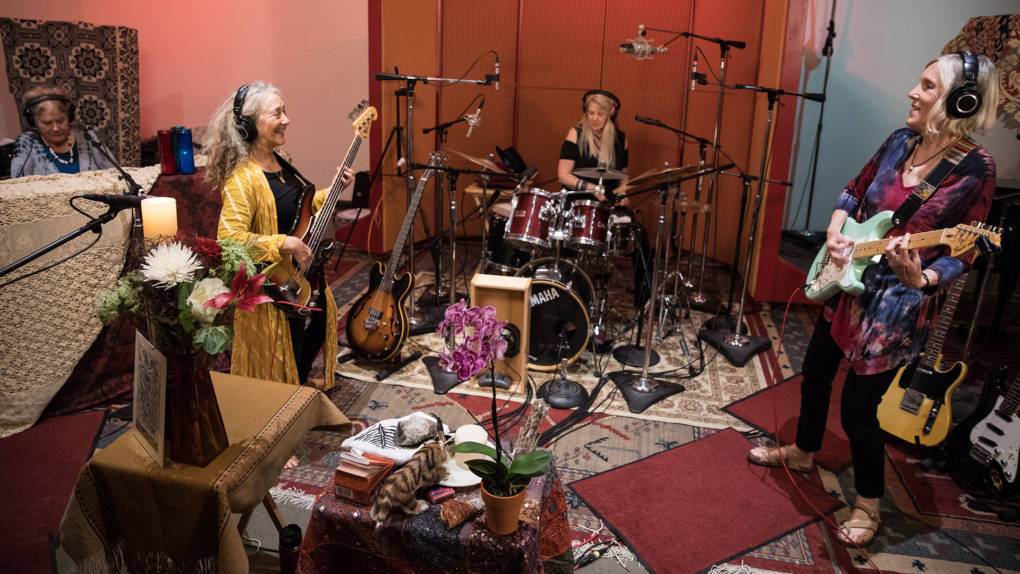
"caption": "Ace of Cups. ",
"description": "Ace of Cups. ",
"title": "_images_uploads_gallery_Copy-of-72_11-10_to_11_16_Ace_of_Cups_Photo_by_Jamie_Soja_Sojaphotography_dot_com_",
"credit": "Jamie Soja",
"status": "inherit",
"isLoading": false,
"fetchFailed": false
},
"arts_13844478": {
"type": "attachments",
"id": "arts_13844478",
"meta": {
"index": "attachments_1716263798",
"site": "arts",
"id": "13844478",
"found": true
},
"parent": 13844437,
"imgSizes": {
"small": {
"file": "https://ww2.kqed.org/app/uploads/sites/2/2018/11/krissy-marchante-520x293.jpg",
"width": 520,
"mimeType": "image/jpeg",
"height": 293
},
"thumbnail": {
"file": "https://ww2.kqed.org/app/uploads/sites/2/2018/11/krissy-marchante-160x90.jpg",
"width": 160,
"mimeType": "image/jpeg",
"height": 90
},
"fd-sm": {
"file": "https://ww2.kqed.org/app/uploads/sites/2/2018/11/krissy-marchante-960x540.jpg",
"width": 960,
"mimeType": "image/jpeg",
"height": 540
},
"post-thumbnail": {
"file": "https://ww2.kqed.org/app/uploads/sites/2/2018/11/krissy-marchante-672x372.jpg",
"width": 672,
"mimeType": "image/jpeg",
"height": 372
},
"xsmall": {
"file": "https://ww2.kqed.org/app/uploads/sites/2/2018/11/krissy-marchante-375x211.jpg",
"width": 375,
"mimeType": "image/jpeg",
"height": 211
},
"kqedFullSize": {
"file": "https://ww2.kqed.org/app/uploads/sites/2/2018/11/krissy-marchante.jpg",
"width": 960,
"height": 540
},
"guest-author-50": {
"file": "https://ww2.kqed.org/app/uploads/sites/2/2018/11/krissy-marchante-50x50.jpg",
"width": 50,
"mimeType": "image/jpeg",
"height": 50
},
"guest-author-96": {
"file": "https://ww2.kqed.org/app/uploads/sites/2/2018/11/krissy-marchante-96x96.jpg",
"width": 96,
"mimeType": "image/jpeg",
"height": 96
},
"medium": {
"file": "https://ww2.kqed.org/app/uploads/sites/2/2018/11/krissy-marchante-800x450.jpg",
"width": 800,
"mimeType": "image/jpeg",
"height": 450
},
"guest-author-64": {
"file": "https://ww2.kqed.org/app/uploads/sites/2/2018/11/krissy-marchante-64x64.jpg",
"width": 64,
"mimeType": "image/jpeg",
"height": 64
},
"guest-author-32": {
"file": "https://ww2.kqed.org/app/uploads/sites/2/2018/11/krissy-marchante-32x32.jpg",
"width": 32,
"mimeType": "image/jpeg",
"height": 32
},
"detail": {
"file": "https://ww2.kqed.org/app/uploads/sites/2/2018/11/krissy-marchante-150x150.jpg",
"width": 150,
"mimeType": "image/jpeg",
"height": 150
},
"medium_large": {
"file": "https://ww2.kqed.org/app/uploads/sites/2/2018/11/krissy-marchante-768x432.jpg",
"width": 768,
"mimeType": "image/jpeg",
"height": 432
},
"guest-author-128": {
"file": "https://ww2.kqed.org/app/uploads/sites/2/2018/11/krissy-marchante-128x128.jpg",
"width": 128,
"mimeType": "image/jpeg",
"height": 128
},
"xxsmall": {
"file": "https://ww2.kqed.org/app/uploads/sites/2/2018/11/krissy-marchante-240x135.jpg",
"width": 240,
"mimeType": "image/jpeg",
"height": 135
}
},
"publishDate": 1541556475,
"modified": 1541556560,
"caption": "Krissy Marchante's 'Poon Typhoon' mixtape spotlights rising Bay Area female rappers. ",
"description": "Krissy Marchante's 'Poon Typhoon' mixtape spotlights rising Bay Area female rappers. ",
"title": "krissy marchante",
"credit": "Courtesy of Krissy Marchante",
"status": "inherit",
"isLoading": false,
"fetchFailed": false
},
"arts_13844446": {
"type": "attachments",
"id": "arts_13844446",
"meta": {
"index": "attachments_1716263798",
"site": "arts",
"id": "13844446",
"found": true
},
"parent": 13844422,
"imgSizes": {
"small": {
"file": "https://ww2.kqed.org/app/uploads/sites/2/2018/11/BeastieBoys.MAIN_-520x293.jpg",
"width": 520,
"mimeType": "image/jpeg",
"height": 293
},
"twentyfourteen-full-width": {
"file": "https://ww2.kqed.org/app/uploads/sites/2/2018/11/BeastieBoys.MAIN_-1038x576.jpg",
"width": 1038,
"mimeType": "image/jpeg",
"height": 576
},
"thumbnail": {
"file": "https://ww2.kqed.org/app/uploads/sites/2/2018/11/BeastieBoys.MAIN_-160x90.jpg",
"width": 160,
"mimeType": "image/jpeg",
"height": 90
},
"fd-sm": {
"file": "https://ww2.kqed.org/app/uploads/sites/2/2018/11/BeastieBoys.MAIN_-960x540.jpg",
"width": 960,
"mimeType": "image/jpeg",
"height": 540
},
"post-thumbnail": {
"file": "https://ww2.kqed.org/app/uploads/sites/2/2018/11/BeastieBoys.MAIN_-672x372.jpg",
"width": 672,
"mimeType": "image/jpeg",
"height": 372
},
"xsmall": {
"file": "https://ww2.kqed.org/app/uploads/sites/2/2018/11/BeastieBoys.MAIN_-375x211.jpg",
"width": 375,
"mimeType": "image/jpeg",
"height": 211
},
"kqedFullSize": {
"file": "https://ww2.kqed.org/app/uploads/sites/2/2018/11/BeastieBoys.MAIN_.jpg",
"width": 1920,
"height": 1080
},
"large": {
"file": "https://ww2.kqed.org/app/uploads/sites/2/2018/11/BeastieBoys.MAIN_-1020x574.jpg",
"width": 1020,
"mimeType": "image/jpeg",
"height": 574
},
"xlarge": {
"file": "https://ww2.kqed.org/app/uploads/sites/2/2018/11/BeastieBoys.MAIN_-1180x664.jpg",
"width": 1180,
"mimeType": "image/jpeg",
"height": 664
},
"complete_open_graph": {
"file": "https://ww2.kqed.org/app/uploads/sites/2/2018/11/BeastieBoys.MAIN_-1200x675.jpg",
"width": 1200,
"mimeType": "image/jpeg",
"height": 675
},
"guest-author-50": {
"file": "https://ww2.kqed.org/app/uploads/sites/2/2018/11/BeastieBoys.MAIN_-50x50.jpg",
"width": 50,
"mimeType": "image/jpeg",
"height": 50
},
"guest-author-96": {
"file": "https://ww2.kqed.org/app/uploads/sites/2/2018/11/BeastieBoys.MAIN_-96x96.jpg",
"width": 96,
"mimeType": "image/jpeg",
"height": 96
},
"medium": {
"file": "https://ww2.kqed.org/app/uploads/sites/2/2018/11/BeastieBoys.MAIN_-800x450.jpg",
"width": 800,
"mimeType": "image/jpeg",
"height": 450
},
"guest-author-64": {
"file": "https://ww2.kqed.org/app/uploads/sites/2/2018/11/BeastieBoys.MAIN_-64x64.jpg",
"width": 64,
"mimeType": "image/jpeg",
"height": 64
},
"guest-author-32": {
"file": "https://ww2.kqed.org/app/uploads/sites/2/2018/11/BeastieBoys.MAIN_-32x32.jpg",
"width": 32,
"mimeType": "image/jpeg",
"height": 32
},
"fd-lrg": {
"file": "https://ww2.kqed.org/app/uploads/sites/2/2018/11/BeastieBoys.MAIN_-1920x1080.jpg",
"width": 1920,
"mimeType": "image/jpeg",
"height": 1080
},
"fd-med": {
"file": "https://ww2.kqed.org/app/uploads/sites/2/2018/11/BeastieBoys.MAIN_-1180x664.jpg",
"width": 1180,
"mimeType": "image/jpeg",
"height": 664
},
"full-width": {
"file": "https://ww2.kqed.org/app/uploads/sites/2/2018/11/BeastieBoys.MAIN_-1920x1080.jpg",
"width": 1920,
"mimeType": "image/jpeg",
"height": 1080
},
"detail": {
"file": "https://ww2.kqed.org/app/uploads/sites/2/2018/11/BeastieBoys.MAIN_-150x150.jpg",
"width": 150,
"mimeType": "image/jpeg",
"height": 150
},
"medium_large": {
"file": "https://ww2.kqed.org/app/uploads/sites/2/2018/11/BeastieBoys.MAIN_-768x432.jpg",
"width": 768,
"mimeType": "image/jpeg",
"height": 432
},
"guest-author-128": {
"file": "https://ww2.kqed.org/app/uploads/sites/2/2018/11/BeastieBoys.MAIN_-128x128.jpg",
"width": 128,
"mimeType": "image/jpeg",
"height": 128
},
"xxsmall": {
"file": "https://ww2.kqed.org/app/uploads/sites/2/2018/11/BeastieBoys.MAIN_-240x135.jpg",
"width": 240,
"mimeType": "image/jpeg",
"height": 135
}
},
"publishDate": 1541546674,
"modified": 1541546873,
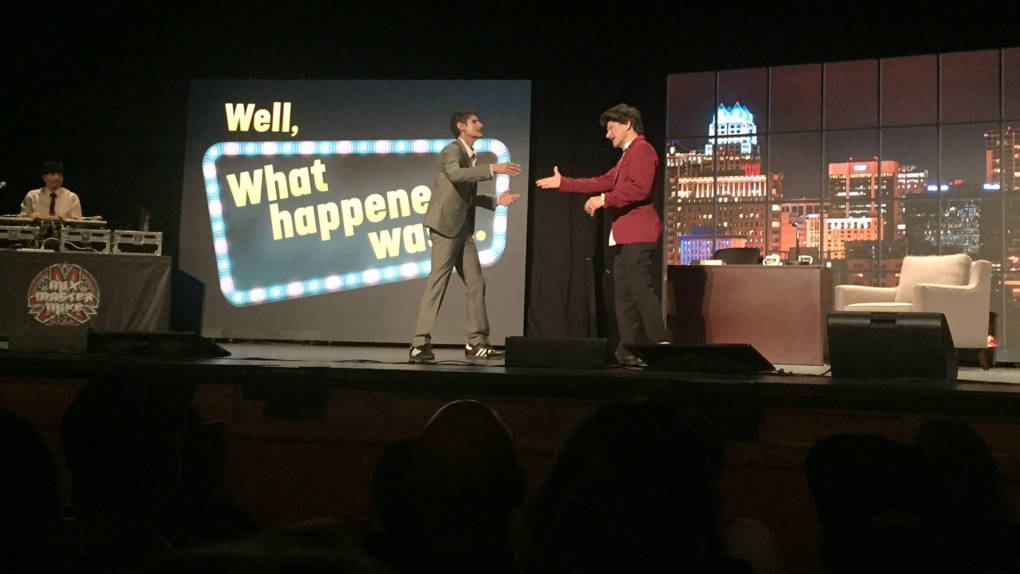
"caption": "The Beastie Boys' Mike D and Ad Rock at City Arts & Lectures, Nov. 6, 2018.",
"description": "The Beastie Boys' Mike D and Ad Rock at City Arts & Lectures, Nov. 6, 2018.",
"title": "BeastieBoys.MAIN",
"credit": "Gabe Meline/KQED",
"status": "inherit",
"isLoading": false,
"fetchFailed": false
},
"arts_13844365": {
"type": "attachments",
"id": "arts_13844365",
"meta": {
"index": "attachments_1716263798",
"site": "arts",
"id": "13844365",
"found": true
},
"parent": 13844019,
"imgSizes": {
"small": {
"file": "https://ww2.kqed.org/app/uploads/sites/2/2018/11/MAJOR-press-still-520x293.jpg",
"width": 520,
"mimeType": "image/jpeg",
"height": 293
},
"twentyfourteen-full-width": {
"file": "https://ww2.kqed.org/app/uploads/sites/2/2018/11/MAJOR-press-still-1038x576.jpg",
"width": 1038,
"mimeType": "image/jpeg",
"height": 576
},
"thumbnail": {
"file": "https://ww2.kqed.org/app/uploads/sites/2/2018/11/MAJOR-press-still-160x90.jpg",
"width": 160,
"mimeType": "image/jpeg",
"height": 90
},
"fd-sm": {
"file": "https://ww2.kqed.org/app/uploads/sites/2/2018/11/MAJOR-press-still-960x540.jpg",
"width": 960,
"mimeType": "image/jpeg",
"height": 540
},
"post-thumbnail": {
"file": "https://ww2.kqed.org/app/uploads/sites/2/2018/11/MAJOR-press-still-672x372.jpg",
"width": 672,
"mimeType": "image/jpeg",
"height": 372
},
"xsmall": {
"file": "https://ww2.kqed.org/app/uploads/sites/2/2018/11/MAJOR-press-still-375x211.jpg",
"width": 375,
"mimeType": "image/jpeg",
"height": 211
},
"kqedFullSize": {
"file": "https://ww2.kqed.org/app/uploads/sites/2/2018/11/MAJOR-press-still.jpg",
"width": 1920,
"height": 1080
},
"large": {
"file": "https://ww2.kqed.org/app/uploads/sites/2/2018/11/MAJOR-press-still-1020x574.jpg",
"width": 1020,
"mimeType": "image/jpeg",
"height": 574
},
"xlarge": {
"file": "https://ww2.kqed.org/app/uploads/sites/2/2018/11/MAJOR-press-still-1180x664.jpg",
"width": 1180,
"mimeType": "image/jpeg",
"height": 664
},
"complete_open_graph": {
"file": "https://ww2.kqed.org/app/uploads/sites/2/2018/11/MAJOR-press-still-1200x675.jpg",
"width": 1200,
"mimeType": "image/jpeg",
"height": 675
},
"guest-author-50": {
"file": "https://ww2.kqed.org/app/uploads/sites/2/2018/11/MAJOR-press-still-50x50.jpg",
"width": 50,
"mimeType": "image/jpeg",
"height": 50
},
"guest-author-96": {
"file": "https://ww2.kqed.org/app/uploads/sites/2/2018/11/MAJOR-press-still-96x96.jpg",
"width": 96,
"mimeType": "image/jpeg",
"height": 96
},
"medium": {
"file": "https://ww2.kqed.org/app/uploads/sites/2/2018/11/MAJOR-press-still-800x450.jpg",
"width": 800,
"mimeType": "image/jpeg",
"height": 450
},
"guest-author-64": {
"file": "https://ww2.kqed.org/app/uploads/sites/2/2018/11/MAJOR-press-still-64x64.jpg",
"width": 64,
"mimeType": "image/jpeg",
"height": 64
},
"guest-author-32": {
"file": "https://ww2.kqed.org/app/uploads/sites/2/2018/11/MAJOR-press-still-32x32.jpg",
"width": 32,
"mimeType": "image/jpeg",
"height": 32
},
"fd-lrg": {
"file": "https://ww2.kqed.org/app/uploads/sites/2/2018/11/MAJOR-press-still-1920x1080.jpg",
"width": 1920,
"mimeType": "image/jpeg",
"height": 1080
},
"fd-med": {
"file": "https://ww2.kqed.org/app/uploads/sites/2/2018/11/MAJOR-press-still-1180x664.jpg",
"width": 1180,
"mimeType": "image/jpeg",
"height": 664
},
"full-width": {
"file": "https://ww2.kqed.org/app/uploads/sites/2/2018/11/MAJOR-press-still-1920x1080.jpg",
"width": 1920,
"mimeType": "image/jpeg",
"height": 1080
},
"detail": {
"file": "https://ww2.kqed.org/app/uploads/sites/2/2018/11/MAJOR-press-still-150x150.jpg",
"width": 150,
"mimeType": "image/jpeg",
"height": 150
},
"medium_large": {
"file": "https://ww2.kqed.org/app/uploads/sites/2/2018/11/MAJOR-press-still-768x432.jpg",
"width": 768,
"mimeType": "image/jpeg",
"height": 432
},
"guest-author-128": {
"file": "https://ww2.kqed.org/app/uploads/sites/2/2018/11/MAJOR-press-still-128x128.jpg",
"width": 128,
"mimeType": "image/jpeg",
"height": 128
},
"xxsmall": {
"file": "https://ww2.kqed.org/app/uploads/sites/2/2018/11/MAJOR-press-still-240x135.jpg",
"width": 240,
"mimeType": "image/jpeg",
"height": 135
}
},
"publishDate": 1541455176,
"modified": 1541455267,
"caption": "Miss Major has been advocating for the trans community since before the Stonewall uprising of 1969. ",
"description": "Miss Major has been advocating for the trans community since before the Stonewall uprising of 1969. ",
"title": "MAJOR press still",
"credit": "Courtesy of 'Major!' ",
"status": "inherit",
"isLoading": false,
"fetchFailed": false
},
"arts_13844317": {
"type": "attachments",
"id": "arts_13844317",
"meta": {
"index": "attachments_1716263798",
"site": "arts",
"id": "13844317",
"found": true
},
"parent": 13844252,
"imgSizes": {
"small": {
"file": "https://ww2.kqed.org/app/uploads/sites/2/2018/11/SpaceCat.MAIN_-520x320.jpg",
"width": 520,
"mimeType": "image/jpeg",
"height": 320
},
"twentyfourteen-full-width": {
"file": "https://ww2.kqed.org/app/uploads/sites/2/2018/11/SpaceCat.MAIN_-1038x576.jpg",
"width": 1038,
"mimeType": "image/jpeg",
"height": 576
},
"thumbnail": {
"file": "https://ww2.kqed.org/app/uploads/sites/2/2018/11/SpaceCat.MAIN_-160x98.jpg",
"width": 160,
"mimeType": "image/jpeg",
"height": 98
},
"fd-sm": {
"file": "https://ww2.kqed.org/app/uploads/sites/2/2018/11/SpaceCat.MAIN_-960x591.jpg",
"width": 960,
"mimeType": "image/jpeg",
"height": 591
},
"post-thumbnail": {
"file": "https://ww2.kqed.org/app/uploads/sites/2/2018/11/SpaceCat.MAIN_-672x372.jpg",
"width": 672,
"mimeType": "image/jpeg",
"height": 372
},
"xsmall": {
"file": "https://ww2.kqed.org/app/uploads/sites/2/2018/11/SpaceCat.MAIN_-375x231.jpg",
"width": 375,
"mimeType": "image/jpeg",
"height": 231
},
"kqedFullSize": {
"file": "https://ww2.kqed.org/app/uploads/sites/2/2018/11/SpaceCat.MAIN_.jpg",
"width": 1920,
"height": 1181
},
"large": {
"file": "https://ww2.kqed.org/app/uploads/sites/2/2018/11/SpaceCat.MAIN_-1020x627.jpg",
"width": 1020,
"mimeType": "image/jpeg",
"height": 627
},
"xlarge": {
"file": "https://ww2.kqed.org/app/uploads/sites/2/2018/11/SpaceCat.MAIN_-1180x726.jpg",
"width": 1180,
"mimeType": "image/jpeg",
"height": 726
},
"complete_open_graph": {
"file": "https://ww2.kqed.org/app/uploads/sites/2/2018/11/SpaceCat.MAIN_-1200x738.jpg",
"width": 1200,
"mimeType": "image/jpeg",
"height": 738
},
"guest-author-50": {
"file": "https://ww2.kqed.org/app/uploads/sites/2/2018/11/SpaceCat.MAIN_-50x50.jpg",
"width": 50,
"mimeType": "image/jpeg",
"height": 50
},
"guest-author-96": {
"file": "https://ww2.kqed.org/app/uploads/sites/2/2018/11/SpaceCat.MAIN_-96x96.jpg",
"width": 96,
"mimeType": "image/jpeg",
"height": 96
},
"medium": {
"file": "https://ww2.kqed.org/app/uploads/sites/2/2018/11/SpaceCat.MAIN_-800x492.jpg",
"width": 800,
"mimeType": "image/jpeg",
"height": 492
},
"guest-author-64": {
"file": "https://ww2.kqed.org/app/uploads/sites/2/2018/11/SpaceCat.MAIN_-64x64.jpg",
"width": 64,
"mimeType": "image/jpeg",
"height": 64
},
"guest-author-32": {
"file": "https://ww2.kqed.org/app/uploads/sites/2/2018/11/SpaceCat.MAIN_-32x32.jpg",
"width": 32,
"mimeType": "image/jpeg",
"height": 32
},
"fd-lrg": {
"file": "https://ww2.kqed.org/app/uploads/sites/2/2018/11/SpaceCat.MAIN_-1920x1181.jpg",
"width": 1920,
"mimeType": "image/jpeg",
"height": 1181
},
"fd-med": {
"file": "https://ww2.kqed.org/app/uploads/sites/2/2018/11/SpaceCat.MAIN_-1180x726.jpg",
"width": 1180,
"mimeType": "image/jpeg",
"height": 726
},
"full-width": {
"file": "https://ww2.kqed.org/app/uploads/sites/2/2018/11/SpaceCat.MAIN_-1920x1181.jpg",
"width": 1920,
"mimeType": "image/jpeg",
"height": 1181
},
"detail": {
"file": "https://ww2.kqed.org/app/uploads/sites/2/2018/11/SpaceCat.MAIN_-150x150.jpg",
"width": 150,
"mimeType": "image/jpeg",
"height": 150
},
"medium_large": {
"file": "https://ww2.kqed.org/app/uploads/sites/2/2018/11/SpaceCat.MAIN_-768x472.jpg",
"width": 768,
"mimeType": "image/jpeg",
"height": 472
},
"guest-author-128": {
"file": "https://ww2.kqed.org/app/uploads/sites/2/2018/11/SpaceCat.MAIN_-128x128.jpg",
"width": 128,
"mimeType": "image/jpeg",
"height": 128
},
"xxsmall": {
"file": "https://ww2.kqed.org/app/uploads/sites/2/2018/11/SpaceCat.MAIN_-240x148.jpg",
"width": 240,
"mimeType": "image/jpeg",
"height": 148
}
},
"publishDate": 1541443429,
"modified": 1541443866,
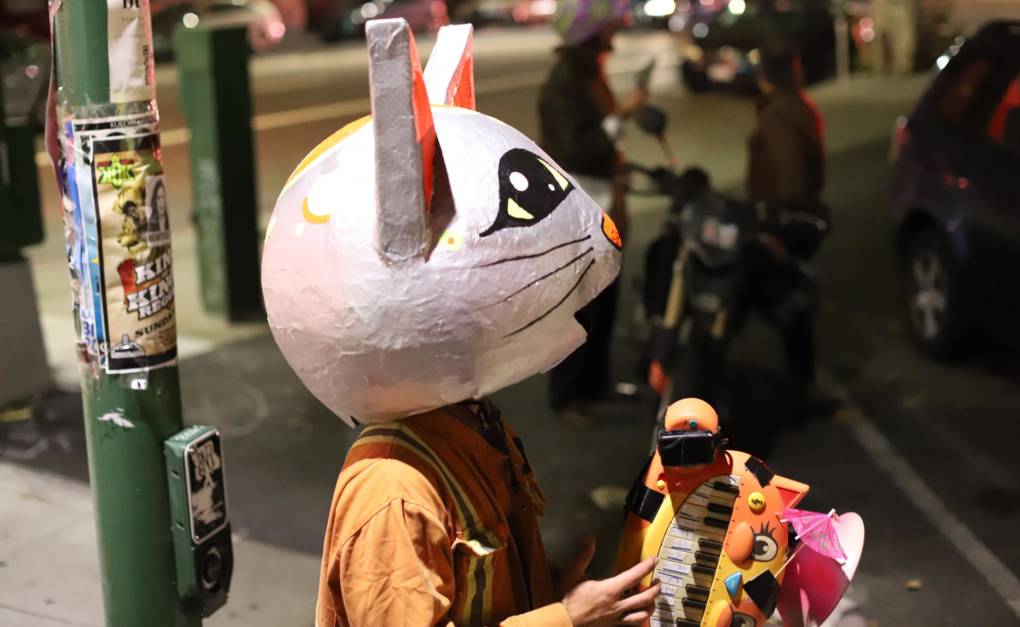
"caption": "The Oakland Guild of Space Cat Voters uses a sound-system truck, megaphones, techno music and colorful outfits and flyers to get out the vote.",
"description": "The Oakland Guild of Space Cat Voters uses a sound-system truck, megaphones, techno music and colorful outfits and flyers to get out the vote.",
"title": "SpaceCat.MAIN",
"credit": "Sam Lefebvre/KQED",
"status": "inherit",
"isLoading": false,
"fetchFailed": false
},
"arts_13844118": {
"type": "attachments",
"id": "arts_13844118",
"meta": {
"index": "attachments_1716263798",
"site": "arts",
"id": "13844118",
"found": true
},
"parent": 13844099,
"imgSizes": {
"small": {
"file": "https://ww2.kqed.org/app/uploads/sites/2/2018/11/RS33607_LA20RUTA20DE20L27ESCLAVATGE_153_28c29Claire20Xavier-qut-520x293.jpg",
"width": 520,
"mimeType": "image/jpeg",
"height": 293
},
"twentyfourteen-full-width": {
"file": "https://ww2.kqed.org/app/uploads/sites/2/2018/11/RS33607_LA20RUTA20DE20L27ESCLAVATGE_153_28c29Claire20Xavier-qut-1038x576.jpg",
"width": 1038,
"mimeType": "image/jpeg",
"height": 576
},
"thumbnail": {
"file": "https://ww2.kqed.org/app/uploads/sites/2/2018/11/RS33607_LA20RUTA20DE20L27ESCLAVATGE_153_28c29Claire20Xavier-qut-160x90.jpg",
"width": 160,
"mimeType": "image/jpeg",
"height": 90
},
"fd-sm": {
"file": "https://ww2.kqed.org/app/uploads/sites/2/2018/11/RS33607_LA20RUTA20DE20L27ESCLAVATGE_153_28c29Claire20Xavier-qut-960x540.jpg",
"width": 960,
"mimeType": "image/jpeg",
"height": 540
},
"post-thumbnail": {
"file": "https://ww2.kqed.org/app/uploads/sites/2/2018/11/RS33607_LA20RUTA20DE20L27ESCLAVATGE_153_28c29Claire20Xavier-qut-672x372.jpg",
"width": 672,
"mimeType": "image/jpeg",
"height": 372
},
"xsmall": {
"file": "https://ww2.kqed.org/app/uploads/sites/2/2018/11/RS33607_LA20RUTA20DE20L27ESCLAVATGE_153_28c29Claire20Xavier-qut-375x211.jpg",
"width": 375,
"mimeType": "image/jpeg",
"height": 211
},
"kqedFullSize": {
"file": "https://ww2.kqed.org/app/uploads/sites/2/2018/11/RS33607_LA20RUTA20DE20L27ESCLAVATGE_153_28c29Claire20Xavier-qut.jpg",
"width": 1920,
"height": 1080
},
"large": {
"file": "https://ww2.kqed.org/app/uploads/sites/2/2018/11/RS33607_LA20RUTA20DE20L27ESCLAVATGE_153_28c29Claire20Xavier-qut-1020x574.jpg",
"width": 1020,
"mimeType": "image/jpeg",
"height": 574
},
"xlarge": {
"file": "https://ww2.kqed.org/app/uploads/sites/2/2018/11/RS33607_LA20RUTA20DE20L27ESCLAVATGE_153_28c29Claire20Xavier-qut-1180x664.jpg",
"width": 1180,
"mimeType": "image/jpeg",
"height": 664
},
"complete_open_graph": {
"file": "https://ww2.kqed.org/app/uploads/sites/2/2018/11/RS33607_LA20RUTA20DE20L27ESCLAVATGE_153_28c29Claire20Xavier-qut-1200x675.jpg",
"width": 1200,
"mimeType": "image/jpeg",
"height": 675
},
"guest-author-50": {
"file": "https://ww2.kqed.org/app/uploads/sites/2/2018/11/RS33607_LA20RUTA20DE20L27ESCLAVATGE_153_28c29Claire20Xavier-qut-50x50.jpg",
"width": 50,
"mimeType": "image/jpeg",
"height": 50
},
"guest-author-96": {
"file": "https://ww2.kqed.org/app/uploads/sites/2/2018/11/RS33607_LA20RUTA20DE20L27ESCLAVATGE_153_28c29Claire20Xavier-qut-96x96.jpg",
"width": 96,
"mimeType": "image/jpeg",
"height": 96
},
"medium": {
"file": "https://ww2.kqed.org/app/uploads/sites/2/2018/11/RS33607_LA20RUTA20DE20L27ESCLAVATGE_153_28c29Claire20Xavier-qut-800x450.jpg",
"width": 800,
"mimeType": "image/jpeg",
"height": 450
},
"guest-author-64": {
"file": "https://ww2.kqed.org/app/uploads/sites/2/2018/11/RS33607_LA20RUTA20DE20L27ESCLAVATGE_153_28c29Claire20Xavier-qut-64x64.jpg",
"width": 64,
"mimeType": "image/jpeg",
"height": 64
},
"guest-author-32": {
"file": "https://ww2.kqed.org/app/uploads/sites/2/2018/11/RS33607_LA20RUTA20DE20L27ESCLAVATGE_153_28c29Claire20Xavier-qut-32x32.jpg",
"width": 32,
"mimeType": "image/jpeg",
"height": 32
},
"fd-lrg": {
"file": "https://ww2.kqed.org/app/uploads/sites/2/2018/11/RS33607_LA20RUTA20DE20L27ESCLAVATGE_153_28c29Claire20Xavier-qut-1920x1080.jpg",
"width": 1920,
"mimeType": "image/jpeg",
"height": 1080
},
"fd-med": {
"file": "https://ww2.kqed.org/app/uploads/sites/2/2018/11/RS33607_LA20RUTA20DE20L27ESCLAVATGE_153_28c29Claire20Xavier-qut-1180x664.jpg",
"width": 1180,
"mimeType": "image/jpeg",
"height": 664
},
"full-width": {
"file": "https://ww2.kqed.org/app/uploads/sites/2/2018/11/RS33607_LA20RUTA20DE20L27ESCLAVATGE_153_28c29Claire20Xavier-qut-1920x1080.jpg",
"width": 1920,
"mimeType": "image/jpeg",
"height": 1080
},
"detail": {
"file": "https://ww2.kqed.org/app/uploads/sites/2/2018/11/RS33607_LA20RUTA20DE20L27ESCLAVATGE_153_28c29Claire20Xavier-qut-150x150.jpg",
"width": 150,
"mimeType": "image/jpeg",
"height": 150
},
"medium_large": {
"file": "https://ww2.kqed.org/app/uploads/sites/2/2018/11/RS33607_LA20RUTA20DE20L27ESCLAVATGE_153_28c29Claire20Xavier-qut-768x432.jpg",
"width": 768,
"mimeType": "image/jpeg",
"height": 432
},
"guest-author-128": {
"file": "https://ww2.kqed.org/app/uploads/sites/2/2018/11/RS33607_LA20RUTA20DE20L27ESCLAVATGE_153_28c29Claire20Xavier-qut-128x128.jpg",
"width": 128,
"mimeType": "image/jpeg",
"height": 128
},
"xxsmall": {
"file": "https://ww2.kqed.org/app/uploads/sites/2/2018/11/RS33607_LA20RUTA20DE20L27ESCLAVATGE_153_28c29Claire20Xavier-qut-240x135.jpg",
"width": 240,
"mimeType": "image/jpeg",
"height": 135
}
},
"publishDate": 1541216022,
"modified": 1541216055,
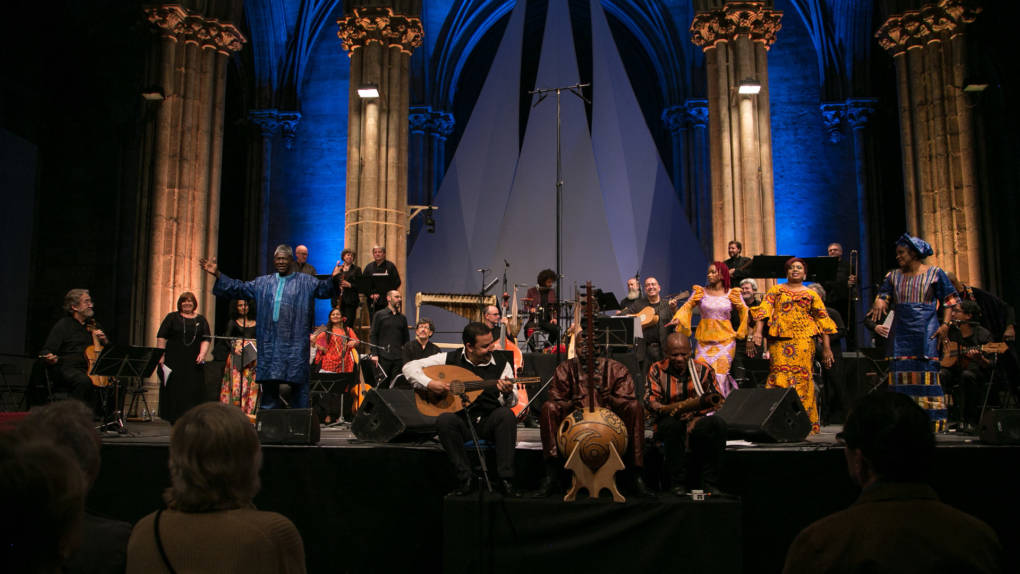
"caption": "Jordi Savall's \"Routes of Slavery\" features music from Brazil, Colombia, Guadeloupe, Mali, Mexico and Spain.",
"description": null,
"title": "RS33607_LARUTADELESCLAVATGE_153_cClaireXavier-qut",
"credit": "Photo: Courtesy of Claire Xavier",
"status": "inherit",
"isLoading": false,
"fetchFailed": false
},
"arts_13842690": {
"type": "attachments",
"id": "arts_13842690",
"meta": {
"index": "attachments_1716263798",
"site": "arts",
"id": "13842690",
"found": true
},
"parent": 13842685,
"imgSizes": {
"small": {
"file": "https://ww2.kqed.org/app/uploads/sites/2/2018/10/Jessica-Bejarano-e1539375363614-520x294.jpg",
"width": 520,
"mimeType": "image/jpeg",
"height": 294
},
"twentyfourteen-full-width": {
"file": "https://ww2.kqed.org/app/uploads/sites/2/2018/10/Jessica-Bejarano-e1539375363614-1038x576.jpg",
"width": 1038,
"mimeType": "image/jpeg",
"height": 576
},
"thumbnail": {
"file": "https://ww2.kqed.org/app/uploads/sites/2/2018/10/Jessica-Bejarano-e1539375363614-160x90.jpg",
"width": 160,
"mimeType": "image/jpeg",
"height": 90
},
"fd-sm": {
"file": "https://ww2.kqed.org/app/uploads/sites/2/2018/10/Jessica-Bejarano-e1539375363614-960x542.jpg",
"width": 960,
"mimeType": "image/jpeg",
"height": 542
},
"post-thumbnail": {
"file": "https://ww2.kqed.org/app/uploads/sites/2/2018/10/Jessica-Bejarano-e1539375363614-672x372.jpg",
"width": 672,
"mimeType": "image/jpeg",
"height": 372
},
"xsmall": {
"file": "https://ww2.kqed.org/app/uploads/sites/2/2018/10/Jessica-Bejarano-e1539375363614-375x212.jpg",
"width": 375,
"mimeType": "image/jpeg",
"height": 212
},
"kqedFullSize": {
"file": "https://ww2.kqed.org/app/uploads/sites/2/2018/10/Jessica-Bejarano-e1539375363614.jpg",
"width": 1377,
"height": 778
},
"large": {
"file": "https://ww2.kqed.org/app/uploads/sites/2/2018/10/Jessica-Bejarano-e1539375363614-1020x576.jpg",
"width": 1020,
"mimeType": "image/jpeg",
"height": 576
},
"xlarge": {
"file": "https://ww2.kqed.org/app/uploads/sites/2/2018/10/Jessica-Bejarano-e1539375363614-1180x667.jpg",
"width": 1180,
"mimeType": "image/jpeg",
"height": 667
},
"complete_open_graph": {
"file": "https://ww2.kqed.org/app/uploads/sites/2/2018/10/Jessica-Bejarano-e1539375363614-1200x678.jpg",
"width": 1200,
"mimeType": "image/jpeg",
"height": 678
},
"guest-author-50": {
"file": "https://ww2.kqed.org/app/uploads/sites/2/2018/10/Jessica-Bejarano-e1539375363614-50x50.jpg",
"width": 50,
"mimeType": "image/jpeg",
"height": 50
},
"guest-author-96": {
"file": "https://ww2.kqed.org/app/uploads/sites/2/2018/10/Jessica-Bejarano-e1539375363614-96x96.jpg",
"width": 96,
"mimeType": "image/jpeg",
"height": 96
},
"medium": {
"file": "https://ww2.kqed.org/app/uploads/sites/2/2018/10/Jessica-Bejarano-e1539375363614-800x452.jpg",
"width": 800,
"mimeType": "image/jpeg",
"height": 452
},
"guest-author-64": {
"file": "https://ww2.kqed.org/app/uploads/sites/2/2018/10/Jessica-Bejarano-e1539375363614-64x64.jpg",
"width": 64,
"mimeType": "image/jpeg",
"height": 64
},
"guest-author-32": {
"file": "https://ww2.kqed.org/app/uploads/sites/2/2018/10/Jessica-Bejarano-e1539375363614-32x32.jpg",
"width": 32,
"mimeType": "image/jpeg",
"height": 32
},
"fd-lrg": {
"file": "https://ww2.kqed.org/app/uploads/sites/2/2018/10/Jessica-Bejarano-1920x1440.jpg",
"width": 1920,
"mimeType": "image/jpeg",
"height": 1440
},
"fd-med": {
"file": "https://ww2.kqed.org/app/uploads/sites/2/2018/10/Jessica-Bejarano-e1539375363614-1180x667.jpg",
"width": 1180,
"mimeType": "image/jpeg",
"height": 667
},
"full-width": {
"file": "https://ww2.kqed.org/app/uploads/sites/2/2018/10/Jessica-Bejarano-1920x1440.jpg",
"width": 1920,
"mimeType": "image/jpeg",
"height": 1440
},
"detail": {
"file": "https://ww2.kqed.org/app/uploads/sites/2/2018/10/Jessica-Bejarano-e1539375363614-150x150.jpg",
"width": 150,
"mimeType": "image/jpeg",
"height": 150
},
"medium_large": {
"file": "https://ww2.kqed.org/app/uploads/sites/2/2018/10/Jessica-Bejarano-e1539375363614-768x434.jpg",
"width": 768,
"mimeType": "image/jpeg",
"height": 434
},
"guest-author-128": {
"file": "https://ww2.kqed.org/app/uploads/sites/2/2018/10/Jessica-Bejarano-e1539375363614-128x128.jpg",
"width": 128,
"mimeType": "image/jpeg",
"height": 128
},
"xxsmall": {
"file": "https://ww2.kqed.org/app/uploads/sites/2/2018/10/Jessica-Bejarano-e1539375363614-240x136.jpg",
"width": 240,
"mimeType": "image/jpeg",
"height": 136
}
},
"publishDate": 1539375106,
"modified": 1539375553,
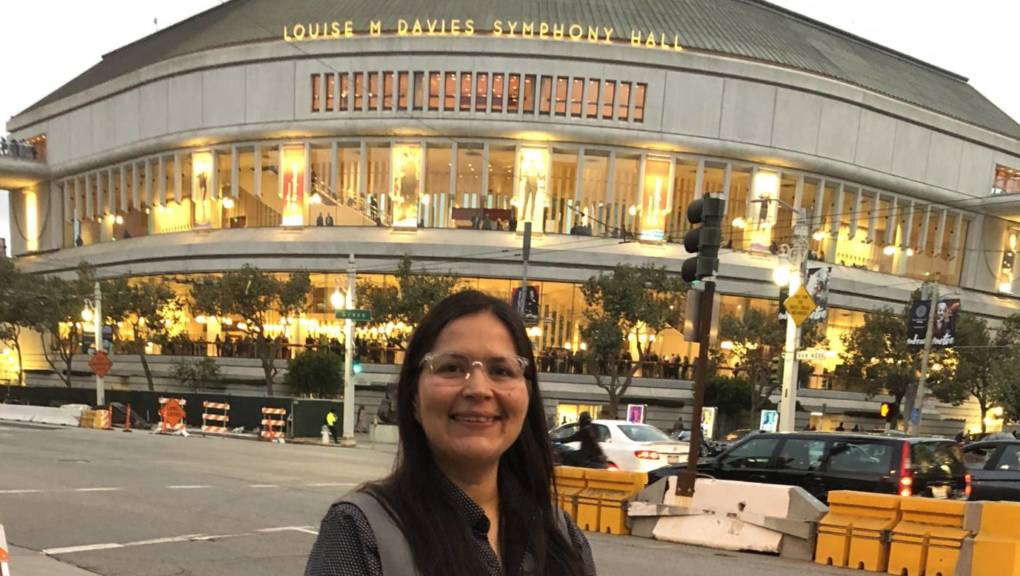
"caption": "Conductor Jessica Bejarano outside Davies Symphony Hall. September 6, 2018.",
"description": "Conductor Jessica Bejarano outside Davies Symphony Hall. September 6, 2018.",
"title": "Jessica Bejarano",
"credit": "Chloe Veltman/KQED",
"status": "inherit",
"isLoading": false,
"fetchFailed": false
},
"arts_13844060": {
"type": "attachments",
"id": "arts_13844060",
"meta": {
"index": "attachments_1716263798",
"site": "arts",
"id": "13844060",
"found": true
},
"parent": 13844052,
"imgSizes": {
"small": {
"file": "https://ww2.kqed.org/app/uploads/sites/2/2018/11/RichieBucher.MAIN_-520x293.jpg",
"width": 520,
"mimeType": "image/jpeg",
"height": 293
},
"twentyfourteen-full-width": {
"file": "https://ww2.kqed.org/app/uploads/sites/2/2018/11/RichieBucher.MAIN_-1038x576.jpg",
"width": 1038,
"mimeType": "image/jpeg",
"height": 576
},
"thumbnail": {
"file": "https://ww2.kqed.org/app/uploads/sites/2/2018/11/RichieBucher.MAIN_-160x90.jpg",
"width": 160,
"mimeType": "image/jpeg",
"height": 90
},
"fd-sm": {
"file": "https://ww2.kqed.org/app/uploads/sites/2/2018/11/RichieBucher.MAIN_-960x540.jpg",
"width": 960,
"mimeType": "image/jpeg",
"height": 540
},
"post-thumbnail": {
"file": "https://ww2.kqed.org/app/uploads/sites/2/2018/11/RichieBucher.MAIN_-672x372.jpg",
"width": 672,
"mimeType": "image/jpeg",
"height": 372
},
"xsmall": {
"file": "https://ww2.kqed.org/app/uploads/sites/2/2018/11/RichieBucher.MAIN_-375x211.jpg",
"width": 375,
"mimeType": "image/jpeg",
"height": 211
},
"kqedFullSize": {
"file": "https://ww2.kqed.org/app/uploads/sites/2/2018/11/RichieBucher.MAIN_.jpg",
"width": 1920,
"height": 1080
},
"large": {
"file": "https://ww2.kqed.org/app/uploads/sites/2/2018/11/RichieBucher.MAIN_-1020x574.jpg",
"width": 1020,
"mimeType": "image/jpeg",
"height": 574
},
"xlarge": {
"file": "https://ww2.kqed.org/app/uploads/sites/2/2018/11/RichieBucher.MAIN_-1180x664.jpg",
"width": 1180,
"mimeType": "image/jpeg",
"height": 664
},
"complete_open_graph": {
"file": "https://ww2.kqed.org/app/uploads/sites/2/2018/11/RichieBucher.MAIN_-1200x675.jpg",
"width": 1200,
"mimeType": "image/jpeg",
"height": 675
},
"guest-author-50": {
"file": "https://ww2.kqed.org/app/uploads/sites/2/2018/11/RichieBucher.MAIN_-50x50.jpg",
"width": 50,
"mimeType": "image/jpeg",
"height": 50
},
"guest-author-96": {
"file": "https://ww2.kqed.org/app/uploads/sites/2/2018/11/RichieBucher.MAIN_-96x96.jpg",
"width": 96,
"mimeType": "image/jpeg",
"height": 96
},
"medium": {
"file": "https://ww2.kqed.org/app/uploads/sites/2/2018/11/RichieBucher.MAIN_-800x450.jpg",
"width": 800,
"mimeType": "image/jpeg",
"height": 450
},
"guest-author-64": {
"file": "https://ww2.kqed.org/app/uploads/sites/2/2018/11/RichieBucher.MAIN_-64x64.jpg",
"width": 64,
"mimeType": "image/jpeg",
"height": 64
},
"guest-author-32": {
"file": "https://ww2.kqed.org/app/uploads/sites/2/2018/11/RichieBucher.MAIN_-32x32.jpg",
"width": 32,
"mimeType": "image/jpeg",
"height": 32
},
"fd-lrg": {
"file": "https://ww2.kqed.org/app/uploads/sites/2/2018/11/RichieBucher.MAIN_-1920x1080.jpg",
"width": 1920,
"mimeType": "image/jpeg",
"height": 1080
},
"fd-med": {
"file": "https://ww2.kqed.org/app/uploads/sites/2/2018/11/RichieBucher.MAIN_-1180x664.jpg",
"width": 1180,
"mimeType": "image/jpeg",
"height": 664
},
"full-width": {
"file": "https://ww2.kqed.org/app/uploads/sites/2/2018/11/RichieBucher.MAIN_-1920x1080.jpg",
"width": 1920,
"mimeType": "image/jpeg",
"height": 1080
},
"detail": {
"file": "https://ww2.kqed.org/app/uploads/sites/2/2018/11/RichieBucher.MAIN_-150x150.jpg",
"width": 150,
"mimeType": "image/jpeg",
"height": 150
},
"medium_large": {
"file": "https://ww2.kqed.org/app/uploads/sites/2/2018/11/RichieBucher.MAIN_-768x432.jpg",
"width": 768,
"mimeType": "image/jpeg",
"height": 432
},
"guest-author-128": {
"file": "https://ww2.kqed.org/app/uploads/sites/2/2018/11/RichieBucher.MAIN_-128x128.jpg",
"width": 128,
"mimeType": "image/jpeg",
"height": 128
},
"xxsmall": {
"file": "https://ww2.kqed.org/app/uploads/sites/2/2018/11/RichieBucher.MAIN_-240x135.jpg",
"width": 240,
"mimeType": "image/jpeg",
"height": 135
}
},
"publishDate": 1541144931,
"modified": 1541144999,
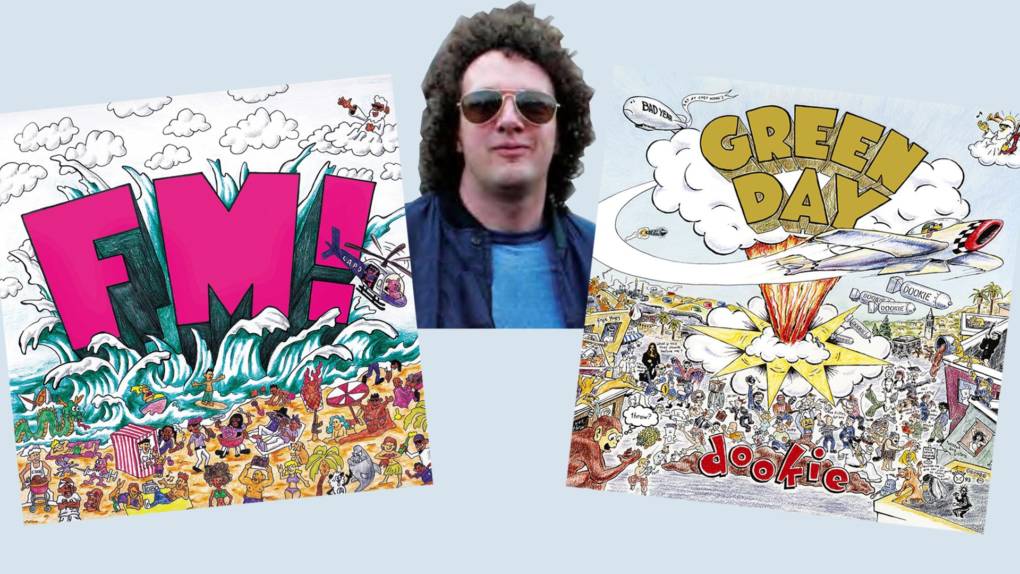
"caption": "Richie Bucher (center) illustrated Green Day's 'Dookie' album cover, which Vince Staples paid tribute to this week with 'FM!'",
"description": "Richie Bucher (center) illustrated Green Day's 'Dookie' album cover, which Vince Staples paid tribute to this week with 'FM!'",
"title": "RichieBucher.MAIN",
"credit": null,
"status": "inherit",
"isLoading": false,
"fetchFailed": false
},
"arts_13844006": {
"type": "attachments",
"id": "arts_13844006",
"meta": {
"index": "attachments_1716263798",
"site": "arts",
"id": "13844006",
"found": true
},
"parent": 13843513,
"imgSizes": {
"small": {
"file": "https://ww2.kqed.org/app/uploads/sites/2/2018/11/ca-hotel-4-520x293.jpg",
"width": 520,
"mimeType": "image/jpeg",
"height": 293
},
"twentyfourteen-full-width": {
"file": "https://ww2.kqed.org/app/uploads/sites/2/2018/11/ca-hotel-4-1038x576.jpg",
"width": 1038,
"mimeType": "image/jpeg",
"height": 576
},
"thumbnail": {
"file": "https://ww2.kqed.org/app/uploads/sites/2/2018/11/ca-hotel-4-160x90.jpg",
"width": 160,
"mimeType": "image/jpeg",
"height": 90
},
"fd-sm": {
"file": "https://ww2.kqed.org/app/uploads/sites/2/2018/11/ca-hotel-4-960x540.jpg",
"width": 960,
"mimeType": "image/jpeg",
"height": 540
},
"post-thumbnail": {
"file": "https://ww2.kqed.org/app/uploads/sites/2/2018/11/ca-hotel-4-672x372.jpg",
"width": 672,
"mimeType": "image/jpeg",
"height": 372
},
"xsmall": {
"file": "https://ww2.kqed.org/app/uploads/sites/2/2018/11/ca-hotel-4-375x211.jpg",
"width": 375,
"mimeType": "image/jpeg",
"height": 211
},
"kqedFullSize": {
"file": "https://ww2.kqed.org/app/uploads/sites/2/2018/11/ca-hotel-4.jpg",
"width": 1920,
"height": 1080
},
"large": {
"file": "https://ww2.kqed.org/app/uploads/sites/2/2018/11/ca-hotel-4-1020x574.jpg",
"width": 1020,
"mimeType": "image/jpeg",
"height": 574
},
"xlarge": {
"file": "https://ww2.kqed.org/app/uploads/sites/2/2018/11/ca-hotel-4-1180x664.jpg",
"width": 1180,
"mimeType": "image/jpeg",
"height": 664
},
"complete_open_graph": {
"file": "https://ww2.kqed.org/app/uploads/sites/2/2018/11/ca-hotel-4-1200x675.jpg",
"width": 1200,
"mimeType": "image/jpeg",
"height": 675
},
"guest-author-50": {
"file": "https://ww2.kqed.org/app/uploads/sites/2/2018/11/ca-hotel-4-50x50.jpg",
"width": 50,
"mimeType": "image/jpeg",
"height": 50
},
"guest-author-96": {
"file": "https://ww2.kqed.org/app/uploads/sites/2/2018/11/ca-hotel-4-96x96.jpg",
"width": 96,
"mimeType": "image/jpeg",
"height": 96
},
"medium": {
"file": "https://ww2.kqed.org/app/uploads/sites/2/2018/11/ca-hotel-4-800x450.jpg",
"width": 800,
"mimeType": "image/jpeg",
"height": 450
},
"guest-author-64": {
"file": "https://ww2.kqed.org/app/uploads/sites/2/2018/11/ca-hotel-4-64x64.jpg",
"width": 64,
"mimeType": "image/jpeg",
"height": 64
},
"guest-author-32": {
"file": "https://ww2.kqed.org/app/uploads/sites/2/2018/11/ca-hotel-4-32x32.jpg",
"width": 32,
"mimeType": "image/jpeg",
"height": 32
},
"fd-lrg": {
"file": "https://ww2.kqed.org/app/uploads/sites/2/2018/11/ca-hotel-4-1920x1080.jpg",
"width": 1920,
"mimeType": "image/jpeg",
"height": 1080
},
"fd-med": {
"file": "https://ww2.kqed.org/app/uploads/sites/2/2018/11/ca-hotel-4-1180x664.jpg",
"width": 1180,
"mimeType": "image/jpeg",
"height": 664
},
"full-width": {
"file": "https://ww2.kqed.org/app/uploads/sites/2/2018/11/ca-hotel-4-1920x1080.jpg",
"width": 1920,
"mimeType": "image/jpeg",
"height": 1080
},
"detail": {
"file": "https://ww2.kqed.org/app/uploads/sites/2/2018/11/ca-hotel-4-150x150.jpg",
"width": 150,
"mimeType": "image/jpeg",
"height": 150
},
"medium_large": {
"file": "https://ww2.kqed.org/app/uploads/sites/2/2018/11/ca-hotel-4-768x432.jpg",
"width": 768,
"mimeType": "image/jpeg",
"height": 432
},
"guest-author-128": {
"file": "https://ww2.kqed.org/app/uploads/sites/2/2018/11/ca-hotel-4-128x128.jpg",
"width": 128,
"mimeType": "image/jpeg",
"height": 128
},
"xxsmall": {
"file": "https://ww2.kqed.org/app/uploads/sites/2/2018/11/ca-hotel-4-240x135.jpg",
"width": 240,
"mimeType": "image/jpeg",
"height": 135
}
},
"publishDate": 1541098908,
"modified": 1541101202,
"caption": "Rashad and Chandi Armstead (L–R) will soon be commercial tenants at the California Hotel, which is at the center of EBALDC's efforts to establish an African–American-focused cultural hub on Oakland's San Pablo Avenue.",
"description": "Rashad and Chandi Armstead (L–R) will soon be commercial tenants at the California Hotel, which is at the center of EBALDC's efforts to establish an African–American-focused cultural hub on Oakland's San Pablo Avenue.",
"title": "ca hotel 4",
"credit": "Nastia Voynovskaya/KQED",
"status": "inherit",
"isLoading": false,
"fetchFailed": false
},
"arts_13843970": {
"type": "attachments",
"id": "arts_13843970",
"meta": {
"index": "attachments_1716263798",
"site": "arts",
"id": "13843970",
"found": true
},
"parent": 13843964,
"imgSizes": {
"small": {
"file": "https://ww2.kqed.org/app/uploads/sites/2/2018/10/Soiled-Dove-37-520x293.jpg",
"width": 520,
"mimeType": "image/jpeg",
"height": 293
},
"twentyfourteen-full-width": {
"file": "https://ww2.kqed.org/app/uploads/sites/2/2018/10/Soiled-Dove-37-1038x576.jpg",
"width": 1038,
"mimeType": "image/jpeg",
"height": 576
},
"thumbnail": {
"file": "https://ww2.kqed.org/app/uploads/sites/2/2018/10/Soiled-Dove-37-160x90.jpg",
"width": 160,
"mimeType": "image/jpeg",
"height": 90
},
"fd-sm": {
"file": "https://ww2.kqed.org/app/uploads/sites/2/2018/10/Soiled-Dove-37-960x540.jpg",
"width": 960,
"mimeType": "image/jpeg",
"height": 540
},
"post-thumbnail": {
"file": "https://ww2.kqed.org/app/uploads/sites/2/2018/10/Soiled-Dove-37-672x372.jpg",
"width": 672,
"mimeType": "image/jpeg",
"height": 372
},
"xsmall": {
"file": "https://ww2.kqed.org/app/uploads/sites/2/2018/10/Soiled-Dove-37-375x211.jpg",
"width": 375,
"mimeType": "image/jpeg",
"height": 211
},
"kqedFullSize": {
"file": "https://ww2.kqed.org/app/uploads/sites/2/2018/10/Soiled-Dove-37.jpg",
"width": 1920,
"height": 1080
},
"large": {
"file": "https://ww2.kqed.org/app/uploads/sites/2/2018/10/Soiled-Dove-37-1020x574.jpg",
"width": 1020,
"mimeType": "image/jpeg",
"height": 574
},
"xlarge": {
"file": "https://ww2.kqed.org/app/uploads/sites/2/2018/10/Soiled-Dove-37-1180x664.jpg",
"width": 1180,
"mimeType": "image/jpeg",
"height": 664
},
"complete_open_graph": {
"file": "https://ww2.kqed.org/app/uploads/sites/2/2018/10/Soiled-Dove-37-1200x675.jpg",
"width": 1200,
"mimeType": "image/jpeg",
"height": 675
},
"guest-author-50": {
"file": "https://ww2.kqed.org/app/uploads/sites/2/2018/10/Soiled-Dove-37-50x50.jpg",
"width": 50,
"mimeType": "image/jpeg",
"height": 50
},
"guest-author-96": {
"file": "https://ww2.kqed.org/app/uploads/sites/2/2018/10/Soiled-Dove-37-96x96.jpg",
"width": 96,
"mimeType": "image/jpeg",
"height": 96
},
"medium": {
"file": "https://ww2.kqed.org/app/uploads/sites/2/2018/10/Soiled-Dove-37-800x450.jpg",
"width": 800,
"mimeType": "image/jpeg",
"height": 450
},
"guest-author-64": {
"file": "https://ww2.kqed.org/app/uploads/sites/2/2018/10/Soiled-Dove-37-64x64.jpg",
"width": 64,
"mimeType": "image/jpeg",
"height": 64
},
"guest-author-32": {
"file": "https://ww2.kqed.org/app/uploads/sites/2/2018/10/Soiled-Dove-37-32x32.jpg",
"width": 32,
"mimeType": "image/jpeg",
"height": 32
},
"fd-lrg": {
"file": "https://ww2.kqed.org/app/uploads/sites/2/2018/10/Soiled-Dove-37-1920x1080.jpg",
"width": 1920,
"mimeType": "image/jpeg",
"height": 1080
},
"fd-med": {
"file": "https://ww2.kqed.org/app/uploads/sites/2/2018/10/Soiled-Dove-37-1180x664.jpg",
"width": 1180,
"mimeType": "image/jpeg",
"height": 664
},
"full-width": {
"file": "https://ww2.kqed.org/app/uploads/sites/2/2018/10/Soiled-Dove-37-1920x1080.jpg",
"width": 1920,
"mimeType": "image/jpeg",
"height": 1080
},
"detail": {
"file": "https://ww2.kqed.org/app/uploads/sites/2/2018/10/Soiled-Dove-37-150x150.jpg",
"width": 150,
"mimeType": "image/jpeg",
"height": 150
},
"medium_large": {
"file": "https://ww2.kqed.org/app/uploads/sites/2/2018/10/Soiled-Dove-37-768x432.jpg",
"width": 768,
"mimeType": "image/jpeg",
"height": 432
},
"guest-author-128": {
"file": "https://ww2.kqed.org/app/uploads/sites/2/2018/10/Soiled-Dove-37-128x128.jpg",
"width": 128,
"mimeType": "image/jpeg",
"height": 128
},
"xxsmall": {
"file": "https://ww2.kqed.org/app/uploads/sites/2/2018/10/Soiled-Dove-37-240x135.jpg",
"width": 240,
"mimeType": "image/jpeg",
"height": 135
}
},
"publishDate": 1541026604,
"modified": 1541026657,
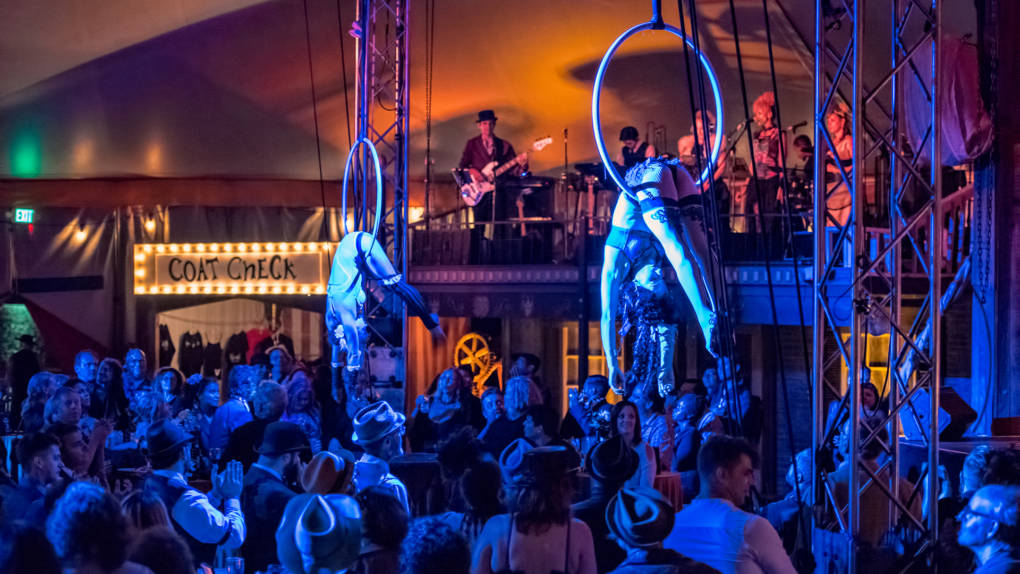
"caption": "Jazz Mafia performs a live soundtrack for the Vau de Vire Society's latest show, 'The Soiled Dove.'",
"description": "Jazz Mafia performs a live soundtrack for the Vau de Vire Society's latest show, 'The Soiled Dove.'",
"title": "Soiled Dove-37",
"credit": "Leori Gill",
"status": "inherit",
"isLoading": false,
"fetchFailed": false
},
"arts_13843921": {
"type": "attachments",
"id": "arts_13843921",
"meta": {
"index": "attachments_1716263798",
"site": "arts",
"id": "13843921",
"found": true
},
"parent": 13843920,
"imgSizes": {
"small": {
"file": "https://ww2.kqed.org/app/uploads/sites/2/2018/10/hsieh_angela_music_turntables_bigfreedia_wide-fa14fc99d23081bf12c9c9e5acca0ebf6482ad8b-520x293.jpg",
"width": 520,
"mimeType": "image/jpeg",
"height": 293
},
"twentyfourteen-full-width": {
"file": "https://ww2.kqed.org/app/uploads/sites/2/2018/10/hsieh_angela_music_turntables_bigfreedia_wide-fa14fc99d23081bf12c9c9e5acca0ebf6482ad8b-1038x576.jpg",
"width": 1038,
"mimeType": "image/jpeg",
"height": 576
},
"thumbnail": {
"file": "https://ww2.kqed.org/app/uploads/sites/2/2018/10/hsieh_angela_music_turntables_bigfreedia_wide-fa14fc99d23081bf12c9c9e5acca0ebf6482ad8b-160x90.jpg",
"width": 160,
"mimeType": "image/jpeg",
"height": 90
},
"fd-sm": {
"file": "https://ww2.kqed.org/app/uploads/sites/2/2018/10/hsieh_angela_music_turntables_bigfreedia_wide-fa14fc99d23081bf12c9c9e5acca0ebf6482ad8b-960x540.jpg",
"width": 960,
"mimeType": "image/jpeg",
"height": 540
},
"post-thumbnail": {
"file": "https://ww2.kqed.org/app/uploads/sites/2/2018/10/hsieh_angela_music_turntables_bigfreedia_wide-fa14fc99d23081bf12c9c9e5acca0ebf6482ad8b-672x372.jpg",
"width": 672,
"mimeType": "image/jpeg",
"height": 372
},
"xsmall": {
"file": "https://ww2.kqed.org/app/uploads/sites/2/2018/10/hsieh_angela_music_turntables_bigfreedia_wide-fa14fc99d23081bf12c9c9e5acca0ebf6482ad8b-375x211.jpg",
"width": 375,
"mimeType": "image/jpeg",
"height": 211
},
"kqedFullSize": {
"file": "https://ww2.kqed.org/app/uploads/sites/2/2018/10/hsieh_angela_music_turntables_bigfreedia_wide-fa14fc99d23081bf12c9c9e5acca0ebf6482ad8b-e1540943777363.jpg",
"width": 1920,
"height": 1080
},
"large": {
"file": "https://ww2.kqed.org/app/uploads/sites/2/2018/10/hsieh_angela_music_turntables_bigfreedia_wide-fa14fc99d23081bf12c9c9e5acca0ebf6482ad8b-1020x574.jpg",
"width": 1020,
"mimeType": "image/jpeg",
"height": 574
},
"xlarge": {
"file": "https://ww2.kqed.org/app/uploads/sites/2/2018/10/hsieh_angela_music_turntables_bigfreedia_wide-fa14fc99d23081bf12c9c9e5acca0ebf6482ad8b-1180x664.jpg",
"width": 1180,
"mimeType": "image/jpeg",
"height": 664
},
"complete_open_graph": {
"file": "https://ww2.kqed.org/app/uploads/sites/2/2018/10/hsieh_angela_music_turntables_bigfreedia_wide-fa14fc99d23081bf12c9c9e5acca0ebf6482ad8b-1200x675.jpg",
"width": 1200,
"mimeType": "image/jpeg",
"height": 675
},
"guest-author-50": {
"file": "https://ww2.kqed.org/app/uploads/sites/2/2018/10/hsieh_angela_music_turntables_bigfreedia_wide-fa14fc99d23081bf12c9c9e5acca0ebf6482ad8b-50x50.jpg",
"width": 50,
"mimeType": "image/jpeg",
"height": 50
},
"guest-author-96": {
"file": "https://ww2.kqed.org/app/uploads/sites/2/2018/10/hsieh_angela_music_turntables_bigfreedia_wide-fa14fc99d23081bf12c9c9e5acca0ebf6482ad8b-96x96.jpg",
"width": 96,
"mimeType": "image/jpeg",
"height": 96
},
"medium": {
"file": "https://ww2.kqed.org/app/uploads/sites/2/2018/10/hsieh_angela_music_turntables_bigfreedia_wide-fa14fc99d23081bf12c9c9e5acca0ebf6482ad8b-800x450.jpg",
"width": 800,
"mimeType": "image/jpeg",
"height": 450
},
"guest-author-64": {
"file": "https://ww2.kqed.org/app/uploads/sites/2/2018/10/hsieh_angela_music_turntables_bigfreedia_wide-fa14fc99d23081bf12c9c9e5acca0ebf6482ad8b-64x64.jpg",
"width": 64,
"mimeType": "image/jpeg",
"height": 64
},
"guest-author-32": {
"file": "https://ww2.kqed.org/app/uploads/sites/2/2018/10/hsieh_angela_music_turntables_bigfreedia_wide-fa14fc99d23081bf12c9c9e5acca0ebf6482ad8b-32x32.jpg",
"width": 32,
"mimeType": "image/jpeg",
"height": 32
},
"fd-lrg": {
"file": "https://ww2.kqed.org/app/uploads/sites/2/2018/10/hsieh_angela_music_turntables_bigfreedia_wide-fa14fc99d23081bf12c9c9e5acca0ebf6482ad8b-1920x1080.jpg",
"width": 1920,
"mimeType": "image/jpeg",
"height": 1080
},
"fd-med": {
"file": "https://ww2.kqed.org/app/uploads/sites/2/2018/10/hsieh_angela_music_turntables_bigfreedia_wide-fa14fc99d23081bf12c9c9e5acca0ebf6482ad8b-1180x664.jpg",
"width": 1180,
"mimeType": "image/jpeg",
"height": 664
},
"full-width": {
"file": "https://ww2.kqed.org/app/uploads/sites/2/2018/10/hsieh_angela_music_turntables_bigfreedia_wide-fa14fc99d23081bf12c9c9e5acca0ebf6482ad8b-1920x1080.jpg",
"width": 1920,
"mimeType": "image/jpeg",
"height": 1080
},
"detail": {
"file": "https://ww2.kqed.org/app/uploads/sites/2/2018/10/hsieh_angela_music_turntables_bigfreedia_wide-fa14fc99d23081bf12c9c9e5acca0ebf6482ad8b-150x150.jpg",
"width": 150,
"mimeType": "image/jpeg",
"height": 150
},
"medium_large": {
"file": "https://ww2.kqed.org/app/uploads/sites/2/2018/10/hsieh_angela_music_turntables_bigfreedia_wide-fa14fc99d23081bf12c9c9e5acca0ebf6482ad8b-768x432.jpg",
"width": 768,
"mimeType": "image/jpeg",
"height": 432
},
"guest-author-128": {
"file": "https://ww2.kqed.org/app/uploads/sites/2/2018/10/hsieh_angela_music_turntables_bigfreedia_wide-fa14fc99d23081bf12c9c9e5acca0ebf6482ad8b-128x128.jpg",
"width": 128,
"mimeType": "image/jpeg",
"height": 128
},
"xxsmall": {
"file": "https://ww2.kqed.org/app/uploads/sites/2/2018/10/hsieh_angela_music_turntables_bigfreedia_wide-fa14fc99d23081bf12c9c9e5acca0ebf6482ad8b-240x135.jpg",
"width": 240,
"mimeType": "image/jpeg",
"height": 135
}
},
"publishDate": 1540943366,
"modified": 1540943770,
"caption": "Big Freedia performs during the 2018 New Orleans Jazz & Heritage Festival in New Orleans.",
"description": "Big Freedia performs during the 2018 New Orleans Jazz & Heritage Festival in New Orleans.",
"title": "Big Freedia performs during the 2018 New Orleans Jazz & Heritage Festival in New Orleans.",
"credit": null,
"status": "inherit",
"isLoading": false,
"fetchFailed": false
},
"arts_13843249": {
"type": "attachments",
"id": "arts_13843249",
"meta": {
"index": "attachments_1716263798",
"site": "arts",
"id": "13843249",
"found": true
},
"parent": 13843245,
"imgSizes": {
"small": {
"file": "https://ww2.kqed.org/app/uploads/sites/2/2018/10/JeanGuihenQueyras-A-960-520x312.jpg",
"width": 520,
"mimeType": "image/jpeg",
"height": 312
},
"twentyfourteen-full-width": {
"file": "https://ww2.kqed.org/app/uploads/sites/2/2018/10/JeanGuihenQueyras-A-960-960x576.jpg",
"width": 960,
"mimeType": "image/jpeg",
"height": 576
},
"thumbnail": {
"file": "https://ww2.kqed.org/app/uploads/sites/2/2018/10/JeanGuihenQueyras-A-960-160x96.jpg",
"width": 160,
"mimeType": "image/jpeg",
"height": 96
},
"fd-sm": {
"file": "https://ww2.kqed.org/app/uploads/sites/2/2018/10/JeanGuihenQueyras-A-960-960x576.jpg",
"width": 960,
"mimeType": "image/jpeg",
"height": 576
},
"post-thumbnail": {
"file": "https://ww2.kqed.org/app/uploads/sites/2/2018/10/JeanGuihenQueyras-A-960-672x372.jpg",
"width": 672,
"mimeType": "image/jpeg",
"height": 372
},
"xsmall": {
"file": "https://ww2.kqed.org/app/uploads/sites/2/2018/10/JeanGuihenQueyras-A-960-375x225.jpg",
"width": 375,
"mimeType": "image/jpeg",
"height": 225
},
"kqedFullSize": {
"file": "https://ww2.kqed.org/app/uploads/sites/2/2018/10/JeanGuihenQueyras-A-960.jpg",
"width": 960,
"height": 576
},
"guest-author-50": {
"file": "https://ww2.kqed.org/app/uploads/sites/2/2018/10/JeanGuihenQueyras-A-960-50x50.jpg",
"width": 50,
"mimeType": "image/jpeg",
"height": 50
},
"guest-author-96": {
"file": "https://ww2.kqed.org/app/uploads/sites/2/2018/10/JeanGuihenQueyras-A-960-96x96.jpg",
"width": 96,
"mimeType": "image/jpeg",
"height": 96
},
"medium": {
"file": "https://ww2.kqed.org/app/uploads/sites/2/2018/10/JeanGuihenQueyras-A-960-800x480.jpg",
"width": 800,
"mimeType": "image/jpeg",
"height": 480
},
"guest-author-64": {
"file": "https://ww2.kqed.org/app/uploads/sites/2/2018/10/JeanGuihenQueyras-A-960-64x64.jpg",
"width": 64,
"mimeType": "image/jpeg",
"height": 64
},
"guest-author-32": {
"file": "https://ww2.kqed.org/app/uploads/sites/2/2018/10/JeanGuihenQueyras-A-960-32x32.jpg",
"width": 32,
"mimeType": "image/jpeg",
"height": 32
},
"detail": {
"file": "https://ww2.kqed.org/app/uploads/sites/2/2018/10/JeanGuihenQueyras-A-960-150x150.jpg",
"width": 150,
"mimeType": "image/jpeg",
"height": 150
},
"medium_large": {
"file": "https://ww2.kqed.org/app/uploads/sites/2/2018/10/JeanGuihenQueyras-A-960-768x461.jpg",
"width": 768,
"mimeType": "image/jpeg",
"height": 461
},
"guest-author-128": {
"file": "https://ww2.kqed.org/app/uploads/sites/2/2018/10/JeanGuihenQueyras-A-960-128x128.jpg",
"width": 128,
"mimeType": "image/jpeg",
"height": 128
},
"xxsmall": {
"file": "https://ww2.kqed.org/app/uploads/sites/2/2018/10/JeanGuihenQueyras-A-960-240x144.jpg",
"width": 240,
"mimeType": "image/jpeg",
"height": 144
}
},
"publishDate": 1540104437,
"modified": 1540104465,
"caption": "Jean-Guihen Queyras",
"description": "Jean-Guihen Queyras",
"title": "JeanGuihenQueyras-A-960",
"credit": "Courtesy Cal Performances",
"status": "inherit",
"isLoading": false,
"fetchFailed": false
}
},
"audioPlayerReducer": {
"postId": "stream_live",
"isPaused": true,
"isPlaying": false,
"pfsActive": false,
"pledgeModalIsOpen": true,
"playerDrawerIsOpen": false,
"liveAudioPlayStartedAt": 0,
"liveAudioPlayContext": ""
},
"authorsReducer": {
"byline_arts_13843920": {
"type": "authors",
"id": "byline_arts_13843920",
"meta": {
"override": true
},
"slug": "byline_arts_13843920",
"name": "Alison Fensterstock",
"isLoading": false
},
"gmeline": {
"type": "authors",
"id": "185",
"meta": {
"index": "authors_1716337520",
"id": "185",
"found": true
},
"name": "Gabe Meline",
"firstName": "Gabe",
"lastName": "Meline",
"slug": "gmeline",
"email": "gmeline@kqed.org",
"display_author_email": true,
"staff_mastheads": [
"arts"
],
"title": "Senior Editor, KQED Arts & Culture",
"bio": "Gabe Meline entered journalism at age 15 making photocopied zines, and has since earned awards from the Edward R. Murrow Awards, the Society for Professional Journalists, the Online Journalism Awards, the Association of Alternative Newsweeklies and the California Newspaper Publishers Association. Prior to KQED, he was the editor of the \u003cem>North Bay Bohemian\u003c/em> and a touring musician. He lives with his wife and daughter in his hometown of Santa Rosa, CA.",
"avatar": "https://secure.gravatar.com/avatar/5bebe57be0d8bc2dd318934feb47299e2d2d10cba28d09d8d7afb389a2ce2bdd?s=600&d=blank&r=g",
"twitter": null,
"bluesky": null,
"facebook": null,
"instagram": null,
"linkedin": null,
"sites": [
{
"site": "",
"roles": [
"editor"
]
},
{
"site": "arts",
"roles": [
"administrator"
]
},
{
"site": "artschool",
"roles": [
"editor"
]
},
{
"site": "news",
"roles": [
"author"
]
},
{
"site": "pop",
"roles": [
"editor"
]
},
{
"site": "bayareabites",
"roles": [
"editor"
]
},
{
"site": "food",
"roles": [
"editor"
]
},
{
"site": "forum",
"roles": [
"administrator"
]
},
{
"site": "liveblog",
"roles": [
"editor"
]
},
{
"site": "hiphop",
"roles": [
"editor"
]
}
],
"headData": {
"title": "Gabe Meline | KQED",
"description": "Senior Editor, KQED Arts & Culture",
"ogImgSrc": "https://secure.gravatar.com/avatar/5bebe57be0d8bc2dd318934feb47299e2d2d10cba28d09d8d7afb389a2ce2bdd?s=600&d=blank&r=g",
"twImgSrc": "https://secure.gravatar.com/avatar/5bebe57be0d8bc2dd318934feb47299e2d2d10cba28d09d8d7afb389a2ce2bdd?s=600&d=blank&r=g"
},
"isLoading": false,
"link": "/author/gmeline"
},
"rachael-myrow": {
"type": "authors",
"id": "251",
"meta": {
"index": "authors_1716337520",
"id": "251",
"found": true
},
"name": "Rachael Myrow",
"firstName": "Rachael",
"lastName": "Myrow",
"slug": "rachael-myrow",
"email": "rmyrow@kqed.org",
"display_author_email": true,
"staff_mastheads": [
"news"
],
"title": "Senior Editor of KQED's Silicon Valley News Desk",
"bio": "• I write and edit stories about how Silicon Valley power and policies shape everyday life in California. I’m also passionate about making Bay Area history and culture more accessible to a broad public. • I’ve been a journalist for most of my life, starting in high school with The Franklin Press in Los Angeles, where I grew up. While earning my first degree in English at UC Berkeley, I got my start in public radio at KALX-FM. After completing a second degree in journalism at Cal, I landed my first professional job at Marketplace, then moved on to KPCC (now LAist), and then KQED, where I hosted The California Report for more than seven years. • My reporting has appeared on NPR, The World, WBUR’s \u003ci>Here & Now\u003c/i>, and the BBC. I also guest host for KQED’s \u003ci>Forum\u003c/i>, as well as the Commonwealth Club in San Francisco. • I speak periodically on media, democracy and technology issues, and do voiceover work for documentaries and educational video projects. • Outside of the studio, you'll find me hiking Bay Area trails and whipping up Insta-ready meals in my kitchen. • I do not accept gifts, money, or favors from anyone connected to my reporting, I don't pay people for information, and I do not support or donate to political causes. • I strive to treat the people I report on with fairness, honesty, and respect. I also recognize there are often multiple sides to a story and work to verify information through multiple sources and documentation. If I get something wrong, I correct it.",
"avatar": "https://secure.gravatar.com/avatar/3ed8a3c5f26025e4a805ba634cda8cd764906b97438a6d9ce216b044e340da4e?s=600&d=blank&r=g",
"twitter": "rachaelmyrow",
"bluesky": null,
"facebook": null,
"instagram": null,
"linkedin": "https://www.linkedin.com/in/rachaelmyrow/",
"sites": [
{
"site": "arts",
"roles": [
"administrator"
]
},
{
"site": "news",
"roles": [
"edit_others_posts",
"editor"
]
},
{
"site": "futureofyou",
"roles": [
"editor"
]
},
{
"site": "bayareabites",
"roles": [
"editor"
]
},
{
"site": "stateofhealth",
"roles": [
"editor"
]
},
{
"site": "science",
"roles": [
"editor"
]
},
{
"site": "food",
"roles": [
"editor"
]
},
{
"site": "forum",
"roles": [
"editor"
]
},
{
"site": "liveblog",
"roles": [
"author"
]
}
],
"headData": {
"title": "Rachael Myrow | KQED",
"description": "Senior Editor of KQED's Silicon Valley News Desk",
"ogImgSrc": "https://secure.gravatar.com/avatar/3ed8a3c5f26025e4a805ba634cda8cd764906b97438a6d9ce216b044e340da4e?s=600&d=blank&r=g",
"twImgSrc": "https://secure.gravatar.com/avatar/3ed8a3c5f26025e4a805ba634cda8cd764906b97438a6d9ce216b044e340da4e?s=600&d=blank&r=g"
},
"isLoading": false,
"link": "/author/rachael-myrow"
},
"cveltman": {
"type": "authors",
"id": "8608",
"meta": {
"index": "authors_1716337520",
"id": "8608",
"found": true
},
"name": "Chloe Veltman",
"firstName": "Chloe",
"lastName": "Veltman",
"slug": "cveltman",
"email": "cveltman@kqed.org",
"display_author_email": true,
"staff_mastheads": [],
"title": "Arts and Culture Reporter",
"bio": "Chloe Veltman is a former arts and culture reporter for KQED. Prior to joining the organization, she launched and led the arts bureau at Colorado Public Radio, served as the Bay Area's culture columnist for the New York Times, and was the founder, host and executive producer of VoiceBox, a national award-winning weekly podcast/radio show and live events series all about the human voice. Chloe is the recipient of numerous prizes, grants and fellowships including a Webby Award for her work on interactive storytelling, both the John S Knight Journalism Fellowship and Humanities Center Fellowship at Stanford University, the Sundance Arts Writing Fellowship and a Library of Congress Research Fellowship. She is the author of the book \"On Acting\" and has appeared as a guest lecturer at Yale University and the San Francisco Conservatory of Music among other institutions. She holds a BA in english literature from King's College, Cambridge, and a Masters in Dramaturgy from the Central School of Speech and Drama/Harvard Institute for Advanced Theater Training.\r\n\u003ca href=\"https://www.chloeveltman.com\">www.chloeveltman.com\u003c/a>",
"avatar": "https://secure.gravatar.com/avatar/55403394b00a1ddab683952c2eb2cf85?s=600&d=blank&r=g",
"twitter": "chloeveltman",
"facebook": null,
"instagram": null,
"linkedin": null,
"sites": [
{
"site": "arts",
"roles": []
},
{
"site": "news",
"roles": [
"author"
]
},
{
"site": "pop",
"roles": [
"editor"
]
},
{
"site": "science",
"roles": []
}
],
"headData": {
"title": "Chloe Veltman | KQED",
"description": "Arts and Culture Reporter",
"ogImgSrc": "https://secure.gravatar.com/avatar/55403394b00a1ddab683952c2eb2cf85?s=600&d=blank&r=g",
"twImgSrc": "https://secure.gravatar.com/avatar/55403394b00a1ddab683952c2eb2cf85?s=600&d=blank&r=g"
},
"isLoading": false,
"link": "/author/cveltman"
},
"slefebvre": {
"type": "authors",
"id": "11091",
"meta": {
"index": "authors_1716337520",
"id": "11091",
"found": true
},
"name": "Sam Lefebvre",
"firstName": "Sam",
"lastName": "Lefebvre",
"slug": "slefebvre",
"email": "sdlefebvre@gmail.com",
"display_author_email": false,
"staff_mastheads": [],
"title": "KQED Contributor",
"bio": "Sam Lefebvre is an award-winning reporter at KQED Arts. He has worked as an editor and columnist at the \u003cem>East Bay Express\u003c/em>, \u003cem>SF Weekly \u003c/em>and Impose Magazine, and his journalism and criticism has appeared in \u003cem>The New York Times\u003c/em>, the Guardian and Pitchfork.",
"avatar": "https://secure.gravatar.com/avatar/49d39b42930b77fb13784ddd9fa63fe780666b71bf289368509dba576b64e69b?s=600&d=blank&r=g",
"twitter": "Lefebvre_Sam",
"bluesky": null,
"facebook": null,
"instagram": null,
"linkedin": null,
"sites": [
{
"site": "arts",
"roles": [
"subscriber"
]
},
{
"site": "news",
"roles": [
"author"
]
}
],
"headData": {
"title": "Sam Lefebvre | KQED",
"description": "KQED Contributor",
"ogImgSrc": "https://secure.gravatar.com/avatar/49d39b42930b77fb13784ddd9fa63fe780666b71bf289368509dba576b64e69b?s=600&d=blank&r=g",
"twImgSrc": "https://secure.gravatar.com/avatar/49d39b42930b77fb13784ddd9fa63fe780666b71bf289368509dba576b64e69b?s=600&d=blank&r=g"
},
"isLoading": false,
"link": "/author/slefebvre"
},
"nvoynovskaya": {
"type": "authors",
"id": "11387",
"meta": {
"index": "authors_1716337520",
"id": "11387",
"found": true
},
"name": "Nastia Voynovskaya",
"firstName": "Nastia",
"lastName": "Voynovskaya",
"slug": "nvoynovskaya",
"email": "nvoynovskaya@kqed.org",
"display_author_email": false,
"staff_mastheads": [
"arts"
],
"title": "Editor and reporter",
"bio": "Nastia Voynovskaya is a reporter, editor and host at KQED Arts & Culture. She's been covering the arts in the Bay Area for over a decade, with a focus on music, queer culture, labor issues and grassroots organizing. She has edited KQED story series such as Trans Bay: A History of San Francisco's Gender-Diverse Community, and co-created KQED's Bay Area hip-hop history project, That's My Word. Nastia's work has been recognized by the Society of Professional Journalists and San Francisco Press Club. She regularly appears on podcasts and radio programs, including NPR's All Songs Considered, and hosts live events where music, culture and conversation meet.",
"avatar": "https://secure.gravatar.com/avatar/5025ee460e5a85d69ca20ea6c6f2f80d7e17795c828f61ea3aecfcd924e9042e?s=600&d=blank&r=g",
"twitter": null,
"bluesky": null,
"facebook": null,
"instagram": "https://www.instagram.com/nananastia/",
"linkedin": null,
"sites": [
{
"site": "",
"roles": [
"editor"
]
},
{
"site": "arts",
"roles": [
"administrator"
]
},
{
"site": "news",
"roles": [
"editor"
]
},
{
"site": "pop",
"roles": [
"administrator"
]
},
{
"site": "bayareabites",
"roles": [
"editor"
]
},
{
"site": "podcasts",
"roles": [
"editor"
]
},
{
"site": "hiphop",
"roles": [
"editor"
]
}
],
"headData": {
"title": "Nastia Voynovskaya | KQED",
"description": "Editor and reporter",
"ogImgSrc": "https://secure.gravatar.com/avatar/5025ee460e5a85d69ca20ea6c6f2f80d7e17795c828f61ea3aecfcd924e9042e?s=600&d=blank&r=g",
"twImgSrc": "https://secure.gravatar.com/avatar/5025ee460e5a85d69ca20ea6c6f2f80d7e17795c828f61ea3aecfcd924e9042e?s=600&d=blank&r=g"
},
"isLoading": false,
"link": "/author/nvoynovskaya"
}
},
"pagesReducer": {
"arts_category_music": {
"type": "terms",
"id": "arts_69",
"meta": {
"index": "terms_1716263798",
"site": "arts",
"id": "69",
"score": 10.851903
},
"featImg": null,
"name": "Music",
"description": null,
"taxonomy": "category",
"headData": {
"twImgId": null,
"twTitle": null,
"ogTitle": null,
"ogImgId": null,
"twDescription": null,
"description": null,
"title": "Music Archives | KQED Arts",
"ogDescription": null
},
"ttid": 70,
"slug": "music",
"isLoading": false,
"title": "Music",
"pageMeta": {
"site": "arts",
"WpPageTemplate": "page-topic-editorial",
"currentPage": 168
},
"blocks": [
{
"blockName": "kqed/post-list",
"attrs": {
"layout": "cardArticle2",
"query": "posts/arts?category=music",
"seeMore": false,
"paginated": true,
"page": 168
}
},
{
"blockName": "kqed/ad"
}
]
}
},
"pfsSessionReducer": {},
"postsReducer": {
"stream_live": {
"type": "live",
"id": "stream_live",
"audioUrl": "https://streams.kqed.org/kqedradio",
"title": "Live Stream",
"excerpt": "Live Stream information currently unavailable.",
"link": "/radio",
"featImg": "",
"label": {
"name": "KQED Live",
"link": "/"
}
},
"stream_kqedNewscast": {
"type": "posts",
"id": "stream_kqedNewscast",
"audioUrl": "https://www.kqed.org/.stream/anon/radio/RDnews/newscast.mp3?_=1",
"title": "KQED Newscast",
"featImg": "",
"label": {
"name": "88.5 FM",
"link": "/"
}
},
"arts_13844548": {
"type": "posts",
"id": "arts_13844548",
"meta": {
"index": "posts_1716263798",
"site": "arts",
"id": "13844548",
"score": null,
"sort": [
1541708528000
]
},
"parent": 0,
"labelTerm": {
"site": "arts",
"term": 140
},
"blocks": [],
"publishDate": 1541708528,
"format": "standard",
"title": "Ace of Cups' Debut Album Comes 51 Years After Summer of Love",
"headTitle": "Ace of Cups’ Debut Album Comes 51 Years After Summer of Love | KQED",
"content": "\u003cp>In the late ’60s, an all-woman rock band called \u003ca href=\"https://www.kqed.org/arts/13806888/meet-the-ace-of-cups-the-haights-almost-forgotten-all-girl-band\" target=\"_blank\" rel=\"noopener\">Ace of Cups\u003c/a> took the San Francisco psychedelic scene by storm. They opened for Jimi Hendrix and Jefferson Airplane; counted the Grateful Dead among their fans; and regularly performed at protests and benefits for the anti-Vietnam War movement. Unfortunately, Ace of Cups were never signed to a record label, and disbanded in 1972—in part due to a lack of support for women in the music industry.\u003c/p>\n\u003cp>“When we split up it was a lot related to the fact that we were having children,” guitarist Denise Kaufman told KQED last year. “Our brother bands, they were having children too, but they had wives and girlfriends.”\u003c/p>\n\u003cp>https://vimeo.com/231941695\u003c/p>\n\u003cp>Fortunately, Ace of Cups have enjoyed an unexpected comeback. After George Wallace of High Moon Records reached out to them for archival material, the band members decided to get back together. In 2017, KQED Arts filmed the band as they began recording their long-overdue debut album, \u003cem>Ace of Cups\u003c/em>, out on High Moon on Nov. 9. Ace of Cups celebrates with a \u003ca href=\"https://www.amoeba.com/live-shows/upcoming/detail-4578/\" target=\"_blank\" rel=\"noopener\">live performance\u003c/a> at Amoeba Music in San Francisco on Nov. 15. \u003ca href=\"https://www.amoeba.com/live-shows/upcoming/detail-4578/\" rel=\"noopener\" target=\"_blank\">Details here\u003c/a>.\u003c/p>\n\u003cp>[soundcloud url=”https://api.soundcloud.com/tracks/511486452″ params=”color=#ff5500&auto_play=false&hide_related=false&show_comments=true&show_user=true&show_reposts=false&show_teaser=true” width=”100%” height=”166″ iframe=”true” /]\u003c/p>\n\u003cp>[ad fullwidth]\u003c/p>\u003cp>\u003c/p>\n",
"stats": {
"hasVideo": false,
"hasChartOrMap": false,
"hasAudio": false,
"hasPolis": false,
"wordCount": 249,
"hasGoogleForm": false,
"hasGallery": false,
"hasHearkenModule": false,
"iframeSrcs": [],
"paragraphCount": 6
},
"modified": 1705027039,
"excerpt": "The all-woman San Francisco rock band is enjoying a renaissance after nearly fading into obscurity.",
"headData": {
"twImgId": "",
"twTitle": "",
"ogTitle": "",
"ogImgId": "",
"twDescription": "",
"description": "The all-woman San Francisco rock band is enjoying a renaissance after nearly fading into obscurity.",
"title": "Ace of Cups' Debut Album Comes 51 Years After Summer of Love | KQED",
"ogDescription": "",
"schema": {
"@context": "https://schema.org",
"@type": "Article",
"headline": "Ace of Cups' Debut Album Comes 51 Years After Summer of Love",
"datePublished": "2018-11-08T12:22:08-08:00",
"dateModified": "2024-01-11T18:37:19-08:00",
"image": "https://cdn.kqed.org/wp-content/uploads/2020/02/KQED-OG-Image@1x.png"
}
},
"guestAuthors": [],
"slug": "ace-of-cups-debut-album-comes-51-years-after-summer-of-love",
"status": "publish",
"sticky": false,
"path": "/arts/13844548/ace-of-cups-debut-album-comes-51-years-after-summer-of-love",
"audioTrackLength": null,
"parsedContent": [
{
"type": "contentString",
"content": "\u003cdiv class=\"post-body\">\u003cp>\u003cp>In the late ’60s, an all-woman rock band called \u003ca href=\"https://www.kqed.org/arts/13806888/meet-the-ace-of-cups-the-haights-almost-forgotten-all-girl-band\" target=\"_blank\" rel=\"noopener\">Ace of Cups\u003c/a> took the San Francisco psychedelic scene by storm. They opened for Jimi Hendrix and Jefferson Airplane; counted the Grateful Dead among their fans; and regularly performed at protests and benefits for the anti-Vietnam War movement. Unfortunately, Ace of Cups were never signed to a record label, and disbanded in 1972—in part due to a lack of support for women in the music industry.\u003c/p>\n\u003cp>“When we split up it was a lot related to the fact that we were having children,” guitarist Denise Kaufman told KQED last year. “Our brother bands, they were having children too, but they had wives and girlfriends.”\u003c/p>\u003c/p>\u003c/div>",
"attributes": {
"named": {},
"numeric": []
}
},
{
"type": "component",
"content": "",
"name": "vimeoLink",
"attributes": {
"named": {
"vimeoId": "231941695"
},
"numeric": []
}
},
{
"type": "contentString",
"content": "\u003cdiv class=\"post-body\">\u003cp>\u003cp>Fortunately, Ace of Cups have enjoyed an unexpected comeback. After George Wallace of High Moon Records reached out to them for archival material, the band members decided to get back together. In 2017, KQED Arts filmed the band as they began recording their long-overdue debut album, \u003cem>Ace of Cups\u003c/em>, out on High Moon on Nov. 9. Ace of Cups celebrates with a \u003ca href=\"https://www.amoeba.com/live-shows/upcoming/detail-4578/\" target=\"_blank\" rel=\"noopener\">live performance\u003c/a> at Amoeba Music in San Francisco on Nov. 15. \u003ca href=\"https://www.amoeba.com/live-shows/upcoming/detail-4578/\" rel=\"noopener\" target=\"_blank\">Details here\u003c/a>.\u003c/p>\n\u003cp>\u003c/p>\u003cp>\u003cdiv class='utils-parseShortcode-shortcodes-__shortcodes__shortcodeWrapper'>\n \u003ciframe width='”100%”' height='”166″'\n scrolling='no' frameborder='no'\n src='https://w.soundcloud.com/player/?url=”https://api.soundcloud.com/tracks/511486452″&visual=true&”color=#ff5500&auto_play=false&hide_related=false&show_comments=true&show_user=true&show_reposts=false&show_teaser=true”'\n title='”https://api.soundcloud.com/tracks/511486452″'>\n \u003c/iframe>\n \u003c/div>\u003c/p>\u003cp>\u003c/p>\n\u003cp>\u003c/p>\u003c/div>",
"attributes": {
"named": {},
"numeric": []
}
},
{
"type": "component",
"content": "",
"name": "ad",
"attributes": {
"named": {
"label": "fullwidth"
},
"numeric": [
"fullwidth"
]
}
},
{
"type": "contentString",
"content": "\u003cdiv class=\"post-body\">\u003cp>\u003c/p>\u003cp>\u003c/p>\n\u003c/div>\u003c/p>",
"attributes": {
"named": {},
"numeric": []
}
}
],
"link": "/arts/13844548/ace-of-cups-debut-album-comes-51-years-after-summer-of-love",
"authors": [
"11387"
],
"programs": [
"arts_140"
],
"categories": [
"arts_69"
],
"tags": [
"arts_5426",
"arts_596",
"arts_905",
"arts_1761"
],
"featImg": "arts_13844550",
"label": "arts_140"
},
"arts_13844437": {
"type": "posts",
"id": "arts_13844437",
"meta": {
"index": "posts_1716263798",
"site": "arts",
"id": "13844437",
"score": null,
"sort": [
1541606408000
]
},
"parent": 0,
"labelTerm": {
"site": "arts",
"term": 140
},
"blocks": [],
"publishDate": 1541606408,
"format": "standard",
"title": "Krissy Marchante, 'Poon Typhoon' Producer, Spins Girl Power Rap at Uniq",
"headTitle": "Krissy Marchante, ‘Poon Typhoon’ Producer, Spins Girl Power Rap at Uniq | KQED",
"content": "\u003cp>If producer \u003ca href=\"https://soundcloud.com/krissymarchante\" target=\"_blank\" rel=\"noopener\">Krissy Marchante\u003c/a>‘s intention was to flood the Bay Area rap scene with new voices, she did just that with her mixtape \u003cem>Poon Typhoon\u003c/em>, which stars six rising local female rappers: DeOzene, Kay Bellz, Qing Qi, Coco Cissoko, Ray Banz and Outrageous Karina. The upbeat project bounces between classic Bay blaps and pulsing house beats, with flex-oriented rhymes for listeners on a money-making mission. [contextly_sidebar id=”rXNJP2rqKy18olMnDEtkbHRosZeX7qZu”]\u003c/p>\n\u003cp>Marchante and several of the rappers on the tape met at the all-woman cypher DJ Shellheart threw at Oaklandish earlier this year. Some of them came into the project serendipitously, like Cissoko, whom Marchante happened to pick up while driving for Uber. “All those girls, I listened to all their music, and every girl is poppin’,” Marchante told me when we met in a tucked-away tavern in her home town of Albany.\u003c/p>\n\u003cp>[soundcloud url=”https://api.soundcloud.com/playlists/593050881″ params=”color=#ff5500&auto_play=false&hide_related=false&show_comments=true&show_user=true&show_reposts=false&show_teaser=true” width=”100%” height=”450″ iframe=”true” /]\u003c/p>\n\u003cp>Marchante DJs at the new queer hip-hop party \u003ca href=\"https://www.instagram.com/p/Bp2YC9rgT2Y/\" target=\"_blank\" rel=\"noopener\">Uniq\u003c/a> at \u003ca href=\"https://www.portbaroakland.com/\" target=\"_blank\" rel=\"noopener\">Port Bar\u003c/a> on Nov. 10; DeOzene, from “Hater Talk” and “Cut the Check,” is also performing live. Proceeds from the party go to the nonprofit \u003ca href=\"http://www.aicrc.org/\" target=\"_blank\" rel=\"noopener\">American Indian Child Resource Center\u003c/a>.\u003c/p>\n\u003cp>[ad fullwidth]\u003c/p>\u003cp>\u003c/p>\n",
"stats": {
"hasVideo": false,
"hasChartOrMap": false,
"hasAudio": false,
"hasPolis": false,
"wordCount": 244,
"hasGoogleForm": false,
"hasGallery": false,
"hasHearkenModule": false,
"iframeSrcs": [],
"paragraphCount": 6
},
"modified": 1705027045,
"excerpt": "The producer of the new all-girl rap mixtape DJs at Uniq, a queer hip-hop party, on Nov. 10. ",
"headData": {
"twImgId": "",
"twTitle": "",
"ogTitle": "",
"ogImgId": "",
"twDescription": "",
"description": "The producer of the new all-girl rap mixtape DJs at Uniq, a queer hip-hop party, on Nov. 10. ",
"title": "Krissy Marchante, 'Poon Typhoon' Producer, Spins Girl Power Rap at Uniq | KQED",
"ogDescription": "",
"schema": {
"@context": "https://schema.org",
"@type": "Article",
"headline": "Krissy Marchante, 'Poon Typhoon' Producer, Spins Girl Power Rap at Uniq",
"datePublished": "2018-11-07T08:00:08-08:00",
"dateModified": "2024-01-11T18:37:25-08:00",
"image": "https://cdn.kqed.org/wp-content/uploads/2020/02/KQED-OG-Image@1x.png"
}
},
"guestAuthors": [],
"slug": "krissy-marchante-poon-typhoon-producer-spins-girl-power-rap-at-uniq",
"status": "publish",
"sticky": false,
"path": "/arts/13844437/krissy-marchante-poon-typhoon-producer-spins-girl-power-rap-at-uniq",
"audioTrackLength": null,
"parsedContent": [
{
"type": "contentString",
"content": "\u003cdiv class=\"post-body\">\u003cp>\u003cp>If producer \u003ca href=\"https://soundcloud.com/krissymarchante\" target=\"_blank\" rel=\"noopener\">Krissy Marchante\u003c/a>‘s intention was to flood the Bay Area rap scene with new voices, she did just that with her mixtape \u003cem>Poon Typhoon\u003c/em>, which stars six rising local female rappers: DeOzene, Kay Bellz, Qing Qi, Coco Cissoko, Ray Banz and Outrageous Karina. The upbeat project bounces between classic Bay blaps and pulsing house beats, with flex-oriented rhymes for listeners on a money-making mission. \u003c/p>\u003cp>\u003c/p>\u003cp>\u003c/p>\n\u003cp>Marchante and several of the rappers on the tape met at the all-woman cypher DJ Shellheart threw at Oaklandish earlier this year. Some of them came into the project serendipitously, like Cissoko, whom Marchante happened to pick up while driving for Uber. “All those girls, I listened to all their music, and every girl is poppin’,” Marchante told me when we met in a tucked-away tavern in her home town of Albany.\u003c/p>\n\u003cp>\u003c/p>\u003cp>\u003cdiv class='utils-parseShortcode-shortcodes-__shortcodes__shortcodeWrapper'>\n \u003ciframe width='”100%”' height='”450″'\n scrolling='no' frameborder='no'\n src='https://w.soundcloud.com/player/?url=”https://api.soundcloud.com/playlists/593050881″&visual=true&”color=#ff5500&auto_play=false&hide_related=false&show_comments=true&show_user=true&show_reposts=false&show_teaser=true”'\n title='”https://api.soundcloud.com/playlists/593050881″'>\n \u003c/iframe>\n \u003c/div>\u003c/p>\u003cp>\u003c/p>\n\u003cp>Marchante DJs at the new queer hip-hop party \u003ca href=\"https://www.instagram.com/p/Bp2YC9rgT2Y/\" target=\"_blank\" rel=\"noopener\">Uniq\u003c/a> at \u003ca href=\"https://www.portbaroakland.com/\" target=\"_blank\" rel=\"noopener\">Port Bar\u003c/a> on Nov. 10; DeOzene, from “Hater Talk” and “Cut the Check,” is also performing live. Proceeds from the party go to the nonprofit \u003ca href=\"http://www.aicrc.org/\" target=\"_blank\" rel=\"noopener\">American Indian Child Resource Center\u003c/a>.\u003c/p>\n\u003cp>\u003c/p>\u003c/div>",
"attributes": {
"named": {},
"numeric": []
}
},
{
"type": "component",
"content": "",
"name": "ad",
"attributes": {
"named": {
"label": "fullwidth"
},
"numeric": [
"fullwidth"
]
}
},
{
"type": "contentString",
"content": "\u003cdiv class=\"post-body\">\u003cp>\u003c/p>\u003cp>\u003c/p>\n\u003c/div>\u003c/p>",
"attributes": {
"named": {},
"numeric": []
}
}
],
"link": "/arts/13844437/krissy-marchante-poon-typhoon-producer-spins-girl-power-rap-at-uniq",
"authors": [
"11387"
],
"programs": [
"arts_140"
],
"categories": [
"arts_69"
],
"tags": [
"arts_5397",
"arts_1118",
"arts_596",
"arts_974"
],
"featImg": "arts_13844478",
"label": "arts_140"
},
"arts_13844422": {
"type": "posts",
"id": "arts_13844422",
"meta": {
"index": "posts_1716263798",
"site": "arts",
"id": "13844422",
"score": null,
"sort": [
1541551301000
]
},
"parent": 0,
"labelTerm": {
"site": "arts"
},
"blocks": [],
"publishDate": 1541551301,
"format": "image",
"title": "And Ya Don't Stop: The Beastie Boys Visit City Arts & Lectures in SF",
"headTitle": "And Ya Don’t Stop: The Beastie Boys Visit City Arts & Lectures in SF | KQED",
"content": "\u003cp>In almost every way, the Beastie Boys’ appearance at City Arts & Lectures Monday night was about the person who wasn’t in the room.\u003c/p>\n\u003cp>Adam Yauch, the group’s raspy-voiced MCA who died of throat cancer in 2012, loomed large over the proceedings, from the surviving members’ opening story about Yauch’s elaborate pranking skills to a bittersweet eulogy on his friendship and dedication that closed the two-and-a-half-hour show. \u003c/p>\n\u003cp>Out on the road to promote \u003cem>Beastie Boys Book\u003c/em>, a massive 571-page retrospective, Mike D and Ad Rock did away with with City Arts & Lectures’ usual orange-chairs-and-end-table setup and instead presented a theatrical series of vignettes, complete with costume changes, lighting cues and elaborate sets.\u003c/p>\n\u003cfigure id=\"attachment_13844447\" class=\"wp-caption aligncenter\" style=\"max-width: 800px\">\u003cimg loading=\"lazy\" decoding=\"async\" src=\"https://ww2.kqed.org/arts/wp-content/uploads/sites/2/2018/11/BeastieBoys.Cafe_-800x469.jpg\" alt=\"The Beastie Boys' Mike D and Ad Rock at City Arts & Lectures, Nov. 6, 2018.\" width=\"800\" height=\"469\" class=\"size-medium wp-image-13844447\" srcset=\"https://cdn.kqed.org/wp-content/uploads/sites/2/2018/11/BeastieBoys.Cafe_-800x469.jpg 800w, https://cdn.kqed.org/wp-content/uploads/sites/2/2018/11/BeastieBoys.Cafe_-160x94.jpg 160w, https://cdn.kqed.org/wp-content/uploads/sites/2/2018/11/BeastieBoys.Cafe_-768x450.jpg 768w, https://cdn.kqed.org/wp-content/uploads/sites/2/2018/11/BeastieBoys.Cafe_-1020x598.jpg 1020w, https://cdn.kqed.org/wp-content/uploads/sites/2/2018/11/BeastieBoys.Cafe_-1200x703.jpg 1200w, https://cdn.kqed.org/wp-content/uploads/sites/2/2018/11/BeastieBoys.Cafe_.jpg 1920w, https://cdn.kqed.org/wp-content/uploads/sites/2/2018/11/BeastieBoys.Cafe_-1180x691.jpg 1180w, https://cdn.kqed.org/wp-content/uploads/sites/2/2018/11/BeastieBoys.Cafe_-960x563.jpg 960w, https://cdn.kqed.org/wp-content/uploads/sites/2/2018/11/BeastieBoys.Cafe_-240x141.jpg 240w, https://cdn.kqed.org/wp-content/uploads/sites/2/2018/11/BeastieBoys.Cafe_-375x220.jpg 375w, https://cdn.kqed.org/wp-content/uploads/sites/2/2018/11/BeastieBoys.Cafe_-520x305.jpg 520w\" sizes=\"(max-width: 800px) 100vw, 800px\">\u003cfigcaption class=\"wp-caption-text\">The Beastie Boys’ Mike D and Ad Rock at City Arts & Lectures, Nov. 6, 2018. \u003ccite>(Gabe Meline/KQED)\u003c/cite>\u003c/figcaption>\u003c/figure>\n\u003cp>Flanked by two giant video screens and soundtracked by a stage-right DJ Mix Master Mike, the two drank espresso at a French coffee shop one minute, and sat for a late-night talk show segment the next. At one point, Mike D appeared in a smock and red beret, painting a giant canvas of himself nude in a bathtub and getting snacks from a nearby refrigerator. \u003c/p>\n\u003cp>In other words, Ad Rock and Mike D were the same jokesters who donned wigs and walkie-talkies in the “Sabotage” video and seared themselves into 1990s culture. Often, it was hard to tell when the two were being serious—especially with an ongoing gag of the two getting into tiny arguments, which stopped being funny after the first hour and routinely threw off the pacing. But when reading from the book—or rather, from onstage teleprompters—the reflections of the Beasties’ genesis in 1980s New York and creative development in the 1990s came off as vivid and heartfelt.\u003c/p>\n\u003cp>[ad fullwidth]\u003c/p>\n\u003cp>Among the stories: Meeting Yauch at a Bad Brains show. Hiring Rick Rubin as their DJ because he had a bubble machine. Being asked to play a “pro-smoking” benefit concert by Bob Dylan at Dolly Parton’s birthday party. Looping a reel-to-reel tape of the drums from Led Zeppelin’s “When the Levee Breaks,” the tape spooling around Yauch’s kitchen, for “Rhymin’ and Stealin’.” \u003cem>Paul’s Boutique\u003c/em> getting the brush from the president of Capitol Records, who had the entire staff in 1989 prioritizing \u003ca href=\"https://www.youtube.com/watch?v=nLKzwb2JvLo\" rel=\"noopener\" target=\"_blank\">Donnie Osmond instead\u003c/a>. \u003c/p>\n\u003cfigure id=\"attachment_13844448\" class=\"wp-caption aligncenter\" style=\"max-width: 800px\">\u003cimg loading=\"lazy\" decoding=\"async\" src=\"https://ww2.kqed.org/arts/wp-content/uploads/sites/2/2018/11/BeastieBoys.drummachine-800x583.jpg\" alt=\"Pieces of Beastie Boys memorabilia at City Arts & Lectures, Nov. 6, 2018.\" width=\"800\" height=\"583\" class=\"size-medium wp-image-13844448\" srcset=\"https://cdn.kqed.org/wp-content/uploads/sites/2/2018/11/BeastieBoys.drummachine-800x583.jpg 800w, https://cdn.kqed.org/wp-content/uploads/sites/2/2018/11/BeastieBoys.drummachine-160x117.jpg 160w, https://cdn.kqed.org/wp-content/uploads/sites/2/2018/11/BeastieBoys.drummachine-768x559.jpg 768w, https://cdn.kqed.org/wp-content/uploads/sites/2/2018/11/BeastieBoys.drummachine-1020x743.jpg 1020w, https://cdn.kqed.org/wp-content/uploads/sites/2/2018/11/BeastieBoys.drummachine-1200x874.jpg 1200w, https://cdn.kqed.org/wp-content/uploads/sites/2/2018/11/BeastieBoys.drummachine.jpg 1920w, https://cdn.kqed.org/wp-content/uploads/sites/2/2018/11/BeastieBoys.drummachine-1180x859.jpg 1180w, https://cdn.kqed.org/wp-content/uploads/sites/2/2018/11/BeastieBoys.drummachine-960x699.jpg 960w, https://cdn.kqed.org/wp-content/uploads/sites/2/2018/11/BeastieBoys.drummachine-240x175.jpg 240w, https://cdn.kqed.org/wp-content/uploads/sites/2/2018/11/BeastieBoys.drummachine-375x273.jpg 375w, https://cdn.kqed.org/wp-content/uploads/sites/2/2018/11/BeastieBoys.drummachine-520x379.jpg 520w\" sizes=\"(max-width: 800px) 100vw, 800px\">\u003cfigcaption class=\"wp-caption-text\">Pieces of Beastie Boys memorabilia at City Arts & Lectures, Nov. 6, 2018. \u003ccite>(Gabe Meline/KQED)\u003c/cite>\u003c/figcaption>\u003c/figure>\n\u003cp>Most of the evening dwelled on the early years. Naturally, the group addressed their discomfort with the \u003cem>Licensed to Ill\u003c/em> era, when they performed songs like “Girls” and kept a 20-foot hydraulic penis on stage: “It was toxic as hell,” Mike D said. The group also kicked out original drummer Kate Schellenbach “because she didn’t fit into our new tough-rapper-guy identity,” Ad Rock lamented. “It was just shitty the way it happened. And I am so sorry about it.”\u003c/p>\n\u003cp>Despite the presence of Mix Master Mike on stage, the two didn’t perform any songs; again, in apparent respect for Yauch. Outside in the courtyard before the show, however, a speaker played early hip-hop for a long line of fans eager to see over 100 pieces of group memorabilia on display: handwritten lyrics, drum machines, old sneakers, a card from Madonna, backstage passes, and yes, the walkie-talkies from Spike Jonze’s “Sabotage” video.\u003c/p>\n\u003cfigure id=\"attachment_13844449\" class=\"wp-caption aligncenter\" style=\"max-width: 800px\">\u003cimg loading=\"lazy\" decoding=\"async\" src=\"https://ww2.kqed.org/arts/wp-content/uploads/sites/2/2018/11/BeastieBoys.Sab_-800x600.jpg\" alt=\"Pieces of Beastie Boys memorabilia at City Arts & Lectures, Nov. 6, 2018.\" width=\"800\" height=\"600\" class=\"size-medium wp-image-13844449\" srcset=\"https://cdn.kqed.org/wp-content/uploads/sites/2/2018/11/BeastieBoys.Sab_-800x600.jpg 800w, https://cdn.kqed.org/wp-content/uploads/sites/2/2018/11/BeastieBoys.Sab_-160x120.jpg 160w, https://cdn.kqed.org/wp-content/uploads/sites/2/2018/11/BeastieBoys.Sab_-768x576.jpg 768w, https://cdn.kqed.org/wp-content/uploads/sites/2/2018/11/BeastieBoys.Sab_-1020x765.jpg 1020w, https://cdn.kqed.org/wp-content/uploads/sites/2/2018/11/BeastieBoys.Sab_-1200x900.jpg 1200w, https://cdn.kqed.org/wp-content/uploads/sites/2/2018/11/BeastieBoys.Sab_.jpg 1920w, https://cdn.kqed.org/wp-content/uploads/sites/2/2018/11/BeastieBoys.Sab_-1180x885.jpg 1180w, https://cdn.kqed.org/wp-content/uploads/sites/2/2018/11/BeastieBoys.Sab_-960x720.jpg 960w, https://cdn.kqed.org/wp-content/uploads/sites/2/2018/11/BeastieBoys.Sab_-240x180.jpg 240w, https://cdn.kqed.org/wp-content/uploads/sites/2/2018/11/BeastieBoys.Sab_-375x281.jpg 375w, https://cdn.kqed.org/wp-content/uploads/sites/2/2018/11/BeastieBoys.Sab_-520x390.jpg 520w\" sizes=\"(max-width: 800px) 100vw, 800px\">\u003cfigcaption class=\"wp-caption-text\">Pieces of Beastie Boys memorabilia at City Arts & Lectures, Nov. 6, 2018. \u003ccite>(Gabe Meline/KQED)\u003c/cite>\u003c/figcaption>\u003c/figure>\n\u003cp>The crowd was mostly over the age of 40. But within that age group were a variety of people: skaters, businessmen, punks, CEOs. People checking Slack in one corner, people sneaking a joint in another. Friends singing “The Biz vs. The Nuge” at the top of their lungs in line. Celebrity chefs like Chris Cosentino, and hip-hop legends like DJ Shadow. It drove home the idea that the Beastie Boys were a social network of their day, a way for disparate subcultures to connect under the unlikely banner of a hybrid rap-rock-jazz group from New York who seemed to know things the rest of the world didn’t. \u003c/p>\n\u003cp>Which raises the question: could something like the Beastie Boys even happen today? No doubt they’d be tagged as appropriators exploiting their white privilege; even more of an obstacle may be the internet itself and its demythologizing effect.\u003c/p>\n\u003cp>It calls to mind one of the earliest web pages on the hip-hop internet, a \u003ca href=\"https://www.newsweek.com/mysterious-website-thats-been-cataloguing-beastie-boys-pauls-boutique-1993-261415\" rel=\"noopener\" target=\"_blank\">complete list of sample sources and lyrical references from \u003cem>Paul’s Boutique\u003c/em>\u003c/a>. Never before published in traditional media, it served as a Rosetta Stone for budding producers, and a treasure chest to fans. But it also took away a little bit of the Beasties’ magic.\u003c/p>\n\u003cfigure id=\"attachment_13844450\" class=\"wp-caption aligncenter\" style=\"max-width: 800px\">\u003cimg loading=\"lazy\" decoding=\"async\" src=\"https://ww2.kqed.org/arts/wp-content/uploads/sites/2/2018/11/BeastieBoys.End_-800x471.jpg\" alt=\"The Beastie Boys' Ad Rock, Mix Master Mike and Mike D (L–R) at City Arts & Lectures, Nov. 6, 2018.\" width=\"800\" height=\"471\" class=\"size-medium wp-image-13844450\" srcset=\"https://cdn.kqed.org/wp-content/uploads/sites/2/2018/11/BeastieBoys.End_-800x471.jpg 800w, https://cdn.kqed.org/wp-content/uploads/sites/2/2018/11/BeastieBoys.End_-160x94.jpg 160w, https://cdn.kqed.org/wp-content/uploads/sites/2/2018/11/BeastieBoys.End_-768x452.jpg 768w, https://cdn.kqed.org/wp-content/uploads/sites/2/2018/11/BeastieBoys.End_-1020x600.jpg 1020w, https://cdn.kqed.org/wp-content/uploads/sites/2/2018/11/BeastieBoys.End_-1200x706.jpg 1200w, https://cdn.kqed.org/wp-content/uploads/sites/2/2018/11/BeastieBoys.End_.jpg 1920w, https://cdn.kqed.org/wp-content/uploads/sites/2/2018/11/BeastieBoys.End_-1180x694.jpg 1180w, https://cdn.kqed.org/wp-content/uploads/sites/2/2018/11/BeastieBoys.End_-960x565.jpg 960w, https://cdn.kqed.org/wp-content/uploads/sites/2/2018/11/BeastieBoys.End_-240x141.jpg 240w, https://cdn.kqed.org/wp-content/uploads/sites/2/2018/11/BeastieBoys.End_-375x221.jpg 375w, https://cdn.kqed.org/wp-content/uploads/sites/2/2018/11/BeastieBoys.End_-520x306.jpg 520w\" sizes=\"(max-width: 800px) 100vw, 800px\">\u003cfigcaption class=\"wp-caption-text\">The Beastie Boys’ Ad Rock, Mix Master Mike and Mike D (L–R) at City Arts & Lectures, Nov. 6, 2018. \u003ccite>(Gabe Meline/KQED)\u003c/cite>\u003c/figcaption>\u003c/figure>\n\u003cp>\u003c/p>\n\u003cp>With this current tour, the massive book and their openness about their past, the Beasties are finally fitting into the information age, warts and all. And over and over again, last night, Mike D and Ad Rock repeated variations of the same thing: “I wish Yauch were here.”\u003c/p>\n\n",
"stats": {
"hasVideo": false,
"hasChartOrMap": false,
"hasAudio": false,
"hasPolis": false,
"wordCount": 926,
"hasGoogleForm": false,
"hasGallery": false,
"hasHearkenModule": false,
"iframeSrcs": [],
"paragraphCount": 14
},
"modified": 1705027046,
"excerpt": "Over two and a half hours, Mike D and Ad Rock told stories, acted out vignettes, and remembered MCA, the group's heart and soul.",
"headData": {
"twImgId": "",
"twTitle": "",
"ogTitle": "",
"ogImgId": "",
"twDescription": "",
"description": "Over two and a half hours, Mike D and Ad Rock told stories, acted out vignettes, and remembered MCA, the group's heart and soul.",
"title": "And Ya Don't Stop: The Beastie Boys Visit City Arts & Lectures in SF | KQED",
"ogDescription": "",
"schema": {
"@context": "https://schema.org",
"@type": "Article",
"headline": "And Ya Don't Stop: The Beastie Boys Visit City Arts & Lectures in SF",
"datePublished": "2018-11-06T16:41:41-08:00",
"dateModified": "2024-01-11T18:37:26-08:00",
"image": "https://cdn.kqed.org/wp-content/uploads/2020/02/KQED-OG-Image@1x.png"
}
},
"guestAuthors": [],
"slug": "and-ya-dont-stop-the-beastie-boys-visit-city-arts-lectures-in-sf",
"status": "publish",
"sticky": false,
"path": "/arts/13844422/and-ya-dont-stop-the-beastie-boys-visit-city-arts-lectures-in-sf",
"audioTrackLength": null,
"parsedContent": [
{
"type": "contentString",
"content": "\u003cdiv class=\"post-body\">\u003cp>\u003cp>In almost every way, the Beastie Boys’ appearance at City Arts & Lectures Monday night was about the person who wasn’t in the room.\u003c/p>\n\u003cp>Adam Yauch, the group’s raspy-voiced MCA who died of throat cancer in 2012, loomed large over the proceedings, from the surviving members’ opening story about Yauch’s elaborate pranking skills to a bittersweet eulogy on his friendship and dedication that closed the two-and-a-half-hour show. \u003c/p>\n\u003cp>Out on the road to promote \u003cem>Beastie Boys Book\u003c/em>, a massive 571-page retrospective, Mike D and Ad Rock did away with with City Arts & Lectures’ usual orange-chairs-and-end-table setup and instead presented a theatrical series of vignettes, complete with costume changes, lighting cues and elaborate sets.\u003c/p>\n\u003cfigure id=\"attachment_13844447\" class=\"wp-caption aligncenter\" style=\"max-width: 800px\">\u003cimg loading=\"lazy\" decoding=\"async\" src=\"https://ww2.kqed.org/arts/wp-content/uploads/sites/2/2018/11/BeastieBoys.Cafe_-800x469.jpg\" alt=\"The Beastie Boys' Mike D and Ad Rock at City Arts & Lectures, Nov. 6, 2018.\" width=\"800\" height=\"469\" class=\"size-medium wp-image-13844447\" srcset=\"https://cdn.kqed.org/wp-content/uploads/sites/2/2018/11/BeastieBoys.Cafe_-800x469.jpg 800w, https://cdn.kqed.org/wp-content/uploads/sites/2/2018/11/BeastieBoys.Cafe_-160x94.jpg 160w, https://cdn.kqed.org/wp-content/uploads/sites/2/2018/11/BeastieBoys.Cafe_-768x450.jpg 768w, https://cdn.kqed.org/wp-content/uploads/sites/2/2018/11/BeastieBoys.Cafe_-1020x598.jpg 1020w, https://cdn.kqed.org/wp-content/uploads/sites/2/2018/11/BeastieBoys.Cafe_-1200x703.jpg 1200w, https://cdn.kqed.org/wp-content/uploads/sites/2/2018/11/BeastieBoys.Cafe_.jpg 1920w, https://cdn.kqed.org/wp-content/uploads/sites/2/2018/11/BeastieBoys.Cafe_-1180x691.jpg 1180w, https://cdn.kqed.org/wp-content/uploads/sites/2/2018/11/BeastieBoys.Cafe_-960x563.jpg 960w, https://cdn.kqed.org/wp-content/uploads/sites/2/2018/11/BeastieBoys.Cafe_-240x141.jpg 240w, https://cdn.kqed.org/wp-content/uploads/sites/2/2018/11/BeastieBoys.Cafe_-375x220.jpg 375w, https://cdn.kqed.org/wp-content/uploads/sites/2/2018/11/BeastieBoys.Cafe_-520x305.jpg 520w\" sizes=\"(max-width: 800px) 100vw, 800px\">\u003cfigcaption class=\"wp-caption-text\">The Beastie Boys’ Mike D and Ad Rock at City Arts & Lectures, Nov. 6, 2018. \u003ccite>(Gabe Meline/KQED)\u003c/cite>\u003c/figcaption>\u003c/figure>\n\u003cp>Flanked by two giant video screens and soundtracked by a stage-right DJ Mix Master Mike, the two drank espresso at a French coffee shop one minute, and sat for a late-night talk show segment the next. At one point, Mike D appeared in a smock and red beret, painting a giant canvas of himself nude in a bathtub and getting snacks from a nearby refrigerator. \u003c/p>\n\u003cp>In other words, Ad Rock and Mike D were the same jokesters who donned wigs and walkie-talkies in the “Sabotage” video and seared themselves into 1990s culture. Often, it was hard to tell when the two were being serious—especially with an ongoing gag of the two getting into tiny arguments, which stopped being funny after the first hour and routinely threw off the pacing. But when reading from the book—or rather, from onstage teleprompters—the reflections of the Beasties’ genesis in 1980s New York and creative development in the 1990s came off as vivid and heartfelt.\u003c/p>\n\u003cp>\u003c/p>\u003c/div>",
"attributes": {
"named": {},
"numeric": []
}
},
{
"type": "component",
"content": "",
"name": "ad",
"attributes": {
"named": {
"label": "fullwidth"
},
"numeric": [
"fullwidth"
]
}
},
{
"type": "contentString",
"content": "\u003cdiv class=\"post-body\">\u003cp>\u003c/p>\n\u003cp>Among the stories: Meeting Yauch at a Bad Brains show. Hiring Rick Rubin as their DJ because he had a bubble machine. Being asked to play a “pro-smoking” benefit concert by Bob Dylan at Dolly Parton’s birthday party. Looping a reel-to-reel tape of the drums from Led Zeppelin’s “When the Levee Breaks,” the tape spooling around Yauch’s kitchen, for “Rhymin’ and Stealin’.” \u003cem>Paul’s Boutique\u003c/em> getting the brush from the president of Capitol Records, who had the entire staff in 1989 prioritizing \u003ca href=\"https://www.youtube.com/watch?v=nLKzwb2JvLo\" rel=\"noopener\" target=\"_blank\">Donnie Osmond instead\u003c/a>. \u003c/p>\n\u003cfigure id=\"attachment_13844448\" class=\"wp-caption aligncenter\" style=\"max-width: 800px\">\u003cimg loading=\"lazy\" decoding=\"async\" src=\"https://ww2.kqed.org/arts/wp-content/uploads/sites/2/2018/11/BeastieBoys.drummachine-800x583.jpg\" alt=\"Pieces of Beastie Boys memorabilia at City Arts & Lectures, Nov. 6, 2018.\" width=\"800\" height=\"583\" class=\"size-medium wp-image-13844448\" srcset=\"https://cdn.kqed.org/wp-content/uploads/sites/2/2018/11/BeastieBoys.drummachine-800x583.jpg 800w, https://cdn.kqed.org/wp-content/uploads/sites/2/2018/11/BeastieBoys.drummachine-160x117.jpg 160w, https://cdn.kqed.org/wp-content/uploads/sites/2/2018/11/BeastieBoys.drummachine-768x559.jpg 768w, https://cdn.kqed.org/wp-content/uploads/sites/2/2018/11/BeastieBoys.drummachine-1020x743.jpg 1020w, https://cdn.kqed.org/wp-content/uploads/sites/2/2018/11/BeastieBoys.drummachine-1200x874.jpg 1200w, https://cdn.kqed.org/wp-content/uploads/sites/2/2018/11/BeastieBoys.drummachine.jpg 1920w, https://cdn.kqed.org/wp-content/uploads/sites/2/2018/11/BeastieBoys.drummachine-1180x859.jpg 1180w, https://cdn.kqed.org/wp-content/uploads/sites/2/2018/11/BeastieBoys.drummachine-960x699.jpg 960w, https://cdn.kqed.org/wp-content/uploads/sites/2/2018/11/BeastieBoys.drummachine-240x175.jpg 240w, https://cdn.kqed.org/wp-content/uploads/sites/2/2018/11/BeastieBoys.drummachine-375x273.jpg 375w, https://cdn.kqed.org/wp-content/uploads/sites/2/2018/11/BeastieBoys.drummachine-520x379.jpg 520w\" sizes=\"(max-width: 800px) 100vw, 800px\">\u003cfigcaption class=\"wp-caption-text\">Pieces of Beastie Boys memorabilia at City Arts & Lectures, Nov. 6, 2018. \u003ccite>(Gabe Meline/KQED)\u003c/cite>\u003c/figcaption>\u003c/figure>\n\u003cp>Most of the evening dwelled on the early years. Naturally, the group addressed their discomfort with the \u003cem>Licensed to Ill\u003c/em> era, when they performed songs like “Girls” and kept a 20-foot hydraulic penis on stage: “It was toxic as hell,” Mike D said. The group also kicked out original drummer Kate Schellenbach “because she didn’t fit into our new tough-rapper-guy identity,” Ad Rock lamented. “It was just shitty the way it happened. And I am so sorry about it.”\u003c/p>\n\u003cp>Despite the presence of Mix Master Mike on stage, the two didn’t perform any songs; again, in apparent respect for Yauch. Outside in the courtyard before the show, however, a speaker played early hip-hop for a long line of fans eager to see over 100 pieces of group memorabilia on display: handwritten lyrics, drum machines, old sneakers, a card from Madonna, backstage passes, and yes, the walkie-talkies from Spike Jonze’s “Sabotage” video.\u003c/p>\n\u003cfigure id=\"attachment_13844449\" class=\"wp-caption aligncenter\" style=\"max-width: 800px\">\u003cimg loading=\"lazy\" decoding=\"async\" src=\"https://ww2.kqed.org/arts/wp-content/uploads/sites/2/2018/11/BeastieBoys.Sab_-800x600.jpg\" alt=\"Pieces of Beastie Boys memorabilia at City Arts & Lectures, Nov. 6, 2018.\" width=\"800\" height=\"600\" class=\"size-medium wp-image-13844449\" srcset=\"https://cdn.kqed.org/wp-content/uploads/sites/2/2018/11/BeastieBoys.Sab_-800x600.jpg 800w, https://cdn.kqed.org/wp-content/uploads/sites/2/2018/11/BeastieBoys.Sab_-160x120.jpg 160w, https://cdn.kqed.org/wp-content/uploads/sites/2/2018/11/BeastieBoys.Sab_-768x576.jpg 768w, https://cdn.kqed.org/wp-content/uploads/sites/2/2018/11/BeastieBoys.Sab_-1020x765.jpg 1020w, https://cdn.kqed.org/wp-content/uploads/sites/2/2018/11/BeastieBoys.Sab_-1200x900.jpg 1200w, https://cdn.kqed.org/wp-content/uploads/sites/2/2018/11/BeastieBoys.Sab_.jpg 1920w, https://cdn.kqed.org/wp-content/uploads/sites/2/2018/11/BeastieBoys.Sab_-1180x885.jpg 1180w, https://cdn.kqed.org/wp-content/uploads/sites/2/2018/11/BeastieBoys.Sab_-960x720.jpg 960w, https://cdn.kqed.org/wp-content/uploads/sites/2/2018/11/BeastieBoys.Sab_-240x180.jpg 240w, https://cdn.kqed.org/wp-content/uploads/sites/2/2018/11/BeastieBoys.Sab_-375x281.jpg 375w, https://cdn.kqed.org/wp-content/uploads/sites/2/2018/11/BeastieBoys.Sab_-520x390.jpg 520w\" sizes=\"(max-width: 800px) 100vw, 800px\">\u003cfigcaption class=\"wp-caption-text\">Pieces of Beastie Boys memorabilia at City Arts & Lectures, Nov. 6, 2018. \u003ccite>(Gabe Meline/KQED)\u003c/cite>\u003c/figcaption>\u003c/figure>\n\u003cp>The crowd was mostly over the age of 40. But within that age group were a variety of people: skaters, businessmen, punks, CEOs. People checking Slack in one corner, people sneaking a joint in another. Friends singing “The Biz vs. The Nuge” at the top of their lungs in line. Celebrity chefs like Chris Cosentino, and hip-hop legends like DJ Shadow. It drove home the idea that the Beastie Boys were a social network of their day, a way for disparate subcultures to connect under the unlikely banner of a hybrid rap-rock-jazz group from New York who seemed to know things the rest of the world didn’t. \u003c/p>\n\u003cp>Which raises the question: could something like the Beastie Boys even happen today? No doubt they’d be tagged as appropriators exploiting their white privilege; even more of an obstacle may be the internet itself and its demythologizing effect.\u003c/p>\n\u003cp>It calls to mind one of the earliest web pages on the hip-hop internet, a \u003ca href=\"https://www.newsweek.com/mysterious-website-thats-been-cataloguing-beastie-boys-pauls-boutique-1993-261415\" rel=\"noopener\" target=\"_blank\">complete list of sample sources and lyrical references from \u003cem>Paul’s Boutique\u003c/em>\u003c/a>. Never before published in traditional media, it served as a Rosetta Stone for budding producers, and a treasure chest to fans. But it also took away a little bit of the Beasties’ magic.\u003c/p>\n\u003cfigure id=\"attachment_13844450\" class=\"wp-caption aligncenter\" style=\"max-width: 800px\">\u003cimg loading=\"lazy\" decoding=\"async\" src=\"https://ww2.kqed.org/arts/wp-content/uploads/sites/2/2018/11/BeastieBoys.End_-800x471.jpg\" alt=\"The Beastie Boys' Ad Rock, Mix Master Mike and Mike D (L–R) at City Arts & Lectures, Nov. 6, 2018.\" width=\"800\" height=\"471\" class=\"size-medium wp-image-13844450\" srcset=\"https://cdn.kqed.org/wp-content/uploads/sites/2/2018/11/BeastieBoys.End_-800x471.jpg 800w, https://cdn.kqed.org/wp-content/uploads/sites/2/2018/11/BeastieBoys.End_-160x94.jpg 160w, https://cdn.kqed.org/wp-content/uploads/sites/2/2018/11/BeastieBoys.End_-768x452.jpg 768w, https://cdn.kqed.org/wp-content/uploads/sites/2/2018/11/BeastieBoys.End_-1020x600.jpg 1020w, https://cdn.kqed.org/wp-content/uploads/sites/2/2018/11/BeastieBoys.End_-1200x706.jpg 1200w, https://cdn.kqed.org/wp-content/uploads/sites/2/2018/11/BeastieBoys.End_.jpg 1920w, https://cdn.kqed.org/wp-content/uploads/sites/2/2018/11/BeastieBoys.End_-1180x694.jpg 1180w, https://cdn.kqed.org/wp-content/uploads/sites/2/2018/11/BeastieBoys.End_-960x565.jpg 960w, https://cdn.kqed.org/wp-content/uploads/sites/2/2018/11/BeastieBoys.End_-240x141.jpg 240w, https://cdn.kqed.org/wp-content/uploads/sites/2/2018/11/BeastieBoys.End_-375x221.jpg 375w, https://cdn.kqed.org/wp-content/uploads/sites/2/2018/11/BeastieBoys.End_-520x306.jpg 520w\" sizes=\"(max-width: 800px) 100vw, 800px\">\u003cfigcaption class=\"wp-caption-text\">The Beastie Boys’ Ad Rock, Mix Master Mike and Mike D (L–R) at City Arts & Lectures, Nov. 6, 2018. \u003ccite>(Gabe Meline/KQED)\u003c/cite>\u003c/figcaption>\u003c/figure>\n\u003cp>\u003c/p>\n\u003cp>With this current tour, the massive book and their openness about their past, the Beasties are finally fitting into the information age, warts and all. And over and over again, last night, Mike D and Ad Rock repeated variations of the same thing: “I wish Yauch were here.”\u003c/p>\n\n\u003c/div>\u003c/p>",
"attributes": {
"named": {},
"numeric": []
}
}
],
"link": "/arts/13844422/and-ya-dont-stop-the-beastie-boys-visit-city-arts-lectures-in-sf",
"authors": [
"185"
],
"categories": [
"arts_69"
],
"tags": [
"arts_5665",
"arts_2883",
"arts_596",
"arts_769",
"arts_1072"
],
"featImg": "arts_13844446",
"label": "arts"
},
"arts_13844019": {
"type": "posts",
"id": "arts_13844019",
"meta": {
"index": "posts_1716263798",
"site": "arts",
"id": "13844019",
"score": null,
"sort": [
1541458967000
]
},
"parent": 0,
"labelTerm": {
"site": "arts"
},
"blocks": [],
"publishDate": 1541458967,
"format": "image",
"title": "Ah Mer Ah Su's 'Major!' Soundtrack Feeds the Spirit of Trans Resistance",
"headTitle": "Ah Mer Ah Su’s ‘Major!’ Soundtrack Feeds the Spirit of Trans Resistance | KQED",
"content": "\u003cp>Long before Pride became a mainstream celebration, complete with corporate parade floats and drunk straight people, it commemorated a riot where trans women of color put their bodies on the line to stand up against police brutality. Miss Major Griffin-Gracy, an activist who spent much of her life in the Bay Area, participated in the Stonewall uprising of 1969 in New York, when a confrontation between the Stonewall Inn’s LGBTQ patrons and police birthed the modern-day gay rights movement.\u003c/p>\n\u003cp>Unfortunately, the contributions of trans women like Miss Major are often erased from the mainstream LGBTQ narrative. And issues like trans people’s \u003ca href=\"https://www.nytimes.com/2018/10/26/us/transgender-lgbt-rights-trump.html\" target=\"_blank\" rel=\"noopener\">basic civil rights\u003c/a>—which are newly under attack under the current administration—don’t attract the same broad support as more conservative topics like marriage equality. [contextly_sidebar id=”HGDOm78KRfFMAYby7FdmkaED4VvYVipt”]\u003c/p>\n\u003cp>Bay Area filmmaker Annalise Ophelian seeks to set the record straight with her documentary, \u003ca href=\"https://www.missmajorfilm.com/\" target=\"_blank\" rel=\"noopener\">\u003cem>Major!\u003c/em>\u003c/a>, which chronicles Miss Major’s half-century of activism as well as her important role as an elder in the trans community, where, too often, trans people are ostracized from their biological families—on top of discrimination in jobs, housing and the criminal justice system. At a time when the life expectancy for trans women of color is \u003ca href=\"https://theglowup.theroot.com/thriveover35-we-can-no-longer-accept-the-brief-life-e-1827050053\" target=\"_blank\" rel=\"noopener\">only 35 years old\u003c/a>, mostly due to hate crimes, it’s nothing short of a miracle that Miss Major is still organizing, fighting and providing crucial mentorship to LGBTQ activists at 78 years old.\u003c/p>\n\u003cp>https://vimeo.com/173784139\u003c/p>\n\u003cp>After two successful years on the festival film circuit,\u003cem> Major!\u003c/em> hit Amazon Prime Video earlier this year. A moving, personal look into Miss Major’s life and activism, one of its standout features is its newly released soundtrack by Oakland singer-songwriter Star Amerasu, a.k.a. \u003ca href=\"https://soundcloud.com/staramerasu\" target=\"_blank\" rel=\"noopener\">Ah Mer Ah Su\u003c/a>, called \u003ca href=\"https://open.spotify.com/album/3GTBI1WN9YtC94LldfOqTl\" target=\"_blank\" rel=\"noopener\">\u003cem>Major! A Self-Care Soundtrack for Revolutionaries\u003c/em>\u003c/a>.\u003c/p>\n\u003cp>[ad fullwidth]\u003c/p>\n\u003cp>The songs Ah Mer Ah Su created for \u003cem>Major!\u003c/em> cocoon listeners in airy, looped vocal melodies that nourish one’s fighting spirit rather than beating the drums of the revolution. Her tracks, some composed entirely of wordless hums and croons, contain a knowing calm, as if acknowledging the struggle while gathering the strength to keep pushing. [contextly_sidebar id=”3COpZkCrd7qVDYB1V5zNelNUHR1NCDgi”]\u003c/p>\n\u003cp>\u003cspan style=\"font-weight: 400\">“It’s so important that this movie happened, because Miss Major is still alive and we’re uplifting her narrative while she’s here and can see her impact,” says Ah Mer Ah Su, who is trans herself. “I felt more in charge of my own destiny after seeing this movie.”\u003c/span>\u003c/p>\n\u003cfigure id=\"attachment_12803807\" class=\"wp-caption aligncenter\" style=\"max-width: 800px\">\u003cimg loading=\"lazy\" decoding=\"async\" class=\"size-medium wp-image-12803807\" src=\"https://ww2.kqed.org/arts/wp-content/uploads/sites/2/2017/02/star-12-e1487801017195-800x450.jpg\" alt=\"Oakland singer-songwriter Star Amerasu composed the soundtrack for 'Major!'\" width=\"800\" height=\"450\" srcset=\"https://cdn.kqed.org/wp-content/uploads/sites/2/2017/02/star-12-e1487801017195-800x450.jpg 800w, https://cdn.kqed.org/wp-content/uploads/sites/2/2017/02/star-12-e1487801017195-160x90.jpg 160w, https://cdn.kqed.org/wp-content/uploads/sites/2/2017/02/star-12-e1487801017195-768x432.jpg 768w, https://cdn.kqed.org/wp-content/uploads/sites/2/2017/02/star-12-e1487801017195-1020x574.jpg 1020w, https://cdn.kqed.org/wp-content/uploads/sites/2/2017/02/star-12-e1487801017195-1920x1080.jpg 1920w, https://cdn.kqed.org/wp-content/uploads/sites/2/2017/02/star-12-e1487801017195-1180x664.jpg 1180w, https://cdn.kqed.org/wp-content/uploads/sites/2/2017/02/star-12-e1487801017195-960x540.jpg 960w, https://cdn.kqed.org/wp-content/uploads/sites/2/2017/02/star-12-e1487801017195-240x135.jpg 240w, https://cdn.kqed.org/wp-content/uploads/sites/2/2017/02/star-12-e1487801017195-375x211.jpg 375w, https://cdn.kqed.org/wp-content/uploads/sites/2/2017/02/star-12-e1487801017195-520x293.jpg 520w, https://cdn.kqed.org/wp-content/uploads/sites/2/2017/02/star-12-e1487801017195.jpg 2048w\" sizes=\"(max-width: 800px) 100vw, 800px\">\u003cfigcaption class=\"wp-caption-text\">Oakland singer-songwriter Star Amerasu composed the soundtrack for ‘Major!’ \u003ccite>(Maria Fernanda Molins)\u003c/cite>\u003c/figcaption>\u003c/figure>\n\u003cp>\u003cspan class=\"s1\">Throughout \u003cem>Major!\u003c/em>, music fuses with message in uplifting crescendos. And \u003c/span>though the documentary gets into the harsh realities of survival sex work and incarceration that Miss Major and many of her adopted daughters experienced, it captures so much of the tenderness and joy in their chosen family. “And there was anger / And there was glee / And there was sadness caught in between,” Ah Mer Ah Su sings on the track “7 / 15 / 13.”\u003c/p>\n\u003cp>\u003cspan class=\"s1\">“There’s a trans trauma narrative that has infused documentary film,” says \u003cem>Major!\u003c/em> co-producer and editor StormMiguel Florez. “It was great to break from that to show complexity and joy and full range of human experience.” \u003c/span>\u003c/p>\n\u003cp>\u003cspan class=\"s1\">One of these joyful moments comes when Miss Major and Janet Mock (the author, \u003cem>Pose\u003c/em> producer and trans activist) grand marshal at the 2014 San Francisco Pride Parade. The scene represents a full-circle moment: Mock, a gorgeous trans celebrity, joins forces with a selfless activist who paved the way for her success. Before Mock takes the stage, Miss Major implores her to remember that the fight is not over, sending her off with a warm embrace. As Mock addresses the crowd with a renewed sense of purpose, Ah Mer Ah Su’s hums propel her speech forward with a gentle pulse. [contextly_sidebar id=”p1IRpBnHkcqW4nHVVzx8PiHWSfmJzl7Z”]\u003c/span>\u003c/p>\n\u003cp>\u003cspan class=\"s1\">“For decades, Miss Major—with little resources, no pay or accolades—has taken care of our sisters behind bars, our sisters working on the streets, our sisters looking for mothers,” Mock says to the Pride crowd. “She is the blueprint for our liberation and has ensured that the path I walk on, that we all walk on, is less rocky because she exists.”\u003c/span>\u003c/p>\n\u003cp>\u003cspan style=\"font-weight: 400\">Ah Mer Ah Su says she’s inspired by the ways Miss Major took care of people in her community on a person-to-person level, buying her sisters meals or helping with rent, even during times when she was struggling herself. She spent over a decade with the \u003ca href=\"http://www.tgijp.org/mission-and-staff.html\" target=\"_blank\" rel=\"noopener\">Transgender, Gender-Variant and Intersex Justice Project\u003c/a> (TGIJP), a San Francisco nonprofit that advocates for trans and gender non-conforming people in prison. \u003c/span>\u003c/p>\n\u003cfigure id=\"attachment_13844366\" class=\"wp-caption alignright\" style=\"max-width: 800px\">\u003cimg loading=\"lazy\" decoding=\"async\" class=\"size-medium wp-image-13844366\" src=\"https://ww2.kqed.org/arts/wp-content/uploads/sites/2/2018/11/Gigis-Flyer-800x1038.jpg\" alt=\"A flyer for a trans support group Miss Major hosted in San Francisco in the '90s.\" width=\"800\" height=\"1038\" srcset=\"https://cdn.kqed.org/wp-content/uploads/sites/2/2018/11/Gigis-Flyer.jpg 800w, https://cdn.kqed.org/wp-content/uploads/sites/2/2018/11/Gigis-Flyer-160x208.jpg 160w, https://cdn.kqed.org/wp-content/uploads/sites/2/2018/11/Gigis-Flyer-768x996.jpg 768w, https://cdn.kqed.org/wp-content/uploads/sites/2/2018/11/Gigis-Flyer-240x311.jpg 240w, https://cdn.kqed.org/wp-content/uploads/sites/2/2018/11/Gigis-Flyer-375x487.jpg 375w, https://cdn.kqed.org/wp-content/uploads/sites/2/2018/11/Gigis-Flyer-520x675.jpg 520w\" sizes=\"(max-width: 800px) 100vw, 800px\">\u003cfigcaption class=\"wp-caption-text\">A flyer for a trans support group Miss Major hosted in San Francisco in the ’90s.\u003c/figcaption>\u003c/figure>\n\u003cp>\u003cspan style=\"font-weight: 400\">“So often, we feel powerless. And to take back your power from those who are trying to take it from you is so inspirational,” Ah Mer Ah Su says. “So much of our community is indebted to these folks who started a movement for liberation. It was trans women opening the door for all of the LGBT community to boldly walk forward.”\u003c/span>\u003c/p>\n\u003cp>\u003cem>Major! A Self-Care Soundtrack for Revolutionaries\u003c/em> is music you can light candles on your altar or write in your journal to, or just lay in bed and cry for a while. And in the documentary, that’s the vibe Miss Major conveys, too: not only is she an adopted mother to her community of trans and gender non-conforming people, to many, she is the definition of home.\u003c/p>\n\u003cp>\u003c/p>\n\u003cp>“She relates, and she understands, and she just accepts,” says Lala Yantes, one of Miss Major’s adopted daughters and a former legal coordinator at TGIJP, in the documentary. “It’s what every family should be. It’s the definition of unconditional love.”\u003c/p>\n\n",
"stats": {
"hasVideo": false,
"hasChartOrMap": false,
"hasAudio": false,
"hasPolis": false,
"wordCount": 1035,
"hasGoogleForm": false,
"hasGallery": false,
"hasHearkenModule": false,
"iframeSrcs": [],
"paragraphCount": 16
},
"modified": 1705027053,
"excerpt": "Ah Mer Ah Su's music fuses with the empowering message of 'Major!,' a documentary about a tireless advocate for the trans community.",
"headData": {
"twImgId": "",
"twTitle": "",
"ogTitle": "",
"ogImgId": "",
"twDescription": "",
"description": "Ah Mer Ah Su's music fuses with the empowering message of 'Major!,' a documentary about a tireless advocate for the trans community.",
"title": "Ah Mer Ah Su's 'Major!' Soundtrack Feeds the Spirit of Trans Resistance | KQED",
"ogDescription": "",
"schema": {
"@context": "https://schema.org",
"@type": "Article",
"headline": "Ah Mer Ah Su's 'Major!' Soundtrack Feeds the Spirit of Trans Resistance",
"datePublished": "2018-11-05T15:02:47-08:00",
"dateModified": "2024-01-11T18:37:33-08:00",
"image": "https://cdn.kqed.org/wp-content/uploads/2020/02/KQED-OG-Image@1x.png"
}
},
"guestAuthors": [],
"slug": "ah-mer-ah-sus-major-soundtrack-feeds-the-spirit-of-trans-resistance",
"status": "publish",
"sticky": false,
"path": "/arts/13844019/ah-mer-ah-sus-major-soundtrack-feeds-the-spirit-of-trans-resistance",
"audioTrackLength": null,
"parsedContent": [
{
"type": "contentString",
"content": "\u003cdiv class=\"post-body\">\u003cp>\u003cp>Long before Pride became a mainstream celebration, complete with corporate parade floats and drunk straight people, it commemorated a riot where trans women of color put their bodies on the line to stand up against police brutality. Miss Major Griffin-Gracy, an activist who spent much of her life in the Bay Area, participated in the Stonewall uprising of 1969 in New York, when a confrontation between the Stonewall Inn’s LGBTQ patrons and police birthed the modern-day gay rights movement.\u003c/p>\n\u003cp>Unfortunately, the contributions of trans women like Miss Major are often erased from the mainstream LGBTQ narrative. And issues like trans people’s \u003ca href=\"https://www.nytimes.com/2018/10/26/us/transgender-lgbt-rights-trump.html\" target=\"_blank\" rel=\"noopener\">basic civil rights\u003c/a>—which are newly under attack under the current administration—don’t attract the same broad support as more conservative topics like marriage equality. \u003c/p>\u003cp>\u003c/p>\u003cp>\u003c/p>\n\u003cp>Bay Area filmmaker Annalise Ophelian seeks to set the record straight with her documentary, \u003ca href=\"https://www.missmajorfilm.com/\" target=\"_blank\" rel=\"noopener\">\u003cem>Major!\u003c/em>\u003c/a>, which chronicles Miss Major’s half-century of activism as well as her important role as an elder in the trans community, where, too often, trans people are ostracized from their biological families—on top of discrimination in jobs, housing and the criminal justice system. At a time when the life expectancy for trans women of color is \u003ca href=\"https://theglowup.theroot.com/thriveover35-we-can-no-longer-accept-the-brief-life-e-1827050053\" target=\"_blank\" rel=\"noopener\">only 35 years old\u003c/a>, mostly due to hate crimes, it’s nothing short of a miracle that Miss Major is still organizing, fighting and providing crucial mentorship to LGBTQ activists at 78 years old.\u003c/p>\u003c/p>\u003c/div>",
"attributes": {
"named": {},
"numeric": []
}
},
{
"type": "component",
"content": "",
"name": "vimeoLink",
"attributes": {
"named": {
"vimeoId": "173784139"
},
"numeric": []
}
},
{
"type": "contentString",
"content": "\u003cdiv class=\"post-body\">\u003cp>\u003cp>After two successful years on the festival film circuit,\u003cem> Major!\u003c/em> hit Amazon Prime Video earlier this year. A moving, personal look into Miss Major’s life and activism, one of its standout features is its newly released soundtrack by Oakland singer-songwriter Star Amerasu, a.k.a. \u003ca href=\"https://soundcloud.com/staramerasu\" target=\"_blank\" rel=\"noopener\">Ah Mer Ah Su\u003c/a>, called \u003ca href=\"https://open.spotify.com/album/3GTBI1WN9YtC94LldfOqTl\" target=\"_blank\" rel=\"noopener\">\u003cem>Major! A Self-Care Soundtrack for Revolutionaries\u003c/em>\u003c/a>.\u003c/p>\n\u003cp>\u003c/p>\u003c/div>",
"attributes": {
"named": {},
"numeric": []
}
},
{
"type": "component",
"content": "",
"name": "ad",
"attributes": {
"named": {
"label": "fullwidth"
},
"numeric": [
"fullwidth"
]
}
},
{
"type": "contentString",
"content": "\u003cdiv class=\"post-body\">\u003cp>\u003c/p>\n\u003cp>The songs Ah Mer Ah Su created for \u003cem>Major!\u003c/em> cocoon listeners in airy, looped vocal melodies that nourish one’s fighting spirit rather than beating the drums of the revolution. Her tracks, some composed entirely of wordless hums and croons, contain a knowing calm, as if acknowledging the struggle while gathering the strength to keep pushing. \u003c/p>\u003cp>\u003c/p>\u003cp>\u003c/p>\n\u003cp>\u003cspan style=\"font-weight: 400\">“It’s so important that this movie happened, because Miss Major is still alive and we’re uplifting her narrative while she’s here and can see her impact,” says Ah Mer Ah Su, who is trans herself. “I felt more in charge of my own destiny after seeing this movie.”\u003c/span>\u003c/p>\n\u003cfigure id=\"attachment_12803807\" class=\"wp-caption aligncenter\" style=\"max-width: 800px\">\u003cimg loading=\"lazy\" decoding=\"async\" class=\"size-medium wp-image-12803807\" src=\"https://ww2.kqed.org/arts/wp-content/uploads/sites/2/2017/02/star-12-e1487801017195-800x450.jpg\" alt=\"Oakland singer-songwriter Star Amerasu composed the soundtrack for 'Major!'\" width=\"800\" height=\"450\" srcset=\"https://cdn.kqed.org/wp-content/uploads/sites/2/2017/02/star-12-e1487801017195-800x450.jpg 800w, https://cdn.kqed.org/wp-content/uploads/sites/2/2017/02/star-12-e1487801017195-160x90.jpg 160w, https://cdn.kqed.org/wp-content/uploads/sites/2/2017/02/star-12-e1487801017195-768x432.jpg 768w, https://cdn.kqed.org/wp-content/uploads/sites/2/2017/02/star-12-e1487801017195-1020x574.jpg 1020w, https://cdn.kqed.org/wp-content/uploads/sites/2/2017/02/star-12-e1487801017195-1920x1080.jpg 1920w, https://cdn.kqed.org/wp-content/uploads/sites/2/2017/02/star-12-e1487801017195-1180x664.jpg 1180w, https://cdn.kqed.org/wp-content/uploads/sites/2/2017/02/star-12-e1487801017195-960x540.jpg 960w, https://cdn.kqed.org/wp-content/uploads/sites/2/2017/02/star-12-e1487801017195-240x135.jpg 240w, https://cdn.kqed.org/wp-content/uploads/sites/2/2017/02/star-12-e1487801017195-375x211.jpg 375w, https://cdn.kqed.org/wp-content/uploads/sites/2/2017/02/star-12-e1487801017195-520x293.jpg 520w, https://cdn.kqed.org/wp-content/uploads/sites/2/2017/02/star-12-e1487801017195.jpg 2048w\" sizes=\"(max-width: 800px) 100vw, 800px\">\u003cfigcaption class=\"wp-caption-text\">Oakland singer-songwriter Star Amerasu composed the soundtrack for ‘Major!’ \u003ccite>(Maria Fernanda Molins)\u003c/cite>\u003c/figcaption>\u003c/figure>\n\u003cp>\u003cspan class=\"s1\">Throughout \u003cem>Major!\u003c/em>, music fuses with message in uplifting crescendos. And \u003c/span>though the documentary gets into the harsh realities of survival sex work and incarceration that Miss Major and many of her adopted daughters experienced, it captures so much of the tenderness and joy in their chosen family. “And there was anger / And there was glee / And there was sadness caught in between,” Ah Mer Ah Su sings on the track “7 / 15 / 13.”\u003c/p>\n\u003cp>\u003cspan class=\"s1\">“There’s a trans trauma narrative that has infused documentary film,” says \u003cem>Major!\u003c/em> co-producer and editor StormMiguel Florez. “It was great to break from that to show complexity and joy and full range of human experience.” \u003c/span>\u003c/p>\n\u003cp>\u003cspan class=\"s1\">One of these joyful moments comes when Miss Major and Janet Mock (the author, \u003cem>Pose\u003c/em> producer and trans activist) grand marshal at the 2014 San Francisco Pride Parade. The scene represents a full-circle moment: Mock, a gorgeous trans celebrity, joins forces with a selfless activist who paved the way for her success. Before Mock takes the stage, Miss Major implores her to remember that the fight is not over, sending her off with a warm embrace. As Mock addresses the crowd with a renewed sense of purpose, Ah Mer Ah Su’s hums propel her speech forward with a gentle pulse. \u003c/p>\u003cp>\u003c/p>\u003cp>\u003c/span>\u003c/p>\n\u003cp>\u003cspan class=\"s1\">“For decades, Miss Major—with little resources, no pay or accolades—has taken care of our sisters behind bars, our sisters working on the streets, our sisters looking for mothers,” Mock says to the Pride crowd. “She is the blueprint for our liberation and has ensured that the path I walk on, that we all walk on, is less rocky because she exists.”\u003c/span>\u003c/p>\n\u003cp>\u003cspan style=\"font-weight: 400\">Ah Mer Ah Su says she’s inspired by the ways Miss Major took care of people in her community on a person-to-person level, buying her sisters meals or helping with rent, even during times when she was struggling herself. She spent over a decade with the \u003ca href=\"http://www.tgijp.org/mission-and-staff.html\" target=\"_blank\" rel=\"noopener\">Transgender, Gender-Variant and Intersex Justice Project\u003c/a> (TGIJP), a San Francisco nonprofit that advocates for trans and gender non-conforming people in prison. \u003c/span>\u003c/p>\n\u003cfigure id=\"attachment_13844366\" class=\"wp-caption alignright\" style=\"max-width: 800px\">\u003cimg loading=\"lazy\" decoding=\"async\" class=\"size-medium wp-image-13844366\" src=\"https://ww2.kqed.org/arts/wp-content/uploads/sites/2/2018/11/Gigis-Flyer-800x1038.jpg\" alt=\"A flyer for a trans support group Miss Major hosted in San Francisco in the '90s.\" width=\"800\" height=\"1038\" srcset=\"https://cdn.kqed.org/wp-content/uploads/sites/2/2018/11/Gigis-Flyer.jpg 800w, https://cdn.kqed.org/wp-content/uploads/sites/2/2018/11/Gigis-Flyer-160x208.jpg 160w, https://cdn.kqed.org/wp-content/uploads/sites/2/2018/11/Gigis-Flyer-768x996.jpg 768w, https://cdn.kqed.org/wp-content/uploads/sites/2/2018/11/Gigis-Flyer-240x311.jpg 240w, https://cdn.kqed.org/wp-content/uploads/sites/2/2018/11/Gigis-Flyer-375x487.jpg 375w, https://cdn.kqed.org/wp-content/uploads/sites/2/2018/11/Gigis-Flyer-520x675.jpg 520w\" sizes=\"(max-width: 800px) 100vw, 800px\">\u003cfigcaption class=\"wp-caption-text\">A flyer for a trans support group Miss Major hosted in San Francisco in the ’90s.\u003c/figcaption>\u003c/figure>\n\u003cp>\u003cspan style=\"font-weight: 400\">“So often, we feel powerless. And to take back your power from those who are trying to take it from you is so inspirational,” Ah Mer Ah Su says. “So much of our community is indebted to these folks who started a movement for liberation. It was trans women opening the door for all of the LGBT community to boldly walk forward.”\u003c/span>\u003c/p>\n\u003cp>\u003cem>Major! A Self-Care Soundtrack for Revolutionaries\u003c/em> is music you can light candles on your altar or write in your journal to, or just lay in bed and cry for a while. And in the documentary, that’s the vibe Miss Major conveys, too: not only is she an adopted mother to her community of trans and gender non-conforming people, to many, she is the definition of home.\u003c/p>\n\u003cp>\u003c/p>\n\u003cp>“She relates, and she understands, and she just accepts,” says Lala Yantes, one of Miss Major’s adopted daughters and a former legal coordinator at TGIJP, in the documentary. “It’s what every family should be. It’s the definition of unconditional love.”\u003c/p>\n\n\u003c/div>\u003c/p>",
"attributes": {
"named": {},
"numeric": []
}
}
],
"link": "/arts/13844019/ah-mer-ah-sus-major-soundtrack-feeds-the-spirit-of-trans-resistance",
"authors": [
"11387"
],
"categories": [
"arts_74",
"arts_69"
],
"tags": [
"arts_1118",
"arts_3226",
"arts_596",
"arts_5498",
"arts_924",
"arts_702"
],
"featImg": "arts_13844365",
"label": "arts"
},
"arts_13844252": {
"type": "posts",
"id": "arts_13844252",
"meta": {
"index": "posts_1716263798",
"site": "arts",
"id": "13844252",
"score": null,
"sort": [
1541444408000
]
},
"parent": 0,
"labelTerm": {
"site": "arts"
},
"blocks": [],
"publishDate": 1541444408,
"format": "image",
"title": "Meet the 'Space Cats' Urging Oakland to Vote",
"headTitle": "Meet the ‘Space Cats’ Urging Oakland to Vote | KQED",
"content": "\u003cp>On the Friday before Halloween, ten days before the midterm elections, Lukas Smithey parked a bread truck-turned-mobile sound system outside the New Parish in downtown Oakland. He wore reflective overalls, and beside him was a large fluorescent painted papier-mâché cat head. Riding along were friends in similarly cat-themed rave garb. One was DJing; the gutted delivery truck’s rollup door opened to reveal a wall of speakers, blasting the queued show-goers with techno and sampled meows. “We just got chased off Telegraph,” Smithey said, “The cops gave us 40 seconds to bounce.” \u003c/p>\n\u003cp>Smithey and his friends represent the Oakland Guild of Space Cat Voters, a loose-knit outfit promoting democratic participation and a \u003ca href=\"http://spacecats.org/?fbclid=IwAR2t_eD8uaLv68NDL5UkysQNcKrlEjJhXd9lFfVRxoO0Fju2eeL1DdNHUl0\">progressive slate\u003c/a> of candidates and causes on the local and state levels. Outside the New Parish, they distributed glossy cardstock flyers bearing the loud graphics of a rave handbill—but, upon closer inspection, they were in fact emoji-embellished voter guides. Cat Brooks, the activist challenger to incumbent Oakland Mayor Libby Schaaf, earned five beaming cat faces. \u003c/p>\n\u003cfigure id=\"attachment_13844316\" class=\"wp-caption aligncenter\" style=\"max-width: 800px\">\u003cimg loading=\"lazy\" decoding=\"async\" src=\"https://ww2.kqed.org/arts/wp-content/uploads/sites/2/2018/11/SpaceCat.line_-800x533.jpg\" alt=\"The Oakland Guild of Space Cat Voters outside the New Parish nightclub in Oakland.\" width=\"800\" height=\"533\" class=\"size-medium wp-image-13844316\" srcset=\"https://cdn.kqed.org/wp-content/uploads/sites/2/2018/11/SpaceCat.line_-800x533.jpg 800w, https://cdn.kqed.org/wp-content/uploads/sites/2/2018/11/SpaceCat.line_-160x107.jpg 160w, https://cdn.kqed.org/wp-content/uploads/sites/2/2018/11/SpaceCat.line_-768x512.jpg 768w, https://cdn.kqed.org/wp-content/uploads/sites/2/2018/11/SpaceCat.line_-1020x680.jpg 1020w, https://cdn.kqed.org/wp-content/uploads/sites/2/2018/11/SpaceCat.line_-1200x800.jpg 1200w, https://cdn.kqed.org/wp-content/uploads/sites/2/2018/11/SpaceCat.line_.jpg 1920w, https://cdn.kqed.org/wp-content/uploads/sites/2/2018/11/SpaceCat.line_-1180x787.jpg 1180w, https://cdn.kqed.org/wp-content/uploads/sites/2/2018/11/SpaceCat.line_-960x640.jpg 960w, https://cdn.kqed.org/wp-content/uploads/sites/2/2018/11/SpaceCat.line_-240x160.jpg 240w, https://cdn.kqed.org/wp-content/uploads/sites/2/2018/11/SpaceCat.line_-375x250.jpg 375w, https://cdn.kqed.org/wp-content/uploads/sites/2/2018/11/SpaceCat.line_-520x347.jpg 520w\" sizes=\"(max-width: 800px) 100vw, 800px\">\u003cfigcaption class=\"wp-caption-text\">The Oakland Guild of Space Cat Voters outside the New Parish nightclub in Oakland. \u003ccite>(Sam Lefebvre/KQED)\u003c/cite>\u003c/figcaption>\u003c/figure>\n\u003cp>Smithey approached the line outside the venue, where the Extra Action Marching Band were headlining a sold-out gig, holding a megaphone attached to a toy keyboard modified to play two octaves of meows. The Space Cats formed in 2014, he recalled, inspired by the irreverence of the \u003ca href=\"http://www.theleaguesf.org/voter_guides\">League of Pissed Off Voters\u003c/a> in San Francisco and energized by the Oakland mayoral campaign of civil-rights organizer Dan Siegel, who’d notoriously resigned as Jean Quan’s legal advisor to protest her approach to Occupy Oakland. \u003c/p>\n\u003cp>The dozen or so members of the Space Cat endorsement board, who deliberate in group texts and Google docs, are largely artists and musicians. Smithey helps organize and promote underground dance parties, often featuring the sound truck, through word-of-mouth and hotlines. Teri Sage, who was also canvassing, lives at the artist colony at the \u003ca href=\"https://www.kqed.org/arts/13838421/with-luxury-development-on-all-sides-oakland-artists-buy-the-right-to-stay-put\">Fifth Avenue Marina\u003c/a>. “I hated flyering when I was in a band,” she said. “People are more receptive to this. No one comes up and thanks you for promoting your own show.” \u003c/p>\n\u003cp>A wobbly passerby approached, shouting, “I wanna join! Do you have lasers?” Yes, Smithey said, and asked if she was registered to vote. “I love lasers,” she responded. “Can I wear your hat?”\u003c/p>\n\u003cfigure id=\"attachment_13844318\" class=\"wp-caption aligncenter\" style=\"max-width: 800px\">\u003cimg loading=\"lazy\" decoding=\"async\" src=\"https://ww2.kqed.org/arts/wp-content/uploads/sites/2/2018/11/SpaceCat.MAIN_.rev_-800x450.jpg\" alt=\"The Oakland Guild of Space Cat Voters out on the town before Election Day.\" width=\"800\" height=\"450\" class=\"size-medium wp-image-13844318\" srcset=\"https://cdn.kqed.org/wp-content/uploads/sites/2/2018/11/SpaceCat.MAIN_.rev_-800x450.jpg 800w, https://cdn.kqed.org/wp-content/uploads/sites/2/2018/11/SpaceCat.MAIN_.rev_-160x90.jpg 160w, https://cdn.kqed.org/wp-content/uploads/sites/2/2018/11/SpaceCat.MAIN_.rev_-768x432.jpg 768w, https://cdn.kqed.org/wp-content/uploads/sites/2/2018/11/SpaceCat.MAIN_.rev_-1020x574.jpg 1020w, https://cdn.kqed.org/wp-content/uploads/sites/2/2018/11/SpaceCat.MAIN_.rev_-1200x675.jpg 1200w, https://cdn.kqed.org/wp-content/uploads/sites/2/2018/11/SpaceCat.MAIN_.rev_.jpg 1920w, https://cdn.kqed.org/wp-content/uploads/sites/2/2018/11/SpaceCat.MAIN_.rev_-1180x664.jpg 1180w, https://cdn.kqed.org/wp-content/uploads/sites/2/2018/11/SpaceCat.MAIN_.rev_-960x540.jpg 960w, https://cdn.kqed.org/wp-content/uploads/sites/2/2018/11/SpaceCat.MAIN_.rev_-240x135.jpg 240w, https://cdn.kqed.org/wp-content/uploads/sites/2/2018/11/SpaceCat.MAIN_.rev_-375x211.jpg 375w, https://cdn.kqed.org/wp-content/uploads/sites/2/2018/11/SpaceCat.MAIN_.rev_-520x293.jpg 520w\" sizes=\"(max-width: 800px) 100vw, 800px\">\u003cfigcaption class=\"wp-caption-text\">The Oakland Guild of Space Cat Voters out on the town before Election Day. \u003ccite>(Sam Lefebvre/KQED)\u003c/cite>\u003c/figcaption>\u003c/figure>\n\u003cp>After a New Parish security guard told the Space Cats that most of the crowd was already inside, they climbed back into the truck and proceeded along San Pablo Avenue, where a stranger leaped into the side door and screamed, “It’s lit!” Smithey, back behind the wheel, said he got the truck three years ago; the phrase “ALL BUBBLES BURST” appears in block letters on one side. “The speakers, there’s four subs and two 21-inch drivers,” he said. “They’re bootleg Turbosounds someone brought back from the Czech Republic.”\u003c/p>\n\u003cp>[ad fullwidth]\u003c/p>\n\u003cp>Smithey stopped outside the Starline Social Club, which had dancing downstairs and chamber-pop group Foxtails Brigade upstairs. Brady Pisha, a Space Cat who runs his own metalworking company in Richmond, said he has quibbles with some of the recommendations on the Space Cat slate. “But it’s more important to push that voting is interesting, especially during the midterms,” he explained. “It’s not just for suited fuddy-duddies—it’s for cool cats.”\u003c/p>\n\u003cfigure id=\"attachment_13844320\" class=\"wp-caption aligncenter\" style=\"max-width: 800px\">\u003cimg loading=\"lazy\" decoding=\"async\" src=\"https://ww2.kqed.org/arts/wp-content/uploads/sites/2/2018/11/SpaceCat.CollageFlyerTruck-800x533.jpg\" alt=\"The Oakland Guild of Space Cat Voters passes out rave-style handbill flyers and plays music from a bank of speakers in their large remodeled bread truck.\" width=\"800\" height=\"533\" class=\"size-medium wp-image-13844320\" srcset=\"https://cdn.kqed.org/wp-content/uploads/sites/2/2018/11/SpaceCat.CollageFlyerTruck-800x533.jpg 800w, https://cdn.kqed.org/wp-content/uploads/sites/2/2018/11/SpaceCat.CollageFlyerTruck-160x107.jpg 160w, https://cdn.kqed.org/wp-content/uploads/sites/2/2018/11/SpaceCat.CollageFlyerTruck-768x512.jpg 768w, https://cdn.kqed.org/wp-content/uploads/sites/2/2018/11/SpaceCat.CollageFlyerTruck-1020x680.jpg 1020w, https://cdn.kqed.org/wp-content/uploads/sites/2/2018/11/SpaceCat.CollageFlyerTruck-1200x800.jpg 1200w, https://cdn.kqed.org/wp-content/uploads/sites/2/2018/11/SpaceCat.CollageFlyerTruck.jpg 1920w, https://cdn.kqed.org/wp-content/uploads/sites/2/2018/11/SpaceCat.CollageFlyerTruck-1180x787.jpg 1180w, https://cdn.kqed.org/wp-content/uploads/sites/2/2018/11/SpaceCat.CollageFlyerTruck-960x640.jpg 960w, https://cdn.kqed.org/wp-content/uploads/sites/2/2018/11/SpaceCat.CollageFlyerTruck-240x160.jpg 240w, https://cdn.kqed.org/wp-content/uploads/sites/2/2018/11/SpaceCat.CollageFlyerTruck-375x250.jpg 375w, https://cdn.kqed.org/wp-content/uploads/sites/2/2018/11/SpaceCat.CollageFlyerTruck-520x347.jpg 520w\" sizes=\"(max-width: 800px) 100vw, 800px\">\u003cfigcaption class=\"wp-caption-text\">The Oakland Guild of Space Cat Voters passes out rave-style handbill flyers and plays music from a bank of speakers in their large remodeled bread truck. \u003ccite>(Sam Lefebvre/KQED)\u003c/cite>\u003c/figcaption>\u003c/figure>\n\u003cp>Smithey, meanwhile, found that someone was tagging his cathead while he wore it, and that another reveler was freestyling through his megaphone. Nearby on the sidewalk, where costumed Halloween revelers were out in abundance, Sage was talking to one of Santa’s elves. “I always do my own research, but there’s so little information,” said the elf. “Like the judges, and County Assessor—the f-ck is ‘County Assessor’?” (The guild endorsed businessman and attorney Phong La for Alameda County Assessor, a position overseeing residential and commercial property tax assessments.) \u003c/p>\n\u003cp>Smithey talked more about the endorsement process, likening Colin Dodsworth, another founder of the group, to head of the editorial board. “So, he’ll go, ‘Oh, you only put one unicorn on [Jovanka] Beckles—we should’ve ran unicorns off the page,’” he said, referring to the democratic-socialist Richmond city councilmember competing against Barack Obama-endorsed Buffy Wicks for the Assembly District 15 seat. “Actually we didn’t use the poo emoji much this year at all, only to qualify our support for Gavin Newsom.” \u003c/p>\n\u003cfigure id=\"attachment_13844315\" class=\"wp-caption aligncenter\" style=\"max-width: 800px\">\u003cimg loading=\"lazy\" decoding=\"async\" src=\"https://ww2.kqed.org/arts/wp-content/uploads/sites/2/2018/11/SpaceCat.collage-800x533.jpg\" alt=\"The Oakland guild of Space Cat Voters out on the town before Election Day.\" width=\"800\" height=\"533\" class=\"size-medium wp-image-13844315\" srcset=\"https://cdn.kqed.org/wp-content/uploads/sites/2/2018/11/SpaceCat.collage-800x533.jpg 800w, https://cdn.kqed.org/wp-content/uploads/sites/2/2018/11/SpaceCat.collage-160x107.jpg 160w, https://cdn.kqed.org/wp-content/uploads/sites/2/2018/11/SpaceCat.collage-768x512.jpg 768w, https://cdn.kqed.org/wp-content/uploads/sites/2/2018/11/SpaceCat.collage-1020x680.jpg 1020w, https://cdn.kqed.org/wp-content/uploads/sites/2/2018/11/SpaceCat.collage-1200x800.jpg 1200w, https://cdn.kqed.org/wp-content/uploads/sites/2/2018/11/SpaceCat.collage.jpg 1920w, https://cdn.kqed.org/wp-content/uploads/sites/2/2018/11/SpaceCat.collage-1180x787.jpg 1180w, https://cdn.kqed.org/wp-content/uploads/sites/2/2018/11/SpaceCat.collage-960x640.jpg 960w, https://cdn.kqed.org/wp-content/uploads/sites/2/2018/11/SpaceCat.collage-240x160.jpg 240w, https://cdn.kqed.org/wp-content/uploads/sites/2/2018/11/SpaceCat.collage-375x250.jpg 375w, https://cdn.kqed.org/wp-content/uploads/sites/2/2018/11/SpaceCat.collage-520x347.jpg 520w\" sizes=\"(max-width: 800px) 100vw, 800px\">\u003cfigcaption class=\"wp-caption-text\">The Oakland guild of Space Cat Voters out on the town before Election Day. \u003ccite>(Sam Lefebvre/KQED)\u003c/cite>\u003c/figcaption>\u003c/figure>\n\u003cp>The police eventually shooed the Space Cats from the Starline, so after a snack stop on Adeline Street (Fig Newtons and Kettle chips), the truck stopped at a backyard party. The house windows featured a poster reading “ABOLISH ICE,” and another supporting Cat Brooks, who happened to live next door. Dodsworth, who joined the group at the party, said he’d asked local artist Monica Canilao to paint his cathead. “I got it yesterday and we actually ran into Cat [Brooks] at 7th West,” he said, adding that they took a selfie together. “It was awesome. I mean, you can’t be sure how a candidate will respond to our endorsement.” \u003c/p>\n\u003cp>In the truck on the way back to the New Parish, where they hoped to catch the crowd as it let out around 2am, Smithey poured oolong tea from a Thermos into a ceramic mug. Dodsworth described internal debates. “The bridge toll, back in June, that was divisive,” he said, but talk turned to “I Voted” stickers. Better, the Space Cats agreed, would be acid-soaked “I Voted” blotter paper. Then someone yelled to the DJ, “Bring the meow back!”\u003c/p>\n\u003cp>\u003c/p>\n\u003cp>\u003cimg loading=\"lazy\" decoding=\"async\" src=\"https://ww2.kqed.org/arts/wp-content/uploads/sites/2/2016/09/Q.Logo_.Break_-800x78.jpg\" alt=\"\" width=\"800\" height=\"78\" class=\"aligncenter size-medium wp-image-12127869\" srcset=\"https://cdn.kqed.org/wp-content/uploads/sites/2/2016/09/Q.Logo_.Break_.jpg 800w, https://cdn.kqed.org/wp-content/uploads/sites/2/2016/09/Q.Logo_.Break_-400x39.jpg 400w, https://cdn.kqed.org/wp-content/uploads/sites/2/2016/09/Q.Logo_.Break_-768x75.jpg 768w\" sizes=\"(max-width: 800px) 100vw, 800px\">\u003c/p>\n\n",
"stats": {
"hasVideo": false,
"hasChartOrMap": false,
"hasAudio": false,
"hasPolis": false,
"wordCount": 1075,
"hasGoogleForm": false,
"hasGallery": false,
"hasHearkenModule": false,
"iframeSrcs": [],
"paragraphCount": 14
},
"modified": 1705027056,
"excerpt": "The loose-knit crew of artists promotes candidates and causes as if they're underground parties.",
"headData": {
"twImgId": "",
"twTitle": "",
"ogTitle": "",
"ogImgId": "",
"twDescription": "",
"description": "The loose-knit crew of artists promotes candidates and causes as if they're underground parties.",
"title": "Meet the 'Space Cats' Urging Oakland to Vote | KQED",
"ogDescription": "",
"schema": {
"@context": "https://schema.org",
"@type": "Article",
"headline": "Meet the 'Space Cats' Urging Oakland to Vote",
"datePublished": "2018-11-05T11:00:08-08:00",
"dateModified": "2024-01-11T18:37:36-08:00",
"image": "https://cdn.kqed.org/wp-content/uploads/2020/02/KQED-OG-Image@1x.png"
}
},
"guestAuthors": [],
"slug": "a-night-out-with-the-oakland-guild-of-space-cat-voters",
"status": "publish",
"sticky": false,
"path": "/arts/13844252/a-night-out-with-the-oakland-guild-of-space-cat-voters",
"audioTrackLength": null,
"parsedContent": [
{
"type": "contentString",
"content": "\u003cdiv class=\"post-body\">\u003cp>\u003cp>On the Friday before Halloween, ten days before the midterm elections, Lukas Smithey parked a bread truck-turned-mobile sound system outside the New Parish in downtown Oakland. He wore reflective overalls, and beside him was a large fluorescent painted papier-mâché cat head. Riding along were friends in similarly cat-themed rave garb. One was DJing; the gutted delivery truck’s rollup door opened to reveal a wall of speakers, blasting the queued show-goers with techno and sampled meows. “We just got chased off Telegraph,” Smithey said, “The cops gave us 40 seconds to bounce.” \u003c/p>\n\u003cp>Smithey and his friends represent the Oakland Guild of Space Cat Voters, a loose-knit outfit promoting democratic participation and a \u003ca href=\"http://spacecats.org/?fbclid=IwAR2t_eD8uaLv68NDL5UkysQNcKrlEjJhXd9lFfVRxoO0Fju2eeL1DdNHUl0\">progressive slate\u003c/a> of candidates and causes on the local and state levels. Outside the New Parish, they distributed glossy cardstock flyers bearing the loud graphics of a rave handbill—but, upon closer inspection, they were in fact emoji-embellished voter guides. Cat Brooks, the activist challenger to incumbent Oakland Mayor Libby Schaaf, earned five beaming cat faces. \u003c/p>\n\u003cfigure id=\"attachment_13844316\" class=\"wp-caption aligncenter\" style=\"max-width: 800px\">\u003cimg loading=\"lazy\" decoding=\"async\" src=\"https://ww2.kqed.org/arts/wp-content/uploads/sites/2/2018/11/SpaceCat.line_-800x533.jpg\" alt=\"The Oakland Guild of Space Cat Voters outside the New Parish nightclub in Oakland.\" width=\"800\" height=\"533\" class=\"size-medium wp-image-13844316\" srcset=\"https://cdn.kqed.org/wp-content/uploads/sites/2/2018/11/SpaceCat.line_-800x533.jpg 800w, https://cdn.kqed.org/wp-content/uploads/sites/2/2018/11/SpaceCat.line_-160x107.jpg 160w, https://cdn.kqed.org/wp-content/uploads/sites/2/2018/11/SpaceCat.line_-768x512.jpg 768w, https://cdn.kqed.org/wp-content/uploads/sites/2/2018/11/SpaceCat.line_-1020x680.jpg 1020w, https://cdn.kqed.org/wp-content/uploads/sites/2/2018/11/SpaceCat.line_-1200x800.jpg 1200w, https://cdn.kqed.org/wp-content/uploads/sites/2/2018/11/SpaceCat.line_.jpg 1920w, https://cdn.kqed.org/wp-content/uploads/sites/2/2018/11/SpaceCat.line_-1180x787.jpg 1180w, https://cdn.kqed.org/wp-content/uploads/sites/2/2018/11/SpaceCat.line_-960x640.jpg 960w, https://cdn.kqed.org/wp-content/uploads/sites/2/2018/11/SpaceCat.line_-240x160.jpg 240w, https://cdn.kqed.org/wp-content/uploads/sites/2/2018/11/SpaceCat.line_-375x250.jpg 375w, https://cdn.kqed.org/wp-content/uploads/sites/2/2018/11/SpaceCat.line_-520x347.jpg 520w\" sizes=\"(max-width: 800px) 100vw, 800px\">\u003cfigcaption class=\"wp-caption-text\">The Oakland Guild of Space Cat Voters outside the New Parish nightclub in Oakland. \u003ccite>(Sam Lefebvre/KQED)\u003c/cite>\u003c/figcaption>\u003c/figure>\n\u003cp>Smithey approached the line outside the venue, where the Extra Action Marching Band were headlining a sold-out gig, holding a megaphone attached to a toy keyboard modified to play two octaves of meows. The Space Cats formed in 2014, he recalled, inspired by the irreverence of the \u003ca href=\"http://www.theleaguesf.org/voter_guides\">League of Pissed Off Voters\u003c/a> in San Francisco and energized by the Oakland mayoral campaign of civil-rights organizer Dan Siegel, who’d notoriously resigned as Jean Quan’s legal advisor to protest her approach to Occupy Oakland. \u003c/p>\n\u003cp>The dozen or so members of the Space Cat endorsement board, who deliberate in group texts and Google docs, are largely artists and musicians. Smithey helps organize and promote underground dance parties, often featuring the sound truck, through word-of-mouth and hotlines. Teri Sage, who was also canvassing, lives at the artist colony at the \u003ca href=\"https://www.kqed.org/arts/13838421/with-luxury-development-on-all-sides-oakland-artists-buy-the-right-to-stay-put\">Fifth Avenue Marina\u003c/a>. “I hated flyering when I was in a band,” she said. “People are more receptive to this. No one comes up and thanks you for promoting your own show.” \u003c/p>\n\u003cp>A wobbly passerby approached, shouting, “I wanna join! Do you have lasers?” Yes, Smithey said, and asked if she was registered to vote. “I love lasers,” she responded. “Can I wear your hat?”\u003c/p>\n\u003cfigure id=\"attachment_13844318\" class=\"wp-caption aligncenter\" style=\"max-width: 800px\">\u003cimg loading=\"lazy\" decoding=\"async\" src=\"https://ww2.kqed.org/arts/wp-content/uploads/sites/2/2018/11/SpaceCat.MAIN_.rev_-800x450.jpg\" alt=\"The Oakland Guild of Space Cat Voters out on the town before Election Day.\" width=\"800\" height=\"450\" class=\"size-medium wp-image-13844318\" srcset=\"https://cdn.kqed.org/wp-content/uploads/sites/2/2018/11/SpaceCat.MAIN_.rev_-800x450.jpg 800w, https://cdn.kqed.org/wp-content/uploads/sites/2/2018/11/SpaceCat.MAIN_.rev_-160x90.jpg 160w, https://cdn.kqed.org/wp-content/uploads/sites/2/2018/11/SpaceCat.MAIN_.rev_-768x432.jpg 768w, https://cdn.kqed.org/wp-content/uploads/sites/2/2018/11/SpaceCat.MAIN_.rev_-1020x574.jpg 1020w, https://cdn.kqed.org/wp-content/uploads/sites/2/2018/11/SpaceCat.MAIN_.rev_-1200x675.jpg 1200w, https://cdn.kqed.org/wp-content/uploads/sites/2/2018/11/SpaceCat.MAIN_.rev_.jpg 1920w, https://cdn.kqed.org/wp-content/uploads/sites/2/2018/11/SpaceCat.MAIN_.rev_-1180x664.jpg 1180w, https://cdn.kqed.org/wp-content/uploads/sites/2/2018/11/SpaceCat.MAIN_.rev_-960x540.jpg 960w, https://cdn.kqed.org/wp-content/uploads/sites/2/2018/11/SpaceCat.MAIN_.rev_-240x135.jpg 240w, https://cdn.kqed.org/wp-content/uploads/sites/2/2018/11/SpaceCat.MAIN_.rev_-375x211.jpg 375w, https://cdn.kqed.org/wp-content/uploads/sites/2/2018/11/SpaceCat.MAIN_.rev_-520x293.jpg 520w\" sizes=\"(max-width: 800px) 100vw, 800px\">\u003cfigcaption class=\"wp-caption-text\">The Oakland Guild of Space Cat Voters out on the town before Election Day. \u003ccite>(Sam Lefebvre/KQED)\u003c/cite>\u003c/figcaption>\u003c/figure>\n\u003cp>After a New Parish security guard told the Space Cats that most of the crowd was already inside, they climbed back into the truck and proceeded along San Pablo Avenue, where a stranger leaped into the side door and screamed, “It’s lit!” Smithey, back behind the wheel, said he got the truck three years ago; the phrase “ALL BUBBLES BURST” appears in block letters on one side. “The speakers, there’s four subs and two 21-inch drivers,” he said. “They’re bootleg Turbosounds someone brought back from the Czech Republic.”\u003c/p>\n\u003cp>\u003c/p>\u003c/div>",
"attributes": {
"named": {},
"numeric": []
}
},
{
"type": "component",
"content": "",
"name": "ad",
"attributes": {
"named": {
"label": "fullwidth"
},
"numeric": [
"fullwidth"
]
}
},
{
"type": "contentString",
"content": "\u003cdiv class=\"post-body\">\u003cp>\u003c/p>\n\u003cp>Smithey stopped outside the Starline Social Club, which had dancing downstairs and chamber-pop group Foxtails Brigade upstairs. Brady Pisha, a Space Cat who runs his own metalworking company in Richmond, said he has quibbles with some of the recommendations on the Space Cat slate. “But it’s more important to push that voting is interesting, especially during the midterms,” he explained. “It’s not just for suited fuddy-duddies—it’s for cool cats.”\u003c/p>\n\u003cfigure id=\"attachment_13844320\" class=\"wp-caption aligncenter\" style=\"max-width: 800px\">\u003cimg loading=\"lazy\" decoding=\"async\" src=\"https://ww2.kqed.org/arts/wp-content/uploads/sites/2/2018/11/SpaceCat.CollageFlyerTruck-800x533.jpg\" alt=\"The Oakland Guild of Space Cat Voters passes out rave-style handbill flyers and plays music from a bank of speakers in their large remodeled bread truck.\" width=\"800\" height=\"533\" class=\"size-medium wp-image-13844320\" srcset=\"https://cdn.kqed.org/wp-content/uploads/sites/2/2018/11/SpaceCat.CollageFlyerTruck-800x533.jpg 800w, https://cdn.kqed.org/wp-content/uploads/sites/2/2018/11/SpaceCat.CollageFlyerTruck-160x107.jpg 160w, https://cdn.kqed.org/wp-content/uploads/sites/2/2018/11/SpaceCat.CollageFlyerTruck-768x512.jpg 768w, https://cdn.kqed.org/wp-content/uploads/sites/2/2018/11/SpaceCat.CollageFlyerTruck-1020x680.jpg 1020w, https://cdn.kqed.org/wp-content/uploads/sites/2/2018/11/SpaceCat.CollageFlyerTruck-1200x800.jpg 1200w, https://cdn.kqed.org/wp-content/uploads/sites/2/2018/11/SpaceCat.CollageFlyerTruck.jpg 1920w, https://cdn.kqed.org/wp-content/uploads/sites/2/2018/11/SpaceCat.CollageFlyerTruck-1180x787.jpg 1180w, https://cdn.kqed.org/wp-content/uploads/sites/2/2018/11/SpaceCat.CollageFlyerTruck-960x640.jpg 960w, https://cdn.kqed.org/wp-content/uploads/sites/2/2018/11/SpaceCat.CollageFlyerTruck-240x160.jpg 240w, https://cdn.kqed.org/wp-content/uploads/sites/2/2018/11/SpaceCat.CollageFlyerTruck-375x250.jpg 375w, https://cdn.kqed.org/wp-content/uploads/sites/2/2018/11/SpaceCat.CollageFlyerTruck-520x347.jpg 520w\" sizes=\"(max-width: 800px) 100vw, 800px\">\u003cfigcaption class=\"wp-caption-text\">The Oakland Guild of Space Cat Voters passes out rave-style handbill flyers and plays music from a bank of speakers in their large remodeled bread truck. \u003ccite>(Sam Lefebvre/KQED)\u003c/cite>\u003c/figcaption>\u003c/figure>\n\u003cp>Smithey, meanwhile, found that someone was tagging his cathead while he wore it, and that another reveler was freestyling through his megaphone. Nearby on the sidewalk, where costumed Halloween revelers were out in abundance, Sage was talking to one of Santa’s elves. “I always do my own research, but there’s so little information,” said the elf. “Like the judges, and County Assessor—the f-ck is ‘County Assessor’?” (The guild endorsed businessman and attorney Phong La for Alameda County Assessor, a position overseeing residential and commercial property tax assessments.) \u003c/p>\n\u003cp>Smithey talked more about the endorsement process, likening Colin Dodsworth, another founder of the group, to head of the editorial board. “So, he’ll go, ‘Oh, you only put one unicorn on [Jovanka] Beckles—we should’ve ran unicorns off the page,’” he said, referring to the democratic-socialist Richmond city councilmember competing against Barack Obama-endorsed Buffy Wicks for the Assembly District 15 seat. “Actually we didn’t use the poo emoji much this year at all, only to qualify our support for Gavin Newsom.” \u003c/p>\n\u003cfigure id=\"attachment_13844315\" class=\"wp-caption aligncenter\" style=\"max-width: 800px\">\u003cimg loading=\"lazy\" decoding=\"async\" src=\"https://ww2.kqed.org/arts/wp-content/uploads/sites/2/2018/11/SpaceCat.collage-800x533.jpg\" alt=\"The Oakland guild of Space Cat Voters out on the town before Election Day.\" width=\"800\" height=\"533\" class=\"size-medium wp-image-13844315\" srcset=\"https://cdn.kqed.org/wp-content/uploads/sites/2/2018/11/SpaceCat.collage-800x533.jpg 800w, https://cdn.kqed.org/wp-content/uploads/sites/2/2018/11/SpaceCat.collage-160x107.jpg 160w, https://cdn.kqed.org/wp-content/uploads/sites/2/2018/11/SpaceCat.collage-768x512.jpg 768w, https://cdn.kqed.org/wp-content/uploads/sites/2/2018/11/SpaceCat.collage-1020x680.jpg 1020w, https://cdn.kqed.org/wp-content/uploads/sites/2/2018/11/SpaceCat.collage-1200x800.jpg 1200w, https://cdn.kqed.org/wp-content/uploads/sites/2/2018/11/SpaceCat.collage.jpg 1920w, https://cdn.kqed.org/wp-content/uploads/sites/2/2018/11/SpaceCat.collage-1180x787.jpg 1180w, https://cdn.kqed.org/wp-content/uploads/sites/2/2018/11/SpaceCat.collage-960x640.jpg 960w, https://cdn.kqed.org/wp-content/uploads/sites/2/2018/11/SpaceCat.collage-240x160.jpg 240w, https://cdn.kqed.org/wp-content/uploads/sites/2/2018/11/SpaceCat.collage-375x250.jpg 375w, https://cdn.kqed.org/wp-content/uploads/sites/2/2018/11/SpaceCat.collage-520x347.jpg 520w\" sizes=\"(max-width: 800px) 100vw, 800px\">\u003cfigcaption class=\"wp-caption-text\">The Oakland guild of Space Cat Voters out on the town before Election Day. \u003ccite>(Sam Lefebvre/KQED)\u003c/cite>\u003c/figcaption>\u003c/figure>\n\u003cp>The police eventually shooed the Space Cats from the Starline, so after a snack stop on Adeline Street (Fig Newtons and Kettle chips), the truck stopped at a backyard party. The house windows featured a poster reading “ABOLISH ICE,” and another supporting Cat Brooks, who happened to live next door. Dodsworth, who joined the group at the party, said he’d asked local artist Monica Canilao to paint his cathead. “I got it yesterday and we actually ran into Cat [Brooks] at 7th West,” he said, adding that they took a selfie together. “It was awesome. I mean, you can’t be sure how a candidate will respond to our endorsement.” \u003c/p>\n\u003cp>In the truck on the way back to the New Parish, where they hoped to catch the crowd as it let out around 2am, Smithey poured oolong tea from a Thermos into a ceramic mug. Dodsworth described internal debates. “The bridge toll, back in June, that was divisive,” he said, but talk turned to “I Voted” stickers. Better, the Space Cats agreed, would be acid-soaked “I Voted” blotter paper. Then someone yelled to the DJ, “Bring the meow back!”\u003c/p>\n\u003cp>\u003c/p>\n\u003cp>\u003cimg loading=\"lazy\" decoding=\"async\" src=\"https://ww2.kqed.org/arts/wp-content/uploads/sites/2/2016/09/Q.Logo_.Break_-800x78.jpg\" alt=\"\" width=\"800\" height=\"78\" class=\"aligncenter size-medium wp-image-12127869\" srcset=\"https://cdn.kqed.org/wp-content/uploads/sites/2/2016/09/Q.Logo_.Break_.jpg 800w, https://cdn.kqed.org/wp-content/uploads/sites/2/2016/09/Q.Logo_.Break_-400x39.jpg 400w, https://cdn.kqed.org/wp-content/uploads/sites/2/2016/09/Q.Logo_.Break_-768x75.jpg 768w\" sizes=\"(max-width: 800px) 100vw, 800px\">\u003c/p>\n\n\u003c/div>\u003c/p>",
"attributes": {
"named": {},
"numeric": []
}
}
],
"link": "/arts/13844252/a-night-out-with-the-oakland-guild-of-space-cat-voters",
"authors": [
"11091"
],
"categories": [
"arts_1",
"arts_69"
],
"tags": [
"arts_5945",
"arts_1118",
"arts_1220",
"arts_596",
"arts_1143",
"arts_2830"
],
"featImg": "arts_13844317",
"label": "arts"
},
"arts_13844099": {
"type": "posts",
"id": "arts_13844099",
"meta": {
"index": "posts_1716263798",
"site": "arts",
"id": "13844099",
"score": null,
"sort": [
1541250043000
]
},
"parent": 0,
"labelTerm": {
"site": "arts"
},
"blocks": [],
"publishDate": 1541250043,
"format": "audio",
"title": "Jordi Savall Explores the Musical Legacy of 'The Routes of Slavery'",
"headTitle": "Jordi Savall Explores the Musical Legacy of ‘The Routes of Slavery’ | KQED",
"content": "\u003cp>There aren’t a lot of early music historians who are also celebrities, but the Catalonian composer and musician \u003ca href=\"http://www.allianceartistmanagement.com/artist.php?id=jsavall\" target=\"_blank\" rel=\"noopener\">Jordi Savall\u003c/a> is one of them. He shot onto the international scene in 1991 with his heart-stopping viola da gamba performances in the film \u003ci>Tous les Matins du monde\u003c/i>. He has made more than 100 recordings, and his books have been published in eight languages.\u003c/p>\n\u003cp>Over the breadth of his half-century career, Savall has used his celebrity to draw crowds to hear epic musical adventures into history, sharing the stage with family and talents far beyond his home country of Spain.\u003c/p>\n\u003cp>\u003cem>With\u003c/em>\u003ca href=\"http://www.allianceartistmanagement.com/artist.php?id=jsavall&aview=prog&rid=2725\" target=\"_blank\" rel=\"noopener\">\u003cem> The Routes of Slavery\u003c/em>\u003c/a>, Savall has been touring the world with a couple dozen musicians, singers, and dancers from four continents, pairing them with local narrators and academics to cover the transatlantic slave trade. The troupe performs at \u003ca href=\"http://calperformances.org/performances/2018-19/early-music/jordi-savall-the-routes-of-slavery-1444-1888.php?fbclid=IwAR2VfpyTkokbiTJmma-noG9X-Jsu-w4BUTchzV3csFZy5_wuLnv-l2wbzCU\" target=\"_blank\" rel=\"noopener\">UC Berkeley\u003c/a> and at \u003ca href=\"https://live.stanford.edu/calendar/november-2018/routes-slavery\" target=\"_blank\" rel=\"noopener\">Stanford\u003c/a> this weekend, before heading to Seattle and then Austin.\u003c/p>\n\u003cp>For the purposes of \u003cem>Routes\u003c/em>, Savall sets his boundaries thusly: 1444, when the Portuguese began trading slaves, and 1888, when Brazil became the last Western country to abolish slavery. During that time, tens of millions of people were forcibly shipped from Africa to the Americas. (Estimates vary, depending on whether you account for those who died en route.)\u003c/p>\n\u003cfigure id=\"attachment_13844117\" class=\"wp-caption aligncenter\" style=\"max-width: 800px\">\u003cimg loading=\"lazy\" decoding=\"async\" class=\"size-medium wp-image-13844117\" src=\"https://ww2.kqed.org/arts/wp-content/uploads/sites/2/2018/11/RS33608_Press_Photo-qut-800x1200.jpg\" alt=\"The Catalan musical historian Jordi Savall collaborates with artists from around the world on a musical exploration of the transatlantic slave trade.\" width=\"800\" height=\"1200\" srcset=\"https://cdn.kqed.org/wp-content/uploads/sites/2/2018/11/RS33608_Press_Photo-qut-800x1200.jpg 800w, https://cdn.kqed.org/wp-content/uploads/sites/2/2018/11/RS33608_Press_Photo-qut-160x240.jpg 160w, https://cdn.kqed.org/wp-content/uploads/sites/2/2018/11/RS33608_Press_Photo-qut-768x1152.jpg 768w, https://cdn.kqed.org/wp-content/uploads/sites/2/2018/11/RS33608_Press_Photo-qut-1020x1530.jpg 1020w, https://cdn.kqed.org/wp-content/uploads/sites/2/2018/11/RS33608_Press_Photo-qut-1920x2880.jpg 1920w, https://cdn.kqed.org/wp-content/uploads/sites/2/2018/11/RS33608_Press_Photo-qut-1180x1770.jpg 1180w, https://cdn.kqed.org/wp-content/uploads/sites/2/2018/11/RS33608_Press_Photo-qut-960x1440.jpg 960w, https://cdn.kqed.org/wp-content/uploads/sites/2/2018/11/RS33608_Press_Photo-qut-240x360.jpg 240w, https://cdn.kqed.org/wp-content/uploads/sites/2/2018/11/RS33608_Press_Photo-qut-375x563.jpg 375w, https://cdn.kqed.org/wp-content/uploads/sites/2/2018/11/RS33608_Press_Photo-qut-520x780.jpg 520w, https://cdn.kqed.org/wp-content/uploads/sites/2/2018/11/RS33608_Press_Photo-qut.jpg 1365w\" sizes=\"(max-width: 800px) 100vw, 800px\">\u003cfigcaption class=\"wp-caption-text\">The Catalan musical historian Jordi Savall collaborates with artists from around the world on a musical exploration of the transatlantic slave trade. \u003ccite>(Photo: Courtesy of Jordi Savall)\u003c/cite>\u003c/figcaption>\u003c/figure>\n\u003cp>“This was the primary economic engine of the world economy for centuries,” says US history professor \u003ca href=\"https://history.stanford.edu/people/james-t-campbell\" target=\"_blank\" rel=\"noopener\">Jim Campbell\u003c/a>, who will be part of the pre-show talk at Bing Concert Hall on Sunday. “It’s hard to imagine any history that we in the West have managed or contrived to forget and evade more thoroughly. Most Americans have no clue of the scope, duration and historical significance of the transatlantic slave trade.”\u003c/p>\n\u003cp>[ad fullwidth]\u003c/p>\n\u003cp>Then, to emphasize his point, Campbell gets Biblical. “You know, there’s a passage from the story of Jacob where he prophesies the diaspora.”\u003c/p>\n\u003cblockquote>\u003cp>And thy seed shall be as the dust of the earth, and thou shalt spread abroad to the west, and to the east, and to the north, and to the south: and in thee and in thy seed shall all the families of the earth be blessed. – Genesis 28:14\u003c/p>\u003c/blockquote>\n\u003cp>“That grim but oddly hopeful prophecy is, to me, also the story of the transatlantic slave trade — and we here see it realized musically.”\u003c/p>\n\u003cp>The result is lush, moving and even joyful.\u003c/p>\n\u003cp>[youtube https://www.youtube.com/watch?v=MBKj_5nUXVw]\u003c/p>\n\u003cp>Campbell’s partner in the talk is \u003ca href=\"https://classics.stanford.edu/people/grant-parker\" target=\"_blank\" rel=\"noopener\">Grant Parker\u003c/a>, an associate professor of classics at Stanford who’s also involved in the university’s \u003ca href=\"https://africanstudies.stanford.edu\" target=\"_blank\" rel=\"noopener\">Center for African Studies\u003c/a>.\u003c/p>\n\u003cp>“It’s clear that Jordi Savall is very conscious of the problems of celebration in the context of such a grim history. Yet he has pulled it off with such a sensitivity, making it very clear that he’s interested in the individuals the lives involved and adding a human dimension to people that are otherwise names or perhaps not even names,” Parker says.\u003c/p>\n\u003cp>In this era when the personal narrative reigns supreme, it’s hard for many audience members to wrap their arms around a multi-century epic with so little written record from the people who were enslaved.\u003c/p>\n\u003cp>Between the music, Savall has narrators read from a variety of sources. There’s a passage from an 1855 Abraham Lincoln wrote to a friend and slave owner in Kentucky. There’s a passage from Martin Luther-King Jr’s 1963 book, \u003cem>Why We Can’t Wait. \u003c/em>Perhaps most horrifying is the first reading from the 1444 book the \u003cem>Chronicle of the Discovery and Conquest of Guinea, \u003c/em>by Gomes Eannes de Azurara.\u003c/p>\n\u003cblockquote>\u003cp>Very early in the morning because of the heat, a few Portuguese seamen unloaded their African cargo consisting of 235 slaves on the south west point of the Algarve in Portugal. This arrival of this collection of Africans was a novelty which attracted the curiosity of a number of people, including Prince Hendry of Portugal.\u003cspan class=\"Apple-converted-space\"> \u003c/span> He watched impassive on horseback and himself received 46 of the slaves present, the royal fifth.\u003c/p>\u003c/blockquote>\n\u003cp>“The fact that they’re human beings is inconsequential,” says Santa Clara University theatre professor and actor \u003ca href=\"https://www.scu.edu/theatre/faculty--staff/aldo-billingslea/\" target=\"_blank\" rel=\"noopener\">Aldo Billingslea\u003c/a>, who’s serving as the narrator for the Saturday performance at Zellerbach. “All of it speaks to me in some way. These beautiful sounds go right through your cartilage, your bone, your flesh and move your soul. It’s a spiritual event.”\u003cspan class=\"Apple-converted-space\"> \u003c/span>\u003c/p>\n\u003cp>What Savall has fixed on is that music is a form of history. Those slaves are speaking to us across the centuries about their experience.\u003cspan class=\"Apple-converted-space\"> \u003c/span>\u003c/p>\n\u003cp>\u003c/p>\n\u003cp>\u003cem>\u003cstrong>The Routes of Slavery\u003c/strong> plays Saturday November 3, 2018 at Zellerbach Hall and Sunday, November 4, 2018 at Bing Concert Hall. For more information, click \u003cstrong>\u003ca href=\"http://calperformances.org/performances/2018-19/early-music/jordi-savall-the-routes-of-slavery-1444-1888.php?fbclid=IwAR2VfpyTkokbiTJmma-noG9X-Jsu-w4BUTchzV3csFZy5_wuLnv-l2wbzCU\" target=\"_blank\" rel=\"noopener\">here\u003c/a>\u003c/strong> and \u003ca href=\"https://live.stanford.edu/calendar/november-2018/routes-slavery\" target=\"_blank\" rel=\"noopener\">\u003cstrong>here\u003c/strong>\u003c/a>.\u003c/em>\u003c/p>\n\n",
"stats": {
"hasVideo": true,
"hasChartOrMap": false,
"hasAudio": false,
"hasPolis": false,
"wordCount": 867,
"hasGoogleForm": false,
"hasGallery": false,
"hasHearkenModule": false,
"iframeSrcs": [],
"paragraphCount": 20
},
"modified": 1705027057,
"excerpt": "The Catalan musical historian Jordi Savall is collaborating with artists from around the world on an exploration of the transatlantic slave trade.",
"headData": {
"twImgId": "",
"twTitle": "",
"ogTitle": "",
"ogImgId": "",
"twDescription": "",
"description": "The Catalan musical historian Jordi Savall is collaborating with artists from around the world on an exploration of the transatlantic slave trade.",
"title": "Jordi Savall Explores the Musical Legacy of 'The Routes of Slavery' | KQED",
"ogDescription": "",
"schema": {
"@context": "https://schema.org",
"@type": "Article",
"headline": "Jordi Savall Explores the Musical Legacy of 'The Routes of Slavery'",
"datePublished": "2018-11-03T06:00:43-07:00",
"dateModified": "2024-01-11T18:37:37-08:00",
"image": "https://cdn.kqed.org/wp-content/uploads/2020/02/KQED-OG-Image@1x.png"
}
},
"guestAuthors": [],
"slug": "jordi-savall-explores-the-musical-legacy-of-the-routes-of-slavery",
"status": "publish",
"audioUrl": "https://www.kqed.org/.stream/anon/radio/RDnews/2018/11/MyrowMusic.mp3",
"sticky": false,
"path": "/arts/13844099/jordi-savall-explores-the-musical-legacy-of-the-routes-of-slavery",
"audioTrackLength": null,
"parsedContent": [
{
"type": "contentString",
"content": "\u003cdiv class=\"post-body\">\u003cp>\u003cp>There aren’t a lot of early music historians who are also celebrities, but the Catalonian composer and musician \u003ca href=\"http://www.allianceartistmanagement.com/artist.php?id=jsavall\" target=\"_blank\" rel=\"noopener\">Jordi Savall\u003c/a> is one of them. He shot onto the international scene in 1991 with his heart-stopping viola da gamba performances in the film \u003ci>Tous les Matins du monde\u003c/i>. He has made more than 100 recordings, and his books have been published in eight languages.\u003c/p>\n\u003cp>Over the breadth of his half-century career, Savall has used his celebrity to draw crowds to hear epic musical adventures into history, sharing the stage with family and talents far beyond his home country of Spain.\u003c/p>\n\u003cp>\u003cem>With\u003c/em>\u003ca href=\"http://www.allianceartistmanagement.com/artist.php?id=jsavall&aview=prog&rid=2725\" target=\"_blank\" rel=\"noopener\">\u003cem> The Routes of Slavery\u003c/em>\u003c/a>, Savall has been touring the world with a couple dozen musicians, singers, and dancers from four continents, pairing them with local narrators and academics to cover the transatlantic slave trade. The troupe performs at \u003ca href=\"http://calperformances.org/performances/2018-19/early-music/jordi-savall-the-routes-of-slavery-1444-1888.php?fbclid=IwAR2VfpyTkokbiTJmma-noG9X-Jsu-w4BUTchzV3csFZy5_wuLnv-l2wbzCU\" target=\"_blank\" rel=\"noopener\">UC Berkeley\u003c/a> and at \u003ca href=\"https://live.stanford.edu/calendar/november-2018/routes-slavery\" target=\"_blank\" rel=\"noopener\">Stanford\u003c/a> this weekend, before heading to Seattle and then Austin.\u003c/p>\n\u003cp>For the purposes of \u003cem>Routes\u003c/em>, Savall sets his boundaries thusly: 1444, when the Portuguese began trading slaves, and 1888, when Brazil became the last Western country to abolish slavery. During that time, tens of millions of people were forcibly shipped from Africa to the Americas. (Estimates vary, depending on whether you account for those who died en route.)\u003c/p>\n\u003cfigure id=\"attachment_13844117\" class=\"wp-caption aligncenter\" style=\"max-width: 800px\">\u003cimg loading=\"lazy\" decoding=\"async\" class=\"size-medium wp-image-13844117\" src=\"https://ww2.kqed.org/arts/wp-content/uploads/sites/2/2018/11/RS33608_Press_Photo-qut-800x1200.jpg\" alt=\"The Catalan musical historian Jordi Savall collaborates with artists from around the world on a musical exploration of the transatlantic slave trade.\" width=\"800\" height=\"1200\" srcset=\"https://cdn.kqed.org/wp-content/uploads/sites/2/2018/11/RS33608_Press_Photo-qut-800x1200.jpg 800w, https://cdn.kqed.org/wp-content/uploads/sites/2/2018/11/RS33608_Press_Photo-qut-160x240.jpg 160w, https://cdn.kqed.org/wp-content/uploads/sites/2/2018/11/RS33608_Press_Photo-qut-768x1152.jpg 768w, https://cdn.kqed.org/wp-content/uploads/sites/2/2018/11/RS33608_Press_Photo-qut-1020x1530.jpg 1020w, https://cdn.kqed.org/wp-content/uploads/sites/2/2018/11/RS33608_Press_Photo-qut-1920x2880.jpg 1920w, https://cdn.kqed.org/wp-content/uploads/sites/2/2018/11/RS33608_Press_Photo-qut-1180x1770.jpg 1180w, https://cdn.kqed.org/wp-content/uploads/sites/2/2018/11/RS33608_Press_Photo-qut-960x1440.jpg 960w, https://cdn.kqed.org/wp-content/uploads/sites/2/2018/11/RS33608_Press_Photo-qut-240x360.jpg 240w, https://cdn.kqed.org/wp-content/uploads/sites/2/2018/11/RS33608_Press_Photo-qut-375x563.jpg 375w, https://cdn.kqed.org/wp-content/uploads/sites/2/2018/11/RS33608_Press_Photo-qut-520x780.jpg 520w, https://cdn.kqed.org/wp-content/uploads/sites/2/2018/11/RS33608_Press_Photo-qut.jpg 1365w\" sizes=\"(max-width: 800px) 100vw, 800px\">\u003cfigcaption class=\"wp-caption-text\">The Catalan musical historian Jordi Savall collaborates with artists from around the world on a musical exploration of the transatlantic slave trade. \u003ccite>(Photo: Courtesy of Jordi Savall)\u003c/cite>\u003c/figcaption>\u003c/figure>\n\u003cp>“This was the primary economic engine of the world economy for centuries,” says US history professor \u003ca href=\"https://history.stanford.edu/people/james-t-campbell\" target=\"_blank\" rel=\"noopener\">Jim Campbell\u003c/a>, who will be part of the pre-show talk at Bing Concert Hall on Sunday. “It’s hard to imagine any history that we in the West have managed or contrived to forget and evade more thoroughly. Most Americans have no clue of the scope, duration and historical significance of the transatlantic slave trade.”\u003c/p>\n\u003cp>\u003c/p>\u003c/div>",
"attributes": {
"named": {},
"numeric": []
}
},
{
"type": "component",
"content": "",
"name": "ad",
"attributes": {
"named": {
"label": "fullwidth"
},
"numeric": [
"fullwidth"
]
}
},
{
"type": "contentString",
"content": "\u003cdiv class=\"post-body\">\u003cp>\u003c/p>\n\u003cp>Then, to emphasize his point, Campbell gets Biblical. “You know, there’s a passage from the story of Jacob where he prophesies the diaspora.”\u003c/p>\n\u003cblockquote>\u003cp>And thy seed shall be as the dust of the earth, and thou shalt spread abroad to the west, and to the east, and to the north, and to the south: and in thee and in thy seed shall all the families of the earth be blessed. – Genesis 28:14\u003c/p>\u003c/blockquote>\n\u003cp>“That grim but oddly hopeful prophecy is, to me, also the story of the transatlantic slave trade — and we here see it realized musically.”\u003c/p>\n\u003cp>The result is lush, moving and even joyful.\u003c/p>\n\u003cp>\u003c/p>\u003cp>\u003cspan class='utils-parseShortcode-shortcodes-__youtubeShortcode__embedYoutube'>\n \u003cspan class='utils-parseShortcode-shortcodes-__youtubeShortcode__embedYoutubeInside'>\n \u003ciframe\n loading='lazy'\n class='utils-parseShortcode-shortcodes-__youtubeShortcode__youtubePlayer'\n type='text/html'\n src='//www.youtube.com/embed/MBKj_5nUXVw'\n title='//www.youtube.com/embed/MBKj_5nUXVw'\n allowfullscreen='true'\n style='border:0;'>\u003c/iframe>\n \u003c/span>\n \u003c/span>\u003c/p>\u003cp>\u003c/p>\n\u003cp>Campbell’s partner in the talk is \u003ca href=\"https://classics.stanford.edu/people/grant-parker\" target=\"_blank\" rel=\"noopener\">Grant Parker\u003c/a>, an associate professor of classics at Stanford who’s also involved in the university’s \u003ca href=\"https://africanstudies.stanford.edu\" target=\"_blank\" rel=\"noopener\">Center for African Studies\u003c/a>.\u003c/p>\n\u003cp>“It’s clear that Jordi Savall is very conscious of the problems of celebration in the context of such a grim history. Yet he has pulled it off with such a sensitivity, making it very clear that he’s interested in the individuals the lives involved and adding a human dimension to people that are otherwise names or perhaps not even names,” Parker says.\u003c/p>\n\u003cp>In this era when the personal narrative reigns supreme, it’s hard for many audience members to wrap their arms around a multi-century epic with so little written record from the people who were enslaved.\u003c/p>\n\u003cp>Between the music, Savall has narrators read from a variety of sources. There’s a passage from an 1855 Abraham Lincoln wrote to a friend and slave owner in Kentucky. There’s a passage from Martin Luther-King Jr’s 1963 book, \u003cem>Why We Can’t Wait. \u003c/em>Perhaps most horrifying is the first reading from the 1444 book the \u003cem>Chronicle of the Discovery and Conquest of Guinea, \u003c/em>by Gomes Eannes de Azurara.\u003c/p>\n\u003cblockquote>\u003cp>Very early in the morning because of the heat, a few Portuguese seamen unloaded their African cargo consisting of 235 slaves on the south west point of the Algarve in Portugal. This arrival of this collection of Africans was a novelty which attracted the curiosity of a number of people, including Prince Hendry of Portugal.\u003cspan class=\"Apple-converted-space\"> \u003c/span> He watched impassive on horseback and himself received 46 of the slaves present, the royal fifth.\u003c/p>\u003c/blockquote>\n\u003cp>“The fact that they’re human beings is inconsequential,” says Santa Clara University theatre professor and actor \u003ca href=\"https://www.scu.edu/theatre/faculty--staff/aldo-billingslea/\" target=\"_blank\" rel=\"noopener\">Aldo Billingslea\u003c/a>, who’s serving as the narrator for the Saturday performance at Zellerbach. “All of it speaks to me in some way. These beautiful sounds go right through your cartilage, your bone, your flesh and move your soul. It’s a spiritual event.”\u003cspan class=\"Apple-converted-space\"> \u003c/span>\u003c/p>\n\u003cp>What Savall has fixed on is that music is a form of history. Those slaves are speaking to us across the centuries about their experience.\u003cspan class=\"Apple-converted-space\"> \u003c/span>\u003c/p>\n\u003cp>\u003c/p>\n\u003cp>\u003cem>\u003cstrong>The Routes of Slavery\u003c/strong> plays Saturday November 3, 2018 at Zellerbach Hall and Sunday, November 4, 2018 at Bing Concert Hall. For more information, click \u003cstrong>\u003ca href=\"http://calperformances.org/performances/2018-19/early-music/jordi-savall-the-routes-of-slavery-1444-1888.php?fbclid=IwAR2VfpyTkokbiTJmma-noG9X-Jsu-w4BUTchzV3csFZy5_wuLnv-l2wbzCU\" target=\"_blank\" rel=\"noopener\">here\u003c/a>\u003c/strong> and \u003ca href=\"https://live.stanford.edu/calendar/november-2018/routes-slavery\" target=\"_blank\" rel=\"noopener\">\u003cstrong>here\u003c/strong>\u003c/a>.\u003c/em>\u003c/p>\n\n\u003c/div>\u003c/p>",
"attributes": {
"named": {},
"numeric": []
}
}
],
"link": "/arts/13844099/jordi-savall-explores-the-musical-legacy-of-the-routes-of-slavery",
"authors": [
"251"
],
"categories": [
"arts_69",
"arts_235",
"arts_967"
],
"tags": [
"arts_2308",
"arts_1119",
"arts_596",
"arts_4642",
"arts_5165",
"arts_5164",
"arts_2880"
],
"featImg": "arts_13844118",
"label": "arts"
},
"arts_13842685": {
"type": "posts",
"id": "arts_13842685",
"meta": {
"index": "posts_1716263798",
"site": "arts",
"id": "13842685",
"score": null,
"sort": [
1541180538000
]
},
"guestAuthors": [],
"slug": "bay-brilliant-culture-date-no-2-at-the-symphony-with-jessica-bejarano",
"title": "Bay Brilliant 'Culture Date' No. 2: At the Symphony with Jessica Bejarano",
"publishDate": 1541180538,
"format": "audio",
"headTitle": "Bay Brilliant ‘Culture Date’ No. 2: At the Symphony with Jessica Bejarano | KQED",
"labelTerm": {
"site": "arts"
},
"content": "\u003cp>Welcome to the latest chapter of KQED Arts’ special, five-part Bay Brilliant audio series!\u003c/p>\n\u003cp>Each week, KQED reporter Chloe Veltman and producer Ashleyanne Krigbaum head out on a variety of cultural adventures around the Bay Area with a handful of of this year’s \u003ca href=\"https://www.kqed.org/arts/series/bay-brilliant\" rel=\"noopener\" target=\"_blank\">Bay Brilliant\u003c/a> honorees.\u003c/p>\n\u003cp>This week, orchestral conductor \u003ca href=\"http://jessicabejarano.com/\" target=\"_blank\" rel=\"noopener\">Jessica Bejarano\u003c/a> joins the KQED team for a visit to Davies Symphony Hall. They experience the Symphony’s annual, community-focused “\u003ca href=\"https://www.sfsymphony.org/Buy-Tickets/2018-19/All-San-Francisco-Concert.aspx\" target=\"_blank\" rel=\"noopener\">All San Francisco Concert\u003c/a>,” a performance aimed at local social service and neighborhood organizations in recognition of their services to the community.\u003c/p>\n\u003cp>Michael Tilson Thomas leads the orchestra in works by Lizst, Gershwin and Tchaikovsky (Jessica’s favorite composer).\u003c/p>\n\u003cp>Click the play button above to listen to a discussion between Jessica and Chloe about the concert, Jessica’s approach to conducting, and why community service matters to her.\u003c/p>\n\u003cp>[ad fullwidth]\u003c/p>\u003cp>\u003c/p>\n",
"blocks": [],
"excerpt": "The Bay Area orchestra conductor and KQED's Chloe Veltman head to Davies Symphony Hall to hear the San Francisco Symphony and to chat about Jessica's formidable career. ",
"status": "publish",
"parent": 0,
"modified": 1726770916,
"stats": {
"hasAudio": false,
"hasVideo": false,
"hasChartOrMap": false,
"iframeSrcs": [],
"hasGoogleForm": false,
"hasGallery": false,
"hasHearkenModule": false,
"hasPolis": false,
"paragraphCount": 7,
"wordCount": 151
},
"headData": {
"title": "Bay Brilliant 'Culture Date' No. 2: At the Symphony with Jessica Bejarano | KQED",
"description": "The Bay Area orchestra conductor and KQED's Chloe Veltman head to Davies Symphony Hall to hear the San Francisco Symphony and to chat about Jessica's formidable career. ",
"ogTitle": "",
"ogDescription": "",
"ogImgId": "",
"twTitle": "",
"twDescription": "",
"twImgId": "",
"schema": {
"@context": "https://schema.org",
"@type": "Article",
"headline": "Bay Brilliant 'Culture Date' No. 2: At the Symphony with Jessica Bejarano",
"datePublished": "2018-11-02T10:42:18-07:00",
"dateModified": "2024-09-19T11:35:16-07:00",
"image": "https://cdn.kqed.org/wp-content/uploads/2020/02/KQED-OG-Image@1x.png"
}
},
"audioUrl": "https://www.kqed.org/.stream/anon/radio/RDnews/2018/11/VeltmanBayBrilliantBejarano.mp3",
"sticky": false,
"audioTrackLength": 209,
"path": "/arts/13842685/bay-brilliant-culture-date-no-2-at-the-symphony-with-jessica-bejarano",
"parsedContent": [
{
"type": "contentString",
"content": "\u003cdiv class=\"post-body\">\u003cp>\u003cp>Welcome to the latest chapter of KQED Arts’ special, five-part Bay Brilliant audio series!\u003c/p>\n\u003cp>Each week, KQED reporter Chloe Veltman and producer Ashleyanne Krigbaum head out on a variety of cultural adventures around the Bay Area with a handful of of this year’s \u003ca href=\"https://www.kqed.org/arts/series/bay-brilliant\" rel=\"noopener\" target=\"_blank\">Bay Brilliant\u003c/a> honorees.\u003c/p>\n\u003cp>This week, orchestral conductor \u003ca href=\"http://jessicabejarano.com/\" target=\"_blank\" rel=\"noopener\">Jessica Bejarano\u003c/a> joins the KQED team for a visit to Davies Symphony Hall. They experience the Symphony’s annual, community-focused “\u003ca href=\"https://www.sfsymphony.org/Buy-Tickets/2018-19/All-San-Francisco-Concert.aspx\" target=\"_blank\" rel=\"noopener\">All San Francisco Concert\u003c/a>,” a performance aimed at local social service and neighborhood organizations in recognition of their services to the community.\u003c/p>\n\u003cp>Michael Tilson Thomas leads the orchestra in works by Lizst, Gershwin and Tchaikovsky (Jessica’s favorite composer).\u003c/p>\n\u003cp>Click the play button above to listen to a discussion between Jessica and Chloe about the concert, Jessica’s approach to conducting, and why community service matters to her.\u003c/p>\n\u003cp>\u003c/p>\u003c/div>",
"attributes": {
"named": {},
"numeric": []
}
},
{
"type": "component",
"content": "",
"name": "ad",
"attributes": {
"named": {
"label": "fullwidth"
},
"numeric": [
"fullwidth"
]
}
},
{
"type": "contentString",
"content": "\u003cdiv class=\"post-body\">\u003cp>\u003c/p>\u003cp>\u003c/p>\n\u003c/div>\u003c/p>",
"attributes": {
"named": {},
"numeric": []
}
}
],
"link": "/arts/13842685/bay-brilliant-culture-date-no-2-at-the-symphony-with-jessica-bejarano",
"authors": [
"8608"
],
"categories": [
"arts_69"
],
"tags": [
"arts_5449",
"arts_1312",
"arts_4058",
"arts_1118",
"arts_596"
],
"featImg": "arts_13842690",
"label": "arts"
},
"arts_13844052": {
"type": "posts",
"id": "arts_13844052",
"meta": {
"index": "posts_1716263798",
"site": "arts",
"id": "13844052",
"score": null,
"sort": [
1541147410000
]
},
"parent": 0,
"labelTerm": {
"site": "arts"
},
"blocks": [],
"publishDate": 1541147410,
"format": "image",
"title": "Vince Staples and Green Day: Talking With 'Dookie' Cover Artist Richie Bucher",
"headTitle": "Vince Staples and Green Day: Talking With ‘Dookie’ Cover Artist Richie Bucher | KQED",
"content": "\u003cp>You may not know the name Richie Bucher, but you’ve almost certainly seen his artwork.\u003c/p>\n\u003cp>Bucher, an East Bay \u003ca href=\"http://www.rbucherart.com/\" rel=\"noopener\" target=\"_blank\">artist\u003c/a> and \u003ca href=\"https://www.discogs.com/artist/1377685-Richie-Bucher\" rel=\"noopener\" target=\"_blank\">musician\u003c/a>, drew the cover art for Green Day’s \u003cem>Dookie\u003c/em>, an album that’s sold 20 million copies. The record cover is now as iconic as it is detailed—one that teenagers around the world have stared into for hours on end, getting lost in its Berkeley in-jokes, characters, and pop-culture references. \u003c/p>\n\u003cp>Today, rapper Vince Staples released his new album, \u003ca href=\"https://vincestaples.lnk.to/FM\" rel=\"noopener\" target=\"_blank\">\u003cem>FM!\u003c/em>\u003c/a>, and the cover is a clear tribute to Green Day’s \u003cem>Dookie\u003c/em>.\u003c/p>\n\u003cp>\u003cimg loading=\"lazy\" decoding=\"async\" src=\"https://ww2.kqed.org/arts/wp-content/uploads/sites/2/2018/11/CoversSidebySide-800x367.jpg\" alt=\"\" width=\"800\" height=\"367\" class=\"aligncenter size-medium wp-image-13844063\" srcset=\"https://cdn.kqed.org/wp-content/uploads/sites/2/2018/11/CoversSidebySide-800x367.jpg 800w, https://cdn.kqed.org/wp-content/uploads/sites/2/2018/11/CoversSidebySide-160x73.jpg 160w, https://cdn.kqed.org/wp-content/uploads/sites/2/2018/11/CoversSidebySide-768x352.jpg 768w, https://cdn.kqed.org/wp-content/uploads/sites/2/2018/11/CoversSidebySide-1020x467.jpg 1020w, https://cdn.kqed.org/wp-content/uploads/sites/2/2018/11/CoversSidebySide-960x440.jpg 960w, https://cdn.kqed.org/wp-content/uploads/sites/2/2018/11/CoversSidebySide-240x110.jpg 240w, https://cdn.kqed.org/wp-content/uploads/sites/2/2018/11/CoversSidebySide-375x172.jpg 375w, https://cdn.kqed.org/wp-content/uploads/sites/2/2018/11/CoversSidebySide-520x238.jpg 520w, https://cdn.kqed.org/wp-content/uploads/sites/2/2018/11/CoversSidebySide.jpg 1100w\" sizes=\"(max-width: 800px) 100vw, 800px\">\u003c/p>\n\u003cp>Instead of Telegraph Avenue in Berkeley, the scene is Long Beach, Staples’ hometown. But the style is the same, and the details are familiar—including the arced 3D lettering, the flying aircraft, the police, and the “Cool God” in the upper right-hand corner.\u003c/p>\n\u003cp>[ad fullwidth]\u003c/p>\n\u003cp>I called up Bucher the day of \u003cem>FM!\u003c/em>‘s release to see what he thinks of Vince Staples’ homage.\u003c/p>\n\u003cp> \u003c/p>\n\u003cp>\u003cstrong>So, did you know who Vince Staples was before tonight?\u003c/strong>\u003c/p>\n\u003cp>No! I don’t know Vince Staples. I just listened to it, it sounds pretty good.\u003c/p>\n\u003cp>\u003cstrong>What do you think of his album cover?\u003c/strong>\u003c/p>\n\u003cp>I think it’s really cool! I just looked at it a little more closely, and I gotta say, I love stuff like this. It seems really clever and respectful. I have absolutely nothing bad to say about it—I think it’s really cool.\u003c/p>\n\u003cfigure id=\"attachment_13844067\" class=\"wp-caption aligncenter\" style=\"max-width: 453px\">\u003cimg loading=\"lazy\" decoding=\"async\" src=\"https://ww2.kqed.org/arts/wp-content/uploads/sites/2/2018/11/Richie.Artshow.jpg\" alt=\"Richie Bucher.\" width=\"453\" height=\"453\" class=\"size-full wp-image-13844067\" srcset=\"https://cdn.kqed.org/wp-content/uploads/sites/2/2018/11/Richie.Artshow.jpg 453w, https://cdn.kqed.org/wp-content/uploads/sites/2/2018/11/Richie.Artshow-160x160.jpg 160w, https://cdn.kqed.org/wp-content/uploads/sites/2/2018/11/Richie.Artshow-240x240.jpg 240w, https://cdn.kqed.org/wp-content/uploads/sites/2/2018/11/Richie.Artshow-375x375.jpg 375w, https://cdn.kqed.org/wp-content/uploads/sites/2/2018/11/Richie.Artshow-32x32.jpg 32w, https://cdn.kqed.org/wp-content/uploads/sites/2/2018/11/Richie.Artshow-50x50.jpg 50w, https://cdn.kqed.org/wp-content/uploads/sites/2/2018/11/Richie.Artshow-64x64.jpg 64w, https://cdn.kqed.org/wp-content/uploads/sites/2/2018/11/Richie.Artshow-96x96.jpg 96w, https://cdn.kqed.org/wp-content/uploads/sites/2/2018/11/Richie.Artshow-128x128.jpg 128w, https://cdn.kqed.org/wp-content/uploads/sites/2/2018/11/Richie.Artshow-150x150.jpg 150w\" sizes=\"(max-width: 453px) 100vw, 453px\">\u003cfigcaption class=\"wp-caption-text\">Richie Bucher.\u003c/figcaption>\u003c/figure>\n\u003cp>\u003cstrong>There’ve been \u003ca href=\"https://www.picclickimg.com/d/l400/pict/323501516742_/GREEN-DAY-GUM-DAY-Dookie-Stickie-spoof.jpg\" rel=\"noopener\" target=\"_blank\">plenty\u003c/a> \u003ca href=\"https://derpicdn.net/img/2012/8/1/63828/large.png\" rel=\"noopener\" target=\"_blank\">spoofs\u003c/a> or \u003ca href=\"https://i.redd.it/ca15p4kyrgoy.jpg\" rel=\"noopener\" target=\"_blank\">tributes\u003c/a> over the years of the \u003cem>Dookie\u003c/em> cover. Do you see them all?\u003c/strong>\u003c/p>\n\u003cp>I don’t have any way of seeing all the stuff, unless someone sends it to me. But I don’t think I’ve ever seen anything that I didn’t get a kick out of. I’m always really flattered by it. Why would they bother doing it if they didn’t enjoy what I did?\u003c/p>\n\u003cp>Growing up, drawing, I had my influences. The \u003cem>Dookie\u003c/em> cover that I did was an homage to other artists as well. So if somebody younger is doing something that’s a takeoff of what I did, it’s just part of a long line of art tradition. It’s a lucky crowd to be part of.\u003c/p>\n\u003cp>\u003cstrong>What sort of artists were you paying homage to with \u003cem>Dookie\u003c/em>?\u003c/strong>\u003c/p>\n\u003cp>Specifically, Gilbert Shelton—he did \u003cem>\u003ca href=\"https://en.wikipedia.org/wiki/The_Fabulous_Furry_Freak_Brothers\" rel=\"noopener\" target=\"_blank\">The Fabulous Furry Freak Brothers\u003c/a>\u003c/em>, and I grew up loving that stuff—but he did a cover for the Grateful Dead album \u003cem>\u003ca href=\"https://images-na.ssl-images-amazon.com/images/I/91oM2vyXD7L._SL1500_.jpg\" rel=\"noopener\" target=\"_blank\">Shakedown Street\u003c/a>\u003c/em>. Another big one was John Holmstrom, who did \u003ca href=\"https://greenandblackmusic.com/home/2016/05/01/rocket-to-russia-the-punk-rock-art-of-the-ramones/\" rel=\"noopener\" target=\"_blank\">the Ramones’ \u003cem>Rocket to Russia\u003c/em>\u003c/a>. That’s where “Eat at Chef Wong’s” comes from, it’s on someone’s T-shirt on the lyric sheet. And the other pretty direct influence was the band War, and \u003cem>\u003ca href=\"https://images.genius.com/03254402acffbc8defb4f05f05474548.1000x1000x1.jpg\" rel=\"noopener\" target=\"_blank\">The World Is a Ghetto\u003c/a>\u003c/em> artwork, and the artwork for \u003cem>\u003ca href=\"https://c1.staticflickr.com/8/7222/7276466912_b299d7d5ab_b.jpg\" rel=\"noopener\" target=\"_blank\">Why Can’t We Be Friends?\u003c/a>\u003c/em> All that stuff, that was the feeling around Berkeley when I was growing up. Just a whole bunch of people getting down and living together in the city. That was the feeling that I wanted to convey. \u003c/p>\n\u003cp>Listening to Vince Staples tonight, and looking at his artwork, it’s like, they have their world, they have their feeling, and that’s what \u003cem>they’re\u003c/em> trying to convey! It’s the same sentiment, but their localized version, and that’s cool. \u003c/p>\n\u003cp>\u003cimg loading=\"lazy\" decoding=\"async\" src=\"https://ww2.kqed.org/arts/wp-content/uploads/sites/2/2018/11/War.Freak_-800x281.jpg\" alt=\"\" width=\"800\" height=\"281\" class=\"aligncenter size-medium wp-image-13844065\" srcset=\"https://cdn.kqed.org/wp-content/uploads/sites/2/2018/11/War.Freak_-800x281.jpg 800w, https://cdn.kqed.org/wp-content/uploads/sites/2/2018/11/War.Freak_-160x56.jpg 160w, https://cdn.kqed.org/wp-content/uploads/sites/2/2018/11/War.Freak_-768x270.jpg 768w, https://cdn.kqed.org/wp-content/uploads/sites/2/2018/11/War.Freak_-1020x359.jpg 1020w, https://cdn.kqed.org/wp-content/uploads/sites/2/2018/11/War.Freak_-960x338.jpg 960w, https://cdn.kqed.org/wp-content/uploads/sites/2/2018/11/War.Freak_-240x84.jpg 240w, https://cdn.kqed.org/wp-content/uploads/sites/2/2018/11/War.Freak_-375x132.jpg 375w, https://cdn.kqed.org/wp-content/uploads/sites/2/2018/11/War.Freak_-520x183.jpg 520w, https://cdn.kqed.org/wp-content/uploads/sites/2/2018/11/War.Freak_.jpg 1100w\" sizes=\"(max-width: 800px) 100vw, 800px\">\u003c/p>\n\u003cp>\u003cstrong>Did anyone from Vince Staples’ team or label get in touch with you about it?\u003c/strong>\u003c/p>\n\u003cp>No, not at all.\u003c/p>\n\u003cp>\u003cstrong>What are you doing nowadays? I saw that \u003cem>New Noise\u003c/em> magazine with \u003ca href=\"http://www.rbucherart.com/img/ART-New-Noise-Cover.jpg\" rel=\"noopener\" target=\"_blank\">your artwork on the cover\u003c/a>.\u003c/strong>\u003c/p>\n\u003cp>I’ve been doing things like that. I’ve been doing a couple of commissions. Longer term, I’ve been working on graphic stories that I want to compile into a book. And working on paintings here and there. Some stuff for my dad. Just a couple different projects that are going simultaneously. \u003c/p>\n\u003cp>\u003cstrong>How can people get in touch with you?\u003c/strong>\u003c/p>\n\u003cp>I have a \u003ca href=\"http://www.rbucherart.com/\" rel=\"noopener\" target=\"_blank\">website\u003c/a>. And of course, people can keep up with my art \u003ca href=\"https://www.instagram.com/richiebuchzart/\" rel=\"noopener\" target=\"_blank\">on Instagram\u003c/a>.\u003c/p>\n\u003cp>\u003c/p>\n\u003cp>\u003cimg loading=\"lazy\" decoding=\"async\" src=\"https://ww2.kqed.org/arts/wp-content/uploads/sites/2/2016/09/Q.Logo_.Break_-800x78.jpg\" alt=\"\" width=\"800\" height=\"78\" class=\"aligncenter size-medium wp-image-12127869\" srcset=\"https://cdn.kqed.org/wp-content/uploads/sites/2/2016/09/Q.Logo_.Break_.jpg 800w, https://cdn.kqed.org/wp-content/uploads/sites/2/2016/09/Q.Logo_.Break_-400x39.jpg 400w, https://cdn.kqed.org/wp-content/uploads/sites/2/2016/09/Q.Logo_.Break_-768x75.jpg 768w\" sizes=\"(max-width: 800px) 100vw, 800px\">\u003c/p>\n\n",
"stats": {
"hasVideo": false,
"hasChartOrMap": false,
"hasAudio": false,
"hasPolis": false,
"wordCount": 714,
"hasGoogleForm": false,
"hasGallery": false,
"hasHearkenModule": false,
"iframeSrcs": [],
"paragraphCount": 26
},
"modified": 1705027062,
"excerpt": "Vince Staples' 'FM' album cover pays tribute to Green Day—so we chatted with the original artist for 'Dookie' about it.",
"headData": {
"twImgId": "",
"twTitle": "",
"ogTitle": "",
"ogImgId": "",
"twDescription": "",
"description": "Vince Staples' 'FM' album cover pays tribute to Green Day—so we chatted with the original artist for 'Dookie' about it.",
"title": "Vince Staples and Green Day: Talking With 'Dookie' Cover Artist Richie Bucher | KQED",
"ogDescription": "",
"schema": {
"@context": "https://schema.org",
"@type": "Article",
"headline": "Vince Staples and Green Day: Talking With 'Dookie' Cover Artist Richie Bucher",
"datePublished": "2018-11-02T01:30:10-07:00",
"dateModified": "2024-01-11T18:37:42-08:00",
"image": "https://cdn.kqed.org/wp-content/uploads/2020/02/KQED-OG-Image@1x.png"
}
},
"guestAuthors": [],
"slug": "vince-staples-and-green-day-talking-with-dookie-cover-artist-richie-bucher",
"status": "publish",
"sticky": false,
"path": "/arts/13844052/vince-staples-and-green-day-talking-with-dookie-cover-artist-richie-bucher",
"audioTrackLength": null,
"parsedContent": [
{
"type": "contentString",
"content": "\u003cdiv class=\"post-body\">\u003cp>\u003cp>You may not know the name Richie Bucher, but you’ve almost certainly seen his artwork.\u003c/p>\n\u003cp>Bucher, an East Bay \u003ca href=\"http://www.rbucherart.com/\" rel=\"noopener\" target=\"_blank\">artist\u003c/a> and \u003ca href=\"https://www.discogs.com/artist/1377685-Richie-Bucher\" rel=\"noopener\" target=\"_blank\">musician\u003c/a>, drew the cover art for Green Day’s \u003cem>Dookie\u003c/em>, an album that’s sold 20 million copies. The record cover is now as iconic as it is detailed—one that teenagers around the world have stared into for hours on end, getting lost in its Berkeley in-jokes, characters, and pop-culture references. \u003c/p>\n\u003cp>Today, rapper Vince Staples released his new album, \u003ca href=\"https://vincestaples.lnk.to/FM\" rel=\"noopener\" target=\"_blank\">\u003cem>FM!\u003c/em>\u003c/a>, and the cover is a clear tribute to Green Day’s \u003cem>Dookie\u003c/em>.\u003c/p>\n\u003cp>\u003cimg loading=\"lazy\" decoding=\"async\" src=\"https://ww2.kqed.org/arts/wp-content/uploads/sites/2/2018/11/CoversSidebySide-800x367.jpg\" alt=\"\" width=\"800\" height=\"367\" class=\"aligncenter size-medium wp-image-13844063\" srcset=\"https://cdn.kqed.org/wp-content/uploads/sites/2/2018/11/CoversSidebySide-800x367.jpg 800w, https://cdn.kqed.org/wp-content/uploads/sites/2/2018/11/CoversSidebySide-160x73.jpg 160w, https://cdn.kqed.org/wp-content/uploads/sites/2/2018/11/CoversSidebySide-768x352.jpg 768w, https://cdn.kqed.org/wp-content/uploads/sites/2/2018/11/CoversSidebySide-1020x467.jpg 1020w, https://cdn.kqed.org/wp-content/uploads/sites/2/2018/11/CoversSidebySide-960x440.jpg 960w, https://cdn.kqed.org/wp-content/uploads/sites/2/2018/11/CoversSidebySide-240x110.jpg 240w, https://cdn.kqed.org/wp-content/uploads/sites/2/2018/11/CoversSidebySide-375x172.jpg 375w, https://cdn.kqed.org/wp-content/uploads/sites/2/2018/11/CoversSidebySide-520x238.jpg 520w, https://cdn.kqed.org/wp-content/uploads/sites/2/2018/11/CoversSidebySide.jpg 1100w\" sizes=\"(max-width: 800px) 100vw, 800px\">\u003c/p>\n\u003cp>Instead of Telegraph Avenue in Berkeley, the scene is Long Beach, Staples’ hometown. But the style is the same, and the details are familiar—including the arced 3D lettering, the flying aircraft, the police, and the “Cool God” in the upper right-hand corner.\u003c/p>\n\u003cp>\u003c/p>\u003c/div>",
"attributes": {
"named": {},
"numeric": []
}
},
{
"type": "component",
"content": "",
"name": "ad",
"attributes": {
"named": {
"label": "fullwidth"
},
"numeric": [
"fullwidth"
]
}
},
{
"type": "contentString",
"content": "\u003cdiv class=\"post-body\">\u003cp>\u003c/p>\n\u003cp>I called up Bucher the day of \u003cem>FM!\u003c/em>‘s release to see what he thinks of Vince Staples’ homage.\u003c/p>\n\u003cp> \u003c/p>\n\u003cp>\u003cstrong>So, did you know who Vince Staples was before tonight?\u003c/strong>\u003c/p>\n\u003cp>No! I don’t know Vince Staples. I just listened to it, it sounds pretty good.\u003c/p>\n\u003cp>\u003cstrong>What do you think of his album cover?\u003c/strong>\u003c/p>\n\u003cp>I think it’s really cool! I just looked at it a little more closely, and I gotta say, I love stuff like this. It seems really clever and respectful. I have absolutely nothing bad to say about it—I think it’s really cool.\u003c/p>\n\u003cfigure id=\"attachment_13844067\" class=\"wp-caption aligncenter\" style=\"max-width: 453px\">\u003cimg loading=\"lazy\" decoding=\"async\" src=\"https://ww2.kqed.org/arts/wp-content/uploads/sites/2/2018/11/Richie.Artshow.jpg\" alt=\"Richie Bucher.\" width=\"453\" height=\"453\" class=\"size-full wp-image-13844067\" srcset=\"https://cdn.kqed.org/wp-content/uploads/sites/2/2018/11/Richie.Artshow.jpg 453w, https://cdn.kqed.org/wp-content/uploads/sites/2/2018/11/Richie.Artshow-160x160.jpg 160w, https://cdn.kqed.org/wp-content/uploads/sites/2/2018/11/Richie.Artshow-240x240.jpg 240w, https://cdn.kqed.org/wp-content/uploads/sites/2/2018/11/Richie.Artshow-375x375.jpg 375w, https://cdn.kqed.org/wp-content/uploads/sites/2/2018/11/Richie.Artshow-32x32.jpg 32w, https://cdn.kqed.org/wp-content/uploads/sites/2/2018/11/Richie.Artshow-50x50.jpg 50w, https://cdn.kqed.org/wp-content/uploads/sites/2/2018/11/Richie.Artshow-64x64.jpg 64w, https://cdn.kqed.org/wp-content/uploads/sites/2/2018/11/Richie.Artshow-96x96.jpg 96w, https://cdn.kqed.org/wp-content/uploads/sites/2/2018/11/Richie.Artshow-128x128.jpg 128w, https://cdn.kqed.org/wp-content/uploads/sites/2/2018/11/Richie.Artshow-150x150.jpg 150w\" sizes=\"(max-width: 453px) 100vw, 453px\">\u003cfigcaption class=\"wp-caption-text\">Richie Bucher.\u003c/figcaption>\u003c/figure>\n\u003cp>\u003cstrong>There’ve been \u003ca href=\"https://www.picclickimg.com/d/l400/pict/323501516742_/GREEN-DAY-GUM-DAY-Dookie-Stickie-spoof.jpg\" rel=\"noopener\" target=\"_blank\">plenty\u003c/a> \u003ca href=\"https://derpicdn.net/img/2012/8/1/63828/large.png\" rel=\"noopener\" target=\"_blank\">spoofs\u003c/a> or \u003ca href=\"https://i.redd.it/ca15p4kyrgoy.jpg\" rel=\"noopener\" target=\"_blank\">tributes\u003c/a> over the years of the \u003cem>Dookie\u003c/em> cover. Do you see them all?\u003c/strong>\u003c/p>\n\u003cp>I don’t have any way of seeing all the stuff, unless someone sends it to me. But I don’t think I’ve ever seen anything that I didn’t get a kick out of. I’m always really flattered by it. Why would they bother doing it if they didn’t enjoy what I did?\u003c/p>\n\u003cp>Growing up, drawing, I had my influences. The \u003cem>Dookie\u003c/em> cover that I did was an homage to other artists as well. So if somebody younger is doing something that’s a takeoff of what I did, it’s just part of a long line of art tradition. It’s a lucky crowd to be part of.\u003c/p>\n\u003cp>\u003cstrong>What sort of artists were you paying homage to with \u003cem>Dookie\u003c/em>?\u003c/strong>\u003c/p>\n\u003cp>Specifically, Gilbert Shelton—he did \u003cem>\u003ca href=\"https://en.wikipedia.org/wiki/The_Fabulous_Furry_Freak_Brothers\" rel=\"noopener\" target=\"_blank\">The Fabulous Furry Freak Brothers\u003c/a>\u003c/em>, and I grew up loving that stuff—but he did a cover for the Grateful Dead album \u003cem>\u003ca href=\"https://images-na.ssl-images-amazon.com/images/I/91oM2vyXD7L._SL1500_.jpg\" rel=\"noopener\" target=\"_blank\">Shakedown Street\u003c/a>\u003c/em>. Another big one was John Holmstrom, who did \u003ca href=\"https://greenandblackmusic.com/home/2016/05/01/rocket-to-russia-the-punk-rock-art-of-the-ramones/\" rel=\"noopener\" target=\"_blank\">the Ramones’ \u003cem>Rocket to Russia\u003c/em>\u003c/a>. That’s where “Eat at Chef Wong’s” comes from, it’s on someone’s T-shirt on the lyric sheet. And the other pretty direct influence was the band War, and \u003cem>\u003ca href=\"https://images.genius.com/03254402acffbc8defb4f05f05474548.1000x1000x1.jpg\" rel=\"noopener\" target=\"_blank\">The World Is a Ghetto\u003c/a>\u003c/em> artwork, and the artwork for \u003cem>\u003ca href=\"https://c1.staticflickr.com/8/7222/7276466912_b299d7d5ab_b.jpg\" rel=\"noopener\" target=\"_blank\">Why Can’t We Be Friends?\u003c/a>\u003c/em> All that stuff, that was the feeling around Berkeley when I was growing up. Just a whole bunch of people getting down and living together in the city. That was the feeling that I wanted to convey. \u003c/p>\n\u003cp>Listening to Vince Staples tonight, and looking at his artwork, it’s like, they have their world, they have their feeling, and that’s what \u003cem>they’re\u003c/em> trying to convey! It’s the same sentiment, but their localized version, and that’s cool. \u003c/p>\n\u003cp>\u003cimg loading=\"lazy\" decoding=\"async\" src=\"https://ww2.kqed.org/arts/wp-content/uploads/sites/2/2018/11/War.Freak_-800x281.jpg\" alt=\"\" width=\"800\" height=\"281\" class=\"aligncenter size-medium wp-image-13844065\" srcset=\"https://cdn.kqed.org/wp-content/uploads/sites/2/2018/11/War.Freak_-800x281.jpg 800w, https://cdn.kqed.org/wp-content/uploads/sites/2/2018/11/War.Freak_-160x56.jpg 160w, https://cdn.kqed.org/wp-content/uploads/sites/2/2018/11/War.Freak_-768x270.jpg 768w, https://cdn.kqed.org/wp-content/uploads/sites/2/2018/11/War.Freak_-1020x359.jpg 1020w, https://cdn.kqed.org/wp-content/uploads/sites/2/2018/11/War.Freak_-960x338.jpg 960w, https://cdn.kqed.org/wp-content/uploads/sites/2/2018/11/War.Freak_-240x84.jpg 240w, https://cdn.kqed.org/wp-content/uploads/sites/2/2018/11/War.Freak_-375x132.jpg 375w, https://cdn.kqed.org/wp-content/uploads/sites/2/2018/11/War.Freak_-520x183.jpg 520w, https://cdn.kqed.org/wp-content/uploads/sites/2/2018/11/War.Freak_.jpg 1100w\" sizes=\"(max-width: 800px) 100vw, 800px\">\u003c/p>\n\u003cp>\u003cstrong>Did anyone from Vince Staples’ team or label get in touch with you about it?\u003c/strong>\u003c/p>\n\u003cp>No, not at all.\u003c/p>\n\u003cp>\u003cstrong>What are you doing nowadays? I saw that \u003cem>New Noise\u003c/em> magazine with \u003ca href=\"http://www.rbucherart.com/img/ART-New-Noise-Cover.jpg\" rel=\"noopener\" target=\"_blank\">your artwork on the cover\u003c/a>.\u003c/strong>\u003c/p>\n\u003cp>I’ve been doing things like that. I’ve been doing a couple of commissions. Longer term, I’ve been working on graphic stories that I want to compile into a book. And working on paintings here and there. Some stuff for my dad. Just a couple different projects that are going simultaneously. \u003c/p>\n\u003cp>\u003cstrong>How can people get in touch with you?\u003c/strong>\u003c/p>\n\u003cp>I have a \u003ca href=\"http://www.rbucherart.com/\" rel=\"noopener\" target=\"_blank\">website\u003c/a>. And of course, people can keep up with my art \u003ca href=\"https://www.instagram.com/richiebuchzart/\" rel=\"noopener\" target=\"_blank\">on Instagram\u003c/a>.\u003c/p>\n\u003cp>\u003c/p>\n\u003cp>\u003cimg loading=\"lazy\" decoding=\"async\" src=\"https://ww2.kqed.org/arts/wp-content/uploads/sites/2/2016/09/Q.Logo_.Break_-800x78.jpg\" alt=\"\" width=\"800\" height=\"78\" class=\"aligncenter size-medium wp-image-12127869\" srcset=\"https://cdn.kqed.org/wp-content/uploads/sites/2/2016/09/Q.Logo_.Break_.jpg 800w, https://cdn.kqed.org/wp-content/uploads/sites/2/2016/09/Q.Logo_.Break_-400x39.jpg 400w, https://cdn.kqed.org/wp-content/uploads/sites/2/2016/09/Q.Logo_.Break_-768x75.jpg 768w\" sizes=\"(max-width: 800px) 100vw, 800px\">\u003c/p>\n\n\u003c/div>\u003c/p>",
"attributes": {
"named": {},
"numeric": []
}
}
],
"link": "/arts/13844052/vince-staples-and-green-day-talking-with-dookie-cover-artist-richie-bucher",
"authors": [
"185"
],
"categories": [
"arts_69",
"arts_70"
],
"tags": [
"arts_1118",
"arts_1543",
"arts_596"
],
"featImg": "arts_13844060",
"label": "arts"
},
"arts_13843513": {
"type": "posts",
"id": "arts_13843513",
"meta": {
"index": "posts_1716263798",
"site": "arts",
"id": "13843513",
"score": null,
"sort": [
1541109443000
]
},
"guestAuthors": [],
"slug": "a-black-cultural-corridor-takes-shape-on-oaklands-san-pablo-avenue",
"title": "A Black Cultural Corridor Takes Shape on Oakland's San Pablo Avenue",
"publishDate": 1541109443,
"format": "image",
"headTitle": "A Black Cultural Corridor Takes Shape on Oakland’s San Pablo Avenue | KQED",
"labelTerm": {
"site": "arts"
},
"content": "\u003cp>\u003cspan style=\"font-size: 4.6875em;float: left;line-height: 0.733em;padding: 0.05em 0.1em 0 0;font-family: times, serif, georgia\">O\u003c/span>n a recent Sunday, in the parking lot behind the California Hotel on Oakland’s San Pablo Avenue, the Harvest Festival is bustling. Parents line up for plates of barbecue; kids decorate pumpkins in the pumpkin patch; and neighbors of all ages hang out while a DJ spins funk, soul and old school R&B.\u003c/p>\n\u003cp>The scene is just one example of how longtime, mostly African-American West Oakland residents are revitalizing a formerly blighted stretch of San Pablo Avenue with the help of \u003ca href=\"http://ebaldc.org/\" target=\"_blank\" rel=\"noopener\">East Bay Asian Local Development Corporation\u003c/a> (EBALDC), one of Oakland’s largest affordable housing developers. Soon, the California Hotel will be at the center of a new cultural hub that will include a music venue, recording studio, restaurant, black culinary collective and a youth-focused music education program.\u003c/p>\n\u003cp>Such efforts began in 2011, when EBALDC purchased the California Hotel and converted it into 137 below–market-rate units, mostly studio apartments. The hotel, which had been vacant since 2007, is part of an EBALDC project called \u003ca href=\"http://ebaldc.org/what-we-do/neighborhood-collaborations/sparc/\" target=\"_blank\" rel=\"noopener\">SPARC\u003c/a>, or San Pablo Area Revitalization Collaborative, which seeks to cultivate a cultural hub on San Pablo Avenue that harks back to West Oakland’s legacy as a stronghold of black business.\u003c/p>\n\u003cfigure id=\"attachment_13844013\" class=\"wp-caption alignright\" style=\"max-width: 800px\">\u003cimg loading=\"lazy\" decoding=\"async\" class=\"size-medium wp-image-13844013\" src=\"https://ww2.kqed.org/arts/wp-content/uploads/sites/2/2018/11/CA-Hotel-800x646.png\" alt=\"The California Hotel. \" width=\"800\" height=\"646\" srcset=\"https://cdn.kqed.org/wp-content/uploads/sites/2/2018/11/CA-Hotel-800x646.png 800w, https://cdn.kqed.org/wp-content/uploads/sites/2/2018/11/CA-Hotel-160x129.png 160w, https://cdn.kqed.org/wp-content/uploads/sites/2/2018/11/CA-Hotel-768x620.png 768w, https://cdn.kqed.org/wp-content/uploads/sites/2/2018/11/CA-Hotel-1020x824.png 1020w, https://cdn.kqed.org/wp-content/uploads/sites/2/2018/11/CA-Hotel-960x775.png 960w, https://cdn.kqed.org/wp-content/uploads/sites/2/2018/11/CA-Hotel-240x194.png 240w, https://cdn.kqed.org/wp-content/uploads/sites/2/2018/11/CA-Hotel-375x303.png 375w, https://cdn.kqed.org/wp-content/uploads/sites/2/2018/11/CA-Hotel-520x420.png 520w, https://cdn.kqed.org/wp-content/uploads/sites/2/2018/11/CA-Hotel.png 1106w\" sizes=\"(max-width: 800px) 100vw, 800px\">\u003cfigcaption class=\"wp-caption-text\">The California Hotel. \u003ccite>(EBALDC)\u003c/cite>\u003c/figcaption>\u003c/figure>\n\u003cp>“There’s a beautiful history in place here,” says EBALDC’s associate director of neighborhood collaborations, Romi Hall, adding EBALDC will begin construction on affordable family housing on the same block next year. “I think we’ve got to work really hard to preserve that part of the story and make it new, and that’s what we’re really trying to do in the neighborhood in partnership with residents.”\u003c/p>\n\u003cp>As early as February 2019, the California Hotel will open a new brick-and-mortar location of popular Oakland eatery \u003ca href=\"https://www.icravebbq.com/copy-of-home-1\" target=\"_blank\" rel=\"noopener\">Crave BBQ\u003c/a> (which recently closed its pop-up on 17th and Center Streets). Crave BBQ’s new space will feature a music venue, The New Zanzibar Stage. It gets its name from the California Hotel’s original restaurant, The Zanzibar, where prominent performers like Billie Holiday, James Brown, Ray Charles, B.B. King, \u003ca href=\"https://www.kqed.org/arts/13819256/tell-em-about-the-dream-kronos-quartet-explores-moment-mlk-went-off-script\" target=\"_blank\" rel=\"noopener\">Mahalia Jackson\u003c/a>, Pete Escovedo and Big Mama Thornton once played.\u003c/p>\n\u003cp>[ad fullwidth]\u003c/p>\n\u003cp>The \u003ca href=\"https://opcmusic.org/\" target=\"_blank\" rel=\"noopener\">Oakland Public Conservatory of Music\u003c/a> (OPC), a music education nonprofit specializing in African American musical traditions, is collaborating with Crave BBQ on concert and educational programming at the new space. OPC’s founding director Angela Wellman says that while The New Zanzibar will honor the hotel’s legacy of jazz, blues, funk, soul and Latin music, it will also cater to young people.\u003c/p>\n\u003cp>“It’s going to be music that’s grounded in the African American experience,” she says. “But we have to try to stay relevant. We can’t reinvent a museum type of situation—that’s what it would be, like a living museum. That will be part of what we’re doing, but we also have to be relevant and make sure we showcase exactly what’s happening right now and how the music is continuing to evolve.”\u003c/p>\n\u003cfigure id=\"attachment_13844010\" class=\"wp-caption aligncenter\" style=\"max-width: 800px\">\u003cimg loading=\"lazy\" decoding=\"async\" class=\"size-medium wp-image-13844010\" src=\"https://ww2.kqed.org/arts/wp-content/uploads/sites/2/2018/11/ca-hotel-2-800x533.jpg\" alt=\"EBALDC's Romi Hall. \" width=\"800\" height=\"533\" srcset=\"https://cdn.kqed.org/wp-content/uploads/sites/2/2018/11/ca-hotel-2-800x533.jpg 800w, https://cdn.kqed.org/wp-content/uploads/sites/2/2018/11/ca-hotel-2-160x107.jpg 160w, https://cdn.kqed.org/wp-content/uploads/sites/2/2018/11/ca-hotel-2-768x512.jpg 768w, https://cdn.kqed.org/wp-content/uploads/sites/2/2018/11/ca-hotel-2-1020x680.jpg 1020w, https://cdn.kqed.org/wp-content/uploads/sites/2/2018/11/ca-hotel-2-1200x800.jpg 1200w, https://cdn.kqed.org/wp-content/uploads/sites/2/2018/11/ca-hotel-2.jpg 1920w, https://cdn.kqed.org/wp-content/uploads/sites/2/2018/11/ca-hotel-2-1180x787.jpg 1180w, https://cdn.kqed.org/wp-content/uploads/sites/2/2018/11/ca-hotel-2-960x640.jpg 960w, https://cdn.kqed.org/wp-content/uploads/sites/2/2018/11/ca-hotel-2-240x160.jpg 240w, https://cdn.kqed.org/wp-content/uploads/sites/2/2018/11/ca-hotel-2-375x250.jpg 375w, https://cdn.kqed.org/wp-content/uploads/sites/2/2018/11/ca-hotel-2-520x347.jpg 520w\" sizes=\"(max-width: 800px) 100vw, 800px\">\u003cfigcaption class=\"wp-caption-text\">EBALDC’s Romi Hall. \u003ccite>(Nastia Voynovskaya)\u003c/cite>\u003c/figcaption>\u003c/figure>\n\u003cp>\u003cspan style=\"font-size: 4.6875em;float: left;line-height: 0.733em;padding: 0.05em 0.1em 0 0;font-family: times, serif, georgia\">A\u003c/span>mid Oakland’s rising real estate prices, EBALDC’s below–market-rate commercial rents are a big reason African-American small businesses and nonprofits have been able to anchor themselves in the neighborhood. OPC moved into the California Hotel’s downstairs commercial space a year ago after being displaced from its previous location in 2014. And \u003ca href=\"https://blackballuniverse.bandcamp.com/\" target=\"_blank\" rel=\"noopener\">Blackball Universe\u003c/a>, Grammy-winning Oakland musician \u003ca href=\"https://www.kqed.org/arts/11836975/oakland-on-the-precipice-a-video-postcard-with-fantastic-negrito\" target=\"_blank\" rel=\"noopener\">Fantastic Negrito\u003c/a>‘s record label, found a home in another EBALDC property down the block—a former liquor store—after losing its previous Jack London Square location.\u003c/p>\n\u003cp>Cultural preservation is front-of-mind for the new EBALDC tenants as Oakland’s black population continues to decline amid ongoing gentrification. (African Americans made up 47 percent of Oakland’s population in 1980, compared to 24.7 percent according to the \u003ca href=\"https://www.census.gov/quickfacts/fact/table/oaklandcitycalifornia/RHI125217#viewtop\" target=\"_blank\" rel=\"noopener\">latest census estimate\u003c/a>.) “The way to sustain our culture is to make sure young people are acquiring skills to sustain it,” says Wellman, adding that she and Rashad Armstead, the owner of Crave BBQ, will offer workshops and activities for young people interested in the music and restaurant businesses.[contextly_sidebar id=”k77Kc9PvZ1cZ76SY09YMV8xm0vHyY9HV”]\u003c/p>\n\u003cp>When the California hotel opened in 1929, West Oakland was a thriving African-American and Latino neighborhood with an active cultural scene. That changed in the 1950s, ’60s and ’70s, when infrastructure projects like the interstate highway system, BART and the U.S. Postal Service building on 7th Street displaced many of West Oakland’s cultural institutions and longtime residents. In the ’70s and ’80s, the crack epidemic and mass incarceration further ravaged the community. And in recent years, West Oakland became the front line of a culture war as wealthier, whiter residents move in and upscale coffee shops and luxury apartment buildings spring up near homeless encampments and under-resourced schools.\u003c/p>\n\u003cp>“We have a lot of deep connections to West Oakland. My great-grandmother opened her first restaurant in the ’60s, back when 7th Street was all black businesses,” says Armstead. He plans to run a black food collective out of his new space, with food trucks, guest chefs, consumer products and and live cooking demos from black-owned businesses. The goal is to share resources with other black restaurateurs getting their projects off the ground.\u003c/p>\n\u003cp>“That is our way of combating gentrification,” says Armstead. “Almost like setting the culture for businesses coming in here, letting them know we’re not going anywhere.”\u003c/p>\n\u003cfigure id=\"attachment_13844008\" class=\"wp-caption aligncenter\" style=\"max-width: 800px\">\u003cimg loading=\"lazy\" decoding=\"async\" class=\"size-medium wp-image-13844008\" src=\"https://ww2.kqed.org/arts/wp-content/uploads/sites/2/2018/11/ca-hotel-1-800x533.jpg\" alt=\"Annette Miller of the Hoover/Foster Resident Action Council.\" width=\"800\" height=\"533\" srcset=\"https://cdn.kqed.org/wp-content/uploads/sites/2/2018/11/ca-hotel-1-800x533.jpg 800w, https://cdn.kqed.org/wp-content/uploads/sites/2/2018/11/ca-hotel-1-160x107.jpg 160w, https://cdn.kqed.org/wp-content/uploads/sites/2/2018/11/ca-hotel-1-768x512.jpg 768w, https://cdn.kqed.org/wp-content/uploads/sites/2/2018/11/ca-hotel-1-1020x680.jpg 1020w, https://cdn.kqed.org/wp-content/uploads/sites/2/2018/11/ca-hotel-1-1200x800.jpg 1200w, https://cdn.kqed.org/wp-content/uploads/sites/2/2018/11/ca-hotel-1.jpg 1920w, https://cdn.kqed.org/wp-content/uploads/sites/2/2018/11/ca-hotel-1-1180x787.jpg 1180w, https://cdn.kqed.org/wp-content/uploads/sites/2/2018/11/ca-hotel-1-960x640.jpg 960w, https://cdn.kqed.org/wp-content/uploads/sites/2/2018/11/ca-hotel-1-240x160.jpg 240w, https://cdn.kqed.org/wp-content/uploads/sites/2/2018/11/ca-hotel-1-375x250.jpg 375w, https://cdn.kqed.org/wp-content/uploads/sites/2/2018/11/ca-hotel-1-520x347.jpg 520w\" sizes=\"(max-width: 800px) 100vw, 800px\">\u003cfigcaption class=\"wp-caption-text\">Annette Miller of the Hoover/Foster Resident Action Council. \u003ccite>(Nastia Voynovskaya)\u003c/cite>\u003c/figcaption>\u003c/figure>\n\u003cp>Local residents seem to resonate with this mission. Annette Miller, who was handing out handmade gift baskets to kids at the Harvest Festival’s pumpkin patch when I visited, is a lifelong West Oaklander who went through an \u003ca href=\"https://www.modernluxury.com/san-francisco/story/the-guardians-of-ghost-town\" target=\"_blank\" rel=\"noopener\">arduous fight\u003c/a> to save her grandmother’s home from foreclosure. Not long after winning her house back, Miller’s 19-year-old son was shot and killed. Those experiences motivated her to pour herself into community organizing; she’s the chair of a neighborhood advocacy group called the Hoover/Foster Resident Action Council, which supports EBALDC’s efforts to revitalize San Pablo Avenue.[contextly_sidebar id=”g4PVE00FJ2GSEOO9O1urHJBOlubwSCrT”]\u003c/p>\n\u003cp>“My thing is, even though I lost my loss, I feel that I still need to stay connected to the community to let folks know, there’s actually different ways to heal, like meetings, being around kids, support organizations,” she tells me while helping a little girl with glitter on her cheeks select a pumpkin. “As long as I mix myself with other organizations like SPARC, I believe we can make a difference.”\u003c/p>\n\u003cp>During my visit, I check out another party in the California Hotel’s downstairs rec room, where residents of all ages serve themselves from a soul food steam table as one neighbor regales them with his conga playing. “[The residents] hold a lot of history, they have a lot of opinions on how things should play out,” says Monique Kennedy, EBALDC’s West Oakland resident services manager. Her job is to help the residents of the hotel and neighboring EBALDC properties coordinate events and advocate for their interests.\u003c/p>\n\u003cfigure id=\"attachment_13844023\" class=\"wp-caption aligncenter\" style=\"max-width: 800px\">\u003cimg loading=\"lazy\" decoding=\"async\" class=\"size-medium wp-image-13844023\" src=\"https://ww2.kqed.org/arts/wp-content/uploads/sites/2/2018/11/CAHotel-800x506.jpg\" alt=\"The lobby of the California Hotel in West Oakland.\" width=\"800\" height=\"506\" srcset=\"https://cdn.kqed.org/wp-content/uploads/sites/2/2018/11/CAHotel-800x506.jpg 800w, https://cdn.kqed.org/wp-content/uploads/sites/2/2018/11/CAHotel-160x101.jpg 160w, https://cdn.kqed.org/wp-content/uploads/sites/2/2018/11/CAHotel-768x486.jpg 768w, https://cdn.kqed.org/wp-content/uploads/sites/2/2018/11/CAHotel-1020x645.jpg 1020w, https://cdn.kqed.org/wp-content/uploads/sites/2/2018/11/CAHotel-1200x759.jpg 1200w, https://cdn.kqed.org/wp-content/uploads/sites/2/2018/11/CAHotel.jpg 1920w, https://cdn.kqed.org/wp-content/uploads/sites/2/2018/11/CAHotel-1180x746.jpg 1180w, https://cdn.kqed.org/wp-content/uploads/sites/2/2018/11/CAHotel-960x607.jpg 960w, https://cdn.kqed.org/wp-content/uploads/sites/2/2018/11/CAHotel-240x152.jpg 240w, https://cdn.kqed.org/wp-content/uploads/sites/2/2018/11/CAHotel-375x237.jpg 375w, https://cdn.kqed.org/wp-content/uploads/sites/2/2018/11/CAHotel-520x329.jpg 520w\" sizes=\"(max-width: 800px) 100vw, 800px\">\u003cfigcaption class=\"wp-caption-text\">The lobby of the California Hotel in West Oakland. \u003ccite>(Nastia Voynovskaya)\u003c/cite>\u003c/figcaption>\u003c/figure>\n\u003cp>“We wanted to come here because we wanted to be part of a solution to rebuild our neighborhoods,” says Field, the manager of Blackball Universe, which released Fantastic Negrito’s 2016 album titled \u003cem>The Last Days of Oakland\u003c/em>.\u003c/p>\n\u003cp>[ad floatright]\u003c/p>\n\u003cp>“We wanted Blackball Universe to help create the type of environment we feel is necessary in Oakland—now, before it’s gone. Black Oakland is rapidly declining, and if we’re not part of the solution to help establish something, we’re participating in the decline.”\u003c/p>\n\n",
"blocks": [],
"excerpt": "The California Hotel is at the center of an effort to revive West Oakland's legacy as a stronghold of black business.",
"status": "publish",
"parent": 0,
"modified": 1726770919,
"stats": {
"hasAudio": false,
"hasVideo": false,
"hasChartOrMap": false,
"iframeSrcs": [],
"hasGoogleForm": false,
"hasGallery": false,
"hasHearkenModule": false,
"hasPolis": false,
"paragraphCount": 19,
"wordCount": 1361
},
"headData": {
"title": "A Black Cultural Corridor Takes Shape on Oakland's San Pablo Avenue | KQED",
"description": "The California Hotel is at the center of an effort to revive West Oakland's legacy as a stronghold of black business.",
"ogTitle": "",
"ogDescription": "",
"ogImgId": "",
"twTitle": "",
"twDescription": "",
"twImgId": "",
"schema": {
"@context": "https://schema.org",
"@type": "Article",
"headline": "A Black Cultural Corridor Takes Shape on Oakland's San Pablo Avenue",
"datePublished": "2018-11-01T14:57:23-07:00",
"dateModified": "2024-09-19T11:35:19-07:00",
"image": "https://cdn.kqed.org/wp-content/uploads/2020/02/KQED-OG-Image@1x.png"
}
},
"sticky": false,
"path": "/arts/13843513/a-black-cultural-corridor-takes-shape-on-oaklands-san-pablo-avenue",
"audioTrackLength": null,
"parsedContent": [
{
"type": "contentString",
"content": "\u003cdiv class=\"post-body\">\u003cp>\u003cp>\u003cspan style=\"font-size: 4.6875em;float: left;line-height: 0.733em;padding: 0.05em 0.1em 0 0;font-family: times, serif, georgia\">O\u003c/span>n a recent Sunday, in the parking lot behind the California Hotel on Oakland’s San Pablo Avenue, the Harvest Festival is bustling. Parents line up for plates of barbecue; kids decorate pumpkins in the pumpkin patch; and neighbors of all ages hang out while a DJ spins funk, soul and old school R&B.\u003c/p>\n\u003cp>The scene is just one example of how longtime, mostly African-American West Oakland residents are revitalizing a formerly blighted stretch of San Pablo Avenue with the help of \u003ca href=\"http://ebaldc.org/\" target=\"_blank\" rel=\"noopener\">East Bay Asian Local Development Corporation\u003c/a> (EBALDC), one of Oakland’s largest affordable housing developers. Soon, the California Hotel will be at the center of a new cultural hub that will include a music venue, recording studio, restaurant, black culinary collective and a youth-focused music education program.\u003c/p>\n\u003cp>Such efforts began in 2011, when EBALDC purchased the California Hotel and converted it into 137 below–market-rate units, mostly studio apartments. The hotel, which had been vacant since 2007, is part of an EBALDC project called \u003ca href=\"http://ebaldc.org/what-we-do/neighborhood-collaborations/sparc/\" target=\"_blank\" rel=\"noopener\">SPARC\u003c/a>, or San Pablo Area Revitalization Collaborative, which seeks to cultivate a cultural hub on San Pablo Avenue that harks back to West Oakland’s legacy as a stronghold of black business.\u003c/p>\n\u003cfigure id=\"attachment_13844013\" class=\"wp-caption alignright\" style=\"max-width: 800px\">\u003cimg loading=\"lazy\" decoding=\"async\" class=\"size-medium wp-image-13844013\" src=\"https://ww2.kqed.org/arts/wp-content/uploads/sites/2/2018/11/CA-Hotel-800x646.png\" alt=\"The California Hotel. \" width=\"800\" height=\"646\" srcset=\"https://cdn.kqed.org/wp-content/uploads/sites/2/2018/11/CA-Hotel-800x646.png 800w, https://cdn.kqed.org/wp-content/uploads/sites/2/2018/11/CA-Hotel-160x129.png 160w, https://cdn.kqed.org/wp-content/uploads/sites/2/2018/11/CA-Hotel-768x620.png 768w, https://cdn.kqed.org/wp-content/uploads/sites/2/2018/11/CA-Hotel-1020x824.png 1020w, https://cdn.kqed.org/wp-content/uploads/sites/2/2018/11/CA-Hotel-960x775.png 960w, https://cdn.kqed.org/wp-content/uploads/sites/2/2018/11/CA-Hotel-240x194.png 240w, https://cdn.kqed.org/wp-content/uploads/sites/2/2018/11/CA-Hotel-375x303.png 375w, https://cdn.kqed.org/wp-content/uploads/sites/2/2018/11/CA-Hotel-520x420.png 520w, https://cdn.kqed.org/wp-content/uploads/sites/2/2018/11/CA-Hotel.png 1106w\" sizes=\"(max-width: 800px) 100vw, 800px\">\u003cfigcaption class=\"wp-caption-text\">The California Hotel. \u003ccite>(EBALDC)\u003c/cite>\u003c/figcaption>\u003c/figure>\n\u003cp>“There’s a beautiful history in place here,” says EBALDC’s associate director of neighborhood collaborations, Romi Hall, adding EBALDC will begin construction on affordable family housing on the same block next year. “I think we’ve got to work really hard to preserve that part of the story and make it new, and that’s what we’re really trying to do in the neighborhood in partnership with residents.”\u003c/p>\n\u003cp>As early as February 2019, the California Hotel will open a new brick-and-mortar location of popular Oakland eatery \u003ca href=\"https://www.icravebbq.com/copy-of-home-1\" target=\"_blank\" rel=\"noopener\">Crave BBQ\u003c/a> (which recently closed its pop-up on 17th and Center Streets). Crave BBQ’s new space will feature a music venue, The New Zanzibar Stage. It gets its name from the California Hotel’s original restaurant, The Zanzibar, where prominent performers like Billie Holiday, James Brown, Ray Charles, B.B. King, \u003ca href=\"https://www.kqed.org/arts/13819256/tell-em-about-the-dream-kronos-quartet-explores-moment-mlk-went-off-script\" target=\"_blank\" rel=\"noopener\">Mahalia Jackson\u003c/a>, Pete Escovedo and Big Mama Thornton once played.\u003c/p>\n\u003cp>\u003c/p>\u003c/div>",
"attributes": {
"named": {},
"numeric": []
}
},
{
"type": "component",
"content": "",
"name": "ad",
"attributes": {
"named": {
"label": "fullwidth"
},
"numeric": [
"fullwidth"
]
}
},
{
"type": "contentString",
"content": "\u003cdiv class=\"post-body\">\u003cp>\u003c/p>\n\u003cp>The \u003ca href=\"https://opcmusic.org/\" target=\"_blank\" rel=\"noopener\">Oakland Public Conservatory of Music\u003c/a> (OPC), a music education nonprofit specializing in African American musical traditions, is collaborating with Crave BBQ on concert and educational programming at the new space. OPC’s founding director Angela Wellman says that while The New Zanzibar will honor the hotel’s legacy of jazz, blues, funk, soul and Latin music, it will also cater to young people.\u003c/p>\n\u003cp>“It’s going to be music that’s grounded in the African American experience,” she says. “But we have to try to stay relevant. We can’t reinvent a museum type of situation—that’s what it would be, like a living museum. That will be part of what we’re doing, but we also have to be relevant and make sure we showcase exactly what’s happening right now and how the music is continuing to evolve.”\u003c/p>\n\u003cfigure id=\"attachment_13844010\" class=\"wp-caption aligncenter\" style=\"max-width: 800px\">\u003cimg loading=\"lazy\" decoding=\"async\" class=\"size-medium wp-image-13844010\" src=\"https://ww2.kqed.org/arts/wp-content/uploads/sites/2/2018/11/ca-hotel-2-800x533.jpg\" alt=\"EBALDC's Romi Hall. \" width=\"800\" height=\"533\" srcset=\"https://cdn.kqed.org/wp-content/uploads/sites/2/2018/11/ca-hotel-2-800x533.jpg 800w, https://cdn.kqed.org/wp-content/uploads/sites/2/2018/11/ca-hotel-2-160x107.jpg 160w, https://cdn.kqed.org/wp-content/uploads/sites/2/2018/11/ca-hotel-2-768x512.jpg 768w, https://cdn.kqed.org/wp-content/uploads/sites/2/2018/11/ca-hotel-2-1020x680.jpg 1020w, https://cdn.kqed.org/wp-content/uploads/sites/2/2018/11/ca-hotel-2-1200x800.jpg 1200w, https://cdn.kqed.org/wp-content/uploads/sites/2/2018/11/ca-hotel-2.jpg 1920w, https://cdn.kqed.org/wp-content/uploads/sites/2/2018/11/ca-hotel-2-1180x787.jpg 1180w, https://cdn.kqed.org/wp-content/uploads/sites/2/2018/11/ca-hotel-2-960x640.jpg 960w, https://cdn.kqed.org/wp-content/uploads/sites/2/2018/11/ca-hotel-2-240x160.jpg 240w, https://cdn.kqed.org/wp-content/uploads/sites/2/2018/11/ca-hotel-2-375x250.jpg 375w, https://cdn.kqed.org/wp-content/uploads/sites/2/2018/11/ca-hotel-2-520x347.jpg 520w\" sizes=\"(max-width: 800px) 100vw, 800px\">\u003cfigcaption class=\"wp-caption-text\">EBALDC’s Romi Hall. \u003ccite>(Nastia Voynovskaya)\u003c/cite>\u003c/figcaption>\u003c/figure>\n\u003cp>\u003cspan style=\"font-size: 4.6875em;float: left;line-height: 0.733em;padding: 0.05em 0.1em 0 0;font-family: times, serif, georgia\">A\u003c/span>mid Oakland’s rising real estate prices, EBALDC’s below–market-rate commercial rents are a big reason African-American small businesses and nonprofits have been able to anchor themselves in the neighborhood. OPC moved into the California Hotel’s downstairs commercial space a year ago after being displaced from its previous location in 2014. And \u003ca href=\"https://blackballuniverse.bandcamp.com/\" target=\"_blank\" rel=\"noopener\">Blackball Universe\u003c/a>, Grammy-winning Oakland musician \u003ca href=\"https://www.kqed.org/arts/11836975/oakland-on-the-precipice-a-video-postcard-with-fantastic-negrito\" target=\"_blank\" rel=\"noopener\">Fantastic Negrito\u003c/a>‘s record label, found a home in another EBALDC property down the block—a former liquor store—after losing its previous Jack London Square location.\u003c/p>\n\u003cp>Cultural preservation is front-of-mind for the new EBALDC tenants as Oakland’s black population continues to decline amid ongoing gentrification. (African Americans made up 47 percent of Oakland’s population in 1980, compared to 24.7 percent according to the \u003ca href=\"https://www.census.gov/quickfacts/fact/table/oaklandcitycalifornia/RHI125217#viewtop\" target=\"_blank\" rel=\"noopener\">latest census estimate\u003c/a>.) “The way to sustain our culture is to make sure young people are acquiring skills to sustain it,” says Wellman, adding that she and Rashad Armstead, the owner of Crave BBQ, will offer workshops and activities for young people interested in the music and restaurant businesses.\u003c/p>\u003cp>\u003c/p>\u003cp>\u003c/p>\n\u003cp>When the California hotel opened in 1929, West Oakland was a thriving African-American and Latino neighborhood with an active cultural scene. That changed in the 1950s, ’60s and ’70s, when infrastructure projects like the interstate highway system, BART and the U.S. Postal Service building on 7th Street displaced many of West Oakland’s cultural institutions and longtime residents. In the ’70s and ’80s, the crack epidemic and mass incarceration further ravaged the community. And in recent years, West Oakland became the front line of a culture war as wealthier, whiter residents move in and upscale coffee shops and luxury apartment buildings spring up near homeless encampments and under-resourced schools.\u003c/p>\n\u003cp>“We have a lot of deep connections to West Oakland. My great-grandmother opened her first restaurant in the ’60s, back when 7th Street was all black businesses,” says Armstead. He plans to run a black food collective out of his new space, with food trucks, guest chefs, consumer products and and live cooking demos from black-owned businesses. The goal is to share resources with other black restaurateurs getting their projects off the ground.\u003c/p>\n\u003cp>“That is our way of combating gentrification,” says Armstead. “Almost like setting the culture for businesses coming in here, letting them know we’re not going anywhere.”\u003c/p>\n\u003cfigure id=\"attachment_13844008\" class=\"wp-caption aligncenter\" style=\"max-width: 800px\">\u003cimg loading=\"lazy\" decoding=\"async\" class=\"size-medium wp-image-13844008\" src=\"https://ww2.kqed.org/arts/wp-content/uploads/sites/2/2018/11/ca-hotel-1-800x533.jpg\" alt=\"Annette Miller of the Hoover/Foster Resident Action Council.\" width=\"800\" height=\"533\" srcset=\"https://cdn.kqed.org/wp-content/uploads/sites/2/2018/11/ca-hotel-1-800x533.jpg 800w, https://cdn.kqed.org/wp-content/uploads/sites/2/2018/11/ca-hotel-1-160x107.jpg 160w, https://cdn.kqed.org/wp-content/uploads/sites/2/2018/11/ca-hotel-1-768x512.jpg 768w, https://cdn.kqed.org/wp-content/uploads/sites/2/2018/11/ca-hotel-1-1020x680.jpg 1020w, https://cdn.kqed.org/wp-content/uploads/sites/2/2018/11/ca-hotel-1-1200x800.jpg 1200w, https://cdn.kqed.org/wp-content/uploads/sites/2/2018/11/ca-hotel-1.jpg 1920w, https://cdn.kqed.org/wp-content/uploads/sites/2/2018/11/ca-hotel-1-1180x787.jpg 1180w, https://cdn.kqed.org/wp-content/uploads/sites/2/2018/11/ca-hotel-1-960x640.jpg 960w, https://cdn.kqed.org/wp-content/uploads/sites/2/2018/11/ca-hotel-1-240x160.jpg 240w, https://cdn.kqed.org/wp-content/uploads/sites/2/2018/11/ca-hotel-1-375x250.jpg 375w, https://cdn.kqed.org/wp-content/uploads/sites/2/2018/11/ca-hotel-1-520x347.jpg 520w\" sizes=\"(max-width: 800px) 100vw, 800px\">\u003cfigcaption class=\"wp-caption-text\">Annette Miller of the Hoover/Foster Resident Action Council. \u003ccite>(Nastia Voynovskaya)\u003c/cite>\u003c/figcaption>\u003c/figure>\n\u003cp>Local residents seem to resonate with this mission. Annette Miller, who was handing out handmade gift baskets to kids at the Harvest Festival’s pumpkin patch when I visited, is a lifelong West Oaklander who went through an \u003ca href=\"https://www.modernluxury.com/san-francisco/story/the-guardians-of-ghost-town\" target=\"_blank\" rel=\"noopener\">arduous fight\u003c/a> to save her grandmother’s home from foreclosure. Not long after winning her house back, Miller’s 19-year-old son was shot and killed. Those experiences motivated her to pour herself into community organizing; she’s the chair of a neighborhood advocacy group called the Hoover/Foster Resident Action Council, which supports EBALDC’s efforts to revitalize San Pablo Avenue.\u003c/p>\u003cp>\u003c/p>\u003cp>\u003c/p>\n\u003cp>“My thing is, even though I lost my loss, I feel that I still need to stay connected to the community to let folks know, there’s actually different ways to heal, like meetings, being around kids, support organizations,” she tells me while helping a little girl with glitter on her cheeks select a pumpkin. “As long as I mix myself with other organizations like SPARC, I believe we can make a difference.”\u003c/p>\n\u003cp>During my visit, I check out another party in the California Hotel’s downstairs rec room, where residents of all ages serve themselves from a soul food steam table as one neighbor regales them with his conga playing. “[The residents] hold a lot of history, they have a lot of opinions on how things should play out,” says Monique Kennedy, EBALDC’s West Oakland resident services manager. Her job is to help the residents of the hotel and neighboring EBALDC properties coordinate events and advocate for their interests.\u003c/p>\n\u003cfigure id=\"attachment_13844023\" class=\"wp-caption aligncenter\" style=\"max-width: 800px\">\u003cimg loading=\"lazy\" decoding=\"async\" class=\"size-medium wp-image-13844023\" src=\"https://ww2.kqed.org/arts/wp-content/uploads/sites/2/2018/11/CAHotel-800x506.jpg\" alt=\"The lobby of the California Hotel in West Oakland.\" width=\"800\" height=\"506\" srcset=\"https://cdn.kqed.org/wp-content/uploads/sites/2/2018/11/CAHotel-800x506.jpg 800w, https://cdn.kqed.org/wp-content/uploads/sites/2/2018/11/CAHotel-160x101.jpg 160w, https://cdn.kqed.org/wp-content/uploads/sites/2/2018/11/CAHotel-768x486.jpg 768w, https://cdn.kqed.org/wp-content/uploads/sites/2/2018/11/CAHotel-1020x645.jpg 1020w, https://cdn.kqed.org/wp-content/uploads/sites/2/2018/11/CAHotel-1200x759.jpg 1200w, https://cdn.kqed.org/wp-content/uploads/sites/2/2018/11/CAHotel.jpg 1920w, https://cdn.kqed.org/wp-content/uploads/sites/2/2018/11/CAHotel-1180x746.jpg 1180w, https://cdn.kqed.org/wp-content/uploads/sites/2/2018/11/CAHotel-960x607.jpg 960w, https://cdn.kqed.org/wp-content/uploads/sites/2/2018/11/CAHotel-240x152.jpg 240w, https://cdn.kqed.org/wp-content/uploads/sites/2/2018/11/CAHotel-375x237.jpg 375w, https://cdn.kqed.org/wp-content/uploads/sites/2/2018/11/CAHotel-520x329.jpg 520w\" sizes=\"(max-width: 800px) 100vw, 800px\">\u003cfigcaption class=\"wp-caption-text\">The lobby of the California Hotel in West Oakland. \u003ccite>(Nastia Voynovskaya)\u003c/cite>\u003c/figcaption>\u003c/figure>\n\u003cp>“We wanted to come here because we wanted to be part of a solution to rebuild our neighborhoods,” says Field, the manager of Blackball Universe, which released Fantastic Negrito’s 2016 album titled \u003cem>The Last Days of Oakland\u003c/em>.\u003c/p>\n\u003cp>\u003c/p>\u003c/div>",
"attributes": {
"named": {},
"numeric": []
}
},
{
"type": "component",
"content": "",
"name": "ad",
"attributes": {
"named": {
"label": "floatright"
},
"numeric": [
"floatright"
]
}
},
{
"type": "contentString",
"content": "\u003cdiv class=\"post-body\">\u003cp>\u003c/p>\n\u003cp>“We wanted Blackball Universe to help create the type of environment we feel is necessary in Oakland—now, before it’s gone. Black Oakland is rapidly declining, and if we’re not part of the solution to help establish something, we’re participating in the decline.”\u003c/p>\n\n\u003c/div>\u003c/p>",
"attributes": {
"named": {},
"numeric": []
}
}
],
"link": "/arts/13843513/a-black-cultural-corridor-takes-shape-on-oaklands-san-pablo-avenue",
"authors": [
"11387"
],
"categories": [
"arts_69",
"arts_235"
],
"tags": [
"arts_1118",
"arts_1332",
"arts_5849",
"arts_596",
"arts_2533"
],
"featImg": "arts_13844006",
"label": "arts"
},
"arts_13843964": {
"type": "posts",
"id": "arts_13843964",
"meta": {
"index": "posts_1716263798",
"site": "arts",
"id": "13843964",
"score": null,
"sort": [
1541084423000
]
},
"parent": 0,
"labelTerm": {
"site": "arts",
"term": 140
},
"blocks": [],
"publishDate": 1541084423,
"format": "image",
"title": "Jazz Mafia Soundtrack The Soiled Dove's Acrobatic Magic",
"headTitle": "Jazz Mafia Soundtrack The Soiled Dove’s Acrobatic Magic | KQED",
"content": "\u003cp>\u003ca href=\"http://www.jazzmafia.com/adam-theis/\" target=\"_blank\" rel=\"noopener\">Adam Theis\u003c/a> is one of those Bay Area music scene figures whose cup runneth over with so much talent, you’ve likely heard him without realizing it. He’s the founder of the locally beloved collective Jazz Mafia; has co-written songs with Blackalicious, Zion-I and Lyrics Born; and performed as a sideman with KRS One, Booker T. Jones and J Boogie’s Dubtronic Science. One time, in 2009, Stevie Wonder crashed one of his shows at an intimate club in the Mission district and \u003ca href=\"http://www.jazzmafia.com/news-1/2017/4/10/jffndbr4c1s03pdjfvlp9v412fdzd5\" target=\"_blank\" rel=\"noopener\">performed two songs with his band\u003c/a>. He’s \u003cem>that \u003c/em>good.\u003c/p>\n\u003cp>https://youtu.be/M0V0bNdJT-4\u003c/p>\n\u003cp>Theis’ latest project is a Jazz Mafia collaboration with the Vau de Vire Society, a circus arts collective comprised of dancers, aerialists and contortionists with an avant-garde edge. Their new production, \u003ca href=\"http://www.thesoileddove.com/\" target=\"_blank\" rel=\"noopener\">\u003cem>The Soiled Dove\u003c/em>\u003c/a>, takes place inside a giant red tent down the block from the Fox Theater in downtown Oakland. Jazz Mafia perform a live soundtrack at the event, which runs every Friday and Saturday through Nov. 17. The music is also available on \u003ca href=\"https://jazzmafia.bandcamp.com/\" target=\"_blank\" rel=\"noopener\">Bandcamp\u003c/a>—though the pole dancers and acrobats won’t come with your download.\u003c/p>\n\u003cp>[ad fullwidth]\u003c/p>\u003cp>\u003c/p>\n",
"stats": {
"hasVideo": false,
"hasChartOrMap": false,
"hasAudio": false,
"hasPolis": false,
"wordCount": 202,
"hasGoogleForm": false,
"hasGallery": false,
"hasHearkenModule": false,
"iframeSrcs": [],
"paragraphCount": 4
},
"modified": 1705027066,
"excerpt": "The multifaceted Bay Area jazz collective performs a live soundtrack to the Vau de Vire Society's latest show. ",
"headData": {
"twImgId": "",
"twTitle": "",
"ogTitle": "",
"ogImgId": "",
"twDescription": "",
"description": "The multifaceted Bay Area jazz collective performs a live soundtrack to the Vau de Vire Society's latest show. ",
"title": "Jazz Mafia Soundtrack The Soiled Dove's Acrobatic Magic | KQED",
"ogDescription": "",
"schema": {
"@context": "https://schema.org",
"@type": "Article",
"headline": "Jazz Mafia Soundtrack The Soiled Dove's Acrobatic Magic",
"datePublished": "2018-11-01T08:00:23-07:00",
"dateModified": "2024-01-11T18:37:46-08:00",
"image": "https://cdn.kqed.org/wp-content/uploads/2020/02/KQED-OG-Image@1x.png"
}
},
"guestAuthors": [],
"slug": "jazz-mafia-soundtrack-the-soiled-doves-acrobatic-magic",
"status": "publish",
"sticky": false,
"path": "/arts/13843964/jazz-mafia-soundtrack-the-soiled-doves-acrobatic-magic",
"audioTrackLength": null,
"parsedContent": [
{
"type": "contentString",
"content": "\u003cdiv class=\"post-body\">\u003cp>\u003cp>\u003ca href=\"http://www.jazzmafia.com/adam-theis/\" target=\"_blank\" rel=\"noopener\">Adam Theis\u003c/a> is one of those Bay Area music scene figures whose cup runneth over with so much talent, you’ve likely heard him without realizing it. He’s the founder of the locally beloved collective Jazz Mafia; has co-written songs with Blackalicious, Zion-I and Lyrics Born; and performed as a sideman with KRS One, Booker T. Jones and J Boogie’s Dubtronic Science. One time, in 2009, Stevie Wonder crashed one of his shows at an intimate club in the Mission district and \u003ca href=\"http://www.jazzmafia.com/news-1/2017/4/10/jffndbr4c1s03pdjfvlp9v412fdzd5\" target=\"_blank\" rel=\"noopener\">performed two songs with his band\u003c/a>. He’s \u003cem>that \u003c/em>good.\u003c/p>\u003c/p>\u003cp>\u003cspan class='utils-parseShortcode-shortcodes-__youtubeShortcode__embedYoutube'>\n \u003cspan class='utils-parseShortcode-shortcodes-__youtubeShortcode__embedYoutubeInside'>\n \u003ciframe\n loading='lazy'\n class='utils-parseShortcode-shortcodes-__youtubeShortcode__youtubePlayer'\n type='text/html'\n src='//www.youtube.com/embed/M0V0bNdJT-4'\n title='//www.youtube.com/embed/M0V0bNdJT-4'\n allowfullscreen='true'\n style='border:0;'>\u003c/iframe>\n \u003c/span>\n \u003c/span>\u003c/p>\u003cp>\u003cp>Theis’ latest project is a Jazz Mafia collaboration with the Vau de Vire Society, a circus arts collective comprised of dancers, aerialists and contortionists with an avant-garde edge. Their new production, \u003ca href=\"http://www.thesoileddove.com/\" target=\"_blank\" rel=\"noopener\">\u003cem>The Soiled Dove\u003c/em>\u003c/a>, takes place inside a giant red tent down the block from the Fox Theater in downtown Oakland. Jazz Mafia perform a live soundtrack at the event, which runs every Friday and Saturday through Nov. 17. The music is also available on \u003ca href=\"https://jazzmafia.bandcamp.com/\" target=\"_blank\" rel=\"noopener\">Bandcamp\u003c/a>—though the pole dancers and acrobats won’t come with your download.\u003c/p>\n\u003cp>\u003c/p>\u003c/div>",
"attributes": {
"named": {},
"numeric": []
}
},
{
"type": "component",
"content": "",
"name": "ad",
"attributes": {
"named": {
"label": "fullwidth"
},
"numeric": [
"fullwidth"
]
}
},
{
"type": "contentString",
"content": "\u003cdiv class=\"post-body\">\u003cp>\u003c/p>\u003cp>\u003c/p>\n\u003c/div>\u003c/p>",
"attributes": {
"named": {},
"numeric": []
}
}
],
"link": "/arts/13843964/jazz-mafia-soundtrack-the-soiled-doves-acrobatic-magic",
"authors": [
"11387"
],
"programs": [
"arts_140"
],
"categories": [
"arts_69",
"arts_967"
],
"tags": [
"arts_1707",
"arts_1118",
"arts_1420",
"arts_3110",
"arts_596"
],
"featImg": "arts_13843970",
"label": "arts_140"
},
"arts_13843920": {
"type": "posts",
"id": "arts_13843920",
"meta": {
"index": "posts_1716263798",
"site": "arts",
"id": "13843920",
"score": null,
"sort": [
1540944336000
]
},
"parent": 0,
"labelTerm": {
"site": "arts",
"term": 137
},
"blocks": [],
"publishDate": 1540944336,
"format": "image",
"title": "Big Freedia Is The 21st Century's Ambassador Of Freedom",
"headTitle": "Big Freedia Is The 21st Century’s Ambassador Of Freedom | KQED",
"content": "\u003cp>\u003cem>It’s not enough to make list after list. The Turning the Tables project seeks to suggest alternatives to the traditional popular music canon, and to do more than that, too: to stimulate conversation about how hierarchies emerge and endure. This year, Turning the Tables considers how women and non-binary artists are shaping music in our moment, from the pop mainstream to the sinecures of jazz and contemporary classical music. Our list of the 200 Greatest Songs By Women+ offers a soundtrack to a new century. This series of essays takes on another task.\u003c/em>\u003c/p>\n\u003cp>\u003cem>The 25 arguments writers make in these pieces challenge the usual definitions of influence. Some rethink the building legacies of popular artists; others celebrate those who create within subcultures, their innovations rippling outward over time. As always, women forge new pathways in sound; today, they also make waves under the surface of culture by confronting, in their music, the increased fluidity of “woman” itself. What is a woman? It’s a timeless question on the surface, but one deeply engaged with whatever historical moment in which it is asked. Our 25 Most Influential Women+ Musicians of the 21st Century illuminate its complexities. —Ann Powers\u003c/em>\u003c/p>\n\u003chr>\n\u003cp>On the day after Halloween 2014, \u003ca href=\"https://www.npr.org/artists/504998599/big-freedia\">Big Freedia\u003c/a>‘s set at the Voodoo Experience festival in New Orleans’ City Park kicked off with a costume extravaganza evoking the French royal court from before Louisiana was purchased. Bedecked in rococo lace, feathers, ribbons and curled wigs, a cadre of dancers flanked their leader in a fierce \u003cem>tableau vivant\u003c/em> tribute to Versailles style (or, perhaps, Madonna circa the 1990 VMAs).\u003c/p>\n\u003cp>The hometown gig was the wrap for a six-week tour that capped off another successful year for Freedia, including more marquee festival gigs, the well-received release of \u003cem>Just Be Free — \u003c/em>Freedia’s first album of new material since the rapper’s 2003 debut \u003cem>Queen Diva\u003c/em> — and a GLAAD Media Award for the Fuse TV reality show “Big Freedia: Queen of Bounce.” The elaborate opening to the Voodoo performance was a big step up in production value from the years’ worth of shows that had more than succeeded on pure athleticism — and a visually literal coronation, on home turf, for the fast-rising star. But in the middle of the triumphant homecoming, the queen was quick to cede the throne to a pair of unannounced guests.\u003c/p>\n\u003cp>[contextly_sidebar id=”wmItkBRLagwu5CLbBifk5tJUSSVtTMcO”]\u003c/p>\n\u003cp>The Showboys were a New York rap duo whose 1986 Profile Records cut “Drag Rap (Trigger Man)” had become a sort of common ancestor for New Orleans bounce music. In the late ’80s and early ’90s, when bounce was taking shape live in nightclubs, “Drag Rap” hit big in New Orleans. When local artists started making original tracks, elements of the song — its booming 808 bass beat, an ominous synthesizer quotation of the \u003cem>Dragnet \u003c/em>theme and especially a tense, repetitive \u003cem>doodoodoodoo \u003c/em>run of short high notes that became known as the “Triggerman bells” — became signatures of the new sound. “Through repetition,” wrote Dr. Matt Miller in his 2012 book \u003cem>Bounce: Rap Music and Local Identity in New Orleans\u003c/em>, “the sample has become an icon of the bounce style, to the extent that even in isolation it connotes New Orleans for rap aficionados.”\u003c/p>\n\u003cp>[ad fullwidth]\u003c/p>\n\u003cp>The Showboys’ own story should surprise nobody familiar with the vagaries of the music industry; they never got to profit much off their song’s popularity down South in either money or renown. The audience watching Freedia at the 2014 Voodoo, which is mostly a popular rock and EDM festival and not particularly aimed at locals, wasn’t really one to get its mind blown open by the surprise showing. All of that is meant to say: Freedia used one of her moments in an increasingly bright spotlight to put the shine, instead, on the unsung history that came before.\u003c/p>\n\u003cp>It was a statement about visibility, which is key to Freedia’s mission and influence as an artist — the right to be seen. Big Freedia has always repped New Orleans, the creatively exceptional city that has always resolutely (and, uh, literally) marched to the beat of its own drummer, and the music and culture-makers that make it swing, even deep under the radar. She’s become famous doing it – way more so than any other practitioner of bounce, which for decades was a hyper-regional, street-level sound. In doing so, importantly, she’s amplified New Orleans history (and in an increasingly global pop world, really, the whole \u003cem>idea\u003c/em> of retaining fealty to deep-rooted local identity) to new audiences. And she’s done it by insisting on being her \u003cem>sui generis \u003c/em>self, a gay black man with a feminine stage name and fluid pronouns. You too, Freedia seems to say, should be proud of where you came from and be nothing less than who you are.\u003c/p>\n\u003cp>[contextly_sidebar id=”196Vw4E6m4hAnG52b9gYA7Af8aVJr8AZ”]\u003c/p>\n\u003cp>Though Freedia started out as a backup dancer for her friend Katey Red, a transgender bounce rapper who dropped her first album in 1999, she hit with real force just after Hurricane Katrina. In the wake of the floods, there was tremendous support for music from New Orleans nationally, and both emotional and pragmatic reasons to travel with it for artists: People in exile wanted to hear the sound of home, and with fewer stages in the city, the artists (who were sometimes unstable in their living situations in New Orleans themselves) needed to travel to work. Freedia built a name exponentially, performing a punishing regular schedule in New Orleans and Houston and soon, beyond. She also expanded her reach outside of the traditional Southern hip-hop scene after hooking up with Rusty Lazer, a DJ and drummer for a freaky-jazz cabaret group. On the road with him, Freedia crashed on couches and got introduced to a queer-friendly punk scene that loved to dance. (Fans of Peaches liking Big Freedia — who would have guessed?) Diplo got involved, and so did RuPaul, but the core essence of the sound stayed true: rattling beats and big, joyous, call-and-response shouts.\u003c/p>\n\u003cp>\u003ciframe loading=\"lazy\" title=\"Big Freedia, Diplo, DJ Snake - Drop (Official video)\" width=\"500\" height=\"281\" src=\"https://www.youtube.com/embed/bHNiNP3hDkU?feature=oembed\" frameborder=\"0\" allow=\"accelerometer; autoplay; clipboard-write; encrypted-media; gyroscope; picture-in-picture; web-share\" allowfullscreen>\u003c/iframe>\u003c/p>\n\u003cp>With the same force Freedia uses to command crowds to shake, twerk, wobble and exercise, if you ask the rapper what pronouns are preferred, she’ll tell you to pick. (I am using “she/her” here because those are the ones with which Freedia was introduced to me, somewhere around early 2008.) This fluidity sometimes seems less about Freedia’s own identity – she usually refers to herself as a gay man, when pressed – than a comment on what such labels mean, and whose problem they are. (If you require one, then it’s yours.)\u003c/p>\n\u003cp>That flexibility, too, has precedent in New Orleans, the city that builds its calendar around a lengthy holiday celebrating, in part, the whole idea of being more truly yourself by casting off boring strictures of dress and identity. Big Freedia fits into a grand lineage of black New Orleans performers who made gender identity fall in line behind who they were as artists and as people; for instance, Bobby Marchan, a gay man from Youngstown, Ohio, who arrived in the city with a female impersonators’ troupe called the Powder Box Revue in the late 1940s and made a splash at the New Orleans nitery the Dew Drop Inn.\u003c/p>\n\u003cp>[contextly_sidebar id=”M9zWrgJV0CpDCiyJcTP6szC8wYud4tbO”]\u003c/p>\n\u003cp>A restaurant, barbershop, and, crucially during the years of Jim Crow, a hotel where marquee black entertainers including Ray Charles and Duke Ellington stayed, the Dew Drop was more than just a stage. As the late Charles Neville put it in authors Jason Berry and Tad Jones’s sweeping postwar New Orleans music history \u003cem>Up From the Cradle of Jazz\u003c/em>, it was a clubhouse where you could find local music royalty at any hour of the day or night – and more than that, it was a place to nourish the spirit in a world that, for black artists, was fraught with danger for black artists plying their trade on the road.\u003c/p>\n\u003cp>“Okay, here’s what we wanted to do,” Neville told the writers. “Play music and pit ourselves against all of that. With little places like the Dew Drop, these oases where we could regroup and recover made the music that happened there kind of special. There were things projected into the music there that was not there on the road. There was that sense of security about being there, and that sense of belonging with the strangers who were there, but who were not, in fact, strangers, because they were members of this same order.”\u003c/p>\n\u003cp>The star of the Dew Drop, where Bobby Marchan became a regular patron and performer, was Irving Ale, who performed and presided over the entertainment as mistress of ceremonies Patsy Vidalia. Other out gay artists, like the wild pianists Esquerita and James Booker, were fixtures too, but Marchan is especially notable because of where his long career wound up. After a stint as a soul singer with a few solid hits, Bobby Marchan – who presented on and off as masculine or feminine as it pleased him over the years and liked to use the catchphrase “I’m not a woman, I’m not a man, I’m Bobby Marchan!” – settled into a second (third?) act. From the dawn of rap in New Orleans until his death, he was the godfather of New Orleans hip-hop, managing, advising and promoting artists including Mystikal and the Hot Boys. Cash Money Records footed the bill for his 1999 funeral.\u003c/p>\n\u003cp>All that considered, Freedia didn’t grow up as an artist in a community that necessarily accepted gay or gender-nonconforming artists across the board. There were still doors that were closed to Freedia – or only cracked open a little bit – in the local hip-hop scene for months and years after they would have swung wide open for straight-presenting men or women. But success bred success (an early indicator being, perhaps, \u003ca href=\"https://www.npr.org/artists/17682423/lil-wayne\">Lil Wayne\u003c/a> quoting Freedia’s signature early banger “Gin In My System” on a mixtape track) and soon, if counter-intuitively, national write-ups and awards begat total public local embrace. In turn, importantly, that led to greater visibility for younger gay artists on the grassroots New Orleans scene, including the late shooting star Nicky da B – who, like Freedia, was slowly and judiciously bringing dance influences from the wider world into the studio to meet what New Orleanians call That (Dat) Beat. After and because of Freedia, it’s less a city that lets everyone have their own room; it’s a city where everyone is in every room.\u003c/p>\n\u003cp>It would be reductive to say that bounce was a hothouse regional ’90s style that Freedia shot new life into, or helped to “cross over,” although both ideas have some truth to them. Could any other artist have done it? Years before \u003ca href=\"https://www.npr.org/artists/250250872/drake\">Drake \u003c/a>worked with Freedia and her longtime producer BlaqNMild on the hit “Nice for What,” or \u003ca href=\"https://www.npr.org/artists/19230778/beyonce\">Beyoncé \u003c/a>hired her to lend that unmistakable bellow to “Formation,” top-selling artists were borrowing the sound – Bey on “Get Me Bodied,” for example, or T.I. collaborating with Lil Wayne on “Ball,” with its musical tip of the hat to the Triggerman bells and a video shot in the streets of Hollygrove, a stylistic throwback to the ’90s glory days of Cash Money videos. The imprimatur of the big guns takes Freedia, and her steadfast New Orleans identity, even more global, linking her to the biggest names in popular music (Freedia, in a “Formation”-referencing wide-brimmed black hat, introduced the Queen B herself onstage at the Superdome at the end of 2016; Lil Wayne invited her into his pantheon of guests and acknowledged influences at multiple Lil Weezyana Fests.) And she gives back, too: Any international star gets deep, regional, block-level terroir from Freedia, a singular factor. How could you see someone who loves and trusts herself so much and \u003cem>not\u003c/em> follow them to the dance floor?\u003c/p>\n\u003cp>[contextly_sidebar id=”uFEdcByMLtnO6mVBr3TH3h7ido2axI1y”]\u003c/p>\n\u003cp>[ad floatright]\u003c/p>\n\u003cp>An oasis is by definition rare; it wouldn’t be so refreshing if the land surrounding it weren’t so barren. It’d be nice to think that the world out there is safer than when Charles Neville identified the Dew Drop as one, a place where you could finally relax enough to make your art, be yourself, shake it off. Either way, in solid New Orleans tradition, every Big Freedia show is a mobile oasis — pushing back the desert beat by beat.\u003c/p>\n\u003cdiv class=\"fullattribution\">Copyright 2018 NPR. To see more, visit http://www.npr.org/.\u003cimg decoding=\"async\" src=\"https://www.google-analytics.com/__utm.gif?utmac=UA-5828686-4&utmdt=Big+Freedia+Is+The+21st+Century%27s+Ambassador+Of+Freedom&utme=8(APIKey)9(MDAxOTAwOTE4MDEyMTkxMDAzNjczZDljZA004)\">\u003c/div>\n\n",
"stats": {
"hasVideo": true,
"hasChartOrMap": false,
"hasAudio": false,
"hasPolis": false,
"wordCount": 2188,
"hasGoogleForm": false,
"hasGallery": false,
"hasHearkenModule": false,
"iframeSrcs": [],
"paragraphCount": 23
},
"modified": 1705027071,
"excerpt": "Big Freedia has always repped New Orleans, becoming famous by insisting on being her \u003cem>sui generis\u003c/em> self. How could you see someone who loves herself so much and \u003cem>not\u003c/em> follow her to the dance floor?",
"headData": {
"twImgId": "",
"twTitle": "",
"ogTitle": "",
"ogImgId": "",
"twDescription": "",
"description": "Big Freedia has always repped New Orleans, becoming famous by insisting on being her sui generis self. How could you see someone who loves herself so much and not follow her to the dance floor?",
"title": "Big Freedia Is The 21st Century's Ambassador Of Freedom | KQED",
"ogDescription": "",
"schema": {
"@context": "https://schema.org",
"@type": "Article",
"headline": "Big Freedia Is The 21st Century's Ambassador Of Freedom",
"datePublished": "2018-10-30T17:05:36-07:00",
"dateModified": "2024-01-11T18:37:51-08:00",
"image": "https://cdn.kqed.org/wp-content/uploads/2020/02/KQED-OG-Image@1x.png"
}
},
"guestAuthors": [],
"slug": "big-freedia-is-the-21st-centurys-ambassador-of-freedom",
"status": "publish",
"nprApiLink": "http://api.npr.org/query?id=655851421&apiKey=MDAxOTAwOTE4MDEyMTkxMDAzNjczZDljZA004",
"nprByline": "Alison Fensterstock",
"nprStoryDate": "Tue, 30 Oct 2018 10:00:49 -0400",
"nprLastModifiedDate": "Tue, 30 Oct 2018 10:00:49 -0400",
"sticky": false,
"nprHtmlLink": "https://www.npr.org/2018/10/30/655851421/big-freedia-is-the-21st-centurys-ambassador-of-freedom?ft=nprml&f=655851421",
"nprImageAgency": "Photo Illustration: Tim Mosenfelder/WireImage/Getty Images and Angela Hsieh/NPR",
"nprStoryId": "655851421",
"nprRetrievedStory": "1",
"nprPubDate": "Tue, 30 Oct 2018 10:00:00 -0400",
"path": "/arts/13843920/big-freedia-is-the-21st-centurys-ambassador-of-freedom",
"audioTrackLength": null,
"parsedContent": [
{
"type": "contentString",
"content": "\u003cdiv class=\"post-body\">\u003cp>\u003cp>\u003cem>It’s not enough to make list after list. The Turning the Tables project seeks to suggest alternatives to the traditional popular music canon, and to do more than that, too: to stimulate conversation about how hierarchies emerge and endure. This year, Turning the Tables considers how women and non-binary artists are shaping music in our moment, from the pop mainstream to the sinecures of jazz and contemporary classical music. Our list of the 200 Greatest Songs By Women+ offers a soundtrack to a new century. This series of essays takes on another task.\u003c/em>\u003c/p>\n\u003cp>\u003cem>The 25 arguments writers make in these pieces challenge the usual definitions of influence. Some rethink the building legacies of popular artists; others celebrate those who create within subcultures, their innovations rippling outward over time. As always, women forge new pathways in sound; today, they also make waves under the surface of culture by confronting, in their music, the increased fluidity of “woman” itself. What is a woman? It’s a timeless question on the surface, but one deeply engaged with whatever historical moment in which it is asked. Our 25 Most Influential Women+ Musicians of the 21st Century illuminate its complexities. —Ann Powers\u003c/em>\u003c/p>\n\u003chr>\n\u003cp>On the day after Halloween 2014, \u003ca href=\"https://www.npr.org/artists/504998599/big-freedia\">Big Freedia\u003c/a>‘s set at the Voodoo Experience festival in New Orleans’ City Park kicked off with a costume extravaganza evoking the French royal court from before Louisiana was purchased. Bedecked in rococo lace, feathers, ribbons and curled wigs, a cadre of dancers flanked their leader in a fierce \u003cem>tableau vivant\u003c/em> tribute to Versailles style (or, perhaps, Madonna circa the 1990 VMAs).\u003c/p>\n\u003cp>The hometown gig was the wrap for a six-week tour that capped off another successful year for Freedia, including more marquee festival gigs, the well-received release of \u003cem>Just Be Free — \u003c/em>Freedia’s first album of new material since the rapper’s 2003 debut \u003cem>Queen Diva\u003c/em> — and a GLAAD Media Award for the Fuse TV reality show “Big Freedia: Queen of Bounce.” The elaborate opening to the Voodoo performance was a big step up in production value from the years’ worth of shows that had more than succeeded on pure athleticism — and a visually literal coronation, on home turf, for the fast-rising star. But in the middle of the triumphant homecoming, the queen was quick to cede the throne to a pair of unannounced guests.\u003c/p>\n\u003cp>\u003c/p>\u003cp>\u003c/p>\u003cp>\u003c/p>\n\u003cp>The Showboys were a New York rap duo whose 1986 Profile Records cut “Drag Rap (Trigger Man)” had become a sort of common ancestor for New Orleans bounce music. In the late ’80s and early ’90s, when bounce was taking shape live in nightclubs, “Drag Rap” hit big in New Orleans. When local artists started making original tracks, elements of the song — its booming 808 bass beat, an ominous synthesizer quotation of the \u003cem>Dragnet \u003c/em>theme and especially a tense, repetitive \u003cem>doodoodoodoo \u003c/em>run of short high notes that became known as the “Triggerman bells” — became signatures of the new sound. “Through repetition,” wrote Dr. Matt Miller in his 2012 book \u003cem>Bounce: Rap Music and Local Identity in New Orleans\u003c/em>, “the sample has become an icon of the bounce style, to the extent that even in isolation it connotes New Orleans for rap aficionados.”\u003c/p>\n\u003cp>\u003c/p>\u003c/div>",
"attributes": {
"named": {},
"numeric": []
}
},
{
"type": "component",
"content": "",
"name": "ad",
"attributes": {
"named": {
"label": "fullwidth"
},
"numeric": [
"fullwidth"
]
}
},
{
"type": "contentString",
"content": "\u003cdiv class=\"post-body\">\u003cp>\u003c/p>\n\u003cp>The Showboys’ own story should surprise nobody familiar with the vagaries of the music industry; they never got to profit much off their song’s popularity down South in either money or renown. The audience watching Freedia at the 2014 Voodoo, which is mostly a popular rock and EDM festival and not particularly aimed at locals, wasn’t really one to get its mind blown open by the surprise showing. All of that is meant to say: Freedia used one of her moments in an increasingly bright spotlight to put the shine, instead, on the unsung history that came before.\u003c/p>\n\u003cp>It was a statement about visibility, which is key to Freedia’s mission and influence as an artist — the right to be seen. Big Freedia has always repped New Orleans, the creatively exceptional city that has always resolutely (and, uh, literally) marched to the beat of its own drummer, and the music and culture-makers that make it swing, even deep under the radar. She’s become famous doing it – way more so than any other practitioner of bounce, which for decades was a hyper-regional, street-level sound. In doing so, importantly, she’s amplified New Orleans history (and in an increasingly global pop world, really, the whole \u003cem>idea\u003c/em> of retaining fealty to deep-rooted local identity) to new audiences. And she’s done it by insisting on being her \u003cem>sui generis \u003c/em>self, a gay black man with a feminine stage name and fluid pronouns. You too, Freedia seems to say, should be proud of where you came from and be nothing less than who you are.\u003c/p>\n\u003cp>\u003c/p>\u003cp>\u003c/p>\u003cp>\u003c/p>\n\u003cp>Though Freedia started out as a backup dancer for her friend Katey Red, a transgender bounce rapper who dropped her first album in 1999, she hit with real force just after Hurricane Katrina. In the wake of the floods, there was tremendous support for music from New Orleans nationally, and both emotional and pragmatic reasons to travel with it for artists: People in exile wanted to hear the sound of home, and with fewer stages in the city, the artists (who were sometimes unstable in their living situations in New Orleans themselves) needed to travel to work. Freedia built a name exponentially, performing a punishing regular schedule in New Orleans and Houston and soon, beyond. She also expanded her reach outside of the traditional Southern hip-hop scene after hooking up with Rusty Lazer, a DJ and drummer for a freaky-jazz cabaret group. On the road with him, Freedia crashed on couches and got introduced to a queer-friendly punk scene that loved to dance. (Fans of Peaches liking Big Freedia — who would have guessed?) Diplo got involved, and so did RuPaul, but the core essence of the sound stayed true: rattling beats and big, joyous, call-and-response shouts.\u003c/p>\n\u003cp>\u003ciframe loading=\"lazy\" title=\"Big Freedia, Diplo, DJ Snake - Drop (Official video)\" width=\"500\" height=\"281\" src=\"https://www.youtube.com/embed/bHNiNP3hDkU?feature=oembed\" frameborder=\"0\" allow=\"accelerometer; autoplay; clipboard-write; encrypted-media; gyroscope; picture-in-picture; web-share\" allowfullscreen>\u003c/iframe>\u003c/p>\n\u003cp>With the same force Freedia uses to command crowds to shake, twerk, wobble and exercise, if you ask the rapper what pronouns are preferred, she’ll tell you to pick. (I am using “she/her” here because those are the ones with which Freedia was introduced to me, somewhere around early 2008.) This fluidity sometimes seems less about Freedia’s own identity – she usually refers to herself as a gay man, when pressed – than a comment on what such labels mean, and whose problem they are. (If you require one, then it’s yours.)\u003c/p>\n\u003cp>That flexibility, too, has precedent in New Orleans, the city that builds its calendar around a lengthy holiday celebrating, in part, the whole idea of being more truly yourself by casting off boring strictures of dress and identity. Big Freedia fits into a grand lineage of black New Orleans performers who made gender identity fall in line behind who they were as artists and as people; for instance, Bobby Marchan, a gay man from Youngstown, Ohio, who arrived in the city with a female impersonators’ troupe called the Powder Box Revue in the late 1940s and made a splash at the New Orleans nitery the Dew Drop Inn.\u003c/p>\n\u003cp>\u003c/p>\u003cp>\u003c/p>\u003cp>\u003c/p>\n\u003cp>A restaurant, barbershop, and, crucially during the years of Jim Crow, a hotel where marquee black entertainers including Ray Charles and Duke Ellington stayed, the Dew Drop was more than just a stage. As the late Charles Neville put it in authors Jason Berry and Tad Jones’s sweeping postwar New Orleans music history \u003cem>Up From the Cradle of Jazz\u003c/em>, it was a clubhouse where you could find local music royalty at any hour of the day or night – and more than that, it was a place to nourish the spirit in a world that, for black artists, was fraught with danger for black artists plying their trade on the road.\u003c/p>\n\u003cp>“Okay, here’s what we wanted to do,” Neville told the writers. “Play music and pit ourselves against all of that. With little places like the Dew Drop, these oases where we could regroup and recover made the music that happened there kind of special. There were things projected into the music there that was not there on the road. There was that sense of security about being there, and that sense of belonging with the strangers who were there, but who were not, in fact, strangers, because they were members of this same order.”\u003c/p>\n\u003cp>The star of the Dew Drop, where Bobby Marchan became a regular patron and performer, was Irving Ale, who performed and presided over the entertainment as mistress of ceremonies Patsy Vidalia. Other out gay artists, like the wild pianists Esquerita and James Booker, were fixtures too, but Marchan is especially notable because of where his long career wound up. After a stint as a soul singer with a few solid hits, Bobby Marchan – who presented on and off as masculine or feminine as it pleased him over the years and liked to use the catchphrase “I’m not a woman, I’m not a man, I’m Bobby Marchan!” – settled into a second (third?) act. From the dawn of rap in New Orleans until his death, he was the godfather of New Orleans hip-hop, managing, advising and promoting artists including Mystikal and the Hot Boys. Cash Money Records footed the bill for his 1999 funeral.\u003c/p>\n\u003cp>All that considered, Freedia didn’t grow up as an artist in a community that necessarily accepted gay or gender-nonconforming artists across the board. There were still doors that were closed to Freedia – or only cracked open a little bit – in the local hip-hop scene for months and years after they would have swung wide open for straight-presenting men or women. But success bred success (an early indicator being, perhaps, \u003ca href=\"https://www.npr.org/artists/17682423/lil-wayne\">Lil Wayne\u003c/a> quoting Freedia’s signature early banger “Gin In My System” on a mixtape track) and soon, if counter-intuitively, national write-ups and awards begat total public local embrace. In turn, importantly, that led to greater visibility for younger gay artists on the grassroots New Orleans scene, including the late shooting star Nicky da B – who, like Freedia, was slowly and judiciously bringing dance influences from the wider world into the studio to meet what New Orleanians call That (Dat) Beat. After and because of Freedia, it’s less a city that lets everyone have their own room; it’s a city where everyone is in every room.\u003c/p>\n\u003cp>It would be reductive to say that bounce was a hothouse regional ’90s style that Freedia shot new life into, or helped to “cross over,” although both ideas have some truth to them. Could any other artist have done it? Years before \u003ca href=\"https://www.npr.org/artists/250250872/drake\">Drake \u003c/a>worked with Freedia and her longtime producer BlaqNMild on the hit “Nice for What,” or \u003ca href=\"https://www.npr.org/artists/19230778/beyonce\">Beyoncé \u003c/a>hired her to lend that unmistakable bellow to “Formation,” top-selling artists were borrowing the sound – Bey on “Get Me Bodied,” for example, or T.I. collaborating with Lil Wayne on “Ball,” with its musical tip of the hat to the Triggerman bells and a video shot in the streets of Hollygrove, a stylistic throwback to the ’90s glory days of Cash Money videos. The imprimatur of the big guns takes Freedia, and her steadfast New Orleans identity, even more global, linking her to the biggest names in popular music (Freedia, in a “Formation”-referencing wide-brimmed black hat, introduced the Queen B herself onstage at the Superdome at the end of 2016; Lil Wayne invited her into his pantheon of guests and acknowledged influences at multiple Lil Weezyana Fests.) And she gives back, too: Any international star gets deep, regional, block-level terroir from Freedia, a singular factor. How could you see someone who loves and trusts herself so much and \u003cem>not\u003c/em> follow them to the dance floor?\u003c/p>\n\u003cp>\u003c/p>\u003cp>\u003c/p>\u003cp>\u003c/p>\n\u003cp>\u003c/p>\u003c/div>",
"attributes": {
"named": {},
"numeric": []
}
},
{
"type": "component",
"content": "",
"name": "ad",
"attributes": {
"named": {
"label": "floatright"
},
"numeric": [
"floatright"
]
}
},
{
"type": "contentString",
"content": "\u003cdiv class=\"post-body\">\u003cp>\u003c/p>\n\u003cp>An oasis is by definition rare; it wouldn’t be so refreshing if the land surrounding it weren’t so barren. It’d be nice to think that the world out there is safer than when Charles Neville identified the Dew Drop as one, a place where you could finally relax enough to make your art, be yourself, shake it off. Either way, in solid New Orleans tradition, every Big Freedia show is a mobile oasis — pushing back the desert beat by beat.\u003c/p>\n\u003cdiv class=\"fullattribution\">Copyright 2018 NPR. To see more, visit http://www.npr.org/.\u003cimg decoding=\"async\" src=\"https://www.google-analytics.com/__utm.gif?utmac=UA-5828686-4&utmdt=Big+Freedia+Is+The+21st+Century%27s+Ambassador+Of+Freedom&utme=8(APIKey)9(MDAxOTAwOTE4MDEyMTkxMDAzNjczZDljZA004)\">\u003c/div>\n\n\u003c/div>\u003c/p>",
"attributes": {
"named": {},
"numeric": []
}
}
],
"link": "/arts/13843920/big-freedia-is-the-21st-centurys-ambassador-of-freedom",
"authors": [
"byline_arts_13843920"
],
"categories": [
"arts_69"
],
"tags": [
"arts_1686",
"arts_831",
"arts_5916",
"arts_2171",
"arts_596"
],
"affiliates": [
"arts_137"
],
"featImg": "arts_13843921",
"label": "arts_137"
},
"arts_13843245": {
"type": "posts",
"id": "arts_13843245",
"meta": {
"index": "posts_1716263798",
"site": "arts",
"id": "13843245",
"score": null,
"sort": [
1540566003000
]
},
"parent": 0,
"labelTerm": {
"site": "arts",
"term": 140
},
"blocks": [],
"publishDate": 1540566003,
"format": "standard",
"title": "You Know, Dude, Other People Besides Yo-Yo Ma Perform Bach's Cello Suites",
"headTitle": "You Know, Dude, Other People Besides Yo-Yo Ma Perform Bach’s Cello Suites | KQED",
"content": "\u003cp>You may have heard that Yo-Yo Ma was in town recently. You may have also heard that he performed Bach’s cello suites. But did you further know that the performance, at the Greek Theater, was sold out? Do you know the Greek Theater holds 8,500 people? Do you think that’s a weirdly large number of people willing to pay up to $258 to sit outside and see a cello player alone on stage?\u003c/p>\n\u003cp>I thought so too. Don’t get me wrong; I have seen Yo-Yo Ma in concert and \u003ca href=\"http://citysound.bohemian.com/2013/01/28/live-review-yo-yo-ma-at-the-green-music-center/\" target=\"_blank\" rel=\"noopener\">he is incredible\u003c/a>. More than anyone other than possibly Pablo Casals, he’s heralded as a master of Bach’s suites, having recorded them multiple times. Plus, he gets cool points for having \u003ca href=\"https://www.kqed.org/news/11695520/renowned-cellist-yo-yo-ma-plays-oakland-block-party\" target=\"_blank\" rel=\"noopener\">visited an Oakland block party\u003c/a> when he was here, and for \u003ca href=\"http://blog.angryasianman.com/2011/12/yo-yo-ma-on-floor-of-bathroom-with.html\" target=\"_blank\" rel=\"noopener\">being pretty chill with wombats\u003c/a>.\u003c/p>\n\u003cp>But if you are a fan of the Bach cello suites, there are certainly other cellists performing them. Variety, that enduring spice of life, is also the spice of music as delicate and open to individual interpretation as Bach’s suites. As a fan myself, it behooves me to seek out other versions besides my favorite (Janos Starker, since you asked).\u003c/p>\n\u003cp>All this is to say: Jean-Guihen Queyras performs the Bach cello suites this weekend in an all-day Sunday marathon. He does not have the star power of Yo-Yo Ma, and that’s OK. He’s French. His cello is from 1696. He probably likes wombats too. What more do you need to know?\u003c/p>\n\u003cp>\u003cimg loading=\"lazy\" decoding=\"async\" class=\"aligncenter size-medium wp-image-12127869\" src=\"https://ww2.kqed.org/arts/wp-content/uploads/sites/2/2016/09/Q.Logo_.Break_-800x78.jpg\" alt=\"\" width=\"800\" height=\"78\" srcset=\"https://cdn.kqed.org/wp-content/uploads/sites/2/2016/09/Q.Logo_.Break_.jpg 800w, https://cdn.kqed.org/wp-content/uploads/sites/2/2016/09/Q.Logo_.Break_-400x39.jpg 400w, https://cdn.kqed.org/wp-content/uploads/sites/2/2016/09/Q.Logo_.Break_-768x75.jpg 768w\" sizes=\"(max-width: 800px) 100vw, 800px\">\u003c/p>\n\u003cp>[ad fullwidth]\u003c/p>\n\u003cp>\u003c/p>\n\u003cp>\u003cem>Jean-Guihen Queyras performs the Bach cello suites on Sunday, Oct. 28, in two separate performances at 2pm and 7pm. \u003ca href=\"https://sfperformances.org/performances/1819/JeanGuihenQueyras.html\" target=\"_blank\" rel=\"noopener\">Details here\u003c/a>.\u003c/em>\u003c/p>\n\n",
"stats": {
"hasVideo": false,
"hasChartOrMap": false,
"hasAudio": false,
"hasPolis": false,
"wordCount": 293,
"hasGoogleForm": false,
"hasGallery": false,
"hasHearkenModule": false,
"iframeSrcs": [],
"paragraphCount": 8
},
"modified": 1705027090,
"excerpt": "Variety, that enduring spice of life, is also the spice of music as delicate and open to individual interpretation as Bach's suites. ",
"headData": {
"twImgId": "",
"twTitle": "",
"ogTitle": "",
"ogImgId": "",
"twDescription": "",
"description": "Variety, that enduring spice of life, is also the spice of music as delicate and open to individual interpretation as Bach's suites. ",
"title": "You Know, Dude, Other People Besides Yo-Yo Ma Perform Bach's Cello Suites | KQED",
"ogDescription": "",
"schema": {
"@context": "https://schema.org",
"@type": "Article",
"headline": "You Know, Dude, Other People Besides Yo-Yo Ma Perform Bach's Cello Suites",
"datePublished": "2018-10-26T08:00:03-07:00",
"dateModified": "2024-01-11T18:38:10-08:00",
"image": "https://cdn.kqed.org/wp-content/uploads/2020/02/KQED-OG-Image@1x.png"
}
},
"guestAuthors": [],
"slug": "you-know-dude-other-people-besides-yo-yo-ma-perform-bachs-cello-suites",
"status": "publish",
"sticky": false,
"path": "/arts/13843245/you-know-dude-other-people-besides-yo-yo-ma-perform-bachs-cello-suites",
"audioTrackLength": null,
"parsedContent": [
{
"type": "contentString",
"content": "\u003cdiv class=\"post-body\">\u003cp>\u003cp>You may have heard that Yo-Yo Ma was in town recently. You may have also heard that he performed Bach’s cello suites. But did you further know that the performance, at the Greek Theater, was sold out? Do you know the Greek Theater holds 8,500 people? Do you think that’s a weirdly large number of people willing to pay up to $258 to sit outside and see a cello player alone on stage?\u003c/p>\n\u003cp>I thought so too. Don’t get me wrong; I have seen Yo-Yo Ma in concert and \u003ca href=\"http://citysound.bohemian.com/2013/01/28/live-review-yo-yo-ma-at-the-green-music-center/\" target=\"_blank\" rel=\"noopener\">he is incredible\u003c/a>. More than anyone other than possibly Pablo Casals, he’s heralded as a master of Bach’s suites, having recorded them multiple times. Plus, he gets cool points for having \u003ca href=\"https://www.kqed.org/news/11695520/renowned-cellist-yo-yo-ma-plays-oakland-block-party\" target=\"_blank\" rel=\"noopener\">visited an Oakland block party\u003c/a> when he was here, and for \u003ca href=\"http://blog.angryasianman.com/2011/12/yo-yo-ma-on-floor-of-bathroom-with.html\" target=\"_blank\" rel=\"noopener\">being pretty chill with wombats\u003c/a>.\u003c/p>\n\u003cp>But if you are a fan of the Bach cello suites, there are certainly other cellists performing them. Variety, that enduring spice of life, is also the spice of music as delicate and open to individual interpretation as Bach’s suites. As a fan myself, it behooves me to seek out other versions besides my favorite (Janos Starker, since you asked).\u003c/p>\n\u003cp>All this is to say: Jean-Guihen Queyras performs the Bach cello suites this weekend in an all-day Sunday marathon. He does not have the star power of Yo-Yo Ma, and that’s OK. He’s French. His cello is from 1696. He probably likes wombats too. What more do you need to know?\u003c/p>\n\u003cp>\u003cimg loading=\"lazy\" decoding=\"async\" class=\"aligncenter size-medium wp-image-12127869\" src=\"https://ww2.kqed.org/arts/wp-content/uploads/sites/2/2016/09/Q.Logo_.Break_-800x78.jpg\" alt=\"\" width=\"800\" height=\"78\" srcset=\"https://cdn.kqed.org/wp-content/uploads/sites/2/2016/09/Q.Logo_.Break_.jpg 800w, https://cdn.kqed.org/wp-content/uploads/sites/2/2016/09/Q.Logo_.Break_-400x39.jpg 400w, https://cdn.kqed.org/wp-content/uploads/sites/2/2016/09/Q.Logo_.Break_-768x75.jpg 768w\" sizes=\"(max-width: 800px) 100vw, 800px\">\u003c/p>\n\u003cp>\u003c/p>\u003c/div>",
"attributes": {
"named": {},
"numeric": []
}
},
{
"type": "component",
"content": "",
"name": "ad",
"attributes": {
"named": {
"label": "fullwidth"
},
"numeric": [
"fullwidth"
]
}
},
{
"type": "contentString",
"content": "\u003cdiv class=\"post-body\">\u003cp>\u003c/p>\n\u003cp>\u003c/p>\n\u003cp>\u003cem>Jean-Guihen Queyras performs the Bach cello suites on Sunday, Oct. 28, in two separate performances at 2pm and 7pm. \u003ca href=\"https://sfperformances.org/performances/1819/JeanGuihenQueyras.html\" target=\"_blank\" rel=\"noopener\">Details here\u003c/a>.\u003c/em>\u003c/p>\n\n\u003c/div>\u003c/p>",
"attributes": {
"named": {},
"numeric": []
}
}
],
"link": "/arts/13843245/you-know-dude-other-people-besides-yo-yo-ma-perform-bachs-cello-suites",
"authors": [
"185"
],
"programs": [
"arts_140"
],
"categories": [
"arts_69"
],
"tags": [
"arts_596",
"arts_626"
],
"featImg": "arts_13843249",
"label": "arts_140"
}
},
"podcastsReducer": {
"isFetching": false,
"fetchFailed": false,
"hasFetched": false,
"podcasts": {}
},
"radioProgramsReducer": {
"isFetching": false,
"fetchFailed": false,
"hasFetched": false,
"radioPrograms": {}
},
"radioSearchSegmentsReducer": {},
"programsReducer": {
"all-things-considered": {
"id": "all-things-considered",
"title": "All Things Considered",
"info": "Every weekday, \u003cem>All Things Considered\u003c/em> hosts Robert Siegel, Audie Cornish, Ari Shapiro, and Kelly McEvers present the program's trademark mix of news, interviews, commentaries, reviews, and offbeat features. Michel Martin hosts on the weekends.",
"airtime": "MON-FRI 1pm-2pm, 4:30pm-6:30pm\u003cbr />SAT-SUN 5pm-6pm",
"imageSrc": "https://cdn.kqed.org/wp-content/uploads/2024/04/All-Things-Considered-Podcast-Tile-360x360-1.jpg",
"officialWebsiteLink": "https://www.npr.org/programs/all-things-considered/",
"meta": {
"site": "news",
"source": "npr"
},
"link": "/radio/program/all-things-considered"
},
"american-suburb-podcast": {
"id": "american-suburb-podcast",
"title": "American Suburb: The Podcast",
"tagline": "The flip side of gentrification, told through one town",
"info": "Gentrification is changing cities across America, forcing people from neighborhoods they have long called home. Call them the displaced. Now those priced out of the Bay Area are looking for a better life in an unlikely place. American Suburb follows this migration to one California town along the Delta, 45 miles from San Francisco. But is this once sleepy suburb ready for them?",
"imageSrc": "https://cdn.kqed.org/wp-content/uploads/2024/04/American-Suburb-Podcast-Tile-703x703-1.jpg",
"officialWebsiteLink": "/news/series/american-suburb-podcast",
"meta": {
"site": "news",
"source": "kqed",
"order": 19
},
"link": "/news/series/american-suburb-podcast/",
"subscribe": {
"npr": "https://rpb3r.app.goo.gl/RBrW",
"apple": "https://itunes.apple.com/WebObjects/MZStore.woa/wa/viewPodcast?mt=2&id=1287748328",
"tuneIn": "https://tunein.com/radio/American-Suburb-p1086805/",
"rss": "https://ww2.kqed.org/news/series/american-suburb-podcast/feed/podcast",
"google": "https://podcasts.google.com/feed/aHR0cHM6Ly9mZWVkcy5tZWdhcGhvbmUuZm0vS1FJTkMzMDExODgxNjA5"
}
},
"baycurious": {
"id": "baycurious",
"title": "Bay Curious",
"tagline": "Exploring the Bay Area, one question at a time",
"info": "KQED’s new podcast, Bay Curious, gets to the bottom of the mysteries — both profound and peculiar — that give the Bay Area its unique identity. And we’ll do it with your help! You ask the questions. You decide what Bay Curious investigates. And you join us on the journey to find the answers.",
"imageSrc": "https://cdn.kqed.org/wp-content/uploads/2024/04/Bay-Curious-Podcast-Tile-703x703-1.jpg",
"imageAlt": "KQED Bay Curious",
"officialWebsiteLink": "/news/series/baycurious",
"meta": {
"site": "news",
"source": "kqed",
"order": 3
},
"link": "/podcasts/baycurious",
"subscribe": {
"apple": "https://podcasts.apple.com/us/podcast/bay-curious/id1172473406",
"npr": "https://www.npr.org/podcasts/500557090/bay-curious",
"rss": "https://ww2.kqed.org/news/category/bay-curious-podcast/feed/podcast",
"amazon": "https://music.amazon.com/podcasts/9a90d476-aa04-455d-9a4c-0871ed6216d4/bay-curious",
"stitcher": "https://www.stitcher.com/podcast/kqed/bay-curious",
"spotify": "https://open.spotify.com/show/6O76IdmhixfijmhTZLIJ8k"
}
},
"bbc-world-service": {
"id": "bbc-world-service",
"title": "BBC World Service",
"info": "The day's top stories from BBC News compiled twice daily in the week, once at weekends.",
"airtime": "MON-FRI 9pm-10pm, TUE-FRI 1am-2am",
"imageSrc": "https://cdn.kqed.org/wp-content/uploads/2024/04/BBC-World-Service-Podcast-Tile-360x360-1.jpg",
"officialWebsiteLink": "https://www.bbc.co.uk/sounds/play/live:bbc_world_service",
"meta": {
"site": "news",
"source": "BBC World Service"
},
"link": "/radio/program/bbc-world-service",
"subscribe": {
"apple": "https://itunes.apple.com/us/podcast/global-news-podcast/id135067274?mt=2",
"tuneIn": "https://tunein.com/radio/BBC-World-Service-p455581/",
"rss": "https://podcasts.files.bbci.co.uk/p02nq0gn.rss"
}
},
"californiareport": {
"id": "californiareport",
"title": "The California Report",
"tagline": "California, day by day",
"info": "KQED’s statewide radio news program providing daily coverage of issues, trends and public policy decisions.",
"imageSrc": "https://cdn.kqed.org/wp-content/uploads/2024/04/The-California-Report-Podcast-Tile-703x703-1.jpg",
"imageAlt": "KQED The California Report",
"officialWebsiteLink": "/californiareport",
"meta": {
"site": "news",
"source": "kqed",
"order": 8
},
"link": "/californiareport",
"subscribe": {
"apple": "https://podcasts.apple.com/us/podcast/kqeds-the-california-report/id79681292",
"amazon": "https://music.amazon.com/podcasts/26099305-72af-4542-9dde-ac1807fe36d5/kqed-s-the-california-report",
"npr": "https://www.npr.org/podcasts/432285393/the-california-report",
"stitcher": "https://www.stitcher.com/podcast/kqedfm-kqeds-the-california-report-podcast-8838",
"rss": "https://ww2.kqed.org/news/tag/tcram/feed/podcast"
}
},
"californiareportmagazine": {
"id": "californiareportmagazine",
"title": "The California Report Magazine",
"tagline": "Your state, your stories",
"info": "Every week, The California Report Magazine takes you on a road trip for the ears: to visit the places and meet the people who make California unique. The in-depth storytelling podcast from the California Report.",
"airtime": "FRI 4:30pm-5pm, 6:30pm-7pm, 11pm-11:30pm",
"imageSrc": "https://cdn.kqed.org/wp-content/uploads/2024/04/The-California-Report-Magazine-Podcast-Tile-703x703-1.jpg",
"imageAlt": "KQED The California Report Magazine",
"officialWebsiteLink": "/californiareportmagazine",
"meta": {
"site": "news",
"source": "kqed",
"order": 10
},
"link": "/californiareportmagazine",
"subscribe": {
"apple": "https://podcasts.apple.com/us/podcast/the-california-report-magazine/id1314750545",
"google": "https://podcasts.google.com/feed/aHR0cHM6Ly9mZWVkcy5tZWdhcGhvbmUuZm0vS1FJTkM3NjkwNjk1OTAz",
"npr": "https://www.npr.org/podcasts/564733126/the-california-report-magazine",
"stitcher": "https://www.stitcher.com/podcast/kqed/the-california-report-magazine",
"rss": "https://ww2.kqed.org/news/tag/tcrmag/feed/podcast"
}
},
"city-arts": {
"id": "city-arts",
"title": "City Arts & Lectures",
"info": "A one-hour radio program to hear celebrated writers, artists and thinkers address contemporary ideas and values, often discussing the creative process. Please note: tapes or transcripts are not available",
"imageSrc": "https://ww2.kqed.org/radio/wp-content/uploads/sites/50/2018/05/cityartsandlecture-300x300.jpg",
"officialWebsiteLink": "https://www.cityarts.net/",
"airtime": "SUN 1pm-2pm, TUE 10pm, WED 1am",
"meta": {
"site": "news",
"source": "City Arts & Lectures"
},
"link": "https://www.cityarts.net",
"subscribe": {
"tuneIn": "https://tunein.com/radio/City-Arts-and-Lectures-p692/",
"rss": "https://www.cityarts.net/feed/"
}
},
"closealltabs": {
"id": "closealltabs",
"title": "Close All Tabs",
"tagline": "Your irreverent guide to the trends redefining our world",
"info": "Close All Tabs breaks down how digital culture shapes our world through thoughtful insights and irreverent humor.",
"imageSrc": "https://cdn.kqed.org/wp-content/uploads/2025/02/CAT_2_Tile-scaled.jpg",
"imageAlt": "KQED Close All Tabs",
"officialWebsiteLink": "/podcasts/closealltabs",
"meta": {
"site": "news",
"source": "kqed",
"order": 1
},
"link": "/podcasts/closealltabs",
"subscribe": {
"apple": "https://podcasts.apple.com/us/podcast/close-all-tabs/id214663465",
"rss": "https://feeds.megaphone.fm/KQINC6993880386",
"amazon": "https://music.amazon.com/podcasts/92d9d4ac-67a3-4eed-b10a-fb45d45b1ef2/close-all-tabs",
"spotify": "https://open.spotify.com/show/6LAJFHnGK1pYXYzv6SIol6?si=deb0cae19813417c"
}
},
"code-switch-life-kit": {
"id": "code-switch-life-kit",
"title": "Code Switch / Life Kit",
"info": "\u003cem>Code Switch\u003c/em>, which listeners will hear in the first part of the hour, has fearless and much-needed conversations about race. Hosted by journalists of color, the show tackles the subject of race head-on, exploring how it impacts every part of society — from politics and pop culture to history, sports and more.\u003cbr />\u003cbr />\u003cem>Life Kit\u003c/em>, which will be in the second part of the hour, guides you through spaces and feelings no one prepares you for — from finances to mental health, from workplace microaggressions to imposter syndrome, from relationships to parenting. The show features experts with real world experience and shares their knowledge. Because everyone needs a little help being human.\u003cbr />\u003cbr />\u003ca href=\"https://www.npr.org/podcasts/510312/codeswitch\">\u003cem>Code Switch\u003c/em> offical site and podcast\u003c/a>\u003cbr />\u003ca href=\"https://www.npr.org/lifekit\">\u003cem>Life Kit\u003c/em> offical site and podcast\u003c/a>\u003cbr />",
"airtime": "SUN 9pm-10pm",
"imageSrc": "https://cdn.kqed.org/wp-content/uploads/2024/04/Code-Switch-Life-Kit-Podcast-Tile-360x360-1.jpg",
"meta": {
"site": "radio",
"source": "npr"
},
"link": "/radio/program/code-switch-life-kit",
"subscribe": {
"apple": "https://podcasts.apple.com/podcast/1112190608?mt=2&at=11l79Y&ct=nprdirectory",
"google": "https://podcasts.google.com/feed/aHR0cHM6Ly93d3cubnByLm9yZy9yc3MvcG9kY2FzdC5waHA_aWQ9NTEwMzEy",
"spotify": "https://open.spotify.com/show/3bExJ9JQpkwNhoHvaIIuyV",
"rss": "https://feeds.npr.org/510312/podcast.xml"
}
},
"commonwealth-club": {
"id": "commonwealth-club",
"title": "Commonwealth Club of California Podcast",
"info": "The Commonwealth Club of California is the nation's oldest and largest public affairs forum. As a non-partisan forum, The Club brings to the public airwaves diverse viewpoints on important topics. The Club's weekly radio broadcast - the oldest in the U.S., dating back to 1924 - is carried across the nation on public radio stations and is now podcasting. Our website archive features audio of our recent programs, as well as selected speeches from our long and distinguished history. This podcast feed is usually updated twice a week and is always un-edited.",
"airtime": "THU 10pm, FRI 1am",
"imageSrc": "https://cdn.kqed.org/wp-content/uploads/2024/04/Commonwealth-Club-Podcast-Tile-360x360-1.jpg",
"officialWebsiteLink": "https://www.commonwealthclub.org/podcasts",
"meta": {
"site": "news",
"source": "Commonwealth Club of California"
},
"link": "/radio/program/commonwealth-club",
"subscribe": {
"apple": "https://itunes.apple.com/us/podcast/commonwealth-club-of-california-podcast/id976334034?mt=2",
"google": "https://podcasts.google.com/feed/aHR0cDovL3d3dy5jb21tb253ZWFsdGhjbHViLm9yZy9hdWRpby9wb2RjYXN0L3dlZWtseS54bWw",
"tuneIn": "https://tunein.com/radio/Commonwealth-Club-of-California-p1060/"
}
},
"forum": {
"id": "forum",
"title": "Forum",
"tagline": "The conversation starts here",
"info": "KQED’s live call-in program discussing local, state, national and international issues, as well as in-depth interviews.",
"airtime": "MON-FRI 9am-11am, 10pm-11pm",
"imageSrc": "https://cdn.kqed.org/wp-content/uploads/2024/04/Forum-Podcast-Tile-703x703-1.jpg",
"imageAlt": "KQED Forum with Mina Kim and Alexis Madrigal",
"officialWebsiteLink": "/forum",
"meta": {
"site": "news",
"source": "kqed",
"order": 9
},
"link": "/forum",
"subscribe": {
"apple": "https://podcasts.apple.com/us/podcast/kqeds-forum/id73329719",
"google": "https://podcasts.google.com/feed/aHR0cHM6Ly9mZWVkcy5tZWdhcGhvbmUuZm0vS1FJTkM5NTU3MzgxNjMz",
"npr": "https://www.npr.org/podcasts/432307980/forum",
"stitcher": "https://www.stitcher.com/podcast/kqedfm-kqeds-forum-podcast",
"rss": "https://feeds.megaphone.fm/KQINC9557381633"
}
},
"freakonomics-radio": {
"id": "freakonomics-radio",
"title": "Freakonomics Radio",
"info": "Freakonomics Radio is a one-hour award-winning podcast and public-radio project hosted by Stephen Dubner, with co-author Steve Levitt as a regular guest. It is produced in partnership with WNYC.",
"imageSrc": "https://ww2.kqed.org/news/wp-content/uploads/sites/10/2018/05/freakonomicsRadio.png",
"officialWebsiteLink": "http://freakonomics.com/",
"airtime": "SUN 1am-2am, SAT 3pm-4pm",
"meta": {
"site": "radio",
"source": "WNYC"
},
"link": "/radio/program/freakonomics-radio",
"subscribe": {
"npr": "https://rpb3r.app.goo.gl/4s8b",
"apple": "https://itunes.apple.com/us/podcast/freakonomics-radio/id354668519",
"tuneIn": "https://tunein.com/podcasts/WNYC-Podcasts/Freakonomics-Radio-p272293/",
"rss": "https://feeds.feedburner.com/freakonomicsradio"
}
},
"fresh-air": {
"id": "fresh-air",
"title": "Fresh Air",
"info": "Hosted by Terry Gross, \u003cem>Fresh Air from WHYY\u003c/em> is the Peabody Award-winning weekday magazine of contemporary arts and issues. One of public radio's most popular programs, Fresh Air features intimate conversations with today's biggest luminaries.",
"airtime": "MON-FRI 7pm-8pm",
"imageSrc": "https://cdn.kqed.org/wp-content/uploads/2024/04/Fresh-Air-Podcast-Tile-360x360-1.jpg",
"officialWebsiteLink": "https://www.npr.org/programs/fresh-air/",
"meta": {
"site": "radio",
"source": "npr"
},
"link": "/radio/program/fresh-air",
"subscribe": {
"npr": "https://rpb3r.app.goo.gl/4s8b",
"apple": "https://itunes.apple.com/WebObjects/MZStore.woa/wa/viewPodcast?s=143441&mt=2&id=214089682&at=11l79Y&ct=nprdirectory",
"tuneIn": "https://tunein.com/radio/Fresh-Air-p17/",
"rss": "https://feeds.npr.org/381444908/podcast.xml"
}
},
"here-and-now": {
"id": "here-and-now",
"title": "Here & Now",
"info": "A live production of NPR and WBUR Boston, in collaboration with stations across the country, Here & Now reflects the fluid world of news as it's happening in the middle of the day, with timely, in-depth news, interviews and conversation. Hosted by Robin Young, Jeremy Hobson and Tonya Mosley.",
"airtime": "MON-THU 11am-12pm",
"imageSrc": "https://cdn.kqed.org/wp-content/uploads/2024/04/Here-And-Now-Podcast-Tile-360x360-1.jpg",
"officialWebsiteLink": "http://www.wbur.org/hereandnow",
"meta": {
"site": "news",
"source": "npr"
},
"link": "/radio/program/here-and-now",
"subsdcribe": {
"apple": "https://itunes.apple.com/WebObjects/MZStore.woa/wa/viewPodcast?mt=2&id=426698661",
"tuneIn": "https://tunein.com/radio/Here--Now-p211/",
"rss": "https://feeds.npr.org/510051/podcast.xml"
}
},
"hidden-brain": {
"id": "hidden-brain",
"title": "Hidden Brain",
"info": "Shankar Vedantam uses science and storytelling to reveal the unconscious patterns that drive human behavior, shape our choices and direct our relationships.",
"imageSrc": "https://ww2.kqed.org/radio/wp-content/uploads/sites/50/2018/05/hiddenbrain.jpg",
"officialWebsiteLink": "https://www.npr.org/series/423302056/hidden-brain",
"airtime": "SUN 7pm-8pm",
"meta": {
"site": "news",
"source": "NPR"
},
"link": "/radio/program/hidden-brain",
"subscribe": {
"apple": "https://itunes.apple.com/us/podcast/hidden-brain/id1028908750?mt=2",
"tuneIn": "https://tunein.com/podcasts/Science-Podcasts/Hidden-Brain-p787503/",
"rss": "https://feeds.npr.org/510308/podcast.xml"
}
},
"how-i-built-this": {
"id": "how-i-built-this",
"title": "How I Built This with Guy Raz",
"info": "Guy Raz dives into the stories behind some of the world's best known companies. How I Built This weaves a narrative journey about innovators, entrepreneurs and idealists—and the movements they built.",
"imageSrc": "https://ww2.kqed.org/news/wp-content/uploads/sites/10/2018/05/howIBuiltThis.png",
"officialWebsiteLink": "https://www.npr.org/podcasts/510313/how-i-built-this",
"airtime": "SUN 7:30pm-8pm",
"meta": {
"site": "news",
"source": "npr"
},
"link": "/radio/program/how-i-built-this",
"subscribe": {
"npr": "https://rpb3r.app.goo.gl/3zxy",
"apple": "https://itunes.apple.com/us/podcast/how-i-built-this-with-guy-raz/id1150510297?mt=2",
"tuneIn": "https://tunein.com/podcasts/Arts--Culture-Podcasts/How-I-Built-This-p910896/",
"rss": "https://feeds.npr.org/510313/podcast.xml"
}
},
"hyphenacion": {
"id": "hyphenacion",
"title": "Hyphenación",
"tagline": "Where conversation and cultura meet",
"info": "What kind of no sabo word is Hyphenación? For us, it’s about living within a hyphenation. Like being a third-gen Mexican-American from the Texas border now living that Bay Area Chicano life. Like Xorje! Each week we bring together a couple of hyphenated Latinos to talk all about personal life choices: family, careers, relationships, belonging … everything is on the table. ",
"imageSrc": "https://cdn.kqed.org/wp-content/uploads/2025/03/Hyphenacion_FinalAssets_PodcastTile.png",
"imageAlt": "KQED Hyphenación",
"officialWebsiteLink": "/podcasts/hyphenacion",
"meta": {
"site": "news",
"source": "kqed",
"order": 15
},
"link": "/podcasts/hyphenacion",
"subscribe": {
"apple": "https://podcasts.apple.com/us/podcast/hyphenaci%C3%B3n/id1191591838",
"spotify": "https://open.spotify.com/show/2p3Fifq96nw9BPcmFdIq0o?si=39209f7b25774f38",
"youtube": "https://www.youtube.com/c/kqedarts",
"amazon": "https://music.amazon.com/podcasts/6c3dd23c-93fb-4aab-97ba-1725fa6315f1/hyphenaci%C3%B3n",
"rss": "https://feeds.megaphone.fm/KQINC2275451163"
}
},
"jerrybrown": {
"id": "jerrybrown",
"title": "The Political Mind of Jerry Brown",
"tagline": "Lessons from a lifetime in politics",
"info": "The Political Mind of Jerry Brown brings listeners the wisdom of the former Governor, Mayor, and presidential candidate. Scott Shafer interviewed Brown for more than 40 hours, covering the former governor's life and half-century in the political game – and Brown has some lessons he'd like to share. ",
"imageSrc": "https://cdn.kqed.org/wp-content/uploads/2024/04/The-Political-Mind-of-Jerry-Brown-Podcast-Tile-703x703-1.jpg",
"imageAlt": "KQED The Political Mind of Jerry Brown",
"officialWebsiteLink": "/podcasts/jerrybrown",
"meta": {
"site": "news",
"source": "kqed",
"order": 18
},
"link": "/podcasts/jerrybrown",
"subscribe": {
"npr": "https://www.npr.org/podcasts/790253322/the-political-mind-of-jerry-brown",
"apple": "https://itunes.apple.com/us/podcast/id1492194549",
"rss": "https://ww2.kqed.org/news/series/jerrybrown/feed/podcast/",
"tuneIn": "http://tun.in/pjGcK",
"stitcher": "https://www.stitcher.com/podcast/kqed/the-political-mind-of-jerry-brown",
"spotify": "https://open.spotify.com/show/54C1dmuyFyKMFttY6X2j6r?si=K8SgRCoISNK6ZbjpXrX5-w",
"amazon": "https://music.amazon.com/podcasts/44420f75-3b0e-4301-ab3b-16da6b09e543/the-political-mind-of-jerry-brown"
}
},
"latino-usa": {
"id": "latino-usa",
"title": "Latino USA",
"airtime": "MON 1am-2am, SUN 6pm-7pm",
"info": "Latino USA, the radio journal of news and culture, is the only national, English-language radio program produced from a Latino perspective.",
"imageSrc": "https://ww2.kqed.org/radio/wp-content/uploads/sites/50/2018/04/latinoUsa.jpg",
"officialWebsiteLink": "http://latinousa.org/",
"meta": {
"site": "news",
"source": "npr"
},
"link": "/radio/program/latino-usa",
"subscribe": {
"npr": "https://rpb3r.app.goo.gl/xtTd",
"apple": "https://itunes.apple.com/WebObjects/MZStore.woa/wa/viewPodcast?s=143441&mt=2&id=79681317&at=11l79Y&ct=nprdirectory",
"tuneIn": "https://tunein.com/radio/Latino-USA-p621/",
"rss": "https://feeds.npr.org/510016/podcast.xml"
}
},
"marketplace": {
"id": "marketplace",
"title": "Marketplace",
"info": "Our flagship program, helmed by Kai Ryssdal, examines what the day in money delivered, through stories, conversations, newsworthy numbers and more. Updated Monday through Friday at about 3:30 p.m. PT.",
"airtime": "MON-FRI 4pm-4:30pm, MON-WED 6:30pm-7pm",
"imageSrc": "https://cdn.kqed.org/wp-content/uploads/2024/04/Marketplace-Podcast-Tile-360x360-1.jpg",
"officialWebsiteLink": "https://www.marketplace.org/",
"meta": {
"site": "news",
"source": "American Public Media"
},
"link": "/radio/program/marketplace",
"subscribe": {
"apple": "https://itunes.apple.com/WebObjects/MZStore.woa/wa/viewPodcast?s=143441&mt=2&id=201853034&at=11l79Y&ct=nprdirectory",
"tuneIn": "https://tunein.com/radio/APM-Marketplace-p88/",
"rss": "https://feeds.publicradio.org/public_feeds/marketplace-pm/rss/rss"
}
},
"masters-of-scale": {
"id": "masters-of-scale",
"title": "Masters of Scale",
"info": "Masters of Scale is an original podcast in which LinkedIn co-founder and Greylock Partner Reid Hoffman sets out to describe and prove theories that explain how great entrepreneurs take their companies from zero to a gazillion in ingenious fashion.",
"airtime": "Every other Wednesday June 12 through October 16 at 8pm (repeats Thursdays at 2am)",
"imageSrc": "https://cdn.kqed.org/wp-content/uploads/2024/04/Masters-of-Scale-Podcast-Tile-360x360-1.jpg",
"officialWebsiteLink": "https://mastersofscale.com/",
"meta": {
"site": "radio",
"source": "WaitWhat"
},
"link": "/radio/program/masters-of-scale",
"subscribe": {
"apple": "http://mastersofscale.app.link/",
"rss": "https://rss.art19.com/masters-of-scale"
}
},
"mindshift": {
"id": "mindshift",
"title": "MindShift",
"tagline": "A podcast about the future of learning and how we raise our kids",
"info": "The MindShift podcast explores the innovations in education that are shaping how kids learn. Hosts Ki Sung and Katrina Schwartz introduce listeners to educators, researchers, parents and students who are developing effective ways to improve how kids learn. We cover topics like how fed-up administrators are developing surprising tactics to deal with classroom disruptions; how listening to podcasts are helping kids develop reading skills; the consequences of overparenting; and why interdisciplinary learning can engage students on all ends of the traditional achievement spectrum. This podcast is part of the MindShift education site, a division of KQED News. KQED is an NPR/PBS member station based in San Francisco. You can also visit the MindShift website for episodes and supplemental blog posts or tweet us \u003ca href=\"https://twitter.com/MindShiftKQED\">@MindShiftKQED\u003c/a> or visit us at \u003ca href=\"/mindshift\">MindShift.KQED.org\u003c/a>",
"imageSrc": "https://cdn.kqed.org/wp-content/uploads/2024/04/Mindshift-Podcast-Tile-703x703-1.jpg",
"imageAlt": "KQED MindShift: How We Will Learn",
"officialWebsiteLink": "/mindshift/",
"meta": {
"site": "news",
"source": "kqed",
"order": 12
},
"link": "/podcasts/mindshift",
"subscribe": {
"apple": "https://podcasts.apple.com/us/podcast/mindshift-podcast/id1078765985",
"google": "https://podcasts.google.com/feed/aHR0cHM6Ly9mZWVkcy5tZWdhcGhvbmUuZm0vS1FJTkM1NzY0NjAwNDI5",
"npr": "https://www.npr.org/podcasts/464615685/mind-shift-podcast",
"stitcher": "https://www.stitcher.com/podcast/kqed/stories-teachers-share",
"spotify": "https://open.spotify.com/show/0MxSpNYZKNprFLCl7eEtyx"
}
},
"morning-edition": {
"id": "morning-edition",
"title": "Morning Edition",
"info": "\u003cem>Morning Edition\u003c/em> takes listeners around the country and the world with multi-faceted stories and commentaries every weekday. Hosts Steve Inskeep, David Greene and Rachel Martin bring you the latest breaking news and features to prepare you for the day.",
"airtime": "MON-FRI 3am-9am",
"imageSrc": "https://cdn.kqed.org/wp-content/uploads/2024/04/Morning-Edition-Podcast-Tile-360x360-1.jpg",
"officialWebsiteLink": "https://www.npr.org/programs/morning-edition/",
"meta": {
"site": "news",
"source": "npr"
},
"link": "/radio/program/morning-edition"
},
"onourwatch": {
"id": "onourwatch",
"title": "On Our Watch",
"tagline": "Deeply-reported investigative journalism",
"info": "For decades, the process for how police police themselves has been inconsistent – if not opaque. In some states, like California, these proceedings were completely hidden. After a new police transparency law unsealed scores of internal affairs files, our reporters set out to examine these cases and the shadow world of police discipline. On Our Watch brings listeners into the rooms where officers are questioned and witnesses are interrogated to find out who this system is really protecting. Is it the officers, or the public they've sworn to serve?",
"imageSrc": "https://cdn.kqed.org/wp-content/uploads/2024/04/On-Our-Watch-Podcast-Tile-703x703-1.jpg",
"imageAlt": "On Our Watch from NPR and KQED",
"officialWebsiteLink": "/podcasts/onourwatch",
"meta": {
"site": "news",
"source": "kqed",
"order": 11
},
"link": "/podcasts/onourwatch",
"subscribe": {
"apple": "https://podcasts.apple.com/podcast/id1567098962",
"google": "https://podcasts.google.com/feed/aHR0cHM6Ly9mZWVkcy5ucHIub3JnLzUxMDM2MC9wb2RjYXN0LnhtbD9zYz1nb29nbGVwb2RjYXN0cw",
"npr": "https://rpb3r.app.goo.gl/onourwatch",
"spotify": "https://open.spotify.com/show/0OLWoyizopu6tY1XiuX70x",
"tuneIn": "https://tunein.com/radio/On-Our-Watch-p1436229/",
"stitcher": "https://www.stitcher.com/show/on-our-watch",
"rss": "https://feeds.npr.org/510360/podcast.xml"
}
},
"on-the-media": {
"id": "on-the-media",
"title": "On The Media",
"info": "Our weekly podcast explores how the media 'sausage' is made, casts an incisive eye on fluctuations in the marketplace of ideas, and examines threats to the freedom of information and expression in America and abroad. For one hour a week, the show tries to lift the veil from the process of \"making media,\" especially news media, because it's through that lens that we see the world and the world sees us",
"airtime": "SUN 2pm-3pm, MON 12am-1am",
"imageSrc": "https://ww2.kqed.org/radio/wp-content/uploads/sites/50/2018/04/onTheMedia.png",
"officialWebsiteLink": "https://www.wnycstudios.org/shows/otm",
"meta": {
"site": "news",
"source": "wnyc"
},
"link": "/radio/program/on-the-media",
"subscribe": {
"apple": "https://itunes.apple.com/us/podcast/on-the-media/id73330715?mt=2",
"tuneIn": "https://tunein.com/radio/On-the-Media-p69/",
"rss": "http://feeds.wnyc.org/onthemedia"
}
},
"pbs-newshour": {
"id": "pbs-newshour",
"title": "PBS NewsHour",
"info": "Analysis, background reports and updates from the PBS NewsHour putting today's news in context.",
"airtime": "MON-FRI 3pm-4pm",
"imageSrc": "https://cdn.kqed.org/wp-content/uploads/2024/04/PBS-News-Hour-Podcast-Tile-360x360-1.jpg",
"officialWebsiteLink": "https://www.pbs.org/newshour/",
"meta": {
"site": "news",
"source": "pbs"
},
"link": "/radio/program/pbs-newshour",
"subscribe": {
"apple": "https://itunes.apple.com/us/podcast/pbs-newshour-full-show/id394432287?mt=2",
"tuneIn": "https://tunein.com/radio/PBS-NewsHour---Full-Show-p425698/",
"rss": "https://www.pbs.org/newshour/feeds/rss/podcasts/show"
}
},
"perspectives": {
"id": "perspectives",
"title": "Perspectives",
"tagline": "KQED's series of daily listener commentaries since 1991",
"info": "KQED's series of daily listener commentaries since 1991.",
"imageSrc": "https://cdn.kqed.org/wp-content/uploads/2025/01/Perspectives_Tile_Final.jpg",
"imageAlt": "KQED Perspectives",
"officialWebsiteLink": "/perspectives/",
"meta": {
"site": "radio",
"source": "kqed",
"order": 14
},
"link": "/perspectives",
"subscribe": {
"apple": "https://podcasts.apple.com/us/podcast/id73801135",
"npr": "https://www.npr.org/podcasts/432309616/perspectives",
"rss": "https://ww2.kqed.org/perspectives/category/perspectives/feed/",
"google": "https://podcasts.google.com/feed/aHR0cHM6Ly93dzIua3FlZC5vcmcvcGVyc3BlY3RpdmVzL2NhdGVnb3J5L3BlcnNwZWN0aXZlcy9mZWVkLw"
}
},
"planet-money": {
"id": "planet-money",
"title": "Planet Money",
"info": "The economy explained. Imagine you could call up a friend and say, Meet me at the bar and tell me what's going on with the economy. Now imagine that's actually a fun evening.",
"airtime": "SUN 3pm-4pm",
"imageSrc": "https://ww2.kqed.org/radio/wp-content/uploads/sites/50/2018/04/planetmoney.jpg",
"officialWebsiteLink": "https://www.npr.org/sections/money/",
"meta": {
"site": "news",
"source": "npr"
},
"link": "/radio/program/planet-money",
"subscribe": {
"npr": "https://rpb3r.app.goo.gl/M4f5",
"apple": "https://itunes.apple.com/us/podcast/planet-money/id290783428?mt=2",
"tuneIn": "https://tunein.com/podcasts/Business--Economics-Podcasts/Planet-Money-p164680/",
"rss": "https://feeds.npr.org/510289/podcast.xml"
}
},
"politicalbreakdown": {
"id": "politicalbreakdown",
"title": "Political Breakdown",
"tagline": "Politics from a personal perspective",
"info": "Political Breakdown is a new series that explores the political intersection of California and the nation. Each week hosts Scott Shafer and Marisa Lagos are joined with a new special guest to unpack politics -- with personality — and offer an insider’s glimpse at how politics happens.",
"airtime": "THU 6:30pm-7pm",
"imageSrc": "https://cdn.kqed.org/wp-content/uploads/2024/04/Political-Breakdown-2024-Podcast-Tile-703x703-1.jpg",
"imageAlt": "KQED Political Breakdown",
"officialWebsiteLink": "/podcasts/politicalbreakdown",
"meta": {
"site": "radio",
"source": "kqed",
"order": 5
},
"link": "/podcasts/politicalbreakdown",
"subscribe": {
"apple": "https://podcasts.apple.com/us/podcast/political-breakdown/id1327641087",
"amazon": "https://music.amazon.com/podcasts/e0c2d153-ad36-4c8d-901d-f1da6a724824/political-breakdown",
"npr": "https://www.npr.org/podcasts/572155894/political-breakdown",
"stitcher": "https://www.stitcher.com/podcast/kqed/political-breakdown",
"spotify": "https://open.spotify.com/show/07RVyIjIdk2WDuVehvBMoN",
"rss": "https://ww2.kqed.org/news/tag/political-breakdown/feed/podcast"
}
},
"possible": {
"id": "possible",
"title": "Possible",
"info": "Possible is hosted by entrepreneur Reid Hoffman and writer Aria Finger. Together in Possible, Hoffman and Finger lead enlightening discussions about building a brighter collective future. The show features interviews with visionary guests like Trevor Noah, Sam Altman and Janette Sadik-Khan. Possible paints an optimistic portrait of the world we can create through science, policy, business, art and our shared humanity. It asks: What if everything goes right for once? How can we get there? Each episode also includes a short fiction story generated by advanced AI GPT-4, serving as a thought-provoking springboard to speculate how humanity could leverage technology for good.",
"airtime": "SUN 2pm",
"imageSrc": "https://cdn.kqed.org/wp-content/uploads/2024/04/Possible-Podcast-Tile-360x360-1.jpg",
"officialWebsiteLink": "https://www.possible.fm/",
"meta": {
"site": "news",
"source": "Possible"
},
"link": "/radio/program/possible",
"subscribe": {
"apple": "https://podcasts.apple.com/us/podcast/possible/id1677184070",
"spotify": "https://open.spotify.com/show/730YpdUSNlMyPQwNnyjp4k"
}
},
"pri-the-world": {
"id": "pri-the-world",
"title": "PRI's The World: Latest Edition",
"info": "Each weekday, host Marco Werman and his team of producers bring you the world's most interesting stories in an hour of radio that reminds us just how small our planet really is.",
"airtime": "MON-FRI 2pm-3pm",
"imageSrc": "https://cdn.kqed.org/wp-content/uploads/2024/04/The-World-Podcast-Tile-360x360-1.jpg",
"officialWebsiteLink": "https://www.pri.org/programs/the-world",
"meta": {
"site": "news",
"source": "PRI"
},
"link": "/radio/program/pri-the-world",
"subscribe": {
"apple": "https://itunes.apple.com/us/podcast/pris-the-world-latest-edition/id278196007?mt=2",
"tuneIn": "https://tunein.com/podcasts/News--Politics-Podcasts/PRIs-The-World-p24/",
"rss": "http://feeds.feedburner.com/pri/theworld"
}
},
"radiolab": {
"id": "radiolab",
"title": "Radiolab",
"info": "A two-time Peabody Award-winner, Radiolab is an investigation told through sounds and stories, and centered around one big idea. In the Radiolab world, information sounds like music and science and culture collide. Hosted by Jad Abumrad and Robert Krulwich, the show is designed for listeners who demand skepticism, but appreciate wonder. WNYC Studios is the producer of other leading podcasts including Freakonomics Radio, Death, Sex & Money, On the Media and many more.",
"airtime": "SUN 12am-1am, SAT 2pm-3pm",
"imageSrc": "https://ww2.kqed.org/radio/wp-content/uploads/sites/50/2018/04/radiolab1400.png",
"officialWebsiteLink": "https://www.wnycstudios.org/shows/radiolab/",
"meta": {
"site": "science",
"source": "WNYC"
},
"link": "/radio/program/radiolab",
"subscribe": {
"apple": "https://itunes.apple.com/us/podcast/radiolab/id152249110?mt=2",
"tuneIn": "https://tunein.com/radio/RadioLab-p68032/",
"rss": "https://feeds.wnyc.org/radiolab"
}
},
"reveal": {
"id": "reveal",
"title": "Reveal",
"info": "Created by The Center for Investigative Reporting and PRX, Reveal is public radios first one-hour weekly radio show and podcast dedicated to investigative reporting. Credible, fact based and without a partisan agenda, Reveal combines the power and artistry of driveway moment storytelling with data-rich reporting on critically important issues. The result is stories that inform and inspire, arming our listeners with information to right injustices, hold the powerful accountable and improve lives.Reveal is hosted by Al Letson and showcases the award-winning work of CIR and newsrooms large and small across the nation. In a radio and podcast market crowded with choices, Reveal focuses on important and often surprising stories that illuminate the world for our listeners.",
"airtime": "SAT 4pm-5pm",
"imageSrc": "https://ww2.kqed.org/radio/wp-content/uploads/sites/50/2018/04/reveal300px.png",
"officialWebsiteLink": "https://www.revealnews.org/episodes/",
"meta": {
"site": "news",
"source": "npr"
},
"link": "/radio/program/reveal",
"subscribe": {
"apple": "https://itunes.apple.com/us/podcast/reveal/id886009669",
"tuneIn": "https://tunein.com/radio/Reveal-p679597/",
"rss": "http://feeds.revealradio.org/revealpodcast"
}
},
"rightnowish": {
"id": "rightnowish",
"title": "Rightnowish",
"tagline": "Art is where you find it",
"info": "Rightnowish digs into life in the Bay Area right now… ish. Journalist Pendarvis Harshaw takes us to galleries painted on the sides of liquor stores in West Oakland. We'll dance in warehouses in the Bayview, make smoothies with kids in South Berkeley, and listen to classical music in a 1984 Cutlass Supreme in Richmond. Every week, Pen talks to movers and shakers about how the Bay Area shapes what they create, and how they shape the place we call home.",
"imageSrc": "https://cdn.kqed.org/wp-content/uploads/2024/04/Rightnowish-Podcast-Tile-500x500-1.jpg",
"imageAlt": "KQED Rightnowish with Pendarvis Harshaw",
"officialWebsiteLink": "/podcasts/rightnowish",
"meta": {
"site": "arts",
"source": "kqed",
"order": 16
},
"link": "/podcasts/rightnowish",
"subscribe": {
"npr": "https://www.npr.org/podcasts/721590300/rightnowish",
"rss": "https://ww2.kqed.org/arts/programs/rightnowish/feed/podcast",
"apple": "https://podcasts.apple.com/us/podcast/rightnowish/id1482187648",
"stitcher": "https://www.stitcher.com/podcast/kqed/rightnowish",
"google": "https://podcasts.google.com/feed/aHR0cHM6Ly9mZWVkcy5tZWdhcGhvbmUuZm0vS1FJTkMxMjU5MTY3NDc4",
"spotify": "https://open.spotify.com/show/7kEJuafTzTVan7B78ttz1I"
}
},
"science-friday": {
"id": "science-friday",
"title": "Science Friday",
"info": "Science Friday is a weekly science talk show, broadcast live over public radio stations nationwide. Each week, the show focuses on science topics that are in the news and tries to bring an educated, balanced discussion to bear on the scientific issues at hand. Panels of expert guests join host Ira Flatow, a veteran science journalist, to discuss science and to take questions from listeners during the call-in portion of the program.",
"airtime": "FRI 11am-1pm",
"imageSrc": "https://cdn.kqed.org/wp-content/uploads/2024/04/Science-Friday-Podcast-Tile-360x360-1.jpg",
"officialWebsiteLink": "https://www.wnycstudios.org/shows/science-friday",
"meta": {
"site": "news",
"source": "npr"
},
"link": "/radio/program/science-friday",
"subscribe": {
"apple": "https://itunes.apple.com/WebObjects/MZStore.woa/wa/viewPodcast?s=143441&mt=2&id=73329284&at=11l79Y&ct=nprdirectory",
"tuneIn": "https://tunein.com/radio/Science-Friday-p394/",
"rss": "http://feeds.wnyc.org/science-friday"
}
},
"snap-judgment": {
"id": "snap-judgment",
"title": "Snap Judgment",
"tagline": "Real stories with killer beats",
"info": "The Snap Judgment radio show and podcast mixes real stories with killer beats to produce cinematic, dramatic radio. Snap's musical brand of storytelling dares listeners to see the world through the eyes of another. This is storytelling... with a BEAT!! Snap first aired on public radio stations nationwide in July 2010. Today, Snap Judgment airs on over 450 public radio stations and is brought to the airwaves by KQED & PRX.",
"airtime": "SAT 1pm-2pm, 9pm-10pm",
"imageSrc": "https://cdn.kqed.org/wp-content/uploads/2024/05/Snap-Judgment-Podcast-Tile-703x703-1.jpg",
"imageAlt": "KQED Snap Judgment",
"officialWebsiteLink": "https://snapjudgment.org",
"meta": {
"site": "arts",
"source": "kqed",
"order": 4
},
"link": "https://snapjudgment.org",
"subscribe": {
"apple": "https://podcasts.apple.com/us/podcast/snap-judgment/id283657561",
"npr": "https://www.npr.org/podcasts/449018144/snap-judgment",
"stitcher": "https://www.pandora.com/podcast/snap-judgment/PC:241?source=stitcher-sunset",
"spotify": "https://open.spotify.com/show/3Cct7ZWmxHNAtLgBTqjC5v",
"rss": "https://snap.feed.snapjudgment.org/"
}
},
"soldout": {
"id": "soldout",
"title": "SOLD OUT: Rethinking Housing in America",
"tagline": "A new future for housing",
"info": "Sold Out: Rethinking Housing in America",
"imageSrc": "https://cdn.kqed.org/wp-content/uploads/2024/04/Sold-Out-Podcast-Tile-703x703-1.jpg",
"imageAlt": "KQED Sold Out: Rethinking Housing in America",
"officialWebsiteLink": "/podcasts/soldout",
"meta": {
"site": "news",
"source": "kqed",
"order": 13
},
"link": "/podcasts/soldout",
"subscribe": {
"npr": "https://www.npr.org/podcasts/911586047/s-o-l-d-o-u-t-a-new-future-for-housing",
"apple": "https://podcasts.apple.com/us/podcast/introducing-sold-out-rethinking-housing-in-america/id1531354937",
"rss": "https://feeds.megaphone.fm/soldout",
"spotify": "https://open.spotify.com/show/38dTBSk2ISFoPiyYNoKn1X",
"stitcher": "https://www.stitcher.com/podcast/kqed/sold-out-rethinking-housing-in-america",
"tunein": "https://tunein.com/radio/SOLD-OUT-Rethinking-Housing-in-America-p1365871/"
}
},
"spooked": {
"id": "spooked",
"title": "Spooked",
"tagline": "True-life supernatural stories",
"info": "",
"imageSrc": "https://cdn.kqed.org/wp-content/uploads/2024/10/Spooked-Podcast-Tile-703x703-1.jpg",
"imageAlt": "KQED Spooked",
"officialWebsiteLink": "https://spookedpodcast.org/",
"meta": {
"site": "news",
"source": "kqed",
"order": 7
},
"link": "https://spookedpodcast.org/",
"subscribe": {
"apple": "https://podcasts.apple.com/us/podcast/spooked/id1279361017",
"npr": "https://www.npr.org/podcasts/549547848/snap-judgment-presents-spooked",
"spotify": "https://open.spotify.com/show/76571Rfl3m7PLJQZKQIGCT",
"rss": "https://feeds.simplecast.com/TBotaapn"
}
},
"tech-nation": {
"id": "tech-nation",
"title": "Tech Nation Radio Podcast",
"info": "Tech Nation is a weekly public radio program, hosted by Dr. Moira Gunn. Founded in 1993, it has grown from a simple interview show to a multi-faceted production, featuring conversations with noted technology and science leaders, and a weekly science and technology-related commentary.",
"airtime": "FRI 10pm",
"imageSrc": "https://cdn.kqed.org/wp-content/uploads/2024/04/Tech-Nation-Radio-Podcast-Tile-360x360-1.jpg",
"officialWebsiteLink": "http://technation.podomatic.com/",
"meta": {
"site": "science",
"source": "Tech Nation Media"
},
"link": "/radio/program/tech-nation",
"subscribe": {
"rss": "https://technation.podomatic.com/rss2.xml"
}
},
"ted-radio-hour": {
"id": "ted-radio-hour",
"title": "TED Radio Hour",
"info": "The TED Radio Hour is a journey through fascinating ideas, astonishing inventions, fresh approaches to old problems, and new ways to think and create.",
"airtime": "SUN 3pm-4pm, SAT 10pm-11pm",
"imageSrc": "https://ww2.kqed.org/radio/wp-content/uploads/sites/50/2018/04/tedRadioHour.jpg",
"officialWebsiteLink": "https://www.npr.org/programs/ted-radio-hour/?showDate=2018-06-22",
"meta": {
"site": "news",
"source": "npr"
},
"link": "/radio/program/ted-radio-hour",
"subscribe": {
"npr": "https://rpb3r.app.goo.gl/8vsS",
"apple": "https://itunes.apple.com/WebObjects/MZStore.woa/wa/viewPodcast?s=143441&mt=2&id=523121474&at=11l79Y&ct=nprdirectory",
"tuneIn": "https://tunein.com/radio/TED-Radio-Hour-p418021/",
"rss": "https://feeds.npr.org/510298/podcast.xml"
}
},
"thebay": {
"id": "thebay",
"title": "The Bay",
"tagline": "Local news to keep you rooted",
"info": "Host Devin Katayama walks you through the biggest story of the day with reporters and newsmakers.",
"imageSrc": "https://cdn.kqed.org/wp-content/uploads/2024/04/The-Bay-Podcast-Tile-703x703-1.jpg",
"imageAlt": "KQED The Bay",
"officialWebsiteLink": "/podcasts/thebay",
"meta": {
"site": "radio",
"source": "kqed",
"order": 2
},
"link": "/podcasts/thebay",
"subscribe": {
"apple": "https://podcasts.apple.com/us/podcast/the-bay/id1350043452",
"amazon": "https://music.amazon.com/podcasts/d800ea4c-7a2c-42f2-b861-edaf78a5db0b/the-bay",
"npr": "https://www.npr.org/podcasts/586725995/the-bay",
"stitcher": "https://www.stitcher.com/podcast/kqed/the-bay",
"spotify": "https://open.spotify.com/show/4BIKBKIujizLHlIlBNaAqQ",
"rss": "https://feeds.megaphone.fm/KQINC8259786327"
}
},
"thelatest": {
"id": "thelatest",
"title": "The Latest",
"tagline": "Trusted local news in real time",
"info": "",
"imageSrc": "https://cdn.kqed.org/wp-content/uploads/2025/05/The-Latest-2025-Podcast-Tile-703x703-1.jpg",
"imageAlt": "KQED The Latest",
"officialWebsiteLink": "/thelatest",
"meta": {
"site": "news",
"source": "kqed",
"order": 6
},
"link": "/thelatest",
"subscribe": {
"apple": "https://podcasts.apple.com/us/podcast/the-latest-from-kqed/id1197721799",
"npr": "https://www.npr.org/podcasts/1257949365/the-latest-from-k-q-e-d",
"spotify": "https://open.spotify.com/show/5KIIXMgM9GTi5AepwOYvIZ?si=bd3053fec7244dba",
"rss": "https://feeds.megaphone.fm/KQINC9137121918"
}
},
"theleap": {
"id": "theleap",
"title": "The Leap",
"tagline": "What if you closed your eyes, and jumped?",
"info": "Stories about people making dramatic, risky changes, told by award-winning public radio reporter Judy Campbell.",
"imageSrc": "https://cdn.kqed.org/wp-content/uploads/2024/04/The-Leap-Podcast-Tile-703x703-1.jpg",
"imageAlt": "KQED The Leap",
"officialWebsiteLink": "/podcasts/theleap",
"meta": {
"site": "news",
"source": "kqed",
"order": 17
},
"link": "/podcasts/theleap",
"subscribe": {
"apple": "https://podcasts.apple.com/us/podcast/the-leap/id1046668171",
"npr": "https://www.npr.org/podcasts/447248267/the-leap",
"stitcher": "https://www.stitcher.com/podcast/kqed/the-leap",
"spotify": "https://open.spotify.com/show/3sSlVHHzU0ytLwuGs1SD1U",
"rss": "https://ww2.kqed.org/news/programs/the-leap/feed/podcast"
}
},
"the-moth-radio-hour": {
"id": "the-moth-radio-hour",
"title": "The Moth Radio Hour",
"info": "Since its launch in 1997, The Moth has presented thousands of true stories, told live and without notes, to standing-room-only crowds worldwide. Moth storytellers stand alone, under a spotlight, with only a microphone and a roomful of strangers. The storyteller and the audience embark on a high-wire act of shared experience which is both terrifying and exhilarating. Since 2008, The Moth podcast has featured many of our favorite stories told live on Moth stages around the country. For information on all of our programs and live events, visit themoth.org.",
"airtime": "SAT 8pm-9pm and SUN 11am-12pm",
"imageSrc": "https://ww2.kqed.org/radio/wp-content/uploads/sites/50/2018/04/theMoth.jpg",
"officialWebsiteLink": "https://themoth.org/",
"meta": {
"site": "arts",
"source": "prx"
},
"link": "/radio/program/the-moth-radio-hour",
"subscribe": {
"apple": "https://itunes.apple.com/us/podcast/the-moth-podcast/id275699983?mt=2",
"tuneIn": "https://tunein.com/radio/The-Moth-p273888/",
"rss": "http://feeds.themoth.org/themothpodcast"
}
},
"the-new-yorker-radio-hour": {
"id": "the-new-yorker-radio-hour",
"title": "The New Yorker Radio Hour",
"info": "The New Yorker Radio Hour is a weekly program presented by the magazine's editor, David Remnick, and produced by WNYC Studios and The New Yorker. Each episode features a diverse mix of interviews, profiles, storytelling, and an occasional burst of humor inspired by the magazine, and shaped by its writers, artists, and editors. This isn't a radio version of a magazine, but something all its own, reflecting the rich possibilities of audio storytelling and conversation. Theme music for the show was composed and performed by Merrill Garbus of tUnE-YArDs.",
"airtime": "SAT 10am-11am",
"imageSrc": "https://cdn.kqed.org/wp-content/uploads/2024/04/The-New-Yorker-Podcast-Tile-360x360-1.jpg",
"officialWebsiteLink": "https://www.wnycstudios.org/shows/tnyradiohour",
"meta": {
"site": "arts",
"source": "WNYC"
},
"link": "/radio/program/the-new-yorker-radio-hour",
"subscribe": {
"apple": "https://itunes.apple.com/us/podcast/id1050430296",
"tuneIn": "https://tunein.com/podcasts/WNYC-Podcasts/New-Yorker-Radio-Hour-p803804/",
"rss": "https://feeds.feedburner.com/newyorkerradiohour"
}
},
"the-sam-sanders-show": {
"id": "the-sam-sanders-show",
"title": "The Sam Sanders Show",
"info": "One of public radio's most dynamic voices, Sam Sanders helped launch The NPR Politics Podcast and hosted NPR's hit show It's Been A Minute. Now, the award-winning host returns with something brand new, The Sam Sanders Show. Every week, Sam Sanders and friends dig into the culture that shapes our lives: what's driving the biggest trends, how artists really think, and even the memes you can't stop scrolling past. Sam is beloved for his way of unpacking the world and bringing you up close to fresh currents and engaging conversations. The Sam Sanders Show is smart, funny and always a good time.",
"airtime": "FRI 12-1pm AND SAT 11am-12pm",
"imageSrc": "https://cdn.kqed.org/wp-content/uploads/2025/11/The-Sam-Sanders-Show-Podcast-Tile-400x400-1.jpg",
"officialWebsiteLink": "https://www.kcrw.com/shows/the-sam-sanders-show/latest",
"meta": {
"site": "arts",
"source": "KCRW"
},
"link": "https://www.kcrw.com/shows/the-sam-sanders-show/latest",
"subscribe": {
"rss": "https://feed.cdnstream1.com/zjb/feed/download/ac/28/59/ac28594c-e1d0-4231-8728-61865cdc80e8.xml"
}
},
"the-splendid-table": {
"id": "the-splendid-table",
"title": "The Splendid Table",
"info": "\u003cem>The Splendid Table\u003c/em> hosts our nation's conversations about cooking, sustainability and food culture.",
"imageSrc": "https://cdn.kqed.org/wp-content/uploads/2024/04/The-Splendid-Table-Podcast-Tile-360x360-1.jpg",
"officialWebsiteLink": "https://www.splendidtable.org/",
"airtime": "SUN 10-11 pm",
"meta": {
"site": "radio",
"source": "npr"
},
"link": "/radio/program/the-splendid-table"
},
"this-american-life": {
"id": "this-american-life",
"title": "This American Life",
"info": "This American Life is a weekly public radio show, heard by 2.2 million people on more than 500 stations. Another 2.5 million people download the weekly podcast. It is hosted by Ira Glass, produced in collaboration with Chicago Public Media, delivered to stations by PRX The Public Radio Exchange, and has won all of the major broadcasting awards.",
"airtime": "SAT 12pm-1pm, 7pm-8pm",
"imageSrc": "https://ww2.kqed.org/radio/wp-content/uploads/sites/50/2018/04/thisAmericanLife.png",
"officialWebsiteLink": "https://www.thisamericanlife.org/",
"meta": {
"site": "news",
"source": "wbez"
},
"link": "/radio/program/this-american-life",
"subscribe": {
"apple": "https://itunes.apple.com/WebObjects/MZStore.woa/wa/viewPodcast?s=143441&mt=2&id=201671138&at=11l79Y&ct=nprdirectory",
"rss": "https://www.thisamericanlife.org/podcast/rss.xml"
}
},
"tinydeskradio": {
"id": "tinydeskradio",
"title": "Tiny Desk Radio",
"info": "We're bringing the best of Tiny Desk to the airwaves, only on public radio.",
"airtime": "SUN 8pm and SAT 9pm",
"imageSrc": "https://cdn.kqed.org/wp-content/uploads/2025/04/300x300-For-Member-Station-Logo-Tiny-Desk-Radio-@2x.png",
"officialWebsiteLink": "https://www.npr.org/series/g-s1-52030/tiny-desk-radio",
"meta": {
"site": "news",
"source": "npr"
},
"link": "/radio/program/tinydeskradio",
"subscribe": {
"rss": "https://feeds.npr.org/g-s1-52030/rss.xml"
}
},
"wait-wait-dont-tell-me": {
"id": "wait-wait-dont-tell-me",
"title": "Wait Wait... Don't Tell Me!",
"info": "Peter Sagal and Bill Kurtis host the weekly NPR News quiz show alongside some of the best and brightest news and entertainment personalities.",
"airtime": "SUN 10am-11am, SAT 11am-12pm, SAT 6pm-7pm",
"imageSrc": "https://cdn.kqed.org/wp-content/uploads/2024/04/Wait-Wait-Podcast-Tile-300x300-1.jpg",
"officialWebsiteLink": "https://www.npr.org/programs/wait-wait-dont-tell-me/",
"meta": {
"site": "news",
"source": "npr"
},
"link": "/radio/program/wait-wait-dont-tell-me",
"subscribe": {
"npr": "https://rpb3r.app.goo.gl/Xogv",
"apple": "https://itunes.apple.com/WebObjects/MZStore.woa/wa/viewPodcast?s=143441&mt=2&id=121493804&at=11l79Y&ct=nprdirectory",
"tuneIn": "https://tunein.com/radio/Wait-Wait-Dont-Tell-Me-p46/",
"rss": "https://feeds.npr.org/344098539/podcast.xml"
}
},
"weekend-edition-saturday": {
"id": "weekend-edition-saturday",
"title": "Weekend Edition Saturday",
"info": "Weekend Edition Saturday wraps up the week's news and offers a mix of analysis and features on a wide range of topics, including arts, sports, entertainment, and human interest stories. The two-hour program is hosted by NPR's Peabody Award-winning Scott Simon.",
"airtime": "SAT 5am-10am",
"imageSrc": "https://cdn.kqed.org/wp-content/uploads/2024/04/Weekend-Edition-Podcast-Tile-360x360-1.jpg",
"officialWebsiteLink": "https://www.npr.org/programs/weekend-edition-saturday/",
"meta": {
"site": "news",
"source": "npr"
},
"link": "/radio/program/weekend-edition-saturday"
},
"weekend-edition-sunday": {
"id": "weekend-edition-sunday",
"title": "Weekend Edition Sunday",
"info": "Weekend Edition Sunday features interviews with newsmakers, artists, scientists, politicians, musicians, writers, theologians and historians. The program has covered news events from Nelson Mandela's 1990 release from a South African prison to the capture of Saddam Hussein.",
"airtime": "SUN 5am-10am",
"imageSrc": "https://cdn.kqed.org/wp-content/uploads/2024/04/Weekend-Edition-Podcast-Tile-360x360-1.jpg",
"officialWebsiteLink": "https://www.npr.org/programs/weekend-edition-sunday/",
"meta": {
"site": "news",
"source": "npr"
},
"link": "/radio/program/weekend-edition-sunday"
}
},
"racesReducer": {},
"racesGenElectionReducer": {},
"racesGenElection2026Reducer": {},
"racesGenElection2026PresidentialReducer": {},
"radioSchedulesReducer": {},
"listsReducer": {
"posts/arts?category=music": {
"isFetching": false,
"latestQuery": {
"from": 2004,
"size": 12
},
"vitalsOnly": false,
"totalRequested": 12,
"isLoading": false,
"isLoadingMore": true,
"total": {
"value": 4934,
"relation": "eq"
},
"items": [
"arts_13844548",
"arts_13844437",
"arts_13844422",
"arts_13844019",
"arts_13844252",
"arts_13844099",
"arts_13842685",
"arts_13844052",
"arts_13843513",
"arts_13843964",
"arts_13843920",
"arts_13843245"
],
"complete": true
}
},
"recallGuideReducer": {
"intros": {},
"policy": {},
"candidates": {}
},
"savedArticleReducer": {
"articles": [],
"status": {}
},
"newslettersReducer": {
"isFetching": false,
"fetchFailed": false,
"hasFetched": false,
"newsletters": {},
"isSubscribing": false,
"isUnsubscribing": false,
"subscribedNewsletters": {}
},
"termsReducer": {
"about": {
"name": "About",
"type": "terms",
"id": "about",
"slug": "about",
"link": "/about",
"taxonomy": "site"
},
"arts": {
"name": "Arts & Culture",
"grouping": [
"arts",
"pop",
"trulyca"
],
"description": "KQED Arts provides daily in-depth coverage of the Bay Area's music, art, film, performing arts, literature and arts news, as well as cultural commentary and criticism.",
"type": "terms",
"id": "arts",
"slug": "arts",
"link": "/arts",
"taxonomy": "site"
},
"artschool": {
"name": "Art School",
"parent": "arts",
"type": "terms",
"id": "artschool",
"slug": "artschool",
"link": "/artschool",
"taxonomy": "site"
},
"bayareabites": {
"name": "KQED food",
"grouping": [
"food",
"bayareabites",
"checkplease"
],
"parent": "food",
"type": "terms",
"id": "bayareabites",
"slug": "bayareabites",
"link": "/food",
"taxonomy": "site"
},
"bayareahiphop": {
"name": "Bay Area Hiphop",
"type": "terms",
"id": "bayareahiphop",
"slug": "bayareahiphop",
"link": "/bayareahiphop",
"taxonomy": "site"
},
"campaign21": {
"name": "Campaign 21",
"type": "terms",
"id": "campaign21",
"slug": "campaign21",
"link": "/campaign21",
"taxonomy": "site"
},
"careers": {
"name": "Careers",
"type": "terms",
"id": "careers",
"slug": "careers",
"link": "/careers",
"taxonomy": "site"
},
"checkplease": {
"name": "KQED food",
"grouping": [
"food",
"bayareabites",
"checkplease"
],
"parent": "food",
"type": "terms",
"id": "checkplease",
"slug": "checkplease",
"link": "/food",
"taxonomy": "site"
},
"education": {
"name": "Education",
"grouping": [
"education"
],
"type": "terms",
"id": "education",
"slug": "education",
"link": "/education",
"taxonomy": "site"
},
"elections": {
"name": "Elections",
"type": "terms",
"id": "elections",
"slug": "elections",
"link": "/elections",
"taxonomy": "site"
},
"events": {
"name": "Events",
"type": "terms",
"id": "events",
"slug": "events",
"link": "/events",
"taxonomy": "site"
},
"event": {
"name": "Event",
"alias": "events",
"type": "terms",
"id": "event",
"slug": "event",
"link": "/event",
"taxonomy": "site"
},
"filmschoolshorts": {
"name": "Film School Shorts",
"type": "terms",
"id": "filmschoolshorts",
"slug": "filmschoolshorts",
"link": "/filmschoolshorts",
"taxonomy": "site"
},
"food": {
"name": "KQED food",
"grouping": [
"food",
"bayareabites",
"checkplease"
],
"type": "terms",
"id": "food",
"slug": "food",
"link": "/food",
"taxonomy": "site"
},
"forum": {
"name": "Forum",
"relatedContentQuery": "posts/forum?",
"parent": "news",
"type": "terms",
"id": "forum",
"slug": "forum",
"link": "/forum",
"taxonomy": "site"
},
"futureofyou": {
"name": "Future of You",
"grouping": [
"science",
"futureofyou"
],
"parent": "science",
"type": "terms",
"id": "futureofyou",
"slug": "futureofyou",
"link": "/futureofyou",
"taxonomy": "site"
},
"jpepinheart": {
"name": "KQED food",
"relatedContentQuery": "posts/food,bayareabites,checkplease",
"parent": "food",
"type": "terms",
"id": "jpepinheart",
"slug": "jpepinheart",
"link": "/food",
"taxonomy": "site"
},
"liveblog": {
"name": "Live Blog",
"type": "terms",
"id": "liveblog",
"slug": "liveblog",
"link": "/liveblog",
"taxonomy": "site"
},
"livetv": {
"name": "Live TV",
"parent": "tv",
"type": "terms",
"id": "livetv",
"slug": "livetv",
"link": "/livetv",
"taxonomy": "site"
},
"lowdown": {
"name": "The Lowdown",
"relatedContentQuery": "posts/lowdown?",
"parent": "news",
"type": "terms",
"id": "lowdown",
"slug": "lowdown",
"link": "/lowdown",
"taxonomy": "site"
},
"mindshift": {
"name": "Mindshift",
"parent": "news",
"description": "MindShift explores the future of education by highlighting the innovative – and sometimes counterintuitive – ways educators and parents are helping all children succeed.",
"type": "terms",
"id": "mindshift",
"slug": "mindshift",
"link": "/mindshift",
"taxonomy": "site"
},
"news": {
"name": "News",
"grouping": [
"news",
"forum"
],
"type": "terms",
"id": "news",
"slug": "news",
"link": "/news",
"taxonomy": "site"
},
"newsletters": {
"name": "newsletters",
"type": "terms",
"id": "newsletters",
"slug": "newsletters",
"link": "/newsletters",
"taxonomy": "site"
},
"perspectives": {
"name": "Perspectives",
"parent": "radio",
"type": "terms",
"id": "perspectives",
"slug": "perspectives",
"link": "/perspectives",
"taxonomy": "site"
},
"podcasts": {
"name": "Podcasts",
"type": "terms",
"id": "podcasts",
"slug": "podcasts",
"link": "/podcasts",
"taxonomy": "site"
},
"pop": {
"name": "Pop",
"parent": "arts",
"type": "terms",
"id": "pop",
"slug": "pop",
"link": "/pop",
"taxonomy": "site"
},
"pressroom": {
"name": "Pressroom",
"type": "terms",
"id": "pressroom",
"slug": "pressroom",
"link": "/pressroom",
"taxonomy": "site"
},
"quest": {
"name": "Quest",
"parent": "science",
"type": "terms",
"id": "quest",
"slug": "quest",
"link": "/quest",
"taxonomy": "site"
},
"radio": {
"name": "Radio",
"grouping": [
"forum",
"perspectives"
],
"description": "Listen to KQED Public Radio – home of Forum and The California Report – on 88.5 FM in San Francisco, 89.3 FM in Sacramento, 88.3 FM in Santa Rosa and 88.1 FM in Martinez.",
"type": "terms",
"id": "radio",
"slug": "radio",
"link": "/radio",
"taxonomy": "site"
},
"root": {
"name": "KQED",
"image": "https://ww2.kqed.org/app/uploads/2020/02/KQED-OG-Image@1x.png",
"imageWidth": 1200,
"imageHeight": 630,
"headData": {
"title": "KQED | News, Radio, Podcasts, TV | Public Media for Northern California",
"description": "KQED provides public radio, television, and independent reporting on issues that matter to the Bay Area. We’re the NPR and PBS member station for Northern California."
},
"type": "terms",
"id": "root",
"slug": "root",
"link": "/root",
"taxonomy": "site"
},
"science": {
"name": "Science",
"grouping": [
"science",
"futureofyou"
],
"description": "KQED Science brings you award-winning science and environment coverage from the Bay Area and beyond.",
"type": "terms",
"id": "science",
"slug": "science",
"link": "/science",
"taxonomy": "site"
},
"stateofhealth": {
"name": "State of Health",
"parent": "science",
"type": "terms",
"id": "stateofhealth",
"slug": "stateofhealth",
"link": "/stateofhealth",
"taxonomy": "site"
},
"support": {
"name": "Support",
"type": "terms",
"id": "support",
"slug": "support",
"link": "/support",
"taxonomy": "site"
},
"thedolist": {
"name": "The Do List",
"parent": "arts",
"type": "terms",
"id": "thedolist",
"slug": "thedolist",
"link": "/thedolist",
"taxonomy": "site"
},
"trulyca": {
"name": "Truly CA",
"grouping": [
"arts",
"pop",
"trulyca"
],
"parent": "arts",
"type": "terms",
"id": "trulyca",
"slug": "trulyca",
"link": "/trulyca",
"taxonomy": "site"
},
"tv": {
"name": "TV",
"type": "terms",
"id": "tv",
"slug": "tv",
"link": "/tv",
"taxonomy": "site"
},
"voterguide": {
"name": "Voter Guide",
"parent": "elections",
"alias": "elections",
"type": "terms",
"id": "voterguide",
"slug": "voterguide",
"link": "/voterguide",
"taxonomy": "site"
},
"guiaelectoral": {
"name": "Guia Electoral",
"parent": "elections",
"alias": "elections",
"type": "terms",
"id": "guiaelectoral",
"slug": "guiaelectoral",
"link": "/guiaelectoral",
"taxonomy": "site"
},
"arts_category_music": {
"isLoading": true
},
"arts_69": {
"type": "terms",
"id": "arts_69",
"meta": {
"index": "terms_1716263798",
"site": "arts",
"id": "69",
"found": true
},
"relationships": {},
"featImg": null,
"name": "Music",
"description": null,
"taxonomy": "category",
"headData": {
"twImgId": null,
"twTitle": null,
"ogTitle": null,
"ogImgId": null,
"twDescription": null,
"description": null,
"title": "Music Archives | KQED Arts",
"ogDescription": null
},
"ttid": 70,
"slug": "music",
"isLoading": false,
"link": "/arts/category/music"
},
"arts_140": {
"type": "terms",
"id": "arts_140",
"meta": {
"index": "terms_1716263798",
"site": "arts",
"id": "140",
"found": true
},
"relationships": {},
"name": "The Do List",
"slug": "the-do-list",
"taxonomy": "program",
"description": null,
"featImg": "https://cdn.kqed.org/wp-content/uploads/sites/2/2015/11/The-Do-LIst-logo-2014-horizontal-015.png",
"headData": {
"title": "The Do List Archives | KQED Arts",
"description": null,
"ogTitle": null,
"ogDescription": null,
"ogImgId": null,
"twTitle": null,
"twDescription": null,
"twImgId": null
},
"ttid": 141,
"isLoading": false,
"link": "/arts/program/the-do-list"
},
"arts_5426": {
"type": "terms",
"id": "arts_5426",
"meta": {
"index": "terms_1716263798",
"site": "arts",
"id": "5426",
"found": true
},
"relationships": {},
"name": "1960s",
"slug": "1960s",
"taxonomy": "tag",
"description": null,
"featImg": null,
"headData": {
"title": "1960s | KQED Arts",
"description": null,
"ogTitle": null,
"ogDescription": null,
"ogImgId": null,
"twTitle": null,
"twDescription": null,
"twImgId": null
},
"ttid": 5438,
"isLoading": false,
"link": "/arts/tag/1960s"
},
"arts_596": {
"type": "terms",
"id": "arts_596",
"meta": {
"index": "terms_1716263798",
"site": "arts",
"id": "596",
"found": true
},
"relationships": {},
"featImg": null,
"name": "ntv",
"description": null,
"taxonomy": "tag",
"headData": {
"twImgId": null,
"twTitle": null,
"ogTitle": null,
"ogImgId": null,
"twDescription": null,
"description": null,
"title": "ntv Archives | KQED Arts",
"ogDescription": null
},
"ttid": 602,
"slug": "ntv",
"isLoading": false,
"link": "/arts/tag/ntv"
},
"arts_905": {
"type": "terms",
"id": "arts_905",
"meta": {
"index": "terms_1716263798",
"site": "arts",
"id": "905",
"found": true
},
"relationships": {},
"featImg": null,
"name": "rock",
"description": null,
"taxonomy": "tag",
"headData": {
"twImgId": null,
"twTitle": null,
"ogTitle": null,
"ogImgId": null,
"twDescription": null,
"description": null,
"title": "rock Archives | KQED Arts",
"ogDescription": null
},
"ttid": 923,
"slug": "rock",
"isLoading": false,
"link": "/arts/tag/rock"
},
"arts_1761": {
"type": "terms",
"id": "arts_1761",
"meta": {
"index": "terms_1716263798",
"site": "arts",
"id": "1761",
"found": true
},
"relationships": {},
"featImg": null,
"name": "summer of love",
"description": null,
"taxonomy": "tag",
"headData": {
"twImgId": null,
"twTitle": null,
"ogTitle": null,
"ogImgId": null,
"twDescription": null,
"description": null,
"title": "summer of love Archives | KQED Arts",
"ogDescription": null
},
"ttid": 1773,
"slug": "summer-of-love",
"isLoading": false,
"link": "/arts/tag/summer-of-love"
},
"arts_5397": {
"type": "terms",
"id": "arts_5397",
"meta": {
"index": "terms_1716263798",
"site": "arts",
"id": "5397",
"found": true
},
"relationships": {},
"featImg": null,
"name": "bay area rap",
"description": null,
"taxonomy": "tag",
"headData": {
"twImgId": null,
"twTitle": null,
"ogTitle": null,
"ogImgId": null,
"twDescription": null,
"description": null,
"title": "bay area rap Archives | KQED Arts",
"ogDescription": null
},
"ttid": 5409,
"slug": "bay-area-rap",
"isLoading": false,
"link": "/arts/tag/bay-area-rap"
},
"arts_1118": {
"type": "terms",
"id": "arts_1118",
"meta": {
"index": "terms_1716263798",
"site": "arts",
"id": "1118",
"found": true
},
"relationships": {},
"featImg": null,
"name": "featured",
"description": null,
"taxonomy": "tag",
"headData": {
"twImgId": null,
"twTitle": null,
"ogTitle": null,
"ogImgId": null,
"twDescription": null,
"description": null,
"title": "featured Archives | KQED Arts",
"ogDescription": null
},
"ttid": 1135,
"slug": "featured",
"isLoading": false,
"link": "/arts/tag/featured"
},
"arts_974": {
"type": "terms",
"id": "arts_974",
"meta": {
"index": "terms_1716263798",
"site": "arts",
"id": "974",
"found": true
},
"relationships": {},
"featImg": null,
"name": "rap",
"description": null,
"taxonomy": "tag",
"headData": {
"twImgId": null,
"twTitle": null,
"ogTitle": null,
"ogImgId": null,
"twDescription": null,
"description": null,
"title": "rap Archives | KQED Arts",
"ogDescription": null
},
"ttid": 992,
"slug": "rap",
"isLoading": false,
"link": "/arts/tag/rap"
},
"arts_5665": {
"type": "terms",
"id": "arts_5665",
"meta": {
"index": "terms_1716263798",
"site": "arts",
"id": "5665",
"found": true
},
"relationships": {},
"featImg": null,
"name": "beastie boys",
"description": null,
"taxonomy": "tag",
"headData": {
"twImgId": null,
"twTitle": null,
"ogTitle": null,
"ogImgId": null,
"twDescription": null,
"description": null,
"title": "beastie boys Archives | KQED Arts",
"ogDescription": null
},
"ttid": 5677,
"slug": "beastie-boys",
"isLoading": false,
"link": "/arts/tag/beastie-boys"
},
"arts_2883": {
"type": "terms",
"id": "arts_2883",
"meta": {
"index": "terms_1716263798",
"site": "arts",
"id": "2883",
"found": true
},
"relationships": {},
"featImg": null,
"name": "city arts and lectures",
"description": null,
"taxonomy": "tag",
"headData": {
"twImgId": null,
"twTitle": null,
"ogTitle": null,
"ogImgId": null,
"twDescription": null,
"description": "City Arts & Lectures is the Bay Area's premier forum for the arts, presenting live talks with today's leading artists, writers, thinkers, and performers.",
"title": "City Arts and Lectures Archives | KQED Arts",
"ogDescription": null
},
"ttid": 2895,
"slug": "city-arts-and-lectures",
"isLoading": false,
"link": "/arts/tag/city-arts-and-lectures"
},
"arts_769": {
"type": "terms",
"id": "arts_769",
"meta": {
"index": "terms_1716263798",
"site": "arts",
"id": "769",
"found": true
},
"relationships": {},
"featImg": null,
"name": "review",
"description": null,
"taxonomy": "tag",
"headData": {
"twImgId": null,
"twTitle": null,
"ogTitle": null,
"ogImgId": null,
"twDescription": null,
"description": null,
"title": "review Archives | KQED Arts",
"ogDescription": null
},
"ttid": 787,
"slug": "review",
"isLoading": false,
"link": "/arts/tag/review"
},
"arts_1072": {
"type": "terms",
"id": "arts_1072",
"meta": {
"index": "terms_1716263798",
"site": "arts",
"id": "1072",
"found": true
},
"relationships": {},
"featImg": null,
"name": "theater",
"description": null,
"taxonomy": "tag",
"headData": {
"twImgId": null,
"twTitle": null,
"ogTitle": null,
"ogImgId": null,
"twDescription": null,
"description": null,
"title": "theater Archives | KQED Arts",
"ogDescription": null
},
"ttid": 1089,
"slug": "theater",
"isLoading": false,
"link": "/arts/tag/theater"
},
"arts_74": {
"type": "terms",
"id": "arts_74",
"meta": {
"index": "terms_1716263798",
"site": "arts",
"id": "74",
"found": true
},
"relationships": {},
"featImg": null,
"name": "Movies",
"description": null,
"taxonomy": "category",
"headData": {
"twImgId": null,
"twTitle": null,
"ogTitle": null,
"ogImgId": null,
"twDescription": null,
"description": null,
"title": "Movies Archives | KQED Arts",
"ogDescription": null
},
"ttid": 75,
"slug": "movies",
"isLoading": false,
"link": "/arts/category/movies"
},
"arts_3226": {
"type": "terms",
"id": "arts_3226",
"meta": {
"index": "terms_1716263798",
"site": "arts",
"id": "3226",
"found": true
},
"relationships": {},
"name": "LGBTQ+",
"slug": "lgbtq",
"taxonomy": "tag",
"description": null,
"featImg": null,
"headData": {
"title": "LGBTQ+ | KQED Arts",
"description": null,
"ogTitle": null,
"ogDescription": null,
"ogImgId": null,
"twTitle": null,
"twDescription": null,
"twImgId": null
},
"ttid": 3238,
"isLoading": false,
"link": "/arts/tag/lgbtq"
},
"arts_5498": {
"type": "terms",
"id": "arts_5498",
"meta": {
"index": "terms_1716263798",
"site": "arts",
"id": "5498",
"found": true
},
"relationships": {},
"featImg": null,
"name": "Queer and Trans Artists of Color",
"description": null,
"taxonomy": "tag",
"headData": {
"twImgId": null,
"twTitle": null,
"ogTitle": null,
"ogImgId": null,
"twDescription": null,
"description": null,
"title": "Queer and Trans Artists of Color Archives | KQED Arts",
"ogDescription": null
},
"ttid": 5510,
"slug": "queer-and-trans-artists-of-color",
"isLoading": false,
"link": "/arts/tag/queer-and-trans-artists-of-color"
},
"arts_924": {
"type": "terms",
"id": "arts_924",
"meta": {
"index": "terms_1716263798",
"site": "arts",
"id": "924",
"found": true
},
"relationships": {},
"featImg": null,
"name": "R&B",
"description": null,
"taxonomy": "tag",
"headData": {
"twImgId": null,
"twTitle": null,
"ogTitle": null,
"ogImgId": null,
"twDescription": null,
"description": null,
"title": "R&B Archives | KQED Arts",
"ogDescription": null
},
"ttid": 942,
"slug": "rb",
"isLoading": false,
"link": "/arts/tag/rb"
},
"arts_702": {
"type": "terms",
"id": "arts_702",
"meta": {
"index": "terms_1716263798",
"site": "arts",
"id": "702",
"found": true
},
"relationships": {},
"featImg": null,
"name": "transgender",
"description": null,
"taxonomy": "tag",
"headData": {
"twImgId": null,
"twTitle": null,
"ogTitle": null,
"ogImgId": null,
"twDescription": null,
"description": null,
"title": "transgender Archives | KQED Arts",
"ogDescription": null
},
"ttid": 713,
"slug": "transgender",
"isLoading": false,
"link": "/arts/tag/transgender"
},
"arts_1": {
"type": "terms",
"id": "arts_1",
"meta": {
"index": "terms_1716263798",
"site": "arts",
"id": "1",
"found": true
},
"relationships": {},
"featImg": null,
"name": "Arts",
"description": null,
"taxonomy": "category",
"headData": {
"twImgId": null,
"twTitle": null,
"ogTitle": null,
"ogImgId": null,
"twDescription": null,
"description": null,
"title": "Arts Archives | KQED Arts",
"ogDescription": null
},
"ttid": 1,
"slug": "arts",
"isLoading": false,
"link": "/arts/category/arts"
},
"arts_5945": {
"type": "terms",
"id": "arts_5945",
"meta": {
"index": "terms_1716263798",
"site": "arts",
"id": "5945",
"found": true
},
"relationships": {},
"featImg": null,
"name": "cat brooks",
"description": null,
"taxonomy": "tag",
"headData": {
"twImgId": null,
"twTitle": null,
"ogTitle": null,
"ogImgId": null,
"twDescription": null,
"description": null,
"title": "cat brooks Archives | KQED Arts",
"ogDescription": null
},
"ttid": 5957,
"slug": "cat-brooks",
"isLoading": false,
"link": "/arts/tag/cat-brooks"
},
"arts_1220": {
"type": "terms",
"id": "arts_1220",
"meta": {
"index": "terms_1716263798",
"site": "arts",
"id": "1220",
"found": true
},
"relationships": {},
"featImg": null,
"name": "New Parish",
"description": null,
"taxonomy": "tag",
"headData": {
"twImgId": null,
"twTitle": null,
"ogTitle": null,
"ogImgId": null,
"twDescription": null,
"description": null,
"title": "New Parish Archives | KQED Arts",
"ogDescription": null
},
"ttid": 1232,
"slug": "new-parish",
"isLoading": false,
"link": "/arts/tag/new-parish"
},
"arts_1143": {
"type": "terms",
"id": "arts_1143",
"meta": {
"index": "terms_1716263798",
"site": "arts",
"id": "1143",
"found": true
},
"relationships": {},
"featImg": null,
"name": "Oakland",
"description": null,
"taxonomy": "tag",
"headData": {
"twImgId": null,
"twTitle": null,
"ogTitle": null,
"ogImgId": null,
"twDescription": null,
"description": null,
"title": "Oakland Archives | KQED Arts",
"ogDescription": null
},
"ttid": 692,
"slug": "oakland",
"isLoading": false,
"link": "/arts/tag/oakland"
},
"arts_2830": {
"type": "terms",
"id": "arts_2830",
"meta": {
"index": "terms_1716263798",
"site": "arts",
"id": "2830",
"found": true
},
"relationships": {},
"featImg": null,
"name": "Starline Social Club",
"description": null,
"taxonomy": "tag",
"headData": {
"twImgId": null,
"twTitle": null,
"ogTitle": null,
"ogImgId": null,
"twDescription": null,
"description": null,
"title": "Starline Social Club Archives | KQED Arts",
"ogDescription": null
},
"ttid": 2842,
"slug": "starline-social-club",
"isLoading": false,
"link": "/arts/tag/starline-social-club"
},
"arts_235": {
"type": "terms",
"id": "arts_235",
"meta": {
"index": "terms_1716263798",
"site": "arts",
"id": "235",
"found": true
},
"relationships": {},
"featImg": null,
"name": "News",
"description": null,
"taxonomy": "category",
"headData": {
"twImgId": null,
"twTitle": null,
"ogTitle": null,
"ogImgId": null,
"twDescription": null,
"description": null,
"title": "News Archives | KQED Arts",
"ogDescription": null
},
"ttid": 236,
"slug": "news",
"isLoading": false,
"link": "/arts/category/news"
},
"arts_967": {
"type": "terms",
"id": "arts_967",
"meta": {
"index": "terms_1716263798",
"site": "arts",
"id": "967",
"found": true
},
"relationships": {},
"featImg": null,
"name": "Theater",
"description": null,
"taxonomy": "category",
"headData": {
"twImgId": null,
"twTitle": null,
"ogTitle": null,
"ogImgId": null,
"twDescription": null,
"description": null,
"title": "Theater Archives | KQED Arts",
"ogDescription": null
},
"ttid": 985,
"slug": "theater",
"isLoading": false,
"link": "/arts/category/theater"
},
"arts_2308": {
"type": "terms",
"id": "arts_2308",
"meta": {
"index": "terms_1716263798",
"site": "arts",
"id": "2308",
"found": true
},
"relationships": {},
"featImg": null,
"name": "Bing Concert Hall",
"description": null,
"taxonomy": "tag",
"headData": {
"twImgId": null,
"twTitle": null,
"ogTitle": null,
"ogImgId": null,
"twDescription": null,
"description": null,
"title": "Bing Concert Hall Archives | KQED Arts",
"ogDescription": null
},
"ttid": 2320,
"slug": "bing-concert-hall",
"isLoading": false,
"link": "/arts/tag/bing-concert-hall"
},
"arts_1119": {
"type": "terms",
"id": "arts_1119",
"meta": {
"index": "terms_1716263798",
"site": "arts",
"id": "1119",
"found": true
},
"relationships": {},
"featImg": null,
"name": "feature",
"description": null,
"taxonomy": "tag",
"headData": {
"twImgId": null,
"twTitle": null,
"ogTitle": null,
"ogImgId": null,
"twDescription": null,
"description": null,
"title": "feature Archives | KQED Arts",
"ogDescription": null
},
"ttid": 1136,
"slug": "feature",
"isLoading": false,
"link": "/arts/tag/feature"
},
"arts_4642": {
"type": "terms",
"id": "arts_4642",
"meta": {
"index": "terms_1716263798",
"site": "arts",
"id": "4642",
"found": true
},
"relationships": {},
"featImg": null,
"name": "Rachael Myrow",
"description": null,
"taxonomy": "tag",
"headData": {
"twImgId": null,
"twTitle": null,
"ogTitle": null,
"ogImgId": null,
"twDescription": null,
"description": null,
"title": "Rachael Myrow Archives | KQED Arts",
"ogDescription": null
},
"ttid": 4654,
"slug": "rachael-myrow",
"isLoading": false,
"link": "/arts/tag/rachael-myrow"
},
"arts_5165": {
"type": "terms",
"id": "arts_5165",
"meta": {
"index": "terms_1716263798",
"site": "arts",
"id": "5165",
"found": true
},
"relationships": {},
"featImg": null,
"name": "SV Feature",
"description": null,
"taxonomy": "tag",
"headData": {
"twImgId": null,
"twTitle": null,
"ogTitle": null,
"ogImgId": null,
"twDescription": null,
"description": null,
"title": "SV Feature Archives | KQED Arts",
"ogDescription": null
},
"ttid": 5177,
"slug": "sv-feature",
"isLoading": false,
"link": "/arts/tag/sv-feature"
},
"arts_5164": {
"type": "terms",
"id": "arts_5164",
"meta": {
"index": "terms_1716263798",
"site": "arts",
"id": "5164",
"found": true
},
"relationships": {},
"featImg": null,
"name": "SVCulture",
"description": null,
"taxonomy": "tag",
"headData": {
"twImgId": null,
"twTitle": null,
"ogTitle": null,
"ogImgId": null,
"twDescription": null,
"description": null,
"title": "SVCulture Archives | KQED Arts",
"ogDescription": null
},
"ttid": 5176,
"slug": "svculture",
"isLoading": false,
"link": "/arts/tag/svculture"
},
"arts_2880": {
"type": "terms",
"id": "arts_2880",
"meta": {
"index": "terms_1716263798",
"site": "arts",
"id": "2880",
"found": true
},
"relationships": {},
"featImg": null,
"name": "Zellerbach Hall",
"description": null,
"taxonomy": "tag",
"headData": {
"twImgId": null,
"twTitle": null,
"ogTitle": null,
"ogImgId": null,
"twDescription": null,
"description": null,
"title": "Zellerbach Hall Archives | KQED Arts",
"ogDescription": null
},
"ttid": 2892,
"slug": "zellerbach-hall",
"isLoading": false,
"link": "/arts/tag/zellerbach-hall"
},
"arts_5449": {
"type": "terms",
"id": "arts_5449",
"meta": {
"index": "terms_1716263798",
"site": "arts",
"id": "5449",
"found": true
},
"relationships": {},
"featImg": null,
"name": "bay brilliant",
"description": null,
"taxonomy": "tag",
"headData": {
"twImgId": null,
"twTitle": null,
"ogTitle": null,
"ogImgId": null,
"twDescription": null,
"description": null,
"title": "bay brilliant Archives | KQED Arts",
"ogDescription": null
},
"ttid": 5461,
"slug": "bay-brilliant",
"isLoading": false,
"link": "/arts/tag/bay-brilliant"
},
"arts_1312": {
"type": "terms",
"id": "arts_1312",
"meta": {
"index": "terms_1716263798",
"site": "arts",
"id": "1312",
"found": true
},
"relationships": {},
"featImg": null,
"name": "classical music",
"description": null,
"taxonomy": "tag",
"headData": {
"twImgId": null,
"twTitle": null,
"socialTitle": "From Symphony Hall to Hidden Gems: Bay Area's Classical Music Stories",
"ogTitle": null,
"ogImgId": null,
"twDescription": null,
"description": "Immerse yourself in the Bay Area's rich classical music world! KQED brings you news, educational resources, and event listings.",
"metaRobotsNoIndex": "index",
"title": "From Symphony Hall to Hidden Gems: Bay Area's Classical Music Stories",
"ogDescription": null
},
"ttid": 1324,
"slug": "classical-music",
"isLoading": false,
"link": "/arts/tag/classical-music"
},
"arts_4058": {
"type": "terms",
"id": "arts_4058",
"meta": {
"index": "terms_1716263798",
"site": "arts",
"id": "4058",
"found": true
},
"relationships": {},
"featImg": null,
"name": "davies symphony hall",
"description": null,
"taxonomy": "tag",
"headData": {
"twImgId": null,
"twTitle": null,
"ogTitle": null,
"ogImgId": null,
"twDescription": null,
"description": null,
"title": "davies symphony hall Archives | KQED Arts",
"ogDescription": null
},
"ttid": 4070,
"slug": "davies-symphony-hall",
"isLoading": false,
"link": "/arts/tag/davies-symphony-hall"
},
"arts_70": {
"type": "terms",
"id": "arts_70",
"meta": {
"index": "terms_1716263798",
"site": "arts",
"id": "70",
"found": true
},
"relationships": {},
"featImg": null,
"name": "Visual Arts",
"description": null,
"taxonomy": "category",
"headData": {
"twImgId": null,
"twTitle": null,
"ogTitle": null,
"ogImgId": null,
"twDescription": null,
"description": null,
"title": "Visual Arts Archives | KQED Arts",
"ogDescription": null
},
"ttid": 71,
"slug": "visualarts",
"isLoading": false,
"link": "/arts/category/visualarts"
},
"arts_1543": {
"type": "terms",
"id": "arts_1543",
"meta": {
"index": "terms_1716263798",
"site": "arts",
"id": "1543",
"found": true
},
"relationships": {},
"featImg": null,
"name": "green day",
"description": null,
"taxonomy": "tag",
"headData": {
"twImgId": null,
"twTitle": null,
"ogTitle": null,
"ogImgId": null,
"twDescription": null,
"description": null,
"title": "green day Archives | KQED Arts",
"ogDescription": null
},
"ttid": 1555,
"slug": "green-day",
"isLoading": false,
"link": "/arts/tag/green-day"
},
"arts_1332": {
"type": "terms",
"id": "arts_1332",
"meta": {
"index": "terms_1716263798",
"site": "arts",
"id": "1332",
"found": true
},
"relationships": {},
"featImg": null,
"name": "gentrification",
"description": null,
"taxonomy": "tag",
"headData": {
"twImgId": null,
"twTitle": null,
"ogTitle": null,
"ogImgId": null,
"twDescription": null,
"description": null,
"title": "gentrification Archives | KQED Arts",
"ogDescription": null
},
"ttid": 1344,
"slug": "gentrification",
"isLoading": false,
"link": "/arts/tag/gentrification"
},
"arts_5849": {
"type": "terms",
"id": "arts_5849",
"meta": {
"index": "terms_1716263798",
"site": "arts",
"id": "5849",
"found": true
},
"relationships": {},
"featImg": null,
"name": "long",
"description": null,
"taxonomy": "tag",
"headData": {
"twImgId": null,
"twTitle": null,
"ogTitle": null,
"ogImgId": null,
"twDescription": null,
"description": null,
"title": "long Archives | KQED Arts",
"ogDescription": null
},
"ttid": 5861,
"slug": "long",
"isLoading": false,
"link": "/arts/tag/long"
},
"arts_2533": {
"type": "terms",
"id": "arts_2533",
"meta": {
"index": "terms_1716263798",
"site": "arts",
"id": "2533",
"found": true
},
"relationships": {},
"featImg": null,
"name": "West Oakland",
"description": null,
"taxonomy": "tag",
"headData": {
"twImgId": null,
"twTitle": null,
"ogTitle": null,
"ogImgId": null,
"twDescription": null,
"description": null,
"title": "West Oakland Archives | KQED Arts",
"ogDescription": null
},
"ttid": 2545,
"slug": "west-oakland",
"isLoading": false,
"link": "/arts/tag/west-oakland"
},
"arts_1707": {
"type": "terms",
"id": "arts_1707",
"meta": {
"index": "terms_1716263798",
"site": "arts",
"id": "1707",
"found": true
},
"relationships": {},
"featImg": null,
"name": "Circus",
"description": null,
"taxonomy": "tag",
"headData": {
"twImgId": null,
"twTitle": null,
"ogTitle": null,
"ogImgId": null,
"twDescription": null,
"description": null,
"title": "Circus Archives | KQED Arts",
"ogDescription": null
},
"ttid": 1719,
"slug": "circus",
"isLoading": false,
"link": "/arts/tag/circus"
},
"arts_1420": {
"type": "terms",
"id": "arts_1420",
"meta": {
"index": "terms_1716263798",
"site": "arts",
"id": "1420",
"found": true
},
"relationships": {},
"featImg": null,
"name": "jazz",
"description": null,
"taxonomy": "tag",
"headData": {
"twImgId": null,
"twTitle": null,
"ogTitle": null,
"ogImgId": null,
"twDescription": null,
"description": null,
"title": "jazz Archives | KQED Arts",
"ogDescription": null
},
"ttid": 1432,
"slug": "jazz",
"isLoading": false,
"link": "/arts/tag/jazz"
},
"arts_3110": {
"type": "terms",
"id": "arts_3110",
"meta": {
"index": "terms_1716263798",
"site": "arts",
"id": "3110",
"found": true
},
"relationships": {},
"featImg": null,
"name": "Jazz Mafia",
"description": null,
"taxonomy": "tag",
"headData": {
"twImgId": null,
"twTitle": null,
"ogTitle": null,
"ogImgId": null,
"twDescription": null,
"description": null,
"title": "Jazz Mafia Archives | KQED Arts",
"ogDescription": null
},
"ttid": 3122,
"slug": "jazz-mafia",
"isLoading": false,
"link": "/arts/tag/jazz-mafia"
},
"arts_1686": {
"type": "terms",
"id": "arts_1686",
"meta": {
"index": "terms_1716263798",
"site": "arts",
"id": "1686",
"found": true
},
"relationships": {},
"featImg": null,
"name": "beyonce",
"description": null,
"taxonomy": "tag",
"headData": {
"twImgId": null,
"twTitle": null,
"ogTitle": null,
"ogImgId": null,
"twDescription": null,
"description": null,
"title": "beyonce Archives | KQED Arts",
"ogDescription": null
},
"ttid": 1698,
"slug": "beyonce",
"isLoading": false,
"link": "/arts/tag/beyonce"
},
"arts_831": {
"type": "terms",
"id": "arts_831",
"meta": {
"index": "terms_1716263798",
"site": "arts",
"id": "831",
"found": true
},
"relationships": {},
"featImg": null,
"name": "Hip Hop",
"description": null,
"taxonomy": "tag",
"headData": {
"twImgId": null,
"twTitle": null,
"socialTitle": "Fresh Off the Streets: Get Amped by the Bay's Hottest Hip-Hop Stories",
"ogTitle": null,
"ogImgId": null,
"twDescription": null,
"description": "Discover rising stars, hidden gems, and live events that'll keep your head nodding. Find your next favorite local hip hop artist right here.",
"metaRobotsNoIndex": "index",
"title": "Fresh Off the Streets: Get Amped by the Bay's Hottest Hip-Hop Stories",
"ogDescription": null
},
"ttid": 849,
"slug": "hip-hop",
"isLoading": false,
"link": "/arts/tag/hip-hop"
},
"arts_5916": {
"type": "terms",
"id": "arts_5916",
"meta": {
"index": "terms_1716263798",
"site": "arts",
"id": "5916",
"found": true
},
"relationships": {},
"featImg": null,
"name": "lemonade",
"description": null,
"taxonomy": "tag",
"headData": {
"twImgId": null,
"twTitle": null,
"ogTitle": null,
"ogImgId": null,
"twDescription": null,
"description": null,
"title": "lemonade Archives | KQED Arts",
"ogDescription": null
},
"ttid": 5928,
"slug": "lemonade",
"isLoading": false,
"link": "/arts/tag/lemonade"
},
"arts_2171": {
"type": "terms",
"id": "arts_2171",
"meta": {
"index": "terms_1716263798",
"site": "arts",
"id": "2171",
"found": true
},
"relationships": {},
"featImg": null,
"name": "New Orleans",
"description": null,
"taxonomy": "tag",
"headData": {
"twImgId": null,
"twTitle": null,
"ogTitle": null,
"ogImgId": null,
"twDescription": null,
"description": null,
"title": "New Orleans Archives | KQED Arts",
"ogDescription": null
},
"ttid": 2183,
"slug": "new-orleans",
"isLoading": false,
"link": "/arts/tag/new-orleans"
},
"arts_137": {
"type": "terms",
"id": "arts_137",
"meta": {
"index": "terms_1716263798",
"site": "arts",
"id": "137",
"found": true
},
"relationships": {},
"featImg": "https://ww2.kqed.org/app/uploads/sites/2/2014/04/logo-npr-lg1.png",
"name": "NPR",
"description": null,
"taxonomy": "affiliate",
"headData": {
"twImgId": null,
"twTitle": null,
"ogTitle": null,
"ogImgId": null,
"twDescription": null,
"description": null,
"title": "NPR Archives | KQED Arts",
"ogDescription": null
},
"ttid": 138,
"slug": "npr",
"isLoading": false,
"link": "/arts/affiliate/npr"
},
"arts_626": {
"type": "terms",
"id": "arts_626",
"meta": {
"index": "terms_1716263798",
"site": "arts",
"id": "626",
"found": true
},
"relationships": {},
"featImg": null,
"name": "the-do-list-featured",
"description": null,
"taxonomy": "tag",
"headData": {
"twImgId": null,
"twTitle": null,
"ogTitle": null,
"ogImgId": null,
"twDescription": null,
"description": null,
"title": "the-do-list-featured Archives | KQED Arts",
"ogDescription": null
},
"ttid": 634,
"slug": "the-do-list-featured",
"isLoading": false,
"link": "/arts/tag/the-do-list-featured"
}
},
"userPermissionsReducer": {
"wpLoggedIn": false
},
"eventsReducer": {},
"fssReducer": {},
"tvDailyScheduleReducer": {},
"tvWeeklyScheduleReducer": {},
"tvPrimetimeScheduleReducer": {},
"tvMonthlyScheduleReducer": {},
"userAccountReducer": {
"user": {
"email": null,
"emailStatus": "EMAIL_UNVALIDATED",
"loggedStatus": "LOGGED_OUT",
"loggingChecked": false,
"articles": [],
"firstName": null,
"lastName": null,
"phoneNumber": null,
"fetchingMembership": false,
"membershipError": false,
"memberships": [
{
"id": null,
"startDate": null,
"firstName": null,
"lastName": null,
"familyNumber": null,
"memberNumber": null,
"memberSince": null,
"expirationDate": null,
"pfsEligible": false,
"isSustaining": false,
"membershipLevel": "Prospect",
"membershipStatus": "Non Member",
"lastGiftDate": null,
"renewalDate": null,
"lastDonationAmount": null
}
]
},
"authModal": {
"isOpen": false,
"view": "LANDING_VIEW"
},
"error": null
},
"youthMediaReducer": {},
"checkPleaseReducer": {
"filterData": {
"region": {
"key": "Restaurant Region",
"filters": [
"Any Region"
]
},
"cuisine": {
"key": "Restaurant Cuisine",
"filters": [
"Any Cuisine"
]
}
},
"restaurantDataById": {},
"restaurantIdsSorted": [],
"error": null
},
"userAgentReducer": {
"userAgent": "Mozilla/5.0 AppleWebKit/537.36 (KHTML, like Gecko; compatible; ClaudeBot/1.0; +claudebot@anthropic.com)",
"isBot": true
},
"requestOutcomesReducer": {
"notFound": []
}
}