window.__IS_SSR__=true
window.__INITIAL_STATE__={
"attachmentsReducer": {
"audio_0": {
"type": "attachments",
"id": "audio_0",
"imgSizes": {
"kqedFullSize": {
"file": "https://ww2.kqed.org/news/wp-content/themes/KQED-unified/img/audio_bgs/background0.jpg"
}
}
},
"audio_1": {
"type": "attachments",
"id": "audio_1",
"imgSizes": {
"kqedFullSize": {
"file": "https://ww2.kqed.org/news/wp-content/themes/KQED-unified/img/audio_bgs/background1.jpg"
}
}
},
"audio_2": {
"type": "attachments",
"id": "audio_2",
"imgSizes": {
"kqedFullSize": {
"file": "https://ww2.kqed.org/news/wp-content/themes/KQED-unified/img/audio_bgs/background2.jpg"
}
}
},
"audio_3": {
"type": "attachments",
"id": "audio_3",
"imgSizes": {
"kqedFullSize": {
"file": "https://ww2.kqed.org/news/wp-content/themes/KQED-unified/img/audio_bgs/background3.jpg"
}
}
},
"audio_4": {
"type": "attachments",
"id": "audio_4",
"imgSizes": {
"kqedFullSize": {
"file": "https://ww2.kqed.org/news/wp-content/themes/KQED-unified/img/audio_bgs/background4.jpg"
}
}
},
"placeholder": {
"type": "attachments",
"id": "placeholder",
"imgSizes": {
"thumbnail": {
"file": "https://cdn.kqed.org/wp-content/uploads/2024/12/KQED-Default-Image-816638274-2000x1333-1-160x107.jpg",
"width": 160,
"height": 107,
"mimeType": "image/jpeg"
},
"medium": {
"file": "https://cdn.kqed.org/wp-content/uploads/2024/12/KQED-Default-Image-816638274-2000x1333-1-800x533.jpg",
"width": 800,
"height": 533,
"mimeType": "image/jpeg"
},
"medium_large": {
"file": "https://cdn.kqed.org/wp-content/uploads/2024/12/KQED-Default-Image-816638274-2000x1333-1-768x512.jpg",
"width": 768,
"height": 512,
"mimeType": "image/jpeg"
},
"large": {
"file": "https://cdn.kqed.org/wp-content/uploads/2024/12/KQED-Default-Image-816638274-2000x1333-1-1020x680.jpg",
"width": 1020,
"height": 680,
"mimeType": "image/jpeg"
},
"1536x1536": {
"file": "https://cdn.kqed.org/wp-content/uploads/2024/12/KQED-Default-Image-816638274-2000x1333-1-1536x1024.jpg",
"width": 1536,
"height": 1024,
"mimeType": "image/jpeg"
},
"fd-lrg": {
"file": "https://cdn.kqed.org/wp-content/uploads/2024/12/KQED-Default-Image-816638274-2000x1333-1-1536x1024.jpg",
"width": 1536,
"height": 1024,
"mimeType": "image/jpeg"
},
"fd-med": {
"file": "https://cdn.kqed.org/wp-content/uploads/2024/12/KQED-Default-Image-816638274-2000x1333-1-1020x680.jpg",
"width": 1020,
"height": 680,
"mimeType": "image/jpeg"
},
"fd-sm": {
"file": "https://cdn.kqed.org/wp-content/uploads/2024/12/KQED-Default-Image-816638274-2000x1333-1-800x533.jpg",
"width": 800,
"height": 533,
"mimeType": "image/jpeg"
},
"post-thumbnail": {
"file": "https://cdn.kqed.org/wp-content/uploads/2024/12/KQED-Default-Image-816638274-2000x1333-1-672x372.jpg",
"width": 672,
"height": 372,
"mimeType": "image/jpeg"
},
"twentyfourteen-full-width": {
"file": "https://cdn.kqed.org/wp-content/uploads/2024/12/KQED-Default-Image-816638274-2000x1333-1-1038x576.jpg",
"width": 1038,
"height": 576,
"mimeType": "image/jpeg"
},
"xxsmall": {
"file": "https://cdn.kqed.org/wp-content/uploads/2024/12/KQED-Default-Image-816638274-2000x1333-1-160x107.jpg",
"width": 160,
"height": 107,
"mimeType": "image/jpeg"
},
"xsmall": {
"file": "https://cdn.kqed.org/wp-content/uploads/2024/12/KQED-Default-Image-816638274-2000x1333-1-672x372.jpg",
"width": 672,
"height": 372,
"mimeType": "image/jpeg"
},
"small": {
"file": "https://cdn.kqed.org/wp-content/uploads/2024/12/KQED-Default-Image-816638274-2000x1333-1-672x372.jpg",
"width": 672,
"height": 372,
"mimeType": "image/jpeg"
},
"xlarge": {
"file": "https://cdn.kqed.org/wp-content/uploads/2024/12/KQED-Default-Image-816638274-2000x1333-1-1020x680.jpg",
"width": 1020,
"height": 680,
"mimeType": "image/jpeg"
},
"full-width": {
"file": "https://cdn.kqed.org/wp-content/uploads/2024/12/KQED-Default-Image-816638274-2000x1333-1-1920x1280.jpg",
"width": 1920,
"height": 1280,
"mimeType": "image/jpeg"
},
"guest-author-32": {
"file": "https://cdn.kqed.org/wp-content/uploads/2025/01/KQED-Default-Image-816638274-1333x1333-1-160x160.jpg",
"width": 32,
"height": 32,
"mimeType": "image/jpeg"
},
"guest-author-50": {
"file": "https://cdn.kqed.org/wp-content/uploads/2025/01/KQED-Default-Image-816638274-1333x1333-1-160x160.jpg",
"width": 50,
"height": 50,
"mimeType": "image/jpeg"
},
"guest-author-64": {
"file": "https://cdn.kqed.org/wp-content/uploads/2025/01/KQED-Default-Image-816638274-1333x1333-1-160x160.jpg",
"width": 64,
"height": 64,
"mimeType": "image/jpeg"
},
"guest-author-96": {
"file": "https://cdn.kqed.org/wp-content/uploads/2025/01/KQED-Default-Image-816638274-1333x1333-1-160x160.jpg",
"width": 96,
"height": 96,
"mimeType": "image/jpeg"
},
"guest-author-128": {
"file": "https://cdn.kqed.org/wp-content/uploads/2025/01/KQED-Default-Image-816638274-1333x1333-1-160x160.jpg",
"width": 128,
"height": 128,
"mimeType": "image/jpeg"
},
"detail": {
"file": "https://cdn.kqed.org/wp-content/uploads/2025/01/KQED-Default-Image-816638274-1333x1333-1-160x160.jpg",
"width": 160,
"height": 160,
"mimeType": "image/jpeg"
},
"kqedFullSize": {
"file": "https://cdn.kqed.org/wp-content/uploads/2024/12/KQED-Default-Image-816638274-2000x1333-1.jpg",
"width": 2000,
"height": 1333
}
}
},
"arts_13840607": {
"type": "attachments",
"id": "arts_13840607",
"meta": {
"index": "attachments_1716263798",
"site": "arts",
"id": "13840607",
"found": true
},
"parent": 13840484,
"imgSizes": {
"small": {
"file": "https://ww2.kqed.org/app/uploads/sites/2/2018/09/p18-maloney-isakoisako-a-20180902-870x489-520x292.jpg",
"width": 520,
"mimeType": "image/jpeg",
"height": 292
},
"thumbnail": {
"file": "https://ww2.kqed.org/app/uploads/sites/2/2018/09/p18-maloney-isakoisako-a-20180902-870x489-160x90.jpg",
"width": 160,
"mimeType": "image/jpeg",
"height": 90
},
"post-thumbnail": {
"file": "https://ww2.kqed.org/app/uploads/sites/2/2018/09/p18-maloney-isakoisako-a-20180902-870x489-672x372.jpg",
"width": 672,
"mimeType": "image/jpeg",
"height": 372
},
"xsmall": {
"file": "https://ww2.kqed.org/app/uploads/sites/2/2018/09/p18-maloney-isakoisako-a-20180902-870x489-375x211.jpg",
"width": 375,
"mimeType": "image/jpeg",
"height": 211
},
"kqedFullSize": {
"file": "https://ww2.kqed.org/app/uploads/sites/2/2018/09/p18-maloney-isakoisako-a-20180902-870x489.jpg",
"width": 870,
"height": 489
},
"guest-author-50": {
"file": "https://ww2.kqed.org/app/uploads/sites/2/2018/09/p18-maloney-isakoisako-a-20180902-870x489-50x50.jpg",
"width": 50,
"mimeType": "image/jpeg",
"height": 50
},
"guest-author-96": {
"file": "https://ww2.kqed.org/app/uploads/sites/2/2018/09/p18-maloney-isakoisako-a-20180902-870x489-96x96.jpg",
"width": 96,
"mimeType": "image/jpeg",
"height": 96
},
"medium": {
"file": "https://ww2.kqed.org/app/uploads/sites/2/2018/09/p18-maloney-isakoisako-a-20180902-870x489-800x450.jpg",
"width": 800,
"mimeType": "image/jpeg",
"height": 450
},
"guest-author-64": {
"file": "https://ww2.kqed.org/app/uploads/sites/2/2018/09/p18-maloney-isakoisako-a-20180902-870x489-64x64.jpg",
"width": 64,
"mimeType": "image/jpeg",
"height": 64
},
"guest-author-32": {
"file": "https://ww2.kqed.org/app/uploads/sites/2/2018/09/p18-maloney-isakoisako-a-20180902-870x489-32x32.jpg",
"width": 32,
"mimeType": "image/jpeg",
"height": 32
},
"detail": {
"file": "https://ww2.kqed.org/app/uploads/sites/2/2018/09/p18-maloney-isakoisako-a-20180902-870x489-150x150.jpg",
"width": 150,
"mimeType": "image/jpeg",
"height": 150
},
"medium_large": {
"file": "https://ww2.kqed.org/app/uploads/sites/2/2018/09/p18-maloney-isakoisako-a-20180902-870x489-768x432.jpg",
"width": 768,
"mimeType": "image/jpeg",
"height": 432
},
"guest-author-128": {
"file": "https://ww2.kqed.org/app/uploads/sites/2/2018/09/p18-maloney-isakoisako-a-20180902-870x489-128x128.jpg",
"width": 128,
"mimeType": "image/jpeg",
"height": 128
},
"xxsmall": {
"file": "https://ww2.kqed.org/app/uploads/sites/2/2018/09/p18-maloney-isakoisako-a-20180902-870x489-240x135.jpg",
"width": 240,
"mimeType": "image/jpeg",
"height": 135
}
},
"publishDate": 1536624134,
"modified": 1536624134,
"caption": null,
"description": null,
"title": "p18-maloney-isakoisako-a-20180902-870x489",
"credit": null,
"status": "inherit",
"isLoading": false,
"fetchFailed": false
},
"arts_13839535": {
"type": "attachments",
"id": "arts_13839535",
"meta": {
"index": "attachments_1716263798",
"site": "arts",
"id": "13839535",
"found": true
},
"parent": 13839454,
"imgSizes": {
"small": {
"file": "https://ww2.kqed.org/app/uploads/sites/2/2018/08/fallpreview-1-520x278.jpg",
"width": 520,
"mimeType": "image/jpeg",
"height": 278
},
"twentyfourteen-full-width": {
"file": "https://ww2.kqed.org/app/uploads/sites/2/2018/08/fallpreview-1-1038x576.jpg",
"width": 1038,
"mimeType": "image/jpeg",
"height": 576
},
"thumbnail": {
"file": "https://ww2.kqed.org/app/uploads/sites/2/2018/08/fallpreview-1-160x86.jpg",
"width": 160,
"mimeType": "image/jpeg",
"height": 86
},
"fd-sm": {
"file": "https://ww2.kqed.org/app/uploads/sites/2/2018/08/fallpreview-1-960x513.jpg",
"width": 960,
"mimeType": "image/jpeg",
"height": 513
},
"post-thumbnail": {
"file": "https://ww2.kqed.org/app/uploads/sites/2/2018/08/fallpreview-1-672x372.jpg",
"width": 672,
"mimeType": "image/jpeg",
"height": 372
},
"xsmall": {
"file": "https://ww2.kqed.org/app/uploads/sites/2/2018/08/fallpreview-1-375x200.jpg",
"width": 375,
"mimeType": "image/jpeg",
"height": 200
},
"kqedFullSize": {
"file": "https://ww2.kqed.org/app/uploads/sites/2/2018/08/fallpreview-1.jpg",
"width": 2048,
"height": 1095
},
"large": {
"file": "https://ww2.kqed.org/app/uploads/sites/2/2018/08/fallpreview-1-1020x545.jpg",
"width": 1020,
"mimeType": "image/jpeg",
"height": 545
},
"xlarge": {
"file": "https://ww2.kqed.org/app/uploads/sites/2/2018/08/fallpreview-1-1180x631.jpg",
"width": 1180,
"mimeType": "image/jpeg",
"height": 631
},
"complete_open_graph": {
"file": "https://ww2.kqed.org/app/uploads/sites/2/2018/08/fallpreview-1-1200x641.jpg",
"width": 1200,
"mimeType": "image/jpeg",
"height": 641
},
"guest-author-50": {
"file": "https://ww2.kqed.org/app/uploads/sites/2/2018/08/fallpreview-1-50x50.jpg",
"width": 50,
"mimeType": "image/jpeg",
"height": 50
},
"guest-author-96": {
"file": "https://ww2.kqed.org/app/uploads/sites/2/2018/08/fallpreview-1-96x96.jpg",
"width": 96,
"mimeType": "image/jpeg",
"height": 96
},
"medium": {
"file": "https://ww2.kqed.org/app/uploads/sites/2/2018/08/fallpreview-1-800x428.jpg",
"width": 800,
"mimeType": "image/jpeg",
"height": 428
},
"guest-author-64": {
"file": "https://ww2.kqed.org/app/uploads/sites/2/2018/08/fallpreview-1-64x64.jpg",
"width": 64,
"mimeType": "image/jpeg",
"height": 64
},
"guest-author-32": {
"file": "https://ww2.kqed.org/app/uploads/sites/2/2018/08/fallpreview-1-32x32.jpg",
"width": 32,
"mimeType": "image/jpeg",
"height": 32
},
"fd-lrg": {
"file": "https://ww2.kqed.org/app/uploads/sites/2/2018/08/fallpreview-1-1920x1026.jpg",
"width": 1920,
"mimeType": "image/jpeg",
"height": 1026
},
"fd-med": {
"file": "https://ww2.kqed.org/app/uploads/sites/2/2018/08/fallpreview-1-1180x631.jpg",
"width": 1180,
"mimeType": "image/jpeg",
"height": 631
},
"full-width": {
"file": "https://ww2.kqed.org/app/uploads/sites/2/2018/08/fallpreview-1-1920x1026.jpg",
"width": 1920,
"mimeType": "image/jpeg",
"height": 1026
},
"detail": {
"file": "https://ww2.kqed.org/app/uploads/sites/2/2018/08/fallpreview-1-150x150.jpg",
"width": 150,
"mimeType": "image/jpeg",
"height": 150
},
"medium_large": {
"file": "https://ww2.kqed.org/app/uploads/sites/2/2018/08/fallpreview-1-768x410.jpg",
"width": 768,
"mimeType": "image/jpeg",
"height": 410
},
"guest-author-128": {
"file": "https://ww2.kqed.org/app/uploads/sites/2/2018/08/fallpreview-1-128x128.jpg",
"width": 128,
"mimeType": "image/jpeg",
"height": 128
},
"xxsmall": {
"file": "https://ww2.kqed.org/app/uploads/sites/2/2018/08/fallpreview-1-240x128.jpg",
"width": 240,
"mimeType": "image/jpeg",
"height": 128
}
},
"publishDate": 1534902179,
"modified": 1534902179,
"caption": null,
"description": null,
"title": "fallpreview",
"credit": null,
"status": "inherit",
"isLoading": false,
"fetchFailed": false
},
"arts_13839456": {
"type": "attachments",
"id": "arts_13839456",
"meta": {
"index": "attachments_1716263798",
"site": "arts",
"id": "13839456",
"found": true
},
"parent": 13839425,
"imgSizes": {
"small": {
"file": "https://ww2.kqed.org/app/uploads/sites/2/2018/08/TomClark-520x293.jpg",
"width": 520,
"mimeType": "image/jpeg",
"height": 293
},
"thumbnail": {
"file": "https://ww2.kqed.org/app/uploads/sites/2/2018/08/TomClark-160x90.jpg",
"width": 160,
"mimeType": "image/jpeg",
"height": 90
},
"post-thumbnail": {
"file": "https://ww2.kqed.org/app/uploads/sites/2/2018/08/TomClark-672x372.jpg",
"width": 672,
"mimeType": "image/jpeg",
"height": 372
},
"xsmall": {
"file": "https://ww2.kqed.org/app/uploads/sites/2/2018/08/TomClark-375x211.jpg",
"width": 375,
"mimeType": "image/jpeg",
"height": 211
},
"kqedFullSize": {
"file": "https://ww2.kqed.org/app/uploads/sites/2/2018/08/TomClark.jpg",
"width": 800,
"height": 451
},
"guest-author-50": {
"file": "https://ww2.kqed.org/app/uploads/sites/2/2018/08/TomClark-50x50.jpg",
"width": 50,
"mimeType": "image/jpeg",
"height": 50
},
"guest-author-96": {
"file": "https://ww2.kqed.org/app/uploads/sites/2/2018/08/TomClark-96x96.jpg",
"width": 96,
"mimeType": "image/jpeg",
"height": 96
},
"medium": {
"file": "https://ww2.kqed.org/app/uploads/sites/2/2018/08/TomClark-800x451.jpg",
"width": 800,
"mimeType": "image/jpeg",
"height": 451
},
"guest-author-64": {
"file": "https://ww2.kqed.org/app/uploads/sites/2/2018/08/TomClark-64x64.jpg",
"width": 64,
"mimeType": "image/jpeg",
"height": 64
},
"guest-author-32": {
"file": "https://ww2.kqed.org/app/uploads/sites/2/2018/08/TomClark-32x32.jpg",
"width": 32,
"mimeType": "image/jpeg",
"height": 32
},
"detail": {
"file": "https://ww2.kqed.org/app/uploads/sites/2/2018/08/TomClark-150x150.jpg",
"width": 150,
"mimeType": "image/jpeg",
"height": 150
},
"medium_large": {
"file": "https://ww2.kqed.org/app/uploads/sites/2/2018/08/TomClark-768x433.jpg",
"width": 768,
"mimeType": "image/jpeg",
"height": 433
},
"guest-author-128": {
"file": "https://ww2.kqed.org/app/uploads/sites/2/2018/08/TomClark-128x128.jpg",
"width": 128,
"mimeType": "image/jpeg",
"height": 128
},
"xxsmall": {
"file": "https://ww2.kqed.org/app/uploads/sites/2/2018/08/TomClark-240x135.jpg",
"width": 240,
"mimeType": "image/jpeg",
"height": 135
}
},
"publishDate": 1534869981,
"modified": 1534879185,
"caption": "Tom Clark, 77, was struck by a car and killed in Berkeley; the driver involved in the accident is cooperating with investigators. ",
"description": "Tom Clark, 77, was struck by a car and killed in Berkeley; the driver involved in the accident is cooperating with investigators. ",
"title": "TomClark",
"credit": null,
"status": "inherit",
"isLoading": false,
"fetchFailed": false
},
"arts_13839246": {
"type": "attachments",
"id": "arts_13839246",
"meta": {
"index": "attachments_1716263798",
"site": "arts",
"id": "13839246",
"found": true
},
"parent": 0,
"imgSizes": {
"small": {
"file": "https://ww2.kqed.org/app/uploads/sites/2/2018/08/NLKing_header-520x293.jpg",
"width": 520,
"mimeType": "image/jpeg",
"height": 293
},
"twentyfourteen-full-width": {
"file": "https://ww2.kqed.org/app/uploads/sites/2/2018/08/NLKing_header-1038x576.jpg",
"width": 1038,
"mimeType": "image/jpeg",
"height": 576
},
"thumbnail": {
"file": "https://ww2.kqed.org/app/uploads/sites/2/2018/08/NLKing_header-160x90.jpg",
"width": 160,
"mimeType": "image/jpeg",
"height": 90
},
"fd-sm": {
"file": "https://ww2.kqed.org/app/uploads/sites/2/2018/08/NLKing_header-960x540.jpg",
"width": 960,
"mimeType": "image/jpeg",
"height": 540
},
"post-thumbnail": {
"file": "https://ww2.kqed.org/app/uploads/sites/2/2018/08/NLKing_header-672x372.jpg",
"width": 672,
"mimeType": "image/jpeg",
"height": 372
},
"xsmall": {
"file": "https://ww2.kqed.org/app/uploads/sites/2/2018/08/NLKing_header-375x211.jpg",
"width": 375,
"mimeType": "image/jpeg",
"height": 211
},
"kqedFullSize": {
"file": "https://ww2.kqed.org/app/uploads/sites/2/2018/08/NLKing_header.jpg",
"width": 1920,
"height": 1080
},
"large": {
"file": "https://ww2.kqed.org/app/uploads/sites/2/2018/08/NLKing_header-1020x574.jpg",
"width": 1020,
"mimeType": "image/jpeg",
"height": 574
},
"xlarge": {
"file": "https://ww2.kqed.org/app/uploads/sites/2/2018/08/NLKing_header-1180x664.jpg",
"width": 1180,
"mimeType": "image/jpeg",
"height": 664
},
"complete_open_graph": {
"file": "https://ww2.kqed.org/app/uploads/sites/2/2018/08/NLKing_header-1200x675.jpg",
"width": 1200,
"mimeType": "image/jpeg",
"height": 675
},
"guest-author-50": {
"file": "https://ww2.kqed.org/app/uploads/sites/2/2018/08/NLKing_header-50x50.jpg",
"width": 50,
"mimeType": "image/jpeg",
"height": 50
},
"guest-author-96": {
"file": "https://ww2.kqed.org/app/uploads/sites/2/2018/08/NLKing_header-96x96.jpg",
"width": 96,
"mimeType": "image/jpeg",
"height": 96
},
"medium": {
"file": "https://ww2.kqed.org/app/uploads/sites/2/2018/08/NLKing_header-800x450.jpg",
"width": 800,
"mimeType": "image/jpeg",
"height": 450
},
"guest-author-64": {
"file": "https://ww2.kqed.org/app/uploads/sites/2/2018/08/NLKing_header-64x64.jpg",
"width": 64,
"mimeType": "image/jpeg",
"height": 64
},
"guest-author-32": {
"file": "https://ww2.kqed.org/app/uploads/sites/2/2018/08/NLKing_header-32x32.jpg",
"width": 32,
"mimeType": "image/jpeg",
"height": 32
},
"fd-lrg": {
"file": "https://ww2.kqed.org/app/uploads/sites/2/2018/08/NLKing_header-1920x1080.jpg",
"width": 1920,
"mimeType": "image/jpeg",
"height": 1080
},
"fd-med": {
"file": "https://ww2.kqed.org/app/uploads/sites/2/2018/08/NLKing_header-1180x664.jpg",
"width": 1180,
"mimeType": "image/jpeg",
"height": 664
},
"full-width": {
"file": "https://ww2.kqed.org/app/uploads/sites/2/2018/08/NLKing_header-1920x1080.jpg",
"width": 1920,
"mimeType": "image/jpeg",
"height": 1080
},
"detail": {
"file": "https://ww2.kqed.org/app/uploads/sites/2/2018/08/NLKing_header-150x150.jpg",
"width": 150,
"mimeType": "image/jpeg",
"height": 150
},
"medium_large": {
"file": "https://ww2.kqed.org/app/uploads/sites/2/2018/08/NLKing_header-768x432.jpg",
"width": 768,
"mimeType": "image/jpeg",
"height": 432
},
"guest-author-128": {
"file": "https://ww2.kqed.org/app/uploads/sites/2/2018/08/NLKing_header-128x128.jpg",
"width": 128,
"mimeType": "image/jpeg",
"height": 128
},
"xxsmall": {
"file": "https://ww2.kqed.org/app/uploads/sites/2/2018/08/NLKing_header-240x135.jpg",
"width": 240,
"mimeType": "image/jpeg",
"height": 135
}
},
"publishDate": 1534491111,
"modified": 1534576093,
"caption": "Nia Levy King has produced over 89 interviews with queer and trans artists of color for her podcast 'We Want the Airwaves.' Now she's set on self-publishing her third volume of 'Queer & Trans Artists of Color.'",
"description": "Nia Levy King has produced over 86 interviews with queer and trans artists of color for her podcast 'We Want the Airwaves.' Now she's set on self-publishing her third volume of 'Queer & Trans Artists of Color.'",
"title": "NLKing_header",
"credit": "Jean Melesaine",
"status": "inherit",
"isLoading": false,
"fetchFailed": false
},
"arts_13838621": {
"type": "attachments",
"id": "arts_13838621",
"meta": {
"index": "attachments_1716263798",
"site": "arts",
"id": "13838621",
"found": true
},
"parent": 13838418,
"imgSizes": {
"small": {
"file": "https://ww2.kqed.org/app/uploads/sites/2/2018/08/BLR_main-1-520x293.jpg",
"width": 520,
"mimeType": "image/jpeg",
"height": 293
},
"twentyfourteen-full-width": {
"file": "https://ww2.kqed.org/app/uploads/sites/2/2018/08/BLR_main-1-1038x576.jpg",
"width": 1038,
"mimeType": "image/jpeg",
"height": 576
},
"thumbnail": {
"file": "https://ww2.kqed.org/app/uploads/sites/2/2018/08/BLR_main-1-160x90.jpg",
"width": 160,
"mimeType": "image/jpeg",
"height": 90
},
"fd-sm": {
"file": "https://ww2.kqed.org/app/uploads/sites/2/2018/08/BLR_main-1-960x540.jpg",
"width": 960,
"mimeType": "image/jpeg",
"height": 540
},
"post-thumbnail": {
"file": "https://ww2.kqed.org/app/uploads/sites/2/2018/08/BLR_main-1-672x372.jpg",
"width": 672,
"mimeType": "image/jpeg",
"height": 372
},
"xsmall": {
"file": "https://ww2.kqed.org/app/uploads/sites/2/2018/08/BLR_main-1-375x211.jpg",
"width": 375,
"mimeType": "image/jpeg",
"height": 211
},
"kqedFullSize": {
"file": "https://ww2.kqed.org/app/uploads/sites/2/2018/08/BLR_main-1.jpg",
"width": 1920,
"height": 1080
},
"large": {
"file": "https://ww2.kqed.org/app/uploads/sites/2/2018/08/BLR_main-1-1020x574.jpg",
"width": 1020,
"mimeType": "image/jpeg",
"height": 574
},
"xlarge": {
"file": "https://ww2.kqed.org/app/uploads/sites/2/2018/08/BLR_main-1-1180x664.jpg",
"width": 1180,
"mimeType": "image/jpeg",
"height": 664
},
"complete_open_graph": {
"file": "https://ww2.kqed.org/app/uploads/sites/2/2018/08/BLR_main-1-1200x675.jpg",
"width": 1200,
"mimeType": "image/jpeg",
"height": 675
},
"guest-author-50": {
"file": "https://ww2.kqed.org/app/uploads/sites/2/2018/08/BLR_main-1-50x50.jpg",
"width": 50,
"mimeType": "image/jpeg",
"height": 50
},
"guest-author-96": {
"file": "https://ww2.kqed.org/app/uploads/sites/2/2018/08/BLR_main-1-96x96.jpg",
"width": 96,
"mimeType": "image/jpeg",
"height": 96
},
"medium": {
"file": "https://ww2.kqed.org/app/uploads/sites/2/2018/08/BLR_main-1-800x450.jpg",
"width": 800,
"mimeType": "image/jpeg",
"height": 450
},
"guest-author-64": {
"file": "https://ww2.kqed.org/app/uploads/sites/2/2018/08/BLR_main-1-64x64.jpg",
"width": 64,
"mimeType": "image/jpeg",
"height": 64
},
"guest-author-32": {
"file": "https://ww2.kqed.org/app/uploads/sites/2/2018/08/BLR_main-1-32x32.jpg",
"width": 32,
"mimeType": "image/jpeg",
"height": 32
},
"fd-lrg": {
"file": "https://ww2.kqed.org/app/uploads/sites/2/2018/08/BLR_main-1-1920x1080.jpg",
"width": 1920,
"mimeType": "image/jpeg",
"height": 1080
},
"fd-med": {
"file": "https://ww2.kqed.org/app/uploads/sites/2/2018/08/BLR_main-1-1180x664.jpg",
"width": 1180,
"mimeType": "image/jpeg",
"height": 664
},
"full-width": {
"file": "https://ww2.kqed.org/app/uploads/sites/2/2018/08/BLR_main-1-1920x1080.jpg",
"width": 1920,
"mimeType": "image/jpeg",
"height": 1080
},
"detail": {
"file": "https://ww2.kqed.org/app/uploads/sites/2/2018/08/BLR_main-1-150x150.jpg",
"width": 150,
"mimeType": "image/jpeg",
"height": 150
},
"medium_large": {
"file": "https://ww2.kqed.org/app/uploads/sites/2/2018/08/BLR_main-1-768x432.jpg",
"width": 768,
"mimeType": "image/jpeg",
"height": 432
},
"guest-author-128": {
"file": "https://ww2.kqed.org/app/uploads/sites/2/2018/08/BLR_main-1-128x128.jpg",
"width": 128,
"mimeType": "image/jpeg",
"height": 128
},
"xxsmall": {
"file": "https://ww2.kqed.org/app/uploads/sites/2/2018/08/BLR_main-1-240x135.jpg",
"width": 240,
"mimeType": "image/jpeg",
"height": 135
}
},
"publishDate": 1533929280,
"modified": 1533929343,
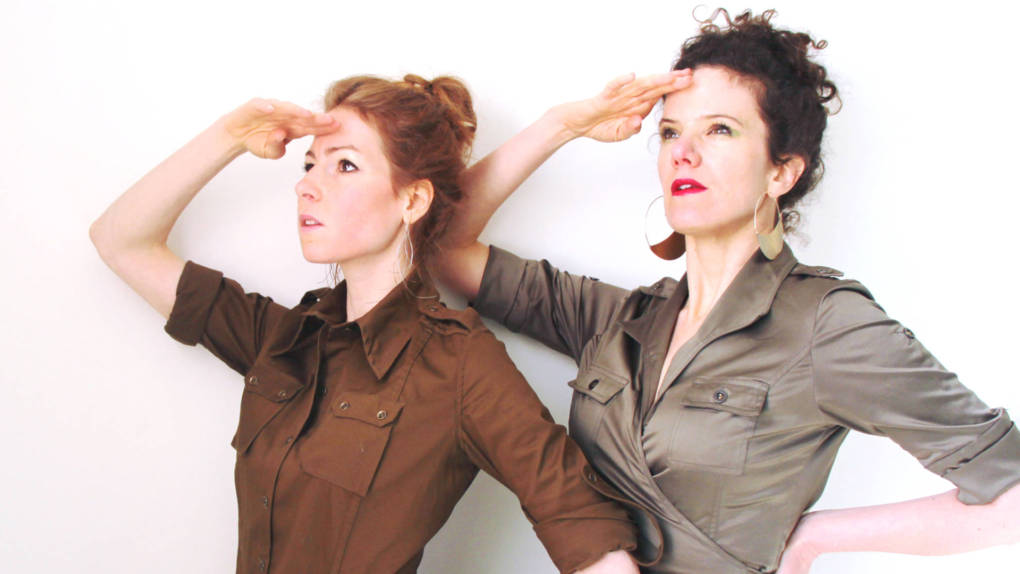
"caption": "The two artists behind The Bureau of Linguistical Reality invent new terms to describe our modern-day conditions. ",
"description": "The two artists behind The Bureau of Linguistical Reality invent new terms to describe our modern-day conditions. ",
"title": "BLR_main",
"credit": "Courtesy of the Bureau of Linguistical Reality",
"status": "inherit",
"isLoading": false,
"fetchFailed": false
},
"arts_13838189": {
"type": "attachments",
"id": "arts_13838189",
"meta": {
"index": "attachments_1716263798",
"site": "arts",
"id": "13838189",
"found": true
},
"parent": 13838187,
"imgSizes": {
"small": {
"file": "https://ww2.kqed.org/app/uploads/sites/2/2018/08/beswecoulddo_p248-249_wide-97056becaa7b8d768fbbbdec6033a3fa481fa766-520x292.jpg",
"width": 520,
"mimeType": "image/jpeg",
"height": 292
},
"twentyfourteen-full-width": {
"file": "https://ww2.kqed.org/app/uploads/sites/2/2018/08/beswecoulddo_p248-249_wide-97056becaa7b8d768fbbbdec6033a3fa481fa766-1038x576.jpg",
"width": 1038,
"mimeType": "image/jpeg",
"height": 576
},
"thumbnail": {
"file": "https://ww2.kqed.org/app/uploads/sites/2/2018/08/beswecoulddo_p248-249_wide-97056becaa7b8d768fbbbdec6033a3fa481fa766-160x90.jpg",
"width": 160,
"mimeType": "image/jpeg",
"height": 90
},
"fd-sm": {
"file": "https://ww2.kqed.org/app/uploads/sites/2/2018/08/beswecoulddo_p248-249_wide-97056becaa7b8d768fbbbdec6033a3fa481fa766-960x540.jpg",
"width": 960,
"mimeType": "image/jpeg",
"height": 540
},
"post-thumbnail": {
"file": "https://ww2.kqed.org/app/uploads/sites/2/2018/08/beswecoulddo_p248-249_wide-97056becaa7b8d768fbbbdec6033a3fa481fa766-672x372.jpg",
"width": 672,
"mimeType": "image/jpeg",
"height": 372
},
"xsmall": {
"file": "https://ww2.kqed.org/app/uploads/sites/2/2018/08/beswecoulddo_p248-249_wide-97056becaa7b8d768fbbbdec6033a3fa481fa766-375x211.jpg",
"width": 375,
"mimeType": "image/jpeg",
"height": 211
},
"kqedFullSize": {
"file": "https://ww2.kqed.org/app/uploads/sites/2/2018/08/beswecoulddo_p248-249_wide-97056becaa7b8d768fbbbdec6033a3fa481fa766-e1533232277130.jpg",
"width": 1920,
"height": 1080
},
"large": {
"file": "https://ww2.kqed.org/app/uploads/sites/2/2018/08/beswecoulddo_p248-249_wide-97056becaa7b8d768fbbbdec6033a3fa481fa766-1020x574.jpg",
"width": 1020,
"mimeType": "image/jpeg",
"height": 574
},
"xlarge": {
"file": "https://ww2.kqed.org/app/uploads/sites/2/2018/08/beswecoulddo_p248-249_wide-97056becaa7b8d768fbbbdec6033a3fa481fa766-1180x664.jpg",
"width": 1180,
"mimeType": "image/jpeg",
"height": 664
},
"complete_open_graph": {
"file": "https://ww2.kqed.org/app/uploads/sites/2/2018/08/beswecoulddo_p248-249_wide-97056becaa7b8d768fbbbdec6033a3fa481fa766-1200x675.jpg",
"width": 1200,
"mimeType": "image/jpeg",
"height": 675
},
"guest-author-50": {
"file": "https://ww2.kqed.org/app/uploads/sites/2/2018/08/beswecoulddo_p248-249_wide-97056becaa7b8d768fbbbdec6033a3fa481fa766-50x50.jpg",
"width": 50,
"mimeType": "image/jpeg",
"height": 50
},
"guest-author-96": {
"file": "https://ww2.kqed.org/app/uploads/sites/2/2018/08/beswecoulddo_p248-249_wide-97056becaa7b8d768fbbbdec6033a3fa481fa766-96x96.jpg",
"width": 96,
"mimeType": "image/jpeg",
"height": 96
},
"medium": {
"file": "https://ww2.kqed.org/app/uploads/sites/2/2018/08/beswecoulddo_p248-249_wide-97056becaa7b8d768fbbbdec6033a3fa481fa766-800x450.jpg",
"width": 800,
"mimeType": "image/jpeg",
"height": 450
},
"guest-author-64": {
"file": "https://ww2.kqed.org/app/uploads/sites/2/2018/08/beswecoulddo_p248-249_wide-97056becaa7b8d768fbbbdec6033a3fa481fa766-64x64.jpg",
"width": 64,
"mimeType": "image/jpeg",
"height": 64
},
"guest-author-32": {
"file": "https://ww2.kqed.org/app/uploads/sites/2/2018/08/beswecoulddo_p248-249_wide-97056becaa7b8d768fbbbdec6033a3fa481fa766-32x32.jpg",
"width": 32,
"mimeType": "image/jpeg",
"height": 32
},
"fd-lrg": {
"file": "https://ww2.kqed.org/app/uploads/sites/2/2018/08/beswecoulddo_p248-249_wide-97056becaa7b8d768fbbbdec6033a3fa481fa766-1920x1080.jpg",
"width": 1920,
"mimeType": "image/jpeg",
"height": 1080
},
"fd-med": {
"file": "https://ww2.kqed.org/app/uploads/sites/2/2018/08/beswecoulddo_p248-249_wide-97056becaa7b8d768fbbbdec6033a3fa481fa766-1180x664.jpg",
"width": 1180,
"mimeType": "image/jpeg",
"height": 664
},
"full-width": {
"file": "https://ww2.kqed.org/app/uploads/sites/2/2018/08/beswecoulddo_p248-249_wide-97056becaa7b8d768fbbbdec6033a3fa481fa766-1920x1080.jpg",
"width": 1920,
"mimeType": "image/jpeg",
"height": 1080
},
"detail": {
"file": "https://ww2.kqed.org/app/uploads/sites/2/2018/08/beswecoulddo_p248-249_wide-97056becaa7b8d768fbbbdec6033a3fa481fa766-150x150.jpg",
"width": 150,
"mimeType": "image/jpeg",
"height": 150
},
"medium_large": {
"file": "https://ww2.kqed.org/app/uploads/sites/2/2018/08/beswecoulddo_p248-249_wide-97056becaa7b8d768fbbbdec6033a3fa481fa766-768x432.jpg",
"width": 768,
"mimeType": "image/jpeg",
"height": 432
},
"guest-author-128": {
"file": "https://ww2.kqed.org/app/uploads/sites/2/2018/08/beswecoulddo_p248-249_wide-97056becaa7b8d768fbbbdec6033a3fa481fa766-128x128.jpg",
"width": 128,
"mimeType": "image/jpeg",
"height": 128
},
"xxsmall": {
"file": "https://ww2.kqed.org/app/uploads/sites/2/2018/08/beswecoulddo_p248-249_wide-97056becaa7b8d768fbbbdec6033a3fa481fa766-240x135.jpg",
"width": 240,
"mimeType": "image/jpeg",
"height": 135
}
},
"publishDate": 1533230994,
"modified": 1533231523,
"caption": "Thi Bui asked her parents very specific questions about the boat in which they left Vietnam.",
"description": "Thi Bui asked her parents very specific questions about the boat in which they left Vietnam.",
"title": "Thi Bui asked her parents very specific questions about the boat in which they left Vietnam.",
"credit": "Abrams",
"status": "inherit",
"isLoading": false,
"fetchFailed": false
},
"arts_13838041": {
"type": "attachments",
"id": "arts_13838041",
"meta": {
"index": "attachments_1716263798",
"site": "arts",
"id": "13838041",
"found": true
},
"parent": 13838040,
"imgSizes": {
"small": {
"file": "https://ww2.kqed.org/app/uploads/sites/2/2018/07/2018-07-26-contreras-sclark-03-8be298939c45367dc311e464c426d5e7d8b7d607-520x390.jpg",
"width": 520,
"mimeType": "image/jpeg",
"height": 390
},
"twentyfourteen-full-width": {
"file": "https://ww2.kqed.org/app/uploads/sites/2/2018/07/2018-07-26-contreras-sclark-03-8be298939c45367dc311e464c426d5e7d8b7d607-1038x576.jpg",
"width": 1038,
"mimeType": "image/jpeg",
"height": 576
},
"thumbnail": {
"file": "https://ww2.kqed.org/app/uploads/sites/2/2018/07/2018-07-26-contreras-sclark-03-8be298939c45367dc311e464c426d5e7d8b7d607-160x120.jpg",
"width": 160,
"mimeType": "image/jpeg",
"height": 120
},
"fd-sm": {
"file": "https://ww2.kqed.org/app/uploads/sites/2/2018/07/2018-07-26-contreras-sclark-03-8be298939c45367dc311e464c426d5e7d8b7d607-960x719.jpg",
"width": 960,
"mimeType": "image/jpeg",
"height": 719
},
"post-thumbnail": {
"file": "https://ww2.kqed.org/app/uploads/sites/2/2018/07/2018-07-26-contreras-sclark-03-8be298939c45367dc311e464c426d5e7d8b7d607-672x372.jpg",
"width": 672,
"mimeType": "image/jpeg",
"height": 372
},
"xsmall": {
"file": "https://ww2.kqed.org/app/uploads/sites/2/2018/07/2018-07-26-contreras-sclark-03-8be298939c45367dc311e464c426d5e7d8b7d607-375x281.jpg",
"width": 375,
"mimeType": "image/jpeg",
"height": 281
},
"kqedFullSize": {
"file": "https://ww2.kqed.org/app/uploads/sites/2/2018/07/2018-07-26-contreras-sclark-03-8be298939c45367dc311e464c426d5e7d8b7d607-e1532977147585.jpg",
"width": 1920,
"height": 1438
},
"large": {
"file": "https://ww2.kqed.org/app/uploads/sites/2/2018/07/2018-07-26-contreras-sclark-03-8be298939c45367dc311e464c426d5e7d8b7d607-1020x764.jpg",
"width": 1020,
"mimeType": "image/jpeg",
"height": 764
},
"xlarge": {
"file": "https://ww2.kqed.org/app/uploads/sites/2/2018/07/2018-07-26-contreras-sclark-03-8be298939c45367dc311e464c426d5e7d8b7d607-1180x884.jpg",
"width": 1180,
"mimeType": "image/jpeg",
"height": 884
},
"complete_open_graph": {
"file": "https://ww2.kqed.org/app/uploads/sites/2/2018/07/2018-07-26-contreras-sclark-03-8be298939c45367dc311e464c426d5e7d8b7d607-1200x899.jpg",
"width": 1200,
"mimeType": "image/jpeg",
"height": 899
},
"guest-author-50": {
"file": "https://ww2.kqed.org/app/uploads/sites/2/2018/07/2018-07-26-contreras-sclark-03-8be298939c45367dc311e464c426d5e7d8b7d607-50x50.jpg",
"width": 50,
"mimeType": "image/jpeg",
"height": 50
},
"guest-author-96": {
"file": "https://ww2.kqed.org/app/uploads/sites/2/2018/07/2018-07-26-contreras-sclark-03-8be298939c45367dc311e464c426d5e7d8b7d607-96x96.jpg",
"width": 96,
"mimeType": "image/jpeg",
"height": 96
},
"medium": {
"file": "https://ww2.kqed.org/app/uploads/sites/2/2018/07/2018-07-26-contreras-sclark-03-8be298939c45367dc311e464c426d5e7d8b7d607-800x599.jpg",
"width": 800,
"mimeType": "image/jpeg",
"height": 599
},
"guest-author-64": {
"file": "https://ww2.kqed.org/app/uploads/sites/2/2018/07/2018-07-26-contreras-sclark-03-8be298939c45367dc311e464c426d5e7d8b7d607-64x64.jpg",
"width": 64,
"mimeType": "image/jpeg",
"height": 64
},
"guest-author-32": {
"file": "https://ww2.kqed.org/app/uploads/sites/2/2018/07/2018-07-26-contreras-sclark-03-8be298939c45367dc311e464c426d5e7d8b7d607-32x32.jpg",
"width": 32,
"mimeType": "image/jpeg",
"height": 32
},
"fd-lrg": {
"file": "https://ww2.kqed.org/app/uploads/sites/2/2018/07/2018-07-26-contreras-sclark-03-8be298939c45367dc311e464c426d5e7d8b7d607-1920x1439.jpg",
"width": 1920,
"mimeType": "image/jpeg",
"height": 1439
},
"fd-med": {
"file": "https://ww2.kqed.org/app/uploads/sites/2/2018/07/2018-07-26-contreras-sclark-03-8be298939c45367dc311e464c426d5e7d8b7d607-1180x884.jpg",
"width": 1180,
"mimeType": "image/jpeg",
"height": 884
},
"full-width": {
"file": "https://ww2.kqed.org/app/uploads/sites/2/2018/07/2018-07-26-contreras-sclark-03-8be298939c45367dc311e464c426d5e7d8b7d607-1920x1439.jpg",
"width": 1920,
"mimeType": "image/jpeg",
"height": 1439
},
"detail": {
"file": "https://ww2.kqed.org/app/uploads/sites/2/2018/07/2018-07-26-contreras-sclark-03-8be298939c45367dc311e464c426d5e7d8b7d607-150x150.jpg",
"width": 150,
"mimeType": "image/jpeg",
"height": 150
},
"medium_large": {
"file": "https://ww2.kqed.org/app/uploads/sites/2/2018/07/2018-07-26-contreras-sclark-03-8be298939c45367dc311e464c426d5e7d8b7d607-768x575.jpg",
"width": 768,
"mimeType": "image/jpeg",
"height": 575
},
"guest-author-128": {
"file": "https://ww2.kqed.org/app/uploads/sites/2/2018/07/2018-07-26-contreras-sclark-03-8be298939c45367dc311e464c426d5e7d8b7d607-128x128.jpg",
"width": 128,
"mimeType": "image/jpeg",
"height": 128
},
"xxsmall": {
"file": "https://ww2.kqed.org/app/uploads/sites/2/2018/07/2018-07-26-contreras-sclark-03-8be298939c45367dc311e464c426d5e7d8b7d607-240x180.jpg",
"width": 240,
"mimeType": "image/jpeg",
"height": 180
}
},
"publishDate": 1532977106,
"modified": 1532977177,
"caption": "'Fruit of the Drunken Tree' by Ingrid Rojas Contreras",
"description": "'Fruit of the Drunken Tree' by Ingrid Rojas Contreras",
"title": "Fruit of the Drunken Tree by Ingrid Rojas Contreras",
"credit": null,
"status": "inherit",
"isLoading": false,
"fetchFailed": false
},
"arts_13837955": {
"type": "attachments",
"id": "arts_13837955",
"meta": {
"index": "attachments_1716263798",
"site": "arts",
"id": "13837955",
"found": true
},
"parent": 13837880,
"imgSizes": {
"small": {
"file": "https://ww2.kqed.org/app/uploads/sites/2/2018/07/AnneGreenGables.MAIN_-520x293.jpg",
"width": 520,
"mimeType": "image/jpeg",
"height": 293
},
"twentyfourteen-full-width": {
"file": "https://ww2.kqed.org/app/uploads/sites/2/2018/07/AnneGreenGables.MAIN_-1038x576.jpg",
"width": 1038,
"mimeType": "image/jpeg",
"height": 576
},
"thumbnail": {
"file": "https://ww2.kqed.org/app/uploads/sites/2/2018/07/AnneGreenGables.MAIN_-160x90.jpg",
"width": 160,
"mimeType": "image/jpeg",
"height": 90
},
"fd-sm": {
"file": "https://ww2.kqed.org/app/uploads/sites/2/2018/07/AnneGreenGables.MAIN_-960x540.jpg",
"width": 960,
"mimeType": "image/jpeg",
"height": 540
},
"post-thumbnail": {
"file": "https://ww2.kqed.org/app/uploads/sites/2/2018/07/AnneGreenGables.MAIN_-672x372.jpg",
"width": 672,
"mimeType": "image/jpeg",
"height": 372
},
"xsmall": {
"file": "https://ww2.kqed.org/app/uploads/sites/2/2018/07/AnneGreenGables.MAIN_-375x211.jpg",
"width": 375,
"mimeType": "image/jpeg",
"height": 211
},
"kqedFullSize": {
"file": "https://ww2.kqed.org/app/uploads/sites/2/2018/07/AnneGreenGables.MAIN_.jpg",
"width": 1920,
"height": 1080
},
"large": {
"file": "https://ww2.kqed.org/app/uploads/sites/2/2018/07/AnneGreenGables.MAIN_-1020x574.jpg",
"width": 1020,
"mimeType": "image/jpeg",
"height": 574
},
"xlarge": {
"file": "https://ww2.kqed.org/app/uploads/sites/2/2018/07/AnneGreenGables.MAIN_-1180x664.jpg",
"width": 1180,
"mimeType": "image/jpeg",
"height": 664
},
"complete_open_graph": {
"file": "https://ww2.kqed.org/app/uploads/sites/2/2018/07/AnneGreenGables.MAIN_-1200x675.jpg",
"width": 1200,
"mimeType": "image/jpeg",
"height": 675
},
"guest-author-50": {
"file": "https://ww2.kqed.org/app/uploads/sites/2/2018/07/AnneGreenGables.MAIN_-50x50.jpg",
"width": 50,
"mimeType": "image/jpeg",
"height": 50
},
"guest-author-96": {
"file": "https://ww2.kqed.org/app/uploads/sites/2/2018/07/AnneGreenGables.MAIN_-96x96.jpg",
"width": 96,
"mimeType": "image/jpeg",
"height": 96
},
"medium": {
"file": "https://ww2.kqed.org/app/uploads/sites/2/2018/07/AnneGreenGables.MAIN_-800x450.jpg",
"width": 800,
"mimeType": "image/jpeg",
"height": 450
},
"guest-author-64": {
"file": "https://ww2.kqed.org/app/uploads/sites/2/2018/07/AnneGreenGables.MAIN_-64x64.jpg",
"width": 64,
"mimeType": "image/jpeg",
"height": 64
},
"guest-author-32": {
"file": "https://ww2.kqed.org/app/uploads/sites/2/2018/07/AnneGreenGables.MAIN_-32x32.jpg",
"width": 32,
"mimeType": "image/jpeg",
"height": 32
},
"fd-lrg": {
"file": "https://ww2.kqed.org/app/uploads/sites/2/2018/07/AnneGreenGables.MAIN_-1920x1080.jpg",
"width": 1920,
"mimeType": "image/jpeg",
"height": 1080
},
"fd-med": {
"file": "https://ww2.kqed.org/app/uploads/sites/2/2018/07/AnneGreenGables.MAIN_-1180x664.jpg",
"width": 1180,
"mimeType": "image/jpeg",
"height": 664
},
"full-width": {
"file": "https://ww2.kqed.org/app/uploads/sites/2/2018/07/AnneGreenGables.MAIN_-1920x1080.jpg",
"width": 1920,
"mimeType": "image/jpeg",
"height": 1080
},
"detail": {
"file": "https://ww2.kqed.org/app/uploads/sites/2/2018/07/AnneGreenGables.MAIN_-150x150.jpg",
"width": 150,
"mimeType": "image/jpeg",
"height": 150
},
"medium_large": {
"file": "https://ww2.kqed.org/app/uploads/sites/2/2018/07/AnneGreenGables.MAIN_-768x432.jpg",
"width": 768,
"mimeType": "image/jpeg",
"height": 432
},
"guest-author-128": {
"file": "https://ww2.kqed.org/app/uploads/sites/2/2018/07/AnneGreenGables.MAIN_-128x128.jpg",
"width": 128,
"mimeType": "image/jpeg",
"height": 128
},
"xxsmall": {
"file": "https://ww2.kqed.org/app/uploads/sites/2/2018/07/AnneGreenGables.MAIN_-240x135.jpg",
"width": 240,
"mimeType": "image/jpeg",
"height": 135
}
},
"publishDate": 1532709782,
"modified": 1532709851,
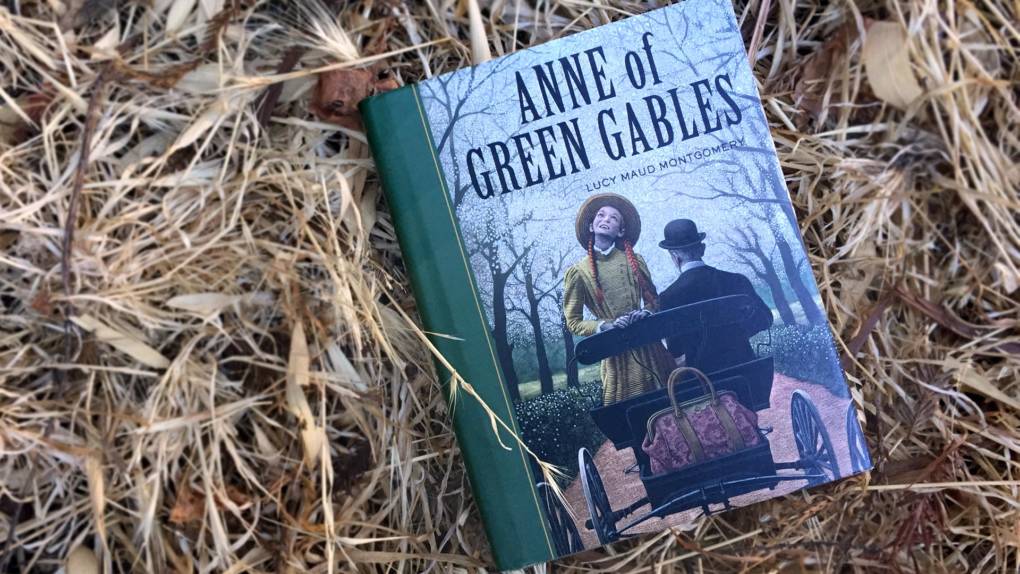
"caption": "L. M. Montgomery's 'Anne of Green Gables.'",
"description": "L. M. Montgomery's 'Anne of Green Gables.'",
"title": "AnneGreenGables.MAIN",
"credit": "Gabe Meline/KQED",
"status": "inherit",
"isLoading": false,
"fetchFailed": false
},
"arts_13836587": {
"type": "attachments",
"id": "arts_13836587",
"meta": {
"index": "attachments_1716263798",
"site": "arts",
"id": "13836587",
"found": true
},
"parent": 13836584,
"imgSizes": {
"small": {
"file": "https://ww2.kqed.org/app/uploads/sites/2/2018/07/WNCYL_Farenheit451-520x390.jpg",
"width": 520,
"mimeType": "image/jpeg",
"height": 390
},
"twentyfourteen-full-width": {
"file": "https://ww2.kqed.org/app/uploads/sites/2/2018/07/WNCYL_Farenheit451-1038x576.jpg",
"width": 1038,
"mimeType": "image/jpeg",
"height": 576
},
"thumbnail": {
"file": "https://ww2.kqed.org/app/uploads/sites/2/2018/07/WNCYL_Farenheit451-160x120.jpg",
"width": 160,
"mimeType": "image/jpeg",
"height": 120
},
"fd-sm": {
"file": "https://ww2.kqed.org/app/uploads/sites/2/2018/07/WNCYL_Farenheit451-960x720.jpg",
"width": 960,
"mimeType": "image/jpeg",
"height": 720
},
"post-thumbnail": {
"file": "https://ww2.kqed.org/app/uploads/sites/2/2018/07/WNCYL_Farenheit451-672x372.jpg",
"width": 672,
"mimeType": "image/jpeg",
"height": 372
},
"xsmall": {
"file": "https://ww2.kqed.org/app/uploads/sites/2/2018/07/WNCYL_Farenheit451-375x281.jpg",
"width": 375,
"mimeType": "image/jpeg",
"height": 281
},
"kqedFullSize": {
"file": "https://ww2.kqed.org/app/uploads/sites/2/2018/07/WNCYL_Farenheit451.jpg",
"width": 1080,
"height": 810
},
"large": {
"file": "https://ww2.kqed.org/app/uploads/sites/2/2018/07/WNCYL_Farenheit451-1020x765.jpg",
"width": 1020,
"mimeType": "image/jpeg",
"height": 765
},
"guest-author-50": {
"file": "https://ww2.kqed.org/app/uploads/sites/2/2018/07/WNCYL_Farenheit451-50x50.jpg",
"width": 50,
"mimeType": "image/jpeg",
"height": 50
},
"guest-author-96": {
"file": "https://ww2.kqed.org/app/uploads/sites/2/2018/07/WNCYL_Farenheit451-96x96.jpg",
"width": 96,
"mimeType": "image/jpeg",
"height": 96
},
"medium": {
"file": "https://ww2.kqed.org/app/uploads/sites/2/2018/07/WNCYL_Farenheit451-800x600.jpg",
"width": 800,
"mimeType": "image/jpeg",
"height": 600
},
"guest-author-64": {
"file": "https://ww2.kqed.org/app/uploads/sites/2/2018/07/WNCYL_Farenheit451-64x64.jpg",
"width": 64,
"mimeType": "image/jpeg",
"height": 64
},
"guest-author-32": {
"file": "https://ww2.kqed.org/app/uploads/sites/2/2018/07/WNCYL_Farenheit451-32x32.jpg",
"width": 32,
"mimeType": "image/jpeg",
"height": 32
},
"detail": {
"file": "https://ww2.kqed.org/app/uploads/sites/2/2018/07/WNCYL_Farenheit451-150x150.jpg",
"width": 150,
"mimeType": "image/jpeg",
"height": 150
},
"medium_large": {
"file": "https://ww2.kqed.org/app/uploads/sites/2/2018/07/WNCYL_Farenheit451-768x576.jpg",
"width": 768,
"mimeType": "image/jpeg",
"height": 576
},
"guest-author-128": {
"file": "https://ww2.kqed.org/app/uploads/sites/2/2018/07/WNCYL_Farenheit451-128x128.jpg",
"width": 128,
"mimeType": "image/jpeg",
"height": 128
},
"xxsmall": {
"file": "https://ww2.kqed.org/app/uploads/sites/2/2018/07/WNCYL_Farenheit451-240x180.jpg",
"width": 240,
"mimeType": "image/jpeg",
"height": 180
}
},
"publishDate": 1530833465,
"modified": 1530834000,
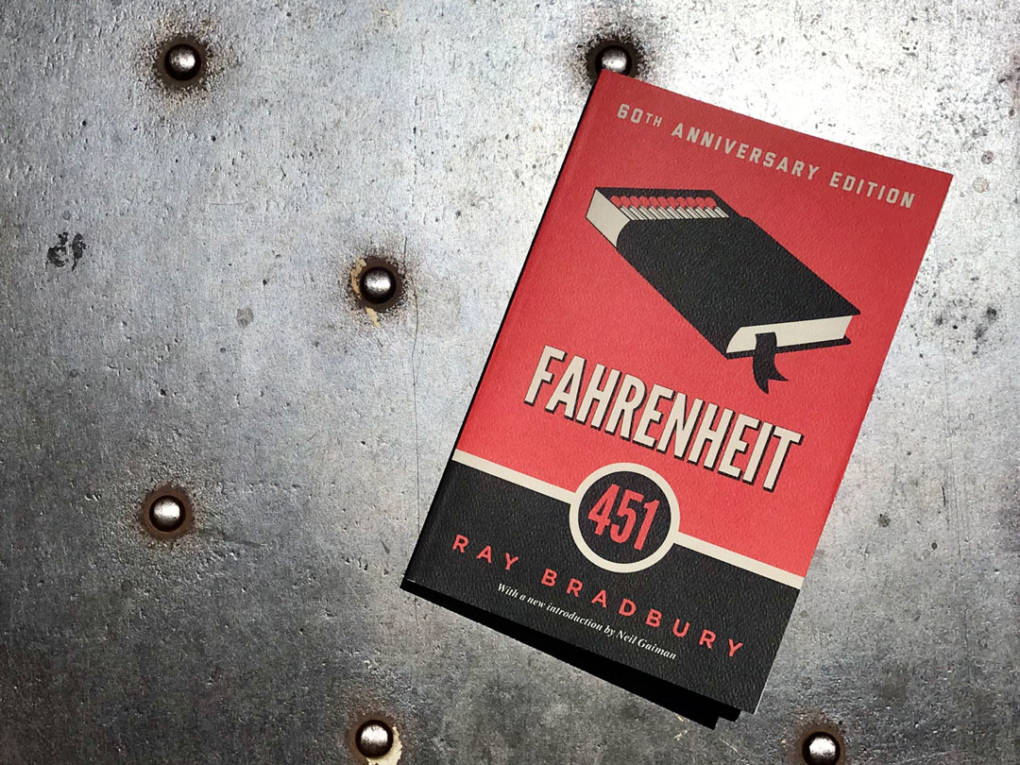
"caption": "Ray Bradbury's 'Farenheit 451'",
"description": "Ray Bradbury's 'Farenheit 451'",
"title": "WNCYL_Farenheit451",
"credit": "Lina Blanco/KQED",
"status": "inherit",
"isLoading": false,
"fetchFailed": false
},
"arts_13837322": {
"type": "attachments",
"id": "arts_13837322",
"meta": {
"index": "attachments_1716263798",
"site": "arts",
"id": "13837322",
"found": true
},
"parent": 13837319,
"imgSizes": {
"small": {
"file": "https://ww2.kqed.org/app/uploads/sites/2/2018/07/gettyimages-585863220_slide-6ee1688bb641cfdfb2a0df9679d56ba67ed5f468-s800-c85-520x346.jpg",
"width": 520,
"mimeType": "image/jpeg",
"height": 346
},
"thumbnail": {
"file": "https://ww2.kqed.org/app/uploads/sites/2/2018/07/gettyimages-585863220_slide-6ee1688bb641cfdfb2a0df9679d56ba67ed5f468-s800-c85-160x107.jpg",
"width": 160,
"mimeType": "image/jpeg",
"height": 107
},
"post-thumbnail": {
"file": "https://ww2.kqed.org/app/uploads/sites/2/2018/07/gettyimages-585863220_slide-6ee1688bb641cfdfb2a0df9679d56ba67ed5f468-s800-c85-672x372.jpg",
"width": 672,
"mimeType": "image/jpeg",
"height": 372
},
"xsmall": {
"file": "https://ww2.kqed.org/app/uploads/sites/2/2018/07/gettyimages-585863220_slide-6ee1688bb641cfdfb2a0df9679d56ba67ed5f468-s800-c85-375x250.jpg",
"width": 375,
"mimeType": "image/jpeg",
"height": 250
},
"kqedFullSize": {
"file": "https://ww2.kqed.org/app/uploads/sites/2/2018/07/gettyimages-585863220_slide-6ee1688bb641cfdfb2a0df9679d56ba67ed5f468-s800-c85.jpg",
"width": 800,
"height": 533
},
"guest-author-50": {
"file": "https://ww2.kqed.org/app/uploads/sites/2/2018/07/gettyimages-585863220_slide-6ee1688bb641cfdfb2a0df9679d56ba67ed5f468-s800-c85-50x50.jpg",
"width": 50,
"mimeType": "image/jpeg",
"height": 50
},
"guest-author-96": {
"file": "https://ww2.kqed.org/app/uploads/sites/2/2018/07/gettyimages-585863220_slide-6ee1688bb641cfdfb2a0df9679d56ba67ed5f468-s800-c85-96x96.jpg",
"width": 96,
"mimeType": "image/jpeg",
"height": 96
},
"medium": {
"file": "https://ww2.kqed.org/app/uploads/sites/2/2018/07/gettyimages-585863220_slide-6ee1688bb641cfdfb2a0df9679d56ba67ed5f468-s800-c85-800x533.jpg",
"width": 800,
"mimeType": "image/jpeg",
"height": 533
},
"guest-author-64": {
"file": "https://ww2.kqed.org/app/uploads/sites/2/2018/07/gettyimages-585863220_slide-6ee1688bb641cfdfb2a0df9679d56ba67ed5f468-s800-c85-64x64.jpg",
"width": 64,
"mimeType": "image/jpeg",
"height": 64
},
"guest-author-32": {
"file": "https://ww2.kqed.org/app/uploads/sites/2/2018/07/gettyimages-585863220_slide-6ee1688bb641cfdfb2a0df9679d56ba67ed5f468-s800-c85-32x32.jpg",
"width": 32,
"mimeType": "image/jpeg",
"height": 32
},
"detail": {
"file": "https://ww2.kqed.org/app/uploads/sites/2/2018/07/gettyimages-585863220_slide-6ee1688bb641cfdfb2a0df9679d56ba67ed5f468-s800-c85-150x150.jpg",
"width": 150,
"mimeType": "image/jpeg",
"height": 150
},
"medium_large": {
"file": "https://ww2.kqed.org/app/uploads/sites/2/2018/07/gettyimages-585863220_slide-6ee1688bb641cfdfb2a0df9679d56ba67ed5f468-s800-c85-768x512.jpg",
"width": 768,
"mimeType": "image/jpeg",
"height": 512
},
"guest-author-128": {
"file": "https://ww2.kqed.org/app/uploads/sites/2/2018/07/gettyimages-585863220_slide-6ee1688bb641cfdfb2a0df9679d56ba67ed5f468-s800-c85-128x128.jpg",
"width": 128,
"mimeType": "image/jpeg",
"height": 128
},
"xxsmall": {
"file": "https://ww2.kqed.org/app/uploads/sites/2/2018/07/gettyimages-585863220_slide-6ee1688bb641cfdfb2a0df9679d56ba67ed5f468-s800-c85-240x160.jpg",
"width": 240,
"mimeType": "image/jpeg",
"height": 160
}
},
"publishDate": 1531944812,
"modified": 1531944852,
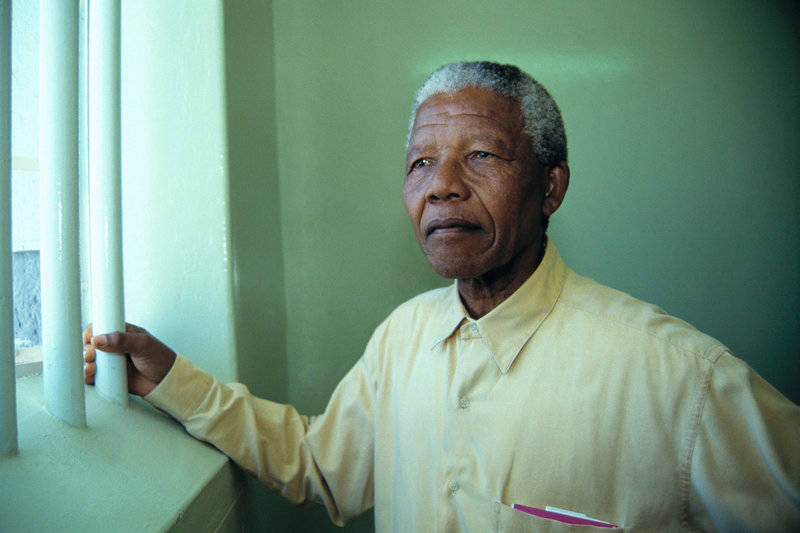
"caption": "In 1994 Nelson Mandela revisited the cell at Robben Island prison where he was jailed for more than two decades.\n",
"description": null,
"title": "gettyimages-585863220_slide-6ee1688bb641cfdfb2a0df9679d56ba67ed5f468-s800-c85",
"credit": "Louise Gubb/Corbis via Getty Images",
"status": "inherit",
"isLoading": false,
"fetchFailed": false
},
"arts_13836590": {
"type": "attachments",
"id": "arts_13836590",
"meta": {
"index": "attachments_1716263798",
"site": "arts",
"id": "13836590",
"found": true
},
"parent": 13836576,
"imgSizes": {
"small": {
"file": "https://ww2.kqed.org/app/uploads/sites/2/2018/07/The-Twits2-520x390.jpg",
"width": 520,
"mimeType": "image/jpeg",
"height": 390
},
"twentyfourteen-full-width": {
"file": "https://ww2.kqed.org/app/uploads/sites/2/2018/07/The-Twits2-1038x576.jpg",
"width": 1038,
"mimeType": "image/jpeg",
"height": 576
},
"thumbnail": {
"file": "https://ww2.kqed.org/app/uploads/sites/2/2018/07/The-Twits2-160x120.jpg",
"width": 160,
"mimeType": "image/jpeg",
"height": 120
},
"fd-sm": {
"file": "https://ww2.kqed.org/app/uploads/sites/2/2018/07/The-Twits2-960x720.jpg",
"width": 960,
"mimeType": "image/jpeg",
"height": 720
},
"post-thumbnail": {
"file": "https://ww2.kqed.org/app/uploads/sites/2/2018/07/The-Twits2-672x372.jpg",
"width": 672,
"mimeType": "image/jpeg",
"height": 372
},
"xsmall": {
"file": "https://ww2.kqed.org/app/uploads/sites/2/2018/07/The-Twits2-375x281.jpg",
"width": 375,
"mimeType": "image/jpeg",
"height": 281
},
"kqedFullSize": {
"file": "https://ww2.kqed.org/app/uploads/sites/2/2018/07/The-Twits2.jpg",
"width": 1920,
"height": 1440
},
"large": {
"file": "https://ww2.kqed.org/app/uploads/sites/2/2018/07/The-Twits2-1020x765.jpg",
"width": 1020,
"mimeType": "image/jpeg",
"height": 765
},
"xlarge": {
"file": "https://ww2.kqed.org/app/uploads/sites/2/2018/07/The-Twits2-1180x885.jpg",
"width": 1180,
"mimeType": "image/jpeg",
"height": 885
},
"complete_open_graph": {
"file": "https://ww2.kqed.org/app/uploads/sites/2/2018/07/The-Twits2-1200x900.jpg",
"width": 1200,
"mimeType": "image/jpeg",
"height": 900
},
"guest-author-50": {
"file": "https://ww2.kqed.org/app/uploads/sites/2/2018/07/The-Twits2-50x50.jpg",
"width": 50,
"mimeType": "image/jpeg",
"height": 50
},
"guest-author-96": {
"file": "https://ww2.kqed.org/app/uploads/sites/2/2018/07/The-Twits2-96x96.jpg",
"width": 96,
"mimeType": "image/jpeg",
"height": 96
},
"medium": {
"file": "https://ww2.kqed.org/app/uploads/sites/2/2018/07/The-Twits2-800x600.jpg",
"width": 800,
"mimeType": "image/jpeg",
"height": 600
},
"guest-author-64": {
"file": "https://ww2.kqed.org/app/uploads/sites/2/2018/07/The-Twits2-64x64.jpg",
"width": 64,
"mimeType": "image/jpeg",
"height": 64
},
"guest-author-32": {
"file": "https://ww2.kqed.org/app/uploads/sites/2/2018/07/The-Twits2-32x32.jpg",
"width": 32,
"mimeType": "image/jpeg",
"height": 32
},
"fd-lrg": {
"file": "https://ww2.kqed.org/app/uploads/sites/2/2018/07/The-Twits2-1920x1440.jpg",
"width": 1920,
"mimeType": "image/jpeg",
"height": 1440
},
"fd-med": {
"file": "https://ww2.kqed.org/app/uploads/sites/2/2018/07/The-Twits2-1180x885.jpg",
"width": 1180,
"mimeType": "image/jpeg",
"height": 885
},
"full-width": {
"file": "https://ww2.kqed.org/app/uploads/sites/2/2018/07/The-Twits2-1920x1440.jpg",
"width": 1920,
"mimeType": "image/jpeg",
"height": 1440
},
"detail": {
"file": "https://ww2.kqed.org/app/uploads/sites/2/2018/07/The-Twits2-150x150.jpg",
"width": 150,
"mimeType": "image/jpeg",
"height": 150
},
"medium_large": {
"file": "https://ww2.kqed.org/app/uploads/sites/2/2018/07/The-Twits2-768x576.jpg",
"width": 768,
"mimeType": "image/jpeg",
"height": 576
},
"guest-author-128": {
"file": "https://ww2.kqed.org/app/uploads/sites/2/2018/07/The-Twits2-128x128.jpg",
"width": 128,
"mimeType": "image/jpeg",
"height": 128
},
"xxsmall": {
"file": "https://ww2.kqed.org/app/uploads/sites/2/2018/07/The-Twits2-240x180.jpg",
"width": 240,
"mimeType": "image/jpeg",
"height": 180
}
},
"publishDate": 1530833941,
"modified": 1530834023,
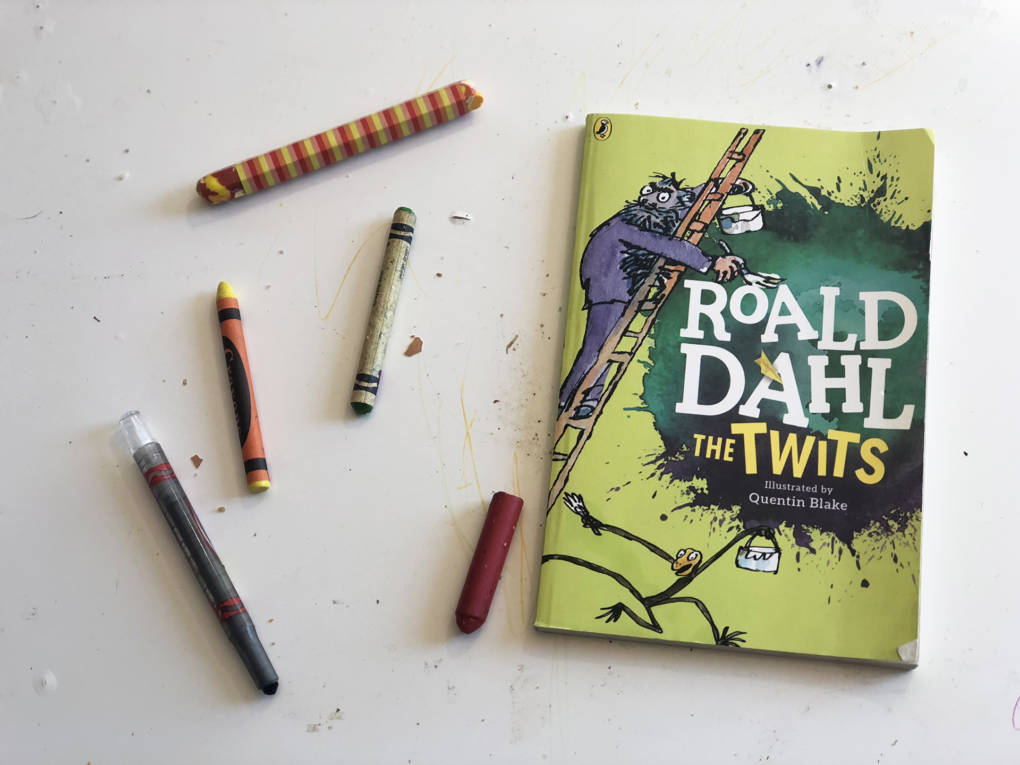
"caption": "'The Twits' by Roald Dahl",
"description": "'The Twits' by Roald Dahl",
"title": "The Twits2",
"credit": "Kevin L. Jones/KQED",
"status": "inherit",
"isLoading": false,
"fetchFailed": false
},
"arts_13836582": {
"type": "attachments",
"id": "arts_13836582",
"meta": {
"index": "attachments_1716263798",
"site": "arts",
"id": "13836582",
"found": true
},
"parent": 13836517,
"imgSizes": {
"small": {
"file": "https://ww2.kqed.org/app/uploads/sites/2/2018/07/WNCYL_EastOfEden-520x350.jpg",
"width": 520,
"mimeType": "image/jpeg",
"height": 350
},
"twentyfourteen-full-width": {
"file": "https://ww2.kqed.org/app/uploads/sites/2/2018/07/WNCYL_EastOfEden-1038x576.jpg",
"width": 1038,
"mimeType": "image/jpeg",
"height": 576
},
"thumbnail": {
"file": "https://ww2.kqed.org/app/uploads/sites/2/2018/07/WNCYL_EastOfEden-160x108.jpg",
"width": 160,
"mimeType": "image/jpeg",
"height": 108
},
"fd-sm": {
"file": "https://ww2.kqed.org/app/uploads/sites/2/2018/07/WNCYL_EastOfEden-960x645.jpg",
"width": 960,
"mimeType": "image/jpeg",
"height": 645
},
"post-thumbnail": {
"file": "https://ww2.kqed.org/app/uploads/sites/2/2018/07/WNCYL_EastOfEden-672x372.jpg",
"width": 672,
"mimeType": "image/jpeg",
"height": 372
},
"xsmall": {
"file": "https://ww2.kqed.org/app/uploads/sites/2/2018/07/WNCYL_EastOfEden-375x252.jpg",
"width": 375,
"mimeType": "image/jpeg",
"height": 252
},
"kqedFullSize": {
"file": "https://ww2.kqed.org/app/uploads/sites/2/2018/07/WNCYL_EastOfEden.jpg",
"width": 1080,
"height": 726
},
"large": {
"file": "https://ww2.kqed.org/app/uploads/sites/2/2018/07/WNCYL_EastOfEden-1020x686.jpg",
"width": 1020,
"mimeType": "image/jpeg",
"height": 686
},
"guest-author-50": {
"file": "https://ww2.kqed.org/app/uploads/sites/2/2018/07/WNCYL_EastOfEden-50x50.jpg",
"width": 50,
"mimeType": "image/jpeg",
"height": 50
},
"guest-author-96": {
"file": "https://ww2.kqed.org/app/uploads/sites/2/2018/07/WNCYL_EastOfEden-96x96.jpg",
"width": 96,
"mimeType": "image/jpeg",
"height": 96
},
"medium": {
"file": "https://ww2.kqed.org/app/uploads/sites/2/2018/07/WNCYL_EastOfEden-800x538.jpg",
"width": 800,
"mimeType": "image/jpeg",
"height": 538
},
"guest-author-64": {
"file": "https://ww2.kqed.org/app/uploads/sites/2/2018/07/WNCYL_EastOfEden-64x64.jpg",
"width": 64,
"mimeType": "image/jpeg",
"height": 64
},
"guest-author-32": {
"file": "https://ww2.kqed.org/app/uploads/sites/2/2018/07/WNCYL_EastOfEden-32x32.jpg",
"width": 32,
"mimeType": "image/jpeg",
"height": 32
},
"detail": {
"file": "https://ww2.kqed.org/app/uploads/sites/2/2018/07/WNCYL_EastOfEden-150x150.jpg",
"width": 150,
"mimeType": "image/jpeg",
"height": 150
},
"medium_large": {
"file": "https://ww2.kqed.org/app/uploads/sites/2/2018/07/WNCYL_EastOfEden-768x516.jpg",
"width": 768,
"mimeType": "image/jpeg",
"height": 516
},
"guest-author-128": {
"file": "https://ww2.kqed.org/app/uploads/sites/2/2018/07/WNCYL_EastOfEden-128x128.jpg",
"width": 128,
"mimeType": "image/jpeg",
"height": 128
},
"xxsmall": {
"file": "https://ww2.kqed.org/app/uploads/sites/2/2018/07/WNCYL_EastOfEden-240x161.jpg",
"width": 240,
"mimeType": "image/jpeg",
"height": 161
}
},
"publishDate": 1530832644,
"modified": 1530833988,
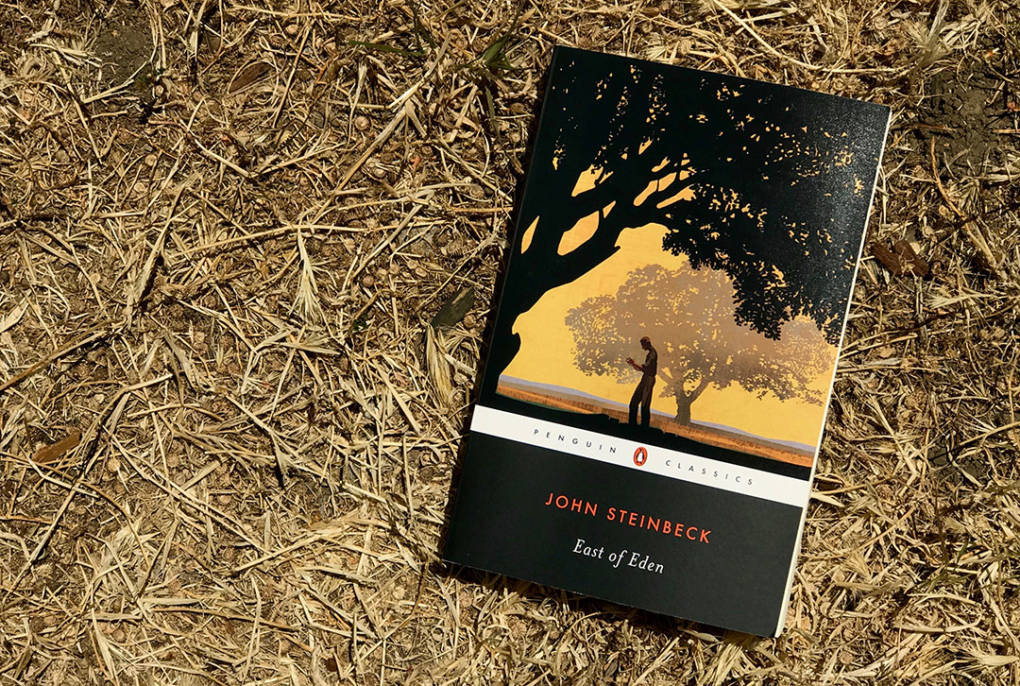
"caption": "\"I latched onto Steinbeck's quote: 'All great and precious things are lonely.' To me, it meant that anything worth doing will be tough.\"",
"description": "\"I latched onto Steinbeck's quote: 'All great and precious things are lonely.' To me, it meant that anything worth doing will be tough.\"",
"title": "WNCYL_EastOfEden",
"credit": "Lina Blanco/KQED",
"status": "inherit",
"isLoading": false,
"fetchFailed": false
}
},
"audioPlayerReducer": {
"postId": "stream_live",
"isPaused": true,
"isPlaying": false,
"pfsActive": false,
"pledgeModalIsOpen": true,
"playerDrawerIsOpen": false,
"liveAudioPlayStartedAt": 0,
"liveAudioPlayContext": ""
},
"authorsReducer": {
"byline_arts_13838187": {
"type": "authors",
"id": "byline_arts_13838187",
"meta": {
"override": true
},
"slug": "byline_arts_13838187",
"name": "Mallory Yu",
"isLoading": false
},
"byline_arts_13838040": {
"type": "authors",
"id": "byline_arts_13838040",
"meta": {
"override": true
},
"slug": "byline_arts_13838040",
"name": "Scott Simon",
"isLoading": false
},
"byline_arts_13837880": {
"type": "authors",
"id": "byline_arts_13837880",
"meta": {
"override": true
},
"slug": "byline_arts_13837880",
"name": "Brianna Gerard",
"isLoading": false
},
"byline_arts_13836584": {
"type": "authors",
"id": "byline_arts_13836584",
"meta": {
"override": true
},
"slug": "byline_arts_13836584",
"name": "Erik Pangelinan",
"isLoading": false
},
"byline_arts_13837319": {
"type": "authors",
"id": "byline_arts_13837319",
"meta": {
"override": true
},
"slug": "byline_arts_13837319",
"name": "Greg Myre",
"isLoading": false
},
"byline_arts_13836576": {
"type": "authors",
"id": "byline_arts_13836576",
"meta": {
"override": true
},
"slug": "byline_arts_13836576",
"name": "Marjorie Schreiber Lear",
"isLoading": false
},
"byline_arts_13836517": {
"type": "authors",
"id": "byline_arts_13836517",
"meta": {
"override": true
},
"slug": "byline_arts_13836517",
"name": "Leah Ganj-Bakhsh",
"isLoading": false
},
"irojascontreras": {
"type": "authors",
"id": "78",
"meta": {
"index": "authors_1716337520",
"id": "78",
"found": true
},
"name": "Ingrid Rojas Contreras",
"firstName": "Ingrid",
"lastName": "Rojas Contreras",
"slug": "irojascontreras",
"email": "ingrid.rojas.c@gmail.com",
"display_author_email": false,
"staff_mastheads": [],
"title": null,
"bio": "Ingrid Rojas Contreras lives in San Francisco with her books. Her debut novel\u003cem> Fruit of the Drunken Tree \u003c/em>is forthcoming from Doubleday (Summer 2018). Find more at \u003ca href=\"http://www.ingridrojascontreras.com\">www.ingridrojascontreras.com\u003c/a>.",
"avatar": "https://secure.gravatar.com/avatar/908d94de9342e71b9d5ceaa8152a16a0?s=600&d=blank&r=g",
"twitter": null,
"facebook": null,
"instagram": null,
"linkedin": null,
"sites": [
{
"site": "arts",
"roles": [
"Contributor",
"contributor"
]
}
],
"headData": {
"title": "Ingrid Rojas Contreras | KQED",
"description": null,
"ogImgSrc": "https://secure.gravatar.com/avatar/908d94de9342e71b9d5ceaa8152a16a0?s=600&d=blank&r=g",
"twImgSrc": "https://secure.gravatar.com/avatar/908d94de9342e71b9d5ceaa8152a16a0?s=600&d=blank&r=g"
},
"isLoading": false,
"link": "/author/irojascontreras"
},
"slefebvre": {
"type": "authors",
"id": "11091",
"meta": {
"index": "authors_1716337520",
"id": "11091",
"found": true
},
"name": "Sam Lefebvre",
"firstName": "Sam",
"lastName": "Lefebvre",
"slug": "slefebvre",
"email": "sdlefebvre@gmail.com",
"display_author_email": false,
"staff_mastheads": [],
"title": "KQED Contributor",
"bio": "Sam Lefebvre is an award-winning reporter at KQED Arts. He has worked as an editor and columnist at the \u003cem>East Bay Express\u003c/em>, \u003cem>SF Weekly \u003c/em>and Impose Magazine, and his journalism and criticism has appeared in \u003cem>The New York Times\u003c/em>, the Guardian and Pitchfork.",
"avatar": "https://secure.gravatar.com/avatar/49d39b42930b77fb13784ddd9fa63fe780666b71bf289368509dba576b64e69b?s=600&d=blank&r=g",
"twitter": "Lefebvre_Sam",
"bluesky": null,
"facebook": null,
"instagram": null,
"linkedin": null,
"sites": [
{
"site": "arts",
"roles": [
"subscriber"
]
},
{
"site": "news",
"roles": [
"author"
]
}
],
"headData": {
"title": "Sam Lefebvre | KQED",
"description": "KQED Contributor",
"ogImgSrc": "https://secure.gravatar.com/avatar/49d39b42930b77fb13784ddd9fa63fe780666b71bf289368509dba576b64e69b?s=600&d=blank&r=g",
"twImgSrc": "https://secure.gravatar.com/avatar/49d39b42930b77fb13784ddd9fa63fe780666b71bf289368509dba576b64e69b?s=600&d=blank&r=g"
},
"isLoading": false,
"link": "/author/slefebvre"
},
"lblanco": {
"type": "authors",
"id": "11357",
"meta": {
"index": "authors_1716337520",
"id": "11357",
"found": true
},
"name": "Lina Blanco",
"firstName": "Lina",
"lastName": "Blanco",
"slug": "lblanco",
"email": "lblanco@kqed.org",
"display_author_email": false,
"staff_mastheads": [],
"title": null,
"bio": "Lina was a Senior Engagement Platforms Manager for KQED News, producing engagement strategies on social media at \u003ca href=\"https://twitter.com/KQEDnews\">@KQEDNews, \u003c/a>via \u003ca href=\"https://www.kqed.org/about/newsletters/\">KQED's daily newsletter\u003c/a> as well as texting campaigns with KQED readers and listeners. She also co-produces for KQED's bilingual news hub \u003ca href=\"https://www.instagram.com/kqedenespanol/\">KQED en Español\u003c/a>.\r\n\r\nLina previously worked for \u003ca href=\"https://kqed.org/arts\">KQED Arts\u003c/a> — supporting audience engagement efforts on the weekly \u003ca href=\"https://www.kqed.org/podcasts/rightnowish\">\u003cem>Rightnowish\u003c/em> \u003c/a>podcast, Webby-winning video series \u003ca href=\"https://www.kqed.org/if-cities-could-dance\">\u003cem>If Cities Could Dance\u003c/em>\u003c/a>, and daily Arts & Culture reporting. She won a \u003ca href=\"https://www.kqed.org/pressroom/10884/murrow\">National 2019 Edward R. Murrow Award for Excellence in Social Media\u003c/a> for KQED's series \u003cem>The Hustle\u003c/em>.\r\n\r\nBefore KQED, Lina worked as a graphic designer and digital storytelling facilitator at the \u003ca href=\"https://www.nativehealth.org/\">Native American Health Center\u003c/a>.\r\n\r\nShe's mom to a senior Chihuahua (plus one black cat) and lives in West Sonoma County on a small farmstead.",
"avatar": "https://secure.gravatar.com/avatar/77ec326d67223c38a436b87bcfd2a2e8?s=600&d=mm&r=g",
"twitter": "LinaBlanco",
"facebook": null,
"instagram": null,
"linkedin": null,
"sites": [
{
"site": "arts",
"roles": [
"subscriber"
]
},
{
"site": "news",
"roles": [
"subscriber"
]
},
{
"site": "pop",
"roles": [
"administrator"
]
},
{
"site": "about",
"roles": [
"administrator"
]
},
{
"site": "bayareabites",
"roles": [
"editor"
]
},
{
"site": "science",
"roles": [
"editor"
]
},
{
"site": "checkplease",
"roles": [
"editor"
]
},
{
"site": "food",
"roles": []
},
{
"site": "perspectives",
"roles": [
"editor"
]
}
],
"headData": {
"title": "Lina Blanco | KQED",
"description": null,
"ogImgSrc": "https://secure.gravatar.com/avatar/77ec326d67223c38a436b87bcfd2a2e8?s=600&d=mm&r=g",
"twImgSrc": "https://secure.gravatar.com/avatar/77ec326d67223c38a436b87bcfd2a2e8?s=600&d=mm&r=g"
},
"isLoading": false,
"link": "/author/lblanco"
}
},
"pagesReducer": {
"arts_category_literature": {
"type": "terms",
"id": "arts_73",
"meta": {
"index": "terms_1716263798",
"site": "arts",
"id": "73",
"score": 12.797728
},
"featImg": null,
"name": "Books",
"description": null,
"taxonomy": "category",
"headData": {
"twImgId": null,
"twTitle": null,
"ogTitle": null,
"ogImgId": null,
"twDescription": null,
"description": null,
"title": "Books Archives | KQED Arts",
"ogDescription": null
},
"ttid": 74,
"slug": "literature",
"isLoading": false,
"title": "Books",
"pageMeta": {
"site": "arts",
"WpPageTemplate": "page-topic-editorial",
"currentPage": 66
},
"blocks": [
{
"blockName": "kqed/post-list",
"attrs": {
"layout": "cardArticle2",
"query": "posts/arts?category=literature",
"seeMore": false,
"paginated": true,
"page": 66
}
},
{
"blockName": "kqed/ad"
}
]
}
},
"pfsSessionReducer": {},
"postsReducer": {
"stream_live": {
"type": "live",
"id": "stream_live",
"audioUrl": "https://streams.kqed.org/kqedradio",
"title": "Live Stream",
"excerpt": "Live Stream information currently unavailable.",
"link": "/radio",
"featImg": "",
"label": {
"name": "KQED Live",
"link": "/"
}
},
"stream_kqedNewscast": {
"type": "posts",
"id": "stream_kqedNewscast",
"audioUrl": "https://www.kqed.org/.stream/anon/radio/RDnews/newscast.mp3?_=1",
"title": "KQED Newscast",
"featImg": "",
"label": {
"name": "88.5 FM",
"link": "/"
}
},
"arts_13840484": {
"type": "posts",
"id": "arts_13840484",
"meta": {
"index": "posts_1716263798",
"site": "arts",
"id": "13840484",
"score": null,
"sort": [
1536625236000
]
},
"guestAuthors": [],
"slug": "this-heartrending-poetry-debut-follows-four-generations-from-japan-to-america",
"title": "This Heartrending Poetry Debut Follows Four Generations from Japan to America",
"publishDate": 1536625236,
"format": "standard",
"headTitle": "This Heartrending Poetry Debut Follows Four Generations from Japan to America | KQED",
"labelTerm": {
"site": "arts"
},
"content": "\u003cp>One lives many lives as an immigrant. When you’re a first-generation immigrant, your life fractures in two—there was the life you left behind and the new one that emerges in your adopted land. When you are second generation, the fractures of your parents’ lives extend into yours: their reasons for leaving become an integral part of how you understand yourself, akin to a salient physical trait—a mole, say, or dimples in your cheeks.\u003c/p>\n\u003cp>There are many books that explore the experiences of first- and second-generation immigrants, together and separately. \u003cem>Isako Isako\u003c/em>, the debut poetry collection by Bay Area writer Mia Ayumi Malhotra, is different: it follows four generations of Japanese and Japanese-American women through polyphonic perspectives that explore home, identity and history and its racial and political overtones.\u003c/p>\n\u003cfigure id=\"attachment_13840571\" class=\"wp-caption aligncenter\" style=\"max-width: 800px\">\u003cimg loading=\"lazy\" decoding=\"async\" class=\"size-medium wp-image-13840571\" src=\"https://ww2.kqed.org/arts/wp-content/uploads/sites/2/2018/09/Japanese_internment_detainees-800x590.jpg\" alt=\"\" width=\"800\" height=\"590\" srcset=\"https://cdn.kqed.org/wp-content/uploads/sites/2/2018/09/Japanese_internment_detainees-800x590.jpg 800w, https://cdn.kqed.org/wp-content/uploads/sites/2/2018/09/Japanese_internment_detainees-160x118.jpg 160w, https://cdn.kqed.org/wp-content/uploads/sites/2/2018/09/Japanese_internment_detainees-768x566.jpg 768w, https://cdn.kqed.org/wp-content/uploads/sites/2/2018/09/Japanese_internment_detainees-1020x752.jpg 1020w, https://cdn.kqed.org/wp-content/uploads/sites/2/2018/09/Japanese_internment_detainees-960x708.jpg 960w, https://cdn.kqed.org/wp-content/uploads/sites/2/2018/09/Japanese_internment_detainees-240x177.jpg 240w, https://cdn.kqed.org/wp-content/uploads/sites/2/2018/09/Japanese_internment_detainees-375x276.jpg 375w, https://cdn.kqed.org/wp-content/uploads/sites/2/2018/09/Japanese_internment_detainees-520x383.jpg 520w, https://cdn.kqed.org/wp-content/uploads/sites/2/2018/09/Japanese_internment_detainees.jpg 1141w\" sizes=\"(max-width: 800px) 100vw, 800px\">\u003cfigcaption class=\"wp-caption-text\">Japanese Americans in front of poster with internment orders. Records of War Relocation Authority. Wikimedia Commons.\u003c/figcaption>\u003c/figure>\n\u003cp>Malhotra boldly begins with a reproduction of the Civilian Exclusion Order No. 34, which ordered that all people of Japanese ancestry (both citizens and immigrants) be taken to internment camps. I can’t say that I had ever sat down to read this order from beginning to end, but this time I did. “Evacuees must carry with them on departure for the Assembly Center… (a) Bedding and linens (no mattress) for each member of the family; (b) Toilet articles… (c) Extra clothing…; (d) Sufficient knives, forks, spoons, plates, bowls, cups.” The nightmarishly trivial use of “evacuees” in this order has its own chilling effect—a reminder of how a government’s language can so easily be deployed against its own people.\u003c/p>\n\u003cp>\u003ci>Isako Isako\u003c/i> was born from stories Malhotra heard from her maternal grandmother, who lived in Japan during World War II and the ensuing American occupation, later immigrating to the U.S. Malhotra’s grandmother also told stories about her own mother (Malhotra’s great-grandmother). In “History of Isako,\u003cem>” \u003c/em>one of the most stunning poems in the collection, the speaker of the poem begins by telling her own story:\u003c/p>\n\u003cblockquote>\u003cp>During war Isako is lady watch city fade to rubble. Is lady hide in Kobe church as air raid siren shrill overhead. Is lady strain for voice of emperor on radio then sell kimono and shred potato to rice.\u003c/p>\u003c/blockquote>\n\u003cp>The preternatural present tense in this poem and the broken English creates a delicate and strained aura, all the more so, as we follow Isako’s journey into the U.S.:\u003c/p>\n\u003cblockquote>\u003cp>Is lady cross Pacific on S.S. Cleveland. Isako is lady turn from train track when spat upon. Is lady in Arkansas desert. Is lady wipe dust from tin plate in mess hall. Is released from camp to board Whites Only train.\u003c/p>\u003c/blockquote>\n\u003cp>In the second part of this poem, we hear from the writer of Isako’s story: “When I write about Isako I use words like ______ and ________ knowing such designations make no sense. I use these details to make Isako at home on a page that is otherwise white.”\u003c/p>\n\u003cp>[ad fullwidth]\u003c/p>\n\u003cp>The passage is a stunning choice to move us through history and the inheritance of history in this manner. The writer of Isako’s story is aware of the foreignness of the white page, the strain of race and the impossibility of Isako to be really at home in its landscape.\u003c/p>\n\u003cp>It is beautiful to see Isako and the writer of Isako’s story together in the next poem—even if in it, Isako is scolding her granddaughter for not knowing how to fold a kimono properly. But our sense of ease does not last for long. Next, in the final part of the poem, Malhotra remixes the language of the Civilian Exclusion Order which we had encountered earlier, and does so to unnerving proportions:\u003c/p>\n\u003cblockquote>\u003cp>instructions to all living persons Japanese in the following ancestry area persons alien will be evacuated pursuant to from non-alien ancestry noon provisions this dated 12 o’clock… evacuees must carry property following them on departure for Assembly Center between hours the 8AM the 5PM bedding (no mattress) linens for members each family articles toilet for members each of family will be packaged marked plainly with name and owner numbered in accordance\u003c/p>\u003c/blockquote>\n\u003cp>The strength in \u003cem>Isako Isako\u003c/em> lies in the tributaries of its different voices, how they are arranged together, how they echo each other and, finally, how they run aground into the same voice, the same story.\u003c/p>\n\u003cp>What is the connection between the sparkling syntax of a young girl living her childhood in America and the broken English of her immigrant grandmother? Isako says in one poem: “Behind barbed wire all question run to one.”\u003c/p>\n\u003cp>The images I encountered in this book, and especially Isako’s voice, will remain with me for quite some time.\u003c/p>\n\u003cp>\u003cimg loading=\"lazy\" decoding=\"async\" class=\"aligncenter size-medium wp-image-12935470\" src=\"https://ww2.kqed.org/arts/wp-content/uploads/sites/2/2017/03/Spine-1-800x42.jpg\" alt=\"\" width=\"800\" height=\"42\" srcset=\"https://cdn.kqed.org/wp-content/uploads/sites/2/2017/03/Spine-1.jpg 800w, https://cdn.kqed.org/wp-content/uploads/sites/2/2017/03/Spine-1-160x8.jpg 160w, https://cdn.kqed.org/wp-content/uploads/sites/2/2017/03/Spine-1-768x40.jpg 768w, https://cdn.kqed.org/wp-content/uploads/sites/2/2017/03/Spine-1-240x13.jpg 240w, https://cdn.kqed.org/wp-content/uploads/sites/2/2017/03/Spine-1-375x20.jpg 375w, https://cdn.kqed.org/wp-content/uploads/sites/2/2017/03/Spine-1-520x27.jpg 520w\" sizes=\"(max-width: 800px) 100vw, 800px\">\u003c/p>\n\u003cp>\u003cem>Mia Ayumi Malhotra reads at E.M. Wolfman General Interest Small Bookstore (410 13th St.) in Oakland on Sept. 22 with Bonnie Chau and Ploi Pirapokin. Details \u003ca href=\"http://wolfmanhomerepair.com/event/2018/9/22/all-roads-lead-to-blood-bonnie-chau-with-kundiman-fellows\" target=\"_blank\" rel=\"noopener\">here\u003c/a>. \u003c/em>\u003c/p>\n\u003cp>\u003c/p>\n\u003cp>\u003cem>The Spine is a biweekly column. Catch us back here in two weeks.\u003c/em>\u003c/p>\n\n",
"blocks": [],
"excerpt": "Mia Ayumi Malhotra's 'Isako Isako' is a raw glimpse into how trauma travels through generations. ",
"status": "publish",
"parent": 0,
"modified": 1726699982,
"stats": {
"hasAudio": false,
"hasVideo": false,
"hasChartOrMap": false,
"iframeSrcs": [],
"hasGoogleForm": false,
"hasGallery": false,
"hasHearkenModule": false,
"hasPolis": false,
"paragraphCount": 19,
"wordCount": 875
},
"headData": {
"title": "This Heartrending Poetry Debut Follows Four Generations from Japan to America | KQED",
"description": "Mia Ayumi Malhotra's 'Isako Isako' is a raw glimpse into how trauma travels through generations. ",
"ogTitle": "",
"ogDescription": "",
"ogImgId": "",
"twTitle": "",
"twDescription": "",
"twImgId": "",
"schema": {
"@context": "https://schema.org",
"@type": "Article",
"headline": "This Heartrending Poetry Debut Follows Four Generations from Japan to America",
"datePublished": "2018-09-10T17:20:36-07:00",
"dateModified": "2024-09-18T15:53:02-07:00",
"image": "https://cdn.kqed.org/wp-content/uploads/2020/02/KQED-OG-Image@1x.png"
}
},
"sticky": false,
"path": "/arts/13840484/this-heartrending-poetry-debut-follows-four-generations-from-japan-to-america",
"audioTrackLength": null,
"parsedContent": [
{
"type": "contentString",
"content": "\u003cdiv class=\"post-body\">\u003cp>\u003cp>One lives many lives as an immigrant. When you’re a first-generation immigrant, your life fractures in two—there was the life you left behind and the new one that emerges in your adopted land. When you are second generation, the fractures of your parents’ lives extend into yours: their reasons for leaving become an integral part of how you understand yourself, akin to a salient physical trait—a mole, say, or dimples in your cheeks.\u003c/p>\n\u003cp>There are many books that explore the experiences of first- and second-generation immigrants, together and separately. \u003cem>Isako Isako\u003c/em>, the debut poetry collection by Bay Area writer Mia Ayumi Malhotra, is different: it follows four generations of Japanese and Japanese-American women through polyphonic perspectives that explore home, identity and history and its racial and political overtones.\u003c/p>\n\u003cfigure id=\"attachment_13840571\" class=\"wp-caption aligncenter\" style=\"max-width: 800px\">\u003cimg loading=\"lazy\" decoding=\"async\" class=\"size-medium wp-image-13840571\" src=\"https://ww2.kqed.org/arts/wp-content/uploads/sites/2/2018/09/Japanese_internment_detainees-800x590.jpg\" alt=\"\" width=\"800\" height=\"590\" srcset=\"https://cdn.kqed.org/wp-content/uploads/sites/2/2018/09/Japanese_internment_detainees-800x590.jpg 800w, https://cdn.kqed.org/wp-content/uploads/sites/2/2018/09/Japanese_internment_detainees-160x118.jpg 160w, https://cdn.kqed.org/wp-content/uploads/sites/2/2018/09/Japanese_internment_detainees-768x566.jpg 768w, https://cdn.kqed.org/wp-content/uploads/sites/2/2018/09/Japanese_internment_detainees-1020x752.jpg 1020w, https://cdn.kqed.org/wp-content/uploads/sites/2/2018/09/Japanese_internment_detainees-960x708.jpg 960w, https://cdn.kqed.org/wp-content/uploads/sites/2/2018/09/Japanese_internment_detainees-240x177.jpg 240w, https://cdn.kqed.org/wp-content/uploads/sites/2/2018/09/Japanese_internment_detainees-375x276.jpg 375w, https://cdn.kqed.org/wp-content/uploads/sites/2/2018/09/Japanese_internment_detainees-520x383.jpg 520w, https://cdn.kqed.org/wp-content/uploads/sites/2/2018/09/Japanese_internment_detainees.jpg 1141w\" sizes=\"(max-width: 800px) 100vw, 800px\">\u003cfigcaption class=\"wp-caption-text\">Japanese Americans in front of poster with internment orders. Records of War Relocation Authority. Wikimedia Commons.\u003c/figcaption>\u003c/figure>\n\u003cp>Malhotra boldly begins with a reproduction of the Civilian Exclusion Order No. 34, which ordered that all people of Japanese ancestry (both citizens and immigrants) be taken to internment camps. I can’t say that I had ever sat down to read this order from beginning to end, but this time I did. “Evacuees must carry with them on departure for the Assembly Center… (a) Bedding and linens (no mattress) for each member of the family; (b) Toilet articles… (c) Extra clothing…; (d) Sufficient knives, forks, spoons, plates, bowls, cups.” The nightmarishly trivial use of “evacuees” in this order has its own chilling effect—a reminder of how a government’s language can so easily be deployed against its own people.\u003c/p>\n\u003cp>\u003ci>Isako Isako\u003c/i> was born from stories Malhotra heard from her maternal grandmother, who lived in Japan during World War II and the ensuing American occupation, later immigrating to the U.S. Malhotra’s grandmother also told stories about her own mother (Malhotra’s great-grandmother). In “History of Isako,\u003cem>” \u003c/em>one of the most stunning poems in the collection, the speaker of the poem begins by telling her own story:\u003c/p>\n\u003cblockquote>\u003cp>During war Isako is lady watch city fade to rubble. Is lady hide in Kobe church as air raid siren shrill overhead. Is lady strain for voice of emperor on radio then sell kimono and shred potato to rice.\u003c/p>\u003c/blockquote>\n\u003cp>The preternatural present tense in this poem and the broken English creates a delicate and strained aura, all the more so, as we follow Isako’s journey into the U.S.:\u003c/p>\n\u003cblockquote>\u003cp>Is lady cross Pacific on S.S. Cleveland. Isako is lady turn from train track when spat upon. Is lady in Arkansas desert. Is lady wipe dust from tin plate in mess hall. Is released from camp to board Whites Only train.\u003c/p>\u003c/blockquote>\n\u003cp>In the second part of this poem, we hear from the writer of Isako’s story: “When I write about Isako I use words like ______ and ________ knowing such designations make no sense. I use these details to make Isako at home on a page that is otherwise white.”\u003c/p>\n\u003cp>\u003c/p>\u003c/div>",
"attributes": {
"named": {},
"numeric": []
}
},
{
"type": "component",
"content": "",
"name": "ad",
"attributes": {
"named": {
"label": "fullwidth"
},
"numeric": [
"fullwidth"
]
}
},
{
"type": "contentString",
"content": "\u003cdiv class=\"post-body\">\u003cp>\u003c/p>\n\u003cp>The passage is a stunning choice to move us through history and the inheritance of history in this manner. The writer of Isako’s story is aware of the foreignness of the white page, the strain of race and the impossibility of Isako to be really at home in its landscape.\u003c/p>\n\u003cp>It is beautiful to see Isako and the writer of Isako’s story together in the next poem—even if in it, Isako is scolding her granddaughter for not knowing how to fold a kimono properly. But our sense of ease does not last for long. Next, in the final part of the poem, Malhotra remixes the language of the Civilian Exclusion Order which we had encountered earlier, and does so to unnerving proportions:\u003c/p>\n\u003cblockquote>\u003cp>instructions to all living persons Japanese in the following ancestry area persons alien will be evacuated pursuant to from non-alien ancestry noon provisions this dated 12 o’clock… evacuees must carry property following them on departure for Assembly Center between hours the 8AM the 5PM bedding (no mattress) linens for members each family articles toilet for members each of family will be packaged marked plainly with name and owner numbered in accordance\u003c/p>\u003c/blockquote>\n\u003cp>The strength in \u003cem>Isako Isako\u003c/em> lies in the tributaries of its different voices, how they are arranged together, how they echo each other and, finally, how they run aground into the same voice, the same story.\u003c/p>\n\u003cp>What is the connection between the sparkling syntax of a young girl living her childhood in America and the broken English of her immigrant grandmother? Isako says in one poem: “Behind barbed wire all question run to one.”\u003c/p>\n\u003cp>The images I encountered in this book, and especially Isako’s voice, will remain with me for quite some time.\u003c/p>\n\u003cp>\u003cimg loading=\"lazy\" decoding=\"async\" class=\"aligncenter size-medium wp-image-12935470\" src=\"https://ww2.kqed.org/arts/wp-content/uploads/sites/2/2017/03/Spine-1-800x42.jpg\" alt=\"\" width=\"800\" height=\"42\" srcset=\"https://cdn.kqed.org/wp-content/uploads/sites/2/2017/03/Spine-1.jpg 800w, https://cdn.kqed.org/wp-content/uploads/sites/2/2017/03/Spine-1-160x8.jpg 160w, https://cdn.kqed.org/wp-content/uploads/sites/2/2017/03/Spine-1-768x40.jpg 768w, https://cdn.kqed.org/wp-content/uploads/sites/2/2017/03/Spine-1-240x13.jpg 240w, https://cdn.kqed.org/wp-content/uploads/sites/2/2017/03/Spine-1-375x20.jpg 375w, https://cdn.kqed.org/wp-content/uploads/sites/2/2017/03/Spine-1-520x27.jpg 520w\" sizes=\"(max-width: 800px) 100vw, 800px\">\u003c/p>\n\u003cp>\u003cem>Mia Ayumi Malhotra reads at E.M. Wolfman General Interest Small Bookstore (410 13th St.) in Oakland on Sept. 22 with Bonnie Chau and Ploi Pirapokin. Details \u003ca href=\"http://wolfmanhomerepair.com/event/2018/9/22/all-roads-lead-to-blood-bonnie-chau-with-kundiman-fellows\" target=\"_blank\" rel=\"noopener\">here\u003c/a>. \u003c/em>\u003c/p>\n\u003cp>\u003c/p>\n\u003cp>\u003cem>The Spine is a biweekly column. Catch us back here in two weeks.\u003c/em>\u003c/p>\n\n\u003c/div>\u003c/p>",
"attributes": {
"named": {},
"numeric": []
}
}
],
"link": "/arts/13840484/this-heartrending-poetry-debut-follows-four-generations-from-japan-to-america",
"authors": [
"78"
],
"categories": [
"arts_73"
],
"tags": [
"arts_1118",
"arts_4922",
"arts_596",
"arts_1496"
],
"featImg": "arts_13840607",
"label": "arts"
},
"arts_13839454": {
"type": "posts",
"id": "arts_13839454",
"meta": {
"index": "posts_1716263798",
"site": "arts",
"id": "13839454",
"score": null,
"sort": [
1535382048000
]
},
"guestAuthors": [],
"slug": "brunch-with-isabel-allende-and-other-book-events-to-look-forward-to-this-fall",
"title": "Brunch with Isabel Allende and Other Book Events to Look Forward to This Fall",
"publishDate": 1535382048,
"format": "image",
"headTitle": "Brunch with Isabel Allende and Other Book Events to Look Forward to This Fall | KQED",
"labelTerm": {
"site": "arts"
},
"content": "\u003cp>Fall is the best season for reading—there are no oily thumbprints to stain your pages, no sand getting stuck in the crevice of your book spine and no squinting at a glaringly sunlit page. Instead, time is spent indoors, fireside, donning comfortable sweaters, sipping tea. If squinting happens, it is only in accompaniment to the silent judgment of an author’s unfortunate word choice.\u003c/p>\n\u003cp>This fall, the Bay Area is exceptionally wealthy in books and literary events. With new releases by Eileen Myles and Juan Gabriel Vásquez and exciting engagements—including a brunch with Chilean author Isabel Allende—this fall’s literary season is not one to miss. Here are some of the highlights from the coming months.\u003c/p>\n\u003ch2>September\u003c/h2>\n\u003cp>\u003cstrong>\u003ca href=\"http://www.zspace.org/aboutwordforword/\" target=\"_blank\" rel=\"noopener\">Word for Word\u003c/a>\u003c/strong>\u003cbr>\n\u003cstrong>Z Space. Sept. 1–2, 8pm. \u003c/strong>\u003c/p>\n\u003cp>\u003cimg loading=\"lazy\" decoding=\"async\" class=\"size-medium wp-image-13839469 aligncenter\" src=\"https://ww2.kqed.org/arts/wp-content/uploads/sites/2/2018/08/AnniversayBanner25yearsfinal-800x333.png\" alt=\"\" width=\"800\" height=\"333\" srcset=\"https://cdn.kqed.org/wp-content/uploads/sites/2/2018/08/AnniversayBanner25yearsfinal.png 800w, https://cdn.kqed.org/wp-content/uploads/sites/2/2018/08/AnniversayBanner25yearsfinal-160x67.png 160w, https://cdn.kqed.org/wp-content/uploads/sites/2/2018/08/AnniversayBanner25yearsfinal-768x320.png 768w, https://cdn.kqed.org/wp-content/uploads/sites/2/2018/08/AnniversayBanner25yearsfinal-240x100.png 240w, https://cdn.kqed.org/wp-content/uploads/sites/2/2018/08/AnniversayBanner25yearsfinal-375x156.png 375w, https://cdn.kqed.org/wp-content/uploads/sites/2/2018/08/AnniversayBanner25yearsfinal-520x216.png 520w\" sizes=\"(max-width: 800px) 100vw, 800px\">\u003c/p>\n\u003cp>I read a lot this summer and am looking forward to taking a break with Z Space’s \u003cem>Word for Word—\u003c/em>a series where a short story is turned into a play and performed in full (in whatever way possible). \u003cem>Word for Word \u003c/em>celebrates its 25th anniversary with performances of Tobias Wolff’s \u003cem>Deep Kiss \u003c/em>and George Saunders’ \u003cem>Victory Lap\u003c/em>. Both are stories about teenage lives and that incandescent moment when everything changes.\u003c/p>\n\u003cp>[ad fullwidth]\u003c/p>\n\u003cp>\u003cstrong>Gabriela Alemán reads from \u003cem>Poso Wells\u003c/em>\u003c/strong>\u003cstrong>.\u003cbr>\nSept. 4, 7pm. \u003ca href=\"http://www.citylights.com/book/?GCOI=87286100812940\" target=\"_blank\" rel=\"noopener\">City Lights Booksellers\u003c/a>.\u003c/strong>\u003c/p>\n\u003cp>Ecuadorian author Gabriela Alemán’s celebrates her first work in English at City Lights. \u003cem>Poso Wells\u003c/em> is a noir, feminist and absurdist eco-thriller about corruption, exploitation and a woman on the run.\u003c/p>\n\u003cp>\u003cstrong>Vanessa Hua in conversation with Lydia Kiesling. \u003c/strong>\u003cbr>\n\u003cstrong>Sept. 6, 7pm. \u003ca href=\"http://www.citylights.com/bookstore/?fa=event&event_id=3253\" target=\"_blank\" rel=\"noopener\">City Lights Booksellers\u003c/a>.\u003c/strong>\u003c/p>\n\u003cp>\u003cimg loading=\"lazy\" decoding=\"async\" class=\"alignright wp-image-13839479 size-thumbnail\" src=\"https://ww2.kqed.org/arts/wp-content/uploads/sites/2/2018/08/river-160x243.jpg\" alt=\"\" width=\"160\" height=\"243\" srcset=\"https://cdn.kqed.org/wp-content/uploads/sites/2/2018/08/river-160x243.jpg 160w, https://cdn.kqed.org/wp-content/uploads/sites/2/2018/08/river-240x364.jpg 240w, https://cdn.kqed.org/wp-content/uploads/sites/2/2018/08/river.jpg 313w\" sizes=\"(max-width: 160px) 100vw, 160px\">\u003c/p>\n\u003cp>In one of my favorite pairings of the season, Vanessa Hua and Lydia Kiesling will read from their debuts, both of which touch on different aspects of motherhood. \u003cem>A River of Stars\u003c/em> tells the story of a Chinese woman who comes to the U.S. to a secret maternity center seeking citizenship for her unborn baby; in \u003cem>The Golden State, \u003c/em>a young mother careens on the verge of a breakdown.\u003c/p>\n\u003cp>\u003cstrong>Brunch with Isabel Allende.\u003c/strong>\u003cbr>\n\u003cstrong>Sept. 15, 10:30am. \u003ca href=\"https://www.bookpassage.com/event/literary-brunch-isabel-allende-midst-winter-corte-madera-store\" target=\"_blank\" rel=\"noopener\">Book Passage\u003c/a>.\u003c/strong>\u003c/p>\n\u003cp>\u003cimg loading=\"lazy\" decoding=\"async\" class=\"alignright wp-image-13839485 size-thumbnail\" src=\"https://ww2.kqed.org/arts/wp-content/uploads/sites/2/2018/08/isabel-e1534882835145-160x209.jpg\" alt=\"\" width=\"160\" height=\"209\" srcset=\"https://cdn.kqed.org/wp-content/uploads/sites/2/2018/08/isabel-e1534882835145-160x209.jpg 160w, https://cdn.kqed.org/wp-content/uploads/sites/2/2018/08/isabel-e1534882835145-800x1046.jpg 800w, https://cdn.kqed.org/wp-content/uploads/sites/2/2018/08/isabel-e1534882835145-768x1004.jpg 768w, https://cdn.kqed.org/wp-content/uploads/sites/2/2018/08/isabel-e1534882835145-918x1200.jpg 918w, https://cdn.kqed.org/wp-content/uploads/sites/2/2018/08/isabel-e1534882835145-960x1255.jpg 960w, https://cdn.kqed.org/wp-content/uploads/sites/2/2018/08/isabel-e1534882835145-240x314.jpg 240w, https://cdn.kqed.org/wp-content/uploads/sites/2/2018/08/isabel-e1534882835145-375x490.jpg 375w, https://cdn.kqed.org/wp-content/uploads/sites/2/2018/08/isabel-e1534882835145-520x680.jpg 520w, https://cdn.kqed.org/wp-content/uploads/sites/2/2018/08/isabel-e1534882835145.jpg 962w\" sizes=\"(max-width: 160px) 100vw, 160px\">\u003c/p>\n\u003cp>This is not a drill: you can get brunch with Isabel Allende. Allende is celebrating the paperback release of \u003cem>In the Midst of Winter\u003c/em>. If this event sells out before you can snag a ticket, Allende will be in conversation with Khaled Hosseini on Friday, Sept. 28 at 7pm, also at \u003ca href=\"https://www.bookpassage.com/event/khaled-hosseini-isabel-allende-sea-prayer-corte-madera-store\" target=\"_blank\" rel=\"noopener\">Book Passage\u003c/a>.\u003c/p>\n\u003cp>\u003cstrong>Nomadic Press chapbook release party.\u003c/strong>\u003cbr>\n\u003cstrong>Sept. 22, 7pm. \u003ca href=\"https://www.facebook.com/events/191304171447195\" target=\"_blank\" rel=\"noopener\">Nomadic Press\u003c/a>.\u003c/strong>\u003c/p>\n\u003cp>\u003cimg loading=\"lazy\" decoding=\"async\" class=\"aligncenter size-medium wp-image-13839480\" src=\"https://ww2.kqed.org/arts/wp-content/uploads/sites/2/2018/08/nomadic-press-800x287.jpg\" alt=\"\" width=\"800\" height=\"287\" srcset=\"https://cdn.kqed.org/wp-content/uploads/sites/2/2018/08/nomadic-press-800x287.jpg 800w, https://cdn.kqed.org/wp-content/uploads/sites/2/2018/08/nomadic-press-160x57.jpg 160w, https://cdn.kqed.org/wp-content/uploads/sites/2/2018/08/nomadic-press-768x276.jpg 768w, https://cdn.kqed.org/wp-content/uploads/sites/2/2018/08/nomadic-press-1020x366.jpg 1020w, https://cdn.kqed.org/wp-content/uploads/sites/2/2018/08/nomadic-press-1200x431.jpg 1200w, https://cdn.kqed.org/wp-content/uploads/sites/2/2018/08/nomadic-press-1920x690.jpg 1920w, https://cdn.kqed.org/wp-content/uploads/sites/2/2018/08/nomadic-press-1180x424.jpg 1180w, https://cdn.kqed.org/wp-content/uploads/sites/2/2018/08/nomadic-press-960x345.jpg 960w, https://cdn.kqed.org/wp-content/uploads/sites/2/2018/08/nomadic-press-240x86.jpg 240w, https://cdn.kqed.org/wp-content/uploads/sites/2/2018/08/nomadic-press-375x135.jpg 375w, https://cdn.kqed.org/wp-content/uploads/sites/2/2018/08/nomadic-press-520x187.jpg 520w, https://cdn.kqed.org/wp-content/uploads/sites/2/2018/08/nomadic-press.jpg 2048w\" sizes=\"(max-width: 800px) 100vw, 800px\">\u003c/p>\n\u003cp>The chapbooks Nomadic Press puts out are a joy to read. So save all your money so you can have your pick at Nomadic Press’ fall release party for their chapbook collection: it includes \u003cem>Ordinary Villains\u003c/em> by EK Keith, \u003cem>Adaptations\u003c/em> by Emily Pinkerton,\u003cem> By the Lemon Tree\u003c/em> by Keenan Norris,\u003cem> How it Happens\u003c/em> by Joyce E. Young,\u003cem> If the Color is Fugitive\u003c/em> by Sara Mithra, \u003cem>When a Purple Rose Blooms\u003c/em> by Jenee Darden and\u003cem> An Object in Motion\u003c/em> by Patrick Newson.\u003c/p>\n\u003ch2>October\u003c/h2>\n\u003cp>\u003cimg loading=\"lazy\" decoding=\"async\" class=\"wp-image-13839483 size-thumbnail alignright\" src=\"https://ww2.kqed.org/arts/wp-content/uploads/sites/2/2018/08/shapeofruins-160x243.jpg\" alt=\"\" width=\"160\" height=\"243\" srcset=\"https://cdn.kqed.org/wp-content/uploads/sites/2/2018/08/shapeofruins-160x243.jpg 160w, https://cdn.kqed.org/wp-content/uploads/sites/2/2018/08/shapeofruins-240x365.jpg 240w, https://cdn.kqed.org/wp-content/uploads/sites/2/2018/08/shapeofruins.jpg 263w\" sizes=\"(max-width: 160px) 100vw, 160px\">\u003cstrong>Juan Gabriel presents \u003cem>The Shape of Ruins\u003c/em>. \u003c/strong>\u003cbr>\n\u003cstrong>Oct. 1, 7pm. \u003ca href=\"https://www.greenapplebooks.com/event/9th-ave-juan-gabriel-vasquez-0\" target=\"_blank\" rel=\"noopener\">Green Apple Books\u003c/a>.\u003c/strong>\u003c/p>\n\u003cp>Start your October right by securing your copy of \u003cem>The Shape of the Ruins\u003c/em>, the latest by Juan Gabriel Vásquez. This novel distills and expands on the questions and myths surrounding two different assassinations of important Colombian leaders in the ’80s. In \u003cem>The Shape of the Ruins, \u003c/em>Vásquez seems to be asking how life relates to history and facts and conspiracy, where none are obviously demarcated.\u003c/p>\n\u003cp>\u003cimg loading=\"lazy\" decoding=\"async\" class=\"alignright wp-image-13839484 size-thumbnail\" src=\"https://ww2.kqed.org/arts/wp-content/uploads/sites/2/2018/08/a-dream-called-home-160x241.jpg\" alt=\"\" width=\"160\" height=\"241\" srcset=\"https://cdn.kqed.org/wp-content/uploads/sites/2/2018/08/a-dream-called-home-160x241.jpg 160w, https://cdn.kqed.org/wp-content/uploads/sites/2/2018/08/a-dream-called-home-800x1207.jpg 800w, https://cdn.kqed.org/wp-content/uploads/sites/2/2018/08/a-dream-called-home-768x1159.jpg 768w, https://cdn.kqed.org/wp-content/uploads/sites/2/2018/08/a-dream-called-home-1020x1539.jpg 1020w, https://cdn.kqed.org/wp-content/uploads/sites/2/2018/08/a-dream-called-home-795x1200.jpg 795w, https://cdn.kqed.org/wp-content/uploads/sites/2/2018/08/a-dream-called-home-1180x1781.jpg 1180w, https://cdn.kqed.org/wp-content/uploads/sites/2/2018/08/a-dream-called-home-960x1449.jpg 960w, https://cdn.kqed.org/wp-content/uploads/sites/2/2018/08/a-dream-called-home-240x362.jpg 240w, https://cdn.kqed.org/wp-content/uploads/sites/2/2018/08/a-dream-called-home-375x566.jpg 375w, https://cdn.kqed.org/wp-content/uploads/sites/2/2018/08/a-dream-called-home-520x785.jpg 520w, https://cdn.kqed.org/wp-content/uploads/sites/2/2018/08/a-dream-called-home.jpg 1400w\" sizes=\"(max-width: 160px) 100vw, 160px\">\u003c/p>\n\u003cp>\u003cstrong>Reyna Grande in conversation with Carolina De Robertis.\u003c/strong>\u003cbr>\n\u003cstrong>Oct. 3 at 7:30pm. \u003ca href=\"https://www.facebook.com/events/1848137401947135/\" target=\"_blank\" rel=\"noopener\">The Bindery\u003c/a>.\u003c/strong>\u003c/p>\n\u003cp>Reyna Grande is the acclaimed author of \u003cem>The Distance Between Us\u003c/em>, a heartfelt and dazzling memoir about crossing the border when she was nine years old. In her latest memoir, \u003cem>A Dream Called Home\u003c/em>, Grande writes with searing wit and candor about pursuing her dreams, finding a home in words and the quest to build a home that will endure.\u003c/p>\n\u003cp>\u003cstrong>Nadya Tolokonnikova of Pussy Riot.\u003c/strong>\u003cbr>\n\u003cstrong>Oct 10. 7pm. \u003ca href=\"https://www.jccsf.org/arts-ideas/nadya-tolokonnikova/\" target=\"_blank\" rel=\"noopener\">Jewish Community Center of San Francisco\u003c/a>.\u003c/strong>\u003c/p>\n\u003cp>Here’s a chance to hear Nadya Tolokonnikova of Pussy Riot speak about her 10 rules of revolution. Tolokonnikova was imprisoned for 18 months by the Russian government when she and other Pussy Riot members performed an anti-Putin protest song in a Moscow church. Her new book, \u003cem>Read & Riot\u003c/em>, is a Pussy Riot guide to activism.\u003c/p>\n\u003cp>\u003cstrong>Kiese Laymon in conversation with Tongo Eisen Martin.\u003c/strong>\u003cbr>\n\u003cstrong>Oct. 25, \u003cspan class=\"date-display-range\">\u003cspan class=\"date-display-start\">6:30pm.\u003c/span>\u003c/span>\u003c/strong>\u003cstrong>\u003cspan class=\"date-display-range\">\u003cspan class=\"date-display-start\"> \u003ca href=\"http://poetry.sfsu.edu/events/29098-common-writers-series-kiese-laymon-and-tongo-eisen-martin-reading-their-work\">Marcus Books\u003c/a>.\u003c/span>\u003c/span>\u003c/strong>\u003c/p>\n\u003cp>Beloved writer Kiese Laymon will be reading with Tongo Eisen Martin for this evening curated by San Francisco State University’s In Common writer series. In \u003cem>Heavy: An American Memoir, \u003c/em>Laymon turns his attention to his coming of age in Mississippi, a lifetime of secrets and what his and his family’s failed attempts to attain freedom and love mean to the nation.\u003c/p>\n\u003ch2>November\u003cstrong>\u003cem>\u003cimg loading=\"lazy\" decoding=\"async\" class=\"alignright wp-image-13839499 size-thumbnail\" src=\"https://ww2.kqed.org/arts/wp-content/uploads/sites/2/2018/08/evolution-160x240.jpg\" alt=\"\" width=\"160\" height=\"240\" srcset=\"https://cdn.kqed.org/wp-content/uploads/sites/2/2018/08/evolution-160x240.jpg 160w, https://cdn.kqed.org/wp-content/uploads/sites/2/2018/08/evolution-240x359.jpg 240w, https://cdn.kqed.org/wp-content/uploads/sites/2/2018/08/evolution.jpg 334w\" sizes=\"(max-width: 160px) 100vw, 160px\">\u003c/em>\u003c/strong>\u003c/h2>\n\u003cp>\u003cstrong>Eileen Myles reads new poetry. \u003c/strong>\u003cbr>\n\u003cstrong>Nov. 7, 7pm. \u003ca href=\"https://www.ptreyesbooks.com/event/eileen-myles\" target=\"_blank\" rel=\"noopener\">Point Reyes Bookstore\u003c/a>.\u003c/strong>\u003c/p>\n\u003cp>I’ve waited eleven years for a new poetry collection by Eileen Myles, and I couldn’t be more excited. In \u003cem>Evolution,\u003c/em> Myles writes with trademark wit and candor about travel, the aisles of Target and an utopian future where Myles is elected president.\u003c/p>\n\u003cp>\u003cstrong>Micah Perks in conversation with Kate Schatz and Lucy Jane Bledsoe.\u003c/strong>\u003cbr>\n\u003cstrong>Nov. 7, 7pm. \u003ca href=\"https://www.facebook.com/events/426512097848699/\">The Bindery\u003c/a>.\u003c/strong>\u003c/p>\n\u003cp>\u003cem>True Love and Other Dreams of Miraculous Escape \u003c/em>is a strange and hilarious wonder. These interlinked stories explore the eventualities of escape, of running from and toward love. Micah Perks is the author of the novels \u003cem>What Becomes Us, We Are Gathered Here \u003c/em>and the memoir \u003cem>Pagan Time\u003c/em>.\u003c/p>\n\u003cp>\u003cstrong>Nicole Chung in conversation with Daniel Mallory Ortberg. \u003c/strong>\u003cbr>\n\u003cstrong>Nov. 12, 7pm. \u003c/strong>\u003cstrong>\u003ca href=\"https://www.greenapplebooks.com/event/9th-ave-nicole-chung-and-daniel-mallory-ortberg\" target=\"_blank\" rel=\"noopener\">Green Apple Books\u003c/a>.\u003c/strong>\u003cem>\u003cstrong>\u003cimg loading=\"lazy\" decoding=\"async\" class=\"alignright wp-image-13839503 size-thumbnail\" src=\"https://ww2.kqed.org/arts/wp-content/uploads/sites/2/2018/08/allyoucaneverknow-160x242.jpg\" alt=\"\" width=\"160\" height=\"242\" srcset=\"https://cdn.kqed.org/wp-content/uploads/sites/2/2018/08/allyoucaneverknow-160x242.jpg 160w, https://cdn.kqed.org/wp-content/uploads/sites/2/2018/08/allyoucaneverknow-240x362.jpg 240w, https://cdn.kqed.org/wp-content/uploads/sites/2/2018/08/allyoucaneverknow.jpg 265w\" sizes=\"(max-width: 160px) 100vw, 160px\">\u003c/strong>\u003c/em>\u003c/p>\n\u003cp>There’s been considerable excitement over Nicole Chung’s debut memoir, \u003cem>All You Can Ever Know, \u003c/em>and with good reason. In this stunning memoir, Chung questions her origin story and searches for the people who gave her up for adoption. It is a book full of flights of insight, beauty and so much heart. At Green Apple Books, Daniel Mallory Ortberg, the author of Slate’s \u003ca href=\"http://www.slate.com/articles/life/dear_prudence.html\" target=\"_blank\" rel=\"noopener\">Dear Prudence\u003c/a> advice column, will join her in conversation.\u003c/p>\n\u003ch2>December\u003c/h2>\n\u003cp>\u003cstrong>Chaya Bhuvaneswar reads from \u003cem>White Dancing Elephants\u003c/em>. Dec, 6, 7pm. \u003ca href=\"http://www.citylights.com/bookstore/?fa=event&event_id=3292\" target=\"_blank\" rel=\"noopener\">City Lights Booksellers\u003c/a>.\u003c/strong>\u003c/p>\n\u003cp>Winner of the Dzanc Books Short Story Collection Prize, \u003cem>White Dancing Elephants \u003c/em>is urgent, captivating and deeply evocative. In seventeen stories, Chaya Bhuvaneswar explores experiences of harassment and violence from the points of view of women of color.\u003c/p>\n\u003cfigure id=\"attachment_11092805\" class=\"wp-caption alignright\" style=\"max-width: 800px\">\u003cimg loading=\"lazy\" decoding=\"async\" class=\"size-medium wp-image-11092805\" src=\"https://ww2.kqed.org/arts/wp-content/uploads/sites/2/2015/11/Ta-Nehisi-Coatescrop-800x450.jpg\" alt=\"Writer Ta-Nehisi Coates speaks onstage at the New Yorker Festival 2015\" width=\"800\" height=\"450\" srcset=\"https://cdn.kqed.org/wp-content/uploads/sites/2/2015/11/Ta-Nehisi-Coatescrop.jpg 800w, https://cdn.kqed.org/wp-content/uploads/sites/2/2015/11/Ta-Nehisi-Coatescrop-400x225.jpg 400w\" sizes=\"(max-width: 800px) 100vw, 800px\">\u003cfigcaption class=\"wp-caption-text\">Writer Ta-Nehisi Coates speaks onstage at the New Yorker Festival 2015 \u003ccite>(Photo: Anna Webber/Getty Images)\u003c/cite>\u003c/figcaption>\u003c/figure>\n\u003cp>\u003cstrong>A conversation with Ta-Nehisi Coates. \u003c/strong>\u003cbr>\n\u003cstrong>Dec. 17 at 7pm. \u003c/strong>\u003cstrong>\u003ca href=\"https://www.jccsf.org/arts-ideas/ta-nehisi-coates/\" target=\"_blank\" rel=\"noopener\">Jewish Community Center of San Francisco\u003c/a>.\u003c/strong>\u003c/p>\n\u003cp>I can’t think of a better way to finish your literary year than by going to see Ta-Nehisi Coates. With his incisive journalism and best-selling books (\u003cem>Between the World and Me \u003c/em>and \u003cem>We Were Eight Years in Power\u003c/em>), Coates has shifted national debate over and over again.\u003c/p>\n\u003cp>\u003cimg loading=\"lazy\" decoding=\"async\" class=\"aligncenter size-medium wp-image-12935470\" src=\"https://ww2.kqed.org/arts/wp-content/uploads/sites/2/2017/03/Spine-1-800x42.jpg\" alt=\"\" width=\"800\" height=\"42\" srcset=\"https://cdn.kqed.org/wp-content/uploads/sites/2/2017/03/Spine-1.jpg 800w, https://cdn.kqed.org/wp-content/uploads/sites/2/2017/03/Spine-1-160x8.jpg 160w, https://cdn.kqed.org/wp-content/uploads/sites/2/2017/03/Spine-1-768x40.jpg 768w, https://cdn.kqed.org/wp-content/uploads/sites/2/2017/03/Spine-1-240x13.jpg 240w, https://cdn.kqed.org/wp-content/uploads/sites/2/2017/03/Spine-1-375x20.jpg 375w, https://cdn.kqed.org/wp-content/uploads/sites/2/2017/03/Spine-1-520x27.jpg 520w\" sizes=\"(max-width: 800px) 100vw, 800px\">\u003c/p>\n\u003cp>[ad floatright]\u003c/p>\n\u003cp>\u003cem>The Spine is a biweekly column. Catch us back here in two weeks.\u003c/em>\u003c/p>\n\n",
"blocks": [],
"excerpt": "Readings, parties and panels for Bay Area book lovers. ",
"status": "publish",
"parent": 0,
"modified": 1726699987,
"stats": {
"hasAudio": false,
"hasVideo": false,
"hasChartOrMap": false,
"iframeSrcs": [],
"hasGoogleForm": false,
"hasGallery": false,
"hasHearkenModule": false,
"hasPolis": false,
"paragraphCount": 39,
"wordCount": 1239
},
"headData": {
"title": "Brunch with Isabel Allende and Other Book Events to Look Forward to This Fall | KQED",
"description": "Readings, parties and panels for Bay Area book lovers. ",
"ogTitle": "",
"ogDescription": "",
"ogImgId": "",
"twTitle": "",
"twDescription": "",
"twImgId": "",
"schema": {
"@context": "https://schema.org",
"@type": "Article",
"headline": "Brunch with Isabel Allende and Other Book Events to Look Forward to This Fall",
"datePublished": "2018-08-27T08:00:48-07:00",
"dateModified": "2024-09-18T15:53:07-07:00",
"image": "https://cdn.kqed.org/wp-content/uploads/2020/02/KQED-OG-Image@1x.png"
}
},
"sticky": false,
"path": "/arts/13839454/brunch-with-isabel-allende-and-other-book-events-to-look-forward-to-this-fall",
"audioTrackLength": null,
"parsedContent": [
{
"type": "contentString",
"content": "\u003cdiv class=\"post-body\">\u003cp>\u003cp>Fall is the best season for reading—there are no oily thumbprints to stain your pages, no sand getting stuck in the crevice of your book spine and no squinting at a glaringly sunlit page. Instead, time is spent indoors, fireside, donning comfortable sweaters, sipping tea. If squinting happens, it is only in accompaniment to the silent judgment of an author’s unfortunate word choice.\u003c/p>\n\u003cp>This fall, the Bay Area is exceptionally wealthy in books and literary events. With new releases by Eileen Myles and Juan Gabriel Vásquez and exciting engagements—including a brunch with Chilean author Isabel Allende—this fall’s literary season is not one to miss. Here are some of the highlights from the coming months.\u003c/p>\n\u003ch2>September\u003c/h2>\n\u003cp>\u003cstrong>\u003ca href=\"http://www.zspace.org/aboutwordforword/\" target=\"_blank\" rel=\"noopener\">Word for Word\u003c/a>\u003c/strong>\u003cbr>\n\u003cstrong>Z Space. Sept. 1–2, 8pm. \u003c/strong>\u003c/p>\n\u003cp>\u003cimg loading=\"lazy\" decoding=\"async\" class=\"size-medium wp-image-13839469 aligncenter\" src=\"https://ww2.kqed.org/arts/wp-content/uploads/sites/2/2018/08/AnniversayBanner25yearsfinal-800x333.png\" alt=\"\" width=\"800\" height=\"333\" srcset=\"https://cdn.kqed.org/wp-content/uploads/sites/2/2018/08/AnniversayBanner25yearsfinal.png 800w, https://cdn.kqed.org/wp-content/uploads/sites/2/2018/08/AnniversayBanner25yearsfinal-160x67.png 160w, https://cdn.kqed.org/wp-content/uploads/sites/2/2018/08/AnniversayBanner25yearsfinal-768x320.png 768w, https://cdn.kqed.org/wp-content/uploads/sites/2/2018/08/AnniversayBanner25yearsfinal-240x100.png 240w, https://cdn.kqed.org/wp-content/uploads/sites/2/2018/08/AnniversayBanner25yearsfinal-375x156.png 375w, https://cdn.kqed.org/wp-content/uploads/sites/2/2018/08/AnniversayBanner25yearsfinal-520x216.png 520w\" sizes=\"(max-width: 800px) 100vw, 800px\">\u003c/p>\n\u003cp>I read a lot this summer and am looking forward to taking a break with Z Space’s \u003cem>Word for Word—\u003c/em>a series where a short story is turned into a play and performed in full (in whatever way possible). \u003cem>Word for Word \u003c/em>celebrates its 25th anniversary with performances of Tobias Wolff’s \u003cem>Deep Kiss \u003c/em>and George Saunders’ \u003cem>Victory Lap\u003c/em>. Both are stories about teenage lives and that incandescent moment when everything changes.\u003c/p>\n\u003cp>\u003c/p>\u003c/div>",
"attributes": {
"named": {},
"numeric": []
}
},
{
"type": "component",
"content": "",
"name": "ad",
"attributes": {
"named": {
"label": "fullwidth"
},
"numeric": [
"fullwidth"
]
}
},
{
"type": "contentString",
"content": "\u003cdiv class=\"post-body\">\u003cp>\u003c/p>\n\u003cp>\u003cstrong>Gabriela Alemán reads from \u003cem>Poso Wells\u003c/em>\u003c/strong>\u003cstrong>.\u003cbr>\nSept. 4, 7pm. \u003ca href=\"http://www.citylights.com/book/?GCOI=87286100812940\" target=\"_blank\" rel=\"noopener\">City Lights Booksellers\u003c/a>.\u003c/strong>\u003c/p>\n\u003cp>Ecuadorian author Gabriela Alemán’s celebrates her first work in English at City Lights. \u003cem>Poso Wells\u003c/em> is a noir, feminist and absurdist eco-thriller about corruption, exploitation and a woman on the run.\u003c/p>\n\u003cp>\u003cstrong>Vanessa Hua in conversation with Lydia Kiesling. \u003c/strong>\u003cbr>\n\u003cstrong>Sept. 6, 7pm. \u003ca href=\"http://www.citylights.com/bookstore/?fa=event&event_id=3253\" target=\"_blank\" rel=\"noopener\">City Lights Booksellers\u003c/a>.\u003c/strong>\u003c/p>\n\u003cp>\u003cimg loading=\"lazy\" decoding=\"async\" class=\"alignright wp-image-13839479 size-thumbnail\" src=\"https://ww2.kqed.org/arts/wp-content/uploads/sites/2/2018/08/river-160x243.jpg\" alt=\"\" width=\"160\" height=\"243\" srcset=\"https://cdn.kqed.org/wp-content/uploads/sites/2/2018/08/river-160x243.jpg 160w, https://cdn.kqed.org/wp-content/uploads/sites/2/2018/08/river-240x364.jpg 240w, https://cdn.kqed.org/wp-content/uploads/sites/2/2018/08/river.jpg 313w\" sizes=\"(max-width: 160px) 100vw, 160px\">\u003c/p>\n\u003cp>In one of my favorite pairings of the season, Vanessa Hua and Lydia Kiesling will read from their debuts, both of which touch on different aspects of motherhood. \u003cem>A River of Stars\u003c/em> tells the story of a Chinese woman who comes to the U.S. to a secret maternity center seeking citizenship for her unborn baby; in \u003cem>The Golden State, \u003c/em>a young mother careens on the verge of a breakdown.\u003c/p>\n\u003cp>\u003cstrong>Brunch with Isabel Allende.\u003c/strong>\u003cbr>\n\u003cstrong>Sept. 15, 10:30am. \u003ca href=\"https://www.bookpassage.com/event/literary-brunch-isabel-allende-midst-winter-corte-madera-store\" target=\"_blank\" rel=\"noopener\">Book Passage\u003c/a>.\u003c/strong>\u003c/p>\n\u003cp>\u003cimg loading=\"lazy\" decoding=\"async\" class=\"alignright wp-image-13839485 size-thumbnail\" src=\"https://ww2.kqed.org/arts/wp-content/uploads/sites/2/2018/08/isabel-e1534882835145-160x209.jpg\" alt=\"\" width=\"160\" height=\"209\" srcset=\"https://cdn.kqed.org/wp-content/uploads/sites/2/2018/08/isabel-e1534882835145-160x209.jpg 160w, https://cdn.kqed.org/wp-content/uploads/sites/2/2018/08/isabel-e1534882835145-800x1046.jpg 800w, https://cdn.kqed.org/wp-content/uploads/sites/2/2018/08/isabel-e1534882835145-768x1004.jpg 768w, https://cdn.kqed.org/wp-content/uploads/sites/2/2018/08/isabel-e1534882835145-918x1200.jpg 918w, https://cdn.kqed.org/wp-content/uploads/sites/2/2018/08/isabel-e1534882835145-960x1255.jpg 960w, https://cdn.kqed.org/wp-content/uploads/sites/2/2018/08/isabel-e1534882835145-240x314.jpg 240w, https://cdn.kqed.org/wp-content/uploads/sites/2/2018/08/isabel-e1534882835145-375x490.jpg 375w, https://cdn.kqed.org/wp-content/uploads/sites/2/2018/08/isabel-e1534882835145-520x680.jpg 520w, https://cdn.kqed.org/wp-content/uploads/sites/2/2018/08/isabel-e1534882835145.jpg 962w\" sizes=\"(max-width: 160px) 100vw, 160px\">\u003c/p>\n\u003cp>This is not a drill: you can get brunch with Isabel Allende. Allende is celebrating the paperback release of \u003cem>In the Midst of Winter\u003c/em>. If this event sells out before you can snag a ticket, Allende will be in conversation with Khaled Hosseini on Friday, Sept. 28 at 7pm, also at \u003ca href=\"https://www.bookpassage.com/event/khaled-hosseini-isabel-allende-sea-prayer-corte-madera-store\" target=\"_blank\" rel=\"noopener\">Book Passage\u003c/a>.\u003c/p>\n\u003cp>\u003cstrong>Nomadic Press chapbook release party.\u003c/strong>\u003cbr>\n\u003cstrong>Sept. 22, 7pm. \u003ca href=\"https://www.facebook.com/events/191304171447195\" target=\"_blank\" rel=\"noopener\">Nomadic Press\u003c/a>.\u003c/strong>\u003c/p>\n\u003cp>\u003cimg loading=\"lazy\" decoding=\"async\" class=\"aligncenter size-medium wp-image-13839480\" src=\"https://ww2.kqed.org/arts/wp-content/uploads/sites/2/2018/08/nomadic-press-800x287.jpg\" alt=\"\" width=\"800\" height=\"287\" srcset=\"https://cdn.kqed.org/wp-content/uploads/sites/2/2018/08/nomadic-press-800x287.jpg 800w, https://cdn.kqed.org/wp-content/uploads/sites/2/2018/08/nomadic-press-160x57.jpg 160w, https://cdn.kqed.org/wp-content/uploads/sites/2/2018/08/nomadic-press-768x276.jpg 768w, https://cdn.kqed.org/wp-content/uploads/sites/2/2018/08/nomadic-press-1020x366.jpg 1020w, https://cdn.kqed.org/wp-content/uploads/sites/2/2018/08/nomadic-press-1200x431.jpg 1200w, https://cdn.kqed.org/wp-content/uploads/sites/2/2018/08/nomadic-press-1920x690.jpg 1920w, https://cdn.kqed.org/wp-content/uploads/sites/2/2018/08/nomadic-press-1180x424.jpg 1180w, https://cdn.kqed.org/wp-content/uploads/sites/2/2018/08/nomadic-press-960x345.jpg 960w, https://cdn.kqed.org/wp-content/uploads/sites/2/2018/08/nomadic-press-240x86.jpg 240w, https://cdn.kqed.org/wp-content/uploads/sites/2/2018/08/nomadic-press-375x135.jpg 375w, https://cdn.kqed.org/wp-content/uploads/sites/2/2018/08/nomadic-press-520x187.jpg 520w, https://cdn.kqed.org/wp-content/uploads/sites/2/2018/08/nomadic-press.jpg 2048w\" sizes=\"(max-width: 800px) 100vw, 800px\">\u003c/p>\n\u003cp>The chapbooks Nomadic Press puts out are a joy to read. So save all your money so you can have your pick at Nomadic Press’ fall release party for their chapbook collection: it includes \u003cem>Ordinary Villains\u003c/em> by EK Keith, \u003cem>Adaptations\u003c/em> by Emily Pinkerton,\u003cem> By the Lemon Tree\u003c/em> by Keenan Norris,\u003cem> How it Happens\u003c/em> by Joyce E. Young,\u003cem> If the Color is Fugitive\u003c/em> by Sara Mithra, \u003cem>When a Purple Rose Blooms\u003c/em> by Jenee Darden and\u003cem> An Object in Motion\u003c/em> by Patrick Newson.\u003c/p>\n\u003ch2>October\u003c/h2>\n\u003cp>\u003cimg loading=\"lazy\" decoding=\"async\" class=\"wp-image-13839483 size-thumbnail alignright\" src=\"https://ww2.kqed.org/arts/wp-content/uploads/sites/2/2018/08/shapeofruins-160x243.jpg\" alt=\"\" width=\"160\" height=\"243\" srcset=\"https://cdn.kqed.org/wp-content/uploads/sites/2/2018/08/shapeofruins-160x243.jpg 160w, https://cdn.kqed.org/wp-content/uploads/sites/2/2018/08/shapeofruins-240x365.jpg 240w, https://cdn.kqed.org/wp-content/uploads/sites/2/2018/08/shapeofruins.jpg 263w\" sizes=\"(max-width: 160px) 100vw, 160px\">\u003cstrong>Juan Gabriel presents \u003cem>The Shape of Ruins\u003c/em>. \u003c/strong>\u003cbr>\n\u003cstrong>Oct. 1, 7pm. \u003ca href=\"https://www.greenapplebooks.com/event/9th-ave-juan-gabriel-vasquez-0\" target=\"_blank\" rel=\"noopener\">Green Apple Books\u003c/a>.\u003c/strong>\u003c/p>\n\u003cp>Start your October right by securing your copy of \u003cem>The Shape of the Ruins\u003c/em>, the latest by Juan Gabriel Vásquez. This novel distills and expands on the questions and myths surrounding two different assassinations of important Colombian leaders in the ’80s. In \u003cem>The Shape of the Ruins, \u003c/em>Vásquez seems to be asking how life relates to history and facts and conspiracy, where none are obviously demarcated.\u003c/p>\n\u003cp>\u003cimg loading=\"lazy\" decoding=\"async\" class=\"alignright wp-image-13839484 size-thumbnail\" src=\"https://ww2.kqed.org/arts/wp-content/uploads/sites/2/2018/08/a-dream-called-home-160x241.jpg\" alt=\"\" width=\"160\" height=\"241\" srcset=\"https://cdn.kqed.org/wp-content/uploads/sites/2/2018/08/a-dream-called-home-160x241.jpg 160w, https://cdn.kqed.org/wp-content/uploads/sites/2/2018/08/a-dream-called-home-800x1207.jpg 800w, https://cdn.kqed.org/wp-content/uploads/sites/2/2018/08/a-dream-called-home-768x1159.jpg 768w, https://cdn.kqed.org/wp-content/uploads/sites/2/2018/08/a-dream-called-home-1020x1539.jpg 1020w, https://cdn.kqed.org/wp-content/uploads/sites/2/2018/08/a-dream-called-home-795x1200.jpg 795w, https://cdn.kqed.org/wp-content/uploads/sites/2/2018/08/a-dream-called-home-1180x1781.jpg 1180w, https://cdn.kqed.org/wp-content/uploads/sites/2/2018/08/a-dream-called-home-960x1449.jpg 960w, https://cdn.kqed.org/wp-content/uploads/sites/2/2018/08/a-dream-called-home-240x362.jpg 240w, https://cdn.kqed.org/wp-content/uploads/sites/2/2018/08/a-dream-called-home-375x566.jpg 375w, https://cdn.kqed.org/wp-content/uploads/sites/2/2018/08/a-dream-called-home-520x785.jpg 520w, https://cdn.kqed.org/wp-content/uploads/sites/2/2018/08/a-dream-called-home.jpg 1400w\" sizes=\"(max-width: 160px) 100vw, 160px\">\u003c/p>\n\u003cp>\u003cstrong>Reyna Grande in conversation with Carolina De Robertis.\u003c/strong>\u003cbr>\n\u003cstrong>Oct. 3 at 7:30pm. \u003ca href=\"https://www.facebook.com/events/1848137401947135/\" target=\"_blank\" rel=\"noopener\">The Bindery\u003c/a>.\u003c/strong>\u003c/p>\n\u003cp>Reyna Grande is the acclaimed author of \u003cem>The Distance Between Us\u003c/em>, a heartfelt and dazzling memoir about crossing the border when she was nine years old. In her latest memoir, \u003cem>A Dream Called Home\u003c/em>, Grande writes with searing wit and candor about pursuing her dreams, finding a home in words and the quest to build a home that will endure.\u003c/p>\n\u003cp>\u003cstrong>Nadya Tolokonnikova of Pussy Riot.\u003c/strong>\u003cbr>\n\u003cstrong>Oct 10. 7pm. \u003ca href=\"https://www.jccsf.org/arts-ideas/nadya-tolokonnikova/\" target=\"_blank\" rel=\"noopener\">Jewish Community Center of San Francisco\u003c/a>.\u003c/strong>\u003c/p>\n\u003cp>Here’s a chance to hear Nadya Tolokonnikova of Pussy Riot speak about her 10 rules of revolution. Tolokonnikova was imprisoned for 18 months by the Russian government when she and other Pussy Riot members performed an anti-Putin protest song in a Moscow church. Her new book, \u003cem>Read & Riot\u003c/em>, is a Pussy Riot guide to activism.\u003c/p>\n\u003cp>\u003cstrong>Kiese Laymon in conversation with Tongo Eisen Martin.\u003c/strong>\u003cbr>\n\u003cstrong>Oct. 25, \u003cspan class=\"date-display-range\">\u003cspan class=\"date-display-start\">6:30pm.\u003c/span>\u003c/span>\u003c/strong>\u003cstrong>\u003cspan class=\"date-display-range\">\u003cspan class=\"date-display-start\"> \u003ca href=\"http://poetry.sfsu.edu/events/29098-common-writers-series-kiese-laymon-and-tongo-eisen-martin-reading-their-work\">Marcus Books\u003c/a>.\u003c/span>\u003c/span>\u003c/strong>\u003c/p>\n\u003cp>Beloved writer Kiese Laymon will be reading with Tongo Eisen Martin for this evening curated by San Francisco State University’s In Common writer series. In \u003cem>Heavy: An American Memoir, \u003c/em>Laymon turns his attention to his coming of age in Mississippi, a lifetime of secrets and what his and his family’s failed attempts to attain freedom and love mean to the nation.\u003c/p>\n\u003ch2>November\u003cstrong>\u003cem>\u003cimg loading=\"lazy\" decoding=\"async\" class=\"alignright wp-image-13839499 size-thumbnail\" src=\"https://ww2.kqed.org/arts/wp-content/uploads/sites/2/2018/08/evolution-160x240.jpg\" alt=\"\" width=\"160\" height=\"240\" srcset=\"https://cdn.kqed.org/wp-content/uploads/sites/2/2018/08/evolution-160x240.jpg 160w, https://cdn.kqed.org/wp-content/uploads/sites/2/2018/08/evolution-240x359.jpg 240w, https://cdn.kqed.org/wp-content/uploads/sites/2/2018/08/evolution.jpg 334w\" sizes=\"(max-width: 160px) 100vw, 160px\">\u003c/em>\u003c/strong>\u003c/h2>\n\u003cp>\u003cstrong>Eileen Myles reads new poetry. \u003c/strong>\u003cbr>\n\u003cstrong>Nov. 7, 7pm. \u003ca href=\"https://www.ptreyesbooks.com/event/eileen-myles\" target=\"_blank\" rel=\"noopener\">Point Reyes Bookstore\u003c/a>.\u003c/strong>\u003c/p>\n\u003cp>I’ve waited eleven years for a new poetry collection by Eileen Myles, and I couldn’t be more excited. In \u003cem>Evolution,\u003c/em> Myles writes with trademark wit and candor about travel, the aisles of Target and an utopian future where Myles is elected president.\u003c/p>\n\u003cp>\u003cstrong>Micah Perks in conversation with Kate Schatz and Lucy Jane Bledsoe.\u003c/strong>\u003cbr>\n\u003cstrong>Nov. 7, 7pm. \u003ca href=\"https://www.facebook.com/events/426512097848699/\">The Bindery\u003c/a>.\u003c/strong>\u003c/p>\n\u003cp>\u003cem>True Love and Other Dreams of Miraculous Escape \u003c/em>is a strange and hilarious wonder. These interlinked stories explore the eventualities of escape, of running from and toward love. Micah Perks is the author of the novels \u003cem>What Becomes Us, We Are Gathered Here \u003c/em>and the memoir \u003cem>Pagan Time\u003c/em>.\u003c/p>\n\u003cp>\u003cstrong>Nicole Chung in conversation with Daniel Mallory Ortberg. \u003c/strong>\u003cbr>\n\u003cstrong>Nov. 12, 7pm. \u003c/strong>\u003cstrong>\u003ca href=\"https://www.greenapplebooks.com/event/9th-ave-nicole-chung-and-daniel-mallory-ortberg\" target=\"_blank\" rel=\"noopener\">Green Apple Books\u003c/a>.\u003c/strong>\u003cem>\u003cstrong>\u003cimg loading=\"lazy\" decoding=\"async\" class=\"alignright wp-image-13839503 size-thumbnail\" src=\"https://ww2.kqed.org/arts/wp-content/uploads/sites/2/2018/08/allyoucaneverknow-160x242.jpg\" alt=\"\" width=\"160\" height=\"242\" srcset=\"https://cdn.kqed.org/wp-content/uploads/sites/2/2018/08/allyoucaneverknow-160x242.jpg 160w, https://cdn.kqed.org/wp-content/uploads/sites/2/2018/08/allyoucaneverknow-240x362.jpg 240w, https://cdn.kqed.org/wp-content/uploads/sites/2/2018/08/allyoucaneverknow.jpg 265w\" sizes=\"(max-width: 160px) 100vw, 160px\">\u003c/strong>\u003c/em>\u003c/p>\n\u003cp>There’s been considerable excitement over Nicole Chung’s debut memoir, \u003cem>All You Can Ever Know, \u003c/em>and with good reason. In this stunning memoir, Chung questions her origin story and searches for the people who gave her up for adoption. It is a book full of flights of insight, beauty and so much heart. At Green Apple Books, Daniel Mallory Ortberg, the author of Slate’s \u003ca href=\"http://www.slate.com/articles/life/dear_prudence.html\" target=\"_blank\" rel=\"noopener\">Dear Prudence\u003c/a> advice column, will join her in conversation.\u003c/p>\n\u003ch2>December\u003c/h2>\n\u003cp>\u003cstrong>Chaya Bhuvaneswar reads from \u003cem>White Dancing Elephants\u003c/em>. Dec, 6, 7pm. \u003ca href=\"http://www.citylights.com/bookstore/?fa=event&event_id=3292\" target=\"_blank\" rel=\"noopener\">City Lights Booksellers\u003c/a>.\u003c/strong>\u003c/p>\n\u003cp>Winner of the Dzanc Books Short Story Collection Prize, \u003cem>White Dancing Elephants \u003c/em>is urgent, captivating and deeply evocative. In seventeen stories, Chaya Bhuvaneswar explores experiences of harassment and violence from the points of view of women of color.\u003c/p>\n\u003cfigure id=\"attachment_11092805\" class=\"wp-caption alignright\" style=\"max-width: 800px\">\u003cimg loading=\"lazy\" decoding=\"async\" class=\"size-medium wp-image-11092805\" src=\"https://ww2.kqed.org/arts/wp-content/uploads/sites/2/2015/11/Ta-Nehisi-Coatescrop-800x450.jpg\" alt=\"Writer Ta-Nehisi Coates speaks onstage at the New Yorker Festival 2015\" width=\"800\" height=\"450\" srcset=\"https://cdn.kqed.org/wp-content/uploads/sites/2/2015/11/Ta-Nehisi-Coatescrop.jpg 800w, https://cdn.kqed.org/wp-content/uploads/sites/2/2015/11/Ta-Nehisi-Coatescrop-400x225.jpg 400w\" sizes=\"(max-width: 800px) 100vw, 800px\">\u003cfigcaption class=\"wp-caption-text\">Writer Ta-Nehisi Coates speaks onstage at the New Yorker Festival 2015 \u003ccite>(Photo: Anna Webber/Getty Images)\u003c/cite>\u003c/figcaption>\u003c/figure>\n\u003cp>\u003cstrong>A conversation with Ta-Nehisi Coates. \u003c/strong>\u003cbr>\n\u003cstrong>Dec. 17 at 7pm. \u003c/strong>\u003cstrong>\u003ca href=\"https://www.jccsf.org/arts-ideas/ta-nehisi-coates/\" target=\"_blank\" rel=\"noopener\">Jewish Community Center of San Francisco\u003c/a>.\u003c/strong>\u003c/p>\n\u003cp>I can’t think of a better way to finish your literary year than by going to see Ta-Nehisi Coates. With his incisive journalism and best-selling books (\u003cem>Between the World and Me \u003c/em>and \u003cem>We Were Eight Years in Power\u003c/em>), Coates has shifted national debate over and over again.\u003c/p>\n\u003cp>\u003cimg loading=\"lazy\" decoding=\"async\" class=\"aligncenter size-medium wp-image-12935470\" src=\"https://ww2.kqed.org/arts/wp-content/uploads/sites/2/2017/03/Spine-1-800x42.jpg\" alt=\"\" width=\"800\" height=\"42\" srcset=\"https://cdn.kqed.org/wp-content/uploads/sites/2/2017/03/Spine-1.jpg 800w, https://cdn.kqed.org/wp-content/uploads/sites/2/2017/03/Spine-1-160x8.jpg 160w, https://cdn.kqed.org/wp-content/uploads/sites/2/2017/03/Spine-1-768x40.jpg 768w, https://cdn.kqed.org/wp-content/uploads/sites/2/2017/03/Spine-1-240x13.jpg 240w, https://cdn.kqed.org/wp-content/uploads/sites/2/2017/03/Spine-1-375x20.jpg 375w, https://cdn.kqed.org/wp-content/uploads/sites/2/2017/03/Spine-1-520x27.jpg 520w\" sizes=\"(max-width: 800px) 100vw, 800px\">\u003c/p>\n\u003cp>\u003c/p>\u003c/div>",
"attributes": {
"named": {},
"numeric": []
}
},
{
"type": "component",
"content": "",
"name": "ad",
"attributes": {
"named": {
"label": "floatright"
},
"numeric": [
"floatright"
]
}
},
{
"type": "contentString",
"content": "\u003cdiv class=\"post-body\">\u003cp>\u003c/p>\n\u003cp>\u003cem>The Spine is a biweekly column. Catch us back here in two weeks.\u003c/em>\u003c/p>\n\n\u003c/div>\u003c/p>",
"attributes": {
"named": {},
"numeric": []
}
}
],
"link": "/arts/13839454/brunch-with-isabel-allende-and-other-book-events-to-look-forward-to-this-fall",
"authors": [
"78"
],
"categories": [
"arts_73"
],
"tags": [
"arts_928",
"arts_5537",
"arts_1006",
"arts_4566",
"arts_1496",
"arts_913",
"arts_1234"
],
"featImg": "arts_13839535",
"label": "arts"
},
"arts_13839425": {
"type": "posts",
"id": "arts_13839425",
"meta": {
"index": "posts_1716263798",
"site": "arts",
"id": "13839425",
"score": null,
"sort": [
1534879727000
]
},
"guestAuthors": [],
"slug": "tom-clark-berkeley-poet-killed-in-auto-collision",
"title": "Tom Clark, Berkeley Poet, Killed in Auto Collision",
"publishDate": 1534879727,
"format": "standard",
"headTitle": "Tom Clark, Berkeley Poet, Killed in Auto Collision | KQED",
"labelTerm": {
"site": "arts"
},
"content": "\u003cp>Tom Clark, an extensively published poet and biographer, died after being struck by a car Friday night in Berkeley, the Alameda County coroner’s office confirmed. He was 77. \u003c/p>\n\u003cp>\u003ca href=\"https://www.berkeleyside.com/2018/08/18/tom-clark-renowned-poet-and-biographer-dies-in-north-berkeley-traffic-collision\">Berkeleyside reported\u003c/a> that Clark was crossing The Alameda at Marin Avenue in North Berkeley when the collision occurred. A Berkeley police spokesperson told the news outlet that the driver, a 59-year-old Richmond man, is cooperating with the investigation, and that the motorist didn’t appear to be impaired by drugs or alcohol. \u003c/p>\n\u003cp>According to a \u003ca href=\"https://www.poetryfoundation.org/poets/tom-clark\">Poetry Foundation biography\u003c/a>, Clark wrote dozens of books of poetry and multiple novels and story collections, plus biographies of literary figures such as Jack Kerouac and Robert Creeley. Between 1963 and 1973 Clark was poetry editor of esteemed literary publication \u003cem>Paris Review\u003c/em>, and his criticism appeared in outlets including the \u003cem>San Francisco Chronicle\u003c/em> and \u003cem>New York Times\u003c/em>. \u003c/p>\n\u003cp>“Tom Clark, the lyric imp of American poetry, has delivered many decades’ worth of goofy, melancholic, cosmic, playful, and wiggy poems,” wrote Billy Collins, poet laureate of the United States from 2001 to 2003, in a review of one of Clark’s final books of poetry, \u003cem>Light & Shade\u003c/em>. \u003c/p>\n\u003cp>According to the \u003ca href=\"https://www.poets.org/poetsorg/poet/tom-clark\">Academy of American poets\u003c/a>, Clark was born March 1, 1941 in Chicago, Illinois, and worked as a young man at Wrigley Field and Comiskey Park, observing mid-century sports figures that he’d later reference in poems and prose. Clark attended John Carroll University in Ohio and then the University of Michigan before studying at Cambridge University in England, where he met and hitchhiked across Europe with Allen Ginsberg. \u003c/p>\n\u003cp>[ad fullwidth]\u003c/p>\n\u003cp>“Clark’s poems ranged across many subjects and styles,” reads the Poetry Foundation biography, describing his work as “topical, political, and engaged with American experience.” Reviewing a 1992 book of poetry, \u003cem>Chronicle\u003c/em> critic Joel Lewis called Clark “one of American poetry’s most consistent and constant chroniclers of our long sleepwalk to parts unknown.”\u003c/p>\n\u003cp>He is survived by his wife of 40 years, Angelica Heinegg. Together they maintained a blog, \u003ca href=\"http://tomclarkblog.blogspot.com/\">Beyond the Pale\u003c/a>. It was updated the day Clark died with a post about refugees.\u003c/p>\n\u003cp>\u003c/p>\n\u003cp>Clark was honored with fellowships and awards from organizations including the Guggenheim Foundation, the Rockefeller Foundation, and the National Endowment for the Arts.\u003c/p>\n\n",
"blocks": [],
"excerpt": "The driver involved in the Friday night accident is cooperating with investigators. ",
"status": "publish",
"parent": 0,
"modified": 1726704904,
"stats": {
"hasAudio": false,
"hasVideo": false,
"hasChartOrMap": false,
"iframeSrcs": [],
"hasGoogleForm": false,
"hasGallery": false,
"hasHearkenModule": false,
"hasPolis": false,
"paragraphCount": 10,
"wordCount": 389
},
"headData": {
"title": "Tom Clark, Berkeley Poet, Killed in Auto Collision | KQED",
"description": "The driver involved in the Friday night accident is cooperating with investigators. ",
"ogTitle": "",
"ogDescription": "",
"ogImgId": "",
"twTitle": "",
"twDescription": "",
"twImgId": "",
"schema": {
"@context": "https://schema.org",
"@type": "Article",
"headline": "Tom Clark, Berkeley Poet, Killed in Auto Collision",
"datePublished": "2018-08-21T12:28:47-07:00",
"dateModified": "2024-09-18T17:15:04-07:00",
"image": "https://cdn.kqed.org/wp-content/uploads/2020/02/KQED-OG-Image@1x.png"
}
},
"sticky": false,
"path": "/arts/13839425/tom-clark-berkeley-poet-killed-in-auto-collision",
"audioTrackLength": null,
"parsedContent": [
{
"type": "contentString",
"content": "\u003cdiv class=\"post-body\">\u003cp>\u003cp>Tom Clark, an extensively published poet and biographer, died after being struck by a car Friday night in Berkeley, the Alameda County coroner’s office confirmed. He was 77. \u003c/p>\n\u003cp>\u003ca href=\"https://www.berkeleyside.com/2018/08/18/tom-clark-renowned-poet-and-biographer-dies-in-north-berkeley-traffic-collision\">Berkeleyside reported\u003c/a> that Clark was crossing The Alameda at Marin Avenue in North Berkeley when the collision occurred. A Berkeley police spokesperson told the news outlet that the driver, a 59-year-old Richmond man, is cooperating with the investigation, and that the motorist didn’t appear to be impaired by drugs or alcohol. \u003c/p>\n\u003cp>According to a \u003ca href=\"https://www.poetryfoundation.org/poets/tom-clark\">Poetry Foundation biography\u003c/a>, Clark wrote dozens of books of poetry and multiple novels and story collections, plus biographies of literary figures such as Jack Kerouac and Robert Creeley. Between 1963 and 1973 Clark was poetry editor of esteemed literary publication \u003cem>Paris Review\u003c/em>, and his criticism appeared in outlets including the \u003cem>San Francisco Chronicle\u003c/em> and \u003cem>New York Times\u003c/em>. \u003c/p>\n\u003cp>“Tom Clark, the lyric imp of American poetry, has delivered many decades’ worth of goofy, melancholic, cosmic, playful, and wiggy poems,” wrote Billy Collins, poet laureate of the United States from 2001 to 2003, in a review of one of Clark’s final books of poetry, \u003cem>Light & Shade\u003c/em>. \u003c/p>\n\u003cp>According to the \u003ca href=\"https://www.poets.org/poetsorg/poet/tom-clark\">Academy of American poets\u003c/a>, Clark was born March 1, 1941 in Chicago, Illinois, and worked as a young man at Wrigley Field and Comiskey Park, observing mid-century sports figures that he’d later reference in poems and prose. Clark attended John Carroll University in Ohio and then the University of Michigan before studying at Cambridge University in England, where he met and hitchhiked across Europe with Allen Ginsberg. \u003c/p>\n\u003cp>\u003c/p>\u003c/div>",
"attributes": {
"named": {},
"numeric": []
}
},
{
"type": "component",
"content": "",
"name": "ad",
"attributes": {
"named": {
"label": "fullwidth"
},
"numeric": [
"fullwidth"
]
}
},
{
"type": "contentString",
"content": "\u003cdiv class=\"post-body\">\u003cp>\u003c/p>\n\u003cp>“Clark’s poems ranged across many subjects and styles,” reads the Poetry Foundation biography, describing his work as “topical, political, and engaged with American experience.” Reviewing a 1992 book of poetry, \u003cem>Chronicle\u003c/em> critic Joel Lewis called Clark “one of American poetry’s most consistent and constant chroniclers of our long sleepwalk to parts unknown.”\u003c/p>\n\u003cp>He is survived by his wife of 40 years, Angelica Heinegg. Together they maintained a blog, \u003ca href=\"http://tomclarkblog.blogspot.com/\">Beyond the Pale\u003c/a>. It was updated the day Clark died with a post about refugees.\u003c/p>\n\u003cp>\u003c/p>\n\u003cp>Clark was honored with fellowships and awards from organizations including the Guggenheim Foundation, the Rockefeller Foundation, and the National Endowment for the Arts.\u003c/p>\n\n\u003c/div>\u003c/p>",
"attributes": {
"named": {},
"numeric": []
}
}
],
"link": "/arts/13839425/tom-clark-berkeley-poet-killed-in-auto-collision",
"authors": [
"11091"
],
"categories": [
"arts_73",
"arts_235"
],
"tags": [
"arts_1270",
"arts_746",
"arts_596",
"arts_1496"
],
"featImg": "arts_13839456",
"label": "arts"
},
"arts_13839078": {
"type": "posts",
"id": "arts_13839078",
"meta": {
"index": "posts_1716263798",
"site": "arts",
"id": "13839078",
"score": null,
"sort": [
1534878043000
]
},
"guestAuthors": [],
"slug": "bay-brilliant-nia-levy-king",
"title": "Bay Brilliant: Nia Levy King",
"publishDate": 1534878043,
"format": "image",
"headTitle": "Bay Brilliant: Nia Levy King | KQED",
"labelTerm": {
"site": "arts"
},
"content": "\u003cp>\u003cem>Welcome to KQED Arts’ \u003ca href=\"https://www.kqed.org/arts/tag/bay-brilliant\" target=\"_blank\" rel=\"noopener\">Bay Brilliant\u003c/a>, a series celebrating 10 local artists, creatives \u003c/em>and\u003cem> makers who are pushing boundaries in 2018. Driven by \u003c/em>passion\u003cem> for their own disciplines—music, dance, theater, visual art, performance, writing, illustration and more—these artists are true vanguards paving the way in their respective communities.\u003c/em>\u003c/p>\n\u003cp>Nia Levy King is a keeper of stories—a role she undertakes with great care.\u003c/p>\n\u003cp>Whether she’s producing the newest episode of her podcast, \u003ca href=\"http://www.niaking.com/podcast.html\" target=\"_blank\" rel=\"noopener\">\u003cem>We Want the Airwaves\u003c/em>\u003c/a>, self-publishing a new volume in her \u003ca href=\"http://www.niaking.com/books.html\" target=\"_blank\" rel=\"noopener\">\u003cem>Queer & Trans Artists of Color\u003c/em> \u003c/a>series or writing for publications like the \u003ca href=\"https://www.eastbayexpress.com/author/nia-king\" target=\"_blank\" rel=\"noopener\">\u003cem>East Bay Express\u003c/em>\u003c/a> and \u003ca href=\"https://www.colorlines.com/writers/nia-king\" target=\"_blank\" rel=\"noopener\">\u003cem>Colorlines\u003c/em>\u003c/a>, King has built a growing, living archive of queer histories.\u003c/p>\n\u003cp>After self-publishing two volumes of her \u003cem>Queer & Trans Artists of Color\u003c/em> series, King has her sights on a \u003ca href=\"https://www.kickstarter.com/projects/191674419/queer-and-trans-artists-of-color-vol-3\" target=\"_blank\" rel=\"noopener\">third volume\u003c/a> after successfully raising funds to pay every artist, editor and contributor.\u003c/p>\n\u003cp>In every episode of her podcast, King offers herself up as a partner in conversation, with raw vulnerability and transparency. For King, a queer, mixed-race artist and activist, housing is a queer issue. Health care is a queer issue. Poverty is a queer issue. And her continued fight against inequity starts and ends with creativity.\u003c/p>\n\u003cp>[ad fullwidth]\u003c/p>\n\u003cp>\u003cstrong>So you’ve been creating zines since you were 17. You’re a comic artist, filmmaker, podcaster and now, a published author of two books. But what is something that people don’t know about you?\u003c/strong>\u003c/p>\n\u003cp>My first instinct is to be like, “I’m an open book.” But that’s not true. I consider myself a pretty private person. I think I want people to know that I try hard to do my work in the most ethical way possible. And a lot of the work is relationship-building and relationship maintenance, and managing artist personalities. And that work is not visible work.\u003c/p>\n\u003cp>Editing is also not visible work, but being a holder of stories is also being a holder of community in certain ways. You can’t make everyone happy all the time, but I really try.\u003c/p>\n\u003cp>\u003cstrong>What are things that you do to keep hope alive in times that are not so hopeful?\u003c/strong>\u003c/p>\n\u003cp>I don’t get a lot of feedback on the podcast in part because I don’t have a comment section, which you can probably imagine why. But when I do get feedback from listeners, that’s what keeps me going.\u003c/p>\n\u003cp>I got a sweet, very short message from a woman, a black lesbian woman in Missouri who told me, “I don’t have any community out here, and your podcast is my connection to community.” She made it sound like my podcast was a life preserver.\u003c/p>\n\u003cp>What keeps me going is knowing that the hours I spend editing alone in my room instead of having a social life is making a difference to someone—making another queer person feel a little bit less lonely.\u003c/p>\n\u003cfigure id=\"attachment_13839334\" class=\"wp-caption aligncenter\" style=\"max-width: 800px\">\u003cimg loading=\"lazy\" decoding=\"async\" class=\"wp-image-13839334 size-medium\" src=\"https://ww2.kqed.org/arts/wp-content/uploads/sites/2/2018/08/nia-interviews-gabby-800-800x435.jpg\" alt=\"Photo of Nia interviewing Gabby Rivera for her podcast 'We Want the Airwaves.'\" width=\"800\" height=\"435\" srcset=\"https://cdn.kqed.org/wp-content/uploads/sites/2/2018/08/nia-interviews-gabby-800.jpg 800w, https://cdn.kqed.org/wp-content/uploads/sites/2/2018/08/nia-interviews-gabby-800-160x87.jpg 160w, https://cdn.kqed.org/wp-content/uploads/sites/2/2018/08/nia-interviews-gabby-800-768x418.jpg 768w, https://cdn.kqed.org/wp-content/uploads/sites/2/2018/08/nia-interviews-gabby-800-240x131.jpg 240w, https://cdn.kqed.org/wp-content/uploads/sites/2/2018/08/nia-interviews-gabby-800-375x204.jpg 375w, https://cdn.kqed.org/wp-content/uploads/sites/2/2018/08/nia-interviews-gabby-800-520x283.jpg 520w\" sizes=\"(max-width: 800px) 100vw, 800px\">\u003cfigcaption class=\"wp-caption-text\">Photo of Nia interviewing Gabby Rivera for her podcast ‘We Want the Airwaves.’ \u003ccite>(Tecpatl DeSequoia)\u003c/cite>\u003c/figcaption>\u003c/figure>\n\u003cp>\u003cstrong>You are fully funded for your third publication of \u003cem>Queer and Trans Artists of Color\u003c/em>. What are you hoping that people will take from this third book that’s different than the other two?\u003c/strong>\u003c/p>\n\u003cp>The hope is always to push the conversation forward and have a more advanced and thoughtful dialogue than the previous book. I feel like in the first book, it was more economically focused, which might have been a strength, but it was also more QTPOC 101.\u003c/p>\n\u003cp>The conversations in QTPOC communities are evolving. In book three, colorism and anti-blackness are going to be big themes, because I feel like those are conversations that are happening in the QTPOC community right now—and in the Bay right now—that are important.\u003c/p>\n\u003cp>\u003cstrong>Do you have any rituals or traditions before approaching a project?\u003c/strong>\u003c/p>\n\u003cp>No. That would suggest that I stop to think about things. I’m more of a go, go, go kind of person. Is budgeting a ritual? There’s a lot of planning. There are a lot of spreadsheets.\u003c/p>\n\u003cp>\u003cstrong>When you feel a block creatively, where do you go and what do you do?\u003c/strong>\u003c/p>\n\u003cp>I mean, with the books and the podcast, it is less about creativity. I think editing is somewhat creative. But for me, it’s also a very intuitive process. Having edited 89 interviews and two books, I have kind of a gut feeling about what’s a cut and what’s a keep.\u003c/p>\n\u003cp>I think you have to take breaks. You know, get outside, go for a walk, watch some Netflix, whatever. Call your mom. Just step away from the screen.\u003c/p>\n\u003cfigure id=\"attachment_13839247\" class=\"wp-caption aligncenter\" style=\"max-width: 800px\">\u003cimg loading=\"lazy\" decoding=\"async\" class=\"wp-image-13839247 size-medium\" src=\"https://ww2.kqed.org/arts/wp-content/uploads/sites/2/2018/08/NLKing_horiz-800x571.jpg\" alt=\"Nia Levy King writing at the window. \" width=\"800\" height=\"571\" srcset=\"https://cdn.kqed.org/wp-content/uploads/sites/2/2018/08/NLKing_horiz-800x571.jpg 800w, https://cdn.kqed.org/wp-content/uploads/sites/2/2018/08/NLKing_horiz-160x114.jpg 160w, https://cdn.kqed.org/wp-content/uploads/sites/2/2018/08/NLKing_horiz-768x549.jpg 768w, https://cdn.kqed.org/wp-content/uploads/sites/2/2018/08/NLKing_horiz-1020x729.jpg 1020w, https://cdn.kqed.org/wp-content/uploads/sites/2/2018/08/NLKing_horiz-1200x857.jpg 1200w, https://cdn.kqed.org/wp-content/uploads/sites/2/2018/08/NLKing_horiz-1180x843.jpg 1180w, https://cdn.kqed.org/wp-content/uploads/sites/2/2018/08/NLKing_horiz-960x686.jpg 960w, https://cdn.kqed.org/wp-content/uploads/sites/2/2018/08/NLKing_horiz-240x171.jpg 240w, https://cdn.kqed.org/wp-content/uploads/sites/2/2018/08/NLKing_horiz-375x268.jpg 375w, https://cdn.kqed.org/wp-content/uploads/sites/2/2018/08/NLKing_horiz-520x371.jpg 520w, https://cdn.kqed.org/wp-content/uploads/sites/2/2018/08/NLKing_horiz.jpg 1512w\" sizes=\"(max-width: 800px) 100vw, 800px\">\u003cfigcaption class=\"wp-caption-text\">Nia Levy King signing a copy of her book Queer & Trans Artists of Color at the window. \u003ccite>(Jean Melesaine)\u003c/cite>\u003c/figcaption>\u003c/figure>\n\u003cp>\u003cstrong>A piece of advice you’ve given to artists over the years is not to work for free. What other lessons do you want to impart on QTPOC artists?\u003c/strong>\u003c/p>\n\u003cp>It’s complicated. I’ve written essays on when it might make sense to work for free. But in general, I try to discourage it because as you know, when you’re a young woman, person of color, queer, trans person, there’s no end to the number of people that want to exploit your labor and not pay you for it.\u003c/p>\n\u003cp>Once you start working for free, it can be really hard to stop working for free. But sometimes, especially when you’re very new and emerging, unpaid opportunities are the only ones you get. The more artists work for free, the harder it is for any artist to make a living.\u003c/p>\n\u003cp>So, now, to answer your question. There’s something—I’m going to paraphrase—that Star Amerasu said in \u003ca href=\"https://www.scribd.com/document/329450563/we-want-the-airwaves-star-amerasu-pt-2\" target=\"_blank\" rel=\"noopener\">our interview\u003c/a>.\u003c/p>\n\u003cp>When I asked her how she was able to do what she does, she said good friends, low rent and a flexible work schedule. Artists need the same thing everyone else needs. We need low rent, access to health care and day jobs that pay us a living wage.\u003c/p>\n\u003cfigure id=\"attachment_13839337\" class=\"wp-caption aligncenter\" style=\"max-width: 800px\">\u003cimg loading=\"lazy\" decoding=\"async\" class=\"wp-image-13839337 size-medium\" src=\"https://ww2.kqed.org/arts/wp-content/uploads/sites/2/2018/08/nia-and-elena-800x534.jpg\" alt=\"Nia Levy King pictured with Elena Rose, editor of the second volume of 'Queer and Trans Artists of Color.'\" width=\"800\" height=\"534\" srcset=\"https://cdn.kqed.org/wp-content/uploads/sites/2/2018/08/nia-and-elena.jpg 800w, https://cdn.kqed.org/wp-content/uploads/sites/2/2018/08/nia-and-elena-160x107.jpg 160w, https://cdn.kqed.org/wp-content/uploads/sites/2/2018/08/nia-and-elena-768x513.jpg 768w, https://cdn.kqed.org/wp-content/uploads/sites/2/2018/08/nia-and-elena-240x160.jpg 240w, https://cdn.kqed.org/wp-content/uploads/sites/2/2018/08/nia-and-elena-375x250.jpg 375w, https://cdn.kqed.org/wp-content/uploads/sites/2/2018/08/nia-and-elena-520x347.jpg 520w\" sizes=\"(max-width: 800px) 100vw, 800px\">\u003cfigcaption class=\"wp-caption-text\">Nia Levy King pictured with Elena Rose, editor of the second volume of ‘Queer and Trans Artists of Color.’ \u003ccite>(Sunshine Velasco)\u003c/cite>\u003c/figcaption>\u003c/figure>\n\u003cp>\u003cstrong>What does your ideal future look like for artists in the Bay Area?\u003c/strong>\u003c/p>\n\u003cp>We need stronger rent protections. We need an end to the evictions. We need a much more affordable Bay Area in every way.\u003c/p>\n\u003cp>I honestly feel like a lot of the greatest artists of my generation are bagging groceries at Trader Joe’s. What artists need is what everyone else needs. We need the cost of housing to stop going up. We need wages to go up. And we need health care to be affordable. Because the things you need to make art are just the things we need to live, you know?\u003c/p>\n\u003cp>\u003cimg loading=\"lazy\" decoding=\"async\" class=\"aligncenter size-medium wp-image-12127869\" src=\"https://ww2.kqed.org/arts/wp-content/uploads/sites/2/2016/09/Q.Logo_.Break_-800x78.jpg\" alt=\"\" width=\"800\" height=\"78\" srcset=\"https://cdn.kqed.org/wp-content/uploads/sites/2/2016/09/Q.Logo_.Break_.jpg 800w, https://cdn.kqed.org/wp-content/uploads/sites/2/2016/09/Q.Logo_.Break_-400x39.jpg 400w, https://cdn.kqed.org/wp-content/uploads/sites/2/2016/09/Q.Logo_.Break_-768x75.jpg 768w\" sizes=\"(max-width: 800px) 100vw, 800px\">\u003c/p>\n\u003cp>[ad floatright]\u003c/p>\n\u003cp>\u003cem>Learn more about Nia Levy King \u003ca href=\"http://www.niaking.com/\" target=\"_blank\" rel=\"noopener\">here\u003c/a>. \u003c/em>\u003c/p>\n\n",
"blocks": [],
"excerpt": "As a writer, editor and podcaster, Nia Levy King has built a growing, living archive of queer histories.",
"status": "publish",
"parent": 0,
"modified": 1726703411,
"stats": {
"hasAudio": false,
"hasVideo": false,
"hasChartOrMap": false,
"iframeSrcs": [],
"hasGoogleForm": false,
"hasGallery": false,
"hasHearkenModule": false,
"hasPolis": false,
"paragraphCount": 32,
"wordCount": 1184
},
"headData": {
"title": "Bay Brilliant: Nia Levy King | KQED",
"description": "As a writer, editor and podcaster, Nia Levy King has built a growing, living archive of queer histories.",
"ogTitle": "",
"ogDescription": "",
"ogImgId": "",
"twTitle": "",
"twDescription": "",
"twImgId": "",
"schema": {
"@context": "https://schema.org",
"@type": "Article",
"headline": "Bay Brilliant: Nia Levy King",
"datePublished": "2018-08-21T12:00:43-07:00",
"dateModified": "2024-09-18T16:50:11-07:00",
"image": "https://cdn.kqed.org/wp-content/uploads/2020/02/KQED-OG-Image@1x.png"
}
},
"sticky": false,
"path": "/arts/13839078/bay-brilliant-nia-levy-king",
"audioTrackLength": null,
"parsedContent": [
{
"type": "contentString",
"content": "\u003cdiv class=\"post-body\">\u003cp>\u003cp>\u003cem>Welcome to KQED Arts’ \u003ca href=\"https://www.kqed.org/arts/tag/bay-brilliant\" target=\"_blank\" rel=\"noopener\">Bay Brilliant\u003c/a>, a series celebrating 10 local artists, creatives \u003c/em>and\u003cem> makers who are pushing boundaries in 2018. Driven by \u003c/em>passion\u003cem> for their own disciplines—music, dance, theater, visual art, performance, writing, illustration and more—these artists are true vanguards paving the way in their respective communities.\u003c/em>\u003c/p>\n\u003cp>Nia Levy King is a keeper of stories—a role she undertakes with great care.\u003c/p>\n\u003cp>Whether she’s producing the newest episode of her podcast, \u003ca href=\"http://www.niaking.com/podcast.html\" target=\"_blank\" rel=\"noopener\">\u003cem>We Want the Airwaves\u003c/em>\u003c/a>, self-publishing a new volume in her \u003ca href=\"http://www.niaking.com/books.html\" target=\"_blank\" rel=\"noopener\">\u003cem>Queer & Trans Artists of Color\u003c/em> \u003c/a>series or writing for publications like the \u003ca href=\"https://www.eastbayexpress.com/author/nia-king\" target=\"_blank\" rel=\"noopener\">\u003cem>East Bay Express\u003c/em>\u003c/a> and \u003ca href=\"https://www.colorlines.com/writers/nia-king\" target=\"_blank\" rel=\"noopener\">\u003cem>Colorlines\u003c/em>\u003c/a>, King has built a growing, living archive of queer histories.\u003c/p>\n\u003cp>After self-publishing two volumes of her \u003cem>Queer & Trans Artists of Color\u003c/em> series, King has her sights on a \u003ca href=\"https://www.kickstarter.com/projects/191674419/queer-and-trans-artists-of-color-vol-3\" target=\"_blank\" rel=\"noopener\">third volume\u003c/a> after successfully raising funds to pay every artist, editor and contributor.\u003c/p>\n\u003cp>In every episode of her podcast, King offers herself up as a partner in conversation, with raw vulnerability and transparency. For King, a queer, mixed-race artist and activist, housing is a queer issue. Health care is a queer issue. Poverty is a queer issue. And her continued fight against inequity starts and ends with creativity.\u003c/p>\n\u003cp>\u003c/p>\u003c/div>",
"attributes": {
"named": {},
"numeric": []
}
},
{
"type": "component",
"content": "",
"name": "ad",
"attributes": {
"named": {
"label": "fullwidth"
},
"numeric": [
"fullwidth"
]
}
},
{
"type": "contentString",
"content": "\u003cdiv class=\"post-body\">\u003cp>\u003c/p>\n\u003cp>\u003cstrong>So you’ve been creating zines since you were 17. You’re a comic artist, filmmaker, podcaster and now, a published author of two books. But what is something that people don’t know about you?\u003c/strong>\u003c/p>\n\u003cp>My first instinct is to be like, “I’m an open book.” But that’s not true. I consider myself a pretty private person. I think I want people to know that I try hard to do my work in the most ethical way possible. And a lot of the work is relationship-building and relationship maintenance, and managing artist personalities. And that work is not visible work.\u003c/p>\n\u003cp>Editing is also not visible work, but being a holder of stories is also being a holder of community in certain ways. You can’t make everyone happy all the time, but I really try.\u003c/p>\n\u003cp>\u003cstrong>What are things that you do to keep hope alive in times that are not so hopeful?\u003c/strong>\u003c/p>\n\u003cp>I don’t get a lot of feedback on the podcast in part because I don’t have a comment section, which you can probably imagine why. But when I do get feedback from listeners, that’s what keeps me going.\u003c/p>\n\u003cp>I got a sweet, very short message from a woman, a black lesbian woman in Missouri who told me, “I don’t have any community out here, and your podcast is my connection to community.” She made it sound like my podcast was a life preserver.\u003c/p>\n\u003cp>What keeps me going is knowing that the hours I spend editing alone in my room instead of having a social life is making a difference to someone—making another queer person feel a little bit less lonely.\u003c/p>\n\u003cfigure id=\"attachment_13839334\" class=\"wp-caption aligncenter\" style=\"max-width: 800px\">\u003cimg loading=\"lazy\" decoding=\"async\" class=\"wp-image-13839334 size-medium\" src=\"https://ww2.kqed.org/arts/wp-content/uploads/sites/2/2018/08/nia-interviews-gabby-800-800x435.jpg\" alt=\"Photo of Nia interviewing Gabby Rivera for her podcast 'We Want the Airwaves.'\" width=\"800\" height=\"435\" srcset=\"https://cdn.kqed.org/wp-content/uploads/sites/2/2018/08/nia-interviews-gabby-800.jpg 800w, https://cdn.kqed.org/wp-content/uploads/sites/2/2018/08/nia-interviews-gabby-800-160x87.jpg 160w, https://cdn.kqed.org/wp-content/uploads/sites/2/2018/08/nia-interviews-gabby-800-768x418.jpg 768w, https://cdn.kqed.org/wp-content/uploads/sites/2/2018/08/nia-interviews-gabby-800-240x131.jpg 240w, https://cdn.kqed.org/wp-content/uploads/sites/2/2018/08/nia-interviews-gabby-800-375x204.jpg 375w, https://cdn.kqed.org/wp-content/uploads/sites/2/2018/08/nia-interviews-gabby-800-520x283.jpg 520w\" sizes=\"(max-width: 800px) 100vw, 800px\">\u003cfigcaption class=\"wp-caption-text\">Photo of Nia interviewing Gabby Rivera for her podcast ‘We Want the Airwaves.’ \u003ccite>(Tecpatl DeSequoia)\u003c/cite>\u003c/figcaption>\u003c/figure>\n\u003cp>\u003cstrong>You are fully funded for your third publication of \u003cem>Queer and Trans Artists of Color\u003c/em>. What are you hoping that people will take from this third book that’s different than the other two?\u003c/strong>\u003c/p>\n\u003cp>The hope is always to push the conversation forward and have a more advanced and thoughtful dialogue than the previous book. I feel like in the first book, it was more economically focused, which might have been a strength, but it was also more QTPOC 101.\u003c/p>\n\u003cp>The conversations in QTPOC communities are evolving. In book three, colorism and anti-blackness are going to be big themes, because I feel like those are conversations that are happening in the QTPOC community right now—and in the Bay right now—that are important.\u003c/p>\n\u003cp>\u003cstrong>Do you have any rituals or traditions before approaching a project?\u003c/strong>\u003c/p>\n\u003cp>No. That would suggest that I stop to think about things. I’m more of a go, go, go kind of person. Is budgeting a ritual? There’s a lot of planning. There are a lot of spreadsheets.\u003c/p>\n\u003cp>\u003cstrong>When you feel a block creatively, where do you go and what do you do?\u003c/strong>\u003c/p>\n\u003cp>I mean, with the books and the podcast, it is less about creativity. I think editing is somewhat creative. But for me, it’s also a very intuitive process. Having edited 89 interviews and two books, I have kind of a gut feeling about what’s a cut and what’s a keep.\u003c/p>\n\u003cp>I think you have to take breaks. You know, get outside, go for a walk, watch some Netflix, whatever. Call your mom. Just step away from the screen.\u003c/p>\n\u003cfigure id=\"attachment_13839247\" class=\"wp-caption aligncenter\" style=\"max-width: 800px\">\u003cimg loading=\"lazy\" decoding=\"async\" class=\"wp-image-13839247 size-medium\" src=\"https://ww2.kqed.org/arts/wp-content/uploads/sites/2/2018/08/NLKing_horiz-800x571.jpg\" alt=\"Nia Levy King writing at the window. \" width=\"800\" height=\"571\" srcset=\"https://cdn.kqed.org/wp-content/uploads/sites/2/2018/08/NLKing_horiz-800x571.jpg 800w, https://cdn.kqed.org/wp-content/uploads/sites/2/2018/08/NLKing_horiz-160x114.jpg 160w, https://cdn.kqed.org/wp-content/uploads/sites/2/2018/08/NLKing_horiz-768x549.jpg 768w, https://cdn.kqed.org/wp-content/uploads/sites/2/2018/08/NLKing_horiz-1020x729.jpg 1020w, https://cdn.kqed.org/wp-content/uploads/sites/2/2018/08/NLKing_horiz-1200x857.jpg 1200w, https://cdn.kqed.org/wp-content/uploads/sites/2/2018/08/NLKing_horiz-1180x843.jpg 1180w, https://cdn.kqed.org/wp-content/uploads/sites/2/2018/08/NLKing_horiz-960x686.jpg 960w, https://cdn.kqed.org/wp-content/uploads/sites/2/2018/08/NLKing_horiz-240x171.jpg 240w, https://cdn.kqed.org/wp-content/uploads/sites/2/2018/08/NLKing_horiz-375x268.jpg 375w, https://cdn.kqed.org/wp-content/uploads/sites/2/2018/08/NLKing_horiz-520x371.jpg 520w, https://cdn.kqed.org/wp-content/uploads/sites/2/2018/08/NLKing_horiz.jpg 1512w\" sizes=\"(max-width: 800px) 100vw, 800px\">\u003cfigcaption class=\"wp-caption-text\">Nia Levy King signing a copy of her book Queer & Trans Artists of Color at the window. \u003ccite>(Jean Melesaine)\u003c/cite>\u003c/figcaption>\u003c/figure>\n\u003cp>\u003cstrong>A piece of advice you’ve given to artists over the years is not to work for free. What other lessons do you want to impart on QTPOC artists?\u003c/strong>\u003c/p>\n\u003cp>It’s complicated. I’ve written essays on when it might make sense to work for free. But in general, I try to discourage it because as you know, when you’re a young woman, person of color, queer, trans person, there’s no end to the number of people that want to exploit your labor and not pay you for it.\u003c/p>\n\u003cp>Once you start working for free, it can be really hard to stop working for free. But sometimes, especially when you’re very new and emerging, unpaid opportunities are the only ones you get. The more artists work for free, the harder it is for any artist to make a living.\u003c/p>\n\u003cp>So, now, to answer your question. There’s something—I’m going to paraphrase—that Star Amerasu said in \u003ca href=\"https://www.scribd.com/document/329450563/we-want-the-airwaves-star-amerasu-pt-2\" target=\"_blank\" rel=\"noopener\">our interview\u003c/a>.\u003c/p>\n\u003cp>When I asked her how she was able to do what she does, she said good friends, low rent and a flexible work schedule. Artists need the same thing everyone else needs. We need low rent, access to health care and day jobs that pay us a living wage.\u003c/p>\n\u003cfigure id=\"attachment_13839337\" class=\"wp-caption aligncenter\" style=\"max-width: 800px\">\u003cimg loading=\"lazy\" decoding=\"async\" class=\"wp-image-13839337 size-medium\" src=\"https://ww2.kqed.org/arts/wp-content/uploads/sites/2/2018/08/nia-and-elena-800x534.jpg\" alt=\"Nia Levy King pictured with Elena Rose, editor of the second volume of 'Queer and Trans Artists of Color.'\" width=\"800\" height=\"534\" srcset=\"https://cdn.kqed.org/wp-content/uploads/sites/2/2018/08/nia-and-elena.jpg 800w, https://cdn.kqed.org/wp-content/uploads/sites/2/2018/08/nia-and-elena-160x107.jpg 160w, https://cdn.kqed.org/wp-content/uploads/sites/2/2018/08/nia-and-elena-768x513.jpg 768w, https://cdn.kqed.org/wp-content/uploads/sites/2/2018/08/nia-and-elena-240x160.jpg 240w, https://cdn.kqed.org/wp-content/uploads/sites/2/2018/08/nia-and-elena-375x250.jpg 375w, https://cdn.kqed.org/wp-content/uploads/sites/2/2018/08/nia-and-elena-520x347.jpg 520w\" sizes=\"(max-width: 800px) 100vw, 800px\">\u003cfigcaption class=\"wp-caption-text\">Nia Levy King pictured with Elena Rose, editor of the second volume of ‘Queer and Trans Artists of Color.’ \u003ccite>(Sunshine Velasco)\u003c/cite>\u003c/figcaption>\u003c/figure>\n\u003cp>\u003cstrong>What does your ideal future look like for artists in the Bay Area?\u003c/strong>\u003c/p>\n\u003cp>We need stronger rent protections. We need an end to the evictions. We need a much more affordable Bay Area in every way.\u003c/p>\n\u003cp>I honestly feel like a lot of the greatest artists of my generation are bagging groceries at Trader Joe’s. What artists need is what everyone else needs. We need the cost of housing to stop going up. We need wages to go up. And we need health care to be affordable. Because the things you need to make art are just the things we need to live, you know?\u003c/p>\n\u003cp>\u003cimg loading=\"lazy\" decoding=\"async\" class=\"aligncenter size-medium wp-image-12127869\" src=\"https://ww2.kqed.org/arts/wp-content/uploads/sites/2/2016/09/Q.Logo_.Break_-800x78.jpg\" alt=\"\" width=\"800\" height=\"78\" srcset=\"https://cdn.kqed.org/wp-content/uploads/sites/2/2016/09/Q.Logo_.Break_.jpg 800w, https://cdn.kqed.org/wp-content/uploads/sites/2/2016/09/Q.Logo_.Break_-400x39.jpg 400w, https://cdn.kqed.org/wp-content/uploads/sites/2/2016/09/Q.Logo_.Break_-768x75.jpg 768w\" sizes=\"(max-width: 800px) 100vw, 800px\">\u003c/p>\n\u003cp>\u003c/p>\u003c/div>",
"attributes": {
"named": {},
"numeric": []
}
},
{
"type": "component",
"content": "",
"name": "ad",
"attributes": {
"named": {
"label": "floatright"
},
"numeric": [
"floatright"
]
}
},
{
"type": "contentString",
"content": "\u003cdiv class=\"post-body\">\u003cp>\u003c/p>\n\u003cp>\u003cem>Learn more about Nia Levy King \u003ca href=\"http://www.niaking.com/\" target=\"_blank\" rel=\"noopener\">here\u003c/a>. \u003c/em>\u003c/p>\n\n\u003c/div>\u003c/p>",
"attributes": {
"named": {},
"numeric": []
}
}
],
"link": "/arts/13839078/bay-brilliant-nia-levy-king",
"authors": [
"11357"
],
"categories": [
"arts_73"
],
"tags": [
"arts_5449",
"arts_1118",
"arts_596",
"arts_5498"
],
"featImg": "arts_13839246",
"label": "arts"
},
"arts_13838418": {
"type": "posts",
"id": "arts_13838418",
"meta": {
"index": "posts_1716263798",
"site": "arts",
"id": "13838418",
"score": null,
"sort": [
1534172427000
]
},
"guestAuthors": [],
"slug": "this-art-project-coins-new-terms-for-our-modern-day-anxieties-and-hopes",
"title": "This Art Project Coins New Terms for Our Modern-Day Anxieties and Hopes",
"publishDate": 1534172427,
"format": "image",
"headTitle": "This Art Project Coins New Terms for Our Modern-Day Anxieties and Hopes | KQED",
"labelTerm": {
"site": "arts"
},
"content": "\u003cp>“Is there a word for the kind of fatigue that comes from looking at the news on your phone? Where it feels like, as you scroll, the life is just draining out of you?”\u003c/p>\n\u003cp>This is what I asked The Bureau of Linguistical Reality, a pair of artists who frequently host pop-ups at unlikely locations like subway stations, museums and even climate talks in Paris. They sit behind a desk, donning eyeglasses (with no lenses, since they are a faux bureaucracy) and outdated safari outfits, engaging passersby in conversations about the way language shapes our understanding of the world.\u003c/p>\n\u003cp>The Bureau is an art project by Alicia Escott and Heidi Quante, whose mission is to explore and name modern feelings and experiences for which we currently don’t have terms. “We’re using humor to talk about some of the hardest, darkest, most difficult things we’re living through as a species,” Escott says.\u003c/p>\n\u003cfigure id=\"attachment_13838438\" class=\"wp-caption aligncenter\" style=\"max-width: 800px\">\u003cimg loading=\"lazy\" decoding=\"async\" class=\"size-medium wp-image-13838438\" src=\"https://ww2.kqed.org/arts/wp-content/uploads/sites/2/2018/08/0-800x533.jpeg\" alt=\"Heidi Quante (left) and Alicia Escott (right) talking to participants. \" width=\"800\" height=\"533\" srcset=\"https://cdn.kqed.org/wp-content/uploads/sites/2/2018/08/0-800x533.jpeg 800w, https://cdn.kqed.org/wp-content/uploads/sites/2/2018/08/0-160x107.jpeg 160w, https://cdn.kqed.org/wp-content/uploads/sites/2/2018/08/0-768x512.jpeg 768w, https://cdn.kqed.org/wp-content/uploads/sites/2/2018/08/0-1020x680.jpeg 1020w, https://cdn.kqed.org/wp-content/uploads/sites/2/2018/08/0-1200x800.jpeg 1200w, https://cdn.kqed.org/wp-content/uploads/sites/2/2018/08/0-1920x1280.jpeg 1920w, https://cdn.kqed.org/wp-content/uploads/sites/2/2018/08/0-1180x787.jpeg 1180w, https://cdn.kqed.org/wp-content/uploads/sites/2/2018/08/0-960x640.jpeg 960w, https://cdn.kqed.org/wp-content/uploads/sites/2/2018/08/0-240x160.jpeg 240w, https://cdn.kqed.org/wp-content/uploads/sites/2/2018/08/0-375x250.jpeg 375w, https://cdn.kqed.org/wp-content/uploads/sites/2/2018/08/0-520x347.jpeg 520w, https://cdn.kqed.org/wp-content/uploads/sites/2/2018/08/0.jpeg 2048w\" sizes=\"(max-width: 800px) 100vw, 800px\">\u003cfigcaption class=\"wp-caption-text\">Heidi Quante (left) and Alicia Escott (right) talking to participants. \u003ccite>(Courtesy of the Bureau of Linguistical Reality)\u003c/cite>\u003c/figcaption>\u003c/figure>\n\u003cp>Escott tells me that during one of the Bureau’s recent “field studies” (or salons with hand-picked participants) exploring the experience of informational overload, the word “intramerged” was drafted. It describes the feelings that arise from scrolling through the “algorithmically curated images of black bodies bleeding or refugees fleeing next to images of friends, art openings or babies.”\u003c/p>\n\u003cp>Quante, who looks lost in thought, says she’d like a more sinister-sounding word for what I’m describing and launches into a description of leeches. “Leeches have an anticoagulant, so that you don’t sense their presence,” she explains. “They bleed you out, and you continue to bleed even after you remove them. Maybe that’s similar.”\u003c/p>\n\u003cp>[ad fullwidth]\u003c/p>\n\u003cp>This is the brilliance with which The Bureau of Linguistical Reality works. Whether it’s one-on-one, through “field studies,” their “mobile field office” or online, the Bureau facilitates linguistic conversations so that—in naming our modern ailments, hopes and circumstances—we can take the first step in initiating a cultural shift.\u003c/p>\n\u003cp>Quante says, “How does social change happen? When an individual is not alone in their thinking, and a word unites their thinking to other people, and suddenly an experience is no longer a private thought, but a social concern. Now more than ever, we need neologisms for what we’re going through socially, politically and environmentally.”\u003c/p>\n\u003cfigure id=\"attachment_13838439\" class=\"wp-caption alignright\" style=\"max-width: 552px\">\u003cimg loading=\"lazy\" decoding=\"async\" class=\"size-full wp-image-13838439\" src=\"https://ww2.kqed.org/arts/wp-content/uploads/sites/2/2018/08/Lookingforwords_02.jpg\" alt='The Bureau of Linguistical Reality \"looking for words.\" ' width=\"552\" height=\"800\" srcset=\"https://cdn.kqed.org/wp-content/uploads/sites/2/2018/08/Lookingforwords_02.jpg 552w, https://cdn.kqed.org/wp-content/uploads/sites/2/2018/08/Lookingforwords_02-160x232.jpg 160w, https://cdn.kqed.org/wp-content/uploads/sites/2/2018/08/Lookingforwords_02-240x348.jpg 240w, https://cdn.kqed.org/wp-content/uploads/sites/2/2018/08/Lookingforwords_02-375x543.jpg 375w, https://cdn.kqed.org/wp-content/uploads/sites/2/2018/08/Lookingforwords_02-520x754.jpg 520w\" sizes=\"(max-width: 552px) 100vw, 552px\">\u003cfigcaption class=\"wp-caption-text\">The Bureau of Linguistical Reality “looking for words.” \u003ccite>(Courtesy of The Bureau of Linguistical Reality)\u003c/cite>\u003c/figcaption>\u003c/figure>\n\u003cp>The Bureau of Linguistical Reality has coined such urgently needed terms as “\u003ca href=\"https://bureauoflinguisticalreality.com/portfolio/blissonance/\">blissonance\u003c/a>“(for when you are out in nature, feeling bliss, but you know you are potentially destroying the environment with your being there), “\u003ca href=\"https://bureauoflinguisticalreality.com/portfolio/slow-ennuipocalypse/\">ennuipocalypse\u003c/a>“(for a particularly slow doomsday that occurs on a day-to-day time scale) and “\u003ca href=\"https://bureauoflinguisticalreality.com/portfolio/epoquetude/\">epoquetude\u003c/a>“(“the reassuring awareness that while humanity may succeed in destroying itself, the Earth will certainly survive us, as it has survived many other cataclysms”).\u003c/p>\n\u003cp>Quante’s and Escott’s backgrounds include social justice, environmentalism, human rights work, anthropology, language, design and art. Fittingly, they do not think of these practices as separate. “It’s not just CO2 in the air that is the problem,” Escott says. “It’s also histories of colonialism and capitalism. We point the finger at the underlying problem but not the disease. The way we treat each other, ourselves and the planet is all interconnected.”\u003c/p>\n\u003cp>This effort for cross-pollinating thinking when it comes to reflecting on modern experience is something that makes The Bureaus’ neologisms that much more special.\u003c/p>\n\u003cfigure id=\"attachment_13838446\" class=\"wp-caption aligncenter\" style=\"max-width: 800px\">\u003cimg loading=\"lazy\" decoding=\"async\" class=\"size-medium wp-image-13838446\" src=\"https://ww2.kqed.org/arts/wp-content/uploads/sites/2/2018/08/Lookingforwords_3-800x510.jpg\" alt='The Bureau of Linguistical Reality \"looking for words.\" ' width=\"800\" height=\"510\" srcset=\"https://cdn.kqed.org/wp-content/uploads/sites/2/2018/08/Lookingforwords_3.jpg 800w, https://cdn.kqed.org/wp-content/uploads/sites/2/2018/08/Lookingforwords_3-160x102.jpg 160w, https://cdn.kqed.org/wp-content/uploads/sites/2/2018/08/Lookingforwords_3-768x490.jpg 768w, https://cdn.kqed.org/wp-content/uploads/sites/2/2018/08/Lookingforwords_3-240x153.jpg 240w, https://cdn.kqed.org/wp-content/uploads/sites/2/2018/08/Lookingforwords_3-375x239.jpg 375w, https://cdn.kqed.org/wp-content/uploads/sites/2/2018/08/Lookingforwords_3-520x332.jpg 520w\" sizes=\"(max-width: 800px) 100vw, 800px\">\u003cfigcaption class=\"wp-caption-text\">The Bureau of Linguistical Reality “looking for words.” \u003ccite>(Courtesy of The Bureau of Linguistical Reality)\u003c/cite>\u003c/figcaption>\u003c/figure>\n\u003cp>Quante tells me about an artist who wanted to coin a term for the experience of walking down the street as a black person in fear of getting jumped by a cop while others are proselytizing that climate change is the biggest challenge (and actively ignoring the fact that personal safety in the climate is the biggest challenge for black people). As is sometimes the case, the Bureau has been working on this word for some time. “I just thought that was so beautiful, and that is the power of language,” she says. “You can create a word to educate people about your reality, and when you do, the burden of going through the experience is taken off, and someone outside that experience has the opportunity to understand it.”\u003c/p>\n\u003cp>Coining new words is not the only effort The Bureau of Linguistical Reality is undertaking. They are also questioning old words. For example, they argue that climate change should be “climate chaos,” and that the phrase “throw it away” should be retired all together. “There is no ‘away,'” Quante explains. “By using this term, you’re creating a false idea of a mythic ‘away.’ Unless we change our we’re not breaking from the mistakes of our past.”\u003c/p>\n\u003cp>“Related to that, we question why don’t we have more words for our hope of the future?” Escott asks. “Our culture has all these words for doomsday—end of days, Armageddon, apocalypse—but the only word we have for a positive future in English is utopia, which comes hand in hand with dystopia. Neologisms are important, because words have the ability to change the shapes of our thoughts.”\u003c/p>\n\u003cp>“Anyone can shape culture,” Quante adds. “Language is a beautiful way for people to realize that.”\u003c/p>\n\u003cp>The Bureau is seeking input on another ongoing and currently unnamed term. “The definition is this idea that you’ve received a misdiagnosis that you are mentally sick or ill, when the truth is that you’re a healthy, sentient being responding to a sick and ill society,” Escott explains.\u003c/p>\n\u003cp>If this article gave you some ideas and you’d like to contribute to create this new word, The Bureau accepts submissions through their \u003ca href=\"https://bureauoflinguisticalreality.com/submit-a-new-word/\" target=\"_blank\" rel=\"noopener\">website\u003c/a> for neologisms, definitions and an unlimited number of synonyms.\u003c/p>\n\u003cp>As for me, I think I am ready to submit a word for consideration. I looked up the root for leech. It is lyce. The root for news is nova. That feeling of the vampire drain that comes from looking at the news on your phone? Perhaps we can call it “lycenovascroll.”\u003c/p>\n\u003cp>\u003cimg loading=\"lazy\" decoding=\"async\" class=\"aligncenter size-medium wp-image-12935470\" src=\"https://ww2.kqed.org/arts/wp-content/uploads/sites/2/2017/03/Spine-1-800x42.jpg\" alt=\"\" width=\"800\" height=\"42\" srcset=\"https://cdn.kqed.org/wp-content/uploads/sites/2/2017/03/Spine-1.jpg 800w, https://cdn.kqed.org/wp-content/uploads/sites/2/2017/03/Spine-1-160x8.jpg 160w, https://cdn.kqed.org/wp-content/uploads/sites/2/2017/03/Spine-1-768x40.jpg 768w, https://cdn.kqed.org/wp-content/uploads/sites/2/2017/03/Spine-1-240x13.jpg 240w, https://cdn.kqed.org/wp-content/uploads/sites/2/2017/03/Spine-1-375x20.jpg 375w, https://cdn.kqed.org/wp-content/uploads/sites/2/2017/03/Spine-1-520x27.jpg 520w\" sizes=\"(max-width: 800px) 100vw, 800px\">\u003c/p>\n\u003cp>\u003cem>Catch the Bureau of Linguistical Reality at their Mobile Field Office at Yerba Buena Center for the Arts on Sept. 15–16. \u003c/em>\u003c/p>\n\u003cp>[ad floatright]\u003c/p>\n\u003cp>\u003cem>The Spine is a biweekly column. Catch us back here in two weeks. \u003c/em>\u003c/p>\n\n",
"blocks": [],
"excerpt": "\"Now more than ever, we need neologisms for what we're going through socially, politically and environmentally.\"",
"status": "publish",
"parent": 0,
"modified": 1726792548,
"stats": {
"hasAudio": false,
"hasVideo": false,
"hasChartOrMap": false,
"iframeSrcs": [],
"hasGoogleForm": false,
"hasGallery": false,
"hasHearkenModule": false,
"hasPolis": false,
"paragraphCount": 22,
"wordCount": 1171
},
"headData": {
"title": "This Art Project Coins New Terms for Our Modern-Day Anxieties and Hopes | KQED",
"description": ""Now more than ever, we need neologisms for what we're going through socially, politically and environmentally."",
"ogTitle": "",
"ogDescription": "",
"ogImgId": "",
"twTitle": "",
"twDescription": "",
"twImgId": "",
"schema": {
"@context": "https://schema.org",
"@type": "Article",
"headline": "This Art Project Coins New Terms for Our Modern-Day Anxieties and Hopes",
"datePublished": "2018-08-13T08:00:27-07:00",
"dateModified": "2024-09-19T17:35:48-07:00",
"image": "https://cdn.kqed.org/wp-content/uploads/2020/02/KQED-OG-Image@1x.png"
}
},
"sticky": false,
"path": "/arts/13838418/this-art-project-coins-new-terms-for-our-modern-day-anxieties-and-hopes",
"audioTrackLength": null,
"parsedContent": [
{
"type": "contentString",
"content": "\u003cdiv class=\"post-body\">\u003cp>\u003cp>“Is there a word for the kind of fatigue that comes from looking at the news on your phone? Where it feels like, as you scroll, the life is just draining out of you?”\u003c/p>\n\u003cp>This is what I asked The Bureau of Linguistical Reality, a pair of artists who frequently host pop-ups at unlikely locations like subway stations, museums and even climate talks in Paris. They sit behind a desk, donning eyeglasses (with no lenses, since they are a faux bureaucracy) and outdated safari outfits, engaging passersby in conversations about the way language shapes our understanding of the world.\u003c/p>\n\u003cp>The Bureau is an art project by Alicia Escott and Heidi Quante, whose mission is to explore and name modern feelings and experiences for which we currently don’t have terms. “We’re using humor to talk about some of the hardest, darkest, most difficult things we’re living through as a species,” Escott says.\u003c/p>\n\u003cfigure id=\"attachment_13838438\" class=\"wp-caption aligncenter\" style=\"max-width: 800px\">\u003cimg loading=\"lazy\" decoding=\"async\" class=\"size-medium wp-image-13838438\" src=\"https://ww2.kqed.org/arts/wp-content/uploads/sites/2/2018/08/0-800x533.jpeg\" alt=\"Heidi Quante (left) and Alicia Escott (right) talking to participants. \" width=\"800\" height=\"533\" srcset=\"https://cdn.kqed.org/wp-content/uploads/sites/2/2018/08/0-800x533.jpeg 800w, https://cdn.kqed.org/wp-content/uploads/sites/2/2018/08/0-160x107.jpeg 160w, https://cdn.kqed.org/wp-content/uploads/sites/2/2018/08/0-768x512.jpeg 768w, https://cdn.kqed.org/wp-content/uploads/sites/2/2018/08/0-1020x680.jpeg 1020w, https://cdn.kqed.org/wp-content/uploads/sites/2/2018/08/0-1200x800.jpeg 1200w, https://cdn.kqed.org/wp-content/uploads/sites/2/2018/08/0-1920x1280.jpeg 1920w, https://cdn.kqed.org/wp-content/uploads/sites/2/2018/08/0-1180x787.jpeg 1180w, https://cdn.kqed.org/wp-content/uploads/sites/2/2018/08/0-960x640.jpeg 960w, https://cdn.kqed.org/wp-content/uploads/sites/2/2018/08/0-240x160.jpeg 240w, https://cdn.kqed.org/wp-content/uploads/sites/2/2018/08/0-375x250.jpeg 375w, https://cdn.kqed.org/wp-content/uploads/sites/2/2018/08/0-520x347.jpeg 520w, https://cdn.kqed.org/wp-content/uploads/sites/2/2018/08/0.jpeg 2048w\" sizes=\"(max-width: 800px) 100vw, 800px\">\u003cfigcaption class=\"wp-caption-text\">Heidi Quante (left) and Alicia Escott (right) talking to participants. \u003ccite>(Courtesy of the Bureau of Linguistical Reality)\u003c/cite>\u003c/figcaption>\u003c/figure>\n\u003cp>Escott tells me that during one of the Bureau’s recent “field studies” (or salons with hand-picked participants) exploring the experience of informational overload, the word “intramerged” was drafted. It describes the feelings that arise from scrolling through the “algorithmically curated images of black bodies bleeding or refugees fleeing next to images of friends, art openings or babies.”\u003c/p>\n\u003cp>Quante, who looks lost in thought, says she’d like a more sinister-sounding word for what I’m describing and launches into a description of leeches. “Leeches have an anticoagulant, so that you don’t sense their presence,” she explains. “They bleed you out, and you continue to bleed even after you remove them. Maybe that’s similar.”\u003c/p>\n\u003cp>\u003c/p>\u003c/div>",
"attributes": {
"named": {},
"numeric": []
}
},
{
"type": "component",
"content": "",
"name": "ad",
"attributes": {
"named": {
"label": "fullwidth"
},
"numeric": [
"fullwidth"
]
}
},
{
"type": "contentString",
"content": "\u003cdiv class=\"post-body\">\u003cp>\u003c/p>\n\u003cp>This is the brilliance with which The Bureau of Linguistical Reality works. Whether it’s one-on-one, through “field studies,” their “mobile field office” or online, the Bureau facilitates linguistic conversations so that—in naming our modern ailments, hopes and circumstances—we can take the first step in initiating a cultural shift.\u003c/p>\n\u003cp>Quante says, “How does social change happen? When an individual is not alone in their thinking, and a word unites their thinking to other people, and suddenly an experience is no longer a private thought, but a social concern. Now more than ever, we need neologisms for what we’re going through socially, politically and environmentally.”\u003c/p>\n\u003cfigure id=\"attachment_13838439\" class=\"wp-caption alignright\" style=\"max-width: 552px\">\u003cimg loading=\"lazy\" decoding=\"async\" class=\"size-full wp-image-13838439\" src=\"https://ww2.kqed.org/arts/wp-content/uploads/sites/2/2018/08/Lookingforwords_02.jpg\" alt='The Bureau of Linguistical Reality \"looking for words.\" ' width=\"552\" height=\"800\" srcset=\"https://cdn.kqed.org/wp-content/uploads/sites/2/2018/08/Lookingforwords_02.jpg 552w, https://cdn.kqed.org/wp-content/uploads/sites/2/2018/08/Lookingforwords_02-160x232.jpg 160w, https://cdn.kqed.org/wp-content/uploads/sites/2/2018/08/Lookingforwords_02-240x348.jpg 240w, https://cdn.kqed.org/wp-content/uploads/sites/2/2018/08/Lookingforwords_02-375x543.jpg 375w, https://cdn.kqed.org/wp-content/uploads/sites/2/2018/08/Lookingforwords_02-520x754.jpg 520w\" sizes=\"(max-width: 552px) 100vw, 552px\">\u003cfigcaption class=\"wp-caption-text\">The Bureau of Linguistical Reality “looking for words.” \u003ccite>(Courtesy of The Bureau of Linguistical Reality)\u003c/cite>\u003c/figcaption>\u003c/figure>\n\u003cp>The Bureau of Linguistical Reality has coined such urgently needed terms as “\u003ca href=\"https://bureauoflinguisticalreality.com/portfolio/blissonance/\">blissonance\u003c/a>“(for when you are out in nature, feeling bliss, but you know you are potentially destroying the environment with your being there), “\u003ca href=\"https://bureauoflinguisticalreality.com/portfolio/slow-ennuipocalypse/\">ennuipocalypse\u003c/a>“(for a particularly slow doomsday that occurs on a day-to-day time scale) and “\u003ca href=\"https://bureauoflinguisticalreality.com/portfolio/epoquetude/\">epoquetude\u003c/a>“(“the reassuring awareness that while humanity may succeed in destroying itself, the Earth will certainly survive us, as it has survived many other cataclysms”).\u003c/p>\n\u003cp>Quante’s and Escott’s backgrounds include social justice, environmentalism, human rights work, anthropology, language, design and art. Fittingly, they do not think of these practices as separate. “It’s not just CO2 in the air that is the problem,” Escott says. “It’s also histories of colonialism and capitalism. We point the finger at the underlying problem but not the disease. The way we treat each other, ourselves and the planet is all interconnected.”\u003c/p>\n\u003cp>This effort for cross-pollinating thinking when it comes to reflecting on modern experience is something that makes The Bureaus’ neologisms that much more special.\u003c/p>\n\u003cfigure id=\"attachment_13838446\" class=\"wp-caption aligncenter\" style=\"max-width: 800px\">\u003cimg loading=\"lazy\" decoding=\"async\" class=\"size-medium wp-image-13838446\" src=\"https://ww2.kqed.org/arts/wp-content/uploads/sites/2/2018/08/Lookingforwords_3-800x510.jpg\" alt='The Bureau of Linguistical Reality \"looking for words.\" ' width=\"800\" height=\"510\" srcset=\"https://cdn.kqed.org/wp-content/uploads/sites/2/2018/08/Lookingforwords_3.jpg 800w, https://cdn.kqed.org/wp-content/uploads/sites/2/2018/08/Lookingforwords_3-160x102.jpg 160w, https://cdn.kqed.org/wp-content/uploads/sites/2/2018/08/Lookingforwords_3-768x490.jpg 768w, https://cdn.kqed.org/wp-content/uploads/sites/2/2018/08/Lookingforwords_3-240x153.jpg 240w, https://cdn.kqed.org/wp-content/uploads/sites/2/2018/08/Lookingforwords_3-375x239.jpg 375w, https://cdn.kqed.org/wp-content/uploads/sites/2/2018/08/Lookingforwords_3-520x332.jpg 520w\" sizes=\"(max-width: 800px) 100vw, 800px\">\u003cfigcaption class=\"wp-caption-text\">The Bureau of Linguistical Reality “looking for words.” \u003ccite>(Courtesy of The Bureau of Linguistical Reality)\u003c/cite>\u003c/figcaption>\u003c/figure>\n\u003cp>Quante tells me about an artist who wanted to coin a term for the experience of walking down the street as a black person in fear of getting jumped by a cop while others are proselytizing that climate change is the biggest challenge (and actively ignoring the fact that personal safety in the climate is the biggest challenge for black people). As is sometimes the case, the Bureau has been working on this word for some time. “I just thought that was so beautiful, and that is the power of language,” she says. “You can create a word to educate people about your reality, and when you do, the burden of going through the experience is taken off, and someone outside that experience has the opportunity to understand it.”\u003c/p>\n\u003cp>Coining new words is not the only effort The Bureau of Linguistical Reality is undertaking. They are also questioning old words. For example, they argue that climate change should be “climate chaos,” and that the phrase “throw it away” should be retired all together. “There is no ‘away,'” Quante explains. “By using this term, you’re creating a false idea of a mythic ‘away.’ Unless we change our we’re not breaking from the mistakes of our past.”\u003c/p>\n\u003cp>“Related to that, we question why don’t we have more words for our hope of the future?” Escott asks. “Our culture has all these words for doomsday—end of days, Armageddon, apocalypse—but the only word we have for a positive future in English is utopia, which comes hand in hand with dystopia. Neologisms are important, because words have the ability to change the shapes of our thoughts.”\u003c/p>\n\u003cp>“Anyone can shape culture,” Quante adds. “Language is a beautiful way for people to realize that.”\u003c/p>\n\u003cp>The Bureau is seeking input on another ongoing and currently unnamed term. “The definition is this idea that you’ve received a misdiagnosis that you are mentally sick or ill, when the truth is that you’re a healthy, sentient being responding to a sick and ill society,” Escott explains.\u003c/p>\n\u003cp>If this article gave you some ideas and you’d like to contribute to create this new word, The Bureau accepts submissions through their \u003ca href=\"https://bureauoflinguisticalreality.com/submit-a-new-word/\" target=\"_blank\" rel=\"noopener\">website\u003c/a> for neologisms, definitions and an unlimited number of synonyms.\u003c/p>\n\u003cp>As for me, I think I am ready to submit a word for consideration. I looked up the root for leech. It is lyce. The root for news is nova. That feeling of the vampire drain that comes from looking at the news on your phone? Perhaps we can call it “lycenovascroll.”\u003c/p>\n\u003cp>\u003cimg loading=\"lazy\" decoding=\"async\" class=\"aligncenter size-medium wp-image-12935470\" src=\"https://ww2.kqed.org/arts/wp-content/uploads/sites/2/2017/03/Spine-1-800x42.jpg\" alt=\"\" width=\"800\" height=\"42\" srcset=\"https://cdn.kqed.org/wp-content/uploads/sites/2/2017/03/Spine-1.jpg 800w, https://cdn.kqed.org/wp-content/uploads/sites/2/2017/03/Spine-1-160x8.jpg 160w, https://cdn.kqed.org/wp-content/uploads/sites/2/2017/03/Spine-1-768x40.jpg 768w, https://cdn.kqed.org/wp-content/uploads/sites/2/2017/03/Spine-1-240x13.jpg 240w, https://cdn.kqed.org/wp-content/uploads/sites/2/2017/03/Spine-1-375x20.jpg 375w, https://cdn.kqed.org/wp-content/uploads/sites/2/2017/03/Spine-1-520x27.jpg 520w\" sizes=\"(max-width: 800px) 100vw, 800px\">\u003c/p>\n\u003cp>\u003cem>Catch the Bureau of Linguistical Reality at their Mobile Field Office at Yerba Buena Center for the Arts on Sept. 15–16. \u003c/em>\u003c/p>\n\u003cp>\u003c/p>\u003c/div>",
"attributes": {
"named": {},
"numeric": []
}
},
{
"type": "component",
"content": "",
"name": "ad",
"attributes": {
"named": {
"label": "floatright"
},
"numeric": [
"floatright"
]
}
},
{
"type": "contentString",
"content": "\u003cdiv class=\"post-body\">\u003cp>\u003c/p>\n\u003cp>\u003cem>The Spine is a biweekly column. Catch us back here in two weeks. \u003c/em>\u003c/p>\n\n\u003c/div>\u003c/p>",
"attributes": {
"named": {},
"numeric": []
}
}
],
"link": "/arts/13838418/this-art-project-coins-new-terms-for-our-modern-day-anxieties-and-hopes",
"authors": [
"78"
],
"categories": [
"arts_73"
],
"tags": [
"arts_1118",
"arts_596"
],
"featImg": "arts_13838621",
"label": "arts"
},
"arts_13838187": {
"type": "posts",
"id": "arts_13838187",
"meta": {
"index": "posts_1716263798",
"site": "arts",
"id": "13838187",
"score": null,
"sort": [
1533231723000
]
},
"parent": 0,
"labelTerm": {
"site": "arts",
"term": 137
},
"blocks": [],
"publishDate": 1533231723,
"format": "standard",
"title": "Cartoonist Thi Bui Weaves Together Personal And Political History",
"headTitle": "Cartoonist Thi Bui Weaves Together Personal And Political History | KQED",
"content": "\u003cp>Cartoonist \u003ca href=\"https://www.kqed.org/arts/13807203/a-vietnam-story-told-through-the-eyes-of-refugee-parents\" target=\"_blank\" rel=\"noopener\">Thi Bui\u003c/a>‘s Eisner Award-nominated graphic memoir is called \u003ca href=\"https://www.kqed.org/forum/2010101861939/struggles-of-a-vietnamese-refugee-family-told-in-illustrated-memoir\" target=\"_blank\" rel=\"noopener\">\u003cem>The Best We Could Do\u003c/em>\u003c/a>; it’s the story of her family in the years before, during and after the Vietnam War. The Eisners — mainstream comics’ top award — are given out every year at San Diego Comic-Con, where Bui was one of this year’s featured guests.\u003c/p>\n\u003cp>Alone on stage for her spotlight panel at the convention, Bui invites audience members to come up and read passages from her novel. “There are several voices and I would like to not do them all,” she says. “I’m going to try to entertain you before I make you sad.” And her story is sad. Her parents lost nearly everything during the war, and ended up fleeing Vietnam in the late 1970s, when Bui was just a small child.\u003c/p>\n\u003cfigure id=\"attachment_13838190\" class=\"wp-caption alignright\" style=\"max-width: 640px\">\u003cimg loading=\"lazy\" decoding=\"async\" class=\"wp-image-13838190 size-large\" src=\"https://ww2.kqed.org/arts/wp-content/uploads/sites/2/2018/08/thibuiheadshota-4023f8963dfd8e34f9160570b1c182e6e325c833-1020x765.jpg\" alt=\"Thi Bui says telling her parents she was writing a book about their lives helped break the ice.\" width=\"640\" height=\"480\" srcset=\"https://cdn.kqed.org/wp-content/uploads/sites/2/2018/08/thibuiheadshota-4023f8963dfd8e34f9160570b1c182e6e325c833-1020x765.jpg 1020w, https://cdn.kqed.org/wp-content/uploads/sites/2/2018/08/thibuiheadshota-4023f8963dfd8e34f9160570b1c182e6e325c833-160x120.jpg 160w, https://cdn.kqed.org/wp-content/uploads/sites/2/2018/08/thibuiheadshota-4023f8963dfd8e34f9160570b1c182e6e325c833-800x600.jpg 800w, https://cdn.kqed.org/wp-content/uploads/sites/2/2018/08/thibuiheadshota-4023f8963dfd8e34f9160570b1c182e6e325c833-768x576.jpg 768w, https://cdn.kqed.org/wp-content/uploads/sites/2/2018/08/thibuiheadshota-4023f8963dfd8e34f9160570b1c182e6e325c833-1200x900.jpg 1200w, https://cdn.kqed.org/wp-content/uploads/sites/2/2018/08/thibuiheadshota-4023f8963dfd8e34f9160570b1c182e6e325c833-1180x885.jpg 1180w, https://cdn.kqed.org/wp-content/uploads/sites/2/2018/08/thibuiheadshota-4023f8963dfd8e34f9160570b1c182e6e325c833-960x720.jpg 960w, https://cdn.kqed.org/wp-content/uploads/sites/2/2018/08/thibuiheadshota-4023f8963dfd8e34f9160570b1c182e6e325c833-240x180.jpg 240w, https://cdn.kqed.org/wp-content/uploads/sites/2/2018/08/thibuiheadshota-4023f8963dfd8e34f9160570b1c182e6e325c833-375x281.jpg 375w, https://cdn.kqed.org/wp-content/uploads/sites/2/2018/08/thibuiheadshota-4023f8963dfd8e34f9160570b1c182e6e325c833-520x390.jpg 520w, https://cdn.kqed.org/wp-content/uploads/sites/2/2018/08/thibuiheadshota-4023f8963dfd8e34f9160570b1c182e6e325c833.jpg 1664w\" sizes=\"(max-width: 640px) 100vw, 640px\">\u003cfigcaption class=\"wp-caption-text\">Thi Bui says telling her parents she was writing a book about their lives helped break the ice. \u003ccite>(Gabe Clark)\u003c/cite>\u003c/figcaption>\u003c/figure>\n\u003cp> \u003c/p>\n\u003cp>I meet up with Bui outside the San Diego Convention Center, as people in costumes rush to line up for more panels, and men ring bells on ice cream carts. She says the novel began with a grad school project. “I was a graduate student at NYU, deconstructing all of the bad representations of Vietnamese people in the Vietnam War in movies and pop culture and American scholarship, so it was a very academic grumpiness that I had at the beginning.”\u003c/p>\n\u003cp>[contextly_sidebar id=”yT7lEVAlqsuEmn7bLjt5grsxzvPiujUs”]\u003c/p>\n\u003cp>Bui wanted to do more with that research, to make it accessible to a wider audience. And she says graphic memoirs — like Art Spiegelman’s \u003cem>Maus\u003c/em>, about the Holocaust, and Marjane Satrapi’s \u003cem>Persepolis\u003c/em>, about growing up during Iran’s Islamic Revolution — inspired her. “I really wanted to do what they did,” she says, “weave the personal and the political and the historical to tell a story of the Vietnam War and all the things that caused it, in a way that I felt like I hadn’t seen before.”\u003c/p>\n\u003cblockquote>\u003cp>“I’d heard a lot of the stories growing up, and the stories were pretty heavy … so I had this kind of heaviness that I grew up with, and I wanted to make sense of the stories.” — Thi Bui\u003c/p>\u003c/blockquote>\n\u003cp>So Bui interviewed the closest sources she had — her parents. She says telling them she was writing a book about their lives helped break the ice. “It’s really hard to sit your parents down and say ‘Tell me all about your painful history,’ but if you tell them, ‘I’m working on a book, could you help me with my school project,’ then they’ll oblige … your oblique Asian strategies!”\u003c/p>\n\u003cfigure id=\"attachment_13838188\" class=\"wp-caption alignright\" style=\"max-width: 901px\">\u003cimg loading=\"lazy\" decoding=\"async\" class=\"wp-image-13838188 size-full\" src=\"https://ww2.kqed.org/arts/wp-content/uploads/sites/2/2018/08/thibui-ab8eac79ca7a8fb7996464665bf53dde2f9c8fe7.jpg\" alt=\"'The Best We Could Do,' by Thi Bui\" width=\"901\" height=\"675\" srcset=\"https://cdn.kqed.org/wp-content/uploads/sites/2/2018/08/thibui-ab8eac79ca7a8fb7996464665bf53dde2f9c8fe7.jpg 901w, https://cdn.kqed.org/wp-content/uploads/sites/2/2018/08/thibui-ab8eac79ca7a8fb7996464665bf53dde2f9c8fe7-160x120.jpg 160w, https://cdn.kqed.org/wp-content/uploads/sites/2/2018/08/thibui-ab8eac79ca7a8fb7996464665bf53dde2f9c8fe7-800x599.jpg 800w, https://cdn.kqed.org/wp-content/uploads/sites/2/2018/08/thibui-ab8eac79ca7a8fb7996464665bf53dde2f9c8fe7-768x575.jpg 768w, https://cdn.kqed.org/wp-content/uploads/sites/2/2018/08/thibui-ab8eac79ca7a8fb7996464665bf53dde2f9c8fe7-240x180.jpg 240w, https://cdn.kqed.org/wp-content/uploads/sites/2/2018/08/thibui-ab8eac79ca7a8fb7996464665bf53dde2f9c8fe7-375x281.jpg 375w, https://cdn.kqed.org/wp-content/uploads/sites/2/2018/08/thibui-ab8eac79ca7a8fb7996464665bf53dde2f9c8fe7-520x390.jpg 520w\" sizes=\"(max-width: 901px) 100vw, 901px\">\u003cfigcaption class=\"wp-caption-text\">‘The Best We Could Do,’ by Thi Bui\u003c/figcaption>\u003c/figure>\n\u003cp>The book delves as much into her family’s history as it does Vietnam’s; traumatic things her parents had seen as children and young adults in the years before and during the war. Bui says she asked basic questions to get the connective tissue of her parents’ stories: “Was it hot, were you hungry, how did the sand feel on your feet after you lost your slippers in the boat?” These questions helped her parents recall rich details that Bui wove into the graphic novel. Details like the executions of political prisoners her father witnessed, how much money her mother got for selling her valuables, the dimensions of the boat her family took to flee Vietnam.\u003c/p>\n\u003cp>[ad fullwidth]\u003c/p>\n\u003cp>“I’d heard a lot of the stories growing up, and the stories were pretty heavy, and I would often hear them at times when I wasn’t ready, so I had this kind of heaviness that I grew up with, and I wanted to make sense of the stories.” Bui says she struggled with those stories of war and trauma and hardship, that they cast a shadow over her life. Then she had a son, and that experience shifted the way she approached \u003cem>The Best We Could Do\u003c/em>. “I think that maybe if I had done it as not a parent, I might have been happy to just dwell in my trauma, but with a baby in hand, I was really concerned with not passing on that trauma myself, and so I needed to filter stuff out so I could pass on something cleaner.”\u003c/p>\n\u003cp>And part of that healing came from examining her identity as a child of survivors, and especially as a person who’d left the place she’d been born. “That identity is like being the child of two divorced parents who won’t talk to each other,” Bui says. “I really yearn for reconciliation between people on both sides of that civil war. It’s been my whole life, so understanding that your perspective is not the entire truth is an important stepping stone to getting there.”\u003c/p>\n\u003cp>For now, she’s reconciled her story with her parents’ — and she says hopes her book can provide a starting point for others to do the same.\u003c/p>\n\u003cp>\u003c/p>\n\u003cp>\u003cem>This story was edited for radio by Jolie Myers and adapted for the Web by Petra Mayer.\u003c/em>\u003c/p>\n\u003cdiv class=\"fullattribution\">Copyright 2018 NPR. To see more, visit http://www.npr.org/.\u003cimg decoding=\"async\" src=\"https://www.google-analytics.com/__utm.gif?utmac=UA-5828686-4&utmdt=Cartoonist+Thi+Bui+Weaves+Together+Personal+And+Political+History&utme=8(APIKey)9(MDAxOTAwOTE4MDEyMTkxMDAzNjczZDljZA004)\">\u003c/div>\n\n",
"stats": {
"hasVideo": false,
"hasChartOrMap": false,
"hasAudio": false,
"hasPolis": false,
"wordCount": 923,
"hasGoogleForm": false,
"hasGallery": false,
"hasHearkenModule": false,
"iframeSrcs": [],
"paragraphCount": 14
},
"modified": 1705027422,
"excerpt": "Bui's Eisner Award-nominated graphic memoir 'The Best We Could Do' chronicles her family's struggles in fleeing war-torn Vietnam to immigrate to the United States.",
"headData": {
"twImgId": "",
"twTitle": "",
"ogTitle": "",
"ogImgId": "",
"twDescription": "",
"description": "Bui's Eisner Award-nominated graphic memoir 'The Best We Could Do' chronicles her family's struggles in fleeing war-torn Vietnam to immigrate to the United States.",
"title": "Cartoonist Thi Bui Weaves Together Personal And Political History | KQED",
"ogDescription": "",
"schema": {
"@context": "https://schema.org",
"@type": "Article",
"headline": "Cartoonist Thi Bui Weaves Together Personal And Political History",
"datePublished": "2018-08-02T10:42:03-07:00",
"dateModified": "2024-01-11T18:43:42-08:00",
"image": "https://cdn.kqed.org/wp-content/uploads/2020/02/KQED-OG-Image@1x.png"
}
},
"guestAuthors": [],
"slug": "cartoonist-thi-bui-weaves-together-personal-and-political-history",
"status": "publish",
"nprApiLink": "http://api.npr.org/query?id=634606313&apiKey=MDAxOTAwOTE4MDEyMTkxMDAzNjczZDljZA004",
"templateType": "standard",
"nprStoryDate": "Wed, 01 Aug 2018 17:53:00 -0400",
"nprLastModifiedDate": "Thu, 02 Aug 2018 05:58:23 -0400",
"featuredImageType": "standard",
"nprHtmlLink": "https://www.npr.org/2018/08/01/634606313/cartoonist-thi-bui-weaves-together-personal-and-political-history?ft=nprml&f=634606313",
"nprAudio": "https://ondemand.npr.org/anon.npr-mp3/npr/atc/2018/08/20180801_atc_cartoonist_thi_bui_weaves_together_personal_and_political_history.mp3?orgId=1&topicId=1033&d=254&p=2&story=634606313&ft=nprml&f=634606313",
"nprImageAgency": " ",
"nprAudioM3u": "http://api.npr.org/m3u/1634696420-65b9cf.m3u?orgId=1&topicId=1033&d=254&p=2&story=634606313&ft=nprml&f=634606313",
"nprStoryId": "634606313",
"nprByline": "Mallory Yu",
"sticky": false,
"audioTrackLength": 255,
"nprRetrievedStory": "1",
"nprPubDate": "Wed, 01 Aug 2018 19:28:00 -0400",
"path": "/arts/13838187/cartoonist-thi-bui-weaves-together-personal-and-political-history",
"audioUrl": "https://ondemand.npr.org/anon.npr-mp3/npr/atc/2018/08/20180801_atc_cartoonist_thi_bui_weaves_together_personal_and_political_history.mp3?orgId=1&topicId=1033&d=254&p=2&story=634606313&ft=nprml&f=634606313",
"parsedContent": [
{
"type": "contentString",
"content": "\u003cdiv class=\"post-body\">\u003cp>\u003cp>Cartoonist \u003ca href=\"https://www.kqed.org/arts/13807203/a-vietnam-story-told-through-the-eyes-of-refugee-parents\" target=\"_blank\" rel=\"noopener\">Thi Bui\u003c/a>‘s Eisner Award-nominated graphic memoir is called \u003ca href=\"https://www.kqed.org/forum/2010101861939/struggles-of-a-vietnamese-refugee-family-told-in-illustrated-memoir\" target=\"_blank\" rel=\"noopener\">\u003cem>The Best We Could Do\u003c/em>\u003c/a>; it’s the story of her family in the years before, during and after the Vietnam War. The Eisners — mainstream comics’ top award — are given out every year at San Diego Comic-Con, where Bui was one of this year’s featured guests.\u003c/p>\n\u003cp>Alone on stage for her spotlight panel at the convention, Bui invites audience members to come up and read passages from her novel. “There are several voices and I would like to not do them all,” she says. “I’m going to try to entertain you before I make you sad.” And her story is sad. Her parents lost nearly everything during the war, and ended up fleeing Vietnam in the late 1970s, when Bui was just a small child.\u003c/p>\n\u003cfigure id=\"attachment_13838190\" class=\"wp-caption alignright\" style=\"max-width: 640px\">\u003cimg loading=\"lazy\" decoding=\"async\" class=\"wp-image-13838190 size-large\" src=\"https://ww2.kqed.org/arts/wp-content/uploads/sites/2/2018/08/thibuiheadshota-4023f8963dfd8e34f9160570b1c182e6e325c833-1020x765.jpg\" alt=\"Thi Bui says telling her parents she was writing a book about their lives helped break the ice.\" width=\"640\" height=\"480\" srcset=\"https://cdn.kqed.org/wp-content/uploads/sites/2/2018/08/thibuiheadshota-4023f8963dfd8e34f9160570b1c182e6e325c833-1020x765.jpg 1020w, https://cdn.kqed.org/wp-content/uploads/sites/2/2018/08/thibuiheadshota-4023f8963dfd8e34f9160570b1c182e6e325c833-160x120.jpg 160w, https://cdn.kqed.org/wp-content/uploads/sites/2/2018/08/thibuiheadshota-4023f8963dfd8e34f9160570b1c182e6e325c833-800x600.jpg 800w, https://cdn.kqed.org/wp-content/uploads/sites/2/2018/08/thibuiheadshota-4023f8963dfd8e34f9160570b1c182e6e325c833-768x576.jpg 768w, https://cdn.kqed.org/wp-content/uploads/sites/2/2018/08/thibuiheadshota-4023f8963dfd8e34f9160570b1c182e6e325c833-1200x900.jpg 1200w, https://cdn.kqed.org/wp-content/uploads/sites/2/2018/08/thibuiheadshota-4023f8963dfd8e34f9160570b1c182e6e325c833-1180x885.jpg 1180w, https://cdn.kqed.org/wp-content/uploads/sites/2/2018/08/thibuiheadshota-4023f8963dfd8e34f9160570b1c182e6e325c833-960x720.jpg 960w, https://cdn.kqed.org/wp-content/uploads/sites/2/2018/08/thibuiheadshota-4023f8963dfd8e34f9160570b1c182e6e325c833-240x180.jpg 240w, https://cdn.kqed.org/wp-content/uploads/sites/2/2018/08/thibuiheadshota-4023f8963dfd8e34f9160570b1c182e6e325c833-375x281.jpg 375w, https://cdn.kqed.org/wp-content/uploads/sites/2/2018/08/thibuiheadshota-4023f8963dfd8e34f9160570b1c182e6e325c833-520x390.jpg 520w, https://cdn.kqed.org/wp-content/uploads/sites/2/2018/08/thibuiheadshota-4023f8963dfd8e34f9160570b1c182e6e325c833.jpg 1664w\" sizes=\"(max-width: 640px) 100vw, 640px\">\u003cfigcaption class=\"wp-caption-text\">Thi Bui says telling her parents she was writing a book about their lives helped break the ice. \u003ccite>(Gabe Clark)\u003c/cite>\u003c/figcaption>\u003c/figure>\n\u003cp> \u003c/p>\n\u003cp>I meet up with Bui outside the San Diego Convention Center, as people in costumes rush to line up for more panels, and men ring bells on ice cream carts. She says the novel began with a grad school project. “I was a graduate student at NYU, deconstructing all of the bad representations of Vietnamese people in the Vietnam War in movies and pop culture and American scholarship, so it was a very academic grumpiness that I had at the beginning.”\u003c/p>\n\u003cp>\u003c/p>\u003cp>\u003c/p>\u003cp>\u003c/p>\n\u003cp>Bui wanted to do more with that research, to make it accessible to a wider audience. And she says graphic memoirs — like Art Spiegelman’s \u003cem>Maus\u003c/em>, about the Holocaust, and Marjane Satrapi’s \u003cem>Persepolis\u003c/em>, about growing up during Iran’s Islamic Revolution — inspired her. “I really wanted to do what they did,” she says, “weave the personal and the political and the historical to tell a story of the Vietnam War and all the things that caused it, in a way that I felt like I hadn’t seen before.”\u003c/p>\n\u003cblockquote>\u003cp>“I’d heard a lot of the stories growing up, and the stories were pretty heavy … so I had this kind of heaviness that I grew up with, and I wanted to make sense of the stories.” — Thi Bui\u003c/p>\u003c/blockquote>\n\u003cp>So Bui interviewed the closest sources she had — her parents. She says telling them she was writing a book about their lives helped break the ice. “It’s really hard to sit your parents down and say ‘Tell me all about your painful history,’ but if you tell them, ‘I’m working on a book, could you help me with my school project,’ then they’ll oblige … your oblique Asian strategies!”\u003c/p>\n\u003cfigure id=\"attachment_13838188\" class=\"wp-caption alignright\" style=\"max-width: 901px\">\u003cimg loading=\"lazy\" decoding=\"async\" class=\"wp-image-13838188 size-full\" src=\"https://ww2.kqed.org/arts/wp-content/uploads/sites/2/2018/08/thibui-ab8eac79ca7a8fb7996464665bf53dde2f9c8fe7.jpg\" alt=\"'The Best We Could Do,' by Thi Bui\" width=\"901\" height=\"675\" srcset=\"https://cdn.kqed.org/wp-content/uploads/sites/2/2018/08/thibui-ab8eac79ca7a8fb7996464665bf53dde2f9c8fe7.jpg 901w, https://cdn.kqed.org/wp-content/uploads/sites/2/2018/08/thibui-ab8eac79ca7a8fb7996464665bf53dde2f9c8fe7-160x120.jpg 160w, https://cdn.kqed.org/wp-content/uploads/sites/2/2018/08/thibui-ab8eac79ca7a8fb7996464665bf53dde2f9c8fe7-800x599.jpg 800w, https://cdn.kqed.org/wp-content/uploads/sites/2/2018/08/thibui-ab8eac79ca7a8fb7996464665bf53dde2f9c8fe7-768x575.jpg 768w, https://cdn.kqed.org/wp-content/uploads/sites/2/2018/08/thibui-ab8eac79ca7a8fb7996464665bf53dde2f9c8fe7-240x180.jpg 240w, https://cdn.kqed.org/wp-content/uploads/sites/2/2018/08/thibui-ab8eac79ca7a8fb7996464665bf53dde2f9c8fe7-375x281.jpg 375w, https://cdn.kqed.org/wp-content/uploads/sites/2/2018/08/thibui-ab8eac79ca7a8fb7996464665bf53dde2f9c8fe7-520x390.jpg 520w\" sizes=\"(max-width: 901px) 100vw, 901px\">\u003cfigcaption class=\"wp-caption-text\">‘The Best We Could Do,’ by Thi Bui\u003c/figcaption>\u003c/figure>\n\u003cp>The book delves as much into her family’s history as it does Vietnam’s; traumatic things her parents had seen as children and young adults in the years before and during the war. Bui says she asked basic questions to get the connective tissue of her parents’ stories: “Was it hot, were you hungry, how did the sand feel on your feet after you lost your slippers in the boat?” These questions helped her parents recall rich details that Bui wove into the graphic novel. Details like the executions of political prisoners her father witnessed, how much money her mother got for selling her valuables, the dimensions of the boat her family took to flee Vietnam.\u003c/p>\n\u003cp>\u003c/p>\u003c/div>",
"attributes": {
"named": {},
"numeric": []
}
},
{
"type": "component",
"content": "",
"name": "ad",
"attributes": {
"named": {
"label": "fullwidth"
},
"numeric": [
"fullwidth"
]
}
},
{
"type": "contentString",
"content": "\u003cdiv class=\"post-body\">\u003cp>\u003c/p>\n\u003cp>“I’d heard a lot of the stories growing up, and the stories were pretty heavy, and I would often hear them at times when I wasn’t ready, so I had this kind of heaviness that I grew up with, and I wanted to make sense of the stories.” Bui says she struggled with those stories of war and trauma and hardship, that they cast a shadow over her life. Then she had a son, and that experience shifted the way she approached \u003cem>The Best We Could Do\u003c/em>. “I think that maybe if I had done it as not a parent, I might have been happy to just dwell in my trauma, but with a baby in hand, I was really concerned with not passing on that trauma myself, and so I needed to filter stuff out so I could pass on something cleaner.”\u003c/p>\n\u003cp>And part of that healing came from examining her identity as a child of survivors, and especially as a person who’d left the place she’d been born. “That identity is like being the child of two divorced parents who won’t talk to each other,” Bui says. “I really yearn for reconciliation between people on both sides of that civil war. It’s been my whole life, so understanding that your perspective is not the entire truth is an important stepping stone to getting there.”\u003c/p>\n\u003cp>For now, she’s reconciled her story with her parents’ — and she says hopes her book can provide a starting point for others to do the same.\u003c/p>\n\u003cp>\u003c/p>\n\u003cp>\u003cem>This story was edited for radio by Jolie Myers and adapted for the Web by Petra Mayer.\u003c/em>\u003c/p>\n\u003cdiv class=\"fullattribution\">Copyright 2018 NPR. To see more, visit http://www.npr.org/.\u003cimg decoding=\"async\" src=\"https://www.google-analytics.com/__utm.gif?utmac=UA-5828686-4&utmdt=Cartoonist+Thi+Bui+Weaves+Together+Personal+And+Political+History&utme=8(APIKey)9(MDAxOTAwOTE4MDEyMTkxMDAzNjczZDljZA004)\">\u003c/div>\n\n\u003c/div>\u003c/p>",
"attributes": {
"named": {},
"numeric": []
}
}
],
"link": "/arts/13838187/cartoonist-thi-bui-weaves-together-personal-and-political-history",
"authors": [
"byline_arts_13838187"
],
"categories": [
"arts_73"
],
"tags": [
"arts_928",
"arts_1942",
"arts_1118",
"arts_4566",
"arts_596",
"arts_2473"
],
"affiliates": [
"arts_137"
],
"featImg": "arts_13838189",
"label": "arts_137"
},
"arts_13838040": {
"type": "posts",
"id": "arts_13838040",
"meta": {
"index": "posts_1716263798",
"site": "arts",
"id": "13838040",
"score": null,
"sort": [
1532977584000
]
},
"guestAuthors": [],
"slug": "a-thwarted-child-kidnapping-inspired-fruit-of-the-drunken-tree",
"title": "A Thwarted Child Kidnapping Inspired 'Fruit Of The Drunken Tree'",
"publishDate": 1532977584,
"format": "standard",
"headTitle": "A Thwarted Child Kidnapping Inspired ‘Fruit Of The Drunken Tree’ | KQED",
"labelTerm": {
"term": 137,
"site": "arts"
},
"content": "\u003cp>\u003c!-- iframe plugin v.4.3 wordpress.org/plugins/iframe/ -->\u003cbr>\n\u003ciframe loading=\"lazy\" src=\"https://www.npr.org/player/embed/632769085/633366430\" width=\"100%\" height=\"290\" frameborder=\"0\" scrolling=\"no\" title=\"NPR embedded audio player\" class=\"iframe-class\">\u003c/iframe>\u003c/p>\n\u003cp>Growing up as a child in Bogotá, \u003ca href=\"https://www.kqed.org/author/irojascontreras\" target=\"_blank\" rel=\"noopener\">Ingrid Rojas Contreras\u003c/a> was almost the victim of a terrible crime. Violence reigned in Colombia under drug lord Pablo Escobar — bombings, kidnappings and assassinations were commonplace. Contreras didn’t know it at the time, but her mother was receiving threatening phone calls detailing the routines of her daughters’ lives: “They got off the bus at this hour. We know what the bus route is. We know what they look like.”\u003c/p>\n\u003cp>Contreras and her sister weren’t kidnapped — and this story of what \u003cem>didn’t\u003c/em> happen has inspired her first novel, \u003cem>Fruit of the Drunken Tree. \u003c/em>This Colombian coming of age story — two stories, really\u003cem> — \u003c/em>tells the saga of sisters Chula and Cassandra, growing up in a gated community in Bogotá, and Petrona, a teenager from the city’s slums who comes to live with their family as a maid.\u003c/p>\n\u003cp>Contreras, a \u003ca href=\"https://www.kqed.org/arts/series/the-spine\" target=\"_blank\" rel=\"noopener\">regular contributor to KQED Arts\u003c/a>, spoke with NPR about \u003cem>Fruit of the Drunken Tree\u003c/em>.\u003c/p>\n\u003chr>\n\u003ch3>Interview Highlights\u003c/h3>\n\u003cp>\u003cstrong>On the real-life person Petrona is based on\u003c/strong>\u003c/p>\n\u003cp>[ad fullwidth]\u003c/p>\n\u003cp>Because [my mother] grew up in poverty she always wanted to help girls that she saw were stuck in their situations. She would bring them in and they would become part of our lives. One of these girls was a girl that the character Petrona is based on.\u003c/p>\n\u003cp>She was threatened into acting against our family … but she didn’t go through with it. And that act of incredible kindness and compassion is something that didn’t leave me for many years. And when I finally sat down to write I just kept returning to that story and I kept returning to my indebtedness for that act of kindness.\u003c/p>\n\u003cp>\u003cstrong>On what it was like to live in Colombia in the ’80s and ’90s\u003c/strong>\u003c/p>\n\u003cp>There was a duality in the country I think — it’s incredibly beautiful. We have an amazing array of weathers. We have hot climate … we have jungle, we have the coast and we have all these hilly, beautiful villages where there’s coffee plants everywhere. And yet … it was a time when violence was just a common part of our lives. We saw it on the television, and it happened to us, or it happened to people that we knew.\u003c/p>\n\u003cp>\u003cstrong>On the way violence seeps into the lives of children\u003c/strong>\u003c/p>\n\u003cp>[Cassandra] has this habit of sitting in front of the television and chewing the limbs of the Barbies. … They’re left with this box of Barbies that have decapitated limbs and … they interpret this as … they are working for the guerrillas. … These limbless Barbies are part of the war.\u003c/p>\n\u003cp>\u003cstrong>On the way Petrona was trapped\u003c/strong>\u003c/p>\n\u003cp>Petrona’s story is something that feels very urgent for me to make known. It’s this idea that not all people who joined the guerrillas or who join a violent group in Colombia are people who join wholeheartedly. So in Petrona’s case, she is someone who becomes trapped into it. She is someone who is placed in a family and can be instrumental to the guerrillas in carrying out a kidnapping, and so for that reason she is cornered and she’s taken into it — but she is not a willing participant.\u003c/p>\n\u003cp>\u003cstrong>On what happened to the real-life Petrona\u003c/strong>\u003c/p>\n\u003cp>I do know, but I do want to respect her privacy. I will say that she did suffer personal consequences for what she didn’t do. … I haven’t talked to her since it happened. She called my family a few months … after the event took place and she told my mother everything. She told my mother what she had gone through and we did everything that we could for her at the time.\u003c/p>\n\u003cp>\u003cstrong>On teaching writing to immigrant high school students in San Francisco\u003c/strong>\u003c/p>\n\u003cp>They’re all in between languages — just like I am — and I teach them how to tell stories. We write poems and they write about their experiences, their journeys and their family histories. … I just feel honored to be there with them and to be a person in their lives. … As a writer I just know that when we tell our stories and when immigrants tell their stories that it can be very healing and it can be very grounding and it can give you a sense of power and empowerment. … I love being able to facilitate their stories.\u003c/p>\n\u003cp>\u003c/p>\n\u003cp>\u003cem>Sophia Boyd and Viet Le produced and edited this interview for broadcast. Beth Novey adapted it for the Web.\u003c/em>\u003c/p>\n\u003cdiv class=\"fullattribution\">Copyright 2018 NPR. To see more, visit http://www.npr.org/.\u003cimg decoding=\"async\" src=\"https://www.google-analytics.com/__utm.gif?utmac=UA-5828686-4&utmdt=A+Thwarted+Child+Kidnapping+Inspired+%27Fruit+Of+The+Drunken+Tree%27&utme=8(APIKey)9(MDAxOTAwOTE4MDEyMTkxMDAzNjczZDljZA004)\">\u003c/div>\n\n",
"blocks": [],
"excerpt": "Growing up amid widespread violence in Colombia, Ingrid Rojas Contreras and her sister were targeted for kidnapping. They were saved by the courage and compassion of a teenager working in their home.",
"status": "publish",
"parent": 0,
"modified": 1726771019,
"stats": {
"hasAudio": false,
"hasVideo": false,
"hasChartOrMap": false,
"iframeSrcs": [],
"hasGoogleForm": false,
"hasGallery": false,
"hasHearkenModule": false,
"hasPolis": false,
"paragraphCount": 20,
"wordCount": 802
},
"headData": {
"title": "A Thwarted Child Kidnapping Inspired 'Fruit Of The Drunken Tree' | KQED",
"description": "Growing up amid widespread violence in Colombia, Ingrid Rojas Contreras and her sister were targeted for kidnapping. They were saved by the courage and compassion of a teenager working in their home.",
"ogTitle": "",
"ogDescription": "",
"ogImgId": "",
"twTitle": "",
"twDescription": "",
"twImgId": "",
"schema": {
"@context": "https://schema.org",
"@type": "Article",
"headline": "A Thwarted Child Kidnapping Inspired 'Fruit Of The Drunken Tree'",
"datePublished": "2018-07-30T12:06:24-07:00",
"dateModified": "2024-09-19T11:36:59-07:00",
"image": "https://cdn.kqed.org/wp-content/uploads/2020/02/KQED-OG-Image@1x.png"
}
},
"sticky": false,
"nprImageCredit": "Samantha Clark",
"nprByline": "Scott Simon",
"nprImageAgency": "NPR",
"nprStoryId": "632769085",
"nprApiLink": "http://api.npr.org/query?id=632769085&apiKey=MDAxOTAwOTE4MDEyMTkxMDAzNjczZDljZA004",
"nprHtmlLink": "https://www.npr.org/2018/07/28/632769085/a-thwarted-child-kidnapping-inspired-fruit-of-the-drunken-tree?ft=nprml&f=632769085",
"nprRetrievedStory": "1",
"nprPubDate": "Sat, 28 Jul 2018 08:21:00 -0400",
"nprStoryDate": "Sat, 28 Jul 2018 08:21:34 -0400",
"nprLastModifiedDate": "Sat, 28 Jul 2018 08:21:34 -0400",
"nprAudio": "https://ondemand.npr.org/anon.npr-mp3/npr/wesat/2018/07/20180728_wesat_a_thwarted_child_kidnapping_inspired_fruit_of_the_drunken_tree.mp3?orgId=1&topicId=1033&d=461&p=7&story=632769085&ft=nprml&f=632769085",
"nprAudioM3u": "http://api.npr.org/m3u/1633366430-5a2f0d.m3u?orgId=1&topicId=1033&d=461&p=7&story=632769085&ft=nprml&f=632769085",
"audioTrackLength": 462,
"path": "/arts/13838040/a-thwarted-child-kidnapping-inspired-fruit-of-the-drunken-tree",
"audioUrl": "https://ondemand.npr.org/anon.npr-mp3/npr/wesat/2018/07/20180728_wesat_a_thwarted_child_kidnapping_inspired_fruit_of_the_drunken_tree.mp3?orgId=1&topicId=1033&d=461&p=7&story=632769085&ft=nprml&f=632769085",
"parsedContent": [
{
"type": "contentString",
"content": "\u003cdiv class=\"post-body\">\u003cp>\u003cp>\u003c!-- iframe plugin v.4.3 wordpress.org/plugins/iframe/ -->\u003cbr>\n\u003ciframe loading=\"lazy\" src=\"https://www.npr.org/player/embed/632769085/633366430\" width=\"100%\" height=\"290\" frameborder=\"0\" scrolling=\"no\" title=\"NPR embedded audio player\" class=\"iframe-class\">\u003c/iframe>\u003c/p>\n\u003cp>Growing up as a child in Bogotá, \u003ca href=\"https://www.kqed.org/author/irojascontreras\" target=\"_blank\" rel=\"noopener\">Ingrid Rojas Contreras\u003c/a> was almost the victim of a terrible crime. Violence reigned in Colombia under drug lord Pablo Escobar — bombings, kidnappings and assassinations were commonplace. Contreras didn’t know it at the time, but her mother was receiving threatening phone calls detailing the routines of her daughters’ lives: “They got off the bus at this hour. We know what the bus route is. We know what they look like.”\u003c/p>\n\u003cp>Contreras and her sister weren’t kidnapped — and this story of what \u003cem>didn’t\u003c/em> happen has inspired her first novel, \u003cem>Fruit of the Drunken Tree. \u003c/em>This Colombian coming of age story — two stories, really\u003cem> — \u003c/em>tells the saga of sisters Chula and Cassandra, growing up in a gated community in Bogotá, and Petrona, a teenager from the city’s slums who comes to live with their family as a maid.\u003c/p>\n\u003cp>Contreras, a \u003ca href=\"https://www.kqed.org/arts/series/the-spine\" target=\"_blank\" rel=\"noopener\">regular contributor to KQED Arts\u003c/a>, spoke with NPR about \u003cem>Fruit of the Drunken Tree\u003c/em>.\u003c/p>\n\u003chr>\n\u003ch3>Interview Highlights\u003c/h3>\n\u003cp>\u003cstrong>On the real-life person Petrona is based on\u003c/strong>\u003c/p>\n\u003cp>\u003c/p>\u003c/div>",
"attributes": {
"named": {},
"numeric": []
}
},
{
"type": "component",
"content": "",
"name": "ad",
"attributes": {
"named": {
"label": "fullwidth"
},
"numeric": [
"fullwidth"
]
}
},
{
"type": "contentString",
"content": "\u003cdiv class=\"post-body\">\u003cp>\u003c/p>\n\u003cp>Because [my mother] grew up in poverty she always wanted to help girls that she saw were stuck in their situations. She would bring them in and they would become part of our lives. One of these girls was a girl that the character Petrona is based on.\u003c/p>\n\u003cp>She was threatened into acting against our family … but she didn’t go through with it. And that act of incredible kindness and compassion is something that didn’t leave me for many years. And when I finally sat down to write I just kept returning to that story and I kept returning to my indebtedness for that act of kindness.\u003c/p>\n\u003cp>\u003cstrong>On what it was like to live in Colombia in the ’80s and ’90s\u003c/strong>\u003c/p>\n\u003cp>There was a duality in the country I think — it’s incredibly beautiful. We have an amazing array of weathers. We have hot climate … we have jungle, we have the coast and we have all these hilly, beautiful villages where there’s coffee plants everywhere. And yet … it was a time when violence was just a common part of our lives. We saw it on the television, and it happened to us, or it happened to people that we knew.\u003c/p>\n\u003cp>\u003cstrong>On the way violence seeps into the lives of children\u003c/strong>\u003c/p>\n\u003cp>[Cassandra] has this habit of sitting in front of the television and chewing the limbs of the Barbies. … They’re left with this box of Barbies that have decapitated limbs and … they interpret this as … they are working for the guerrillas. … These limbless Barbies are part of the war.\u003c/p>\n\u003cp>\u003cstrong>On the way Petrona was trapped\u003c/strong>\u003c/p>\n\u003cp>Petrona’s story is something that feels very urgent for me to make known. It’s this idea that not all people who joined the guerrillas or who join a violent group in Colombia are people who join wholeheartedly. So in Petrona’s case, she is someone who becomes trapped into it. She is someone who is placed in a family and can be instrumental to the guerrillas in carrying out a kidnapping, and so for that reason she is cornered and she’s taken into it — but she is not a willing participant.\u003c/p>\n\u003cp>\u003cstrong>On what happened to the real-life Petrona\u003c/strong>\u003c/p>\n\u003cp>I do know, but I do want to respect her privacy. I will say that she did suffer personal consequences for what she didn’t do. … I haven’t talked to her since it happened. She called my family a few months … after the event took place and she told my mother everything. She told my mother what she had gone through and we did everything that we could for her at the time.\u003c/p>\n\u003cp>\u003cstrong>On teaching writing to immigrant high school students in San Francisco\u003c/strong>\u003c/p>\n\u003cp>They’re all in between languages — just like I am — and I teach them how to tell stories. We write poems and they write about their experiences, their journeys and their family histories. … I just feel honored to be there with them and to be a person in their lives. … As a writer I just know that when we tell our stories and when immigrants tell their stories that it can be very healing and it can be very grounding and it can give you a sense of power and empowerment. … I love being able to facilitate their stories.\u003c/p>\n\u003cp>\u003c/p>\n\u003cp>\u003cem>Sophia Boyd and Viet Le produced and edited this interview for broadcast. Beth Novey adapted it for the Web.\u003c/em>\u003c/p>\n\u003cdiv class=\"fullattribution\">Copyright 2018 NPR. To see more, visit http://www.npr.org/.\u003cimg decoding=\"async\" src=\"https://www.google-analytics.com/__utm.gif?utmac=UA-5828686-4&utmdt=A+Thwarted+Child+Kidnapping+Inspired+%27Fruit+Of+The+Drunken+Tree%27&utme=8(APIKey)9(MDAxOTAwOTE4MDEyMTkxMDAzNjczZDljZA004)\">\u003c/div>\n\n\u003c/div>\u003c/p>",
"attributes": {
"named": {},
"numeric": []
}
}
],
"link": "/arts/13838040/a-thwarted-child-kidnapping-inspired-fruit-of-the-drunken-tree",
"authors": [
"byline_arts_13838040"
],
"categories": [
"arts_73"
],
"tags": [
"arts_928",
"arts_5221",
"arts_596"
],
"affiliates": [
"arts_137"
],
"featImg": "arts_13838041",
"label": "arts_137"
},
"arts_13837880": {
"type": "posts",
"id": "arts_13837880",
"meta": {
"index": "posts_1716263798",
"site": "arts",
"id": "13837880",
"score": null,
"sort": [
1532718042000
]
},
"guestAuthors": [],
"slug": "anne-of-green-gables-the-novel-that-changed-my-life",
"title": "'Anne of Green Gables': The Novel That Changed My Life",
"publishDate": 1532718042,
"format": "standard",
"headTitle": "‘Anne of Green Gables’: The Novel That Changed My Life | KQED",
"labelTerm": {
"site": "arts"
},
"content": "\u003cp>The 1985 CBC television series of \u003cem>Anne of Green Gables\u003c/em> was the kind of treat my mom reserved for when I stayed home sick from school.\u003c/p>\n\u003cp>I became obsessed when she told me the show was based on books, and I received a beautiful set of the whole series in fourth grade. Already a voracious reader at that age, I absorbed all eight books through kindred spirit osmosis. Anne embodied everything I knew I wanted before I knew the word for it (ahem, feminism). She was bold, smart, and unapologetically herself.\u003c/p>\n\u003cp>It might be a stretch to call Anne a feminist, but as a nine-year-old I saw her claiming her creativity, winning the Avery Scholarship, and identifying herself outside of a relationship with a boy. She gave me my first taste of what self-empowerment could look like. I imagine that if Anne lived in today’s world, she would trailblaze for collective liberation and inclusive feminism.\u003c/p>\n\u003cp>I took Anne as a role model much to heart, reciting “The Highwayman” in fifth grade for a project, daydreaming in “dress-up” clothes in my backyard, and always living half in the real world and half in my imagination. That trait, for better or for worse, has never left me.\u003c/p>\n\u003cp>One of my favorite Anne quotes is, “People laugh at me because I use big words. But if you have big ideas, you have to use big words to express them, haven’t you?” These novels gave me a rich and robust vocabulary that Gilbert surely would have teased me for. Through trial and error (Marilla often “ejaculated” when speaking, and I will never forget learning the \u003cem>other\u003c/em> meaning for ejaculated), I adopted these big words into my own writing and daily life.\u003c/p>\n\u003cp>[ad fullwidth]\u003c/p>\n\u003cp>L. M. Montgomery taught me the importance of paying attention to detail, like indulging in a lush description of organza or the sweeping imagery of seaside cliffs. She describes her homeland of Prince Edward Island with such care and tenderness, the novels often read as love letters to a bucolic Atlantic countryside.\u003c/p>\n\u003cp>\u003c/p>\n\u003cp>I still find myself musing on Anne whenever I’m on a solo hike and revel in the trail’s “scope for imagination,” or when I have a hard time falling asleep and recite \u003cem>The Lady of Shalott\u003c/em> as a way to relax my anxious mind. Her freckled face and puffed sleeves are always with me. I’ll hold her forever as a bosom friend.\u003c/p>\n\n",
"blocks": [],
"excerpt": "'Anne of Green Gables' taught Brianna Gerard what self-empowerment and feminism could look like. ",
"status": "publish",
"parent": 0,
"modified": 1726702964,
"stats": {
"hasAudio": false,
"hasVideo": false,
"hasChartOrMap": false,
"iframeSrcs": [],
"hasGoogleForm": false,
"hasGallery": false,
"hasHearkenModule": false,
"hasPolis": false,
"paragraphCount": 9,
"wordCount": 430
},
"headData": {
"title": "'Anne of Green Gables': The Novel That Changed My Life | KQED",
"description": "'Anne of Green Gables' taught Brianna Gerard what self-empowerment and feminism could look like. ",
"ogTitle": "",
"ogDescription": "",
"ogImgId": "",
"twTitle": "",
"twDescription": "",
"twImgId": "",
"schema": {
"@context": "https://schema.org",
"@type": "Article",
"headline": "'Anne of Green Gables': The Novel That Changed My Life",
"datePublished": "2018-07-27T12:00:42-07:00",
"dateModified": "2024-09-18T16:42:44-07:00",
"image": "https://cdn.kqed.org/wp-content/uploads/2020/02/KQED-OG-Image@1x.png"
}
},
"sticky": false,
"nprByline": "Brianna Gerard",
"path": "/arts/13837880/anne-of-green-gables-the-novel-that-changed-my-life",
"audioTrackLength": null,
"parsedContent": [
{
"type": "contentString",
"content": "\u003cdiv class=\"post-body\">\u003cp>\u003cp>The 1985 CBC television series of \u003cem>Anne of Green Gables\u003c/em> was the kind of treat my mom reserved for when I stayed home sick from school.\u003c/p>\n\u003cp>I became obsessed when she told me the show was based on books, and I received a beautiful set of the whole series in fourth grade. Already a voracious reader at that age, I absorbed all eight books through kindred spirit osmosis. Anne embodied everything I knew I wanted before I knew the word for it (ahem, feminism). She was bold, smart, and unapologetically herself.\u003c/p>\n\u003cp>It might be a stretch to call Anne a feminist, but as a nine-year-old I saw her claiming her creativity, winning the Avery Scholarship, and identifying herself outside of a relationship with a boy. She gave me my first taste of what self-empowerment could look like. I imagine that if Anne lived in today’s world, she would trailblaze for collective liberation and inclusive feminism.\u003c/p>\n\u003cp>I took Anne as a role model much to heart, reciting “The Highwayman” in fifth grade for a project, daydreaming in “dress-up” clothes in my backyard, and always living half in the real world and half in my imagination. That trait, for better or for worse, has never left me.\u003c/p>\n\u003cp>One of my favorite Anne quotes is, “People laugh at me because I use big words. But if you have big ideas, you have to use big words to express them, haven’t you?” These novels gave me a rich and robust vocabulary that Gilbert surely would have teased me for. Through trial and error (Marilla often “ejaculated” when speaking, and I will never forget learning the \u003cem>other\u003c/em> meaning for ejaculated), I adopted these big words into my own writing and daily life.\u003c/p>\n\u003cp>\u003c/p>\u003c/div>",
"attributes": {
"named": {},
"numeric": []
}
},
{
"type": "component",
"content": "",
"name": "ad",
"attributes": {
"named": {
"label": "fullwidth"
},
"numeric": [
"fullwidth"
]
}
},
{
"type": "contentString",
"content": "\u003cdiv class=\"post-body\">\u003cp>\u003c/p>\n\u003cp>L. M. Montgomery taught me the importance of paying attention to detail, like indulging in a lush description of organza or the sweeping imagery of seaside cliffs. She describes her homeland of Prince Edward Island with such care and tenderness, the novels often read as love letters to a bucolic Atlantic countryside.\u003c/p>\n\u003cp>\u003c/p>\n\u003cp>I still find myself musing on Anne whenever I’m on a solo hike and revel in the trail’s “scope for imagination,” or when I have a hard time falling asleep and recite \u003cem>The Lady of Shalott\u003c/em> as a way to relax my anxious mind. Her freckled face and puffed sleeves are always with me. I’ll hold her forever as a bosom friend.\u003c/p>\n\n\u003c/div>\u003c/p>",
"attributes": {
"named": {},
"numeric": []
}
}
],
"link": "/arts/13837880/anne-of-green-gables-the-novel-that-changed-my-life",
"authors": [
"byline_arts_13837880"
],
"categories": [
"arts_73"
],
"tags": [
"arts_928",
"arts_1118",
"arts_5394",
"arts_596",
"arts_4565",
"arts_4911"
],
"featImg": "arts_13837955",
"label": "arts"
},
"arts_13836584": {
"type": "posts",
"id": "arts_13836584",
"meta": {
"index": "posts_1716263798",
"site": "arts",
"id": "13836584",
"score": null,
"sort": [
1532113223000
]
},
"guestAuthors": [],
"slug": "farenheit-451-the-novel-that-changed-my-life",
"title": "'Fahrenheit 451': The Novel That Changed My Life",
"publishDate": 1532113223,
"format": "standard",
"headTitle": "‘Fahrenheit 451’: The Novel That Changed My Life | KQED",
"labelTerm": {
"site": "arts"
},
"content": "\u003cp>\u003cem>Fahrenheit 451\u003c/em> showed me the difference between being alive and merely existing.\u003c/p>\n\u003cp>Throughout the book, the characters can be divided into those who are truly living and those who are emotionally dead. Montag, the protagonist, essentially wakes up from a 30-year mental slumber to realize that the society he lives in is figuratively dead and only a few people who know how to think, communicate and create are truly living.\u003c/p>\n\u003cp>Among these few are Clarisse, Faber and Granger. This book made me see that so many people leave emptiness as their legacies and it is up to us to create worth and meaning in our lives and pass those meanings onto others before we die.\u003c/p>\n\u003cp>As a high school English teacher, it influenced me to create an assignment in which students write and perform their own eulogies, projected far into the future, in which they describe the lives they hope to have lived. This has helped my students to map a path towards leading happy and meaningful lives.\u003c/p>\n\u003cp>I have done this assignment for several years now so, quite literally, this book has indirectly influenced hundreds of teenagers to find their best selves and work towards being them.\u003c/p>\n\u003cp>[ad fullwidth]\u003c/p>\u003cp>\u003c/p>\n",
"blocks": [],
"excerpt": "'Farenheit 451' showed Erik Pangelinan the difference between being alive and merely existing.",
"status": "publish",
"parent": 0,
"modified": 1726702966,
"stats": {
"hasAudio": false,
"hasVideo": false,
"hasChartOrMap": false,
"iframeSrcs": [],
"hasGoogleForm": false,
"hasGallery": false,
"hasHearkenModule": false,
"hasPolis": false,
"paragraphCount": 7,
"wordCount": 201
},
"headData": {
"title": "'Fahrenheit 451': The Novel That Changed My Life | KQED",
"description": "'Farenheit 451' showed Erik Pangelinan the difference between being alive and merely existing.",
"ogTitle": "",
"ogDescription": "",
"ogImgId": "",
"twTitle": "",
"twDescription": "",
"twImgId": "",
"schema": {
"@context": "https://schema.org",
"@type": "Article",
"headline": "'Fahrenheit 451': The Novel That Changed My Life",
"datePublished": "2018-07-20T12:00:23-07:00",
"dateModified": "2024-09-18T16:42:46-07:00",
"image": "https://cdn.kqed.org/wp-content/uploads/2020/02/KQED-OG-Image@1x.png"
}
},
"sticky": false,
"nprByline": "Erik Pangelinan",
"path": "/arts/13836584/farenheit-451-the-novel-that-changed-my-life",
"audioTrackLength": null,
"parsedContent": [
{
"type": "contentString",
"content": "\u003cdiv class=\"post-body\">\u003cp>\u003cp>\u003cem>Fahrenheit 451\u003c/em> showed me the difference between being alive and merely existing.\u003c/p>\n\u003cp>Throughout the book, the characters can be divided into those who are truly living and those who are emotionally dead. Montag, the protagonist, essentially wakes up from a 30-year mental slumber to realize that the society he lives in is figuratively dead and only a few people who know how to think, communicate and create are truly living.\u003c/p>\n\u003cp>Among these few are Clarisse, Faber and Granger. This book made me see that so many people leave emptiness as their legacies and it is up to us to create worth and meaning in our lives and pass those meanings onto others before we die.\u003c/p>\n\u003cp>As a high school English teacher, it influenced me to create an assignment in which students write and perform their own eulogies, projected far into the future, in which they describe the lives they hope to have lived. This has helped my students to map a path towards leading happy and meaningful lives.\u003c/p>\n\u003cp>I have done this assignment for several years now so, quite literally, this book has indirectly influenced hundreds of teenagers to find their best selves and work towards being them.\u003c/p>\n\u003cp>\u003c/p>\u003c/div>",
"attributes": {
"named": {},
"numeric": []
}
},
{
"type": "component",
"content": "",
"name": "ad",
"attributes": {
"named": {
"label": "fullwidth"
},
"numeric": [
"fullwidth"
]
}
},
{
"type": "contentString",
"content": "\u003cdiv class=\"post-body\">\u003cp>\u003c/p>\u003cp>\u003c/p>\n\u003c/div>\u003c/p>",
"attributes": {
"named": {},
"numeric": []
}
}
],
"link": "/arts/13836584/farenheit-451-the-novel-that-changed-my-life",
"authors": [
"byline_arts_13836584"
],
"categories": [
"arts_73"
],
"tags": [
"arts_928",
"arts_1118",
"arts_5394",
"arts_596",
"arts_4565",
"arts_4911"
],
"featImg": "arts_13836587",
"label": "arts"
},
"arts_13837319": {
"type": "posts",
"id": "arts_13837319",
"meta": {
"index": "posts_1716263798",
"site": "arts",
"id": "13837319",
"score": null,
"sort": [
1531945073000
]
},
"guestAuthors": [],
"slug": "nelson-mandelas-prison-letters-one-day-i-will-be-back-at-home",
"title": "Nelson Mandela's Prison Letters: 'One Day I Will Be Back At Home'",
"publishDate": 1531945073,
"format": "standard",
"headTitle": "Nelson Mandela’s Prison Letters: ‘One Day I Will Be Back At Home’ | KQED",
"labelTerm": {
"site": "arts"
},
"content": "\u003cp>Nelson Mandela, who died in 2013, would have been 100 years old on Wednesday. A new book is out to mark the occasion, \u003cem>The Prison Letters of Nelson Mandela.\u003c/em>\u003c/p>\n\u003cp>These deeply personal letters, many to his wife, his children and his closest friends, have never previously been published.\u003c/p>\n\u003cp>They were compiled by Sahm Venter, a senior researcher at the Nelson Mandela Foundation. Born in Johannesburg, Venter worked as a journalist for 20 years, reporting on South Africa and its struggles with apartheid. She and I worked together at The Associated Press in 1990 when Mandela was released from 27 years in prison.\u003c/p>\n\u003cp>\u003c!-- iframe plugin v.4.3 wordpress.org/plugins/iframe/ -->\u003cbr>\n\u003ciframe loading=\"lazy\" src=\"https://www.npr.org/player/embed/629742101/629896571\" width=\"100%\" height=\"290\" frameborder=\"0\" scrolling=\"no\" title=\"NPR embedded audio player\" class=\"iframe-class\">\u003c/iframe>\u003c/p>\n\u003cp>Venter spoke to NPR recently about the book. These interview highlights have been edited for length and clarity.\u003c/p>\n\u003cp>[ad fullwidth]\u003c/p>\n\u003cp>\u003cstrong>Nelson Mandela never liked to talk about personal matters. When you would ask him these kinds of questions, he would always steer the conversation somewhere else. What did you learn about him with these letters?\u003c/strong>\u003c/p>\n\u003cp>There was so many things that happened in prison that were devastating to him. The separation from his children, the death of his mother, the death of his son. So I don’t think he could be guarded.\u003c/p>\n\u003cp>\u003cstrong>What did he say after he lost his mother, and then a year later, his eldest son?\u003c/strong>\u003c/p>\n\u003cp>He wrote to family members thanking them for burying [his mother], for going to the funeral, for attending to all of the things that he should have attended to as the son.\u003c/p>\n\u003cp>His son Tembi got killed in a car accident in July 1969 and he has said that he applied for permission to go to his funeral. Not only was it denied, but [prison authorities] didn’t even write back to tell him it was denied.\u003c/p>\n\u003cp>People who were in prison with him said that he was very quiet. He sat in his cell and he wrapped a blanket extremely tightly around his shoulders, I suppose almost like a missing hug, and just sat there quietly for as long as he could.\u003c/p>\n\u003cp>\u003cstrong>Mandela had two daughters with Winnie Mandela and they were just ages 3 and 1 when he went to prison. They weren’t even allowed to see him until they were 16, so the only way he could really be a parent was through his letters. \u003c/strong>\u003c/p>\n\u003cp>\u003cimg loading=\"lazy\" decoding=\"async\" class=\"alignright wp-image-13837321 size-full\" src=\"https://ww2.kqed.org/arts/wp-content/uploads/sites/2/2018/07/9781631491177_custom-3d545a51eb47a40618eaf11459727facc63235ba-s400-c85.jpg\" alt=\"\" width=\"394\" height=\"600\" srcset=\"https://cdn.kqed.org/wp-content/uploads/sites/2/2018/07/9781631491177_custom-3d545a51eb47a40618eaf11459727facc63235ba-s400-c85.jpg 394w, https://cdn.kqed.org/wp-content/uploads/sites/2/2018/07/9781631491177_custom-3d545a51eb47a40618eaf11459727facc63235ba-s400-c85-160x244.jpg 160w, https://cdn.kqed.org/wp-content/uploads/sites/2/2018/07/9781631491177_custom-3d545a51eb47a40618eaf11459727facc63235ba-s400-c85-240x365.jpg 240w, https://cdn.kqed.org/wp-content/uploads/sites/2/2018/07/9781631491177_custom-3d545a51eb47a40618eaf11459727facc63235ba-s400-c85-375x571.jpg 375w\" sizes=\"(max-width: 394px) 100vw, 394px\">\u003c/p>\n\u003cp>He had to try and be a father by remote control and I guess when [the girls] were really small they had little bits read to them. And then when they were older they were allowed to write letters and receive them.\u003c/p>\n\u003cp>Zindzi, his youngest daughter, visited him from the age of 16. Later on, when they were allowed a contact visit, she couldn’t believe how tall he was because all of the time that she was able to visit him, he was sitting down, and she didn’t realize how tall he was.\u003c/p>\n\u003cp>\u003cstrong>I’d like you to read one of the letters he wrote to his daughters, from 1969. So they were maybe 10 or 11 years old at the time.\u003c/strong>\u003c/p>\n\u003cp>“Zindzi says her heart is sore because I’m not at home and wants to know when I will come back. I do not know my darlings when I will return. You will remember that in the letter I wrote in 1966 I told you that the white judge said I should stay in jail for the rest of my life. It may be long before I come back. It may be soon. Nobody knows when it will be. Not even the judge who said I should be kept here but I am certain that one day I will be back at home to live in happiness with you until the end of my days.”\u003c/p>\n\u003cp>\u003cstrong>Sahm, you work at the Mandela Foundation so you have access to his documents. But these very private letters were scattered all over the place. How did you track them down?\u003c/strong>\u003c/p>\n\u003cp>There’s a large number of letters at the \u003ca href=\"http://www.national.archives.gov.za/\">National Archives\u003c/a> [of South Africa], which received them after the transition from apartheid. They kept boxes and boxes of his entire prison record.\u003c/p>\n\u003cp>There were also letters from what we called the Donald Card collection, named for a policeman who had them.\u003c/p>\n\u003cp>In 1971, these three hardcover notebooks that [Mandela] used to write copies of his letters, suddenly disappeared from Mandela’s cell on Robben Island [prison].\u003c/p>\n\u003cp>Nobody knew where they were until 2004, when this former policeman contacted the Nelson Mandela Foundation and said, “I have these books.” He said he was given them for safekeeping by somebody at some stage. But he then donated them back to Nelson Mandela.\u003c/p>\n\u003cp>\u003cstrong>What was your most surprising find in these letters?\u003c/strong>\u003c/p>\n\u003cp>There was a letter in one of the prison boxes. It was a beautiful letter written to his daughter Zindzi, probably for her 18th or 19th birthday, and her birthday is in December. And it was clearly never sent. There was a note from prison officials saying, “The prisoner does not have permission to send a letter with a Christmas card.” So they just didn’t send it. I contacted Zindzi and told her about it. She had no idea about it. So all these years later she got her letter.\u003c/p>\n\u003cp>\u003cstrong>Several years after Mandela got out of prison, he went back to Robben Island where he’d been held for so many years. You went with him. What did he tell you on that visit?\u003c/strong>\u003c/p>\n\u003cp>I was fascinated by the fact that every afternoon at 3:30, they would lock the doors and the prisoners would be in those single cells until about 5:30 the next morning. So I asked him, “What did he do when he was locked away like this every day.” And he said, “I read and I wrote letters.”\u003c/p>\n\u003cp>\u003c/p>\n\u003cp>So he spent a lot of time and effort on those letters. They were beautifully written full of detail and essentially he poured his heart into them.\u003c/p>\n\u003cdiv class=\"fullattribution\">Copyright 2018 NPR. To see more, visit http://www.npr.org/.\u003cimg decoding=\"async\" src=\"https://www.google-analytics.com/__utm.gif?utmac=UA-5828686-4&utmdt=Nelson+Mandela%27s+Prison+Letters%3A+%27One+Day+I+Will+Be+Back+At+Home%27&utme=8(APIKey)9(MDAxOTAwOTE4MDEyMTkxMDAzNjczZDljZA004)\">\u003c/div>\n\n",
"blocks": [],
"excerpt": "The late South African leader would have turned 100 on Wednesday. As part of the commemorations, a new book brings together many of the deeply personal letters he wrote during his 27 years in prison.",
"status": "publish",
"parent": 0,
"modified": 1726771030,
"stats": {
"hasAudio": false,
"hasVideo": false,
"hasChartOrMap": false,
"iframeSrcs": [],
"hasGoogleForm": false,
"hasGallery": false,
"hasHearkenModule": false,
"hasPolis": false,
"paragraphCount": 29,
"wordCount": 1024
},
"headData": {
"title": "Nelson Mandela's Prison Letters: 'One Day I Will Be Back At Home' | KQED",
"description": "The late South African leader would have turned 100 on Wednesday. As part of the commemorations, a new book brings together many of the deeply personal letters he wrote during his 27 years in prison.",
"ogTitle": "",
"ogDescription": "",
"ogImgId": "",
"twTitle": "",
"twDescription": "",
"twImgId": "",
"schema": {
"@context": "https://schema.org",
"@type": "Article",
"headline": "Nelson Mandela's Prison Letters: 'One Day I Will Be Back At Home'",
"datePublished": "2018-07-18T13:17:53-07:00",
"dateModified": "2024-09-19T11:37:10-07:00",
"image": "https://cdn.kqed.org/wp-content/uploads/2020/02/KQED-OG-Image@1x.png"
}
},
"sticky": false,
"nprByline": "Greg Myre",
"nprStoryId": "629742101",
"nprApiLink": "http://api.npr.org/query?id=629742101&apiKey=MDAxOTAwOTE4MDEyMTkxMDAzNjczZDljZA004",
"nprHtmlLink": "https://www.npr.org/2018/07/17/629742101/nelson-mandelas-prison-letters-one-day-i-will-be-back-at-home?ft=nprml&f=629742101",
"nprRetrievedStory": "1",
"nprPubDate": "Wed, 18 Jul 2018 12:48:00 -0400",
"nprStoryDate": "Tue, 17 Jul 2018 18:03:00 -0400",
"nprLastModifiedDate": "Wed, 18 Jul 2018 12:48:29 -0400",
"nprAudio": "https://ondemand.npr.org/anon.npr-mp3/npr/atc/2018/07/20180717_atc_nelson_mandelas_prison_letters_one_day_i_will_be_back_at_home.mp3?orgId=1&topicId=1126&d=271&p=2&story=629742101&ft=nprml&f=629742101",
"nprAudioM3u": "http://api.npr.org/m3u/1629896571-7310e3.m3u?orgId=1&topicId=1126&d=271&p=2&story=629742101&ft=nprml&f=629742101",
"path": "/arts/13837319/nelson-mandelas-prison-letters-one-day-i-will-be-back-at-home",
"audioUrl": "https://ondemand.npr.org/anon.npr-mp3/npr/atc/2018/07/20180717_atc_nelson_mandelas_prison_letters_one_day_i_will_be_back_at_home.mp3?orgId=1&topicId=1126&d=271&p=2&story=629742101&ft=nprml&f=629742101",
"audioTrackLength": null,
"parsedContent": [
{
"type": "contentString",
"content": "\u003cdiv class=\"post-body\">\u003cp>\u003cp>Nelson Mandela, who died in 2013, would have been 100 years old on Wednesday. A new book is out to mark the occasion, \u003cem>The Prison Letters of Nelson Mandela.\u003c/em>\u003c/p>\n\u003cp>These deeply personal letters, many to his wife, his children and his closest friends, have never previously been published.\u003c/p>\n\u003cp>They were compiled by Sahm Venter, a senior researcher at the Nelson Mandela Foundation. Born in Johannesburg, Venter worked as a journalist for 20 years, reporting on South Africa and its struggles with apartheid. She and I worked together at The Associated Press in 1990 when Mandela was released from 27 years in prison.\u003c/p>\n\u003cp>\u003c!-- iframe plugin v.4.3 wordpress.org/plugins/iframe/ -->\u003cbr>\n\u003ciframe loading=\"lazy\" src=\"https://www.npr.org/player/embed/629742101/629896571\" width=\"100%\" height=\"290\" frameborder=\"0\" scrolling=\"no\" title=\"NPR embedded audio player\" class=\"iframe-class\">\u003c/iframe>\u003c/p>\n\u003cp>Venter spoke to NPR recently about the book. These interview highlights have been edited for length and clarity.\u003c/p>\n\u003cp>\u003c/p>\u003c/div>",
"attributes": {
"named": {},
"numeric": []
}
},
{
"type": "component",
"content": "",
"name": "ad",
"attributes": {
"named": {
"label": "fullwidth"
},
"numeric": [
"fullwidth"
]
}
},
{
"type": "contentString",
"content": "\u003cdiv class=\"post-body\">\u003cp>\u003c/p>\n\u003cp>\u003cstrong>Nelson Mandela never liked to talk about personal matters. When you would ask him these kinds of questions, he would always steer the conversation somewhere else. What did you learn about him with these letters?\u003c/strong>\u003c/p>\n\u003cp>There was so many things that happened in prison that were devastating to him. The separation from his children, the death of his mother, the death of his son. So I don’t think he could be guarded.\u003c/p>\n\u003cp>\u003cstrong>What did he say after he lost his mother, and then a year later, his eldest son?\u003c/strong>\u003c/p>\n\u003cp>He wrote to family members thanking them for burying [his mother], for going to the funeral, for attending to all of the things that he should have attended to as the son.\u003c/p>\n\u003cp>His son Tembi got killed in a car accident in July 1969 and he has said that he applied for permission to go to his funeral. Not only was it denied, but [prison authorities] didn’t even write back to tell him it was denied.\u003c/p>\n\u003cp>People who were in prison with him said that he was very quiet. He sat in his cell and he wrapped a blanket extremely tightly around his shoulders, I suppose almost like a missing hug, and just sat there quietly for as long as he could.\u003c/p>\n\u003cp>\u003cstrong>Mandela had two daughters with Winnie Mandela and they were just ages 3 and 1 when he went to prison. They weren’t even allowed to see him until they were 16, so the only way he could really be a parent was through his letters. \u003c/strong>\u003c/p>\n\u003cp>\u003cimg loading=\"lazy\" decoding=\"async\" class=\"alignright wp-image-13837321 size-full\" src=\"https://ww2.kqed.org/arts/wp-content/uploads/sites/2/2018/07/9781631491177_custom-3d545a51eb47a40618eaf11459727facc63235ba-s400-c85.jpg\" alt=\"\" width=\"394\" height=\"600\" srcset=\"https://cdn.kqed.org/wp-content/uploads/sites/2/2018/07/9781631491177_custom-3d545a51eb47a40618eaf11459727facc63235ba-s400-c85.jpg 394w, https://cdn.kqed.org/wp-content/uploads/sites/2/2018/07/9781631491177_custom-3d545a51eb47a40618eaf11459727facc63235ba-s400-c85-160x244.jpg 160w, https://cdn.kqed.org/wp-content/uploads/sites/2/2018/07/9781631491177_custom-3d545a51eb47a40618eaf11459727facc63235ba-s400-c85-240x365.jpg 240w, https://cdn.kqed.org/wp-content/uploads/sites/2/2018/07/9781631491177_custom-3d545a51eb47a40618eaf11459727facc63235ba-s400-c85-375x571.jpg 375w\" sizes=\"(max-width: 394px) 100vw, 394px\">\u003c/p>\n\u003cp>He had to try and be a father by remote control and I guess when [the girls] were really small they had little bits read to them. And then when they were older they were allowed to write letters and receive them.\u003c/p>\n\u003cp>Zindzi, his youngest daughter, visited him from the age of 16. Later on, when they were allowed a contact visit, she couldn’t believe how tall he was because all of the time that she was able to visit him, he was sitting down, and she didn’t realize how tall he was.\u003c/p>\n\u003cp>\u003cstrong>I’d like you to read one of the letters he wrote to his daughters, from 1969. So they were maybe 10 or 11 years old at the time.\u003c/strong>\u003c/p>\n\u003cp>“Zindzi says her heart is sore because I’m not at home and wants to know when I will come back. I do not know my darlings when I will return. You will remember that in the letter I wrote in 1966 I told you that the white judge said I should stay in jail for the rest of my life. It may be long before I come back. It may be soon. Nobody knows when it will be. Not even the judge who said I should be kept here but I am certain that one day I will be back at home to live in happiness with you until the end of my days.”\u003c/p>\n\u003cp>\u003cstrong>Sahm, you work at the Mandela Foundation so you have access to his documents. But these very private letters were scattered all over the place. How did you track them down?\u003c/strong>\u003c/p>\n\u003cp>There’s a large number of letters at the \u003ca href=\"http://www.national.archives.gov.za/\">National Archives\u003c/a> [of South Africa], which received them after the transition from apartheid. They kept boxes and boxes of his entire prison record.\u003c/p>\n\u003cp>There were also letters from what we called the Donald Card collection, named for a policeman who had them.\u003c/p>\n\u003cp>In 1971, these three hardcover notebooks that [Mandela] used to write copies of his letters, suddenly disappeared from Mandela’s cell on Robben Island [prison].\u003c/p>\n\u003cp>Nobody knew where they were until 2004, when this former policeman contacted the Nelson Mandela Foundation and said, “I have these books.” He said he was given them for safekeeping by somebody at some stage. But he then donated them back to Nelson Mandela.\u003c/p>\n\u003cp>\u003cstrong>What was your most surprising find in these letters?\u003c/strong>\u003c/p>\n\u003cp>There was a letter in one of the prison boxes. It was a beautiful letter written to his daughter Zindzi, probably for her 18th or 19th birthday, and her birthday is in December. And it was clearly never sent. There was a note from prison officials saying, “The prisoner does not have permission to send a letter with a Christmas card.” So they just didn’t send it. I contacted Zindzi and told her about it. She had no idea about it. So all these years later she got her letter.\u003c/p>\n\u003cp>\u003cstrong>Several years after Mandela got out of prison, he went back to Robben Island where he’d been held for so many years. You went with him. What did he tell you on that visit?\u003c/strong>\u003c/p>\n\u003cp>I was fascinated by the fact that every afternoon at 3:30, they would lock the doors and the prisoners would be in those single cells until about 5:30 the next morning. So I asked him, “What did he do when he was locked away like this every day.” And he said, “I read and I wrote letters.”\u003c/p>\n\u003cp>\u003c/p>\n\u003cp>So he spent a lot of time and effort on those letters. They were beautifully written full of detail and essentially he poured his heart into them.\u003c/p>\n\u003cdiv class=\"fullattribution\">Copyright 2018 NPR. To see more, visit http://www.npr.org/.\u003cimg decoding=\"async\" src=\"https://www.google-analytics.com/__utm.gif?utmac=UA-5828686-4&utmdt=Nelson+Mandela%27s+Prison+Letters%3A+%27One+Day+I+Will+Be+Back+At+Home%27&utme=8(APIKey)9(MDAxOTAwOTE4MDEyMTkxMDAzNjczZDljZA004)\">\u003c/div>\n\n\u003c/div>\u003c/p>",
"attributes": {
"named": {},
"numeric": []
}
}
],
"link": "/arts/13837319/nelson-mandelas-prison-letters-one-day-i-will-be-back-at-home",
"authors": [
"byline_arts_13837319"
],
"categories": [
"arts_73",
"arts_235"
],
"tags": [
"arts_596",
"arts_3539"
],
"featImg": "arts_13837322",
"label": "arts"
},
"arts_13836576": {
"type": "posts",
"id": "arts_13836576",
"meta": {
"index": "posts_1716263798",
"site": "arts",
"id": "13836576",
"score": null,
"sort": [
1531509601000
]
},
"guestAuthors": [],
"slug": "the-twits-the-novel-that-changed-my-life",
"title": "'The Twits': The Novel That Changed My Life",
"publishDate": 1531509601,
"format": "standard",
"headTitle": "‘The Twits’: The Novel That Changed My Life | KQED",
"labelTerm": {
"site": "arts"
},
"content": "\u003cp>I discovered \u003cem>The Twits\u003c/em> in 1983 when I was in third grade. I became immediately enraptured by the foulness and hilarity of the characters and their actions as depicted by Roald Dahl and illustrator Quentin Blake.\u003c/p>\n\u003cp>The horrible spite, the nasty details, the dryness of the humor and the perfection of those pictures. These aspects were all new to me in my experience of children’s books thus far. I had the buckram-bound copy checked out of our local library (the same book our dog later chewed and which we then paid for). I brought it into class eagerly as our teacher would read aloud to us every day from a chapter book. By my request, she began reading \u003cem>The Twits\u003c/em> to our class. A few pages in she closed the book, explaining to me later—in private—that she couldn’t go on with it because it was just too wicked.\u003c/p>\n\u003cp>So how did this novel change my life? This defining moment in third grade gave me a sense of personal preference, one that is wholeheartedly authentic, despite what was considered acceptable or sanctioned by an authority figure. As a public librarian, I have carried this lesson with me throughout all of my interactions with readers of all ages.\u003c/p>\n\u003cp>What causes pleasure in reading, and what results from it, can be difficult to pinpoint. But we know it when it happens. We cackle. We dog-ear. We snicker. We weep. We can share that experience with others, or we can keep it to ourselves either willingly, or as authority insists.\u003c/p>\n\u003cp>That pleasure—oh that wicked pleasure—is all ours, and still exists. No matter what the grownups say.\u003c/p>\n\u003cp>[ad fullwidth]\u003c/p>\u003cp>\u003c/p>\n",
"blocks": [],
"excerpt": "Marjorie Schreiber Lear discovered Roald Dahl's book when she was in third grade and she's never been the same.",
"status": "publish",
"parent": 0,
"modified": 1726702968,
"stats": {
"hasAudio": false,
"hasVideo": false,
"hasChartOrMap": false,
"iframeSrcs": [],
"hasGoogleForm": false,
"hasGallery": false,
"hasHearkenModule": false,
"hasPolis": false,
"paragraphCount": 7,
"wordCount": 288
},
"headData": {
"title": "'The Twits': The Novel That Changed My Life | KQED",
"description": "Marjorie Schreiber Lear discovered Roald Dahl's book when she was in third grade and she's never been the same.",
"ogTitle": "",
"ogDescription": "",
"ogImgId": "",
"twTitle": "",
"twDescription": "",
"twImgId": "",
"schema": {
"@context": "https://schema.org",
"@type": "Article",
"headline": "'The Twits': The Novel That Changed My Life",
"datePublished": "2018-07-13T12:20:01-07:00",
"dateModified": "2024-09-18T16:42:48-07:00",
"image": "https://cdn.kqed.org/wp-content/uploads/2020/02/KQED-OG-Image@1x.png"
}
},
"sticky": false,
"nprByline": "Marjorie Schreiber Lear",
"path": "/arts/13836576/the-twits-the-novel-that-changed-my-life",
"audioTrackLength": null,
"parsedContent": [
{
"type": "contentString",
"content": "\u003cdiv class=\"post-body\">\u003cp>\u003cp>I discovered \u003cem>The Twits\u003c/em> in 1983 when I was in third grade. I became immediately enraptured by the foulness and hilarity of the characters and their actions as depicted by Roald Dahl and illustrator Quentin Blake.\u003c/p>\n\u003cp>The horrible spite, the nasty details, the dryness of the humor and the perfection of those pictures. These aspects were all new to me in my experience of children’s books thus far. I had the buckram-bound copy checked out of our local library (the same book our dog later chewed and which we then paid for). I brought it into class eagerly as our teacher would read aloud to us every day from a chapter book. By my request, she began reading \u003cem>The Twits\u003c/em> to our class. A few pages in she closed the book, explaining to me later—in private—that she couldn’t go on with it because it was just too wicked.\u003c/p>\n\u003cp>So how did this novel change my life? This defining moment in third grade gave me a sense of personal preference, one that is wholeheartedly authentic, despite what was considered acceptable or sanctioned by an authority figure. As a public librarian, I have carried this lesson with me throughout all of my interactions with readers of all ages.\u003c/p>\n\u003cp>What causes pleasure in reading, and what results from it, can be difficult to pinpoint. But we know it when it happens. We cackle. We dog-ear. We snicker. We weep. We can share that experience with others, or we can keep it to ourselves either willingly, or as authority insists.\u003c/p>\n\u003cp>That pleasure—oh that wicked pleasure—is all ours, and still exists. No matter what the grownups say.\u003c/p>\n\u003cp>\u003c/p>\u003c/div>",
"attributes": {
"named": {},
"numeric": []
}
},
{
"type": "component",
"content": "",
"name": "ad",
"attributes": {
"named": {
"label": "fullwidth"
},
"numeric": [
"fullwidth"
]
}
},
{
"type": "contentString",
"content": "\u003cdiv class=\"post-body\">\u003cp>\u003c/p>\u003cp>\u003c/p>\n\u003c/div>\u003c/p>",
"attributes": {
"named": {},
"numeric": []
}
}
],
"link": "/arts/13836576/the-twits-the-novel-that-changed-my-life",
"authors": [
"byline_arts_13836576"
],
"categories": [
"arts_73"
],
"tags": [
"arts_928",
"arts_1118",
"arts_5394",
"arts_4566",
"arts_596",
"arts_4911"
],
"featImg": "arts_13836590",
"label": "arts"
},
"arts_13836517": {
"type": "posts",
"id": "arts_13836517",
"meta": {
"index": "posts_1716263798",
"site": "arts",
"id": "13836517",
"score": null,
"sort": [
1530904640000
]
},
"guestAuthors": [],
"slug": "east-of-eden-the-novel-that-changed-my-life",
"title": "'East of Eden': The Novel That Changed My Life",
"publishDate": 1530904640,
"format": "standard",
"headTitle": "‘East of Eden’: The Novel That Changed My Life | KQED",
"labelTerm": {
"site": "arts"
},
"content": "\u003cp>The tattoo on my arm reads “All great and precious things are lonely.” I first read those words in 2011, during the first few months of my service in the Peace Corps in Ethiopia. Steinbeck’s \u003cem>East of Eden\u003c/em> was a recommendation from a fellow volunteer, who said it was the best book he’d read while there. It consumed me from the very first page. After I finished, I wept. Wept because I knew that I would never again be able to read the book for the first time.\u003c/p>\n\u003cp>I had already made a life-changing decision. I left my cushy job, my comfortable relationship and content life to plunge into Peace Corps service. But early on I was always on the precipice of moving. I had my girl back home, a job I could return to, and my family who missed me. But as I dove headlong into the lives of the Trasks and the Hamiltons in Salinas, California, I latched onto this quote: “All great and precious things are lonely.”\u003c/p>\n\u003cp>To me, it meant that anything worth doing will be tough, that greatness—or to do great things—requires sacrifice. Those very words helped get me through some challenging, harrowing times while in Ethiopia. Steinbeck’s words fortified me. I made it to the other end of my two-year service, less one girlfriend, but with a renewed determination to take charge of my life post-Peace Corps.\u003c/p>\n\u003cp>I didn’t return to my pre-Peace Corps life. Instead, I forged a new path. I actively looked for work outside of my hometown Milwaukee. While interviewing, I worked on a political campaign, where I made some new friends and found some new inspiration, all the while developing a deep connection with a friend from my service in the corps. It was a long distance friendship that turned into romance. Now we’re getting married this September.\u003c/p>\n\u003cp>But the most significant change was where I ended up at the end of all the applications, all the interviews—San Francisco. Not quite Salinas, but among the many things that drew me to the Bay was the thought of Steinbeck’s world, so close. So I took a job in San Francisco to start my new life-changing endeavor.\u003c/p>\n\u003cp>[ad fullwidth]\u003c/p>\n\u003cp>\u003c/p>\n\u003cp>Sure, it was lonely at first. But aren’t all great things?\u003c/p>\n\n",
"blocks": [],
"excerpt": "Within the pages of John Steinbeck's 'East of Eden,' Leah Ganj-Bakhsh discovered a crucial lesson.",
"status": "publish",
"parent": 0,
"modified": 1726702973,
"stats": {
"hasAudio": false,
"hasVideo": false,
"hasChartOrMap": false,
"iframeSrcs": [],
"hasGoogleForm": false,
"hasGallery": false,
"hasHearkenModule": false,
"hasPolis": false,
"paragraphCount": 8,
"wordCount": 409
},
"headData": {
"title": "'East of Eden': The Novel That Changed My Life | KQED",
"description": "Within the pages of John Steinbeck's 'East of Eden,' Leah Ganj-Bakhsh discovered a crucial lesson.",
"ogTitle": "",
"ogDescription": "",
"ogImgId": "",
"twTitle": "",
"twDescription": "",
"twImgId": "",
"schema": {
"@context": "https://schema.org",
"@type": "Article",
"headline": "'East of Eden': The Novel That Changed My Life",
"datePublished": "2018-07-06T12:17:20-07:00",
"dateModified": "2024-09-18T16:42:53-07:00",
"image": "https://cdn.kqed.org/wp-content/uploads/2020/02/KQED-OG-Image@1x.png"
}
},
"sticky": false,
"nprByline": "Leah Ganj-Bakhsh",
"path": "/arts/13836517/east-of-eden-the-novel-that-changed-my-life",
"audioTrackLength": null,
"parsedContent": [
{
"type": "contentString",
"content": "\u003cdiv class=\"post-body\">\u003cp>\u003cp>The tattoo on my arm reads “All great and precious things are lonely.” I first read those words in 2011, during the first few months of my service in the Peace Corps in Ethiopia. Steinbeck’s \u003cem>East of Eden\u003c/em> was a recommendation from a fellow volunteer, who said it was the best book he’d read while there. It consumed me from the very first page. After I finished, I wept. Wept because I knew that I would never again be able to read the book for the first time.\u003c/p>\n\u003cp>I had already made a life-changing decision. I left my cushy job, my comfortable relationship and content life to plunge into Peace Corps service. But early on I was always on the precipice of moving. I had my girl back home, a job I could return to, and my family who missed me. But as I dove headlong into the lives of the Trasks and the Hamiltons in Salinas, California, I latched onto this quote: “All great and precious things are lonely.”\u003c/p>\n\u003cp>To me, it meant that anything worth doing will be tough, that greatness—or to do great things—requires sacrifice. Those very words helped get me through some challenging, harrowing times while in Ethiopia. Steinbeck’s words fortified me. I made it to the other end of my two-year service, less one girlfriend, but with a renewed determination to take charge of my life post-Peace Corps.\u003c/p>\n\u003cp>I didn’t return to my pre-Peace Corps life. Instead, I forged a new path. I actively looked for work outside of my hometown Milwaukee. While interviewing, I worked on a political campaign, where I made some new friends and found some new inspiration, all the while developing a deep connection with a friend from my service in the corps. It was a long distance friendship that turned into romance. Now we’re getting married this September.\u003c/p>\n\u003cp>But the most significant change was where I ended up at the end of all the applications, all the interviews—San Francisco. Not quite Salinas, but among the many things that drew me to the Bay was the thought of Steinbeck’s world, so close. So I took a job in San Francisco to start my new life-changing endeavor.\u003c/p>\n\u003cp>\u003c/p>\u003c/div>",
"attributes": {
"named": {},
"numeric": []
}
},
{
"type": "component",
"content": "",
"name": "ad",
"attributes": {
"named": {
"label": "fullwidth"
},
"numeric": [
"fullwidth"
]
}
},
{
"type": "contentString",
"content": "\u003cdiv class=\"post-body\">\u003cp>\u003c/p>\n\u003cp>\u003c/p>\n\u003cp>Sure, it was lonely at first. But aren’t all great things?\u003c/p>\n\n\u003c/div>\u003c/p>",
"attributes": {
"named": {},
"numeric": []
}
}
],
"link": "/arts/13836517/east-of-eden-the-novel-that-changed-my-life",
"authors": [
"byline_arts_13836517"
],
"categories": [
"arts_73"
],
"tags": [
"arts_5238",
"arts_1118",
"arts_4566",
"arts_4565",
"arts_4911"
],
"featImg": "arts_13836582",
"label": "arts"
}
},
"podcastsReducer": {
"isFetching": false,
"fetchFailed": false,
"hasFetched": false,
"podcasts": {}
},
"radioProgramsReducer": {
"isFetching": false,
"fetchFailed": false,
"hasFetched": false,
"radioPrograms": {}
},
"radioSearchSegmentsReducer": {},
"programsReducer": {
"all-things-considered": {
"id": "all-things-considered",
"title": "All Things Considered",
"info": "Every weekday, \u003cem>All Things Considered\u003c/em> hosts Robert Siegel, Audie Cornish, Ari Shapiro, and Kelly McEvers present the program's trademark mix of news, interviews, commentaries, reviews, and offbeat features. Michel Martin hosts on the weekends.",
"airtime": "MON-FRI 1pm-2pm, 4:30pm-6:30pm\u003cbr />SAT-SUN 5pm-6pm",
"imageSrc": "https://cdn.kqed.org/wp-content/uploads/2024/04/All-Things-Considered-Podcast-Tile-360x360-1.jpg",
"officialWebsiteLink": "https://www.npr.org/programs/all-things-considered/",
"meta": {
"site": "news",
"source": "npr"
},
"link": "/radio/program/all-things-considered"
},
"american-suburb-podcast": {
"id": "american-suburb-podcast",
"title": "American Suburb: The Podcast",
"tagline": "The flip side of gentrification, told through one town",
"info": "Gentrification is changing cities across America, forcing people from neighborhoods they have long called home. Call them the displaced. Now those priced out of the Bay Area are looking for a better life in an unlikely place. American Suburb follows this migration to one California town along the Delta, 45 miles from San Francisco. But is this once sleepy suburb ready for them?",
"imageSrc": "https://cdn.kqed.org/wp-content/uploads/2024/04/American-Suburb-Podcast-Tile-703x703-1.jpg",
"officialWebsiteLink": "/news/series/american-suburb-podcast",
"meta": {
"site": "news",
"source": "kqed",
"order": 19
},
"link": "/news/series/american-suburb-podcast/",
"subscribe": {
"npr": "https://rpb3r.app.goo.gl/RBrW",
"apple": "https://itunes.apple.com/WebObjects/MZStore.woa/wa/viewPodcast?mt=2&id=1287748328",
"tuneIn": "https://tunein.com/radio/American-Suburb-p1086805/",
"rss": "https://ww2.kqed.org/news/series/american-suburb-podcast/feed/podcast",
"google": "https://podcasts.google.com/feed/aHR0cHM6Ly9mZWVkcy5tZWdhcGhvbmUuZm0vS1FJTkMzMDExODgxNjA5"
}
},
"baycurious": {
"id": "baycurious",
"title": "Bay Curious",
"tagline": "Exploring the Bay Area, one question at a time",
"info": "KQED’s new podcast, Bay Curious, gets to the bottom of the mysteries — both profound and peculiar — that give the Bay Area its unique identity. And we’ll do it with your help! You ask the questions. You decide what Bay Curious investigates. And you join us on the journey to find the answers.",
"imageSrc": "https://cdn.kqed.org/wp-content/uploads/2024/04/Bay-Curious-Podcast-Tile-703x703-1.jpg",
"imageAlt": "KQED Bay Curious",
"officialWebsiteLink": "/news/series/baycurious",
"meta": {
"site": "news",
"source": "kqed",
"order": 3
},
"link": "/podcasts/baycurious",
"subscribe": {
"apple": "https://podcasts.apple.com/us/podcast/bay-curious/id1172473406",
"npr": "https://www.npr.org/podcasts/500557090/bay-curious",
"rss": "https://ww2.kqed.org/news/category/bay-curious-podcast/feed/podcast",
"amazon": "https://music.amazon.com/podcasts/9a90d476-aa04-455d-9a4c-0871ed6216d4/bay-curious",
"stitcher": "https://www.stitcher.com/podcast/kqed/bay-curious",
"spotify": "https://open.spotify.com/show/6O76IdmhixfijmhTZLIJ8k"
}
},
"bbc-world-service": {
"id": "bbc-world-service",
"title": "BBC World Service",
"info": "The day's top stories from BBC News compiled twice daily in the week, once at weekends.",
"airtime": "MON-FRI 9pm-10pm, TUE-FRI 1am-2am",
"imageSrc": "https://cdn.kqed.org/wp-content/uploads/2024/04/BBC-World-Service-Podcast-Tile-360x360-1.jpg",
"officialWebsiteLink": "https://www.bbc.co.uk/sounds/play/live:bbc_world_service",
"meta": {
"site": "news",
"source": "BBC World Service"
},
"link": "/radio/program/bbc-world-service",
"subscribe": {
"apple": "https://itunes.apple.com/us/podcast/global-news-podcast/id135067274?mt=2",
"tuneIn": "https://tunein.com/radio/BBC-World-Service-p455581/",
"rss": "https://podcasts.files.bbci.co.uk/p02nq0gn.rss"
}
},
"californiareport": {
"id": "californiareport",
"title": "The California Report",
"tagline": "California, day by day",
"info": "KQED’s statewide radio news program providing daily coverage of issues, trends and public policy decisions.",
"imageSrc": "https://cdn.kqed.org/wp-content/uploads/2024/04/The-California-Report-Podcast-Tile-703x703-1.jpg",
"imageAlt": "KQED The California Report",
"officialWebsiteLink": "/californiareport",
"meta": {
"site": "news",
"source": "kqed",
"order": 8
},
"link": "/californiareport",
"subscribe": {
"apple": "https://podcasts.apple.com/us/podcast/kqeds-the-california-report/id79681292",
"amazon": "https://music.amazon.com/podcasts/26099305-72af-4542-9dde-ac1807fe36d5/kqed-s-the-california-report",
"npr": "https://www.npr.org/podcasts/432285393/the-california-report",
"stitcher": "https://www.stitcher.com/podcast/kqedfm-kqeds-the-california-report-podcast-8838",
"rss": "https://ww2.kqed.org/news/tag/tcram/feed/podcast"
}
},
"californiareportmagazine": {
"id": "californiareportmagazine",
"title": "The California Report Magazine",
"tagline": "Your state, your stories",
"info": "Every week, The California Report Magazine takes you on a road trip for the ears: to visit the places and meet the people who make California unique. The in-depth storytelling podcast from the California Report.",
"airtime": "FRI 4:30pm-5pm, 6:30pm-7pm, 11pm-11:30pm",
"imageSrc": "https://cdn.kqed.org/wp-content/uploads/2024/04/The-California-Report-Magazine-Podcast-Tile-703x703-1.jpg",
"imageAlt": "KQED The California Report Magazine",
"officialWebsiteLink": "/californiareportmagazine",
"meta": {
"site": "news",
"source": "kqed",
"order": 10
},
"link": "/californiareportmagazine",
"subscribe": {
"apple": "https://podcasts.apple.com/us/podcast/the-california-report-magazine/id1314750545",
"google": "https://podcasts.google.com/feed/aHR0cHM6Ly9mZWVkcy5tZWdhcGhvbmUuZm0vS1FJTkM3NjkwNjk1OTAz",
"npr": "https://www.npr.org/podcasts/564733126/the-california-report-magazine",
"stitcher": "https://www.stitcher.com/podcast/kqed/the-california-report-magazine",
"rss": "https://ww2.kqed.org/news/tag/tcrmag/feed/podcast"
}
},
"city-arts": {
"id": "city-arts",
"title": "City Arts & Lectures",
"info": "A one-hour radio program to hear celebrated writers, artists and thinkers address contemporary ideas and values, often discussing the creative process. Please note: tapes or transcripts are not available",
"imageSrc": "https://ww2.kqed.org/radio/wp-content/uploads/sites/50/2018/05/cityartsandlecture-300x300.jpg",
"officialWebsiteLink": "https://www.cityarts.net/",
"airtime": "SUN 1pm-2pm, TUE 10pm, WED 1am",
"meta": {
"site": "news",
"source": "City Arts & Lectures"
},
"link": "https://www.cityarts.net",
"subscribe": {
"tuneIn": "https://tunein.com/radio/City-Arts-and-Lectures-p692/",
"rss": "https://www.cityarts.net/feed/"
}
},
"closealltabs": {
"id": "closealltabs",
"title": "Close All Tabs",
"tagline": "Your irreverent guide to the trends redefining our world",
"info": "Close All Tabs breaks down how digital culture shapes our world through thoughtful insights and irreverent humor.",
"imageSrc": "https://cdn.kqed.org/wp-content/uploads/2025/02/CAT_2_Tile-scaled.jpg",
"imageAlt": "KQED Close All Tabs",
"officialWebsiteLink": "/podcasts/closealltabs",
"meta": {
"site": "news",
"source": "kqed",
"order": 1
},
"link": "/podcasts/closealltabs",
"subscribe": {
"apple": "https://podcasts.apple.com/us/podcast/close-all-tabs/id214663465",
"rss": "https://feeds.megaphone.fm/KQINC6993880386",
"amazon": "https://music.amazon.com/podcasts/92d9d4ac-67a3-4eed-b10a-fb45d45b1ef2/close-all-tabs",
"spotify": "https://open.spotify.com/show/6LAJFHnGK1pYXYzv6SIol6?si=deb0cae19813417c"
}
},
"code-switch-life-kit": {
"id": "code-switch-life-kit",
"title": "Code Switch / Life Kit",
"info": "\u003cem>Code Switch\u003c/em>, which listeners will hear in the first part of the hour, has fearless and much-needed conversations about race. Hosted by journalists of color, the show tackles the subject of race head-on, exploring how it impacts every part of society — from politics and pop culture to history, sports and more.\u003cbr />\u003cbr />\u003cem>Life Kit\u003c/em>, which will be in the second part of the hour, guides you through spaces and feelings no one prepares you for — from finances to mental health, from workplace microaggressions to imposter syndrome, from relationships to parenting. The show features experts with real world experience and shares their knowledge. Because everyone needs a little help being human.\u003cbr />\u003cbr />\u003ca href=\"https://www.npr.org/podcasts/510312/codeswitch\">\u003cem>Code Switch\u003c/em> offical site and podcast\u003c/a>\u003cbr />\u003ca href=\"https://www.npr.org/lifekit\">\u003cem>Life Kit\u003c/em> offical site and podcast\u003c/a>\u003cbr />",
"airtime": "SUN 9pm-10pm",
"imageSrc": "https://cdn.kqed.org/wp-content/uploads/2024/04/Code-Switch-Life-Kit-Podcast-Tile-360x360-1.jpg",
"meta": {
"site": "radio",
"source": "npr"
},
"link": "/radio/program/code-switch-life-kit",
"subscribe": {
"apple": "https://podcasts.apple.com/podcast/1112190608?mt=2&at=11l79Y&ct=nprdirectory",
"google": "https://podcasts.google.com/feed/aHR0cHM6Ly93d3cubnByLm9yZy9yc3MvcG9kY2FzdC5waHA_aWQ9NTEwMzEy",
"spotify": "https://open.spotify.com/show/3bExJ9JQpkwNhoHvaIIuyV",
"rss": "https://feeds.npr.org/510312/podcast.xml"
}
},
"commonwealth-club": {
"id": "commonwealth-club",
"title": "Commonwealth Club of California Podcast",
"info": "The Commonwealth Club of California is the nation's oldest and largest public affairs forum. As a non-partisan forum, The Club brings to the public airwaves diverse viewpoints on important topics. The Club's weekly radio broadcast - the oldest in the U.S., dating back to 1924 - is carried across the nation on public radio stations and is now podcasting. Our website archive features audio of our recent programs, as well as selected speeches from our long and distinguished history. This podcast feed is usually updated twice a week and is always un-edited.",
"airtime": "THU 10pm, FRI 1am",
"imageSrc": "https://cdn.kqed.org/wp-content/uploads/2024/04/Commonwealth-Club-Podcast-Tile-360x360-1.jpg",
"officialWebsiteLink": "https://www.commonwealthclub.org/podcasts",
"meta": {
"site": "news",
"source": "Commonwealth Club of California"
},
"link": "/radio/program/commonwealth-club",
"subscribe": {
"apple": "https://itunes.apple.com/us/podcast/commonwealth-club-of-california-podcast/id976334034?mt=2",
"google": "https://podcasts.google.com/feed/aHR0cDovL3d3dy5jb21tb253ZWFsdGhjbHViLm9yZy9hdWRpby9wb2RjYXN0L3dlZWtseS54bWw",
"tuneIn": "https://tunein.com/radio/Commonwealth-Club-of-California-p1060/"
}
},
"forum": {
"id": "forum",
"title": "Forum",
"tagline": "The conversation starts here",
"info": "KQED’s live call-in program discussing local, state, national and international issues, as well as in-depth interviews.",
"airtime": "MON-FRI 9am-11am, 10pm-11pm",
"imageSrc": "https://cdn.kqed.org/wp-content/uploads/2024/04/Forum-Podcast-Tile-703x703-1.jpg",
"imageAlt": "KQED Forum with Mina Kim and Alexis Madrigal",
"officialWebsiteLink": "/forum",
"meta": {
"site": "news",
"source": "kqed",
"order": 9
},
"link": "/forum",
"subscribe": {
"apple": "https://podcasts.apple.com/us/podcast/kqeds-forum/id73329719",
"google": "https://podcasts.google.com/feed/aHR0cHM6Ly9mZWVkcy5tZWdhcGhvbmUuZm0vS1FJTkM5NTU3MzgxNjMz",
"npr": "https://www.npr.org/podcasts/432307980/forum",
"stitcher": "https://www.stitcher.com/podcast/kqedfm-kqeds-forum-podcast",
"rss": "https://feeds.megaphone.fm/KQINC9557381633"
}
},
"freakonomics-radio": {
"id": "freakonomics-radio",
"title": "Freakonomics Radio",
"info": "Freakonomics Radio is a one-hour award-winning podcast and public-radio project hosted by Stephen Dubner, with co-author Steve Levitt as a regular guest. It is produced in partnership with WNYC.",
"imageSrc": "https://ww2.kqed.org/news/wp-content/uploads/sites/10/2018/05/freakonomicsRadio.png",
"officialWebsiteLink": "http://freakonomics.com/",
"airtime": "SUN 1am-2am, SAT 3pm-4pm",
"meta": {
"site": "radio",
"source": "WNYC"
},
"link": "/radio/program/freakonomics-radio",
"subscribe": {
"npr": "https://rpb3r.app.goo.gl/4s8b",
"apple": "https://itunes.apple.com/us/podcast/freakonomics-radio/id354668519",
"tuneIn": "https://tunein.com/podcasts/WNYC-Podcasts/Freakonomics-Radio-p272293/",
"rss": "https://feeds.feedburner.com/freakonomicsradio"
}
},
"fresh-air": {
"id": "fresh-air",
"title": "Fresh Air",
"info": "Hosted by Terry Gross, \u003cem>Fresh Air from WHYY\u003c/em> is the Peabody Award-winning weekday magazine of contemporary arts and issues. One of public radio's most popular programs, Fresh Air features intimate conversations with today's biggest luminaries.",
"airtime": "MON-FRI 7pm-8pm",
"imageSrc": "https://cdn.kqed.org/wp-content/uploads/2024/04/Fresh-Air-Podcast-Tile-360x360-1.jpg",
"officialWebsiteLink": "https://www.npr.org/programs/fresh-air/",
"meta": {
"site": "radio",
"source": "npr"
},
"link": "/radio/program/fresh-air",
"subscribe": {
"npr": "https://rpb3r.app.goo.gl/4s8b",
"apple": "https://itunes.apple.com/WebObjects/MZStore.woa/wa/viewPodcast?s=143441&mt=2&id=214089682&at=11l79Y&ct=nprdirectory",
"tuneIn": "https://tunein.com/radio/Fresh-Air-p17/",
"rss": "https://feeds.npr.org/381444908/podcast.xml"
}
},
"here-and-now": {
"id": "here-and-now",
"title": "Here & Now",
"info": "A live production of NPR and WBUR Boston, in collaboration with stations across the country, Here & Now reflects the fluid world of news as it's happening in the middle of the day, with timely, in-depth news, interviews and conversation. Hosted by Robin Young, Jeremy Hobson and Tonya Mosley.",
"airtime": "MON-THU 11am-12pm",
"imageSrc": "https://cdn.kqed.org/wp-content/uploads/2024/04/Here-And-Now-Podcast-Tile-360x360-1.jpg",
"officialWebsiteLink": "http://www.wbur.org/hereandnow",
"meta": {
"site": "news",
"source": "npr"
},
"link": "/radio/program/here-and-now",
"subsdcribe": {
"apple": "https://itunes.apple.com/WebObjects/MZStore.woa/wa/viewPodcast?mt=2&id=426698661",
"tuneIn": "https://tunein.com/radio/Here--Now-p211/",
"rss": "https://feeds.npr.org/510051/podcast.xml"
}
},
"hidden-brain": {
"id": "hidden-brain",
"title": "Hidden Brain",
"info": "Shankar Vedantam uses science and storytelling to reveal the unconscious patterns that drive human behavior, shape our choices and direct our relationships.",
"imageSrc": "https://ww2.kqed.org/radio/wp-content/uploads/sites/50/2018/05/hiddenbrain.jpg",
"officialWebsiteLink": "https://www.npr.org/series/423302056/hidden-brain",
"airtime": "SUN 7pm-8pm",
"meta": {
"site": "news",
"source": "NPR"
},
"link": "/radio/program/hidden-brain",
"subscribe": {
"apple": "https://itunes.apple.com/us/podcast/hidden-brain/id1028908750?mt=2",
"tuneIn": "https://tunein.com/podcasts/Science-Podcasts/Hidden-Brain-p787503/",
"rss": "https://feeds.npr.org/510308/podcast.xml"
}
},
"how-i-built-this": {
"id": "how-i-built-this",
"title": "How I Built This with Guy Raz",
"info": "Guy Raz dives into the stories behind some of the world's best known companies. How I Built This weaves a narrative journey about innovators, entrepreneurs and idealists—and the movements they built.",
"imageSrc": "https://ww2.kqed.org/news/wp-content/uploads/sites/10/2018/05/howIBuiltThis.png",
"officialWebsiteLink": "https://www.npr.org/podcasts/510313/how-i-built-this",
"airtime": "SUN 7:30pm-8pm",
"meta": {
"site": "news",
"source": "npr"
},
"link": "/radio/program/how-i-built-this",
"subscribe": {
"npr": "https://rpb3r.app.goo.gl/3zxy",
"apple": "https://itunes.apple.com/us/podcast/how-i-built-this-with-guy-raz/id1150510297?mt=2",
"tuneIn": "https://tunein.com/podcasts/Arts--Culture-Podcasts/How-I-Built-This-p910896/",
"rss": "https://feeds.npr.org/510313/podcast.xml"
}
},
"hyphenacion": {
"id": "hyphenacion",
"title": "Hyphenación",
"tagline": "Where conversation and cultura meet",
"info": "What kind of no sabo word is Hyphenación? For us, it’s about living within a hyphenation. Like being a third-gen Mexican-American from the Texas border now living that Bay Area Chicano life. Like Xorje! Each week we bring together a couple of hyphenated Latinos to talk all about personal life choices: family, careers, relationships, belonging … everything is on the table. ",
"imageSrc": "https://cdn.kqed.org/wp-content/uploads/2025/03/Hyphenacion_FinalAssets_PodcastTile.png",
"imageAlt": "KQED Hyphenación",
"officialWebsiteLink": "/podcasts/hyphenacion",
"meta": {
"site": "news",
"source": "kqed",
"order": 15
},
"link": "/podcasts/hyphenacion",
"subscribe": {
"apple": "https://podcasts.apple.com/us/podcast/hyphenaci%C3%B3n/id1191591838",
"spotify": "https://open.spotify.com/show/2p3Fifq96nw9BPcmFdIq0o?si=39209f7b25774f38",
"youtube": "https://www.youtube.com/c/kqedarts",
"amazon": "https://music.amazon.com/podcasts/6c3dd23c-93fb-4aab-97ba-1725fa6315f1/hyphenaci%C3%B3n",
"rss": "https://feeds.megaphone.fm/KQINC2275451163"
}
},
"jerrybrown": {
"id": "jerrybrown",
"title": "The Political Mind of Jerry Brown",
"tagline": "Lessons from a lifetime in politics",
"info": "The Political Mind of Jerry Brown brings listeners the wisdom of the former Governor, Mayor, and presidential candidate. Scott Shafer interviewed Brown for more than 40 hours, covering the former governor's life and half-century in the political game – and Brown has some lessons he'd like to share. ",
"imageSrc": "https://cdn.kqed.org/wp-content/uploads/2024/04/The-Political-Mind-of-Jerry-Brown-Podcast-Tile-703x703-1.jpg",
"imageAlt": "KQED The Political Mind of Jerry Brown",
"officialWebsiteLink": "/podcasts/jerrybrown",
"meta": {
"site": "news",
"source": "kqed",
"order": 18
},
"link": "/podcasts/jerrybrown",
"subscribe": {
"npr": "https://www.npr.org/podcasts/790253322/the-political-mind-of-jerry-brown",
"apple": "https://itunes.apple.com/us/podcast/id1492194549",
"rss": "https://ww2.kqed.org/news/series/jerrybrown/feed/podcast/",
"tuneIn": "http://tun.in/pjGcK",
"stitcher": "https://www.stitcher.com/podcast/kqed/the-political-mind-of-jerry-brown",
"spotify": "https://open.spotify.com/show/54C1dmuyFyKMFttY6X2j6r?si=K8SgRCoISNK6ZbjpXrX5-w",
"amazon": "https://music.amazon.com/podcasts/44420f75-3b0e-4301-ab3b-16da6b09e543/the-political-mind-of-jerry-brown"
}
},
"latino-usa": {
"id": "latino-usa",
"title": "Latino USA",
"airtime": "MON 1am-2am, SUN 6pm-7pm",
"info": "Latino USA, the radio journal of news and culture, is the only national, English-language radio program produced from a Latino perspective.",
"imageSrc": "https://ww2.kqed.org/radio/wp-content/uploads/sites/50/2018/04/latinoUsa.jpg",
"officialWebsiteLink": "http://latinousa.org/",
"meta": {
"site": "news",
"source": "npr"
},
"link": "/radio/program/latino-usa",
"subscribe": {
"npr": "https://rpb3r.app.goo.gl/xtTd",
"apple": "https://itunes.apple.com/WebObjects/MZStore.woa/wa/viewPodcast?s=143441&mt=2&id=79681317&at=11l79Y&ct=nprdirectory",
"tuneIn": "https://tunein.com/radio/Latino-USA-p621/",
"rss": "https://feeds.npr.org/510016/podcast.xml"
}
},
"marketplace": {
"id": "marketplace",
"title": "Marketplace",
"info": "Our flagship program, helmed by Kai Ryssdal, examines what the day in money delivered, through stories, conversations, newsworthy numbers and more. Updated Monday through Friday at about 3:30 p.m. PT.",
"airtime": "MON-FRI 4pm-4:30pm, MON-WED 6:30pm-7pm",
"imageSrc": "https://cdn.kqed.org/wp-content/uploads/2024/04/Marketplace-Podcast-Tile-360x360-1.jpg",
"officialWebsiteLink": "https://www.marketplace.org/",
"meta": {
"site": "news",
"source": "American Public Media"
},
"link": "/radio/program/marketplace",
"subscribe": {
"apple": "https://itunes.apple.com/WebObjects/MZStore.woa/wa/viewPodcast?s=143441&mt=2&id=201853034&at=11l79Y&ct=nprdirectory",
"tuneIn": "https://tunein.com/radio/APM-Marketplace-p88/",
"rss": "https://feeds.publicradio.org/public_feeds/marketplace-pm/rss/rss"
}
},
"masters-of-scale": {
"id": "masters-of-scale",
"title": "Masters of Scale",
"info": "Masters of Scale is an original podcast in which LinkedIn co-founder and Greylock Partner Reid Hoffman sets out to describe and prove theories that explain how great entrepreneurs take their companies from zero to a gazillion in ingenious fashion.",
"airtime": "Every other Wednesday June 12 through October 16 at 8pm (repeats Thursdays at 2am)",
"imageSrc": "https://cdn.kqed.org/wp-content/uploads/2024/04/Masters-of-Scale-Podcast-Tile-360x360-1.jpg",
"officialWebsiteLink": "https://mastersofscale.com/",
"meta": {
"site": "radio",
"source": "WaitWhat"
},
"link": "/radio/program/masters-of-scale",
"subscribe": {
"apple": "http://mastersofscale.app.link/",
"rss": "https://rss.art19.com/masters-of-scale"
}
},
"mindshift": {
"id": "mindshift",
"title": "MindShift",
"tagline": "A podcast about the future of learning and how we raise our kids",
"info": "The MindShift podcast explores the innovations in education that are shaping how kids learn. Hosts Ki Sung and Katrina Schwartz introduce listeners to educators, researchers, parents and students who are developing effective ways to improve how kids learn. We cover topics like how fed-up administrators are developing surprising tactics to deal with classroom disruptions; how listening to podcasts are helping kids develop reading skills; the consequences of overparenting; and why interdisciplinary learning can engage students on all ends of the traditional achievement spectrum. This podcast is part of the MindShift education site, a division of KQED News. KQED is an NPR/PBS member station based in San Francisco. You can also visit the MindShift website for episodes and supplemental blog posts or tweet us \u003ca href=\"https://twitter.com/MindShiftKQED\">@MindShiftKQED\u003c/a> or visit us at \u003ca href=\"/mindshift\">MindShift.KQED.org\u003c/a>",
"imageSrc": "https://cdn.kqed.org/wp-content/uploads/2024/04/Mindshift-Podcast-Tile-703x703-1.jpg",
"imageAlt": "KQED MindShift: How We Will Learn",
"officialWebsiteLink": "/mindshift/",
"meta": {
"site": "news",
"source": "kqed",
"order": 12
},
"link": "/podcasts/mindshift",
"subscribe": {
"apple": "https://podcasts.apple.com/us/podcast/mindshift-podcast/id1078765985",
"google": "https://podcasts.google.com/feed/aHR0cHM6Ly9mZWVkcy5tZWdhcGhvbmUuZm0vS1FJTkM1NzY0NjAwNDI5",
"npr": "https://www.npr.org/podcasts/464615685/mind-shift-podcast",
"stitcher": "https://www.stitcher.com/podcast/kqed/stories-teachers-share",
"spotify": "https://open.spotify.com/show/0MxSpNYZKNprFLCl7eEtyx"
}
},
"morning-edition": {
"id": "morning-edition",
"title": "Morning Edition",
"info": "\u003cem>Morning Edition\u003c/em> takes listeners around the country and the world with multi-faceted stories and commentaries every weekday. Hosts Steve Inskeep, David Greene and Rachel Martin bring you the latest breaking news and features to prepare you for the day.",
"airtime": "MON-FRI 3am-9am",
"imageSrc": "https://cdn.kqed.org/wp-content/uploads/2024/04/Morning-Edition-Podcast-Tile-360x360-1.jpg",
"officialWebsiteLink": "https://www.npr.org/programs/morning-edition/",
"meta": {
"site": "news",
"source": "npr"
},
"link": "/radio/program/morning-edition"
},
"onourwatch": {
"id": "onourwatch",
"title": "On Our Watch",
"tagline": "Deeply-reported investigative journalism",
"info": "For decades, the process for how police police themselves has been inconsistent – if not opaque. In some states, like California, these proceedings were completely hidden. After a new police transparency law unsealed scores of internal affairs files, our reporters set out to examine these cases and the shadow world of police discipline. On Our Watch brings listeners into the rooms where officers are questioned and witnesses are interrogated to find out who this system is really protecting. Is it the officers, or the public they've sworn to serve?",
"imageSrc": "https://cdn.kqed.org/wp-content/uploads/2024/04/On-Our-Watch-Podcast-Tile-703x703-1.jpg",
"imageAlt": "On Our Watch from NPR and KQED",
"officialWebsiteLink": "/podcasts/onourwatch",
"meta": {
"site": "news",
"source": "kqed",
"order": 11
},
"link": "/podcasts/onourwatch",
"subscribe": {
"apple": "https://podcasts.apple.com/podcast/id1567098962",
"google": "https://podcasts.google.com/feed/aHR0cHM6Ly9mZWVkcy5ucHIub3JnLzUxMDM2MC9wb2RjYXN0LnhtbD9zYz1nb29nbGVwb2RjYXN0cw",
"npr": "https://rpb3r.app.goo.gl/onourwatch",
"spotify": "https://open.spotify.com/show/0OLWoyizopu6tY1XiuX70x",
"tuneIn": "https://tunein.com/radio/On-Our-Watch-p1436229/",
"stitcher": "https://www.stitcher.com/show/on-our-watch",
"rss": "https://feeds.npr.org/510360/podcast.xml"
}
},
"on-the-media": {
"id": "on-the-media",
"title": "On The Media",
"info": "Our weekly podcast explores how the media 'sausage' is made, casts an incisive eye on fluctuations in the marketplace of ideas, and examines threats to the freedom of information and expression in America and abroad. For one hour a week, the show tries to lift the veil from the process of \"making media,\" especially news media, because it's through that lens that we see the world and the world sees us",
"airtime": "SUN 2pm-3pm, MON 12am-1am",
"imageSrc": "https://ww2.kqed.org/radio/wp-content/uploads/sites/50/2018/04/onTheMedia.png",
"officialWebsiteLink": "https://www.wnycstudios.org/shows/otm",
"meta": {
"site": "news",
"source": "wnyc"
},
"link": "/radio/program/on-the-media",
"subscribe": {
"apple": "https://itunes.apple.com/us/podcast/on-the-media/id73330715?mt=2",
"tuneIn": "https://tunein.com/radio/On-the-Media-p69/",
"rss": "http://feeds.wnyc.org/onthemedia"
}
},
"pbs-newshour": {
"id": "pbs-newshour",
"title": "PBS NewsHour",
"info": "Analysis, background reports and updates from the PBS NewsHour putting today's news in context.",
"airtime": "MON-FRI 3pm-4pm",
"imageSrc": "https://cdn.kqed.org/wp-content/uploads/2024/04/PBS-News-Hour-Podcast-Tile-360x360-1.jpg",
"officialWebsiteLink": "https://www.pbs.org/newshour/",
"meta": {
"site": "news",
"source": "pbs"
},
"link": "/radio/program/pbs-newshour",
"subscribe": {
"apple": "https://itunes.apple.com/us/podcast/pbs-newshour-full-show/id394432287?mt=2",
"tuneIn": "https://tunein.com/radio/PBS-NewsHour---Full-Show-p425698/",
"rss": "https://www.pbs.org/newshour/feeds/rss/podcasts/show"
}
},
"perspectives": {
"id": "perspectives",
"title": "Perspectives",
"tagline": "KQED's series of daily listener commentaries since 1991",
"info": "KQED's series of daily listener commentaries since 1991.",
"imageSrc": "https://cdn.kqed.org/wp-content/uploads/2025/01/Perspectives_Tile_Final.jpg",
"imageAlt": "KQED Perspectives",
"officialWebsiteLink": "/perspectives/",
"meta": {
"site": "radio",
"source": "kqed",
"order": 14
},
"link": "/perspectives",
"subscribe": {
"apple": "https://podcasts.apple.com/us/podcast/id73801135",
"npr": "https://www.npr.org/podcasts/432309616/perspectives",
"rss": "https://ww2.kqed.org/perspectives/category/perspectives/feed/",
"google": "https://podcasts.google.com/feed/aHR0cHM6Ly93dzIua3FlZC5vcmcvcGVyc3BlY3RpdmVzL2NhdGVnb3J5L3BlcnNwZWN0aXZlcy9mZWVkLw"
}
},
"planet-money": {
"id": "planet-money",
"title": "Planet Money",
"info": "The economy explained. Imagine you could call up a friend and say, Meet me at the bar and tell me what's going on with the economy. Now imagine that's actually a fun evening.",
"airtime": "SUN 3pm-4pm",
"imageSrc": "https://ww2.kqed.org/radio/wp-content/uploads/sites/50/2018/04/planetmoney.jpg",
"officialWebsiteLink": "https://www.npr.org/sections/money/",
"meta": {
"site": "news",
"source": "npr"
},
"link": "/radio/program/planet-money",
"subscribe": {
"npr": "https://rpb3r.app.goo.gl/M4f5",
"apple": "https://itunes.apple.com/us/podcast/planet-money/id290783428?mt=2",
"tuneIn": "https://tunein.com/podcasts/Business--Economics-Podcasts/Planet-Money-p164680/",
"rss": "https://feeds.npr.org/510289/podcast.xml"
}
},
"politicalbreakdown": {
"id": "politicalbreakdown",
"title": "Political Breakdown",
"tagline": "Politics from a personal perspective",
"info": "Political Breakdown is a new series that explores the political intersection of California and the nation. Each week hosts Scott Shafer and Marisa Lagos are joined with a new special guest to unpack politics -- with personality — and offer an insider’s glimpse at how politics happens.",
"airtime": "THU 6:30pm-7pm",
"imageSrc": "https://cdn.kqed.org/wp-content/uploads/2024/04/Political-Breakdown-2024-Podcast-Tile-703x703-1.jpg",
"imageAlt": "KQED Political Breakdown",
"officialWebsiteLink": "/podcasts/politicalbreakdown",
"meta": {
"site": "radio",
"source": "kqed",
"order": 5
},
"link": "/podcasts/politicalbreakdown",
"subscribe": {
"apple": "https://podcasts.apple.com/us/podcast/political-breakdown/id1327641087",
"amazon": "https://music.amazon.com/podcasts/e0c2d153-ad36-4c8d-901d-f1da6a724824/political-breakdown",
"npr": "https://www.npr.org/podcasts/572155894/political-breakdown",
"stitcher": "https://www.stitcher.com/podcast/kqed/political-breakdown",
"spotify": "https://open.spotify.com/show/07RVyIjIdk2WDuVehvBMoN",
"rss": "https://ww2.kqed.org/news/tag/political-breakdown/feed/podcast"
}
},
"possible": {
"id": "possible",
"title": "Possible",
"info": "Possible is hosted by entrepreneur Reid Hoffman and writer Aria Finger. Together in Possible, Hoffman and Finger lead enlightening discussions about building a brighter collective future. The show features interviews with visionary guests like Trevor Noah, Sam Altman and Janette Sadik-Khan. Possible paints an optimistic portrait of the world we can create through science, policy, business, art and our shared humanity. It asks: What if everything goes right for once? How can we get there? Each episode also includes a short fiction story generated by advanced AI GPT-4, serving as a thought-provoking springboard to speculate how humanity could leverage technology for good.",
"airtime": "SUN 2pm",
"imageSrc": "https://cdn.kqed.org/wp-content/uploads/2024/04/Possible-Podcast-Tile-360x360-1.jpg",
"officialWebsiteLink": "https://www.possible.fm/",
"meta": {
"site": "news",
"source": "Possible"
},
"link": "/radio/program/possible",
"subscribe": {
"apple": "https://podcasts.apple.com/us/podcast/possible/id1677184070",
"spotify": "https://open.spotify.com/show/730YpdUSNlMyPQwNnyjp4k"
}
},
"pri-the-world": {
"id": "pri-the-world",
"title": "PRI's The World: Latest Edition",
"info": "Each weekday, host Marco Werman and his team of producers bring you the world's most interesting stories in an hour of radio that reminds us just how small our planet really is.",
"airtime": "MON-FRI 2pm-3pm",
"imageSrc": "https://cdn.kqed.org/wp-content/uploads/2024/04/The-World-Podcast-Tile-360x360-1.jpg",
"officialWebsiteLink": "https://www.pri.org/programs/the-world",
"meta": {
"site": "news",
"source": "PRI"
},
"link": "/radio/program/pri-the-world",
"subscribe": {
"apple": "https://itunes.apple.com/us/podcast/pris-the-world-latest-edition/id278196007?mt=2",
"tuneIn": "https://tunein.com/podcasts/News--Politics-Podcasts/PRIs-The-World-p24/",
"rss": "http://feeds.feedburner.com/pri/theworld"
}
},
"radiolab": {
"id": "radiolab",
"title": "Radiolab",
"info": "A two-time Peabody Award-winner, Radiolab is an investigation told through sounds and stories, and centered around one big idea. In the Radiolab world, information sounds like music and science and culture collide. Hosted by Jad Abumrad and Robert Krulwich, the show is designed for listeners who demand skepticism, but appreciate wonder. WNYC Studios is the producer of other leading podcasts including Freakonomics Radio, Death, Sex & Money, On the Media and many more.",
"airtime": "SUN 12am-1am, SAT 2pm-3pm",
"imageSrc": "https://ww2.kqed.org/radio/wp-content/uploads/sites/50/2018/04/radiolab1400.png",
"officialWebsiteLink": "https://www.wnycstudios.org/shows/radiolab/",
"meta": {
"site": "science",
"source": "WNYC"
},
"link": "/radio/program/radiolab",
"subscribe": {
"apple": "https://itunes.apple.com/us/podcast/radiolab/id152249110?mt=2",
"tuneIn": "https://tunein.com/radio/RadioLab-p68032/",
"rss": "https://feeds.wnyc.org/radiolab"
}
},
"reveal": {
"id": "reveal",
"title": "Reveal",
"info": "Created by The Center for Investigative Reporting and PRX, Reveal is public radios first one-hour weekly radio show and podcast dedicated to investigative reporting. Credible, fact based and without a partisan agenda, Reveal combines the power and artistry of driveway moment storytelling with data-rich reporting on critically important issues. The result is stories that inform and inspire, arming our listeners with information to right injustices, hold the powerful accountable and improve lives.Reveal is hosted by Al Letson and showcases the award-winning work of CIR and newsrooms large and small across the nation. In a radio and podcast market crowded with choices, Reveal focuses on important and often surprising stories that illuminate the world for our listeners.",
"airtime": "SAT 4pm-5pm",
"imageSrc": "https://ww2.kqed.org/radio/wp-content/uploads/sites/50/2018/04/reveal300px.png",
"officialWebsiteLink": "https://www.revealnews.org/episodes/",
"meta": {
"site": "news",
"source": "npr"
},
"link": "/radio/program/reveal",
"subscribe": {
"apple": "https://itunes.apple.com/us/podcast/reveal/id886009669",
"tuneIn": "https://tunein.com/radio/Reveal-p679597/",
"rss": "http://feeds.revealradio.org/revealpodcast"
}
},
"rightnowish": {
"id": "rightnowish",
"title": "Rightnowish",
"tagline": "Art is where you find it",
"info": "Rightnowish digs into life in the Bay Area right now… ish. Journalist Pendarvis Harshaw takes us to galleries painted on the sides of liquor stores in West Oakland. We'll dance in warehouses in the Bayview, make smoothies with kids in South Berkeley, and listen to classical music in a 1984 Cutlass Supreme in Richmond. Every week, Pen talks to movers and shakers about how the Bay Area shapes what they create, and how they shape the place we call home.",
"imageSrc": "https://cdn.kqed.org/wp-content/uploads/2024/04/Rightnowish-Podcast-Tile-500x500-1.jpg",
"imageAlt": "KQED Rightnowish with Pendarvis Harshaw",
"officialWebsiteLink": "/podcasts/rightnowish",
"meta": {
"site": "arts",
"source": "kqed",
"order": 16
},
"link": "/podcasts/rightnowish",
"subscribe": {
"npr": "https://www.npr.org/podcasts/721590300/rightnowish",
"rss": "https://ww2.kqed.org/arts/programs/rightnowish/feed/podcast",
"apple": "https://podcasts.apple.com/us/podcast/rightnowish/id1482187648",
"stitcher": "https://www.stitcher.com/podcast/kqed/rightnowish",
"google": "https://podcasts.google.com/feed/aHR0cHM6Ly9mZWVkcy5tZWdhcGhvbmUuZm0vS1FJTkMxMjU5MTY3NDc4",
"spotify": "https://open.spotify.com/show/7kEJuafTzTVan7B78ttz1I"
}
},
"science-friday": {
"id": "science-friday",
"title": "Science Friday",
"info": "Science Friday is a weekly science talk show, broadcast live over public radio stations nationwide. Each week, the show focuses on science topics that are in the news and tries to bring an educated, balanced discussion to bear on the scientific issues at hand. Panels of expert guests join host Ira Flatow, a veteran science journalist, to discuss science and to take questions from listeners during the call-in portion of the program.",
"airtime": "FRI 11am-1pm",
"imageSrc": "https://cdn.kqed.org/wp-content/uploads/2024/04/Science-Friday-Podcast-Tile-360x360-1.jpg",
"officialWebsiteLink": "https://www.wnycstudios.org/shows/science-friday",
"meta": {
"site": "news",
"source": "npr"
},
"link": "/radio/program/science-friday",
"subscribe": {
"apple": "https://itunes.apple.com/WebObjects/MZStore.woa/wa/viewPodcast?s=143441&mt=2&id=73329284&at=11l79Y&ct=nprdirectory",
"tuneIn": "https://tunein.com/radio/Science-Friday-p394/",
"rss": "http://feeds.wnyc.org/science-friday"
}
},
"snap-judgment": {
"id": "snap-judgment",
"title": "Snap Judgment",
"tagline": "Real stories with killer beats",
"info": "The Snap Judgment radio show and podcast mixes real stories with killer beats to produce cinematic, dramatic radio. Snap's musical brand of storytelling dares listeners to see the world through the eyes of another. This is storytelling... with a BEAT!! Snap first aired on public radio stations nationwide in July 2010. Today, Snap Judgment airs on over 450 public radio stations and is brought to the airwaves by KQED & PRX.",
"airtime": "SAT 1pm-2pm, 9pm-10pm",
"imageSrc": "https://cdn.kqed.org/wp-content/uploads/2024/05/Snap-Judgment-Podcast-Tile-703x703-1.jpg",
"imageAlt": "KQED Snap Judgment",
"officialWebsiteLink": "https://snapjudgment.org",
"meta": {
"site": "arts",
"source": "kqed",
"order": 4
},
"link": "https://snapjudgment.org",
"subscribe": {
"apple": "https://podcasts.apple.com/us/podcast/snap-judgment/id283657561",
"npr": "https://www.npr.org/podcasts/449018144/snap-judgment",
"stitcher": "https://www.pandora.com/podcast/snap-judgment/PC:241?source=stitcher-sunset",
"spotify": "https://open.spotify.com/show/3Cct7ZWmxHNAtLgBTqjC5v",
"rss": "https://snap.feed.snapjudgment.org/"
}
},
"soldout": {
"id": "soldout",
"title": "SOLD OUT: Rethinking Housing in America",
"tagline": "A new future for housing",
"info": "Sold Out: Rethinking Housing in America",
"imageSrc": "https://cdn.kqed.org/wp-content/uploads/2024/04/Sold-Out-Podcast-Tile-703x703-1.jpg",
"imageAlt": "KQED Sold Out: Rethinking Housing in America",
"officialWebsiteLink": "/podcasts/soldout",
"meta": {
"site": "news",
"source": "kqed",
"order": 13
},
"link": "/podcasts/soldout",
"subscribe": {
"npr": "https://www.npr.org/podcasts/911586047/s-o-l-d-o-u-t-a-new-future-for-housing",
"apple": "https://podcasts.apple.com/us/podcast/introducing-sold-out-rethinking-housing-in-america/id1531354937",
"rss": "https://feeds.megaphone.fm/soldout",
"spotify": "https://open.spotify.com/show/38dTBSk2ISFoPiyYNoKn1X",
"stitcher": "https://www.stitcher.com/podcast/kqed/sold-out-rethinking-housing-in-america",
"tunein": "https://tunein.com/radio/SOLD-OUT-Rethinking-Housing-in-America-p1365871/"
}
},
"spooked": {
"id": "spooked",
"title": "Spooked",
"tagline": "True-life supernatural stories",
"info": "",
"imageSrc": "https://cdn.kqed.org/wp-content/uploads/2024/10/Spooked-Podcast-Tile-703x703-1.jpg",
"imageAlt": "KQED Spooked",
"officialWebsiteLink": "https://spookedpodcast.org/",
"meta": {
"site": "news",
"source": "kqed",
"order": 7
},
"link": "https://spookedpodcast.org/",
"subscribe": {
"apple": "https://podcasts.apple.com/us/podcast/spooked/id1279361017",
"npr": "https://www.npr.org/podcasts/549547848/snap-judgment-presents-spooked",
"spotify": "https://open.spotify.com/show/76571Rfl3m7PLJQZKQIGCT",
"rss": "https://feeds.simplecast.com/TBotaapn"
}
},
"tech-nation": {
"id": "tech-nation",
"title": "Tech Nation Radio Podcast",
"info": "Tech Nation is a weekly public radio program, hosted by Dr. Moira Gunn. Founded in 1993, it has grown from a simple interview show to a multi-faceted production, featuring conversations with noted technology and science leaders, and a weekly science and technology-related commentary.",
"airtime": "FRI 10pm",
"imageSrc": "https://cdn.kqed.org/wp-content/uploads/2024/04/Tech-Nation-Radio-Podcast-Tile-360x360-1.jpg",
"officialWebsiteLink": "http://technation.podomatic.com/",
"meta": {
"site": "science",
"source": "Tech Nation Media"
},
"link": "/radio/program/tech-nation",
"subscribe": {
"rss": "https://technation.podomatic.com/rss2.xml"
}
},
"ted-radio-hour": {
"id": "ted-radio-hour",
"title": "TED Radio Hour",
"info": "The TED Radio Hour is a journey through fascinating ideas, astonishing inventions, fresh approaches to old problems, and new ways to think and create.",
"airtime": "SUN 3pm-4pm, SAT 10pm-11pm",
"imageSrc": "https://ww2.kqed.org/radio/wp-content/uploads/sites/50/2018/04/tedRadioHour.jpg",
"officialWebsiteLink": "https://www.npr.org/programs/ted-radio-hour/?showDate=2018-06-22",
"meta": {
"site": "news",
"source": "npr"
},
"link": "/radio/program/ted-radio-hour",
"subscribe": {
"npr": "https://rpb3r.app.goo.gl/8vsS",
"apple": "https://itunes.apple.com/WebObjects/MZStore.woa/wa/viewPodcast?s=143441&mt=2&id=523121474&at=11l79Y&ct=nprdirectory",
"tuneIn": "https://tunein.com/radio/TED-Radio-Hour-p418021/",
"rss": "https://feeds.npr.org/510298/podcast.xml"
}
},
"thebay": {
"id": "thebay",
"title": "The Bay",
"tagline": "Local news to keep you rooted",
"info": "Host Devin Katayama walks you through the biggest story of the day with reporters and newsmakers.",
"imageSrc": "https://cdn.kqed.org/wp-content/uploads/2024/04/The-Bay-Podcast-Tile-703x703-1.jpg",
"imageAlt": "KQED The Bay",
"officialWebsiteLink": "/podcasts/thebay",
"meta": {
"site": "radio",
"source": "kqed",
"order": 2
},
"link": "/podcasts/thebay",
"subscribe": {
"apple": "https://podcasts.apple.com/us/podcast/the-bay/id1350043452",
"amazon": "https://music.amazon.com/podcasts/d800ea4c-7a2c-42f2-b861-edaf78a5db0b/the-bay",
"npr": "https://www.npr.org/podcasts/586725995/the-bay",
"stitcher": "https://www.stitcher.com/podcast/kqed/the-bay",
"spotify": "https://open.spotify.com/show/4BIKBKIujizLHlIlBNaAqQ",
"rss": "https://feeds.megaphone.fm/KQINC8259786327"
}
},
"thelatest": {
"id": "thelatest",
"title": "The Latest",
"tagline": "Trusted local news in real time",
"info": "",
"imageSrc": "https://cdn.kqed.org/wp-content/uploads/2025/05/The-Latest-2025-Podcast-Tile-703x703-1.jpg",
"imageAlt": "KQED The Latest",
"officialWebsiteLink": "/thelatest",
"meta": {
"site": "news",
"source": "kqed",
"order": 6
},
"link": "/thelatest",
"subscribe": {
"apple": "https://podcasts.apple.com/us/podcast/the-latest-from-kqed/id1197721799",
"npr": "https://www.npr.org/podcasts/1257949365/the-latest-from-k-q-e-d",
"spotify": "https://open.spotify.com/show/5KIIXMgM9GTi5AepwOYvIZ?si=bd3053fec7244dba",
"rss": "https://feeds.megaphone.fm/KQINC9137121918"
}
},
"theleap": {
"id": "theleap",
"title": "The Leap",
"tagline": "What if you closed your eyes, and jumped?",
"info": "Stories about people making dramatic, risky changes, told by award-winning public radio reporter Judy Campbell.",
"imageSrc": "https://cdn.kqed.org/wp-content/uploads/2024/04/The-Leap-Podcast-Tile-703x703-1.jpg",
"imageAlt": "KQED The Leap",
"officialWebsiteLink": "/podcasts/theleap",
"meta": {
"site": "news",
"source": "kqed",
"order": 17
},
"link": "/podcasts/theleap",
"subscribe": {
"apple": "https://podcasts.apple.com/us/podcast/the-leap/id1046668171",
"npr": "https://www.npr.org/podcasts/447248267/the-leap",
"stitcher": "https://www.stitcher.com/podcast/kqed/the-leap",
"spotify": "https://open.spotify.com/show/3sSlVHHzU0ytLwuGs1SD1U",
"rss": "https://ww2.kqed.org/news/programs/the-leap/feed/podcast"
}
},
"the-moth-radio-hour": {
"id": "the-moth-radio-hour",
"title": "The Moth Radio Hour",
"info": "Since its launch in 1997, The Moth has presented thousands of true stories, told live and without notes, to standing-room-only crowds worldwide. Moth storytellers stand alone, under a spotlight, with only a microphone and a roomful of strangers. The storyteller and the audience embark on a high-wire act of shared experience which is both terrifying and exhilarating. Since 2008, The Moth podcast has featured many of our favorite stories told live on Moth stages around the country. For information on all of our programs and live events, visit themoth.org.",
"airtime": "SAT 8pm-9pm and SUN 11am-12pm",
"imageSrc": "https://ww2.kqed.org/radio/wp-content/uploads/sites/50/2018/04/theMoth.jpg",
"officialWebsiteLink": "https://themoth.org/",
"meta": {
"site": "arts",
"source": "prx"
},
"link": "/radio/program/the-moth-radio-hour",
"subscribe": {
"apple": "https://itunes.apple.com/us/podcast/the-moth-podcast/id275699983?mt=2",
"tuneIn": "https://tunein.com/radio/The-Moth-p273888/",
"rss": "http://feeds.themoth.org/themothpodcast"
}
},
"the-new-yorker-radio-hour": {
"id": "the-new-yorker-radio-hour",
"title": "The New Yorker Radio Hour",
"info": "The New Yorker Radio Hour is a weekly program presented by the magazine's editor, David Remnick, and produced by WNYC Studios and The New Yorker. Each episode features a diverse mix of interviews, profiles, storytelling, and an occasional burst of humor inspired by the magazine, and shaped by its writers, artists, and editors. This isn't a radio version of a magazine, but something all its own, reflecting the rich possibilities of audio storytelling and conversation. Theme music for the show was composed and performed by Merrill Garbus of tUnE-YArDs.",
"airtime": "SAT 10am-11am",
"imageSrc": "https://cdn.kqed.org/wp-content/uploads/2024/04/The-New-Yorker-Podcast-Tile-360x360-1.jpg",
"officialWebsiteLink": "https://www.wnycstudios.org/shows/tnyradiohour",
"meta": {
"site": "arts",
"source": "WNYC"
},
"link": "/radio/program/the-new-yorker-radio-hour",
"subscribe": {
"apple": "https://itunes.apple.com/us/podcast/id1050430296",
"tuneIn": "https://tunein.com/podcasts/WNYC-Podcasts/New-Yorker-Radio-Hour-p803804/",
"rss": "https://feeds.feedburner.com/newyorkerradiohour"
}
},
"the-sam-sanders-show": {
"id": "the-sam-sanders-show",
"title": "The Sam Sanders Show",
"info": "One of public radio's most dynamic voices, Sam Sanders helped launch The NPR Politics Podcast and hosted NPR's hit show It's Been A Minute. Now, the award-winning host returns with something brand new, The Sam Sanders Show. Every week, Sam Sanders and friends dig into the culture that shapes our lives: what's driving the biggest trends, how artists really think, and even the memes you can't stop scrolling past. Sam is beloved for his way of unpacking the world and bringing you up close to fresh currents and engaging conversations. The Sam Sanders Show is smart, funny and always a good time.",
"airtime": "FRI 12-1pm AND SAT 11am-12pm",
"imageSrc": "https://cdn.kqed.org/wp-content/uploads/2025/11/The-Sam-Sanders-Show-Podcast-Tile-400x400-1.jpg",
"officialWebsiteLink": "https://www.kcrw.com/shows/the-sam-sanders-show/latest",
"meta": {
"site": "arts",
"source": "KCRW"
},
"link": "https://www.kcrw.com/shows/the-sam-sanders-show/latest",
"subscribe": {
"rss": "https://feed.cdnstream1.com/zjb/feed/download/ac/28/59/ac28594c-e1d0-4231-8728-61865cdc80e8.xml"
}
},
"the-splendid-table": {
"id": "the-splendid-table",
"title": "The Splendid Table",
"info": "\u003cem>The Splendid Table\u003c/em> hosts our nation's conversations about cooking, sustainability and food culture.",
"imageSrc": "https://cdn.kqed.org/wp-content/uploads/2024/04/The-Splendid-Table-Podcast-Tile-360x360-1.jpg",
"officialWebsiteLink": "https://www.splendidtable.org/",
"airtime": "SUN 10-11 pm",
"meta": {
"site": "radio",
"source": "npr"
},
"link": "/radio/program/the-splendid-table"
},
"this-american-life": {
"id": "this-american-life",
"title": "This American Life",
"info": "This American Life is a weekly public radio show, heard by 2.2 million people on more than 500 stations. Another 2.5 million people download the weekly podcast. It is hosted by Ira Glass, produced in collaboration with Chicago Public Media, delivered to stations by PRX The Public Radio Exchange, and has won all of the major broadcasting awards.",
"airtime": "SAT 12pm-1pm, 7pm-8pm",
"imageSrc": "https://ww2.kqed.org/radio/wp-content/uploads/sites/50/2018/04/thisAmericanLife.png",
"officialWebsiteLink": "https://www.thisamericanlife.org/",
"meta": {
"site": "news",
"source": "wbez"
},
"link": "/radio/program/this-american-life",
"subscribe": {
"apple": "https://itunes.apple.com/WebObjects/MZStore.woa/wa/viewPodcast?s=143441&mt=2&id=201671138&at=11l79Y&ct=nprdirectory",
"rss": "https://www.thisamericanlife.org/podcast/rss.xml"
}
},
"tinydeskradio": {
"id": "tinydeskradio",
"title": "Tiny Desk Radio",
"info": "We're bringing the best of Tiny Desk to the airwaves, only on public radio.",
"airtime": "SUN 8pm and SAT 9pm",
"imageSrc": "https://cdn.kqed.org/wp-content/uploads/2025/04/300x300-For-Member-Station-Logo-Tiny-Desk-Radio-@2x.png",
"officialWebsiteLink": "https://www.npr.org/series/g-s1-52030/tiny-desk-radio",
"meta": {
"site": "news",
"source": "npr"
},
"link": "/radio/program/tinydeskradio",
"subscribe": {
"rss": "https://feeds.npr.org/g-s1-52030/rss.xml"
}
},
"wait-wait-dont-tell-me": {
"id": "wait-wait-dont-tell-me",
"title": "Wait Wait... Don't Tell Me!",
"info": "Peter Sagal and Bill Kurtis host the weekly NPR News quiz show alongside some of the best and brightest news and entertainment personalities.",
"airtime": "SUN 10am-11am, SAT 11am-12pm, SAT 6pm-7pm",
"imageSrc": "https://cdn.kqed.org/wp-content/uploads/2024/04/Wait-Wait-Podcast-Tile-300x300-1.jpg",
"officialWebsiteLink": "https://www.npr.org/programs/wait-wait-dont-tell-me/",
"meta": {
"site": "news",
"source": "npr"
},
"link": "/radio/program/wait-wait-dont-tell-me",
"subscribe": {
"npr": "https://rpb3r.app.goo.gl/Xogv",
"apple": "https://itunes.apple.com/WebObjects/MZStore.woa/wa/viewPodcast?s=143441&mt=2&id=121493804&at=11l79Y&ct=nprdirectory",
"tuneIn": "https://tunein.com/radio/Wait-Wait-Dont-Tell-Me-p46/",
"rss": "https://feeds.npr.org/344098539/podcast.xml"
}
},
"weekend-edition-saturday": {
"id": "weekend-edition-saturday",
"title": "Weekend Edition Saturday",
"info": "Weekend Edition Saturday wraps up the week's news and offers a mix of analysis and features on a wide range of topics, including arts, sports, entertainment, and human interest stories. The two-hour program is hosted by NPR's Peabody Award-winning Scott Simon.",
"airtime": "SAT 5am-10am",
"imageSrc": "https://cdn.kqed.org/wp-content/uploads/2024/04/Weekend-Edition-Podcast-Tile-360x360-1.jpg",
"officialWebsiteLink": "https://www.npr.org/programs/weekend-edition-saturday/",
"meta": {
"site": "news",
"source": "npr"
},
"link": "/radio/program/weekend-edition-saturday"
},
"weekend-edition-sunday": {
"id": "weekend-edition-sunday",
"title": "Weekend Edition Sunday",
"info": "Weekend Edition Sunday features interviews with newsmakers, artists, scientists, politicians, musicians, writers, theologians and historians. The program has covered news events from Nelson Mandela's 1990 release from a South African prison to the capture of Saddam Hussein.",
"airtime": "SUN 5am-10am",
"imageSrc": "https://cdn.kqed.org/wp-content/uploads/2024/04/Weekend-Edition-Podcast-Tile-360x360-1.jpg",
"officialWebsiteLink": "https://www.npr.org/programs/weekend-edition-sunday/",
"meta": {
"site": "news",
"source": "npr"
},
"link": "/radio/program/weekend-edition-sunday"
}
},
"racesReducer": {},
"racesGenElectionReducer": {},
"racesGenElection2026Reducer": {},
"racesGenElection2026PresidentialReducer": {},
"radioSchedulesReducer": {},
"listsReducer": {
"posts/arts?category=literature": {
"isFetching": false,
"latestQuery": {
"from": 780,
"size": 12
},
"vitalsOnly": false,
"totalRequested": 12,
"isLoading": false,
"isLoadingMore": true,
"total": {
"value": 1928,
"relation": "eq"
},
"items": [
"arts_13840484",
"arts_13839454",
"arts_13839425",
"arts_13839078",
"arts_13838418",
"arts_13838187",
"arts_13838040",
"arts_13837880",
"arts_13836584",
"arts_13837319",
"arts_13836576",
"arts_13836517"
],
"complete": true
}
},
"recallGuideReducer": {
"intros": {},
"policy": {},
"candidates": {}
},
"savedArticleReducer": {
"articles": [],
"status": {}
},
"newslettersReducer": {
"isFetching": false,
"fetchFailed": false,
"hasFetched": false,
"newsletters": {},
"isSubscribing": false,
"isUnsubscribing": false,
"subscribedNewsletters": {}
},
"termsReducer": {
"about": {
"name": "About",
"type": "terms",
"id": "about",
"slug": "about",
"link": "/about",
"taxonomy": "site"
},
"arts": {
"name": "Arts & Culture",
"grouping": [
"arts",
"pop",
"trulyca"
],
"description": "KQED Arts provides daily in-depth coverage of the Bay Area's music, art, film, performing arts, literature and arts news, as well as cultural commentary and criticism.",
"type": "terms",
"id": "arts",
"slug": "arts",
"link": "/arts",
"taxonomy": "site"
},
"artschool": {
"name": "Art School",
"parent": "arts",
"type": "terms",
"id": "artschool",
"slug": "artschool",
"link": "/artschool",
"taxonomy": "site"
},
"bayareabites": {
"name": "KQED food",
"grouping": [
"food",
"bayareabites",
"checkplease"
],
"parent": "food",
"type": "terms",
"id": "bayareabites",
"slug": "bayareabites",
"link": "/food",
"taxonomy": "site"
},
"bayareahiphop": {
"name": "Bay Area Hiphop",
"type": "terms",
"id": "bayareahiphop",
"slug": "bayareahiphop",
"link": "/bayareahiphop",
"taxonomy": "site"
},
"campaign21": {
"name": "Campaign 21",
"type": "terms",
"id": "campaign21",
"slug": "campaign21",
"link": "/campaign21",
"taxonomy": "site"
},
"careers": {
"name": "Careers",
"type": "terms",
"id": "careers",
"slug": "careers",
"link": "/careers",
"taxonomy": "site"
},
"checkplease": {
"name": "KQED food",
"grouping": [
"food",
"bayareabites",
"checkplease"
],
"parent": "food",
"type": "terms",
"id": "checkplease",
"slug": "checkplease",
"link": "/food",
"taxonomy": "site"
},
"education": {
"name": "Education",
"grouping": [
"education"
],
"type": "terms",
"id": "education",
"slug": "education",
"link": "/education",
"taxonomy": "site"
},
"elections": {
"name": "Elections",
"type": "terms",
"id": "elections",
"slug": "elections",
"link": "/elections",
"taxonomy": "site"
},
"events": {
"name": "Events",
"type": "terms",
"id": "events",
"slug": "events",
"link": "/events",
"taxonomy": "site"
},
"event": {
"name": "Event",
"alias": "events",
"type": "terms",
"id": "event",
"slug": "event",
"link": "/event",
"taxonomy": "site"
},
"filmschoolshorts": {
"name": "Film School Shorts",
"type": "terms",
"id": "filmschoolshorts",
"slug": "filmschoolshorts",
"link": "/filmschoolshorts",
"taxonomy": "site"
},
"food": {
"name": "KQED food",
"grouping": [
"food",
"bayareabites",
"checkplease"
],
"type": "terms",
"id": "food",
"slug": "food",
"link": "/food",
"taxonomy": "site"
},
"forum": {
"name": "Forum",
"relatedContentQuery": "posts/forum?",
"parent": "news",
"type": "terms",
"id": "forum",
"slug": "forum",
"link": "/forum",
"taxonomy": "site"
},
"futureofyou": {
"name": "Future of You",
"grouping": [
"science",
"futureofyou"
],
"parent": "science",
"type": "terms",
"id": "futureofyou",
"slug": "futureofyou",
"link": "/futureofyou",
"taxonomy": "site"
},
"jpepinheart": {
"name": "KQED food",
"relatedContentQuery": "posts/food,bayareabites,checkplease",
"parent": "food",
"type": "terms",
"id": "jpepinheart",
"slug": "jpepinheart",
"link": "/food",
"taxonomy": "site"
},
"liveblog": {
"name": "Live Blog",
"type": "terms",
"id": "liveblog",
"slug": "liveblog",
"link": "/liveblog",
"taxonomy": "site"
},
"livetv": {
"name": "Live TV",
"parent": "tv",
"type": "terms",
"id": "livetv",
"slug": "livetv",
"link": "/livetv",
"taxonomy": "site"
},
"lowdown": {
"name": "The Lowdown",
"relatedContentQuery": "posts/lowdown?",
"parent": "news",
"type": "terms",
"id": "lowdown",
"slug": "lowdown",
"link": "/lowdown",
"taxonomy": "site"
},
"mindshift": {
"name": "Mindshift",
"parent": "news",
"description": "MindShift explores the future of education by highlighting the innovative – and sometimes counterintuitive – ways educators and parents are helping all children succeed.",
"type": "terms",
"id": "mindshift",
"slug": "mindshift",
"link": "/mindshift",
"taxonomy": "site"
},
"news": {
"name": "News",
"grouping": [
"news",
"forum"
],
"type": "terms",
"id": "news",
"slug": "news",
"link": "/news",
"taxonomy": "site"
},
"newsletters": {
"name": "newsletters",
"type": "terms",
"id": "newsletters",
"slug": "newsletters",
"link": "/newsletters",
"taxonomy": "site"
},
"perspectives": {
"name": "Perspectives",
"parent": "radio",
"type": "terms",
"id": "perspectives",
"slug": "perspectives",
"link": "/perspectives",
"taxonomy": "site"
},
"podcasts": {
"name": "Podcasts",
"type": "terms",
"id": "podcasts",
"slug": "podcasts",
"link": "/podcasts",
"taxonomy": "site"
},
"pop": {
"name": "Pop",
"parent": "arts",
"type": "terms",
"id": "pop",
"slug": "pop",
"link": "/pop",
"taxonomy": "site"
},
"pressroom": {
"name": "Pressroom",
"type": "terms",
"id": "pressroom",
"slug": "pressroom",
"link": "/pressroom",
"taxonomy": "site"
},
"quest": {
"name": "Quest",
"parent": "science",
"type": "terms",
"id": "quest",
"slug": "quest",
"link": "/quest",
"taxonomy": "site"
},
"radio": {
"name": "Radio",
"grouping": [
"forum",
"perspectives"
],
"description": "Listen to KQED Public Radio – home of Forum and The California Report – on 88.5 FM in San Francisco, 89.3 FM in Sacramento, 88.3 FM in Santa Rosa and 88.1 FM in Martinez.",
"type": "terms",
"id": "radio",
"slug": "radio",
"link": "/radio",
"taxonomy": "site"
},
"root": {
"name": "KQED",
"image": "https://ww2.kqed.org/app/uploads/2020/02/KQED-OG-Image@1x.png",
"imageWidth": 1200,
"imageHeight": 630,
"headData": {
"title": "KQED | News, Radio, Podcasts, TV | Public Media for Northern California",
"description": "KQED provides public radio, television, and independent reporting on issues that matter to the Bay Area. We’re the NPR and PBS member station for Northern California."
},
"type": "terms",
"id": "root",
"slug": "root",
"link": "/root",
"taxonomy": "site"
},
"science": {
"name": "Science",
"grouping": [
"science",
"futureofyou"
],
"description": "KQED Science brings you award-winning science and environment coverage from the Bay Area and beyond.",
"type": "terms",
"id": "science",
"slug": "science",
"link": "/science",
"taxonomy": "site"
},
"stateofhealth": {
"name": "State of Health",
"parent": "science",
"type": "terms",
"id": "stateofhealth",
"slug": "stateofhealth",
"link": "/stateofhealth",
"taxonomy": "site"
},
"support": {
"name": "Support",
"type": "terms",
"id": "support",
"slug": "support",
"link": "/support",
"taxonomy": "site"
},
"thedolist": {
"name": "The Do List",
"parent": "arts",
"type": "terms",
"id": "thedolist",
"slug": "thedolist",
"link": "/thedolist",
"taxonomy": "site"
},
"trulyca": {
"name": "Truly CA",
"grouping": [
"arts",
"pop",
"trulyca"
],
"parent": "arts",
"type": "terms",
"id": "trulyca",
"slug": "trulyca",
"link": "/trulyca",
"taxonomy": "site"
},
"tv": {
"name": "TV",
"type": "terms",
"id": "tv",
"slug": "tv",
"link": "/tv",
"taxonomy": "site"
},
"voterguide": {
"name": "Voter Guide",
"parent": "elections",
"alias": "elections",
"type": "terms",
"id": "voterguide",
"slug": "voterguide",
"link": "/voterguide",
"taxonomy": "site"
},
"guiaelectoral": {
"name": "Guia Electoral",
"parent": "elections",
"alias": "elections",
"type": "terms",
"id": "guiaelectoral",
"slug": "guiaelectoral",
"link": "/guiaelectoral",
"taxonomy": "site"
},
"arts_category_literature": {
"isLoading": true
},
"arts_73": {
"type": "terms",
"id": "arts_73",
"meta": {
"index": "terms_1716263798",
"site": "arts",
"id": "73",
"found": true
},
"relationships": {},
"featImg": null,
"name": "Books",
"description": null,
"taxonomy": "category",
"headData": {
"twImgId": null,
"twTitle": null,
"ogTitle": null,
"ogImgId": null,
"twDescription": null,
"description": null,
"title": "Books Archives | KQED Arts",
"ogDescription": null
},
"ttid": 74,
"slug": "literature",
"isLoading": false,
"link": "/arts/category/literature"
},
"arts_1118": {
"type": "terms",
"id": "arts_1118",
"meta": {
"index": "terms_1716263798",
"site": "arts",
"id": "1118",
"found": true
},
"relationships": {},
"featImg": null,
"name": "featured",
"description": null,
"taxonomy": "tag",
"headData": {
"twImgId": null,
"twTitle": null,
"ogTitle": null,
"ogImgId": null,
"twDescription": null,
"description": null,
"title": "featured Archives | KQED Arts",
"ogDescription": null
},
"ttid": 1135,
"slug": "featured",
"isLoading": false,
"link": "/arts/tag/featured"
},
"arts_4922": {
"type": "terms",
"id": "arts_4922",
"meta": {
"index": "terms_1716263798",
"site": "arts",
"id": "4922",
"found": true
},
"relationships": {},
"featImg": null,
"name": "japanese internment",
"description": null,
"taxonomy": "tag",
"headData": {
"twImgId": null,
"twTitle": null,
"ogTitle": null,
"ogImgId": null,
"twDescription": null,
"description": null,
"title": "japanese internment Archives | KQED Arts",
"ogDescription": null
},
"ttid": 4934,
"slug": "japanese-internment",
"isLoading": false,
"link": "/arts/tag/japanese-internment"
},
"arts_596": {
"type": "terms",
"id": "arts_596",
"meta": {
"index": "terms_1716263798",
"site": "arts",
"id": "596",
"found": true
},
"relationships": {},
"featImg": null,
"name": "ntv",
"description": null,
"taxonomy": "tag",
"headData": {
"twImgId": null,
"twTitle": null,
"ogTitle": null,
"ogImgId": null,
"twDescription": null,
"description": null,
"title": "ntv Archives | KQED Arts",
"ogDescription": null
},
"ttid": 602,
"slug": "ntv",
"isLoading": false,
"link": "/arts/tag/ntv"
},
"arts_1496": {
"type": "terms",
"id": "arts_1496",
"meta": {
"index": "terms_1716263798",
"site": "arts",
"id": "1496",
"found": true
},
"relationships": {},
"featImg": null,
"name": "Poetry",
"description": null,
"taxonomy": "tag",
"headData": {
"twImgId": null,
"twTitle": null,
"ogTitle": null,
"ogImgId": null,
"twDescription": null,
"description": null,
"title": "Poetry Archives | KQED Arts",
"ogDescription": null
},
"ttid": 1508,
"slug": "poetry",
"isLoading": false,
"link": "/arts/tag/poetry"
},
"arts_928": {
"type": "terms",
"id": "arts_928",
"meta": {
"index": "terms_1716263798",
"site": "arts",
"id": "928",
"found": true
},
"relationships": {},
"featImg": null,
"name": "books",
"description": null,
"taxonomy": "tag",
"headData": {
"twImgId": null,
"twTitle": null,
"ogTitle": null,
"ogImgId": null,
"twDescription": null,
"description": null,
"title": "books Archives | KQED Arts",
"ogDescription": null
},
"ttid": 946,
"slug": "books",
"isLoading": false,
"link": "/arts/tag/books"
},
"arts_5537": {
"type": "terms",
"id": "arts_5537",
"meta": {
"index": "terms_1716263798",
"site": "arts",
"id": "5537",
"found": true
},
"relationships": {},
"featImg": null,
"name": "fall arts guide 2018",
"description": null,
"taxonomy": "tag",
"headData": {
"twImgId": null,
"twTitle": null,
"ogTitle": null,
"ogImgId": null,
"twDescription": null,
"description": null,
"title": "fall arts guide 2018 Archives | KQED Arts",
"ogDescription": null
},
"ttid": 5549,
"slug": "fall-arts-guide-2018",
"isLoading": false,
"link": "/arts/tag/fall-arts-guide-2018"
},
"arts_1006": {
"type": "terms",
"id": "arts_1006",
"meta": {
"index": "terms_1716263798",
"site": "arts",
"id": "1006",
"found": true
},
"relationships": {},
"featImg": null,
"name": "guide",
"description": null,
"taxonomy": "tag",
"headData": {
"twImgId": null,
"twTitle": null,
"ogTitle": null,
"ogImgId": null,
"twDescription": null,
"description": null,
"title": "guide Archives | KQED Arts",
"ogDescription": null
},
"ttid": 1023,
"slug": "guide",
"isLoading": false,
"link": "/arts/tag/guide"
},
"arts_4566": {
"type": "terms",
"id": "arts_4566",
"meta": {
"index": "terms_1716263798",
"site": "arts",
"id": "4566",
"found": true
},
"relationships": {},
"featImg": null,
"name": "literature",
"description": null,
"taxonomy": "tag",
"headData": {
"twImgId": null,
"twTitle": null,
"ogTitle": null,
"ogImgId": null,
"twDescription": null,
"description": null,
"title": "literature Archives | KQED Arts",
"ogDescription": null
},
"ttid": 4578,
"slug": "literature",
"isLoading": false,
"link": "/arts/tag/literature"
},
"arts_913": {
"type": "terms",
"id": "arts_913",
"meta": {
"index": "terms_1716263798",
"site": "arts",
"id": "913",
"found": true
},
"relationships": {},
"featImg": null,
"name": "punk",
"description": null,
"taxonomy": "tag",
"headData": {
"twImgId": null,
"twTitle": null,
"ogTitle": null,
"ogImgId": null,
"twDescription": null,
"description": null,
"title": "punk Archives | KQED Arts",
"ogDescription": null
},
"ttid": 931,
"slug": "punk",
"isLoading": false,
"link": "/arts/tag/punk"
},
"arts_1234": {
"type": "terms",
"id": "arts_1234",
"meta": {
"index": "terms_1716263798",
"site": "arts",
"id": "1234",
"found": true
},
"relationships": {},
"featImg": null,
"name": "the spine",
"description": null,
"taxonomy": "tag",
"headData": {
"twImgId": null,
"twTitle": null,
"ogTitle": null,
"ogImgId": null,
"twDescription": null,
"description": null,
"title": "the spine Archives | KQED Arts",
"ogDescription": null
},
"ttid": 1246,
"slug": "the-spine",
"isLoading": false,
"link": "/arts/tag/the-spine"
},
"arts_235": {
"type": "terms",
"id": "arts_235",
"meta": {
"index": "terms_1716263798",
"site": "arts",
"id": "235",
"found": true
},
"relationships": {},
"featImg": null,
"name": "News",
"description": null,
"taxonomy": "category",
"headData": {
"twImgId": null,
"twTitle": null,
"ogTitle": null,
"ogImgId": null,
"twDescription": null,
"description": null,
"title": "News Archives | KQED Arts",
"ogDescription": null
},
"ttid": 236,
"slug": "news",
"isLoading": false,
"link": "/arts/category/news"
},
"arts_1270": {
"type": "terms",
"id": "arts_1270",
"meta": {
"index": "terms_1716263798",
"site": "arts",
"id": "1270",
"found": true
},
"relationships": {},
"featImg": null,
"name": "Berkeley",
"description": null,
"taxonomy": "tag",
"headData": {
"twImgId": null,
"twTitle": null,
"ogTitle": null,
"ogImgId": null,
"twDescription": null,
"description": null,
"title": "Berkeley Archives | KQED Arts",
"ogDescription": null
},
"ttid": 1282,
"slug": "berkeley",
"isLoading": false,
"link": "/arts/tag/berkeley"
},
"arts_746": {
"type": "terms",
"id": "arts_746",
"meta": {
"index": "terms_1716263798",
"site": "arts",
"id": "746",
"found": true
},
"relationships": {},
"featImg": null,
"name": "news",
"description": null,
"taxonomy": "tag",
"headData": {
"twImgId": null,
"twTitle": null,
"ogTitle": null,
"ogImgId": null,
"twDescription": null,
"description": null,
"title": "news Archives | KQED Arts",
"ogDescription": null
},
"ttid": 764,
"slug": "news-2",
"isLoading": false,
"link": "/arts/tag/news-2"
},
"arts_5449": {
"type": "terms",
"id": "arts_5449",
"meta": {
"index": "terms_1716263798",
"site": "arts",
"id": "5449",
"found": true
},
"relationships": {},
"featImg": null,
"name": "bay brilliant",
"description": null,
"taxonomy": "tag",
"headData": {
"twImgId": null,
"twTitle": null,
"ogTitle": null,
"ogImgId": null,
"twDescription": null,
"description": null,
"title": "bay brilliant Archives | KQED Arts",
"ogDescription": null
},
"ttid": 5461,
"slug": "bay-brilliant",
"isLoading": false,
"link": "/arts/tag/bay-brilliant"
},
"arts_5498": {
"type": "terms",
"id": "arts_5498",
"meta": {
"index": "terms_1716263798",
"site": "arts",
"id": "5498",
"found": true
},
"relationships": {},
"featImg": null,
"name": "Queer and Trans Artists of Color",
"description": null,
"taxonomy": "tag",
"headData": {
"twImgId": null,
"twTitle": null,
"ogTitle": null,
"ogImgId": null,
"twDescription": null,
"description": null,
"title": "Queer and Trans Artists of Color Archives | KQED Arts",
"ogDescription": null
},
"ttid": 5510,
"slug": "queer-and-trans-artists-of-color",
"isLoading": false,
"link": "/arts/tag/queer-and-trans-artists-of-color"
},
"arts_1942": {
"type": "terms",
"id": "arts_1942",
"meta": {
"index": "terms_1716263798",
"site": "arts",
"id": "1942",
"found": true
},
"relationships": {},
"featImg": null,
"name": "comics",
"description": null,
"taxonomy": "tag",
"headData": {
"twImgId": null,
"twTitle": null,
"ogTitle": null,
"ogImgId": null,
"twDescription": null,
"description": null,
"title": "comics Archives | KQED Arts",
"ogDescription": null
},
"ttid": 1954,
"slug": "comics",
"isLoading": false,
"link": "/arts/tag/comics"
},
"arts_2473": {
"type": "terms",
"id": "arts_2473",
"meta": {
"index": "terms_1716263798",
"site": "arts",
"id": "2473",
"found": true
},
"relationships": {},
"featImg": null,
"name": "Vietnam",
"description": null,
"taxonomy": "tag",
"headData": {
"twImgId": null,
"twTitle": null,
"ogTitle": null,
"ogImgId": null,
"twDescription": null,
"description": null,
"title": "Vietnam Archives | KQED Arts",
"ogDescription": null
},
"ttid": 2485,
"slug": "vietnam",
"isLoading": false,
"link": "/arts/tag/vietnam"
},
"arts_137": {
"type": "terms",
"id": "arts_137",
"meta": {
"index": "terms_1716263798",
"site": "arts",
"id": "137",
"found": true
},
"relationships": {},
"featImg": "https://ww2.kqed.org/app/uploads/sites/2/2014/04/logo-npr-lg1.png",
"name": "NPR",
"description": null,
"taxonomy": "affiliate",
"headData": {
"twImgId": null,
"twTitle": null,
"ogTitle": null,
"ogImgId": null,
"twDescription": null,
"description": null,
"title": "NPR Archives | KQED Arts",
"ogDescription": null
},
"ttid": 138,
"slug": "npr",
"isLoading": false,
"link": "/arts/affiliate/npr"
},
"arts_5221": {
"type": "terms",
"id": "arts_5221",
"meta": {
"index": "terms_1716263798",
"site": "arts",
"id": "5221",
"found": true
},
"relationships": {},
"featImg": null,
"name": "fiction",
"description": null,
"taxonomy": "tag",
"headData": {
"twImgId": null,
"twTitle": null,
"ogTitle": null,
"ogImgId": null,
"twDescription": null,
"description": null,
"title": "fiction Archives | KQED Arts",
"ogDescription": null
},
"ttid": 5233,
"slug": "fiction",
"isLoading": false,
"link": "/arts/tag/fiction"
},
"arts_5394": {
"type": "terms",
"id": "arts_5394",
"meta": {
"index": "terms_1716263798",
"site": "arts",
"id": "5394",
"found": true
},
"relationships": {},
"featImg": null,
"name": "life-changing",
"description": null,
"taxonomy": "tag",
"headData": {
"twImgId": null,
"twTitle": null,
"ogTitle": null,
"ogImgId": null,
"twDescription": null,
"description": null,
"title": "life-changing Archives | KQED Arts",
"ogDescription": null
},
"ttid": 5406,
"slug": "life-changing",
"isLoading": false,
"link": "/arts/tag/life-changing"
},
"arts_4565": {
"type": "terms",
"id": "arts_4565",
"meta": {
"index": "terms_1716263798",
"site": "arts",
"id": "4565",
"found": true
},
"relationships": {},
"featImg": null,
"name": "pbs",
"description": null,
"taxonomy": "tag",
"headData": {
"twImgId": null,
"twTitle": null,
"ogTitle": null,
"ogImgId": null,
"twDescription": null,
"description": null,
"title": "pbs Archives | KQED Arts",
"ogDescription": null
},
"ttid": 4577,
"slug": "pbs",
"isLoading": false,
"link": "/arts/tag/pbs"
},
"arts_4911": {
"type": "terms",
"id": "arts_4911",
"meta": {
"index": "terms_1716263798",
"site": "arts",
"id": "4911",
"found": true
},
"relationships": {},
"featImg": null,
"name": "the great american read",
"description": null,
"taxonomy": "tag",
"headData": {
"twImgId": null,
"twTitle": null,
"ogTitle": null,
"ogImgId": null,
"twDescription": null,
"description": null,
"title": "the great american read Archives | KQED Arts",
"ogDescription": null
},
"ttid": 4923,
"slug": "the-great-american-read",
"isLoading": false,
"link": "/arts/tag/the-great-american-read"
},
"arts_3539": {
"type": "terms",
"id": "arts_3539",
"meta": {
"index": "terms_1716263798",
"site": "arts",
"id": "3539",
"found": true
},
"relationships": {},
"featImg": null,
"name": "south africa",
"description": null,
"taxonomy": "tag",
"headData": {
"twImgId": null,
"twTitle": null,
"ogTitle": null,
"ogImgId": null,
"twDescription": null,
"description": null,
"title": "south africa Archives | KQED Arts",
"ogDescription": null
},
"ttid": 3551,
"slug": "south-africa",
"isLoading": false,
"link": "/arts/tag/south-africa"
},
"arts_5238": {
"type": "terms",
"id": "arts_5238",
"meta": {
"index": "terms_1716263798",
"site": "arts",
"id": "5238",
"found": true
},
"relationships": {},
"featImg": null,
"name": "east of eden",
"description": null,
"taxonomy": "tag",
"headData": {
"twImgId": null,
"twTitle": null,
"ogTitle": null,
"ogImgId": null,
"twDescription": null,
"description": null,
"title": "east of eden Archives | KQED Arts",
"ogDescription": null
},
"ttid": 5250,
"slug": "east-of-eden",
"isLoading": false,
"link": "/arts/tag/east-of-eden"
}
},
"userPermissionsReducer": {
"wpLoggedIn": false
},
"eventsReducer": {},
"fssReducer": {},
"tvDailyScheduleReducer": {},
"tvWeeklyScheduleReducer": {},
"tvPrimetimeScheduleReducer": {},
"tvMonthlyScheduleReducer": {},
"userAccountReducer": {
"user": {
"email": null,
"emailStatus": "EMAIL_UNVALIDATED",
"loggedStatus": "LOGGED_OUT",
"loggingChecked": false,
"articles": [],
"firstName": null,
"lastName": null,
"phoneNumber": null,
"fetchingMembership": false,
"membershipError": false,
"memberships": [
{
"id": null,
"startDate": null,
"firstName": null,
"lastName": null,
"familyNumber": null,
"memberNumber": null,
"memberSince": null,
"expirationDate": null,
"pfsEligible": false,
"isSustaining": false,
"membershipLevel": "Prospect",
"membershipStatus": "Non Member",
"lastGiftDate": null,
"renewalDate": null,
"lastDonationAmount": null
}
]
},
"authModal": {
"isOpen": false,
"view": "LANDING_VIEW"
},
"error": null
},
"youthMediaReducer": {},
"checkPleaseReducer": {
"filterData": {
"region": {
"key": "Restaurant Region",
"filters": [
"Any Region"
]
},
"cuisine": {
"key": "Restaurant Cuisine",
"filters": [
"Any Cuisine"
]
}
},
"restaurantDataById": {},
"restaurantIdsSorted": [],
"error": null
},
"userAgentReducer": {
"userAgent": "Mozilla/5.0 AppleWebKit/537.36 (KHTML, like Gecko; compatible; ClaudeBot/1.0; +claudebot@anthropic.com)",
"isBot": true
},
"requestOutcomesReducer": {
"notFound": []
}
}