window.__IS_SSR__=true
window.__INITIAL_STATE__={
"attachmentsReducer": {
"audio_0": {
"type": "attachments",
"id": "audio_0",
"imgSizes": {
"kqedFullSize": {
"file": "https://ww2.kqed.org/news/wp-content/themes/KQED-unified/img/audio_bgs/background0.jpg"
}
}
},
"audio_1": {
"type": "attachments",
"id": "audio_1",
"imgSizes": {
"kqedFullSize": {
"file": "https://ww2.kqed.org/news/wp-content/themes/KQED-unified/img/audio_bgs/background1.jpg"
}
}
},
"audio_2": {
"type": "attachments",
"id": "audio_2",
"imgSizes": {
"kqedFullSize": {
"file": "https://ww2.kqed.org/news/wp-content/themes/KQED-unified/img/audio_bgs/background2.jpg"
}
}
},
"audio_3": {
"type": "attachments",
"id": "audio_3",
"imgSizes": {
"kqedFullSize": {
"file": "https://ww2.kqed.org/news/wp-content/themes/KQED-unified/img/audio_bgs/background3.jpg"
}
}
},
"audio_4": {
"type": "attachments",
"id": "audio_4",
"imgSizes": {
"kqedFullSize": {
"file": "https://ww2.kqed.org/news/wp-content/themes/KQED-unified/img/audio_bgs/background4.jpg"
}
}
},
"placeholder": {
"type": "attachments",
"id": "placeholder",
"imgSizes": {
"thumbnail": {
"file": "https://cdn.kqed.org/wp-content/uploads/2024/12/KQED-Default-Image-816638274-2000x1333-1-160x107.jpg",
"width": 160,
"height": 107,
"mimeType": "image/jpeg"
},
"medium": {
"file": "https://cdn.kqed.org/wp-content/uploads/2024/12/KQED-Default-Image-816638274-2000x1333-1-800x533.jpg",
"width": 800,
"height": 533,
"mimeType": "image/jpeg"
},
"medium_large": {
"file": "https://cdn.kqed.org/wp-content/uploads/2024/12/KQED-Default-Image-816638274-2000x1333-1-768x512.jpg",
"width": 768,
"height": 512,
"mimeType": "image/jpeg"
},
"large": {
"file": "https://cdn.kqed.org/wp-content/uploads/2024/12/KQED-Default-Image-816638274-2000x1333-1-1020x680.jpg",
"width": 1020,
"height": 680,
"mimeType": "image/jpeg"
},
"1536x1536": {
"file": "https://cdn.kqed.org/wp-content/uploads/2024/12/KQED-Default-Image-816638274-2000x1333-1-1536x1024.jpg",
"width": 1536,
"height": 1024,
"mimeType": "image/jpeg"
},
"fd-lrg": {
"file": "https://cdn.kqed.org/wp-content/uploads/2024/12/KQED-Default-Image-816638274-2000x1333-1-1536x1024.jpg",
"width": 1536,
"height": 1024,
"mimeType": "image/jpeg"
},
"fd-med": {
"file": "https://cdn.kqed.org/wp-content/uploads/2024/12/KQED-Default-Image-816638274-2000x1333-1-1020x680.jpg",
"width": 1020,
"height": 680,
"mimeType": "image/jpeg"
},
"fd-sm": {
"file": "https://cdn.kqed.org/wp-content/uploads/2024/12/KQED-Default-Image-816638274-2000x1333-1-800x533.jpg",
"width": 800,
"height": 533,
"mimeType": "image/jpeg"
},
"post-thumbnail": {
"file": "https://cdn.kqed.org/wp-content/uploads/2024/12/KQED-Default-Image-816638274-2000x1333-1-672x372.jpg",
"width": 672,
"height": 372,
"mimeType": "image/jpeg"
},
"twentyfourteen-full-width": {
"file": "https://cdn.kqed.org/wp-content/uploads/2024/12/KQED-Default-Image-816638274-2000x1333-1-1038x576.jpg",
"width": 1038,
"height": 576,
"mimeType": "image/jpeg"
},
"xxsmall": {
"file": "https://cdn.kqed.org/wp-content/uploads/2024/12/KQED-Default-Image-816638274-2000x1333-1-160x107.jpg",
"width": 160,
"height": 107,
"mimeType": "image/jpeg"
},
"xsmall": {
"file": "https://cdn.kqed.org/wp-content/uploads/2024/12/KQED-Default-Image-816638274-2000x1333-1-672x372.jpg",
"width": 672,
"height": 372,
"mimeType": "image/jpeg"
},
"small": {
"file": "https://cdn.kqed.org/wp-content/uploads/2024/12/KQED-Default-Image-816638274-2000x1333-1-672x372.jpg",
"width": 672,
"height": 372,
"mimeType": "image/jpeg"
},
"xlarge": {
"file": "https://cdn.kqed.org/wp-content/uploads/2024/12/KQED-Default-Image-816638274-2000x1333-1-1020x680.jpg",
"width": 1020,
"height": 680,
"mimeType": "image/jpeg"
},
"full-width": {
"file": "https://cdn.kqed.org/wp-content/uploads/2024/12/KQED-Default-Image-816638274-2000x1333-1-1920x1280.jpg",
"width": 1920,
"height": 1280,
"mimeType": "image/jpeg"
},
"guest-author-32": {
"file": "https://cdn.kqed.org/wp-content/uploads/2025/01/KQED-Default-Image-816638274-1333x1333-1-160x160.jpg",
"width": 32,
"height": 32,
"mimeType": "image/jpeg"
},
"guest-author-50": {
"file": "https://cdn.kqed.org/wp-content/uploads/2025/01/KQED-Default-Image-816638274-1333x1333-1-160x160.jpg",
"width": 50,
"height": 50,
"mimeType": "image/jpeg"
},
"guest-author-64": {
"file": "https://cdn.kqed.org/wp-content/uploads/2025/01/KQED-Default-Image-816638274-1333x1333-1-160x160.jpg",
"width": 64,
"height": 64,
"mimeType": "image/jpeg"
},
"guest-author-96": {
"file": "https://cdn.kqed.org/wp-content/uploads/2025/01/KQED-Default-Image-816638274-1333x1333-1-160x160.jpg",
"width": 96,
"height": 96,
"mimeType": "image/jpeg"
},
"guest-author-128": {
"file": "https://cdn.kqed.org/wp-content/uploads/2025/01/KQED-Default-Image-816638274-1333x1333-1-160x160.jpg",
"width": 128,
"height": 128,
"mimeType": "image/jpeg"
},
"detail": {
"file": "https://cdn.kqed.org/wp-content/uploads/2025/01/KQED-Default-Image-816638274-1333x1333-1-160x160.jpg",
"width": 160,
"height": 160,
"mimeType": "image/jpeg"
},
"kqedFullSize": {
"file": "https://cdn.kqed.org/wp-content/uploads/2024/12/KQED-Default-Image-816638274-2000x1333-1.jpg",
"width": 2000,
"height": 1333
}
}
},
"arts_13845957": {
"type": "attachments",
"id": "arts_13845957",
"meta": {
"index": "attachments_1716263798",
"site": "arts",
"id": "13845957",
"found": true
},
"parent": 13845944,
"imgSizes": {
"twentyfourteen-full-width": {
"file": "https://ww2.kqed.org/app/uploads/sites/2/2018/11/GettyImages-950852822-e1543465776887-1038x576.jpg",
"width": 1038,
"mimeType": "image/jpeg",
"height": 576
},
"thumbnail": {
"file": "https://ww2.kqed.org/app/uploads/sites/2/2018/11/GettyImages-950852822-e1543465776887-160x106.jpg",
"width": 160,
"mimeType": "image/jpeg",
"height": 106
},
"post-thumbnail": {
"file": "https://ww2.kqed.org/app/uploads/sites/2/2018/11/GettyImages-950852822-e1543465776887-672x372.jpg",
"width": 672,
"mimeType": "image/jpeg",
"height": 372
},
"kqedFullSize": {
"file": "https://ww2.kqed.org/app/uploads/sites/2/2018/11/GettyImages-950852822-e1543465776887.jpg",
"width": 1920,
"height": 1276
},
"large": {
"file": "https://ww2.kqed.org/app/uploads/sites/2/2018/11/GettyImages-950852822-e1543465776887-1020x678.jpg",
"width": 1020,
"mimeType": "image/jpeg",
"height": 678
},
"complete_open_graph": {
"file": "https://ww2.kqed.org/app/uploads/sites/2/2018/11/GettyImages-950852822-e1543465776887-1200x798.jpg",
"width": 1200,
"mimeType": "image/jpeg",
"height": 798
},
"guest-author-50": {
"file": "https://ww2.kqed.org/app/uploads/sites/2/2018/11/GettyImages-950852822-e1543465776887-50x50.jpg",
"width": 50,
"mimeType": "image/jpeg",
"height": 50
},
"guest-author-96": {
"file": "https://ww2.kqed.org/app/uploads/sites/2/2018/11/GettyImages-950852822-e1543465776887-96x96.jpg",
"width": 96,
"mimeType": "image/jpeg",
"height": 96
},
"medium": {
"file": "https://ww2.kqed.org/app/uploads/sites/2/2018/11/GettyImages-950852822-e1543465776887-800x532.jpg",
"width": 800,
"mimeType": "image/jpeg",
"height": 532
},
"guest-author-64": {
"file": "https://ww2.kqed.org/app/uploads/sites/2/2018/11/GettyImages-950852822-e1543465776887-64x64.jpg",
"width": 64,
"mimeType": "image/jpeg",
"height": 64
},
"guest-author-32": {
"file": "https://ww2.kqed.org/app/uploads/sites/2/2018/11/GettyImages-950852822-e1543465776887-32x32.jpg",
"width": 32,
"mimeType": "image/jpeg",
"height": 32
},
"full-width": {
"file": "https://ww2.kqed.org/app/uploads/sites/2/2018/11/GettyImages-950852822-e1543465776887-1920x1276.jpg",
"width": 1920,
"mimeType": "image/jpeg",
"height": 1276
},
"detail": {
"file": "https://ww2.kqed.org/app/uploads/sites/2/2018/11/GettyImages-950852822-e1543465776887-150x150.jpg",
"width": 150,
"mimeType": "image/jpeg",
"height": 150
},
"medium_large": {
"file": "https://ww2.kqed.org/app/uploads/sites/2/2018/11/GettyImages-950852822-e1543465776887-768x510.jpg",
"width": 768,
"mimeType": "image/jpeg",
"height": 510
},
"guest-author-128": {
"file": "https://ww2.kqed.org/app/uploads/sites/2/2018/11/GettyImages-950852822-e1543465776887-128x128.jpg",
"width": 128,
"mimeType": "image/jpeg",
"height": 128
}
},
"publishDate": 1543465723,
"modified": 1543465767,
"caption": "Writer Margaret Atwood ",
"description": "Writer Margaret Atwood ",
"title": "2018 Embrace Ambition Summit, Tory Burch Foundation",
"credit": "Photo by Mike Coppola/Getty Images for Tory Burch Foundation",
"status": "inherit",
"isLoading": false,
"fetchFailed": false
},
"arts_13845762": {
"type": "attachments",
"id": "arts_13845762",
"meta": {
"index": "attachments_1716263798",
"site": "arts",
"id": "13845762",
"found": true
},
"parent": 13845755,
"imgSizes": {
"twentyfourteen-full-width": {
"file": "https://ww2.kqed.org/app/uploads/sites/2/2018/11/15_Marsh_Interface_COVER-1038x576.jpg",
"width": 1038,
"mimeType": "image/jpeg",
"height": 576
},
"thumbnail": {
"file": "https://ww2.kqed.org/app/uploads/sites/2/2018/11/15_Marsh_Interface_COVER-160x90.jpg",
"width": 160,
"mimeType": "image/jpeg",
"height": 90
},
"post-thumbnail": {
"file": "https://ww2.kqed.org/app/uploads/sites/2/2018/11/15_Marsh_Interface_COVER-672x372.jpg",
"width": 672,
"mimeType": "image/jpeg",
"height": 372
},
"kqedFullSize": {
"file": "https://ww2.kqed.org/app/uploads/sites/2/2018/11/15_Marsh_Interface_COVER.jpg",
"width": 1920,
"height": 1080
},
"large": {
"file": "https://ww2.kqed.org/app/uploads/sites/2/2018/11/15_Marsh_Interface_COVER-1020x574.jpg",
"width": 1020,
"mimeType": "image/jpeg",
"height": 574
},
"complete_open_graph": {
"file": "https://ww2.kqed.org/app/uploads/sites/2/2018/11/15_Marsh_Interface_COVER-1200x675.jpg",
"width": 1200,
"mimeType": "image/jpeg",
"height": 675
},
"guest-author-50": {
"file": "https://ww2.kqed.org/app/uploads/sites/2/2018/11/15_Marsh_Interface_COVER-50x50.jpg",
"width": 50,
"mimeType": "image/jpeg",
"height": 50
},
"guest-author-96": {
"file": "https://ww2.kqed.org/app/uploads/sites/2/2018/11/15_Marsh_Interface_COVER-96x96.jpg",
"width": 96,
"mimeType": "image/jpeg",
"height": 96
},
"medium": {
"file": "https://ww2.kqed.org/app/uploads/sites/2/2018/11/15_Marsh_Interface_COVER-800x450.jpg",
"width": 800,
"mimeType": "image/jpeg",
"height": 450
},
"guest-author-64": {
"file": "https://ww2.kqed.org/app/uploads/sites/2/2018/11/15_Marsh_Interface_COVER-64x64.jpg",
"width": 64,
"mimeType": "image/jpeg",
"height": 64
},
"guest-author-32": {
"file": "https://ww2.kqed.org/app/uploads/sites/2/2018/11/15_Marsh_Interface_COVER-32x32.jpg",
"width": 32,
"mimeType": "image/jpeg",
"height": 32
},
"full-width": {
"file": "https://ww2.kqed.org/app/uploads/sites/2/2018/11/15_Marsh_Interface_COVER-1920x1080.jpg",
"width": 1920,
"mimeType": "image/jpeg",
"height": 1080
},
"detail": {
"file": "https://ww2.kqed.org/app/uploads/sites/2/2018/11/15_Marsh_Interface_COVER-150x150.jpg",
"width": 150,
"mimeType": "image/jpeg",
"height": 150
},
"medium_large": {
"file": "https://ww2.kqed.org/app/uploads/sites/2/2018/11/15_Marsh_Interface_COVER-768x432.jpg",
"width": 768,
"mimeType": "image/jpeg",
"height": 432
},
"guest-author-128": {
"file": "https://ww2.kqed.org/app/uploads/sites/2/2018/11/15_Marsh_Interface_COVER-128x128.jpg",
"width": 128,
"mimeType": "image/jpeg",
"height": 128
}
},
"publishDate": 1543357582,
"modified": 1543357723,
"caption": "Jenine Marsh, 'contortion (silver)' detail, 2018; Found metal ring, rust-stained blouse, train-flattened and drilled coins of mixed currencies, wire, gypsum cement, powdered pigment.",
"description": "Jenine Marsh, 'contortion (silver)' detail, 2018; Found metal ring, rust-stained blouse, train-flattened and drilled coins of mixed currencies, wire, gypsum cement, powdered pigment.",
"title": "15_Marsh_Interface_COVER",
"credit": "Photo by Hasain Rasheed; Courtesy of the artist and Interface, Oakland",
"status": "inherit",
"isLoading": false,
"fetchFailed": false
},
"arts_13845466": {
"type": "attachments",
"id": "arts_13845466",
"meta": {
"index": "attachments_1716263798",
"site": "arts",
"id": "13845466",
"found": true
},
"parent": 13845463,
"imgSizes": {
"twentyfourteen-full-width": {
"file": "https://ww2.kqed.org/app/uploads/sites/2/2018/11/music-festival-crowd-pic-1038x576.jpg",
"width": 1038,
"mimeType": "image/jpeg",
"height": 576
},
"thumbnail": {
"file": "https://ww2.kqed.org/app/uploads/sites/2/2018/11/music-festival-crowd-pic-160x90.jpg",
"width": 160,
"mimeType": "image/jpeg",
"height": 90
},
"post-thumbnail": {
"file": "https://ww2.kqed.org/app/uploads/sites/2/2018/11/music-festival-crowd-pic-672x372.jpg",
"width": 672,
"mimeType": "image/jpeg",
"height": 372
},
"kqedFullSize": {
"file": "https://ww2.kqed.org/app/uploads/sites/2/2018/11/music-festival-crowd-pic.jpg",
"width": 1920,
"height": 1080
},
"large": {
"file": "https://ww2.kqed.org/app/uploads/sites/2/2018/11/music-festival-crowd-pic-1020x574.jpg",
"width": 1020,
"mimeType": "image/jpeg",
"height": 574
},
"complete_open_graph": {
"file": "https://ww2.kqed.org/app/uploads/sites/2/2018/11/music-festival-crowd-pic-1200x675.jpg",
"width": 1200,
"mimeType": "image/jpeg",
"height": 675
},
"guest-author-50": {
"file": "https://ww2.kqed.org/app/uploads/sites/2/2018/11/music-festival-crowd-pic-50x50.jpg",
"width": 50,
"mimeType": "image/jpeg",
"height": 50
},
"guest-author-96": {
"file": "https://ww2.kqed.org/app/uploads/sites/2/2018/11/music-festival-crowd-pic-96x96.jpg",
"width": 96,
"mimeType": "image/jpeg",
"height": 96
},
"medium": {
"file": "https://ww2.kqed.org/app/uploads/sites/2/2018/11/music-festival-crowd-pic-800x450.jpg",
"width": 800,
"mimeType": "image/jpeg",
"height": 450
},
"guest-author-64": {
"file": "https://ww2.kqed.org/app/uploads/sites/2/2018/11/music-festival-crowd-pic-64x64.jpg",
"width": 64,
"mimeType": "image/jpeg",
"height": 64
},
"guest-author-32": {
"file": "https://ww2.kqed.org/app/uploads/sites/2/2018/11/music-festival-crowd-pic-32x32.jpg",
"width": 32,
"mimeType": "image/jpeg",
"height": 32
},
"full-width": {
"file": "https://ww2.kqed.org/app/uploads/sites/2/2018/11/music-festival-crowd-pic-1920x1080.jpg",
"width": 1920,
"mimeType": "image/jpeg",
"height": 1080
},
"detail": {
"file": "https://ww2.kqed.org/app/uploads/sites/2/2018/11/music-festival-crowd-pic-150x150.jpg",
"width": 150,
"mimeType": "image/jpeg",
"height": 150
},
"medium_large": {
"file": "https://ww2.kqed.org/app/uploads/sites/2/2018/11/music-festival-crowd-pic-768x432.jpg",
"width": 768,
"mimeType": "image/jpeg",
"height": 432
},
"guest-author-128": {
"file": "https://ww2.kqed.org/app/uploads/sites/2/2018/11/music-festival-crowd-pic-128x128.jpg",
"width": 128,
"mimeType": "image/jpeg",
"height": 128
}
},
"publishDate": 1542841119,
"modified": 1542841184,
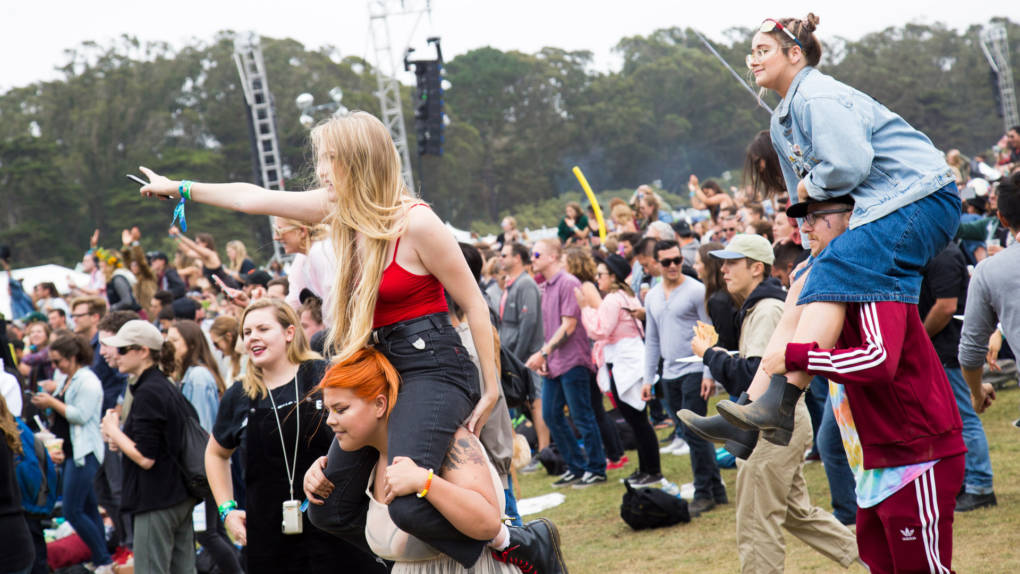
"caption": "The crowd at 2017's Outside Lands in Golden Gate Park. ",
"description": "The crowd at 2017's Outside Lands in Golden Gate Park. ",
"title": "music festival crowd pic",
"credit": "Estefany Gonzalez",
"status": "inherit",
"isLoading": false,
"fetchFailed": false
},
"arts_13845266": {
"type": "attachments",
"id": "arts_13845266",
"meta": {
"index": "attachments_1716263798",
"site": "arts",
"id": "13845266",
"found": true
},
"parent": 13845203,
"imgSizes": {
"thumbnail": {
"file": "https://ww2.kqed.org/app/uploads/sites/2/2018/11/insomnia-cover-160x83.jpg",
"width": 160,
"mimeType": "image/jpeg",
"height": 83
},
"post-thumbnail": {
"file": "https://ww2.kqed.org/app/uploads/sites/2/2018/11/insomnia-cover-672x372.jpg",
"width": 672,
"mimeType": "image/jpeg",
"height": 372
},
"kqedFullSize": {
"file": "https://ww2.kqed.org/app/uploads/sites/2/2018/11/insomnia-cover.jpg",
"width": 960,
"height": 500
},
"guest-author-50": {
"file": "https://ww2.kqed.org/app/uploads/sites/2/2018/11/insomnia-cover-50x50.jpg",
"width": 50,
"mimeType": "image/jpeg",
"height": 50
},
"guest-author-96": {
"file": "https://ww2.kqed.org/app/uploads/sites/2/2018/11/insomnia-cover-96x96.jpg",
"width": 96,
"mimeType": "image/jpeg",
"height": 96
},
"medium": {
"file": "https://ww2.kqed.org/app/uploads/sites/2/2018/11/insomnia-cover-800x417.jpg",
"width": 800,
"mimeType": "image/jpeg",
"height": 417
},
"guest-author-64": {
"file": "https://ww2.kqed.org/app/uploads/sites/2/2018/11/insomnia-cover-64x64.jpg",
"width": 64,
"mimeType": "image/jpeg",
"height": 64
},
"detail": {
"file": "https://ww2.kqed.org/app/uploads/sites/2/2018/11/insomnia-cover-150x150.jpg",
"width": 150,
"mimeType": "image/jpeg",
"height": 150
},
"guest-author-32": {
"file": "https://ww2.kqed.org/app/uploads/sites/2/2018/11/insomnia-cover-32x32.jpg",
"width": 32,
"mimeType": "image/jpeg",
"height": 32
},
"medium_large": {
"file": "https://ww2.kqed.org/app/uploads/sites/2/2018/11/insomnia-cover-768x400.jpg",
"width": 768,
"mimeType": "image/jpeg",
"height": 400
},
"guest-author-128": {
"file": "https://ww2.kqed.org/app/uploads/sites/2/2018/11/insomnia-cover-128x128.jpg",
"width": 128,
"mimeType": "image/jpeg",
"height": 128
}
},
"publishDate": 1542670812,
"modified": 1542670812,
"caption": null,
"description": null,
"title": "insomnia cover",
"credit": null,
"status": "inherit",
"isLoading": false,
"fetchFailed": false
},
"arts_13844502": {
"type": "attachments",
"id": "arts_13844502",
"meta": {
"index": "attachments_1716263798",
"site": "arts",
"id": "13844502",
"found": true
},
"parent": 13844033,
"imgSizes": {
"small": {
"file": "https://ww2.kqed.org/app/uploads/sites/2/2018/11/LizSuburbia.MAIN_-520x293.jpg",
"width": 520,
"mimeType": "image/jpeg",
"height": 293
},
"twentyfourteen-full-width": {
"file": "https://ww2.kqed.org/app/uploads/sites/2/2018/11/LizSuburbia.MAIN_-1038x576.jpg",
"width": 1038,
"mimeType": "image/jpeg",
"height": 576
},
"thumbnail": {
"file": "https://ww2.kqed.org/app/uploads/sites/2/2018/11/LizSuburbia.MAIN_-160x90.jpg",
"width": 160,
"mimeType": "image/jpeg",
"height": 90
},
"fd-sm": {
"file": "https://ww2.kqed.org/app/uploads/sites/2/2018/11/LizSuburbia.MAIN_-960x540.jpg",
"width": 960,
"mimeType": "image/jpeg",
"height": 540
},
"post-thumbnail": {
"file": "https://ww2.kqed.org/app/uploads/sites/2/2018/11/LizSuburbia.MAIN_-672x372.jpg",
"width": 672,
"mimeType": "image/jpeg",
"height": 372
},
"xsmall": {
"file": "https://ww2.kqed.org/app/uploads/sites/2/2018/11/LizSuburbia.MAIN_-375x211.jpg",
"width": 375,
"mimeType": "image/jpeg",
"height": 211
},
"kqedFullSize": {
"file": "https://ww2.kqed.org/app/uploads/sites/2/2018/11/LizSuburbia.MAIN_.jpg",
"width": 1920,
"height": 1080
},
"large": {
"file": "https://ww2.kqed.org/app/uploads/sites/2/2018/11/LizSuburbia.MAIN_-1020x574.jpg",
"width": 1020,
"mimeType": "image/jpeg",
"height": 574
},
"xlarge": {
"file": "https://ww2.kqed.org/app/uploads/sites/2/2018/11/LizSuburbia.MAIN_-1180x664.jpg",
"width": 1180,
"mimeType": "image/jpeg",
"height": 664
},
"complete_open_graph": {
"file": "https://ww2.kqed.org/app/uploads/sites/2/2018/11/LizSuburbia.MAIN_-1200x675.jpg",
"width": 1200,
"mimeType": "image/jpeg",
"height": 675
},
"guest-author-50": {
"file": "https://ww2.kqed.org/app/uploads/sites/2/2018/11/LizSuburbia.MAIN_-50x50.jpg",
"width": 50,
"mimeType": "image/jpeg",
"height": 50
},
"guest-author-96": {
"file": "https://ww2.kqed.org/app/uploads/sites/2/2018/11/LizSuburbia.MAIN_-96x96.jpg",
"width": 96,
"mimeType": "image/jpeg",
"height": 96
},
"medium": {
"file": "https://ww2.kqed.org/app/uploads/sites/2/2018/11/LizSuburbia.MAIN_-800x450.jpg",
"width": 800,
"mimeType": "image/jpeg",
"height": 450
},
"guest-author-64": {
"file": "https://ww2.kqed.org/app/uploads/sites/2/2018/11/LizSuburbia.MAIN_-64x64.jpg",
"width": 64,
"mimeType": "image/jpeg",
"height": 64
},
"guest-author-32": {
"file": "https://ww2.kqed.org/app/uploads/sites/2/2018/11/LizSuburbia.MAIN_-32x32.jpg",
"width": 32,
"mimeType": "image/jpeg",
"height": 32
},
"fd-lrg": {
"file": "https://ww2.kqed.org/app/uploads/sites/2/2018/11/LizSuburbia.MAIN_-1920x1080.jpg",
"width": 1920,
"mimeType": "image/jpeg",
"height": 1080
},
"fd-med": {
"file": "https://ww2.kqed.org/app/uploads/sites/2/2018/11/LizSuburbia.MAIN_-1180x664.jpg",
"width": 1180,
"mimeType": "image/jpeg",
"height": 664
},
"full-width": {
"file": "https://ww2.kqed.org/app/uploads/sites/2/2018/11/LizSuburbia.MAIN_-1920x1080.jpg",
"width": 1920,
"mimeType": "image/jpeg",
"height": 1080
},
"detail": {
"file": "https://ww2.kqed.org/app/uploads/sites/2/2018/11/LizSuburbia.MAIN_-150x150.jpg",
"width": 150,
"mimeType": "image/jpeg",
"height": 150
},
"medium_large": {
"file": "https://ww2.kqed.org/app/uploads/sites/2/2018/11/LizSuburbia.MAIN_-768x432.jpg",
"width": 768,
"mimeType": "image/jpeg",
"height": 432
},
"guest-author-128": {
"file": "https://ww2.kqed.org/app/uploads/sites/2/2018/11/LizSuburbia.MAIN_-128x128.jpg",
"width": 128,
"mimeType": "image/jpeg",
"height": 128
},
"xxsmall": {
"file": "https://ww2.kqed.org/app/uploads/sites/2/2018/11/LizSuburbia.MAIN_-240x135.jpg",
"width": 240,
"mimeType": "image/jpeg",
"height": 135
}
},
"publishDate": 1541623272,
"modified": 1541623769,
"caption": "A panel from 'Cyanide Milkshake,' by Liz Suburbia.",
"description": "A panel from 'Cyanide Milkshake,' by Liz Suburbia.",
"title": "LizSuburbia.MAIN",
"credit": "Courtesy Gimme Action",
"status": "inherit",
"isLoading": false,
"fetchFailed": false
},
"arts_13843829": {
"type": "attachments",
"id": "arts_13843829",
"meta": {
"index": "attachments_1716263798",
"site": "arts",
"id": "13843829",
"found": true
},
"parent": 13843817,
"imgSizes": {
"small": {
"file": "https://ww2.kqed.org/app/uploads/sites/2/2018/10/little-cover-520x293.jpg",
"width": 520,
"mimeType": "image/jpeg",
"height": 293
},
"twentyfourteen-full-width": {
"file": "https://ww2.kqed.org/app/uploads/sites/2/2018/10/little-cover-1038x576.jpg",
"width": 1038,
"mimeType": "image/jpeg",
"height": 576
},
"thumbnail": {
"file": "https://ww2.kqed.org/app/uploads/sites/2/2018/10/little-cover-160x90.jpg",
"width": 160,
"mimeType": "image/jpeg",
"height": 90
},
"fd-sm": {
"file": "https://ww2.kqed.org/app/uploads/sites/2/2018/10/little-cover-960x540.jpg",
"width": 960,
"mimeType": "image/jpeg",
"height": 540
},
"post-thumbnail": {
"file": "https://ww2.kqed.org/app/uploads/sites/2/2018/10/little-cover-672x372.jpg",
"width": 672,
"mimeType": "image/jpeg",
"height": 372
},
"xsmall": {
"file": "https://ww2.kqed.org/app/uploads/sites/2/2018/10/little-cover-375x211.jpg",
"width": 375,
"mimeType": "image/jpeg",
"height": 211
},
"kqedFullSize": {
"file": "https://ww2.kqed.org/app/uploads/sites/2/2018/10/little-cover.jpg",
"width": 1920,
"height": 1080
},
"large": {
"file": "https://ww2.kqed.org/app/uploads/sites/2/2018/10/little-cover-1020x574.jpg",
"width": 1020,
"mimeType": "image/jpeg",
"height": 574
},
"xlarge": {
"file": "https://ww2.kqed.org/app/uploads/sites/2/2018/10/little-cover-1180x664.jpg",
"width": 1180,
"mimeType": "image/jpeg",
"height": 664
},
"complete_open_graph": {
"file": "https://ww2.kqed.org/app/uploads/sites/2/2018/10/little-cover-1200x675.jpg",
"width": 1200,
"mimeType": "image/jpeg",
"height": 675
},
"guest-author-50": {
"file": "https://ww2.kqed.org/app/uploads/sites/2/2018/10/little-cover-50x50.jpg",
"width": 50,
"mimeType": "image/jpeg",
"height": 50
},
"guest-author-96": {
"file": "https://ww2.kqed.org/app/uploads/sites/2/2018/10/little-cover-96x96.jpg",
"width": 96,
"mimeType": "image/jpeg",
"height": 96
},
"medium": {
"file": "https://ww2.kqed.org/app/uploads/sites/2/2018/10/little-cover-800x450.jpg",
"width": 800,
"mimeType": "image/jpeg",
"height": 450
},
"guest-author-64": {
"file": "https://ww2.kqed.org/app/uploads/sites/2/2018/10/little-cover-64x64.jpg",
"width": 64,
"mimeType": "image/jpeg",
"height": 64
},
"guest-author-32": {
"file": "https://ww2.kqed.org/app/uploads/sites/2/2018/10/little-cover-32x32.jpg",
"width": 32,
"mimeType": "image/jpeg",
"height": 32
},
"fd-lrg": {
"file": "https://ww2.kqed.org/app/uploads/sites/2/2018/10/little-cover-1920x1080.jpg",
"width": 1920,
"mimeType": "image/jpeg",
"height": 1080
},
"fd-med": {
"file": "https://ww2.kqed.org/app/uploads/sites/2/2018/10/little-cover-1180x664.jpg",
"width": 1180,
"mimeType": "image/jpeg",
"height": 664
},
"full-width": {
"file": "https://ww2.kqed.org/app/uploads/sites/2/2018/10/little-cover-1920x1080.jpg",
"width": 1920,
"mimeType": "image/jpeg",
"height": 1080
},
"detail": {
"file": "https://ww2.kqed.org/app/uploads/sites/2/2018/10/little-cover-150x150.jpg",
"width": 150,
"mimeType": "image/jpeg",
"height": 150
},
"medium_large": {
"file": "https://ww2.kqed.org/app/uploads/sites/2/2018/10/little-cover-768x432.jpg",
"width": 768,
"mimeType": "image/jpeg",
"height": 432
},
"guest-author-128": {
"file": "https://ww2.kqed.org/app/uploads/sites/2/2018/10/little-cover-128x128.jpg",
"width": 128,
"mimeType": "image/jpeg",
"height": 128
},
"xxsmall": {
"file": "https://ww2.kqed.org/app/uploads/sites/2/2018/10/little-cover-240x135.jpg",
"width": 240,
"mimeType": "image/jpeg",
"height": 135
}
},
"publishDate": 1540838872,
"modified": 1540838872,
"caption": null,
"description": null,
"title": "little cover",
"credit": null,
"status": "inherit",
"isLoading": false,
"fetchFailed": false
},
"arts_13831210": {
"type": "attachments",
"id": "arts_13831210",
"meta": {
"index": "attachments_1716263798",
"site": "arts",
"id": "13831210",
"found": true
},
"parent": 13831050,
"imgSizes": {
"small": {
"file": "https://ww2.kqed.org/app/uploads/sites/2/2018/05/jamel-brinkley--520x293.jpg",
"width": 520,
"mimeType": "image/jpeg",
"height": 293
},
"twentyfourteen-full-width": {
"file": "https://ww2.kqed.org/app/uploads/sites/2/2018/05/jamel-brinkley--1024x576.jpg",
"width": 1024,
"mimeType": "image/jpeg",
"height": 576
},
"thumbnail": {
"file": "https://ww2.kqed.org/app/uploads/sites/2/2018/05/jamel-brinkley--160x90.jpg",
"width": 160,
"mimeType": "image/jpeg",
"height": 90
},
"fd-sm": {
"file": "https://ww2.kqed.org/app/uploads/sites/2/2018/05/jamel-brinkley--960x540.jpg",
"width": 960,
"mimeType": "image/jpeg",
"height": 540
},
"post-thumbnail": {
"file": "https://ww2.kqed.org/app/uploads/sites/2/2018/05/jamel-brinkley--672x372.jpg",
"width": 672,
"mimeType": "image/jpeg",
"height": 372
},
"xsmall": {
"file": "https://ww2.kqed.org/app/uploads/sites/2/2018/05/jamel-brinkley--375x211.jpg",
"width": 375,
"mimeType": "image/jpeg",
"height": 211
},
"kqedFullSize": {
"file": "https://ww2.kqed.org/app/uploads/sites/2/2018/05/jamel-brinkley-.jpg",
"width": 1024,
"height": 576
},
"large": {
"file": "https://ww2.kqed.org/app/uploads/sites/2/2018/05/jamel-brinkley--1020x574.jpg",
"width": 1020,
"mimeType": "image/jpeg",
"height": 574
},
"guest-author-50": {
"file": "https://ww2.kqed.org/app/uploads/sites/2/2018/05/jamel-brinkley--50x50.jpg",
"width": 50,
"mimeType": "image/jpeg",
"height": 50
},
"guest-author-96": {
"file": "https://ww2.kqed.org/app/uploads/sites/2/2018/05/jamel-brinkley--96x96.jpg",
"width": 96,
"mimeType": "image/jpeg",
"height": 96
},
"medium": {
"file": "https://ww2.kqed.org/app/uploads/sites/2/2018/05/jamel-brinkley--800x450.jpg",
"width": 800,
"mimeType": "image/jpeg",
"height": 450
},
"guest-author-64": {
"file": "https://ww2.kqed.org/app/uploads/sites/2/2018/05/jamel-brinkley--64x64.jpg",
"width": 64,
"mimeType": "image/jpeg",
"height": 64
},
"guest-author-32": {
"file": "https://ww2.kqed.org/app/uploads/sites/2/2018/05/jamel-brinkley--32x32.jpg",
"width": 32,
"mimeType": "image/jpeg",
"height": 32
},
"detail": {
"file": "https://ww2.kqed.org/app/uploads/sites/2/2018/05/jamel-brinkley--150x150.jpg",
"width": 150,
"mimeType": "image/jpeg",
"height": 150
},
"medium_large": {
"file": "https://ww2.kqed.org/app/uploads/sites/2/2018/05/jamel-brinkley--768x432.jpg",
"width": 768,
"mimeType": "image/jpeg",
"height": 432
},
"guest-author-128": {
"file": "https://ww2.kqed.org/app/uploads/sites/2/2018/05/jamel-brinkley--128x128.jpg",
"width": 128,
"mimeType": "image/jpeg",
"height": 128
},
"xxsmall": {
"file": "https://ww2.kqed.org/app/uploads/sites/2/2018/05/jamel-brinkley--240x135.jpg",
"width": 240,
"mimeType": "image/jpeg",
"height": 135
}
},
"publishDate": 1525468343,
"modified": 1539192340,
"caption": "Jamel Brinkley is a National Book Awards finalist in the fiction category. ",
"description": "Jamel Brinkley is a National Book Awards finalist in the fiction category. ",
"title": "jamel brinkley",
"credit": "Arash Saedinia",
"status": "inherit",
"isLoading": false,
"fetchFailed": false
},
"arts_13841511": {
"type": "attachments",
"id": "arts_13841511",
"meta": {
"index": "attachments_1716263798",
"site": "arts",
"id": "13841511",
"found": true
},
"parent": 13841490,
"imgSizes": {
"small": {
"file": "https://ww2.kqed.org/app/uploads/sites/2/2018/09/JessicaHopper-520x292.jpg",
"width": 520,
"mimeType": "image/jpeg",
"height": 292
},
"thumbnail": {
"file": "https://ww2.kqed.org/app/uploads/sites/2/2018/09/JessicaHopper-160x90.jpg",
"width": 160,
"mimeType": "image/jpeg",
"height": 90
},
"post-thumbnail": {
"file": "https://ww2.kqed.org/app/uploads/sites/2/2018/09/JessicaHopper-672x372.jpg",
"width": 672,
"mimeType": "image/jpeg",
"height": 372
},
"xsmall": {
"file": "https://ww2.kqed.org/app/uploads/sites/2/2018/09/JessicaHopper-375x211.jpg",
"width": 375,
"mimeType": "image/jpeg",
"height": 211
},
"kqedFullSize": {
"file": "https://ww2.kqed.org/app/uploads/sites/2/2018/09/JessicaHopper.jpg",
"width": 900,
"height": 506
},
"guest-author-50": {
"file": "https://ww2.kqed.org/app/uploads/sites/2/2018/09/JessicaHopper-50x50.jpg",
"width": 50,
"mimeType": "image/jpeg",
"height": 50
},
"guest-author-96": {
"file": "https://ww2.kqed.org/app/uploads/sites/2/2018/09/JessicaHopper-96x96.jpg",
"width": 96,
"mimeType": "image/jpeg",
"height": 96
},
"medium": {
"file": "https://ww2.kqed.org/app/uploads/sites/2/2018/09/JessicaHopper-800x450.jpg",
"width": 800,
"mimeType": "image/jpeg",
"height": 450
},
"guest-author-64": {
"file": "https://ww2.kqed.org/app/uploads/sites/2/2018/09/JessicaHopper-64x64.jpg",
"width": 64,
"mimeType": "image/jpeg",
"height": 64
},
"guest-author-32": {
"file": "https://ww2.kqed.org/app/uploads/sites/2/2018/09/JessicaHopper-32x32.jpg",
"width": 32,
"mimeType": "image/jpeg",
"height": 32
},
"detail": {
"file": "https://ww2.kqed.org/app/uploads/sites/2/2018/09/JessicaHopper-150x150.jpg",
"width": 150,
"mimeType": "image/jpeg",
"height": 150
},
"medium_large": {
"file": "https://ww2.kqed.org/app/uploads/sites/2/2018/09/JessicaHopper-768x432.jpg",
"width": 768,
"mimeType": "image/jpeg",
"height": 432
},
"guest-author-128": {
"file": "https://ww2.kqed.org/app/uploads/sites/2/2018/09/JessicaHopper-128x128.jpg",
"width": 128,
"mimeType": "image/jpeg",
"height": 128
},
"xxsmall": {
"file": "https://ww2.kqed.org/app/uploads/sites/2/2018/09/JessicaHopper-240x135.jpg",
"width": 240,
"mimeType": "image/jpeg",
"height": 135
}
},
"publishDate": 1537811223,
"modified": 1537811361,
"caption": "Jessica Hopper, former editor for Pitchfork and SPIN, writes eloquently about the cusp of adulthood in 'Night Moves.'",
"description": "Jessica Hopper, former editor for Pitchfork and SPIN, writes eloquently about the cusp of adulthood in 'Night Moves.'",
"title": "JessicaHopper",
"credit": "University of Texas Press",
"status": "inherit",
"isLoading": false,
"fetchFailed": false
},
"arts_13841540": {
"type": "attachments",
"id": "arts_13841540",
"meta": {
"index": "attachments_1716263798",
"site": "arts",
"id": "13841540",
"found": true
},
"parent": 13841529,
"imgSizes": {
"small": {
"file": "https://ww2.kqed.org/app/uploads/sites/2/2018/09/Beasties.PunkSinger-520x293.jpg",
"width": 520,
"mimeType": "image/jpeg",
"height": 293
},
"thumbnail": {
"file": "https://ww2.kqed.org/app/uploads/sites/2/2018/09/Beasties.PunkSinger-160x90.jpg",
"width": 160,
"mimeType": "image/jpeg",
"height": 90
},
"post-thumbnail": {
"file": "https://ww2.kqed.org/app/uploads/sites/2/2018/09/Beasties.PunkSinger-672x372.jpg",
"width": 672,
"mimeType": "image/jpeg",
"height": 372
},
"xsmall": {
"file": "https://ww2.kqed.org/app/uploads/sites/2/2018/09/Beasties.PunkSinger-375x211.jpg",
"width": 375,
"mimeType": "image/jpeg",
"height": 211
},
"kqedFullSize": {
"file": "https://ww2.kqed.org/app/uploads/sites/2/2018/09/Beasties.PunkSinger.jpg",
"width": 800,
"height": 450
},
"guest-author-50": {
"file": "https://ww2.kqed.org/app/uploads/sites/2/2018/09/Beasties.PunkSinger-50x50.jpg",
"width": 50,
"mimeType": "image/jpeg",
"height": 50
},
"guest-author-96": {
"file": "https://ww2.kqed.org/app/uploads/sites/2/2018/09/Beasties.PunkSinger-96x96.jpg",
"width": 96,
"mimeType": "image/jpeg",
"height": 96
},
"medium": {
"file": "https://ww2.kqed.org/app/uploads/sites/2/2018/09/Beasties.PunkSinger-800x450.jpg",
"width": 800,
"mimeType": "image/jpeg",
"height": 450
},
"guest-author-64": {
"file": "https://ww2.kqed.org/app/uploads/sites/2/2018/09/Beasties.PunkSinger-64x64.jpg",
"width": 64,
"mimeType": "image/jpeg",
"height": 64
},
"guest-author-32": {
"file": "https://ww2.kqed.org/app/uploads/sites/2/2018/09/Beasties.PunkSinger-32x32.jpg",
"width": 32,
"mimeType": "image/jpeg",
"height": 32
},
"detail": {
"file": "https://ww2.kqed.org/app/uploads/sites/2/2018/09/Beasties.PunkSinger-150x150.jpg",
"width": 150,
"mimeType": "image/jpeg",
"height": 150
},
"medium_large": {
"file": "https://ww2.kqed.org/app/uploads/sites/2/2018/09/Beasties.PunkSinger-768x432.jpg",
"width": 768,
"mimeType": "image/jpeg",
"height": 432
},
"guest-author-128": {
"file": "https://ww2.kqed.org/app/uploads/sites/2/2018/09/Beasties.PunkSinger-128x128.jpg",
"width": 128,
"mimeType": "image/jpeg",
"height": 128
},
"xxsmall": {
"file": "https://ww2.kqed.org/app/uploads/sites/2/2018/09/Beasties.PunkSinger-240x135.jpg",
"width": 240,
"mimeType": "image/jpeg",
"height": 135
}
},
"publishDate": 1537814819,
"modified": 1537814900,
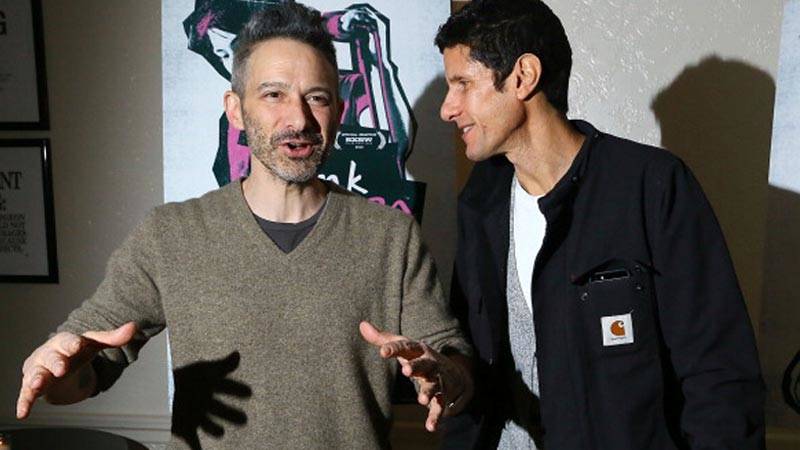
"caption": "Beastie Boys rappers Adam \"Adrock\" Horovitz and Michael \"Mike D\" Diamond (L-R) attend a screening of 'The Punk Singer' in 2013. ",
"description": "Beastie Boys rappers Adam \"Adrock\" Horovitz and Michael \"Mike D\" Diamond (L-R) attend a screening of 'The Punk Singer' in 2013. ",
"title": "Beasties.PunkSinger",
"credit": "Astrid Stawiarz/Getty Images",
"status": "inherit",
"isLoading": false,
"fetchFailed": false
},
"arts_13857596": {
"type": "attachments",
"id": "arts_13857596",
"meta": {
"index": "attachments_1716263798",
"site": "arts",
"id": "13857596",
"found": true
},
"title": "LorraineHansberry-PBS",
"publishDate": 1558283922,
"status": "inherit",
"parent": 13841484,
"modified": 1747149557,
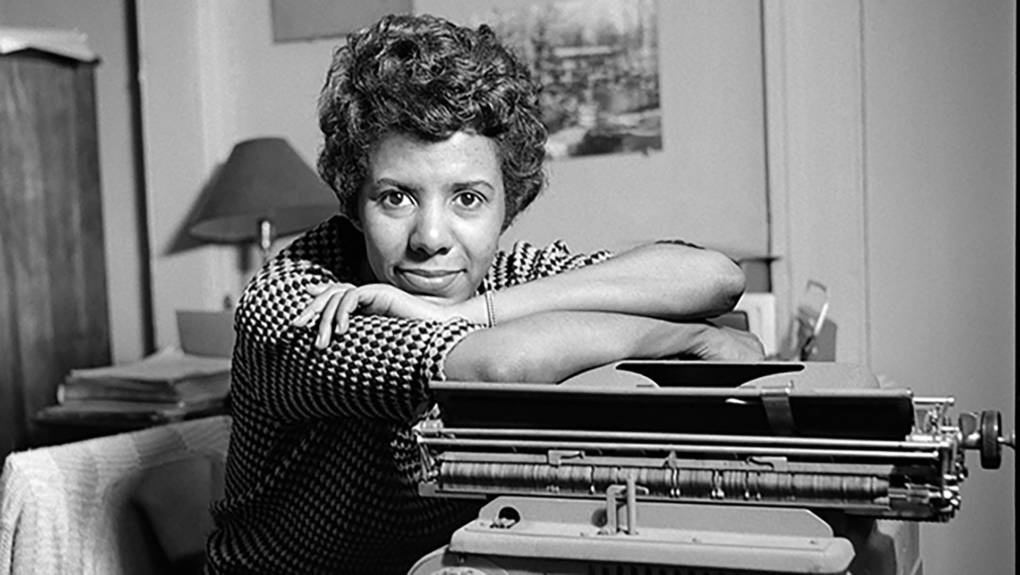
"caption": "Still from \"Lorraine Hansberry: Sighted Eyes/Feeling Heart,\" a documentary directed by Tracy Heather Strain that premiered on PBS in 2018.",
"credit": "Courtesy of PBS",
"altTag": "Still from \"Lorraine Hansberry: Sighted Eyes/Feeling Heart,\" a documentary directed by Tracy Heather Strain that premiered on PBS in 2018.",
"description": "A still from ‘Lorraine Hansberry: Sighted Eyes/Feeling Heart,’ a documentary directed by Tracy Heather Strain that premiered on PBS in 2018.",
"imgSizes": {
"thumbnail": {
"file": "https://cdn.kqed.org/wp-content/uploads/sites/2/2018/09/LorraineHansberry-PBS-160x90.jpg",
"width": 160,
"height": 90,
"mimeType": "image/jpeg"
},
"medium": {
"file": "https://cdn.kqed.org/wp-content/uploads/sites/2/2018/09/LorraineHansberry-PBS-800x451.jpg",
"width": 800,
"height": 451,
"mimeType": "image/jpeg"
},
"medium_large": {
"file": "https://cdn.kqed.org/wp-content/uploads/sites/2/2018/09/LorraineHansberry-PBS-768x433.jpg",
"width": 768,
"height": 433,
"mimeType": "image/jpeg"
},
"large": {
"file": "https://cdn.kqed.org/wp-content/uploads/sites/2/2018/09/LorraineHansberry-PBS-1020x575.jpg",
"width": 1020,
"height": 575,
"mimeType": "image/jpeg"
},
"complete_open_graph": {
"file": "https://cdn.kqed.org/wp-content/uploads/sites/2/2018/09/LorraineHansberry-PBS-1200x676.jpg",
"width": 1200,
"height": 676,
"mimeType": "image/jpeg"
},
"post-thumbnail": {
"file": "https://cdn.kqed.org/wp-content/uploads/sites/2/2018/09/LorraineHansberry-PBS-672x372.jpg",
"width": 672,
"height": 372,
"mimeType": "image/jpeg"
},
"twentyfourteen-full-width": {
"file": "https://cdn.kqed.org/wp-content/uploads/sites/2/2018/09/LorraineHansberry-PBS-1038x576.jpg",
"width": 1038,
"height": 576,
"mimeType": "image/jpeg"
},
"full-width": {
"file": "https://cdn.kqed.org/wp-content/uploads/sites/2/2018/09/LorraineHansberry-PBS-1920x1082.jpg",
"width": 1920,
"height": 1082,
"mimeType": "image/jpeg"
},
"kqedFullSize": {
"file": "https://cdn.kqed.org/wp-content/uploads/sites/2/2018/09/LorraineHansberry-PBS.jpg",
"width": 1920,
"height": 1082
}
},
"isLoading": false,
"fetchFailed": false
},
"arts_13841387": {
"type": "attachments",
"id": "arts_13841387",
"meta": {
"index": "attachments_1716263798",
"site": "arts",
"id": "13841387",
"found": true
},
"parent": 13841350,
"imgSizes": {
"small": {
"file": "https://ww2.kqed.org/app/uploads/sites/2/2018/09/TGARTeens.MAIN_-520x293.jpg",
"width": 520,
"mimeType": "image/jpeg",
"height": 293
},
"twentyfourteen-full-width": {
"file": "https://ww2.kqed.org/app/uploads/sites/2/2018/09/TGARTeens.MAIN_-1038x576.jpg",
"width": 1038,
"mimeType": "image/jpeg",
"height": 576
},
"thumbnail": {
"file": "https://ww2.kqed.org/app/uploads/sites/2/2018/09/TGARTeens.MAIN_-160x90.jpg",
"width": 160,
"mimeType": "image/jpeg",
"height": 90
},
"fd-sm": {
"file": "https://ww2.kqed.org/app/uploads/sites/2/2018/09/TGARTeens.MAIN_-960x540.jpg",
"width": 960,
"mimeType": "image/jpeg",
"height": 540
},
"post-thumbnail": {
"file": "https://ww2.kqed.org/app/uploads/sites/2/2018/09/TGARTeens.MAIN_-672x372.jpg",
"width": 672,
"mimeType": "image/jpeg",
"height": 372
},
"xsmall": {
"file": "https://ww2.kqed.org/app/uploads/sites/2/2018/09/TGARTeens.MAIN_-375x211.jpg",
"width": 375,
"mimeType": "image/jpeg",
"height": 211
},
"kqedFullSize": {
"file": "https://ww2.kqed.org/app/uploads/sites/2/2018/09/TGARTeens.MAIN_.jpg",
"width": 1920,
"height": 1080
},
"large": {
"file": "https://ww2.kqed.org/app/uploads/sites/2/2018/09/TGARTeens.MAIN_-1020x574.jpg",
"width": 1020,
"mimeType": "image/jpeg",
"height": 574
},
"xlarge": {
"file": "https://ww2.kqed.org/app/uploads/sites/2/2018/09/TGARTeens.MAIN_-1180x664.jpg",
"width": 1180,
"mimeType": "image/jpeg",
"height": 664
},
"complete_open_graph": {
"file": "https://ww2.kqed.org/app/uploads/sites/2/2018/09/TGARTeens.MAIN_-1200x675.jpg",
"width": 1200,
"mimeType": "image/jpeg",
"height": 675
},
"guest-author-50": {
"file": "https://ww2.kqed.org/app/uploads/sites/2/2018/09/TGARTeens.MAIN_-50x50.jpg",
"width": 50,
"mimeType": "image/jpeg",
"height": 50
},
"guest-author-96": {
"file": "https://ww2.kqed.org/app/uploads/sites/2/2018/09/TGARTeens.MAIN_-96x96.jpg",
"width": 96,
"mimeType": "image/jpeg",
"height": 96
},
"medium": {
"file": "https://ww2.kqed.org/app/uploads/sites/2/2018/09/TGARTeens.MAIN_-800x450.jpg",
"width": 800,
"mimeType": "image/jpeg",
"height": 450
},
"guest-author-64": {
"file": "https://ww2.kqed.org/app/uploads/sites/2/2018/09/TGARTeens.MAIN_-64x64.jpg",
"width": 64,
"mimeType": "image/jpeg",
"height": 64
},
"guest-author-32": {
"file": "https://ww2.kqed.org/app/uploads/sites/2/2018/09/TGARTeens.MAIN_-32x32.jpg",
"width": 32,
"mimeType": "image/jpeg",
"height": 32
},
"fd-lrg": {
"file": "https://ww2.kqed.org/app/uploads/sites/2/2018/09/TGARTeens.MAIN_-1920x1080.jpg",
"width": 1920,
"mimeType": "image/jpeg",
"height": 1080
},
"fd-med": {
"file": "https://ww2.kqed.org/app/uploads/sites/2/2018/09/TGARTeens.MAIN_-1180x664.jpg",
"width": 1180,
"mimeType": "image/jpeg",
"height": 664
},
"full-width": {
"file": "https://ww2.kqed.org/app/uploads/sites/2/2018/09/TGARTeens.MAIN_-1920x1080.jpg",
"width": 1920,
"mimeType": "image/jpeg",
"height": 1080
},
"detail": {
"file": "https://ww2.kqed.org/app/uploads/sites/2/2018/09/TGARTeens.MAIN_-150x150.jpg",
"width": 150,
"mimeType": "image/jpeg",
"height": 150
},
"medium_large": {
"file": "https://ww2.kqed.org/app/uploads/sites/2/2018/09/TGARTeens.MAIN_-768x432.jpg",
"width": 768,
"mimeType": "image/jpeg",
"height": 432
},
"guest-author-128": {
"file": "https://ww2.kqed.org/app/uploads/sites/2/2018/09/TGARTeens.MAIN_-128x128.jpg",
"width": 128,
"mimeType": "image/jpeg",
"height": 128
},
"xxsmall": {
"file": "https://ww2.kqed.org/app/uploads/sites/2/2018/09/TGARTeens.MAIN_-240x135.jpg",
"width": 240,
"mimeType": "image/jpeg",
"height": 135
}
},
"publishDate": 1537552293,
"modified": 1537552315,
"caption": "Bay Area high school students open up about the novels that changed their world. ",
"description": "Bay Area high school students open up about the novels that changed their world. ",
"title": "TGARTeens.MAIN",
"credit": null,
"status": "inherit",
"isLoading": false,
"fetchFailed": false
},
"arts_13841119": {
"type": "attachments",
"id": "arts_13841119",
"meta": {
"index": "attachments_1716263798",
"site": "arts",
"id": "13841119",
"found": true
},
"parent": 13841108,
"imgSizes": {
"small": {
"file": "https://ww2.kqed.org/app/uploads/sites/2/2018/09/MCuwXGGA-520x293.jpeg",
"width": 520,
"mimeType": "image/jpeg",
"height": 293
},
"thumbnail": {
"file": "https://ww2.kqed.org/app/uploads/sites/2/2018/09/MCuwXGGA-160x90.jpeg",
"width": 160,
"mimeType": "image/jpeg",
"height": 90
},
"post-thumbnail": {
"file": "https://ww2.kqed.org/app/uploads/sites/2/2018/09/MCuwXGGA-672x372.jpeg",
"width": 672,
"mimeType": "image/jpeg",
"height": 372
},
"xsmall": {
"file": "https://ww2.kqed.org/app/uploads/sites/2/2018/09/MCuwXGGA-375x211.jpeg",
"width": 375,
"mimeType": "image/jpeg",
"height": 211
},
"kqedFullSize": {
"file": "https://ww2.kqed.org/app/uploads/sites/2/2018/09/MCuwXGGA.jpeg",
"width": 800,
"height": 450
},
"guest-author-50": {
"file": "https://ww2.kqed.org/app/uploads/sites/2/2018/09/MCuwXGGA-50x50.jpeg",
"width": 50,
"mimeType": "image/jpeg",
"height": 50
},
"guest-author-96": {
"file": "https://ww2.kqed.org/app/uploads/sites/2/2018/09/MCuwXGGA-96x96.jpeg",
"width": 96,
"mimeType": "image/jpeg",
"height": 96
},
"medium": {
"file": "https://ww2.kqed.org/app/uploads/sites/2/2018/09/MCuwXGGA-800x450.jpeg",
"width": 800,
"mimeType": "image/jpeg",
"height": 450
},
"guest-author-64": {
"file": "https://ww2.kqed.org/app/uploads/sites/2/2018/09/MCuwXGGA-64x64.jpeg",
"width": 64,
"mimeType": "image/jpeg",
"height": 64
},
"guest-author-32": {
"file": "https://ww2.kqed.org/app/uploads/sites/2/2018/09/MCuwXGGA-32x32.jpeg",
"width": 32,
"mimeType": "image/jpeg",
"height": 32
},
"detail": {
"file": "https://ww2.kqed.org/app/uploads/sites/2/2018/09/MCuwXGGA-150x150.jpeg",
"width": 150,
"mimeType": "image/jpeg",
"height": 150
},
"medium_large": {
"file": "https://ww2.kqed.org/app/uploads/sites/2/2018/09/MCuwXGGA-768x432.jpeg",
"width": 768,
"mimeType": "image/jpeg",
"height": 432
},
"guest-author-128": {
"file": "https://ww2.kqed.org/app/uploads/sites/2/2018/09/MCuwXGGA-128x128.jpeg",
"width": 128,
"mimeType": "image/jpeg",
"height": 128
},
"xxsmall": {
"file": "https://ww2.kqed.org/app/uploads/sites/2/2018/09/MCuwXGGA-240x135.jpeg",
"width": 240,
"mimeType": "image/jpeg",
"height": 135
}
},
"publishDate": 1537315817,
"modified": 1537315887,
"caption": "In his new memoir, journalist and activist Jose Antonio Vargas offers invaluable insights on what it's like to be undocumented in America. ",
"description": "In his new memoir, journalist and activist Jose Antonio Vargas offers invaluable insights on what it's like to be undocumented in America. ",
"title": "MCuwXGGA",
"credit": "Courtesy of Jose Antonio Vargas",
"status": "inherit",
"isLoading": false,
"fetchFailed": false
}
},
"audioPlayerReducer": {
"postId": "stream_live",
"isPaused": true,
"isPlaying": false,
"pfsActive": false,
"pledgeModalIsOpen": true,
"playerDrawerIsOpen": false,
"liveAudioPlayStartedAt": 0,
"liveAudioPlayContext": ""
},
"authorsReducer": {
"byline_arts_13845944": {
"type": "authors",
"id": "byline_arts_13845944",
"meta": {
"override": true
},
"slug": "byline_arts_13845944",
"name": "Merrit Kennedy",
"isLoading": false
},
"byline_arts_13845755": {
"type": "authors",
"id": "byline_arts_13845755",
"meta": {
"override": true
},
"slug": "byline_arts_13845755",
"name": "Emma Drew",
"isLoading": false
},
"byline_arts_13845463": {
"type": "authors",
"id": "byline_arts_13845463",
"meta": {
"override": true
},
"slug": "byline_arts_13845463",
"name": "Montse Reyes",
"isLoading": false
},
"byline_arts_13845203": {
"type": "authors",
"id": "byline_arts_13845203",
"meta": {
"override": true
},
"slug": "byline_arts_13845203",
"name": "Heller McAlpin",
"isLoading": false
},
"byline_arts_13843817": {
"type": "authors",
"id": "byline_arts_13843817",
"meta": {
"override": true
},
"slug": "byline_arts_13843817",
"name": "Amal El-Mohtar",
"isLoading": false
},
"byline_arts_13841490": {
"type": "authors",
"id": "byline_arts_13841490",
"meta": {
"override": true
},
"slug": "byline_arts_13841490",
"name": "Mariya Karimjee",
"isLoading": false
},
"byline_arts_13841484": {
"type": "authors",
"id": "byline_arts_13841484",
"meta": {
"override": true
},
"slug": "byline_arts_13841484",
"name": "Karen Grigsby Bates",
"isLoading": false
},
"kqedarts": {
"type": "authors",
"id": "92",
"meta": {
"index": "authors_1716337520",
"id": "92",
"found": true
},
"name": "KQED Arts",
"firstName": "KQED",
"lastName": "Arts",
"slug": "kqedarts",
"email": "arts@kqed.org",
"display_author_email": false,
"staff_mastheads": [],
"title": "KQED Staff",
"bio": null,
"avatar": "https://secure.gravatar.com/avatar/321c9ebfeb7736f9e55366a6d3399ab0?s=600&d=blank&r=g",
"twitter": null,
"facebook": null,
"instagram": "https://www.instagram.com/kqed_arts/",
"linkedin": null,
"sites": [
{
"site": "arts",
"roles": [
"contributor"
]
},
{
"site": "pop",
"roles": [
"contributor"
]
},
{
"site": "science",
"roles": [
"author"
]
},
{
"site": "food",
"roles": [
"contributor"
]
}
],
"headData": {
"title": "KQED Arts | KQED",
"description": "KQED Staff",
"ogImgSrc": "https://secure.gravatar.com/avatar/321c9ebfeb7736f9e55366a6d3399ab0?s=600&d=blank&r=g",
"twImgSrc": "https://secure.gravatar.com/avatar/321c9ebfeb7736f9e55366a6d3399ab0?s=600&d=blank&r=g"
},
"isLoading": false,
"link": "/author/kqedarts"
},
"gmeline": {
"type": "authors",
"id": "185",
"meta": {
"index": "authors_1716337520",
"id": "185",
"found": true
},
"name": "Gabe Meline",
"firstName": "Gabe",
"lastName": "Meline",
"slug": "gmeline",
"email": "gmeline@kqed.org",
"display_author_email": true,
"staff_mastheads": [
"arts"
],
"title": "Senior Editor, KQED Arts & Culture",
"bio": "Gabe Meline entered journalism at age 15 making photocopied zines, and has since earned awards from the Edward R. Murrow Awards, the Society for Professional Journalists, the Online Journalism Awards, the Association of Alternative Newsweeklies and the California Newspaper Publishers Association. Prior to KQED, he was the editor of the \u003cem>North Bay Bohemian\u003c/em> and a touring musician. He lives with his wife and daughter in his hometown of Santa Rosa, CA.",
"avatar": "https://secure.gravatar.com/avatar/5bebe57be0d8bc2dd318934feb47299e2d2d10cba28d09d8d7afb389a2ce2bdd?s=600&d=blank&r=g",
"twitter": null,
"bluesky": null,
"facebook": null,
"instagram": null,
"linkedin": null,
"sites": [
{
"site": "",
"roles": [
"editor"
]
},
{
"site": "arts",
"roles": [
"administrator"
]
},
{
"site": "artschool",
"roles": [
"editor"
]
},
{
"site": "news",
"roles": [
"author"
]
},
{
"site": "pop",
"roles": [
"editor"
]
},
{
"site": "bayareabites",
"roles": [
"editor"
]
},
{
"site": "food",
"roles": [
"editor"
]
},
{
"site": "forum",
"roles": [
"administrator"
]
},
{
"site": "liveblog",
"roles": [
"editor"
]
},
{
"site": "hiphop",
"roles": [
"editor"
]
}
],
"headData": {
"title": "Gabe Meline | KQED",
"description": "Senior Editor, KQED Arts & Culture",
"ogImgSrc": "https://secure.gravatar.com/avatar/5bebe57be0d8bc2dd318934feb47299e2d2d10cba28d09d8d7afb389a2ce2bdd?s=600&d=blank&r=g",
"twImgSrc": "https://secure.gravatar.com/avatar/5bebe57be0d8bc2dd318934feb47299e2d2d10cba28d09d8d7afb389a2ce2bdd?s=600&d=blank&r=g"
},
"isLoading": false,
"link": "/author/gmeline"
},
"esilvers": {
"type": "authors",
"id": "7237",
"meta": {
"index": "authors_1716337520",
"id": "7237",
"found": true
},
"name": "Emma Silvers",
"firstName": "Emma",
"lastName": "Silvers",
"slug": "esilvers",
"email": "esilvers@kqed.org",
"display_author_email": false,
"staff_mastheads": [],
"title": "KQED Contributor",
"bio": "Emma Silvers is an editor at KQED Arts and a former digital producer at KQED News. Born and raised in the Bay Area, she has previously been an arts and entertainment editor at the \u003cem>San Francisco Chronicle\u003c/em>, \u003cem>SF Weekly\u003c/em> and the \u003cem>San Francisco Bay Guardian.\u003c/em> \u003ca href=\"https://www.emmasilvers.com\">Her work\u003c/a> has also appeared in \u003cem>Rolling Stone\u003c/em>, Pitchfork and \u003cem>Mother Jones\u003c/em>. In 2017 she was the recipient of the Society of Professional Journalists-Northern California's award for arts and culture reporting. In 1993 she \u003ca href=\"https://www.kqed.org/pop/16759/wait-what-my-coworker-was-a-voice-over-hyperventilator-for-jurassic-park\">hyperventilated in \u003cem>Jurassic Park\u003c/em>\u003c/a>.",
"avatar": "https://secure.gravatar.com/avatar/247beada39b88ea5759db1f51dba05cf?s=600&d=blank&r=g",
"twitter": "emmaruthless",
"facebook": null,
"instagram": null,
"linkedin": null,
"sites": [
{
"site": "arts",
"roles": [
"editor"
]
},
{
"site": "news",
"roles": [
"editor"
]
},
{
"site": "pop",
"roles": [
"contributor"
]
},
{
"site": "bayareabites",
"roles": [
"editor"
]
},
{
"site": "food",
"roles": [
"contributor"
]
},
{
"site": "liveblog",
"roles": [
"editor"
]
}
],
"headData": {
"title": "Emma Silvers | KQED",
"description": "KQED Contributor",
"ogImgSrc": "https://secure.gravatar.com/avatar/247beada39b88ea5759db1f51dba05cf?s=600&d=blank&r=g",
"twImgSrc": "https://secure.gravatar.com/avatar/247beada39b88ea5759db1f51dba05cf?s=600&d=blank&r=g"
},
"isLoading": false,
"link": "/author/esilvers"
},
"slefebvre": {
"type": "authors",
"id": "11091",
"meta": {
"index": "authors_1716337520",
"id": "11091",
"found": true
},
"name": "Sam Lefebvre",
"firstName": "Sam",
"lastName": "Lefebvre",
"slug": "slefebvre",
"email": "sdlefebvre@gmail.com",
"display_author_email": false,
"staff_mastheads": [],
"title": "KQED Contributor",
"bio": "Sam Lefebvre is an award-winning reporter at KQED Arts. He has worked as an editor and columnist at the \u003cem>East Bay Express\u003c/em>, \u003cem>SF Weekly \u003c/em>and Impose Magazine, and his journalism and criticism has appeared in \u003cem>The New York Times\u003c/em>, the Guardian and Pitchfork.",
"avatar": "https://secure.gravatar.com/avatar/49d39b42930b77fb13784ddd9fa63fe780666b71bf289368509dba576b64e69b?s=600&d=blank&r=g",
"twitter": "Lefebvre_Sam",
"bluesky": null,
"facebook": null,
"instagram": null,
"linkedin": null,
"sites": [
{
"site": "arts",
"roles": [
"subscriber"
]
},
{
"site": "news",
"roles": [
"author"
]
}
],
"headData": {
"title": "Sam Lefebvre | KQED",
"description": "KQED Contributor",
"ogImgSrc": "https://secure.gravatar.com/avatar/49d39b42930b77fb13784ddd9fa63fe780666b71bf289368509dba576b64e69b?s=600&d=blank&r=g",
"twImgSrc": "https://secure.gravatar.com/avatar/49d39b42930b77fb13784ddd9fa63fe780666b71bf289368509dba576b64e69b?s=600&d=blank&r=g"
},
"isLoading": false,
"link": "/author/slefebvre"
},
"lblanco": {
"type": "authors",
"id": "11357",
"meta": {
"index": "authors_1716337520",
"id": "11357",
"found": true
},
"name": "Lina Blanco",
"firstName": "Lina",
"lastName": "Blanco",
"slug": "lblanco",
"email": "lblanco@kqed.org",
"display_author_email": false,
"staff_mastheads": [],
"title": null,
"bio": "Lina was a Senior Engagement Platforms Manager for KQED News, producing engagement strategies on social media at \u003ca href=\"https://twitter.com/KQEDnews\">@KQEDNews, \u003c/a>via \u003ca href=\"https://www.kqed.org/about/newsletters/\">KQED's daily newsletter\u003c/a> as well as texting campaigns with KQED readers and listeners. She also co-produces for KQED's bilingual news hub \u003ca href=\"https://www.instagram.com/kqedenespanol/\">KQED en Español\u003c/a>.\r\n\r\nLina previously worked for \u003ca href=\"https://kqed.org/arts\">KQED Arts\u003c/a> — supporting audience engagement efforts on the weekly \u003ca href=\"https://www.kqed.org/podcasts/rightnowish\">\u003cem>Rightnowish\u003c/em> \u003c/a>podcast, Webby-winning video series \u003ca href=\"https://www.kqed.org/if-cities-could-dance\">\u003cem>If Cities Could Dance\u003c/em>\u003c/a>, and daily Arts & Culture reporting. She won a \u003ca href=\"https://www.kqed.org/pressroom/10884/murrow\">National 2019 Edward R. Murrow Award for Excellence in Social Media\u003c/a> for KQED's series \u003cem>The Hustle\u003c/em>.\r\n\r\nBefore KQED, Lina worked as a graphic designer and digital storytelling facilitator at the \u003ca href=\"https://www.nativehealth.org/\">Native American Health Center\u003c/a>.\r\n\r\nShe's mom to a senior Chihuahua (plus one black cat) and lives in West Sonoma County on a small farmstead.",
"avatar": "https://secure.gravatar.com/avatar/77ec326d67223c38a436b87bcfd2a2e8?s=600&d=mm&r=g",
"twitter": "LinaBlanco",
"facebook": null,
"instagram": null,
"linkedin": null,
"sites": [
{
"site": "arts",
"roles": [
"subscriber"
]
},
{
"site": "news",
"roles": [
"subscriber"
]
},
{
"site": "pop",
"roles": [
"administrator"
]
},
{
"site": "about",
"roles": [
"administrator"
]
},
{
"site": "bayareabites",
"roles": [
"editor"
]
},
{
"site": "science",
"roles": [
"editor"
]
},
{
"site": "checkplease",
"roles": [
"editor"
]
},
{
"site": "food",
"roles": []
},
{
"site": "perspectives",
"roles": [
"editor"
]
}
],
"headData": {
"title": "Lina Blanco | KQED",
"description": null,
"ogImgSrc": "https://secure.gravatar.com/avatar/77ec326d67223c38a436b87bcfd2a2e8?s=600&d=mm&r=g",
"twImgSrc": "https://secure.gravatar.com/avatar/77ec326d67223c38a436b87bcfd2a2e8?s=600&d=mm&r=g"
},
"isLoading": false,
"link": "/author/lblanco"
},
"azucenarasilla": {
"type": "authors",
"id": "11624",
"meta": {
"index": "authors_1716337520",
"id": "11624",
"found": true
},
"name": "Azucena Rasilla",
"firstName": "Azucena",
"lastName": "Rasilla",
"slug": "azucenarasilla",
"email": "azucena.rasilla@gmail.com",
"display_author_email": false,
"staff_mastheads": [],
"title": null,
"bio": "Freelance Journalist I former East Bay Express I DM/email music/arts/culture tips that I can turn into stories I azucena.rasilla@gmail.com",
"avatar": "https://secure.gravatar.com/avatar/451ecba09a36b5e0f6fbb13210621eea?s=600&d=blank&r=g",
"twitter": "chroniclesofazu",
"facebook": null,
"instagram": null,
"linkedin": null,
"sites": [
{
"site": "arts",
"roles": [
"contributor"
]
},
{
"site": "bayareabites",
"roles": [
"contributor"
]
}
],
"headData": {
"title": "Azucena Rasilla | KQED",
"description": null,
"ogImgSrc": "https://secure.gravatar.com/avatar/451ecba09a36b5e0f6fbb13210621eea?s=600&d=blank&r=g",
"twImgSrc": "https://secure.gravatar.com/avatar/451ecba09a36b5e0f6fbb13210621eea?s=600&d=blank&r=g"
},
"isLoading": false,
"link": "/author/azucenarasilla"
}
},
"pagesReducer": {
"arts_category_literature": {
"type": "terms",
"id": "arts_73",
"meta": {
"index": "terms_1716263798",
"site": "arts",
"id": "73",
"score": 12.797771
},
"featImg": null,
"name": "Books",
"description": null,
"taxonomy": "category",
"headData": {
"twImgId": null,
"twTitle": null,
"ogTitle": null,
"ogImgId": null,
"twDescription": null,
"description": null,
"title": "Books Archives | KQED Arts",
"ogDescription": null
},
"ttid": 74,
"slug": "literature",
"isLoading": false,
"title": "Books",
"pageMeta": {
"site": "arts",
"WpPageTemplate": "page-topic-editorial",
"currentPage": 65
},
"blocks": [
{
"blockName": "kqed/post-list",
"attrs": {
"layout": "cardArticle2",
"query": "posts/arts?category=literature",
"seeMore": false,
"paginated": true,
"page": 65
}
},
{
"blockName": "kqed/ad"
}
]
}
},
"pfsSessionReducer": {},
"postsReducer": {
"stream_live": {
"type": "live",
"id": "stream_live",
"audioUrl": "https://streams.kqed.org/kqedradio",
"title": "Live Stream",
"excerpt": "Live Stream information currently unavailable.",
"link": "/radio",
"featImg": "",
"label": {
"name": "KQED Live",
"link": "/"
}
},
"stream_kqedNewscast": {
"type": "posts",
"id": "stream_kqedNewscast",
"audioUrl": "https://www.kqed.org/.stream/anon/radio/RDnews/newscast.mp3?_=1",
"title": "KQED Newscast",
"featImg": "",
"label": {
"name": "88.5 FM",
"link": "/"
}
},
"arts_13845944": {
"type": "posts",
"id": "arts_13845944",
"meta": {
"index": "posts_1716263798",
"site": "arts",
"id": "13845944",
"score": null,
"sort": [
1543465970000
]
},
"parent": 0,
"labelTerm": {
"site": "arts",
"term": 137
},
"blocks": [],
"publishDate": 1543465970,
"format": "standard",
"title": "Margaret Atwood Is Writing A Sequel To 'The Handmaid's Tale'",
"headTitle": "Margaret Atwood Is Writing A Sequel To ‘The Handmaid’s Tale’ | KQED",
"content": "\u003cp>More than 30 years after the release of \u003cem>The Handmaid’s Tale\u003c/em>, author Margaret Atwood has announced there’s going to be a sequel.\u003c/p>\n\u003cp>Penguin Random House \u003ca href=\"http://global.penguinrandomhouse.com/announcements/margaret-atwood-writing-handmaids-tale-sequel-for-publication-september-10/\">said Wednesday\u003c/a> that the new novel is set to be published on Sept. 10, 2019. It’s called \u003cem>The Testaments\u003c/em> and will take place 15 years after \u003cem>The Handmaid’s Tale\u003c/em> left off. The story will be told by three female characters, according to the U.S. publisher.\u003c/p>\n\u003cp>\u003cem>The Handmaid’s Tale\u003c/em>, a dystopian novel set in the fictional theocratic dictatorship of Gilead, has risen again to prominence with a critically acclaimed TV series based on the book that started airing in 2017.\u003c/p>\n\u003cp>[contextly_sidebar id=”nnIMDykalEpo8j5cIjzPAtxkrHoMuFN2″]\u003c/p>\n\u003cp>The action in the new book will be separate from the TV series, which is gearing up for a third season. In the second season, the action went beyond where the book left off.\u003c/p>\n\u003cp>[ad fullwidth]\u003c/p>\n\u003cp>In a message to readers, Atwood said it was their questions that inspired her to return to Gilead.\u003c/p>\n\u003cp>“Dear Readers: Everything you’ve ever asked me about Gilead and its inner workings is the inspiration for this book. Well, almost everything!” the Canadian writer said.\u003c/p>\n\u003cp>She added: “The other inspiration is the world we’ve been living in.”\u003c/p>\n\u003cp>[contextly_sidebar id=”JI6rj7b5P2DiBUbFkiSeHPNF4hRkCOwc”]\u003c/p>\n\u003cp>In the brutal world of \u003cem>The Handmaid’s Tale\u003c/em>, environmental catastrophe has rendered many women infertile. Those who can still conceive are forced to become “handmaids,” a role in which they are sexual captives and bear children for government officials whose own wives cannot.\u003c/p>\n\u003cp>The book has struck a political chord in recent years. At protests around the world, particularly those regarding reproductive issues, women have rallied wearing the red cloaks and white bonnets of handmaids.\u003c/p>\n\u003cp>The press release noted that the book has gained new prominence since President Trump was elected. It said, “Handmaids became a symbol of the movement against him, representing female empowerment and resistance in the face of misogyny and the rolling back of women’s rights.”\u003c/p>\n\u003cp>[contextly_sidebar id=”jmB4R69bsZU2dRuxioDgmnJEIr0JyBlT”]\u003c/p>\n\u003cp>It’s not clear how this new book will relate to the first. The publisher didn’t say who the three narrators would be, nor whether they were characters in the first book.\u003c/p>\n\u003cp>\u003c/p>\n\u003cp>Since it was first published in 1985, the book has sold 8 million copies in English, according to Penguin Random House.\u003c/p>\n\u003cdiv class=\"fullattribution\">Copyright 2018 NPR. To see more, visit https://www.npr.org.\u003cimg decoding=\"async\" src=\"https://www.google-analytics.com/__utm.gif?utmac=UA-5828686-4&utmdt=Margaret+Atwood+Is+Writing+A+Sequel+To+%27The+Handmaid%27s+Tale%27&utme=8(APIKey)9(MDAxOTAwOTE4MDEyMTkxMDAzNjczZDljZA004)\">\u003c/div>\n\n",
"stats": {
"hasVideo": false,
"hasChartOrMap": false,
"hasAudio": false,
"hasPolis": false,
"wordCount": 424,
"hasGoogleForm": false,
"hasGallery": false,
"hasHearkenModule": false,
"iframeSrcs": [],
"paragraphCount": 17
},
"modified": 1705026949,
"excerpt": "Atwood said that she was inspired by readers' questions about the dystopian world of Gilead — and, she says, by \"the world we've been living in.\" It's set to be released next September.",
"headData": {
"twImgId": "",
"twTitle": "",
"ogTitle": "",
"ogImgId": "",
"twDescription": "",
"description": "Atwood said that she was inspired by readers' questions about the dystopian world of Gilead — and, she says, by "the world we've been living in." It's set to be released next September.",
"title": "Margaret Atwood Is Writing A Sequel To 'The Handmaid's Tale' | KQED",
"ogDescription": "",
"schema": {
"@context": "https://schema.org",
"@type": "Article",
"headline": "Margaret Atwood Is Writing A Sequel To 'The Handmaid's Tale'",
"datePublished": "2018-11-28T20:32:50-08:00",
"dateModified": "2024-01-11T18:35:49-08:00",
"image": "https://cdn.kqed.org/wp-content/uploads/2020/02/KQED-OG-Image@1x.png"
}
},
"guestAuthors": [],
"slug": "margaret-atwood-is-writing-a-sequel-to-the-handmaids-tale",
"status": "publish",
"nprApiLink": "http://api.npr.org/query?id=671522856&apiKey=MDAxOTAwOTE4MDEyMTkxMDAzNjczZDljZA004",
"nprByline": "Merrit Kennedy",
"nprStoryDate": "Wed, 28 Nov 2018 12:50:12 -0500",
"nprLastModifiedDate": "Wed, 28 Nov 2018 13:53:59 -0500",
"sticky": false,
"nprHtmlLink": "https://www.npr.org/2018/11/28/671522856/margaret-atwood-is-writing-a-sequel-to-the-handmaid-s-tale?ft=nprml&f=671522856",
"nprStoryId": "671522856",
"nprRetrievedStory": "1",
"nprPubDate": "Wed, 28 Nov 2018 13:53:00 -0500",
"path": "/arts/13845944/margaret-atwood-is-writing-a-sequel-to-the-handmaids-tale",
"audioTrackLength": null,
"parsedContent": [
{
"type": "contentString",
"content": "\u003cdiv class=\"post-body\">\u003cp>\u003cp>More than 30 years after the release of \u003cem>The Handmaid’s Tale\u003c/em>, author Margaret Atwood has announced there’s going to be a sequel.\u003c/p>\n\u003cp>Penguin Random House \u003ca href=\"http://global.penguinrandomhouse.com/announcements/margaret-atwood-writing-handmaids-tale-sequel-for-publication-september-10/\">said Wednesday\u003c/a> that the new novel is set to be published on Sept. 10, 2019. It’s called \u003cem>The Testaments\u003c/em> and will take place 15 years after \u003cem>The Handmaid’s Tale\u003c/em> left off. The story will be told by three female characters, according to the U.S. publisher.\u003c/p>\n\u003cp>\u003cem>The Handmaid’s Tale\u003c/em>, a dystopian novel set in the fictional theocratic dictatorship of Gilead, has risen again to prominence with a critically acclaimed TV series based on the book that started airing in 2017.\u003c/p>\n\u003cp>\u003c/p>\u003cp>\u003c/p>\u003cp>\u003c/p>\n\u003cp>The action in the new book will be separate from the TV series, which is gearing up for a third season. In the second season, the action went beyond where the book left off.\u003c/p>\n\u003cp>\u003c/p>\u003c/div>",
"attributes": {
"named": {},
"numeric": []
}
},
{
"type": "component",
"content": "",
"name": "ad",
"attributes": {
"named": {
"label": "fullwidth"
},
"numeric": [
"fullwidth"
]
}
},
{
"type": "contentString",
"content": "\u003cdiv class=\"post-body\">\u003cp>\u003c/p>\n\u003cp>In a message to readers, Atwood said it was their questions that inspired her to return to Gilead.\u003c/p>\n\u003cp>“Dear Readers: Everything you’ve ever asked me about Gilead and its inner workings is the inspiration for this book. Well, almost everything!” the Canadian writer said.\u003c/p>\n\u003cp>She added: “The other inspiration is the world we’ve been living in.”\u003c/p>\n\u003cp>\u003c/p>\u003cp>\u003c/p>\u003cp>\u003c/p>\n\u003cp>In the brutal world of \u003cem>The Handmaid’s Tale\u003c/em>, environmental catastrophe has rendered many women infertile. Those who can still conceive are forced to become “handmaids,” a role in which they are sexual captives and bear children for government officials whose own wives cannot.\u003c/p>\n\u003cp>The book has struck a political chord in recent years. At protests around the world, particularly those regarding reproductive issues, women have rallied wearing the red cloaks and white bonnets of handmaids.\u003c/p>\n\u003cp>The press release noted that the book has gained new prominence since President Trump was elected. It said, “Handmaids became a symbol of the movement against him, representing female empowerment and resistance in the face of misogyny and the rolling back of women’s rights.”\u003c/p>\n\u003cp>\u003c/p>\u003cp>\u003c/p>\u003cp>\u003c/p>\n\u003cp>It’s not clear how this new book will relate to the first. The publisher didn’t say who the three narrators would be, nor whether they were characters in the first book.\u003c/p>\n\u003cp>\u003c/p>\n\u003cp>Since it was first published in 1985, the book has sold 8 million copies in English, according to Penguin Random House.\u003c/p>\n\u003cdiv class=\"fullattribution\">Copyright 2018 NPR. To see more, visit https://www.npr.org.\u003cimg decoding=\"async\" src=\"https://www.google-analytics.com/__utm.gif?utmac=UA-5828686-4&utmdt=Margaret+Atwood+Is+Writing+A+Sequel+To+%27The+Handmaid%27s+Tale%27&utme=8(APIKey)9(MDAxOTAwOTE4MDEyMTkxMDAzNjczZDljZA004)\">\u003c/div>\n\n\u003c/div>\u003c/p>",
"attributes": {
"named": {},
"numeric": []
}
}
],
"link": "/arts/13845944/margaret-atwood-is-writing-a-sequel-to-the-handmaids-tale",
"authors": [
"byline_arts_13845944"
],
"categories": [
"arts_73",
"arts_235",
"arts_75"
],
"tags": [
"arts_928",
"arts_4566",
"arts_1180",
"arts_596",
"arts_1884"
],
"affiliates": [
"arts_137"
],
"featImg": "arts_13845957",
"label": "arts_137"
},
"arts_13845755": {
"type": "posts",
"id": "arts_13845755",
"meta": {
"index": "posts_1716263798",
"site": "arts",
"id": "13845755",
"score": null,
"sort": [
1543359630000
]
},
"parent": 0,
"labelTerm": {
"site": "arts"
},
"blocks": [],
"publishDate": 1543359630,
"format": "standard",
"title": "Jenine Marsh’s Train-Pressed Coins Define the Value of the Small Gestures",
"headTitle": "Jenine Marsh’s Train-Pressed Coins Define the Value of the Small Gestures | KQED",
"content": "\u003cp>A freight train barrels down the tracks and artist Jenine Marsh sits and waits. She waits first for the deep vibrations. Then she waits for the sounds that come all at once—of crashing cars and wheels—and for the rush of heat and air the train unleashes. \u003c/p>\n\u003cp>Marsh is waiting, usually in a rail yard near her Toronto studio, for another sound, an extra noise, \u003ca href=\"http://www.jeninemarsh.com/Jenine%20Marsh%20-%20coins%20and%20tokens.pdf\" rel=\"noopener\" target=\"_blank\">she calls it\u003c/a>, of metal on metal, as the wheels roll mercilessly over the line of coins she’s placed along the tracks. Pennies, dimes, loonies and toonies scatter into the surrounding dirt and detritus, and Marsh goes in search of the flattened coins, now deformed, defaced and smooth.\u003c/p>\n\u003cp>Train-pressed coins have been a hobby for Marsh since childhood and a recurring element of her work since 2015. They are present—or strongly evoked—in every aspect of her solo exhibition at Oakland’s Interface Gallery, \u003cem>a room at the center of the world surrounded by the noise of men\u003c/em>, on view through Saturday, Dec. 2. \u003c/p>\n\u003cfigure id=\"attachment_13845760\" class=\"wp-caption aligncenter\" style=\"max-width: 1200px\">\u003cimg loading=\"lazy\" decoding=\"async\" src=\"https://ww2.kqed.org/arts/wp-content/uploads/sites/2/2018/11/07_Marsh_Interface_1200.jpg\" alt=\"Jenine Marsh, 'a room at the center of the world surrounded by the noise of men,' exhibition view, Interface, Oakland.\" width=\"1200\" height=\"857\" class=\"size-full wp-image-13845760\" srcset=\"https://cdn.kqed.org/wp-content/uploads/sites/2/2018/11/07_Marsh_Interface_1200.jpg 1200w, https://cdn.kqed.org/wp-content/uploads/sites/2/2018/11/07_Marsh_Interface_1200-160x114.jpg 160w, https://cdn.kqed.org/wp-content/uploads/sites/2/2018/11/07_Marsh_Interface_1200-800x571.jpg 800w, https://cdn.kqed.org/wp-content/uploads/sites/2/2018/11/07_Marsh_Interface_1200-768x548.jpg 768w, https://cdn.kqed.org/wp-content/uploads/sites/2/2018/11/07_Marsh_Interface_1200-1020x728.jpg 1020w, https://cdn.kqed.org/wp-content/uploads/sites/2/2018/11/07_Marsh_Interface_1200-1180x843.jpg 1180w, https://cdn.kqed.org/wp-content/uploads/sites/2/2018/11/07_Marsh_Interface_1200-960x686.jpg 960w, https://cdn.kqed.org/wp-content/uploads/sites/2/2018/11/07_Marsh_Interface_1200-240x171.jpg 240w, https://cdn.kqed.org/wp-content/uploads/sites/2/2018/11/07_Marsh_Interface_1200-375x268.jpg 375w, https://cdn.kqed.org/wp-content/uploads/sites/2/2018/11/07_Marsh_Interface_1200-520x371.jpg 520w\" sizes=\"(max-width: 1200px) 100vw, 1200px\">\u003cfigcaption class=\"wp-caption-text\">Jenine Marsh, ‘a room at the center of the world surrounded by the noise of men,’ exhibition view, Interface, Oakland. \u003ccite>(Photo by Hasain Rasheed; Courtesy of the artist and Interface, Oakland)\u003c/cite>\u003c/figcaption>\u003c/figure>\n\u003cp>The seven works in the installation operate on shifting registers of heft and human hand but share materials and metaphors—coins, fingers and fists, cement, solder, soil—revealing Marsh’s deeper questions about exchange and value. These questions exist within a system defined by constraints and that, like \u003ca href=\"https://en.wikipedia.org/wiki/Fiat_money\" rel=\"noopener\" target=\"_blank\">fiat currency\u003c/a>, is predetermined, empty—a system with seemingly little hope for intervention.\u003c/p>\n\u003cp>Interface is small and Marsh’s work fills the space in two ways. Some pieces assert their place (bold, inscrutable sculptures on the floor of the gallery, to be carefully walked around) while others insinuate (thin and small objects made of wire, faint but thoroughly dispersed across the back wall and a nearby skylight). \u003c/p>\n\u003cfigure id=\"attachment_13845761\" class=\"wp-caption aligncenter\" style=\"max-width: 1200px\">\u003cimg loading=\"lazy\" decoding=\"async\" src=\"https://ww2.kqed.org/arts/wp-content/uploads/sites/2/2018/11/12_Marsh_Interface_1200.jpg\" alt=\"Jenine Marsh, 'the trespass' detail, 2018; Found metal rings, concrete, soil, California wildflower seeds, train-flattened coins of mixed currencies, found American penny, wire, lead acid-core solder, powdered pigment.\" width=\"1200\" height=\"801\" class=\"size-full wp-image-13845761\" srcset=\"https://cdn.kqed.org/wp-content/uploads/sites/2/2018/11/12_Marsh_Interface_1200.jpg 1200w, https://cdn.kqed.org/wp-content/uploads/sites/2/2018/11/12_Marsh_Interface_1200-160x107.jpg 160w, https://cdn.kqed.org/wp-content/uploads/sites/2/2018/11/12_Marsh_Interface_1200-800x534.jpg 800w, https://cdn.kqed.org/wp-content/uploads/sites/2/2018/11/12_Marsh_Interface_1200-768x513.jpg 768w, https://cdn.kqed.org/wp-content/uploads/sites/2/2018/11/12_Marsh_Interface_1200-1020x681.jpg 1020w\" sizes=\"(max-width: 1200px) 100vw, 1200px\">\u003cfigcaption class=\"wp-caption-text\">Jenine Marsh, ‘the trespass’ detail, 2018; Found metal rings, concrete, soil, California wildflower seeds, train-flattened coins of mixed currencies, found American penny, wire, lead acid-core solder, powdered pigment. \u003ccite>(Photo by Hasain Rasheed; Courtesy of the artist and Interface, Oakland)\u003c/cite>\u003c/figcaption>\u003c/figure>\n\u003cp>A work titled \u003cem>the trespass\u003c/em> is the former: five, 18-inch, found metal hoops lay flat in a line, filled with cement mixed with soil and wildflower seeds (a doctored guerrilla-gardening seed bomb recipe), and scattered with train-pressed coins, more soil and gravely bits. Each hoop is linked to the next by more cement spilling over the rims; the cement is furrowed, ridged and pitted, like the imprints of hands or paws or claws on an industrial wasteland. \u003c/p>\n\u003cp>[ad fullwidth]\u003c/p>\n\u003cp>More hands emerge elsewhere. In \u003cem>contortion (steel)\u003c/em> and \u003cem>contortion (silver)\u003c/em>, a few curled fingers and some knuckles—the artist’s, cast in cement—grip the edges of similar metal hoops and rust-stained silk shirts. A single, fully-formed fist is suspended in the middle of one wall, its clenched fingers face the center of the room (titled \u003cem>fist in pocket\u003c/em>). Fabric and bungee cords cupped around the heel of the hand make a little pouch, a DIY coin purse.\u003c/p>\n\u003cfigure id=\"attachment_13845758\" class=\"wp-caption aligncenter\" style=\"max-width: 1200px\">\u003cimg loading=\"lazy\" decoding=\"async\" src=\"https://ww2.kqed.org/arts/wp-content/uploads/sites/2/2018/11/03_Marsh_Interface_1200.jpg\" alt=\"Jenine Marsh, 'fist in pocket' detail, 2018; Rust-stained shoulder-pads, necklace cord, bungee cord, staples, wire, powdered pigment, gypsum cement, steel hardware.\" width=\"1200\" height=\"857\" class=\"size-full wp-image-13845758\" srcset=\"https://cdn.kqed.org/wp-content/uploads/sites/2/2018/11/03_Marsh_Interface_1200.jpg 1200w, https://cdn.kqed.org/wp-content/uploads/sites/2/2018/11/03_Marsh_Interface_1200-160x114.jpg 160w, https://cdn.kqed.org/wp-content/uploads/sites/2/2018/11/03_Marsh_Interface_1200-800x571.jpg 800w, https://cdn.kqed.org/wp-content/uploads/sites/2/2018/11/03_Marsh_Interface_1200-768x548.jpg 768w, https://cdn.kqed.org/wp-content/uploads/sites/2/2018/11/03_Marsh_Interface_1200-1020x728.jpg 1020w\" sizes=\"(max-width: 1200px) 100vw, 1200px\">\u003cfigcaption class=\"wp-caption-text\">Jenine Marsh, ‘fist in pocket’ detail, 2018; Rust-stained shoulder-pads, necklace cord, bungee cord, staples, wire, powdered pigment, gypsum cement, steel hardware. \u003ccite>(Photo by Hasain Rasheed; Courtesy of the artist and Interface, Oakland)\u003c/cite>\u003c/figcaption>\u003c/figure>\n\u003cp>The most compelling image Marsh creates, however, doesn’t hang in the gallery; it’s the slightness of space she conjures, the slimmest, nearly nonexistent gap in which to insert oneself, to slip material into and test the limits of legibility or reform the edges of value. It is the space between the train wheels and tracks where the coins are flattened; it is the crevices between mortar and brick in which those coins are then slotted (\u003cem>coins and tokens\u003c/em>). It is the cracks between fingers, through which wet cement squeezes, leaving traces of body and touch. \u003c/p>\n\u003cp>Marsh’s uncanny, elegiac floor sculptures are hopefully liminal; it’s not a missing person signaled in the bounds of \u003cem>contortion\u003c/em> but one yet to arrive. Such a view is not a matter of perspective but of potential, and the power of claiming space. Spare change becomes raw material and concrete fecund. The crushing forces that be—of capitalism, of patriarchy, or any otherwise headlong, hurtling object—are met by the artist’s patience and a small bump, an extra noise.\u003c/p>\n\u003cfigure id=\"attachment_13845759\" class=\"wp-caption aligncenter\" style=\"max-width: 1200px\">\u003cimg loading=\"lazy\" decoding=\"async\" src=\"https://ww2.kqed.org/arts/wp-content/uploads/sites/2/2018/11/04_Marsh_Interface_1200.jpg\" alt=\"Jenine Marsh, 'contortion (steel),' 2018; Found metal ring, rust-stained blouse, train-flattened and drilled coins of mixed currencies, wire, gypsum cement, powdered pigment.\" width=\"1200\" height=\"801\" class=\"size-full wp-image-13845759\" srcset=\"https://cdn.kqed.org/wp-content/uploads/sites/2/2018/11/04_Marsh_Interface_1200.jpg 1200w, https://cdn.kqed.org/wp-content/uploads/sites/2/2018/11/04_Marsh_Interface_1200-160x107.jpg 160w, https://cdn.kqed.org/wp-content/uploads/sites/2/2018/11/04_Marsh_Interface_1200-800x534.jpg 800w, https://cdn.kqed.org/wp-content/uploads/sites/2/2018/11/04_Marsh_Interface_1200-768x513.jpg 768w, https://cdn.kqed.org/wp-content/uploads/sites/2/2018/11/04_Marsh_Interface_1200-1020x681.jpg 1020w\" sizes=\"(max-width: 1200px) 100vw, 1200px\">\u003cfigcaption class=\"wp-caption-text\">Jenine Marsh, ‘contortion (steel),’ 2018; Found metal ring, rust-stained blouse, train-flattened and drilled coins of mixed currencies, wire, gypsum cement, powdered pigment. \u003ccite>(Photo by Hasain Rasheed; Courtesy of the artist and Interface, Oakland)\u003c/cite>\u003c/figcaption>\u003c/figure>\n\u003cp>The show’s title is a line from author and critic Claudia La Rocco’s \u003cem>two-page collection\u003c/em>, a text written for the exhibition, informed by though not about Marsh’s work. [La Rocco was one of my professors at the School of Visual Arts in 2015.] It marks the start of a new series at Interface wherein exhibitions are paired with newly commissioned work from Bay Area writers, presented together but viewed as independent and meant to complement one another. \u003c/p>\n\u003cp>La Rocco’s text is a collection of 46 sentences and sentence fragments—some new, some lifted from her previous writing—each printed individually on strips of paper and presented in an envelope. It’s a poem and a collage to be ordered by the reader, shaped, paced and read differently each time. Persistent elements of the text are awe at a watery world and the omnipresence of geology; voyage and metamorphosis; the sensation of touch; and an oscillation between the ominous and the expansive. The changing resonances and constant unfolding make it feel like reading a fortune.\u003c/p>\n\u003cfigure id=\"attachment_13845766\" class=\"wp-caption aligncenter\" style=\"max-width: 1200px\">\u003cimg loading=\"lazy\" decoding=\"async\" src=\"https://ww2.kqed.org/arts/wp-content/uploads/sites/2/2018/11/27_Marsh_Interface_1200.jpg\" alt=\"Jenine Marsh, 'coins and tokens,' 2015-18; Open series of train-pressed coins and tokens of mixed currencies.\" width=\"1200\" height=\"787\" class=\"size-full wp-image-13845766\" srcset=\"https://cdn.kqed.org/wp-content/uploads/sites/2/2018/11/27_Marsh_Interface_1200.jpg 1200w, https://cdn.kqed.org/wp-content/uploads/sites/2/2018/11/27_Marsh_Interface_1200-160x105.jpg 160w, https://cdn.kqed.org/wp-content/uploads/sites/2/2018/11/27_Marsh_Interface_1200-800x525.jpg 800w, https://cdn.kqed.org/wp-content/uploads/sites/2/2018/11/27_Marsh_Interface_1200-768x504.jpg 768w, https://cdn.kqed.org/wp-content/uploads/sites/2/2018/11/27_Marsh_Interface_1200-1020x669.jpg 1020w, https://cdn.kqed.org/wp-content/uploads/sites/2/2018/11/27_Marsh_Interface_1200-1180x774.jpg 1180w, https://cdn.kqed.org/wp-content/uploads/sites/2/2018/11/27_Marsh_Interface_1200-960x630.jpg 960w, https://cdn.kqed.org/wp-content/uploads/sites/2/2018/11/27_Marsh_Interface_1200-240x157.jpg 240w, https://cdn.kqed.org/wp-content/uploads/sites/2/2018/11/27_Marsh_Interface_1200-375x246.jpg 375w, https://cdn.kqed.org/wp-content/uploads/sites/2/2018/11/27_Marsh_Interface_1200-520x341.jpg 520w\" sizes=\"(max-width: 1200px) 100vw, 1200px\">\u003cfigcaption class=\"wp-caption-text\">Jenine Marsh, ‘coins and tokens,’ 2015-18; Open series of train-pressed coins and tokens of mixed currencies. \u003ccite>(Photo by Hasain Rasheed; Courtesy of the artist and Interface, Oakland)\u003c/cite>\u003c/figcaption>\u003c/figure>\n\u003cp>Both artists reshape found materials, wrestle with inherited structures of power and expression and consider what might be important about an imprint left on a surface. At Interface, both Marsh and La Rocco convey how value might be embodied and how it is ultimately ecological. What kind of marks are left on the landscape and on one another, by words, by fingers, by machines, by shifting rocks, by plants, by train tracks, by industry, by barriers, by boundaries? This is the rate of exchange still left to rectify.\u003c/p>\n\u003cp>\u003cimg loading=\"lazy\" decoding=\"async\" src=\"https://ww2.kqed.org/arts/wp-content/uploads/sites/2/2016/09/Q.Logo_.Break_.jpg\" alt=\"\" width=\"800\" height=\"78\" class=\"aligncenter size-full wp-image-12127869\" srcset=\"https://cdn.kqed.org/wp-content/uploads/sites/2/2016/09/Q.Logo_.Break_.jpg 800w, https://cdn.kqed.org/wp-content/uploads/sites/2/2016/09/Q.Logo_.Break_-400x39.jpg 400w, https://cdn.kqed.org/wp-content/uploads/sites/2/2016/09/Q.Logo_.Break_-768x75.jpg 768w\" sizes=\"(max-width: 800px) 100vw, 800px\">\u003c/p>\n\u003cp>[ad floatright]\u003c/p>\n\u003cp>\u003ci>‘a room at the center of the world surrounded by the noise of men’ is on view at Interface Gallery through Dec. 2, 2018. \u003ca href=\"http://www.interfaceartgallery.com/\" rel=\"noopener\" target=\"_blank\">Details here\u003c/a>.\u003c/i>\u003c/p>\n\n",
"stats": {
"hasVideo": false,
"hasChartOrMap": false,
"hasAudio": false,
"hasPolis": false,
"wordCount": 1133,
"hasGoogleForm": false,
"hasGallery": false,
"hasHearkenModule": false,
"iframeSrcs": [],
"paragraphCount": 16
},
"modified": 1705026958,
"excerpt": "Spare change becomes raw material in the Toronto-based artist's solo exhibition at Oakland's Interface Gallery.",
"headData": {
"twImgId": "",
"twTitle": "",
"ogTitle": "",
"ogImgId": "",
"twDescription": "",
"description": "Spare change becomes raw material in the Toronto-based artist's solo exhibition at Oakland's Interface Gallery.",
"title": "Jenine Marsh’s Train-Pressed Coins Define the Value of the Small Gestures | KQED",
"ogDescription": "",
"schema": {
"@context": "https://schema.org",
"@type": "Article",
"headline": "Jenine Marsh’s Train-Pressed Coins Define the Value of the Small Gestures",
"datePublished": "2018-11-27T15:00:30-08:00",
"dateModified": "2024-01-11T18:35:58-08:00",
"image": "https://cdn.kqed.org/wp-content/uploads/2020/02/KQED-OG-Image@1x.png"
}
},
"guestAuthors": [],
"slug": "jenine-marshs-train-pressed-coins-define-the-value-of-the-small-gestures",
"status": "publish",
"nprByline": "Emma Drew",
"sticky": false,
"path": "/arts/13845755/jenine-marshs-train-pressed-coins-define-the-value-of-the-small-gestures",
"audioTrackLength": null,
"parsedContent": [
{
"type": "contentString",
"content": "\u003cdiv class=\"post-body\">\u003cp>\u003cp>A freight train barrels down the tracks and artist Jenine Marsh sits and waits. She waits first for the deep vibrations. Then she waits for the sounds that come all at once—of crashing cars and wheels—and for the rush of heat and air the train unleashes. \u003c/p>\n\u003cp>Marsh is waiting, usually in a rail yard near her Toronto studio, for another sound, an extra noise, \u003ca href=\"http://www.jeninemarsh.com/Jenine%20Marsh%20-%20coins%20and%20tokens.pdf\" rel=\"noopener\" target=\"_blank\">she calls it\u003c/a>, of metal on metal, as the wheels roll mercilessly over the line of coins she’s placed along the tracks. Pennies, dimes, loonies and toonies scatter into the surrounding dirt and detritus, and Marsh goes in search of the flattened coins, now deformed, defaced and smooth.\u003c/p>\n\u003cp>Train-pressed coins have been a hobby for Marsh since childhood and a recurring element of her work since 2015. They are present—or strongly evoked—in every aspect of her solo exhibition at Oakland’s Interface Gallery, \u003cem>a room at the center of the world surrounded by the noise of men\u003c/em>, on view through Saturday, Dec. 2. \u003c/p>\n\u003cfigure id=\"attachment_13845760\" class=\"wp-caption aligncenter\" style=\"max-width: 1200px\">\u003cimg loading=\"lazy\" decoding=\"async\" src=\"https://ww2.kqed.org/arts/wp-content/uploads/sites/2/2018/11/07_Marsh_Interface_1200.jpg\" alt=\"Jenine Marsh, 'a room at the center of the world surrounded by the noise of men,' exhibition view, Interface, Oakland.\" width=\"1200\" height=\"857\" class=\"size-full wp-image-13845760\" srcset=\"https://cdn.kqed.org/wp-content/uploads/sites/2/2018/11/07_Marsh_Interface_1200.jpg 1200w, https://cdn.kqed.org/wp-content/uploads/sites/2/2018/11/07_Marsh_Interface_1200-160x114.jpg 160w, https://cdn.kqed.org/wp-content/uploads/sites/2/2018/11/07_Marsh_Interface_1200-800x571.jpg 800w, https://cdn.kqed.org/wp-content/uploads/sites/2/2018/11/07_Marsh_Interface_1200-768x548.jpg 768w, https://cdn.kqed.org/wp-content/uploads/sites/2/2018/11/07_Marsh_Interface_1200-1020x728.jpg 1020w, https://cdn.kqed.org/wp-content/uploads/sites/2/2018/11/07_Marsh_Interface_1200-1180x843.jpg 1180w, https://cdn.kqed.org/wp-content/uploads/sites/2/2018/11/07_Marsh_Interface_1200-960x686.jpg 960w, https://cdn.kqed.org/wp-content/uploads/sites/2/2018/11/07_Marsh_Interface_1200-240x171.jpg 240w, https://cdn.kqed.org/wp-content/uploads/sites/2/2018/11/07_Marsh_Interface_1200-375x268.jpg 375w, https://cdn.kqed.org/wp-content/uploads/sites/2/2018/11/07_Marsh_Interface_1200-520x371.jpg 520w\" sizes=\"(max-width: 1200px) 100vw, 1200px\">\u003cfigcaption class=\"wp-caption-text\">Jenine Marsh, ‘a room at the center of the world surrounded by the noise of men,’ exhibition view, Interface, Oakland. \u003ccite>(Photo by Hasain Rasheed; Courtesy of the artist and Interface, Oakland)\u003c/cite>\u003c/figcaption>\u003c/figure>\n\u003cp>The seven works in the installation operate on shifting registers of heft and human hand but share materials and metaphors—coins, fingers and fists, cement, solder, soil—revealing Marsh’s deeper questions about exchange and value. These questions exist within a system defined by constraints and that, like \u003ca href=\"https://en.wikipedia.org/wiki/Fiat_money\" rel=\"noopener\" target=\"_blank\">fiat currency\u003c/a>, is predetermined, empty—a system with seemingly little hope for intervention.\u003c/p>\n\u003cp>Interface is small and Marsh’s work fills the space in two ways. Some pieces assert their place (bold, inscrutable sculptures on the floor of the gallery, to be carefully walked around) while others insinuate (thin and small objects made of wire, faint but thoroughly dispersed across the back wall and a nearby skylight). \u003c/p>\n\u003cfigure id=\"attachment_13845761\" class=\"wp-caption aligncenter\" style=\"max-width: 1200px\">\u003cimg loading=\"lazy\" decoding=\"async\" src=\"https://ww2.kqed.org/arts/wp-content/uploads/sites/2/2018/11/12_Marsh_Interface_1200.jpg\" alt=\"Jenine Marsh, 'the trespass' detail, 2018; Found metal rings, concrete, soil, California wildflower seeds, train-flattened coins of mixed currencies, found American penny, wire, lead acid-core solder, powdered pigment.\" width=\"1200\" height=\"801\" class=\"size-full wp-image-13845761\" srcset=\"https://cdn.kqed.org/wp-content/uploads/sites/2/2018/11/12_Marsh_Interface_1200.jpg 1200w, https://cdn.kqed.org/wp-content/uploads/sites/2/2018/11/12_Marsh_Interface_1200-160x107.jpg 160w, https://cdn.kqed.org/wp-content/uploads/sites/2/2018/11/12_Marsh_Interface_1200-800x534.jpg 800w, https://cdn.kqed.org/wp-content/uploads/sites/2/2018/11/12_Marsh_Interface_1200-768x513.jpg 768w, https://cdn.kqed.org/wp-content/uploads/sites/2/2018/11/12_Marsh_Interface_1200-1020x681.jpg 1020w\" sizes=\"(max-width: 1200px) 100vw, 1200px\">\u003cfigcaption class=\"wp-caption-text\">Jenine Marsh, ‘the trespass’ detail, 2018; Found metal rings, concrete, soil, California wildflower seeds, train-flattened coins of mixed currencies, found American penny, wire, lead acid-core solder, powdered pigment. \u003ccite>(Photo by Hasain Rasheed; Courtesy of the artist and Interface, Oakland)\u003c/cite>\u003c/figcaption>\u003c/figure>\n\u003cp>A work titled \u003cem>the trespass\u003c/em> is the former: five, 18-inch, found metal hoops lay flat in a line, filled with cement mixed with soil and wildflower seeds (a doctored guerrilla-gardening seed bomb recipe), and scattered with train-pressed coins, more soil and gravely bits. Each hoop is linked to the next by more cement spilling over the rims; the cement is furrowed, ridged and pitted, like the imprints of hands or paws or claws on an industrial wasteland. \u003c/p>\n\u003cp>\u003c/p>\u003c/div>",
"attributes": {
"named": {},
"numeric": []
}
},
{
"type": "component",
"content": "",
"name": "ad",
"attributes": {
"named": {
"label": "fullwidth"
},
"numeric": [
"fullwidth"
]
}
},
{
"type": "contentString",
"content": "\u003cdiv class=\"post-body\">\u003cp>\u003c/p>\n\u003cp>More hands emerge elsewhere. In \u003cem>contortion (steel)\u003c/em> and \u003cem>contortion (silver)\u003c/em>, a few curled fingers and some knuckles—the artist’s, cast in cement—grip the edges of similar metal hoops and rust-stained silk shirts. A single, fully-formed fist is suspended in the middle of one wall, its clenched fingers face the center of the room (titled \u003cem>fist in pocket\u003c/em>). Fabric and bungee cords cupped around the heel of the hand make a little pouch, a DIY coin purse.\u003c/p>\n\u003cfigure id=\"attachment_13845758\" class=\"wp-caption aligncenter\" style=\"max-width: 1200px\">\u003cimg loading=\"lazy\" decoding=\"async\" src=\"https://ww2.kqed.org/arts/wp-content/uploads/sites/2/2018/11/03_Marsh_Interface_1200.jpg\" alt=\"Jenine Marsh, 'fist in pocket' detail, 2018; Rust-stained shoulder-pads, necklace cord, bungee cord, staples, wire, powdered pigment, gypsum cement, steel hardware.\" width=\"1200\" height=\"857\" class=\"size-full wp-image-13845758\" srcset=\"https://cdn.kqed.org/wp-content/uploads/sites/2/2018/11/03_Marsh_Interface_1200.jpg 1200w, https://cdn.kqed.org/wp-content/uploads/sites/2/2018/11/03_Marsh_Interface_1200-160x114.jpg 160w, https://cdn.kqed.org/wp-content/uploads/sites/2/2018/11/03_Marsh_Interface_1200-800x571.jpg 800w, https://cdn.kqed.org/wp-content/uploads/sites/2/2018/11/03_Marsh_Interface_1200-768x548.jpg 768w, https://cdn.kqed.org/wp-content/uploads/sites/2/2018/11/03_Marsh_Interface_1200-1020x728.jpg 1020w\" sizes=\"(max-width: 1200px) 100vw, 1200px\">\u003cfigcaption class=\"wp-caption-text\">Jenine Marsh, ‘fist in pocket’ detail, 2018; Rust-stained shoulder-pads, necklace cord, bungee cord, staples, wire, powdered pigment, gypsum cement, steel hardware. \u003ccite>(Photo by Hasain Rasheed; Courtesy of the artist and Interface, Oakland)\u003c/cite>\u003c/figcaption>\u003c/figure>\n\u003cp>The most compelling image Marsh creates, however, doesn’t hang in the gallery; it’s the slightness of space she conjures, the slimmest, nearly nonexistent gap in which to insert oneself, to slip material into and test the limits of legibility or reform the edges of value. It is the space between the train wheels and tracks where the coins are flattened; it is the crevices between mortar and brick in which those coins are then slotted (\u003cem>coins and tokens\u003c/em>). It is the cracks between fingers, through which wet cement squeezes, leaving traces of body and touch. \u003c/p>\n\u003cp>Marsh’s uncanny, elegiac floor sculptures are hopefully liminal; it’s not a missing person signaled in the bounds of \u003cem>contortion\u003c/em> but one yet to arrive. Such a view is not a matter of perspective but of potential, and the power of claiming space. Spare change becomes raw material and concrete fecund. The crushing forces that be—of capitalism, of patriarchy, or any otherwise headlong, hurtling object—are met by the artist’s patience and a small bump, an extra noise.\u003c/p>\n\u003cfigure id=\"attachment_13845759\" class=\"wp-caption aligncenter\" style=\"max-width: 1200px\">\u003cimg loading=\"lazy\" decoding=\"async\" src=\"https://ww2.kqed.org/arts/wp-content/uploads/sites/2/2018/11/04_Marsh_Interface_1200.jpg\" alt=\"Jenine Marsh, 'contortion (steel),' 2018; Found metal ring, rust-stained blouse, train-flattened and drilled coins of mixed currencies, wire, gypsum cement, powdered pigment.\" width=\"1200\" height=\"801\" class=\"size-full wp-image-13845759\" srcset=\"https://cdn.kqed.org/wp-content/uploads/sites/2/2018/11/04_Marsh_Interface_1200.jpg 1200w, https://cdn.kqed.org/wp-content/uploads/sites/2/2018/11/04_Marsh_Interface_1200-160x107.jpg 160w, https://cdn.kqed.org/wp-content/uploads/sites/2/2018/11/04_Marsh_Interface_1200-800x534.jpg 800w, https://cdn.kqed.org/wp-content/uploads/sites/2/2018/11/04_Marsh_Interface_1200-768x513.jpg 768w, https://cdn.kqed.org/wp-content/uploads/sites/2/2018/11/04_Marsh_Interface_1200-1020x681.jpg 1020w\" sizes=\"(max-width: 1200px) 100vw, 1200px\">\u003cfigcaption class=\"wp-caption-text\">Jenine Marsh, ‘contortion (steel),’ 2018; Found metal ring, rust-stained blouse, train-flattened and drilled coins of mixed currencies, wire, gypsum cement, powdered pigment. \u003ccite>(Photo by Hasain Rasheed; Courtesy of the artist and Interface, Oakland)\u003c/cite>\u003c/figcaption>\u003c/figure>\n\u003cp>The show’s title is a line from author and critic Claudia La Rocco’s \u003cem>two-page collection\u003c/em>, a text written for the exhibition, informed by though not about Marsh’s work. [La Rocco was one of my professors at the School of Visual Arts in 2015.] It marks the start of a new series at Interface wherein exhibitions are paired with newly commissioned work from Bay Area writers, presented together but viewed as independent and meant to complement one another. \u003c/p>\n\u003cp>La Rocco’s text is a collection of 46 sentences and sentence fragments—some new, some lifted from her previous writing—each printed individually on strips of paper and presented in an envelope. It’s a poem and a collage to be ordered by the reader, shaped, paced and read differently each time. Persistent elements of the text are awe at a watery world and the omnipresence of geology; voyage and metamorphosis; the sensation of touch; and an oscillation between the ominous and the expansive. The changing resonances and constant unfolding make it feel like reading a fortune.\u003c/p>\n\u003cfigure id=\"attachment_13845766\" class=\"wp-caption aligncenter\" style=\"max-width: 1200px\">\u003cimg loading=\"lazy\" decoding=\"async\" src=\"https://ww2.kqed.org/arts/wp-content/uploads/sites/2/2018/11/27_Marsh_Interface_1200.jpg\" alt=\"Jenine Marsh, 'coins and tokens,' 2015-18; Open series of train-pressed coins and tokens of mixed currencies.\" width=\"1200\" height=\"787\" class=\"size-full wp-image-13845766\" srcset=\"https://cdn.kqed.org/wp-content/uploads/sites/2/2018/11/27_Marsh_Interface_1200.jpg 1200w, https://cdn.kqed.org/wp-content/uploads/sites/2/2018/11/27_Marsh_Interface_1200-160x105.jpg 160w, https://cdn.kqed.org/wp-content/uploads/sites/2/2018/11/27_Marsh_Interface_1200-800x525.jpg 800w, https://cdn.kqed.org/wp-content/uploads/sites/2/2018/11/27_Marsh_Interface_1200-768x504.jpg 768w, https://cdn.kqed.org/wp-content/uploads/sites/2/2018/11/27_Marsh_Interface_1200-1020x669.jpg 1020w, https://cdn.kqed.org/wp-content/uploads/sites/2/2018/11/27_Marsh_Interface_1200-1180x774.jpg 1180w, https://cdn.kqed.org/wp-content/uploads/sites/2/2018/11/27_Marsh_Interface_1200-960x630.jpg 960w, https://cdn.kqed.org/wp-content/uploads/sites/2/2018/11/27_Marsh_Interface_1200-240x157.jpg 240w, https://cdn.kqed.org/wp-content/uploads/sites/2/2018/11/27_Marsh_Interface_1200-375x246.jpg 375w, https://cdn.kqed.org/wp-content/uploads/sites/2/2018/11/27_Marsh_Interface_1200-520x341.jpg 520w\" sizes=\"(max-width: 1200px) 100vw, 1200px\">\u003cfigcaption class=\"wp-caption-text\">Jenine Marsh, ‘coins and tokens,’ 2015-18; Open series of train-pressed coins and tokens of mixed currencies. \u003ccite>(Photo by Hasain Rasheed; Courtesy of the artist and Interface, Oakland)\u003c/cite>\u003c/figcaption>\u003c/figure>\n\u003cp>Both artists reshape found materials, wrestle with inherited structures of power and expression and consider what might be important about an imprint left on a surface. At Interface, both Marsh and La Rocco convey how value might be embodied and how it is ultimately ecological. What kind of marks are left on the landscape and on one another, by words, by fingers, by machines, by shifting rocks, by plants, by train tracks, by industry, by barriers, by boundaries? This is the rate of exchange still left to rectify.\u003c/p>\n\u003cp>\u003cimg loading=\"lazy\" decoding=\"async\" src=\"https://ww2.kqed.org/arts/wp-content/uploads/sites/2/2016/09/Q.Logo_.Break_.jpg\" alt=\"\" width=\"800\" height=\"78\" class=\"aligncenter size-full wp-image-12127869\" srcset=\"https://cdn.kqed.org/wp-content/uploads/sites/2/2016/09/Q.Logo_.Break_.jpg 800w, https://cdn.kqed.org/wp-content/uploads/sites/2/2016/09/Q.Logo_.Break_-400x39.jpg 400w, https://cdn.kqed.org/wp-content/uploads/sites/2/2016/09/Q.Logo_.Break_-768x75.jpg 768w\" sizes=\"(max-width: 800px) 100vw, 800px\">\u003c/p>\n\u003cp>\u003c/p>\u003c/div>",
"attributes": {
"named": {},
"numeric": []
}
},
{
"type": "component",
"content": "",
"name": "ad",
"attributes": {
"named": {
"label": "floatright"
},
"numeric": [
"floatright"
]
}
},
{
"type": "contentString",
"content": "\u003cdiv class=\"post-body\">\u003cp>\u003c/p>\n\u003cp>\u003ci>‘a room at the center of the world surrounded by the noise of men’ is on view at Interface Gallery through Dec. 2, 2018. \u003ca href=\"http://www.interfaceartgallery.com/\" rel=\"noopener\" target=\"_blank\">Details here\u003c/a>.\u003c/i>\u003c/p>\n\n\u003c/div>\u003c/p>",
"attributes": {
"named": {},
"numeric": []
}
}
],
"link": "/arts/13845755/jenine-marshs-train-pressed-coins-define-the-value-of-the-small-gestures",
"authors": [
"byline_arts_13845755"
],
"categories": [
"arts_73",
"arts_70"
],
"tags": [
"arts_1118",
"arts_2707",
"arts_596",
"arts_1143",
"arts_769"
],
"featImg": "arts_13845762",
"label": "arts"
},
"arts_13845463": {
"type": "posts",
"id": "arts_13845463",
"meta": {
"index": "posts_1716263798",
"site": "arts",
"id": "13845463",
"score": null,
"sort": [
1542846984000
]
},
"parent": 0,
"labelTerm": {
"site": "arts"
},
"blocks": [],
"publishDate": 1542846984,
"format": "image",
"title": "Alienated by Music Festivals? You're Not Alone",
"headTitle": "Alienated by Music Festivals? You’re Not Alone | KQED",
"content": "\u003cp>In 1991, rock critic Gina Arnold stood under the 115-degree Arizona sun at a stop of the pioneering touring festival, Lollapalooza. The event was in its first year; Nine Inch Nails, Siouxsie & the Banshees and Ice-T headlined; tickets were $27; and the organizers had “this hippyish belief in music to elevate people,” Arnold recalls.\u003c/p>\n\u003cp>Twenty-seven years later, music festivals have swelled into a big business. Save for a few exceptions, two companies run the show: Goldenvoice—whose repertoire includes Coachella, Stagecoach and Firefly—and Live Nation, which produces Bonnaroo, Austin City Limits, Sasquatch! and dozens of other fests around the country. Attendance costs have ballooned to several hundreds of dollars and that hippie spirit has given way to corporatization.\u003c/p>\n\u003cp>Arnold, who once wrote for \u003cem>Rolling Stone\u003c/em>, \u003cem>Spin\u003c/em> and \u003cem>East Bay Express\u003c/em>, and now teaches at the University of San Francisco, studies the communal power and changing nature of the rock festival in her new book, \u003ca href=\"https://www.uipress.uiowa.edu/books/9781609386085/half-a-million-strong\" target=\"_blank\" rel=\"noopener\">\u003cem>Half a Million Strong: Crowds and Power from Woodstock to Coachella\u003c/em>\u003c/a>.\u003c/p>\n\u003cp>\u003cimg loading=\"lazy\" decoding=\"async\" class=\"alignright size-full wp-image-13845467\" src=\"https://ww2.kqed.org/arts/wp-content/uploads/sites/2/2018/11/half-a-million-strong-book-cover.jpg\" alt=\"\" width=\"334\" height=\"499\" srcset=\"https://cdn.kqed.org/wp-content/uploads/sites/2/2018/11/half-a-million-strong-book-cover.jpg 334w, https://cdn.kqed.org/wp-content/uploads/sites/2/2018/11/half-a-million-strong-book-cover-160x239.jpg 160w\" sizes=\"(max-width: 334px) 100vw, 334px\">\u003c/p>\n\u003cp>A comprehensive history of every American rock festival would be too unwieldy, so Arnold gave herself strict parameters: the events in question couldn’t take place in stadiums and had to draw over 400,000 people in attendance. With these guidelines, Arnold maps out a social history of music festivals in the United States. \u003c/p>\n\u003cp>The rock festival, she argues, sells a promise of utopia. For one weekend, attendees can enjoy a respite from the individualistic, isolating culture of capitalism and the work week’s grind. But more often than not, the promise is doomed from the start.\u003c/p>\n\u003cp>“We go to the rock festival with these high ideals,” Arnold says. “It holds out to us things that we really want in life: community and a sense of connection. But when you get there, it’s actually a harsh environment with a lot of crowds, noise and distress. … Sometimes, it extends to much worse things, especially if you’re a non-male, non-white person. What does it mean if our idea of utopia isn’t enjoyable for non-white, [non]-males?”\u003c/p>\n\u003cp>With large-scale festivals, this utopia-for-sale is mostly accessible to the privileged among us. To attend the “best weekend of the summer,” as Los Angeles’ FYF Fest sells it, attendees shell out hundreds for admission, travel and Instagram-worthy outfits. Once there, a “no ins or outs” policy forces the purchase of beer, food and other wares at high markups. The respite is there—depending on your tax bracket.\u003c/p>\n\u003cfigure id=\"attachment_13842831\" class=\"wp-caption aligncenter\" style=\"max-width: 800px\">\u003cimg loading=\"lazy\" decoding=\"async\" class=\"size-medium wp-image-13842831\" src=\"https://ww2.kqed.org/arts/wp-content/uploads/sites/2/2018/10/MG_4552-800x533.jpg\" alt=\"The crowd at Treasure Island Music Festival 2018.\" width=\"800\" height=\"533\" srcset=\"https://cdn.kqed.org/wp-content/uploads/sites/2/2018/10/MG_4552.jpg 800w, https://cdn.kqed.org/wp-content/uploads/sites/2/2018/10/MG_4552-160x107.jpg 160w, https://cdn.kqed.org/wp-content/uploads/sites/2/2018/10/MG_4552-768x512.jpg 768w, https://cdn.kqed.org/wp-content/uploads/sites/2/2018/10/MG_4552-240x160.jpg 240w, https://cdn.kqed.org/wp-content/uploads/sites/2/2018/10/MG_4552-375x250.jpg 375w, https://cdn.kqed.org/wp-content/uploads/sites/2/2018/10/MG_4552-520x346.jpg 520w\" sizes=\"(max-width: 800px) 100vw, 800px\">\u003cfigcaption class=\"wp-caption-text\">The crowd at Treasure Island Music Festival 2018. \u003ccite>(Estefany Gonzalez)\u003c/cite>\u003c/figcaption>\u003c/figure>\n\u003cp>\u003cem>In Half a Million Strong\u003c/em>, Arnold highlights the tension between festivals’ utopian aims and the quest for profit. She examines how heavyweights of the 1960s, like Woodstock, Altamont and the Monterey International Pop Festival, laid the idealistic foundation for the modern-day music festival. Raves get a chapter as the natural extension of those ’60s fests, but Arnold looks at how the capitalistic aims of promoters complicate their ambitions of peace, love, unity and respect.\u003c/p>\n\u003cp>While examining these tensions, Arnold also looks to lesser-known events that have uplifted marginalized communities and advocated for social good. Wattstax festival in Los Angeles in 1972, a benefit put on by Stax records on the seventh anniversary of the 1965 Watts riots, offers an example of a festival that—boasting a bill of Isaac Hayes, the Staples Singers, Richard Pryor and Carla Thomas—carved out a refuge for and by black folks.\u003c/p>\n\u003cp>That human need for a sense of community, Arnold explains, is why festivals are in more demand today than ever. “There’s just a real emptiness in people’s experiences now,” Arnold says of the increasingly private and isolating experience of our technology-driven society. “People just have a huge hunger for what I called in the book ‘listening together’—that sense of being a part of something larger.”[ad fullwidth]\u003c/p>\n\u003cp>Despite the changes the festival landscape has undergone, Arnold still believes that sense of belonging to something bigger can exist. She’s seen it.\u003c/p>\n\u003cp>In 1991, she flew to Olympia, Washington for the International Pop Underground Convention. Only 450 people showed to watch Fugazi, The Melvins, Bikini Kill, Bratmobile and Heavens to Betsy. The small, focused festival took place as an independent music scene in the Pacific Northwest was bubbling. Nirvana was on the precipice of breaking and the riot grrrl movement had begun to gain traction.\u003c/p>\n\u003cp>“It changed my life,” Arnold remembers. “It was definitely a moment where you went, ‘There are my people, and I’m going to be with these people for the rest of my life.’”\u003c/p>\n\u003cp>That festival worked because it was small and knew its audience. Today, Arnold argues, smaller, niche festivals might be better suited to quench our thirst for a collective musical experience than the carnival-like behemoths.\u003c/p>\n\u003cfigure id=\"attachment_13840941\" class=\"wp-caption aligncenter\" style=\"max-width: 800px\">\u003cimg loading=\"lazy\" decoding=\"async\" class=\"size-medium wp-image-13840941\" src=\"https://ww2.kqed.org/arts/wp-content/uploads/sites/2/2018/09/MG_1130-800x533.jpg\" alt=\"The crowd during Rolling Loud Bay Area on Sunday, September 16, 2018.\" width=\"800\" height=\"533\" srcset=\"https://cdn.kqed.org/wp-content/uploads/sites/2/2018/09/MG_1130.jpg 800w, https://cdn.kqed.org/wp-content/uploads/sites/2/2018/09/MG_1130-160x107.jpg 160w, https://cdn.kqed.org/wp-content/uploads/sites/2/2018/09/MG_1130-768x512.jpg 768w, https://cdn.kqed.org/wp-content/uploads/sites/2/2018/09/MG_1130-240x160.jpg 240w, https://cdn.kqed.org/wp-content/uploads/sites/2/2018/09/MG_1130-375x250.jpg 375w, https://cdn.kqed.org/wp-content/uploads/sites/2/2018/09/MG_1130-520x346.jpg 520w\" sizes=\"(max-width: 800px) 100vw, 800px\">\u003cfigcaption class=\"wp-caption-text\">The crowd during Rolling Loud Bay Area on Sunday, September 16, 2018. \u003ccite>(Estefany Gonzalez )\u003c/cite>\u003c/figcaption>\u003c/figure>\n\u003cp>Production companies seem to realize this, too. This year, Goldenvoice put on the alternative, Latinx-focused Tropicalia in Long Beach. Santa Ana venue and promotion company The Observatory has spent the last year or so booking genre-focused events like the R&B-heavy Soulquarius, reggae fest One Love and Day N Night, a survey of internet rap.\u003c/p>\n\u003cp>“It’s the way they got out of the trap,” Arnold says of promoters’ move to downsize. “I think that’s the only way that it became sustainable.”\u003c/p>\n\u003cp>These specialized events hold the most potential to make good on the philosophical pledge. As for the giants, who knows.\u003c/p>\n\u003cp>“They don’t have this belief the that music will make people better,” Arnold says. “They just think of it like, ‘Well. you’ll have a fun weekend. We’ll make money, you’ll have a great time.’”\u003c/p>\n\u003cp>\u003cimg loading=\"lazy\" decoding=\"async\" class=\"aligncenter size-medium wp-image-12127869\" src=\"https://ww2.kqed.org/arts/wp-content/uploads/sites/2/2016/09/Q.Logo_.Break_-800x78.jpg\" alt=\"\" width=\"800\" height=\"78\" srcset=\"https://cdn.kqed.org/wp-content/uploads/sites/2/2016/09/Q.Logo_.Break_.jpg 800w, https://cdn.kqed.org/wp-content/uploads/sites/2/2016/09/Q.Logo_.Break_-400x39.jpg 400w, https://cdn.kqed.org/wp-content/uploads/sites/2/2016/09/Q.Logo_.Break_-768x75.jpg 768w\" sizes=\"(max-width: 800px) 100vw, 800px\">\u003c/p>\n\u003cp>\u003cem>Gina Arnold reads from \u003c/em>Half a Million Strong: Crowds and Power from Woodstock to Coachella\u003cem> at the Santa Clara Valley Brewing Company on Dec. 1. Details \u003ca href=\"https://www.scvbrewing.com/event/book-release-half-a-million-strong-gina-arnold/\" target=\"_blank\" rel=\"noopener\">here\u003c/a>. \u003c/em>\u003c/p>\n\u003cp>\u003c/p>\n",
"stats": {
"hasVideo": false,
"hasChartOrMap": false,
"hasAudio": false,
"hasPolis": false,
"wordCount": 1051,
"hasGoogleForm": false,
"hasGallery": false,
"hasHearkenModule": false,
"iframeSrcs": [],
"paragraphCount": 22
},
"modified": 1705026981,
"excerpt": "Critic and academic Gina Arnold investigates how capitalism distorts music festivals' utopian promise in her new book. ",
"headData": {
"twImgId": "",
"twTitle": "",
"ogTitle": "",
"ogImgId": "",
"twDescription": "",
"description": "Critic and academic Gina Arnold investigates how capitalism distorts music festivals' utopian promise in her new book. ",
"title": "Alienated by Music Festivals? You're Not Alone | KQED",
"ogDescription": "",
"schema": {
"@context": "https://schema.org",
"@type": "Article",
"headline": "Alienated by Music Festivals? You're Not Alone",
"datePublished": "2018-11-21T16:36:24-08:00",
"dateModified": "2024-01-11T18:36:21-08:00",
"image": "https://cdn.kqed.org/wp-content/uploads/2020/02/KQED-OG-Image@1x.png"
}
},
"guestAuthors": [],
"slug": "alienated-by-music-festivals-youre-not-alone",
"status": "publish",
"nprByline": "Montse Reyes",
"sticky": false,
"path": "/arts/13845463/alienated-by-music-festivals-youre-not-alone",
"audioTrackLength": null,
"parsedContent": [
{
"type": "contentString",
"content": "\u003cdiv class=\"post-body\">\u003cp>\u003cp>In 1991, rock critic Gina Arnold stood under the 115-degree Arizona sun at a stop of the pioneering touring festival, Lollapalooza. The event was in its first year; Nine Inch Nails, Siouxsie & the Banshees and Ice-T headlined; tickets were $27; and the organizers had “this hippyish belief in music to elevate people,” Arnold recalls.\u003c/p>\n\u003cp>Twenty-seven years later, music festivals have swelled into a big business. Save for a few exceptions, two companies run the show: Goldenvoice—whose repertoire includes Coachella, Stagecoach and Firefly—and Live Nation, which produces Bonnaroo, Austin City Limits, Sasquatch! and dozens of other fests around the country. Attendance costs have ballooned to several hundreds of dollars and that hippie spirit has given way to corporatization.\u003c/p>\n\u003cp>Arnold, who once wrote for \u003cem>Rolling Stone\u003c/em>, \u003cem>Spin\u003c/em> and \u003cem>East Bay Express\u003c/em>, and now teaches at the University of San Francisco, studies the communal power and changing nature of the rock festival in her new book, \u003ca href=\"https://www.uipress.uiowa.edu/books/9781609386085/half-a-million-strong\" target=\"_blank\" rel=\"noopener\">\u003cem>Half a Million Strong: Crowds and Power from Woodstock to Coachella\u003c/em>\u003c/a>.\u003c/p>\n\u003cp>\u003cimg loading=\"lazy\" decoding=\"async\" class=\"alignright size-full wp-image-13845467\" src=\"https://ww2.kqed.org/arts/wp-content/uploads/sites/2/2018/11/half-a-million-strong-book-cover.jpg\" alt=\"\" width=\"334\" height=\"499\" srcset=\"https://cdn.kqed.org/wp-content/uploads/sites/2/2018/11/half-a-million-strong-book-cover.jpg 334w, https://cdn.kqed.org/wp-content/uploads/sites/2/2018/11/half-a-million-strong-book-cover-160x239.jpg 160w\" sizes=\"(max-width: 334px) 100vw, 334px\">\u003c/p>\n\u003cp>A comprehensive history of every American rock festival would be too unwieldy, so Arnold gave herself strict parameters: the events in question couldn’t take place in stadiums and had to draw over 400,000 people in attendance. With these guidelines, Arnold maps out a social history of music festivals in the United States. \u003c/p>\n\u003cp>The rock festival, she argues, sells a promise of utopia. For one weekend, attendees can enjoy a respite from the individualistic, isolating culture of capitalism and the work week’s grind. But more often than not, the promise is doomed from the start.\u003c/p>\n\u003cp>“We go to the rock festival with these high ideals,” Arnold says. “It holds out to us things that we really want in life: community and a sense of connection. But when you get there, it’s actually a harsh environment with a lot of crowds, noise and distress. … Sometimes, it extends to much worse things, especially if you’re a non-male, non-white person. What does it mean if our idea of utopia isn’t enjoyable for non-white, [non]-males?”\u003c/p>\n\u003cp>With large-scale festivals, this utopia-for-sale is mostly accessible to the privileged among us. To attend the “best weekend of the summer,” as Los Angeles’ FYF Fest sells it, attendees shell out hundreds for admission, travel and Instagram-worthy outfits. Once there, a “no ins or outs” policy forces the purchase of beer, food and other wares at high markups. The respite is there—depending on your tax bracket.\u003c/p>\n\u003cfigure id=\"attachment_13842831\" class=\"wp-caption aligncenter\" style=\"max-width: 800px\">\u003cimg loading=\"lazy\" decoding=\"async\" class=\"size-medium wp-image-13842831\" src=\"https://ww2.kqed.org/arts/wp-content/uploads/sites/2/2018/10/MG_4552-800x533.jpg\" alt=\"The crowd at Treasure Island Music Festival 2018.\" width=\"800\" height=\"533\" srcset=\"https://cdn.kqed.org/wp-content/uploads/sites/2/2018/10/MG_4552.jpg 800w, https://cdn.kqed.org/wp-content/uploads/sites/2/2018/10/MG_4552-160x107.jpg 160w, https://cdn.kqed.org/wp-content/uploads/sites/2/2018/10/MG_4552-768x512.jpg 768w, https://cdn.kqed.org/wp-content/uploads/sites/2/2018/10/MG_4552-240x160.jpg 240w, https://cdn.kqed.org/wp-content/uploads/sites/2/2018/10/MG_4552-375x250.jpg 375w, https://cdn.kqed.org/wp-content/uploads/sites/2/2018/10/MG_4552-520x346.jpg 520w\" sizes=\"(max-width: 800px) 100vw, 800px\">\u003cfigcaption class=\"wp-caption-text\">The crowd at Treasure Island Music Festival 2018. \u003ccite>(Estefany Gonzalez)\u003c/cite>\u003c/figcaption>\u003c/figure>\n\u003cp>\u003cem>In Half a Million Strong\u003c/em>, Arnold highlights the tension between festivals’ utopian aims and the quest for profit. She examines how heavyweights of the 1960s, like Woodstock, Altamont and the Monterey International Pop Festival, laid the idealistic foundation for the modern-day music festival. Raves get a chapter as the natural extension of those ’60s fests, but Arnold looks at how the capitalistic aims of promoters complicate their ambitions of peace, love, unity and respect.\u003c/p>\n\u003cp>While examining these tensions, Arnold also looks to lesser-known events that have uplifted marginalized communities and advocated for social good. Wattstax festival in Los Angeles in 1972, a benefit put on by Stax records on the seventh anniversary of the 1965 Watts riots, offers an example of a festival that—boasting a bill of Isaac Hayes, the Staples Singers, Richard Pryor and Carla Thomas—carved out a refuge for and by black folks.\u003c/p>\n\u003cp>That human need for a sense of community, Arnold explains, is why festivals are in more demand today than ever. “There’s just a real emptiness in people’s experiences now,” Arnold says of the increasingly private and isolating experience of our technology-driven society. “People just have a huge hunger for what I called in the book ‘listening together’—that sense of being a part of something larger.”\u003c/p>\u003c/div>",
"attributes": {
"named": {},
"numeric": []
}
},
{
"type": "component",
"content": "",
"name": "ad",
"attributes": {
"named": {
"label": "fullwidth"
},
"numeric": [
"fullwidth"
]
}
},
{
"type": "contentString",
"content": "\u003cdiv class=\"post-body\">\u003cp>\u003c/p>\n\u003cp>Despite the changes the festival landscape has undergone, Arnold still believes that sense of belonging to something bigger can exist. She’s seen it.\u003c/p>\n\u003cp>In 1991, she flew to Olympia, Washington for the International Pop Underground Convention. Only 450 people showed to watch Fugazi, The Melvins, Bikini Kill, Bratmobile and Heavens to Betsy. The small, focused festival took place as an independent music scene in the Pacific Northwest was bubbling. Nirvana was on the precipice of breaking and the riot grrrl movement had begun to gain traction.\u003c/p>\n\u003cp>“It changed my life,” Arnold remembers. “It was definitely a moment where you went, ‘There are my people, and I’m going to be with these people for the rest of my life.’”\u003c/p>\n\u003cp>That festival worked because it was small and knew its audience. Today, Arnold argues, smaller, niche festivals might be better suited to quench our thirst for a collective musical experience than the carnival-like behemoths.\u003c/p>\n\u003cfigure id=\"attachment_13840941\" class=\"wp-caption aligncenter\" style=\"max-width: 800px\">\u003cimg loading=\"lazy\" decoding=\"async\" class=\"size-medium wp-image-13840941\" src=\"https://ww2.kqed.org/arts/wp-content/uploads/sites/2/2018/09/MG_1130-800x533.jpg\" alt=\"The crowd during Rolling Loud Bay Area on Sunday, September 16, 2018.\" width=\"800\" height=\"533\" srcset=\"https://cdn.kqed.org/wp-content/uploads/sites/2/2018/09/MG_1130.jpg 800w, https://cdn.kqed.org/wp-content/uploads/sites/2/2018/09/MG_1130-160x107.jpg 160w, https://cdn.kqed.org/wp-content/uploads/sites/2/2018/09/MG_1130-768x512.jpg 768w, https://cdn.kqed.org/wp-content/uploads/sites/2/2018/09/MG_1130-240x160.jpg 240w, https://cdn.kqed.org/wp-content/uploads/sites/2/2018/09/MG_1130-375x250.jpg 375w, https://cdn.kqed.org/wp-content/uploads/sites/2/2018/09/MG_1130-520x346.jpg 520w\" sizes=\"(max-width: 800px) 100vw, 800px\">\u003cfigcaption class=\"wp-caption-text\">The crowd during Rolling Loud Bay Area on Sunday, September 16, 2018. \u003ccite>(Estefany Gonzalez )\u003c/cite>\u003c/figcaption>\u003c/figure>\n\u003cp>Production companies seem to realize this, too. This year, Goldenvoice put on the alternative, Latinx-focused Tropicalia in Long Beach. Santa Ana venue and promotion company The Observatory has spent the last year or so booking genre-focused events like the R&B-heavy Soulquarius, reggae fest One Love and Day N Night, a survey of internet rap.\u003c/p>\n\u003cp>“It’s the way they got out of the trap,” Arnold says of promoters’ move to downsize. “I think that’s the only way that it became sustainable.”\u003c/p>\n\u003cp>These specialized events hold the most potential to make good on the philosophical pledge. As for the giants, who knows.\u003c/p>\n\u003cp>“They don’t have this belief the that music will make people better,” Arnold says. “They just think of it like, ‘Well. you’ll have a fun weekend. We’ll make money, you’ll have a great time.’”\u003c/p>\n\u003cp>\u003cimg loading=\"lazy\" decoding=\"async\" class=\"aligncenter size-medium wp-image-12127869\" src=\"https://ww2.kqed.org/arts/wp-content/uploads/sites/2/2016/09/Q.Logo_.Break_-800x78.jpg\" alt=\"\" width=\"800\" height=\"78\" srcset=\"https://cdn.kqed.org/wp-content/uploads/sites/2/2016/09/Q.Logo_.Break_.jpg 800w, https://cdn.kqed.org/wp-content/uploads/sites/2/2016/09/Q.Logo_.Break_-400x39.jpg 400w, https://cdn.kqed.org/wp-content/uploads/sites/2/2016/09/Q.Logo_.Break_-768x75.jpg 768w\" sizes=\"(max-width: 800px) 100vw, 800px\">\u003c/p>\n\u003cp>\u003cem>Gina Arnold reads from \u003c/em>Half a Million Strong: Crowds and Power from Woodstock to Coachella\u003cem> at the Santa Clara Valley Brewing Company on Dec. 1. Details \u003ca href=\"https://www.scvbrewing.com/event/book-release-half-a-million-strong-gina-arnold/\" target=\"_blank\" rel=\"noopener\">here\u003c/a>. \u003c/em>\u003c/p>\n\u003cp>\u003c/p>\n\u003c/div>\u003c/p>",
"attributes": {
"named": {},
"numeric": []
}
}
],
"link": "/arts/13845463/alienated-by-music-festivals-youre-not-alone",
"authors": [
"byline_arts_13845463"
],
"categories": [
"arts_73",
"arts_69"
],
"tags": [
"arts_3516",
"arts_1118",
"arts_3875",
"arts_3219",
"arts_1694",
"arts_596"
],
"featImg": "arts_13845466",
"label": "arts"
},
"arts_13845203": {
"type": "posts",
"id": "arts_13845203",
"meta": {
"index": "posts_1716263798",
"site": "arts",
"id": "13845203",
"score": null,
"sort": [
1542670902000
]
},
"parent": 0,
"labelTerm": {
"site": "arts",
"term": 137
},
"blocks": [],
"publishDate": 1542670902,
"format": "standard",
"title": "'Insomnia' Is Both a Celebration and Lament of Sleeplessness",
"headTitle": "‘Insomnia’ Is Both a Celebration and Lament of Sleeplessness | KQED",
"content": "\u003cp>This would be a terrible thing to say about most books but, in this case\u003cem>,\u003c/em> it might actually be a compliment: I kept falling asleep reading Marina Benjamin’s \u003cem>Insomnia.\u003c/em>\u003c/p>\n\u003cp>I wasn’t so much bored as somehow soothed by her velvety ruminations on night wakefulness, which run on, unbroken by chapters, with lots of airy white space between paragraphs. Awash in the comfort of a kindred soul, I relaxed enough to be lulled into sleep. Did her \u003cem>Insomnia \u003c/em>cure mine?\u003c/p>\n\u003cp>Think how many hours are lost to night frets, which Benjamin ties to a “turbocharged … overactive brain” and I liken to a washing machine’s spin cycle. I know that my insomnia has increased since the 2016 election, and I don’t think I’m alone. [contextly_sidebar id=”xuamSR6dIRBu37LnEXZQ7KXrQULI8p24″]\u003c/p>\n\u003cp>Benjamin’s \u003cem>Insomnia\u003c/em> follows \u003cem>Middlepause, \u003c/em>her memoir about reaching 50, and indeed, insomnia often follows menopause, almost as reliably as winter follows fall. Her eloquent description of the inconsolability and frustration of finding oneself irremediably awake during the witching hours, “cannibalized by your own gnawing thoughts,” will certainly strike a familiar chord for many. She nails the “shotgun awakenings,” the sense of being “jet-lagged in your native time zone,” and the exasperation of being stuck chewing over all the day’s insignificant “crud,” “like waterboarding the mind with meaningless overflow, a smothering drip, drip, drip of surplus thought.”\u003c/p>\n\u003cp>Even worse are the nocturnal worries: “In my bed, I flap and thrash like a grouper caught in the net, victim to an escalating anxiety,” she writes. “It is as if all the lights in my head had been lit at once, the whole engine coming to life, messages flying, dendrites flowering, synapses whipping snaps of electricity across my brain; and the brain itself, like some phosphorescent free-floating jellyfish of the deep, is luminescent, awake, alive.” She adds that, unable to find the off-button, “I pursue sleep so hard I become invigorated by the chase.”\u003c/p>\n\u003cp>[ad fullwidth]\u003c/p>\n\u003cp>Benjamin’s book is more impressionistic than scientific: Don’t look here for an explanation of the chemistry or biology of nocturnal wakefulness. She pooh-poohs pharmaceutical sleep aids, and is also dismissive of a five-week course of cognitive behavioral therapy for insomniacs, which adds to her torment with its strictures about sleep hygiene and distressing, restrictive sleep diets. Meanwhile, her husband, whom she amusingly dubs “Zzz,” slumbers peacefully beside her, heightening her sense of isolation. [contextly_sidebar id=”0jkXEe54CyVy4ofLVXyQMKu6jv2rXI2J”]\u003c/p>\n\u003cp>Benjamin’s mind works like a wide-roving trawler that rakes an area repeatedly before moving on to adjacent territory. Among the live fish caught in her net: Greek mythology; Penelope weaving and unraveling Laertes’s shroud as she awaits Odysseus’ return; Sheherazade spinning nocturnal yarns to save her life; Nabokov’s dream diary; poet Charles Simic’s “The Congress of the Insomniacs”; Oliver Sacks’s \u003cem>Awakenings; \u003c/em>Rene Magritte’s surreal paintings that combine day and night; and the Pre-Raphaelites Edward Burne-Jones’s and William Morris’s depictions of sleeping maidens.\u003c/p>\n\u003cp>Her thoughts on some of these subjects are hit and miss—and sometimes soporific. But concerning Freud’s focus on the interplay between conscious and unconscious minds she writes amusingly, “It cheers me to note that because psychoanalysis works to excavate the brain’s nocturnal effusions and then drag them into the light, it is essentially an insomniac practice.” And her reflections on Robinson Crusoe lead to an unexpected discussion of slave labor and the dark side of capitalism and colonialism, in which she points out that what was being grown and imported were addictive stimulants: tobacco, coffee, sugar—”generators of mass insomnia.” [contextly_sidebar id=”EEPk4lmTPS3mOOMqn2wmx7otKevawBCo”]\u003c/p>\n\u003cp>\u003cem>Insomnia\u003c/em> turns out to be somewhat of a celebration of sleeplessness as well as a lament. It is strongest at its most personal, and is filled with memorable images—including a Cree dream catcher that “resembled a giant dangly earring,” and Benjamin’s nocturnal canine companion’s “legs splayed like bagpipes” on the sofa beside her. Especially vivid is the “trail of evidence” she leaves behind on insomniac nights, which resembles “the scene of a crime. All that is lacking is the body shape outlined on the floor: the missing body, wakeful when it should be sleeping.”\u003c/p>\n\u003cp>Benjamin’s book is more likely to elucidate than cure your insomnia, but it does offer a distracting brain-teaser for your next bout of sleeplessness: Try to come up with a collective noun for insomniacs. She toys with a flare, a fret, a brightness, before hitting on “a calculation of insomniacs.”\u003c/p>\n\u003cp>\u003c/p>\n\u003cp>I’m partial to a jitter.\u003c/p>\n\n",
"stats": {
"hasVideo": false,
"hasChartOrMap": false,
"hasAudio": false,
"hasPolis": false,
"wordCount": 846,
"hasGoogleForm": false,
"hasGallery": false,
"hasHearkenModule": false,
"iframeSrcs": [],
"paragraphCount": 13
},
"modified": 1705026997,
"excerpt": "Marina Benjamin's eloquent descriptions of finding oneself awake during the witching hours are surprisingly soothing.",
"headData": {
"twImgId": "",
"twTitle": "",
"ogTitle": "",
"ogImgId": "",
"twDescription": "",
"description": "Marina Benjamin's eloquent descriptions of finding oneself awake during the witching hours are surprisingly soothing.",
"title": "'Insomnia' Is Both a Celebration and Lament of Sleeplessness | KQED",
"ogDescription": "",
"schema": {
"@context": "https://schema.org",
"@type": "Article",
"headline": "'Insomnia' Is Both a Celebration and Lament of Sleeplessness",
"datePublished": "2018-11-19T15:41:42-08:00",
"dateModified": "2024-01-11T18:36:37-08:00",
"image": "https://cdn.kqed.org/wp-content/uploads/2020/02/KQED-OG-Image@1x.png"
}
},
"guestAuthors": [],
"slug": "insomnia-is-both-a-celebration-and-lament-of-sleeplessness",
"status": "publish",
"nprByline": "Heller McAlpin",
"sticky": false,
"path": "/arts/13845203/insomnia-is-both-a-celebration-and-lament-of-sleeplessness",
"audioTrackLength": null,
"parsedContent": [
{
"type": "contentString",
"content": "\u003cdiv class=\"post-body\">\u003cp>\u003cp>This would be a terrible thing to say about most books but, in this case\u003cem>,\u003c/em> it might actually be a compliment: I kept falling asleep reading Marina Benjamin’s \u003cem>Insomnia.\u003c/em>\u003c/p>\n\u003cp>I wasn’t so much bored as somehow soothed by her velvety ruminations on night wakefulness, which run on, unbroken by chapters, with lots of airy white space between paragraphs. Awash in the comfort of a kindred soul, I relaxed enough to be lulled into sleep. Did her \u003cem>Insomnia \u003c/em>cure mine?\u003c/p>\n\u003cp>Think how many hours are lost to night frets, which Benjamin ties to a “turbocharged … overactive brain” and I liken to a washing machine’s spin cycle. I know that my insomnia has increased since the 2016 election, and I don’t think I’m alone. \u003c/p>\u003cp>\u003c/p>\u003cp>\u003c/p>\n\u003cp>Benjamin’s \u003cem>Insomnia\u003c/em> follows \u003cem>Middlepause, \u003c/em>her memoir about reaching 50, and indeed, insomnia often follows menopause, almost as reliably as winter follows fall. Her eloquent description of the inconsolability and frustration of finding oneself irremediably awake during the witching hours, “cannibalized by your own gnawing thoughts,” will certainly strike a familiar chord for many. She nails the “shotgun awakenings,” the sense of being “jet-lagged in your native time zone,” and the exasperation of being stuck chewing over all the day’s insignificant “crud,” “like waterboarding the mind with meaningless overflow, a smothering drip, drip, drip of surplus thought.”\u003c/p>\n\u003cp>Even worse are the nocturnal worries: “In my bed, I flap and thrash like a grouper caught in the net, victim to an escalating anxiety,” she writes. “It is as if all the lights in my head had been lit at once, the whole engine coming to life, messages flying, dendrites flowering, synapses whipping snaps of electricity across my brain; and the brain itself, like some phosphorescent free-floating jellyfish of the deep, is luminescent, awake, alive.” She adds that, unable to find the off-button, “I pursue sleep so hard I become invigorated by the chase.”\u003c/p>\n\u003cp>\u003c/p>\u003c/div>",
"attributes": {
"named": {},
"numeric": []
}
},
{
"type": "component",
"content": "",
"name": "ad",
"attributes": {
"named": {
"label": "fullwidth"
},
"numeric": [
"fullwidth"
]
}
},
{
"type": "contentString",
"content": "\u003cdiv class=\"post-body\">\u003cp>\u003c/p>\n\u003cp>Benjamin’s book is more impressionistic than scientific: Don’t look here for an explanation of the chemistry or biology of nocturnal wakefulness. She pooh-poohs pharmaceutical sleep aids, and is also dismissive of a five-week course of cognitive behavioral therapy for insomniacs, which adds to her torment with its strictures about sleep hygiene and distressing, restrictive sleep diets. Meanwhile, her husband, whom she amusingly dubs “Zzz,” slumbers peacefully beside her, heightening her sense of isolation. \u003c/p>\u003cp>\u003c/p>\u003cp>\u003c/p>\n\u003cp>Benjamin’s mind works like a wide-roving trawler that rakes an area repeatedly before moving on to adjacent territory. Among the live fish caught in her net: Greek mythology; Penelope weaving and unraveling Laertes’s shroud as she awaits Odysseus’ return; Sheherazade spinning nocturnal yarns to save her life; Nabokov’s dream diary; poet Charles Simic’s “The Congress of the Insomniacs”; Oliver Sacks’s \u003cem>Awakenings; \u003c/em>Rene Magritte’s surreal paintings that combine day and night; and the Pre-Raphaelites Edward Burne-Jones’s and William Morris’s depictions of sleeping maidens.\u003c/p>\n\u003cp>Her thoughts on some of these subjects are hit and miss—and sometimes soporific. But concerning Freud’s focus on the interplay between conscious and unconscious minds she writes amusingly, “It cheers me to note that because psychoanalysis works to excavate the brain’s nocturnal effusions and then drag them into the light, it is essentially an insomniac practice.” And her reflections on Robinson Crusoe lead to an unexpected discussion of slave labor and the dark side of capitalism and colonialism, in which she points out that what was being grown and imported were addictive stimulants: tobacco, coffee, sugar—”generators of mass insomnia.” \u003c/p>\u003cp>\u003c/p>\u003cp>\u003c/p>\n\u003cp>\u003cem>Insomnia\u003c/em> turns out to be somewhat of a celebration of sleeplessness as well as a lament. It is strongest at its most personal, and is filled with memorable images—including a Cree dream catcher that “resembled a giant dangly earring,” and Benjamin’s nocturnal canine companion’s “legs splayed like bagpipes” on the sofa beside her. Especially vivid is the “trail of evidence” she leaves behind on insomniac nights, which resembles “the scene of a crime. All that is lacking is the body shape outlined on the floor: the missing body, wakeful when it should be sleeping.”\u003c/p>\n\u003cp>Benjamin’s book is more likely to elucidate than cure your insomnia, but it does offer a distracting brain-teaser for your next bout of sleeplessness: Try to come up with a collective noun for insomniacs. She toys with a flare, a fret, a brightness, before hitting on “a calculation of insomniacs.”\u003c/p>\n\u003cp>\u003c/p>\n\u003cp>I’m partial to a jitter.\u003c/p>\n\n\u003c/div>\u003c/p>",
"attributes": {
"named": {},
"numeric": []
}
}
],
"link": "/arts/13845203/insomnia-is-both-a-celebration-and-lament-of-sleeplessness",
"authors": [
"byline_arts_13845203"
],
"categories": [
"arts_73"
],
"tags": [
"arts_928",
"arts_6028",
"arts_596"
],
"affiliates": [
"arts_137"
],
"featImg": "arts_13845266",
"label": "arts_137"
},
"arts_13844033": {
"type": "posts",
"id": "arts_13844033",
"meta": {
"index": "posts_1716263798",
"site": "arts",
"id": "13844033",
"score": null,
"sort": [
1541631658000
]
},
"parent": 0,
"labelTerm": {
"site": "arts"
},
"blocks": [],
"publishDate": 1541631658,
"format": "image",
"title": "Sex, Zombies, and Party Dogs: 'Cyanide Milkshake' is a DIY Balm for the Soul",
"headTitle": "Sex, Zombies, and Party Dogs: ‘Cyanide Milkshake’ is a DIY Balm for the Soul | KQED",
"content": "\u003cp>\u003cspan style=\"font-size: 4.6875em;float: left;line-height: 0.733em;padding: 0.05em 0.1em 0 0;font-family: times, serif, georgia\">D\u003c/span>id you ever make a friend when you were a kid in a way that just felt \u003cem>fated?\u003c/em> You locked eyes across the playground—or, maybe a little later on, noticed that patch on their backpack and realized you had the same favorite band?\u003c/p>\n\u003cp>\u003cimg loading=\"lazy\" decoding=\"async\" class=\"alignright size-thumbnail wp-image-13839927\" src=\"https://ww2.kqed.org/arts/wp-content/uploads/sites/2/2018/08/EmmaSilvers.HeadshotwCap-160x193.jpg\" alt=\"\" width=\"160\" height=\"193\" srcset=\"https://cdn.kqed.org/wp-content/uploads/sites/2/2018/08/EmmaSilvers.HeadshotwCap-160x193.jpg 160w, https://cdn.kqed.org/wp-content/uploads/sites/2/2018/08/EmmaSilvers.HeadshotwCap.jpg 180w\" sizes=\"(max-width: 160px) 100vw, 160px\">\u003c/p>\n\u003cp>That’s as close as I can get to describing the feeling of reading Liz Suburbia’s comics for the first time. A flash of lightning: this is \u003cem>just\u003c/em> the kind of neurotic, hilarious, possibly crazed genius I want to be around.\u003c/p>\n\u003cp>\u003cem>Thee Collected Cyanide Milkshake\u003c/em>, the first-ever collection of the Virginia artist’s self-published zines from 2008 to 2013, is packed with moments like this—some of them poignant, serious and vulnerable. In Suburbia’s black-and-white, clean but urgently drawn work, fantasy, memoir, raunch and punk rock collide. A catastrophic, zombie-plagued earth serves as the backdrop for a surprisingly realistic on-and-off romance. There’s street harassment, fear of intimacy, and fear of death. Not everything has a punchline.\u003c/p>\n\u003cp>But there is also whimsy, and joy. Anthropomorphic dogs: going to shows, getting arrested. There’s a recipe for a DIY Indonesian-style ramen with peanut butter and broccoli. The first bit that really got me, in particular, is a three-panel one-off on a page full of \u003cem>MAD\u003c/em> magazine-style gags and fake ads. A stand-in for the artist appears and asks, “Ever get the urge to just call up every guy you ever wanted to bang and just like, make zoo noises at them?” And then the next panel, eyes widened: “Uh… me neither.”\u003c/p>\n\u003cp>[ad fullwidth]\u003c/p>\n\u003cp>I laughed out loud at this, surprised by how much I apparently needed it. Then I thought a bit on \u003ca href=\"https://www.kqed.org/pop/26929/this-week-has-been-terrible-you-should-probably-go-see-a-cat-circus\" target=\"_blank\" rel=\"noopener\">the value of stupidity during tough times\u003c/a>. It had been a long week. And it had been \u003cem>years\u003c/em>, I suddenly felt, since I’d seen anyone deliver such a gleeful excavation of the private, sometimes idiotic places our brains go when, say, we’re zoning out on the bus—let alone give them real space in a book.\u003c/p>\n\u003cfigure id=\"attachment_13844500\" class=\"wp-caption aligncenter\" style=\"max-width: 800px\">\u003cimg loading=\"lazy\" decoding=\"async\" class=\"size-medium wp-image-13844500\" src=\"https://ww2.kqed.org/arts/wp-content/uploads/sites/2/2018/11/SUburbia.Dogs_-800x971.jpg\" alt=\"A portion of 'Cyanide Milkshake,' by Liz Suburbia.\" width=\"800\" height=\"971\" srcset=\"https://cdn.kqed.org/wp-content/uploads/sites/2/2018/11/SUburbia.Dogs_-800x971.jpg 800w, https://cdn.kqed.org/wp-content/uploads/sites/2/2018/11/SUburbia.Dogs_-160x194.jpg 160w, https://cdn.kqed.org/wp-content/uploads/sites/2/2018/11/SUburbia.Dogs_-768x932.jpg 768w, https://cdn.kqed.org/wp-content/uploads/sites/2/2018/11/SUburbia.Dogs_-1020x1238.jpg 1020w, https://cdn.kqed.org/wp-content/uploads/sites/2/2018/11/SUburbia.Dogs_-989x1200.jpg 989w, https://cdn.kqed.org/wp-content/uploads/sites/2/2018/11/SUburbia.Dogs_-960x1165.jpg 960w, https://cdn.kqed.org/wp-content/uploads/sites/2/2018/11/SUburbia.Dogs_-240x291.jpg 240w, https://cdn.kqed.org/wp-content/uploads/sites/2/2018/11/SUburbia.Dogs_-375x455.jpg 375w, https://cdn.kqed.org/wp-content/uploads/sites/2/2018/11/SUburbia.Dogs_-520x631.jpg 520w, https://cdn.kqed.org/wp-content/uploads/sites/2/2018/11/SUburbia.Dogs_.jpg 1100w\" sizes=\"(max-width: 800px) 100vw, 800px\">\u003cfigcaption class=\"wp-caption-text\">A portion of ‘Cyanide Milkshake,’ by Liz Suburbia. \u003ccite>(Courtesy Gimme Action)\u003c/cite>\u003c/figcaption>\u003c/figure>\n\u003cp>\u003cspan style=\"font-size: 4.6875em;float: left;line-height: 0.733em;padding: 0.05em 0.1em 0 0;font-family: times, serif, georgia\">S\u003c/span>uburbia, a self-described Army brat who grew up in the D.C. punk scene, is pleased when I tell her about my playground moment. “The biggest joy of making \u003cem>Cyanide Milkshake\u003c/em>, the most liberating part, was being like, ‘This is going to be stupid,’” says the artist, “’and that’s why I’m doing it.’”\u003c/p>\n\u003cp>We’re talking on the phone in October, a week before preorders of the softcover book ship to readers, thanks to Gimme Action, otherwise known as Bay Area artist/one-woman publishing house Janelle Hessig (who, full disclosure, also works at KQED). Suburbia published a full-length, award-winning graphic novel called \u003cem>Sacred Heart\u003c/em> on Fantagraphics in 2015, and she’s currently at work on a follow-up. Her style is confident and punchy, immediately calling to mind the work of elder comics artists like Los Bros Hernandez, and it’s earned her critical acclaim. But for an anthology of Suburbia’s earlier, more raw work, the ethos of a woman-owned, DIY publisher like Gimme Action just felt right.\u003c/p>\n\u003cp>“[Hessig]’s faith in the book gave \u003cem>me\u003c/em> a lot faith in it,” says the artist.\u003c/p>\n\u003cp>Created over a period of about six years, each of the 24-page self-published issues begins with a letter from Suburbia that’s one part motivational speech, one part honest expression of the self-doubt and insecurity that goes into her process. (The book includes issues No. 2 through 8, she explains right off the bat, because No. 1 was just too embarrassing to include—including expressions of gender politics she no longer feels represent her, for example. The dramatic reenactment of its creation depicts our narrator mixing vodka with Arizona iced tea, then literally drawing the comic with her butt.)\u003c/p>\n\u003cp>“I had my circle of friends, and that’s who I was making these comics for at first,” says Suburbia, noting that she never anticipated them finding a wide audience. “I was in the punk scene, and it was just making something to give to my friends at the show.” That scene’s influence is obvious throughout Suburbia’s work, as many of her opening letters serve as a sort of “rage, rage against the dying of the light” call-to-arms for those who might think punk rock—its politics, its way of life—is only for the young.\u003c/p>\n\u003cp>“It was very similar to the way bands start—hey, we’re friends, we know how to play instruments, let’s put together a band,” says Suburbia of her early work. “That DIY ethic has always stuck with me.”\u003c/p>\n\u003cp>The result is sort of immediate intimacy between reader and writer—the kind that’s hard to fake.\u003c/p>\n\u003cfigure id=\"attachment_13844501\" class=\"wp-caption aligncenter\" style=\"max-width: 800px\">\u003cimg loading=\"lazy\" decoding=\"async\" class=\"size-medium wp-image-13844501\" src=\"https://ww2.kqed.org/arts/wp-content/uploads/sites/2/2018/11/SUburbia.Bedtime-800x972.jpg\" alt=\"A portion of 'Cyanide Milkshake,' by Liz Suburbia.\" width=\"800\" height=\"972\" srcset=\"https://cdn.kqed.org/wp-content/uploads/sites/2/2018/11/SUburbia.Bedtime-800x972.jpg 800w, https://cdn.kqed.org/wp-content/uploads/sites/2/2018/11/SUburbia.Bedtime-160x194.jpg 160w, https://cdn.kqed.org/wp-content/uploads/sites/2/2018/11/SUburbia.Bedtime-768x933.jpg 768w, https://cdn.kqed.org/wp-content/uploads/sites/2/2018/11/SUburbia.Bedtime-1020x1239.jpg 1020w, https://cdn.kqed.org/wp-content/uploads/sites/2/2018/11/SUburbia.Bedtime-988x1200.jpg 988w, https://cdn.kqed.org/wp-content/uploads/sites/2/2018/11/SUburbia.Bedtime-960x1166.jpg 960w, https://cdn.kqed.org/wp-content/uploads/sites/2/2018/11/SUburbia.Bedtime-240x291.jpg 240w, https://cdn.kqed.org/wp-content/uploads/sites/2/2018/11/SUburbia.Bedtime-375x455.jpg 375w, https://cdn.kqed.org/wp-content/uploads/sites/2/2018/11/SUburbia.Bedtime-520x632.jpg 520w, https://cdn.kqed.org/wp-content/uploads/sites/2/2018/11/SUburbia.Bedtime.jpg 1100w\" sizes=\"(max-width: 800px) 100vw, 800px\">\u003cfigcaption class=\"wp-caption-text\">A portion of ‘Cyanide Milkshake,’ by Liz Suburbia. \u003ccite>(Courtesy Gimme Action)\u003c/cite>\u003c/figcaption>\u003c/figure>\n\u003cp>\u003cspan style=\"font-size: 4.6875em;float: left;line-height: 0.733em;padding: 0.05em 0.1em 0 0;font-family: times, serif, georgia\">“H\u003c/span>er work is more polished than the comic trash that usually catches my eye, but I immediately felt that magical tingle of familiarity you get when encountering a kindred weirdo,” says Hessig, recalling the night “in a seedy back alley of the internet” where she first stumbled across Suburbia’s work.\u003c/p>\n\u003cp>“Her comics are full of all the of the elements that make life worth living: angst, comedy, pathos, sex, barfing, and dogs… [plus] that amazing combination of hilarious and intelligent and unhinged storytelling that I’m always hoping to discover at the comic shop over the years, but rarely do,” adds the publisher. “Maybe never have?”\u003c/p>\n\u003cp>The book does feel stuffed to the gills in the places. But the \u003cem>feeling\u003c/em> that comes through Suburbia’s characters and vignettes is consistent—as is her encouragement to the reader to pick up a pen themselves. For those of us who weren’t athletes in high school, it’s sort of a locker room pep talk—only instead of a football coach, she’s a smart, self-deprecating friend. Suburbia evangelizes about the simple joys of making comics: not only the idea that it has saved her at times—but the idea that it just might do the same for you.\u003c/p>\n\u003cp>“I think everybody should make comics if they feel moved to,” she says. “It’s such an easy and inexpensive way to communicate—especially in this day and age, when everything good feels so in danger. It can even be a small way to resist capitalism.\u003c/p>\n\u003cp>“But that’s always been my main thing I want to tell people: don’t be afraid to take time out of your day to make something,” she says. “Even if it’s just for you.”\u003c/p>\n\u003cp>\u003cimg loading=\"lazy\" decoding=\"async\" class=\"aligncenter size-medium wp-image-12127869\" src=\"https://ww2.kqed.org/arts/wp-content/uploads/sites/2/2016/09/Q.Logo_.Break_-800x78.jpg\" alt=\"\" width=\"800\" height=\"78\" srcset=\"https://cdn.kqed.org/wp-content/uploads/sites/2/2016/09/Q.Logo_.Break_.jpg 800w, https://cdn.kqed.org/wp-content/uploads/sites/2/2016/09/Q.Logo_.Break_-400x39.jpg 400w, https://cdn.kqed.org/wp-content/uploads/sites/2/2016/09/Q.Logo_.Break_-768x75.jpg 768w\" sizes=\"(max-width: 800px) 100vw, 800px\">\u003c/p>\n\u003cp>\u003cem>A book release party for ‘Thee Collected Cyanide Milkshake’ takes place at 1-2-3-4 Go! Records in Oakland on Friday, Nov. 10. at 7 pm, featuring The Bananas, Don’t Ask and Twompsax. \u003ca href=\"https://www.facebook.com/events/899343223585061/\" target=\"_blank\" rel=\"noopener\">Details here\u003c/a>.\u003c/em>\u003c/p>\n\u003cp>[ad floatright]\u003c/p>\n\u003cp>\u003cem>Emma Silvers is a writer living in San Francisco. Find her on Twitter \u003ca href=\"https://twitter.com/emmaruthless\" target=\"_blank\" rel=\"noopener\">here\u003c/a>.\u003c/em>\u003c/p>\n\n",
"stats": {
"hasVideo": false,
"hasChartOrMap": false,
"hasAudio": false,
"hasPolis": false,
"wordCount": 1258,
"hasGoogleForm": false,
"hasGallery": false,
"hasHearkenModule": false,
"iframeSrcs": [],
"paragraphCount": 23
},
"modified": 1705027044,
"excerpt": "Liz Suburbia's comics are a rare reminder of the value of stupidity during tough times.",
"headData": {
"twImgId": "",
"twTitle": "",
"ogTitle": "",
"ogImgId": "",
"twDescription": "",
"description": "Liz Suburbia's comics are a rare reminder of the value of stupidity during tough times.",
"title": "Sex, Zombies, and Party Dogs: 'Cyanide Milkshake' is a DIY Balm for the Soul | KQED",
"ogDescription": "",
"schema": {
"@context": "https://schema.org",
"@type": "Article",
"headline": "Sex, Zombies, and Party Dogs: 'Cyanide Milkshake' is a DIY Balm for the Soul",
"datePublished": "2018-11-07T15:00:58-08:00",
"dateModified": "2024-01-11T18:37:24-08:00",
"image": "https://cdn.kqed.org/wp-content/uploads/2020/02/KQED-OG-Image@1x.png"
}
},
"guestAuthors": [],
"slug": "sex-zombies-and-party-dogs-cyanide-milkshake-is-a-diy-balm-for-the-soul",
"status": "publish",
"sticky": false,
"path": "/arts/13844033/sex-zombies-and-party-dogs-cyanide-milkshake-is-a-diy-balm-for-the-soul",
"audioTrackLength": null,
"parsedContent": [
{
"type": "contentString",
"content": "\u003cdiv class=\"post-body\">\u003cp>\u003cp>\u003cspan style=\"font-size: 4.6875em;float: left;line-height: 0.733em;padding: 0.05em 0.1em 0 0;font-family: times, serif, georgia\">D\u003c/span>id you ever make a friend when you were a kid in a way that just felt \u003cem>fated?\u003c/em> You locked eyes across the playground—or, maybe a little later on, noticed that patch on their backpack and realized you had the same favorite band?\u003c/p>\n\u003cp>\u003cimg loading=\"lazy\" decoding=\"async\" class=\"alignright size-thumbnail wp-image-13839927\" src=\"https://ww2.kqed.org/arts/wp-content/uploads/sites/2/2018/08/EmmaSilvers.HeadshotwCap-160x193.jpg\" alt=\"\" width=\"160\" height=\"193\" srcset=\"https://cdn.kqed.org/wp-content/uploads/sites/2/2018/08/EmmaSilvers.HeadshotwCap-160x193.jpg 160w, https://cdn.kqed.org/wp-content/uploads/sites/2/2018/08/EmmaSilvers.HeadshotwCap.jpg 180w\" sizes=\"(max-width: 160px) 100vw, 160px\">\u003c/p>\n\u003cp>That’s as close as I can get to describing the feeling of reading Liz Suburbia’s comics for the first time. A flash of lightning: this is \u003cem>just\u003c/em> the kind of neurotic, hilarious, possibly crazed genius I want to be around.\u003c/p>\n\u003cp>\u003cem>Thee Collected Cyanide Milkshake\u003c/em>, the first-ever collection of the Virginia artist’s self-published zines from 2008 to 2013, is packed with moments like this—some of them poignant, serious and vulnerable. In Suburbia’s black-and-white, clean but urgently drawn work, fantasy, memoir, raunch and punk rock collide. A catastrophic, zombie-plagued earth serves as the backdrop for a surprisingly realistic on-and-off romance. There’s street harassment, fear of intimacy, and fear of death. Not everything has a punchline.\u003c/p>\n\u003cp>But there is also whimsy, and joy. Anthropomorphic dogs: going to shows, getting arrested. There’s a recipe for a DIY Indonesian-style ramen with peanut butter and broccoli. The first bit that really got me, in particular, is a three-panel one-off on a page full of \u003cem>MAD\u003c/em> magazine-style gags and fake ads. A stand-in for the artist appears and asks, “Ever get the urge to just call up every guy you ever wanted to bang and just like, make zoo noises at them?” And then the next panel, eyes widened: “Uh… me neither.”\u003c/p>\n\u003cp>\u003c/p>\u003c/div>",
"attributes": {
"named": {},
"numeric": []
}
},
{
"type": "component",
"content": "",
"name": "ad",
"attributes": {
"named": {
"label": "fullwidth"
},
"numeric": [
"fullwidth"
]
}
},
{
"type": "contentString",
"content": "\u003cdiv class=\"post-body\">\u003cp>\u003c/p>\n\u003cp>I laughed out loud at this, surprised by how much I apparently needed it. Then I thought a bit on \u003ca href=\"https://www.kqed.org/pop/26929/this-week-has-been-terrible-you-should-probably-go-see-a-cat-circus\" target=\"_blank\" rel=\"noopener\">the value of stupidity during tough times\u003c/a>. It had been a long week. And it had been \u003cem>years\u003c/em>, I suddenly felt, since I’d seen anyone deliver such a gleeful excavation of the private, sometimes idiotic places our brains go when, say, we’re zoning out on the bus—let alone give them real space in a book.\u003c/p>\n\u003cfigure id=\"attachment_13844500\" class=\"wp-caption aligncenter\" style=\"max-width: 800px\">\u003cimg loading=\"lazy\" decoding=\"async\" class=\"size-medium wp-image-13844500\" src=\"https://ww2.kqed.org/arts/wp-content/uploads/sites/2/2018/11/SUburbia.Dogs_-800x971.jpg\" alt=\"A portion of 'Cyanide Milkshake,' by Liz Suburbia.\" width=\"800\" height=\"971\" srcset=\"https://cdn.kqed.org/wp-content/uploads/sites/2/2018/11/SUburbia.Dogs_-800x971.jpg 800w, https://cdn.kqed.org/wp-content/uploads/sites/2/2018/11/SUburbia.Dogs_-160x194.jpg 160w, https://cdn.kqed.org/wp-content/uploads/sites/2/2018/11/SUburbia.Dogs_-768x932.jpg 768w, https://cdn.kqed.org/wp-content/uploads/sites/2/2018/11/SUburbia.Dogs_-1020x1238.jpg 1020w, https://cdn.kqed.org/wp-content/uploads/sites/2/2018/11/SUburbia.Dogs_-989x1200.jpg 989w, https://cdn.kqed.org/wp-content/uploads/sites/2/2018/11/SUburbia.Dogs_-960x1165.jpg 960w, https://cdn.kqed.org/wp-content/uploads/sites/2/2018/11/SUburbia.Dogs_-240x291.jpg 240w, https://cdn.kqed.org/wp-content/uploads/sites/2/2018/11/SUburbia.Dogs_-375x455.jpg 375w, https://cdn.kqed.org/wp-content/uploads/sites/2/2018/11/SUburbia.Dogs_-520x631.jpg 520w, https://cdn.kqed.org/wp-content/uploads/sites/2/2018/11/SUburbia.Dogs_.jpg 1100w\" sizes=\"(max-width: 800px) 100vw, 800px\">\u003cfigcaption class=\"wp-caption-text\">A portion of ‘Cyanide Milkshake,’ by Liz Suburbia. \u003ccite>(Courtesy Gimme Action)\u003c/cite>\u003c/figcaption>\u003c/figure>\n\u003cp>\u003cspan style=\"font-size: 4.6875em;float: left;line-height: 0.733em;padding: 0.05em 0.1em 0 0;font-family: times, serif, georgia\">S\u003c/span>uburbia, a self-described Army brat who grew up in the D.C. punk scene, is pleased when I tell her about my playground moment. “The biggest joy of making \u003cem>Cyanide Milkshake\u003c/em>, the most liberating part, was being like, ‘This is going to be stupid,’” says the artist, “’and that’s why I’m doing it.’”\u003c/p>\n\u003cp>We’re talking on the phone in October, a week before preorders of the softcover book ship to readers, thanks to Gimme Action, otherwise known as Bay Area artist/one-woman publishing house Janelle Hessig (who, full disclosure, also works at KQED). Suburbia published a full-length, award-winning graphic novel called \u003cem>Sacred Heart\u003c/em> on Fantagraphics in 2015, and she’s currently at work on a follow-up. Her style is confident and punchy, immediately calling to mind the work of elder comics artists like Los Bros Hernandez, and it’s earned her critical acclaim. But for an anthology of Suburbia’s earlier, more raw work, the ethos of a woman-owned, DIY publisher like Gimme Action just felt right.\u003c/p>\n\u003cp>“[Hessig]’s faith in the book gave \u003cem>me\u003c/em> a lot faith in it,” says the artist.\u003c/p>\n\u003cp>Created over a period of about six years, each of the 24-page self-published issues begins with a letter from Suburbia that’s one part motivational speech, one part honest expression of the self-doubt and insecurity that goes into her process. (The book includes issues No. 2 through 8, she explains right off the bat, because No. 1 was just too embarrassing to include—including expressions of gender politics she no longer feels represent her, for example. The dramatic reenactment of its creation depicts our narrator mixing vodka with Arizona iced tea, then literally drawing the comic with her butt.)\u003c/p>\n\u003cp>“I had my circle of friends, and that’s who I was making these comics for at first,” says Suburbia, noting that she never anticipated them finding a wide audience. “I was in the punk scene, and it was just making something to give to my friends at the show.” That scene’s influence is obvious throughout Suburbia’s work, as many of her opening letters serve as a sort of “rage, rage against the dying of the light” call-to-arms for those who might think punk rock—its politics, its way of life—is only for the young.\u003c/p>\n\u003cp>“It was very similar to the way bands start—hey, we’re friends, we know how to play instruments, let’s put together a band,” says Suburbia of her early work. “That DIY ethic has always stuck with me.”\u003c/p>\n\u003cp>The result is sort of immediate intimacy between reader and writer—the kind that’s hard to fake.\u003c/p>\n\u003cfigure id=\"attachment_13844501\" class=\"wp-caption aligncenter\" style=\"max-width: 800px\">\u003cimg loading=\"lazy\" decoding=\"async\" class=\"size-medium wp-image-13844501\" src=\"https://ww2.kqed.org/arts/wp-content/uploads/sites/2/2018/11/SUburbia.Bedtime-800x972.jpg\" alt=\"A portion of 'Cyanide Milkshake,' by Liz Suburbia.\" width=\"800\" height=\"972\" srcset=\"https://cdn.kqed.org/wp-content/uploads/sites/2/2018/11/SUburbia.Bedtime-800x972.jpg 800w, https://cdn.kqed.org/wp-content/uploads/sites/2/2018/11/SUburbia.Bedtime-160x194.jpg 160w, https://cdn.kqed.org/wp-content/uploads/sites/2/2018/11/SUburbia.Bedtime-768x933.jpg 768w, https://cdn.kqed.org/wp-content/uploads/sites/2/2018/11/SUburbia.Bedtime-1020x1239.jpg 1020w, https://cdn.kqed.org/wp-content/uploads/sites/2/2018/11/SUburbia.Bedtime-988x1200.jpg 988w, https://cdn.kqed.org/wp-content/uploads/sites/2/2018/11/SUburbia.Bedtime-960x1166.jpg 960w, https://cdn.kqed.org/wp-content/uploads/sites/2/2018/11/SUburbia.Bedtime-240x291.jpg 240w, https://cdn.kqed.org/wp-content/uploads/sites/2/2018/11/SUburbia.Bedtime-375x455.jpg 375w, https://cdn.kqed.org/wp-content/uploads/sites/2/2018/11/SUburbia.Bedtime-520x632.jpg 520w, https://cdn.kqed.org/wp-content/uploads/sites/2/2018/11/SUburbia.Bedtime.jpg 1100w\" sizes=\"(max-width: 800px) 100vw, 800px\">\u003cfigcaption class=\"wp-caption-text\">A portion of ‘Cyanide Milkshake,’ by Liz Suburbia. \u003ccite>(Courtesy Gimme Action)\u003c/cite>\u003c/figcaption>\u003c/figure>\n\u003cp>\u003cspan style=\"font-size: 4.6875em;float: left;line-height: 0.733em;padding: 0.05em 0.1em 0 0;font-family: times, serif, georgia\">“H\u003c/span>er work is more polished than the comic trash that usually catches my eye, but I immediately felt that magical tingle of familiarity you get when encountering a kindred weirdo,” says Hessig, recalling the night “in a seedy back alley of the internet” where she first stumbled across Suburbia’s work.\u003c/p>\n\u003cp>“Her comics are full of all the of the elements that make life worth living: angst, comedy, pathos, sex, barfing, and dogs… [plus] that amazing combination of hilarious and intelligent and unhinged storytelling that I’m always hoping to discover at the comic shop over the years, but rarely do,” adds the publisher. “Maybe never have?”\u003c/p>\n\u003cp>The book does feel stuffed to the gills in the places. But the \u003cem>feeling\u003c/em> that comes through Suburbia’s characters and vignettes is consistent—as is her encouragement to the reader to pick up a pen themselves. For those of us who weren’t athletes in high school, it’s sort of a locker room pep talk—only instead of a football coach, she’s a smart, self-deprecating friend. Suburbia evangelizes about the simple joys of making comics: not only the idea that it has saved her at times—but the idea that it just might do the same for you.\u003c/p>\n\u003cp>“I think everybody should make comics if they feel moved to,” she says. “It’s such an easy and inexpensive way to communicate—especially in this day and age, when everything good feels so in danger. It can even be a small way to resist capitalism.\u003c/p>\n\u003cp>“But that’s always been my main thing I want to tell people: don’t be afraid to take time out of your day to make something,” she says. “Even if it’s just for you.”\u003c/p>\n\u003cp>\u003cimg loading=\"lazy\" decoding=\"async\" class=\"aligncenter size-medium wp-image-12127869\" src=\"https://ww2.kqed.org/arts/wp-content/uploads/sites/2/2016/09/Q.Logo_.Break_-800x78.jpg\" alt=\"\" width=\"800\" height=\"78\" srcset=\"https://cdn.kqed.org/wp-content/uploads/sites/2/2016/09/Q.Logo_.Break_.jpg 800w, https://cdn.kqed.org/wp-content/uploads/sites/2/2016/09/Q.Logo_.Break_-400x39.jpg 400w, https://cdn.kqed.org/wp-content/uploads/sites/2/2016/09/Q.Logo_.Break_-768x75.jpg 768w\" sizes=\"(max-width: 800px) 100vw, 800px\">\u003c/p>\n\u003cp>\u003cem>A book release party for ‘Thee Collected Cyanide Milkshake’ takes place at 1-2-3-4 Go! Records in Oakland on Friday, Nov. 10. at 7 pm, featuring The Bananas, Don’t Ask and Twompsax. \u003ca href=\"https://www.facebook.com/events/899343223585061/\" target=\"_blank\" rel=\"noopener\">Details here\u003c/a>.\u003c/em>\u003c/p>\n\u003cp>\u003c/p>\u003c/div>",
"attributes": {
"named": {},
"numeric": []
}
},
{
"type": "component",
"content": "",
"name": "ad",
"attributes": {
"named": {
"label": "floatright"
},
"numeric": [
"floatright"
]
}
},
{
"type": "contentString",
"content": "\u003cdiv class=\"post-body\">\u003cp>\u003c/p>\n\u003cp>\u003cem>Emma Silvers is a writer living in San Francisco. Find her on Twitter \u003ca href=\"https://twitter.com/emmaruthless\" target=\"_blank\" rel=\"noopener\">here\u003c/a>.\u003c/em>\u003c/p>\n\n\u003c/div>\u003c/p>",
"attributes": {
"named": {},
"numeric": []
}
}
],
"link": "/arts/13844033/sex-zombies-and-party-dogs-cyanide-milkshake-is-a-diy-balm-for-the-soul",
"authors": [
"7237"
],
"categories": [
"arts_1",
"arts_73"
],
"tags": [
"arts_1942",
"arts_1118",
"arts_596",
"arts_1386",
"arts_914"
],
"featImg": "arts_13844502",
"label": "arts"
},
"arts_13843817": {
"type": "posts",
"id": "arts_13843817",
"meta": {
"index": "posts_1716263798",
"site": "arts",
"id": "13843817",
"score": null,
"sort": [
1540850441000
]
},
"parent": 0,
"labelTerm": {
"site": "arts",
"term": 137
},
"blocks": [],
"publishDate": 1540850441,
"format": "standard",
"title": "'Little' Considers Power, Personhood And Wax Artistry",
"headTitle": "‘Little’ Considers Power, Personhood And Wax Artistry | KQED",
"content": "\u003cp style=\"font-weight: 400\">I prefer to read books without knowing anything about them. In the case of \u003ci>\u003cem style=\"font-weight: inherit\">Little\u003c/em>\u003c/i>, I didn’t need to know anything besides the fact that Edward Carey wrote it; I’ve loved and reviewed every volume in his \u003ci>\u003cem style=\"font-weight: inherit\">Iremonger\u003c/em>\u003c/i> trilogy, a series in which people are in constant danger of turning into things, used and traded and thrown away, but sometimes prone to revolution.\u003c/p>\n\u003cp style=\"font-weight: 400\">In \u003ci>\u003cem style=\"font-weight: inherit\">Little\u003c/em>\u003c/i>—a project fifteen years in the making, that began before the first \u003cem>Iremonger\u003c/em> volume was published and ended after the trilogy concluded—Carey again approaches themes of personhood and power, objects and their subjects, but rooted this time in real history: the years leading up to the French Revolution and its aftermath.[contextly_sidebar id=”uT7y32GtnSN6pQZHFheJdWjI6j6hmCle”]\u003c/p>\n\u003cp style=\"font-weight: 400\">Anne Marie Grosholtz—known as Little for her small stature—is born to a mother with a strong nose and a father with a strong chin, inheriting both their distinguishing features before losing her father to war, her mother to suicide. Orphaned at the age of six, she’s apprenticed to a solitary man named Curtius, a maker of anatomical models who’s accustomed to being shunned for his gruesome skill. Marie, however, is not put off, and Curtius introduces her to the craft by casting Marie’s face in wax—a departure from his usual modelling of internal organs. Once people begin to see themselves in Curtius’ work, they clamor for it, forcing Curtius and Marie flee to Paris, where they meet a cruel widow and her shy son, and together begin a tense and profitable household business of modeling notable people and dressing them in the widow’s handiwork. But as the revolution approaches, fashions change, and so do the relationships between people and the representations of nobility and notability: People steal wax heads to deface in the absence of their originals—until, eventually, they can lay hands on those originals.[contextly_sidebar id=”C0e8DnuI9UqSKhB3R4TMs4chG1wKIurC”]\u003c/p>\n\u003cp style=\"font-weight: 400\">It took me until the end of the book to realize this wasn’t a fantasy novel, but a work of historical fiction telling the origin story of Madame Tussaud. It took me that long because the book’s affect, its style, its concerns, its sadness and loneliness and empathy, were so thoroughly those of Carey’s fantasy series that I was left thinking helplessly about how inadequate are our conversations about genre. \u003ci>\u003cem style=\"font-weight: inherit\">Little \u003c/em>\u003c/i>is written as a memoir, told in phases of Marie’s life from childhood through adulthood, illustrated throughout by Carey in ways that allow the fantastical to both ease and trouble reality; when her mother hangs herself, Marie draws a broken-necked bird in her place. The slipperiness between people and things that I so admired in \u003ci>\u003cem style=\"font-weight: inherit\">Heap House\u003c/em>\u003c/i> is everywhere here, but inviting us to observe how thoroughly history teems with it—what is a subject, and what an object? In language and in life, these words shift and tumble against and polish each other. A king has subjects, whom he subjects to oppression, until they object so fiercely that they make an object of him. And where does wax come in? What is pressed into it along with a body’s lines?[contextly_sidebar id=”Ze6F8TQpKbfrAU85Wd682tnFXU8X7lRf”]\u003c/p>\n\u003cp style=\"font-weight: 400\">I marvel at the achievement of this book, even as I regret it. I didn’t want this to be about Madame Tussaud; I didn’t want the character of Marie, whom I loved as a fantasy, to resolve into a woman who really existed, who has written her own memoirs in her own voice that isn’t Little’s. I loved this book best when it showed me, with its stylized dialogue, its garroting commas, its punctuating illustrations, history as an art form, history as an argument. I loved it less when the Revolution began in earnest, and Marie’s narrative began to be swallowed into the gravity well of history as facts, history as a litany of horrors somehow less moving than the Widow Picot’s obsessive cruelty, Curtius’ oblivious neglect, the monstrosity and tenderness of Versailles.\u003c/p>\n\u003cp>[ad fullwidth]\u003c/p>\n\u003cp style=\"font-weight: 400\">\u003ca href=\"https://www.theguardian.com/books/2018/oct/04/madame-tussaud-edward-carey-little\" target=\"_blank\" rel=\"noopener\">Writing for the \u003ci>\u003cem style=\"font-weight: inherit\">Guardian\u003c/em>\u003c/i>\u003c/a>, and speaking of having worked at Madame Tussaud’s once upon a time, Carey observes that “At its heart, Tussaud’s isn’t about history: it’s a museum of the human body.” \u003ci>\u003cem style=\"font-weight: inherit\">Little\u003c/em>\u003c/i> isn’t about history either; it’s about humans, and bodies, and art, and loneliness, and it’s deeply, painfully sad. I could talk about it forever. I’ll stop here.\u003c/p>\n\u003cp>\u003cimg loading=\"lazy\" decoding=\"async\" class=\"aligncenter size-medium wp-image-12935470\" src=\"https://ww2.kqed.org/arts/wp-content/uploads/sites/2/2017/03/Spine-1-800x42.jpg\" alt=\"\" width=\"800\" height=\"42\" srcset=\"https://cdn.kqed.org/wp-content/uploads/sites/2/2017/03/Spine-1.jpg 800w, https://cdn.kqed.org/wp-content/uploads/sites/2/2017/03/Spine-1-160x8.jpg 160w, https://cdn.kqed.org/wp-content/uploads/sites/2/2017/03/Spine-1-768x40.jpg 768w, https://cdn.kqed.org/wp-content/uploads/sites/2/2017/03/Spine-1-240x13.jpg 240w, https://cdn.kqed.org/wp-content/uploads/sites/2/2017/03/Spine-1-375x20.jpg 375w, https://cdn.kqed.org/wp-content/uploads/sites/2/2017/03/Spine-1-520x27.jpg 520w\" sizes=\"(max-width: 800px) 100vw, 800px\">\u003c/p>\n\u003cp style=\"font-weight: 400\">\u003ca href=\"http://amalelmohtar.com/\" target=\"_blank\" rel=\"noopener\">Amal El-Mohtar\u003c/a> \u003ci>\u003cem style=\"font-weight: inherit\">is the Hugo Award-winning author of\u003c/em>\u003c/i> The Honey Month \u003ci>\u003cem style=\"font-weight: inherit\">and the editor of \u003c/em>\u003c/i>\u003ca href=\"http://www.goblinfruit.net/\" target=\"_blank\" rel=\"noopener\">Goblin Fruit\u003c/a>\u003ci>\u003cem style=\"font-weight: inherit\">, an online poetry magazine.\u003c/em>\u003c/i>\u003c/p>\n\u003cp>\u003c/p>\n\u003cp>\u003cem>Copyright 2018 NPR. To see more, visit \u003ca href=\"http://www.npr.org/\" target=\"_blank\" rel=\"noopener\">NPR.org\u003c/a>. \u003c/em>\u003c/p>\n\n",
"stats": {
"hasVideo": false,
"hasChartOrMap": false,
"hasAudio": false,
"hasPolis": false,
"wordCount": 829,
"hasGoogleForm": false,
"hasGallery": false,
"hasHearkenModule": false,
"iframeSrcs": [],
"paragraphCount": 4
},
"modified": 1705027079,
"excerpt": "This novel about Madame Tussaud deals with humans, bodies, art and loneliness, and it's deeply, painfully sad.",
"headData": {
"twImgId": "",
"twTitle": "",
"ogTitle": "",
"ogImgId": "",
"twDescription": "",
"description": "This novel about Madame Tussaud deals with humans, bodies, art and loneliness, and it's deeply, painfully sad.",
"title": "'Little' Considers Power, Personhood And Wax Artistry | KQED",
"ogDescription": "",
"schema": {
"@context": "https://schema.org",
"@type": "Article",
"headline": "'Little' Considers Power, Personhood And Wax Artistry",
"datePublished": "2018-10-29T15:00:41-07:00",
"dateModified": "2024-01-11T18:37:59-08:00",
"image": "https://cdn.kqed.org/wp-content/uploads/2020/02/KQED-OG-Image@1x.png"
}
},
"guestAuthors": [],
"slug": "little-considers-power-personhood-and-wax-artistry",
"status": "publish",
"nprByline": "Amal El-Mohtar",
"sticky": false,
"path": "/arts/13843817/little-considers-power-personhood-and-wax-artistry",
"audioTrackLength": null,
"parsedContent": [
{
"type": "contentString",
"content": "\u003cdiv class=\"post-body\">\u003cp>\u003cp style=\"font-weight: 400\">I prefer to read books without knowing anything about them. In the case of \u003ci>\u003cem style=\"font-weight: inherit\">Little\u003c/em>\u003c/i>, I didn’t need to know anything besides the fact that Edward Carey wrote it; I’ve loved and reviewed every volume in his \u003ci>\u003cem style=\"font-weight: inherit\">Iremonger\u003c/em>\u003c/i> trilogy, a series in which people are in constant danger of turning into things, used and traded and thrown away, but sometimes prone to revolution.\u003c/p>\n\u003cp style=\"font-weight: 400\">In \u003ci>\u003cem style=\"font-weight: inherit\">Little\u003c/em>\u003c/i>—a project fifteen years in the making, that began before the first \u003cem>Iremonger\u003c/em> volume was published and ended after the trilogy concluded—Carey again approaches themes of personhood and power, objects and their subjects, but rooted this time in real history: the years leading up to the French Revolution and its aftermath.\u003c/p>\u003cp>\u003c/p>\u003cp>\u003c/p>\n\u003cp style=\"font-weight: 400\">Anne Marie Grosholtz—known as Little for her small stature—is born to a mother with a strong nose and a father with a strong chin, inheriting both their distinguishing features before losing her father to war, her mother to suicide. Orphaned at the age of six, she’s apprenticed to a solitary man named Curtius, a maker of anatomical models who’s accustomed to being shunned for his gruesome skill. Marie, however, is not put off, and Curtius introduces her to the craft by casting Marie’s face in wax—a departure from his usual modelling of internal organs. Once people begin to see themselves in Curtius’ work, they clamor for it, forcing Curtius and Marie flee to Paris, where they meet a cruel widow and her shy son, and together begin a tense and profitable household business of modeling notable people and dressing them in the widow’s handiwork. But as the revolution approaches, fashions change, and so do the relationships between people and the representations of nobility and notability: People steal wax heads to deface in the absence of their originals—until, eventually, they can lay hands on those originals.\u003c/p>\u003cp>\u003c/p>\u003cp>\u003c/p>\n\u003cp style=\"font-weight: 400\">It took me until the end of the book to realize this wasn’t a fantasy novel, but a work of historical fiction telling the origin story of Madame Tussaud. It took me that long because the book’s affect, its style, its concerns, its sadness and loneliness and empathy, were so thoroughly those of Carey’s fantasy series that I was left thinking helplessly about how inadequate are our conversations about genre. \u003ci>\u003cem style=\"font-weight: inherit\">Little \u003c/em>\u003c/i>is written as a memoir, told in phases of Marie’s life from childhood through adulthood, illustrated throughout by Carey in ways that allow the fantastical to both ease and trouble reality; when her mother hangs herself, Marie draws a broken-necked bird in her place. The slipperiness between people and things that I so admired in \u003ci>\u003cem style=\"font-weight: inherit\">Heap House\u003c/em>\u003c/i> is everywhere here, but inviting us to observe how thoroughly history teems with it—what is a subject, and what an object? In language and in life, these words shift and tumble against and polish each other. A king has subjects, whom he subjects to oppression, until they object so fiercely that they make an object of him. And where does wax come in? What is pressed into it along with a body’s lines?\u003c/p>\u003cp>\u003c/p>\u003cp>\u003c/p>\n\u003cp style=\"font-weight: 400\">I marvel at the achievement of this book, even as I regret it. I didn’t want this to be about Madame Tussaud; I didn’t want the character of Marie, whom I loved as a fantasy, to resolve into a woman who really existed, who has written her own memoirs in her own voice that isn’t Little’s. I loved this book best when it showed me, with its stylized dialogue, its garroting commas, its punctuating illustrations, history as an art form, history as an argument. I loved it less when the Revolution began in earnest, and Marie’s narrative began to be swallowed into the gravity well of history as facts, history as a litany of horrors somehow less moving than the Widow Picot’s obsessive cruelty, Curtius’ oblivious neglect, the monstrosity and tenderness of Versailles.\u003c/p>\n\u003cp>\u003c/p>\u003c/div>",
"attributes": {
"named": {},
"numeric": []
}
},
{
"type": "component",
"content": "",
"name": "ad",
"attributes": {
"named": {
"label": "fullwidth"
},
"numeric": [
"fullwidth"
]
}
},
{
"type": "contentString",
"content": "\u003cdiv class=\"post-body\">\u003cp>\u003c/p>\n\u003cp style=\"font-weight: 400\">\u003ca href=\"https://www.theguardian.com/books/2018/oct/04/madame-tussaud-edward-carey-little\" target=\"_blank\" rel=\"noopener\">Writing for the \u003ci>\u003cem style=\"font-weight: inherit\">Guardian\u003c/em>\u003c/i>\u003c/a>, and speaking of having worked at Madame Tussaud’s once upon a time, Carey observes that “At its heart, Tussaud’s isn’t about history: it’s a museum of the human body.” \u003ci>\u003cem style=\"font-weight: inherit\">Little\u003c/em>\u003c/i> isn’t about history either; it’s about humans, and bodies, and art, and loneliness, and it’s deeply, painfully sad. I could talk about it forever. I’ll stop here.\u003c/p>\n\u003cp>\u003cimg loading=\"lazy\" decoding=\"async\" class=\"aligncenter size-medium wp-image-12935470\" src=\"https://ww2.kqed.org/arts/wp-content/uploads/sites/2/2017/03/Spine-1-800x42.jpg\" alt=\"\" width=\"800\" height=\"42\" srcset=\"https://cdn.kqed.org/wp-content/uploads/sites/2/2017/03/Spine-1.jpg 800w, https://cdn.kqed.org/wp-content/uploads/sites/2/2017/03/Spine-1-160x8.jpg 160w, https://cdn.kqed.org/wp-content/uploads/sites/2/2017/03/Spine-1-768x40.jpg 768w, https://cdn.kqed.org/wp-content/uploads/sites/2/2017/03/Spine-1-240x13.jpg 240w, https://cdn.kqed.org/wp-content/uploads/sites/2/2017/03/Spine-1-375x20.jpg 375w, https://cdn.kqed.org/wp-content/uploads/sites/2/2017/03/Spine-1-520x27.jpg 520w\" sizes=\"(max-width: 800px) 100vw, 800px\">\u003c/p>\n\u003cp style=\"font-weight: 400\">\u003ca href=\"http://amalelmohtar.com/\" target=\"_blank\" rel=\"noopener\">Amal El-Mohtar\u003c/a> \u003ci>\u003cem style=\"font-weight: inherit\">is the Hugo Award-winning author of\u003c/em>\u003c/i> The Honey Month \u003ci>\u003cem style=\"font-weight: inherit\">and the editor of \u003c/em>\u003c/i>\u003ca href=\"http://www.goblinfruit.net/\" target=\"_blank\" rel=\"noopener\">Goblin Fruit\u003c/a>\u003ci>\u003cem style=\"font-weight: inherit\">, an online poetry magazine.\u003c/em>\u003c/i>\u003c/p>\n\u003cp>\u003c/p>\n\u003cp>\u003cem>Copyright 2018 NPR. To see more, visit \u003ca href=\"http://www.npr.org/\" target=\"_blank\" rel=\"noopener\">NPR.org\u003c/a>. \u003c/em>\u003c/p>\n\n\u003c/div>\u003c/p>",
"attributes": {
"named": {},
"numeric": []
}
}
],
"link": "/arts/13843817/little-considers-power-personhood-and-wax-artistry",
"authors": [
"byline_arts_13843817"
],
"categories": [
"arts_73"
],
"tags": [
"arts_1118",
"arts_1377",
"arts_5898",
"arts_596"
],
"affiliates": [
"arts_137"
],
"featImg": "arts_13843829",
"label": "arts_137"
},
"arts_13842502": {
"type": "posts",
"id": "arts_13842502",
"meta": {
"index": "posts_1716263798",
"site": "arts",
"id": "13842502",
"score": null,
"sort": [
1539195536000
]
},
"guestAuthors": [],
"slug": "bay-area-authors-jamel-brinkley-rae-armantrout-among-national-book-awards-finalists",
"title": "Bay Area Authors Jamel Brinkley, Rae Armantrout Among National Book Awards Finalists",
"publishDate": 1539195536,
"format": "standard",
"headTitle": "Bay Area Authors Jamel Brinkley, Rae Armantrout Among National Book Awards Finalists | KQED",
"labelTerm": {
"site": "arts"
},
"content": "\u003cp>Two authors with significant Bay Area ties are among 25 finalists in five categories of the prestigious National Book Awards, the National Book Foundation announced Wednesday. \u003c/p>\n\u003cp>Short-story collection \u003cem>A Lucky Man\u003c/em> by Jamel Brinkley, a Wallace Stegner Fellow in Fiction at Stanford University, is competing in the fiction category, and \u003cem>Wobble\u003c/em> by Rae Armantrout, a Vallejo-born poet associated with the Language movement, is in the running for poetry. \u003c/p>\n\u003cp>\u003cem>A Lucky Man\u003c/em>, Brinkley’s debut collection, critically examines masculinity through nine short-stories set in Brooklyn and the South Bronx. In a May review, KQED Arts book columnist Ingrid Rojas Contreras \u003ca href=\"https://www.kqed.org/arts/13831050/a-lucky-man-a-feminist-approved-book-about-masculinity\">wrote\u003c/a> that \u003cem>A Lucky Man\u003c/em> “acknowledges male stereotypes while subverting them and exploring the psychic damage they leave in their wake,” while the \u003cem>New Yorker\u003c/em> called it a “trenchant exploration of race and class.” \u003c/p>\n\u003cp>\u003cem>Wobble\u003c/em>, meanwhile, is described by its publisher as “sometimes funny, sometimes alarming” body of poems that “play peek-a-boo with doom.” The Poetry Foundation calls Armantrout a founding member of the West Coast group of avant-garde Language poets. The 71-year-old UC Berkeley and San Francisco State University graduate, who currently teaches literature at UC San Diego, won a Pulitzer Prize in 2010 for \u003cem>Versed\u003c/em>, which was also a National Book Awards finalist. \u003c/p>\n\u003cp>Judges culled the finalists from 1,637 books. In September, Brinkley and Armantrout were \u003ca href=\"https://www.kqed.org/news/11692825/tommy-orange-rebecca-solnit-among-bay-area-authors-longlisted-for-2018-national-book-award\">longlisted\u003c/a> alongside books by four other Bay Area authors: Daniel Gumbiner, Tommy Orange, Elizabeth Partridge and Rebecca Solnit. \u003c/p>\n\u003cp>[ad fullwidth]\u003c/p>\n\u003cp>\u003c/p>\n\u003cp>Winners of the National Book Awards, now in its 69th year, will be announced Nov. 14 following readings at the New School in New York City. The prize comes with a $10,000 award. \u003c/p>\n\n",
"blocks": [],
"excerpt": "In September, Brinkley and Armantrout were longlisted alongside Daniel Gumbiner, Tommy Orange, Elizabeth Partridge and Rebecca Solnit. ",
"status": "publish",
"parent": 0,
"modified": 1726704848,
"stats": {
"hasAudio": false,
"hasVideo": false,
"hasChartOrMap": false,
"iframeSrcs": [],
"hasGoogleForm": false,
"hasGallery": false,
"hasHearkenModule": false,
"hasPolis": false,
"paragraphCount": 8,
"wordCount": 289
},
"headData": {
"title": "Bay Area Authors Jamel Brinkley, Rae Armantrout Among National Book Awards Finalists | KQED",
"description": "In September, Brinkley and Armantrout were longlisted alongside Daniel Gumbiner, Tommy Orange, Elizabeth Partridge and Rebecca Solnit. ",
"ogTitle": "",
"ogDescription": "",
"ogImgId": "",
"twTitle": "",
"twDescription": "",
"twImgId": "",
"schema": {
"@context": "https://schema.org",
"@type": "Article",
"headline": "Bay Area Authors Jamel Brinkley, Rae Armantrout Among National Book Awards Finalists",
"datePublished": "2018-10-10T11:18:56-07:00",
"dateModified": "2024-09-18T17:14:08-07:00",
"image": "https://cdn.kqed.org/wp-content/uploads/2020/02/KQED-OG-Image@1x.png"
}
},
"sticky": false,
"path": "/arts/13842502/bay-area-authors-jamel-brinkley-rae-armantrout-among-national-book-awards-finalists",
"audioTrackLength": null,
"parsedContent": [
{
"type": "contentString",
"content": "\u003cdiv class=\"post-body\">\u003cp>\u003cp>Two authors with significant Bay Area ties are among 25 finalists in five categories of the prestigious National Book Awards, the National Book Foundation announced Wednesday. \u003c/p>\n\u003cp>Short-story collection \u003cem>A Lucky Man\u003c/em> by Jamel Brinkley, a Wallace Stegner Fellow in Fiction at Stanford University, is competing in the fiction category, and \u003cem>Wobble\u003c/em> by Rae Armantrout, a Vallejo-born poet associated with the Language movement, is in the running for poetry. \u003c/p>\n\u003cp>\u003cem>A Lucky Man\u003c/em>, Brinkley’s debut collection, critically examines masculinity through nine short-stories set in Brooklyn and the South Bronx. In a May review, KQED Arts book columnist Ingrid Rojas Contreras \u003ca href=\"https://www.kqed.org/arts/13831050/a-lucky-man-a-feminist-approved-book-about-masculinity\">wrote\u003c/a> that \u003cem>A Lucky Man\u003c/em> “acknowledges male stereotypes while subverting them and exploring the psychic damage they leave in their wake,” while the \u003cem>New Yorker\u003c/em> called it a “trenchant exploration of race and class.” \u003c/p>\n\u003cp>\u003cem>Wobble\u003c/em>, meanwhile, is described by its publisher as “sometimes funny, sometimes alarming” body of poems that “play peek-a-boo with doom.” The Poetry Foundation calls Armantrout a founding member of the West Coast group of avant-garde Language poets. The 71-year-old UC Berkeley and San Francisco State University graduate, who currently teaches literature at UC San Diego, won a Pulitzer Prize in 2010 for \u003cem>Versed\u003c/em>, which was also a National Book Awards finalist. \u003c/p>\n\u003cp>Judges culled the finalists from 1,637 books. In September, Brinkley and Armantrout were \u003ca href=\"https://www.kqed.org/news/11692825/tommy-orange-rebecca-solnit-among-bay-area-authors-longlisted-for-2018-national-book-award\">longlisted\u003c/a> alongside books by four other Bay Area authors: Daniel Gumbiner, Tommy Orange, Elizabeth Partridge and Rebecca Solnit. \u003c/p>\n\u003cp>\u003c/p>\u003c/div>",
"attributes": {
"named": {},
"numeric": []
}
},
{
"type": "component",
"content": "",
"name": "ad",
"attributes": {
"named": {
"label": "fullwidth"
},
"numeric": [
"fullwidth"
]
}
},
{
"type": "contentString",
"content": "\u003cdiv class=\"post-body\">\u003cp>\u003c/p>\n\u003cp>\u003c/p>\n\u003cp>Winners of the National Book Awards, now in its 69th year, will be announced Nov. 14 following readings at the New School in New York City. The prize comes with a $10,000 award. \u003c/p>\n\n\u003c/div>\u003c/p>",
"attributes": {
"named": {},
"numeric": []
}
}
],
"link": "/arts/13842502/bay-area-authors-jamel-brinkley-rae-armantrout-among-national-book-awards-finalists",
"authors": [
"11091"
],
"categories": [
"arts_1",
"arts_73",
"arts_235"
],
"tags": [
"arts_9943",
"arts_1118",
"arts_746",
"arts_596"
],
"featImg": "arts_13831210",
"label": "arts"
},
"arts_13841490": {
"type": "posts",
"id": "arts_13841490",
"meta": {
"index": "posts_1716263798",
"site": "arts",
"id": "13841490",
"score": null,
"sort": [
1537826454000
]
},
"parent": 0,
"labelTerm": {
"site": "arts"
},
"blocks": [],
"publishDate": 1537826454,
"format": "standard",
"title": "Jessica Hopper's 'Night Moves' Captures City Life in One's Late 20s",
"headTitle": "Jessica Hopper’s ‘Night Moves’ Captures City Life in One’s Late 20s | KQED",
"content": "\u003cp>For some, there’s a niggling feeling of being inside your own life that attacks you in your late 20s.\u003c/p>\n\u003cp>You’re past your early adolescence, grounded in one place and in friendships, looking at the world around you and thinking: I am on the cusp of becoming exactly the person I am.\u003c/p>\n\u003cp>Meditations on this specific stage of adulthood are laced throughout music critic Jessica Hopper’s tightly written memoir \u003cem>Night Moves.\u003c/em> Though the book isn’t structured with any type of chronology, the precise stage of feeling both young and old at the same time carries through the changes and growth Hopper recalls while living in an ever-changing Chicago from 2004 through 2008.\u003c/p>\n\u003cp>The memoir reads like a journal, each entry accompanied by a date at the very end. Despite the lack of a narrative thread connecting the entries, Hopper’s accounts of the jobs she took to get by, the kinds of people she met, and the shows she went to in an era before ubiquitous cell phones resonate because of their familiarity and her humor.\u003c/p>\n\u003cp>\u003cimg loading=\"lazy\" decoding=\"async\" src=\"https://ww2.kqed.org/arts/wp-content/uploads/sites/2/2018/09/9781477317884_custom-64d7190a2fb0d2b2c61f6cfbbb2bb8b076254a5b-s400-c85-160x249.jpg\" alt=\"\" width=\"160\" height=\"249\" class=\"aligncenter size-thumbnail wp-image-13841506\" srcset=\"https://cdn.kqed.org/wp-content/uploads/sites/2/2018/09/9781477317884_custom-64d7190a2fb0d2b2c61f6cfbbb2bb8b076254a5b-s400-c85-160x249.jpg 160w, https://cdn.kqed.org/wp-content/uploads/sites/2/2018/09/9781477317884_custom-64d7190a2fb0d2b2c61f6cfbbb2bb8b076254a5b-s400-c85-240x373.jpg 240w, https://cdn.kqed.org/wp-content/uploads/sites/2/2018/09/9781477317884_custom-64d7190a2fb0d2b2c61f6cfbbb2bb8b076254a5b-s400-c85-375x583.jpg 375w, https://cdn.kqed.org/wp-content/uploads/sites/2/2018/09/9781477317884_custom-64d7190a2fb0d2b2c61f6cfbbb2bb8b076254a5b-s400-c85.jpg 386w\" sizes=\"(max-width: 160px) 100vw, 160px\">\u003c/p>\n\u003cp>[ad fullwidth]\u003c/p>\n\u003cp>\u003cem>Night Moves\u003c/em> oscillates between charting a story of gentrification, Hopper’s love affair with Chicago, and the types of friendships that represent the texture of a city.\u003c/p>\n\u003cp>The joy of these friendships, especially, is felt acutely: She writes about specific, mundane encounters with such keen observations that each moment is universal. She describes locking herself out while in her pajamas and without shoes—and shuffling over to a friend’s for her spare key, hoping he will hear her despite the blaring air-conditioner. She writes about making a music video with friends—how upon entering a grocery store on roller skates they “took off at full speed down the frozen food aisle with Ashland running behind us, made a lap through the store, and exited without being busted by the totally confounded staff.” She details meeting up with Chicago friends to catch up after a trip—with a succinct summation of long-held friendships: “Same tacos for different people from the same place, many hours apart.”\u003c/p>\n\u003cp>Alternately, the thin volume could be read as an ode to traversing a city on a bicycle, which she describes as seeing the same place repeatedly, as though it were the first time. “All the apartments illuminated with the blue glow of a TV, the living room walls gridlocked by mounted collector plates, scrubbed-clean dudes in light rinse jeans drinking beer from a can on a leather couch.”\u003c/p>\n\u003cp>Though each of these moments—rendered with Hopper’s dry humor and wit—bring a complicated city’s many facets to life, it’s her riffs on the life that she’s participating in that give \u003cem>Night Moves\u003c/em> heft.\u003c/p>\n\u003cp>In this vein, she recounts a drive with old friends and a comment she made that shocked them. “You are older and you think you are settled into who you are but a new city and sitch in extremis can mute you,” Hopper writes. When she decides to buy a bike and travel the city mostly this way, or on foot, she says: “If I am not living my most hopeful politics at the advanced age of 29 then what am I doing?” And Hopper turns her laser gaze towards her friends, noticing that they complained about “doing stuff they didn’t want to be doing, because the tide of their life and habits was taking them there.”\u003c/p>\n\u003cp>Hopper is a keen, sharp observer who knows that it’s in these tiny interactions with friends, on bikes, in bars and during late nights, that one can truly draw a portrait of a city.\u003c/p>\n\u003cp>But \u003cem>Night Moves\u003c/em> acts as more than that. It’s about a special blend of being present and feeling simultaneously nostalgic, looking at a block in any city that you love so much, and thinking of everything that’s already changed and will change. It’s a loss of innocence; a revelation that the stakes are not as high or as low as you previously thought they were.\u003c/p>\n\u003cp>And ultimately, it’s a portrait of being a young woman trying to make a living from something creative, feeling hopeful and infinite about the possibilities that surround her. It’s a balm, for anyone like herself. After all, it’s what Hopper says to herself after reading Julie Doucet: “It’s reassuring and inspiring that you don’t have to be Mark Rothko—pacing and cursing and suicidal—in order to be an artist.\u003c/p>\n\u003cp>\u003cimg loading=\"lazy\" decoding=\"async\" src=\"https://ww2.kqed.org/arts/wp-content/uploads/sites/2/2016/09/Q.Logo_.Break_-800x78.jpg\" alt=\"\" width=\"800\" height=\"78\" class=\"aligncenter size-medium wp-image-12127869\" srcset=\"https://cdn.kqed.org/wp-content/uploads/sites/2/2016/09/Q.Logo_.Break_.jpg 800w, https://cdn.kqed.org/wp-content/uploads/sites/2/2016/09/Q.Logo_.Break_-400x39.jpg 400w, https://cdn.kqed.org/wp-content/uploads/sites/2/2016/09/Q.Logo_.Break_-768x75.jpg 768w\" sizes=\"(max-width: 800px) 100vw, 800px\">\u003c/p>\n\u003cp>\u003cem>Jessica Hopper appears Friday, Sept. 28, in conversation with Carvell Wallace at Green Apple Books on the Park in San Francisco. \u003ca href=\"https://www.greenapplebooks.com/event/9th-ave-jessica-hopper\" rel=\"noopener\" target=\"_blank\">Details here\u003c/a>.\u003c/em>\u003c/p>\n\u003cp>\u003c/p>\n\u003cp>\u003cem>Mariya Karimjee is a freelance writer whose work has appeared in This American Life, LitHub and Buzzfeed. Her forthcoming memoir will be published by Spiegel & Grau.\u003c/em> \u003c/p>\n\u003cdiv class=\"fullattribution\">Copyright 2018 NPR. To see more, visit http://www.npr.org/.\u003cimg decoding=\"async\" src=\"https://www.google-analytics.com/__utm.gif?utmac=UA-5828686-4&utmdt=%27Night+Moves%27+Captures+Fleeting+Moments+In+Chicago+%E2%80%94+And+Life&utme=8(APIKey)9(MDAxOTAwOTE4MDEyMTkxMDAzNjczZDljZA004)\">\u003c/div>\n\n",
"stats": {
"hasVideo": false,
"hasChartOrMap": false,
"hasAudio": false,
"hasPolis": false,
"wordCount": 855,
"hasGoogleForm": false,
"hasGallery": false,
"hasHearkenModule": false,
"iframeSrcs": [],
"paragraphCount": 18
},
"modified": 1705027213,
"excerpt": "Hopper's memoir captures a love affair with Chicago, and the types of friendships that represent the texture of a city.",
"headData": {
"twImgId": "",
"twTitle": "",
"ogTitle": "",
"ogImgId": "",
"twDescription": "",
"description": "Hopper's memoir captures a love affair with Chicago, and the types of friendships that represent the texture of a city.",
"title": "Jessica Hopper's 'Night Moves' Captures City Life in One's Late 20s | KQED",
"ogDescription": "",
"schema": {
"@context": "https://schema.org",
"@type": "Article",
"headline": "Jessica Hopper's 'Night Moves' Captures City Life in One's Late 20s",
"datePublished": "2018-09-24T15:00:54-07:00",
"dateModified": "2024-01-11T18:40:13-08:00",
"image": "https://cdn.kqed.org/wp-content/uploads/2020/02/KQED-OG-Image@1x.png"
}
},
"guestAuthors": [],
"slug": "jessica-hoppers-night-moves-captures-city-life-in-ones-late-20s",
"status": "publish",
"nprApiLink": "http://api.npr.org/query?id=649842165&apiKey=MDAxOTAwOTE4MDEyMTkxMDAzNjczZDljZA004",
"nprByline": "Mariya Karimjee",
"nprStoryDate": "Sun, 23 Sep 2018 07:01:28 -0400",
"nprLastModifiedDate": "Sun, 23 Sep 2018 07:01:28 -0400",
"sticky": false,
"nprHtmlLink": "https://www.npr.org/2018/09/23/649842165/night-moves-captures-fleeting-moments-in-chicago-and-life?ft=nprml&f=649842165",
"nprImageAgency": "Getty Images",
"nprImageCredit": "Christopher F Photography",
"nprStoryId": "649842165",
"nprRetrievedStory": "1",
"nprPubDate": "Sun, 23 Sep 2018 07:01:00 -0400",
"path": "/arts/13841490/jessica-hoppers-night-moves-captures-city-life-in-ones-late-20s",
"audioTrackLength": null,
"parsedContent": [
{
"type": "contentString",
"content": "\u003cdiv class=\"post-body\">\u003cp>\u003cp>For some, there’s a niggling feeling of being inside your own life that attacks you in your late 20s.\u003c/p>\n\u003cp>You’re past your early adolescence, grounded in one place and in friendships, looking at the world around you and thinking: I am on the cusp of becoming exactly the person I am.\u003c/p>\n\u003cp>Meditations on this specific stage of adulthood are laced throughout music critic Jessica Hopper’s tightly written memoir \u003cem>Night Moves.\u003c/em> Though the book isn’t structured with any type of chronology, the precise stage of feeling both young and old at the same time carries through the changes and growth Hopper recalls while living in an ever-changing Chicago from 2004 through 2008.\u003c/p>\n\u003cp>The memoir reads like a journal, each entry accompanied by a date at the very end. Despite the lack of a narrative thread connecting the entries, Hopper’s accounts of the jobs she took to get by, the kinds of people she met, and the shows she went to in an era before ubiquitous cell phones resonate because of their familiarity and her humor.\u003c/p>\n\u003cp>\u003cimg loading=\"lazy\" decoding=\"async\" src=\"https://ww2.kqed.org/arts/wp-content/uploads/sites/2/2018/09/9781477317884_custom-64d7190a2fb0d2b2c61f6cfbbb2bb8b076254a5b-s400-c85-160x249.jpg\" alt=\"\" width=\"160\" height=\"249\" class=\"aligncenter size-thumbnail wp-image-13841506\" srcset=\"https://cdn.kqed.org/wp-content/uploads/sites/2/2018/09/9781477317884_custom-64d7190a2fb0d2b2c61f6cfbbb2bb8b076254a5b-s400-c85-160x249.jpg 160w, https://cdn.kqed.org/wp-content/uploads/sites/2/2018/09/9781477317884_custom-64d7190a2fb0d2b2c61f6cfbbb2bb8b076254a5b-s400-c85-240x373.jpg 240w, https://cdn.kqed.org/wp-content/uploads/sites/2/2018/09/9781477317884_custom-64d7190a2fb0d2b2c61f6cfbbb2bb8b076254a5b-s400-c85-375x583.jpg 375w, https://cdn.kqed.org/wp-content/uploads/sites/2/2018/09/9781477317884_custom-64d7190a2fb0d2b2c61f6cfbbb2bb8b076254a5b-s400-c85.jpg 386w\" sizes=\"(max-width: 160px) 100vw, 160px\">\u003c/p>\n\u003cp>\u003c/p>\u003c/div>",
"attributes": {
"named": {},
"numeric": []
}
},
{
"type": "component",
"content": "",
"name": "ad",
"attributes": {
"named": {
"label": "fullwidth"
},
"numeric": [
"fullwidth"
]
}
},
{
"type": "contentString",
"content": "\u003cdiv class=\"post-body\">\u003cp>\u003c/p>\n\u003cp>\u003cem>Night Moves\u003c/em> oscillates between charting a story of gentrification, Hopper’s love affair with Chicago, and the types of friendships that represent the texture of a city.\u003c/p>\n\u003cp>The joy of these friendships, especially, is felt acutely: She writes about specific, mundane encounters with such keen observations that each moment is universal. She describes locking herself out while in her pajamas and without shoes—and shuffling over to a friend’s for her spare key, hoping he will hear her despite the blaring air-conditioner. She writes about making a music video with friends—how upon entering a grocery store on roller skates they “took off at full speed down the frozen food aisle with Ashland running behind us, made a lap through the store, and exited without being busted by the totally confounded staff.” She details meeting up with Chicago friends to catch up after a trip—with a succinct summation of long-held friendships: “Same tacos for different people from the same place, many hours apart.”\u003c/p>\n\u003cp>Alternately, the thin volume could be read as an ode to traversing a city on a bicycle, which she describes as seeing the same place repeatedly, as though it were the first time. “All the apartments illuminated with the blue glow of a TV, the living room walls gridlocked by mounted collector plates, scrubbed-clean dudes in light rinse jeans drinking beer from a can on a leather couch.”\u003c/p>\n\u003cp>Though each of these moments—rendered with Hopper’s dry humor and wit—bring a complicated city’s many facets to life, it’s her riffs on the life that she’s participating in that give \u003cem>Night Moves\u003c/em> heft.\u003c/p>\n\u003cp>In this vein, she recounts a drive with old friends and a comment she made that shocked them. “You are older and you think you are settled into who you are but a new city and sitch in extremis can mute you,” Hopper writes. When she decides to buy a bike and travel the city mostly this way, or on foot, she says: “If I am not living my most hopeful politics at the advanced age of 29 then what am I doing?” And Hopper turns her laser gaze towards her friends, noticing that they complained about “doing stuff they didn’t want to be doing, because the tide of their life and habits was taking them there.”\u003c/p>\n\u003cp>Hopper is a keen, sharp observer who knows that it’s in these tiny interactions with friends, on bikes, in bars and during late nights, that one can truly draw a portrait of a city.\u003c/p>\n\u003cp>But \u003cem>Night Moves\u003c/em> acts as more than that. It’s about a special blend of being present and feeling simultaneously nostalgic, looking at a block in any city that you love so much, and thinking of everything that’s already changed and will change. It’s a loss of innocence; a revelation that the stakes are not as high or as low as you previously thought they were.\u003c/p>\n\u003cp>And ultimately, it’s a portrait of being a young woman trying to make a living from something creative, feeling hopeful and infinite about the possibilities that surround her. It’s a balm, for anyone like herself. After all, it’s what Hopper says to herself after reading Julie Doucet: “It’s reassuring and inspiring that you don’t have to be Mark Rothko—pacing and cursing and suicidal—in order to be an artist.\u003c/p>\n\u003cp>\u003cimg loading=\"lazy\" decoding=\"async\" src=\"https://ww2.kqed.org/arts/wp-content/uploads/sites/2/2016/09/Q.Logo_.Break_-800x78.jpg\" alt=\"\" width=\"800\" height=\"78\" class=\"aligncenter size-medium wp-image-12127869\" srcset=\"https://cdn.kqed.org/wp-content/uploads/sites/2/2016/09/Q.Logo_.Break_.jpg 800w, https://cdn.kqed.org/wp-content/uploads/sites/2/2016/09/Q.Logo_.Break_-400x39.jpg 400w, https://cdn.kqed.org/wp-content/uploads/sites/2/2016/09/Q.Logo_.Break_-768x75.jpg 768w\" sizes=\"(max-width: 800px) 100vw, 800px\">\u003c/p>\n\u003cp>\u003cem>Jessica Hopper appears Friday, Sept. 28, in conversation with Carvell Wallace at Green Apple Books on the Park in San Francisco. \u003ca href=\"https://www.greenapplebooks.com/event/9th-ave-jessica-hopper\" rel=\"noopener\" target=\"_blank\">Details here\u003c/a>.\u003c/em>\u003c/p>\n\u003cp>\u003c/p>\n\u003cp>\u003cem>Mariya Karimjee is a freelance writer whose work has appeared in This American Life, LitHub and Buzzfeed. Her forthcoming memoir will be published by Spiegel & Grau.\u003c/em> \u003c/p>\n\u003cdiv class=\"fullattribution\">Copyright 2018 NPR. To see more, visit http://www.npr.org/.\u003cimg decoding=\"async\" src=\"https://www.google-analytics.com/__utm.gif?utmac=UA-5828686-4&utmdt=%27Night+Moves%27+Captures+Fleeting+Moments+In+Chicago+%E2%80%94+And+Life&utme=8(APIKey)9(MDAxOTAwOTE4MDEyMTkxMDAzNjczZDljZA004)\">\u003c/div>\n\n\u003c/div>\u003c/p>",
"attributes": {
"named": {},
"numeric": []
}
}
],
"link": "/arts/13841490/jessica-hoppers-night-moves-captures-city-life-in-ones-late-20s",
"authors": [
"byline_arts_13841490"
],
"categories": [
"arts_73",
"arts_69"
],
"tags": [
"arts_1118",
"arts_596",
"arts_769"
],
"featImg": "arts_13841511",
"label": "arts"
},
"arts_13841529": {
"type": "posts",
"id": "arts_13841529",
"meta": {
"index": "posts_1716263798",
"site": "arts",
"id": "13841529",
"score": null,
"sort": [
1537815178000
]
},
"parent": 0,
"labelTerm": {
"site": "arts"
},
"blocks": [],
"publishDate": 1537815178,
"format": "standard",
"title": "Ticket Alert: Beastie Boys at City Arts & Lectures",
"headTitle": "Ticket Alert: Beastie Boys at City Arts & Lectures | KQED",
"content": "\u003cp>The year was 2009, the Beastie Boys were scheduled to headline Outside Lands in San Francisco, and then came the announcement: MCA was sick. Throat cancer.\u003c/p>\n\u003cp>The Beastie Boys had to cancel the show. When Adam “MCA” Yauch died in 2012, at the age of 47, it officially meant no more performances from the New York-based rap group.\u003c/p>\n\u003cp>Fast-forward to 2018, and to the release of the group autobiography \u003cem>Beastie Boys Book: Live & Direct\u003c/em>, and today’s announcement: the Beastie Boys’ Mike D, Adrock and Mix Master Mike \u003ca href=\"https://www.cityarts.net/event/beastie-boys-book-live-direct-with-adam-horovitz-michael-diamond/\" rel=\"noopener\" target=\"_blank\">will appear at City Arts & Lectures\u003c/a> on Monday, Nov. 5, at the Nourse Theater. \u003c/p>\n\u003cp>There’s no official word on if the group will perform any music, but the announcement includes “readings, conversations between Mike D, Adrock and a special guest moderator, Q&A sessions—all with a live score provided by Mix Master Mike.” An art exhibit with a mixtape soundtrack is part of the event, too, and every entrant gets a free copy of the book.\u003c/p>\n\u003cp>Tickets, at $75 a pop, \u003ca href=\"https://www.cityboxoffice.com/AccessDenied.asp?p=10357&bundleId=0&a=0&backurl=\" rel=\"noopener\" target=\"_blank\">go on sale Friday, Sept, 28\u003c/a>, at 10am. (\u003ca href=\"https://www.cityboxoffice.com/AccessDenied.asp?p=10357&bundleId=0&a=0&backurl=\" rel=\"noopener\" target=\"_blank\">Members\u003c/a> of City Arts & Lectures can buy them Tuesday at 10am.) Considering that San Francisco is one of only four cities to host the tour, tickets will disappear fast. \u003ca href=\"https://www.cityarts.net/event/beastie-boys-book-live-direct-with-adam-horovitz-michael-diamond/\" rel=\"noopener\" target=\"_blank\">More details here\u003c/a>.\u003c/p>\n\u003cp>[ad fullwidth]\u003c/p>\u003cp>\u003c/p>\n",
"stats": {
"hasVideo": false,
"hasChartOrMap": false,
"hasAudio": false,
"hasPolis": false,
"wordCount": 227,
"hasGoogleForm": false,
"hasGallery": false,
"hasHearkenModule": false,
"iframeSrcs": [],
"paragraphCount": 7
},
"modified": 1705027217,
"excerpt": "The Beastie Boys' Adrock, Mike D and Mix Master Mike come to the Nourse Theater in San Francisco on Nov. 5. ",
"headData": {
"twImgId": "",
"twTitle": "",
"ogTitle": "",
"ogImgId": "",
"twDescription": "",
"description": "The Beastie Boys' Adrock, Mike D and Mix Master Mike come to the Nourse Theater in San Francisco on Nov. 5. ",
"title": "Ticket Alert: Beastie Boys at City Arts & Lectures | KQED",
"ogDescription": "",
"schema": {
"@context": "https://schema.org",
"@type": "Article",
"headline": "Ticket Alert: Beastie Boys at City Arts & Lectures",
"datePublished": "2018-09-24T11:52:58-07:00",
"dateModified": "2024-01-11T18:40:17-08:00",
"image": "https://cdn.kqed.org/wp-content/uploads/2020/02/KQED-OG-Image@1x.png"
}
},
"guestAuthors": [],
"slug": "ticket-alert-beastie-boys-at-city-arts-lectures",
"status": "publish",
"sticky": false,
"path": "/arts/13841529/ticket-alert-beastie-boys-at-city-arts-lectures",
"audioTrackLength": null,
"parsedContent": [
{
"type": "contentString",
"content": "\u003cdiv class=\"post-body\">\u003cp>\u003cp>The year was 2009, the Beastie Boys were scheduled to headline Outside Lands in San Francisco, and then came the announcement: MCA was sick. Throat cancer.\u003c/p>\n\u003cp>The Beastie Boys had to cancel the show. When Adam “MCA” Yauch died in 2012, at the age of 47, it officially meant no more performances from the New York-based rap group.\u003c/p>\n\u003cp>Fast-forward to 2018, and to the release of the group autobiography \u003cem>Beastie Boys Book: Live & Direct\u003c/em>, and today’s announcement: the Beastie Boys’ Mike D, Adrock and Mix Master Mike \u003ca href=\"https://www.cityarts.net/event/beastie-boys-book-live-direct-with-adam-horovitz-michael-diamond/\" rel=\"noopener\" target=\"_blank\">will appear at City Arts & Lectures\u003c/a> on Monday, Nov. 5, at the Nourse Theater. \u003c/p>\n\u003cp>There’s no official word on if the group will perform any music, but the announcement includes “readings, conversations between Mike D, Adrock and a special guest moderator, Q&A sessions—all with a live score provided by Mix Master Mike.” An art exhibit with a mixtape soundtrack is part of the event, too, and every entrant gets a free copy of the book.\u003c/p>\n\u003cp>Tickets, at $75 a pop, \u003ca href=\"https://www.cityboxoffice.com/AccessDenied.asp?p=10357&bundleId=0&a=0&backurl=\" rel=\"noopener\" target=\"_blank\">go on sale Friday, Sept, 28\u003c/a>, at 10am. (\u003ca href=\"https://www.cityboxoffice.com/AccessDenied.asp?p=10357&bundleId=0&a=0&backurl=\" rel=\"noopener\" target=\"_blank\">Members\u003c/a> of City Arts & Lectures can buy them Tuesday at 10am.) Considering that San Francisco is one of only four cities to host the tour, tickets will disappear fast. \u003ca href=\"https://www.cityarts.net/event/beastie-boys-book-live-direct-with-adam-horovitz-michael-diamond/\" rel=\"noopener\" target=\"_blank\">More details here\u003c/a>.\u003c/p>\n\u003cp>\u003c/p>\u003c/div>",
"attributes": {
"named": {},
"numeric": []
}
},
{
"type": "component",
"content": "",
"name": "ad",
"attributes": {
"named": {
"label": "fullwidth"
},
"numeric": [
"fullwidth"
]
}
},
{
"type": "contentString",
"content": "\u003cdiv class=\"post-body\">\u003cp>\u003c/p>\u003cp>\u003c/p>\n\u003c/div>\u003c/p>",
"attributes": {
"named": {},
"numeric": []
}
}
],
"link": "/arts/13841529/ticket-alert-beastie-boys-at-city-arts-lectures",
"authors": [
"185"
],
"categories": [
"arts_73",
"arts_69"
],
"tags": [
"arts_5665",
"arts_2883",
"arts_1118",
"arts_596",
"arts_700"
],
"featImg": "arts_13841540",
"label": "arts"
},
"arts_13841484": {
"type": "posts",
"id": "arts_13841484",
"meta": {
"index": "posts_1716263798",
"site": "arts",
"id": "13841484",
"score": null,
"sort": [
1537809252000
]
},
"parent": 0,
"labelTerm": {
"site": "arts",
"term": 137
},
"blocks": [],
"publishDate": 1537809252,
"format": "aside",
"title": "Lorraine Hansberry: Radiant, Radical—And More Than 'Raisin'",
"headTitle": "Lorraine Hansberry: Radiant, Radical—And More Than ‘Raisin’ | KQED",
"content": "\u003cfigure class=\"wp-caption alignright\" style=\"max-width: 1774px\">\u003cimg loading=\"lazy\" decoding=\"async\" class=\"size-medium\" src=\"https://images-na.ssl-images-amazon.com/images/I/A1%2B3MQC3caL.jpg\" alt=\"Cover of 'Looking for Lorraine: The Radient and Radical Life of Lorraine Hansberry' by Imani Perry\" width=\"1774\" height=\"2560\">\u003cfigcaption class=\"wp-caption-text\">Cover of ‘Looking for Lorraine: The Radiant and Radical Life of Lorraine Hansberry’ by Imani Perry\u003c/figcaption>\u003c/figure>\n\u003cp>You think you’re accomplishing something in life until you realize that at age 29, playwright Lorraine Hansberry had a play produced on Broadway. Not only did she have a play, but her drama, \u003cem>A Raisin in the Sun\u003c/em>, beat out Tennessee Williams and Eugene O’Neill to win the prestigious New York Drama Critics’ Circle for the best play of the year. Let that sink in.\u003c/p>\n\u003cp>\u003cem>Raisin\u003c/em> made Hansberry famous almost overnight. And while it’s what most people remember about her, there was so much more, says Princeton professor Imani Perry. Perry’s new biography, \u003cem>Looking for Lorraine: The Radiant and Radical Life of Lorraine Hansberry \u003c/em>paints a much fuller picture of the playwright’s life.\u003c/p>\n\u003cp>It begins with her childhood as part of the politically active black elite on Chicago’s South Side. Perry examines Hansberry’s relationship with mentors W.E.B. Du Bois, Paul Robeson and Langston Hughes, to name a few, and her rich and complicated personal life.\u003c/p>\n\u003cp>In many areas Hansberry was ahead of her time, says Perry. “She was a feminist before the feminist movement. She identified as a lesbian and thought about LGBT organizing before there was a gay rights movement. She was an anti-colonialist before independences had been won in Africa and the Caribbean.”\u003c/p>\n\u003cp>In other words, she was intersectional before intersectionality became a thing.\u003c/p>\n\u003cp>[ad fullwidth]\u003c/p>\n\u003cp>And even though Hansberry’s fame put her in the company of some of the country’s most celebrated artists and intellectuals, Perry argues that she never lost grasp of her culture and people.\u003c/p>\n\u003ch2>Radiant race warrior\u003c/h2>\n\u003cp>“She reveled in her identity,” Perry explains, “even as she railed against injustice.” And Hansberry did it with perfect diction and aplomb.\u003c/p>\n\u003cp>The early 1960s was years after \u003cem>Brown v. Board\u003c/em> had been decided, but that didn’t mean separate-but-equal had been erased. (In fact, Hansberry’s father, a prosperous local businessman, made history when his lawsuit to break racial covenants in Chicago’s housing market went all the way to the Supreme Court. Carl Hansberry won, but the neighbors in the family’s new, formerly all-white neighborhood were about as welcoming as the white residents of Clybourne Park were in \u003cem>Raisin\u003c/em>. Memories of that time eventually inspired the play.)\u003c/p>\n\u003cp>So Negroes, as we were then called, were getting impatient with the abundance of segregation that remained. In New York, a group of protesters proposed blocking city streets to tie up traffic. Many New Yorkers were furious.\u003c/p>\n\u003cp>In a town hall meeting soon after, Hansberry tried to explain the thinking behind the protest (which actually became much smaller in scale because not all groups got behind it). “It isn’t as if we just got up today and said ‘What can we do to irritate America?’ ” Hansberry pointed out, to faint chuckles. “It’s because since 1619 Negroes have tried every method of communication, of transformation of their situation …” And white people, most of them, were still urging patience.\u003c/p>\n\u003cp>Hansberry was not just talking the talk, Imani Perry says. “She was willing to risk her fame and her recognition for her political convictions.”\u003c/p>\n\u003cp>In May 1963, she was invited to meet Robert F. Kennedy when the Attorney general had a glittering group of black activists and celebrities over to pat him on the back for the work the Kennedy administration had done in civil rights. Instead, Hansberry told him to get the lead out and do more. When Malcolm X chastised her publicly for having a white husband, she clapped back — and he later apologized. (He thought so much of her that when Hansberry died, Malcolm, then a convert to orthodox Islam, quietly came to her funeral, even though he was under a very public death threat from the Nation of Islam, and would in fact be assassinated three weeks after her service.)\u003c/p>\n\u003ch2>Close, complicated relationships\u003c/h2>\n\u003cp>Many people who knew Hansberry knew she had an interracial marriage at a time when, in some parts of the country, such unions were illegal. She and Robert Nemiroff met on a picket line, and married soon after. Perry says that by the time \u003cem>Raisin\u003c/em> debuted on Broadway, the two were no longer a romantic couple, “but he remained her best friend and closest confidant” until her death.\u003c/p>\n\u003cp>(She chose Nemiroff to safeguard the integrity of her literary work, and since his death, in 1991, his heirs have taken on the job.) They talked nearly every day, and saw each other often — which became a source of puzzlement and annoyance for her lesbian friends in her Greenwich Village neighborhood.\u003c/p>\n\u003cp>“She wasn’t out in the traditional sense,” Perry says. During Hansberry’s time, homosexuality was illegal in New York. Gay gathering spots were often raided, and the people in them arrested. “It would have been very difficult and dangerous for her to be out in multiple ways.”\u003c/p>\n\u003cp>Hansberry and James Baldwin were exceedingly close. “She was one of the few people he could turn to in every way,” Perry says. They wrote each other often, exchanging opinions about their works-in-progress, gossiping about the black intelligensia they knew.\u003c/p>\n\u003cp>“Usually they spoke in the language used by many educated black people in the last part of the last century,” Perry observes. She means their speech was very careful, perfectly articulated. But when it was just them, Hansberry and Baldwin relaxed into what Perry calls “down-home talk,” full of cultural short cuts and easy vernacular.\u003c/p>\n\u003cp>When Hansberry died at 34 on Jan. 12, 1965, of pancreatic cancer, the arts community mourned. At her funeral, the Church of the Master near Harlem’s Morningside Park was filled; some 700 mourners had assembled.\u003c/p>\n\u003cp>There was standing room only inside the church. Outside, people who couldn’t get in stood in the bitter sleet. Her old mentor Paul Robeson sang. So did her friend Nina Simone. Langston Hughes read a poem. Baldwin, home in France with the flu, sent a tribute.\u003c/p>\n\u003cp>Since then, many have fretted about what Hansberry’s early death had stolen from the rest of the world. Imani Perry says they are focusing on the wrong thing, and it irks her.\u003c/p>\n\u003cp>[ad floatright]\u003c/p>\n\u003cp>“There’s been this constant theme for the past several decades,” she says: ” ‘Oh she died so young; what would she have produced had she lived longer?’ But the reality is she produced so much.”\u003c/p>\n\u003cdiv class=\"fullattribution\">Copyright 2018 \u003ca href=\"http://www.npr.org/\">NPR\u003c/a>.\u003c/div>\n\n",
"stats": {
"hasVideo": false,
"hasChartOrMap": false,
"hasAudio": false,
"hasPolis": false,
"wordCount": 1140,
"hasGoogleForm": false,
"hasGallery": false,
"hasHearkenModule": false,
"iframeSrcs": [],
"paragraphCount": 23
},
"modified": 1705027220,
"excerpt": "A new biography of the African-American playwright shows that she was so much more than her most famous work, 'A Raisin in the Sun.'",
"headData": {
"twImgId": "",
"twTitle": "",
"ogTitle": "",
"ogImgId": "",
"twDescription": "",
"description": "A new biography of the African-American playwright shows that she was so much more than her most famous work, 'A Raisin in the Sun.'",
"title": "Lorraine Hansberry: Radiant, Radical—And More Than 'Raisin' | KQED",
"ogDescription": "",
"schema": {
"@context": "https://schema.org",
"@type": "Article",
"headline": "Lorraine Hansberry: Radiant, Radical—And More Than 'Raisin'",
"datePublished": "2018-09-24T10:14:12-07:00",
"dateModified": "2024-01-11T18:40:20-08:00",
"image": "https://cdn.kqed.org/wp-content/uploads/2020/02/KQED-OG-Image@1x.png"
}
},
"guestAuthors": [],
"slug": "lorraine-hansberry-radiant-radical-and-more-than-raisin",
"status": "publish",
"nprApiLink": "http://api.npr.org/query?id=649373933&apiKey=MDAxOTAwOTE4MDEyMTkxMDAzNjczZDljZA004",
"nprStoryDate": "Sat, 22 Sep 2018 06:28:00 -0400",
"nprLastModifiedDate": "Sat, 22 Sep 2018 06:28:21 -0400",
"nprHtmlLink": "https://www.npr.org/sections/codeswitch/2018/09/22/649373933/lorraine-hansberry-radiant-radical-and-more-than-raisin?ft=nprml&f=649373933",
"nprAudio": "https://ondemand.npr.org/anon.npr-mp3/npr/me/2018/09/20180921_me_new_biography_more_fully_defines_playwright_lorraine_hansberry.mp3?orgId=1&topicId=1008&d=416&story=649373933&ft=nprml&f=649373933",
"nprImageAgency": "Sameer A. Khan",
"nprAudioM3u": "http://api.npr.org/m3u/1650576900-a22bbe.m3u?orgId=1&topicId=1008&d=416&story=649373933&ft=nprml&f=649373933",
"nprStoryId": "649373933",
"nprByline": "Karen Grigsby Bates",
"sticky": false,
"audioTrackLength": 417,
"nprRetrievedStory": "1",
"nprPubDate": "Sat, 22 Sep 2018 06:28:00 -0400",
"path": "/arts/13841484/lorraine-hansberry-radiant-radical-and-more-than-raisin",
"audioUrl": "https://ondemand.npr.org/anon.npr-mp3/npr/me/2018/09/20180921_me_new_biography_more_fully_defines_playwright_lorraine_hansberry.mp3?orgId=1&topicId=1008&d=416&story=649373933&ft=nprml&f=649373933",
"parsedContent": [
{
"type": "contentString",
"content": "\u003cdiv class=\"post-body\">\u003cp>\u003cfigure class=\"wp-caption alignright\" style=\"max-width: 1774px\">\u003cimg loading=\"lazy\" decoding=\"async\" class=\"size-medium\" src=\"https://images-na.ssl-images-amazon.com/images/I/A1%2B3MQC3caL.jpg\" alt=\"Cover of 'Looking for Lorraine: The Radient and Radical Life of Lorraine Hansberry' by Imani Perry\" width=\"1774\" height=\"2560\">\u003cfigcaption class=\"wp-caption-text\">Cover of ‘Looking for Lorraine: The Radiant and Radical Life of Lorraine Hansberry’ by Imani Perry\u003c/figcaption>\u003c/figure>\n\u003cp>You think you’re accomplishing something in life until you realize that at age 29, playwright Lorraine Hansberry had a play produced on Broadway. Not only did she have a play, but her drama, \u003cem>A Raisin in the Sun\u003c/em>, beat out Tennessee Williams and Eugene O’Neill to win the prestigious New York Drama Critics’ Circle for the best play of the year. Let that sink in.\u003c/p>\n\u003cp>\u003cem>Raisin\u003c/em> made Hansberry famous almost overnight. And while it’s what most people remember about her, there was so much more, says Princeton professor Imani Perry. Perry’s new biography, \u003cem>Looking for Lorraine: The Radiant and Radical Life of Lorraine Hansberry \u003c/em>paints a much fuller picture of the playwright’s life.\u003c/p>\n\u003cp>It begins with her childhood as part of the politically active black elite on Chicago’s South Side. Perry examines Hansberry’s relationship with mentors W.E.B. Du Bois, Paul Robeson and Langston Hughes, to name a few, and her rich and complicated personal life.\u003c/p>\n\u003cp>In many areas Hansberry was ahead of her time, says Perry. “She was a feminist before the feminist movement. She identified as a lesbian and thought about LGBT organizing before there was a gay rights movement. She was an anti-colonialist before independences had been won in Africa and the Caribbean.”\u003c/p>\n\u003cp>In other words, she was intersectional before intersectionality became a thing.\u003c/p>\n\u003cp>\u003c/p>\u003c/div>",
"attributes": {
"named": {},
"numeric": []
}
},
{
"type": "component",
"content": "",
"name": "ad",
"attributes": {
"named": {
"label": "fullwidth"
},
"numeric": [
"fullwidth"
]
}
},
{
"type": "contentString",
"content": "\u003cdiv class=\"post-body\">\u003cp>\u003c/p>\n\u003cp>And even though Hansberry’s fame put her in the company of some of the country’s most celebrated artists and intellectuals, Perry argues that she never lost grasp of her culture and people.\u003c/p>\n\u003ch2>Radiant race warrior\u003c/h2>\n\u003cp>“She reveled in her identity,” Perry explains, “even as she railed against injustice.” And Hansberry did it with perfect diction and aplomb.\u003c/p>\n\u003cp>The early 1960s was years after \u003cem>Brown v. Board\u003c/em> had been decided, but that didn’t mean separate-but-equal had been erased. (In fact, Hansberry’s father, a prosperous local businessman, made history when his lawsuit to break racial covenants in Chicago’s housing market went all the way to the Supreme Court. Carl Hansberry won, but the neighbors in the family’s new, formerly all-white neighborhood were about as welcoming as the white residents of Clybourne Park were in \u003cem>Raisin\u003c/em>. Memories of that time eventually inspired the play.)\u003c/p>\n\u003cp>So Negroes, as we were then called, were getting impatient with the abundance of segregation that remained. In New York, a group of protesters proposed blocking city streets to tie up traffic. Many New Yorkers were furious.\u003c/p>\n\u003cp>In a town hall meeting soon after, Hansberry tried to explain the thinking behind the protest (which actually became much smaller in scale because not all groups got behind it). “It isn’t as if we just got up today and said ‘What can we do to irritate America?’ ” Hansberry pointed out, to faint chuckles. “It’s because since 1619 Negroes have tried every method of communication, of transformation of their situation …” And white people, most of them, were still urging patience.\u003c/p>\n\u003cp>Hansberry was not just talking the talk, Imani Perry says. “She was willing to risk her fame and her recognition for her political convictions.”\u003c/p>\n\u003cp>In May 1963, she was invited to meet Robert F. Kennedy when the Attorney general had a glittering group of black activists and celebrities over to pat him on the back for the work the Kennedy administration had done in civil rights. Instead, Hansberry told him to get the lead out and do more. When Malcolm X chastised her publicly for having a white husband, she clapped back — and he later apologized. (He thought so much of her that when Hansberry died, Malcolm, then a convert to orthodox Islam, quietly came to her funeral, even though he was under a very public death threat from the Nation of Islam, and would in fact be assassinated three weeks after her service.)\u003c/p>\n\u003ch2>Close, complicated relationships\u003c/h2>\n\u003cp>Many people who knew Hansberry knew she had an interracial marriage at a time when, in some parts of the country, such unions were illegal. She and Robert Nemiroff met on a picket line, and married soon after. Perry says that by the time \u003cem>Raisin\u003c/em> debuted on Broadway, the two were no longer a romantic couple, “but he remained her best friend and closest confidant” until her death.\u003c/p>\n\u003cp>(She chose Nemiroff to safeguard the integrity of her literary work, and since his death, in 1991, his heirs have taken on the job.) They talked nearly every day, and saw each other often — which became a source of puzzlement and annoyance for her lesbian friends in her Greenwich Village neighborhood.\u003c/p>\n\u003cp>“She wasn’t out in the traditional sense,” Perry says. During Hansberry’s time, homosexuality was illegal in New York. Gay gathering spots were often raided, and the people in them arrested. “It would have been very difficult and dangerous for her to be out in multiple ways.”\u003c/p>\n\u003cp>Hansberry and James Baldwin were exceedingly close. “She was one of the few people he could turn to in every way,” Perry says. They wrote each other often, exchanging opinions about their works-in-progress, gossiping about the black intelligensia they knew.\u003c/p>\n\u003cp>“Usually they spoke in the language used by many educated black people in the last part of the last century,” Perry observes. She means their speech was very careful, perfectly articulated. But when it was just them, Hansberry and Baldwin relaxed into what Perry calls “down-home talk,” full of cultural short cuts and easy vernacular.\u003c/p>\n\u003cp>When Hansberry died at 34 on Jan. 12, 1965, of pancreatic cancer, the arts community mourned. At her funeral, the Church of the Master near Harlem’s Morningside Park was filled; some 700 mourners had assembled.\u003c/p>\n\u003cp>There was standing room only inside the church. Outside, people who couldn’t get in stood in the bitter sleet. Her old mentor Paul Robeson sang. So did her friend Nina Simone. Langston Hughes read a poem. Baldwin, home in France with the flu, sent a tribute.\u003c/p>\n\u003cp>Since then, many have fretted about what Hansberry’s early death had stolen from the rest of the world. Imani Perry says they are focusing on the wrong thing, and it irks her.\u003c/p>\n\u003cp>\u003c/p>\u003c/div>",
"attributes": {
"named": {},
"numeric": []
}
},
{
"type": "component",
"content": "",
"name": "ad",
"attributes": {
"named": {
"label": "floatright"
},
"numeric": [
"floatright"
]
}
},
{
"type": "contentString",
"content": "\u003cdiv class=\"post-body\">\u003cp>\u003c/p>\n\u003cp>“There’s been this constant theme for the past several decades,” she says: ” ‘Oh she died so young; what would she have produced had she lived longer?’ But the reality is she produced so much.”\u003c/p>\n\u003cdiv class=\"fullattribution\">Copyright 2018 \u003ca href=\"http://www.npr.org/\">NPR\u003c/a>.\u003c/div>\n\n\u003c/div>\u003c/p>",
"attributes": {
"named": {},
"numeric": []
}
}
],
"link": "/arts/13841484/lorraine-hansberry-radiant-radical-and-more-than-raisin",
"authors": [
"byline_arts_13841484"
],
"categories": [
"arts_73"
],
"tags": [
"arts_1118",
"arts_596",
"arts_769",
"arts_1072"
],
"affiliates": [
"arts_137"
],
"featImg": "arts_13857596",
"label": "arts_137"
},
"arts_13841350": {
"type": "posts",
"id": "arts_13841350",
"meta": {
"index": "posts_1716263798",
"site": "arts",
"id": "13841350",
"score": null,
"sort": [
1537552850000
]
},
"guestAuthors": [],
"slug": "bay-area-teens-on-the-books-that-changed-their-world",
"title": "Bay Area Teens on the Books that Changed Their World",
"publishDate": 1537552850,
"format": "image",
"headTitle": "Bay Area Teens on the Books that Changed Their World | KQED",
"labelTerm": {
"site": "arts"
},
"content": "\u003cp>Do you remember the magic of flipping through the pages of your first favorite book?\u003c/p>\n\u003cp>To mark the return of \u003ca href=\"https://www.pbs.org/the-great-american-read/home/\">\u003cem>The Great American Read\u003c/em>\u003c/a> to PBS, we turn to a group of avid Bay Area teen readers who share their thoughts on the books that shook up their world.\u003c/p>\n\u003cfigure id=\"attachment_13841352\" class=\"wp-caption alignright\" style=\"max-width: 800px\">\u003cimg loading=\"lazy\" decoding=\"async\" class=\"wp-image-13841352 size-medium\" src=\"https://ww2.kqed.org/arts/wp-content/uploads/sites/2/2018/09/Johanna-Ziegler-Minarets-HS_800-800x818.jpg\" alt=\"Johanna Ziegler, 15, Minarets High School, O’Neals, California\" width=\"800\" height=\"818\" srcset=\"https://cdn.kqed.org/wp-content/uploads/sites/2/2018/09/Johanna-Ziegler-Minarets-HS_800.jpg 800w, https://cdn.kqed.org/wp-content/uploads/sites/2/2018/09/Johanna-Ziegler-Minarets-HS_800-160x164.jpg 160w, https://cdn.kqed.org/wp-content/uploads/sites/2/2018/09/Johanna-Ziegler-Minarets-HS_800-768x785.jpg 768w, https://cdn.kqed.org/wp-content/uploads/sites/2/2018/09/Johanna-Ziegler-Minarets-HS_800-240x245.jpg 240w, https://cdn.kqed.org/wp-content/uploads/sites/2/2018/09/Johanna-Ziegler-Minarets-HS_800-375x383.jpg 375w, https://cdn.kqed.org/wp-content/uploads/sites/2/2018/09/Johanna-Ziegler-Minarets-HS_800-520x532.jpg 520w, https://cdn.kqed.org/wp-content/uploads/sites/2/2018/09/Johanna-Ziegler-Minarets-HS_800-32x32.jpg 32w, https://cdn.kqed.org/wp-content/uploads/sites/2/2018/09/Johanna-Ziegler-Minarets-HS_800-50x50.jpg 50w, https://cdn.kqed.org/wp-content/uploads/sites/2/2018/09/Johanna-Ziegler-Minarets-HS_800-64x64.jpg 64w\" sizes=\"(max-width: 800px) 100vw, 800px\">\u003cfigcaption class=\"wp-caption-text\">Johanna Ziegler, 15, Minarets High School, O’Neals, California\u003c/figcaption>\u003c/figure>\n\u003ch3>\u003cem>And Then There Were None \u003c/em>\u003c/h3>\n\u003cp>\u003cem>And Then There Were None\u003c/em> by Agatha Christie is a classic, written the by the queen of murder mystery herself. It’s designed to take the reader on a vague, twisting journey of secrets, isolation, and a particular poem that holds many answers. The book not only teaches readers about 1930s English customs, but it shows you an insight into the human mind and its desperate attempts to justify every wrongdoing. This book influenced me not only in my taste of reading but also how I perceive people, cases, arguments, and human reasoning. People should read it for the delicious thrill it offers and its thought-provoking questions. You may find yourself more similar to a character than you realize, and the more you learn about them, the more this will terrify you. \u003cem>\u003cspan class=\"ILfuVd\">—\u003c/span>Johanna Ziegler, 15, Minarets High School, O’Neals, California\u003c/em>\u003c/p>\n\u003cp> \u003c/p>\n\u003cfigure id=\"attachment_13841355\" class=\"wp-caption alignleft\" style=\"max-width: 800px\">\u003cimg loading=\"lazy\" decoding=\"async\" class=\"size-medium wp-image-13841355\" src=\"https://ww2.kqed.org/arts/wp-content/uploads/sites/2/2018/09/Zainab-Khan-NDHS-San-Jose_800-800x800.jpg\" alt=\"Zainab Khan, 17, Notre Dame High School, San Jose\" width=\"800\" height=\"800\" srcset=\"https://cdn.kqed.org/wp-content/uploads/sites/2/2018/09/Zainab-Khan-NDHS-San-Jose_800.jpg 800w, https://cdn.kqed.org/wp-content/uploads/sites/2/2018/09/Zainab-Khan-NDHS-San-Jose_800-160x160.jpg 160w, https://cdn.kqed.org/wp-content/uploads/sites/2/2018/09/Zainab-Khan-NDHS-San-Jose_800-768x768.jpg 768w, https://cdn.kqed.org/wp-content/uploads/sites/2/2018/09/Zainab-Khan-NDHS-San-Jose_800-240x240.jpg 240w, https://cdn.kqed.org/wp-content/uploads/sites/2/2018/09/Zainab-Khan-NDHS-San-Jose_800-375x375.jpg 375w, https://cdn.kqed.org/wp-content/uploads/sites/2/2018/09/Zainab-Khan-NDHS-San-Jose_800-520x520.jpg 520w, https://cdn.kqed.org/wp-content/uploads/sites/2/2018/09/Zainab-Khan-NDHS-San-Jose_800-32x32.jpg 32w, https://cdn.kqed.org/wp-content/uploads/sites/2/2018/09/Zainab-Khan-NDHS-San-Jose_800-50x50.jpg 50w, https://cdn.kqed.org/wp-content/uploads/sites/2/2018/09/Zainab-Khan-NDHS-San-Jose_800-64x64.jpg 64w, https://cdn.kqed.org/wp-content/uploads/sites/2/2018/09/Zainab-Khan-NDHS-San-Jose_800-96x96.jpg 96w, https://cdn.kqed.org/wp-content/uploads/sites/2/2018/09/Zainab-Khan-NDHS-San-Jose_800-128x128.jpg 128w, https://cdn.kqed.org/wp-content/uploads/sites/2/2018/09/Zainab-Khan-NDHS-San-Jose_800-150x150.jpg 150w\" sizes=\"(max-width: 800px) 100vw, 800px\">\u003cfigcaption class=\"wp-caption-text\">Zainab Khan, 17, Notre Dame High School, San Jose\u003c/figcaption>\u003c/figure>\n\u003ch3>\u003cem>The Curious Incident of the Dog in the Nighttime\u003c/em>\u003c/h3>\n\u003cp>I picked up \u003cem>The Curious Incident of the Dog in the Nighttime\u003c/em> one morning and didn’t put it down until I finished it later that day. To immerse yourself into the mind of a stranger with a thought process that works so differently than yours is an out-of-body experience. By reading this book, you get a more profound, yet personal and individual sense of someone with Asperger’s syndrome. It’s something new and so journal-like that you don’t want to stop reading. It’s a story and a stream of consciousness. Not only has it created a better understanding of others for me, but also it has blossomed my curiosity about how the mind works.” \u003cspan class=\"ILfuVd\">—\u003c/span>\u003cem>Zainab Khan, 17, Notre Dame High School, San Jose\u003c/em>\u003c/p>\n\u003cp>[ad fullwidth]\u003c/p>\n\u003cp> \u003c/p>\n\u003cfigure id=\"attachment_13841357\" class=\"wp-caption alignright\" style=\"max-width: 800px\">\u003cimg loading=\"lazy\" decoding=\"async\" class=\"wp-image-13841357 size-medium\" src=\"https://ww2.kqed.org/arts/wp-content/uploads/sites/2/2018/09/Ella-from-NDHS-San-Jose_800-800x800.jpg\" alt=\"Ella Nowinski, 15, Notre Dame High School, San Jose\" width=\"800\" height=\"800\" srcset=\"https://cdn.kqed.org/wp-content/uploads/sites/2/2018/09/Ella-from-NDHS-San-Jose_800.jpg 800w, https://cdn.kqed.org/wp-content/uploads/sites/2/2018/09/Ella-from-NDHS-San-Jose_800-160x160.jpg 160w, https://cdn.kqed.org/wp-content/uploads/sites/2/2018/09/Ella-from-NDHS-San-Jose_800-768x768.jpg 768w, https://cdn.kqed.org/wp-content/uploads/sites/2/2018/09/Ella-from-NDHS-San-Jose_800-240x240.jpg 240w, https://cdn.kqed.org/wp-content/uploads/sites/2/2018/09/Ella-from-NDHS-San-Jose_800-375x375.jpg 375w, https://cdn.kqed.org/wp-content/uploads/sites/2/2018/09/Ella-from-NDHS-San-Jose_800-520x520.jpg 520w, https://cdn.kqed.org/wp-content/uploads/sites/2/2018/09/Ella-from-NDHS-San-Jose_800-32x32.jpg 32w, https://cdn.kqed.org/wp-content/uploads/sites/2/2018/09/Ella-from-NDHS-San-Jose_800-50x50.jpg 50w, https://cdn.kqed.org/wp-content/uploads/sites/2/2018/09/Ella-from-NDHS-San-Jose_800-64x64.jpg 64w, https://cdn.kqed.org/wp-content/uploads/sites/2/2018/09/Ella-from-NDHS-San-Jose_800-96x96.jpg 96w, https://cdn.kqed.org/wp-content/uploads/sites/2/2018/09/Ella-from-NDHS-San-Jose_800-128x128.jpg 128w, https://cdn.kqed.org/wp-content/uploads/sites/2/2018/09/Ella-from-NDHS-San-Jose_800-150x150.jpg 150w\" sizes=\"(max-width: 800px) 100vw, 800px\">\u003cfigcaption class=\"wp-caption-text\">Ella Nowinski, 15, Notre Dame High School, San Jose\u003c/figcaption>\u003c/figure>\n\u003ch3>\u003cem>Catcher in the Rye\u003c/em>\u003c/h3>\n\u003cp>A few months ago I read \u003cem>Catcher in the Rye\u003c/em> for the third time because I love it that much. J. D. Salinger, the author, writes about a boy named Holden Caulfield, who is struggling with the social stereotypes and conformity of the 1960s. He talks about how different he looks, acts, and how much he hates the people who fake themselves to fit into the acceptable curve of society. In the book, Holden had symptoms of depression due to the loss of his brother to cancer. In that era, few people expected mental illness was something that was okay for people to live with. As someone who has always struggled with fitting into the stereotypes, I could relate myself sometimes to the way Holden felt. The things he would say would feel so powerful because it was something that was hidden from the world for so long and having a writer write about it, hit the world like a rock. It helped people finally realize that people were hiding their real selves because they were too afraid not to fit conformity. And it helped me to feel that sometimes it may be better to be myself, then fake who I was to the world. I recommend this book to anyone who struggled this way, or to anyone who wants to see the world through someone else’s eyes. —\u003cem>Ella Nowinski, 15, Notre Dame High School, San Jose\u003c/em>\u003c/p>\n\u003cp> \u003c/p>\n\u003cfigure id=\"attachment_13841359\" class=\"wp-caption alignleft\" style=\"max-width: 800px\">\u003cimg loading=\"lazy\" decoding=\"async\" class=\"size-medium wp-image-13841359\" src=\"https://ww2.kqed.org/arts/wp-content/uploads/sites/2/2018/09/Elliott-from-KJHS_800-800x798.jpg\" alt=\"Elliot Locker, 13, Kenilworth Junior High, Petaluma\" width=\"800\" height=\"798\" srcset=\"https://cdn.kqed.org/wp-content/uploads/sites/2/2018/09/Elliott-from-KJHS_800.jpg 800w, https://cdn.kqed.org/wp-content/uploads/sites/2/2018/09/Elliott-from-KJHS_800-160x160.jpg 160w, https://cdn.kqed.org/wp-content/uploads/sites/2/2018/09/Elliott-from-KJHS_800-768x766.jpg 768w, https://cdn.kqed.org/wp-content/uploads/sites/2/2018/09/Elliott-from-KJHS_800-240x239.jpg 240w, https://cdn.kqed.org/wp-content/uploads/sites/2/2018/09/Elliott-from-KJHS_800-375x374.jpg 375w, https://cdn.kqed.org/wp-content/uploads/sites/2/2018/09/Elliott-from-KJHS_800-520x519.jpg 520w, https://cdn.kqed.org/wp-content/uploads/sites/2/2018/09/Elliott-from-KJHS_800-32x32.jpg 32w, https://cdn.kqed.org/wp-content/uploads/sites/2/2018/09/Elliott-from-KJHS_800-50x50.jpg 50w, https://cdn.kqed.org/wp-content/uploads/sites/2/2018/09/Elliott-from-KJHS_800-64x64.jpg 64w, https://cdn.kqed.org/wp-content/uploads/sites/2/2018/09/Elliott-from-KJHS_800-96x96.jpg 96w, https://cdn.kqed.org/wp-content/uploads/sites/2/2018/09/Elliott-from-KJHS_800-128x128.jpg 128w, https://cdn.kqed.org/wp-content/uploads/sites/2/2018/09/Elliott-from-KJHS_800-150x150.jpg 150w\" sizes=\"(max-width: 800px) 100vw, 800px\">\u003cfigcaption class=\"wp-caption-text\">Elliot Locker, 13, Kenilworth Junior High, Petaluma\u003c/figcaption>\u003c/figure>\n\u003ch3>\u003cem>Ready Player One\u003c/em>\u003c/h3>\n\u003cp>My favorite book of all time that has influenced me is \u003cem>Ready Player One\u003c/em>. I enjoyed this book because it shaped my love for video games. I enjoyed how this book was about 1980s culture and video games that were more popular a long time ago. I learned a lot about games I had never played before, and it’s the best book I have read so far. —\u003cem>Elliot Locker, 13, Kenilworth Junior High, Petaluma\u003c/em>\u003c/p>\n\u003cp> \u003c/p>\n\u003cfigure id=\"attachment_13841360\" class=\"wp-caption alignright\" style=\"max-width: 800px\">\u003cimg loading=\"lazy\" decoding=\"async\" class=\"wp-image-13841360 size-medium\" src=\"https://ww2.kqed.org/arts/wp-content/uploads/sites/2/2018/09/Kathryn-from-Sacred-Heart-Cathedral_800-800x800.jpg\" alt=\"Kathryn Caceres, 15, Sacred Heart Cathedral Prep, San Francisco\" width=\"800\" height=\"800\" srcset=\"https://cdn.kqed.org/wp-content/uploads/sites/2/2018/09/Kathryn-from-Sacred-Heart-Cathedral_800.jpg 800w, https://cdn.kqed.org/wp-content/uploads/sites/2/2018/09/Kathryn-from-Sacred-Heart-Cathedral_800-160x160.jpg 160w, https://cdn.kqed.org/wp-content/uploads/sites/2/2018/09/Kathryn-from-Sacred-Heart-Cathedral_800-768x768.jpg 768w, https://cdn.kqed.org/wp-content/uploads/sites/2/2018/09/Kathryn-from-Sacred-Heart-Cathedral_800-240x240.jpg 240w, https://cdn.kqed.org/wp-content/uploads/sites/2/2018/09/Kathryn-from-Sacred-Heart-Cathedral_800-375x375.jpg 375w, https://cdn.kqed.org/wp-content/uploads/sites/2/2018/09/Kathryn-from-Sacred-Heart-Cathedral_800-520x520.jpg 520w, https://cdn.kqed.org/wp-content/uploads/sites/2/2018/09/Kathryn-from-Sacred-Heart-Cathedral_800-32x32.jpg 32w, https://cdn.kqed.org/wp-content/uploads/sites/2/2018/09/Kathryn-from-Sacred-Heart-Cathedral_800-50x50.jpg 50w, https://cdn.kqed.org/wp-content/uploads/sites/2/2018/09/Kathryn-from-Sacred-Heart-Cathedral_800-64x64.jpg 64w, https://cdn.kqed.org/wp-content/uploads/sites/2/2018/09/Kathryn-from-Sacred-Heart-Cathedral_800-96x96.jpg 96w, https://cdn.kqed.org/wp-content/uploads/sites/2/2018/09/Kathryn-from-Sacred-Heart-Cathedral_800-128x128.jpg 128w, https://cdn.kqed.org/wp-content/uploads/sites/2/2018/09/Kathryn-from-Sacred-Heart-Cathedral_800-150x150.jpg 150w\" sizes=\"(max-width: 800px) 100vw, 800px\">\u003cfigcaption class=\"wp-caption-text\">Kathryn Caceres, 15, Sacred Heart Cathedral Prep, San Francisco\u003c/figcaption>\u003c/figure>\n\u003ch3>\u003cem>Harry Potter and the Sorcerer’s Stone\u003c/em>\u003c/h3>\n\u003cp>\u003cem>Harry Potter and the Sorcerer’s Stone\u003c/em> will hook you into the rest of the seven-book series. This book is one of the reasons that I am such an avid reader; J. K. Rowling sets up a fantastical and fascinating world of magic and adventure with three-dimensional characters that the reader quickly becomes attached to. The themes that are set up in sub-plots leave room for interpretation, discussion, and debate later in the series, which makes these books enjoyable for older audiences as well. In other words, this book is a gateway to not only the wizarding world but into the world of reading!—\u003cem>Kathryn Caceres, 15, Sacred Heart Cathedral Prep, San Francisco\u003c/em>\u003c/p>\n\u003cp> \u003c/p>\n\u003cfigure id=\"attachment_13841361\" class=\"wp-caption alignleft\" style=\"max-width: 624px\">\u003cimg loading=\"lazy\" decoding=\"async\" class=\"size-full wp-image-13841361\" src=\"https://ww2.kqed.org/arts/wp-content/uploads/sites/2/2018/09/Zach-Moreno-Petaluma-JHS.png\" alt=\"Zachary Moreno, 13, Kenilworth Junior High School, Petaluma, California\" width=\"624\" height=\"546\" srcset=\"https://cdn.kqed.org/wp-content/uploads/sites/2/2018/09/Zach-Moreno-Petaluma-JHS.png 624w, https://cdn.kqed.org/wp-content/uploads/sites/2/2018/09/Zach-Moreno-Petaluma-JHS-160x140.png 160w, https://cdn.kqed.org/wp-content/uploads/sites/2/2018/09/Zach-Moreno-Petaluma-JHS-240x210.png 240w, https://cdn.kqed.org/wp-content/uploads/sites/2/2018/09/Zach-Moreno-Petaluma-JHS-375x328.png 375w, https://cdn.kqed.org/wp-content/uploads/sites/2/2018/09/Zach-Moreno-Petaluma-JHS-520x455.png 520w\" sizes=\"(max-width: 624px) 100vw, 624px\">\u003cfigcaption class=\"wp-caption-text\">Zachary Moreno, 13, Kenilworth Junior High School, Petaluma, California\u003c/figcaption>\u003c/figure>\n\u003ch3>\u003cem>Hatchet\u003c/em>\u003c/h3>\n\u003cp>I recommend \u003cem>Hatchet\u003c/em> to anyone who loves adventure and fiction. This book influenced me to read more adventure books, and I’m happy it did because it is now my favorite genre. Anyone from the age of 6 to 100 can pick up this book because it is not too hard to understand, yet it is still a thrill to read for older audiences. If anyone hasn’t read \u003cem>Hatchet\u003c/em> yet, I strongly recommend it and will personally tell them to do so. Also, the author, Gary Paulsen, has lots of other wonderful adventure books. \u003cspan class=\"ILfuVd\">—\u003c/span>\u003cem>Zachary Moreno, 13, Kenilworth Junior High School, Petaluma, California\u003c/em>\u003c/p>\n\u003cp> \u003c/p>\n\u003cfigure id=\"attachment_13841362\" class=\"wp-caption alignright\" style=\"max-width: 800px\">\u003cimg loading=\"lazy\" decoding=\"async\" class=\"size-medium wp-image-13841362\" src=\"https://ww2.kqed.org/arts/wp-content/uploads/sites/2/2018/09/Grace_800-800x906.jpg\" alt=\"Grace Pytel, 13, Kenilworth Junior High, Petaluma, California\" width=\"800\" height=\"906\" srcset=\"https://cdn.kqed.org/wp-content/uploads/sites/2/2018/09/Grace_800.jpg 800w, https://cdn.kqed.org/wp-content/uploads/sites/2/2018/09/Grace_800-160x181.jpg 160w, https://cdn.kqed.org/wp-content/uploads/sites/2/2018/09/Grace_800-768x870.jpg 768w, https://cdn.kqed.org/wp-content/uploads/sites/2/2018/09/Grace_800-240x272.jpg 240w, https://cdn.kqed.org/wp-content/uploads/sites/2/2018/09/Grace_800-375x425.jpg 375w, https://cdn.kqed.org/wp-content/uploads/sites/2/2018/09/Grace_800-520x589.jpg 520w\" sizes=\"(max-width: 800px) 100vw, 800px\">\u003cfigcaption class=\"wp-caption-text\">Grace Pytel, 13, Kenilworth Junior High, Petaluma, California\u003c/figcaption>\u003c/figure>\n\u003ch3>\u003cem>The Hunger Games\u003c/em>\u003c/h3>\n\u003cp>I would recommend \u003cem>The Hunger Games\u003c/em> series to anyone. Katniss is an inspiration as a strong female character and she shows that a simple action from one person can change a whole community. She never gives up, even when the capital brainwashes the boy she loves most. If you are ever looking for a good book series and you love the fantasy/Science Fiction genre, I would recommend it. \u003cspan class=\"ILfuVd\">—\u003c/span>\u003cem>Grace Pytel, 13, Kenilworth Junior High, Petaluma, California\u003c/em>\u003c/p>\n\u003cp>\u003cimg loading=\"lazy\" decoding=\"async\" class=\"aligncenter size-medium wp-image-12127869\" src=\"https://ww2.kqed.org/arts/wp-content/uploads/sites/2/2016/09/Q.Logo_.Break_-800x78.jpg\" alt=\"\" width=\"800\" height=\"78\" srcset=\"https://cdn.kqed.org/wp-content/uploads/sites/2/2016/09/Q.Logo_.Break_.jpg 800w, https://cdn.kqed.org/wp-content/uploads/sites/2/2016/09/Q.Logo_.Break_-400x39.jpg 400w, https://cdn.kqed.org/wp-content/uploads/sites/2/2016/09/Q.Logo_.Break_-768x75.jpg 768w\" sizes=\"(max-width: 800px) 100vw, 800px\">\u003c/p>\n\u003cp>[ad floatright]\u003c/p>\n\u003cp>\u003cem>Want to cast your vote for America’s best-loved novel? Use our \u003ca href=\"https://ww2.kqed.org/about/2018/09/10/the-great-american-read-how-to-vote-for-your-favorite-novel/\" target=\"_blank\" rel=\"noopener\">handy guide\u003c/a>. All voting methods will close on October 18, 2018, at midnight PT. The results and \u003ca href=\"https://www.pbs.org/the-great-american-read/books/#/\" target=\"_blank\" rel=\"noopener\">The Great American Read\u003c/a> winner will be revealed in the Grand Finale show airing Tuesday, October 23 at 8 pm on KQED 9. \u003c/em>\u003c/p>\n\n",
"blocks": [],
"excerpt": "Do you remember the magic of flipping through your first favorite book? These seven young readers do.",
"status": "publish",
"parent": 0,
"modified": 1726702954,
"stats": {
"hasAudio": false,
"hasVideo": false,
"hasChartOrMap": false,
"iframeSrcs": [],
"hasGoogleForm": false,
"hasGallery": false,
"hasHearkenModule": false,
"hasPolis": false,
"paragraphCount": 13,
"wordCount": 1111
},
"headData": {
"title": "Bay Area Teens on the Books that Changed Their World | KQED",
"description": "Do you remember the magic of flipping through your first favorite book? These seven young readers do.",
"ogTitle": "",
"ogDescription": "",
"ogImgId": "",
"twTitle": "",
"twDescription": "",
"twImgId": "",
"schema": {
"@context": "https://schema.org",
"@type": "Article",
"headline": "Bay Area Teens on the Books that Changed Their World",
"datePublished": "2018-09-21T11:00:50-07:00",
"dateModified": "2024-09-18T16:42:34-07:00",
"image": "https://cdn.kqed.org/wp-content/uploads/2020/02/KQED-OG-Image@1x.png"
}
},
"sticky": false,
"path": "/arts/13841350/bay-area-teens-on-the-books-that-changed-their-world",
"audioTrackLength": null,
"parsedContent": [
{
"type": "contentString",
"content": "\u003cdiv class=\"post-body\">\u003cp>\u003cp>Do you remember the magic of flipping through the pages of your first favorite book?\u003c/p>\n\u003cp>To mark the return of \u003ca href=\"https://www.pbs.org/the-great-american-read/home/\">\u003cem>The Great American Read\u003c/em>\u003c/a> to PBS, we turn to a group of avid Bay Area teen readers who share their thoughts on the books that shook up their world.\u003c/p>\n\u003cfigure id=\"attachment_13841352\" class=\"wp-caption alignright\" style=\"max-width: 800px\">\u003cimg loading=\"lazy\" decoding=\"async\" class=\"wp-image-13841352 size-medium\" src=\"https://ww2.kqed.org/arts/wp-content/uploads/sites/2/2018/09/Johanna-Ziegler-Minarets-HS_800-800x818.jpg\" alt=\"Johanna Ziegler, 15, Minarets High School, O’Neals, California\" width=\"800\" height=\"818\" srcset=\"https://cdn.kqed.org/wp-content/uploads/sites/2/2018/09/Johanna-Ziegler-Minarets-HS_800.jpg 800w, https://cdn.kqed.org/wp-content/uploads/sites/2/2018/09/Johanna-Ziegler-Minarets-HS_800-160x164.jpg 160w, https://cdn.kqed.org/wp-content/uploads/sites/2/2018/09/Johanna-Ziegler-Minarets-HS_800-768x785.jpg 768w, https://cdn.kqed.org/wp-content/uploads/sites/2/2018/09/Johanna-Ziegler-Minarets-HS_800-240x245.jpg 240w, https://cdn.kqed.org/wp-content/uploads/sites/2/2018/09/Johanna-Ziegler-Minarets-HS_800-375x383.jpg 375w, https://cdn.kqed.org/wp-content/uploads/sites/2/2018/09/Johanna-Ziegler-Minarets-HS_800-520x532.jpg 520w, https://cdn.kqed.org/wp-content/uploads/sites/2/2018/09/Johanna-Ziegler-Minarets-HS_800-32x32.jpg 32w, https://cdn.kqed.org/wp-content/uploads/sites/2/2018/09/Johanna-Ziegler-Minarets-HS_800-50x50.jpg 50w, https://cdn.kqed.org/wp-content/uploads/sites/2/2018/09/Johanna-Ziegler-Minarets-HS_800-64x64.jpg 64w\" sizes=\"(max-width: 800px) 100vw, 800px\">\u003cfigcaption class=\"wp-caption-text\">Johanna Ziegler, 15, Minarets High School, O’Neals, California\u003c/figcaption>\u003c/figure>\n\u003ch3>\u003cem>And Then There Were None \u003c/em>\u003c/h3>\n\u003cp>\u003cem>And Then There Were None\u003c/em> by Agatha Christie is a classic, written the by the queen of murder mystery herself. It’s designed to take the reader on a vague, twisting journey of secrets, isolation, and a particular poem that holds many answers. The book not only teaches readers about 1930s English customs, but it shows you an insight into the human mind and its desperate attempts to justify every wrongdoing. This book influenced me not only in my taste of reading but also how I perceive people, cases, arguments, and human reasoning. People should read it for the delicious thrill it offers and its thought-provoking questions. You may find yourself more similar to a character than you realize, and the more you learn about them, the more this will terrify you. \u003cem>\u003cspan class=\"ILfuVd\">—\u003c/span>Johanna Ziegler, 15, Minarets High School, O’Neals, California\u003c/em>\u003c/p>\n\u003cp> \u003c/p>\n\u003cfigure id=\"attachment_13841355\" class=\"wp-caption alignleft\" style=\"max-width: 800px\">\u003cimg loading=\"lazy\" decoding=\"async\" class=\"size-medium wp-image-13841355\" src=\"https://ww2.kqed.org/arts/wp-content/uploads/sites/2/2018/09/Zainab-Khan-NDHS-San-Jose_800-800x800.jpg\" alt=\"Zainab Khan, 17, Notre Dame High School, San Jose\" width=\"800\" height=\"800\" srcset=\"https://cdn.kqed.org/wp-content/uploads/sites/2/2018/09/Zainab-Khan-NDHS-San-Jose_800.jpg 800w, https://cdn.kqed.org/wp-content/uploads/sites/2/2018/09/Zainab-Khan-NDHS-San-Jose_800-160x160.jpg 160w, https://cdn.kqed.org/wp-content/uploads/sites/2/2018/09/Zainab-Khan-NDHS-San-Jose_800-768x768.jpg 768w, https://cdn.kqed.org/wp-content/uploads/sites/2/2018/09/Zainab-Khan-NDHS-San-Jose_800-240x240.jpg 240w, https://cdn.kqed.org/wp-content/uploads/sites/2/2018/09/Zainab-Khan-NDHS-San-Jose_800-375x375.jpg 375w, https://cdn.kqed.org/wp-content/uploads/sites/2/2018/09/Zainab-Khan-NDHS-San-Jose_800-520x520.jpg 520w, https://cdn.kqed.org/wp-content/uploads/sites/2/2018/09/Zainab-Khan-NDHS-San-Jose_800-32x32.jpg 32w, https://cdn.kqed.org/wp-content/uploads/sites/2/2018/09/Zainab-Khan-NDHS-San-Jose_800-50x50.jpg 50w, https://cdn.kqed.org/wp-content/uploads/sites/2/2018/09/Zainab-Khan-NDHS-San-Jose_800-64x64.jpg 64w, https://cdn.kqed.org/wp-content/uploads/sites/2/2018/09/Zainab-Khan-NDHS-San-Jose_800-96x96.jpg 96w, https://cdn.kqed.org/wp-content/uploads/sites/2/2018/09/Zainab-Khan-NDHS-San-Jose_800-128x128.jpg 128w, https://cdn.kqed.org/wp-content/uploads/sites/2/2018/09/Zainab-Khan-NDHS-San-Jose_800-150x150.jpg 150w\" sizes=\"(max-width: 800px) 100vw, 800px\">\u003cfigcaption class=\"wp-caption-text\">Zainab Khan, 17, Notre Dame High School, San Jose\u003c/figcaption>\u003c/figure>\n\u003ch3>\u003cem>The Curious Incident of the Dog in the Nighttime\u003c/em>\u003c/h3>\n\u003cp>I picked up \u003cem>The Curious Incident of the Dog in the Nighttime\u003c/em> one morning and didn’t put it down until I finished it later that day. To immerse yourself into the mind of a stranger with a thought process that works so differently than yours is an out-of-body experience. By reading this book, you get a more profound, yet personal and individual sense of someone with Asperger’s syndrome. It’s something new and so journal-like that you don’t want to stop reading. It’s a story and a stream of consciousness. Not only has it created a better understanding of others for me, but also it has blossomed my curiosity about how the mind works.” \u003cspan class=\"ILfuVd\">—\u003c/span>\u003cem>Zainab Khan, 17, Notre Dame High School, San Jose\u003c/em>\u003c/p>\n\u003cp>\u003c/p>\u003c/div>",
"attributes": {
"named": {},
"numeric": []
}
},
{
"type": "component",
"content": "",
"name": "ad",
"attributes": {
"named": {
"label": "fullwidth"
},
"numeric": [
"fullwidth"
]
}
},
{
"type": "contentString",
"content": "\u003cdiv class=\"post-body\">\u003cp>\u003c/p>\n\u003cp> \u003c/p>\n\u003cfigure id=\"attachment_13841357\" class=\"wp-caption alignright\" style=\"max-width: 800px\">\u003cimg loading=\"lazy\" decoding=\"async\" class=\"wp-image-13841357 size-medium\" src=\"https://ww2.kqed.org/arts/wp-content/uploads/sites/2/2018/09/Ella-from-NDHS-San-Jose_800-800x800.jpg\" alt=\"Ella Nowinski, 15, Notre Dame High School, San Jose\" width=\"800\" height=\"800\" srcset=\"https://cdn.kqed.org/wp-content/uploads/sites/2/2018/09/Ella-from-NDHS-San-Jose_800.jpg 800w, https://cdn.kqed.org/wp-content/uploads/sites/2/2018/09/Ella-from-NDHS-San-Jose_800-160x160.jpg 160w, https://cdn.kqed.org/wp-content/uploads/sites/2/2018/09/Ella-from-NDHS-San-Jose_800-768x768.jpg 768w, https://cdn.kqed.org/wp-content/uploads/sites/2/2018/09/Ella-from-NDHS-San-Jose_800-240x240.jpg 240w, https://cdn.kqed.org/wp-content/uploads/sites/2/2018/09/Ella-from-NDHS-San-Jose_800-375x375.jpg 375w, https://cdn.kqed.org/wp-content/uploads/sites/2/2018/09/Ella-from-NDHS-San-Jose_800-520x520.jpg 520w, https://cdn.kqed.org/wp-content/uploads/sites/2/2018/09/Ella-from-NDHS-San-Jose_800-32x32.jpg 32w, https://cdn.kqed.org/wp-content/uploads/sites/2/2018/09/Ella-from-NDHS-San-Jose_800-50x50.jpg 50w, https://cdn.kqed.org/wp-content/uploads/sites/2/2018/09/Ella-from-NDHS-San-Jose_800-64x64.jpg 64w, https://cdn.kqed.org/wp-content/uploads/sites/2/2018/09/Ella-from-NDHS-San-Jose_800-96x96.jpg 96w, https://cdn.kqed.org/wp-content/uploads/sites/2/2018/09/Ella-from-NDHS-San-Jose_800-128x128.jpg 128w, https://cdn.kqed.org/wp-content/uploads/sites/2/2018/09/Ella-from-NDHS-San-Jose_800-150x150.jpg 150w\" sizes=\"(max-width: 800px) 100vw, 800px\">\u003cfigcaption class=\"wp-caption-text\">Ella Nowinski, 15, Notre Dame High School, San Jose\u003c/figcaption>\u003c/figure>\n\u003ch3>\u003cem>Catcher in the Rye\u003c/em>\u003c/h3>\n\u003cp>A few months ago I read \u003cem>Catcher in the Rye\u003c/em> for the third time because I love it that much. J. D. Salinger, the author, writes about a boy named Holden Caulfield, who is struggling with the social stereotypes and conformity of the 1960s. He talks about how different he looks, acts, and how much he hates the people who fake themselves to fit into the acceptable curve of society. In the book, Holden had symptoms of depression due to the loss of his brother to cancer. In that era, few people expected mental illness was something that was okay for people to live with. As someone who has always struggled with fitting into the stereotypes, I could relate myself sometimes to the way Holden felt. The things he would say would feel so powerful because it was something that was hidden from the world for so long and having a writer write about it, hit the world like a rock. It helped people finally realize that people were hiding their real selves because they were too afraid not to fit conformity. And it helped me to feel that sometimes it may be better to be myself, then fake who I was to the world. I recommend this book to anyone who struggled this way, or to anyone who wants to see the world through someone else’s eyes. —\u003cem>Ella Nowinski, 15, Notre Dame High School, San Jose\u003c/em>\u003c/p>\n\u003cp> \u003c/p>\n\u003cfigure id=\"attachment_13841359\" class=\"wp-caption alignleft\" style=\"max-width: 800px\">\u003cimg loading=\"lazy\" decoding=\"async\" class=\"size-medium wp-image-13841359\" src=\"https://ww2.kqed.org/arts/wp-content/uploads/sites/2/2018/09/Elliott-from-KJHS_800-800x798.jpg\" alt=\"Elliot Locker, 13, Kenilworth Junior High, Petaluma\" width=\"800\" height=\"798\" srcset=\"https://cdn.kqed.org/wp-content/uploads/sites/2/2018/09/Elliott-from-KJHS_800.jpg 800w, https://cdn.kqed.org/wp-content/uploads/sites/2/2018/09/Elliott-from-KJHS_800-160x160.jpg 160w, https://cdn.kqed.org/wp-content/uploads/sites/2/2018/09/Elliott-from-KJHS_800-768x766.jpg 768w, https://cdn.kqed.org/wp-content/uploads/sites/2/2018/09/Elliott-from-KJHS_800-240x239.jpg 240w, https://cdn.kqed.org/wp-content/uploads/sites/2/2018/09/Elliott-from-KJHS_800-375x374.jpg 375w, https://cdn.kqed.org/wp-content/uploads/sites/2/2018/09/Elliott-from-KJHS_800-520x519.jpg 520w, https://cdn.kqed.org/wp-content/uploads/sites/2/2018/09/Elliott-from-KJHS_800-32x32.jpg 32w, https://cdn.kqed.org/wp-content/uploads/sites/2/2018/09/Elliott-from-KJHS_800-50x50.jpg 50w, https://cdn.kqed.org/wp-content/uploads/sites/2/2018/09/Elliott-from-KJHS_800-64x64.jpg 64w, https://cdn.kqed.org/wp-content/uploads/sites/2/2018/09/Elliott-from-KJHS_800-96x96.jpg 96w, https://cdn.kqed.org/wp-content/uploads/sites/2/2018/09/Elliott-from-KJHS_800-128x128.jpg 128w, https://cdn.kqed.org/wp-content/uploads/sites/2/2018/09/Elliott-from-KJHS_800-150x150.jpg 150w\" sizes=\"(max-width: 800px) 100vw, 800px\">\u003cfigcaption class=\"wp-caption-text\">Elliot Locker, 13, Kenilworth Junior High, Petaluma\u003c/figcaption>\u003c/figure>\n\u003ch3>\u003cem>Ready Player One\u003c/em>\u003c/h3>\n\u003cp>My favorite book of all time that has influenced me is \u003cem>Ready Player One\u003c/em>. I enjoyed this book because it shaped my love for video games. I enjoyed how this book was about 1980s culture and video games that were more popular a long time ago. I learned a lot about games I had never played before, and it’s the best book I have read so far. —\u003cem>Elliot Locker, 13, Kenilworth Junior High, Petaluma\u003c/em>\u003c/p>\n\u003cp> \u003c/p>\n\u003cfigure id=\"attachment_13841360\" class=\"wp-caption alignright\" style=\"max-width: 800px\">\u003cimg loading=\"lazy\" decoding=\"async\" class=\"wp-image-13841360 size-medium\" src=\"https://ww2.kqed.org/arts/wp-content/uploads/sites/2/2018/09/Kathryn-from-Sacred-Heart-Cathedral_800-800x800.jpg\" alt=\"Kathryn Caceres, 15, Sacred Heart Cathedral Prep, San Francisco\" width=\"800\" height=\"800\" srcset=\"https://cdn.kqed.org/wp-content/uploads/sites/2/2018/09/Kathryn-from-Sacred-Heart-Cathedral_800.jpg 800w, https://cdn.kqed.org/wp-content/uploads/sites/2/2018/09/Kathryn-from-Sacred-Heart-Cathedral_800-160x160.jpg 160w, https://cdn.kqed.org/wp-content/uploads/sites/2/2018/09/Kathryn-from-Sacred-Heart-Cathedral_800-768x768.jpg 768w, https://cdn.kqed.org/wp-content/uploads/sites/2/2018/09/Kathryn-from-Sacred-Heart-Cathedral_800-240x240.jpg 240w, https://cdn.kqed.org/wp-content/uploads/sites/2/2018/09/Kathryn-from-Sacred-Heart-Cathedral_800-375x375.jpg 375w, https://cdn.kqed.org/wp-content/uploads/sites/2/2018/09/Kathryn-from-Sacred-Heart-Cathedral_800-520x520.jpg 520w, https://cdn.kqed.org/wp-content/uploads/sites/2/2018/09/Kathryn-from-Sacred-Heart-Cathedral_800-32x32.jpg 32w, https://cdn.kqed.org/wp-content/uploads/sites/2/2018/09/Kathryn-from-Sacred-Heart-Cathedral_800-50x50.jpg 50w, https://cdn.kqed.org/wp-content/uploads/sites/2/2018/09/Kathryn-from-Sacred-Heart-Cathedral_800-64x64.jpg 64w, https://cdn.kqed.org/wp-content/uploads/sites/2/2018/09/Kathryn-from-Sacred-Heart-Cathedral_800-96x96.jpg 96w, https://cdn.kqed.org/wp-content/uploads/sites/2/2018/09/Kathryn-from-Sacred-Heart-Cathedral_800-128x128.jpg 128w, https://cdn.kqed.org/wp-content/uploads/sites/2/2018/09/Kathryn-from-Sacred-Heart-Cathedral_800-150x150.jpg 150w\" sizes=\"(max-width: 800px) 100vw, 800px\">\u003cfigcaption class=\"wp-caption-text\">Kathryn Caceres, 15, Sacred Heart Cathedral Prep, San Francisco\u003c/figcaption>\u003c/figure>\n\u003ch3>\u003cem>Harry Potter and the Sorcerer’s Stone\u003c/em>\u003c/h3>\n\u003cp>\u003cem>Harry Potter and the Sorcerer’s Stone\u003c/em> will hook you into the rest of the seven-book series. This book is one of the reasons that I am such an avid reader; J. K. Rowling sets up a fantastical and fascinating world of magic and adventure with three-dimensional characters that the reader quickly becomes attached to. The themes that are set up in sub-plots leave room for interpretation, discussion, and debate later in the series, which makes these books enjoyable for older audiences as well. In other words, this book is a gateway to not only the wizarding world but into the world of reading!—\u003cem>Kathryn Caceres, 15, Sacred Heart Cathedral Prep, San Francisco\u003c/em>\u003c/p>\n\u003cp> \u003c/p>\n\u003cfigure id=\"attachment_13841361\" class=\"wp-caption alignleft\" style=\"max-width: 624px\">\u003cimg loading=\"lazy\" decoding=\"async\" class=\"size-full wp-image-13841361\" src=\"https://ww2.kqed.org/arts/wp-content/uploads/sites/2/2018/09/Zach-Moreno-Petaluma-JHS.png\" alt=\"Zachary Moreno, 13, Kenilworth Junior High School, Petaluma, California\" width=\"624\" height=\"546\" srcset=\"https://cdn.kqed.org/wp-content/uploads/sites/2/2018/09/Zach-Moreno-Petaluma-JHS.png 624w, https://cdn.kqed.org/wp-content/uploads/sites/2/2018/09/Zach-Moreno-Petaluma-JHS-160x140.png 160w, https://cdn.kqed.org/wp-content/uploads/sites/2/2018/09/Zach-Moreno-Petaluma-JHS-240x210.png 240w, https://cdn.kqed.org/wp-content/uploads/sites/2/2018/09/Zach-Moreno-Petaluma-JHS-375x328.png 375w, https://cdn.kqed.org/wp-content/uploads/sites/2/2018/09/Zach-Moreno-Petaluma-JHS-520x455.png 520w\" sizes=\"(max-width: 624px) 100vw, 624px\">\u003cfigcaption class=\"wp-caption-text\">Zachary Moreno, 13, Kenilworth Junior High School, Petaluma, California\u003c/figcaption>\u003c/figure>\n\u003ch3>\u003cem>Hatchet\u003c/em>\u003c/h3>\n\u003cp>I recommend \u003cem>Hatchet\u003c/em> to anyone who loves adventure and fiction. This book influenced me to read more adventure books, and I’m happy it did because it is now my favorite genre. Anyone from the age of 6 to 100 can pick up this book because it is not too hard to understand, yet it is still a thrill to read for older audiences. If anyone hasn’t read \u003cem>Hatchet\u003c/em> yet, I strongly recommend it and will personally tell them to do so. Also, the author, Gary Paulsen, has lots of other wonderful adventure books. \u003cspan class=\"ILfuVd\">—\u003c/span>\u003cem>Zachary Moreno, 13, Kenilworth Junior High School, Petaluma, California\u003c/em>\u003c/p>\n\u003cp> \u003c/p>\n\u003cfigure id=\"attachment_13841362\" class=\"wp-caption alignright\" style=\"max-width: 800px\">\u003cimg loading=\"lazy\" decoding=\"async\" class=\"size-medium wp-image-13841362\" src=\"https://ww2.kqed.org/arts/wp-content/uploads/sites/2/2018/09/Grace_800-800x906.jpg\" alt=\"Grace Pytel, 13, Kenilworth Junior High, Petaluma, California\" width=\"800\" height=\"906\" srcset=\"https://cdn.kqed.org/wp-content/uploads/sites/2/2018/09/Grace_800.jpg 800w, https://cdn.kqed.org/wp-content/uploads/sites/2/2018/09/Grace_800-160x181.jpg 160w, https://cdn.kqed.org/wp-content/uploads/sites/2/2018/09/Grace_800-768x870.jpg 768w, https://cdn.kqed.org/wp-content/uploads/sites/2/2018/09/Grace_800-240x272.jpg 240w, https://cdn.kqed.org/wp-content/uploads/sites/2/2018/09/Grace_800-375x425.jpg 375w, https://cdn.kqed.org/wp-content/uploads/sites/2/2018/09/Grace_800-520x589.jpg 520w\" sizes=\"(max-width: 800px) 100vw, 800px\">\u003cfigcaption class=\"wp-caption-text\">Grace Pytel, 13, Kenilworth Junior High, Petaluma, California\u003c/figcaption>\u003c/figure>\n\u003ch3>\u003cem>The Hunger Games\u003c/em>\u003c/h3>\n\u003cp>I would recommend \u003cem>The Hunger Games\u003c/em> series to anyone. Katniss is an inspiration as a strong female character and she shows that a simple action from one person can change a whole community. She never gives up, even when the capital brainwashes the boy she loves most. If you are ever looking for a good book series and you love the fantasy/Science Fiction genre, I would recommend it. \u003cspan class=\"ILfuVd\">—\u003c/span>\u003cem>Grace Pytel, 13, Kenilworth Junior High, Petaluma, California\u003c/em>\u003c/p>\n\u003cp>\u003cimg loading=\"lazy\" decoding=\"async\" class=\"aligncenter size-medium wp-image-12127869\" src=\"https://ww2.kqed.org/arts/wp-content/uploads/sites/2/2016/09/Q.Logo_.Break_-800x78.jpg\" alt=\"\" width=\"800\" height=\"78\" srcset=\"https://cdn.kqed.org/wp-content/uploads/sites/2/2016/09/Q.Logo_.Break_.jpg 800w, https://cdn.kqed.org/wp-content/uploads/sites/2/2016/09/Q.Logo_.Break_-400x39.jpg 400w, https://cdn.kqed.org/wp-content/uploads/sites/2/2016/09/Q.Logo_.Break_-768x75.jpg 768w\" sizes=\"(max-width: 800px) 100vw, 800px\">\u003c/p>\n\u003cp>\u003c/p>\u003c/div>",
"attributes": {
"named": {},
"numeric": []
}
},
{
"type": "component",
"content": "",
"name": "ad",
"attributes": {
"named": {
"label": "floatright"
},
"numeric": [
"floatright"
]
}
},
{
"type": "contentString",
"content": "\u003cdiv class=\"post-body\">\u003cp>\u003c/p>\n\u003cp>\u003cem>Want to cast your vote for America’s best-loved novel? Use our \u003ca href=\"https://ww2.kqed.org/about/2018/09/10/the-great-american-read-how-to-vote-for-your-favorite-novel/\" target=\"_blank\" rel=\"noopener\">handy guide\u003c/a>. All voting methods will close on October 18, 2018, at midnight PT. The results and \u003ca href=\"https://www.pbs.org/the-great-american-read/books/#/\" target=\"_blank\" rel=\"noopener\">The Great American Read\u003c/a> winner will be revealed in the Grand Finale show airing Tuesday, October 23 at 8 pm on KQED 9. \u003c/em>\u003c/p>\n\n\u003c/div>\u003c/p>",
"attributes": {
"named": {},
"numeric": []
}
}
],
"link": "/arts/13841350/bay-area-teens-on-the-books-that-changed-their-world",
"authors": [
"11357",
"92"
],
"categories": [
"arts_73"
],
"tags": [
"arts_928",
"arts_596",
"arts_5658",
"arts_4911"
],
"featImg": "arts_13841387",
"label": "arts"
},
"arts_13841108": {
"type": "posts",
"id": "arts_13841108",
"meta": {
"index": "posts_1716263798",
"site": "arts",
"id": "13841108",
"score": null,
"sort": [
1537317185000
]
},
"guestAuthors": [],
"slug": "jose-antonio-vargas-dear-america-humanizes-the-immigration-debate",
"title": "Jose Antonio Vargas' 'Dear America' Humanizes the Immigration Debate",
"publishDate": 1537317185,
"format": "standard",
"headTitle": "Jose Antonio Vargas’ ‘Dear America’ Humanizes the Immigration Debate | KQED",
"labelTerm": {
"site": "arts"
},
"content": "\u003cp>“There is no line! There is no line! There is no line!” writes Jose Antonio Vargas in his new memoir, \u003cem>\u003ca href=\"https://www.harpercollins.com/9780062851352/dear-america/\" target=\"_blank\" rel=\"noopener noreferrer\">Dear America: Notes of an Undocumented Citizen\u003c/a>, \u003c/em>his frustration practically leaping off the page.\u003c/p>\n\u003cp>This \u003ca href=\"https://www.youtube.com/watch?v=VpZ3-z1XHt4\" target=\"_blank\" rel=\"noopener noreferrer\">supposed line\u003c/a>—where immigrants queue up in an orderly fashion to become citizens—is a favored rhetorical device of conservative pundits who often ignore the lived realities of undocumented immigrants fleeing poverty, violence, gangs and persecution. In the book, Vargas argues that, for many, a viable pathway to citizenship doesn’t exist.\u003cimg loading=\"lazy\" decoding=\"async\" class=\"alignright size-medium wp-image-13841110\" src=\"https://ww2.kqed.org/arts/wp-content/uploads/sites/2/2018/09/NCkNAr2w-800x1208.jpeg\" alt=\"\" width=\"800\" height=\"1208\" srcset=\"https://cdn.kqed.org/wp-content/uploads/sites/2/2018/09/NCkNAr2w-800x1208.jpeg 800w, https://cdn.kqed.org/wp-content/uploads/sites/2/2018/09/NCkNAr2w-160x242.jpeg 160w, https://cdn.kqed.org/wp-content/uploads/sites/2/2018/09/NCkNAr2w-768x1160.jpeg 768w, https://cdn.kqed.org/wp-content/uploads/sites/2/2018/09/NCkNAr2w-1020x1541.jpeg 1020w, https://cdn.kqed.org/wp-content/uploads/sites/2/2018/09/NCkNAr2w-795x1200.jpeg 795w, https://cdn.kqed.org/wp-content/uploads/sites/2/2018/09/NCkNAr2w-1180x1782.jpeg 1180w, https://cdn.kqed.org/wp-content/uploads/sites/2/2018/09/NCkNAr2w-960x1450.jpeg 960w, https://cdn.kqed.org/wp-content/uploads/sites/2/2018/09/NCkNAr2w-240x362.jpeg 240w, https://cdn.kqed.org/wp-content/uploads/sites/2/2018/09/NCkNAr2w-375x566.jpeg 375w, https://cdn.kqed.org/wp-content/uploads/sites/2/2018/09/NCkNAr2w-520x785.jpeg 520w, https://cdn.kqed.org/wp-content/uploads/sites/2/2018/09/NCkNAr2w.jpeg 1356w\" sizes=\"(max-width: 800px) 100vw, 800px\">\u003c/p>\n\u003cp>Vargas, a Pulitzer Prize-winning journalist, filmmaker and co-founder of media nonprofit Define American, publicly revealed his undocumented status in 2011 in a heart-wrenching \u003ca href=\"https://www.nytimes.com/2011/06/26/magazine/my-life-as-an-undocumented-immigrant.html\" target=\"_blank\" rel=\"noopener noreferrer\">essay\u003c/a> in \u003cem>The New York Times Magazine\u003c/em>. Since then, he’s made it his mission to help the American public understand the lives of the 11 million undocumented immigrants currently residing in the United States. The support systems that help them survive legal hurdles and an anti-immigrant political climate are a crucial part of that story.\u003c/p>\n\u003cp>“When people want to help, how do you receive that help?” asks Vargas in an interview with KQED Arts. His own support system includes his immediate Filipino family, as well as his teachers, editors and hometown friends from Mountain View. For Vargas, these crucial supporters aren’t just political allies: he jokingly refers to them as his “white family.”\u003c/p>\n\u003cp>“When we use the term ally, I don’t think it’s enough,” he says. “I don’t think it’s enough in terms of what is being done and what is at stake.”\u003c/p>\n\u003cp>[ad fullwidth]\u003c/p>\n\u003cp>At a time when white nationalism has seeped into mainstream political discourse and the current administration fuels anti-immigrant rhetoric, Vargas argues that it’s important for Americans, regardless of race, to speak out against injustices and use their privilege to help the voiceless. In \u003cem>Dear America\u003c/em>, Vargas writes: “The centrality of whiteness—how it constructed white versus black, legal versus illegal—hurts not only people of color who aren’t white, but also white people who can’t carry the burden of what they’ve constructed.”[contextly_sidebar id=”zENoOdsjWVGdBt4hWmer5pXLL0zPT8fQ”]\u003c/p>\n\u003cp>Questions of race and immigration status are only two of the complex identity issues Vargas has faced. He is also a gay man who has had to navigate homophobia within the immigrant rights movement. “As much as people in the movement think they know me, they actually don’t,” Vargas says. “And, how painful it has been for me. It’s been so isolating.”\u003c/p>\n\u003cfigure id=\"attachment_13841111\" class=\"wp-caption aligncenter\" style=\"max-width: 800px\">\u003cimg loading=\"lazy\" decoding=\"async\" class=\"size-medium wp-image-13841111\" src=\"https://ww2.kqed.org/arts/wp-content/uploads/sites/2/2018/09/SEpa0otA-800x502.jpeg\" alt=\"Jose Antonio Vargas as a child with his mother and grandmother in the Philippines. \" width=\"800\" height=\"502\" srcset=\"https://cdn.kqed.org/wp-content/uploads/sites/2/2018/09/SEpa0otA-800x502.jpeg 800w, https://cdn.kqed.org/wp-content/uploads/sites/2/2018/09/SEpa0otA-160x100.jpeg 160w, https://cdn.kqed.org/wp-content/uploads/sites/2/2018/09/SEpa0otA-768x482.jpeg 768w, https://cdn.kqed.org/wp-content/uploads/sites/2/2018/09/SEpa0otA-1020x640.jpeg 1020w, https://cdn.kqed.org/wp-content/uploads/sites/2/2018/09/SEpa0otA-960x602.jpeg 960w, https://cdn.kqed.org/wp-content/uploads/sites/2/2018/09/SEpa0otA-240x151.jpeg 240w, https://cdn.kqed.org/wp-content/uploads/sites/2/2018/09/SEpa0otA-375x235.jpeg 375w, https://cdn.kqed.org/wp-content/uploads/sites/2/2018/09/SEpa0otA-520x326.jpeg 520w, https://cdn.kqed.org/wp-content/uploads/sites/2/2018/09/SEpa0otA.jpeg 1041w\" sizes=\"(max-width: 800px) 100vw, 800px\">\u003cfigcaption class=\"wp-caption-text\">Jose Antonio Vargas as a child with his mother and grandmother in the Philippines. \u003ccite>(Courtesy of Jose Antonio Vargas)\u003c/cite>\u003c/figcaption>\u003c/figure>\n\u003cp>In \u003cem>Dear America\u003c/em>, Vargas goes into detail about facing his his lolo and lola’s (grandpa and grandma’s) disappointment when he came out about his sexuality in 1999. Their wish was for Vargas to eventually fall in love with and marry a woman to legalize his immigration status. Instead, Vargas had to navigate this part of himself on his own.\u003c/p>\n\u003cp>“Writing this book, I owed it to myself,” Vargas says. “I had to write it in a way that was honest.”\u003c/p>\n\u003cp>In one chapter, Vargas describes the profound impact of the 1997 \u003cem>Time\u003c/em> magazine cover where Ellen DeGeneres came out as gay. Years later, in 2012, Vargas and a group of Dreamers came out as undocumented on the cover of \u003cem>Time\u003c/em>.[contextly_sidebar id=”ybeL5u93OfuhIva9AAznLVPadyGsw8jB”]\u003c/p>\n\u003cp>Although \u003cem>Dear America\u003c/em> is a memoir, the struggles Vargas describes in the book—from the moment he left the Phillipines at 12 years old in 1993 to the day he got \u003ca href=\"https://www.nytimes.com/video/us/100000003001675/immigration-activist-jose-antonio-vargas-detained-in-texas.html\" target=\"_blank\" rel=\"noopener noreferrer\">arrested\u003c/a> on immigration violation charges in July 2014—lend insight into the plight of other undocumented immigrants. “Legality has forever been a construct of power,” Vargas writes. His words serve as a reminder that “legal” and “moral” aren’t always synonyms.\u003c/p>\n\u003cp>In the book, Vargas describes in detail how his lolo obtained fake documents to get him into the country. The ordeal is not an isolated case; many undocumented immigrants use falsified Social Security numbers to work in the United States. Vargas uses this example to debunk the myth that undocumented immigrants take resources from American taxpayers. Indeed, a 2016 \u003ca href=\"https://itep.org/wp-content/uploads/immigration2016.pdf\" target=\"_blank\" rel=\"noopener noreferrer\">report\u003c/a> from The Institute on Taxation & Economic Policy (ITEP) reveals that undocumented immigrants pay $11.64 billion in state and local taxes every year.\u003c/p>\n\u003cfigure id=\"attachment_13841112\" class=\"wp-caption aligncenter\" style=\"max-width: 800px\">\u003cimg loading=\"lazy\" decoding=\"async\" class=\"size-medium wp-image-13841112\" src=\"https://ww2.kqed.org/arts/wp-content/uploads/sites/2/2018/09/XbLVLW4w-800x544.jpeg\" alt=\"Jose Antonio Vargas at his high school graduation in Mountain View, California. \" width=\"800\" height=\"544\" srcset=\"https://cdn.kqed.org/wp-content/uploads/sites/2/2018/09/XbLVLW4w-800x544.jpeg 800w, https://cdn.kqed.org/wp-content/uploads/sites/2/2018/09/XbLVLW4w-160x109.jpeg 160w, https://cdn.kqed.org/wp-content/uploads/sites/2/2018/09/XbLVLW4w-768x522.jpeg 768w, https://cdn.kqed.org/wp-content/uploads/sites/2/2018/09/XbLVLW4w-1020x694.jpeg 1020w, https://cdn.kqed.org/wp-content/uploads/sites/2/2018/09/XbLVLW4w-1200x816.jpeg 1200w, https://cdn.kqed.org/wp-content/uploads/sites/2/2018/09/XbLVLW4w-1180x803.jpeg 1180w, https://cdn.kqed.org/wp-content/uploads/sites/2/2018/09/XbLVLW4w-960x653.jpeg 960w, https://cdn.kqed.org/wp-content/uploads/sites/2/2018/09/XbLVLW4w-240x163.jpeg 240w, https://cdn.kqed.org/wp-content/uploads/sites/2/2018/09/XbLVLW4w-375x255.jpeg 375w, https://cdn.kqed.org/wp-content/uploads/sites/2/2018/09/XbLVLW4w-520x354.jpeg 520w, https://cdn.kqed.org/wp-content/uploads/sites/2/2018/09/XbLVLW4w.jpeg 1763w\" sizes=\"(max-width: 800px) 100vw, 800px\">\u003cfigcaption class=\"wp-caption-text\">Jose Antonio Vargas at his high school graduation in Mountain View, California. \u003ccite>(Courtesy of Jose Antonio Vargas)\u003c/cite>\u003c/figcaption>\u003c/figure>\n\u003cp>\u003cem>Dear America\u003c/em> also deals with the psychological consequences of family separation. Vargas delves deep into his complicated relationship with his mother, whom he hasn’t seen since he left the Philippines as a child. “Separation not only divides families,” he writes, “Separation buries emotion, buries it so far down you can’t touch it.”\u003c/p>\n\u003cp>Oftentimes, undocumented immigrants can only connect with family members back home via technology; if a loved one dies, they often can’t return home for fear of being barred from the United States. These experiences take a toll on one’s mental health.\u003c/p>\n\u003cfigure id=\"attachment_13841113\" class=\"wp-caption aligncenter\" style=\"max-width: 800px\">\u003cimg loading=\"lazy\" decoding=\"async\" class=\"size-medium wp-image-13841113\" src=\"https://ww2.kqed.org/arts/wp-content/uploads/sites/2/2018/09/xzr2Mdlg-800x548.jpeg\" alt=\"Jose Antonio Vargas was detained near the U.S.-Mexico border in 2014. \" width=\"800\" height=\"548\" srcset=\"https://cdn.kqed.org/wp-content/uploads/sites/2/2018/09/xzr2Mdlg-800x548.jpeg 800w, https://cdn.kqed.org/wp-content/uploads/sites/2/2018/09/xzr2Mdlg-160x110.jpeg 160w, https://cdn.kqed.org/wp-content/uploads/sites/2/2018/09/xzr2Mdlg-768x526.jpeg 768w, https://cdn.kqed.org/wp-content/uploads/sites/2/2018/09/xzr2Mdlg-1020x699.jpeg 1020w, https://cdn.kqed.org/wp-content/uploads/sites/2/2018/09/xzr2Mdlg-1200x822.jpeg 1200w, https://cdn.kqed.org/wp-content/uploads/sites/2/2018/09/xzr2Mdlg-1180x809.jpeg 1180w, https://cdn.kqed.org/wp-content/uploads/sites/2/2018/09/xzr2Mdlg-960x658.jpeg 960w, https://cdn.kqed.org/wp-content/uploads/sites/2/2018/09/xzr2Mdlg-240x164.jpeg 240w, https://cdn.kqed.org/wp-content/uploads/sites/2/2018/09/xzr2Mdlg-375x257.jpeg 375w, https://cdn.kqed.org/wp-content/uploads/sites/2/2018/09/xzr2Mdlg-520x356.jpeg 520w, https://cdn.kqed.org/wp-content/uploads/sites/2/2018/09/xzr2Mdlg.jpeg 1862w\" sizes=\"(max-width: 800px) 100vw, 800px\">\u003cfigcaption class=\"wp-caption-text\">Jose Antonio Vargas was detained near the U.S.-Mexico border in 2014. \u003ccite>(Courtesy of Jose Antonio Vargas)\u003c/cite>\u003c/figcaption>\u003c/figure>\n\u003cp>Don’t read \u003cem>Dear America\u003c/em> expecting direct digs at the Trump administration. Beyond presenting a compelling personal account, \u003cem>Dear America\u003c/em> serves as a history lesson on the complexity of the U.S. immigration system—how different presidents have tackled this issue and how the mainstream media perpetuates revisionist histories. It takes an incisive storyteller like Vargas to engage in that conversation.\u003c/p>\n\u003cp>“You have a lot of progressive people out there who don’t know that immigration has been a moral crisis since the Clinton era,” Vargas says. “They don’t want to face what happened during the Obama era; they don’t want to remember that George Bush was actually relatively good on this issue.”[contextly_sidebar id=”rIqIMqrTB6CceTAjQv0ySIlIBIjfB5Qb”]\u003c/p>\n\u003cp>In aiming to educate the wider American public, Vargas has learned where to channel his anger. “I didn’t want it to be an angry manifesto,” he says. “It’s bigger than that. There’s so many themes in the book that I wanted to explain. Even the theme of looking at America beyond this black-and-white binary.”\u003c/p>\n\u003cp>At its core, \u003cem>Dear America\u003c/em> is a heartrending book that poses important questions of why and how people migrate to the United States, and how a broken immigration system affects everyday families.\u003c/p>\n\u003cp>“Immigration is more than just immigration. It’s about what the country looks like and feels like,” Vargas says. “To me, the biggest question is, what are we trying to build together? What vision are we trying to offer each other?”\u003c/p>\n\u003cp>\u003cimg loading=\"lazy\" decoding=\"async\" class=\"aligncenter size-medium wp-image-12127869\" src=\"https://ww2.kqed.org/arts/wp-content/uploads/sites/2/2016/09/Q.Logo_.Break_-800x78.jpg\" alt=\"\" width=\"800\" height=\"78\" srcset=\"https://cdn.kqed.org/wp-content/uploads/sites/2/2016/09/Q.Logo_.Break_.jpg 800w, https://cdn.kqed.org/wp-content/uploads/sites/2/2016/09/Q.Logo_.Break_-400x39.jpg 400w, https://cdn.kqed.org/wp-content/uploads/sites/2/2016/09/Q.Logo_.Break_-768x75.jpg 768w\" sizes=\"(max-width: 800px) 100vw, 800px\">\u003c/p>\n\u003cp>[ad floatright]\u003c/p>\n\u003cp>\u003cem>Jose Antonio Vargas reads from \u003c/em>Dear America: Notes of an Undocumented Citizen\u003cem> on Sept. 29 at \u003ca href=\"https://www.eventbrite.com/e/jose-antonio-vargas-with-sabaa-tahir-tickets-48285672747\" target=\"_blank\" rel=\"noopener noreferrer\">Aragon High School in Theater\u003c/a> in San Mateo and Sept. 30 at Book Passage in \u003ca href=\"https://www.bookpassage.com/event/jose-antonio-vargas-dear-america-corte-madera-store\" target=\"_blank\" rel=\"noopener noreferrer\">Corte Madera\u003c/a>.\u003c/em>\u003c/p>\n\n",
"blocks": [],
"excerpt": "The Pulitzer Prize-winning journalist's new memoir answers essential questions amid an incoherent national conversation. ",
"status": "publish",
"parent": 0,
"modified": 1729112000,
"stats": {
"hasAudio": false,
"hasVideo": false,
"hasChartOrMap": false,
"iframeSrcs": [],
"hasGoogleForm": false,
"hasGallery": false,
"hasHearkenModule": false,
"hasPolis": false,
"paragraphCount": 23,
"wordCount": 1224
},
"headData": {
"title": "Jose Antonio Vargas' 'Dear America' Humanizes the Immigration Debate | KQED",
"description": "The Pulitzer Prize-winning journalist's new memoir answers essential questions amid an incoherent national conversation. ",
"ogTitle": "",
"ogDescription": "",
"ogImgId": "",
"twTitle": "",
"twDescription": "",
"twImgId": "",
"schema": {
"@context": "https://schema.org",
"@type": "Article",
"headline": "Jose Antonio Vargas' 'Dear America' Humanizes the Immigration Debate",
"datePublished": "2018-09-18T17:33:05-07:00",
"dateModified": "2024-10-16T13:53:20-07:00",
"image": "https://cdn.kqed.org/wp-content/uploads/2020/02/KQED-OG-Image@1x.png"
}
},
"sticky": false,
"path": "/arts/13841108/jose-antonio-vargas-dear-america-humanizes-the-immigration-debate",
"audioTrackLength": null,
"parsedContent": [
{
"type": "contentString",
"content": "\u003cdiv class=\"post-body\">\u003cp>\u003cp>“There is no line! There is no line! There is no line!” writes Jose Antonio Vargas in his new memoir, \u003cem>\u003ca href=\"https://www.harpercollins.com/9780062851352/dear-america/\" target=\"_blank\" rel=\"noopener noreferrer\">Dear America: Notes of an Undocumented Citizen\u003c/a>, \u003c/em>his frustration practically leaping off the page.\u003c/p>\n\u003cp>This \u003ca href=\"https://www.youtube.com/watch?v=VpZ3-z1XHt4\" target=\"_blank\" rel=\"noopener noreferrer\">supposed line\u003c/a>—where immigrants queue up in an orderly fashion to become citizens—is a favored rhetorical device of conservative pundits who often ignore the lived realities of undocumented immigrants fleeing poverty, violence, gangs and persecution. In the book, Vargas argues that, for many, a viable pathway to citizenship doesn’t exist.\u003cimg loading=\"lazy\" decoding=\"async\" class=\"alignright size-medium wp-image-13841110\" src=\"https://ww2.kqed.org/arts/wp-content/uploads/sites/2/2018/09/NCkNAr2w-800x1208.jpeg\" alt=\"\" width=\"800\" height=\"1208\" srcset=\"https://cdn.kqed.org/wp-content/uploads/sites/2/2018/09/NCkNAr2w-800x1208.jpeg 800w, https://cdn.kqed.org/wp-content/uploads/sites/2/2018/09/NCkNAr2w-160x242.jpeg 160w, https://cdn.kqed.org/wp-content/uploads/sites/2/2018/09/NCkNAr2w-768x1160.jpeg 768w, https://cdn.kqed.org/wp-content/uploads/sites/2/2018/09/NCkNAr2w-1020x1541.jpeg 1020w, https://cdn.kqed.org/wp-content/uploads/sites/2/2018/09/NCkNAr2w-795x1200.jpeg 795w, https://cdn.kqed.org/wp-content/uploads/sites/2/2018/09/NCkNAr2w-1180x1782.jpeg 1180w, https://cdn.kqed.org/wp-content/uploads/sites/2/2018/09/NCkNAr2w-960x1450.jpeg 960w, https://cdn.kqed.org/wp-content/uploads/sites/2/2018/09/NCkNAr2w-240x362.jpeg 240w, https://cdn.kqed.org/wp-content/uploads/sites/2/2018/09/NCkNAr2w-375x566.jpeg 375w, https://cdn.kqed.org/wp-content/uploads/sites/2/2018/09/NCkNAr2w-520x785.jpeg 520w, https://cdn.kqed.org/wp-content/uploads/sites/2/2018/09/NCkNAr2w.jpeg 1356w\" sizes=\"(max-width: 800px) 100vw, 800px\">\u003c/p>\n\u003cp>Vargas, a Pulitzer Prize-winning journalist, filmmaker and co-founder of media nonprofit Define American, publicly revealed his undocumented status in 2011 in a heart-wrenching \u003ca href=\"https://www.nytimes.com/2011/06/26/magazine/my-life-as-an-undocumented-immigrant.html\" target=\"_blank\" rel=\"noopener noreferrer\">essay\u003c/a> in \u003cem>The New York Times Magazine\u003c/em>. Since then, he’s made it his mission to help the American public understand the lives of the 11 million undocumented immigrants currently residing in the United States. The support systems that help them survive legal hurdles and an anti-immigrant political climate are a crucial part of that story.\u003c/p>\n\u003cp>“When people want to help, how do you receive that help?” asks Vargas in an interview with KQED Arts. His own support system includes his immediate Filipino family, as well as his teachers, editors and hometown friends from Mountain View. For Vargas, these crucial supporters aren’t just political allies: he jokingly refers to them as his “white family.”\u003c/p>\n\u003cp>“When we use the term ally, I don’t think it’s enough,” he says. “I don’t think it’s enough in terms of what is being done and what is at stake.”\u003c/p>\n\u003cp>\u003c/p>\u003c/div>",
"attributes": {
"named": {},
"numeric": []
}
},
{
"type": "component",
"content": "",
"name": "ad",
"attributes": {
"named": {
"label": "fullwidth"
},
"numeric": [
"fullwidth"
]
}
},
{
"type": "contentString",
"content": "\u003cdiv class=\"post-body\">\u003cp>\u003c/p>\n\u003cp>At a time when white nationalism has seeped into mainstream political discourse and the current administration fuels anti-immigrant rhetoric, Vargas argues that it’s important for Americans, regardless of race, to speak out against injustices and use their privilege to help the voiceless. In \u003cem>Dear America\u003c/em>, Vargas writes: “The centrality of whiteness—how it constructed white versus black, legal versus illegal—hurts not only people of color who aren’t white, but also white people who can’t carry the burden of what they’ve constructed.”\u003c/p>\u003cp>\u003c/p>\u003cp>\u003c/p>\n\u003cp>Questions of race and immigration status are only two of the complex identity issues Vargas has faced. He is also a gay man who has had to navigate homophobia within the immigrant rights movement. “As much as people in the movement think they know me, they actually don’t,” Vargas says. “And, how painful it has been for me. It’s been so isolating.”\u003c/p>\n\u003cfigure id=\"attachment_13841111\" class=\"wp-caption aligncenter\" style=\"max-width: 800px\">\u003cimg loading=\"lazy\" decoding=\"async\" class=\"size-medium wp-image-13841111\" src=\"https://ww2.kqed.org/arts/wp-content/uploads/sites/2/2018/09/SEpa0otA-800x502.jpeg\" alt=\"Jose Antonio Vargas as a child with his mother and grandmother in the Philippines. \" width=\"800\" height=\"502\" srcset=\"https://cdn.kqed.org/wp-content/uploads/sites/2/2018/09/SEpa0otA-800x502.jpeg 800w, https://cdn.kqed.org/wp-content/uploads/sites/2/2018/09/SEpa0otA-160x100.jpeg 160w, https://cdn.kqed.org/wp-content/uploads/sites/2/2018/09/SEpa0otA-768x482.jpeg 768w, https://cdn.kqed.org/wp-content/uploads/sites/2/2018/09/SEpa0otA-1020x640.jpeg 1020w, https://cdn.kqed.org/wp-content/uploads/sites/2/2018/09/SEpa0otA-960x602.jpeg 960w, https://cdn.kqed.org/wp-content/uploads/sites/2/2018/09/SEpa0otA-240x151.jpeg 240w, https://cdn.kqed.org/wp-content/uploads/sites/2/2018/09/SEpa0otA-375x235.jpeg 375w, https://cdn.kqed.org/wp-content/uploads/sites/2/2018/09/SEpa0otA-520x326.jpeg 520w, https://cdn.kqed.org/wp-content/uploads/sites/2/2018/09/SEpa0otA.jpeg 1041w\" sizes=\"(max-width: 800px) 100vw, 800px\">\u003cfigcaption class=\"wp-caption-text\">Jose Antonio Vargas as a child with his mother and grandmother in the Philippines. \u003ccite>(Courtesy of Jose Antonio Vargas)\u003c/cite>\u003c/figcaption>\u003c/figure>\n\u003cp>In \u003cem>Dear America\u003c/em>, Vargas goes into detail about facing his his lolo and lola’s (grandpa and grandma’s) disappointment when he came out about his sexuality in 1999. Their wish was for Vargas to eventually fall in love with and marry a woman to legalize his immigration status. Instead, Vargas had to navigate this part of himself on his own.\u003c/p>\n\u003cp>“Writing this book, I owed it to myself,” Vargas says. “I had to write it in a way that was honest.”\u003c/p>\n\u003cp>In one chapter, Vargas describes the profound impact of the 1997 \u003cem>Time\u003c/em> magazine cover where Ellen DeGeneres came out as gay. Years later, in 2012, Vargas and a group of Dreamers came out as undocumented on the cover of \u003cem>Time\u003c/em>.\u003c/p>\u003cp>\u003c/p>\u003cp>\u003c/p>\n\u003cp>Although \u003cem>Dear America\u003c/em> is a memoir, the struggles Vargas describes in the book—from the moment he left the Phillipines at 12 years old in 1993 to the day he got \u003ca href=\"https://www.nytimes.com/video/us/100000003001675/immigration-activist-jose-antonio-vargas-detained-in-texas.html\" target=\"_blank\" rel=\"noopener noreferrer\">arrested\u003c/a> on immigration violation charges in July 2014—lend insight into the plight of other undocumented immigrants. “Legality has forever been a construct of power,” Vargas writes. His words serve as a reminder that “legal” and “moral” aren’t always synonyms.\u003c/p>\n\u003cp>In the book, Vargas describes in detail how his lolo obtained fake documents to get him into the country. The ordeal is not an isolated case; many undocumented immigrants use falsified Social Security numbers to work in the United States. Vargas uses this example to debunk the myth that undocumented immigrants take resources from American taxpayers. Indeed, a 2016 \u003ca href=\"https://itep.org/wp-content/uploads/immigration2016.pdf\" target=\"_blank\" rel=\"noopener noreferrer\">report\u003c/a> from The Institute on Taxation & Economic Policy (ITEP) reveals that undocumented immigrants pay $11.64 billion in state and local taxes every year.\u003c/p>\n\u003cfigure id=\"attachment_13841112\" class=\"wp-caption aligncenter\" style=\"max-width: 800px\">\u003cimg loading=\"lazy\" decoding=\"async\" class=\"size-medium wp-image-13841112\" src=\"https://ww2.kqed.org/arts/wp-content/uploads/sites/2/2018/09/XbLVLW4w-800x544.jpeg\" alt=\"Jose Antonio Vargas at his high school graduation in Mountain View, California. \" width=\"800\" height=\"544\" srcset=\"https://cdn.kqed.org/wp-content/uploads/sites/2/2018/09/XbLVLW4w-800x544.jpeg 800w, https://cdn.kqed.org/wp-content/uploads/sites/2/2018/09/XbLVLW4w-160x109.jpeg 160w, https://cdn.kqed.org/wp-content/uploads/sites/2/2018/09/XbLVLW4w-768x522.jpeg 768w, https://cdn.kqed.org/wp-content/uploads/sites/2/2018/09/XbLVLW4w-1020x694.jpeg 1020w, https://cdn.kqed.org/wp-content/uploads/sites/2/2018/09/XbLVLW4w-1200x816.jpeg 1200w, https://cdn.kqed.org/wp-content/uploads/sites/2/2018/09/XbLVLW4w-1180x803.jpeg 1180w, https://cdn.kqed.org/wp-content/uploads/sites/2/2018/09/XbLVLW4w-960x653.jpeg 960w, https://cdn.kqed.org/wp-content/uploads/sites/2/2018/09/XbLVLW4w-240x163.jpeg 240w, https://cdn.kqed.org/wp-content/uploads/sites/2/2018/09/XbLVLW4w-375x255.jpeg 375w, https://cdn.kqed.org/wp-content/uploads/sites/2/2018/09/XbLVLW4w-520x354.jpeg 520w, https://cdn.kqed.org/wp-content/uploads/sites/2/2018/09/XbLVLW4w.jpeg 1763w\" sizes=\"(max-width: 800px) 100vw, 800px\">\u003cfigcaption class=\"wp-caption-text\">Jose Antonio Vargas at his high school graduation in Mountain View, California. \u003ccite>(Courtesy of Jose Antonio Vargas)\u003c/cite>\u003c/figcaption>\u003c/figure>\n\u003cp>\u003cem>Dear America\u003c/em> also deals with the psychological consequences of family separation. Vargas delves deep into his complicated relationship with his mother, whom he hasn’t seen since he left the Philippines as a child. “Separation not only divides families,” he writes, “Separation buries emotion, buries it so far down you can’t touch it.”\u003c/p>\n\u003cp>Oftentimes, undocumented immigrants can only connect with family members back home via technology; if a loved one dies, they often can’t return home for fear of being barred from the United States. These experiences take a toll on one’s mental health.\u003c/p>\n\u003cfigure id=\"attachment_13841113\" class=\"wp-caption aligncenter\" style=\"max-width: 800px\">\u003cimg loading=\"lazy\" decoding=\"async\" class=\"size-medium wp-image-13841113\" src=\"https://ww2.kqed.org/arts/wp-content/uploads/sites/2/2018/09/xzr2Mdlg-800x548.jpeg\" alt=\"Jose Antonio Vargas was detained near the U.S.-Mexico border in 2014. \" width=\"800\" height=\"548\" srcset=\"https://cdn.kqed.org/wp-content/uploads/sites/2/2018/09/xzr2Mdlg-800x548.jpeg 800w, https://cdn.kqed.org/wp-content/uploads/sites/2/2018/09/xzr2Mdlg-160x110.jpeg 160w, https://cdn.kqed.org/wp-content/uploads/sites/2/2018/09/xzr2Mdlg-768x526.jpeg 768w, https://cdn.kqed.org/wp-content/uploads/sites/2/2018/09/xzr2Mdlg-1020x699.jpeg 1020w, https://cdn.kqed.org/wp-content/uploads/sites/2/2018/09/xzr2Mdlg-1200x822.jpeg 1200w, https://cdn.kqed.org/wp-content/uploads/sites/2/2018/09/xzr2Mdlg-1180x809.jpeg 1180w, https://cdn.kqed.org/wp-content/uploads/sites/2/2018/09/xzr2Mdlg-960x658.jpeg 960w, https://cdn.kqed.org/wp-content/uploads/sites/2/2018/09/xzr2Mdlg-240x164.jpeg 240w, https://cdn.kqed.org/wp-content/uploads/sites/2/2018/09/xzr2Mdlg-375x257.jpeg 375w, https://cdn.kqed.org/wp-content/uploads/sites/2/2018/09/xzr2Mdlg-520x356.jpeg 520w, https://cdn.kqed.org/wp-content/uploads/sites/2/2018/09/xzr2Mdlg.jpeg 1862w\" sizes=\"(max-width: 800px) 100vw, 800px\">\u003cfigcaption class=\"wp-caption-text\">Jose Antonio Vargas was detained near the U.S.-Mexico border in 2014. \u003ccite>(Courtesy of Jose Antonio Vargas)\u003c/cite>\u003c/figcaption>\u003c/figure>\n\u003cp>Don’t read \u003cem>Dear America\u003c/em> expecting direct digs at the Trump administration. Beyond presenting a compelling personal account, \u003cem>Dear America\u003c/em> serves as a history lesson on the complexity of the U.S. immigration system—how different presidents have tackled this issue and how the mainstream media perpetuates revisionist histories. It takes an incisive storyteller like Vargas to engage in that conversation.\u003c/p>\n\u003cp>“You have a lot of progressive people out there who don’t know that immigration has been a moral crisis since the Clinton era,” Vargas says. “They don’t want to face what happened during the Obama era; they don’t want to remember that George Bush was actually relatively good on this issue.”\u003c/p>\u003cp>\u003c/p>\u003cp>\u003c/p>\n\u003cp>In aiming to educate the wider American public, Vargas has learned where to channel his anger. “I didn’t want it to be an angry manifesto,” he says. “It’s bigger than that. There’s so many themes in the book that I wanted to explain. Even the theme of looking at America beyond this black-and-white binary.”\u003c/p>\n\u003cp>At its core, \u003cem>Dear America\u003c/em> is a heartrending book that poses important questions of why and how people migrate to the United States, and how a broken immigration system affects everyday families.\u003c/p>\n\u003cp>“Immigration is more than just immigration. It’s about what the country looks like and feels like,” Vargas says. “To me, the biggest question is, what are we trying to build together? What vision are we trying to offer each other?”\u003c/p>\n\u003cp>\u003cimg loading=\"lazy\" decoding=\"async\" class=\"aligncenter size-medium wp-image-12127869\" src=\"https://ww2.kqed.org/arts/wp-content/uploads/sites/2/2016/09/Q.Logo_.Break_-800x78.jpg\" alt=\"\" width=\"800\" height=\"78\" srcset=\"https://cdn.kqed.org/wp-content/uploads/sites/2/2016/09/Q.Logo_.Break_.jpg 800w, https://cdn.kqed.org/wp-content/uploads/sites/2/2016/09/Q.Logo_.Break_-400x39.jpg 400w, https://cdn.kqed.org/wp-content/uploads/sites/2/2016/09/Q.Logo_.Break_-768x75.jpg 768w\" sizes=\"(max-width: 800px) 100vw, 800px\">\u003c/p>\n\u003cp>\u003c/p>\u003c/div>",
"attributes": {
"named": {},
"numeric": []
}
},
{
"type": "component",
"content": "",
"name": "ad",
"attributes": {
"named": {
"label": "floatright"
},
"numeric": [
"floatright"
]
}
},
{
"type": "contentString",
"content": "\u003cdiv class=\"post-body\">\u003cp>\u003c/p>\n\u003cp>\u003cem>Jose Antonio Vargas reads from \u003c/em>Dear America: Notes of an Undocumented Citizen\u003cem> on Sept. 29 at \u003ca href=\"https://www.eventbrite.com/e/jose-antonio-vargas-with-sabaa-tahir-tickets-48285672747\" target=\"_blank\" rel=\"noopener noreferrer\">Aragon High School in Theater\u003c/a> in San Mateo and Sept. 30 at Book Passage in \u003ca href=\"https://www.bookpassage.com/event/jose-antonio-vargas-dear-america-corte-madera-store\" target=\"_blank\" rel=\"noopener noreferrer\">Corte Madera\u003c/a>.\u003c/em>\u003c/p>\n\n\u003c/div>\u003c/p>",
"attributes": {
"named": {},
"numeric": []
}
}
],
"link": "/arts/13841108/jose-antonio-vargas-dear-america-humanizes-the-immigration-debate",
"authors": [
"11624"
],
"categories": [
"arts_73",
"arts_22352"
],
"tags": [
"arts_1118",
"arts_1773",
"arts_596"
],
"featImg": "arts_13841119",
"label": "arts"
}
},
"podcastsReducer": {
"isFetching": false,
"fetchFailed": false,
"hasFetched": false,
"podcasts": {}
},
"radioProgramsReducer": {
"isFetching": false,
"fetchFailed": false,
"hasFetched": false,
"radioPrograms": {}
},
"radioSearchSegmentsReducer": {},
"programsReducer": {
"all-things-considered": {
"id": "all-things-considered",
"title": "All Things Considered",
"info": "Every weekday, \u003cem>All Things Considered\u003c/em> hosts Robert Siegel, Audie Cornish, Ari Shapiro, and Kelly McEvers present the program's trademark mix of news, interviews, commentaries, reviews, and offbeat features. Michel Martin hosts on the weekends.",
"airtime": "MON-FRI 1pm-2pm, 4:30pm-6:30pm\u003cbr />SAT-SUN 5pm-6pm",
"imageSrc": "https://cdn.kqed.org/wp-content/uploads/2024/04/All-Things-Considered-Podcast-Tile-360x360-1.jpg",
"officialWebsiteLink": "https://www.npr.org/programs/all-things-considered/",
"meta": {
"site": "news",
"source": "npr"
},
"link": "/radio/program/all-things-considered"
},
"american-suburb-podcast": {
"id": "american-suburb-podcast",
"title": "American Suburb: The Podcast",
"tagline": "The flip side of gentrification, told through one town",
"info": "Gentrification is changing cities across America, forcing people from neighborhoods they have long called home. Call them the displaced. Now those priced out of the Bay Area are looking for a better life in an unlikely place. American Suburb follows this migration to one California town along the Delta, 45 miles from San Francisco. But is this once sleepy suburb ready for them?",
"imageSrc": "https://cdn.kqed.org/wp-content/uploads/2024/04/American-Suburb-Podcast-Tile-703x703-1.jpg",
"officialWebsiteLink": "/news/series/american-suburb-podcast",
"meta": {
"site": "news",
"source": "kqed",
"order": 19
},
"link": "/news/series/american-suburb-podcast/",
"subscribe": {
"npr": "https://rpb3r.app.goo.gl/RBrW",
"apple": "https://itunes.apple.com/WebObjects/MZStore.woa/wa/viewPodcast?mt=2&id=1287748328",
"tuneIn": "https://tunein.com/radio/American-Suburb-p1086805/",
"rss": "https://ww2.kqed.org/news/series/american-suburb-podcast/feed/podcast",
"google": "https://podcasts.google.com/feed/aHR0cHM6Ly9mZWVkcy5tZWdhcGhvbmUuZm0vS1FJTkMzMDExODgxNjA5"
}
},
"baycurious": {
"id": "baycurious",
"title": "Bay Curious",
"tagline": "Exploring the Bay Area, one question at a time",
"info": "KQED’s new podcast, Bay Curious, gets to the bottom of the mysteries — both profound and peculiar — that give the Bay Area its unique identity. And we’ll do it with your help! You ask the questions. You decide what Bay Curious investigates. And you join us on the journey to find the answers.",
"imageSrc": "https://cdn.kqed.org/wp-content/uploads/2024/04/Bay-Curious-Podcast-Tile-703x703-1.jpg",
"imageAlt": "KQED Bay Curious",
"officialWebsiteLink": "/news/series/baycurious",
"meta": {
"site": "news",
"source": "kqed",
"order": 3
},
"link": "/podcasts/baycurious",
"subscribe": {
"apple": "https://podcasts.apple.com/us/podcast/bay-curious/id1172473406",
"npr": "https://www.npr.org/podcasts/500557090/bay-curious",
"rss": "https://ww2.kqed.org/news/category/bay-curious-podcast/feed/podcast",
"amazon": "https://music.amazon.com/podcasts/9a90d476-aa04-455d-9a4c-0871ed6216d4/bay-curious",
"stitcher": "https://www.stitcher.com/podcast/kqed/bay-curious",
"spotify": "https://open.spotify.com/show/6O76IdmhixfijmhTZLIJ8k"
}
},
"bbc-world-service": {
"id": "bbc-world-service",
"title": "BBC World Service",
"info": "The day's top stories from BBC News compiled twice daily in the week, once at weekends.",
"airtime": "MON-FRI 9pm-10pm, TUE-FRI 1am-2am",
"imageSrc": "https://cdn.kqed.org/wp-content/uploads/2024/04/BBC-World-Service-Podcast-Tile-360x360-1.jpg",
"officialWebsiteLink": "https://www.bbc.co.uk/sounds/play/live:bbc_world_service",
"meta": {
"site": "news",
"source": "BBC World Service"
},
"link": "/radio/program/bbc-world-service",
"subscribe": {
"apple": "https://itunes.apple.com/us/podcast/global-news-podcast/id135067274?mt=2",
"tuneIn": "https://tunein.com/radio/BBC-World-Service-p455581/",
"rss": "https://podcasts.files.bbci.co.uk/p02nq0gn.rss"
}
},
"californiareport": {
"id": "californiareport",
"title": "The California Report",
"tagline": "California, day by day",
"info": "KQED’s statewide radio news program providing daily coverage of issues, trends and public policy decisions.",
"imageSrc": "https://cdn.kqed.org/wp-content/uploads/2024/04/The-California-Report-Podcast-Tile-703x703-1.jpg",
"imageAlt": "KQED The California Report",
"officialWebsiteLink": "/californiareport",
"meta": {
"site": "news",
"source": "kqed",
"order": 8
},
"link": "/californiareport",
"subscribe": {
"apple": "https://podcasts.apple.com/us/podcast/kqeds-the-california-report/id79681292",
"amazon": "https://music.amazon.com/podcasts/26099305-72af-4542-9dde-ac1807fe36d5/kqed-s-the-california-report",
"npr": "https://www.npr.org/podcasts/432285393/the-california-report",
"stitcher": "https://www.stitcher.com/podcast/kqedfm-kqeds-the-california-report-podcast-8838",
"rss": "https://ww2.kqed.org/news/tag/tcram/feed/podcast"
}
},
"californiareportmagazine": {
"id": "californiareportmagazine",
"title": "The California Report Magazine",
"tagline": "Your state, your stories",
"info": "Every week, The California Report Magazine takes you on a road trip for the ears: to visit the places and meet the people who make California unique. The in-depth storytelling podcast from the California Report.",
"airtime": "FRI 4:30pm-5pm, 6:30pm-7pm, 11pm-11:30pm",
"imageSrc": "https://cdn.kqed.org/wp-content/uploads/2024/04/The-California-Report-Magazine-Podcast-Tile-703x703-1.jpg",
"imageAlt": "KQED The California Report Magazine",
"officialWebsiteLink": "/californiareportmagazine",
"meta": {
"site": "news",
"source": "kqed",
"order": 10
},
"link": "/californiareportmagazine",
"subscribe": {
"apple": "https://podcasts.apple.com/us/podcast/the-california-report-magazine/id1314750545",
"google": "https://podcasts.google.com/feed/aHR0cHM6Ly9mZWVkcy5tZWdhcGhvbmUuZm0vS1FJTkM3NjkwNjk1OTAz",
"npr": "https://www.npr.org/podcasts/564733126/the-california-report-magazine",
"stitcher": "https://www.stitcher.com/podcast/kqed/the-california-report-magazine",
"rss": "https://ww2.kqed.org/news/tag/tcrmag/feed/podcast"
}
},
"city-arts": {
"id": "city-arts",
"title": "City Arts & Lectures",
"info": "A one-hour radio program to hear celebrated writers, artists and thinkers address contemporary ideas and values, often discussing the creative process. Please note: tapes or transcripts are not available",
"imageSrc": "https://ww2.kqed.org/radio/wp-content/uploads/sites/50/2018/05/cityartsandlecture-300x300.jpg",
"officialWebsiteLink": "https://www.cityarts.net/",
"airtime": "SUN 1pm-2pm, TUE 10pm, WED 1am",
"meta": {
"site": "news",
"source": "City Arts & Lectures"
},
"link": "https://www.cityarts.net",
"subscribe": {
"tuneIn": "https://tunein.com/radio/City-Arts-and-Lectures-p692/",
"rss": "https://www.cityarts.net/feed/"
}
},
"closealltabs": {
"id": "closealltabs",
"title": "Close All Tabs",
"tagline": "Your irreverent guide to the trends redefining our world",
"info": "Close All Tabs breaks down how digital culture shapes our world through thoughtful insights and irreverent humor.",
"imageSrc": "https://cdn.kqed.org/wp-content/uploads/2025/02/CAT_2_Tile-scaled.jpg",
"imageAlt": "KQED Close All Tabs",
"officialWebsiteLink": "/podcasts/closealltabs",
"meta": {
"site": "news",
"source": "kqed",
"order": 1
},
"link": "/podcasts/closealltabs",
"subscribe": {
"apple": "https://podcasts.apple.com/us/podcast/close-all-tabs/id214663465",
"rss": "https://feeds.megaphone.fm/KQINC6993880386",
"amazon": "https://music.amazon.com/podcasts/92d9d4ac-67a3-4eed-b10a-fb45d45b1ef2/close-all-tabs",
"spotify": "https://open.spotify.com/show/6LAJFHnGK1pYXYzv6SIol6?si=deb0cae19813417c"
}
},
"code-switch-life-kit": {
"id": "code-switch-life-kit",
"title": "Code Switch / Life Kit",
"info": "\u003cem>Code Switch\u003c/em>, which listeners will hear in the first part of the hour, has fearless and much-needed conversations about race. Hosted by journalists of color, the show tackles the subject of race head-on, exploring how it impacts every part of society — from politics and pop culture to history, sports and more.\u003cbr />\u003cbr />\u003cem>Life Kit\u003c/em>, which will be in the second part of the hour, guides you through spaces and feelings no one prepares you for — from finances to mental health, from workplace microaggressions to imposter syndrome, from relationships to parenting. The show features experts with real world experience and shares their knowledge. Because everyone needs a little help being human.\u003cbr />\u003cbr />\u003ca href=\"https://www.npr.org/podcasts/510312/codeswitch\">\u003cem>Code Switch\u003c/em> offical site and podcast\u003c/a>\u003cbr />\u003ca href=\"https://www.npr.org/lifekit\">\u003cem>Life Kit\u003c/em> offical site and podcast\u003c/a>\u003cbr />",
"airtime": "SUN 9pm-10pm",
"imageSrc": "https://cdn.kqed.org/wp-content/uploads/2024/04/Code-Switch-Life-Kit-Podcast-Tile-360x360-1.jpg",
"meta": {
"site": "radio",
"source": "npr"
},
"link": "/radio/program/code-switch-life-kit",
"subscribe": {
"apple": "https://podcasts.apple.com/podcast/1112190608?mt=2&at=11l79Y&ct=nprdirectory",
"google": "https://podcasts.google.com/feed/aHR0cHM6Ly93d3cubnByLm9yZy9yc3MvcG9kY2FzdC5waHA_aWQ9NTEwMzEy",
"spotify": "https://open.spotify.com/show/3bExJ9JQpkwNhoHvaIIuyV",
"rss": "https://feeds.npr.org/510312/podcast.xml"
}
},
"commonwealth-club": {
"id": "commonwealth-club",
"title": "Commonwealth Club of California Podcast",
"info": "The Commonwealth Club of California is the nation's oldest and largest public affairs forum. As a non-partisan forum, The Club brings to the public airwaves diverse viewpoints on important topics. The Club's weekly radio broadcast - the oldest in the U.S., dating back to 1924 - is carried across the nation on public radio stations and is now podcasting. Our website archive features audio of our recent programs, as well as selected speeches from our long and distinguished history. This podcast feed is usually updated twice a week and is always un-edited.",
"airtime": "THU 10pm, FRI 1am",
"imageSrc": "https://cdn.kqed.org/wp-content/uploads/2024/04/Commonwealth-Club-Podcast-Tile-360x360-1.jpg",
"officialWebsiteLink": "https://www.commonwealthclub.org/podcasts",
"meta": {
"site": "news",
"source": "Commonwealth Club of California"
},
"link": "/radio/program/commonwealth-club",
"subscribe": {
"apple": "https://itunes.apple.com/us/podcast/commonwealth-club-of-california-podcast/id976334034?mt=2",
"google": "https://podcasts.google.com/feed/aHR0cDovL3d3dy5jb21tb253ZWFsdGhjbHViLm9yZy9hdWRpby9wb2RjYXN0L3dlZWtseS54bWw",
"tuneIn": "https://tunein.com/radio/Commonwealth-Club-of-California-p1060/"
}
},
"forum": {
"id": "forum",
"title": "Forum",
"tagline": "The conversation starts here",
"info": "KQED’s live call-in program discussing local, state, national and international issues, as well as in-depth interviews.",
"airtime": "MON-FRI 9am-11am, 10pm-11pm",
"imageSrc": "https://cdn.kqed.org/wp-content/uploads/2024/04/Forum-Podcast-Tile-703x703-1.jpg",
"imageAlt": "KQED Forum with Mina Kim and Alexis Madrigal",
"officialWebsiteLink": "/forum",
"meta": {
"site": "news",
"source": "kqed",
"order": 9
},
"link": "/forum",
"subscribe": {
"apple": "https://podcasts.apple.com/us/podcast/kqeds-forum/id73329719",
"google": "https://podcasts.google.com/feed/aHR0cHM6Ly9mZWVkcy5tZWdhcGhvbmUuZm0vS1FJTkM5NTU3MzgxNjMz",
"npr": "https://www.npr.org/podcasts/432307980/forum",
"stitcher": "https://www.stitcher.com/podcast/kqedfm-kqeds-forum-podcast",
"rss": "https://feeds.megaphone.fm/KQINC9557381633"
}
},
"freakonomics-radio": {
"id": "freakonomics-radio",
"title": "Freakonomics Radio",
"info": "Freakonomics Radio is a one-hour award-winning podcast and public-radio project hosted by Stephen Dubner, with co-author Steve Levitt as a regular guest. It is produced in partnership with WNYC.",
"imageSrc": "https://ww2.kqed.org/news/wp-content/uploads/sites/10/2018/05/freakonomicsRadio.png",
"officialWebsiteLink": "http://freakonomics.com/",
"airtime": "SUN 1am-2am, SAT 3pm-4pm",
"meta": {
"site": "radio",
"source": "WNYC"
},
"link": "/radio/program/freakonomics-radio",
"subscribe": {
"npr": "https://rpb3r.app.goo.gl/4s8b",
"apple": "https://itunes.apple.com/us/podcast/freakonomics-radio/id354668519",
"tuneIn": "https://tunein.com/podcasts/WNYC-Podcasts/Freakonomics-Radio-p272293/",
"rss": "https://feeds.feedburner.com/freakonomicsradio"
}
},
"fresh-air": {
"id": "fresh-air",
"title": "Fresh Air",
"info": "Hosted by Terry Gross, \u003cem>Fresh Air from WHYY\u003c/em> is the Peabody Award-winning weekday magazine of contemporary arts and issues. One of public radio's most popular programs, Fresh Air features intimate conversations with today's biggest luminaries.",
"airtime": "MON-FRI 7pm-8pm",
"imageSrc": "https://cdn.kqed.org/wp-content/uploads/2024/04/Fresh-Air-Podcast-Tile-360x360-1.jpg",
"officialWebsiteLink": "https://www.npr.org/programs/fresh-air/",
"meta": {
"site": "radio",
"source": "npr"
},
"link": "/radio/program/fresh-air",
"subscribe": {
"npr": "https://rpb3r.app.goo.gl/4s8b",
"apple": "https://itunes.apple.com/WebObjects/MZStore.woa/wa/viewPodcast?s=143441&mt=2&id=214089682&at=11l79Y&ct=nprdirectory",
"tuneIn": "https://tunein.com/radio/Fresh-Air-p17/",
"rss": "https://feeds.npr.org/381444908/podcast.xml"
}
},
"here-and-now": {
"id": "here-and-now",
"title": "Here & Now",
"info": "A live production of NPR and WBUR Boston, in collaboration with stations across the country, Here & Now reflects the fluid world of news as it's happening in the middle of the day, with timely, in-depth news, interviews and conversation. Hosted by Robin Young, Jeremy Hobson and Tonya Mosley.",
"airtime": "MON-THU 11am-12pm",
"imageSrc": "https://cdn.kqed.org/wp-content/uploads/2024/04/Here-And-Now-Podcast-Tile-360x360-1.jpg",
"officialWebsiteLink": "http://www.wbur.org/hereandnow",
"meta": {
"site": "news",
"source": "npr"
},
"link": "/radio/program/here-and-now",
"subsdcribe": {
"apple": "https://itunes.apple.com/WebObjects/MZStore.woa/wa/viewPodcast?mt=2&id=426698661",
"tuneIn": "https://tunein.com/radio/Here--Now-p211/",
"rss": "https://feeds.npr.org/510051/podcast.xml"
}
},
"hidden-brain": {
"id": "hidden-brain",
"title": "Hidden Brain",
"info": "Shankar Vedantam uses science and storytelling to reveal the unconscious patterns that drive human behavior, shape our choices and direct our relationships.",
"imageSrc": "https://ww2.kqed.org/radio/wp-content/uploads/sites/50/2018/05/hiddenbrain.jpg",
"officialWebsiteLink": "https://www.npr.org/series/423302056/hidden-brain",
"airtime": "SUN 7pm-8pm",
"meta": {
"site": "news",
"source": "NPR"
},
"link": "/radio/program/hidden-brain",
"subscribe": {
"apple": "https://itunes.apple.com/us/podcast/hidden-brain/id1028908750?mt=2",
"tuneIn": "https://tunein.com/podcasts/Science-Podcasts/Hidden-Brain-p787503/",
"rss": "https://feeds.npr.org/510308/podcast.xml"
}
},
"how-i-built-this": {
"id": "how-i-built-this",
"title": "How I Built This with Guy Raz",
"info": "Guy Raz dives into the stories behind some of the world's best known companies. How I Built This weaves a narrative journey about innovators, entrepreneurs and idealists—and the movements they built.",
"imageSrc": "https://ww2.kqed.org/news/wp-content/uploads/sites/10/2018/05/howIBuiltThis.png",
"officialWebsiteLink": "https://www.npr.org/podcasts/510313/how-i-built-this",
"airtime": "SUN 7:30pm-8pm",
"meta": {
"site": "news",
"source": "npr"
},
"link": "/radio/program/how-i-built-this",
"subscribe": {
"npr": "https://rpb3r.app.goo.gl/3zxy",
"apple": "https://itunes.apple.com/us/podcast/how-i-built-this-with-guy-raz/id1150510297?mt=2",
"tuneIn": "https://tunein.com/podcasts/Arts--Culture-Podcasts/How-I-Built-This-p910896/",
"rss": "https://feeds.npr.org/510313/podcast.xml"
}
},
"hyphenacion": {
"id": "hyphenacion",
"title": "Hyphenación",
"tagline": "Where conversation and cultura meet",
"info": "What kind of no sabo word is Hyphenación? For us, it’s about living within a hyphenation. Like being a third-gen Mexican-American from the Texas border now living that Bay Area Chicano life. Like Xorje! Each week we bring together a couple of hyphenated Latinos to talk all about personal life choices: family, careers, relationships, belonging … everything is on the table. ",
"imageSrc": "https://cdn.kqed.org/wp-content/uploads/2025/03/Hyphenacion_FinalAssets_PodcastTile.png",
"imageAlt": "KQED Hyphenación",
"officialWebsiteLink": "/podcasts/hyphenacion",
"meta": {
"site": "news",
"source": "kqed",
"order": 15
},
"link": "/podcasts/hyphenacion",
"subscribe": {
"apple": "https://podcasts.apple.com/us/podcast/hyphenaci%C3%B3n/id1191591838",
"spotify": "https://open.spotify.com/show/2p3Fifq96nw9BPcmFdIq0o?si=39209f7b25774f38",
"youtube": "https://www.youtube.com/c/kqedarts",
"amazon": "https://music.amazon.com/podcasts/6c3dd23c-93fb-4aab-97ba-1725fa6315f1/hyphenaci%C3%B3n",
"rss": "https://feeds.megaphone.fm/KQINC2275451163"
}
},
"jerrybrown": {
"id": "jerrybrown",
"title": "The Political Mind of Jerry Brown",
"tagline": "Lessons from a lifetime in politics",
"info": "The Political Mind of Jerry Brown brings listeners the wisdom of the former Governor, Mayor, and presidential candidate. Scott Shafer interviewed Brown for more than 40 hours, covering the former governor's life and half-century in the political game – and Brown has some lessons he'd like to share. ",
"imageSrc": "https://cdn.kqed.org/wp-content/uploads/2024/04/The-Political-Mind-of-Jerry-Brown-Podcast-Tile-703x703-1.jpg",
"imageAlt": "KQED The Political Mind of Jerry Brown",
"officialWebsiteLink": "/podcasts/jerrybrown",
"meta": {
"site": "news",
"source": "kqed",
"order": 18
},
"link": "/podcasts/jerrybrown",
"subscribe": {
"npr": "https://www.npr.org/podcasts/790253322/the-political-mind-of-jerry-brown",
"apple": "https://itunes.apple.com/us/podcast/id1492194549",
"rss": "https://ww2.kqed.org/news/series/jerrybrown/feed/podcast/",
"tuneIn": "http://tun.in/pjGcK",
"stitcher": "https://www.stitcher.com/podcast/kqed/the-political-mind-of-jerry-brown",
"spotify": "https://open.spotify.com/show/54C1dmuyFyKMFttY6X2j6r?si=K8SgRCoISNK6ZbjpXrX5-w",
"amazon": "https://music.amazon.com/podcasts/44420f75-3b0e-4301-ab3b-16da6b09e543/the-political-mind-of-jerry-brown"
}
},
"latino-usa": {
"id": "latino-usa",
"title": "Latino USA",
"airtime": "MON 1am-2am, SUN 6pm-7pm",
"info": "Latino USA, the radio journal of news and culture, is the only national, English-language radio program produced from a Latino perspective.",
"imageSrc": "https://ww2.kqed.org/radio/wp-content/uploads/sites/50/2018/04/latinoUsa.jpg",
"officialWebsiteLink": "http://latinousa.org/",
"meta": {
"site": "news",
"source": "npr"
},
"link": "/radio/program/latino-usa",
"subscribe": {
"npr": "https://rpb3r.app.goo.gl/xtTd",
"apple": "https://itunes.apple.com/WebObjects/MZStore.woa/wa/viewPodcast?s=143441&mt=2&id=79681317&at=11l79Y&ct=nprdirectory",
"tuneIn": "https://tunein.com/radio/Latino-USA-p621/",
"rss": "https://feeds.npr.org/510016/podcast.xml"
}
},
"marketplace": {
"id": "marketplace",
"title": "Marketplace",
"info": "Our flagship program, helmed by Kai Ryssdal, examines what the day in money delivered, through stories, conversations, newsworthy numbers and more. Updated Monday through Friday at about 3:30 p.m. PT.",
"airtime": "MON-FRI 4pm-4:30pm, MON-WED 6:30pm-7pm",
"imageSrc": "https://cdn.kqed.org/wp-content/uploads/2024/04/Marketplace-Podcast-Tile-360x360-1.jpg",
"officialWebsiteLink": "https://www.marketplace.org/",
"meta": {
"site": "news",
"source": "American Public Media"
},
"link": "/radio/program/marketplace",
"subscribe": {
"apple": "https://itunes.apple.com/WebObjects/MZStore.woa/wa/viewPodcast?s=143441&mt=2&id=201853034&at=11l79Y&ct=nprdirectory",
"tuneIn": "https://tunein.com/radio/APM-Marketplace-p88/",
"rss": "https://feeds.publicradio.org/public_feeds/marketplace-pm/rss/rss"
}
},
"masters-of-scale": {
"id": "masters-of-scale",
"title": "Masters of Scale",
"info": "Masters of Scale is an original podcast in which LinkedIn co-founder and Greylock Partner Reid Hoffman sets out to describe and prove theories that explain how great entrepreneurs take their companies from zero to a gazillion in ingenious fashion.",
"airtime": "Every other Wednesday June 12 through October 16 at 8pm (repeats Thursdays at 2am)",
"imageSrc": "https://cdn.kqed.org/wp-content/uploads/2024/04/Masters-of-Scale-Podcast-Tile-360x360-1.jpg",
"officialWebsiteLink": "https://mastersofscale.com/",
"meta": {
"site": "radio",
"source": "WaitWhat"
},
"link": "/radio/program/masters-of-scale",
"subscribe": {
"apple": "http://mastersofscale.app.link/",
"rss": "https://rss.art19.com/masters-of-scale"
}
},
"mindshift": {
"id": "mindshift",
"title": "MindShift",
"tagline": "A podcast about the future of learning and how we raise our kids",
"info": "The MindShift podcast explores the innovations in education that are shaping how kids learn. Hosts Ki Sung and Katrina Schwartz introduce listeners to educators, researchers, parents and students who are developing effective ways to improve how kids learn. We cover topics like how fed-up administrators are developing surprising tactics to deal with classroom disruptions; how listening to podcasts are helping kids develop reading skills; the consequences of overparenting; and why interdisciplinary learning can engage students on all ends of the traditional achievement spectrum. This podcast is part of the MindShift education site, a division of KQED News. KQED is an NPR/PBS member station based in San Francisco. You can also visit the MindShift website for episodes and supplemental blog posts or tweet us \u003ca href=\"https://twitter.com/MindShiftKQED\">@MindShiftKQED\u003c/a> or visit us at \u003ca href=\"/mindshift\">MindShift.KQED.org\u003c/a>",
"imageSrc": "https://cdn.kqed.org/wp-content/uploads/2024/04/Mindshift-Podcast-Tile-703x703-1.jpg",
"imageAlt": "KQED MindShift: How We Will Learn",
"officialWebsiteLink": "/mindshift/",
"meta": {
"site": "news",
"source": "kqed",
"order": 12
},
"link": "/podcasts/mindshift",
"subscribe": {
"apple": "https://podcasts.apple.com/us/podcast/mindshift-podcast/id1078765985",
"google": "https://podcasts.google.com/feed/aHR0cHM6Ly9mZWVkcy5tZWdhcGhvbmUuZm0vS1FJTkM1NzY0NjAwNDI5",
"npr": "https://www.npr.org/podcasts/464615685/mind-shift-podcast",
"stitcher": "https://www.stitcher.com/podcast/kqed/stories-teachers-share",
"spotify": "https://open.spotify.com/show/0MxSpNYZKNprFLCl7eEtyx"
}
},
"morning-edition": {
"id": "morning-edition",
"title": "Morning Edition",
"info": "\u003cem>Morning Edition\u003c/em> takes listeners around the country and the world with multi-faceted stories and commentaries every weekday. Hosts Steve Inskeep, David Greene and Rachel Martin bring you the latest breaking news and features to prepare you for the day.",
"airtime": "MON-FRI 3am-9am",
"imageSrc": "https://cdn.kqed.org/wp-content/uploads/2024/04/Morning-Edition-Podcast-Tile-360x360-1.jpg",
"officialWebsiteLink": "https://www.npr.org/programs/morning-edition/",
"meta": {
"site": "news",
"source": "npr"
},
"link": "/radio/program/morning-edition"
},
"onourwatch": {
"id": "onourwatch",
"title": "On Our Watch",
"tagline": "Deeply-reported investigative journalism",
"info": "For decades, the process for how police police themselves has been inconsistent – if not opaque. In some states, like California, these proceedings were completely hidden. After a new police transparency law unsealed scores of internal affairs files, our reporters set out to examine these cases and the shadow world of police discipline. On Our Watch brings listeners into the rooms where officers are questioned and witnesses are interrogated to find out who this system is really protecting. Is it the officers, or the public they've sworn to serve?",
"imageSrc": "https://cdn.kqed.org/wp-content/uploads/2024/04/On-Our-Watch-Podcast-Tile-703x703-1.jpg",
"imageAlt": "On Our Watch from NPR and KQED",
"officialWebsiteLink": "/podcasts/onourwatch",
"meta": {
"site": "news",
"source": "kqed",
"order": 11
},
"link": "/podcasts/onourwatch",
"subscribe": {
"apple": "https://podcasts.apple.com/podcast/id1567098962",
"google": "https://podcasts.google.com/feed/aHR0cHM6Ly9mZWVkcy5ucHIub3JnLzUxMDM2MC9wb2RjYXN0LnhtbD9zYz1nb29nbGVwb2RjYXN0cw",
"npr": "https://rpb3r.app.goo.gl/onourwatch",
"spotify": "https://open.spotify.com/show/0OLWoyizopu6tY1XiuX70x",
"tuneIn": "https://tunein.com/radio/On-Our-Watch-p1436229/",
"stitcher": "https://www.stitcher.com/show/on-our-watch",
"rss": "https://feeds.npr.org/510360/podcast.xml"
}
},
"on-the-media": {
"id": "on-the-media",
"title": "On The Media",
"info": "Our weekly podcast explores how the media 'sausage' is made, casts an incisive eye on fluctuations in the marketplace of ideas, and examines threats to the freedom of information and expression in America and abroad. For one hour a week, the show tries to lift the veil from the process of \"making media,\" especially news media, because it's through that lens that we see the world and the world sees us",
"airtime": "SUN 2pm-3pm, MON 12am-1am",
"imageSrc": "https://ww2.kqed.org/radio/wp-content/uploads/sites/50/2018/04/onTheMedia.png",
"officialWebsiteLink": "https://www.wnycstudios.org/shows/otm",
"meta": {
"site": "news",
"source": "wnyc"
},
"link": "/radio/program/on-the-media",
"subscribe": {
"apple": "https://itunes.apple.com/us/podcast/on-the-media/id73330715?mt=2",
"tuneIn": "https://tunein.com/radio/On-the-Media-p69/",
"rss": "http://feeds.wnyc.org/onthemedia"
}
},
"pbs-newshour": {
"id": "pbs-newshour",
"title": "PBS NewsHour",
"info": "Analysis, background reports and updates from the PBS NewsHour putting today's news in context.",
"airtime": "MON-FRI 3pm-4pm",
"imageSrc": "https://cdn.kqed.org/wp-content/uploads/2024/04/PBS-News-Hour-Podcast-Tile-360x360-1.jpg",
"officialWebsiteLink": "https://www.pbs.org/newshour/",
"meta": {
"site": "news",
"source": "pbs"
},
"link": "/radio/program/pbs-newshour",
"subscribe": {
"apple": "https://itunes.apple.com/us/podcast/pbs-newshour-full-show/id394432287?mt=2",
"tuneIn": "https://tunein.com/radio/PBS-NewsHour---Full-Show-p425698/",
"rss": "https://www.pbs.org/newshour/feeds/rss/podcasts/show"
}
},
"perspectives": {
"id": "perspectives",
"title": "Perspectives",
"tagline": "KQED's series of daily listener commentaries since 1991",
"info": "KQED's series of daily listener commentaries since 1991.",
"imageSrc": "https://cdn.kqed.org/wp-content/uploads/2025/01/Perspectives_Tile_Final.jpg",
"imageAlt": "KQED Perspectives",
"officialWebsiteLink": "/perspectives/",
"meta": {
"site": "radio",
"source": "kqed",
"order": 14
},
"link": "/perspectives",
"subscribe": {
"apple": "https://podcasts.apple.com/us/podcast/id73801135",
"npr": "https://www.npr.org/podcasts/432309616/perspectives",
"rss": "https://ww2.kqed.org/perspectives/category/perspectives/feed/",
"google": "https://podcasts.google.com/feed/aHR0cHM6Ly93dzIua3FlZC5vcmcvcGVyc3BlY3RpdmVzL2NhdGVnb3J5L3BlcnNwZWN0aXZlcy9mZWVkLw"
}
},
"planet-money": {
"id": "planet-money",
"title": "Planet Money",
"info": "The economy explained. Imagine you could call up a friend and say, Meet me at the bar and tell me what's going on with the economy. Now imagine that's actually a fun evening.",
"airtime": "SUN 3pm-4pm",
"imageSrc": "https://ww2.kqed.org/radio/wp-content/uploads/sites/50/2018/04/planetmoney.jpg",
"officialWebsiteLink": "https://www.npr.org/sections/money/",
"meta": {
"site": "news",
"source": "npr"
},
"link": "/radio/program/planet-money",
"subscribe": {
"npr": "https://rpb3r.app.goo.gl/M4f5",
"apple": "https://itunes.apple.com/us/podcast/planet-money/id290783428?mt=2",
"tuneIn": "https://tunein.com/podcasts/Business--Economics-Podcasts/Planet-Money-p164680/",
"rss": "https://feeds.npr.org/510289/podcast.xml"
}
},
"politicalbreakdown": {
"id": "politicalbreakdown",
"title": "Political Breakdown",
"tagline": "Politics from a personal perspective",
"info": "Political Breakdown is a new series that explores the political intersection of California and the nation. Each week hosts Scott Shafer and Marisa Lagos are joined with a new special guest to unpack politics -- with personality — and offer an insider’s glimpse at how politics happens.",
"airtime": "THU 6:30pm-7pm",
"imageSrc": "https://cdn.kqed.org/wp-content/uploads/2024/04/Political-Breakdown-2024-Podcast-Tile-703x703-1.jpg",
"imageAlt": "KQED Political Breakdown",
"officialWebsiteLink": "/podcasts/politicalbreakdown",
"meta": {
"site": "radio",
"source": "kqed",
"order": 5
},
"link": "/podcasts/politicalbreakdown",
"subscribe": {
"apple": "https://podcasts.apple.com/us/podcast/political-breakdown/id1327641087",
"amazon": "https://music.amazon.com/podcasts/e0c2d153-ad36-4c8d-901d-f1da6a724824/political-breakdown",
"npr": "https://www.npr.org/podcasts/572155894/political-breakdown",
"stitcher": "https://www.stitcher.com/podcast/kqed/political-breakdown",
"spotify": "https://open.spotify.com/show/07RVyIjIdk2WDuVehvBMoN",
"rss": "https://ww2.kqed.org/news/tag/political-breakdown/feed/podcast"
}
},
"possible": {
"id": "possible",
"title": "Possible",
"info": "Possible is hosted by entrepreneur Reid Hoffman and writer Aria Finger. Together in Possible, Hoffman and Finger lead enlightening discussions about building a brighter collective future. The show features interviews with visionary guests like Trevor Noah, Sam Altman and Janette Sadik-Khan. Possible paints an optimistic portrait of the world we can create through science, policy, business, art and our shared humanity. It asks: What if everything goes right for once? How can we get there? Each episode also includes a short fiction story generated by advanced AI GPT-4, serving as a thought-provoking springboard to speculate how humanity could leverage technology for good.",
"airtime": "SUN 2pm",
"imageSrc": "https://cdn.kqed.org/wp-content/uploads/2024/04/Possible-Podcast-Tile-360x360-1.jpg",
"officialWebsiteLink": "https://www.possible.fm/",
"meta": {
"site": "news",
"source": "Possible"
},
"link": "/radio/program/possible",
"subscribe": {
"apple": "https://podcasts.apple.com/us/podcast/possible/id1677184070",
"spotify": "https://open.spotify.com/show/730YpdUSNlMyPQwNnyjp4k"
}
},
"pri-the-world": {
"id": "pri-the-world",
"title": "PRI's The World: Latest Edition",
"info": "Each weekday, host Marco Werman and his team of producers bring you the world's most interesting stories in an hour of radio that reminds us just how small our planet really is.",
"airtime": "MON-FRI 2pm-3pm",
"imageSrc": "https://cdn.kqed.org/wp-content/uploads/2024/04/The-World-Podcast-Tile-360x360-1.jpg",
"officialWebsiteLink": "https://www.pri.org/programs/the-world",
"meta": {
"site": "news",
"source": "PRI"
},
"link": "/radio/program/pri-the-world",
"subscribe": {
"apple": "https://itunes.apple.com/us/podcast/pris-the-world-latest-edition/id278196007?mt=2",
"tuneIn": "https://tunein.com/podcasts/News--Politics-Podcasts/PRIs-The-World-p24/",
"rss": "http://feeds.feedburner.com/pri/theworld"
}
},
"radiolab": {
"id": "radiolab",
"title": "Radiolab",
"info": "A two-time Peabody Award-winner, Radiolab is an investigation told through sounds and stories, and centered around one big idea. In the Radiolab world, information sounds like music and science and culture collide. Hosted by Jad Abumrad and Robert Krulwich, the show is designed for listeners who demand skepticism, but appreciate wonder. WNYC Studios is the producer of other leading podcasts including Freakonomics Radio, Death, Sex & Money, On the Media and many more.",
"airtime": "SUN 12am-1am, SAT 2pm-3pm",
"imageSrc": "https://ww2.kqed.org/radio/wp-content/uploads/sites/50/2018/04/radiolab1400.png",
"officialWebsiteLink": "https://www.wnycstudios.org/shows/radiolab/",
"meta": {
"site": "science",
"source": "WNYC"
},
"link": "/radio/program/radiolab",
"subscribe": {
"apple": "https://itunes.apple.com/us/podcast/radiolab/id152249110?mt=2",
"tuneIn": "https://tunein.com/radio/RadioLab-p68032/",
"rss": "https://feeds.wnyc.org/radiolab"
}
},
"reveal": {
"id": "reveal",
"title": "Reveal",
"info": "Created by The Center for Investigative Reporting and PRX, Reveal is public radios first one-hour weekly radio show and podcast dedicated to investigative reporting. Credible, fact based and without a partisan agenda, Reveal combines the power and artistry of driveway moment storytelling with data-rich reporting on critically important issues. The result is stories that inform and inspire, arming our listeners with information to right injustices, hold the powerful accountable and improve lives.Reveal is hosted by Al Letson and showcases the award-winning work of CIR and newsrooms large and small across the nation. In a radio and podcast market crowded with choices, Reveal focuses on important and often surprising stories that illuminate the world for our listeners.",
"airtime": "SAT 4pm-5pm",
"imageSrc": "https://ww2.kqed.org/radio/wp-content/uploads/sites/50/2018/04/reveal300px.png",
"officialWebsiteLink": "https://www.revealnews.org/episodes/",
"meta": {
"site": "news",
"source": "npr"
},
"link": "/radio/program/reveal",
"subscribe": {
"apple": "https://itunes.apple.com/us/podcast/reveal/id886009669",
"tuneIn": "https://tunein.com/radio/Reveal-p679597/",
"rss": "http://feeds.revealradio.org/revealpodcast"
}
},
"rightnowish": {
"id": "rightnowish",
"title": "Rightnowish",
"tagline": "Art is where you find it",
"info": "Rightnowish digs into life in the Bay Area right now… ish. Journalist Pendarvis Harshaw takes us to galleries painted on the sides of liquor stores in West Oakland. We'll dance in warehouses in the Bayview, make smoothies with kids in South Berkeley, and listen to classical music in a 1984 Cutlass Supreme in Richmond. Every week, Pen talks to movers and shakers about how the Bay Area shapes what they create, and how they shape the place we call home.",
"imageSrc": "https://cdn.kqed.org/wp-content/uploads/2024/04/Rightnowish-Podcast-Tile-500x500-1.jpg",
"imageAlt": "KQED Rightnowish with Pendarvis Harshaw",
"officialWebsiteLink": "/podcasts/rightnowish",
"meta": {
"site": "arts",
"source": "kqed",
"order": 16
},
"link": "/podcasts/rightnowish",
"subscribe": {
"npr": "https://www.npr.org/podcasts/721590300/rightnowish",
"rss": "https://ww2.kqed.org/arts/programs/rightnowish/feed/podcast",
"apple": "https://podcasts.apple.com/us/podcast/rightnowish/id1482187648",
"stitcher": "https://www.stitcher.com/podcast/kqed/rightnowish",
"google": "https://podcasts.google.com/feed/aHR0cHM6Ly9mZWVkcy5tZWdhcGhvbmUuZm0vS1FJTkMxMjU5MTY3NDc4",
"spotify": "https://open.spotify.com/show/7kEJuafTzTVan7B78ttz1I"
}
},
"science-friday": {
"id": "science-friday",
"title": "Science Friday",
"info": "Science Friday is a weekly science talk show, broadcast live over public radio stations nationwide. Each week, the show focuses on science topics that are in the news and tries to bring an educated, balanced discussion to bear on the scientific issues at hand. Panels of expert guests join host Ira Flatow, a veteran science journalist, to discuss science and to take questions from listeners during the call-in portion of the program.",
"airtime": "FRI 11am-1pm",
"imageSrc": "https://cdn.kqed.org/wp-content/uploads/2024/04/Science-Friday-Podcast-Tile-360x360-1.jpg",
"officialWebsiteLink": "https://www.wnycstudios.org/shows/science-friday",
"meta": {
"site": "news",
"source": "npr"
},
"link": "/radio/program/science-friday",
"subscribe": {
"apple": "https://itunes.apple.com/WebObjects/MZStore.woa/wa/viewPodcast?s=143441&mt=2&id=73329284&at=11l79Y&ct=nprdirectory",
"tuneIn": "https://tunein.com/radio/Science-Friday-p394/",
"rss": "http://feeds.wnyc.org/science-friday"
}
},
"snap-judgment": {
"id": "snap-judgment",
"title": "Snap Judgment",
"tagline": "Real stories with killer beats",
"info": "The Snap Judgment radio show and podcast mixes real stories with killer beats to produce cinematic, dramatic radio. Snap's musical brand of storytelling dares listeners to see the world through the eyes of another. This is storytelling... with a BEAT!! Snap first aired on public radio stations nationwide in July 2010. Today, Snap Judgment airs on over 450 public radio stations and is brought to the airwaves by KQED & PRX.",
"airtime": "SAT 1pm-2pm, 9pm-10pm",
"imageSrc": "https://cdn.kqed.org/wp-content/uploads/2024/05/Snap-Judgment-Podcast-Tile-703x703-1.jpg",
"imageAlt": "KQED Snap Judgment",
"officialWebsiteLink": "https://snapjudgment.org",
"meta": {
"site": "arts",
"source": "kqed",
"order": 4
},
"link": "https://snapjudgment.org",
"subscribe": {
"apple": "https://podcasts.apple.com/us/podcast/snap-judgment/id283657561",
"npr": "https://www.npr.org/podcasts/449018144/snap-judgment",
"stitcher": "https://www.pandora.com/podcast/snap-judgment/PC:241?source=stitcher-sunset",
"spotify": "https://open.spotify.com/show/3Cct7ZWmxHNAtLgBTqjC5v",
"rss": "https://snap.feed.snapjudgment.org/"
}
},
"soldout": {
"id": "soldout",
"title": "SOLD OUT: Rethinking Housing in America",
"tagline": "A new future for housing",
"info": "Sold Out: Rethinking Housing in America",
"imageSrc": "https://cdn.kqed.org/wp-content/uploads/2024/04/Sold-Out-Podcast-Tile-703x703-1.jpg",
"imageAlt": "KQED Sold Out: Rethinking Housing in America",
"officialWebsiteLink": "/podcasts/soldout",
"meta": {
"site": "news",
"source": "kqed",
"order": 13
},
"link": "/podcasts/soldout",
"subscribe": {
"npr": "https://www.npr.org/podcasts/911586047/s-o-l-d-o-u-t-a-new-future-for-housing",
"apple": "https://podcasts.apple.com/us/podcast/introducing-sold-out-rethinking-housing-in-america/id1531354937",
"rss": "https://feeds.megaphone.fm/soldout",
"spotify": "https://open.spotify.com/show/38dTBSk2ISFoPiyYNoKn1X",
"stitcher": "https://www.stitcher.com/podcast/kqed/sold-out-rethinking-housing-in-america",
"tunein": "https://tunein.com/radio/SOLD-OUT-Rethinking-Housing-in-America-p1365871/"
}
},
"spooked": {
"id": "spooked",
"title": "Spooked",
"tagline": "True-life supernatural stories",
"info": "",
"imageSrc": "https://cdn.kqed.org/wp-content/uploads/2024/10/Spooked-Podcast-Tile-703x703-1.jpg",
"imageAlt": "KQED Spooked",
"officialWebsiteLink": "https://spookedpodcast.org/",
"meta": {
"site": "news",
"source": "kqed",
"order": 7
},
"link": "https://spookedpodcast.org/",
"subscribe": {
"apple": "https://podcasts.apple.com/us/podcast/spooked/id1279361017",
"npr": "https://www.npr.org/podcasts/549547848/snap-judgment-presents-spooked",
"spotify": "https://open.spotify.com/show/76571Rfl3m7PLJQZKQIGCT",
"rss": "https://feeds.simplecast.com/TBotaapn"
}
},
"tech-nation": {
"id": "tech-nation",
"title": "Tech Nation Radio Podcast",
"info": "Tech Nation is a weekly public radio program, hosted by Dr. Moira Gunn. Founded in 1993, it has grown from a simple interview show to a multi-faceted production, featuring conversations with noted technology and science leaders, and a weekly science and technology-related commentary.",
"airtime": "FRI 10pm",
"imageSrc": "https://cdn.kqed.org/wp-content/uploads/2024/04/Tech-Nation-Radio-Podcast-Tile-360x360-1.jpg",
"officialWebsiteLink": "http://technation.podomatic.com/",
"meta": {
"site": "science",
"source": "Tech Nation Media"
},
"link": "/radio/program/tech-nation",
"subscribe": {
"rss": "https://technation.podomatic.com/rss2.xml"
}
},
"ted-radio-hour": {
"id": "ted-radio-hour",
"title": "TED Radio Hour",
"info": "The TED Radio Hour is a journey through fascinating ideas, astonishing inventions, fresh approaches to old problems, and new ways to think and create.",
"airtime": "SUN 3pm-4pm, SAT 10pm-11pm",
"imageSrc": "https://ww2.kqed.org/radio/wp-content/uploads/sites/50/2018/04/tedRadioHour.jpg",
"officialWebsiteLink": "https://www.npr.org/programs/ted-radio-hour/?showDate=2018-06-22",
"meta": {
"site": "news",
"source": "npr"
},
"link": "/radio/program/ted-radio-hour",
"subscribe": {
"npr": "https://rpb3r.app.goo.gl/8vsS",
"apple": "https://itunes.apple.com/WebObjects/MZStore.woa/wa/viewPodcast?s=143441&mt=2&id=523121474&at=11l79Y&ct=nprdirectory",
"tuneIn": "https://tunein.com/radio/TED-Radio-Hour-p418021/",
"rss": "https://feeds.npr.org/510298/podcast.xml"
}
},
"thebay": {
"id": "thebay",
"title": "The Bay",
"tagline": "Local news to keep you rooted",
"info": "Host Devin Katayama walks you through the biggest story of the day with reporters and newsmakers.",
"imageSrc": "https://cdn.kqed.org/wp-content/uploads/2024/04/The-Bay-Podcast-Tile-703x703-1.jpg",
"imageAlt": "KQED The Bay",
"officialWebsiteLink": "/podcasts/thebay",
"meta": {
"site": "radio",
"source": "kqed",
"order": 2
},
"link": "/podcasts/thebay",
"subscribe": {
"apple": "https://podcasts.apple.com/us/podcast/the-bay/id1350043452",
"amazon": "https://music.amazon.com/podcasts/d800ea4c-7a2c-42f2-b861-edaf78a5db0b/the-bay",
"npr": "https://www.npr.org/podcasts/586725995/the-bay",
"stitcher": "https://www.stitcher.com/podcast/kqed/the-bay",
"spotify": "https://open.spotify.com/show/4BIKBKIujizLHlIlBNaAqQ",
"rss": "https://feeds.megaphone.fm/KQINC8259786327"
}
},
"thelatest": {
"id": "thelatest",
"title": "The Latest",
"tagline": "Trusted local news in real time",
"info": "",
"imageSrc": "https://cdn.kqed.org/wp-content/uploads/2025/05/The-Latest-2025-Podcast-Tile-703x703-1.jpg",
"imageAlt": "KQED The Latest",
"officialWebsiteLink": "/thelatest",
"meta": {
"site": "news",
"source": "kqed",
"order": 6
},
"link": "/thelatest",
"subscribe": {
"apple": "https://podcasts.apple.com/us/podcast/the-latest-from-kqed/id1197721799",
"npr": "https://www.npr.org/podcasts/1257949365/the-latest-from-k-q-e-d",
"spotify": "https://open.spotify.com/show/5KIIXMgM9GTi5AepwOYvIZ?si=bd3053fec7244dba",
"rss": "https://feeds.megaphone.fm/KQINC9137121918"
}
},
"theleap": {
"id": "theleap",
"title": "The Leap",
"tagline": "What if you closed your eyes, and jumped?",
"info": "Stories about people making dramatic, risky changes, told by award-winning public radio reporter Judy Campbell.",
"imageSrc": "https://cdn.kqed.org/wp-content/uploads/2024/04/The-Leap-Podcast-Tile-703x703-1.jpg",
"imageAlt": "KQED The Leap",
"officialWebsiteLink": "/podcasts/theleap",
"meta": {
"site": "news",
"source": "kqed",
"order": 17
},
"link": "/podcasts/theleap",
"subscribe": {
"apple": "https://podcasts.apple.com/us/podcast/the-leap/id1046668171",
"npr": "https://www.npr.org/podcasts/447248267/the-leap",
"stitcher": "https://www.stitcher.com/podcast/kqed/the-leap",
"spotify": "https://open.spotify.com/show/3sSlVHHzU0ytLwuGs1SD1U",
"rss": "https://ww2.kqed.org/news/programs/the-leap/feed/podcast"
}
},
"the-moth-radio-hour": {
"id": "the-moth-radio-hour",
"title": "The Moth Radio Hour",
"info": "Since its launch in 1997, The Moth has presented thousands of true stories, told live and without notes, to standing-room-only crowds worldwide. Moth storytellers stand alone, under a spotlight, with only a microphone and a roomful of strangers. The storyteller and the audience embark on a high-wire act of shared experience which is both terrifying and exhilarating. Since 2008, The Moth podcast has featured many of our favorite stories told live on Moth stages around the country. For information on all of our programs and live events, visit themoth.org.",
"airtime": "SAT 8pm-9pm and SUN 11am-12pm",
"imageSrc": "https://ww2.kqed.org/radio/wp-content/uploads/sites/50/2018/04/theMoth.jpg",
"officialWebsiteLink": "https://themoth.org/",
"meta": {
"site": "arts",
"source": "prx"
},
"link": "/radio/program/the-moth-radio-hour",
"subscribe": {
"apple": "https://itunes.apple.com/us/podcast/the-moth-podcast/id275699983?mt=2",
"tuneIn": "https://tunein.com/radio/The-Moth-p273888/",
"rss": "http://feeds.themoth.org/themothpodcast"
}
},
"the-new-yorker-radio-hour": {
"id": "the-new-yorker-radio-hour",
"title": "The New Yorker Radio Hour",
"info": "The New Yorker Radio Hour is a weekly program presented by the magazine's editor, David Remnick, and produced by WNYC Studios and The New Yorker. Each episode features a diverse mix of interviews, profiles, storytelling, and an occasional burst of humor inspired by the magazine, and shaped by its writers, artists, and editors. This isn't a radio version of a magazine, but something all its own, reflecting the rich possibilities of audio storytelling and conversation. Theme music for the show was composed and performed by Merrill Garbus of tUnE-YArDs.",
"airtime": "SAT 10am-11am",
"imageSrc": "https://cdn.kqed.org/wp-content/uploads/2024/04/The-New-Yorker-Podcast-Tile-360x360-1.jpg",
"officialWebsiteLink": "https://www.wnycstudios.org/shows/tnyradiohour",
"meta": {
"site": "arts",
"source": "WNYC"
},
"link": "/radio/program/the-new-yorker-radio-hour",
"subscribe": {
"apple": "https://itunes.apple.com/us/podcast/id1050430296",
"tuneIn": "https://tunein.com/podcasts/WNYC-Podcasts/New-Yorker-Radio-Hour-p803804/",
"rss": "https://feeds.feedburner.com/newyorkerradiohour"
}
},
"the-sam-sanders-show": {
"id": "the-sam-sanders-show",
"title": "The Sam Sanders Show",
"info": "One of public radio's most dynamic voices, Sam Sanders helped launch The NPR Politics Podcast and hosted NPR's hit show It's Been A Minute. Now, the award-winning host returns with something brand new, The Sam Sanders Show. Every week, Sam Sanders and friends dig into the culture that shapes our lives: what's driving the biggest trends, how artists really think, and even the memes you can't stop scrolling past. Sam is beloved for his way of unpacking the world and bringing you up close to fresh currents and engaging conversations. The Sam Sanders Show is smart, funny and always a good time.",
"airtime": "FRI 12-1pm AND SAT 11am-12pm",
"imageSrc": "https://cdn.kqed.org/wp-content/uploads/2025/11/The-Sam-Sanders-Show-Podcast-Tile-400x400-1.jpg",
"officialWebsiteLink": "https://www.kcrw.com/shows/the-sam-sanders-show/latest",
"meta": {
"site": "arts",
"source": "KCRW"
},
"link": "https://www.kcrw.com/shows/the-sam-sanders-show/latest",
"subscribe": {
"rss": "https://feed.cdnstream1.com/zjb/feed/download/ac/28/59/ac28594c-e1d0-4231-8728-61865cdc80e8.xml"
}
},
"the-splendid-table": {
"id": "the-splendid-table",
"title": "The Splendid Table",
"info": "\u003cem>The Splendid Table\u003c/em> hosts our nation's conversations about cooking, sustainability and food culture.",
"imageSrc": "https://cdn.kqed.org/wp-content/uploads/2024/04/The-Splendid-Table-Podcast-Tile-360x360-1.jpg",
"officialWebsiteLink": "https://www.splendidtable.org/",
"airtime": "SUN 10-11 pm",
"meta": {
"site": "radio",
"source": "npr"
},
"link": "/radio/program/the-splendid-table"
},
"this-american-life": {
"id": "this-american-life",
"title": "This American Life",
"info": "This American Life is a weekly public radio show, heard by 2.2 million people on more than 500 stations. Another 2.5 million people download the weekly podcast. It is hosted by Ira Glass, produced in collaboration with Chicago Public Media, delivered to stations by PRX The Public Radio Exchange, and has won all of the major broadcasting awards.",
"airtime": "SAT 12pm-1pm, 7pm-8pm",
"imageSrc": "https://ww2.kqed.org/radio/wp-content/uploads/sites/50/2018/04/thisAmericanLife.png",
"officialWebsiteLink": "https://www.thisamericanlife.org/",
"meta": {
"site": "news",
"source": "wbez"
},
"link": "/radio/program/this-american-life",
"subscribe": {
"apple": "https://itunes.apple.com/WebObjects/MZStore.woa/wa/viewPodcast?s=143441&mt=2&id=201671138&at=11l79Y&ct=nprdirectory",
"rss": "https://www.thisamericanlife.org/podcast/rss.xml"
}
},
"tinydeskradio": {
"id": "tinydeskradio",
"title": "Tiny Desk Radio",
"info": "We're bringing the best of Tiny Desk to the airwaves, only on public radio.",
"airtime": "SUN 8pm and SAT 9pm",
"imageSrc": "https://cdn.kqed.org/wp-content/uploads/2025/04/300x300-For-Member-Station-Logo-Tiny-Desk-Radio-@2x.png",
"officialWebsiteLink": "https://www.npr.org/series/g-s1-52030/tiny-desk-radio",
"meta": {
"site": "news",
"source": "npr"
},
"link": "/radio/program/tinydeskradio",
"subscribe": {
"rss": "https://feeds.npr.org/g-s1-52030/rss.xml"
}
},
"wait-wait-dont-tell-me": {
"id": "wait-wait-dont-tell-me",
"title": "Wait Wait... Don't Tell Me!",
"info": "Peter Sagal and Bill Kurtis host the weekly NPR News quiz show alongside some of the best and brightest news and entertainment personalities.",
"airtime": "SUN 10am-11am, SAT 11am-12pm, SAT 6pm-7pm",
"imageSrc": "https://cdn.kqed.org/wp-content/uploads/2024/04/Wait-Wait-Podcast-Tile-300x300-1.jpg",
"officialWebsiteLink": "https://www.npr.org/programs/wait-wait-dont-tell-me/",
"meta": {
"site": "news",
"source": "npr"
},
"link": "/radio/program/wait-wait-dont-tell-me",
"subscribe": {
"npr": "https://rpb3r.app.goo.gl/Xogv",
"apple": "https://itunes.apple.com/WebObjects/MZStore.woa/wa/viewPodcast?s=143441&mt=2&id=121493804&at=11l79Y&ct=nprdirectory",
"tuneIn": "https://tunein.com/radio/Wait-Wait-Dont-Tell-Me-p46/",
"rss": "https://feeds.npr.org/344098539/podcast.xml"
}
},
"weekend-edition-saturday": {
"id": "weekend-edition-saturday",
"title": "Weekend Edition Saturday",
"info": "Weekend Edition Saturday wraps up the week's news and offers a mix of analysis and features on a wide range of topics, including arts, sports, entertainment, and human interest stories. The two-hour program is hosted by NPR's Peabody Award-winning Scott Simon.",
"airtime": "SAT 5am-10am",
"imageSrc": "https://cdn.kqed.org/wp-content/uploads/2024/04/Weekend-Edition-Podcast-Tile-360x360-1.jpg",
"officialWebsiteLink": "https://www.npr.org/programs/weekend-edition-saturday/",
"meta": {
"site": "news",
"source": "npr"
},
"link": "/radio/program/weekend-edition-saturday"
},
"weekend-edition-sunday": {
"id": "weekend-edition-sunday",
"title": "Weekend Edition Sunday",
"info": "Weekend Edition Sunday features interviews with newsmakers, artists, scientists, politicians, musicians, writers, theologians and historians. The program has covered news events from Nelson Mandela's 1990 release from a South African prison to the capture of Saddam Hussein.",
"airtime": "SUN 5am-10am",
"imageSrc": "https://cdn.kqed.org/wp-content/uploads/2024/04/Weekend-Edition-Podcast-Tile-360x360-1.jpg",
"officialWebsiteLink": "https://www.npr.org/programs/weekend-edition-sunday/",
"meta": {
"site": "news",
"source": "npr"
},
"link": "/radio/program/weekend-edition-sunday"
}
},
"racesReducer": {},
"racesGenElectionReducer": {},
"racesGenElection2026Reducer": {},
"racesGenElection2026PresidentialReducer": {},
"radioSchedulesReducer": {},
"listsReducer": {
"posts/arts?category=literature": {
"isFetching": false,
"latestQuery": {
"from": 768,
"size": 12
},
"vitalsOnly": false,
"totalRequested": 12,
"isLoading": false,
"isLoadingMore": true,
"total": {
"value": 1928,
"relation": "eq"
},
"items": [
"arts_13845944",
"arts_13845755",
"arts_13845463",
"arts_13845203",
"arts_13844033",
"arts_13843817",
"arts_13842502",
"arts_13841490",
"arts_13841529",
"arts_13841484",
"arts_13841350",
"arts_13841108"
],
"complete": true
}
},
"recallGuideReducer": {
"intros": {},
"policy": {},
"candidates": {}
},
"savedArticleReducer": {
"articles": [],
"status": {}
},
"newslettersReducer": {
"isFetching": false,
"fetchFailed": false,
"hasFetched": false,
"newsletters": {},
"isSubscribing": false,
"isUnsubscribing": false,
"subscribedNewsletters": {}
},
"termsReducer": {
"about": {
"name": "About",
"type": "terms",
"id": "about",
"slug": "about",
"link": "/about",
"taxonomy": "site"
},
"arts": {
"name": "Arts & Culture",
"grouping": [
"arts",
"pop",
"trulyca"
],
"description": "KQED Arts provides daily in-depth coverage of the Bay Area's music, art, film, performing arts, literature and arts news, as well as cultural commentary and criticism.",
"type": "terms",
"id": "arts",
"slug": "arts",
"link": "/arts",
"taxonomy": "site"
},
"artschool": {
"name": "Art School",
"parent": "arts",
"type": "terms",
"id": "artschool",
"slug": "artschool",
"link": "/artschool",
"taxonomy": "site"
},
"bayareabites": {
"name": "KQED food",
"grouping": [
"food",
"bayareabites",
"checkplease"
],
"parent": "food",
"type": "terms",
"id": "bayareabites",
"slug": "bayareabites",
"link": "/food",
"taxonomy": "site"
},
"bayareahiphop": {
"name": "Bay Area Hiphop",
"type": "terms",
"id": "bayareahiphop",
"slug": "bayareahiphop",
"link": "/bayareahiphop",
"taxonomy": "site"
},
"campaign21": {
"name": "Campaign 21",
"type": "terms",
"id": "campaign21",
"slug": "campaign21",
"link": "/campaign21",
"taxonomy": "site"
},
"careers": {
"name": "Careers",
"type": "terms",
"id": "careers",
"slug": "careers",
"link": "/careers",
"taxonomy": "site"
},
"checkplease": {
"name": "KQED food",
"grouping": [
"food",
"bayareabites",
"checkplease"
],
"parent": "food",
"type": "terms",
"id": "checkplease",
"slug": "checkplease",
"link": "/food",
"taxonomy": "site"
},
"education": {
"name": "Education",
"grouping": [
"education"
],
"type": "terms",
"id": "education",
"slug": "education",
"link": "/education",
"taxonomy": "site"
},
"elections": {
"name": "Elections",
"type": "terms",
"id": "elections",
"slug": "elections",
"link": "/elections",
"taxonomy": "site"
},
"events": {
"name": "Events",
"type": "terms",
"id": "events",
"slug": "events",
"link": "/events",
"taxonomy": "site"
},
"event": {
"name": "Event",
"alias": "events",
"type": "terms",
"id": "event",
"slug": "event",
"link": "/event",
"taxonomy": "site"
},
"filmschoolshorts": {
"name": "Film School Shorts",
"type": "terms",
"id": "filmschoolshorts",
"slug": "filmschoolshorts",
"link": "/filmschoolshorts",
"taxonomy": "site"
},
"food": {
"name": "KQED food",
"grouping": [
"food",
"bayareabites",
"checkplease"
],
"type": "terms",
"id": "food",
"slug": "food",
"link": "/food",
"taxonomy": "site"
},
"forum": {
"name": "Forum",
"relatedContentQuery": "posts/forum?",
"parent": "news",
"type": "terms",
"id": "forum",
"slug": "forum",
"link": "/forum",
"taxonomy": "site"
},
"futureofyou": {
"name": "Future of You",
"grouping": [
"science",
"futureofyou"
],
"parent": "science",
"type": "terms",
"id": "futureofyou",
"slug": "futureofyou",
"link": "/futureofyou",
"taxonomy": "site"
},
"jpepinheart": {
"name": "KQED food",
"relatedContentQuery": "posts/food,bayareabites,checkplease",
"parent": "food",
"type": "terms",
"id": "jpepinheart",
"slug": "jpepinheart",
"link": "/food",
"taxonomy": "site"
},
"liveblog": {
"name": "Live Blog",
"type": "terms",
"id": "liveblog",
"slug": "liveblog",
"link": "/liveblog",
"taxonomy": "site"
},
"livetv": {
"name": "Live TV",
"parent": "tv",
"type": "terms",
"id": "livetv",
"slug": "livetv",
"link": "/livetv",
"taxonomy": "site"
},
"lowdown": {
"name": "The Lowdown",
"relatedContentQuery": "posts/lowdown?",
"parent": "news",
"type": "terms",
"id": "lowdown",
"slug": "lowdown",
"link": "/lowdown",
"taxonomy": "site"
},
"mindshift": {
"name": "Mindshift",
"parent": "news",
"description": "MindShift explores the future of education by highlighting the innovative – and sometimes counterintuitive – ways educators and parents are helping all children succeed.",
"type": "terms",
"id": "mindshift",
"slug": "mindshift",
"link": "/mindshift",
"taxonomy": "site"
},
"news": {
"name": "News",
"grouping": [
"news",
"forum"
],
"type": "terms",
"id": "news",
"slug": "news",
"link": "/news",
"taxonomy": "site"
},
"newsletters": {
"name": "newsletters",
"type": "terms",
"id": "newsletters",
"slug": "newsletters",
"link": "/newsletters",
"taxonomy": "site"
},
"perspectives": {
"name": "Perspectives",
"parent": "radio",
"type": "terms",
"id": "perspectives",
"slug": "perspectives",
"link": "/perspectives",
"taxonomy": "site"
},
"podcasts": {
"name": "Podcasts",
"type": "terms",
"id": "podcasts",
"slug": "podcasts",
"link": "/podcasts",
"taxonomy": "site"
},
"pop": {
"name": "Pop",
"parent": "arts",
"type": "terms",
"id": "pop",
"slug": "pop",
"link": "/pop",
"taxonomy": "site"
},
"pressroom": {
"name": "Pressroom",
"type": "terms",
"id": "pressroom",
"slug": "pressroom",
"link": "/pressroom",
"taxonomy": "site"
},
"quest": {
"name": "Quest",
"parent": "science",
"type": "terms",
"id": "quest",
"slug": "quest",
"link": "/quest",
"taxonomy": "site"
},
"radio": {
"name": "Radio",
"grouping": [
"forum",
"perspectives"
],
"description": "Listen to KQED Public Radio – home of Forum and The California Report – on 88.5 FM in San Francisco, 89.3 FM in Sacramento, 88.3 FM in Santa Rosa and 88.1 FM in Martinez.",
"type": "terms",
"id": "radio",
"slug": "radio",
"link": "/radio",
"taxonomy": "site"
},
"root": {
"name": "KQED",
"image": "https://ww2.kqed.org/app/uploads/2020/02/KQED-OG-Image@1x.png",
"imageWidth": 1200,
"imageHeight": 630,
"headData": {
"title": "KQED | News, Radio, Podcasts, TV | Public Media for Northern California",
"description": "KQED provides public radio, television, and independent reporting on issues that matter to the Bay Area. We’re the NPR and PBS member station for Northern California."
},
"type": "terms",
"id": "root",
"slug": "root",
"link": "/root",
"taxonomy": "site"
},
"science": {
"name": "Science",
"grouping": [
"science",
"futureofyou"
],
"description": "KQED Science brings you award-winning science and environment coverage from the Bay Area and beyond.",
"type": "terms",
"id": "science",
"slug": "science",
"link": "/science",
"taxonomy": "site"
},
"stateofhealth": {
"name": "State of Health",
"parent": "science",
"type": "terms",
"id": "stateofhealth",
"slug": "stateofhealth",
"link": "/stateofhealth",
"taxonomy": "site"
},
"support": {
"name": "Support",
"type": "terms",
"id": "support",
"slug": "support",
"link": "/support",
"taxonomy": "site"
},
"thedolist": {
"name": "The Do List",
"parent": "arts",
"type": "terms",
"id": "thedolist",
"slug": "thedolist",
"link": "/thedolist",
"taxonomy": "site"
},
"trulyca": {
"name": "Truly CA",
"grouping": [
"arts",
"pop",
"trulyca"
],
"parent": "arts",
"type": "terms",
"id": "trulyca",
"slug": "trulyca",
"link": "/trulyca",
"taxonomy": "site"
},
"tv": {
"name": "TV",
"type": "terms",
"id": "tv",
"slug": "tv",
"link": "/tv",
"taxonomy": "site"
},
"voterguide": {
"name": "Voter Guide",
"parent": "elections",
"alias": "elections",
"type": "terms",
"id": "voterguide",
"slug": "voterguide",
"link": "/voterguide",
"taxonomy": "site"
},
"guiaelectoral": {
"name": "Guia Electoral",
"parent": "elections",
"alias": "elections",
"type": "terms",
"id": "guiaelectoral",
"slug": "guiaelectoral",
"link": "/guiaelectoral",
"taxonomy": "site"
},
"arts_category_literature": {
"isLoading": true
},
"arts_73": {
"type": "terms",
"id": "arts_73",
"meta": {
"index": "terms_1716263798",
"site": "arts",
"id": "73",
"found": true
},
"relationships": {},
"featImg": null,
"name": "Books",
"description": null,
"taxonomy": "category",
"headData": {
"twImgId": null,
"twTitle": null,
"ogTitle": null,
"ogImgId": null,
"twDescription": null,
"description": null,
"title": "Books Archives | KQED Arts",
"ogDescription": null
},
"ttid": 74,
"slug": "literature",
"isLoading": false,
"link": "/arts/category/literature"
},
"arts_235": {
"type": "terms",
"id": "arts_235",
"meta": {
"index": "terms_1716263798",
"site": "arts",
"id": "235",
"found": true
},
"relationships": {},
"featImg": null,
"name": "News",
"description": null,
"taxonomy": "category",
"headData": {
"twImgId": null,
"twTitle": null,
"ogTitle": null,
"ogImgId": null,
"twDescription": null,
"description": null,
"title": "News Archives | KQED Arts",
"ogDescription": null
},
"ttid": 236,
"slug": "news",
"isLoading": false,
"link": "/arts/category/news"
},
"arts_75": {
"type": "terms",
"id": "arts_75",
"meta": {
"index": "terms_1716263798",
"site": "arts",
"id": "75",
"found": true
},
"relationships": {},
"featImg": null,
"name": "Pop Culture",
"description": null,
"taxonomy": "category",
"headData": {
"twImgId": null,
"twTitle": null,
"ogTitle": null,
"ogImgId": null,
"twDescription": null,
"description": null,
"title": "Pop Culture Archives | KQED Arts",
"ogDescription": null
},
"ttid": 76,
"slug": "popculture",
"isLoading": false,
"link": "/arts/category/popculture"
},
"arts_928": {
"type": "terms",
"id": "arts_928",
"meta": {
"index": "terms_1716263798",
"site": "arts",
"id": "928",
"found": true
},
"relationships": {},
"featImg": null,
"name": "books",
"description": null,
"taxonomy": "tag",
"headData": {
"twImgId": null,
"twTitle": null,
"ogTitle": null,
"ogImgId": null,
"twDescription": null,
"description": null,
"title": "books Archives | KQED Arts",
"ogDescription": null
},
"ttid": 946,
"slug": "books",
"isLoading": false,
"link": "/arts/tag/books"
},
"arts_4566": {
"type": "terms",
"id": "arts_4566",
"meta": {
"index": "terms_1716263798",
"site": "arts",
"id": "4566",
"found": true
},
"relationships": {},
"featImg": null,
"name": "literature",
"description": null,
"taxonomy": "tag",
"headData": {
"twImgId": null,
"twTitle": null,
"ogTitle": null,
"ogImgId": null,
"twDescription": null,
"description": null,
"title": "literature Archives | KQED Arts",
"ogDescription": null
},
"ttid": 4578,
"slug": "literature",
"isLoading": false,
"link": "/arts/tag/literature"
},
"arts_1180": {
"type": "terms",
"id": "arts_1180",
"meta": {
"index": "terms_1716263798",
"site": "arts",
"id": "1180",
"found": true
},
"relationships": {},
"featImg": null,
"name": "Margaret Atwood",
"description": null,
"taxonomy": "tag",
"headData": {
"twImgId": null,
"twTitle": null,
"ogTitle": null,
"ogImgId": null,
"twDescription": null,
"description": null,
"title": "Margaret Atwood Archives | KQED Arts",
"ogDescription": null
},
"ttid": 1192,
"slug": "margaret-atwood",
"isLoading": false,
"link": "/arts/tag/margaret-atwood"
},
"arts_596": {
"type": "terms",
"id": "arts_596",
"meta": {
"index": "terms_1716263798",
"site": "arts",
"id": "596",
"found": true
},
"relationships": {},
"featImg": null,
"name": "ntv",
"description": null,
"taxonomy": "tag",
"headData": {
"twImgId": null,
"twTitle": null,
"ogTitle": null,
"ogImgId": null,
"twDescription": null,
"description": null,
"title": "ntv Archives | KQED Arts",
"ogDescription": null
},
"ttid": 602,
"slug": "ntv",
"isLoading": false,
"link": "/arts/tag/ntv"
},
"arts_1884": {
"type": "terms",
"id": "arts_1884",
"meta": {
"index": "terms_1716263798",
"site": "arts",
"id": "1884",
"found": true
},
"relationships": {},
"featImg": null,
"name": "science fiction",
"description": null,
"taxonomy": "tag",
"headData": {
"twImgId": null,
"twTitle": null,
"ogTitle": null,
"ogImgId": null,
"twDescription": null,
"description": null,
"title": "science fiction Archives | KQED Arts",
"ogDescription": null
},
"ttid": 1896,
"slug": "science-fiction",
"isLoading": false,
"link": "/arts/tag/science-fiction"
},
"arts_137": {
"type": "terms",
"id": "arts_137",
"meta": {
"index": "terms_1716263798",
"site": "arts",
"id": "137",
"found": true
},
"relationships": {},
"featImg": "https://ww2.kqed.org/app/uploads/sites/2/2014/04/logo-npr-lg1.png",
"name": "NPR",
"description": null,
"taxonomy": "affiliate",
"headData": {
"twImgId": null,
"twTitle": null,
"ogTitle": null,
"ogImgId": null,
"twDescription": null,
"description": null,
"title": "NPR Archives | KQED Arts",
"ogDescription": null
},
"ttid": 138,
"slug": "npr",
"isLoading": false,
"link": "/arts/affiliate/npr"
},
"arts_70": {
"type": "terms",
"id": "arts_70",
"meta": {
"index": "terms_1716263798",
"site": "arts",
"id": "70",
"found": true
},
"relationships": {},
"featImg": null,
"name": "Visual Arts",
"description": null,
"taxonomy": "category",
"headData": {
"twImgId": null,
"twTitle": null,
"ogTitle": null,
"ogImgId": null,
"twDescription": null,
"description": null,
"title": "Visual Arts Archives | KQED Arts",
"ogDescription": null
},
"ttid": 71,
"slug": "visualarts",
"isLoading": false,
"link": "/arts/category/visualarts"
},
"arts_1118": {
"type": "terms",
"id": "arts_1118",
"meta": {
"index": "terms_1716263798",
"site": "arts",
"id": "1118",
"found": true
},
"relationships": {},
"featImg": null,
"name": "featured",
"description": null,
"taxonomy": "tag",
"headData": {
"twImgId": null,
"twTitle": null,
"ogTitle": null,
"ogImgId": null,
"twDescription": null,
"description": null,
"title": "featured Archives | KQED Arts",
"ogDescription": null
},
"ttid": 1135,
"slug": "featured",
"isLoading": false,
"link": "/arts/tag/featured"
},
"arts_2707": {
"type": "terms",
"id": "arts_2707",
"meta": {
"index": "terms_1716263798",
"site": "arts",
"id": "2707",
"found": true
},
"relationships": {},
"featImg": null,
"name": "interface gallery",
"description": null,
"taxonomy": "tag",
"headData": {
"twImgId": null,
"twTitle": null,
"ogTitle": null,
"ogImgId": null,
"twDescription": null,
"description": null,
"title": "interface gallery Archives | KQED Arts",
"ogDescription": null
},
"ttid": 2719,
"slug": "interface-gallery",
"isLoading": false,
"link": "/arts/tag/interface-gallery"
},
"arts_1143": {
"type": "terms",
"id": "arts_1143",
"meta": {
"index": "terms_1716263798",
"site": "arts",
"id": "1143",
"found": true
},
"relationships": {},
"featImg": null,
"name": "Oakland",
"description": null,
"taxonomy": "tag",
"headData": {
"twImgId": null,
"twTitle": null,
"ogTitle": null,
"ogImgId": null,
"twDescription": null,
"description": null,
"title": "Oakland Archives | KQED Arts",
"ogDescription": null
},
"ttid": 692,
"slug": "oakland",
"isLoading": false,
"link": "/arts/tag/oakland"
},
"arts_769": {
"type": "terms",
"id": "arts_769",
"meta": {
"index": "terms_1716263798",
"site": "arts",
"id": "769",
"found": true
},
"relationships": {},
"featImg": null,
"name": "review",
"description": null,
"taxonomy": "tag",
"headData": {
"twImgId": null,
"twTitle": null,
"ogTitle": null,
"ogImgId": null,
"twDescription": null,
"description": null,
"title": "review Archives | KQED Arts",
"ogDescription": null
},
"ttid": 787,
"slug": "review",
"isLoading": false,
"link": "/arts/tag/review"
},
"arts_69": {
"type": "terms",
"id": "arts_69",
"meta": {
"index": "terms_1716263798",
"site": "arts",
"id": "69",
"found": true
},
"relationships": {},
"featImg": null,
"name": "Music",
"description": null,
"taxonomy": "category",
"headData": {
"twImgId": null,
"twTitle": null,
"ogTitle": null,
"ogImgId": null,
"twDescription": null,
"description": null,
"title": "Music Archives | KQED Arts",
"ogDescription": null
},
"ttid": 70,
"slug": "music",
"isLoading": false,
"link": "/arts/category/music"
},
"arts_3516": {
"type": "terms",
"id": "arts_3516",
"meta": {
"index": "terms_1716263798",
"site": "arts",
"id": "3516",
"found": true
},
"relationships": {},
"featImg": null,
"name": "coachella",
"description": null,
"taxonomy": "tag",
"headData": {
"twImgId": null,
"twTitle": null,
"ogTitle": null,
"ogImgId": null,
"twDescription": null,
"description": null,
"title": "coachella Archives | KQED Arts",
"ogDescription": null
},
"ttid": 3528,
"slug": "coachella",
"isLoading": false,
"link": "/arts/tag/coachella"
},
"arts_3875": {
"type": "terms",
"id": "arts_3875",
"meta": {
"index": "terms_1716263798",
"site": "arts",
"id": "3875",
"found": true
},
"relationships": {},
"featImg": null,
"name": "Goldenvoice",
"description": null,
"taxonomy": "tag",
"headData": {
"twImgId": null,
"twTitle": null,
"ogTitle": null,
"ogImgId": null,
"twDescription": null,
"description": null,
"title": "Goldenvoice Archives | KQED Arts",
"ogDescription": null
},
"ttid": 3887,
"slug": "goldenvoice",
"isLoading": false,
"link": "/arts/tag/goldenvoice"
},
"arts_3219": {
"type": "terms",
"id": "arts_3219",
"meta": {
"index": "terms_1716263798",
"site": "arts",
"id": "3219",
"found": true
},
"relationships": {},
"featImg": null,
"name": "Live Nation",
"description": null,
"taxonomy": "tag",
"headData": {
"twImgId": null,
"twTitle": null,
"ogTitle": null,
"ogImgId": null,
"twDescription": null,
"description": null,
"title": "Live Nation Archives | KQED Arts",
"ogDescription": null
},
"ttid": 3231,
"slug": "live-nation",
"isLoading": false,
"link": "/arts/tag/live-nation"
},
"arts_1694": {
"type": "terms",
"id": "arts_1694",
"meta": {
"index": "terms_1716263798",
"site": "arts",
"id": "1694",
"found": true
},
"relationships": {},
"featImg": null,
"name": "music festivals",
"description": null,
"taxonomy": "tag",
"headData": {
"twImgId": null,
"twTitle": null,
"ogTitle": null,
"ogImgId": null,
"twDescription": null,
"description": null,
"title": "music festivals Archives | KQED Arts",
"ogDescription": null
},
"ttid": 1706,
"slug": "music-festivals",
"isLoading": false,
"link": "/arts/tag/music-festivals"
},
"arts_6028": {
"type": "terms",
"id": "arts_6028",
"meta": {
"index": "terms_1716263798",
"site": "arts",
"id": "6028",
"found": true
},
"relationships": {},
"featImg": null,
"name": "novel",
"description": null,
"taxonomy": "tag",
"headData": {
"twImgId": null,
"twTitle": null,
"ogTitle": null,
"ogImgId": null,
"twDescription": null,
"description": null,
"title": "novel Archives | KQED Arts",
"ogDescription": null
},
"ttid": 6040,
"slug": "novel",
"isLoading": false,
"link": "/arts/tag/novel"
},
"arts_1": {
"type": "terms",
"id": "arts_1",
"meta": {
"index": "terms_1716263798",
"site": "arts",
"id": "1",
"found": true
},
"relationships": {},
"featImg": null,
"name": "Arts",
"description": null,
"taxonomy": "category",
"headData": {
"twImgId": null,
"twTitle": null,
"ogTitle": null,
"ogImgId": null,
"twDescription": null,
"description": null,
"title": "Arts Archives | KQED Arts",
"ogDescription": null
},
"ttid": 1,
"slug": "arts",
"isLoading": false,
"link": "/arts/category/arts"
},
"arts_1942": {
"type": "terms",
"id": "arts_1942",
"meta": {
"index": "terms_1716263798",
"site": "arts",
"id": "1942",
"found": true
},
"relationships": {},
"featImg": null,
"name": "comics",
"description": null,
"taxonomy": "tag",
"headData": {
"twImgId": null,
"twTitle": null,
"ogTitle": null,
"ogImgId": null,
"twDescription": null,
"description": null,
"title": "comics Archives | KQED Arts",
"ogDescription": null
},
"ttid": 1954,
"slug": "comics",
"isLoading": false,
"link": "/arts/tag/comics"
},
"arts_1386": {
"type": "terms",
"id": "arts_1386",
"meta": {
"index": "terms_1716263798",
"site": "arts",
"id": "1386",
"found": true
},
"relationships": {},
"featImg": null,
"name": "sex",
"description": null,
"taxonomy": "tag",
"headData": {
"twImgId": null,
"twTitle": null,
"ogTitle": null,
"ogImgId": null,
"twDescription": null,
"description": null,
"title": "sex Archives | KQED Arts",
"ogDescription": null
},
"ttid": 1398,
"slug": "sex",
"isLoading": false,
"link": "/arts/tag/sex"
},
"arts_914": {
"type": "terms",
"id": "arts_914",
"meta": {
"index": "terms_1716263798",
"site": "arts",
"id": "914",
"found": true
},
"relationships": {},
"featImg": null,
"name": "zines",
"description": null,
"taxonomy": "tag",
"headData": {
"twImgId": null,
"twTitle": null,
"ogTitle": null,
"ogImgId": null,
"twDescription": null,
"description": null,
"title": "zines Archives | KQED Arts",
"ogDescription": null
},
"ttid": 932,
"slug": "zines",
"isLoading": false,
"link": "/arts/tag/zines"
},
"arts_1377": {
"type": "terms",
"id": "arts_1377",
"meta": {
"index": "terms_1716263798",
"site": "arts",
"id": "1377",
"found": true
},
"relationships": {},
"featImg": null,
"name": "NPR",
"description": null,
"taxonomy": "tag",
"headData": {
"twImgId": null,
"twTitle": null,
"ogTitle": null,
"ogImgId": null,
"twDescription": null,
"description": null,
"title": "NPR Archives | KQED Arts",
"ogDescription": null
},
"ttid": 1389,
"slug": "npr",
"isLoading": false,
"link": "/arts/tag/npr"
},
"arts_5898": {
"type": "terms",
"id": "arts_5898",
"meta": {
"index": "terms_1716263798",
"site": "arts",
"id": "5898",
"found": true
},
"relationships": {},
"featImg": null,
"name": "npr books",
"description": null,
"taxonomy": "tag",
"headData": {
"twImgId": null,
"twTitle": null,
"ogTitle": null,
"ogImgId": null,
"twDescription": null,
"description": null,
"title": "npr books Archives | KQED Arts",
"ogDescription": null
},
"ttid": 5910,
"slug": "npr-books",
"isLoading": false,
"link": "/arts/tag/npr-books"
},
"arts_9943": {
"type": "terms",
"id": "arts_9943",
"meta": {
"index": "terms_1716263798",
"site": "arts",
"id": "9943",
"found": true
},
"relationships": {},
"featImg": null,
"name": "Awards",
"description": null,
"taxonomy": "tag",
"headData": {
"twImgId": null,
"twTitle": null,
"ogTitle": null,
"ogImgId": null,
"twDescription": null,
"description": null,
"title": "Awards Archives | KQED Arts",
"ogDescription": null
},
"ttid": 9955,
"slug": "awards",
"isLoading": false,
"link": "/arts/tag/awards"
},
"arts_746": {
"type": "terms",
"id": "arts_746",
"meta": {
"index": "terms_1716263798",
"site": "arts",
"id": "746",
"found": true
},
"relationships": {},
"featImg": null,
"name": "news",
"description": null,
"taxonomy": "tag",
"headData": {
"twImgId": null,
"twTitle": null,
"ogTitle": null,
"ogImgId": null,
"twDescription": null,
"description": null,
"title": "news Archives | KQED Arts",
"ogDescription": null
},
"ttid": 764,
"slug": "news-2",
"isLoading": false,
"link": "/arts/tag/news-2"
},
"arts_5665": {
"type": "terms",
"id": "arts_5665",
"meta": {
"index": "terms_1716263798",
"site": "arts",
"id": "5665",
"found": true
},
"relationships": {},
"featImg": null,
"name": "beastie boys",
"description": null,
"taxonomy": "tag",
"headData": {
"twImgId": null,
"twTitle": null,
"ogTitle": null,
"ogImgId": null,
"twDescription": null,
"description": null,
"title": "beastie boys Archives | KQED Arts",
"ogDescription": null
},
"ttid": 5677,
"slug": "beastie-boys",
"isLoading": false,
"link": "/arts/tag/beastie-boys"
},
"arts_2883": {
"type": "terms",
"id": "arts_2883",
"meta": {
"index": "terms_1716263798",
"site": "arts",
"id": "2883",
"found": true
},
"relationships": {},
"featImg": null,
"name": "city arts and lectures",
"description": null,
"taxonomy": "tag",
"headData": {
"twImgId": null,
"twTitle": null,
"ogTitle": null,
"ogImgId": null,
"twDescription": null,
"description": "City Arts & Lectures is the Bay Area's premier forum for the arts, presenting live talks with today's leading artists, writers, thinkers, and performers.",
"title": "City Arts and Lectures Archives | KQED Arts",
"ogDescription": null
},
"ttid": 2895,
"slug": "city-arts-and-lectures",
"isLoading": false,
"link": "/arts/tag/city-arts-and-lectures"
},
"arts_700": {
"type": "terms",
"id": "arts_700",
"meta": {
"index": "terms_1716263798",
"site": "arts",
"id": "700",
"found": true
},
"relationships": {},
"featImg": null,
"name": "ticket alert",
"description": null,
"taxonomy": "tag",
"headData": {
"twImgId": null,
"twTitle": null,
"ogTitle": null,
"ogImgId": null,
"twDescription": null,
"description": null,
"title": "ticket alert Archives | KQED Arts",
"ogDescription": null
},
"ttid": 711,
"slug": "ticket-alert",
"isLoading": false,
"link": "/arts/tag/ticket-alert"
},
"arts_1072": {
"type": "terms",
"id": "arts_1072",
"meta": {
"index": "terms_1716263798",
"site": "arts",
"id": "1072",
"found": true
},
"relationships": {},
"featImg": null,
"name": "theater",
"description": null,
"taxonomy": "tag",
"headData": {
"twImgId": null,
"twTitle": null,
"ogTitle": null,
"ogImgId": null,
"twDescription": null,
"description": null,
"title": "theater Archives | KQED Arts",
"ogDescription": null
},
"ttid": 1089,
"slug": "theater",
"isLoading": false,
"link": "/arts/tag/theater"
},
"arts_5658": {
"type": "terms",
"id": "arts_5658",
"meta": {
"index": "terms_1716263798",
"site": "arts",
"id": "5658",
"found": true
},
"relationships": {},
"featImg": null,
"name": "teenagers",
"description": null,
"taxonomy": "tag",
"headData": {
"twImgId": null,
"twTitle": null,
"ogTitle": null,
"ogImgId": null,
"twDescription": null,
"description": null,
"title": "teenagers Archives | KQED Arts",
"ogDescription": null
},
"ttid": 5670,
"slug": "teenagers",
"isLoading": false,
"link": "/arts/tag/teenagers"
},
"arts_4911": {
"type": "terms",
"id": "arts_4911",
"meta": {
"index": "terms_1716263798",
"site": "arts",
"id": "4911",
"found": true
},
"relationships": {},
"featImg": null,
"name": "the great american read",
"description": null,
"taxonomy": "tag",
"headData": {
"twImgId": null,
"twTitle": null,
"ogTitle": null,
"ogImgId": null,
"twDescription": null,
"description": null,
"title": "the great american read Archives | KQED Arts",
"ogDescription": null
},
"ttid": 4923,
"slug": "the-great-american-read",
"isLoading": false,
"link": "/arts/tag/the-great-american-read"
},
"arts_22352": {
"type": "terms",
"id": "arts_22352",
"meta": {
"index": "terms_1716263798",
"site": "arts",
"id": "22352",
"found": true
},
"relationships": {},
"name": "Immigration",
"slug": "immigration",
"taxonomy": "category",
"description": null,
"featImg": null,
"headData": {
"title": "Immigration | KQED Arts",
"description": null,
"ogTitle": null,
"ogDescription": null,
"ogImgId": null,
"twTitle": null,
"twDescription": null,
"twImgId": null
},
"ttid": 22364,
"isLoading": false,
"link": "/arts/category/immigration"
},
"arts_1773": {
"type": "terms",
"id": "arts_1773",
"meta": {
"index": "terms_1716263798",
"site": "arts",
"id": "1773",
"found": true
},
"relationships": {},
"featImg": null,
"name": "immigration",
"description": null,
"taxonomy": "tag",
"headData": {
"twImgId": null,
"twTitle": null,
"ogTitle": null,
"ogImgId": null,
"twDescription": null,
"description": null,
"title": "immigration Archives | KQED Arts",
"ogDescription": null
},
"ttid": 1785,
"slug": "immigration",
"isLoading": false,
"link": "/arts/tag/immigration"
}
},
"userPermissionsReducer": {
"wpLoggedIn": false
},
"eventsReducer": {},
"fssReducer": {},
"tvDailyScheduleReducer": {},
"tvWeeklyScheduleReducer": {},
"tvPrimetimeScheduleReducer": {},
"tvMonthlyScheduleReducer": {},
"userAccountReducer": {
"user": {
"email": null,
"emailStatus": "EMAIL_UNVALIDATED",
"loggedStatus": "LOGGED_OUT",
"loggingChecked": false,
"articles": [],
"firstName": null,
"lastName": null,
"phoneNumber": null,
"fetchingMembership": false,
"membershipError": false,
"memberships": [
{
"id": null,
"startDate": null,
"firstName": null,
"lastName": null,
"familyNumber": null,
"memberNumber": null,
"memberSince": null,
"expirationDate": null,
"pfsEligible": false,
"isSustaining": false,
"membershipLevel": "Prospect",
"membershipStatus": "Non Member",
"lastGiftDate": null,
"renewalDate": null,
"lastDonationAmount": null
}
]
},
"authModal": {
"isOpen": false,
"view": "LANDING_VIEW"
},
"error": null
},
"youthMediaReducer": {},
"checkPleaseReducer": {
"filterData": {
"region": {
"key": "Restaurant Region",
"filters": [
"Any Region"
]
},
"cuisine": {
"key": "Restaurant Cuisine",
"filters": [
"Any Cuisine"
]
}
},
"restaurantDataById": {},
"restaurantIdsSorted": [],
"error": null
},
"userAgentReducer": {
"userAgent": "Mozilla/5.0 AppleWebKit/537.36 (KHTML, like Gecko; compatible; ClaudeBot/1.0; +claudebot@anthropic.com)",
"isBot": true
},
"requestOutcomesReducer": {
"notFound": []
}
}