window.__IS_SSR__=true
window.__INITIAL_STATE__={
"attachmentsReducer": {
"audio_0": {
"type": "attachments",
"id": "audio_0",
"imgSizes": {
"kqedFullSize": {
"file": "https://ww2.kqed.org/news/wp-content/themes/KQED-unified/img/audio_bgs/background0.jpg"
}
}
},
"audio_1": {
"type": "attachments",
"id": "audio_1",
"imgSizes": {
"kqedFullSize": {
"file": "https://ww2.kqed.org/news/wp-content/themes/KQED-unified/img/audio_bgs/background1.jpg"
}
}
},
"audio_2": {
"type": "attachments",
"id": "audio_2",
"imgSizes": {
"kqedFullSize": {
"file": "https://ww2.kqed.org/news/wp-content/themes/KQED-unified/img/audio_bgs/background2.jpg"
}
}
},
"audio_3": {
"type": "attachments",
"id": "audio_3",
"imgSizes": {
"kqedFullSize": {
"file": "https://ww2.kqed.org/news/wp-content/themes/KQED-unified/img/audio_bgs/background3.jpg"
}
}
},
"audio_4": {
"type": "attachments",
"id": "audio_4",
"imgSizes": {
"kqedFullSize": {
"file": "https://ww2.kqed.org/news/wp-content/themes/KQED-unified/img/audio_bgs/background4.jpg"
}
}
},
"placeholder": {
"type": "attachments",
"id": "placeholder",
"imgSizes": {
"thumbnail": {
"file": "https://cdn.kqed.org/wp-content/uploads/2024/12/KQED-Default-Image-816638274-2000x1333-1-160x107.jpg",
"width": 160,
"height": 107,
"mimeType": "image/jpeg"
},
"medium": {
"file": "https://cdn.kqed.org/wp-content/uploads/2024/12/KQED-Default-Image-816638274-2000x1333-1-800x533.jpg",
"width": 800,
"height": 533,
"mimeType": "image/jpeg"
},
"medium_large": {
"file": "https://cdn.kqed.org/wp-content/uploads/2024/12/KQED-Default-Image-816638274-2000x1333-1-768x512.jpg",
"width": 768,
"height": 512,
"mimeType": "image/jpeg"
},
"large": {
"file": "https://cdn.kqed.org/wp-content/uploads/2024/12/KQED-Default-Image-816638274-2000x1333-1-1020x680.jpg",
"width": 1020,
"height": 680,
"mimeType": "image/jpeg"
},
"1536x1536": {
"file": "https://cdn.kqed.org/wp-content/uploads/2024/12/KQED-Default-Image-816638274-2000x1333-1-1536x1024.jpg",
"width": 1536,
"height": 1024,
"mimeType": "image/jpeg"
},
"fd-lrg": {
"file": "https://cdn.kqed.org/wp-content/uploads/2024/12/KQED-Default-Image-816638274-2000x1333-1-1536x1024.jpg",
"width": 1536,
"height": 1024,
"mimeType": "image/jpeg"
},
"fd-med": {
"file": "https://cdn.kqed.org/wp-content/uploads/2024/12/KQED-Default-Image-816638274-2000x1333-1-1020x680.jpg",
"width": 1020,
"height": 680,
"mimeType": "image/jpeg"
},
"fd-sm": {
"file": "https://cdn.kqed.org/wp-content/uploads/2024/12/KQED-Default-Image-816638274-2000x1333-1-800x533.jpg",
"width": 800,
"height": 533,
"mimeType": "image/jpeg"
},
"post-thumbnail": {
"file": "https://cdn.kqed.org/wp-content/uploads/2024/12/KQED-Default-Image-816638274-2000x1333-1-672x372.jpg",
"width": 672,
"height": 372,
"mimeType": "image/jpeg"
},
"twentyfourteen-full-width": {
"file": "https://cdn.kqed.org/wp-content/uploads/2024/12/KQED-Default-Image-816638274-2000x1333-1-1038x576.jpg",
"width": 1038,
"height": 576,
"mimeType": "image/jpeg"
},
"xxsmall": {
"file": "https://cdn.kqed.org/wp-content/uploads/2024/12/KQED-Default-Image-816638274-2000x1333-1-160x107.jpg",
"width": 160,
"height": 107,
"mimeType": "image/jpeg"
},
"xsmall": {
"file": "https://cdn.kqed.org/wp-content/uploads/2024/12/KQED-Default-Image-816638274-2000x1333-1-672x372.jpg",
"width": 672,
"height": 372,
"mimeType": "image/jpeg"
},
"small": {
"file": "https://cdn.kqed.org/wp-content/uploads/2024/12/KQED-Default-Image-816638274-2000x1333-1-672x372.jpg",
"width": 672,
"height": 372,
"mimeType": "image/jpeg"
},
"xlarge": {
"file": "https://cdn.kqed.org/wp-content/uploads/2024/12/KQED-Default-Image-816638274-2000x1333-1-1020x680.jpg",
"width": 1020,
"height": 680,
"mimeType": "image/jpeg"
},
"full-width": {
"file": "https://cdn.kqed.org/wp-content/uploads/2024/12/KQED-Default-Image-816638274-2000x1333-1-1920x1280.jpg",
"width": 1920,
"height": 1280,
"mimeType": "image/jpeg"
},
"guest-author-32": {
"file": "https://cdn.kqed.org/wp-content/uploads/2025/01/KQED-Default-Image-816638274-1333x1333-1-160x160.jpg",
"width": 32,
"height": 32,
"mimeType": "image/jpeg"
},
"guest-author-50": {
"file": "https://cdn.kqed.org/wp-content/uploads/2025/01/KQED-Default-Image-816638274-1333x1333-1-160x160.jpg",
"width": 50,
"height": 50,
"mimeType": "image/jpeg"
},
"guest-author-64": {
"file": "https://cdn.kqed.org/wp-content/uploads/2025/01/KQED-Default-Image-816638274-1333x1333-1-160x160.jpg",
"width": 64,
"height": 64,
"mimeType": "image/jpeg"
},
"guest-author-96": {
"file": "https://cdn.kqed.org/wp-content/uploads/2025/01/KQED-Default-Image-816638274-1333x1333-1-160x160.jpg",
"width": 96,
"height": 96,
"mimeType": "image/jpeg"
},
"guest-author-128": {
"file": "https://cdn.kqed.org/wp-content/uploads/2025/01/KQED-Default-Image-816638274-1333x1333-1-160x160.jpg",
"width": 128,
"height": 128,
"mimeType": "image/jpeg"
},
"detail": {
"file": "https://cdn.kqed.org/wp-content/uploads/2025/01/KQED-Default-Image-816638274-1333x1333-1-160x160.jpg",
"width": 160,
"height": 160,
"mimeType": "image/jpeg"
},
"kqedFullSize": {
"file": "https://cdn.kqed.org/wp-content/uploads/2024/12/KQED-Default-Image-816638274-2000x1333-1.jpg",
"width": 2000,
"height": 1333
}
}
},
"arts_13953743": {
"type": "attachments",
"id": "arts_13953743",
"meta": {
"index": "attachments_1716263798",
"site": "arts",
"id": "13953743",
"found": true
},
"parent": 13953731,
"imgSizes": {
"twentyfourteen-full-width": {
"file": "https://cdn.kqed.org/wp-content/uploads/sites/2/2024/03/rita-bullwinkel-headshot-1038x576.jpg",
"width": 1038,
"mimeType": "image/jpeg",
"height": 576
},
"thumbnail": {
"file": "https://cdn.kqed.org/wp-content/uploads/sites/2/2024/03/rita-bullwinkel-headshot-160x90.jpg",
"width": 160,
"mimeType": "image/jpeg",
"height": 90
},
"post-thumbnail": {
"file": "https://cdn.kqed.org/wp-content/uploads/sites/2/2024/03/rita-bullwinkel-headshot-672x372.jpg",
"width": 672,
"mimeType": "image/jpeg",
"height": 372
},
"kqedFullSize": {
"file": "https://cdn.kqed.org/wp-content/uploads/sites/2/2024/03/rita-bullwinkel-headshot.jpg",
"width": 1920,
"height": 1080
},
"large": {
"file": "https://cdn.kqed.org/wp-content/uploads/sites/2/2024/03/rita-bullwinkel-headshot-1020x574.jpg",
"width": 1020,
"mimeType": "image/jpeg",
"height": 574
},
"1536x1536": {
"file": "https://cdn.kqed.org/wp-content/uploads/sites/2/2024/03/rita-bullwinkel-headshot-1536x864.jpg",
"width": 1536,
"mimeType": "image/jpeg",
"height": 864
},
"medium": {
"file": "https://cdn.kqed.org/wp-content/uploads/sites/2/2024/03/rita-bullwinkel-headshot-800x450.jpg",
"width": 800,
"mimeType": "image/jpeg",
"height": 450
},
"medium_large": {
"file": "https://cdn.kqed.org/wp-content/uploads/sites/2/2024/03/rita-bullwinkel-headshot-768x432.jpg",
"width": 768,
"mimeType": "image/jpeg",
"height": 432
}
},
"publishDate": 1709923791,
"modified": 1709924005,
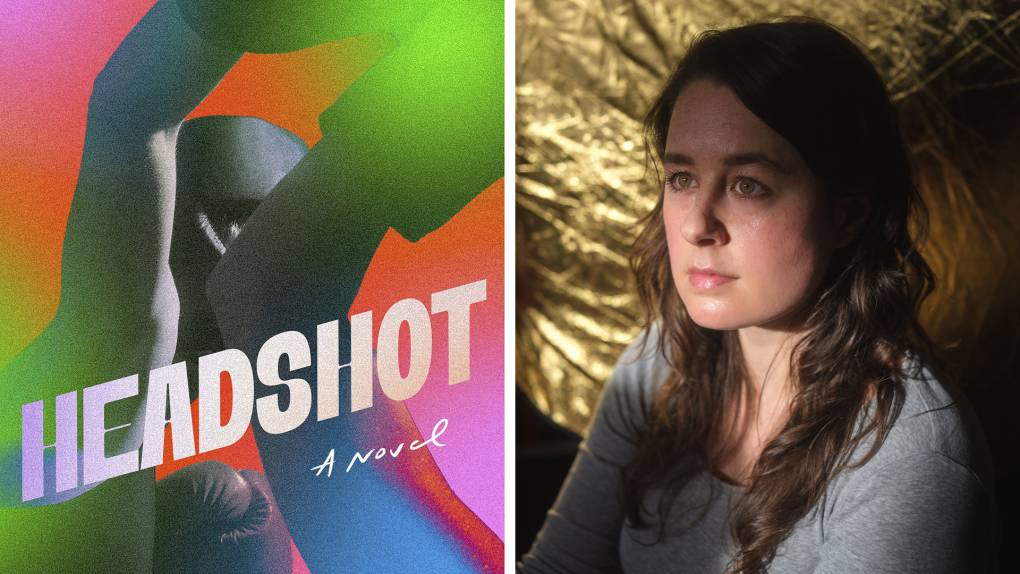
"caption": "In her debut novel 'Headshot,' Rita Bullwinkel zeroes in on an intense, insular world inside the boxing ring. ",
"description": null,
"title": "rita bullwinkel headshot",
"credit": "Left: Penguin Random House; right: Jenna Garrett",
"status": "inherit",
"altTag": "The 'Headshot' book cover features abstracted forms of boxers, next to a portrait of the author.",
"isLoading": false,
"fetchFailed": false
},
"arts_13953372": {
"type": "attachments",
"id": "arts_13953372",
"meta": {
"index": "attachments_1716263798",
"site": "arts",
"id": "13953372",
"found": true
},
"parent": 13953371,
"imgSizes": {
"twentyfourteen-full-width": {
"file": "https://cdn.kqed.org/wp-content/uploads/sites/2/2024/03/untitled-design-49-_custom-ba7158e90214132269e4a2496a6338fe1c9dc7ca-707x576.jpg",
"width": 707,
"mimeType": "image/jpeg",
"height": 576
},
"thumbnail": {
"file": "https://cdn.kqed.org/wp-content/uploads/sites/2/2024/03/untitled-design-49-_custom-ba7158e90214132269e4a2496a6338fe1c9dc7ca-160x221.jpg",
"width": 160,
"mimeType": "image/jpeg",
"height": 221
},
"post-thumbnail": {
"file": "https://cdn.kqed.org/wp-content/uploads/sites/2/2024/03/untitled-design-49-_custom-ba7158e90214132269e4a2496a6338fe1c9dc7ca-672x372.jpg",
"width": 672,
"mimeType": "image/jpeg",
"height": 372
},
"kqedFullSize": {
"file": "https://cdn.kqed.org/wp-content/uploads/sites/2/2024/03/untitled-design-49-_custom-ba7158e90214132269e4a2496a6338fe1c9dc7ca.jpg",
"width": 707,
"height": 975
}
},
"publishDate": 1709597008,
"modified": 1709597008,
"caption": null,
"description": null,
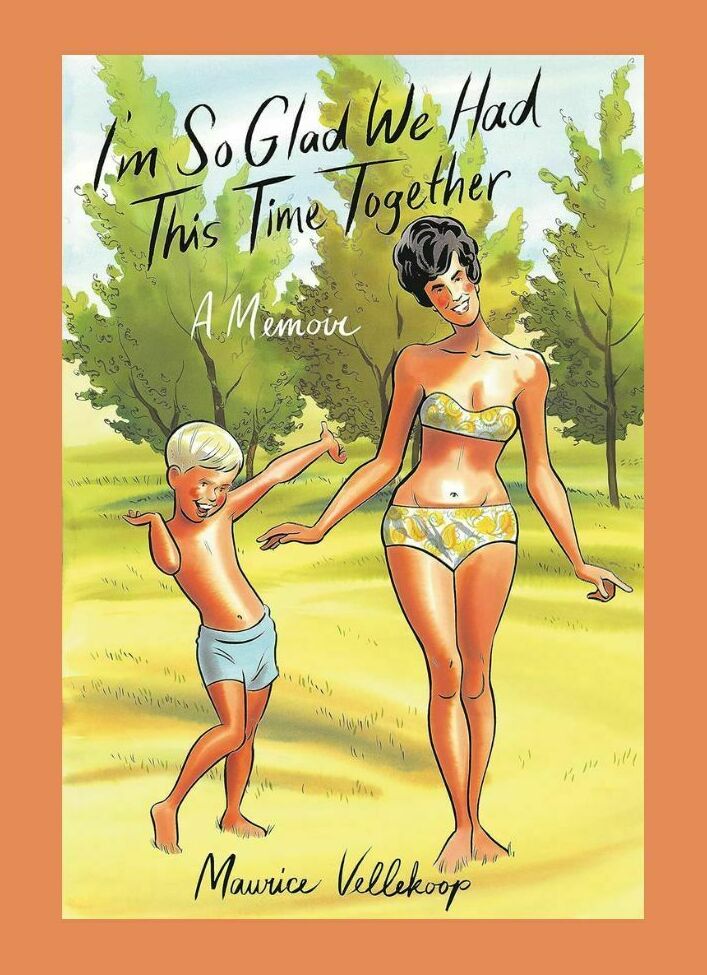
"title": "Cover of I'm So Glad We Had This Time Together",
"credit": null,
"status": "inherit",
"altTag": null,
"isLoading": false,
"fetchFailed": false
},
"arts_13952990": {
"type": "attachments",
"id": "arts_13952990",
"meta": {
"index": "attachments_1716263798",
"site": "arts",
"id": "13952990",
"found": true
},
"parent": 13952984,
"imgSizes": {
"twentyfourteen-full-width": {
"file": "https://cdn.kqed.org/wp-content/uploads/sites/2/2024/02/Screen-Shot-2024-02-26-at-9.42.41-AM-1038x576.png",
"width": 1038,
"mimeType": "image/png",
"height": 576
},
"thumbnail": {
"file": "https://cdn.kqed.org/wp-content/uploads/sites/2/2024/02/Screen-Shot-2024-02-26-at-9.42.41-AM-160x110.png",
"width": 160,
"mimeType": "image/png",
"height": 110
},
"post-thumbnail": {
"file": "https://cdn.kqed.org/wp-content/uploads/sites/2/2024/02/Screen-Shot-2024-02-26-at-9.42.41-AM-672x372.png",
"width": 672,
"mimeType": "image/png",
"height": 372
},
"kqedFullSize": {
"file": "https://cdn.kqed.org/wp-content/uploads/sites/2/2024/02/Screen-Shot-2024-02-26-at-9.42.41-AM.png",
"width": 1048,
"height": 718
},
"large": {
"file": "https://cdn.kqed.org/wp-content/uploads/sites/2/2024/02/Screen-Shot-2024-02-26-at-9.42.41-AM-1020x699.png",
"width": 1020,
"mimeType": "image/png",
"height": 699
},
"medium": {
"file": "https://cdn.kqed.org/wp-content/uploads/sites/2/2024/02/Screen-Shot-2024-02-26-at-9.42.41-AM-800x548.png",
"width": 800,
"mimeType": "image/png",
"height": 548
},
"medium_large": {
"file": "https://cdn.kqed.org/wp-content/uploads/sites/2/2024/02/Screen-Shot-2024-02-26-at-9.42.41-AM-768x526.png",
"width": 768,
"mimeType": "image/png",
"height": 526
}
},
"publishDate": 1708969543,
"modified": 1708969589,
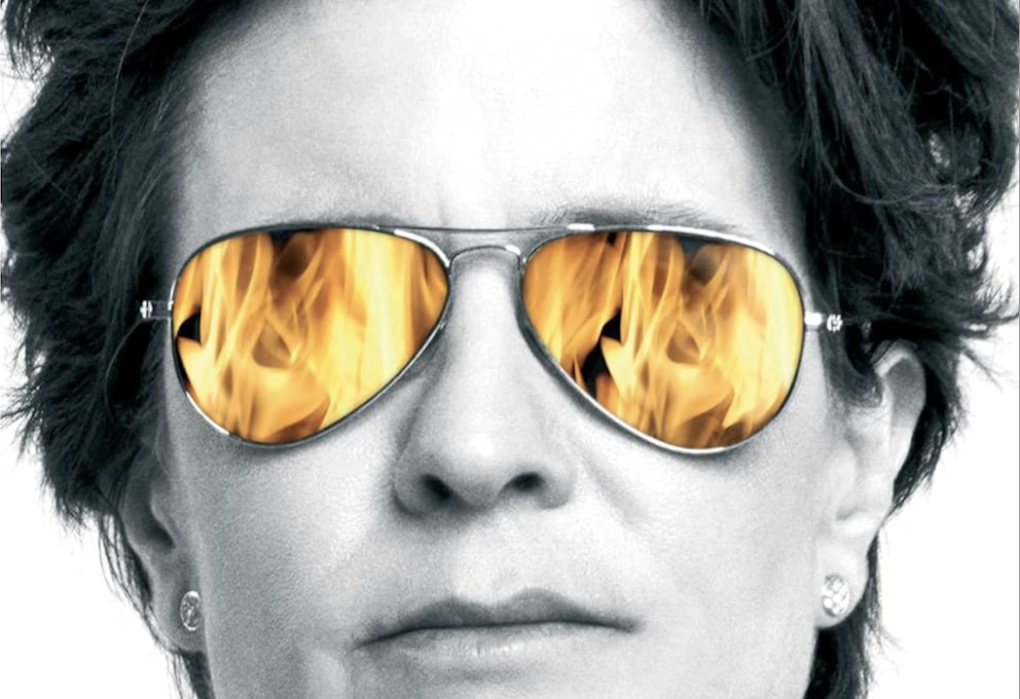
"caption": "‘Burn Book: A Tech Love Story’ by Kara Swisher.",
"description": null,
"title": "‘Burn Book: A Tech Love Story’ by Kara Swisher.",
"credit": "Simon & Schuster",
"status": "inherit",
"altTag": null,
"isLoading": false,
"fetchFailed": false
},
"arts_13952722": {
"type": "attachments",
"id": "arts_13952722",
"meta": {
"index": "attachments_1716263798",
"site": "arts",
"id": "13952722",
"found": true
},
"parent": 13952713,
"imgSizes": {
"thumbnail": {
"file": "https://cdn.kqed.org/wp-content/uploads/sites/2/2024/02/Tommy-Orange-Wandering-Stars-160x90.jpg",
"width": 160,
"mimeType": "image/jpeg",
"height": 90
},
"post-thumbnail": {
"file": "https://cdn.kqed.org/wp-content/uploads/sites/2/2024/02/Tommy-Orange-Wandering-Stars-672x372.jpg",
"width": 672,
"mimeType": "image/jpeg",
"height": 372
},
"kqedFullSize": {
"file": "https://cdn.kqed.org/wp-content/uploads/sites/2/2024/02/Tommy-Orange-Wandering-Stars.jpg",
"width": 800,
"height": 450
},
"medium_large": {
"file": "https://cdn.kqed.org/wp-content/uploads/sites/2/2024/02/Tommy-Orange-Wandering-Stars-768x432.jpg",
"width": 768,
"mimeType": "image/jpeg",
"height": 432
}
},
"publishDate": 1708558452,
"modified": 1708558707,
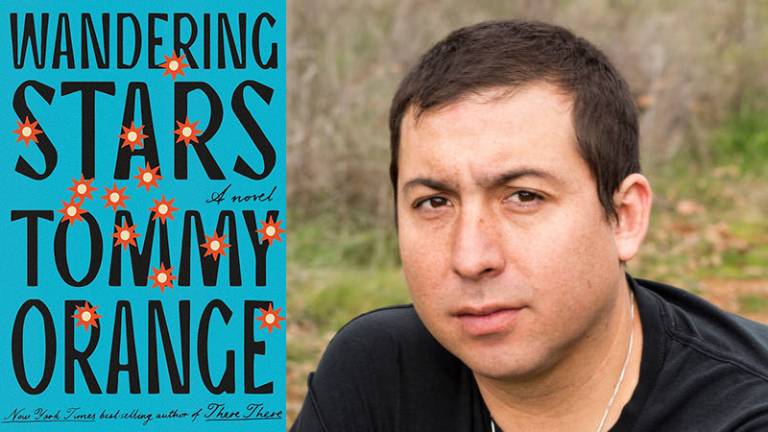
"caption": "Tommy Orange's 'Wandering Stars' traces how trauma cascades through a family descended from a Sand Creek Massacre survivor. ",
"description": null,
"title": "Tommy Orange Wandering Stars",
"credit": "Left: Knopf, right: Elena Seibert",
"status": "inherit",
"altTag": "The cover of 'Wandering Stars' juxtaposed with a portrait of the author.",
"isLoading": false,
"fetchFailed": false
},
"arts_13952685": {
"type": "attachments",
"id": "arts_13952685",
"meta": {
"index": "attachments_1716263798",
"site": "arts",
"id": "13952685",
"found": true
},
"parent": 13952684,
"imgSizes": {
"twentyfourteen-full-width": {
"file": "https://cdn.kqed.org/wp-content/uploads/sites/2/2024/02/Screen-Shot-2024-02-21-at-10.22.06-AM-1038x576.png",
"width": 1038,
"mimeType": "image/png",
"height": 576
},
"thumbnail": {
"file": "https://cdn.kqed.org/wp-content/uploads/sites/2/2024/02/Screen-Shot-2024-02-21-at-10.22.06-AM-160x108.png",
"width": 160,
"mimeType": "image/png",
"height": 108
},
"post-thumbnail": {
"file": "https://cdn.kqed.org/wp-content/uploads/sites/2/2024/02/Screen-Shot-2024-02-21-at-10.22.06-AM-672x372.png",
"width": 672,
"mimeType": "image/png",
"height": 372
},
"kqedFullSize": {
"file": "https://cdn.kqed.org/wp-content/uploads/sites/2/2024/02/Screen-Shot-2024-02-21-at-10.22.06-AM.png",
"width": 1962,
"height": 1324
},
"large": {
"file": "https://cdn.kqed.org/wp-content/uploads/sites/2/2024/02/Screen-Shot-2024-02-21-at-10.22.06-AM-1020x688.png",
"width": 1020,
"mimeType": "image/png",
"height": 688
},
"1536x1536": {
"file": "https://cdn.kqed.org/wp-content/uploads/sites/2/2024/02/Screen-Shot-2024-02-21-at-10.22.06-AM-1536x1037.png",
"width": 1536,
"mimeType": "image/png",
"height": 1037
},
"full-width": {
"file": "https://cdn.kqed.org/wp-content/uploads/sites/2/2024/02/Screen-Shot-2024-02-21-at-10.22.06-AM-1920x1296.png",
"width": 1920,
"mimeType": "image/png",
"height": 1296
},
"medium": {
"file": "https://cdn.kqed.org/wp-content/uploads/sites/2/2024/02/Screen-Shot-2024-02-21-at-10.22.06-AM-800x540.png",
"width": 800,
"mimeType": "image/png",
"height": 540
},
"medium_large": {
"file": "https://cdn.kqed.org/wp-content/uploads/sites/2/2024/02/Screen-Shot-2024-02-21-at-10.22.06-AM-768x518.png",
"width": 768,
"mimeType": "image/png",
"height": 518
}
},
"publishDate": 1708539820,
"modified": 1708539895,
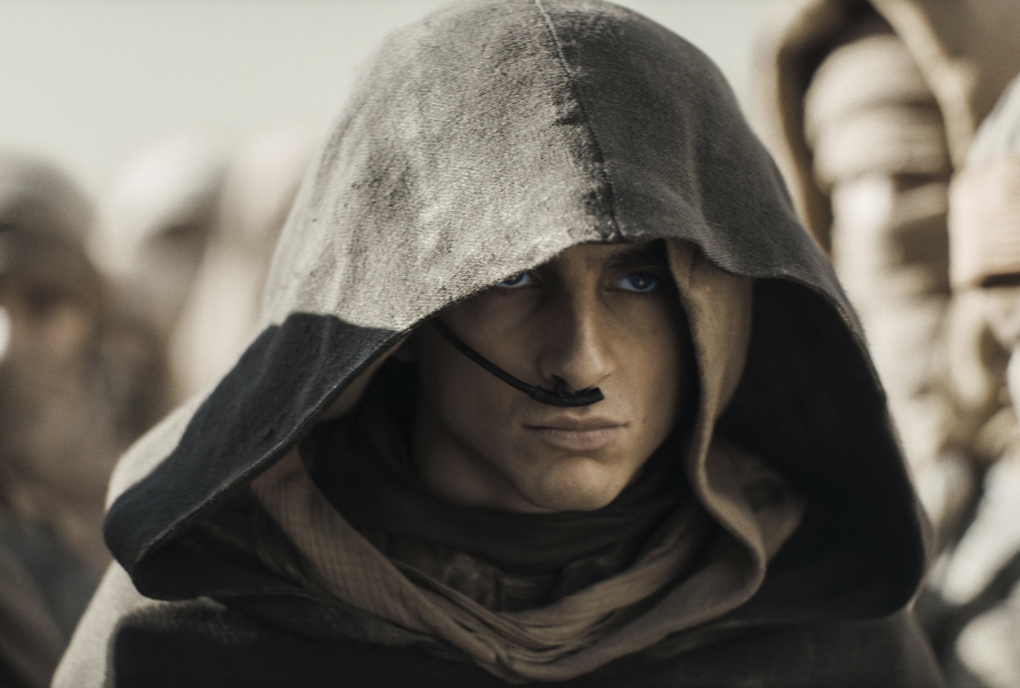
"caption": "Timothee Chalamet in ‘Dune: Part Two.’",
"description": null,
"title": "Timothee Chalamet in ‘Dune: Part Two.’",
"credit": "Niko Tavernise/ Warner Bros. Pictures via AP",
"status": "inherit",
"altTag": "A mysterious white man peers out from under a dark hood. There is a small mechanism placed under his nose.",
"isLoading": false,
"fetchFailed": false
},
"arts_13952417": {
"type": "attachments",
"id": "arts_13952417",
"meta": {
"index": "attachments_1716263798",
"site": "arts",
"id": "13952417",
"found": true
},
"parent": 13952372,
"imgSizes": {
"twentyfourteen-full-width": {
"file": "https://cdn.kqed.org/wp-content/uploads/sites/2/2024/02/GettyImages-1309725971-1024x576.jpg",
"width": 1024,
"mimeType": "image/jpeg",
"height": 576
},
"thumbnail": {
"file": "https://cdn.kqed.org/wp-content/uploads/sites/2/2024/02/GettyImages-1309725971-160x107.jpg",
"width": 160,
"mimeType": "image/jpeg",
"height": 107
},
"post-thumbnail": {
"file": "https://cdn.kqed.org/wp-content/uploads/sites/2/2024/02/GettyImages-1309725971-672x372.jpg",
"width": 672,
"mimeType": "image/jpeg",
"height": 372
},
"kqedFullSize": {
"file": "https://cdn.kqed.org/wp-content/uploads/sites/2/2024/02/GettyImages-1309725971.jpg",
"width": 1024,
"height": 683
},
"large": {
"file": "https://cdn.kqed.org/wp-content/uploads/sites/2/2024/02/GettyImages-1309725971-1020x680.jpg",
"width": 1020,
"mimeType": "image/jpeg",
"height": 680
},
"medium": {
"file": "https://cdn.kqed.org/wp-content/uploads/sites/2/2024/02/GettyImages-1309725971-800x534.jpg",
"width": 800,
"mimeType": "image/jpeg",
"height": 534
},
"medium_large": {
"file": "https://cdn.kqed.org/wp-content/uploads/sites/2/2024/02/GettyImages-1309725971-768x512.jpg",
"width": 768,
"mimeType": "image/jpeg",
"height": 512
}
},
"publishDate": 1708034107,
"modified": 1708034142,
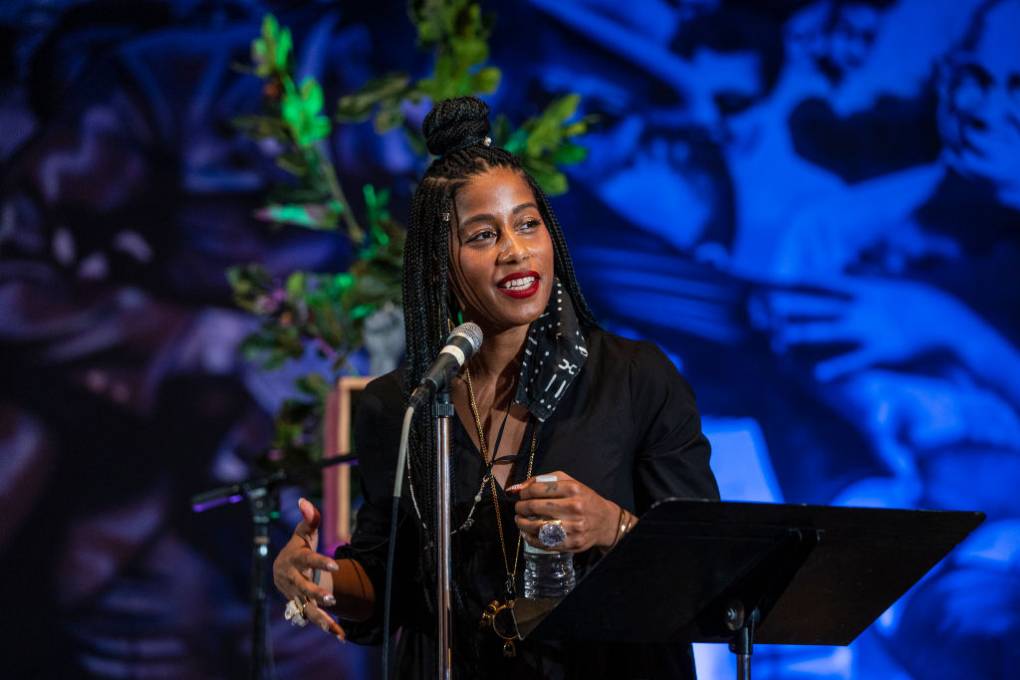
"caption": "aja monet speaks at Studio Be on March 28, 2021 in New Orleans, Louisiana.",
"description": null,
"title": "Aja Monet: A Women's History Month Poetry Session",
"credit": "Erika Goldring/Getty Images",
"status": "inherit",
"altTag": "A poet smiles at a podium.",
"isLoading": false,
"fetchFailed": false
},
"arts_13952049": {
"type": "attachments",
"id": "arts_13952049",
"meta": {
"index": "attachments_1716263798",
"site": "arts",
"id": "13952049",
"found": true
},
"parent": 13952039,
"imgSizes": {
"twentyfourteen-full-width": {
"file": "https://cdn.kqed.org/wp-content/uploads/sites/2/2024/02/Screen-Shot-2024-02-09-at-11.26.39-AM-1038x576.png",
"width": 1038,
"mimeType": "image/png",
"height": 576
},
"thumbnail": {
"file": "https://cdn.kqed.org/wp-content/uploads/sites/2/2024/02/Screen-Shot-2024-02-09-at-11.26.39-AM-160x111.png",
"width": 160,
"mimeType": "image/png",
"height": 111
},
"post-thumbnail": {
"file": "https://cdn.kqed.org/wp-content/uploads/sites/2/2024/02/Screen-Shot-2024-02-09-at-11.26.39-AM-672x372.png",
"width": 672,
"mimeType": "image/png",
"height": 372
},
"kqedFullSize": {
"file": "https://cdn.kqed.org/wp-content/uploads/sites/2/2024/02/Screen-Shot-2024-02-09-at-11.26.39-AM.png",
"width": 1994,
"height": 1384
},
"large": {
"file": "https://cdn.kqed.org/wp-content/uploads/sites/2/2024/02/Screen-Shot-2024-02-09-at-11.26.39-AM-1020x708.png",
"width": 1020,
"mimeType": "image/png",
"height": 708
},
"1536x1536": {
"file": "https://cdn.kqed.org/wp-content/uploads/sites/2/2024/02/Screen-Shot-2024-02-09-at-11.26.39-AM-1536x1066.png",
"width": 1536,
"mimeType": "image/png",
"height": 1066
},
"full-width": {
"file": "https://cdn.kqed.org/wp-content/uploads/sites/2/2024/02/Screen-Shot-2024-02-09-at-11.26.39-AM-1920x1333.png",
"width": 1920,
"mimeType": "image/png",
"height": 1333
},
"medium": {
"file": "https://cdn.kqed.org/wp-content/uploads/sites/2/2024/02/Screen-Shot-2024-02-09-at-11.26.39-AM-800x555.png",
"width": 800,
"mimeType": "image/png",
"height": 555
},
"medium_large": {
"file": "https://cdn.kqed.org/wp-content/uploads/sites/2/2024/02/Screen-Shot-2024-02-09-at-11.26.39-AM-768x533.png",
"width": 768,
"mimeType": "image/png",
"height": 533
}
},
"publishDate": 1707506829,
"modified": 1707506890,
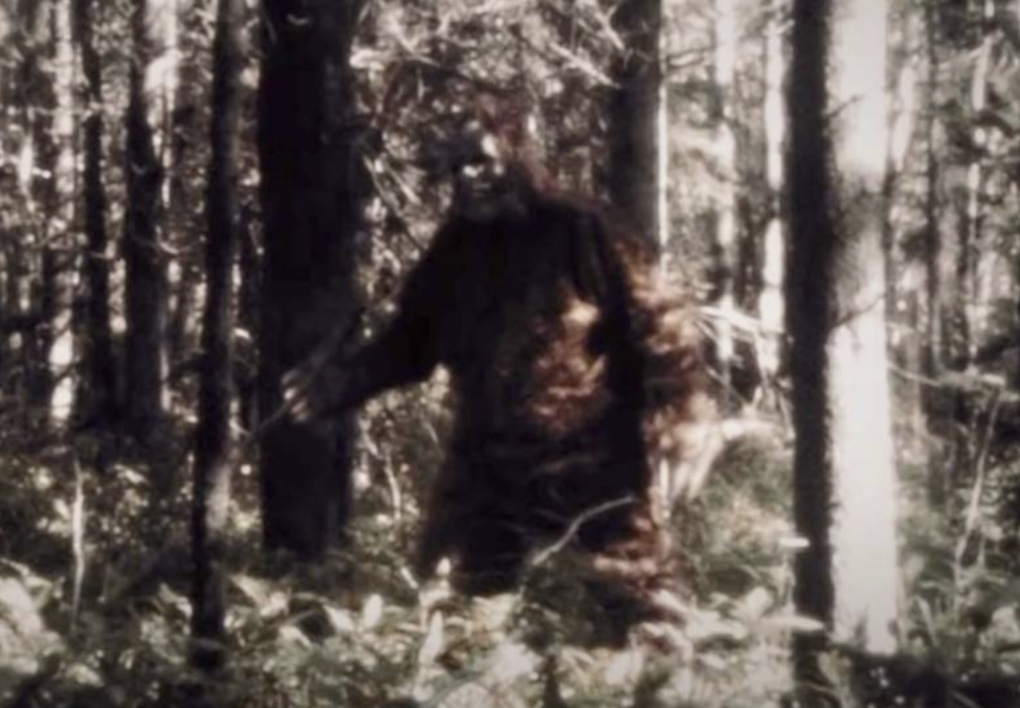
"caption": "A moment from Hulu documentary series, 'Sasquatch'.",
"description": null,
"title": "A moment from Hulu documentary series, 'Sasquatch'.",
"credit": "Hulu",
"status": "inherit",
"altTag": "A person wearing a Bigfoot suit standing in the woods.",
"isLoading": false,
"fetchFailed": false
},
"arts_13951820": {
"type": "attachments",
"id": "arts_13951820",
"meta": {
"index": "attachments_1716263798",
"site": "arts",
"id": "13951820",
"found": true
},
"parent": 13951772,
"imgSizes": {
"twentyfourteen-full-width": {
"file": "https://cdn.kqed.org/wp-content/uploads/sites/2/2024/02/240130-LEGUIN-14-BL-KQED-1038x576.jpeg",
"width": 1038,
"mimeType": "image/jpeg",
"height": 576
},
"thumbnail": {
"file": "https://cdn.kqed.org/wp-content/uploads/sites/2/2024/02/240130-LEGUIN-14-BL-KQED-160x107.jpeg",
"width": 160,
"mimeType": "image/jpeg",
"height": 107
},
"post-thumbnail": {
"file": "https://cdn.kqed.org/wp-content/uploads/sites/2/2024/02/240130-LEGUIN-14-BL-KQED-672x372.jpeg",
"width": 672,
"mimeType": "image/jpeg",
"height": 372
},
"kqedFullSize": {
"file": "https://cdn.kqed.org/wp-content/uploads/sites/2/2024/02/240130-LEGUIN-14-BL-KQED.jpeg",
"width": 2000,
"height": 1333
},
"large": {
"file": "https://cdn.kqed.org/wp-content/uploads/sites/2/2024/02/240130-LEGUIN-14-BL-KQED-1020x680.jpeg",
"width": 1020,
"mimeType": "image/jpeg",
"height": 680
},
"1536x1536": {
"file": "https://cdn.kqed.org/wp-content/uploads/sites/2/2024/02/240130-LEGUIN-14-BL-KQED-1536x1024.jpeg",
"width": 1536,
"mimeType": "image/jpeg",
"height": 1024
},
"full-width": {
"file": "https://cdn.kqed.org/wp-content/uploads/sites/2/2024/02/240130-LEGUIN-14-BL-KQED-1920x1280.jpeg",
"width": 1920,
"mimeType": "image/jpeg",
"height": 1280
},
"medium": {
"file": "https://cdn.kqed.org/wp-content/uploads/sites/2/2024/02/240130-LEGUIN-14-BL-KQED-800x533.jpeg",
"width": 800,
"mimeType": "image/jpeg",
"height": 533
},
"medium_large": {
"file": "https://cdn.kqed.org/wp-content/uploads/sites/2/2024/02/240130-LEGUIN-14-BL-KQED-768x512.jpeg",
"width": 768,
"mimeType": "image/jpeg",
"height": 512
}
},
"publishDate": 1707373903,
"modified": 1707374052,
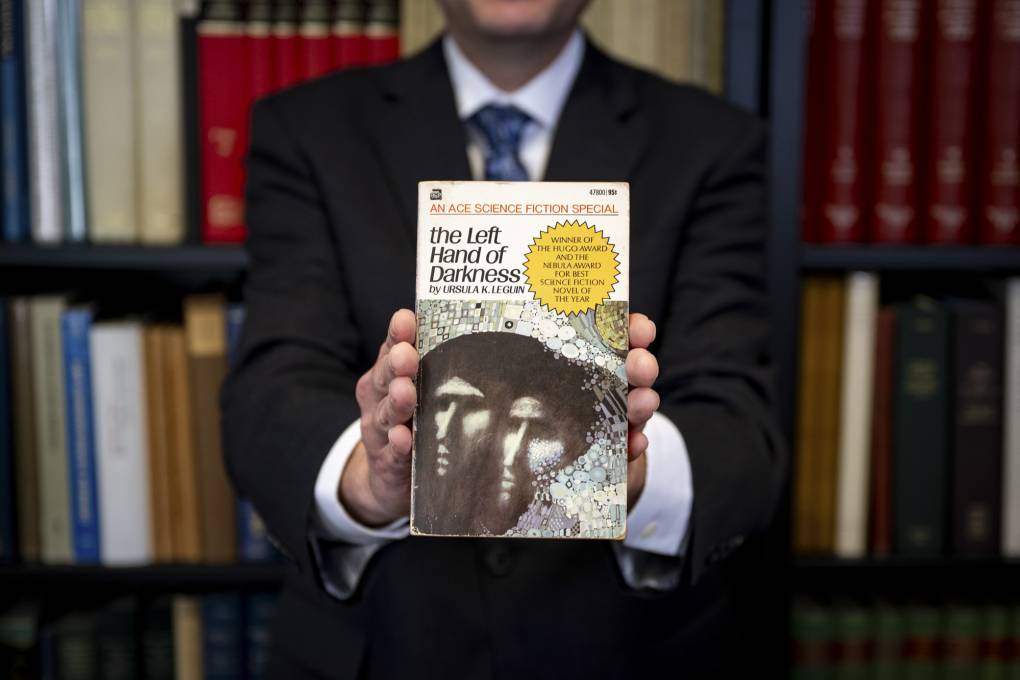
"caption": "Mark Funke holds the novel 'The Left Hand of Darkness' by Ursula K. Le Guin at his office in Mill Valley on Jan. 30, 2024.",
"description": null,
"title": "240130-LEGUIN-14-BL-KQED",
"credit": "Beth LaBerge/KQED",
"status": "inherit",
"altTag": "Person on suit holds a paperback book in front of them with two hands",
"isLoading": false,
"fetchFailed": false
},
"arts_13951674": {
"type": "attachments",
"id": "arts_13951674",
"meta": {
"index": "attachments_1716263798",
"site": "arts",
"id": "13951674",
"found": true
},
"parent": 13950605,
"imgSizes": {
"twentyfourteen-full-width": {
"file": "https://cdn.kqed.org/wp-content/uploads/sites/2/2024/02/GettyImages-1487065977-1038x576.jpg",
"width": 1038,
"mimeType": "image/jpeg",
"height": 576
},
"thumbnail": {
"file": "https://cdn.kqed.org/wp-content/uploads/sites/2/2024/02/GettyImages-1487065977-160x119.jpg",
"width": 160,
"mimeType": "image/jpeg",
"height": 119
},
"post-thumbnail": {
"file": "https://cdn.kqed.org/wp-content/uploads/sites/2/2024/02/GettyImages-1487065977-672x372.jpg",
"width": 672,
"mimeType": "image/jpeg",
"height": 372
},
"kqedFullSize": {
"file": "https://cdn.kqed.org/wp-content/uploads/sites/2/2024/02/GettyImages-1487065977-scaled-e1707250758209.jpg",
"width": 1920,
"height": 1422
},
"2048x2048": {
"file": "https://cdn.kqed.org/wp-content/uploads/sites/2/2024/02/GettyImages-1487065977-2048x1517.jpg",
"width": 2048,
"mimeType": "image/jpeg",
"height": 1517
},
"large": {
"file": "https://cdn.kqed.org/wp-content/uploads/sites/2/2024/02/GettyImages-1487065977-1020x756.jpg",
"width": 1020,
"mimeType": "image/jpeg",
"height": 756
},
"1536x1536": {
"file": "https://cdn.kqed.org/wp-content/uploads/sites/2/2024/02/GettyImages-1487065977-1536x1138.jpg",
"width": 1536,
"mimeType": "image/jpeg",
"height": 1138
},
"full-width": {
"file": "https://cdn.kqed.org/wp-content/uploads/sites/2/2024/02/GettyImages-1487065977-1920x1422.jpg",
"width": 1920,
"mimeType": "image/jpeg",
"height": 1422
},
"medium": {
"file": "https://cdn.kqed.org/wp-content/uploads/sites/2/2024/02/GettyImages-1487065977-800x593.jpg",
"width": 800,
"mimeType": "image/jpeg",
"height": 593
},
"medium_large": {
"file": "https://cdn.kqed.org/wp-content/uploads/sites/2/2024/02/GettyImages-1487065977-768x569.jpg",
"width": 768,
"mimeType": "image/jpeg",
"height": 569
}
},
"publishDate": 1707250734,
"modified": 1707250925,
"caption": "The Beatles with a copy of ‘Sgt. Pepper’s Lonely Hearts Club Band,’ circa 1967.",
"description": null,
"title": "The Beatles with a copy of ‘Sgt. Pepper’s Lonely Hearts Club Band,’ circa 1967.",
"credit": "Universal Archive/ Universal Images Group via Getty Images",
"status": "inherit",
"altTag": null,
"isLoading": false,
"fetchFailed": false
},
"arts_13950826": {
"type": "attachments",
"id": "arts_13950826",
"meta": {
"index": "attachments_1716263798",
"site": "arts",
"id": "13950826",
"found": true
},
"parent": 13950809,
"imgSizes": {
"twentyfourteen-full-width": {
"file": "https://cdn.kqed.org/wp-content/uploads/sites/2/2024/01/the-showman-cover-harper-collins-cropped-990x576.jpg",
"width": 990,
"mimeType": "image/jpeg",
"height": 576
},
"thumbnail": {
"file": "https://cdn.kqed.org/wp-content/uploads/sites/2/2024/01/the-showman-cover-harper-collins-cropped-160x107.jpg",
"width": 160,
"mimeType": "image/jpeg",
"height": 107
},
"post-thumbnail": {
"file": "https://cdn.kqed.org/wp-content/uploads/sites/2/2024/01/the-showman-cover-harper-collins-cropped-672x372.jpg",
"width": 672,
"mimeType": "image/jpeg",
"height": 372
},
"kqedFullSize": {
"file": "https://cdn.kqed.org/wp-content/uploads/sites/2/2024/01/the-showman-cover-harper-collins-cropped.jpg",
"width": 990,
"height": 660
},
"medium": {
"file": "https://cdn.kqed.org/wp-content/uploads/sites/2/2024/01/the-showman-cover-harper-collins-cropped-800x533.jpg",
"width": 800,
"mimeType": "image/jpeg",
"height": 533
},
"medium_large": {
"file": "https://cdn.kqed.org/wp-content/uploads/sites/2/2024/01/the-showman-cover-harper-collins-cropped-768x512.jpg",
"width": 768,
"mimeType": "image/jpeg",
"height": 512
}
},
"publishDate": 1706038759,
"modified": 1706038786,
"caption": "'The Showman' by Simon Shuster. ",
"description": null,
"title": "the showman cover harper collins-cropped",
"credit": "Harper Collins",
"status": "inherit",
"altTag": null,
"isLoading": false,
"fetchFailed": false
},
"arts_13813029": {
"type": "attachments",
"id": "arts_13813029",
"meta": {
"index": "attachments_1716263798",
"site": "arts",
"id": "13813029",
"found": true
},
"parent": 13813015,
"imgSizes": {
"small": {
"file": "https://ww2.kqed.org/app/uploads/sites/2/2017/10/SR.Fire_.Getty_-520x347.jpg",
"width": 520,
"mimeType": "image/jpeg",
"height": 347
},
"twentyfourteen-full-width": {
"file": "https://ww2.kqed.org/app/uploads/sites/2/2017/10/SR.Fire_.Getty_-1038x576.jpg",
"width": 1038,
"mimeType": "image/jpeg",
"height": 576
},
"thumbnail": {
"file": "https://ww2.kqed.org/app/uploads/sites/2/2017/10/SR.Fire_.Getty_-160x107.jpg",
"width": 160,
"mimeType": "image/jpeg",
"height": 107
},
"fd-sm": {
"file": "https://ww2.kqed.org/app/uploads/sites/2/2017/10/SR.Fire_.Getty_-960x640.jpg",
"width": 960,
"mimeType": "image/jpeg",
"height": 640
},
"post-thumbnail": {
"file": "https://ww2.kqed.org/app/uploads/sites/2/2017/10/SR.Fire_.Getty_-672x372.jpg",
"width": 672,
"mimeType": "image/jpeg",
"height": 372
},
"xsmall": {
"file": "https://ww2.kqed.org/app/uploads/sites/2/2017/10/SR.Fire_.Getty_-375x250.jpg",
"width": 375,
"mimeType": "image/jpeg",
"height": 250
},
"kqedFullSize": {
"file": "https://ww2.kqed.org/app/uploads/sites/2/2017/10/SR.Fire_.Getty_.jpg",
"width": 1100,
"height": 733
},
"large": {
"file": "https://ww2.kqed.org/app/uploads/sites/2/2017/10/SR.Fire_.Getty_-1020x680.jpg",
"width": 1020,
"mimeType": "image/jpeg",
"height": 680
},
"guest-author-50": {
"file": "https://ww2.kqed.org/app/uploads/sites/2/2017/10/SR.Fire_.Getty_-50x50.jpg",
"width": 50,
"mimeType": "image/jpeg",
"height": 50
},
"guest-author-96": {
"file": "https://ww2.kqed.org/app/uploads/sites/2/2017/10/SR.Fire_.Getty_-96x96.jpg",
"width": 96,
"mimeType": "image/jpeg",
"height": 96
},
"medium": {
"file": "https://ww2.kqed.org/app/uploads/sites/2/2017/10/SR.Fire_.Getty_-800x533.jpg",
"width": 800,
"mimeType": "image/jpeg",
"height": 533
},
"guest-author-64": {
"file": "https://ww2.kqed.org/app/uploads/sites/2/2017/10/SR.Fire_.Getty_-64x64.jpg",
"width": 64,
"mimeType": "image/jpeg",
"height": 64
},
"guest-author-32": {
"file": "https://ww2.kqed.org/app/uploads/sites/2/2017/10/SR.Fire_.Getty_-32x32.jpg",
"width": 32,
"mimeType": "image/jpeg",
"height": 32
},
"detail": {
"file": "https://ww2.kqed.org/app/uploads/sites/2/2017/10/SR.Fire_.Getty_-150x150.jpg",
"width": 150,
"mimeType": "image/jpeg",
"height": 150
},
"medium_large": {
"file": "https://ww2.kqed.org/app/uploads/sites/2/2017/10/SR.Fire_.Getty_-768x512.jpg",
"width": 768,
"mimeType": "image/jpeg",
"height": 512
},
"guest-author-128": {
"file": "https://ww2.kqed.org/app/uploads/sites/2/2017/10/SR.Fire_.Getty_-128x128.jpg",
"width": 128,
"mimeType": "image/jpeg",
"height": 128
},
"xxsmall": {
"file": "https://ww2.kqed.org/app/uploads/sites/2/2017/10/SR.Fire_.Getty_-240x160.jpg",
"width": 240,
"mimeType": "image/jpeg",
"height": 160
}
},
"publishDate": 1509311551,
"modified": 1509390945,
"caption": "Wildfire rages through trees toward the valley on Oct. 8, 2017.",
"description": "Wildfire creeps through the forest, down Wildfire rages through trees toward the valley on Oct. 8, 2017. ",
"title": "SR.Fire.Getty",
"credit": "David McNew/Getty Images",
"status": "inherit",
"isLoading": false,
"fetchFailed": false
},
"arts_13950704": {
"type": "attachments",
"id": "arts_13950704",
"meta": {
"index": "attachments_1716263798",
"site": "arts",
"id": "13950704",
"found": true
},
"parent": 13950698,
"imgSizes": {
"twentyfourteen-full-width": {
"file": "https://cdn.kqed.org/wp-content/uploads/sites/2/2024/01/Screen-Shot-2024-01-22-at-10.33.28-AM-1038x576.png",
"width": 1038,
"mimeType": "image/png",
"height": 576
},
"thumbnail": {
"file": "https://cdn.kqed.org/wp-content/uploads/sites/2/2024/01/Screen-Shot-2024-01-22-at-10.33.28-AM-160x115.png",
"width": 160,
"mimeType": "image/png",
"height": 115
},
"post-thumbnail": {
"file": "https://cdn.kqed.org/wp-content/uploads/sites/2/2024/01/Screen-Shot-2024-01-22-at-10.33.28-AM-672x372.png",
"width": 672,
"mimeType": "image/png",
"height": 372
},
"kqedFullSize": {
"file": "https://cdn.kqed.org/wp-content/uploads/sites/2/2024/01/Screen-Shot-2024-01-22-at-10.33.28-AM.png",
"width": 1394,
"height": 1000
},
"large": {
"file": "https://cdn.kqed.org/wp-content/uploads/sites/2/2024/01/Screen-Shot-2024-01-22-at-10.33.28-AM-1020x732.png",
"width": 1020,
"mimeType": "image/png",
"height": 732
},
"medium": {
"file": "https://cdn.kqed.org/wp-content/uploads/sites/2/2024/01/Screen-Shot-2024-01-22-at-10.33.28-AM-800x574.png",
"width": 800,
"mimeType": "image/png",
"height": 574
},
"medium_large": {
"file": "https://cdn.kqed.org/wp-content/uploads/sites/2/2024/01/Screen-Shot-2024-01-22-at-10.33.28-AM-768x551.png",
"width": 768,
"mimeType": "image/png",
"height": 551
}
},
"publishDate": 1705948426,
"modified": 1705948501,
"caption": "A moment from ‘The Eyes and the Impossible.’",
"description": null,
"title": "A moment from ‘The Eyes and the Impossible.’",
"credit": "Knopf Books for Young Readers",
"status": "inherit",
"altTag": "An illustration of a dog running through the woods.",
"isLoading": false,
"fetchFailed": false
}
},
"audioPlayerReducer": {
"postId": "stream_live",
"isPaused": true,
"isPlaying": false,
"pfsActive": false,
"pledgeModalIsOpen": true,
"playerDrawerIsOpen": false,
"liveAudioPlayStartedAt": 0,
"liveAudioPlayContext": ""
},
"authorsReducer": {
"byline_arts_13953371": {
"type": "authors",
"id": "byline_arts_13953371",
"meta": {
"override": true
},
"slug": "byline_arts_13953371",
"name": "Tahneer Oksman",
"isLoading": false
},
"byline_arts_13952984": {
"type": "authors",
"id": "byline_arts_13952984",
"meta": {
"override": true
},
"slug": "byline_arts_13952984",
"name": "Michael Liedtke, Associated Press",
"isLoading": false
},
"byline_arts_13952684": {
"type": "authors",
"id": "byline_arts_13952684",
"meta": {
"override": true
},
"slug": "byline_arts_13952684",
"name": "Jake Coyle, Associated Press",
"isLoading": false
},
"byline_arts_13952039": {
"type": "authors",
"id": "byline_arts_13952039",
"meta": {
"override": true
},
"slug": "byline_arts_13952039",
"name": "Gabino Iglesias",
"isLoading": false
},
"byline_arts_13950809": {
"type": "authors",
"id": "byline_arts_13950809",
"meta": {
"override": true
},
"slug": "byline_arts_13950809",
"name": "Sasha Vasilyuk",
"isLoading": false
},
"byline_arts_13950717": {
"type": "authors",
"id": "byline_arts_13950717",
"meta": {
"override": true
},
"slug": "byline_arts_13950717",
"name": "Kristen Martin",
"isLoading": false
},
"byline_arts_13950698": {
"type": "authors",
"id": "byline_arts_13950698",
"meta": {
"override": true
},
"slug": "byline_arts_13950698",
"name": "Anastasia Tsioulcas",
"isLoading": false
},
"ralexandra": {
"type": "authors",
"id": "11242",
"meta": {
"index": "authors_1716337520",
"id": "11242",
"found": true
},
"name": "Rae Alexandra",
"firstName": "Rae",
"lastName": "Alexandra",
"slug": "ralexandra",
"email": "ralexandra@kqed.org",
"display_author_email": true,
"staff_mastheads": [],
"title": "Reporter/Producer",
"bio": "Rae Alexandra is a Reporter/Producer for KQED Arts & Culture, and the creator/author of the \u003ca href=\"https://www.kqed.org/arts/program/rebel-girls-from-bay-area-history\">Rebel Girls From Bay Area History\u003c/a> and \u003ca href=\"https://www.kqed.org/bizarrebayarea\">Bizarre Bay Area\u003c/a> series. Her debut book, \u003ca href=\"https://citylights.com/politics-current-events-history/unsung-heroines35-women-who-changed/\">Unsung Heroines: 35 Women Who Changed the Bay Area\u003c/a> was published by City Lights in March 2026. In 2023, Rae was awarded an SPJ Excellence in Journalism Award for Arts & Culture. Rae was born and raised in Wales and subsequently — even after two decades in Northern California — still uses phrases that regularly baffle her coworkers.",
"avatar": "https://secure.gravatar.com/avatar/edfee8176c80cc0a382b051190f5341997df378a934a5774dcb0977732dfd401?s=600&d=blank&r=g",
"twitter": null,
"bluesky": null,
"facebook": null,
"instagram": null,
"linkedin": null,
"sites": [
{
"site": "arts",
"roles": [
"subscriber"
]
},
{
"site": "news",
"roles": [
"subscriber"
]
},
{
"site": "pop",
"roles": [
"subscriber"
]
},
{
"site": "bayareabites",
"roles": [
"subscriber"
]
},
{
"site": "science",
"roles": [
"subscriber"
]
}
],
"headData": {
"title": "Rae Alexandra | KQED",
"description": "Reporter/Producer",
"ogImgSrc": "https://secure.gravatar.com/avatar/edfee8176c80cc0a382b051190f5341997df378a934a5774dcb0977732dfd401?s=600&d=blank&r=g",
"twImgSrc": "https://secure.gravatar.com/avatar/edfee8176c80cc0a382b051190f5341997df378a934a5774dcb0977732dfd401?s=600&d=blank&r=g"
},
"isLoading": false,
"link": "/author/ralexandra"
},
"nvoynovskaya": {
"type": "authors",
"id": "11387",
"meta": {
"index": "authors_1716337520",
"id": "11387",
"found": true
},
"name": "Nastia Voynovskaya",
"firstName": "Nastia",
"lastName": "Voynovskaya",
"slug": "nvoynovskaya",
"email": "nvoynovskaya@kqed.org",
"display_author_email": false,
"staff_mastheads": [
"arts"
],
"title": "Editor and reporter",
"bio": "Nastia Voynovskaya is a reporter, editor and host at KQED Arts & Culture. She's been covering the arts in the Bay Area for over a decade, with a focus on music, queer culture, labor issues and grassroots organizing. She has edited KQED story series such as Trans Bay: A History of San Francisco's Gender-Diverse Community, and co-created KQED's Bay Area hip-hop history project, That's My Word. Nastia's work has been recognized by the Society of Professional Journalists and San Francisco Press Club. She regularly appears on podcasts and radio programs, including NPR's All Songs Considered, and hosts live events where music, culture and conversation meet.",
"avatar": "https://secure.gravatar.com/avatar/5025ee460e5a85d69ca20ea6c6f2f80d7e17795c828f61ea3aecfcd924e9042e?s=600&d=blank&r=g",
"twitter": null,
"bluesky": null,
"facebook": null,
"instagram": "https://www.instagram.com/nananastia/",
"linkedin": null,
"sites": [
{
"site": "",
"roles": [
"editor"
]
},
{
"site": "arts",
"roles": [
"administrator"
]
},
{
"site": "news",
"roles": [
"editor"
]
},
{
"site": "pop",
"roles": [
"administrator"
]
},
{
"site": "bayareabites",
"roles": [
"editor"
]
},
{
"site": "podcasts",
"roles": [
"editor"
]
},
{
"site": "hiphop",
"roles": [
"editor"
]
}
],
"headData": {
"title": "Nastia Voynovskaya | KQED",
"description": "Editor and reporter",
"ogImgSrc": "https://secure.gravatar.com/avatar/5025ee460e5a85d69ca20ea6c6f2f80d7e17795c828f61ea3aecfcd924e9042e?s=600&d=blank&r=g",
"twImgSrc": "https://secure.gravatar.com/avatar/5025ee460e5a85d69ca20ea6c6f2f80d7e17795c828f61ea3aecfcd924e9042e?s=600&d=blank&r=g"
},
"isLoading": false,
"link": "/author/nvoynovskaya"
},
"agonzalez": {
"type": "authors",
"id": "11724",
"meta": {
"index": "authors_1716337520",
"id": "11724",
"found": true
},
"name": "Alexander Gonzalez",
"firstName": "Alexander",
"lastName": "Gonzalez",
"slug": "agonzalez",
"email": "AlexanderGonzalez@KQED.org",
"display_author_email": false,
"staff_mastheads": [
"news"
],
"title": "KQED Contributor",
"bio": null,
"avatar": "https://secure.gravatar.com/avatar/9e291ed34e154df4c662edf858b641d70b4859939bfe40be478408f9dfd057d2?s=600&d=blank&r=g",
"twitter": null,
"bluesky": null,
"facebook": null,
"instagram": null,
"linkedin": null,
"sites": [
{
"site": "arts",
"roles": [
"editor"
]
},
{
"site": "news",
"roles": [
"editor"
]
},
{
"site": "science",
"roles": [
"editor"
]
}
],
"headData": {
"title": "Alexander Gonzalez | KQED",
"description": "KQED Contributor",
"ogImgSrc": "https://secure.gravatar.com/avatar/9e291ed34e154df4c662edf858b641d70b4859939bfe40be478408f9dfd057d2?s=600&d=blank&r=g",
"twImgSrc": "https://secure.gravatar.com/avatar/9e291ed34e154df4c662edf858b641d70b4859939bfe40be478408f9dfd057d2?s=600&d=blank&r=g"
},
"isLoading": false,
"link": "/author/agonzalez"
},
"nelias": {
"type": "authors",
"id": "11990",
"meta": {
"index": "authors_1716337520",
"id": "11990",
"found": true
},
"name": "Naomi Elias",
"firstName": "Naomi",
"lastName": "Elias",
"slug": "nelias",
"email": "naomielias09@gmail.com",
"display_author_email": false,
"staff_mastheads": [],
"title": "KQED Contributor",
"bio": null,
"avatar": "https://secure.gravatar.com/avatar/182770e03ab93f0fdf3c264ad3d088daf0198dd3bc8e1ccd1a008b81387410c1?s=600&d=blank&r=g",
"twitter": null,
"bluesky": null,
"facebook": null,
"instagram": null,
"linkedin": null,
"sites": [
{
"site": "arts",
"roles": [
"contributor"
]
}
],
"headData": {
"title": "Naomi Elias | KQED",
"description": "KQED Contributor",
"ogImgSrc": "https://secure.gravatar.com/avatar/182770e03ab93f0fdf3c264ad3d088daf0198dd3bc8e1ccd1a008b81387410c1?s=600&d=blank&r=g",
"twImgSrc": "https://secure.gravatar.com/avatar/182770e03ab93f0fdf3c264ad3d088daf0198dd3bc8e1ccd1a008b81387410c1?s=600&d=blank&r=g"
},
"isLoading": false,
"link": "/author/nelias"
}
},
"pagesReducer": {
"arts_category_literature": {
"type": "terms",
"id": "arts_73",
"meta": {
"index": "terms_1716263798",
"site": "arts",
"id": "73",
"score": 12.797518
},
"featImg": null,
"name": "Books",
"description": null,
"taxonomy": "category",
"headData": {
"twImgId": null,
"twTitle": null,
"ogTitle": null,
"ogImgId": null,
"twDescription": null,
"description": null,
"title": "Books Archives | KQED Arts",
"ogDescription": null
},
"ttid": 74,
"slug": "literature",
"isLoading": false,
"title": "Books",
"pageMeta": {
"site": "arts",
"WpPageTemplate": "page-topic-editorial",
"currentPage": 28
},
"blocks": [
{
"blockName": "kqed/post-list",
"attrs": {
"layout": "cardArticle2",
"query": "posts/arts?category=literature",
"seeMore": false,
"paginated": true,
"page": 28
}
},
{
"blockName": "kqed/ad"
}
]
}
},
"pfsSessionReducer": {},
"postsReducer": {
"stream_live": {
"type": "live",
"id": "stream_live",
"audioUrl": "https://streams.kqed.org/kqedradio",
"title": "Live Stream",
"excerpt": "Live Stream information currently unavailable.",
"link": "/radio",
"featImg": "",
"label": {
"name": "KQED Live",
"link": "/"
}
},
"stream_kqedNewscast": {
"type": "posts",
"id": "stream_kqedNewscast",
"audioUrl": "https://www.kqed.org/.stream/anon/radio/RDnews/newscast.mp3?_=1",
"title": "KQED Newscast",
"featImg": "",
"label": {
"name": "88.5 FM",
"link": "/"
}
},
"arts_13953731": {
"type": "posts",
"id": "arts_13953731",
"meta": {
"index": "posts_1716263798",
"site": "arts",
"id": "13953731",
"score": null,
"sort": [
1709924854000
]
},
"guestAuthors": [],
"slug": "headshot-rita-bullwinkel-review",
"title": "Rita Bullwinkel’s Novel About Teen Girl Boxers Packs a Punch",
"publishDate": 1709924854,
"format": "standard",
"headTitle": "Rita Bullwinkel’s Novel About Teen Girl Boxers Packs a Punch | KQED",
"labelTerm": {
"site": "arts"
},
"content": "\u003cp>In \u003cem>Headshot\u003c/em>, \u003ca href=\"https://ritabullwinkel.com/\">Rita Bullwinkel\u003c/a> makes an electrifying claim: “Each girl born has the ability to be activated into a boxer.” Her debut novel is an absorbing study of eight teen girl boxers competing in the 12th Annual Daughters of America Cup in Reno, Nevada. It is about female potential — a small community of girls who harvest it in themselves and learn to communicate in a secret language of fists.\u003c/p>\n\u003cp>Though she doesn’t have a boxing background herself, Bullwinkel — an English professor at University of San Francisco— has always wanted to write a book about teen girl boxers because of how “inherently theatrical” she finds the sport. “The ring looks like a stage; the lighting looks like a stage; and it is one human in conversation with one another,” she explains. [aside postid='arts_13953653']\u003c/p>\n\u003cp>The narrative and emotional core of \u003cem>Headshot\u003c/em> lie in the ring, and each bout is weighty and intense. The book opens on a tournament bracket that teases each pending match up, with chapters named after the fighters. Instead of getting dialogue, we live inside each fighter’s mind, and each mind is a universe.\u003c/p>\n\u003cp>Bullwinkel plays with time by moving comfortably backwards and forwards, allowing us to exist in the present while simultaneously bobbing and weaving through the girls’ life experiences — childhood trauma, insecurities, girlhood milestones, careers. This sprawling bird’s-eye view should be dissatisfying; it tells us ahead of time that their efforts on this day will not translate to a lifetime of professional boxing or any fancy accolades. But it’s a winning narrative strategy that makes the book hum with urgency.\u003c/p>\n\u003cp>Bullwinkel’s first book, \u003cem>Belly Up\u003c/em>, was a surreal story collection that explored the material strangeness of having a body. In many ways this book is a sister to it. The girls we meet are all learning to live inside their bodies, to care for, wield and rely on them to communicate their needs and dreams. \u003c/p>\n\u003cp>[ad fullwidth]\u003c/p>\n\u003cp>“I wanted the book to be a book of portraiture,” Bullwinkel shares. Like all successful portraiture, the fighter snapshots in \u003cem>Headshot\u003c/em> offer detailed likenesses that swiftly but succinctly tell us who each girl is. One girl romanticizes the red indentations her gym shorts left on her stomach because “they seemed like evidence of work she’d done.” Another imagines her opponent punching her head so hard and “the center of her brain becoming a bloody flower.” Another uses a break to kiss her palms together in fake prayer so people can’t see she’s really assessing her surroundings like a seasoned war veteran. [aside postid='arts_13833865']\u003c/p>\n\u003cp>Bullwinkel’s sentences have well developed musculature; each builds onto the other, generating enough torque and power to land like a finely choreographed punch.\u003c/p>\n\u003cp>Like these girls, the author spent her teen years in competitive youth athletics. She sacrificed twenty hours a week to train as a water polo player, overcame a broken nose and fingers and eventually co-captained a Division I team. The experience — grueling, unheralded — served as fertile research for this book. \u003c/p>\n\u003cp>“I happened upon this trove of YouTube training videos that young women would take of themselves so they could watch the way their form changed over time,” Bullwinkel shares. “These were long, unedited videos that had two or three views. They were not meant for mass consumption. It was a way to document in a very small community the way your right hook was getting better or atrophying, for instance.”[aside postid='arts_13952713']\u003c/p>\n\u003cp>These virtual artifacts unlocked a memory and a connection to her own past: “I have these memories of watching hours and hours and hours of footage of myself. … I saw a lot of parallels in the insular, claustrophobic nature of that world and my own experience.”\u003c/p>\n\u003cp>This insularity — which Bullwinkel defines as a world where “the stakes of everything are only known by the other people you’re competing against” — is key to the novel’s success. At the boxing gym where the Daughters of America Cup is held, the audience is bare. The local reporter sent to cover the event usually covers obituaries. The novel squeezes everything into tight focus: eight specific girls, a centralized location, a single tournament. Even the realization of boxing’s eventual irrelevance to their adult lives lends heat to the spotlight illuminating the action in the ring and shapes \u003cem>Headshot\u003c/em> into a stunningly empathetic work of portraiture. [aside postid='arts_13953389']\u003c/p>\n\u003cp>Bullwinkel’s debut novel is a dynamic ode to girlhood and its insatiable stamina. She hopes the book “is about what it means to be human and have a memory regardless of your gender,” but notes that it is also, specifically, “about the experience of doing something as a young woman that society at large just is not interested in.” “I think my question is, why do these young women do it?,” she says. “And I think it’s because I asked that question of myself: Why did I do it? My confusion about that is part of what interests me.”\u003c/p>\n\u003cp>\u003cimg loading=\"lazy\" decoding=\"async\" class=\"aligncenter size-medium wp-image-12127869\" src=\"https://cdn.kqed.org/wp-content/uploads/sites/2/2016/09/Q.Logo_.Break_-800x78.jpg\" alt=\"\" width=\"800\" height=\"78\" srcset=\"https://cdn.kqed.org/wp-content/uploads/sites/2/2016/09/Q.Logo_.Break_.jpg 800w, https://cdn.kqed.org/wp-content/uploads/sites/2/2016/09/Q.Logo_.Break_-400x39.jpg 400w, https://cdn.kqed.org/wp-content/uploads/sites/2/2016/09/Q.Logo_.Break_-768x75.jpg 768w\" sizes=\"auto, (max-width: 800px) 100vw, 800px\">\u003c/p>\n\u003cp>\u003c/p>\n\u003cp>\u003cem>Rita Bullwinkel will be in conversation with with Oscar Villalon at \u003ca href=\"https://citylights.com/events/rita-bullwinkel-and-friends/\">City Lights Bookstore in San Francisco on March 13\u003c/a>. Music by Theresa Wong, readings by Venita Blackburn, Jennifer Cheng and Ashley Nelson Levy.\u003c/em>\u003c/p>\n\n",
"blocks": [],
"excerpt": "'Headshot' zeroes in on a small community of girls who communicate in a secret language of fists.",
"status": "publish",
"parent": 0,
"modified": 1769539919,
"stats": {
"hasAudio": false,
"hasVideo": false,
"hasChartOrMap": false,
"iframeSrcs": [],
"hasGoogleForm": false,
"hasGallery": false,
"hasHearkenModule": false,
"hasPolis": false,
"paragraphCount": 16,
"wordCount": 925
},
"headData": {
"title": "Book Review: Rita Bullwinkel's 'Headshot' Packs a Punch | KQED",
"description": "'Headshot' zeroes in on a small community of girls who communicate in a secret language of fists.",
"ogTitle": "Rita Bullwinkel’s Novel About Teen Girl Boxers Packs a Punch",
"ogDescription": "",
"ogImgId": "",
"twTitle": "Rita Bullwinkel’s Novel About Teen Girl Boxers Packs a Punch",
"twDescription": "",
"twImgId": "",
"socialTitle": "Book Review: Rita Bullwinkel's 'Headshot' Packs a Punch %%page%% %%sep%% KQED",
"schema": {
"@context": "https://schema.org",
"@type": "Article",
"headline": "Rita Bullwinkel’s Novel About Teen Girl Boxers Packs a Punch",
"datePublished": "2024-03-08T11:07:34-08:00",
"dateModified": "2026-01-27T10:51:59-08:00",
"image": "https://cdn.kqed.org/wp-content/uploads/2020/02/KQED-OG-Image@1x.png"
}
},
"primaryCategory": {
"termId": 1,
"slug": "arts",
"name": "Arts"
},
"sticky": false,
"templateType": "standard",
"featuredImageType": "standard",
"excludeFromSiteSearch": "Include",
"showOnAuthorArchivePages": "No",
"articleAge": "0",
"path": "/arts/13953731/headshot-rita-bullwinkel-review",
"audioTrackLength": null,
"parsedContent": [
{
"type": "contentString",
"content": "\u003cdiv class=\"post-body\">\u003cp>\u003cp>In \u003cem>Headshot\u003c/em>, \u003ca href=\"https://ritabullwinkel.com/\">Rita Bullwinkel\u003c/a> makes an electrifying claim: “Each girl born has the ability to be activated into a boxer.” Her debut novel is an absorbing study of eight teen girl boxers competing in the 12th Annual Daughters of America Cup in Reno, Nevada. It is about female potential — a small community of girls who harvest it in themselves and learn to communicate in a secret language of fists.\u003c/p>\n\u003cp>Though she doesn’t have a boxing background herself, Bullwinkel — an English professor at University of San Francisco— has always wanted to write a book about teen girl boxers because of how “inherently theatrical” she finds the sport. “The ring looks like a stage; the lighting looks like a stage; and it is one human in conversation with one another,” she explains. \u003c/p>\u003c/div>",
"attributes": {
"named": {},
"numeric": []
}
},
{
"type": "component",
"content": "",
"name": "aside",
"attributes": {
"named": {
"postid": "arts_13953653",
"label": ""
},
"numeric": []
}
},
{
"type": "contentString",
"content": "\u003cdiv class=\"post-body\">\u003cp>\u003c/p>\n\u003cp>The narrative and emotional core of \u003cem>Headshot\u003c/em> lie in the ring, and each bout is weighty and intense. The book opens on a tournament bracket that teases each pending match up, with chapters named after the fighters. Instead of getting dialogue, we live inside each fighter’s mind, and each mind is a universe.\u003c/p>\n\u003cp>Bullwinkel plays with time by moving comfortably backwards and forwards, allowing us to exist in the present while simultaneously bobbing and weaving through the girls’ life experiences — childhood trauma, insecurities, girlhood milestones, careers. This sprawling bird’s-eye view should be dissatisfying; it tells us ahead of time that their efforts on this day will not translate to a lifetime of professional boxing or any fancy accolades. But it’s a winning narrative strategy that makes the book hum with urgency.\u003c/p>\n\u003cp>Bullwinkel’s first book, \u003cem>Belly Up\u003c/em>, was a surreal story collection that explored the material strangeness of having a body. In many ways this book is a sister to it. The girls we meet are all learning to live inside their bodies, to care for, wield and rely on them to communicate their needs and dreams. \u003c/p>\n\u003cp>\u003c/p>\u003c/div>",
"attributes": {
"named": {},
"numeric": []
}
},
{
"type": "component",
"content": "",
"name": "ad",
"attributes": {
"named": {
"label": "fullwidth"
},
"numeric": [
"fullwidth"
]
}
},
{
"type": "contentString",
"content": "\u003cdiv class=\"post-body\">\u003cp>\u003c/p>\n\u003cp>“I wanted the book to be a book of portraiture,” Bullwinkel shares. Like all successful portraiture, the fighter snapshots in \u003cem>Headshot\u003c/em> offer detailed likenesses that swiftly but succinctly tell us who each girl is. One girl romanticizes the red indentations her gym shorts left on her stomach because “they seemed like evidence of work she’d done.” Another imagines her opponent punching her head so hard and “the center of her brain becoming a bloody flower.” Another uses a break to kiss her palms together in fake prayer so people can’t see she’s really assessing her surroundings like a seasoned war veteran. \u003c/p>\u003c/div>",
"attributes": {
"named": {},
"numeric": []
}
},
{
"type": "component",
"content": "",
"name": "aside",
"attributes": {
"named": {
"postid": "arts_13833865",
"label": ""
},
"numeric": []
}
},
{
"type": "contentString",
"content": "\u003cdiv class=\"post-body\">\u003cp>\u003c/p>\n\u003cp>Bullwinkel’s sentences have well developed musculature; each builds onto the other, generating enough torque and power to land like a finely choreographed punch.\u003c/p>\n\u003cp>Like these girls, the author spent her teen years in competitive youth athletics. She sacrificed twenty hours a week to train as a water polo player, overcame a broken nose and fingers and eventually co-captained a Division I team. The experience — grueling, unheralded — served as fertile research for this book. \u003c/p>\n\u003cp>“I happened upon this trove of YouTube training videos that young women would take of themselves so they could watch the way their form changed over time,” Bullwinkel shares. “These were long, unedited videos that had two or three views. They were not meant for mass consumption. It was a way to document in a very small community the way your right hook was getting better or atrophying, for instance.”\u003c/p>\u003c/div>",
"attributes": {
"named": {},
"numeric": []
}
},
{
"type": "component",
"content": "",
"name": "aside",
"attributes": {
"named": {
"postid": "arts_13952713",
"label": ""
},
"numeric": []
}
},
{
"type": "contentString",
"content": "\u003cdiv class=\"post-body\">\u003cp>\u003c/p>\n\u003cp>These virtual artifacts unlocked a memory and a connection to her own past: “I have these memories of watching hours and hours and hours of footage of myself. … I saw a lot of parallels in the insular, claustrophobic nature of that world and my own experience.”\u003c/p>\n\u003cp>This insularity — which Bullwinkel defines as a world where “the stakes of everything are only known by the other people you’re competing against” — is key to the novel’s success. At the boxing gym where the Daughters of America Cup is held, the audience is bare. The local reporter sent to cover the event usually covers obituaries. The novel squeezes everything into tight focus: eight specific girls, a centralized location, a single tournament. Even the realization of boxing’s eventual irrelevance to their adult lives lends heat to the spotlight illuminating the action in the ring and shapes \u003cem>Headshot\u003c/em> into a stunningly empathetic work of portraiture. \u003c/p>\u003c/div>",
"attributes": {
"named": {},
"numeric": []
}
},
{
"type": "component",
"content": "",
"name": "aside",
"attributes": {
"named": {
"postid": "arts_13953389",
"label": ""
},
"numeric": []
}
},
{
"type": "contentString",
"content": "\u003cdiv class=\"post-body\">\u003cp>\u003c/p>\n\u003cp>Bullwinkel’s debut novel is a dynamic ode to girlhood and its insatiable stamina. She hopes the book “is about what it means to be human and have a memory regardless of your gender,” but notes that it is also, specifically, “about the experience of doing something as a young woman that society at large just is not interested in.” “I think my question is, why do these young women do it?,” she says. “And I think it’s because I asked that question of myself: Why did I do it? My confusion about that is part of what interests me.”\u003c/p>\n\u003cp>\u003cimg loading=\"lazy\" decoding=\"async\" class=\"aligncenter size-medium wp-image-12127869\" src=\"https://cdn.kqed.org/wp-content/uploads/sites/2/2016/09/Q.Logo_.Break_-800x78.jpg\" alt=\"\" width=\"800\" height=\"78\" srcset=\"https://cdn.kqed.org/wp-content/uploads/sites/2/2016/09/Q.Logo_.Break_.jpg 800w, https://cdn.kqed.org/wp-content/uploads/sites/2/2016/09/Q.Logo_.Break_-400x39.jpg 400w, https://cdn.kqed.org/wp-content/uploads/sites/2/2016/09/Q.Logo_.Break_-768x75.jpg 768w\" sizes=\"auto, (max-width: 800px) 100vw, 800px\">\u003c/p>\n\u003cp>\u003c/p>\n\u003cp>\u003cem>Rita Bullwinkel will be in conversation with with Oscar Villalon at \u003ca href=\"https://citylights.com/events/rita-bullwinkel-and-friends/\">City Lights Bookstore in San Francisco on March 13\u003c/a>. Music by Theresa Wong, readings by Venita Blackburn, Jennifer Cheng and Ashley Nelson Levy.\u003c/em>\u003c/p>\n\n\u003c/div>\u003c/p>",
"attributes": {
"named": {},
"numeric": []
}
}
],
"link": "/arts/13953731/headshot-rita-bullwinkel-review",
"authors": [
"11990"
],
"categories": [
"arts_1",
"arts_73"
],
"tags": [
"arts_7446",
"arts_10278",
"arts_769"
],
"featImg": "arts_13953743",
"label": "arts"
},
"arts_13953371": {
"type": "posts",
"id": "arts_13953371",
"meta": {
"index": "posts_1716263798",
"site": "arts",
"id": "13953371",
"score": null,
"sort": [
1709652959000
]
},
"guestAuthors": [],
"slug": "im-so-glad-we-had-this-time-together-memoir-graphic-novel-review-maurice",
"title": "A Man Fights Expectations in ‘I’m So Glad We Had This Time Together’",
"publishDate": 1709652959,
"format": "aside",
"headTitle": "A Man Fights Expectations in ‘I’m So Glad We Had This Time Together’ | KQED",
"labelTerm": {
"term": 140,
"site": "arts"
},
"content": "\u003cfigure id=\"attachment_13953378\" class=\"wp-caption aligncenter\" style=\"max-width: 852px\">\u003cimg loading=\"lazy\" decoding=\"async\" class=\"size-full wp-image-13953378\" src=\"https://cdn.kqed.org/wp-content/uploads/sites/2/2024/03/Screen-Shot-2024-03-04-at-4.17.17-PM.png\" alt=\"A book cover illustration shows a woman in a bikini and a small boy dancing next to her.\" width=\"852\" height=\"1212\" srcset=\"https://cdn.kqed.org/wp-content/uploads/sites/2/2024/03/Screen-Shot-2024-03-04-at-4.17.17-PM.png 852w, https://cdn.kqed.org/wp-content/uploads/sites/2/2024/03/Screen-Shot-2024-03-04-at-4.17.17-PM-800x1138.png 800w, https://cdn.kqed.org/wp-content/uploads/sites/2/2024/03/Screen-Shot-2024-03-04-at-4.17.17-PM-160x228.png 160w, https://cdn.kqed.org/wp-content/uploads/sites/2/2024/03/Screen-Shot-2024-03-04-at-4.17.17-PM-768x1093.png 768w\" sizes=\"auto, (max-width: 852px) 100vw, 852px\">\u003cfigcaption class=\"wp-caption-text\">‘I’m So Glad We Had This Time Together’ by Maurice Vellekoop. \u003ccite>(Pantheon)\u003c/cite>\u003c/figcaption>\u003c/figure>\n\u003cp>At one point far into Maurice Vellekoop’s operatic, nearly 500-page graphic memoir \u003cem>I’m So Glad We Had This Time Together\u003c/em>, he depicts himself at an art event in Toronto. He has donated his work to the silent auction and is now scoping out the scene, chatting up yet another handsome stranger in search of that elusive spark. “I thought you said you were an artist,” the man bitterly remarks, having just matched the artist to his art — presumably a comics illustration.\u003c/p>\n\u003cp>This moment is somewhat peripheral to the main storyline, included as a demonstration of the then 30-something-year-old’s long-delayed willingness to put himself out there on the dating scene. But in a way, it captures a concern even more essential to the book. This long, gorgeous, often rambunctious memoir is the story of a man’s search for a way out of the expectations that have kept him constrained for most of his life. Vellekoop will not remain unscathed by other people’s judgment and censure. In the end, though, this impressive book is the proclamation of an artist, in this case a cartoonist, finally staking out his claim.\u003c/p>\n\u003cfigure id=\"attachment_13953376\" class=\"wp-caption aligncenter\" style=\"max-width: 1292px\">\u003cimg loading=\"lazy\" decoding=\"async\" class=\"size-full wp-image-13953376\" src=\"https://cdn.kqed.org/wp-content/uploads/sites/2/2024/03/Screen-Shot-2024-03-04-at-4.11.23-PM.png\" alt=\"An illustration of a woman reading a book on a train, with a small boy curled up next to her.\" width=\"1292\" height=\"1288\" srcset=\"https://cdn.kqed.org/wp-content/uploads/sites/2/2024/03/Screen-Shot-2024-03-04-at-4.11.23-PM.png 1292w, https://cdn.kqed.org/wp-content/uploads/sites/2/2024/03/Screen-Shot-2024-03-04-at-4.11.23-PM-800x798.png 800w, https://cdn.kqed.org/wp-content/uploads/sites/2/2024/03/Screen-Shot-2024-03-04-at-4.11.23-PM-1020x1017.png 1020w, https://cdn.kqed.org/wp-content/uploads/sites/2/2024/03/Screen-Shot-2024-03-04-at-4.11.23-PM-160x160.png 160w, https://cdn.kqed.org/wp-content/uploads/sites/2/2024/03/Screen-Shot-2024-03-04-at-4.11.23-PM-768x766.png 768w\" sizes=\"auto, (max-width: 1292px) 100vw, 1292px\">\u003cfigcaption class=\"wp-caption-text\">A panel from Maurice Vellekoop’s ‘I’m So Glad We Had This Time Together.’ \u003ccite>(Maurice Vellekoop/ Pantheon)\u003c/cite>\u003c/figcaption>\u003c/figure>\n\u003cp>Divided into four sections tracking various throughlines from his life so far, Vellekoop opens his lavishly colored book of comics with scenes from early childhood. Born in 1964, young Maurice was the fourth and final sibling raised in the suburbs of Toronto by Dutch immigrant parents who were also avid members of the Christian Reformed Church. From his loving but complicated Mum and Dad, he developed an immediate, and passionate, connection with music and art. This working-class immigrant family displayed a Rembrandt in their living room. His mother made clothes for the entire family, also running a hair salon out of their basement. His father, an art and music lover, took him to see \u003cem>Fantasia \u003c/em>when he was a little boy. It was initially through the two of them, and his adored older sister, Ingrid, that many of his great loves — and, eventually, prodigious talents — were launched.\u003c/p>\n\u003cp>[aside postid='arts_13935619']But family life was also full of contradictions. Vellekoop’s father was subject to sudden, inexplicable rages. His mother could never reconcile the aesthetic tastes she shared with her youngest with her sense, particularly as he grew older, that his desires were not quite aligned with her adopted religious beliefs and cultural standards. “My Mum and I should have bonded over beauty,” the narrator mournfully reports, tracking one missed opportunity after another. First subtly — say, by substituting a marionette as a gift in lieu of a much-desired Barbie — later much more overtly, by handing her son religious pamphlets condemning homosexuality, Vellekoop’s mother, whom he adored, time and again makes her disapprovals known. As the boy ages into puberty, he battles his budding sexual desires alongside a longing to please his parents as well as a growing anxiety around peers who tease and also verbally abuse him.\u003c/p>\n\u003cfigure id=\"attachment_13953377\" class=\"wp-caption aligncenter\" style=\"max-width: 1280px\">\u003cimg loading=\"lazy\" decoding=\"async\" class=\"size-full wp-image-13953377\" src=\"https://cdn.kqed.org/wp-content/uploads/sites/2/2024/03/Screen-Shot-2024-03-04-at-4.14.23-PM.png\" alt=\"An illustration of a small boy crouched between book cases reading Cinderella.\" width=\"1280\" height=\"1276\" srcset=\"https://cdn.kqed.org/wp-content/uploads/sites/2/2024/03/Screen-Shot-2024-03-04-at-4.14.23-PM.png 1280w, https://cdn.kqed.org/wp-content/uploads/sites/2/2024/03/Screen-Shot-2024-03-04-at-4.14.23-PM-800x798.png 800w, https://cdn.kqed.org/wp-content/uploads/sites/2/2024/03/Screen-Shot-2024-03-04-at-4.14.23-PM-1020x1017.png 1020w, https://cdn.kqed.org/wp-content/uploads/sites/2/2024/03/Screen-Shot-2024-03-04-at-4.14.23-PM-160x160.png 160w, https://cdn.kqed.org/wp-content/uploads/sites/2/2024/03/Screen-Shot-2024-03-04-at-4.14.23-PM-768x766.png 768w\" sizes=\"auto, (max-width: 1280px) 100vw, 1280px\">\u003cfigcaption class=\"wp-caption-text\">A panel from Maurice Vellekoop’s ‘I’m So Glad We Had This Time Together.’ \u003ccite>(Maurice Vellekoop/ Pantheon)\u003c/cite>\u003c/figcaption>\u003c/figure>\n\u003cp>Armed from a young age with an ability to find beauty and connection in all manner of storytelling forms, from the so-called lowbrow to the most classical of works, Vellekoop packs his passages — from public high school and arts college into the post-collegiate Toronto scene and, later, travels to New York City — with all manner of references, from which he draws inspiration. As a child he falls in love, first with Disney films, then television. The shows he loves to watch include \u003cem>The Addams Family\u003c/em>, \u003cem>Tarzan\u003c/em> and \u003cem>The Carol Burnett Show — \u003c/em>the memoir’s title is drawn from the popular variety show’s closing song.\u003c/p>\n\u003cp>[ad fullwidth]\u003c/p>\n\u003cp>He derives pleasure, too, from other forms, like popular and avant garde cinema and theater, punk rock, comics, opera, painting, science fiction, literature, and more. These cultural and aesthetic touchstones become the foundations not only for the expertly rendered images and prose on display but also the important friendships that dominate his life, and sustain him. His successful art and illustration career, which takes off quickly after his graduation from the Ontario College of Art and Design, sees him globetrotting, publishing works in places like \u003cem>The New Yorker\u003c/em>, \u003cem>Vogue\u003c/em> and\u003cem> Rolling Stone.\u003c/em>\u003c/p>\n\u003cp>[aside postid='arts_13926136']Throughout, Vellekoop candidly depicts several violent and unprovoked attacks from strangers, his internalized shame, his struggles with depression, coming to terms with his sexual proclivities and finding a mate. He finds consolation and support, not only in the art he continually seeks out, and all that he creates, but also in the Toronto arts community, his straight female friendships and, eventually, a professional therapist. Alongside other evocative gay and queer cartoonists, from Howard Cruse and Alison Bechdel to Robert Kirby and Maia Kobabe, Vellekoop is invested in presenting the highs and lows of a life lived willfully resisting other people’s inconsistent, harmful attitudes.\u003c/p>\n\u003cp>There is, too, for Vellekoop, an eventual reconciliation of sorts with his mother. Though it is far from seamless, at long last she echoes a designation he has already gifted himself, many times over. On the phone, nearing the end of her life, in response to his own declarations of affection she tells him: “I love you too. My Maurice, my artist son.”\u003c/p>\n\u003cp>\u003c/p>\n\u003cp>\u003cem>Tahneer Oksman is a writer, teacher, and scholar specializing in memoir as well as graphic novels and comics. She lives in Brooklyn, NY.\u003c/em>\u003c/p>\n\u003cdiv class=\"fullattribution\">\u003cem>Copyright 2024 NPR. To see more, \u003ca href=\"https://www.npr.org\">visit NPR\u003c/a>.\u003cimg decoding=\"async\" src=\"https://www.google-analytics.com/__utm.gif?utmac=UA-5828686-4&utmdt=A+man+fights+expectations+in+%27I%27m+So+Glad+We+Had+This+Time+Together%27&utme=8(APIKey)9(MDAxOTAwOTE4MDEyMTkxMDAzNjczZDljZA004)\">\u003c/em>\u003c/div>\n\n",
"blocks": [],
"excerpt": "Maurice Vellekoop’s graphic memoir is an impressive presentation of a life lived resisting other people's harmful attitudes.",
"status": "publish",
"parent": 0,
"modified": 1769638125,
"stats": {
"hasAudio": false,
"hasVideo": false,
"hasChartOrMap": false,
"iframeSrcs": [],
"hasGoogleForm": false,
"hasGallery": false,
"hasHearkenModule": false,
"hasPolis": false,
"paragraphCount": 11,
"wordCount": 983
},
"headData": {
"title": "Graphic Novel Review: ‘I’m So Glad We Had This Time Together’ | KQED",
"description": "Maurice Vellekoop’s graphic memoir is an impressive presentation of a life lived resisting other people's harmful attitudes.",
"ogTitle": "A Man Fights Expectations in ‘I’m So Glad We Had This Time Together’",
"ogDescription": "",
"ogImgId": "",
"twTitle": "A Man Fights Expectations in ‘I’m So Glad We Had This Time Together’",
"twDescription": "",
"twImgId": "",
"socialTitle": "Graphic Novel Review: ‘I’m So Glad We Had This Time Together’ %%page%% %%sep%% KQED",
"schema": {
"@context": "https://schema.org",
"@type": "Article",
"headline": "A Man Fights Expectations in ‘I’m So Glad We Had This Time Together’",
"datePublished": "2024-03-05T07:35:59-08:00",
"dateModified": "2026-01-28T14:08:45-08:00",
"image": "https://cdn.kqed.org/wp-content/uploads/2020/02/KQED-OG-Image@1x.png"
}
},
"primaryCategory": {
"termId": 73,
"slug": "literature",
"name": "Books"
},
"sticky": false,
"nprByline": "Tahneer Oksman",
"nprImageAgency": "Pantheon",
"nprStoryId": "1234481007",
"nprApiLink": "http://api.npr.org/query?id=1234481007&apiKey=MDAxOTAwOTE4MDEyMTkxMDAzNjczZDljZA004",
"nprHtmlLink": "https://www.npr.org/2024/03/02/1234481007/maurice-vellekoop-im-so-glad-we-had-this-time-together-graphic-novel?ft=nprml&f=1234481007",
"nprRetrievedStory": "1",
"nprPubDate": "Sat, 02 Mar 2024 07:00:00 -0500",
"nprStoryDate": "Sat, 02 Mar 2024 07:00:12 -0500",
"nprLastModifiedDate": "Sat, 02 Mar 2024 07:00:12 -0500",
"templateType": "standard",
"featuredImageType": "standard",
"excludeFromSiteSearch": "Include",
"showOnAuthorArchivePages": "No",
"articleAge": "0",
"path": "/arts/13953371/im-so-glad-we-had-this-time-together-memoir-graphic-novel-review-maurice",
"audioTrackLength": null,
"parsedContent": [
{
"type": "contentString",
"content": "\u003cdiv class=\"post-body\">\u003cp>\u003cfigure id=\"attachment_13953378\" class=\"wp-caption aligncenter\" style=\"max-width: 852px\">\u003cimg loading=\"lazy\" decoding=\"async\" class=\"size-full wp-image-13953378\" src=\"https://cdn.kqed.org/wp-content/uploads/sites/2/2024/03/Screen-Shot-2024-03-04-at-4.17.17-PM.png\" alt=\"A book cover illustration shows a woman in a bikini and a small boy dancing next to her.\" width=\"852\" height=\"1212\" srcset=\"https://cdn.kqed.org/wp-content/uploads/sites/2/2024/03/Screen-Shot-2024-03-04-at-4.17.17-PM.png 852w, https://cdn.kqed.org/wp-content/uploads/sites/2/2024/03/Screen-Shot-2024-03-04-at-4.17.17-PM-800x1138.png 800w, https://cdn.kqed.org/wp-content/uploads/sites/2/2024/03/Screen-Shot-2024-03-04-at-4.17.17-PM-160x228.png 160w, https://cdn.kqed.org/wp-content/uploads/sites/2/2024/03/Screen-Shot-2024-03-04-at-4.17.17-PM-768x1093.png 768w\" sizes=\"auto, (max-width: 852px) 100vw, 852px\">\u003cfigcaption class=\"wp-caption-text\">‘I’m So Glad We Had This Time Together’ by Maurice Vellekoop. \u003ccite>(Pantheon)\u003c/cite>\u003c/figcaption>\u003c/figure>\n\u003cp>At one point far into Maurice Vellekoop’s operatic, nearly 500-page graphic memoir \u003cem>I’m So Glad We Had This Time Together\u003c/em>, he depicts himself at an art event in Toronto. He has donated his work to the silent auction and is now scoping out the scene, chatting up yet another handsome stranger in search of that elusive spark. “I thought you said you were an artist,” the man bitterly remarks, having just matched the artist to his art — presumably a comics illustration.\u003c/p>\n\u003cp>This moment is somewhat peripheral to the main storyline, included as a demonstration of the then 30-something-year-old’s long-delayed willingness to put himself out there on the dating scene. But in a way, it captures a concern even more essential to the book. This long, gorgeous, often rambunctious memoir is the story of a man’s search for a way out of the expectations that have kept him constrained for most of his life. Vellekoop will not remain unscathed by other people’s judgment and censure. In the end, though, this impressive book is the proclamation of an artist, in this case a cartoonist, finally staking out his claim.\u003c/p>\n\u003cfigure id=\"attachment_13953376\" class=\"wp-caption aligncenter\" style=\"max-width: 1292px\">\u003cimg loading=\"lazy\" decoding=\"async\" class=\"size-full wp-image-13953376\" src=\"https://cdn.kqed.org/wp-content/uploads/sites/2/2024/03/Screen-Shot-2024-03-04-at-4.11.23-PM.png\" alt=\"An illustration of a woman reading a book on a train, with a small boy curled up next to her.\" width=\"1292\" height=\"1288\" srcset=\"https://cdn.kqed.org/wp-content/uploads/sites/2/2024/03/Screen-Shot-2024-03-04-at-4.11.23-PM.png 1292w, https://cdn.kqed.org/wp-content/uploads/sites/2/2024/03/Screen-Shot-2024-03-04-at-4.11.23-PM-800x798.png 800w, https://cdn.kqed.org/wp-content/uploads/sites/2/2024/03/Screen-Shot-2024-03-04-at-4.11.23-PM-1020x1017.png 1020w, https://cdn.kqed.org/wp-content/uploads/sites/2/2024/03/Screen-Shot-2024-03-04-at-4.11.23-PM-160x160.png 160w, https://cdn.kqed.org/wp-content/uploads/sites/2/2024/03/Screen-Shot-2024-03-04-at-4.11.23-PM-768x766.png 768w\" sizes=\"auto, (max-width: 1292px) 100vw, 1292px\">\u003cfigcaption class=\"wp-caption-text\">A panel from Maurice Vellekoop’s ‘I’m So Glad We Had This Time Together.’ \u003ccite>(Maurice Vellekoop/ Pantheon)\u003c/cite>\u003c/figcaption>\u003c/figure>\n\u003cp>Divided into four sections tracking various throughlines from his life so far, Vellekoop opens his lavishly colored book of comics with scenes from early childhood. Born in 1964, young Maurice was the fourth and final sibling raised in the suburbs of Toronto by Dutch immigrant parents who were also avid members of the Christian Reformed Church. From his loving but complicated Mum and Dad, he developed an immediate, and passionate, connection with music and art. This working-class immigrant family displayed a Rembrandt in their living room. His mother made clothes for the entire family, also running a hair salon out of their basement. His father, an art and music lover, took him to see \u003cem>Fantasia \u003c/em>when he was a little boy. It was initially through the two of them, and his adored older sister, Ingrid, that many of his great loves — and, eventually, prodigious talents — were launched.\u003c/p>\n\u003cp>\u003c/p>\u003c/div>",
"attributes": {
"named": {},
"numeric": []
}
},
{
"type": "component",
"content": "",
"name": "aside",
"attributes": {
"named": {
"postid": "arts_13935619",
"label": ""
},
"numeric": []
}
},
{
"type": "contentString",
"content": "\u003cdiv class=\"post-body\">\u003cp>But family life was also full of contradictions. Vellekoop’s father was subject to sudden, inexplicable rages. His mother could never reconcile the aesthetic tastes she shared with her youngest with her sense, particularly as he grew older, that his desires were not quite aligned with her adopted religious beliefs and cultural standards. “My Mum and I should have bonded over beauty,” the narrator mournfully reports, tracking one missed opportunity after another. First subtly — say, by substituting a marionette as a gift in lieu of a much-desired Barbie — later much more overtly, by handing her son religious pamphlets condemning homosexuality, Vellekoop’s mother, whom he adored, time and again makes her disapprovals known. As the boy ages into puberty, he battles his budding sexual desires alongside a longing to please his parents as well as a growing anxiety around peers who tease and also verbally abuse him.\u003c/p>\n\u003cfigure id=\"attachment_13953377\" class=\"wp-caption aligncenter\" style=\"max-width: 1280px\">\u003cimg loading=\"lazy\" decoding=\"async\" class=\"size-full wp-image-13953377\" src=\"https://cdn.kqed.org/wp-content/uploads/sites/2/2024/03/Screen-Shot-2024-03-04-at-4.14.23-PM.png\" alt=\"An illustration of a small boy crouched between book cases reading Cinderella.\" width=\"1280\" height=\"1276\" srcset=\"https://cdn.kqed.org/wp-content/uploads/sites/2/2024/03/Screen-Shot-2024-03-04-at-4.14.23-PM.png 1280w, https://cdn.kqed.org/wp-content/uploads/sites/2/2024/03/Screen-Shot-2024-03-04-at-4.14.23-PM-800x798.png 800w, https://cdn.kqed.org/wp-content/uploads/sites/2/2024/03/Screen-Shot-2024-03-04-at-4.14.23-PM-1020x1017.png 1020w, https://cdn.kqed.org/wp-content/uploads/sites/2/2024/03/Screen-Shot-2024-03-04-at-4.14.23-PM-160x160.png 160w, https://cdn.kqed.org/wp-content/uploads/sites/2/2024/03/Screen-Shot-2024-03-04-at-4.14.23-PM-768x766.png 768w\" sizes=\"auto, (max-width: 1280px) 100vw, 1280px\">\u003cfigcaption class=\"wp-caption-text\">A panel from Maurice Vellekoop’s ‘I’m So Glad We Had This Time Together.’ \u003ccite>(Maurice Vellekoop/ Pantheon)\u003c/cite>\u003c/figcaption>\u003c/figure>\n\u003cp>Armed from a young age with an ability to find beauty and connection in all manner of storytelling forms, from the so-called lowbrow to the most classical of works, Vellekoop packs his passages — from public high school and arts college into the post-collegiate Toronto scene and, later, travels to New York City — with all manner of references, from which he draws inspiration. As a child he falls in love, first with Disney films, then television. The shows he loves to watch include \u003cem>The Addams Family\u003c/em>, \u003cem>Tarzan\u003c/em> and \u003cem>The Carol Burnett Show — \u003c/em>the memoir’s title is drawn from the popular variety show’s closing song.\u003c/p>\n\u003cp>\u003c/p>\u003c/div>",
"attributes": {
"named": {},
"numeric": []
}
},
{
"type": "component",
"content": "",
"name": "ad",
"attributes": {
"named": {
"label": "fullwidth"
},
"numeric": [
"fullwidth"
]
}
},
{
"type": "contentString",
"content": "\u003cdiv class=\"post-body\">\u003cp>\u003c/p>\n\u003cp>He derives pleasure, too, from other forms, like popular and avant garde cinema and theater, punk rock, comics, opera, painting, science fiction, literature, and more. These cultural and aesthetic touchstones become the foundations not only for the expertly rendered images and prose on display but also the important friendships that dominate his life, and sustain him. His successful art and illustration career, which takes off quickly after his graduation from the Ontario College of Art and Design, sees him globetrotting, publishing works in places like \u003cem>The New Yorker\u003c/em>, \u003cem>Vogue\u003c/em> and\u003cem> Rolling Stone.\u003c/em>\u003c/p>\n\u003cp>\u003c/p>\u003c/div>",
"attributes": {
"named": {},
"numeric": []
}
},
{
"type": "component",
"content": "",
"name": "aside",
"attributes": {
"named": {
"postid": "arts_13926136",
"label": ""
},
"numeric": []
}
},
{
"type": "contentString",
"content": "\u003cdiv class=\"post-body\">\u003cp>Throughout, Vellekoop candidly depicts several violent and unprovoked attacks from strangers, his internalized shame, his struggles with depression, coming to terms with his sexual proclivities and finding a mate. He finds consolation and support, not only in the art he continually seeks out, and all that he creates, but also in the Toronto arts community, his straight female friendships and, eventually, a professional therapist. Alongside other evocative gay and queer cartoonists, from Howard Cruse and Alison Bechdel to Robert Kirby and Maia Kobabe, Vellekoop is invested in presenting the highs and lows of a life lived willfully resisting other people’s inconsistent, harmful attitudes.\u003c/p>\n\u003cp>There is, too, for Vellekoop, an eventual reconciliation of sorts with his mother. Though it is far from seamless, at long last she echoes a designation he has already gifted himself, many times over. On the phone, nearing the end of her life, in response to his own declarations of affection she tells him: “I love you too. My Maurice, my artist son.”\u003c/p>\n\u003cp>\u003c/p>\n\u003cp>\u003cem>Tahneer Oksman is a writer, teacher, and scholar specializing in memoir as well as graphic novels and comics. She lives in Brooklyn, NY.\u003c/em>\u003c/p>\n\u003cdiv class=\"fullattribution\">\u003cem>Copyright 2024 NPR. To see more, \u003ca href=\"https://www.npr.org\">visit NPR\u003c/a>.\u003cimg decoding=\"async\" src=\"https://www.google-analytics.com/__utm.gif?utmac=UA-5828686-4&utmdt=A+man+fights+expectations+in+%27I%27m+So+Glad+We+Had+This+Time+Together%27&utme=8(APIKey)9(MDAxOTAwOTE4MDEyMTkxMDAzNjczZDljZA004)\">\u003c/em>\u003c/div>\n\n\u003c/div>\u003c/p>",
"attributes": {
"named": {},
"numeric": []
}
}
],
"link": "/arts/13953371/im-so-glad-we-had-this-time-together-memoir-graphic-novel-review-maurice",
"authors": [
"byline_arts_13953371"
],
"programs": [
"arts_140"
],
"categories": [
"arts_1",
"arts_73",
"arts_75"
],
"tags": [
"arts_10629",
"arts_9054",
"arts_769",
"arts_585"
],
"affiliates": [
"arts_137"
],
"featImg": "arts_13953372",
"label": "arts_140"
},
"arts_13952984": {
"type": "posts",
"id": "arts_13952984",
"meta": {
"index": "posts_1716263798",
"site": "arts",
"id": "13952984",
"score": null,
"sort": [
1708970330000
]
},
"guestAuthors": [],
"slug": "burn-book-kara-swisher-memoir-silicon-valley-expose",
"title": "‘Burn Book’ Torches Tech Titans in Tale of Love and Loathing in Silicon Valley",
"publishDate": 1708970330,
"format": "aside",
"headTitle": "‘Burn Book’ Torches Tech Titans in Tale of Love and Loathing in Silicon Valley | KQED",
"labelTerm": {
"term": 140,
"site": "arts"
},
"content": "\u003cfigure id=\"attachment_13952988\" class=\"wp-caption aligncenter\" style=\"max-width: 838px\">\u003cimg loading=\"lazy\" decoding=\"async\" class=\"size-full wp-image-13952988\" src=\"https://cdn.kqed.org/wp-content/uploads/sites/2/2024/02/Screen-Shot-2024-02-26-at-9.37.25-AM.png\" alt=\"A book cover featuring a close-up headshot of a white woman with short brown hair. She is wearing aviator sunglasses that show a reflection of fire.\" width=\"838\" height=\"1216\" srcset=\"https://cdn.kqed.org/wp-content/uploads/sites/2/2024/02/Screen-Shot-2024-02-26-at-9.37.25-AM.png 838w, https://cdn.kqed.org/wp-content/uploads/sites/2/2024/02/Screen-Shot-2024-02-26-at-9.37.25-AM-800x1161.png 800w, https://cdn.kqed.org/wp-content/uploads/sites/2/2024/02/Screen-Shot-2024-02-26-at-9.37.25-AM-160x232.png 160w, https://cdn.kqed.org/wp-content/uploads/sites/2/2024/02/Screen-Shot-2024-02-26-at-9.37.25-AM-768x1114.png 768w\" sizes=\"auto, (max-width: 838px) 100vw, 838px\">\u003cfigcaption class=\"wp-caption-text\">‘Burn Book: A Tech Love Story’ by Kara Swisher. \u003ccite>(Simon & Schuster)\u003c/cite>\u003c/figcaption>\u003c/figure>\n\u003cp>Technology is so pervasive and invasive that it’s polarizing people, producing feelings of love and loathing for its devices, online services and the would-be visionaries behind them, according to a longtime Silicon Valley reporter.\u003c/p>\n\u003cp>Kara Swisher unwraps how we got to this point in her incendiary memoir, \u003cem>Burn Book\u003c/em>, an exposé that also seeks to avert technological calamity on the perilous road still ahead.\u003c/p>\n\u003cp>[aside postid='arts_13951772']Swisher skewers many of the once-idealistic tech moguls who, when she met them as entrepreneurs decades ago, promised to change the world for the better but often chose a path of destructive disruption instead. And along the way, they amassed staggering fortunes that have disconnected them from reality.\u003c/p>\n\u003cp>Facebook founder Mark Zuckerberg, who broke into a sweat during an on-stage interview with Swisher in 2010, and Tesla CEO Elon Musk, who once talked to her regularly before cutting off communications after he bought Twitter in 2022, are painted in the harshest light.\u003c/p>\n\u003cp>“If Mark Zuckerberg is the most damaging man in tech to me, Musk was the most disappointing,” Swisher writes in her 300-page book.\u003c/p>\n\u003cp>[ad fullwidth]\u003c/p>\n\u003cp>That’s one of the milder critiques in what’s a mostly scathing takedown by one of the most respected and feared reporters covering technology. Her reputation is such that Swisher has become as synonymous with Silicon Valley as the famous entrepreneurs who shaped it since she began covering the industry in the 1990s.\u003c/p>\n\u003cp>CEOs, including Zuckerberg and Musk, regularly granted her exclusive interviews, fed her scoops and sometimes even secretly called her for advice, according to her book. When the HBO series, \u003cem>Silicon Valley\u003c/em>, needed someone to play an influential reporter in an episode, Swisher was cast as herself — a role she still regularly fills as a technology commentator on major TV networks.\u003c/p>\n\u003cp>Swisher no longer resides in Silicon Valley. She moved to Washington, D.C., a few years ago, mostly because that’s where her wife works, but also because she was feeling a need to escape what had become an increasingly toxic and insular scene.\u003c/p>\n\u003cp>[aside postid='arts_13950698']But she has remained plugged into — and worried — about what is happening with technology, particularly with the accelerating rise of artificial intelligence and its potential for causing even more damage than she thinks has already been done by social media, smartphones and other products that haven’t been tightly regulated.\u003c/p>\n\u003cp>Swisher told The Associated Press that she hopes \u003cem>Burn Book\u003c/em> serves as a shot across the bow of both the technology industry and governments around the world, a warning that the same missteps that happened during the past 20 years must not be repeated as artificial intelligence seeps into all corners of society.\u003c/p>\n\u003cp>“Don’t get fooled a second time,” Swisher said of what she hopes the book’s main takeaway will be. “We need our government to make these (technology-industry) people accountable and that has not happened. We need them to understand consequences because they certainly haven’t done us right on the damaging parts of technology. We need to stop letting them off the hook.”\u003c/p>\n\u003cp>Swisher initially didn’t even want to write another book, partly because she has become more interested in focusing on her \u003cem>Pivot\u003c/em> podcast. But she but finally got on a roll after she hired Nell Scovell, who co-wrote a best-selling book with former Facebook executive Sheryl Sandberg, to help her remember all the stories she accumulated.\u003c/p>\n\u003cp>Those recollections led her to disassemble some of the world’s richest people in her book, but Swisher isn’t worried about the blowback.\u003c/p>\n\u003cp>“I don’t care what they think,” Swisher said. “The worst thing I do is tell people what I think of them, but I am being truthful.”\u003c/p>\n\u003cp>Musk, who also runs rocket ship maker SpaceX and social media company X, used a pejorative term for anus to describe Swisher in his last email sent to her in October 2022, according to her book.\u003c/p>\n\u003cp>[aside postid='arts_13952713']“You can see it every day on Twitter (renamed X by Musk). There is something wrong with him,” Swisher said of Musk during the AP interview. “He is in desperate need of attention, he is a classic narcissist who has turned into a malevolent narcissist.”\u003c/p>\n\u003cp>Swisher doesn’t spend her entire book bashing tech leaders. She devotes an entire chapter to the industry’s “mensches,” a list that includes Salesforce CEO Marc Benioff, investor Mark Cuban and the late Dave Goldberg, who was CEO of SurveyMonkey and Sandberg’s husband when he died in 2015 while on vacation in Mexico. She also has mostly kind words for the likes of former Netflix CEO Reed Hastings, former Yahoo CEO Jerry Yang, Apple CEO Tim Cook and his late predecessor, Steve Jobs.\u003c/p>\n\u003cp>Eventually, Swisher said she hopes she will look back kindly on the tech leaders at the vanguard of AI, especially Sam Altman, the CEO of OpenAI, the San Francisco startup behind the popular chatbot ChatGPT.\u003c/p>\n\u003cp>“One thing I do like about Sam is he is able to hold two conflicting ideas in his head at the same time,” Swisher said. “Of course, he is going to be a techno-optimist, but he is not a techno-idiot. Now what will be a problem is he just takes whatever he wants, even though he has warned of unsafe things, and then does nothing about them. That’s what too many of these tech moguls have done.”\u003c/p>\n\u003cp>\u003c/p>\n\u003cp>\u003cimg loading=\"lazy\" decoding=\"async\" class=\"aligncenter size-medium wp-image-12127869\" src=\"https://ww2.kqed.org/arts/wp-content/uploads/sites/2/2016/09/Q.Logo_.Break_-800x78.jpg\" alt=\"\" width=\"800\" height=\"78\" srcset=\"https://cdn.kqed.org/wp-content/uploads/sites/2/2016/09/Q.Logo_.Break_.jpg 800w, https://cdn.kqed.org/wp-content/uploads/sites/2/2016/09/Q.Logo_.Break_-400x39.jpg 400w, https://cdn.kqed.org/wp-content/uploads/sites/2/2016/09/Q.Logo_.Break_-768x75.jpg 768w\" sizes=\"auto, (max-width: 800px) 100vw, 800px\">\u003cem>‘Burn Book: A Tech Love Story’ is out on Feb. 27, 2024, via Simon & Schuster. \u003ca href=\"https://www.cityarts.net/event/kara-swisher-sam-altman/\">Kara Swisher will be interviewed by Sam Altman for City Arts & Lectures\u003c/a>, at San Francisco’s Sydney Goldstein Theater on March 7, 2024. \u003c/em>\u003c/p>\n\n",
"blocks": [],
"excerpt": "The veteran reporter has written a memoir that's also an exposé seeking to avert technological calamity. ",
"status": "publish",
"parent": 0,
"modified": 1741715577,
"stats": {
"hasAudio": false,
"hasVideo": false,
"hasChartOrMap": false,
"iframeSrcs": [],
"hasGoogleForm": false,
"hasGallery": false,
"hasHearkenModule": false,
"hasPolis": false,
"paragraphCount": 22,
"wordCount": 1009
},
"headData": {
"title": "‘Burn Book’ by Kara Swisher Review: An Incendiary Exposé | KQED",
"description": "The veteran reporter has written a memoir that's also an exposé seeking to avert technological calamity. ",
"ogTitle": "‘Burn Book’ Torches Tech Titans in Tale of Love and Loathing in Silicon Valley",
"ogDescription": "",
"ogImgId": "",
"twTitle": "‘Burn Book’ Torches Tech Titans in Tale of Love and Loathing in Silicon Valley",
"twDescription": "",
"twImgId": "",
"socialTitle": "‘Burn Book’ by Kara Swisher Review: An Incendiary Exposé %%page%% %%sep%% KQED",
"schema": {
"@context": "https://schema.org",
"@type": "Article",
"headline": "‘Burn Book’ Torches Tech Titans in Tale of Love and Loathing in Silicon Valley",
"datePublished": "2024-02-26T09:58:50-08:00",
"dateModified": "2025-03-11T10:52:57-07:00",
"image": "https://cdn.kqed.org/wp-content/uploads/2020/02/KQED-OG-Image@1x.png"
}
},
"sticky": false,
"nprByline": "Michael Liedtke, Associated Press",
"templateType": "standard",
"featuredImageType": "standard",
"excludeFromSiteSearch": "Include",
"showOnAuthorArchivePages": "No",
"articleAge": "0",
"path": "/arts/13952984/burn-book-kara-swisher-memoir-silicon-valley-expose",
"audioTrackLength": null,
"parsedContent": [
{
"type": "contentString",
"content": "\u003cdiv class=\"post-body\">\u003cp>\u003cfigure id=\"attachment_13952988\" class=\"wp-caption aligncenter\" style=\"max-width: 838px\">\u003cimg loading=\"lazy\" decoding=\"async\" class=\"size-full wp-image-13952988\" src=\"https://cdn.kqed.org/wp-content/uploads/sites/2/2024/02/Screen-Shot-2024-02-26-at-9.37.25-AM.png\" alt=\"A book cover featuring a close-up headshot of a white woman with short brown hair. She is wearing aviator sunglasses that show a reflection of fire.\" width=\"838\" height=\"1216\" srcset=\"https://cdn.kqed.org/wp-content/uploads/sites/2/2024/02/Screen-Shot-2024-02-26-at-9.37.25-AM.png 838w, https://cdn.kqed.org/wp-content/uploads/sites/2/2024/02/Screen-Shot-2024-02-26-at-9.37.25-AM-800x1161.png 800w, https://cdn.kqed.org/wp-content/uploads/sites/2/2024/02/Screen-Shot-2024-02-26-at-9.37.25-AM-160x232.png 160w, https://cdn.kqed.org/wp-content/uploads/sites/2/2024/02/Screen-Shot-2024-02-26-at-9.37.25-AM-768x1114.png 768w\" sizes=\"auto, (max-width: 838px) 100vw, 838px\">\u003cfigcaption class=\"wp-caption-text\">‘Burn Book: A Tech Love Story’ by Kara Swisher. \u003ccite>(Simon & Schuster)\u003c/cite>\u003c/figcaption>\u003c/figure>\n\u003cp>Technology is so pervasive and invasive that it’s polarizing people, producing feelings of love and loathing for its devices, online services and the would-be visionaries behind them, according to a longtime Silicon Valley reporter.\u003c/p>\n\u003cp>Kara Swisher unwraps how we got to this point in her incendiary memoir, \u003cem>Burn Book\u003c/em>, an exposé that also seeks to avert technological calamity on the perilous road still ahead.\u003c/p>\n\u003cp>\u003c/p>\u003c/div>",
"attributes": {
"named": {},
"numeric": []
}
},
{
"type": "component",
"content": "",
"name": "aside",
"attributes": {
"named": {
"postid": "arts_13951772",
"label": ""
},
"numeric": []
}
},
{
"type": "contentString",
"content": "\u003cdiv class=\"post-body\">\u003cp>Swisher skewers many of the once-idealistic tech moguls who, when she met them as entrepreneurs decades ago, promised to change the world for the better but often chose a path of destructive disruption instead. And along the way, they amassed staggering fortunes that have disconnected them from reality.\u003c/p>\n\u003cp>Facebook founder Mark Zuckerberg, who broke into a sweat during an on-stage interview with Swisher in 2010, and Tesla CEO Elon Musk, who once talked to her regularly before cutting off communications after he bought Twitter in 2022, are painted in the harshest light.\u003c/p>\n\u003cp>“If Mark Zuckerberg is the most damaging man in tech to me, Musk was the most disappointing,” Swisher writes in her 300-page book.\u003c/p>\n\u003cp>\u003c/p>\u003c/div>",
"attributes": {
"named": {},
"numeric": []
}
},
{
"type": "component",
"content": "",
"name": "ad",
"attributes": {
"named": {
"label": "fullwidth"
},
"numeric": [
"fullwidth"
]
}
},
{
"type": "contentString",
"content": "\u003cdiv class=\"post-body\">\u003cp>\u003c/p>\n\u003cp>That’s one of the milder critiques in what’s a mostly scathing takedown by one of the most respected and feared reporters covering technology. Her reputation is such that Swisher has become as synonymous with Silicon Valley as the famous entrepreneurs who shaped it since she began covering the industry in the 1990s.\u003c/p>\n\u003cp>CEOs, including Zuckerberg and Musk, regularly granted her exclusive interviews, fed her scoops and sometimes even secretly called her for advice, according to her book. When the HBO series, \u003cem>Silicon Valley\u003c/em>, needed someone to play an influential reporter in an episode, Swisher was cast as herself — a role she still regularly fills as a technology commentator on major TV networks.\u003c/p>\n\u003cp>Swisher no longer resides in Silicon Valley. She moved to Washington, D.C., a few years ago, mostly because that’s where her wife works, but also because she was feeling a need to escape what had become an increasingly toxic and insular scene.\u003c/p>\n\u003cp>\u003c/p>\u003c/div>",
"attributes": {
"named": {},
"numeric": []
}
},
{
"type": "component",
"content": "",
"name": "aside",
"attributes": {
"named": {
"postid": "arts_13950698",
"label": ""
},
"numeric": []
}
},
{
"type": "contentString",
"content": "\u003cdiv class=\"post-body\">\u003cp>But she has remained plugged into — and worried — about what is happening with technology, particularly with the accelerating rise of artificial intelligence and its potential for causing even more damage than she thinks has already been done by social media, smartphones and other products that haven’t been tightly regulated.\u003c/p>\n\u003cp>Swisher told The Associated Press that she hopes \u003cem>Burn Book\u003c/em> serves as a shot across the bow of both the technology industry and governments around the world, a warning that the same missteps that happened during the past 20 years must not be repeated as artificial intelligence seeps into all corners of society.\u003c/p>\n\u003cp>“Don’t get fooled a second time,” Swisher said of what she hopes the book’s main takeaway will be. “We need our government to make these (technology-industry) people accountable and that has not happened. We need them to understand consequences because they certainly haven’t done us right on the damaging parts of technology. We need to stop letting them off the hook.”\u003c/p>\n\u003cp>Swisher initially didn’t even want to write another book, partly because she has become more interested in focusing on her \u003cem>Pivot\u003c/em> podcast. But she but finally got on a roll after she hired Nell Scovell, who co-wrote a best-selling book with former Facebook executive Sheryl Sandberg, to help her remember all the stories she accumulated.\u003c/p>\n\u003cp>Those recollections led her to disassemble some of the world’s richest people in her book, but Swisher isn’t worried about the blowback.\u003c/p>\n\u003cp>“I don’t care what they think,” Swisher said. “The worst thing I do is tell people what I think of them, but I am being truthful.”\u003c/p>\n\u003cp>Musk, who also runs rocket ship maker SpaceX and social media company X, used a pejorative term for anus to describe Swisher in his last email sent to her in October 2022, according to her book.\u003c/p>\n\u003cp>\u003c/p>\u003c/div>",
"attributes": {
"named": {},
"numeric": []
}
},
{
"type": "component",
"content": "",
"name": "aside",
"attributes": {
"named": {
"postid": "arts_13952713",
"label": ""
},
"numeric": []
}
},
{
"type": "contentString",
"content": "\u003cdiv class=\"post-body\">\u003cp>“You can see it every day on Twitter (renamed X by Musk). There is something wrong with him,” Swisher said of Musk during the AP interview. “He is in desperate need of attention, he is a classic narcissist who has turned into a malevolent narcissist.”\u003c/p>\n\u003cp>Swisher doesn’t spend her entire book bashing tech leaders. She devotes an entire chapter to the industry’s “mensches,” a list that includes Salesforce CEO Marc Benioff, investor Mark Cuban and the late Dave Goldberg, who was CEO of SurveyMonkey and Sandberg’s husband when he died in 2015 while on vacation in Mexico. She also has mostly kind words for the likes of former Netflix CEO Reed Hastings, former Yahoo CEO Jerry Yang, Apple CEO Tim Cook and his late predecessor, Steve Jobs.\u003c/p>\n\u003cp>Eventually, Swisher said she hopes she will look back kindly on the tech leaders at the vanguard of AI, especially Sam Altman, the CEO of OpenAI, the San Francisco startup behind the popular chatbot ChatGPT.\u003c/p>\n\u003cp>“One thing I do like about Sam is he is able to hold two conflicting ideas in his head at the same time,” Swisher said. “Of course, he is going to be a techno-optimist, but he is not a techno-idiot. Now what will be a problem is he just takes whatever he wants, even though he has warned of unsafe things, and then does nothing about them. That’s what too many of these tech moguls have done.”\u003c/p>\n\u003cp>\u003c/p>\n\u003cp>\u003cimg loading=\"lazy\" decoding=\"async\" class=\"aligncenter size-medium wp-image-12127869\" src=\"https://ww2.kqed.org/arts/wp-content/uploads/sites/2/2016/09/Q.Logo_.Break_-800x78.jpg\" alt=\"\" width=\"800\" height=\"78\" srcset=\"https://cdn.kqed.org/wp-content/uploads/sites/2/2016/09/Q.Logo_.Break_.jpg 800w, https://cdn.kqed.org/wp-content/uploads/sites/2/2016/09/Q.Logo_.Break_-400x39.jpg 400w, https://cdn.kqed.org/wp-content/uploads/sites/2/2016/09/Q.Logo_.Break_-768x75.jpg 768w\" sizes=\"auto, (max-width: 800px) 100vw, 800px\">\u003cem>‘Burn Book: A Tech Love Story’ is out on Feb. 27, 2024, via Simon & Schuster. \u003ca href=\"https://www.cityarts.net/event/kara-swisher-sam-altman/\">Kara Swisher will be interviewed by Sam Altman for City Arts & Lectures\u003c/a>, at San Francisco’s Sydney Goldstein Theater on March 7, 2024. \u003c/em>\u003c/p>\n\n\u003c/div>\u003c/p>",
"attributes": {
"named": {},
"numeric": []
}
}
],
"link": "/arts/13952984/burn-book-kara-swisher-memoir-silicon-valley-expose",
"authors": [
"byline_arts_13952984"
],
"programs": [
"arts_140"
],
"categories": [
"arts_1",
"arts_73"
],
"tags": [
"arts_9054",
"arts_22296",
"arts_769",
"arts_3001",
"arts_1935",
"arts_585"
],
"featImg": "arts_13952990",
"label": "arts_140"
},
"arts_13952713": {
"type": "posts",
"id": "arts_13952713",
"meta": {
"index": "posts_1716263798",
"site": "arts",
"id": "13952713",
"score": null,
"sort": [
1708627792000
]
},
"parent": 0,
"labelTerm": {
"site": "arts"
},
"blocks": [],
"publishDate": 1708627792,
"format": "audio",
"title": "Tommy Orange’s ‘Wandering Stars’ Traces a Family's Scars Across Six Generations",
"headTitle": "Tommy Orange’s ‘Wandering Stars’ Traces a Family’s Scars Across Six Generations | KQED",
"content": "\u003cp>Anyone who’s lived with someone experiencing addiction — or dealt with it themselves — knows how it can plunge entire families into chaos. The damage feels personal. While experts agree that addiction often stems from other types of suffering, we have yet to contend with how collective trauma might factor into today’s overdose epidemic.\u003c/p>\n\u003cp>In Oakland author Tommy Orange’s capable hands, addiction that stems from the United States’ violent past and present comes into sharp focus. Orange’s new novel, \u003ca href=\"https://www.penguinrandomhouse.com/books/656310/wandering-stars-by-tommy-orange/\">\u003ci>Wandering Stars\u003c/i>\u003c/a> (out Feb. 27 via Knopf), tells a story, a century-and-a-half long, of a family descended from Jude Star, a survivor of the \u003ca href=\"https://www.nps.gov/sand/index.htm\">Sand Creek Massacre\u003c/a> of 1864. After most of Star’s community is brutally murdered, white colonizers imprison him and subject him to violent, forced assimilation. He ends up drinking to cope with a psychic wound so deep that it ripples through six generations.\u003c/p>\n\u003cp>Orange himself is an enrolled member of the Cheyenne and Arapaho Tribes; his ancestors also survived the Sand Creek Massacre. He chose addiction as the throughline of \u003ci>Wandering Stars\u003c/i> because of its impact on his own family. [aside postid='arts_13952372']\u003c/p>\n\u003cp>“The things that affect your life are what you end up writing about or obsessing over,” he says. “I also wanted to write it in a way … that would make the reader understand and have compassion for the characters, and where addiction comes from. Sometimes it’s treated as this moral failing. … But the way that I approach it is much more medicinal — a way to cope that sort of gets out of control.”\u003c/p>\n\u003cp>Part One of \u003cem>Wandering Stars\u003c/em> arrives in short, dreamlike dispatches from the past, where Orange switches perspective, from first to second to third person, as he gives us glimpses into characters such as Star’s son Charles, an aspiring writer. Hope glimmers throughout \u003ci>Wandering Stars\u003c/i> when characters use art and storytelling to process tragedy — in Charles’ case, the unspeakable abuses at Carlisle Indian Industrial School. He eventually winds up in Oakland, where his descendants stay rooted for generations to come.\u003c/p>\n\u003cp>[ad fullwidth]\u003c/p>\n\u003cp>Orange’s world-building is somewhat sparse as he covers three generations across the first 100 pages. With experimental writing both poetic and poignant, it doesn’t read as straight-ahead historical fiction. The reader often ends up piecing facts together hazily, as if through clouds of smoke. [aside postid='arts_13950449']\u003c/p>\n\u003cp>Orange’s universe becomes more vivid when we arrive in 2018 for Part Two, called “Aftermath.” There, we meet the youngest of Star’s descendants, Orvil, Lony and Loother Red Feather. (The three boys first appeared in Orange’s 2018 Pulitzer-nominated debut, \u003ci>There There\u003c/i>, in which 14-year-old Orvil survives a senseless act of violence.)\u003c/p>\n\u003cp>In \u003ci>Wandering Stars\u003c/i>, Orvil gets hooked on opioids while in treatment. It turns out the opioids also soothe the buried pain of surviving his mother’s heroin addiction and suicide, and Orvil keeps chasing the high. [aside postid='arts_13952460']\u003c/p>\n\u003cp>About two-thirds of \u003ci>Wandering Stars\u003c/i> is spent with these adolescent boys, their newly sober grandmother Jacquie — who’s just re-entered the picture after multiple disappearances — and Opal, the great-aunt who raised them. Orange gives their household so much texture that it’s easy for the reader to feel like they’re a part of this dysfunctional, lovable family. The brothers’ adolescent foolishness lends occasional comic relief, and the grandmothers’ fragile hope as they rebuild their relationship brings an anxious tenderness.\u003c/p>\n\u003cp>Poignantly, each character harbors inner struggles that — given Orange’s long view of history — feel as if they’ve cascaded down from the events of 1864, whether the characters consciously realize it or not.\u003c/p>\n\u003cp>It’s impossible to read \u003ci>Wandering Stars\u003c/i> and not think about our relationship to this stolen land, and that the United States is built upon despicable violence that most of us have been conditioned to at best ignore, and at worst to glorify. Even though the subject is deeply personal for Orange, writing about it, he says, was cathartic.\u003c/p>\n\u003cp>“Working the language to more clearly express certain kinds of pain and weight,” he says, “frees energy, or it transforms things, in a way that feels liberating.” [aside postid='arts_13951752']\u003c/p>\n\u003cp>\u003ci>Wandering Stars\u003c/i> brings clarity to how atrocities — historical and present-day — can scar an entire lineage. That theme has the power to resonate with readers of all backgrounds, and invites us to reexamine the bigger context of our own lives. This is a book that will change you: I sobbed, unable to put it down, for the final 100 pages.\u003c/p>\n\u003cp>Some of Orange’s characters, like the author himself, eventually move from surviving towards healing.\u003c/p>\n\u003cp>“I think I’m still figuring it out,” Orange admits. “I think the way to heal is thinking about harm. How much harm are you bringing to yourself? How much harm are you bringing to others? And trying to reduce that until it’s not there anymore. And transforming that into helping yourself, helping other people. I think that’s the path of healing.”\u003c/p>\n\u003cp>\u003c/p>\n\u003cp>\u003cimg loading=\"lazy\" decoding=\"async\" class=\"aligncenter size-medium wp-image-12127869\" src=\"https://cdn.kqed.org/wp-content/uploads/sites/2/2016/09/Q.Logo_.Break_-800x78.jpg\" alt=\"\" width=\"800\" height=\"78\" srcset=\"https://cdn.kqed.org/wp-content/uploads/sites/2/2016/09/Q.Logo_.Break_.jpg 800w, https://cdn.kqed.org/wp-content/uploads/sites/2/2016/09/Q.Logo_.Break_-400x39.jpg 400w, https://cdn.kqed.org/wp-content/uploads/sites/2/2016/09/Q.Logo_.Break_-768x75.jpg 768w\" sizes=\"(max-width: 800px) 100vw, 800px\">\u003c/p>\n\n",
"stats": {
"hasVideo": false,
"hasChartOrMap": false,
"hasAudio": false,
"hasPolis": false,
"wordCount": 892,
"hasGoogleForm": false,
"hasGallery": false,
"hasHearkenModule": false,
"iframeSrcs": [],
"paragraphCount": 18
},
"modified": 1709057327,
"excerpt": "The Pulitzer-nominated author's new novel follows descendants of a survivor of the Sand Creek Massacre.",
"headData": {
"twImgId": "",
"twTitle": "In 'Wandering Stars,' Tommy Orange Traces a Family's Scars Across Six Generations",
"socialTitle": "Review: Tommy Orange's 'Wandering Stars'%%page%% %%sep%% KQED",
"ogTitle": "In 'Wandering Stars,' Tommy Orange Traces a Family's Scars Across Six Generations",
"ogImgId": "",
"twDescription": "",
"description": "The Pulitzer-nominated author's new novel follows descendants of a survivor of the Sand Creek Massacre.",
"title": "Review: Tommy Orange's 'Wandering Stars' | KQED",
"ogDescription": "",
"schema": {
"@context": "https://schema.org",
"@type": "Article",
"headline": "Tommy Orange’s ‘Wandering Stars’ Traces a Family's Scars Across Six Generations",
"datePublished": "2024-02-22T10:49:52-08:00",
"dateModified": "2024-02-27T10:08:47-08:00",
"image": "https://cdn.kqed.org/wp-content/uploads/2020/02/KQED-OG-Image@1x.png"
}
},
"guestAuthors": [],
"slug": "tommy-orange-wandering-stars-review",
"status": "publish",
"templateType": "standard",
"audioUrl": "https://traffic.omny.fm/d/clips/0af137ef-751e-4b19-a055-aaef00d2d578/ffca7e9f-6831-41c5-bcaf-aaef00f5a073/d6e4277d-2dad-4256-bc06-b12301136277/audio.mp3",
"excludeFromSiteSearch": "Include",
"featuredImageType": "standard",
"sticky": false,
"articleAge": "0",
"path": "/arts/13952713/tommy-orange-wandering-stars-review",
"audioTrackLength": null,
"parsedContent": [
{
"type": "contentString",
"content": "\u003cdiv class=\"post-body\">\u003cp>\u003cp>Anyone who’s lived with someone experiencing addiction — or dealt with it themselves — knows how it can plunge entire families into chaos. The damage feels personal. While experts agree that addiction often stems from other types of suffering, we have yet to contend with how collective trauma might factor into today’s overdose epidemic.\u003c/p>\n\u003cp>In Oakland author Tommy Orange’s capable hands, addiction that stems from the United States’ violent past and present comes into sharp focus. Orange’s new novel, \u003ca href=\"https://www.penguinrandomhouse.com/books/656310/wandering-stars-by-tommy-orange/\">\u003ci>Wandering Stars\u003c/i>\u003c/a> (out Feb. 27 via Knopf), tells a story, a century-and-a-half long, of a family descended from Jude Star, a survivor of the \u003ca href=\"https://www.nps.gov/sand/index.htm\">Sand Creek Massacre\u003c/a> of 1864. After most of Star’s community is brutally murdered, white colonizers imprison him and subject him to violent, forced assimilation. He ends up drinking to cope with a psychic wound so deep that it ripples through six generations.\u003c/p>\n\u003cp>Orange himself is an enrolled member of the Cheyenne and Arapaho Tribes; his ancestors also survived the Sand Creek Massacre. He chose addiction as the throughline of \u003ci>Wandering Stars\u003c/i> because of its impact on his own family. \u003c/p>\u003c/div>",
"attributes": {
"named": {},
"numeric": []
}
},
{
"type": "component",
"content": "",
"name": "aside",
"attributes": {
"named": {
"postid": "arts_13952372",
"label": ""
},
"numeric": []
}
},
{
"type": "contentString",
"content": "\u003cdiv class=\"post-body\">\u003cp>\u003c/p>\n\u003cp>“The things that affect your life are what you end up writing about or obsessing over,” he says. “I also wanted to write it in a way … that would make the reader understand and have compassion for the characters, and where addiction comes from. Sometimes it’s treated as this moral failing. … But the way that I approach it is much more medicinal — a way to cope that sort of gets out of control.”\u003c/p>\n\u003cp>Part One of \u003cem>Wandering Stars\u003c/em> arrives in short, dreamlike dispatches from the past, where Orange switches perspective, from first to second to third person, as he gives us glimpses into characters such as Star’s son Charles, an aspiring writer. Hope glimmers throughout \u003ci>Wandering Stars\u003c/i> when characters use art and storytelling to process tragedy — in Charles’ case, the unspeakable abuses at Carlisle Indian Industrial School. He eventually winds up in Oakland, where his descendants stay rooted for generations to come.\u003c/p>\n\u003cp>\u003c/p>\u003c/div>",
"attributes": {
"named": {},
"numeric": []
}
},
{
"type": "component",
"content": "",
"name": "ad",
"attributes": {
"named": {
"label": "fullwidth"
},
"numeric": [
"fullwidth"
]
}
},
{
"type": "contentString",
"content": "\u003cdiv class=\"post-body\">\u003cp>\u003c/p>\n\u003cp>Orange’s world-building is somewhat sparse as he covers three generations across the first 100 pages. With experimental writing both poetic and poignant, it doesn’t read as straight-ahead historical fiction. The reader often ends up piecing facts together hazily, as if through clouds of smoke. \u003c/p>\u003c/div>",
"attributes": {
"named": {},
"numeric": []
}
},
{
"type": "component",
"content": "",
"name": "aside",
"attributes": {
"named": {
"postid": "arts_13950449",
"label": ""
},
"numeric": []
}
},
{
"type": "contentString",
"content": "\u003cdiv class=\"post-body\">\u003cp>\u003c/p>\n\u003cp>Orange’s universe becomes more vivid when we arrive in 2018 for Part Two, called “Aftermath.” There, we meet the youngest of Star’s descendants, Orvil, Lony and Loother Red Feather. (The three boys first appeared in Orange’s 2018 Pulitzer-nominated debut, \u003ci>There There\u003c/i>, in which 14-year-old Orvil survives a senseless act of violence.)\u003c/p>\n\u003cp>In \u003ci>Wandering Stars\u003c/i>, Orvil gets hooked on opioids while in treatment. It turns out the opioids also soothe the buried pain of surviving his mother’s heroin addiction and suicide, and Orvil keeps chasing the high. \u003c/p>\u003c/div>",
"attributes": {
"named": {},
"numeric": []
}
},
{
"type": "component",
"content": "",
"name": "aside",
"attributes": {
"named": {
"postid": "arts_13952460",
"label": ""
},
"numeric": []
}
},
{
"type": "contentString",
"content": "\u003cdiv class=\"post-body\">\u003cp>\u003c/p>\n\u003cp>About two-thirds of \u003ci>Wandering Stars\u003c/i> is spent with these adolescent boys, their newly sober grandmother Jacquie — who’s just re-entered the picture after multiple disappearances — and Opal, the great-aunt who raised them. Orange gives their household so much texture that it’s easy for the reader to feel like they’re a part of this dysfunctional, lovable family. The brothers’ adolescent foolishness lends occasional comic relief, and the grandmothers’ fragile hope as they rebuild their relationship brings an anxious tenderness.\u003c/p>\n\u003cp>Poignantly, each character harbors inner struggles that — given Orange’s long view of history — feel as if they’ve cascaded down from the events of 1864, whether the characters consciously realize it or not.\u003c/p>\n\u003cp>It’s impossible to read \u003ci>Wandering Stars\u003c/i> and not think about our relationship to this stolen land, and that the United States is built upon despicable violence that most of us have been conditioned to at best ignore, and at worst to glorify. Even though the subject is deeply personal for Orange, writing about it, he says, was cathartic.\u003c/p>\n\u003cp>“Working the language to more clearly express certain kinds of pain and weight,” he says, “frees energy, or it transforms things, in a way that feels liberating.” \u003c/p>\u003c/div>",
"attributes": {
"named": {},
"numeric": []
}
},
{
"type": "component",
"content": "",
"name": "aside",
"attributes": {
"named": {
"postid": "arts_13951752",
"label": ""
},
"numeric": []
}
},
{
"type": "contentString",
"content": "\u003cdiv class=\"post-body\">\u003cp>\u003c/p>\n\u003cp>\u003ci>Wandering Stars\u003c/i> brings clarity to how atrocities — historical and present-day — can scar an entire lineage. That theme has the power to resonate with readers of all backgrounds, and invites us to reexamine the bigger context of our own lives. This is a book that will change you: I sobbed, unable to put it down, for the final 100 pages.\u003c/p>\n\u003cp>Some of Orange’s characters, like the author himself, eventually move from surviving towards healing.\u003c/p>\n\u003cp>“I think I’m still figuring it out,” Orange admits. “I think the way to heal is thinking about harm. How much harm are you bringing to yourself? How much harm are you bringing to others? And trying to reduce that until it’s not there anymore. And transforming that into helping yourself, helping other people. I think that’s the path of healing.”\u003c/p>\n\u003cp>\u003c/p>\n\u003cp>\u003cimg loading=\"lazy\" decoding=\"async\" class=\"aligncenter size-medium wp-image-12127869\" src=\"https://cdn.kqed.org/wp-content/uploads/sites/2/2016/09/Q.Logo_.Break_-800x78.jpg\" alt=\"\" width=\"800\" height=\"78\" srcset=\"https://cdn.kqed.org/wp-content/uploads/sites/2/2016/09/Q.Logo_.Break_.jpg 800w, https://cdn.kqed.org/wp-content/uploads/sites/2/2016/09/Q.Logo_.Break_-400x39.jpg 400w, https://cdn.kqed.org/wp-content/uploads/sites/2/2016/09/Q.Logo_.Break_-768x75.jpg 768w\" sizes=\"(max-width: 800px) 100vw, 800px\">\u003c/p>\n\n\u003c/div>\u003c/p>",
"attributes": {
"named": {},
"numeric": []
}
}
],
"link": "/arts/13952713/tommy-orange-wandering-stars-review",
"authors": [
"11387"
],
"categories": [
"arts_1",
"arts_73"
],
"tags": [
"arts_7446",
"arts_10278",
"arts_769"
],
"featImg": "arts_13952722",
"label": "arts"
},
"arts_13952684": {
"type": "posts",
"id": "arts_13952684",
"meta": {
"index": "posts_1716263798",
"site": "arts",
"id": "13952684",
"score": null,
"sort": [
1708541138000
]
},
"parent": 0,
"labelTerm": {
"site": "arts",
"term": 140
},
"blocks": [],
"publishDate": 1708541138,
"format": "standard",
"title": "‘Dune: Part Two’ Sustains the Dystopian Dream of ‘Part One’",
"headTitle": "‘Dune: Part Two’ Sustains the Dystopian Dream of ‘Part One’ | KQED",
"content": "\u003cp>Three firm thumps into the Arrakis sand is all you need to summon a sandworm in Denis Villeneuve’s \u003cem>Dune: Part Two\u003c/em>. It’s almost as easy as hailing a cab or calling for the check.\u003c/p>\n\u003cp>The big buggers can’t resist the sound, which is a little like how I feel taking in all the vibrations of Villeneuve’s adaptation of Frank Herbert’s 1965 science-fiction novel. Whispers, incantations and guttural sounds buzz throughout \u003cem>Part Two\u003c/em>, a hissing hulk of a sequel that fluctuates between ominous silences and thunderous booms.\u003c/p>\n\u003cp>[aside postid='arts_13952488']The first \u003cem>Dune\u003c/em>, released in 2021 when movie theaters were still humbled by the pandemic, tackled just the first half of Herbert’s opus, saving the second half for the sequel. That split can be owed in part to the enormous amount of plot contained in the novel, but it can also be attributed to the operatic rhythms of Villeneuve’s solemn spectacle. Sober as they are, \u003cem>Dune\u003c/em> parts one and two are almost drunk on their own sense of atmosphere.\u003c/p>\n\u003cp>And with good reason. Like its predecessor, Dune: Part Two thrums with an intoxicating big-screen expressionism of monoliths and mosquitos, fevered visions and messianic fervor — more dystopian dream, or nightmare, than a straightforward narrative.\u003c/p>\n\u003cp>That filmmaking prowess sometimes comes at the expense of other things. Humor, for one, is in shorter supply on Arrakis than water. Javier Bardem, returning as the Fremen leader Stilgar, alone seems to want to breathe a little laughter into all the fiery red sands and mammoth machinery of \u003cem>Dune\u003c/em>.\u003c/p>\n\u003cp>[ad fullwidth]\u003c/p>\n\u003cp>https://www.youtube.com/watch?v=1kI6nXntYN8\u003c/p>\n\u003cp>\u003cem>Part Two\u003c/em> primarily follows the rise of Paul Atreides ( Timothée Chalamet ), who, after seeing his father killed and House Atreides routed from the Arrakis capital by House Harkonnen and Baron Vladimir Harkonnen (a monstrously good Stellan Skarsgård), is now living among the Fremen, the desert-dwelling peoples of Arrakis, with his mother Lady Jessica (Rebecca Ferguson).\u003c/p>\n\u003cp>[aside postid='arts_13951896']The myth of Paul is already growing among the Fremen, who call him Muad’Dib. (A great feature of these movies, like Hebert’s books, is the exquisite names.) Is he the chosen one or a false prophet? Doubts are gradually erased by his accomplishments (leading strikes against Harkonnen spice harvesters; quickly learning the ways of the Fremen); the cunning maneuvering of Lady Jessica; and the worshipful zeal of Stilgar.\u003c/p>\n\u003cp>The Fremen warrior Chani ( Zendaya ), though skeptical of the hype, believes, with some reluctance, in Paul. \u003cem>Part Two\u003c/em> is significantly propped up by their dynamic and budding romance, a relationship that gives a deserving wide-screen canvas to two of the most exciting young movie stars of their generation.\u003c/p>\n\u003cp>For a while it’s fun and games in the desert, blowing up stuff and learning how to ride sand worms. Oh, there’s the matter of the “holy poison” forced on Lady Jessica, a neon-blue liquid extracted from sand worms that looks like it would produce a fine Slush Puppie, but, if it doesn’t kill you, confers a frightful clairvoyance of the universe.\u003c/p>\n\u003cfigure id=\"attachment_13952686\" class=\"wp-caption aligncenter\" style=\"max-width: 1946px\">\u003cimg loading=\"lazy\" decoding=\"async\" class=\"size-full wp-image-13952686\" src=\"https://cdn.kqed.org/wp-content/uploads/sites/2/2024/02/Screen-Shot-2024-02-21-at-10.26.31-AM.png\" alt=\"A woman glares into the distance with thinly veiled anger. She is wearing dirty utilitarian clothes and is surrounded by men dressed similarly.\" width=\"1946\" height=\"1278\" srcset=\"https://cdn.kqed.org/wp-content/uploads/sites/2/2024/02/Screen-Shot-2024-02-21-at-10.26.31-AM.png 1946w, https://cdn.kqed.org/wp-content/uploads/sites/2/2024/02/Screen-Shot-2024-02-21-at-10.26.31-AM-800x525.png 800w, https://cdn.kqed.org/wp-content/uploads/sites/2/2024/02/Screen-Shot-2024-02-21-at-10.26.31-AM-1020x670.png 1020w, https://cdn.kqed.org/wp-content/uploads/sites/2/2024/02/Screen-Shot-2024-02-21-at-10.26.31-AM-160x105.png 160w, https://cdn.kqed.org/wp-content/uploads/sites/2/2024/02/Screen-Shot-2024-02-21-at-10.26.31-AM-768x504.png 768w, https://cdn.kqed.org/wp-content/uploads/sites/2/2024/02/Screen-Shot-2024-02-21-at-10.26.31-AM-1536x1009.png 1536w, https://cdn.kqed.org/wp-content/uploads/sites/2/2024/02/Screen-Shot-2024-02-21-at-10.26.31-AM-1920x1261.png 1920w\" sizes=\"(max-width: 1946px) 100vw, 1946px\">\u003cfigcaption class=\"wp-caption-text\">Zendaya in ‘Dune: Part Two.’ \u003ccite>(Warner Bros. Pictures via AP)\u003c/cite>\u003c/figcaption>\u003c/figure>\n\u003cp>Blue is an important color in the otherwise darker shaded \u003cem>Dune\u003c/em>. It lights up in Lady Jessica’s eyes and, later, Paul’s too. If you thought Peter O’Toole’s eyes blazed in \u003cem>Lawrence of Arabia\u003c/em>, Paul’s look like they’ve been pumped through with windshield-wiper fluid. As his following swells, Paul grows increasingly aware, and fearful, of his god-like power.\u003c/p>\n\u003cp>\u003cem>Dune: Part Two\u003c/em> spends much of its energy with Paul wrestling with this supposed messianic destiny. Like \u003cem>Lawrence of Arabia\u003c/em>, he’s a white protagonist from the West (or, here, the “Outer World”) on a Middle Eastern-like desert, leading the revolution of a dark-skinned population against oppressors whom he, himself, has deep ties to.\u003c/p>\n\u003cp>[aside postid='arts_13951772']Herbert’s metaphor-rife book has sometimes been interpreted — or misinterpreted, scholars would say — by the alt-right for its racial politics. Villeneuve’s film, scripted by the director and Jon Spaihts, appears highly conscious of this legacy as well as that of the white-savior trope. And often — as in so much of these two films — the movie expresses itself most through imagery and movement.\u003c/p>\n\u003cp>The Harkonnens, universally white, bald and violent, are served up as the symbol of colonist rule. In the middle of \u003cem>Part Two\u003c/em>, the film introduces the Harkonnen prince Feyd-Rautha (a hairless Austin Butler, looking a bit too much like the albino protagonist of 1995’s \u003cem>Powder\u003c/em>) who is a kind of opposite to Paul. He, too, could take command of Arrakis.\u003c/p>\n\u003cfigure id=\"attachment_13952687\" class=\"wp-caption aligncenter\" style=\"max-width: 1954px\">\u003cimg loading=\"lazy\" decoding=\"async\" class=\"size-full wp-image-13952687\" src=\"https://cdn.kqed.org/wp-content/uploads/sites/2/2024/02/Screen-Shot-2024-02-21-at-10.32.39-AM.png\" alt=\"A pale young white man with a bald head and no eyebrows gazes at an attractive blonde woman wearing a blue hooded velvet dress. Their faces are close together.\" width=\"1954\" height=\"1174\" srcset=\"https://cdn.kqed.org/wp-content/uploads/sites/2/2024/02/Screen-Shot-2024-02-21-at-10.32.39-AM.png 1954w, https://cdn.kqed.org/wp-content/uploads/sites/2/2024/02/Screen-Shot-2024-02-21-at-10.32.39-AM-800x481.png 800w, https://cdn.kqed.org/wp-content/uploads/sites/2/2024/02/Screen-Shot-2024-02-21-at-10.32.39-AM-1020x613.png 1020w, https://cdn.kqed.org/wp-content/uploads/sites/2/2024/02/Screen-Shot-2024-02-21-at-10.32.39-AM-160x96.png 160w, https://cdn.kqed.org/wp-content/uploads/sites/2/2024/02/Screen-Shot-2024-02-21-at-10.32.39-AM-768x461.png 768w, https://cdn.kqed.org/wp-content/uploads/sites/2/2024/02/Screen-Shot-2024-02-21-at-10.32.39-AM-1536x923.png 1536w, https://cdn.kqed.org/wp-content/uploads/sites/2/2024/02/Screen-Shot-2024-02-21-at-10.32.39-AM-1920x1154.png 1920w\" sizes=\"(max-width: 1954px) 100vw, 1954px\">\u003cfigcaption class=\"wp-caption-text\">Austin Butler and Lea Seydoux in ‘Dune: Part Two.’ \u003ccite>(Warner Bros. Pictures via AP)\u003c/cite>\u003c/figcaption>\u003c/figure>\n\u003cp>When Villeneuve temporarily switches to Feyd-Rautha’s story and away from Paul and Chani, the film’s richly orchestrated sense of momentum falters. But the comparison is illuminating. In a massive colosseum, Feyd-Rautha ruthlessly battles a trio of Atreides survivors in a scene, bleached in monochrome, that looks like \u003ca href=\"https://www.imdb.com/title/tt0025913/\">Triumph of the Will\u003c/a>, supersized.\u003c/p>\n\u003cp>[aside postid='arts_13939927']There’s an earnest reckoning here in the power dynamics of the source material and previous Hollywood tales of first-and-third world confrontations. There’s plenty of doubt to go around for all involved, too. The movie’s perspective ultimately resides in the drained, shrouded face of Charlotte Rampling, who plays the matriarch of the Bene Gesserit (again, the names!), a mystic order that pulls the strings behind the galactic politics of \u003cem>Dune\u003c/em>. For her, it’s a game of raw calculation and “no sides.”\u003c/p>\n\u003cp>As \u003cem>Part Two\u003c/em> brings all parties together for the final act, it begins to lose steam. The Emperor (Christopher Walken) and his daughter Princess Irulan (Florence Pugh), seen sporadically from afar debating the events on Arrakis, turn up. But while Walken’s company is always welcome, he might be too warm a presence for \u003cem>Dune\u003c/em> — too much of the Earth despite so often seeming on a planet of his own.\u003c/p>\n\u003cp>Yet the limpness of the finale, despite all of the expert build-up of Hans Zimmer’s score and Mark Mangini and Theo Green’s sound design, goes to something deeper. Villeneuve’s great talent lies, I think, in invocation. He may be less perfect when it comes to conclusions but he’s brilliant at summoning — a sense of doom, a suddenly appeared spacecraft, a sandworm. Even better than those serpentine sand creatures (the runaway stars of \u003cem>Part Two\u003c/em>) is that thump, thump, thump that precedes them.\u003c/p>\n\u003cp>\u003cimg loading=\"lazy\" decoding=\"async\" class=\"aligncenter size-medium wp-image-12127869\" src=\"https://ww2.kqed.org/arts/wp-content/uploads/sites/2/2016/09/Q.Logo_.Break_-800x78.jpg\" alt=\"\" width=\"800\" height=\"78\" srcset=\"https://cdn.kqed.org/wp-content/uploads/sites/2/2016/09/Q.Logo_.Break_.jpg 800w, https://cdn.kqed.org/wp-content/uploads/sites/2/2016/09/Q.Logo_.Break_-400x39.jpg 400w, https://cdn.kqed.org/wp-content/uploads/sites/2/2016/09/Q.Logo_.Break_-768x75.jpg 768w\" sizes=\"(max-width: 800px) 100vw, 800px\">\u003c/p>\n\u003cp>[ad floatright]\u003c/p>\n\u003cp>\u003cem>‘Dune: Part Two’ is released nationwide on March 1, but will play in Bay Area IMAX theaters from Feb. 25, 2024.\u003c/em>\u003c/p>\n\n",
"stats": {
"hasVideo": true,
"hasChartOrMap": false,
"hasAudio": false,
"hasPolis": false,
"wordCount": 1171,
"hasGoogleForm": false,
"hasGallery": false,
"hasHearkenModule": false,
"iframeSrcs": [],
"paragraphCount": 21
},
"modified": 1708541138,
"excerpt": "Sandworms, sword fights and a budding wide-screen romance featuring two of the most exciting movie stars of their generation.",
"headData": {
"twImgId": "",
"twTitle": "‘Dune: Part Two’ Sustains the Dystopian Dream of ‘Part One’",
"socialTitle": "‘Dune: Part Two’ Review: Sandworms and Messiahs %%page%% %%sep%% KQED",
"ogTitle": "‘Dune: Part Two’ Sustains the Dystopian Dream of ‘Part One’",
"ogImgId": "",
"twDescription": "",
"description": "Sandworms, sword fights and a budding wide-screen romance featuring two of the most exciting movie stars of their generation.",
"title": "‘Dune: Part Two’ Review: Sandworms and Messiahs | KQED",
"ogDescription": "",
"schema": {
"@context": "https://schema.org",
"@type": "Article",
"headline": "‘Dune: Part Two’ Sustains the Dystopian Dream of ‘Part One’",
"datePublished": "2024-02-21T10:45:38-08:00",
"dateModified": "2024-02-21T10:45:38-08:00",
"image": "https://cdn.kqed.org/wp-content/uploads/2020/02/KQED-OG-Image@1x.png"
}
},
"guestAuthors": [],
"slug": "dune-part-two-sustains-the-dystopian-dream-of-part-one",
"status": "publish",
"templateType": "standard",
"nprByline": "Jake Coyle, Associated Press",
"excludeFromSiteSearch": "Include",
"featuredImageType": "standard",
"sticky": false,
"showOnAuthorArchivePages": "No",
"articleAge": "0",
"path": "/arts/13952684/dune-part-two-sustains-the-dystopian-dream-of-part-one",
"audioTrackLength": null,
"parsedContent": [
{
"type": "contentString",
"content": "\u003cdiv class=\"post-body\">\u003cp>\u003cp>Three firm thumps into the Arrakis sand is all you need to summon a sandworm in Denis Villeneuve’s \u003cem>Dune: Part Two\u003c/em>. It’s almost as easy as hailing a cab or calling for the check.\u003c/p>\n\u003cp>The big buggers can’t resist the sound, which is a little like how I feel taking in all the vibrations of Villeneuve’s adaptation of Frank Herbert’s 1965 science-fiction novel. Whispers, incantations and guttural sounds buzz throughout \u003cem>Part Two\u003c/em>, a hissing hulk of a sequel that fluctuates between ominous silences and thunderous booms.\u003c/p>\n\u003cp>\u003c/p>\u003c/div>",
"attributes": {
"named": {},
"numeric": []
}
},
{
"type": "component",
"content": "",
"name": "aside",
"attributes": {
"named": {
"postid": "arts_13952488",
"label": ""
},
"numeric": []
}
},
{
"type": "contentString",
"content": "\u003cdiv class=\"post-body\">\u003cp>The first \u003cem>Dune\u003c/em>, released in 2021 when movie theaters were still humbled by the pandemic, tackled just the first half of Herbert’s opus, saving the second half for the sequel. That split can be owed in part to the enormous amount of plot contained in the novel, but it can also be attributed to the operatic rhythms of Villeneuve’s solemn spectacle. Sober as they are, \u003cem>Dune\u003c/em> parts one and two are almost drunk on their own sense of atmosphere.\u003c/p>\n\u003cp>And with good reason. Like its predecessor, Dune: Part Two thrums with an intoxicating big-screen expressionism of monoliths and mosquitos, fevered visions and messianic fervor — more dystopian dream, or nightmare, than a straightforward narrative.\u003c/p>\n\u003cp>That filmmaking prowess sometimes comes at the expense of other things. Humor, for one, is in shorter supply on Arrakis than water. Javier Bardem, returning as the Fremen leader Stilgar, alone seems to want to breathe a little laughter into all the fiery red sands and mammoth machinery of \u003cem>Dune\u003c/em>.\u003c/p>\n\u003cp>\u003c/p>\u003c/div>",
"attributes": {
"named": {},
"numeric": []
}
},
{
"type": "component",
"content": "",
"name": "ad",
"attributes": {
"named": {
"label": "fullwidth"
},
"numeric": [
"fullwidth"
]
}
},
{
"type": "contentString",
"content": "\u003cdiv class=\"post-body\">\u003cp>\u003c/p>\u003c/p>\u003cp>\u003cspan class='utils-parseShortcode-shortcodes-__youtubeShortcode__embedYoutube'>\n \u003cspan class='utils-parseShortcode-shortcodes-__youtubeShortcode__embedYoutubeInside'>\n \u003ciframe\n loading='lazy'\n class='utils-parseShortcode-shortcodes-__youtubeShortcode__youtubePlayer'\n type='text/html'\n src='//www.youtube.com/embed/1kI6nXntYN8'\n title='//www.youtube.com/embed/1kI6nXntYN8'\n allowfullscreen='true'\n style='border:0;'>\u003c/iframe>\n \u003c/span>\n \u003c/span>\u003c/p>\u003cp>\u003cp>\u003cem>Part Two\u003c/em> primarily follows the rise of Paul Atreides ( Timothée Chalamet ), who, after seeing his father killed and House Atreides routed from the Arrakis capital by House Harkonnen and Baron Vladimir Harkonnen (a monstrously good Stellan Skarsgård), is now living among the Fremen, the desert-dwelling peoples of Arrakis, with his mother Lady Jessica (Rebecca Ferguson).\u003c/p>\n\u003cp>\u003c/p>\u003c/div>",
"attributes": {
"named": {},
"numeric": []
}
},
{
"type": "component",
"content": "",
"name": "aside",
"attributes": {
"named": {
"postid": "arts_13951896",
"label": ""
},
"numeric": []
}
},
{
"type": "contentString",
"content": "\u003cdiv class=\"post-body\">\u003cp>The myth of Paul is already growing among the Fremen, who call him Muad’Dib. (A great feature of these movies, like Hebert’s books, is the exquisite names.) Is he the chosen one or a false prophet? Doubts are gradually erased by his accomplishments (leading strikes against Harkonnen spice harvesters; quickly learning the ways of the Fremen); the cunning maneuvering of Lady Jessica; and the worshipful zeal of Stilgar.\u003c/p>\n\u003cp>The Fremen warrior Chani ( Zendaya ), though skeptical of the hype, believes, with some reluctance, in Paul. \u003cem>Part Two\u003c/em> is significantly propped up by their dynamic and budding romance, a relationship that gives a deserving wide-screen canvas to two of the most exciting young movie stars of their generation.\u003c/p>\n\u003cp>For a while it’s fun and games in the desert, blowing up stuff and learning how to ride sand worms. Oh, there’s the matter of the “holy poison” forced on Lady Jessica, a neon-blue liquid extracted from sand worms that looks like it would produce a fine Slush Puppie, but, if it doesn’t kill you, confers a frightful clairvoyance of the universe.\u003c/p>\n\u003cfigure id=\"attachment_13952686\" class=\"wp-caption aligncenter\" style=\"max-width: 1946px\">\u003cimg loading=\"lazy\" decoding=\"async\" class=\"size-full wp-image-13952686\" src=\"https://cdn.kqed.org/wp-content/uploads/sites/2/2024/02/Screen-Shot-2024-02-21-at-10.26.31-AM.png\" alt=\"A woman glares into the distance with thinly veiled anger. She is wearing dirty utilitarian clothes and is surrounded by men dressed similarly.\" width=\"1946\" height=\"1278\" srcset=\"https://cdn.kqed.org/wp-content/uploads/sites/2/2024/02/Screen-Shot-2024-02-21-at-10.26.31-AM.png 1946w, https://cdn.kqed.org/wp-content/uploads/sites/2/2024/02/Screen-Shot-2024-02-21-at-10.26.31-AM-800x525.png 800w, https://cdn.kqed.org/wp-content/uploads/sites/2/2024/02/Screen-Shot-2024-02-21-at-10.26.31-AM-1020x670.png 1020w, https://cdn.kqed.org/wp-content/uploads/sites/2/2024/02/Screen-Shot-2024-02-21-at-10.26.31-AM-160x105.png 160w, https://cdn.kqed.org/wp-content/uploads/sites/2/2024/02/Screen-Shot-2024-02-21-at-10.26.31-AM-768x504.png 768w, https://cdn.kqed.org/wp-content/uploads/sites/2/2024/02/Screen-Shot-2024-02-21-at-10.26.31-AM-1536x1009.png 1536w, https://cdn.kqed.org/wp-content/uploads/sites/2/2024/02/Screen-Shot-2024-02-21-at-10.26.31-AM-1920x1261.png 1920w\" sizes=\"(max-width: 1946px) 100vw, 1946px\">\u003cfigcaption class=\"wp-caption-text\">Zendaya in ‘Dune: Part Two.’ \u003ccite>(Warner Bros. Pictures via AP)\u003c/cite>\u003c/figcaption>\u003c/figure>\n\u003cp>Blue is an important color in the otherwise darker shaded \u003cem>Dune\u003c/em>. It lights up in Lady Jessica’s eyes and, later, Paul’s too. If you thought Peter O’Toole’s eyes blazed in \u003cem>Lawrence of Arabia\u003c/em>, Paul’s look like they’ve been pumped through with windshield-wiper fluid. As his following swells, Paul grows increasingly aware, and fearful, of his god-like power.\u003c/p>\n\u003cp>\u003cem>Dune: Part Two\u003c/em> spends much of its energy with Paul wrestling with this supposed messianic destiny. Like \u003cem>Lawrence of Arabia\u003c/em>, he’s a white protagonist from the West (or, here, the “Outer World”) on a Middle Eastern-like desert, leading the revolution of a dark-skinned population against oppressors whom he, himself, has deep ties to.\u003c/p>\n\u003cp>\u003c/p>\u003c/div>",
"attributes": {
"named": {},
"numeric": []
}
},
{
"type": "component",
"content": "",
"name": "aside",
"attributes": {
"named": {
"postid": "arts_13951772",
"label": ""
},
"numeric": []
}
},
{
"type": "contentString",
"content": "\u003cdiv class=\"post-body\">\u003cp>Herbert’s metaphor-rife book has sometimes been interpreted — or misinterpreted, scholars would say — by the alt-right for its racial politics. Villeneuve’s film, scripted by the director and Jon Spaihts, appears highly conscious of this legacy as well as that of the white-savior trope. And often — as in so much of these two films — the movie expresses itself most through imagery and movement.\u003c/p>\n\u003cp>The Harkonnens, universally white, bald and violent, are served up as the symbol of colonist rule. In the middle of \u003cem>Part Two\u003c/em>, the film introduces the Harkonnen prince Feyd-Rautha (a hairless Austin Butler, looking a bit too much like the albino protagonist of 1995’s \u003cem>Powder\u003c/em>) who is a kind of opposite to Paul. He, too, could take command of Arrakis.\u003c/p>\n\u003cfigure id=\"attachment_13952687\" class=\"wp-caption aligncenter\" style=\"max-width: 1954px\">\u003cimg loading=\"lazy\" decoding=\"async\" class=\"size-full wp-image-13952687\" src=\"https://cdn.kqed.org/wp-content/uploads/sites/2/2024/02/Screen-Shot-2024-02-21-at-10.32.39-AM.png\" alt=\"A pale young white man with a bald head and no eyebrows gazes at an attractive blonde woman wearing a blue hooded velvet dress. Their faces are close together.\" width=\"1954\" height=\"1174\" srcset=\"https://cdn.kqed.org/wp-content/uploads/sites/2/2024/02/Screen-Shot-2024-02-21-at-10.32.39-AM.png 1954w, https://cdn.kqed.org/wp-content/uploads/sites/2/2024/02/Screen-Shot-2024-02-21-at-10.32.39-AM-800x481.png 800w, https://cdn.kqed.org/wp-content/uploads/sites/2/2024/02/Screen-Shot-2024-02-21-at-10.32.39-AM-1020x613.png 1020w, https://cdn.kqed.org/wp-content/uploads/sites/2/2024/02/Screen-Shot-2024-02-21-at-10.32.39-AM-160x96.png 160w, https://cdn.kqed.org/wp-content/uploads/sites/2/2024/02/Screen-Shot-2024-02-21-at-10.32.39-AM-768x461.png 768w, https://cdn.kqed.org/wp-content/uploads/sites/2/2024/02/Screen-Shot-2024-02-21-at-10.32.39-AM-1536x923.png 1536w, https://cdn.kqed.org/wp-content/uploads/sites/2/2024/02/Screen-Shot-2024-02-21-at-10.32.39-AM-1920x1154.png 1920w\" sizes=\"(max-width: 1954px) 100vw, 1954px\">\u003cfigcaption class=\"wp-caption-text\">Austin Butler and Lea Seydoux in ‘Dune: Part Two.’ \u003ccite>(Warner Bros. Pictures via AP)\u003c/cite>\u003c/figcaption>\u003c/figure>\n\u003cp>When Villeneuve temporarily switches to Feyd-Rautha’s story and away from Paul and Chani, the film’s richly orchestrated sense of momentum falters. But the comparison is illuminating. In a massive colosseum, Feyd-Rautha ruthlessly battles a trio of Atreides survivors in a scene, bleached in monochrome, that looks like \u003ca href=\"https://www.imdb.com/title/tt0025913/\">Triumph of the Will\u003c/a>, supersized.\u003c/p>\n\u003cp>\u003c/p>\u003c/div>",
"attributes": {
"named": {},
"numeric": []
}
},
{
"type": "component",
"content": "",
"name": "aside",
"attributes": {
"named": {
"postid": "arts_13939927",
"label": ""
},
"numeric": []
}
},
{
"type": "contentString",
"content": "\u003cdiv class=\"post-body\">\u003cp>There’s an earnest reckoning here in the power dynamics of the source material and previous Hollywood tales of first-and-third world confrontations. There’s plenty of doubt to go around for all involved, too. The movie’s perspective ultimately resides in the drained, shrouded face of Charlotte Rampling, who plays the matriarch of the Bene Gesserit (again, the names!), a mystic order that pulls the strings behind the galactic politics of \u003cem>Dune\u003c/em>. For her, it’s a game of raw calculation and “no sides.”\u003c/p>\n\u003cp>As \u003cem>Part Two\u003c/em> brings all parties together for the final act, it begins to lose steam. The Emperor (Christopher Walken) and his daughter Princess Irulan (Florence Pugh), seen sporadically from afar debating the events on Arrakis, turn up. But while Walken’s company is always welcome, he might be too warm a presence for \u003cem>Dune\u003c/em> — too much of the Earth despite so often seeming on a planet of his own.\u003c/p>\n\u003cp>Yet the limpness of the finale, despite all of the expert build-up of Hans Zimmer’s score and Mark Mangini and Theo Green’s sound design, goes to something deeper. Villeneuve’s great talent lies, I think, in invocation. He may be less perfect when it comes to conclusions but he’s brilliant at summoning — a sense of doom, a suddenly appeared spacecraft, a sandworm. Even better than those serpentine sand creatures (the runaway stars of \u003cem>Part Two\u003c/em>) is that thump, thump, thump that precedes them.\u003c/p>\n\u003cp>\u003cimg loading=\"lazy\" decoding=\"async\" class=\"aligncenter size-medium wp-image-12127869\" src=\"https://ww2.kqed.org/arts/wp-content/uploads/sites/2/2016/09/Q.Logo_.Break_-800x78.jpg\" alt=\"\" width=\"800\" height=\"78\" srcset=\"https://cdn.kqed.org/wp-content/uploads/sites/2/2016/09/Q.Logo_.Break_.jpg 800w, https://cdn.kqed.org/wp-content/uploads/sites/2/2016/09/Q.Logo_.Break_-400x39.jpg 400w, https://cdn.kqed.org/wp-content/uploads/sites/2/2016/09/Q.Logo_.Break_-768x75.jpg 768w\" sizes=\"(max-width: 800px) 100vw, 800px\">\u003c/p>\n\u003cp>\u003c/p>\u003c/div>",
"attributes": {
"named": {},
"numeric": []
}
},
{
"type": "component",
"content": "",
"name": "ad",
"attributes": {
"named": {
"label": "floatright"
},
"numeric": [
"floatright"
]
}
},
{
"type": "contentString",
"content": "\u003cdiv class=\"post-body\">\u003cp>\u003c/p>\n\u003cp>\u003cem>‘Dune: Part Two’ is released nationwide on March 1, but will play in Bay Area IMAX theaters from Feb. 25, 2024.\u003c/em>\u003c/p>\n\n\u003c/div>\u003c/p>",
"attributes": {
"named": {},
"numeric": []
}
}
],
"link": "/arts/13952684/dune-part-two-sustains-the-dystopian-dream-of-part-one",
"authors": [
"byline_arts_13952684"
],
"programs": [
"arts_140"
],
"categories": [
"arts_1",
"arts_73",
"arts_74",
"arts_75"
],
"tags": [
"arts_769",
"arts_3797",
"arts_585",
"arts_21968"
],
"featImg": "arts_13952685",
"label": "arts_140"
},
"arts_13952372": {
"type": "posts",
"id": "arts_13952372",
"meta": {
"index": "posts_1716263798",
"site": "arts",
"id": "13952372",
"score": null,
"sort": [
1708035796000
]
},
"guestAuthors": [],
"slug": "aja-monet-poetry-interview-noise-pop-san-francisco",
"title": "How the Struggle for Liberation Made aja monet Into a Poet",
"publishDate": 1708035796,
"format": "standard",
"headTitle": "How the Struggle for Liberation Made aja monet Into a Poet | KQED",
"labelTerm": {
"term": 140,
"site": "arts"
},
"content": "\u003cp>In an age of information overload and doom scrolling, poetry is essential. A good poem can cut to the core of an issue more immediately than an entire tome of research. It can jolt you awake, stir you to action or whisk you into a dream space in which you completely reimagine your life and its possibilities.\u003c/p>\n\u003cp>In her work, \u003ca href=\"https://ajamonet.com/\">aja monet\u003c/a> accomplishes all of the above. The New York-raised, L.A.-based writer and performer calls herself a “surrealist blues poet.” Her Grammy-nominated 2023 album \u003ci>when the poems do what they do\u003c/i> pairs her words — alternately searing, comforting, grief-stricken or romantic — with jazz grounded in Afro-Caribbean rhythms. (Keyboard and flute stylings by Berkeley-raised siblings \u003ca href=\"https://www.kqed.org/arts/13911226/samora-pinderhughes-ybca-the-healing-project\">Samora\u003c/a> and \u003ca href=\"https://www.kqed.org/arts/13931138/liner-notes-flutist-and-vocalist-elena-pinderhughes-is-limitless\">Elena Pinderhughes\u003c/a> add to the record’s dynamic emotional landscape.)\u003c/p>\n\u003cp>\u003c!-- iframe plugin v.4.3 wordpress.org/plugins/iframe/ -->\u003cbr>\n\u003ciframe loading=\"lazy\" style=\"border: 0; width: 100%; height: 120px;\" src=\"https://bandcamp.com/EmbeddedPlayer/album=3097307146/size=large/bgcol=ffffff/linkcol=0687f5/tracklist=false/artwork=small/transparent=true/\" width=\"100%\" height=\"500\" scrolling=\"yes\" class=\"iframe-class\" frameborder=\"0\">\u003c/iframe>\u003c/p>\n\u003cp>monet’s years of community organizing inform her heart-swelling invocations of love and gut-wrenching reflections on violence inflicted upon Black Americans. She spent years in Florida working with \u003ca href=\"https://www.dreamdefenders.org/\">Dream Defenders\u003c/a>, a prison abolitionist organization formed after the killing of Trayvon Martin, and the \u003ca href=\"https://communityjusticeproject.com/\">Community Justice Project\u003c/a>, which offers free legal aid in Miami. When her star as a poet began to rise after winning the Nuyorican Poets Cafe Grand Slam competition in 2007, monet had already spent years immersed in work instead of chasing accolades. Her numerous poetry books and debut album alike blossomed out of the movement.\u003c/p>\n\u003cp>In addition to fighting for racial justice, monet has long been an advocate for Palestinian liberation, using her words to draw throughlines between human rights struggles around the globe. Most recently, she authored the foreword to \u003ca href=\"https://www.haymarketbooks.org/books/1744-rifqa\">\u003ci>Rifqa\u003c/i>\u003c/a>, the debut poetry collection by Palestinian writer, activist and \u003ca href=\"https://www.thenation.com/authors/mohammed-el-kurd/\">\u003ci>The Nation\u003c/i>\u003c/a> correspondent \u003ca href=\"https://www.mohammedelkurd.com/\">Muhammed El-Kurd\u003c/a>.\u003c/p>\n\u003cp>[ad fullwidth]\u003c/p>\n\u003cp>After sharing potent renditions of her poems on NPR’s Tiny Desk Concert last year, monet and her band make their San Francisco debut at the \u003ca href=\"http://events.noisepop.com/events/2024/2/29/aja-monet-tickets\">Swedish American Hall as part of Noise Pop\u003c/a> on Feb. 29. Ahead of the show, I spoke with her about writing for liberation, her growing platform and how her work resonates with the Bay’s deep legacy of revolutionary organizing.\u003c/p>\n\u003cp>\u003ci>This interview has been edited for length and clarity.\u003c/i>\u003c/p>\n\u003cfigure id=\"attachment_13952375\" class=\"wp-caption aligncenter\" style=\"max-width: 1024px\">\u003cimg loading=\"lazy\" decoding=\"async\" class=\"size-full wp-image-13952375\" src=\"https://cdn.kqed.org/wp-content/uploads/sites/2/2024/02/GettyImages-1407618974.jpg\" alt=\"A poet recites on stage with a keyboard player in the background.\" width=\"1024\" height=\"683\" srcset=\"https://cdn.kqed.org/wp-content/uploads/sites/2/2024/02/GettyImages-1407618974.jpg 1024w, https://cdn.kqed.org/wp-content/uploads/sites/2/2024/02/GettyImages-1407618974-800x534.jpg 800w, https://cdn.kqed.org/wp-content/uploads/sites/2/2024/02/GettyImages-1407618974-1020x680.jpg 1020w, https://cdn.kqed.org/wp-content/uploads/sites/2/2024/02/GettyImages-1407618974-160x107.jpg 160w, https://cdn.kqed.org/wp-content/uploads/sites/2/2024/02/GettyImages-1407618974-768x512.jpg 768w\" sizes=\"(max-width: 1024px) 100vw, 1024px\">\u003cfigcaption class=\"wp-caption-text\">aja monet performs during 2022 BRIC celebrate Brooklyn at Lena Horne Bandshell at Prospect Park on July 08, 2022 in New York City. \u003ccite>(Jason Mendez/Getty Images)\u003c/cite>\u003c/figcaption>\u003c/figure>\n\u003cp>\u003cb>Nastia Voynovskaya: \u003c/b>I’m excited that Noise Pop will be your first time performing in San Francisco. You’ve cited [Black Arts Movement co-founder and former San Francisco State University professor] Amiri Baraka and [\u003ci>for colored girls who have considered suicide\u003c/i> playwright] Ntozake Shange as influences, both of whom had a huge impact here in the Bay Area. What excites you about performing in the Bay Area in particular?\u003c/p>\n\u003cp>\u003cb>aja monet:\u003c/b> I think about the cultural legacy of what the Bay Area has created, in terms of people who have made an incredible impact, in this country and in the world. There’s the cultural work, but then there’s the organizing work that has made a huge impact on our movement and the ways that we approach ideas about social justice and freedom.\u003c/p>\n\u003cp>The Bay has a lot of significance to me. It was one of the first places I traveled on my own for a poetry competition when I was about 17 for Brave New Voices, which was hosted by Youth Speaks. Some of my best friends that I adore are from the Bay, and some of my favorite poets are from the Bay.\u003c/p>\n\u003cp>\u003cb>When you mention your favorite poets from the Bay, who comes to mind? \u003c/b>[aside postid='arts_13916674']\u003c/p>\n\u003cp>\u003ca href=\"https://www.kqed.org/arts/tag/tongo-eisen-martin\">Tongo Eisen-Martin\u003c/a>, \u003ca href=\"https://www.instagram.com/chinakahodge/\">Chinaka Hodge\u003c/a>. \u003ca href=\"https://mobrowne.com/index.html\">Mahogany Browne\u003c/a> is originally from the Bay. June Jordan isn’t from the Bay, but she spent some time at Berkeley, and one of the most influential programs that she implemented has been a guiding light and force for me as an educator, as an organizer and a facilitator. So thinking about the revolutionary blueprint of \u003ca href=\"https://africam.berkeley.edu/poetry-for-the-people/\">Poetry for the People\u003c/a> and what she was able to implement at UC Berkeley.\u003c/p>\n\u003cp>\u003cb>You’ve been an organizer for years. Whether it’s Black liberation or Palestinian liberation, these are long, multi-generational fights. How does poetry help fuel and sustain these movements for the long haul?\u003c/b>\u003c/p>\n\u003cp>I don’t want to make blanket statements about poetry because not all poets are effective in this way. Certain poets have reflected establishment values and have been very focused on an objective that is rooted in accolades and awards.\u003c/p>\n\u003cp>Then there are poets who understand poetry as the function of the people’s heart and spirit and truth. Poetry, to me, is more of an approach. It’s a way of being in the world. When I think about that, I think about poetry as the measure of one’s true devotion to their craft. And so when I say someone dances like a poet, or someone sings like a poet, or someone plays an instrument like a poet, what I’m saying is they have a very different sort of profound orientation toward their gift. It’s taking it to an elevated dimension, and it’s bringing it new meaning and depth. And so I think poetry is really like a possessive, obsessive sort of devotion that transcends into a deeper sort of core truth that is really resonant to the spirit. [pullquote citation='aja monet' size='large']‘I don’t think poets create movements; I think movements create poets.’[/pullquote]\u003c/p>\n\u003cp>It’s no longer just a surface-level approach to an idea or a deep emotion that we all struggle with as humans, whether that be love or anger or war, frustration or death. It’s really delving into why, how, who, what’s the meaning behind that happening. And I think that when you can harness that sort of depth, it automatically elevates the consciousness of the people and the value system and the North Star — the thing that one ends up working towards.\u003c/p>\n\u003cp>So movements are incredibly powerful for the poets that are created through them. I don’t think poets create movements; I think movements create poets. When one is really accessing that real, urgent depth, then I think that all of us are transformed by that pursuit. It’s delving into the interior landscape, which is what we usually say is ultimately the final frontier of our freedom movements.\u003c/p>\n\u003cp>https://youtu.be/_Y-X9CpSiQ0?si=R1gqf8oBAoH8GSps\u003c/p>\n\u003cp>\u003cb>Live music is a big component of your work. Why is that important to you, and how does it change how the audience might receive your words?\u003c/b>\u003c/p>\n\u003cp>I’ve always seen myself as a sort of word musician. Finding musicians who hope to elevate what you’re doing, to be in conversation with you — I mean, that’s ultimately the dream, because being a poet on a stage by yourself is pretty lonely. The co-creative part of being with the band is what excites me, and it allows me to be less in my head and more playful. You feel more protected. You’re on a battlefield with others, with fellow soldiers that are trying to struggle with ideas and cultural norms and push against structures that have kept us from really expressing ourselves with authenticity.\u003c/p>\n\u003cp>Ultimately on the stage, it’s one of the few places where Black people are able to express the full range of one’s emotions without the threat of death. One can be utterly angry, upset, crazed, even ecstatic, enthused, joyful. The range of our full humanity is safe when it’s seen as a performance. But what we do is — we ultimately know we’re doing ceremony. We’re doing spirit work. And I think somehow the stage protects that work. What the West has made into a consumer capitalist venture, it ultimately is really just ceremony, displaced.\u003c/p>\n\u003cfigure id=\"attachment_13952374\" class=\"wp-caption aligncenter\" style=\"max-width: 1024px\">\u003cimg loading=\"lazy\" decoding=\"async\" class=\"size-full wp-image-13952374\" src=\"https://cdn.kqed.org/wp-content/uploads/sites/2/2024/02/GettyImages-1988922565.jpg\" alt=\"A woman poses on the red carpet.\" width=\"1024\" height=\"683\" srcset=\"https://cdn.kqed.org/wp-content/uploads/sites/2/2024/02/GettyImages-1988922565.jpg 1024w, https://cdn.kqed.org/wp-content/uploads/sites/2/2024/02/GettyImages-1988922565-800x534.jpg 800w, https://cdn.kqed.org/wp-content/uploads/sites/2/2024/02/GettyImages-1988922565-1020x680.jpg 1020w, https://cdn.kqed.org/wp-content/uploads/sites/2/2024/02/GettyImages-1988922565-160x107.jpg 160w, https://cdn.kqed.org/wp-content/uploads/sites/2/2024/02/GettyImages-1988922565-768x512.jpg 768w\" sizes=\"(max-width: 1024px) 100vw, 1024px\">\u003cfigcaption class=\"wp-caption-text\">aja monet attends the 66th GRAMMY Awards at Crypto.com Arena on February 04, 2024 in Los Angeles, California. \u003ccite>(Jeff Kravitz/FilmMagic)\u003c/cite>\u003c/figcaption>\u003c/figure>\n\u003cp>\u003cb> Powerfully said. With your recent Grammy nomination, you’re getting recognized on a much larger platform. How does it feel getting validation from the entertainment industry?\u003c/b>\u003c/p>\n\u003cp>I don’t know if I’ve necessarily been acknowledged by the establishment quite yet. For me, the most meaningful thing about the nomination was people being excited about the work. Ultimately it takes people to say, “Nah, yo, whether they give this record an award or not … I’m going to support it because I know that it’s actually a quality thing done with intention, done with skill, with artistry, with creativity, with innovation, with spirit, with soul, with Black people in mind” — whatever it is that your metrics are.\u003c/p>\n\u003cp>We have to have some sort of, what are we measuring our worth towards? Who determines our value? And to me, it’ll always be the people. So that’s why I keep trying to remind folks, you know, when you like something, when you love something, when something really resonates with you, support it in every way, shape or form. We usually wait until we’re dead and gone to get our flowers. That’s kind of the expectation of poets, at least. Any opportunity as a living poet to be able to be appreciated and valued, I will never take for granted, ever.\u003c/p>\n\u003cp>If I could give awards to Sekou Sindiata, Amiri Baraka, June Jordan, I would give them all the awards they deserved and never got. As Black folks, as people of this time who care about the heart, the spirit, the soul, integrity, we have to not wait until people are dead and gone to acknowledge the impact of the work, and we must find ways to celebrate the things we love that don’t have us searching outside of ourselves for validation.\u003c/p>\n\u003cp>\u003cb>Well said. Now that you have more people’s attention, how do you want to use this moment?\u003c/b>\u003c/p>\n\u003cp>There are myriad issues that we are facing as humans in this time, in this life. And if I’m obedient to the gifts, if I’m obedient to the calling, then the work will do what it needs to do for this time.\u003c/p>\n\u003cp>That’s the way I have been orienting myself. Before, I used to think, “Well, I gotta speak to this. I gotta touch on this.” I think poetry in and of itself and how one moves, how one thinks and how one loves and how one relates — that’s how you show your values, and that’s how you show the concerns of the time. [aside postid='arts_13937865']\u003c/p>\n\u003cp>And so I’m not concerned with Palestine because it’s popular and everybody’s talking about it right now, and now people see, “Oh wow, it’s a genocide.” I’m concerned with Palestine because I have relationships with people who are Palestinian, who have changed my life. I’m concerned with Palestine because it affects my day-to-day life. You know what I mean? I’m concerned with the Congo because I have relationships with people that have impacted my life, and I know how this impacts the day-to-day of their lives.\u003c/p>\n\u003cp>So it’s not so much of like, “OK, well now I have attention. So let me bring everybody to this thing.” It’s just, how do you remain steadfast, consistent and of service to one’s calling and gift and be truthful to that and sincere to that? And hopefully, the truth will rise. The meat of it, the heart of it, the spirit and the musicality of it will reflect the best of who you are and what you’re trying to struggle with and the ideas you’re working through.\u003c/p>\n\u003cp>So I think it’ll change. I think I just want to continue to be able to create and to be provided the resources, the access, the ability to reach the people that I care about. So long as I’m here, let me just continue. I want to continue to do what I’m here to do.\u003c/p>\n\u003cp>\u003cimg loading=\"lazy\" decoding=\"async\" class=\"aligncenter size-full wp-image-12127869\" src=\"https://cdn.kqed.org/wp-content/uploads/sites/2/2016/09/Q.Logo_.Break_.jpg\" alt=\"\" width=\"800\" height=\"78\" srcset=\"https://cdn.kqed.org/wp-content/uploads/sites/2/2016/09/Q.Logo_.Break_.jpg 800w, https://cdn.kqed.org/wp-content/uploads/sites/2/2016/09/Q.Logo_.Break_-400x39.jpg 400w, https://cdn.kqed.org/wp-content/uploads/sites/2/2016/09/Q.Logo_.Break_-768x75.jpg 768w\" sizes=\"(max-width: 800px) 100vw, 800px\">\u003c/p>\n\u003cp>[ad floatright]\u003c/p>\n\u003cp>\u003cem>aja monet performs Thursday, Feb. 29, at the Swedish American Hall in San Francisco as part of Noise Pop. \u003ca href=\"http://events.noisepop.com/events/2024/2/29/aja-monet-tickets\">Tickets and details here\u003c/a>. \u003c/em>\u003c/p>\n\n",
"blocks": [],
"excerpt": "Ahead of her SF debut at Noise Pop, the organizer and Grammy-nominated poet talks politics, Palestine and process. ",
"status": "publish",
"parent": 0,
"modified": 1726700552,
"stats": {
"hasAudio": false,
"hasVideo": false,
"hasChartOrMap": true,
"iframeSrcs": [
"https://bandcamp.com/EmbeddedPlayer/album=3097307146/size=large/bgcol=ffffff/linkcol=0687f5/tracklist=false/artwork=small/transparent=true/"
],
"hasGoogleForm": false,
"hasGallery": false,
"hasHearkenModule": false,
"hasPolis": false,
"paragraphCount": 34,
"wordCount": 2125
},
"headData": {
"title": "How the Struggle for Liberation Made aja monet Into a Poet | KQED",
"description": "Ahead of her SF debut at Noise Pop, the organizer and Grammy-nominated poet talks politics, Palestine and process. ",
"ogTitle": "",
"ogDescription": "",
"ogImgId": "",
"twTitle": "",
"twDescription": "",
"twImgId": "",
"schema": {
"@context": "https://schema.org",
"@type": "Article",
"headline": "How the Struggle for Liberation Made aja monet Into a Poet",
"datePublished": "2024-02-15T14:23:16-08:00",
"dateModified": "2024-09-18T16:02:32-07:00",
"image": "https://cdn.kqed.org/wp-content/uploads/2020/02/KQED-OG-Image@1x.png"
}
},
"sticky": false,
"templateType": "standard",
"featuredImageType": "standard",
"excludeFromSiteSearch": "Include",
"articleAge": "0",
"path": "/arts/13952372/aja-monet-poetry-interview-noise-pop-san-francisco",
"audioTrackLength": null,
"parsedContent": [
{
"type": "contentString",
"content": "\u003cdiv class=\"post-body\">\u003cp>\u003cp>In an age of information overload and doom scrolling, poetry is essential. A good poem can cut to the core of an issue more immediately than an entire tome of research. It can jolt you awake, stir you to action or whisk you into a dream space in which you completely reimagine your life and its possibilities.\u003c/p>\n\u003cp>In her work, \u003ca href=\"https://ajamonet.com/\">aja monet\u003c/a> accomplishes all of the above. The New York-raised, L.A.-based writer and performer calls herself a “surrealist blues poet.” Her Grammy-nominated 2023 album \u003ci>when the poems do what they do\u003c/i> pairs her words — alternately searing, comforting, grief-stricken or romantic — with jazz grounded in Afro-Caribbean rhythms. (Keyboard and flute stylings by Berkeley-raised siblings \u003ca href=\"https://www.kqed.org/arts/13911226/samora-pinderhughes-ybca-the-healing-project\">Samora\u003c/a> and \u003ca href=\"https://www.kqed.org/arts/13931138/liner-notes-flutist-and-vocalist-elena-pinderhughes-is-limitless\">Elena Pinderhughes\u003c/a> add to the record’s dynamic emotional landscape.)\u003c/p>\n\u003cp>\u003c!-- iframe plugin v.4.3 wordpress.org/plugins/iframe/ -->\u003cbr>\n\u003ciframe loading=\"lazy\" style=\"border: 0; width: 100%; height: 120px;\" src=\"https://bandcamp.com/EmbeddedPlayer/album=3097307146/size=large/bgcol=ffffff/linkcol=0687f5/tracklist=false/artwork=small/transparent=true/\" width=\"100%\" height=\"500\" scrolling=\"yes\" class=\"iframe-class\" frameborder=\"0\">\u003c/iframe>\u003c/p>\n\u003cp>monet’s years of community organizing inform her heart-swelling invocations of love and gut-wrenching reflections on violence inflicted upon Black Americans. She spent years in Florida working with \u003ca href=\"https://www.dreamdefenders.org/\">Dream Defenders\u003c/a>, a prison abolitionist organization formed after the killing of Trayvon Martin, and the \u003ca href=\"https://communityjusticeproject.com/\">Community Justice Project\u003c/a>, which offers free legal aid in Miami. When her star as a poet began to rise after winning the Nuyorican Poets Cafe Grand Slam competition in 2007, monet had already spent years immersed in work instead of chasing accolades. Her numerous poetry books and debut album alike blossomed out of the movement.\u003c/p>\n\u003cp>In addition to fighting for racial justice, monet has long been an advocate for Palestinian liberation, using her words to draw throughlines between human rights struggles around the globe. Most recently, she authored the foreword to \u003ca href=\"https://www.haymarketbooks.org/books/1744-rifqa\">\u003ci>Rifqa\u003c/i>\u003c/a>, the debut poetry collection by Palestinian writer, activist and \u003ca href=\"https://www.thenation.com/authors/mohammed-el-kurd/\">\u003ci>The Nation\u003c/i>\u003c/a> correspondent \u003ca href=\"https://www.mohammedelkurd.com/\">Muhammed El-Kurd\u003c/a>.\u003c/p>\n\u003cp>\u003c/p>\u003c/div>",
"attributes": {
"named": {},
"numeric": []
}
},
{
"type": "component",
"content": "",
"name": "ad",
"attributes": {
"named": {
"label": "fullwidth"
},
"numeric": [
"fullwidth"
]
}
},
{
"type": "contentString",
"content": "\u003cdiv class=\"post-body\">\u003cp>\u003c/p>\n\u003cp>After sharing potent renditions of her poems on NPR’s Tiny Desk Concert last year, monet and her band make their San Francisco debut at the \u003ca href=\"http://events.noisepop.com/events/2024/2/29/aja-monet-tickets\">Swedish American Hall as part of Noise Pop\u003c/a> on Feb. 29. Ahead of the show, I spoke with her about writing for liberation, her growing platform and how her work resonates with the Bay’s deep legacy of revolutionary organizing.\u003c/p>\n\u003cp>\u003ci>This interview has been edited for length and clarity.\u003c/i>\u003c/p>\n\u003cfigure id=\"attachment_13952375\" class=\"wp-caption aligncenter\" style=\"max-width: 1024px\">\u003cimg loading=\"lazy\" decoding=\"async\" class=\"size-full wp-image-13952375\" src=\"https://cdn.kqed.org/wp-content/uploads/sites/2/2024/02/GettyImages-1407618974.jpg\" alt=\"A poet recites on stage with a keyboard player in the background.\" width=\"1024\" height=\"683\" srcset=\"https://cdn.kqed.org/wp-content/uploads/sites/2/2024/02/GettyImages-1407618974.jpg 1024w, https://cdn.kqed.org/wp-content/uploads/sites/2/2024/02/GettyImages-1407618974-800x534.jpg 800w, https://cdn.kqed.org/wp-content/uploads/sites/2/2024/02/GettyImages-1407618974-1020x680.jpg 1020w, https://cdn.kqed.org/wp-content/uploads/sites/2/2024/02/GettyImages-1407618974-160x107.jpg 160w, https://cdn.kqed.org/wp-content/uploads/sites/2/2024/02/GettyImages-1407618974-768x512.jpg 768w\" sizes=\"(max-width: 1024px) 100vw, 1024px\">\u003cfigcaption class=\"wp-caption-text\">aja monet performs during 2022 BRIC celebrate Brooklyn at Lena Horne Bandshell at Prospect Park on July 08, 2022 in New York City. \u003ccite>(Jason Mendez/Getty Images)\u003c/cite>\u003c/figcaption>\u003c/figure>\n\u003cp>\u003cb>Nastia Voynovskaya: \u003c/b>I’m excited that Noise Pop will be your first time performing in San Francisco. You’ve cited [Black Arts Movement co-founder and former San Francisco State University professor] Amiri Baraka and [\u003ci>for colored girls who have considered suicide\u003c/i> playwright] Ntozake Shange as influences, both of whom had a huge impact here in the Bay Area. What excites you about performing in the Bay Area in particular?\u003c/p>\n\u003cp>\u003cb>aja monet:\u003c/b> I think about the cultural legacy of what the Bay Area has created, in terms of people who have made an incredible impact, in this country and in the world. There’s the cultural work, but then there’s the organizing work that has made a huge impact on our movement and the ways that we approach ideas about social justice and freedom.\u003c/p>\n\u003cp>The Bay has a lot of significance to me. It was one of the first places I traveled on my own for a poetry competition when I was about 17 for Brave New Voices, which was hosted by Youth Speaks. Some of my best friends that I adore are from the Bay, and some of my favorite poets are from the Bay.\u003c/p>\n\u003cp>\u003cb>When you mention your favorite poets from the Bay, who comes to mind? \u003c/b>\u003c/p>\u003c/div>",
"attributes": {
"named": {},
"numeric": []
}
},
{
"type": "component",
"content": "",
"name": "aside",
"attributes": {
"named": {
"postid": "arts_13916674",
"label": ""
},
"numeric": []
}
},
{
"type": "contentString",
"content": "\u003cdiv class=\"post-body\">\u003cp>\u003c/p>\n\u003cp>\u003ca href=\"https://www.kqed.org/arts/tag/tongo-eisen-martin\">Tongo Eisen-Martin\u003c/a>, \u003ca href=\"https://www.instagram.com/chinakahodge/\">Chinaka Hodge\u003c/a>. \u003ca href=\"https://mobrowne.com/index.html\">Mahogany Browne\u003c/a> is originally from the Bay. June Jordan isn’t from the Bay, but she spent some time at Berkeley, and one of the most influential programs that she implemented has been a guiding light and force for me as an educator, as an organizer and a facilitator. So thinking about the revolutionary blueprint of \u003ca href=\"https://africam.berkeley.edu/poetry-for-the-people/\">Poetry for the People\u003c/a> and what she was able to implement at UC Berkeley.\u003c/p>\n\u003cp>\u003cb>You’ve been an organizer for years. Whether it’s Black liberation or Palestinian liberation, these are long, multi-generational fights. How does poetry help fuel and sustain these movements for the long haul?\u003c/b>\u003c/p>\n\u003cp>I don’t want to make blanket statements about poetry because not all poets are effective in this way. Certain poets have reflected establishment values and have been very focused on an objective that is rooted in accolades and awards.\u003c/p>\n\u003cp>Then there are poets who understand poetry as the function of the people’s heart and spirit and truth. Poetry, to me, is more of an approach. It’s a way of being in the world. When I think about that, I think about poetry as the measure of one’s true devotion to their craft. And so when I say someone dances like a poet, or someone sings like a poet, or someone plays an instrument like a poet, what I’m saying is they have a very different sort of profound orientation toward their gift. It’s taking it to an elevated dimension, and it’s bringing it new meaning and depth. And so I think poetry is really like a possessive, obsessive sort of devotion that transcends into a deeper sort of core truth that is really resonant to the spirit. \u003c/p>\u003c/div>",
"attributes": {
"named": {},
"numeric": []
}
},
{
"type": "component",
"content": "‘I don’t think poets create movements; I think movements create poets.’",
"name": "pullquote",
"attributes": {
"named": {
"citation": "aja monet",
"size": "large",
"label": ""
},
"numeric": []
}
},
{
"type": "contentString",
"content": "\u003cdiv class=\"post-body\">\u003cp>\u003c/p>\n\u003cp>It’s no longer just a surface-level approach to an idea or a deep emotion that we all struggle with as humans, whether that be love or anger or war, frustration or death. It’s really delving into why, how, who, what’s the meaning behind that happening. And I think that when you can harness that sort of depth, it automatically elevates the consciousness of the people and the value system and the North Star — the thing that one ends up working towards.\u003c/p>\n\u003cp>So movements are incredibly powerful for the poets that are created through them. I don’t think poets create movements; I think movements create poets. When one is really accessing that real, urgent depth, then I think that all of us are transformed by that pursuit. It’s delving into the interior landscape, which is what we usually say is ultimately the final frontier of our freedom movements.\u003c/p>\u003c/p>\u003cp>\u003cspan class='utils-parseShortcode-shortcodes-__youtubeShortcode__embedYoutube'>\n \u003cspan class='utils-parseShortcode-shortcodes-__youtubeShortcode__embedYoutubeInside'>\n \u003ciframe\n loading='lazy'\n class='utils-parseShortcode-shortcodes-__youtubeShortcode__youtubePlayer'\n type='text/html'\n src='//www.youtube.com/embed/_Y-X9CpSiQ0'\n title='//www.youtube.com/embed/_Y-X9CpSiQ0'\n allowfullscreen='true'\n style='border:0;'>\u003c/iframe>\n \u003c/span>\n \u003c/span>\u003c/p>\u003cp>\u003cp>\u003cb>Live music is a big component of your work. Why is that important to you, and how does it change how the audience might receive your words?\u003c/b>\u003c/p>\n\u003cp>I’ve always seen myself as a sort of word musician. Finding musicians who hope to elevate what you’re doing, to be in conversation with you — I mean, that’s ultimately the dream, because being a poet on a stage by yourself is pretty lonely. The co-creative part of being with the band is what excites me, and it allows me to be less in my head and more playful. You feel more protected. You’re on a battlefield with others, with fellow soldiers that are trying to struggle with ideas and cultural norms and push against structures that have kept us from really expressing ourselves with authenticity.\u003c/p>\n\u003cp>Ultimately on the stage, it’s one of the few places where Black people are able to express the full range of one’s emotions without the threat of death. One can be utterly angry, upset, crazed, even ecstatic, enthused, joyful. The range of our full humanity is safe when it’s seen as a performance. But what we do is — we ultimately know we’re doing ceremony. We’re doing spirit work. And I think somehow the stage protects that work. What the West has made into a consumer capitalist venture, it ultimately is really just ceremony, displaced.\u003c/p>\n\u003cfigure id=\"attachment_13952374\" class=\"wp-caption aligncenter\" style=\"max-width: 1024px\">\u003cimg loading=\"lazy\" decoding=\"async\" class=\"size-full wp-image-13952374\" src=\"https://cdn.kqed.org/wp-content/uploads/sites/2/2024/02/GettyImages-1988922565.jpg\" alt=\"A woman poses on the red carpet.\" width=\"1024\" height=\"683\" srcset=\"https://cdn.kqed.org/wp-content/uploads/sites/2/2024/02/GettyImages-1988922565.jpg 1024w, https://cdn.kqed.org/wp-content/uploads/sites/2/2024/02/GettyImages-1988922565-800x534.jpg 800w, https://cdn.kqed.org/wp-content/uploads/sites/2/2024/02/GettyImages-1988922565-1020x680.jpg 1020w, https://cdn.kqed.org/wp-content/uploads/sites/2/2024/02/GettyImages-1988922565-160x107.jpg 160w, https://cdn.kqed.org/wp-content/uploads/sites/2/2024/02/GettyImages-1988922565-768x512.jpg 768w\" sizes=\"(max-width: 1024px) 100vw, 1024px\">\u003cfigcaption class=\"wp-caption-text\">aja monet attends the 66th GRAMMY Awards at Crypto.com Arena on February 04, 2024 in Los Angeles, California. \u003ccite>(Jeff Kravitz/FilmMagic)\u003c/cite>\u003c/figcaption>\u003c/figure>\n\u003cp>\u003cb> Powerfully said. With your recent Grammy nomination, you’re getting recognized on a much larger platform. How does it feel getting validation from the entertainment industry?\u003c/b>\u003c/p>\n\u003cp>I don’t know if I’ve necessarily been acknowledged by the establishment quite yet. For me, the most meaningful thing about the nomination was people being excited about the work. Ultimately it takes people to say, “Nah, yo, whether they give this record an award or not … I’m going to support it because I know that it’s actually a quality thing done with intention, done with skill, with artistry, with creativity, with innovation, with spirit, with soul, with Black people in mind” — whatever it is that your metrics are.\u003c/p>\n\u003cp>We have to have some sort of, what are we measuring our worth towards? Who determines our value? And to me, it’ll always be the people. So that’s why I keep trying to remind folks, you know, when you like something, when you love something, when something really resonates with you, support it in every way, shape or form. We usually wait until we’re dead and gone to get our flowers. That’s kind of the expectation of poets, at least. Any opportunity as a living poet to be able to be appreciated and valued, I will never take for granted, ever.\u003c/p>\n\u003cp>If I could give awards to Sekou Sindiata, Amiri Baraka, June Jordan, I would give them all the awards they deserved and never got. As Black folks, as people of this time who care about the heart, the spirit, the soul, integrity, we have to not wait until people are dead and gone to acknowledge the impact of the work, and we must find ways to celebrate the things we love that don’t have us searching outside of ourselves for validation.\u003c/p>\n\u003cp>\u003cb>Well said. Now that you have more people’s attention, how do you want to use this moment?\u003c/b>\u003c/p>\n\u003cp>There are myriad issues that we are facing as humans in this time, in this life. And if I’m obedient to the gifts, if I’m obedient to the calling, then the work will do what it needs to do for this time.\u003c/p>\n\u003cp>That’s the way I have been orienting myself. Before, I used to think, “Well, I gotta speak to this. I gotta touch on this.” I think poetry in and of itself and how one moves, how one thinks and how one loves and how one relates — that’s how you show your values, and that’s how you show the concerns of the time. \u003c/p>\u003c/div>",
"attributes": {
"named": {},
"numeric": []
}
},
{
"type": "component",
"content": "",
"name": "aside",
"attributes": {
"named": {
"postid": "arts_13937865",
"label": ""
},
"numeric": []
}
},
{
"type": "contentString",
"content": "\u003cdiv class=\"post-body\">\u003cp>\u003c/p>\n\u003cp>And so I’m not concerned with Palestine because it’s popular and everybody’s talking about it right now, and now people see, “Oh wow, it’s a genocide.” I’m concerned with Palestine because I have relationships with people who are Palestinian, who have changed my life. I’m concerned with Palestine because it affects my day-to-day life. You know what I mean? I’m concerned with the Congo because I have relationships with people that have impacted my life, and I know how this impacts the day-to-day of their lives.\u003c/p>\n\u003cp>So it’s not so much of like, “OK, well now I have attention. So let me bring everybody to this thing.” It’s just, how do you remain steadfast, consistent and of service to one’s calling and gift and be truthful to that and sincere to that? And hopefully, the truth will rise. The meat of it, the heart of it, the spirit and the musicality of it will reflect the best of who you are and what you’re trying to struggle with and the ideas you’re working through.\u003c/p>\n\u003cp>So I think it’ll change. I think I just want to continue to be able to create and to be provided the resources, the access, the ability to reach the people that I care about. So long as I’m here, let me just continue. I want to continue to do what I’m here to do.\u003c/p>\n\u003cp>\u003cimg loading=\"lazy\" decoding=\"async\" class=\"aligncenter size-full wp-image-12127869\" src=\"https://cdn.kqed.org/wp-content/uploads/sites/2/2016/09/Q.Logo_.Break_.jpg\" alt=\"\" width=\"800\" height=\"78\" srcset=\"https://cdn.kqed.org/wp-content/uploads/sites/2/2016/09/Q.Logo_.Break_.jpg 800w, https://cdn.kqed.org/wp-content/uploads/sites/2/2016/09/Q.Logo_.Break_-400x39.jpg 400w, https://cdn.kqed.org/wp-content/uploads/sites/2/2016/09/Q.Logo_.Break_-768x75.jpg 768w\" sizes=\"(max-width: 800px) 100vw, 800px\">\u003c/p>\n\u003cp>\u003c/p>\u003c/div>",
"attributes": {
"named": {},
"numeric": []
}
},
{
"type": "component",
"content": "",
"name": "ad",
"attributes": {
"named": {
"label": "floatright"
},
"numeric": [
"floatright"
]
}
},
{
"type": "contentString",
"content": "\u003cdiv class=\"post-body\">\u003cp>\u003c/p>\n\u003cp>\u003cem>aja monet performs Thursday, Feb. 29, at the Swedish American Hall in San Francisco as part of Noise Pop. \u003ca href=\"http://events.noisepop.com/events/2024/2/29/aja-monet-tickets\">Tickets and details here\u003c/a>. \u003c/em>\u003c/p>\n\n\u003c/div>\u003c/p>",
"attributes": {
"named": {},
"numeric": []
}
}
],
"link": "/arts/13952372/aja-monet-poetry-interview-noise-pop-san-francisco",
"authors": [
"11387"
],
"programs": [
"arts_140"
],
"categories": [
"arts_1",
"arts_73",
"arts_835",
"arts_69"
],
"tags": [
"arts_10278",
"arts_1022",
"arts_1496",
"arts_585"
],
"featImg": "arts_13952417",
"label": "arts_140"
},
"arts_13952039": {
"type": "posts",
"id": "arts_13952039",
"meta": {
"index": "posts_1716263798",
"site": "arts",
"id": "13952039",
"score": null,
"sort": [
1707510564000
]
},
"guestAuthors": [],
"slug": "is-bigfoot-real-a-new-book-dives-deep-into-the-legend",
"title": "Is Bigfoot Real? A New Book Dives Deep Into the Legend",
"publishDate": 1707510564,
"format": "standard",
"headTitle": "Is Bigfoot Real? A New Book Dives Deep Into the Legend | KQED",
"labelTerm": {
"term": 140,
"site": "arts"
},
"content": "\u003cp>My obsession with literature exploded in my early teens. Back then, my diet consisted mostly of whatever classics I could find, novels by Jules Verne, poetry by Mario Benedetti, and a lot of horror novels by Stephen King, Richard Laymon, and Bentley Little — all of which I was arguably way too young to be reading.\u003c/p>\n\u003cp>[aside postid='arts_13935838']Then I discovered cryptozoology and went down a rabbit hole, consuming anything I could find about cryptids like Nessie, mokèlé-mbèmbé, and the chupacabras as well as animals that had jumped from cryptozoology to the pages of science books — the giant squid (\u003cem>Architeuthis dux\u003c/em>) and the coelacanth. My favorite cryptid? Bigfoot. Books, documentaries shot with a $12 budget, shaky footage online; I couldn’t get enough. I wanted to know more about it, but also about the folks who swore it was real, the people who had seen it, the devout researchers who spent countless nights out in the middle of woods looking for the famous creature I’d seen in the Patterson-Gimlin film (which is, along with the Zapruder film, probably one of the most scrutinized pieces of footage in history).\u003c/p>\n\u003cp>https://www.youtube.com/watch?v=oPlRr_OfxZI\u003c/p>\n\u003cp>When I heard John O’Connor’s \u003cem>The Secret History of Bigfoot: Field Notes on a North American Monster\u003c/em> was coming, I knew I had to read it. My expectations were somewhere close to the exosphere — unfair, I know — but O’Connor surpassed all of them.\u003c/p>\n\u003cp>If you’re looking for a book that proves the existence of Bigfoot, look elsewhere. If you want a book that’s all about discrediting evidence and making those who believe in Bigfoot look like mumbling fools wearing tinfoil hats, also look elsewhere. \u003cem>The Secret History of Bigfoot \u003c/em>is a smart, engaging, incredibly informative, hilarious, and wonderfully immersive journey not only into the history of Bigfoot in North America and the culture around but also a deep, honest, heartfelt look at the people who obsess about, the meaning of its myth’s lingering appeal, and the psychology behind it.\u003c/p>\n\u003cp>[ad fullwidth]\u003c/p>\n\u003cp>O’Connor, a journalist and self-diagnosed skeptic, is fascinated by Bigfoot, so he spent a year travelling around the country, talking to those who live for Sasquatch, and tracking Bigfoot in the untamed terrain of the Pacific Northwest. The book would’ve been interesting if O’Connor merely transcribed his interviews with those looking for Bigfoot. But his research and interviews also include psychologists and scientists — and he delves deep into everything from history and philosophy to politics and the flawed nature of memory. The result is one of the most compelling nonfiction books you’ll read this year.\u003c/p>\n\u003cp>[aside postid='arts_13896082']There are two elements that make this is fantastic read. The first is O’Connor’s voice. As knowledgeable as he is funny and as well-read as he is self-deprecating, O’Connor quickly turns into the perfect narrator for this adventure. His quest for understanding is powerful, and he presents every person in this book with the same gravitas. Yes, this is a hilarious narrative, but also a very serious and enlightening one in which O’Connor prefers to make fun of himself instead of making fun of others (except for folks who are convinced the election was stolen).\u003c/p>\n\u003cfigure id=\"attachment_13952046\" class=\"wp-caption aligncenter\" style=\"max-width: 830px\">\u003cimg loading=\"lazy\" decoding=\"async\" class=\"size-full wp-image-13952046\" src=\"https://cdn.kqed.org/wp-content/uploads/sites/2/2024/02/Screen-Shot-2024-02-09-at-11.11.15-AM.png\" alt=\"Cover of The Secret History of Bigfoot. Text over an image of trees.\" width=\"830\" height=\"1216\" srcset=\"https://cdn.kqed.org/wp-content/uploads/sites/2/2024/02/Screen-Shot-2024-02-09-at-11.11.15-AM.png 830w, https://cdn.kqed.org/wp-content/uploads/sites/2/2024/02/Screen-Shot-2024-02-09-at-11.11.15-AM-800x1172.png 800w, https://cdn.kqed.org/wp-content/uploads/sites/2/2024/02/Screen-Shot-2024-02-09-at-11.11.15-AM-160x234.png 160w, https://cdn.kqed.org/wp-content/uploads/sites/2/2024/02/Screen-Shot-2024-02-09-at-11.11.15-AM-768x1125.png 768w\" sizes=\"auto, (max-width: 830px) 100vw, 830px\">\u003cfigcaption class=\"wp-caption-text\">‘The Secret History of Bigfoot’ by John O’Connor. \u003ccite>(Sourcebooks)\u003c/cite>\u003c/figcaption>\u003c/figure>\n\u003cp>The second element is the breadth and scope of this book. This is about Bigfoot, about its history and the people trying to find him, but O’Connor somehow manages to take the discussion into unexpected places without ever straying far from the creature at the core of the narrative. Occam’s razor, Heisenberg’s uncertainty principle, the effects of unreliable witness accounts and racism in our legal system, pseudoscience and its appeal, “the magnetic tug of hidden things,” and “the considerable gap between perception and reality” are all part of this book. So are Fernando Pessoa, Henry David Thoreau, M.C. Escher, Joseph Campbell, the Appalachian Trail, the movies \u003cem>Harry and the Hendersons\u003c/em> and \u003cem>Predator,\u003c/em> Immanuel Kant, Martin Heidegger, and Dr. Jeff Meldrum, a full professor of anatomy and anthropology at Idaho State University who was always the voice of reason in many of those documentaries I used to watch. And those are only a few of the people, cultural products, and ideas in the book. O’Connor is brilliant in an engaging way. You’ll learn things reading this book, but you’ll never feel like he’s trying to teach you something or preaching about his own beliefs.\u003c/p>\n\u003cp>[aside postid='news_10708114']\u003cem>The Secret History of Bigfoot \u003c/em>is a wonderful book about one of the most ubiquitous myths in the U.S. and around the world: a wild man, a hairy beast stalking the woods, a magical creature that remains untouched by the mess we’ve made. It’s also a celebration of one of the weirdest subcultures we have and a narrative that fully embraces the fact that we sometimes need to believe in something that’s bigger and freer than us. Bigfoot, a large being stomping around in the woods, is all of that and more. He speaks to us of fear, sure, but also of magic and the wildness of nature. Bigfoot might be out there, but its presence is all over this book. Go look for it. I assure you it’s an amazing adventure you can embark on without leaving your house.\u003c/p>\n\u003cp>\u003c/p>\n\u003cp>\u003cem>Gabino Iglesias is an author, book reviewer and professor living in Austin, Texas. Find him on X, formerly Twitter, at\u003c/em> \u003ca href=\"https://twitter.com/Gabino_Iglesias\">@Gabino_Iglesias\u003c/a>.\u003c/p>\n\u003cdiv class=\"fullattribution\">\u003cem>Copyright 2024 NPR. To see more, \u003ca href=\"https://www.npr.org\">visit NPR\u003c/a>.\u003cimg decoding=\"async\" src=\"https://www.google-analytics.com/__utm.gif?utmac=UA-5828686-4&utmdt=Is+Bigfoot+real%3F+A+new+book+dives+deep+into+the+legend&utme=8(APIKey)9(MDAxOTAwOTE4MDEyMTkxMDAzNjczZDljZA004)\">\u003c/em>\u003c/div>\n\n",
"blocks": [],
"excerpt": "‘The Secret History of Bigfoot’ is a smart and immersive journey into the history of Bigfoot and the people who obsess about it.",
"status": "publish",
"parent": 0,
"modified": 1741715579,
"stats": {
"hasAudio": false,
"hasVideo": true,
"hasChartOrMap": false,
"iframeSrcs": [],
"hasGoogleForm": false,
"hasGallery": false,
"hasHearkenModule": false,
"hasPolis": false,
"paragraphCount": 11,
"wordCount": 982
},
"headData": {
"title": "Book Review: ‘The Secret History of Bigfoot’ by John O’Connor | KQED",
"description": "‘The Secret History of Bigfoot’ is a smart and immersive journey into the history of Bigfoot and the people who obsess about it.",
"ogTitle": "Is Bigfoot Real? A New Book Dives Deep Into the Legend",
"ogDescription": "",
"ogImgId": "",
"twTitle": "Is Bigfoot Real? A New Book Dives Deep Into the Legend",
"twDescription": "",
"twImgId": "",
"socialTitle": "Book Review: ‘The Secret History of Bigfoot’ by John O’Connor %%page%% %%sep%% KQED",
"schema": {
"@context": "https://schema.org",
"@type": "Article",
"headline": "Is Bigfoot Real? A New Book Dives Deep Into the Legend",
"datePublished": "2024-02-09T12:29:24-08:00",
"dateModified": "2025-03-11T10:52:59-07:00",
"image": "https://cdn.kqed.org/wp-content/uploads/2020/02/KQED-OG-Image@1x.png"
}
},
"sticky": false,
"nprImageCredit": "Kayana Szymczak",
"nprByline": "Gabino Iglesias",
"nprImageAgency": "Getty Images",
"nprStoryId": "1229533661",
"nprApiLink": "http://api.npr.org/query?id=1229533661&apiKey=MDAxOTAwOTE4MDEyMTkxMDAzNjczZDljZA004",
"nprHtmlLink": "https://www.npr.org/2024/02/09/1229533661/john-oconnor-book-the-secret-history-of-bigfoot-legend?ft=nprml&f=1229533661",
"nprRetrievedStory": "1",
"nprPubDate": "Fri, 09 Feb 2024 06:00:00 -0500",
"nprStoryDate": "Fri, 09 Feb 2024 06:00:09 -0500",
"nprLastModifiedDate": "Fri, 09 Feb 2024 06:00:09 -0500",
"templateType": "standard",
"featuredImageType": "standard",
"excludeFromSiteSearch": "Include",
"showOnAuthorArchivePages": "No",
"articleAge": "0",
"path": "/arts/13952039/is-bigfoot-real-a-new-book-dives-deep-into-the-legend",
"audioTrackLength": null,
"parsedContent": [
{
"type": "contentString",
"content": "\u003cdiv class=\"post-body\">\u003cp>\u003cp>My obsession with literature exploded in my early teens. Back then, my diet consisted mostly of whatever classics I could find, novels by Jules Verne, poetry by Mario Benedetti, and a lot of horror novels by Stephen King, Richard Laymon, and Bentley Little — all of which I was arguably way too young to be reading.\u003c/p>\n\u003cp>\u003c/p>\u003c/div>",
"attributes": {
"named": {},
"numeric": []
}
},
{
"type": "component",
"content": "",
"name": "aside",
"attributes": {
"named": {
"postid": "arts_13935838",
"label": ""
},
"numeric": []
}
},
{
"type": "contentString",
"content": "\u003cdiv class=\"post-body\">\u003cp>Then I discovered cryptozoology and went down a rabbit hole, consuming anything I could find about cryptids like Nessie, mokèlé-mbèmbé, and the chupacabras as well as animals that had jumped from cryptozoology to the pages of science books — the giant squid (\u003cem>Architeuthis dux\u003c/em>) and the coelacanth. My favorite cryptid? Bigfoot. Books, documentaries shot with a $12 budget, shaky footage online; I couldn’t get enough. I wanted to know more about it, but also about the folks who swore it was real, the people who had seen it, the devout researchers who spent countless nights out in the middle of woods looking for the famous creature I’d seen in the Patterson-Gimlin film (which is, along with the Zapruder film, probably one of the most scrutinized pieces of footage in history).\u003c/p>\u003c/p>\u003cp>\u003cspan class='utils-parseShortcode-shortcodes-__youtubeShortcode__embedYoutube'>\n \u003cspan class='utils-parseShortcode-shortcodes-__youtubeShortcode__embedYoutubeInside'>\n \u003ciframe\n loading='lazy'\n class='utils-parseShortcode-shortcodes-__youtubeShortcode__youtubePlayer'\n type='text/html'\n src='//www.youtube.com/embed/oPlRr_OfxZI'\n title='//www.youtube.com/embed/oPlRr_OfxZI'\n allowfullscreen='true'\n style='border:0;'>\u003c/iframe>\n \u003c/span>\n \u003c/span>\u003c/p>\u003cp>\u003cp>When I heard John O’Connor’s \u003cem>The Secret History of Bigfoot: Field Notes on a North American Monster\u003c/em> was coming, I knew I had to read it. My expectations were somewhere close to the exosphere — unfair, I know — but O’Connor surpassed all of them.\u003c/p>\n\u003cp>If you’re looking for a book that proves the existence of Bigfoot, look elsewhere. If you want a book that’s all about discrediting evidence and making those who believe in Bigfoot look like mumbling fools wearing tinfoil hats, also look elsewhere. \u003cem>The Secret History of Bigfoot \u003c/em>is a smart, engaging, incredibly informative, hilarious, and wonderfully immersive journey not only into the history of Bigfoot in North America and the culture around but also a deep, honest, heartfelt look at the people who obsess about, the meaning of its myth’s lingering appeal, and the psychology behind it.\u003c/p>\n\u003cp>\u003c/p>\u003c/div>",
"attributes": {
"named": {},
"numeric": []
}
},
{
"type": "component",
"content": "",
"name": "ad",
"attributes": {
"named": {
"label": "fullwidth"
},
"numeric": [
"fullwidth"
]
}
},
{
"type": "contentString",
"content": "\u003cdiv class=\"post-body\">\u003cp>\u003c/p>\n\u003cp>O’Connor, a journalist and self-diagnosed skeptic, is fascinated by Bigfoot, so he spent a year travelling around the country, talking to those who live for Sasquatch, and tracking Bigfoot in the untamed terrain of the Pacific Northwest. The book would’ve been interesting if O’Connor merely transcribed his interviews with those looking for Bigfoot. But his research and interviews also include psychologists and scientists — and he delves deep into everything from history and philosophy to politics and the flawed nature of memory. The result is one of the most compelling nonfiction books you’ll read this year.\u003c/p>\n\u003cp>\u003c/p>\u003c/div>",
"attributes": {
"named": {},
"numeric": []
}
},
{
"type": "component",
"content": "",
"name": "aside",
"attributes": {
"named": {
"postid": "arts_13896082",
"label": ""
},
"numeric": []
}
},
{
"type": "contentString",
"content": "\u003cdiv class=\"post-body\">\u003cp>There are two elements that make this is fantastic read. The first is O’Connor’s voice. As knowledgeable as he is funny and as well-read as he is self-deprecating, O’Connor quickly turns into the perfect narrator for this adventure. His quest for understanding is powerful, and he presents every person in this book with the same gravitas. Yes, this is a hilarious narrative, but also a very serious and enlightening one in which O’Connor prefers to make fun of himself instead of making fun of others (except for folks who are convinced the election was stolen).\u003c/p>\n\u003cfigure id=\"attachment_13952046\" class=\"wp-caption aligncenter\" style=\"max-width: 830px\">\u003cimg loading=\"lazy\" decoding=\"async\" class=\"size-full wp-image-13952046\" src=\"https://cdn.kqed.org/wp-content/uploads/sites/2/2024/02/Screen-Shot-2024-02-09-at-11.11.15-AM.png\" alt=\"Cover of The Secret History of Bigfoot. Text over an image of trees.\" width=\"830\" height=\"1216\" srcset=\"https://cdn.kqed.org/wp-content/uploads/sites/2/2024/02/Screen-Shot-2024-02-09-at-11.11.15-AM.png 830w, https://cdn.kqed.org/wp-content/uploads/sites/2/2024/02/Screen-Shot-2024-02-09-at-11.11.15-AM-800x1172.png 800w, https://cdn.kqed.org/wp-content/uploads/sites/2/2024/02/Screen-Shot-2024-02-09-at-11.11.15-AM-160x234.png 160w, https://cdn.kqed.org/wp-content/uploads/sites/2/2024/02/Screen-Shot-2024-02-09-at-11.11.15-AM-768x1125.png 768w\" sizes=\"auto, (max-width: 830px) 100vw, 830px\">\u003cfigcaption class=\"wp-caption-text\">‘The Secret History of Bigfoot’ by John O’Connor. \u003ccite>(Sourcebooks)\u003c/cite>\u003c/figcaption>\u003c/figure>\n\u003cp>The second element is the breadth and scope of this book. This is about Bigfoot, about its history and the people trying to find him, but O’Connor somehow manages to take the discussion into unexpected places without ever straying far from the creature at the core of the narrative. Occam’s razor, Heisenberg’s uncertainty principle, the effects of unreliable witness accounts and racism in our legal system, pseudoscience and its appeal, “the magnetic tug of hidden things,” and “the considerable gap between perception and reality” are all part of this book. So are Fernando Pessoa, Henry David Thoreau, M.C. Escher, Joseph Campbell, the Appalachian Trail, the movies \u003cem>Harry and the Hendersons\u003c/em> and \u003cem>Predator,\u003c/em> Immanuel Kant, Martin Heidegger, and Dr. Jeff Meldrum, a full professor of anatomy and anthropology at Idaho State University who was always the voice of reason in many of those documentaries I used to watch. And those are only a few of the people, cultural products, and ideas in the book. O’Connor is brilliant in an engaging way. You’ll learn things reading this book, but you’ll never feel like he’s trying to teach you something or preaching about his own beliefs.\u003c/p>\n\u003cp>\u003c/p>\u003c/div>",
"attributes": {
"named": {},
"numeric": []
}
},
{
"type": "component",
"content": "",
"name": "aside",
"attributes": {
"named": {
"postid": "news_10708114",
"label": ""
},
"numeric": []
}
},
{
"type": "contentString",
"content": "\u003cdiv class=\"post-body\">\u003cp>\u003cem>The Secret History of Bigfoot \u003c/em>is a wonderful book about one of the most ubiquitous myths in the U.S. and around the world: a wild man, a hairy beast stalking the woods, a magical creature that remains untouched by the mess we’ve made. It’s also a celebration of one of the weirdest subcultures we have and a narrative that fully embraces the fact that we sometimes need to believe in something that’s bigger and freer than us. Bigfoot, a large being stomping around in the woods, is all of that and more. He speaks to us of fear, sure, but also of magic and the wildness of nature. Bigfoot might be out there, but its presence is all over this book. Go look for it. I assure you it’s an amazing adventure you can embark on without leaving your house.\u003c/p>\n\u003cp>\u003c/p>\n\u003cp>\u003cem>Gabino Iglesias is an author, book reviewer and professor living in Austin, Texas. Find him on X, formerly Twitter, at\u003c/em> \u003ca href=\"https://twitter.com/Gabino_Iglesias\">@Gabino_Iglesias\u003c/a>.\u003c/p>\n\u003cdiv class=\"fullattribution\">\u003cem>Copyright 2024 NPR. To see more, \u003ca href=\"https://www.npr.org\">visit NPR\u003c/a>.\u003cimg decoding=\"async\" src=\"https://www.google-analytics.com/__utm.gif?utmac=UA-5828686-4&utmdt=Is+Bigfoot+real%3F+A+new+book+dives+deep+into+the+legend&utme=8(APIKey)9(MDAxOTAwOTE4MDEyMTkxMDAzNjczZDljZA004)\">\u003c/em>\u003c/div>\n\n\u003c/div>\u003c/p>",
"attributes": {
"named": {},
"numeric": []
}
}
],
"link": "/arts/13952039/is-bigfoot-real-a-new-book-dives-deep-into-the-legend",
"authors": [
"byline_arts_13952039"
],
"programs": [
"arts_140"
],
"categories": [
"arts_1",
"arts_73",
"arts_75"
],
"tags": [
"arts_21933",
"arts_22296",
"arts_769",
"arts_585"
],
"affiliates": [
"arts_137"
],
"featImg": "arts_13952049",
"label": "arts_140"
},
"arts_13951772": {
"type": "posts",
"id": "arts_13951772",
"meta": {
"index": "posts_1716263798",
"site": "arts",
"id": "13951772",
"score": null,
"sort": [
1707400821000
]
},
"parent": 0,
"labelTerm": {
"site": "arts"
},
"blocks": [],
"publishDate": 1707400821,
"format": "standard",
"title": "A Piece of Science Fiction Literary History Comes to the Antiquarian Book Fair",
"headTitle": "A Piece of Science Fiction Literary History Comes to the Antiquarian Book Fair | KQED",
"content": "\u003cp>Mark Funke has a passion for science fiction history. So when he acquires a rare artifact, like the original cover art for \u003cem>The Left Hand of Darkness\u003c/em>, it’s akin to viewing a gleaming treasure, long sealed away.\u003c/p>\n\u003cp>“It’s wonderful,” says Funke, \u003ca href=\"https://funkebooks.com/\">a bookseller\u003c/a> based in Mill Valley. “This is the kind of material that we live for.”\u003c/p>\n\u003cp>His business is focused on selling documents and other archival materials; his main audience is university researchers and rare collectors. A painting is not his usual fare.\u003c/p>\n\u003cp>The cover’s literary significance is evident. Le Guin, who grew up in Berkeley, won the Hugo and Nebula awards for \u003cem>The Left Hand of Darkness\u003c/em>, a 1969 novel that places an interplanetary envoy on a frozen, androgynous world. Cultural misunderstandings — and feminist explorations of gender, relationships and societal roles — ensue.\u003c/p>\n\u003cfigure id=\"attachment_13951821\" class=\"wp-caption aligncenter\" style=\"max-width: 2000px\">\u003cimg loading=\"lazy\" decoding=\"async\" class=\"size-full wp-image-13951821\" src=\"https://cdn.kqed.org/wp-content/uploads/sites/2/2024/02/240130-LEGUIN-17-BL-KQED.jpeg\" alt=\"Person in suit with glasses smiles and sits in front of full bookshelves\" width=\"2000\" height=\"1333\" srcset=\"https://cdn.kqed.org/wp-content/uploads/sites/2/2024/02/240130-LEGUIN-17-BL-KQED.jpeg 2000w, https://cdn.kqed.org/wp-content/uploads/sites/2/2024/02/240130-LEGUIN-17-BL-KQED-800x533.jpeg 800w, https://cdn.kqed.org/wp-content/uploads/sites/2/2024/02/240130-LEGUIN-17-BL-KQED-1020x680.jpeg 1020w, https://cdn.kqed.org/wp-content/uploads/sites/2/2024/02/240130-LEGUIN-17-BL-KQED-160x107.jpeg 160w, https://cdn.kqed.org/wp-content/uploads/sites/2/2024/02/240130-LEGUIN-17-BL-KQED-768x512.jpeg 768w, https://cdn.kqed.org/wp-content/uploads/sites/2/2024/02/240130-LEGUIN-17-BL-KQED-1536x1024.jpeg 1536w, https://cdn.kqed.org/wp-content/uploads/sites/2/2024/02/240130-LEGUIN-17-BL-KQED-1920x1280.jpeg 1920w\" sizes=\"(max-width: 2000px) 100vw, 2000px\">\u003cfigcaption class=\"wp-caption-text\">Bookseller Mark Funke in his Mill Valley office. \u003ccite>(Beth LaBerge/KQED)\u003c/cite>\u003c/figcaption>\u003c/figure>\n\u003cp>“When I talk to other LGBTQIA+ science fiction writers and people who are immersed in science fiction, they always point to \u003cem>The Left Hand of Darkness\u003c/em> as a book that kind of showed them how expansive, how rich and how multilayered speculative fiction could be in its approach to gender and sexuality,” says \u003ca href=\"https://www.charliejaneanders.com/\">Charlie Jane Anders\u003c/a>, a San Francisco-based transgender science fiction writer, who wrote the afterword for the 50th anniversary edition of the novel.\u003c/p>\n\u003cp>[ad fullwidth]\u003c/p>\n\u003cp>[aside postID='arts_13950605']But the cover art for the 1969 first edition of the novel has its own merit. Leo and Diane Dillon, the only artists to win two consecutive Caldecott Medals for the picture books \u003cem>Why Mosquitoes Buzz in People’s Ears\u003c/em> and \u003cem>Ashanti to Zulu\u003c/em>, are known for illustrating dozens of science fiction covers for celebrated authors like Le Guin.\u003c/p>\n\u003cp>The Dillons’ original painting, which will be on display at the \u003ca href=\"https://www.abaa.org/cabookfair\">Antiquarian Book Fair\u003c/a> in San Francisco, Feb. 9–11, has been relatively unseen until now. Its story picks up in the Oakland Hills, where Funke got a firsthand look into the inner lives of the writers, editors and artists trying to break new ground in sci-fi publishing.\u003c/p>\n\u003cfigure id=\"attachment_13951823\" class=\"wp-caption aligncenter\" style=\"max-width: 2000px\">\u003cimg loading=\"lazy\" decoding=\"async\" class=\"size-full wp-image-13951823\" src=\"https://cdn.kqed.org/wp-content/uploads/sites/2/2024/02/240130-LEGUIN-08-BL-KQED.jpeg\" alt=\"Open spread of photographs pasted into book with typed descriptions\" width=\"2000\" height=\"1333\" srcset=\"https://cdn.kqed.org/wp-content/uploads/sites/2/2024/02/240130-LEGUIN-08-BL-KQED.jpeg 2000w, https://cdn.kqed.org/wp-content/uploads/sites/2/2024/02/240130-LEGUIN-08-BL-KQED-800x533.jpeg 800w, https://cdn.kqed.org/wp-content/uploads/sites/2/2024/02/240130-LEGUIN-08-BL-KQED-1020x680.jpeg 1020w, https://cdn.kqed.org/wp-content/uploads/sites/2/2024/02/240130-LEGUIN-08-BL-KQED-160x107.jpeg 160w, https://cdn.kqed.org/wp-content/uploads/sites/2/2024/02/240130-LEGUIN-08-BL-KQED-768x512.jpeg 768w, https://cdn.kqed.org/wp-content/uploads/sites/2/2024/02/240130-LEGUIN-08-BL-KQED-1536x1024.jpeg 1536w, https://cdn.kqed.org/wp-content/uploads/sites/2/2024/02/240130-LEGUIN-08-BL-KQED-1920x1280.jpeg 1920w\" sizes=\"(max-width: 2000px) 100vw, 2000px\">\u003cfigcaption class=\"wp-caption-text\">Funke holds holds a book filled with photos of science fiction authors. \u003ccite>(Beth LaBerge/KQED)\u003c/cite>\u003c/figcaption>\u003c/figure>\n\u003ch2>A sci-fi stash\u003c/h2>\n\u003cp>Last November, a tip led Funke to the former home of three well-known people in the world of science fiction. \u003ca href=\"https://en.wikipedia.org/wiki/Terry_Carr\">Terry Carr\u003c/a>, the editor who published Le Guin, Alexei Panshin, John Brunner and many others, had lived there with his wife Carol Carr, a science fiction author in her own right. After Terry’s death, the house further accumulated the belongings of Carol’s second husband Robert Lichtman, another science fiction writer and an avid fanzine collector. (Carol died in 2021, Lichtman in 2022.)\u003c/p>\n\u003cp>Funke worked with a trustee in the Carr-Lichtman estate to acquire all the papers of the house — which make up 127 boxes currently housed in Funke’s office. Some of these materials will also be on view at the Antiquarian Book Fair.\u003c/p>\n\u003cp>But acquiring the painting, which belonged to the Carr-Lichtman estate, took time, Funke says.\u003c/p>\n\u003cp>“It’s only months later, after communication with various auction houses and other parties, that we worked out a deal,” he says.\u003c/p>\n\u003cp>“If you separate the painting completely from the archives — I don’t want to say it loses value,” Funke adds, “but the idea that I have these memos which talk about the painting is amazing, and so they fit together.”\u003c/p>\n\u003cfigure id=\"attachment_13951822\" class=\"wp-caption aligncenter\" style=\"max-width: 1920px\">\u003cimg loading=\"lazy\" decoding=\"async\" class=\"size-full wp-image-13951822\" src=\"https://cdn.kqed.org/wp-content/uploads/sites/2/2024/02/240130-LeGuin-09-BL_qut.jpg\" alt=\"Person in suit holds a framed painting of two people in an abstracted landscape\" width=\"1920\" height=\"1280\" srcset=\"https://cdn.kqed.org/wp-content/uploads/sites/2/2024/02/240130-LeGuin-09-BL_qut.jpg 1920w, https://cdn.kqed.org/wp-content/uploads/sites/2/2024/02/240130-LeGuin-09-BL_qut-800x533.jpg 800w, https://cdn.kqed.org/wp-content/uploads/sites/2/2024/02/240130-LeGuin-09-BL_qut-1020x680.jpg 1020w, https://cdn.kqed.org/wp-content/uploads/sites/2/2024/02/240130-LeGuin-09-BL_qut-160x107.jpg 160w, https://cdn.kqed.org/wp-content/uploads/sites/2/2024/02/240130-LeGuin-09-BL_qut-768x512.jpg 768w, https://cdn.kqed.org/wp-content/uploads/sites/2/2024/02/240130-LeGuin-09-BL_qut-1536x1024.jpg 1536w\" sizes=\"(max-width: 1920px) 100vw, 1920px\">\u003cfigcaption class=\"wp-caption-text\">Funke holds the original painting by Leo and Diane Dillon. \u003ccite>(Beth LaBerge/KQED)\u003c/cite>\u003c/figcaption>\u003c/figure>\n\u003ch2>Commissioning an iconic cover\u003c/h2>\n\u003cp>In the late ’60s, Ace Books was working on the launch of a new series, the Ace Science Fiction Specials. This collection of 40 titles was meant to highlight a “new wave” of science fiction authors — including Le Guin — who wrote stories that dealt with not just rocket ships, but with class, gender and race.\u003c/p>\n\u003cp>[aside postID='arts_13951425']“It was science fiction that moved away from the pulpy space adventures, aliens and laser guns-type stories and conflict-based stories, specifically, of earlier in the century,” says Phoenix Alexander, the science fiction librarian at UC Riverside, which has one of the country’s largest \u003ca href=\"https://library.ucr.edu/collections/eaton-collection-of-science-fiction-fantasy\">collections\u003c/a> of the genre.\u003c/p>\n\u003cp>According to a 1967 memo to Aaron. A. Wyn, the founder of Ace Books, editor Terry Carr advocated for the Dillons for their “imagination and a readily recognizable style — plus a good knowledge of the science fiction field.” (The Dillons had previously done illustrations for the sci-fi magazine \u003cem>Galaxy\u003c/em>.)\u003c/p>\n\u003cfigure id=\"attachment_13951825\" class=\"wp-caption aligncenter\" style=\"max-width: 2000px\">\u003cimg loading=\"lazy\" decoding=\"async\" class=\"size-full wp-image-13951825\" src=\"https://cdn.kqed.org/wp-content/uploads/sites/2/2024/02/240130-LEGUIN-03-BL-KQED.jpeg\" alt=\"Hands hold graphic cover against board with black and white version of cover graphics\" width=\"2000\" height=\"1333\" srcset=\"https://cdn.kqed.org/wp-content/uploads/sites/2/2024/02/240130-LEGUIN-03-BL-KQED.jpeg 2000w, https://cdn.kqed.org/wp-content/uploads/sites/2/2024/02/240130-LEGUIN-03-BL-KQED-800x533.jpeg 800w, https://cdn.kqed.org/wp-content/uploads/sites/2/2024/02/240130-LEGUIN-03-BL-KQED-1020x680.jpeg 1020w, https://cdn.kqed.org/wp-content/uploads/sites/2/2024/02/240130-LEGUIN-03-BL-KQED-160x107.jpeg 160w, https://cdn.kqed.org/wp-content/uploads/sites/2/2024/02/240130-LEGUIN-03-BL-KQED-768x512.jpeg 768w, https://cdn.kqed.org/wp-content/uploads/sites/2/2024/02/240130-LEGUIN-03-BL-KQED-1536x1024.jpeg 1536w, https://cdn.kqed.org/wp-content/uploads/sites/2/2024/02/240130-LEGUIN-03-BL-KQED-1920x1280.jpeg 1920w\" sizes=\"(max-width: 2000px) 100vw, 2000px\">\u003cfigcaption class=\"wp-caption-text\">Mark Funke holds the mockup for Terry Carr’s ‘Best Science Fiction and Fantasy of the Year #16’ alongside a copy of the 1987 book. \u003ccite>(Beth LaBerge/KQED)\u003c/cite>\u003c/figcaption>\u003c/figure>\n\u003cp>In the same memo, Carr also argued that science fiction readers would buy the books regardless, but the Dillons’ involvement in the “packaging” would entice a larger audience, “who seldom read science fiction because it looks too childish.”\u003c/p>\n\u003cp>The first edition of \u003cem>The Left Hand of Darkness\u003c/em>, a paperback featuring the Dillons’ cover art, was released in 1969, and Carr was so protective of the design, he refused to let it be reproduced on the book’s hardcover edition.\u003c/p>\n\u003cp>“I balked at letting them use the cover art by the Dillons because Dillon covers are now associated in the science field with the specials and I want it kept that way,” said Carr in a 1968 memo to Virginia Kidd, Le Guin’s agent.\u003c/p>\n\u003cp>The Dillons went on to design several more covers in the first series of the Ace Science Fiction Specials, and over the years, they continued that kind of work for authors like Ray Bradbury and Isaac Asimov.\u003c/p>\n\u003cfigure id=\"attachment_13951827\" class=\"wp-caption aligncenter\" style=\"max-width: 2000px\">\u003cimg loading=\"lazy\" decoding=\"async\" class=\"size-full wp-image-13951827\" src=\"https://cdn.kqed.org/wp-content/uploads/sites/2/2024/02/Knights-of-Endurance-18_25x27_5-HIRES_2000.jpg\" alt=\"Two figures dressed in armor hold or protect children\" width=\"2000\" height=\"1281\" srcset=\"https://cdn.kqed.org/wp-content/uploads/sites/2/2024/02/Knights-of-Endurance-18_25x27_5-HIRES_2000.jpg 2000w, https://cdn.kqed.org/wp-content/uploads/sites/2/2024/02/Knights-of-Endurance-18_25x27_5-HIRES_2000-800x512.jpg 800w, https://cdn.kqed.org/wp-content/uploads/sites/2/2024/02/Knights-of-Endurance-18_25x27_5-HIRES_2000-1020x653.jpg 1020w, https://cdn.kqed.org/wp-content/uploads/sites/2/2024/02/Knights-of-Endurance-18_25x27_5-HIRES_2000-160x102.jpg 160w, https://cdn.kqed.org/wp-content/uploads/sites/2/2024/02/Knights-of-Endurance-18_25x27_5-HIRES_2000-768x492.jpg 768w, https://cdn.kqed.org/wp-content/uploads/sites/2/2024/02/Knights-of-Endurance-18_25x27_5-HIRES_2000-1536x984.jpg 1536w, https://cdn.kqed.org/wp-content/uploads/sites/2/2024/02/Knights-of-Endurance-18_25x27_5-HIRES_2000-1920x1230.jpg 1920w\" sizes=\"(max-width: 2000px) 100vw, 2000px\">\u003cfigcaption class=\"wp-caption-text\">Leo and Diane Dillon’s painting ‘Knights of Endurance,’ for the cover of Wade and Cheryl Hudson’s ‘In Praise of Our Fathers and Mothers.’ \u003ccite>(Courtesy R. Michelson Galleries)\u003c/cite>\u003c/figcaption>\u003c/figure>\n\u003ch2>The Dillons’ ‘third artist’\u003c/h2>\n\u003cp>Diane Dillon says science fiction writers inspired some of their best work. Leo introduced her to the genre when they met as students at Parsons in the ’50s. They were drawn to sci-fi’s imaginative worlds and the promise of what could be possible.\u003c/p>\n\u003cp>“Science fiction, fantasy and myth gave us the freedom to invent and challenge our imagination,” Diane wrote via email.\u003c/p>\n\u003cp>[aside postID='arts_13950886']In a \u003ca href=\"https://www.locusmag.com/2000/Issues/04/Dillons.html\">2000 interview\u003c/a>, Leo said he and Diane wanted their illustrations to “take science fiction out of that spaceship-and-craters-on-the-planet look.” (Leo died in 2012.)\u003c/p>\n\u003cp>In the case of \u003cem>The Left Hand of Darkness\u003c/em>, the Dillons drew inspiration from Gustav Klimt. The original 24-by-19-inch acrylic painting evokes an uncanny world. Two figures with blurry features melt into a muted luster — an allusion to the icy planet of Gethen that provides the setting for the novel.\u003c/p>\n\u003cp>“That’s a sprawling piece, and it says volumes in just that one image,” says Paul Gulla, manager of R. Michelson Galleries, which represents the Dillons, in Northampton, Massachusetts.\u003c/p>\n\u003cfigure id=\"attachment_13951829\" class=\"wp-caption aligncenter\" style=\"max-width: 2000px\">\u003cimg loading=\"lazy\" decoding=\"async\" class=\"size-full wp-image-13951829\" src=\"https://cdn.kqed.org/wp-content/uploads/sites/2/2024/02/No-Doors-No-Windows-Final-11x13-HIRES_2000.jpg\" alt=\"Figure presses against glass and reflection is another version of them, with another figure behind\" width=\"2000\" height=\"1697\" srcset=\"https://cdn.kqed.org/wp-content/uploads/sites/2/2024/02/No-Doors-No-Windows-Final-11x13-HIRES_2000.jpg 2000w, https://cdn.kqed.org/wp-content/uploads/sites/2/2024/02/No-Doors-No-Windows-Final-11x13-HIRES_2000-800x679.jpg 800w, https://cdn.kqed.org/wp-content/uploads/sites/2/2024/02/No-Doors-No-Windows-Final-11x13-HIRES_2000-1020x865.jpg 1020w, https://cdn.kqed.org/wp-content/uploads/sites/2/2024/02/No-Doors-No-Windows-Final-11x13-HIRES_2000-160x136.jpg 160w, https://cdn.kqed.org/wp-content/uploads/sites/2/2024/02/No-Doors-No-Windows-Final-11x13-HIRES_2000-768x652.jpg 768w, https://cdn.kqed.org/wp-content/uploads/sites/2/2024/02/No-Doors-No-Windows-Final-11x13-HIRES_2000-1536x1303.jpg 1536w, https://cdn.kqed.org/wp-content/uploads/sites/2/2024/02/No-Doors-No-Windows-Final-11x13-HIRES_2000-1920x1629.jpg 1920w\" sizes=\"(max-width: 2000px) 100vw, 2000px\">\u003cfigcaption class=\"wp-caption-text\">Leo and Diane Dillon’s painting for the cover of Harlan Ellison’s ‘No Doors No Windows.’ \u003ccite>(Courtesy R. Michelson Galleries)\u003c/cite>\u003c/figcaption>\u003c/figure>\n\u003cp>The Dillons’ work was recognizable, but the duo enjoyed experimentation. They used various techniques and materials — including stained glass, woodcarving and clay — throughout their decades-long career, which spanned book covers, album covers, kids’ picture books and advertisements.\u003c/p>\n\u003cp>The Dillons even forged a new artistic identity. They described their collaboration as a “third artist,” drawing on the combined powers of their own individual styles.\u003c/p>\n\u003cp>For Pat Cummings, a writer, illustrator and Parsons professor, the Dillons stand out not just for their talent but also for an “intuitiveness” for narrative.\u003c/p>\n\u003cp>The Dillons, she says, wanted “the reader or the viewer to feel the story, to feel what’s going on there, to smell the smells and feel the sensations.”\u003c/p>\n\u003cfigure id=\"attachment_13951828\" class=\"wp-caption aligncenter\" style=\"max-width: 2000px\">\u003cimg loading=\"lazy\" decoding=\"async\" class=\"size-full wp-image-13951828\" src=\"https://cdn.kqed.org/wp-content/uploads/sites/2/2024/02/240130-LEGUIN-12-BL-KQED.jpeg\" alt=\"Hand holds a paperback book in front of a framed painting with the larger image of the book cover: two blurry faces against an abstract field\" width=\"2000\" height=\"1333\" srcset=\"https://cdn.kqed.org/wp-content/uploads/sites/2/2024/02/240130-LEGUIN-12-BL-KQED.jpeg 2000w, https://cdn.kqed.org/wp-content/uploads/sites/2/2024/02/240130-LEGUIN-12-BL-KQED-800x533.jpeg 800w, https://cdn.kqed.org/wp-content/uploads/sites/2/2024/02/240130-LEGUIN-12-BL-KQED-1020x680.jpeg 1020w, https://cdn.kqed.org/wp-content/uploads/sites/2/2024/02/240130-LEGUIN-12-BL-KQED-160x107.jpeg 160w, https://cdn.kqed.org/wp-content/uploads/sites/2/2024/02/240130-LEGUIN-12-BL-KQED-768x512.jpeg 768w, https://cdn.kqed.org/wp-content/uploads/sites/2/2024/02/240130-LEGUIN-12-BL-KQED-1536x1024.jpeg 1536w, https://cdn.kqed.org/wp-content/uploads/sites/2/2024/02/240130-LEGUIN-12-BL-KQED-1920x1280.jpeg 1920w\" sizes=\"(max-width: 2000px) 100vw, 2000px\">\u003cfigcaption class=\"wp-caption-text\">Mark Funke holds the Dillons’ original artwork for ‘The Left Hand of Darkness’ alongside the first edition of Ursula K. Le Guin’s book. \u003ccite>(Beth LaBerge/KQED)\u003c/cite>\u003c/figcaption>\u003c/figure>\n\u003ch2>‘Cover art is art’\u003c/h2>\n\u003cp>Jessica Jordan, a doctoral student in English at Stanford, says she’s always been drawn to the Dillons’ art. So much so that she embarked on a personal project to catalog a \u003ca href=\"https://www.abaa.org/images/blog_parts/11662/NCBCC_Jordan_Jessica_1.pdf\">bibliography\u003c/a> of their works. It’s no small feat given how prolific they were.\u003c/p>\n\u003cp>[aside postID='arts_13950449']“There’s a whole lot of work that they did that is not very well documented. They did covers for Shakespeare, \u003cem>Canterbury Tales\u003c/em>, all kinds of things, over many decades. And that’s not registered anywhere,” says Jordan, whose effort won her the 2021 National Collegiate Book Collecting Contest.\u003c/p>\n\u003cp>As a researcher in book history and a former bookseller, Jordan thinks a lot about book production. She appreciates the Dillons in part because they represent a different era in publishing — one in which commissioning fine artists to design book covers was more common.\u003c/p>\n\u003cp>“Cover art is art,” she says. “It used to be just part of how books got made.”\u003c/p>\n\u003cp>Jordan has her own copy of the 1969 paperback of \u003cem>The Left Hand of Darkness\u003c/em> and plans to attend the Antiquarian Book Fair to see the piece for herself.\u003c/p>\n\u003cp>“As much as I love the Dillons, I have only very occasionally gotten to see the originals of their work,” she says.\u003c/p>\n\u003cp>The fair likely won’t be the last chance to see the piece in person. Funke has sold the work to UC Riverside for $20,000 (among the highest amounts paid for a work by the Dillons). He also says the university has agreed to buy some of the related papers from the Carr-Lichtman estate, keeping the history of this fortuitous intersection intact.\u003c/p>\n\u003cp>“The image is not what you might specifically associate with science fiction,” says librarian Phoenix Alexander. “It might change people’s perspective of what science fiction is and who it’s for.”\u003c/p>\n\u003cp>\u003cimg loading=\"lazy\" decoding=\"async\" class=\"aligncenter size-full wp-image-12127869\" src=\"https://cdn.kqed.org/wp-content/uploads/sites/2/2016/09/Q.Logo_.Break_.jpg\" alt=\"\" width=\"800\" height=\"78\" srcset=\"https://cdn.kqed.org/wp-content/uploads/sites/2/2016/09/Q.Logo_.Break_.jpg 800w, https://cdn.kqed.org/wp-content/uploads/sites/2/2016/09/Q.Logo_.Break_-400x39.jpg 400w, https://cdn.kqed.org/wp-content/uploads/sites/2/2016/09/Q.Logo_.Break_-768x75.jpg 768w\" sizes=\"(max-width: 800px) 100vw, 800px\">\u003c/p>\n\u003cp>\u003ci>\u003ca href=\"https://www.abaa.org/cabookfair\">The Antiquarian Book Fair\u003c/a> takes place Feb. 9–11 at Pier 27, San Francisco.\u003c/i>\u003c/p>\n\u003cp>[ad floatright]\u003c/p>\n\u003cp>\u003ci>A note to our readers: KQED is a sponsor of the Antiquarian Book Fair. Newsroom staff decide editorial coverage independent of sponsorship opportunities.\u003c/i>\u003c/p>\n\n",
"stats": {
"hasVideo": false,
"hasChartOrMap": false,
"hasAudio": false,
"hasPolis": false,
"wordCount": 1775,
"hasGoogleForm": false,
"hasGallery": false,
"hasHearkenModule": false,
"iframeSrcs": [],
"paragraphCount": 41
},
"modified": 1707423590,
"excerpt": "Leo and Diane Dillon’s cover for Ursula K. Le Guin’s ‘Left Hand of Darkness’ is a merger of sci-fi greats. ",
"headData": {
"twImgId": "",
"twTitle": "A Piece of Science Fiction Literary History Comes to the Antiquarian Book Fair",
"socialTitle": "The Painting That Became an Ursula K. Le Guin Book Cover %%page%% %%sep%% KQED",
"ogTitle": "A Piece of Science Fiction Literary History Comes to the Antiquarian Book Fair",
"ogImgId": "",
"twDescription": "",
"description": "Leo and Diane Dillon’s cover for Ursula K. Le Guin’s ‘Left Hand of Darkness’ is a merger of sci-fi greats. ",
"title": "The Painting That Became an Ursula K. Le Guin Book Cover | KQED",
"ogDescription": "",
"schema": {
"@context": "https://schema.org",
"@type": "Article",
"headline": "A Piece of Science Fiction Literary History Comes to the Antiquarian Book Fair",
"datePublished": "2024-02-08T06:00:21-08:00",
"dateModified": "2024-02-08T12:19:50-08:00",
"image": "https://cdn.kqed.org/wp-content/uploads/2020/02/KQED-OG-Image@1x.png"
}
},
"guestAuthors": [],
"slug": "ursula-k-le-guin-leo-diane-dillon-left-hand-of-darkness",
"status": "publish",
"templateType": "standard",
"audioUrl": "https://traffic.omny.fm/d/clips/0af137ef-751e-4b19-a055-aaef00d2d578/ffca7e9f-6831-41c5-bcaf-aaef00f5a073/3218aadb-6c29-4f44-a5b3-b110011fb947/audio.mp3",
"excludeFromSiteSearch": "Include",
"featuredImageType": "standard",
"sticky": false,
"articleAge": "0",
"path": "/arts/13951772/ursula-k-le-guin-leo-diane-dillon-left-hand-of-darkness",
"audioTrackLength": null,
"parsedContent": [
{
"type": "contentString",
"content": "\u003cdiv class=\"post-body\">\u003cp>\u003cp>Mark Funke has a passion for science fiction history. So when he acquires a rare artifact, like the original cover art for \u003cem>The Left Hand of Darkness\u003c/em>, it’s akin to viewing a gleaming treasure, long sealed away.\u003c/p>\n\u003cp>“It’s wonderful,” says Funke, \u003ca href=\"https://funkebooks.com/\">a bookseller\u003c/a> based in Mill Valley. “This is the kind of material that we live for.”\u003c/p>\n\u003cp>His business is focused on selling documents and other archival materials; his main audience is university researchers and rare collectors. A painting is not his usual fare.\u003c/p>\n\u003cp>The cover’s literary significance is evident. Le Guin, who grew up in Berkeley, won the Hugo and Nebula awards for \u003cem>The Left Hand of Darkness\u003c/em>, a 1969 novel that places an interplanetary envoy on a frozen, androgynous world. Cultural misunderstandings — and feminist explorations of gender, relationships and societal roles — ensue.\u003c/p>\n\u003cfigure id=\"attachment_13951821\" class=\"wp-caption aligncenter\" style=\"max-width: 2000px\">\u003cimg loading=\"lazy\" decoding=\"async\" class=\"size-full wp-image-13951821\" src=\"https://cdn.kqed.org/wp-content/uploads/sites/2/2024/02/240130-LEGUIN-17-BL-KQED.jpeg\" alt=\"Person in suit with glasses smiles and sits in front of full bookshelves\" width=\"2000\" height=\"1333\" srcset=\"https://cdn.kqed.org/wp-content/uploads/sites/2/2024/02/240130-LEGUIN-17-BL-KQED.jpeg 2000w, https://cdn.kqed.org/wp-content/uploads/sites/2/2024/02/240130-LEGUIN-17-BL-KQED-800x533.jpeg 800w, https://cdn.kqed.org/wp-content/uploads/sites/2/2024/02/240130-LEGUIN-17-BL-KQED-1020x680.jpeg 1020w, https://cdn.kqed.org/wp-content/uploads/sites/2/2024/02/240130-LEGUIN-17-BL-KQED-160x107.jpeg 160w, https://cdn.kqed.org/wp-content/uploads/sites/2/2024/02/240130-LEGUIN-17-BL-KQED-768x512.jpeg 768w, https://cdn.kqed.org/wp-content/uploads/sites/2/2024/02/240130-LEGUIN-17-BL-KQED-1536x1024.jpeg 1536w, https://cdn.kqed.org/wp-content/uploads/sites/2/2024/02/240130-LEGUIN-17-BL-KQED-1920x1280.jpeg 1920w\" sizes=\"(max-width: 2000px) 100vw, 2000px\">\u003cfigcaption class=\"wp-caption-text\">Bookseller Mark Funke in his Mill Valley office. \u003ccite>(Beth LaBerge/KQED)\u003c/cite>\u003c/figcaption>\u003c/figure>\n\u003cp>“When I talk to other LGBTQIA+ science fiction writers and people who are immersed in science fiction, they always point to \u003cem>The Left Hand of Darkness\u003c/em> as a book that kind of showed them how expansive, how rich and how multilayered speculative fiction could be in its approach to gender and sexuality,” says \u003ca href=\"https://www.charliejaneanders.com/\">Charlie Jane Anders\u003c/a>, a San Francisco-based transgender science fiction writer, who wrote the afterword for the 50th anniversary edition of the novel.\u003c/p>\n\u003cp>\u003c/p>\u003c/div>",
"attributes": {
"named": {},
"numeric": []
}
},
{
"type": "component",
"content": "",
"name": "ad",
"attributes": {
"named": {
"label": "fullwidth"
},
"numeric": [
"fullwidth"
]
}
},
{
"type": "contentString",
"content": "\u003cdiv class=\"post-body\">\u003cp>\u003c/p>\n\u003cp>\u003c/p>\u003c/div>",
"attributes": {
"named": {},
"numeric": []
}
},
{
"type": "component",
"content": "",
"name": "aside",
"attributes": {
"named": {
"postid": "arts_13950605",
"label": ""
},
"numeric": []
}
},
{
"type": "contentString",
"content": "\u003cdiv class=\"post-body\">\u003cp>But the cover art for the 1969 first edition of the novel has its own merit. Leo and Diane Dillon, the only artists to win two consecutive Caldecott Medals for the picture books \u003cem>Why Mosquitoes Buzz in People’s Ears\u003c/em> and \u003cem>Ashanti to Zulu\u003c/em>, are known for illustrating dozens of science fiction covers for celebrated authors like Le Guin.\u003c/p>\n\u003cp>The Dillons’ original painting, which will be on display at the \u003ca href=\"https://www.abaa.org/cabookfair\">Antiquarian Book Fair\u003c/a> in San Francisco, Feb. 9–11, has been relatively unseen until now. Its story picks up in the Oakland Hills, where Funke got a firsthand look into the inner lives of the writers, editors and artists trying to break new ground in sci-fi publishing.\u003c/p>\n\u003cfigure id=\"attachment_13951823\" class=\"wp-caption aligncenter\" style=\"max-width: 2000px\">\u003cimg loading=\"lazy\" decoding=\"async\" class=\"size-full wp-image-13951823\" src=\"https://cdn.kqed.org/wp-content/uploads/sites/2/2024/02/240130-LEGUIN-08-BL-KQED.jpeg\" alt=\"Open spread of photographs pasted into book with typed descriptions\" width=\"2000\" height=\"1333\" srcset=\"https://cdn.kqed.org/wp-content/uploads/sites/2/2024/02/240130-LEGUIN-08-BL-KQED.jpeg 2000w, https://cdn.kqed.org/wp-content/uploads/sites/2/2024/02/240130-LEGUIN-08-BL-KQED-800x533.jpeg 800w, https://cdn.kqed.org/wp-content/uploads/sites/2/2024/02/240130-LEGUIN-08-BL-KQED-1020x680.jpeg 1020w, https://cdn.kqed.org/wp-content/uploads/sites/2/2024/02/240130-LEGUIN-08-BL-KQED-160x107.jpeg 160w, https://cdn.kqed.org/wp-content/uploads/sites/2/2024/02/240130-LEGUIN-08-BL-KQED-768x512.jpeg 768w, https://cdn.kqed.org/wp-content/uploads/sites/2/2024/02/240130-LEGUIN-08-BL-KQED-1536x1024.jpeg 1536w, https://cdn.kqed.org/wp-content/uploads/sites/2/2024/02/240130-LEGUIN-08-BL-KQED-1920x1280.jpeg 1920w\" sizes=\"(max-width: 2000px) 100vw, 2000px\">\u003cfigcaption class=\"wp-caption-text\">Funke holds holds a book filled with photos of science fiction authors. \u003ccite>(Beth LaBerge/KQED)\u003c/cite>\u003c/figcaption>\u003c/figure>\n\u003ch2>A sci-fi stash\u003c/h2>\n\u003cp>Last November, a tip led Funke to the former home of three well-known people in the world of science fiction. \u003ca href=\"https://en.wikipedia.org/wiki/Terry_Carr\">Terry Carr\u003c/a>, the editor who published Le Guin, Alexei Panshin, John Brunner and many others, had lived there with his wife Carol Carr, a science fiction author in her own right. After Terry’s death, the house further accumulated the belongings of Carol’s second husband Robert Lichtman, another science fiction writer and an avid fanzine collector. (Carol died in 2021, Lichtman in 2022.)\u003c/p>\n\u003cp>Funke worked with a trustee in the Carr-Lichtman estate to acquire all the papers of the house — which make up 127 boxes currently housed in Funke’s office. Some of these materials will also be on view at the Antiquarian Book Fair.\u003c/p>\n\u003cp>But acquiring the painting, which belonged to the Carr-Lichtman estate, took time, Funke says.\u003c/p>\n\u003cp>“It’s only months later, after communication with various auction houses and other parties, that we worked out a deal,” he says.\u003c/p>\n\u003cp>“If you separate the painting completely from the archives — I don’t want to say it loses value,” Funke adds, “but the idea that I have these memos which talk about the painting is amazing, and so they fit together.”\u003c/p>\n\u003cfigure id=\"attachment_13951822\" class=\"wp-caption aligncenter\" style=\"max-width: 1920px\">\u003cimg loading=\"lazy\" decoding=\"async\" class=\"size-full wp-image-13951822\" src=\"https://cdn.kqed.org/wp-content/uploads/sites/2/2024/02/240130-LeGuin-09-BL_qut.jpg\" alt=\"Person in suit holds a framed painting of two people in an abstracted landscape\" width=\"1920\" height=\"1280\" srcset=\"https://cdn.kqed.org/wp-content/uploads/sites/2/2024/02/240130-LeGuin-09-BL_qut.jpg 1920w, https://cdn.kqed.org/wp-content/uploads/sites/2/2024/02/240130-LeGuin-09-BL_qut-800x533.jpg 800w, https://cdn.kqed.org/wp-content/uploads/sites/2/2024/02/240130-LeGuin-09-BL_qut-1020x680.jpg 1020w, https://cdn.kqed.org/wp-content/uploads/sites/2/2024/02/240130-LeGuin-09-BL_qut-160x107.jpg 160w, https://cdn.kqed.org/wp-content/uploads/sites/2/2024/02/240130-LeGuin-09-BL_qut-768x512.jpg 768w, https://cdn.kqed.org/wp-content/uploads/sites/2/2024/02/240130-LeGuin-09-BL_qut-1536x1024.jpg 1536w\" sizes=\"(max-width: 1920px) 100vw, 1920px\">\u003cfigcaption class=\"wp-caption-text\">Funke holds the original painting by Leo and Diane Dillon. \u003ccite>(Beth LaBerge/KQED)\u003c/cite>\u003c/figcaption>\u003c/figure>\n\u003ch2>Commissioning an iconic cover\u003c/h2>\n\u003cp>In the late ’60s, Ace Books was working on the launch of a new series, the Ace Science Fiction Specials. This collection of 40 titles was meant to highlight a “new wave” of science fiction authors — including Le Guin — who wrote stories that dealt with not just rocket ships, but with class, gender and race.\u003c/p>\n\u003cp>\u003c/p>\u003c/div>",
"attributes": {
"named": {},
"numeric": []
}
},
{
"type": "component",
"content": "",
"name": "aside",
"attributes": {
"named": {
"postid": "arts_13951425",
"label": ""
},
"numeric": []
}
},
{
"type": "contentString",
"content": "\u003cdiv class=\"post-body\">\u003cp>“It was science fiction that moved away from the pulpy space adventures, aliens and laser guns-type stories and conflict-based stories, specifically, of earlier in the century,” says Phoenix Alexander, the science fiction librarian at UC Riverside, which has one of the country’s largest \u003ca href=\"https://library.ucr.edu/collections/eaton-collection-of-science-fiction-fantasy\">collections\u003c/a> of the genre.\u003c/p>\n\u003cp>According to a 1967 memo to Aaron. A. Wyn, the founder of Ace Books, editor Terry Carr advocated for the Dillons for their “imagination and a readily recognizable style — plus a good knowledge of the science fiction field.” (The Dillons had previously done illustrations for the sci-fi magazine \u003cem>Galaxy\u003c/em>.)\u003c/p>\n\u003cfigure id=\"attachment_13951825\" class=\"wp-caption aligncenter\" style=\"max-width: 2000px\">\u003cimg loading=\"lazy\" decoding=\"async\" class=\"size-full wp-image-13951825\" src=\"https://cdn.kqed.org/wp-content/uploads/sites/2/2024/02/240130-LEGUIN-03-BL-KQED.jpeg\" alt=\"Hands hold graphic cover against board with black and white version of cover graphics\" width=\"2000\" height=\"1333\" srcset=\"https://cdn.kqed.org/wp-content/uploads/sites/2/2024/02/240130-LEGUIN-03-BL-KQED.jpeg 2000w, https://cdn.kqed.org/wp-content/uploads/sites/2/2024/02/240130-LEGUIN-03-BL-KQED-800x533.jpeg 800w, https://cdn.kqed.org/wp-content/uploads/sites/2/2024/02/240130-LEGUIN-03-BL-KQED-1020x680.jpeg 1020w, https://cdn.kqed.org/wp-content/uploads/sites/2/2024/02/240130-LEGUIN-03-BL-KQED-160x107.jpeg 160w, https://cdn.kqed.org/wp-content/uploads/sites/2/2024/02/240130-LEGUIN-03-BL-KQED-768x512.jpeg 768w, https://cdn.kqed.org/wp-content/uploads/sites/2/2024/02/240130-LEGUIN-03-BL-KQED-1536x1024.jpeg 1536w, https://cdn.kqed.org/wp-content/uploads/sites/2/2024/02/240130-LEGUIN-03-BL-KQED-1920x1280.jpeg 1920w\" sizes=\"(max-width: 2000px) 100vw, 2000px\">\u003cfigcaption class=\"wp-caption-text\">Mark Funke holds the mockup for Terry Carr’s ‘Best Science Fiction and Fantasy of the Year #16’ alongside a copy of the 1987 book. \u003ccite>(Beth LaBerge/KQED)\u003c/cite>\u003c/figcaption>\u003c/figure>\n\u003cp>In the same memo, Carr also argued that science fiction readers would buy the books regardless, but the Dillons’ involvement in the “packaging” would entice a larger audience, “who seldom read science fiction because it looks too childish.”\u003c/p>\n\u003cp>The first edition of \u003cem>The Left Hand of Darkness\u003c/em>, a paperback featuring the Dillons’ cover art, was released in 1969, and Carr was so protective of the design, he refused to let it be reproduced on the book’s hardcover edition.\u003c/p>\n\u003cp>“I balked at letting them use the cover art by the Dillons because Dillon covers are now associated in the science field with the specials and I want it kept that way,” said Carr in a 1968 memo to Virginia Kidd, Le Guin’s agent.\u003c/p>\n\u003cp>The Dillons went on to design several more covers in the first series of the Ace Science Fiction Specials, and over the years, they continued that kind of work for authors like Ray Bradbury and Isaac Asimov.\u003c/p>\n\u003cfigure id=\"attachment_13951827\" class=\"wp-caption aligncenter\" style=\"max-width: 2000px\">\u003cimg loading=\"lazy\" decoding=\"async\" class=\"size-full wp-image-13951827\" src=\"https://cdn.kqed.org/wp-content/uploads/sites/2/2024/02/Knights-of-Endurance-18_25x27_5-HIRES_2000.jpg\" alt=\"Two figures dressed in armor hold or protect children\" width=\"2000\" height=\"1281\" srcset=\"https://cdn.kqed.org/wp-content/uploads/sites/2/2024/02/Knights-of-Endurance-18_25x27_5-HIRES_2000.jpg 2000w, https://cdn.kqed.org/wp-content/uploads/sites/2/2024/02/Knights-of-Endurance-18_25x27_5-HIRES_2000-800x512.jpg 800w, https://cdn.kqed.org/wp-content/uploads/sites/2/2024/02/Knights-of-Endurance-18_25x27_5-HIRES_2000-1020x653.jpg 1020w, https://cdn.kqed.org/wp-content/uploads/sites/2/2024/02/Knights-of-Endurance-18_25x27_5-HIRES_2000-160x102.jpg 160w, https://cdn.kqed.org/wp-content/uploads/sites/2/2024/02/Knights-of-Endurance-18_25x27_5-HIRES_2000-768x492.jpg 768w, https://cdn.kqed.org/wp-content/uploads/sites/2/2024/02/Knights-of-Endurance-18_25x27_5-HIRES_2000-1536x984.jpg 1536w, https://cdn.kqed.org/wp-content/uploads/sites/2/2024/02/Knights-of-Endurance-18_25x27_5-HIRES_2000-1920x1230.jpg 1920w\" sizes=\"(max-width: 2000px) 100vw, 2000px\">\u003cfigcaption class=\"wp-caption-text\">Leo and Diane Dillon’s painting ‘Knights of Endurance,’ for the cover of Wade and Cheryl Hudson’s ‘In Praise of Our Fathers and Mothers.’ \u003ccite>(Courtesy R. Michelson Galleries)\u003c/cite>\u003c/figcaption>\u003c/figure>\n\u003ch2>The Dillons’ ‘third artist’\u003c/h2>\n\u003cp>Diane Dillon says science fiction writers inspired some of their best work. Leo introduced her to the genre when they met as students at Parsons in the ’50s. They were drawn to sci-fi’s imaginative worlds and the promise of what could be possible.\u003c/p>\n\u003cp>“Science fiction, fantasy and myth gave us the freedom to invent and challenge our imagination,” Diane wrote via email.\u003c/p>\n\u003cp>\u003c/p>\u003c/div>",
"attributes": {
"named": {},
"numeric": []
}
},
{
"type": "component",
"content": "",
"name": "aside",
"attributes": {
"named": {
"postid": "arts_13950886",
"label": ""
},
"numeric": []
}
},
{
"type": "contentString",
"content": "\u003cdiv class=\"post-body\">\u003cp>In a \u003ca href=\"https://www.locusmag.com/2000/Issues/04/Dillons.html\">2000 interview\u003c/a>, Leo said he and Diane wanted their illustrations to “take science fiction out of that spaceship-and-craters-on-the-planet look.” (Leo died in 2012.)\u003c/p>\n\u003cp>In the case of \u003cem>The Left Hand of Darkness\u003c/em>, the Dillons drew inspiration from Gustav Klimt. The original 24-by-19-inch acrylic painting evokes an uncanny world. Two figures with blurry features melt into a muted luster — an allusion to the icy planet of Gethen that provides the setting for the novel.\u003c/p>\n\u003cp>“That’s a sprawling piece, and it says volumes in just that one image,” says Paul Gulla, manager of R. Michelson Galleries, which represents the Dillons, in Northampton, Massachusetts.\u003c/p>\n\u003cfigure id=\"attachment_13951829\" class=\"wp-caption aligncenter\" style=\"max-width: 2000px\">\u003cimg loading=\"lazy\" decoding=\"async\" class=\"size-full wp-image-13951829\" src=\"https://cdn.kqed.org/wp-content/uploads/sites/2/2024/02/No-Doors-No-Windows-Final-11x13-HIRES_2000.jpg\" alt=\"Figure presses against glass and reflection is another version of them, with another figure behind\" width=\"2000\" height=\"1697\" srcset=\"https://cdn.kqed.org/wp-content/uploads/sites/2/2024/02/No-Doors-No-Windows-Final-11x13-HIRES_2000.jpg 2000w, https://cdn.kqed.org/wp-content/uploads/sites/2/2024/02/No-Doors-No-Windows-Final-11x13-HIRES_2000-800x679.jpg 800w, https://cdn.kqed.org/wp-content/uploads/sites/2/2024/02/No-Doors-No-Windows-Final-11x13-HIRES_2000-1020x865.jpg 1020w, https://cdn.kqed.org/wp-content/uploads/sites/2/2024/02/No-Doors-No-Windows-Final-11x13-HIRES_2000-160x136.jpg 160w, https://cdn.kqed.org/wp-content/uploads/sites/2/2024/02/No-Doors-No-Windows-Final-11x13-HIRES_2000-768x652.jpg 768w, https://cdn.kqed.org/wp-content/uploads/sites/2/2024/02/No-Doors-No-Windows-Final-11x13-HIRES_2000-1536x1303.jpg 1536w, https://cdn.kqed.org/wp-content/uploads/sites/2/2024/02/No-Doors-No-Windows-Final-11x13-HIRES_2000-1920x1629.jpg 1920w\" sizes=\"(max-width: 2000px) 100vw, 2000px\">\u003cfigcaption class=\"wp-caption-text\">Leo and Diane Dillon’s painting for the cover of Harlan Ellison’s ‘No Doors No Windows.’ \u003ccite>(Courtesy R. Michelson Galleries)\u003c/cite>\u003c/figcaption>\u003c/figure>\n\u003cp>The Dillons’ work was recognizable, but the duo enjoyed experimentation. They used various techniques and materials — including stained glass, woodcarving and clay — throughout their decades-long career, which spanned book covers, album covers, kids’ picture books and advertisements.\u003c/p>\n\u003cp>The Dillons even forged a new artistic identity. They described their collaboration as a “third artist,” drawing on the combined powers of their own individual styles.\u003c/p>\n\u003cp>For Pat Cummings, a writer, illustrator and Parsons professor, the Dillons stand out not just for their talent but also for an “intuitiveness” for narrative.\u003c/p>\n\u003cp>The Dillons, she says, wanted “the reader or the viewer to feel the story, to feel what’s going on there, to smell the smells and feel the sensations.”\u003c/p>\n\u003cfigure id=\"attachment_13951828\" class=\"wp-caption aligncenter\" style=\"max-width: 2000px\">\u003cimg loading=\"lazy\" decoding=\"async\" class=\"size-full wp-image-13951828\" src=\"https://cdn.kqed.org/wp-content/uploads/sites/2/2024/02/240130-LEGUIN-12-BL-KQED.jpeg\" alt=\"Hand holds a paperback book in front of a framed painting with the larger image of the book cover: two blurry faces against an abstract field\" width=\"2000\" height=\"1333\" srcset=\"https://cdn.kqed.org/wp-content/uploads/sites/2/2024/02/240130-LEGUIN-12-BL-KQED.jpeg 2000w, https://cdn.kqed.org/wp-content/uploads/sites/2/2024/02/240130-LEGUIN-12-BL-KQED-800x533.jpeg 800w, https://cdn.kqed.org/wp-content/uploads/sites/2/2024/02/240130-LEGUIN-12-BL-KQED-1020x680.jpeg 1020w, https://cdn.kqed.org/wp-content/uploads/sites/2/2024/02/240130-LEGUIN-12-BL-KQED-160x107.jpeg 160w, https://cdn.kqed.org/wp-content/uploads/sites/2/2024/02/240130-LEGUIN-12-BL-KQED-768x512.jpeg 768w, https://cdn.kqed.org/wp-content/uploads/sites/2/2024/02/240130-LEGUIN-12-BL-KQED-1536x1024.jpeg 1536w, https://cdn.kqed.org/wp-content/uploads/sites/2/2024/02/240130-LEGUIN-12-BL-KQED-1920x1280.jpeg 1920w\" sizes=\"(max-width: 2000px) 100vw, 2000px\">\u003cfigcaption class=\"wp-caption-text\">Mark Funke holds the Dillons’ original artwork for ‘The Left Hand of Darkness’ alongside the first edition of Ursula K. Le Guin’s book. \u003ccite>(Beth LaBerge/KQED)\u003c/cite>\u003c/figcaption>\u003c/figure>\n\u003ch2>‘Cover art is art’\u003c/h2>\n\u003cp>Jessica Jordan, a doctoral student in English at Stanford, says she’s always been drawn to the Dillons’ art. So much so that she embarked on a personal project to catalog a \u003ca href=\"https://www.abaa.org/images/blog_parts/11662/NCBCC_Jordan_Jessica_1.pdf\">bibliography\u003c/a> of their works. It’s no small feat given how prolific they were.\u003c/p>\n\u003cp>\u003c/p>\u003c/div>",
"attributes": {
"named": {},
"numeric": []
}
},
{
"type": "component",
"content": "",
"name": "aside",
"attributes": {
"named": {
"postid": "arts_13950449",
"label": ""
},
"numeric": []
}
},
{
"type": "contentString",
"content": "\u003cdiv class=\"post-body\">\u003cp>“There’s a whole lot of work that they did that is not very well documented. They did covers for Shakespeare, \u003cem>Canterbury Tales\u003c/em>, all kinds of things, over many decades. And that’s not registered anywhere,” says Jordan, whose effort won her the 2021 National Collegiate Book Collecting Contest.\u003c/p>\n\u003cp>As a researcher in book history and a former bookseller, Jordan thinks a lot about book production. She appreciates the Dillons in part because they represent a different era in publishing — one in which commissioning fine artists to design book covers was more common.\u003c/p>\n\u003cp>“Cover art is art,” she says. “It used to be just part of how books got made.”\u003c/p>\n\u003cp>Jordan has her own copy of the 1969 paperback of \u003cem>The Left Hand of Darkness\u003c/em> and plans to attend the Antiquarian Book Fair to see the piece for herself.\u003c/p>\n\u003cp>“As much as I love the Dillons, I have only very occasionally gotten to see the originals of their work,” she says.\u003c/p>\n\u003cp>The fair likely won’t be the last chance to see the piece in person. Funke has sold the work to UC Riverside for $20,000 (among the highest amounts paid for a work by the Dillons). He also says the university has agreed to buy some of the related papers from the Carr-Lichtman estate, keeping the history of this fortuitous intersection intact.\u003c/p>\n\u003cp>“The image is not what you might specifically associate with science fiction,” says librarian Phoenix Alexander. “It might change people’s perspective of what science fiction is and who it’s for.”\u003c/p>\n\u003cp>\u003cimg loading=\"lazy\" decoding=\"async\" class=\"aligncenter size-full wp-image-12127869\" src=\"https://cdn.kqed.org/wp-content/uploads/sites/2/2016/09/Q.Logo_.Break_.jpg\" alt=\"\" width=\"800\" height=\"78\" srcset=\"https://cdn.kqed.org/wp-content/uploads/sites/2/2016/09/Q.Logo_.Break_.jpg 800w, https://cdn.kqed.org/wp-content/uploads/sites/2/2016/09/Q.Logo_.Break_-400x39.jpg 400w, https://cdn.kqed.org/wp-content/uploads/sites/2/2016/09/Q.Logo_.Break_-768x75.jpg 768w\" sizes=\"(max-width: 800px) 100vw, 800px\">\u003c/p>\n\u003cp>\u003ci>\u003ca href=\"https://www.abaa.org/cabookfair\">The Antiquarian Book Fair\u003c/a> takes place Feb. 9–11 at Pier 27, San Francisco.\u003c/i>\u003c/p>\n\u003cp>\u003c/p>\u003c/div>",
"attributes": {
"named": {},
"numeric": []
}
},
{
"type": "component",
"content": "",
"name": "ad",
"attributes": {
"named": {
"label": "floatright"
},
"numeric": [
"floatright"
]
}
},
{
"type": "contentString",
"content": "\u003cdiv class=\"post-body\">\u003cp>\u003c/p>\n\u003cp>\u003ci>A note to our readers: KQED is a sponsor of the Antiquarian Book Fair. Newsroom staff decide editorial coverage independent of sponsorship opportunities.\u003c/i>\u003c/p>\n\n\u003c/div>\u003c/p>",
"attributes": {
"named": {},
"numeric": []
}
}
],
"link": "/arts/13951772/ursula-k-le-guin-leo-diane-dillon-left-hand-of-darkness",
"authors": [
"11724"
],
"categories": [
"arts_1",
"arts_73",
"arts_70"
],
"tags": [
"arts_928",
"arts_10278",
"arts_3797",
"arts_901"
],
"featImg": "arts_13951820",
"label": "arts"
},
"arts_13950605": {
"type": "posts",
"id": "arts_13950605",
"meta": {
"index": "posts_1716263798",
"site": "arts",
"id": "13950605",
"score": null,
"sort": [
1707260502000
]
},
"guestAuthors": [],
"slug": "beatles-memorabilia-antiquarian-book-fair-san-francisco",
"title": "This Year’s Antiquarian Book Fair Is a Little More Rock ‘N’ Roll Than Usual",
"publishDate": 1707260502,
"format": "standard",
"headTitle": "This Year’s Antiquarian Book Fair Is a Little More Rock ‘N’ Roll Than Usual | KQED",
"labelTerm": {
"term": 140,
"site": "arts"
},
"content": "\u003cp>It’s already a favorite annual event of Bay Area bibliophiles, but this year’s \u003ca href=\"https://www.abaa.org/cabookfair\">Antiquarian Book Fair\u003c/a> promises to be a little more rock ‘n’ roll than usual. Among this year’s collection of rare books, maps and historical documents is a wealth of music memorabilia, including two major pieces by the Beatles.\u003c/p>\n\u003cp>The first: original Beatles lyrics that were handwritten by Paul McCartney. The framed scrap of paper can be purchased from \u003ca href=\"https://www.biblioctopus.com/\">Biblioctopus\u003c/a> for a whopping $650,000. Not a bad little price tag considering the song in question isn’t even for a big hit. Rather, it’s for “\u003ca href=\"https://www.youtube.com/watch?v=ysDwR5SIR1Q\">Lovely Rita\u003c/a>,” a jaunty ode to a “lovely meter maid” that appeared on 1967’s \u003cem>Sgt. Pepper’s Lonely Hearts Club Band.\u003c/em>\u003c/p>\n\u003cfigure id=\"attachment_13950616\" class=\"wp-caption aligncenter\" style=\"max-width: 1920px\">\u003cimg loading=\"lazy\" decoding=\"async\" class=\"size-full wp-image-13950616\" src=\"https://cdn.kqed.org/wp-content/uploads/sites/2/2024/01/Photo-12a_-Beatles-lyrics-framed-e1705626643203.jpg\" alt=\"A frame containing a Beatles album cover and a piece of paper with handwriting on it.\" width=\"1920\" height=\"1413\">\u003cfigcaption class=\"wp-caption-text\">Handwritten lyrics by Paul McCartney for 1967 Beatles track, ‘Lovely Rita.’ The memorabilia will be available to buy at this year’s California International Antiquarian Book Fair. \u003ccite>(Courtesy of Biblioctopus/ The California International Antiquarian Book Fair)\u003c/cite>\u003c/figcaption>\u003c/figure>\n\u003cp>Another rare book dealer hailing all the way from Austria has \u003ca href=\"https://inlibris.com/item/bn63198/\">a copy of the Fab Four’s debut album\u003c/a>, \u003cem>Please Please Me \u003c/em>on offer, signed by the whole band. The Vienna-based dealer, \u003ca href=\"https://inlibris.com/\">Antiquariat Inlibris\u003c/a>, also has signed Polaroids of David Bowie, Freddy Mercury and Mick Jagger on offer as well as \u003ca href=\"https://inlibris.com/item/bn61538/\">a copy of \u003cem>Dick Clark’s American Bandstand\u003c/em>\u003c/a> (by Dick Clark and Fred Bronson) that’s signed by over 100 musicians. Artists including Aretha Franklin, Little Richard, Diana Ross, Billy Joel, Cher, Donna Summer, Elton John, Cyndi Lauper, Sting and Jerry Lee Lewis all had their mitts on this book at some point, making it a truly rare treasure.\u003c/p>\n\u003cp>[aside postid='arts_13951425']Elsewhere, New York’s \u003ca href=\"https://www.appledorebookshop.com/\">Appledore Books\u003c/a> has a wealth of vintage Fillmore posters and a collection of 1968 issues of \u003cem>Rolling Stone.\u003c/em> \u003ca href=\"https://www.janetteray.co.uk/browse/\">Janette Ray Rare and Out of Print Books\u003c/a> has Stanley Mouse artwork and some UK books about ’70s subcultures. \u003ca href=\"https://www.capitolhillbooks-dc.com/\">Capitol Hill Books\u003c/a> has singer-songwriter \u003ca href=\"https://en.wikipedia.org/wiki/Tom_Verlaine\">Tom Verlaine\u003c/a>‘s music book collection on display — including a personally inscribed copy of\u003ca href=\"https://www.ndbooks.com/book/woolgathering/\"> Patti Smith’s \u003cem>Woolgathering\u003c/em>\u003c/a>. And \u003ca href=\"https://www.jhbooks.com/\">Jeff Hirsch Books\u003c/a> has signed copies of Bob Dylan’s \u003cem>Lyrics 1962-1985\u003c/em> and \u003cem>Organic Trains\u003c/em> by Jim Carroll.\u003c/p>\n\u003cp>Autograph lovers might also wish to seek out Germany’s \u003ca href=\"https://www.kotte-autographs.com/en/service/contact/\">Kotte Autographs\u003c/a> amongst the fair’s 120 sellers, as well as Berkeley’s own \u003ca href=\"https://padaweb.myshopify.com/blogs/members/141041159-j-b-muns-fine-arts-books-musical-autographs\">J.B. Muns Fine Arts Books & Musical Autographs\u003c/a> — both of whom will have much more music memorabilia on hand. J.B. Muns, though primarily focused on classical music swag, has promised to bring an album of pop, country and jazz autographs. \u003ca href=\"https://www.kensandersbooks.com/\">Ken Sanders Rare Books\u003c/a> also has a giant collection of signed photographs by British Invasion bands that were lovingly gathered by a teen fan in the 1960s.\u003c/p>\n\u003cp>[ad fullwidth]\u003c/p>\n\u003cp>Exhibitors are flocking to the Bay for the prestigious event from countries as far flung as Australia, Argentina and Denmark. Over 5,000 people are expected to attend — if you look at that in musical terms, that’s more than two sold-out Warfields.\u003c/p>\n\u003cp>What a way to celebrate the fair’s 75th anniversary.\u003c/p>\n\u003cp>\u003cimg loading=\"lazy\" decoding=\"async\" class=\"aligncenter size-medium wp-image-12127869\" src=\"https://ww2.kqed.org/arts/wp-content/uploads/sites/2/2016/09/Q.Logo_.Break_-800x78.jpg\" alt=\"\" width=\"800\" height=\"78\" srcset=\"https://cdn.kqed.org/wp-content/uploads/sites/2/2016/09/Q.Logo_.Break_.jpg 800w, https://cdn.kqed.org/wp-content/uploads/sites/2/2016/09/Q.Logo_.Break_-400x39.jpg 400w, https://cdn.kqed.org/wp-content/uploads/sites/2/2016/09/Q.Logo_.Break_-768x75.jpg 768w\" sizes=\"(max-width: 800px) 100vw, 800px\">\u003c/p>\n\u003cp>\u003cem>The 56th California International Antiquarian Book Fair takes place at Pier 27 (the Embarcadero) in San Francisco, Feb. 9-11. \u003ca href=\"https://www.abaa.org/cabookfair\">Details here\u003c/a>.\u003c/em>\u003c/p>\n\u003cp>\u003c/p>\n\u003cp>\u003ci data-stringify-type=\"italic\">A note to our readers: KQED is a sponsor of the Antiquarian Book Fair. Newsroom staff decide editorial coverage independently of sponsorships.\u003c/i>\u003c/p>\n\n",
"blocks": [],
"excerpt": "If you've got $650,000 lying around, you can get your hands on Beatles lyrics handwritten by Paul McCartney.",
"status": "publish",
"parent": 0,
"modified": 1726771033,
"stats": {
"hasAudio": false,
"hasVideo": false,
"hasChartOrMap": false,
"iframeSrcs": [],
"hasGoogleForm": false,
"hasGallery": false,
"hasHearkenModule": false,
"hasPolis": false,
"paragraphCount": 12,
"wordCount": 586
},
"headData": {
"title": "Beatles Memorabilia on Sale at SF’s Antiquarian Book Fair 2024 | KQED",
"description": "If you've got $650,000 lying around, you can get your hands on Beatles lyrics handwritten by Paul McCartney.",
"ogTitle": "This Year’s Antiquarian Book Fair Is a Little More Rock ’N’ Roll Than Usual",
"ogDescription": "",
"ogImgId": "",
"twTitle": "This Year’s Antiquarian Book Fair Is a Little More Rock ’N’ Roll Than Usual",
"twDescription": "",
"twImgId": "",
"socialTitle": "Beatles Memorabilia on Sale at SF’s Antiquarian Book Fair 2024%%page%% %%sep%% KQED",
"schema": {
"@context": "https://schema.org",
"@type": "Article",
"headline": "This Year’s Antiquarian Book Fair Is a Little More Rock ‘N’ Roll Than Usual",
"datePublished": "2024-02-06T15:01:42-08:00",
"dateModified": "2024-09-19T11:37:13-07:00",
"image": "https://cdn.kqed.org/wp-content/uploads/2020/02/KQED-OG-Image@1x.png"
}
},
"sticky": false,
"templateType": "standard",
"featuredImageType": "standard",
"excludeFromSiteSearch": "Include",
"articleAge": "0",
"path": "/arts/13950605/beatles-memorabilia-antiquarian-book-fair-san-francisco",
"audioTrackLength": null,
"parsedContent": [
{
"type": "contentString",
"content": "\u003cdiv class=\"post-body\">\u003cp>\u003cp>It’s already a favorite annual event of Bay Area bibliophiles, but this year’s \u003ca href=\"https://www.abaa.org/cabookfair\">Antiquarian Book Fair\u003c/a> promises to be a little more rock ‘n’ roll than usual. Among this year’s collection of rare books, maps and historical documents is a wealth of music memorabilia, including two major pieces by the Beatles.\u003c/p>\n\u003cp>The first: original Beatles lyrics that were handwritten by Paul McCartney. The framed scrap of paper can be purchased from \u003ca href=\"https://www.biblioctopus.com/\">Biblioctopus\u003c/a> for a whopping $650,000. Not a bad little price tag considering the song in question isn’t even for a big hit. Rather, it’s for “\u003ca href=\"https://www.youtube.com/watch?v=ysDwR5SIR1Q\">Lovely Rita\u003c/a>,” a jaunty ode to a “lovely meter maid” that appeared on 1967’s \u003cem>Sgt. Pepper’s Lonely Hearts Club Band.\u003c/em>\u003c/p>\n\u003cfigure id=\"attachment_13950616\" class=\"wp-caption aligncenter\" style=\"max-width: 1920px\">\u003cimg loading=\"lazy\" decoding=\"async\" class=\"size-full wp-image-13950616\" src=\"https://cdn.kqed.org/wp-content/uploads/sites/2/2024/01/Photo-12a_-Beatles-lyrics-framed-e1705626643203.jpg\" alt=\"A frame containing a Beatles album cover and a piece of paper with handwriting on it.\" width=\"1920\" height=\"1413\">\u003cfigcaption class=\"wp-caption-text\">Handwritten lyrics by Paul McCartney for 1967 Beatles track, ‘Lovely Rita.’ The memorabilia will be available to buy at this year’s California International Antiquarian Book Fair. \u003ccite>(Courtesy of Biblioctopus/ The California International Antiquarian Book Fair)\u003c/cite>\u003c/figcaption>\u003c/figure>\n\u003cp>Another rare book dealer hailing all the way from Austria has \u003ca href=\"https://inlibris.com/item/bn63198/\">a copy of the Fab Four’s debut album\u003c/a>, \u003cem>Please Please Me \u003c/em>on offer, signed by the whole band. The Vienna-based dealer, \u003ca href=\"https://inlibris.com/\">Antiquariat Inlibris\u003c/a>, also has signed Polaroids of David Bowie, Freddy Mercury and Mick Jagger on offer as well as \u003ca href=\"https://inlibris.com/item/bn61538/\">a copy of \u003cem>Dick Clark’s American Bandstand\u003c/em>\u003c/a> (by Dick Clark and Fred Bronson) that’s signed by over 100 musicians. Artists including Aretha Franklin, Little Richard, Diana Ross, Billy Joel, Cher, Donna Summer, Elton John, Cyndi Lauper, Sting and Jerry Lee Lewis all had their mitts on this book at some point, making it a truly rare treasure.\u003c/p>\n\u003cp>\u003c/p>\u003c/div>",
"attributes": {
"named": {},
"numeric": []
}
},
{
"type": "component",
"content": "",
"name": "aside",
"attributes": {
"named": {
"postid": "arts_13951425",
"label": ""
},
"numeric": []
}
},
{
"type": "contentString",
"content": "\u003cdiv class=\"post-body\">\u003cp>Elsewhere, New York’s \u003ca href=\"https://www.appledorebookshop.com/\">Appledore Books\u003c/a> has a wealth of vintage Fillmore posters and a collection of 1968 issues of \u003cem>Rolling Stone.\u003c/em> \u003ca href=\"https://www.janetteray.co.uk/browse/\">Janette Ray Rare and Out of Print Books\u003c/a> has Stanley Mouse artwork and some UK books about ’70s subcultures. \u003ca href=\"https://www.capitolhillbooks-dc.com/\">Capitol Hill Books\u003c/a> has singer-songwriter \u003ca href=\"https://en.wikipedia.org/wiki/Tom_Verlaine\">Tom Verlaine\u003c/a>‘s music book collection on display — including a personally inscribed copy of\u003ca href=\"https://www.ndbooks.com/book/woolgathering/\"> Patti Smith’s \u003cem>Woolgathering\u003c/em>\u003c/a>. And \u003ca href=\"https://www.jhbooks.com/\">Jeff Hirsch Books\u003c/a> has signed copies of Bob Dylan’s \u003cem>Lyrics 1962-1985\u003c/em> and \u003cem>Organic Trains\u003c/em> by Jim Carroll.\u003c/p>\n\u003cp>Autograph lovers might also wish to seek out Germany’s \u003ca href=\"https://www.kotte-autographs.com/en/service/contact/\">Kotte Autographs\u003c/a> amongst the fair’s 120 sellers, as well as Berkeley’s own \u003ca href=\"https://padaweb.myshopify.com/blogs/members/141041159-j-b-muns-fine-arts-books-musical-autographs\">J.B. Muns Fine Arts Books & Musical Autographs\u003c/a> — both of whom will have much more music memorabilia on hand. J.B. Muns, though primarily focused on classical music swag, has promised to bring an album of pop, country and jazz autographs. \u003ca href=\"https://www.kensandersbooks.com/\">Ken Sanders Rare Books\u003c/a> also has a giant collection of signed photographs by British Invasion bands that were lovingly gathered by a teen fan in the 1960s.\u003c/p>\n\u003cp>\u003c/p>\u003c/div>",
"attributes": {
"named": {},
"numeric": []
}
},
{
"type": "component",
"content": "",
"name": "ad",
"attributes": {
"named": {
"label": "fullwidth"
},
"numeric": [
"fullwidth"
]
}
},
{
"type": "contentString",
"content": "\u003cdiv class=\"post-body\">\u003cp>\u003c/p>\n\u003cp>Exhibitors are flocking to the Bay for the prestigious event from countries as far flung as Australia, Argentina and Denmark. Over 5,000 people are expected to attend — if you look at that in musical terms, that’s more than two sold-out Warfields.\u003c/p>\n\u003cp>What a way to celebrate the fair’s 75th anniversary.\u003c/p>\n\u003cp>\u003cimg loading=\"lazy\" decoding=\"async\" class=\"aligncenter size-medium wp-image-12127869\" src=\"https://ww2.kqed.org/arts/wp-content/uploads/sites/2/2016/09/Q.Logo_.Break_-800x78.jpg\" alt=\"\" width=\"800\" height=\"78\" srcset=\"https://cdn.kqed.org/wp-content/uploads/sites/2/2016/09/Q.Logo_.Break_.jpg 800w, https://cdn.kqed.org/wp-content/uploads/sites/2/2016/09/Q.Logo_.Break_-400x39.jpg 400w, https://cdn.kqed.org/wp-content/uploads/sites/2/2016/09/Q.Logo_.Break_-768x75.jpg 768w\" sizes=\"(max-width: 800px) 100vw, 800px\">\u003c/p>\n\u003cp>\u003cem>The 56th California International Antiquarian Book Fair takes place at Pier 27 (the Embarcadero) in San Francisco, Feb. 9-11. \u003ca href=\"https://www.abaa.org/cabookfair\">Details here\u003c/a>.\u003c/em>\u003c/p>\n\u003cp>\u003c/p>\n\u003cp>\u003ci data-stringify-type=\"italic\">A note to our readers: KQED is a sponsor of the Antiquarian Book Fair. Newsroom staff decide editorial coverage independently of sponsorships.\u003c/i>\u003c/p>\n\n\u003c/div>\u003c/p>",
"attributes": {
"named": {},
"numeric": []
}
}
],
"link": "/arts/13950605/beatles-memorabilia-antiquarian-book-fair-san-francisco",
"authors": [
"11242"
],
"programs": [
"arts_140"
],
"categories": [
"arts_1",
"arts_73",
"arts_7862"
],
"tags": [
"arts_928",
"arts_21800",
"arts_10278",
"arts_585"
],
"featImg": "arts_13951674",
"label": "arts_140"
},
"arts_13950809": {
"type": "posts",
"id": "arts_13950809",
"meta": {
"index": "posts_1716263798",
"site": "arts",
"id": "13950809",
"score": null,
"sort": [
1706039381000
]
},
"parent": 0,
"labelTerm": {},
"blocks": [],
"publishDate": 1706039381,
"format": "aside",
"title": "New Biography ‘The Showman’ Follows Zelensky Inside the War Room",
"headTitle": "New Biography ‘The Showman’ Follows Zelensky Inside the War Room | KQED",
"content": "\u003cfigure id=\"attachment_13950825\" class=\"wp-caption aligncenter\" style=\"max-width: 993px\">\u003cimg loading=\"lazy\" decoding=\"async\" class=\"size-full wp-image-13950825\" src=\"https://cdn.kqed.org/wp-content/uploads/sites/2/2024/01/the-showman-cover-harper-collins.jpg\" alt=\"The black-and-white cover of 'The Showman' features a portrait of Ukrainian President Volodymyr Zelensky looking at the camera. \" width=\"993\" height=\"1500\" srcset=\"https://cdn.kqed.org/wp-content/uploads/sites/2/2024/01/the-showman-cover-harper-collins.jpg 993w, https://cdn.kqed.org/wp-content/uploads/sites/2/2024/01/the-showman-cover-harper-collins-800x1208.jpg 800w, https://cdn.kqed.org/wp-content/uploads/sites/2/2024/01/the-showman-cover-harper-collins-160x242.jpg 160w, https://cdn.kqed.org/wp-content/uploads/sites/2/2024/01/the-showman-cover-harper-collins-768x1160.jpg 768w\" sizes=\"(max-width: 993px) 100vw, 993px\">\u003cfigcaption class=\"wp-caption-text\">‘The Showman’ by Simon Shuster. \u003ccite>(Harper Collins)\u003c/cite>\u003c/figcaption>\u003c/figure>\n\u003cp>When Moscow-born journalist Simon Shuster was growing up in San Francisco in the 1990s, he couldn’t have imagined that there would be a war between Russia and Ukraine, or that he would be the one accompanying the Ukrainian president on top-secret trips to the front.\u003c/p>\n\u003cp>Shuster, now a \u003ca href=\"https://time.com/author/simon-shuster/\">senior correspondent for \u003cem>Time\u003c/em>\u003c/a>, is the only foreign reporter to receive unprecedented access to Ukraine’s President Zelensky, his wife and his cabinet during the first year of Russia’s invasion, which he chronicles in his new book \u003ca href=\"https://www.harpercollins.com/products/the-showman-simon-shuster?variant=41083800682530\">\u003cem>The Showman: Inside the Invasion That Shook the World and Made a Leader of Volodymyr Zelensky\u003c/em>\u003c/a>. Shuster shows us the invasion from inside the war room to demonstrate both the effect the comedian-turned-politician has had on the war — and the effect the war has had on him. At the heart of this book is a question: What path best prepares us for the unimaginable?\u003c/p>\n\u003cfigure id=\"attachment_13950822\" class=\"wp-caption alignright\" style=\"max-width: 1925px\">\u003cimg loading=\"lazy\" decoding=\"async\" class=\"size-full wp-image-13950822\" src=\"https://cdn.kqed.org/wp-content/uploads/sites/2/2024/01/simon-shuster-scaled.jpg\" alt=\"\" width=\"1925\" height=\"2560\" srcset=\"https://cdn.kqed.org/wp-content/uploads/sites/2/2024/01/simon-shuster-scaled.jpg 1925w, https://cdn.kqed.org/wp-content/uploads/sites/2/2024/01/simon-shuster-800x1064.jpg 800w, https://cdn.kqed.org/wp-content/uploads/sites/2/2024/01/simon-shuster-1020x1356.jpg 1020w, https://cdn.kqed.org/wp-content/uploads/sites/2/2024/01/simon-shuster-160x213.jpg 160w, https://cdn.kqed.org/wp-content/uploads/sites/2/2024/01/simon-shuster-768x1021.jpg 768w, https://cdn.kqed.org/wp-content/uploads/sites/2/2024/01/simon-shuster-1155x1536.jpg 1155w, https://cdn.kqed.org/wp-content/uploads/sites/2/2024/01/simon-shuster-1540x2048.jpg 1540w, https://cdn.kqed.org/wp-content/uploads/sites/2/2024/01/simon-shuster-1920x2553.jpg 1920w\" sizes=\"(max-width: 1925px) 100vw, 1925px\">\u003cfigcaption class=\"wp-caption-text\">‘Time’ senior correspondent and author Simon Shuster. \u003ccite>(Debora Mittelstaedt)\u003c/cite>\u003c/figcaption>\u003c/figure>\n\u003cp>The author’s own path toward that war room wasn’t straightforward. Few immigrants from the former Soviet Union return to visit their homeland. Fewer still move there to build a career. Shuster said it was while he was dabbling in journalism at Stanford that he realized his ability to speak Russian and write in English was “a pretty cool competitive advantage that I should not squander.” He moved to Moscow to work as a reporter in 2006 and has remained a key figure in the coverage of the region ever since.\u003c/p>\n\u003cp>Still, when asked what it was about him that made Zelensky grant him unique access, he said he doesn’t fully know. “I think he saw my long-term commitment to covering the story. But also, the way he makes decisions is usually shooting from the hip. It’s quite intuitive.”\u003c/p>\n\u003cp>Zelensky’s decision-making style is evident from the start of the book. \u003cem>The Showman\u003c/em> opens with a striking scene at the president’s villa at 4:30 a.m. on the morning of Russia’s invasion, when Zelensky, already dressed in a suit, tells his wife, “It’s started.” We follow him as his driver takes him toward Kyiv’s center, while “in the other direction the traffic had started to thicken.” People are fleeing. Soon, Zelensky will get offers from foreign heads of state to help him flee as well. He will find them offensive. The opening scene sets the tone for the rest of the narrative, where the president’s confidence in his decisions (some brave, some irrational) forges a path for Ukraine that no one could have predicted.\u003c/p>\n\u003cp>[ad fullwidth]\u003c/p>\n\u003cp>We follow him down into the Soviet-era nuclear bunker where he will spend the first dramatic weeks of the invasion and deliver some of his most stirring speeches. His life there is far from glamorous: He and his team subsist on tinned meat and packaged sweets while sleeping on twin-size cots with no sunlight, fresh air or a way to see their families. The description is a riveting reminder of just how precarious and mind boggling those initial weeks of Europe’s first 21st-century war really were.\u003c/p>\n\u003cp>\u003cem>The Showman\u003c/em> isn’t a play by play of the first year of the full-scale war. Once the scene of the invasion is set, Shuster takes us back to Zelensky’s upbringing in a rough industrial town, through his growing popularity as a comedian and TV producer, and to his pivotal warzone tours at the start of the conflict in 2014 that sent him on his path toward politics. We also see a portrait of the president’s marriage as he and Olena Zelenska try to get comfortable with politics.\u003c/p>\n\u003cp>Zelensky emerges as a candid guy who isn’t politically savvy, but who is able to harness his skills as a showman to convince, inspire, fundraise and ultimately stage an unlikely resistance to annihilation.\u003c/p>\n\u003cp>But Shuster isn’t blind to his protagonist’s more problematic sides. [aside postid='arts_13950449']\u003c/p>\n\u003cp>One of the most revealing threads of \u003cem>The Showman\u003c/em> is Zelensky’s mistaken belief in his power of persuasion when it came to negotiating peace with Russia. While visiting the massacre site in Bucha in April 2022, Zelensky said of Putin, “I’m not sure he knows what is happening.” Shuster, just as the reader, finds this naivete astonishing. He writes, “He seemed to believe that if he could only take Putin on a tour of Bucha […], the war might stop.”\u003c/p>\n\u003cp>Shuster also worries whether Zelensky, who has stamped out competition and \u003ca href=\"https://thehill.com/homenews/3795160-zelensky-signs-controversial-law-expanding-government-power-to-regulate-media/\">instituted control of the media\u003c/a>, “will have the wisdom and restraint to part with the extraordinary powers granted to him under martial law, or whether he will, like so many leaders through history, find that power too addictive.”\u003c/p>\n\u003cp>While it is tricky to write a work of longform journalism against the backdrop of a relentless news cycle, \u003cem>The Showman\u003c/em> stands as a clear-eyed insider look into this conflict. As the war enters its third year, \u003cem>The Showman\u003c/em> serves as a reminder of what could happen if we turn away.\u003c/p>\n\u003cp>\u003cimg loading=\"lazy\" decoding=\"async\" class=\"aligncenter size-full wp-image-12127869\" src=\"https://cdn.kqed.org/wp-content/uploads/sites/2/2016/09/Q.Logo_.Break_.jpg\" alt=\"\" width=\"800\" height=\"78\" srcset=\"https://cdn.kqed.org/wp-content/uploads/sites/2/2016/09/Q.Logo_.Break_.jpg 800w, https://cdn.kqed.org/wp-content/uploads/sites/2/2016/09/Q.Logo_.Break_-400x39.jpg 400w, https://cdn.kqed.org/wp-content/uploads/sites/2/2016/09/Q.Logo_.Break_-768x75.jpg 768w\" sizes=\"(max-width: 800px) 100vw, 800px\">\u003c/p>\n\u003cp>\u003c/p>\n\u003cp>\u003cem>Simon Shuster discusses ‘The Showman’ at the \u003ca href=\"https://commonwealthclub.my.salesforce-sites.com/ticket#/events/a0S8Z00000HNsxLUAT\">Commonwealth Club in San Francisco on Jan. 29\u003c/a> and at \u003ca href=\"https://www.keplers.org/upcoming-events-internal/simon-shuster\">Kepler’s Books in Menlo Park on Jan. 30\u003c/a>.\u003c/em>\u003c/p>\n\n",
"stats": {
"hasVideo": false,
"hasChartOrMap": false,
"hasAudio": false,
"hasPolis": false,
"wordCount": 931,
"hasGoogleForm": false,
"hasGallery": false,
"hasHearkenModule": false,
"iframeSrcs": [],
"paragraphCount": 16
},
"modified": 1706039381,
"excerpt": "SF-raised journalist Simon Shuster traveled to the front and emerged with a complex portrait of the leader.",
"headData": {
"twImgId": "",
"twTitle": "",
"ogTitle": "",
"ogImgId": "",
"twDescription": "",
"description": "SF-raised journalist Simon Shuster traveled to the front and emerged with a complex portrait of the leader.",
"title": "New Biography ‘The Showman’ Follows Zelensky Inside the War Room | KQED",
"ogDescription": "",
"schema": {
"@context": "https://schema.org",
"@type": "Article",
"headline": "New Biography ‘The Showman’ Follows Zelensky Inside the War Room",
"datePublished": "2024-01-23T11:49:41-08:00",
"dateModified": "2024-01-23T11:49:41-08:00",
"image": "https://cdn.kqed.org/wp-content/uploads/2020/02/KQED-OG-Image@1x.png"
}
},
"guestAuthors": [],
"slug": "the-showman-simon-shuster-zelensky-biography-ukraine",
"status": "publish",
"sourceUrl": "https://www.kqed.org/arts/tag/commentary",
"templateType": "standard",
"nprByline": "Sasha Vasilyuk",
"excludeFromSiteSearch": "Include",
"featuredImageType": "standard",
"sticky": false,
"source": "Commentary ",
"showOnAuthorArchivePages": "No",
"articleAge": "0",
"path": "/arts/13950809/the-showman-simon-shuster-zelensky-biography-ukraine",
"audioTrackLength": null,
"parsedContent": [
{
"type": "contentString",
"content": "\u003cdiv class=\"post-body\">\u003cp>\u003cfigure id=\"attachment_13950825\" class=\"wp-caption aligncenter\" style=\"max-width: 993px\">\u003cimg loading=\"lazy\" decoding=\"async\" class=\"size-full wp-image-13950825\" src=\"https://cdn.kqed.org/wp-content/uploads/sites/2/2024/01/the-showman-cover-harper-collins.jpg\" alt=\"The black-and-white cover of 'The Showman' features a portrait of Ukrainian President Volodymyr Zelensky looking at the camera. \" width=\"993\" height=\"1500\" srcset=\"https://cdn.kqed.org/wp-content/uploads/sites/2/2024/01/the-showman-cover-harper-collins.jpg 993w, https://cdn.kqed.org/wp-content/uploads/sites/2/2024/01/the-showman-cover-harper-collins-800x1208.jpg 800w, https://cdn.kqed.org/wp-content/uploads/sites/2/2024/01/the-showman-cover-harper-collins-160x242.jpg 160w, https://cdn.kqed.org/wp-content/uploads/sites/2/2024/01/the-showman-cover-harper-collins-768x1160.jpg 768w\" sizes=\"(max-width: 993px) 100vw, 993px\">\u003cfigcaption class=\"wp-caption-text\">‘The Showman’ by Simon Shuster. \u003ccite>(Harper Collins)\u003c/cite>\u003c/figcaption>\u003c/figure>\n\u003cp>When Moscow-born journalist Simon Shuster was growing up in San Francisco in the 1990s, he couldn’t have imagined that there would be a war between Russia and Ukraine, or that he would be the one accompanying the Ukrainian president on top-secret trips to the front.\u003c/p>\n\u003cp>Shuster, now a \u003ca href=\"https://time.com/author/simon-shuster/\">senior correspondent for \u003cem>Time\u003c/em>\u003c/a>, is the only foreign reporter to receive unprecedented access to Ukraine’s President Zelensky, his wife and his cabinet during the first year of Russia’s invasion, which he chronicles in his new book \u003ca href=\"https://www.harpercollins.com/products/the-showman-simon-shuster?variant=41083800682530\">\u003cem>The Showman: Inside the Invasion That Shook the World and Made a Leader of Volodymyr Zelensky\u003c/em>\u003c/a>. Shuster shows us the invasion from inside the war room to demonstrate both the effect the comedian-turned-politician has had on the war — and the effect the war has had on him. At the heart of this book is a question: What path best prepares us for the unimaginable?\u003c/p>\n\u003cfigure id=\"attachment_13950822\" class=\"wp-caption alignright\" style=\"max-width: 1925px\">\u003cimg loading=\"lazy\" decoding=\"async\" class=\"size-full wp-image-13950822\" src=\"https://cdn.kqed.org/wp-content/uploads/sites/2/2024/01/simon-shuster-scaled.jpg\" alt=\"\" width=\"1925\" height=\"2560\" srcset=\"https://cdn.kqed.org/wp-content/uploads/sites/2/2024/01/simon-shuster-scaled.jpg 1925w, https://cdn.kqed.org/wp-content/uploads/sites/2/2024/01/simon-shuster-800x1064.jpg 800w, https://cdn.kqed.org/wp-content/uploads/sites/2/2024/01/simon-shuster-1020x1356.jpg 1020w, https://cdn.kqed.org/wp-content/uploads/sites/2/2024/01/simon-shuster-160x213.jpg 160w, https://cdn.kqed.org/wp-content/uploads/sites/2/2024/01/simon-shuster-768x1021.jpg 768w, https://cdn.kqed.org/wp-content/uploads/sites/2/2024/01/simon-shuster-1155x1536.jpg 1155w, https://cdn.kqed.org/wp-content/uploads/sites/2/2024/01/simon-shuster-1540x2048.jpg 1540w, https://cdn.kqed.org/wp-content/uploads/sites/2/2024/01/simon-shuster-1920x2553.jpg 1920w\" sizes=\"(max-width: 1925px) 100vw, 1925px\">\u003cfigcaption class=\"wp-caption-text\">‘Time’ senior correspondent and author Simon Shuster. \u003ccite>(Debora Mittelstaedt)\u003c/cite>\u003c/figcaption>\u003c/figure>\n\u003cp>The author’s own path toward that war room wasn’t straightforward. Few immigrants from the former Soviet Union return to visit their homeland. Fewer still move there to build a career. Shuster said it was while he was dabbling in journalism at Stanford that he realized his ability to speak Russian and write in English was “a pretty cool competitive advantage that I should not squander.” He moved to Moscow to work as a reporter in 2006 and has remained a key figure in the coverage of the region ever since.\u003c/p>\n\u003cp>Still, when asked what it was about him that made Zelensky grant him unique access, he said he doesn’t fully know. “I think he saw my long-term commitment to covering the story. But also, the way he makes decisions is usually shooting from the hip. It’s quite intuitive.”\u003c/p>\n\u003cp>Zelensky’s decision-making style is evident from the start of the book. \u003cem>The Showman\u003c/em> opens with a striking scene at the president’s villa at 4:30 a.m. on the morning of Russia’s invasion, when Zelensky, already dressed in a suit, tells his wife, “It’s started.” We follow him as his driver takes him toward Kyiv’s center, while “in the other direction the traffic had started to thicken.” People are fleeing. Soon, Zelensky will get offers from foreign heads of state to help him flee as well. He will find them offensive. The opening scene sets the tone for the rest of the narrative, where the president’s confidence in his decisions (some brave, some irrational) forges a path for Ukraine that no one could have predicted.\u003c/p>\n\u003cp>\u003c/p>\u003c/div>",
"attributes": {
"named": {},
"numeric": []
}
},
{
"type": "component",
"content": "",
"name": "ad",
"attributes": {
"named": {
"label": "fullwidth"
},
"numeric": [
"fullwidth"
]
}
},
{
"type": "contentString",
"content": "\u003cdiv class=\"post-body\">\u003cp>\u003c/p>\n\u003cp>We follow him down into the Soviet-era nuclear bunker where he will spend the first dramatic weeks of the invasion and deliver some of his most stirring speeches. His life there is far from glamorous: He and his team subsist on tinned meat and packaged sweets while sleeping on twin-size cots with no sunlight, fresh air or a way to see their families. The description is a riveting reminder of just how precarious and mind boggling those initial weeks of Europe’s first 21st-century war really were.\u003c/p>\n\u003cp>\u003cem>The Showman\u003c/em> isn’t a play by play of the first year of the full-scale war. Once the scene of the invasion is set, Shuster takes us back to Zelensky’s upbringing in a rough industrial town, through his growing popularity as a comedian and TV producer, and to his pivotal warzone tours at the start of the conflict in 2014 that sent him on his path toward politics. We also see a portrait of the president’s marriage as he and Olena Zelenska try to get comfortable with politics.\u003c/p>\n\u003cp>Zelensky emerges as a candid guy who isn’t politically savvy, but who is able to harness his skills as a showman to convince, inspire, fundraise and ultimately stage an unlikely resistance to annihilation.\u003c/p>\n\u003cp>But Shuster isn’t blind to his protagonist’s more problematic sides. \u003c/p>\u003c/div>",
"attributes": {
"named": {},
"numeric": []
}
},
{
"type": "component",
"content": "",
"name": "aside",
"attributes": {
"named": {
"postid": "arts_13950449",
"label": ""
},
"numeric": []
}
},
{
"type": "contentString",
"content": "\u003cdiv class=\"post-body\">\u003cp>\u003c/p>\n\u003cp>One of the most revealing threads of \u003cem>The Showman\u003c/em> is Zelensky’s mistaken belief in his power of persuasion when it came to negotiating peace with Russia. While visiting the massacre site in Bucha in April 2022, Zelensky said of Putin, “I’m not sure he knows what is happening.” Shuster, just as the reader, finds this naivete astonishing. He writes, “He seemed to believe that if he could only take Putin on a tour of Bucha […], the war might stop.”\u003c/p>\n\u003cp>Shuster also worries whether Zelensky, who has stamped out competition and \u003ca href=\"https://thehill.com/homenews/3795160-zelensky-signs-controversial-law-expanding-government-power-to-regulate-media/\">instituted control of the media\u003c/a>, “will have the wisdom and restraint to part with the extraordinary powers granted to him under martial law, or whether he will, like so many leaders through history, find that power too addictive.”\u003c/p>\n\u003cp>While it is tricky to write a work of longform journalism against the backdrop of a relentless news cycle, \u003cem>The Showman\u003c/em> stands as a clear-eyed insider look into this conflict. As the war enters its third year, \u003cem>The Showman\u003c/em> serves as a reminder of what could happen if we turn away.\u003c/p>\n\u003cp>\u003cimg loading=\"lazy\" decoding=\"async\" class=\"aligncenter size-full wp-image-12127869\" src=\"https://cdn.kqed.org/wp-content/uploads/sites/2/2016/09/Q.Logo_.Break_.jpg\" alt=\"\" width=\"800\" height=\"78\" srcset=\"https://cdn.kqed.org/wp-content/uploads/sites/2/2016/09/Q.Logo_.Break_.jpg 800w, https://cdn.kqed.org/wp-content/uploads/sites/2/2016/09/Q.Logo_.Break_-400x39.jpg 400w, https://cdn.kqed.org/wp-content/uploads/sites/2/2016/09/Q.Logo_.Break_-768x75.jpg 768w\" sizes=\"(max-width: 800px) 100vw, 800px\">\u003c/p>\n\u003cp>\u003c/p>\n\u003cp>\u003cem>Simon Shuster discusses ‘The Showman’ at the \u003ca href=\"https://commonwealthclub.my.salesforce-sites.com/ticket#/events/a0S8Z00000HNsxLUAT\">Commonwealth Club in San Francisco on Jan. 29\u003c/a> and at \u003ca href=\"https://www.keplers.org/upcoming-events-internal/simon-shuster\">Kepler’s Books in Menlo Park on Jan. 30\u003c/a>.\u003c/em>\u003c/p>\n\n\u003c/div>\u003c/p>",
"attributes": {
"named": {},
"numeric": []
}
}
],
"link": "/arts/13950809/the-showman-simon-shuster-zelensky-biography-ukraine",
"authors": [
"byline_arts_13950809"
],
"categories": [
"arts_1",
"arts_73",
"arts_2303"
],
"tags": [
"arts_928",
"arts_2767",
"arts_10278",
"arts_16761"
],
"featImg": "arts_13950826",
"label": "source_arts_13950809"
},
"arts_13950717": {
"type": "posts",
"id": "arts_13950717",
"meta": {
"index": "posts_1716263798",
"site": "arts",
"id": "13950717",
"score": null,
"sort": [
1705954424000
]
},
"guestAuthors": [],
"slug": "the-last-fire-season-describes-living-through-the-2020-wildfires",
"title": "‘The Last Fire Season’ Describes Living Through the 2020 Wildfires",
"publishDate": 1705954424,
"format": "aside",
"headTitle": "‘The Last Fire Season’ Describes Living Through the 2020 Wildfires | KQED",
"labelTerm": {
"term": 140,
"site": "arts"
},
"content": "\u003cfigure id=\"attachment_13950723\" class=\"wp-caption aligncenter\" style=\"max-width: 848px\">\u003cimg loading=\"lazy\" decoding=\"async\" class=\"size-full wp-image-13950723\" src=\"https://cdn.kqed.org/wp-content/uploads/sites/2/2024/01/Screen-Shot-2024-01-22-at-11.09.59-AM.png\" alt=\"Cover of ‘The Last Fire Season.’ Text and a poppy illustration.\" width=\"848\" height=\"1214\" srcset=\"https://cdn.kqed.org/wp-content/uploads/sites/2/2024/01/Screen-Shot-2024-01-22-at-11.09.59-AM.png 848w, https://cdn.kqed.org/wp-content/uploads/sites/2/2024/01/Screen-Shot-2024-01-22-at-11.09.59-AM-800x1145.png 800w, https://cdn.kqed.org/wp-content/uploads/sites/2/2024/01/Screen-Shot-2024-01-22-at-11.09.59-AM-160x229.png 160w, https://cdn.kqed.org/wp-content/uploads/sites/2/2024/01/Screen-Shot-2024-01-22-at-11.09.59-AM-768x1099.png 768w\" sizes=\"(max-width: 848px) 100vw, 848px\">\u003cfigcaption class=\"wp-caption-text\">‘The Last Fire Season.’ \u003ccite>(Pantheon)\u003c/cite>\u003c/figcaption>\u003c/figure>\n\u003cp>Manjula Martin woke before dawn one morning in mid-August, 2020, in her home in West Sonoma County to a dry lightning storm.\u003c/p>\n\u003cp>“Above the redwoods fathomless clouds lingered like silence,” she writes. “From inside them the furious sky hurled its energy at millions of acres of dry, deep wood.” The forest surrounding her was all-too ready to burn.\u003c/p>\n\u003cp>[aside postid='arts_13845560']Martin (no relation to this reviewer) had lived through many prior Northern California fire seasons — she grew up in Santa Cruz, had lived in the Bay Area on and off throughout her adulthood, and had settled in her current home with her partner in 2017. But she knew immediately that this lightning storm represented an unprecedented danger, because its strikes hit “a landscape that was overgrown, dry from drought, and experiencing record-breaking heat and high winds.” She and Max began to pack, preparing to evacuate.\u003c/p>\n\u003cp>Thus begins \u003cem>The Last Fire Season\u003c/em>, a melding of memoir, natural history, and reportage that traces four months in 2020 when wildfires in California broke records, burning more than 4 million acres. Those lightning strikes — more than 10,000 of them — were responsible for 650 wildfires large enough to be named; one such fire, the August Complex, became the first recorded “gigafire” in the state’s modern history, spanning more than a million acres. Martin lived a few miles south of the Walbridge Fire, part of the LNU Lightning Complex, in a former logging camp and vacation resort that was a “fire trap” filled with wooden houses.\u003c/p>\n\u003cp>A former managing editor of the literary magazine \u003cem>Zoetrope\u003c/em>, Martin records what it was like to live through and alongside these conflagrations with a lyrical attention to detail and through a deeply personal lens. \u003cem>The Last Fire Season \u003c/em>unfolds in four major sections, one for each month of August through November 2020, tracing the movement of wildfires, placing them in ecological and human history, and grappling with their repercussions. As she recounts months spent dodging and being followed by wildfires, months when the siren on her local firehouse blared almost daily and when smoke overwhelmed her senses, Martin reflects on what it means to make one’s home in a place that is destined to burn, and to live “inside a damaged body on a damaged planet.”\u003c/p>\n\u003cp>[ad fullwidth]\u003c/p>\n\u003cp>[aside postid='science_1984200']Indeed, \u003cem>The Last Fire Season \u003c/em>is just as much about learning to live with chronic pain as with fire. Martin settled in the house in the forest when she was amid a cascading series of “atypical” medical crises — during the removal of her IUD, one of the device’s small plastic arms became lodged in the wall of her uterus, leading to infection and eventually necessitating a hysterectomy. As her scars healed but her pain did not, she tended a flower and fruit tree garden in her yard, casting it as her “companion in damage and renewal.”\u003c/p>\n\u003cp>Martin had learned from her father, an organic horticulturalist, that while we typically think of gardening as creation, it is in fact an act of human intervention — pruning a tree, for instance, allows a gardener to manipulate how it grows. In intervening on the land while living in a body that had itself been intervened on, she developed an understanding of the physical world “in terms beyond \u003cem>well \u003c/em>or \u003cem>unwell\u003c/em>, \u003cem>fertile \u003c/em>or \u003cem>sterile\u003c/em>, \u003cem>whole \u003c/em>or \u003cem>broken\u003c/em>.”\u003c/p>\n\u003cp>This perspective melds with Martin’s nuanced way of seeing fire as both something to fear and as a necessary element in the evolution of the Earth’s ecosystems. As she acknowledges, the Native peoples who first inhabited the land we now know as California had long appreciated the essential power of fire, using it as both a land management tool and an aspect of spiritual practice. When colonists displaced California’s Indigenous peoples and sought to eliminate their ways of life, they also “erased or pushed underground millennia of traditional ecological knowledge,” including how to wield fire for land protection and renewal. Using prescribed burns — or “good fire” — to clear hazardous fuel like dry underbrush is in fact key to preventing and limiting out-of-control wildfires like the ones that had Martin in a state of anxiety throughout the late summer and fall of 2020.\u003c/p>\n\u003cp>[aside postid='arts_13882943']While \u003cem>The Last Fire Season \u003c/em>is organized around those tense months when bad fire threatened the garden and forest that Martin had grown so attached to, some of the most effective passages come when she pulls back from the stream of her daily life to weave in research or reporting. Flash-forwards bring the reader along to observe a cross-cultural exchange of ecological knowledge between a group of Lake County Pomo Indians and Indigenous Mexican people, to encounter the aftermath of the 2020 fires in the Big Basin Redwoods State Park, and to witness a prescribed burn on an oak woodland near Martin’s home. These chapters both deepen the engagement with the question of how to live with fire and offer needed texture to a narrative that at times gets tedious in its granular observance of the present and the personal.\u003c/p>\n\u003cp>Zooming out also helps Martin come to terms with staying in Northern California amid climate change and the megafire era, and with her injuries and pain. For much of the book, these threads of inquiry proceed in parallel; when they synthesize, they truly sing. “Both manners of living with uncontrollable events required me to let go of any sense of an ending,” Martin writes. \u003cem>The Last Fire Season \u003c/em>eschews a redemptive arc in favor of witnessing and sitting with the discomfort of reality, with understanding that, as Martin puts it, “what happened to the land would happen to me.”\u003c/p>\n\u003cp>\u003c/p>\n\u003cp>\u003cem>Kristen Martin is working on a book on American orphanhood for Bold Type Books. Her writing has also appeared in ‘The New York Times Magazine’, ‘The Believer,’ ‘The Baffler,’ and elsewhere. She tweets at \u003ca href=\"https://urldefense.com/v3/__https:/twitter.com/kwistent__;!!Iwwt!H7wVnVZJJ3Dpum-jMLKuML7ytU_beY4dKPJxSUqeEvWf7VKkck5_W8HNUX_Y2g%24\">@kwistent\u003c/a>.\u003c/em>\u003c/p>\n\u003cdiv class=\"fullattribution\">\u003cem>Copyright 2024 NPR. To see more, \u003ca href=\"https://www.npr.org.\">visit NPR\u003c/a>.\u003cimg decoding=\"async\" src=\"https://www.google-analytics.com/__utm.gif?utmac=UA-5828686-4&utmdt=%27The+Last+Fire+Season%27+describes+what+it+was+like+to+live+through+Calif.%27s+wildfires&utme=8(APIKey)9(MDAxOTAwOTE4MDEyMTkxMDAzNjczZDljZA004)\">\u003c/em>\u003c/div>\n\n",
"blocks": [],
"excerpt": "Recounting months spent dodging wildfires, Manjula Martin considers what it means to create a home in a place destined to burn.",
"status": "publish",
"parent": 0,
"modified": 1726771036,
"stats": {
"hasAudio": false,
"hasVideo": false,
"hasChartOrMap": false,
"iframeSrcs": [],
"hasGoogleForm": false,
"hasGallery": false,
"hasHearkenModule": false,
"hasPolis": false,
"paragraphCount": 13,
"wordCount": 1049
},
"headData": {
"title": "‘The Last Fire Season’ Describes Living Through the 2020 Wildfires | KQED",
"description": "Recounting months spent dodging wildfires, Manjula Martin considers what it means to create a home in a place destined to burn.",
"ogTitle": "",
"ogDescription": "",
"ogImgId": "",
"twTitle": "",
"twDescription": "",
"twImgId": "",
"schema": {
"@context": "https://schema.org",
"@type": "Article",
"headline": "‘The Last Fire Season’ Describes Living Through the 2020 Wildfires",
"datePublished": "2024-01-22T12:13:44-08:00",
"dateModified": "2024-09-19T11:37:16-07:00",
"image": "https://cdn.kqed.org/wp-content/uploads/2020/02/KQED-OG-Image@1x.png"
}
},
"sticky": false,
"nprByline": "Kristen Martin",
"nprImageAgency": "Pantheon",
"nprStoryId": "1224441938",
"nprApiLink": "http://api.npr.org/query?id=1224441938&apiKey=MDAxOTAwOTE4MDEyMTkxMDAzNjczZDljZA004",
"nprHtmlLink": "https://www.npr.org/2024/01/18/1224441938/book-review-manjula-martin-the-last-fire-season-on-california-wildfires?ft=nprml&f=1224441938",
"nprRetrievedStory": "1",
"nprPubDate": "Thu, 18 Jan 2024 08:18:00 -0500",
"nprStoryDate": "Thu, 18 Jan 2024 08:18:20 -0500",
"nprLastModifiedDate": "Thu, 18 Jan 2024 08:18:20 -0500",
"templateType": "standard",
"featuredImageType": "standard",
"excludeFromSiteSearch": "Include",
"showOnAuthorArchivePages": "No",
"articleAge": "0",
"path": "/arts/13950717/the-last-fire-season-describes-living-through-the-2020-wildfires",
"audioTrackLength": null,
"parsedContent": [
{
"type": "contentString",
"content": "\u003cdiv class=\"post-body\">\u003cp>\u003cfigure id=\"attachment_13950723\" class=\"wp-caption aligncenter\" style=\"max-width: 848px\">\u003cimg loading=\"lazy\" decoding=\"async\" class=\"size-full wp-image-13950723\" src=\"https://cdn.kqed.org/wp-content/uploads/sites/2/2024/01/Screen-Shot-2024-01-22-at-11.09.59-AM.png\" alt=\"Cover of ‘The Last Fire Season.’ Text and a poppy illustration.\" width=\"848\" height=\"1214\" srcset=\"https://cdn.kqed.org/wp-content/uploads/sites/2/2024/01/Screen-Shot-2024-01-22-at-11.09.59-AM.png 848w, https://cdn.kqed.org/wp-content/uploads/sites/2/2024/01/Screen-Shot-2024-01-22-at-11.09.59-AM-800x1145.png 800w, https://cdn.kqed.org/wp-content/uploads/sites/2/2024/01/Screen-Shot-2024-01-22-at-11.09.59-AM-160x229.png 160w, https://cdn.kqed.org/wp-content/uploads/sites/2/2024/01/Screen-Shot-2024-01-22-at-11.09.59-AM-768x1099.png 768w\" sizes=\"(max-width: 848px) 100vw, 848px\">\u003cfigcaption class=\"wp-caption-text\">‘The Last Fire Season.’ \u003ccite>(Pantheon)\u003c/cite>\u003c/figcaption>\u003c/figure>\n\u003cp>Manjula Martin woke before dawn one morning in mid-August, 2020, in her home in West Sonoma County to a dry lightning storm.\u003c/p>\n\u003cp>“Above the redwoods fathomless clouds lingered like silence,” she writes. “From inside them the furious sky hurled its energy at millions of acres of dry, deep wood.” The forest surrounding her was all-too ready to burn.\u003c/p>\n\u003cp>\u003c/p>\u003c/div>",
"attributes": {
"named": {},
"numeric": []
}
},
{
"type": "component",
"content": "",
"name": "aside",
"attributes": {
"named": {
"postid": "arts_13845560",
"label": ""
},
"numeric": []
}
},
{
"type": "contentString",
"content": "\u003cdiv class=\"post-body\">\u003cp>Martin (no relation to this reviewer) had lived through many prior Northern California fire seasons — she grew up in Santa Cruz, had lived in the Bay Area on and off throughout her adulthood, and had settled in her current home with her partner in 2017. But she knew immediately that this lightning storm represented an unprecedented danger, because its strikes hit “a landscape that was overgrown, dry from drought, and experiencing record-breaking heat and high winds.” She and Max began to pack, preparing to evacuate.\u003c/p>\n\u003cp>Thus begins \u003cem>The Last Fire Season\u003c/em>, a melding of memoir, natural history, and reportage that traces four months in 2020 when wildfires in California broke records, burning more than 4 million acres. Those lightning strikes — more than 10,000 of them — were responsible for 650 wildfires large enough to be named; one such fire, the August Complex, became the first recorded “gigafire” in the state’s modern history, spanning more than a million acres. Martin lived a few miles south of the Walbridge Fire, part of the LNU Lightning Complex, in a former logging camp and vacation resort that was a “fire trap” filled with wooden houses.\u003c/p>\n\u003cp>A former managing editor of the literary magazine \u003cem>Zoetrope\u003c/em>, Martin records what it was like to live through and alongside these conflagrations with a lyrical attention to detail and through a deeply personal lens. \u003cem>The Last Fire Season \u003c/em>unfolds in four major sections, one for each month of August through November 2020, tracing the movement of wildfires, placing them in ecological and human history, and grappling with their repercussions. As she recounts months spent dodging and being followed by wildfires, months when the siren on her local firehouse blared almost daily and when smoke overwhelmed her senses, Martin reflects on what it means to make one’s home in a place that is destined to burn, and to live “inside a damaged body on a damaged planet.”\u003c/p>\n\u003cp>\u003c/p>\u003c/div>",
"attributes": {
"named": {},
"numeric": []
}
},
{
"type": "component",
"content": "",
"name": "ad",
"attributes": {
"named": {
"label": "fullwidth"
},
"numeric": [
"fullwidth"
]
}
},
{
"type": "contentString",
"content": "\u003cdiv class=\"post-body\">\u003cp>\u003c/p>\n\u003cp>\u003c/p>\u003c/div>",
"attributes": {
"named": {},
"numeric": []
}
},
{
"type": "component",
"content": "",
"name": "aside",
"attributes": {
"named": {
"postid": "science_1984200",
"label": ""
},
"numeric": []
}
},
{
"type": "contentString",
"content": "\u003cdiv class=\"post-body\">\u003cp>Indeed, \u003cem>The Last Fire Season \u003c/em>is just as much about learning to live with chronic pain as with fire. Martin settled in the house in the forest when she was amid a cascading series of “atypical” medical crises — during the removal of her IUD, one of the device’s small plastic arms became lodged in the wall of her uterus, leading to infection and eventually necessitating a hysterectomy. As her scars healed but her pain did not, she tended a flower and fruit tree garden in her yard, casting it as her “companion in damage and renewal.”\u003c/p>\n\u003cp>Martin had learned from her father, an organic horticulturalist, that while we typically think of gardening as creation, it is in fact an act of human intervention — pruning a tree, for instance, allows a gardener to manipulate how it grows. In intervening on the land while living in a body that had itself been intervened on, she developed an understanding of the physical world “in terms beyond \u003cem>well \u003c/em>or \u003cem>unwell\u003c/em>, \u003cem>fertile \u003c/em>or \u003cem>sterile\u003c/em>, \u003cem>whole \u003c/em>or \u003cem>broken\u003c/em>.”\u003c/p>\n\u003cp>This perspective melds with Martin’s nuanced way of seeing fire as both something to fear and as a necessary element in the evolution of the Earth’s ecosystems. As she acknowledges, the Native peoples who first inhabited the land we now know as California had long appreciated the essential power of fire, using it as both a land management tool and an aspect of spiritual practice. When colonists displaced California’s Indigenous peoples and sought to eliminate their ways of life, they also “erased or pushed underground millennia of traditional ecological knowledge,” including how to wield fire for land protection and renewal. Using prescribed burns — or “good fire” — to clear hazardous fuel like dry underbrush is in fact key to preventing and limiting out-of-control wildfires like the ones that had Martin in a state of anxiety throughout the late summer and fall of 2020.\u003c/p>\n\u003cp>\u003c/p>\u003c/div>",
"attributes": {
"named": {},
"numeric": []
}
},
{
"type": "component",
"content": "",
"name": "aside",
"attributes": {
"named": {
"postid": "arts_13882943",
"label": ""
},
"numeric": []
}
},
{
"type": "contentString",
"content": "\u003cdiv class=\"post-body\">\u003cp>While \u003cem>The Last Fire Season \u003c/em>is organized around those tense months when bad fire threatened the garden and forest that Martin had grown so attached to, some of the most effective passages come when she pulls back from the stream of her daily life to weave in research or reporting. Flash-forwards bring the reader along to observe a cross-cultural exchange of ecological knowledge between a group of Lake County Pomo Indians and Indigenous Mexican people, to encounter the aftermath of the 2020 fires in the Big Basin Redwoods State Park, and to witness a prescribed burn on an oak woodland near Martin’s home. These chapters both deepen the engagement with the question of how to live with fire and offer needed texture to a narrative that at times gets tedious in its granular observance of the present and the personal.\u003c/p>\n\u003cp>Zooming out also helps Martin come to terms with staying in Northern California amid climate change and the megafire era, and with her injuries and pain. For much of the book, these threads of inquiry proceed in parallel; when they synthesize, they truly sing. “Both manners of living with uncontrollable events required me to let go of any sense of an ending,” Martin writes. \u003cem>The Last Fire Season \u003c/em>eschews a redemptive arc in favor of witnessing and sitting with the discomfort of reality, with understanding that, as Martin puts it, “what happened to the land would happen to me.”\u003c/p>\n\u003cp>\u003c/p>\n\u003cp>\u003cem>Kristen Martin is working on a book on American orphanhood for Bold Type Books. Her writing has also appeared in ‘The New York Times Magazine’, ‘The Believer,’ ‘The Baffler,’ and elsewhere. She tweets at \u003ca href=\"https://urldefense.com/v3/__https:/twitter.com/kwistent__;!!Iwwt!H7wVnVZJJ3Dpum-jMLKuML7ytU_beY4dKPJxSUqeEvWf7VKkck5_W8HNUX_Y2g%24\">@kwistent\u003c/a>.\u003c/em>\u003c/p>\n\u003cdiv class=\"fullattribution\">\u003cem>Copyright 2024 NPR. To see more, \u003ca href=\"https://www.npr.org.\">visit NPR\u003c/a>.\u003cimg decoding=\"async\" src=\"https://www.google-analytics.com/__utm.gif?utmac=UA-5828686-4&utmdt=%27The+Last+Fire+Season%27+describes+what+it+was+like+to+live+through+Calif.%27s+wildfires&utme=8(APIKey)9(MDAxOTAwOTE4MDEyMTkxMDAzNjczZDljZA004)\">\u003c/em>\u003c/div>\n\n\u003c/div>\u003c/p>",
"attributes": {
"named": {},
"numeric": []
}
}
],
"link": "/arts/13950717/the-last-fire-season-describes-living-through-the-2020-wildfires",
"authors": [
"byline_arts_13950717"
],
"programs": [
"arts_140"
],
"categories": [
"arts_1",
"arts_73"
],
"tags": [
"arts_585",
"arts_6024"
],
"affiliates": [
"arts_137"
],
"featImg": "arts_13813029",
"label": "arts_140"
},
"arts_13950698": {
"type": "posts",
"id": "arts_13950698",
"meta": {
"index": "posts_1716263798",
"site": "arts",
"id": "13950698",
"score": null,
"sort": [
1705948826000
]
},
"guestAuthors": [],
"slug": "dave-eggers-wins-top-childrens-literature-award-for-the-eyes-and-the-impossible",
"title": "Dave Eggers Wins Top Children’s Literature Award for ‘The Eyes and the Impossible’",
"publishDate": 1705948826,
"format": "standard",
"headTitle": "Dave Eggers Wins Top Children’s Literature Award for ‘The Eyes and the Impossible’ | KQED",
"labelTerm": {
"term": 137,
"site": "arts"
},
"content": "\u003cp>The top awards for children’s literature in 2024 were \u003ca href=\"https://www.ala.unikron.com/\">announced Monday\u003c/a> at the American Library Association’s annual Youth Media Awards. Author Dave Eggers won the John Newbery Medal, which is given to the most distinguished American children’s book published the previous year, for his middle grade book \u003cem>The Eyes and the Impossible\u003c/em>, which was illustrated by Shawn Harris. Author and illustrator Vashti Harrison won the Randolph Caldecott Medal for the most distinguished American picture book for children, for her book \u003cem>Big\u003c/em>.\u003c/p>\n\u003cp>In an interview with \u003ca href=\"https://www.npr.org/2023/05/09/1175071465/author-dave-eggers-channels-a-stray-dog-for-his-new-book\">\u003cem>All Things Considered\u003c/em>\u003c/a> last May, Eggers said that writing from the voice of a stray dog, as he does in \u003cem>The Eyes and the Impossible\u003c/em>, was “the most sort of liberating and joyful kind of writing I’ve ever done.”\u003c/p>\n\u003cfigure id=\"attachment_13950701\" class=\"wp-caption aligncenter\" style=\"max-width: 1028px\">\u003cimg loading=\"lazy\" decoding=\"async\" class=\"size-full wp-image-13950701\" src=\"https://cdn.kqed.org/wp-content/uploads/sites/2/2024/01/Screen-Shot-2024-01-22-at-10.31.01-AM.png\" alt=\"A book cover featuring an illustration of a dog running through the woods.\" width=\"1028\" height=\"1214\" srcset=\"https://cdn.kqed.org/wp-content/uploads/sites/2/2024/01/Screen-Shot-2024-01-22-at-10.31.01-AM.png 1028w, https://cdn.kqed.org/wp-content/uploads/sites/2/2024/01/Screen-Shot-2024-01-22-at-10.31.01-AM-800x945.png 800w, https://cdn.kqed.org/wp-content/uploads/sites/2/2024/01/Screen-Shot-2024-01-22-at-10.31.01-AM-1020x1205.png 1020w, https://cdn.kqed.org/wp-content/uploads/sites/2/2024/01/Screen-Shot-2024-01-22-at-10.31.01-AM-160x189.png 160w, https://cdn.kqed.org/wp-content/uploads/sites/2/2024/01/Screen-Shot-2024-01-22-at-10.31.01-AM-768x907.png 768w\" sizes=\"(max-width: 1028px) 100vw, 1028px\">\u003cfigcaption class=\"wp-caption-text\">‘The Eyes and the Impossible.’ \u003ccite>(Knopf Books for Young Readers)\u003c/cite>\u003c/figcaption>\u003c/figure>\n\u003cp>Harrison, in her own \u003ca href=\"https://www.npr.org/2023/05/02/1173477768/author-illustrator-vashti-harrison-wants-her-book-and-the-word-big-to-affirm-kid\">\u003cem>All Things Considered\u003c/em>\u003c/a> interview last May, said that the impetus for \u003cem>Big\u003c/em>, which follows a little girl growing up, was “to make a story that followed a child on a journey towards self-love.” Both \u003ca href=\"https://apps.npr.org/best-books/#year=2023&book=260\">\u003cem>The Eyes and the Impossible\u003c/em>\u003c/a> and \u003ca href=\"#ks/#year=2023&book=47\">\u003cem>Big \u003c/em>\u003c/a>were also named as two of NPR’s \u003ca href=\"https://apps.npr.org/best-books/#year=2023&book=260\">Books We Love\u003c/a> in 2023.\u003c/p>\n\u003cp>[aside postid='arts_13950449']Harrison is the first Black woman to win the Caldecott Medal; her book \u003cem>Big\u003c/em> was also awarded both Coretta Scott King author and illustrator honors on Monday as well.\u003c/p>\n\u003cp>Five other Newbery honor books were also named Monday: \u003ca href=\"https://apps.npr.org/best-books/#year=2023&book=7\">\u003cem>Eagle Drums\u003c/em>,\u003c/a> written and illustrated by Nasuġraq Rainey Hopson; \u003cem>Elf Dog and Owl Head\u003c/em>, written by M.T. Anderson and illustrated by Junyi Wu; \u003ca href=\"https://apps.npr.org/best-books/#year=2023&book=164\">\u003cem>Mexikid: A Graphic Memoir\u003c/em>, \u003c/a>written and illustrated by Pedro Martín; \u003cem>Simon Sort of Says\u003c/em>, written by Erin Bow; and \u003cem>The Many Assassinations of Samir, the Seller of Dreams\u003c/em>, written by Daniel Nayeri and illustrated by Daniel Miyares.\u003c/p>\n\u003cp>[ad fullwidth]\u003c/p>\n\u003cp>\u003c/p>\n\u003cp>Four other books took Caldecott honors: \u003cem>In Every Life\u003c/em>, illustrated and written by Marla Frazee; \u003ca href=\"https://apps.npr.org/best-books/#year=2023&book=135\">\u003cem>Jovita Wore Pants: The Story of a Mexican Freedom Fighter\u003c/em>,\u003c/a> illustrated by Molly Mendoza and written by Aida Salazar; \u003ca href=\"https://apps.npr.org/best-books/#year=2023&book=325\">\u003cem>There Was a Party for Langston\u003c/em>,\u003c/a> illustrated by Jerome Pumphrey and Jarrett Pumphrey, and written by Jason Reynolds; and \u003cem>The Truth About Dragons\u003c/em>, illustrated by Hanna Cha, and written by Julie Leung.\u003c/p>\n\u003cdiv class=\"fullattribution\">\u003cem>Copyright 2024 NPR. To see more, \u003ca href=\"https://www.npr.org\">visit NPR\u003c/a>.\u003cimg decoding=\"async\" src=\"https://www.google-analytics.com/__utm.gif?utmac=UA-5828686-4&utmdt=Dave+Eggers+wins+Newbery%2C+Vashti+Harrison+wins+Caldecott+in+2024+kids%27+lit+prizes&utme=8(APIKey)9(MDAxOTAwOTE4MDEyMTkxMDAzNjczZDljZA004)\">\u003c/em>\u003c/div>\n\n",
"blocks": [],
"excerpt": "The San Francisco-based author won the John Newbery Medal for his tale about a stray dog.",
"status": "publish",
"parent": 0,
"modified": 1726771037,
"stats": {
"hasAudio": false,
"hasVideo": false,
"hasChartOrMap": false,
"iframeSrcs": [],
"hasGoogleForm": false,
"hasGallery": false,
"hasHearkenModule": false,
"hasPolis": false,
"paragraphCount": 8,
"wordCount": 390
},
"headData": {
"title": "Dave Eggers Wins Top Children’s Literature Award for ‘The Eyes and the Impossible’ | KQED",
"description": "The San Francisco-based author won the John Newbery Medal for his tale about a stray dog.",
"ogTitle": "",
"ogDescription": "",
"ogImgId": "",
"twTitle": "",
"twDescription": "",
"twImgId": "",
"schema": {
"@context": "https://schema.org",
"@type": "Article",
"headline": "Dave Eggers Wins Top Children’s Literature Award for ‘The Eyes and the Impossible’",
"datePublished": "2024-01-22T10:40:26-08:00",
"dateModified": "2024-09-19T11:37:17-07:00",
"image": "https://cdn.kqed.org/wp-content/uploads/2020/02/KQED-OG-Image@1x.png"
}
},
"sticky": false,
"nprByline": "Anastasia Tsioulcas",
"nprStoryId": "1226051457",
"nprApiLink": "http://api.npr.org/query?id=1226051457&apiKey=MDAxOTAwOTE4MDEyMTkxMDAzNjczZDljZA004",
"nprHtmlLink": "https://www.npr.org/2024/01/22/1226051457/newbery-caldecott-win-dave-eggers-vashti-harrison?ft=nprml&f=1226051457",
"nprRetrievedStory": "1",
"nprPubDate": "Mon, 22 Jan 2024 12:05:00 -0500",
"nprStoryDate": "Mon, 22 Jan 2024 11:44:44 -0500",
"nprLastModifiedDate": "Mon, 22 Jan 2024 12:05:35 -0500",
"templateType": "standard",
"featuredImageType": "standard",
"excludeFromSiteSearch": "Include",
"showOnAuthorArchivePages": "No",
"articleAge": "0",
"path": "/arts/13950698/dave-eggers-wins-top-childrens-literature-award-for-the-eyes-and-the-impossible",
"audioTrackLength": null,
"parsedContent": [
{
"type": "contentString",
"content": "\u003cdiv class=\"post-body\">\u003cp>\u003cp>The top awards for children’s literature in 2024 were \u003ca href=\"https://www.ala.unikron.com/\">announced Monday\u003c/a> at the American Library Association’s annual Youth Media Awards. Author Dave Eggers won the John Newbery Medal, which is given to the most distinguished American children’s book published the previous year, for his middle grade book \u003cem>The Eyes and the Impossible\u003c/em>, which was illustrated by Shawn Harris. Author and illustrator Vashti Harrison won the Randolph Caldecott Medal for the most distinguished American picture book for children, for her book \u003cem>Big\u003c/em>.\u003c/p>\n\u003cp>In an interview with \u003ca href=\"https://www.npr.org/2023/05/09/1175071465/author-dave-eggers-channels-a-stray-dog-for-his-new-book\">\u003cem>All Things Considered\u003c/em>\u003c/a> last May, Eggers said that writing from the voice of a stray dog, as he does in \u003cem>The Eyes and the Impossible\u003c/em>, was “the most sort of liberating and joyful kind of writing I’ve ever done.”\u003c/p>\n\u003cfigure id=\"attachment_13950701\" class=\"wp-caption aligncenter\" style=\"max-width: 1028px\">\u003cimg loading=\"lazy\" decoding=\"async\" class=\"size-full wp-image-13950701\" src=\"https://cdn.kqed.org/wp-content/uploads/sites/2/2024/01/Screen-Shot-2024-01-22-at-10.31.01-AM.png\" alt=\"A book cover featuring an illustration of a dog running through the woods.\" width=\"1028\" height=\"1214\" srcset=\"https://cdn.kqed.org/wp-content/uploads/sites/2/2024/01/Screen-Shot-2024-01-22-at-10.31.01-AM.png 1028w, https://cdn.kqed.org/wp-content/uploads/sites/2/2024/01/Screen-Shot-2024-01-22-at-10.31.01-AM-800x945.png 800w, https://cdn.kqed.org/wp-content/uploads/sites/2/2024/01/Screen-Shot-2024-01-22-at-10.31.01-AM-1020x1205.png 1020w, https://cdn.kqed.org/wp-content/uploads/sites/2/2024/01/Screen-Shot-2024-01-22-at-10.31.01-AM-160x189.png 160w, https://cdn.kqed.org/wp-content/uploads/sites/2/2024/01/Screen-Shot-2024-01-22-at-10.31.01-AM-768x907.png 768w\" sizes=\"(max-width: 1028px) 100vw, 1028px\">\u003cfigcaption class=\"wp-caption-text\">‘The Eyes and the Impossible.’ \u003ccite>(Knopf Books for Young Readers)\u003c/cite>\u003c/figcaption>\u003c/figure>\n\u003cp>Harrison, in her own \u003ca href=\"https://www.npr.org/2023/05/02/1173477768/author-illustrator-vashti-harrison-wants-her-book-and-the-word-big-to-affirm-kid\">\u003cem>All Things Considered\u003c/em>\u003c/a> interview last May, said that the impetus for \u003cem>Big\u003c/em>, which follows a little girl growing up, was “to make a story that followed a child on a journey towards self-love.” Both \u003ca href=\"https://apps.npr.org/best-books/#year=2023&book=260\">\u003cem>The Eyes and the Impossible\u003c/em>\u003c/a> and \u003ca href=\"#ks/#year=2023&book=47\">\u003cem>Big \u003c/em>\u003c/a>were also named as two of NPR’s \u003ca href=\"https://apps.npr.org/best-books/#year=2023&book=260\">Books We Love\u003c/a> in 2023.\u003c/p>\n\u003cp>\u003c/p>\u003c/div>",
"attributes": {
"named": {},
"numeric": []
}
},
{
"type": "component",
"content": "",
"name": "aside",
"attributes": {
"named": {
"postid": "arts_13950449",
"label": ""
},
"numeric": []
}
},
{
"type": "contentString",
"content": "\u003cdiv class=\"post-body\">\u003cp>Harrison is the first Black woman to win the Caldecott Medal; her book \u003cem>Big\u003c/em> was also awarded both Coretta Scott King author and illustrator honors on Monday as well.\u003c/p>\n\u003cp>Five other Newbery honor books were also named Monday: \u003ca href=\"https://apps.npr.org/best-books/#year=2023&book=7\">\u003cem>Eagle Drums\u003c/em>,\u003c/a> written and illustrated by Nasuġraq Rainey Hopson; \u003cem>Elf Dog and Owl Head\u003c/em>, written by M.T. Anderson and illustrated by Junyi Wu; \u003ca href=\"https://apps.npr.org/best-books/#year=2023&book=164\">\u003cem>Mexikid: A Graphic Memoir\u003c/em>, \u003c/a>written and illustrated by Pedro Martín; \u003cem>Simon Sort of Says\u003c/em>, written by Erin Bow; and \u003cem>The Many Assassinations of Samir, the Seller of Dreams\u003c/em>, written by Daniel Nayeri and illustrated by Daniel Miyares.\u003c/p>\n\u003cp>\u003c/p>\u003c/div>",
"attributes": {
"named": {},
"numeric": []
}
},
{
"type": "component",
"content": "",
"name": "ad",
"attributes": {
"named": {
"label": "fullwidth"
},
"numeric": [
"fullwidth"
]
}
},
{
"type": "contentString",
"content": "\u003cdiv class=\"post-body\">\u003cp>\u003c/p>\n\u003cp>\u003c/p>\n\u003cp>Four other books took Caldecott honors: \u003cem>In Every Life\u003c/em>, illustrated and written by Marla Frazee; \u003ca href=\"https://apps.npr.org/best-books/#year=2023&book=135\">\u003cem>Jovita Wore Pants: The Story of a Mexican Freedom Fighter\u003c/em>,\u003c/a> illustrated by Molly Mendoza and written by Aida Salazar; \u003ca href=\"https://apps.npr.org/best-books/#year=2023&book=325\">\u003cem>There Was a Party for Langston\u003c/em>,\u003c/a> illustrated by Jerome Pumphrey and Jarrett Pumphrey, and written by Jason Reynolds; and \u003cem>The Truth About Dragons\u003c/em>, illustrated by Hanna Cha, and written by Julie Leung.\u003c/p>\n\u003cdiv class=\"fullattribution\">\u003cem>Copyright 2024 NPR. To see more, \u003ca href=\"https://www.npr.org\">visit NPR\u003c/a>.\u003cimg decoding=\"async\" src=\"https://www.google-analytics.com/__utm.gif?utmac=UA-5828686-4&utmdt=Dave+Eggers+wins+Newbery%2C+Vashti+Harrison+wins+Caldecott+in+2024+kids%27+lit+prizes&utme=8(APIKey)9(MDAxOTAwOTE4MDEyMTkxMDAzNjczZDljZA004)\">\u003c/em>\u003c/div>\n\n\u003c/div>\u003c/p>",
"attributes": {
"named": {},
"numeric": []
}
}
],
"link": "/arts/13950698/dave-eggers-wins-top-childrens-literature-award-for-the-eyes-and-the-impossible",
"authors": [
"byline_arts_13950698"
],
"categories": [
"arts_1",
"arts_73",
"arts_75"
],
"tags": [
"arts_9943",
"arts_21882"
],
"affiliates": [
"arts_137"
],
"featImg": "arts_13950704",
"label": "arts_137"
}
},
"podcastsReducer": {
"isFetching": false,
"fetchFailed": false,
"hasFetched": false,
"podcasts": {}
},
"radioProgramsReducer": {
"isFetching": false,
"fetchFailed": false,
"hasFetched": false,
"radioPrograms": {}
},
"radioSearchSegmentsReducer": {},
"programsReducer": {
"all-things-considered": {
"id": "all-things-considered",
"title": "All Things Considered",
"info": "Every weekday, \u003cem>All Things Considered\u003c/em> hosts Robert Siegel, Audie Cornish, Ari Shapiro, and Kelly McEvers present the program's trademark mix of news, interviews, commentaries, reviews, and offbeat features. Michel Martin hosts on the weekends.",
"airtime": "MON-FRI 1pm-2pm, 4:30pm-6:30pm\u003cbr />SAT-SUN 5pm-6pm",
"imageSrc": "https://cdn.kqed.org/wp-content/uploads/2024/04/All-Things-Considered-Podcast-Tile-360x360-1.jpg",
"officialWebsiteLink": "https://www.npr.org/programs/all-things-considered/",
"meta": {
"site": "news",
"source": "npr"
},
"link": "/radio/program/all-things-considered"
},
"american-suburb-podcast": {
"id": "american-suburb-podcast",
"title": "American Suburb: The Podcast",
"tagline": "The flip side of gentrification, told through one town",
"info": "Gentrification is changing cities across America, forcing people from neighborhoods they have long called home. Call them the displaced. Now those priced out of the Bay Area are looking for a better life in an unlikely place. American Suburb follows this migration to one California town along the Delta, 45 miles from San Francisco. But is this once sleepy suburb ready for them?",
"imageSrc": "https://cdn.kqed.org/wp-content/uploads/2024/04/American-Suburb-Podcast-Tile-703x703-1.jpg",
"officialWebsiteLink": "/news/series/american-suburb-podcast",
"meta": {
"site": "news",
"source": "kqed",
"order": 19
},
"link": "/news/series/american-suburb-podcast/",
"subscribe": {
"npr": "https://rpb3r.app.goo.gl/RBrW",
"apple": "https://itunes.apple.com/WebObjects/MZStore.woa/wa/viewPodcast?mt=2&id=1287748328",
"tuneIn": "https://tunein.com/radio/American-Suburb-p1086805/",
"rss": "https://ww2.kqed.org/news/series/american-suburb-podcast/feed/podcast",
"google": "https://podcasts.google.com/feed/aHR0cHM6Ly9mZWVkcy5tZWdhcGhvbmUuZm0vS1FJTkMzMDExODgxNjA5"
}
},
"baycurious": {
"id": "baycurious",
"title": "Bay Curious",
"tagline": "Exploring the Bay Area, one question at a time",
"info": "KQED’s new podcast, Bay Curious, gets to the bottom of the mysteries — both profound and peculiar — that give the Bay Area its unique identity. And we’ll do it with your help! You ask the questions. You decide what Bay Curious investigates. And you join us on the journey to find the answers.",
"imageSrc": "https://cdn.kqed.org/wp-content/uploads/2024/04/Bay-Curious-Podcast-Tile-703x703-1.jpg",
"imageAlt": "KQED Bay Curious",
"officialWebsiteLink": "/news/series/baycurious",
"meta": {
"site": "news",
"source": "kqed",
"order": 3
},
"link": "/podcasts/baycurious",
"subscribe": {
"apple": "https://podcasts.apple.com/us/podcast/bay-curious/id1172473406",
"npr": "https://www.npr.org/podcasts/500557090/bay-curious",
"rss": "https://ww2.kqed.org/news/category/bay-curious-podcast/feed/podcast",
"amazon": "https://music.amazon.com/podcasts/9a90d476-aa04-455d-9a4c-0871ed6216d4/bay-curious",
"stitcher": "https://www.stitcher.com/podcast/kqed/bay-curious",
"spotify": "https://open.spotify.com/show/6O76IdmhixfijmhTZLIJ8k"
}
},
"bbc-world-service": {
"id": "bbc-world-service",
"title": "BBC World Service",
"info": "The day's top stories from BBC News compiled twice daily in the week, once at weekends.",
"airtime": "MON-FRI 9pm-10pm, TUE-FRI 1am-2am",
"imageSrc": "https://cdn.kqed.org/wp-content/uploads/2024/04/BBC-World-Service-Podcast-Tile-360x360-1.jpg",
"officialWebsiteLink": "https://www.bbc.co.uk/sounds/play/live:bbc_world_service",
"meta": {
"site": "news",
"source": "BBC World Service"
},
"link": "/radio/program/bbc-world-service",
"subscribe": {
"apple": "https://itunes.apple.com/us/podcast/global-news-podcast/id135067274?mt=2",
"tuneIn": "https://tunein.com/radio/BBC-World-Service-p455581/",
"rss": "https://podcasts.files.bbci.co.uk/p02nq0gn.rss"
}
},
"californiareport": {
"id": "californiareport",
"title": "The California Report",
"tagline": "California, day by day",
"info": "KQED’s statewide radio news program providing daily coverage of issues, trends and public policy decisions.",
"imageSrc": "https://cdn.kqed.org/wp-content/uploads/2024/04/The-California-Report-Podcast-Tile-703x703-1.jpg",
"imageAlt": "KQED The California Report",
"officialWebsiteLink": "/californiareport",
"meta": {
"site": "news",
"source": "kqed",
"order": 8
},
"link": "/californiareport",
"subscribe": {
"apple": "https://podcasts.apple.com/us/podcast/kqeds-the-california-report/id79681292",
"amazon": "https://music.amazon.com/podcasts/26099305-72af-4542-9dde-ac1807fe36d5/kqed-s-the-california-report",
"npr": "https://www.npr.org/podcasts/432285393/the-california-report",
"stitcher": "https://www.stitcher.com/podcast/kqedfm-kqeds-the-california-report-podcast-8838",
"rss": "https://ww2.kqed.org/news/tag/tcram/feed/podcast"
}
},
"californiareportmagazine": {
"id": "californiareportmagazine",
"title": "The California Report Magazine",
"tagline": "Your state, your stories",
"info": "Every week, The California Report Magazine takes you on a road trip for the ears: to visit the places and meet the people who make California unique. The in-depth storytelling podcast from the California Report.",
"airtime": "FRI 4:30pm-5pm, 6:30pm-7pm, 11pm-11:30pm",
"imageSrc": "https://cdn.kqed.org/wp-content/uploads/2024/04/The-California-Report-Magazine-Podcast-Tile-703x703-1.jpg",
"imageAlt": "KQED The California Report Magazine",
"officialWebsiteLink": "/californiareportmagazine",
"meta": {
"site": "news",
"source": "kqed",
"order": 10
},
"link": "/californiareportmagazine",
"subscribe": {
"apple": "https://podcasts.apple.com/us/podcast/the-california-report-magazine/id1314750545",
"google": "https://podcasts.google.com/feed/aHR0cHM6Ly9mZWVkcy5tZWdhcGhvbmUuZm0vS1FJTkM3NjkwNjk1OTAz",
"npr": "https://www.npr.org/podcasts/564733126/the-california-report-magazine",
"stitcher": "https://www.stitcher.com/podcast/kqed/the-california-report-magazine",
"rss": "https://ww2.kqed.org/news/tag/tcrmag/feed/podcast"
}
},
"city-arts": {
"id": "city-arts",
"title": "City Arts & Lectures",
"info": "A one-hour radio program to hear celebrated writers, artists and thinkers address contemporary ideas and values, often discussing the creative process. Please note: tapes or transcripts are not available",
"imageSrc": "https://ww2.kqed.org/radio/wp-content/uploads/sites/50/2018/05/cityartsandlecture-300x300.jpg",
"officialWebsiteLink": "https://www.cityarts.net/",
"airtime": "SUN 1pm-2pm, TUE 10pm, WED 1am",
"meta": {
"site": "news",
"source": "City Arts & Lectures"
},
"link": "https://www.cityarts.net",
"subscribe": {
"tuneIn": "https://tunein.com/radio/City-Arts-and-Lectures-p692/",
"rss": "https://www.cityarts.net/feed/"
}
},
"closealltabs": {
"id": "closealltabs",
"title": "Close All Tabs",
"tagline": "Your irreverent guide to the trends redefining our world",
"info": "Close All Tabs breaks down how digital culture shapes our world through thoughtful insights and irreverent humor.",
"imageSrc": "https://cdn.kqed.org/wp-content/uploads/2025/02/CAT_2_Tile-scaled.jpg",
"imageAlt": "KQED Close All Tabs",
"officialWebsiteLink": "/podcasts/closealltabs",
"meta": {
"site": "news",
"source": "kqed",
"order": 1
},
"link": "/podcasts/closealltabs",
"subscribe": {
"apple": "https://podcasts.apple.com/us/podcast/close-all-tabs/id214663465",
"rss": "https://feeds.megaphone.fm/KQINC6993880386",
"amazon": "https://music.amazon.com/podcasts/92d9d4ac-67a3-4eed-b10a-fb45d45b1ef2/close-all-tabs",
"spotify": "https://open.spotify.com/show/6LAJFHnGK1pYXYzv6SIol6?si=deb0cae19813417c"
}
},
"code-switch-life-kit": {
"id": "code-switch-life-kit",
"title": "Code Switch / Life Kit",
"info": "\u003cem>Code Switch\u003c/em>, which listeners will hear in the first part of the hour, has fearless and much-needed conversations about race. Hosted by journalists of color, the show tackles the subject of race head-on, exploring how it impacts every part of society — from politics and pop culture to history, sports and more.\u003cbr />\u003cbr />\u003cem>Life Kit\u003c/em>, which will be in the second part of the hour, guides you through spaces and feelings no one prepares you for — from finances to mental health, from workplace microaggressions to imposter syndrome, from relationships to parenting. The show features experts with real world experience and shares their knowledge. Because everyone needs a little help being human.\u003cbr />\u003cbr />\u003ca href=\"https://www.npr.org/podcasts/510312/codeswitch\">\u003cem>Code Switch\u003c/em> offical site and podcast\u003c/a>\u003cbr />\u003ca href=\"https://www.npr.org/lifekit\">\u003cem>Life Kit\u003c/em> offical site and podcast\u003c/a>\u003cbr />",
"airtime": "SUN 9pm-10pm",
"imageSrc": "https://cdn.kqed.org/wp-content/uploads/2024/04/Code-Switch-Life-Kit-Podcast-Tile-360x360-1.jpg",
"meta": {
"site": "radio",
"source": "npr"
},
"link": "/radio/program/code-switch-life-kit",
"subscribe": {
"apple": "https://podcasts.apple.com/podcast/1112190608?mt=2&at=11l79Y&ct=nprdirectory",
"google": "https://podcasts.google.com/feed/aHR0cHM6Ly93d3cubnByLm9yZy9yc3MvcG9kY2FzdC5waHA_aWQ9NTEwMzEy",
"spotify": "https://open.spotify.com/show/3bExJ9JQpkwNhoHvaIIuyV",
"rss": "https://feeds.npr.org/510312/podcast.xml"
}
},
"commonwealth-club": {
"id": "commonwealth-club",
"title": "Commonwealth Club of California Podcast",
"info": "The Commonwealth Club of California is the nation's oldest and largest public affairs forum. As a non-partisan forum, The Club brings to the public airwaves diverse viewpoints on important topics. The Club's weekly radio broadcast - the oldest in the U.S., dating back to 1924 - is carried across the nation on public radio stations and is now podcasting. Our website archive features audio of our recent programs, as well as selected speeches from our long and distinguished history. This podcast feed is usually updated twice a week and is always un-edited.",
"airtime": "THU 10pm, FRI 1am",
"imageSrc": "https://cdn.kqed.org/wp-content/uploads/2024/04/Commonwealth-Club-Podcast-Tile-360x360-1.jpg",
"officialWebsiteLink": "https://www.commonwealthclub.org/podcasts",
"meta": {
"site": "news",
"source": "Commonwealth Club of California"
},
"link": "/radio/program/commonwealth-club",
"subscribe": {
"apple": "https://itunes.apple.com/us/podcast/commonwealth-club-of-california-podcast/id976334034?mt=2",
"google": "https://podcasts.google.com/feed/aHR0cDovL3d3dy5jb21tb253ZWFsdGhjbHViLm9yZy9hdWRpby9wb2RjYXN0L3dlZWtseS54bWw",
"tuneIn": "https://tunein.com/radio/Commonwealth-Club-of-California-p1060/"
}
},
"forum": {
"id": "forum",
"title": "Forum",
"tagline": "The conversation starts here",
"info": "KQED’s live call-in program discussing local, state, national and international issues, as well as in-depth interviews.",
"airtime": "MON-FRI 9am-11am, 10pm-11pm",
"imageSrc": "https://cdn.kqed.org/wp-content/uploads/2024/04/Forum-Podcast-Tile-703x703-1.jpg",
"imageAlt": "KQED Forum with Mina Kim and Alexis Madrigal",
"officialWebsiteLink": "/forum",
"meta": {
"site": "news",
"source": "kqed",
"order": 9
},
"link": "/forum",
"subscribe": {
"apple": "https://podcasts.apple.com/us/podcast/kqeds-forum/id73329719",
"google": "https://podcasts.google.com/feed/aHR0cHM6Ly9mZWVkcy5tZWdhcGhvbmUuZm0vS1FJTkM5NTU3MzgxNjMz",
"npr": "https://www.npr.org/podcasts/432307980/forum",
"stitcher": "https://www.stitcher.com/podcast/kqedfm-kqeds-forum-podcast",
"rss": "https://feeds.megaphone.fm/KQINC9557381633"
}
},
"freakonomics-radio": {
"id": "freakonomics-radio",
"title": "Freakonomics Radio",
"info": "Freakonomics Radio is a one-hour award-winning podcast and public-radio project hosted by Stephen Dubner, with co-author Steve Levitt as a regular guest. It is produced in partnership with WNYC.",
"imageSrc": "https://ww2.kqed.org/news/wp-content/uploads/sites/10/2018/05/freakonomicsRadio.png",
"officialWebsiteLink": "http://freakonomics.com/",
"airtime": "SUN 1am-2am, SAT 3pm-4pm",
"meta": {
"site": "radio",
"source": "WNYC"
},
"link": "/radio/program/freakonomics-radio",
"subscribe": {
"npr": "https://rpb3r.app.goo.gl/4s8b",
"apple": "https://itunes.apple.com/us/podcast/freakonomics-radio/id354668519",
"tuneIn": "https://tunein.com/podcasts/WNYC-Podcasts/Freakonomics-Radio-p272293/",
"rss": "https://feeds.feedburner.com/freakonomicsradio"
}
},
"fresh-air": {
"id": "fresh-air",
"title": "Fresh Air",
"info": "Hosted by Terry Gross, \u003cem>Fresh Air from WHYY\u003c/em> is the Peabody Award-winning weekday magazine of contemporary arts and issues. One of public radio's most popular programs, Fresh Air features intimate conversations with today's biggest luminaries.",
"airtime": "MON-FRI 7pm-8pm",
"imageSrc": "https://cdn.kqed.org/wp-content/uploads/2024/04/Fresh-Air-Podcast-Tile-360x360-1.jpg",
"officialWebsiteLink": "https://www.npr.org/programs/fresh-air/",
"meta": {
"site": "radio",
"source": "npr"
},
"link": "/radio/program/fresh-air",
"subscribe": {
"npr": "https://rpb3r.app.goo.gl/4s8b",
"apple": "https://itunes.apple.com/WebObjects/MZStore.woa/wa/viewPodcast?s=143441&mt=2&id=214089682&at=11l79Y&ct=nprdirectory",
"tuneIn": "https://tunein.com/radio/Fresh-Air-p17/",
"rss": "https://feeds.npr.org/381444908/podcast.xml"
}
},
"here-and-now": {
"id": "here-and-now",
"title": "Here & Now",
"info": "A live production of NPR and WBUR Boston, in collaboration with stations across the country, Here & Now reflects the fluid world of news as it's happening in the middle of the day, with timely, in-depth news, interviews and conversation. Hosted by Robin Young, Jeremy Hobson and Tonya Mosley.",
"airtime": "MON-THU 11am-12pm",
"imageSrc": "https://cdn.kqed.org/wp-content/uploads/2024/04/Here-And-Now-Podcast-Tile-360x360-1.jpg",
"officialWebsiteLink": "http://www.wbur.org/hereandnow",
"meta": {
"site": "news",
"source": "npr"
},
"link": "/radio/program/here-and-now",
"subsdcribe": {
"apple": "https://itunes.apple.com/WebObjects/MZStore.woa/wa/viewPodcast?mt=2&id=426698661",
"tuneIn": "https://tunein.com/radio/Here--Now-p211/",
"rss": "https://feeds.npr.org/510051/podcast.xml"
}
},
"hidden-brain": {
"id": "hidden-brain",
"title": "Hidden Brain",
"info": "Shankar Vedantam uses science and storytelling to reveal the unconscious patterns that drive human behavior, shape our choices and direct our relationships.",
"imageSrc": "https://ww2.kqed.org/radio/wp-content/uploads/sites/50/2018/05/hiddenbrain.jpg",
"officialWebsiteLink": "https://www.npr.org/series/423302056/hidden-brain",
"airtime": "SUN 7pm-8pm",
"meta": {
"site": "news",
"source": "NPR"
},
"link": "/radio/program/hidden-brain",
"subscribe": {
"apple": "https://itunes.apple.com/us/podcast/hidden-brain/id1028908750?mt=2",
"tuneIn": "https://tunein.com/podcasts/Science-Podcasts/Hidden-Brain-p787503/",
"rss": "https://feeds.npr.org/510308/podcast.xml"
}
},
"how-i-built-this": {
"id": "how-i-built-this",
"title": "How I Built This with Guy Raz",
"info": "Guy Raz dives into the stories behind some of the world's best known companies. How I Built This weaves a narrative journey about innovators, entrepreneurs and idealists—and the movements they built.",
"imageSrc": "https://ww2.kqed.org/news/wp-content/uploads/sites/10/2018/05/howIBuiltThis.png",
"officialWebsiteLink": "https://www.npr.org/podcasts/510313/how-i-built-this",
"airtime": "SUN 7:30pm-8pm",
"meta": {
"site": "news",
"source": "npr"
},
"link": "/radio/program/how-i-built-this",
"subscribe": {
"npr": "https://rpb3r.app.goo.gl/3zxy",
"apple": "https://itunes.apple.com/us/podcast/how-i-built-this-with-guy-raz/id1150510297?mt=2",
"tuneIn": "https://tunein.com/podcasts/Arts--Culture-Podcasts/How-I-Built-This-p910896/",
"rss": "https://feeds.npr.org/510313/podcast.xml"
}
},
"hyphenacion": {
"id": "hyphenacion",
"title": "Hyphenación",
"tagline": "Where conversation and cultura meet",
"info": "What kind of no sabo word is Hyphenación? For us, it’s about living within a hyphenation. Like being a third-gen Mexican-American from the Texas border now living that Bay Area Chicano life. Like Xorje! Each week we bring together a couple of hyphenated Latinos to talk all about personal life choices: family, careers, relationships, belonging … everything is on the table. ",
"imageSrc": "https://cdn.kqed.org/wp-content/uploads/2025/03/Hyphenacion_FinalAssets_PodcastTile.png",
"imageAlt": "KQED Hyphenación",
"officialWebsiteLink": "/podcasts/hyphenacion",
"meta": {
"site": "news",
"source": "kqed",
"order": 15
},
"link": "/podcasts/hyphenacion",
"subscribe": {
"apple": "https://podcasts.apple.com/us/podcast/hyphenaci%C3%B3n/id1191591838",
"spotify": "https://open.spotify.com/show/2p3Fifq96nw9BPcmFdIq0o?si=39209f7b25774f38",
"youtube": "https://www.youtube.com/c/kqedarts",
"amazon": "https://music.amazon.com/podcasts/6c3dd23c-93fb-4aab-97ba-1725fa6315f1/hyphenaci%C3%B3n",
"rss": "https://feeds.megaphone.fm/KQINC2275451163"
}
},
"jerrybrown": {
"id": "jerrybrown",
"title": "The Political Mind of Jerry Brown",
"tagline": "Lessons from a lifetime in politics",
"info": "The Political Mind of Jerry Brown brings listeners the wisdom of the former Governor, Mayor, and presidential candidate. Scott Shafer interviewed Brown for more than 40 hours, covering the former governor's life and half-century in the political game – and Brown has some lessons he'd like to share. ",
"imageSrc": "https://cdn.kqed.org/wp-content/uploads/2024/04/The-Political-Mind-of-Jerry-Brown-Podcast-Tile-703x703-1.jpg",
"imageAlt": "KQED The Political Mind of Jerry Brown",
"officialWebsiteLink": "/podcasts/jerrybrown",
"meta": {
"site": "news",
"source": "kqed",
"order": 18
},
"link": "/podcasts/jerrybrown",
"subscribe": {
"npr": "https://www.npr.org/podcasts/790253322/the-political-mind-of-jerry-brown",
"apple": "https://itunes.apple.com/us/podcast/id1492194549",
"rss": "https://ww2.kqed.org/news/series/jerrybrown/feed/podcast/",
"tuneIn": "http://tun.in/pjGcK",
"stitcher": "https://www.stitcher.com/podcast/kqed/the-political-mind-of-jerry-brown",
"spotify": "https://open.spotify.com/show/54C1dmuyFyKMFttY6X2j6r?si=K8SgRCoISNK6ZbjpXrX5-w",
"amazon": "https://music.amazon.com/podcasts/44420f75-3b0e-4301-ab3b-16da6b09e543/the-political-mind-of-jerry-brown"
}
},
"latino-usa": {
"id": "latino-usa",
"title": "Latino USA",
"airtime": "MON 1am-2am, SUN 6pm-7pm",
"info": "Latino USA, the radio journal of news and culture, is the only national, English-language radio program produced from a Latino perspective.",
"imageSrc": "https://ww2.kqed.org/radio/wp-content/uploads/sites/50/2018/04/latinoUsa.jpg",
"officialWebsiteLink": "http://latinousa.org/",
"meta": {
"site": "news",
"source": "npr"
},
"link": "/radio/program/latino-usa",
"subscribe": {
"npr": "https://rpb3r.app.goo.gl/xtTd",
"apple": "https://itunes.apple.com/WebObjects/MZStore.woa/wa/viewPodcast?s=143441&mt=2&id=79681317&at=11l79Y&ct=nprdirectory",
"tuneIn": "https://tunein.com/radio/Latino-USA-p621/",
"rss": "https://feeds.npr.org/510016/podcast.xml"
}
},
"marketplace": {
"id": "marketplace",
"title": "Marketplace",
"info": "Our flagship program, helmed by Kai Ryssdal, examines what the day in money delivered, through stories, conversations, newsworthy numbers and more. Updated Monday through Friday at about 3:30 p.m. PT.",
"airtime": "MON-FRI 4pm-4:30pm, MON-WED 6:30pm-7pm",
"imageSrc": "https://cdn.kqed.org/wp-content/uploads/2024/04/Marketplace-Podcast-Tile-360x360-1.jpg",
"officialWebsiteLink": "https://www.marketplace.org/",
"meta": {
"site": "news",
"source": "American Public Media"
},
"link": "/radio/program/marketplace",
"subscribe": {
"apple": "https://itunes.apple.com/WebObjects/MZStore.woa/wa/viewPodcast?s=143441&mt=2&id=201853034&at=11l79Y&ct=nprdirectory",
"tuneIn": "https://tunein.com/radio/APM-Marketplace-p88/",
"rss": "https://feeds.publicradio.org/public_feeds/marketplace-pm/rss/rss"
}
},
"masters-of-scale": {
"id": "masters-of-scale",
"title": "Masters of Scale",
"info": "Masters of Scale is an original podcast in which LinkedIn co-founder and Greylock Partner Reid Hoffman sets out to describe and prove theories that explain how great entrepreneurs take their companies from zero to a gazillion in ingenious fashion.",
"airtime": "Every other Wednesday June 12 through October 16 at 8pm (repeats Thursdays at 2am)",
"imageSrc": "https://cdn.kqed.org/wp-content/uploads/2024/04/Masters-of-Scale-Podcast-Tile-360x360-1.jpg",
"officialWebsiteLink": "https://mastersofscale.com/",
"meta": {
"site": "radio",
"source": "WaitWhat"
},
"link": "/radio/program/masters-of-scale",
"subscribe": {
"apple": "http://mastersofscale.app.link/",
"rss": "https://rss.art19.com/masters-of-scale"
}
},
"mindshift": {
"id": "mindshift",
"title": "MindShift",
"tagline": "A podcast about the future of learning and how we raise our kids",
"info": "The MindShift podcast explores the innovations in education that are shaping how kids learn. Hosts Ki Sung and Katrina Schwartz introduce listeners to educators, researchers, parents and students who are developing effective ways to improve how kids learn. We cover topics like how fed-up administrators are developing surprising tactics to deal with classroom disruptions; how listening to podcasts are helping kids develop reading skills; the consequences of overparenting; and why interdisciplinary learning can engage students on all ends of the traditional achievement spectrum. This podcast is part of the MindShift education site, a division of KQED News. KQED is an NPR/PBS member station based in San Francisco. You can also visit the MindShift website for episodes and supplemental blog posts or tweet us \u003ca href=\"https://twitter.com/MindShiftKQED\">@MindShiftKQED\u003c/a> or visit us at \u003ca href=\"/mindshift\">MindShift.KQED.org\u003c/a>",
"imageSrc": "https://cdn.kqed.org/wp-content/uploads/2024/04/Mindshift-Podcast-Tile-703x703-1.jpg",
"imageAlt": "KQED MindShift: How We Will Learn",
"officialWebsiteLink": "/mindshift/",
"meta": {
"site": "news",
"source": "kqed",
"order": 12
},
"link": "/podcasts/mindshift",
"subscribe": {
"apple": "https://podcasts.apple.com/us/podcast/mindshift-podcast/id1078765985",
"google": "https://podcasts.google.com/feed/aHR0cHM6Ly9mZWVkcy5tZWdhcGhvbmUuZm0vS1FJTkM1NzY0NjAwNDI5",
"npr": "https://www.npr.org/podcasts/464615685/mind-shift-podcast",
"stitcher": "https://www.stitcher.com/podcast/kqed/stories-teachers-share",
"spotify": "https://open.spotify.com/show/0MxSpNYZKNprFLCl7eEtyx"
}
},
"morning-edition": {
"id": "morning-edition",
"title": "Morning Edition",
"info": "\u003cem>Morning Edition\u003c/em> takes listeners around the country and the world with multi-faceted stories and commentaries every weekday. Hosts Steve Inskeep, David Greene and Rachel Martin bring you the latest breaking news and features to prepare you for the day.",
"airtime": "MON-FRI 3am-9am",
"imageSrc": "https://cdn.kqed.org/wp-content/uploads/2024/04/Morning-Edition-Podcast-Tile-360x360-1.jpg",
"officialWebsiteLink": "https://www.npr.org/programs/morning-edition/",
"meta": {
"site": "news",
"source": "npr"
},
"link": "/radio/program/morning-edition"
},
"onourwatch": {
"id": "onourwatch",
"title": "On Our Watch",
"tagline": "Deeply-reported investigative journalism",
"info": "For decades, the process for how police police themselves has been inconsistent – if not opaque. In some states, like California, these proceedings were completely hidden. After a new police transparency law unsealed scores of internal affairs files, our reporters set out to examine these cases and the shadow world of police discipline. On Our Watch brings listeners into the rooms where officers are questioned and witnesses are interrogated to find out who this system is really protecting. Is it the officers, or the public they've sworn to serve?",
"imageSrc": "https://cdn.kqed.org/wp-content/uploads/2024/04/On-Our-Watch-Podcast-Tile-703x703-1.jpg",
"imageAlt": "On Our Watch from NPR and KQED",
"officialWebsiteLink": "/podcasts/onourwatch",
"meta": {
"site": "news",
"source": "kqed",
"order": 11
},
"link": "/podcasts/onourwatch",
"subscribe": {
"apple": "https://podcasts.apple.com/podcast/id1567098962",
"google": "https://podcasts.google.com/feed/aHR0cHM6Ly9mZWVkcy5ucHIub3JnLzUxMDM2MC9wb2RjYXN0LnhtbD9zYz1nb29nbGVwb2RjYXN0cw",
"npr": "https://rpb3r.app.goo.gl/onourwatch",
"spotify": "https://open.spotify.com/show/0OLWoyizopu6tY1XiuX70x",
"tuneIn": "https://tunein.com/radio/On-Our-Watch-p1436229/",
"stitcher": "https://www.stitcher.com/show/on-our-watch",
"rss": "https://feeds.npr.org/510360/podcast.xml"
}
},
"on-the-media": {
"id": "on-the-media",
"title": "On The Media",
"info": "Our weekly podcast explores how the media 'sausage' is made, casts an incisive eye on fluctuations in the marketplace of ideas, and examines threats to the freedom of information and expression in America and abroad. For one hour a week, the show tries to lift the veil from the process of \"making media,\" especially news media, because it's through that lens that we see the world and the world sees us",
"airtime": "SUN 2pm-3pm, MON 12am-1am",
"imageSrc": "https://ww2.kqed.org/radio/wp-content/uploads/sites/50/2018/04/onTheMedia.png",
"officialWebsiteLink": "https://www.wnycstudios.org/shows/otm",
"meta": {
"site": "news",
"source": "wnyc"
},
"link": "/radio/program/on-the-media",
"subscribe": {
"apple": "https://itunes.apple.com/us/podcast/on-the-media/id73330715?mt=2",
"tuneIn": "https://tunein.com/radio/On-the-Media-p69/",
"rss": "http://feeds.wnyc.org/onthemedia"
}
},
"pbs-newshour": {
"id": "pbs-newshour",
"title": "PBS NewsHour",
"info": "Analysis, background reports and updates from the PBS NewsHour putting today's news in context.",
"airtime": "MON-FRI 3pm-4pm",
"imageSrc": "https://cdn.kqed.org/wp-content/uploads/2024/04/PBS-News-Hour-Podcast-Tile-360x360-1.jpg",
"officialWebsiteLink": "https://www.pbs.org/newshour/",
"meta": {
"site": "news",
"source": "pbs"
},
"link": "/radio/program/pbs-newshour",
"subscribe": {
"apple": "https://itunes.apple.com/us/podcast/pbs-newshour-full-show/id394432287?mt=2",
"tuneIn": "https://tunein.com/radio/PBS-NewsHour---Full-Show-p425698/",
"rss": "https://www.pbs.org/newshour/feeds/rss/podcasts/show"
}
},
"perspectives": {
"id": "perspectives",
"title": "Perspectives",
"tagline": "KQED's series of daily listener commentaries since 1991",
"info": "KQED's series of daily listener commentaries since 1991.",
"imageSrc": "https://cdn.kqed.org/wp-content/uploads/2025/01/Perspectives_Tile_Final.jpg",
"imageAlt": "KQED Perspectives",
"officialWebsiteLink": "/perspectives/",
"meta": {
"site": "radio",
"source": "kqed",
"order": 14
},
"link": "/perspectives",
"subscribe": {
"apple": "https://podcasts.apple.com/us/podcast/id73801135",
"npr": "https://www.npr.org/podcasts/432309616/perspectives",
"rss": "https://ww2.kqed.org/perspectives/category/perspectives/feed/",
"google": "https://podcasts.google.com/feed/aHR0cHM6Ly93dzIua3FlZC5vcmcvcGVyc3BlY3RpdmVzL2NhdGVnb3J5L3BlcnNwZWN0aXZlcy9mZWVkLw"
}
},
"planet-money": {
"id": "planet-money",
"title": "Planet Money",
"info": "The economy explained. Imagine you could call up a friend and say, Meet me at the bar and tell me what's going on with the economy. Now imagine that's actually a fun evening.",
"airtime": "SUN 3pm-4pm",
"imageSrc": "https://ww2.kqed.org/radio/wp-content/uploads/sites/50/2018/04/planetmoney.jpg",
"officialWebsiteLink": "https://www.npr.org/sections/money/",
"meta": {
"site": "news",
"source": "npr"
},
"link": "/radio/program/planet-money",
"subscribe": {
"npr": "https://rpb3r.app.goo.gl/M4f5",
"apple": "https://itunes.apple.com/us/podcast/planet-money/id290783428?mt=2",
"tuneIn": "https://tunein.com/podcasts/Business--Economics-Podcasts/Planet-Money-p164680/",
"rss": "https://feeds.npr.org/510289/podcast.xml"
}
},
"politicalbreakdown": {
"id": "politicalbreakdown",
"title": "Political Breakdown",
"tagline": "Politics from a personal perspective",
"info": "Political Breakdown is a new series that explores the political intersection of California and the nation. Each week hosts Scott Shafer and Marisa Lagos are joined with a new special guest to unpack politics -- with personality — and offer an insider’s glimpse at how politics happens.",
"airtime": "THU 6:30pm-7pm",
"imageSrc": "https://cdn.kqed.org/wp-content/uploads/2024/04/Political-Breakdown-2024-Podcast-Tile-703x703-1.jpg",
"imageAlt": "KQED Political Breakdown",
"officialWebsiteLink": "/podcasts/politicalbreakdown",
"meta": {
"site": "radio",
"source": "kqed",
"order": 5
},
"link": "/podcasts/politicalbreakdown",
"subscribe": {
"apple": "https://podcasts.apple.com/us/podcast/political-breakdown/id1327641087",
"amazon": "https://music.amazon.com/podcasts/e0c2d153-ad36-4c8d-901d-f1da6a724824/political-breakdown",
"npr": "https://www.npr.org/podcasts/572155894/political-breakdown",
"stitcher": "https://www.stitcher.com/podcast/kqed/political-breakdown",
"spotify": "https://open.spotify.com/show/07RVyIjIdk2WDuVehvBMoN",
"rss": "https://ww2.kqed.org/news/tag/political-breakdown/feed/podcast"
}
},
"possible": {
"id": "possible",
"title": "Possible",
"info": "Possible is hosted by entrepreneur Reid Hoffman and writer Aria Finger. Together in Possible, Hoffman and Finger lead enlightening discussions about building a brighter collective future. The show features interviews with visionary guests like Trevor Noah, Sam Altman and Janette Sadik-Khan. Possible paints an optimistic portrait of the world we can create through science, policy, business, art and our shared humanity. It asks: What if everything goes right for once? How can we get there? Each episode also includes a short fiction story generated by advanced AI GPT-4, serving as a thought-provoking springboard to speculate how humanity could leverage technology for good.",
"airtime": "SUN 2pm",
"imageSrc": "https://cdn.kqed.org/wp-content/uploads/2024/04/Possible-Podcast-Tile-360x360-1.jpg",
"officialWebsiteLink": "https://www.possible.fm/",
"meta": {
"site": "news",
"source": "Possible"
},
"link": "/radio/program/possible",
"subscribe": {
"apple": "https://podcasts.apple.com/us/podcast/possible/id1677184070",
"spotify": "https://open.spotify.com/show/730YpdUSNlMyPQwNnyjp4k"
}
},
"pri-the-world": {
"id": "pri-the-world",
"title": "PRI's The World: Latest Edition",
"info": "Each weekday, host Marco Werman and his team of producers bring you the world's most interesting stories in an hour of radio that reminds us just how small our planet really is.",
"airtime": "MON-FRI 2pm-3pm",
"imageSrc": "https://cdn.kqed.org/wp-content/uploads/2024/04/The-World-Podcast-Tile-360x360-1.jpg",
"officialWebsiteLink": "https://www.pri.org/programs/the-world",
"meta": {
"site": "news",
"source": "PRI"
},
"link": "/radio/program/pri-the-world",
"subscribe": {
"apple": "https://itunes.apple.com/us/podcast/pris-the-world-latest-edition/id278196007?mt=2",
"tuneIn": "https://tunein.com/podcasts/News--Politics-Podcasts/PRIs-The-World-p24/",
"rss": "http://feeds.feedburner.com/pri/theworld"
}
},
"radiolab": {
"id": "radiolab",
"title": "Radiolab",
"info": "A two-time Peabody Award-winner, Radiolab is an investigation told through sounds and stories, and centered around one big idea. In the Radiolab world, information sounds like music and science and culture collide. Hosted by Jad Abumrad and Robert Krulwich, the show is designed for listeners who demand skepticism, but appreciate wonder. WNYC Studios is the producer of other leading podcasts including Freakonomics Radio, Death, Sex & Money, On the Media and many more.",
"airtime": "SUN 12am-1am, SAT 2pm-3pm",
"imageSrc": "https://ww2.kqed.org/radio/wp-content/uploads/sites/50/2018/04/radiolab1400.png",
"officialWebsiteLink": "https://www.wnycstudios.org/shows/radiolab/",
"meta": {
"site": "science",
"source": "WNYC"
},
"link": "/radio/program/radiolab",
"subscribe": {
"apple": "https://itunes.apple.com/us/podcast/radiolab/id152249110?mt=2",
"tuneIn": "https://tunein.com/radio/RadioLab-p68032/",
"rss": "https://feeds.wnyc.org/radiolab"
}
},
"reveal": {
"id": "reveal",
"title": "Reveal",
"info": "Created by The Center for Investigative Reporting and PRX, Reveal is public radios first one-hour weekly radio show and podcast dedicated to investigative reporting. Credible, fact based and without a partisan agenda, Reveal combines the power and artistry of driveway moment storytelling with data-rich reporting on critically important issues. The result is stories that inform and inspire, arming our listeners with information to right injustices, hold the powerful accountable and improve lives.Reveal is hosted by Al Letson and showcases the award-winning work of CIR and newsrooms large and small across the nation. In a radio and podcast market crowded with choices, Reveal focuses on important and often surprising stories that illuminate the world for our listeners.",
"airtime": "SAT 4pm-5pm",
"imageSrc": "https://ww2.kqed.org/radio/wp-content/uploads/sites/50/2018/04/reveal300px.png",
"officialWebsiteLink": "https://www.revealnews.org/episodes/",
"meta": {
"site": "news",
"source": "npr"
},
"link": "/radio/program/reveal",
"subscribe": {
"apple": "https://itunes.apple.com/us/podcast/reveal/id886009669",
"tuneIn": "https://tunein.com/radio/Reveal-p679597/",
"rss": "http://feeds.revealradio.org/revealpodcast"
}
},
"rightnowish": {
"id": "rightnowish",
"title": "Rightnowish",
"tagline": "Art is where you find it",
"info": "Rightnowish digs into life in the Bay Area right now… ish. Journalist Pendarvis Harshaw takes us to galleries painted on the sides of liquor stores in West Oakland. We'll dance in warehouses in the Bayview, make smoothies with kids in South Berkeley, and listen to classical music in a 1984 Cutlass Supreme in Richmond. Every week, Pen talks to movers and shakers about how the Bay Area shapes what they create, and how they shape the place we call home.",
"imageSrc": "https://cdn.kqed.org/wp-content/uploads/2024/04/Rightnowish-Podcast-Tile-500x500-1.jpg",
"imageAlt": "KQED Rightnowish with Pendarvis Harshaw",
"officialWebsiteLink": "/podcasts/rightnowish",
"meta": {
"site": "arts",
"source": "kqed",
"order": 16
},
"link": "/podcasts/rightnowish",
"subscribe": {
"npr": "https://www.npr.org/podcasts/721590300/rightnowish",
"rss": "https://ww2.kqed.org/arts/programs/rightnowish/feed/podcast",
"apple": "https://podcasts.apple.com/us/podcast/rightnowish/id1482187648",
"stitcher": "https://www.stitcher.com/podcast/kqed/rightnowish",
"google": "https://podcasts.google.com/feed/aHR0cHM6Ly9mZWVkcy5tZWdhcGhvbmUuZm0vS1FJTkMxMjU5MTY3NDc4",
"spotify": "https://open.spotify.com/show/7kEJuafTzTVan7B78ttz1I"
}
},
"science-friday": {
"id": "science-friday",
"title": "Science Friday",
"info": "Science Friday is a weekly science talk show, broadcast live over public radio stations nationwide. Each week, the show focuses on science topics that are in the news and tries to bring an educated, balanced discussion to bear on the scientific issues at hand. Panels of expert guests join host Ira Flatow, a veteran science journalist, to discuss science and to take questions from listeners during the call-in portion of the program.",
"airtime": "FRI 11am-1pm",
"imageSrc": "https://cdn.kqed.org/wp-content/uploads/2024/04/Science-Friday-Podcast-Tile-360x360-1.jpg",
"officialWebsiteLink": "https://www.wnycstudios.org/shows/science-friday",
"meta": {
"site": "news",
"source": "npr"
},
"link": "/radio/program/science-friday",
"subscribe": {
"apple": "https://itunes.apple.com/WebObjects/MZStore.woa/wa/viewPodcast?s=143441&mt=2&id=73329284&at=11l79Y&ct=nprdirectory",
"tuneIn": "https://tunein.com/radio/Science-Friday-p394/",
"rss": "http://feeds.wnyc.org/science-friday"
}
},
"snap-judgment": {
"id": "snap-judgment",
"title": "Snap Judgment",
"tagline": "Real stories with killer beats",
"info": "The Snap Judgment radio show and podcast mixes real stories with killer beats to produce cinematic, dramatic radio. Snap's musical brand of storytelling dares listeners to see the world through the eyes of another. This is storytelling... with a BEAT!! Snap first aired on public radio stations nationwide in July 2010. Today, Snap Judgment airs on over 450 public radio stations and is brought to the airwaves by KQED & PRX.",
"airtime": "SAT 1pm-2pm, 9pm-10pm",
"imageSrc": "https://cdn.kqed.org/wp-content/uploads/2024/05/Snap-Judgment-Podcast-Tile-703x703-1.jpg",
"imageAlt": "KQED Snap Judgment",
"officialWebsiteLink": "https://snapjudgment.org",
"meta": {
"site": "arts",
"source": "kqed",
"order": 4
},
"link": "https://snapjudgment.org",
"subscribe": {
"apple": "https://podcasts.apple.com/us/podcast/snap-judgment/id283657561",
"npr": "https://www.npr.org/podcasts/449018144/snap-judgment",
"stitcher": "https://www.pandora.com/podcast/snap-judgment/PC:241?source=stitcher-sunset",
"spotify": "https://open.spotify.com/show/3Cct7ZWmxHNAtLgBTqjC5v",
"rss": "https://snap.feed.snapjudgment.org/"
}
},
"soldout": {
"id": "soldout",
"title": "SOLD OUT: Rethinking Housing in America",
"tagline": "A new future for housing",
"info": "Sold Out: Rethinking Housing in America",
"imageSrc": "https://cdn.kqed.org/wp-content/uploads/2024/04/Sold-Out-Podcast-Tile-703x703-1.jpg",
"imageAlt": "KQED Sold Out: Rethinking Housing in America",
"officialWebsiteLink": "/podcasts/soldout",
"meta": {
"site": "news",
"source": "kqed",
"order": 13
},
"link": "/podcasts/soldout",
"subscribe": {
"npr": "https://www.npr.org/podcasts/911586047/s-o-l-d-o-u-t-a-new-future-for-housing",
"apple": "https://podcasts.apple.com/us/podcast/introducing-sold-out-rethinking-housing-in-america/id1531354937",
"rss": "https://feeds.megaphone.fm/soldout",
"spotify": "https://open.spotify.com/show/38dTBSk2ISFoPiyYNoKn1X",
"stitcher": "https://www.stitcher.com/podcast/kqed/sold-out-rethinking-housing-in-america",
"tunein": "https://tunein.com/radio/SOLD-OUT-Rethinking-Housing-in-America-p1365871/"
}
},
"spooked": {
"id": "spooked",
"title": "Spooked",
"tagline": "True-life supernatural stories",
"info": "",
"imageSrc": "https://cdn.kqed.org/wp-content/uploads/2024/10/Spooked-Podcast-Tile-703x703-1.jpg",
"imageAlt": "KQED Spooked",
"officialWebsiteLink": "https://spookedpodcast.org/",
"meta": {
"site": "news",
"source": "kqed",
"order": 7
},
"link": "https://spookedpodcast.org/",
"subscribe": {
"apple": "https://podcasts.apple.com/us/podcast/spooked/id1279361017",
"npr": "https://www.npr.org/podcasts/549547848/snap-judgment-presents-spooked",
"spotify": "https://open.spotify.com/show/76571Rfl3m7PLJQZKQIGCT",
"rss": "https://feeds.simplecast.com/TBotaapn"
}
},
"tech-nation": {
"id": "tech-nation",
"title": "Tech Nation Radio Podcast",
"info": "Tech Nation is a weekly public radio program, hosted by Dr. Moira Gunn. Founded in 1993, it has grown from a simple interview show to a multi-faceted production, featuring conversations with noted technology and science leaders, and a weekly science and technology-related commentary.",
"airtime": "FRI 10pm",
"imageSrc": "https://cdn.kqed.org/wp-content/uploads/2024/04/Tech-Nation-Radio-Podcast-Tile-360x360-1.jpg",
"officialWebsiteLink": "http://technation.podomatic.com/",
"meta": {
"site": "science",
"source": "Tech Nation Media"
},
"link": "/radio/program/tech-nation",
"subscribe": {
"rss": "https://technation.podomatic.com/rss2.xml"
}
},
"ted-radio-hour": {
"id": "ted-radio-hour",
"title": "TED Radio Hour",
"info": "The TED Radio Hour is a journey through fascinating ideas, astonishing inventions, fresh approaches to old problems, and new ways to think and create.",
"airtime": "SUN 3pm-4pm, SAT 10pm-11pm",
"imageSrc": "https://ww2.kqed.org/radio/wp-content/uploads/sites/50/2018/04/tedRadioHour.jpg",
"officialWebsiteLink": "https://www.npr.org/programs/ted-radio-hour/?showDate=2018-06-22",
"meta": {
"site": "news",
"source": "npr"
},
"link": "/radio/program/ted-radio-hour",
"subscribe": {
"npr": "https://rpb3r.app.goo.gl/8vsS",
"apple": "https://itunes.apple.com/WebObjects/MZStore.woa/wa/viewPodcast?s=143441&mt=2&id=523121474&at=11l79Y&ct=nprdirectory",
"tuneIn": "https://tunein.com/radio/TED-Radio-Hour-p418021/",
"rss": "https://feeds.npr.org/510298/podcast.xml"
}
},
"thebay": {
"id": "thebay",
"title": "The Bay",
"tagline": "Local news to keep you rooted",
"info": "Host Devin Katayama walks you through the biggest story of the day with reporters and newsmakers.",
"imageSrc": "https://cdn.kqed.org/wp-content/uploads/2024/04/The-Bay-Podcast-Tile-703x703-1.jpg",
"imageAlt": "KQED The Bay",
"officialWebsiteLink": "/podcasts/thebay",
"meta": {
"site": "radio",
"source": "kqed",
"order": 2
},
"link": "/podcasts/thebay",
"subscribe": {
"apple": "https://podcasts.apple.com/us/podcast/the-bay/id1350043452",
"amazon": "https://music.amazon.com/podcasts/d800ea4c-7a2c-42f2-b861-edaf78a5db0b/the-bay",
"npr": "https://www.npr.org/podcasts/586725995/the-bay",
"stitcher": "https://www.stitcher.com/podcast/kqed/the-bay",
"spotify": "https://open.spotify.com/show/4BIKBKIujizLHlIlBNaAqQ",
"rss": "https://feeds.megaphone.fm/KQINC8259786327"
}
},
"thelatest": {
"id": "thelatest",
"title": "The Latest",
"tagline": "Trusted local news in real time",
"info": "",
"imageSrc": "https://cdn.kqed.org/wp-content/uploads/2025/05/The-Latest-2025-Podcast-Tile-703x703-1.jpg",
"imageAlt": "KQED The Latest",
"officialWebsiteLink": "/thelatest",
"meta": {
"site": "news",
"source": "kqed",
"order": 6
},
"link": "/thelatest",
"subscribe": {
"apple": "https://podcasts.apple.com/us/podcast/the-latest-from-kqed/id1197721799",
"npr": "https://www.npr.org/podcasts/1257949365/the-latest-from-k-q-e-d",
"spotify": "https://open.spotify.com/show/5KIIXMgM9GTi5AepwOYvIZ?si=bd3053fec7244dba",
"rss": "https://feeds.megaphone.fm/KQINC9137121918"
}
},
"theleap": {
"id": "theleap",
"title": "The Leap",
"tagline": "What if you closed your eyes, and jumped?",
"info": "Stories about people making dramatic, risky changes, told by award-winning public radio reporter Judy Campbell.",
"imageSrc": "https://cdn.kqed.org/wp-content/uploads/2024/04/The-Leap-Podcast-Tile-703x703-1.jpg",
"imageAlt": "KQED The Leap",
"officialWebsiteLink": "/podcasts/theleap",
"meta": {
"site": "news",
"source": "kqed",
"order": 17
},
"link": "/podcasts/theleap",
"subscribe": {
"apple": "https://podcasts.apple.com/us/podcast/the-leap/id1046668171",
"npr": "https://www.npr.org/podcasts/447248267/the-leap",
"stitcher": "https://www.stitcher.com/podcast/kqed/the-leap",
"spotify": "https://open.spotify.com/show/3sSlVHHzU0ytLwuGs1SD1U",
"rss": "https://ww2.kqed.org/news/programs/the-leap/feed/podcast"
}
},
"the-moth-radio-hour": {
"id": "the-moth-radio-hour",
"title": "The Moth Radio Hour",
"info": "Since its launch in 1997, The Moth has presented thousands of true stories, told live and without notes, to standing-room-only crowds worldwide. Moth storytellers stand alone, under a spotlight, with only a microphone and a roomful of strangers. The storyteller and the audience embark on a high-wire act of shared experience which is both terrifying and exhilarating. Since 2008, The Moth podcast has featured many of our favorite stories told live on Moth stages around the country. For information on all of our programs and live events, visit themoth.org.",
"airtime": "SAT 8pm-9pm and SUN 11am-12pm",
"imageSrc": "https://ww2.kqed.org/radio/wp-content/uploads/sites/50/2018/04/theMoth.jpg",
"officialWebsiteLink": "https://themoth.org/",
"meta": {
"site": "arts",
"source": "prx"
},
"link": "/radio/program/the-moth-radio-hour",
"subscribe": {
"apple": "https://itunes.apple.com/us/podcast/the-moth-podcast/id275699983?mt=2",
"tuneIn": "https://tunein.com/radio/The-Moth-p273888/",
"rss": "http://feeds.themoth.org/themothpodcast"
}
},
"the-new-yorker-radio-hour": {
"id": "the-new-yorker-radio-hour",
"title": "The New Yorker Radio Hour",
"info": "The New Yorker Radio Hour is a weekly program presented by the magazine's editor, David Remnick, and produced by WNYC Studios and The New Yorker. Each episode features a diverse mix of interviews, profiles, storytelling, and an occasional burst of humor inspired by the magazine, and shaped by its writers, artists, and editors. This isn't a radio version of a magazine, but something all its own, reflecting the rich possibilities of audio storytelling and conversation. Theme music for the show was composed and performed by Merrill Garbus of tUnE-YArDs.",
"airtime": "SAT 10am-11am",
"imageSrc": "https://cdn.kqed.org/wp-content/uploads/2024/04/The-New-Yorker-Podcast-Tile-360x360-1.jpg",
"officialWebsiteLink": "https://www.wnycstudios.org/shows/tnyradiohour",
"meta": {
"site": "arts",
"source": "WNYC"
},
"link": "/radio/program/the-new-yorker-radio-hour",
"subscribe": {
"apple": "https://itunes.apple.com/us/podcast/id1050430296",
"tuneIn": "https://tunein.com/podcasts/WNYC-Podcasts/New-Yorker-Radio-Hour-p803804/",
"rss": "https://feeds.feedburner.com/newyorkerradiohour"
}
},
"the-sam-sanders-show": {
"id": "the-sam-sanders-show",
"title": "The Sam Sanders Show",
"info": "One of public radio's most dynamic voices, Sam Sanders helped launch The NPR Politics Podcast and hosted NPR's hit show It's Been A Minute. Now, the award-winning host returns with something brand new, The Sam Sanders Show. Every week, Sam Sanders and friends dig into the culture that shapes our lives: what's driving the biggest trends, how artists really think, and even the memes you can't stop scrolling past. Sam is beloved for his way of unpacking the world and bringing you up close to fresh currents and engaging conversations. The Sam Sanders Show is smart, funny and always a good time.",
"airtime": "FRI 12-1pm AND SAT 11am-12pm",
"imageSrc": "https://cdn.kqed.org/wp-content/uploads/2025/11/The-Sam-Sanders-Show-Podcast-Tile-400x400-1.jpg",
"officialWebsiteLink": "https://www.kcrw.com/shows/the-sam-sanders-show/latest",
"meta": {
"site": "arts",
"source": "KCRW"
},
"link": "https://www.kcrw.com/shows/the-sam-sanders-show/latest",
"subscribe": {
"rss": "https://feed.cdnstream1.com/zjb/feed/download/ac/28/59/ac28594c-e1d0-4231-8728-61865cdc80e8.xml"
}
},
"the-splendid-table": {
"id": "the-splendid-table",
"title": "The Splendid Table",
"info": "\u003cem>The Splendid Table\u003c/em> hosts our nation's conversations about cooking, sustainability and food culture.",
"imageSrc": "https://cdn.kqed.org/wp-content/uploads/2024/04/The-Splendid-Table-Podcast-Tile-360x360-1.jpg",
"officialWebsiteLink": "https://www.splendidtable.org/",
"airtime": "SUN 10-11 pm",
"meta": {
"site": "radio",
"source": "npr"
},
"link": "/radio/program/the-splendid-table"
},
"this-american-life": {
"id": "this-american-life",
"title": "This American Life",
"info": "This American Life is a weekly public radio show, heard by 2.2 million people on more than 500 stations. Another 2.5 million people download the weekly podcast. It is hosted by Ira Glass, produced in collaboration with Chicago Public Media, delivered to stations by PRX The Public Radio Exchange, and has won all of the major broadcasting awards.",
"airtime": "SAT 12pm-1pm, 7pm-8pm",
"imageSrc": "https://ww2.kqed.org/radio/wp-content/uploads/sites/50/2018/04/thisAmericanLife.png",
"officialWebsiteLink": "https://www.thisamericanlife.org/",
"meta": {
"site": "news",
"source": "wbez"
},
"link": "/radio/program/this-american-life",
"subscribe": {
"apple": "https://itunes.apple.com/WebObjects/MZStore.woa/wa/viewPodcast?s=143441&mt=2&id=201671138&at=11l79Y&ct=nprdirectory",
"rss": "https://www.thisamericanlife.org/podcast/rss.xml"
}
},
"tinydeskradio": {
"id": "tinydeskradio",
"title": "Tiny Desk Radio",
"info": "We're bringing the best of Tiny Desk to the airwaves, only on public radio.",
"airtime": "SUN 8pm and SAT 9pm",
"imageSrc": "https://cdn.kqed.org/wp-content/uploads/2025/04/300x300-For-Member-Station-Logo-Tiny-Desk-Radio-@2x.png",
"officialWebsiteLink": "https://www.npr.org/series/g-s1-52030/tiny-desk-radio",
"meta": {
"site": "news",
"source": "npr"
},
"link": "/radio/program/tinydeskradio",
"subscribe": {
"rss": "https://feeds.npr.org/g-s1-52030/rss.xml"
}
},
"wait-wait-dont-tell-me": {
"id": "wait-wait-dont-tell-me",
"title": "Wait Wait... Don't Tell Me!",
"info": "Peter Sagal and Bill Kurtis host the weekly NPR News quiz show alongside some of the best and brightest news and entertainment personalities.",
"airtime": "SUN 10am-11am, SAT 11am-12pm, SAT 6pm-7pm",
"imageSrc": "https://cdn.kqed.org/wp-content/uploads/2024/04/Wait-Wait-Podcast-Tile-300x300-1.jpg",
"officialWebsiteLink": "https://www.npr.org/programs/wait-wait-dont-tell-me/",
"meta": {
"site": "news",
"source": "npr"
},
"link": "/radio/program/wait-wait-dont-tell-me",
"subscribe": {
"npr": "https://rpb3r.app.goo.gl/Xogv",
"apple": "https://itunes.apple.com/WebObjects/MZStore.woa/wa/viewPodcast?s=143441&mt=2&id=121493804&at=11l79Y&ct=nprdirectory",
"tuneIn": "https://tunein.com/radio/Wait-Wait-Dont-Tell-Me-p46/",
"rss": "https://feeds.npr.org/344098539/podcast.xml"
}
},
"weekend-edition-saturday": {
"id": "weekend-edition-saturday",
"title": "Weekend Edition Saturday",
"info": "Weekend Edition Saturday wraps up the week's news and offers a mix of analysis and features on a wide range of topics, including arts, sports, entertainment, and human interest stories. The two-hour program is hosted by NPR's Peabody Award-winning Scott Simon.",
"airtime": "SAT 5am-10am",
"imageSrc": "https://cdn.kqed.org/wp-content/uploads/2024/04/Weekend-Edition-Podcast-Tile-360x360-1.jpg",
"officialWebsiteLink": "https://www.npr.org/programs/weekend-edition-saturday/",
"meta": {
"site": "news",
"source": "npr"
},
"link": "/radio/program/weekend-edition-saturday"
},
"weekend-edition-sunday": {
"id": "weekend-edition-sunday",
"title": "Weekend Edition Sunday",
"info": "Weekend Edition Sunday features interviews with newsmakers, artists, scientists, politicians, musicians, writers, theologians and historians. The program has covered news events from Nelson Mandela's 1990 release from a South African prison to the capture of Saddam Hussein.",
"airtime": "SUN 5am-10am",
"imageSrc": "https://cdn.kqed.org/wp-content/uploads/2024/04/Weekend-Edition-Podcast-Tile-360x360-1.jpg",
"officialWebsiteLink": "https://www.npr.org/programs/weekend-edition-sunday/",
"meta": {
"site": "news",
"source": "npr"
},
"link": "/radio/program/weekend-edition-sunday"
}
},
"racesReducer": {},
"racesGenElectionReducer": {},
"racesGenElection2026Reducer": {},
"racesGenElection2026PresidentialReducer": {},
"radioSchedulesReducer": {},
"listsReducer": {
"posts/arts?category=literature": {
"isFetching": false,
"latestQuery": {
"from": 324,
"size": 12
},
"vitalsOnly": false,
"totalRequested": 12,
"isLoading": false,
"isLoadingMore": true,
"total": {
"value": 1928,
"relation": "eq"
},
"items": [
"arts_13953731",
"arts_13953371",
"arts_13952984",
"arts_13952713",
"arts_13952684",
"arts_13952372",
"arts_13952039",
"arts_13951772",
"arts_13950605",
"arts_13950809",
"arts_13950717",
"arts_13950698"
],
"complete": true
}
},
"recallGuideReducer": {
"intros": {},
"policy": {},
"candidates": {}
},
"savedArticleReducer": {
"articles": [],
"status": {}
},
"newslettersReducer": {
"isFetching": false,
"fetchFailed": false,
"hasFetched": false,
"newsletters": {},
"isSubscribing": false,
"isUnsubscribing": false,
"subscribedNewsletters": {}
},
"termsReducer": {
"about": {
"name": "About",
"type": "terms",
"id": "about",
"slug": "about",
"link": "/about",
"taxonomy": "site"
},
"arts": {
"name": "Arts & Culture",
"grouping": [
"arts",
"pop",
"trulyca"
],
"description": "KQED Arts provides daily in-depth coverage of the Bay Area's music, art, film, performing arts, literature and arts news, as well as cultural commentary and criticism.",
"type": "terms",
"id": "arts",
"slug": "arts",
"link": "/arts",
"taxonomy": "site"
},
"artschool": {
"name": "Art School",
"parent": "arts",
"type": "terms",
"id": "artschool",
"slug": "artschool",
"link": "/artschool",
"taxonomy": "site"
},
"bayareabites": {
"name": "KQED food",
"grouping": [
"food",
"bayareabites",
"checkplease"
],
"parent": "food",
"type": "terms",
"id": "bayareabites",
"slug": "bayareabites",
"link": "/food",
"taxonomy": "site"
},
"bayareahiphop": {
"name": "Bay Area Hiphop",
"type": "terms",
"id": "bayareahiphop",
"slug": "bayareahiphop",
"link": "/bayareahiphop",
"taxonomy": "site"
},
"campaign21": {
"name": "Campaign 21",
"type": "terms",
"id": "campaign21",
"slug": "campaign21",
"link": "/campaign21",
"taxonomy": "site"
},
"careers": {
"name": "Careers",
"type": "terms",
"id": "careers",
"slug": "careers",
"link": "/careers",
"taxonomy": "site"
},
"checkplease": {
"name": "KQED food",
"grouping": [
"food",
"bayareabites",
"checkplease"
],
"parent": "food",
"type": "terms",
"id": "checkplease",
"slug": "checkplease",
"link": "/food",
"taxonomy": "site"
},
"education": {
"name": "Education",
"grouping": [
"education"
],
"type": "terms",
"id": "education",
"slug": "education",
"link": "/education",
"taxonomy": "site"
},
"elections": {
"name": "Elections",
"type": "terms",
"id": "elections",
"slug": "elections",
"link": "/elections",
"taxonomy": "site"
},
"events": {
"name": "Events",
"type": "terms",
"id": "events",
"slug": "events",
"link": "/events",
"taxonomy": "site"
},
"event": {
"name": "Event",
"alias": "events",
"type": "terms",
"id": "event",
"slug": "event",
"link": "/event",
"taxonomy": "site"
},
"filmschoolshorts": {
"name": "Film School Shorts",
"type": "terms",
"id": "filmschoolshorts",
"slug": "filmschoolshorts",
"link": "/filmschoolshorts",
"taxonomy": "site"
},
"food": {
"name": "KQED food",
"grouping": [
"food",
"bayareabites",
"checkplease"
],
"type": "terms",
"id": "food",
"slug": "food",
"link": "/food",
"taxonomy": "site"
},
"forum": {
"name": "Forum",
"relatedContentQuery": "posts/forum?",
"parent": "news",
"type": "terms",
"id": "forum",
"slug": "forum",
"link": "/forum",
"taxonomy": "site"
},
"futureofyou": {
"name": "Future of You",
"grouping": [
"science",
"futureofyou"
],
"parent": "science",
"type": "terms",
"id": "futureofyou",
"slug": "futureofyou",
"link": "/futureofyou",
"taxonomy": "site"
},
"jpepinheart": {
"name": "KQED food",
"relatedContentQuery": "posts/food,bayareabites,checkplease",
"parent": "food",
"type": "terms",
"id": "jpepinheart",
"slug": "jpepinheart",
"link": "/food",
"taxonomy": "site"
},
"liveblog": {
"name": "Live Blog",
"type": "terms",
"id": "liveblog",
"slug": "liveblog",
"link": "/liveblog",
"taxonomy": "site"
},
"livetv": {
"name": "Live TV",
"parent": "tv",
"type": "terms",
"id": "livetv",
"slug": "livetv",
"link": "/livetv",
"taxonomy": "site"
},
"lowdown": {
"name": "The Lowdown",
"relatedContentQuery": "posts/lowdown?",
"parent": "news",
"type": "terms",
"id": "lowdown",
"slug": "lowdown",
"link": "/lowdown",
"taxonomy": "site"
},
"mindshift": {
"name": "Mindshift",
"parent": "news",
"description": "MindShift explores the future of education by highlighting the innovative – and sometimes counterintuitive – ways educators and parents are helping all children succeed.",
"type": "terms",
"id": "mindshift",
"slug": "mindshift",
"link": "/mindshift",
"taxonomy": "site"
},
"news": {
"name": "News",
"grouping": [
"news",
"forum"
],
"type": "terms",
"id": "news",
"slug": "news",
"link": "/news",
"taxonomy": "site"
},
"newsletters": {
"name": "newsletters",
"type": "terms",
"id": "newsletters",
"slug": "newsletters",
"link": "/newsletters",
"taxonomy": "site"
},
"perspectives": {
"name": "Perspectives",
"parent": "radio",
"type": "terms",
"id": "perspectives",
"slug": "perspectives",
"link": "/perspectives",
"taxonomy": "site"
},
"podcasts": {
"name": "Podcasts",
"type": "terms",
"id": "podcasts",
"slug": "podcasts",
"link": "/podcasts",
"taxonomy": "site"
},
"pop": {
"name": "Pop",
"parent": "arts",
"type": "terms",
"id": "pop",
"slug": "pop",
"link": "/pop",
"taxonomy": "site"
},
"pressroom": {
"name": "Pressroom",
"type": "terms",
"id": "pressroom",
"slug": "pressroom",
"link": "/pressroom",
"taxonomy": "site"
},
"quest": {
"name": "Quest",
"parent": "science",
"type": "terms",
"id": "quest",
"slug": "quest",
"link": "/quest",
"taxonomy": "site"
},
"radio": {
"name": "Radio",
"grouping": [
"forum",
"perspectives"
],
"description": "Listen to KQED Public Radio – home of Forum and The California Report – on 88.5 FM in San Francisco, 89.3 FM in Sacramento, 88.3 FM in Santa Rosa and 88.1 FM in Martinez.",
"type": "terms",
"id": "radio",
"slug": "radio",
"link": "/radio",
"taxonomy": "site"
},
"root": {
"name": "KQED",
"image": "https://ww2.kqed.org/app/uploads/2020/02/KQED-OG-Image@1x.png",
"imageWidth": 1200,
"imageHeight": 630,
"headData": {
"title": "KQED | News, Radio, Podcasts, TV | Public Media for Northern California",
"description": "KQED provides public radio, television, and independent reporting on issues that matter to the Bay Area. We’re the NPR and PBS member station for Northern California."
},
"type": "terms",
"id": "root",
"slug": "root",
"link": "/root",
"taxonomy": "site"
},
"science": {
"name": "Science",
"grouping": [
"science",
"futureofyou"
],
"description": "KQED Science brings you award-winning science and environment coverage from the Bay Area and beyond.",
"type": "terms",
"id": "science",
"slug": "science",
"link": "/science",
"taxonomy": "site"
},
"stateofhealth": {
"name": "State of Health",
"parent": "science",
"type": "terms",
"id": "stateofhealth",
"slug": "stateofhealth",
"link": "/stateofhealth",
"taxonomy": "site"
},
"support": {
"name": "Support",
"type": "terms",
"id": "support",
"slug": "support",
"link": "/support",
"taxonomy": "site"
},
"thedolist": {
"name": "The Do List",
"parent": "arts",
"type": "terms",
"id": "thedolist",
"slug": "thedolist",
"link": "/thedolist",
"taxonomy": "site"
},
"trulyca": {
"name": "Truly CA",
"grouping": [
"arts",
"pop",
"trulyca"
],
"parent": "arts",
"type": "terms",
"id": "trulyca",
"slug": "trulyca",
"link": "/trulyca",
"taxonomy": "site"
},
"tv": {
"name": "TV",
"type": "terms",
"id": "tv",
"slug": "tv",
"link": "/tv",
"taxonomy": "site"
},
"voterguide": {
"name": "Voter Guide",
"parent": "elections",
"alias": "elections",
"type": "terms",
"id": "voterguide",
"slug": "voterguide",
"link": "/voterguide",
"taxonomy": "site"
},
"guiaelectoral": {
"name": "Guia Electoral",
"parent": "elections",
"alias": "elections",
"type": "terms",
"id": "guiaelectoral",
"slug": "guiaelectoral",
"link": "/guiaelectoral",
"taxonomy": "site"
},
"arts_category_literature": {
"isLoading": true
},
"arts_73": {
"type": "terms",
"id": "arts_73",
"meta": {
"index": "terms_1716263798",
"site": "arts",
"id": "73",
"found": true
},
"relationships": {},
"featImg": null,
"name": "Books",
"description": null,
"taxonomy": "category",
"headData": {
"twImgId": null,
"twTitle": null,
"ogTitle": null,
"ogImgId": null,
"twDescription": null,
"description": null,
"title": "Books Archives | KQED Arts",
"ogDescription": null
},
"ttid": 74,
"slug": "literature",
"isLoading": false,
"link": "/arts/category/literature"
},
"source_arts_13950809": {
"type": "terms",
"id": "source_arts_13950809",
"meta": {
"override": true
},
"name": "Commentary ",
"link": "https://www.kqed.org/arts/tag/commentary",
"isLoading": false
},
"arts_1": {
"type": "terms",
"id": "arts_1",
"meta": {
"index": "terms_1716263798",
"site": "arts",
"id": "1",
"found": true
},
"relationships": {},
"featImg": null,
"name": "Arts",
"description": null,
"taxonomy": "category",
"headData": {
"twImgId": null,
"twTitle": null,
"ogTitle": null,
"ogImgId": null,
"twDescription": null,
"description": null,
"title": "Arts Archives | KQED Arts",
"ogDescription": null
},
"ttid": 1,
"slug": "arts",
"isLoading": false,
"link": "/arts/category/arts"
},
"arts_7446": {
"type": "terms",
"id": "arts_7446",
"meta": {
"index": "terms_1716263798",
"site": "arts",
"id": "7446",
"found": true
},
"relationships": {},
"featImg": null,
"name": "book review",
"description": null,
"taxonomy": "tag",
"headData": {
"twImgId": null,
"twTitle": null,
"socialTitle": "Bay Area's Literary Lens: KQED Unpacks Top Reads & Hidden Gems",
"ogTitle": null,
"ogImgId": null,
"twDescription": null,
"description": "Bay Area's literary scene comes alive on KQED! Dive into reviews of local authors, uncover regional voices, and explore themes that resonate with the Bay Area.",
"metaRobotsNoIndex": "index",
"title": "Bay Area's Literary Lens: KQED Unpacks Top Reads & Hidden Gems",
"ogDescription": null
},
"ttid": 7458,
"slug": "book-review",
"isLoading": false,
"link": "/arts/tag/book-review"
},
"arts_10278": {
"type": "terms",
"id": "arts_10278",
"meta": {
"index": "terms_1716263798",
"site": "arts",
"id": "10278",
"found": true
},
"relationships": {},
"featImg": null,
"name": "featured-arts",
"description": null,
"taxonomy": "tag",
"headData": {
"twImgId": null,
"twTitle": null,
"ogTitle": null,
"ogImgId": null,
"twDescription": null,
"description": null,
"title": "featured-arts Archives | KQED Arts",
"ogDescription": null
},
"ttid": 10290,
"slug": "featured-arts",
"isLoading": false,
"link": "/arts/tag/featured-arts"
},
"arts_769": {
"type": "terms",
"id": "arts_769",
"meta": {
"index": "terms_1716263798",
"site": "arts",
"id": "769",
"found": true
},
"relationships": {},
"featImg": null,
"name": "review",
"description": null,
"taxonomy": "tag",
"headData": {
"twImgId": null,
"twTitle": null,
"ogTitle": null,
"ogImgId": null,
"twDescription": null,
"description": null,
"title": "review Archives | KQED Arts",
"ogDescription": null
},
"ttid": 787,
"slug": "review",
"isLoading": false,
"link": "/arts/tag/review"
},
"arts_140": {
"type": "terms",
"id": "arts_140",
"meta": {
"index": "terms_1716263798",
"site": "arts",
"id": "140",
"found": true
},
"relationships": {},
"name": "The Do List",
"slug": "the-do-list",
"taxonomy": "program",
"description": null,
"featImg": "https://cdn.kqed.org/wp-content/uploads/sites/2/2015/11/The-Do-LIst-logo-2014-horizontal-015.png",
"headData": {
"title": "The Do List Archives | KQED Arts",
"description": null,
"ogTitle": null,
"ogDescription": null,
"ogImgId": null,
"twTitle": null,
"twDescription": null,
"twImgId": null
},
"ttid": 141,
"isLoading": false,
"link": "/arts/program/the-do-list"
},
"arts_75": {
"type": "terms",
"id": "arts_75",
"meta": {
"index": "terms_1716263798",
"site": "arts",
"id": "75",
"found": true
},
"relationships": {},
"featImg": null,
"name": "Pop Culture",
"description": null,
"taxonomy": "category",
"headData": {
"twImgId": null,
"twTitle": null,
"ogTitle": null,
"ogImgId": null,
"twDescription": null,
"description": null,
"title": "Pop Culture Archives | KQED Arts",
"ogDescription": null
},
"ttid": 76,
"slug": "popculture",
"isLoading": false,
"link": "/arts/category/popculture"
},
"arts_10629": {
"type": "terms",
"id": "arts_10629",
"meta": {
"index": "terms_1716263798",
"site": "arts",
"id": "10629",
"found": true
},
"relationships": {},
"name": "Graphic Novels",
"slug": "graphic-novels",
"taxonomy": "tag",
"description": null,
"featImg": null,
"headData": {
"title": "Graphic Novels | KQED Arts",
"description": null,
"ogTitle": null,
"ogDescription": null,
"ogImgId": null,
"twTitle": null,
"twDescription": null,
"twImgId": null
},
"ttid": 10641,
"isLoading": false,
"link": "/arts/tag/graphic-novels"
},
"arts_9054": {
"type": "terms",
"id": "arts_9054",
"meta": {
"index": "terms_1716263798",
"site": "arts",
"id": "9054",
"found": true
},
"relationships": {},
"featImg": null,
"name": "memoir",
"description": null,
"taxonomy": "tag",
"headData": {
"twImgId": null,
"twTitle": null,
"ogTitle": null,
"ogImgId": null,
"twDescription": null,
"description": null,
"title": "memoir Archives | KQED Arts",
"ogDescription": null
},
"ttid": 9066,
"slug": "memoir",
"isLoading": false,
"link": "/arts/tag/memoir"
},
"arts_585": {
"type": "terms",
"id": "arts_585",
"meta": {
"index": "terms_1716263798",
"site": "arts",
"id": "585",
"found": true
},
"relationships": {},
"featImg": null,
"name": "thedolist",
"description": null,
"taxonomy": "tag",
"headData": {
"twImgId": null,
"twTitle": null,
"ogTitle": null,
"ogImgId": null,
"twDescription": null,
"description": null,
"title": "thedolist Archives | KQED Arts",
"ogDescription": null
},
"ttid": 590,
"slug": "thedolist",
"isLoading": false,
"link": "/arts/tag/thedolist"
},
"arts_137": {
"type": "terms",
"id": "arts_137",
"meta": {
"index": "terms_1716263798",
"site": "arts",
"id": "137",
"found": true
},
"relationships": {},
"featImg": "https://ww2.kqed.org/app/uploads/sites/2/2014/04/logo-npr-lg1.png",
"name": "NPR",
"description": null,
"taxonomy": "affiliate",
"headData": {
"twImgId": null,
"twTitle": null,
"ogTitle": null,
"ogImgId": null,
"twDescription": null,
"description": null,
"title": "NPR Archives | KQED Arts",
"ogDescription": null
},
"ttid": 138,
"slug": "npr",
"isLoading": false,
"link": "/arts/affiliate/npr"
},
"arts_22296": {
"type": "terms",
"id": "arts_22296",
"meta": {
"index": "terms_1716263798",
"site": "arts",
"id": "22296",
"found": true
},
"relationships": {},
"name": "nonfiction",
"slug": "nonfiction",
"taxonomy": "tag",
"description": null,
"featImg": null,
"headData": {
"title": "nonfiction | KQED Arts",
"description": null,
"ogTitle": null,
"ogDescription": null,
"ogImgId": null,
"twTitle": null,
"twDescription": null,
"twImgId": null
},
"ttid": 22308,
"isLoading": false,
"link": "/arts/tag/nonfiction"
},
"arts_3001": {
"type": "terms",
"id": "arts_3001",
"meta": {
"index": "terms_1716263798",
"site": "arts",
"id": "3001",
"found": true
},
"relationships": {},
"featImg": null,
"name": "silicon valley",
"description": null,
"taxonomy": "tag",
"headData": {
"twImgId": null,
"twTitle": null,
"ogTitle": null,
"ogImgId": null,
"twDescription": null,
"description": null,
"title": "silicon valley Archives | KQED Arts",
"ogDescription": null
},
"ttid": 3013,
"slug": "silicon-valley",
"isLoading": false,
"link": "/arts/tag/silicon-valley"
},
"arts_1935": {
"type": "terms",
"id": "arts_1935",
"meta": {
"index": "terms_1716263798",
"site": "arts",
"id": "1935",
"found": true
},
"relationships": {},
"featImg": null,
"name": "tech",
"description": null,
"taxonomy": "tag",
"headData": {
"twImgId": null,
"twTitle": null,
"ogTitle": null,
"ogImgId": null,
"twDescription": null,
"description": null,
"title": "tech Archives | KQED Arts",
"ogDescription": null
},
"ttid": 1947,
"slug": "tech",
"isLoading": false,
"link": "/arts/tag/tech"
},
"arts_74": {
"type": "terms",
"id": "arts_74",
"meta": {
"index": "terms_1716263798",
"site": "arts",
"id": "74",
"found": true
},
"relationships": {},
"featImg": null,
"name": "Movies",
"description": null,
"taxonomy": "category",
"headData": {
"twImgId": null,
"twTitle": null,
"ogTitle": null,
"ogImgId": null,
"twDescription": null,
"description": null,
"title": "Movies Archives | KQED Arts",
"ogDescription": null
},
"ttid": 75,
"slug": "movies",
"isLoading": false,
"link": "/arts/category/movies"
},
"arts_3797": {
"type": "terms",
"id": "arts_3797",
"meta": {
"index": "terms_1716263798",
"site": "arts",
"id": "3797",
"found": true
},
"relationships": {},
"featImg": null,
"name": "sci-fi",
"description": null,
"taxonomy": "tag",
"headData": {
"twImgId": null,
"twTitle": null,
"ogTitle": null,
"ogImgId": null,
"twDescription": null,
"description": null,
"title": "sci-fi Archives | KQED Arts",
"ogDescription": null
},
"ttid": 3809,
"slug": "sci-fi",
"isLoading": false,
"link": "/arts/tag/sci-fi"
},
"arts_21968": {
"type": "terms",
"id": "arts_21968",
"meta": {
"index": "terms_1716263798",
"site": "arts",
"id": "21968",
"found": true
},
"relationships": {},
"featImg": null,
"name": "zendaya",
"description": null,
"taxonomy": "tag",
"headData": {
"twImgId": null,
"twTitle": null,
"ogTitle": null,
"ogImgId": null,
"twDescription": null,
"description": null,
"title": "zendaya Archives | KQED Arts",
"ogDescription": null
},
"ttid": 21980,
"slug": "zendaya",
"isLoading": false,
"link": "/arts/tag/zendaya"
},
"arts_69": {
"type": "terms",
"id": "arts_69",
"meta": {
"index": "terms_1716263798",
"site": "arts",
"id": "69",
"found": true
},
"relationships": {},
"featImg": null,
"name": "Music",
"description": null,
"taxonomy": "category",
"headData": {
"twImgId": null,
"twTitle": null,
"ogTitle": null,
"ogImgId": null,
"twDescription": null,
"description": null,
"title": "Music Archives | KQED Arts",
"ogDescription": null
},
"ttid": 70,
"slug": "music",
"isLoading": false,
"link": "/arts/category/music"
},
"arts_1022": {
"type": "terms",
"id": "arts_1022",
"meta": {
"index": "terms_1716263798",
"site": "arts",
"id": "1022",
"found": true
},
"relationships": {},
"featImg": null,
"name": "noise pop",
"description": null,
"taxonomy": "tag",
"headData": {
"twImgId": null,
"twTitle": null,
"ogTitle": null,
"ogImgId": null,
"twDescription": null,
"description": null,
"title": "noise pop Archives | KQED Arts",
"ogDescription": null
},
"ttid": 1039,
"slug": "noise-pop",
"isLoading": false,
"link": "/arts/tag/noise-pop"
},
"arts_1496": {
"type": "terms",
"id": "arts_1496",
"meta": {
"index": "terms_1716263798",
"site": "arts",
"id": "1496",
"found": true
},
"relationships": {},
"featImg": null,
"name": "Poetry",
"description": null,
"taxonomy": "tag",
"headData": {
"twImgId": null,
"twTitle": null,
"ogTitle": null,
"ogImgId": null,
"twDescription": null,
"description": null,
"title": "Poetry Archives | KQED Arts",
"ogDescription": null
},
"ttid": 1508,
"slug": "poetry",
"isLoading": false,
"link": "/arts/tag/poetry"
},
"arts_21933": {
"type": "terms",
"id": "arts_21933",
"meta": {
"index": "terms_1716263798",
"site": "arts",
"id": "21933",
"found": true
},
"relationships": {},
"featImg": null,
"name": "Bigfoot",
"description": null,
"taxonomy": "tag",
"headData": {
"twImgId": null,
"twTitle": null,
"ogTitle": null,
"ogImgId": null,
"twDescription": null,
"description": null,
"title": "Bigfoot Archives | KQED Arts",
"ogDescription": null
},
"ttid": 21945,
"slug": "bigfoot",
"isLoading": false,
"link": "/arts/tag/bigfoot"
},
"arts_70": {
"type": "terms",
"id": "arts_70",
"meta": {
"index": "terms_1716263798",
"site": "arts",
"id": "70",
"found": true
},
"relationships": {},
"featImg": null,
"name": "Visual Arts",
"description": null,
"taxonomy": "category",
"headData": {
"twImgId": null,
"twTitle": null,
"ogTitle": null,
"ogImgId": null,
"twDescription": null,
"description": null,
"title": "Visual Arts Archives | KQED Arts",
"ogDescription": null
},
"ttid": 71,
"slug": "visualarts",
"isLoading": false,
"link": "/arts/category/visualarts"
},
"arts_928": {
"type": "terms",
"id": "arts_928",
"meta": {
"index": "terms_1716263798",
"site": "arts",
"id": "928",
"found": true
},
"relationships": {},
"featImg": null,
"name": "books",
"description": null,
"taxonomy": "tag",
"headData": {
"twImgId": null,
"twTitle": null,
"ogTitle": null,
"ogImgId": null,
"twDescription": null,
"description": null,
"title": "books Archives | KQED Arts",
"ogDescription": null
},
"ttid": 946,
"slug": "books",
"isLoading": false,
"link": "/arts/tag/books"
},
"arts_901": {
"type": "terms",
"id": "arts_901",
"meta": {
"index": "terms_1716263798",
"site": "arts",
"id": "901",
"found": true
},
"relationships": {},
"featImg": null,
"name": "visual art",
"description": null,
"taxonomy": "tag",
"headData": {
"twImgId": null,
"twTitle": null,
"ogTitle": null,
"ogImgId": null,
"twDescription": null,
"description": null,
"title": "visual art Archives | KQED Arts",
"ogDescription": null
},
"ttid": 919,
"slug": "visual-art",
"isLoading": false,
"link": "/arts/tag/visual-art"
},
"arts_7862": {
"type": "terms",
"id": "arts_7862",
"meta": {
"index": "terms_1716263798",
"site": "arts",
"id": "7862",
"found": true
},
"relationships": {},
"featImg": null,
"name": "History",
"description": null,
"taxonomy": "category",
"headData": {
"twImgId": null,
"twTitle": null,
"ogTitle": null,
"ogImgId": null,
"twDescription": null,
"description": null,
"title": "History Archives | KQED Arts",
"ogDescription": null
},
"ttid": 7874,
"slug": "history",
"isLoading": false,
"link": "/arts/category/history"
},
"arts_21800": {
"type": "terms",
"id": "arts_21800",
"meta": {
"index": "terms_1716263798",
"site": "arts",
"id": "21800",
"found": true
},
"relationships": {},
"featImg": null,
"name": "bookstores",
"description": null,
"taxonomy": "tag",
"headData": {
"twImgId": null,
"twTitle": null,
"ogTitle": null,
"ogImgId": null,
"twDescription": null,
"description": null,
"title": "bookstores Archives | KQED Arts",
"ogDescription": null
},
"ttid": 21812,
"slug": "bookstores",
"isLoading": false,
"link": "/arts/tag/bookstores"
},
"arts_2303": {
"type": "terms",
"id": "arts_2303",
"meta": {
"index": "terms_1716263798",
"site": "arts",
"id": "2303",
"found": true
},
"relationships": {},
"featImg": null,
"name": "Commentary",
"description": null,
"taxonomy": "category",
"headData": {
"twImgId": null,
"twTitle": null,
"ogTitle": null,
"ogImgId": null,
"twDescription": null,
"description": null,
"title": "Commentary Archives | KQED Arts",
"ogDescription": null
},
"ttid": 2315,
"slug": "commentary",
"isLoading": false,
"link": "/arts/category/commentary"
},
"arts_2767": {
"type": "terms",
"id": "arts_2767",
"meta": {
"index": "terms_1716263798",
"site": "arts",
"id": "2767",
"found": true
},
"relationships": {},
"featImg": null,
"name": "commentary",
"description": null,
"taxonomy": "tag",
"headData": {
"twImgId": null,
"twTitle": null,
"ogTitle": null,
"ogImgId": null,
"twDescription": null,
"description": null,
"title": "commentary Archives | KQED Arts",
"ogDescription": null
},
"ttid": 2779,
"slug": "commentary",
"isLoading": false,
"link": "/arts/tag/commentary"
},
"arts_16761": {
"type": "terms",
"id": "arts_16761",
"meta": {
"index": "terms_1716263798",
"site": "arts",
"id": "16761",
"found": true
},
"relationships": {},
"featImg": null,
"name": "Ukraine",
"description": null,
"taxonomy": "tag",
"headData": {
"twImgId": null,
"twTitle": null,
"ogTitle": null,
"ogImgId": null,
"twDescription": null,
"description": null,
"title": "Ukraine Archives | KQED Arts",
"ogDescription": null
},
"ttid": 16773,
"slug": "ukraine",
"isLoading": false,
"link": "/arts/tag/ukraine"
},
"arts_6024": {
"type": "terms",
"id": "arts_6024",
"meta": {
"index": "terms_1716263798",
"site": "arts",
"id": "6024",
"found": true
},
"relationships": {},
"featImg": null,
"name": "wildfires",
"description": null,
"taxonomy": "tag",
"headData": {
"twImgId": null,
"twTitle": null,
"ogTitle": null,
"ogImgId": null,
"twDescription": null,
"description": null,
"title": "wildfires Archives | KQED Arts",
"ogDescription": null
},
"ttid": 6036,
"slug": "wildfires",
"isLoading": false,
"link": "/arts/tag/wildfires"
},
"arts_9943": {
"type": "terms",
"id": "arts_9943",
"meta": {
"index": "terms_1716263798",
"site": "arts",
"id": "9943",
"found": true
},
"relationships": {},
"featImg": null,
"name": "Awards",
"description": null,
"taxonomy": "tag",
"headData": {
"twImgId": null,
"twTitle": null,
"ogTitle": null,
"ogImgId": null,
"twDescription": null,
"description": null,
"title": "Awards Archives | KQED Arts",
"ogDescription": null
},
"ttid": 9955,
"slug": "awards",
"isLoading": false,
"link": "/arts/tag/awards"
},
"arts_21882": {
"type": "terms",
"id": "arts_21882",
"meta": {
"index": "terms_1716263798",
"site": "arts",
"id": "21882",
"found": true
},
"relationships": {},
"featImg": null,
"name": "Dave Eggers",
"description": null,
"taxonomy": "tag",
"headData": {
"twImgId": null,
"twTitle": null,
"ogTitle": null,
"ogImgId": null,
"twDescription": null,
"description": null,
"title": "Dave Eggers Archives | KQED Arts",
"ogDescription": null
},
"ttid": 21894,
"slug": "dave-eggers",
"isLoading": false,
"link": "/arts/tag/dave-eggers"
}
},
"userPermissionsReducer": {
"wpLoggedIn": false
},
"eventsReducer": {},
"fssReducer": {},
"tvDailyScheduleReducer": {},
"tvWeeklyScheduleReducer": {},
"tvPrimetimeScheduleReducer": {},
"tvMonthlyScheduleReducer": {},
"userAccountReducer": {
"user": {
"email": null,
"emailStatus": "EMAIL_UNVALIDATED",
"loggedStatus": "LOGGED_OUT",
"loggingChecked": false,
"articles": [],
"firstName": null,
"lastName": null,
"phoneNumber": null,
"fetchingMembership": false,
"membershipError": false,
"memberships": [
{
"id": null,
"startDate": null,
"firstName": null,
"lastName": null,
"familyNumber": null,
"memberNumber": null,
"memberSince": null,
"expirationDate": null,
"pfsEligible": false,
"isSustaining": false,
"membershipLevel": "Prospect",
"membershipStatus": "Non Member",
"lastGiftDate": null,
"renewalDate": null,
"lastDonationAmount": null
}
]
},
"authModal": {
"isOpen": false,
"view": "LANDING_VIEW"
},
"error": null
},
"youthMediaReducer": {},
"checkPleaseReducer": {
"filterData": {
"region": {
"key": "Restaurant Region",
"filters": [
"Any Region"
]
},
"cuisine": {
"key": "Restaurant Cuisine",
"filters": [
"Any Cuisine"
]
}
},
"restaurantDataById": {},
"restaurantIdsSorted": [],
"error": null
},
"userAgentReducer": {
"userAgent": "Mozilla/5.0 AppleWebKit/537.36 (KHTML, like Gecko; compatible; ClaudeBot/1.0; +claudebot@anthropic.com)",
"isBot": true
},
"requestOutcomesReducer": {
"notFound": []
}
}