window.__IS_SSR__=true
window.__INITIAL_STATE__={
"attachmentsReducer": {
"audio_0": {
"type": "attachments",
"id": "audio_0",
"imgSizes": {
"kqedFullSize": {
"file": "https://ww2.kqed.org/news/wp-content/themes/KQED-unified/img/audio_bgs/background0.jpg"
}
}
},
"audio_1": {
"type": "attachments",
"id": "audio_1",
"imgSizes": {
"kqedFullSize": {
"file": "https://ww2.kqed.org/news/wp-content/themes/KQED-unified/img/audio_bgs/background1.jpg"
}
}
},
"audio_2": {
"type": "attachments",
"id": "audio_2",
"imgSizes": {
"kqedFullSize": {
"file": "https://ww2.kqed.org/news/wp-content/themes/KQED-unified/img/audio_bgs/background2.jpg"
}
}
},
"audio_3": {
"type": "attachments",
"id": "audio_3",
"imgSizes": {
"kqedFullSize": {
"file": "https://ww2.kqed.org/news/wp-content/themes/KQED-unified/img/audio_bgs/background3.jpg"
}
}
},
"audio_4": {
"type": "attachments",
"id": "audio_4",
"imgSizes": {
"kqedFullSize": {
"file": "https://ww2.kqed.org/news/wp-content/themes/KQED-unified/img/audio_bgs/background4.jpg"
}
}
},
"placeholder": {
"type": "attachments",
"id": "placeholder",
"imgSizes": {
"thumbnail": {
"file": "https://cdn.kqed.org/wp-content/uploads/2024/12/KQED-Default-Image-816638274-2000x1333-1-160x107.jpg",
"width": 160,
"height": 107,
"mimeType": "image/jpeg"
},
"medium": {
"file": "https://cdn.kqed.org/wp-content/uploads/2024/12/KQED-Default-Image-816638274-2000x1333-1-800x533.jpg",
"width": 800,
"height": 533,
"mimeType": "image/jpeg"
},
"medium_large": {
"file": "https://cdn.kqed.org/wp-content/uploads/2024/12/KQED-Default-Image-816638274-2000x1333-1-768x512.jpg",
"width": 768,
"height": 512,
"mimeType": "image/jpeg"
},
"large": {
"file": "https://cdn.kqed.org/wp-content/uploads/2024/12/KQED-Default-Image-816638274-2000x1333-1-1020x680.jpg",
"width": 1020,
"height": 680,
"mimeType": "image/jpeg"
},
"1536x1536": {
"file": "https://cdn.kqed.org/wp-content/uploads/2024/12/KQED-Default-Image-816638274-2000x1333-1-1536x1024.jpg",
"width": 1536,
"height": 1024,
"mimeType": "image/jpeg"
},
"fd-lrg": {
"file": "https://cdn.kqed.org/wp-content/uploads/2024/12/KQED-Default-Image-816638274-2000x1333-1-1536x1024.jpg",
"width": 1536,
"height": 1024,
"mimeType": "image/jpeg"
},
"fd-med": {
"file": "https://cdn.kqed.org/wp-content/uploads/2024/12/KQED-Default-Image-816638274-2000x1333-1-1020x680.jpg",
"width": 1020,
"height": 680,
"mimeType": "image/jpeg"
},
"fd-sm": {
"file": "https://cdn.kqed.org/wp-content/uploads/2024/12/KQED-Default-Image-816638274-2000x1333-1-800x533.jpg",
"width": 800,
"height": 533,
"mimeType": "image/jpeg"
},
"post-thumbnail": {
"file": "https://cdn.kqed.org/wp-content/uploads/2024/12/KQED-Default-Image-816638274-2000x1333-1-672x372.jpg",
"width": 672,
"height": 372,
"mimeType": "image/jpeg"
},
"twentyfourteen-full-width": {
"file": "https://cdn.kqed.org/wp-content/uploads/2024/12/KQED-Default-Image-816638274-2000x1333-1-1038x576.jpg",
"width": 1038,
"height": 576,
"mimeType": "image/jpeg"
},
"xxsmall": {
"file": "https://cdn.kqed.org/wp-content/uploads/2024/12/KQED-Default-Image-816638274-2000x1333-1-160x107.jpg",
"width": 160,
"height": 107,
"mimeType": "image/jpeg"
},
"xsmall": {
"file": "https://cdn.kqed.org/wp-content/uploads/2024/12/KQED-Default-Image-816638274-2000x1333-1-672x372.jpg",
"width": 672,
"height": 372,
"mimeType": "image/jpeg"
},
"small": {
"file": "https://cdn.kqed.org/wp-content/uploads/2024/12/KQED-Default-Image-816638274-2000x1333-1-672x372.jpg",
"width": 672,
"height": 372,
"mimeType": "image/jpeg"
},
"xlarge": {
"file": "https://cdn.kqed.org/wp-content/uploads/2024/12/KQED-Default-Image-816638274-2000x1333-1-1020x680.jpg",
"width": 1020,
"height": 680,
"mimeType": "image/jpeg"
},
"full-width": {
"file": "https://cdn.kqed.org/wp-content/uploads/2024/12/KQED-Default-Image-816638274-2000x1333-1-1920x1280.jpg",
"width": 1920,
"height": 1280,
"mimeType": "image/jpeg"
},
"guest-author-32": {
"file": "https://cdn.kqed.org/wp-content/uploads/2025/01/KQED-Default-Image-816638274-1333x1333-1-160x160.jpg",
"width": 32,
"height": 32,
"mimeType": "image/jpeg"
},
"guest-author-50": {
"file": "https://cdn.kqed.org/wp-content/uploads/2025/01/KQED-Default-Image-816638274-1333x1333-1-160x160.jpg",
"width": 50,
"height": 50,
"mimeType": "image/jpeg"
},
"guest-author-64": {
"file": "https://cdn.kqed.org/wp-content/uploads/2025/01/KQED-Default-Image-816638274-1333x1333-1-160x160.jpg",
"width": 64,
"height": 64,
"mimeType": "image/jpeg"
},
"guest-author-96": {
"file": "https://cdn.kqed.org/wp-content/uploads/2025/01/KQED-Default-Image-816638274-1333x1333-1-160x160.jpg",
"width": 96,
"height": 96,
"mimeType": "image/jpeg"
},
"guest-author-128": {
"file": "https://cdn.kqed.org/wp-content/uploads/2025/01/KQED-Default-Image-816638274-1333x1333-1-160x160.jpg",
"width": 128,
"height": 128,
"mimeType": "image/jpeg"
},
"detail": {
"file": "https://cdn.kqed.org/wp-content/uploads/2025/01/KQED-Default-Image-816638274-1333x1333-1-160x160.jpg",
"width": 160,
"height": 160,
"mimeType": "image/jpeg"
},
"kqedFullSize": {
"file": "https://cdn.kqed.org/wp-content/uploads/2024/12/KQED-Default-Image-816638274-2000x1333-1.jpg",
"width": 2000,
"height": 1333
}
}
},
"arts_13952685": {
"type": "attachments",
"id": "arts_13952685",
"meta": {
"index": "attachments_1716263798",
"site": "arts",
"id": "13952685",
"found": true
},
"parent": 13952684,
"imgSizes": {
"twentyfourteen-full-width": {
"file": "https://cdn.kqed.org/wp-content/uploads/sites/2/2024/02/Screen-Shot-2024-02-21-at-10.22.06-AM-1038x576.png",
"width": 1038,
"mimeType": "image/png",
"height": 576
},
"thumbnail": {
"file": "https://cdn.kqed.org/wp-content/uploads/sites/2/2024/02/Screen-Shot-2024-02-21-at-10.22.06-AM-160x108.png",
"width": 160,
"mimeType": "image/png",
"height": 108
},
"post-thumbnail": {
"file": "https://cdn.kqed.org/wp-content/uploads/sites/2/2024/02/Screen-Shot-2024-02-21-at-10.22.06-AM-672x372.png",
"width": 672,
"mimeType": "image/png",
"height": 372
},
"kqedFullSize": {
"file": "https://cdn.kqed.org/wp-content/uploads/sites/2/2024/02/Screen-Shot-2024-02-21-at-10.22.06-AM.png",
"width": 1962,
"height": 1324
},
"large": {
"file": "https://cdn.kqed.org/wp-content/uploads/sites/2/2024/02/Screen-Shot-2024-02-21-at-10.22.06-AM-1020x688.png",
"width": 1020,
"mimeType": "image/png",
"height": 688
},
"1536x1536": {
"file": "https://cdn.kqed.org/wp-content/uploads/sites/2/2024/02/Screen-Shot-2024-02-21-at-10.22.06-AM-1536x1037.png",
"width": 1536,
"mimeType": "image/png",
"height": 1037
},
"full-width": {
"file": "https://cdn.kqed.org/wp-content/uploads/sites/2/2024/02/Screen-Shot-2024-02-21-at-10.22.06-AM-1920x1296.png",
"width": 1920,
"mimeType": "image/png",
"height": 1296
},
"medium": {
"file": "https://cdn.kqed.org/wp-content/uploads/sites/2/2024/02/Screen-Shot-2024-02-21-at-10.22.06-AM-800x540.png",
"width": 800,
"mimeType": "image/png",
"height": 540
},
"medium_large": {
"file": "https://cdn.kqed.org/wp-content/uploads/sites/2/2024/02/Screen-Shot-2024-02-21-at-10.22.06-AM-768x518.png",
"width": 768,
"mimeType": "image/png",
"height": 518
}
},
"publishDate": 1708539820,
"modified": 1708539895,
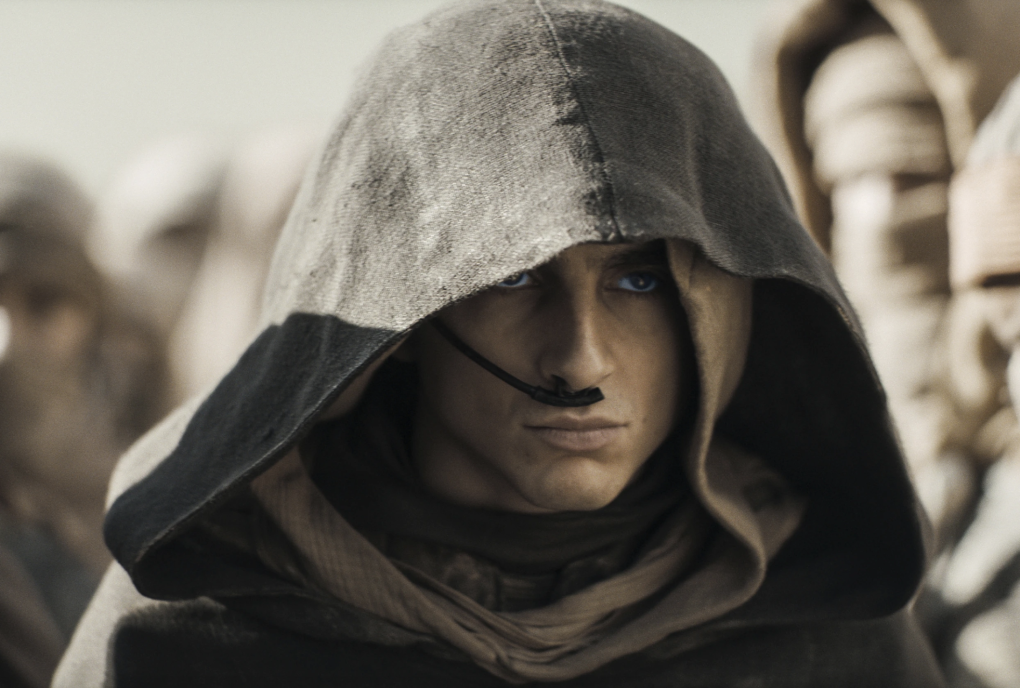
"caption": "Timothee Chalamet in ‘Dune: Part Two.’",
"description": null,
"title": "Timothee Chalamet in ‘Dune: Part Two.’",
"credit": "Niko Tavernise/ Warner Bros. Pictures via AP",
"status": "inherit",
"altTag": "A mysterious white man peers out from under a dark hood. There is a small mechanism placed under his nose.",
"isLoading": false,
"fetchFailed": false
},
"arts_13952417": {
"type": "attachments",
"id": "arts_13952417",
"meta": {
"index": "attachments_1716263798",
"site": "arts",
"id": "13952417",
"found": true
},
"parent": 13952372,
"imgSizes": {
"twentyfourteen-full-width": {
"file": "https://cdn.kqed.org/wp-content/uploads/sites/2/2024/02/GettyImages-1309725971-1024x576.jpg",
"width": 1024,
"mimeType": "image/jpeg",
"height": 576
},
"thumbnail": {
"file": "https://cdn.kqed.org/wp-content/uploads/sites/2/2024/02/GettyImages-1309725971-160x107.jpg",
"width": 160,
"mimeType": "image/jpeg",
"height": 107
},
"post-thumbnail": {
"file": "https://cdn.kqed.org/wp-content/uploads/sites/2/2024/02/GettyImages-1309725971-672x372.jpg",
"width": 672,
"mimeType": "image/jpeg",
"height": 372
},
"kqedFullSize": {
"file": "https://cdn.kqed.org/wp-content/uploads/sites/2/2024/02/GettyImages-1309725971.jpg",
"width": 1024,
"height": 683
},
"large": {
"file": "https://cdn.kqed.org/wp-content/uploads/sites/2/2024/02/GettyImages-1309725971-1020x680.jpg",
"width": 1020,
"mimeType": "image/jpeg",
"height": 680
},
"medium": {
"file": "https://cdn.kqed.org/wp-content/uploads/sites/2/2024/02/GettyImages-1309725971-800x534.jpg",
"width": 800,
"mimeType": "image/jpeg",
"height": 534
},
"medium_large": {
"file": "https://cdn.kqed.org/wp-content/uploads/sites/2/2024/02/GettyImages-1309725971-768x512.jpg",
"width": 768,
"mimeType": "image/jpeg",
"height": 512
}
},
"publishDate": 1708034107,
"modified": 1708034142,
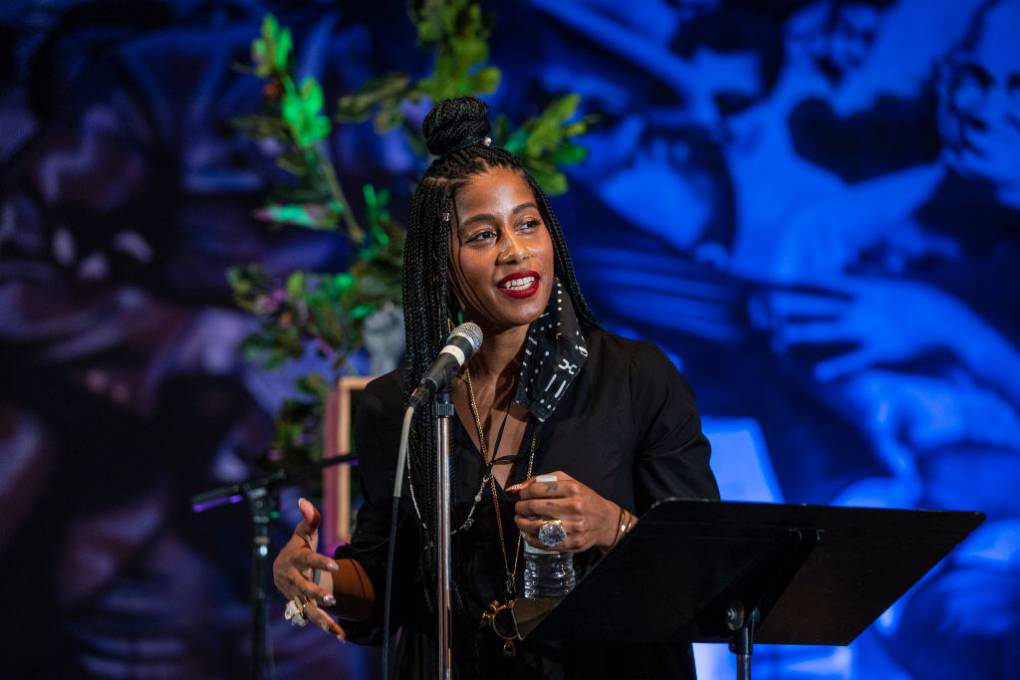
"caption": "aja monet speaks at Studio Be on March 28, 2021 in New Orleans, Louisiana.",
"description": null,
"title": "Aja Monet: A Women's History Month Poetry Session",
"credit": "Erika Goldring/Getty Images",
"status": "inherit",
"altTag": "A poet smiles at a podium.",
"isLoading": false,
"fetchFailed": false
},
"arts_13952049": {
"type": "attachments",
"id": "arts_13952049",
"meta": {
"index": "attachments_1716263798",
"site": "arts",
"id": "13952049",
"found": true
},
"parent": 13952039,
"imgSizes": {
"twentyfourteen-full-width": {
"file": "https://cdn.kqed.org/wp-content/uploads/sites/2/2024/02/Screen-Shot-2024-02-09-at-11.26.39-AM-1038x576.png",
"width": 1038,
"mimeType": "image/png",
"height": 576
},
"thumbnail": {
"file": "https://cdn.kqed.org/wp-content/uploads/sites/2/2024/02/Screen-Shot-2024-02-09-at-11.26.39-AM-160x111.png",
"width": 160,
"mimeType": "image/png",
"height": 111
},
"post-thumbnail": {
"file": "https://cdn.kqed.org/wp-content/uploads/sites/2/2024/02/Screen-Shot-2024-02-09-at-11.26.39-AM-672x372.png",
"width": 672,
"mimeType": "image/png",
"height": 372
},
"kqedFullSize": {
"file": "https://cdn.kqed.org/wp-content/uploads/sites/2/2024/02/Screen-Shot-2024-02-09-at-11.26.39-AM.png",
"width": 1994,
"height": 1384
},
"large": {
"file": "https://cdn.kqed.org/wp-content/uploads/sites/2/2024/02/Screen-Shot-2024-02-09-at-11.26.39-AM-1020x708.png",
"width": 1020,
"mimeType": "image/png",
"height": 708
},
"1536x1536": {
"file": "https://cdn.kqed.org/wp-content/uploads/sites/2/2024/02/Screen-Shot-2024-02-09-at-11.26.39-AM-1536x1066.png",
"width": 1536,
"mimeType": "image/png",
"height": 1066
},
"full-width": {
"file": "https://cdn.kqed.org/wp-content/uploads/sites/2/2024/02/Screen-Shot-2024-02-09-at-11.26.39-AM-1920x1333.png",
"width": 1920,
"mimeType": "image/png",
"height": 1333
},
"medium": {
"file": "https://cdn.kqed.org/wp-content/uploads/sites/2/2024/02/Screen-Shot-2024-02-09-at-11.26.39-AM-800x555.png",
"width": 800,
"mimeType": "image/png",
"height": 555
},
"medium_large": {
"file": "https://cdn.kqed.org/wp-content/uploads/sites/2/2024/02/Screen-Shot-2024-02-09-at-11.26.39-AM-768x533.png",
"width": 768,
"mimeType": "image/png",
"height": 533
}
},
"publishDate": 1707506829,
"modified": 1707506890,
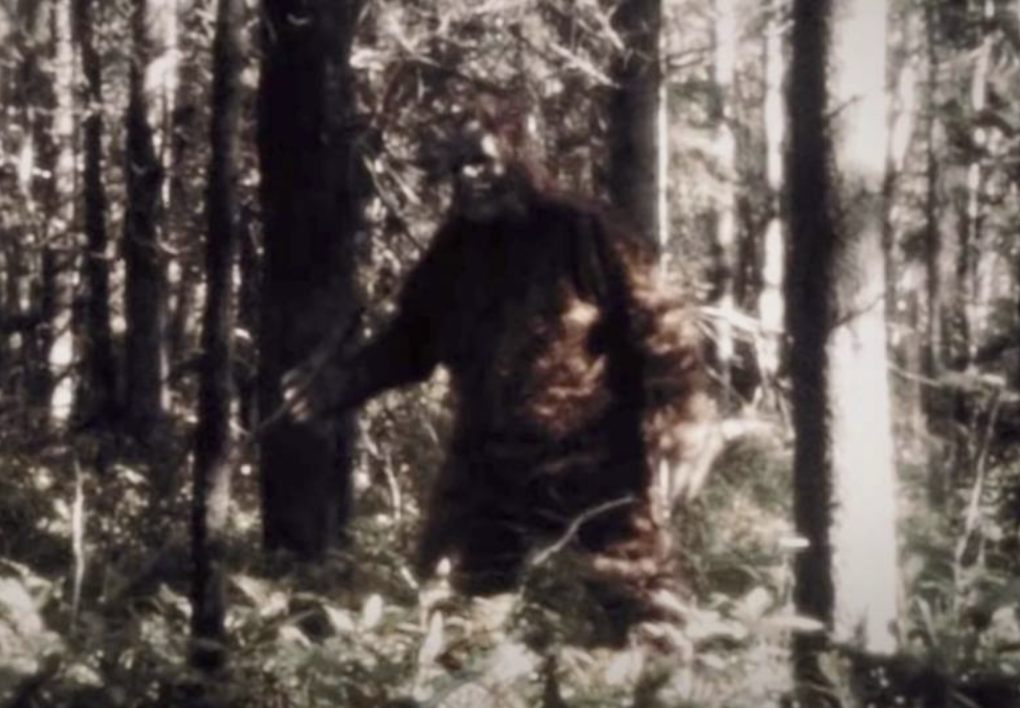
"caption": "A moment from Hulu documentary series, 'Sasquatch'.",
"description": null,
"title": "A moment from Hulu documentary series, 'Sasquatch'.",
"credit": "Hulu",
"status": "inherit",
"altTag": "A person wearing a Bigfoot suit standing in the woods.",
"isLoading": false,
"fetchFailed": false
},
"arts_13951820": {
"type": "attachments",
"id": "arts_13951820",
"meta": {
"index": "attachments_1716263798",
"site": "arts",
"id": "13951820",
"found": true
},
"parent": 13951772,
"imgSizes": {
"twentyfourteen-full-width": {
"file": "https://cdn.kqed.org/wp-content/uploads/sites/2/2024/02/240130-LEGUIN-14-BL-KQED-1038x576.jpeg",
"width": 1038,
"mimeType": "image/jpeg",
"height": 576
},
"thumbnail": {
"file": "https://cdn.kqed.org/wp-content/uploads/sites/2/2024/02/240130-LEGUIN-14-BL-KQED-160x107.jpeg",
"width": 160,
"mimeType": "image/jpeg",
"height": 107
},
"post-thumbnail": {
"file": "https://cdn.kqed.org/wp-content/uploads/sites/2/2024/02/240130-LEGUIN-14-BL-KQED-672x372.jpeg",
"width": 672,
"mimeType": "image/jpeg",
"height": 372
},
"kqedFullSize": {
"file": "https://cdn.kqed.org/wp-content/uploads/sites/2/2024/02/240130-LEGUIN-14-BL-KQED.jpeg",
"width": 2000,
"height": 1333
},
"large": {
"file": "https://cdn.kqed.org/wp-content/uploads/sites/2/2024/02/240130-LEGUIN-14-BL-KQED-1020x680.jpeg",
"width": 1020,
"mimeType": "image/jpeg",
"height": 680
},
"1536x1536": {
"file": "https://cdn.kqed.org/wp-content/uploads/sites/2/2024/02/240130-LEGUIN-14-BL-KQED-1536x1024.jpeg",
"width": 1536,
"mimeType": "image/jpeg",
"height": 1024
},
"full-width": {
"file": "https://cdn.kqed.org/wp-content/uploads/sites/2/2024/02/240130-LEGUIN-14-BL-KQED-1920x1280.jpeg",
"width": 1920,
"mimeType": "image/jpeg",
"height": 1280
},
"medium": {
"file": "https://cdn.kqed.org/wp-content/uploads/sites/2/2024/02/240130-LEGUIN-14-BL-KQED-800x533.jpeg",
"width": 800,
"mimeType": "image/jpeg",
"height": 533
},
"medium_large": {
"file": "https://cdn.kqed.org/wp-content/uploads/sites/2/2024/02/240130-LEGUIN-14-BL-KQED-768x512.jpeg",
"width": 768,
"mimeType": "image/jpeg",
"height": 512
}
},
"publishDate": 1707373903,
"modified": 1707374052,
"caption": "Mark Funke holds the novel 'The Left Hand of Darkness' by Ursula K. Le Guin at his office in Mill Valley on Jan. 30, 2024.",
"description": null,
"title": "240130-LEGUIN-14-BL-KQED",
"credit": "Beth LaBerge/KQED",
"status": "inherit",
"altTag": "Person on suit holds a paperback book in front of them with two hands",
"isLoading": false,
"fetchFailed": false
},
"arts_13951674": {
"type": "attachments",
"id": "arts_13951674",
"meta": {
"index": "attachments_1716263798",
"site": "arts",
"id": "13951674",
"found": true
},
"parent": 13950605,
"imgSizes": {
"twentyfourteen-full-width": {
"file": "https://cdn.kqed.org/wp-content/uploads/sites/2/2024/02/GettyImages-1487065977-1038x576.jpg",
"width": 1038,
"mimeType": "image/jpeg",
"height": 576
},
"thumbnail": {
"file": "https://cdn.kqed.org/wp-content/uploads/sites/2/2024/02/GettyImages-1487065977-160x119.jpg",
"width": 160,
"mimeType": "image/jpeg",
"height": 119
},
"post-thumbnail": {
"file": "https://cdn.kqed.org/wp-content/uploads/sites/2/2024/02/GettyImages-1487065977-672x372.jpg",
"width": 672,
"mimeType": "image/jpeg",
"height": 372
},
"kqedFullSize": {
"file": "https://cdn.kqed.org/wp-content/uploads/sites/2/2024/02/GettyImages-1487065977-scaled-e1707250758209.jpg",
"width": 1920,
"height": 1422
},
"2048x2048": {
"file": "https://cdn.kqed.org/wp-content/uploads/sites/2/2024/02/GettyImages-1487065977-2048x1517.jpg",
"width": 2048,
"mimeType": "image/jpeg",
"height": 1517
},
"large": {
"file": "https://cdn.kqed.org/wp-content/uploads/sites/2/2024/02/GettyImages-1487065977-1020x756.jpg",
"width": 1020,
"mimeType": "image/jpeg",
"height": 756
},
"1536x1536": {
"file": "https://cdn.kqed.org/wp-content/uploads/sites/2/2024/02/GettyImages-1487065977-1536x1138.jpg",
"width": 1536,
"mimeType": "image/jpeg",
"height": 1138
},
"full-width": {
"file": "https://cdn.kqed.org/wp-content/uploads/sites/2/2024/02/GettyImages-1487065977-1920x1422.jpg",
"width": 1920,
"mimeType": "image/jpeg",
"height": 1422
},
"medium": {
"file": "https://cdn.kqed.org/wp-content/uploads/sites/2/2024/02/GettyImages-1487065977-800x593.jpg",
"width": 800,
"mimeType": "image/jpeg",
"height": 593
},
"medium_large": {
"file": "https://cdn.kqed.org/wp-content/uploads/sites/2/2024/02/GettyImages-1487065977-768x569.jpg",
"width": 768,
"mimeType": "image/jpeg",
"height": 569
}
},
"publishDate": 1707250734,
"modified": 1707250925,
"caption": "The Beatles with a copy of ‘Sgt. Pepper’s Lonely Hearts Club Band,’ circa 1967.",
"description": null,
"title": "The Beatles with a copy of ‘Sgt. Pepper’s Lonely Hearts Club Band,’ circa 1967.",
"credit": "Universal Archive/ Universal Images Group via Getty Images",
"status": "inherit",
"altTag": null,
"isLoading": false,
"fetchFailed": false
},
"arts_13950826": {
"type": "attachments",
"id": "arts_13950826",
"meta": {
"index": "attachments_1716263798",
"site": "arts",
"id": "13950826",
"found": true
},
"parent": 13950809,
"imgSizes": {
"twentyfourteen-full-width": {
"file": "https://cdn.kqed.org/wp-content/uploads/sites/2/2024/01/the-showman-cover-harper-collins-cropped-990x576.jpg",
"width": 990,
"mimeType": "image/jpeg",
"height": 576
},
"thumbnail": {
"file": "https://cdn.kqed.org/wp-content/uploads/sites/2/2024/01/the-showman-cover-harper-collins-cropped-160x107.jpg",
"width": 160,
"mimeType": "image/jpeg",
"height": 107
},
"post-thumbnail": {
"file": "https://cdn.kqed.org/wp-content/uploads/sites/2/2024/01/the-showman-cover-harper-collins-cropped-672x372.jpg",
"width": 672,
"mimeType": "image/jpeg",
"height": 372
},
"kqedFullSize": {
"file": "https://cdn.kqed.org/wp-content/uploads/sites/2/2024/01/the-showman-cover-harper-collins-cropped.jpg",
"width": 990,
"height": 660
},
"medium": {
"file": "https://cdn.kqed.org/wp-content/uploads/sites/2/2024/01/the-showman-cover-harper-collins-cropped-800x533.jpg",
"width": 800,
"mimeType": "image/jpeg",
"height": 533
},
"medium_large": {
"file": "https://cdn.kqed.org/wp-content/uploads/sites/2/2024/01/the-showman-cover-harper-collins-cropped-768x512.jpg",
"width": 768,
"mimeType": "image/jpeg",
"height": 512
}
},
"publishDate": 1706038759,
"modified": 1706038786,
"caption": "'The Showman' by Simon Shuster. ",
"description": null,
"title": "the showman cover harper collins-cropped",
"credit": "Harper Collins",
"status": "inherit",
"altTag": null,
"isLoading": false,
"fetchFailed": false
},
"arts_13813029": {
"type": "attachments",
"id": "arts_13813029",
"meta": {
"index": "attachments_1716263798",
"site": "arts",
"id": "13813029",
"found": true
},
"parent": 13813015,
"imgSizes": {
"small": {
"file": "https://ww2.kqed.org/app/uploads/sites/2/2017/10/SR.Fire_.Getty_-520x347.jpg",
"width": 520,
"mimeType": "image/jpeg",
"height": 347
},
"twentyfourteen-full-width": {
"file": "https://ww2.kqed.org/app/uploads/sites/2/2017/10/SR.Fire_.Getty_-1038x576.jpg",
"width": 1038,
"mimeType": "image/jpeg",
"height": 576
},
"thumbnail": {
"file": "https://ww2.kqed.org/app/uploads/sites/2/2017/10/SR.Fire_.Getty_-160x107.jpg",
"width": 160,
"mimeType": "image/jpeg",
"height": 107
},
"fd-sm": {
"file": "https://ww2.kqed.org/app/uploads/sites/2/2017/10/SR.Fire_.Getty_-960x640.jpg",
"width": 960,
"mimeType": "image/jpeg",
"height": 640
},
"post-thumbnail": {
"file": "https://ww2.kqed.org/app/uploads/sites/2/2017/10/SR.Fire_.Getty_-672x372.jpg",
"width": 672,
"mimeType": "image/jpeg",
"height": 372
},
"xsmall": {
"file": "https://ww2.kqed.org/app/uploads/sites/2/2017/10/SR.Fire_.Getty_-375x250.jpg",
"width": 375,
"mimeType": "image/jpeg",
"height": 250
},
"kqedFullSize": {
"file": "https://ww2.kqed.org/app/uploads/sites/2/2017/10/SR.Fire_.Getty_.jpg",
"width": 1100,
"height": 733
},
"large": {
"file": "https://ww2.kqed.org/app/uploads/sites/2/2017/10/SR.Fire_.Getty_-1020x680.jpg",
"width": 1020,
"mimeType": "image/jpeg",
"height": 680
},
"guest-author-50": {
"file": "https://ww2.kqed.org/app/uploads/sites/2/2017/10/SR.Fire_.Getty_-50x50.jpg",
"width": 50,
"mimeType": "image/jpeg",
"height": 50
},
"guest-author-96": {
"file": "https://ww2.kqed.org/app/uploads/sites/2/2017/10/SR.Fire_.Getty_-96x96.jpg",
"width": 96,
"mimeType": "image/jpeg",
"height": 96
},
"medium": {
"file": "https://ww2.kqed.org/app/uploads/sites/2/2017/10/SR.Fire_.Getty_-800x533.jpg",
"width": 800,
"mimeType": "image/jpeg",
"height": 533
},
"guest-author-64": {
"file": "https://ww2.kqed.org/app/uploads/sites/2/2017/10/SR.Fire_.Getty_-64x64.jpg",
"width": 64,
"mimeType": "image/jpeg",
"height": 64
},
"guest-author-32": {
"file": "https://ww2.kqed.org/app/uploads/sites/2/2017/10/SR.Fire_.Getty_-32x32.jpg",
"width": 32,
"mimeType": "image/jpeg",
"height": 32
},
"detail": {
"file": "https://ww2.kqed.org/app/uploads/sites/2/2017/10/SR.Fire_.Getty_-150x150.jpg",
"width": 150,
"mimeType": "image/jpeg",
"height": 150
},
"medium_large": {
"file": "https://ww2.kqed.org/app/uploads/sites/2/2017/10/SR.Fire_.Getty_-768x512.jpg",
"width": 768,
"mimeType": "image/jpeg",
"height": 512
},
"guest-author-128": {
"file": "https://ww2.kqed.org/app/uploads/sites/2/2017/10/SR.Fire_.Getty_-128x128.jpg",
"width": 128,
"mimeType": "image/jpeg",
"height": 128
},
"xxsmall": {
"file": "https://ww2.kqed.org/app/uploads/sites/2/2017/10/SR.Fire_.Getty_-240x160.jpg",
"width": 240,
"mimeType": "image/jpeg",
"height": 160
}
},
"publishDate": 1509311551,
"modified": 1509390945,
"caption": "Wildfire rages through trees toward the valley on Oct. 8, 2017.",
"description": "Wildfire creeps through the forest, down Wildfire rages through trees toward the valley on Oct. 8, 2017. ",
"title": "SR.Fire.Getty",
"credit": "David McNew/Getty Images",
"status": "inherit",
"isLoading": false,
"fetchFailed": false
},
"arts_13950704": {
"type": "attachments",
"id": "arts_13950704",
"meta": {
"index": "attachments_1716263798",
"site": "arts",
"id": "13950704",
"found": true
},
"parent": 13950698,
"imgSizes": {
"twentyfourteen-full-width": {
"file": "https://cdn.kqed.org/wp-content/uploads/sites/2/2024/01/Screen-Shot-2024-01-22-at-10.33.28-AM-1038x576.png",
"width": 1038,
"mimeType": "image/png",
"height": 576
},
"thumbnail": {
"file": "https://cdn.kqed.org/wp-content/uploads/sites/2/2024/01/Screen-Shot-2024-01-22-at-10.33.28-AM-160x115.png",
"width": 160,
"mimeType": "image/png",
"height": 115
},
"post-thumbnail": {
"file": "https://cdn.kqed.org/wp-content/uploads/sites/2/2024/01/Screen-Shot-2024-01-22-at-10.33.28-AM-672x372.png",
"width": 672,
"mimeType": "image/png",
"height": 372
},
"kqedFullSize": {
"file": "https://cdn.kqed.org/wp-content/uploads/sites/2/2024/01/Screen-Shot-2024-01-22-at-10.33.28-AM.png",
"width": 1394,
"height": 1000
},
"large": {
"file": "https://cdn.kqed.org/wp-content/uploads/sites/2/2024/01/Screen-Shot-2024-01-22-at-10.33.28-AM-1020x732.png",
"width": 1020,
"mimeType": "image/png",
"height": 732
},
"medium": {
"file": "https://cdn.kqed.org/wp-content/uploads/sites/2/2024/01/Screen-Shot-2024-01-22-at-10.33.28-AM-800x574.png",
"width": 800,
"mimeType": "image/png",
"height": 574
},
"medium_large": {
"file": "https://cdn.kqed.org/wp-content/uploads/sites/2/2024/01/Screen-Shot-2024-01-22-at-10.33.28-AM-768x551.png",
"width": 768,
"mimeType": "image/png",
"height": 551
}
},
"publishDate": 1705948426,
"modified": 1705948501,
"caption": "A moment from ‘The Eyes and the Impossible.’",
"description": null,
"title": "A moment from ‘The Eyes and the Impossible.’",
"credit": "Knopf Books for Young Readers",
"status": "inherit",
"altTag": "An illustration of a dog running through the woods.",
"isLoading": false,
"fetchFailed": false
},
"arts_13950512": {
"type": "attachments",
"id": "arts_13950512",
"meta": {
"index": "attachments_1716263798",
"site": "arts",
"id": "13950512",
"found": true
},
"parent": 13950482,
"imgSizes": {
"twentyfourteen-full-width": {
"file": "https://cdn.kqed.org/wp-content/uploads/sites/2/2024/01/Screen-Shot-2024-01-17-at-12.27.24-PM-1038x576.png",
"width": 1038,
"mimeType": "image/png",
"height": 576
},
"thumbnail": {
"file": "https://cdn.kqed.org/wp-content/uploads/sites/2/2024/01/Screen-Shot-2024-01-17-at-12.27.24-PM-160x105.png",
"width": 160,
"mimeType": "image/png",
"height": 105
},
"post-thumbnail": {
"file": "https://cdn.kqed.org/wp-content/uploads/sites/2/2024/01/Screen-Shot-2024-01-17-at-12.27.24-PM-672x372.png",
"width": 672,
"mimeType": "image/png",
"height": 372
},
"kqedFullSize": {
"file": "https://cdn.kqed.org/wp-content/uploads/sites/2/2024/01/Screen-Shot-2024-01-17-at-12.27.24-PM.png",
"width": 1872,
"height": 1226
},
"large": {
"file": "https://cdn.kqed.org/wp-content/uploads/sites/2/2024/01/Screen-Shot-2024-01-17-at-12.27.24-PM-1020x668.png",
"width": 1020,
"mimeType": "image/png",
"height": 668
},
"1536x1536": {
"file": "https://cdn.kqed.org/wp-content/uploads/sites/2/2024/01/Screen-Shot-2024-01-17-at-12.27.24-PM-1536x1006.png",
"width": 1536,
"mimeType": "image/png",
"height": 1006
},
"medium": {
"file": "https://cdn.kqed.org/wp-content/uploads/sites/2/2024/01/Screen-Shot-2024-01-17-at-12.27.24-PM-800x524.png",
"width": 800,
"mimeType": "image/png",
"height": 524
},
"medium_large": {
"file": "https://cdn.kqed.org/wp-content/uploads/sites/2/2024/01/Screen-Shot-2024-01-17-at-12.27.24-PM-768x503.png",
"width": 768,
"mimeType": "image/png",
"height": 503
}
},
"publishDate": 1705523311,
"modified": 1705523436,
"caption": "Jon Bernthal and Aunjanue Ellis-Taylor star in ‘Origin.’",
"description": null,
"title": "Jon Bernthal and Aunjanue Ellis-Taylor star in ‘Origin.’",
"credit": "Atsushi Nishijima/ Neon via AP",
"status": "inherit",
"altTag": "A white man and a Black woman stand outdoors with their foreheads touching, forlornly.",
"isLoading": false,
"fetchFailed": false
},
"arts_13950483": {
"type": "attachments",
"id": "arts_13950483",
"meta": {
"index": "attachments_1716263798",
"site": "arts",
"id": "13950483",
"found": true
},
"parent": 13950449,
"imgSizes": {
"twentyfourteen-full-width": {
"file": "https://cdn.kqed.org/wp-content/uploads/sites/2/2024/01/Adjei-Brenyah_Nana-Kwame_Headshot_Photo-Credit-Alex-M-Philip-cropped-1038x576.jpg",
"width": 1038,
"mimeType": "image/jpeg",
"height": 576
},
"thumbnail": {
"file": "https://cdn.kqed.org/wp-content/uploads/sites/2/2024/01/Adjei-Brenyah_Nana-Kwame_Headshot_Photo-Credit-Alex-M-Philip-cropped-160x107.jpg",
"width": 160,
"mimeType": "image/jpeg",
"height": 107
},
"post-thumbnail": {
"file": "https://cdn.kqed.org/wp-content/uploads/sites/2/2024/01/Adjei-Brenyah_Nana-Kwame_Headshot_Photo-Credit-Alex-M-Philip-cropped-672x372.jpg",
"width": 672,
"mimeType": "image/jpeg",
"height": 372
},
"kqedFullSize": {
"file": "https://cdn.kqed.org/wp-content/uploads/sites/2/2024/01/Adjei-Brenyah_Nana-Kwame_Headshot_Photo-Credit-Alex-M-Philip-cropped.jpg",
"width": 1920,
"height": 1280
},
"large": {
"file": "https://cdn.kqed.org/wp-content/uploads/sites/2/2024/01/Adjei-Brenyah_Nana-Kwame_Headshot_Photo-Credit-Alex-M-Philip-cropped-1020x680.jpg",
"width": 1020,
"mimeType": "image/jpeg",
"height": 680
},
"1536x1536": {
"file": "https://cdn.kqed.org/wp-content/uploads/sites/2/2024/01/Adjei-Brenyah_Nana-Kwame_Headshot_Photo-Credit-Alex-M-Philip-cropped-1536x1024.jpg",
"width": 1536,
"mimeType": "image/jpeg",
"height": 1024
},
"medium": {
"file": "https://cdn.kqed.org/wp-content/uploads/sites/2/2024/01/Adjei-Brenyah_Nana-Kwame_Headshot_Photo-Credit-Alex-M-Philip-cropped-800x533.jpg",
"width": 800,
"mimeType": "image/jpeg",
"height": 533
},
"medium_large": {
"file": "https://cdn.kqed.org/wp-content/uploads/sites/2/2024/01/Adjei-Brenyah_Nana-Kwame_Headshot_Photo-Credit-Alex-M-Philip-cropped-768x512.jpg",
"width": 768,
"mimeType": "image/jpeg",
"height": 512
}
},
"publishDate": 1705516164,
"modified": 1705516240,
"caption": "Nana Kwame Adjei-Brenhyah.",
"description": null,
"title": "Adjei-Brenyah_Nana Kwame_Headshot_Photo Credit-Alex M Philip-cropped",
"credit": "Alex M. Philip",
"status": "inherit",
"altTag": "Nana Kwame Adjei-Brenyah sits on a staircase while looking at the camera with one hand on his face.",
"isLoading": false,
"fetchFailed": false
},
"arts_13950448": {
"type": "attachments",
"id": "arts_13950448",
"meta": {
"index": "attachments_1716263798",
"site": "arts",
"id": "13950448",
"found": true
},
"parent": 13940524,
"imgSizes": {
"twentyfourteen-full-width": {
"file": "https://cdn.kqed.org/wp-content/uploads/sites/2/2024/01/DeadInLongBeach_COVER-1038x576.png",
"width": 1038,
"mimeType": "image/png",
"height": 576
},
"thumbnail": {
"file": "https://cdn.kqed.org/wp-content/uploads/sites/2/2024/01/DeadInLongBeach_COVER-160x90.png",
"width": 160,
"mimeType": "image/png",
"height": 90
},
"post-thumbnail": {
"file": "https://cdn.kqed.org/wp-content/uploads/sites/2/2024/01/DeadInLongBeach_COVER-672x372.png",
"width": 672,
"mimeType": "image/png",
"height": 372
},
"kqedFullSize": {
"file": "https://cdn.kqed.org/wp-content/uploads/sites/2/2024/01/DeadInLongBeach_COVER.png",
"width": 2048,
"height": 1152
},
"large": {
"file": "https://cdn.kqed.org/wp-content/uploads/sites/2/2024/01/DeadInLongBeach_COVER-1020x574.png",
"width": 1020,
"mimeType": "image/png",
"height": 574
},
"1536x1536": {
"file": "https://cdn.kqed.org/wp-content/uploads/sites/2/2024/01/DeadInLongBeach_COVER-1536x864.png",
"width": 1536,
"mimeType": "image/png",
"height": 864
},
"full-width": {
"file": "https://cdn.kqed.org/wp-content/uploads/sites/2/2024/01/DeadInLongBeach_COVER-1920x1080.png",
"width": 1920,
"mimeType": "image/png",
"height": 1080
},
"medium": {
"file": "https://cdn.kqed.org/wp-content/uploads/sites/2/2024/01/DeadInLongBeach_COVER-800x450.png",
"width": 800,
"mimeType": "image/png",
"height": 450
},
"medium_large": {
"file": "https://cdn.kqed.org/wp-content/uploads/sites/2/2024/01/DeadInLongBeach_COVER-768x432.png",
"width": 768,
"mimeType": "image/png",
"height": 432
}
},
"publishDate": 1705448432,
"modified": 1705448628,
"caption": "The debut novel from Venita Blackburn, who teaches creative writing at California State University, Fresno, is out Jan. 23, 2024.",
"description": null,
"title": "DeadInLongBeach_COVER",
"credit": "Photo by Ronnie Pittman/Flickr; Collage by Sarah Hotchkiss",
"status": "inherit",
"altTag": "Bright red book cover against background of yellow palm trees and blue sky",
"isLoading": false,
"fetchFailed": false
},
"arts_13940280": {
"type": "attachments",
"id": "arts_13940280",
"meta": {
"index": "attachments_1716263798",
"site": "arts",
"id": "13940280",
"found": true
},
"parent": 13940276,
"imgSizes": {
"twentyfourteen-full-width": {
"file": "https://cdn.kqed.org/wp-content/uploads/sites/2/2024/01/Screen-Shot-2024-01-10-at-10.21.10-AM-1038x576.png",
"width": 1038,
"mimeType": "image/png",
"height": 576
},
"thumbnail": {
"file": "https://cdn.kqed.org/wp-content/uploads/sites/2/2024/01/Screen-Shot-2024-01-10-at-10.21.10-AM-160x96.png",
"width": 160,
"mimeType": "image/png",
"height": 96
},
"post-thumbnail": {
"file": "https://cdn.kqed.org/wp-content/uploads/sites/2/2024/01/Screen-Shot-2024-01-10-at-10.21.10-AM-672x372.png",
"width": 672,
"mimeType": "image/png",
"height": 372
},
"kqedFullSize": {
"file": "https://cdn.kqed.org/wp-content/uploads/sites/2/2024/01/Screen-Shot-2024-01-10-at-10.21.10-AM.png",
"width": 1682,
"height": 1014
},
"large": {
"file": "https://cdn.kqed.org/wp-content/uploads/sites/2/2024/01/Screen-Shot-2024-01-10-at-10.21.10-AM-1020x615.png",
"width": 1020,
"mimeType": "image/png",
"height": 615
},
"1536x1536": {
"file": "https://cdn.kqed.org/wp-content/uploads/sites/2/2024/01/Screen-Shot-2024-01-10-at-10.21.10-AM-1536x926.png",
"width": 1536,
"mimeType": "image/png",
"height": 926
},
"medium": {
"file": "https://cdn.kqed.org/wp-content/uploads/sites/2/2024/01/Screen-Shot-2024-01-10-at-10.21.10-AM-800x482.png",
"width": 800,
"mimeType": "image/png",
"height": 482
},
"medium_large": {
"file": "https://cdn.kqed.org/wp-content/uploads/sites/2/2024/01/Screen-Shot-2024-01-10-at-10.21.10-AM-768x463.png",
"width": 768,
"mimeType": "image/png",
"height": 463
}
},
"publishDate": 1704910889,
"modified": 1704910952,
"caption": "‘The Fetishist,’ Katherine Min.",
"description": null,
"title": "‘The Fetishist,’ Katherine Min.",
"credit": "G.P. Putnam’s Sons",
"status": "inherit",
"altTag": "A purple book cover featuring a blowfish, mouth agape.",
"isLoading": false,
"fetchFailed": false
}
},
"audioPlayerReducer": {
"postId": "stream_live",
"isPaused": true,
"isPlaying": false,
"pfsActive": false,
"pledgeModalIsOpen": true,
"playerDrawerIsOpen": false,
"liveAudioPlayStartedAt": 0,
"liveAudioPlayContext": ""
},
"authorsReducer": {
"byline_arts_13952684": {
"type": "authors",
"id": "byline_arts_13952684",
"meta": {
"override": true
},
"slug": "byline_arts_13952684",
"name": "Jake Coyle, Associated Press",
"isLoading": false
},
"byline_arts_13952039": {
"type": "authors",
"id": "byline_arts_13952039",
"meta": {
"override": true
},
"slug": "byline_arts_13952039",
"name": "Gabino Iglesias",
"isLoading": false
},
"byline_arts_13950809": {
"type": "authors",
"id": "byline_arts_13950809",
"meta": {
"override": true
},
"slug": "byline_arts_13950809",
"name": "Sasha Vasilyuk",
"isLoading": false
},
"byline_arts_13950717": {
"type": "authors",
"id": "byline_arts_13950717",
"meta": {
"override": true
},
"slug": "byline_arts_13950717",
"name": "Kristen Martin",
"isLoading": false
},
"byline_arts_13950698": {
"type": "authors",
"id": "byline_arts_13950698",
"meta": {
"override": true
},
"slug": "byline_arts_13950698",
"name": "Anastasia Tsioulcas",
"isLoading": false
},
"byline_arts_13950482": {
"type": "authors",
"id": "byline_arts_13950482",
"meta": {
"override": true
},
"slug": "byline_arts_13950482",
"name": "Lindsey Bahr, Associated Press",
"isLoading": false
},
"byline_arts_13940276": {
"type": "authors",
"id": "byline_arts_13940276",
"meta": {
"override": true
},
"slug": "byline_arts_13940276",
"name": "Kristen Martin",
"isLoading": false
},
"ralexandra": {
"type": "authors",
"id": "11242",
"meta": {
"index": "authors_1716337520",
"id": "11242",
"found": true
},
"name": "Rae Alexandra",
"firstName": "Rae",
"lastName": "Alexandra",
"slug": "ralexandra",
"email": "rae-alexandra@outlook.com",
"display_author_email": true,
"staff_mastheads": [],
"title": "Former Staff Writer and Reporter, KQED Arts & Culture",
"bio": "Rae Alexandra is the creator and author of the series \u003ca href=\"https://www.kqed.org/arts/program/rebel-girls-from-bay-area-history\">Rebel Girls From Bay Area History\u003c/a> and \u003ca href=\"https://www.kqed.org/bizarrebayarea\">Bizarre Bay Area\u003c/a>. Her debut book, \u003ca href=\"https://citylights.com/politics-current-events-history/unsung-heroines35-women-who-changed/\">Unsung Heroines: 35 Women Who Changed the Bay Area\u003c/a> was published by City Lights in March 2026. In 2023, Rae was awarded an SPJ Excellence in Journalism Award for Arts & Culture. Rae was born and raised in Wales and subsequently — even after two decades in Northern California — still uses phrases that regularly baffle her coworkers.",
"avatar": "https://secure.gravatar.com/avatar/4cfcc3e7d8f591d2193600c92003ff8b3519bc2d4aebb2c04075082fd1cc0838?s=600&d=blank&r=g",
"twitter": null,
"bluesky": null,
"facebook": null,
"instagram": null,
"linkedin": null,
"sites": [
{
"site": "arts",
"roles": [
"contributor"
]
},
{
"site": "news",
"roles": [
"subscriber"
]
},
{
"site": "pop",
"roles": [
"subscriber"
]
},
{
"site": "bayareabites",
"roles": [
"subscriber"
]
},
{
"site": "science",
"roles": [
"subscriber"
]
}
],
"headData": {
"title": "Rae Alexandra | KQED",
"description": "Former Staff Writer and Reporter, KQED Arts & Culture",
"ogImgSrc": "https://secure.gravatar.com/avatar/4cfcc3e7d8f591d2193600c92003ff8b3519bc2d4aebb2c04075082fd1cc0838?s=600&d=blank&r=g",
"twImgSrc": "https://secure.gravatar.com/avatar/4cfcc3e7d8f591d2193600c92003ff8b3519bc2d4aebb2c04075082fd1cc0838?s=600&d=blank&r=g"
},
"isLoading": false,
"link": "/author/ralexandra"
},
"nvoynovskaya": {
"type": "authors",
"id": "11387",
"meta": {
"index": "authors_1716337520",
"id": "11387",
"found": true
},
"name": "Nastia Voynovskaya",
"firstName": "Nastia",
"lastName": "Voynovskaya",
"slug": "nvoynovskaya",
"email": "nvoynovskaya@kqed.org",
"display_author_email": false,
"staff_mastheads": [
"arts"
],
"title": "Editor and reporter",
"bio": "Nastia Voynovskaya is a reporter, editor and host at KQED Arts & Culture. She's been covering the arts in the Bay Area for over a decade, with a focus on music, queer culture, labor issues and grassroots organizing. She has edited KQED story series such as Trans Bay: A History of San Francisco's Gender-Diverse Community, and co-created KQED's Bay Area hip-hop history project, That's My Word. Nastia's work has been recognized by the Society of Professional Journalists and San Francisco Press Club. She regularly appears on podcasts and radio programs, including NPR's All Songs Considered, and hosts live events where music, culture and conversation meet.",
"avatar": "https://secure.gravatar.com/avatar/5025ee460e5a85d69ca20ea6c6f2f80d7e17795c828f61ea3aecfcd924e9042e?s=600&d=blank&r=g",
"twitter": null,
"bluesky": null,
"facebook": null,
"instagram": "https://www.instagram.com/nananastia/",
"linkedin": null,
"sites": [
{
"site": "",
"roles": [
"editor"
]
},
{
"site": "arts",
"roles": [
"administrator"
]
},
{
"site": "news",
"roles": [
"editor"
]
},
{
"site": "pop",
"roles": [
"administrator"
]
},
{
"site": "bayareabites",
"roles": [
"editor"
]
},
{
"site": "podcasts",
"roles": [
"editor"
]
},
{
"site": "hiphop",
"roles": [
"editor"
]
}
],
"headData": {
"title": "Nastia Voynovskaya | KQED",
"description": "Editor and reporter",
"ogImgSrc": "https://secure.gravatar.com/avatar/5025ee460e5a85d69ca20ea6c6f2f80d7e17795c828f61ea3aecfcd924e9042e?s=600&d=blank&r=g",
"twImgSrc": "https://secure.gravatar.com/avatar/5025ee460e5a85d69ca20ea6c6f2f80d7e17795c828f61ea3aecfcd924e9042e?s=600&d=blank&r=g"
},
"isLoading": false,
"link": "/author/nvoynovskaya"
},
"agonzalez": {
"type": "authors",
"id": "11724",
"meta": {
"index": "authors_1716337520",
"id": "11724",
"found": true
},
"name": "Alexander Gonzalez",
"firstName": "Alexander",
"lastName": "Gonzalez",
"slug": "agonzalez",
"email": "AlexanderGonzalez@KQED.org",
"display_author_email": false,
"staff_mastheads": [
"news"
],
"title": "KQED Contributor",
"bio": null,
"avatar": "https://secure.gravatar.com/avatar/9e291ed34e154df4c662edf858b641d70b4859939bfe40be478408f9dfd057d2?s=600&d=blank&r=g",
"twitter": null,
"bluesky": null,
"facebook": null,
"instagram": null,
"linkedin": null,
"sites": [
{
"site": "arts",
"roles": [
"editor"
]
},
{
"site": "news",
"roles": [
"editor"
]
},
{
"site": "science",
"roles": [
"editor"
]
}
],
"headData": {
"title": "Alexander Gonzalez | KQED",
"description": "KQED Contributor",
"ogImgSrc": "https://secure.gravatar.com/avatar/9e291ed34e154df4c662edf858b641d70b4859939bfe40be478408f9dfd057d2?s=600&d=blank&r=g",
"twImgSrc": "https://secure.gravatar.com/avatar/9e291ed34e154df4c662edf858b641d70b4859939bfe40be478408f9dfd057d2?s=600&d=blank&r=g"
},
"isLoading": false,
"link": "/author/agonzalez"
},
"nelias": {
"type": "authors",
"id": "11990",
"meta": {
"index": "authors_1716337520",
"id": "11990",
"found": true
},
"name": "Naomi Elias",
"firstName": "Naomi",
"lastName": "Elias",
"slug": "nelias",
"email": "naomielias09@gmail.com",
"display_author_email": false,
"staff_mastheads": [],
"title": "KQED Contributor",
"bio": null,
"avatar": "https://secure.gravatar.com/avatar/182770e03ab93f0fdf3c264ad3d088daf0198dd3bc8e1ccd1a008b81387410c1?s=600&d=blank&r=g",
"twitter": null,
"bluesky": null,
"facebook": null,
"instagram": null,
"linkedin": null,
"sites": [
{
"site": "arts",
"roles": [
"contributor"
]
}
],
"headData": {
"title": "Naomi Elias | KQED",
"description": "KQED Contributor",
"ogImgSrc": "https://secure.gravatar.com/avatar/182770e03ab93f0fdf3c264ad3d088daf0198dd3bc8e1ccd1a008b81387410c1?s=600&d=blank&r=g",
"twImgSrc": "https://secure.gravatar.com/avatar/182770e03ab93f0fdf3c264ad3d088daf0198dd3bc8e1ccd1a008b81387410c1?s=600&d=blank&r=g"
},
"isLoading": false,
"link": "/author/nelias"
}
},
"pagesReducer": {
"arts_category_literature": {
"type": "terms",
"id": "arts_73",
"meta": {
"index": "terms_1716263798",
"site": "arts",
"id": "73",
"score": 12.794945
},
"featImg": null,
"name": "Books",
"description": null,
"taxonomy": "category",
"headData": {
"twImgId": null,
"twTitle": null,
"ogTitle": null,
"ogImgId": null,
"twDescription": null,
"description": null,
"title": "Books Archives | KQED Arts",
"ogDescription": null
},
"ttid": 74,
"slug": "literature",
"isLoading": false,
"title": "Books",
"pageMeta": {
"site": "arts",
"WpPageTemplate": "page-topic-editorial",
"currentPage": 29
},
"blocks": [
{
"blockName": "kqed/post-list",
"attrs": {
"layout": "cardArticle2",
"query": "posts/arts?category=literature",
"seeMore": false,
"paginated": true,
"page": 29
}
},
{
"blockName": "kqed/ad"
}
]
}
},
"pfsSessionReducer": {},
"postsReducer": {
"stream_live": {
"type": "live",
"id": "stream_live",
"audioUrl": "https://hls.kqed.org/hls/kqed_app/playlist.m3u8",
"title": "Live Stream",
"excerpt": "Live Stream information currently unavailable.",
"link": "/radio",
"featImg": "",
"label": {
"name": "KQED Live",
"link": "/"
}
},
"stream_kqedNewscast": {
"type": "posts",
"id": "stream_kqedNewscast",
"audioUrl": "https://www.kqed.org/.stream/anon/radio/RDnews/newscast.mp3?_=1",
"title": "KQED Newscast",
"featImg": "",
"label": {
"name": "88.5 FM",
"link": "/"
}
},
"arts_13952684": {
"type": "posts",
"id": "arts_13952684",
"meta": {
"index": "posts_1716263798",
"site": "arts",
"id": "13952684",
"score": null,
"sort": [
1708541138000
]
},
"parent": 0,
"labelTerm": {
"site": "arts",
"term": 140
},
"blocks": [],
"publishDate": 1708541138,
"format": "standard",
"title": "‘Dune: Part Two’ Sustains the Dystopian Dream of ‘Part One’",
"headTitle": "‘Dune: Part Two’ Sustains the Dystopian Dream of ‘Part One’ | KQED",
"content": "\u003cp>Three firm thumps into the Arrakis sand is all you need to summon a sandworm in Denis Villeneuve’s \u003cem>Dune: Part Two\u003c/em>. It’s almost as easy as hailing a cab or calling for the check.\u003c/p>\n\u003cp>The big buggers can’t resist the sound, which is a little like how I feel taking in all the vibrations of Villeneuve’s adaptation of Frank Herbert’s 1965 science-fiction novel. Whispers, incantations and guttural sounds buzz throughout \u003cem>Part Two\u003c/em>, a hissing hulk of a sequel that fluctuates between ominous silences and thunderous booms.\u003c/p>\n\u003cp>[aside postid='arts_13952488']The first \u003cem>Dune\u003c/em>, released in 2021 when movie theaters were still humbled by the pandemic, tackled just the first half of Herbert’s opus, saving the second half for the sequel. That split can be owed in part to the enormous amount of plot contained in the novel, but it can also be attributed to the operatic rhythms of Villeneuve’s solemn spectacle. Sober as they are, \u003cem>Dune\u003c/em> parts one and two are almost drunk on their own sense of atmosphere.\u003c/p>\n\u003cp>And with good reason. Like its predecessor, Dune: Part Two thrums with an intoxicating big-screen expressionism of monoliths and mosquitos, fevered visions and messianic fervor — more dystopian dream, or nightmare, than a straightforward narrative.\u003c/p>\n\u003cp>That filmmaking prowess sometimes comes at the expense of other things. Humor, for one, is in shorter supply on Arrakis than water. Javier Bardem, returning as the Fremen leader Stilgar, alone seems to want to breathe a little laughter into all the fiery red sands and mammoth machinery of \u003cem>Dune\u003c/em>.\u003c/p>\n\u003cp>[ad fullwidth]\u003c/p>\n\u003cp>https://www.youtube.com/watch?v=1kI6nXntYN8\u003c/p>\n\u003cp>\u003cem>Part Two\u003c/em> primarily follows the rise of Paul Atreides ( Timothée Chalamet ), who, after seeing his father killed and House Atreides routed from the Arrakis capital by House Harkonnen and Baron Vladimir Harkonnen (a monstrously good Stellan Skarsgård), is now living among the Fremen, the desert-dwelling peoples of Arrakis, with his mother Lady Jessica (Rebecca Ferguson).\u003c/p>\n\u003cp>[aside postid='arts_13951896']The myth of Paul is already growing among the Fremen, who call him Muad’Dib. (A great feature of these movies, like Hebert’s books, is the exquisite names.) Is he the chosen one or a false prophet? Doubts are gradually erased by his accomplishments (leading strikes against Harkonnen spice harvesters; quickly learning the ways of the Fremen); the cunning maneuvering of Lady Jessica; and the worshipful zeal of Stilgar.\u003c/p>\n\u003cp>The Fremen warrior Chani ( Zendaya ), though skeptical of the hype, believes, with some reluctance, in Paul. \u003cem>Part Two\u003c/em> is significantly propped up by their dynamic and budding romance, a relationship that gives a deserving wide-screen canvas to two of the most exciting young movie stars of their generation.\u003c/p>\n\u003cp>For a while it’s fun and games in the desert, blowing up stuff and learning how to ride sand worms. Oh, there’s the matter of the “holy poison” forced on Lady Jessica, a neon-blue liquid extracted from sand worms that looks like it would produce a fine Slush Puppie, but, if it doesn’t kill you, confers a frightful clairvoyance of the universe.\u003c/p>\n\u003cfigure id=\"attachment_13952686\" class=\"wp-caption aligncenter\" style=\"max-width: 1946px\">\u003cimg loading=\"lazy\" decoding=\"async\" class=\"size-full wp-image-13952686\" src=\"https://cdn.kqed.org/wp-content/uploads/sites/2/2024/02/Screen-Shot-2024-02-21-at-10.26.31-AM.png\" alt=\"A woman glares into the distance with thinly veiled anger. She is wearing dirty utilitarian clothes and is surrounded by men dressed similarly.\" width=\"1946\" height=\"1278\" srcset=\"https://cdn.kqed.org/wp-content/uploads/sites/2/2024/02/Screen-Shot-2024-02-21-at-10.26.31-AM.png 1946w, https://cdn.kqed.org/wp-content/uploads/sites/2/2024/02/Screen-Shot-2024-02-21-at-10.26.31-AM-800x525.png 800w, https://cdn.kqed.org/wp-content/uploads/sites/2/2024/02/Screen-Shot-2024-02-21-at-10.26.31-AM-1020x670.png 1020w, https://cdn.kqed.org/wp-content/uploads/sites/2/2024/02/Screen-Shot-2024-02-21-at-10.26.31-AM-160x105.png 160w, https://cdn.kqed.org/wp-content/uploads/sites/2/2024/02/Screen-Shot-2024-02-21-at-10.26.31-AM-768x504.png 768w, https://cdn.kqed.org/wp-content/uploads/sites/2/2024/02/Screen-Shot-2024-02-21-at-10.26.31-AM-1536x1009.png 1536w, https://cdn.kqed.org/wp-content/uploads/sites/2/2024/02/Screen-Shot-2024-02-21-at-10.26.31-AM-1920x1261.png 1920w\" sizes=\"(max-width: 1946px) 100vw, 1946px\">\u003cfigcaption class=\"wp-caption-text\">Zendaya in ‘Dune: Part Two.’ \u003ccite>(Warner Bros. Pictures via AP)\u003c/cite>\u003c/figcaption>\u003c/figure>\n\u003cp>Blue is an important color in the otherwise darker shaded \u003cem>Dune\u003c/em>. It lights up in Lady Jessica’s eyes and, later, Paul’s too. If you thought Peter O’Toole’s eyes blazed in \u003cem>Lawrence of Arabia\u003c/em>, Paul’s look like they’ve been pumped through with windshield-wiper fluid. As his following swells, Paul grows increasingly aware, and fearful, of his god-like power.\u003c/p>\n\u003cp>\u003cem>Dune: Part Two\u003c/em> spends much of its energy with Paul wrestling with this supposed messianic destiny. Like \u003cem>Lawrence of Arabia\u003c/em>, he’s a white protagonist from the West (or, here, the “Outer World”) on a Middle Eastern-like desert, leading the revolution of a dark-skinned population against oppressors whom he, himself, has deep ties to.\u003c/p>\n\u003cp>[aside postid='arts_13951772']Herbert’s metaphor-rife book has sometimes been interpreted — or misinterpreted, scholars would say — by the alt-right for its racial politics. Villeneuve’s film, scripted by the director and Jon Spaihts, appears highly conscious of this legacy as well as that of the white-savior trope. And often — as in so much of these two films — the movie expresses itself most through imagery and movement.\u003c/p>\n\u003cp>The Harkonnens, universally white, bald and violent, are served up as the symbol of colonist rule. In the middle of \u003cem>Part Two\u003c/em>, the film introduces the Harkonnen prince Feyd-Rautha (a hairless Austin Butler, looking a bit too much like the albino protagonist of 1995’s \u003cem>Powder\u003c/em>) who is a kind of opposite to Paul. He, too, could take command of Arrakis.\u003c/p>\n\u003cfigure id=\"attachment_13952687\" class=\"wp-caption aligncenter\" style=\"max-width: 1954px\">\u003cimg loading=\"lazy\" decoding=\"async\" class=\"size-full wp-image-13952687\" src=\"https://cdn.kqed.org/wp-content/uploads/sites/2/2024/02/Screen-Shot-2024-02-21-at-10.32.39-AM.png\" alt=\"A pale young white man with a bald head and no eyebrows gazes at an attractive blonde woman wearing a blue hooded velvet dress. Their faces are close together.\" width=\"1954\" height=\"1174\" srcset=\"https://cdn.kqed.org/wp-content/uploads/sites/2/2024/02/Screen-Shot-2024-02-21-at-10.32.39-AM.png 1954w, https://cdn.kqed.org/wp-content/uploads/sites/2/2024/02/Screen-Shot-2024-02-21-at-10.32.39-AM-800x481.png 800w, https://cdn.kqed.org/wp-content/uploads/sites/2/2024/02/Screen-Shot-2024-02-21-at-10.32.39-AM-1020x613.png 1020w, https://cdn.kqed.org/wp-content/uploads/sites/2/2024/02/Screen-Shot-2024-02-21-at-10.32.39-AM-160x96.png 160w, https://cdn.kqed.org/wp-content/uploads/sites/2/2024/02/Screen-Shot-2024-02-21-at-10.32.39-AM-768x461.png 768w, https://cdn.kqed.org/wp-content/uploads/sites/2/2024/02/Screen-Shot-2024-02-21-at-10.32.39-AM-1536x923.png 1536w, https://cdn.kqed.org/wp-content/uploads/sites/2/2024/02/Screen-Shot-2024-02-21-at-10.32.39-AM-1920x1154.png 1920w\" sizes=\"(max-width: 1954px) 100vw, 1954px\">\u003cfigcaption class=\"wp-caption-text\">Austin Butler and Lea Seydoux in ‘Dune: Part Two.’ \u003ccite>(Warner Bros. Pictures via AP)\u003c/cite>\u003c/figcaption>\u003c/figure>\n\u003cp>When Villeneuve temporarily switches to Feyd-Rautha’s story and away from Paul and Chani, the film’s richly orchestrated sense of momentum falters. But the comparison is illuminating. In a massive colosseum, Feyd-Rautha ruthlessly battles a trio of Atreides survivors in a scene, bleached in monochrome, that looks like \u003ca href=\"https://www.imdb.com/title/tt0025913/\">Triumph of the Will\u003c/a>, supersized.\u003c/p>\n\u003cp>[aside postid='arts_13939927']There’s an earnest reckoning here in the power dynamics of the source material and previous Hollywood tales of first-and-third world confrontations. There’s plenty of doubt to go around for all involved, too. The movie’s perspective ultimately resides in the drained, shrouded face of Charlotte Rampling, who plays the matriarch of the Bene Gesserit (again, the names!), a mystic order that pulls the strings behind the galactic politics of \u003cem>Dune\u003c/em>. For her, it’s a game of raw calculation and “no sides.”\u003c/p>\n\u003cp>As \u003cem>Part Two\u003c/em> brings all parties together for the final act, it begins to lose steam. The Emperor (Christopher Walken) and his daughter Princess Irulan (Florence Pugh), seen sporadically from afar debating the events on Arrakis, turn up. But while Walken’s company is always welcome, he might be too warm a presence for \u003cem>Dune\u003c/em> — too much of the Earth despite so often seeming on a planet of his own.\u003c/p>\n\u003cp>Yet the limpness of the finale, despite all of the expert build-up of Hans Zimmer’s score and Mark Mangini and Theo Green’s sound design, goes to something deeper. Villeneuve’s great talent lies, I think, in invocation. He may be less perfect when it comes to conclusions but he’s brilliant at summoning — a sense of doom, a suddenly appeared spacecraft, a sandworm. Even better than those serpentine sand creatures (the runaway stars of \u003cem>Part Two\u003c/em>) is that thump, thump, thump that precedes them.\u003c/p>\n\u003cp>\u003cimg loading=\"lazy\" decoding=\"async\" class=\"aligncenter size-medium wp-image-12127869\" src=\"https://ww2.kqed.org/arts/wp-content/uploads/sites/2/2016/09/Q.Logo_.Break_-800x78.jpg\" alt=\"\" width=\"800\" height=\"78\" srcset=\"https://cdn.kqed.org/wp-content/uploads/sites/2/2016/09/Q.Logo_.Break_.jpg 800w, https://cdn.kqed.org/wp-content/uploads/sites/2/2016/09/Q.Logo_.Break_-400x39.jpg 400w, https://cdn.kqed.org/wp-content/uploads/sites/2/2016/09/Q.Logo_.Break_-768x75.jpg 768w\" sizes=\"(max-width: 800px) 100vw, 800px\">\u003c/p>\n\u003cp>[ad floatright]\u003c/p>\n\u003cp>\u003cem>‘Dune: Part Two’ is released nationwide on March 1, but will play in Bay Area IMAX theaters from Feb. 25, 2024.\u003c/em>\u003c/p>\n\n",
"stats": {
"hasVideo": true,
"hasChartOrMap": false,
"hasAudio": false,
"hasPolis": false,
"wordCount": 1171,
"hasGoogleForm": false,
"hasGallery": false,
"hasHearkenModule": false,
"iframeSrcs": [],
"paragraphCount": 21
},
"modified": 1708541138,
"excerpt": "Sandworms, sword fights and a budding wide-screen romance featuring two of the most exciting movie stars of their generation.",
"headData": {
"twImgId": "",
"twTitle": "‘Dune: Part Two’ Sustains the Dystopian Dream of ‘Part One’",
"socialTitle": "‘Dune: Part Two’ Review: Sandworms and Messiahs %%page%% %%sep%% KQED",
"ogTitle": "‘Dune: Part Two’ Sustains the Dystopian Dream of ‘Part One’",
"ogImgId": "",
"twDescription": "",
"description": "Sandworms, sword fights and a budding wide-screen romance featuring two of the most exciting movie stars of their generation.",
"title": "‘Dune: Part Two’ Review: Sandworms and Messiahs | KQED",
"ogDescription": "",
"schema": {
"@context": "https://schema.org",
"@type": "Article",
"headline": "‘Dune: Part Two’ Sustains the Dystopian Dream of ‘Part One’",
"datePublished": "2024-02-21T10:45:38-08:00",
"dateModified": "2024-02-21T10:45:38-08:00",
"image": "https://cdn.kqed.org/wp-content/uploads/2020/02/KQED-OG-Image@1x.png"
}
},
"guestAuthors": [],
"slug": "dune-part-two-sustains-the-dystopian-dream-of-part-one",
"status": "publish",
"templateType": "standard",
"nprByline": "Jake Coyle, Associated Press",
"excludeFromSiteSearch": "Include",
"featuredImageType": "standard",
"sticky": false,
"showOnAuthorArchivePages": "No",
"articleAge": "0",
"path": "/arts/13952684/dune-part-two-sustains-the-dystopian-dream-of-part-one",
"audioTrackLength": null,
"parsedContent": [
{
"type": "contentString",
"content": "\u003cdiv class=\"post-body\">\u003cp>\u003cp>Three firm thumps into the Arrakis sand is all you need to summon a sandworm in Denis Villeneuve’s \u003cem>Dune: Part Two\u003c/em>. It’s almost as easy as hailing a cab or calling for the check.\u003c/p>\n\u003cp>The big buggers can’t resist the sound, which is a little like how I feel taking in all the vibrations of Villeneuve’s adaptation of Frank Herbert’s 1965 science-fiction novel. Whispers, incantations and guttural sounds buzz throughout \u003cem>Part Two\u003c/em>, a hissing hulk of a sequel that fluctuates between ominous silences and thunderous booms.\u003c/p>\n\u003cp>\u003c/p>\u003c/div>",
"attributes": {
"named": {},
"numeric": []
}
},
{
"type": "component",
"content": "",
"name": "aside",
"attributes": {
"named": {
"postid": "arts_13952488",
"label": ""
},
"numeric": []
}
},
{
"type": "contentString",
"content": "\u003cdiv class=\"post-body\">\u003cp>The first \u003cem>Dune\u003c/em>, released in 2021 when movie theaters were still humbled by the pandemic, tackled just the first half of Herbert’s opus, saving the second half for the sequel. That split can be owed in part to the enormous amount of plot contained in the novel, but it can also be attributed to the operatic rhythms of Villeneuve’s solemn spectacle. Sober as they are, \u003cem>Dune\u003c/em> parts one and two are almost drunk on their own sense of atmosphere.\u003c/p>\n\u003cp>And with good reason. Like its predecessor, Dune: Part Two thrums with an intoxicating big-screen expressionism of monoliths and mosquitos, fevered visions and messianic fervor — more dystopian dream, or nightmare, than a straightforward narrative.\u003c/p>\n\u003cp>That filmmaking prowess sometimes comes at the expense of other things. Humor, for one, is in shorter supply on Arrakis than water. Javier Bardem, returning as the Fremen leader Stilgar, alone seems to want to breathe a little laughter into all the fiery red sands and mammoth machinery of \u003cem>Dune\u003c/em>.\u003c/p>\n\u003cp>\u003c/p>\u003c/div>",
"attributes": {
"named": {},
"numeric": []
}
},
{
"type": "component",
"content": "",
"name": "ad",
"attributes": {
"named": {
"label": "fullwidth"
},
"numeric": [
"fullwidth"
]
}
},
{
"type": "contentString",
"content": "\u003cdiv class=\"post-body\">\u003cp>\u003c/p>\u003c/p>\u003cp>\u003cspan class='utils-parseShortcode-shortcodes-__youtubeShortcode__embedYoutube'>\n \u003cspan class='utils-parseShortcode-shortcodes-__youtubeShortcode__embedYoutubeInside'>\n \u003ciframe\n loading='lazy'\n class='utils-parseShortcode-shortcodes-__youtubeShortcode__youtubePlayer'\n type='text/html'\n src='//www.youtube.com/embed/1kI6nXntYN8'\n title='//www.youtube.com/embed/1kI6nXntYN8'\n allowfullscreen='true'\n style='border:0;'>\u003c/iframe>\n \u003c/span>\n \u003c/span>\u003c/p>\u003cp>\u003cp>\u003cem>Part Two\u003c/em> primarily follows the rise of Paul Atreides ( Timothée Chalamet ), who, after seeing his father killed and House Atreides routed from the Arrakis capital by House Harkonnen and Baron Vladimir Harkonnen (a monstrously good Stellan Skarsgård), is now living among the Fremen, the desert-dwelling peoples of Arrakis, with his mother Lady Jessica (Rebecca Ferguson).\u003c/p>\n\u003cp>\u003c/p>\u003c/div>",
"attributes": {
"named": {},
"numeric": []
}
},
{
"type": "component",
"content": "",
"name": "aside",
"attributes": {
"named": {
"postid": "arts_13951896",
"label": ""
},
"numeric": []
}
},
{
"type": "contentString",
"content": "\u003cdiv class=\"post-body\">\u003cp>The myth of Paul is already growing among the Fremen, who call him Muad’Dib. (A great feature of these movies, like Hebert’s books, is the exquisite names.) Is he the chosen one or a false prophet? Doubts are gradually erased by his accomplishments (leading strikes against Harkonnen spice harvesters; quickly learning the ways of the Fremen); the cunning maneuvering of Lady Jessica; and the worshipful zeal of Stilgar.\u003c/p>\n\u003cp>The Fremen warrior Chani ( Zendaya ), though skeptical of the hype, believes, with some reluctance, in Paul. \u003cem>Part Two\u003c/em> is significantly propped up by their dynamic and budding romance, a relationship that gives a deserving wide-screen canvas to two of the most exciting young movie stars of their generation.\u003c/p>\n\u003cp>For a while it’s fun and games in the desert, blowing up stuff and learning how to ride sand worms. Oh, there’s the matter of the “holy poison” forced on Lady Jessica, a neon-blue liquid extracted from sand worms that looks like it would produce a fine Slush Puppie, but, if it doesn’t kill you, confers a frightful clairvoyance of the universe.\u003c/p>\n\u003cfigure id=\"attachment_13952686\" class=\"wp-caption aligncenter\" style=\"max-width: 1946px\">\u003cimg loading=\"lazy\" decoding=\"async\" class=\"size-full wp-image-13952686\" src=\"https://cdn.kqed.org/wp-content/uploads/sites/2/2024/02/Screen-Shot-2024-02-21-at-10.26.31-AM.png\" alt=\"A woman glares into the distance with thinly veiled anger. She is wearing dirty utilitarian clothes and is surrounded by men dressed similarly.\" width=\"1946\" height=\"1278\" srcset=\"https://cdn.kqed.org/wp-content/uploads/sites/2/2024/02/Screen-Shot-2024-02-21-at-10.26.31-AM.png 1946w, https://cdn.kqed.org/wp-content/uploads/sites/2/2024/02/Screen-Shot-2024-02-21-at-10.26.31-AM-800x525.png 800w, https://cdn.kqed.org/wp-content/uploads/sites/2/2024/02/Screen-Shot-2024-02-21-at-10.26.31-AM-1020x670.png 1020w, https://cdn.kqed.org/wp-content/uploads/sites/2/2024/02/Screen-Shot-2024-02-21-at-10.26.31-AM-160x105.png 160w, https://cdn.kqed.org/wp-content/uploads/sites/2/2024/02/Screen-Shot-2024-02-21-at-10.26.31-AM-768x504.png 768w, https://cdn.kqed.org/wp-content/uploads/sites/2/2024/02/Screen-Shot-2024-02-21-at-10.26.31-AM-1536x1009.png 1536w, https://cdn.kqed.org/wp-content/uploads/sites/2/2024/02/Screen-Shot-2024-02-21-at-10.26.31-AM-1920x1261.png 1920w\" sizes=\"(max-width: 1946px) 100vw, 1946px\">\u003cfigcaption class=\"wp-caption-text\">Zendaya in ‘Dune: Part Two.’ \u003ccite>(Warner Bros. Pictures via AP)\u003c/cite>\u003c/figcaption>\u003c/figure>\n\u003cp>Blue is an important color in the otherwise darker shaded \u003cem>Dune\u003c/em>. It lights up in Lady Jessica’s eyes and, later, Paul’s too. If you thought Peter O’Toole’s eyes blazed in \u003cem>Lawrence of Arabia\u003c/em>, Paul’s look like they’ve been pumped through with windshield-wiper fluid. As his following swells, Paul grows increasingly aware, and fearful, of his god-like power.\u003c/p>\n\u003cp>\u003cem>Dune: Part Two\u003c/em> spends much of its energy with Paul wrestling with this supposed messianic destiny. Like \u003cem>Lawrence of Arabia\u003c/em>, he’s a white protagonist from the West (or, here, the “Outer World”) on a Middle Eastern-like desert, leading the revolution of a dark-skinned population against oppressors whom he, himself, has deep ties to.\u003c/p>\n\u003cp>\u003c/p>\u003c/div>",
"attributes": {
"named": {},
"numeric": []
}
},
{
"type": "component",
"content": "",
"name": "aside",
"attributes": {
"named": {
"postid": "arts_13951772",
"label": ""
},
"numeric": []
}
},
{
"type": "contentString",
"content": "\u003cdiv class=\"post-body\">\u003cp>Herbert’s metaphor-rife book has sometimes been interpreted — or misinterpreted, scholars would say — by the alt-right for its racial politics. Villeneuve’s film, scripted by the director and Jon Spaihts, appears highly conscious of this legacy as well as that of the white-savior trope. And often — as in so much of these two films — the movie expresses itself most through imagery and movement.\u003c/p>\n\u003cp>The Harkonnens, universally white, bald and violent, are served up as the symbol of colonist rule. In the middle of \u003cem>Part Two\u003c/em>, the film introduces the Harkonnen prince Feyd-Rautha (a hairless Austin Butler, looking a bit too much like the albino protagonist of 1995’s \u003cem>Powder\u003c/em>) who is a kind of opposite to Paul. He, too, could take command of Arrakis.\u003c/p>\n\u003cfigure id=\"attachment_13952687\" class=\"wp-caption aligncenter\" style=\"max-width: 1954px\">\u003cimg loading=\"lazy\" decoding=\"async\" class=\"size-full wp-image-13952687\" src=\"https://cdn.kqed.org/wp-content/uploads/sites/2/2024/02/Screen-Shot-2024-02-21-at-10.32.39-AM.png\" alt=\"A pale young white man with a bald head and no eyebrows gazes at an attractive blonde woman wearing a blue hooded velvet dress. Their faces are close together.\" width=\"1954\" height=\"1174\" srcset=\"https://cdn.kqed.org/wp-content/uploads/sites/2/2024/02/Screen-Shot-2024-02-21-at-10.32.39-AM.png 1954w, https://cdn.kqed.org/wp-content/uploads/sites/2/2024/02/Screen-Shot-2024-02-21-at-10.32.39-AM-800x481.png 800w, https://cdn.kqed.org/wp-content/uploads/sites/2/2024/02/Screen-Shot-2024-02-21-at-10.32.39-AM-1020x613.png 1020w, https://cdn.kqed.org/wp-content/uploads/sites/2/2024/02/Screen-Shot-2024-02-21-at-10.32.39-AM-160x96.png 160w, https://cdn.kqed.org/wp-content/uploads/sites/2/2024/02/Screen-Shot-2024-02-21-at-10.32.39-AM-768x461.png 768w, https://cdn.kqed.org/wp-content/uploads/sites/2/2024/02/Screen-Shot-2024-02-21-at-10.32.39-AM-1536x923.png 1536w, https://cdn.kqed.org/wp-content/uploads/sites/2/2024/02/Screen-Shot-2024-02-21-at-10.32.39-AM-1920x1154.png 1920w\" sizes=\"(max-width: 1954px) 100vw, 1954px\">\u003cfigcaption class=\"wp-caption-text\">Austin Butler and Lea Seydoux in ‘Dune: Part Two.’ \u003ccite>(Warner Bros. Pictures via AP)\u003c/cite>\u003c/figcaption>\u003c/figure>\n\u003cp>When Villeneuve temporarily switches to Feyd-Rautha’s story and away from Paul and Chani, the film’s richly orchestrated sense of momentum falters. But the comparison is illuminating. In a massive colosseum, Feyd-Rautha ruthlessly battles a trio of Atreides survivors in a scene, bleached in monochrome, that looks like \u003ca href=\"https://www.imdb.com/title/tt0025913/\">Triumph of the Will\u003c/a>, supersized.\u003c/p>\n\u003cp>\u003c/p>\u003c/div>",
"attributes": {
"named": {},
"numeric": []
}
},
{
"type": "component",
"content": "",
"name": "aside",
"attributes": {
"named": {
"postid": "arts_13939927",
"label": ""
},
"numeric": []
}
},
{
"type": "contentString",
"content": "\u003cdiv class=\"post-body\">\u003cp>There’s an earnest reckoning here in the power dynamics of the source material and previous Hollywood tales of first-and-third world confrontations. There’s plenty of doubt to go around for all involved, too. The movie’s perspective ultimately resides in the drained, shrouded face of Charlotte Rampling, who plays the matriarch of the Bene Gesserit (again, the names!), a mystic order that pulls the strings behind the galactic politics of \u003cem>Dune\u003c/em>. For her, it’s a game of raw calculation and “no sides.”\u003c/p>\n\u003cp>As \u003cem>Part Two\u003c/em> brings all parties together for the final act, it begins to lose steam. The Emperor (Christopher Walken) and his daughter Princess Irulan (Florence Pugh), seen sporadically from afar debating the events on Arrakis, turn up. But while Walken’s company is always welcome, he might be too warm a presence for \u003cem>Dune\u003c/em> — too much of the Earth despite so often seeming on a planet of his own.\u003c/p>\n\u003cp>Yet the limpness of the finale, despite all of the expert build-up of Hans Zimmer’s score and Mark Mangini and Theo Green’s sound design, goes to something deeper. Villeneuve’s great talent lies, I think, in invocation. He may be less perfect when it comes to conclusions but he’s brilliant at summoning — a sense of doom, a suddenly appeared spacecraft, a sandworm. Even better than those serpentine sand creatures (the runaway stars of \u003cem>Part Two\u003c/em>) is that thump, thump, thump that precedes them.\u003c/p>\n\u003cp>\u003cimg loading=\"lazy\" decoding=\"async\" class=\"aligncenter size-medium wp-image-12127869\" src=\"https://ww2.kqed.org/arts/wp-content/uploads/sites/2/2016/09/Q.Logo_.Break_-800x78.jpg\" alt=\"\" width=\"800\" height=\"78\" srcset=\"https://cdn.kqed.org/wp-content/uploads/sites/2/2016/09/Q.Logo_.Break_.jpg 800w, https://cdn.kqed.org/wp-content/uploads/sites/2/2016/09/Q.Logo_.Break_-400x39.jpg 400w, https://cdn.kqed.org/wp-content/uploads/sites/2/2016/09/Q.Logo_.Break_-768x75.jpg 768w\" sizes=\"(max-width: 800px) 100vw, 800px\">\u003c/p>\n\u003cp>\u003c/p>\u003c/div>",
"attributes": {
"named": {},
"numeric": []
}
},
{
"type": "component",
"content": "",
"name": "ad",
"attributes": {
"named": {
"label": "floatright"
},
"numeric": [
"floatright"
]
}
},
{
"type": "contentString",
"content": "\u003cdiv class=\"post-body\">\u003cp>\u003c/p>\n\u003cp>\u003cem>‘Dune: Part Two’ is released nationwide on March 1, but will play in Bay Area IMAX theaters from Feb. 25, 2024.\u003c/em>\u003c/p>\n\n\u003c/div>\u003c/p>",
"attributes": {
"named": {},
"numeric": []
}
}
],
"link": "/arts/13952684/dune-part-two-sustains-the-dystopian-dream-of-part-one",
"authors": [
"byline_arts_13952684"
],
"programs": [
"arts_140"
],
"categories": [
"arts_1",
"arts_73",
"arts_74",
"arts_75"
],
"tags": [
"arts_769",
"arts_3797",
"arts_585",
"arts_21968"
],
"featImg": "arts_13952685",
"label": "arts_140"
},
"arts_13952372": {
"type": "posts",
"id": "arts_13952372",
"meta": {
"index": "posts_1716263798",
"site": "arts",
"id": "13952372",
"score": null,
"sort": [
1708035796000
]
},
"guestAuthors": [],
"slug": "aja-monet-poetry-interview-noise-pop-san-francisco",
"title": "How the Struggle for Liberation Made aja monet Into a Poet",
"publishDate": 1708035796,
"format": "standard",
"headTitle": "How the Struggle for Liberation Made aja monet Into a Poet | KQED",
"labelTerm": {
"term": 140,
"site": "arts"
},
"content": "\u003cp>In an age of information overload and doom scrolling, poetry is essential. A good poem can cut to the core of an issue more immediately than an entire tome of research. It can jolt you awake, stir you to action or whisk you into a dream space in which you completely reimagine your life and its possibilities.\u003c/p>\n\u003cp>In her work, \u003ca href=\"https://ajamonet.com/\">aja monet\u003c/a> accomplishes all of the above. The New York-raised, L.A.-based writer and performer calls herself a “surrealist blues poet.” Her Grammy-nominated 2023 album \u003ci>when the poems do what they do\u003c/i> pairs her words — alternately searing, comforting, grief-stricken or romantic — with jazz grounded in Afro-Caribbean rhythms. (Keyboard and flute stylings by Berkeley-raised siblings \u003ca href=\"https://www.kqed.org/arts/13911226/samora-pinderhughes-ybca-the-healing-project\">Samora\u003c/a> and \u003ca href=\"https://www.kqed.org/arts/13931138/liner-notes-flutist-and-vocalist-elena-pinderhughes-is-limitless\">Elena Pinderhughes\u003c/a> add to the record’s dynamic emotional landscape.)\u003c/p>\n\u003cp>\u003c!-- iframe plugin v.4.3 wordpress.org/plugins/iframe/ -->\u003cbr>\n\u003ciframe loading=\"lazy\" style=\"border: 0; width: 100%; height: 120px;\" src=\"https://bandcamp.com/EmbeddedPlayer/album=3097307146/size=large/bgcol=ffffff/linkcol=0687f5/tracklist=false/artwork=small/transparent=true/\" width=\"100%\" height=\"500\" scrolling=\"yes\" class=\"iframe-class\" frameborder=\"0\">\u003c/iframe>\u003c/p>\n\u003cp>monet’s years of community organizing inform her heart-swelling invocations of love and gut-wrenching reflections on violence inflicted upon Black Americans. She spent years in Florida working with \u003ca href=\"https://www.dreamdefenders.org/\">Dream Defenders\u003c/a>, a prison abolitionist organization formed after the killing of Trayvon Martin, and the \u003ca href=\"https://communityjusticeproject.com/\">Community Justice Project\u003c/a>, which offers free legal aid in Miami. When her star as a poet began to rise after winning the Nuyorican Poets Cafe Grand Slam competition in 2007, monet had already spent years immersed in work instead of chasing accolades. Her numerous poetry books and debut album alike blossomed out of the movement.\u003c/p>\n\u003cp>In addition to fighting for racial justice, monet has long been an advocate for Palestinian liberation, using her words to draw throughlines between human rights struggles around the globe. Most recently, she authored the foreword to \u003ca href=\"https://www.haymarketbooks.org/books/1744-rifqa\">\u003ci>Rifqa\u003c/i>\u003c/a>, the debut poetry collection by Palestinian writer, activist and \u003ca href=\"https://www.thenation.com/authors/mohammed-el-kurd/\">\u003ci>The Nation\u003c/i>\u003c/a> correspondent \u003ca href=\"https://www.mohammedelkurd.com/\">Muhammed El-Kurd\u003c/a>.\u003c/p>\n\u003cp>[ad fullwidth]\u003c/p>\n\u003cp>After sharing potent renditions of her poems on NPR’s Tiny Desk Concert last year, monet and her band make their San Francisco debut at the \u003ca href=\"http://events.noisepop.com/events/2024/2/29/aja-monet-tickets\">Swedish American Hall as part of Noise Pop\u003c/a> on Feb. 29. Ahead of the show, I spoke with her about writing for liberation, her growing platform and how her work resonates with the Bay’s deep legacy of revolutionary organizing.\u003c/p>\n\u003cp>\u003ci>This interview has been edited for length and clarity.\u003c/i>\u003c/p>\n\u003cfigure id=\"attachment_13952375\" class=\"wp-caption aligncenter\" style=\"max-width: 1024px\">\u003cimg loading=\"lazy\" decoding=\"async\" class=\"size-full wp-image-13952375\" src=\"https://cdn.kqed.org/wp-content/uploads/sites/2/2024/02/GettyImages-1407618974.jpg\" alt=\"A poet recites on stage with a keyboard player in the background.\" width=\"1024\" height=\"683\" srcset=\"https://cdn.kqed.org/wp-content/uploads/sites/2/2024/02/GettyImages-1407618974.jpg 1024w, https://cdn.kqed.org/wp-content/uploads/sites/2/2024/02/GettyImages-1407618974-800x534.jpg 800w, https://cdn.kqed.org/wp-content/uploads/sites/2/2024/02/GettyImages-1407618974-1020x680.jpg 1020w, https://cdn.kqed.org/wp-content/uploads/sites/2/2024/02/GettyImages-1407618974-160x107.jpg 160w, https://cdn.kqed.org/wp-content/uploads/sites/2/2024/02/GettyImages-1407618974-768x512.jpg 768w\" sizes=\"(max-width: 1024px) 100vw, 1024px\">\u003cfigcaption class=\"wp-caption-text\">aja monet performs during 2022 BRIC celebrate Brooklyn at Lena Horne Bandshell at Prospect Park on July 08, 2022 in New York City. \u003ccite>(Jason Mendez/Getty Images)\u003c/cite>\u003c/figcaption>\u003c/figure>\n\u003cp>\u003cb>Nastia Voynovskaya: \u003c/b>I’m excited that Noise Pop will be your first time performing in San Francisco. You’ve cited [Black Arts Movement co-founder and former San Francisco State University professor] Amiri Baraka and [\u003ci>for colored girls who have considered suicide\u003c/i> playwright] Ntozake Shange as influences, both of whom had a huge impact here in the Bay Area. What excites you about performing in the Bay Area in particular?\u003c/p>\n\u003cp>\u003cb>aja monet:\u003c/b> I think about the cultural legacy of what the Bay Area has created, in terms of people who have made an incredible impact, in this country and in the world. There’s the cultural work, but then there’s the organizing work that has made a huge impact on our movement and the ways that we approach ideas about social justice and freedom.\u003c/p>\n\u003cp>The Bay has a lot of significance to me. It was one of the first places I traveled on my own for a poetry competition when I was about 17 for Brave New Voices, which was hosted by Youth Speaks. Some of my best friends that I adore are from the Bay, and some of my favorite poets are from the Bay.\u003c/p>\n\u003cp>\u003cb>When you mention your favorite poets from the Bay, who comes to mind? \u003c/b>[aside postid='arts_13916674']\u003c/p>\n\u003cp>\u003ca href=\"https://www.kqed.org/arts/tag/tongo-eisen-martin\">Tongo Eisen-Martin\u003c/a>, \u003ca href=\"https://www.instagram.com/chinakahodge/\">Chinaka Hodge\u003c/a>. \u003ca href=\"https://mobrowne.com/index.html\">Mahogany Browne\u003c/a> is originally from the Bay. June Jordan isn’t from the Bay, but she spent some time at Berkeley, and one of the most influential programs that she implemented has been a guiding light and force for me as an educator, as an organizer and a facilitator. So thinking about the revolutionary blueprint of \u003ca href=\"https://africam.berkeley.edu/poetry-for-the-people/\">Poetry for the People\u003c/a> and what she was able to implement at UC Berkeley.\u003c/p>\n\u003cp>\u003cb>You’ve been an organizer for years. Whether it’s Black liberation or Palestinian liberation, these are long, multi-generational fights. How does poetry help fuel and sustain these movements for the long haul?\u003c/b>\u003c/p>\n\u003cp>I don’t want to make blanket statements about poetry because not all poets are effective in this way. Certain poets have reflected establishment values and have been very focused on an objective that is rooted in accolades and awards.\u003c/p>\n\u003cp>Then there are poets who understand poetry as the function of the people’s heart and spirit and truth. Poetry, to me, is more of an approach. It’s a way of being in the world. When I think about that, I think about poetry as the measure of one’s true devotion to their craft. And so when I say someone dances like a poet, or someone sings like a poet, or someone plays an instrument like a poet, what I’m saying is they have a very different sort of profound orientation toward their gift. It’s taking it to an elevated dimension, and it’s bringing it new meaning and depth. And so I think poetry is really like a possessive, obsessive sort of devotion that transcends into a deeper sort of core truth that is really resonant to the spirit. [pullquote citation='aja monet' size='large']‘I don’t think poets create movements; I think movements create poets.’[/pullquote]\u003c/p>\n\u003cp>It’s no longer just a surface-level approach to an idea or a deep emotion that we all struggle with as humans, whether that be love or anger or war, frustration or death. It’s really delving into why, how, who, what’s the meaning behind that happening. And I think that when you can harness that sort of depth, it automatically elevates the consciousness of the people and the value system and the North Star — the thing that one ends up working towards.\u003c/p>\n\u003cp>So movements are incredibly powerful for the poets that are created through them. I don’t think poets create movements; I think movements create poets. When one is really accessing that real, urgent depth, then I think that all of us are transformed by that pursuit. It’s delving into the interior landscape, which is what we usually say is ultimately the final frontier of our freedom movements.\u003c/p>\n\u003cp>https://youtu.be/_Y-X9CpSiQ0?si=R1gqf8oBAoH8GSps\u003c/p>\n\u003cp>\u003cb>Live music is a big component of your work. Why is that important to you, and how does it change how the audience might receive your words?\u003c/b>\u003c/p>\n\u003cp>I’ve always seen myself as a sort of word musician. Finding musicians who hope to elevate what you’re doing, to be in conversation with you — I mean, that’s ultimately the dream, because being a poet on a stage by yourself is pretty lonely. The co-creative part of being with the band is what excites me, and it allows me to be less in my head and more playful. You feel more protected. You’re on a battlefield with others, with fellow soldiers that are trying to struggle with ideas and cultural norms and push against structures that have kept us from really expressing ourselves with authenticity.\u003c/p>\n\u003cp>Ultimately on the stage, it’s one of the few places where Black people are able to express the full range of one’s emotions without the threat of death. One can be utterly angry, upset, crazed, even ecstatic, enthused, joyful. The range of our full humanity is safe when it’s seen as a performance. But what we do is — we ultimately know we’re doing ceremony. We’re doing spirit work. And I think somehow the stage protects that work. What the West has made into a consumer capitalist venture, it ultimately is really just ceremony, displaced.\u003c/p>\n\u003cfigure id=\"attachment_13952374\" class=\"wp-caption aligncenter\" style=\"max-width: 1024px\">\u003cimg loading=\"lazy\" decoding=\"async\" class=\"size-full wp-image-13952374\" src=\"https://cdn.kqed.org/wp-content/uploads/sites/2/2024/02/GettyImages-1988922565.jpg\" alt=\"A woman poses on the red carpet.\" width=\"1024\" height=\"683\" srcset=\"https://cdn.kqed.org/wp-content/uploads/sites/2/2024/02/GettyImages-1988922565.jpg 1024w, https://cdn.kqed.org/wp-content/uploads/sites/2/2024/02/GettyImages-1988922565-800x534.jpg 800w, https://cdn.kqed.org/wp-content/uploads/sites/2/2024/02/GettyImages-1988922565-1020x680.jpg 1020w, https://cdn.kqed.org/wp-content/uploads/sites/2/2024/02/GettyImages-1988922565-160x107.jpg 160w, https://cdn.kqed.org/wp-content/uploads/sites/2/2024/02/GettyImages-1988922565-768x512.jpg 768w\" sizes=\"(max-width: 1024px) 100vw, 1024px\">\u003cfigcaption class=\"wp-caption-text\">aja monet attends the 66th GRAMMY Awards at Crypto.com Arena on February 04, 2024 in Los Angeles, California. \u003ccite>(Jeff Kravitz/FilmMagic)\u003c/cite>\u003c/figcaption>\u003c/figure>\n\u003cp>\u003cb> Powerfully said. With your recent Grammy nomination, you’re getting recognized on a much larger platform. How does it feel getting validation from the entertainment industry?\u003c/b>\u003c/p>\n\u003cp>I don’t know if I’ve necessarily been acknowledged by the establishment quite yet. For me, the most meaningful thing about the nomination was people being excited about the work. Ultimately it takes people to say, “Nah, yo, whether they give this record an award or not … I’m going to support it because I know that it’s actually a quality thing done with intention, done with skill, with artistry, with creativity, with innovation, with spirit, with soul, with Black people in mind” — whatever it is that your metrics are.\u003c/p>\n\u003cp>We have to have some sort of, what are we measuring our worth towards? Who determines our value? And to me, it’ll always be the people. So that’s why I keep trying to remind folks, you know, when you like something, when you love something, when something really resonates with you, support it in every way, shape or form. We usually wait until we’re dead and gone to get our flowers. That’s kind of the expectation of poets, at least. Any opportunity as a living poet to be able to be appreciated and valued, I will never take for granted, ever.\u003c/p>\n\u003cp>If I could give awards to Sekou Sindiata, Amiri Baraka, June Jordan, I would give them all the awards they deserved and never got. As Black folks, as people of this time who care about the heart, the spirit, the soul, integrity, we have to not wait until people are dead and gone to acknowledge the impact of the work, and we must find ways to celebrate the things we love that don’t have us searching outside of ourselves for validation.\u003c/p>\n\u003cp>\u003cb>Well said. Now that you have more people’s attention, how do you want to use this moment?\u003c/b>\u003c/p>\n\u003cp>There are myriad issues that we are facing as humans in this time, in this life. And if I’m obedient to the gifts, if I’m obedient to the calling, then the work will do what it needs to do for this time.\u003c/p>\n\u003cp>That’s the way I have been orienting myself. Before, I used to think, “Well, I gotta speak to this. I gotta touch on this.” I think poetry in and of itself and how one moves, how one thinks and how one loves and how one relates — that’s how you show your values, and that’s how you show the concerns of the time. [aside postid='arts_13937865']\u003c/p>\n\u003cp>And so I’m not concerned with Palestine because it’s popular and everybody’s talking about it right now, and now people see, “Oh wow, it’s a genocide.” I’m concerned with Palestine because I have relationships with people who are Palestinian, who have changed my life. I’m concerned with Palestine because it affects my day-to-day life. You know what I mean? I’m concerned with the Congo because I have relationships with people that have impacted my life, and I know how this impacts the day-to-day of their lives.\u003c/p>\n\u003cp>So it’s not so much of like, “OK, well now I have attention. So let me bring everybody to this thing.” It’s just, how do you remain steadfast, consistent and of service to one’s calling and gift and be truthful to that and sincere to that? And hopefully, the truth will rise. The meat of it, the heart of it, the spirit and the musicality of it will reflect the best of who you are and what you’re trying to struggle with and the ideas you’re working through.\u003c/p>\n\u003cp>So I think it’ll change. I think I just want to continue to be able to create and to be provided the resources, the access, the ability to reach the people that I care about. So long as I’m here, let me just continue. I want to continue to do what I’m here to do.\u003c/p>\n\u003cp>\u003cimg loading=\"lazy\" decoding=\"async\" class=\"aligncenter size-full wp-image-12127869\" src=\"https://cdn.kqed.org/wp-content/uploads/sites/2/2016/09/Q.Logo_.Break_.jpg\" alt=\"\" width=\"800\" height=\"78\" srcset=\"https://cdn.kqed.org/wp-content/uploads/sites/2/2016/09/Q.Logo_.Break_.jpg 800w, https://cdn.kqed.org/wp-content/uploads/sites/2/2016/09/Q.Logo_.Break_-400x39.jpg 400w, https://cdn.kqed.org/wp-content/uploads/sites/2/2016/09/Q.Logo_.Break_-768x75.jpg 768w\" sizes=\"(max-width: 800px) 100vw, 800px\">\u003c/p>\n\u003cp>[ad floatright]\u003c/p>\n\u003cp>\u003cem>aja monet performs Thursday, Feb. 29, at the Swedish American Hall in San Francisco as part of Noise Pop. \u003ca href=\"http://events.noisepop.com/events/2024/2/29/aja-monet-tickets\">Tickets and details here\u003c/a>. \u003c/em>\u003c/p>\n\n",
"blocks": [],
"excerpt": "Ahead of her SF debut at Noise Pop, the organizer and Grammy-nominated poet talks politics, Palestine and process. ",
"status": "publish",
"parent": 0,
"modified": 1726700552,
"stats": {
"hasAudio": false,
"hasVideo": false,
"hasChartOrMap": true,
"iframeSrcs": [
"https://bandcamp.com/EmbeddedPlayer/album=3097307146/size=large/bgcol=ffffff/linkcol=0687f5/tracklist=false/artwork=small/transparent=true/"
],
"hasGoogleForm": false,
"hasGallery": false,
"hasHearkenModule": false,
"hasPolis": false,
"paragraphCount": 34,
"wordCount": 2125
},
"headData": {
"title": "How the Struggle for Liberation Made aja monet Into a Poet | KQED",
"description": "Ahead of her SF debut at Noise Pop, the organizer and Grammy-nominated poet talks politics, Palestine and process. ",
"ogTitle": "",
"ogDescription": "",
"ogImgId": "",
"twTitle": "",
"twDescription": "",
"twImgId": "",
"schema": {
"@context": "https://schema.org",
"@type": "Article",
"headline": "How the Struggle for Liberation Made aja monet Into a Poet",
"datePublished": "2024-02-15T14:23:16-08:00",
"dateModified": "2024-09-18T16:02:32-07:00",
"image": "https://cdn.kqed.org/wp-content/uploads/2020/02/KQED-OG-Image@1x.png"
}
},
"sticky": false,
"templateType": "standard",
"featuredImageType": "standard",
"excludeFromSiteSearch": "Include",
"articleAge": "0",
"path": "/arts/13952372/aja-monet-poetry-interview-noise-pop-san-francisco",
"audioTrackLength": null,
"parsedContent": [
{
"type": "contentString",
"content": "\u003cdiv class=\"post-body\">\u003cp>\u003cp>In an age of information overload and doom scrolling, poetry is essential. A good poem can cut to the core of an issue more immediately than an entire tome of research. It can jolt you awake, stir you to action or whisk you into a dream space in which you completely reimagine your life and its possibilities.\u003c/p>\n\u003cp>In her work, \u003ca href=\"https://ajamonet.com/\">aja monet\u003c/a> accomplishes all of the above. The New York-raised, L.A.-based writer and performer calls herself a “surrealist blues poet.” Her Grammy-nominated 2023 album \u003ci>when the poems do what they do\u003c/i> pairs her words — alternately searing, comforting, grief-stricken or romantic — with jazz grounded in Afro-Caribbean rhythms. (Keyboard and flute stylings by Berkeley-raised siblings \u003ca href=\"https://www.kqed.org/arts/13911226/samora-pinderhughes-ybca-the-healing-project\">Samora\u003c/a> and \u003ca href=\"https://www.kqed.org/arts/13931138/liner-notes-flutist-and-vocalist-elena-pinderhughes-is-limitless\">Elena Pinderhughes\u003c/a> add to the record’s dynamic emotional landscape.)\u003c/p>\n\u003cp>\u003c!-- iframe plugin v.4.3 wordpress.org/plugins/iframe/ -->\u003cbr>\n\u003ciframe loading=\"lazy\" style=\"border: 0; width: 100%; height: 120px;\" src=\"https://bandcamp.com/EmbeddedPlayer/album=3097307146/size=large/bgcol=ffffff/linkcol=0687f5/tracklist=false/artwork=small/transparent=true/\" width=\"100%\" height=\"500\" scrolling=\"yes\" class=\"iframe-class\" frameborder=\"0\">\u003c/iframe>\u003c/p>\n\u003cp>monet’s years of community organizing inform her heart-swelling invocations of love and gut-wrenching reflections on violence inflicted upon Black Americans. She spent years in Florida working with \u003ca href=\"https://www.dreamdefenders.org/\">Dream Defenders\u003c/a>, a prison abolitionist organization formed after the killing of Trayvon Martin, and the \u003ca href=\"https://communityjusticeproject.com/\">Community Justice Project\u003c/a>, which offers free legal aid in Miami. When her star as a poet began to rise after winning the Nuyorican Poets Cafe Grand Slam competition in 2007, monet had already spent years immersed in work instead of chasing accolades. Her numerous poetry books and debut album alike blossomed out of the movement.\u003c/p>\n\u003cp>In addition to fighting for racial justice, monet has long been an advocate for Palestinian liberation, using her words to draw throughlines between human rights struggles around the globe. Most recently, she authored the foreword to \u003ca href=\"https://www.haymarketbooks.org/books/1744-rifqa\">\u003ci>Rifqa\u003c/i>\u003c/a>, the debut poetry collection by Palestinian writer, activist and \u003ca href=\"https://www.thenation.com/authors/mohammed-el-kurd/\">\u003ci>The Nation\u003c/i>\u003c/a> correspondent \u003ca href=\"https://www.mohammedelkurd.com/\">Muhammed El-Kurd\u003c/a>.\u003c/p>\n\u003cp>\u003c/p>\u003c/div>",
"attributes": {
"named": {},
"numeric": []
}
},
{
"type": "component",
"content": "",
"name": "ad",
"attributes": {
"named": {
"label": "fullwidth"
},
"numeric": [
"fullwidth"
]
}
},
{
"type": "contentString",
"content": "\u003cdiv class=\"post-body\">\u003cp>\u003c/p>\n\u003cp>After sharing potent renditions of her poems on NPR’s Tiny Desk Concert last year, monet and her band make their San Francisco debut at the \u003ca href=\"http://events.noisepop.com/events/2024/2/29/aja-monet-tickets\">Swedish American Hall as part of Noise Pop\u003c/a> on Feb. 29. Ahead of the show, I spoke with her about writing for liberation, her growing platform and how her work resonates with the Bay’s deep legacy of revolutionary organizing.\u003c/p>\n\u003cp>\u003ci>This interview has been edited for length and clarity.\u003c/i>\u003c/p>\n\u003cfigure id=\"attachment_13952375\" class=\"wp-caption aligncenter\" style=\"max-width: 1024px\">\u003cimg loading=\"lazy\" decoding=\"async\" class=\"size-full wp-image-13952375\" src=\"https://cdn.kqed.org/wp-content/uploads/sites/2/2024/02/GettyImages-1407618974.jpg\" alt=\"A poet recites on stage with a keyboard player in the background.\" width=\"1024\" height=\"683\" srcset=\"https://cdn.kqed.org/wp-content/uploads/sites/2/2024/02/GettyImages-1407618974.jpg 1024w, https://cdn.kqed.org/wp-content/uploads/sites/2/2024/02/GettyImages-1407618974-800x534.jpg 800w, https://cdn.kqed.org/wp-content/uploads/sites/2/2024/02/GettyImages-1407618974-1020x680.jpg 1020w, https://cdn.kqed.org/wp-content/uploads/sites/2/2024/02/GettyImages-1407618974-160x107.jpg 160w, https://cdn.kqed.org/wp-content/uploads/sites/2/2024/02/GettyImages-1407618974-768x512.jpg 768w\" sizes=\"(max-width: 1024px) 100vw, 1024px\">\u003cfigcaption class=\"wp-caption-text\">aja monet performs during 2022 BRIC celebrate Brooklyn at Lena Horne Bandshell at Prospect Park on July 08, 2022 in New York City. \u003ccite>(Jason Mendez/Getty Images)\u003c/cite>\u003c/figcaption>\u003c/figure>\n\u003cp>\u003cb>Nastia Voynovskaya: \u003c/b>I’m excited that Noise Pop will be your first time performing in San Francisco. You’ve cited [Black Arts Movement co-founder and former San Francisco State University professor] Amiri Baraka and [\u003ci>for colored girls who have considered suicide\u003c/i> playwright] Ntozake Shange as influences, both of whom had a huge impact here in the Bay Area. What excites you about performing in the Bay Area in particular?\u003c/p>\n\u003cp>\u003cb>aja monet:\u003c/b> I think about the cultural legacy of what the Bay Area has created, in terms of people who have made an incredible impact, in this country and in the world. There’s the cultural work, but then there’s the organizing work that has made a huge impact on our movement and the ways that we approach ideas about social justice and freedom.\u003c/p>\n\u003cp>The Bay has a lot of significance to me. It was one of the first places I traveled on my own for a poetry competition when I was about 17 for Brave New Voices, which was hosted by Youth Speaks. Some of my best friends that I adore are from the Bay, and some of my favorite poets are from the Bay.\u003c/p>\n\u003cp>\u003cb>When you mention your favorite poets from the Bay, who comes to mind? \u003c/b>\u003c/p>\u003c/div>",
"attributes": {
"named": {},
"numeric": []
}
},
{
"type": "component",
"content": "",
"name": "aside",
"attributes": {
"named": {
"postid": "arts_13916674",
"label": ""
},
"numeric": []
}
},
{
"type": "contentString",
"content": "\u003cdiv class=\"post-body\">\u003cp>\u003c/p>\n\u003cp>\u003ca href=\"https://www.kqed.org/arts/tag/tongo-eisen-martin\">Tongo Eisen-Martin\u003c/a>, \u003ca href=\"https://www.instagram.com/chinakahodge/\">Chinaka Hodge\u003c/a>. \u003ca href=\"https://mobrowne.com/index.html\">Mahogany Browne\u003c/a> is originally from the Bay. June Jordan isn’t from the Bay, but she spent some time at Berkeley, and one of the most influential programs that she implemented has been a guiding light and force for me as an educator, as an organizer and a facilitator. So thinking about the revolutionary blueprint of \u003ca href=\"https://africam.berkeley.edu/poetry-for-the-people/\">Poetry for the People\u003c/a> and what she was able to implement at UC Berkeley.\u003c/p>\n\u003cp>\u003cb>You’ve been an organizer for years. Whether it’s Black liberation or Palestinian liberation, these are long, multi-generational fights. How does poetry help fuel and sustain these movements for the long haul?\u003c/b>\u003c/p>\n\u003cp>I don’t want to make blanket statements about poetry because not all poets are effective in this way. Certain poets have reflected establishment values and have been very focused on an objective that is rooted in accolades and awards.\u003c/p>\n\u003cp>Then there are poets who understand poetry as the function of the people’s heart and spirit and truth. Poetry, to me, is more of an approach. It’s a way of being in the world. When I think about that, I think about poetry as the measure of one’s true devotion to their craft. And so when I say someone dances like a poet, or someone sings like a poet, or someone plays an instrument like a poet, what I’m saying is they have a very different sort of profound orientation toward their gift. It’s taking it to an elevated dimension, and it’s bringing it new meaning and depth. And so I think poetry is really like a possessive, obsessive sort of devotion that transcends into a deeper sort of core truth that is really resonant to the spirit. \u003c/p>\u003c/div>",
"attributes": {
"named": {},
"numeric": []
}
},
{
"type": "component",
"content": "‘I don’t think poets create movements; I think movements create poets.’",
"name": "pullquote",
"attributes": {
"named": {
"citation": "aja monet",
"size": "large",
"label": ""
},
"numeric": []
}
},
{
"type": "contentString",
"content": "\u003cdiv class=\"post-body\">\u003cp>\u003c/p>\n\u003cp>It’s no longer just a surface-level approach to an idea or a deep emotion that we all struggle with as humans, whether that be love or anger or war, frustration or death. It’s really delving into why, how, who, what’s the meaning behind that happening. And I think that when you can harness that sort of depth, it automatically elevates the consciousness of the people and the value system and the North Star — the thing that one ends up working towards.\u003c/p>\n\u003cp>So movements are incredibly powerful for the poets that are created through them. I don’t think poets create movements; I think movements create poets. When one is really accessing that real, urgent depth, then I think that all of us are transformed by that pursuit. It’s delving into the interior landscape, which is what we usually say is ultimately the final frontier of our freedom movements.\u003c/p>\u003c/p>\u003cp>\u003cspan class='utils-parseShortcode-shortcodes-__youtubeShortcode__embedYoutube'>\n \u003cspan class='utils-parseShortcode-shortcodes-__youtubeShortcode__embedYoutubeInside'>\n \u003ciframe\n loading='lazy'\n class='utils-parseShortcode-shortcodes-__youtubeShortcode__youtubePlayer'\n type='text/html'\n src='//www.youtube.com/embed/_Y-X9CpSiQ0'\n title='//www.youtube.com/embed/_Y-X9CpSiQ0'\n allowfullscreen='true'\n style='border:0;'>\u003c/iframe>\n \u003c/span>\n \u003c/span>\u003c/p>\u003cp>\u003cp>\u003cb>Live music is a big component of your work. Why is that important to you, and how does it change how the audience might receive your words?\u003c/b>\u003c/p>\n\u003cp>I’ve always seen myself as a sort of word musician. Finding musicians who hope to elevate what you’re doing, to be in conversation with you — I mean, that’s ultimately the dream, because being a poet on a stage by yourself is pretty lonely. The co-creative part of being with the band is what excites me, and it allows me to be less in my head and more playful. You feel more protected. You’re on a battlefield with others, with fellow soldiers that are trying to struggle with ideas and cultural norms and push against structures that have kept us from really expressing ourselves with authenticity.\u003c/p>\n\u003cp>Ultimately on the stage, it’s one of the few places where Black people are able to express the full range of one’s emotions without the threat of death. One can be utterly angry, upset, crazed, even ecstatic, enthused, joyful. The range of our full humanity is safe when it’s seen as a performance. But what we do is — we ultimately know we’re doing ceremony. We’re doing spirit work. And I think somehow the stage protects that work. What the West has made into a consumer capitalist venture, it ultimately is really just ceremony, displaced.\u003c/p>\n\u003cfigure id=\"attachment_13952374\" class=\"wp-caption aligncenter\" style=\"max-width: 1024px\">\u003cimg loading=\"lazy\" decoding=\"async\" class=\"size-full wp-image-13952374\" src=\"https://cdn.kqed.org/wp-content/uploads/sites/2/2024/02/GettyImages-1988922565.jpg\" alt=\"A woman poses on the red carpet.\" width=\"1024\" height=\"683\" srcset=\"https://cdn.kqed.org/wp-content/uploads/sites/2/2024/02/GettyImages-1988922565.jpg 1024w, https://cdn.kqed.org/wp-content/uploads/sites/2/2024/02/GettyImages-1988922565-800x534.jpg 800w, https://cdn.kqed.org/wp-content/uploads/sites/2/2024/02/GettyImages-1988922565-1020x680.jpg 1020w, https://cdn.kqed.org/wp-content/uploads/sites/2/2024/02/GettyImages-1988922565-160x107.jpg 160w, https://cdn.kqed.org/wp-content/uploads/sites/2/2024/02/GettyImages-1988922565-768x512.jpg 768w\" sizes=\"(max-width: 1024px) 100vw, 1024px\">\u003cfigcaption class=\"wp-caption-text\">aja monet attends the 66th GRAMMY Awards at Crypto.com Arena on February 04, 2024 in Los Angeles, California. \u003ccite>(Jeff Kravitz/FilmMagic)\u003c/cite>\u003c/figcaption>\u003c/figure>\n\u003cp>\u003cb> Powerfully said. With your recent Grammy nomination, you’re getting recognized on a much larger platform. How does it feel getting validation from the entertainment industry?\u003c/b>\u003c/p>\n\u003cp>I don’t know if I’ve necessarily been acknowledged by the establishment quite yet. For me, the most meaningful thing about the nomination was people being excited about the work. Ultimately it takes people to say, “Nah, yo, whether they give this record an award or not … I’m going to support it because I know that it’s actually a quality thing done with intention, done with skill, with artistry, with creativity, with innovation, with spirit, with soul, with Black people in mind” — whatever it is that your metrics are.\u003c/p>\n\u003cp>We have to have some sort of, what are we measuring our worth towards? Who determines our value? And to me, it’ll always be the people. So that’s why I keep trying to remind folks, you know, when you like something, when you love something, when something really resonates with you, support it in every way, shape or form. We usually wait until we’re dead and gone to get our flowers. That’s kind of the expectation of poets, at least. Any opportunity as a living poet to be able to be appreciated and valued, I will never take for granted, ever.\u003c/p>\n\u003cp>If I could give awards to Sekou Sindiata, Amiri Baraka, June Jordan, I would give them all the awards they deserved and never got. As Black folks, as people of this time who care about the heart, the spirit, the soul, integrity, we have to not wait until people are dead and gone to acknowledge the impact of the work, and we must find ways to celebrate the things we love that don’t have us searching outside of ourselves for validation.\u003c/p>\n\u003cp>\u003cb>Well said. Now that you have more people’s attention, how do you want to use this moment?\u003c/b>\u003c/p>\n\u003cp>There are myriad issues that we are facing as humans in this time, in this life. And if I’m obedient to the gifts, if I’m obedient to the calling, then the work will do what it needs to do for this time.\u003c/p>\n\u003cp>That’s the way I have been orienting myself. Before, I used to think, “Well, I gotta speak to this. I gotta touch on this.” I think poetry in and of itself and how one moves, how one thinks and how one loves and how one relates — that’s how you show your values, and that’s how you show the concerns of the time. \u003c/p>\u003c/div>",
"attributes": {
"named": {},
"numeric": []
}
},
{
"type": "component",
"content": "",
"name": "aside",
"attributes": {
"named": {
"postid": "arts_13937865",
"label": ""
},
"numeric": []
}
},
{
"type": "contentString",
"content": "\u003cdiv class=\"post-body\">\u003cp>\u003c/p>\n\u003cp>And so I’m not concerned with Palestine because it’s popular and everybody’s talking about it right now, and now people see, “Oh wow, it’s a genocide.” I’m concerned with Palestine because I have relationships with people who are Palestinian, who have changed my life. I’m concerned with Palestine because it affects my day-to-day life. You know what I mean? I’m concerned with the Congo because I have relationships with people that have impacted my life, and I know how this impacts the day-to-day of their lives.\u003c/p>\n\u003cp>So it’s not so much of like, “OK, well now I have attention. So let me bring everybody to this thing.” It’s just, how do you remain steadfast, consistent and of service to one’s calling and gift and be truthful to that and sincere to that? And hopefully, the truth will rise. The meat of it, the heart of it, the spirit and the musicality of it will reflect the best of who you are and what you’re trying to struggle with and the ideas you’re working through.\u003c/p>\n\u003cp>So I think it’ll change. I think I just want to continue to be able to create and to be provided the resources, the access, the ability to reach the people that I care about. So long as I’m here, let me just continue. I want to continue to do what I’m here to do.\u003c/p>\n\u003cp>\u003cimg loading=\"lazy\" decoding=\"async\" class=\"aligncenter size-full wp-image-12127869\" src=\"https://cdn.kqed.org/wp-content/uploads/sites/2/2016/09/Q.Logo_.Break_.jpg\" alt=\"\" width=\"800\" height=\"78\" srcset=\"https://cdn.kqed.org/wp-content/uploads/sites/2/2016/09/Q.Logo_.Break_.jpg 800w, https://cdn.kqed.org/wp-content/uploads/sites/2/2016/09/Q.Logo_.Break_-400x39.jpg 400w, https://cdn.kqed.org/wp-content/uploads/sites/2/2016/09/Q.Logo_.Break_-768x75.jpg 768w\" sizes=\"(max-width: 800px) 100vw, 800px\">\u003c/p>\n\u003cp>\u003c/p>\u003c/div>",
"attributes": {
"named": {},
"numeric": []
}
},
{
"type": "component",
"content": "",
"name": "ad",
"attributes": {
"named": {
"label": "floatright"
},
"numeric": [
"floatright"
]
}
},
{
"type": "contentString",
"content": "\u003cdiv class=\"post-body\">\u003cp>\u003c/p>\n\u003cp>\u003cem>aja monet performs Thursday, Feb. 29, at the Swedish American Hall in San Francisco as part of Noise Pop. \u003ca href=\"http://events.noisepop.com/events/2024/2/29/aja-monet-tickets\">Tickets and details here\u003c/a>. \u003c/em>\u003c/p>\n\n\u003c/div>\u003c/p>",
"attributes": {
"named": {},
"numeric": []
}
}
],
"link": "/arts/13952372/aja-monet-poetry-interview-noise-pop-san-francisco",
"authors": [
"11387"
],
"programs": [
"arts_140"
],
"categories": [
"arts_1",
"arts_73",
"arts_835",
"arts_69"
],
"tags": [
"arts_10278",
"arts_1022",
"arts_1496",
"arts_585"
],
"featImg": "arts_13952417",
"label": "arts_140"
},
"arts_13952039": {
"type": "posts",
"id": "arts_13952039",
"meta": {
"index": "posts_1716263798",
"site": "arts",
"id": "13952039",
"score": null,
"sort": [
1707510564000
]
},
"guestAuthors": [],
"slug": "is-bigfoot-real-a-new-book-dives-deep-into-the-legend",
"title": "Is Bigfoot Real? A New Book Dives Deep Into the Legend",
"publishDate": 1707510564,
"format": "standard",
"headTitle": "Is Bigfoot Real? A New Book Dives Deep Into the Legend | KQED",
"labelTerm": {
"term": 140,
"site": "arts"
},
"content": "\u003cp>My obsession with literature exploded in my early teens. Back then, my diet consisted mostly of whatever classics I could find, novels by Jules Verne, poetry by Mario Benedetti, and a lot of horror novels by Stephen King, Richard Laymon, and Bentley Little — all of which I was arguably way too young to be reading.\u003c/p>\n\u003cp>[aside postid='arts_13935838']Then I discovered cryptozoology and went down a rabbit hole, consuming anything I could find about cryptids like Nessie, mokèlé-mbèmbé, and the chupacabras as well as animals that had jumped from cryptozoology to the pages of science books — the giant squid (\u003cem>Architeuthis dux\u003c/em>) and the coelacanth. My favorite cryptid? Bigfoot. Books, documentaries shot with a $12 budget, shaky footage online; I couldn’t get enough. I wanted to know more about it, but also about the folks who swore it was real, the people who had seen it, the devout researchers who spent countless nights out in the middle of woods looking for the famous creature I’d seen in the Patterson-Gimlin film (which is, along with the Zapruder film, probably one of the most scrutinized pieces of footage in history).\u003c/p>\n\u003cp>https://www.youtube.com/watch?v=oPlRr_OfxZI\u003c/p>\n\u003cp>When I heard John O’Connor’s \u003cem>The Secret History of Bigfoot: Field Notes on a North American Monster\u003c/em> was coming, I knew I had to read it. My expectations were somewhere close to the exosphere — unfair, I know — but O’Connor surpassed all of them.\u003c/p>\n\u003cp>If you’re looking for a book that proves the existence of Bigfoot, look elsewhere. If you want a book that’s all about discrediting evidence and making those who believe in Bigfoot look like mumbling fools wearing tinfoil hats, also look elsewhere. \u003cem>The Secret History of Bigfoot \u003c/em>is a smart, engaging, incredibly informative, hilarious, and wonderfully immersive journey not only into the history of Bigfoot in North America and the culture around but also a deep, honest, heartfelt look at the people who obsess about, the meaning of its myth’s lingering appeal, and the psychology behind it.\u003c/p>\n\u003cp>[ad fullwidth]\u003c/p>\n\u003cp>O’Connor, a journalist and self-diagnosed skeptic, is fascinated by Bigfoot, so he spent a year travelling around the country, talking to those who live for Sasquatch, and tracking Bigfoot in the untamed terrain of the Pacific Northwest. The book would’ve been interesting if O’Connor merely transcribed his interviews with those looking for Bigfoot. But his research and interviews also include psychologists and scientists — and he delves deep into everything from history and philosophy to politics and the flawed nature of memory. The result is one of the most compelling nonfiction books you’ll read this year.\u003c/p>\n\u003cp>[aside postid='arts_13896082']There are two elements that make this is fantastic read. The first is O’Connor’s voice. As knowledgeable as he is funny and as well-read as he is self-deprecating, O’Connor quickly turns into the perfect narrator for this adventure. His quest for understanding is powerful, and he presents every person in this book with the same gravitas. Yes, this is a hilarious narrative, but also a very serious and enlightening one in which O’Connor prefers to make fun of himself instead of making fun of others (except for folks who are convinced the election was stolen).\u003c/p>\n\u003cfigure id=\"attachment_13952046\" class=\"wp-caption aligncenter\" style=\"max-width: 830px\">\u003cimg loading=\"lazy\" decoding=\"async\" class=\"size-full wp-image-13952046\" src=\"https://cdn.kqed.org/wp-content/uploads/sites/2/2024/02/Screen-Shot-2024-02-09-at-11.11.15-AM.png\" alt=\"Cover of The Secret History of Bigfoot. Text over an image of trees.\" width=\"830\" height=\"1216\" srcset=\"https://cdn.kqed.org/wp-content/uploads/sites/2/2024/02/Screen-Shot-2024-02-09-at-11.11.15-AM.png 830w, https://cdn.kqed.org/wp-content/uploads/sites/2/2024/02/Screen-Shot-2024-02-09-at-11.11.15-AM-800x1172.png 800w, https://cdn.kqed.org/wp-content/uploads/sites/2/2024/02/Screen-Shot-2024-02-09-at-11.11.15-AM-160x234.png 160w, https://cdn.kqed.org/wp-content/uploads/sites/2/2024/02/Screen-Shot-2024-02-09-at-11.11.15-AM-768x1125.png 768w\" sizes=\"auto, (max-width: 830px) 100vw, 830px\">\u003cfigcaption class=\"wp-caption-text\">‘The Secret History of Bigfoot’ by John O’Connor. \u003ccite>(Sourcebooks)\u003c/cite>\u003c/figcaption>\u003c/figure>\n\u003cp>The second element is the breadth and scope of this book. This is about Bigfoot, about its history and the people trying to find him, but O’Connor somehow manages to take the discussion into unexpected places without ever straying far from the creature at the core of the narrative. Occam’s razor, Heisenberg’s uncertainty principle, the effects of unreliable witness accounts and racism in our legal system, pseudoscience and its appeal, “the magnetic tug of hidden things,” and “the considerable gap between perception and reality” are all part of this book. So are Fernando Pessoa, Henry David Thoreau, M.C. Escher, Joseph Campbell, the Appalachian Trail, the movies \u003cem>Harry and the Hendersons\u003c/em> and \u003cem>Predator,\u003c/em> Immanuel Kant, Martin Heidegger, and Dr. Jeff Meldrum, a full professor of anatomy and anthropology at Idaho State University who was always the voice of reason in many of those documentaries I used to watch. And those are only a few of the people, cultural products, and ideas in the book. O’Connor is brilliant in an engaging way. You’ll learn things reading this book, but you’ll never feel like he’s trying to teach you something or preaching about his own beliefs.\u003c/p>\n\u003cp>[aside postid='news_10708114']\u003cem>The Secret History of Bigfoot \u003c/em>is a wonderful book about one of the most ubiquitous myths in the U.S. and around the world: a wild man, a hairy beast stalking the woods, a magical creature that remains untouched by the mess we’ve made. It’s also a celebration of one of the weirdest subcultures we have and a narrative that fully embraces the fact that we sometimes need to believe in something that’s bigger and freer than us. Bigfoot, a large being stomping around in the woods, is all of that and more. He speaks to us of fear, sure, but also of magic and the wildness of nature. Bigfoot might be out there, but its presence is all over this book. Go look for it. I assure you it’s an amazing adventure you can embark on without leaving your house.\u003c/p>\n\u003cp>\u003c/p>\n\u003cp>\u003cem>Gabino Iglesias is an author, book reviewer and professor living in Austin, Texas. Find him on X, formerly Twitter, at\u003c/em> \u003ca href=\"https://twitter.com/Gabino_Iglesias\">@Gabino_Iglesias\u003c/a>.\u003c/p>\n\u003cdiv class=\"fullattribution\">\u003cem>Copyright 2024 NPR. To see more, \u003ca href=\"https://www.npr.org\">visit NPR\u003c/a>.\u003cimg decoding=\"async\" src=\"https://www.google-analytics.com/__utm.gif?utmac=UA-5828686-4&utmdt=Is+Bigfoot+real%3F+A+new+book+dives+deep+into+the+legend&utme=8(APIKey)9(MDAxOTAwOTE4MDEyMTkxMDAzNjczZDljZA004)\">\u003c/em>\u003c/div>\n\n",
"blocks": [],
"excerpt": "‘The Secret History of Bigfoot’ is a smart and immersive journey into the history of Bigfoot and the people who obsess about it.",
"status": "publish",
"parent": 0,
"modified": 1741715579,
"stats": {
"hasAudio": false,
"hasVideo": true,
"hasChartOrMap": false,
"iframeSrcs": [],
"hasGoogleForm": false,
"hasGallery": false,
"hasHearkenModule": false,
"hasPolis": false,
"paragraphCount": 11,
"wordCount": 982
},
"headData": {
"title": "Book Review: ‘The Secret History of Bigfoot’ by John O’Connor | KQED",
"description": "‘The Secret History of Bigfoot’ is a smart and immersive journey into the history of Bigfoot and the people who obsess about it.",
"ogTitle": "Is Bigfoot Real? A New Book Dives Deep Into the Legend",
"ogDescription": "",
"ogImgId": "",
"twTitle": "Is Bigfoot Real? A New Book Dives Deep Into the Legend",
"twDescription": "",
"twImgId": "",
"socialTitle": "Book Review: ‘The Secret History of Bigfoot’ by John O’Connor %%page%% %%sep%% KQED",
"schema": {
"@context": "https://schema.org",
"@type": "Article",
"headline": "Is Bigfoot Real? A New Book Dives Deep Into the Legend",
"datePublished": "2024-02-09T12:29:24-08:00",
"dateModified": "2025-03-11T10:52:59-07:00",
"image": "https://cdn.kqed.org/wp-content/uploads/2020/02/KQED-OG-Image@1x.png"
}
},
"sticky": false,
"nprImageCredit": "Kayana Szymczak",
"nprByline": "Gabino Iglesias",
"nprImageAgency": "Getty Images",
"nprStoryId": "1229533661",
"nprApiLink": "http://api.npr.org/query?id=1229533661&apiKey=MDAxOTAwOTE4MDEyMTkxMDAzNjczZDljZA004",
"nprHtmlLink": "https://www.npr.org/2024/02/09/1229533661/john-oconnor-book-the-secret-history-of-bigfoot-legend?ft=nprml&f=1229533661",
"nprRetrievedStory": "1",
"nprPubDate": "Fri, 09 Feb 2024 06:00:00 -0500",
"nprStoryDate": "Fri, 09 Feb 2024 06:00:09 -0500",
"nprLastModifiedDate": "Fri, 09 Feb 2024 06:00:09 -0500",
"templateType": "standard",
"featuredImageType": "standard",
"excludeFromSiteSearch": "Include",
"showOnAuthorArchivePages": "No",
"articleAge": "0",
"path": "/arts/13952039/is-bigfoot-real-a-new-book-dives-deep-into-the-legend",
"audioTrackLength": null,
"parsedContent": [
{
"type": "contentString",
"content": "\u003cdiv class=\"post-body\">\u003cp>\u003cp>My obsession with literature exploded in my early teens. Back then, my diet consisted mostly of whatever classics I could find, novels by Jules Verne, poetry by Mario Benedetti, and a lot of horror novels by Stephen King, Richard Laymon, and Bentley Little — all of which I was arguably way too young to be reading.\u003c/p>\n\u003cp>\u003c/p>\u003c/div>",
"attributes": {
"named": {},
"numeric": []
}
},
{
"type": "component",
"content": "",
"name": "aside",
"attributes": {
"named": {
"postid": "arts_13935838",
"label": ""
},
"numeric": []
}
},
{
"type": "contentString",
"content": "\u003cdiv class=\"post-body\">\u003cp>Then I discovered cryptozoology and went down a rabbit hole, consuming anything I could find about cryptids like Nessie, mokèlé-mbèmbé, and the chupacabras as well as animals that had jumped from cryptozoology to the pages of science books — the giant squid (\u003cem>Architeuthis dux\u003c/em>) and the coelacanth. My favorite cryptid? Bigfoot. Books, documentaries shot with a $12 budget, shaky footage online; I couldn’t get enough. I wanted to know more about it, but also about the folks who swore it was real, the people who had seen it, the devout researchers who spent countless nights out in the middle of woods looking for the famous creature I’d seen in the Patterson-Gimlin film (which is, along with the Zapruder film, probably one of the most scrutinized pieces of footage in history).\u003c/p>\u003c/p>\u003cp>\u003cspan class='utils-parseShortcode-shortcodes-__youtubeShortcode__embedYoutube'>\n \u003cspan class='utils-parseShortcode-shortcodes-__youtubeShortcode__embedYoutubeInside'>\n \u003ciframe\n loading='lazy'\n class='utils-parseShortcode-shortcodes-__youtubeShortcode__youtubePlayer'\n type='text/html'\n src='//www.youtube.com/embed/oPlRr_OfxZI'\n title='//www.youtube.com/embed/oPlRr_OfxZI'\n allowfullscreen='true'\n style='border:0;'>\u003c/iframe>\n \u003c/span>\n \u003c/span>\u003c/p>\u003cp>\u003cp>When I heard John O’Connor’s \u003cem>The Secret History of Bigfoot: Field Notes on a North American Monster\u003c/em> was coming, I knew I had to read it. My expectations were somewhere close to the exosphere — unfair, I know — but O’Connor surpassed all of them.\u003c/p>\n\u003cp>If you’re looking for a book that proves the existence of Bigfoot, look elsewhere. If you want a book that’s all about discrediting evidence and making those who believe in Bigfoot look like mumbling fools wearing tinfoil hats, also look elsewhere. \u003cem>The Secret History of Bigfoot \u003c/em>is a smart, engaging, incredibly informative, hilarious, and wonderfully immersive journey not only into the history of Bigfoot in North America and the culture around but also a deep, honest, heartfelt look at the people who obsess about, the meaning of its myth’s lingering appeal, and the psychology behind it.\u003c/p>\n\u003cp>\u003c/p>\u003c/div>",
"attributes": {
"named": {},
"numeric": []
}
},
{
"type": "component",
"content": "",
"name": "ad",
"attributes": {
"named": {
"label": "fullwidth"
},
"numeric": [
"fullwidth"
]
}
},
{
"type": "contentString",
"content": "\u003cdiv class=\"post-body\">\u003cp>\u003c/p>\n\u003cp>O’Connor, a journalist and self-diagnosed skeptic, is fascinated by Bigfoot, so he spent a year travelling around the country, talking to those who live for Sasquatch, and tracking Bigfoot in the untamed terrain of the Pacific Northwest. The book would’ve been interesting if O’Connor merely transcribed his interviews with those looking for Bigfoot. But his research and interviews also include psychologists and scientists — and he delves deep into everything from history and philosophy to politics and the flawed nature of memory. The result is one of the most compelling nonfiction books you’ll read this year.\u003c/p>\n\u003cp>\u003c/p>\u003c/div>",
"attributes": {
"named": {},
"numeric": []
}
},
{
"type": "component",
"content": "",
"name": "aside",
"attributes": {
"named": {
"postid": "arts_13896082",
"label": ""
},
"numeric": []
}
},
{
"type": "contentString",
"content": "\u003cdiv class=\"post-body\">\u003cp>There are two elements that make this is fantastic read. The first is O’Connor’s voice. As knowledgeable as he is funny and as well-read as he is self-deprecating, O’Connor quickly turns into the perfect narrator for this adventure. His quest for understanding is powerful, and he presents every person in this book with the same gravitas. Yes, this is a hilarious narrative, but also a very serious and enlightening one in which O’Connor prefers to make fun of himself instead of making fun of others (except for folks who are convinced the election was stolen).\u003c/p>\n\u003cfigure id=\"attachment_13952046\" class=\"wp-caption aligncenter\" style=\"max-width: 830px\">\u003cimg loading=\"lazy\" decoding=\"async\" class=\"size-full wp-image-13952046\" src=\"https://cdn.kqed.org/wp-content/uploads/sites/2/2024/02/Screen-Shot-2024-02-09-at-11.11.15-AM.png\" alt=\"Cover of The Secret History of Bigfoot. Text over an image of trees.\" width=\"830\" height=\"1216\" srcset=\"https://cdn.kqed.org/wp-content/uploads/sites/2/2024/02/Screen-Shot-2024-02-09-at-11.11.15-AM.png 830w, https://cdn.kqed.org/wp-content/uploads/sites/2/2024/02/Screen-Shot-2024-02-09-at-11.11.15-AM-800x1172.png 800w, https://cdn.kqed.org/wp-content/uploads/sites/2/2024/02/Screen-Shot-2024-02-09-at-11.11.15-AM-160x234.png 160w, https://cdn.kqed.org/wp-content/uploads/sites/2/2024/02/Screen-Shot-2024-02-09-at-11.11.15-AM-768x1125.png 768w\" sizes=\"auto, (max-width: 830px) 100vw, 830px\">\u003cfigcaption class=\"wp-caption-text\">‘The Secret History of Bigfoot’ by John O’Connor. \u003ccite>(Sourcebooks)\u003c/cite>\u003c/figcaption>\u003c/figure>\n\u003cp>The second element is the breadth and scope of this book. This is about Bigfoot, about its history and the people trying to find him, but O’Connor somehow manages to take the discussion into unexpected places without ever straying far from the creature at the core of the narrative. Occam’s razor, Heisenberg’s uncertainty principle, the effects of unreliable witness accounts and racism in our legal system, pseudoscience and its appeal, “the magnetic tug of hidden things,” and “the considerable gap between perception and reality” are all part of this book. So are Fernando Pessoa, Henry David Thoreau, M.C. Escher, Joseph Campbell, the Appalachian Trail, the movies \u003cem>Harry and the Hendersons\u003c/em> and \u003cem>Predator,\u003c/em> Immanuel Kant, Martin Heidegger, and Dr. Jeff Meldrum, a full professor of anatomy and anthropology at Idaho State University who was always the voice of reason in many of those documentaries I used to watch. And those are only a few of the people, cultural products, and ideas in the book. O’Connor is brilliant in an engaging way. You’ll learn things reading this book, but you’ll never feel like he’s trying to teach you something or preaching about his own beliefs.\u003c/p>\n\u003cp>\u003c/p>\u003c/div>",
"attributes": {
"named": {},
"numeric": []
}
},
{
"type": "component",
"content": "",
"name": "aside",
"attributes": {
"named": {
"postid": "news_10708114",
"label": ""
},
"numeric": []
}
},
{
"type": "contentString",
"content": "\u003cdiv class=\"post-body\">\u003cp>\u003cem>The Secret History of Bigfoot \u003c/em>is a wonderful book about one of the most ubiquitous myths in the U.S. and around the world: a wild man, a hairy beast stalking the woods, a magical creature that remains untouched by the mess we’ve made. It’s also a celebration of one of the weirdest subcultures we have and a narrative that fully embraces the fact that we sometimes need to believe in something that’s bigger and freer than us. Bigfoot, a large being stomping around in the woods, is all of that and more. He speaks to us of fear, sure, but also of magic and the wildness of nature. Bigfoot might be out there, but its presence is all over this book. Go look for it. I assure you it’s an amazing adventure you can embark on without leaving your house.\u003c/p>\n\u003cp>\u003c/p>\n\u003cp>\u003cem>Gabino Iglesias is an author, book reviewer and professor living in Austin, Texas. Find him on X, formerly Twitter, at\u003c/em> \u003ca href=\"https://twitter.com/Gabino_Iglesias\">@Gabino_Iglesias\u003c/a>.\u003c/p>\n\u003cdiv class=\"fullattribution\">\u003cem>Copyright 2024 NPR. To see more, \u003ca href=\"https://www.npr.org\">visit NPR\u003c/a>.\u003cimg decoding=\"async\" src=\"https://www.google-analytics.com/__utm.gif?utmac=UA-5828686-4&utmdt=Is+Bigfoot+real%3F+A+new+book+dives+deep+into+the+legend&utme=8(APIKey)9(MDAxOTAwOTE4MDEyMTkxMDAzNjczZDljZA004)\">\u003c/em>\u003c/div>\n\n\u003c/div>\u003c/p>",
"attributes": {
"named": {},
"numeric": []
}
}
],
"link": "/arts/13952039/is-bigfoot-real-a-new-book-dives-deep-into-the-legend",
"authors": [
"byline_arts_13952039"
],
"programs": [
"arts_140"
],
"categories": [
"arts_1",
"arts_73",
"arts_75"
],
"tags": [
"arts_21933",
"arts_22296",
"arts_769",
"arts_585"
],
"affiliates": [
"arts_137"
],
"featImg": "arts_13952049",
"label": "arts_140"
},
"arts_13951772": {
"type": "posts",
"id": "arts_13951772",
"meta": {
"index": "posts_1716263798",
"site": "arts",
"id": "13951772",
"score": null,
"sort": [
1707400821000
]
},
"parent": 0,
"labelTerm": {
"site": "arts"
},
"blocks": [],
"publishDate": 1707400821,
"format": "standard",
"title": "A Piece of Science Fiction Literary History Comes to the Antiquarian Book Fair",
"headTitle": "A Piece of Science Fiction Literary History Comes to the Antiquarian Book Fair | KQED",
"content": "\u003cp>Mark Funke has a passion for science fiction history. So when he acquires a rare artifact, like the original cover art for \u003cem>The Left Hand of Darkness\u003c/em>, it’s akin to viewing a gleaming treasure, long sealed away.\u003c/p>\n\u003cp>“It’s wonderful,” says Funke, \u003ca href=\"https://funkebooks.com/\">a bookseller\u003c/a> based in Mill Valley. “This is the kind of material that we live for.”\u003c/p>\n\u003cp>His business is focused on selling documents and other archival materials; his main audience is university researchers and rare collectors. A painting is not his usual fare.\u003c/p>\n\u003cp>The cover’s literary significance is evident. Le Guin, who grew up in Berkeley, won the Hugo and Nebula awards for \u003cem>The Left Hand of Darkness\u003c/em>, a 1969 novel that places an interplanetary envoy on a frozen, androgynous world. Cultural misunderstandings — and feminist explorations of gender, relationships and societal roles — ensue.\u003c/p>\n\u003cfigure id=\"attachment_13951821\" class=\"wp-caption aligncenter\" style=\"max-width: 2000px\">\u003cimg loading=\"lazy\" decoding=\"async\" class=\"size-full wp-image-13951821\" src=\"https://cdn.kqed.org/wp-content/uploads/sites/2/2024/02/240130-LEGUIN-17-BL-KQED.jpeg\" alt=\"Person in suit with glasses smiles and sits in front of full bookshelves\" width=\"2000\" height=\"1333\" srcset=\"https://cdn.kqed.org/wp-content/uploads/sites/2/2024/02/240130-LEGUIN-17-BL-KQED.jpeg 2000w, https://cdn.kqed.org/wp-content/uploads/sites/2/2024/02/240130-LEGUIN-17-BL-KQED-800x533.jpeg 800w, https://cdn.kqed.org/wp-content/uploads/sites/2/2024/02/240130-LEGUIN-17-BL-KQED-1020x680.jpeg 1020w, https://cdn.kqed.org/wp-content/uploads/sites/2/2024/02/240130-LEGUIN-17-BL-KQED-160x107.jpeg 160w, https://cdn.kqed.org/wp-content/uploads/sites/2/2024/02/240130-LEGUIN-17-BL-KQED-768x512.jpeg 768w, https://cdn.kqed.org/wp-content/uploads/sites/2/2024/02/240130-LEGUIN-17-BL-KQED-1536x1024.jpeg 1536w, https://cdn.kqed.org/wp-content/uploads/sites/2/2024/02/240130-LEGUIN-17-BL-KQED-1920x1280.jpeg 1920w\" sizes=\"(max-width: 2000px) 100vw, 2000px\">\u003cfigcaption class=\"wp-caption-text\">Bookseller Mark Funke in his Mill Valley office. \u003ccite>(Beth LaBerge/KQED)\u003c/cite>\u003c/figcaption>\u003c/figure>\n\u003cp>“When I talk to other LGBTQIA+ science fiction writers and people who are immersed in science fiction, they always point to \u003cem>The Left Hand of Darkness\u003c/em> as a book that kind of showed them how expansive, how rich and how multilayered speculative fiction could be in its approach to gender and sexuality,” says \u003ca href=\"https://www.charliejaneanders.com/\">Charlie Jane Anders\u003c/a>, a San Francisco-based transgender science fiction writer, who wrote the afterword for the 50th anniversary edition of the novel.\u003c/p>\n\u003cp>[ad fullwidth]\u003c/p>\n\u003cp>[aside postID='arts_13950605']But the cover art for the 1969 first edition of the novel has its own merit. Leo and Diane Dillon, the only artists to win two consecutive Caldecott Medals for the picture books \u003cem>Why Mosquitoes Buzz in People’s Ears\u003c/em> and \u003cem>Ashanti to Zulu\u003c/em>, are known for illustrating dozens of science fiction covers for celebrated authors like Le Guin.\u003c/p>\n\u003cp>The Dillons’ original painting, which will be on display at the \u003ca href=\"https://www.abaa.org/cabookfair\">Antiquarian Book Fair\u003c/a> in San Francisco, Feb. 9–11, has been relatively unseen until now. Its story picks up in the Oakland Hills, where Funke got a firsthand look into the inner lives of the writers, editors and artists trying to break new ground in sci-fi publishing.\u003c/p>\n\u003cfigure id=\"attachment_13951823\" class=\"wp-caption aligncenter\" style=\"max-width: 2000px\">\u003cimg loading=\"lazy\" decoding=\"async\" class=\"size-full wp-image-13951823\" src=\"https://cdn.kqed.org/wp-content/uploads/sites/2/2024/02/240130-LEGUIN-08-BL-KQED.jpeg\" alt=\"Open spread of photographs pasted into book with typed descriptions\" width=\"2000\" height=\"1333\" srcset=\"https://cdn.kqed.org/wp-content/uploads/sites/2/2024/02/240130-LEGUIN-08-BL-KQED.jpeg 2000w, https://cdn.kqed.org/wp-content/uploads/sites/2/2024/02/240130-LEGUIN-08-BL-KQED-800x533.jpeg 800w, https://cdn.kqed.org/wp-content/uploads/sites/2/2024/02/240130-LEGUIN-08-BL-KQED-1020x680.jpeg 1020w, https://cdn.kqed.org/wp-content/uploads/sites/2/2024/02/240130-LEGUIN-08-BL-KQED-160x107.jpeg 160w, https://cdn.kqed.org/wp-content/uploads/sites/2/2024/02/240130-LEGUIN-08-BL-KQED-768x512.jpeg 768w, https://cdn.kqed.org/wp-content/uploads/sites/2/2024/02/240130-LEGUIN-08-BL-KQED-1536x1024.jpeg 1536w, https://cdn.kqed.org/wp-content/uploads/sites/2/2024/02/240130-LEGUIN-08-BL-KQED-1920x1280.jpeg 1920w\" sizes=\"(max-width: 2000px) 100vw, 2000px\">\u003cfigcaption class=\"wp-caption-text\">Funke holds holds a book filled with photos of science fiction authors. \u003ccite>(Beth LaBerge/KQED)\u003c/cite>\u003c/figcaption>\u003c/figure>\n\u003ch2>A sci-fi stash\u003c/h2>\n\u003cp>Last November, a tip led Funke to the former home of three well-known people in the world of science fiction. \u003ca href=\"https://en.wikipedia.org/wiki/Terry_Carr\">Terry Carr\u003c/a>, the editor who published Le Guin, Alexei Panshin, John Brunner and many others, had lived there with his wife Carol Carr, a science fiction author in her own right. After Terry’s death, the house further accumulated the belongings of Carol’s second husband Robert Lichtman, another science fiction writer and an avid fanzine collector. (Carol died in 2021, Lichtman in 2022.)\u003c/p>\n\u003cp>Funke worked with a trustee in the Carr-Lichtman estate to acquire all the papers of the house — which make up 127 boxes currently housed in Funke’s office. Some of these materials will also be on view at the Antiquarian Book Fair.\u003c/p>\n\u003cp>But acquiring the painting, which belonged to the Carr-Lichtman estate, took time, Funke says.\u003c/p>\n\u003cp>“It’s only months later, after communication with various auction houses and other parties, that we worked out a deal,” he says.\u003c/p>\n\u003cp>“If you separate the painting completely from the archives — I don’t want to say it loses value,” Funke adds, “but the idea that I have these memos which talk about the painting is amazing, and so they fit together.”\u003c/p>\n\u003cfigure id=\"attachment_13951822\" class=\"wp-caption aligncenter\" style=\"max-width: 1920px\">\u003cimg loading=\"lazy\" decoding=\"async\" class=\"size-full wp-image-13951822\" src=\"https://cdn.kqed.org/wp-content/uploads/sites/2/2024/02/240130-LeGuin-09-BL_qut.jpg\" alt=\"Person in suit holds a framed painting of two people in an abstracted landscape\" width=\"1920\" height=\"1280\" srcset=\"https://cdn.kqed.org/wp-content/uploads/sites/2/2024/02/240130-LeGuin-09-BL_qut.jpg 1920w, https://cdn.kqed.org/wp-content/uploads/sites/2/2024/02/240130-LeGuin-09-BL_qut-800x533.jpg 800w, https://cdn.kqed.org/wp-content/uploads/sites/2/2024/02/240130-LeGuin-09-BL_qut-1020x680.jpg 1020w, https://cdn.kqed.org/wp-content/uploads/sites/2/2024/02/240130-LeGuin-09-BL_qut-160x107.jpg 160w, https://cdn.kqed.org/wp-content/uploads/sites/2/2024/02/240130-LeGuin-09-BL_qut-768x512.jpg 768w, https://cdn.kqed.org/wp-content/uploads/sites/2/2024/02/240130-LeGuin-09-BL_qut-1536x1024.jpg 1536w\" sizes=\"(max-width: 1920px) 100vw, 1920px\">\u003cfigcaption class=\"wp-caption-text\">Funke holds the original painting by Leo and Diane Dillon. \u003ccite>(Beth LaBerge/KQED)\u003c/cite>\u003c/figcaption>\u003c/figure>\n\u003ch2>Commissioning an iconic cover\u003c/h2>\n\u003cp>In the late ’60s, Ace Books was working on the launch of a new series, the Ace Science Fiction Specials. This collection of 40 titles was meant to highlight a “new wave” of science fiction authors — including Le Guin — who wrote stories that dealt with not just rocket ships, but with class, gender and race.\u003c/p>\n\u003cp>[aside postID='arts_13951425']“It was science fiction that moved away from the pulpy space adventures, aliens and laser guns-type stories and conflict-based stories, specifically, of earlier in the century,” says Phoenix Alexander, the science fiction librarian at UC Riverside, which has one of the country’s largest \u003ca href=\"https://library.ucr.edu/collections/eaton-collection-of-science-fiction-fantasy\">collections\u003c/a> of the genre.\u003c/p>\n\u003cp>According to a 1967 memo to Aaron. A. Wyn, the founder of Ace Books, editor Terry Carr advocated for the Dillons for their “imagination and a readily recognizable style — plus a good knowledge of the science fiction field.” (The Dillons had previously done illustrations for the sci-fi magazine \u003cem>Galaxy\u003c/em>.)\u003c/p>\n\u003cfigure id=\"attachment_13951825\" class=\"wp-caption aligncenter\" style=\"max-width: 2000px\">\u003cimg loading=\"lazy\" decoding=\"async\" class=\"size-full wp-image-13951825\" src=\"https://cdn.kqed.org/wp-content/uploads/sites/2/2024/02/240130-LEGUIN-03-BL-KQED.jpeg\" alt=\"Hands hold graphic cover against board with black and white version of cover graphics\" width=\"2000\" height=\"1333\" srcset=\"https://cdn.kqed.org/wp-content/uploads/sites/2/2024/02/240130-LEGUIN-03-BL-KQED.jpeg 2000w, https://cdn.kqed.org/wp-content/uploads/sites/2/2024/02/240130-LEGUIN-03-BL-KQED-800x533.jpeg 800w, https://cdn.kqed.org/wp-content/uploads/sites/2/2024/02/240130-LEGUIN-03-BL-KQED-1020x680.jpeg 1020w, https://cdn.kqed.org/wp-content/uploads/sites/2/2024/02/240130-LEGUIN-03-BL-KQED-160x107.jpeg 160w, https://cdn.kqed.org/wp-content/uploads/sites/2/2024/02/240130-LEGUIN-03-BL-KQED-768x512.jpeg 768w, https://cdn.kqed.org/wp-content/uploads/sites/2/2024/02/240130-LEGUIN-03-BL-KQED-1536x1024.jpeg 1536w, https://cdn.kqed.org/wp-content/uploads/sites/2/2024/02/240130-LEGUIN-03-BL-KQED-1920x1280.jpeg 1920w\" sizes=\"(max-width: 2000px) 100vw, 2000px\">\u003cfigcaption class=\"wp-caption-text\">Mark Funke holds the mockup for Terry Carr’s ‘Best Science Fiction and Fantasy of the Year #16’ alongside a copy of the 1987 book. \u003ccite>(Beth LaBerge/KQED)\u003c/cite>\u003c/figcaption>\u003c/figure>\n\u003cp>In the same memo, Carr also argued that science fiction readers would buy the books regardless, but the Dillons’ involvement in the “packaging” would entice a larger audience, “who seldom read science fiction because it looks too childish.”\u003c/p>\n\u003cp>The first edition of \u003cem>The Left Hand of Darkness\u003c/em>, a paperback featuring the Dillons’ cover art, was released in 1969, and Carr was so protective of the design, he refused to let it be reproduced on the book’s hardcover edition.\u003c/p>\n\u003cp>“I balked at letting them use the cover art by the Dillons because Dillon covers are now associated in the science field with the specials and I want it kept that way,” said Carr in a 1968 memo to Virginia Kidd, Le Guin’s agent.\u003c/p>\n\u003cp>The Dillons went on to design several more covers in the first series of the Ace Science Fiction Specials, and over the years, they continued that kind of work for authors like Ray Bradbury and Isaac Asimov.\u003c/p>\n\u003cfigure id=\"attachment_13951827\" class=\"wp-caption aligncenter\" style=\"max-width: 2000px\">\u003cimg loading=\"lazy\" decoding=\"async\" class=\"size-full wp-image-13951827\" src=\"https://cdn.kqed.org/wp-content/uploads/sites/2/2024/02/Knights-of-Endurance-18_25x27_5-HIRES_2000.jpg\" alt=\"Two figures dressed in armor hold or protect children\" width=\"2000\" height=\"1281\" srcset=\"https://cdn.kqed.org/wp-content/uploads/sites/2/2024/02/Knights-of-Endurance-18_25x27_5-HIRES_2000.jpg 2000w, https://cdn.kqed.org/wp-content/uploads/sites/2/2024/02/Knights-of-Endurance-18_25x27_5-HIRES_2000-800x512.jpg 800w, https://cdn.kqed.org/wp-content/uploads/sites/2/2024/02/Knights-of-Endurance-18_25x27_5-HIRES_2000-1020x653.jpg 1020w, https://cdn.kqed.org/wp-content/uploads/sites/2/2024/02/Knights-of-Endurance-18_25x27_5-HIRES_2000-160x102.jpg 160w, https://cdn.kqed.org/wp-content/uploads/sites/2/2024/02/Knights-of-Endurance-18_25x27_5-HIRES_2000-768x492.jpg 768w, https://cdn.kqed.org/wp-content/uploads/sites/2/2024/02/Knights-of-Endurance-18_25x27_5-HIRES_2000-1536x984.jpg 1536w, https://cdn.kqed.org/wp-content/uploads/sites/2/2024/02/Knights-of-Endurance-18_25x27_5-HIRES_2000-1920x1230.jpg 1920w\" sizes=\"(max-width: 2000px) 100vw, 2000px\">\u003cfigcaption class=\"wp-caption-text\">Leo and Diane Dillon’s painting ‘Knights of Endurance,’ for the cover of Wade and Cheryl Hudson’s ‘In Praise of Our Fathers and Mothers.’ \u003ccite>(Courtesy R. Michelson Galleries)\u003c/cite>\u003c/figcaption>\u003c/figure>\n\u003ch2>The Dillons’ ‘third artist’\u003c/h2>\n\u003cp>Diane Dillon says science fiction writers inspired some of their best work. Leo introduced her to the genre when they met as students at Parsons in the ’50s. They were drawn to sci-fi’s imaginative worlds and the promise of what could be possible.\u003c/p>\n\u003cp>“Science fiction, fantasy and myth gave us the freedom to invent and challenge our imagination,” Diane wrote via email.\u003c/p>\n\u003cp>[aside postID='arts_13950886']In a \u003ca href=\"https://www.locusmag.com/2000/Issues/04/Dillons.html\">2000 interview\u003c/a>, Leo said he and Diane wanted their illustrations to “take science fiction out of that spaceship-and-craters-on-the-planet look.” (Leo died in 2012.)\u003c/p>\n\u003cp>In the case of \u003cem>The Left Hand of Darkness\u003c/em>, the Dillons drew inspiration from Gustav Klimt. The original 24-by-19-inch acrylic painting evokes an uncanny world. Two figures with blurry features melt into a muted luster — an allusion to the icy planet of Gethen that provides the setting for the novel.\u003c/p>\n\u003cp>“That’s a sprawling piece, and it says volumes in just that one image,” says Paul Gulla, manager of R. Michelson Galleries, which represents the Dillons, in Northampton, Massachusetts.\u003c/p>\n\u003cfigure id=\"attachment_13951829\" class=\"wp-caption aligncenter\" style=\"max-width: 2000px\">\u003cimg loading=\"lazy\" decoding=\"async\" class=\"size-full wp-image-13951829\" src=\"https://cdn.kqed.org/wp-content/uploads/sites/2/2024/02/No-Doors-No-Windows-Final-11x13-HIRES_2000.jpg\" alt=\"Figure presses against glass and reflection is another version of them, with another figure behind\" width=\"2000\" height=\"1697\" srcset=\"https://cdn.kqed.org/wp-content/uploads/sites/2/2024/02/No-Doors-No-Windows-Final-11x13-HIRES_2000.jpg 2000w, https://cdn.kqed.org/wp-content/uploads/sites/2/2024/02/No-Doors-No-Windows-Final-11x13-HIRES_2000-800x679.jpg 800w, https://cdn.kqed.org/wp-content/uploads/sites/2/2024/02/No-Doors-No-Windows-Final-11x13-HIRES_2000-1020x865.jpg 1020w, https://cdn.kqed.org/wp-content/uploads/sites/2/2024/02/No-Doors-No-Windows-Final-11x13-HIRES_2000-160x136.jpg 160w, https://cdn.kqed.org/wp-content/uploads/sites/2/2024/02/No-Doors-No-Windows-Final-11x13-HIRES_2000-768x652.jpg 768w, https://cdn.kqed.org/wp-content/uploads/sites/2/2024/02/No-Doors-No-Windows-Final-11x13-HIRES_2000-1536x1303.jpg 1536w, https://cdn.kqed.org/wp-content/uploads/sites/2/2024/02/No-Doors-No-Windows-Final-11x13-HIRES_2000-1920x1629.jpg 1920w\" sizes=\"(max-width: 2000px) 100vw, 2000px\">\u003cfigcaption class=\"wp-caption-text\">Leo and Diane Dillon’s painting for the cover of Harlan Ellison’s ‘No Doors No Windows.’ \u003ccite>(Courtesy R. Michelson Galleries)\u003c/cite>\u003c/figcaption>\u003c/figure>\n\u003cp>The Dillons’ work was recognizable, but the duo enjoyed experimentation. They used various techniques and materials — including stained glass, woodcarving and clay — throughout their decades-long career, which spanned book covers, album covers, kids’ picture books and advertisements.\u003c/p>\n\u003cp>The Dillons even forged a new artistic identity. They described their collaboration as a “third artist,” drawing on the combined powers of their own individual styles.\u003c/p>\n\u003cp>For Pat Cummings, a writer, illustrator and Parsons professor, the Dillons stand out not just for their talent but also for an “intuitiveness” for narrative.\u003c/p>\n\u003cp>The Dillons, she says, wanted “the reader or the viewer to feel the story, to feel what’s going on there, to smell the smells and feel the sensations.”\u003c/p>\n\u003cfigure id=\"attachment_13951828\" class=\"wp-caption aligncenter\" style=\"max-width: 2000px\">\u003cimg loading=\"lazy\" decoding=\"async\" class=\"size-full wp-image-13951828\" src=\"https://cdn.kqed.org/wp-content/uploads/sites/2/2024/02/240130-LEGUIN-12-BL-KQED.jpeg\" alt=\"Hand holds a paperback book in front of a framed painting with the larger image of the book cover: two blurry faces against an abstract field\" width=\"2000\" height=\"1333\" srcset=\"https://cdn.kqed.org/wp-content/uploads/sites/2/2024/02/240130-LEGUIN-12-BL-KQED.jpeg 2000w, https://cdn.kqed.org/wp-content/uploads/sites/2/2024/02/240130-LEGUIN-12-BL-KQED-800x533.jpeg 800w, https://cdn.kqed.org/wp-content/uploads/sites/2/2024/02/240130-LEGUIN-12-BL-KQED-1020x680.jpeg 1020w, https://cdn.kqed.org/wp-content/uploads/sites/2/2024/02/240130-LEGUIN-12-BL-KQED-160x107.jpeg 160w, https://cdn.kqed.org/wp-content/uploads/sites/2/2024/02/240130-LEGUIN-12-BL-KQED-768x512.jpeg 768w, https://cdn.kqed.org/wp-content/uploads/sites/2/2024/02/240130-LEGUIN-12-BL-KQED-1536x1024.jpeg 1536w, https://cdn.kqed.org/wp-content/uploads/sites/2/2024/02/240130-LEGUIN-12-BL-KQED-1920x1280.jpeg 1920w\" sizes=\"(max-width: 2000px) 100vw, 2000px\">\u003cfigcaption class=\"wp-caption-text\">Mark Funke holds the Dillons’ original artwork for ‘The Left Hand of Darkness’ alongside the first edition of Ursula K. Le Guin’s book. \u003ccite>(Beth LaBerge/KQED)\u003c/cite>\u003c/figcaption>\u003c/figure>\n\u003ch2>‘Cover art is art’\u003c/h2>\n\u003cp>Jessica Jordan, a doctoral student in English at Stanford, says she’s always been drawn to the Dillons’ art. So much so that she embarked on a personal project to catalog a \u003ca href=\"https://www.abaa.org/images/blog_parts/11662/NCBCC_Jordan_Jessica_1.pdf\">bibliography\u003c/a> of their works. It’s no small feat given how prolific they were.\u003c/p>\n\u003cp>[aside postID='arts_13950449']“There’s a whole lot of work that they did that is not very well documented. They did covers for Shakespeare, \u003cem>Canterbury Tales\u003c/em>, all kinds of things, over many decades. And that’s not registered anywhere,” says Jordan, whose effort won her the 2021 National Collegiate Book Collecting Contest.\u003c/p>\n\u003cp>As a researcher in book history and a former bookseller, Jordan thinks a lot about book production. She appreciates the Dillons in part because they represent a different era in publishing — one in which commissioning fine artists to design book covers was more common.\u003c/p>\n\u003cp>“Cover art is art,” she says. “It used to be just part of how books got made.”\u003c/p>\n\u003cp>Jordan has her own copy of the 1969 paperback of \u003cem>The Left Hand of Darkness\u003c/em> and plans to attend the Antiquarian Book Fair to see the piece for herself.\u003c/p>\n\u003cp>“As much as I love the Dillons, I have only very occasionally gotten to see the originals of their work,” she says.\u003c/p>\n\u003cp>The fair likely won’t be the last chance to see the piece in person. Funke has sold the work to UC Riverside for $20,000 (among the highest amounts paid for a work by the Dillons). He also says the university has agreed to buy some of the related papers from the Carr-Lichtman estate, keeping the history of this fortuitous intersection intact.\u003c/p>\n\u003cp>“The image is not what you might specifically associate with science fiction,” says librarian Phoenix Alexander. “It might change people’s perspective of what science fiction is and who it’s for.”\u003c/p>\n\u003cp>\u003cimg loading=\"lazy\" decoding=\"async\" class=\"aligncenter size-full wp-image-12127869\" src=\"https://cdn.kqed.org/wp-content/uploads/sites/2/2016/09/Q.Logo_.Break_.jpg\" alt=\"\" width=\"800\" height=\"78\" srcset=\"https://cdn.kqed.org/wp-content/uploads/sites/2/2016/09/Q.Logo_.Break_.jpg 800w, https://cdn.kqed.org/wp-content/uploads/sites/2/2016/09/Q.Logo_.Break_-400x39.jpg 400w, https://cdn.kqed.org/wp-content/uploads/sites/2/2016/09/Q.Logo_.Break_-768x75.jpg 768w\" sizes=\"(max-width: 800px) 100vw, 800px\">\u003c/p>\n\u003cp>\u003ci>\u003ca href=\"https://www.abaa.org/cabookfair\">The Antiquarian Book Fair\u003c/a> takes place Feb. 9–11 at Pier 27, San Francisco.\u003c/i>\u003c/p>\n\u003cp>[ad floatright]\u003c/p>\n\u003cp>\u003ci>A note to our readers: KQED is a sponsor of the Antiquarian Book Fair. Newsroom staff decide editorial coverage independent of sponsorship opportunities.\u003c/i>\u003c/p>\n\n",
"stats": {
"hasVideo": false,
"hasChartOrMap": false,
"hasAudio": false,
"hasPolis": false,
"wordCount": 1775,
"hasGoogleForm": false,
"hasGallery": false,
"hasHearkenModule": false,
"iframeSrcs": [],
"paragraphCount": 41
},
"modified": 1707423590,
"excerpt": "Leo and Diane Dillon’s cover for Ursula K. Le Guin’s ‘Left Hand of Darkness’ is a merger of sci-fi greats. ",
"headData": {
"twImgId": "",
"twTitle": "A Piece of Science Fiction Literary History Comes to the Antiquarian Book Fair",
"socialTitle": "The Painting That Became an Ursula K. Le Guin Book Cover %%page%% %%sep%% KQED",
"ogTitle": "A Piece of Science Fiction Literary History Comes to the Antiquarian Book Fair",
"ogImgId": "",
"twDescription": "",
"description": "Leo and Diane Dillon’s cover for Ursula K. Le Guin’s ‘Left Hand of Darkness’ is a merger of sci-fi greats. ",
"title": "The Painting That Became an Ursula K. Le Guin Book Cover | KQED",
"ogDescription": "",
"schema": {
"@context": "https://schema.org",
"@type": "Article",
"headline": "A Piece of Science Fiction Literary History Comes to the Antiquarian Book Fair",
"datePublished": "2024-02-08T06:00:21-08:00",
"dateModified": "2024-02-08T12:19:50-08:00",
"image": "https://cdn.kqed.org/wp-content/uploads/2020/02/KQED-OG-Image@1x.png"
}
},
"guestAuthors": [],
"slug": "ursula-k-le-guin-leo-diane-dillon-left-hand-of-darkness",
"status": "publish",
"templateType": "standard",
"audioUrl": "https://traffic.omny.fm/d/clips/0af137ef-751e-4b19-a055-aaef00d2d578/ffca7e9f-6831-41c5-bcaf-aaef00f5a073/3218aadb-6c29-4f44-a5b3-b110011fb947/audio.mp3",
"excludeFromSiteSearch": "Include",
"featuredImageType": "standard",
"sticky": false,
"articleAge": "0",
"path": "/arts/13951772/ursula-k-le-guin-leo-diane-dillon-left-hand-of-darkness",
"audioTrackLength": null,
"parsedContent": [
{
"type": "contentString",
"content": "\u003cdiv class=\"post-body\">\u003cp>\u003cp>Mark Funke has a passion for science fiction history. So when he acquires a rare artifact, like the original cover art for \u003cem>The Left Hand of Darkness\u003c/em>, it’s akin to viewing a gleaming treasure, long sealed away.\u003c/p>\n\u003cp>“It’s wonderful,” says Funke, \u003ca href=\"https://funkebooks.com/\">a bookseller\u003c/a> based in Mill Valley. “This is the kind of material that we live for.”\u003c/p>\n\u003cp>His business is focused on selling documents and other archival materials; his main audience is university researchers and rare collectors. A painting is not his usual fare.\u003c/p>\n\u003cp>The cover’s literary significance is evident. Le Guin, who grew up in Berkeley, won the Hugo and Nebula awards for \u003cem>The Left Hand of Darkness\u003c/em>, a 1969 novel that places an interplanetary envoy on a frozen, androgynous world. Cultural misunderstandings — and feminist explorations of gender, relationships and societal roles — ensue.\u003c/p>\n\u003cfigure id=\"attachment_13951821\" class=\"wp-caption aligncenter\" style=\"max-width: 2000px\">\u003cimg loading=\"lazy\" decoding=\"async\" class=\"size-full wp-image-13951821\" src=\"https://cdn.kqed.org/wp-content/uploads/sites/2/2024/02/240130-LEGUIN-17-BL-KQED.jpeg\" alt=\"Person in suit with glasses smiles and sits in front of full bookshelves\" width=\"2000\" height=\"1333\" srcset=\"https://cdn.kqed.org/wp-content/uploads/sites/2/2024/02/240130-LEGUIN-17-BL-KQED.jpeg 2000w, https://cdn.kqed.org/wp-content/uploads/sites/2/2024/02/240130-LEGUIN-17-BL-KQED-800x533.jpeg 800w, https://cdn.kqed.org/wp-content/uploads/sites/2/2024/02/240130-LEGUIN-17-BL-KQED-1020x680.jpeg 1020w, https://cdn.kqed.org/wp-content/uploads/sites/2/2024/02/240130-LEGUIN-17-BL-KQED-160x107.jpeg 160w, https://cdn.kqed.org/wp-content/uploads/sites/2/2024/02/240130-LEGUIN-17-BL-KQED-768x512.jpeg 768w, https://cdn.kqed.org/wp-content/uploads/sites/2/2024/02/240130-LEGUIN-17-BL-KQED-1536x1024.jpeg 1536w, https://cdn.kqed.org/wp-content/uploads/sites/2/2024/02/240130-LEGUIN-17-BL-KQED-1920x1280.jpeg 1920w\" sizes=\"(max-width: 2000px) 100vw, 2000px\">\u003cfigcaption class=\"wp-caption-text\">Bookseller Mark Funke in his Mill Valley office. \u003ccite>(Beth LaBerge/KQED)\u003c/cite>\u003c/figcaption>\u003c/figure>\n\u003cp>“When I talk to other LGBTQIA+ science fiction writers and people who are immersed in science fiction, they always point to \u003cem>The Left Hand of Darkness\u003c/em> as a book that kind of showed them how expansive, how rich and how multilayered speculative fiction could be in its approach to gender and sexuality,” says \u003ca href=\"https://www.charliejaneanders.com/\">Charlie Jane Anders\u003c/a>, a San Francisco-based transgender science fiction writer, who wrote the afterword for the 50th anniversary edition of the novel.\u003c/p>\n\u003cp>\u003c/p>\u003c/div>",
"attributes": {
"named": {},
"numeric": []
}
},
{
"type": "component",
"content": "",
"name": "ad",
"attributes": {
"named": {
"label": "fullwidth"
},
"numeric": [
"fullwidth"
]
}
},
{
"type": "contentString",
"content": "\u003cdiv class=\"post-body\">\u003cp>\u003c/p>\n\u003cp>\u003c/p>\u003c/div>",
"attributes": {
"named": {},
"numeric": []
}
},
{
"type": "component",
"content": "",
"name": "aside",
"attributes": {
"named": {
"postid": "arts_13950605",
"label": ""
},
"numeric": []
}
},
{
"type": "contentString",
"content": "\u003cdiv class=\"post-body\">\u003cp>But the cover art for the 1969 first edition of the novel has its own merit. Leo and Diane Dillon, the only artists to win two consecutive Caldecott Medals for the picture books \u003cem>Why Mosquitoes Buzz in People’s Ears\u003c/em> and \u003cem>Ashanti to Zulu\u003c/em>, are known for illustrating dozens of science fiction covers for celebrated authors like Le Guin.\u003c/p>\n\u003cp>The Dillons’ original painting, which will be on display at the \u003ca href=\"https://www.abaa.org/cabookfair\">Antiquarian Book Fair\u003c/a> in San Francisco, Feb. 9–11, has been relatively unseen until now. Its story picks up in the Oakland Hills, where Funke got a firsthand look into the inner lives of the writers, editors and artists trying to break new ground in sci-fi publishing.\u003c/p>\n\u003cfigure id=\"attachment_13951823\" class=\"wp-caption aligncenter\" style=\"max-width: 2000px\">\u003cimg loading=\"lazy\" decoding=\"async\" class=\"size-full wp-image-13951823\" src=\"https://cdn.kqed.org/wp-content/uploads/sites/2/2024/02/240130-LEGUIN-08-BL-KQED.jpeg\" alt=\"Open spread of photographs pasted into book with typed descriptions\" width=\"2000\" height=\"1333\" srcset=\"https://cdn.kqed.org/wp-content/uploads/sites/2/2024/02/240130-LEGUIN-08-BL-KQED.jpeg 2000w, https://cdn.kqed.org/wp-content/uploads/sites/2/2024/02/240130-LEGUIN-08-BL-KQED-800x533.jpeg 800w, https://cdn.kqed.org/wp-content/uploads/sites/2/2024/02/240130-LEGUIN-08-BL-KQED-1020x680.jpeg 1020w, https://cdn.kqed.org/wp-content/uploads/sites/2/2024/02/240130-LEGUIN-08-BL-KQED-160x107.jpeg 160w, https://cdn.kqed.org/wp-content/uploads/sites/2/2024/02/240130-LEGUIN-08-BL-KQED-768x512.jpeg 768w, https://cdn.kqed.org/wp-content/uploads/sites/2/2024/02/240130-LEGUIN-08-BL-KQED-1536x1024.jpeg 1536w, https://cdn.kqed.org/wp-content/uploads/sites/2/2024/02/240130-LEGUIN-08-BL-KQED-1920x1280.jpeg 1920w\" sizes=\"(max-width: 2000px) 100vw, 2000px\">\u003cfigcaption class=\"wp-caption-text\">Funke holds holds a book filled with photos of science fiction authors. \u003ccite>(Beth LaBerge/KQED)\u003c/cite>\u003c/figcaption>\u003c/figure>\n\u003ch2>A sci-fi stash\u003c/h2>\n\u003cp>Last November, a tip led Funke to the former home of three well-known people in the world of science fiction. \u003ca href=\"https://en.wikipedia.org/wiki/Terry_Carr\">Terry Carr\u003c/a>, the editor who published Le Guin, Alexei Panshin, John Brunner and many others, had lived there with his wife Carol Carr, a science fiction author in her own right. After Terry’s death, the house further accumulated the belongings of Carol’s second husband Robert Lichtman, another science fiction writer and an avid fanzine collector. (Carol died in 2021, Lichtman in 2022.)\u003c/p>\n\u003cp>Funke worked with a trustee in the Carr-Lichtman estate to acquire all the papers of the house — which make up 127 boxes currently housed in Funke’s office. Some of these materials will also be on view at the Antiquarian Book Fair.\u003c/p>\n\u003cp>But acquiring the painting, which belonged to the Carr-Lichtman estate, took time, Funke says.\u003c/p>\n\u003cp>“It’s only months later, after communication with various auction houses and other parties, that we worked out a deal,” he says.\u003c/p>\n\u003cp>“If you separate the painting completely from the archives — I don’t want to say it loses value,” Funke adds, “but the idea that I have these memos which talk about the painting is amazing, and so they fit together.”\u003c/p>\n\u003cfigure id=\"attachment_13951822\" class=\"wp-caption aligncenter\" style=\"max-width: 1920px\">\u003cimg loading=\"lazy\" decoding=\"async\" class=\"size-full wp-image-13951822\" src=\"https://cdn.kqed.org/wp-content/uploads/sites/2/2024/02/240130-LeGuin-09-BL_qut.jpg\" alt=\"Person in suit holds a framed painting of two people in an abstracted landscape\" width=\"1920\" height=\"1280\" srcset=\"https://cdn.kqed.org/wp-content/uploads/sites/2/2024/02/240130-LeGuin-09-BL_qut.jpg 1920w, https://cdn.kqed.org/wp-content/uploads/sites/2/2024/02/240130-LeGuin-09-BL_qut-800x533.jpg 800w, https://cdn.kqed.org/wp-content/uploads/sites/2/2024/02/240130-LeGuin-09-BL_qut-1020x680.jpg 1020w, https://cdn.kqed.org/wp-content/uploads/sites/2/2024/02/240130-LeGuin-09-BL_qut-160x107.jpg 160w, https://cdn.kqed.org/wp-content/uploads/sites/2/2024/02/240130-LeGuin-09-BL_qut-768x512.jpg 768w, https://cdn.kqed.org/wp-content/uploads/sites/2/2024/02/240130-LeGuin-09-BL_qut-1536x1024.jpg 1536w\" sizes=\"(max-width: 1920px) 100vw, 1920px\">\u003cfigcaption class=\"wp-caption-text\">Funke holds the original painting by Leo and Diane Dillon. \u003ccite>(Beth LaBerge/KQED)\u003c/cite>\u003c/figcaption>\u003c/figure>\n\u003ch2>Commissioning an iconic cover\u003c/h2>\n\u003cp>In the late ’60s, Ace Books was working on the launch of a new series, the Ace Science Fiction Specials. This collection of 40 titles was meant to highlight a “new wave” of science fiction authors — including Le Guin — who wrote stories that dealt with not just rocket ships, but with class, gender and race.\u003c/p>\n\u003cp>\u003c/p>\u003c/div>",
"attributes": {
"named": {},
"numeric": []
}
},
{
"type": "component",
"content": "",
"name": "aside",
"attributes": {
"named": {
"postid": "arts_13951425",
"label": ""
},
"numeric": []
}
},
{
"type": "contentString",
"content": "\u003cdiv class=\"post-body\">\u003cp>“It was science fiction that moved away from the pulpy space adventures, aliens and laser guns-type stories and conflict-based stories, specifically, of earlier in the century,” says Phoenix Alexander, the science fiction librarian at UC Riverside, which has one of the country’s largest \u003ca href=\"https://library.ucr.edu/collections/eaton-collection-of-science-fiction-fantasy\">collections\u003c/a> of the genre.\u003c/p>\n\u003cp>According to a 1967 memo to Aaron. A. Wyn, the founder of Ace Books, editor Terry Carr advocated for the Dillons for their “imagination and a readily recognizable style — plus a good knowledge of the science fiction field.” (The Dillons had previously done illustrations for the sci-fi magazine \u003cem>Galaxy\u003c/em>.)\u003c/p>\n\u003cfigure id=\"attachment_13951825\" class=\"wp-caption aligncenter\" style=\"max-width: 2000px\">\u003cimg loading=\"lazy\" decoding=\"async\" class=\"size-full wp-image-13951825\" src=\"https://cdn.kqed.org/wp-content/uploads/sites/2/2024/02/240130-LEGUIN-03-BL-KQED.jpeg\" alt=\"Hands hold graphic cover against board with black and white version of cover graphics\" width=\"2000\" height=\"1333\" srcset=\"https://cdn.kqed.org/wp-content/uploads/sites/2/2024/02/240130-LEGUIN-03-BL-KQED.jpeg 2000w, https://cdn.kqed.org/wp-content/uploads/sites/2/2024/02/240130-LEGUIN-03-BL-KQED-800x533.jpeg 800w, https://cdn.kqed.org/wp-content/uploads/sites/2/2024/02/240130-LEGUIN-03-BL-KQED-1020x680.jpeg 1020w, https://cdn.kqed.org/wp-content/uploads/sites/2/2024/02/240130-LEGUIN-03-BL-KQED-160x107.jpeg 160w, https://cdn.kqed.org/wp-content/uploads/sites/2/2024/02/240130-LEGUIN-03-BL-KQED-768x512.jpeg 768w, https://cdn.kqed.org/wp-content/uploads/sites/2/2024/02/240130-LEGUIN-03-BL-KQED-1536x1024.jpeg 1536w, https://cdn.kqed.org/wp-content/uploads/sites/2/2024/02/240130-LEGUIN-03-BL-KQED-1920x1280.jpeg 1920w\" sizes=\"(max-width: 2000px) 100vw, 2000px\">\u003cfigcaption class=\"wp-caption-text\">Mark Funke holds the mockup for Terry Carr’s ‘Best Science Fiction and Fantasy of the Year #16’ alongside a copy of the 1987 book. \u003ccite>(Beth LaBerge/KQED)\u003c/cite>\u003c/figcaption>\u003c/figure>\n\u003cp>In the same memo, Carr also argued that science fiction readers would buy the books regardless, but the Dillons’ involvement in the “packaging” would entice a larger audience, “who seldom read science fiction because it looks too childish.”\u003c/p>\n\u003cp>The first edition of \u003cem>The Left Hand of Darkness\u003c/em>, a paperback featuring the Dillons’ cover art, was released in 1969, and Carr was so protective of the design, he refused to let it be reproduced on the book’s hardcover edition.\u003c/p>\n\u003cp>“I balked at letting them use the cover art by the Dillons because Dillon covers are now associated in the science field with the specials and I want it kept that way,” said Carr in a 1968 memo to Virginia Kidd, Le Guin’s agent.\u003c/p>\n\u003cp>The Dillons went on to design several more covers in the first series of the Ace Science Fiction Specials, and over the years, they continued that kind of work for authors like Ray Bradbury and Isaac Asimov.\u003c/p>\n\u003cfigure id=\"attachment_13951827\" class=\"wp-caption aligncenter\" style=\"max-width: 2000px\">\u003cimg loading=\"lazy\" decoding=\"async\" class=\"size-full wp-image-13951827\" src=\"https://cdn.kqed.org/wp-content/uploads/sites/2/2024/02/Knights-of-Endurance-18_25x27_5-HIRES_2000.jpg\" alt=\"Two figures dressed in armor hold or protect children\" width=\"2000\" height=\"1281\" srcset=\"https://cdn.kqed.org/wp-content/uploads/sites/2/2024/02/Knights-of-Endurance-18_25x27_5-HIRES_2000.jpg 2000w, https://cdn.kqed.org/wp-content/uploads/sites/2/2024/02/Knights-of-Endurance-18_25x27_5-HIRES_2000-800x512.jpg 800w, https://cdn.kqed.org/wp-content/uploads/sites/2/2024/02/Knights-of-Endurance-18_25x27_5-HIRES_2000-1020x653.jpg 1020w, https://cdn.kqed.org/wp-content/uploads/sites/2/2024/02/Knights-of-Endurance-18_25x27_5-HIRES_2000-160x102.jpg 160w, https://cdn.kqed.org/wp-content/uploads/sites/2/2024/02/Knights-of-Endurance-18_25x27_5-HIRES_2000-768x492.jpg 768w, https://cdn.kqed.org/wp-content/uploads/sites/2/2024/02/Knights-of-Endurance-18_25x27_5-HIRES_2000-1536x984.jpg 1536w, https://cdn.kqed.org/wp-content/uploads/sites/2/2024/02/Knights-of-Endurance-18_25x27_5-HIRES_2000-1920x1230.jpg 1920w\" sizes=\"(max-width: 2000px) 100vw, 2000px\">\u003cfigcaption class=\"wp-caption-text\">Leo and Diane Dillon’s painting ‘Knights of Endurance,’ for the cover of Wade and Cheryl Hudson’s ‘In Praise of Our Fathers and Mothers.’ \u003ccite>(Courtesy R. Michelson Galleries)\u003c/cite>\u003c/figcaption>\u003c/figure>\n\u003ch2>The Dillons’ ‘third artist’\u003c/h2>\n\u003cp>Diane Dillon says science fiction writers inspired some of their best work. Leo introduced her to the genre when they met as students at Parsons in the ’50s. They were drawn to sci-fi’s imaginative worlds and the promise of what could be possible.\u003c/p>\n\u003cp>“Science fiction, fantasy and myth gave us the freedom to invent and challenge our imagination,” Diane wrote via email.\u003c/p>\n\u003cp>\u003c/p>\u003c/div>",
"attributes": {
"named": {},
"numeric": []
}
},
{
"type": "component",
"content": "",
"name": "aside",
"attributes": {
"named": {
"postid": "arts_13950886",
"label": ""
},
"numeric": []
}
},
{
"type": "contentString",
"content": "\u003cdiv class=\"post-body\">\u003cp>In a \u003ca href=\"https://www.locusmag.com/2000/Issues/04/Dillons.html\">2000 interview\u003c/a>, Leo said he and Diane wanted their illustrations to “take science fiction out of that spaceship-and-craters-on-the-planet look.” (Leo died in 2012.)\u003c/p>\n\u003cp>In the case of \u003cem>The Left Hand of Darkness\u003c/em>, the Dillons drew inspiration from Gustav Klimt. The original 24-by-19-inch acrylic painting evokes an uncanny world. Two figures with blurry features melt into a muted luster — an allusion to the icy planet of Gethen that provides the setting for the novel.\u003c/p>\n\u003cp>“That’s a sprawling piece, and it says volumes in just that one image,” says Paul Gulla, manager of R. Michelson Galleries, which represents the Dillons, in Northampton, Massachusetts.\u003c/p>\n\u003cfigure id=\"attachment_13951829\" class=\"wp-caption aligncenter\" style=\"max-width: 2000px\">\u003cimg loading=\"lazy\" decoding=\"async\" class=\"size-full wp-image-13951829\" src=\"https://cdn.kqed.org/wp-content/uploads/sites/2/2024/02/No-Doors-No-Windows-Final-11x13-HIRES_2000.jpg\" alt=\"Figure presses against glass and reflection is another version of them, with another figure behind\" width=\"2000\" height=\"1697\" srcset=\"https://cdn.kqed.org/wp-content/uploads/sites/2/2024/02/No-Doors-No-Windows-Final-11x13-HIRES_2000.jpg 2000w, https://cdn.kqed.org/wp-content/uploads/sites/2/2024/02/No-Doors-No-Windows-Final-11x13-HIRES_2000-800x679.jpg 800w, https://cdn.kqed.org/wp-content/uploads/sites/2/2024/02/No-Doors-No-Windows-Final-11x13-HIRES_2000-1020x865.jpg 1020w, https://cdn.kqed.org/wp-content/uploads/sites/2/2024/02/No-Doors-No-Windows-Final-11x13-HIRES_2000-160x136.jpg 160w, https://cdn.kqed.org/wp-content/uploads/sites/2/2024/02/No-Doors-No-Windows-Final-11x13-HIRES_2000-768x652.jpg 768w, https://cdn.kqed.org/wp-content/uploads/sites/2/2024/02/No-Doors-No-Windows-Final-11x13-HIRES_2000-1536x1303.jpg 1536w, https://cdn.kqed.org/wp-content/uploads/sites/2/2024/02/No-Doors-No-Windows-Final-11x13-HIRES_2000-1920x1629.jpg 1920w\" sizes=\"(max-width: 2000px) 100vw, 2000px\">\u003cfigcaption class=\"wp-caption-text\">Leo and Diane Dillon’s painting for the cover of Harlan Ellison’s ‘No Doors No Windows.’ \u003ccite>(Courtesy R. Michelson Galleries)\u003c/cite>\u003c/figcaption>\u003c/figure>\n\u003cp>The Dillons’ work was recognizable, but the duo enjoyed experimentation. They used various techniques and materials — including stained glass, woodcarving and clay — throughout their decades-long career, which spanned book covers, album covers, kids’ picture books and advertisements.\u003c/p>\n\u003cp>The Dillons even forged a new artistic identity. They described their collaboration as a “third artist,” drawing on the combined powers of their own individual styles.\u003c/p>\n\u003cp>For Pat Cummings, a writer, illustrator and Parsons professor, the Dillons stand out not just for their talent but also for an “intuitiveness” for narrative.\u003c/p>\n\u003cp>The Dillons, she says, wanted “the reader or the viewer to feel the story, to feel what’s going on there, to smell the smells and feel the sensations.”\u003c/p>\n\u003cfigure id=\"attachment_13951828\" class=\"wp-caption aligncenter\" style=\"max-width: 2000px\">\u003cimg loading=\"lazy\" decoding=\"async\" class=\"size-full wp-image-13951828\" src=\"https://cdn.kqed.org/wp-content/uploads/sites/2/2024/02/240130-LEGUIN-12-BL-KQED.jpeg\" alt=\"Hand holds a paperback book in front of a framed painting with the larger image of the book cover: two blurry faces against an abstract field\" width=\"2000\" height=\"1333\" srcset=\"https://cdn.kqed.org/wp-content/uploads/sites/2/2024/02/240130-LEGUIN-12-BL-KQED.jpeg 2000w, https://cdn.kqed.org/wp-content/uploads/sites/2/2024/02/240130-LEGUIN-12-BL-KQED-800x533.jpeg 800w, https://cdn.kqed.org/wp-content/uploads/sites/2/2024/02/240130-LEGUIN-12-BL-KQED-1020x680.jpeg 1020w, https://cdn.kqed.org/wp-content/uploads/sites/2/2024/02/240130-LEGUIN-12-BL-KQED-160x107.jpeg 160w, https://cdn.kqed.org/wp-content/uploads/sites/2/2024/02/240130-LEGUIN-12-BL-KQED-768x512.jpeg 768w, https://cdn.kqed.org/wp-content/uploads/sites/2/2024/02/240130-LEGUIN-12-BL-KQED-1536x1024.jpeg 1536w, https://cdn.kqed.org/wp-content/uploads/sites/2/2024/02/240130-LEGUIN-12-BL-KQED-1920x1280.jpeg 1920w\" sizes=\"(max-width: 2000px) 100vw, 2000px\">\u003cfigcaption class=\"wp-caption-text\">Mark Funke holds the Dillons’ original artwork for ‘The Left Hand of Darkness’ alongside the first edition of Ursula K. Le Guin’s book. \u003ccite>(Beth LaBerge/KQED)\u003c/cite>\u003c/figcaption>\u003c/figure>\n\u003ch2>‘Cover art is art’\u003c/h2>\n\u003cp>Jessica Jordan, a doctoral student in English at Stanford, says she’s always been drawn to the Dillons’ art. So much so that she embarked on a personal project to catalog a \u003ca href=\"https://www.abaa.org/images/blog_parts/11662/NCBCC_Jordan_Jessica_1.pdf\">bibliography\u003c/a> of their works. It’s no small feat given how prolific they were.\u003c/p>\n\u003cp>\u003c/p>\u003c/div>",
"attributes": {
"named": {},
"numeric": []
}
},
{
"type": "component",
"content": "",
"name": "aside",
"attributes": {
"named": {
"postid": "arts_13950449",
"label": ""
},
"numeric": []
}
},
{
"type": "contentString",
"content": "\u003cdiv class=\"post-body\">\u003cp>“There’s a whole lot of work that they did that is not very well documented. They did covers for Shakespeare, \u003cem>Canterbury Tales\u003c/em>, all kinds of things, over many decades. And that’s not registered anywhere,” says Jordan, whose effort won her the 2021 National Collegiate Book Collecting Contest.\u003c/p>\n\u003cp>As a researcher in book history and a former bookseller, Jordan thinks a lot about book production. She appreciates the Dillons in part because they represent a different era in publishing — one in which commissioning fine artists to design book covers was more common.\u003c/p>\n\u003cp>“Cover art is art,” she says. “It used to be just part of how books got made.”\u003c/p>\n\u003cp>Jordan has her own copy of the 1969 paperback of \u003cem>The Left Hand of Darkness\u003c/em> and plans to attend the Antiquarian Book Fair to see the piece for herself.\u003c/p>\n\u003cp>“As much as I love the Dillons, I have only very occasionally gotten to see the originals of their work,” she says.\u003c/p>\n\u003cp>The fair likely won’t be the last chance to see the piece in person. Funke has sold the work to UC Riverside for $20,000 (among the highest amounts paid for a work by the Dillons). He also says the university has agreed to buy some of the related papers from the Carr-Lichtman estate, keeping the history of this fortuitous intersection intact.\u003c/p>\n\u003cp>“The image is not what you might specifically associate with science fiction,” says librarian Phoenix Alexander. “It might change people’s perspective of what science fiction is and who it’s for.”\u003c/p>\n\u003cp>\u003cimg loading=\"lazy\" decoding=\"async\" class=\"aligncenter size-full wp-image-12127869\" src=\"https://cdn.kqed.org/wp-content/uploads/sites/2/2016/09/Q.Logo_.Break_.jpg\" alt=\"\" width=\"800\" height=\"78\" srcset=\"https://cdn.kqed.org/wp-content/uploads/sites/2/2016/09/Q.Logo_.Break_.jpg 800w, https://cdn.kqed.org/wp-content/uploads/sites/2/2016/09/Q.Logo_.Break_-400x39.jpg 400w, https://cdn.kqed.org/wp-content/uploads/sites/2/2016/09/Q.Logo_.Break_-768x75.jpg 768w\" sizes=\"(max-width: 800px) 100vw, 800px\">\u003c/p>\n\u003cp>\u003ci>\u003ca href=\"https://www.abaa.org/cabookfair\">The Antiquarian Book Fair\u003c/a> takes place Feb. 9–11 at Pier 27, San Francisco.\u003c/i>\u003c/p>\n\u003cp>\u003c/p>\u003c/div>",
"attributes": {
"named": {},
"numeric": []
}
},
{
"type": "component",
"content": "",
"name": "ad",
"attributes": {
"named": {
"label": "floatright"
},
"numeric": [
"floatright"
]
}
},
{
"type": "contentString",
"content": "\u003cdiv class=\"post-body\">\u003cp>\u003c/p>\n\u003cp>\u003ci>A note to our readers: KQED is a sponsor of the Antiquarian Book Fair. Newsroom staff decide editorial coverage independent of sponsorship opportunities.\u003c/i>\u003c/p>\n\n\u003c/div>\u003c/p>",
"attributes": {
"named": {},
"numeric": []
}
}
],
"link": "/arts/13951772/ursula-k-le-guin-leo-diane-dillon-left-hand-of-darkness",
"authors": [
"11724"
],
"categories": [
"arts_1",
"arts_73",
"arts_70"
],
"tags": [
"arts_928",
"arts_10278",
"arts_3797",
"arts_901"
],
"featImg": "arts_13951820",
"label": "arts"
},
"arts_13950605": {
"type": "posts",
"id": "arts_13950605",
"meta": {
"index": "posts_1716263798",
"site": "arts",
"id": "13950605",
"score": null,
"sort": [
1707260502000
]
},
"guestAuthors": [],
"slug": "beatles-memorabilia-antiquarian-book-fair-san-francisco",
"title": "This Year’s Antiquarian Book Fair Is a Little More Rock ‘N’ Roll Than Usual",
"publishDate": 1707260502,
"format": "standard",
"headTitle": "This Year’s Antiquarian Book Fair Is a Little More Rock ‘N’ Roll Than Usual | KQED",
"labelTerm": {
"term": 140,
"site": "arts"
},
"content": "\u003cp>It’s already a favorite annual event of Bay Area bibliophiles, but this year’s \u003ca href=\"https://www.abaa.org/cabookfair\">Antiquarian Book Fair\u003c/a> promises to be a little more rock ‘n’ roll than usual. Among this year’s collection of rare books, maps and historical documents is a wealth of music memorabilia, including two major pieces by the Beatles.\u003c/p>\n\u003cp>The first: original Beatles lyrics that were handwritten by Paul McCartney. The framed scrap of paper can be purchased from \u003ca href=\"https://www.biblioctopus.com/\">Biblioctopus\u003c/a> for a whopping $650,000. Not a bad little price tag considering the song in question isn’t even for a big hit. Rather, it’s for “\u003ca href=\"https://www.youtube.com/watch?v=ysDwR5SIR1Q\">Lovely Rita\u003c/a>,” a jaunty ode to a “lovely meter maid” that appeared on 1967’s \u003cem>Sgt. Pepper’s Lonely Hearts Club Band.\u003c/em>\u003c/p>\n\u003cfigure id=\"attachment_13950616\" class=\"wp-caption aligncenter\" style=\"max-width: 1920px\">\u003cimg loading=\"lazy\" decoding=\"async\" class=\"size-full wp-image-13950616\" src=\"https://cdn.kqed.org/wp-content/uploads/sites/2/2024/01/Photo-12a_-Beatles-lyrics-framed-e1705626643203.jpg\" alt=\"A frame containing a Beatles album cover and a piece of paper with handwriting on it.\" width=\"1920\" height=\"1413\">\u003cfigcaption class=\"wp-caption-text\">Handwritten lyrics by Paul McCartney for 1967 Beatles track, ‘Lovely Rita.’ The memorabilia will be available to buy at this year’s California International Antiquarian Book Fair. \u003ccite>(Courtesy of Biblioctopus/ The California International Antiquarian Book Fair)\u003c/cite>\u003c/figcaption>\u003c/figure>\n\u003cp>Another rare book dealer hailing all the way from Austria has \u003ca href=\"https://inlibris.com/item/bn63198/\">a copy of the Fab Four’s debut album\u003c/a>, \u003cem>Please Please Me \u003c/em>on offer, signed by the whole band. The Vienna-based dealer, \u003ca href=\"https://inlibris.com/\">Antiquariat Inlibris\u003c/a>, also has signed Polaroids of David Bowie, Freddy Mercury and Mick Jagger on offer as well as \u003ca href=\"https://inlibris.com/item/bn61538/\">a copy of \u003cem>Dick Clark’s American Bandstand\u003c/em>\u003c/a> (by Dick Clark and Fred Bronson) that’s signed by over 100 musicians. Artists including Aretha Franklin, Little Richard, Diana Ross, Billy Joel, Cher, Donna Summer, Elton John, Cyndi Lauper, Sting and Jerry Lee Lewis all had their mitts on this book at some point, making it a truly rare treasure.\u003c/p>\n\u003cp>[aside postid='arts_13951425']Elsewhere, New York’s \u003ca href=\"https://www.appledorebookshop.com/\">Appledore Books\u003c/a> has a wealth of vintage Fillmore posters and a collection of 1968 issues of \u003cem>Rolling Stone.\u003c/em> \u003ca href=\"https://www.janetteray.co.uk/browse/\">Janette Ray Rare and Out of Print Books\u003c/a> has Stanley Mouse artwork and some UK books about ’70s subcultures. \u003ca href=\"https://www.capitolhillbooks-dc.com/\">Capitol Hill Books\u003c/a> has singer-songwriter \u003ca href=\"https://en.wikipedia.org/wiki/Tom_Verlaine\">Tom Verlaine\u003c/a>‘s music book collection on display — including a personally inscribed copy of\u003ca href=\"https://www.ndbooks.com/book/woolgathering/\"> Patti Smith’s \u003cem>Woolgathering\u003c/em>\u003c/a>. And \u003ca href=\"https://www.jhbooks.com/\">Jeff Hirsch Books\u003c/a> has signed copies of Bob Dylan’s \u003cem>Lyrics 1962-1985\u003c/em> and \u003cem>Organic Trains\u003c/em> by Jim Carroll.\u003c/p>\n\u003cp>Autograph lovers might also wish to seek out Germany’s \u003ca href=\"https://www.kotte-autographs.com/en/service/contact/\">Kotte Autographs\u003c/a> amongst the fair’s 120 sellers, as well as Berkeley’s own \u003ca href=\"https://padaweb.myshopify.com/blogs/members/141041159-j-b-muns-fine-arts-books-musical-autographs\">J.B. Muns Fine Arts Books & Musical Autographs\u003c/a> — both of whom will have much more music memorabilia on hand. J.B. Muns, though primarily focused on classical music swag, has promised to bring an album of pop, country and jazz autographs. \u003ca href=\"https://www.kensandersbooks.com/\">Ken Sanders Rare Books\u003c/a> also has a giant collection of signed photographs by British Invasion bands that were lovingly gathered by a teen fan in the 1960s.\u003c/p>\n\u003cp>[ad fullwidth]\u003c/p>\n\u003cp>Exhibitors are flocking to the Bay for the prestigious event from countries as far flung as Australia, Argentina and Denmark. Over 5,000 people are expected to attend — if you look at that in musical terms, that’s more than two sold-out Warfields.\u003c/p>\n\u003cp>What a way to celebrate the fair’s 75th anniversary.\u003c/p>\n\u003cp>\u003cimg loading=\"lazy\" decoding=\"async\" class=\"aligncenter size-medium wp-image-12127869\" src=\"https://ww2.kqed.org/arts/wp-content/uploads/sites/2/2016/09/Q.Logo_.Break_-800x78.jpg\" alt=\"\" width=\"800\" height=\"78\" srcset=\"https://cdn.kqed.org/wp-content/uploads/sites/2/2016/09/Q.Logo_.Break_.jpg 800w, https://cdn.kqed.org/wp-content/uploads/sites/2/2016/09/Q.Logo_.Break_-400x39.jpg 400w, https://cdn.kqed.org/wp-content/uploads/sites/2/2016/09/Q.Logo_.Break_-768x75.jpg 768w\" sizes=\"(max-width: 800px) 100vw, 800px\">\u003c/p>\n\u003cp>\u003cem>The 56th California International Antiquarian Book Fair takes place at Pier 27 (the Embarcadero) in San Francisco, Feb. 9-11. \u003ca href=\"https://www.abaa.org/cabookfair\">Details here\u003c/a>.\u003c/em>\u003c/p>\n\u003cp>\u003c/p>\n\u003cp>\u003ci data-stringify-type=\"italic\">A note to our readers: KQED is a sponsor of the Antiquarian Book Fair. Newsroom staff decide editorial coverage independently of sponsorships.\u003c/i>\u003c/p>\n\n",
"blocks": [],
"excerpt": "If you've got $650,000 lying around, you can get your hands on Beatles lyrics handwritten by Paul McCartney.",
"status": "publish",
"parent": 0,
"modified": 1726771033,
"stats": {
"hasAudio": false,
"hasVideo": false,
"hasChartOrMap": false,
"iframeSrcs": [],
"hasGoogleForm": false,
"hasGallery": false,
"hasHearkenModule": false,
"hasPolis": false,
"paragraphCount": 12,
"wordCount": 586
},
"headData": {
"title": "Beatles Memorabilia on Sale at SF’s Antiquarian Book Fair 2024 | KQED",
"description": "If you've got $650,000 lying around, you can get your hands on Beatles lyrics handwritten by Paul McCartney.",
"ogTitle": "This Year’s Antiquarian Book Fair Is a Little More Rock ’N’ Roll Than Usual",
"ogDescription": "",
"ogImgId": "",
"twTitle": "This Year’s Antiquarian Book Fair Is a Little More Rock ’N’ Roll Than Usual",
"twDescription": "",
"twImgId": "",
"socialTitle": "Beatles Memorabilia on Sale at SF’s Antiquarian Book Fair 2024%%page%% %%sep%% KQED",
"schema": {
"@context": "https://schema.org",
"@type": "Article",
"headline": "This Year’s Antiquarian Book Fair Is a Little More Rock ‘N’ Roll Than Usual",
"datePublished": "2024-02-06T15:01:42-08:00",
"dateModified": "2024-09-19T11:37:13-07:00",
"image": "https://cdn.kqed.org/wp-content/uploads/2020/02/KQED-OG-Image@1x.png"
}
},
"sticky": false,
"templateType": "standard",
"featuredImageType": "standard",
"excludeFromSiteSearch": "Include",
"articleAge": "0",
"path": "/arts/13950605/beatles-memorabilia-antiquarian-book-fair-san-francisco",
"audioTrackLength": null,
"parsedContent": [
{
"type": "contentString",
"content": "\u003cdiv class=\"post-body\">\u003cp>\u003cp>It’s already a favorite annual event of Bay Area bibliophiles, but this year’s \u003ca href=\"https://www.abaa.org/cabookfair\">Antiquarian Book Fair\u003c/a> promises to be a little more rock ‘n’ roll than usual. Among this year’s collection of rare books, maps and historical documents is a wealth of music memorabilia, including two major pieces by the Beatles.\u003c/p>\n\u003cp>The first: original Beatles lyrics that were handwritten by Paul McCartney. The framed scrap of paper can be purchased from \u003ca href=\"https://www.biblioctopus.com/\">Biblioctopus\u003c/a> for a whopping $650,000. Not a bad little price tag considering the song in question isn’t even for a big hit. Rather, it’s for “\u003ca href=\"https://www.youtube.com/watch?v=ysDwR5SIR1Q\">Lovely Rita\u003c/a>,” a jaunty ode to a “lovely meter maid” that appeared on 1967’s \u003cem>Sgt. Pepper’s Lonely Hearts Club Band.\u003c/em>\u003c/p>\n\u003cfigure id=\"attachment_13950616\" class=\"wp-caption aligncenter\" style=\"max-width: 1920px\">\u003cimg loading=\"lazy\" decoding=\"async\" class=\"size-full wp-image-13950616\" src=\"https://cdn.kqed.org/wp-content/uploads/sites/2/2024/01/Photo-12a_-Beatles-lyrics-framed-e1705626643203.jpg\" alt=\"A frame containing a Beatles album cover and a piece of paper with handwriting on it.\" width=\"1920\" height=\"1413\">\u003cfigcaption class=\"wp-caption-text\">Handwritten lyrics by Paul McCartney for 1967 Beatles track, ‘Lovely Rita.’ The memorabilia will be available to buy at this year’s California International Antiquarian Book Fair. \u003ccite>(Courtesy of Biblioctopus/ The California International Antiquarian Book Fair)\u003c/cite>\u003c/figcaption>\u003c/figure>\n\u003cp>Another rare book dealer hailing all the way from Austria has \u003ca href=\"https://inlibris.com/item/bn63198/\">a copy of the Fab Four’s debut album\u003c/a>, \u003cem>Please Please Me \u003c/em>on offer, signed by the whole band. The Vienna-based dealer, \u003ca href=\"https://inlibris.com/\">Antiquariat Inlibris\u003c/a>, also has signed Polaroids of David Bowie, Freddy Mercury and Mick Jagger on offer as well as \u003ca href=\"https://inlibris.com/item/bn61538/\">a copy of \u003cem>Dick Clark’s American Bandstand\u003c/em>\u003c/a> (by Dick Clark and Fred Bronson) that’s signed by over 100 musicians. Artists including Aretha Franklin, Little Richard, Diana Ross, Billy Joel, Cher, Donna Summer, Elton John, Cyndi Lauper, Sting and Jerry Lee Lewis all had their mitts on this book at some point, making it a truly rare treasure.\u003c/p>\n\u003cp>\u003c/p>\u003c/div>",
"attributes": {
"named": {},
"numeric": []
}
},
{
"type": "component",
"content": "",
"name": "aside",
"attributes": {
"named": {
"postid": "arts_13951425",
"label": ""
},
"numeric": []
}
},
{
"type": "contentString",
"content": "\u003cdiv class=\"post-body\">\u003cp>Elsewhere, New York’s \u003ca href=\"https://www.appledorebookshop.com/\">Appledore Books\u003c/a> has a wealth of vintage Fillmore posters and a collection of 1968 issues of \u003cem>Rolling Stone.\u003c/em> \u003ca href=\"https://www.janetteray.co.uk/browse/\">Janette Ray Rare and Out of Print Books\u003c/a> has Stanley Mouse artwork and some UK books about ’70s subcultures. \u003ca href=\"https://www.capitolhillbooks-dc.com/\">Capitol Hill Books\u003c/a> has singer-songwriter \u003ca href=\"https://en.wikipedia.org/wiki/Tom_Verlaine\">Tom Verlaine\u003c/a>‘s music book collection on display — including a personally inscribed copy of\u003ca href=\"https://www.ndbooks.com/book/woolgathering/\"> Patti Smith’s \u003cem>Woolgathering\u003c/em>\u003c/a>. And \u003ca href=\"https://www.jhbooks.com/\">Jeff Hirsch Books\u003c/a> has signed copies of Bob Dylan’s \u003cem>Lyrics 1962-1985\u003c/em> and \u003cem>Organic Trains\u003c/em> by Jim Carroll.\u003c/p>\n\u003cp>Autograph lovers might also wish to seek out Germany’s \u003ca href=\"https://www.kotte-autographs.com/en/service/contact/\">Kotte Autographs\u003c/a> amongst the fair’s 120 sellers, as well as Berkeley’s own \u003ca href=\"https://padaweb.myshopify.com/blogs/members/141041159-j-b-muns-fine-arts-books-musical-autographs\">J.B. Muns Fine Arts Books & Musical Autographs\u003c/a> — both of whom will have much more music memorabilia on hand. J.B. Muns, though primarily focused on classical music swag, has promised to bring an album of pop, country and jazz autographs. \u003ca href=\"https://www.kensandersbooks.com/\">Ken Sanders Rare Books\u003c/a> also has a giant collection of signed photographs by British Invasion bands that were lovingly gathered by a teen fan in the 1960s.\u003c/p>\n\u003cp>\u003c/p>\u003c/div>",
"attributes": {
"named": {},
"numeric": []
}
},
{
"type": "component",
"content": "",
"name": "ad",
"attributes": {
"named": {
"label": "fullwidth"
},
"numeric": [
"fullwidth"
]
}
},
{
"type": "contentString",
"content": "\u003cdiv class=\"post-body\">\u003cp>\u003c/p>\n\u003cp>Exhibitors are flocking to the Bay for the prestigious event from countries as far flung as Australia, Argentina and Denmark. Over 5,000 people are expected to attend — if you look at that in musical terms, that’s more than two sold-out Warfields.\u003c/p>\n\u003cp>What a way to celebrate the fair’s 75th anniversary.\u003c/p>\n\u003cp>\u003cimg loading=\"lazy\" decoding=\"async\" class=\"aligncenter size-medium wp-image-12127869\" src=\"https://ww2.kqed.org/arts/wp-content/uploads/sites/2/2016/09/Q.Logo_.Break_-800x78.jpg\" alt=\"\" width=\"800\" height=\"78\" srcset=\"https://cdn.kqed.org/wp-content/uploads/sites/2/2016/09/Q.Logo_.Break_.jpg 800w, https://cdn.kqed.org/wp-content/uploads/sites/2/2016/09/Q.Logo_.Break_-400x39.jpg 400w, https://cdn.kqed.org/wp-content/uploads/sites/2/2016/09/Q.Logo_.Break_-768x75.jpg 768w\" sizes=\"(max-width: 800px) 100vw, 800px\">\u003c/p>\n\u003cp>\u003cem>The 56th California International Antiquarian Book Fair takes place at Pier 27 (the Embarcadero) in San Francisco, Feb. 9-11. \u003ca href=\"https://www.abaa.org/cabookfair\">Details here\u003c/a>.\u003c/em>\u003c/p>\n\u003cp>\u003c/p>\n\u003cp>\u003ci data-stringify-type=\"italic\">A note to our readers: KQED is a sponsor of the Antiquarian Book Fair. Newsroom staff decide editorial coverage independently of sponsorships.\u003c/i>\u003c/p>\n\n\u003c/div>\u003c/p>",
"attributes": {
"named": {},
"numeric": []
}
}
],
"link": "/arts/13950605/beatles-memorabilia-antiquarian-book-fair-san-francisco",
"authors": [
"11242"
],
"programs": [
"arts_140"
],
"categories": [
"arts_1",
"arts_73",
"arts_7862"
],
"tags": [
"arts_928",
"arts_21800",
"arts_10278",
"arts_585"
],
"featImg": "arts_13951674",
"label": "arts_140"
},
"arts_13950809": {
"type": "posts",
"id": "arts_13950809",
"meta": {
"index": "posts_1716263798",
"site": "arts",
"id": "13950809",
"score": null,
"sort": [
1706039381000
]
},
"parent": 0,
"labelTerm": {},
"blocks": [],
"publishDate": 1706039381,
"format": "aside",
"title": "New Biography ‘The Showman’ Follows Zelensky Inside the War Room",
"headTitle": "New Biography ‘The Showman’ Follows Zelensky Inside the War Room | KQED",
"content": "\u003cfigure id=\"attachment_13950825\" class=\"wp-caption aligncenter\" style=\"max-width: 993px\">\u003cimg loading=\"lazy\" decoding=\"async\" class=\"size-full wp-image-13950825\" src=\"https://cdn.kqed.org/wp-content/uploads/sites/2/2024/01/the-showman-cover-harper-collins.jpg\" alt=\"The black-and-white cover of 'The Showman' features a portrait of Ukrainian President Volodymyr Zelensky looking at the camera. \" width=\"993\" height=\"1500\" srcset=\"https://cdn.kqed.org/wp-content/uploads/sites/2/2024/01/the-showman-cover-harper-collins.jpg 993w, https://cdn.kqed.org/wp-content/uploads/sites/2/2024/01/the-showman-cover-harper-collins-800x1208.jpg 800w, https://cdn.kqed.org/wp-content/uploads/sites/2/2024/01/the-showman-cover-harper-collins-160x242.jpg 160w, https://cdn.kqed.org/wp-content/uploads/sites/2/2024/01/the-showman-cover-harper-collins-768x1160.jpg 768w\" sizes=\"(max-width: 993px) 100vw, 993px\">\u003cfigcaption class=\"wp-caption-text\">‘The Showman’ by Simon Shuster. \u003ccite>(Harper Collins)\u003c/cite>\u003c/figcaption>\u003c/figure>\n\u003cp>When Moscow-born journalist Simon Shuster was growing up in San Francisco in the 1990s, he couldn’t have imagined that there would be a war between Russia and Ukraine, or that he would be the one accompanying the Ukrainian president on top-secret trips to the front.\u003c/p>\n\u003cp>Shuster, now a \u003ca href=\"https://time.com/author/simon-shuster/\">senior correspondent for \u003cem>Time\u003c/em>\u003c/a>, is the only foreign reporter to receive unprecedented access to Ukraine’s President Zelensky, his wife and his cabinet during the first year of Russia’s invasion, which he chronicles in his new book \u003ca href=\"https://www.harpercollins.com/products/the-showman-simon-shuster?variant=41083800682530\">\u003cem>The Showman: Inside the Invasion That Shook the World and Made a Leader of Volodymyr Zelensky\u003c/em>\u003c/a>. Shuster shows us the invasion from inside the war room to demonstrate both the effect the comedian-turned-politician has had on the war — and the effect the war has had on him. At the heart of this book is a question: What path best prepares us for the unimaginable?\u003c/p>\n\u003cfigure id=\"attachment_13950822\" class=\"wp-caption alignright\" style=\"max-width: 1925px\">\u003cimg loading=\"lazy\" decoding=\"async\" class=\"size-full wp-image-13950822\" src=\"https://cdn.kqed.org/wp-content/uploads/sites/2/2024/01/simon-shuster-scaled.jpg\" alt=\"\" width=\"1925\" height=\"2560\" srcset=\"https://cdn.kqed.org/wp-content/uploads/sites/2/2024/01/simon-shuster-scaled.jpg 1925w, https://cdn.kqed.org/wp-content/uploads/sites/2/2024/01/simon-shuster-800x1064.jpg 800w, https://cdn.kqed.org/wp-content/uploads/sites/2/2024/01/simon-shuster-1020x1356.jpg 1020w, https://cdn.kqed.org/wp-content/uploads/sites/2/2024/01/simon-shuster-160x213.jpg 160w, https://cdn.kqed.org/wp-content/uploads/sites/2/2024/01/simon-shuster-768x1021.jpg 768w, https://cdn.kqed.org/wp-content/uploads/sites/2/2024/01/simon-shuster-1155x1536.jpg 1155w, https://cdn.kqed.org/wp-content/uploads/sites/2/2024/01/simon-shuster-1540x2048.jpg 1540w, https://cdn.kqed.org/wp-content/uploads/sites/2/2024/01/simon-shuster-1920x2553.jpg 1920w\" sizes=\"(max-width: 1925px) 100vw, 1925px\">\u003cfigcaption class=\"wp-caption-text\">‘Time’ senior correspondent and author Simon Shuster. \u003ccite>(Debora Mittelstaedt)\u003c/cite>\u003c/figcaption>\u003c/figure>\n\u003cp>The author’s own path toward that war room wasn’t straightforward. Few immigrants from the former Soviet Union return to visit their homeland. Fewer still move there to build a career. Shuster said it was while he was dabbling in journalism at Stanford that he realized his ability to speak Russian and write in English was “a pretty cool competitive advantage that I should not squander.” He moved to Moscow to work as a reporter in 2006 and has remained a key figure in the coverage of the region ever since.\u003c/p>\n\u003cp>Still, when asked what it was about him that made Zelensky grant him unique access, he said he doesn’t fully know. “I think he saw my long-term commitment to covering the story. But also, the way he makes decisions is usually shooting from the hip. It’s quite intuitive.”\u003c/p>\n\u003cp>Zelensky’s decision-making style is evident from the start of the book. \u003cem>The Showman\u003c/em> opens with a striking scene at the president’s villa at 4:30 a.m. on the morning of Russia’s invasion, when Zelensky, already dressed in a suit, tells his wife, “It’s started.” We follow him as his driver takes him toward Kyiv’s center, while “in the other direction the traffic had started to thicken.” People are fleeing. Soon, Zelensky will get offers from foreign heads of state to help him flee as well. He will find them offensive. The opening scene sets the tone for the rest of the narrative, where the president’s confidence in his decisions (some brave, some irrational) forges a path for Ukraine that no one could have predicted.\u003c/p>\n\u003cp>[ad fullwidth]\u003c/p>\n\u003cp>We follow him down into the Soviet-era nuclear bunker where he will spend the first dramatic weeks of the invasion and deliver some of his most stirring speeches. His life there is far from glamorous: He and his team subsist on tinned meat and packaged sweets while sleeping on twin-size cots with no sunlight, fresh air or a way to see their families. The description is a riveting reminder of just how precarious and mind boggling those initial weeks of Europe’s first 21st-century war really were.\u003c/p>\n\u003cp>\u003cem>The Showman\u003c/em> isn’t a play by play of the first year of the full-scale war. Once the scene of the invasion is set, Shuster takes us back to Zelensky’s upbringing in a rough industrial town, through his growing popularity as a comedian and TV producer, and to his pivotal warzone tours at the start of the conflict in 2014 that sent him on his path toward politics. We also see a portrait of the president’s marriage as he and Olena Zelenska try to get comfortable with politics.\u003c/p>\n\u003cp>Zelensky emerges as a candid guy who isn’t politically savvy, but who is able to harness his skills as a showman to convince, inspire, fundraise and ultimately stage an unlikely resistance to annihilation.\u003c/p>\n\u003cp>But Shuster isn’t blind to his protagonist’s more problematic sides. [aside postid='arts_13950449']\u003c/p>\n\u003cp>One of the most revealing threads of \u003cem>The Showman\u003c/em> is Zelensky’s mistaken belief in his power of persuasion when it came to negotiating peace with Russia. While visiting the massacre site in Bucha in April 2022, Zelensky said of Putin, “I’m not sure he knows what is happening.” Shuster, just as the reader, finds this naivete astonishing. He writes, “He seemed to believe that if he could only take Putin on a tour of Bucha […], the war might stop.”\u003c/p>\n\u003cp>Shuster also worries whether Zelensky, who has stamped out competition and \u003ca href=\"https://thehill.com/homenews/3795160-zelensky-signs-controversial-law-expanding-government-power-to-regulate-media/\">instituted control of the media\u003c/a>, “will have the wisdom and restraint to part with the extraordinary powers granted to him under martial law, or whether he will, like so many leaders through history, find that power too addictive.”\u003c/p>\n\u003cp>While it is tricky to write a work of longform journalism against the backdrop of a relentless news cycle, \u003cem>The Showman\u003c/em> stands as a clear-eyed insider look into this conflict. As the war enters its third year, \u003cem>The Showman\u003c/em> serves as a reminder of what could happen if we turn away.\u003c/p>\n\u003cp>\u003cimg loading=\"lazy\" decoding=\"async\" class=\"aligncenter size-full wp-image-12127869\" src=\"https://cdn.kqed.org/wp-content/uploads/sites/2/2016/09/Q.Logo_.Break_.jpg\" alt=\"\" width=\"800\" height=\"78\" srcset=\"https://cdn.kqed.org/wp-content/uploads/sites/2/2016/09/Q.Logo_.Break_.jpg 800w, https://cdn.kqed.org/wp-content/uploads/sites/2/2016/09/Q.Logo_.Break_-400x39.jpg 400w, https://cdn.kqed.org/wp-content/uploads/sites/2/2016/09/Q.Logo_.Break_-768x75.jpg 768w\" sizes=\"(max-width: 800px) 100vw, 800px\">\u003c/p>\n\u003cp>\u003c/p>\n\u003cp>\u003cem>Simon Shuster discusses ‘The Showman’ at the \u003ca href=\"https://commonwealthclub.my.salesforce-sites.com/ticket#/events/a0S8Z00000HNsxLUAT\">Commonwealth Club in San Francisco on Jan. 29\u003c/a> and at \u003ca href=\"https://www.keplers.org/upcoming-events-internal/simon-shuster\">Kepler’s Books in Menlo Park on Jan. 30\u003c/a>.\u003c/em>\u003c/p>\n\n",
"stats": {
"hasVideo": false,
"hasChartOrMap": false,
"hasAudio": false,
"hasPolis": false,
"wordCount": 931,
"hasGoogleForm": false,
"hasGallery": false,
"hasHearkenModule": false,
"iframeSrcs": [],
"paragraphCount": 16
},
"modified": 1706039381,
"excerpt": "SF-raised journalist Simon Shuster traveled to the front and emerged with a complex portrait of the leader.",
"headData": {
"twImgId": "",
"twTitle": "",
"ogTitle": "",
"ogImgId": "",
"twDescription": "",
"description": "SF-raised journalist Simon Shuster traveled to the front and emerged with a complex portrait of the leader.",
"title": "New Biography ‘The Showman’ Follows Zelensky Inside the War Room | KQED",
"ogDescription": "",
"schema": {
"@context": "https://schema.org",
"@type": "Article",
"headline": "New Biography ‘The Showman’ Follows Zelensky Inside the War Room",
"datePublished": "2024-01-23T11:49:41-08:00",
"dateModified": "2024-01-23T11:49:41-08:00",
"image": "https://cdn.kqed.org/wp-content/uploads/2020/02/KQED-OG-Image@1x.png"
}
},
"guestAuthors": [],
"slug": "the-showman-simon-shuster-zelensky-biography-ukraine",
"status": "publish",
"sourceUrl": "https://www.kqed.org/arts/tag/commentary",
"templateType": "standard",
"nprByline": "Sasha Vasilyuk",
"excludeFromSiteSearch": "Include",
"featuredImageType": "standard",
"sticky": false,
"source": "Commentary ",
"showOnAuthorArchivePages": "No",
"articleAge": "0",
"path": "/arts/13950809/the-showman-simon-shuster-zelensky-biography-ukraine",
"audioTrackLength": null,
"parsedContent": [
{
"type": "contentString",
"content": "\u003cdiv class=\"post-body\">\u003cp>\u003cfigure id=\"attachment_13950825\" class=\"wp-caption aligncenter\" style=\"max-width: 993px\">\u003cimg loading=\"lazy\" decoding=\"async\" class=\"size-full wp-image-13950825\" src=\"https://cdn.kqed.org/wp-content/uploads/sites/2/2024/01/the-showman-cover-harper-collins.jpg\" alt=\"The black-and-white cover of 'The Showman' features a portrait of Ukrainian President Volodymyr Zelensky looking at the camera. \" width=\"993\" height=\"1500\" srcset=\"https://cdn.kqed.org/wp-content/uploads/sites/2/2024/01/the-showman-cover-harper-collins.jpg 993w, https://cdn.kqed.org/wp-content/uploads/sites/2/2024/01/the-showman-cover-harper-collins-800x1208.jpg 800w, https://cdn.kqed.org/wp-content/uploads/sites/2/2024/01/the-showman-cover-harper-collins-160x242.jpg 160w, https://cdn.kqed.org/wp-content/uploads/sites/2/2024/01/the-showman-cover-harper-collins-768x1160.jpg 768w\" sizes=\"(max-width: 993px) 100vw, 993px\">\u003cfigcaption class=\"wp-caption-text\">‘The Showman’ by Simon Shuster. \u003ccite>(Harper Collins)\u003c/cite>\u003c/figcaption>\u003c/figure>\n\u003cp>When Moscow-born journalist Simon Shuster was growing up in San Francisco in the 1990s, he couldn’t have imagined that there would be a war between Russia and Ukraine, or that he would be the one accompanying the Ukrainian president on top-secret trips to the front.\u003c/p>\n\u003cp>Shuster, now a \u003ca href=\"https://time.com/author/simon-shuster/\">senior correspondent for \u003cem>Time\u003c/em>\u003c/a>, is the only foreign reporter to receive unprecedented access to Ukraine’s President Zelensky, his wife and his cabinet during the first year of Russia’s invasion, which he chronicles in his new book \u003ca href=\"https://www.harpercollins.com/products/the-showman-simon-shuster?variant=41083800682530\">\u003cem>The Showman: Inside the Invasion That Shook the World and Made a Leader of Volodymyr Zelensky\u003c/em>\u003c/a>. Shuster shows us the invasion from inside the war room to demonstrate both the effect the comedian-turned-politician has had on the war — and the effect the war has had on him. At the heart of this book is a question: What path best prepares us for the unimaginable?\u003c/p>\n\u003cfigure id=\"attachment_13950822\" class=\"wp-caption alignright\" style=\"max-width: 1925px\">\u003cimg loading=\"lazy\" decoding=\"async\" class=\"size-full wp-image-13950822\" src=\"https://cdn.kqed.org/wp-content/uploads/sites/2/2024/01/simon-shuster-scaled.jpg\" alt=\"\" width=\"1925\" height=\"2560\" srcset=\"https://cdn.kqed.org/wp-content/uploads/sites/2/2024/01/simon-shuster-scaled.jpg 1925w, https://cdn.kqed.org/wp-content/uploads/sites/2/2024/01/simon-shuster-800x1064.jpg 800w, https://cdn.kqed.org/wp-content/uploads/sites/2/2024/01/simon-shuster-1020x1356.jpg 1020w, https://cdn.kqed.org/wp-content/uploads/sites/2/2024/01/simon-shuster-160x213.jpg 160w, https://cdn.kqed.org/wp-content/uploads/sites/2/2024/01/simon-shuster-768x1021.jpg 768w, https://cdn.kqed.org/wp-content/uploads/sites/2/2024/01/simon-shuster-1155x1536.jpg 1155w, https://cdn.kqed.org/wp-content/uploads/sites/2/2024/01/simon-shuster-1540x2048.jpg 1540w, https://cdn.kqed.org/wp-content/uploads/sites/2/2024/01/simon-shuster-1920x2553.jpg 1920w\" sizes=\"(max-width: 1925px) 100vw, 1925px\">\u003cfigcaption class=\"wp-caption-text\">‘Time’ senior correspondent and author Simon Shuster. \u003ccite>(Debora Mittelstaedt)\u003c/cite>\u003c/figcaption>\u003c/figure>\n\u003cp>The author’s own path toward that war room wasn’t straightforward. Few immigrants from the former Soviet Union return to visit their homeland. Fewer still move there to build a career. Shuster said it was while he was dabbling in journalism at Stanford that he realized his ability to speak Russian and write in English was “a pretty cool competitive advantage that I should not squander.” He moved to Moscow to work as a reporter in 2006 and has remained a key figure in the coverage of the region ever since.\u003c/p>\n\u003cp>Still, when asked what it was about him that made Zelensky grant him unique access, he said he doesn’t fully know. “I think he saw my long-term commitment to covering the story. But also, the way he makes decisions is usually shooting from the hip. It’s quite intuitive.”\u003c/p>\n\u003cp>Zelensky’s decision-making style is evident from the start of the book. \u003cem>The Showman\u003c/em> opens with a striking scene at the president’s villa at 4:30 a.m. on the morning of Russia’s invasion, when Zelensky, already dressed in a suit, tells his wife, “It’s started.” We follow him as his driver takes him toward Kyiv’s center, while “in the other direction the traffic had started to thicken.” People are fleeing. Soon, Zelensky will get offers from foreign heads of state to help him flee as well. He will find them offensive. The opening scene sets the tone for the rest of the narrative, where the president’s confidence in his decisions (some brave, some irrational) forges a path for Ukraine that no one could have predicted.\u003c/p>\n\u003cp>\u003c/p>\u003c/div>",
"attributes": {
"named": {},
"numeric": []
}
},
{
"type": "component",
"content": "",
"name": "ad",
"attributes": {
"named": {
"label": "fullwidth"
},
"numeric": [
"fullwidth"
]
}
},
{
"type": "contentString",
"content": "\u003cdiv class=\"post-body\">\u003cp>\u003c/p>\n\u003cp>We follow him down into the Soviet-era nuclear bunker where he will spend the first dramatic weeks of the invasion and deliver some of his most stirring speeches. His life there is far from glamorous: He and his team subsist on tinned meat and packaged sweets while sleeping on twin-size cots with no sunlight, fresh air or a way to see their families. The description is a riveting reminder of just how precarious and mind boggling those initial weeks of Europe’s first 21st-century war really were.\u003c/p>\n\u003cp>\u003cem>The Showman\u003c/em> isn’t a play by play of the first year of the full-scale war. Once the scene of the invasion is set, Shuster takes us back to Zelensky’s upbringing in a rough industrial town, through his growing popularity as a comedian and TV producer, and to his pivotal warzone tours at the start of the conflict in 2014 that sent him on his path toward politics. We also see a portrait of the president’s marriage as he and Olena Zelenska try to get comfortable with politics.\u003c/p>\n\u003cp>Zelensky emerges as a candid guy who isn’t politically savvy, but who is able to harness his skills as a showman to convince, inspire, fundraise and ultimately stage an unlikely resistance to annihilation.\u003c/p>\n\u003cp>But Shuster isn’t blind to his protagonist’s more problematic sides. \u003c/p>\u003c/div>",
"attributes": {
"named": {},
"numeric": []
}
},
{
"type": "component",
"content": "",
"name": "aside",
"attributes": {
"named": {
"postid": "arts_13950449",
"label": ""
},
"numeric": []
}
},
{
"type": "contentString",
"content": "\u003cdiv class=\"post-body\">\u003cp>\u003c/p>\n\u003cp>One of the most revealing threads of \u003cem>The Showman\u003c/em> is Zelensky’s mistaken belief in his power of persuasion when it came to negotiating peace with Russia. While visiting the massacre site in Bucha in April 2022, Zelensky said of Putin, “I’m not sure he knows what is happening.” Shuster, just as the reader, finds this naivete astonishing. He writes, “He seemed to believe that if he could only take Putin on a tour of Bucha […], the war might stop.”\u003c/p>\n\u003cp>Shuster also worries whether Zelensky, who has stamped out competition and \u003ca href=\"https://thehill.com/homenews/3795160-zelensky-signs-controversial-law-expanding-government-power-to-regulate-media/\">instituted control of the media\u003c/a>, “will have the wisdom and restraint to part with the extraordinary powers granted to him under martial law, or whether he will, like so many leaders through history, find that power too addictive.”\u003c/p>\n\u003cp>While it is tricky to write a work of longform journalism against the backdrop of a relentless news cycle, \u003cem>The Showman\u003c/em> stands as a clear-eyed insider look into this conflict. As the war enters its third year, \u003cem>The Showman\u003c/em> serves as a reminder of what could happen if we turn away.\u003c/p>\n\u003cp>\u003cimg loading=\"lazy\" decoding=\"async\" class=\"aligncenter size-full wp-image-12127869\" src=\"https://cdn.kqed.org/wp-content/uploads/sites/2/2016/09/Q.Logo_.Break_.jpg\" alt=\"\" width=\"800\" height=\"78\" srcset=\"https://cdn.kqed.org/wp-content/uploads/sites/2/2016/09/Q.Logo_.Break_.jpg 800w, https://cdn.kqed.org/wp-content/uploads/sites/2/2016/09/Q.Logo_.Break_-400x39.jpg 400w, https://cdn.kqed.org/wp-content/uploads/sites/2/2016/09/Q.Logo_.Break_-768x75.jpg 768w\" sizes=\"(max-width: 800px) 100vw, 800px\">\u003c/p>\n\u003cp>\u003c/p>\n\u003cp>\u003cem>Simon Shuster discusses ‘The Showman’ at the \u003ca href=\"https://commonwealthclub.my.salesforce-sites.com/ticket#/events/a0S8Z00000HNsxLUAT\">Commonwealth Club in San Francisco on Jan. 29\u003c/a> and at \u003ca href=\"https://www.keplers.org/upcoming-events-internal/simon-shuster\">Kepler’s Books in Menlo Park on Jan. 30\u003c/a>.\u003c/em>\u003c/p>\n\n\u003c/div>\u003c/p>",
"attributes": {
"named": {},
"numeric": []
}
}
],
"link": "/arts/13950809/the-showman-simon-shuster-zelensky-biography-ukraine",
"authors": [
"byline_arts_13950809"
],
"categories": [
"arts_1",
"arts_73",
"arts_2303"
],
"tags": [
"arts_928",
"arts_2767",
"arts_10278",
"arts_16761"
],
"featImg": "arts_13950826",
"label": "source_arts_13950809"
},
"arts_13950717": {
"type": "posts",
"id": "arts_13950717",
"meta": {
"index": "posts_1716263798",
"site": "arts",
"id": "13950717",
"score": null,
"sort": [
1705954424000
]
},
"guestAuthors": [],
"slug": "the-last-fire-season-describes-living-through-the-2020-wildfires",
"title": "‘The Last Fire Season’ Describes Living Through the 2020 Wildfires",
"publishDate": 1705954424,
"format": "aside",
"headTitle": "‘The Last Fire Season’ Describes Living Through the 2020 Wildfires | KQED",
"labelTerm": {
"term": 140,
"site": "arts"
},
"content": "\u003cfigure id=\"attachment_13950723\" class=\"wp-caption aligncenter\" style=\"max-width: 848px\">\u003cimg loading=\"lazy\" decoding=\"async\" class=\"size-full wp-image-13950723\" src=\"https://cdn.kqed.org/wp-content/uploads/sites/2/2024/01/Screen-Shot-2024-01-22-at-11.09.59-AM.png\" alt=\"Cover of ‘The Last Fire Season.’ Text and a poppy illustration.\" width=\"848\" height=\"1214\" srcset=\"https://cdn.kqed.org/wp-content/uploads/sites/2/2024/01/Screen-Shot-2024-01-22-at-11.09.59-AM.png 848w, https://cdn.kqed.org/wp-content/uploads/sites/2/2024/01/Screen-Shot-2024-01-22-at-11.09.59-AM-800x1145.png 800w, https://cdn.kqed.org/wp-content/uploads/sites/2/2024/01/Screen-Shot-2024-01-22-at-11.09.59-AM-160x229.png 160w, https://cdn.kqed.org/wp-content/uploads/sites/2/2024/01/Screen-Shot-2024-01-22-at-11.09.59-AM-768x1099.png 768w\" sizes=\"(max-width: 848px) 100vw, 848px\">\u003cfigcaption class=\"wp-caption-text\">‘The Last Fire Season.’ \u003ccite>(Pantheon)\u003c/cite>\u003c/figcaption>\u003c/figure>\n\u003cp>Manjula Martin woke before dawn one morning in mid-August, 2020, in her home in West Sonoma County to a dry lightning storm.\u003c/p>\n\u003cp>“Above the redwoods fathomless clouds lingered like silence,” she writes. “From inside them the furious sky hurled its energy at millions of acres of dry, deep wood.” The forest surrounding her was all-too ready to burn.\u003c/p>\n\u003cp>[aside postid='arts_13845560']Martin (no relation to this reviewer) had lived through many prior Northern California fire seasons — she grew up in Santa Cruz, had lived in the Bay Area on and off throughout her adulthood, and had settled in her current home with her partner in 2017. But she knew immediately that this lightning storm represented an unprecedented danger, because its strikes hit “a landscape that was overgrown, dry from drought, and experiencing record-breaking heat and high winds.” She and Max began to pack, preparing to evacuate.\u003c/p>\n\u003cp>Thus begins \u003cem>The Last Fire Season\u003c/em>, a melding of memoir, natural history, and reportage that traces four months in 2020 when wildfires in California broke records, burning more than 4 million acres. Those lightning strikes — more than 10,000 of them — were responsible for 650 wildfires large enough to be named; one such fire, the August Complex, became the first recorded “gigafire” in the state’s modern history, spanning more than a million acres. Martin lived a few miles south of the Walbridge Fire, part of the LNU Lightning Complex, in a former logging camp and vacation resort that was a “fire trap” filled with wooden houses.\u003c/p>\n\u003cp>A former managing editor of the literary magazine \u003cem>Zoetrope\u003c/em>, Martin records what it was like to live through and alongside these conflagrations with a lyrical attention to detail and through a deeply personal lens. \u003cem>The Last Fire Season \u003c/em>unfolds in four major sections, one for each month of August through November 2020, tracing the movement of wildfires, placing them in ecological and human history, and grappling with their repercussions. As she recounts months spent dodging and being followed by wildfires, months when the siren on her local firehouse blared almost daily and when smoke overwhelmed her senses, Martin reflects on what it means to make one’s home in a place that is destined to burn, and to live “inside a damaged body on a damaged planet.”\u003c/p>\n\u003cp>[ad fullwidth]\u003c/p>\n\u003cp>[aside postid='science_1984200']Indeed, \u003cem>The Last Fire Season \u003c/em>is just as much about learning to live with chronic pain as with fire. Martin settled in the house in the forest when she was amid a cascading series of “atypical” medical crises — during the removal of her IUD, one of the device’s small plastic arms became lodged in the wall of her uterus, leading to infection and eventually necessitating a hysterectomy. As her scars healed but her pain did not, she tended a flower and fruit tree garden in her yard, casting it as her “companion in damage and renewal.”\u003c/p>\n\u003cp>Martin had learned from her father, an organic horticulturalist, that while we typically think of gardening as creation, it is in fact an act of human intervention — pruning a tree, for instance, allows a gardener to manipulate how it grows. In intervening on the land while living in a body that had itself been intervened on, she developed an understanding of the physical world “in terms beyond \u003cem>well \u003c/em>or \u003cem>unwell\u003c/em>, \u003cem>fertile \u003c/em>or \u003cem>sterile\u003c/em>, \u003cem>whole \u003c/em>or \u003cem>broken\u003c/em>.”\u003c/p>\n\u003cp>This perspective melds with Martin’s nuanced way of seeing fire as both something to fear and as a necessary element in the evolution of the Earth’s ecosystems. As she acknowledges, the Native peoples who first inhabited the land we now know as California had long appreciated the essential power of fire, using it as both a land management tool and an aspect of spiritual practice. When colonists displaced California’s Indigenous peoples and sought to eliminate their ways of life, they also “erased or pushed underground millennia of traditional ecological knowledge,” including how to wield fire for land protection and renewal. Using prescribed burns — or “good fire” — to clear hazardous fuel like dry underbrush is in fact key to preventing and limiting out-of-control wildfires like the ones that had Martin in a state of anxiety throughout the late summer and fall of 2020.\u003c/p>\n\u003cp>[aside postid='arts_13882943']While \u003cem>The Last Fire Season \u003c/em>is organized around those tense months when bad fire threatened the garden and forest that Martin had grown so attached to, some of the most effective passages come when she pulls back from the stream of her daily life to weave in research or reporting. Flash-forwards bring the reader along to observe a cross-cultural exchange of ecological knowledge between a group of Lake County Pomo Indians and Indigenous Mexican people, to encounter the aftermath of the 2020 fires in the Big Basin Redwoods State Park, and to witness a prescribed burn on an oak woodland near Martin’s home. These chapters both deepen the engagement with the question of how to live with fire and offer needed texture to a narrative that at times gets tedious in its granular observance of the present and the personal.\u003c/p>\n\u003cp>Zooming out also helps Martin come to terms with staying in Northern California amid climate change and the megafire era, and with her injuries and pain. For much of the book, these threads of inquiry proceed in parallel; when they synthesize, they truly sing. “Both manners of living with uncontrollable events required me to let go of any sense of an ending,” Martin writes. \u003cem>The Last Fire Season \u003c/em>eschews a redemptive arc in favor of witnessing and sitting with the discomfort of reality, with understanding that, as Martin puts it, “what happened to the land would happen to me.”\u003c/p>\n\u003cp>\u003c/p>\n\u003cp>\u003cem>Kristen Martin is working on a book on American orphanhood for Bold Type Books. Her writing has also appeared in ‘The New York Times Magazine’, ‘The Believer,’ ‘The Baffler,’ and elsewhere. She tweets at \u003ca href=\"https://urldefense.com/v3/__https:/twitter.com/kwistent__;!!Iwwt!H7wVnVZJJ3Dpum-jMLKuML7ytU_beY4dKPJxSUqeEvWf7VKkck5_W8HNUX_Y2g%24\">@kwistent\u003c/a>.\u003c/em>\u003c/p>\n\u003cdiv class=\"fullattribution\">\u003cem>Copyright 2024 NPR. To see more, \u003ca href=\"https://www.npr.org.\">visit NPR\u003c/a>.\u003cimg decoding=\"async\" src=\"https://www.google-analytics.com/__utm.gif?utmac=UA-5828686-4&utmdt=%27The+Last+Fire+Season%27+describes+what+it+was+like+to+live+through+Calif.%27s+wildfires&utme=8(APIKey)9(MDAxOTAwOTE4MDEyMTkxMDAzNjczZDljZA004)\">\u003c/em>\u003c/div>\n\n",
"blocks": [],
"excerpt": "Recounting months spent dodging wildfires, Manjula Martin considers what it means to create a home in a place destined to burn.",
"status": "publish",
"parent": 0,
"modified": 1726771036,
"stats": {
"hasAudio": false,
"hasVideo": false,
"hasChartOrMap": false,
"iframeSrcs": [],
"hasGoogleForm": false,
"hasGallery": false,
"hasHearkenModule": false,
"hasPolis": false,
"paragraphCount": 13,
"wordCount": 1049
},
"headData": {
"title": "‘The Last Fire Season’ Describes Living Through the 2020 Wildfires | KQED",
"description": "Recounting months spent dodging wildfires, Manjula Martin considers what it means to create a home in a place destined to burn.",
"ogTitle": "",
"ogDescription": "",
"ogImgId": "",
"twTitle": "",
"twDescription": "",
"twImgId": "",
"schema": {
"@context": "https://schema.org",
"@type": "Article",
"headline": "‘The Last Fire Season’ Describes Living Through the 2020 Wildfires",
"datePublished": "2024-01-22T12:13:44-08:00",
"dateModified": "2024-09-19T11:37:16-07:00",
"image": "https://cdn.kqed.org/wp-content/uploads/2020/02/KQED-OG-Image@1x.png"
}
},
"sticky": false,
"nprByline": "Kristen Martin",
"nprImageAgency": "Pantheon",
"nprStoryId": "1224441938",
"nprApiLink": "http://api.npr.org/query?id=1224441938&apiKey=MDAxOTAwOTE4MDEyMTkxMDAzNjczZDljZA004",
"nprHtmlLink": "https://www.npr.org/2024/01/18/1224441938/book-review-manjula-martin-the-last-fire-season-on-california-wildfires?ft=nprml&f=1224441938",
"nprRetrievedStory": "1",
"nprPubDate": "Thu, 18 Jan 2024 08:18:00 -0500",
"nprStoryDate": "Thu, 18 Jan 2024 08:18:20 -0500",
"nprLastModifiedDate": "Thu, 18 Jan 2024 08:18:20 -0500",
"templateType": "standard",
"featuredImageType": "standard",
"excludeFromSiteSearch": "Include",
"showOnAuthorArchivePages": "No",
"articleAge": "0",
"path": "/arts/13950717/the-last-fire-season-describes-living-through-the-2020-wildfires",
"audioTrackLength": null,
"parsedContent": [
{
"type": "contentString",
"content": "\u003cdiv class=\"post-body\">\u003cp>\u003cfigure id=\"attachment_13950723\" class=\"wp-caption aligncenter\" style=\"max-width: 848px\">\u003cimg loading=\"lazy\" decoding=\"async\" class=\"size-full wp-image-13950723\" src=\"https://cdn.kqed.org/wp-content/uploads/sites/2/2024/01/Screen-Shot-2024-01-22-at-11.09.59-AM.png\" alt=\"Cover of ‘The Last Fire Season.’ Text and a poppy illustration.\" width=\"848\" height=\"1214\" srcset=\"https://cdn.kqed.org/wp-content/uploads/sites/2/2024/01/Screen-Shot-2024-01-22-at-11.09.59-AM.png 848w, https://cdn.kqed.org/wp-content/uploads/sites/2/2024/01/Screen-Shot-2024-01-22-at-11.09.59-AM-800x1145.png 800w, https://cdn.kqed.org/wp-content/uploads/sites/2/2024/01/Screen-Shot-2024-01-22-at-11.09.59-AM-160x229.png 160w, https://cdn.kqed.org/wp-content/uploads/sites/2/2024/01/Screen-Shot-2024-01-22-at-11.09.59-AM-768x1099.png 768w\" sizes=\"(max-width: 848px) 100vw, 848px\">\u003cfigcaption class=\"wp-caption-text\">‘The Last Fire Season.’ \u003ccite>(Pantheon)\u003c/cite>\u003c/figcaption>\u003c/figure>\n\u003cp>Manjula Martin woke before dawn one morning in mid-August, 2020, in her home in West Sonoma County to a dry lightning storm.\u003c/p>\n\u003cp>“Above the redwoods fathomless clouds lingered like silence,” she writes. “From inside them the furious sky hurled its energy at millions of acres of dry, deep wood.” The forest surrounding her was all-too ready to burn.\u003c/p>\n\u003cp>\u003c/p>\u003c/div>",
"attributes": {
"named": {},
"numeric": []
}
},
{
"type": "component",
"content": "",
"name": "aside",
"attributes": {
"named": {
"postid": "arts_13845560",
"label": ""
},
"numeric": []
}
},
{
"type": "contentString",
"content": "\u003cdiv class=\"post-body\">\u003cp>Martin (no relation to this reviewer) had lived through many prior Northern California fire seasons — she grew up in Santa Cruz, had lived in the Bay Area on and off throughout her adulthood, and had settled in her current home with her partner in 2017. But she knew immediately that this lightning storm represented an unprecedented danger, because its strikes hit “a landscape that was overgrown, dry from drought, and experiencing record-breaking heat and high winds.” She and Max began to pack, preparing to evacuate.\u003c/p>\n\u003cp>Thus begins \u003cem>The Last Fire Season\u003c/em>, a melding of memoir, natural history, and reportage that traces four months in 2020 when wildfires in California broke records, burning more than 4 million acres. Those lightning strikes — more than 10,000 of them — were responsible for 650 wildfires large enough to be named; one such fire, the August Complex, became the first recorded “gigafire” in the state’s modern history, spanning more than a million acres. Martin lived a few miles south of the Walbridge Fire, part of the LNU Lightning Complex, in a former logging camp and vacation resort that was a “fire trap” filled with wooden houses.\u003c/p>\n\u003cp>A former managing editor of the literary magazine \u003cem>Zoetrope\u003c/em>, Martin records what it was like to live through and alongside these conflagrations with a lyrical attention to detail and through a deeply personal lens. \u003cem>The Last Fire Season \u003c/em>unfolds in four major sections, one for each month of August through November 2020, tracing the movement of wildfires, placing them in ecological and human history, and grappling with their repercussions. As she recounts months spent dodging and being followed by wildfires, months when the siren on her local firehouse blared almost daily and when smoke overwhelmed her senses, Martin reflects on what it means to make one’s home in a place that is destined to burn, and to live “inside a damaged body on a damaged planet.”\u003c/p>\n\u003cp>\u003c/p>\u003c/div>",
"attributes": {
"named": {},
"numeric": []
}
},
{
"type": "component",
"content": "",
"name": "ad",
"attributes": {
"named": {
"label": "fullwidth"
},
"numeric": [
"fullwidth"
]
}
},
{
"type": "contentString",
"content": "\u003cdiv class=\"post-body\">\u003cp>\u003c/p>\n\u003cp>\u003c/p>\u003c/div>",
"attributes": {
"named": {},
"numeric": []
}
},
{
"type": "component",
"content": "",
"name": "aside",
"attributes": {
"named": {
"postid": "science_1984200",
"label": ""
},
"numeric": []
}
},
{
"type": "contentString",
"content": "\u003cdiv class=\"post-body\">\u003cp>Indeed, \u003cem>The Last Fire Season \u003c/em>is just as much about learning to live with chronic pain as with fire. Martin settled in the house in the forest when she was amid a cascading series of “atypical” medical crises — during the removal of her IUD, one of the device’s small plastic arms became lodged in the wall of her uterus, leading to infection and eventually necessitating a hysterectomy. As her scars healed but her pain did not, she tended a flower and fruit tree garden in her yard, casting it as her “companion in damage and renewal.”\u003c/p>\n\u003cp>Martin had learned from her father, an organic horticulturalist, that while we typically think of gardening as creation, it is in fact an act of human intervention — pruning a tree, for instance, allows a gardener to manipulate how it grows. In intervening on the land while living in a body that had itself been intervened on, she developed an understanding of the physical world “in terms beyond \u003cem>well \u003c/em>or \u003cem>unwell\u003c/em>, \u003cem>fertile \u003c/em>or \u003cem>sterile\u003c/em>, \u003cem>whole \u003c/em>or \u003cem>broken\u003c/em>.”\u003c/p>\n\u003cp>This perspective melds with Martin’s nuanced way of seeing fire as both something to fear and as a necessary element in the evolution of the Earth’s ecosystems. As she acknowledges, the Native peoples who first inhabited the land we now know as California had long appreciated the essential power of fire, using it as both a land management tool and an aspect of spiritual practice. When colonists displaced California’s Indigenous peoples and sought to eliminate their ways of life, they also “erased or pushed underground millennia of traditional ecological knowledge,” including how to wield fire for land protection and renewal. Using prescribed burns — or “good fire” — to clear hazardous fuel like dry underbrush is in fact key to preventing and limiting out-of-control wildfires like the ones that had Martin in a state of anxiety throughout the late summer and fall of 2020.\u003c/p>\n\u003cp>\u003c/p>\u003c/div>",
"attributes": {
"named": {},
"numeric": []
}
},
{
"type": "component",
"content": "",
"name": "aside",
"attributes": {
"named": {
"postid": "arts_13882943",
"label": ""
},
"numeric": []
}
},
{
"type": "contentString",
"content": "\u003cdiv class=\"post-body\">\u003cp>While \u003cem>The Last Fire Season \u003c/em>is organized around those tense months when bad fire threatened the garden and forest that Martin had grown so attached to, some of the most effective passages come when she pulls back from the stream of her daily life to weave in research or reporting. Flash-forwards bring the reader along to observe a cross-cultural exchange of ecological knowledge between a group of Lake County Pomo Indians and Indigenous Mexican people, to encounter the aftermath of the 2020 fires in the Big Basin Redwoods State Park, and to witness a prescribed burn on an oak woodland near Martin’s home. These chapters both deepen the engagement with the question of how to live with fire and offer needed texture to a narrative that at times gets tedious in its granular observance of the present and the personal.\u003c/p>\n\u003cp>Zooming out also helps Martin come to terms with staying in Northern California amid climate change and the megafire era, and with her injuries and pain. For much of the book, these threads of inquiry proceed in parallel; when they synthesize, they truly sing. “Both manners of living with uncontrollable events required me to let go of any sense of an ending,” Martin writes. \u003cem>The Last Fire Season \u003c/em>eschews a redemptive arc in favor of witnessing and sitting with the discomfort of reality, with understanding that, as Martin puts it, “what happened to the land would happen to me.”\u003c/p>\n\u003cp>\u003c/p>\n\u003cp>\u003cem>Kristen Martin is working on a book on American orphanhood for Bold Type Books. Her writing has also appeared in ‘The New York Times Magazine’, ‘The Believer,’ ‘The Baffler,’ and elsewhere. She tweets at \u003ca href=\"https://urldefense.com/v3/__https:/twitter.com/kwistent__;!!Iwwt!H7wVnVZJJ3Dpum-jMLKuML7ytU_beY4dKPJxSUqeEvWf7VKkck5_W8HNUX_Y2g%24\">@kwistent\u003c/a>.\u003c/em>\u003c/p>\n\u003cdiv class=\"fullattribution\">\u003cem>Copyright 2024 NPR. To see more, \u003ca href=\"https://www.npr.org.\">visit NPR\u003c/a>.\u003cimg decoding=\"async\" src=\"https://www.google-analytics.com/__utm.gif?utmac=UA-5828686-4&utmdt=%27The+Last+Fire+Season%27+describes+what+it+was+like+to+live+through+Calif.%27s+wildfires&utme=8(APIKey)9(MDAxOTAwOTE4MDEyMTkxMDAzNjczZDljZA004)\">\u003c/em>\u003c/div>\n\n\u003c/div>\u003c/p>",
"attributes": {
"named": {},
"numeric": []
}
}
],
"link": "/arts/13950717/the-last-fire-season-describes-living-through-the-2020-wildfires",
"authors": [
"byline_arts_13950717"
],
"programs": [
"arts_140"
],
"categories": [
"arts_1",
"arts_73"
],
"tags": [
"arts_585",
"arts_6024"
],
"affiliates": [
"arts_137"
],
"featImg": "arts_13813029",
"label": "arts_140"
},
"arts_13950698": {
"type": "posts",
"id": "arts_13950698",
"meta": {
"index": "posts_1716263798",
"site": "arts",
"id": "13950698",
"score": null,
"sort": [
1705948826000
]
},
"guestAuthors": [],
"slug": "dave-eggers-wins-top-childrens-literature-award-for-the-eyes-and-the-impossible",
"title": "Dave Eggers Wins Top Children’s Literature Award for ‘The Eyes and the Impossible’",
"publishDate": 1705948826,
"format": "standard",
"headTitle": "Dave Eggers Wins Top Children’s Literature Award for ‘The Eyes and the Impossible’ | KQED",
"labelTerm": {
"term": 137,
"site": "arts"
},
"content": "\u003cp>The top awards for children’s literature in 2024 were \u003ca href=\"https://www.ala.unikron.com/\">announced Monday\u003c/a> at the American Library Association’s annual Youth Media Awards. Author Dave Eggers won the John Newbery Medal, which is given to the most distinguished American children’s book published the previous year, for his middle grade book \u003cem>The Eyes and the Impossible\u003c/em>, which was illustrated by Shawn Harris. Author and illustrator Vashti Harrison won the Randolph Caldecott Medal for the most distinguished American picture book for children, for her book \u003cem>Big\u003c/em>.\u003c/p>\n\u003cp>In an interview with \u003ca href=\"https://www.npr.org/2023/05/09/1175071465/author-dave-eggers-channels-a-stray-dog-for-his-new-book\">\u003cem>All Things Considered\u003c/em>\u003c/a> last May, Eggers said that writing from the voice of a stray dog, as he does in \u003cem>The Eyes and the Impossible\u003c/em>, was “the most sort of liberating and joyful kind of writing I’ve ever done.”\u003c/p>\n\u003cfigure id=\"attachment_13950701\" class=\"wp-caption aligncenter\" style=\"max-width: 1028px\">\u003cimg loading=\"lazy\" decoding=\"async\" class=\"size-full wp-image-13950701\" src=\"https://cdn.kqed.org/wp-content/uploads/sites/2/2024/01/Screen-Shot-2024-01-22-at-10.31.01-AM.png\" alt=\"A book cover featuring an illustration of a dog running through the woods.\" width=\"1028\" height=\"1214\" srcset=\"https://cdn.kqed.org/wp-content/uploads/sites/2/2024/01/Screen-Shot-2024-01-22-at-10.31.01-AM.png 1028w, https://cdn.kqed.org/wp-content/uploads/sites/2/2024/01/Screen-Shot-2024-01-22-at-10.31.01-AM-800x945.png 800w, https://cdn.kqed.org/wp-content/uploads/sites/2/2024/01/Screen-Shot-2024-01-22-at-10.31.01-AM-1020x1205.png 1020w, https://cdn.kqed.org/wp-content/uploads/sites/2/2024/01/Screen-Shot-2024-01-22-at-10.31.01-AM-160x189.png 160w, https://cdn.kqed.org/wp-content/uploads/sites/2/2024/01/Screen-Shot-2024-01-22-at-10.31.01-AM-768x907.png 768w\" sizes=\"(max-width: 1028px) 100vw, 1028px\">\u003cfigcaption class=\"wp-caption-text\">‘The Eyes and the Impossible.’ \u003ccite>(Knopf Books for Young Readers)\u003c/cite>\u003c/figcaption>\u003c/figure>\n\u003cp>Harrison, in her own \u003ca href=\"https://www.npr.org/2023/05/02/1173477768/author-illustrator-vashti-harrison-wants-her-book-and-the-word-big-to-affirm-kid\">\u003cem>All Things Considered\u003c/em>\u003c/a> interview last May, said that the impetus for \u003cem>Big\u003c/em>, which follows a little girl growing up, was “to make a story that followed a child on a journey towards self-love.” Both \u003ca href=\"https://apps.npr.org/best-books/#year=2023&book=260\">\u003cem>The Eyes and the Impossible\u003c/em>\u003c/a> and \u003ca href=\"#ks/#year=2023&book=47\">\u003cem>Big \u003c/em>\u003c/a>were also named as two of NPR’s \u003ca href=\"https://apps.npr.org/best-books/#year=2023&book=260\">Books We Love\u003c/a> in 2023.\u003c/p>\n\u003cp>[aside postid='arts_13950449']Harrison is the first Black woman to win the Caldecott Medal; her book \u003cem>Big\u003c/em> was also awarded both Coretta Scott King author and illustrator honors on Monday as well.\u003c/p>\n\u003cp>Five other Newbery honor books were also named Monday: \u003ca href=\"https://apps.npr.org/best-books/#year=2023&book=7\">\u003cem>Eagle Drums\u003c/em>,\u003c/a> written and illustrated by Nasuġraq Rainey Hopson; \u003cem>Elf Dog and Owl Head\u003c/em>, written by M.T. Anderson and illustrated by Junyi Wu; \u003ca href=\"https://apps.npr.org/best-books/#year=2023&book=164\">\u003cem>Mexikid: A Graphic Memoir\u003c/em>, \u003c/a>written and illustrated by Pedro Martín; \u003cem>Simon Sort of Says\u003c/em>, written by Erin Bow; and \u003cem>The Many Assassinations of Samir, the Seller of Dreams\u003c/em>, written by Daniel Nayeri and illustrated by Daniel Miyares.\u003c/p>\n\u003cp>[ad fullwidth]\u003c/p>\n\u003cp>\u003c/p>\n\u003cp>Four other books took Caldecott honors: \u003cem>In Every Life\u003c/em>, illustrated and written by Marla Frazee; \u003ca href=\"https://apps.npr.org/best-books/#year=2023&book=135\">\u003cem>Jovita Wore Pants: The Story of a Mexican Freedom Fighter\u003c/em>,\u003c/a> illustrated by Molly Mendoza and written by Aida Salazar; \u003ca href=\"https://apps.npr.org/best-books/#year=2023&book=325\">\u003cem>There Was a Party for Langston\u003c/em>,\u003c/a> illustrated by Jerome Pumphrey and Jarrett Pumphrey, and written by Jason Reynolds; and \u003cem>The Truth About Dragons\u003c/em>, illustrated by Hanna Cha, and written by Julie Leung.\u003c/p>\n\u003cdiv class=\"fullattribution\">\u003cem>Copyright 2024 NPR. To see more, \u003ca href=\"https://www.npr.org\">visit NPR\u003c/a>.\u003cimg decoding=\"async\" src=\"https://www.google-analytics.com/__utm.gif?utmac=UA-5828686-4&utmdt=Dave+Eggers+wins+Newbery%2C+Vashti+Harrison+wins+Caldecott+in+2024+kids%27+lit+prizes&utme=8(APIKey)9(MDAxOTAwOTE4MDEyMTkxMDAzNjczZDljZA004)\">\u003c/em>\u003c/div>\n\n",
"blocks": [],
"excerpt": "The San Francisco-based author won the John Newbery Medal for his tale about a stray dog.",
"status": "publish",
"parent": 0,
"modified": 1726771037,
"stats": {
"hasAudio": false,
"hasVideo": false,
"hasChartOrMap": false,
"iframeSrcs": [],
"hasGoogleForm": false,
"hasGallery": false,
"hasHearkenModule": false,
"hasPolis": false,
"paragraphCount": 8,
"wordCount": 390
},
"headData": {
"title": "Dave Eggers Wins Top Children’s Literature Award for ‘The Eyes and the Impossible’ | KQED",
"description": "The San Francisco-based author won the John Newbery Medal for his tale about a stray dog.",
"ogTitle": "",
"ogDescription": "",
"ogImgId": "",
"twTitle": "",
"twDescription": "",
"twImgId": "",
"schema": {
"@context": "https://schema.org",
"@type": "Article",
"headline": "Dave Eggers Wins Top Children’s Literature Award for ‘The Eyes and the Impossible’",
"datePublished": "2024-01-22T10:40:26-08:00",
"dateModified": "2024-09-19T11:37:17-07:00",
"image": "https://cdn.kqed.org/wp-content/uploads/2020/02/KQED-OG-Image@1x.png"
}
},
"sticky": false,
"nprByline": "Anastasia Tsioulcas",
"nprStoryId": "1226051457",
"nprApiLink": "http://api.npr.org/query?id=1226051457&apiKey=MDAxOTAwOTE4MDEyMTkxMDAzNjczZDljZA004",
"nprHtmlLink": "https://www.npr.org/2024/01/22/1226051457/newbery-caldecott-win-dave-eggers-vashti-harrison?ft=nprml&f=1226051457",
"nprRetrievedStory": "1",
"nprPubDate": "Mon, 22 Jan 2024 12:05:00 -0500",
"nprStoryDate": "Mon, 22 Jan 2024 11:44:44 -0500",
"nprLastModifiedDate": "Mon, 22 Jan 2024 12:05:35 -0500",
"templateType": "standard",
"featuredImageType": "standard",
"excludeFromSiteSearch": "Include",
"showOnAuthorArchivePages": "No",
"articleAge": "0",
"path": "/arts/13950698/dave-eggers-wins-top-childrens-literature-award-for-the-eyes-and-the-impossible",
"audioTrackLength": null,
"parsedContent": [
{
"type": "contentString",
"content": "\u003cdiv class=\"post-body\">\u003cp>\u003cp>The top awards for children’s literature in 2024 were \u003ca href=\"https://www.ala.unikron.com/\">announced Monday\u003c/a> at the American Library Association’s annual Youth Media Awards. Author Dave Eggers won the John Newbery Medal, which is given to the most distinguished American children’s book published the previous year, for his middle grade book \u003cem>The Eyes and the Impossible\u003c/em>, which was illustrated by Shawn Harris. Author and illustrator Vashti Harrison won the Randolph Caldecott Medal for the most distinguished American picture book for children, for her book \u003cem>Big\u003c/em>.\u003c/p>\n\u003cp>In an interview with \u003ca href=\"https://www.npr.org/2023/05/09/1175071465/author-dave-eggers-channels-a-stray-dog-for-his-new-book\">\u003cem>All Things Considered\u003c/em>\u003c/a> last May, Eggers said that writing from the voice of a stray dog, as he does in \u003cem>The Eyes and the Impossible\u003c/em>, was “the most sort of liberating and joyful kind of writing I’ve ever done.”\u003c/p>\n\u003cfigure id=\"attachment_13950701\" class=\"wp-caption aligncenter\" style=\"max-width: 1028px\">\u003cimg loading=\"lazy\" decoding=\"async\" class=\"size-full wp-image-13950701\" src=\"https://cdn.kqed.org/wp-content/uploads/sites/2/2024/01/Screen-Shot-2024-01-22-at-10.31.01-AM.png\" alt=\"A book cover featuring an illustration of a dog running through the woods.\" width=\"1028\" height=\"1214\" srcset=\"https://cdn.kqed.org/wp-content/uploads/sites/2/2024/01/Screen-Shot-2024-01-22-at-10.31.01-AM.png 1028w, https://cdn.kqed.org/wp-content/uploads/sites/2/2024/01/Screen-Shot-2024-01-22-at-10.31.01-AM-800x945.png 800w, https://cdn.kqed.org/wp-content/uploads/sites/2/2024/01/Screen-Shot-2024-01-22-at-10.31.01-AM-1020x1205.png 1020w, https://cdn.kqed.org/wp-content/uploads/sites/2/2024/01/Screen-Shot-2024-01-22-at-10.31.01-AM-160x189.png 160w, https://cdn.kqed.org/wp-content/uploads/sites/2/2024/01/Screen-Shot-2024-01-22-at-10.31.01-AM-768x907.png 768w\" sizes=\"(max-width: 1028px) 100vw, 1028px\">\u003cfigcaption class=\"wp-caption-text\">‘The Eyes and the Impossible.’ \u003ccite>(Knopf Books for Young Readers)\u003c/cite>\u003c/figcaption>\u003c/figure>\n\u003cp>Harrison, in her own \u003ca href=\"https://www.npr.org/2023/05/02/1173477768/author-illustrator-vashti-harrison-wants-her-book-and-the-word-big-to-affirm-kid\">\u003cem>All Things Considered\u003c/em>\u003c/a> interview last May, said that the impetus for \u003cem>Big\u003c/em>, which follows a little girl growing up, was “to make a story that followed a child on a journey towards self-love.” Both \u003ca href=\"https://apps.npr.org/best-books/#year=2023&book=260\">\u003cem>The Eyes and the Impossible\u003c/em>\u003c/a> and \u003ca href=\"#ks/#year=2023&book=47\">\u003cem>Big \u003c/em>\u003c/a>were also named as two of NPR’s \u003ca href=\"https://apps.npr.org/best-books/#year=2023&book=260\">Books We Love\u003c/a> in 2023.\u003c/p>\n\u003cp>\u003c/p>\u003c/div>",
"attributes": {
"named": {},
"numeric": []
}
},
{
"type": "component",
"content": "",
"name": "aside",
"attributes": {
"named": {
"postid": "arts_13950449",
"label": ""
},
"numeric": []
}
},
{
"type": "contentString",
"content": "\u003cdiv class=\"post-body\">\u003cp>Harrison is the first Black woman to win the Caldecott Medal; her book \u003cem>Big\u003c/em> was also awarded both Coretta Scott King author and illustrator honors on Monday as well.\u003c/p>\n\u003cp>Five other Newbery honor books were also named Monday: \u003ca href=\"https://apps.npr.org/best-books/#year=2023&book=7\">\u003cem>Eagle Drums\u003c/em>,\u003c/a> written and illustrated by Nasuġraq Rainey Hopson; \u003cem>Elf Dog and Owl Head\u003c/em>, written by M.T. Anderson and illustrated by Junyi Wu; \u003ca href=\"https://apps.npr.org/best-books/#year=2023&book=164\">\u003cem>Mexikid: A Graphic Memoir\u003c/em>, \u003c/a>written and illustrated by Pedro Martín; \u003cem>Simon Sort of Says\u003c/em>, written by Erin Bow; and \u003cem>The Many Assassinations of Samir, the Seller of Dreams\u003c/em>, written by Daniel Nayeri and illustrated by Daniel Miyares.\u003c/p>\n\u003cp>\u003c/p>\u003c/div>",
"attributes": {
"named": {},
"numeric": []
}
},
{
"type": "component",
"content": "",
"name": "ad",
"attributes": {
"named": {
"label": "fullwidth"
},
"numeric": [
"fullwidth"
]
}
},
{
"type": "contentString",
"content": "\u003cdiv class=\"post-body\">\u003cp>\u003c/p>\n\u003cp>\u003c/p>\n\u003cp>Four other books took Caldecott honors: \u003cem>In Every Life\u003c/em>, illustrated and written by Marla Frazee; \u003ca href=\"https://apps.npr.org/best-books/#year=2023&book=135\">\u003cem>Jovita Wore Pants: The Story of a Mexican Freedom Fighter\u003c/em>,\u003c/a> illustrated by Molly Mendoza and written by Aida Salazar; \u003ca href=\"https://apps.npr.org/best-books/#year=2023&book=325\">\u003cem>There Was a Party for Langston\u003c/em>,\u003c/a> illustrated by Jerome Pumphrey and Jarrett Pumphrey, and written by Jason Reynolds; and \u003cem>The Truth About Dragons\u003c/em>, illustrated by Hanna Cha, and written by Julie Leung.\u003c/p>\n\u003cdiv class=\"fullattribution\">\u003cem>Copyright 2024 NPR. To see more, \u003ca href=\"https://www.npr.org\">visit NPR\u003c/a>.\u003cimg decoding=\"async\" src=\"https://www.google-analytics.com/__utm.gif?utmac=UA-5828686-4&utmdt=Dave+Eggers+wins+Newbery%2C+Vashti+Harrison+wins+Caldecott+in+2024+kids%27+lit+prizes&utme=8(APIKey)9(MDAxOTAwOTE4MDEyMTkxMDAzNjczZDljZA004)\">\u003c/em>\u003c/div>\n\n\u003c/div>\u003c/p>",
"attributes": {
"named": {},
"numeric": []
}
}
],
"link": "/arts/13950698/dave-eggers-wins-top-childrens-literature-award-for-the-eyes-and-the-impossible",
"authors": [
"byline_arts_13950698"
],
"categories": [
"arts_1",
"arts_73",
"arts_75"
],
"tags": [
"arts_9943",
"arts_21882"
],
"affiliates": [
"arts_137"
],
"featImg": "arts_13950704",
"label": "arts_137"
},
"arts_13950482": {
"type": "posts",
"id": "arts_13950482",
"meta": {
"index": "posts_1716263798",
"site": "arts",
"id": "13950482",
"score": null,
"sort": [
1705523474000
]
},
"parent": 0,
"labelTerm": {
"site": "arts",
"term": 140
},
"blocks": [],
"publishDate": 1705523474,
"format": "standard",
"title": "Ava DuVernay’s ‘Origin’ Is a Powerful, Artful Interpretation of ‘Caste’",
"headTitle": "Ava DuVernay’s ‘Origin’ Is a Powerful, Artful Interpretation of ‘Caste’ | KQED",
"content": "\u003cp>Words like “important” and “vital” are thrown around possibly a little too much in film criticism. It’s not that we don’t mean it — it’s just that sometimes we (ok, I) can get a bit excited. And when watching and reviewing good films in real time, it’s impossible to know what is yet to come. Will there be something else that makes that superlative seem silly in retrospect? Often times, yes.\u003c/p>\n\u003cp>Ava DuVernay’s new film \u003cem>Origin\u003c/em> is that something else. It is a powerful and artistic interpretation of an academic book that was anything but an obvious candidate for a narrative feature.\u003c/p>\n\u003cp>[aside postid='arts_13858815']The book in question is\u003cem> Caste: The Origins of Our Discontents\u003c/em>, in which Pulitzer Prize-winning author Isabel Wilkerson offers an overriding theory about power and hierarchy and systemic dehumanization in social structures, connecting the Black experience in America to the Dalits of India and Jewish people in Nazi Germany. \u003cem>The New York Times\u003c/em> reviewer called it one of the most powerful non-fiction books he’d ever encountered and “the keynote nonfiction book of the American century thus far.”\u003c/p>\n\u003cp>That \u003cem>Caste\u003c/em> was appealing to DuVernay, who has made documentaries like \u003cem>13th\u003c/em>, connecting slavery to mass incarceration of Black men, is not surprising. What’s she’s done with it is. Instead of rehashing the facts of the book, DuVernay has turned \u003cem>Caste\u003c/em> into an investigative, fictionalized drama in which we follow the character Isabel Wilkerson as she puts the pieces together while her life crumbles.\u003c/p>\n\u003cp>With an unconventional structure, in which we are often transported to different stories in different times, in the American South, Nazi Germany and early 20th century India, \u003cem>Origin\u003c/em> is nonetheless alarmingly effective, a riveting and haunting journey to a kind of enlightenment.\u003c/p>\n\u003cp>[ad fullwidth]\u003c/p>\n\u003cp>https://www.youtube.com/watch?v=s27ETxdCUqw\u003c/p>\n\u003cp>Wilkerson is played beautifully by Aunjanue Ellis-Taylor, an actor deep enough to engage with the academic and intellectual inquiries of the film, and charismatic enough to make what sounds like homework absorbing. Hers is the kind of 360-degree Black woman that we don’t see leading films very often: She is at once confident and full of doubt and vulnerability, accomplished but searching, determined and still wary. And she’s unafraid to pursue her hunch that everyone, civilians and book editors alike, seems to be telling her isn’t worth it.\u003c/p>\n\u003cp>This is a character who is surrounded by love when we meet her, with a fairly perfect and supportive husband (Jon Bernthal), her aging mother Ruby (Emily Yancy) and a cousin/confidant in Marion (Niecy Nash-Betts). She is not immediately interested in an assignment about Trayvon Martin, and is a bit stuck knowing that whatever she does, she’ll have to give herself over fully to it. In \u003cem>Origin\u003c/em>, a push comes in the form of loss and her research takes on a vital urgency to, not to be too hyperbolic, figure out why everything is rotten before she too leaves the earth.\u003c/p>\n\u003cp>[aside postid='arts_13940387']DuVernay takes us into her findings as Wilkerson learns about a group of Harvard students, two Black, two white, who integrate themselves into a segregated Southern community to study it, a Nazi party member who fell in love with a Jewish woman, and an Indian intellectual who rose out of his lowly caste and advocated for Dalit rights. They feel a bit like different movies. But while it might not be the most elegantly stitched together anthology, it works on a gut level. DuVernay and Ellis-Taylor commit to the big swing, and audiences who give it a chance may find themselves changed — or at least a little more curious, a little more alert — because of it.\u003c/p>\n\u003cp>Is it premature to say that \u003cem>Origin\u003c/em> might just be DuVernay’s magnum opus? Well, perhaps. But hopefully it’s the start of a vibrant and bold new era of storytelling for her, with those pesky wrinkles in time firmly in the rearview mirror.\u003c/p>\n\u003cp>\u003cimg loading=\"lazy\" decoding=\"async\" class=\"aligncenter size-medium wp-image-12127869\" src=\"https://ww2.kqed.org/arts/wp-content/uploads/sites/2/2016/09/Q.Logo_.Break_-800x78.jpg\" alt=\"\" width=\"800\" height=\"78\" srcset=\"https://cdn.kqed.org/wp-content/uploads/sites/2/2016/09/Q.Logo_.Break_.jpg 800w, https://cdn.kqed.org/wp-content/uploads/sites/2/2016/09/Q.Logo_.Break_-400x39.jpg 400w, https://cdn.kqed.org/wp-content/uploads/sites/2/2016/09/Q.Logo_.Break_-768x75.jpg 768w\" sizes=\"(max-width: 800px) 100vw, 800px\">\u003c/p>\n\u003cp>\u003c/p>\n\u003cp>\u003cem>‘Origin’ opens in the Bay Area on Jan. 17, 2024. It is released nationwide on Jan. 19.\u003c/em>\u003c/p>\n\n",
"stats": {
"hasVideo": true,
"hasChartOrMap": false,
"hasAudio": false,
"hasPolis": false,
"wordCount": 709,
"hasGoogleForm": false,
"hasGallery": false,
"hasHearkenModule": false,
"iframeSrcs": [],
"paragraphCount": 13
},
"modified": 1705523474,
"excerpt": "DuVernay has adapted Pulitzer Prize-winning author Isabel Wilkerson’s book for the big screen.",
"headData": {
"twImgId": "",
"twTitle": "Ava DuVernay’s ‘Origin’ Is a Powerful, Artful Interpretation of ‘Caste’",
"socialTitle": "Movie Review: Ava DuVernay’s ‘Origin,’ Based on ‘Caste’ %%page%% %%sep%% KQED",
"ogTitle": "Ava DuVernay’s ‘Origin’ Is a Powerful, Artful Interpretation of ‘Caste’",
"ogImgId": "",
"twDescription": "",
"description": "DuVernay has adapted Pulitzer Prize-winning author Isabel Wilkerson’s book for the big screen.",
"title": "Movie Review: Ava DuVernay’s ‘Origin,’ Based on ‘Caste’ | KQED",
"ogDescription": "",
"schema": {
"@context": "https://schema.org",
"@type": "Article",
"headline": "Ava DuVernay’s ‘Origin’ Is a Powerful, Artful Interpretation of ‘Caste’",
"datePublished": "2024-01-17T12:31:14-08:00",
"dateModified": "2024-01-17T12:31:14-08:00",
"image": "https://cdn.kqed.org/wp-content/uploads/2020/02/KQED-OG-Image@1x.png"
}
},
"guestAuthors": [],
"slug": "ava-duvernay-origin-caste-our-discontents-isabel-wilkerson",
"status": "publish",
"templateType": "standard",
"nprByline": "Lindsey Bahr, Associated Press",
"excludeFromSiteSearch": "Include",
"featuredImageType": "standard",
"sticky": false,
"showOnAuthorArchivePages": "No",
"articleAge": "0",
"path": "/arts/13950482/ava-duvernay-origin-caste-our-discontents-isabel-wilkerson",
"audioTrackLength": null,
"parsedContent": [
{
"type": "contentString",
"content": "\u003cdiv class=\"post-body\">\u003cp>\u003cp>Words like “important” and “vital” are thrown around possibly a little too much in film criticism. It’s not that we don’t mean it — it’s just that sometimes we (ok, I) can get a bit excited. And when watching and reviewing good films in real time, it’s impossible to know what is yet to come. Will there be something else that makes that superlative seem silly in retrospect? Often times, yes.\u003c/p>\n\u003cp>Ava DuVernay’s new film \u003cem>Origin\u003c/em> is that something else. It is a powerful and artistic interpretation of an academic book that was anything but an obvious candidate for a narrative feature.\u003c/p>\n\u003cp>\u003c/p>\u003c/div>",
"attributes": {
"named": {},
"numeric": []
}
},
{
"type": "component",
"content": "",
"name": "aside",
"attributes": {
"named": {
"postid": "arts_13858815",
"label": ""
},
"numeric": []
}
},
{
"type": "contentString",
"content": "\u003cdiv class=\"post-body\">\u003cp>The book in question is\u003cem> Caste: The Origins of Our Discontents\u003c/em>, in which Pulitzer Prize-winning author Isabel Wilkerson offers an overriding theory about power and hierarchy and systemic dehumanization in social structures, connecting the Black experience in America to the Dalits of India and Jewish people in Nazi Germany. \u003cem>The New York Times\u003c/em> reviewer called it one of the most powerful non-fiction books he’d ever encountered and “the keynote nonfiction book of the American century thus far.”\u003c/p>\n\u003cp>That \u003cem>Caste\u003c/em> was appealing to DuVernay, who has made documentaries like \u003cem>13th\u003c/em>, connecting slavery to mass incarceration of Black men, is not surprising. What’s she’s done with it is. Instead of rehashing the facts of the book, DuVernay has turned \u003cem>Caste\u003c/em> into an investigative, fictionalized drama in which we follow the character Isabel Wilkerson as she puts the pieces together while her life crumbles.\u003c/p>\n\u003cp>With an unconventional structure, in which we are often transported to different stories in different times, in the American South, Nazi Germany and early 20th century India, \u003cem>Origin\u003c/em> is nonetheless alarmingly effective, a riveting and haunting journey to a kind of enlightenment.\u003c/p>\n\u003cp>\u003c/p>\u003c/div>",
"attributes": {
"named": {},
"numeric": []
}
},
{
"type": "component",
"content": "",
"name": "ad",
"attributes": {
"named": {
"label": "fullwidth"
},
"numeric": [
"fullwidth"
]
}
},
{
"type": "contentString",
"content": "\u003cdiv class=\"post-body\">\u003cp>\u003c/p>\u003c/p>\u003cp>\u003cspan class='utils-parseShortcode-shortcodes-__youtubeShortcode__embedYoutube'>\n \u003cspan class='utils-parseShortcode-shortcodes-__youtubeShortcode__embedYoutubeInside'>\n \u003ciframe\n loading='lazy'\n class='utils-parseShortcode-shortcodes-__youtubeShortcode__youtubePlayer'\n type='text/html'\n src='//www.youtube.com/embed/s27ETxdCUqw'\n title='//www.youtube.com/embed/s27ETxdCUqw'\n allowfullscreen='true'\n style='border:0;'>\u003c/iframe>\n \u003c/span>\n \u003c/span>\u003c/p>\u003cp>\u003cp>Wilkerson is played beautifully by Aunjanue Ellis-Taylor, an actor deep enough to engage with the academic and intellectual inquiries of the film, and charismatic enough to make what sounds like homework absorbing. Hers is the kind of 360-degree Black woman that we don’t see leading films very often: She is at once confident and full of doubt and vulnerability, accomplished but searching, determined and still wary. And she’s unafraid to pursue her hunch that everyone, civilians and book editors alike, seems to be telling her isn’t worth it.\u003c/p>\n\u003cp>This is a character who is surrounded by love when we meet her, with a fairly perfect and supportive husband (Jon Bernthal), her aging mother Ruby (Emily Yancy) and a cousin/confidant in Marion (Niecy Nash-Betts). She is not immediately interested in an assignment about Trayvon Martin, and is a bit stuck knowing that whatever she does, she’ll have to give herself over fully to it. In \u003cem>Origin\u003c/em>, a push comes in the form of loss and her research takes on a vital urgency to, not to be too hyperbolic, figure out why everything is rotten before she too leaves the earth.\u003c/p>\n\u003cp>\u003c/p>\u003c/div>",
"attributes": {
"named": {},
"numeric": []
}
},
{
"type": "component",
"content": "",
"name": "aside",
"attributes": {
"named": {
"postid": "arts_13940387",
"label": ""
},
"numeric": []
}
},
{
"type": "contentString",
"content": "\u003cdiv class=\"post-body\">\u003cp>DuVernay takes us into her findings as Wilkerson learns about a group of Harvard students, two Black, two white, who integrate themselves into a segregated Southern community to study it, a Nazi party member who fell in love with a Jewish woman, and an Indian intellectual who rose out of his lowly caste and advocated for Dalit rights. They feel a bit like different movies. But while it might not be the most elegantly stitched together anthology, it works on a gut level. DuVernay and Ellis-Taylor commit to the big swing, and audiences who give it a chance may find themselves changed — or at least a little more curious, a little more alert — because of it.\u003c/p>\n\u003cp>Is it premature to say that \u003cem>Origin\u003c/em> might just be DuVernay’s magnum opus? Well, perhaps. But hopefully it’s the start of a vibrant and bold new era of storytelling for her, with those pesky wrinkles in time firmly in the rearview mirror.\u003c/p>\n\u003cp>\u003cimg loading=\"lazy\" decoding=\"async\" class=\"aligncenter size-medium wp-image-12127869\" src=\"https://ww2.kqed.org/arts/wp-content/uploads/sites/2/2016/09/Q.Logo_.Break_-800x78.jpg\" alt=\"\" width=\"800\" height=\"78\" srcset=\"https://cdn.kqed.org/wp-content/uploads/sites/2/2016/09/Q.Logo_.Break_.jpg 800w, https://cdn.kqed.org/wp-content/uploads/sites/2/2016/09/Q.Logo_.Break_-400x39.jpg 400w, https://cdn.kqed.org/wp-content/uploads/sites/2/2016/09/Q.Logo_.Break_-768x75.jpg 768w\" sizes=\"(max-width: 800px) 100vw, 800px\">\u003c/p>\n\u003cp>\u003c/p>\n\u003cp>\u003cem>‘Origin’ opens in the Bay Area on Jan. 17, 2024. It is released nationwide on Jan. 19.\u003c/em>\u003c/p>\n\n\u003c/div>\u003c/p>",
"attributes": {
"named": {},
"numeric": []
}
}
],
"link": "/arts/13950482/ava-duvernay-origin-caste-our-discontents-isabel-wilkerson",
"authors": [
"byline_arts_13950482"
],
"programs": [
"arts_140"
],
"categories": [
"arts_1",
"arts_73",
"arts_74",
"arts_75"
],
"tags": [
"arts_3850",
"arts_585"
],
"featImg": "arts_13950512",
"label": "arts_140"
},
"arts_13950449": {
"type": "posts",
"id": "arts_13950449",
"meta": {
"index": "posts_1716263798",
"site": "arts",
"id": "13950449",
"score": null,
"sort": [
1705517522000
]
},
"guestAuthors": [],
"slug": "oakland-arts-lectures-sistah-scifi-chain-gang-all-stars",
"title": "‘Chain-Gang All-Stars’ Author Talks Abolition and Sci-Fi at Oakland Arts & Lectures",
"publishDate": 1705517522,
"format": "audio",
"headTitle": "‘Chain-Gang All-Stars’ Author Talks Abolition and Sci-Fi at Oakland Arts & Lectures | KQED",
"labelTerm": {
"term": 140,
"site": "arts"
},
"content": "\u003cp>In \u003ca href=\"https://www.nanakwameadjei-brenyah.com/\">Nana Kwame Adjei-Brenyah\u003c/a>’s debut novel, \u003ci>Chain-Gang All-Stars\u003c/i>, incarcerated people fight to the death for a chance at freedom in televised gladiator matches. These “hard action-sports” have become a wildly popular — and extremely profitable — form of entertainment in a not-so-distant, technologically advanced future.\u003c/p>\n\u003cp>The story is a searing indictment not only of the American prison system, but of the general public’s complicity in exploitation and injustice. And given that the Bay Area is a hub for abolitionist activism — and the place where many real-life dystopian \u003ca href=\"https://www.kqed.org/news/11969898/protesters-outside-google-in-san-francisco-call-for-immediate-end-to-project-nimbus\">technologies are developed\u003c/a> — \u003ci>Chain-Gang All-Stars\u003c/i> makes a fascinating subject for the Feb. 4 launch of a new speaker series called \u003ca href=\"https://www.eventbrite.com/e/oakland-arts-and-lectures-nana-kwame-adjei-brenyah-tickets-769413044127\">Oakland Arts & Lectures\u003c/a>.\u003c/p>\n\u003cfigure id=\"attachment_13950484\" class=\"wp-caption alignright\" style=\"max-width: 641px\">\u003cimg loading=\"lazy\" decoding=\"async\" class=\"size-full wp-image-13950484\" src=\"https://cdn.kqed.org/wp-content/uploads/sites/2/2024/01/chain-gang-all-stars-cover.jpg\" alt=\"The cover of 'Chain-Gang All-Stars' features an abstract painting of a scythe with multicolored blood spraying from it.\" width=\"641\" height=\"1000\" srcset=\"https://cdn.kqed.org/wp-content/uploads/sites/2/2024/01/chain-gang-all-stars-cover.jpg 641w, https://cdn.kqed.org/wp-content/uploads/sites/2/2024/01/chain-gang-all-stars-cover-160x250.jpg 160w\" sizes=\"(max-width: 641px) 100vw, 641px\">\u003cfigcaption class=\"wp-caption-text\">‘Chain-Gang All-Stars’ by Nana Kwame Adjei-Brenyah. \u003ccite>(Pantheon)\u003c/cite>\u003c/figcaption>\u003c/figure>\n\u003cp>While the premise of \u003ci>Chain-Gang All-Stars\u003c/i> may sound bleak, the 2023 bestseller has a rich emotional core. At its center, two Black women in love reach for connection despite their dehumanizing circumstances. It’s those seeds of hope that remind the reader that though our political landscape might feel like a flaming dumpster careening towards an abyss, there’s still good in humanity, and the potential to fight for a better world.\u003c/p>\n\u003cp>“My work is to try to remind us that we are \u003ci>it\u003c/i>,” says Adjei-Brenyah from his book-filled New York office over Zoom. “Even if we’re not the rule makers, we’re the rule carry-out-ers. We’re not only the victims, we are also the hand that’s holding the hammer. It can be scary, but it’s also powerful as well.”\u003c/p>\n\u003cp>“We \u003ci>are\u003c/i> the power to change things,” the 33-year-old author adds.\u003c/p>\n\u003cp>At Oakland Arts & Lectures, Adjei-Brenyah will take the stage at Oakstop’s \u003ca href=\"https://oakstop.com/portfolio-item/gaines-gallery-suite/\">Gaines Gallery\u003c/a> in a conversation with Isis Asare, founder of \u003ca href=\"https://sistahscifi.com/\">Sistah Scifi\u003c/a>, an online bookstore and community centered on Black and Indigenous speculative fiction.\u003c/p>\n\u003cp>Sistah Scifi is helming the programming at Oakland Arts & Lectures. Inspired by City Arts & Lectures across the bridge in San Francisco, the City of Oakland-funded program’s aim is to connect the Town’s literary community to the national scene. That dovetails with Sistah Scifi’s mission of using speculative fiction to fuel activists’ imaginations. [aside postid='news_11941785']\u003c/p>\n\u003cp>“We can begin with talking about the book, but then also talk about larger societal themes and do that in community,” says Asare, who is also hosting upcoming in-person Sistah Scifi events in \u003ca href=\"https://www.eventbrite.com/checkout-external?eid=769874975777\">San Francisco\u003c/a> and \u003ca href=\"https://www.eventbrite.com/checkout-external?eid=782303138747\">Seattle\u003c/a>. “Once those conversations happen, it’s like, how can we move forward? How can we mobilize? How can we organize?”\u003c/p>\n\u003cp>Indeed, \u003ci>Chain-Gang All-Stars\u003c/i> lends itself to those nuanced conversations. Far from a straightforward allegory of good versus evil, the novel gets under readers’ skin and forces us to examine our own capacity for violence. Adjei-Brenyah writes engrossing battle scenes that glue readers to the page while also implicating them, making horrifically clear how despicable forms of entertainment can become normalized. And though we root for the main characters, they’re not without deep flaws and dark pasts. By allowing us to see their complicated humanity, the novel affirms people’s capacity for remorse, healing and positive change. [aside postid='arts_13940524']\u003c/p>\n\u003cp>Today’s social-justice movements and speculative fiction have a symbiotic relationship. \u003ci>Chain-Gang All-Stars\u003c/i> references activist-scholar \u003ca href=\"https://www.nytimes.com/2019/04/17/magazine/prison-abolition-ruth-wilson-gilmore.html\">Ruth Wilson Gilmore\u003c/a> as characters grapple with how society should address interpersonal violence. And abolitionists like \u003ca href=\"https://www.kqed.org/arts/13893734/a-roadmap-away-from-cancel-culture-and-towards-transformative-justice\">adrienne maree brown\u003c/a> regularly turn to Octavia Butler, whose canonical novels grapple with the legacy of slavery and imagine futures in which Black people are liberators and change agents.\u003c/p>\n\u003cp>“To me, activism is really like love taking action in the world,” Adjei-Brenyah says. Much like speculative fiction, “It requires you to see what’s in front of you and take an imaginative leap towards what could be instead.” [ad fullwidth]\u003c/p>\n\u003cp>By putting Black and Indigenous sci-fi authors at the center, Sistah Scifi is creating intentional space for dialogues that encourage building new worlds both on and off the page.\u003c/p>\n\u003cp>As Adjei-Brenyah puts it, “That perspective is exactly what we actually need to transform this world because of not only the way we’ve been oppressed, but also because of the way we thrive and how often that story is not told.”\u003c/p>\n\u003cp>\u003cimg loading=\"lazy\" decoding=\"async\" class=\"aligncenter size-full wp-image-12127869\" src=\"https://cdn.kqed.org/wp-content/uploads/sites/2/2016/09/Q.Logo_.Break_.jpg\" alt=\"\" width=\"800\" height=\"78\" srcset=\"https://cdn.kqed.org/wp-content/uploads/sites/2/2016/09/Q.Logo_.Break_.jpg 800w, https://cdn.kqed.org/wp-content/uploads/sites/2/2016/09/Q.Logo_.Break_-400x39.jpg 400w, https://cdn.kqed.org/wp-content/uploads/sites/2/2016/09/Q.Logo_.Break_-768x75.jpg 768w\" sizes=\"(max-width: 800px) 100vw, 800px\">\u003c/p>\n\u003cp>\u003cem>\u003ca href=\"https://www.eventbrite.com/e/oakland-arts-and-lectures-nana-kwame-adjei-brenyah-tickets-769413044127\">Oakland Arts & Lectures with Nana Kwame Adjei-Brenyah and Sistah Scifi\u003c/a> takes place on Feb. 4 at Oakstop’s Gaines Gallery (1740 Telegraph Ave., Oakland). Free.\u003c/em>\u003c/p>\n\u003cp>\u003c/p>\n",
"blocks": [],
"excerpt": "Nana Kwame Adjei-Brenyah’s provocative bestseller kicks off the new event series Oakland Arts & Lectures. ",
"status": "publish",
"parent": 0,
"modified": 1726757343,
"stats": {
"hasAudio": false,
"hasVideo": false,
"hasChartOrMap": false,
"iframeSrcs": [],
"hasGoogleForm": false,
"hasGallery": false,
"hasHearkenModule": false,
"hasPolis": false,
"paragraphCount": 16,
"wordCount": 795
},
"headData": {
"title": "‘Chain-Gang All-Stars’ Author Talks Abolition, Sci-Fi in Oakland | KQED",
"description": "Nana Kwame Adjei-Brenyah’s provocative bestseller kicks off the new event series Oakland Arts & Lectures. ",
"ogTitle": "",
"ogDescription": "",
"ogImgId": "",
"twTitle": "",
"twDescription": "",
"twImgId": "",
"socialTitle": "‘Chain-Gang All-Stars’ Author Talks Abolition, Sci-Fi in Oakland %%page%% %%sep%% KQED",
"schema": {
"@context": "https://schema.org",
"@type": "Article",
"headline": "‘Chain-Gang All-Stars’ Author Talks Abolition and Sci-Fi at Oakland Arts & Lectures",
"datePublished": "2024-01-17T10:52:02-08:00",
"dateModified": "2024-09-19T07:49:03-07:00",
"image": "https://cdn.kqed.org/wp-content/uploads/2020/02/KQED-OG-Image@1x.png"
}
},
"audioUrl": "https://traffic.omny.fm/d/clips/0af137ef-751e-4b19-a055-aaef00d2d578/ffca7e9f-6831-41c5-bcaf-aaef00f5a073/30703e54-13b1-44de-95d6-b10001358a78/audio.mp3",
"sticky": false,
"templateType": "standard",
"featuredImageType": "standard",
"excludeFromSiteSearch": "Include",
"articleAge": "0",
"path": "/arts/13950449/oakland-arts-lectures-sistah-scifi-chain-gang-all-stars",
"audioTrackLength": null,
"parsedContent": [
{
"type": "contentString",
"content": "\u003cdiv class=\"post-body\">\u003cp>\u003cp>In \u003ca href=\"https://www.nanakwameadjei-brenyah.com/\">Nana Kwame Adjei-Brenyah\u003c/a>’s debut novel, \u003ci>Chain-Gang All-Stars\u003c/i>, incarcerated people fight to the death for a chance at freedom in televised gladiator matches. These “hard action-sports” have become a wildly popular — and extremely profitable — form of entertainment in a not-so-distant, technologically advanced future.\u003c/p>\n\u003cp>The story is a searing indictment not only of the American prison system, but of the general public’s complicity in exploitation and injustice. And given that the Bay Area is a hub for abolitionist activism — and the place where many real-life dystopian \u003ca href=\"https://www.kqed.org/news/11969898/protesters-outside-google-in-san-francisco-call-for-immediate-end-to-project-nimbus\">technologies are developed\u003c/a> — \u003ci>Chain-Gang All-Stars\u003c/i> makes a fascinating subject for the Feb. 4 launch of a new speaker series called \u003ca href=\"https://www.eventbrite.com/e/oakland-arts-and-lectures-nana-kwame-adjei-brenyah-tickets-769413044127\">Oakland Arts & Lectures\u003c/a>.\u003c/p>\n\u003cfigure id=\"attachment_13950484\" class=\"wp-caption alignright\" style=\"max-width: 641px\">\u003cimg loading=\"lazy\" decoding=\"async\" class=\"size-full wp-image-13950484\" src=\"https://cdn.kqed.org/wp-content/uploads/sites/2/2024/01/chain-gang-all-stars-cover.jpg\" alt=\"The cover of 'Chain-Gang All-Stars' features an abstract painting of a scythe with multicolored blood spraying from it.\" width=\"641\" height=\"1000\" srcset=\"https://cdn.kqed.org/wp-content/uploads/sites/2/2024/01/chain-gang-all-stars-cover.jpg 641w, https://cdn.kqed.org/wp-content/uploads/sites/2/2024/01/chain-gang-all-stars-cover-160x250.jpg 160w\" sizes=\"(max-width: 641px) 100vw, 641px\">\u003cfigcaption class=\"wp-caption-text\">‘Chain-Gang All-Stars’ by Nana Kwame Adjei-Brenyah. \u003ccite>(Pantheon)\u003c/cite>\u003c/figcaption>\u003c/figure>\n\u003cp>While the premise of \u003ci>Chain-Gang All-Stars\u003c/i> may sound bleak, the 2023 bestseller has a rich emotional core. At its center, two Black women in love reach for connection despite their dehumanizing circumstances. It’s those seeds of hope that remind the reader that though our political landscape might feel like a flaming dumpster careening towards an abyss, there’s still good in humanity, and the potential to fight for a better world.\u003c/p>\n\u003cp>“My work is to try to remind us that we are \u003ci>it\u003c/i>,” says Adjei-Brenyah from his book-filled New York office over Zoom. “Even if we’re not the rule makers, we’re the rule carry-out-ers. We’re not only the victims, we are also the hand that’s holding the hammer. It can be scary, but it’s also powerful as well.”\u003c/p>\n\u003cp>“We \u003ci>are\u003c/i> the power to change things,” the 33-year-old author adds.\u003c/p>\n\u003cp>At Oakland Arts & Lectures, Adjei-Brenyah will take the stage at Oakstop’s \u003ca href=\"https://oakstop.com/portfolio-item/gaines-gallery-suite/\">Gaines Gallery\u003c/a> in a conversation with Isis Asare, founder of \u003ca href=\"https://sistahscifi.com/\">Sistah Scifi\u003c/a>, an online bookstore and community centered on Black and Indigenous speculative fiction.\u003c/p>\n\u003cp>Sistah Scifi is helming the programming at Oakland Arts & Lectures. Inspired by City Arts & Lectures across the bridge in San Francisco, the City of Oakland-funded program’s aim is to connect the Town’s literary community to the national scene. That dovetails with Sistah Scifi’s mission of using speculative fiction to fuel activists’ imaginations. \u003c/p>\u003c/div>",
"attributes": {
"named": {},
"numeric": []
}
},
{
"type": "component",
"content": "",
"name": "aside",
"attributes": {
"named": {
"postid": "news_11941785",
"label": ""
},
"numeric": []
}
},
{
"type": "contentString",
"content": "\u003cdiv class=\"post-body\">\u003cp>\u003c/p>\n\u003cp>“We can begin with talking about the book, but then also talk about larger societal themes and do that in community,” says Asare, who is also hosting upcoming in-person Sistah Scifi events in \u003ca href=\"https://www.eventbrite.com/checkout-external?eid=769874975777\">San Francisco\u003c/a> and \u003ca href=\"https://www.eventbrite.com/checkout-external?eid=782303138747\">Seattle\u003c/a>. “Once those conversations happen, it’s like, how can we move forward? How can we mobilize? How can we organize?”\u003c/p>\n\u003cp>Indeed, \u003ci>Chain-Gang All-Stars\u003c/i> lends itself to those nuanced conversations. Far from a straightforward allegory of good versus evil, the novel gets under readers’ skin and forces us to examine our own capacity for violence. Adjei-Brenyah writes engrossing battle scenes that glue readers to the page while also implicating them, making horrifically clear how despicable forms of entertainment can become normalized. And though we root for the main characters, they’re not without deep flaws and dark pasts. By allowing us to see their complicated humanity, the novel affirms people’s capacity for remorse, healing and positive change. \u003c/p>\u003c/div>",
"attributes": {
"named": {},
"numeric": []
}
},
{
"type": "component",
"content": "",
"name": "aside",
"attributes": {
"named": {
"postid": "arts_13940524",
"label": ""
},
"numeric": []
}
},
{
"type": "contentString",
"content": "\u003cdiv class=\"post-body\">\u003cp>\u003c/p>\n\u003cp>Today’s social-justice movements and speculative fiction have a symbiotic relationship. \u003ci>Chain-Gang All-Stars\u003c/i> references activist-scholar \u003ca href=\"https://www.nytimes.com/2019/04/17/magazine/prison-abolition-ruth-wilson-gilmore.html\">Ruth Wilson Gilmore\u003c/a> as characters grapple with how society should address interpersonal violence. And abolitionists like \u003ca href=\"https://www.kqed.org/arts/13893734/a-roadmap-away-from-cancel-culture-and-towards-transformative-justice\">adrienne maree brown\u003c/a> regularly turn to Octavia Butler, whose canonical novels grapple with the legacy of slavery and imagine futures in which Black people are liberators and change agents.\u003c/p>\n\u003cp>“To me, activism is really like love taking action in the world,” Adjei-Brenyah says. Much like speculative fiction, “It requires you to see what’s in front of you and take an imaginative leap towards what could be instead.” \u003c/p>\u003c/div>",
"attributes": {
"named": {},
"numeric": []
}
},
{
"type": "component",
"content": "",
"name": "ad",
"attributes": {
"named": {
"label": "fullwidth"
},
"numeric": [
"fullwidth"
]
}
},
{
"type": "contentString",
"content": "\u003cdiv class=\"post-body\">\u003cp>\u003c/p>\n\u003cp>By putting Black and Indigenous sci-fi authors at the center, Sistah Scifi is creating intentional space for dialogues that encourage building new worlds both on and off the page.\u003c/p>\n\u003cp>As Adjei-Brenyah puts it, “That perspective is exactly what we actually need to transform this world because of not only the way we’ve been oppressed, but also because of the way we thrive and how often that story is not told.”\u003c/p>\n\u003cp>\u003cimg loading=\"lazy\" decoding=\"async\" class=\"aligncenter size-full wp-image-12127869\" src=\"https://cdn.kqed.org/wp-content/uploads/sites/2/2016/09/Q.Logo_.Break_.jpg\" alt=\"\" width=\"800\" height=\"78\" srcset=\"https://cdn.kqed.org/wp-content/uploads/sites/2/2016/09/Q.Logo_.Break_.jpg 800w, https://cdn.kqed.org/wp-content/uploads/sites/2/2016/09/Q.Logo_.Break_-400x39.jpg 400w, https://cdn.kqed.org/wp-content/uploads/sites/2/2016/09/Q.Logo_.Break_-768x75.jpg 768w\" sizes=\"(max-width: 800px) 100vw, 800px\">\u003c/p>\n\u003cp>\u003cem>\u003ca href=\"https://www.eventbrite.com/e/oakland-arts-and-lectures-nana-kwame-adjei-brenyah-tickets-769413044127\">Oakland Arts & Lectures with Nana Kwame Adjei-Brenyah and Sistah Scifi\u003c/a> takes place on Feb. 4 at Oakstop’s Gaines Gallery (1740 Telegraph Ave., Oakland). Free.\u003c/em>\u003c/p>\n\u003cp>\u003c/p>\n\u003c/div>\u003c/p>",
"attributes": {
"named": {},
"numeric": []
}
}
],
"link": "/arts/13950449/oakland-arts-lectures-sistah-scifi-chain-gang-all-stars",
"authors": [
"11387"
],
"programs": [
"arts_140"
],
"categories": [
"arts_1",
"arts_73"
],
"tags": [
"arts_928",
"arts_10278",
"arts_1143",
"arts_3797",
"arts_585"
],
"featImg": "arts_13950483",
"label": "arts_140"
},
"arts_13940524": {
"type": "posts",
"id": "arts_13940524",
"meta": {
"index": "posts_1716263798",
"site": "arts",
"id": "13940524",
"score": null,
"sort": [
1705507213000
]
},
"guestAuthors": [],
"slug": "dead-in-long-beach-california-review-venita-blackburn",
"title": "In ‘Dead in Long Beach, California,’ Grief Gives Way to Disastrous Decisions",
"publishDate": 1705507213,
"format": "standard",
"headTitle": "In ‘Dead in Long Beach, California,’ Grief Gives Way to Disastrous Decisions | KQED",
"labelTerm": {
"site": "arts"
},
"content": "\u003cp>Imagine going through the seven stages of grief in seven days. That monumentally disorienting premise is the framework for Venita Blackburn’s debut novel, \u003cem>\u003ca href=\"https://us.macmillan.com/books/9780374602826/deadinlongbeachcalifornia\">Dead in Long Beach, California\u003c/a>\u003c/em>. The novel centers on Coral Brown, a Black lesbian sci-fi writer, who walks into her brother Jay’s apartment in Long Beach and discovers he has died by suicide. The whole story takes place within the week she finds his body, one Friday to the next. Amidst chapters titled after days of the week, memory, grief, denial and time bleed into each other.\u003c/p>\n\u003cfigure id=\"attachment_13950445\" class=\"wp-caption alignright\" style=\"max-width: 432px\">\u003cimg loading=\"lazy\" decoding=\"async\" src=\"https://cdn.kqed.org/wp-content/uploads/sites/2/2024/01/Author-Photo-Venita-Blackburn-credit-to-Virginia-Barnes.jpg\" alt=\"Person in plaid blazer with rose-tinted glasses\" width=\"432\" height=\"648\" class=\"size-full wp-image-13950445\" srcset=\"https://cdn.kqed.org/wp-content/uploads/sites/2/2024/01/Author-Photo-Venita-Blackburn-credit-to-Virginia-Barnes.jpg 432w, https://cdn.kqed.org/wp-content/uploads/sites/2/2024/01/Author-Photo-Venita-Blackburn-credit-to-Virginia-Barnes-160x240.jpg 160w\" sizes=\"auto, (max-width: 432px) 100vw, 432px\">\u003cfigcaption class=\"wp-caption-text\">Author Venita Blackburn. \u003ccite>(Virginia Barnes)\u003c/cite>\u003c/figcaption>\u003c/figure>\n\u003cp>Blackburn is an associate professor of creative writing at California State University, Fresno, and the founder and president of Live, Write, a nonprofit that offers free creative writing workshops to communities of color. She has previously published two short story collections. The most recent, \u003cem>\u003ca href=\"https://www.mcdbooks.com/books/how-to-wrestle-a-girl\">How to Wrestle a Girl\u003c/a>\u003c/em>, was a 2022 finalist for the Lambda Literary Award for Lesbian Fiction. Reviewers praised the collection for its playfully inventive structure; in it Blackburn alternates between first and third person, uses her background as a flash fiction writer to pack big feelings and stories into small words counts, and blunts tragedy with farce. Echoes of these writing flourishes can be found in her latest offering. \u003c/p>\n\u003cp>“Californians walked like they were underwater,” Blackburn writes in \u003cem>Dead in Long Beach\u003c/em>, “slow, with all the time in the universe.” This warped temporal reality is compounded in Compton, where she notes “even time moved like water … a thing to drown in, a thing necessary for life.” \u003c/p>\n\u003cp>Like Blackburn, whose hometown is Compton, Coral is a South Los Angeles native. In suffusing the book with Coral’s memories — tender, bitter, formative — Blackburn effectively turns it into a love letter to the region. In the ’90s when Coral was young, the city was “a mecca, an Eden, a place to dream, honor; to buy liquor, doughnuts, fried chicken and greens; a place to loathe and protect.” Coral came of age in this place. She was familiar with its music and violence — a regularity she regarded as “white noise.” Still, death is not something you can prepare for. \u003c/p>\n\u003cp>“Death IRL is an ice bath from the inside out,” the narrator reflects. Blackburn’s writing is similarly bracing. The book’s format is experimental and hard to pin down — the label “a novel” is in winking quotes on its cover. We meet the narrator in the opening sentence as a mysterious and nameless ‘we’ announces, “We are responsible for telling this story, mostly because Coral cannot.” \u003c/p>\n\u003cp>[ad fullwidth]\u003c/p>\n\u003cp>This voice can alternately be interpreted as a representative of Coral’s split self (her grief has detached her from reality) or as the characters from her popular dystopian novel, \u003cem>Wildfire\u003c/em>, who speak in a similarly omniscient tone. In \u003cem>Wildfire\u003c/em>, the world has ended and the librarians (as they call themselves) have categorized all of humanity — including, but not limited to, helium, turkey bacon, motherhood and Velcro. “All of humanity is our firstborn, and each moment is a precious memory to be stored away,” they explain in the prologue of Coral’s book. “We are learning what precious is and what time is and how it attacks and soothes all at once and can leave without a trace.” The chapters of \u003cem>Wildfire\u003c/em> mingled with the main text of \u003cem>Dead in Long Beach\u003c/em> indicate the way grief is fracturing Coral’s mind. \u003c/p>\n\u003cp>You expect to deal with sadness after a loss. What you don’t expect after someone you love dies is the paperwork. Soon after finding his body Coral is faced with Jay’s paperwork: hospital bills, insurance papers. But we don’t linger on these details for long. They are mentioned more so to paint a picture of Coral’s growing mental load. She has already lost both of her parents and now her only brother, who was in his 40s, lived alone and didn’t keep his phone locked. The latter fact, while primarily evidence of his carelessness, also serves as an inciting incident for the book.\u003c/p>\n\u003cp>As the EMTs remove his body from the apartment, Jay’s phone pings and Coral sees a text from his young adult daughter asking to reschedule dinner plans. She has not yet been informed of her father’s passing. Rather than tell her, rather than acquiesce to truth and linear time, Coral decides to attempt the impossible — to hit pause on a traumatic moment while she is still in it. She makes a spur of the moment, erratic and ultimately doomed choice to respond to her niece and the admittedly few contacts in Jay’s phone as her late brother. \u003c/p>\n\u003cp>“We worship the ghosts of history, marvel at desiccated tombs, and play in their dust,” the omniscient ‘we’ shares. The dust kicked up by Jay’s death is fine and voluminous, enough to form a fog that clouds Coral’s vision and judgment. She is not so much playing in it as she is desperately grasping at it. She spends her week tucking herself away in memories while attempting to maintain the order of her life: going on dates, fulfilling professional obligations, texting strangers in the voice of her deceased brother. \u003c/p>\n\u003cp>The narrator, who has studied all human interaction and relationships and has indexed them as a way of understanding, explains Coral’s behavior with the help of dedicated ‘clinics’ into which memories and behaviors are compartmentalized. One of these is the Clinic for Excavating Repressed Memories in Search of Solutions to Current Crises. Another is the Clinic for Outrageous Disguises that Cloak All Existence of Frailty. \u003c/p>\n\u003cp>“In the Clinic for Telling Lies to Avoid Pending Death,” we learn, “there is a unit on living in good memories to dissociate from reality, like when we recall being fourteen in the front seat of our father’s Cadillac de Ville on the way to the Hollywood racetrack with our brother in the front seat … We were happy. We were safe. The sky was blue and we would never be there again.” In memories like these, Coral can both avoid and make sense of the present. The reader knows, however, that the comfort found in avoidance has a time limit; the book crescendos as this building tension is loosed.\u003c/p>\n\u003cp>\u003cem>Dead in Long Beach, California\u003c/em> is the work of a gifted writer who understands love bonds, family, death and inevitability, but also has a sense of humor about all of the above. Blackburn’s novel presents grief as memory puzzle, grief as creative license, grief as fuel for delusion and awakening.\u003c/p>\n\u003cp>\u003cimg loading=\"lazy\" decoding=\"async\" src=\"https://cdn.kqed.org/wp-content/uploads/sites/2/2016/09/Q.Logo_.Break_.jpg\" alt=\"\" width=\"800\" height=\"78\" class=\"alignright size-full wp-image-12127869\" srcset=\"https://cdn.kqed.org/wp-content/uploads/sites/2/2016/09/Q.Logo_.Break_.jpg 800w, https://cdn.kqed.org/wp-content/uploads/sites/2/2016/09/Q.Logo_.Break_-400x39.jpg 400w, https://cdn.kqed.org/wp-content/uploads/sites/2/2016/09/Q.Logo_.Break_-768x75.jpg 768w\" sizes=\"auto, (max-width: 800px) 100vw, 800px\">\u003c/p>\n\u003cp>[ad floatright]\u003c/p>\n\u003cp>\u003ci>‘Dead in Long Beach, California’ is out from \u003ca href=\"https://us.macmillan.com/books/9780374602826/deadinlongbeachcalifornia\">MCD Books\u003c/a> on Jan. 23, 2024.\u003c/i>\u003c/p>\n\n",
"blocks": [],
"excerpt": "In Venita Blackburn’s debut, experimental novel, a sci-fi writer responds to the shock of her brother’s death.",
"status": "publish",
"parent": 0,
"modified": 1769539948,
"stats": {
"hasAudio": false,
"hasVideo": false,
"hasChartOrMap": false,
"iframeSrcs": [],
"hasGoogleForm": false,
"hasGallery": false,
"hasHearkenModule": false,
"hasPolis": false,
"paragraphCount": 16,
"wordCount": 1174
},
"headData": {
"title": "‘Dead in Long Beach, California’ Review: A Weird Week of Grief | KQED",
"description": "In Venita Blackburn’s debut, experimental novel, a sci-fi writer responds to the shock of her brother’s death.",
"ogTitle": "",
"ogDescription": "",
"ogImgId": "",
"twTitle": "",
"twDescription": "",
"twImgId": "",
"socialTitle": "‘Dead in Long Beach, California’ Review: A Weird Week of Grief %%page%% %%sep%% KQED",
"schema": {
"@context": "https://schema.org",
"@type": "Article",
"headline": "In ‘Dead in Long Beach, California,’ Grief Gives Way to Disastrous Decisions",
"datePublished": "2024-01-17T08:00:13-08:00",
"dateModified": "2026-01-27T10:52:28-08:00",
"image": "https://cdn.kqed.org/wp-content/uploads/2020/02/KQED-OG-Image@1x.png"
}
},
"primaryCategory": {
"termId": 1,
"slug": "arts",
"name": "Arts"
},
"sticky": false,
"templateType": "standard",
"featuredImageType": "standard",
"excludeFromSiteSearch": "Include",
"showOnAuthorArchivePages": "No",
"articleAge": "0",
"path": "/arts/13940524/dead-in-long-beach-california-review-venita-blackburn",
"audioTrackLength": null,
"parsedContent": [
{
"type": "contentString",
"content": "\u003cdiv class=\"post-body\">\u003cp>\u003cp>Imagine going through the seven stages of grief in seven days. That monumentally disorienting premise is the framework for Venita Blackburn’s debut novel, \u003cem>\u003ca href=\"https://us.macmillan.com/books/9780374602826/deadinlongbeachcalifornia\">Dead in Long Beach, California\u003c/a>\u003c/em>. The novel centers on Coral Brown, a Black lesbian sci-fi writer, who walks into her brother Jay’s apartment in Long Beach and discovers he has died by suicide. The whole story takes place within the week she finds his body, one Friday to the next. Amidst chapters titled after days of the week, memory, grief, denial and time bleed into each other.\u003c/p>\n\u003cfigure id=\"attachment_13950445\" class=\"wp-caption alignright\" style=\"max-width: 432px\">\u003cimg loading=\"lazy\" decoding=\"async\" src=\"https://cdn.kqed.org/wp-content/uploads/sites/2/2024/01/Author-Photo-Venita-Blackburn-credit-to-Virginia-Barnes.jpg\" alt=\"Person in plaid blazer with rose-tinted glasses\" width=\"432\" height=\"648\" class=\"size-full wp-image-13950445\" srcset=\"https://cdn.kqed.org/wp-content/uploads/sites/2/2024/01/Author-Photo-Venita-Blackburn-credit-to-Virginia-Barnes.jpg 432w, https://cdn.kqed.org/wp-content/uploads/sites/2/2024/01/Author-Photo-Venita-Blackburn-credit-to-Virginia-Barnes-160x240.jpg 160w\" sizes=\"auto, (max-width: 432px) 100vw, 432px\">\u003cfigcaption class=\"wp-caption-text\">Author Venita Blackburn. \u003ccite>(Virginia Barnes)\u003c/cite>\u003c/figcaption>\u003c/figure>\n\u003cp>Blackburn is an associate professor of creative writing at California State University, Fresno, and the founder and president of Live, Write, a nonprofit that offers free creative writing workshops to communities of color. She has previously published two short story collections. The most recent, \u003cem>\u003ca href=\"https://www.mcdbooks.com/books/how-to-wrestle-a-girl\">How to Wrestle a Girl\u003c/a>\u003c/em>, was a 2022 finalist for the Lambda Literary Award for Lesbian Fiction. Reviewers praised the collection for its playfully inventive structure; in it Blackburn alternates between first and third person, uses her background as a flash fiction writer to pack big feelings and stories into small words counts, and blunts tragedy with farce. Echoes of these writing flourishes can be found in her latest offering. \u003c/p>\n\u003cp>“Californians walked like they were underwater,” Blackburn writes in \u003cem>Dead in Long Beach\u003c/em>, “slow, with all the time in the universe.” This warped temporal reality is compounded in Compton, where she notes “even time moved like water … a thing to drown in, a thing necessary for life.” \u003c/p>\n\u003cp>Like Blackburn, whose hometown is Compton, Coral is a South Los Angeles native. In suffusing the book with Coral’s memories — tender, bitter, formative — Blackburn effectively turns it into a love letter to the region. In the ’90s when Coral was young, the city was “a mecca, an Eden, a place to dream, honor; to buy liquor, doughnuts, fried chicken and greens; a place to loathe and protect.” Coral came of age in this place. She was familiar with its music and violence — a regularity she regarded as “white noise.” Still, death is not something you can prepare for. \u003c/p>\n\u003cp>“Death IRL is an ice bath from the inside out,” the narrator reflects. Blackburn’s writing is similarly bracing. The book’s format is experimental and hard to pin down — the label “a novel” is in winking quotes on its cover. We meet the narrator in the opening sentence as a mysterious and nameless ‘we’ announces, “We are responsible for telling this story, mostly because Coral cannot.” \u003c/p>\n\u003cp>\u003c/p>\u003c/div>",
"attributes": {
"named": {},
"numeric": []
}
},
{
"type": "component",
"content": "",
"name": "ad",
"attributes": {
"named": {
"label": "fullwidth"
},
"numeric": [
"fullwidth"
]
}
},
{
"type": "contentString",
"content": "\u003cdiv class=\"post-body\">\u003cp>\u003c/p>\n\u003cp>This voice can alternately be interpreted as a representative of Coral’s split self (her grief has detached her from reality) or as the characters from her popular dystopian novel, \u003cem>Wildfire\u003c/em>, who speak in a similarly omniscient tone. In \u003cem>Wildfire\u003c/em>, the world has ended and the librarians (as they call themselves) have categorized all of humanity — including, but not limited to, helium, turkey bacon, motherhood and Velcro. “All of humanity is our firstborn, and each moment is a precious memory to be stored away,” they explain in the prologue of Coral’s book. “We are learning what precious is and what time is and how it attacks and soothes all at once and can leave without a trace.” The chapters of \u003cem>Wildfire\u003c/em> mingled with the main text of \u003cem>Dead in Long Beach\u003c/em> indicate the way grief is fracturing Coral’s mind. \u003c/p>\n\u003cp>You expect to deal with sadness after a loss. What you don’t expect after someone you love dies is the paperwork. Soon after finding his body Coral is faced with Jay’s paperwork: hospital bills, insurance papers. But we don’t linger on these details for long. They are mentioned more so to paint a picture of Coral’s growing mental load. She has already lost both of her parents and now her only brother, who was in his 40s, lived alone and didn’t keep his phone locked. The latter fact, while primarily evidence of his carelessness, also serves as an inciting incident for the book.\u003c/p>\n\u003cp>As the EMTs remove his body from the apartment, Jay’s phone pings and Coral sees a text from his young adult daughter asking to reschedule dinner plans. She has not yet been informed of her father’s passing. Rather than tell her, rather than acquiesce to truth and linear time, Coral decides to attempt the impossible — to hit pause on a traumatic moment while she is still in it. She makes a spur of the moment, erratic and ultimately doomed choice to respond to her niece and the admittedly few contacts in Jay’s phone as her late brother. \u003c/p>\n\u003cp>“We worship the ghosts of history, marvel at desiccated tombs, and play in their dust,” the omniscient ‘we’ shares. The dust kicked up by Jay’s death is fine and voluminous, enough to form a fog that clouds Coral’s vision and judgment. She is not so much playing in it as she is desperately grasping at it. She spends her week tucking herself away in memories while attempting to maintain the order of her life: going on dates, fulfilling professional obligations, texting strangers in the voice of her deceased brother. \u003c/p>\n\u003cp>The narrator, who has studied all human interaction and relationships and has indexed them as a way of understanding, explains Coral’s behavior with the help of dedicated ‘clinics’ into which memories and behaviors are compartmentalized. One of these is the Clinic for Excavating Repressed Memories in Search of Solutions to Current Crises. Another is the Clinic for Outrageous Disguises that Cloak All Existence of Frailty. \u003c/p>\n\u003cp>“In the Clinic for Telling Lies to Avoid Pending Death,” we learn, “there is a unit on living in good memories to dissociate from reality, like when we recall being fourteen in the front seat of our father’s Cadillac de Ville on the way to the Hollywood racetrack with our brother in the front seat … We were happy. We were safe. The sky was blue and we would never be there again.” In memories like these, Coral can both avoid and make sense of the present. The reader knows, however, that the comfort found in avoidance has a time limit; the book crescendos as this building tension is loosed.\u003c/p>\n\u003cp>\u003cem>Dead in Long Beach, California\u003c/em> is the work of a gifted writer who understands love bonds, family, death and inevitability, but also has a sense of humor about all of the above. Blackburn’s novel presents grief as memory puzzle, grief as creative license, grief as fuel for delusion and awakening.\u003c/p>\n\u003cp>\u003cimg loading=\"lazy\" decoding=\"async\" src=\"https://cdn.kqed.org/wp-content/uploads/sites/2/2016/09/Q.Logo_.Break_.jpg\" alt=\"\" width=\"800\" height=\"78\" class=\"alignright size-full wp-image-12127869\" srcset=\"https://cdn.kqed.org/wp-content/uploads/sites/2/2016/09/Q.Logo_.Break_.jpg 800w, https://cdn.kqed.org/wp-content/uploads/sites/2/2016/09/Q.Logo_.Break_-400x39.jpg 400w, https://cdn.kqed.org/wp-content/uploads/sites/2/2016/09/Q.Logo_.Break_-768x75.jpg 768w\" sizes=\"auto, (max-width: 800px) 100vw, 800px\">\u003c/p>\n\u003cp>\u003c/p>\u003c/div>",
"attributes": {
"named": {},
"numeric": []
}
},
{
"type": "component",
"content": "",
"name": "ad",
"attributes": {
"named": {
"label": "floatright"
},
"numeric": [
"floatright"
]
}
},
{
"type": "contentString",
"content": "\u003cdiv class=\"post-body\">\u003cp>\u003c/p>\n\u003cp>\u003ci>‘Dead in Long Beach, California’ is out from \u003ca href=\"https://us.macmillan.com/books/9780374602826/deadinlongbeachcalifornia\">MCD Books\u003c/a> on Jan. 23, 2024.\u003c/i>\u003c/p>\n\n\u003c/div>\u003c/p>",
"attributes": {
"named": {},
"numeric": []
}
}
],
"link": "/arts/13940524/dead-in-long-beach-california-review-venita-blackburn",
"authors": [
"11990"
],
"categories": [
"arts_1",
"arts_73"
],
"tags": [
"arts_928",
"arts_769"
],
"featImg": "arts_13950448",
"label": "arts"
},
"arts_13940276": {
"type": "posts",
"id": "arts_13940276",
"meta": {
"index": "posts_1716263798",
"site": "arts",
"id": "13940276",
"score": null,
"sort": [
1704911741000
]
},
"parent": 0,
"labelTerm": {
"site": "arts",
"term": 140
},
"blocks": [],
"publishDate": 1704911741,
"format": "aside",
"title": "‘The Fetishist’ Thoughtfully Examines Racial and Sexual Politics",
"headTitle": "‘The Fetishist’ Thoughtfully Examines Racial and Sexual Politics | KQED",
"content": "\u003cfigure id=\"attachment_13940281\" class=\"wp-caption aligncenter\" style=\"max-width: 834px\">\u003cimg loading=\"lazy\" decoding=\"async\" class=\"size-full wp-image-13940281\" src=\"https://cdn.kqed.org/wp-content/uploads/sites/2/2024/01/Screen-Shot-2024-01-10-at-10.20.28-AM.png\" alt=\"A purple book cover featuring a blowfish, mouth agape.\" width=\"834\" height=\"1212\" srcset=\"https://cdn.kqed.org/wp-content/uploads/sites/2/2024/01/Screen-Shot-2024-01-10-at-10.20.28-AM.png 834w, https://cdn.kqed.org/wp-content/uploads/sites/2/2024/01/Screen-Shot-2024-01-10-at-10.20.28-AM-800x1163.png 800w, https://cdn.kqed.org/wp-content/uploads/sites/2/2024/01/Screen-Shot-2024-01-10-at-10.20.28-AM-160x233.png 160w, https://cdn.kqed.org/wp-content/uploads/sites/2/2024/01/Screen-Shot-2024-01-10-at-10.20.28-AM-768x1116.png 768w\" sizes=\"(max-width: 834px) 100vw, 834px\">\u003cfigcaption class=\"wp-caption-text\">‘The Fetishist,’ Katherine Min. \u003ccite>(G.P. Putnam’s Sons)\u003c/cite>\u003c/figcaption>\u003c/figure>\n\u003cp>Alma Soon Ja Lee encountered her first “rice king” — a man who fetishizes Asian women — as a 13-year-old Korean American cello prodigy rehearsing with a regional youth orchestra. An older blond clarinetist whispered in her ear, “Oriental girls are so sexy.”\u003c/p>\n\u003cp>To Alma, one of the protagonists of Katherine Min’s novel \u003cem>The Fetishist\u003c/em>, it had felt like a “five-word pronouncement of immutable destiny,” heralding a parade of Asian fetishists who would march through her life. Being pursued by these men was double-edged, mixing “the promise of allure” with “the cost of self-erasure,” until “the twisted roots of racism had become so deeply embedded in desire that she could not dig them out.”\u003c/p>\n\u003cp>[aside postid='arts_13939025']When Alma first slept with Daniel Karmody, an Irish American violinist and the novel’s titular fetishist, she told him, “Once Asian, never again Caucasian” — a joke meant to cement her control over their coupling, “as if joking about being racially interchangeable could protect her from it.” She hadn’t expected to be but the first in a series of Daniel’s sexual conquests that would mirror the march of her rice kings. But after their five-year relationship imploded, Daniel parlayed his looks and charisma into a career of Asian philandering that he never second-guessed — except to rue losing Alma.\u003c/p>\n\u003cp>At outset of \u003cem>The Fetishist\u003c/em>, Alma and Daniel have been estranged for 20 years, and both are at their lowest lows. Alma’s late-stage multiple sclerosis has made playing cello a frustrating impossibility, and Daniel is divorced and washed-up, leading a string quartet called Thanatos that serenades the wealthy as they die. One night on opposite sides of the country, they each think of one another, Daniel with regret and longing, Alma with anger and wistfulness.\u003c/p>\n\u003cp>This might seem a recipe for a second-chance romance driven by a racial reckoning, but Min is playing with different ingredients. Into this doleful tale, she injects a chaos agent in the form of a 23-year-old diminutive Japanese American punk — Kyoko Tokugawa, who plans to kidnap and murder Daniel to make him pay for his part in her mother Emi’s suicide. Per Kyoko, Daniel had used and discarded Emi like “sex doll” in a bout of “power-trip fetishizing” — and he had to pay for what he had done.\u003c/p>\n\u003cp>[ad fullwidth]\u003c/p>\n\u003cp>Kyoko’s vengeance sets into motion a fiery farce wherein Min picks at those tangled roots of racism and desire. Inspired by \u003cem>Lolita\u003c/em>, but with an Asian fetishist in the role of Humbert Humbert and the objects of his objectification given voice, \u003cem>The Fetishist \u003c/em>presents a tightly crafted examination of racial and sexual politics that is at once nuanced and no-holds-barred.\u003c/p>\n\u003cp>[aside postid='arts_13939131']In many ways, Min’s novel feels of-the-moment, coming amid a push for more Asian American representation and after both the COVID-fueled surge of anti-Asian hate crimes and the \u003ca href=\"https://www.vox.com/first-person/22338462/atlanta-shooting-georgia-spa-asian-american\">2021 Atlanta spa shootings\u003c/a> that forced a reckoning with the sexual stereotyping of Asian women. But Min actually finished \u003cem>The Fetishist \u003c/em>a decade ago — five years before her death of breast cancer at age 60. She hadn’t sought to publish the novel in her lifetime; her diagnosis marked a turn away from a long career in fiction, the high point of which was her 2006 debut novel \u003cem>Secondhand World\u003c/em>, a finalist for the PEN-Bingham Award. Instead, she turned to writing essays, telling her daughter Kayla Min Andrews, “I need to spend the time I have left understanding myself, my life, and the world around me, unadorned.” A fiction writer herself, Min Andrews has brought this abandoned novel to publication, providing readers with her mother’s fiction-mediated understanding of the thorny experience of being objectified.\u003c/p>\n\u003cp>\u003cem>The Fetishist \u003c/em>is indeed adorned — a prefatory author’s note tells us that “this is a fairy tale of sorts” featuring “a giant, a buried treasure (a tiny one), a hero held captive, a kind of ogre (a tiny one), and a sleeping beauty.” Min unspools the tale in short chapters, alternating her third-person omniscient narration primarily among Alma, Daniel, and Kyoko, whose perspectives we dip into and out of in moments of free indirect discourse befitting a Victorian novel. Long, winding sentences filled with wordplay unfold virtuosically, especially when Min writes about Alma and Daniel performing classical music and Kyoko screaming out her demons with her punk band. The plot also includes a slapstick murder attempt, two foiled suicides, a cross-country road trip, and ample flashbacks to a summer in Italy.\u003c/p>\n\u003cp>All of this framing is ultimately in service of bringing Daniel and Alma to separate and mutual grapplings with the “exultation, laced with contempt” that formed the foundation of their relationship. What makes \u003cem>The Fetishist \u003c/em>remarkable in this regard is not just that Min puts pressure on Daniel to come to terms with his sense of entitlement over Asian women, but that she also prods Alma to examine her own complicated relationship to being fetishized.\u003c/p>\n\u003cp>[aside postid='arts_13940133']It is Kyoko’s white-hot rage that forces this confrontation, but her chapters are the weakest in the novel. Kyoko’s perspective is blinkered and juvenile, her grief largely unexamined because it has “twisted to hate, hate hammered to anger, until the anger, the hate, and the grief had become grotesquely fused.” While Min does give Kyoko a brief moment of revelation toward the novel’s end, it feels unconvincingly pat. Worst of all — and despite the fact that Min’s omniscient narration and flashbacks could have allowed for it — we never actually access Emi’s interiority, never fully see her desires and disappointments as she experienced them. There is something ironic about a dead woman feeling like the missing center in a posthumously published novel.\u003c/p>\n\u003cp>It is always difficult to read a postmortem work without the fact of the author’s death hovering over it. Min Andrews writes in an afterword that steeping herself in her mother’s writing “made her feel so present, which emphasized her absence.” \u003cem>The Fetishist \u003c/em>brings Min’s presence to bear in boisterous, prickly prose.\u003c/p>\n\u003cp>[ad floatright]\u003c/p>\n\u003cp>\u003cem>Kristen Martin is working on a book on American orphanhood for Bold Type Books. Her writing has also appeared in ‘The New York Times Magazine,’ ‘The Believer,’ ‘The Baffler,’ and elsewhere. She tweets at \u003c/em>\u003ca href=\"https://urldefense.com/v3/__https:/twitter.com/kwistent__;!!Iwwt!H7wVnVZJJ3Dpum-jMLKuML7ytU_beY4dKPJxSUqeEvWf7VKkck5_W8HNUX_Y2g%24\">\u003cem>@kwistent\u003c/em>\u003c/a>\u003cem>.\u003c/em>\u003c/p>\n\u003cdiv class=\"fullattribution\">\u003cem>Copyright 2024 NPR. To see more, \u003ca href=\"https://www.npr.org\">visit NPR\u003c/a>.\u003cimg decoding=\"async\" src=\"https://www.google-analytics.com/__utm.gif?utmac=UA-5828686-4&utmdt=%27The+Fetishist%27+examines+racial+and+sexual+politics+&utme=8(APIKey)9(MDAxOTAwOTE4MDEyMTkxMDAzNjczZDljZA004)\">\u003c/em>\u003c/div>\n\n",
"stats": {
"hasVideo": false,
"hasChartOrMap": false,
"hasAudio": false,
"hasPolis": false,
"wordCount": 1150,
"hasGoogleForm": false,
"hasGallery": false,
"hasHearkenModule": false,
"iframeSrcs": [],
"paragraphCount": 14
},
"modified": 1705002910,
"excerpt": "Katherine Min's well-crafted novel is inspired by ‘Lolita,’ but replaces Humbert Humbert with an Asian fetishist.",
"headData": {
"twImgId": "",
"twTitle": "‘The Fetishist’ Examines Racial and Sexual Politics",
"socialTitle": "Book Review: ‘The Fetishist’ by Katherine Min %%page%% %%sep%% KQED",
"ogTitle": "‘The Fetishist’ Examines Racial and Sexual Politics",
"ogImgId": "",
"twDescription": "",
"description": "Katherine Min's well-crafted novel is inspired by ‘Lolita,’ but replaces Humbert Humbert with an Asian fetishist.",
"title": "Book Review: ‘The Fetishist’ by Katherine Min | KQED",
"ogDescription": "",
"schema": {
"@context": "https://schema.org",
"@type": "Article",
"headline": "‘The Fetishist’ Thoughtfully Examines Racial and Sexual Politics",
"datePublished": "2024-01-10T10:35:41-08:00",
"dateModified": "2024-01-11T11:55:10-08:00",
"image": "https://cdn.kqed.org/wp-content/uploads/2020/02/KQED-OG-Image@1x.png"
}
},
"guestAuthors": [],
"slug": "the-fetishist-thoughtfully-examines-racial-and-sexual-politics",
"status": "publish",
"nprApiLink": "http://api.npr.org/query?id=1223515116&apiKey=MDAxOTAwOTE4MDEyMTkxMDAzNjczZDljZA004",
"templateType": "standard",
"nprStoryDate": "Wed, 10 Jan 2024 11:19:46 -0500",
"excludeFromSiteSearch": "Include",
"nprLastModifiedDate": "Wed, 10 Jan 2024 11:19:46 -0500",
"featuredImageType": "standard",
"nprHtmlLink": "https://www.npr.org/2024/01/10/1223515116/katherine-min-novel-the-fetishist-examines-racial-and-sexual-politics?ft=nprml&f=1223515116",
"nprImageAgency": "G.P. Putnam's Sons",
"nprStoryId": "1223515116",
"nprByline": "Kristen Martin",
"sticky": false,
"showOnAuthorArchivePages": "No",
"articleAge": "0",
"nprRetrievedStory": "1",
"nprPubDate": "Wed, 10 Jan 2024 11:19:00 -0500",
"path": "/arts/13940276/the-fetishist-thoughtfully-examines-racial-and-sexual-politics",
"audioTrackLength": null,
"parsedContent": [
{
"type": "contentString",
"content": "\u003cdiv class=\"post-body\">\u003cp>\u003cfigure id=\"attachment_13940281\" class=\"wp-caption aligncenter\" style=\"max-width: 834px\">\u003cimg loading=\"lazy\" decoding=\"async\" class=\"size-full wp-image-13940281\" src=\"https://cdn.kqed.org/wp-content/uploads/sites/2/2024/01/Screen-Shot-2024-01-10-at-10.20.28-AM.png\" alt=\"A purple book cover featuring a blowfish, mouth agape.\" width=\"834\" height=\"1212\" srcset=\"https://cdn.kqed.org/wp-content/uploads/sites/2/2024/01/Screen-Shot-2024-01-10-at-10.20.28-AM.png 834w, https://cdn.kqed.org/wp-content/uploads/sites/2/2024/01/Screen-Shot-2024-01-10-at-10.20.28-AM-800x1163.png 800w, https://cdn.kqed.org/wp-content/uploads/sites/2/2024/01/Screen-Shot-2024-01-10-at-10.20.28-AM-160x233.png 160w, https://cdn.kqed.org/wp-content/uploads/sites/2/2024/01/Screen-Shot-2024-01-10-at-10.20.28-AM-768x1116.png 768w\" sizes=\"(max-width: 834px) 100vw, 834px\">\u003cfigcaption class=\"wp-caption-text\">‘The Fetishist,’ Katherine Min. \u003ccite>(G.P. Putnam’s Sons)\u003c/cite>\u003c/figcaption>\u003c/figure>\n\u003cp>Alma Soon Ja Lee encountered her first “rice king” — a man who fetishizes Asian women — as a 13-year-old Korean American cello prodigy rehearsing with a regional youth orchestra. An older blond clarinetist whispered in her ear, “Oriental girls are so sexy.”\u003c/p>\n\u003cp>To Alma, one of the protagonists of Katherine Min’s novel \u003cem>The Fetishist\u003c/em>, it had felt like a “five-word pronouncement of immutable destiny,” heralding a parade of Asian fetishists who would march through her life. Being pursued by these men was double-edged, mixing “the promise of allure” with “the cost of self-erasure,” until “the twisted roots of racism had become so deeply embedded in desire that she could not dig them out.”\u003c/p>\n\u003cp>\u003c/p>\u003c/div>",
"attributes": {
"named": {},
"numeric": []
}
},
{
"type": "component",
"content": "",
"name": "aside",
"attributes": {
"named": {
"postid": "arts_13939025",
"label": ""
},
"numeric": []
}
},
{
"type": "contentString",
"content": "\u003cdiv class=\"post-body\">\u003cp>When Alma first slept with Daniel Karmody, an Irish American violinist and the novel’s titular fetishist, she told him, “Once Asian, never again Caucasian” — a joke meant to cement her control over their coupling, “as if joking about being racially interchangeable could protect her from it.” She hadn’t expected to be but the first in a series of Daniel’s sexual conquests that would mirror the march of her rice kings. But after their five-year relationship imploded, Daniel parlayed his looks and charisma into a career of Asian philandering that he never second-guessed — except to rue losing Alma.\u003c/p>\n\u003cp>At outset of \u003cem>The Fetishist\u003c/em>, Alma and Daniel have been estranged for 20 years, and both are at their lowest lows. Alma’s late-stage multiple sclerosis has made playing cello a frustrating impossibility, and Daniel is divorced and washed-up, leading a string quartet called Thanatos that serenades the wealthy as they die. One night on opposite sides of the country, they each think of one another, Daniel with regret and longing, Alma with anger and wistfulness.\u003c/p>\n\u003cp>This might seem a recipe for a second-chance romance driven by a racial reckoning, but Min is playing with different ingredients. Into this doleful tale, she injects a chaos agent in the form of a 23-year-old diminutive Japanese American punk — Kyoko Tokugawa, who plans to kidnap and murder Daniel to make him pay for his part in her mother Emi’s suicide. Per Kyoko, Daniel had used and discarded Emi like “sex doll” in a bout of “power-trip fetishizing” — and he had to pay for what he had done.\u003c/p>\n\u003cp>\u003c/p>\u003c/div>",
"attributes": {
"named": {},
"numeric": []
}
},
{
"type": "component",
"content": "",
"name": "ad",
"attributes": {
"named": {
"label": "fullwidth"
},
"numeric": [
"fullwidth"
]
}
},
{
"type": "contentString",
"content": "\u003cdiv class=\"post-body\">\u003cp>\u003c/p>\n\u003cp>Kyoko’s vengeance sets into motion a fiery farce wherein Min picks at those tangled roots of racism and desire. Inspired by \u003cem>Lolita\u003c/em>, but with an Asian fetishist in the role of Humbert Humbert and the objects of his objectification given voice, \u003cem>The Fetishist \u003c/em>presents a tightly crafted examination of racial and sexual politics that is at once nuanced and no-holds-barred.\u003c/p>\n\u003cp>\u003c/p>\u003c/div>",
"attributes": {
"named": {},
"numeric": []
}
},
{
"type": "component",
"content": "",
"name": "aside",
"attributes": {
"named": {
"postid": "arts_13939131",
"label": ""
},
"numeric": []
}
},
{
"type": "contentString",
"content": "\u003cdiv class=\"post-body\">\u003cp>In many ways, Min’s novel feels of-the-moment, coming amid a push for more Asian American representation and after both the COVID-fueled surge of anti-Asian hate crimes and the \u003ca href=\"https://www.vox.com/first-person/22338462/atlanta-shooting-georgia-spa-asian-american\">2021 Atlanta spa shootings\u003c/a> that forced a reckoning with the sexual stereotyping of Asian women. But Min actually finished \u003cem>The Fetishist \u003c/em>a decade ago — five years before her death of breast cancer at age 60. She hadn’t sought to publish the novel in her lifetime; her diagnosis marked a turn away from a long career in fiction, the high point of which was her 2006 debut novel \u003cem>Secondhand World\u003c/em>, a finalist for the PEN-Bingham Award. Instead, she turned to writing essays, telling her daughter Kayla Min Andrews, “I need to spend the time I have left understanding myself, my life, and the world around me, unadorned.” A fiction writer herself, Min Andrews has brought this abandoned novel to publication, providing readers with her mother’s fiction-mediated understanding of the thorny experience of being objectified.\u003c/p>\n\u003cp>\u003cem>The Fetishist \u003c/em>is indeed adorned — a prefatory author’s note tells us that “this is a fairy tale of sorts” featuring “a giant, a buried treasure (a tiny one), a hero held captive, a kind of ogre (a tiny one), and a sleeping beauty.” Min unspools the tale in short chapters, alternating her third-person omniscient narration primarily among Alma, Daniel, and Kyoko, whose perspectives we dip into and out of in moments of free indirect discourse befitting a Victorian novel. Long, winding sentences filled with wordplay unfold virtuosically, especially when Min writes about Alma and Daniel performing classical music and Kyoko screaming out her demons with her punk band. The plot also includes a slapstick murder attempt, two foiled suicides, a cross-country road trip, and ample flashbacks to a summer in Italy.\u003c/p>\n\u003cp>All of this framing is ultimately in service of bringing Daniel and Alma to separate and mutual grapplings with the “exultation, laced with contempt” that formed the foundation of their relationship. What makes \u003cem>The Fetishist \u003c/em>remarkable in this regard is not just that Min puts pressure on Daniel to come to terms with his sense of entitlement over Asian women, but that she also prods Alma to examine her own complicated relationship to being fetishized.\u003c/p>\n\u003cp>\u003c/p>\u003c/div>",
"attributes": {
"named": {},
"numeric": []
}
},
{
"type": "component",
"content": "",
"name": "aside",
"attributes": {
"named": {
"postid": "arts_13940133",
"label": ""
},
"numeric": []
}
},
{
"type": "contentString",
"content": "\u003cdiv class=\"post-body\">\u003cp>It is Kyoko’s white-hot rage that forces this confrontation, but her chapters are the weakest in the novel. Kyoko’s perspective is blinkered and juvenile, her grief largely unexamined because it has “twisted to hate, hate hammered to anger, until the anger, the hate, and the grief had become grotesquely fused.” While Min does give Kyoko a brief moment of revelation toward the novel’s end, it feels unconvincingly pat. Worst of all — and despite the fact that Min’s omniscient narration and flashbacks could have allowed for it — we never actually access Emi’s interiority, never fully see her desires and disappointments as she experienced them. There is something ironic about a dead woman feeling like the missing center in a posthumously published novel.\u003c/p>\n\u003cp>It is always difficult to read a postmortem work without the fact of the author’s death hovering over it. Min Andrews writes in an afterword that steeping herself in her mother’s writing “made her feel so present, which emphasized her absence.” \u003cem>The Fetishist \u003c/em>brings Min’s presence to bear in boisterous, prickly prose.\u003c/p>\n\u003cp>\u003c/p>\u003c/div>",
"attributes": {
"named": {},
"numeric": []
}
},
{
"type": "component",
"content": "",
"name": "ad",
"attributes": {
"named": {
"label": "floatright"
},
"numeric": [
"floatright"
]
}
},
{
"type": "contentString",
"content": "\u003cdiv class=\"post-body\">\u003cp>\u003c/p>\n\u003cp>\u003cem>Kristen Martin is working on a book on American orphanhood for Bold Type Books. Her writing has also appeared in ‘The New York Times Magazine,’ ‘The Believer,’ ‘The Baffler,’ and elsewhere. She tweets at \u003c/em>\u003ca href=\"https://urldefense.com/v3/__https:/twitter.com/kwistent__;!!Iwwt!H7wVnVZJJ3Dpum-jMLKuML7ytU_beY4dKPJxSUqeEvWf7VKkck5_W8HNUX_Y2g%24\">\u003cem>@kwistent\u003c/em>\u003c/a>\u003cem>.\u003c/em>\u003c/p>\n\u003cdiv class=\"fullattribution\">\u003cem>Copyright 2024 NPR. To see more, \u003ca href=\"https://www.npr.org\">visit NPR\u003c/a>.\u003cimg decoding=\"async\" src=\"https://www.google-analytics.com/__utm.gif?utmac=UA-5828686-4&utmdt=%27The+Fetishist%27+examines+racial+and+sexual+politics+&utme=8(APIKey)9(MDAxOTAwOTE4MDEyMTkxMDAzNjczZDljZA004)\">\u003c/em>\u003c/div>\n\n\u003c/div>\u003c/p>",
"attributes": {
"named": {},
"numeric": []
}
}
],
"link": "/arts/13940276/the-fetishist-thoughtfully-examines-racial-and-sexual-politics",
"authors": [
"byline_arts_13940276"
],
"programs": [
"arts_140"
],
"categories": [
"arts_1",
"arts_73",
"arts_75"
],
"tags": [
"arts_585"
],
"affiliates": [
"arts_137"
],
"featImg": "arts_13940280",
"label": "arts_140"
}
},
"podcastsReducer": {
"isFetching": false,
"fetchFailed": false,
"hasFetched": false,
"podcasts": {}
},
"radioProgramsReducer": {
"isFetching": false,
"fetchFailed": false,
"hasFetched": false,
"radioPrograms": {}
},
"radioSearchSegmentsReducer": {},
"programsReducer": {
"all-things-considered": {
"id": "all-things-considered",
"title": "All Things Considered",
"info": "Every weekday, \u003cem>All Things Considered\u003c/em> hosts Robert Siegel, Audie Cornish, Ari Shapiro, and Kelly McEvers present the program's trademark mix of news, interviews, commentaries, reviews, and offbeat features. Michel Martin hosts on the weekends.",
"airtime": "MON-FRI 1pm-2pm, 4:30pm-6:30pm\u003cbr />SAT-SUN 5pm-6pm",
"imageSrc": "https://cdn.kqed.org/wp-content/uploads/2024/04/All-Things-Considered-Podcast-Tile-360x360-1.jpg",
"officialWebsiteLink": "https://www.npr.org/programs/all-things-considered/",
"meta": {
"site": "news",
"source": "npr"
},
"link": "/radio/program/all-things-considered"
},
"american-suburb-podcast": {
"id": "american-suburb-podcast",
"title": "American Suburb: The Podcast",
"tagline": "The flip side of gentrification, told through one town",
"info": "Gentrification is changing cities across America, forcing people from neighborhoods they have long called home. Call them the displaced. Now those priced out of the Bay Area are looking for a better life in an unlikely place. American Suburb follows this migration to one California town along the Delta, 45 miles from San Francisco. But is this once sleepy suburb ready for them?",
"imageSrc": "https://cdn.kqed.org/wp-content/uploads/2024/04/American-Suburb-Podcast-Tile-703x703-1.jpg",
"officialWebsiteLink": "/news/series/american-suburb-podcast",
"meta": {
"site": "news",
"source": "kqed",
"order": 19
},
"link": "/news/series/american-suburb-podcast/",
"subscribe": {
"npr": "https://rpb3r.app.goo.gl/RBrW",
"apple": "https://itunes.apple.com/WebObjects/MZStore.woa/wa/viewPodcast?mt=2&id=1287748328",
"tuneIn": "https://tunein.com/radio/American-Suburb-p1086805/",
"rss": "https://ww2.kqed.org/news/series/american-suburb-podcast/feed/podcast",
"google": "https://podcasts.google.com/feed/aHR0cHM6Ly9mZWVkcy5tZWdhcGhvbmUuZm0vS1FJTkMzMDExODgxNjA5"
}
},
"baycurious": {
"id": "baycurious",
"title": "Bay Curious",
"tagline": "Exploring the Bay Area, one question at a time",
"info": "KQED’s new podcast, Bay Curious, gets to the bottom of the mysteries — both profound and peculiar — that give the Bay Area its unique identity. And we’ll do it with your help! You ask the questions. You decide what Bay Curious investigates. And you join us on the journey to find the answers.",
"imageSrc": "https://cdn.kqed.org/wp-content/uploads/2024/04/Bay-Curious-Podcast-Tile-703x703-1.jpg",
"imageAlt": "KQED Bay Curious",
"officialWebsiteLink": "/news/series/baycurious",
"meta": {
"site": "news",
"source": "kqed",
"order": 3
},
"link": "/podcasts/baycurious",
"subscribe": {
"apple": "https://podcasts.apple.com/us/podcast/bay-curious/id1172473406",
"npr": "https://www.npr.org/podcasts/500557090/bay-curious",
"rss": "https://ww2.kqed.org/news/category/bay-curious-podcast/feed/podcast",
"amazon": "https://music.amazon.com/podcasts/9a90d476-aa04-455d-9a4c-0871ed6216d4/bay-curious",
"stitcher": "https://www.stitcher.com/podcast/kqed/bay-curious",
"spotify": "https://open.spotify.com/show/6O76IdmhixfijmhTZLIJ8k"
}
},
"bbc-world-service": {
"id": "bbc-world-service",
"title": "BBC World Service",
"info": "The day's top stories from BBC News compiled twice daily in the week, once at weekends.",
"airtime": "MON-FRI 9pm-10pm, TUE-FRI 1am-2am",
"imageSrc": "https://cdn.kqed.org/wp-content/uploads/2024/04/BBC-World-Service-Podcast-Tile-360x360-1.jpg",
"officialWebsiteLink": "https://www.bbc.co.uk/sounds/play/live:bbc_world_service",
"meta": {
"site": "news",
"source": "BBC World Service"
},
"link": "/radio/program/bbc-world-service",
"subscribe": {
"apple": "https://itunes.apple.com/us/podcast/global-news-podcast/id135067274?mt=2",
"tuneIn": "https://tunein.com/radio/BBC-World-Service-p455581/",
"rss": "https://podcasts.files.bbci.co.uk/p02nq0gn.rss"
}
},
"californiareport": {
"id": "californiareport",
"title": "The California Report",
"tagline": "California, day by day",
"info": "KQED’s statewide radio news program providing daily coverage of issues, trends and public policy decisions.",
"imageSrc": "https://cdn.kqed.org/wp-content/uploads/2024/04/The-California-Report-Podcast-Tile-703x703-1.jpg",
"imageAlt": "KQED The California Report",
"officialWebsiteLink": "/californiareport",
"meta": {
"site": "news",
"source": "kqed",
"order": 8
},
"link": "/californiareport",
"subscribe": {
"apple": "https://podcasts.apple.com/us/podcast/kqeds-the-california-report/id79681292",
"amazon": "https://music.amazon.com/podcasts/26099305-72af-4542-9dde-ac1807fe36d5/kqed-s-the-california-report",
"npr": "https://www.npr.org/podcasts/432285393/the-california-report",
"stitcher": "https://www.stitcher.com/podcast/kqedfm-kqeds-the-california-report-podcast-8838",
"rss": "https://ww2.kqed.org/news/tag/tcram/feed/podcast"
}
},
"californiareportmagazine": {
"id": "californiareportmagazine",
"title": "The California Report Magazine",
"tagline": "Your state, your stories",
"info": "Every week, The California Report Magazine takes you on a road trip for the ears: to visit the places and meet the people who make California unique. The in-depth storytelling podcast from the California Report.",
"airtime": "FRI 4:30pm-5pm, 6:30pm-7pm, 11pm-11:30pm",
"imageSrc": "https://cdn.kqed.org/wp-content/uploads/2024/04/The-California-Report-Magazine-Podcast-Tile-703x703-1.jpg",
"imageAlt": "KQED The California Report Magazine",
"officialWebsiteLink": "/californiareportmagazine",
"meta": {
"site": "news",
"source": "kqed",
"order": 10
},
"link": "/californiareportmagazine",
"subscribe": {
"apple": "https://podcasts.apple.com/us/podcast/the-california-report-magazine/id1314750545",
"google": "https://podcasts.google.com/feed/aHR0cHM6Ly9mZWVkcy5tZWdhcGhvbmUuZm0vS1FJTkM3NjkwNjk1OTAz",
"npr": "https://www.npr.org/podcasts/564733126/the-california-report-magazine",
"stitcher": "https://www.stitcher.com/podcast/kqed/the-california-report-magazine",
"rss": "https://ww2.kqed.org/news/tag/tcrmag/feed/podcast"
}
},
"city-arts": {
"id": "city-arts",
"title": "City Arts & Lectures",
"info": "A one-hour radio program to hear celebrated writers, artists and thinkers address contemporary ideas and values, often discussing the creative process. Please note: tapes or transcripts are not available",
"imageSrc": "https://ww2.kqed.org/radio/wp-content/uploads/sites/50/2018/05/cityartsandlecture-300x300.jpg",
"officialWebsiteLink": "https://www.cityarts.net/",
"airtime": "SUN 1pm-2pm, TUE 10pm, WED 1am",
"meta": {
"site": "news",
"source": "City Arts & Lectures"
},
"link": "https://www.cityarts.net",
"subscribe": {
"tuneIn": "https://tunein.com/radio/City-Arts-and-Lectures-p692/",
"rss": "https://www.cityarts.net/feed/"
}
},
"closealltabs": {
"id": "closealltabs",
"title": "Close All Tabs",
"tagline": "Your irreverent guide to the trends redefining our world",
"info": "Close All Tabs breaks down how digital culture shapes our world through thoughtful insights and irreverent humor.",
"imageSrc": "https://cdn.kqed.org/wp-content/uploads/2025/02/CAT_2_Tile-scaled.jpg",
"imageAlt": "KQED Close All Tabs",
"officialWebsiteLink": "/podcasts/closealltabs",
"meta": {
"site": "news",
"source": "kqed",
"order": 1
},
"link": "/podcasts/closealltabs",
"subscribe": {
"apple": "https://podcasts.apple.com/us/podcast/close-all-tabs/id214663465",
"rss": "https://feeds.megaphone.fm/KQINC6993880386",
"amazon": "https://music.amazon.com/podcasts/92d9d4ac-67a3-4eed-b10a-fb45d45b1ef2/close-all-tabs",
"spotify": "https://open.spotify.com/show/6LAJFHnGK1pYXYzv6SIol6?si=deb0cae19813417c"
}
},
"code-switch-life-kit": {
"id": "code-switch-life-kit",
"title": "Code Switch / Life Kit",
"info": "\u003cem>Code Switch\u003c/em>, which listeners will hear in the first part of the hour, has fearless and much-needed conversations about race. Hosted by journalists of color, the show tackles the subject of race head-on, exploring how it impacts every part of society — from politics and pop culture to history, sports and more.\u003cbr />\u003cbr />\u003cem>Life Kit\u003c/em>, which will be in the second part of the hour, guides you through spaces and feelings no one prepares you for — from finances to mental health, from workplace microaggressions to imposter syndrome, from relationships to parenting. The show features experts with real world experience and shares their knowledge. Because everyone needs a little help being human.\u003cbr />\u003cbr />\u003ca href=\"https://www.npr.org/podcasts/510312/codeswitch\">\u003cem>Code Switch\u003c/em> offical site and podcast\u003c/a>\u003cbr />\u003ca href=\"https://www.npr.org/lifekit\">\u003cem>Life Kit\u003c/em> offical site and podcast\u003c/a>\u003cbr />",
"airtime": "SUN 9pm-10pm",
"imageSrc": "https://cdn.kqed.org/wp-content/uploads/2024/04/Code-Switch-Life-Kit-Podcast-Tile-360x360-1.jpg",
"meta": {
"site": "radio",
"source": "npr"
},
"link": "/radio/program/code-switch-life-kit",
"subscribe": {
"apple": "https://podcasts.apple.com/podcast/1112190608?mt=2&at=11l79Y&ct=nprdirectory",
"google": "https://podcasts.google.com/feed/aHR0cHM6Ly93d3cubnByLm9yZy9yc3MvcG9kY2FzdC5waHA_aWQ9NTEwMzEy",
"spotify": "https://open.spotify.com/show/3bExJ9JQpkwNhoHvaIIuyV",
"rss": "https://feeds.npr.org/510312/podcast.xml"
}
},
"commonwealth-club": {
"id": "commonwealth-club",
"title": "Commonwealth Club of California Podcast",
"info": "The Commonwealth Club of California is the nation's oldest and largest public affairs forum. As a non-partisan forum, The Club brings to the public airwaves diverse viewpoints on important topics. The Club's weekly radio broadcast - the oldest in the U.S., dating back to 1924 - is carried across the nation on public radio stations and is now podcasting. Our website archive features audio of our recent programs, as well as selected speeches from our long and distinguished history. This podcast feed is usually updated twice a week and is always un-edited.",
"airtime": "THU 10pm, FRI 1am",
"imageSrc": "https://cdn.kqed.org/wp-content/uploads/2024/04/Commonwealth-Club-Podcast-Tile-360x360-1.jpg",
"officialWebsiteLink": "https://www.commonwealthclub.org/podcasts",
"meta": {
"site": "news",
"source": "Commonwealth Club of California"
},
"link": "/radio/program/commonwealth-club",
"subscribe": {
"apple": "https://itunes.apple.com/us/podcast/commonwealth-club-of-california-podcast/id976334034?mt=2",
"google": "https://podcasts.google.com/feed/aHR0cDovL3d3dy5jb21tb253ZWFsdGhjbHViLm9yZy9hdWRpby9wb2RjYXN0L3dlZWtseS54bWw",
"tuneIn": "https://tunein.com/radio/Commonwealth-Club-of-California-p1060/"
}
},
"forum": {
"id": "forum",
"title": "Forum",
"tagline": "The conversation starts here",
"info": "KQED’s live call-in program discussing local, state, national and international issues, as well as in-depth interviews.",
"airtime": "MON-FRI 9am-11am, 10pm-11pm",
"imageSrc": "https://cdn.kqed.org/wp-content/uploads/2024/04/Forum-Podcast-Tile-703x703-1.jpg",
"imageAlt": "KQED Forum with Mina Kim and Alexis Madrigal",
"officialWebsiteLink": "/forum",
"meta": {
"site": "news",
"source": "kqed",
"order": 9
},
"link": "/forum",
"subscribe": {
"apple": "https://podcasts.apple.com/us/podcast/kqeds-forum/id73329719",
"google": "https://podcasts.google.com/feed/aHR0cHM6Ly9mZWVkcy5tZWdhcGhvbmUuZm0vS1FJTkM5NTU3MzgxNjMz",
"npr": "https://www.npr.org/podcasts/432307980/forum",
"stitcher": "https://www.stitcher.com/podcast/kqedfm-kqeds-forum-podcast",
"rss": "https://feeds.megaphone.fm/KQINC9557381633"
}
},
"freakonomics-radio": {
"id": "freakonomics-radio",
"title": "Freakonomics Radio",
"info": "Freakonomics Radio is a one-hour award-winning podcast and public-radio project hosted by Stephen Dubner, with co-author Steve Levitt as a regular guest. It is produced in partnership with WNYC.",
"imageSrc": "https://ww2.kqed.org/news/wp-content/uploads/sites/10/2018/05/freakonomicsRadio.png",
"officialWebsiteLink": "http://freakonomics.com/",
"airtime": "SUN 1am-2am, SAT 3pm-4pm",
"meta": {
"site": "radio",
"source": "WNYC"
},
"link": "/radio/program/freakonomics-radio",
"subscribe": {
"npr": "https://rpb3r.app.goo.gl/4s8b",
"apple": "https://itunes.apple.com/us/podcast/freakonomics-radio/id354668519",
"tuneIn": "https://tunein.com/podcasts/WNYC-Podcasts/Freakonomics-Radio-p272293/",
"rss": "https://feeds.feedburner.com/freakonomicsradio"
}
},
"fresh-air": {
"id": "fresh-air",
"title": "Fresh Air",
"info": "Hosted by Terry Gross, \u003cem>Fresh Air from WHYY\u003c/em> is the Peabody Award-winning weekday magazine of contemporary arts and issues. One of public radio's most popular programs, Fresh Air features intimate conversations with today's biggest luminaries.",
"airtime": "MON-FRI 7pm-8pm",
"imageSrc": "https://cdn.kqed.org/wp-content/uploads/2024/04/Fresh-Air-Podcast-Tile-360x360-1.jpg",
"officialWebsiteLink": "https://www.npr.org/programs/fresh-air/",
"meta": {
"site": "radio",
"source": "npr"
},
"link": "/radio/program/fresh-air",
"subscribe": {
"npr": "https://rpb3r.app.goo.gl/4s8b",
"apple": "https://itunes.apple.com/WebObjects/MZStore.woa/wa/viewPodcast?s=143441&mt=2&id=214089682&at=11l79Y&ct=nprdirectory",
"tuneIn": "https://tunein.com/radio/Fresh-Air-p17/",
"rss": "https://feeds.npr.org/381444908/podcast.xml"
}
},
"here-and-now": {
"id": "here-and-now",
"title": "Here & Now",
"info": "A live production of NPR and WBUR Boston, in collaboration with stations across the country, Here & Now reflects the fluid world of news as it's happening in the middle of the day, with timely, in-depth news, interviews and conversation. Hosted by Robin Young, Jeremy Hobson and Tonya Mosley.",
"airtime": "MON-THU 11am-12pm",
"imageSrc": "https://cdn.kqed.org/wp-content/uploads/2024/04/Here-And-Now-Podcast-Tile-360x360-1.jpg",
"officialWebsiteLink": "http://www.wbur.org/hereandnow",
"meta": {
"site": "news",
"source": "npr"
},
"link": "/radio/program/here-and-now",
"subsdcribe": {
"apple": "https://itunes.apple.com/WebObjects/MZStore.woa/wa/viewPodcast?mt=2&id=426698661",
"tuneIn": "https://tunein.com/radio/Here--Now-p211/",
"rss": "https://feeds.npr.org/510051/podcast.xml"
}
},
"hidden-brain": {
"id": "hidden-brain",
"title": "Hidden Brain",
"info": "Shankar Vedantam uses science and storytelling to reveal the unconscious patterns that drive human behavior, shape our choices and direct our relationships.",
"imageSrc": "https://ww2.kqed.org/radio/wp-content/uploads/sites/50/2018/05/hiddenbrain.jpg",
"officialWebsiteLink": "https://www.npr.org/series/423302056/hidden-brain",
"airtime": "SUN 7pm-8pm",
"meta": {
"site": "news",
"source": "NPR"
},
"link": "/radio/program/hidden-brain",
"subscribe": {
"apple": "https://itunes.apple.com/us/podcast/hidden-brain/id1028908750?mt=2",
"tuneIn": "https://tunein.com/podcasts/Science-Podcasts/Hidden-Brain-p787503/",
"rss": "https://feeds.npr.org/510308/podcast.xml"
}
},
"how-i-built-this": {
"id": "how-i-built-this",
"title": "How I Built This with Guy Raz",
"info": "Guy Raz dives into the stories behind some of the world's best known companies. How I Built This weaves a narrative journey about innovators, entrepreneurs and idealists—and the movements they built.",
"imageSrc": "https://ww2.kqed.org/news/wp-content/uploads/sites/10/2018/05/howIBuiltThis.png",
"officialWebsiteLink": "https://www.npr.org/podcasts/510313/how-i-built-this",
"airtime": "SUN 7:30pm-8pm",
"meta": {
"site": "news",
"source": "npr"
},
"link": "/radio/program/how-i-built-this",
"subscribe": {
"npr": "https://rpb3r.app.goo.gl/3zxy",
"apple": "https://itunes.apple.com/us/podcast/how-i-built-this-with-guy-raz/id1150510297?mt=2",
"tuneIn": "https://tunein.com/podcasts/Arts--Culture-Podcasts/How-I-Built-This-p910896/",
"rss": "https://feeds.npr.org/510313/podcast.xml"
}
},
"hyphenacion": {
"id": "hyphenacion",
"title": "Hyphenación",
"tagline": "Where conversation and cultura meet",
"info": "What kind of no sabo word is Hyphenación? For us, it’s about living within a hyphenation. Like being a third-gen Mexican-American from the Texas border now living that Bay Area Chicano life. Like Xorje! Each week we bring together a couple of hyphenated Latinos to talk all about personal life choices: family, careers, relationships, belonging … everything is on the table. ",
"imageSrc": "https://cdn.kqed.org/wp-content/uploads/2025/03/Hyphenacion_FinalAssets_PodcastTile.png",
"imageAlt": "KQED Hyphenación",
"officialWebsiteLink": "/podcasts/hyphenacion",
"meta": {
"site": "news",
"source": "kqed",
"order": 15
},
"link": "/podcasts/hyphenacion",
"subscribe": {
"apple": "https://podcasts.apple.com/us/podcast/hyphenaci%C3%B3n/id1191591838",
"spotify": "https://open.spotify.com/show/2p3Fifq96nw9BPcmFdIq0o?si=39209f7b25774f38",
"youtube": "https://www.youtube.com/c/kqedarts",
"amazon": "https://music.amazon.com/podcasts/6c3dd23c-93fb-4aab-97ba-1725fa6315f1/hyphenaci%C3%B3n",
"rss": "https://feeds.megaphone.fm/KQINC2275451163"
}
},
"jerrybrown": {
"id": "jerrybrown",
"title": "The Political Mind of Jerry Brown",
"tagline": "Lessons from a lifetime in politics",
"info": "The Political Mind of Jerry Brown brings listeners the wisdom of the former Governor, Mayor, and presidential candidate. Scott Shafer interviewed Brown for more than 40 hours, covering the former governor's life and half-century in the political game – and Brown has some lessons he'd like to share. ",
"imageSrc": "https://cdn.kqed.org/wp-content/uploads/2024/04/The-Political-Mind-of-Jerry-Brown-Podcast-Tile-703x703-1.jpg",
"imageAlt": "KQED The Political Mind of Jerry Brown",
"officialWebsiteLink": "/podcasts/jerrybrown",
"meta": {
"site": "news",
"source": "kqed",
"order": 18
},
"link": "/podcasts/jerrybrown",
"subscribe": {
"npr": "https://www.npr.org/podcasts/790253322/the-political-mind-of-jerry-brown",
"apple": "https://itunes.apple.com/us/podcast/id1492194549",
"rss": "https://ww2.kqed.org/news/series/jerrybrown/feed/podcast/",
"tuneIn": "http://tun.in/pjGcK",
"stitcher": "https://www.stitcher.com/podcast/kqed/the-political-mind-of-jerry-brown",
"spotify": "https://open.spotify.com/show/54C1dmuyFyKMFttY6X2j6r?si=K8SgRCoISNK6ZbjpXrX5-w",
"amazon": "https://music.amazon.com/podcasts/44420f75-3b0e-4301-ab3b-16da6b09e543/the-political-mind-of-jerry-brown"
}
},
"latino-usa": {
"id": "latino-usa",
"title": "Latino USA",
"airtime": "MON 1am-2am, SUN 6pm-7pm",
"info": "Latino USA, the radio journal of news and culture, is the only national, English-language radio program produced from a Latino perspective.",
"imageSrc": "https://ww2.kqed.org/radio/wp-content/uploads/sites/50/2018/04/latinoUsa.jpg",
"officialWebsiteLink": "http://latinousa.org/",
"meta": {
"site": "news",
"source": "npr"
},
"link": "/radio/program/latino-usa",
"subscribe": {
"npr": "https://rpb3r.app.goo.gl/xtTd",
"apple": "https://itunes.apple.com/WebObjects/MZStore.woa/wa/viewPodcast?s=143441&mt=2&id=79681317&at=11l79Y&ct=nprdirectory",
"tuneIn": "https://tunein.com/radio/Latino-USA-p621/",
"rss": "https://feeds.npr.org/510016/podcast.xml"
}
},
"marketplace": {
"id": "marketplace",
"title": "Marketplace",
"info": "Our flagship program, helmed by Kai Ryssdal, examines what the day in money delivered, through stories, conversations, newsworthy numbers and more. Updated Monday through Friday at about 3:30 p.m. PT.",
"airtime": "MON-FRI 4pm-4:30pm, MON-WED 6:30pm-7pm",
"imageSrc": "https://cdn.kqed.org/wp-content/uploads/2024/04/Marketplace-Podcast-Tile-360x360-1.jpg",
"officialWebsiteLink": "https://www.marketplace.org/",
"meta": {
"site": "news",
"source": "American Public Media"
},
"link": "/radio/program/marketplace",
"subscribe": {
"apple": "https://itunes.apple.com/WebObjects/MZStore.woa/wa/viewPodcast?s=143441&mt=2&id=201853034&at=11l79Y&ct=nprdirectory",
"tuneIn": "https://tunein.com/radio/APM-Marketplace-p88/",
"rss": "https://feeds.publicradio.org/public_feeds/marketplace-pm/rss/rss"
}
},
"masters-of-scale": {
"id": "masters-of-scale",
"title": "Masters of Scale",
"info": "Masters of Scale is an original podcast in which LinkedIn co-founder and Greylock Partner Reid Hoffman sets out to describe and prove theories that explain how great entrepreneurs take their companies from zero to a gazillion in ingenious fashion.",
"airtime": "Every other Wednesday June 12 through October 16 at 8pm (repeats Thursdays at 2am)",
"imageSrc": "https://cdn.kqed.org/wp-content/uploads/2024/04/Masters-of-Scale-Podcast-Tile-360x360-1.jpg",
"officialWebsiteLink": "https://mastersofscale.com/",
"meta": {
"site": "radio",
"source": "WaitWhat"
},
"link": "/radio/program/masters-of-scale",
"subscribe": {
"apple": "http://mastersofscale.app.link/",
"rss": "https://rss.art19.com/masters-of-scale"
}
},
"mindshift": {
"id": "mindshift",
"title": "MindShift",
"tagline": "A podcast about the future of learning and how we raise our kids",
"info": "The MindShift podcast explores the innovations in education that are shaping how kids learn. Hosts Ki Sung and Katrina Schwartz introduce listeners to educators, researchers, parents and students who are developing effective ways to improve how kids learn. We cover topics like how fed-up administrators are developing surprising tactics to deal with classroom disruptions; how listening to podcasts are helping kids develop reading skills; the consequences of overparenting; and why interdisciplinary learning can engage students on all ends of the traditional achievement spectrum. This podcast is part of the MindShift education site, a division of KQED News. KQED is an NPR/PBS member station based in San Francisco. You can also visit the MindShift website for episodes and supplemental blog posts or tweet us \u003ca href=\"https://twitter.com/MindShiftKQED\">@MindShiftKQED\u003c/a> or visit us at \u003ca href=\"/mindshift\">MindShift.KQED.org\u003c/a>",
"imageSrc": "https://cdn.kqed.org/wp-content/uploads/2024/04/Mindshift-Podcast-Tile-703x703-1.jpg",
"imageAlt": "KQED MindShift: How We Will Learn",
"officialWebsiteLink": "/mindshift/",
"meta": {
"site": "news",
"source": "kqed",
"order": 12
},
"link": "/podcasts/mindshift",
"subscribe": {
"apple": "https://podcasts.apple.com/us/podcast/mindshift-podcast/id1078765985",
"google": "https://podcasts.google.com/feed/aHR0cHM6Ly9mZWVkcy5tZWdhcGhvbmUuZm0vS1FJTkM1NzY0NjAwNDI5",
"npr": "https://www.npr.org/podcasts/464615685/mind-shift-podcast",
"stitcher": "https://www.stitcher.com/podcast/kqed/stories-teachers-share",
"spotify": "https://open.spotify.com/show/0MxSpNYZKNprFLCl7eEtyx"
}
},
"morning-edition": {
"id": "morning-edition",
"title": "Morning Edition",
"info": "\u003cem>Morning Edition\u003c/em> takes listeners around the country and the world with multi-faceted stories and commentaries every weekday. Hosts Steve Inskeep, David Greene and Rachel Martin bring you the latest breaking news and features to prepare you for the day.",
"airtime": "MON-FRI 3am-9am",
"imageSrc": "https://cdn.kqed.org/wp-content/uploads/2024/04/Morning-Edition-Podcast-Tile-360x360-1.jpg",
"officialWebsiteLink": "https://www.npr.org/programs/morning-edition/",
"meta": {
"site": "news",
"source": "npr"
},
"link": "/radio/program/morning-edition"
},
"onourwatch": {
"id": "onourwatch",
"title": "On Our Watch",
"tagline": "Deeply-reported investigative journalism",
"info": "For decades, the process for how police police themselves has been inconsistent – if not opaque. In some states, like California, these proceedings were completely hidden. After a new police transparency law unsealed scores of internal affairs files, our reporters set out to examine these cases and the shadow world of police discipline. On Our Watch brings listeners into the rooms where officers are questioned and witnesses are interrogated to find out who this system is really protecting. Is it the officers, or the public they've sworn to serve?",
"imageSrc": "https://cdn.kqed.org/wp-content/uploads/2024/04/On-Our-Watch-Podcast-Tile-703x703-1.jpg",
"imageAlt": "On Our Watch from NPR and KQED",
"officialWebsiteLink": "/podcasts/onourwatch",
"meta": {
"site": "news",
"source": "kqed",
"order": 11
},
"link": "/podcasts/onourwatch",
"subscribe": {
"apple": "https://podcasts.apple.com/podcast/id1567098962",
"google": "https://podcasts.google.com/feed/aHR0cHM6Ly9mZWVkcy5ucHIub3JnLzUxMDM2MC9wb2RjYXN0LnhtbD9zYz1nb29nbGVwb2RjYXN0cw",
"npr": "https://rpb3r.app.goo.gl/onourwatch",
"spotify": "https://open.spotify.com/show/0OLWoyizopu6tY1XiuX70x",
"tuneIn": "https://tunein.com/radio/On-Our-Watch-p1436229/",
"stitcher": "https://www.stitcher.com/show/on-our-watch",
"rss": "https://feeds.npr.org/510360/podcast.xml"
}
},
"on-the-media": {
"id": "on-the-media",
"title": "On The Media",
"info": "Our weekly podcast explores how the media 'sausage' is made, casts an incisive eye on fluctuations in the marketplace of ideas, and examines threats to the freedom of information and expression in America and abroad. For one hour a week, the show tries to lift the veil from the process of \"making media,\" especially news media, because it's through that lens that we see the world and the world sees us",
"airtime": "SUN 2pm-3pm, MON 12am-1am",
"imageSrc": "https://ww2.kqed.org/radio/wp-content/uploads/sites/50/2018/04/onTheMedia.png",
"officialWebsiteLink": "https://www.wnycstudios.org/shows/otm",
"meta": {
"site": "news",
"source": "wnyc"
},
"link": "/radio/program/on-the-media",
"subscribe": {
"apple": "https://itunes.apple.com/us/podcast/on-the-media/id73330715?mt=2",
"tuneIn": "https://tunein.com/radio/On-the-Media-p69/",
"rss": "http://feeds.wnyc.org/onthemedia"
}
},
"pbs-newshour": {
"id": "pbs-newshour",
"title": "PBS NewsHour",
"info": "Analysis, background reports and updates from the PBS NewsHour putting today's news in context.",
"airtime": "MON-FRI 3pm-4pm",
"imageSrc": "https://cdn.kqed.org/wp-content/uploads/2024/04/PBS-News-Hour-Podcast-Tile-360x360-1.jpg",
"officialWebsiteLink": "https://www.pbs.org/newshour/",
"meta": {
"site": "news",
"source": "pbs"
},
"link": "/radio/program/pbs-newshour",
"subscribe": {
"apple": "https://itunes.apple.com/us/podcast/pbs-newshour-full-show/id394432287?mt=2",
"tuneIn": "https://tunein.com/radio/PBS-NewsHour---Full-Show-p425698/",
"rss": "https://www.pbs.org/newshour/feeds/rss/podcasts/show"
}
},
"perspectives": {
"id": "perspectives",
"title": "Perspectives",
"tagline": "KQED's series of daily listener commentaries since 1991",
"info": "KQED's series of daily listener commentaries since 1991.",
"imageSrc": "https://cdn.kqed.org/wp-content/uploads/2025/01/Perspectives_Tile_Final.jpg",
"imageAlt": "KQED Perspectives",
"officialWebsiteLink": "/perspectives/",
"meta": {
"site": "radio",
"source": "kqed",
"order": 14
},
"link": "/perspectives",
"subscribe": {
"apple": "https://podcasts.apple.com/us/podcast/id73801135",
"npr": "https://www.npr.org/podcasts/432309616/perspectives",
"rss": "https://ww2.kqed.org/perspectives/category/perspectives/feed/",
"google": "https://podcasts.google.com/feed/aHR0cHM6Ly93dzIua3FlZC5vcmcvcGVyc3BlY3RpdmVzL2NhdGVnb3J5L3BlcnNwZWN0aXZlcy9mZWVkLw"
}
},
"planet-money": {
"id": "planet-money",
"title": "Planet Money",
"info": "The economy explained. Imagine you could call up a friend and say, Meet me at the bar and tell me what's going on with the economy. Now imagine that's actually a fun evening.",
"airtime": "SUN 3pm-4pm",
"imageSrc": "https://ww2.kqed.org/radio/wp-content/uploads/sites/50/2018/04/planetmoney.jpg",
"officialWebsiteLink": "https://www.npr.org/sections/money/",
"meta": {
"site": "news",
"source": "npr"
},
"link": "/radio/program/planet-money",
"subscribe": {
"npr": "https://rpb3r.app.goo.gl/M4f5",
"apple": "https://itunes.apple.com/us/podcast/planet-money/id290783428?mt=2",
"tuneIn": "https://tunein.com/podcasts/Business--Economics-Podcasts/Planet-Money-p164680/",
"rss": "https://feeds.npr.org/510289/podcast.xml"
}
},
"politicalbreakdown": {
"id": "politicalbreakdown",
"title": "Political Breakdown",
"tagline": "Politics from a personal perspective",
"info": "Political Breakdown is a new series that explores the political intersection of California and the nation. Each week hosts Scott Shafer and Marisa Lagos are joined with a new special guest to unpack politics -- with personality — and offer an insider’s glimpse at how politics happens.",
"airtime": "THU 6:30pm-7pm",
"imageSrc": "https://cdn.kqed.org/wp-content/uploads/2024/04/Political-Breakdown-2024-Podcast-Tile-703x703-1.jpg",
"imageAlt": "KQED Political Breakdown",
"officialWebsiteLink": "/podcasts/politicalbreakdown",
"meta": {
"site": "radio",
"source": "kqed",
"order": 5
},
"link": "/podcasts/politicalbreakdown",
"subscribe": {
"apple": "https://podcasts.apple.com/us/podcast/political-breakdown/id1327641087",
"amazon": "https://music.amazon.com/podcasts/e0c2d153-ad36-4c8d-901d-f1da6a724824/political-breakdown",
"npr": "https://www.npr.org/podcasts/572155894/political-breakdown",
"stitcher": "https://www.stitcher.com/podcast/kqed/political-breakdown",
"spotify": "https://open.spotify.com/show/07RVyIjIdk2WDuVehvBMoN",
"rss": "https://ww2.kqed.org/news/tag/political-breakdown/feed/podcast"
}
},
"possible": {
"id": "possible",
"title": "Possible",
"info": "Possible is hosted by entrepreneur Reid Hoffman and writer Aria Finger. Together in Possible, Hoffman and Finger lead enlightening discussions about building a brighter collective future. The show features interviews with visionary guests like Trevor Noah, Sam Altman and Janette Sadik-Khan. Possible paints an optimistic portrait of the world we can create through science, policy, business, art and our shared humanity. It asks: What if everything goes right for once? How can we get there? Each episode also includes a short fiction story generated by advanced AI GPT-4, serving as a thought-provoking springboard to speculate how humanity could leverage technology for good.",
"airtime": "SUN 2pm",
"imageSrc": "https://cdn.kqed.org/wp-content/uploads/2024/04/Possible-Podcast-Tile-360x360-1.jpg",
"officialWebsiteLink": "https://www.possible.fm/",
"meta": {
"site": "news",
"source": "Possible"
},
"link": "/radio/program/possible",
"subscribe": {
"apple": "https://podcasts.apple.com/us/podcast/possible/id1677184070",
"spotify": "https://open.spotify.com/show/730YpdUSNlMyPQwNnyjp4k"
}
},
"pri-the-world": {
"id": "pri-the-world",
"title": "PRI's The World: Latest Edition",
"info": "Each weekday, host Marco Werman and his team of producers bring you the world's most interesting stories in an hour of radio that reminds us just how small our planet really is.",
"airtime": "MON-FRI 2pm-3pm",
"imageSrc": "https://cdn.kqed.org/wp-content/uploads/2024/04/The-World-Podcast-Tile-360x360-1.jpg",
"officialWebsiteLink": "https://www.pri.org/programs/the-world",
"meta": {
"site": "news",
"source": "PRI"
},
"link": "/radio/program/pri-the-world",
"subscribe": {
"apple": "https://itunes.apple.com/us/podcast/pris-the-world-latest-edition/id278196007?mt=2",
"tuneIn": "https://tunein.com/podcasts/News--Politics-Podcasts/PRIs-The-World-p24/",
"rss": "http://feeds.feedburner.com/pri/theworld"
}
},
"radiolab": {
"id": "radiolab",
"title": "Radiolab",
"info": "A two-time Peabody Award-winner, Radiolab is an investigation told through sounds and stories, and centered around one big idea. In the Radiolab world, information sounds like music and science and culture collide. Hosted by Jad Abumrad and Robert Krulwich, the show is designed for listeners who demand skepticism, but appreciate wonder. WNYC Studios is the producer of other leading podcasts including Freakonomics Radio, Death, Sex & Money, On the Media and many more.",
"airtime": "SUN 12am-1am, SAT 2pm-3pm",
"imageSrc": "https://ww2.kqed.org/radio/wp-content/uploads/sites/50/2018/04/radiolab1400.png",
"officialWebsiteLink": "https://www.wnycstudios.org/shows/radiolab/",
"meta": {
"site": "science",
"source": "WNYC"
},
"link": "/radio/program/radiolab",
"subscribe": {
"apple": "https://itunes.apple.com/us/podcast/radiolab/id152249110?mt=2",
"tuneIn": "https://tunein.com/radio/RadioLab-p68032/",
"rss": "https://feeds.wnyc.org/radiolab"
}
},
"reveal": {
"id": "reveal",
"title": "Reveal",
"info": "Created by The Center for Investigative Reporting and PRX, Reveal is public radios first one-hour weekly radio show and podcast dedicated to investigative reporting. Credible, fact based and without a partisan agenda, Reveal combines the power and artistry of driveway moment storytelling with data-rich reporting on critically important issues. The result is stories that inform and inspire, arming our listeners with information to right injustices, hold the powerful accountable and improve lives.Reveal is hosted by Al Letson and showcases the award-winning work of CIR and newsrooms large and small across the nation. In a radio and podcast market crowded with choices, Reveal focuses on important and often surprising stories that illuminate the world for our listeners.",
"airtime": "SAT 4pm-5pm",
"imageSrc": "https://ww2.kqed.org/radio/wp-content/uploads/sites/50/2018/04/reveal300px.png",
"officialWebsiteLink": "https://www.revealnews.org/episodes/",
"meta": {
"site": "news",
"source": "npr"
},
"link": "/radio/program/reveal",
"subscribe": {
"apple": "https://itunes.apple.com/us/podcast/reveal/id886009669",
"tuneIn": "https://tunein.com/radio/Reveal-p679597/",
"rss": "http://feeds.revealradio.org/revealpodcast"
}
},
"rightnowish": {
"id": "rightnowish",
"title": "Rightnowish",
"tagline": "Art is where you find it",
"info": "Rightnowish digs into life in the Bay Area right now… ish. Journalist Pendarvis Harshaw takes us to galleries painted on the sides of liquor stores in West Oakland. We'll dance in warehouses in the Bayview, make smoothies with kids in South Berkeley, and listen to classical music in a 1984 Cutlass Supreme in Richmond. Every week, Pen talks to movers and shakers about how the Bay Area shapes what they create, and how they shape the place we call home.",
"imageSrc": "https://cdn.kqed.org/wp-content/uploads/2024/04/Rightnowish-Podcast-Tile-500x500-1.jpg",
"imageAlt": "KQED Rightnowish with Pendarvis Harshaw",
"officialWebsiteLink": "/podcasts/rightnowish",
"meta": {
"site": "arts",
"source": "kqed",
"order": 16
},
"link": "/podcasts/rightnowish",
"subscribe": {
"npr": "https://www.npr.org/podcasts/721590300/rightnowish",
"rss": "https://ww2.kqed.org/arts/programs/rightnowish/feed/podcast",
"apple": "https://podcasts.apple.com/us/podcast/rightnowish/id1482187648",
"stitcher": "https://www.stitcher.com/podcast/kqed/rightnowish",
"google": "https://podcasts.google.com/feed/aHR0cHM6Ly9mZWVkcy5tZWdhcGhvbmUuZm0vS1FJTkMxMjU5MTY3NDc4",
"spotify": "https://open.spotify.com/show/7kEJuafTzTVan7B78ttz1I"
}
},
"science-friday": {
"id": "science-friday",
"title": "Science Friday",
"info": "Science Friday is a weekly science talk show, broadcast live over public radio stations nationwide. Each week, the show focuses on science topics that are in the news and tries to bring an educated, balanced discussion to bear on the scientific issues at hand. Panels of expert guests join host Ira Flatow, a veteran science journalist, to discuss science and to take questions from listeners during the call-in portion of the program.",
"airtime": "FRI 11am-1pm",
"imageSrc": "https://cdn.kqed.org/wp-content/uploads/2024/04/Science-Friday-Podcast-Tile-360x360-1.jpg",
"officialWebsiteLink": "https://www.wnycstudios.org/shows/science-friday",
"meta": {
"site": "news",
"source": "npr"
},
"link": "/radio/program/science-friday",
"subscribe": {
"apple": "https://itunes.apple.com/WebObjects/MZStore.woa/wa/viewPodcast?s=143441&mt=2&id=73329284&at=11l79Y&ct=nprdirectory",
"tuneIn": "https://tunein.com/radio/Science-Friday-p394/",
"rss": "http://feeds.wnyc.org/science-friday"
}
},
"snap-judgment": {
"id": "snap-judgment",
"title": "Snap Judgment",
"tagline": "Real stories with killer beats",
"info": "The Snap Judgment radio show and podcast mixes real stories with killer beats to produce cinematic, dramatic radio. Snap's musical brand of storytelling dares listeners to see the world through the eyes of another. This is storytelling... with a BEAT!! Snap first aired on public radio stations nationwide in July 2010. Today, Snap Judgment airs on over 450 public radio stations and is brought to the airwaves by KQED & PRX.",
"airtime": "SAT 1pm-2pm, 9pm-10pm",
"imageSrc": "https://cdn.kqed.org/wp-content/uploads/2024/05/Snap-Judgment-Podcast-Tile-703x703-1.jpg",
"imageAlt": "KQED Snap Judgment",
"officialWebsiteLink": "https://snapjudgment.org",
"meta": {
"site": "arts",
"source": "kqed",
"order": 4
},
"link": "https://snapjudgment.org",
"subscribe": {
"apple": "https://podcasts.apple.com/us/podcast/snap-judgment/id283657561",
"npr": "https://www.npr.org/podcasts/449018144/snap-judgment",
"stitcher": "https://www.pandora.com/podcast/snap-judgment/PC:241?source=stitcher-sunset",
"spotify": "https://open.spotify.com/show/3Cct7ZWmxHNAtLgBTqjC5v",
"rss": "https://snap.feed.snapjudgment.org/"
}
},
"soldout": {
"id": "soldout",
"title": "SOLD OUT: Rethinking Housing in America",
"tagline": "A new future for housing",
"info": "Sold Out: Rethinking Housing in America",
"imageSrc": "https://cdn.kqed.org/wp-content/uploads/2024/04/Sold-Out-Podcast-Tile-703x703-1.jpg",
"imageAlt": "KQED Sold Out: Rethinking Housing in America",
"officialWebsiteLink": "/podcasts/soldout",
"meta": {
"site": "news",
"source": "kqed",
"order": 13
},
"link": "/podcasts/soldout",
"subscribe": {
"npr": "https://www.npr.org/podcasts/911586047/s-o-l-d-o-u-t-a-new-future-for-housing",
"apple": "https://podcasts.apple.com/us/podcast/introducing-sold-out-rethinking-housing-in-america/id1531354937",
"rss": "https://feeds.megaphone.fm/soldout",
"spotify": "https://open.spotify.com/show/38dTBSk2ISFoPiyYNoKn1X",
"stitcher": "https://www.stitcher.com/podcast/kqed/sold-out-rethinking-housing-in-america",
"tunein": "https://tunein.com/radio/SOLD-OUT-Rethinking-Housing-in-America-p1365871/"
}
},
"spooked": {
"id": "spooked",
"title": "Spooked",
"tagline": "True-life supernatural stories",
"info": "",
"imageSrc": "https://cdn.kqed.org/wp-content/uploads/2024/10/Spooked-Podcast-Tile-703x703-1.jpg",
"imageAlt": "KQED Spooked",
"officialWebsiteLink": "https://spookedpodcast.org/",
"meta": {
"site": "news",
"source": "kqed",
"order": 7
},
"link": "https://spookedpodcast.org/",
"subscribe": {
"apple": "https://podcasts.apple.com/us/podcast/spooked/id1279361017",
"npr": "https://www.npr.org/podcasts/549547848/snap-judgment-presents-spooked",
"spotify": "https://open.spotify.com/show/76571Rfl3m7PLJQZKQIGCT",
"rss": "https://feeds.simplecast.com/TBotaapn"
}
},
"tech-nation": {
"id": "tech-nation",
"title": "Tech Nation Radio Podcast",
"info": "Tech Nation is a weekly public radio program, hosted by Dr. Moira Gunn. Founded in 1993, it has grown from a simple interview show to a multi-faceted production, featuring conversations with noted technology and science leaders, and a weekly science and technology-related commentary.",
"airtime": "FRI 10pm",
"imageSrc": "https://cdn.kqed.org/wp-content/uploads/2024/04/Tech-Nation-Radio-Podcast-Tile-360x360-1.jpg",
"officialWebsiteLink": "http://technation.podomatic.com/",
"meta": {
"site": "science",
"source": "Tech Nation Media"
},
"link": "/radio/program/tech-nation",
"subscribe": {
"rss": "https://technation.podomatic.com/rss2.xml"
}
},
"ted-radio-hour": {
"id": "ted-radio-hour",
"title": "TED Radio Hour",
"info": "The TED Radio Hour is a journey through fascinating ideas, astonishing inventions, fresh approaches to old problems, and new ways to think and create.",
"airtime": "SUN 3pm-4pm, SAT 10pm-11pm",
"imageSrc": "https://ww2.kqed.org/radio/wp-content/uploads/sites/50/2018/04/tedRadioHour.jpg",
"officialWebsiteLink": "https://www.npr.org/programs/ted-radio-hour/?showDate=2018-06-22",
"meta": {
"site": "news",
"source": "npr"
},
"link": "/radio/program/ted-radio-hour",
"subscribe": {
"npr": "https://rpb3r.app.goo.gl/8vsS",
"apple": "https://itunes.apple.com/WebObjects/MZStore.woa/wa/viewPodcast?s=143441&mt=2&id=523121474&at=11l79Y&ct=nprdirectory",
"tuneIn": "https://tunein.com/radio/TED-Radio-Hour-p418021/",
"rss": "https://feeds.npr.org/510298/podcast.xml"
}
},
"thebay": {
"id": "thebay",
"title": "The Bay",
"tagline": "Local news to keep you rooted",
"info": "Host Devin Katayama walks you through the biggest story of the day with reporters and newsmakers.",
"imageSrc": "https://cdn.kqed.org/wp-content/uploads/2024/04/The-Bay-Podcast-Tile-703x703-1.jpg",
"imageAlt": "KQED The Bay",
"officialWebsiteLink": "/podcasts/thebay",
"meta": {
"site": "radio",
"source": "kqed",
"order": 2
},
"link": "/podcasts/thebay",
"subscribe": {
"apple": "https://podcasts.apple.com/us/podcast/the-bay/id1350043452",
"amazon": "https://music.amazon.com/podcasts/d800ea4c-7a2c-42f2-b861-edaf78a5db0b/the-bay",
"npr": "https://www.npr.org/podcasts/586725995/the-bay",
"stitcher": "https://www.stitcher.com/podcast/kqed/the-bay",
"spotify": "https://open.spotify.com/show/4BIKBKIujizLHlIlBNaAqQ",
"rss": "https://feeds.megaphone.fm/KQINC8259786327"
}
},
"thelatest": {
"id": "thelatest",
"title": "The Latest",
"tagline": "Trusted local news in real time",
"info": "",
"imageSrc": "https://cdn.kqed.org/wp-content/uploads/2025/05/The-Latest-2025-Podcast-Tile-703x703-1.jpg",
"imageAlt": "KQED The Latest",
"officialWebsiteLink": "/thelatest",
"meta": {
"site": "news",
"source": "kqed",
"order": 6
},
"link": "/thelatest",
"subscribe": {
"apple": "https://podcasts.apple.com/us/podcast/the-latest-from-kqed/id1197721799",
"npr": "https://www.npr.org/podcasts/1257949365/the-latest-from-k-q-e-d",
"spotify": "https://open.spotify.com/show/5KIIXMgM9GTi5AepwOYvIZ?si=bd3053fec7244dba",
"rss": "https://feeds.megaphone.fm/KQINC9137121918"
}
},
"theleap": {
"id": "theleap",
"title": "The Leap",
"tagline": "What if you closed your eyes, and jumped?",
"info": "Stories about people making dramatic, risky changes, told by award-winning public radio reporter Judy Campbell.",
"imageSrc": "https://cdn.kqed.org/wp-content/uploads/2024/04/The-Leap-Podcast-Tile-703x703-1.jpg",
"imageAlt": "KQED The Leap",
"officialWebsiteLink": "/podcasts/theleap",
"meta": {
"site": "news",
"source": "kqed",
"order": 17
},
"link": "/podcasts/theleap",
"subscribe": {
"apple": "https://podcasts.apple.com/us/podcast/the-leap/id1046668171",
"npr": "https://www.npr.org/podcasts/447248267/the-leap",
"stitcher": "https://www.stitcher.com/podcast/kqed/the-leap",
"spotify": "https://open.spotify.com/show/3sSlVHHzU0ytLwuGs1SD1U",
"rss": "https://ww2.kqed.org/news/programs/the-leap/feed/podcast"
}
},
"the-moth-radio-hour": {
"id": "the-moth-radio-hour",
"title": "The Moth Radio Hour",
"info": "Since its launch in 1997, The Moth has presented thousands of true stories, told live and without notes, to standing-room-only crowds worldwide. Moth storytellers stand alone, under a spotlight, with only a microphone and a roomful of strangers. The storyteller and the audience embark on a high-wire act of shared experience which is both terrifying and exhilarating. Since 2008, The Moth podcast has featured many of our favorite stories told live on Moth stages around the country. For information on all of our programs and live events, visit themoth.org.",
"airtime": "SAT 8pm-9pm and SUN 11am-12pm",
"imageSrc": "https://ww2.kqed.org/radio/wp-content/uploads/sites/50/2018/04/theMoth.jpg",
"officialWebsiteLink": "https://themoth.org/",
"meta": {
"site": "arts",
"source": "prx"
},
"link": "/radio/program/the-moth-radio-hour",
"subscribe": {
"apple": "https://itunes.apple.com/us/podcast/the-moth-podcast/id275699983?mt=2",
"tuneIn": "https://tunein.com/radio/The-Moth-p273888/",
"rss": "http://feeds.themoth.org/themothpodcast"
}
},
"the-new-yorker-radio-hour": {
"id": "the-new-yorker-radio-hour",
"title": "The New Yorker Radio Hour",
"info": "The New Yorker Radio Hour is a weekly program presented by the magazine's editor, David Remnick, and produced by WNYC Studios and The New Yorker. Each episode features a diverse mix of interviews, profiles, storytelling, and an occasional burst of humor inspired by the magazine, and shaped by its writers, artists, and editors. This isn't a radio version of a magazine, but something all its own, reflecting the rich possibilities of audio storytelling and conversation. Theme music for the show was composed and performed by Merrill Garbus of tUnE-YArDs.",
"airtime": "SAT 10am-11am",
"imageSrc": "https://cdn.kqed.org/wp-content/uploads/2024/04/The-New-Yorker-Podcast-Tile-360x360-1.jpg",
"officialWebsiteLink": "https://www.wnycstudios.org/shows/tnyradiohour",
"meta": {
"site": "arts",
"source": "WNYC"
},
"link": "/radio/program/the-new-yorker-radio-hour",
"subscribe": {
"apple": "https://itunes.apple.com/us/podcast/id1050430296",
"tuneIn": "https://tunein.com/podcasts/WNYC-Podcasts/New-Yorker-Radio-Hour-p803804/",
"rss": "https://feeds.feedburner.com/newyorkerradiohour"
}
},
"the-sam-sanders-show": {
"id": "the-sam-sanders-show",
"title": "The Sam Sanders Show",
"info": "One of public radio's most dynamic voices, Sam Sanders helped launch The NPR Politics Podcast and hosted NPR's hit show It's Been A Minute. Now, the award-winning host returns with something brand new, The Sam Sanders Show. Every week, Sam Sanders and friends dig into the culture that shapes our lives: what's driving the biggest trends, how artists really think, and even the memes you can't stop scrolling past. Sam is beloved for his way of unpacking the world and bringing you up close to fresh currents and engaging conversations. The Sam Sanders Show is smart, funny and always a good time.",
"airtime": "FRI 12-1pm AND SAT 11am-12pm",
"imageSrc": "https://cdn.kqed.org/wp-content/uploads/2025/11/The-Sam-Sanders-Show-Podcast-Tile-400x400-1.jpg",
"officialWebsiteLink": "https://www.kcrw.com/shows/the-sam-sanders-show/latest",
"meta": {
"site": "arts",
"source": "KCRW"
},
"link": "https://www.kcrw.com/shows/the-sam-sanders-show/latest",
"subscribe": {
"rss": "https://feed.cdnstream1.com/zjb/feed/download/ac/28/59/ac28594c-e1d0-4231-8728-61865cdc80e8.xml"
}
},
"the-splendid-table": {
"id": "the-splendid-table",
"title": "The Splendid Table",
"info": "\u003cem>The Splendid Table\u003c/em> hosts our nation's conversations about cooking, sustainability and food culture.",
"imageSrc": "https://cdn.kqed.org/wp-content/uploads/2024/04/The-Splendid-Table-Podcast-Tile-360x360-1.jpg",
"officialWebsiteLink": "https://www.splendidtable.org/",
"airtime": "SUN 10-11 pm",
"meta": {
"site": "radio",
"source": "npr"
},
"link": "/radio/program/the-splendid-table"
},
"this-american-life": {
"id": "this-american-life",
"title": "This American Life",
"info": "This American Life is a weekly public radio show, heard by 2.2 million people on more than 500 stations. Another 2.5 million people download the weekly podcast. It is hosted by Ira Glass, produced in collaboration with Chicago Public Media, delivered to stations by PRX The Public Radio Exchange, and has won all of the major broadcasting awards.",
"airtime": "SAT 12pm-1pm, 7pm-8pm",
"imageSrc": "https://ww2.kqed.org/radio/wp-content/uploads/sites/50/2018/04/thisAmericanLife.png",
"officialWebsiteLink": "https://www.thisamericanlife.org/",
"meta": {
"site": "news",
"source": "wbez"
},
"link": "/radio/program/this-american-life",
"subscribe": {
"apple": "https://itunes.apple.com/WebObjects/MZStore.woa/wa/viewPodcast?s=143441&mt=2&id=201671138&at=11l79Y&ct=nprdirectory",
"rss": "https://www.thisamericanlife.org/podcast/rss.xml"
}
},
"tinydeskradio": {
"id": "tinydeskradio",
"title": "Tiny Desk Radio",
"info": "We're bringing the best of Tiny Desk to the airwaves, only on public radio.",
"airtime": "SUN 8pm and SAT 9pm",
"imageSrc": "https://cdn.kqed.org/wp-content/uploads/2025/04/300x300-For-Member-Station-Logo-Tiny-Desk-Radio-@2x.png",
"officialWebsiteLink": "https://www.npr.org/series/g-s1-52030/tiny-desk-radio",
"meta": {
"site": "news",
"source": "npr"
},
"link": "/radio/program/tinydeskradio",
"subscribe": {
"rss": "https://feeds.npr.org/g-s1-52030/rss.xml"
}
},
"wait-wait-dont-tell-me": {
"id": "wait-wait-dont-tell-me",
"title": "Wait Wait... Don't Tell Me!",
"info": "Peter Sagal and Bill Kurtis host the weekly NPR News quiz show alongside some of the best and brightest news and entertainment personalities.",
"airtime": "SUN 10am-11am, SAT 11am-12pm, SAT 6pm-7pm",
"imageSrc": "https://cdn.kqed.org/wp-content/uploads/2024/04/Wait-Wait-Podcast-Tile-300x300-1.jpg",
"officialWebsiteLink": "https://www.npr.org/programs/wait-wait-dont-tell-me/",
"meta": {
"site": "news",
"source": "npr"
},
"link": "/radio/program/wait-wait-dont-tell-me",
"subscribe": {
"npr": "https://rpb3r.app.goo.gl/Xogv",
"apple": "https://itunes.apple.com/WebObjects/MZStore.woa/wa/viewPodcast?s=143441&mt=2&id=121493804&at=11l79Y&ct=nprdirectory",
"tuneIn": "https://tunein.com/radio/Wait-Wait-Dont-Tell-Me-p46/",
"rss": "https://feeds.npr.org/344098539/podcast.xml"
}
},
"weekend-edition-saturday": {
"id": "weekend-edition-saturday",
"title": "Weekend Edition Saturday",
"info": "Weekend Edition Saturday wraps up the week's news and offers a mix of analysis and features on a wide range of topics, including arts, sports, entertainment, and human interest stories. The two-hour program is hosted by NPR's Peabody Award-winning Scott Simon.",
"airtime": "SAT 5am-10am",
"imageSrc": "https://cdn.kqed.org/wp-content/uploads/2024/04/Weekend-Edition-Podcast-Tile-360x360-1.jpg",
"officialWebsiteLink": "https://www.npr.org/programs/weekend-edition-saturday/",
"meta": {
"site": "news",
"source": "npr"
},
"link": "/radio/program/weekend-edition-saturday"
},
"weekend-edition-sunday": {
"id": "weekend-edition-sunday",
"title": "Weekend Edition Sunday",
"info": "Weekend Edition Sunday features interviews with newsmakers, artists, scientists, politicians, musicians, writers, theologians and historians. The program has covered news events from Nelson Mandela's 1990 release from a South African prison to the capture of Saddam Hussein.",
"airtime": "SUN 5am-10am",
"imageSrc": "https://cdn.kqed.org/wp-content/uploads/2024/04/Weekend-Edition-Podcast-Tile-360x360-1.jpg",
"officialWebsiteLink": "https://www.npr.org/programs/weekend-edition-sunday/",
"meta": {
"site": "news",
"source": "npr"
},
"link": "/radio/program/weekend-edition-sunday"
}
},
"racesReducer": {},
"racesGenElectionReducer": {},
"racesGenElection2026Reducer": {},
"racesGeneralEl2026Reducer": {},
"radioSchedulesReducer": {},
"listsReducer": {
"posts/arts?category=literature": {
"isFetching": false,
"latestQuery": {
"from": 336,
"size": 12
},
"vitalsOnly": false,
"totalRequested": 12,
"isLoading": false,
"isLoadingMore": true,
"total": {
"value": 1936,
"relation": "eq"
},
"items": [
"arts_13952684",
"arts_13952372",
"arts_13952039",
"arts_13951772",
"arts_13950605",
"arts_13950809",
"arts_13950717",
"arts_13950698",
"arts_13950482",
"arts_13950449",
"arts_13940524",
"arts_13940276"
],
"complete": true
}
},
"recallGuideReducer": {
"intros": {},
"policy": {},
"candidates": {}
},
"savedArticleReducer": {
"articles": [],
"status": {}
},
"newslettersReducer": {
"isFetching": false,
"fetchFailed": false,
"hasFetched": false,
"newsletters": {},
"isSubscribing": false,
"isUnsubscribing": false,
"subscribedNewsletters": {}
},
"termsReducer": {
"about": {
"name": "About",
"type": "terms",
"id": "about",
"slug": "about",
"link": "/about",
"taxonomy": "site"
},
"arts": {
"name": "Arts & Culture",
"grouping": [
"arts",
"pop",
"trulyca"
],
"description": "KQED Arts provides daily in-depth coverage of the Bay Area's music, art, film, performing arts, literature and arts news, as well as cultural commentary and criticism.",
"type": "terms",
"id": "arts",
"slug": "arts",
"link": "/arts",
"taxonomy": "site"
},
"artschool": {
"name": "Art School",
"parent": "arts",
"type": "terms",
"id": "artschool",
"slug": "artschool",
"link": "/artschool",
"taxonomy": "site"
},
"bayareabites": {
"name": "KQED food",
"grouping": [
"food",
"bayareabites",
"checkplease"
],
"parent": "food",
"type": "terms",
"id": "bayareabites",
"slug": "bayareabites",
"link": "/food",
"taxonomy": "site"
},
"bayareahiphop": {
"name": "Bay Area Hiphop",
"type": "terms",
"id": "bayareahiphop",
"slug": "bayareahiphop",
"link": "/bayareahiphop",
"taxonomy": "site"
},
"campaign21": {
"name": "Campaign 21",
"type": "terms",
"id": "campaign21",
"slug": "campaign21",
"link": "/campaign21",
"taxonomy": "site"
},
"careers": {
"name": "Careers",
"type": "terms",
"id": "careers",
"slug": "careers",
"link": "/careers",
"taxonomy": "site"
},
"checkplease": {
"name": "KQED food",
"grouping": [
"food",
"bayareabites",
"checkplease"
],
"parent": "food",
"type": "terms",
"id": "checkplease",
"slug": "checkplease",
"link": "/food",
"taxonomy": "site"
},
"education": {
"name": "Education",
"grouping": [
"education"
],
"type": "terms",
"id": "education",
"slug": "education",
"link": "/education",
"taxonomy": "site"
},
"elections": {
"name": "Elections",
"type": "terms",
"id": "elections",
"slug": "elections",
"link": "/elections",
"taxonomy": "site"
},
"events": {
"name": "Events",
"type": "terms",
"id": "events",
"slug": "events",
"link": "/events",
"taxonomy": "site"
},
"event": {
"name": "Event",
"alias": "events",
"type": "terms",
"id": "event",
"slug": "event",
"link": "/event",
"taxonomy": "site"
},
"filmschoolshorts": {
"name": "Film School Shorts",
"type": "terms",
"id": "filmschoolshorts",
"slug": "filmschoolshorts",
"link": "/filmschoolshorts",
"taxonomy": "site"
},
"food": {
"name": "KQED food",
"grouping": [
"food",
"bayareabites",
"checkplease"
],
"type": "terms",
"id": "food",
"slug": "food",
"link": "/food",
"taxonomy": "site"
},
"forum": {
"name": "Forum",
"relatedContentQuery": "posts/forum?",
"parent": "news",
"type": "terms",
"id": "forum",
"slug": "forum",
"link": "/forum",
"taxonomy": "site"
},
"futureofyou": {
"name": "Future of You",
"grouping": [
"science",
"futureofyou"
],
"parent": "science",
"type": "terms",
"id": "futureofyou",
"slug": "futureofyou",
"link": "/futureofyou",
"taxonomy": "site"
},
"jpepinheart": {
"name": "KQED food",
"relatedContentQuery": "posts/food,bayareabites,checkplease",
"parent": "food",
"type": "terms",
"id": "jpepinheart",
"slug": "jpepinheart",
"link": "/food",
"taxonomy": "site"
},
"liveblog": {
"name": "Live Blog",
"type": "terms",
"id": "liveblog",
"slug": "liveblog",
"link": "/liveblog",
"taxonomy": "site"
},
"livetv": {
"name": "Live TV",
"parent": "tv",
"type": "terms",
"id": "livetv",
"slug": "livetv",
"link": "/livetv",
"taxonomy": "site"
},
"lowdown": {
"name": "The Lowdown",
"relatedContentQuery": "posts/lowdown?",
"parent": "news",
"type": "terms",
"id": "lowdown",
"slug": "lowdown",
"link": "/lowdown",
"taxonomy": "site"
},
"mindshift": {
"name": "Mindshift",
"parent": "news",
"description": "MindShift explores the future of education by highlighting the innovative – and sometimes counterintuitive – ways educators and parents are helping all children succeed.",
"type": "terms",
"id": "mindshift",
"slug": "mindshift",
"link": "/mindshift",
"taxonomy": "site"
},
"news": {
"name": "News",
"grouping": [
"news",
"forum"
],
"type": "terms",
"id": "news",
"slug": "news",
"link": "/news",
"taxonomy": "site"
},
"newsletters": {
"name": "newsletters",
"type": "terms",
"id": "newsletters",
"slug": "newsletters",
"link": "/newsletters",
"taxonomy": "site"
},
"perspectives": {
"name": "Perspectives",
"parent": "radio",
"type": "terms",
"id": "perspectives",
"slug": "perspectives",
"link": "/perspectives",
"taxonomy": "site"
},
"podcasts": {
"name": "Podcasts",
"type": "terms",
"id": "podcasts",
"slug": "podcasts",
"link": "/podcasts",
"taxonomy": "site"
},
"pop": {
"name": "Pop",
"parent": "arts",
"type": "terms",
"id": "pop",
"slug": "pop",
"link": "/pop",
"taxonomy": "site"
},
"pressroom": {
"name": "Pressroom",
"type": "terms",
"id": "pressroom",
"slug": "pressroom",
"link": "/pressroom",
"taxonomy": "site"
},
"quest": {
"name": "Quest",
"parent": "science",
"type": "terms",
"id": "quest",
"slug": "quest",
"link": "/quest",
"taxonomy": "site"
},
"radio": {
"name": "Radio",
"grouping": [
"forum",
"perspectives"
],
"description": "Listen to KQED Public Radio – home of Forum and The California Report – on 88.5 FM in San Francisco, 89.3 FM in Sacramento, 88.3 FM in Santa Rosa and 88.1 FM in Martinez.",
"type": "terms",
"id": "radio",
"slug": "radio",
"link": "/radio",
"taxonomy": "site"
},
"root": {
"name": "KQED",
"image": "https://ww2.kqed.org/app/uploads/2020/02/KQED-OG-Image@1x.png",
"imageWidth": 1200,
"imageHeight": 630,
"headData": {
"title": "KQED | News, Radio, Podcasts, TV | Public Media for Northern California",
"description": "KQED provides public radio, television, and independent reporting on issues that matter to the Bay Area. We’re the NPR and PBS member station for Northern California."
},
"type": "terms",
"id": "root",
"slug": "root",
"link": "/root",
"taxonomy": "site"
},
"science": {
"name": "Science",
"grouping": [
"science",
"futureofyou"
],
"description": "KQED Science brings you award-winning science and environment coverage from the Bay Area and beyond.",
"type": "terms",
"id": "science",
"slug": "science",
"link": "/science",
"taxonomy": "site"
},
"stateofhealth": {
"name": "State of Health",
"parent": "science",
"type": "terms",
"id": "stateofhealth",
"slug": "stateofhealth",
"link": "/stateofhealth",
"taxonomy": "site"
},
"support": {
"name": "Support",
"type": "terms",
"id": "support",
"slug": "support",
"link": "/support",
"taxonomy": "site"
},
"thedolist": {
"name": "The Do List",
"parent": "arts",
"type": "terms",
"id": "thedolist",
"slug": "thedolist",
"link": "/thedolist",
"taxonomy": "site"
},
"trulyca": {
"name": "Truly CA",
"grouping": [
"arts",
"pop",
"trulyca"
],
"parent": "arts",
"type": "terms",
"id": "trulyca",
"slug": "trulyca",
"link": "/trulyca",
"taxonomy": "site"
},
"tv": {
"name": "TV",
"type": "terms",
"id": "tv",
"slug": "tv",
"link": "/tv",
"taxonomy": "site"
},
"voterguide": {
"name": "Voter Guide",
"parent": "elections",
"alias": "elections",
"type": "terms",
"id": "voterguide",
"slug": "voterguide",
"link": "/voterguide",
"taxonomy": "site"
},
"guiaelectoral": {
"name": "Guia Electoral",
"parent": "elections",
"alias": "elections",
"type": "terms",
"id": "guiaelectoral",
"slug": "guiaelectoral",
"link": "/guiaelectoral",
"taxonomy": "site"
},
"arts_category_literature": {
"isLoading": true
},
"arts_73": {
"type": "terms",
"id": "arts_73",
"meta": {
"index": "terms_1716263798",
"site": "arts",
"id": "73",
"found": true
},
"relationships": {},
"featImg": null,
"name": "Books",
"description": null,
"taxonomy": "category",
"headData": {
"twImgId": null,
"twTitle": null,
"ogTitle": null,
"ogImgId": null,
"twDescription": null,
"description": null,
"title": "Books Archives | KQED Arts",
"ogDescription": null
},
"ttid": 74,
"slug": "literature",
"isLoading": false,
"link": "/arts/category/literature"
},
"source_arts_13950809": {
"type": "terms",
"id": "source_arts_13950809",
"meta": {
"override": true
},
"name": "Commentary ",
"link": "https://www.kqed.org/arts/tag/commentary",
"isLoading": false
},
"arts_140": {
"type": "terms",
"id": "arts_140",
"meta": {
"index": "terms_1716263798",
"site": "arts",
"id": "140",
"found": true
},
"relationships": {},
"name": "The Do List",
"slug": "the-do-list",
"taxonomy": "program",
"description": null,
"featImg": "https://cdn.kqed.org/wp-content/uploads/sites/2/2015/11/The-Do-LIst-logo-2014-horizontal-015.png",
"headData": {
"title": "The Do List Archives | KQED Arts",
"description": null,
"ogTitle": null,
"ogDescription": null,
"ogImgId": null,
"twTitle": null,
"twDescription": null,
"twImgId": null
},
"ttid": 141,
"isLoading": false,
"link": "/arts/program/the-do-list"
},
"arts_1": {
"type": "terms",
"id": "arts_1",
"meta": {
"index": "terms_1716263798",
"site": "arts",
"id": "1",
"found": true
},
"relationships": {},
"featImg": null,
"name": "Arts",
"description": null,
"taxonomy": "category",
"headData": {
"twImgId": null,
"twTitle": null,
"ogTitle": null,
"ogImgId": null,
"twDescription": null,
"description": null,
"title": "Arts Archives | KQED Arts",
"ogDescription": null
},
"ttid": 1,
"slug": "arts",
"isLoading": false,
"link": "/arts/category/arts"
},
"arts_74": {
"type": "terms",
"id": "arts_74",
"meta": {
"index": "terms_1716263798",
"site": "arts",
"id": "74",
"found": true
},
"relationships": {},
"featImg": null,
"name": "Movies",
"description": null,
"taxonomy": "category",
"headData": {
"twImgId": null,
"twTitle": null,
"ogTitle": null,
"ogImgId": null,
"twDescription": null,
"description": null,
"title": "Movies Archives | KQED Arts",
"ogDescription": null
},
"ttid": 75,
"slug": "movies",
"isLoading": false,
"link": "/arts/category/movies"
},
"arts_75": {
"type": "terms",
"id": "arts_75",
"meta": {
"index": "terms_1716263798",
"site": "arts",
"id": "75",
"found": true
},
"relationships": {},
"featImg": null,
"name": "Pop Culture",
"description": null,
"taxonomy": "category",
"headData": {
"twImgId": null,
"twTitle": null,
"ogTitle": null,
"ogImgId": null,
"twDescription": null,
"description": null,
"title": "Pop Culture Archives | KQED Arts",
"ogDescription": null
},
"ttid": 76,
"slug": "popculture",
"isLoading": false,
"link": "/arts/category/popculture"
},
"arts_769": {
"type": "terms",
"id": "arts_769",
"meta": {
"index": "terms_1716263798",
"site": "arts",
"id": "769",
"found": true
},
"relationships": {},
"featImg": null,
"name": "review",
"description": null,
"taxonomy": "tag",
"headData": {
"twImgId": null,
"twTitle": null,
"ogTitle": null,
"ogImgId": null,
"twDescription": null,
"description": null,
"title": "review Archives | KQED Arts",
"ogDescription": null
},
"ttid": 787,
"slug": "review",
"isLoading": false,
"link": "/arts/tag/review"
},
"arts_3797": {
"type": "terms",
"id": "arts_3797",
"meta": {
"index": "terms_1716263798",
"site": "arts",
"id": "3797",
"found": true
},
"relationships": {},
"featImg": null,
"name": "sci-fi",
"description": null,
"taxonomy": "tag",
"headData": {
"twImgId": null,
"twTitle": null,
"ogTitle": null,
"ogImgId": null,
"twDescription": null,
"description": null,
"title": "sci-fi Archives | KQED Arts",
"ogDescription": null
},
"ttid": 3809,
"slug": "sci-fi",
"isLoading": false,
"link": "/arts/tag/sci-fi"
},
"arts_585": {
"type": "terms",
"id": "arts_585",
"meta": {
"index": "terms_1716263798",
"site": "arts",
"id": "585",
"found": true
},
"relationships": {},
"featImg": null,
"name": "thedolist",
"description": null,
"taxonomy": "tag",
"headData": {
"twImgId": null,
"twTitle": null,
"ogTitle": null,
"ogImgId": null,
"twDescription": null,
"description": null,
"title": "thedolist Archives | KQED Arts",
"ogDescription": null
},
"ttid": 590,
"slug": "thedolist",
"isLoading": false,
"link": "/arts/tag/thedolist"
},
"arts_21968": {
"type": "terms",
"id": "arts_21968",
"meta": {
"index": "terms_1716263798",
"site": "arts",
"id": "21968",
"found": true
},
"relationships": {},
"featImg": null,
"name": "zendaya",
"description": null,
"taxonomy": "tag",
"headData": {
"twImgId": null,
"twTitle": null,
"ogTitle": null,
"ogImgId": null,
"twDescription": null,
"description": null,
"title": "zendaya Archives | KQED Arts",
"ogDescription": null
},
"ttid": 21980,
"slug": "zendaya",
"isLoading": false,
"link": "/arts/tag/zendaya"
},
"arts_69": {
"type": "terms",
"id": "arts_69",
"meta": {
"index": "terms_1716263798",
"site": "arts",
"id": "69",
"found": true
},
"relationships": {},
"featImg": null,
"name": "Music",
"description": null,
"taxonomy": "category",
"headData": {
"twImgId": null,
"twTitle": null,
"ogTitle": null,
"ogImgId": null,
"twDescription": null,
"description": null,
"title": "Music Archives | KQED Arts",
"ogDescription": null
},
"ttid": 70,
"slug": "music",
"isLoading": false,
"link": "/arts/category/music"
},
"arts_10278": {
"type": "terms",
"id": "arts_10278",
"meta": {
"index": "terms_1716263798",
"site": "arts",
"id": "10278",
"found": true
},
"relationships": {},
"featImg": null,
"name": "featured-arts",
"description": null,
"taxonomy": "tag",
"headData": {
"twImgId": null,
"twTitle": null,
"ogTitle": null,
"ogImgId": null,
"twDescription": null,
"description": null,
"title": "featured-arts Archives | KQED Arts",
"ogDescription": null
},
"ttid": 10290,
"slug": "featured-arts",
"isLoading": false,
"link": "/arts/tag/featured-arts"
},
"arts_1022": {
"type": "terms",
"id": "arts_1022",
"meta": {
"index": "terms_1716263798",
"site": "arts",
"id": "1022",
"found": true
},
"relationships": {},
"featImg": null,
"name": "noise pop",
"description": null,
"taxonomy": "tag",
"headData": {
"twImgId": null,
"twTitle": null,
"ogTitle": null,
"ogImgId": null,
"twDescription": null,
"description": null,
"title": "noise pop Archives | KQED Arts",
"ogDescription": null
},
"ttid": 1039,
"slug": "noise-pop",
"isLoading": false,
"link": "/arts/tag/noise-pop"
},
"arts_1496": {
"type": "terms",
"id": "arts_1496",
"meta": {
"index": "terms_1716263798",
"site": "arts",
"id": "1496",
"found": true
},
"relationships": {},
"featImg": null,
"name": "Poetry",
"description": null,
"taxonomy": "tag",
"headData": {
"twImgId": null,
"twTitle": null,
"ogTitle": null,
"ogImgId": null,
"twDescription": null,
"description": null,
"title": "Poetry Archives | KQED Arts",
"ogDescription": null
},
"ttid": 1508,
"slug": "poetry",
"isLoading": false,
"link": "/arts/tag/poetry"
},
"arts_21933": {
"type": "terms",
"id": "arts_21933",
"meta": {
"index": "terms_1716263798",
"site": "arts",
"id": "21933",
"found": true
},
"relationships": {},
"featImg": null,
"name": "Bigfoot",
"description": null,
"taxonomy": "tag",
"headData": {
"twImgId": null,
"twTitle": null,
"ogTitle": null,
"ogImgId": null,
"twDescription": null,
"description": null,
"title": "Bigfoot Archives | KQED Arts",
"ogDescription": null
},
"ttid": 21945,
"slug": "bigfoot",
"isLoading": false,
"link": "/arts/tag/bigfoot"
},
"arts_22296": {
"type": "terms",
"id": "arts_22296",
"meta": {
"index": "terms_1716263798",
"site": "arts",
"id": "22296",
"found": true
},
"relationships": {},
"name": "nonfiction",
"slug": "nonfiction",
"taxonomy": "tag",
"description": null,
"featImg": null,
"headData": {
"title": "nonfiction | KQED Arts",
"description": null,
"ogTitle": null,
"ogDescription": null,
"ogImgId": null,
"twTitle": null,
"twDescription": null,
"twImgId": null
},
"ttid": 22308,
"isLoading": false,
"link": "/arts/tag/nonfiction"
},
"arts_137": {
"type": "terms",
"id": "arts_137",
"meta": {
"index": "terms_1716263798",
"site": "arts",
"id": "137",
"found": true
},
"relationships": {},
"featImg": "https://ww2.kqed.org/app/uploads/sites/2/2014/04/logo-npr-lg1.png",
"name": "NPR",
"description": null,
"taxonomy": "affiliate",
"headData": {
"twImgId": null,
"twTitle": null,
"ogTitle": null,
"ogImgId": null,
"twDescription": null,
"description": null,
"title": "NPR Archives | KQED Arts",
"ogDescription": null
},
"ttid": 138,
"slug": "npr",
"isLoading": false,
"link": "/arts/affiliate/npr"
},
"arts_70": {
"type": "terms",
"id": "arts_70",
"meta": {
"index": "terms_1716263798",
"site": "arts",
"id": "70",
"found": true
},
"relationships": {},
"featImg": null,
"name": "Visual Arts",
"description": null,
"taxonomy": "category",
"headData": {
"twImgId": null,
"twTitle": null,
"ogTitle": null,
"ogImgId": null,
"twDescription": null,
"description": null,
"title": "Visual Arts Archives | KQED Arts",
"ogDescription": null
},
"ttid": 71,
"slug": "visualarts",
"isLoading": false,
"link": "/arts/category/visualarts"
},
"arts_928": {
"type": "terms",
"id": "arts_928",
"meta": {
"index": "terms_1716263798",
"site": "arts",
"id": "928",
"found": true
},
"relationships": {},
"featImg": null,
"name": "books",
"description": null,
"taxonomy": "tag",
"headData": {
"twImgId": null,
"twTitle": null,
"ogTitle": null,
"ogImgId": null,
"twDescription": null,
"description": null,
"title": "books Archives | KQED Arts",
"ogDescription": null
},
"ttid": 946,
"slug": "books",
"isLoading": false,
"link": "/arts/tag/books"
},
"arts_901": {
"type": "terms",
"id": "arts_901",
"meta": {
"index": "terms_1716263798",
"site": "arts",
"id": "901",
"found": true
},
"relationships": {},
"featImg": null,
"name": "visual art",
"description": null,
"taxonomy": "tag",
"headData": {
"twImgId": null,
"twTitle": null,
"ogTitle": null,
"ogImgId": null,
"twDescription": null,
"description": null,
"title": "visual art Archives | KQED Arts",
"ogDescription": null
},
"ttid": 919,
"slug": "visual-art",
"isLoading": false,
"link": "/arts/tag/visual-art"
},
"arts_7862": {
"type": "terms",
"id": "arts_7862",
"meta": {
"index": "terms_1716263798",
"site": "arts",
"id": "7862",
"found": true
},
"relationships": {},
"featImg": null,
"name": "History",
"description": null,
"taxonomy": "category",
"headData": {
"twImgId": null,
"twTitle": null,
"ogTitle": null,
"ogImgId": null,
"twDescription": null,
"description": null,
"title": "History Archives | KQED Arts",
"ogDescription": null
},
"ttid": 7874,
"slug": "history",
"isLoading": false,
"link": "/arts/category/history"
},
"arts_21800": {
"type": "terms",
"id": "arts_21800",
"meta": {
"index": "terms_1716263798",
"site": "arts",
"id": "21800",
"found": true
},
"relationships": {},
"featImg": null,
"name": "bookstores",
"description": null,
"taxonomy": "tag",
"headData": {
"twImgId": null,
"twTitle": null,
"ogTitle": null,
"ogImgId": null,
"twDescription": null,
"description": null,
"title": "bookstores Archives | KQED Arts",
"ogDescription": null
},
"ttid": 21812,
"slug": "bookstores",
"isLoading": false,
"link": "/arts/tag/bookstores"
},
"arts_2303": {
"type": "terms",
"id": "arts_2303",
"meta": {
"index": "terms_1716263798",
"site": "arts",
"id": "2303",
"found": true
},
"relationships": {},
"featImg": null,
"name": "Commentary",
"description": null,
"taxonomy": "category",
"headData": {
"twImgId": null,
"twTitle": null,
"ogTitle": null,
"ogImgId": null,
"twDescription": null,
"description": null,
"title": "Commentary Archives | KQED Arts",
"ogDescription": null
},
"ttid": 2315,
"slug": "commentary",
"isLoading": false,
"link": "/arts/category/commentary"
},
"arts_2767": {
"type": "terms",
"id": "arts_2767",
"meta": {
"index": "terms_1716263798",
"site": "arts",
"id": "2767",
"found": true
},
"relationships": {},
"featImg": null,
"name": "commentary",
"description": null,
"taxonomy": "tag",
"headData": {
"twImgId": null,
"twTitle": null,
"ogTitle": null,
"ogImgId": null,
"twDescription": null,
"description": null,
"title": "commentary Archives | KQED Arts",
"ogDescription": null
},
"ttid": 2779,
"slug": "commentary",
"isLoading": false,
"link": "/arts/tag/commentary"
},
"arts_16761": {
"type": "terms",
"id": "arts_16761",
"meta": {
"index": "terms_1716263798",
"site": "arts",
"id": "16761",
"found": true
},
"relationships": {},
"featImg": null,
"name": "Ukraine",
"description": null,
"taxonomy": "tag",
"headData": {
"twImgId": null,
"twTitle": null,
"ogTitle": null,
"ogImgId": null,
"twDescription": null,
"description": null,
"title": "Ukraine Archives | KQED Arts",
"ogDescription": null
},
"ttid": 16773,
"slug": "ukraine",
"isLoading": false,
"link": "/arts/tag/ukraine"
},
"arts_6024": {
"type": "terms",
"id": "arts_6024",
"meta": {
"index": "terms_1716263798",
"site": "arts",
"id": "6024",
"found": true
},
"relationships": {},
"featImg": null,
"name": "wildfires",
"description": null,
"taxonomy": "tag",
"headData": {
"twImgId": null,
"twTitle": null,
"ogTitle": null,
"ogImgId": null,
"twDescription": null,
"description": null,
"title": "wildfires Archives | KQED Arts",
"ogDescription": null
},
"ttid": 6036,
"slug": "wildfires",
"isLoading": false,
"link": "/arts/tag/wildfires"
},
"arts_9943": {
"type": "terms",
"id": "arts_9943",
"meta": {
"index": "terms_1716263798",
"site": "arts",
"id": "9943",
"found": true
},
"relationships": {},
"featImg": null,
"name": "Awards",
"description": null,
"taxonomy": "tag",
"headData": {
"twImgId": null,
"twTitle": null,
"ogTitle": null,
"ogImgId": null,
"twDescription": null,
"description": null,
"title": "Awards Archives | KQED Arts",
"ogDescription": null
},
"ttid": 9955,
"slug": "awards",
"isLoading": false,
"link": "/arts/tag/awards"
},
"arts_21882": {
"type": "terms",
"id": "arts_21882",
"meta": {
"index": "terms_1716263798",
"site": "arts",
"id": "21882",
"found": true
},
"relationships": {},
"featImg": null,
"name": "Dave Eggers",
"description": null,
"taxonomy": "tag",
"headData": {
"twImgId": null,
"twTitle": null,
"ogTitle": null,
"ogImgId": null,
"twDescription": null,
"description": null,
"title": "Dave Eggers Archives | KQED Arts",
"ogDescription": null
},
"ttid": 21894,
"slug": "dave-eggers",
"isLoading": false,
"link": "/arts/tag/dave-eggers"
},
"arts_3850": {
"type": "terms",
"id": "arts_3850",
"meta": {
"index": "terms_1716263798",
"site": "arts",
"id": "3850",
"found": true
},
"relationships": {},
"featImg": null,
"name": "ava duvernay",
"description": null,
"taxonomy": "tag",
"headData": {
"twImgId": null,
"twTitle": null,
"ogTitle": null,
"ogImgId": null,
"twDescription": null,
"description": null,
"title": "ava duvernay Archives | KQED Arts",
"ogDescription": null
},
"ttid": 3862,
"slug": "ava-duvernay",
"isLoading": false,
"link": "/arts/tag/ava-duvernay"
},
"arts_1143": {
"type": "terms",
"id": "arts_1143",
"meta": {
"index": "terms_1716263798",
"site": "arts",
"id": "1143",
"found": true
},
"relationships": {},
"featImg": null,
"name": "Oakland",
"description": null,
"taxonomy": "tag",
"headData": {
"twImgId": null,
"twTitle": null,
"ogTitle": null,
"ogImgId": null,
"twDescription": null,
"description": null,
"title": "Oakland Archives | KQED Arts",
"ogDescription": null
},
"ttid": 692,
"slug": "oakland",
"isLoading": false,
"link": "/arts/tag/oakland"
}
},
"userPermissionsReducer": {
"wpLoggedIn": false
},
"eventsReducer": {},
"fssReducer": {},
"tvDailyScheduleReducer": {},
"tvWeeklyScheduleReducer": {},
"tvPrimetimeScheduleReducer": {},
"tvMonthlyScheduleReducer": {},
"userAccountReducer": {
"user": {
"email": null,
"emailStatus": "EMAIL_UNVALIDATED",
"loggedStatus": "LOGGED_OUT",
"loggingChecked": false,
"articles": [],
"firstName": null,
"lastName": null,
"phoneNumber": null,
"fetchingMembership": false,
"membershipError": false,
"memberships": [
{
"id": null,
"startDate": null,
"firstName": null,
"lastName": null,
"familyNumber": null,
"memberNumber": null,
"memberSince": null,
"expirationDate": null,
"pfsEligible": false,
"isSustaining": false,
"membershipLevel": "Prospect",
"membershipStatus": "Non Member",
"lastGiftDate": null,
"renewalDate": null,
"lastDonationAmount": null
}
]
},
"authModal": {
"isOpen": false,
"view": "LANDING_VIEW"
},
"error": null
},
"youthMediaReducer": {},
"checkPleaseReducer": {
"filterData": {
"region": {
"key": "Restaurant Region",
"filters": [
"Any Region"
]
},
"cuisine": {
"key": "Restaurant Cuisine",
"filters": [
"Any Cuisine"
]
}
},
"restaurantDataById": {},
"restaurantIdsSorted": [],
"error": null
},
"userAgentReducer": {
"userAgent": "Mozilla/5.0 AppleWebKit/537.36 (KHTML, like Gecko; compatible; ClaudeBot/1.0; +claudebot@anthropic.com)",
"isBot": true
},
"requestOutcomesReducer": {
"notFound": []
},
"navPromosReducer": {
"isFetching": false,
"fetchFailed": false,
"hasFetched": true,
"promos": {
"news": {},
"podcasts-radio": {},
"video-tv": {},
"events": {},
"support": {
"name": "Shop exclusive Bay Area offers",
"link": "https://shop.kqed.org/",
"imageURL": "https://cdn.kqed.org/wp-content/uploads/2026/11/Nav-Support-KQED-Marketplace@2x-e29b8111.png",
"description": "100% of net proceeds go to support KQED’s mission."
}
}
}
}