window.__IS_SSR__=true
window.__INITIAL_STATE__={
"attachmentsReducer": {
"audio_0": {
"type": "attachments",
"id": "audio_0",
"imgSizes": {
"kqedFullSize": {
"file": "https://ww2.kqed.org/news/wp-content/themes/KQED-unified/img/audio_bgs/background0.jpg"
}
}
},
"audio_1": {
"type": "attachments",
"id": "audio_1",
"imgSizes": {
"kqedFullSize": {
"file": "https://ww2.kqed.org/news/wp-content/themes/KQED-unified/img/audio_bgs/background1.jpg"
}
}
},
"audio_2": {
"type": "attachments",
"id": "audio_2",
"imgSizes": {
"kqedFullSize": {
"file": "https://ww2.kqed.org/news/wp-content/themes/KQED-unified/img/audio_bgs/background2.jpg"
}
}
},
"audio_3": {
"type": "attachments",
"id": "audio_3",
"imgSizes": {
"kqedFullSize": {
"file": "https://ww2.kqed.org/news/wp-content/themes/KQED-unified/img/audio_bgs/background3.jpg"
}
}
},
"audio_4": {
"type": "attachments",
"id": "audio_4",
"imgSizes": {
"kqedFullSize": {
"file": "https://ww2.kqed.org/news/wp-content/themes/KQED-unified/img/audio_bgs/background4.jpg"
}
}
},
"placeholder": {
"type": "attachments",
"id": "placeholder",
"imgSizes": {
"thumbnail": {
"file": "https://cdn.kqed.org/wp-content/uploads/2024/12/KQED-Default-Image-816638274-2000x1333-1-160x107.jpg",
"width": 160,
"height": 107,
"mimeType": "image/jpeg"
},
"medium": {
"file": "https://cdn.kqed.org/wp-content/uploads/2024/12/KQED-Default-Image-816638274-2000x1333-1-800x533.jpg",
"width": 800,
"height": 533,
"mimeType": "image/jpeg"
},
"medium_large": {
"file": "https://cdn.kqed.org/wp-content/uploads/2024/12/KQED-Default-Image-816638274-2000x1333-1-768x512.jpg",
"width": 768,
"height": 512,
"mimeType": "image/jpeg"
},
"large": {
"file": "https://cdn.kqed.org/wp-content/uploads/2024/12/KQED-Default-Image-816638274-2000x1333-1-1020x680.jpg",
"width": 1020,
"height": 680,
"mimeType": "image/jpeg"
},
"1536x1536": {
"file": "https://cdn.kqed.org/wp-content/uploads/2024/12/KQED-Default-Image-816638274-2000x1333-1-1536x1024.jpg",
"width": 1536,
"height": 1024,
"mimeType": "image/jpeg"
},
"fd-lrg": {
"file": "https://cdn.kqed.org/wp-content/uploads/2024/12/KQED-Default-Image-816638274-2000x1333-1-1536x1024.jpg",
"width": 1536,
"height": 1024,
"mimeType": "image/jpeg"
},
"fd-med": {
"file": "https://cdn.kqed.org/wp-content/uploads/2024/12/KQED-Default-Image-816638274-2000x1333-1-1020x680.jpg",
"width": 1020,
"height": 680,
"mimeType": "image/jpeg"
},
"fd-sm": {
"file": "https://cdn.kqed.org/wp-content/uploads/2024/12/KQED-Default-Image-816638274-2000x1333-1-800x533.jpg",
"width": 800,
"height": 533,
"mimeType": "image/jpeg"
},
"post-thumbnail": {
"file": "https://cdn.kqed.org/wp-content/uploads/2024/12/KQED-Default-Image-816638274-2000x1333-1-672x372.jpg",
"width": 672,
"height": 372,
"mimeType": "image/jpeg"
},
"twentyfourteen-full-width": {
"file": "https://cdn.kqed.org/wp-content/uploads/2024/12/KQED-Default-Image-816638274-2000x1333-1-1038x576.jpg",
"width": 1038,
"height": 576,
"mimeType": "image/jpeg"
},
"xxsmall": {
"file": "https://cdn.kqed.org/wp-content/uploads/2024/12/KQED-Default-Image-816638274-2000x1333-1-160x107.jpg",
"width": 160,
"height": 107,
"mimeType": "image/jpeg"
},
"xsmall": {
"file": "https://cdn.kqed.org/wp-content/uploads/2024/12/KQED-Default-Image-816638274-2000x1333-1-672x372.jpg",
"width": 672,
"height": 372,
"mimeType": "image/jpeg"
},
"small": {
"file": "https://cdn.kqed.org/wp-content/uploads/2024/12/KQED-Default-Image-816638274-2000x1333-1-672x372.jpg",
"width": 672,
"height": 372,
"mimeType": "image/jpeg"
},
"xlarge": {
"file": "https://cdn.kqed.org/wp-content/uploads/2024/12/KQED-Default-Image-816638274-2000x1333-1-1020x680.jpg",
"width": 1020,
"height": 680,
"mimeType": "image/jpeg"
},
"full-width": {
"file": "https://cdn.kqed.org/wp-content/uploads/2024/12/KQED-Default-Image-816638274-2000x1333-1-1920x1280.jpg",
"width": 1920,
"height": 1280,
"mimeType": "image/jpeg"
},
"guest-author-32": {
"file": "https://cdn.kqed.org/wp-content/uploads/2025/01/KQED-Default-Image-816638274-1333x1333-1-160x160.jpg",
"width": 32,
"height": 32,
"mimeType": "image/jpeg"
},
"guest-author-50": {
"file": "https://cdn.kqed.org/wp-content/uploads/2025/01/KQED-Default-Image-816638274-1333x1333-1-160x160.jpg",
"width": 50,
"height": 50,
"mimeType": "image/jpeg"
},
"guest-author-64": {
"file": "https://cdn.kqed.org/wp-content/uploads/2025/01/KQED-Default-Image-816638274-1333x1333-1-160x160.jpg",
"width": 64,
"height": 64,
"mimeType": "image/jpeg"
},
"guest-author-96": {
"file": "https://cdn.kqed.org/wp-content/uploads/2025/01/KQED-Default-Image-816638274-1333x1333-1-160x160.jpg",
"width": 96,
"height": 96,
"mimeType": "image/jpeg"
},
"guest-author-128": {
"file": "https://cdn.kqed.org/wp-content/uploads/2025/01/KQED-Default-Image-816638274-1333x1333-1-160x160.jpg",
"width": 128,
"height": 128,
"mimeType": "image/jpeg"
},
"detail": {
"file": "https://cdn.kqed.org/wp-content/uploads/2025/01/KQED-Default-Image-816638274-1333x1333-1-160x160.jpg",
"width": 160,
"height": 160,
"mimeType": "image/jpeg"
},
"kqedFullSize": {
"file": "https://cdn.kqed.org/wp-content/uploads/2024/12/KQED-Default-Image-816638274-2000x1333-1.jpg",
"width": 2000,
"height": 1333
}
}
},
"arts_13956054": {
"type": "attachments",
"id": "arts_13956054",
"meta": {
"index": "attachments_1716263798",
"site": "arts",
"id": "13956054",
"found": true
},
"parent": 13956050,
"imgSizes": {
"twentyfourteen-full-width": {
"file": "https://cdn.kqed.org/wp-content/uploads/sites/2/2024/04/Screen-Shot-2024-04-16-at-10.06.29-AM-1038x576.png",
"width": 1038,
"mimeType": "image/png",
"height": 576
},
"thumbnail": {
"file": "https://cdn.kqed.org/wp-content/uploads/sites/2/2024/04/Screen-Shot-2024-04-16-at-10.06.29-AM-160x99.png",
"width": 160,
"mimeType": "image/png",
"height": 99
},
"post-thumbnail": {
"file": "https://cdn.kqed.org/wp-content/uploads/sites/2/2024/04/Screen-Shot-2024-04-16-at-10.06.29-AM-672x372.png",
"width": 672,
"mimeType": "image/png",
"height": 372
},
"kqedFullSize": {
"file": "https://cdn.kqed.org/wp-content/uploads/sites/2/2024/04/Screen-Shot-2024-04-16-at-10.06.29-AM.png",
"width": 1328,
"height": 822
},
"large": {
"file": "https://cdn.kqed.org/wp-content/uploads/sites/2/2024/04/Screen-Shot-2024-04-16-at-10.06.29-AM-1020x631.png",
"width": 1020,
"mimeType": "image/png",
"height": 631
},
"medium": {
"file": "https://cdn.kqed.org/wp-content/uploads/sites/2/2024/04/Screen-Shot-2024-04-16-at-10.06.29-AM-800x495.png",
"width": 800,
"mimeType": "image/png",
"height": 495
},
"medium_large": {
"file": "https://cdn.kqed.org/wp-content/uploads/sites/2/2024/04/Screen-Shot-2024-04-16-at-10.06.29-AM-768x475.png",
"width": 768,
"mimeType": "image/png",
"height": 475
}
},
"publishDate": 1713287212,
"modified": 1713287264,
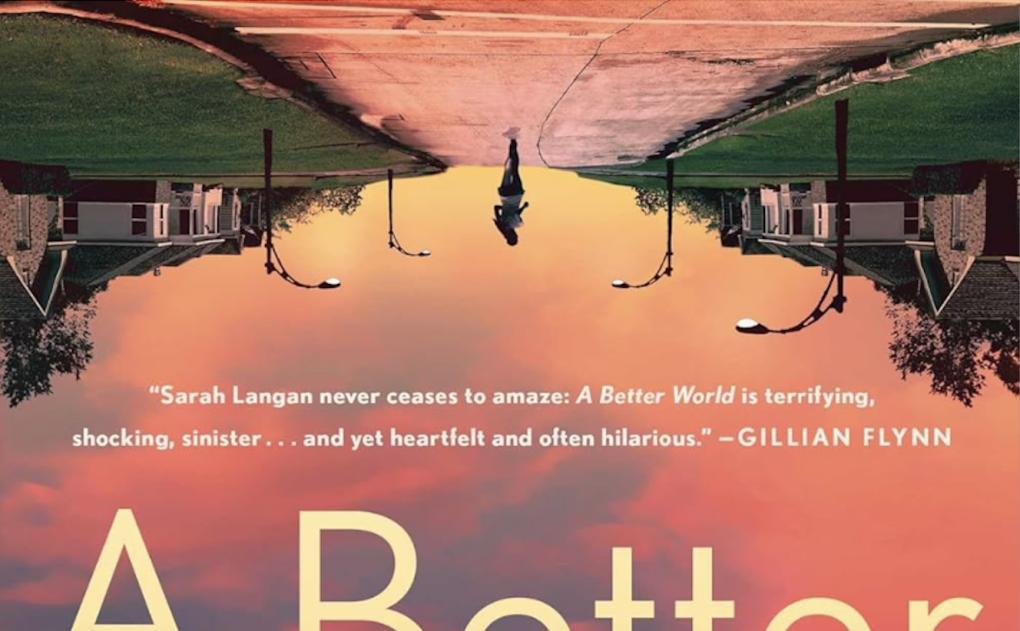
"caption": "'A Better World' by Sarah Langan.",
"description": null,
"title": "'A Better World' by Sarah Langan.",
"credit": "Atria Books",
"status": "inherit",
"altTag": null,
"isLoading": false,
"fetchFailed": false
},
"arts_13955959": {
"type": "attachments",
"id": "arts_13955959",
"meta": {
"index": "attachments_1716263798",
"site": "arts",
"id": "13955959",
"found": true
},
"parent": 13955954,
"imgSizes": {
"thumbnail": {
"file": "https://cdn.kqed.org/wp-content/uploads/sites/2/2024/04/Screen-Shot-2024-04-15-at-9.16.50-AM-160x93.png",
"width": 160,
"mimeType": "image/png",
"height": 93
},
"post-thumbnail": {
"file": "https://cdn.kqed.org/wp-content/uploads/sites/2/2024/04/Screen-Shot-2024-04-15-at-9.16.50-AM-672x372.png",
"width": 672,
"mimeType": "image/png",
"height": 372
},
"kqedFullSize": {
"file": "https://cdn.kqed.org/wp-content/uploads/sites/2/2024/04/Screen-Shot-2024-04-15-at-9.16.50-AM.png",
"width": 840,
"height": 490
},
"medium": {
"file": "https://cdn.kqed.org/wp-content/uploads/sites/2/2024/04/Screen-Shot-2024-04-15-at-9.16.50-AM-800x467.png",
"width": 800,
"mimeType": "image/png",
"height": 467
},
"medium_large": {
"file": "https://cdn.kqed.org/wp-content/uploads/sites/2/2024/04/Screen-Shot-2024-04-15-at-9.16.50-AM-768x448.png",
"width": 768,
"mimeType": "image/png",
"height": 448
}
},
"publishDate": 1713197838,
"modified": 1713197957,
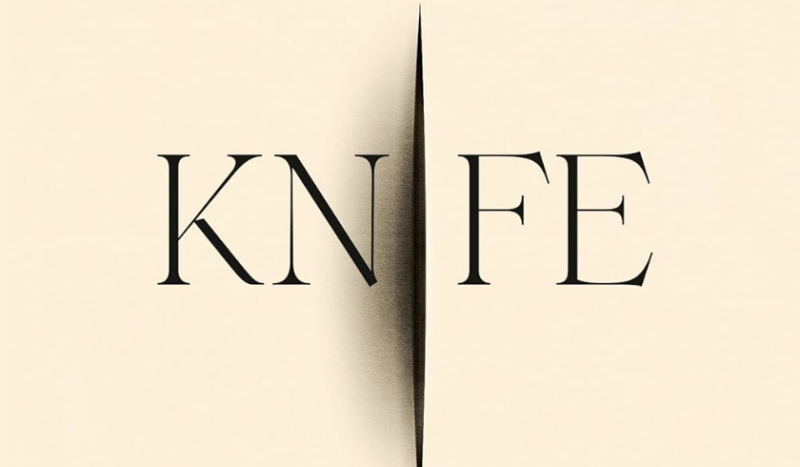
"caption": "‘Knife: Meditations After an Attempted Murder’ by Salman Rushdie.",
"description": null,
"title": "‘Knife: Meditations After an Attempted Murder’ by Salman Rushdie.",
"credit": "Random House",
"status": "inherit",
"altTag": "A book cover featuring the word KNIFE in all caps. The \"I\" is a slash in the cover.",
"isLoading": false,
"fetchFailed": false
},
"arts_13955907": {
"type": "attachments",
"id": "arts_13955907",
"meta": {
"index": "attachments_1716263798",
"site": "arts",
"id": "13955907",
"found": true
},
"parent": 13955903,
"imgSizes": {
"twentyfourteen-full-width": {
"file": "https://cdn.kqed.org/wp-content/uploads/sites/2/2024/04/Screen-Shot-2024-04-12-at-10.05.33-AM-942x576.png",
"width": 942,
"mimeType": "image/png",
"height": 576
},
"thumbnail": {
"file": "https://cdn.kqed.org/wp-content/uploads/sites/2/2024/04/Screen-Shot-2024-04-12-at-10.05.33-AM-160x102.png",
"width": 160,
"mimeType": "image/png",
"height": 102
},
"post-thumbnail": {
"file": "https://cdn.kqed.org/wp-content/uploads/sites/2/2024/04/Screen-Shot-2024-04-12-at-10.05.33-AM-672x372.png",
"width": 672,
"mimeType": "image/png",
"height": 372
},
"kqedFullSize": {
"file": "https://cdn.kqed.org/wp-content/uploads/sites/2/2024/04/Screen-Shot-2024-04-12-at-10.05.33-AM.png",
"width": 942,
"height": 600
},
"medium": {
"file": "https://cdn.kqed.org/wp-content/uploads/sites/2/2024/04/Screen-Shot-2024-04-12-at-10.05.33-AM-800x510.png",
"width": 800,
"mimeType": "image/png",
"height": 510
},
"medium_large": {
"file": "https://cdn.kqed.org/wp-content/uploads/sites/2/2024/04/Screen-Shot-2024-04-12-at-10.05.33-AM-768x489.png",
"width": 768,
"mimeType": "image/png",
"height": 489
}
},
"publishDate": 1712941577,
"modified": 1712941615,
"caption": "‘Like Happiness: A Novel’ by Ursula Villarreal-Moura.",
"description": null,
"title": "‘Like Happiness: A Novel’ by Ursula Villarreal-Moura.",
"credit": "Celadon Books",
"status": "inherit",
"altTag": "A book cover features a collage that combines a city skyline and tree foliage.",
"isLoading": false,
"fetchFailed": false
},
"arts_13955689": {
"type": "attachments",
"id": "arts_13955689",
"meta": {
"index": "attachments_1716263798",
"site": "arts",
"id": "13955689",
"found": true
},
"parent": 13955683,
"imgSizes": {
"twentyfourteen-full-width": {
"file": "https://cdn.kqed.org/wp-content/uploads/sites/2/2024/04/Dr.Akilah-Cadet_PhotoByPendarvisH_2-1038x576.jpg",
"width": 1038,
"mimeType": "image/jpeg",
"height": 576
},
"thumbnail": {
"file": "https://cdn.kqed.org/wp-content/uploads/sites/2/2024/04/Dr.Akilah-Cadet_PhotoByPendarvisH_2-160x213.jpg",
"width": 160,
"mimeType": "image/jpeg",
"height": 213
},
"post-thumbnail": {
"file": "https://cdn.kqed.org/wp-content/uploads/sites/2/2024/04/Dr.Akilah-Cadet_PhotoByPendarvisH_2-672x372.jpg",
"width": 672,
"mimeType": "image/jpeg",
"height": 372
},
"kqedFullSize": {
"file": "https://cdn.kqed.org/wp-content/uploads/sites/2/2024/04/Dr.Akilah-Cadet_PhotoByPendarvisH_2-scaled.jpg",
"width": 1920,
"height": 2560
},
"2048x2048": {
"file": "https://cdn.kqed.org/wp-content/uploads/sites/2/2024/04/Dr.Akilah-Cadet_PhotoByPendarvisH_2-1536x2048.jpg",
"width": 1536,
"mimeType": "image/jpeg",
"height": 2048
},
"large": {
"file": "https://cdn.kqed.org/wp-content/uploads/sites/2/2024/04/Dr.Akilah-Cadet_PhotoByPendarvisH_2-1020x1360.jpg",
"width": 1020,
"mimeType": "image/jpeg",
"height": 1360
},
"1536x1536": {
"file": "https://cdn.kqed.org/wp-content/uploads/sites/2/2024/04/Dr.Akilah-Cadet_PhotoByPendarvisH_2-1152x1536.jpg",
"width": 1152,
"mimeType": "image/jpeg",
"height": 1536
},
"full-width": {
"file": "https://cdn.kqed.org/wp-content/uploads/sites/2/2024/04/Dr.Akilah-Cadet_PhotoByPendarvisH_2-1920x2560.jpg",
"width": 1920,
"mimeType": "image/jpeg",
"height": 2560
},
"medium": {
"file": "https://cdn.kqed.org/wp-content/uploads/sites/2/2024/04/Dr.Akilah-Cadet_PhotoByPendarvisH_2-800x1067.jpg",
"width": 800,
"mimeType": "image/jpeg",
"height": 1067
},
"medium_large": {
"file": "https://cdn.kqed.org/wp-content/uploads/sites/2/2024/04/Dr.Akilah-Cadet_PhotoByPendarvisH_2-768x1024.jpg",
"width": 768,
"mimeType": "image/jpeg",
"height": 1024
}
},
"publishDate": 1712700149,
"modified": 1712769602,
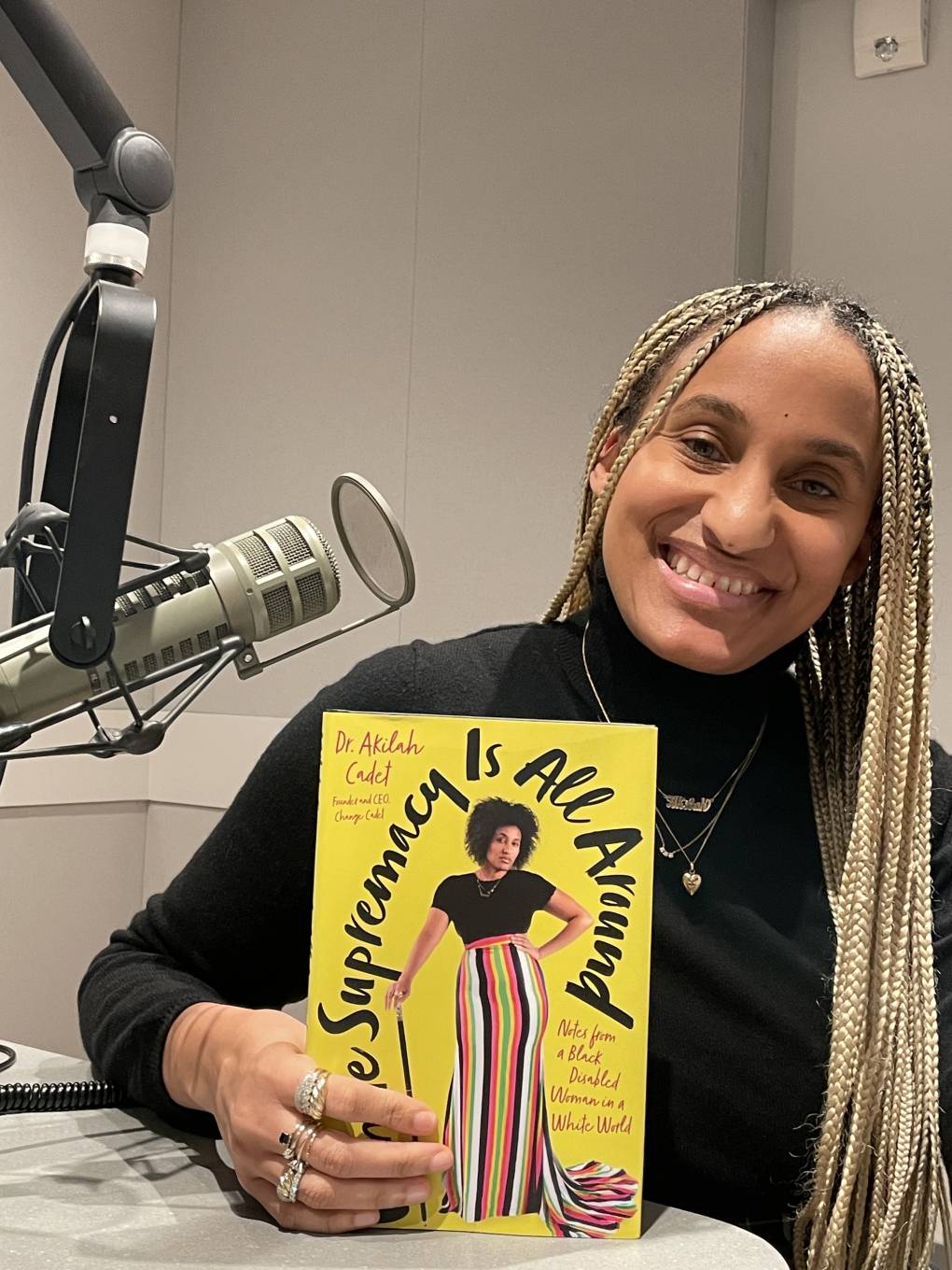
"caption": "Dr. Akilah Cadet at KQED holding her book, 'White Supremacy Is All Around: Notes from a Black Disabled Woman in a White World'.",
"description": "Dr. Akilah Cadet poses while sitting at KQED studios and holding a copy of her book, 'White Supremacy Is All Around: Notes from a Black Disabled Woman in a White World'.",
"title": "Dr.Akilah Cadet_PhotoByPendarvisH_2",
"credit": "Pendarvis Harshaw",
"status": "inherit",
"altTag": "Dr. Akilah Cadet poses while sitting at KQED studios and holding a copy of her book, 'White Supremacy Is All Around: Notes from a Black Disabled Woman in a White World'.",
"isLoading": false,
"fetchFailed": false
},
"arts_13955268": {
"type": "attachments",
"id": "arts_13955268",
"meta": {
"index": "attachments_1716263798",
"site": "arts",
"id": "13955268",
"found": true
},
"parent": 13955263,
"imgSizes": {
"twentyfourteen-full-width": {
"file": "https://cdn.kqed.org/wp-content/uploads/sites/2/2024/04/GettyImages-1418257611-1024x576.jpg",
"width": 1024,
"mimeType": "image/jpeg",
"height": 576
},
"thumbnail": {
"file": "https://cdn.kqed.org/wp-content/uploads/sites/2/2024/04/GettyImages-1418257611-160x107.jpg",
"width": 160,
"mimeType": "image/jpeg",
"height": 107
},
"post-thumbnail": {
"file": "https://cdn.kqed.org/wp-content/uploads/sites/2/2024/04/GettyImages-1418257611-672x372.jpg",
"width": 672,
"mimeType": "image/jpeg",
"height": 372
},
"kqedFullSize": {
"file": "https://cdn.kqed.org/wp-content/uploads/sites/2/2024/04/GettyImages-1418257611.jpg",
"width": 1024,
"height": 683
},
"large": {
"file": "https://cdn.kqed.org/wp-content/uploads/sites/2/2024/04/GettyImages-1418257611-1020x680.jpg",
"width": 1020,
"mimeType": "image/jpeg",
"height": 680
},
"medium": {
"file": "https://cdn.kqed.org/wp-content/uploads/sites/2/2024/04/GettyImages-1418257611-800x534.jpg",
"width": 800,
"mimeType": "image/jpeg",
"height": 534
},
"medium_large": {
"file": "https://cdn.kqed.org/wp-content/uploads/sites/2/2024/04/GettyImages-1418257611-768x512.jpg",
"width": 768,
"mimeType": "image/jpeg",
"height": 512
}
},
"publishDate": 1712089336,
"modified": 1712089384,
"caption": "Ocean Vuong attends the Edinburgh International Book Festival in Edinburgh, Scotland in 2022.",
"description": null,
"title": "Edinburgh International Book Festival",
"credit": "Simone Padovani/Getty Images",
"status": "inherit",
"altTag": null,
"isLoading": false,
"fetchFailed": false
},
"arts_13955220": {
"type": "attachments",
"id": "arts_13955220",
"meta": {
"index": "attachments_1716263798",
"site": "arts",
"id": "13955220",
"found": true
},
"parent": 13955214,
"imgSizes": {
"thumbnail": {
"file": "https://cdn.kqed.org/wp-content/uploads/sites/2/2024/04/Screen-Shot-2024-04-02-at-10.46.35-AM-160x93.png",
"width": 160,
"mimeType": "image/png",
"height": 93
},
"post-thumbnail": {
"file": "https://cdn.kqed.org/wp-content/uploads/sites/2/2024/04/Screen-Shot-2024-04-02-at-10.46.35-AM-672x372.png",
"width": 672,
"mimeType": "image/png",
"height": 372
},
"kqedFullSize": {
"file": "https://cdn.kqed.org/wp-content/uploads/sites/2/2024/04/Screen-Shot-2024-04-02-at-10.46.35-AM.png",
"width": 944,
"height": 550
},
"medium": {
"file": "https://cdn.kqed.org/wp-content/uploads/sites/2/2024/04/Screen-Shot-2024-04-02-at-10.46.35-AM-800x466.png",
"width": 800,
"mimeType": "image/png",
"height": 466
},
"medium_large": {
"file": "https://cdn.kqed.org/wp-content/uploads/sites/2/2024/04/Screen-Shot-2024-04-02-at-10.46.35-AM-768x447.png",
"width": 768,
"mimeType": "image/png",
"height": 447
}
},
"publishDate": 1712080084,
"modified": 1712080116,
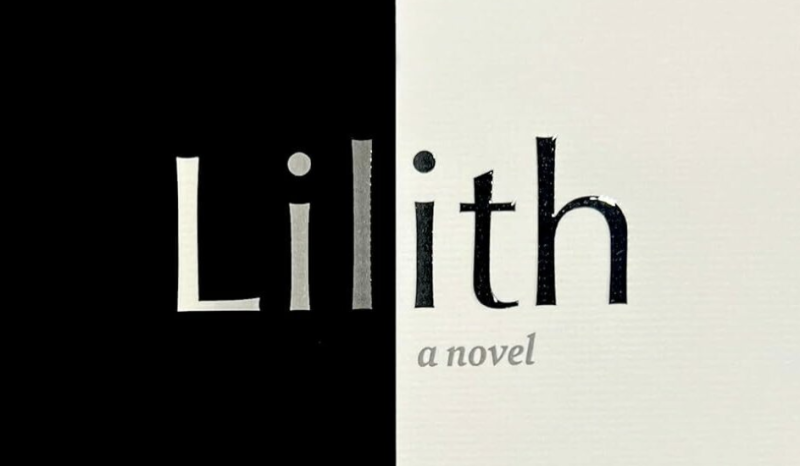
"caption": "‘Lilith’ by Eric Rickstad.",
"description": null,
"title": "‘Lilith’ by Eric Rickstad.",
"credit": "Blackstone Publishing",
"status": "inherit",
"altTag": "A book cover that has a cover that is half white, half black, split vertically down the center.",
"isLoading": false,
"fetchFailed": false
},
"arts_13955158": {
"type": "attachments",
"id": "arts_13955158",
"meta": {
"index": "attachments_1716263798",
"site": "arts",
"id": "13955158",
"found": true
},
"parent": 13955156,
"imgSizes": {
"twentyfourteen-full-width": {
"file": "https://cdn.kqed.org/wp-content/uploads/sites/2/2024/04/Screen-Shot-2024-04-01-at-2.43.31-PM-816x576.png",
"width": 816,
"mimeType": "image/png",
"height": 576
},
"thumbnail": {
"file": "https://cdn.kqed.org/wp-content/uploads/sites/2/2024/04/Screen-Shot-2024-04-01-at-2.43.31-PM-160x115.png",
"width": 160,
"mimeType": "image/png",
"height": 115
},
"post-thumbnail": {
"file": "https://cdn.kqed.org/wp-content/uploads/sites/2/2024/04/Screen-Shot-2024-04-01-at-2.43.31-PM-672x372.png",
"width": 672,
"mimeType": "image/png",
"height": 372
},
"kqedFullSize": {
"file": "https://cdn.kqed.org/wp-content/uploads/sites/2/2024/04/Screen-Shot-2024-04-01-at-2.43.31-PM.png",
"width": 816,
"height": 588
},
"medium": {
"file": "https://cdn.kqed.org/wp-content/uploads/sites/2/2024/04/Screen-Shot-2024-04-01-at-2.43.31-PM-800x576.png",
"width": 800,
"mimeType": "image/png",
"height": 576
},
"medium_large": {
"file": "https://cdn.kqed.org/wp-content/uploads/sites/2/2024/04/Screen-Shot-2024-04-01-at-2.43.31-PM-768x553.png",
"width": 768,
"mimeType": "image/png",
"height": 553
}
},
"publishDate": 1712008002,
"modified": 1712008042,
"caption": "‘The Black Girl Survives in This One’ by Desiree S. Evans and Saraciea J. Fennell.",
"description": null,
"title": "‘The Black Girl Survives in This One’ by Desiree S. Evans and Saraciea J. Fennell.",
"credit": "Flatiron Books",
"status": "inherit",
"altTag": "An illustration of a young Black woman with long braids holding her manicured hands up to her mouth in horror.",
"isLoading": false,
"fetchFailed": false
},
"arts_13879796": {
"type": "attachments",
"id": "arts_13879796",
"meta": {
"index": "attachments_1716263798",
"site": "arts",
"id": "13879796",
"found": true
},
"parent": 13879790,
"imgSizes": {
"twentyfourteen-full-width": {
"file": "https://ww2.kqed.org/app/uploads/sites/2/2020/05/SPD-Front-Sign-1038x576.jpg",
"width": 1038,
"mimeType": "image/jpeg",
"height": 576
},
"thumbnail": {
"file": "https://ww2.kqed.org/app/uploads/sites/2/2020/05/SPD-Front-Sign-160x94.jpg",
"width": 160,
"mimeType": "image/jpeg",
"height": 94
},
"post-thumbnail": {
"file": "https://ww2.kqed.org/app/uploads/sites/2/2020/05/SPD-Front-Sign-672x372.jpg",
"width": 672,
"mimeType": "image/jpeg",
"height": 372
},
"kqedFullSize": {
"file": "https://ww2.kqed.org/app/uploads/sites/2/2020/05/SPD-Front-Sign.jpg",
"width": 1920,
"height": 1129
},
"large": {
"file": "https://ww2.kqed.org/app/uploads/sites/2/2020/05/SPD-Front-Sign-1020x600.jpg",
"width": 1020,
"mimeType": "image/jpeg",
"height": 600
},
"full-width": {
"file": "https://ww2.kqed.org/app/uploads/sites/2/2020/05/SPD-Front-Sign-1920x1129.jpg",
"width": 1920,
"mimeType": "image/jpeg",
"height": 1129
},
"medium": {
"file": "https://ww2.kqed.org/app/uploads/sites/2/2020/05/SPD-Front-Sign-800x470.jpg",
"width": 800,
"mimeType": "image/jpeg",
"height": 470
},
"medium_large": {
"file": "https://ww2.kqed.org/app/uploads/sites/2/2020/05/SPD-Front-Sign-768x452.jpg",
"width": 768,
"mimeType": "image/jpeg",
"height": 452
}
},
"publishDate": 1588727524,
"modified": 1588727738,
"caption": "Small Press Distribution, founded in 1969, has operated out of this Berkeley warehouse since 1995. ",
"description": "Small Press Distribution, founded in 1969, has operated out of this Berkeley warehouse since 1995. ",
"title": "Small Press Distribution, founded in 1969, has operated out of this Berkeley warehouse since 1995.",
"credit": "Sam Lefebvre/KQED",
"status": "inherit",
"isLoading": false,
"fetchFailed": false
},
"arts_13954754": {
"type": "attachments",
"id": "arts_13954754",
"meta": {
"index": "attachments_1716263798",
"site": "arts",
"id": "13954754",
"found": true
},
"parent": 13954709,
"imgSizes": {
"twentyfourteen-full-width": {
"file": "https://cdn.kqed.org/wp-content/uploads/sites/2/2024/03/Alta_Paul-Steinbrink_1972_printing.Thumb_-1038x576.jpg",
"width": 1038,
"mimeType": "image/jpeg",
"height": 576
},
"thumbnail": {
"file": "https://cdn.kqed.org/wp-content/uploads/sites/2/2024/03/Alta_Paul-Steinbrink_1972_printing.Thumb_-160x90.jpg",
"width": 160,
"mimeType": "image/jpeg",
"height": 90
},
"post-thumbnail": {
"file": "https://cdn.kqed.org/wp-content/uploads/sites/2/2024/03/Alta_Paul-Steinbrink_1972_printing.Thumb_-672x372.jpg",
"width": 672,
"mimeType": "image/jpeg",
"height": 372
},
"kqedFullSize": {
"file": "https://cdn.kqed.org/wp-content/uploads/sites/2/2024/03/Alta_Paul-Steinbrink_1972_printing.Thumb_.jpg",
"width": 1920,
"height": 1080
},
"large": {
"file": "https://cdn.kqed.org/wp-content/uploads/sites/2/2024/03/Alta_Paul-Steinbrink_1972_printing.Thumb_-1020x574.jpg",
"width": 1020,
"mimeType": "image/jpeg",
"height": 574
},
"1536x1536": {
"file": "https://cdn.kqed.org/wp-content/uploads/sites/2/2024/03/Alta_Paul-Steinbrink_1972_printing.Thumb_-1536x864.jpg",
"width": 1536,
"mimeType": "image/jpeg",
"height": 864
},
"medium": {
"file": "https://cdn.kqed.org/wp-content/uploads/sites/2/2024/03/Alta_Paul-Steinbrink_1972_printing.Thumb_-800x450.jpg",
"width": 800,
"mimeType": "image/jpeg",
"height": 450
},
"medium_large": {
"file": "https://cdn.kqed.org/wp-content/uploads/sites/2/2024/03/Alta_Paul-Steinbrink_1972_printing.Thumb_-768x432.jpg",
"width": 768,
"mimeType": "image/jpeg",
"height": 432
}
},
"publishDate": 1711476605,
"modified": 1711476982,
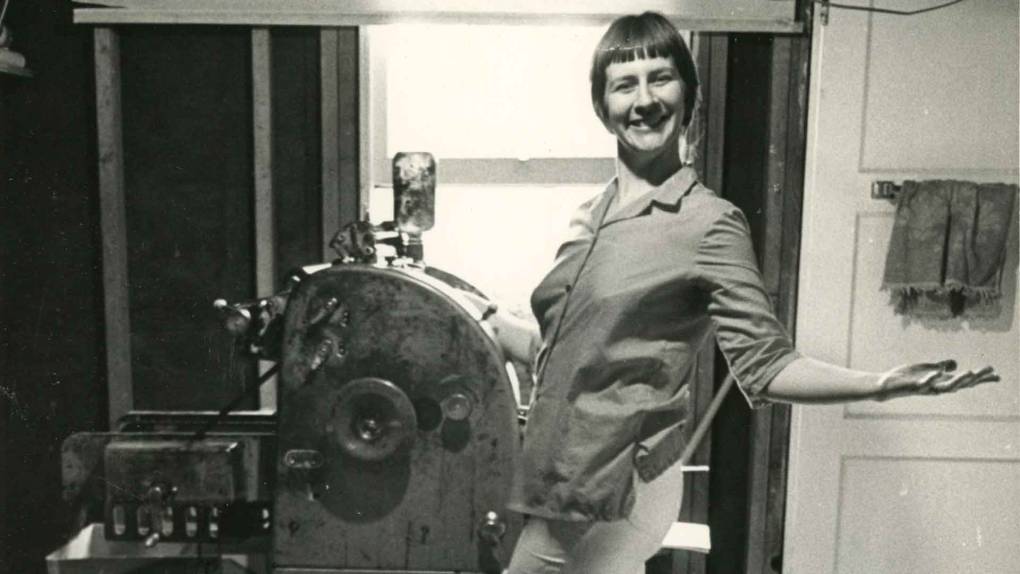
"caption": "Alta at her printing press, circa 1972. Founded in 1969, Shameless Hussy Press was first to publish the work of Ntozake Shange and others, and is recognized as the first feminist press in the United States.",
"description": null,
"title": "Alta_Paul-Steinbrink_1972_printing.Thumb",
"credit": "Paul Steinbrink",
"status": "inherit",
"altTag": "A young woman with a short bob haircut stands in a collared shirt and pants at a large metal printing press in a cluttered room.",
"isLoading": false,
"fetchFailed": false
},
"arts_13954669": {
"type": "attachments",
"id": "arts_13954669",
"meta": {
"index": "attachments_1716263798",
"site": "arts",
"id": "13954669",
"found": true
},
"parent": 13954661,
"imgSizes": {
"twentyfourteen-full-width": {
"file": "https://cdn.kqed.org/wp-content/uploads/sites/2/2024/03/Screen-Shot-2024-03-25-at-9.56.51-AM-1038x576.png",
"width": 1038,
"mimeType": "image/png",
"height": 576
},
"thumbnail": {
"file": "https://cdn.kqed.org/wp-content/uploads/sites/2/2024/03/Screen-Shot-2024-03-25-at-9.56.51-AM-160x105.png",
"width": 160,
"mimeType": "image/png",
"height": 105
},
"post-thumbnail": {
"file": "https://cdn.kqed.org/wp-content/uploads/sites/2/2024/03/Screen-Shot-2024-03-25-at-9.56.51-AM-672x372.png",
"width": 672,
"mimeType": "image/png",
"height": 372
},
"kqedFullSize": {
"file": "https://cdn.kqed.org/wp-content/uploads/sites/2/2024/03/Screen-Shot-2024-03-25-at-9.56.51-AM.png",
"width": 1058,
"height": 694
},
"large": {
"file": "https://cdn.kqed.org/wp-content/uploads/sites/2/2024/03/Screen-Shot-2024-03-25-at-9.56.51-AM-1020x669.png",
"width": 1020,
"mimeType": "image/png",
"height": 669
},
"medium": {
"file": "https://cdn.kqed.org/wp-content/uploads/sites/2/2024/03/Screen-Shot-2024-03-25-at-9.56.51-AM-800x525.png",
"width": 800,
"mimeType": "image/png",
"height": 525
},
"medium_large": {
"file": "https://cdn.kqed.org/wp-content/uploads/sites/2/2024/03/Screen-Shot-2024-03-25-at-9.56.51-AM-768x504.png",
"width": 768,
"mimeType": "image/png",
"height": 504
}
},
"publishDate": 1711385872,
"modified": 1711385922,
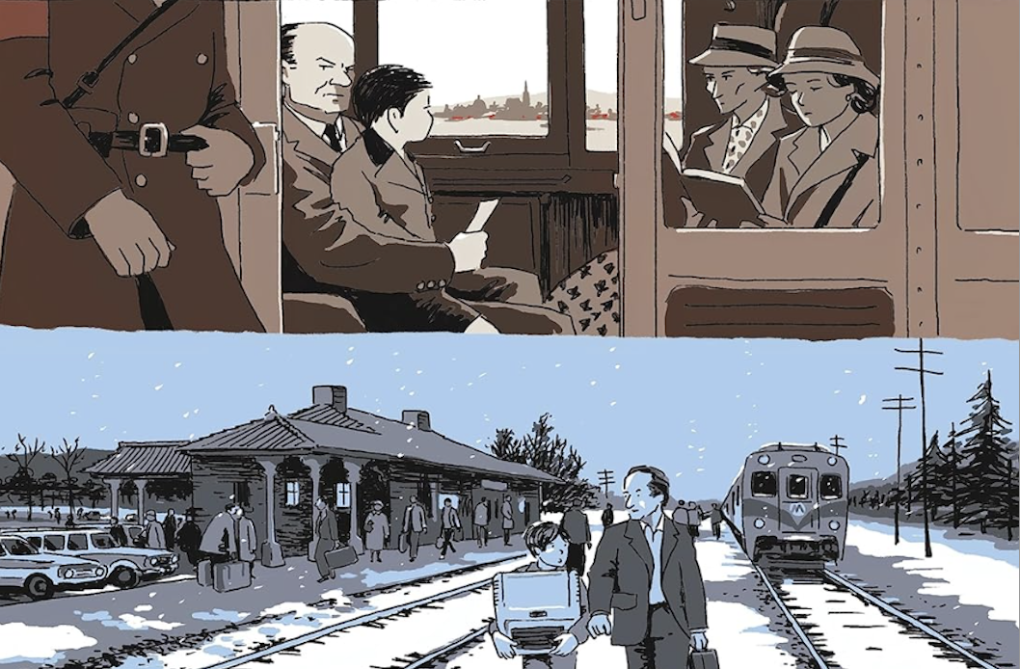
"caption": "Cover of ‘Replay: Memoir of an Uprooted Family,’ by Jordan Mechner.",
"description": null,
"title": "Cover of ‘Replay: Memoir of an Uprooted Family,’ by Jordan Mechner.",
"credit": "First Second",
"status": "inherit",
"altTag": "The cover of a graphic memoir featuring a family traveling on an old steam train.",
"isLoading": false,
"fetchFailed": false
},
"arts_13954172": {
"type": "attachments",
"id": "arts_13954172",
"meta": {
"index": "attachments_1716263798",
"site": "arts",
"id": "13954172",
"found": true
},
"parent": 13954168,
"imgSizes": {
"thumbnail": {
"file": "https://cdn.kqed.org/wp-content/uploads/sites/2/2024/03/Screen-Shot-2024-03-14-at-5.37.50-PM-160x88.png",
"width": 160,
"mimeType": "image/png",
"height": 88
},
"post-thumbnail": {
"file": "https://cdn.kqed.org/wp-content/uploads/sites/2/2024/03/Screen-Shot-2024-03-14-at-5.37.50-PM-672x372.png",
"width": 672,
"mimeType": "image/png",
"height": 372
},
"kqedFullSize": {
"file": "https://cdn.kqed.org/wp-content/uploads/sites/2/2024/03/Screen-Shot-2024-03-14-at-5.37.50-PM.png",
"width": 1030,
"height": 568
},
"large": {
"file": "https://cdn.kqed.org/wp-content/uploads/sites/2/2024/03/Screen-Shot-2024-03-14-at-5.37.50-PM-1020x562.png",
"width": 1020,
"mimeType": "image/png",
"height": 562
},
"medium": {
"file": "https://cdn.kqed.org/wp-content/uploads/sites/2/2024/03/Screen-Shot-2024-03-14-at-5.37.50-PM-800x441.png",
"width": 800,
"mimeType": "image/png",
"height": 441
},
"medium_large": {
"file": "https://cdn.kqed.org/wp-content/uploads/sites/2/2024/03/Screen-Shot-2024-03-14-at-5.37.50-PM-768x424.png",
"width": 768,
"mimeType": "image/png",
"height": 424
}
},
"publishDate": 1710463096,
"modified": 1710463168,
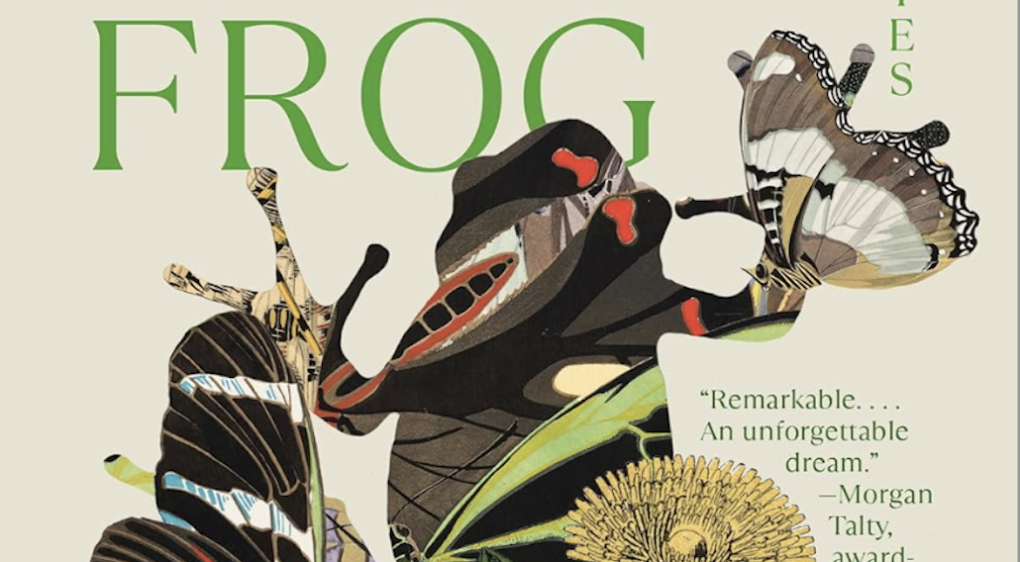
"caption": "‘Green Frog: Stories’ by Gina Chung.",
"description": null,
"title": "‘Green Frog: Stories’ by Gina Chung.",
"credit": "Vintage",
"status": "inherit",
"altTag": "Detail of a book cover that includes an abstract, patchwork illustration of a frog and flowers.",
"isLoading": false,
"fetchFailed": false
},
"arts_13953755": {
"type": "attachments",
"id": "arts_13953755",
"meta": {
"index": "attachments_1716263798",
"site": "arts",
"id": "13953755",
"found": true
},
"parent": 13953754,
"imgSizes": {
"twentyfourteen-full-width": {
"file": "https://cdn.kqed.org/wp-content/uploads/sites/2/2024/03/untitled-design-51-_wide-ab3282364c10bfed48604f66420289341eb493ff-1-1038x576.jpg",
"width": 1038,
"mimeType": "image/jpeg",
"height": 576
},
"thumbnail": {
"file": "https://cdn.kqed.org/wp-content/uploads/sites/2/2024/03/untitled-design-51-_wide-ab3282364c10bfed48604f66420289341eb493ff-1-160x90.jpg",
"width": 160,
"mimeType": "image/jpeg",
"height": 90
},
"post-thumbnail": {
"file": "https://cdn.kqed.org/wp-content/uploads/sites/2/2024/03/untitled-design-51-_wide-ab3282364c10bfed48604f66420289341eb493ff-1-672x372.jpg",
"width": 672,
"mimeType": "image/jpeg",
"height": 372
},
"kqedFullSize": {
"file": "https://cdn.kqed.org/wp-content/uploads/sites/2/2024/03/untitled-design-51-_wide-ab3282364c10bfed48604f66420289341eb493ff-1.jpg",
"width": 1917,
"height": 1078
},
"large": {
"file": "https://cdn.kqed.org/wp-content/uploads/sites/2/2024/03/untitled-design-51-_wide-ab3282364c10bfed48604f66420289341eb493ff-1-1020x574.jpg",
"width": 1020,
"mimeType": "image/jpeg",
"height": 574
},
"1536x1536": {
"file": "https://cdn.kqed.org/wp-content/uploads/sites/2/2024/03/untitled-design-51-_wide-ab3282364c10bfed48604f66420289341eb493ff-1-1536x864.jpg",
"width": 1536,
"mimeType": "image/jpeg",
"height": 864
},
"medium": {
"file": "https://cdn.kqed.org/wp-content/uploads/sites/2/2024/03/untitled-design-51-_wide-ab3282364c10bfed48604f66420289341eb493ff-1-800x450.jpg",
"width": 800,
"mimeType": "image/jpeg",
"height": 450
},
"medium_large": {
"file": "https://cdn.kqed.org/wp-content/uploads/sites/2/2024/03/untitled-design-51-_wide-ab3282364c10bfed48604f66420289341eb493ff-1-768x432.jpg",
"width": 768,
"mimeType": "image/jpeg",
"height": 432
}
},
"publishDate": 1709928395,
"modified": 1709930977,
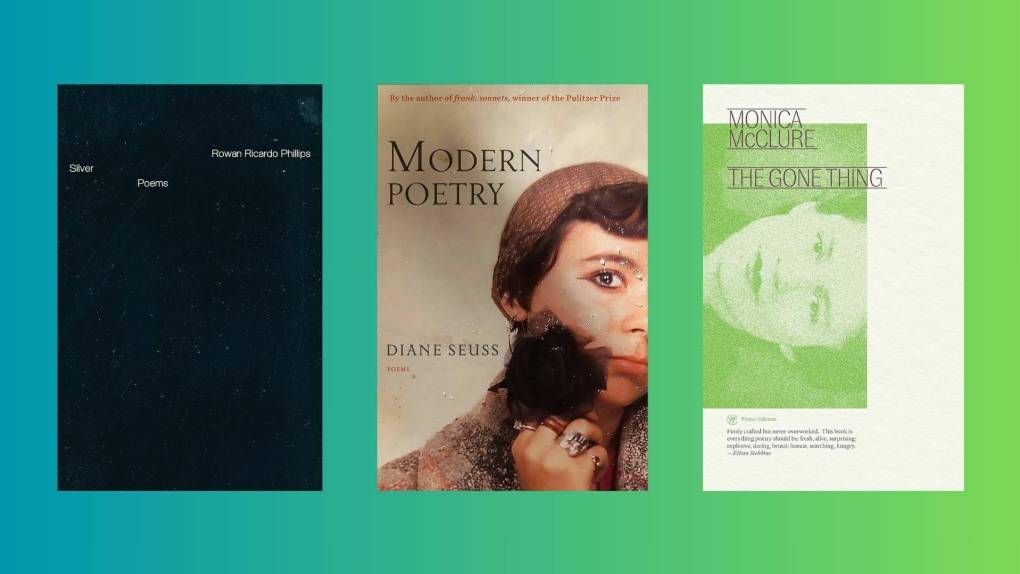
"caption": "Covers of ‘Silver,’ ‘Modern Poetry’ and ‘The Gone Thing.’",
"description": null,
"title": "Covers of ‘Silver,’ ‘Modern Poetry’ and ‘The Gone Thing.’",
"credit": "NPR",
"status": "inherit",
"altTag": "Three book covers, arranged in a line.",
"isLoading": false,
"fetchFailed": false
}
},
"audioPlayerReducer": {
"postId": "stream_live",
"isPaused": true,
"isPlaying": false,
"pfsActive": false,
"pledgeModalIsOpen": true,
"playerDrawerIsOpen": false,
"liveAudioPlayStartedAt": 0,
"liveAudioPlayContext": ""
},
"authorsReducer": {
"byline_arts_13956050": {
"type": "authors",
"id": "byline_arts_13956050",
"meta": {
"override": true
},
"slug": "byline_arts_13956050",
"name": "Gabino Iglesias",
"isLoading": false
},
"byline_arts_13955954": {
"type": "authors",
"id": "byline_arts_13955954",
"meta": {
"override": true
},
"slug": "byline_arts_13955954",
"name": "Andrew Limbong",
"isLoading": false
},
"byline_arts_13955903": {
"type": "authors",
"id": "byline_arts_13955903",
"meta": {
"override": true
},
"slug": "byline_arts_13955903",
"name": "Ilana Masad",
"isLoading": false
},
"byline_arts_13955214": {
"type": "authors",
"id": "byline_arts_13955214",
"meta": {
"override": true
},
"slug": "byline_arts_13955214",
"name": "Gabino Iglesias",
"isLoading": false
},
"byline_arts_13955156": {
"type": "authors",
"id": "byline_arts_13955156",
"meta": {
"override": true
},
"slug": "byline_arts_13955156",
"name": "Donna Edwards, Associated Press",
"isLoading": false
},
"byline_arts_13954661": {
"type": "authors",
"id": "byline_arts_13954661",
"meta": {
"override": true
},
"slug": "byline_arts_13954661",
"name": "Tahneer Oksman",
"isLoading": false
},
"byline_arts_13954168": {
"type": "authors",
"id": "byline_arts_13954168",
"meta": {
"override": true
},
"slug": "byline_arts_13954168",
"name": "Gabino Iglesias",
"isLoading": false
},
"byline_arts_13953754": {
"type": "authors",
"id": "byline_arts_13953754",
"meta": {
"override": true
},
"slug": "byline_arts_13953754",
"name": "Craig Morgan Teicher",
"isLoading": false
},
"shotchkiss": {
"type": "authors",
"id": "61",
"meta": {
"index": "authors_1716337520",
"id": "61",
"found": true
},
"name": "Sarah Hotchkiss",
"firstName": "Sarah",
"lastName": "Hotchkiss",
"slug": "shotchkiss",
"email": "shotchkiss@kqed.org",
"display_author_email": true,
"staff_mastheads": [
"arts"
],
"title": "Senior Editor",
"bio": "Sarah Hotchkiss is a San Francisco \u003ca href=\"http://www.sarahhotchkiss.com\">artist\u003c/a> and arts writer. In 2019, she received the Dorothea & Leo Rabkin Foundation grant for visual art journalism and in 2020 she received a Society of Professional Journalists, Northern California award for excellence in arts and culture reporting.",
"avatar": "https://secure.gravatar.com/avatar/bc662df144b3d27fd8b1b6f1c2a420d34e91e53154d411bb7ad353cc8b6cea8d?s=600&d=blank&r=g",
"twitter": null,
"bluesky": null,
"facebook": null,
"instagram": null,
"linkedin": null,
"sites": [
{
"site": "",
"roles": [
"editor"
]
},
{
"site": "arts",
"roles": [
"Contributor",
"administrator"
]
},
{
"site": "artschool",
"roles": [
"administrator"
]
},
{
"site": "news",
"roles": [
"editor"
]
},
{
"site": "pop",
"roles": [
"administrator"
]
},
{
"site": "bayareabites",
"roles": [
"editor"
]
},
{
"site": "spark",
"roles": [
"editor"
]
},
{
"site": "checkplease",
"roles": [
"editor"
]
}
],
"headData": {
"title": "Sarah Hotchkiss | KQED",
"description": "Senior Editor",
"ogImgSrc": "https://secure.gravatar.com/avatar/bc662df144b3d27fd8b1b6f1c2a420d34e91e53154d411bb7ad353cc8b6cea8d?s=600&d=blank&r=g",
"twImgSrc": "https://secure.gravatar.com/avatar/bc662df144b3d27fd8b1b6f1c2a420d34e91e53154d411bb7ad353cc8b6cea8d?s=600&d=blank&r=g"
},
"isLoading": false,
"link": "/author/shotchkiss"
},
"agilbert": {
"type": "authors",
"id": "86",
"meta": {
"index": "authors_1716337520",
"id": "86",
"found": true
},
"name": "Andrew Gilbert",
"firstName": "Andrew",
"lastName": "Gilbert",
"slug": "agilbert",
"email": "jazzscribe@aol.com",
"display_author_email": false,
"staff_mastheads": [],
"title": "KQED Contributor",
"bio": "A Los Angeles native based in the Berkeley area since 1996, Andrew Gilbert covers jazz, international music and dance for KQED's \u003ci>California Report, \u003c/i>the\u003ci> Mercury News\u003c/i>, \u003ci>San Francisco Chronicle\u003c/i>, \u003ci>Berkeleyside.com\u003c/i>, and other publications. He is available for weddings and bar and bat mitzvahs. #jazzscribe",
"avatar": "https://secure.gravatar.com/avatar/d7bcafdbefdd39e9a68f88724ca616eb4e7a5a6bff9cdfb62de652a1e1751471?s=600&d=blank&r=g",
"twitter": null,
"bluesky": null,
"facebook": null,
"instagram": null,
"linkedin": null,
"sites": [
{
"site": "arts",
"roles": [
"Contributor",
"author"
]
},
{
"site": "news",
"roles": [
"author"
]
}
],
"headData": {
"title": "Andrew Gilbert | KQED",
"description": "KQED Contributor",
"ogImgSrc": "https://secure.gravatar.com/avatar/d7bcafdbefdd39e9a68f88724ca616eb4e7a5a6bff9cdfb62de652a1e1751471?s=600&d=blank&r=g",
"twImgSrc": "https://secure.gravatar.com/avatar/d7bcafdbefdd39e9a68f88724ca616eb4e7a5a6bff9cdfb62de652a1e1751471?s=600&d=blank&r=g"
},
"isLoading": false,
"link": "/author/agilbert"
},
"ogpenn": {
"type": "authors",
"id": "11491",
"meta": {
"index": "authors_1716337520",
"id": "11491",
"found": true
},
"name": "Pendarvis Harshaw",
"firstName": "Pendarvis",
"lastName": "Harshaw",
"slug": "ogpenn",
"email": "ogpenn@gmail.com",
"display_author_email": false,
"staff_mastheads": [
"arts"
],
"title": "Community Engagement Reporter",
"bio": "Pendarvis Harshaw is an educator, host and writer with KQED Arts.",
"avatar": "https://secure.gravatar.com/avatar/972b77ee8e3f346ae2b00622661187fbfabd059b5693bbdc1475ea7a722fd4cd?s=600&d=blank&r=g",
"twitter": null,
"bluesky": null,
"facebook": null,
"instagram": "ogpenn",
"linkedin": null,
"sites": [
{
"site": "arts",
"roles": [
"administrator"
]
},
{
"site": "news",
"roles": [
"editor"
]
},
{
"site": "bayareabites",
"roles": [
"author"
]
},
{
"site": "hiphop",
"roles": [
"editor"
]
}
],
"headData": {
"title": "Pendarvis Harshaw | KQED",
"description": "Community Engagement Reporter",
"ogImgSrc": "https://secure.gravatar.com/avatar/972b77ee8e3f346ae2b00622661187fbfabd059b5693bbdc1475ea7a722fd4cd?s=600&d=blank&r=g",
"twImgSrc": "https://secure.gravatar.com/avatar/972b77ee8e3f346ae2b00622661187fbfabd059b5693bbdc1475ea7a722fd4cd?s=600&d=blank&r=g"
},
"isLoading": false,
"link": "/author/ogpenn"
},
"mmedina": {
"type": "authors",
"id": "11528",
"meta": {
"index": "authors_1716337520",
"id": "11528",
"found": true
},
"name": "Marisol Medina-Cadena",
"firstName": "Marisol",
"lastName": "Medina-Cadena",
"slug": "mmedina",
"email": "mmedina@KQED.org",
"display_author_email": true,
"staff_mastheads": [],
"title": "Producer, Rightnowish Podcast",
"bio": "Marisol Medina-Cadena is a radio reporter and podcast producer. Before working at KQED, she produced for PBS member station, KCET, in Los Angeles. In 2017, Marisol won an Emmy Award for her work on the televised documentary, \u003cem>City Rising\u003c/em>, examining California's affordable housing crisis and the historical roots of gentrification.",
"avatar": "https://secure.gravatar.com/avatar/6c3db46a1cabb5e1fe9a365b5f4e681e?s=600&d=blank&r=g",
"twitter": "marisolreports",
"facebook": null,
"instagram": null,
"linkedin": null,
"sites": [
{
"site": "arts",
"roles": []
},
{
"site": "news",
"roles": [
"edit_others_posts"
]
}
],
"headData": {
"title": "Marisol Medina-Cadena | KQED",
"description": "Producer, Rightnowish Podcast",
"ogImgSrc": "https://secure.gravatar.com/avatar/6c3db46a1cabb5e1fe9a365b5f4e681e?s=600&d=blank&r=g",
"twImgSrc": "https://secure.gravatar.com/avatar/6c3db46a1cabb5e1fe9a365b5f4e681e?s=600&d=blank&r=g"
},
"isLoading": false,
"link": "/author/mmedina"
},
"hmcdede": {
"type": "authors",
"id": "11635",
"meta": {
"index": "authors_1716337520",
"id": "11635",
"found": true
},
"name": "Holly McDede",
"firstName": "Holly",
"lastName": "McDede",
"slug": "hmcdede",
"email": "hmcdede@KQED.org",
"display_author_email": false,
"staff_mastheads": [],
"title": "KQED Contributor",
"bio": null,
"avatar": "https://secure.gravatar.com/avatar/35d1a1f5422c9d266f7ace9348d170f2136671a65fffc90a592e4d7fbf8dc3f6?s=600&d=blank&r=g",
"twitter": null,
"bluesky": null,
"facebook": null,
"instagram": null,
"linkedin": null,
"sites": [
{
"site": "arts",
"roles": [
"editor"
]
},
{
"site": "news",
"roles": [
"edit_others_posts",
"editor"
]
},
{
"site": "science",
"roles": [
"editor"
]
},
{
"site": "forum",
"roles": [
"editor"
]
},
{
"site": "perspectives",
"roles": [
"administrator"
]
}
],
"headData": {
"title": "Holly McDede | KQED",
"description": "KQED Contributor",
"ogImgSrc": "https://secure.gravatar.com/avatar/35d1a1f5422c9d266f7ace9348d170f2136671a65fffc90a592e4d7fbf8dc3f6?s=600&d=blank&r=g",
"twImgSrc": "https://secure.gravatar.com/avatar/35d1a1f5422c9d266f7ace9348d170f2136671a65fffc90a592e4d7fbf8dc3f6?s=600&d=blank&r=g"
},
"isLoading": false,
"link": "/author/hmcdede"
},
"omayeda": {
"type": "authors",
"id": "11872",
"meta": {
"index": "authors_1716337520",
"id": "11872",
"found": true
},
"name": "Olivia Cruz Mayeda",
"firstName": "Olivia Cruz",
"lastName": "Mayeda",
"slug": "omayeda",
"email": "omayeda@kqed.org",
"display_author_email": false,
"staff_mastheads": [],
"title": "Reporter",
"bio": "Olivia Cruz Mayeda is a journalist covering style, culture and reparations in the Bay Area, a place that has been home to her family for over 100 years. Her writing has also appeared in the \u003cem>San Francisco Chronicle\u003c/em> and \u003cem>El Tecolote\u003c/em>.",
"avatar": "https://secure.gravatar.com/avatar/a8c0baa30219ce1071a9474f4c14141f?s=600&d=blank&r=g",
"twitter": null,
"facebook": null,
"instagram": null,
"linkedin": null,
"sites": [
{
"site": "arts",
"roles": [
"contributor"
]
}
],
"headData": {
"title": "Olivia Cruz Mayeda | KQED",
"description": "Reporter",
"ogImgSrc": "https://secure.gravatar.com/avatar/a8c0baa30219ce1071a9474f4c14141f?s=600&d=blank&r=g",
"twImgSrc": "https://secure.gravatar.com/avatar/a8c0baa30219ce1071a9474f4c14141f?s=600&d=blank&r=g"
},
"isLoading": false,
"link": "/author/omayeda"
}
},
"pagesReducer": {
"arts_category_literature": {
"type": "terms",
"id": "arts_73",
"meta": {
"index": "terms_1716263798",
"site": "arts",
"id": "73",
"score": 12.797518
},
"featImg": null,
"name": "Books",
"description": null,
"taxonomy": "category",
"headData": {
"twImgId": null,
"twTitle": null,
"ogTitle": null,
"ogImgId": null,
"twDescription": null,
"description": null,
"title": "Books Archives | KQED Arts",
"ogDescription": null
},
"ttid": 74,
"slug": "literature",
"isLoading": false,
"title": "Books",
"pageMeta": {
"site": "arts",
"WpPageTemplate": "page-topic-editorial",
"currentPage": 27
},
"blocks": [
{
"blockName": "kqed/post-list",
"attrs": {
"layout": "cardArticle2",
"query": "posts/arts?category=literature",
"seeMore": false,
"paginated": true,
"page": 27
}
},
{
"blockName": "kqed/ad"
}
]
}
},
"pfsSessionReducer": {},
"postsReducer": {
"stream_live": {
"type": "live",
"id": "stream_live",
"audioUrl": "https://streams.kqed.org/kqedradio",
"title": "Live Stream",
"excerpt": "Live Stream information currently unavailable.",
"link": "/radio",
"featImg": "",
"label": {
"name": "KQED Live",
"link": "/"
}
},
"stream_kqedNewscast": {
"type": "posts",
"id": "stream_kqedNewscast",
"audioUrl": "https://www.kqed.org/.stream/anon/radio/RDnews/newscast.mp3?_=1",
"title": "KQED Newscast",
"featImg": "",
"label": {
"name": "88.5 FM",
"link": "/"
}
},
"arts_13956050": {
"type": "posts",
"id": "arts_13956050",
"meta": {
"index": "posts_1716263798",
"site": "arts",
"id": "13956050",
"score": null,
"sort": [
1713300502000
]
},
"guestAuthors": [],
"slug": "a-better-world-sarah-langan-thriller-book-review",
"title": "It’s a Wild Ride to Get to the Bottom of What Everyone’s Hiding in ‘A Better World’",
"publishDate": 1713300502,
"format": "aside",
"headTitle": "It’s a Wild Ride to Get to the Bottom of What Everyone’s Hiding in ‘A Better World’ | KQED",
"labelTerm": {},
"content": "\u003cfigure id=\"attachment_13956051\" class=\"wp-caption aligncenter\" style=\"max-width: 990px\">\u003cimg loading=\"lazy\" decoding=\"async\" class=\"size-full wp-image-13956051\" src=\"https://cdn.kqed.org/wp-content/uploads/sites/2/2024/04/better_custom-24ff7930367c23dfeb72232bab46653f4ce87f14.jpg\" alt=\"A book cover depicts a red sunset flipped upside down with land rising on both sides of a road.\" width=\"990\" height=\"1494\" srcset=\"https://cdn.kqed.org/wp-content/uploads/sites/2/2024/04/better_custom-24ff7930367c23dfeb72232bab46653f4ce87f14.jpg 990w, https://cdn.kqed.org/wp-content/uploads/sites/2/2024/04/better_custom-24ff7930367c23dfeb72232bab46653f4ce87f14-800x1207.jpg 800w, https://cdn.kqed.org/wp-content/uploads/sites/2/2024/04/better_custom-24ff7930367c23dfeb72232bab46653f4ce87f14-160x241.jpg 160w, https://cdn.kqed.org/wp-content/uploads/sites/2/2024/04/better_custom-24ff7930367c23dfeb72232bab46653f4ce87f14-768x1159.jpg 768w\" sizes=\"(max-width: 990px) 100vw, 990px\">\u003cfigcaption class=\"wp-caption-text\">‘A Better World’ by Sarah Langan. \u003ccite>(Atria Books)\u003c/cite>\u003c/figcaption>\u003c/figure>\n\u003cp>Sarah Langan’s \u003cem>A Better World\u003c/em> is one of those novels that burrow under your skin a little deeper with each chapter until you feel profoundly unsettled but also incapable of turning away. A very sinister thriller with a dash of science-fiction and full of inscrutabilities, this novel about a mother trying to save her family from a dying world is as entreating and creepy as it is timely and humane.\u003c/p>\n\u003cp>[aside postid='arts_13955954']The Farmer-Bowens are struggling. Russell, the family’s father and Linda’s husband has lost his job, and they’re quickly running out of money and options. Linda, a pediatrician, can’t get enough hours to keep them afloat. Their kids, twins Hip and Josie, have somewhat normal lives, but Linda knows they deserve better than the polluted, dying world New York has to offer them. That’s why an invitation to visit Plymouth Valley, a walled-off company town with a good school where food is free, there’s no crime, and the air is clean is such a great opportunity. If Russell can get the job, Linda’s career will suffer, but the whole family will live in a much better, cleaner place, and they won’t have to worry about becoming homeless. When Russell is offered the job, the family jumps at the chance of a better life.\u003c/p>\n\u003cp>Plymouth Valley is as clean and organized as they said, but there’s something right below the surface that feels off. The locals have some strange customs, the sum of which they call the Hollow, and they seem to hate outsiders. After the initial shock of their move wears off, the Farmer-Bowens begin to feel ostracized and struggle to adapt. No one talks to them or invites them to their events. The kids at school shun Hip and Josie. Russell’s coworkers refuse to help him achieve his goals.\u003c/p>\n\u003cp>[aside postid='arts_13955156']Luckily, things change when Linda starts volunteering as a doctor for ActHollow, a small charity run by some of the most powerful and influential people in town. Finally, the family has the perfect life. Except they don’t. Plymouth Valley is more than strange, and it’s full of secrets and populated by folks with hidden agendas, bizarre birds, and maybe something monstrous hiding in the nuclear shelter tunnels that run under the entire town. The Farmer-Bowens have no clue what they’re surrounded by, and the towns biggest and most ominous yearly event, the Plymouth Valley Winter Festival, is approaching. Linda might be asking too many questions, but maybe Plymouth Valley is very different than how it pretends to be.\u003c/p>\n\u003cp>\u003cem>A Better World\u003c/em> is relentlessly creepy. Langan presents a controlled community where some things might seem off, but where the quality of life makes any weirdness worth it. Then, she quickly lifts the veil to reveal an increasingly odd, incredibly hostile, and extremely secretive world where people will do anything to get a “golden ticket” to stay in Plymouth Valley, there’s a horrible hazing process for all newcomers, mental health is on shaky grounds, alcoholism runs rampant, and where almost every smile and flash of “prayer hands” is fake and hides some ulterior motive. The outside world is dystopia that’s slowly killing all humans, but the perfect life of Plymouth Valley is just a facade that hides a community that’s rotten at its core. And Langan doesn’t just show a rotten world; she uses Plymouth Valley to explore wealth, the social effects of living in constant competition, and the evil sides of power and privilege.\u003c/p>\n\u003cp>[ad fullwidth]\u003c/p>\n\u003cp>The social critique is always there, but it never gets in the way of the action or interferes with Langan’s storytelling, which here is full of strangeness that borders on horror. Also, there are plenty of elements that add eerie layers to this narrative. Two worth mentioning are the strange form of cancer some kids have in Plymouth Valley, which is called “aplastic anemia,” and the “caladrius,” strange flightless birds that were genetically engineered. The birds are all over the place, live next to the houses, and serve as occasional food or as sacrifice while also occasionally feeding on food made from their own. These two elements, along with some others, start out as relatively simple things that, while strange, are not disturbing. But that slowly changes until the mere presence of the big birds manages to convey a sense of unease.\u003c/p>\n\u003cp>[aside postid='arts_13955903']In \u003cem>A Better World\u003c/em>, everyone is hiding something, and getting to the bottom of things is a very entertaining ride full of bumps, bad vibes, and hidden dangers. Certain books rely mostly on atmosphere to deliver their story — Ira Levin’s \u003cem>Rosemary’s Baby\u003c/em> and Shirley Jackson’s \u003cem>The Haunting of Hill House\u003c/em>, for example — and Langan does that here. This is a story about survival where a woman is caught between two bad places with nowhere to go, but we want her to triumph. The darkness and critiques here make for a great read, but it’s the humanity with which Langan portrays Linda that makes this dark thriller a must read.\u003c/p>\n\u003cp>\u003c/p>\n\u003cp>\u003cem>Gabino Iglesias is an author, book reviewer and professor living in Austin, Texas. Find him on X, formerly Twitter, at \u003ca href=\"https://twitter.com/Gabino_Iglesias\">@Gabino_Iglesias\u003c/a>.\u003c/em>\u003c/p>\n\u003cdiv class=\"fullattribution\">\u003cem>Copyright 2024 NPR. To see more, \u003ca href=\"https://www.npr.org\">visit NPR\u003c/a>.\u003cimg decoding=\"async\" src=\"https://www.google-analytics.com/__utm.gif?utmac=UA-5828686-4&utmdt=It%27s+a+wild+ride+to+get+to+the+bottom+of+what+everyone%27s+hiding+in+%27A+Better+World%27&utme=8(APIKey)9(MDAxOTAwOTE4MDEyMTkxMDAzNjczZDljZA004)\">\u003c/em>\u003c/div>\n\n",
"blocks": [],
"excerpt": "A sinister thriller with a dash of science-fiction, Sarah Langan's novel is as entreating as it is timely and humane.",
"status": "publish",
"parent": 0,
"modified": 1718665631,
"stats": {
"hasAudio": false,
"hasVideo": false,
"hasChartOrMap": false,
"iframeSrcs": [],
"hasGoogleForm": false,
"hasGallery": false,
"hasHearkenModule": false,
"hasPolis": false,
"paragraphCount": 10,
"wordCount": 934
},
"headData": {
"title": "‘A Better World’ Book Review: Sarah Langan’s New Novel Disturbs | KQED",
"description": "A sinister thriller with a dash of science-fiction, Sarah Langan's novel is as entreating as it is timely and humane.",
"ogTitle": "It’s a Wild Ride to Get to the Bottom of What Everyone’s Hiding in ‘A Better World’",
"ogDescription": "",
"ogImgId": "",
"twTitle": "It’s a Wild Ride to Get to the Bottom of What Everyone’s Hiding in ‘A Better World’",
"twDescription": "",
"twImgId": "",
"socialTitle": "‘A Better World’ Book Review: Sarah Langan’s New Novel Disturbs %%page%% %%sep%% KQED",
"schema": {
"@context": "https://schema.org",
"@type": "Article",
"headline": "It’s a Wild Ride to Get to the Bottom of What Everyone’s Hiding in ‘A Better World’",
"datePublished": "2024-04-16T13:48:22-07:00",
"dateModified": "2024-06-17T16:07:11-07:00",
"image": "https://cdn.kqed.org/wp-content/uploads/2020/02/KQED-OG-Image@1x.png"
}
},
"source": "The Do List",
"sourceUrl": "https://www.kqed.org/thedolist",
"sticky": false,
"nprByline": "Gabino Iglesias",
"nprImageAgency": "Atria Books",
"nprStoryId": "1244788857",
"nprApiLink": "http://api.npr.org/query?id=1244788857&apiKey=MDAxOTAwOTE4MDEyMTkxMDAzNjczZDljZA004",
"nprHtmlLink": "https://www.npr.org/2024/04/16/1244788857/sarah-langan-novel-thriller-a-better-world?ft=nprml&f=1244788857",
"nprRetrievedStory": "1",
"nprPubDate": "Tue, 16 Apr 2024 12:24:00 -0400",
"nprStoryDate": "Tue, 16 Apr 2024 12:24:51 -0400",
"nprLastModifiedDate": "Tue, 16 Apr 2024 12:24:51 -0400",
"templateType": "standard",
"featuredImageType": "standard",
"excludeFromSiteSearch": "Include",
"showOnAuthorArchivePages": "No",
"articleAge": "0",
"path": "/arts/13956050/a-better-world-sarah-langan-thriller-book-review",
"audioTrackLength": null,
"parsedContent": [
{
"type": "contentString",
"content": "\u003cdiv class=\"post-body\">\u003cp>\u003cfigure id=\"attachment_13956051\" class=\"wp-caption aligncenter\" style=\"max-width: 990px\">\u003cimg loading=\"lazy\" decoding=\"async\" class=\"size-full wp-image-13956051\" src=\"https://cdn.kqed.org/wp-content/uploads/sites/2/2024/04/better_custom-24ff7930367c23dfeb72232bab46653f4ce87f14.jpg\" alt=\"A book cover depicts a red sunset flipped upside down with land rising on both sides of a road.\" width=\"990\" height=\"1494\" srcset=\"https://cdn.kqed.org/wp-content/uploads/sites/2/2024/04/better_custom-24ff7930367c23dfeb72232bab46653f4ce87f14.jpg 990w, https://cdn.kqed.org/wp-content/uploads/sites/2/2024/04/better_custom-24ff7930367c23dfeb72232bab46653f4ce87f14-800x1207.jpg 800w, https://cdn.kqed.org/wp-content/uploads/sites/2/2024/04/better_custom-24ff7930367c23dfeb72232bab46653f4ce87f14-160x241.jpg 160w, https://cdn.kqed.org/wp-content/uploads/sites/2/2024/04/better_custom-24ff7930367c23dfeb72232bab46653f4ce87f14-768x1159.jpg 768w\" sizes=\"(max-width: 990px) 100vw, 990px\">\u003cfigcaption class=\"wp-caption-text\">‘A Better World’ by Sarah Langan. \u003ccite>(Atria Books)\u003c/cite>\u003c/figcaption>\u003c/figure>\n\u003cp>Sarah Langan’s \u003cem>A Better World\u003c/em> is one of those novels that burrow under your skin a little deeper with each chapter until you feel profoundly unsettled but also incapable of turning away. A very sinister thriller with a dash of science-fiction and full of inscrutabilities, this novel about a mother trying to save her family from a dying world is as entreating and creepy as it is timely and humane.\u003c/p>\n\u003cp>\u003c/p>\u003c/div>",
"attributes": {
"named": {},
"numeric": []
}
},
{
"type": "component",
"content": "",
"name": "aside",
"attributes": {
"named": {
"postid": "arts_13955954",
"label": ""
},
"numeric": []
}
},
{
"type": "contentString",
"content": "\u003cdiv class=\"post-body\">\u003cp>The Farmer-Bowens are struggling. Russell, the family’s father and Linda’s husband has lost his job, and they’re quickly running out of money and options. Linda, a pediatrician, can’t get enough hours to keep them afloat. Their kids, twins Hip and Josie, have somewhat normal lives, but Linda knows they deserve better than the polluted, dying world New York has to offer them. That’s why an invitation to visit Plymouth Valley, a walled-off company town with a good school where food is free, there’s no crime, and the air is clean is such a great opportunity. If Russell can get the job, Linda’s career will suffer, but the whole family will live in a much better, cleaner place, and they won’t have to worry about becoming homeless. When Russell is offered the job, the family jumps at the chance of a better life.\u003c/p>\n\u003cp>Plymouth Valley is as clean and organized as they said, but there’s something right below the surface that feels off. The locals have some strange customs, the sum of which they call the Hollow, and they seem to hate outsiders. After the initial shock of their move wears off, the Farmer-Bowens begin to feel ostracized and struggle to adapt. No one talks to them or invites them to their events. The kids at school shun Hip and Josie. Russell’s coworkers refuse to help him achieve his goals.\u003c/p>\n\u003cp>\u003c/p>\u003c/div>",
"attributes": {
"named": {},
"numeric": []
}
},
{
"type": "component",
"content": "",
"name": "aside",
"attributes": {
"named": {
"postid": "arts_13955156",
"label": ""
},
"numeric": []
}
},
{
"type": "contentString",
"content": "\u003cdiv class=\"post-body\">\u003cp>Luckily, things change when Linda starts volunteering as a doctor for ActHollow, a small charity run by some of the most powerful and influential people in town. Finally, the family has the perfect life. Except they don’t. Plymouth Valley is more than strange, and it’s full of secrets and populated by folks with hidden agendas, bizarre birds, and maybe something monstrous hiding in the nuclear shelter tunnels that run under the entire town. The Farmer-Bowens have no clue what they’re surrounded by, and the towns biggest and most ominous yearly event, the Plymouth Valley Winter Festival, is approaching. Linda might be asking too many questions, but maybe Plymouth Valley is very different than how it pretends to be.\u003c/p>\n\u003cp>\u003cem>A Better World\u003c/em> is relentlessly creepy. Langan presents a controlled community where some things might seem off, but where the quality of life makes any weirdness worth it. Then, she quickly lifts the veil to reveal an increasingly odd, incredibly hostile, and extremely secretive world where people will do anything to get a “golden ticket” to stay in Plymouth Valley, there’s a horrible hazing process for all newcomers, mental health is on shaky grounds, alcoholism runs rampant, and where almost every smile and flash of “prayer hands” is fake and hides some ulterior motive. The outside world is dystopia that’s slowly killing all humans, but the perfect life of Plymouth Valley is just a facade that hides a community that’s rotten at its core. And Langan doesn’t just show a rotten world; she uses Plymouth Valley to explore wealth, the social effects of living in constant competition, and the evil sides of power and privilege.\u003c/p>\n\u003cp>\u003c/p>\u003c/div>",
"attributes": {
"named": {},
"numeric": []
}
},
{
"type": "component",
"content": "",
"name": "ad",
"attributes": {
"named": {
"label": "fullwidth"
},
"numeric": [
"fullwidth"
]
}
},
{
"type": "contentString",
"content": "\u003cdiv class=\"post-body\">\u003cp>\u003c/p>\n\u003cp>The social critique is always there, but it never gets in the way of the action or interferes with Langan’s storytelling, which here is full of strangeness that borders on horror. Also, there are plenty of elements that add eerie layers to this narrative. Two worth mentioning are the strange form of cancer some kids have in Plymouth Valley, which is called “aplastic anemia,” and the “caladrius,” strange flightless birds that were genetically engineered. The birds are all over the place, live next to the houses, and serve as occasional food or as sacrifice while also occasionally feeding on food made from their own. These two elements, along with some others, start out as relatively simple things that, while strange, are not disturbing. But that slowly changes until the mere presence of the big birds manages to convey a sense of unease.\u003c/p>\n\u003cp>\u003c/p>\u003c/div>",
"attributes": {
"named": {},
"numeric": []
}
},
{
"type": "component",
"content": "",
"name": "aside",
"attributes": {
"named": {
"postid": "arts_13955903",
"label": ""
},
"numeric": []
}
},
{
"type": "contentString",
"content": "\u003cdiv class=\"post-body\">\u003cp>In \u003cem>A Better World\u003c/em>, everyone is hiding something, and getting to the bottom of things is a very entertaining ride full of bumps, bad vibes, and hidden dangers. Certain books rely mostly on atmosphere to deliver their story — Ira Levin’s \u003cem>Rosemary’s Baby\u003c/em> and Shirley Jackson’s \u003cem>The Haunting of Hill House\u003c/em>, for example — and Langan does that here. This is a story about survival where a woman is caught between two bad places with nowhere to go, but we want her to triumph. The darkness and critiques here make for a great read, but it’s the humanity with which Langan portrays Linda that makes this dark thriller a must read.\u003c/p>\n\u003cp>\u003c/p>\n\u003cp>\u003cem>Gabino Iglesias is an author, book reviewer and professor living in Austin, Texas. Find him on X, formerly Twitter, at \u003ca href=\"https://twitter.com/Gabino_Iglesias\">@Gabino_Iglesias\u003c/a>.\u003c/em>\u003c/p>\n\u003cdiv class=\"fullattribution\">\u003cem>Copyright 2024 NPR. To see more, \u003ca href=\"https://www.npr.org\">visit NPR\u003c/a>.\u003cimg decoding=\"async\" src=\"https://www.google-analytics.com/__utm.gif?utmac=UA-5828686-4&utmdt=It%27s+a+wild+ride+to+get+to+the+bottom+of+what+everyone%27s+hiding+in+%27A+Better+World%27&utme=8(APIKey)9(MDAxOTAwOTE4MDEyMTkxMDAzNjczZDljZA004)\">\u003c/em>\u003c/div>\n\n\u003c/div>\u003c/p>",
"attributes": {
"named": {},
"numeric": []
}
}
],
"link": "/arts/13956050/a-better-world-sarah-langan-thriller-book-review",
"authors": [
"byline_arts_13956050"
],
"programs": [
"arts_140"
],
"categories": [
"arts_1",
"arts_73",
"arts_75"
],
"tags": [
"arts_21817",
"arts_5221",
"arts_769",
"arts_585"
],
"affiliates": [
"arts_137"
],
"featImg": "arts_13956054",
"label": "source_arts_13956050"
},
"arts_13955954": {
"type": "posts",
"id": "arts_13955954",
"meta": {
"index": "posts_1716263798",
"site": "arts",
"id": "13955954",
"score": null,
"sort": [
1713198527000
]
},
"guestAuthors": [],
"slug": "salman-rushdie-new-memoir-knife-revelations-attempted-murder",
"title": "5 Takeaways From Salman Rushdie’s New Memoir ‘Knife’",
"publishDate": 1713198527,
"format": "standard",
"headTitle": "5 Takeaways From Salman Rushdie’s New Memoir ‘Knife’ | KQED",
"labelTerm": {
"term": 140,
"site": "arts"
},
"content": "\u003cp>On August 12, 2022, famed \u003ca href=\"https://www.kqed.org/arts/13917567/author-salman-rushdie-was-attacked-on-a-lecture-stage-in-new-york\">author Salman Rushdie was stabbed\u003c/a>. He was on stage at the Chautauqua Institution in western New York, about to give a talk “about the importance of keeping writers safe from harm,” Rushdie writes in his new memoir, \u003cem>Knife\u003c/em>: \u003cem>Meditations After an Attempted Murder.\u003c/em>\u003c/p>\n\u003cp>[aside postid='arts_13917567']Rushdie, the 76-year-old writer of \u003cem>The Satanic Verses\u003c/em>, \u003cem>Midnight’s Children\u003c/em>, \u003cem>Victory City\u003c/em>, and more, survived the attack. But not without some lasting scars, including being blind in one eye. Since the attack, he’s done a handful of interviews here and there, but he’s kept mostly to himself. In \u003cem>Knife, \u003c/em>he details everything that’s been going on in his life and in his head since the attack. He talks about the recovery process, the support he received from loved ones, and his feelings about his alleged attacker, Hadi Matar.\u003c/p>\n\u003cp>Matar is in custody at Chautauqua County Jail, being charged with second-degree attempted murder and second-degree assault. The judge in his case actually postponed Matar’s trial after Rushdie announced his memoir, in order to give Matar’s lawyers an opportunity to see what’s inside the book.\u003c/p>\n\u003cfigure id=\"attachment_13955956\" class=\"wp-caption aligncenter\" style=\"max-width: 836px\">\u003cimg loading=\"lazy\" decoding=\"async\" class=\"size-full wp-image-13955956\" src=\"https://cdn.kqed.org/wp-content/uploads/sites/2/2024/04/ap23139513677116_custom-ae7b8cc2149ed9e693a807fd1cb7f91cb0ade247.jpg\" alt=\"A senior man with white goatee and eye glasses with one lens blacked out, viewed in head and shoulders close up.\" width=\"836\" height=\"1053\" srcset=\"https://cdn.kqed.org/wp-content/uploads/sites/2/2024/04/ap23139513677116_custom-ae7b8cc2149ed9e693a807fd1cb7f91cb0ade247.jpg 836w, https://cdn.kqed.org/wp-content/uploads/sites/2/2024/04/ap23139513677116_custom-ae7b8cc2149ed9e693a807fd1cb7f91cb0ade247-800x1008.jpg 800w, https://cdn.kqed.org/wp-content/uploads/sites/2/2024/04/ap23139513677116_custom-ae7b8cc2149ed9e693a807fd1cb7f91cb0ade247-160x202.jpg 160w, https://cdn.kqed.org/wp-content/uploads/sites/2/2024/04/ap23139513677116_custom-ae7b8cc2149ed9e693a807fd1cb7f91cb0ade247-768x967.jpg 768w\" sizes=\"auto, (max-width: 836px) 100vw, 836px\">\u003cfigcaption class=\"wp-caption-text\">Author Salman Rushdie speaking to the press at a literary festival in May 2023. It was his first appearance at a public event since he was attacked in August 2022. \u003ccite>(AP Photo/ Ted Shaffrey)\u003c/cite>\u003c/figcaption>\u003c/figure>\n\u003cp>The book is out Tuesday. Here’s what you can expect from it:\u003c/p>\n\u003cp>\u003cstrong>1. Rushdie has no interest in re-litigating ‘\u003c/strong>\u003cstrong>The Satanic Verses’\u003c/strong>\u003c/p>\n\u003cp>[ad fullwidth]\u003c/p>\n\u003cp>Rushdie only makes a few mentions of his 1988 book that led the supreme leader of Iran at the time to call for Rushdie’s death. And, Rushdie notes in \u003cem>Knife\u003c/em>, it wasn’t just the Muslim world criticizing Rushdie for writing the book. He calls out other names, including former \u003ca href=\"https://www.cartercenter.org/news/documents/doc1381.html\">U.S. President Jimmy Carter\u003c/a> and the writers Roald Dahl and Germaine Greer. Besides that, Rushdie writes that he’s said everything he’s needed to say about \u003cem>Satanic Verses\u003c/em> in his previous memoir, \u003cem>Joseph Anton. \u003c/em>\u003c/p>\n\u003cp>\u003cem>“\u003c/em>If anyone’s looking for remorse, you can stop reading right here,” he writes in \u003cem>Knife\u003c/em>. “My novels can take care of themselves.”\u003c/p>\n\u003cp>\u003cstrong>2. The book is about freedom of speech, particularly aimed at the left\u003c/strong>\u003c/p>\n\u003cp>[aside postid='arts_13918020']Rushdie instead saves his argumentative energy to make an appeal for freedom of speech — an ideal, he believes, progressives and the left have left behind to their detriment. “This move away from First Amendment principles allowed that venerable piece of Constitution to be co-opted by the right,” he writes.\u003c/p>\n\u003cp>Rushdie’s had a long background in free speech advocacy. He’s the former president of PEN America, the literary rights advocacy group, and co-founded that organization’s World Voices Festival. His first public appearance after being attacked was at a \u003ca href=\"https://www.youtube.com/watch?v=6uqSKvl8e3M&t=328s\">PEN Gala in his honor\u003c/a>. And, if anything, the attack has only furthered his positions. “Art is not a luxury. It stands at the essence of our humanity, and it asks for no special protection except the right to exist,” he writes.\u003c/p>\n\u003cp>\u003cstrong>3. It’s also a book about marriage\u003c/strong>\u003c/p>\n\u003cp>In 2021, Rushdie quietly married the poet and novelist Rachel Eliza Griffiths. Rushdie is tender when he writes about the early days of their relationship, saying he was not looking for romance. “And then it came up behind me and whacked me behind the ear and I was powerless to resist.”\u003c/p>\n\u003cfigure id=\"attachment_13955958\" class=\"wp-caption aligncenter\" style=\"max-width: 1920px\">\u003cimg loading=\"lazy\" decoding=\"async\" class=\"size-full wp-image-13955958\" src=\"https://cdn.kqed.org/wp-content/uploads/sites/2/2024/04/GettyImages-1255977126-scaled-e1713197378581.jpg\" alt=\"A man of Indian descent stands on a red carpet wearing a black suit and glasses with one lens blacked out. Close at his side is a glamorous Black woman in a black gown with long dark hair.\" width=\"1920\" height=\"1216\">\u003cfigcaption class=\"wp-caption-text\">Salman Rushdie and his wife Rachel Eliza Griffiths arrive for the PEN America Literary Gala In New York, May 2023. \u003ccite>(TIMOTHY A. CLARY/ AFP via Getty Images)\u003c/cite>\u003c/figcaption>\u003c/figure>\n\u003cp>It’s Griffiths who helps Rushdie through the many doctor visits, physical therapy appointments, sleepless nights, mystery ailments and piling bills (a sub-takeaway could be, not even world-famous authors can avoid surprise medical bills), all while tending to her own writing career. There are tough moments that they have to go through together in the book, but there are also regular moments that could be scenes from any other marriage.\u003c/p>\n\u003cp>\u003cstrong>4. He tries to understand his attacker\u003c/strong>\u003c/p>\n\u003cp>Rushdie never refers to Matar by name in the book. And he maintains a certain distance from him. There’s a quick instance in the memoir where Rushdie toys with the idea of reaching out to Matar, but he quickly decides that’s a bad idea. Instead, Rushdie chooses a different route to understanding Matar that we won’t spoil here. But it is an exercise in deep empathy — one that seems to help Rushdie find at least a little bit of closure.\u003c/p>\n\u003cp>\u003cstrong>5. There’s a possible documentary on the way.\u003c/strong>\u003c/p>\n\u003cp>\u003c/p>\n\u003cp>Early on in the book, Rushdie and Griffiths begin filming Rushdie’s thoughts. The plan seems to be to take all the footage and bring it to an experienced filmmaker, who can shape it into something. But there have been no announcements made on that front yet.\u003c/p>\n\u003cdiv class=\"fullattribution\">\u003cem>Copyright 2024 NPR. To see more, \u003ca href=\"https://www.npr.org\">visit NPR\u003c/a>.\u003cimg decoding=\"async\" src=\"https://www.google-analytics.com/__utm.gif?utmac=UA-5828686-4&utmdt=5+takeaways+from+Salman+Rushdie%27s+new+memoir+%27Knife%27&utme=8(APIKey)9(MDAxOTAwOTE4MDEyMTkxMDAzNjczZDljZA004)\">\u003c/em>\u003c/div>\n\n",
"blocks": [],
"excerpt": "Rushdie's new memoir unpacks everything he's been feeling since he was stabbed on stage in New York in 2022.",
"status": "publish",
"parent": 0,
"modified": 1741715576,
"stats": {
"hasAudio": false,
"hasVideo": false,
"hasChartOrMap": false,
"iframeSrcs": [],
"hasGoogleForm": false,
"hasGallery": false,
"hasHearkenModule": false,
"hasPolis": false,
"paragraphCount": 19,
"wordCount": 866
},
"headData": {
"title": "‘Knife’ by Salman Rushdie: 5 Takeaways From the New Memoir | KQED",
"description": "Rushdie's new memoir unpacks everything he's been feeling since he was stabbed on stage in New York in 2022.",
"ogTitle": "5 Takeaways From Salman Rushdie’s New Memoir ‘Knife’",
"ogDescription": "",
"ogImgId": "",
"twTitle": "5 Takeaways From Salman Rushdie’s New Memoir ‘Knife’",
"twDescription": "",
"twImgId": "",
"socialTitle": "‘Knife’ by Salman Rushdie: 5 Takeaways From the New Memoir %%page%% %%sep%% KQED",
"schema": {
"@context": "https://schema.org",
"@type": "Article",
"headline": "5 Takeaways From Salman Rushdie’s New Memoir ‘Knife’",
"datePublished": "2024-04-15T09:28:47-07:00",
"dateModified": "2025-03-11T10:52:56-07:00",
"image": "https://cdn.kqed.org/wp-content/uploads/2020/02/KQED-OG-Image@1x.png"
}
},
"sticky": false,
"nprByline": "Andrew Limbong",
"nprImageAgency": "Random House",
"nprStoryId": "1244354113",
"nprApiLink": "http://api.npr.org/query?id=1244354113&apiKey=MDAxOTAwOTE4MDEyMTkxMDAzNjczZDljZA004",
"nprHtmlLink": "https://www.npr.org/2024/04/15/1244354113/salman-rushdie-memoir-knife?ft=nprml&f=1244354113",
"nprRetrievedStory": "1",
"nprPubDate": "Mon, 15 Apr 2024 10:07:00 -0400",
"nprStoryDate": "Mon, 15 Apr 2024 10:07:47 -0400",
"nprLastModifiedDate": "Mon, 15 Apr 2024 10:07:47 -0400",
"templateType": "standard",
"featuredImageType": "standard",
"excludeFromSiteSearch": "Include",
"showOnAuthorArchivePages": "No",
"articleAge": "0",
"path": "/arts/13955954/salman-rushdie-new-memoir-knife-revelations-attempted-murder",
"audioTrackLength": null,
"parsedContent": [
{
"type": "contentString",
"content": "\u003cdiv class=\"post-body\">\u003cp>\u003cp>On August 12, 2022, famed \u003ca href=\"https://www.kqed.org/arts/13917567/author-salman-rushdie-was-attacked-on-a-lecture-stage-in-new-york\">author Salman Rushdie was stabbed\u003c/a>. He was on stage at the Chautauqua Institution in western New York, about to give a talk “about the importance of keeping writers safe from harm,” Rushdie writes in his new memoir, \u003cem>Knife\u003c/em>: \u003cem>Meditations After an Attempted Murder.\u003c/em>\u003c/p>\n\u003cp>\u003c/p>\u003c/div>",
"attributes": {
"named": {},
"numeric": []
}
},
{
"type": "component",
"content": "",
"name": "aside",
"attributes": {
"named": {
"postid": "arts_13917567",
"label": ""
},
"numeric": []
}
},
{
"type": "contentString",
"content": "\u003cdiv class=\"post-body\">\u003cp>Rushdie, the 76-year-old writer of \u003cem>The Satanic Verses\u003c/em>, \u003cem>Midnight’s Children\u003c/em>, \u003cem>Victory City\u003c/em>, and more, survived the attack. But not without some lasting scars, including being blind in one eye. Since the attack, he’s done a handful of interviews here and there, but he’s kept mostly to himself. In \u003cem>Knife, \u003c/em>he details everything that’s been going on in his life and in his head since the attack. He talks about the recovery process, the support he received from loved ones, and his feelings about his alleged attacker, Hadi Matar.\u003c/p>\n\u003cp>Matar is in custody at Chautauqua County Jail, being charged with second-degree attempted murder and second-degree assault. The judge in his case actually postponed Matar’s trial after Rushdie announced his memoir, in order to give Matar’s lawyers an opportunity to see what’s inside the book.\u003c/p>\n\u003cfigure id=\"attachment_13955956\" class=\"wp-caption aligncenter\" style=\"max-width: 836px\">\u003cimg loading=\"lazy\" decoding=\"async\" class=\"size-full wp-image-13955956\" src=\"https://cdn.kqed.org/wp-content/uploads/sites/2/2024/04/ap23139513677116_custom-ae7b8cc2149ed9e693a807fd1cb7f91cb0ade247.jpg\" alt=\"A senior man with white goatee and eye glasses with one lens blacked out, viewed in head and shoulders close up.\" width=\"836\" height=\"1053\" srcset=\"https://cdn.kqed.org/wp-content/uploads/sites/2/2024/04/ap23139513677116_custom-ae7b8cc2149ed9e693a807fd1cb7f91cb0ade247.jpg 836w, https://cdn.kqed.org/wp-content/uploads/sites/2/2024/04/ap23139513677116_custom-ae7b8cc2149ed9e693a807fd1cb7f91cb0ade247-800x1008.jpg 800w, https://cdn.kqed.org/wp-content/uploads/sites/2/2024/04/ap23139513677116_custom-ae7b8cc2149ed9e693a807fd1cb7f91cb0ade247-160x202.jpg 160w, https://cdn.kqed.org/wp-content/uploads/sites/2/2024/04/ap23139513677116_custom-ae7b8cc2149ed9e693a807fd1cb7f91cb0ade247-768x967.jpg 768w\" sizes=\"auto, (max-width: 836px) 100vw, 836px\">\u003cfigcaption class=\"wp-caption-text\">Author Salman Rushdie speaking to the press at a literary festival in May 2023. It was his first appearance at a public event since he was attacked in August 2022. \u003ccite>(AP Photo/ Ted Shaffrey)\u003c/cite>\u003c/figcaption>\u003c/figure>\n\u003cp>The book is out Tuesday. Here’s what you can expect from it:\u003c/p>\n\u003cp>\u003cstrong>1. Rushdie has no interest in re-litigating ‘\u003c/strong>\u003cstrong>The Satanic Verses’\u003c/strong>\u003c/p>\n\u003cp>\u003c/p>\u003c/div>",
"attributes": {
"named": {},
"numeric": []
}
},
{
"type": "component",
"content": "",
"name": "ad",
"attributes": {
"named": {
"label": "fullwidth"
},
"numeric": [
"fullwidth"
]
}
},
{
"type": "contentString",
"content": "\u003cdiv class=\"post-body\">\u003cp>\u003c/p>\n\u003cp>Rushdie only makes a few mentions of his 1988 book that led the supreme leader of Iran at the time to call for Rushdie’s death. And, Rushdie notes in \u003cem>Knife\u003c/em>, it wasn’t just the Muslim world criticizing Rushdie for writing the book. He calls out other names, including former \u003ca href=\"https://www.cartercenter.org/news/documents/doc1381.html\">U.S. President Jimmy Carter\u003c/a> and the writers Roald Dahl and Germaine Greer. Besides that, Rushdie writes that he’s said everything he’s needed to say about \u003cem>Satanic Verses\u003c/em> in his previous memoir, \u003cem>Joseph Anton. \u003c/em>\u003c/p>\n\u003cp>\u003cem>“\u003c/em>If anyone’s looking for remorse, you can stop reading right here,” he writes in \u003cem>Knife\u003c/em>. “My novels can take care of themselves.”\u003c/p>\n\u003cp>\u003cstrong>2. The book is about freedom of speech, particularly aimed at the left\u003c/strong>\u003c/p>\n\u003cp>\u003c/p>\u003c/div>",
"attributes": {
"named": {},
"numeric": []
}
},
{
"type": "component",
"content": "",
"name": "aside",
"attributes": {
"named": {
"postid": "arts_13918020",
"label": ""
},
"numeric": []
}
},
{
"type": "contentString",
"content": "\u003cdiv class=\"post-body\">\u003cp>Rushdie instead saves his argumentative energy to make an appeal for freedom of speech — an ideal, he believes, progressives and the left have left behind to their detriment. “This move away from First Amendment principles allowed that venerable piece of Constitution to be co-opted by the right,” he writes.\u003c/p>\n\u003cp>Rushdie’s had a long background in free speech advocacy. He’s the former president of PEN America, the literary rights advocacy group, and co-founded that organization’s World Voices Festival. His first public appearance after being attacked was at a \u003ca href=\"https://www.youtube.com/watch?v=6uqSKvl8e3M&t=328s\">PEN Gala in his honor\u003c/a>. And, if anything, the attack has only furthered his positions. “Art is not a luxury. It stands at the essence of our humanity, and it asks for no special protection except the right to exist,” he writes.\u003c/p>\n\u003cp>\u003cstrong>3. It’s also a book about marriage\u003c/strong>\u003c/p>\n\u003cp>In 2021, Rushdie quietly married the poet and novelist Rachel Eliza Griffiths. Rushdie is tender when he writes about the early days of their relationship, saying he was not looking for romance. “And then it came up behind me and whacked me behind the ear and I was powerless to resist.”\u003c/p>\n\u003cfigure id=\"attachment_13955958\" class=\"wp-caption aligncenter\" style=\"max-width: 1920px\">\u003cimg loading=\"lazy\" decoding=\"async\" class=\"size-full wp-image-13955958\" src=\"https://cdn.kqed.org/wp-content/uploads/sites/2/2024/04/GettyImages-1255977126-scaled-e1713197378581.jpg\" alt=\"A man of Indian descent stands on a red carpet wearing a black suit and glasses with one lens blacked out. Close at his side is a glamorous Black woman in a black gown with long dark hair.\" width=\"1920\" height=\"1216\">\u003cfigcaption class=\"wp-caption-text\">Salman Rushdie and his wife Rachel Eliza Griffiths arrive for the PEN America Literary Gala In New York, May 2023. \u003ccite>(TIMOTHY A. CLARY/ AFP via Getty Images)\u003c/cite>\u003c/figcaption>\u003c/figure>\n\u003cp>It’s Griffiths who helps Rushdie through the many doctor visits, physical therapy appointments, sleepless nights, mystery ailments and piling bills (a sub-takeaway could be, not even world-famous authors can avoid surprise medical bills), all while tending to her own writing career. There are tough moments that they have to go through together in the book, but there are also regular moments that could be scenes from any other marriage.\u003c/p>\n\u003cp>\u003cstrong>4. He tries to understand his attacker\u003c/strong>\u003c/p>\n\u003cp>Rushdie never refers to Matar by name in the book. And he maintains a certain distance from him. There’s a quick instance in the memoir where Rushdie toys with the idea of reaching out to Matar, but he quickly decides that’s a bad idea. Instead, Rushdie chooses a different route to understanding Matar that we won’t spoil here. But it is an exercise in deep empathy — one that seems to help Rushdie find at least a little bit of closure.\u003c/p>\n\u003cp>\u003cstrong>5. There’s a possible documentary on the way.\u003c/strong>\u003c/p>\n\u003cp>\u003c/p>\n\u003cp>Early on in the book, Rushdie and Griffiths begin filming Rushdie’s thoughts. The plan seems to be to take all the footage and bring it to an experienced filmmaker, who can shape it into something. But there have been no announcements made on that front yet.\u003c/p>\n\u003cdiv class=\"fullattribution\">\u003cem>Copyright 2024 NPR. To see more, \u003ca href=\"https://www.npr.org\">visit NPR\u003c/a>.\u003cimg decoding=\"async\" src=\"https://www.google-analytics.com/__utm.gif?utmac=UA-5828686-4&utmdt=5+takeaways+from+Salman+Rushdie%27s+new+memoir+%27Knife%27&utme=8(APIKey)9(MDAxOTAwOTE4MDEyMTkxMDAzNjczZDljZA004)\">\u003c/em>\u003c/div>\n\n\u003c/div>\u003c/p>",
"attributes": {
"named": {},
"numeric": []
}
}
],
"link": "/arts/13955954/salman-rushdie-new-memoir-knife-revelations-attempted-murder",
"authors": [
"byline_arts_13955954"
],
"programs": [
"arts_140"
],
"categories": [
"arts_1",
"arts_73"
],
"tags": [
"arts_9054",
"arts_22296",
"arts_585"
],
"affiliates": [
"arts_137"
],
"featImg": "arts_13955959",
"label": "arts_140"
},
"arts_13955903": {
"type": "posts",
"id": "arts_13955903",
"meta": {
"index": "posts_1716263798",
"site": "arts",
"id": "13955903",
"score": null,
"sort": [
1712942487000
]
},
"parent": 0,
"labelTerm": {
"site": "arts",
"term": 140
},
"blocks": [],
"publishDate": 1712942487,
"format": "aside",
"title": "In ‘Like Happiness,’ a Woman Struggles to Define a Past, Destructive Relationship",
"headTitle": "In ‘Like Happiness,’ a Woman Struggles to Define a Past, Destructive Relationship | KQED",
"content": "\u003cfigure id=\"attachment_13955906\" class=\"wp-caption aligncenter\" style=\"max-width: 826px\">\u003cimg loading=\"lazy\" decoding=\"async\" class=\"size-full wp-image-13955906\" src=\"https://cdn.kqed.org/wp-content/uploads/sites/2/2024/04/Screen-Shot-2024-04-12-at-10.03.05-AM.png\" alt=\"A book cover features a collage that combines a city skyline and tree foliage.\" width=\"826\" height=\"1216\" srcset=\"https://cdn.kqed.org/wp-content/uploads/sites/2/2024/04/Screen-Shot-2024-04-12-at-10.03.05-AM.png 826w, https://cdn.kqed.org/wp-content/uploads/sites/2/2024/04/Screen-Shot-2024-04-12-at-10.03.05-AM-800x1178.png 800w, https://cdn.kqed.org/wp-content/uploads/sites/2/2024/04/Screen-Shot-2024-04-12-at-10.03.05-AM-160x236.png 160w, https://cdn.kqed.org/wp-content/uploads/sites/2/2024/04/Screen-Shot-2024-04-12-at-10.03.05-AM-768x1131.png 768w\" sizes=\"(max-width: 826px) 100vw, 826px\">\u003cfigcaption class=\"wp-caption-text\">‘Like Happiness: A Novel’ by Ursula Villarreal-Moura. \u003ccite>(Celadon Books)\u003c/cite>\u003c/figcaption>\u003c/figure>\n\u003cp>When Tatum Vega gets a call from a \u003cem>New York Times\u003c/em> journalist asking about famous author M. Domínguez, it’s as if a ghost has appeared in the comfortable home she shares with her partner, Vera, in Chile.\u003c/p>\n\u003cp>Three years have passed since her last interaction with M., whom she had the privilege of knowing as Mateo, and she thought she’d finally shaken off the remnants of their relationship. But when the journalist tells her that a young woman has accused M. of sexual assault, Tatum is both surprised and not. “You weren’t that person with me, not exactly,” she writes to Mateo, “but the fingerprints of our stories are strikingly similar.”\u003c/p>\n\u003cp>[aside postid='arts_13955214']So begins Ursula Villarreal-Moura’s debut novel, \u003cem>Like Happiness, \u003c/em>which movingly portrays its protagonist coming to terms with the imbalanced, difficult, and sometimes harmful friendship with Mateo that was, at the same time, an essential, and at times euphoric, part of her life for many years.\u003c/p>\n\u003cp>In short chapters set in Tatum’s present-day, 2015, she narrates the process of deciding whether to talk to the NYT journalist investigating Mateo’s misdeeds, and how much she should divulge. Most of the novel, however, addresses Mateo directly, as Tatum tries to untangle the story of their decade-long unequal friendship, to understand how early its painful patterns began, and to acknowledge her own role within their dynamic, which kept her trapped within a life smaller than the one she wanted and deserved.\u003c/p>\n\u003cp>Raised by working-class parents in Texas, Tatum fell in love with books early, finding in them a way to “counter the loneliness and boredom of being an only child.” When she goes to Williams College, she feels like she doesn’t fit in, believes she might be the only Latina on campus, and admits that in the early days she was “too proud to say that perhaps Massachusetts—home of Plath and Sexton—wasn’t for [her].”\u003c/p>\n\u003cp>[ad fullwidth]\u003c/p>\n\u003cp>When, in her senior year, she comes across M. Domínguez’s short story collection, \u003cem>Happiness\u003c/em>, she’s enraptured, and reads it over and over again. Finally, she decides to write to M., care of his publisher. In part, her letter reads: “Although I’m Chicana, not Boricua like you or your characters, I identify with the Latino culture in your work and have found your book to be affirming. It’s not often that I see myself reflected in literature, TV, or music… I find your book so indispensable. Your work legitimizes Latino culture and quietly celebrates it. I apologize for placing so much responsibility upon your writing. My intention isn’t to overwhelm you, but to thank you.”\u003c/p>\n\u003cp>[aside postid='arts_13954709']Unexpectedly, Mateo responds, and soon he and Tatum are exchanging emails, phone calls, and the intimacies of their daily lives, the music they enjoy, the books they revere, and more. Mateo even comes to stay with Tatum on Cape Cod when she gets a housesitting gig there for the summer after she graduates. Is this inappropriate? Tatum is 22 or so at this point, clearly an adult; she knows her own mind and can certainly foster a friendship with an older man if she wishes. But Mateo is 30, a renowned if tokenized author, with more money, power, and status than his young admirer.\u003c/p>\n\u003cp>Over the course of the following decade, Tatum becomes more and more intertwined with Mateo’s life. She travels with him to reading gigs all over the country; she tends to his insecurities and soothes his ego; she nurses both romantic and platonic feelings for him, sometimes reciprocated yet often not; and, perhaps most importantly, she allows her preoccupation with both his brilliance and his confessed brokenness to undermine her own desires, aspirations, and difficulties.\u003c/p>\n\u003cp>In a \u003ca href=\"https://www.triquarterly.org/interviews/conversation-ursula-villarreal-moura\">2022 interview\u003c/a> with the literary magazine \u003cem>TriQuarterly\u003c/em>, Villarreal-Moura said, “Everyone assumes my fiction is autobiographical. That probably has to do with my being a woman. People always assume women are writing about their lives.” Back then, \u003cem>Like Happiness\u003c/em> had only recently sold, and all potential readers knew then was that it was about a lengthy relationship between a famous Puerto Rican writer and a young Mexican American college student that begins when she writes him a fan letter. Villarreal-Moura shared that based on the mere premise, people began asking whether the novel was autobiographical, to which she replied, “No. It’s a product of my imagination.”\u003c/p>\n\u003cp>The author is correct in her assessment that writers who are women and/or queer are far too often assumed to be writing autobiographically. In the case of this novel in particular, however, it’s easy to see why some contemporary readers would assume some basis in reality; the story of someone like Mateo taking advantage of younger women is all too common, and various literary luminaries have been accused of abusive behavior during the last decade (and many more are spoken about in the hushed tones and private messages of the whisper network).\u003c/p>\n\u003cp>[aside postid='arts_13955683']Which is to say that while her novel isn’t based on anyone in particular, Villarreal-Moura has tapped into something as resonant as it is recognizable, and in \u003cem>Like Happiness \u003c/em>has given us a beautiful work of fiction that dwells in the gray areas between celebrity and fan, victim and victimizer, absolution and blame.\u003c/p>\n\u003cp>\u003c/p>\n\u003cp>\u003cem>Ilana Masad is a fiction writer, book critic, and author of the novel ‘All My Mother’s Lovers.’\u003c/em>\u003c/p>\n\u003cdiv class=\"fullattribution\">\u003cem>Copyright 2024 NPR. To see more,\u003ca href=\"https://www.npr.org\"> visit NPR\u003c/a>.\u003cimg decoding=\"async\" src=\"https://www.google-analytics.com/__utm.gif?utmac=UA-5828686-4&utmdt=In+%27Like+Happiness%2C%27+a+woman+struggles+to+define+a+past%2C+destructive+relationship+&utme=8(APIKey)9(MDAxOTAwOTE4MDEyMTkxMDAzNjczZDljZA004)\">\u003c/em>\u003c/div>\n\n",
"stats": {
"hasVideo": false,
"hasChartOrMap": false,
"hasAudio": false,
"hasPolis": false,
"wordCount": 972,
"hasGoogleForm": false,
"hasGallery": false,
"hasHearkenModule": false,
"iframeSrcs": [],
"paragraphCount": 14
},
"modified": 1712942487,
"excerpt": "Ursula Villarreal-Moura's debut novel movingly portrays its protagonist coming to terms with an old, imbalanced friendship.",
"headData": {
"twImgId": "",
"twTitle": "In ‘Like Happiness,’ a Woman Struggles to Define a Past, Destructive Relationship",
"socialTitle": "‘Like Happiness’ Review: Novel Explores a Literary World #MeToo %%page%% %%sep%% KQED",
"ogTitle": "In ‘Like Happiness,’ a Woman Struggles to Define a Past, Destructive Relationship",
"ogImgId": "",
"twDescription": "",
"description": "Ursula Villarreal-Moura's debut novel movingly portrays its protagonist coming to terms with an old, imbalanced friendship.",
"title": "‘Like Happiness’ Review: Novel Explores a Literary World #MeToo | KQED",
"ogDescription": "",
"schema": {
"@context": "https://schema.org",
"@type": "Article",
"headline": "In ‘Like Happiness,’ a Woman Struggles to Define a Past, Destructive Relationship",
"datePublished": "2024-04-12T10:21:27-07:00",
"dateModified": "2024-04-12T10:21:27-07:00",
"image": "https://cdn.kqed.org/wp-content/uploads/2020/02/KQED-OG-Image@1x.png"
}
},
"guestAuthors": [],
"slug": "in-like-happiness-a-woman-struggles-to-define-a-past-destructive-relationship",
"status": "publish",
"nprApiLink": "http://api.npr.org/query?id=1244151930&apiKey=MDAxOTAwOTE4MDEyMTkxMDAzNjczZDljZA004",
"templateType": "standard",
"nprStoryDate": "Fri, 12 Apr 2024 11:28:10 -0400",
"excludeFromSiteSearch": "Include",
"nprLastModifiedDate": "Fri, 12 Apr 2024 11:28:10 -0400",
"featuredImageType": "standard",
"nprHtmlLink": "https://www.npr.org/2024/04/12/1244151930/ursula-villarreal-moura-like-happiness-debut-novel?ft=nprml&f=1244151930",
"nprImageAgency": "Celadon Books",
"nprStoryId": "1244151930",
"nprByline": "Ilana Masad",
"sticky": false,
"showOnAuthorArchivePages": "No",
"articleAge": "0",
"nprRetrievedStory": "1",
"nprPubDate": "Fri, 12 Apr 2024 11:28:00 -0400",
"path": "/arts/13955903/in-like-happiness-a-woman-struggles-to-define-a-past-destructive-relationship",
"audioTrackLength": null,
"parsedContent": [
{
"type": "contentString",
"content": "\u003cdiv class=\"post-body\">\u003cp>\u003cfigure id=\"attachment_13955906\" class=\"wp-caption aligncenter\" style=\"max-width: 826px\">\u003cimg loading=\"lazy\" decoding=\"async\" class=\"size-full wp-image-13955906\" src=\"https://cdn.kqed.org/wp-content/uploads/sites/2/2024/04/Screen-Shot-2024-04-12-at-10.03.05-AM.png\" alt=\"A book cover features a collage that combines a city skyline and tree foliage.\" width=\"826\" height=\"1216\" srcset=\"https://cdn.kqed.org/wp-content/uploads/sites/2/2024/04/Screen-Shot-2024-04-12-at-10.03.05-AM.png 826w, https://cdn.kqed.org/wp-content/uploads/sites/2/2024/04/Screen-Shot-2024-04-12-at-10.03.05-AM-800x1178.png 800w, https://cdn.kqed.org/wp-content/uploads/sites/2/2024/04/Screen-Shot-2024-04-12-at-10.03.05-AM-160x236.png 160w, https://cdn.kqed.org/wp-content/uploads/sites/2/2024/04/Screen-Shot-2024-04-12-at-10.03.05-AM-768x1131.png 768w\" sizes=\"(max-width: 826px) 100vw, 826px\">\u003cfigcaption class=\"wp-caption-text\">‘Like Happiness: A Novel’ by Ursula Villarreal-Moura. \u003ccite>(Celadon Books)\u003c/cite>\u003c/figcaption>\u003c/figure>\n\u003cp>When Tatum Vega gets a call from a \u003cem>New York Times\u003c/em> journalist asking about famous author M. Domínguez, it’s as if a ghost has appeared in the comfortable home she shares with her partner, Vera, in Chile.\u003c/p>\n\u003cp>Three years have passed since her last interaction with M., whom she had the privilege of knowing as Mateo, and she thought she’d finally shaken off the remnants of their relationship. But when the journalist tells her that a young woman has accused M. of sexual assault, Tatum is both surprised and not. “You weren’t that person with me, not exactly,” she writes to Mateo, “but the fingerprints of our stories are strikingly similar.”\u003c/p>\n\u003cp>\u003c/p>\u003c/div>",
"attributes": {
"named": {},
"numeric": []
}
},
{
"type": "component",
"content": "",
"name": "aside",
"attributes": {
"named": {
"postid": "arts_13955214",
"label": ""
},
"numeric": []
}
},
{
"type": "contentString",
"content": "\u003cdiv class=\"post-body\">\u003cp>So begins Ursula Villarreal-Moura’s debut novel, \u003cem>Like Happiness, \u003c/em>which movingly portrays its protagonist coming to terms with the imbalanced, difficult, and sometimes harmful friendship with Mateo that was, at the same time, an essential, and at times euphoric, part of her life for many years.\u003c/p>\n\u003cp>In short chapters set in Tatum’s present-day, 2015, she narrates the process of deciding whether to talk to the NYT journalist investigating Mateo’s misdeeds, and how much she should divulge. Most of the novel, however, addresses Mateo directly, as Tatum tries to untangle the story of their decade-long unequal friendship, to understand how early its painful patterns began, and to acknowledge her own role within their dynamic, which kept her trapped within a life smaller than the one she wanted and deserved.\u003c/p>\n\u003cp>Raised by working-class parents in Texas, Tatum fell in love with books early, finding in them a way to “counter the loneliness and boredom of being an only child.” When she goes to Williams College, she feels like she doesn’t fit in, believes she might be the only Latina on campus, and admits that in the early days she was “too proud to say that perhaps Massachusetts—home of Plath and Sexton—wasn’t for [her].”\u003c/p>\n\u003cp>\u003c/p>\u003c/div>",
"attributes": {
"named": {},
"numeric": []
}
},
{
"type": "component",
"content": "",
"name": "ad",
"attributes": {
"named": {
"label": "fullwidth"
},
"numeric": [
"fullwidth"
]
}
},
{
"type": "contentString",
"content": "\u003cdiv class=\"post-body\">\u003cp>\u003c/p>\n\u003cp>When, in her senior year, she comes across M. Domínguez’s short story collection, \u003cem>Happiness\u003c/em>, she’s enraptured, and reads it over and over again. Finally, she decides to write to M., care of his publisher. In part, her letter reads: “Although I’m Chicana, not Boricua like you or your characters, I identify with the Latino culture in your work and have found your book to be affirming. It’s not often that I see myself reflected in literature, TV, or music… I find your book so indispensable. Your work legitimizes Latino culture and quietly celebrates it. I apologize for placing so much responsibility upon your writing. My intention isn’t to overwhelm you, but to thank you.”\u003c/p>\n\u003cp>\u003c/p>\u003c/div>",
"attributes": {
"named": {},
"numeric": []
}
},
{
"type": "component",
"content": "",
"name": "aside",
"attributes": {
"named": {
"postid": "arts_13954709",
"label": ""
},
"numeric": []
}
},
{
"type": "contentString",
"content": "\u003cdiv class=\"post-body\">\u003cp>Unexpectedly, Mateo responds, and soon he and Tatum are exchanging emails, phone calls, and the intimacies of their daily lives, the music they enjoy, the books they revere, and more. Mateo even comes to stay with Tatum on Cape Cod when she gets a housesitting gig there for the summer after she graduates. Is this inappropriate? Tatum is 22 or so at this point, clearly an adult; she knows her own mind and can certainly foster a friendship with an older man if she wishes. But Mateo is 30, a renowned if tokenized author, with more money, power, and status than his young admirer.\u003c/p>\n\u003cp>Over the course of the following decade, Tatum becomes more and more intertwined with Mateo’s life. She travels with him to reading gigs all over the country; she tends to his insecurities and soothes his ego; she nurses both romantic and platonic feelings for him, sometimes reciprocated yet often not; and, perhaps most importantly, she allows her preoccupation with both his brilliance and his confessed brokenness to undermine her own desires, aspirations, and difficulties.\u003c/p>\n\u003cp>In a \u003ca href=\"https://www.triquarterly.org/interviews/conversation-ursula-villarreal-moura\">2022 interview\u003c/a> with the literary magazine \u003cem>TriQuarterly\u003c/em>, Villarreal-Moura said, “Everyone assumes my fiction is autobiographical. That probably has to do with my being a woman. People always assume women are writing about their lives.” Back then, \u003cem>Like Happiness\u003c/em> had only recently sold, and all potential readers knew then was that it was about a lengthy relationship between a famous Puerto Rican writer and a young Mexican American college student that begins when she writes him a fan letter. Villarreal-Moura shared that based on the mere premise, people began asking whether the novel was autobiographical, to which she replied, “No. It’s a product of my imagination.”\u003c/p>\n\u003cp>The author is correct in her assessment that writers who are women and/or queer are far too often assumed to be writing autobiographically. In the case of this novel in particular, however, it’s easy to see why some contemporary readers would assume some basis in reality; the story of someone like Mateo taking advantage of younger women is all too common, and various literary luminaries have been accused of abusive behavior during the last decade (and many more are spoken about in the hushed tones and private messages of the whisper network).\u003c/p>\n\u003cp>\u003c/p>\u003c/div>",
"attributes": {
"named": {},
"numeric": []
}
},
{
"type": "component",
"content": "",
"name": "aside",
"attributes": {
"named": {
"postid": "arts_13955683",
"label": ""
},
"numeric": []
}
},
{
"type": "contentString",
"content": "\u003cdiv class=\"post-body\">\u003cp>Which is to say that while her novel isn’t based on anyone in particular, Villarreal-Moura has tapped into something as resonant as it is recognizable, and in \u003cem>Like Happiness \u003c/em>has given us a beautiful work of fiction that dwells in the gray areas between celebrity and fan, victim and victimizer, absolution and blame.\u003c/p>\n\u003cp>\u003c/p>\n\u003cp>\u003cem>Ilana Masad is a fiction writer, book critic, and author of the novel ‘All My Mother’s Lovers.’\u003c/em>\u003c/p>\n\u003cdiv class=\"fullattribution\">\u003cem>Copyright 2024 NPR. To see more,\u003ca href=\"https://www.npr.org\"> visit NPR\u003c/a>.\u003cimg decoding=\"async\" src=\"https://www.google-analytics.com/__utm.gif?utmac=UA-5828686-4&utmdt=In+%27Like+Happiness%2C%27+a+woman+struggles+to+define+a+past%2C+destructive+relationship+&utme=8(APIKey)9(MDAxOTAwOTE4MDEyMTkxMDAzNjczZDljZA004)\">\u003c/em>\u003c/div>\n\n\u003c/div>\u003c/p>",
"attributes": {
"named": {},
"numeric": []
}
}
],
"link": "/arts/13955903/in-like-happiness-a-woman-struggles-to-define-a-past-destructive-relationship",
"authors": [
"byline_arts_13955903"
],
"programs": [
"arts_140"
],
"categories": [
"arts_1",
"arts_73",
"arts_75"
],
"tags": [
"arts_5221",
"arts_769",
"arts_585"
],
"affiliates": [
"arts_137"
],
"featImg": "arts_13955907",
"label": "arts_140"
},
"arts_13955683": {
"type": "posts",
"id": "arts_13955683",
"meta": {
"index": "posts_1716263798",
"site": "arts",
"id": "13955683",
"score": null,
"sort": [
1712829616000
]
},
"guestAuthors": [],
"slug": "rightnowish-akilah-cadet-author-white-supremacy-is-all-around",
"title": "The Chronic Pain Of White Supremacy",
"publishDate": 1712829616,
"format": "audio",
"headTitle": "The Chronic Pain Of White Supremacy | KQED",
"labelTerm": {
"term": 8720,
"site": "arts"
},
"content": "\u003cp>\u003ca href=\"#episode-transcript\">\u003ci>View the full episode transcript.\u003c/i>\u003c/a>\u003c/p>\n\u003cp>In her book \u003cem>White Supremacy Is All Around: Notes from a Black Disabled Woman in a White World\u003c/em>, \u003ca href=\"https://linktr.ee/changecadet\" target=\"_blank\" rel=\"noopener\">Dr. Akilah Cadet\u003c/a> brings the reader into her life as a Black woman living with a disability who recognizes that oppressive forces are as constant as her chronic pain.\u003c/p>\n\u003cp>With witty anecdotes and painful personal tales, Cadet, founder of the diversity consulting firm \u003ca href=\"https://www.changecadet.com/\" target=\"_blank\" rel=\"noopener\">Change Consulting\u003c/a>, addresses glaring issues like police brutality and racist microaggressions, and identifies the people who play a hand in maintaining them. Simultaneously, she’s extremely clear: although her last name roughly translates to “soldier” in French, this is not her battle to fight.\u003c/p>\n\u003cp>“I’m pissed and proud of writing a book while juggling multiple jobs and health conditions,” says Dr. Cadet, whose work is multilayered. She encounters oppression in her writing, consulting, and personal life — and, with her Haitian and Louisianan roots, in her ancestry.\u003c/p>\n\u003cp>Despite all of this, Dr. Cadet still finds time to enjoy the finer things in life. She has a thing for fly accoutrements and fancies herself a wine aficionado. It makes sense: there has to be some balance to doing this work.\u003c/p>\n\u003cp>Dr. Cadet talked with the Rightnowish team about racism, ableism and ways one can go about fixing a broken system. Listen below.\u003c/p>\n\u003cp>\u003c!-- iframe plugin v.4.3 wordpress.org/plugins/iframe/ -->\u003cbr>\n\u003ciframe loading=\"lazy\" frameborder=\"0\" height=\"200\" scrolling=\"no\" src=\"https://playlist.megaphone.fm/?e=KQINC3733902808\" width=\"100%\" class=\"iframe-class\">\u003c/iframe>\u003c/p>\n\u003ch2 id=\"episode-transcript\">Episode Transcript\u003c/h2>\n\u003cp>\u003ci>\u003cspan style=\"font-weight: 400\">[Music]\u003c/span>\u003c/i>\u003c/p>\n\u003cp>\u003cb>Dr. Akilah Cadet, Guest: \u003c/b>\u003cspan style=\"font-weight: 400\">My name Cadet, it means soldier, so when I started marketing and branding my business, we are soldiers of change. But I had to realize, like, this military language is only adding into upholding values of white supremacy. Because white people don’t have to fight for their existence, but as Black people, we have to constantly do that. \u003c/span>\u003c/p>\n\u003cp>\u003ci>\u003cspan style=\"font-weight: 400\">[Music]\u003c/span>\u003c/i>\u003c/p>\n\u003cp>\u003cb>Pendarvis Harshaw, Host:\u003c/b>\u003cspan style=\"font-weight: 400\"> What’s up everyone, I’m your host Pendarvis Harshaw. Welcome to Rightnowish. Today our team is talking to Dr. Akilah Cadet. \u003c/span>\u003c/p>\n\u003cp>\u003cspan style=\"font-weight: 400\">She’s one of those people who wears a bunch of hats: she’s the founder and CEO of the diversity, equity, and inclusion consulting firm, Change Cadet. She’s also an author, an advocate for people living with disabilities, and in her free time she’s also a sommelier. \u003c/span>\u003c/p>\n\u003cp>\u003cspan style=\"font-weight: 400\">Her book, \u003c/span>\u003ci>\u003cspan style=\"font-weight: 400\">White Supremacy is All Around: Notes from a Black Disabled Woman in a White World\u003c/span>\u003c/i>\u003cspan style=\"font-weight: 400\">, \u003c/span>\u003cspan style=\"font-weight: 400\">tackles what happened– and what didn’t happen– after “the summer of 2020”. So hang out as we jump into a colorful discussion about her book and what it’s like living with an invisible disability.\u003c/span>\u003c/p>\n\u003cp>\u003cspan style=\"font-weight: 400\">All of that, after this\u003c/span>\u003cb>. \u003c/b>\u003c/p>\n\u003cp>\u003cb>Pendarvis Harshaw: \u003c/b>\u003cspan style=\"font-weight: 400\">Dr. Akilah Cadet thank you for joining us. How are you doing? \u003c/span>\u003c/p>\n\u003cp>\u003cb>Dr. Akilah Cadet: \u003c/b>\u003cspan style=\"font-weight: 400\">Great, because I’m here with you. \u003c/span>\u003c/p>\n\u003cp>\u003cb>Pendarvis Harshaw: \u003c/b>\u003cspan style=\"font-weight: 400\">Yeah, yeah. In the building finally.\u003c/span>\u003c/p>\n\u003cp>\u003cb>Dr. Akilah Cadet: \u003c/b>\u003cspan style=\"font-weight: 400\">I’m so excited. I have been a fan of you for a while. \u003c/span>\u003c/p>\n\u003cp>\u003cb>Pen:\u003c/b>\u003cspan style=\"font-weight: 400\"> Thank you\u003c/span>\u003c/p>\n\u003cp>\u003cb>Dr. Akilah Cadet: \u003c/b>\u003cspan style=\"font-weight: 400\">And so now we get to have this, our time together.\u003c/span>\u003c/p>\n\u003cp>\u003cb>Pen: \u003c/b>\u003cspan style=\"font-weight: 400\">It’s mutual. \u003c/span>\u003c/p>\n\u003cp>\u003cb>Dr. Akilah Cadet: \u003c/b>\u003cspan style=\"font-weight: 400\">I understand people are going to listen. But this is for us and so anytime I get to be in the space with another boss Black person, it’s a FUBU moment and I’m happy to have it. \u003c/span>\u003c/p>\n\u003cp>\u003cb>Pendarvis Harshaw: \u003c/b>\u003cspan style=\"font-weight: 400\">I appreciate that. It resonates. Thank you, thank you, thank you, thank you. Congratulations. \u003c/span>\u003c/p>\n\u003cp>\u003cb>Dr. Akilah Cadet: \u003c/b>\u003cspan style=\"font-weight: 400\">Thank you. \u003c/span>\u003c/p>\n\u003cp>\u003cb>Pendarvis Harshaw:\u003c/b>\u003cspan style=\"font-weight: 400\"> You’re coming into the studio just days after your book launch. How does it feel to have your personal, intimate, witty, comical stories packaged and shared with the world? \u003c/span>\u003c/p>\n\u003cp>\u003cb>Dr. Akilah Cadet: \u003c/b>\u003cspan style=\"font-weight: 400\">You know, I am pissed and I’m proud. And the reason why I say I’m proud is because I wrote a whole ass book and there’s no ghostwriter. There’s no co-writer. I wrote this while working full time with my CEO job and then the other million hats I have because I am Caribbean when it comes down to it. And there’s two years of my life that I put in here in talking about stories from, you know, different parts of my life. Like, I had to go find old phones to get receipts because I’m a Virgo, like, do that whole thing. So I’m very proud of myself for doing that while navigating a lot of health stuff. There’s a few ER visits, there’s a lot of other health things that happened while I was writing this book, and some of that is in the book, so I’m very proud of myself. \u003c/span>\u003c/p>\n\u003cp>\u003cspan style=\"font-weight: 400\">I’m proud to have a book deal with Hachette, like a top five publisher. I’m proud to have received a six figure advance to write this book, as a debut author. That’s not an easy thing to do, so I have a lot to celebrate there. But I’m also pissed because the title of my book is \u003c/span>\u003ci>\u003cspan style=\"font-weight: 400\">White Supremacy Is All Around\u003c/span>\u003c/i>\u003cspan style=\"font-weight: 400\">, which is a great title. I love it. Go me! But I’m dealing with that with how this book is going out into the world and so that’s the part that’s really frustrating. I believe in the liberation of oppressed people, and some people do not, and they don’t want to support the book or, you know, white people aren’t necessarily ready to be comfortable being uncomfortable. And we have to remember that a lot of these folks are in positions of power, and they can determine where my book goes, how it’s seen, how it’s celebrated, and what list it’s on. \u003c/span>\u003c/p>\n\u003cp>\u003cb>Pendarvis Harshaw: \u003c/b>\u003cspan style=\"font-weight: 400\">It’s meta. It’s you’re writing about something while living it and yeah, navigating it while talking about how to navigate it. \u003c/span>\u003c/p>\n\u003cp>\u003cb>Dr. Akilah Cadet:\u003c/b>\u003cspan style=\"font-weight: 400\">Yeah, yeah. And then I have to talk about it all the time. \u003c/span>\u003c/p>\n\u003cp>\u003cb>Pendarvis Harshaw:\u003c/b> \u003cspan style=\"font-weight: 400\">In your first answer, you mentioned and it’s all throughout your book, identity. Identity plays a huge role, your Caribbean ancestry as well as you being a soft Black woman, learning that you can’t always be a soft Black woman, your father’s ancestry with Haitian roots, your mother in Sacramento, with roots back to the south. What has your heritage taught you? \u003c/span>\u003c/p>\n\u003cp>\u003cb>Dr. Akilah Cadet:\u003c/b> \u003cspan style=\"font-weight: 400\">So I’d like to say that I am the transatlantic slave trade, and I think I’m the wonderful, perfect example of how white supremacy is all around with my ancestry, with my culture, with my identity. I am Haitian, French and Black. Being a first generation kid, I sometimes forget I’m like, I’m an American, and I will be disgusted by Americans \u003c/span>\u003ci>\u003cspan style=\"font-weight: 400\">[laughs] \u003c/span>\u003c/i>\u003cspan style=\"font-weight: 400\">because I’m like, ‘What are you doing? Why would you do any of this?,’ and that’s because of my first generation upbringing, I was raised like an immigrant. I also know that being first generation Haitian, it’s why I’m this person who has an endless amount of perseverance. I don’t use the word fight because I don’t time for that, but I have that energy and I have that tenacity to show up and speak up and use my voice. That definitely comes from my Haitian heritage. On my mom’s side, my mom, her family is from a tiny town in Louisiana called Donaldsonville. And like, my grandmother could pass and get away with stuff, and, you know, the Great Migration came this way out to California, but my mom was on the COINTELPRO list. So \u003c/span>\u003ci>\u003cspan style=\"font-weight: 400\">[chuckles]\u003c/span>\u003c/i>\u003cspan style=\"font-weight: 400\"> I get it from my mama, you know what I mean, like legit. And so, the ways in which I show up are directly tied to, you know, my, my ancestry. \u003c/span>\u003c/p>\n\u003cp>\u003cspan style=\"font-weight: 400\">In fact, Sacramento being our hometown, my grandfather had the first, Black history museum in Sacramento. But he, prior to that, he had a shoe store and above the shoe store was the Sacramento office for the Black Panthers. My mom was an award winning seamstress, and she would make dashikis and then the Black Panthers would wear her dashikis. They were just like the hot things, right, coming all around. So all of that comes through me. And even though I didn’t start my career, like, dismantling white supremacy, it eventually showed up.\u003c/span>\u003c/p>\n\u003cp>\u003cb>Pendarvis Harshaw: \u003c/b>\u003ci>\u003cspan style=\"font-weight: 400\"> \u003c/span>\u003c/i>\u003cspan style=\"font-weight: 400\">It’s in you. \u003c/span>\u003c/p>\n\u003cp>\u003cb>Dr. Akilah Cadet: \u003c/b>\u003cspan style=\"font-weight: 400\">Yeah. \u003c/span>\u003c/p>\n\u003cp>\u003ci>\u003cspan style=\"font-weight: 400\">[Music]\u003c/span>\u003c/i>\u003c/p>\n\u003cp>\u003cb>Pendarvis Harshaw: \u003c/b>\u003cspan style=\"font-weight: 400\">Your book is full of just like, the parenthetical thoughts that you have, are just exemplify how your brain works, where language is a thing through and through. And you’re very aware of the evolution of language. You sit at the intersection of culture, diversity, technology and you start the book with a note about how language evolves, almost like apologetically saying like, ay I know some years from now some of these words that I’m using might be outdated. Like why is that important to you?\u003c/span>\u003c/p>\n\u003cp>\u003cb>Dr. Akilah Cadet: \u003c/b>\u003cspan style=\"font-weight: 400\">So a lot of people don’t know that I’ve been a sensitivity editor for years. So I’ve been editing books for publishers and authors, and I look at the book to be able to make sure that story comes through. So if it’s a BIPOC, Black indigenous person of color author, white people may not understand some of the terminology or the cultural things that are coming up, So how are you breaking that down? If you are a white author, please don’t be racist, homophobic, transphobic or any of those things. So that’s why language is really important. And the more we dismantle white supremacy, and the more we are liberating ourselves from oppression, we’re going to be called something different. Right? Ultimately. So if you just look at the history of the language of Black people, there’s, there’s a lot of to getting to Black people. Like right now, still to this day, it’s like ‘African Amer-African-Ameri-African-American? or can I say Black? \u003c/span>\u003c/p>\n\u003cp>\u003cb>Dr. Akilah Cadet: \u003c/b>\u003cspan style=\"font-weight: 400\">People don’t know what to do. “Black” a couple of years ago was capitalized, right. Because it’s a culture. “White” is still not capitalized. I don’t know why other people are…I do, White supremacy is all around. But, you know, it’s that type of thing. And so that’s why it’s important to be inclusive. But it also role models behavior people should have with constant learning and unlearning. And so where this book was finished in October of 2023, we’re going to have different language in October 2024, 2632. You know what I mean? And that plants a seed that, it’s like, yeah, I’m aware. And so whatever that is, do the math, and that’s what I’m calling them. \u003c/span>\u003c/p>\n\u003cp>\u003cb>Pendarvis Harshaw: \u003c/b>\u003cspan style=\"font-weight: 400\">Yeah, I love it. And again, it’s throughout, you know, you talk about like, other-abled.\u003c/span>\u003c/p>\n\u003cp>\u003cb>Dr. Akilah Cadet: \u003c/b>\u003cspan style=\"font-weight: 400\">Non-disabled.\u003c/span>\u003c/p>\n\u003cp>\u003cb>Pendarvis Harshaw: \u003c/b>\u003cspan style=\"font-weight: 400\">Non-disabled.\u003c/span>\u003c/p>\n\u003cp>\u003cb>Dr. Akilah Cadet: \u003c/b>\u003cspan style=\"font-weight: 400\">Yeah. Yeah, yeah. So again, I have so many layers of intersectionality. I have Ehlers-Danlos syndrome, so if anyone’s listening, Ehlers-Danlos syndrome is a connective tissue disorder. My body doesn’t know what to do with collagen. My joints subluxate, go in and out or dislocate all the time from my fingers down to my toes. \u003c/span>\u003c/p>\n\u003cp>\u003cb>Pendarvis Harshaw:\u003c/b>\u003cspan style=\"font-weight: 400\"> Your language around your disabilities… \u003c/span>\u003c/p>\n\u003cp>\u003cb>Dr. Akilah Cadet:\u003c/b>\u003cspan style=\"font-weight: 400\"> Yeah. \u003c/span>\u003c/p>\n\u003cp>\u003cb>Pendarvis Harshaw: \u003c/b>\u003cspan style=\"font-weight: 400\">How has that evolved? \u003c/span>\u003c/p>\n\u003cp>\u003cb>Dr. Akilah Cadet: \u003c/b>\u003cspan style=\"font-weight: 400\">The Ehlers- Danlos syndrome, I was born this way, in the words of Lady Gaga, but I wasn’t diagnosed until May 2021. And so learning how to understand another complex ableist system, a structure of white supremacy, which is the American Disabilities Act, has been infuriating on so many levels. \u003c/span>\u003c/p>\n\u003cp>\u003cspan style=\"font-weight: 400\">So, for example, some airlines will say, “But how are you disabled?” That’s illegal. If I’m informing you I’m disabled, you have to accommodate me by law, no matter what I look like, what assisted device I’m doing. But again, people have to be deemed worthy of that. And for some people, they may feel overwhelmed with what I’m telling in the book, but guess the fuck what? I lived that life, and I have to live through all those different parts of intersectionality. So go on the journey [chuckles] right with me. \u003c/span>\u003c/p>\n\u003cp>\u003cspan style=\"font-weight: 400\">And so that’s why you see those teaching moments through language and through my experiences of, you can say, non-disabled, because disabled is not a bad word when people are saying they’re able bodied. I have the ability to do the same thing just like you, or maybe differently, but I’m gonna get the shit done. I have the ability, right? And so when people say non-disabled, it brings this word that people are challenged by into the zeitgeist, into the conversation. And it’s a way to create more awareness and also celebration of disability and the dynamic range that disability has. \u003c/span>\u003c/p>\n\u003cp>\u003cb>Pendarvis Harshaw: \u003c/b>\u003cspan style=\"font-weight: 400\">I’m learning here, these teaching moments. \u003c/span>\u003c/p>\n\u003cp>\u003cb>Dr. Akilah Cadet: \u003c/b>\u003ci>\u003cspan style=\"font-weight: 400\"> [laughs] \u003c/span>\u003c/i>\u003cspan style=\"font-weight: 400\">It’s what I do. \u003c/span>\u003c/p>\n\u003cp>\u003cb>Pendarvis Harshaw: \u003c/b>\u003cspan style=\"font-weight: 400\">These teaching moments haven’t stopped. The first essay in the book, it centers around a huge teaching moment. The opening starts with a meeting in Bordeaux in France. And it revolves around an interaction that you have with a white woman who essentially wants to have a presentation that uses the words “n-ggas beefin” in the presentation. And you have to explicitly demand that that word no longer be used and it takes a while for that to click. And thereafter, it doesn’t even fully register as to who to central character being impacted by this discussion is. Whereas days after this white woman follows up in an email in saying that she is hurt. And you have to explain that again, this is the issue where you being the person hurt, are not even focused on in this discussion. \u003c/span>\u003c/p>\n\u003cp>\u003cb>Dr. Akilah Cadet: \u003c/b>\u003cspan style=\"font-weight: 400\">Yeah. \u003c/span>\u003c/p>\n\u003cp>\u003cb>Pendarvis Harshaw: \u003c/b>\u003cspan style=\"font-weight: 400\">And I’m like, in reading this, right? I’m like, how did you get to this emotional, intellectual point? Because me, I would have been like, ‘man, let’s just step outside.’ So how did you get to that point where you could really break it down like that? \u003c/span>\u003c/p>\n\u003cp>\u003cb>Dr. Akilah Cadet: \u003c/b>\u003cspan style=\"font-weight: 400\">Yeah. So the first chapter of my book is called “White Women Are Exhausting.” It’s dramatic pause because they are. They pick and choose with their intersectionality. They pick and choose with how they want to show up. So in this case, I’ll give you a little bit of the backstory, I was asked to speak at a wine conference for women in Napa, like in May. And I went up there and, you know, magic, did my thing. All of a sudden everybody was like, “Who are you? We want you to do all the things for wine.” And so I was invited to be part of, and I’m still to this day part of this think tank where people determine the future state of fine wine. \u003c/span>\u003c/p>\n\u003cp>\u003cspan style=\"font-weight: 400\">They flew me out to Bordeaux. This is the first time in my entire existence of having this company that it was like the private driver and then the sign. It was like, ‘Oh, I, that’s, I’m the white person. I did it!” Right? And so I’m there specifically to bring in more language about diversity and thinking about how diversity is part of wine and fine wine. We have seen the wine landscape change, particularly with athletes, artists who like to buy wine and collect wine. And so younger people are into wine and the consumer is changing of who has wine. Like, the older folks who buy expensive wine, they’re dying. So they have to, it’s what happens, it’s just the natural thing, right? So they have to figure out who’s going to want to keep a sommelier in business, right, and drink this wine. So I go to a chateau. Naturally.\u003c/span>\u003c/p>\n\u003cp>\u003cb>Pendarvis Harshaw: \u003c/b>\u003cspan style=\"font-weight: 400\">Naturally. \u003c/span>\u003c/p>\n\u003cp>\u003cb>Dr. Akilah Cadet: \u003c/b>\u003cspan style=\"font-weight: 400\">Naturally, you have to go to a chateau in Bordeaux. And there are only two Black people in this group of 60 plus individuals. And it was me and Julia Coney, who is, I’ve dubbed the Beyoncé of wine because she is, and wonderful and great. And and I was just like, ‘This is really white. This is really white.’ And so to go into the situation and be in a room, and I described it in the book, of like in a conversation about diversity, I literally was the only diversity. Everyone else was white. We didn’t even have an AAPI person, Asian American Pacific Islander, no one else. It was just me to represent diversity in a conversation about diversity and then to have her pull up her laptop and have those words so big. I was like, ‘Where are the cameras? Is this, is this like a, this is like a hazing thing, right?’ \u003cem>[laughs]\u003c/em> For me to, like, get into this whole thing. I was like, I can’t believe it. And I distinctly remember and I also talked about in the book, I had to keep pinching myself because I was like, ‘oh, no, I’m triggered.’ But I’m also not in a supportive space because I don’t know these folks. I’m new. I’m new into this whole environment. And there’s bigwigs around the table, including Eric Asimov, who’s the New York Times wine critic, who I was like, oh shit, I did- what? I didn’t fully know what I was getting into. I’m like, this is a big deal, right? \u003c/span>\u003c/p>\n\u003cp>\u003cspan style=\"font-weight: 400\">And so for all of that to happen, including a white person saying, “Is wiggers better?” I had to pick and choose how I wanted to show up there. I was like, ‘I cannot get into that with you,’ definitely racist, but I don’t have time for that. But I had to use my voice as much as possible so she would stop perpetuating negative stereotypes because it was all about a conversation around Black people and chilled red wine. \u003c/span>\u003c/p>\n\u003cp>\u003cspan style=\"font-weight: 400\">So if you don’t know, Lambrusco is a fantastic chilled red wine, I highly recommend. It’s fizzy, it’s bubbly, it’s delicious. But there’s a movement around chilling red wines. And so this consumer wanted to know specifically how Black people thought and we have a culture and they’re looking at hashtags. And those hashtags brought that up. It wasn’t anything for her to do. And so I’m like you can truncate, you can blah, nope nope nope, nothing. But the most important thing is that the white guy had to say something and she’d listen to the white guy, which was Eric Asimov. And he knows, I talk about it all the time. He’s in the book. And that part was infuriating. \u003c/span>\u003c/p>\n\u003cp>\u003cspan style=\"font-weight: 400\">But it was the 4th of July. Like, it was 4th of July weekend. So I was thrilled when I didn’t have to be in America. It was 2019. I was thrilled that I didn’t have to be in America and here I am, here I am, the country we bought our freedom from as a Haitian, you know, like here I am and I’m dealing with that. And I had to wait before I could see the one other Black person to feel validated, seen and heard, and then constantly be attacked for the rest of the time there by this white woman.\u003c/span>\u003c/p>\n\u003cp>\u003cb>Pendarvis Harshaw:\u003c/b> \u003cspan style=\"font-weight: 400\">I’m like, navigating that, all of that, all those elements, all those different…\u003c/span>\u003c/p>\n\u003cp>\u003cb>Dr. Akilah Cadet: \u003c/b>\u003cspan style=\"font-weight: 400\">All of those things, yeah. \u003c/span>\u003c/p>\n\u003cp>\u003cb>Pendarvis Harshaw: \u003c/b>\u003cspan style=\"font-weight: 400\">And then to have the composure, to say you need to go and learn something on your own as opposed to, you know, being vengeful or having some type of big reaction. How do you, how do you reach that point of composure? \u003c/span>\u003c/p>\n\u003cp>\u003cb>Dr. Akilah Cadet: \u003c/b>\u003cspan style=\"font-weight: 400\">Listen, there was a gala later that night and my outfit was f-cking fire, and I needed to focus on people liking my outfit. And I needed to choose myself, quite frankly, because I was already traumatized and triggered. Because anytime someone’s using the N-word, there’s ancestral trauma that comes up. I know, I have enslaved family members, but I also know because of white ancestry, where some of them went. Right, I can, I can figure out my entire life. My parents have done this work. My mom, COINTELPRO, I carry a lot of stuff. But more importantly, there’s so many people in this country, the United States of America, that was the last word they heard before they were lynched, burned alive. These are real things. And so it’s not a word to be played with. There’s too much out there to let you know, to not say the f-cking word. It’s not hard to do it. \u003c/span>\u003c/p>\n\u003cp>\u003cspan style=\"font-weight: 400\">And this particular woman, who I named Karen. She lives in Atlanta, the land of the A-town stomp. There’s so many things that are happening there, “Real Housewives of Atlanta,” you see all the Black people. You have all the layers of it. You have all the experience and exposure to know what to say and what not to say. And so it was a choice. She chose to harm me because she also called me out, said “Akilah, I would like your feedback on this.” Do you know what I mean? So it’s just like it’s that type of stuff. \u003c/span>\u003c/p>\n\u003cp>\u003cb>Pendarvis Harshaw: \u003c/b>\u003cspan style=\"font-weight: 400\">Yeah. \u003c/span>\u003c/p>\n\u003cp>\u003cb>Dr. Akilah Cadet: \u003c/b>\u003cspan style=\"font-weight: 400\">But I will teach someone a lesson because I don’t have the privilege of sitting in that position of harm, she does. \u003c/span>\u003c/p>\n\u003cp>\u003cb>Pendarvis Harshaw: \u003c/b>\u003cspan style=\"font-weight: 400\">Yeah. \u003c/span>\u003c/p>\n\u003cp>\u003cb>Dr. Akilah Cadet: \u003c/b>\u003cspan style=\"font-weight: 400\">I don’t have that privilege. So I had to keep moving forward. \u003c/span>\u003c/p>\n\u003cp>\u003ci>\u003cspan style=\"font-weight: 400\">[Music]\u003c/span>\u003c/i>\u003c/p>\n\u003cp>\u003cb>Pendarvis Harshaw: \u003c/b>\u003cspan style=\"font-weight: 400\">What I’m gathering is like, choose your battles because you’re fighting a bigger war, or you are involved in a bigger war. \u003c/span>\u003c/p>\n\u003cp>\u003cb>Dr. Akilah Cadet:\u003c/b>\u003cspan style=\"font-weight: 400\">Yeah, but also like my name Cadet, it means soldier. And so when I started marketing and branding my business, we’re soldiers of change, right? Which I love. So great, right, fantastic. But then I was like, I’m no one’s soldier. Am I a survivor like Destiny’s Child? Yes. But I had to realize, like, this military language is only adding into upholding values of white supremacy because white people don’t have to fight for their existence. White people don’t have to go to the battlefield to prove their existence, to get a job or, I don’t know, check in at a hotel or drive their car or whatever. You know, they don’t have to do that. They don’t have to go out into the streets and be like “We need people to stop killing us.” They don’t have to do that. But as Black people, we have to constantly do that. As, as BIPOC people we have to constantly do that. \u003c/span>\u003c/p>\n\u003cp>\u003cb>Pendarvis Harshaw: \u003c/b>\u003cspan style=\"font-weight: 400\">But given that given that constant like pressure, that’s part of the reason I don’t fully believe in DEI. \u003c/span>\u003c/p>\n\u003cp>\u003cb>Dr. Akilah Cadet:\u003c/b> \u003cspan style=\"font-weight: 400\">I don’t either.\u003c/span>\u003c/p>\n\u003cp>\u003cb>Pendarvis Harshaw: \u003c/b>\u003cspan style=\"font-weight: 400\">But you do the work. \u003c/span>\u003c/p>\n\u003cp>\u003cb>Dr. Akilah Cadet: \u003c/b>\u003cspan style=\"font-weight: 400\">I believe in belonging.\u003c/span>\u003c/p>\n\u003cp>\u003cb>Pendarvis Harshaw: \u003c/b>\u003ci>\u003cspan style=\"font-weight: 400\"> \u003c/span>\u003c/i>\u003cspan style=\"font-weight: 400\">Belonging. \u003c/span>\u003c/p>\n\u003cp>\u003cb>Dr. Akilah Cadet: \u003c/b>\u003cspan style=\"font-weight: 400\">I believe in belonging. Diversity, equity, inclusion, accountability or accessibility or action, there’s so many acronym soups when it comes to DEI. DEI is just straight up performative. \u003c/span>\u003c/p>\n\u003cp>\u003cb>Pendarvis Harshaw: \u003c/b>\u003cspan style=\"font-weight: 400\">Yeah \u003c/span>\u003c/p>\n\u003cp>\u003cb>Dr. Akilah Cadet: \u003c/b>\u003cspan style=\"font-weight: 400\">It is. You know how I know? Because May 25th, 2020 happened, it was the murder of George Floyd. And it was a holiday, it’s also my mom’s birthday, and then May 26th, all of a sudden, endless amount of emails. All of a sudden people want to hear what I have to say. And I will always do my work as a doctor of leadership and organizational behavior for oppressed people because they’re the ones that have the hardest time in workplaces and spaces for sure. But I don’t just do diversity.\u003c/span>\u003c/p>\n\u003cp>\u003cspan style=\"font-weight: 400\"> Restructuring? Got you. Executive coaching for the white guy? Umm hmm I can do that. Strategic planning? Absolutely. But DEI and that performative nature of what I call the “summer of allyship” and there’s a chapter in the book, is a direct response to people not wanting to be viewed as racist. And so we’re seeing that performative behavior that has happened. \u003c/span>\u003c/p>\n\u003cp>\u003cspan style=\"font-weight: 400\">“The Summer of Allyship” chapter breaks it down very beautifully, so I highly recommend everyone reads it. But where we are right now with diversity is it’s being attacked. Right? So we’re seeing states and counties removed DEI funding and all this other stuff, which shows you it doesn’t matter, which is why I talk about belonging. \u003c/span>\u003c/p>\n\u003cp>\u003cspan style=\"font-weight: 400\">As a Black disabled woman, the only place I feel like I belong is my home because I carry so much intersectionality.\u003c/span> \u003cspan style=\"font-weight: 400\">Once I go out the door, you know, it’s like, okay, where’s a parking spot? Will I be able to make it further or not? Can I park in ADA? Will there be an ADA parking spot? Is someone not going to help me do the thing, or am I just going to get good old fashioned sexism or racism, right, as a result of that. That happens all the time. \u003c/span>\u003c/p>\n\u003cp>\u003ci>\u003cspan style=\"font-weight: 400\">[Music]\u003c/span>\u003c/i>\u003c/p>\n\u003cp>\u003cb>Pendarvis Harshaw:\u003c/b>\u003cspan style=\"font-weight: 400\"> What does success look like for you? \u003c/span>\u003c/p>\n\u003cp>\u003cb>Dr. Akilah Cadet: \u003c/b>\u003cspan style=\"font-weight: 400\">Thank you for asking. So, right now, success looks like the book coming out on February 6th. Checked that off, success, that happened. And then it looks like me making it through 12 stops between February 6th and February 29th. And I had to have really small, little benchmarks of success, because a lot of my time in interviews, on this book, centered around this book. But if I can get that person who feels valued and seen in the book, that’s also the third part of success for me that they have that. If I can get that white person who’s like, “I’ve learned so much and I’m showing up differently because of your book,” that is success for me. \u003c/span>\u003c/p>\n\u003cp>\u003cb>Pendarvis Harshaw: \u003c/b>\u003cspan style=\"font-weight: 400\">You have a big event coming up at the de Young this spring?\u003c/span>\u003c/p>\n\u003cp>\u003cb>Dr. Akilah Cadet: \u003c/b>\u003cspan style=\"font-weight: 400\">I do.\u003c/span>\u003c/p>\n\u003cp>\u003cb>Pendarvis Harshaw: \u003c/b>\u003cspan style=\"font-weight: 400\">Tell me more about it. \u003c/span>\u003c/p>\n\u003cp>\u003cb>Dr. Akilah Cadet: \u003c/b>\u003cspan style=\"font-weight: 400\">Yeah. So, because I have nothing else to do, I have been filmed for the past five months to have a documentary done on me. And so the interesting thing, I was like, ‘why? I am not interesting,’ but apparently I am, which I still don’t fully understand, but “Represent Collaborative” approached me to do a documentary. I’m also their chief creative officer, but they approached me because they received some funding, and they wanted to tell the story of me in this book. And so, in April, we will be having the California premiere of my documentary called “Sounds About White: The Untold Story of the DEI Expert”. \u003c/span>\u003c/p>\n\u003cp>\u003cspan style=\"font-weight: 400\">So it starts with the pandemic and the murder of George Floyd, and we’re following what my life has been like since then, how I’ve given my heart and soul, the ups and downs, the highs, the lows, the Forbes, the magazines, you know, the amounts of money that’s coming in. And you’re seeing how much money I’ve made, how much money I’ve lost. You’re seeing everything. You’re seeing how it affects my mind, body, spirit and soul, because there are stories about DEI consultants, experts, leaders that are written, but we haven’t had a visual display of what it’s been like. You see me in the hospital. You see me on these planes dealing with shit. You see me everywhere of how I, with every right to not have to show up to do this work as a Black disabled woman, still show up to do this work. I get hate from everyone and everywhere. And I would just love to be loved. \u003c/span>\u003c/p>\n\u003cp>\u003cb>Pendarvis Harshaw: \u003c/b>\u003cspan style=\"font-weight: 400\">Thank you.\u003c/span>\u003c/p>\n\u003cp>\u003cb>Dr. Akilah Cadet: \u003c/b>\u003cspan style=\"font-weight: 400\">You’re welcome. \u003c/span>\u003c/p>\n\u003cp>\u003ci>\u003cspan style=\"font-weight: 400\">[Music]\u003c/span>\u003c/i>\u003c/p>\n\u003cp>\u003cb>Pendarvis Harshaw: \u003c/b>\u003cspan style=\"font-weight: 400\">Big, big thank you to Dr. Akilah Cadet. Doing the work isn’t easy and I know it takes a toll on you. So thank you. Thank you for your efforts, and hats off for being fly while doing it all. \u003c/span>\u003c/p>\n\u003cp>\u003cspan style=\"font-weight: 400\">If you would like to learn more about Dr. Akilah Cadet and her book, I’d suggest checking out her site: changecadet.com. That’s spelled change C-H-A-N-G-E,Cadet C-A-D-E-T\u003c/span>\u003c/p>\n\u003cp>\u003cspan style=\"font-weight: 400\">She can also be found on social media, her Instagram handle is also: ChangeCadet. \u003c/span>\u003c/p>\n\u003cp>\u003cspan style=\"font-weight: 400\">This episode was hosted by me, Pendarvis Harshaw. It was produced by Marisol Medina-Cadena and Maya Cueva. Chris Hambrick held it down for the edits on this one. Our engineer is Christopher Beale and Sheree Bishop is the Rightnowish intern. \u003c/span>\u003c/p>\n\u003cp>\u003cspan style=\"font-weight: 400\">The Rightnowish team is also supported by Jen Chien, Ugur Dursun , Holly Kernan, Xorje Olivares, Cesar Saldaña, and Katie Sprenger. \u003c/span>\u003c/p>\n\u003cp> \u003c/p>\n\u003cp>\u003cspan style=\"font-weight: 400\">Thank you all for listening!\u003c/span>\u003c/p>\n\u003cp> \u003c/p>\n\u003cp>\u003cspan style=\"font-weight: 400\">And a quick reminder, KQED is a listener supported station, and getting further support from you would be much appreciated. If you’re financially able, make a donation at donate.kqed.org. \u003c/span>\u003c/p>\n\u003cp>\u003cimg loading=\"lazy\" decoding=\"async\" class=\"aligncenter size-full wp-image-12127869\" src=\"https://ww2.kqed.org/app/uploads/sites/2/2016/09/Q.Logo_.Break_.jpg\" alt=\"\" width=\"800\" height=\"78\" srcset=\"https://cdn.kqed.org/wp-content/uploads/sites/2/2016/09/Q.Logo_.Break_.jpg 800w, https://cdn.kqed.org/wp-content/uploads/sites/2/2016/09/Q.Logo_.Break_-400x39.jpg 400w, https://cdn.kqed.org/wp-content/uploads/sites/2/2016/09/Q.Logo_.Break_-768x75.jpg 768w\" sizes=\"(max-width: 800px) 100vw, 800px\">\u003c/p>\n\u003cp>\u003cem>‘Sounds About White: The Untold Story of the DEI Expert’, a documentary on Dr. Akilah “Change” Cadet’s life and work, screens at the de Young Museum in San Francisco on Saturday, April 13, from 2 p.m.–3:30 p.m. \u003ca href=\"https://www.famsf.org/events/akilah-cadet-documentary-screening-book-conversation\" target=\"_blank\" rel=\"noopener\">Details here\u003c/a>.\u003c/em>\u003c/p>\n\u003cp>\u003cstrong>\u003cem>Rightnowish is an arts and culture podcast produced at KQED. Listen to it wherever you get your podcasts or click the play button at the top of this page and subscribe to the show on \u003ca href=\"https://www.npr.org/podcasts/721590300/rightnowish\">NPR One\u003c/a>, \u003ca href=\"https://open.spotify.com/show/7kEJuafTzTVan7B78ttz1I\">Spotify\u003c/a>, \u003ca href=\"https://podcasts.apple.com/us/podcast/rightnowish/id1482187648\">Apple Podcasts\u003c/a>, \u003ca href=\"https://tunein.com/podcasts/Arts--Culture-Podcasts/Rightnowish-p1258245/\">TuneIn\u003c/a>, \u003ca href=\"https://www.stitcher.com/podcast/kqed/rightnowish\">Stitcher\u003c/a> or wherever you get your podcasts. \u003c/em>\u003c/strong>\u003c/p>\n\u003cp>[ad fullwidth]=\u003c/p>\n\u003cp>[ad floatright]\u003c/p>\n",
"blocks": [],
"excerpt": "Dr. Akilah Cadet discusses her book \"White Supremacy Is All Around: Notes from a Black Disabled Woman in a White World.\"",
"status": "publish",
"parent": 0,
"modified": 1726875402,
"stats": {
"hasAudio": true,
"hasVideo": false,
"hasChartOrMap": false,
"iframeSrcs": [],
"hasGoogleForm": false,
"hasGallery": false,
"hasHearkenModule": false,
"hasPolis": false,
"paragraphCount": 105,
"wordCount": 5373
},
"headData": {
"title": "The Chronic Pain Of White Supremacy | KQED",
"description": "In her book White Supremacy is All Around: Notes from a Black Disabled Woman in a White World, Dr. Akilah Cadet brings the reader into her life as a Black woman living with a disability who recognizes that oppressive forces are as constant as her chronic pain.",
"ogTitle": "",
"ogDescription": "",
"ogImgId": "",
"twTitle": "",
"twDescription": "",
"twImgId": "",
"socialDescription": "In her book White Supremacy is All Around: Notes from a Black Disabled Woman in a White World, Dr. Akilah Cadet brings the reader into her life as a Black woman living with a disability who recognizes that oppressive forces are as constant as her chronic pain.",
"schema": {
"@context": "https://schema.org",
"@type": "Article",
"headline": "The Chronic Pain Of White Supremacy",
"datePublished": "2024-04-11T03:00:16-07:00",
"dateModified": "2024-09-20T16:36:42-07:00",
"image": "https://cdn.kqed.org/wp-content/uploads/2020/02/KQED-OG-Image@1x.png"
}
},
"audioUrl": "https://www.podtrac.com/pts/redirect.mp3/chrt.fm/track/G6C7C3/traffic.megaphone.fm/KQINC3733902808.mp3?updated=1712803909",
"sticky": false,
"templateType": "standard",
"featuredImageType": "standard",
"excludeFromSiteSearch": "Include",
"articleAge": "0",
"path": "/arts/13955683/rightnowish-akilah-cadet-author-white-supremacy-is-all-around",
"audioTrackLength": null,
"parsedContent": [
{
"type": "contentString",
"content": "\u003cdiv class=\"post-body\">\u003cp>\u003cp>\u003ca href=\"#episode-transcript\">\u003ci>View the full episode transcript.\u003c/i>\u003c/a>\u003c/p>\n\u003cp>In her book \u003cem>White Supremacy Is All Around: Notes from a Black Disabled Woman in a White World\u003c/em>, \u003ca href=\"https://linktr.ee/changecadet\" target=\"_blank\" rel=\"noopener\">Dr. Akilah Cadet\u003c/a> brings the reader into her life as a Black woman living with a disability who recognizes that oppressive forces are as constant as her chronic pain.\u003c/p>\n\u003cp>With witty anecdotes and painful personal tales, Cadet, founder of the diversity consulting firm \u003ca href=\"https://www.changecadet.com/\" target=\"_blank\" rel=\"noopener\">Change Consulting\u003c/a>, addresses glaring issues like police brutality and racist microaggressions, and identifies the people who play a hand in maintaining them. Simultaneously, she’s extremely clear: although her last name roughly translates to “soldier” in French, this is not her battle to fight.\u003c/p>\n\u003cp>“I’m pissed and proud of writing a book while juggling multiple jobs and health conditions,” says Dr. Cadet, whose work is multilayered. She encounters oppression in her writing, consulting, and personal life — and, with her Haitian and Louisianan roots, in her ancestry.\u003c/p>\n\u003cp>Despite all of this, Dr. Cadet still finds time to enjoy the finer things in life. She has a thing for fly accoutrements and fancies herself a wine aficionado. It makes sense: there has to be some balance to doing this work.\u003c/p>\n\u003cp>Dr. Cadet talked with the Rightnowish team about racism, ableism and ways one can go about fixing a broken system. Listen below.\u003c/p>\n\u003cp>\u003c!-- iframe plugin v.4.3 wordpress.org/plugins/iframe/ -->\u003cbr>\n\u003ciframe loading=\"lazy\" frameborder=\"0\" height=\"200\" scrolling=\"no\" src=\"https://playlist.megaphone.fm/?e=KQINC3733902808\" width=\"100%\" class=\"iframe-class\">\u003c/iframe>\u003c/div>",
"attributes": {
"named": {},
"numeric": []
}
},
{
"type": "contentString",
"content": "\u003cdiv class=\"post-content post-body\">\u003ch2 id=\"episode-transcript\">Episode Transcript\u003c/h2>\n\u003cp>\u003ci>\u003cspan style=\"font-weight: 400\">[Music]\u003c/span>\u003c/i>\u003c/p>\n\u003cp>\u003cb>Dr. Akilah Cadet, Guest: \u003c/b>\u003cspan style=\"font-weight: 400\">My name Cadet, it means soldier, so when I started marketing and branding my business, we are soldiers of change. But I had to realize, like, this military language is only adding into upholding values of white supremacy. Because white people don’t have to fight for their existence, but as Black people, we have to constantly do that. \u003c/span>\u003c/p>\n\u003cp>\u003ci>\u003cspan style=\"font-weight: 400\">[Music]\u003c/span>\u003c/i>\u003c/p>\n\u003cp>\u003cb>Pendarvis Harshaw, Host:\u003c/b>\u003cspan style=\"font-weight: 400\"> What’s up everyone, I’m your host Pendarvis Harshaw. Welcome to Rightnowish. Today our team is talking to Dr. Akilah Cadet. \u003c/span>\u003c/p>\n\u003cp>\u003cspan style=\"font-weight: 400\">She’s one of those people who wears a bunch of hats: she’s the founder and CEO of the diversity, equity, and inclusion consulting firm, Change Cadet. She’s also an author, an advocate for people living with disabilities, and in her free time she’s also a sommelier. \u003c/span>\u003c/p>\n\u003cp>\u003cspan style=\"font-weight: 400\">Her book, \u003c/span>\u003ci>\u003cspan style=\"font-weight: 400\">White Supremacy is All Around: Notes from a Black Disabled Woman in a White World\u003c/span>\u003c/i>\u003cspan style=\"font-weight: 400\">, \u003c/span>\u003cspan style=\"font-weight: 400\">tackles what happened– and what didn’t happen– after “the summer of 2020”. So hang out as we jump into a colorful discussion about her book and what it’s like living with an invisible disability.\u003c/span>\u003c/p>\n\u003cp>\u003cspan style=\"font-weight: 400\">All of that, after this\u003c/span>\u003cb>. \u003c/b>\u003c/p>\n\u003cp>\u003cb>Pendarvis Harshaw: \u003c/b>\u003cspan style=\"font-weight: 400\">Dr. Akilah Cadet thank you for joining us. How are you doing? \u003c/span>\u003c/p>\n\u003cp>\u003cb>Dr. Akilah Cadet: \u003c/b>\u003cspan style=\"font-weight: 400\">Great, because I’m here with you. \u003c/span>\u003c/p>\n\u003cp>\u003cb>Pendarvis Harshaw: \u003c/b>\u003cspan style=\"font-weight: 400\">Yeah, yeah. In the building finally.\u003c/span>\u003c/p>\n\u003cp>\u003cb>Dr. Akilah Cadet: \u003c/b>\u003cspan style=\"font-weight: 400\">I’m so excited. I have been a fan of you for a while. \u003c/span>\u003c/p>\n\u003cp>\u003cb>Pen:\u003c/b>\u003cspan style=\"font-weight: 400\"> Thank you\u003c/span>\u003c/p>\n\u003cp>\u003cb>Dr. Akilah Cadet: \u003c/b>\u003cspan style=\"font-weight: 400\">And so now we get to have this, our time together.\u003c/span>\u003c/p>\n\u003cp>\u003cb>Pen: \u003c/b>\u003cspan style=\"font-weight: 400\">It’s mutual. \u003c/span>\u003c/p>\n\u003cp>\u003cb>Dr. Akilah Cadet: \u003c/b>\u003cspan style=\"font-weight: 400\">I understand people are going to listen. But this is for us and so anytime I get to be in the space with another boss Black person, it’s a FUBU moment and I’m happy to have it. \u003c/span>\u003c/p>\n\u003cp>\u003cb>Pendarvis Harshaw: \u003c/b>\u003cspan style=\"font-weight: 400\">I appreciate that. It resonates. Thank you, thank you, thank you, thank you. Congratulations. \u003c/span>\u003c/p>\n\u003cp>\u003cb>Dr. Akilah Cadet: \u003c/b>\u003cspan style=\"font-weight: 400\">Thank you. \u003c/span>\u003c/p>\n\u003cp>\u003cb>Pendarvis Harshaw:\u003c/b>\u003cspan style=\"font-weight: 400\"> You’re coming into the studio just days after your book launch. How does it feel to have your personal, intimate, witty, comical stories packaged and shared with the world? \u003c/span>\u003c/p>\n\u003cp>\u003cb>Dr. Akilah Cadet: \u003c/b>\u003cspan style=\"font-weight: 400\">You know, I am pissed and I’m proud. And the reason why I say I’m proud is because I wrote a whole ass book and there’s no ghostwriter. There’s no co-writer. I wrote this while working full time with my CEO job and then the other million hats I have because I am Caribbean when it comes down to it. And there’s two years of my life that I put in here in talking about stories from, you know, different parts of my life. Like, I had to go find old phones to get receipts because I’m a Virgo, like, do that whole thing. So I’m very proud of myself for doing that while navigating a lot of health stuff. There’s a few ER visits, there’s a lot of other health things that happened while I was writing this book, and some of that is in the book, so I’m very proud of myself. \u003c/span>\u003c/p>\n\u003cp>\u003cspan style=\"font-weight: 400\">I’m proud to have a book deal with Hachette, like a top five publisher. I’m proud to have received a six figure advance to write this book, as a debut author. That’s not an easy thing to do, so I have a lot to celebrate there. But I’m also pissed because the title of my book is \u003c/span>\u003ci>\u003cspan style=\"font-weight: 400\">White Supremacy Is All Around\u003c/span>\u003c/i>\u003cspan style=\"font-weight: 400\">, which is a great title. I love it. Go me! But I’m dealing with that with how this book is going out into the world and so that’s the part that’s really frustrating. I believe in the liberation of oppressed people, and some people do not, and they don’t want to support the book or, you know, white people aren’t necessarily ready to be comfortable being uncomfortable. And we have to remember that a lot of these folks are in positions of power, and they can determine where my book goes, how it’s seen, how it’s celebrated, and what list it’s on. \u003c/span>\u003c/p>\n\u003cp>\u003cb>Pendarvis Harshaw: \u003c/b>\u003cspan style=\"font-weight: 400\">It’s meta. It’s you’re writing about something while living it and yeah, navigating it while talking about how to navigate it. \u003c/span>\u003c/p>\n\u003cp>\u003cb>Dr. Akilah Cadet:\u003c/b>\u003cspan style=\"font-weight: 400\">Yeah, yeah. And then I have to talk about it all the time. \u003c/span>\u003c/p>\n\u003cp>\u003cb>Pendarvis Harshaw:\u003c/b> \u003cspan style=\"font-weight: 400\">In your first answer, you mentioned and it’s all throughout your book, identity. Identity plays a huge role, your Caribbean ancestry as well as you being a soft Black woman, learning that you can’t always be a soft Black woman, your father’s ancestry with Haitian roots, your mother in Sacramento, with roots back to the south. What has your heritage taught you? \u003c/span>\u003c/p>\n\u003cp>\u003cb>Dr. Akilah Cadet:\u003c/b> \u003cspan style=\"font-weight: 400\">So I’d like to say that I am the transatlantic slave trade, and I think I’m the wonderful, perfect example of how white supremacy is all around with my ancestry, with my culture, with my identity. I am Haitian, French and Black. Being a first generation kid, I sometimes forget I’m like, I’m an American, and I will be disgusted by Americans \u003c/span>\u003ci>\u003cspan style=\"font-weight: 400\">[laughs] \u003c/span>\u003c/i>\u003cspan style=\"font-weight: 400\">because I’m like, ‘What are you doing? Why would you do any of this?,’ and that’s because of my first generation upbringing, I was raised like an immigrant. I also know that being first generation Haitian, it’s why I’m this person who has an endless amount of perseverance. I don’t use the word fight because I don’t time for that, but I have that energy and I have that tenacity to show up and speak up and use my voice. That definitely comes from my Haitian heritage. On my mom’s side, my mom, her family is from a tiny town in Louisiana called Donaldsonville. And like, my grandmother could pass and get away with stuff, and, you know, the Great Migration came this way out to California, but my mom was on the COINTELPRO list. So \u003c/span>\u003ci>\u003cspan style=\"font-weight: 400\">[chuckles]\u003c/span>\u003c/i>\u003cspan style=\"font-weight: 400\"> I get it from my mama, you know what I mean, like legit. And so, the ways in which I show up are directly tied to, you know, my, my ancestry. \u003c/span>\u003c/p>\n\u003cp>\u003cspan style=\"font-weight: 400\">In fact, Sacramento being our hometown, my grandfather had the first, Black history museum in Sacramento. But he, prior to that, he had a shoe store and above the shoe store was the Sacramento office for the Black Panthers. My mom was an award winning seamstress, and she would make dashikis and then the Black Panthers would wear her dashikis. They were just like the hot things, right, coming all around. So all of that comes through me. And even though I didn’t start my career, like, dismantling white supremacy, it eventually showed up.\u003c/span>\u003c/p>\n\u003cp>\u003cb>Pendarvis Harshaw: \u003c/b>\u003ci>\u003cspan style=\"font-weight: 400\"> \u003c/span>\u003c/i>\u003cspan style=\"font-weight: 400\">It’s in you. \u003c/span>\u003c/p>\n\u003cp>\u003cb>Dr. Akilah Cadet: \u003c/b>\u003cspan style=\"font-weight: 400\">Yeah. \u003c/span>\u003c/p>\n\u003cp>\u003ci>\u003cspan style=\"font-weight: 400\">[Music]\u003c/span>\u003c/i>\u003c/p>\n\u003cp>\u003cb>Pendarvis Harshaw: \u003c/b>\u003cspan style=\"font-weight: 400\">Your book is full of just like, the parenthetical thoughts that you have, are just exemplify how your brain works, where language is a thing through and through. And you’re very aware of the evolution of language. You sit at the intersection of culture, diversity, technology and you start the book with a note about how language evolves, almost like apologetically saying like, ay I know some years from now some of these words that I’m using might be outdated. Like why is that important to you?\u003c/span>\u003c/p>\n\u003cp>\u003cb>Dr. Akilah Cadet: \u003c/b>\u003cspan style=\"font-weight: 400\">So a lot of people don’t know that I’ve been a sensitivity editor for years. So I’ve been editing books for publishers and authors, and I look at the book to be able to make sure that story comes through. So if it’s a BIPOC, Black indigenous person of color author, white people may not understand some of the terminology or the cultural things that are coming up, So how are you breaking that down? If you are a white author, please don’t be racist, homophobic, transphobic or any of those things. So that’s why language is really important. And the more we dismantle white supremacy, and the more we are liberating ourselves from oppression, we’re going to be called something different. Right? Ultimately. So if you just look at the history of the language of Black people, there’s, there’s a lot of to getting to Black people. Like right now, still to this day, it’s like ‘African Amer-African-Ameri-African-American? or can I say Black? \u003c/span>\u003c/p>\n\u003cp>\u003cb>Dr. Akilah Cadet: \u003c/b>\u003cspan style=\"font-weight: 400\">People don’t know what to do. “Black” a couple of years ago was capitalized, right. Because it’s a culture. “White” is still not capitalized. I don’t know why other people are…I do, White supremacy is all around. But, you know, it’s that type of thing. And so that’s why it’s important to be inclusive. But it also role models behavior people should have with constant learning and unlearning. And so where this book was finished in October of 2023, we’re going to have different language in October 2024, 2632. You know what I mean? And that plants a seed that, it’s like, yeah, I’m aware. And so whatever that is, do the math, and that’s what I’m calling them. \u003c/span>\u003c/p>\n\u003cp>\u003cb>Pendarvis Harshaw: \u003c/b>\u003cspan style=\"font-weight: 400\">Yeah, I love it. And again, it’s throughout, you know, you talk about like, other-abled.\u003c/span>\u003c/p>\n\u003cp>\u003cb>Dr. Akilah Cadet: \u003c/b>\u003cspan style=\"font-weight: 400\">Non-disabled.\u003c/span>\u003c/p>\n\u003cp>\u003cb>Pendarvis Harshaw: \u003c/b>\u003cspan style=\"font-weight: 400\">Non-disabled.\u003c/span>\u003c/p>\n\u003cp>\u003cb>Dr. Akilah Cadet: \u003c/b>\u003cspan style=\"font-weight: 400\">Yeah. Yeah, yeah. So again, I have so many layers of intersectionality. I have Ehlers-Danlos syndrome, so if anyone’s listening, Ehlers-Danlos syndrome is a connective tissue disorder. My body doesn’t know what to do with collagen. My joints subluxate, go in and out or dislocate all the time from my fingers down to my toes. \u003c/span>\u003c/p>\n\u003cp>\u003cb>Pendarvis Harshaw:\u003c/b>\u003cspan style=\"font-weight: 400\"> Your language around your disabilities… \u003c/span>\u003c/p>\n\u003cp>\u003cb>Dr. Akilah Cadet:\u003c/b>\u003cspan style=\"font-weight: 400\"> Yeah. \u003c/span>\u003c/p>\n\u003cp>\u003cb>Pendarvis Harshaw: \u003c/b>\u003cspan style=\"font-weight: 400\">How has that evolved? \u003c/span>\u003c/p>\n\u003cp>\u003cb>Dr. Akilah Cadet: \u003c/b>\u003cspan style=\"font-weight: 400\">The Ehlers- Danlos syndrome, I was born this way, in the words of Lady Gaga, but I wasn’t diagnosed until May 2021. And so learning how to understand another complex ableist system, a structure of white supremacy, which is the American Disabilities Act, has been infuriating on so many levels. \u003c/span>\u003c/p>\n\u003cp>\u003cspan style=\"font-weight: 400\">So, for example, some airlines will say, “But how are you disabled?” That’s illegal. If I’m informing you I’m disabled, you have to accommodate me by law, no matter what I look like, what assisted device I’m doing. But again, people have to be deemed worthy of that. And for some people, they may feel overwhelmed with what I’m telling in the book, but guess the fuck what? I lived that life, and I have to live through all those different parts of intersectionality. So go on the journey [chuckles] right with me. \u003c/span>\u003c/p>\n\u003cp>\u003cspan style=\"font-weight: 400\">And so that’s why you see those teaching moments through language and through my experiences of, you can say, non-disabled, because disabled is not a bad word when people are saying they’re able bodied. I have the ability to do the same thing just like you, or maybe differently, but I’m gonna get the shit done. I have the ability, right? And so when people say non-disabled, it brings this word that people are challenged by into the zeitgeist, into the conversation. And it’s a way to create more awareness and also celebration of disability and the dynamic range that disability has. \u003c/span>\u003c/p>\n\u003cp>\u003cb>Pendarvis Harshaw: \u003c/b>\u003cspan style=\"font-weight: 400\">I’m learning here, these teaching moments. \u003c/span>\u003c/p>\n\u003cp>\u003cb>Dr. Akilah Cadet: \u003c/b>\u003ci>\u003cspan style=\"font-weight: 400\"> [laughs] \u003c/span>\u003c/i>\u003cspan style=\"font-weight: 400\">It’s what I do. \u003c/span>\u003c/p>\n\u003cp>\u003cb>Pendarvis Harshaw: \u003c/b>\u003cspan style=\"font-weight: 400\">These teaching moments haven’t stopped. The first essay in the book, it centers around a huge teaching moment. The opening starts with a meeting in Bordeaux in France. And it revolves around an interaction that you have with a white woman who essentially wants to have a presentation that uses the words “n-ggas beefin” in the presentation. And you have to explicitly demand that that word no longer be used and it takes a while for that to click. And thereafter, it doesn’t even fully register as to who to central character being impacted by this discussion is. Whereas days after this white woman follows up in an email in saying that she is hurt. And you have to explain that again, this is the issue where you being the person hurt, are not even focused on in this discussion. \u003c/span>\u003c/p>\n\u003cp>\u003cb>Dr. Akilah Cadet: \u003c/b>\u003cspan style=\"font-weight: 400\">Yeah. \u003c/span>\u003c/p>\n\u003cp>\u003cb>Pendarvis Harshaw: \u003c/b>\u003cspan style=\"font-weight: 400\">And I’m like, in reading this, right? I’m like, how did you get to this emotional, intellectual point? Because me, I would have been like, ‘man, let’s just step outside.’ So how did you get to that point where you could really break it down like that? \u003c/span>\u003c/p>\n\u003cp>\u003cb>Dr. Akilah Cadet: \u003c/b>\u003cspan style=\"font-weight: 400\">Yeah. So the first chapter of my book is called “White Women Are Exhausting.” It’s dramatic pause because they are. They pick and choose with their intersectionality. They pick and choose with how they want to show up. So in this case, I’ll give you a little bit of the backstory, I was asked to speak at a wine conference for women in Napa, like in May. And I went up there and, you know, magic, did my thing. All of a sudden everybody was like, “Who are you? We want you to do all the things for wine.” And so I was invited to be part of, and I’m still to this day part of this think tank where people determine the future state of fine wine. \u003c/span>\u003c/p>\n\u003cp>\u003cspan style=\"font-weight: 400\">They flew me out to Bordeaux. This is the first time in my entire existence of having this company that it was like the private driver and then the sign. It was like, ‘Oh, I, that’s, I’m the white person. I did it!” Right? And so I’m there specifically to bring in more language about diversity and thinking about how diversity is part of wine and fine wine. We have seen the wine landscape change, particularly with athletes, artists who like to buy wine and collect wine. And so younger people are into wine and the consumer is changing of who has wine. Like, the older folks who buy expensive wine, they’re dying. So they have to, it’s what happens, it’s just the natural thing, right? So they have to figure out who’s going to want to keep a sommelier in business, right, and drink this wine. So I go to a chateau. Naturally.\u003c/span>\u003c/p>\n\u003cp>\u003cb>Pendarvis Harshaw: \u003c/b>\u003cspan style=\"font-weight: 400\">Naturally. \u003c/span>\u003c/p>\n\u003cp>\u003cb>Dr. Akilah Cadet: \u003c/b>\u003cspan style=\"font-weight: 400\">Naturally, you have to go to a chateau in Bordeaux. And there are only two Black people in this group of 60 plus individuals. And it was me and Julia Coney, who is, I’ve dubbed the Beyoncé of wine because she is, and wonderful and great. And and I was just like, ‘This is really white. This is really white.’ And so to go into the situation and be in a room, and I described it in the book, of like in a conversation about diversity, I literally was the only diversity. Everyone else was white. We didn’t even have an AAPI person, Asian American Pacific Islander, no one else. It was just me to represent diversity in a conversation about diversity and then to have her pull up her laptop and have those words so big. I was like, ‘Where are the cameras? Is this, is this like a, this is like a hazing thing, right?’ \u003cem>[laughs]\u003c/em> For me to, like, get into this whole thing. I was like, I can’t believe it. And I distinctly remember and I also talked about in the book, I had to keep pinching myself because I was like, ‘oh, no, I’m triggered.’ But I’m also not in a supportive space because I don’t know these folks. I’m new. I’m new into this whole environment. And there’s bigwigs around the table, including Eric Asimov, who’s the New York Times wine critic, who I was like, oh shit, I did- what? I didn’t fully know what I was getting into. I’m like, this is a big deal, right? \u003c/span>\u003c/p>\n\u003cp>\u003cspan style=\"font-weight: 400\">And so for all of that to happen, including a white person saying, “Is wiggers better?” I had to pick and choose how I wanted to show up there. I was like, ‘I cannot get into that with you,’ definitely racist, but I don’t have time for that. But I had to use my voice as much as possible so she would stop perpetuating negative stereotypes because it was all about a conversation around Black people and chilled red wine. \u003c/span>\u003c/p>\n\u003cp>\u003cspan style=\"font-weight: 400\">So if you don’t know, Lambrusco is a fantastic chilled red wine, I highly recommend. It’s fizzy, it’s bubbly, it’s delicious. But there’s a movement around chilling red wines. And so this consumer wanted to know specifically how Black people thought and we have a culture and they’re looking at hashtags. And those hashtags brought that up. It wasn’t anything for her to do. And so I’m like you can truncate, you can blah, nope nope nope, nothing. But the most important thing is that the white guy had to say something and she’d listen to the white guy, which was Eric Asimov. And he knows, I talk about it all the time. He’s in the book. And that part was infuriating. \u003c/span>\u003c/p>\n\u003cp>\u003cspan style=\"font-weight: 400\">But it was the 4th of July. Like, it was 4th of July weekend. So I was thrilled when I didn’t have to be in America. It was 2019. I was thrilled that I didn’t have to be in America and here I am, here I am, the country we bought our freedom from as a Haitian, you know, like here I am and I’m dealing with that. And I had to wait before I could see the one other Black person to feel validated, seen and heard, and then constantly be attacked for the rest of the time there by this white woman.\u003c/span>\u003c/p>\n\u003cp>\u003cb>Pendarvis Harshaw:\u003c/b> \u003cspan style=\"font-weight: 400\">I’m like, navigating that, all of that, all those elements, all those different…\u003c/span>\u003c/p>\n\u003cp>\u003cb>Dr. Akilah Cadet: \u003c/b>\u003cspan style=\"font-weight: 400\">All of those things, yeah. \u003c/span>\u003c/p>\n\u003cp>\u003cb>Pendarvis Harshaw: \u003c/b>\u003cspan style=\"font-weight: 400\">And then to have the composure, to say you need to go and learn something on your own as opposed to, you know, being vengeful or having some type of big reaction. How do you, how do you reach that point of composure? \u003c/span>\u003c/p>\n\u003cp>\u003cb>Dr. Akilah Cadet: \u003c/b>\u003cspan style=\"font-weight: 400\">Listen, there was a gala later that night and my outfit was f-cking fire, and I needed to focus on people liking my outfit. And I needed to choose myself, quite frankly, because I was already traumatized and triggered. Because anytime someone’s using the N-word, there’s ancestral trauma that comes up. I know, I have enslaved family members, but I also know because of white ancestry, where some of them went. Right, I can, I can figure out my entire life. My parents have done this work. My mom, COINTELPRO, I carry a lot of stuff. But more importantly, there’s so many people in this country, the United States of America, that was the last word they heard before they were lynched, burned alive. These are real things. And so it’s not a word to be played with. There’s too much out there to let you know, to not say the f-cking word. It’s not hard to do it. \u003c/span>\u003c/p>\n\u003cp>\u003cspan style=\"font-weight: 400\">And this particular woman, who I named Karen. She lives in Atlanta, the land of the A-town stomp. There’s so many things that are happening there, “Real Housewives of Atlanta,” you see all the Black people. You have all the layers of it. You have all the experience and exposure to know what to say and what not to say. And so it was a choice. She chose to harm me because she also called me out, said “Akilah, I would like your feedback on this.” Do you know what I mean? So it’s just like it’s that type of stuff. \u003c/span>\u003c/p>\n\u003cp>\u003cb>Pendarvis Harshaw: \u003c/b>\u003cspan style=\"font-weight: 400\">Yeah. \u003c/span>\u003c/p>\n\u003cp>\u003cb>Dr. Akilah Cadet: \u003c/b>\u003cspan style=\"font-weight: 400\">But I will teach someone a lesson because I don’t have the privilege of sitting in that position of harm, she does. \u003c/span>\u003c/p>\n\u003cp>\u003cb>Pendarvis Harshaw: \u003c/b>\u003cspan style=\"font-weight: 400\">Yeah. \u003c/span>\u003c/p>\n\u003cp>\u003cb>Dr. Akilah Cadet: \u003c/b>\u003cspan style=\"font-weight: 400\">I don’t have that privilege. So I had to keep moving forward. \u003c/span>\u003c/p>\n\u003cp>\u003ci>\u003cspan style=\"font-weight: 400\">[Music]\u003c/span>\u003c/i>\u003c/p>\n\u003cp>\u003cb>Pendarvis Harshaw: \u003c/b>\u003cspan style=\"font-weight: 400\">What I’m gathering is like, choose your battles because you’re fighting a bigger war, or you are involved in a bigger war. \u003c/span>\u003c/p>\n\u003cp>\u003cb>Dr. Akilah Cadet:\u003c/b>\u003cspan style=\"font-weight: 400\">Yeah, but also like my name Cadet, it means soldier. And so when I started marketing and branding my business, we’re soldiers of change, right? Which I love. So great, right, fantastic. But then I was like, I’m no one’s soldier. Am I a survivor like Destiny’s Child? Yes. But I had to realize, like, this military language is only adding into upholding values of white supremacy because white people don’t have to fight for their existence. White people don’t have to go to the battlefield to prove their existence, to get a job or, I don’t know, check in at a hotel or drive their car or whatever. You know, they don’t have to do that. They don’t have to go out into the streets and be like “We need people to stop killing us.” They don’t have to do that. But as Black people, we have to constantly do that. As, as BIPOC people we have to constantly do that. \u003c/span>\u003c/p>\n\u003cp>\u003cb>Pendarvis Harshaw: \u003c/b>\u003cspan style=\"font-weight: 400\">But given that given that constant like pressure, that’s part of the reason I don’t fully believe in DEI. \u003c/span>\u003c/p>\n\u003cp>\u003cb>Dr. Akilah Cadet:\u003c/b> \u003cspan style=\"font-weight: 400\">I don’t either.\u003c/span>\u003c/p>\n\u003cp>\u003cb>Pendarvis Harshaw: \u003c/b>\u003cspan style=\"font-weight: 400\">But you do the work. \u003c/span>\u003c/p>\n\u003cp>\u003cb>Dr. Akilah Cadet: \u003c/b>\u003cspan style=\"font-weight: 400\">I believe in belonging.\u003c/span>\u003c/p>\n\u003cp>\u003cb>Pendarvis Harshaw: \u003c/b>\u003ci>\u003cspan style=\"font-weight: 400\"> \u003c/span>\u003c/i>\u003cspan style=\"font-weight: 400\">Belonging. \u003c/span>\u003c/p>\n\u003cp>\u003cb>Dr. Akilah Cadet: \u003c/b>\u003cspan style=\"font-weight: 400\">I believe in belonging. Diversity, equity, inclusion, accountability or accessibility or action, there’s so many acronym soups when it comes to DEI. DEI is just straight up performative. \u003c/span>\u003c/p>\n\u003cp>\u003cb>Pendarvis Harshaw: \u003c/b>\u003cspan style=\"font-weight: 400\">Yeah \u003c/span>\u003c/p>\n\u003cp>\u003cb>Dr. Akilah Cadet: \u003c/b>\u003cspan style=\"font-weight: 400\">It is. You know how I know? Because May 25th, 2020 happened, it was the murder of George Floyd. And it was a holiday, it’s also my mom’s birthday, and then May 26th, all of a sudden, endless amount of emails. All of a sudden people want to hear what I have to say. And I will always do my work as a doctor of leadership and organizational behavior for oppressed people because they’re the ones that have the hardest time in workplaces and spaces for sure. But I don’t just do diversity.\u003c/span>\u003c/p>\n\u003cp>\u003cspan style=\"font-weight: 400\"> Restructuring? Got you. Executive coaching for the white guy? Umm hmm I can do that. Strategic planning? Absolutely. But DEI and that performative nature of what I call the “summer of allyship” and there’s a chapter in the book, is a direct response to people not wanting to be viewed as racist. And so we’re seeing that performative behavior that has happened. \u003c/span>\u003c/p>\n\u003cp>\u003cspan style=\"font-weight: 400\">“The Summer of Allyship” chapter breaks it down very beautifully, so I highly recommend everyone reads it. But where we are right now with diversity is it’s being attacked. Right? So we’re seeing states and counties removed DEI funding and all this other stuff, which shows you it doesn’t matter, which is why I talk about belonging. \u003c/span>\u003c/p>\n\u003cp>\u003cspan style=\"font-weight: 400\">As a Black disabled woman, the only place I feel like I belong is my home because I carry so much intersectionality.\u003c/span> \u003cspan style=\"font-weight: 400\">Once I go out the door, you know, it’s like, okay, where’s a parking spot? Will I be able to make it further or not? Can I park in ADA? Will there be an ADA parking spot? Is someone not going to help me do the thing, or am I just going to get good old fashioned sexism or racism, right, as a result of that. That happens all the time. \u003c/span>\u003c/p>\n\u003cp>\u003ci>\u003cspan style=\"font-weight: 400\">[Music]\u003c/span>\u003c/i>\u003c/p>\n\u003cp>\u003cb>Pendarvis Harshaw:\u003c/b>\u003cspan style=\"font-weight: 400\"> What does success look like for you? \u003c/span>\u003c/p>\n\u003cp>\u003cb>Dr. Akilah Cadet: \u003c/b>\u003cspan style=\"font-weight: 400\">Thank you for asking. So, right now, success looks like the book coming out on February 6th. Checked that off, success, that happened. And then it looks like me making it through 12 stops between February 6th and February 29th. And I had to have really small, little benchmarks of success, because a lot of my time in interviews, on this book, centered around this book. But if I can get that person who feels valued and seen in the book, that’s also the third part of success for me that they have that. If I can get that white person who’s like, “I’ve learned so much and I’m showing up differently because of your book,” that is success for me. \u003c/span>\u003c/p>\n\u003cp>\u003cb>Pendarvis Harshaw: \u003c/b>\u003cspan style=\"font-weight: 400\">You have a big event coming up at the de Young this spring?\u003c/span>\u003c/p>\n\u003cp>\u003cb>Dr. Akilah Cadet: \u003c/b>\u003cspan style=\"font-weight: 400\">I do.\u003c/span>\u003c/p>\n\u003cp>\u003cb>Pendarvis Harshaw: \u003c/b>\u003cspan style=\"font-weight: 400\">Tell me more about it. \u003c/span>\u003c/p>\n\u003cp>\u003cb>Dr. Akilah Cadet: \u003c/b>\u003cspan style=\"font-weight: 400\">Yeah. So, because I have nothing else to do, I have been filmed for the past five months to have a documentary done on me. And so the interesting thing, I was like, ‘why? I am not interesting,’ but apparently I am, which I still don’t fully understand, but “Represent Collaborative” approached me to do a documentary. I’m also their chief creative officer, but they approached me because they received some funding, and they wanted to tell the story of me in this book. And so, in April, we will be having the California premiere of my documentary called “Sounds About White: The Untold Story of the DEI Expert”. \u003c/span>\u003c/p>\n\u003cp>\u003cspan style=\"font-weight: 400\">So it starts with the pandemic and the murder of George Floyd, and we’re following what my life has been like since then, how I’ve given my heart and soul, the ups and downs, the highs, the lows, the Forbes, the magazines, you know, the amounts of money that’s coming in. And you’re seeing how much money I’ve made, how much money I’ve lost. You’re seeing everything. You’re seeing how it affects my mind, body, spirit and soul, because there are stories about DEI consultants, experts, leaders that are written, but we haven’t had a visual display of what it’s been like. You see me in the hospital. You see me on these planes dealing with shit. You see me everywhere of how I, with every right to not have to show up to do this work as a Black disabled woman, still show up to do this work. I get hate from everyone and everywhere. And I would just love to be loved. \u003c/span>\u003c/p>\n\u003cp>\u003cb>Pendarvis Harshaw: \u003c/b>\u003cspan style=\"font-weight: 400\">Thank you.\u003c/span>\u003c/p>\n\u003cp>\u003cb>Dr. Akilah Cadet: \u003c/b>\u003cspan style=\"font-weight: 400\">You’re welcome. \u003c/span>\u003c/p>\n\u003cp>\u003ci>\u003cspan style=\"font-weight: 400\">[Music]\u003c/span>\u003c/i>\u003c/p>\n\u003cp>\u003cb>Pendarvis Harshaw: \u003c/b>\u003cspan style=\"font-weight: 400\">Big, big thank you to Dr. Akilah Cadet. Doing the work isn’t easy and I know it takes a toll on you. So thank you. Thank you for your efforts, and hats off for being fly while doing it all. \u003c/span>\u003c/p>\n\u003cp>\u003cspan style=\"font-weight: 400\">If you would like to learn more about Dr. Akilah Cadet and her book, I’d suggest checking out her site: changecadet.com. That’s spelled change C-H-A-N-G-E,Cadet C-A-D-E-T\u003c/span>\u003c/p>\n\u003cp>\u003cspan style=\"font-weight: 400\">She can also be found on social media, her Instagram handle is also: ChangeCadet. \u003c/span>\u003c/p>\n\u003cp>\u003cspan style=\"font-weight: 400\">This episode was hosted by me, Pendarvis Harshaw. It was produced by Marisol Medina-Cadena and Maya Cueva. Chris Hambrick held it down for the edits on this one. Our engineer is Christopher Beale and Sheree Bishop is the Rightnowish intern. \u003c/span>\u003c/p>\n\u003cp>\u003cspan style=\"font-weight: 400\">The Rightnowish team is also supported by Jen Chien, Ugur Dursun , Holly Kernan, Xorje Olivares, Cesar Saldaña, and Katie Sprenger. \u003c/span>\u003c/p>\n\u003cp> \u003c/p>\n\u003cp>\u003cspan style=\"font-weight: 400\">Thank you all for listening!\u003c/span>\u003c/p>\n\u003cp> \u003c/p>\n\u003cp>\u003cspan style=\"font-weight: 400\">And a quick reminder, KQED is a listener supported station, and getting further support from you would be much appreciated. If you’re financially able, make a donation at donate.kqed.org. \u003c/span>\u003c/p>\n\u003cp>\u003cimg loading=\"lazy\" decoding=\"async\" class=\"aligncenter size-full wp-image-12127869\" src=\"https://ww2.kqed.org/app/uploads/sites/2/2016/09/Q.Logo_.Break_.jpg\" alt=\"\" width=\"800\" height=\"78\" srcset=\"https://cdn.kqed.org/wp-content/uploads/sites/2/2016/09/Q.Logo_.Break_.jpg 800w, https://cdn.kqed.org/wp-content/uploads/sites/2/2016/09/Q.Logo_.Break_-400x39.jpg 400w, https://cdn.kqed.org/wp-content/uploads/sites/2/2016/09/Q.Logo_.Break_-768x75.jpg 768w\" sizes=\"(max-width: 800px) 100vw, 800px\">\u003c/p>\n\u003cp>\u003cem>‘Sounds About White: The Untold Story of the DEI Expert’, a documentary on Dr. Akilah “Change” Cadet’s life and work, screens at the de Young Museum in San Francisco on Saturday, April 13, from 2 p.m.–3:30 p.m. \u003ca href=\"https://www.famsf.org/events/akilah-cadet-documentary-screening-book-conversation\" target=\"_blank\" rel=\"noopener\">Details here\u003c/a>.\u003c/em>\u003c/p>\n\u003cp>\u003cstrong>\u003cem>Rightnowish is an arts and culture podcast produced at KQED. Listen to it wherever you get your podcasts or click the play button at the top of this page and subscribe to the show on \u003ca href=\"https://www.npr.org/podcasts/721590300/rightnowish\">NPR One\u003c/a>, \u003ca href=\"https://open.spotify.com/show/7kEJuafTzTVan7B78ttz1I\">Spotify\u003c/a>, \u003ca href=\"https://podcasts.apple.com/us/podcast/rightnowish/id1482187648\">Apple Podcasts\u003c/a>, \u003ca href=\"https://tunein.com/podcasts/Arts--Culture-Podcasts/Rightnowish-p1258245/\">TuneIn\u003c/a>, \u003ca href=\"https://www.stitcher.com/podcast/kqed/rightnowish\">Stitcher\u003c/a> or wherever you get your podcasts. \u003c/em>\u003c/strong>\u003c/p>\n\u003cp>=\u003c/p>\n\u003cp>\u003c/p>\n\u003c/div>"
}
],
"link": "/arts/13955683/rightnowish-akilah-cadet-author-white-supremacy-is-all-around",
"authors": [
"11491",
"11528"
],
"programs": [
"arts_8720"
],
"categories": [
"arts_1",
"arts_73",
"arts_21759"
],
"tags": [
"arts_22070",
"arts_1210",
"arts_22071",
"arts_4027",
"arts_10278",
"arts_3652"
],
"featImg": "arts_13955689",
"label": "arts_8720"
},
"arts_13955263": {
"type": "posts",
"id": "arts_13955263",
"meta": {
"index": "posts_1716263798",
"site": "arts",
"id": "13955263",
"score": null,
"sort": [
1712089660000
]
},
"parent": 0,
"labelTerm": {
"site": "arts",
"term": 140
},
"blocks": [],
"publishDate": 1712089660,
"format": "standard",
"title": "Ocean Vuong, Celebrated Poet and Novelist, Is Coming to Berkeley",
"headTitle": "Ocean Vuong, Celebrated Poet and Novelist, Is Coming to Berkeley | KQED",
"content": "\u003cp>Since his first poetry collection in 2016, \u003cem>Night Sky With Exit Wounds\u003c/em>, and his 2019 fiction debut, \u003cem>On Earth We’re Briefly Gorgeous\u003c/em>, Ocean Vuong has been showered with almost every writerly accolade you can think of. His works to date foreground mothering and queerness, piercing the heart of an Asian refugee experience in America.\u003c/p>\n\u003cp>The celebrated poet and novelist comes to the Berkeley Museum and Pacific Film Archive on Thursday, April 4 for a \u003ca href=\"https://bampfa.org/event/avenali-lecture-ocean-vuong-conversation-cathy-park-hong\">conversation\u003c/a> with \u003cem>Minor Feelings\u003c/em> author Cathy Park Hong and Friday, April 5 for a \u003ca href=\"https://bampfa.org/event/reading-ocean-vuong\">reading\u003c/a> from his 2022 poetry collection, \u003cem>Time Is a Mother\u003c/em>.\u003c/p>\n\u003cfigure id=\"attachment_13955269\" class=\"wp-caption aligncenter\" style=\"max-width: 2560px\">\u003cimg loading=\"lazy\" decoding=\"async\" class=\"size-full wp-image-13955269\" src=\"https://cdn.kqed.org/wp-content/uploads/sites/2/2024/04/img_5981-scaled.jpg\" alt=\"\" width=\"2560\" height=\"1920\" srcset=\"https://cdn.kqed.org/wp-content/uploads/sites/2/2024/04/img_5981-scaled.jpg 2560w, https://cdn.kqed.org/wp-content/uploads/sites/2/2024/04/img_5981-800x600.jpg 800w, https://cdn.kqed.org/wp-content/uploads/sites/2/2024/04/img_5981-1020x765.jpg 1020w, https://cdn.kqed.org/wp-content/uploads/sites/2/2024/04/img_5981-160x120.jpg 160w, https://cdn.kqed.org/wp-content/uploads/sites/2/2024/04/img_5981-768x576.jpg 768w, https://cdn.kqed.org/wp-content/uploads/sites/2/2024/04/img_5981-1536x1152.jpg 1536w, https://cdn.kqed.org/wp-content/uploads/sites/2/2024/04/img_5981-2048x1536.jpg 2048w, https://cdn.kqed.org/wp-content/uploads/sites/2/2024/04/img_5981-1920x1440.jpg 1920w\" sizes=\"(max-width: 2560px) 100vw, 2560px\">\u003cfigcaption class=\"wp-caption-text\">Ocean Vuong’s ‘Time Is a Mother.’ \u003ccite>(Olivia Cruz Mayeda)\u003c/cite>\u003c/figcaption>\u003c/figure>\n\u003cp>“We often look at queerness being innately faulty, that it’s the queerness that makes these lives tragic,” Vuong \u003ca href=\"https://www.youtube.com/watch?v=fjTiLodYG3Y&ab_channel=StrandBookStore\">said\u003c/a> at New York bookstore The Strand in 2020. “But in fact it’s hegemonic masculinity and this patriarchal structure that made these lives lose themselves within it, and so the tragedy is America.”\u003c/p>\n\u003cp>Vuong’s writing also holds — in its gentle and expert hands — the very nature of language, of words. Vuong puts language in careful and powerful proximity to itself and “embraces the quiet between words,” as \u003ca href=\"https://www.theparisreview.org/blog/2019/06/05/survival-as-a-creative-force-an-interview-with-ocean-vuong/\">described\u003c/a> by \u003cem>Paris Review\u003c/em> writer Spencer Quong.\u003c/p>\n\u003cp>“Writing as a poet is very akin to chemistry,” Vuong said. “And words have always lived this way for me.”\u003c/p>\n\u003cfigure id=\"attachment_13955270\" class=\"wp-caption aligncenter\" style=\"max-width: 816px\">\u003cimg loading=\"lazy\" decoding=\"async\" class=\"size-full wp-image-13955270\" src=\"https://cdn.kqed.org/wp-content/uploads/sites/2/2024/04/Ocean.Vuong_.jpg\" alt=\"\" width=\"816\" height=\"1018\" srcset=\"https://cdn.kqed.org/wp-content/uploads/sites/2/2024/04/Ocean.Vuong_.jpg 816w, https://cdn.kqed.org/wp-content/uploads/sites/2/2024/04/Ocean.Vuong_-800x998.jpg 800w, https://cdn.kqed.org/wp-content/uploads/sites/2/2024/04/Ocean.Vuong_-160x200.jpg 160w, https://cdn.kqed.org/wp-content/uploads/sites/2/2024/04/Ocean.Vuong_-768x958.jpg 768w\" sizes=\"(max-width: 816px) 100vw, 816px\">\u003cfigcaption class=\"wp-caption-text\">Ocean Vuong \u003ccite>(Tom Hines)\u003c/cite>\u003c/figcaption>\u003c/figure>\n\u003cp>With striking turns of phrase in poems like “Old Glory” from \u003cem>Time Is a Mother\u003c/em>, Vuong lays bare the violence of the American vernacular. But he also offers readers a new way beyond the Western storytelling traditions that rely on death, sex and victory to move characters through plot by literal force.\u003c/p>\n\u003cp>[ad fullwidth]\u003c/p>\n\u003cp>“Some folks do not survive this book, but their destruction was not necessary for the realization of the protagonist,” Vuong said of his novel. “And that’s how a lot of Western literature in the Western canon is given to us from the Greco-Roman tradition: David and Goliath.”\u003c/p>\n\u003cp>Vuong instead reveres Asian storytelling structures like \u003ca href=\"https://artofnarrative.com/2020/07/08/kishotenketsu-exploring-the-four-act-story-structure/\">kishōtenketsu\u003c/a>, which emphasizes deepening of self instead of conquest over others. Vuong \u003ca href=\"https://www.youtube.com/watch?v=cdKUb_fZJs4&t=1584s&ab_channel=FreshAir\">credits\u003c/a> his mother and grandmother for their institution-less masterclasses in storytelling, and his thoughtful subversiveness decenters readers towards new dimensions of time, space and literature.\u003c/p>\n\u003cp>\u003cimg loading=\"lazy\" decoding=\"async\" class=\"aligncenter size-full wp-image-12127869\" src=\"https://cdn.kqed.org/wp-content/uploads/sites/2/2016/09/Q.Logo_.Break_.jpg\" alt=\"\" width=\"800\" height=\"78\" srcset=\"https://cdn.kqed.org/wp-content/uploads/sites/2/2016/09/Q.Logo_.Break_.jpg 800w, https://cdn.kqed.org/wp-content/uploads/sites/2/2016/09/Q.Logo_.Break_-400x39.jpg 400w, https://cdn.kqed.org/wp-content/uploads/sites/2/2016/09/Q.Logo_.Break_-768x75.jpg 768w\" sizes=\"(max-width: 800px) 100vw, 800px\">\u003c/p>\n\u003cp>\u003c/p>\n\u003cp>\u003cem>Ocean Vuong appears on Thursday, April 4 and Friday, April 5 at BAMFA (2155 Center St., Berkeley). Both events are free and open to the general public, first come, first served. \u003ca href=\"https://bampfa.org/event/avenali-lecture-ocean-vuong-conversation-cathy-park-hong\">Details here\u003c/a> and \u003ca href=\"https://bampfa.org/event/reading-ocean-vuong\">here\u003c/a>. \u003c/em>\u003c/p>\n\n",
"stats": {
"hasVideo": false,
"hasChartOrMap": false,
"hasAudio": false,
"hasPolis": false,
"wordCount": 439,
"hasGoogleForm": false,
"hasGallery": false,
"hasHearkenModule": false,
"iframeSrcs": [],
"paragraphCount": 12
},
"modified": 1712091181,
"excerpt": "The 'On Earth We’re Briefly Gorgeous' novelist is coming to BAMPFA for two free appearances.\r\n",
"headData": {
"twImgId": "",
"twTitle": "",
"ogTitle": "",
"ogImgId": "",
"twDescription": "",
"description": "The 'On Earth We’re Briefly Gorgeous' novelist is coming to BAMPFA for two free appearances.\r\n",
"title": "Ocean Vuong, Celebrated Poet and Novelist, Is Coming to Berkeley | KQED",
"ogDescription": "",
"schema": {
"@context": "https://schema.org",
"@type": "Article",
"headline": "Ocean Vuong, Celebrated Poet and Novelist, Is Coming to Berkeley",
"datePublished": "2024-04-02T13:27:40-07:00",
"dateModified": "2024-04-02T13:53:01-07:00",
"image": "https://cdn.kqed.org/wp-content/uploads/2020/02/KQED-OG-Image@1x.png"
}
},
"guestAuthors": [],
"slug": "ocean-vuong-berkeley-bampfa",
"status": "publish",
"templateType": "standard",
"excludeFromSiteSearch": "Include",
"featuredImageType": "standard",
"sticky": false,
"articleAge": "0",
"path": "/arts/13955263/ocean-vuong-berkeley-bampfa",
"audioTrackLength": null,
"parsedContent": [
{
"type": "contentString",
"content": "\u003cdiv class=\"post-body\">\u003cp>\u003cp>Since his first poetry collection in 2016, \u003cem>Night Sky With Exit Wounds\u003c/em>, and his 2019 fiction debut, \u003cem>On Earth We’re Briefly Gorgeous\u003c/em>, Ocean Vuong has been showered with almost every writerly accolade you can think of. His works to date foreground mothering and queerness, piercing the heart of an Asian refugee experience in America.\u003c/p>\n\u003cp>The celebrated poet and novelist comes to the Berkeley Museum and Pacific Film Archive on Thursday, April 4 for a \u003ca href=\"https://bampfa.org/event/avenali-lecture-ocean-vuong-conversation-cathy-park-hong\">conversation\u003c/a> with \u003cem>Minor Feelings\u003c/em> author Cathy Park Hong and Friday, April 5 for a \u003ca href=\"https://bampfa.org/event/reading-ocean-vuong\">reading\u003c/a> from his 2022 poetry collection, \u003cem>Time Is a Mother\u003c/em>.\u003c/p>\n\u003cfigure id=\"attachment_13955269\" class=\"wp-caption aligncenter\" style=\"max-width: 2560px\">\u003cimg loading=\"lazy\" decoding=\"async\" class=\"size-full wp-image-13955269\" src=\"https://cdn.kqed.org/wp-content/uploads/sites/2/2024/04/img_5981-scaled.jpg\" alt=\"\" width=\"2560\" height=\"1920\" srcset=\"https://cdn.kqed.org/wp-content/uploads/sites/2/2024/04/img_5981-scaled.jpg 2560w, https://cdn.kqed.org/wp-content/uploads/sites/2/2024/04/img_5981-800x600.jpg 800w, https://cdn.kqed.org/wp-content/uploads/sites/2/2024/04/img_5981-1020x765.jpg 1020w, https://cdn.kqed.org/wp-content/uploads/sites/2/2024/04/img_5981-160x120.jpg 160w, https://cdn.kqed.org/wp-content/uploads/sites/2/2024/04/img_5981-768x576.jpg 768w, https://cdn.kqed.org/wp-content/uploads/sites/2/2024/04/img_5981-1536x1152.jpg 1536w, https://cdn.kqed.org/wp-content/uploads/sites/2/2024/04/img_5981-2048x1536.jpg 2048w, https://cdn.kqed.org/wp-content/uploads/sites/2/2024/04/img_5981-1920x1440.jpg 1920w\" sizes=\"(max-width: 2560px) 100vw, 2560px\">\u003cfigcaption class=\"wp-caption-text\">Ocean Vuong’s ‘Time Is a Mother.’ \u003ccite>(Olivia Cruz Mayeda)\u003c/cite>\u003c/figcaption>\u003c/figure>\n\u003cp>“We often look at queerness being innately faulty, that it’s the queerness that makes these lives tragic,” Vuong \u003ca href=\"https://www.youtube.com/watch?v=fjTiLodYG3Y&ab_channel=StrandBookStore\">said\u003c/a> at New York bookstore The Strand in 2020. “But in fact it’s hegemonic masculinity and this patriarchal structure that made these lives lose themselves within it, and so the tragedy is America.”\u003c/p>\n\u003cp>Vuong’s writing also holds — in its gentle and expert hands — the very nature of language, of words. Vuong puts language in careful and powerful proximity to itself and “embraces the quiet between words,” as \u003ca href=\"https://www.theparisreview.org/blog/2019/06/05/survival-as-a-creative-force-an-interview-with-ocean-vuong/\">described\u003c/a> by \u003cem>Paris Review\u003c/em> writer Spencer Quong.\u003c/p>\n\u003cp>“Writing as a poet is very akin to chemistry,” Vuong said. “And words have always lived this way for me.”\u003c/p>\n\u003cfigure id=\"attachment_13955270\" class=\"wp-caption aligncenter\" style=\"max-width: 816px\">\u003cimg loading=\"lazy\" decoding=\"async\" class=\"size-full wp-image-13955270\" src=\"https://cdn.kqed.org/wp-content/uploads/sites/2/2024/04/Ocean.Vuong_.jpg\" alt=\"\" width=\"816\" height=\"1018\" srcset=\"https://cdn.kqed.org/wp-content/uploads/sites/2/2024/04/Ocean.Vuong_.jpg 816w, https://cdn.kqed.org/wp-content/uploads/sites/2/2024/04/Ocean.Vuong_-800x998.jpg 800w, https://cdn.kqed.org/wp-content/uploads/sites/2/2024/04/Ocean.Vuong_-160x200.jpg 160w, https://cdn.kqed.org/wp-content/uploads/sites/2/2024/04/Ocean.Vuong_-768x958.jpg 768w\" sizes=\"(max-width: 816px) 100vw, 816px\">\u003cfigcaption class=\"wp-caption-text\">Ocean Vuong \u003ccite>(Tom Hines)\u003c/cite>\u003c/figcaption>\u003c/figure>\n\u003cp>With striking turns of phrase in poems like “Old Glory” from \u003cem>Time Is a Mother\u003c/em>, Vuong lays bare the violence of the American vernacular. But he also offers readers a new way beyond the Western storytelling traditions that rely on death, sex and victory to move characters through plot by literal force.\u003c/p>\n\u003cp>\u003c/p>\u003c/div>",
"attributes": {
"named": {},
"numeric": []
}
},
{
"type": "component",
"content": "",
"name": "ad",
"attributes": {
"named": {
"label": "fullwidth"
},
"numeric": [
"fullwidth"
]
}
},
{
"type": "contentString",
"content": "\u003cdiv class=\"post-body\">\u003cp>\u003c/p>\n\u003cp>“Some folks do not survive this book, but their destruction was not necessary for the realization of the protagonist,” Vuong said of his novel. “And that’s how a lot of Western literature in the Western canon is given to us from the Greco-Roman tradition: David and Goliath.”\u003c/p>\n\u003cp>Vuong instead reveres Asian storytelling structures like \u003ca href=\"https://artofnarrative.com/2020/07/08/kishotenketsu-exploring-the-four-act-story-structure/\">kishōtenketsu\u003c/a>, which emphasizes deepening of self instead of conquest over others. Vuong \u003ca href=\"https://www.youtube.com/watch?v=cdKUb_fZJs4&t=1584s&ab_channel=FreshAir\">credits\u003c/a> his mother and grandmother for their institution-less masterclasses in storytelling, and his thoughtful subversiveness decenters readers towards new dimensions of time, space and literature.\u003c/p>\n\u003cp>\u003cimg loading=\"lazy\" decoding=\"async\" class=\"aligncenter size-full wp-image-12127869\" src=\"https://cdn.kqed.org/wp-content/uploads/sites/2/2016/09/Q.Logo_.Break_.jpg\" alt=\"\" width=\"800\" height=\"78\" srcset=\"https://cdn.kqed.org/wp-content/uploads/sites/2/2016/09/Q.Logo_.Break_.jpg 800w, https://cdn.kqed.org/wp-content/uploads/sites/2/2016/09/Q.Logo_.Break_-400x39.jpg 400w, https://cdn.kqed.org/wp-content/uploads/sites/2/2016/09/Q.Logo_.Break_-768x75.jpg 768w\" sizes=\"(max-width: 800px) 100vw, 800px\">\u003c/p>\n\u003cp>\u003c/p>\n\u003cp>\u003cem>Ocean Vuong appears on Thursday, April 4 and Friday, April 5 at BAMFA (2155 Center St., Berkeley). Both events are free and open to the general public, first come, first served. \u003ca href=\"https://bampfa.org/event/avenali-lecture-ocean-vuong-conversation-cathy-park-hong\">Details here\u003c/a> and \u003ca href=\"https://bampfa.org/event/reading-ocean-vuong\">here\u003c/a>. \u003c/em>\u003c/p>\n\n\u003c/div>\u003c/p>",
"attributes": {
"named": {},
"numeric": []
}
}
],
"link": "/arts/13955263/ocean-vuong-berkeley-bampfa",
"authors": [
"11872"
],
"programs": [
"arts_140"
],
"categories": [
"arts_1",
"arts_73"
],
"tags": [
"arts_2227",
"arts_1270",
"arts_4566",
"arts_4567",
"arts_585"
],
"featImg": "arts_13955268",
"label": "arts_140"
},
"arts_13955214": {
"type": "posts",
"id": "arts_13955214",
"meta": {
"index": "posts_1716263798",
"site": "arts",
"id": "13955214",
"score": null,
"sort": [
1712080820000
]
},
"guestAuthors": [],
"slug": "lilith-cuts-to-the-heart-of-the-gun-debate-and-school-shootings",
"title": "‘Lilith’ Cuts to the Heart of the Gun Debate and School Shootings",
"publishDate": 1712080820,
"format": "aside",
"headTitle": "‘Lilith’ Cuts to the Heart of the Gun Debate and School Shootings | KQED",
"labelTerm": {},
"content": "\u003cfigure id=\"attachment_13955215\" class=\"wp-caption aligncenter\" style=\"max-width: 935px\">\u003cimg loading=\"lazy\" decoding=\"async\" class=\"size-full wp-image-13955215\" src=\"https://cdn.kqed.org/wp-content/uploads/sites/2/2024/04/lilith_custom-c4c048b478e4e0f709de7c4b36ca2fde4064e5a1.jpg\" alt=\"A book cover that has a cover that is half white, half black, split vertically down the center.\" width=\"935\" height=\"1500\" srcset=\"https://cdn.kqed.org/wp-content/uploads/sites/2/2024/04/lilith_custom-c4c048b478e4e0f709de7c4b36ca2fde4064e5a1.jpg 935w, https://cdn.kqed.org/wp-content/uploads/sites/2/2024/04/lilith_custom-c4c048b478e4e0f709de7c4b36ca2fde4064e5a1-800x1283.jpg 800w, https://cdn.kqed.org/wp-content/uploads/sites/2/2024/04/lilith_custom-c4c048b478e4e0f709de7c4b36ca2fde4064e5a1-160x257.jpg 160w, https://cdn.kqed.org/wp-content/uploads/sites/2/2024/04/lilith_custom-c4c048b478e4e0f709de7c4b36ca2fde4064e5a1-768x1232.jpg 768w\" sizes=\"(max-width: 935px) 100vw, 935px\">\u003cfigcaption class=\"wp-caption-text\">‘Lilith’ by Eric Rickstad. \u003ccite>(Blackstone Publishing)\u003c/cite>\u003c/figcaption>\u003c/figure>\n\u003cp>Eric Rickstad’s \u003cem>Lilith \u003c/em>is one of the most uncomfortable novels you’ll read this year. Full of sadness and rage, this timely narrative cuts to the heart of the gun debate and school shootings with a scalpel of words.\u003c/p>\n\u003cp>\u003cem>Lilith\u003c/em> forces readers to look at one of the ugliest parts of U.S. culture, a too-common occurrence that is extremely rare in other countries. This is novel that acts like mirror; it shows you society with love and great insight into what makes us tick, but also with brutal honesty and under a stark, unwavering light.\u003c/p>\n\u003cp>[aside postid='arts_13955156']Elisabeth Ross is a single mother and teacher raising her son Lydan by herself. One morning. Lydan wakes up with an “icky” feeling about the day and begs Elisabeth to stay home. But working mothers rarely take a day off, so even though she wants to stay at home and spend the day with her beloved boy, she takes him to school and gets to work. That day, a man breaks into the school with a powerful rifle and kills a lot of people, mostly kids. Elisabeth breaks the rules and manages to get some of her kids out and then goes back in to rescue Lydan, who suffers devastating injuries that leave him almost dead.\u003c/p>\n\u003cp>In the aftermath of the traumatic event, Lydan is a shadow of his former self. He becomes strangely haunted in many ways, often talking about dark things and saying he’s already dead. After leaving the hospital, the boy spends his days limping around the house with injuries that will change his life forever, taking pain meds to get through the day, and dealing with PTSD. Meanwhile, Elisabeth must deal with bosses that want to fire her for breaking the rules — and with the simmering rage that’s threatening to boil her alive. The system is broken. Evil men make money from every tragedy. Elisabeth needs her insurance more than ever and her bosses want to give her a six-month suspension without pay.\u003c/p>\n\u003cp>Then something clicks. Someone must do something, and she’s the perfect person to do it. Elisabeth morphs into a persona she names Lilith, the first wife of the biblical Adam, a woman who refused to serve a man. Elisabeth, well, plans revenge and then must face the consequences of her actions. Is she a hurt, loving mother doing the right thing or no better than the man who shot up the school? The answers to the questions her actions raise aren’t easy, and they make the core of \u003cem>Lilith\u003c/em> a truly emotional conundrum.\u003c/p>\n\u003cp>[ad fullwidth]\u003c/p>\n\u003cp>Reading \u003cem>Lilith \u003c/em>is an endurance exercise. Lydan’s destroyed body and psyche, the unreasonableness of Elisabeth’s bosses, and the growing pain and anxiety add up to a powerful novel you can’t look away from, but that hurts you with every page. Rickstad, with impeccable pacing and economy of language, delves deep into the gun culture that uses every school shooting as an excuse to celebrate guns and sell more guns. Also, he gets to the core of how misogyny is part of not only that culture but also of everything Elisabeth has ever experienced. As Elisabeth develops her plan and becomes Lilith, the unkindness and abuse history has shown women become something that’s always present, and the men who insist on perpetuating that become something she wants to fight against: “They shape the world through violence and conquest, pillaging and rape and genocide, oppression and control; they use their own language to mold a world that’s male dominant, male centric, male first.”\u003c/p>\n\u003cp>[aside postid='arts_13953754']Perhaps the most powerful thing Rickstad accomplishes here is that he never spells out any answers while constantly presenting the right questions. Yes, we know school shootings are awful and this country’s obsession with guns — and the push by some to completely deregulate them — is unhealthy and dangerous, but the anger we feel and the violence we wish upon those who don’t seem to care about dead children is no better. The person who shot up the school doesn’t matter here; he is a symptom of a much larger disease. Elisabeth and Lydan matter. They are the heart of this narrative, and that serves as a reminder that the discourse exists, but that the people behind it, those who suffer and die as well as those whose lives change as they become caretakers, are more important than any political discussion. This is a brave, timely novel that goes straight to the damaged soul of this country.\u003c/p>\n\u003cp>\u003c/p>\n\u003cp>\u003cem>Gabino Iglesias is an author, book reviewer and professor living in Austin, Texas. Find him on X, formerly Twitter, at\u003c/em> \u003ca href=\"https://twitter.com/Gabino_Iglesias\">@Gabino_Iglesias\u003c/a>.\u003c/p>\n\u003cdiv class=\"fullattribution\">\u003cem>Copyright 2024 NPR. To see more, \u003ca href=\"https://www.npr.org\">visit NPR\u003c/a>.\u003cimg decoding=\"async\" src=\"https://www.google-analytics.com/__utm.gif?utmac=UA-5828686-4&utmdt=%27Lilith%27+cuts+to+the+heart+of+the+gun+debate+and+school+shootings+&utme=8(APIKey)9(MDAxOTAwOTE4MDEyMTkxMDAzNjczZDljZA004)\">\u003c/em>\u003c/div>\n\n",
"blocks": [],
"excerpt": "Eric Rickstad’s novel is full of sadness and rage; it forces readers to look at one of the ugliest parts of U.S. culture.",
"status": "publish",
"parent": 0,
"modified": 1726701766,
"stats": {
"hasAudio": false,
"hasVideo": false,
"hasChartOrMap": false,
"iframeSrcs": [],
"hasGoogleForm": false,
"hasGallery": false,
"hasHearkenModule": false,
"hasPolis": false,
"paragraphCount": 10,
"wordCount": 824
},
"headData": {
"title": "Book Review: ‘Lilith‘ by Eric Rickstad Holds a Mirror Up to America | KQED",
"description": "Eric Rickstad’s novel is full of sadness and rage; it forces readers to look at one of the ugliest parts of U.S. culture.",
"ogTitle": "‘Lilith’ Cuts to the Heart of the Gun Debate and School Shootings",
"ogDescription": "",
"ogImgId": "",
"twTitle": "‘Lilith’ Cuts to the Heart of the Gun Debate and School Shootings",
"twDescription": "",
"twImgId": "",
"socialTitle": "Book Review: ‘Lilith‘ by Eric Rickstad Holds a Mirror Up to America %%page%% %%sep%% KQED",
"schema": {
"@context": "https://schema.org",
"@type": "Article",
"headline": "‘Lilith’ Cuts to the Heart of the Gun Debate and School Shootings",
"datePublished": "2024-04-02T11:00:20-07:00",
"dateModified": "2024-09-18T16:22:46-07:00",
"image": "https://cdn.kqed.org/wp-content/uploads/2020/02/KQED-OG-Image@1x.png"
}
},
"source": "Food",
"sourceUrl": "https://www.kqed.org/food",
"sticky": false,
"nprByline": "Gabino Iglesias",
"nprImageAgency": "Blackstone Publishing",
"nprStoryId": "1242116577",
"nprApiLink": "http://api.npr.org/query?id=1242116577&apiKey=MDAxOTAwOTE4MDEyMTkxMDAzNjczZDljZA004",
"nprHtmlLink": "https://www.npr.org/2024/04/02/1242116577/eric-rickstad-lilith-on-guns-and-school-shootings-book-review?ft=nprml&f=1242116577",
"nprRetrievedStory": "1",
"nprPubDate": "Tue, 02 Apr 2024 12:02:00 -0400",
"nprStoryDate": "Tue, 02 Apr 2024 12:02:36 -0400",
"nprLastModifiedDate": "Tue, 02 Apr 2024 12:02:36 -0400",
"templateType": "standard",
"featuredImageType": "standard",
"excludeFromSiteSearch": "Include",
"showOnAuthorArchivePages": "No",
"articleAge": "0",
"path": "/arts/13955214/lilith-cuts-to-the-heart-of-the-gun-debate-and-school-shootings",
"audioTrackLength": null,
"parsedContent": [
{
"type": "contentString",
"content": "\u003cdiv class=\"post-body\">\u003cp>\u003cfigure id=\"attachment_13955215\" class=\"wp-caption aligncenter\" style=\"max-width: 935px\">\u003cimg loading=\"lazy\" decoding=\"async\" class=\"size-full wp-image-13955215\" src=\"https://cdn.kqed.org/wp-content/uploads/sites/2/2024/04/lilith_custom-c4c048b478e4e0f709de7c4b36ca2fde4064e5a1.jpg\" alt=\"A book cover that has a cover that is half white, half black, split vertically down the center.\" width=\"935\" height=\"1500\" srcset=\"https://cdn.kqed.org/wp-content/uploads/sites/2/2024/04/lilith_custom-c4c048b478e4e0f709de7c4b36ca2fde4064e5a1.jpg 935w, https://cdn.kqed.org/wp-content/uploads/sites/2/2024/04/lilith_custom-c4c048b478e4e0f709de7c4b36ca2fde4064e5a1-800x1283.jpg 800w, https://cdn.kqed.org/wp-content/uploads/sites/2/2024/04/lilith_custom-c4c048b478e4e0f709de7c4b36ca2fde4064e5a1-160x257.jpg 160w, https://cdn.kqed.org/wp-content/uploads/sites/2/2024/04/lilith_custom-c4c048b478e4e0f709de7c4b36ca2fde4064e5a1-768x1232.jpg 768w\" sizes=\"(max-width: 935px) 100vw, 935px\">\u003cfigcaption class=\"wp-caption-text\">‘Lilith’ by Eric Rickstad. \u003ccite>(Blackstone Publishing)\u003c/cite>\u003c/figcaption>\u003c/figure>\n\u003cp>Eric Rickstad’s \u003cem>Lilith \u003c/em>is one of the most uncomfortable novels you’ll read this year. Full of sadness and rage, this timely narrative cuts to the heart of the gun debate and school shootings with a scalpel of words.\u003c/p>\n\u003cp>\u003cem>Lilith\u003c/em> forces readers to look at one of the ugliest parts of U.S. culture, a too-common occurrence that is extremely rare in other countries. This is novel that acts like mirror; it shows you society with love and great insight into what makes us tick, but also with brutal honesty and under a stark, unwavering light.\u003c/p>\n\u003cp>\u003c/p>\u003c/div>",
"attributes": {
"named": {},
"numeric": []
}
},
{
"type": "component",
"content": "",
"name": "aside",
"attributes": {
"named": {
"postid": "arts_13955156",
"label": ""
},
"numeric": []
}
},
{
"type": "contentString",
"content": "\u003cdiv class=\"post-body\">\u003cp>Elisabeth Ross is a single mother and teacher raising her son Lydan by herself. One morning. Lydan wakes up with an “icky” feeling about the day and begs Elisabeth to stay home. But working mothers rarely take a day off, so even though she wants to stay at home and spend the day with her beloved boy, she takes him to school and gets to work. That day, a man breaks into the school with a powerful rifle and kills a lot of people, mostly kids. Elisabeth breaks the rules and manages to get some of her kids out and then goes back in to rescue Lydan, who suffers devastating injuries that leave him almost dead.\u003c/p>\n\u003cp>In the aftermath of the traumatic event, Lydan is a shadow of his former self. He becomes strangely haunted in many ways, often talking about dark things and saying he’s already dead. After leaving the hospital, the boy spends his days limping around the house with injuries that will change his life forever, taking pain meds to get through the day, and dealing with PTSD. Meanwhile, Elisabeth must deal with bosses that want to fire her for breaking the rules — and with the simmering rage that’s threatening to boil her alive. The system is broken. Evil men make money from every tragedy. Elisabeth needs her insurance more than ever and her bosses want to give her a six-month suspension without pay.\u003c/p>\n\u003cp>Then something clicks. Someone must do something, and she’s the perfect person to do it. Elisabeth morphs into a persona she names Lilith, the first wife of the biblical Adam, a woman who refused to serve a man. Elisabeth, well, plans revenge and then must face the consequences of her actions. Is she a hurt, loving mother doing the right thing or no better than the man who shot up the school? The answers to the questions her actions raise aren’t easy, and they make the core of \u003cem>Lilith\u003c/em> a truly emotional conundrum.\u003c/p>\n\u003cp>\u003c/p>\u003c/div>",
"attributes": {
"named": {},
"numeric": []
}
},
{
"type": "component",
"content": "",
"name": "ad",
"attributes": {
"named": {
"label": "fullwidth"
},
"numeric": [
"fullwidth"
]
}
},
{
"type": "contentString",
"content": "\u003cdiv class=\"post-body\">\u003cp>\u003c/p>\n\u003cp>Reading \u003cem>Lilith \u003c/em>is an endurance exercise. Lydan’s destroyed body and psyche, the unreasonableness of Elisabeth’s bosses, and the growing pain and anxiety add up to a powerful novel you can’t look away from, but that hurts you with every page. Rickstad, with impeccable pacing and economy of language, delves deep into the gun culture that uses every school shooting as an excuse to celebrate guns and sell more guns. Also, he gets to the core of how misogyny is part of not only that culture but also of everything Elisabeth has ever experienced. As Elisabeth develops her plan and becomes Lilith, the unkindness and abuse history has shown women become something that’s always present, and the men who insist on perpetuating that become something she wants to fight against: “They shape the world through violence and conquest, pillaging and rape and genocide, oppression and control; they use their own language to mold a world that’s male dominant, male centric, male first.”\u003c/p>\n\u003cp>\u003c/p>\u003c/div>",
"attributes": {
"named": {},
"numeric": []
}
},
{
"type": "component",
"content": "",
"name": "aside",
"attributes": {
"named": {
"postid": "arts_13953754",
"label": ""
},
"numeric": []
}
},
{
"type": "contentString",
"content": "\u003cdiv class=\"post-body\">\u003cp>Perhaps the most powerful thing Rickstad accomplishes here is that he never spells out any answers while constantly presenting the right questions. Yes, we know school shootings are awful and this country’s obsession with guns — and the push by some to completely deregulate them — is unhealthy and dangerous, but the anger we feel and the violence we wish upon those who don’t seem to care about dead children is no better. The person who shot up the school doesn’t matter here; he is a symptom of a much larger disease. Elisabeth and Lydan matter. They are the heart of this narrative, and that serves as a reminder that the discourse exists, but that the people behind it, those who suffer and die as well as those whose lives change as they become caretakers, are more important than any political discussion. This is a brave, timely novel that goes straight to the damaged soul of this country.\u003c/p>\n\u003cp>\u003c/p>\n\u003cp>\u003cem>Gabino Iglesias is an author, book reviewer and professor living in Austin, Texas. Find him on X, formerly Twitter, at\u003c/em> \u003ca href=\"https://twitter.com/Gabino_Iglesias\">@Gabino_Iglesias\u003c/a>.\u003c/p>\n\u003cdiv class=\"fullattribution\">\u003cem>Copyright 2024 NPR. To see more, \u003ca href=\"https://www.npr.org\">visit NPR\u003c/a>.\u003cimg decoding=\"async\" src=\"https://www.google-analytics.com/__utm.gif?utmac=UA-5828686-4&utmdt=%27Lilith%27+cuts+to+the+heart+of+the+gun+debate+and+school+shootings+&utme=8(APIKey)9(MDAxOTAwOTE4MDEyMTkxMDAzNjczZDljZA004)\">\u003c/em>\u003c/div>\n\n\u003c/div>\u003c/p>",
"attributes": {
"named": {},
"numeric": []
}
}
],
"link": "/arts/13955214/lilith-cuts-to-the-heart-of-the-gun-debate-and-school-shootings",
"authors": [
"byline_arts_13955214"
],
"programs": [
"arts_140"
],
"categories": [
"arts_1",
"arts_73"
],
"tags": [
"arts_3080",
"arts_769",
"arts_585"
],
"affiliates": [
"arts_137"
],
"featImg": "arts_13955220",
"label": "source_arts_13955214"
},
"arts_13955156": {
"type": "posts",
"id": "arts_13955156",
"meta": {
"index": "posts_1716263798",
"site": "arts",
"id": "13955156",
"score": null,
"sort": [
1712008687000
]
},
"parent": 0,
"labelTerm": {
"site": "arts",
"term": 140
},
"blocks": [],
"publishDate": 1712008687,
"format": "aside",
"title": "Short Story Anthology ‘The Black Girl Survives in This One’ Challenges the Horror Canon",
"headTitle": "Short Story Anthology ‘The Black Girl Survives in This One’ Challenges the Horror Canon | KQED",
"content": "\u003cfigure id=\"attachment_13955157\" class=\"wp-caption aligncenter\" style=\"max-width: 818px\">\u003cimg loading=\"lazy\" decoding=\"async\" class=\"size-full wp-image-13955157\" src=\"https://cdn.kqed.org/wp-content/uploads/sites/2/2024/04/Screen-Shot-2024-04-01-at-2.40.29-PM.png\" alt=\"A book cover featuring an illustration of a young Black woman with long braids holding her manicured hands up to her mouth in horror.\" width=\"818\" height=\"1214\" srcset=\"https://cdn.kqed.org/wp-content/uploads/sites/2/2024/04/Screen-Shot-2024-04-01-at-2.40.29-PM.png 818w, https://cdn.kqed.org/wp-content/uploads/sites/2/2024/04/Screen-Shot-2024-04-01-at-2.40.29-PM-800x1187.png 800w, https://cdn.kqed.org/wp-content/uploads/sites/2/2024/04/Screen-Shot-2024-04-01-at-2.40.29-PM-160x237.png 160w, https://cdn.kqed.org/wp-content/uploads/sites/2/2024/04/Screen-Shot-2024-04-01-at-2.40.29-PM-768x1140.png 768w\" sizes=\"(max-width: 818px) 100vw, 818px\">\u003cfigcaption class=\"wp-caption-text\">‘The Black Girl Survives in This One’ by Desiree S. Evans and Saraciea J. Fennell. \u003ccite>(Flatiron Books)\u003c/cite>\u003c/figcaption>\u003c/figure>\n\u003cp>Ahh, the Final Girl — a point of pride, a point of contention. Too often, the white, virginal, Western ideal. But not this time.\u003c/p>\n\u003cp>\u003cem>The Black Girl Survives in This One\u003c/em>, a short story anthology edited by Saraciea J. Fennell and Desiree S. Evans, is changing the literary horror canon. As self-proclaimed fans of \u003cem>Scary Stories to Tell in the Dark\u003c/em> and \u003cem>Goosebumps\u003c/em>, the editors have upped the ante with a new collection spotlighting Black women and girls, defying the old tropes that would box Black people in as support characters or victims.\u003c/p>\n\u003cp>[aside postid='arts_13954709']The 15 stories are introduced with an excellent forward by Tananarive Due laying out the groundwork with a brief history of Black women in horror films and literature, and of her own experiences. She argues with an infallible persuasiveness that survival is the thread that connects Black women and the genre that has largely shunned them for so long.\u003c/p>\n\u003cp>These are the kind of stories that stick with you long after you’ve read them.\u003c/p>\n\u003cp>“Queeniums for Greenium!” by Brittney Morris features a cult-ish smoothie MLM with a deadly level of blind faith that had my heart pounding and my eyes watering with laughter at intervals. And “The Skittering Thing” by Monica Brashears captures the sheer panic of being hunted in the dark, with some quirky twists.\u003c/p>\n\u003cp>[ad fullwidth]\u003c/p>\n\u003cp>Many of the stories are set in the most terrifying real-life place there is: high school. As such, there are teen crushes and romance aplenty, as well as timely slang that’s probably already outdated.\u003c/p>\n\u003cp>Honestly, this was one of the best parts: seeing 15 different authors’ takes on a late-teens Black girl. How does she wear her hair, who are her friends, is she religious, where does she live, does she like boys or girls or no one at all? Is she a bratty teen or a goody-two-shoes or a bookworm or just doing her best to get through it? Each protagonist is totally unique and the overall cast of both characters and writers diverse.\u003c/p>\n\u003cp>[aside postid='arts_13953731']And even though we know the Black girl survives, the end is still a shock, because the real question is how.\u003c/p>\n\u003cp>The anthology has something for everyone, from a classic zombie horror in “Cemetery Dance Party” by Saraciea J. Fennell to a spooky twist on Afrofuturism in “Welcome Back to The Cosmos” by Kortney Nash. Two of the stories have major \u003cem>Get Out\u003c/em> vibes that fans of Jordan Peele will appreciate (“Black Girl Nature Group” by Maika Moulite and Maritza Moulite and “Foxhunt” by Charlotte Nicole Davies). If your flavor is throwbacks and cryptids, Justina Ireland’s “Black Pride” has you covered. Or if you like slow-burn psychological thrillers and smart protagonists, “TMI” by Zakiya Delila Harris.\u003c/p>\n\u003cp>Overall, it’s a bit long and the anthology could stand to drop a couple of the weaker stories. But it’s well worth adding to any scary book collection, and horror fans are sure to find some new favorites.\u003c/p>\n\u003cp>\u003cimg loading=\"lazy\" decoding=\"async\" class=\"aligncenter size-medium wp-image-12127869\" src=\"https://ww2.kqed.org/arts/wp-content/uploads/sites/2/2016/09/Q.Logo_.Break_-800x78.jpg\" alt=\"\" width=\"800\" height=\"78\" srcset=\"https://cdn.kqed.org/wp-content/uploads/sites/2/2016/09/Q.Logo_.Break_.jpg 800w, https://cdn.kqed.org/wp-content/uploads/sites/2/2016/09/Q.Logo_.Break_-400x39.jpg 400w, https://cdn.kqed.org/wp-content/uploads/sites/2/2016/09/Q.Logo_.Break_-768x75.jpg 768w\" sizes=\"(max-width: 800px) 100vw, 800px\">\u003c/p>\n\u003cp>\u003c/p>\n\u003cp>\u003cem>‘The Black Girl Survives in This One’ is released on April 2, 2024, via Flatiron Books.\u003c/em>\u003c/p>\n\n",
"stats": {
"hasVideo": false,
"hasChartOrMap": false,
"hasAudio": false,
"hasPolis": false,
"wordCount": 567,
"hasGoogleForm": false,
"hasGallery": false,
"hasHearkenModule": false,
"iframeSrcs": [],
"paragraphCount": 14
},
"modified": 1712008687,
"excerpt": "These 15 new stories spotlighting Black women and girls are perfect for horror-loving teens.",
"headData": {
"twImgId": "",
"twTitle": "Short Story Anthology ‘The Black Girl Survives in This One’ Challenges the Horror Canon",
"socialTitle": "Book Review: ‘The Black Girl Survives in This One’ %%page%% %%sep%% KQED",
"ogTitle": "Short Story Anthology ‘The Black Girl Survives in This One’ Challenges the Horror Canon",
"ogImgId": "",
"twDescription": "",
"description": "These 15 new stories spotlighting Black women and girls are perfect for horror-loving teens.",
"title": "Book Review: ‘The Black Girl Survives in This One’ | KQED",
"ogDescription": "",
"schema": {
"@context": "https://schema.org",
"@type": "Article",
"headline": "Short Story Anthology ‘The Black Girl Survives in This One’ Challenges the Horror Canon",
"datePublished": "2024-04-01T14:58:07-07:00",
"dateModified": "2024-04-01T14:58:07-07:00",
"image": "https://cdn.kqed.org/wp-content/uploads/2020/02/KQED-OG-Image@1x.png"
}
},
"guestAuthors": [],
"slug": "the-black-girl-survives-in-this-one-horror-anthology-review-evans-fennell",
"status": "publish",
"templateType": "standard",
"nprByline": "Donna Edwards, Associated Press",
"excludeFromSiteSearch": "Include",
"featuredImageType": "standard",
"sticky": false,
"showOnAuthorArchivePages": "No",
"articleAge": "0",
"path": "/arts/13955156/the-black-girl-survives-in-this-one-horror-anthology-review-evans-fennell",
"audioTrackLength": null,
"parsedContent": [
{
"type": "contentString",
"content": "\u003cdiv class=\"post-body\">\u003cp>\u003cfigure id=\"attachment_13955157\" class=\"wp-caption aligncenter\" style=\"max-width: 818px\">\u003cimg loading=\"lazy\" decoding=\"async\" class=\"size-full wp-image-13955157\" src=\"https://cdn.kqed.org/wp-content/uploads/sites/2/2024/04/Screen-Shot-2024-04-01-at-2.40.29-PM.png\" alt=\"A book cover featuring an illustration of a young Black woman with long braids holding her manicured hands up to her mouth in horror.\" width=\"818\" height=\"1214\" srcset=\"https://cdn.kqed.org/wp-content/uploads/sites/2/2024/04/Screen-Shot-2024-04-01-at-2.40.29-PM.png 818w, https://cdn.kqed.org/wp-content/uploads/sites/2/2024/04/Screen-Shot-2024-04-01-at-2.40.29-PM-800x1187.png 800w, https://cdn.kqed.org/wp-content/uploads/sites/2/2024/04/Screen-Shot-2024-04-01-at-2.40.29-PM-160x237.png 160w, https://cdn.kqed.org/wp-content/uploads/sites/2/2024/04/Screen-Shot-2024-04-01-at-2.40.29-PM-768x1140.png 768w\" sizes=\"(max-width: 818px) 100vw, 818px\">\u003cfigcaption class=\"wp-caption-text\">‘The Black Girl Survives in This One’ by Desiree S. Evans and Saraciea J. Fennell. \u003ccite>(Flatiron Books)\u003c/cite>\u003c/figcaption>\u003c/figure>\n\u003cp>Ahh, the Final Girl — a point of pride, a point of contention. Too often, the white, virginal, Western ideal. But not this time.\u003c/p>\n\u003cp>\u003cem>The Black Girl Survives in This One\u003c/em>, a short story anthology edited by Saraciea J. Fennell and Desiree S. Evans, is changing the literary horror canon. As self-proclaimed fans of \u003cem>Scary Stories to Tell in the Dark\u003c/em> and \u003cem>Goosebumps\u003c/em>, the editors have upped the ante with a new collection spotlighting Black women and girls, defying the old tropes that would box Black people in as support characters or victims.\u003c/p>\n\u003cp>\u003c/p>\u003c/div>",
"attributes": {
"named": {},
"numeric": []
}
},
{
"type": "component",
"content": "",
"name": "aside",
"attributes": {
"named": {
"postid": "arts_13954709",
"label": ""
},
"numeric": []
}
},
{
"type": "contentString",
"content": "\u003cdiv class=\"post-body\">\u003cp>The 15 stories are introduced with an excellent forward by Tananarive Due laying out the groundwork with a brief history of Black women in horror films and literature, and of her own experiences. She argues with an infallible persuasiveness that survival is the thread that connects Black women and the genre that has largely shunned them for so long.\u003c/p>\n\u003cp>These are the kind of stories that stick with you long after you’ve read them.\u003c/p>\n\u003cp>“Queeniums for Greenium!” by Brittney Morris features a cult-ish smoothie MLM with a deadly level of blind faith that had my heart pounding and my eyes watering with laughter at intervals. And “The Skittering Thing” by Monica Brashears captures the sheer panic of being hunted in the dark, with some quirky twists.\u003c/p>\n\u003cp>\u003c/p>\u003c/div>",
"attributes": {
"named": {},
"numeric": []
}
},
{
"type": "component",
"content": "",
"name": "ad",
"attributes": {
"named": {
"label": "fullwidth"
},
"numeric": [
"fullwidth"
]
}
},
{
"type": "contentString",
"content": "\u003cdiv class=\"post-body\">\u003cp>\u003c/p>\n\u003cp>Many of the stories are set in the most terrifying real-life place there is: high school. As such, there are teen crushes and romance aplenty, as well as timely slang that’s probably already outdated.\u003c/p>\n\u003cp>Honestly, this was one of the best parts: seeing 15 different authors’ takes on a late-teens Black girl. How does she wear her hair, who are her friends, is she religious, where does she live, does she like boys or girls or no one at all? Is she a bratty teen or a goody-two-shoes or a bookworm or just doing her best to get through it? Each protagonist is totally unique and the overall cast of both characters and writers diverse.\u003c/p>\n\u003cp>\u003c/p>\u003c/div>",
"attributes": {
"named": {},
"numeric": []
}
},
{
"type": "component",
"content": "",
"name": "aside",
"attributes": {
"named": {
"postid": "arts_13953731",
"label": ""
},
"numeric": []
}
},
{
"type": "contentString",
"content": "\u003cdiv class=\"post-body\">\u003cp>And even though we know the Black girl survives, the end is still a shock, because the real question is how.\u003c/p>\n\u003cp>The anthology has something for everyone, from a classic zombie horror in “Cemetery Dance Party” by Saraciea J. Fennell to a spooky twist on Afrofuturism in “Welcome Back to The Cosmos” by Kortney Nash. Two of the stories have major \u003cem>Get Out\u003c/em> vibes that fans of Jordan Peele will appreciate (“Black Girl Nature Group” by Maika Moulite and Maritza Moulite and “Foxhunt” by Charlotte Nicole Davies). If your flavor is throwbacks and cryptids, Justina Ireland’s “Black Pride” has you covered. Or if you like slow-burn psychological thrillers and smart protagonists, “TMI” by Zakiya Delila Harris.\u003c/p>\n\u003cp>Overall, it’s a bit long and the anthology could stand to drop a couple of the weaker stories. But it’s well worth adding to any scary book collection, and horror fans are sure to find some new favorites.\u003c/p>\n\u003cp>\u003cimg loading=\"lazy\" decoding=\"async\" class=\"aligncenter size-medium wp-image-12127869\" src=\"https://ww2.kqed.org/arts/wp-content/uploads/sites/2/2016/09/Q.Logo_.Break_-800x78.jpg\" alt=\"\" width=\"800\" height=\"78\" srcset=\"https://cdn.kqed.org/wp-content/uploads/sites/2/2016/09/Q.Logo_.Break_.jpg 800w, https://cdn.kqed.org/wp-content/uploads/sites/2/2016/09/Q.Logo_.Break_-400x39.jpg 400w, https://cdn.kqed.org/wp-content/uploads/sites/2/2016/09/Q.Logo_.Break_-768x75.jpg 768w\" sizes=\"(max-width: 800px) 100vw, 800px\">\u003c/p>\n\u003cp>\u003c/p>\n\u003cp>\u003cem>‘The Black Girl Survives in This One’ is released on April 2, 2024, via Flatiron Books.\u003c/em>\u003c/p>\n\n\u003c/div>\u003c/p>",
"attributes": {
"named": {},
"numeric": []
}
}
],
"link": "/arts/13955156/the-black-girl-survives-in-this-one-horror-anthology-review-evans-fennell",
"authors": [
"byline_arts_13955156"
],
"programs": [
"arts_140"
],
"categories": [
"arts_1",
"arts_73",
"arts_75"
],
"tags": [
"arts_5087",
"arts_22017",
"arts_931",
"arts_585"
],
"featImg": "arts_13955158",
"label": "arts_140"
},
"arts_13954963": {
"type": "posts",
"id": "arts_13954963",
"meta": {
"index": "posts_1716263798",
"site": "arts",
"id": "13954963",
"score": null,
"sort": [
1711661787000
]
},
"parent": 0,
"labelTerm": {
"site": "arts"
},
"blocks": [],
"publishDate": 1711661787,
"format": "standard",
"title": "Berkeley’s Small Press Distribution, Champion of Indie Books, Shuts Down",
"headTitle": "Berkeley’s Small Press Distribution, Champion of Indie Books, Shuts Down | KQED",
"content": "\u003cp>\u003cem>Updated Friday 6 p.m.\u003c/em>\u003c/p>\n\u003cp>Small Press Distribution (SPD), the 55-year-old nonprofit literary distributor, has closed its doors effective immediately. A reduced team is winding down business operations.\u003c/p>\n\u003cp>“We know this news is both sudden and devastating,” read the March 28 announcement on the SPD website. “Several years of declining sales and the loss of grant support … have combined to squeeze our budget beyond the breaking point.”\u003c/p>\n\u003cp>In February, SPD completed the move of over 300,000 books from their Berkeley warehouse to facilities run by Ingram Content Group in Tennessee and Publishers Storage and Shipping in Michigan. This was part of an effort, according to Publisher’s Weekly, to cut operating costs while increasing services for the some 400 publishers who use SPD’s distribution services.\u003c/p>\n\u003cp>The nonprofit had raised more than \u003ca href=\"https://www.gofundme.com/f/help-diverse-independent-literature-in-america\">$100,000 in a GoFundMe\u003c/a> to support the move, and earlier this year SPD launched yet another fundraiser to help it focus on expanding print-on-demand, eBooks, and global distribution. Donations were still coming in this week.\u003c/p>\n\u003cp>“Despite the heroic efforts of a tireless staff to raise new funds, find new sales channels for our presses, and move from our outdated Berkeley warehouse, we are simply no longer able to make ends meet,” said Kent Watson, SPD’s executive director.\u003c/p>\n\u003cp>Founded in 1969, SPD is the only nonprofit literary distributor in the country. It distinguished itself as a place that helped indie publishers to get experimental, avant-garde works into the hands of booksellers and customers across the country.\u003c/p>\n\u003cfigure id=\"attachment_13879807\" class=\"wp-caption aligncenter\" style=\"max-width: 1920px\">\u003cimg loading=\"lazy\" decoding=\"async\" class=\"size-full wp-image-13879807\" src=\"https://cdn.kqed.org/wp-content/uploads/sites/2/2020/05/SPD-Warehouse-Overview-Better.jpg\" alt=\"Warehouse shelves full of boxes of books\" width=\"1920\" height=\"1095\" srcset=\"https://cdn.kqed.org/wp-content/uploads/sites/2/2020/05/SPD-Warehouse-Overview-Better.jpg 1920w, https://cdn.kqed.org/wp-content/uploads/sites/2/2020/05/SPD-Warehouse-Overview-Better-160x91.jpg 160w, https://cdn.kqed.org/wp-content/uploads/sites/2/2020/05/SPD-Warehouse-Overview-Better-800x456.jpg 800w, https://cdn.kqed.org/wp-content/uploads/sites/2/2020/05/SPD-Warehouse-Overview-Better-768x438.jpg 768w, https://cdn.kqed.org/wp-content/uploads/sites/2/2020/05/SPD-Warehouse-Overview-Better-1020x582.jpg 1020w\" sizes=\"(max-width: 1920px) 100vw, 1920px\">\u003cfigcaption class=\"wp-caption-text\">Small Press Distribution, one of the last remaining independent book distributors in the country, moved over 300,000 books into facilities owned by Ingram Content Group and Publishers Storage and Shipping. \u003ccite>(Sam Lefebvre/KQED)\u003c/cite>\u003c/figcaption>\u003c/figure>\n\u003cp>“Against all odds, a tiny distribution service in the back of Berkeley’s Serendipity Books grew to help authors attain some of the literary world’s crowning achievements,” the announcement says. “SPD-distributed authors won multiple National Book Awards, Pulitzer Prizes, MacArthur ‘Genius’ Grants, PEN Awards, Lambda Literary Awards — nearly 100 awards since 2019 alone.”\u003c/p>\n\u003cp>Poet Jean Day, who worked at SPD in the late 1970s and served as its director beginning in 1983, said the end of SPD is a blow. SPD introduced her to the poetry world during an era when the Bay Area was one of the centers of small press publishing.\u003c/p>\n\u003cp>Now, it will be a lot harder to get small presses into libraries and bookstores, Day said.\u003c/p>\n\u003cp>SPD survived for decades through shrinking arts funding, the decline in independent bookstores, the rise of the internet, and the domination of the book market by Amazon.\u003c/p>\n\u003cp>“Publishing poetry especially, but any kind of non-mainstream literature, is never going to attract the numbers that make publishing possible,” Day said. “I don’t mean profitable, I mean even possible to break even.”\u003c/p>\n\u003cp>In recent ears, SPD has been rocked by instability and controversy. Watson, the current executive director, was hired in 2022 following an 18-month period of uncertainty after the resignation of Brent Cunningham. Cunningham’s tenure was cut short after accusations of discrimination and wage theft.\u003c/p>\n\u003cp>Despite efforts to raise new funds, SPD simply couldn’t afford to go on: “SPD lost hundreds of thousands in grants in the past few years as funders moved away from supporting the arts.”\u003c/p>\n\u003cp>SPD had lost $125,000 in annual grants in the past year from half a dozen institutions, the nonprofit said, and the warehouse shift also took longer and cost more than expected, straining its financial resources even more.[aside postID=\"news_11883845\" hero='https://ww2.kqed.org/app/uploads/sites/10/2021/08/RS50285_002_Berkeley_SmallPressStory_07192021-qut-1020x680.jpg']Available tax filings from 2022 and 2021 show net losses of over $230,000 combined, and an operating budget of around $1.3 million a year.\u003c/p>\n\u003cp>In the announcement, the distributor told publishers their books were in safe hands with Ingram and PSSC, but they would need to contact them directly about distribution or the return of materials.\u003c/p>\n\u003cp>In the statement sent to publishers, Watson said SPD’s dissolution would be overseen by the California Superior Court, which would determine next steps for its remaining assets and “the extent all claims from creditors cannot be satisfied.”\u003c/p>\n\u003cp>When reached for comment from Watson, an automatic email says SPD regrets not being able to respond to individual queries.\u003c/p>\n\u003cp>It’s unclear what’s next for the hundreds of publishers who rely on SPD, or how those small presses will find their way to bookstores and libraries.\u003c/p>\n\u003cp>Poets and presses on social media have expressed disappointment, shock and frustration over the sudden closure. Many described feeling abandoned or betrayed.\u003c/p>\n\u003cp>Writer Ryan Ruby posted that the collapse of SPD is a disaster.\u003c/p>\n\u003cp>“When a magazine goes, it’s a terrible thing, but from the point of view of the magazine world it’s like losing a limb. For small press world, this is heart failure,” Ruby said.\u003c/p>\n\u003cp>Presses did not see this coming, said Josh Savory, the editor-in-chief and co-creator of Game Over Books in Boston. He said he had been in communication with SPD over print-on-demand options as recently as this week, but was not warned about the pending end to the nonprofit.\u003c/p>\n\u003cp>He worries about how, when, or if small presses distributed by SPD, which already have very small budgets, will receive their next payments.\u003c/p>\n\u003cp>“They’re going to have to go on hiatus or not sell books for a while, maybe they’ll close,” Savory said. “That’s a huge loss,”\u003c/p>\n\u003cp>\u003ca href=\"https://www.clmp.org/event/emergency-session-next-steps-for-spd-distributed-presses/\">The Community of Literary Magazines and Presses\u003c/a> organized an “emergency session” on Friday to discuss SPD’s closure and for presses to exchange advice and discuss next steps. More than 250 attendees showed up for the virtual meeting.\u003c/p>\n\u003cp>“Everyone at SPD is heartbroken at this devastating outcome, which seriously jeopardizes the ability of underrepresented literary communities to reach the marketplace,” SPD’s closing announcement concludes. “We thank you for your years of support.”\u003c/p>\n\u003cp>[ad fullwidth]\u003c/p>\n\u003cp>\u003c/p>\n",
"stats": {
"hasVideo": false,
"hasChartOrMap": false,
"hasAudio": false,
"hasPolis": false,
"wordCount": 1051,
"hasGoogleForm": false,
"hasGallery": false,
"hasHearkenModule": false,
"iframeSrcs": [],
"paragraphCount": 29
},
"modified": 1711991286,
"excerpt": "Founded in 1969, the nonprofit distributor got experimental, avant-garde works onto bookstores’ shelves.",
"headData": {
"twImgId": "",
"twTitle": "",
"ogTitle": "",
"ogImgId": "",
"twDescription": "",
"description": "Founded in 1969, the nonprofit distributor got experimental, avant-garde works onto bookstores’ shelves.",
"title": "Berkeley’s Small Press Distribution, Champion of Indie Books, Shuts Down | KQED",
"ogDescription": "",
"schema": {
"@context": "https://schema.org",
"@type": "Article",
"headline": "Berkeley’s Small Press Distribution, Champion of Indie Books, Shuts Down",
"datePublished": "2024-03-28T14:36:27-07:00",
"dateModified": "2024-04-01T10:08:06-07:00",
"image": "https://cdn.kqed.org/wp-content/uploads/2020/02/KQED-OG-Image@1x.png"
}
},
"guestAuthors": [],
"slug": "berkeleys-small-press-distribution-champion-of-indie-books-shuts-down",
"status": "publish",
"templateType": "standard",
"excludeFromSiteSearch": "Include",
"featuredImageType": "standard",
"sticky": false,
"articleAge": "0",
"path": "/arts/13954963/berkeleys-small-press-distribution-champion-of-indie-books-shuts-down",
"audioTrackLength": null,
"parsedContent": [
{
"type": "contentString",
"content": "\u003cdiv class=\"post-body\">\u003cp>\u003cp>\u003cem>Updated Friday 6 p.m.\u003c/em>\u003c/p>\n\u003cp>Small Press Distribution (SPD), the 55-year-old nonprofit literary distributor, has closed its doors effective immediately. A reduced team is winding down business operations.\u003c/p>\n\u003cp>“We know this news is both sudden and devastating,” read the March 28 announcement on the SPD website. “Several years of declining sales and the loss of grant support … have combined to squeeze our budget beyond the breaking point.”\u003c/p>\n\u003cp>In February, SPD completed the move of over 300,000 books from their Berkeley warehouse to facilities run by Ingram Content Group in Tennessee and Publishers Storage and Shipping in Michigan. This was part of an effort, according to Publisher’s Weekly, to cut operating costs while increasing services for the some 400 publishers who use SPD’s distribution services.\u003c/p>\n\u003cp>The nonprofit had raised more than \u003ca href=\"https://www.gofundme.com/f/help-diverse-independent-literature-in-america\">$100,000 in a GoFundMe\u003c/a> to support the move, and earlier this year SPD launched yet another fundraiser to help it focus on expanding print-on-demand, eBooks, and global distribution. Donations were still coming in this week.\u003c/p>\n\u003cp>“Despite the heroic efforts of a tireless staff to raise new funds, find new sales channels for our presses, and move from our outdated Berkeley warehouse, we are simply no longer able to make ends meet,” said Kent Watson, SPD’s executive director.\u003c/p>\n\u003cp>Founded in 1969, SPD is the only nonprofit literary distributor in the country. It distinguished itself as a place that helped indie publishers to get experimental, avant-garde works into the hands of booksellers and customers across the country.\u003c/p>\n\u003cfigure id=\"attachment_13879807\" class=\"wp-caption aligncenter\" style=\"max-width: 1920px\">\u003cimg loading=\"lazy\" decoding=\"async\" class=\"size-full wp-image-13879807\" src=\"https://cdn.kqed.org/wp-content/uploads/sites/2/2020/05/SPD-Warehouse-Overview-Better.jpg\" alt=\"Warehouse shelves full of boxes of books\" width=\"1920\" height=\"1095\" srcset=\"https://cdn.kqed.org/wp-content/uploads/sites/2/2020/05/SPD-Warehouse-Overview-Better.jpg 1920w, https://cdn.kqed.org/wp-content/uploads/sites/2/2020/05/SPD-Warehouse-Overview-Better-160x91.jpg 160w, https://cdn.kqed.org/wp-content/uploads/sites/2/2020/05/SPD-Warehouse-Overview-Better-800x456.jpg 800w, https://cdn.kqed.org/wp-content/uploads/sites/2/2020/05/SPD-Warehouse-Overview-Better-768x438.jpg 768w, https://cdn.kqed.org/wp-content/uploads/sites/2/2020/05/SPD-Warehouse-Overview-Better-1020x582.jpg 1020w\" sizes=\"(max-width: 1920px) 100vw, 1920px\">\u003cfigcaption class=\"wp-caption-text\">Small Press Distribution, one of the last remaining independent book distributors in the country, moved over 300,000 books into facilities owned by Ingram Content Group and Publishers Storage and Shipping. \u003ccite>(Sam Lefebvre/KQED)\u003c/cite>\u003c/figcaption>\u003c/figure>\n\u003cp>“Against all odds, a tiny distribution service in the back of Berkeley’s Serendipity Books grew to help authors attain some of the literary world’s crowning achievements,” the announcement says. “SPD-distributed authors won multiple National Book Awards, Pulitzer Prizes, MacArthur ‘Genius’ Grants, PEN Awards, Lambda Literary Awards — nearly 100 awards since 2019 alone.”\u003c/p>\n\u003cp>Poet Jean Day, who worked at SPD in the late 1970s and served as its director beginning in 1983, said the end of SPD is a blow. SPD introduced her to the poetry world during an era when the Bay Area was one of the centers of small press publishing.\u003c/p>\n\u003cp>Now, it will be a lot harder to get small presses into libraries and bookstores, Day said.\u003c/p>\n\u003cp>SPD survived for decades through shrinking arts funding, the decline in independent bookstores, the rise of the internet, and the domination of the book market by Amazon.\u003c/p>\n\u003cp>“Publishing poetry especially, but any kind of non-mainstream literature, is never going to attract the numbers that make publishing possible,” Day said. “I don’t mean profitable, I mean even possible to break even.”\u003c/p>\n\u003cp>In recent ears, SPD has been rocked by instability and controversy. Watson, the current executive director, was hired in 2022 following an 18-month period of uncertainty after the resignation of Brent Cunningham. Cunningham’s tenure was cut short after accusations of discrimination and wage theft.\u003c/p>\n\u003cp>Despite efforts to raise new funds, SPD simply couldn’t afford to go on: “SPD lost hundreds of thousands in grants in the past few years as funders moved away from supporting the arts.”\u003c/p>\n\u003cp>SPD had lost $125,000 in annual grants in the past year from half a dozen institutions, the nonprofit said, and the warehouse shift also took longer and cost more than expected, straining its financial resources even more.\u003c/p>\u003c/div>",
"attributes": {
"named": {},
"numeric": []
}
},
{
"type": "component",
"content": "",
"name": "aside",
"attributes": {
"named": {
"postid": "news_11883845",
"hero": "https://ww2.kqed.org/app/uploads/sites/10/2021/08/RS50285_002_Berkeley_SmallPressStory_07192021-qut-1020x680.jpg",
"label": ""
},
"numeric": []
}
},
{
"type": "contentString",
"content": "\u003cdiv class=\"post-body\">\u003cp>Available tax filings from 2022 and 2021 show net losses of over $230,000 combined, and an operating budget of around $1.3 million a year.\u003c/p>\n\u003cp>In the announcement, the distributor told publishers their books were in safe hands with Ingram and PSSC, but they would need to contact them directly about distribution or the return of materials.\u003c/p>\n\u003cp>In the statement sent to publishers, Watson said SPD’s dissolution would be overseen by the California Superior Court, which would determine next steps for its remaining assets and “the extent all claims from creditors cannot be satisfied.”\u003c/p>\n\u003cp>When reached for comment from Watson, an automatic email says SPD regrets not being able to respond to individual queries.\u003c/p>\n\u003cp>It’s unclear what’s next for the hundreds of publishers who rely on SPD, or how those small presses will find their way to bookstores and libraries.\u003c/p>\n\u003cp>Poets and presses on social media have expressed disappointment, shock and frustration over the sudden closure. Many described feeling abandoned or betrayed.\u003c/p>\n\u003cp>Writer Ryan Ruby posted that the collapse of SPD is a disaster.\u003c/p>\n\u003cp>“When a magazine goes, it’s a terrible thing, but from the point of view of the magazine world it’s like losing a limb. For small press world, this is heart failure,” Ruby said.\u003c/p>\n\u003cp>Presses did not see this coming, said Josh Savory, the editor-in-chief and co-creator of Game Over Books in Boston. He said he had been in communication with SPD over print-on-demand options as recently as this week, but was not warned about the pending end to the nonprofit.\u003c/p>\n\u003cp>He worries about how, when, or if small presses distributed by SPD, which already have very small budgets, will receive their next payments.\u003c/p>\n\u003cp>“They’re going to have to go on hiatus or not sell books for a while, maybe they’ll close,” Savory said. “That’s a huge loss,”\u003c/p>\n\u003cp>\u003ca href=\"https://www.clmp.org/event/emergency-session-next-steps-for-spd-distributed-presses/\">The Community of Literary Magazines and Presses\u003c/a> organized an “emergency session” on Friday to discuss SPD’s closure and for presses to exchange advice and discuss next steps. More than 250 attendees showed up for the virtual meeting.\u003c/p>\n\u003cp>“Everyone at SPD is heartbroken at this devastating outcome, which seriously jeopardizes the ability of underrepresented literary communities to reach the marketplace,” SPD’s closing announcement concludes. “We thank you for your years of support.”\u003c/p>\n\u003cp>\u003c/p>\u003c/div>",
"attributes": {
"named": {},
"numeric": []
}
},
{
"type": "component",
"content": "",
"name": "ad",
"attributes": {
"named": {
"label": "fullwidth"
},
"numeric": [
"fullwidth"
]
}
},
{
"type": "contentString",
"content": "\u003cdiv class=\"post-body\">\u003cp>\u003c/p>\n\u003cp>\u003c/p>\n\u003c/div>\u003c/p>",
"attributes": {
"named": {},
"numeric": []
}
}
],
"link": "/arts/13954963/berkeleys-small-press-distribution-champion-of-indie-books-shuts-down",
"authors": [
"61",
"11635"
],
"categories": [
"arts_1",
"arts_73",
"arts_235"
],
"tags": [
"arts_1270",
"arts_928",
"arts_10278",
"arts_10422",
"arts_4566"
],
"featImg": "arts_13879796",
"label": "arts"
},
"arts_13954709": {
"type": "posts",
"id": "arts_13954709",
"meta": {
"index": "posts_1716263798",
"site": "arts",
"id": "13954709",
"score": null,
"sort": [
1711478721000
]
},
"parent": 0,
"labelTerm": {
"site": "arts"
},
"blocks": [],
"publishDate": 1711478721,
"format": "aside",
"title": "Alta, ‘Shameless Hussy’ and Founder of Nation's First Feminist Press, Dies at 81",
"headTitle": "Alta, ‘Shameless Hussy’ and Founder of Nation’s First Feminist Press, Dies at 81 | KQED",
"content": "\u003cfigure id=\"attachment_13954753\" class=\"wp-caption aligncenter\" style=\"max-width: 1533px\">\u003cimg loading=\"lazy\" decoding=\"async\" src=\"https://cdn.kqed.org/wp-content/uploads/sites/2/2024/03/Alta_Paul-Steinbrink_1972_printing.jpg\" alt=\"A young woman with a short bob haircut stands in a collared shirt and pants at a large metal printing press in a cluttered room.\" width=\"1533\" height=\"1920\" class=\"size-full wp-image-13954753\" srcset=\"https://cdn.kqed.org/wp-content/uploads/sites/2/2024/03/Alta_Paul-Steinbrink_1972_printing.jpg 1533w, https://cdn.kqed.org/wp-content/uploads/sites/2/2024/03/Alta_Paul-Steinbrink_1972_printing-800x1002.jpg 800w, https://cdn.kqed.org/wp-content/uploads/sites/2/2024/03/Alta_Paul-Steinbrink_1972_printing-1020x1277.jpg 1020w, https://cdn.kqed.org/wp-content/uploads/sites/2/2024/03/Alta_Paul-Steinbrink_1972_printing-160x200.jpg 160w, https://cdn.kqed.org/wp-content/uploads/sites/2/2024/03/Alta_Paul-Steinbrink_1972_printing-768x962.jpg 768w, https://cdn.kqed.org/wp-content/uploads/sites/2/2024/03/Alta_Paul-Steinbrink_1972_printing-1226x1536.jpg 1226w\" sizes=\"(max-width: 1533px) 100vw, 1533px\">\u003cfigcaption class=\"wp-caption-text\">Alta at her printing press, circa 1972. Founded in 1969, Shameless Hussy Press was first to publish the work of Ntozake Shange and others, and is recognized as the first feminist press in the United States. \u003ccite>(Paul Steinbrink)\u003c/cite>\u003c/figcaption>\u003c/figure>\n\u003cp>Alta Gerrey loved being in the thick of the conversation.\u003c/p>\n\u003cp>The award-winning poet, gallerist and people magnet — who published under a single moniker, Alta — kicked down the door to the predominately male preserve of publishing in the early 1970s. With a keen eye for talent, she ushered some of the most consequential women writers of that turbulent era onto the literary scene.\u003c/p>\n\u003cp>She died March 10 at the age of 81, at home in Oakland, after a long struggle with cancer.\u003c/p>\n\u003cfigure id=\"attachment_13954752\" class=\"wp-caption aligncenter\" style=\"max-width: 1920px\">\u003cimg loading=\"lazy\" decoding=\"async\" src=\"https://cdn.kqed.org/wp-content/uploads/sites/2/2024/03/alta-70s_unknown.jpg\" alt=\"\" width=\"1920\" height=\"1707\" class=\"size-full wp-image-13954752\" srcset=\"https://cdn.kqed.org/wp-content/uploads/sites/2/2024/03/alta-70s_unknown.jpg 1920w, https://cdn.kqed.org/wp-content/uploads/sites/2/2024/03/alta-70s_unknown-800x711.jpg 800w, https://cdn.kqed.org/wp-content/uploads/sites/2/2024/03/alta-70s_unknown-1020x907.jpg 1020w, https://cdn.kqed.org/wp-content/uploads/sites/2/2024/03/alta-70s_unknown-160x142.jpg 160w, https://cdn.kqed.org/wp-content/uploads/sites/2/2024/03/alta-70s_unknown-768x683.jpg 768w, https://cdn.kqed.org/wp-content/uploads/sites/2/2024/03/alta-70s_unknown-1536x1366.jpg 1536w\" sizes=\"(max-width: 1920px) 100vw, 1920px\">\u003cfigcaption class=\"wp-caption-text\">Alta in the 1970s. Photographer unknown. \u003ccite>(Courtesy Kia Simon)\u003c/cite>\u003c/figcaption>\u003c/figure>\n\u003cp>Like many women who joined the feminist movement’s second wave in the late 1960s, Alta had been active in the civil rights movement. After realizing that she and her peers couldn’t get their work published, she launched \u003ca href=\"https://library.ucsc.edu/reg-hist/alta\">the nation’s first feminist press\u003c/a> in 1969, Shameless Hussy Press.\u003c/p>\n\u003cp>The ribald name signaled both Alta’s irreverent sensibility and her openness to writers who were sidelined and ignored by mainstream publishing.\u003c/p>\n\u003cp>[ad fullwidth]\u003c/p>\n\u003cp>“I had been reading Anaïs Nin’s diaries, and I knew that she and Henry Miller had made books on a letterpress,” she told Irene Reti in an interview for an essay about Shameless Hussy Press for the UC Santa Cruz University Library, which holds the \u003ca href=\"https://oac.cdlib.org/findaid/ark:/13030/tf396nb2dv/admin/\">Shameless Hussy archives\u003c/a>.\u003c/p>\n\u003cfigure id=\"attachment_13954751\" class=\"wp-caption aligncenter\" style=\"max-width: 1211px\">\u003cimg loading=\"lazy\" decoding=\"async\" src=\"https://cdn.kqed.org/wp-content/uploads/sites/2/2024/03/alta_shameless-hussy-cover.jpg\" alt=\"\" width=\"1211\" height=\"1920\" class=\"size-full wp-image-13954751\" srcset=\"https://cdn.kqed.org/wp-content/uploads/sites/2/2024/03/alta_shameless-hussy-cover.jpg 1211w, https://cdn.kqed.org/wp-content/uploads/sites/2/2024/03/alta_shameless-hussy-cover-800x1268.jpg 800w, https://cdn.kqed.org/wp-content/uploads/sites/2/2024/03/alta_shameless-hussy-cover-1020x1617.jpg 1020w, https://cdn.kqed.org/wp-content/uploads/sites/2/2024/03/alta_shameless-hussy-cover-160x254.jpg 160w, https://cdn.kqed.org/wp-content/uploads/sites/2/2024/03/alta_shameless-hussy-cover-768x1218.jpg 768w, https://cdn.kqed.org/wp-content/uploads/sites/2/2024/03/alta_shameless-hussy-cover-969x1536.jpg 969w\" sizes=\"(max-width: 1211px) 100vw, 1211px\">\u003cfigcaption class=\"wp-caption-text\">Alta’s 1980 anthology, ‘The Shameless Hussy: Selected Stories, Essays and Poetry.’ \u003ccite>(Crossing Press)\u003c/cite>\u003c/figcaption>\u003c/figure>\n\u003cp>Shameless Hussy was the first to publish Ntozake Shange’s \u003cem>for colored girls who have considered suicide / when the rainbow is enuf\u003c/em>, which went on to become a Tony-winning Broadway play. It introduced Mitsuye Yamada, whose \u003cem>Camp Notes and Other Poems\u003c/em> were written during and after her experience in Minidoka, the internment camp in Hunt, Idaho. Shameless Hussy was also the first to publish work by Pat Parker, Susan Griffin, and Mary Mackey.\u003c/p>\n\u003cp>Mackey credits Alta with launching a career that now includes \u003cem>New York Times\u003c/em> best-selling novels and eight volumes of poetry. Even with Fred Cody serving as her agent, Mackey couldn’t find a publisher for her first novel, 1972’s \u003cem>Immersion\u003c/em>, a roman à clef about “a woman looking for her own personal and sexual liberation in the jungles of Costa Rica,” Mackey said. \u003c/p>\n\u003cp>“Alta looked at it and said, ‘I’m going to print it.’ She had the ability to look at a piece of work and not care who you knew, what class you were, or how you identified. She could see things in the work itself,” she said.\u003c/p>\n\u003cfigure id=\"attachment_13954743\" class=\"wp-caption aligncenter\" style=\"max-width: 1920px\">\u003cimg loading=\"lazy\" decoding=\"async\" src=\"https://cdn.kqed.org/wp-content/uploads/sites/2/2024/03/alta_1988_Harold-Parrish_gesture.jpg\" alt=\"\" width=\"1920\" height=\"1276\" class=\"size-full wp-image-13954743\" srcset=\"https://cdn.kqed.org/wp-content/uploads/sites/2/2024/03/alta_1988_Harold-Parrish_gesture.jpg 1920w, https://cdn.kqed.org/wp-content/uploads/sites/2/2024/03/alta_1988_Harold-Parrish_gesture-800x532.jpg 800w, https://cdn.kqed.org/wp-content/uploads/sites/2/2024/03/alta_1988_Harold-Parrish_gesture-1020x678.jpg 1020w, https://cdn.kqed.org/wp-content/uploads/sites/2/2024/03/alta_1988_Harold-Parrish_gesture-160x106.jpg 160w, https://cdn.kqed.org/wp-content/uploads/sites/2/2024/03/alta_1988_Harold-Parrish_gesture-768x510.jpg 768w, https://cdn.kqed.org/wp-content/uploads/sites/2/2024/03/alta_1988_Harold-Parrish_gesture-1536x1021.jpg 1536w\" sizes=\"(max-width: 1920px) 100vw, 1920px\">\u003cfigcaption class=\"wp-caption-text\">Alta, holding court in 1988. \u003ccite>(Harold Parrish)\u003c/cite>\u003c/figcaption>\u003c/figure>\n\u003cp>Susan Griffin was part of an Oakland women’s group with Alta and had faced multiple rejections from mainstream publishing houses when Shameless Hussy published her books \u003cem>The Sink: Six Short Stories\u003c/em> and \u003cem>dear sky\u003c/em>, a collection of poems. Part of the book deal involved working with Alta’s AB Dick 360 offset press, which she moved to San Lorenzo after receiving multiple death threats from people offended by work she had published.\u003c/p>\n\u003cp>“You would come out to San Lorenzo and help a couple of days in the printing process,” Griffin recalled. “She was a bit wacky, mostly in a great way, but sometimes not. Alta was just one of the most courageous people I knew. She was very very honest, unless she was on purpose not being honest. She would tell you about anything, say anything, or do anything she thought was right. That made her very effective regarding social change.”\u003c/p>\n\u003cp>By the mid 1970s, Alta had returned to Oakland, where she continued printing batches of groundbreaking poetry, essays and novels until 1989. The press’s biggest money maker was \u003cem>Calamity Jane’s Letters to her Daughter\u003c/em>, a collection of uncertain provenance that got increased attention in 2016 when actor Ethan Hawke listed it as one of the best books he’d recently read. (Alta quickly printed up a batch of new copies.)\u003c/p>\n\u003cfigure id=\"attachment_13954757\" class=\"wp-caption aligncenter\" style=\"max-width: 1920px\">\u003cimg loading=\"lazy\" decoding=\"async\" src=\"https://cdn.kqed.org/wp-content/uploads/sites/2/2024/03/shange-jane.jpg\" alt=\"\" width=\"1920\" height=\"1492\" class=\"size-full wp-image-13954757\" srcset=\"https://cdn.kqed.org/wp-content/uploads/sites/2/2024/03/shange-jane.jpg 1920w, https://cdn.kqed.org/wp-content/uploads/sites/2/2024/03/shange-jane-800x622.jpg 800w, https://cdn.kqed.org/wp-content/uploads/sites/2/2024/03/shange-jane-1020x793.jpg 1020w, https://cdn.kqed.org/wp-content/uploads/sites/2/2024/03/shange-jane-160x124.jpg 160w, https://cdn.kqed.org/wp-content/uploads/sites/2/2024/03/shange-jane-768x597.jpg 768w, https://cdn.kqed.org/wp-content/uploads/sites/2/2024/03/shange-jane-1536x1194.jpg 1536w\" sizes=\"(max-width: 1920px) 100vw, 1920px\">\u003cfigcaption class=\"wp-caption-text\">(L–R) Shameless Hussy Press titles included ‘Calamity Jane’s Letters to Her Daughter’ and Ntozake Shange’s ‘for colored girls who have considered suicide / when the rainbow is enuf.’ \u003ccite>(Shameless Hussy Press)\u003c/cite>\u003c/figcaption>\u003c/figure>\n\u003cp>Running her own press gave Alta tremendous freedom, but it wasn’t a one-woman show.\u003c/p>\n\u003cp>“Everybody was part of the operation,” said her daughter Kia Simon, an independent video editor who sometimes works for KQED. “In elementary school we were making 10 cents an hour to fold books. It was a family business. My stepdad was pumping gas at a service station when they met, and he moved in with us. He was very focused on distribution, and the press actually paid for itself for 10 years.”\u003c/p>\n\u003cfigure id=\"attachment_13954747\" class=\"wp-caption aligncenter\" style=\"max-width: 1920px\">\u003cimg loading=\"lazy\" decoding=\"async\" src=\"https://cdn.kqed.org/wp-content/uploads/sites/2/2024/03/Alta_Kia-Simon_2010_Oakland.jpg\" alt=\"\" width=\"1920\" height=\"1280\" class=\"size-full wp-image-13954747\" srcset=\"https://cdn.kqed.org/wp-content/uploads/sites/2/2024/03/Alta_Kia-Simon_2010_Oakland.jpg 1920w, https://cdn.kqed.org/wp-content/uploads/sites/2/2024/03/Alta_Kia-Simon_2010_Oakland-800x533.jpg 800w, https://cdn.kqed.org/wp-content/uploads/sites/2/2024/03/Alta_Kia-Simon_2010_Oakland-1020x680.jpg 1020w, https://cdn.kqed.org/wp-content/uploads/sites/2/2024/03/Alta_Kia-Simon_2010_Oakland-160x107.jpg 160w, https://cdn.kqed.org/wp-content/uploads/sites/2/2024/03/Alta_Kia-Simon_2010_Oakland-768x512.jpg 768w, https://cdn.kqed.org/wp-content/uploads/sites/2/2024/03/Alta_Kia-Simon_2010_Oakland-1536x1024.jpg 1536w\" sizes=\"(max-width: 1920px) 100vw, 1920px\">\u003cfigcaption class=\"wp-caption-text\">Alta in Oakland, in 2010. \u003ccite>(Kia Simon)\u003c/cite>\u003c/figcaption>\u003c/figure>\n\u003cp>Born in 1942 in Reno, Nevada, Alta was 12 when her family moved to Berkeley so that her brother could attend the California School for the Blind. In the early 1960s, she dropped out of UC Berkeley to teach in the South. After the end of her first marriage to Danny Bosserman, she became caught up in the Bay Area’s literary ferment.\u003c/p>\n\u003cp>When her partnership with poet and noted Spanish-language translator John Oliver Simon ended in 1970, she founded a commune in Oakland for women seeking refuge from abusive relationships, which she wrote about enduring herself. Her second marriage to Daniel “Angel” Skarry in the early 1970s ended in divorce a decade later.\u003c/p>\n\u003cp>Alta’s 1980 book \u003ci>The Shameless Hussy: Selected Stories, Essays and Poetry\u003c/i> won a Before Columbus Foundation American Book Award. Other volumes include 1990’s \u003ci>Traveling Tales: Flings I’ve Flung in Foreign Parts\u003c/i> and 2015’s \u003ci>Another Moment: Living Well with a Dread Disease and Everything That Grows Can Also Shrink\u003c/i>.\u003c/p>\n\u003cfigure id=\"attachment_13954750\" class=\"wp-caption aligncenter\" style=\"max-width: 1440px\">\u003cimg loading=\"lazy\" decoding=\"async\" src=\"https://cdn.kqed.org/wp-content/uploads/sites/2/2024/03/Alta_Pam-Strayer_2024.jpg\" alt=\"\" width=\"1440\" height=\"1920\" class=\"size-full wp-image-13954750\" srcset=\"https://cdn.kqed.org/wp-content/uploads/sites/2/2024/03/Alta_Pam-Strayer_2024.jpg 1440w, https://cdn.kqed.org/wp-content/uploads/sites/2/2024/03/Alta_Pam-Strayer_2024-800x1067.jpg 800w, https://cdn.kqed.org/wp-content/uploads/sites/2/2024/03/Alta_Pam-Strayer_2024-1020x1360.jpg 1020w, https://cdn.kqed.org/wp-content/uploads/sites/2/2024/03/Alta_Pam-Strayer_2024-160x213.jpg 160w, https://cdn.kqed.org/wp-content/uploads/sites/2/2024/03/Alta_Pam-Strayer_2024-768x1024.jpg 768w, https://cdn.kqed.org/wp-content/uploads/sites/2/2024/03/Alta_Pam-Strayer_2024-1152x1536.jpg 1152w\" sizes=\"(max-width: 1440px) 100vw, 1440px\">\u003cfigcaption class=\"wp-caption-text\">Alta in early 2024. \u003ccite>(Pam Strayer)\u003c/cite>\u003c/figcaption>\u003c/figure>\n\u003cp>Always looking to stay in the mix culturally, she opened Alta Galleria in Berkeley’s Elmwood neighborhood in 2006, representing local artists and artists from China. She was forced to close the gallery due to the financial straits of the 2008 recession. \u003c/p>\n\u003cp>Misdiagnosed with multiple sclerosis, Alta spent many years studying healing and diet while contending with increasingly limited mobility. She was a regular presence in her Temescal neighborhood, hanging out for hours with other writers, academics and artists at Pizzaiolo, where she always had a copy of the \u003cem>Financial Times\u003c/em> and never seemed to pick up a check.\u003c/p>\n\u003cp>“Alta had a superpower for eating for free at restaurants,” Simon said. “There are a bunch of places where she wouldn’t get a bill, and Pizzaiolo was one of them.”\u003c/p>\n\u003cp>Alta is survived by her daughters Lorelei Bosserman of Oakland and Kia Simon of San Francisco, as well as her granddaughter Tesla Rose Moyer. A memorial will be held at noon on April 21 at Chapel of the Chimes in Oakland.\u003c/p>\n\u003chr>\n\u003cp>\u003cstrong>Shameless Hussy \u003c/strong>\u003c/p>\n\u003cp>\u003cem>i am one of the true hussies;\u003cbr>\ni have no shame;\u003cbr>\ni was a housewife, and\u003cbr>\nstretched from the housiness of it (hus)\u003cbr>\nand the wifiness of (wif/hus-wif) to\u003cbr>\na woman who cant bear wifedom (hussy) / i\u003cbr>\ngrew beyond the house, like alice after eating\u003cbr>\ntoo many cookies. exactly what i did; i ate\u003cbr>\ntoo many cookies; lovers, poetry, moving my\u003cbr>\nbody in a new way, an old way, the way women\u003cbr>\nlike me have always moved, largely; with great\u003cbr>\nmotions beyond our allotted sphere, with more\u003cbr>\nneed than fear, and more grace than shame.[1]\u003c/em>\u003c/p>\n\u003cp>[ad floatright]\u003c/p>\n\u003cp>\u003cstrong>—By Alta\u003c/strong>\u003c/p>\n\n",
"stats": {
"hasVideo": false,
"hasChartOrMap": false,
"hasAudio": false,
"hasPolis": false,
"wordCount": 1328,
"hasGoogleForm": false,
"hasGallery": false,
"hasHearkenModule": false,
"iframeSrcs": [],
"paragraphCount": 26
},
"modified": 1712689062,
"excerpt": "From her East Bay press, the poet published groundbreaking work by Ntozake Shange and others. ",
"headData": {
"twImgId": "",
"twTitle": "",
"ogTitle": "",
"ogImgId": "",
"twDescription": "",
"description": "From her East Bay press, the poet published groundbreaking work by Ntozake Shange and others. ",
"title": "Alta, ‘Shameless Hussy’ and Founder of Nation's First Feminist Press, Dies at 81 | KQED",
"ogDescription": "",
"schema": {
"@context": "https://schema.org",
"@type": "Article",
"headline": "Alta, ‘Shameless Hussy’ and Founder of Nation's First Feminist Press, Dies at 81",
"datePublished": "2024-03-26T11:45:21-07:00",
"dateModified": "2024-04-09T11:57:42-07:00",
"image": "https://cdn.kqed.org/wp-content/uploads/2020/02/KQED-OG-Image@1x.png"
}
},
"guestAuthors": [],
"slug": "alta-shameless-hussy-press-dies-at-81",
"status": "publish",
"templateType": "standard",
"excludeFromSiteSearch": "Include",
"featuredImageType": "standard",
"sticky": false,
"articleAge": "0",
"path": "/arts/13954709/alta-shameless-hussy-press-dies-at-81",
"audioTrackLength": null,
"parsedContent": [
{
"type": "contentString",
"content": "\u003cdiv class=\"post-body\">\u003cp>\u003cfigure id=\"attachment_13954753\" class=\"wp-caption aligncenter\" style=\"max-width: 1533px\">\u003cimg loading=\"lazy\" decoding=\"async\" src=\"https://cdn.kqed.org/wp-content/uploads/sites/2/2024/03/Alta_Paul-Steinbrink_1972_printing.jpg\" alt=\"A young woman with a short bob haircut stands in a collared shirt and pants at a large metal printing press in a cluttered room.\" width=\"1533\" height=\"1920\" class=\"size-full wp-image-13954753\" srcset=\"https://cdn.kqed.org/wp-content/uploads/sites/2/2024/03/Alta_Paul-Steinbrink_1972_printing.jpg 1533w, https://cdn.kqed.org/wp-content/uploads/sites/2/2024/03/Alta_Paul-Steinbrink_1972_printing-800x1002.jpg 800w, https://cdn.kqed.org/wp-content/uploads/sites/2/2024/03/Alta_Paul-Steinbrink_1972_printing-1020x1277.jpg 1020w, https://cdn.kqed.org/wp-content/uploads/sites/2/2024/03/Alta_Paul-Steinbrink_1972_printing-160x200.jpg 160w, https://cdn.kqed.org/wp-content/uploads/sites/2/2024/03/Alta_Paul-Steinbrink_1972_printing-768x962.jpg 768w, https://cdn.kqed.org/wp-content/uploads/sites/2/2024/03/Alta_Paul-Steinbrink_1972_printing-1226x1536.jpg 1226w\" sizes=\"(max-width: 1533px) 100vw, 1533px\">\u003cfigcaption class=\"wp-caption-text\">Alta at her printing press, circa 1972. Founded in 1969, Shameless Hussy Press was first to publish the work of Ntozake Shange and others, and is recognized as the first feminist press in the United States. \u003ccite>(Paul Steinbrink)\u003c/cite>\u003c/figcaption>\u003c/figure>\n\u003cp>Alta Gerrey loved being in the thick of the conversation.\u003c/p>\n\u003cp>The award-winning poet, gallerist and people magnet — who published under a single moniker, Alta — kicked down the door to the predominately male preserve of publishing in the early 1970s. With a keen eye for talent, she ushered some of the most consequential women writers of that turbulent era onto the literary scene.\u003c/p>\n\u003cp>She died March 10 at the age of 81, at home in Oakland, after a long struggle with cancer.\u003c/p>\n\u003cfigure id=\"attachment_13954752\" class=\"wp-caption aligncenter\" style=\"max-width: 1920px\">\u003cimg loading=\"lazy\" decoding=\"async\" src=\"https://cdn.kqed.org/wp-content/uploads/sites/2/2024/03/alta-70s_unknown.jpg\" alt=\"\" width=\"1920\" height=\"1707\" class=\"size-full wp-image-13954752\" srcset=\"https://cdn.kqed.org/wp-content/uploads/sites/2/2024/03/alta-70s_unknown.jpg 1920w, https://cdn.kqed.org/wp-content/uploads/sites/2/2024/03/alta-70s_unknown-800x711.jpg 800w, https://cdn.kqed.org/wp-content/uploads/sites/2/2024/03/alta-70s_unknown-1020x907.jpg 1020w, https://cdn.kqed.org/wp-content/uploads/sites/2/2024/03/alta-70s_unknown-160x142.jpg 160w, https://cdn.kqed.org/wp-content/uploads/sites/2/2024/03/alta-70s_unknown-768x683.jpg 768w, https://cdn.kqed.org/wp-content/uploads/sites/2/2024/03/alta-70s_unknown-1536x1366.jpg 1536w\" sizes=\"(max-width: 1920px) 100vw, 1920px\">\u003cfigcaption class=\"wp-caption-text\">Alta in the 1970s. Photographer unknown. \u003ccite>(Courtesy Kia Simon)\u003c/cite>\u003c/figcaption>\u003c/figure>\n\u003cp>Like many women who joined the feminist movement’s second wave in the late 1960s, Alta had been active in the civil rights movement. After realizing that she and her peers couldn’t get their work published, she launched \u003ca href=\"https://library.ucsc.edu/reg-hist/alta\">the nation’s first feminist press\u003c/a> in 1969, Shameless Hussy Press.\u003c/p>\n\u003cp>The ribald name signaled both Alta’s irreverent sensibility and her openness to writers who were sidelined and ignored by mainstream publishing.\u003c/p>\n\u003cp>\u003c/p>\u003c/div>",
"attributes": {
"named": {},
"numeric": []
}
},
{
"type": "component",
"content": "",
"name": "ad",
"attributes": {
"named": {
"label": "fullwidth"
},
"numeric": [
"fullwidth"
]
}
},
{
"type": "contentString",
"content": "\u003cdiv class=\"post-body\">\u003cp>\u003c/p>\n\u003cp>“I had been reading Anaïs Nin’s diaries, and I knew that she and Henry Miller had made books on a letterpress,” she told Irene Reti in an interview for an essay about Shameless Hussy Press for the UC Santa Cruz University Library, which holds the \u003ca href=\"https://oac.cdlib.org/findaid/ark:/13030/tf396nb2dv/admin/\">Shameless Hussy archives\u003c/a>.\u003c/p>\n\u003cfigure id=\"attachment_13954751\" class=\"wp-caption aligncenter\" style=\"max-width: 1211px\">\u003cimg loading=\"lazy\" decoding=\"async\" src=\"https://cdn.kqed.org/wp-content/uploads/sites/2/2024/03/alta_shameless-hussy-cover.jpg\" alt=\"\" width=\"1211\" height=\"1920\" class=\"size-full wp-image-13954751\" srcset=\"https://cdn.kqed.org/wp-content/uploads/sites/2/2024/03/alta_shameless-hussy-cover.jpg 1211w, https://cdn.kqed.org/wp-content/uploads/sites/2/2024/03/alta_shameless-hussy-cover-800x1268.jpg 800w, https://cdn.kqed.org/wp-content/uploads/sites/2/2024/03/alta_shameless-hussy-cover-1020x1617.jpg 1020w, https://cdn.kqed.org/wp-content/uploads/sites/2/2024/03/alta_shameless-hussy-cover-160x254.jpg 160w, https://cdn.kqed.org/wp-content/uploads/sites/2/2024/03/alta_shameless-hussy-cover-768x1218.jpg 768w, https://cdn.kqed.org/wp-content/uploads/sites/2/2024/03/alta_shameless-hussy-cover-969x1536.jpg 969w\" sizes=\"(max-width: 1211px) 100vw, 1211px\">\u003cfigcaption class=\"wp-caption-text\">Alta’s 1980 anthology, ‘The Shameless Hussy: Selected Stories, Essays and Poetry.’ \u003ccite>(Crossing Press)\u003c/cite>\u003c/figcaption>\u003c/figure>\n\u003cp>Shameless Hussy was the first to publish Ntozake Shange’s \u003cem>for colored girls who have considered suicide / when the rainbow is enuf\u003c/em>, which went on to become a Tony-winning Broadway play. It introduced Mitsuye Yamada, whose \u003cem>Camp Notes and Other Poems\u003c/em> were written during and after her experience in Minidoka, the internment camp in Hunt, Idaho. Shameless Hussy was also the first to publish work by Pat Parker, Susan Griffin, and Mary Mackey.\u003c/p>\n\u003cp>Mackey credits Alta with launching a career that now includes \u003cem>New York Times\u003c/em> best-selling novels and eight volumes of poetry. Even with Fred Cody serving as her agent, Mackey couldn’t find a publisher for her first novel, 1972’s \u003cem>Immersion\u003c/em>, a roman à clef about “a woman looking for her own personal and sexual liberation in the jungles of Costa Rica,” Mackey said. \u003c/p>\n\u003cp>“Alta looked at it and said, ‘I’m going to print it.’ She had the ability to look at a piece of work and not care who you knew, what class you were, or how you identified. She could see things in the work itself,” she said.\u003c/p>\n\u003cfigure id=\"attachment_13954743\" class=\"wp-caption aligncenter\" style=\"max-width: 1920px\">\u003cimg loading=\"lazy\" decoding=\"async\" src=\"https://cdn.kqed.org/wp-content/uploads/sites/2/2024/03/alta_1988_Harold-Parrish_gesture.jpg\" alt=\"\" width=\"1920\" height=\"1276\" class=\"size-full wp-image-13954743\" srcset=\"https://cdn.kqed.org/wp-content/uploads/sites/2/2024/03/alta_1988_Harold-Parrish_gesture.jpg 1920w, https://cdn.kqed.org/wp-content/uploads/sites/2/2024/03/alta_1988_Harold-Parrish_gesture-800x532.jpg 800w, https://cdn.kqed.org/wp-content/uploads/sites/2/2024/03/alta_1988_Harold-Parrish_gesture-1020x678.jpg 1020w, https://cdn.kqed.org/wp-content/uploads/sites/2/2024/03/alta_1988_Harold-Parrish_gesture-160x106.jpg 160w, https://cdn.kqed.org/wp-content/uploads/sites/2/2024/03/alta_1988_Harold-Parrish_gesture-768x510.jpg 768w, https://cdn.kqed.org/wp-content/uploads/sites/2/2024/03/alta_1988_Harold-Parrish_gesture-1536x1021.jpg 1536w\" sizes=\"(max-width: 1920px) 100vw, 1920px\">\u003cfigcaption class=\"wp-caption-text\">Alta, holding court in 1988. \u003ccite>(Harold Parrish)\u003c/cite>\u003c/figcaption>\u003c/figure>\n\u003cp>Susan Griffin was part of an Oakland women’s group with Alta and had faced multiple rejections from mainstream publishing houses when Shameless Hussy published her books \u003cem>The Sink: Six Short Stories\u003c/em> and \u003cem>dear sky\u003c/em>, a collection of poems. Part of the book deal involved working with Alta’s AB Dick 360 offset press, which she moved to San Lorenzo after receiving multiple death threats from people offended by work she had published.\u003c/p>\n\u003cp>“You would come out to San Lorenzo and help a couple of days in the printing process,” Griffin recalled. “She was a bit wacky, mostly in a great way, but sometimes not. Alta was just one of the most courageous people I knew. She was very very honest, unless she was on purpose not being honest. She would tell you about anything, say anything, or do anything she thought was right. That made her very effective regarding social change.”\u003c/p>\n\u003cp>By the mid 1970s, Alta had returned to Oakland, where she continued printing batches of groundbreaking poetry, essays and novels until 1989. The press’s biggest money maker was \u003cem>Calamity Jane’s Letters to her Daughter\u003c/em>, a collection of uncertain provenance that got increased attention in 2016 when actor Ethan Hawke listed it as one of the best books he’d recently read. (Alta quickly printed up a batch of new copies.)\u003c/p>\n\u003cfigure id=\"attachment_13954757\" class=\"wp-caption aligncenter\" style=\"max-width: 1920px\">\u003cimg loading=\"lazy\" decoding=\"async\" src=\"https://cdn.kqed.org/wp-content/uploads/sites/2/2024/03/shange-jane.jpg\" alt=\"\" width=\"1920\" height=\"1492\" class=\"size-full wp-image-13954757\" srcset=\"https://cdn.kqed.org/wp-content/uploads/sites/2/2024/03/shange-jane.jpg 1920w, https://cdn.kqed.org/wp-content/uploads/sites/2/2024/03/shange-jane-800x622.jpg 800w, https://cdn.kqed.org/wp-content/uploads/sites/2/2024/03/shange-jane-1020x793.jpg 1020w, https://cdn.kqed.org/wp-content/uploads/sites/2/2024/03/shange-jane-160x124.jpg 160w, https://cdn.kqed.org/wp-content/uploads/sites/2/2024/03/shange-jane-768x597.jpg 768w, https://cdn.kqed.org/wp-content/uploads/sites/2/2024/03/shange-jane-1536x1194.jpg 1536w\" sizes=\"(max-width: 1920px) 100vw, 1920px\">\u003cfigcaption class=\"wp-caption-text\">(L–R) Shameless Hussy Press titles included ‘Calamity Jane’s Letters to Her Daughter’ and Ntozake Shange’s ‘for colored girls who have considered suicide / when the rainbow is enuf.’ \u003ccite>(Shameless Hussy Press)\u003c/cite>\u003c/figcaption>\u003c/figure>\n\u003cp>Running her own press gave Alta tremendous freedom, but it wasn’t a one-woman show.\u003c/p>\n\u003cp>“Everybody was part of the operation,” said her daughter Kia Simon, an independent video editor who sometimes works for KQED. “In elementary school we were making 10 cents an hour to fold books. It was a family business. My stepdad was pumping gas at a service station when they met, and he moved in with us. He was very focused on distribution, and the press actually paid for itself for 10 years.”\u003c/p>\n\u003cfigure id=\"attachment_13954747\" class=\"wp-caption aligncenter\" style=\"max-width: 1920px\">\u003cimg loading=\"lazy\" decoding=\"async\" src=\"https://cdn.kqed.org/wp-content/uploads/sites/2/2024/03/Alta_Kia-Simon_2010_Oakland.jpg\" alt=\"\" width=\"1920\" height=\"1280\" class=\"size-full wp-image-13954747\" srcset=\"https://cdn.kqed.org/wp-content/uploads/sites/2/2024/03/Alta_Kia-Simon_2010_Oakland.jpg 1920w, https://cdn.kqed.org/wp-content/uploads/sites/2/2024/03/Alta_Kia-Simon_2010_Oakland-800x533.jpg 800w, https://cdn.kqed.org/wp-content/uploads/sites/2/2024/03/Alta_Kia-Simon_2010_Oakland-1020x680.jpg 1020w, https://cdn.kqed.org/wp-content/uploads/sites/2/2024/03/Alta_Kia-Simon_2010_Oakland-160x107.jpg 160w, https://cdn.kqed.org/wp-content/uploads/sites/2/2024/03/Alta_Kia-Simon_2010_Oakland-768x512.jpg 768w, https://cdn.kqed.org/wp-content/uploads/sites/2/2024/03/Alta_Kia-Simon_2010_Oakland-1536x1024.jpg 1536w\" sizes=\"(max-width: 1920px) 100vw, 1920px\">\u003cfigcaption class=\"wp-caption-text\">Alta in Oakland, in 2010. \u003ccite>(Kia Simon)\u003c/cite>\u003c/figcaption>\u003c/figure>\n\u003cp>Born in 1942 in Reno, Nevada, Alta was 12 when her family moved to Berkeley so that her brother could attend the California School for the Blind. In the early 1960s, she dropped out of UC Berkeley to teach in the South. After the end of her first marriage to Danny Bosserman, she became caught up in the Bay Area’s literary ferment.\u003c/p>\n\u003cp>When her partnership with poet and noted Spanish-language translator John Oliver Simon ended in 1970, she founded a commune in Oakland for women seeking refuge from abusive relationships, which she wrote about enduring herself. Her second marriage to Daniel “Angel” Skarry in the early 1970s ended in divorce a decade later.\u003c/p>\n\u003cp>Alta’s 1980 book \u003ci>The Shameless Hussy: Selected Stories, Essays and Poetry\u003c/i> won a Before Columbus Foundation American Book Award. Other volumes include 1990’s \u003ci>Traveling Tales: Flings I’ve Flung in Foreign Parts\u003c/i> and 2015’s \u003ci>Another Moment: Living Well with a Dread Disease and Everything That Grows Can Also Shrink\u003c/i>.\u003c/p>\n\u003cfigure id=\"attachment_13954750\" class=\"wp-caption aligncenter\" style=\"max-width: 1440px\">\u003cimg loading=\"lazy\" decoding=\"async\" src=\"https://cdn.kqed.org/wp-content/uploads/sites/2/2024/03/Alta_Pam-Strayer_2024.jpg\" alt=\"\" width=\"1440\" height=\"1920\" class=\"size-full wp-image-13954750\" srcset=\"https://cdn.kqed.org/wp-content/uploads/sites/2/2024/03/Alta_Pam-Strayer_2024.jpg 1440w, https://cdn.kqed.org/wp-content/uploads/sites/2/2024/03/Alta_Pam-Strayer_2024-800x1067.jpg 800w, https://cdn.kqed.org/wp-content/uploads/sites/2/2024/03/Alta_Pam-Strayer_2024-1020x1360.jpg 1020w, https://cdn.kqed.org/wp-content/uploads/sites/2/2024/03/Alta_Pam-Strayer_2024-160x213.jpg 160w, https://cdn.kqed.org/wp-content/uploads/sites/2/2024/03/Alta_Pam-Strayer_2024-768x1024.jpg 768w, https://cdn.kqed.org/wp-content/uploads/sites/2/2024/03/Alta_Pam-Strayer_2024-1152x1536.jpg 1152w\" sizes=\"(max-width: 1440px) 100vw, 1440px\">\u003cfigcaption class=\"wp-caption-text\">Alta in early 2024. \u003ccite>(Pam Strayer)\u003c/cite>\u003c/figcaption>\u003c/figure>\n\u003cp>Always looking to stay in the mix culturally, she opened Alta Galleria in Berkeley’s Elmwood neighborhood in 2006, representing local artists and artists from China. She was forced to close the gallery due to the financial straits of the 2008 recession. \u003c/p>\n\u003cp>Misdiagnosed with multiple sclerosis, Alta spent many years studying healing and diet while contending with increasingly limited mobility. She was a regular presence in her Temescal neighborhood, hanging out for hours with other writers, academics and artists at Pizzaiolo, where she always had a copy of the \u003cem>Financial Times\u003c/em> and never seemed to pick up a check.\u003c/p>\n\u003cp>“Alta had a superpower for eating for free at restaurants,” Simon said. “There are a bunch of places where she wouldn’t get a bill, and Pizzaiolo was one of them.”\u003c/p>\n\u003cp>Alta is survived by her daughters Lorelei Bosserman of Oakland and Kia Simon of San Francisco, as well as her granddaughter Tesla Rose Moyer. A memorial will be held at noon on April 21 at Chapel of the Chimes in Oakland.\u003c/p>\n\u003chr>\n\u003cp>\u003cstrong>Shameless Hussy \u003c/strong>\u003c/p>\n\u003cp>\u003cem>i am one of the true hussies;\u003cbr>\ni have no shame;\u003cbr>\ni was a housewife, and\u003cbr>\nstretched from the housiness of it (hus)\u003cbr>\nand the wifiness of (wif/hus-wif) to\u003cbr>\na woman who cant bear wifedom (hussy) / i\u003cbr>\ngrew beyond the house, like alice after eating\u003cbr>\ntoo many cookies. exactly what i did; i ate\u003cbr>\ntoo many cookies; lovers, poetry, moving my\u003cbr>\nbody in a new way, an old way, the way women\u003cbr>\nlike me have always moved, largely; with great\u003cbr>\nmotions beyond our allotted sphere, with more\u003cbr>\nneed than fear, and more grace than shame.[1]\u003c/em>\u003c/p>\n\u003cp>\u003c/p>\u003c/div>",
"attributes": {
"named": {},
"numeric": []
}
},
{
"type": "component",
"content": "",
"name": "ad",
"attributes": {
"named": {
"label": "floatright"
},
"numeric": [
"floatright"
]
}
},
{
"type": "contentString",
"content": "\u003cdiv class=\"post-body\">\u003cp>\u003c/p>\n\u003cp>\u003cstrong>—By Alta\u003c/strong>\u003c/p>\n\n\u003c/div>\u003c/p>",
"attributes": {
"named": {},
"numeric": []
}
}
],
"link": "/arts/13954709/alta-shameless-hussy-press-dies-at-81",
"authors": [
"86"
],
"categories": [
"arts_1",
"arts_73",
"arts_235"
],
"tags": [
"arts_1270",
"arts_10342",
"arts_10278",
"arts_1143",
"arts_1091",
"arts_1496",
"arts_22041"
],
"featImg": "arts_13954754",
"label": "arts"
},
"arts_13954661": {
"type": "posts",
"id": "arts_13954661",
"meta": {
"index": "posts_1716263798",
"site": "arts",
"id": "13954661",
"score": null,
"sort": [
1711386483000
]
},
"parent": 0,
"labelTerm": {
"site": "arts",
"term": 140
},
"blocks": [],
"publishDate": 1711386483,
"format": "aside",
"title": "‘Replay’ Spotlights Resilience, Loss and Intergenerational Connectedness",
"headTitle": "‘Replay’ Spotlights Resilience, Loss and Intergenerational Connectedness | KQED",
"content": "\u003cfigure id=\"attachment_13954662\" class=\"wp-caption aligncenter\" style=\"max-width: 1080px\">\u003cimg loading=\"lazy\" decoding=\"async\" class=\"size-full wp-image-13954662\" src=\"https://cdn.kqed.org/wp-content/uploads/sites/2/2024/03/replay_custom-e9e48bac4ac4a1b05c4b68bd592a6811a53f95dd.jpg\" alt=\"The cover of a graphic memoir featuring a family traveling on an old steam train.\" width=\"1080\" height=\"1497\" srcset=\"https://cdn.kqed.org/wp-content/uploads/sites/2/2024/03/replay_custom-e9e48bac4ac4a1b05c4b68bd592a6811a53f95dd.jpg 1080w, https://cdn.kqed.org/wp-content/uploads/sites/2/2024/03/replay_custom-e9e48bac4ac4a1b05c4b68bd592a6811a53f95dd-800x1109.jpg 800w, https://cdn.kqed.org/wp-content/uploads/sites/2/2024/03/replay_custom-e9e48bac4ac4a1b05c4b68bd592a6811a53f95dd-1020x1414.jpg 1020w, https://cdn.kqed.org/wp-content/uploads/sites/2/2024/03/replay_custom-e9e48bac4ac4a1b05c4b68bd592a6811a53f95dd-160x222.jpg 160w, https://cdn.kqed.org/wp-content/uploads/sites/2/2024/03/replay_custom-e9e48bac4ac4a1b05c4b68bd592a6811a53f95dd-768x1065.jpg 768w\" sizes=\"(max-width: 1080px) 100vw, 1080px\">\u003cfigcaption class=\"wp-caption-text\">Cover of ‘Replay: Memoir of an Uprooted Family,’ by Jordan Mechner. \u003ccite>(First Second)\u003c/cite>\u003c/figcaption>\u003c/figure>\n\u003cp>It’s 1988 and Jordan Mechner is 24-years-old — visiting New York from San Francisco to attend his grandfather’s funeral — when his father, Franz, recalls a distressing but formative moment from his war-torn childhood: “I decided when I was nine years old to consider myself as already dead.”\u003c/p>\n\u003cp>Jordan, his younger brother, and his father are sitting in a cozy domestic space, reminiscing over Papi’s life, which, like Franz’s early years, was beset with close calls. Father and son, both Jewish and therefore targets of the Nazi occupation, fled Austria together in 1938, leaving half of their family behind. The elder Mechner, Adolf, emigrated to Cuba while Franz, a young boy at the time, fled to stay with his aunt in various parts of France. There, he lived in precarious circumstances for three years, until his family of four eventually reunited in Cuba. Most of their relatives, including over a hundred cousins, did not survive.\u003c/p>\n\u003cp>[aside postid='arts_13953371']“If Papi had been less lucky, you wouldn’t have been born,” Franz tells his two sons.\u003c/p>\n\u003cp>Such snippets — short but powerful scenes of resilience, loss, and intergenerational connectedness — are at the heart of Jordan Mechner’s new nonfiction graphic book \u003cem>Replay: Memoir of an Uprooted Family. \u003c/em>The author-artist is best known as the creator of the \u003cem>Prince of Persia \u003c/em>video game franchise, as well as the earlier \u003cem>Karateka\u003c/em> (published while he was still an undergraduate at Yale) and the later adventure game, \u003cem>The Last Express. \u003c/em>As he notes in an opening chapter of the book — which could be considered part memoir, part dual biography — until age 13 he had planned to become a cartoonist. Then, when Apple II came along, his future plans almost immediately changed course.\u003c/p>\n\u003cfigure id=\"attachment_13954667\" class=\"wp-caption aligncenter\" style=\"max-width: 916px\">\u003cimg loading=\"lazy\" decoding=\"async\" class=\"size-full wp-image-13954667\" src=\"https://cdn.kqed.org/wp-content/uploads/sites/2/2024/03/Screen-Shot-2024-03-25-at-9.40.58-AM.png\" alt=\"A page of illustrated panels depicting a young man developing a video game over several years in the 1980s.\" width=\"916\" height=\"1308\" srcset=\"https://cdn.kqed.org/wp-content/uploads/sites/2/2024/03/Screen-Shot-2024-03-25-at-9.40.58-AM.png 916w, https://cdn.kqed.org/wp-content/uploads/sites/2/2024/03/Screen-Shot-2024-03-25-at-9.40.58-AM-800x1142.png 800w, https://cdn.kqed.org/wp-content/uploads/sites/2/2024/03/Screen-Shot-2024-03-25-at-9.40.58-AM-160x228.png 160w, https://cdn.kqed.org/wp-content/uploads/sites/2/2024/03/Screen-Shot-2024-03-25-at-9.40.58-AM-768x1097.png 768w\" sizes=\"(max-width: 916px) 100vw, 916px\">\u003cfigcaption class=\"wp-caption-text\">A page from ‘Replay.’ \u003ccite>(Jordan Mechner/ First Second)\u003c/cite>\u003c/figcaption>\u003c/figure>\n\u003cp>Gaming and comics have, of course, many overlapping qualities: Not only do they usually involve animation, creativity, and storyline, but they are also both modes in which audiences participate, to varying degrees, in the sights unfolding before them. This is more obvious in gaming, where players control their avatars’ moves. But in comics, too, readers have to make meaning within and across panels and pages; they construct associations, filling in the gaps between images with their own imaginations.\u003c/p>\n\u003cp>[ad fullwidth]\u003c/p>\n\u003cp>In contrast with gaming, life, particularly as the elder two Mechners — Adolf and Franz — lived it, is awash in accident and luck. Jordan Mechner spends the memoir flitting between three points of view. The text is divided into eight rich chapters filled with often fast-paced, neatly drawn scenes sometimes tinted in gentle colors. When he was 14 years old, he remembers, his grandfather completed a memoir, which filled up four looseleaf binders. At the time young Jordan hadn’t bothered to read it, but as his life unfolded — and included an impressive, often all-consuming career, several romantic relationships and, eventually, two kids of his own — he started to recognize how much this history already meant to him.\u003c/p>\n\u003cfigure id=\"attachment_13954668\" class=\"wp-caption aligncenter\" style=\"max-width: 918px\">\u003cimg loading=\"lazy\" decoding=\"async\" class=\"size-full wp-image-13954668\" src=\"https://cdn.kqed.org/wp-content/uploads/sites/2/2024/03/Screen-Shot-2024-03-25-at-9.47.05-AM.png\" alt=\"A page of illustrated panels depicting family members discussing their history in Nazi Germany.\" width=\"918\" height=\"1282\" srcset=\"https://cdn.kqed.org/wp-content/uploads/sites/2/2024/03/Screen-Shot-2024-03-25-at-9.47.05-AM.png 918w, https://cdn.kqed.org/wp-content/uploads/sites/2/2024/03/Screen-Shot-2024-03-25-at-9.47.05-AM-800x1117.png 800w, https://cdn.kqed.org/wp-content/uploads/sites/2/2024/03/Screen-Shot-2024-03-25-at-9.47.05-AM-160x223.png 160w, https://cdn.kqed.org/wp-content/uploads/sites/2/2024/03/Screen-Shot-2024-03-25-at-9.47.05-AM-768x1073.png 768w\" sizes=\"(max-width: 918px) 100vw, 918px\">\u003cfigcaption class=\"wp-caption-text\">A page from ‘Replay.’ \u003ccite>(Jordan Mechner/ First Second)\u003c/cite>\u003c/figcaption>\u003c/figure>\n\u003cp>Mechner relays stories of his family’s past via excerpts from his grandfather’s memoirs, adapted into his own illustrated scenes. He also opens each chapter with selections from an archive of family photographs — and fills in parts of the family story through recalled tidbits from conversations with his father. Many of the anecdotes repeat and overlap, as memories told over a long period of time, and from different sources, often do. Indeed, the book moves swiftly between a wide variety of moments in time and panoramas, incorporating, too, sections revealing Mechner’s own career struggles and triumphs as well as interactions with family and friends.\u003c/p>\n\u003cp>[aside postid='arts_13935619']At one point, sitting on a beach in France with his best friend and former colleague, Patrick, he is gently chided for wondering what would have happened if he had made a different decision in his past. “Life is not like a video game that you can replay,” this friend sagely reminds him. It’s an invitation to stick with the facts, with what has already happened, and move along from there.\u003c/p>\n\u003cp>In the end, in the composition of this vibrant, poignant book, Mechner seems to have taken his friend’s advice. Though \u003cem>Replay\u003c/em>‘s many twists and turns underscore the pervasive impact of the past, including painful traumas and unbearable losses, the emphasis is ultimately on the connectedness that remains in the present. The memoir joins several recently published non-fictional graphic books that effectively weave intergenerational stories together into a single narrative, like \u003ca href=\"https://www.npr.org/2023/10/19/1205898776/new-yorker-cartoonist-amy-kurzweils-graphic-memoir-artificial-a-love-story\">Amy Kurzweil’s \u003cem>Artificial: A Love Story \u003c/em>\u003c/a>or \u003ca href=\"https://www.wbur.org/hereandnow/2024/03/12/feeding-ghosts-tessa-hulls\">Tessa Hulls’ \u003c/a>\u003ca href=\"https://www.wbur.org/hereandnow/2024/03/12/feeding-ghosts-tessa-hulls\">\u003cem>Feeding Ghosts\u003c/em>\u003c/a>\u003cem>.\u003c/em> These works are all focused on the same question: How do you move on from the past?\u003c/p>\n\u003cp>Their answer: You try as honestly and directly as you can, to confront it.\u003c/p>\n\u003cp>\u003c/p>\n\u003cp>\u003cem>Tahneer Oksman is a writer, teacher, and scholar specializing in memoir as well as graphic novels and comics. She lives in Brooklyn, NY.\u003c/em>\u003c/p>\n\u003cdiv class=\"fullattribution\">\u003cem>Copyright 2024 NPR. To see more, \u003ca href=\"https://www.npr.org\">visit NPR\u003c/a>.\u003cimg decoding=\"async\" src=\"https://www.google-analytics.com/__utm.gif?utmac=UA-5828686-4&utmdt=%27Replay%27+spotlights+resilience%2C+loss%2C+and+intergenerational+connectedness&utme=8(APIKey)9(MDAxOTAwOTE4MDEyMTkxMDAzNjczZDljZA004)\">\u003c/em>\u003c/div>\n\n",
"stats": {
"hasVideo": false,
"hasChartOrMap": false,
"hasAudio": false,
"hasPolis": false,
"wordCount": 887,
"hasGoogleForm": false,
"hasGallery": false,
"hasHearkenModule": false,
"iframeSrcs": [],
"paragraphCount": 13
},
"modified": 1711386483,
"excerpt": "Jordan Mechner’s graphic novel relays stories of his family's turbulent past via excerpts from his grandfather's memoirs.",
"headData": {
"twImgId": "",
"twTitle": "‘Replay’ Spotlights Resilience, Loss and Intergenerational Connectedness",
"socialTitle": "‘Replay’ by Jordan Mechner Is a Poignant, Vibrant Graphic Memoir %%page%% %%sep%% KQED",
"ogTitle": "‘Replay’ Spotlights Resilience, Loss and Intergenerational Connectedness",
"ogImgId": "",
"twDescription": "",
"description": "Jordan Mechner’s graphic novel relays stories of his family's turbulent past via excerpts from his grandfather's memoirs.",
"title": "‘Replay’ by Jordan Mechner Is a Poignant, Vibrant Graphic Memoir | KQED",
"ogDescription": "",
"schema": {
"@context": "https://schema.org",
"@type": "Article",
"headline": "‘Replay’ Spotlights Resilience, Loss and Intergenerational Connectedness",
"datePublished": "2024-03-25T10:08:03-07:00",
"dateModified": "2024-03-25T10:08:03-07:00",
"image": "https://cdn.kqed.org/wp-content/uploads/2020/02/KQED-OG-Image@1x.png"
}
},
"guestAuthors": [],
"slug": "replay-graphic-novel-review-ww2-history-jordan-mechner",
"status": "publish",
"nprApiLink": "http://api.npr.org/query?id=1239773300&apiKey=MDAxOTAwOTE4MDEyMTkxMDAzNjczZDljZA004",
"templateType": "standard",
"nprStoryDate": "Thu, 21 Mar 2024 12:15:00 -0400",
"excludeFromSiteSearch": "Include",
"nprLastModifiedDate": "Thu, 21 Mar 2024 12:18:57 -0400",
"featuredImageType": "standard",
"nprHtmlLink": "https://www.npr.org/2024/03/21/1239773300/jordan-mechner-replay-graphic-memoir-book-review?ft=nprml&f=1239773300",
"nprImageAgency": "First Second ",
"nprStoryId": "1239773300",
"nprByline": "Tahneer Oksman",
"sticky": false,
"showOnAuthorArchivePages": "No",
"articleAge": "0",
"nprRetrievedStory": "1",
"nprPubDate": "Thu, 21 Mar 2024 12:18:00 -0400",
"path": "/arts/13954661/replay-graphic-novel-review-ww2-history-jordan-mechner",
"audioTrackLength": null,
"parsedContent": [
{
"type": "contentString",
"content": "\u003cdiv class=\"post-body\">\u003cp>\u003cfigure id=\"attachment_13954662\" class=\"wp-caption aligncenter\" style=\"max-width: 1080px\">\u003cimg loading=\"lazy\" decoding=\"async\" class=\"size-full wp-image-13954662\" src=\"https://cdn.kqed.org/wp-content/uploads/sites/2/2024/03/replay_custom-e9e48bac4ac4a1b05c4b68bd592a6811a53f95dd.jpg\" alt=\"The cover of a graphic memoir featuring a family traveling on an old steam train.\" width=\"1080\" height=\"1497\" srcset=\"https://cdn.kqed.org/wp-content/uploads/sites/2/2024/03/replay_custom-e9e48bac4ac4a1b05c4b68bd592a6811a53f95dd.jpg 1080w, https://cdn.kqed.org/wp-content/uploads/sites/2/2024/03/replay_custom-e9e48bac4ac4a1b05c4b68bd592a6811a53f95dd-800x1109.jpg 800w, https://cdn.kqed.org/wp-content/uploads/sites/2/2024/03/replay_custom-e9e48bac4ac4a1b05c4b68bd592a6811a53f95dd-1020x1414.jpg 1020w, https://cdn.kqed.org/wp-content/uploads/sites/2/2024/03/replay_custom-e9e48bac4ac4a1b05c4b68bd592a6811a53f95dd-160x222.jpg 160w, https://cdn.kqed.org/wp-content/uploads/sites/2/2024/03/replay_custom-e9e48bac4ac4a1b05c4b68bd592a6811a53f95dd-768x1065.jpg 768w\" sizes=\"(max-width: 1080px) 100vw, 1080px\">\u003cfigcaption class=\"wp-caption-text\">Cover of ‘Replay: Memoir of an Uprooted Family,’ by Jordan Mechner. \u003ccite>(First Second)\u003c/cite>\u003c/figcaption>\u003c/figure>\n\u003cp>It’s 1988 and Jordan Mechner is 24-years-old — visiting New York from San Francisco to attend his grandfather’s funeral — when his father, Franz, recalls a distressing but formative moment from his war-torn childhood: “I decided when I was nine years old to consider myself as already dead.”\u003c/p>\n\u003cp>Jordan, his younger brother, and his father are sitting in a cozy domestic space, reminiscing over Papi’s life, which, like Franz’s early years, was beset with close calls. Father and son, both Jewish and therefore targets of the Nazi occupation, fled Austria together in 1938, leaving half of their family behind. The elder Mechner, Adolf, emigrated to Cuba while Franz, a young boy at the time, fled to stay with his aunt in various parts of France. There, he lived in precarious circumstances for three years, until his family of four eventually reunited in Cuba. Most of their relatives, including over a hundred cousins, did not survive.\u003c/p>\n\u003cp>\u003c/p>\u003c/div>",
"attributes": {
"named": {},
"numeric": []
}
},
{
"type": "component",
"content": "",
"name": "aside",
"attributes": {
"named": {
"postid": "arts_13953371",
"label": ""
},
"numeric": []
}
},
{
"type": "contentString",
"content": "\u003cdiv class=\"post-body\">\u003cp>“If Papi had been less lucky, you wouldn’t have been born,” Franz tells his two sons.\u003c/p>\n\u003cp>Such snippets — short but powerful scenes of resilience, loss, and intergenerational connectedness — are at the heart of Jordan Mechner’s new nonfiction graphic book \u003cem>Replay: Memoir of an Uprooted Family. \u003c/em>The author-artist is best known as the creator of the \u003cem>Prince of Persia \u003c/em>video game franchise, as well as the earlier \u003cem>Karateka\u003c/em> (published while he was still an undergraduate at Yale) and the later adventure game, \u003cem>The Last Express. \u003c/em>As he notes in an opening chapter of the book — which could be considered part memoir, part dual biography — until age 13 he had planned to become a cartoonist. Then, when Apple II came along, his future plans almost immediately changed course.\u003c/p>\n\u003cfigure id=\"attachment_13954667\" class=\"wp-caption aligncenter\" style=\"max-width: 916px\">\u003cimg loading=\"lazy\" decoding=\"async\" class=\"size-full wp-image-13954667\" src=\"https://cdn.kqed.org/wp-content/uploads/sites/2/2024/03/Screen-Shot-2024-03-25-at-9.40.58-AM.png\" alt=\"A page of illustrated panels depicting a young man developing a video game over several years in the 1980s.\" width=\"916\" height=\"1308\" srcset=\"https://cdn.kqed.org/wp-content/uploads/sites/2/2024/03/Screen-Shot-2024-03-25-at-9.40.58-AM.png 916w, https://cdn.kqed.org/wp-content/uploads/sites/2/2024/03/Screen-Shot-2024-03-25-at-9.40.58-AM-800x1142.png 800w, https://cdn.kqed.org/wp-content/uploads/sites/2/2024/03/Screen-Shot-2024-03-25-at-9.40.58-AM-160x228.png 160w, https://cdn.kqed.org/wp-content/uploads/sites/2/2024/03/Screen-Shot-2024-03-25-at-9.40.58-AM-768x1097.png 768w\" sizes=\"(max-width: 916px) 100vw, 916px\">\u003cfigcaption class=\"wp-caption-text\">A page from ‘Replay.’ \u003ccite>(Jordan Mechner/ First Second)\u003c/cite>\u003c/figcaption>\u003c/figure>\n\u003cp>Gaming and comics have, of course, many overlapping qualities: Not only do they usually involve animation, creativity, and storyline, but they are also both modes in which audiences participate, to varying degrees, in the sights unfolding before them. This is more obvious in gaming, where players control their avatars’ moves. But in comics, too, readers have to make meaning within and across panels and pages; they construct associations, filling in the gaps between images with their own imaginations.\u003c/p>\n\u003cp>\u003c/p>\u003c/div>",
"attributes": {
"named": {},
"numeric": []
}
},
{
"type": "component",
"content": "",
"name": "ad",
"attributes": {
"named": {
"label": "fullwidth"
},
"numeric": [
"fullwidth"
]
}
},
{
"type": "contentString",
"content": "\u003cdiv class=\"post-body\">\u003cp>\u003c/p>\n\u003cp>In contrast with gaming, life, particularly as the elder two Mechners — Adolf and Franz — lived it, is awash in accident and luck. Jordan Mechner spends the memoir flitting between three points of view. The text is divided into eight rich chapters filled with often fast-paced, neatly drawn scenes sometimes tinted in gentle colors. When he was 14 years old, he remembers, his grandfather completed a memoir, which filled up four looseleaf binders. At the time young Jordan hadn’t bothered to read it, but as his life unfolded — and included an impressive, often all-consuming career, several romantic relationships and, eventually, two kids of his own — he started to recognize how much this history already meant to him.\u003c/p>\n\u003cfigure id=\"attachment_13954668\" class=\"wp-caption aligncenter\" style=\"max-width: 918px\">\u003cimg loading=\"lazy\" decoding=\"async\" class=\"size-full wp-image-13954668\" src=\"https://cdn.kqed.org/wp-content/uploads/sites/2/2024/03/Screen-Shot-2024-03-25-at-9.47.05-AM.png\" alt=\"A page of illustrated panels depicting family members discussing their history in Nazi Germany.\" width=\"918\" height=\"1282\" srcset=\"https://cdn.kqed.org/wp-content/uploads/sites/2/2024/03/Screen-Shot-2024-03-25-at-9.47.05-AM.png 918w, https://cdn.kqed.org/wp-content/uploads/sites/2/2024/03/Screen-Shot-2024-03-25-at-9.47.05-AM-800x1117.png 800w, https://cdn.kqed.org/wp-content/uploads/sites/2/2024/03/Screen-Shot-2024-03-25-at-9.47.05-AM-160x223.png 160w, https://cdn.kqed.org/wp-content/uploads/sites/2/2024/03/Screen-Shot-2024-03-25-at-9.47.05-AM-768x1073.png 768w\" sizes=\"(max-width: 918px) 100vw, 918px\">\u003cfigcaption class=\"wp-caption-text\">A page from ‘Replay.’ \u003ccite>(Jordan Mechner/ First Second)\u003c/cite>\u003c/figcaption>\u003c/figure>\n\u003cp>Mechner relays stories of his family’s past via excerpts from his grandfather’s memoirs, adapted into his own illustrated scenes. He also opens each chapter with selections from an archive of family photographs — and fills in parts of the family story through recalled tidbits from conversations with his father. Many of the anecdotes repeat and overlap, as memories told over a long period of time, and from different sources, often do. Indeed, the book moves swiftly between a wide variety of moments in time and panoramas, incorporating, too, sections revealing Mechner’s own career struggles and triumphs as well as interactions with family and friends.\u003c/p>\n\u003cp>\u003c/p>\u003c/div>",
"attributes": {
"named": {},
"numeric": []
}
},
{
"type": "component",
"content": "",
"name": "aside",
"attributes": {
"named": {
"postid": "arts_13935619",
"label": ""
},
"numeric": []
}
},
{
"type": "contentString",
"content": "\u003cdiv class=\"post-body\">\u003cp>At one point, sitting on a beach in France with his best friend and former colleague, Patrick, he is gently chided for wondering what would have happened if he had made a different decision in his past. “Life is not like a video game that you can replay,” this friend sagely reminds him. It’s an invitation to stick with the facts, with what has already happened, and move along from there.\u003c/p>\n\u003cp>In the end, in the composition of this vibrant, poignant book, Mechner seems to have taken his friend’s advice. Though \u003cem>Replay\u003c/em>‘s many twists and turns underscore the pervasive impact of the past, including painful traumas and unbearable losses, the emphasis is ultimately on the connectedness that remains in the present. The memoir joins several recently published non-fictional graphic books that effectively weave intergenerational stories together into a single narrative, like \u003ca href=\"https://www.npr.org/2023/10/19/1205898776/new-yorker-cartoonist-amy-kurzweils-graphic-memoir-artificial-a-love-story\">Amy Kurzweil’s \u003cem>Artificial: A Love Story \u003c/em>\u003c/a>or \u003ca href=\"https://www.wbur.org/hereandnow/2024/03/12/feeding-ghosts-tessa-hulls\">Tessa Hulls’ \u003c/a>\u003ca href=\"https://www.wbur.org/hereandnow/2024/03/12/feeding-ghosts-tessa-hulls\">\u003cem>Feeding Ghosts\u003c/em>\u003c/a>\u003cem>.\u003c/em> These works are all focused on the same question: How do you move on from the past?\u003c/p>\n\u003cp>Their answer: You try as honestly and directly as you can, to confront it.\u003c/p>\n\u003cp>\u003c/p>\n\u003cp>\u003cem>Tahneer Oksman is a writer, teacher, and scholar specializing in memoir as well as graphic novels and comics. She lives in Brooklyn, NY.\u003c/em>\u003c/p>\n\u003cdiv class=\"fullattribution\">\u003cem>Copyright 2024 NPR. To see more, \u003ca href=\"https://www.npr.org\">visit NPR\u003c/a>.\u003cimg decoding=\"async\" src=\"https://www.google-analytics.com/__utm.gif?utmac=UA-5828686-4&utmdt=%27Replay%27+spotlights+resilience%2C+loss%2C+and+intergenerational+connectedness&utme=8(APIKey)9(MDAxOTAwOTE4MDEyMTkxMDAzNjczZDljZA004)\">\u003c/em>\u003c/div>\n\n\u003c/div>\u003c/p>",
"attributes": {
"named": {},
"numeric": []
}
}
],
"link": "/arts/13954661/replay-graphic-novel-review-ww2-history-jordan-mechner",
"authors": [
"byline_arts_13954661"
],
"programs": [
"arts_140"
],
"categories": [
"arts_1",
"arts_73"
],
"tags": [
"arts_7584",
"arts_10629",
"arts_9054",
"arts_769",
"arts_585"
],
"affiliates": [
"arts_137"
],
"featImg": "arts_13954669",
"label": "arts_140"
},
"arts_13954168": {
"type": "posts",
"id": "arts_13954168",
"meta": {
"index": "posts_1716263798",
"site": "arts",
"id": "13954168",
"score": null,
"sort": [
1710514394000
]
},
"parent": 0,
"labelTerm": {
"site": "arts",
"term": 140
},
"blocks": [],
"publishDate": 1710514394,
"format": "aside",
"title": "The Stories in ‘Green Frog’ Are Wildly Entertaining and Wonderfully Diverse",
"headTitle": "The Stories in ‘Green Frog’ Are Wildly Entertaining and Wonderfully Diverse | KQED",
"content": "\u003cfigure id=\"attachment_13954169\" class=\"wp-caption aligncenter\" style=\"max-width: 969px\">\u003cimg loading=\"lazy\" decoding=\"async\" class=\"size-full wp-image-13954169\" src=\"https://cdn.kqed.org/wp-content/uploads/sites/2/2024/03/green_custom-95072e96db57d962e46105ff4e064633e2d6495f.jpg\" alt=\"Book cover that includes an abstract, patchwork illustration of a frog and flowers.\" width=\"969\" height=\"1500\" srcset=\"https://cdn.kqed.org/wp-content/uploads/sites/2/2024/03/green_custom-95072e96db57d962e46105ff4e064633e2d6495f.jpg 969w, https://cdn.kqed.org/wp-content/uploads/sites/2/2024/03/green_custom-95072e96db57d962e46105ff4e064633e2d6495f-800x1238.jpg 800w, https://cdn.kqed.org/wp-content/uploads/sites/2/2024/03/green_custom-95072e96db57d962e46105ff4e064633e2d6495f-160x248.jpg 160w, https://cdn.kqed.org/wp-content/uploads/sites/2/2024/03/green_custom-95072e96db57d962e46105ff4e064633e2d6495f-768x1189.jpg 768w\" sizes=\"(max-width: 969px) 100vw, 969px\">\u003cfigcaption class=\"wp-caption-text\">‘Green Frog: Stories’ by Gina Chung. \u003ccite>(Vintage)\u003c/cite>\u003c/figcaption>\u003c/figure>\n\u003cp>Gina Chung’s \u003cem>Green Frog\u003c/em> is a fantastic medley of short stories that dance between literary fiction, fable, Korean folklore, and science fiction.\u003c/p>\n\u003cp>Wildly entertaining, wonderfully diverse, and always delivered with a superb understanding of pacing and economy of language, the stories in this collection are full of emotional intelligence but also prove Chung isn’t afraid to explore what genre mixing can do for short narratives.\u003c/p>\n\u003cp>[aside postid='arts_13953754']Writing about collections is always tricky because not every story can fit into a review. In the case of \u003cem>Green Frog\u003c/em>, where none of the 15 stories are mediocre, it’s even more difficult. Thankfully, there are some tales that demand individual attention. “How to Eat Your Own Heart,” which kicks off the collection, offers a set of instructions to cut your heart out of your chest, prepare it, and eat in a way that will lead to its regrowth. Strangely funny and a tad unsettling, this one establishes the tone for the stories that follow.\u003c/p>\n\u003cp>In “After the Party,” a woman contemplates marriage and the universe, while feeling the weight of things that could happen, or that never did. “Rabbit Heart,” which condenses a woman’s long-distance relationship with her grandmother and their reunion right before the elderly woman’s death, is the first of a few tales that explore otherness and dig deep into the experiences of the Korean diaspora.\u003c/p>\n\u003cp>“Presence,” one of the crowning jewels of this book, is a unique science-fiction narrative about the power of memories that also contains elements of horror. A woman who helped develop a way of storing away bad memories — something she and her husband, who was also her boss, always thought of as helpful — is haunted by a dark presence. After visiting a retreat, she understands the way in which we are the sum of all our memories.\u003c/p>\n\u003cp>[ad fullwidth]\u003c/p>\n\u003cp>Some of the same elements are present in “Attachment Processes,” a story about a couple who acquire a robot with the personality and memories of the teenage daughter they lost in a car accident. The young girl isn’t their daughter; she’s a product they purchase from a company that aims “to reconstruct the deceased using the most sophisticated artificial-intelligence and consciousness-upload techniques.” However, she looks exactly like their dead daughter when she was younger and eventually becomes a vessel that can hold the love they have to give as well as a constant reminder that death is the end of life but not the end of our feelings. These two stories, which seem to be in conversation with each other, are only two of many that do the same, which gives the collection a wonderful sense of cohesion.\u003c/p>\n\u003cp>[aside postid='arts_13953731']Many stories in \u003cem>Green Frog\u003c/em> feature Koreans or Korean Americans and talk about Korean food or how learning the language is important, and sometimes a challenge, for those not living in Korea. In “Human Hearts,” Chung goes deep into Korean folktale territory to deliver a story about a kumiho — a shapeshifting creature also known as the nine-tailed fox — that’s tasked with avenging her own sister and learns to step away from her mother’s shadow in the process.\u003c/p>\n\u003cp>Some of the same elements — growing up, finding your own way in life, and the effects of offspring being forced to scrutinize their relationship to their parents — are also present in “The Sound of Water,” which follows a young man still living at home who has convinced himself that his life is the way it is because his parents need him, gets to the core of small-town life through a Korean lens and even touches on anti-Asian sentiment.\u003c/p>\n\u003cp>Mixed in with these longer, more multilayered stories are shorter ones that are also memorable because of their topic or main character. “Mantis,” for example, is about the love life of the insect that gives the story its title. Another standout is “The Arrow,” which explores the way we can learn to understand our parents only after life has put us in a bad place. Lastly, in “You’ll Never Know How Much I Loved You,” another story that focuses on a grandmother-granddaughter relationship, Chung looks at how it’s easier to dish out advice than to apply it to ourselves.\u003c/p>\n\u003cp>[aside postid='arts_13952713']Chung is a keen observer of the human condition who is unafraid to tackle difficult themes like growing up, abandoning our dreams and settling, grief, being an outsider, and the complexities of multiculturalism and its impact on those who are caught between two cultures and thus never feel like they fully belong to either. However, she’s also a talented storyteller who can easily take her deep messages and wrap them in entertaining, emotionally resonant short fiction. The fabulist takes and great writing make \u003cem>Green Frog\u003c/em> an excellent collection, but the way Chung works feminism and otherness, while almost always centering Korean or Korean American woman, is what makes this a must read.\u003c/p>\n\u003cp>\u003c/p>\n\u003cp>\u003cem>Gabino Iglesias is an author, book reviewer and professor living in Austin, Texas. Find him on X, formerly Twitter, at\u003c/em> \u003ca href=\"https://twitter.com/Gabino_Iglesias\">@Gabino_Iglesias\u003c/a>.\u003c/p>\n\u003cdiv class=\"fullattribution\">\u003cem>Copyright 2024 NPR. To see more, \u003ca href=\"https://www.npr.org\">visit NPR\u003c/a>.\u003cimg decoding=\"async\" src=\"https://www.google-analytics.com/__utm.gif?utmac=UA-5828686-4&utmdt=The+stories+in+%27Green+Frog%27+are+wildly+entertaining+and+wonderfully+diverse&utme=8(APIKey)9(MDAxOTAwOTE4MDEyMTkxMDAzNjczZDljZA004)\">\u003c/em>\u003c/div>\n\n",
"stats": {
"hasVideo": false,
"hasChartOrMap": false,
"hasAudio": false,
"hasPolis": false,
"wordCount": 913,
"hasGoogleForm": false,
"hasGallery": false,
"hasHearkenModule": false,
"iframeSrcs": [],
"paragraphCount": 13
},
"modified": 1710464200,
"excerpt": "Gina Chung’s collection is a medley of short stories that dance between fiction, fable, Korean folklore, and science fiction.",
"headData": {
"twImgId": "",
"twTitle": "",
"ogTitle": "",
"ogImgId": "",
"twDescription": "",
"description": "Gina Chung’s collection is a medley of short stories that dance between fiction, fable, Korean folklore, and science fiction.",
"title": "The Stories in ‘Green Frog’ Are Wildly Entertaining and Wonderfully Diverse | KQED",
"ogDescription": "",
"schema": {
"@context": "https://schema.org",
"@type": "Article",
"headline": "The Stories in ‘Green Frog’ Are Wildly Entertaining and Wonderfully Diverse",
"datePublished": "2024-03-15T07:53:14-07:00",
"dateModified": "2024-03-14T17:56:40-07:00",
"image": "https://cdn.kqed.org/wp-content/uploads/2020/02/KQED-OG-Image@1x.png"
}
},
"guestAuthors": [],
"slug": "the-stories-in-green-frog-are-wildly-entertaining-and-wonderfully-diverse",
"status": "publish",
"nprApiLink": "http://api.npr.org/query?id=1237941835&apiKey=MDAxOTAwOTE4MDEyMTkxMDAzNjczZDljZA004",
"templateType": "standard",
"nprStoryDate": "Thu, 14 Mar 2024 06:00:04 -0400",
"excludeFromSiteSearch": "Include",
"nprLastModifiedDate": "Thu, 14 Mar 2024 06:00:04 -0400",
"featuredImageType": "standard",
"nprHtmlLink": "https://www.npr.org/2024/03/14/1237941835/gina-chung-short-story-collection-green-frog-book-review?ft=nprml&f=1237941835",
"nprImageAgency": "Vintage",
"nprStoryId": "1237941835",
"nprByline": "Gabino Iglesias",
"sticky": false,
"showOnAuthorArchivePages": "No",
"articleAge": "0",
"nprRetrievedStory": "1",
"nprPubDate": "Thu, 14 Mar 2024 06:00:00 -0400",
"path": "/arts/13954168/the-stories-in-green-frog-are-wildly-entertaining-and-wonderfully-diverse",
"audioTrackLength": null,
"parsedContent": [
{
"type": "contentString",
"content": "\u003cdiv class=\"post-body\">\u003cp>\u003cfigure id=\"attachment_13954169\" class=\"wp-caption aligncenter\" style=\"max-width: 969px\">\u003cimg loading=\"lazy\" decoding=\"async\" class=\"size-full wp-image-13954169\" src=\"https://cdn.kqed.org/wp-content/uploads/sites/2/2024/03/green_custom-95072e96db57d962e46105ff4e064633e2d6495f.jpg\" alt=\"Book cover that includes an abstract, patchwork illustration of a frog and flowers.\" width=\"969\" height=\"1500\" srcset=\"https://cdn.kqed.org/wp-content/uploads/sites/2/2024/03/green_custom-95072e96db57d962e46105ff4e064633e2d6495f.jpg 969w, https://cdn.kqed.org/wp-content/uploads/sites/2/2024/03/green_custom-95072e96db57d962e46105ff4e064633e2d6495f-800x1238.jpg 800w, https://cdn.kqed.org/wp-content/uploads/sites/2/2024/03/green_custom-95072e96db57d962e46105ff4e064633e2d6495f-160x248.jpg 160w, https://cdn.kqed.org/wp-content/uploads/sites/2/2024/03/green_custom-95072e96db57d962e46105ff4e064633e2d6495f-768x1189.jpg 768w\" sizes=\"(max-width: 969px) 100vw, 969px\">\u003cfigcaption class=\"wp-caption-text\">‘Green Frog: Stories’ by Gina Chung. \u003ccite>(Vintage)\u003c/cite>\u003c/figcaption>\u003c/figure>\n\u003cp>Gina Chung’s \u003cem>Green Frog\u003c/em> is a fantastic medley of short stories that dance between literary fiction, fable, Korean folklore, and science fiction.\u003c/p>\n\u003cp>Wildly entertaining, wonderfully diverse, and always delivered with a superb understanding of pacing and economy of language, the stories in this collection are full of emotional intelligence but also prove Chung isn’t afraid to explore what genre mixing can do for short narratives.\u003c/p>\n\u003cp>\u003c/p>\u003c/div>",
"attributes": {
"named": {},
"numeric": []
}
},
{
"type": "component",
"content": "",
"name": "aside",
"attributes": {
"named": {
"postid": "arts_13953754",
"label": ""
},
"numeric": []
}
},
{
"type": "contentString",
"content": "\u003cdiv class=\"post-body\">\u003cp>Writing about collections is always tricky because not every story can fit into a review. In the case of \u003cem>Green Frog\u003c/em>, where none of the 15 stories are mediocre, it’s even more difficult. Thankfully, there are some tales that demand individual attention. “How to Eat Your Own Heart,” which kicks off the collection, offers a set of instructions to cut your heart out of your chest, prepare it, and eat in a way that will lead to its regrowth. Strangely funny and a tad unsettling, this one establishes the tone for the stories that follow.\u003c/p>\n\u003cp>In “After the Party,” a woman contemplates marriage and the universe, while feeling the weight of things that could happen, or that never did. “Rabbit Heart,” which condenses a woman’s long-distance relationship with her grandmother and their reunion right before the elderly woman’s death, is the first of a few tales that explore otherness and dig deep into the experiences of the Korean diaspora.\u003c/p>\n\u003cp>“Presence,” one of the crowning jewels of this book, is a unique science-fiction narrative about the power of memories that also contains elements of horror. A woman who helped develop a way of storing away bad memories — something she and her husband, who was also her boss, always thought of as helpful — is haunted by a dark presence. After visiting a retreat, she understands the way in which we are the sum of all our memories.\u003c/p>\n\u003cp>\u003c/p>\u003c/div>",
"attributes": {
"named": {},
"numeric": []
}
},
{
"type": "component",
"content": "",
"name": "ad",
"attributes": {
"named": {
"label": "fullwidth"
},
"numeric": [
"fullwidth"
]
}
},
{
"type": "contentString",
"content": "\u003cdiv class=\"post-body\">\u003cp>\u003c/p>\n\u003cp>Some of the same elements are present in “Attachment Processes,” a story about a couple who acquire a robot with the personality and memories of the teenage daughter they lost in a car accident. The young girl isn’t their daughter; she’s a product they purchase from a company that aims “to reconstruct the deceased using the most sophisticated artificial-intelligence and consciousness-upload techniques.” However, she looks exactly like their dead daughter when she was younger and eventually becomes a vessel that can hold the love they have to give as well as a constant reminder that death is the end of life but not the end of our feelings. These two stories, which seem to be in conversation with each other, are only two of many that do the same, which gives the collection a wonderful sense of cohesion.\u003c/p>\n\u003cp>\u003c/p>\u003c/div>",
"attributes": {
"named": {},
"numeric": []
}
},
{
"type": "component",
"content": "",
"name": "aside",
"attributes": {
"named": {
"postid": "arts_13953731",
"label": ""
},
"numeric": []
}
},
{
"type": "contentString",
"content": "\u003cdiv class=\"post-body\">\u003cp>Many stories in \u003cem>Green Frog\u003c/em> feature Koreans or Korean Americans and talk about Korean food or how learning the language is important, and sometimes a challenge, for those not living in Korea. In “Human Hearts,” Chung goes deep into Korean folktale territory to deliver a story about a kumiho — a shapeshifting creature also known as the nine-tailed fox — that’s tasked with avenging her own sister and learns to step away from her mother’s shadow in the process.\u003c/p>\n\u003cp>Some of the same elements — growing up, finding your own way in life, and the effects of offspring being forced to scrutinize their relationship to their parents — are also present in “The Sound of Water,” which follows a young man still living at home who has convinced himself that his life is the way it is because his parents need him, gets to the core of small-town life through a Korean lens and even touches on anti-Asian sentiment.\u003c/p>\n\u003cp>Mixed in with these longer, more multilayered stories are shorter ones that are also memorable because of their topic or main character. “Mantis,” for example, is about the love life of the insect that gives the story its title. Another standout is “The Arrow,” which explores the way we can learn to understand our parents only after life has put us in a bad place. Lastly, in “You’ll Never Know How Much I Loved You,” another story that focuses on a grandmother-granddaughter relationship, Chung looks at how it’s easier to dish out advice than to apply it to ourselves.\u003c/p>\n\u003cp>\u003c/p>\u003c/div>",
"attributes": {
"named": {},
"numeric": []
}
},
{
"type": "component",
"content": "",
"name": "aside",
"attributes": {
"named": {
"postid": "arts_13952713",
"label": ""
},
"numeric": []
}
},
{
"type": "contentString",
"content": "\u003cdiv class=\"post-body\">\u003cp>Chung is a keen observer of the human condition who is unafraid to tackle difficult themes like growing up, abandoning our dreams and settling, grief, being an outsider, and the complexities of multiculturalism and its impact on those who are caught between two cultures and thus never feel like they fully belong to either. However, she’s also a talented storyteller who can easily take her deep messages and wrap them in entertaining, emotionally resonant short fiction. The fabulist takes and great writing make \u003cem>Green Frog\u003c/em> an excellent collection, but the way Chung works feminism and otherness, while almost always centering Korean or Korean American woman, is what makes this a must read.\u003c/p>\n\u003cp>\u003c/p>\n\u003cp>\u003cem>Gabino Iglesias is an author, book reviewer and professor living in Austin, Texas. Find him on X, formerly Twitter, at\u003c/em> \u003ca href=\"https://twitter.com/Gabino_Iglesias\">@Gabino_Iglesias\u003c/a>.\u003c/p>\n\u003cdiv class=\"fullattribution\">\u003cem>Copyright 2024 NPR. To see more, \u003ca href=\"https://www.npr.org\">visit NPR\u003c/a>.\u003cimg decoding=\"async\" src=\"https://www.google-analytics.com/__utm.gif?utmac=UA-5828686-4&utmdt=The+stories+in+%27Green+Frog%27+are+wildly+entertaining+and+wonderfully+diverse&utme=8(APIKey)9(MDAxOTAwOTE4MDEyMTkxMDAzNjczZDljZA004)\">\u003c/em>\u003c/div>\n\n\u003c/div>\u003c/p>",
"attributes": {
"named": {},
"numeric": []
}
}
],
"link": "/arts/13954168/the-stories-in-green-frog-are-wildly-entertaining-and-wonderfully-diverse",
"authors": [
"byline_arts_13954168"
],
"programs": [
"arts_140"
],
"categories": [
"arts_1",
"arts_73",
"arts_75"
],
"tags": [
"arts_22016",
"arts_22017",
"arts_585"
],
"affiliates": [
"arts_137"
],
"featImg": "arts_13954172",
"label": "arts_140"
},
"arts_13953754": {
"type": "posts",
"id": "arts_13953754",
"meta": {
"index": "posts_1716263798",
"site": "arts",
"id": "13953754",
"score": null,
"sort": [
1709932374000
]
},
"parent": 0,
"labelTerm": {
"site": "arts",
"term": 140
},
"blocks": [],
"publishDate": 1709932374,
"format": "standard",
"title": "3 Collections Take the Poetic Measure of America in the Aftermath of the Pandemic",
"headTitle": "3 Collections Take the Poetic Measure of America in the Aftermath of the Pandemic | KQED",
"content": "\u003cp>Every time I write a book review lately, I seem to start by saying something like this: Here are three poets responding in different ways to this deeply terrifying time, when the personal and the political are utterly inextricable and life is everywhere at stake. This review is no different.\u003c/p>\n\u003cp>In their new collections, poets Monica McClure, Rowan Ricardo Phillips, and Diane Seuss are all taking the poetic measure of America in the aftermath of the pandemic, as the whole country suffers a tremendous crisis of faith in itself. Each of them offers poetry as, if not a solution, then a kind of truth-telling companion, a mirror with a real person on both sides of it.\u003c/p>\n\u003ch3>‘The Gone Thing’\u003c/h3>\n\u003cfigure id=\"attachment_13953760\" class=\"wp-caption aligncenter\" style=\"max-width: 806px\">\u003cimg loading=\"lazy\" decoding=\"async\" class=\"size-full wp-image-13953760\" src=\"https://cdn.kqed.org/wp-content/uploads/sites/2/2024/03/Screen-Shot-2024-03-08-at-1.03.52-PM.png\" alt=\"A book cover featuring a vintage photo of a woman's face turned on its side.\" width=\"806\" height=\"1206\" srcset=\"https://cdn.kqed.org/wp-content/uploads/sites/2/2024/03/Screen-Shot-2024-03-08-at-1.03.52-PM.png 806w, https://cdn.kqed.org/wp-content/uploads/sites/2/2024/03/Screen-Shot-2024-03-08-at-1.03.52-PM-800x1197.png 800w, https://cdn.kqed.org/wp-content/uploads/sites/2/2024/03/Screen-Shot-2024-03-08-at-1.03.52-PM-160x239.png 160w, https://cdn.kqed.org/wp-content/uploads/sites/2/2024/03/Screen-Shot-2024-03-08-at-1.03.52-PM-768x1149.png 768w\" sizes=\"(max-width: 806px) 100vw, 806px\">\u003cfigcaption class=\"wp-caption-text\">‘The Gone Thing’ by Monica McClure. \u003ccite>(Winter Editions)\u003c/cite>\u003c/figcaption>\u003c/figure>\n\u003cp>Monica McClure is one of my favorite contemporary poets. \u003cem>The Gone Thing\u003c/em>, her follow-up to \u003cem>Tender Data\u003c/em>, her mind-bending 2015 debut, is powered by the tension between seemingly contrary forces: money and poverty; the too-cool-for-you world of couture fashion and utter vulnerability; art and office life; motherhood and daughterhood. It’s a book about borders — the U.S. southern border, the borders between high and low culture, between McClure’s Mexican heritage and her cosmopolitan New York life, and between humor and dire seriousness. It’s all rolled into one slippery sensibility, equal parts social critique and personal excavation.\u003c/p>\n\u003cp>[aside postid='arts_13937655']With arresting simplicity, McClure paraphrases the basic message the United States has for immigrants: “It’s a crime to be born poor/ It’s treason to stay that way.” This double bind is presented in countless ways throughout the poems. “Nothing shocks me,” writes McClure in “Serving Many Masters,” a poem that tallies the costs of success in a society bent on keeping the poor poor and powerless: “Don’t get up if you’re not/ Ready to crawl.”\u003c/p>\n\u003cp>The poems also hint that a baby is on the horizon, and McClure tries to envision how to safely bring a child into such a fallen world, where “at best, I can do an interpretation of justice/ And hope it doesn’t go up in smoke.” How can one explain post-Trump America to a child who “will live/ Where people who are better than me/ Had their babies wrenched from their arms/ Scattered to the winds”?\u003c/p>\n\u003cp>[ad fullwidth]\u003c/p>\n\u003cp>McClure’s means of facing this entrapment is to reclaim the language, to ice it with biting humor, and to use it against itself, to defy categories, to be more than one thing at once: “You’re an earner/ as well as a mother You’re a midwife to conversations.,” she writes in the long title poem, which closes the book. We are in desperate need of those conversations — perhaps they’ll start here.\u003c/p>\n\u003ch3>‘Modern Poetry: Poems’\u003c/h3>\n\u003cfigure id=\"attachment_13953759\" class=\"wp-caption aligncenter\" style=\"max-width: 844px\">\u003cimg loading=\"lazy\" decoding=\"async\" class=\"size-full wp-image-13953759\" src=\"https://cdn.kqed.org/wp-content/uploads/sites/2/2024/03/Screen-Shot-2024-03-08-at-1.01.08-PM.png\" alt=\"A book cover depicting a close up on a woman's face, shoulder and hand.\" width=\"844\" height=\"1212\" srcset=\"https://cdn.kqed.org/wp-content/uploads/sites/2/2024/03/Screen-Shot-2024-03-08-at-1.01.08-PM.png 844w, https://cdn.kqed.org/wp-content/uploads/sites/2/2024/03/Screen-Shot-2024-03-08-at-1.01.08-PM-800x1149.png 800w, https://cdn.kqed.org/wp-content/uploads/sites/2/2024/03/Screen-Shot-2024-03-08-at-1.01.08-PM-160x230.png 160w, https://cdn.kqed.org/wp-content/uploads/sites/2/2024/03/Screen-Shot-2024-03-08-at-1.01.08-PM-768x1103.png 768w\" sizes=\"(max-width: 844px) 100vw, 844px\">\u003cfigcaption class=\"wp-caption-text\">‘Modern Poetry: Poems’ by Diane Seuss. \u003ccite>(Graywolf Press)\u003c/cite>\u003c/figcaption>\u003c/figure>\n\u003cp>“The danger/ of memory is going/ to it for respite,” writes Diana Seuss in “Weeds,” the best poem in her first collection following the Pulitzer-winning \u003cem>Frank\u003c/em>. On page after page, she asks: How can we bear to live in the present, given what a mess it is, but also avoid living in memory, which, she says, is a trap? Seuss, too, comes to poetry as a means of survival, though, for her, even retreating into poetry risks painting things with a false glimmer: “What luxury to think of milkweed cars/ and cookie jars and turning lights on in the dark.”\u003c/p>\n\u003cp>These extemporaneous poems reckon with the past, have their say, almost lightheartedly romping through meditations on whatever she feels like thinking about, often poetry and The Great Poets of the past (Gerard Manley Hopkins, Wallace Stevens, Theodore Roethke), but also the pandemic, love, and all the suffering that comes with it.\u003c/p>\n\u003cp>[aside postid='arts_13952372']In what amounts to a book-length origin story, Seuss explains how she became a poet, finding, if not beauty, then at least a sense of mission in repurposing the ugliness she encounters: “I could find some things repulsive and still/ require them for my project. My project/ was my life.” She takes us on a tour of “the desolate town where I was raised,” and where she became familiar with “that icky-sweet smell of a dead mouse in the wall.”\u003c/p>\n\u003cp>Like an off-beat Virgil, she tosses off gems of odd aphoristic wisdom (“Every town has a two-headed something”) and makes poetry more accessible by mixing in a bit of pop culture: “Keats made such a compact corpse/ Only five feet tall, shorter than Prince.” Finally, she wonders whether poetry is mostly a home for misfits: “What did modern poetry really mean? Maybe/ just fucked up.”\u003c/p>\n\u003cp>I am a late convert to the cult of Seuss, but came around forcefully to \u003cem>Frank\u003c/em> and the many ways it finds to explode the sonnet form while also taking advantage of its tradition and its argumentative powers. \u003cem>Modern Poetry\u003c/em> lacks the rigor of that book, as if to say it’s simply foolish to try to tame all this pain. I do think the box of the sonnet did something useful for Seuss’s poetry, organizing her improvisations. I miss that rigor, but maybe disorder is part of the message: “A cobbled mind,” she notes, “is not fatal.”\u003c/p>\n\u003ch3>‘Silver’\u003c/h3>\n\u003cfigure id=\"attachment_13953758\" class=\"wp-caption aligncenter\" style=\"max-width: 824px\">\u003cimg loading=\"lazy\" decoding=\"async\" class=\"size-full wp-image-13953758\" src=\"https://cdn.kqed.org/wp-content/uploads/sites/2/2024/03/Screen-Shot-2024-03-08-at-12.58.03-PM.png\" alt=\"A book cover depicting a dark night with tiny stars.\" width=\"824\" height=\"1214\" srcset=\"https://cdn.kqed.org/wp-content/uploads/sites/2/2024/03/Screen-Shot-2024-03-08-at-12.58.03-PM.png 824w, https://cdn.kqed.org/wp-content/uploads/sites/2/2024/03/Screen-Shot-2024-03-08-at-12.58.03-PM-800x1179.png 800w, https://cdn.kqed.org/wp-content/uploads/sites/2/2024/03/Screen-Shot-2024-03-08-at-12.58.03-PM-160x236.png 160w, https://cdn.kqed.org/wp-content/uploads/sites/2/2024/03/Screen-Shot-2024-03-08-at-12.58.03-PM-768x1131.png 768w\" sizes=\"(max-width: 824px) 100vw, 824px\">\u003cfigcaption class=\"wp-caption-text\">‘Silver’ by Rowan Ricardo Phillips. \u003ccite>(Farrar, Straus and Giroux)\u003c/cite>\u003c/figcaption>\u003c/figure>\n\u003cp>“No one is ever alone with their thoughts,” writes Rowan Ricardo Phillips in his fourth collection. To meet an increasingly isolating and terrifying era, Phillips retrenches in poetry, which, he claims, can be found everywhere. “The imagination hides in plain sight.” Poetry stands by us, ready, Phillips seems to say, to console us with the truth, whether or not we want to hear it.\u003c/p>\n\u003cp>Only poetry, Phillips suggests, can express the horrendous illogic of our moment, which may be “like real flowers in a field/ Of memes or a meme in a filed of real/ Flowers.” And when it fails as a stay against confusion, poetry holds our grief, stores the unresolved: “George Floyd’s face floats slightly out of focus/…/ Remember the heat,/ how it burns the back/ Of the throat as night screams his name through the flames.”\u003c/p>\n\u003cp>Of course, Phillips is not saying that everyone must become a poet in order to manage the hell of 2024. Poetry is, of course, a metaphor for a more creative, nuanced form of engagement — for the conversations all three of these poets are midwifing.\u003c/p>\n\u003cp>[ad floatright]\u003c/p>\n\u003cp>\u003cem>Craig Morgan Teicher is the author of several books, including \u003c/em>The Trembling Answers\u003cem>, which won the 2018 Lenore Marshall Poetry Prize from the Academy of American Poets, and the essay collection \u003c/em>We Begin in Gladness: How Poets Progress\u003cem>.\u003c/em>\u003c/p>\n\u003cdiv class=\"fullattribution\">\u003cem>Copyright 2024 NPR. To see more, \u003ca href=\"https://www.npr.org\">visit NPR\u003c/a>.\u003cimg decoding=\"async\" src=\"https://www.google-analytics.com/__utm.gif?utmac=UA-5828686-4&utmdt=3+collections+take+the+poetic+measure+of+America+in+the+aftermath+of+the+pandemic&utme=8(APIKey)9(MDAxOTAwOTE4MDEyMTkxMDAzNjczZDljZA004)\">\u003c/em>\u003c/div>\n\n",
"stats": {
"hasVideo": false,
"hasChartOrMap": false,
"hasAudio": false,
"hasPolis": false,
"wordCount": 1198,
"hasGoogleForm": false,
"hasGallery": false,
"hasHearkenModule": false,
"iframeSrcs": [],
"paragraphCount": 17
},
"modified": 1709932374,
"excerpt": "New collections ‘The Gone Thing,’ ‘Silver’ and ‘Modern Poetry’ each offer a mirror with a real person on both sides of it.",
"headData": {
"twImgId": "",
"twTitle": "3 Collections Take the Poetic Measure of America in the Aftermath of the Pandemic",
"socialTitle": "Best New Poetry Collections for Early 2024 %%page%% %%sep%% KQED",
"ogTitle": "3 Collections Take the Poetic Measure of America in the Aftermath of the Pandemic",
"ogImgId": "",
"twDescription": "",
"description": "New collections ‘The Gone Thing,’ ‘Silver’ and ‘Modern Poetry’ each offer a mirror with a real person on both sides of it.",
"title": "Best New Poetry Collections for Early 2024 | KQED",
"ogDescription": "",
"schema": {
"@context": "https://schema.org",
"@type": "Article",
"headline": "3 Collections Take the Poetic Measure of America in the Aftermath of the Pandemic",
"datePublished": "2024-03-08T13:12:54-08:00",
"dateModified": "2024-03-08T13:12:54-08:00",
"image": "https://cdn.kqed.org/wp-content/uploads/2020/02/KQED-OG-Image@1x.png"
}
},
"guestAuthors": [],
"slug": "new-poetry-collections-silver-modern-gone-thing-mcclure-seuss-phillips",
"status": "publish",
"nprApiLink": "http://api.npr.org/query?id=1234472527&apiKey=MDAxOTAwOTE4MDEyMTkxMDAzNjczZDljZA004",
"templateType": "standard",
"nprStoryDate": "Thu, 07 Mar 2024 13:21:00 -0500",
"excludeFromSiteSearch": "Include",
"nprLastModifiedDate": "Thu, 07 Mar 2024 13:57:26 -0500",
"featuredImageType": "standard",
"nprHtmlLink": "https://www.npr.org/2024/03/07/1234472527/poetry-monica-mcclure-gone-thing-rowan-ricardo-phillips-silver-diane-seuss?ft=nprml&f=1234472527",
"nprImageAgency": "NPR",
"nprStoryId": "1234472527",
"nprByline": "Craig Morgan Teicher",
"sticky": false,
"showOnAuthorArchivePages": "No",
"articleAge": "0",
"nprRetrievedStory": "1",
"nprPubDate": "Thu, 07 Mar 2024 13:57:00 -0500",
"path": "/arts/13953754/new-poetry-collections-silver-modern-gone-thing-mcclure-seuss-phillips",
"audioTrackLength": null,
"parsedContent": [
{
"type": "contentString",
"content": "\u003cdiv class=\"post-body\">\u003cp>\u003cp>Every time I write a book review lately, I seem to start by saying something like this: Here are three poets responding in different ways to this deeply terrifying time, when the personal and the political are utterly inextricable and life is everywhere at stake. This review is no different.\u003c/p>\n\u003cp>In their new collections, poets Monica McClure, Rowan Ricardo Phillips, and Diane Seuss are all taking the poetic measure of America in the aftermath of the pandemic, as the whole country suffers a tremendous crisis of faith in itself. Each of them offers poetry as, if not a solution, then a kind of truth-telling companion, a mirror with a real person on both sides of it.\u003c/p>\n\u003ch3>‘The Gone Thing’\u003c/h3>\n\u003cfigure id=\"attachment_13953760\" class=\"wp-caption aligncenter\" style=\"max-width: 806px\">\u003cimg loading=\"lazy\" decoding=\"async\" class=\"size-full wp-image-13953760\" src=\"https://cdn.kqed.org/wp-content/uploads/sites/2/2024/03/Screen-Shot-2024-03-08-at-1.03.52-PM.png\" alt=\"A book cover featuring a vintage photo of a woman's face turned on its side.\" width=\"806\" height=\"1206\" srcset=\"https://cdn.kqed.org/wp-content/uploads/sites/2/2024/03/Screen-Shot-2024-03-08-at-1.03.52-PM.png 806w, https://cdn.kqed.org/wp-content/uploads/sites/2/2024/03/Screen-Shot-2024-03-08-at-1.03.52-PM-800x1197.png 800w, https://cdn.kqed.org/wp-content/uploads/sites/2/2024/03/Screen-Shot-2024-03-08-at-1.03.52-PM-160x239.png 160w, https://cdn.kqed.org/wp-content/uploads/sites/2/2024/03/Screen-Shot-2024-03-08-at-1.03.52-PM-768x1149.png 768w\" sizes=\"(max-width: 806px) 100vw, 806px\">\u003cfigcaption class=\"wp-caption-text\">‘The Gone Thing’ by Monica McClure. \u003ccite>(Winter Editions)\u003c/cite>\u003c/figcaption>\u003c/figure>\n\u003cp>Monica McClure is one of my favorite contemporary poets. \u003cem>The Gone Thing\u003c/em>, her follow-up to \u003cem>Tender Data\u003c/em>, her mind-bending 2015 debut, is powered by the tension between seemingly contrary forces: money and poverty; the too-cool-for-you world of couture fashion and utter vulnerability; art and office life; motherhood and daughterhood. It’s a book about borders — the U.S. southern border, the borders between high and low culture, between McClure’s Mexican heritage and her cosmopolitan New York life, and between humor and dire seriousness. It’s all rolled into one slippery sensibility, equal parts social critique and personal excavation.\u003c/p>\n\u003cp>\u003c/p>\u003c/div>",
"attributes": {
"named": {},
"numeric": []
}
},
{
"type": "component",
"content": "",
"name": "aside",
"attributes": {
"named": {
"postid": "arts_13937655",
"label": ""
},
"numeric": []
}
},
{
"type": "contentString",
"content": "\u003cdiv class=\"post-body\">\u003cp>With arresting simplicity, McClure paraphrases the basic message the United States has for immigrants: “It’s a crime to be born poor/ It’s treason to stay that way.” This double bind is presented in countless ways throughout the poems. “Nothing shocks me,” writes McClure in “Serving Many Masters,” a poem that tallies the costs of success in a society bent on keeping the poor poor and powerless: “Don’t get up if you’re not/ Ready to crawl.”\u003c/p>\n\u003cp>The poems also hint that a baby is on the horizon, and McClure tries to envision how to safely bring a child into such a fallen world, where “at best, I can do an interpretation of justice/ And hope it doesn’t go up in smoke.” How can one explain post-Trump America to a child who “will live/ Where people who are better than me/ Had their babies wrenched from their arms/ Scattered to the winds”?\u003c/p>\n\u003cp>\u003c/p>\u003c/div>",
"attributes": {
"named": {},
"numeric": []
}
},
{
"type": "component",
"content": "",
"name": "ad",
"attributes": {
"named": {
"label": "fullwidth"
},
"numeric": [
"fullwidth"
]
}
},
{
"type": "contentString",
"content": "\u003cdiv class=\"post-body\">\u003cp>\u003c/p>\n\u003cp>McClure’s means of facing this entrapment is to reclaim the language, to ice it with biting humor, and to use it against itself, to defy categories, to be more than one thing at once: “You’re an earner/ as well as a mother You’re a midwife to conversations.,” she writes in the long title poem, which closes the book. We are in desperate need of those conversations — perhaps they’ll start here.\u003c/p>\n\u003ch3>‘Modern Poetry: Poems’\u003c/h3>\n\u003cfigure id=\"attachment_13953759\" class=\"wp-caption aligncenter\" style=\"max-width: 844px\">\u003cimg loading=\"lazy\" decoding=\"async\" class=\"size-full wp-image-13953759\" src=\"https://cdn.kqed.org/wp-content/uploads/sites/2/2024/03/Screen-Shot-2024-03-08-at-1.01.08-PM.png\" alt=\"A book cover depicting a close up on a woman's face, shoulder and hand.\" width=\"844\" height=\"1212\" srcset=\"https://cdn.kqed.org/wp-content/uploads/sites/2/2024/03/Screen-Shot-2024-03-08-at-1.01.08-PM.png 844w, https://cdn.kqed.org/wp-content/uploads/sites/2/2024/03/Screen-Shot-2024-03-08-at-1.01.08-PM-800x1149.png 800w, https://cdn.kqed.org/wp-content/uploads/sites/2/2024/03/Screen-Shot-2024-03-08-at-1.01.08-PM-160x230.png 160w, https://cdn.kqed.org/wp-content/uploads/sites/2/2024/03/Screen-Shot-2024-03-08-at-1.01.08-PM-768x1103.png 768w\" sizes=\"(max-width: 844px) 100vw, 844px\">\u003cfigcaption class=\"wp-caption-text\">‘Modern Poetry: Poems’ by Diane Seuss. \u003ccite>(Graywolf Press)\u003c/cite>\u003c/figcaption>\u003c/figure>\n\u003cp>“The danger/ of memory is going/ to it for respite,” writes Diana Seuss in “Weeds,” the best poem in her first collection following the Pulitzer-winning \u003cem>Frank\u003c/em>. On page after page, she asks: How can we bear to live in the present, given what a mess it is, but also avoid living in memory, which, she says, is a trap? Seuss, too, comes to poetry as a means of survival, though, for her, even retreating into poetry risks painting things with a false glimmer: “What luxury to think of milkweed cars/ and cookie jars and turning lights on in the dark.”\u003c/p>\n\u003cp>These extemporaneous poems reckon with the past, have their say, almost lightheartedly romping through meditations on whatever she feels like thinking about, often poetry and The Great Poets of the past (Gerard Manley Hopkins, Wallace Stevens, Theodore Roethke), but also the pandemic, love, and all the suffering that comes with it.\u003c/p>\n\u003cp>\u003c/p>\u003c/div>",
"attributes": {
"named": {},
"numeric": []
}
},
{
"type": "component",
"content": "",
"name": "aside",
"attributes": {
"named": {
"postid": "arts_13952372",
"label": ""
},
"numeric": []
}
},
{
"type": "contentString",
"content": "\u003cdiv class=\"post-body\">\u003cp>In what amounts to a book-length origin story, Seuss explains how she became a poet, finding, if not beauty, then at least a sense of mission in repurposing the ugliness she encounters: “I could find some things repulsive and still/ require them for my project. My project/ was my life.” She takes us on a tour of “the desolate town where I was raised,” and where she became familiar with “that icky-sweet smell of a dead mouse in the wall.”\u003c/p>\n\u003cp>Like an off-beat Virgil, she tosses off gems of odd aphoristic wisdom (“Every town has a two-headed something”) and makes poetry more accessible by mixing in a bit of pop culture: “Keats made such a compact corpse/ Only five feet tall, shorter than Prince.” Finally, she wonders whether poetry is mostly a home for misfits: “What did modern poetry really mean? Maybe/ just fucked up.”\u003c/p>\n\u003cp>I am a late convert to the cult of Seuss, but came around forcefully to \u003cem>Frank\u003c/em> and the many ways it finds to explode the sonnet form while also taking advantage of its tradition and its argumentative powers. \u003cem>Modern Poetry\u003c/em> lacks the rigor of that book, as if to say it’s simply foolish to try to tame all this pain. I do think the box of the sonnet did something useful for Seuss’s poetry, organizing her improvisations. I miss that rigor, but maybe disorder is part of the message: “A cobbled mind,” she notes, “is not fatal.”\u003c/p>\n\u003ch3>‘Silver’\u003c/h3>\n\u003cfigure id=\"attachment_13953758\" class=\"wp-caption aligncenter\" style=\"max-width: 824px\">\u003cimg loading=\"lazy\" decoding=\"async\" class=\"size-full wp-image-13953758\" src=\"https://cdn.kqed.org/wp-content/uploads/sites/2/2024/03/Screen-Shot-2024-03-08-at-12.58.03-PM.png\" alt=\"A book cover depicting a dark night with tiny stars.\" width=\"824\" height=\"1214\" srcset=\"https://cdn.kqed.org/wp-content/uploads/sites/2/2024/03/Screen-Shot-2024-03-08-at-12.58.03-PM.png 824w, https://cdn.kqed.org/wp-content/uploads/sites/2/2024/03/Screen-Shot-2024-03-08-at-12.58.03-PM-800x1179.png 800w, https://cdn.kqed.org/wp-content/uploads/sites/2/2024/03/Screen-Shot-2024-03-08-at-12.58.03-PM-160x236.png 160w, https://cdn.kqed.org/wp-content/uploads/sites/2/2024/03/Screen-Shot-2024-03-08-at-12.58.03-PM-768x1131.png 768w\" sizes=\"(max-width: 824px) 100vw, 824px\">\u003cfigcaption class=\"wp-caption-text\">‘Silver’ by Rowan Ricardo Phillips. \u003ccite>(Farrar, Straus and Giroux)\u003c/cite>\u003c/figcaption>\u003c/figure>\n\u003cp>“No one is ever alone with their thoughts,” writes Rowan Ricardo Phillips in his fourth collection. To meet an increasingly isolating and terrifying era, Phillips retrenches in poetry, which, he claims, can be found everywhere. “The imagination hides in plain sight.” Poetry stands by us, ready, Phillips seems to say, to console us with the truth, whether or not we want to hear it.\u003c/p>\n\u003cp>Only poetry, Phillips suggests, can express the horrendous illogic of our moment, which may be “like real flowers in a field/ Of memes or a meme in a filed of real/ Flowers.” And when it fails as a stay against confusion, poetry holds our grief, stores the unresolved: “George Floyd’s face floats slightly out of focus/…/ Remember the heat,/ how it burns the back/ Of the throat as night screams his name through the flames.”\u003c/p>\n\u003cp>Of course, Phillips is not saying that everyone must become a poet in order to manage the hell of 2024. Poetry is, of course, a metaphor for a more creative, nuanced form of engagement — for the conversations all three of these poets are midwifing.\u003c/p>\n\u003cp>\u003c/p>\u003c/div>",
"attributes": {
"named": {},
"numeric": []
}
},
{
"type": "component",
"content": "",
"name": "ad",
"attributes": {
"named": {
"label": "floatright"
},
"numeric": [
"floatright"
]
}
},
{
"type": "contentString",
"content": "\u003cdiv class=\"post-body\">\u003cp>\u003c/p>\n\u003cp>\u003cem>Craig Morgan Teicher is the author of several books, including \u003c/em>The Trembling Answers\u003cem>, which won the 2018 Lenore Marshall Poetry Prize from the Academy of American Poets, and the essay collection \u003c/em>We Begin in Gladness: How Poets Progress\u003cem>.\u003c/em>\u003c/p>\n\u003cdiv class=\"fullattribution\">\u003cem>Copyright 2024 NPR. To see more, \u003ca href=\"https://www.npr.org\">visit NPR\u003c/a>.\u003cimg decoding=\"async\" src=\"https://www.google-analytics.com/__utm.gif?utmac=UA-5828686-4&utmdt=3+collections+take+the+poetic+measure+of+America+in+the+aftermath+of+the+pandemic&utme=8(APIKey)9(MDAxOTAwOTE4MDEyMTkxMDAzNjczZDljZA004)\">\u003c/em>\u003c/div>\n\n\u003c/div>\u003c/p>",
"attributes": {
"named": {},
"numeric": []
}
}
],
"link": "/arts/13953754/new-poetry-collections-silver-modern-gone-thing-mcclure-seuss-phillips",
"authors": [
"byline_arts_13953754"
],
"programs": [
"arts_140"
],
"categories": [
"arts_1",
"arts_73"
],
"tags": [
"arts_1496",
"arts_769",
"arts_585"
],
"affiliates": [
"arts_137"
],
"featImg": "arts_13953755",
"label": "arts_140"
}
},
"podcastsReducer": {
"isFetching": false,
"fetchFailed": false,
"hasFetched": false,
"podcasts": {}
},
"radioProgramsReducer": {
"isFetching": false,
"fetchFailed": false,
"hasFetched": false,
"radioPrograms": {}
},
"radioSearchSegmentsReducer": {},
"programsReducer": {
"all-things-considered": {
"id": "all-things-considered",
"title": "All Things Considered",
"info": "Every weekday, \u003cem>All Things Considered\u003c/em> hosts Robert Siegel, Audie Cornish, Ari Shapiro, and Kelly McEvers present the program's trademark mix of news, interviews, commentaries, reviews, and offbeat features. Michel Martin hosts on the weekends.",
"airtime": "MON-FRI 1pm-2pm, 4:30pm-6:30pm\u003cbr />SAT-SUN 5pm-6pm",
"imageSrc": "https://cdn.kqed.org/wp-content/uploads/2024/04/All-Things-Considered-Podcast-Tile-360x360-1.jpg",
"officialWebsiteLink": "https://www.npr.org/programs/all-things-considered/",
"meta": {
"site": "news",
"source": "npr"
},
"link": "/radio/program/all-things-considered"
},
"american-suburb-podcast": {
"id": "american-suburb-podcast",
"title": "American Suburb: The Podcast",
"tagline": "The flip side of gentrification, told through one town",
"info": "Gentrification is changing cities across America, forcing people from neighborhoods they have long called home. Call them the displaced. Now those priced out of the Bay Area are looking for a better life in an unlikely place. American Suburb follows this migration to one California town along the Delta, 45 miles from San Francisco. But is this once sleepy suburb ready for them?",
"imageSrc": "https://cdn.kqed.org/wp-content/uploads/2024/04/American-Suburb-Podcast-Tile-703x703-1.jpg",
"officialWebsiteLink": "/news/series/american-suburb-podcast",
"meta": {
"site": "news",
"source": "kqed",
"order": 19
},
"link": "/news/series/american-suburb-podcast/",
"subscribe": {
"npr": "https://rpb3r.app.goo.gl/RBrW",
"apple": "https://itunes.apple.com/WebObjects/MZStore.woa/wa/viewPodcast?mt=2&id=1287748328",
"tuneIn": "https://tunein.com/radio/American-Suburb-p1086805/",
"rss": "https://ww2.kqed.org/news/series/american-suburb-podcast/feed/podcast",
"google": "https://podcasts.google.com/feed/aHR0cHM6Ly9mZWVkcy5tZWdhcGhvbmUuZm0vS1FJTkMzMDExODgxNjA5"
}
},
"baycurious": {
"id": "baycurious",
"title": "Bay Curious",
"tagline": "Exploring the Bay Area, one question at a time",
"info": "KQED’s new podcast, Bay Curious, gets to the bottom of the mysteries — both profound and peculiar — that give the Bay Area its unique identity. And we’ll do it with your help! You ask the questions. You decide what Bay Curious investigates. And you join us on the journey to find the answers.",
"imageSrc": "https://cdn.kqed.org/wp-content/uploads/2024/04/Bay-Curious-Podcast-Tile-703x703-1.jpg",
"imageAlt": "KQED Bay Curious",
"officialWebsiteLink": "/news/series/baycurious",
"meta": {
"site": "news",
"source": "kqed",
"order": 3
},
"link": "/podcasts/baycurious",
"subscribe": {
"apple": "https://podcasts.apple.com/us/podcast/bay-curious/id1172473406",
"npr": "https://www.npr.org/podcasts/500557090/bay-curious",
"rss": "https://ww2.kqed.org/news/category/bay-curious-podcast/feed/podcast",
"amazon": "https://music.amazon.com/podcasts/9a90d476-aa04-455d-9a4c-0871ed6216d4/bay-curious",
"stitcher": "https://www.stitcher.com/podcast/kqed/bay-curious",
"spotify": "https://open.spotify.com/show/6O76IdmhixfijmhTZLIJ8k"
}
},
"bbc-world-service": {
"id": "bbc-world-service",
"title": "BBC World Service",
"info": "The day's top stories from BBC News compiled twice daily in the week, once at weekends.",
"airtime": "MON-FRI 9pm-10pm, TUE-FRI 1am-2am",
"imageSrc": "https://cdn.kqed.org/wp-content/uploads/2024/04/BBC-World-Service-Podcast-Tile-360x360-1.jpg",
"officialWebsiteLink": "https://www.bbc.co.uk/sounds/play/live:bbc_world_service",
"meta": {
"site": "news",
"source": "BBC World Service"
},
"link": "/radio/program/bbc-world-service",
"subscribe": {
"apple": "https://itunes.apple.com/us/podcast/global-news-podcast/id135067274?mt=2",
"tuneIn": "https://tunein.com/radio/BBC-World-Service-p455581/",
"rss": "https://podcasts.files.bbci.co.uk/p02nq0gn.rss"
}
},
"californiareport": {
"id": "californiareport",
"title": "The California Report",
"tagline": "California, day by day",
"info": "KQED’s statewide radio news program providing daily coverage of issues, trends and public policy decisions.",
"imageSrc": "https://cdn.kqed.org/wp-content/uploads/2024/04/The-California-Report-Podcast-Tile-703x703-1.jpg",
"imageAlt": "KQED The California Report",
"officialWebsiteLink": "/californiareport",
"meta": {
"site": "news",
"source": "kqed",
"order": 8
},
"link": "/californiareport",
"subscribe": {
"apple": "https://podcasts.apple.com/us/podcast/kqeds-the-california-report/id79681292",
"amazon": "https://music.amazon.com/podcasts/26099305-72af-4542-9dde-ac1807fe36d5/kqed-s-the-california-report",
"npr": "https://www.npr.org/podcasts/432285393/the-california-report",
"stitcher": "https://www.stitcher.com/podcast/kqedfm-kqeds-the-california-report-podcast-8838",
"rss": "https://ww2.kqed.org/news/tag/tcram/feed/podcast"
}
},
"californiareportmagazine": {
"id": "californiareportmagazine",
"title": "The California Report Magazine",
"tagline": "Your state, your stories",
"info": "Every week, The California Report Magazine takes you on a road trip for the ears: to visit the places and meet the people who make California unique. The in-depth storytelling podcast from the California Report.",
"airtime": "FRI 4:30pm-5pm, 6:30pm-7pm, 11pm-11:30pm",
"imageSrc": "https://cdn.kqed.org/wp-content/uploads/2024/04/The-California-Report-Magazine-Podcast-Tile-703x703-1.jpg",
"imageAlt": "KQED The California Report Magazine",
"officialWebsiteLink": "/californiareportmagazine",
"meta": {
"site": "news",
"source": "kqed",
"order": 10
},
"link": "/californiareportmagazine",
"subscribe": {
"apple": "https://podcasts.apple.com/us/podcast/the-california-report-magazine/id1314750545",
"google": "https://podcasts.google.com/feed/aHR0cHM6Ly9mZWVkcy5tZWdhcGhvbmUuZm0vS1FJTkM3NjkwNjk1OTAz",
"npr": "https://www.npr.org/podcasts/564733126/the-california-report-magazine",
"stitcher": "https://www.stitcher.com/podcast/kqed/the-california-report-magazine",
"rss": "https://ww2.kqed.org/news/tag/tcrmag/feed/podcast"
}
},
"city-arts": {
"id": "city-arts",
"title": "City Arts & Lectures",
"info": "A one-hour radio program to hear celebrated writers, artists and thinkers address contemporary ideas and values, often discussing the creative process. Please note: tapes or transcripts are not available",
"imageSrc": "https://ww2.kqed.org/radio/wp-content/uploads/sites/50/2018/05/cityartsandlecture-300x300.jpg",
"officialWebsiteLink": "https://www.cityarts.net/",
"airtime": "SUN 1pm-2pm, TUE 10pm, WED 1am",
"meta": {
"site": "news",
"source": "City Arts & Lectures"
},
"link": "https://www.cityarts.net",
"subscribe": {
"tuneIn": "https://tunein.com/radio/City-Arts-and-Lectures-p692/",
"rss": "https://www.cityarts.net/feed/"
}
},
"closealltabs": {
"id": "closealltabs",
"title": "Close All Tabs",
"tagline": "Your irreverent guide to the trends redefining our world",
"info": "Close All Tabs breaks down how digital culture shapes our world through thoughtful insights and irreverent humor.",
"imageSrc": "https://cdn.kqed.org/wp-content/uploads/2025/02/CAT_2_Tile-scaled.jpg",
"imageAlt": "KQED Close All Tabs",
"officialWebsiteLink": "/podcasts/closealltabs",
"meta": {
"site": "news",
"source": "kqed",
"order": 1
},
"link": "/podcasts/closealltabs",
"subscribe": {
"apple": "https://podcasts.apple.com/us/podcast/close-all-tabs/id214663465",
"rss": "https://feeds.megaphone.fm/KQINC6993880386",
"amazon": "https://music.amazon.com/podcasts/92d9d4ac-67a3-4eed-b10a-fb45d45b1ef2/close-all-tabs",
"spotify": "https://open.spotify.com/show/6LAJFHnGK1pYXYzv6SIol6?si=deb0cae19813417c"
}
},
"code-switch-life-kit": {
"id": "code-switch-life-kit",
"title": "Code Switch / Life Kit",
"info": "\u003cem>Code Switch\u003c/em>, which listeners will hear in the first part of the hour, has fearless and much-needed conversations about race. Hosted by journalists of color, the show tackles the subject of race head-on, exploring how it impacts every part of society — from politics and pop culture to history, sports and more.\u003cbr />\u003cbr />\u003cem>Life Kit\u003c/em>, which will be in the second part of the hour, guides you through spaces and feelings no one prepares you for — from finances to mental health, from workplace microaggressions to imposter syndrome, from relationships to parenting. The show features experts with real world experience and shares their knowledge. Because everyone needs a little help being human.\u003cbr />\u003cbr />\u003ca href=\"https://www.npr.org/podcasts/510312/codeswitch\">\u003cem>Code Switch\u003c/em> offical site and podcast\u003c/a>\u003cbr />\u003ca href=\"https://www.npr.org/lifekit\">\u003cem>Life Kit\u003c/em> offical site and podcast\u003c/a>\u003cbr />",
"airtime": "SUN 9pm-10pm",
"imageSrc": "https://cdn.kqed.org/wp-content/uploads/2024/04/Code-Switch-Life-Kit-Podcast-Tile-360x360-1.jpg",
"meta": {
"site": "radio",
"source": "npr"
},
"link": "/radio/program/code-switch-life-kit",
"subscribe": {
"apple": "https://podcasts.apple.com/podcast/1112190608?mt=2&at=11l79Y&ct=nprdirectory",
"google": "https://podcasts.google.com/feed/aHR0cHM6Ly93d3cubnByLm9yZy9yc3MvcG9kY2FzdC5waHA_aWQ9NTEwMzEy",
"spotify": "https://open.spotify.com/show/3bExJ9JQpkwNhoHvaIIuyV",
"rss": "https://feeds.npr.org/510312/podcast.xml"
}
},
"commonwealth-club": {
"id": "commonwealth-club",
"title": "Commonwealth Club of California Podcast",
"info": "The Commonwealth Club of California is the nation's oldest and largest public affairs forum. As a non-partisan forum, The Club brings to the public airwaves diverse viewpoints on important topics. The Club's weekly radio broadcast - the oldest in the U.S., dating back to 1924 - is carried across the nation on public radio stations and is now podcasting. Our website archive features audio of our recent programs, as well as selected speeches from our long and distinguished history. This podcast feed is usually updated twice a week and is always un-edited.",
"airtime": "THU 10pm, FRI 1am",
"imageSrc": "https://cdn.kqed.org/wp-content/uploads/2024/04/Commonwealth-Club-Podcast-Tile-360x360-1.jpg",
"officialWebsiteLink": "https://www.commonwealthclub.org/podcasts",
"meta": {
"site": "news",
"source": "Commonwealth Club of California"
},
"link": "/radio/program/commonwealth-club",
"subscribe": {
"apple": "https://itunes.apple.com/us/podcast/commonwealth-club-of-california-podcast/id976334034?mt=2",
"google": "https://podcasts.google.com/feed/aHR0cDovL3d3dy5jb21tb253ZWFsdGhjbHViLm9yZy9hdWRpby9wb2RjYXN0L3dlZWtseS54bWw",
"tuneIn": "https://tunein.com/radio/Commonwealth-Club-of-California-p1060/"
}
},
"forum": {
"id": "forum",
"title": "Forum",
"tagline": "The conversation starts here",
"info": "KQED’s live call-in program discussing local, state, national and international issues, as well as in-depth interviews.",
"airtime": "MON-FRI 9am-11am, 10pm-11pm",
"imageSrc": "https://cdn.kqed.org/wp-content/uploads/2024/04/Forum-Podcast-Tile-703x703-1.jpg",
"imageAlt": "KQED Forum with Mina Kim and Alexis Madrigal",
"officialWebsiteLink": "/forum",
"meta": {
"site": "news",
"source": "kqed",
"order": 9
},
"link": "/forum",
"subscribe": {
"apple": "https://podcasts.apple.com/us/podcast/kqeds-forum/id73329719",
"google": "https://podcasts.google.com/feed/aHR0cHM6Ly9mZWVkcy5tZWdhcGhvbmUuZm0vS1FJTkM5NTU3MzgxNjMz",
"npr": "https://www.npr.org/podcasts/432307980/forum",
"stitcher": "https://www.stitcher.com/podcast/kqedfm-kqeds-forum-podcast",
"rss": "https://feeds.megaphone.fm/KQINC9557381633"
}
},
"freakonomics-radio": {
"id": "freakonomics-radio",
"title": "Freakonomics Radio",
"info": "Freakonomics Radio is a one-hour award-winning podcast and public-radio project hosted by Stephen Dubner, with co-author Steve Levitt as a regular guest. It is produced in partnership with WNYC.",
"imageSrc": "https://ww2.kqed.org/news/wp-content/uploads/sites/10/2018/05/freakonomicsRadio.png",
"officialWebsiteLink": "http://freakonomics.com/",
"airtime": "SUN 1am-2am, SAT 3pm-4pm",
"meta": {
"site": "radio",
"source": "WNYC"
},
"link": "/radio/program/freakonomics-radio",
"subscribe": {
"npr": "https://rpb3r.app.goo.gl/4s8b",
"apple": "https://itunes.apple.com/us/podcast/freakonomics-radio/id354668519",
"tuneIn": "https://tunein.com/podcasts/WNYC-Podcasts/Freakonomics-Radio-p272293/",
"rss": "https://feeds.feedburner.com/freakonomicsradio"
}
},
"fresh-air": {
"id": "fresh-air",
"title": "Fresh Air",
"info": "Hosted by Terry Gross, \u003cem>Fresh Air from WHYY\u003c/em> is the Peabody Award-winning weekday magazine of contemporary arts and issues. One of public radio's most popular programs, Fresh Air features intimate conversations with today's biggest luminaries.",
"airtime": "MON-FRI 7pm-8pm",
"imageSrc": "https://cdn.kqed.org/wp-content/uploads/2024/04/Fresh-Air-Podcast-Tile-360x360-1.jpg",
"officialWebsiteLink": "https://www.npr.org/programs/fresh-air/",
"meta": {
"site": "radio",
"source": "npr"
},
"link": "/radio/program/fresh-air",
"subscribe": {
"npr": "https://rpb3r.app.goo.gl/4s8b",
"apple": "https://itunes.apple.com/WebObjects/MZStore.woa/wa/viewPodcast?s=143441&mt=2&id=214089682&at=11l79Y&ct=nprdirectory",
"tuneIn": "https://tunein.com/radio/Fresh-Air-p17/",
"rss": "https://feeds.npr.org/381444908/podcast.xml"
}
},
"here-and-now": {
"id": "here-and-now",
"title": "Here & Now",
"info": "A live production of NPR and WBUR Boston, in collaboration with stations across the country, Here & Now reflects the fluid world of news as it's happening in the middle of the day, with timely, in-depth news, interviews and conversation. Hosted by Robin Young, Jeremy Hobson and Tonya Mosley.",
"airtime": "MON-THU 11am-12pm",
"imageSrc": "https://cdn.kqed.org/wp-content/uploads/2024/04/Here-And-Now-Podcast-Tile-360x360-1.jpg",
"officialWebsiteLink": "http://www.wbur.org/hereandnow",
"meta": {
"site": "news",
"source": "npr"
},
"link": "/radio/program/here-and-now",
"subsdcribe": {
"apple": "https://itunes.apple.com/WebObjects/MZStore.woa/wa/viewPodcast?mt=2&id=426698661",
"tuneIn": "https://tunein.com/radio/Here--Now-p211/",
"rss": "https://feeds.npr.org/510051/podcast.xml"
}
},
"hidden-brain": {
"id": "hidden-brain",
"title": "Hidden Brain",
"info": "Shankar Vedantam uses science and storytelling to reveal the unconscious patterns that drive human behavior, shape our choices and direct our relationships.",
"imageSrc": "https://ww2.kqed.org/radio/wp-content/uploads/sites/50/2018/05/hiddenbrain.jpg",
"officialWebsiteLink": "https://www.npr.org/series/423302056/hidden-brain",
"airtime": "SUN 7pm-8pm",
"meta": {
"site": "news",
"source": "NPR"
},
"link": "/radio/program/hidden-brain",
"subscribe": {
"apple": "https://itunes.apple.com/us/podcast/hidden-brain/id1028908750?mt=2",
"tuneIn": "https://tunein.com/podcasts/Science-Podcasts/Hidden-Brain-p787503/",
"rss": "https://feeds.npr.org/510308/podcast.xml"
}
},
"how-i-built-this": {
"id": "how-i-built-this",
"title": "How I Built This with Guy Raz",
"info": "Guy Raz dives into the stories behind some of the world's best known companies. How I Built This weaves a narrative journey about innovators, entrepreneurs and idealists—and the movements they built.",
"imageSrc": "https://ww2.kqed.org/news/wp-content/uploads/sites/10/2018/05/howIBuiltThis.png",
"officialWebsiteLink": "https://www.npr.org/podcasts/510313/how-i-built-this",
"airtime": "SUN 7:30pm-8pm",
"meta": {
"site": "news",
"source": "npr"
},
"link": "/radio/program/how-i-built-this",
"subscribe": {
"npr": "https://rpb3r.app.goo.gl/3zxy",
"apple": "https://itunes.apple.com/us/podcast/how-i-built-this-with-guy-raz/id1150510297?mt=2",
"tuneIn": "https://tunein.com/podcasts/Arts--Culture-Podcasts/How-I-Built-This-p910896/",
"rss": "https://feeds.npr.org/510313/podcast.xml"
}
},
"hyphenacion": {
"id": "hyphenacion",
"title": "Hyphenación",
"tagline": "Where conversation and cultura meet",
"info": "What kind of no sabo word is Hyphenación? For us, it’s about living within a hyphenation. Like being a third-gen Mexican-American from the Texas border now living that Bay Area Chicano life. Like Xorje! Each week we bring together a couple of hyphenated Latinos to talk all about personal life choices: family, careers, relationships, belonging … everything is on the table. ",
"imageSrc": "https://cdn.kqed.org/wp-content/uploads/2025/03/Hyphenacion_FinalAssets_PodcastTile.png",
"imageAlt": "KQED Hyphenación",
"officialWebsiteLink": "/podcasts/hyphenacion",
"meta": {
"site": "news",
"source": "kqed",
"order": 15
},
"link": "/podcasts/hyphenacion",
"subscribe": {
"apple": "https://podcasts.apple.com/us/podcast/hyphenaci%C3%B3n/id1191591838",
"spotify": "https://open.spotify.com/show/2p3Fifq96nw9BPcmFdIq0o?si=39209f7b25774f38",
"youtube": "https://www.youtube.com/c/kqedarts",
"amazon": "https://music.amazon.com/podcasts/6c3dd23c-93fb-4aab-97ba-1725fa6315f1/hyphenaci%C3%B3n",
"rss": "https://feeds.megaphone.fm/KQINC2275451163"
}
},
"jerrybrown": {
"id": "jerrybrown",
"title": "The Political Mind of Jerry Brown",
"tagline": "Lessons from a lifetime in politics",
"info": "The Political Mind of Jerry Brown brings listeners the wisdom of the former Governor, Mayor, and presidential candidate. Scott Shafer interviewed Brown for more than 40 hours, covering the former governor's life and half-century in the political game – and Brown has some lessons he'd like to share. ",
"imageSrc": "https://cdn.kqed.org/wp-content/uploads/2024/04/The-Political-Mind-of-Jerry-Brown-Podcast-Tile-703x703-1.jpg",
"imageAlt": "KQED The Political Mind of Jerry Brown",
"officialWebsiteLink": "/podcasts/jerrybrown",
"meta": {
"site": "news",
"source": "kqed",
"order": 18
},
"link": "/podcasts/jerrybrown",
"subscribe": {
"npr": "https://www.npr.org/podcasts/790253322/the-political-mind-of-jerry-brown",
"apple": "https://itunes.apple.com/us/podcast/id1492194549",
"rss": "https://ww2.kqed.org/news/series/jerrybrown/feed/podcast/",
"tuneIn": "http://tun.in/pjGcK",
"stitcher": "https://www.stitcher.com/podcast/kqed/the-political-mind-of-jerry-brown",
"spotify": "https://open.spotify.com/show/54C1dmuyFyKMFttY6X2j6r?si=K8SgRCoISNK6ZbjpXrX5-w",
"amazon": "https://music.amazon.com/podcasts/44420f75-3b0e-4301-ab3b-16da6b09e543/the-political-mind-of-jerry-brown"
}
},
"latino-usa": {
"id": "latino-usa",
"title": "Latino USA",
"airtime": "MON 1am-2am, SUN 6pm-7pm",
"info": "Latino USA, the radio journal of news and culture, is the only national, English-language radio program produced from a Latino perspective.",
"imageSrc": "https://ww2.kqed.org/radio/wp-content/uploads/sites/50/2018/04/latinoUsa.jpg",
"officialWebsiteLink": "http://latinousa.org/",
"meta": {
"site": "news",
"source": "npr"
},
"link": "/radio/program/latino-usa",
"subscribe": {
"npr": "https://rpb3r.app.goo.gl/xtTd",
"apple": "https://itunes.apple.com/WebObjects/MZStore.woa/wa/viewPodcast?s=143441&mt=2&id=79681317&at=11l79Y&ct=nprdirectory",
"tuneIn": "https://tunein.com/radio/Latino-USA-p621/",
"rss": "https://feeds.npr.org/510016/podcast.xml"
}
},
"marketplace": {
"id": "marketplace",
"title": "Marketplace",
"info": "Our flagship program, helmed by Kai Ryssdal, examines what the day in money delivered, through stories, conversations, newsworthy numbers and more. Updated Monday through Friday at about 3:30 p.m. PT.",
"airtime": "MON-FRI 4pm-4:30pm, MON-WED 6:30pm-7pm",
"imageSrc": "https://cdn.kqed.org/wp-content/uploads/2024/04/Marketplace-Podcast-Tile-360x360-1.jpg",
"officialWebsiteLink": "https://www.marketplace.org/",
"meta": {
"site": "news",
"source": "American Public Media"
},
"link": "/radio/program/marketplace",
"subscribe": {
"apple": "https://itunes.apple.com/WebObjects/MZStore.woa/wa/viewPodcast?s=143441&mt=2&id=201853034&at=11l79Y&ct=nprdirectory",
"tuneIn": "https://tunein.com/radio/APM-Marketplace-p88/",
"rss": "https://feeds.publicradio.org/public_feeds/marketplace-pm/rss/rss"
}
},
"masters-of-scale": {
"id": "masters-of-scale",
"title": "Masters of Scale",
"info": "Masters of Scale is an original podcast in which LinkedIn co-founder and Greylock Partner Reid Hoffman sets out to describe and prove theories that explain how great entrepreneurs take their companies from zero to a gazillion in ingenious fashion.",
"airtime": "Every other Wednesday June 12 through October 16 at 8pm (repeats Thursdays at 2am)",
"imageSrc": "https://cdn.kqed.org/wp-content/uploads/2024/04/Masters-of-Scale-Podcast-Tile-360x360-1.jpg",
"officialWebsiteLink": "https://mastersofscale.com/",
"meta": {
"site": "radio",
"source": "WaitWhat"
},
"link": "/radio/program/masters-of-scale",
"subscribe": {
"apple": "http://mastersofscale.app.link/",
"rss": "https://rss.art19.com/masters-of-scale"
}
},
"mindshift": {
"id": "mindshift",
"title": "MindShift",
"tagline": "A podcast about the future of learning and how we raise our kids",
"info": "The MindShift podcast explores the innovations in education that are shaping how kids learn. Hosts Ki Sung and Katrina Schwartz introduce listeners to educators, researchers, parents and students who are developing effective ways to improve how kids learn. We cover topics like how fed-up administrators are developing surprising tactics to deal with classroom disruptions; how listening to podcasts are helping kids develop reading skills; the consequences of overparenting; and why interdisciplinary learning can engage students on all ends of the traditional achievement spectrum. This podcast is part of the MindShift education site, a division of KQED News. KQED is an NPR/PBS member station based in San Francisco. You can also visit the MindShift website for episodes and supplemental blog posts or tweet us \u003ca href=\"https://twitter.com/MindShiftKQED\">@MindShiftKQED\u003c/a> or visit us at \u003ca href=\"/mindshift\">MindShift.KQED.org\u003c/a>",
"imageSrc": "https://cdn.kqed.org/wp-content/uploads/2024/04/Mindshift-Podcast-Tile-703x703-1.jpg",
"imageAlt": "KQED MindShift: How We Will Learn",
"officialWebsiteLink": "/mindshift/",
"meta": {
"site": "news",
"source": "kqed",
"order": 12
},
"link": "/podcasts/mindshift",
"subscribe": {
"apple": "https://podcasts.apple.com/us/podcast/mindshift-podcast/id1078765985",
"google": "https://podcasts.google.com/feed/aHR0cHM6Ly9mZWVkcy5tZWdhcGhvbmUuZm0vS1FJTkM1NzY0NjAwNDI5",
"npr": "https://www.npr.org/podcasts/464615685/mind-shift-podcast",
"stitcher": "https://www.stitcher.com/podcast/kqed/stories-teachers-share",
"spotify": "https://open.spotify.com/show/0MxSpNYZKNprFLCl7eEtyx"
}
},
"morning-edition": {
"id": "morning-edition",
"title": "Morning Edition",
"info": "\u003cem>Morning Edition\u003c/em> takes listeners around the country and the world with multi-faceted stories and commentaries every weekday. Hosts Steve Inskeep, David Greene and Rachel Martin bring you the latest breaking news and features to prepare you for the day.",
"airtime": "MON-FRI 3am-9am",
"imageSrc": "https://cdn.kqed.org/wp-content/uploads/2024/04/Morning-Edition-Podcast-Tile-360x360-1.jpg",
"officialWebsiteLink": "https://www.npr.org/programs/morning-edition/",
"meta": {
"site": "news",
"source": "npr"
},
"link": "/radio/program/morning-edition"
},
"onourwatch": {
"id": "onourwatch",
"title": "On Our Watch",
"tagline": "Deeply-reported investigative journalism",
"info": "For decades, the process for how police police themselves has been inconsistent – if not opaque. In some states, like California, these proceedings were completely hidden. After a new police transparency law unsealed scores of internal affairs files, our reporters set out to examine these cases and the shadow world of police discipline. On Our Watch brings listeners into the rooms where officers are questioned and witnesses are interrogated to find out who this system is really protecting. Is it the officers, or the public they've sworn to serve?",
"imageSrc": "https://cdn.kqed.org/wp-content/uploads/2024/04/On-Our-Watch-Podcast-Tile-703x703-1.jpg",
"imageAlt": "On Our Watch from NPR and KQED",
"officialWebsiteLink": "/podcasts/onourwatch",
"meta": {
"site": "news",
"source": "kqed",
"order": 11
},
"link": "/podcasts/onourwatch",
"subscribe": {
"apple": "https://podcasts.apple.com/podcast/id1567098962",
"google": "https://podcasts.google.com/feed/aHR0cHM6Ly9mZWVkcy5ucHIub3JnLzUxMDM2MC9wb2RjYXN0LnhtbD9zYz1nb29nbGVwb2RjYXN0cw",
"npr": "https://rpb3r.app.goo.gl/onourwatch",
"spotify": "https://open.spotify.com/show/0OLWoyizopu6tY1XiuX70x",
"tuneIn": "https://tunein.com/radio/On-Our-Watch-p1436229/",
"stitcher": "https://www.stitcher.com/show/on-our-watch",
"rss": "https://feeds.npr.org/510360/podcast.xml"
}
},
"on-the-media": {
"id": "on-the-media",
"title": "On The Media",
"info": "Our weekly podcast explores how the media 'sausage' is made, casts an incisive eye on fluctuations in the marketplace of ideas, and examines threats to the freedom of information and expression in America and abroad. For one hour a week, the show tries to lift the veil from the process of \"making media,\" especially news media, because it's through that lens that we see the world and the world sees us",
"airtime": "SUN 2pm-3pm, MON 12am-1am",
"imageSrc": "https://ww2.kqed.org/radio/wp-content/uploads/sites/50/2018/04/onTheMedia.png",
"officialWebsiteLink": "https://www.wnycstudios.org/shows/otm",
"meta": {
"site": "news",
"source": "wnyc"
},
"link": "/radio/program/on-the-media",
"subscribe": {
"apple": "https://itunes.apple.com/us/podcast/on-the-media/id73330715?mt=2",
"tuneIn": "https://tunein.com/radio/On-the-Media-p69/",
"rss": "http://feeds.wnyc.org/onthemedia"
}
},
"pbs-newshour": {
"id": "pbs-newshour",
"title": "PBS NewsHour",
"info": "Analysis, background reports and updates from the PBS NewsHour putting today's news in context.",
"airtime": "MON-FRI 3pm-4pm",
"imageSrc": "https://cdn.kqed.org/wp-content/uploads/2024/04/PBS-News-Hour-Podcast-Tile-360x360-1.jpg",
"officialWebsiteLink": "https://www.pbs.org/newshour/",
"meta": {
"site": "news",
"source": "pbs"
},
"link": "/radio/program/pbs-newshour",
"subscribe": {
"apple": "https://itunes.apple.com/us/podcast/pbs-newshour-full-show/id394432287?mt=2",
"tuneIn": "https://tunein.com/radio/PBS-NewsHour---Full-Show-p425698/",
"rss": "https://www.pbs.org/newshour/feeds/rss/podcasts/show"
}
},
"perspectives": {
"id": "perspectives",
"title": "Perspectives",
"tagline": "KQED's series of daily listener commentaries since 1991",
"info": "KQED's series of daily listener commentaries since 1991.",
"imageSrc": "https://cdn.kqed.org/wp-content/uploads/2025/01/Perspectives_Tile_Final.jpg",
"imageAlt": "KQED Perspectives",
"officialWebsiteLink": "/perspectives/",
"meta": {
"site": "radio",
"source": "kqed",
"order": 14
},
"link": "/perspectives",
"subscribe": {
"apple": "https://podcasts.apple.com/us/podcast/id73801135",
"npr": "https://www.npr.org/podcasts/432309616/perspectives",
"rss": "https://ww2.kqed.org/perspectives/category/perspectives/feed/",
"google": "https://podcasts.google.com/feed/aHR0cHM6Ly93dzIua3FlZC5vcmcvcGVyc3BlY3RpdmVzL2NhdGVnb3J5L3BlcnNwZWN0aXZlcy9mZWVkLw"
}
},
"planet-money": {
"id": "planet-money",
"title": "Planet Money",
"info": "The economy explained. Imagine you could call up a friend and say, Meet me at the bar and tell me what's going on with the economy. Now imagine that's actually a fun evening.",
"airtime": "SUN 3pm-4pm",
"imageSrc": "https://ww2.kqed.org/radio/wp-content/uploads/sites/50/2018/04/planetmoney.jpg",
"officialWebsiteLink": "https://www.npr.org/sections/money/",
"meta": {
"site": "news",
"source": "npr"
},
"link": "/radio/program/planet-money",
"subscribe": {
"npr": "https://rpb3r.app.goo.gl/M4f5",
"apple": "https://itunes.apple.com/us/podcast/planet-money/id290783428?mt=2",
"tuneIn": "https://tunein.com/podcasts/Business--Economics-Podcasts/Planet-Money-p164680/",
"rss": "https://feeds.npr.org/510289/podcast.xml"
}
},
"politicalbreakdown": {
"id": "politicalbreakdown",
"title": "Political Breakdown",
"tagline": "Politics from a personal perspective",
"info": "Political Breakdown is a new series that explores the political intersection of California and the nation. Each week hosts Scott Shafer and Marisa Lagos are joined with a new special guest to unpack politics -- with personality — and offer an insider’s glimpse at how politics happens.",
"airtime": "THU 6:30pm-7pm",
"imageSrc": "https://cdn.kqed.org/wp-content/uploads/2024/04/Political-Breakdown-2024-Podcast-Tile-703x703-1.jpg",
"imageAlt": "KQED Political Breakdown",
"officialWebsiteLink": "/podcasts/politicalbreakdown",
"meta": {
"site": "radio",
"source": "kqed",
"order": 5
},
"link": "/podcasts/politicalbreakdown",
"subscribe": {
"apple": "https://podcasts.apple.com/us/podcast/political-breakdown/id1327641087",
"amazon": "https://music.amazon.com/podcasts/e0c2d153-ad36-4c8d-901d-f1da6a724824/political-breakdown",
"npr": "https://www.npr.org/podcasts/572155894/political-breakdown",
"stitcher": "https://www.stitcher.com/podcast/kqed/political-breakdown",
"spotify": "https://open.spotify.com/show/07RVyIjIdk2WDuVehvBMoN",
"rss": "https://ww2.kqed.org/news/tag/political-breakdown/feed/podcast"
}
},
"possible": {
"id": "possible",
"title": "Possible",
"info": "Possible is hosted by entrepreneur Reid Hoffman and writer Aria Finger. Together in Possible, Hoffman and Finger lead enlightening discussions about building a brighter collective future. The show features interviews with visionary guests like Trevor Noah, Sam Altman and Janette Sadik-Khan. Possible paints an optimistic portrait of the world we can create through science, policy, business, art and our shared humanity. It asks: What if everything goes right for once? How can we get there? Each episode also includes a short fiction story generated by advanced AI GPT-4, serving as a thought-provoking springboard to speculate how humanity could leverage technology for good.",
"airtime": "SUN 2pm",
"imageSrc": "https://cdn.kqed.org/wp-content/uploads/2024/04/Possible-Podcast-Tile-360x360-1.jpg",
"officialWebsiteLink": "https://www.possible.fm/",
"meta": {
"site": "news",
"source": "Possible"
},
"link": "/radio/program/possible",
"subscribe": {
"apple": "https://podcasts.apple.com/us/podcast/possible/id1677184070",
"spotify": "https://open.spotify.com/show/730YpdUSNlMyPQwNnyjp4k"
}
},
"pri-the-world": {
"id": "pri-the-world",
"title": "PRI's The World: Latest Edition",
"info": "Each weekday, host Marco Werman and his team of producers bring you the world's most interesting stories in an hour of radio that reminds us just how small our planet really is.",
"airtime": "MON-FRI 2pm-3pm",
"imageSrc": "https://cdn.kqed.org/wp-content/uploads/2024/04/The-World-Podcast-Tile-360x360-1.jpg",
"officialWebsiteLink": "https://www.pri.org/programs/the-world",
"meta": {
"site": "news",
"source": "PRI"
},
"link": "/radio/program/pri-the-world",
"subscribe": {
"apple": "https://itunes.apple.com/us/podcast/pris-the-world-latest-edition/id278196007?mt=2",
"tuneIn": "https://tunein.com/podcasts/News--Politics-Podcasts/PRIs-The-World-p24/",
"rss": "http://feeds.feedburner.com/pri/theworld"
}
},
"radiolab": {
"id": "radiolab",
"title": "Radiolab",
"info": "A two-time Peabody Award-winner, Radiolab is an investigation told through sounds and stories, and centered around one big idea. In the Radiolab world, information sounds like music and science and culture collide. Hosted by Jad Abumrad and Robert Krulwich, the show is designed for listeners who demand skepticism, but appreciate wonder. WNYC Studios is the producer of other leading podcasts including Freakonomics Radio, Death, Sex & Money, On the Media and many more.",
"airtime": "SUN 12am-1am, SAT 2pm-3pm",
"imageSrc": "https://ww2.kqed.org/radio/wp-content/uploads/sites/50/2018/04/radiolab1400.png",
"officialWebsiteLink": "https://www.wnycstudios.org/shows/radiolab/",
"meta": {
"site": "science",
"source": "WNYC"
},
"link": "/radio/program/radiolab",
"subscribe": {
"apple": "https://itunes.apple.com/us/podcast/radiolab/id152249110?mt=2",
"tuneIn": "https://tunein.com/radio/RadioLab-p68032/",
"rss": "https://feeds.wnyc.org/radiolab"
}
},
"reveal": {
"id": "reveal",
"title": "Reveal",
"info": "Created by The Center for Investigative Reporting and PRX, Reveal is public radios first one-hour weekly radio show and podcast dedicated to investigative reporting. Credible, fact based and without a partisan agenda, Reveal combines the power and artistry of driveway moment storytelling with data-rich reporting on critically important issues. The result is stories that inform and inspire, arming our listeners with information to right injustices, hold the powerful accountable and improve lives.Reveal is hosted by Al Letson and showcases the award-winning work of CIR and newsrooms large and small across the nation. In a radio and podcast market crowded with choices, Reveal focuses on important and often surprising stories that illuminate the world for our listeners.",
"airtime": "SAT 4pm-5pm",
"imageSrc": "https://ww2.kqed.org/radio/wp-content/uploads/sites/50/2018/04/reveal300px.png",
"officialWebsiteLink": "https://www.revealnews.org/episodes/",
"meta": {
"site": "news",
"source": "npr"
},
"link": "/radio/program/reveal",
"subscribe": {
"apple": "https://itunes.apple.com/us/podcast/reveal/id886009669",
"tuneIn": "https://tunein.com/radio/Reveal-p679597/",
"rss": "http://feeds.revealradio.org/revealpodcast"
}
},
"rightnowish": {
"id": "rightnowish",
"title": "Rightnowish",
"tagline": "Art is where you find it",
"info": "Rightnowish digs into life in the Bay Area right now… ish. Journalist Pendarvis Harshaw takes us to galleries painted on the sides of liquor stores in West Oakland. We'll dance in warehouses in the Bayview, make smoothies with kids in South Berkeley, and listen to classical music in a 1984 Cutlass Supreme in Richmond. Every week, Pen talks to movers and shakers about how the Bay Area shapes what they create, and how they shape the place we call home.",
"imageSrc": "https://cdn.kqed.org/wp-content/uploads/2024/04/Rightnowish-Podcast-Tile-500x500-1.jpg",
"imageAlt": "KQED Rightnowish with Pendarvis Harshaw",
"officialWebsiteLink": "/podcasts/rightnowish",
"meta": {
"site": "arts",
"source": "kqed",
"order": 16
},
"link": "/podcasts/rightnowish",
"subscribe": {
"npr": "https://www.npr.org/podcasts/721590300/rightnowish",
"rss": "https://ww2.kqed.org/arts/programs/rightnowish/feed/podcast",
"apple": "https://podcasts.apple.com/us/podcast/rightnowish/id1482187648",
"stitcher": "https://www.stitcher.com/podcast/kqed/rightnowish",
"google": "https://podcasts.google.com/feed/aHR0cHM6Ly9mZWVkcy5tZWdhcGhvbmUuZm0vS1FJTkMxMjU5MTY3NDc4",
"spotify": "https://open.spotify.com/show/7kEJuafTzTVan7B78ttz1I"
}
},
"science-friday": {
"id": "science-friday",
"title": "Science Friday",
"info": "Science Friday is a weekly science talk show, broadcast live over public radio stations nationwide. Each week, the show focuses on science topics that are in the news and tries to bring an educated, balanced discussion to bear on the scientific issues at hand. Panels of expert guests join host Ira Flatow, a veteran science journalist, to discuss science and to take questions from listeners during the call-in portion of the program.",
"airtime": "FRI 11am-1pm",
"imageSrc": "https://cdn.kqed.org/wp-content/uploads/2024/04/Science-Friday-Podcast-Tile-360x360-1.jpg",
"officialWebsiteLink": "https://www.wnycstudios.org/shows/science-friday",
"meta": {
"site": "news",
"source": "npr"
},
"link": "/radio/program/science-friday",
"subscribe": {
"apple": "https://itunes.apple.com/WebObjects/MZStore.woa/wa/viewPodcast?s=143441&mt=2&id=73329284&at=11l79Y&ct=nprdirectory",
"tuneIn": "https://tunein.com/radio/Science-Friday-p394/",
"rss": "http://feeds.wnyc.org/science-friday"
}
},
"snap-judgment": {
"id": "snap-judgment",
"title": "Snap Judgment",
"tagline": "Real stories with killer beats",
"info": "The Snap Judgment radio show and podcast mixes real stories with killer beats to produce cinematic, dramatic radio. Snap's musical brand of storytelling dares listeners to see the world through the eyes of another. This is storytelling... with a BEAT!! Snap first aired on public radio stations nationwide in July 2010. Today, Snap Judgment airs on over 450 public radio stations and is brought to the airwaves by KQED & PRX.",
"airtime": "SAT 1pm-2pm, 9pm-10pm",
"imageSrc": "https://cdn.kqed.org/wp-content/uploads/2024/05/Snap-Judgment-Podcast-Tile-703x703-1.jpg",
"imageAlt": "KQED Snap Judgment",
"officialWebsiteLink": "https://snapjudgment.org",
"meta": {
"site": "arts",
"source": "kqed",
"order": 4
},
"link": "https://snapjudgment.org",
"subscribe": {
"apple": "https://podcasts.apple.com/us/podcast/snap-judgment/id283657561",
"npr": "https://www.npr.org/podcasts/449018144/snap-judgment",
"stitcher": "https://www.pandora.com/podcast/snap-judgment/PC:241?source=stitcher-sunset",
"spotify": "https://open.spotify.com/show/3Cct7ZWmxHNAtLgBTqjC5v",
"rss": "https://snap.feed.snapjudgment.org/"
}
},
"soldout": {
"id": "soldout",
"title": "SOLD OUT: Rethinking Housing in America",
"tagline": "A new future for housing",
"info": "Sold Out: Rethinking Housing in America",
"imageSrc": "https://cdn.kqed.org/wp-content/uploads/2024/04/Sold-Out-Podcast-Tile-703x703-1.jpg",
"imageAlt": "KQED Sold Out: Rethinking Housing in America",
"officialWebsiteLink": "/podcasts/soldout",
"meta": {
"site": "news",
"source": "kqed",
"order": 13
},
"link": "/podcasts/soldout",
"subscribe": {
"npr": "https://www.npr.org/podcasts/911586047/s-o-l-d-o-u-t-a-new-future-for-housing",
"apple": "https://podcasts.apple.com/us/podcast/introducing-sold-out-rethinking-housing-in-america/id1531354937",
"rss": "https://feeds.megaphone.fm/soldout",
"spotify": "https://open.spotify.com/show/38dTBSk2ISFoPiyYNoKn1X",
"stitcher": "https://www.stitcher.com/podcast/kqed/sold-out-rethinking-housing-in-america",
"tunein": "https://tunein.com/radio/SOLD-OUT-Rethinking-Housing-in-America-p1365871/"
}
},
"spooked": {
"id": "spooked",
"title": "Spooked",
"tagline": "True-life supernatural stories",
"info": "",
"imageSrc": "https://cdn.kqed.org/wp-content/uploads/2024/10/Spooked-Podcast-Tile-703x703-1.jpg",
"imageAlt": "KQED Spooked",
"officialWebsiteLink": "https://spookedpodcast.org/",
"meta": {
"site": "news",
"source": "kqed",
"order": 7
},
"link": "https://spookedpodcast.org/",
"subscribe": {
"apple": "https://podcasts.apple.com/us/podcast/spooked/id1279361017",
"npr": "https://www.npr.org/podcasts/549547848/snap-judgment-presents-spooked",
"spotify": "https://open.spotify.com/show/76571Rfl3m7PLJQZKQIGCT",
"rss": "https://feeds.simplecast.com/TBotaapn"
}
},
"tech-nation": {
"id": "tech-nation",
"title": "Tech Nation Radio Podcast",
"info": "Tech Nation is a weekly public radio program, hosted by Dr. Moira Gunn. Founded in 1993, it has grown from a simple interview show to a multi-faceted production, featuring conversations with noted technology and science leaders, and a weekly science and technology-related commentary.",
"airtime": "FRI 10pm",
"imageSrc": "https://cdn.kqed.org/wp-content/uploads/2024/04/Tech-Nation-Radio-Podcast-Tile-360x360-1.jpg",
"officialWebsiteLink": "http://technation.podomatic.com/",
"meta": {
"site": "science",
"source": "Tech Nation Media"
},
"link": "/radio/program/tech-nation",
"subscribe": {
"rss": "https://technation.podomatic.com/rss2.xml"
}
},
"ted-radio-hour": {
"id": "ted-radio-hour",
"title": "TED Radio Hour",
"info": "The TED Radio Hour is a journey through fascinating ideas, astonishing inventions, fresh approaches to old problems, and new ways to think and create.",
"airtime": "SUN 3pm-4pm, SAT 10pm-11pm",
"imageSrc": "https://ww2.kqed.org/radio/wp-content/uploads/sites/50/2018/04/tedRadioHour.jpg",
"officialWebsiteLink": "https://www.npr.org/programs/ted-radio-hour/?showDate=2018-06-22",
"meta": {
"site": "news",
"source": "npr"
},
"link": "/radio/program/ted-radio-hour",
"subscribe": {
"npr": "https://rpb3r.app.goo.gl/8vsS",
"apple": "https://itunes.apple.com/WebObjects/MZStore.woa/wa/viewPodcast?s=143441&mt=2&id=523121474&at=11l79Y&ct=nprdirectory",
"tuneIn": "https://tunein.com/radio/TED-Radio-Hour-p418021/",
"rss": "https://feeds.npr.org/510298/podcast.xml"
}
},
"thebay": {
"id": "thebay",
"title": "The Bay",
"tagline": "Local news to keep you rooted",
"info": "Host Devin Katayama walks you through the biggest story of the day with reporters and newsmakers.",
"imageSrc": "https://cdn.kqed.org/wp-content/uploads/2024/04/The-Bay-Podcast-Tile-703x703-1.jpg",
"imageAlt": "KQED The Bay",
"officialWebsiteLink": "/podcasts/thebay",
"meta": {
"site": "radio",
"source": "kqed",
"order": 2
},
"link": "/podcasts/thebay",
"subscribe": {
"apple": "https://podcasts.apple.com/us/podcast/the-bay/id1350043452",
"amazon": "https://music.amazon.com/podcasts/d800ea4c-7a2c-42f2-b861-edaf78a5db0b/the-bay",
"npr": "https://www.npr.org/podcasts/586725995/the-bay",
"stitcher": "https://www.stitcher.com/podcast/kqed/the-bay",
"spotify": "https://open.spotify.com/show/4BIKBKIujizLHlIlBNaAqQ",
"rss": "https://feeds.megaphone.fm/KQINC8259786327"
}
},
"thelatest": {
"id": "thelatest",
"title": "The Latest",
"tagline": "Trusted local news in real time",
"info": "",
"imageSrc": "https://cdn.kqed.org/wp-content/uploads/2025/05/The-Latest-2025-Podcast-Tile-703x703-1.jpg",
"imageAlt": "KQED The Latest",
"officialWebsiteLink": "/thelatest",
"meta": {
"site": "news",
"source": "kqed",
"order": 6
},
"link": "/thelatest",
"subscribe": {
"apple": "https://podcasts.apple.com/us/podcast/the-latest-from-kqed/id1197721799",
"npr": "https://www.npr.org/podcasts/1257949365/the-latest-from-k-q-e-d",
"spotify": "https://open.spotify.com/show/5KIIXMgM9GTi5AepwOYvIZ?si=bd3053fec7244dba",
"rss": "https://feeds.megaphone.fm/KQINC9137121918"
}
},
"theleap": {
"id": "theleap",
"title": "The Leap",
"tagline": "What if you closed your eyes, and jumped?",
"info": "Stories about people making dramatic, risky changes, told by award-winning public radio reporter Judy Campbell.",
"imageSrc": "https://cdn.kqed.org/wp-content/uploads/2024/04/The-Leap-Podcast-Tile-703x703-1.jpg",
"imageAlt": "KQED The Leap",
"officialWebsiteLink": "/podcasts/theleap",
"meta": {
"site": "news",
"source": "kqed",
"order": 17
},
"link": "/podcasts/theleap",
"subscribe": {
"apple": "https://podcasts.apple.com/us/podcast/the-leap/id1046668171",
"npr": "https://www.npr.org/podcasts/447248267/the-leap",
"stitcher": "https://www.stitcher.com/podcast/kqed/the-leap",
"spotify": "https://open.spotify.com/show/3sSlVHHzU0ytLwuGs1SD1U",
"rss": "https://ww2.kqed.org/news/programs/the-leap/feed/podcast"
}
},
"the-moth-radio-hour": {
"id": "the-moth-radio-hour",
"title": "The Moth Radio Hour",
"info": "Since its launch in 1997, The Moth has presented thousands of true stories, told live and without notes, to standing-room-only crowds worldwide. Moth storytellers stand alone, under a spotlight, with only a microphone and a roomful of strangers. The storyteller and the audience embark on a high-wire act of shared experience which is both terrifying and exhilarating. Since 2008, The Moth podcast has featured many of our favorite stories told live on Moth stages around the country. For information on all of our programs and live events, visit themoth.org.",
"airtime": "SAT 8pm-9pm and SUN 11am-12pm",
"imageSrc": "https://ww2.kqed.org/radio/wp-content/uploads/sites/50/2018/04/theMoth.jpg",
"officialWebsiteLink": "https://themoth.org/",
"meta": {
"site": "arts",
"source": "prx"
},
"link": "/radio/program/the-moth-radio-hour",
"subscribe": {
"apple": "https://itunes.apple.com/us/podcast/the-moth-podcast/id275699983?mt=2",
"tuneIn": "https://tunein.com/radio/The-Moth-p273888/",
"rss": "http://feeds.themoth.org/themothpodcast"
}
},
"the-new-yorker-radio-hour": {
"id": "the-new-yorker-radio-hour",
"title": "The New Yorker Radio Hour",
"info": "The New Yorker Radio Hour is a weekly program presented by the magazine's editor, David Remnick, and produced by WNYC Studios and The New Yorker. Each episode features a diverse mix of interviews, profiles, storytelling, and an occasional burst of humor inspired by the magazine, and shaped by its writers, artists, and editors. This isn't a radio version of a magazine, but something all its own, reflecting the rich possibilities of audio storytelling and conversation. Theme music for the show was composed and performed by Merrill Garbus of tUnE-YArDs.",
"airtime": "SAT 10am-11am",
"imageSrc": "https://cdn.kqed.org/wp-content/uploads/2024/04/The-New-Yorker-Podcast-Tile-360x360-1.jpg",
"officialWebsiteLink": "https://www.wnycstudios.org/shows/tnyradiohour",
"meta": {
"site": "arts",
"source": "WNYC"
},
"link": "/radio/program/the-new-yorker-radio-hour",
"subscribe": {
"apple": "https://itunes.apple.com/us/podcast/id1050430296",
"tuneIn": "https://tunein.com/podcasts/WNYC-Podcasts/New-Yorker-Radio-Hour-p803804/",
"rss": "https://feeds.feedburner.com/newyorkerradiohour"
}
},
"the-sam-sanders-show": {
"id": "the-sam-sanders-show",
"title": "The Sam Sanders Show",
"info": "One of public radio's most dynamic voices, Sam Sanders helped launch The NPR Politics Podcast and hosted NPR's hit show It's Been A Minute. Now, the award-winning host returns with something brand new, The Sam Sanders Show. Every week, Sam Sanders and friends dig into the culture that shapes our lives: what's driving the biggest trends, how artists really think, and even the memes you can't stop scrolling past. Sam is beloved for his way of unpacking the world and bringing you up close to fresh currents and engaging conversations. The Sam Sanders Show is smart, funny and always a good time.",
"airtime": "FRI 12-1pm AND SAT 11am-12pm",
"imageSrc": "https://cdn.kqed.org/wp-content/uploads/2025/11/The-Sam-Sanders-Show-Podcast-Tile-400x400-1.jpg",
"officialWebsiteLink": "https://www.kcrw.com/shows/the-sam-sanders-show/latest",
"meta": {
"site": "arts",
"source": "KCRW"
},
"link": "https://www.kcrw.com/shows/the-sam-sanders-show/latest",
"subscribe": {
"rss": "https://feed.cdnstream1.com/zjb/feed/download/ac/28/59/ac28594c-e1d0-4231-8728-61865cdc80e8.xml"
}
},
"the-splendid-table": {
"id": "the-splendid-table",
"title": "The Splendid Table",
"info": "\u003cem>The Splendid Table\u003c/em> hosts our nation's conversations about cooking, sustainability and food culture.",
"imageSrc": "https://cdn.kqed.org/wp-content/uploads/2024/04/The-Splendid-Table-Podcast-Tile-360x360-1.jpg",
"officialWebsiteLink": "https://www.splendidtable.org/",
"airtime": "SUN 10-11 pm",
"meta": {
"site": "radio",
"source": "npr"
},
"link": "/radio/program/the-splendid-table"
},
"this-american-life": {
"id": "this-american-life",
"title": "This American Life",
"info": "This American Life is a weekly public radio show, heard by 2.2 million people on more than 500 stations. Another 2.5 million people download the weekly podcast. It is hosted by Ira Glass, produced in collaboration with Chicago Public Media, delivered to stations by PRX The Public Radio Exchange, and has won all of the major broadcasting awards.",
"airtime": "SAT 12pm-1pm, 7pm-8pm",
"imageSrc": "https://ww2.kqed.org/radio/wp-content/uploads/sites/50/2018/04/thisAmericanLife.png",
"officialWebsiteLink": "https://www.thisamericanlife.org/",
"meta": {
"site": "news",
"source": "wbez"
},
"link": "/radio/program/this-american-life",
"subscribe": {
"apple": "https://itunes.apple.com/WebObjects/MZStore.woa/wa/viewPodcast?s=143441&mt=2&id=201671138&at=11l79Y&ct=nprdirectory",
"rss": "https://www.thisamericanlife.org/podcast/rss.xml"
}
},
"tinydeskradio": {
"id": "tinydeskradio",
"title": "Tiny Desk Radio",
"info": "We're bringing the best of Tiny Desk to the airwaves, only on public radio.",
"airtime": "SUN 8pm and SAT 9pm",
"imageSrc": "https://cdn.kqed.org/wp-content/uploads/2025/04/300x300-For-Member-Station-Logo-Tiny-Desk-Radio-@2x.png",
"officialWebsiteLink": "https://www.npr.org/series/g-s1-52030/tiny-desk-radio",
"meta": {
"site": "news",
"source": "npr"
},
"link": "/radio/program/tinydeskradio",
"subscribe": {
"rss": "https://feeds.npr.org/g-s1-52030/rss.xml"
}
},
"wait-wait-dont-tell-me": {
"id": "wait-wait-dont-tell-me",
"title": "Wait Wait... Don't Tell Me!",
"info": "Peter Sagal and Bill Kurtis host the weekly NPR News quiz show alongside some of the best and brightest news and entertainment personalities.",
"airtime": "SUN 10am-11am, SAT 11am-12pm, SAT 6pm-7pm",
"imageSrc": "https://cdn.kqed.org/wp-content/uploads/2024/04/Wait-Wait-Podcast-Tile-300x300-1.jpg",
"officialWebsiteLink": "https://www.npr.org/programs/wait-wait-dont-tell-me/",
"meta": {
"site": "news",
"source": "npr"
},
"link": "/radio/program/wait-wait-dont-tell-me",
"subscribe": {
"npr": "https://rpb3r.app.goo.gl/Xogv",
"apple": "https://itunes.apple.com/WebObjects/MZStore.woa/wa/viewPodcast?s=143441&mt=2&id=121493804&at=11l79Y&ct=nprdirectory",
"tuneIn": "https://tunein.com/radio/Wait-Wait-Dont-Tell-Me-p46/",
"rss": "https://feeds.npr.org/344098539/podcast.xml"
}
},
"weekend-edition-saturday": {
"id": "weekend-edition-saturday",
"title": "Weekend Edition Saturday",
"info": "Weekend Edition Saturday wraps up the week's news and offers a mix of analysis and features on a wide range of topics, including arts, sports, entertainment, and human interest stories. The two-hour program is hosted by NPR's Peabody Award-winning Scott Simon.",
"airtime": "SAT 5am-10am",
"imageSrc": "https://cdn.kqed.org/wp-content/uploads/2024/04/Weekend-Edition-Podcast-Tile-360x360-1.jpg",
"officialWebsiteLink": "https://www.npr.org/programs/weekend-edition-saturday/",
"meta": {
"site": "news",
"source": "npr"
},
"link": "/radio/program/weekend-edition-saturday"
},
"weekend-edition-sunday": {
"id": "weekend-edition-sunday",
"title": "Weekend Edition Sunday",
"info": "Weekend Edition Sunday features interviews with newsmakers, artists, scientists, politicians, musicians, writers, theologians and historians. The program has covered news events from Nelson Mandela's 1990 release from a South African prison to the capture of Saddam Hussein.",
"airtime": "SUN 5am-10am",
"imageSrc": "https://cdn.kqed.org/wp-content/uploads/2024/04/Weekend-Edition-Podcast-Tile-360x360-1.jpg",
"officialWebsiteLink": "https://www.npr.org/programs/weekend-edition-sunday/",
"meta": {
"site": "news",
"source": "npr"
},
"link": "/radio/program/weekend-edition-sunday"
}
},
"racesReducer": {},
"racesGenElectionReducer": {},
"racesGenElection2026Reducer": {},
"racesGenElection2026PresidentialReducer": {},
"radioSchedulesReducer": {},
"listsReducer": {
"posts/arts?category=literature": {
"isFetching": false,
"latestQuery": {
"from": 312,
"size": 12
},
"vitalsOnly": false,
"totalRequested": 12,
"isLoading": false,
"isLoadingMore": true,
"total": {
"value": 1928,
"relation": "eq"
},
"items": [
"arts_13956050",
"arts_13955954",
"arts_13955903",
"arts_13955683",
"arts_13955263",
"arts_13955214",
"arts_13955156",
"arts_13954963",
"arts_13954709",
"arts_13954661",
"arts_13954168",
"arts_13953754"
],
"complete": true
}
},
"recallGuideReducer": {
"intros": {},
"policy": {},
"candidates": {}
},
"savedArticleReducer": {
"articles": [],
"status": {}
},
"newslettersReducer": {
"isFetching": false,
"fetchFailed": false,
"hasFetched": false,
"newsletters": {},
"isSubscribing": false,
"isUnsubscribing": false,
"subscribedNewsletters": {}
},
"termsReducer": {
"about": {
"name": "About",
"type": "terms",
"id": "about",
"slug": "about",
"link": "/about",
"taxonomy": "site"
},
"arts": {
"name": "Arts & Culture",
"grouping": [
"arts",
"pop",
"trulyca"
],
"description": "KQED Arts provides daily in-depth coverage of the Bay Area's music, art, film, performing arts, literature and arts news, as well as cultural commentary and criticism.",
"type": "terms",
"id": "arts",
"slug": "arts",
"link": "/arts",
"taxonomy": "site"
},
"artschool": {
"name": "Art School",
"parent": "arts",
"type": "terms",
"id": "artschool",
"slug": "artschool",
"link": "/artschool",
"taxonomy": "site"
},
"bayareabites": {
"name": "KQED food",
"grouping": [
"food",
"bayareabites",
"checkplease"
],
"parent": "food",
"type": "terms",
"id": "bayareabites",
"slug": "bayareabites",
"link": "/food",
"taxonomy": "site"
},
"bayareahiphop": {
"name": "Bay Area Hiphop",
"type": "terms",
"id": "bayareahiphop",
"slug": "bayareahiphop",
"link": "/bayareahiphop",
"taxonomy": "site"
},
"campaign21": {
"name": "Campaign 21",
"type": "terms",
"id": "campaign21",
"slug": "campaign21",
"link": "/campaign21",
"taxonomy": "site"
},
"careers": {
"name": "Careers",
"type": "terms",
"id": "careers",
"slug": "careers",
"link": "/careers",
"taxonomy": "site"
},
"checkplease": {
"name": "KQED food",
"grouping": [
"food",
"bayareabites",
"checkplease"
],
"parent": "food",
"type": "terms",
"id": "checkplease",
"slug": "checkplease",
"link": "/food",
"taxonomy": "site"
},
"education": {
"name": "Education",
"grouping": [
"education"
],
"type": "terms",
"id": "education",
"slug": "education",
"link": "/education",
"taxonomy": "site"
},
"elections": {
"name": "Elections",
"type": "terms",
"id": "elections",
"slug": "elections",
"link": "/elections",
"taxonomy": "site"
},
"events": {
"name": "Events",
"type": "terms",
"id": "events",
"slug": "events",
"link": "/events",
"taxonomy": "site"
},
"event": {
"name": "Event",
"alias": "events",
"type": "terms",
"id": "event",
"slug": "event",
"link": "/event",
"taxonomy": "site"
},
"filmschoolshorts": {
"name": "Film School Shorts",
"type": "terms",
"id": "filmschoolshorts",
"slug": "filmschoolshorts",
"link": "/filmschoolshorts",
"taxonomy": "site"
},
"food": {
"name": "KQED food",
"grouping": [
"food",
"bayareabites",
"checkplease"
],
"type": "terms",
"id": "food",
"slug": "food",
"link": "/food",
"taxonomy": "site"
},
"forum": {
"name": "Forum",
"relatedContentQuery": "posts/forum?",
"parent": "news",
"type": "terms",
"id": "forum",
"slug": "forum",
"link": "/forum",
"taxonomy": "site"
},
"futureofyou": {
"name": "Future of You",
"grouping": [
"science",
"futureofyou"
],
"parent": "science",
"type": "terms",
"id": "futureofyou",
"slug": "futureofyou",
"link": "/futureofyou",
"taxonomy": "site"
},
"jpepinheart": {
"name": "KQED food",
"relatedContentQuery": "posts/food,bayareabites,checkplease",
"parent": "food",
"type": "terms",
"id": "jpepinheart",
"slug": "jpepinheart",
"link": "/food",
"taxonomy": "site"
},
"liveblog": {
"name": "Live Blog",
"type": "terms",
"id": "liveblog",
"slug": "liveblog",
"link": "/liveblog",
"taxonomy": "site"
},
"livetv": {
"name": "Live TV",
"parent": "tv",
"type": "terms",
"id": "livetv",
"slug": "livetv",
"link": "/livetv",
"taxonomy": "site"
},
"lowdown": {
"name": "The Lowdown",
"relatedContentQuery": "posts/lowdown?",
"parent": "news",
"type": "terms",
"id": "lowdown",
"slug": "lowdown",
"link": "/lowdown",
"taxonomy": "site"
},
"mindshift": {
"name": "Mindshift",
"parent": "news",
"description": "MindShift explores the future of education by highlighting the innovative – and sometimes counterintuitive – ways educators and parents are helping all children succeed.",
"type": "terms",
"id": "mindshift",
"slug": "mindshift",
"link": "/mindshift",
"taxonomy": "site"
},
"news": {
"name": "News",
"grouping": [
"news",
"forum"
],
"type": "terms",
"id": "news",
"slug": "news",
"link": "/news",
"taxonomy": "site"
},
"newsletters": {
"name": "newsletters",
"type": "terms",
"id": "newsletters",
"slug": "newsletters",
"link": "/newsletters",
"taxonomy": "site"
},
"perspectives": {
"name": "Perspectives",
"parent": "radio",
"type": "terms",
"id": "perspectives",
"slug": "perspectives",
"link": "/perspectives",
"taxonomy": "site"
},
"podcasts": {
"name": "Podcasts",
"type": "terms",
"id": "podcasts",
"slug": "podcasts",
"link": "/podcasts",
"taxonomy": "site"
},
"pop": {
"name": "Pop",
"parent": "arts",
"type": "terms",
"id": "pop",
"slug": "pop",
"link": "/pop",
"taxonomy": "site"
},
"pressroom": {
"name": "Pressroom",
"type": "terms",
"id": "pressroom",
"slug": "pressroom",
"link": "/pressroom",
"taxonomy": "site"
},
"quest": {
"name": "Quest",
"parent": "science",
"type": "terms",
"id": "quest",
"slug": "quest",
"link": "/quest",
"taxonomy": "site"
},
"radio": {
"name": "Radio",
"grouping": [
"forum",
"perspectives"
],
"description": "Listen to KQED Public Radio – home of Forum and The California Report – on 88.5 FM in San Francisco, 89.3 FM in Sacramento, 88.3 FM in Santa Rosa and 88.1 FM in Martinez.",
"type": "terms",
"id": "radio",
"slug": "radio",
"link": "/radio",
"taxonomy": "site"
},
"root": {
"name": "KQED",
"image": "https://ww2.kqed.org/app/uploads/2020/02/KQED-OG-Image@1x.png",
"imageWidth": 1200,
"imageHeight": 630,
"headData": {
"title": "KQED | News, Radio, Podcasts, TV | Public Media for Northern California",
"description": "KQED provides public radio, television, and independent reporting on issues that matter to the Bay Area. We’re the NPR and PBS member station for Northern California."
},
"type": "terms",
"id": "root",
"slug": "root",
"link": "/root",
"taxonomy": "site"
},
"science": {
"name": "Science",
"grouping": [
"science",
"futureofyou"
],
"description": "KQED Science brings you award-winning science and environment coverage from the Bay Area and beyond.",
"type": "terms",
"id": "science",
"slug": "science",
"link": "/science",
"taxonomy": "site"
},
"stateofhealth": {
"name": "State of Health",
"parent": "science",
"type": "terms",
"id": "stateofhealth",
"slug": "stateofhealth",
"link": "/stateofhealth",
"taxonomy": "site"
},
"support": {
"name": "Support",
"type": "terms",
"id": "support",
"slug": "support",
"link": "/support",
"taxonomy": "site"
},
"thedolist": {
"name": "The Do List",
"parent": "arts",
"type": "terms",
"id": "thedolist",
"slug": "thedolist",
"link": "/thedolist",
"taxonomy": "site"
},
"trulyca": {
"name": "Truly CA",
"grouping": [
"arts",
"pop",
"trulyca"
],
"parent": "arts",
"type": "terms",
"id": "trulyca",
"slug": "trulyca",
"link": "/trulyca",
"taxonomy": "site"
},
"tv": {
"name": "TV",
"type": "terms",
"id": "tv",
"slug": "tv",
"link": "/tv",
"taxonomy": "site"
},
"voterguide": {
"name": "Voter Guide",
"parent": "elections",
"alias": "elections",
"type": "terms",
"id": "voterguide",
"slug": "voterguide",
"link": "/voterguide",
"taxonomy": "site"
},
"guiaelectoral": {
"name": "Guia Electoral",
"parent": "elections",
"alias": "elections",
"type": "terms",
"id": "guiaelectoral",
"slug": "guiaelectoral",
"link": "/guiaelectoral",
"taxonomy": "site"
},
"arts_category_literature": {
"isLoading": true
},
"arts_73": {
"type": "terms",
"id": "arts_73",
"meta": {
"index": "terms_1716263798",
"site": "arts",
"id": "73",
"found": true
},
"relationships": {},
"featImg": null,
"name": "Books",
"description": null,
"taxonomy": "category",
"headData": {
"twImgId": null,
"twTitle": null,
"ogTitle": null,
"ogImgId": null,
"twDescription": null,
"description": null,
"title": "Books Archives | KQED Arts",
"ogDescription": null
},
"ttid": 74,
"slug": "literature",
"isLoading": false,
"link": "/arts/category/literature"
},
"source_arts_13956050": {
"type": "terms",
"id": "source_arts_13956050",
"meta": {
"override": true
},
"name": "The Do List",
"link": "https://www.kqed.org/thedolist",
"isLoading": false
},
"source_arts_13955214": {
"type": "terms",
"id": "source_arts_13955214",
"meta": {
"override": true
},
"name": "Food",
"link": "https://www.kqed.org/food",
"isLoading": false
},
"arts_140": {
"type": "terms",
"id": "arts_140",
"meta": {
"index": "terms_1716263798",
"site": "arts",
"id": "140",
"found": true
},
"relationships": {},
"name": "The Do List",
"slug": "the-do-list",
"taxonomy": "program",
"description": null,
"featImg": "https://cdn.kqed.org/wp-content/uploads/sites/2/2015/11/The-Do-LIst-logo-2014-horizontal-015.png",
"headData": {
"title": "The Do List Archives | KQED Arts",
"description": null,
"ogTitle": null,
"ogDescription": null,
"ogImgId": null,
"twTitle": null,
"twDescription": null,
"twImgId": null
},
"ttid": 141,
"isLoading": false,
"link": "/arts/program/the-do-list"
},
"arts_1": {
"type": "terms",
"id": "arts_1",
"meta": {
"index": "terms_1716263798",
"site": "arts",
"id": "1",
"found": true
},
"relationships": {},
"featImg": null,
"name": "Arts",
"description": null,
"taxonomy": "category",
"headData": {
"twImgId": null,
"twTitle": null,
"ogTitle": null,
"ogImgId": null,
"twDescription": null,
"description": null,
"title": "Arts Archives | KQED Arts",
"ogDescription": null
},
"ttid": 1,
"slug": "arts",
"isLoading": false,
"link": "/arts/category/arts"
},
"arts_75": {
"type": "terms",
"id": "arts_75",
"meta": {
"index": "terms_1716263798",
"site": "arts",
"id": "75",
"found": true
},
"relationships": {},
"featImg": null,
"name": "Pop Culture",
"description": null,
"taxonomy": "category",
"headData": {
"twImgId": null,
"twTitle": null,
"ogTitle": null,
"ogImgId": null,
"twDescription": null,
"description": null,
"title": "Pop Culture Archives | KQED Arts",
"ogDescription": null
},
"ttid": 76,
"slug": "popculture",
"isLoading": false,
"link": "/arts/category/popculture"
},
"arts_21817": {
"type": "terms",
"id": "arts_21817",
"meta": {
"index": "terms_1716263798",
"site": "arts",
"id": "21817",
"found": true
},
"relationships": {},
"featImg": null,
"name": "dystopia",
"description": null,
"taxonomy": "tag",
"headData": {
"twImgId": null,
"twTitle": null,
"ogTitle": null,
"ogImgId": null,
"twDescription": null,
"description": null,
"title": "dystopia Archives | KQED Arts",
"ogDescription": null
},
"ttid": 21829,
"slug": "dystopia",
"isLoading": false,
"link": "/arts/tag/dystopia"
},
"arts_5221": {
"type": "terms",
"id": "arts_5221",
"meta": {
"index": "terms_1716263798",
"site": "arts",
"id": "5221",
"found": true
},
"relationships": {},
"featImg": null,
"name": "fiction",
"description": null,
"taxonomy": "tag",
"headData": {
"twImgId": null,
"twTitle": null,
"ogTitle": null,
"ogImgId": null,
"twDescription": null,
"description": null,
"title": "fiction Archives | KQED Arts",
"ogDescription": null
},
"ttid": 5233,
"slug": "fiction",
"isLoading": false,
"link": "/arts/tag/fiction"
},
"arts_769": {
"type": "terms",
"id": "arts_769",
"meta": {
"index": "terms_1716263798",
"site": "arts",
"id": "769",
"found": true
},
"relationships": {},
"featImg": null,
"name": "review",
"description": null,
"taxonomy": "tag",
"headData": {
"twImgId": null,
"twTitle": null,
"ogTitle": null,
"ogImgId": null,
"twDescription": null,
"description": null,
"title": "review Archives | KQED Arts",
"ogDescription": null
},
"ttid": 787,
"slug": "review",
"isLoading": false,
"link": "/arts/tag/review"
},
"arts_585": {
"type": "terms",
"id": "arts_585",
"meta": {
"index": "terms_1716263798",
"site": "arts",
"id": "585",
"found": true
},
"relationships": {},
"featImg": null,
"name": "thedolist",
"description": null,
"taxonomy": "tag",
"headData": {
"twImgId": null,
"twTitle": null,
"ogTitle": null,
"ogImgId": null,
"twDescription": null,
"description": null,
"title": "thedolist Archives | KQED Arts",
"ogDescription": null
},
"ttid": 590,
"slug": "thedolist",
"isLoading": false,
"link": "/arts/tag/thedolist"
},
"arts_137": {
"type": "terms",
"id": "arts_137",
"meta": {
"index": "terms_1716263798",
"site": "arts",
"id": "137",
"found": true
},
"relationships": {},
"featImg": "https://ww2.kqed.org/app/uploads/sites/2/2014/04/logo-npr-lg1.png",
"name": "NPR",
"description": null,
"taxonomy": "affiliate",
"headData": {
"twImgId": null,
"twTitle": null,
"ogTitle": null,
"ogImgId": null,
"twDescription": null,
"description": null,
"title": "NPR Archives | KQED Arts",
"ogDescription": null
},
"ttid": 138,
"slug": "npr",
"isLoading": false,
"link": "/arts/affiliate/npr"
},
"arts_21866": {
"type": "terms",
"id": "arts_21866",
"meta": {
"index": "terms_1716263798",
"site": "arts",
"id": "21866",
"found": true
},
"relationships": {},
"featImg": null,
"name": "Arts and Culture",
"description": null,
"taxonomy": "interest",
"headData": {
"twImgId": null,
"twTitle": null,
"ogTitle": null,
"ogImgId": null,
"twDescription": null,
"description": null,
"title": "Arts and Culture Archives | KQED Arts",
"ogDescription": null
},
"ttid": 21878,
"slug": "arts-and-culture",
"isLoading": false,
"link": "/arts/interest/arts-and-culture"
},
"arts_9054": {
"type": "terms",
"id": "arts_9054",
"meta": {
"index": "terms_1716263798",
"site": "arts",
"id": "9054",
"found": true
},
"relationships": {},
"featImg": null,
"name": "memoir",
"description": null,
"taxonomy": "tag",
"headData": {
"twImgId": null,
"twTitle": null,
"ogTitle": null,
"ogImgId": null,
"twDescription": null,
"description": null,
"title": "memoir Archives | KQED Arts",
"ogDescription": null
},
"ttid": 9066,
"slug": "memoir",
"isLoading": false,
"link": "/arts/tag/memoir"
},
"arts_22296": {
"type": "terms",
"id": "arts_22296",
"meta": {
"index": "terms_1716263798",
"site": "arts",
"id": "22296",
"found": true
},
"relationships": {},
"name": "nonfiction",
"slug": "nonfiction",
"taxonomy": "tag",
"description": null,
"featImg": null,
"headData": {
"title": "nonfiction | KQED Arts",
"description": null,
"ogTitle": null,
"ogDescription": null,
"ogImgId": null,
"twTitle": null,
"twDescription": null,
"twImgId": null
},
"ttid": 22308,
"isLoading": false,
"link": "/arts/tag/nonfiction"
},
"arts_21879": {
"type": "terms",
"id": "arts_21879",
"meta": {
"index": "terms_1716263798",
"site": "arts",
"id": "21879",
"found": true
},
"relationships": {},
"featImg": null,
"name": "Entertainment",
"description": null,
"taxonomy": "interest",
"headData": {
"twImgId": null,
"twTitle": null,
"ogTitle": null,
"ogImgId": null,
"twDescription": null,
"description": null,
"title": "Entertainment Archives | KQED Arts",
"ogDescription": null
},
"ttid": 21891,
"slug": "entertainment",
"isLoading": false,
"link": "/arts/interest/entertainment"
},
"arts_8720": {
"type": "terms",
"id": "arts_8720",
"meta": {
"index": "terms_1716263798",
"site": "arts",
"id": "8720",
"found": true
},
"relationships": {},
"featImg": null,
"name": "Rightnowish",
"description": null,
"taxonomy": "program",
"headData": {
"twImgId": null,
"twTitle": null,
"ogTitle": null,
"ogImgId": null,
"twDescription": null,
"description": null,
"title": "Rightnowish Archives | KQED Arts",
"ogDescription": null
},
"ttid": 8732,
"slug": "rightnowish",
"isLoading": false,
"link": "/arts/program/rightnowish"
},
"arts_21759": {
"type": "terms",
"id": "arts_21759",
"meta": {
"index": "terms_1716263798",
"site": "arts",
"id": "21759",
"found": true
},
"relationships": {},
"featImg": null,
"name": "Podcast",
"description": null,
"taxonomy": "category",
"headData": {
"twImgId": null,
"twTitle": null,
"ogTitle": null,
"ogImgId": null,
"twDescription": null,
"description": null,
"title": "Podcast Archives | KQED Arts",
"ogDescription": null
},
"ttid": 21771,
"slug": "podcast",
"isLoading": false,
"link": "/arts/category/podcast"
},
"arts_22070": {
"type": "terms",
"id": "arts_22070",
"meta": {
"index": "terms_1716263798",
"site": "arts",
"id": "22070",
"found": true
},
"relationships": {},
"featImg": null,
"name": "Akilah Cadet",
"description": null,
"taxonomy": "tag",
"headData": {
"twImgId": null,
"twTitle": null,
"ogTitle": null,
"ogImgId": null,
"twDescription": null,
"description": null,
"title": "Akilah Cadet Archives | KQED Arts",
"ogDescription": null
},
"ttid": 22082,
"slug": "akilah-cadet",
"isLoading": false,
"link": "/arts/tag/akilah-cadet"
},
"arts_1210": {
"type": "terms",
"id": "arts_1210",
"meta": {
"index": "terms_1716263798",
"site": "arts",
"id": "1210",
"found": true
},
"relationships": {},
"featImg": null,
"name": "de Young Museum",
"description": null,
"taxonomy": "tag",
"headData": {
"twImgId": null,
"twTitle": null,
"ogTitle": null,
"ogImgId": null,
"twDescription": null,
"description": null,
"title": "de Young Museum Archives | KQED Arts",
"ogDescription": null
},
"ttid": 1222,
"slug": "de-young-museum",
"isLoading": false,
"link": "/arts/tag/de-young-museum"
},
"arts_22071": {
"type": "terms",
"id": "arts_22071",
"meta": {
"index": "terms_1716263798",
"site": "arts",
"id": "22071",
"found": true
},
"relationships": {},
"featImg": null,
"name": "DEI",
"description": null,
"taxonomy": "tag",
"headData": {
"twImgId": null,
"twTitle": null,
"ogTitle": null,
"ogImgId": null,
"twDescription": null,
"description": null,
"title": "DEI Archives | KQED Arts",
"ogDescription": null
},
"ttid": 22083,
"slug": "dei",
"isLoading": false,
"link": "/arts/tag/dei"
},
"arts_4027": {
"type": "terms",
"id": "arts_4027",
"meta": {
"index": "terms_1716263798",
"site": "arts",
"id": "4027",
"found": true
},
"relationships": {},
"featImg": null,
"name": "diversity",
"description": null,
"taxonomy": "tag",
"headData": {
"twImgId": null,
"twTitle": null,
"ogTitle": null,
"ogImgId": null,
"twDescription": null,
"description": null,
"title": "diversity Archives | KQED Arts",
"ogDescription": null
},
"ttid": 4039,
"slug": "diversity",
"isLoading": false,
"link": "/arts/tag/diversity"
},
"arts_10278": {
"type": "terms",
"id": "arts_10278",
"meta": {
"index": "terms_1716263798",
"site": "arts",
"id": "10278",
"found": true
},
"relationships": {},
"featImg": null,
"name": "featured-arts",
"description": null,
"taxonomy": "tag",
"headData": {
"twImgId": null,
"twTitle": null,
"ogTitle": null,
"ogImgId": null,
"twDescription": null,
"description": null,
"title": "featured-arts Archives | KQED Arts",
"ogDescription": null
},
"ttid": 10290,
"slug": "featured-arts",
"isLoading": false,
"link": "/arts/tag/featured-arts"
},
"arts_3652": {
"type": "terms",
"id": "arts_3652",
"meta": {
"index": "terms_1716263798",
"site": "arts",
"id": "3652",
"found": true
},
"relationships": {},
"featImg": null,
"name": "racism",
"description": null,
"taxonomy": "tag",
"headData": {
"twImgId": null,
"twTitle": null,
"ogTitle": null,
"ogImgId": null,
"twDescription": null,
"description": null,
"title": "racism Archives | KQED Arts",
"ogDescription": null
},
"ttid": 3664,
"slug": "racism",
"isLoading": false,
"link": "/arts/tag/racism"
},
"arts_21877": {
"type": "terms",
"id": "arts_21877",
"meta": {
"index": "terms_1716263798",
"site": "arts",
"id": "21877",
"found": true
},
"relationships": {},
"featImg": null,
"name": "Health",
"description": null,
"taxonomy": "interest",
"headData": {
"twImgId": null,
"twTitle": null,
"ogTitle": null,
"ogImgId": null,
"twDescription": null,
"description": null,
"title": "Health Archives | KQED Arts",
"ogDescription": null
},
"ttid": 21889,
"slug": "health",
"isLoading": false,
"link": "/arts/interest/health"
},
"arts_21859": {
"type": "terms",
"id": "arts_21859",
"meta": {
"index": "terms_1716263798",
"site": "arts",
"id": "21859",
"found": true
},
"relationships": {},
"featImg": null,
"name": "San Francisco",
"description": null,
"taxonomy": "interest",
"headData": {
"twImgId": null,
"twTitle": null,
"ogTitle": null,
"ogImgId": null,
"twDescription": null,
"description": null,
"title": "San Francisco Archives | KQED Arts",
"ogDescription": null
},
"ttid": 21871,
"slug": "san-francisco",
"isLoading": false,
"link": "/arts/interest/san-francisco"
},
"arts_2227": {
"type": "terms",
"id": "arts_2227",
"meta": {
"index": "terms_1716263798",
"site": "arts",
"id": "2227",
"found": true
},
"relationships": {},
"featImg": null,
"name": "BAMPFA",
"description": null,
"taxonomy": "tag",
"headData": {
"twImgId": null,
"twTitle": null,
"ogTitle": null,
"ogImgId": null,
"twDescription": null,
"description": null,
"title": "BAMPFA Archives | KQED Arts",
"ogDescription": null
},
"ttid": 2239,
"slug": "bampfa",
"isLoading": false,
"link": "/arts/tag/bampfa"
},
"arts_1270": {
"type": "terms",
"id": "arts_1270",
"meta": {
"index": "terms_1716263798",
"site": "arts",
"id": "1270",
"found": true
},
"relationships": {},
"featImg": null,
"name": "Berkeley",
"description": null,
"taxonomy": "tag",
"headData": {
"twImgId": null,
"twTitle": null,
"ogTitle": null,
"ogImgId": null,
"twDescription": null,
"description": null,
"title": "Berkeley Archives | KQED Arts",
"ogDescription": null
},
"ttid": 1282,
"slug": "berkeley",
"isLoading": false,
"link": "/arts/tag/berkeley"
},
"arts_4566": {
"type": "terms",
"id": "arts_4566",
"meta": {
"index": "terms_1716263798",
"site": "arts",
"id": "4566",
"found": true
},
"relationships": {},
"featImg": null,
"name": "literature",
"description": null,
"taxonomy": "tag",
"headData": {
"twImgId": null,
"twTitle": null,
"ogTitle": null,
"ogImgId": null,
"twDescription": null,
"description": null,
"title": "literature Archives | KQED Arts",
"ogDescription": null
},
"ttid": 4578,
"slug": "literature",
"isLoading": false,
"link": "/arts/tag/literature"
},
"arts_4567": {
"type": "terms",
"id": "arts_4567",
"meta": {
"index": "terms_1716263798",
"site": "arts",
"id": "4567",
"found": true
},
"relationships": {},
"featImg": null,
"name": "novels",
"description": null,
"taxonomy": "tag",
"headData": {
"twImgId": null,
"twTitle": null,
"ogTitle": null,
"ogImgId": null,
"twDescription": null,
"description": null,
"title": "novels Archives | KQED Arts",
"ogDescription": null
},
"ttid": 4579,
"slug": "novels",
"isLoading": false,
"link": "/arts/tag/novels"
},
"arts_21872": {
"type": "terms",
"id": "arts_21872",
"meta": {
"index": "terms_1716263798",
"site": "arts",
"id": "21872",
"found": true
},
"relationships": {},
"featImg": null,
"name": "Berkeley",
"description": null,
"taxonomy": "interest",
"headData": {
"twImgId": null,
"twTitle": null,
"ogTitle": null,
"ogImgId": null,
"twDescription": null,
"description": null,
"title": "Berkeley Archives | KQED Arts",
"ogDescription": null
},
"ttid": 21884,
"slug": "berkeley",
"isLoading": false,
"link": "/arts/interest/berkeley"
},
"arts_21870": {
"type": "terms",
"id": "arts_21870",
"meta": {
"index": "terms_1716263798",
"site": "arts",
"id": "21870",
"found": true
},
"relationships": {},
"featImg": null,
"name": "Events",
"description": null,
"taxonomy": "interest",
"headData": {
"twImgId": null,
"twTitle": null,
"ogTitle": null,
"ogImgId": null,
"twDescription": null,
"description": null,
"title": "Events Archives | KQED Arts",
"ogDescription": null
},
"ttid": 21882,
"slug": "events",
"isLoading": false,
"link": "/arts/interest/events"
},
"arts_3080": {
"type": "terms",
"id": "arts_3080",
"meta": {
"index": "terms_1716263798",
"site": "arts",
"id": "3080",
"found": true
},
"relationships": {},
"featImg": null,
"name": "gun control",
"description": null,
"taxonomy": "tag",
"headData": {
"twImgId": null,
"twTitle": null,
"ogTitle": null,
"ogImgId": null,
"twDescription": null,
"description": null,
"title": "gun control Archives | KQED Arts",
"ogDescription": null
},
"ttid": 3092,
"slug": "gun-control",
"isLoading": false,
"link": "/arts/tag/gun-control"
},
"arts_5087": {
"type": "terms",
"id": "arts_5087",
"meta": {
"index": "terms_1716263798",
"site": "arts",
"id": "5087",
"found": true
},
"relationships": {},
"featImg": null,
"name": "horror",
"description": null,
"taxonomy": "tag",
"headData": {
"twImgId": null,
"twTitle": null,
"ogTitle": null,
"ogImgId": null,
"twDescription": null,
"description": null,
"title": "horror Archives | KQED Arts",
"ogDescription": null
},
"ttid": 5099,
"slug": "horror",
"isLoading": false,
"link": "/arts/tag/horror"
},
"arts_22017": {
"type": "terms",
"id": "arts_22017",
"meta": {
"index": "terms_1716263798",
"site": "arts",
"id": "22017",
"found": true
},
"relationships": {},
"featImg": null,
"name": "short stories",
"description": null,
"taxonomy": "tag",
"headData": {
"twImgId": null,
"twTitle": null,
"ogTitle": null,
"ogImgId": null,
"twDescription": null,
"description": null,
"title": "short stories Archives | KQED Arts",
"ogDescription": null
},
"ttid": 22029,
"slug": "short-stories",
"isLoading": false,
"link": "/arts/tag/short-stories"
},
"arts_931": {
"type": "terms",
"id": "arts_931",
"meta": {
"index": "terms_1716263798",
"site": "arts",
"id": "931",
"found": true
},
"relationships": {},
"featImg": null,
"name": "teens",
"description": null,
"taxonomy": "tag",
"headData": {
"twImgId": null,
"twTitle": null,
"ogTitle": null,
"ogImgId": null,
"twDescription": null,
"description": null,
"title": "teens Archives | KQED Arts",
"ogDescription": null
},
"ttid": 949,
"slug": "teens",
"isLoading": false,
"link": "/arts/tag/teens"
},
"arts_235": {
"type": "terms",
"id": "arts_235",
"meta": {
"index": "terms_1716263798",
"site": "arts",
"id": "235",
"found": true
},
"relationships": {},
"featImg": null,
"name": "News",
"description": null,
"taxonomy": "category",
"headData": {
"twImgId": null,
"twTitle": null,
"ogTitle": null,
"ogImgId": null,
"twDescription": null,
"description": null,
"title": "News Archives | KQED Arts",
"ogDescription": null
},
"ttid": 236,
"slug": "news",
"isLoading": false,
"link": "/arts/category/news"
},
"arts_928": {
"type": "terms",
"id": "arts_928",
"meta": {
"index": "terms_1716263798",
"site": "arts",
"id": "928",
"found": true
},
"relationships": {},
"featImg": null,
"name": "books",
"description": null,
"taxonomy": "tag",
"headData": {
"twImgId": null,
"twTitle": null,
"ogTitle": null,
"ogImgId": null,
"twDescription": null,
"description": null,
"title": "books Archives | KQED Arts",
"ogDescription": null
},
"ttid": 946,
"slug": "books",
"isLoading": false,
"link": "/arts/tag/books"
},
"arts_10422": {
"type": "terms",
"id": "arts_10422",
"meta": {
"index": "terms_1716263798",
"site": "arts",
"id": "10422",
"found": true
},
"relationships": {},
"featImg": null,
"name": "featured-news",
"description": null,
"taxonomy": "tag",
"headData": {
"twImgId": null,
"twTitle": null,
"ogTitle": null,
"ogImgId": null,
"twDescription": null,
"description": null,
"title": "featured-news Archives | KQED Arts",
"ogDescription": null
},
"ttid": 10434,
"slug": "featured-news",
"isLoading": false,
"link": "/arts/tag/featured-news"
},
"arts_10342": {
"type": "terms",
"id": "arts_10342",
"meta": {
"index": "terms_1716263798",
"site": "arts",
"id": "10342",
"found": true
},
"relationships": {},
"featImg": null,
"name": "editorspick",
"description": null,
"taxonomy": "tag",
"headData": {
"twImgId": null,
"twTitle": null,
"ogTitle": null,
"ogImgId": null,
"twDescription": null,
"description": null,
"title": "editorspick Archives | KQED Arts",
"ogDescription": null
},
"ttid": 10354,
"slug": "editorspick",
"isLoading": false,
"link": "/arts/tag/editorspick"
},
"arts_1143": {
"type": "terms",
"id": "arts_1143",
"meta": {
"index": "terms_1716263798",
"site": "arts",
"id": "1143",
"found": true
},
"relationships": {},
"featImg": null,
"name": "Oakland",
"description": null,
"taxonomy": "tag",
"headData": {
"twImgId": null,
"twTitle": null,
"ogTitle": null,
"ogImgId": null,
"twDescription": null,
"description": null,
"title": "Oakland Archives | KQED Arts",
"ogDescription": null
},
"ttid": 692,
"slug": "oakland",
"isLoading": false,
"link": "/arts/tag/oakland"
},
"arts_1091": {
"type": "terms",
"id": "arts_1091",
"meta": {
"index": "terms_1716263798",
"site": "arts",
"id": "1091",
"found": true
},
"relationships": {},
"featImg": null,
"name": "obit",
"description": null,
"taxonomy": "tag",
"headData": {
"twImgId": null,
"twTitle": null,
"ogTitle": null,
"ogImgId": null,
"twDescription": null,
"description": null,
"title": "obit Archives | KQED Arts",
"ogDescription": null
},
"ttid": 1108,
"slug": "obit",
"isLoading": false,
"link": "/arts/tag/obit"
},
"arts_1496": {
"type": "terms",
"id": "arts_1496",
"meta": {
"index": "terms_1716263798",
"site": "arts",
"id": "1496",
"found": true
},
"relationships": {},
"featImg": null,
"name": "Poetry",
"description": null,
"taxonomy": "tag",
"headData": {
"twImgId": null,
"twTitle": null,
"ogTitle": null,
"ogImgId": null,
"twDescription": null,
"description": null,
"title": "Poetry Archives | KQED Arts",
"ogDescription": null
},
"ttid": 1508,
"slug": "poetry",
"isLoading": false,
"link": "/arts/tag/poetry"
},
"arts_22041": {
"type": "terms",
"id": "arts_22041",
"meta": {
"index": "terms_1716263798",
"site": "arts",
"id": "22041",
"found": true
},
"relationships": {},
"featImg": null,
"name": "remembrance",
"description": null,
"taxonomy": "tag",
"headData": {
"twImgId": null,
"twTitle": null,
"ogTitle": null,
"ogImgId": null,
"twDescription": null,
"description": null,
"title": "remembrance Archives | KQED Arts",
"ogDescription": null
},
"ttid": 22053,
"slug": "remembrance",
"isLoading": false,
"link": "/arts/tag/remembrance"
},
"arts_21868": {
"type": "terms",
"id": "arts_21868",
"meta": {
"index": "terms_1716263798",
"site": "arts",
"id": "21868",
"found": true
},
"relationships": {},
"featImg": null,
"name": "California",
"description": null,
"taxonomy": "interest",
"headData": {
"twImgId": null,
"twTitle": null,
"ogTitle": null,
"ogImgId": null,
"twDescription": null,
"description": null,
"title": "California Archives | KQED Arts",
"ogDescription": null
},
"ttid": 21880,
"slug": "california",
"isLoading": false,
"link": "/arts/interest/california"
},
"arts_21863": {
"type": "terms",
"id": "arts_21863",
"meta": {
"index": "terms_1716263798",
"site": "arts",
"id": "21863",
"found": true
},
"relationships": {},
"featImg": null,
"name": "News",
"description": null,
"taxonomy": "interest",
"headData": {
"twImgId": null,
"twTitle": null,
"ogTitle": null,
"ogImgId": null,
"twDescription": null,
"description": null,
"title": "News Archives | KQED Arts",
"ogDescription": null
},
"ttid": 21875,
"slug": "news",
"isLoading": false,
"link": "/arts/interest/news"
},
"arts_21860": {
"type": "terms",
"id": "arts_21860",
"meta": {
"index": "terms_1716263798",
"site": "arts",
"id": "21860",
"found": true
},
"relationships": {},
"featImg": null,
"name": "Oakland",
"description": null,
"taxonomy": "interest",
"headData": {
"twImgId": null,
"twTitle": null,
"ogTitle": null,
"ogImgId": null,
"twDescription": null,
"description": null,
"title": "Oakland Archives | KQED Arts",
"ogDescription": null
},
"ttid": 21872,
"slug": "oakland",
"isLoading": false,
"link": "/arts/interest/oakland"
},
"arts_7584": {
"type": "terms",
"id": "arts_7584",
"meta": {
"index": "terms_1716263798",
"site": "arts",
"id": "7584",
"found": true
},
"relationships": {},
"featImg": null,
"name": "comic books",
"description": null,
"taxonomy": "tag",
"headData": {
"twImgId": null,
"twTitle": null,
"ogTitle": null,
"ogImgId": null,
"twDescription": null,
"description": null,
"title": "comic books Archives | KQED Arts",
"ogDescription": null
},
"ttid": 7596,
"slug": "comic-books",
"isLoading": false,
"link": "/arts/tag/comic-books"
},
"arts_10629": {
"type": "terms",
"id": "arts_10629",
"meta": {
"index": "terms_1716263798",
"site": "arts",
"id": "10629",
"found": true
},
"relationships": {},
"name": "Graphic Novels",
"slug": "graphic-novels",
"taxonomy": "tag",
"description": null,
"featImg": null,
"headData": {
"title": "Graphic Novels | KQED Arts",
"description": null,
"ogTitle": null,
"ogDescription": null,
"ogImgId": null,
"twTitle": null,
"twDescription": null,
"twImgId": null
},
"ttid": 10641,
"isLoading": false,
"link": "/arts/tag/graphic-novels"
},
"arts_22016": {
"type": "terms",
"id": "arts_22016",
"meta": {
"index": "terms_1716263798",
"site": "arts",
"id": "22016",
"found": true
},
"relationships": {},
"featImg": null,
"name": "Korea",
"description": null,
"taxonomy": "tag",
"headData": {
"twImgId": null,
"twTitle": null,
"ogTitle": null,
"ogImgId": null,
"twDescription": null,
"description": null,
"title": "Korea Archives | KQED Arts",
"ogDescription": null
},
"ttid": 22028,
"slug": "korea",
"isLoading": false,
"link": "/arts/tag/korea"
}
},
"userPermissionsReducer": {
"wpLoggedIn": false
},
"eventsReducer": {},
"fssReducer": {},
"tvDailyScheduleReducer": {},
"tvWeeklyScheduleReducer": {},
"tvPrimetimeScheduleReducer": {},
"tvMonthlyScheduleReducer": {},
"userAccountReducer": {
"user": {
"email": null,
"emailStatus": "EMAIL_UNVALIDATED",
"loggedStatus": "LOGGED_OUT",
"loggingChecked": false,
"articles": [],
"firstName": null,
"lastName": null,
"phoneNumber": null,
"fetchingMembership": false,
"membershipError": false,
"memberships": [
{
"id": null,
"startDate": null,
"firstName": null,
"lastName": null,
"familyNumber": null,
"memberNumber": null,
"memberSince": null,
"expirationDate": null,
"pfsEligible": false,
"isSustaining": false,
"membershipLevel": "Prospect",
"membershipStatus": "Non Member",
"lastGiftDate": null,
"renewalDate": null,
"lastDonationAmount": null
}
]
},
"authModal": {
"isOpen": false,
"view": "LANDING_VIEW"
},
"error": null
},
"youthMediaReducer": {},
"checkPleaseReducer": {
"filterData": {
"region": {
"key": "Restaurant Region",
"filters": [
"Any Region"
]
},
"cuisine": {
"key": "Restaurant Cuisine",
"filters": [
"Any Cuisine"
]
}
},
"restaurantDataById": {},
"restaurantIdsSorted": [],
"error": null
},
"userAgentReducer": {
"userAgent": "Mozilla/5.0 AppleWebKit/537.36 (KHTML, like Gecko; compatible; ClaudeBot/1.0; +claudebot@anthropic.com)",
"isBot": true
},
"requestOutcomesReducer": {
"notFound": []
}
}