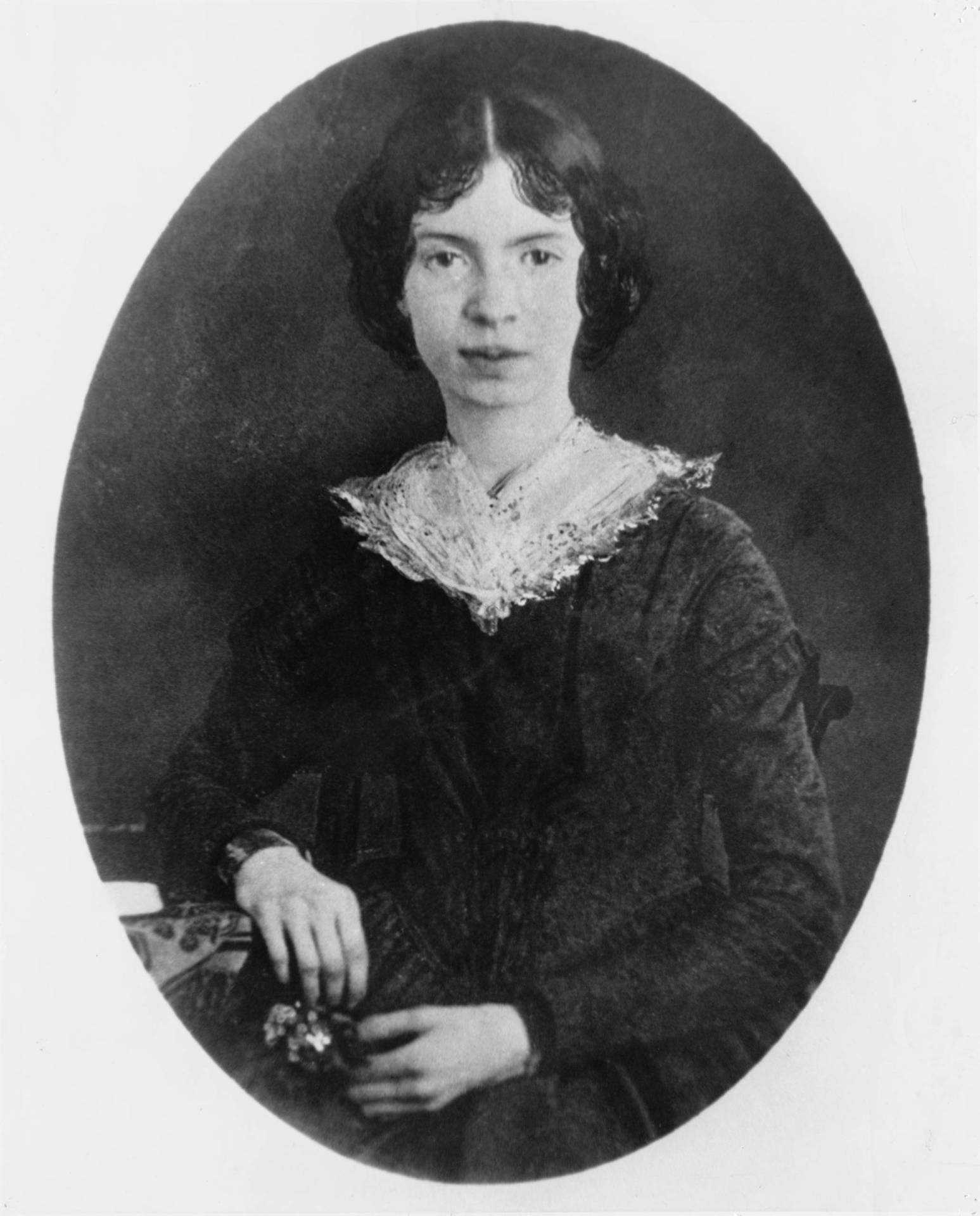
The result is that The Letters of Emily Dickinson reads like the closest thing we’ll probably ever have to an intimate autobiography of the poet. The first letter here is written by an 11-year-old Dickinson to her brother Austin, away at school. It’s a breathless, kid-sister-marvel of run-on sentences about yellow hens and a “skonk” and poor “Cousin Zebina [who] had a fit the other day and bit his tongue…”
The final letter, by an ailing 55-year-old Dickinson — most likely the last she wrote before falling unconscious on May 13, 1886 — was to her cousins Louisa and Frances Norcross. It reads:
Little Cousins,
“Called back.”
Emily.
In between is a life filled with visitors, chores and recipes for doughnuts and coconut cakes. There’s mention of the racist minstrel stereotype Jim Crow, as well as of public figures like Florence Nightingale and Walt Whitman. There are also allusions to the death toll of the ongoing Civil War.
Dickinson’s loyal dog Carlo walks with her, and frogs and even flies keep her company. Indeed, in an 1859 letter about one such winged companion, Belle of Amherst charm alternates with cold-blooded callousness. Dickinson writes to her cousin Louisa:
I enjoy much with a fly, during sister’s absence, not one of your blue monsters, but a timid creature, that hops from pane to pane of her white house, so very cheerfully, and hums and thrums, a sort of speck piano. … I’ll kill him the day [Lavinia] comes [home], for I shan’t need him any more …”
Dickinson’s singular voice comes into its own in the letters of the 1860s, which often blur into poems: cryptic, comic and charged with Awe. A simple thank-you note to her soul mate and beloved sister-in-law, Susan Gilbert Dickinson, reads:
Dear Sue,
The Supper was delicate and strange. I ate it with compunction as I would eat a Vision.
There are 1,304 letters, and, still, they’re not enough. Scholars estimate that we only have about one-tenth of the letters Dickinson ever wrote. And, on that momentous day in 1886, Lavinia entered her sister’s bedroom to find and successfully burn all the letters Dickinson herself had received from others during her lifetime. Such was the custom of the day. Which makes this new volume of Dickinson’s letters feel like both an intrusion and an outwitting of the silence of death — something I want to believe Dickinson would have relished.
Copyright 2024 NPR. To see more, visit NPR.