window.__IS_SSR__=true
window.__INITIAL_STATE__={
"attachmentsReducer": {
"audio_0": {
"type": "attachments",
"id": "audio_0",
"imgSizes": {
"kqedFullSize": {
"file": "https://ww2.kqed.org/news/wp-content/themes/KQED-unified/img/audio_bgs/background0.jpg"
}
}
},
"audio_1": {
"type": "attachments",
"id": "audio_1",
"imgSizes": {
"kqedFullSize": {
"file": "https://ww2.kqed.org/news/wp-content/themes/KQED-unified/img/audio_bgs/background1.jpg"
}
}
},
"audio_2": {
"type": "attachments",
"id": "audio_2",
"imgSizes": {
"kqedFullSize": {
"file": "https://ww2.kqed.org/news/wp-content/themes/KQED-unified/img/audio_bgs/background2.jpg"
}
}
},
"audio_3": {
"type": "attachments",
"id": "audio_3",
"imgSizes": {
"kqedFullSize": {
"file": "https://ww2.kqed.org/news/wp-content/themes/KQED-unified/img/audio_bgs/background3.jpg"
}
}
},
"audio_4": {
"type": "attachments",
"id": "audio_4",
"imgSizes": {
"kqedFullSize": {
"file": "https://ww2.kqed.org/news/wp-content/themes/KQED-unified/img/audio_bgs/background4.jpg"
}
}
},
"placeholder": {
"type": "attachments",
"id": "placeholder",
"imgSizes": {
"thumbnail": {
"file": "https://cdn.kqed.org/wp-content/uploads/2024/12/KQED-Default-Image-816638274-2000x1333-1-160x107.jpg",
"width": 160,
"height": 107,
"mimeType": "image/jpeg"
},
"medium": {
"file": "https://cdn.kqed.org/wp-content/uploads/2024/12/KQED-Default-Image-816638274-2000x1333-1-800x533.jpg",
"width": 800,
"height": 533,
"mimeType": "image/jpeg"
},
"medium_large": {
"file": "https://cdn.kqed.org/wp-content/uploads/2024/12/KQED-Default-Image-816638274-2000x1333-1-768x512.jpg",
"width": 768,
"height": 512,
"mimeType": "image/jpeg"
},
"large": {
"file": "https://cdn.kqed.org/wp-content/uploads/2024/12/KQED-Default-Image-816638274-2000x1333-1-1020x680.jpg",
"width": 1020,
"height": 680,
"mimeType": "image/jpeg"
},
"1536x1536": {
"file": "https://cdn.kqed.org/wp-content/uploads/2024/12/KQED-Default-Image-816638274-2000x1333-1-1536x1024.jpg",
"width": 1536,
"height": 1024,
"mimeType": "image/jpeg"
},
"fd-lrg": {
"file": "https://cdn.kqed.org/wp-content/uploads/2024/12/KQED-Default-Image-816638274-2000x1333-1-1536x1024.jpg",
"width": 1536,
"height": 1024,
"mimeType": "image/jpeg"
},
"fd-med": {
"file": "https://cdn.kqed.org/wp-content/uploads/2024/12/KQED-Default-Image-816638274-2000x1333-1-1020x680.jpg",
"width": 1020,
"height": 680,
"mimeType": "image/jpeg"
},
"fd-sm": {
"file": "https://cdn.kqed.org/wp-content/uploads/2024/12/KQED-Default-Image-816638274-2000x1333-1-800x533.jpg",
"width": 800,
"height": 533,
"mimeType": "image/jpeg"
},
"post-thumbnail": {
"file": "https://cdn.kqed.org/wp-content/uploads/2024/12/KQED-Default-Image-816638274-2000x1333-1-672x372.jpg",
"width": 672,
"height": 372,
"mimeType": "image/jpeg"
},
"twentyfourteen-full-width": {
"file": "https://cdn.kqed.org/wp-content/uploads/2024/12/KQED-Default-Image-816638274-2000x1333-1-1038x576.jpg",
"width": 1038,
"height": 576,
"mimeType": "image/jpeg"
},
"xxsmall": {
"file": "https://cdn.kqed.org/wp-content/uploads/2024/12/KQED-Default-Image-816638274-2000x1333-1-160x107.jpg",
"width": 160,
"height": 107,
"mimeType": "image/jpeg"
},
"xsmall": {
"file": "https://cdn.kqed.org/wp-content/uploads/2024/12/KQED-Default-Image-816638274-2000x1333-1-672x372.jpg",
"width": 672,
"height": 372,
"mimeType": "image/jpeg"
},
"small": {
"file": "https://cdn.kqed.org/wp-content/uploads/2024/12/KQED-Default-Image-816638274-2000x1333-1-672x372.jpg",
"width": 672,
"height": 372,
"mimeType": "image/jpeg"
},
"xlarge": {
"file": "https://cdn.kqed.org/wp-content/uploads/2024/12/KQED-Default-Image-816638274-2000x1333-1-1020x680.jpg",
"width": 1020,
"height": 680,
"mimeType": "image/jpeg"
},
"full-width": {
"file": "https://cdn.kqed.org/wp-content/uploads/2024/12/KQED-Default-Image-816638274-2000x1333-1-1920x1280.jpg",
"width": 1920,
"height": 1280,
"mimeType": "image/jpeg"
},
"guest-author-32": {
"file": "https://cdn.kqed.org/wp-content/uploads/2025/01/KQED-Default-Image-816638274-1333x1333-1-160x160.jpg",
"width": 32,
"height": 32,
"mimeType": "image/jpeg"
},
"guest-author-50": {
"file": "https://cdn.kqed.org/wp-content/uploads/2025/01/KQED-Default-Image-816638274-1333x1333-1-160x160.jpg",
"width": 50,
"height": 50,
"mimeType": "image/jpeg"
},
"guest-author-64": {
"file": "https://cdn.kqed.org/wp-content/uploads/2025/01/KQED-Default-Image-816638274-1333x1333-1-160x160.jpg",
"width": 64,
"height": 64,
"mimeType": "image/jpeg"
},
"guest-author-96": {
"file": "https://cdn.kqed.org/wp-content/uploads/2025/01/KQED-Default-Image-816638274-1333x1333-1-160x160.jpg",
"width": 96,
"height": 96,
"mimeType": "image/jpeg"
},
"guest-author-128": {
"file": "https://cdn.kqed.org/wp-content/uploads/2025/01/KQED-Default-Image-816638274-1333x1333-1-160x160.jpg",
"width": 128,
"height": 128,
"mimeType": "image/jpeg"
},
"detail": {
"file": "https://cdn.kqed.org/wp-content/uploads/2025/01/KQED-Default-Image-816638274-1333x1333-1-160x160.jpg",
"width": 160,
"height": 160,
"mimeType": "image/jpeg"
},
"kqedFullSize": {
"file": "https://cdn.kqed.org/wp-content/uploads/2024/12/KQED-Default-Image-816638274-2000x1333-1.jpg",
"width": 2000,
"height": 1333
}
}
},
"arts_13958827": {
"type": "attachments",
"id": "arts_13958827",
"meta": {
"index": "attachments_1716263798",
"site": "arts",
"id": "13958827",
"found": true
},
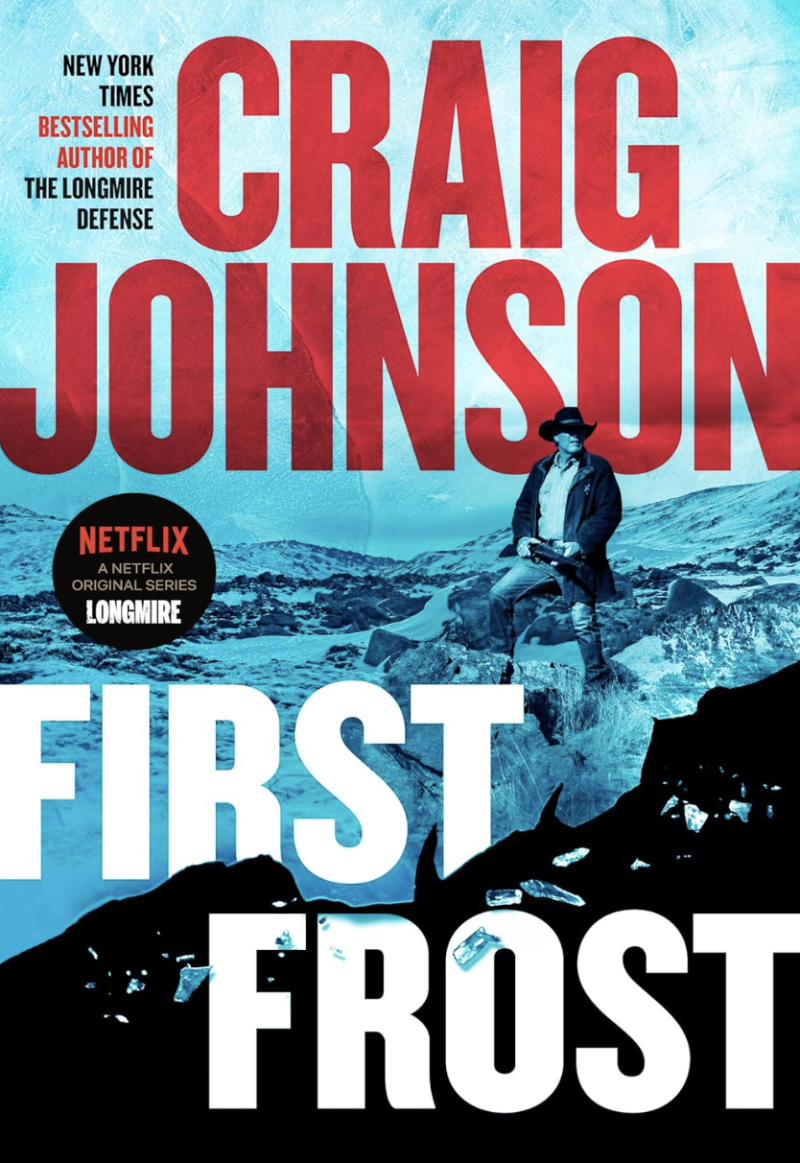
"title": "‘First Frost’ by Craig Johnson.",
"publishDate": 1717015280,
"status": "inherit",
"parent": 13958826,
"modified": 1717015401,
"caption": "‘First Frost’ by Craig Johnson.",
"credit": "Viking",
"altTag": "A book cover featuring a rugged man carrying a rifle and standly confidently on a hillside.",
"description": null,
"imgSizes": {
"medium": {
"file": "https://cdn.kqed.org/wp-content/uploads/sites/2/2024/05/Screen-Shot-2024-05-29-at-1.40.58-PM-800x1163.png",
"width": 800,
"height": 1163,
"mimeType": "image/png"
},
"thumbnail": {
"file": "https://cdn.kqed.org/wp-content/uploads/sites/2/2024/05/Screen-Shot-2024-05-29-at-1.40.58-PM-160x233.png",
"width": 160,
"height": 233,
"mimeType": "image/png"
},
"medium_large": {
"file": "https://cdn.kqed.org/wp-content/uploads/sites/2/2024/05/Screen-Shot-2024-05-29-at-1.40.58-PM-768x1116.png",
"width": 768,
"height": 1116,
"mimeType": "image/png"
},
"post-thumbnail": {
"file": "https://cdn.kqed.org/wp-content/uploads/sites/2/2024/05/Screen-Shot-2024-05-29-at-1.40.58-PM-672x372.png",
"width": 672,
"height": 372,
"mimeType": "image/png"
},
"twentyfourteen-full-width": {
"file": "https://cdn.kqed.org/wp-content/uploads/sites/2/2024/05/Screen-Shot-2024-05-29-at-1.40.58-PM-834x576.png",
"width": 834,
"height": 576,
"mimeType": "image/png"
},
"kqedFullSize": {
"file": "https://cdn.kqed.org/wp-content/uploads/sites/2/2024/05/Screen-Shot-2024-05-29-at-1.40.58-PM.png",
"width": 834,
"height": 1212
}
},
"isLoading": false,
"fetchFailed": false
},
"arts_13958778": {
"type": "attachments",
"id": "arts_13958778",
"meta": {
"index": "attachments_1716263798",
"site": "arts",
"id": "13958778",
"found": true
},
"title": "Nomeansno.DavidBruce",
"publishDate": 1717004686,
"status": "inherit",
"parent": 13958759,
"modified": 1717004873,
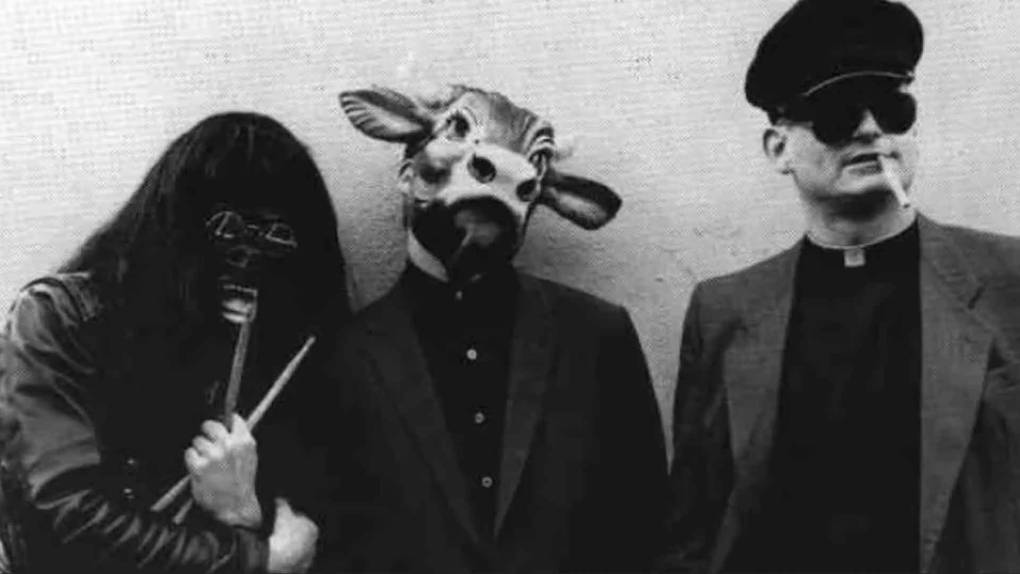
"caption": "Nomeansno in 1988. The Canadian band is the subject of a recent book, 'From Obscurity to Oblivion.'",
"credit": "David Bruce / Alternative Tentacles Records",
"altTag": "A man in a gasmask holding drumsticks, a man in a cow mask, and a man dressed as a priest, smoking a cigarette",
"description": null,
"imgSizes": {
"medium": {
"file": "https://cdn.kqed.org/wp-content/uploads/sites/2/2024/05/Nomeansno.DavidBruce-800x450.jpg",
"width": 800,
"height": 450,
"mimeType": "image/jpeg"
},
"large": {
"file": "https://cdn.kqed.org/wp-content/uploads/sites/2/2024/05/Nomeansno.DavidBruce-1020x574.jpg",
"width": 1020,
"height": 574,
"mimeType": "image/jpeg"
},
"thumbnail": {
"file": "https://cdn.kqed.org/wp-content/uploads/sites/2/2024/05/Nomeansno.DavidBruce-160x90.jpg",
"width": 160,
"height": 90,
"mimeType": "image/jpeg"
},
"medium_large": {
"file": "https://cdn.kqed.org/wp-content/uploads/sites/2/2024/05/Nomeansno.DavidBruce-768x432.jpg",
"width": 768,
"height": 432,
"mimeType": "image/jpeg"
},
"1536x1536": {
"file": "https://cdn.kqed.org/wp-content/uploads/sites/2/2024/05/Nomeansno.DavidBruce-1536x864.jpg",
"width": 1536,
"height": 864,
"mimeType": "image/jpeg"
},
"post-thumbnail": {
"file": "https://cdn.kqed.org/wp-content/uploads/sites/2/2024/05/Nomeansno.DavidBruce-672x372.jpg",
"width": 672,
"height": 372,
"mimeType": "image/jpeg"
},
"twentyfourteen-full-width": {
"file": "https://cdn.kqed.org/wp-content/uploads/sites/2/2024/05/Nomeansno.DavidBruce-1038x576.jpg",
"width": 1038,
"height": 576,
"mimeType": "image/jpeg"
},
"kqedFullSize": {
"file": "https://cdn.kqed.org/wp-content/uploads/sites/2/2024/05/Nomeansno.DavidBruce.jpg",
"width": 1920,
"height": 1080
}
},
"isLoading": false,
"fetchFailed": false
},
"arts_13958772": {
"type": "attachments",
"id": "arts_13958772",
"meta": {
"index": "attachments_1716263798",
"site": "arts",
"id": "13958772",
"found": true
},
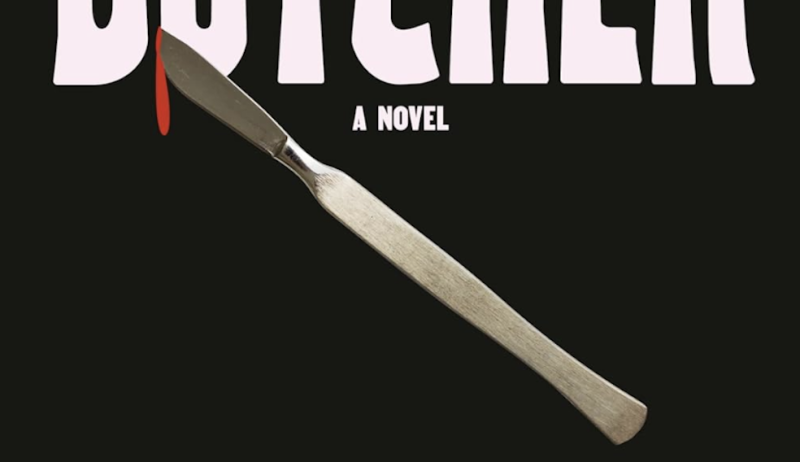
"title": "‘Butcher’ by Joyce Carol Oates.",
"publishDate": 1717001917,
"status": "inherit",
"parent": 13958760,
"modified": 1717001955,
"caption": "‘Butcher’ by Joyce Carol Oates.",
"credit": "Knopf",
"altTag": "A book cover featuring a scalpel on a black background.",
"description": null,
"imgSizes": {
"medium": {
"file": "https://cdn.kqed.org/wp-content/uploads/sites/2/2024/05/Screen-Shot-2024-05-29-at-9.58.08-AM-800x462.png",
"width": 800,
"height": 462,
"mimeType": "image/png"
},
"thumbnail": {
"file": "https://cdn.kqed.org/wp-content/uploads/sites/2/2024/05/Screen-Shot-2024-05-29-at-9.58.08-AM-160x92.png",
"width": 160,
"height": 92,
"mimeType": "image/png"
},
"medium_large": {
"file": "https://cdn.kqed.org/wp-content/uploads/sites/2/2024/05/Screen-Shot-2024-05-29-at-9.58.08-AM-768x443.png",
"width": 768,
"height": 443,
"mimeType": "image/png"
},
"post-thumbnail": {
"file": "https://cdn.kqed.org/wp-content/uploads/sites/2/2024/05/Screen-Shot-2024-05-29-at-9.58.08-AM-672x372.png",
"width": 672,
"height": 372,
"mimeType": "image/png"
},
"kqedFullSize": {
"file": "https://cdn.kqed.org/wp-content/uploads/sites/2/2024/05/Screen-Shot-2024-05-29-at-9.58.08-AM.png",
"width": 984,
"height": 568
}
},
"isLoading": false,
"fetchFailed": false
},
"arts_13958709": {
"type": "attachments",
"id": "arts_13958709",
"meta": {
"index": "attachments_1716263798",
"site": "arts",
"id": "13958709",
"found": true
},
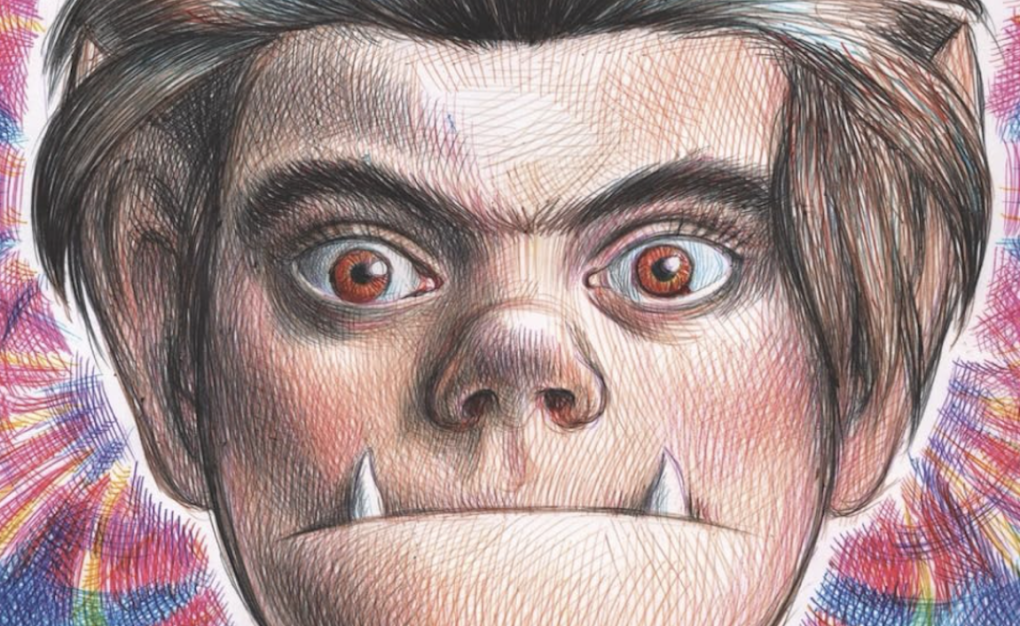
"title": "‘My Favorite Thing Is Monsters Book Two’ by Emil Ferris.",
"publishDate": 1716924629,
"status": "inherit",
"parent": 13958707,
"modified": 1716924662,
"caption": "‘My Favorite Thing Is Monsters Book Two’ by Emil Ferris.",
"credit": null,
"altTag": null,
"description": null,
"imgSizes": {
"medium": {
"file": "https://cdn.kqed.org/wp-content/uploads/sites/2/2024/05/Screen-Shot-2024-05-28-at-12.30.03-PM-800x491.png",
"width": 800,
"height": 491,
"mimeType": "image/png"
},
"large": {
"file": "https://cdn.kqed.org/wp-content/uploads/sites/2/2024/05/Screen-Shot-2024-05-28-at-12.30.03-PM-1020x626.png",
"width": 1020,
"height": 626,
"mimeType": "image/png"
},
"thumbnail": {
"file": "https://cdn.kqed.org/wp-content/uploads/sites/2/2024/05/Screen-Shot-2024-05-28-at-12.30.03-PM-160x98.png",
"width": 160,
"height": 98,
"mimeType": "image/png"
},
"medium_large": {
"file": "https://cdn.kqed.org/wp-content/uploads/sites/2/2024/05/Screen-Shot-2024-05-28-at-12.30.03-PM-768x471.png",
"width": 768,
"height": 471,
"mimeType": "image/png"
},
"post-thumbnail": {
"file": "https://cdn.kqed.org/wp-content/uploads/sites/2/2024/05/Screen-Shot-2024-05-28-at-12.30.03-PM-672x372.png",
"width": 672,
"height": 372,
"mimeType": "image/png"
},
"twentyfourteen-full-width": {
"file": "https://cdn.kqed.org/wp-content/uploads/sites/2/2024/05/Screen-Shot-2024-05-28-at-12.30.03-PM-1038x576.png",
"width": 1038,
"height": 576,
"mimeType": "image/png"
},
"kqedFullSize": {
"file": "https://cdn.kqed.org/wp-content/uploads/sites/2/2024/05/Screen-Shot-2024-05-28-at-12.30.03-PM.png",
"width": 1150,
"height": 706
}
},
"isLoading": false,
"fetchFailed": false
},
"arts_13958700": {
"type": "attachments",
"id": "arts_13958700",
"meta": {
"index": "attachments_1716263798",
"site": "arts",
"id": "13958700",
"found": true
},
"title": "jack turban free to be",
"publishDate": 1716920707,
"status": "inherit",
"parent": 13958699,
"modified": 1716920760,
"caption": "Dr. Jack Turban of UCSF references his research and first-hand work with patients in his new book about trans youth, 'Free to Be.'",
"credit": "Left: Simon & Schuster; right: University of California, San Francisco",
"altTag": null,
"description": null,
"imgSizes": {
"medium": {
"file": "https://cdn.kqed.org/wp-content/uploads/sites/2/2024/05/jack-turban-free-to-be-800x450.jpg",
"width": 800,
"height": 450,
"mimeType": "image/jpeg"
},
"large": {
"file": "https://cdn.kqed.org/wp-content/uploads/sites/2/2024/05/jack-turban-free-to-be-1020x574.jpg",
"width": 1020,
"height": 574,
"mimeType": "image/jpeg"
},
"thumbnail": {
"file": "https://cdn.kqed.org/wp-content/uploads/sites/2/2024/05/jack-turban-free-to-be-160x90.jpg",
"width": 160,
"height": 90,
"mimeType": "image/jpeg"
},
"medium_large": {
"file": "https://cdn.kqed.org/wp-content/uploads/sites/2/2024/05/jack-turban-free-to-be-768x432.jpg",
"width": 768,
"height": 432,
"mimeType": "image/jpeg"
},
"1536x1536": {
"file": "https://cdn.kqed.org/wp-content/uploads/sites/2/2024/05/jack-turban-free-to-be-1536x864.jpg",
"width": 1536,
"height": 864,
"mimeType": "image/jpeg"
},
"post-thumbnail": {
"file": "https://cdn.kqed.org/wp-content/uploads/sites/2/2024/05/jack-turban-free-to-be-672x372.jpg",
"width": 672,
"height": 372,
"mimeType": "image/jpeg"
},
"twentyfourteen-full-width": {
"file": "https://cdn.kqed.org/wp-content/uploads/sites/2/2024/05/jack-turban-free-to-be-1038x576.jpg",
"width": 1038,
"height": 576,
"mimeType": "image/jpeg"
},
"kqedFullSize": {
"file": "https://cdn.kqed.org/wp-content/uploads/sites/2/2024/05/jack-turban-free-to-be.jpg",
"width": 1920,
"height": 1080
}
},
"isLoading": false,
"fetchFailed": false
},
"arts_13958516": {
"type": "attachments",
"id": "arts_13958516",
"meta": {
"index": "attachments_1716263798",
"site": "arts",
"id": "13958516",
"found": true
},
"title": "‘The Last Murder at the End of the World’ by Stuart Turton.",
"publishDate": 1716577822,
"status": "inherit",
"parent": 13958512,
"modified": 1716577852,
"caption": "‘The Last Murder at the End of the World’ by Stuart Turton.",
"credit": "Sourcebooks",
"altTag": "A book cover featuring an illustration of a lighthouse at dawn.",
"description": null,
"imgSizes": {
"medium": {
"file": "https://cdn.kqed.org/wp-content/uploads/sites/2/2024/05/Screen-Shot-2024-05-24-at-12.07.16-PM-1-800x452.png",
"width": 800,
"height": 452,
"mimeType": "image/png"
},
"thumbnail": {
"file": "https://cdn.kqed.org/wp-content/uploads/sites/2/2024/05/Screen-Shot-2024-05-24-at-12.07.16-PM-1-160x90.png",
"width": 160,
"height": 90,
"mimeType": "image/png"
},
"medium_large": {
"file": "https://cdn.kqed.org/wp-content/uploads/sites/2/2024/05/Screen-Shot-2024-05-24-at-12.07.16-PM-1-768x434.png",
"width": 768,
"height": 434,
"mimeType": "image/png"
},
"post-thumbnail": {
"file": "https://cdn.kqed.org/wp-content/uploads/sites/2/2024/05/Screen-Shot-2024-05-24-at-12.07.16-PM-1-672x372.png",
"width": 672,
"height": 372,
"mimeType": "image/png"
},
"kqedFullSize": {
"file": "https://cdn.kqed.org/wp-content/uploads/sites/2/2024/05/Screen-Shot-2024-05-24-at-12.07.16-PM-1.png",
"width": 837,
"height": 473
}
},
"isLoading": false,
"fetchFailed": false
},
"arts_13958359": {
"type": "attachments",
"id": "arts_13958359",
"meta": {
"index": "attachments_1716263798",
"site": "arts",
"id": "13958359",
"found": true
},
"title": "SOROCHE KQED",
"publishDate": 1716410712,
"status": "inherit",
"parent": 13958337,
"modified": 1716489009,
"caption": "Monica Ojeda's short story, \"Soroche,\" was translated into English as part of 'Through the Night Like a Snake,' a Latin American horror story anthology. It has since been adapted for the stage by Cuentero Productions.",
"credit": "Giovanna Lomanto",
"altTag": "a collection of Latin American books are loosely scattered on a table",
"description": null,
"imgSizes": {
"medium": {
"file": "https://cdn.kqed.org/wp-content/uploads/sites/2/2024/05/SOROCHE-KQED-800x533.png",
"width": 800,
"height": 533,
"mimeType": "image/png"
},
"large": {
"file": "https://cdn.kqed.org/wp-content/uploads/sites/2/2024/05/SOROCHE-KQED-1020x680.png",
"width": 1020,
"height": 680,
"mimeType": "image/png"
},
"thumbnail": {
"file": "https://cdn.kqed.org/wp-content/uploads/sites/2/2024/05/SOROCHE-KQED-160x107.png",
"width": 160,
"height": 107,
"mimeType": "image/png"
},
"medium_large": {
"file": "https://cdn.kqed.org/wp-content/uploads/sites/2/2024/05/SOROCHE-KQED-768x512.png",
"width": 768,
"height": 512,
"mimeType": "image/png"
},
"1536x1536": {
"file": "https://cdn.kqed.org/wp-content/uploads/sites/2/2024/05/SOROCHE-KQED-1536x1024.png",
"width": 1536,
"height": 1024,
"mimeType": "image/png"
},
"2048x2048": {
"file": "https://cdn.kqed.org/wp-content/uploads/sites/2/2024/05/SOROCHE-KQED-2048x1365.png",
"width": 2048,
"height": 1365,
"mimeType": "image/png"
},
"post-thumbnail": {
"file": "https://cdn.kqed.org/wp-content/uploads/sites/2/2024/05/SOROCHE-KQED-672x372.png",
"width": 672,
"height": 372,
"mimeType": "image/png"
},
"twentyfourteen-full-width": {
"file": "https://cdn.kqed.org/wp-content/uploads/sites/2/2024/05/SOROCHE-KQED-1038x576.png",
"width": 1038,
"height": 576,
"mimeType": "image/png"
},
"full-width": {
"file": "https://cdn.kqed.org/wp-content/uploads/sites/2/2024/05/SOROCHE-KQED-1920x1280.png",
"width": 1920,
"height": 1280,
"mimeType": "image/png"
},
"kqedFullSize": {
"file": "https://cdn.kqed.org/wp-content/uploads/sites/2/2024/05/SOROCHE-KQED.png",
"width": 5184,
"height": 3456
}
},
"isLoading": false,
"fetchFailed": false
},
"arts_13958312": {
"type": "attachments",
"id": "arts_13958312",
"meta": {
"index": "attachments_1716263798",
"site": "arts",
"id": "13958312",
"found": true
},
"title": "Illustration by Alicia Zheng / NPR.",
"publishDate": 1716396382,
"status": "inherit",
"parent": 13958311,
"modified": 1716396382,
"caption": null,
"credit": null,
"altTag": null,
"description": null,
"imgSizes": {
"medium": {
"file": "https://cdn.kqed.org/wp-content/uploads/sites/2/2024/05/illustration_booklist_24_02-copy_wide-1472beb5294d7208d71a81a0b35eec6107dd2a8f-800x450.jpg",
"width": 800,
"height": 450,
"mimeType": "image/jpeg"
},
"large": {
"file": "https://cdn.kqed.org/wp-content/uploads/sites/2/2024/05/illustration_booklist_24_02-copy_wide-1472beb5294d7208d71a81a0b35eec6107dd2a8f-1020x574.jpg",
"width": 1020,
"height": 574,
"mimeType": "image/jpeg"
},
"thumbnail": {
"file": "https://cdn.kqed.org/wp-content/uploads/sites/2/2024/05/illustration_booklist_24_02-copy_wide-1472beb5294d7208d71a81a0b35eec6107dd2a8f-160x90.jpg",
"width": 160,
"height": 90,
"mimeType": "image/jpeg"
},
"medium_large": {
"file": "https://cdn.kqed.org/wp-content/uploads/sites/2/2024/05/illustration_booklist_24_02-copy_wide-1472beb5294d7208d71a81a0b35eec6107dd2a8f-768x432.jpg",
"width": 768,
"height": 432,
"mimeType": "image/jpeg"
},
"1536x1536": {
"file": "https://cdn.kqed.org/wp-content/uploads/sites/2/2024/05/illustration_booklist_24_02-copy_wide-1472beb5294d7208d71a81a0b35eec6107dd2a8f-1536x864.jpg",
"width": 1536,
"height": 864,
"mimeType": "image/jpeg"
},
"2048x2048": {
"file": "https://cdn.kqed.org/wp-content/uploads/sites/2/2024/05/illustration_booklist_24_02-copy_wide-1472beb5294d7208d71a81a0b35eec6107dd2a8f-2048x1152.jpg",
"width": 2048,
"height": 1152,
"mimeType": "image/jpeg"
},
"post-thumbnail": {
"file": "https://cdn.kqed.org/wp-content/uploads/sites/2/2024/05/illustration_booklist_24_02-copy_wide-1472beb5294d7208d71a81a0b35eec6107dd2a8f-672x372.jpg",
"width": 672,
"height": 372,
"mimeType": "image/jpeg"
},
"twentyfourteen-full-width": {
"file": "https://cdn.kqed.org/wp-content/uploads/sites/2/2024/05/illustration_booklist_24_02-copy_wide-1472beb5294d7208d71a81a0b35eec6107dd2a8f-1038x576.jpg",
"width": 1038,
"height": 576,
"mimeType": "image/jpeg"
},
"full-width": {
"file": "https://cdn.kqed.org/wp-content/uploads/sites/2/2024/05/illustration_booklist_24_02-copy_wide-1472beb5294d7208d71a81a0b35eec6107dd2a8f-1920x1080.jpg",
"width": 1920,
"height": 1080,
"mimeType": "image/jpeg"
},
"kqedFullSize": {
"file": "https://cdn.kqed.org/wp-content/uploads/sites/2/2024/05/illustration_booklist_24_02-copy_wide-1472beb5294d7208d71a81a0b35eec6107dd2a8f-scaled.jpg",
"width": 2560,
"height": 1440
}
},
"isLoading": false,
"fetchFailed": false
},
"arts_13958332": {
"type": "attachments",
"id": "arts_13958332",
"meta": {
"index": "attachments_1716263798",
"site": "arts",
"id": "13958332",
"found": true
},
"title": "Kathleen Hanna and Brontez Purnell on the Sydney Goldstein Theater stage in San Francisco on May 21, 2024.",
"publishDate": 1716401558,
"status": "inherit",
"parent": 0,
"modified": 1716401834,
"caption": "Kathleen Hanna and Brontez Purnell on the Sydney Goldstein Theater stage in San Francisco on May 21, 2024.",
"credit": "Estefany Gonzalez",
"altTag": "On a theater stage, a middle aged white woman with a messy up-do sits in an orange armchair smiling at a Black man, seated in matching armchair near her. They are separated by a small table with a vase of tulips on.",
"description": null,
"imgSizes": {
"medium": {
"file": "https://cdn.kqed.org/wp-content/uploads/sites/2/2024/05/Kathleen-Hanna-and-Brontez-Purnell_KQEDLIVE_EG_03-800x533.jpg",
"width": 800,
"height": 533,
"mimeType": "image/jpeg"
},
"large": {
"file": "https://cdn.kqed.org/wp-content/uploads/sites/2/2024/05/Kathleen-Hanna-and-Brontez-Purnell_KQEDLIVE_EG_03-1020x680.jpg",
"width": 1020,
"height": 680,
"mimeType": "image/jpeg"
},
"thumbnail": {
"file": "https://cdn.kqed.org/wp-content/uploads/sites/2/2024/05/Kathleen-Hanna-and-Brontez-Purnell_KQEDLIVE_EG_03-160x107.jpg",
"width": 160,
"height": 107,
"mimeType": "image/jpeg"
},
"medium_large": {
"file": "https://cdn.kqed.org/wp-content/uploads/sites/2/2024/05/Kathleen-Hanna-and-Brontez-Purnell_KQEDLIVE_EG_03-768x512.jpg",
"width": 768,
"height": 512,
"mimeType": "image/jpeg"
},
"1536x1536": {
"file": "https://cdn.kqed.org/wp-content/uploads/sites/2/2024/05/Kathleen-Hanna-and-Brontez-Purnell_KQEDLIVE_EG_03-1536x1024.jpg",
"width": 1536,
"height": 1024,
"mimeType": "image/jpeg"
},
"post-thumbnail": {
"file": "https://cdn.kqed.org/wp-content/uploads/sites/2/2024/05/Kathleen-Hanna-and-Brontez-Purnell_KQEDLIVE_EG_03-672x372.jpg",
"width": 672,
"height": 372,
"mimeType": "image/jpeg"
},
"twentyfourteen-full-width": {
"file": "https://cdn.kqed.org/wp-content/uploads/sites/2/2024/05/Kathleen-Hanna-and-Brontez-Purnell_KQEDLIVE_EG_03-1038x576.jpg",
"width": 1038,
"height": 576,
"mimeType": "image/jpeg"
},
"kqedFullSize": {
"file": "https://cdn.kqed.org/wp-content/uploads/sites/2/2024/05/Kathleen-Hanna-and-Brontez-Purnell_KQEDLIVE_EG_03.jpg",
"width": 1920,
"height": 1280
}
},
"isLoading": false,
"fetchFailed": false
},
"arts_13958208": {
"type": "attachments",
"id": "arts_13958208",
"meta": {
"index": "attachments_1716263798",
"site": "arts",
"id": "13958208",
"found": true
},
"parent": 13958207,
"imgSizes": {
"thumbnail": {
"file": "https://cdn.kqed.org/wp-content/uploads/sites/2/2024/05/Screen-Shot-2024-05-20-at-7.50.46-PM-160x92.png",
"width": 160,
"mimeType": "image/png",
"height": 92
},
"post-thumbnail": {
"file": "https://cdn.kqed.org/wp-content/uploads/sites/2/2024/05/Screen-Shot-2024-05-20-at-7.50.46-PM-672x372.png",
"width": 672,
"mimeType": "image/png",
"height": 372
},
"kqedFullSize": {
"file": "https://cdn.kqed.org/wp-content/uploads/sites/2/2024/05/Screen-Shot-2024-05-20-at-7.50.46-PM.png",
"width": 890,
"height": 510
},
"medium": {
"file": "https://cdn.kqed.org/wp-content/uploads/sites/2/2024/05/Screen-Shot-2024-05-20-at-7.50.46-PM-800x458.png",
"width": 800,
"mimeType": "image/png",
"height": 458
},
"medium_large": {
"file": "https://cdn.kqed.org/wp-content/uploads/sites/2/2024/05/Screen-Shot-2024-05-20-at-7.50.46-PM-768x440.png",
"width": 768,
"mimeType": "image/png",
"height": 440
}
},
"publishDate": 1716259869,
"modified": 1716259958,
"caption": "'You Like it Darker' by Stephen King.",
"description": null,
"title": "'You Like it Darker' by Stephen King.",
"credit": "Scribner via AP",
"status": "inherit",
"altTag": "A book cover illustration of a coast line and a rocky outcrop that resembles an alligator head.",
"isLoading": false,
"fetchFailed": false
},
"arts_13958093": {
"type": "attachments",
"id": "arts_13958093",
"meta": {
"index": "attachments_1716263798",
"site": "arts",
"id": "13958093",
"found": true
},
"parent": 13958092,
"imgSizes": {
"twentyfourteen-full-width": {
"file": "https://cdn.kqed.org/wp-content/uploads/sites/2/2024/05/untitled-design-66-e1ce1e28ad2e5f555f95cea69bd301a73e5f0304-1038x576.jpg",
"width": 1038,
"mimeType": "image/jpeg",
"height": 576
},
"thumbnail": {
"file": "https://cdn.kqed.org/wp-content/uploads/sites/2/2024/05/untitled-design-66-e1ce1e28ad2e5f555f95cea69bd301a73e5f0304-160x120.jpg",
"width": 160,
"mimeType": "image/jpeg",
"height": 120
},
"post-thumbnail": {
"file": "https://cdn.kqed.org/wp-content/uploads/sites/2/2024/05/untitled-design-66-e1ce1e28ad2e5f555f95cea69bd301a73e5f0304-672x372.jpg",
"width": 672,
"mimeType": "image/jpeg",
"height": 372
},
"kqedFullSize": {
"file": "https://cdn.kqed.org/wp-content/uploads/sites/2/2024/05/untitled-design-66-e1ce1e28ad2e5f555f95cea69bd301a73e5f0304.jpg",
"width": 1438,
"height": 1078
},
"large": {
"file": "https://cdn.kqed.org/wp-content/uploads/sites/2/2024/05/untitled-design-66-e1ce1e28ad2e5f555f95cea69bd301a73e5f0304-1020x765.jpg",
"width": 1020,
"mimeType": "image/jpeg",
"height": 765
},
"medium": {
"file": "https://cdn.kqed.org/wp-content/uploads/sites/2/2024/05/untitled-design-66-e1ce1e28ad2e5f555f95cea69bd301a73e5f0304-800x600.jpg",
"width": 800,
"mimeType": "image/jpeg",
"height": 600
},
"medium_large": {
"file": "https://cdn.kqed.org/wp-content/uploads/sites/2/2024/05/untitled-design-66-e1ce1e28ad2e5f555f95cea69bd301a73e5f0304-768x576.jpg",
"width": 768,
"mimeType": "image/jpeg",
"height": 576
}
},
"publishDate": 1715969863,
"modified": 1715970610,
"caption": "Two New Novels Investigate What Makes Magic, What Is Real and Imagined",
"description": null,
"title": "‘Pages of Mourning’ and ‘The Cemetery of Untold Stories.’",
"credit": "NPR",
"status": "inherit",
"altTag": "Two book covers lay side by side. The one on the left features the face of a statue facing up from the ground in a garden. The one on the right shows an old photograph of a woman with long hair sitting in a car driver's seat.",
"isLoading": false,
"fetchFailed": false
},
"arts_13957976": {
"type": "attachments",
"id": "arts_13957976",
"meta": {
"index": "attachments_1716263798",
"site": "arts",
"id": "13957976",
"found": true
},
"parent": 0,
"imgSizes": {
"twentyfourteen-full-width": {
"file": "https://cdn.kqed.org/wp-content/uploads/sites/2/2024/05/img_0482-1038x576.jpg",
"width": 1038,
"mimeType": "image/jpeg",
"height": 576
},
"thumbnail": {
"file": "https://cdn.kqed.org/wp-content/uploads/sites/2/2024/05/img_0482-160x90.jpg",
"width": 160,
"mimeType": "image/jpeg",
"height": 90
},
"post-thumbnail": {
"file": "https://cdn.kqed.org/wp-content/uploads/sites/2/2024/05/img_0482-672x372.jpg",
"width": 672,
"mimeType": "image/jpeg",
"height": 372
},
"kqedFullSize": {
"file": "https://cdn.kqed.org/wp-content/uploads/sites/2/2024/05/img_0482.jpg",
"width": 1920,
"height": 1080
},
"large": {
"file": "https://cdn.kqed.org/wp-content/uploads/sites/2/2024/05/img_0482-1020x574.jpg",
"width": 1020,
"mimeType": "image/jpeg",
"height": 574
},
"1536x1536": {
"file": "https://cdn.kqed.org/wp-content/uploads/sites/2/2024/05/img_0482-1536x864.jpg",
"width": 1536,
"mimeType": "image/jpeg",
"height": 864
},
"medium": {
"file": "https://cdn.kqed.org/wp-content/uploads/sites/2/2024/05/img_0482-800x450.jpg",
"width": 800,
"mimeType": "image/jpeg",
"height": 450
},
"medium_large": {
"file": "https://cdn.kqed.org/wp-content/uploads/sites/2/2024/05/img_0482-768x432.jpg",
"width": 768,
"mimeType": "image/jpeg",
"height": 432
}
},
"publishDate": 1715877567,
"modified": 1715877836,
"caption": "Long, languorous summer days are perfect for catching up on your reading list.",
"description": null,
"title": "img_0482",
"credit": "Ugur Dursun/KQED",
"status": "inherit",
"altTag": "A pile of books, with spines showing, against a backdrop of ivy.",
"isLoading": false,
"fetchFailed": false
}
},
"audioPlayerReducer": {
"postId": "stream_live",
"isPaused": true,
"isPlaying": false,
"pfsActive": false,
"pledgeModalIsOpen": true,
"playerDrawerIsOpen": false,
"liveAudioPlayStartedAt": 0,
"liveAudioPlayContext": ""
},
"authorsReducer": {
"byline_arts_13958826": {
"type": "authors",
"id": "byline_arts_13958826",
"meta": {
"override": true
},
"slug": "byline_arts_13958826",
"name": "Bruce DeSilva, Associated Press",
"isLoading": false
},
"byline_arts_13958760": {
"type": "authors",
"id": "byline_arts_13958760",
"meta": {
"override": true
},
"slug": "byline_arts_13958760",
"name": "Anita Snow, Associated Press",
"isLoading": false
},
"byline_arts_13958707": {
"type": "authors",
"id": "byline_arts_13958707",
"meta": {
"override": true
},
"slug": "byline_arts_13958707",
"name": "Donna Edwards, Associated Press",
"isLoading": false
},
"byline_arts_13958512": {
"type": "authors",
"id": "byline_arts_13958512",
"meta": {
"override": true
},
"slug": "byline_arts_13958512",
"name": "Gabino Iglesias, NPR",
"isLoading": false
},
"byline_arts_13958311": {
"type": "authors",
"id": "byline_arts_13958311",
"meta": {
"override": true
},
"slug": "byline_arts_13958311",
"name": "Meghan Collins Sullivan, NPR",
"isLoading": false
},
"byline_arts_13958207": {
"type": "authors",
"id": "byline_arts_13958207",
"meta": {
"override": true
},
"slug": "byline_arts_13958207",
"name": "Rob Merrill, Associated Press",
"isLoading": false
},
"byline_arts_13958092": {
"type": "authors",
"id": "byline_arts_13958092",
"meta": {
"override": true
},
"slug": "byline_arts_13958092",
"name": "Marcela Davison Avilés, NPR",
"isLoading": false
},
"gmeline": {
"type": "authors",
"id": "185",
"meta": {
"index": "authors_1716337520",
"id": "185",
"found": true
},
"name": "Gabe Meline",
"firstName": "Gabe",
"lastName": "Meline",
"slug": "gmeline",
"email": "gmeline@kqed.org",
"display_author_email": true,
"staff_mastheads": [
"arts"
],
"title": "Senior Editor, KQED Arts & Culture",
"bio": "Gabe Meline entered journalism at age 15 making photocopied zines, and has since earned awards from the Edward R. Murrow Awards, the Society for Professional Journalists, the Online Journalism Awards, the Association of Alternative Newsweeklies and the California Newspaper Publishers Association. Prior to KQED, he was the editor of the \u003cem>North Bay Bohemian\u003c/em> and a touring musician. He lives with his wife and daughter in his hometown of Santa Rosa, CA.",
"avatar": "https://secure.gravatar.com/avatar/5bebe57be0d8bc2dd318934feb47299e2d2d10cba28d09d8d7afb389a2ce2bdd?s=600&d=blank&r=g",
"twitter": null,
"bluesky": null,
"facebook": null,
"instagram": null,
"linkedin": null,
"sites": [
{
"site": "",
"roles": [
"editor"
]
},
{
"site": "arts",
"roles": [
"administrator"
]
},
{
"site": "artschool",
"roles": [
"editor"
]
},
{
"site": "news",
"roles": [
"author"
]
},
{
"site": "pop",
"roles": [
"editor"
]
},
{
"site": "bayareabites",
"roles": [
"editor"
]
},
{
"site": "food",
"roles": [
"editor"
]
},
{
"site": "forum",
"roles": [
"administrator"
]
},
{
"site": "liveblog",
"roles": [
"editor"
]
},
{
"site": "hiphop",
"roles": [
"editor"
]
}
],
"headData": {
"title": "Gabe Meline | KQED",
"description": "Senior Editor, KQED Arts & Culture",
"ogImgSrc": "https://secure.gravatar.com/avatar/5bebe57be0d8bc2dd318934feb47299e2d2d10cba28d09d8d7afb389a2ce2bdd?s=600&d=blank&r=g",
"twImgSrc": "https://secure.gravatar.com/avatar/5bebe57be0d8bc2dd318934feb47299e2d2d10cba28d09d8d7afb389a2ce2bdd?s=600&d=blank&r=g"
},
"isLoading": false,
"link": "/author/gmeline"
},
"ralexandra": {
"type": "authors",
"id": "11242",
"meta": {
"index": "authors_1716337520",
"id": "11242",
"found": true
},
"name": "Rae Alexandra",
"firstName": "Rae",
"lastName": "Alexandra",
"slug": "ralexandra",
"email": "ralexandra@kqed.org",
"display_author_email": true,
"staff_mastheads": [],
"title": "Reporter/Producer",
"bio": "Rae Alexandra is a Reporter/Producer for KQED Arts & Culture, and the creator/author of the \u003ca href=\"https://www.kqed.org/arts/program/rebel-girls-from-bay-area-history\">Rebel Girls From Bay Area History\u003c/a> and \u003ca href=\"https://www.kqed.org/bizarrebayarea\">Bizarre Bay Area\u003c/a> series. Her debut book, \u003ca href=\"https://citylights.com/politics-current-events-history/unsung-heroines35-women-who-changed/\">Unsung Heroines: 35 Women Who Changed the Bay Area\u003c/a> was published by City Lights in March 2026. In 2023, Rae was awarded an SPJ Excellence in Journalism Award for Arts & Culture. Rae was born and raised in Wales and subsequently — even after two decades in Northern California — still uses phrases that regularly baffle her coworkers.",
"avatar": "https://secure.gravatar.com/avatar/edfee8176c80cc0a382b051190f5341997df378a934a5774dcb0977732dfd401?s=600&d=blank&r=g",
"twitter": null,
"bluesky": null,
"facebook": null,
"instagram": null,
"linkedin": null,
"sites": [
{
"site": "arts",
"roles": [
"subscriber"
]
},
{
"site": "news",
"roles": [
"subscriber"
]
},
{
"site": "pop",
"roles": [
"subscriber"
]
},
{
"site": "bayareabites",
"roles": [
"subscriber"
]
},
{
"site": "science",
"roles": [
"subscriber"
]
}
],
"headData": {
"title": "Rae Alexandra | KQED",
"description": "Reporter/Producer",
"ogImgSrc": "https://secure.gravatar.com/avatar/edfee8176c80cc0a382b051190f5341997df378a934a5774dcb0977732dfd401?s=600&d=blank&r=g",
"twImgSrc": "https://secure.gravatar.com/avatar/edfee8176c80cc0a382b051190f5341997df378a934a5774dcb0977732dfd401?s=600&d=blank&r=g"
},
"isLoading": false,
"link": "/author/ralexandra"
},
"achazaro": {
"type": "authors",
"id": "11748",
"meta": {
"index": "authors_1716337520",
"id": "11748",
"found": true
},
"name": "Alan Chazaro",
"firstName": "Alan",
"lastName": "Chazaro",
"slug": "achazaro",
"email": "agchazaro@gmail.com",
"display_author_email": true,
"staff_mastheads": [],
"title": "Food Writer and Reporter",
"bio": "Alan Chazaro is the author of \u003cem>This Is Not a Frank Ocean Cover Album\u003c/em> (Black Lawrence Press, 2019), \u003cem>Piñata Theory\u003c/em> (Black Lawrence Press, 2020), and \u003cem>Notes from the Eastern Span of the Bay Bridge\u003c/em> (Ghost City Press, 2021). He is a graduate of June Jordan’s Poetry for the People program at UC Berkeley and a former Lawrence Ferlinghetti Fellow at the University of San Francisco. He writes about sports, food, art, music, education, and culture while repping the Bay on \u003ca href=\"https://twitter.com/alan_chazaro\">Twitter\u003c/a> and \u003ca href=\"https://www.instagram.com/alan_chazaro/?hl=en\">Instagram\u003c/a> at @alan_chazaro.",
"avatar": "https://secure.gravatar.com/avatar/ea8b6dd970fc5c29e7a188e7d5861df7?s=600&d=blank&r=g",
"twitter": "alan_chazaro",
"facebook": null,
"instagram": null,
"linkedin": null,
"sites": [
{
"site": "arts",
"roles": [
"contributor"
]
},
{
"site": "news",
"roles": [
"editor"
]
}
],
"headData": {
"title": "Alan Chazaro | KQED",
"description": "Food Writer and Reporter",
"ogImgSrc": "https://secure.gravatar.com/avatar/ea8b6dd970fc5c29e7a188e7d5861df7?s=600&d=blank&r=g",
"twImgSrc": "https://secure.gravatar.com/avatar/ea8b6dd970fc5c29e7a188e7d5861df7?s=600&d=blank&r=g"
},
"isLoading": false,
"link": "/author/achazaro"
},
"udursun": {
"type": "authors",
"id": "11883",
"meta": {
"index": "authors_1716337520",
"id": "11883",
"found": true
},
"name": "Ugur Dursun",
"firstName": "Ugur",
"lastName": "Dursun",
"slug": "udursun",
"email": "udursun@kqed.org",
"display_author_email": true,
"staff_mastheads": [
"arts"
],
"title": "Engagement Producer, KQED Arts & Culture",
"bio": "Ugur Dursun is a reporter and audience engagement producer for KQED Arts. Previously, her reporting has appeared on SFGate, East Bay Times, The Mercury News, KTVU, NBC Bay Area, The Stanford Daily, and other Bay Area local news outlets. In 2023, she was a recipient of Online News Association's \u003ca href=\"https://journalists.org/programs/mj-bear-fellowship/\">MJ Bear Fellowship\u003c/a>, which honors six standout journalists under the age of 30 who are pushing innovation in digital news.",
"avatar": "https://secure.gravatar.com/avatar/9c5fe6a93389635670fe02d7fa44666938055adfbfc2cfd7fffc1de9e29072a2?s=600&d=blank&r=g",
"twitter": null,
"bluesky": null,
"facebook": null,
"instagram": null,
"linkedin": null,
"sites": [
{
"site": "arts",
"roles": [
"administrator"
]
},
{
"site": "news",
"roles": [
"editor"
]
}
],
"headData": {
"title": "Ugur Dursun | KQED",
"description": "Engagement Producer, KQED Arts & Culture",
"ogImgSrc": "https://secure.gravatar.com/avatar/9c5fe6a93389635670fe02d7fa44666938055adfbfc2cfd7fffc1de9e29072a2?s=600&d=blank&r=g",
"twImgSrc": "https://secure.gravatar.com/avatar/9c5fe6a93389635670fe02d7fa44666938055adfbfc2cfd7fffc1de9e29072a2?s=600&d=blank&r=g"
},
"isLoading": false,
"link": "/author/udursun"
},
"vesposito": {
"type": "authors",
"id": "11934",
"meta": {
"index": "authors_1716337520",
"id": "11934",
"found": true
},
"name": "Veronica Esposito",
"firstName": "Veronica",
"lastName": "Esposito",
"slug": "vesposito",
"email": "ladoppiavitadinica@gmail.com",
"display_author_email": false,
"staff_mastheads": [],
"title": "KQED Contributor",
"bio": "Veronica Esposito is a Licensed Marriage and Family Therapist, as well as a freelance journalist covering the arts, lifestyle, and social justice for venues including The Guardian, KQED, World Literature Today, and many others. Her writing has appeared in dozens of venues, and she has published four books. As a therapist, she specializes in supporting and advocating for trans individuals, and more generally helps clients process and overcome traumatic histories, manage life transitions, and tell their own story.",
"avatar": "https://secure.gravatar.com/avatar/503a7126ebd8cb299fb632f755dac767?s=600&d=blank&r=g",
"twitter": null,
"facebook": null,
"instagram": null,
"linkedin": null,
"sites": [
{
"site": "arts",
"roles": [
"author"
]
}
],
"headData": {
"title": "Veronica Esposito | KQED",
"description": "KQED Contributor",
"ogImgSrc": "https://secure.gravatar.com/avatar/503a7126ebd8cb299fb632f755dac767?s=600&d=blank&r=g",
"twImgSrc": "https://secure.gravatar.com/avatar/503a7126ebd8cb299fb632f755dac767?s=600&d=blank&r=g"
},
"isLoading": false,
"link": "/author/vesposito"
}
},
"pagesReducer": {
"arts_category_literature": {
"type": "terms",
"id": "arts_73",
"meta": {
"index": "terms_1716263798",
"site": "arts",
"id": "73",
"score": 12.797518
},
"featImg": null,
"name": "Books",
"description": null,
"taxonomy": "category",
"headData": {
"twImgId": null,
"twTitle": null,
"ogTitle": null,
"ogImgId": null,
"twDescription": null,
"description": null,
"title": "Books Archives | KQED Arts",
"ogDescription": null
},
"ttid": 74,
"slug": "literature",
"isLoading": false,
"title": "Books",
"pageMeta": {
"site": "arts",
"WpPageTemplate": "page-topic-editorial",
"currentPage": 25
},
"blocks": [
{
"blockName": "kqed/post-list",
"attrs": {
"layout": "cardArticle2",
"query": "posts/arts?category=literature",
"seeMore": false,
"paginated": true,
"page": 25
}
},
{
"blockName": "kqed/ad"
}
]
}
},
"pfsSessionReducer": {},
"postsReducer": {
"stream_live": {
"type": "live",
"id": "stream_live",
"audioUrl": "https://streams.kqed.org/kqedradio",
"title": "Live Stream",
"excerpt": "Live Stream information currently unavailable.",
"link": "/radio",
"featImg": "",
"label": {
"name": "KQED Live",
"link": "/"
}
},
"stream_kqedNewscast": {
"type": "posts",
"id": "stream_kqedNewscast",
"audioUrl": "https://www.kqed.org/.stream/anon/radio/RDnews/newscast.mp3?_=1",
"title": "KQED Newscast",
"featImg": "",
"label": {
"name": "88.5 FM",
"link": "/"
}
},
"arts_13958826": {
"type": "posts",
"id": "arts_13958826",
"meta": {
"index": "posts_1716263798",
"site": "arts",
"id": "13958826",
"score": null,
"sort": [
1717015670000
]
},
"guestAuthors": [],
"slug": "a-dark-secret-exposed-about-a-world-war-ii-internment-camp-in-first-frost",
"title": "A Dark Secret Exposed About a World War II Internment Camp in ‘First Frost’",
"publishDate": 1717015670,
"format": "standard",
"headTitle": "A Dark Secret Exposed About a World War II Internment Camp in ‘First Frost’ | KQED",
"labelTerm": {
"term": 140,
"site": "arts"
},
"content": "\u003cp>Walt Longmire and his deputy are poking around in his basement when she spots a relic of his youth, a hundred-pound Bob Simmons-model surfboard.\u003c/p>\n\u003cp>“You’re too big to surf,” she says.\u003c/p>\n\u003cp>“I didn’t used to be,” he says.\u003c/p>\n\u003cp>She notices that the front of the board is heavily dented.\u003c/p>\n\u003cp>“Tell me about that,” she says.\u003c/p>\n\u003cp>[ad fullwidth]\u003c/p>\n\u003cp>It’s a long story, he replies. In fact, it’s long enough to form the heart of \u003cem>First Frost\u003c/em>, Craig Johnson’s 20th crime novel featuring Longmire, the sheriff of fictional Absaroka County, Wyoming.\u003c/p>\n\u003cp>[aside postid='arts_13958759']Flash back to the summer of 1964. Walt and his pal Henry Standing Bear, whose football careers at the University of Southern California recently came to an end, have enlisted in the military with the expectation that they will be sent to Vietnam. Their plan is to drive cross country to their assigned training facilities, but they have barely made it to Arizona when Walt’s truck runs off the road, stranding them in the small desert town of Bone Valley.\u003c/p>\n\u003cp>The town, they soon find, is as unwelcoming as its name. Get out as soon as you can, they are repeatedly told. Sometimes it’s a warning, sometimes a threat. Clearly something is wrong here, and Walt, already demonstrating the courage and persistence of a future sheriff, can’t let go of the mystery.\u003c/p>\n\u003cp>Meanwhile, back in the present, Longmire is under investigation for a fatal shooting recounted in \u003cem>The Longmire Defense\u003c/em>, last year’s installment of the series. The victim was a member of a wealthy and politically powerful family, which is now out for vengeance.\u003c/p>\n\u003cp>The author moves smoothly between the two time periods, keeping both stories moving at a crisp pace. The old story is the more suspenseful one involving, among other things, murderous drug smugglers, a former judge who runs Bone Valley like a dictator, and a dark secret about the incarceration camps of Japanese Americans during World War II that had once operated nearby.\u003c/p>\n\u003cp>[aside postid='arts_13958760']Johnson’s vivid, tightly written novel may remind readers of \u003cem>Bad Day at Black Rock\u003c/em>, a 1955 film in which an Army veteran played by Spencer Tracy arrives in a western town to deliver a medal and discovers the populace is harboring a dark secret.\u003c/p>\n\u003cp>Readers new to the series won’t have difficulty following the action, and longtime Longmire fans are likely to appreciate how the author fleshes out the main character’s backstory.\u003c/p>\n\u003chr>\n\u003cp>\u003c/p>\n\u003cp>\u003cem>‘First Frost’ is out now, via Viking.\u003c/em>\u003c/p>\n\n",
"blocks": [],
"excerpt": "Craig Johnson's follow up to ‘The Longmire Defense’ is a vivid, tightly written and suspenseful novel.",
"status": "publish",
"parent": 0,
"modified": 1717015670,
"stats": {
"hasAudio": false,
"hasVideo": false,
"hasChartOrMap": false,
"iframeSrcs": [],
"hasGoogleForm": false,
"hasGallery": false,
"hasHearkenModule": false,
"hasPolis": false,
"paragraphCount": 15,
"wordCount": 444
},
"headData": {
"title": "Book Review: ‘First Frost’ by Craig Johnson | KQED",
"description": "Craig Johnson's follow up to ‘The Longmire Defense’ is a vivid, tightly written and suspenseful novel.",
"ogTitle": "A Dark Secret Exposed About a World War II Internment Camp in ‘First Frost’",
"ogDescription": "",
"ogImgId": "",
"twTitle": "A Dark Secret Exposed About a World War II Internment Camp in ‘First Frost’",
"twDescription": "",
"twImgId": "",
"socialTitle": "Book Review: ‘First Frost’ by Craig Johnson%%page%% %%sep%% KQED",
"schema": {
"@context": "https://schema.org",
"@type": "Article",
"headline": "A Dark Secret Exposed About a World War II Internment Camp in ‘First Frost’",
"datePublished": "2024-05-29T13:47:50-07:00",
"dateModified": "2024-05-29T13:47:50-07:00",
"image": "https://cdn.kqed.org/wp-content/uploads/2020/02/KQED-OG-Image@1x.png"
}
},
"sticky": false,
"nprByline": "Bruce DeSilva, Associated Press",
"nprStoryId": "kqed-13958826",
"templateType": "standard",
"featuredImageType": "standard",
"excludeFromSiteSearch": "Include",
"showOnAuthorArchivePages": "No",
"articleAge": "0",
"path": "/arts/13958826/a-dark-secret-exposed-about-a-world-war-ii-internment-camp-in-first-frost",
"audioTrackLength": null,
"parsedContent": [
{
"type": "contentString",
"content": "\u003cdiv class=\"post-body\">\u003cp>\u003cp>Walt Longmire and his deputy are poking around in his basement when she spots a relic of his youth, a hundred-pound Bob Simmons-model surfboard.\u003c/p>\n\u003cp>“You’re too big to surf,” she says.\u003c/p>\n\u003cp>“I didn’t used to be,” he says.\u003c/p>\n\u003cp>She notices that the front of the board is heavily dented.\u003c/p>\n\u003cp>“Tell me about that,” she says.\u003c/p>\n\u003cp>\u003c/p>\u003c/div>",
"attributes": {
"named": {},
"numeric": []
}
},
{
"type": "component",
"content": "",
"name": "ad",
"attributes": {
"named": {
"label": "fullwidth"
},
"numeric": [
"fullwidth"
]
}
},
{
"type": "contentString",
"content": "\u003cdiv class=\"post-body\">\u003cp>\u003c/p>\n\u003cp>It’s a long story, he replies. In fact, it’s long enough to form the heart of \u003cem>First Frost\u003c/em>, Craig Johnson’s 20th crime novel featuring Longmire, the sheriff of fictional Absaroka County, Wyoming.\u003c/p>\n\u003cp>\u003c/p>\u003c/div>",
"attributes": {
"named": {},
"numeric": []
}
},
{
"type": "component",
"content": "",
"name": "aside",
"attributes": {
"named": {
"postid": "arts_13958759",
"label": ""
},
"numeric": []
}
},
{
"type": "contentString",
"content": "\u003cdiv class=\"post-body\">\u003cp>Flash back to the summer of 1964. Walt and his pal Henry Standing Bear, whose football careers at the University of Southern California recently came to an end, have enlisted in the military with the expectation that they will be sent to Vietnam. Their plan is to drive cross country to their assigned training facilities, but they have barely made it to Arizona when Walt’s truck runs off the road, stranding them in the small desert town of Bone Valley.\u003c/p>\n\u003cp>The town, they soon find, is as unwelcoming as its name. Get out as soon as you can, they are repeatedly told. Sometimes it’s a warning, sometimes a threat. Clearly something is wrong here, and Walt, already demonstrating the courage and persistence of a future sheriff, can’t let go of the mystery.\u003c/p>\n\u003cp>Meanwhile, back in the present, Longmire is under investigation for a fatal shooting recounted in \u003cem>The Longmire Defense\u003c/em>, last year’s installment of the series. The victim was a member of a wealthy and politically powerful family, which is now out for vengeance.\u003c/p>\n\u003cp>The author moves smoothly between the two time periods, keeping both stories moving at a crisp pace. The old story is the more suspenseful one involving, among other things, murderous drug smugglers, a former judge who runs Bone Valley like a dictator, and a dark secret about the incarceration camps of Japanese Americans during World War II that had once operated nearby.\u003c/p>\n\u003cp>\u003c/p>\u003c/div>",
"attributes": {
"named": {},
"numeric": []
}
},
{
"type": "component",
"content": "",
"name": "aside",
"attributes": {
"named": {
"postid": "arts_13958760",
"label": ""
},
"numeric": []
}
},
{
"type": "contentString",
"content": "\u003cdiv class=\"post-body\">\u003cp>Johnson’s vivid, tightly written novel may remind readers of \u003cem>Bad Day at Black Rock\u003c/em>, a 1955 film in which an Army veteran played by Spencer Tracy arrives in a western town to deliver a medal and discovers the populace is harboring a dark secret.\u003c/p>\n\u003cp>Readers new to the series won’t have difficulty following the action, and longtime Longmire fans are likely to appreciate how the author fleshes out the main character’s backstory.\u003c/p>\n\u003chr>\n\u003cp>\u003c/p>\n\u003cp>\u003cem>‘First Frost’ is out now, via Viking.\u003c/em>\u003c/p>\n\n\u003c/div>\u003c/p>",
"attributes": {
"named": {},
"numeric": []
}
}
],
"link": "/arts/13958826/a-dark-secret-exposed-about-a-world-war-ii-internment-camp-in-first-frost",
"authors": [
"byline_arts_13958826"
],
"programs": [
"arts_140"
],
"categories": [
"arts_1",
"arts_73",
"arts_75"
],
"tags": [
"arts_5221",
"arts_769",
"arts_585"
],
"featImg": "arts_13958827",
"label": "arts_140"
},
"arts_13958759": {
"type": "posts",
"id": "arts_13958759",
"meta": {
"index": "posts_1716263798",
"site": "arts",
"id": "13958759",
"score": null,
"sort": [
1717006765000
]
},
"guestAuthors": [],
"slug": "nomeansno-punk-band-oral-history-book-dead-bob",
"title": "Nomeansno, an Honorary Bay Area Band, Returns With a Book and Side Project",
"publishDate": 1717006765,
"format": "standard",
"headTitle": "Nomeansno, an Honorary Bay Area Band, Returns With a Book and Side Project | KQED",
"labelTerm": {
"term": 140,
"site": "arts"
},
"content": "\u003cp>Betrayal. Power. Defeat. Sex. Obliteration. Love. For the abrasive, acerbic Canadian trio Nomeansno, which coalesced on the fringes of the anti-Reagan punk scene of the 1980s, political songs were \u003cem>boorish\u003c/em>. The grotesque nature of human existence, though? Bring it on — and add a wry twist.\u003c/p>\n\u003cp>As the recent book \u003cem>\u003ca href=\"https://pmpress.org/index.php?l=product_detail&p=1505\">Nomeansno: From Obscurity to Oblivion\u003c/a>\u003c/em> (PM Press; $29.95) details, here in the Bay Area, Nomeansno were swiftly adopted as one of our own. An early Nomeansno show at a Berkeley pizza parlor inspired the creation of famed punk collective 924 Gilman. San Francisco’s Alternative Tentacles Records quickly signed them. They developed kinship with local bands like Victims Family, and, on short jaunts from their native Victoria, played shows with Bay Area favorites including Neurosis, Jawbreaker and Green Day.\u003c/p>\n\u003cfigure id=\"attachment_13958783\" class=\"wp-caption aligncenter\" style=\"max-width: 838px\">\u003cimg loading=\"lazy\" decoding=\"async\" src=\"https://cdn.kqed.org/wp-content/uploads/sites/2/2024/05/Nomeansno.fromobscurity.jpg\" alt=\"\" width=\"838\" height=\"1000\" class=\"size-full wp-image-13958783\" srcset=\"https://cdn.kqed.org/wp-content/uploads/sites/2/2024/05/Nomeansno.fromobscurity.jpg 838w, https://cdn.kqed.org/wp-content/uploads/sites/2/2024/05/Nomeansno.fromobscurity-800x955.jpg 800w, https://cdn.kqed.org/wp-content/uploads/sites/2/2024/05/Nomeansno.fromobscurity-160x191.jpg 160w, https://cdn.kqed.org/wp-content/uploads/sites/2/2024/05/Nomeansno.fromobscurity-768x916.jpg 768w\" sizes=\"(max-width: 838px) 100vw, 838px\">\u003cfigcaption class=\"wp-caption-text\">‘Nomeansno: From Obscurity to Oblivion’ contains hundreds of interviews, flyers, photos and more. \u003ccite>(PM Press)\u003c/cite>\u003c/figcaption>\u003c/figure>\n\u003cp>An excellent oral history compiled by Jason Lamb, \u003cem>From Obscurity to Oblivion\u003c/em> also shows Nomeansno’s less definable connection with the Bay Area, and its renegade, experimental spirit. “Doing something wrong until it’s right” could be an apt motto for the band. (See also: their \u003ca href=\"https://alternativetentacles.com/products/v077-nomeansno-wrong\">just-reissued\u003c/a> landmark 1989 album, titled \u003cem>Wrong\u003c/em>.) In this, they retain a special status in the area code that produced punk outsiders like Flipper, the Residents, the Beatnigs, Primus and Negativland.\u003c/p>\n\u003cp>Nomeansno formally broke up in 2016, but drummer John Wright has a new band, Dead Bob, whose 2023 LP \u003cem>Life Like\u003c/em> has scratched the itch of longtime fans. Dead Bob is currently out on a tour of the American West playing originals and Nomeansno songs alike, and for their Bay Area show, expect a special sort of homecoming.\u003c/p>\n\u003chr>\n\u003cp>\u003cem>Dead Bob, with John Wright from Nomeansno, performs on Thursday, May 30, at the Great American Music Hall. Opening the show are Lung, The Freak Accident and Moms with Bangs. \u003ca href=\"https://wl.seetickets.us/event/dead-bob-a-new-project-from-john-wright-of-nomeansno/602644?afflky=GreatAmericanMusicHall\">Details here\u003c/a>.\u003c/em>\u003c/p>\n\u003cp>[ad fullwidth]\u003c/p>\u003cp>\u003c/p>\n",
"blocks": [],
"excerpt": "The oral history ‘Nomeansno: From Obscurity to Oblivion’ underscores the Canadian band’s Bay Area ties.",
"status": "publish",
"parent": 0,
"modified": 1717008740,
"stats": {
"hasAudio": false,
"hasVideo": false,
"hasChartOrMap": false,
"iframeSrcs": [],
"hasGoogleForm": false,
"hasGallery": false,
"hasHearkenModule": false,
"hasPolis": false,
"paragraphCount": 7,
"wordCount": 322
},
"headData": {
"title": "Nomeansno, an Honorary Bay Area Band, Returns With a Book | KQED",
"description": "The oral history ‘Nomeansno: From Obscurity to Oblivion’ underscores the Canadian band’s Bay Area ties.",
"ogTitle": "Nomeansno, an Honorary Bay Area Band, Returns With a Book and Side Project",
"ogDescription": "",
"ogImgId": "",
"twTitle": "Nomeansno, an Honorary Bay Area Band, Returns With a Book and Side Project",
"twDescription": "",
"twImgId": "",
"socialTitle": "Nomeansno, an Honorary Bay Area Band, Returns With a Book %%page%% %%sep%% KQED",
"schema": {
"@context": "https://schema.org",
"@type": "Article",
"headline": "Nomeansno, an Honorary Bay Area Band, Returns With a Book and Side Project",
"datePublished": "2024-05-29T11:19:25-07:00",
"dateModified": "2024-05-29T11:52:20-07:00",
"image": "https://cdn.kqed.org/wp-content/uploads/2020/02/KQED-OG-Image@1x.png"
}
},
"sticky": false,
"nprStoryId": "kqed-13958759",
"templateType": "standard",
"featuredImageType": "standard",
"excludeFromSiteSearch": "Include",
"articleAge": "0",
"path": "/arts/13958759/nomeansno-punk-band-oral-history-book-dead-bob",
"audioTrackLength": null,
"parsedContent": [
{
"type": "contentString",
"content": "\u003cdiv class=\"post-body\">\u003cp>\u003cp>Betrayal. Power. Defeat. Sex. Obliteration. Love. For the abrasive, acerbic Canadian trio Nomeansno, which coalesced on the fringes of the anti-Reagan punk scene of the 1980s, political songs were \u003cem>boorish\u003c/em>. The grotesque nature of human existence, though? Bring it on — and add a wry twist.\u003c/p>\n\u003cp>As the recent book \u003cem>\u003ca href=\"https://pmpress.org/index.php?l=product_detail&p=1505\">Nomeansno: From Obscurity to Oblivion\u003c/a>\u003c/em> (PM Press; $29.95) details, here in the Bay Area, Nomeansno were swiftly adopted as one of our own. An early Nomeansno show at a Berkeley pizza parlor inspired the creation of famed punk collective 924 Gilman. San Francisco’s Alternative Tentacles Records quickly signed them. They developed kinship with local bands like Victims Family, and, on short jaunts from their native Victoria, played shows with Bay Area favorites including Neurosis, Jawbreaker and Green Day.\u003c/p>\n\u003cfigure id=\"attachment_13958783\" class=\"wp-caption aligncenter\" style=\"max-width: 838px\">\u003cimg loading=\"lazy\" decoding=\"async\" src=\"https://cdn.kqed.org/wp-content/uploads/sites/2/2024/05/Nomeansno.fromobscurity.jpg\" alt=\"\" width=\"838\" height=\"1000\" class=\"size-full wp-image-13958783\" srcset=\"https://cdn.kqed.org/wp-content/uploads/sites/2/2024/05/Nomeansno.fromobscurity.jpg 838w, https://cdn.kqed.org/wp-content/uploads/sites/2/2024/05/Nomeansno.fromobscurity-800x955.jpg 800w, https://cdn.kqed.org/wp-content/uploads/sites/2/2024/05/Nomeansno.fromobscurity-160x191.jpg 160w, https://cdn.kqed.org/wp-content/uploads/sites/2/2024/05/Nomeansno.fromobscurity-768x916.jpg 768w\" sizes=\"(max-width: 838px) 100vw, 838px\">\u003cfigcaption class=\"wp-caption-text\">‘Nomeansno: From Obscurity to Oblivion’ contains hundreds of interviews, flyers, photos and more. \u003ccite>(PM Press)\u003c/cite>\u003c/figcaption>\u003c/figure>\n\u003cp>An excellent oral history compiled by Jason Lamb, \u003cem>From Obscurity to Oblivion\u003c/em> also shows Nomeansno’s less definable connection with the Bay Area, and its renegade, experimental spirit. “Doing something wrong until it’s right” could be an apt motto for the band. (See also: their \u003ca href=\"https://alternativetentacles.com/products/v077-nomeansno-wrong\">just-reissued\u003c/a> landmark 1989 album, titled \u003cem>Wrong\u003c/em>.) In this, they retain a special status in the area code that produced punk outsiders like Flipper, the Residents, the Beatnigs, Primus and Negativland.\u003c/p>\n\u003cp>Nomeansno formally broke up in 2016, but drummer John Wright has a new band, Dead Bob, whose 2023 LP \u003cem>Life Like\u003c/em> has scratched the itch of longtime fans. Dead Bob is currently out on a tour of the American West playing originals and Nomeansno songs alike, and for their Bay Area show, expect a special sort of homecoming.\u003c/p>\n\u003chr>\n\u003cp>\u003cem>Dead Bob, with John Wright from Nomeansno, performs on Thursday, May 30, at the Great American Music Hall. Opening the show are Lung, The Freak Accident and Moms with Bangs. \u003ca href=\"https://wl.seetickets.us/event/dead-bob-a-new-project-from-john-wright-of-nomeansno/602644?afflky=GreatAmericanMusicHall\">Details here\u003c/a>.\u003c/em>\u003c/p>\n\u003cp>\u003c/p>\u003c/div>",
"attributes": {
"named": {},
"numeric": []
}
},
{
"type": "component",
"content": "",
"name": "ad",
"attributes": {
"named": {
"label": "fullwidth"
},
"numeric": [
"fullwidth"
]
}
},
{
"type": "contentString",
"content": "\u003cdiv class=\"post-body\">\u003cp>\u003c/p>\u003cp>\u003c/p>\n\u003c/div>\u003c/p>",
"attributes": {
"named": {},
"numeric": []
}
}
],
"link": "/arts/13958759/nomeansno-punk-band-oral-history-book-dead-bob",
"authors": [
"185"
],
"programs": [
"arts_140"
],
"categories": [
"arts_1",
"arts_73",
"arts_69"
],
"tags": [
"arts_2187",
"arts_913",
"arts_585"
],
"featImg": "arts_13958778",
"label": "arts_140"
},
"arts_13958760": {
"type": "posts",
"id": "arts_13958760",
"meta": {
"index": "posts_1716263798",
"site": "arts",
"id": "13958760",
"score": null,
"sort": [
1717002436000
]
},
"guestAuthors": [],
"slug": "joyce-carol-oates-butcher-novel-review-womens-history",
"title": "Joyce Carol Oates Reflects on Women’s Agency in New Novel, ‘Butcher’",
"publishDate": 1717002436,
"format": "aside",
"headTitle": "Joyce Carol Oates Reflects on Women’s Agency in New Novel, ‘Butcher’ | KQED",
"labelTerm": {
"term": 140,
"site": "arts"
},
"content": "\u003cfigure id=\"attachment_13958771\" class=\"wp-caption aligncenter\" style=\"max-width: 848px\">\u003cimg loading=\"lazy\" decoding=\"async\" class=\"size-full wp-image-13958771\" src=\"https://cdn.kqed.org/wp-content/uploads/sites/2/2024/05/Screen-Shot-2024-05-29-at-9.55.15-AM.png\" alt=\"A book cover featuring a scalpel on a black background.\" width=\"848\" height=\"1214\" srcset=\"https://cdn.kqed.org/wp-content/uploads/sites/2/2024/05/Screen-Shot-2024-05-29-at-9.55.15-AM.png 848w, https://cdn.kqed.org/wp-content/uploads/sites/2/2024/05/Screen-Shot-2024-05-29-at-9.55.15-AM-800x1145.png 800w, https://cdn.kqed.org/wp-content/uploads/sites/2/2024/05/Screen-Shot-2024-05-29-at-9.55.15-AM-160x229.png 160w, https://cdn.kqed.org/wp-content/uploads/sites/2/2024/05/Screen-Shot-2024-05-29-at-9.55.15-AM-768x1099.png 768w\" sizes=\"(max-width: 848px) 100vw, 848px\">\u003cfigcaption class=\"wp-caption-text\">‘Butcher’ by Joyce Carol Oates. \u003ccite>(Knopf)\u003c/cite>\u003c/figcaption>\u003c/figure>\n\u003cp>Now well into her 80s, prolific American author Joyce Carol Oates keeps cranking out the books, most recently the disturbing novel \u003cem>Butcher\u003c/em>.\u003c/p>\n\u003cp>The author of more than 50 novels, including \u003cem>Blonde\u003c/em>, a fictional account of the life of Marilyn Monroe, Oates has often drawn from historical people and events. In \u003cem>Butcher\u003c/em>, she pulls from the authentic documents of 19th century doctors to describe the horrific medical experiments of that time.\u003c/p>\n\u003cp>[aside postid='arts_13958512']The novel tells the story of Dr. Silas Aloysius Weir, through his eldest son and the doctor’s own medical journals during his 35 years as director of New Jersey State Asylum for Female Lunatics in the mid- to late-1880s.\u003c/p>\n\u003cp>Weir, who comes to be known as the “Father of Gyno-Psychiatry,” practices grotesque experiments on women who have been marginalized by society at the asylum in Trenton, where he is banished as a beginning doctor who failed at his first experimental surgery to correct an infant’s misshapen skull. Most of his subjects are women who have been declared insane and locked away at the asylum.\u003c/p>\n\u003cp>Weir gets a job at the institution because it is run by a cousin, then rises to become asylum director when his kinsman dies.\u003c/p>\n\u003cp>[ad fullwidth]\u003c/p>\n\u003cp>At a time when it was believed that a woman’s emotions came from her female organs and a man’s emotions came from his brain, Weir performs a female circumcision on a teen who goes on to kill herself and sterilizes women from races or families he considers to be prone to “immoral & criminal behavior.”\u003c/p>\n\u003cp>He also performs surgeries to correct a fistula, a perforation in the urinary tract usually caused by a difficult pregnancy, on a teenaged indentured servant he becomes obsessed with.\u003c/p>\n\u003cp>Weir’s opinions about women, and mentally ill women in particular, are rife with misogyny and tied largely to their looks.\u003c/p>\n\u003cp>[aside postid='arts_13958255']“In the female in particular, a disheveled appearance, untidy hair & broken fingernails, a strong body odor, above all a failure to dress suitably, including corsetry, were certain symptoms of madness, which the least trained of physicians could identify,” he writes in his journals.\u003c/p>\n\u003cp>Drawing on some themes common in her past books, like sexual abuse and hunger for power, \u003cem>Butcher\u003c/em> also examines the agency girls and women have — or don’t have — over their own bodies amid the current political debates around reproductive rights in a post-Roe v. Wade world.\u003c/p>\n\u003cp>Brigit, the indentured adolescent from Ireland who Weir experiments with, is deaf and mute. That makes her an especially attractive victim without control over her situation in life and unable to communicate.\u003c/p>\n\u003cp>The teenager’s experiences show us not only the lack of agency girls and women had in the 19th century, but serves as a reminder of the battles still fought for female autonomy today.\u003c/p>\n\u003chr>\n\u003cp>\u003c/p>\n\u003cp>\u003cem>‘Butcher’ by Joyce Carol Oates is available now, via Knopf.\u003c/em>\u003c/p>\n\n",
"blocks": [],
"excerpt": "Oates pulls from the authentic documents of 19th century doctors to describe the horrific medical experiments of that time.",
"status": "publish",
"parent": 0,
"modified": 1717002436,
"stats": {
"hasAudio": false,
"hasVideo": false,
"hasChartOrMap": false,
"iframeSrcs": [],
"hasGoogleForm": false,
"hasGallery": false,
"hasHearkenModule": false,
"hasPolis": false,
"paragraphCount": 15,
"wordCount": 510
},
"headData": {
"title": "Book Review: ‘Butcher’ by Joyce Carol Oates | KQED",
"description": "Oates pulls from the authentic documents of 19th century doctors to describe the horrific medical experiments of that time.",
"ogTitle": "Joyce Carol Oates Reflects on Women’s Agency in New Novel, ‘Butcher’",
"ogDescription": "",
"ogImgId": "",
"twTitle": "Joyce Carol Oates Reflects on Women’s Agency in New Novel, ‘Butcher’",
"twDescription": "",
"twImgId": "",
"socialTitle": "Book Review: ‘Butcher’ by Joyce Carol Oates %%page%% %%sep%% KQED",
"schema": {
"@context": "https://schema.org",
"@type": "Article",
"headline": "Joyce Carol Oates Reflects on Women’s Agency in New Novel, ‘Butcher’",
"datePublished": "2024-05-29T10:07:16-07:00",
"dateModified": "2024-05-29T10:07:16-07:00",
"image": "https://cdn.kqed.org/wp-content/uploads/2020/02/KQED-OG-Image@1x.png"
}
},
"sticky": false,
"nprByline": "Anita Snow, Associated Press",
"nprStoryId": "kqed-13958760",
"templateType": "standard",
"featuredImageType": "standard",
"excludeFromSiteSearch": "Include",
"showOnAuthorArchivePages": "No",
"articleAge": "0",
"path": "/arts/13958760/joyce-carol-oates-butcher-novel-review-womens-history",
"audioTrackLength": null,
"parsedContent": [
{
"type": "contentString",
"content": "\u003cdiv class=\"post-body\">\u003cp>\u003cfigure id=\"attachment_13958771\" class=\"wp-caption aligncenter\" style=\"max-width: 848px\">\u003cimg loading=\"lazy\" decoding=\"async\" class=\"size-full wp-image-13958771\" src=\"https://cdn.kqed.org/wp-content/uploads/sites/2/2024/05/Screen-Shot-2024-05-29-at-9.55.15-AM.png\" alt=\"A book cover featuring a scalpel on a black background.\" width=\"848\" height=\"1214\" srcset=\"https://cdn.kqed.org/wp-content/uploads/sites/2/2024/05/Screen-Shot-2024-05-29-at-9.55.15-AM.png 848w, https://cdn.kqed.org/wp-content/uploads/sites/2/2024/05/Screen-Shot-2024-05-29-at-9.55.15-AM-800x1145.png 800w, https://cdn.kqed.org/wp-content/uploads/sites/2/2024/05/Screen-Shot-2024-05-29-at-9.55.15-AM-160x229.png 160w, https://cdn.kqed.org/wp-content/uploads/sites/2/2024/05/Screen-Shot-2024-05-29-at-9.55.15-AM-768x1099.png 768w\" sizes=\"(max-width: 848px) 100vw, 848px\">\u003cfigcaption class=\"wp-caption-text\">‘Butcher’ by Joyce Carol Oates. \u003ccite>(Knopf)\u003c/cite>\u003c/figcaption>\u003c/figure>\n\u003cp>Now well into her 80s, prolific American author Joyce Carol Oates keeps cranking out the books, most recently the disturbing novel \u003cem>Butcher\u003c/em>.\u003c/p>\n\u003cp>The author of more than 50 novels, including \u003cem>Blonde\u003c/em>, a fictional account of the life of Marilyn Monroe, Oates has often drawn from historical people and events. In \u003cem>Butcher\u003c/em>, she pulls from the authentic documents of 19th century doctors to describe the horrific medical experiments of that time.\u003c/p>\n\u003cp>\u003c/p>\u003c/div>",
"attributes": {
"named": {},
"numeric": []
}
},
{
"type": "component",
"content": "",
"name": "aside",
"attributes": {
"named": {
"postid": "arts_13958512",
"label": ""
},
"numeric": []
}
},
{
"type": "contentString",
"content": "\u003cdiv class=\"post-body\">\u003cp>The novel tells the story of Dr. Silas Aloysius Weir, through his eldest son and the doctor’s own medical journals during his 35 years as director of New Jersey State Asylum for Female Lunatics in the mid- to late-1880s.\u003c/p>\n\u003cp>Weir, who comes to be known as the “Father of Gyno-Psychiatry,” practices grotesque experiments on women who have been marginalized by society at the asylum in Trenton, where he is banished as a beginning doctor who failed at his first experimental surgery to correct an infant’s misshapen skull. Most of his subjects are women who have been declared insane and locked away at the asylum.\u003c/p>\n\u003cp>Weir gets a job at the institution because it is run by a cousin, then rises to become asylum director when his kinsman dies.\u003c/p>\n\u003cp>\u003c/p>\u003c/div>",
"attributes": {
"named": {},
"numeric": []
}
},
{
"type": "component",
"content": "",
"name": "ad",
"attributes": {
"named": {
"label": "fullwidth"
},
"numeric": [
"fullwidth"
]
}
},
{
"type": "contentString",
"content": "\u003cdiv class=\"post-body\">\u003cp>\u003c/p>\n\u003cp>At a time when it was believed that a woman’s emotions came from her female organs and a man’s emotions came from his brain, Weir performs a female circumcision on a teen who goes on to kill herself and sterilizes women from races or families he considers to be prone to “immoral & criminal behavior.”\u003c/p>\n\u003cp>He also performs surgeries to correct a fistula, a perforation in the urinary tract usually caused by a difficult pregnancy, on a teenaged indentured servant he becomes obsessed with.\u003c/p>\n\u003cp>Weir’s opinions about women, and mentally ill women in particular, are rife with misogyny and tied largely to their looks.\u003c/p>\n\u003cp>\u003c/p>\u003c/div>",
"attributes": {
"named": {},
"numeric": []
}
},
{
"type": "component",
"content": "",
"name": "aside",
"attributes": {
"named": {
"postid": "arts_13958255",
"label": ""
},
"numeric": []
}
},
{
"type": "contentString",
"content": "\u003cdiv class=\"post-body\">\u003cp>“In the female in particular, a disheveled appearance, untidy hair & broken fingernails, a strong body odor, above all a failure to dress suitably, including corsetry, were certain symptoms of madness, which the least trained of physicians could identify,” he writes in his journals.\u003c/p>\n\u003cp>Drawing on some themes common in her past books, like sexual abuse and hunger for power, \u003cem>Butcher\u003c/em> also examines the agency girls and women have — or don’t have — over their own bodies amid the current political debates around reproductive rights in a post-Roe v. Wade world.\u003c/p>\n\u003cp>Brigit, the indentured adolescent from Ireland who Weir experiments with, is deaf and mute. That makes her an especially attractive victim without control over her situation in life and unable to communicate.\u003c/p>\n\u003cp>The teenager’s experiences show us not only the lack of agency girls and women had in the 19th century, but serves as a reminder of the battles still fought for female autonomy today.\u003c/p>\n\u003chr>\n\u003cp>\u003c/p>\n\u003cp>\u003cem>‘Butcher’ by Joyce Carol Oates is available now, via Knopf.\u003c/em>\u003c/p>\n\n\u003c/div>\u003c/p>",
"attributes": {
"named": {},
"numeric": []
}
}
],
"link": "/arts/13958760/joyce-carol-oates-butcher-novel-review-womens-history",
"authors": [
"byline_arts_13958760"
],
"programs": [
"arts_140"
],
"categories": [
"arts_1",
"arts_73"
],
"tags": [
"arts_1962",
"arts_22165",
"arts_769",
"arts_585"
],
"featImg": "arts_13958772",
"label": "arts_140"
},
"arts_13958707": {
"type": "posts",
"id": "arts_13958707",
"meta": {
"index": "posts_1716263798",
"site": "arts",
"id": "13958707",
"score": null,
"sort": [
1716925147000
]
},
"guestAuthors": [],
"slug": "emil-ferris-my-favorite-thing-is-monsters-book-2-review-graphic-novels",
"title": "Emil Ferris Tackles Big Issues Through a Small Child With a Monster Obsession",
"publishDate": 1716925147,
"format": "aside",
"headTitle": "Emil Ferris Tackles Big Issues Through a Small Child With a Monster Obsession | KQED",
"labelTerm": {
"term": 140,
"site": "arts"
},
"content": "\u003cfigure id=\"attachment_13958708\" class=\"wp-caption aligncenter\" style=\"max-width: 962px\">\u003cimg loading=\"lazy\" decoding=\"async\" class=\"size-full wp-image-13958708\" src=\"https://cdn.kqed.org/wp-content/uploads/sites/2/2024/05/Screen-Shot-2024-05-28-at-12.27.36-PM.png\" alt=\"A book cover featuring a sketch of a small child's face with thick head of hair and fangs.\" width=\"962\" height=\"1214\" srcset=\"https://cdn.kqed.org/wp-content/uploads/sites/2/2024/05/Screen-Shot-2024-05-28-at-12.27.36-PM.png 962w, https://cdn.kqed.org/wp-content/uploads/sites/2/2024/05/Screen-Shot-2024-05-28-at-12.27.36-PM-800x1010.png 800w, https://cdn.kqed.org/wp-content/uploads/sites/2/2024/05/Screen-Shot-2024-05-28-at-12.27.36-PM-160x202.png 160w, https://cdn.kqed.org/wp-content/uploads/sites/2/2024/05/Screen-Shot-2024-05-28-at-12.27.36-PM-768x969.png 768w\" sizes=\"(max-width: 962px) 100vw, 962px\">\u003cfigcaption class=\"wp-caption-text\">‘My Favorite Thing Is Monsters Book Two’ by Emil Ferris. \u003ccite>(Fantagraphics)\u003c/cite>\u003c/figcaption>\u003c/figure>\n\u003cp>There are two types of monsters: Ones that simply appear scary and ones that are scary by their cruelty. Karen Reyes is the former, but what does that make her troubled older brother, Deeze?\u003c/p>\n\u003cp>Emil Ferris has finally followed up on her visually stunning, 2017 debut graphic novel with its concluding half, \u003ca href=\"https://www.fantagraphics.com/products/my-favorite-thing-is-monsters-book-two\">\u003cem>My Favorite Thing Is Monsters Book 2\u003c/em>\u003c/a>. It picks up right where \u003cem>Book 1\u003c/em> left off (spoilers for \u003cem>Book 1\u003c/em> … now), with 10-year-old Karen in a fever dream as she processes her mother’s death from cancer and the revelation that she had another brother named Victor before his twin Deeze killed him.\u003c/p>\n\u003cp>[aside postid='arts_13939131']For the uninitiated, the story is essentially Karen’s diary as she dons a detective hat and oversized coat to solve mysteries — like who killed the upstairs neighbor and where her emaciated classmate disappeared to — in 1968 Chicago, featuring historical events like the Rev. Martin Luther King Jr.’s assassination and Vietnam War protests. Karen, a monster-loving Catholic school student who identifies more with werewolves than with girls, sketches her experiences in lined notebooks. She has an astounding ability to capture people — a technically skilled artist who also sees through her subjects and depicts their nature alongside their features. And she’s gay, something her beloved Mama definitely did not approve of and which she must now reconcile with the society she lives in.\u003c/p>\n\u003cp>\u003cem>Monsters\u003c/em> may be narrated by a kid, but it is definitely an adult book with adult language and themes. Ferris raises complicated issues ranging from the patriarchy’s role in homophobia and America’s role in eugenics to the merits of capitalism, socialism and communism. Along with why school sucks.\u003c/p>\n\u003cp>And I cannot give Ferris enough accolades for acknowledging the depth of children, who often see and understand more than most adults want to admit.\u003c/p>\n\u003cp>[ad fullwidth]\u003c/p>\n\u003cp>Ferris revels in gray areas and often calls taboos and moral lines into question, using Karen’s elementary-age perspective as an opportunity to see people not as their profession, race or sexuality, but as people — or, in any case, monsters, but equalizing regardless.\u003c/p>\n\u003cp>Although \u003cem>Book 2\u003c/em> has an introduction and brief callbacks to remind readers who’s who and what happened, it’s really best to read or reread \u003cem>Book 1\u003c/em> first. There are tons of characters at play and it’s a multi-faceted story that requires deep reading. The recaps are decent reminders, but they can’t possibly capture the nuance from \u003cem>Book 1\u003c/em> in just a page or two.\u003c/p>\n\u003cp>[aside postid='arts_13930727']If \u003cem>Book 2\u003c/em> seems almost too familiar, that’s because it follows the same basic plot arc as \u003cem>Book 1\u003c/em>, even down to starting and ending with wild dreams. But unlike its prequel, the plot jumps around with considerably more frequency and suddenness. Ferris leans on her readers to read between the lines and apply the same techniques for viewing her art that her characters use when they visit the Art Institute of Chicago.\u003c/p>\n\u003cp>\u003cem>Monsters\u003c/em> is an incredible feat of both storytelling and artistic achievement that makes for a brag-worthy coffee table art book, as well as a compelling story with a seriously intense moral and philosophical workout. Ferris is a must-have for any comic-lover’s collection.\u003c/p>\n\u003chr>\n\u003cp>\u003c/p>\n\u003cp>\u003cem>‘My Favorite Thing Is Monsters Book 2’ by Emil Ferris is released via Fantagraphics on May 28, 2024.\u003c/em>\u003c/p>\n\n",
"blocks": [],
"excerpt": "‘My Favorite Thing Is Monsters Book 2’ is an incredible feat of storytelling and artistic achievement.",
"status": "publish",
"parent": 0,
"modified": 1716925147,
"stats": {
"hasAudio": false,
"hasVideo": false,
"hasChartOrMap": false,
"iframeSrcs": [],
"hasGoogleForm": false,
"hasGallery": false,
"hasHearkenModule": false,
"hasPolis": false,
"paragraphCount": 12,
"wordCount": 599
},
"headData": {
"title": "Review: ‘My Favorite Thing Is Monsters Book 2’ by Emil Ferris | KQED",
"description": "‘My Favorite Thing Is Monsters Book 2’ is an incredible feat of storytelling and artistic achievement.",
"ogTitle": "Emil Ferris Tackles Big Issues Through a Small Child With a Monster Obsession",
"ogDescription": "",
"ogImgId": "",
"twTitle": "Emil Ferris Tackles Big Issues Through a Small Child With a Monster Obsession",
"twDescription": "",
"twImgId": "",
"socialTitle": "Review: ‘My Favorite Thing Is Monsters Book 2’ by Emil Ferris %%page%% %%sep%% KQED",
"schema": {
"@context": "https://schema.org",
"@type": "Article",
"headline": "Emil Ferris Tackles Big Issues Through a Small Child With a Monster Obsession",
"datePublished": "2024-05-28T12:39:07-07:00",
"dateModified": "2024-05-28T12:39:07-07:00",
"image": "https://cdn.kqed.org/wp-content/uploads/2020/02/KQED-OG-Image@1x.png"
}
},
"sticky": false,
"nprByline": "Donna Edwards, Associated Press",
"nprStoryId": "kqed-13958707",
"templateType": "standard",
"featuredImageType": "standard",
"excludeFromSiteSearch": "Include",
"showOnAuthorArchivePages": "No",
"articleAge": "0",
"path": "/arts/13958707/emil-ferris-my-favorite-thing-is-monsters-book-2-review-graphic-novels",
"audioTrackLength": null,
"parsedContent": [
{
"type": "contentString",
"content": "\u003cdiv class=\"post-body\">\u003cp>\u003cfigure id=\"attachment_13958708\" class=\"wp-caption aligncenter\" style=\"max-width: 962px\">\u003cimg loading=\"lazy\" decoding=\"async\" class=\"size-full wp-image-13958708\" src=\"https://cdn.kqed.org/wp-content/uploads/sites/2/2024/05/Screen-Shot-2024-05-28-at-12.27.36-PM.png\" alt=\"A book cover featuring a sketch of a small child's face with thick head of hair and fangs.\" width=\"962\" height=\"1214\" srcset=\"https://cdn.kqed.org/wp-content/uploads/sites/2/2024/05/Screen-Shot-2024-05-28-at-12.27.36-PM.png 962w, https://cdn.kqed.org/wp-content/uploads/sites/2/2024/05/Screen-Shot-2024-05-28-at-12.27.36-PM-800x1010.png 800w, https://cdn.kqed.org/wp-content/uploads/sites/2/2024/05/Screen-Shot-2024-05-28-at-12.27.36-PM-160x202.png 160w, https://cdn.kqed.org/wp-content/uploads/sites/2/2024/05/Screen-Shot-2024-05-28-at-12.27.36-PM-768x969.png 768w\" sizes=\"(max-width: 962px) 100vw, 962px\">\u003cfigcaption class=\"wp-caption-text\">‘My Favorite Thing Is Monsters Book Two’ by Emil Ferris. \u003ccite>(Fantagraphics)\u003c/cite>\u003c/figcaption>\u003c/figure>\n\u003cp>There are two types of monsters: Ones that simply appear scary and ones that are scary by their cruelty. Karen Reyes is the former, but what does that make her troubled older brother, Deeze?\u003c/p>\n\u003cp>Emil Ferris has finally followed up on her visually stunning, 2017 debut graphic novel with its concluding half, \u003ca href=\"https://www.fantagraphics.com/products/my-favorite-thing-is-monsters-book-two\">\u003cem>My Favorite Thing Is Monsters Book 2\u003c/em>\u003c/a>. It picks up right where \u003cem>Book 1\u003c/em> left off (spoilers for \u003cem>Book 1\u003c/em> … now), with 10-year-old Karen in a fever dream as she processes her mother’s death from cancer and the revelation that she had another brother named Victor before his twin Deeze killed him.\u003c/p>\n\u003cp>\u003c/p>\u003c/div>",
"attributes": {
"named": {},
"numeric": []
}
},
{
"type": "component",
"content": "",
"name": "aside",
"attributes": {
"named": {
"postid": "arts_13939131",
"label": ""
},
"numeric": []
}
},
{
"type": "contentString",
"content": "\u003cdiv class=\"post-body\">\u003cp>For the uninitiated, the story is essentially Karen’s diary as she dons a detective hat and oversized coat to solve mysteries — like who killed the upstairs neighbor and where her emaciated classmate disappeared to — in 1968 Chicago, featuring historical events like the Rev. Martin Luther King Jr.’s assassination and Vietnam War protests. Karen, a monster-loving Catholic school student who identifies more with werewolves than with girls, sketches her experiences in lined notebooks. She has an astounding ability to capture people — a technically skilled artist who also sees through her subjects and depicts their nature alongside their features. And she’s gay, something her beloved Mama definitely did not approve of and which she must now reconcile with the society she lives in.\u003c/p>\n\u003cp>\u003cem>Monsters\u003c/em> may be narrated by a kid, but it is definitely an adult book with adult language and themes. Ferris raises complicated issues ranging from the patriarchy’s role in homophobia and America’s role in eugenics to the merits of capitalism, socialism and communism. Along with why school sucks.\u003c/p>\n\u003cp>And I cannot give Ferris enough accolades for acknowledging the depth of children, who often see and understand more than most adults want to admit.\u003c/p>\n\u003cp>\u003c/p>\u003c/div>",
"attributes": {
"named": {},
"numeric": []
}
},
{
"type": "component",
"content": "",
"name": "ad",
"attributes": {
"named": {
"label": "fullwidth"
},
"numeric": [
"fullwidth"
]
}
},
{
"type": "contentString",
"content": "\u003cdiv class=\"post-body\">\u003cp>\u003c/p>\n\u003cp>Ferris revels in gray areas and often calls taboos and moral lines into question, using Karen’s elementary-age perspective as an opportunity to see people not as their profession, race or sexuality, but as people — or, in any case, monsters, but equalizing regardless.\u003c/p>\n\u003cp>Although \u003cem>Book 2\u003c/em> has an introduction and brief callbacks to remind readers who’s who and what happened, it’s really best to read or reread \u003cem>Book 1\u003c/em> first. There are tons of characters at play and it’s a multi-faceted story that requires deep reading. The recaps are decent reminders, but they can’t possibly capture the nuance from \u003cem>Book 1\u003c/em> in just a page or two.\u003c/p>\n\u003cp>\u003c/p>\u003c/div>",
"attributes": {
"named": {},
"numeric": []
}
},
{
"type": "component",
"content": "",
"name": "aside",
"attributes": {
"named": {
"postid": "arts_13930727",
"label": ""
},
"numeric": []
}
},
{
"type": "contentString",
"content": "\u003cdiv class=\"post-body\">\u003cp>If \u003cem>Book 2\u003c/em> seems almost too familiar, that’s because it follows the same basic plot arc as \u003cem>Book 1\u003c/em>, even down to starting and ending with wild dreams. But unlike its prequel, the plot jumps around with considerably more frequency and suddenness. Ferris leans on her readers to read between the lines and apply the same techniques for viewing her art that her characters use when they visit the Art Institute of Chicago.\u003c/p>\n\u003cp>\u003cem>Monsters\u003c/em> is an incredible feat of both storytelling and artistic achievement that makes for a brag-worthy coffee table art book, as well as a compelling story with a seriously intense moral and philosophical workout. Ferris is a must-have for any comic-lover’s collection.\u003c/p>\n\u003chr>\n\u003cp>\u003c/p>\n\u003cp>\u003cem>‘My Favorite Thing Is Monsters Book 2’ by Emil Ferris is released via Fantagraphics on May 28, 2024.\u003c/em>\u003c/p>\n\n\u003c/div>\u003c/p>",
"attributes": {
"named": {},
"numeric": []
}
}
],
"link": "/arts/13958707/emil-ferris-my-favorite-thing-is-monsters-book-2-review-graphic-novels",
"authors": [
"byline_arts_13958707"
],
"programs": [
"arts_140"
],
"categories": [
"arts_1",
"arts_73",
"arts_75"
],
"tags": [
"arts_7584",
"arts_10629",
"arts_769",
"arts_585"
],
"featImg": "arts_13958709",
"label": "arts_140"
},
"arts_13958699": {
"type": "posts",
"id": "arts_13958699",
"meta": {
"index": "posts_1716263798",
"site": "arts",
"id": "13958699",
"score": null,
"sort": [
1716923092000
]
},
"guestAuthors": [],
"slug": "dr-jack-turban-free-to-be-simon-schuster",
"title": "In ‘Free To Be,’ A UCSF Doctor Dispels Myths About Trans Youth",
"publishDate": 1716923092,
"format": "standard",
"headTitle": "In ‘Free To Be,’ A UCSF Doctor Dispels Myths About Trans Youth | KQED",
"labelTerm": {},
"content": "\u003cp>\u003ca href=\"https://www.jackturban.com/\">Dr. Jack Turban\u003c/a>, one of the nation’s most respected authorities on transgender youth, nearly missed this calling and became a dermatologist. A gay son of a strongly unaccepting father, he took the tried-and-true path of trying to win family love through perfection.\u003c/p>\n\u003cp>“There’s a lot of pressure to become a dermatologist in medical school,” he tells me via video interview. “People don’t realize that it’s considered a very prestigious thing. I think I also had ‘best little gay boy in the world syndrome’ — like where you grow up thinking this thing is so bad and wrong that you should be perfect in every other way.”\u003c/p>\n\u003cp>Turban’s ideas about his career prospects began to shift on a trip to Europe, as a part of a piece he was writing for \u003cem>The New York Times\u003c/em> on trans kids. “That trip changed everything,” he says. “It was the moment for me when it went from being this intellectualized discussion to the real-life kid in front of you.”\u003c/p>\n\u003cp>Turban saw the vast difference between the kids who were being affirmed and those who weren’t. After consulting with some colleagues and doing a child psychiatry rotation, he knew his future was working with transgender children and not, as he puts it, rolling mice to their tanning beds. [aside postid='arts_13926077']\u003c/p>\n\u003cp>Much of the work that Turban has done since then as a researcher and an advocate now culminates in the release of his first book, \u003ca href=\"https://www.harvard.com/book/free_to_be/\">\u003cem>Free to Be: Understanding Kids & Gender Identity\u003c/em>\u003c/a> (out June 4 via Simon & Schuster). Written specifically for parents — although also a wonderful read for anyone who wants to be more educated about the current political debates around trans people — the book is a readable, engaging and accessible introduction to the basics of what it means to be a transgender child, and the many options open to those who wish to transition. Turban admirably engages a lot of the misinformation circulating about this heavily marginalized demographic, and grounds research in firsthand stories from his own clinical work with kids.\u003c/p>\n\u003cp>[ad fullwidth]\u003c/p>\n\u003cp>Turban has spent much of his career in the \u003ca href=\"https://transcare.ucsf.edu/\">UCSF Gender Clinic\u003c/a>, one of the nation’s leading clinics serving transgender minors. During our interview, he noted that some states where he considered setting down roots — including Tennessee — have outlawed such care, meaning that if he had followed that path, his career would have been brought to an untimely halt by Republican legislators.\u003c/p>\n\u003cp>“It’s scary to think,” he says. [aside postid='arts_13957070']\u003c/p>\n\u003cp>In addition to serving trans kids as a medical provider, Turban has also produced a substantial body of research. One of his frequently cited papers found that when trans youth want puberty blockers and don’t have access to them, it is correlated with a substantial increase in suicidality across their entire lifespan, even if they later are able to get gender-affirming care as an adult. Among other things, this paper demonstrated how letting trans kids go through their natal puberty was not a neutral act, and could in fact have serious consequences.\u003c/p>\n\u003cp>Another paper of his found that those who realized their gender identity in childhood tended to wait over a decade before disclosing it to anyone. Turban believes that these findings help dispel one of the most widely promulgated myths about trans kids, that of so-called rapid onset gender dysphoria.\u003c/p>\n\u003cp>“Rapid onset gender dysphoria is just the thing that will not die,” he tells me. “This whole notion that when parents find out is when kids realized for the first time is clearly false. It’s heartbreaking that they have to wait so long before they even feel safe telling the people who are supposed to be the safest to talk to.” [aside postid='arts_13955066']\u003c/p>\n\u003cp>Turban shares his findings in ways that are vivid and easy to digest, which makes \u003cem>Free to Be\u003c/em> so valuable. Among other important topics, Turban examines in detail the ill-fated attempts to find a “cause” for being trans (theories include bad mothering, mental illness among mothers and sexual abuse). As Turban notes, these have all been discredited, and he presents strong evidence that transness is likely biological in nature. This would accord with the experience of the vast majority of trans people, and it would also explain why attempts at conversion therapy have been such abject failures. In fact, many studies (including Turban’s own research) have demonstrated that conversion therapy is incredibly harmful, greatly increasing suicidality and depression and failing to have any impact on identity.\u003c/p>\n\u003cp>In spite of all that, Turban does not argue that the “born this way” narrative is the best way to promote trans equality. What he argues for instead is just getting to know a trans person. “People have all these ideas and opinions about trans people, but when they finally go and meet a trans person, there’s a major ‘oh shit’ moment,” he says.\u003c/p>\n\u003cp>Turban described a presentation he gave to a group of medical students at Yale, using a pre-test and post-test to determine whether their attitudes shifted. He found that, even though the students left more informed, their beliefs about the ethics of trans medicine stayed the same.\u003c/p>\n\u003cp>After Turban arranged for a trans young person to speak about her experiences to the class, everything changed. “Major props to this girl, who did not have to do this,” he says. “She just sat down and answered questions, and all the medical students came up afterwards and said things like, ‘Oh my God, I can’t believe I ever considered taking medical care away from this kid, when it’s so clear how important this was.’” [aside postid='news_11966077']\u003c/p>\n\u003cp>In \u003cem>Free to Be\u003c/em>, Turban strikes a parallel between gay equality and trans equality, even discussing his interviews with Evan Wolfson, widely credited as an leading architect of marriage equality in the United States. As Turban notes, Wolfson has long argued that “born this way” might have played some role for the gay rights movement, but that the bigger gains were made when straight Americans interacted with gay ones as the latter became increasingly visible throughout society. Turban believes the same will hold true for trans equality.\u003c/p>\n\u003cp>Perhaps this is why Turban chooses to take so much space in \u003cem>Free to Be\u003c/em> to take us into the lives of the kids themselves, drawing on his own clinical work to compellingly share his clients’ searches for acceptance, bodily autonomy and safety.\u003c/p>\n\u003cp>In the book, we meet Sam, a seven-year-old nonbinary child. Early on in working with them, Turban explains to Sam what will soon happen when they go through their natal puberty. Turban then asks Sam what they want to do — experience that puberty or try to change it — and Sam says they’ll think about it. Turban ends up following Sam through an adolescence in which they choose not to intervene in their puberty, instead addressing their trans identity simply through things like clothing and haircuts. This episode gives the lie to prevailing myths about trans kids — that they are too young and naive to know what they want for their own bodies, and that maintaining a trans identity and a social transition will inevitably lead to medical interventions. [aside postid='arts_13858877']\u003c/p>\n\u003cp>Although Turban has had a very successful and rewarding career as an advocate for trans kids, it has not been without its share of difficulties. “For the last five, ten years, there’s been this constant stream of death threats,” he shares. “It’s become a lot scarier, especially with the political environment right now. It’s definitely something that I think about.”\u003c/p>\n\u003cp>Anti-trans hate campaigns also impact the kids he works with, especially when peers at school parrot hate speech. “It just makes me want to cry,” he says. “They hear things like being trans is a mental illness. Or the sports thing comes up, and they all want to quit sports or intentionally lose. Or when dating comes up, they’re really afraid of that.”\u003c/p>\n\u003cp>As someone who has spent years of my professional life supporting the mental health of trans people, as well as educating other clinicians about best practices for serving this demographic, Turban’s work has been absolutely essential. His research papers are among those that I most often quote and share with colleagues and parents of trans children. They are impactful and eye-opening, and really help those who are not trans better understand the experience.\u003c/p>\n\u003cp>\u003cem>Free to Be\u003c/em> is a wonderful distillation of years of Turban’s research, as well as his advocacy and countless hours of face-to-face work with these kids and their parents. I know it is something I will be reaching for often, and recommending to my clients for some time to come.\u003c/p>\n\u003chr>\n\u003cp>\u003cem>Jack Turban will discuss ‘Free to Be’ at\u003ca href=\"https://www.bookpassage.com/event/jack-turban-md-free-be-understanding-kids-gender-identity-corte-madera-store\"> Book Passage in Corte Madera on June 2\u003c/a>. \u003c/em>\u003c/p>\n\u003cp>[ad floatright]\u003c/p>\n\u003cp>\u003cem>Veronica Esposito is a writer, transgender advocate and associate marriage and family therapist specializing in supporting transgender clients. \u003c/em>\u003c/p>\n\n",
"blocks": [],
"excerpt": "Jack Turban cuts through the noise of anti-trans panic with research and real-life patient stories. ",
"status": "publish",
"parent": 0,
"modified": 1732568350,
"stats": {
"hasAudio": false,
"hasVideo": false,
"hasChartOrMap": false,
"iframeSrcs": [],
"hasGoogleForm": false,
"hasGallery": false,
"hasHearkenModule": false,
"hasPolis": false,
"paragraphCount": 25,
"wordCount": 1582
},
"headData": {
"title": "In ‘Free To Be,’ A UCSF Doctor Dispels Myths About Trans Youth | KQED",
"description": "Jack Turban cuts through the noise of anti-trans panic with research and real-life patient stories. ",
"ogTitle": "",
"ogDescription": "",
"ogImgId": "",
"twTitle": "",
"twDescription": "",
"twImgId": "",
"schema": {
"@context": "https://schema.org",
"@type": "Article",
"headline": "In ‘Free To Be,’ A UCSF Doctor Dispels Myths About Trans Youth",
"datePublished": "2024-05-28T12:04:52-07:00",
"dateModified": "2024-11-25T12:59:10-08:00",
"image": "https://cdn.kqed.org/wp-content/uploads/2020/02/KQED-OG-Image@1x.png"
}
},
"source": "Commentary ",
"sourceUrl": "https://www.kqed.org/arts/tag/commentary",
"sticky": false,
"nprStoryId": "kqed-13958699",
"templateType": "standard",
"featuredImageType": "standard",
"excludeFromSiteSearch": "Include",
"showOnAuthorArchivePages": "No",
"articleAge": "0",
"path": "/arts/13958699/dr-jack-turban-free-to-be-simon-schuster",
"audioTrackLength": null,
"parsedContent": [
{
"type": "contentString",
"content": "\u003cdiv class=\"post-body\">\u003cp>\u003cp>\u003ca href=\"https://www.jackturban.com/\">Dr. Jack Turban\u003c/a>, one of the nation’s most respected authorities on transgender youth, nearly missed this calling and became a dermatologist. A gay son of a strongly unaccepting father, he took the tried-and-true path of trying to win family love through perfection.\u003c/p>\n\u003cp>“There’s a lot of pressure to become a dermatologist in medical school,” he tells me via video interview. “People don’t realize that it’s considered a very prestigious thing. I think I also had ‘best little gay boy in the world syndrome’ — like where you grow up thinking this thing is so bad and wrong that you should be perfect in every other way.”\u003c/p>\n\u003cp>Turban’s ideas about his career prospects began to shift on a trip to Europe, as a part of a piece he was writing for \u003cem>The New York Times\u003c/em> on trans kids. “That trip changed everything,” he says. “It was the moment for me when it went from being this intellectualized discussion to the real-life kid in front of you.”\u003c/p>\n\u003cp>Turban saw the vast difference between the kids who were being affirmed and those who weren’t. After consulting with some colleagues and doing a child psychiatry rotation, he knew his future was working with transgender children and not, as he puts it, rolling mice to their tanning beds. \u003c/p>\u003c/div>",
"attributes": {
"named": {},
"numeric": []
}
},
{
"type": "component",
"content": "",
"name": "aside",
"attributes": {
"named": {
"postid": "arts_13926077",
"label": ""
},
"numeric": []
}
},
{
"type": "contentString",
"content": "\u003cdiv class=\"post-body\">\u003cp>\u003c/p>\n\u003cp>Much of the work that Turban has done since then as a researcher and an advocate now culminates in the release of his first book, \u003ca href=\"https://www.harvard.com/book/free_to_be/\">\u003cem>Free to Be: Understanding Kids & Gender Identity\u003c/em>\u003c/a> (out June 4 via Simon & Schuster). Written specifically for parents — although also a wonderful read for anyone who wants to be more educated about the current political debates around trans people — the book is a readable, engaging and accessible introduction to the basics of what it means to be a transgender child, and the many options open to those who wish to transition. Turban admirably engages a lot of the misinformation circulating about this heavily marginalized demographic, and grounds research in firsthand stories from his own clinical work with kids.\u003c/p>\n\u003cp>\u003c/p>\u003c/div>",
"attributes": {
"named": {},
"numeric": []
}
},
{
"type": "component",
"content": "",
"name": "ad",
"attributes": {
"named": {
"label": "fullwidth"
},
"numeric": [
"fullwidth"
]
}
},
{
"type": "contentString",
"content": "\u003cdiv class=\"post-body\">\u003cp>\u003c/p>\n\u003cp>Turban has spent much of his career in the \u003ca href=\"https://transcare.ucsf.edu/\">UCSF Gender Clinic\u003c/a>, one of the nation’s leading clinics serving transgender minors. During our interview, he noted that some states where he considered setting down roots — including Tennessee — have outlawed such care, meaning that if he had followed that path, his career would have been brought to an untimely halt by Republican legislators.\u003c/p>\n\u003cp>“It’s scary to think,” he says. \u003c/p>\u003c/div>",
"attributes": {
"named": {},
"numeric": []
}
},
{
"type": "component",
"content": "",
"name": "aside",
"attributes": {
"named": {
"postid": "arts_13957070",
"label": ""
},
"numeric": []
}
},
{
"type": "contentString",
"content": "\u003cdiv class=\"post-body\">\u003cp>\u003c/p>\n\u003cp>In addition to serving trans kids as a medical provider, Turban has also produced a substantial body of research. One of his frequently cited papers found that when trans youth want puberty blockers and don’t have access to them, it is correlated with a substantial increase in suicidality across their entire lifespan, even if they later are able to get gender-affirming care as an adult. Among other things, this paper demonstrated how letting trans kids go through their natal puberty was not a neutral act, and could in fact have serious consequences.\u003c/p>\n\u003cp>Another paper of his found that those who realized their gender identity in childhood tended to wait over a decade before disclosing it to anyone. Turban believes that these findings help dispel one of the most widely promulgated myths about trans kids, that of so-called rapid onset gender dysphoria.\u003c/p>\n\u003cp>“Rapid onset gender dysphoria is just the thing that will not die,” he tells me. “This whole notion that when parents find out is when kids realized for the first time is clearly false. It’s heartbreaking that they have to wait so long before they even feel safe telling the people who are supposed to be the safest to talk to.” \u003c/p>\u003c/div>",
"attributes": {
"named": {},
"numeric": []
}
},
{
"type": "component",
"content": "",
"name": "aside",
"attributes": {
"named": {
"postid": "arts_13955066",
"label": ""
},
"numeric": []
}
},
{
"type": "contentString",
"content": "\u003cdiv class=\"post-body\">\u003cp>\u003c/p>\n\u003cp>Turban shares his findings in ways that are vivid and easy to digest, which makes \u003cem>Free to Be\u003c/em> so valuable. Among other important topics, Turban examines in detail the ill-fated attempts to find a “cause” for being trans (theories include bad mothering, mental illness among mothers and sexual abuse). As Turban notes, these have all been discredited, and he presents strong evidence that transness is likely biological in nature. This would accord with the experience of the vast majority of trans people, and it would also explain why attempts at conversion therapy have been such abject failures. In fact, many studies (including Turban’s own research) have demonstrated that conversion therapy is incredibly harmful, greatly increasing suicidality and depression and failing to have any impact on identity.\u003c/p>\n\u003cp>In spite of all that, Turban does not argue that the “born this way” narrative is the best way to promote trans equality. What he argues for instead is just getting to know a trans person. “People have all these ideas and opinions about trans people, but when they finally go and meet a trans person, there’s a major ‘oh shit’ moment,” he says.\u003c/p>\n\u003cp>Turban described a presentation he gave to a group of medical students at Yale, using a pre-test and post-test to determine whether their attitudes shifted. He found that, even though the students left more informed, their beliefs about the ethics of trans medicine stayed the same.\u003c/p>\n\u003cp>After Turban arranged for a trans young person to speak about her experiences to the class, everything changed. “Major props to this girl, who did not have to do this,” he says. “She just sat down and answered questions, and all the medical students came up afterwards and said things like, ‘Oh my God, I can’t believe I ever considered taking medical care away from this kid, when it’s so clear how important this was.’” \u003c/p>\u003c/div>",
"attributes": {
"named": {},
"numeric": []
}
},
{
"type": "component",
"content": "",
"name": "aside",
"attributes": {
"named": {
"postid": "news_11966077",
"label": ""
},
"numeric": []
}
},
{
"type": "contentString",
"content": "\u003cdiv class=\"post-body\">\u003cp>\u003c/p>\n\u003cp>In \u003cem>Free to Be\u003c/em>, Turban strikes a parallel between gay equality and trans equality, even discussing his interviews with Evan Wolfson, widely credited as an leading architect of marriage equality in the United States. As Turban notes, Wolfson has long argued that “born this way” might have played some role for the gay rights movement, but that the bigger gains were made when straight Americans interacted with gay ones as the latter became increasingly visible throughout society. Turban believes the same will hold true for trans equality.\u003c/p>\n\u003cp>Perhaps this is why Turban chooses to take so much space in \u003cem>Free to Be\u003c/em> to take us into the lives of the kids themselves, drawing on his own clinical work to compellingly share his clients’ searches for acceptance, bodily autonomy and safety.\u003c/p>\n\u003cp>In the book, we meet Sam, a seven-year-old nonbinary child. Early on in working with them, Turban explains to Sam what will soon happen when they go through their natal puberty. Turban then asks Sam what they want to do — experience that puberty or try to change it — and Sam says they’ll think about it. Turban ends up following Sam through an adolescence in which they choose not to intervene in their puberty, instead addressing their trans identity simply through things like clothing and haircuts. This episode gives the lie to prevailing myths about trans kids — that they are too young and naive to know what they want for their own bodies, and that maintaining a trans identity and a social transition will inevitably lead to medical interventions. \u003c/p>\u003c/div>",
"attributes": {
"named": {},
"numeric": []
}
},
{
"type": "component",
"content": "",
"name": "aside",
"attributes": {
"named": {
"postid": "arts_13858877",
"label": ""
},
"numeric": []
}
},
{
"type": "contentString",
"content": "\u003cdiv class=\"post-body\">\u003cp>\u003c/p>\n\u003cp>Although Turban has had a very successful and rewarding career as an advocate for trans kids, it has not been without its share of difficulties. “For the last five, ten years, there’s been this constant stream of death threats,” he shares. “It’s become a lot scarier, especially with the political environment right now. It’s definitely something that I think about.”\u003c/p>\n\u003cp>Anti-trans hate campaigns also impact the kids he works with, especially when peers at school parrot hate speech. “It just makes me want to cry,” he says. “They hear things like being trans is a mental illness. Or the sports thing comes up, and they all want to quit sports or intentionally lose. Or when dating comes up, they’re really afraid of that.”\u003c/p>\n\u003cp>As someone who has spent years of my professional life supporting the mental health of trans people, as well as educating other clinicians about best practices for serving this demographic, Turban’s work has been absolutely essential. His research papers are among those that I most often quote and share with colleagues and parents of trans children. They are impactful and eye-opening, and really help those who are not trans better understand the experience.\u003c/p>\n\u003cp>\u003cem>Free to Be\u003c/em> is a wonderful distillation of years of Turban’s research, as well as his advocacy and countless hours of face-to-face work with these kids and their parents. I know it is something I will be reaching for often, and recommending to my clients for some time to come.\u003c/p>\n\u003chr>\n\u003cp>\u003cem>Jack Turban will discuss ‘Free to Be’ at\u003ca href=\"https://www.bookpassage.com/event/jack-turban-md-free-be-understanding-kids-gender-identity-corte-madera-store\"> Book Passage in Corte Madera on June 2\u003c/a>. \u003c/em>\u003c/p>\n\u003cp>\u003c/p>\u003c/div>",
"attributes": {
"named": {},
"numeric": []
}
},
{
"type": "component",
"content": "",
"name": "ad",
"attributes": {
"named": {
"label": "floatright"
},
"numeric": [
"floatright"
]
}
},
{
"type": "contentString",
"content": "\u003cdiv class=\"post-body\">\u003cp>\u003c/p>\n\u003cp>\u003cem>Veronica Esposito is a writer, transgender advocate and associate marriage and family therapist specializing in supporting transgender clients. \u003c/em>\u003c/p>\n\n\u003c/div>\u003c/p>",
"attributes": {
"named": {},
"numeric": []
}
}
],
"link": "/arts/13958699/dr-jack-turban-free-to-be-simon-schuster",
"authors": [
"11934"
],
"categories": [
"arts_1",
"arts_73",
"arts_2303"
],
"tags": [
"arts_14452",
"arts_2767",
"arts_10278",
"arts_3226",
"arts_702"
],
"featImg": "arts_13958700",
"label": "source_arts_13958699"
},
"arts_13958512": {
"type": "posts",
"id": "arts_13958512",
"meta": {
"index": "posts_1716263798",
"site": "arts",
"id": "13958512",
"score": null,
"sort": [
1716578990000
]
},
"guestAuthors": [],
"slug": "the-last-murder-at-the-end-of-the-world-is-a-story-of-survival-and-memory",
"title": "‘The Last Murder at the End of the World’ Is a Story of Survival and Memory",
"publishDate": 1716578990,
"format": "aside",
"headTitle": "‘The Last Murder at the End of the World’ Is a Story of Survival and Memory | KQED",
"labelTerm": {
"term": 140,
"site": "arts"
},
"content": "\u003cfigure id=\"attachment_13958515\" class=\"wp-caption aligncenter\" style=\"max-width: 844px\">\u003cimg loading=\"lazy\" decoding=\"async\" class=\"size-full wp-image-13958515\" src=\"https://cdn.kqed.org/wp-content/uploads/sites/2/2024/05/Screen-Shot-2024-05-24-at-12.07.16-PM.png\" alt=\"A book cover featuring an illustration of a lighthouse at dawn.\" width=\"844\" height=\"1214\" srcset=\"https://cdn.kqed.org/wp-content/uploads/sites/2/2024/05/Screen-Shot-2024-05-24-at-12.07.16-PM.png 844w, https://cdn.kqed.org/wp-content/uploads/sites/2/2024/05/Screen-Shot-2024-05-24-at-12.07.16-PM-800x1151.png 800w, https://cdn.kqed.org/wp-content/uploads/sites/2/2024/05/Screen-Shot-2024-05-24-at-12.07.16-PM-160x230.png 160w, https://cdn.kqed.org/wp-content/uploads/sites/2/2024/05/Screen-Shot-2024-05-24-at-12.07.16-PM-768x1105.png 768w\" sizes=\"(max-width: 844px) 100vw, 844px\">\u003cfigcaption class=\"wp-caption-text\">‘The Last Murder at the End of the World’ by Stuart Turton. \u003ccite>(Sourcebooks)\u003c/cite>\u003c/figcaption>\u003c/figure>\n\u003cp>Stuart Turton’s \u003cem>The Last Murder at the End of the World\u003c/em> is a wild amalgamation of genre elements that pulls readers into a unique postapocalyptic world in which another end is imminent. Told with surprising speed, given its depth and scope, this bizarre whodunit also works as a science fiction allegory full of mystery that contemplates the end of the world and what it means to be human.\u003c/p>\n\u003cp>After a deadly fog destroyed the world and killed most of humanity 90 years ago, the few remaining survivors established themselves on a small Greek island and began salvaging whatever they could. Now, 122 villagers and three scientists share life on the island, working the land, taking care of each other, and respecting a strange set of rules and a curfew that makes them all go to bed and wake up at the same time. They also share an AI voice that lives inside their head and operates like their conscience.\u003c/p>\n\u003cp>[aside postid='arts_13958337']Outside the island, the same deadly fog that ended the world still exists, and it sometimes comes on land, which makes it a constant threat. When one of the scientists is murdered, the islanders lose the only protection they had against the fog. If they don’t solve the murder soon, the fog will cover the island and kill everyone. Unfortunately, the same security system failure that could allow the fog to take over the island has also erased everyone’s memories of what happened during the night before. This means that no one remembers seeing anything — and that maybe even the person who committed the murder might not remember they did it.\u003c/p>\n\u003cp>\u003cem>The Last Murder at the End of the World\u003c/em> works well, and it does so on two different levels. Right at the surface, this is a wonderful hybrid that blends postapocalyptic science fiction with a murder mystery. The elements of those genres never overpower each other. In fact, they complement each other and help Turton redefine the whodunit. The science fiction elements — the end of the world, the AI inside everyone’s head, the gems that can contain a person’s memories, the way people can buy memories to experience things — are interesting and make the narrative more engaging, while also placing the novel comfortably in the terrain of smart speculative fiction. Meanwhile, the murder mystery occupies center stage in a story where new revelations are always around the corner and where nothing is exactly at it seems.\u003c/p>\n\u003cp>While genre elements are right at the surface here, \u003cem>The Last Murder at the End of the World\u003c/em> is also a deep novel about big ideas. Turton delves deep into the way humans tend to fight each other, for example. He also addresses the end of the world obliquely, with only short descriptions of how it happened and a few details about how some of the characters who were part of the original group of survivors fared after the fog killed almost everyone. Also, the narrative deals a lot with control — who possesses it and why and how it often comes accompanied by some kind of dishonesty. The plethora of ideas Turton plays with makes this a wonderfully layered story that’s about much more than a mysterious murder no one can remember.\u003c/p>\n\u003cp>[ad fullwidth]\u003c/p>\n\u003cp>Trekking into uncharted territory is always tricky, and that means narratives that do so might have slight flaws from their perilous journeys. In the case of \u003cem>The Last Murder at the End of the World\u003c/em>, there are only two small blemishes, which isn’t much when considering everything Turton accomplishes with the novel. The first one is that the large cast of characters prevented Turton from giving them all the same level of character development. The second is that despite short chapters and dialogue that carries the action well, the pacing isn’t constant and the telling feels a tad mechanical in some passages, probably because of everything that’s going on in the story, and the need to push things forward at all times while also engaging with big ideas.\u003c/p>\n\u003cp>[aside postid='arts_13958207']\u003cem>The Last Murder at the End of the World\u003c/em> is a gripping tale that reads like a Sherlock Holmes novel set in a broken future. This is a novel that explores what makes us human but that does so with characters that aren’t all human and with a narrator that is an artificial intelligence that may or may not know more about the future than everyone else. Turton is an exciting writer with a knack for strange tales that push the envelope, and this strange story of murder, survival, and the importance of memory might be his best work yet.\u003c/p>\n\u003cp>\u003cem>Gabino Iglesias is an author, book reviewer and professor living in Austin, Texas. Find him on X, formerly Twitter, at @Gabino_Iglesias.\u003c/em>\u003c/p>\n\u003chr>\n\u003cp>\u003c/p>\n\u003cp>\u003cem>‘The Last Murder at the End of the World’ by Stuart Turton is out now via Sourcebooks.\u003c/em>\u003c/p>\n\n",
"blocks": [],
"excerpt": "Stuart Turton’s blending of whodunit, sci-fi and dystopia makes for his most exciting book yet.",
"status": "publish",
"parent": 0,
"modified": 1726701407,
"stats": {
"hasAudio": false,
"hasVideo": false,
"hasChartOrMap": false,
"iframeSrcs": [],
"hasGoogleForm": false,
"hasGallery": false,
"hasHearkenModule": false,
"hasPolis": false,
"paragraphCount": 11,
"wordCount": 853
},
"headData": {
"title": "Book Review: ‘The Last Murder at the End of the World,’ Turton | KQED",
"description": "Stuart Turton’s blending of whodunit, sci-fi and dystopia makes for his most exciting book yet.",
"ogTitle": "'The Last Murder at the End of the World' Is a Story of Survival and Memory",
"ogDescription": "",
"ogImgId": "",
"twTitle": "'The Last Murder at the End of the World' Is a Story of Survival and Memory",
"twDescription": "",
"twImgId": "",
"socialTitle": "Book Review: ‘The Last Murder at the End of the World,’ Turton %%page%% %%sep%% KQED",
"schema": {
"@context": "https://schema.org",
"@type": "Article",
"headline": "‘The Last Murder at the End of the World’ Is a Story of Survival and Memory",
"datePublished": "2024-05-24T12:29:50-07:00",
"dateModified": "2024-09-18T16:16:47-07:00",
"image": "https://cdn.kqed.org/wp-content/uploads/2020/02/KQED-OG-Image@1x.png"
}
},
"sticky": false,
"nprByline": "Gabino Iglesias, NPR",
"nprStoryId": "kqed-13958512",
"templateType": "standard",
"featuredImageType": "standard",
"excludeFromSiteSearch": "Include",
"showOnAuthorArchivePages": "No",
"articleAge": "0",
"path": "/arts/13958512/the-last-murder-at-the-end-of-the-world-is-a-story-of-survival-and-memory",
"audioTrackLength": null,
"parsedContent": [
{
"type": "contentString",
"content": "\u003cdiv class=\"post-body\">\u003cp>\u003cfigure id=\"attachment_13958515\" class=\"wp-caption aligncenter\" style=\"max-width: 844px\">\u003cimg loading=\"lazy\" decoding=\"async\" class=\"size-full wp-image-13958515\" src=\"https://cdn.kqed.org/wp-content/uploads/sites/2/2024/05/Screen-Shot-2024-05-24-at-12.07.16-PM.png\" alt=\"A book cover featuring an illustration of a lighthouse at dawn.\" width=\"844\" height=\"1214\" srcset=\"https://cdn.kqed.org/wp-content/uploads/sites/2/2024/05/Screen-Shot-2024-05-24-at-12.07.16-PM.png 844w, https://cdn.kqed.org/wp-content/uploads/sites/2/2024/05/Screen-Shot-2024-05-24-at-12.07.16-PM-800x1151.png 800w, https://cdn.kqed.org/wp-content/uploads/sites/2/2024/05/Screen-Shot-2024-05-24-at-12.07.16-PM-160x230.png 160w, https://cdn.kqed.org/wp-content/uploads/sites/2/2024/05/Screen-Shot-2024-05-24-at-12.07.16-PM-768x1105.png 768w\" sizes=\"(max-width: 844px) 100vw, 844px\">\u003cfigcaption class=\"wp-caption-text\">‘The Last Murder at the End of the World’ by Stuart Turton. \u003ccite>(Sourcebooks)\u003c/cite>\u003c/figcaption>\u003c/figure>\n\u003cp>Stuart Turton’s \u003cem>The Last Murder at the End of the World\u003c/em> is a wild amalgamation of genre elements that pulls readers into a unique postapocalyptic world in which another end is imminent. Told with surprising speed, given its depth and scope, this bizarre whodunit also works as a science fiction allegory full of mystery that contemplates the end of the world and what it means to be human.\u003c/p>\n\u003cp>After a deadly fog destroyed the world and killed most of humanity 90 years ago, the few remaining survivors established themselves on a small Greek island and began salvaging whatever they could. Now, 122 villagers and three scientists share life on the island, working the land, taking care of each other, and respecting a strange set of rules and a curfew that makes them all go to bed and wake up at the same time. They also share an AI voice that lives inside their head and operates like their conscience.\u003c/p>\n\u003cp>\u003c/p>\u003c/div>",
"attributes": {
"named": {},
"numeric": []
}
},
{
"type": "component",
"content": "",
"name": "aside",
"attributes": {
"named": {
"postid": "arts_13958337",
"label": ""
},
"numeric": []
}
},
{
"type": "contentString",
"content": "\u003cdiv class=\"post-body\">\u003cp>Outside the island, the same deadly fog that ended the world still exists, and it sometimes comes on land, which makes it a constant threat. When one of the scientists is murdered, the islanders lose the only protection they had against the fog. If they don’t solve the murder soon, the fog will cover the island and kill everyone. Unfortunately, the same security system failure that could allow the fog to take over the island has also erased everyone’s memories of what happened during the night before. This means that no one remembers seeing anything — and that maybe even the person who committed the murder might not remember they did it.\u003c/p>\n\u003cp>\u003cem>The Last Murder at the End of the World\u003c/em> works well, and it does so on two different levels. Right at the surface, this is a wonderful hybrid that blends postapocalyptic science fiction with a murder mystery. The elements of those genres never overpower each other. In fact, they complement each other and help Turton redefine the whodunit. The science fiction elements — the end of the world, the AI inside everyone’s head, the gems that can contain a person’s memories, the way people can buy memories to experience things — are interesting and make the narrative more engaging, while also placing the novel comfortably in the terrain of smart speculative fiction. Meanwhile, the murder mystery occupies center stage in a story where new revelations are always around the corner and where nothing is exactly at it seems.\u003c/p>\n\u003cp>While genre elements are right at the surface here, \u003cem>The Last Murder at the End of the World\u003c/em> is also a deep novel about big ideas. Turton delves deep into the way humans tend to fight each other, for example. He also addresses the end of the world obliquely, with only short descriptions of how it happened and a few details about how some of the characters who were part of the original group of survivors fared after the fog killed almost everyone. Also, the narrative deals a lot with control — who possesses it and why and how it often comes accompanied by some kind of dishonesty. The plethora of ideas Turton plays with makes this a wonderfully layered story that’s about much more than a mysterious murder no one can remember.\u003c/p>\n\u003cp>\u003c/p>\u003c/div>",
"attributes": {
"named": {},
"numeric": []
}
},
{
"type": "component",
"content": "",
"name": "ad",
"attributes": {
"named": {
"label": "fullwidth"
},
"numeric": [
"fullwidth"
]
}
},
{
"type": "contentString",
"content": "\u003cdiv class=\"post-body\">\u003cp>\u003c/p>\n\u003cp>Trekking into uncharted territory is always tricky, and that means narratives that do so might have slight flaws from their perilous journeys. In the case of \u003cem>The Last Murder at the End of the World\u003c/em>, there are only two small blemishes, which isn’t much when considering everything Turton accomplishes with the novel. The first one is that the large cast of characters prevented Turton from giving them all the same level of character development. The second is that despite short chapters and dialogue that carries the action well, the pacing isn’t constant and the telling feels a tad mechanical in some passages, probably because of everything that’s going on in the story, and the need to push things forward at all times while also engaging with big ideas.\u003c/p>\n\u003cp>\u003c/p>\u003c/div>",
"attributes": {
"named": {},
"numeric": []
}
},
{
"type": "component",
"content": "",
"name": "aside",
"attributes": {
"named": {
"postid": "arts_13958207",
"label": ""
},
"numeric": []
}
},
{
"type": "contentString",
"content": "\u003cdiv class=\"post-body\">\u003cp>\u003cem>The Last Murder at the End of the World\u003c/em> is a gripping tale that reads like a Sherlock Holmes novel set in a broken future. This is a novel that explores what makes us human but that does so with characters that aren’t all human and with a narrator that is an artificial intelligence that may or may not know more about the future than everyone else. Turton is an exciting writer with a knack for strange tales that push the envelope, and this strange story of murder, survival, and the importance of memory might be his best work yet.\u003c/p>\n\u003cp>\u003cem>Gabino Iglesias is an author, book reviewer and professor living in Austin, Texas. Find him on X, formerly Twitter, at @Gabino_Iglesias.\u003c/em>\u003c/p>\n\u003chr>\n\u003cp>\u003c/p>\n\u003cp>\u003cem>‘The Last Murder at the End of the World’ by Stuart Turton is out now via Sourcebooks.\u003c/em>\u003c/p>\n\n\u003c/div>\u003c/p>",
"attributes": {
"named": {},
"numeric": []
}
}
],
"link": "/arts/13958512/the-last-murder-at-the-end-of-the-world-is-a-story-of-survival-and-memory",
"authors": [
"byline_arts_13958512"
],
"programs": [
"arts_140"
],
"categories": [
"arts_1",
"arts_73"
],
"tags": [
"arts_21817",
"arts_5221",
"arts_769",
"arts_3797",
"arts_585"
],
"affiliates": [
"arts_137"
],
"featImg": "arts_13958516",
"label": "arts_140"
},
"arts_13958337": {
"type": "posts",
"id": "arts_13958337",
"meta": {
"index": "posts_1716263798",
"site": "arts",
"id": "13958337",
"score": null,
"sort": [
1716489206000
]
},
"guestAuthors": [],
"slug": "soroche-brava-theater-play-cuentero-productions-horror",
"title": "‘Soroche’ Brings High-Altitude Latin American Horror to SF’s Brava Theater",
"publishDate": 1716489206,
"format": "standard",
"headTitle": "‘Soroche’ Brings High-Altitude Latin American Horror to SF’s Brava Theater | KQED",
"labelTerm": {},
"content": "\u003cp>There’s a certain beauty in translating literature from other languages — a delicate art of re-interpretation that requires a fusing of author and translator to create a third voice. Even more intricate is when a translation undergoes another level of filtration as it’s adapted from the written word into a stage performance.\u003c/p>\n\u003cp>That’s exactly what happened when the notable Ecuadorian writer \u003ca href=\"https://www.instagram.com/monaojedaf/?hl=en\">Mónica Ojeda\u003c/a>’s short story “Soroche” was picked up for translation by San Francisco’s \u003ca href=\"https://www.instagram.com/twolinespress/\">Two Lines Press\u003c/a>, then morphed into a live stage adaptation by \u003ca href=\"https://www.cuenteroproductions.com/cuentos/soroche\">Cuentero Productions\u003c/a> and the \u003ca href=\"https://www.catranslation.org/\">Center for the Art of Translation\u003c/a>.\u003c/p>\n\u003cp>Initially translated from Spanish to English by Sarah Booker and Noelle de la Paz, the story — which details the dizzying erosion of social relationships during a group trip gone wrong in the Andes — was first included in a short story collection titled \u003ca href=\"https://www.catranslation.org/shop/book/through-the-night-like-a-snake-2/\">\u003ci>Through the Night Like a Snake: Latin American Horror Stories\u003c/i>\u003c/a>.\u003c/p>\n\u003cp>Rather than taking on the trope of an external monster, Ojeda explores the psychological horrors of flawed friendships and everyday hypocrisies that lurk beneath the surface of our relationships. Under pressure, these are the fissures that can disastrously combust. Fueled by the dissolution of a sex scandal, broken trust and an abusive partner — and told through the alternating perspectives of a group of women friends — the story exposes the horrors of inescapable humiliation and social isolation in the modern world.\u003c/p>\n\u003cp>The sonically and psychologically layered performance is slated for one-night only at San Francisco’s Brava Theater on Thursday, June 6 at 7 p.m. The play stars Catalina Plata Guevara, MJ García, Claudia Andrea Escobar and Laura Ubaté.\u003c/p>\n\u003cp>[ad fullwidth]\u003c/p>\n\u003cp>Camilo Garzón is spearheading the story’s stage adaptation — with a keen focus on cinematic sound design. Garzón appreciates the story’s setting as a rich backdrop for the characters’ emotional and mental fracturing, and fully aims to bring the characters’ psychological dimensions to life with a suggestive, indirect touch.\u003c/p>\n\u003cp>“The story is horrifying. We don’t want to retraumatize people [since] it gravitates around revenge porn and an abusive relationship,” Garzón, a former NPR radio producer, says. “Instead, we emphasize the mountains, the wind. How can you feel like you’re in the Andes? How does the heartbeat go faster? The audience is smart, and we can use the power of suggestion. It’s about being immersed in an insidious, under your skin way. The soundscapes can transport you there.”\u003c/p>\n\u003cp>As a Colombian who was born and raised in the Andes, Garzón is in many ways the ideal candidate to create a theatrical experience about Latin Americans navigating the high-altitude environment. He mentions the story’s namesake, soroche (an indigenous Quechuan term referring to altitude sickness), or “mal de montaña,” a kind of physical distress that can occur in your lungs when adjusting to the shortage of oxygen.\u003c/p>\n\u003cp>“How do you take the air out of a room?” Garzón contemplates. As another kind of effect, one of the story’s characters will not appear physically on stage, and will instead only operate as a voice through the theater’s speakers. “We want to make it ghostly,” he says. “When a voice is disembodied and talking about how disembodied they’ve felt, it feels even more intrusive and creates the horror of this story.”\u003c/p>\n\u003cp>In thinking through the many layers of translation and adaptation — including cultural, literary and physical — Garzón emphasizes the collaborative efforts required, particularly as a man working on a story about the experiences of women. He takes care to shout out Laura Ubaté and Catherine Girardeau, who helped create the sonic landscape and consulted on audio adaptation. Fellow Andean Colombians Daniel Murcia and composer María Linares worked on the project as sound designer and composer, respectively.\u003c/p>\n\u003cp>Despite the challenges of reworking the story for the stage, Garzón hopes that the heaviest themes in Ojeda’s writing — the everyday terrors that women experience — are conveyed.\u003c/p>\n\u003cp>“Altitude sickness in this story is a metaphor for condescension and looking down on someone, but condescension and sexism are part of all of our lives,” he says. “Patriarchy is part of our lives. These are the kind of horrors that happen often and aren’t in your face, and because of that they’re the most important to dismantle. It can just be one more unsaid thing in a larger cycle of abuse.”\u003c/p>\n\u003chr>\n\u003cp>\u003c/p>\n\u003cp>\u003cem>‘Soroche’ takes place at Brava Theater (2781 24th St., San Francisco) on June 6, 2024 at 7 p.m. \u003ca href=\"https://www.instagram.com/medicinefornightmares/\">Medicine for Nightmares\u003c/a> will host a book sale before and after the performance. A Q&A session with translators Sarah Booker and Noelle de la Paz, and Two Lines Press editor Sarah Coolidge, will take place after the show. Tickets are available \u003ca href=\"https://www.eventbrite.com/e/two-lines-press-cuentero-productions-present-soroche-live-at-the-brava-tickets-891297594097?aff=oddtdtcreator\">here\u003c/a>.\u003c/em>\u003c/p>\n\n",
"blocks": [],
"excerpt": "An Ecuadorian author’s short story gets a stage adaptation for a one-night-only performance.",
"status": "publish",
"parent": 0,
"modified": 1718400065,
"stats": {
"hasAudio": false,
"hasVideo": false,
"hasChartOrMap": false,
"iframeSrcs": [],
"hasGoogleForm": false,
"hasGallery": false,
"hasHearkenModule": false,
"hasPolis": false,
"paragraphCount": 15,
"wordCount": 864
},
"headData": {
"title": "‘Soroche’ Brings High-Altitude Horror to Brava Theater | KQED",
"description": "An Ecuadorian author’s short story gets a stage adaptation for a one-night-only performance.",
"ogTitle": "‘Soroche’ Brings High-Altitude Latin American Horror to SF’s Brava Theater",
"ogDescription": "",
"ogImgId": "",
"twTitle": "‘Soroche’ Brings High-Altitude Latin American Horror to SF’s Brava Theater",
"twDescription": "",
"twImgId": "",
"socialTitle": "‘Soroche’ Brings High-Altitude Horror to Brava Theater %%page%% %%sep%% KQED",
"schema": {
"@context": "https://schema.org",
"@type": "Article",
"headline": "‘Soroche’ Brings High-Altitude Latin American Horror to SF’s Brava Theater",
"datePublished": "2024-05-23T11:33:26-07:00",
"dateModified": "2024-06-14T14:21:05-07:00",
"image": "https://cdn.kqed.org/wp-content/uploads/2020/02/KQED-OG-Image@1x.png"
}
},
"source": "The Do List",
"sourceUrl": "https://www.kqed.org/thedolist",
"sticky": false,
"nprStoryId": "kqed-13958337",
"templateType": "standard",
"featuredImageType": "standard",
"excludeFromSiteSearch": "Include",
"articleAge": "0",
"path": "/arts/13958337/soroche-brava-theater-play-cuentero-productions-horror",
"audioTrackLength": null,
"parsedContent": [
{
"type": "contentString",
"content": "\u003cdiv class=\"post-body\">\u003cp>\u003cp>There’s a certain beauty in translating literature from other languages — a delicate art of re-interpretation that requires a fusing of author and translator to create a third voice. Even more intricate is when a translation undergoes another level of filtration as it’s adapted from the written word into a stage performance.\u003c/p>\n\u003cp>That’s exactly what happened when the notable Ecuadorian writer \u003ca href=\"https://www.instagram.com/monaojedaf/?hl=en\">Mónica Ojeda\u003c/a>’s short story “Soroche” was picked up for translation by San Francisco’s \u003ca href=\"https://www.instagram.com/twolinespress/\">Two Lines Press\u003c/a>, then morphed into a live stage adaptation by \u003ca href=\"https://www.cuenteroproductions.com/cuentos/soroche\">Cuentero Productions\u003c/a> and the \u003ca href=\"https://www.catranslation.org/\">Center for the Art of Translation\u003c/a>.\u003c/p>\n\u003cp>Initially translated from Spanish to English by Sarah Booker and Noelle de la Paz, the story — which details the dizzying erosion of social relationships during a group trip gone wrong in the Andes — was first included in a short story collection titled \u003ca href=\"https://www.catranslation.org/shop/book/through-the-night-like-a-snake-2/\">\u003ci>Through the Night Like a Snake: Latin American Horror Stories\u003c/i>\u003c/a>.\u003c/p>\n\u003cp>Rather than taking on the trope of an external monster, Ojeda explores the psychological horrors of flawed friendships and everyday hypocrisies that lurk beneath the surface of our relationships. Under pressure, these are the fissures that can disastrously combust. Fueled by the dissolution of a sex scandal, broken trust and an abusive partner — and told through the alternating perspectives of a group of women friends — the story exposes the horrors of inescapable humiliation and social isolation in the modern world.\u003c/p>\n\u003cp>The sonically and psychologically layered performance is slated for one-night only at San Francisco’s Brava Theater on Thursday, June 6 at 7 p.m. The play stars Catalina Plata Guevara, MJ García, Claudia Andrea Escobar and Laura Ubaté.\u003c/p>\n\u003cp>\u003c/p>\u003c/div>",
"attributes": {
"named": {},
"numeric": []
}
},
{
"type": "component",
"content": "",
"name": "ad",
"attributes": {
"named": {
"label": "fullwidth"
},
"numeric": [
"fullwidth"
]
}
},
{
"type": "contentString",
"content": "\u003cdiv class=\"post-body\">\u003cp>\u003c/p>\n\u003cp>Camilo Garzón is spearheading the story’s stage adaptation — with a keen focus on cinematic sound design. Garzón appreciates the story’s setting as a rich backdrop for the characters’ emotional and mental fracturing, and fully aims to bring the characters’ psychological dimensions to life with a suggestive, indirect touch.\u003c/p>\n\u003cp>“The story is horrifying. We don’t want to retraumatize people [since] it gravitates around revenge porn and an abusive relationship,” Garzón, a former NPR radio producer, says. “Instead, we emphasize the mountains, the wind. How can you feel like you’re in the Andes? How does the heartbeat go faster? The audience is smart, and we can use the power of suggestion. It’s about being immersed in an insidious, under your skin way. The soundscapes can transport you there.”\u003c/p>\n\u003cp>As a Colombian who was born and raised in the Andes, Garzón is in many ways the ideal candidate to create a theatrical experience about Latin Americans navigating the high-altitude environment. He mentions the story’s namesake, soroche (an indigenous Quechuan term referring to altitude sickness), or “mal de montaña,” a kind of physical distress that can occur in your lungs when adjusting to the shortage of oxygen.\u003c/p>\n\u003cp>“How do you take the air out of a room?” Garzón contemplates. As another kind of effect, one of the story’s characters will not appear physically on stage, and will instead only operate as a voice through the theater’s speakers. “We want to make it ghostly,” he says. “When a voice is disembodied and talking about how disembodied they’ve felt, it feels even more intrusive and creates the horror of this story.”\u003c/p>\n\u003cp>In thinking through the many layers of translation and adaptation — including cultural, literary and physical — Garzón emphasizes the collaborative efforts required, particularly as a man working on a story about the experiences of women. He takes care to shout out Laura Ubaté and Catherine Girardeau, who helped create the sonic landscape and consulted on audio adaptation. Fellow Andean Colombians Daniel Murcia and composer María Linares worked on the project as sound designer and composer, respectively.\u003c/p>\n\u003cp>Despite the challenges of reworking the story for the stage, Garzón hopes that the heaviest themes in Ojeda’s writing — the everyday terrors that women experience — are conveyed.\u003c/p>\n\u003cp>“Altitude sickness in this story is a metaphor for condescension and looking down on someone, but condescension and sexism are part of all of our lives,” he says. “Patriarchy is part of our lives. These are the kind of horrors that happen often and aren’t in your face, and because of that they’re the most important to dismantle. It can just be one more unsaid thing in a larger cycle of abuse.”\u003c/p>\n\u003chr>\n\u003cp>\u003c/p>\n\u003cp>\u003cem>‘Soroche’ takes place at Brava Theater (2781 24th St., San Francisco) on June 6, 2024 at 7 p.m. \u003ca href=\"https://www.instagram.com/medicinefornightmares/\">Medicine for Nightmares\u003c/a> will host a book sale before and after the performance. A Q&A session with translators Sarah Booker and Noelle de la Paz, and Two Lines Press editor Sarah Coolidge, will take place after the show. Tickets are available \u003ca href=\"https://www.eventbrite.com/e/two-lines-press-cuentero-productions-present-soroche-live-at-the-brava-tickets-891297594097?aff=oddtdtcreator\">here\u003c/a>.\u003c/em>\u003c/p>\n\n\u003c/div>\u003c/p>",
"attributes": {
"named": {},
"numeric": []
}
}
],
"link": "/arts/13958337/soroche-brava-theater-play-cuentero-productions-horror",
"authors": [
"11748"
],
"programs": [
"arts_140"
],
"categories": [
"arts_1",
"arts_73",
"arts_967"
],
"tags": [
"arts_928",
"arts_1252",
"arts_5087",
"arts_14801",
"arts_1072",
"arts_585"
],
"featImg": "arts_13958359",
"label": "source_arts_13958337"
},
"arts_13958311": {
"type": "posts",
"id": "arts_13958311",
"meta": {
"index": "posts_1716263798",
"site": "arts",
"id": "13958311",
"score": null,
"sort": [
1716400569000
]
},
"guestAuthors": [],
"slug": "best-new-books-summer-2024-npr-critics-picks",
"title": "20 New Books Hitting Shelves This Summer That NPR Critics Can’t Wait to Read",
"publishDate": 1716400569,
"format": "standard",
"headTitle": "20 New Books Hitting Shelves This Summer That NPR Critics Can’t Wait to Read | KQED",
"labelTerm": {
"term": 140,
"site": "arts"
},
"content": "\u003cp>[aside postid='arts_13957998']June is around the corner, meaning summer is almost here! As we look forward to travel and staycations, plane rides and trips to the beach, we’ve asked our book critics for some advice: What upcoming fiction and nonfiction are they most looking forward to reading?\u003c/p>\n\u003cp>Their picks range from memoirs to sci-fi and fantasy to translations, love stories and everything in between. Here’s a look:\u003c/p>\n\u003chr>\n\u003ch3>June\u003c/h3>\n\u003cfigure class=\"wp-block-image size-large\">\u003cimg decoding=\"async\" class=\"aligncenter\" src=\"https://media.npr.org/assets/img/2024/05/13/daughter_custom-b786e59ae645b23b705710ab415dc3a27f150a5f.jpg?s=1200&c=75&f=jpeg\">\u003cfigcaption>\u003ccite> (Redhook)\u003c/cite>\u003c/figcaption>\u003c/figure>\n\u003cp>\u003cstrong>‘Daughter of the Merciful Deep’ by Leslye Penelope\u003c/strong>\u003c/p>\n\u003cp>I was hooked when I first saw the gorgeous cover for \u003cem>Daughter of the Merciful Deep\u003c/em> by Leslye Penelope. But the novel’s premise put it at the top of my summer reading list. Penelope is known for unforgettable characters, world-building, beautiful writing and robust storytelling. Her latest work, inspired by actual events — the drowned Black towns of the American South — promises a magical, mythical and powerful tale of a young woman’s quest to save her town. A historical fantasy must-read. (June 4) — \u003cem>Denny Bryce\u003c/em>\u003c/p>\n\u003cfigure class=\"wp-block-image size-large\">\u003cimg decoding=\"async\" class=\"aligncenter\" src=\"https://media.npr.org/assets/img/2024/05/13/futurewascolor_custom-8cf072dcb45a69feb8bf38d30adb3a03422fce58.jpg?s=1200&c=75&f=jpeg\">\u003cfigcaption>\u003ccite> (Counterpoint LLC)\u003c/cite>\u003c/figcaption>\u003c/figure>\n\u003cp>\u003cstrong>‘The Future Was Color’ by Patrick Nathan\u003c/strong>\u003c/p>\n\u003cp>[ad fullwidth]\u003c/p>\n\u003cp>\u003cem>The Future Was Color\u003c/em> by Patrick Nathan has everything I look for in a book: a unique and startling voice, a queer protagonist and a deep understanding of a particular time and place. George — once György — is a gay Hungarian immigrant working as a screenwriter in McCarthy-era Hollywood, occasionally fantasizing about his officemate, Jack. When a once-famous actress named Madeline invites George to stay and write at her spacious Malibu house, she won’t take no for an answer — and so George finds himself in a hedonistic milieu where pleasure, politics and strong personalities intermingle. (June 4) — \u003cem>Ilana Masad\u003c/em>\u003c/p>\n\u003cfigure class=\"wp-block-image size-large\">\u003cimg decoding=\"async\" class=\"aligncenter\" src=\"https://media.npr.org/assets/img/2024/05/13/mirrored_custom-278fb8c0571ce760702cf2f0b0e763480f39862b.jpg?s=1200&c=75&f=jpeg\">\u003cfigcaption>\u003ccite> (S&S/Saga Press)\u003c/cite>\u003c/figcaption>\u003c/figure>\n\u003cp>\u003cstrong>‘Mirrored Heavens: Between Earth & Sky, Book 3’ by Rebecca Roanhorse\u003c/strong>\u003c/p>\n\u003cp>Rebecca Roanhorse is one of my auto-read authors — and one major reason is because of her fire \u003cem>Between Earth and Sky\u003c/em> series. That trilogy comes to a stunning, fevered conclusion with \u003cem>Mirrored Heavens\u003c/em>. All of the characters you love, hate and love to hate will converge on the city of Tova. Get ready for an epic battle between ancient gods, their human avatars and the mortals caught in between. (June 4) \u003cem>— Alex Brown\u003c/em>\u003c/p>\n\u003cfigure class=\"wp-block-image size-large\">\u003cimg decoding=\"async\" class=\"aligncenter\" src=\"https://media.npr.org/assets/img/2024/05/13/singlikefish_custom-08ec44af144d163477bad03e23664864c096488f.jpg?s=1200&c=75&f=jpeg\">\u003cfigcaption>\u003ccite> (Crown)\u003c/cite>\u003c/figcaption>\u003c/figure>\n\u003cp>\u003cstrong>‘Sing Like Fish: How Sound Rules Life Under Water’ by Amorina Kingdon\u003c/strong>\u003c/p>\n\u003cp>You may know about \u003ca href=\"https://www.theguardian.com/environment/2021/jul/13/loneliest-whale-in-the-world-search\">52 Blue\u003c/a>, whose vocalizations likely go unheard by some other whales; it captured worldwide sympathy and became a pop-culture metaphor. But did you know \u003cem>all\u003c/em> \u003ca href=\"https://www.bbc.com/news/science-environment-68358414\">whale song is critically disrupted by ships\u003c/a>? If that gets you wondering, keep an eye out for \u003cem>Sing Like Fish\u003c/em>, which promises to illuminate the fragile symphony of the deep. (June 4) —\u003cem> Genevieve Valentine\u003c/em>\u003c/p>\n\u003cfigure class=\"wp-block-image size-large\">\u003cimg decoding=\"async\" class=\"aligncenter\" src=\"https://media.npr.org/assets/img/2024/05/13/consent_custom-08d1ad496975300988db3f69077a2990ae9a4073.jpg?s=1200&c=75&f=jpeg\">\u003cfigcaption>\u003ccite> (Pantheon)\u003c/cite>\u003c/figcaption>\u003c/figure>\n\u003cp>\u003cstrong>‘Consent: A Memoir’ by Jill Ciment\u003c/strong>\u003c/p>\n\u003cp>I look forward to reading Jill Ciment’s \u003cem>Consent \u003c/em>and to the discussions it’s sure to provoke. In this follow-up memoir to \u003cem>Half a Life,\u003c/em> Ciment reconsiders what she wrote 25 years ago about her teenage affair and marriage to her art teacher, 30 years her senior. \u003cem>Half a Life \u003c/em>was written before the #MeToo movement, and before her husband died at the age of 93 after 45 years of marriage. \u003cem>Consent \u003c/em>promises a fuller picture. (June 11) — \u003cem>Heller McAlpin\u003c/em>\u003c/p>\n\u003cfigure class=\"wp-block-image size-large\">\u003cimg decoding=\"async\" class=\"aligncenter\" src=\"https://media.npr.org/assets/img/2024/05/13/godmother_custom-ff8270a1d4a20fda0c303d080ef095532b512f9d.jpg?s=1200&c=75&f=jpeg\">\u003cfigcaption>\u003ccite> (Publisher Union Square & Co.)\u003c/cite>\u003c/figcaption>\u003c/figure>\n\u003cp>\u003cstrong>‘Do What Godmother Says’ by L.S. Stratton\u003c/strong>\u003c/p>\n\u003cp>As we continue to experience the frenzy of Harlem Renaissance celebrations, commemorations and historical resonance, \u003cem>Do What Godmother Says\u003c/em> by L.S. Stratton is the perfect addition to the litany of works set in this artistic period this year. It examines the intense and frequently degenerating relationship between patrons and artists during this intellectual and cultural movement. In this dual-timeline gothic thriller, a modern writer discovers a family heirloom painting by a Harlem Renaissance artist, which connects her family to a mysterious past. This historical novel is one I’m eager to read because it deftly exposes the layers of creative ownership, especially when race and wealth are involved. (June 11) — \u003cem>Keishel Williams\u003c/em>\u003c/p>\n\u003cfigure class=\"wp-block-image size-large\">\u003cimg decoding=\"async\" class=\"aligncenter\" src=\"https://media.npr.org/assets/img/2024/05/13/horrormovie_custom-585da57f9b35c75005e2591f96db69eb8900038d.jpg?s=1200&c=75&f=jpeg\">\u003cfigcaption>\u003ccite> (William Morrow)\u003c/cite>\u003c/figcaption>\u003c/figure>\n\u003cp>\u003cstrong>‘Horror Movie: A Novel’ by Paul Tremblay\u003c/strong>\u003c/p>\n\u003cp>Paul Tremblay is one of the most entertaining and innovative voices in contemporary fiction regardless of genre. \u003cem>Horror Movie\u003c/em>, a story about a cursed movie that never came out and is about to get a remake, is a love letter to horror novels and horror movies, as well as a tense narrative that will redefine the cursed film subgenre. Tremblay is one of the modern masters of horror, and this new novel promises to be packed with the author’s distinctive voice, knack for ambiguity and intrigue, and superb atmosphere. (June 11) —\u003cem> Gabino Iglesias\u003c/em>\u003c/p>\n\u003cfigure class=\"wp-block-image size-large\">\u003cimg decoding=\"async\" class=\"aligncenter\" src=\"https://media.npr.org/assets/img/2024/05/13/cuethesun_custom-d017b905e1f57c346bd155e2b1e00b7e8a5018b3.jpg?s=1200&c=75&f=jpeg\">\u003cfigcaption>\u003ccite> (Random House)\u003c/cite>\u003c/figcaption>\u003c/figure>\n\u003cp>\u003cstrong>‘Cue The Sun! The Invention of Reality TV’ by Emily Nussbaum\u003c/strong>\u003c/p>\n\u003cp>Every so often there’s a nonfiction title I covet like it’s the next installment in my favorite mystery series. This summer it’s \u003cem>Cue the Sun! \u003c/em>Based on in-depth interviews with more than 300 sources from every aspect of the production process, this book is a cultural history of the genre that ate American entertainment, from \u003cem>New Yorker\u003c/em> critic Emily Nussbaum. It combines the appeal of a page-turning thriller and the heft of serious scholarship. Juicy and thoughtful, it’s a must-read for anyone interested in television or popular culture. (June 25) — \u003cem>Carole V. Bell\u003c/em>\u003c/p>\n\u003chr>\n\u003ch3>July\u003c/h3>\n\u003cfigure class=\"wp-block-image size-large\">\u003cimg decoding=\"async\" class=\"aligncenter\" src=\"https://media.npr.org/assets/img/2024/05/13/undermining_custom-0ab0ee15894c33905bc361a0c1dd2073df28cf79.jpg?s=1200&c=75&f=jpeg\">\u003cfigcaption>\u003ccite> (Orbit)\u003c/cite>\u003c/figcaption>\u003c/figure>\n\u003cp>\u003cstrong>‘The Undermining of Twyla and Frank’ by Megan Bannen\u003c/strong>\u003c/p>\n\u003cp>In this return to the delightfully wacky world established in one of my personal top-five romance novels of all time, \u003cem>The\u003c/em> \u003cem>Undertaking of Hart and Mercy\u003c/em>, Megan Bannen takes on the friends to lovers trope with a combination of madcap \u003cem>joie de vivre\u003c/em> and the exhausted practicality of a mom who’s had enough. Also, there are dragons! (July 2) \u003cem>— Caitlyn Paxson\u003c/em>\u003c/p>\n\u003cfigure class=\"wp-block-image size-large\">\u003cimg decoding=\"async\" class=\"aligncenter\" src=\"https://media.npr.org/assets/img/2024/05/13/anthropologists_custom-fafa91131dbe50c4d7e17dad7a6d5e8262282d1f.jpg?s=1200&c=75&f=jpeg\">\u003cfigcaption>\u003ccite> (Bloomsbury Publishing)\u003c/cite>\u003c/figcaption>\u003c/figure>\n\u003cp>\u003cstrong>‘The Anthropologists’ by Ayşegül Savaş\u003c/strong>\u003c/p>\n\u003cp>I am eagerly awaiting Ayşegül Savaş’ \u003cem>The Anthropologists\u003c/em>. Born in Istanbul, Savaş has lived in England, Denmark and the U.S. also and now resides in France; in this novel she takes up themes of cultural migration through focus on a young couple seeking an apartment in a foreign city. I’m intrigued to discover how Savaş gifts her characters with an anthropological lens of exploration. (July 9) — \u003cem>Barbara J. King \u003c/em>\u003c/p>\n\u003cfigure class=\"wp-block-image size-large\">\u003cimg decoding=\"async\" class=\"aligncenter\" src=\"https://media.npr.org/assets/img/2024/05/13/elevator_custom-dcdd9705bb7ed0ee4d0cd6c1044b7affb5f454c9.jpg?s=1200&c=75&f=jpeg\">\u003cfigcaption>\u003ccite> (New Directions)\u003c/cite>\u003c/figcaption>\u003c/figure>\n\u003cp>\u003cstrong>‘Elevator in Saigon by Thuân’ translated by Nguyen An Lý\u003c/strong>\u003c/p>\n\u003cp>\u003cem>Elevator in Saigon\u003c/em> is a literal and structural \u003cem>exquisite corpse\u003c/em>, capturing Vietnam’s eventful period from 1954 to 2004. Mimicking an elevator’s movement, the novel heightens our yearning for romance and mystery, while unflinchingly exposing such narrative shaft. Channeling Marguerite Duras and Patrick Modiano, the book also offers a dead-on tour of a society cunningly leaping from one ideological mode to the next. As if challenging Rick’s parting words to Ilsa in \u003cem>Casablanca\u003c/em>, Thuận’s sophomore novel in English implies that geopolitical debacles might have been mitigated if personal relations were held in more elevated regard than “a hill of beans.” (July 9) —\u003cem> Thúy Đinh\u003c/em>\u003c/p>\n\u003cfigure class=\"wp-block-image size-large\">\u003cimg decoding=\"async\" class=\"aligncenter\" src=\"https://media.npr.org/assets/img/2024/05/13/goodnighttokyo_custom-5e0f418add83234a499f5adf8225cb5a1671c022.jpg?s=1200&c=75&f=jpeg\">\u003cfigcaption>\u003ccite> (Europa Editions)\u003c/cite>\u003c/figcaption>\u003c/figure>\n\u003cp>\u003cstrong>‘Goodnight Tokyo’ by Atsuhiro Yoshida, translated by Haydn Trowell\u003c/strong>\u003c/p>\n\u003cp>Atsuhiro Yoshida’s \u003cem>Goodnight Tokyo\u003c/em> begins with a film company procurer who’s tasked with finding fresh kumquats for a production. From there, interlinked tales of Tokyo residents unspool in unpredictable directions. Characters range from a cabdriver to a star of a detective TV series who might be an actual detective. Readers will be reminded of Jim Jarmusch’s 1991 movie \u003cem>Night on Earth\u003c/em>, which also takes place in the wee hours of the morning and threads together the stories of strangers. (July 9) — \u003cem>Leland Cheuk \u003c/em>\u003c/p>\n\u003cfigure class=\"wp-block-image size-large\">\u003cimg decoding=\"async\" class=\"aligncenter\" src=\"https://media.npr.org/assets/img/2024/05/13/navola_custom-9ffec1a70800c395d9dfba994a9592218ea4b9ca.jpg?s=1200&c=75&f=jpeg\">\u003cfigcaption>\u003ccite> (Knopf)\u003c/cite>\u003c/figcaption>\u003c/figure>\n\u003cp>\u003cstrong>‘Navola: A Novel’ by Paolo Bacigalupi\u003c/strong>\u003c/p>\n\u003cp>I love when a beloved author — especially one known mostly for a certain type of book — throws us a daring curveball. \u003cem>Navola\u003c/em> is exactly such a pitch. Paolo Bacigalupi, who has won pretty much every major award in the science-fiction field with his climate-conscious dystopianism, is veering hard left with his new novel. It doesn’t take place in the future, and it isn’t a cautionary tale. Instead, it’s a hefty tome of high fantasy set in a dreamed-up world akin to Renaissance Florence. Only with, you guessed it, dragons. But also high finance, political intrigue, and de’ Medici-esque opulence. Bacigalupi is one of today’s most gripping spinners of speculative fiction, and I can’t wait to dive into this surprising magical foray. (July 9) \u003cem>— Jason Heller \u003c/em>\u003c/p>\n\u003cfigure class=\"wp-block-image size-large\">\u003cimg decoding=\"async\" class=\"aligncenter\" src=\"https://media.npr.org/assets/img/2024/05/13/luckyones_custom-d83a34ee0f3f90aaf4c10d5cf111eea0a9af1313.jpg?s=1200&c=75&f=jpeg\">\u003cfigcaption>\u003ccite> (Crown)\u003c/cite>\u003c/figcaption>\u003c/figure>\n\u003cp>\u003cstrong>‘The Lucky Ones: A Memoir’ by Zara Chowdhary\u003c/strong>\u003c/p>\n\u003cp>In 2002, two train carriages were set on fire in Gujarat, India. Within three weeks, more than 2,000 Muslims were murdered in response by Hindu mobs. By the end of the year, more than 50,000 Muslims became refugees in their own country. \u003cem>The Lucky Ones \u003c/em>is a unique memoir in English of this largest-ever \u003ca href=\"http://www.cnn.com/2011/WORLD/asiapcf/03/01/india.arson.case/index.html\">massacre in independent India\u003c/a>. It is also about a communal crisis bringing a fractured family together. A must-read in our warring world today. (July 16) — \u003cem>Jenny Bhatt\u003c/em>\u003c/p>\n\u003cfigure class=\"wp-block-image size-large\">\u003cimg decoding=\"async\" class=\"aligncenter\" src=\"https://media.npr.org/assets/img/2024/05/16/sharks_custom-b9e1d9ca19799e9b94e3376fd8cb3928daa3b31d.jpg?s=1200&c=75&f=jpeg\">\u003cfigcaption>\u003ccite> (Pantheon)\u003c/cite>\u003c/figcaption>\u003c/figure>\n\u003cp>\u003cstrong>‘Sharks Don’t Sink: Adventures of a Rogue Shark Scientist’ by Jasmin Graham\u003c/strong>\u003c/p>\n\u003cp>Author Jasmin Graham is a marine biologist specializing in smalltooth sawfish and hammerhead sharks. Who are the real sharks in this story? Graham had to face the sharp-teethed truths of academia, while creating a world of curiosity and discovery around the complex lives of sharks. To combat the racism she encountered in academia, Graham created an “ocean of her own” to become an independent scientist and a champion of social justice, a journey she unspools in this new memoir. (July 16) —\u003cem> Martha Ann Toll\u003c/em>\u003c/p>\n\u003cfigure class=\"wp-block-image size-large\">\u003cimg decoding=\"async\" class=\"aligncenter\" src=\"https://media.npr.org/assets/img/2024/05/13/liars1_custom-61788f1e8cc522d62ed49db9f9f6f48b020cd8bd.jpg?s=1200&c=75&f=jpeg\">\u003cfigcaption>\u003ccite> (Hogarth)\u003c/cite>\u003c/figcaption>\u003c/figure>\n\u003cp>\u003cstrong>‘Liars’ by Sarah Manguso\u003c/strong>\u003c/p>\n\u003cp>I have long been a fan of Sarah Manguso’s crystalline prose, from her fragmented illness memoir\u003cem> The Two Kinds of Decay \u003c/em>to her tightly constrained 2022 novel \u003cem>Very Cold People\u003c/em>. Her second novel\u003cem>,\u003c/em> \u003cem>Liars\u003c/em>, marries restraint with rage — in it, Manguso traces the full arc of a 15-year relationship between Jane, a successful writer, and John, a dilettante artist-cum-techie, in aphoristic vignettes. The result is a furious, propulsive meditation on wifehood, motherhood and artistic ambition. (July 23) —\u003cem> Kristen Martin \u003c/em>\u003c/p>\n\u003cfigure class=\"wp-block-image size-large\">\u003cimg decoding=\"async\" class=\"aligncenter\" src=\"https://media.npr.org/assets/img/2024/05/13/horse_custom-03be9b1d7e9c48e6deeff68af65f228511ae27be.jpg?s=1200&c=75&f=jpeg\">\u003cfigcaption>\u003ccite> (Harper)\u003c/cite>\u003c/figcaption>\u003c/figure>\n\u003cp>\u003cstrong>‘The Horse: A Novel’ by Willy Vlautin\u003c/strong>\u003c/p>\n\u003cp>Musician and \u003cem>Lean on Pete\u003c/em> author Willy Vlautin captures the American West like few other writers. His prose is always excellent, his characters always beautifully drawn, and that promises to be the case with his next novel, about an isolated Nevada man in his 60s who is visited by a blind horse that refuses to leave. (July 30) — \u003cem>Michael Schaub\u003c/em>\u003c/p>\n\u003chr>\n\u003ch3>August\u003c/h3>\n\u003cfigure class=\"wp-block-image size-large\">\u003cimg decoding=\"async\" class=\"aligncenter\" src=\"https://media.npr.org/assets/img/2024/05/13/einstein_custom-e50a08faa4e05056ec6279194d5b40d0db8a1b74.jpg?s=1200&c=75&f=jpeg\">\u003cfigcaption>\u003ccite> (Bloomsbury Publishing)\u003c/cite>\u003c/figcaption>\u003c/figure>\n\u003cp>\u003cstrong>‘Einstein in Kafkaland: How Albert Fell Down the Rabbit Hole and Came Up With the Universe’ by Ken Krimstein\u003c/strong>\u003c/p>\n\u003cp>Art and science collide in Ken Krimstein’s new graphic biography\u003cem>.\u003c/em> In this book, the author of the brilliant and whimsical \u003cem>The Three Escapes of Hannah Arendt \u003c/em>similarly translates careful research into scenic, emotive comics — in this case tracking the potential effects of an adventitious meeting in Prague between two geniuses on the cusp of world-changing discoveries. (Aug. 20) —\u003cem> Tahneer Oksman \u003c/em>\u003c/p>\n\u003cfigure class=\"wp-block-image size-large\">\u003cimg decoding=\"async\" class=\"aligncenter\" src=\"https://media.npr.org/assets/img/2024/05/13/survivalisapromise_custom-256957d8e07e0104d0900cb0fc8b729fbf4ae29f.jpg?s=1200&c=75&f=jpeg\">\u003cfigcaption>\u003ccite> (Farrar, Straus and Giroux)\u003c/cite>\u003c/figcaption>\u003c/figure>\n\u003cp>\u003cstrong>‘Survival Is a Promise: The Eternal Life of Audre Lorde’ by Alexis Pauline Gumbs\u003c/strong>\u003c/p>\n\u003cp>I’d probably be interested in a new biography of Audre Lorde if it focused on the eating habits of the brilliant thinker, poet, feminist and activist. But biographer Alexis Pauline Gumbs promises to more than exceed that bar. An award-winning poet, writer, feminist and activist in her own right, Gumbs is among the first researchers to delve into Lorde’s manuscript archives. The resulting book highlights the late author’s commitment to interrogating what it means to survive on this planet — and how Lorde’s radical understanding of ecology can guide us today. (Aug. 20)\u003cem> — Ericka Taylor \u003c/em>\u003c/p>\n\u003cfigure class=\"wp-block-image size-large\">\u003cimg decoding=\"async\" class=\"aligncenter\" src=\"https://media.npr.org/assets/img/2024/05/13/etcetera_custom-bea1fc18ec2ef90d7c5e32a84f79290c07f0168e.jpg?s=1200&c=75&f=jpeg\">\u003cfigcaption>\u003ccite> (Andrews McMeel Publishing)\u003c/cite>\u003c/figcaption>\u003c/figure>\n\u003cp>\u003cstrong>‘Et Cetera: An Illustrated Guide to Latin Phrases’ by Maia Lee-Chin, illustrated by Marta Bertello\u003c/strong>\u003c/p>\n\u003cp>[ad floatright]\u003c/p>\n\u003cp>To those claiming Latin is dead, I say \u003cem>res ipsa loquitur — \u003c/em>the thing speaks for itself — in \u003ca href=\"https://urldefense.com/v3/__https:/www.youtube.com/watch?v=Ey_LPYFFvl0__;!!Iwwt!S7fnrtv-9xP8yJIcvz_iIknkh59ohTNRYWNdqCxOk8CoFzscVIHtud8YlvSylNTgXvfFeFbNxVUQUDkPow%24\">children’s cartoons\u003c/a>, \u003ca href=\"https://urldefense.com/v3/__https:/www.youtube.com/watch?v=Y4Q_DCgbEz0__;!!Iwwt!S7fnrtv-9xP8yJIcvz_iIknkh59ohTNRYWNdqCxOk8CoFzscVIHtud8YlvSylNTgXvfFeFbNxVV4VxiN2Q%24\">Hollywood cartoons\u003c/a> and \u003ca href=\"https://urldefense.com/v3/__https:/classics.mit.edu/Virgil/aeneid.html__;!!Iwwt!S7fnrtv-9xP8yJIcvz_iIknkh59ohTNRYWNdqCxOk8CoFzscVIHtud8YlvSylNTgXvfFeFbNxVV5MbcrQA%24\">enduring epics\u003c/a>. As a fan of both Mr. Peabody and the Muses, the idea of combining Maia Lee-Chin’s thoughtful scholarship and Marta Bertello’s dynamic artistry is captivating. Their new book reimagines the world of Latin’s invention and tops my summer reading list. (Aug. 27) — \u003cem>Marcela Davison Avilés\u003c/em>\u003c/p>\n\n",
"blocks": [],
"excerpt": "NPR asked book critics what titles they’re most coveting this summer. Their picks cover a plethora of topics and tastes.",
"status": "publish",
"parent": 0,
"modified": 1741715549,
"stats": {
"hasAudio": false,
"hasVideo": false,
"hasChartOrMap": false,
"iframeSrcs": [],
"hasGoogleForm": false,
"hasGallery": false,
"hasHearkenModule": false,
"hasPolis": false,
"paragraphCount": 44,
"wordCount": 2176
},
"headData": {
"title": "Best Reads for Summer 2024, as Chosen By NPR Critics | KQED",
"description": "NPR asked book critics what titles they’re most coveting this summer. Their picks cover a plethora of topics and tastes.",
"ogTitle": "20 New Books Hitting Shelves This Summer That NPR Critics Can’t Wait to Read",
"ogDescription": "",
"ogImgId": "",
"twTitle": "20 New Books Hitting Shelves This Summer That NPR Critics Can’t Wait to Read",
"twDescription": "",
"twImgId": "",
"socialTitle": "Best Reads for Summer 2024, as Chosen By NPR Critics %%page%% %%sep%% KQED",
"schema": {
"@context": "https://schema.org",
"@type": "Article",
"headline": "20 New Books Hitting Shelves This Summer That NPR Critics Can’t Wait to Read",
"datePublished": "2024-05-22T10:56:09-07:00",
"dateModified": "2025-03-11T10:52:29-07:00",
"image": "https://cdn.kqed.org/wp-content/uploads/2020/02/KQED-OG-Image@1x.png"
}
},
"sticky": false,
"nprByline": "Meghan Collins Sullivan, NPR",
"nprStoryId": "1251024211",
"nprHtmlLink": "https://www.npr.org/2024/05/21/1251024211/best-books-2024-what-to-read",
"nprRetrievedStory": "1",
"nprPubDate": "2024-05-21T08:17:39-04:00",
"nprStoryDate": "2024-05-21T08:17:39-04:00",
"nprLastModifiedDate": "2024-05-21T10:12:29-04:00",
"templateType": "standard",
"featuredImageType": "standard",
"excludeFromSiteSearch": "Include",
"showOnAuthorArchivePages": "No",
"articleAge": "0",
"path": "/arts/13958311/best-new-books-summer-2024-npr-critics-picks",
"audioTrackLength": null,
"parsedContent": [
{
"type": "contentString",
"content": "\u003cdiv class=\"post-body\">\u003cp>\u003cp>\u003c/p>\u003c/div>",
"attributes": {
"named": {},
"numeric": []
}
},
{
"type": "component",
"content": "",
"name": "aside",
"attributes": {
"named": {
"postid": "arts_13957998",
"label": ""
},
"numeric": []
}
},
{
"type": "contentString",
"content": "\u003cdiv class=\"post-body\">\u003cp>June is around the corner, meaning summer is almost here! As we look forward to travel and staycations, plane rides and trips to the beach, we’ve asked our book critics for some advice: What upcoming fiction and nonfiction are they most looking forward to reading?\u003c/p>\n\u003cp>Their picks range from memoirs to sci-fi and fantasy to translations, love stories and everything in between. Here’s a look:\u003c/p>\n\u003chr>\n\u003ch3>June\u003c/h3>\n\u003cfigure class=\"wp-block-image size-large\">\u003cimg decoding=\"async\" class=\"aligncenter\" src=\"https://media.npr.org/assets/img/2024/05/13/daughter_custom-b786e59ae645b23b705710ab415dc3a27f150a5f.jpg?s=1200&c=75&f=jpeg\">\u003cfigcaption>\u003ccite> (Redhook)\u003c/cite>\u003c/figcaption>\u003c/figure>\n\u003cp>\u003cstrong>‘Daughter of the Merciful Deep’ by Leslye Penelope\u003c/strong>\u003c/p>\n\u003cp>I was hooked when I first saw the gorgeous cover for \u003cem>Daughter of the Merciful Deep\u003c/em> by Leslye Penelope. But the novel’s premise put it at the top of my summer reading list. Penelope is known for unforgettable characters, world-building, beautiful writing and robust storytelling. Her latest work, inspired by actual events — the drowned Black towns of the American South — promises a magical, mythical and powerful tale of a young woman’s quest to save her town. A historical fantasy must-read. (June 4) — \u003cem>Denny Bryce\u003c/em>\u003c/p>\n\u003cfigure class=\"wp-block-image size-large\">\u003cimg decoding=\"async\" class=\"aligncenter\" src=\"https://media.npr.org/assets/img/2024/05/13/futurewascolor_custom-8cf072dcb45a69feb8bf38d30adb3a03422fce58.jpg?s=1200&c=75&f=jpeg\">\u003cfigcaption>\u003ccite> (Counterpoint LLC)\u003c/cite>\u003c/figcaption>\u003c/figure>\n\u003cp>\u003cstrong>‘The Future Was Color’ by Patrick Nathan\u003c/strong>\u003c/p>\n\u003cp>\u003c/p>\u003c/div>",
"attributes": {
"named": {},
"numeric": []
}
},
{
"type": "component",
"content": "",
"name": "ad",
"attributes": {
"named": {
"label": "fullwidth"
},
"numeric": [
"fullwidth"
]
}
},
{
"type": "contentString",
"content": "\u003cdiv class=\"post-body\">\u003cp>\u003c/p>\n\u003cp>\u003cem>The Future Was Color\u003c/em> by Patrick Nathan has everything I look for in a book: a unique and startling voice, a queer protagonist and a deep understanding of a particular time and place. George — once György — is a gay Hungarian immigrant working as a screenwriter in McCarthy-era Hollywood, occasionally fantasizing about his officemate, Jack. When a once-famous actress named Madeline invites George to stay and write at her spacious Malibu house, she won’t take no for an answer — and so George finds himself in a hedonistic milieu where pleasure, politics and strong personalities intermingle. (June 4) — \u003cem>Ilana Masad\u003c/em>\u003c/p>\n\u003cfigure class=\"wp-block-image size-large\">\u003cimg decoding=\"async\" class=\"aligncenter\" src=\"https://media.npr.org/assets/img/2024/05/13/mirrored_custom-278fb8c0571ce760702cf2f0b0e763480f39862b.jpg?s=1200&c=75&f=jpeg\">\u003cfigcaption>\u003ccite> (S&S/Saga Press)\u003c/cite>\u003c/figcaption>\u003c/figure>\n\u003cp>\u003cstrong>‘Mirrored Heavens: Between Earth & Sky, Book 3’ by Rebecca Roanhorse\u003c/strong>\u003c/p>\n\u003cp>Rebecca Roanhorse is one of my auto-read authors — and one major reason is because of her fire \u003cem>Between Earth and Sky\u003c/em> series. That trilogy comes to a stunning, fevered conclusion with \u003cem>Mirrored Heavens\u003c/em>. All of the characters you love, hate and love to hate will converge on the city of Tova. Get ready for an epic battle between ancient gods, their human avatars and the mortals caught in between. (June 4) \u003cem>— Alex Brown\u003c/em>\u003c/p>\n\u003cfigure class=\"wp-block-image size-large\">\u003cimg decoding=\"async\" class=\"aligncenter\" src=\"https://media.npr.org/assets/img/2024/05/13/singlikefish_custom-08ec44af144d163477bad03e23664864c096488f.jpg?s=1200&c=75&f=jpeg\">\u003cfigcaption>\u003ccite> (Crown)\u003c/cite>\u003c/figcaption>\u003c/figure>\n\u003cp>\u003cstrong>‘Sing Like Fish: How Sound Rules Life Under Water’ by Amorina Kingdon\u003c/strong>\u003c/p>\n\u003cp>You may know about \u003ca href=\"https://www.theguardian.com/environment/2021/jul/13/loneliest-whale-in-the-world-search\">52 Blue\u003c/a>, whose vocalizations likely go unheard by some other whales; it captured worldwide sympathy and became a pop-culture metaphor. But did you know \u003cem>all\u003c/em> \u003ca href=\"https://www.bbc.com/news/science-environment-68358414\">whale song is critically disrupted by ships\u003c/a>? If that gets you wondering, keep an eye out for \u003cem>Sing Like Fish\u003c/em>, which promises to illuminate the fragile symphony of the deep. (June 4) —\u003cem> Genevieve Valentine\u003c/em>\u003c/p>\n\u003cfigure class=\"wp-block-image size-large\">\u003cimg decoding=\"async\" class=\"aligncenter\" src=\"https://media.npr.org/assets/img/2024/05/13/consent_custom-08d1ad496975300988db3f69077a2990ae9a4073.jpg?s=1200&c=75&f=jpeg\">\u003cfigcaption>\u003ccite> (Pantheon)\u003c/cite>\u003c/figcaption>\u003c/figure>\n\u003cp>\u003cstrong>‘Consent: A Memoir’ by Jill Ciment\u003c/strong>\u003c/p>\n\u003cp>I look forward to reading Jill Ciment’s \u003cem>Consent \u003c/em>and to the discussions it’s sure to provoke. In this follow-up memoir to \u003cem>Half a Life,\u003c/em> Ciment reconsiders what she wrote 25 years ago about her teenage affair and marriage to her art teacher, 30 years her senior. \u003cem>Half a Life \u003c/em>was written before the #MeToo movement, and before her husband died at the age of 93 after 45 years of marriage. \u003cem>Consent \u003c/em>promises a fuller picture. (June 11) — \u003cem>Heller McAlpin\u003c/em>\u003c/p>\n\u003cfigure class=\"wp-block-image size-large\">\u003cimg decoding=\"async\" class=\"aligncenter\" src=\"https://media.npr.org/assets/img/2024/05/13/godmother_custom-ff8270a1d4a20fda0c303d080ef095532b512f9d.jpg?s=1200&c=75&f=jpeg\">\u003cfigcaption>\u003ccite> (Publisher Union Square & Co.)\u003c/cite>\u003c/figcaption>\u003c/figure>\n\u003cp>\u003cstrong>‘Do What Godmother Says’ by L.S. Stratton\u003c/strong>\u003c/p>\n\u003cp>As we continue to experience the frenzy of Harlem Renaissance celebrations, commemorations and historical resonance, \u003cem>Do What Godmother Says\u003c/em> by L.S. Stratton is the perfect addition to the litany of works set in this artistic period this year. It examines the intense and frequently degenerating relationship between patrons and artists during this intellectual and cultural movement. In this dual-timeline gothic thriller, a modern writer discovers a family heirloom painting by a Harlem Renaissance artist, which connects her family to a mysterious past. This historical novel is one I’m eager to read because it deftly exposes the layers of creative ownership, especially when race and wealth are involved. (June 11) — \u003cem>Keishel Williams\u003c/em>\u003c/p>\n\u003cfigure class=\"wp-block-image size-large\">\u003cimg decoding=\"async\" class=\"aligncenter\" src=\"https://media.npr.org/assets/img/2024/05/13/horrormovie_custom-585da57f9b35c75005e2591f96db69eb8900038d.jpg?s=1200&c=75&f=jpeg\">\u003cfigcaption>\u003ccite> (William Morrow)\u003c/cite>\u003c/figcaption>\u003c/figure>\n\u003cp>\u003cstrong>‘Horror Movie: A Novel’ by Paul Tremblay\u003c/strong>\u003c/p>\n\u003cp>Paul Tremblay is one of the most entertaining and innovative voices in contemporary fiction regardless of genre. \u003cem>Horror Movie\u003c/em>, a story about a cursed movie that never came out and is about to get a remake, is a love letter to horror novels and horror movies, as well as a tense narrative that will redefine the cursed film subgenre. Tremblay is one of the modern masters of horror, and this new novel promises to be packed with the author’s distinctive voice, knack for ambiguity and intrigue, and superb atmosphere. (June 11) —\u003cem> Gabino Iglesias\u003c/em>\u003c/p>\n\u003cfigure class=\"wp-block-image size-large\">\u003cimg decoding=\"async\" class=\"aligncenter\" src=\"https://media.npr.org/assets/img/2024/05/13/cuethesun_custom-d017b905e1f57c346bd155e2b1e00b7e8a5018b3.jpg?s=1200&c=75&f=jpeg\">\u003cfigcaption>\u003ccite> (Random House)\u003c/cite>\u003c/figcaption>\u003c/figure>\n\u003cp>\u003cstrong>‘Cue The Sun! The Invention of Reality TV’ by Emily Nussbaum\u003c/strong>\u003c/p>\n\u003cp>Every so often there’s a nonfiction title I covet like it’s the next installment in my favorite mystery series. This summer it’s \u003cem>Cue the Sun! \u003c/em>Based on in-depth interviews with more than 300 sources from every aspect of the production process, this book is a cultural history of the genre that ate American entertainment, from \u003cem>New Yorker\u003c/em> critic Emily Nussbaum. It combines the appeal of a page-turning thriller and the heft of serious scholarship. Juicy and thoughtful, it’s a must-read for anyone interested in television or popular culture. (June 25) — \u003cem>Carole V. Bell\u003c/em>\u003c/p>\n\u003chr>\n\u003ch3>July\u003c/h3>\n\u003cfigure class=\"wp-block-image size-large\">\u003cimg decoding=\"async\" class=\"aligncenter\" src=\"https://media.npr.org/assets/img/2024/05/13/undermining_custom-0ab0ee15894c33905bc361a0c1dd2073df28cf79.jpg?s=1200&c=75&f=jpeg\">\u003cfigcaption>\u003ccite> (Orbit)\u003c/cite>\u003c/figcaption>\u003c/figure>\n\u003cp>\u003cstrong>‘The Undermining of Twyla and Frank’ by Megan Bannen\u003c/strong>\u003c/p>\n\u003cp>In this return to the delightfully wacky world established in one of my personal top-five romance novels of all time, \u003cem>The\u003c/em> \u003cem>Undertaking of Hart and Mercy\u003c/em>, Megan Bannen takes on the friends to lovers trope with a combination of madcap \u003cem>joie de vivre\u003c/em> and the exhausted practicality of a mom who’s had enough. Also, there are dragons! (July 2) \u003cem>— Caitlyn Paxson\u003c/em>\u003c/p>\n\u003cfigure class=\"wp-block-image size-large\">\u003cimg decoding=\"async\" class=\"aligncenter\" src=\"https://media.npr.org/assets/img/2024/05/13/anthropologists_custom-fafa91131dbe50c4d7e17dad7a6d5e8262282d1f.jpg?s=1200&c=75&f=jpeg\">\u003cfigcaption>\u003ccite> (Bloomsbury Publishing)\u003c/cite>\u003c/figcaption>\u003c/figure>\n\u003cp>\u003cstrong>‘The Anthropologists’ by Ayşegül Savaş\u003c/strong>\u003c/p>\n\u003cp>I am eagerly awaiting Ayşegül Savaş’ \u003cem>The Anthropologists\u003c/em>. Born in Istanbul, Savaş has lived in England, Denmark and the U.S. also and now resides in France; in this novel she takes up themes of cultural migration through focus on a young couple seeking an apartment in a foreign city. I’m intrigued to discover how Savaş gifts her characters with an anthropological lens of exploration. (July 9) — \u003cem>Barbara J. King \u003c/em>\u003c/p>\n\u003cfigure class=\"wp-block-image size-large\">\u003cimg decoding=\"async\" class=\"aligncenter\" src=\"https://media.npr.org/assets/img/2024/05/13/elevator_custom-dcdd9705bb7ed0ee4d0cd6c1044b7affb5f454c9.jpg?s=1200&c=75&f=jpeg\">\u003cfigcaption>\u003ccite> (New Directions)\u003c/cite>\u003c/figcaption>\u003c/figure>\n\u003cp>\u003cstrong>‘Elevator in Saigon by Thuân’ translated by Nguyen An Lý\u003c/strong>\u003c/p>\n\u003cp>\u003cem>Elevator in Saigon\u003c/em> is a literal and structural \u003cem>exquisite corpse\u003c/em>, capturing Vietnam’s eventful period from 1954 to 2004. Mimicking an elevator’s movement, the novel heightens our yearning for romance and mystery, while unflinchingly exposing such narrative shaft. Channeling Marguerite Duras and Patrick Modiano, the book also offers a dead-on tour of a society cunningly leaping from one ideological mode to the next. As if challenging Rick’s parting words to Ilsa in \u003cem>Casablanca\u003c/em>, Thuận’s sophomore novel in English implies that geopolitical debacles might have been mitigated if personal relations were held in more elevated regard than “a hill of beans.” (July 9) —\u003cem> Thúy Đinh\u003c/em>\u003c/p>\n\u003cfigure class=\"wp-block-image size-large\">\u003cimg decoding=\"async\" class=\"aligncenter\" src=\"https://media.npr.org/assets/img/2024/05/13/goodnighttokyo_custom-5e0f418add83234a499f5adf8225cb5a1671c022.jpg?s=1200&c=75&f=jpeg\">\u003cfigcaption>\u003ccite> (Europa Editions)\u003c/cite>\u003c/figcaption>\u003c/figure>\n\u003cp>\u003cstrong>‘Goodnight Tokyo’ by Atsuhiro Yoshida, translated by Haydn Trowell\u003c/strong>\u003c/p>\n\u003cp>Atsuhiro Yoshida’s \u003cem>Goodnight Tokyo\u003c/em> begins with a film company procurer who’s tasked with finding fresh kumquats for a production. From there, interlinked tales of Tokyo residents unspool in unpredictable directions. Characters range from a cabdriver to a star of a detective TV series who might be an actual detective. Readers will be reminded of Jim Jarmusch’s 1991 movie \u003cem>Night on Earth\u003c/em>, which also takes place in the wee hours of the morning and threads together the stories of strangers. (July 9) — \u003cem>Leland Cheuk \u003c/em>\u003c/p>\n\u003cfigure class=\"wp-block-image size-large\">\u003cimg decoding=\"async\" class=\"aligncenter\" src=\"https://media.npr.org/assets/img/2024/05/13/navola_custom-9ffec1a70800c395d9dfba994a9592218ea4b9ca.jpg?s=1200&c=75&f=jpeg\">\u003cfigcaption>\u003ccite> (Knopf)\u003c/cite>\u003c/figcaption>\u003c/figure>\n\u003cp>\u003cstrong>‘Navola: A Novel’ by Paolo Bacigalupi\u003c/strong>\u003c/p>\n\u003cp>I love when a beloved author — especially one known mostly for a certain type of book — throws us a daring curveball. \u003cem>Navola\u003c/em> is exactly such a pitch. Paolo Bacigalupi, who has won pretty much every major award in the science-fiction field with his climate-conscious dystopianism, is veering hard left with his new novel. It doesn’t take place in the future, and it isn’t a cautionary tale. Instead, it’s a hefty tome of high fantasy set in a dreamed-up world akin to Renaissance Florence. Only with, you guessed it, dragons. But also high finance, political intrigue, and de’ Medici-esque opulence. Bacigalupi is one of today’s most gripping spinners of speculative fiction, and I can’t wait to dive into this surprising magical foray. (July 9) \u003cem>— Jason Heller \u003c/em>\u003c/p>\n\u003cfigure class=\"wp-block-image size-large\">\u003cimg decoding=\"async\" class=\"aligncenter\" src=\"https://media.npr.org/assets/img/2024/05/13/luckyones_custom-d83a34ee0f3f90aaf4c10d5cf111eea0a9af1313.jpg?s=1200&c=75&f=jpeg\">\u003cfigcaption>\u003ccite> (Crown)\u003c/cite>\u003c/figcaption>\u003c/figure>\n\u003cp>\u003cstrong>‘The Lucky Ones: A Memoir’ by Zara Chowdhary\u003c/strong>\u003c/p>\n\u003cp>In 2002, two train carriages were set on fire in Gujarat, India. Within three weeks, more than 2,000 Muslims were murdered in response by Hindu mobs. By the end of the year, more than 50,000 Muslims became refugees in their own country. \u003cem>The Lucky Ones \u003c/em>is a unique memoir in English of this largest-ever \u003ca href=\"http://www.cnn.com/2011/WORLD/asiapcf/03/01/india.arson.case/index.html\">massacre in independent India\u003c/a>. It is also about a communal crisis bringing a fractured family together. A must-read in our warring world today. (July 16) — \u003cem>Jenny Bhatt\u003c/em>\u003c/p>\n\u003cfigure class=\"wp-block-image size-large\">\u003cimg decoding=\"async\" class=\"aligncenter\" src=\"https://media.npr.org/assets/img/2024/05/16/sharks_custom-b9e1d9ca19799e9b94e3376fd8cb3928daa3b31d.jpg?s=1200&c=75&f=jpeg\">\u003cfigcaption>\u003ccite> (Pantheon)\u003c/cite>\u003c/figcaption>\u003c/figure>\n\u003cp>\u003cstrong>‘Sharks Don’t Sink: Adventures of a Rogue Shark Scientist’ by Jasmin Graham\u003c/strong>\u003c/p>\n\u003cp>Author Jasmin Graham is a marine biologist specializing in smalltooth sawfish and hammerhead sharks. Who are the real sharks in this story? Graham had to face the sharp-teethed truths of academia, while creating a world of curiosity and discovery around the complex lives of sharks. To combat the racism she encountered in academia, Graham created an “ocean of her own” to become an independent scientist and a champion of social justice, a journey she unspools in this new memoir. (July 16) —\u003cem> Martha Ann Toll\u003c/em>\u003c/p>\n\u003cfigure class=\"wp-block-image size-large\">\u003cimg decoding=\"async\" class=\"aligncenter\" src=\"https://media.npr.org/assets/img/2024/05/13/liars1_custom-61788f1e8cc522d62ed49db9f9f6f48b020cd8bd.jpg?s=1200&c=75&f=jpeg\">\u003cfigcaption>\u003ccite> (Hogarth)\u003c/cite>\u003c/figcaption>\u003c/figure>\n\u003cp>\u003cstrong>‘Liars’ by Sarah Manguso\u003c/strong>\u003c/p>\n\u003cp>I have long been a fan of Sarah Manguso’s crystalline prose, from her fragmented illness memoir\u003cem> The Two Kinds of Decay \u003c/em>to her tightly constrained 2022 novel \u003cem>Very Cold People\u003c/em>. Her second novel\u003cem>,\u003c/em> \u003cem>Liars\u003c/em>, marries restraint with rage — in it, Manguso traces the full arc of a 15-year relationship between Jane, a successful writer, and John, a dilettante artist-cum-techie, in aphoristic vignettes. The result is a furious, propulsive meditation on wifehood, motherhood and artistic ambition. (July 23) —\u003cem> Kristen Martin \u003c/em>\u003c/p>\n\u003cfigure class=\"wp-block-image size-large\">\u003cimg decoding=\"async\" class=\"aligncenter\" src=\"https://media.npr.org/assets/img/2024/05/13/horse_custom-03be9b1d7e9c48e6deeff68af65f228511ae27be.jpg?s=1200&c=75&f=jpeg\">\u003cfigcaption>\u003ccite> (Harper)\u003c/cite>\u003c/figcaption>\u003c/figure>\n\u003cp>\u003cstrong>‘The Horse: A Novel’ by Willy Vlautin\u003c/strong>\u003c/p>\n\u003cp>Musician and \u003cem>Lean on Pete\u003c/em> author Willy Vlautin captures the American West like few other writers. His prose is always excellent, his characters always beautifully drawn, and that promises to be the case with his next novel, about an isolated Nevada man in his 60s who is visited by a blind horse that refuses to leave. (July 30) — \u003cem>Michael Schaub\u003c/em>\u003c/p>\n\u003chr>\n\u003ch3>August\u003c/h3>\n\u003cfigure class=\"wp-block-image size-large\">\u003cimg decoding=\"async\" class=\"aligncenter\" src=\"https://media.npr.org/assets/img/2024/05/13/einstein_custom-e50a08faa4e05056ec6279194d5b40d0db8a1b74.jpg?s=1200&c=75&f=jpeg\">\u003cfigcaption>\u003ccite> (Bloomsbury Publishing)\u003c/cite>\u003c/figcaption>\u003c/figure>\n\u003cp>\u003cstrong>‘Einstein in Kafkaland: How Albert Fell Down the Rabbit Hole and Came Up With the Universe’ by Ken Krimstein\u003c/strong>\u003c/p>\n\u003cp>Art and science collide in Ken Krimstein’s new graphic biography\u003cem>.\u003c/em> In this book, the author of the brilliant and whimsical \u003cem>The Three Escapes of Hannah Arendt \u003c/em>similarly translates careful research into scenic, emotive comics — in this case tracking the potential effects of an adventitious meeting in Prague between two geniuses on the cusp of world-changing discoveries. (Aug. 20) —\u003cem> Tahneer Oksman \u003c/em>\u003c/p>\n\u003cfigure class=\"wp-block-image size-large\">\u003cimg decoding=\"async\" class=\"aligncenter\" src=\"https://media.npr.org/assets/img/2024/05/13/survivalisapromise_custom-256957d8e07e0104d0900cb0fc8b729fbf4ae29f.jpg?s=1200&c=75&f=jpeg\">\u003cfigcaption>\u003ccite> (Farrar, Straus and Giroux)\u003c/cite>\u003c/figcaption>\u003c/figure>\n\u003cp>\u003cstrong>‘Survival Is a Promise: The Eternal Life of Audre Lorde’ by Alexis Pauline Gumbs\u003c/strong>\u003c/p>\n\u003cp>I’d probably be interested in a new biography of Audre Lorde if it focused on the eating habits of the brilliant thinker, poet, feminist and activist. But biographer Alexis Pauline Gumbs promises to more than exceed that bar. An award-winning poet, writer, feminist and activist in her own right, Gumbs is among the first researchers to delve into Lorde’s manuscript archives. The resulting book highlights the late author’s commitment to interrogating what it means to survive on this planet — and how Lorde’s radical understanding of ecology can guide us today. (Aug. 20)\u003cem> — Ericka Taylor \u003c/em>\u003c/p>\n\u003cfigure class=\"wp-block-image size-large\">\u003cimg decoding=\"async\" class=\"aligncenter\" src=\"https://media.npr.org/assets/img/2024/05/13/etcetera_custom-bea1fc18ec2ef90d7c5e32a84f79290c07f0168e.jpg?s=1200&c=75&f=jpeg\">\u003cfigcaption>\u003ccite> (Andrews McMeel Publishing)\u003c/cite>\u003c/figcaption>\u003c/figure>\n\u003cp>\u003cstrong>‘Et Cetera: An Illustrated Guide to Latin Phrases’ by Maia Lee-Chin, illustrated by Marta Bertello\u003c/strong>\u003c/p>\n\u003cp>\u003c/p>\u003c/div>",
"attributes": {
"named": {},
"numeric": []
}
},
{
"type": "component",
"content": "",
"name": "ad",
"attributes": {
"named": {
"label": "floatright"
},
"numeric": [
"floatright"
]
}
},
{
"type": "contentString",
"content": "\u003cdiv class=\"post-body\">\u003cp>\u003c/p>\n\u003cp>To those claiming Latin is dead, I say \u003cem>res ipsa loquitur — \u003c/em>the thing speaks for itself — in \u003ca href=\"https://urldefense.com/v3/__https:/www.youtube.com/watch?v=Ey_LPYFFvl0__;!!Iwwt!S7fnrtv-9xP8yJIcvz_iIknkh59ohTNRYWNdqCxOk8CoFzscVIHtud8YlvSylNTgXvfFeFbNxVUQUDkPow%24\">children’s cartoons\u003c/a>, \u003ca href=\"https://urldefense.com/v3/__https:/www.youtube.com/watch?v=Y4Q_DCgbEz0__;!!Iwwt!S7fnrtv-9xP8yJIcvz_iIknkh59ohTNRYWNdqCxOk8CoFzscVIHtud8YlvSylNTgXvfFeFbNxVV4VxiN2Q%24\">Hollywood cartoons\u003c/a> and \u003ca href=\"https://urldefense.com/v3/__https:/classics.mit.edu/Virgil/aeneid.html__;!!Iwwt!S7fnrtv-9xP8yJIcvz_iIknkh59ohTNRYWNdqCxOk8CoFzscVIHtud8YlvSylNTgXvfFeFbNxVV5MbcrQA%24\">enduring epics\u003c/a>. As a fan of both Mr. Peabody and the Muses, the idea of combining Maia Lee-Chin’s thoughtful scholarship and Marta Bertello’s dynamic artistry is captivating. Their new book reimagines the world of Latin’s invention and tops my summer reading list. (Aug. 27) — \u003cem>Marcela Davison Avilés\u003c/em>\u003c/p>\n\n\u003c/div>\u003c/p>",
"attributes": {
"named": {},
"numeric": []
}
}
],
"link": "/arts/13958311/best-new-books-summer-2024-npr-critics-picks",
"authors": [
"byline_arts_13958311"
],
"programs": [
"arts_140"
],
"categories": [
"arts_1",
"arts_73",
"arts_75"
],
"tags": [
"arts_5221",
"arts_22296",
"arts_769",
"arts_22140",
"arts_585"
],
"affiliates": [
"arts_137"
],
"featImg": "arts_13958312",
"label": "arts_140"
},
"arts_13958255": {
"type": "posts",
"id": "arts_13958255",
"meta": {
"index": "posts_1716263798",
"site": "arts",
"id": "13958255",
"score": null,
"sort": [
1716394688000
]
},
"guestAuthors": [],
"slug": "kathleen-hanna-rebel-girl-book-brontez-purnell-in-conversation-city-arts-and-lectures",
"title": "Kathleen Hanna Transforms Trauma Into Comedic Triumph With Brontez Purnell",
"publishDate": 1716394688,
"format": "standard",
"headTitle": "Kathleen Hanna Transforms Trauma Into Comedic Triumph With Brontez Purnell | KQED",
"labelTerm": {
"site": "arts"
},
"content": "\u003cp>When I was a child growing up in the 1980s, the most common thing I heard about feminists was that they were ugly, man-hating, sex-phobic shrews with no sense of humor.\u003c/p>\n\u003cp>Kathleen Hanna has long stood as a glaring repudiation of that lazy old stereotype on every level. There wasn’t a lot about \u003ca href=\"https://www.kqed.org/pop/14084/90s-nostalgia-a-look-at-how-our-lives-do-and-dont-matter\">riot grrrl\u003c/a> that was comedic, but from the moment the now-55-year-old arrived in the public eye, hers was always a biting, sarcastic wit with a healthy underbelly of goofiness. For the last 20 years, though, it would appear the Bikini Kill/Le Tigre/Julie Ruin frontwoman has only been getting more hilarious. (That much is evident in the ridiculous social media \u003ca href=\"https://www.tiktok.com/@thekathleenhanna/video/7368929147986529582\">videos Hanna has recently been posting\u003c/a> to promote the release of her \u003ca href=\"https://www.kqed.org/arts/13957749/kathleen-hanna-interview-bikini-kill-le-tigre-rebel-girl\">new autobiography, \u003c/a>\u003cem>\u003ca href=\"https://www.kqed.org/arts/13957749/kathleen-hanna-interview-bikini-kill-le-tigre-rebel-girl\">Rebel Girl\u003c/a>.\u003c/em>)\u003c/p>\n\u003cp>[aside postid='arts_13957749']That said, even avid followers of the singer were treated to a side-splitting surprise Tuesday night in San Francisco, when Hanna sat down in conversation with Oakland musician and author \u003ca href=\"https://www.kqed.org/forum/2010101904684/brontez-purnell-on-his-memoir-in-verse-and-a-life-of-making-transgressive-art\">Brontez Purnell\u003c/a>\u003cem>, \u003c/em>as part of the \u003ca href=\"https://www.cityarts.net/\">City Arts & Lectures\u003c/a> series.\u003c/p>\n\u003cp>The way these conversational events so often go is that only one person at a time is allowed to be unfiltered and unhinged onstage. The joy of seeing Hanna and Purnell in action together is that neither one of them is willing or able to play the “straight man” role. (Pun intended.) The pair have also been friends for many years, having first exchanged mail back when Purnell was a 15-year-old Bikini Kill fan who sent Hanna a selfie he took on a disposable camera. To say these two have a good rapport at this point is a gross understatement.\u003c/p>\n\u003cp>Every member of the Sydney Goldstein Theater audience benefitted from that chemistry, treated to a magnificent zig-zag of subject matters, occasionally landing on the audience at a dizzying — and very funny — pace. Here are just some of the very strange things that came up in the course of Hanna and Purnell’s conversation:\u003c/p>\n\u003cul>\n\u003cli>The fact that Hanna’s mom refers to vaginas as “front bottoms” and to actual rear ends as “back bottoms”\u003c/li>\n\u003cli>The fact that Hanna once tried to get a role in a terrible \u003cem>Less Than Zero\u003c/em> musical, even though she had literally just started Le Tigre\u003c/li>\n\u003cli>Purnell’s repeated assertion that the future of punk rock lies in DJing\u003c/li>\n\u003cli>Hanna’s onstage cover of \u003ca href=\"https://www.youtube.com/watch?v=OqeKV2UYq1Q\">“Harden My Heart” by Quarterflash\u003c/a>, performed in the style of the musical \u003cem>Oklahoma\u003c/em>\u003c/li>\n\u003cli>Purnell and Hanna realizing in real time that they both spent their youths lusting after the same member of obscure Portland band Dead Moon\u003c/li>\n\u003cli>The pride Hanna feels about sharing a birthday (and birth hospital) with 1990s ice skating icon Tonya Harding\u003c/li>\n\u003cli>The fact that both Hanna and Purnell still obsess about folk tales in which major characters are rescued by insects (Purnell’s is \u003cem>Cupid and Psyche\u003c/em>, Hanna’s is \u003cem>Pinocchio\u003c/em>)\u003c/li>\n\u003cli>The news that Hanna’s second cousin was an Oregon drag legend known as Darcelle XV — and that she’s currently making a documentary about them\u003c/li>\n\u003cli>Purnell’s opinion that every tour Iggy Pop performs from here on out should just be referred to as “The Jim Crow Revival Fest”\u003c/li>\n\u003cli>The revelation that the 10-year-old son Hanna shares with husband Ad-Rock (of the Beastie Boys) is a fan of “fairy porn” book series \u003cem>A Court of Thorns and Roses —\u003c/em> but “at least he’s reading!”\u003c/li>\n\u003c/ul>\n\u003cp>Sure, Hanna and Purnell talked about all manner of serious things too, including the ways both have dealt with and healed from trauma. The two also touched on a “kidnapping” and one violent sexual assault that Hanna removed from the \u003cem>Rebel Girl\u003c/em> manuscript when early readers and editors told her it was too dark. (Reader be advised: The book still contains several descriptions of assault.)\u003c/p>\n\u003cp>[ad fullwidth]\u003c/p>\n\u003cp>The difficulty of financially surviving as an artist also came up — though that, too, got funny. (“I married someone rich,” Hanna smiled without missing a beat, then sang dramatically: “I live off him!”)\u003c/p>\n\u003cp>Together, Purnell and Hanna delivered a City Arts & Lecture appointment that perfectly encapsulated the subject of the evening: an artist who has always found a way to take the most painful elements of her life and transform them into something engaging and enjoyable and useful. Hanna did that in her bands, she did that in 2013 documentary \u003cem>The Punk Singer, \u003c/em>she’s done that in her new book —\u003cem> \u003c/em>and she certainly did that last night.\u003c/p>\n\u003chr>\n\u003cp>\u003cem>\u003ca href=\"https://www.harpercollins.com/products/rebel-girl-kathleen-hanna?variant=41096269103138\">‘Rebel Girl’ by Kathleen Hanna (Ecco) is out now\u003c/a>. \u003c/em>\u003c/p>\n\u003cp>\u003c/p>\n\u003cp>\u003cem>Hanna and Brontez Purnell’s conversation from City Arts & Lectures will premiere on KQED, 88.5 FM, on Sept. 1, 2024.\u003c/em>\u003c/p>\n\n",
"blocks": [],
"excerpt": "Promoting Hanna’s ‘Rebel Girl’ autobiography, the old friends had the Sydney Goldstein Theater audience in stitches.",
"status": "publish",
"parent": 0,
"modified": 1741715551,
"stats": {
"hasAudio": false,
"hasVideo": false,
"hasChartOrMap": false,
"iframeSrcs": [],
"hasGoogleForm": false,
"hasGallery": false,
"hasHearkenModule": false,
"hasPolis": false,
"paragraphCount": 12,
"wordCount": 823
},
"headData": {
"title": "Review: Kathleen Hanna and Brontez Purnell in Conversation | KQED",
"description": "Promoting Hanna’s ‘Rebel Girl’ autobiography, the old friends had the Sydney Goldstein Theater audience in stitches.",
"ogTitle": "Kathleen Hanna Transforms Trauma Into Comedy Triumph With Brontez Purnell",
"ogDescription": "",
"ogImgId": "",
"twTitle": "Kathleen Hanna Transforms Trauma Into Comedy Triumph With Brontez Purnell",
"twDescription": "",
"twImgId": "",
"socialTitle": "Review: Kathleen Hanna and Brontez Purnell in Conversation %%page%% %%sep%% KQED",
"schema": {
"@context": "https://schema.org",
"@type": "Article",
"headline": "Kathleen Hanna Transforms Trauma Into Comedic Triumph With Brontez Purnell",
"datePublished": "2024-05-22T09:18:08-07:00",
"dateModified": "2025-03-11T10:52:31-07:00",
"image": "https://cdn.kqed.org/wp-content/uploads/2020/02/KQED-OG-Image@1x.png"
}
},
"sticky": false,
"nprStoryId": "kqed-13958255",
"templateType": "standard",
"featuredImageType": "standard",
"excludeFromSiteSearch": "Include",
"articleAge": "0",
"path": "/arts/13958255/kathleen-hanna-rebel-girl-book-brontez-purnell-in-conversation-city-arts-and-lectures",
"audioTrackLength": null,
"parsedContent": [
{
"type": "contentString",
"content": "\u003cdiv class=\"post-body\">\u003cp>\u003cp>When I was a child growing up in the 1980s, the most common thing I heard about feminists was that they were ugly, man-hating, sex-phobic shrews with no sense of humor.\u003c/p>\n\u003cp>Kathleen Hanna has long stood as a glaring repudiation of that lazy old stereotype on every level. There wasn’t a lot about \u003ca href=\"https://www.kqed.org/pop/14084/90s-nostalgia-a-look-at-how-our-lives-do-and-dont-matter\">riot grrrl\u003c/a> that was comedic, but from the moment the now-55-year-old arrived in the public eye, hers was always a biting, sarcastic wit with a healthy underbelly of goofiness. For the last 20 years, though, it would appear the Bikini Kill/Le Tigre/Julie Ruin frontwoman has only been getting more hilarious. (That much is evident in the ridiculous social media \u003ca href=\"https://www.tiktok.com/@thekathleenhanna/video/7368929147986529582\">videos Hanna has recently been posting\u003c/a> to promote the release of her \u003ca href=\"https://www.kqed.org/arts/13957749/kathleen-hanna-interview-bikini-kill-le-tigre-rebel-girl\">new autobiography, \u003c/a>\u003cem>\u003ca href=\"https://www.kqed.org/arts/13957749/kathleen-hanna-interview-bikini-kill-le-tigre-rebel-girl\">Rebel Girl\u003c/a>.\u003c/em>)\u003c/p>\n\u003cp>\u003c/p>\u003c/div>",
"attributes": {
"named": {},
"numeric": []
}
},
{
"type": "component",
"content": "",
"name": "aside",
"attributes": {
"named": {
"postid": "arts_13957749",
"label": ""
},
"numeric": []
}
},
{
"type": "contentString",
"content": "\u003cdiv class=\"post-body\">\u003cp>That said, even avid followers of the singer were treated to a side-splitting surprise Tuesday night in San Francisco, when Hanna sat down in conversation with Oakland musician and author \u003ca href=\"https://www.kqed.org/forum/2010101904684/brontez-purnell-on-his-memoir-in-verse-and-a-life-of-making-transgressive-art\">Brontez Purnell\u003c/a>\u003cem>, \u003c/em>as part of the \u003ca href=\"https://www.cityarts.net/\">City Arts & Lectures\u003c/a> series.\u003c/p>\n\u003cp>The way these conversational events so often go is that only one person at a time is allowed to be unfiltered and unhinged onstage. The joy of seeing Hanna and Purnell in action together is that neither one of them is willing or able to play the “straight man” role. (Pun intended.) The pair have also been friends for many years, having first exchanged mail back when Purnell was a 15-year-old Bikini Kill fan who sent Hanna a selfie he took on a disposable camera. To say these two have a good rapport at this point is a gross understatement.\u003c/p>\n\u003cp>Every member of the Sydney Goldstein Theater audience benefitted from that chemistry, treated to a magnificent zig-zag of subject matters, occasionally landing on the audience at a dizzying — and very funny — pace. Here are just some of the very strange things that came up in the course of Hanna and Purnell’s conversation:\u003c/p>\n\u003cul>\n\u003cli>The fact that Hanna’s mom refers to vaginas as “front bottoms” and to actual rear ends as “back bottoms”\u003c/li>\n\u003cli>The fact that Hanna once tried to get a role in a terrible \u003cem>Less Than Zero\u003c/em> musical, even though she had literally just started Le Tigre\u003c/li>\n\u003cli>Purnell’s repeated assertion that the future of punk rock lies in DJing\u003c/li>\n\u003cli>Hanna’s onstage cover of \u003ca href=\"https://www.youtube.com/watch?v=OqeKV2UYq1Q\">“Harden My Heart” by Quarterflash\u003c/a>, performed in the style of the musical \u003cem>Oklahoma\u003c/em>\u003c/li>\n\u003cli>Purnell and Hanna realizing in real time that they both spent their youths lusting after the same member of obscure Portland band Dead Moon\u003c/li>\n\u003cli>The pride Hanna feels about sharing a birthday (and birth hospital) with 1990s ice skating icon Tonya Harding\u003c/li>\n\u003cli>The fact that both Hanna and Purnell still obsess about folk tales in which major characters are rescued by insects (Purnell’s is \u003cem>Cupid and Psyche\u003c/em>, Hanna’s is \u003cem>Pinocchio\u003c/em>)\u003c/li>\n\u003cli>The news that Hanna’s second cousin was an Oregon drag legend known as Darcelle XV — and that she’s currently making a documentary about them\u003c/li>\n\u003cli>Purnell’s opinion that every tour Iggy Pop performs from here on out should just be referred to as “The Jim Crow Revival Fest”\u003c/li>\n\u003cli>The revelation that the 10-year-old son Hanna shares with husband Ad-Rock (of the Beastie Boys) is a fan of “fairy porn” book series \u003cem>A Court of Thorns and Roses —\u003c/em> but “at least he’s reading!”\u003c/li>\n\u003c/ul>\n\u003cp>Sure, Hanna and Purnell talked about all manner of serious things too, including the ways both have dealt with and healed from trauma. The two also touched on a “kidnapping” and one violent sexual assault that Hanna removed from the \u003cem>Rebel Girl\u003c/em> manuscript when early readers and editors told her it was too dark. (Reader be advised: The book still contains several descriptions of assault.)\u003c/p>\n\u003cp>\u003c/p>\u003c/div>",
"attributes": {
"named": {},
"numeric": []
}
},
{
"type": "component",
"content": "",
"name": "ad",
"attributes": {
"named": {
"label": "fullwidth"
},
"numeric": [
"fullwidth"
]
}
},
{
"type": "contentString",
"content": "\u003cdiv class=\"post-body\">\u003cp>\u003c/p>\n\u003cp>The difficulty of financially surviving as an artist also came up — though that, too, got funny. (“I married someone rich,” Hanna smiled without missing a beat, then sang dramatically: “I live off him!”)\u003c/p>\n\u003cp>Together, Purnell and Hanna delivered a City Arts & Lecture appointment that perfectly encapsulated the subject of the evening: an artist who has always found a way to take the most painful elements of her life and transform them into something engaging and enjoyable and useful. Hanna did that in her bands, she did that in 2013 documentary \u003cem>The Punk Singer, \u003c/em>she’s done that in her new book —\u003cem> \u003c/em>and she certainly did that last night.\u003c/p>\n\u003chr>\n\u003cp>\u003cem>\u003ca href=\"https://www.harpercollins.com/products/rebel-girl-kathleen-hanna?variant=41096269103138\">‘Rebel Girl’ by Kathleen Hanna (Ecco) is out now\u003c/a>. \u003c/em>\u003c/p>\n\u003cp>\u003c/p>\n\u003cp>\u003cem>Hanna and Brontez Purnell’s conversation from City Arts & Lectures will premiere on KQED, 88.5 FM, on Sept. 1, 2024.\u003c/em>\u003c/p>\n\n\u003c/div>\u003c/p>",
"attributes": {
"named": {},
"numeric": []
}
}
],
"link": "/arts/13958255/kathleen-hanna-rebel-girl-book-brontez-purnell-in-conversation-city-arts-and-lectures",
"authors": [
"11242"
],
"categories": [
"arts_1",
"arts_73",
"arts_69",
"arts_75"
],
"tags": [
"arts_7264",
"arts_2883",
"arts_10278",
"arts_22296",
"arts_8246"
],
"featImg": "arts_13958332",
"label": "arts"
},
"arts_13958207": {
"type": "posts",
"id": "arts_13958207",
"meta": {
"index": "posts_1716263798",
"site": "arts",
"id": "13958207",
"score": null,
"sort": [
1716300394000
]
},
"guestAuthors": [],
"slug": "cujo-character-returns-as-one-of-12-stories-in-stephen-kings-you-like-it-darker",
"title": "‘Cujo’ Character Returns as One of 12 Stories in Stephen King’s ‘You Like It Darker’",
"publishDate": 1716300394,
"format": "aside",
"headTitle": "‘Cujo’ Character Returns as One of 12 Stories in Stephen King’s ‘You Like It Darker’ | KQED",
"labelTerm": {
"term": 140,
"site": "arts"
},
"content": "\u003cfigure id=\"attachment_13958209\" class=\"wp-caption aligncenter\" style=\"max-width: 886px\">\u003cimg loading=\"lazy\" decoding=\"async\" class=\"wp-image-13958209 size-full\" src=\"https://cdn.kqed.org/wp-content/uploads/sites/2/2024/05/Screen-Shot-2024-05-20-at-7.49.42-PM.png\" alt=\"A book cover illustration of a coast line and a rocky outcrop that resembles an alligator head.\" width=\"886\" height=\"1342\" srcset=\"https://cdn.kqed.org/wp-content/uploads/sites/2/2024/05/Screen-Shot-2024-05-20-at-7.49.42-PM.png 886w, https://cdn.kqed.org/wp-content/uploads/sites/2/2024/05/Screen-Shot-2024-05-20-at-7.49.42-PM-800x1212.png 800w, https://cdn.kqed.org/wp-content/uploads/sites/2/2024/05/Screen-Shot-2024-05-20-at-7.49.42-PM-160x242.png 160w, https://cdn.kqed.org/wp-content/uploads/sites/2/2024/05/Screen-Shot-2024-05-20-at-7.49.42-PM-768x1163.png 768w\" sizes=\"(max-width: 886px) 100vw, 886px\">\u003cfigcaption class=\"wp-caption-text\">‘You Like It Darker’ by Stephen King. \u003ccite>(Scribner via AP)\u003c/cite>\u003c/figcaption>\u003c/figure>\n\u003cp>In Stephen King’s world, \u003cem>It\u003c/em> is a loaded word. It’s hard not to picture Pennywise the Clown haunting the sewers of Derry, Maine, of course, but in the horror writer’s newest collection of stories, \u003cem>You Like It Darker\u003c/em>, It ranges from a suspicious stranger on a park bench, to an extraterrestrial being bestowing a gift that helps best friends realize their potential, to telepaths whose sole job is to keep airplanes from falling out of the sky.\u003c/p>\n\u003cp>Twelve stories makes up the book, with one of the longest (90 pages), “Rattlesnakes,” reintroducing readers to Vic Trenton, who King fans will remember as the father of Tad, the boy killed by the rabid St. Bernard Cujo in King’s 1981 novel of that name. Now 72, Trenton is riding out the pandemic at a friend’s waterfront property in the Florida Keys, where he meets a widow who also lost loved ones in a terrible accident. It’s fairly creepy, featuring long-dead twins trying to haunt their way back to life, but it’s hardly the darkest here.\u003c/p>\n\u003cp>[aside postid='pop_110691']I’d give that honor to “The Fifth Step,” which in just 10 pages should scare anyone who’s been paying attention to the true crime stories splashed across the screens of this country’s tawdrier news sources. But is it “darker,” really than any of the more than 60 books King has written in his illustrious career? Probably not, but perhaps the afterword quote from the author, also featured on the back of the hardcover — “You like it darker? Fine. So do I.” — helps sell books in today’s extreme world, even for a perennial bestseller like Mr. King.\u003c/p>\n\u003cp>The best of these stories, as is true with the best of King’s work, feature horror tempered with heart. I really enjoyed “On Slide Inn Road,” featuring a grandfather who’s still pretty accurate with a baseball bat, and “The Answer Man,” which poses the question, “If you could know anything about the future, what would it be?”\u003c/p>\n\u003cp>I’d like to know how much longer we’ll have to enjoy this uniquely American icon, who at the age of 76 continues to write and publish at a furious pace. This collection’s afterword reads like a recording from King’s therapist’s couch, or a confessional on a reality TV series. He admits “the only two times I ever came close to getting it all were in two prison stories: \u003cem>The Green Mile\u003c/em> and \u003cem>Rita Hayworth and Shawshank Redemption\u003c/em>.” Here’s hoping he keeps trying, because like millions of others around the world, I’ll read every word.\u003c/p>\n\u003chr>\n\u003cp>\u003cem>‘You Like It Darker’ by Stephen King (Scribner) is released on May 21, 2024.\u003c/em>\u003c/p>\n\u003cp>[ad fullwidth]\u003c/p>\u003cp>\u003c/p>\n",
"blocks": [],
"excerpt": "‘Rattlesnakes’ reintroduces Vic Trenton, the father of Tad, the boy killed by the rabid St. Bernard in King's 1981 story.",
"status": "publish",
"parent": 0,
"modified": 1716310715,
"stats": {
"hasAudio": false,
"hasVideo": false,
"hasChartOrMap": false,
"iframeSrcs": [],
"hasGoogleForm": false,
"hasGallery": false,
"hasHearkenModule": false,
"hasPolis": false,
"paragraphCount": 8,
"wordCount": 512
},
"headData": {
"title": "Book Review: 'You Like it Darker' by Stephen King | KQED",
"description": "‘Rattlesnakes’ reintroduces Vic Trenton, the father of Tad, the boy killed by the rabid St. Bernard in King's 1981 story.",
"ogTitle": "‘Cujo’ Character Returns as One of 12 Stories in Stephen King’s ‘You Like It Darker’",
"ogDescription": "",
"ogImgId": "",
"twTitle": "‘Cujo’ Character Returns as One of 12 Stories in Stephen King’s ‘You Like It Darker’",
"twDescription": "",
"twImgId": "",
"socialTitle": "Book Review: 'You Like it Darker' by Stephen King %%page%% %%sep%% KQED",
"schema": {
"@context": "https://schema.org",
"@type": "Article",
"headline": "‘Cujo’ Character Returns as One of 12 Stories in Stephen King’s ‘You Like It Darker’",
"datePublished": "2024-05-21T07:06:34-07:00",
"dateModified": "2024-05-21T09:58:35-07:00",
"image": "https://cdn.kqed.org/wp-content/uploads/2020/02/KQED-OG-Image@1x.png"
}
},
"sticky": false,
"nprByline": "Rob Merrill, Associated Press",
"nprStoryId": "kqed-13958207",
"templateType": "standard",
"featuredImageType": "standard",
"excludeFromSiteSearch": "Include",
"showOnAuthorArchivePages": "No",
"articleAge": "0",
"path": "/arts/13958207/cujo-character-returns-as-one-of-12-stories-in-stephen-kings-you-like-it-darker",
"audioTrackLength": null,
"parsedContent": [
{
"type": "contentString",
"content": "\u003cdiv class=\"post-body\">\u003cp>\u003cfigure id=\"attachment_13958209\" class=\"wp-caption aligncenter\" style=\"max-width: 886px\">\u003cimg loading=\"lazy\" decoding=\"async\" class=\"wp-image-13958209 size-full\" src=\"https://cdn.kqed.org/wp-content/uploads/sites/2/2024/05/Screen-Shot-2024-05-20-at-7.49.42-PM.png\" alt=\"A book cover illustration of a coast line and a rocky outcrop that resembles an alligator head.\" width=\"886\" height=\"1342\" srcset=\"https://cdn.kqed.org/wp-content/uploads/sites/2/2024/05/Screen-Shot-2024-05-20-at-7.49.42-PM.png 886w, https://cdn.kqed.org/wp-content/uploads/sites/2/2024/05/Screen-Shot-2024-05-20-at-7.49.42-PM-800x1212.png 800w, https://cdn.kqed.org/wp-content/uploads/sites/2/2024/05/Screen-Shot-2024-05-20-at-7.49.42-PM-160x242.png 160w, https://cdn.kqed.org/wp-content/uploads/sites/2/2024/05/Screen-Shot-2024-05-20-at-7.49.42-PM-768x1163.png 768w\" sizes=\"(max-width: 886px) 100vw, 886px\">\u003cfigcaption class=\"wp-caption-text\">‘You Like It Darker’ by Stephen King. \u003ccite>(Scribner via AP)\u003c/cite>\u003c/figcaption>\u003c/figure>\n\u003cp>In Stephen King’s world, \u003cem>It\u003c/em> is a loaded word. It’s hard not to picture Pennywise the Clown haunting the sewers of Derry, Maine, of course, but in the horror writer’s newest collection of stories, \u003cem>You Like It Darker\u003c/em>, It ranges from a suspicious stranger on a park bench, to an extraterrestrial being bestowing a gift that helps best friends realize their potential, to telepaths whose sole job is to keep airplanes from falling out of the sky.\u003c/p>\n\u003cp>Twelve stories makes up the book, with one of the longest (90 pages), “Rattlesnakes,” reintroducing readers to Vic Trenton, who King fans will remember as the father of Tad, the boy killed by the rabid St. Bernard Cujo in King’s 1981 novel of that name. Now 72, Trenton is riding out the pandemic at a friend’s waterfront property in the Florida Keys, where he meets a widow who also lost loved ones in a terrible accident. It’s fairly creepy, featuring long-dead twins trying to haunt their way back to life, but it’s hardly the darkest here.\u003c/p>\n\u003cp>\u003c/p>\u003c/div>",
"attributes": {
"named": {},
"numeric": []
}
},
{
"type": "component",
"content": "",
"name": "aside",
"attributes": {
"named": {
"postid": "pop_110691",
"label": ""
},
"numeric": []
}
},
{
"type": "contentString",
"content": "\u003cdiv class=\"post-body\">\u003cp>I’d give that honor to “The Fifth Step,” which in just 10 pages should scare anyone who’s been paying attention to the true crime stories splashed across the screens of this country’s tawdrier news sources. But is it “darker,” really than any of the more than 60 books King has written in his illustrious career? Probably not, but perhaps the afterword quote from the author, also featured on the back of the hardcover — “You like it darker? Fine. So do I.” — helps sell books in today’s extreme world, even for a perennial bestseller like Mr. King.\u003c/p>\n\u003cp>The best of these stories, as is true with the best of King’s work, feature horror tempered with heart. I really enjoyed “On Slide Inn Road,” featuring a grandfather who’s still pretty accurate with a baseball bat, and “The Answer Man,” which poses the question, “If you could know anything about the future, what would it be?”\u003c/p>\n\u003cp>I’d like to know how much longer we’ll have to enjoy this uniquely American icon, who at the age of 76 continues to write and publish at a furious pace. This collection’s afterword reads like a recording from King’s therapist’s couch, or a confessional on a reality TV series. He admits “the only two times I ever came close to getting it all were in two prison stories: \u003cem>The Green Mile\u003c/em> and \u003cem>Rita Hayworth and Shawshank Redemption\u003c/em>.” Here’s hoping he keeps trying, because like millions of others around the world, I’ll read every word.\u003c/p>\n\u003chr>\n\u003cp>\u003cem>‘You Like It Darker’ by Stephen King (Scribner) is released on May 21, 2024.\u003c/em>\u003c/p>\n\u003cp>\u003c/p>\u003c/div>",
"attributes": {
"named": {},
"numeric": []
}
},
{
"type": "component",
"content": "",
"name": "ad",
"attributes": {
"named": {
"label": "fullwidth"
},
"numeric": [
"fullwidth"
]
}
},
{
"type": "contentString",
"content": "\u003cdiv class=\"post-body\">\u003cp>\u003c/p>\u003cp>\u003c/p>\n\u003c/div>\u003c/p>",
"attributes": {
"named": {},
"numeric": []
}
}
],
"link": "/arts/13958207/cujo-character-returns-as-one-of-12-stories-in-stephen-kings-you-like-it-darker",
"authors": [
"byline_arts_13958207"
],
"programs": [
"arts_140"
],
"categories": [
"arts_1",
"arts_73",
"arts_75"
],
"tags": [
"arts_5221",
"arts_5087",
"arts_769",
"arts_585"
],
"featImg": "arts_13958208",
"label": "arts_140"
},
"arts_13958092": {
"type": "posts",
"id": "arts_13958092",
"meta": {
"index": "posts_1716263798",
"site": "arts",
"id": "13958092",
"score": null,
"sort": [
1715971194000
]
},
"guestAuthors": [],
"slug": "new-novels-pages-of-mourning-morrison-cemetery-untold-stories-alvarez",
"title": "Two New Novels Investigate What Makes Magic, What Is Real and Imagined",
"publishDate": 1715971194,
"format": "standard",
"headTitle": "Two New Novels Investigate What Makes Magic, What Is Real and Imagined | KQED",
"labelTerm": {
"term": 140,
"site": "arts"
},
"content": "\u003cp>In an enchanted world, where does mystery begin? Two authors pose this question in new novels out this spring.\u003c/p>\n\u003cp>[aside postid='arts_13957814']In \u003cem>Pages of Mourning\u003c/em> by the Mexican magical realism interrogator-author Diego Gerard Morrison, the protagonist is a Mexican writer named Aureliano Más II who is at war with his memory of familial sorrow and — you guessed it — magical realism. And the protagonist Alma Cruz in Julia Alvarez’s latest novel, \u003cem>The Cemetery of Untold Stories, \u003c/em>is also a writer. Alma seeks to bury her unpublished stories in a graveyard of her own making, in order to find peace in their repose — and meaning from the vulnerability that comes from unheard stories.\u003c/p>\n\u003cp>Both of these novels, one from an emerging writer and one from a long celebrated author, walk an open road of remembering love, grief, and fate. Both find a destiny not in death, but in the reality of abandonment and in dreams that come from a hope for reunion. At this intersection of memory and meaning, their storytelling diverges.\u003c/p>\n\u003ch3>‘Pages of Mourning’\u003c/h3>\n\u003cp>\u003cem>Pages of Mourning,\u003c/em> out this month, is set in 2017, three years after 43 students disappear from the Ayotzinapa Rural Teachers’ College after being abducted in \u003ca href=\"https://en.wikipedia.org/wiki/Iguala\">Iguala\u003c/a>, Guerrero, Mexico. The main character, Aureliano, is attempting to write the Great Mexican Novel that reflects this crisis and his mother’s own unexplained disappearance when he was a boy. He’s also struggling with the idea of magical realism as literary genre — he holds resentment over being named after the protagonist in \u003cem>100 Years of Solitude,\u003c/em> which fits squarely within it. He sets out on a journey with his maternal aunt to find his father, ask questions about his mother, and deal with his drinking problem and various earthquakes.\u003c/p>\n\u003cp>[aside postid='arts_13956128']Morrison’s voice reflects his \u003ca href=\"https://www.disonare.com/acerca\">work as a writer, editor and translator \u003c/a>based in Mexico City, who seeks to interrogate “the concept of dissonance” through blended art forms such as poetry and fiction, translation and criticism. His story could be seen as an archetype, criticism, or a reflection through linguistic cadence on Pan American literature. His novel name drops and alludes to American, Mexican and Latin American writers including Walt Whitman, Juan Rulfo, Gabriel Garcia Márquez — and even himself. There’s an earnest use of adjectives to accompany the lived dissonance of his characters.\u003c/p>\n\u003cp>[ad fullwidth]\u003c/p>\n\u003cp>There’s nothing magical, in the genre sense, in Morrison’s story. There are no magical rivers, enchanted messages, babies born with tails. Morrison’s dissonance is real — people get disappeared, they suffer addictions, writer’s block, crazy parents, crazier shamans, blank pages, corruption, the loss of loved ones. In this depiction of real Pan-American life — because all of this we are also explicitly suffering up North — Morrison finds his magic. His Aureliano is our Aureliano. He’s someone we know. Probably someone we loved — someone trying so hard to live.\u003c/p>\n\u003ch3>\u003cem>The Cemetery of Untold Stories\u003c/em>\u003c/h3>\n\u003cp>From the author of \u003cem>In the Time of the Butterflies\u003c/em> and \u003cem>How the García Girls Lost Their Accents\u003c/em>, \u003cem>The Cemetery of Untold Stories\u003c/em> is Julia Alvarez’s seventh novel. It’s a story that’s both languorous and urgent in conjuring a world from magical happenings. The source of these happenings, in a graveyard in the Dominican Republic, is the confrontation between memories and lived agendas. Alvarez is an acclaimed storyteller and teacher, a writer of poetry, non-fiction and children’s books, \u003ca href=\"https://www.arts.gov/honors/medals/julia-alvarez\">honored in 2013 with the National Medal of Arts\u003c/a>. She continues her luminous virtuosity with the story of Alma Cruz.\u003c/p>\n\u003cp>[aside postid='arts_13957998']Alma, the writer at the heart of \u003cem>The Cemetery of Untold Stories\u003c/em>, has a goal — not to go crazy from the delayed promise of cartons of unpublished stories she has stored away. When she inherits land in her origin country — the Dominican Republic — she decides to retire there, and design a graveyard to bury her manuscript drafts, along with the characters whose fictional lives demand their own unrequited recompense. Her sisters think she’s nuts, and wasting their inheritance. Filomena, a local woman Alma hires to watch over the cemetery, finds solace in a steady paycheck and her unusual workplace.\u003c/p>\n\u003cp>Alma wants peace for herself and her characters. But they have their own agendas and, once buried, begin to make them known: They speak to each other and Filomena, rewriting and revising Alma’s creativity in order to reclaim themselves.\u003c/p>\n\u003cp>In this new story, Alvarez creates a world where everyone is on a quest to achieve a dream — retirement, literary fame, a steady job, peace of mind, authenticity. Things get complicated during the rewrites, when ambitions and memories bump into the reality of no money, getting arrested, no imagination, jealousy, and the grace of humble competence. Alma’s sisters, Filomena, the townspeople — all make a claim over Alma’s aspiration to find a final resting place for her memories. Alvarez sprinkles their journey with dialogue and phrases in Spanish and one — “\u003cem>no hay mal que por bien no venga\u003c/em>” (there is goodness in every woe) — emerges as the oral talisman of her story. There is always something magical to discover in a story, and that is especially true in Alvarez’s landing place.\u003c/p>\n\u003cp>\u003c/p>\n\u003cp>\u003ca href=\"http://www.tcginsights.com/\">\u003cem>Marcela Davison Avilés\u003c/em>\u003c/a>\u003cem> is a writer and independent producer living in Northern California.\u003c/em>\u003c/p>\n\n",
"blocks": [],
"excerpt": "‘Pages of Mourning’ and ‘The Cemetery of Untold Stories’ both walk an open road of remembering love, grief, and fate.",
"status": "publish",
"parent": 0,
"modified": 1726701494,
"stats": {
"hasAudio": false,
"hasVideo": false,
"hasChartOrMap": false,
"iframeSrcs": [],
"hasGoogleForm": false,
"hasGallery": false,
"hasHearkenModule": false,
"hasPolis": false,
"paragraphCount": 13,
"wordCount": 931
},
"headData": {
"title": "New Books: Diego Gerard Morrison, Julia Alvarez Explore Magic | KQED",
"description": "‘Pages of Mourning’ and ‘The Cemetery of Untold Stories’ both walk an open road of remembering love, grief, and fate.",
"ogTitle": "Two New Novels Investigate What Makes Magic, What Is Real and Imagined",
"ogDescription": "",
"ogImgId": "",
"twTitle": "Two New Novels Investigate What Makes Magic, What Is Real and Imagined",
"twDescription": "",
"twImgId": "",
"socialTitle": "New Books: Diego Gerard Morrison, Julia Alvarez Explore Magic %%page%% %%sep%% KQED",
"schema": {
"@context": "https://schema.org",
"@type": "Article",
"headline": "Two New Novels Investigate What Makes Magic, What Is Real and Imagined",
"datePublished": "2024-05-17T11:39:54-07:00",
"dateModified": "2024-09-18T16:18:14-07:00",
"image": "https://cdn.kqed.org/wp-content/uploads/2020/02/KQED-OG-Image@1x.png"
}
},
"sticky": false,
"nprByline": "Marcela Davison Avilés, NPR",
"nprStoryId": "1250919110",
"nprHtmlLink": "https://www.npr.org/2024/05/15/1250919110/the-cemetery-of-untold-stories-pages-of-mourning-book-review",
"nprRetrievedStory": "1",
"nprPubDate": "2024-05-15T06:00:10-04:00",
"nprStoryDate": "2024-05-15T06:00:10-04:00",
"nprLastModifiedDate": "2024-05-15T06:00:10-04:00",
"templateType": "standard",
"featuredImageType": "standard",
"excludeFromSiteSearch": "Include",
"showOnAuthorArchivePages": "No",
"articleAge": "0",
"path": "/arts/13958092/new-novels-pages-of-mourning-morrison-cemetery-untold-stories-alvarez",
"audioTrackLength": null,
"parsedContent": [
{
"type": "contentString",
"content": "\u003cdiv class=\"post-body\">\u003cp>\u003cp>In an enchanted world, where does mystery begin? Two authors pose this question in new novels out this spring.\u003c/p>\n\u003cp>\u003c/p>\u003c/div>",
"attributes": {
"named": {},
"numeric": []
}
},
{
"type": "component",
"content": "",
"name": "aside",
"attributes": {
"named": {
"postid": "arts_13957814",
"label": ""
},
"numeric": []
}
},
{
"type": "contentString",
"content": "\u003cdiv class=\"post-body\">\u003cp>In \u003cem>Pages of Mourning\u003c/em> by the Mexican magical realism interrogator-author Diego Gerard Morrison, the protagonist is a Mexican writer named Aureliano Más II who is at war with his memory of familial sorrow and — you guessed it — magical realism. And the protagonist Alma Cruz in Julia Alvarez’s latest novel, \u003cem>The Cemetery of Untold Stories, \u003c/em>is also a writer. Alma seeks to bury her unpublished stories in a graveyard of her own making, in order to find peace in their repose — and meaning from the vulnerability that comes from unheard stories.\u003c/p>\n\u003cp>Both of these novels, one from an emerging writer and one from a long celebrated author, walk an open road of remembering love, grief, and fate. Both find a destiny not in death, but in the reality of abandonment and in dreams that come from a hope for reunion. At this intersection of memory and meaning, their storytelling diverges.\u003c/p>\n\u003ch3>‘Pages of Mourning’\u003c/h3>\n\u003cp>\u003cem>Pages of Mourning,\u003c/em> out this month, is set in 2017, three years after 43 students disappear from the Ayotzinapa Rural Teachers’ College after being abducted in \u003ca href=\"https://en.wikipedia.org/wiki/Iguala\">Iguala\u003c/a>, Guerrero, Mexico. The main character, Aureliano, is attempting to write the Great Mexican Novel that reflects this crisis and his mother’s own unexplained disappearance when he was a boy. He’s also struggling with the idea of magical realism as literary genre — he holds resentment over being named after the protagonist in \u003cem>100 Years of Solitude,\u003c/em> which fits squarely within it. He sets out on a journey with his maternal aunt to find his father, ask questions about his mother, and deal with his drinking problem and various earthquakes.\u003c/p>\n\u003cp>\u003c/p>\u003c/div>",
"attributes": {
"named": {},
"numeric": []
}
},
{
"type": "component",
"content": "",
"name": "aside",
"attributes": {
"named": {
"postid": "arts_13956128",
"label": ""
},
"numeric": []
}
},
{
"type": "contentString",
"content": "\u003cdiv class=\"post-body\">\u003cp>Morrison’s voice reflects his \u003ca href=\"https://www.disonare.com/acerca\">work as a writer, editor and translator \u003c/a>based in Mexico City, who seeks to interrogate “the concept of dissonance” through blended art forms such as poetry and fiction, translation and criticism. His story could be seen as an archetype, criticism, or a reflection through linguistic cadence on Pan American literature. His novel name drops and alludes to American, Mexican and Latin American writers including Walt Whitman, Juan Rulfo, Gabriel Garcia Márquez — and even himself. There’s an earnest use of adjectives to accompany the lived dissonance of his characters.\u003c/p>\n\u003cp>\u003c/p>\u003c/div>",
"attributes": {
"named": {},
"numeric": []
}
},
{
"type": "component",
"content": "",
"name": "ad",
"attributes": {
"named": {
"label": "fullwidth"
},
"numeric": [
"fullwidth"
]
}
},
{
"type": "contentString",
"content": "\u003cdiv class=\"post-body\">\u003cp>\u003c/p>\n\u003cp>There’s nothing magical, in the genre sense, in Morrison’s story. There are no magical rivers, enchanted messages, babies born with tails. Morrison’s dissonance is real — people get disappeared, they suffer addictions, writer’s block, crazy parents, crazier shamans, blank pages, corruption, the loss of loved ones. In this depiction of real Pan-American life — because all of this we are also explicitly suffering up North — Morrison finds his magic. His Aureliano is our Aureliano. He’s someone we know. Probably someone we loved — someone trying so hard to live.\u003c/p>\n\u003ch3>\u003cem>The Cemetery of Untold Stories\u003c/em>\u003c/h3>\n\u003cp>From the author of \u003cem>In the Time of the Butterflies\u003c/em> and \u003cem>How the García Girls Lost Their Accents\u003c/em>, \u003cem>The Cemetery of Untold Stories\u003c/em> is Julia Alvarez’s seventh novel. It’s a story that’s both languorous and urgent in conjuring a world from magical happenings. The source of these happenings, in a graveyard in the Dominican Republic, is the confrontation between memories and lived agendas. Alvarez is an acclaimed storyteller and teacher, a writer of poetry, non-fiction and children’s books, \u003ca href=\"https://www.arts.gov/honors/medals/julia-alvarez\">honored in 2013 with the National Medal of Arts\u003c/a>. She continues her luminous virtuosity with the story of Alma Cruz.\u003c/p>\n\u003cp>\u003c/p>\u003c/div>",
"attributes": {
"named": {},
"numeric": []
}
},
{
"type": "component",
"content": "",
"name": "aside",
"attributes": {
"named": {
"postid": "arts_13957998",
"label": ""
},
"numeric": []
}
},
{
"type": "contentString",
"content": "\u003cdiv class=\"post-body\">\u003cp>Alma, the writer at the heart of \u003cem>The Cemetery of Untold Stories\u003c/em>, has a goal — not to go crazy from the delayed promise of cartons of unpublished stories she has stored away. When she inherits land in her origin country — the Dominican Republic — she decides to retire there, and design a graveyard to bury her manuscript drafts, along with the characters whose fictional lives demand their own unrequited recompense. Her sisters think she’s nuts, and wasting their inheritance. Filomena, a local woman Alma hires to watch over the cemetery, finds solace in a steady paycheck and her unusual workplace.\u003c/p>\n\u003cp>Alma wants peace for herself and her characters. But they have their own agendas and, once buried, begin to make them known: They speak to each other and Filomena, rewriting and revising Alma’s creativity in order to reclaim themselves.\u003c/p>\n\u003cp>In this new story, Alvarez creates a world where everyone is on a quest to achieve a dream — retirement, literary fame, a steady job, peace of mind, authenticity. Things get complicated during the rewrites, when ambitions and memories bump into the reality of no money, getting arrested, no imagination, jealousy, and the grace of humble competence. Alma’s sisters, Filomena, the townspeople — all make a claim over Alma’s aspiration to find a final resting place for her memories. Alvarez sprinkles their journey with dialogue and phrases in Spanish and one — “\u003cem>no hay mal que por bien no venga\u003c/em>” (there is goodness in every woe) — emerges as the oral talisman of her story. There is always something magical to discover in a story, and that is especially true in Alvarez’s landing place.\u003c/p>\n\u003cp>\u003c/p>\n\u003cp>\u003ca href=\"http://www.tcginsights.com/\">\u003cem>Marcela Davison Avilés\u003c/em>\u003c/a>\u003cem> is a writer and independent producer living in Northern California.\u003c/em>\u003c/p>\n\n\u003c/div>\u003c/p>",
"attributes": {
"named": {},
"numeric": []
}
}
],
"link": "/arts/13958092/new-novels-pages-of-mourning-morrison-cemetery-untold-stories-alvarez",
"authors": [
"byline_arts_13958092"
],
"programs": [
"arts_140"
],
"categories": [
"arts_1",
"arts_73"
],
"tags": [
"arts_769",
"arts_585"
],
"affiliates": [
"arts_137"
],
"featImg": "arts_13958093",
"label": "arts_140"
},
"arts_13957998": {
"type": "posts",
"id": "arts_13957998",
"meta": {
"index": "posts_1716263798",
"site": "arts",
"id": "13957998",
"score": null,
"sort": [
1715950828000
]
},
"guestAuthors": [],
"slug": "5-books-to-finally-read-this-summer",
"title": "5 Books to (Finally) Read This Summer",
"publishDate": 1715950828,
"format": "standard",
"headTitle": "5 Books to (Finally) Read This Summer | KQED",
"labelTerm": {},
"content": "\u003cp>On a sunny day, there are few things that give me greater joy than grabbing a book, finding a spot at a San Francisco park, cracking open a cold beverage and reading the day away. Luckily for me, we’re entering the perfect season for outdoor reading in the Bay Area.\u003c/p>\n\u003cp>Whether you plan to read during your commute, on a plane, poolside or at home, here are five highly engaging books that you might have missed over the past few years, categorized to suit different needs. They’re mostly by Bay Area authors, and all are available at your local bookstore.\u003c/p>\n\u003cfigure id=\"attachment_13957979\" class=\"wp-caption aligncenter\" style=\"max-width: 1357px\">\u003ca href=\"https://cdn.kqed.org/wp-content/uploads/sites/2/2024/05/TheBoys.jpg\">\u003cimg loading=\"lazy\" decoding=\"async\" class=\"size-full wp-image-13957979\" src=\"https://cdn.kqed.org/wp-content/uploads/sites/2/2024/05/TheBoys.jpg\" alt=\"\" width=\"1357\" height=\"1920\" srcset=\"https://cdn.kqed.org/wp-content/uploads/sites/2/2024/05/TheBoys.jpg 1357w, https://cdn.kqed.org/wp-content/uploads/sites/2/2024/05/TheBoys-800x1132.jpg 800w, https://cdn.kqed.org/wp-content/uploads/sites/2/2024/05/TheBoys-1020x1443.jpg 1020w, https://cdn.kqed.org/wp-content/uploads/sites/2/2024/05/TheBoys-160x226.jpg 160w, https://cdn.kqed.org/wp-content/uploads/sites/2/2024/05/TheBoys-768x1087.jpg 768w, https://cdn.kqed.org/wp-content/uploads/sites/2/2024/05/TheBoys-1086x1536.jpg 1086w\" sizes=\"(max-width: 1357px) 100vw, 1357px\">\u003c/a>\u003cfigcaption class=\"wp-caption-text\">‘The Boys,’ by Katie Hafner \u003ccite>(Spiegel & Grau)\u003c/cite>\u003c/figcaption>\u003c/figure>\n\u003ch2>\u003cstrong>If you want a jaw-dropping twist with your cold drink\u003c/strong>\u003c/h2>\n\u003cp>\u003cstrong>\u003cem>The Boys\u003c/em> by Katie Hafner (2022)\u003c/strong>\u003c/p>\n\u003cp>In modern fiction, it has become increasingly more challenging for authors to come up with reveals that leave an avid reader in shock. But San Francisco author Katie Hafner managed to catch me off guard with the plot twist in \u003cem>The Boys\u003c/em>, her first published novel. I picked up a copy on a whim at the bookstore and did not want to put it down. At its core, \u003cem>The Boys\u003c/em> explores the way one couple’s relationship evolves through time, including some discussions on how the COVID-19 pandemic affected the pair (which manage to not feel forced). It’s partially set in Italy, so if traveling to Europe isn’t in the cards for you this summer, reading about the bike trip “the boys” take through small Italian villages might help fend off the wanderlust.\u003c/p>\n\u003cp> \u003c/p>\n\u003cfigure id=\"attachment_13957980\" class=\"wp-caption aligncenter\" style=\"max-width: 1272px\">\u003ca href=\"https://cdn.kqed.org/wp-content/uploads/sites/2/2024/05/EvilEye.jpg\">\u003cimg loading=\"lazy\" decoding=\"async\" class=\"wp-image-13957980 size-full\" src=\"https://cdn.kqed.org/wp-content/uploads/sites/2/2024/05/EvilEye.jpg\" alt=\"a light blue book cover with the text 'Evil Eye' by Etaf Rum\" width=\"1272\" height=\"1920\" srcset=\"https://cdn.kqed.org/wp-content/uploads/sites/2/2024/05/EvilEye.jpg 1272w, https://cdn.kqed.org/wp-content/uploads/sites/2/2024/05/EvilEye-800x1208.jpg 800w, https://cdn.kqed.org/wp-content/uploads/sites/2/2024/05/EvilEye-1020x1540.jpg 1020w, https://cdn.kqed.org/wp-content/uploads/sites/2/2024/05/EvilEye-160x242.jpg 160w, https://cdn.kqed.org/wp-content/uploads/sites/2/2024/05/EvilEye-768x1159.jpg 768w, https://cdn.kqed.org/wp-content/uploads/sites/2/2024/05/EvilEye-1018x1536.jpg 1018w\" sizes=\"(max-width: 1272px) 100vw, 1272px\">\u003c/a>\u003cfigcaption class=\"wp-caption-text\">‘Evil Eye,’ by Etaf Rum \u003ccite>(HarperCollins)\u003c/cite>\u003c/figcaption>\u003c/figure>\n\u003ch2>If you want a book cover that doubles as a misfortune repellant\u003c/h2>\n\u003cp>\u003cstrong>\u003cem>Evil Eye\u003c/em> by Etaf Rum (2023)\u003c/strong>\u003c/p>\n\u003cp>\u003cem>Evil Eye\u003c/em> stirred up so many emotions as I flipped through its pages. In protagonist Yara’s journey, Palestinian American author Etaf Rum packs a plethora of thoughtful reflections on mental health, intersectional feminism and a sheltered upbringing in an immigrant community. This novel felt frustrating to read at times, but I don’t think that was accidental: It merely mirrors real-life experiences of women in Yara’s position. Excerpts from Yara’s journal are a nice touch that the author uses to detangle the character’s upbringing and her relationship with her family over time. This is a powerful story told by a brilliant voice; I’ll be keeping a close eye on Rum from now on.\u003c/p>\n\u003cp> \u003c/p>\n\u003cfigure id=\"attachment_13957978\" class=\"wp-caption aligncenter\" style=\"max-width: 1245px\">\u003ca href=\"https://cdn.kqed.org/wp-content/uploads/sites/2/2024/05/paul-takes-the-form-of-a-mortal-girl-2.jpg\">\u003cimg loading=\"lazy\" decoding=\"async\" class=\"size-full wp-image-13957978\" src=\"https://cdn.kqed.org/wp-content/uploads/sites/2/2024/05/paul-takes-the-form-of-a-mortal-girl-2.jpg\" alt=\"a dark pink book cover with the title 'Paul takes the form of a mortal girl'\" width=\"1245\" height=\"1920\" srcset=\"https://cdn.kqed.org/wp-content/uploads/sites/2/2024/05/paul-takes-the-form-of-a-mortal-girl-2.jpg 1245w, https://cdn.kqed.org/wp-content/uploads/sites/2/2024/05/paul-takes-the-form-of-a-mortal-girl-2-800x1234.jpg 800w, https://cdn.kqed.org/wp-content/uploads/sites/2/2024/05/paul-takes-the-form-of-a-mortal-girl-2-1020x1573.jpg 1020w, https://cdn.kqed.org/wp-content/uploads/sites/2/2024/05/paul-takes-the-form-of-a-mortal-girl-2-160x247.jpg 160w, https://cdn.kqed.org/wp-content/uploads/sites/2/2024/05/paul-takes-the-form-of-a-mortal-girl-2-768x1184.jpg 768w, https://cdn.kqed.org/wp-content/uploads/sites/2/2024/05/paul-takes-the-form-of-a-mortal-girl-2-996x1536.jpg 996w\" sizes=\"(max-width: 1245px) 100vw, 1245px\">\u003c/a>\u003cfigcaption class=\"wp-caption-text\">‘Paul Takes the Form of a Mortal Girl,’ by Andrea Lawlor. \u003ccite>(Penguin Random House)\u003c/cite>\u003c/figcaption>\u003c/figure>\n\u003ch2>If you want to get double-takes from your fellow BART riders\u003c/h2>\n\u003cp>\u003cem>\u003cstrong>Paul Takes the Form of a Mortal Girl \u003c/strong>\u003c/em>\u003cstrong>by Andrea Lawlor (2017)\u003c/strong>\u003c/p>\n\u003cp>There are three quotes on the cover of this book: “Tight,” “Deep” and “Hot.” Sure, it gets steamy here and there, but it’s much more than what a quick glance at the cover might lead strangers to believe. The protagonist, Paul, has a secret superpower — the ability to control his physical appearance at will. This is an invigorating read about gender, and how Paul, who exists beyond the traditional binary, experiences it, with a journey that includes a lesbian relationship in which he becomes “Polly.” The latter part of the novel leads Paul to 1990’s San Francisco, where he continues to explore sexuality and intimacy. The author, who identifies as nonbinary, masterfully depicts both a path to self-discovery and the beauty of San Francisco in the final few pages. A must-read.\u003c/p>\n\u003cp> \u003c/p>\n\u003cfigure id=\"attachment_13957981\" class=\"wp-caption aligncenter\" style=\"max-width: 1289px\">\u003ca href=\"https://cdn.kqed.org/wp-content/uploads/sites/2/2024/05/RealAmericans.jpg\">\u003cimg loading=\"lazy\" decoding=\"async\" class=\"size-full wp-image-13957981\" src=\"https://cdn.kqed.org/wp-content/uploads/sites/2/2024/05/RealAmericans.jpg\" alt=\"a green and blue book cover with the title 'Real Americans Rachel Khong'\" width=\"1289\" height=\"1920\" srcset=\"https://cdn.kqed.org/wp-content/uploads/sites/2/2024/05/RealAmericans.jpg 1289w, https://cdn.kqed.org/wp-content/uploads/sites/2/2024/05/RealAmericans-800x1192.jpg 800w, https://cdn.kqed.org/wp-content/uploads/sites/2/2024/05/RealAmericans-1020x1519.jpg 1020w, https://cdn.kqed.org/wp-content/uploads/sites/2/2024/05/RealAmericans-160x238.jpg 160w, https://cdn.kqed.org/wp-content/uploads/sites/2/2024/05/RealAmericans-768x1144.jpg 768w, https://cdn.kqed.org/wp-content/uploads/sites/2/2024/05/RealAmericans-1031x1536.jpg 1031w\" sizes=\"(max-width: 1289px) 100vw, 1289px\">\u003c/a>\u003cfigcaption class=\"wp-caption-text\">‘Real Americans,’ by Rachel Khong \u003ccite>(HarperCollins)\u003c/cite>\u003c/figcaption>\u003c/figure>\n\u003ch2>If you want your crush to think you’re on the cutting edge of the lit scene\u003c/h2>\n\u003cp>\u003cstrong>\u003cem>Real Americans \u003c/em>by Rachel Khong (2024)\u003c/strong>\u003c/p>\n\u003cp>Hot off the press, San Francisco author Rachel Khong’s sophomore novel is an ambitious undertaking. In three parts, the novel spans the duration of protagonists Lily and Matthew’s relationship and its aftermath. This followup to \u003cem>Goodbye, Vitamin\u003c/em> is a refreshing showcase of Khong’s growth as a writer and willingness to take risks, as she hooks the reader in with elements of magical realism and mystery. \u003ca href=\"https://www.kqed.org/arts/13956847/real-americans-rachel-khong-new-book-review-philsophy\">\u003cem>Real Americans\u003c/em>\u003c/a> is a page-turner, and the perfect new release to have on your radar this summer as you wander a bookstore — or your local public library.\u003c/p>\n\u003cp> \u003c/p>\n\u003cfigure id=\"attachment_13957982\" class=\"wp-caption aligncenter\" style=\"max-width: 1271px\">\u003ca href=\"https://cdn.kqed.org/wp-content/uploads/sites/2/2024/05/Afterparties.jpg\">\u003cimg loading=\"lazy\" decoding=\"async\" class=\"size-full wp-image-13957982\" src=\"https://cdn.kqed.org/wp-content/uploads/sites/2/2024/05/Afterparties.jpg\" alt=\"a book cover showing a truck parked at the beach with the title 'Afterparties,' by ANthony Veasna So\" width=\"1271\" height=\"1920\" srcset=\"https://cdn.kqed.org/wp-content/uploads/sites/2/2024/05/Afterparties.jpg 1271w, https://cdn.kqed.org/wp-content/uploads/sites/2/2024/05/Afterparties-800x1208.jpg 800w, https://cdn.kqed.org/wp-content/uploads/sites/2/2024/05/Afterparties-1020x1541.jpg 1020w, https://cdn.kqed.org/wp-content/uploads/sites/2/2024/05/Afterparties-160x242.jpg 160w, https://cdn.kqed.org/wp-content/uploads/sites/2/2024/05/Afterparties-768x1160.jpg 768w, https://cdn.kqed.org/wp-content/uploads/sites/2/2024/05/Afterparties-1017x1536.jpg 1017w\" sizes=\"(max-width: 1271px) 100vw, 1271px\">\u003c/a>\u003cfigcaption class=\"wp-caption-text\">‘Afterparties,’ by Anthony Veasna So. \u003ccite>(HarperCollins)\u003c/cite>\u003c/figcaption>\u003c/figure>\n\u003ch2>If you can’t commit to a novel\u003c/h2>\n\u003cp>\u003cstrong>\u003cem>Afterparties\u003c/em> by Anthony Veasna So (2021)\u003c/strong>\u003c/p>\n\u003cp>Born and raised in Stockton, Anthony Veasna So was a rising star in the literary world when he died tragically in 2020 at the age of 28. \u003cem>Afterparties\u003c/em>, his posthumous collection of short stories that skillfully surveys the lives of Cambodian Americans in California, was published the following year to universal acclaim. My favorite thing about this collection is the breadth of emotion it manages to squeeze into these stories and out of these characters. You won’t be sobbing the entire time — there will be laughs, cheers and some difficult truths to internalize. I recommend savoring this book slowly, letting each of the 10 stories simmer before you dive into the next.\u003c/p>\n\u003cp>[ad fullwidth]\u003c/p>\n\u003cp>\u003c/p>\n",
"blocks": [],
"excerpt": "With long days ahead, there's no better time to catch up on these page-turners, which are perfect for the beach — or for BART.",
"status": "publish",
"parent": 0,
"modified": 1716400878,
"stats": {
"hasAudio": false,
"hasVideo": false,
"hasChartOrMap": false,
"iframeSrcs": [],
"hasGoogleForm": false,
"hasGallery": false,
"hasHearkenModule": false,
"hasPolis": false,
"paragraphCount": 14,
"wordCount": 885
},
"headData": {
"title": "5 Books to (Finally) Read This Summer | KQED",
"description": "With long days ahead, there's no better time to catch up on these page-turners, which are perfect for the beach — or for BART.",
"ogTitle": "",
"ogDescription": "",
"ogImgId": "",
"twTitle": "",
"twDescription": "",
"twImgId": "",
"schema": {
"@context": "https://schema.org",
"@type": "Article",
"headline": "5 Books to (Finally) Read This Summer",
"datePublished": "2024-05-17T06:00:28-07:00",
"dateModified": "2024-05-22T11:01:18-07:00",
"image": "https://cdn.kqed.org/wp-content/uploads/2020/02/KQED-OG-Image@1x.png"
}
},
"source": "Summer Guide 2024",
"sourceUrl": "https://www.kqed.org/arts/tag/summer-guide-2024",
"sticky": false,
"nprStoryId": "kqed-13957998",
"templateType": "standard",
"featuredImageType": "standard",
"excludeFromSiteSearch": "Include",
"articleAge": "0",
"path": "/arts/13957998/5-books-to-finally-read-this-summer",
"audioTrackLength": null,
"parsedContent": [
{
"type": "contentString",
"content": "\u003cdiv class=\"post-body\">\u003cp>\u003cp>On a sunny day, there are few things that give me greater joy than grabbing a book, finding a spot at a San Francisco park, cracking open a cold beverage and reading the day away. Luckily for me, we’re entering the perfect season for outdoor reading in the Bay Area.\u003c/p>\n\u003cp>Whether you plan to read during your commute, on a plane, poolside or at home, here are five highly engaging books that you might have missed over the past few years, categorized to suit different needs. They’re mostly by Bay Area authors, and all are available at your local bookstore.\u003c/p>\n\u003cfigure id=\"attachment_13957979\" class=\"wp-caption aligncenter\" style=\"max-width: 1357px\">\u003ca href=\"https://cdn.kqed.org/wp-content/uploads/sites/2/2024/05/TheBoys.jpg\">\u003cimg loading=\"lazy\" decoding=\"async\" class=\"size-full wp-image-13957979\" src=\"https://cdn.kqed.org/wp-content/uploads/sites/2/2024/05/TheBoys.jpg\" alt=\"\" width=\"1357\" height=\"1920\" srcset=\"https://cdn.kqed.org/wp-content/uploads/sites/2/2024/05/TheBoys.jpg 1357w, https://cdn.kqed.org/wp-content/uploads/sites/2/2024/05/TheBoys-800x1132.jpg 800w, https://cdn.kqed.org/wp-content/uploads/sites/2/2024/05/TheBoys-1020x1443.jpg 1020w, https://cdn.kqed.org/wp-content/uploads/sites/2/2024/05/TheBoys-160x226.jpg 160w, https://cdn.kqed.org/wp-content/uploads/sites/2/2024/05/TheBoys-768x1087.jpg 768w, https://cdn.kqed.org/wp-content/uploads/sites/2/2024/05/TheBoys-1086x1536.jpg 1086w\" sizes=\"(max-width: 1357px) 100vw, 1357px\">\u003c/a>\u003cfigcaption class=\"wp-caption-text\">‘The Boys,’ by Katie Hafner \u003ccite>(Spiegel & Grau)\u003c/cite>\u003c/figcaption>\u003c/figure>\n\u003ch2>\u003cstrong>If you want a jaw-dropping twist with your cold drink\u003c/strong>\u003c/h2>\n\u003cp>\u003cstrong>\u003cem>The Boys\u003c/em> by Katie Hafner (2022)\u003c/strong>\u003c/p>\n\u003cp>In modern fiction, it has become increasingly more challenging for authors to come up with reveals that leave an avid reader in shock. But San Francisco author Katie Hafner managed to catch me off guard with the plot twist in \u003cem>The Boys\u003c/em>, her first published novel. I picked up a copy on a whim at the bookstore and did not want to put it down. At its core, \u003cem>The Boys\u003c/em> explores the way one couple’s relationship evolves through time, including some discussions on how the COVID-19 pandemic affected the pair (which manage to not feel forced). It’s partially set in Italy, so if traveling to Europe isn’t in the cards for you this summer, reading about the bike trip “the boys” take through small Italian villages might help fend off the wanderlust.\u003c/p>\n\u003cp> \u003c/p>\n\u003cfigure id=\"attachment_13957980\" class=\"wp-caption aligncenter\" style=\"max-width: 1272px\">\u003ca href=\"https://cdn.kqed.org/wp-content/uploads/sites/2/2024/05/EvilEye.jpg\">\u003cimg loading=\"lazy\" decoding=\"async\" class=\"wp-image-13957980 size-full\" src=\"https://cdn.kqed.org/wp-content/uploads/sites/2/2024/05/EvilEye.jpg\" alt=\"a light blue book cover with the text 'Evil Eye' by Etaf Rum\" width=\"1272\" height=\"1920\" srcset=\"https://cdn.kqed.org/wp-content/uploads/sites/2/2024/05/EvilEye.jpg 1272w, https://cdn.kqed.org/wp-content/uploads/sites/2/2024/05/EvilEye-800x1208.jpg 800w, https://cdn.kqed.org/wp-content/uploads/sites/2/2024/05/EvilEye-1020x1540.jpg 1020w, https://cdn.kqed.org/wp-content/uploads/sites/2/2024/05/EvilEye-160x242.jpg 160w, https://cdn.kqed.org/wp-content/uploads/sites/2/2024/05/EvilEye-768x1159.jpg 768w, https://cdn.kqed.org/wp-content/uploads/sites/2/2024/05/EvilEye-1018x1536.jpg 1018w\" sizes=\"(max-width: 1272px) 100vw, 1272px\">\u003c/a>\u003cfigcaption class=\"wp-caption-text\">‘Evil Eye,’ by Etaf Rum \u003ccite>(HarperCollins)\u003c/cite>\u003c/figcaption>\u003c/figure>\n\u003ch2>If you want a book cover that doubles as a misfortune repellant\u003c/h2>\n\u003cp>\u003cstrong>\u003cem>Evil Eye\u003c/em> by Etaf Rum (2023)\u003c/strong>\u003c/p>\n\u003cp>\u003cem>Evil Eye\u003c/em> stirred up so many emotions as I flipped through its pages. In protagonist Yara’s journey, Palestinian American author Etaf Rum packs a plethora of thoughtful reflections on mental health, intersectional feminism and a sheltered upbringing in an immigrant community. This novel felt frustrating to read at times, but I don’t think that was accidental: It merely mirrors real-life experiences of women in Yara’s position. Excerpts from Yara’s journal are a nice touch that the author uses to detangle the character’s upbringing and her relationship with her family over time. This is a powerful story told by a brilliant voice; I’ll be keeping a close eye on Rum from now on.\u003c/p>\n\u003cp> \u003c/p>\n\u003cfigure id=\"attachment_13957978\" class=\"wp-caption aligncenter\" style=\"max-width: 1245px\">\u003ca href=\"https://cdn.kqed.org/wp-content/uploads/sites/2/2024/05/paul-takes-the-form-of-a-mortal-girl-2.jpg\">\u003cimg loading=\"lazy\" decoding=\"async\" class=\"size-full wp-image-13957978\" src=\"https://cdn.kqed.org/wp-content/uploads/sites/2/2024/05/paul-takes-the-form-of-a-mortal-girl-2.jpg\" alt=\"a dark pink book cover with the title 'Paul takes the form of a mortal girl'\" width=\"1245\" height=\"1920\" srcset=\"https://cdn.kqed.org/wp-content/uploads/sites/2/2024/05/paul-takes-the-form-of-a-mortal-girl-2.jpg 1245w, https://cdn.kqed.org/wp-content/uploads/sites/2/2024/05/paul-takes-the-form-of-a-mortal-girl-2-800x1234.jpg 800w, https://cdn.kqed.org/wp-content/uploads/sites/2/2024/05/paul-takes-the-form-of-a-mortal-girl-2-1020x1573.jpg 1020w, https://cdn.kqed.org/wp-content/uploads/sites/2/2024/05/paul-takes-the-form-of-a-mortal-girl-2-160x247.jpg 160w, https://cdn.kqed.org/wp-content/uploads/sites/2/2024/05/paul-takes-the-form-of-a-mortal-girl-2-768x1184.jpg 768w, https://cdn.kqed.org/wp-content/uploads/sites/2/2024/05/paul-takes-the-form-of-a-mortal-girl-2-996x1536.jpg 996w\" sizes=\"(max-width: 1245px) 100vw, 1245px\">\u003c/a>\u003cfigcaption class=\"wp-caption-text\">‘Paul Takes the Form of a Mortal Girl,’ by Andrea Lawlor. \u003ccite>(Penguin Random House)\u003c/cite>\u003c/figcaption>\u003c/figure>\n\u003ch2>If you want to get double-takes from your fellow BART riders\u003c/h2>\n\u003cp>\u003cem>\u003cstrong>Paul Takes the Form of a Mortal Girl \u003c/strong>\u003c/em>\u003cstrong>by Andrea Lawlor (2017)\u003c/strong>\u003c/p>\n\u003cp>There are three quotes on the cover of this book: “Tight,” “Deep” and “Hot.” Sure, it gets steamy here and there, but it’s much more than what a quick glance at the cover might lead strangers to believe. The protagonist, Paul, has a secret superpower — the ability to control his physical appearance at will. This is an invigorating read about gender, and how Paul, who exists beyond the traditional binary, experiences it, with a journey that includes a lesbian relationship in which he becomes “Polly.” The latter part of the novel leads Paul to 1990’s San Francisco, where he continues to explore sexuality and intimacy. The author, who identifies as nonbinary, masterfully depicts both a path to self-discovery and the beauty of San Francisco in the final few pages. A must-read.\u003c/p>\n\u003cp> \u003c/p>\n\u003cfigure id=\"attachment_13957981\" class=\"wp-caption aligncenter\" style=\"max-width: 1289px\">\u003ca href=\"https://cdn.kqed.org/wp-content/uploads/sites/2/2024/05/RealAmericans.jpg\">\u003cimg loading=\"lazy\" decoding=\"async\" class=\"size-full wp-image-13957981\" src=\"https://cdn.kqed.org/wp-content/uploads/sites/2/2024/05/RealAmericans.jpg\" alt=\"a green and blue book cover with the title 'Real Americans Rachel Khong'\" width=\"1289\" height=\"1920\" srcset=\"https://cdn.kqed.org/wp-content/uploads/sites/2/2024/05/RealAmericans.jpg 1289w, https://cdn.kqed.org/wp-content/uploads/sites/2/2024/05/RealAmericans-800x1192.jpg 800w, https://cdn.kqed.org/wp-content/uploads/sites/2/2024/05/RealAmericans-1020x1519.jpg 1020w, https://cdn.kqed.org/wp-content/uploads/sites/2/2024/05/RealAmericans-160x238.jpg 160w, https://cdn.kqed.org/wp-content/uploads/sites/2/2024/05/RealAmericans-768x1144.jpg 768w, https://cdn.kqed.org/wp-content/uploads/sites/2/2024/05/RealAmericans-1031x1536.jpg 1031w\" sizes=\"(max-width: 1289px) 100vw, 1289px\">\u003c/a>\u003cfigcaption class=\"wp-caption-text\">‘Real Americans,’ by Rachel Khong \u003ccite>(HarperCollins)\u003c/cite>\u003c/figcaption>\u003c/figure>\n\u003ch2>If you want your crush to think you’re on the cutting edge of the lit scene\u003c/h2>\n\u003cp>\u003cstrong>\u003cem>Real Americans \u003c/em>by Rachel Khong (2024)\u003c/strong>\u003c/p>\n\u003cp>Hot off the press, San Francisco author Rachel Khong’s sophomore novel is an ambitious undertaking. In three parts, the novel spans the duration of protagonists Lily and Matthew’s relationship and its aftermath. This followup to \u003cem>Goodbye, Vitamin\u003c/em> is a refreshing showcase of Khong’s growth as a writer and willingness to take risks, as she hooks the reader in with elements of magical realism and mystery. \u003ca href=\"https://www.kqed.org/arts/13956847/real-americans-rachel-khong-new-book-review-philsophy\">\u003cem>Real Americans\u003c/em>\u003c/a> is a page-turner, and the perfect new release to have on your radar this summer as you wander a bookstore — or your local public library.\u003c/p>\n\u003cp> \u003c/p>\n\u003cfigure id=\"attachment_13957982\" class=\"wp-caption aligncenter\" style=\"max-width: 1271px\">\u003ca href=\"https://cdn.kqed.org/wp-content/uploads/sites/2/2024/05/Afterparties.jpg\">\u003cimg loading=\"lazy\" decoding=\"async\" class=\"size-full wp-image-13957982\" src=\"https://cdn.kqed.org/wp-content/uploads/sites/2/2024/05/Afterparties.jpg\" alt=\"a book cover showing a truck parked at the beach with the title 'Afterparties,' by ANthony Veasna So\" width=\"1271\" height=\"1920\" srcset=\"https://cdn.kqed.org/wp-content/uploads/sites/2/2024/05/Afterparties.jpg 1271w, https://cdn.kqed.org/wp-content/uploads/sites/2/2024/05/Afterparties-800x1208.jpg 800w, https://cdn.kqed.org/wp-content/uploads/sites/2/2024/05/Afterparties-1020x1541.jpg 1020w, https://cdn.kqed.org/wp-content/uploads/sites/2/2024/05/Afterparties-160x242.jpg 160w, https://cdn.kqed.org/wp-content/uploads/sites/2/2024/05/Afterparties-768x1160.jpg 768w, https://cdn.kqed.org/wp-content/uploads/sites/2/2024/05/Afterparties-1017x1536.jpg 1017w\" sizes=\"(max-width: 1271px) 100vw, 1271px\">\u003c/a>\u003cfigcaption class=\"wp-caption-text\">‘Afterparties,’ by Anthony Veasna So. \u003ccite>(HarperCollins)\u003c/cite>\u003c/figcaption>\u003c/figure>\n\u003ch2>If you can’t commit to a novel\u003c/h2>\n\u003cp>\u003cstrong>\u003cem>Afterparties\u003c/em> by Anthony Veasna So (2021)\u003c/strong>\u003c/p>\n\u003cp>Born and raised in Stockton, Anthony Veasna So was a rising star in the literary world when he died tragically in 2020 at the age of 28. \u003cem>Afterparties\u003c/em>, his posthumous collection of short stories that skillfully surveys the lives of Cambodian Americans in California, was published the following year to universal acclaim. My favorite thing about this collection is the breadth of emotion it manages to squeeze into these stories and out of these characters. You won’t be sobbing the entire time — there will be laughs, cheers and some difficult truths to internalize. I recommend savoring this book slowly, letting each of the 10 stories simmer before you dive into the next.\u003c/p>\n\u003cp>\u003c/p>\u003c/div>",
"attributes": {
"named": {},
"numeric": []
}
},
{
"type": "component",
"content": "",
"name": "ad",
"attributes": {
"named": {
"label": "fullwidth"
},
"numeric": [
"fullwidth"
]
}
},
{
"type": "contentString",
"content": "\u003cdiv class=\"post-body\">\u003cp>\u003c/p>\n\u003cp>\u003c/p>\n\u003c/div>\u003c/p>",
"attributes": {
"named": {},
"numeric": []
}
}
],
"link": "/arts/13957998/5-books-to-finally-read-this-summer",
"authors": [
"11883"
],
"programs": [
"arts_140"
],
"categories": [
"arts_1",
"arts_73"
],
"tags": [
"arts_928",
"arts_22150",
"arts_22140",
"arts_585"
],
"featImg": "arts_13957976",
"label": "source_arts_13957998"
}
},
"podcastsReducer": {
"isFetching": false,
"fetchFailed": false,
"hasFetched": false,
"podcasts": {}
},
"radioProgramsReducer": {
"isFetching": false,
"fetchFailed": false,
"hasFetched": false,
"radioPrograms": {}
},
"radioSearchSegmentsReducer": {},
"programsReducer": {
"all-things-considered": {
"id": "all-things-considered",
"title": "All Things Considered",
"info": "Every weekday, \u003cem>All Things Considered\u003c/em> hosts Robert Siegel, Audie Cornish, Ari Shapiro, and Kelly McEvers present the program's trademark mix of news, interviews, commentaries, reviews, and offbeat features. Michel Martin hosts on the weekends.",
"airtime": "MON-FRI 1pm-2pm, 4:30pm-6:30pm\u003cbr />SAT-SUN 5pm-6pm",
"imageSrc": "https://cdn.kqed.org/wp-content/uploads/2024/04/All-Things-Considered-Podcast-Tile-360x360-1.jpg",
"officialWebsiteLink": "https://www.npr.org/programs/all-things-considered/",
"meta": {
"site": "news",
"source": "npr"
},
"link": "/radio/program/all-things-considered"
},
"american-suburb-podcast": {
"id": "american-suburb-podcast",
"title": "American Suburb: The Podcast",
"tagline": "The flip side of gentrification, told through one town",
"info": "Gentrification is changing cities across America, forcing people from neighborhoods they have long called home. Call them the displaced. Now those priced out of the Bay Area are looking for a better life in an unlikely place. American Suburb follows this migration to one California town along the Delta, 45 miles from San Francisco. But is this once sleepy suburb ready for them?",
"imageSrc": "https://cdn.kqed.org/wp-content/uploads/2024/04/American-Suburb-Podcast-Tile-703x703-1.jpg",
"officialWebsiteLink": "/news/series/american-suburb-podcast",
"meta": {
"site": "news",
"source": "kqed",
"order": 19
},
"link": "/news/series/american-suburb-podcast/",
"subscribe": {
"npr": "https://rpb3r.app.goo.gl/RBrW",
"apple": "https://itunes.apple.com/WebObjects/MZStore.woa/wa/viewPodcast?mt=2&id=1287748328",
"tuneIn": "https://tunein.com/radio/American-Suburb-p1086805/",
"rss": "https://ww2.kqed.org/news/series/american-suburb-podcast/feed/podcast",
"google": "https://podcasts.google.com/feed/aHR0cHM6Ly9mZWVkcy5tZWdhcGhvbmUuZm0vS1FJTkMzMDExODgxNjA5"
}
},
"baycurious": {
"id": "baycurious",
"title": "Bay Curious",
"tagline": "Exploring the Bay Area, one question at a time",
"info": "KQED’s new podcast, Bay Curious, gets to the bottom of the mysteries — both profound and peculiar — that give the Bay Area its unique identity. And we’ll do it with your help! You ask the questions. You decide what Bay Curious investigates. And you join us on the journey to find the answers.",
"imageSrc": "https://cdn.kqed.org/wp-content/uploads/2024/04/Bay-Curious-Podcast-Tile-703x703-1.jpg",
"imageAlt": "KQED Bay Curious",
"officialWebsiteLink": "/news/series/baycurious",
"meta": {
"site": "news",
"source": "kqed",
"order": 3
},
"link": "/podcasts/baycurious",
"subscribe": {
"apple": "https://podcasts.apple.com/us/podcast/bay-curious/id1172473406",
"npr": "https://www.npr.org/podcasts/500557090/bay-curious",
"rss": "https://ww2.kqed.org/news/category/bay-curious-podcast/feed/podcast",
"amazon": "https://music.amazon.com/podcasts/9a90d476-aa04-455d-9a4c-0871ed6216d4/bay-curious",
"stitcher": "https://www.stitcher.com/podcast/kqed/bay-curious",
"spotify": "https://open.spotify.com/show/6O76IdmhixfijmhTZLIJ8k"
}
},
"bbc-world-service": {
"id": "bbc-world-service",
"title": "BBC World Service",
"info": "The day's top stories from BBC News compiled twice daily in the week, once at weekends.",
"airtime": "MON-FRI 9pm-10pm, TUE-FRI 1am-2am",
"imageSrc": "https://cdn.kqed.org/wp-content/uploads/2024/04/BBC-World-Service-Podcast-Tile-360x360-1.jpg",
"officialWebsiteLink": "https://www.bbc.co.uk/sounds/play/live:bbc_world_service",
"meta": {
"site": "news",
"source": "BBC World Service"
},
"link": "/radio/program/bbc-world-service",
"subscribe": {
"apple": "https://itunes.apple.com/us/podcast/global-news-podcast/id135067274?mt=2",
"tuneIn": "https://tunein.com/radio/BBC-World-Service-p455581/",
"rss": "https://podcasts.files.bbci.co.uk/p02nq0gn.rss"
}
},
"californiareport": {
"id": "californiareport",
"title": "The California Report",
"tagline": "California, day by day",
"info": "KQED’s statewide radio news program providing daily coverage of issues, trends and public policy decisions.",
"imageSrc": "https://cdn.kqed.org/wp-content/uploads/2024/04/The-California-Report-Podcast-Tile-703x703-1.jpg",
"imageAlt": "KQED The California Report",
"officialWebsiteLink": "/californiareport",
"meta": {
"site": "news",
"source": "kqed",
"order": 8
},
"link": "/californiareport",
"subscribe": {
"apple": "https://podcasts.apple.com/us/podcast/kqeds-the-california-report/id79681292",
"amazon": "https://music.amazon.com/podcasts/26099305-72af-4542-9dde-ac1807fe36d5/kqed-s-the-california-report",
"npr": "https://www.npr.org/podcasts/432285393/the-california-report",
"stitcher": "https://www.stitcher.com/podcast/kqedfm-kqeds-the-california-report-podcast-8838",
"rss": "https://ww2.kqed.org/news/tag/tcram/feed/podcast"
}
},
"californiareportmagazine": {
"id": "californiareportmagazine",
"title": "The California Report Magazine",
"tagline": "Your state, your stories",
"info": "Every week, The California Report Magazine takes you on a road trip for the ears: to visit the places and meet the people who make California unique. The in-depth storytelling podcast from the California Report.",
"airtime": "FRI 4:30pm-5pm, 6:30pm-7pm, 11pm-11:30pm",
"imageSrc": "https://cdn.kqed.org/wp-content/uploads/2024/04/The-California-Report-Magazine-Podcast-Tile-703x703-1.jpg",
"imageAlt": "KQED The California Report Magazine",
"officialWebsiteLink": "/californiareportmagazine",
"meta": {
"site": "news",
"source": "kqed",
"order": 10
},
"link": "/californiareportmagazine",
"subscribe": {
"apple": "https://podcasts.apple.com/us/podcast/the-california-report-magazine/id1314750545",
"google": "https://podcasts.google.com/feed/aHR0cHM6Ly9mZWVkcy5tZWdhcGhvbmUuZm0vS1FJTkM3NjkwNjk1OTAz",
"npr": "https://www.npr.org/podcasts/564733126/the-california-report-magazine",
"stitcher": "https://www.stitcher.com/podcast/kqed/the-california-report-magazine",
"rss": "https://ww2.kqed.org/news/tag/tcrmag/feed/podcast"
}
},
"city-arts": {
"id": "city-arts",
"title": "City Arts & Lectures",
"info": "A one-hour radio program to hear celebrated writers, artists and thinkers address contemporary ideas and values, often discussing the creative process. Please note: tapes or transcripts are not available",
"imageSrc": "https://ww2.kqed.org/radio/wp-content/uploads/sites/50/2018/05/cityartsandlecture-300x300.jpg",
"officialWebsiteLink": "https://www.cityarts.net/",
"airtime": "SUN 1pm-2pm, TUE 10pm, WED 1am",
"meta": {
"site": "news",
"source": "City Arts & Lectures"
},
"link": "https://www.cityarts.net",
"subscribe": {
"tuneIn": "https://tunein.com/radio/City-Arts-and-Lectures-p692/",
"rss": "https://www.cityarts.net/feed/"
}
},
"closealltabs": {
"id": "closealltabs",
"title": "Close All Tabs",
"tagline": "Your irreverent guide to the trends redefining our world",
"info": "Close All Tabs breaks down how digital culture shapes our world through thoughtful insights and irreverent humor.",
"imageSrc": "https://cdn.kqed.org/wp-content/uploads/2025/02/CAT_2_Tile-scaled.jpg",
"imageAlt": "KQED Close All Tabs",
"officialWebsiteLink": "/podcasts/closealltabs",
"meta": {
"site": "news",
"source": "kqed",
"order": 1
},
"link": "/podcasts/closealltabs",
"subscribe": {
"apple": "https://podcasts.apple.com/us/podcast/close-all-tabs/id214663465",
"rss": "https://feeds.megaphone.fm/KQINC6993880386",
"amazon": "https://music.amazon.com/podcasts/92d9d4ac-67a3-4eed-b10a-fb45d45b1ef2/close-all-tabs",
"spotify": "https://open.spotify.com/show/6LAJFHnGK1pYXYzv6SIol6?si=deb0cae19813417c"
}
},
"code-switch-life-kit": {
"id": "code-switch-life-kit",
"title": "Code Switch / Life Kit",
"info": "\u003cem>Code Switch\u003c/em>, which listeners will hear in the first part of the hour, has fearless and much-needed conversations about race. Hosted by journalists of color, the show tackles the subject of race head-on, exploring how it impacts every part of society — from politics and pop culture to history, sports and more.\u003cbr />\u003cbr />\u003cem>Life Kit\u003c/em>, which will be in the second part of the hour, guides you through spaces and feelings no one prepares you for — from finances to mental health, from workplace microaggressions to imposter syndrome, from relationships to parenting. The show features experts with real world experience and shares their knowledge. Because everyone needs a little help being human.\u003cbr />\u003cbr />\u003ca href=\"https://www.npr.org/podcasts/510312/codeswitch\">\u003cem>Code Switch\u003c/em> offical site and podcast\u003c/a>\u003cbr />\u003ca href=\"https://www.npr.org/lifekit\">\u003cem>Life Kit\u003c/em> offical site and podcast\u003c/a>\u003cbr />",
"airtime": "SUN 9pm-10pm",
"imageSrc": "https://cdn.kqed.org/wp-content/uploads/2024/04/Code-Switch-Life-Kit-Podcast-Tile-360x360-1.jpg",
"meta": {
"site": "radio",
"source": "npr"
},
"link": "/radio/program/code-switch-life-kit",
"subscribe": {
"apple": "https://podcasts.apple.com/podcast/1112190608?mt=2&at=11l79Y&ct=nprdirectory",
"google": "https://podcasts.google.com/feed/aHR0cHM6Ly93d3cubnByLm9yZy9yc3MvcG9kY2FzdC5waHA_aWQ9NTEwMzEy",
"spotify": "https://open.spotify.com/show/3bExJ9JQpkwNhoHvaIIuyV",
"rss": "https://feeds.npr.org/510312/podcast.xml"
}
},
"commonwealth-club": {
"id": "commonwealth-club",
"title": "Commonwealth Club of California Podcast",
"info": "The Commonwealth Club of California is the nation's oldest and largest public affairs forum. As a non-partisan forum, The Club brings to the public airwaves diverse viewpoints on important topics. The Club's weekly radio broadcast - the oldest in the U.S., dating back to 1924 - is carried across the nation on public radio stations and is now podcasting. Our website archive features audio of our recent programs, as well as selected speeches from our long and distinguished history. This podcast feed is usually updated twice a week and is always un-edited.",
"airtime": "THU 10pm, FRI 1am",
"imageSrc": "https://cdn.kqed.org/wp-content/uploads/2024/04/Commonwealth-Club-Podcast-Tile-360x360-1.jpg",
"officialWebsiteLink": "https://www.commonwealthclub.org/podcasts",
"meta": {
"site": "news",
"source": "Commonwealth Club of California"
},
"link": "/radio/program/commonwealth-club",
"subscribe": {
"apple": "https://itunes.apple.com/us/podcast/commonwealth-club-of-california-podcast/id976334034?mt=2",
"google": "https://podcasts.google.com/feed/aHR0cDovL3d3dy5jb21tb253ZWFsdGhjbHViLm9yZy9hdWRpby9wb2RjYXN0L3dlZWtseS54bWw",
"tuneIn": "https://tunein.com/radio/Commonwealth-Club-of-California-p1060/"
}
},
"forum": {
"id": "forum",
"title": "Forum",
"tagline": "The conversation starts here",
"info": "KQED’s live call-in program discussing local, state, national and international issues, as well as in-depth interviews.",
"airtime": "MON-FRI 9am-11am, 10pm-11pm",
"imageSrc": "https://cdn.kqed.org/wp-content/uploads/2024/04/Forum-Podcast-Tile-703x703-1.jpg",
"imageAlt": "KQED Forum with Mina Kim and Alexis Madrigal",
"officialWebsiteLink": "/forum",
"meta": {
"site": "news",
"source": "kqed",
"order": 9
},
"link": "/forum",
"subscribe": {
"apple": "https://podcasts.apple.com/us/podcast/kqeds-forum/id73329719",
"google": "https://podcasts.google.com/feed/aHR0cHM6Ly9mZWVkcy5tZWdhcGhvbmUuZm0vS1FJTkM5NTU3MzgxNjMz",
"npr": "https://www.npr.org/podcasts/432307980/forum",
"stitcher": "https://www.stitcher.com/podcast/kqedfm-kqeds-forum-podcast",
"rss": "https://feeds.megaphone.fm/KQINC9557381633"
}
},
"freakonomics-radio": {
"id": "freakonomics-radio",
"title": "Freakonomics Radio",
"info": "Freakonomics Radio is a one-hour award-winning podcast and public-radio project hosted by Stephen Dubner, with co-author Steve Levitt as a regular guest. It is produced in partnership with WNYC.",
"imageSrc": "https://ww2.kqed.org/news/wp-content/uploads/sites/10/2018/05/freakonomicsRadio.png",
"officialWebsiteLink": "http://freakonomics.com/",
"airtime": "SUN 1am-2am, SAT 3pm-4pm",
"meta": {
"site": "radio",
"source": "WNYC"
},
"link": "/radio/program/freakonomics-radio",
"subscribe": {
"npr": "https://rpb3r.app.goo.gl/4s8b",
"apple": "https://itunes.apple.com/us/podcast/freakonomics-radio/id354668519",
"tuneIn": "https://tunein.com/podcasts/WNYC-Podcasts/Freakonomics-Radio-p272293/",
"rss": "https://feeds.feedburner.com/freakonomicsradio"
}
},
"fresh-air": {
"id": "fresh-air",
"title": "Fresh Air",
"info": "Hosted by Terry Gross, \u003cem>Fresh Air from WHYY\u003c/em> is the Peabody Award-winning weekday magazine of contemporary arts and issues. One of public radio's most popular programs, Fresh Air features intimate conversations with today's biggest luminaries.",
"airtime": "MON-FRI 7pm-8pm",
"imageSrc": "https://cdn.kqed.org/wp-content/uploads/2024/04/Fresh-Air-Podcast-Tile-360x360-1.jpg",
"officialWebsiteLink": "https://www.npr.org/programs/fresh-air/",
"meta": {
"site": "radio",
"source": "npr"
},
"link": "/radio/program/fresh-air",
"subscribe": {
"npr": "https://rpb3r.app.goo.gl/4s8b",
"apple": "https://itunes.apple.com/WebObjects/MZStore.woa/wa/viewPodcast?s=143441&mt=2&id=214089682&at=11l79Y&ct=nprdirectory",
"tuneIn": "https://tunein.com/radio/Fresh-Air-p17/",
"rss": "https://feeds.npr.org/381444908/podcast.xml"
}
},
"here-and-now": {
"id": "here-and-now",
"title": "Here & Now",
"info": "A live production of NPR and WBUR Boston, in collaboration with stations across the country, Here & Now reflects the fluid world of news as it's happening in the middle of the day, with timely, in-depth news, interviews and conversation. Hosted by Robin Young, Jeremy Hobson and Tonya Mosley.",
"airtime": "MON-THU 11am-12pm",
"imageSrc": "https://cdn.kqed.org/wp-content/uploads/2024/04/Here-And-Now-Podcast-Tile-360x360-1.jpg",
"officialWebsiteLink": "http://www.wbur.org/hereandnow",
"meta": {
"site": "news",
"source": "npr"
},
"link": "/radio/program/here-and-now",
"subsdcribe": {
"apple": "https://itunes.apple.com/WebObjects/MZStore.woa/wa/viewPodcast?mt=2&id=426698661",
"tuneIn": "https://tunein.com/radio/Here--Now-p211/",
"rss": "https://feeds.npr.org/510051/podcast.xml"
}
},
"hidden-brain": {
"id": "hidden-brain",
"title": "Hidden Brain",
"info": "Shankar Vedantam uses science and storytelling to reveal the unconscious patterns that drive human behavior, shape our choices and direct our relationships.",
"imageSrc": "https://ww2.kqed.org/radio/wp-content/uploads/sites/50/2018/05/hiddenbrain.jpg",
"officialWebsiteLink": "https://www.npr.org/series/423302056/hidden-brain",
"airtime": "SUN 7pm-8pm",
"meta": {
"site": "news",
"source": "NPR"
},
"link": "/radio/program/hidden-brain",
"subscribe": {
"apple": "https://itunes.apple.com/us/podcast/hidden-brain/id1028908750?mt=2",
"tuneIn": "https://tunein.com/podcasts/Science-Podcasts/Hidden-Brain-p787503/",
"rss": "https://feeds.npr.org/510308/podcast.xml"
}
},
"how-i-built-this": {
"id": "how-i-built-this",
"title": "How I Built This with Guy Raz",
"info": "Guy Raz dives into the stories behind some of the world's best known companies. How I Built This weaves a narrative journey about innovators, entrepreneurs and idealists—and the movements they built.",
"imageSrc": "https://ww2.kqed.org/news/wp-content/uploads/sites/10/2018/05/howIBuiltThis.png",
"officialWebsiteLink": "https://www.npr.org/podcasts/510313/how-i-built-this",
"airtime": "SUN 7:30pm-8pm",
"meta": {
"site": "news",
"source": "npr"
},
"link": "/radio/program/how-i-built-this",
"subscribe": {
"npr": "https://rpb3r.app.goo.gl/3zxy",
"apple": "https://itunes.apple.com/us/podcast/how-i-built-this-with-guy-raz/id1150510297?mt=2",
"tuneIn": "https://tunein.com/podcasts/Arts--Culture-Podcasts/How-I-Built-This-p910896/",
"rss": "https://feeds.npr.org/510313/podcast.xml"
}
},
"hyphenacion": {
"id": "hyphenacion",
"title": "Hyphenación",
"tagline": "Where conversation and cultura meet",
"info": "What kind of no sabo word is Hyphenación? For us, it’s about living within a hyphenation. Like being a third-gen Mexican-American from the Texas border now living that Bay Area Chicano life. Like Xorje! Each week we bring together a couple of hyphenated Latinos to talk all about personal life choices: family, careers, relationships, belonging … everything is on the table. ",
"imageSrc": "https://cdn.kqed.org/wp-content/uploads/2025/03/Hyphenacion_FinalAssets_PodcastTile.png",
"imageAlt": "KQED Hyphenación",
"officialWebsiteLink": "/podcasts/hyphenacion",
"meta": {
"site": "news",
"source": "kqed",
"order": 15
},
"link": "/podcasts/hyphenacion",
"subscribe": {
"apple": "https://podcasts.apple.com/us/podcast/hyphenaci%C3%B3n/id1191591838",
"spotify": "https://open.spotify.com/show/2p3Fifq96nw9BPcmFdIq0o?si=39209f7b25774f38",
"youtube": "https://www.youtube.com/c/kqedarts",
"amazon": "https://music.amazon.com/podcasts/6c3dd23c-93fb-4aab-97ba-1725fa6315f1/hyphenaci%C3%B3n",
"rss": "https://feeds.megaphone.fm/KQINC2275451163"
}
},
"jerrybrown": {
"id": "jerrybrown",
"title": "The Political Mind of Jerry Brown",
"tagline": "Lessons from a lifetime in politics",
"info": "The Political Mind of Jerry Brown brings listeners the wisdom of the former Governor, Mayor, and presidential candidate. Scott Shafer interviewed Brown for more than 40 hours, covering the former governor's life and half-century in the political game – and Brown has some lessons he'd like to share. ",
"imageSrc": "https://cdn.kqed.org/wp-content/uploads/2024/04/The-Political-Mind-of-Jerry-Brown-Podcast-Tile-703x703-1.jpg",
"imageAlt": "KQED The Political Mind of Jerry Brown",
"officialWebsiteLink": "/podcasts/jerrybrown",
"meta": {
"site": "news",
"source": "kqed",
"order": 18
},
"link": "/podcasts/jerrybrown",
"subscribe": {
"npr": "https://www.npr.org/podcasts/790253322/the-political-mind-of-jerry-brown",
"apple": "https://itunes.apple.com/us/podcast/id1492194549",
"rss": "https://ww2.kqed.org/news/series/jerrybrown/feed/podcast/",
"tuneIn": "http://tun.in/pjGcK",
"stitcher": "https://www.stitcher.com/podcast/kqed/the-political-mind-of-jerry-brown",
"spotify": "https://open.spotify.com/show/54C1dmuyFyKMFttY6X2j6r?si=K8SgRCoISNK6ZbjpXrX5-w",
"amazon": "https://music.amazon.com/podcasts/44420f75-3b0e-4301-ab3b-16da6b09e543/the-political-mind-of-jerry-brown"
}
},
"latino-usa": {
"id": "latino-usa",
"title": "Latino USA",
"airtime": "MON 1am-2am, SUN 6pm-7pm",
"info": "Latino USA, the radio journal of news and culture, is the only national, English-language radio program produced from a Latino perspective.",
"imageSrc": "https://ww2.kqed.org/radio/wp-content/uploads/sites/50/2018/04/latinoUsa.jpg",
"officialWebsiteLink": "http://latinousa.org/",
"meta": {
"site": "news",
"source": "npr"
},
"link": "/radio/program/latino-usa",
"subscribe": {
"npr": "https://rpb3r.app.goo.gl/xtTd",
"apple": "https://itunes.apple.com/WebObjects/MZStore.woa/wa/viewPodcast?s=143441&mt=2&id=79681317&at=11l79Y&ct=nprdirectory",
"tuneIn": "https://tunein.com/radio/Latino-USA-p621/",
"rss": "https://feeds.npr.org/510016/podcast.xml"
}
},
"marketplace": {
"id": "marketplace",
"title": "Marketplace",
"info": "Our flagship program, helmed by Kai Ryssdal, examines what the day in money delivered, through stories, conversations, newsworthy numbers and more. Updated Monday through Friday at about 3:30 p.m. PT.",
"airtime": "MON-FRI 4pm-4:30pm, MON-WED 6:30pm-7pm",
"imageSrc": "https://cdn.kqed.org/wp-content/uploads/2024/04/Marketplace-Podcast-Tile-360x360-1.jpg",
"officialWebsiteLink": "https://www.marketplace.org/",
"meta": {
"site": "news",
"source": "American Public Media"
},
"link": "/radio/program/marketplace",
"subscribe": {
"apple": "https://itunes.apple.com/WebObjects/MZStore.woa/wa/viewPodcast?s=143441&mt=2&id=201853034&at=11l79Y&ct=nprdirectory",
"tuneIn": "https://tunein.com/radio/APM-Marketplace-p88/",
"rss": "https://feeds.publicradio.org/public_feeds/marketplace-pm/rss/rss"
}
},
"masters-of-scale": {
"id": "masters-of-scale",
"title": "Masters of Scale",
"info": "Masters of Scale is an original podcast in which LinkedIn co-founder and Greylock Partner Reid Hoffman sets out to describe and prove theories that explain how great entrepreneurs take their companies from zero to a gazillion in ingenious fashion.",
"airtime": "Every other Wednesday June 12 through October 16 at 8pm (repeats Thursdays at 2am)",
"imageSrc": "https://cdn.kqed.org/wp-content/uploads/2024/04/Masters-of-Scale-Podcast-Tile-360x360-1.jpg",
"officialWebsiteLink": "https://mastersofscale.com/",
"meta": {
"site": "radio",
"source": "WaitWhat"
},
"link": "/radio/program/masters-of-scale",
"subscribe": {
"apple": "http://mastersofscale.app.link/",
"rss": "https://rss.art19.com/masters-of-scale"
}
},
"mindshift": {
"id": "mindshift",
"title": "MindShift",
"tagline": "A podcast about the future of learning and how we raise our kids",
"info": "The MindShift podcast explores the innovations in education that are shaping how kids learn. Hosts Ki Sung and Katrina Schwartz introduce listeners to educators, researchers, parents and students who are developing effective ways to improve how kids learn. We cover topics like how fed-up administrators are developing surprising tactics to deal with classroom disruptions; how listening to podcasts are helping kids develop reading skills; the consequences of overparenting; and why interdisciplinary learning can engage students on all ends of the traditional achievement spectrum. This podcast is part of the MindShift education site, a division of KQED News. KQED is an NPR/PBS member station based in San Francisco. You can also visit the MindShift website for episodes and supplemental blog posts or tweet us \u003ca href=\"https://twitter.com/MindShiftKQED\">@MindShiftKQED\u003c/a> or visit us at \u003ca href=\"/mindshift\">MindShift.KQED.org\u003c/a>",
"imageSrc": "https://cdn.kqed.org/wp-content/uploads/2024/04/Mindshift-Podcast-Tile-703x703-1.jpg",
"imageAlt": "KQED MindShift: How We Will Learn",
"officialWebsiteLink": "/mindshift/",
"meta": {
"site": "news",
"source": "kqed",
"order": 12
},
"link": "/podcasts/mindshift",
"subscribe": {
"apple": "https://podcasts.apple.com/us/podcast/mindshift-podcast/id1078765985",
"google": "https://podcasts.google.com/feed/aHR0cHM6Ly9mZWVkcy5tZWdhcGhvbmUuZm0vS1FJTkM1NzY0NjAwNDI5",
"npr": "https://www.npr.org/podcasts/464615685/mind-shift-podcast",
"stitcher": "https://www.stitcher.com/podcast/kqed/stories-teachers-share",
"spotify": "https://open.spotify.com/show/0MxSpNYZKNprFLCl7eEtyx"
}
},
"morning-edition": {
"id": "morning-edition",
"title": "Morning Edition",
"info": "\u003cem>Morning Edition\u003c/em> takes listeners around the country and the world with multi-faceted stories and commentaries every weekday. Hosts Steve Inskeep, David Greene and Rachel Martin bring you the latest breaking news and features to prepare you for the day.",
"airtime": "MON-FRI 3am-9am",
"imageSrc": "https://cdn.kqed.org/wp-content/uploads/2024/04/Morning-Edition-Podcast-Tile-360x360-1.jpg",
"officialWebsiteLink": "https://www.npr.org/programs/morning-edition/",
"meta": {
"site": "news",
"source": "npr"
},
"link": "/radio/program/morning-edition"
},
"onourwatch": {
"id": "onourwatch",
"title": "On Our Watch",
"tagline": "Deeply-reported investigative journalism",
"info": "For decades, the process for how police police themselves has been inconsistent – if not opaque. In some states, like California, these proceedings were completely hidden. After a new police transparency law unsealed scores of internal affairs files, our reporters set out to examine these cases and the shadow world of police discipline. On Our Watch brings listeners into the rooms where officers are questioned and witnesses are interrogated to find out who this system is really protecting. Is it the officers, or the public they've sworn to serve?",
"imageSrc": "https://cdn.kqed.org/wp-content/uploads/2024/04/On-Our-Watch-Podcast-Tile-703x703-1.jpg",
"imageAlt": "On Our Watch from NPR and KQED",
"officialWebsiteLink": "/podcasts/onourwatch",
"meta": {
"site": "news",
"source": "kqed",
"order": 11
},
"link": "/podcasts/onourwatch",
"subscribe": {
"apple": "https://podcasts.apple.com/podcast/id1567098962",
"google": "https://podcasts.google.com/feed/aHR0cHM6Ly9mZWVkcy5ucHIub3JnLzUxMDM2MC9wb2RjYXN0LnhtbD9zYz1nb29nbGVwb2RjYXN0cw",
"npr": "https://rpb3r.app.goo.gl/onourwatch",
"spotify": "https://open.spotify.com/show/0OLWoyizopu6tY1XiuX70x",
"tuneIn": "https://tunein.com/radio/On-Our-Watch-p1436229/",
"stitcher": "https://www.stitcher.com/show/on-our-watch",
"rss": "https://feeds.npr.org/510360/podcast.xml"
}
},
"on-the-media": {
"id": "on-the-media",
"title": "On The Media",
"info": "Our weekly podcast explores how the media 'sausage' is made, casts an incisive eye on fluctuations in the marketplace of ideas, and examines threats to the freedom of information and expression in America and abroad. For one hour a week, the show tries to lift the veil from the process of \"making media,\" especially news media, because it's through that lens that we see the world and the world sees us",
"airtime": "SUN 2pm-3pm, MON 12am-1am",
"imageSrc": "https://ww2.kqed.org/radio/wp-content/uploads/sites/50/2018/04/onTheMedia.png",
"officialWebsiteLink": "https://www.wnycstudios.org/shows/otm",
"meta": {
"site": "news",
"source": "wnyc"
},
"link": "/radio/program/on-the-media",
"subscribe": {
"apple": "https://itunes.apple.com/us/podcast/on-the-media/id73330715?mt=2",
"tuneIn": "https://tunein.com/radio/On-the-Media-p69/",
"rss": "http://feeds.wnyc.org/onthemedia"
}
},
"pbs-newshour": {
"id": "pbs-newshour",
"title": "PBS NewsHour",
"info": "Analysis, background reports and updates from the PBS NewsHour putting today's news in context.",
"airtime": "MON-FRI 3pm-4pm",
"imageSrc": "https://cdn.kqed.org/wp-content/uploads/2024/04/PBS-News-Hour-Podcast-Tile-360x360-1.jpg",
"officialWebsiteLink": "https://www.pbs.org/newshour/",
"meta": {
"site": "news",
"source": "pbs"
},
"link": "/radio/program/pbs-newshour",
"subscribe": {
"apple": "https://itunes.apple.com/us/podcast/pbs-newshour-full-show/id394432287?mt=2",
"tuneIn": "https://tunein.com/radio/PBS-NewsHour---Full-Show-p425698/",
"rss": "https://www.pbs.org/newshour/feeds/rss/podcasts/show"
}
},
"perspectives": {
"id": "perspectives",
"title": "Perspectives",
"tagline": "KQED's series of daily listener commentaries since 1991",
"info": "KQED's series of daily listener commentaries since 1991.",
"imageSrc": "https://cdn.kqed.org/wp-content/uploads/2025/01/Perspectives_Tile_Final.jpg",
"imageAlt": "KQED Perspectives",
"officialWebsiteLink": "/perspectives/",
"meta": {
"site": "radio",
"source": "kqed",
"order": 14
},
"link": "/perspectives",
"subscribe": {
"apple": "https://podcasts.apple.com/us/podcast/id73801135",
"npr": "https://www.npr.org/podcasts/432309616/perspectives",
"rss": "https://ww2.kqed.org/perspectives/category/perspectives/feed/",
"google": "https://podcasts.google.com/feed/aHR0cHM6Ly93dzIua3FlZC5vcmcvcGVyc3BlY3RpdmVzL2NhdGVnb3J5L3BlcnNwZWN0aXZlcy9mZWVkLw"
}
},
"planet-money": {
"id": "planet-money",
"title": "Planet Money",
"info": "The economy explained. Imagine you could call up a friend and say, Meet me at the bar and tell me what's going on with the economy. Now imagine that's actually a fun evening.",
"airtime": "SUN 3pm-4pm",
"imageSrc": "https://ww2.kqed.org/radio/wp-content/uploads/sites/50/2018/04/planetmoney.jpg",
"officialWebsiteLink": "https://www.npr.org/sections/money/",
"meta": {
"site": "news",
"source": "npr"
},
"link": "/radio/program/planet-money",
"subscribe": {
"npr": "https://rpb3r.app.goo.gl/M4f5",
"apple": "https://itunes.apple.com/us/podcast/planet-money/id290783428?mt=2",
"tuneIn": "https://tunein.com/podcasts/Business--Economics-Podcasts/Planet-Money-p164680/",
"rss": "https://feeds.npr.org/510289/podcast.xml"
}
},
"politicalbreakdown": {
"id": "politicalbreakdown",
"title": "Political Breakdown",
"tagline": "Politics from a personal perspective",
"info": "Political Breakdown is a new series that explores the political intersection of California and the nation. Each week hosts Scott Shafer and Marisa Lagos are joined with a new special guest to unpack politics -- with personality — and offer an insider’s glimpse at how politics happens.",
"airtime": "THU 6:30pm-7pm",
"imageSrc": "https://cdn.kqed.org/wp-content/uploads/2024/04/Political-Breakdown-2024-Podcast-Tile-703x703-1.jpg",
"imageAlt": "KQED Political Breakdown",
"officialWebsiteLink": "/podcasts/politicalbreakdown",
"meta": {
"site": "radio",
"source": "kqed",
"order": 5
},
"link": "/podcasts/politicalbreakdown",
"subscribe": {
"apple": "https://podcasts.apple.com/us/podcast/political-breakdown/id1327641087",
"amazon": "https://music.amazon.com/podcasts/e0c2d153-ad36-4c8d-901d-f1da6a724824/political-breakdown",
"npr": "https://www.npr.org/podcasts/572155894/political-breakdown",
"stitcher": "https://www.stitcher.com/podcast/kqed/political-breakdown",
"spotify": "https://open.spotify.com/show/07RVyIjIdk2WDuVehvBMoN",
"rss": "https://ww2.kqed.org/news/tag/political-breakdown/feed/podcast"
}
},
"possible": {
"id": "possible",
"title": "Possible",
"info": "Possible is hosted by entrepreneur Reid Hoffman and writer Aria Finger. Together in Possible, Hoffman and Finger lead enlightening discussions about building a brighter collective future. The show features interviews with visionary guests like Trevor Noah, Sam Altman and Janette Sadik-Khan. Possible paints an optimistic portrait of the world we can create through science, policy, business, art and our shared humanity. It asks: What if everything goes right for once? How can we get there? Each episode also includes a short fiction story generated by advanced AI GPT-4, serving as a thought-provoking springboard to speculate how humanity could leverage technology for good.",
"airtime": "SUN 2pm",
"imageSrc": "https://cdn.kqed.org/wp-content/uploads/2024/04/Possible-Podcast-Tile-360x360-1.jpg",
"officialWebsiteLink": "https://www.possible.fm/",
"meta": {
"site": "news",
"source": "Possible"
},
"link": "/radio/program/possible",
"subscribe": {
"apple": "https://podcasts.apple.com/us/podcast/possible/id1677184070",
"spotify": "https://open.spotify.com/show/730YpdUSNlMyPQwNnyjp4k"
}
},
"pri-the-world": {
"id": "pri-the-world",
"title": "PRI's The World: Latest Edition",
"info": "Each weekday, host Marco Werman and his team of producers bring you the world's most interesting stories in an hour of radio that reminds us just how small our planet really is.",
"airtime": "MON-FRI 2pm-3pm",
"imageSrc": "https://cdn.kqed.org/wp-content/uploads/2024/04/The-World-Podcast-Tile-360x360-1.jpg",
"officialWebsiteLink": "https://www.pri.org/programs/the-world",
"meta": {
"site": "news",
"source": "PRI"
},
"link": "/radio/program/pri-the-world",
"subscribe": {
"apple": "https://itunes.apple.com/us/podcast/pris-the-world-latest-edition/id278196007?mt=2",
"tuneIn": "https://tunein.com/podcasts/News--Politics-Podcasts/PRIs-The-World-p24/",
"rss": "http://feeds.feedburner.com/pri/theworld"
}
},
"radiolab": {
"id": "radiolab",
"title": "Radiolab",
"info": "A two-time Peabody Award-winner, Radiolab is an investigation told through sounds and stories, and centered around one big idea. In the Radiolab world, information sounds like music and science and culture collide. Hosted by Jad Abumrad and Robert Krulwich, the show is designed for listeners who demand skepticism, but appreciate wonder. WNYC Studios is the producer of other leading podcasts including Freakonomics Radio, Death, Sex & Money, On the Media and many more.",
"airtime": "SUN 12am-1am, SAT 2pm-3pm",
"imageSrc": "https://ww2.kqed.org/radio/wp-content/uploads/sites/50/2018/04/radiolab1400.png",
"officialWebsiteLink": "https://www.wnycstudios.org/shows/radiolab/",
"meta": {
"site": "science",
"source": "WNYC"
},
"link": "/radio/program/radiolab",
"subscribe": {
"apple": "https://itunes.apple.com/us/podcast/radiolab/id152249110?mt=2",
"tuneIn": "https://tunein.com/radio/RadioLab-p68032/",
"rss": "https://feeds.wnyc.org/radiolab"
}
},
"reveal": {
"id": "reveal",
"title": "Reveal",
"info": "Created by The Center for Investigative Reporting and PRX, Reveal is public radios first one-hour weekly radio show and podcast dedicated to investigative reporting. Credible, fact based and without a partisan agenda, Reveal combines the power and artistry of driveway moment storytelling with data-rich reporting on critically important issues. The result is stories that inform and inspire, arming our listeners with information to right injustices, hold the powerful accountable and improve lives.Reveal is hosted by Al Letson and showcases the award-winning work of CIR and newsrooms large and small across the nation. In a radio and podcast market crowded with choices, Reveal focuses on important and often surprising stories that illuminate the world for our listeners.",
"airtime": "SAT 4pm-5pm",
"imageSrc": "https://ww2.kqed.org/radio/wp-content/uploads/sites/50/2018/04/reveal300px.png",
"officialWebsiteLink": "https://www.revealnews.org/episodes/",
"meta": {
"site": "news",
"source": "npr"
},
"link": "/radio/program/reveal",
"subscribe": {
"apple": "https://itunes.apple.com/us/podcast/reveal/id886009669",
"tuneIn": "https://tunein.com/radio/Reveal-p679597/",
"rss": "http://feeds.revealradio.org/revealpodcast"
}
},
"rightnowish": {
"id": "rightnowish",
"title": "Rightnowish",
"tagline": "Art is where you find it",
"info": "Rightnowish digs into life in the Bay Area right now… ish. Journalist Pendarvis Harshaw takes us to galleries painted on the sides of liquor stores in West Oakland. We'll dance in warehouses in the Bayview, make smoothies with kids in South Berkeley, and listen to classical music in a 1984 Cutlass Supreme in Richmond. Every week, Pen talks to movers and shakers about how the Bay Area shapes what they create, and how they shape the place we call home.",
"imageSrc": "https://cdn.kqed.org/wp-content/uploads/2024/04/Rightnowish-Podcast-Tile-500x500-1.jpg",
"imageAlt": "KQED Rightnowish with Pendarvis Harshaw",
"officialWebsiteLink": "/podcasts/rightnowish",
"meta": {
"site": "arts",
"source": "kqed",
"order": 16
},
"link": "/podcasts/rightnowish",
"subscribe": {
"npr": "https://www.npr.org/podcasts/721590300/rightnowish",
"rss": "https://ww2.kqed.org/arts/programs/rightnowish/feed/podcast",
"apple": "https://podcasts.apple.com/us/podcast/rightnowish/id1482187648",
"stitcher": "https://www.stitcher.com/podcast/kqed/rightnowish",
"google": "https://podcasts.google.com/feed/aHR0cHM6Ly9mZWVkcy5tZWdhcGhvbmUuZm0vS1FJTkMxMjU5MTY3NDc4",
"spotify": "https://open.spotify.com/show/7kEJuafTzTVan7B78ttz1I"
}
},
"science-friday": {
"id": "science-friday",
"title": "Science Friday",
"info": "Science Friday is a weekly science talk show, broadcast live over public radio stations nationwide. Each week, the show focuses on science topics that are in the news and tries to bring an educated, balanced discussion to bear on the scientific issues at hand. Panels of expert guests join host Ira Flatow, a veteran science journalist, to discuss science and to take questions from listeners during the call-in portion of the program.",
"airtime": "FRI 11am-1pm",
"imageSrc": "https://cdn.kqed.org/wp-content/uploads/2024/04/Science-Friday-Podcast-Tile-360x360-1.jpg",
"officialWebsiteLink": "https://www.wnycstudios.org/shows/science-friday",
"meta": {
"site": "news",
"source": "npr"
},
"link": "/radio/program/science-friday",
"subscribe": {
"apple": "https://itunes.apple.com/WebObjects/MZStore.woa/wa/viewPodcast?s=143441&mt=2&id=73329284&at=11l79Y&ct=nprdirectory",
"tuneIn": "https://tunein.com/radio/Science-Friday-p394/",
"rss": "http://feeds.wnyc.org/science-friday"
}
},
"snap-judgment": {
"id": "snap-judgment",
"title": "Snap Judgment",
"tagline": "Real stories with killer beats",
"info": "The Snap Judgment radio show and podcast mixes real stories with killer beats to produce cinematic, dramatic radio. Snap's musical brand of storytelling dares listeners to see the world through the eyes of another. This is storytelling... with a BEAT!! Snap first aired on public radio stations nationwide in July 2010. Today, Snap Judgment airs on over 450 public radio stations and is brought to the airwaves by KQED & PRX.",
"airtime": "SAT 1pm-2pm, 9pm-10pm",
"imageSrc": "https://cdn.kqed.org/wp-content/uploads/2024/05/Snap-Judgment-Podcast-Tile-703x703-1.jpg",
"imageAlt": "KQED Snap Judgment",
"officialWebsiteLink": "https://snapjudgment.org",
"meta": {
"site": "arts",
"source": "kqed",
"order": 4
},
"link": "https://snapjudgment.org",
"subscribe": {
"apple": "https://podcasts.apple.com/us/podcast/snap-judgment/id283657561",
"npr": "https://www.npr.org/podcasts/449018144/snap-judgment",
"stitcher": "https://www.pandora.com/podcast/snap-judgment/PC:241?source=stitcher-sunset",
"spotify": "https://open.spotify.com/show/3Cct7ZWmxHNAtLgBTqjC5v",
"rss": "https://snap.feed.snapjudgment.org/"
}
},
"soldout": {
"id": "soldout",
"title": "SOLD OUT: Rethinking Housing in America",
"tagline": "A new future for housing",
"info": "Sold Out: Rethinking Housing in America",
"imageSrc": "https://cdn.kqed.org/wp-content/uploads/2024/04/Sold-Out-Podcast-Tile-703x703-1.jpg",
"imageAlt": "KQED Sold Out: Rethinking Housing in America",
"officialWebsiteLink": "/podcasts/soldout",
"meta": {
"site": "news",
"source": "kqed",
"order": 13
},
"link": "/podcasts/soldout",
"subscribe": {
"npr": "https://www.npr.org/podcasts/911586047/s-o-l-d-o-u-t-a-new-future-for-housing",
"apple": "https://podcasts.apple.com/us/podcast/introducing-sold-out-rethinking-housing-in-america/id1531354937",
"rss": "https://feeds.megaphone.fm/soldout",
"spotify": "https://open.spotify.com/show/38dTBSk2ISFoPiyYNoKn1X",
"stitcher": "https://www.stitcher.com/podcast/kqed/sold-out-rethinking-housing-in-america",
"tunein": "https://tunein.com/radio/SOLD-OUT-Rethinking-Housing-in-America-p1365871/"
}
},
"spooked": {
"id": "spooked",
"title": "Spooked",
"tagline": "True-life supernatural stories",
"info": "",
"imageSrc": "https://cdn.kqed.org/wp-content/uploads/2024/10/Spooked-Podcast-Tile-703x703-1.jpg",
"imageAlt": "KQED Spooked",
"officialWebsiteLink": "https://spookedpodcast.org/",
"meta": {
"site": "news",
"source": "kqed",
"order": 7
},
"link": "https://spookedpodcast.org/",
"subscribe": {
"apple": "https://podcasts.apple.com/us/podcast/spooked/id1279361017",
"npr": "https://www.npr.org/podcasts/549547848/snap-judgment-presents-spooked",
"spotify": "https://open.spotify.com/show/76571Rfl3m7PLJQZKQIGCT",
"rss": "https://feeds.simplecast.com/TBotaapn"
}
},
"tech-nation": {
"id": "tech-nation",
"title": "Tech Nation Radio Podcast",
"info": "Tech Nation is a weekly public radio program, hosted by Dr. Moira Gunn. Founded in 1993, it has grown from a simple interview show to a multi-faceted production, featuring conversations with noted technology and science leaders, and a weekly science and technology-related commentary.",
"airtime": "FRI 10pm",
"imageSrc": "https://cdn.kqed.org/wp-content/uploads/2024/04/Tech-Nation-Radio-Podcast-Tile-360x360-1.jpg",
"officialWebsiteLink": "http://technation.podomatic.com/",
"meta": {
"site": "science",
"source": "Tech Nation Media"
},
"link": "/radio/program/tech-nation",
"subscribe": {
"rss": "https://technation.podomatic.com/rss2.xml"
}
},
"ted-radio-hour": {
"id": "ted-radio-hour",
"title": "TED Radio Hour",
"info": "The TED Radio Hour is a journey through fascinating ideas, astonishing inventions, fresh approaches to old problems, and new ways to think and create.",
"airtime": "SUN 3pm-4pm, SAT 10pm-11pm",
"imageSrc": "https://ww2.kqed.org/radio/wp-content/uploads/sites/50/2018/04/tedRadioHour.jpg",
"officialWebsiteLink": "https://www.npr.org/programs/ted-radio-hour/?showDate=2018-06-22",
"meta": {
"site": "news",
"source": "npr"
},
"link": "/radio/program/ted-radio-hour",
"subscribe": {
"npr": "https://rpb3r.app.goo.gl/8vsS",
"apple": "https://itunes.apple.com/WebObjects/MZStore.woa/wa/viewPodcast?s=143441&mt=2&id=523121474&at=11l79Y&ct=nprdirectory",
"tuneIn": "https://tunein.com/radio/TED-Radio-Hour-p418021/",
"rss": "https://feeds.npr.org/510298/podcast.xml"
}
},
"thebay": {
"id": "thebay",
"title": "The Bay",
"tagline": "Local news to keep you rooted",
"info": "Host Devin Katayama walks you through the biggest story of the day with reporters and newsmakers.",
"imageSrc": "https://cdn.kqed.org/wp-content/uploads/2024/04/The-Bay-Podcast-Tile-703x703-1.jpg",
"imageAlt": "KQED The Bay",
"officialWebsiteLink": "/podcasts/thebay",
"meta": {
"site": "radio",
"source": "kqed",
"order": 2
},
"link": "/podcasts/thebay",
"subscribe": {
"apple": "https://podcasts.apple.com/us/podcast/the-bay/id1350043452",
"amazon": "https://music.amazon.com/podcasts/d800ea4c-7a2c-42f2-b861-edaf78a5db0b/the-bay",
"npr": "https://www.npr.org/podcasts/586725995/the-bay",
"stitcher": "https://www.stitcher.com/podcast/kqed/the-bay",
"spotify": "https://open.spotify.com/show/4BIKBKIujizLHlIlBNaAqQ",
"rss": "https://feeds.megaphone.fm/KQINC8259786327"
}
},
"thelatest": {
"id": "thelatest",
"title": "The Latest",
"tagline": "Trusted local news in real time",
"info": "",
"imageSrc": "https://cdn.kqed.org/wp-content/uploads/2025/05/The-Latest-2025-Podcast-Tile-703x703-1.jpg",
"imageAlt": "KQED The Latest",
"officialWebsiteLink": "/thelatest",
"meta": {
"site": "news",
"source": "kqed",
"order": 6
},
"link": "/thelatest",
"subscribe": {
"apple": "https://podcasts.apple.com/us/podcast/the-latest-from-kqed/id1197721799",
"npr": "https://www.npr.org/podcasts/1257949365/the-latest-from-k-q-e-d",
"spotify": "https://open.spotify.com/show/5KIIXMgM9GTi5AepwOYvIZ?si=bd3053fec7244dba",
"rss": "https://feeds.megaphone.fm/KQINC9137121918"
}
},
"theleap": {
"id": "theleap",
"title": "The Leap",
"tagline": "What if you closed your eyes, and jumped?",
"info": "Stories about people making dramatic, risky changes, told by award-winning public radio reporter Judy Campbell.",
"imageSrc": "https://cdn.kqed.org/wp-content/uploads/2024/04/The-Leap-Podcast-Tile-703x703-1.jpg",
"imageAlt": "KQED The Leap",
"officialWebsiteLink": "/podcasts/theleap",
"meta": {
"site": "news",
"source": "kqed",
"order": 17
},
"link": "/podcasts/theleap",
"subscribe": {
"apple": "https://podcasts.apple.com/us/podcast/the-leap/id1046668171",
"npr": "https://www.npr.org/podcasts/447248267/the-leap",
"stitcher": "https://www.stitcher.com/podcast/kqed/the-leap",
"spotify": "https://open.spotify.com/show/3sSlVHHzU0ytLwuGs1SD1U",
"rss": "https://ww2.kqed.org/news/programs/the-leap/feed/podcast"
}
},
"the-moth-radio-hour": {
"id": "the-moth-radio-hour",
"title": "The Moth Radio Hour",
"info": "Since its launch in 1997, The Moth has presented thousands of true stories, told live and without notes, to standing-room-only crowds worldwide. Moth storytellers stand alone, under a spotlight, with only a microphone and a roomful of strangers. The storyteller and the audience embark on a high-wire act of shared experience which is both terrifying and exhilarating. Since 2008, The Moth podcast has featured many of our favorite stories told live on Moth stages around the country. For information on all of our programs and live events, visit themoth.org.",
"airtime": "SAT 8pm-9pm and SUN 11am-12pm",
"imageSrc": "https://ww2.kqed.org/radio/wp-content/uploads/sites/50/2018/04/theMoth.jpg",
"officialWebsiteLink": "https://themoth.org/",
"meta": {
"site": "arts",
"source": "prx"
},
"link": "/radio/program/the-moth-radio-hour",
"subscribe": {
"apple": "https://itunes.apple.com/us/podcast/the-moth-podcast/id275699983?mt=2",
"tuneIn": "https://tunein.com/radio/The-Moth-p273888/",
"rss": "http://feeds.themoth.org/themothpodcast"
}
},
"the-new-yorker-radio-hour": {
"id": "the-new-yorker-radio-hour",
"title": "The New Yorker Radio Hour",
"info": "The New Yorker Radio Hour is a weekly program presented by the magazine's editor, David Remnick, and produced by WNYC Studios and The New Yorker. Each episode features a diverse mix of interviews, profiles, storytelling, and an occasional burst of humor inspired by the magazine, and shaped by its writers, artists, and editors. This isn't a radio version of a magazine, but something all its own, reflecting the rich possibilities of audio storytelling and conversation. Theme music for the show was composed and performed by Merrill Garbus of tUnE-YArDs.",
"airtime": "SAT 10am-11am",
"imageSrc": "https://cdn.kqed.org/wp-content/uploads/2024/04/The-New-Yorker-Podcast-Tile-360x360-1.jpg",
"officialWebsiteLink": "https://www.wnycstudios.org/shows/tnyradiohour",
"meta": {
"site": "arts",
"source": "WNYC"
},
"link": "/radio/program/the-new-yorker-radio-hour",
"subscribe": {
"apple": "https://itunes.apple.com/us/podcast/id1050430296",
"tuneIn": "https://tunein.com/podcasts/WNYC-Podcasts/New-Yorker-Radio-Hour-p803804/",
"rss": "https://feeds.feedburner.com/newyorkerradiohour"
}
},
"the-sam-sanders-show": {
"id": "the-sam-sanders-show",
"title": "The Sam Sanders Show",
"info": "One of public radio's most dynamic voices, Sam Sanders helped launch The NPR Politics Podcast and hosted NPR's hit show It's Been A Minute. Now, the award-winning host returns with something brand new, The Sam Sanders Show. Every week, Sam Sanders and friends dig into the culture that shapes our lives: what's driving the biggest trends, how artists really think, and even the memes you can't stop scrolling past. Sam is beloved for his way of unpacking the world and bringing you up close to fresh currents and engaging conversations. The Sam Sanders Show is smart, funny and always a good time.",
"airtime": "FRI 12-1pm AND SAT 11am-12pm",
"imageSrc": "https://cdn.kqed.org/wp-content/uploads/2025/11/The-Sam-Sanders-Show-Podcast-Tile-400x400-1.jpg",
"officialWebsiteLink": "https://www.kcrw.com/shows/the-sam-sanders-show/latest",
"meta": {
"site": "arts",
"source": "KCRW"
},
"link": "https://www.kcrw.com/shows/the-sam-sanders-show/latest",
"subscribe": {
"rss": "https://feed.cdnstream1.com/zjb/feed/download/ac/28/59/ac28594c-e1d0-4231-8728-61865cdc80e8.xml"
}
},
"the-splendid-table": {
"id": "the-splendid-table",
"title": "The Splendid Table",
"info": "\u003cem>The Splendid Table\u003c/em> hosts our nation's conversations about cooking, sustainability and food culture.",
"imageSrc": "https://cdn.kqed.org/wp-content/uploads/2024/04/The-Splendid-Table-Podcast-Tile-360x360-1.jpg",
"officialWebsiteLink": "https://www.splendidtable.org/",
"airtime": "SUN 10-11 pm",
"meta": {
"site": "radio",
"source": "npr"
},
"link": "/radio/program/the-splendid-table"
},
"this-american-life": {
"id": "this-american-life",
"title": "This American Life",
"info": "This American Life is a weekly public radio show, heard by 2.2 million people on more than 500 stations. Another 2.5 million people download the weekly podcast. It is hosted by Ira Glass, produced in collaboration with Chicago Public Media, delivered to stations by PRX The Public Radio Exchange, and has won all of the major broadcasting awards.",
"airtime": "SAT 12pm-1pm, 7pm-8pm",
"imageSrc": "https://ww2.kqed.org/radio/wp-content/uploads/sites/50/2018/04/thisAmericanLife.png",
"officialWebsiteLink": "https://www.thisamericanlife.org/",
"meta": {
"site": "news",
"source": "wbez"
},
"link": "/radio/program/this-american-life",
"subscribe": {
"apple": "https://itunes.apple.com/WebObjects/MZStore.woa/wa/viewPodcast?s=143441&mt=2&id=201671138&at=11l79Y&ct=nprdirectory",
"rss": "https://www.thisamericanlife.org/podcast/rss.xml"
}
},
"tinydeskradio": {
"id": "tinydeskradio",
"title": "Tiny Desk Radio",
"info": "We're bringing the best of Tiny Desk to the airwaves, only on public radio.",
"airtime": "SUN 8pm and SAT 9pm",
"imageSrc": "https://cdn.kqed.org/wp-content/uploads/2025/04/300x300-For-Member-Station-Logo-Tiny-Desk-Radio-@2x.png",
"officialWebsiteLink": "https://www.npr.org/series/g-s1-52030/tiny-desk-radio",
"meta": {
"site": "news",
"source": "npr"
},
"link": "/radio/program/tinydeskradio",
"subscribe": {
"rss": "https://feeds.npr.org/g-s1-52030/rss.xml"
}
},
"wait-wait-dont-tell-me": {
"id": "wait-wait-dont-tell-me",
"title": "Wait Wait... Don't Tell Me!",
"info": "Peter Sagal and Bill Kurtis host the weekly NPR News quiz show alongside some of the best and brightest news and entertainment personalities.",
"airtime": "SUN 10am-11am, SAT 11am-12pm, SAT 6pm-7pm",
"imageSrc": "https://cdn.kqed.org/wp-content/uploads/2024/04/Wait-Wait-Podcast-Tile-300x300-1.jpg",
"officialWebsiteLink": "https://www.npr.org/programs/wait-wait-dont-tell-me/",
"meta": {
"site": "news",
"source": "npr"
},
"link": "/radio/program/wait-wait-dont-tell-me",
"subscribe": {
"npr": "https://rpb3r.app.goo.gl/Xogv",
"apple": "https://itunes.apple.com/WebObjects/MZStore.woa/wa/viewPodcast?s=143441&mt=2&id=121493804&at=11l79Y&ct=nprdirectory",
"tuneIn": "https://tunein.com/radio/Wait-Wait-Dont-Tell-Me-p46/",
"rss": "https://feeds.npr.org/344098539/podcast.xml"
}
},
"weekend-edition-saturday": {
"id": "weekend-edition-saturday",
"title": "Weekend Edition Saturday",
"info": "Weekend Edition Saturday wraps up the week's news and offers a mix of analysis and features on a wide range of topics, including arts, sports, entertainment, and human interest stories. The two-hour program is hosted by NPR's Peabody Award-winning Scott Simon.",
"airtime": "SAT 5am-10am",
"imageSrc": "https://cdn.kqed.org/wp-content/uploads/2024/04/Weekend-Edition-Podcast-Tile-360x360-1.jpg",
"officialWebsiteLink": "https://www.npr.org/programs/weekend-edition-saturday/",
"meta": {
"site": "news",
"source": "npr"
},
"link": "/radio/program/weekend-edition-saturday"
},
"weekend-edition-sunday": {
"id": "weekend-edition-sunday",
"title": "Weekend Edition Sunday",
"info": "Weekend Edition Sunday features interviews with newsmakers, artists, scientists, politicians, musicians, writers, theologians and historians. The program has covered news events from Nelson Mandela's 1990 release from a South African prison to the capture of Saddam Hussein.",
"airtime": "SUN 5am-10am",
"imageSrc": "https://cdn.kqed.org/wp-content/uploads/2024/04/Weekend-Edition-Podcast-Tile-360x360-1.jpg",
"officialWebsiteLink": "https://www.npr.org/programs/weekend-edition-sunday/",
"meta": {
"site": "news",
"source": "npr"
},
"link": "/radio/program/weekend-edition-sunday"
}
},
"racesReducer": {},
"racesGenElectionReducer": {},
"racesGenElection2026Reducer": {},
"racesGenElection2026PresidentialReducer": {},
"radioSchedulesReducer": {},
"listsReducer": {
"posts/arts?category=literature": {
"isFetching": false,
"latestQuery": {
"from": 288,
"size": 12
},
"vitalsOnly": false,
"totalRequested": 12,
"isLoading": false,
"isLoadingMore": true,
"total": {
"value": 1928,
"relation": "eq"
},
"items": [
"arts_13958826",
"arts_13958759",
"arts_13958760",
"arts_13958707",
"arts_13958699",
"arts_13958512",
"arts_13958337",
"arts_13958311",
"arts_13958255",
"arts_13958207",
"arts_13958092",
"arts_13957998"
],
"complete": true
}
},
"recallGuideReducer": {
"intros": {},
"policy": {},
"candidates": {}
},
"savedArticleReducer": {
"articles": [],
"status": {}
},
"newslettersReducer": {
"isFetching": false,
"fetchFailed": false,
"hasFetched": false,
"newsletters": {},
"isSubscribing": false,
"isUnsubscribing": false,
"subscribedNewsletters": {}
},
"termsReducer": {
"about": {
"name": "About",
"type": "terms",
"id": "about",
"slug": "about",
"link": "/about",
"taxonomy": "site"
},
"arts": {
"name": "Arts & Culture",
"grouping": [
"arts",
"pop",
"trulyca"
],
"description": "KQED Arts provides daily in-depth coverage of the Bay Area's music, art, film, performing arts, literature and arts news, as well as cultural commentary and criticism.",
"type": "terms",
"id": "arts",
"slug": "arts",
"link": "/arts",
"taxonomy": "site"
},
"artschool": {
"name": "Art School",
"parent": "arts",
"type": "terms",
"id": "artschool",
"slug": "artschool",
"link": "/artschool",
"taxonomy": "site"
},
"bayareabites": {
"name": "KQED food",
"grouping": [
"food",
"bayareabites",
"checkplease"
],
"parent": "food",
"type": "terms",
"id": "bayareabites",
"slug": "bayareabites",
"link": "/food",
"taxonomy": "site"
},
"bayareahiphop": {
"name": "Bay Area Hiphop",
"type": "terms",
"id": "bayareahiphop",
"slug": "bayareahiphop",
"link": "/bayareahiphop",
"taxonomy": "site"
},
"campaign21": {
"name": "Campaign 21",
"type": "terms",
"id": "campaign21",
"slug": "campaign21",
"link": "/campaign21",
"taxonomy": "site"
},
"careers": {
"name": "Careers",
"type": "terms",
"id": "careers",
"slug": "careers",
"link": "/careers",
"taxonomy": "site"
},
"checkplease": {
"name": "KQED food",
"grouping": [
"food",
"bayareabites",
"checkplease"
],
"parent": "food",
"type": "terms",
"id": "checkplease",
"slug": "checkplease",
"link": "/food",
"taxonomy": "site"
},
"education": {
"name": "Education",
"grouping": [
"education"
],
"type": "terms",
"id": "education",
"slug": "education",
"link": "/education",
"taxonomy": "site"
},
"elections": {
"name": "Elections",
"type": "terms",
"id": "elections",
"slug": "elections",
"link": "/elections",
"taxonomy": "site"
},
"events": {
"name": "Events",
"type": "terms",
"id": "events",
"slug": "events",
"link": "/events",
"taxonomy": "site"
},
"event": {
"name": "Event",
"alias": "events",
"type": "terms",
"id": "event",
"slug": "event",
"link": "/event",
"taxonomy": "site"
},
"filmschoolshorts": {
"name": "Film School Shorts",
"type": "terms",
"id": "filmschoolshorts",
"slug": "filmschoolshorts",
"link": "/filmschoolshorts",
"taxonomy": "site"
},
"food": {
"name": "KQED food",
"grouping": [
"food",
"bayareabites",
"checkplease"
],
"type": "terms",
"id": "food",
"slug": "food",
"link": "/food",
"taxonomy": "site"
},
"forum": {
"name": "Forum",
"relatedContentQuery": "posts/forum?",
"parent": "news",
"type": "terms",
"id": "forum",
"slug": "forum",
"link": "/forum",
"taxonomy": "site"
},
"futureofyou": {
"name": "Future of You",
"grouping": [
"science",
"futureofyou"
],
"parent": "science",
"type": "terms",
"id": "futureofyou",
"slug": "futureofyou",
"link": "/futureofyou",
"taxonomy": "site"
},
"jpepinheart": {
"name": "KQED food",
"relatedContentQuery": "posts/food,bayareabites,checkplease",
"parent": "food",
"type": "terms",
"id": "jpepinheart",
"slug": "jpepinheart",
"link": "/food",
"taxonomy": "site"
},
"liveblog": {
"name": "Live Blog",
"type": "terms",
"id": "liveblog",
"slug": "liveblog",
"link": "/liveblog",
"taxonomy": "site"
},
"livetv": {
"name": "Live TV",
"parent": "tv",
"type": "terms",
"id": "livetv",
"slug": "livetv",
"link": "/livetv",
"taxonomy": "site"
},
"lowdown": {
"name": "The Lowdown",
"relatedContentQuery": "posts/lowdown?",
"parent": "news",
"type": "terms",
"id": "lowdown",
"slug": "lowdown",
"link": "/lowdown",
"taxonomy": "site"
},
"mindshift": {
"name": "Mindshift",
"parent": "news",
"description": "MindShift explores the future of education by highlighting the innovative – and sometimes counterintuitive – ways educators and parents are helping all children succeed.",
"type": "terms",
"id": "mindshift",
"slug": "mindshift",
"link": "/mindshift",
"taxonomy": "site"
},
"news": {
"name": "News",
"grouping": [
"news",
"forum"
],
"type": "terms",
"id": "news",
"slug": "news",
"link": "/news",
"taxonomy": "site"
},
"newsletters": {
"name": "newsletters",
"type": "terms",
"id": "newsletters",
"slug": "newsletters",
"link": "/newsletters",
"taxonomy": "site"
},
"perspectives": {
"name": "Perspectives",
"parent": "radio",
"type": "terms",
"id": "perspectives",
"slug": "perspectives",
"link": "/perspectives",
"taxonomy": "site"
},
"podcasts": {
"name": "Podcasts",
"type": "terms",
"id": "podcasts",
"slug": "podcasts",
"link": "/podcasts",
"taxonomy": "site"
},
"pop": {
"name": "Pop",
"parent": "arts",
"type": "terms",
"id": "pop",
"slug": "pop",
"link": "/pop",
"taxonomy": "site"
},
"pressroom": {
"name": "Pressroom",
"type": "terms",
"id": "pressroom",
"slug": "pressroom",
"link": "/pressroom",
"taxonomy": "site"
},
"quest": {
"name": "Quest",
"parent": "science",
"type": "terms",
"id": "quest",
"slug": "quest",
"link": "/quest",
"taxonomy": "site"
},
"radio": {
"name": "Radio",
"grouping": [
"forum",
"perspectives"
],
"description": "Listen to KQED Public Radio – home of Forum and The California Report – on 88.5 FM in San Francisco, 89.3 FM in Sacramento, 88.3 FM in Santa Rosa and 88.1 FM in Martinez.",
"type": "terms",
"id": "radio",
"slug": "radio",
"link": "/radio",
"taxonomy": "site"
},
"root": {
"name": "KQED",
"image": "https://ww2.kqed.org/app/uploads/2020/02/KQED-OG-Image@1x.png",
"imageWidth": 1200,
"imageHeight": 630,
"headData": {
"title": "KQED | News, Radio, Podcasts, TV | Public Media for Northern California",
"description": "KQED provides public radio, television, and independent reporting on issues that matter to the Bay Area. We’re the NPR and PBS member station for Northern California."
},
"type": "terms",
"id": "root",
"slug": "root",
"link": "/root",
"taxonomy": "site"
},
"science": {
"name": "Science",
"grouping": [
"science",
"futureofyou"
],
"description": "KQED Science brings you award-winning science and environment coverage from the Bay Area and beyond.",
"type": "terms",
"id": "science",
"slug": "science",
"link": "/science",
"taxonomy": "site"
},
"stateofhealth": {
"name": "State of Health",
"parent": "science",
"type": "terms",
"id": "stateofhealth",
"slug": "stateofhealth",
"link": "/stateofhealth",
"taxonomy": "site"
},
"support": {
"name": "Support",
"type": "terms",
"id": "support",
"slug": "support",
"link": "/support",
"taxonomy": "site"
},
"thedolist": {
"name": "The Do List",
"parent": "arts",
"type": "terms",
"id": "thedolist",
"slug": "thedolist",
"link": "/thedolist",
"taxonomy": "site"
},
"trulyca": {
"name": "Truly CA",
"grouping": [
"arts",
"pop",
"trulyca"
],
"parent": "arts",
"type": "terms",
"id": "trulyca",
"slug": "trulyca",
"link": "/trulyca",
"taxonomy": "site"
},
"tv": {
"name": "TV",
"type": "terms",
"id": "tv",
"slug": "tv",
"link": "/tv",
"taxonomy": "site"
},
"voterguide": {
"name": "Voter Guide",
"parent": "elections",
"alias": "elections",
"type": "terms",
"id": "voterguide",
"slug": "voterguide",
"link": "/voterguide",
"taxonomy": "site"
},
"guiaelectoral": {
"name": "Guia Electoral",
"parent": "elections",
"alias": "elections",
"type": "terms",
"id": "guiaelectoral",
"slug": "guiaelectoral",
"link": "/guiaelectoral",
"taxonomy": "site"
},
"arts_category_literature": {
"isLoading": true
},
"arts_73": {
"type": "terms",
"id": "arts_73",
"meta": {
"index": "terms_1716263798",
"site": "arts",
"id": "73",
"found": true
},
"relationships": {},
"featImg": null,
"name": "Books",
"description": null,
"taxonomy": "category",
"headData": {
"twImgId": null,
"twTitle": null,
"ogTitle": null,
"ogImgId": null,
"twDescription": null,
"description": null,
"title": "Books Archives | KQED Arts",
"ogDescription": null
},
"ttid": 74,
"slug": "literature",
"isLoading": false,
"link": "/arts/category/literature"
},
"source_arts_13958699": {
"type": "terms",
"id": "source_arts_13958699",
"meta": {
"override": true
},
"name": "Commentary ",
"link": "https://www.kqed.org/arts/tag/commentary",
"isLoading": false
},
"source_arts_13958337": {
"type": "terms",
"id": "source_arts_13958337",
"meta": {
"override": true
},
"name": "The Do List",
"link": "https://www.kqed.org/thedolist",
"isLoading": false
},
"source_arts_13957998": {
"type": "terms",
"id": "source_arts_13957998",
"meta": {
"override": true
},
"name": "Summer Guide 2024",
"link": "https://www.kqed.org/arts/tag/summer-guide-2024",
"isLoading": false
},
"arts_140": {
"type": "terms",
"id": "arts_140",
"meta": {
"index": "terms_1716263798",
"site": "arts",
"id": "140",
"found": true
},
"relationships": {},
"name": "The Do List",
"slug": "the-do-list",
"taxonomy": "program",
"description": null,
"featImg": "https://cdn.kqed.org/wp-content/uploads/sites/2/2015/11/The-Do-LIst-logo-2014-horizontal-015.png",
"headData": {
"title": "The Do List Archives | KQED Arts",
"description": null,
"ogTitle": null,
"ogDescription": null,
"ogImgId": null,
"twTitle": null,
"twDescription": null,
"twImgId": null
},
"ttid": 141,
"isLoading": false,
"link": "/arts/program/the-do-list"
},
"arts_1": {
"type": "terms",
"id": "arts_1",
"meta": {
"index": "terms_1716263798",
"site": "arts",
"id": "1",
"found": true
},
"relationships": {},
"featImg": null,
"name": "Arts",
"description": null,
"taxonomy": "category",
"headData": {
"twImgId": null,
"twTitle": null,
"ogTitle": null,
"ogImgId": null,
"twDescription": null,
"description": null,
"title": "Arts Archives | KQED Arts",
"ogDescription": null
},
"ttid": 1,
"slug": "arts",
"isLoading": false,
"link": "/arts/category/arts"
},
"arts_75": {
"type": "terms",
"id": "arts_75",
"meta": {
"index": "terms_1716263798",
"site": "arts",
"id": "75",
"found": true
},
"relationships": {},
"featImg": null,
"name": "Pop Culture",
"description": null,
"taxonomy": "category",
"headData": {
"twImgId": null,
"twTitle": null,
"ogTitle": null,
"ogImgId": null,
"twDescription": null,
"description": null,
"title": "Pop Culture Archives | KQED Arts",
"ogDescription": null
},
"ttid": 76,
"slug": "popculture",
"isLoading": false,
"link": "/arts/category/popculture"
},
"arts_5221": {
"type": "terms",
"id": "arts_5221",
"meta": {
"index": "terms_1716263798",
"site": "arts",
"id": "5221",
"found": true
},
"relationships": {},
"featImg": null,
"name": "fiction",
"description": null,
"taxonomy": "tag",
"headData": {
"twImgId": null,
"twTitle": null,
"ogTitle": null,
"ogImgId": null,
"twDescription": null,
"description": null,
"title": "fiction Archives | KQED Arts",
"ogDescription": null
},
"ttid": 5233,
"slug": "fiction",
"isLoading": false,
"link": "/arts/tag/fiction"
},
"arts_769": {
"type": "terms",
"id": "arts_769",
"meta": {
"index": "terms_1716263798",
"site": "arts",
"id": "769",
"found": true
},
"relationships": {},
"featImg": null,
"name": "review",
"description": null,
"taxonomy": "tag",
"headData": {
"twImgId": null,
"twTitle": null,
"ogTitle": null,
"ogImgId": null,
"twDescription": null,
"description": null,
"title": "review Archives | KQED Arts",
"ogDescription": null
},
"ttid": 787,
"slug": "review",
"isLoading": false,
"link": "/arts/tag/review"
},
"arts_585": {
"type": "terms",
"id": "arts_585",
"meta": {
"index": "terms_1716263798",
"site": "arts",
"id": "585",
"found": true
},
"relationships": {},
"featImg": null,
"name": "thedolist",
"description": null,
"taxonomy": "tag",
"headData": {
"twImgId": null,
"twTitle": null,
"ogTitle": null,
"ogImgId": null,
"twDescription": null,
"description": null,
"title": "thedolist Archives | KQED Arts",
"ogDescription": null
},
"ttid": 590,
"slug": "thedolist",
"isLoading": false,
"link": "/arts/tag/thedolist"
},
"arts_21866": {
"type": "terms",
"id": "arts_21866",
"meta": {
"index": "terms_1716263798",
"site": "arts",
"id": "21866",
"found": true
},
"relationships": {},
"featImg": null,
"name": "Arts and Culture",
"description": null,
"taxonomy": "interest",
"headData": {
"twImgId": null,
"twTitle": null,
"ogTitle": null,
"ogImgId": null,
"twDescription": null,
"description": null,
"title": "Arts and Culture Archives | KQED Arts",
"ogDescription": null
},
"ttid": 21878,
"slug": "arts-and-culture",
"isLoading": false,
"link": "/arts/interest/arts-and-culture"
},
"arts_21879": {
"type": "terms",
"id": "arts_21879",
"meta": {
"index": "terms_1716263798",
"site": "arts",
"id": "21879",
"found": true
},
"relationships": {},
"featImg": null,
"name": "Entertainment",
"description": null,
"taxonomy": "interest",
"headData": {
"twImgId": null,
"twTitle": null,
"ogTitle": null,
"ogImgId": null,
"twDescription": null,
"description": null,
"title": "Entertainment Archives | KQED Arts",
"ogDescription": null
},
"ttid": 21891,
"slug": "entertainment",
"isLoading": false,
"link": "/arts/interest/entertainment"
},
"arts_69": {
"type": "terms",
"id": "arts_69",
"meta": {
"index": "terms_1716263798",
"site": "arts",
"id": "69",
"found": true
},
"relationships": {},
"featImg": null,
"name": "Music",
"description": null,
"taxonomy": "category",
"headData": {
"twImgId": null,
"twTitle": null,
"ogTitle": null,
"ogImgId": null,
"twDescription": null,
"description": null,
"title": "Music Archives | KQED Arts",
"ogDescription": null
},
"ttid": 70,
"slug": "music",
"isLoading": false,
"link": "/arts/category/music"
},
"arts_2187": {
"type": "terms",
"id": "arts_2187",
"meta": {
"index": "terms_1716263798",
"site": "arts",
"id": "2187",
"found": true
},
"relationships": {},
"featImg": null,
"name": "Great American Music Hall",
"description": null,
"taxonomy": "tag",
"headData": {
"twImgId": null,
"twTitle": null,
"ogTitle": null,
"ogImgId": null,
"twDescription": null,
"description": null,
"title": "Great American Music Hall Archives | KQED Arts",
"ogDescription": null
},
"ttid": 2199,
"slug": "great-american-music-hall",
"isLoading": false,
"link": "/arts/tag/great-american-music-hall"
},
"arts_913": {
"type": "terms",
"id": "arts_913",
"meta": {
"index": "terms_1716263798",
"site": "arts",
"id": "913",
"found": true
},
"relationships": {},
"featImg": null,
"name": "punk",
"description": null,
"taxonomy": "tag",
"headData": {
"twImgId": null,
"twTitle": null,
"ogTitle": null,
"ogImgId": null,
"twDescription": null,
"description": null,
"title": "punk Archives | KQED Arts",
"ogDescription": null
},
"ttid": 931,
"slug": "punk",
"isLoading": false,
"link": "/arts/tag/punk"
},
"arts_21870": {
"type": "terms",
"id": "arts_21870",
"meta": {
"index": "terms_1716263798",
"site": "arts",
"id": "21870",
"found": true
},
"relationships": {},
"featImg": null,
"name": "Events",
"description": null,
"taxonomy": "interest",
"headData": {
"twImgId": null,
"twTitle": null,
"ogTitle": null,
"ogImgId": null,
"twDescription": null,
"description": null,
"title": "Events Archives | KQED Arts",
"ogDescription": null
},
"ttid": 21882,
"slug": "events",
"isLoading": false,
"link": "/arts/interest/events"
},
"arts_21859": {
"type": "terms",
"id": "arts_21859",
"meta": {
"index": "terms_1716263798",
"site": "arts",
"id": "21859",
"found": true
},
"relationships": {},
"featImg": null,
"name": "San Francisco",
"description": null,
"taxonomy": "interest",
"headData": {
"twImgId": null,
"twTitle": null,
"ogTitle": null,
"ogImgId": null,
"twDescription": null,
"description": null,
"title": "San Francisco Archives | KQED Arts",
"ogDescription": null
},
"ttid": 21871,
"slug": "san-francisco",
"isLoading": false,
"link": "/arts/interest/san-francisco"
},
"arts_1962": {
"type": "terms",
"id": "arts_1962",
"meta": {
"index": "terms_1716263798",
"site": "arts",
"id": "1962",
"found": true
},
"relationships": {},
"featImg": null,
"name": "feminism",
"description": null,
"taxonomy": "tag",
"headData": {
"twImgId": null,
"twTitle": null,
"ogTitle": null,
"ogImgId": null,
"twDescription": null,
"description": null,
"title": "feminism Archives | KQED Arts",
"ogDescription": null
},
"ttid": 1974,
"slug": "feminism",
"isLoading": false,
"link": "/arts/tag/feminism"
},
"arts_22165": {
"type": "terms",
"id": "arts_22165",
"meta": {
"index": "terms_1716263798",
"site": "arts",
"id": "22165",
"found": true
},
"relationships": {},
"name": "historical fiction",
"slug": "historical-fiction",
"taxonomy": "tag",
"description": null,
"featImg": null,
"headData": {
"title": "historical fiction Archives | KQED Arts",
"description": null,
"ogTitle": null,
"ogDescription": null,
"ogImgId": null,
"twTitle": null,
"twDescription": null,
"twImgId": null
},
"ttid": 22177,
"isLoading": false,
"link": "/arts/tag/historical-fiction"
},
"arts_7584": {
"type": "terms",
"id": "arts_7584",
"meta": {
"index": "terms_1716263798",
"site": "arts",
"id": "7584",
"found": true
},
"relationships": {},
"featImg": null,
"name": "comic books",
"description": null,
"taxonomy": "tag",
"headData": {
"twImgId": null,
"twTitle": null,
"ogTitle": null,
"ogImgId": null,
"twDescription": null,
"description": null,
"title": "comic books Archives | KQED Arts",
"ogDescription": null
},
"ttid": 7596,
"slug": "comic-books",
"isLoading": false,
"link": "/arts/tag/comic-books"
},
"arts_10629": {
"type": "terms",
"id": "arts_10629",
"meta": {
"index": "terms_1716263798",
"site": "arts",
"id": "10629",
"found": true
},
"relationships": {},
"name": "Graphic Novels",
"slug": "graphic-novels",
"taxonomy": "tag",
"description": null,
"featImg": null,
"headData": {
"title": "Graphic Novels | KQED Arts",
"description": null,
"ogTitle": null,
"ogDescription": null,
"ogImgId": null,
"twTitle": null,
"twDescription": null,
"twImgId": null
},
"ttid": 10641,
"isLoading": false,
"link": "/arts/tag/graphic-novels"
},
"arts_2303": {
"type": "terms",
"id": "arts_2303",
"meta": {
"index": "terms_1716263798",
"site": "arts",
"id": "2303",
"found": true
},
"relationships": {},
"featImg": null,
"name": "Commentary",
"description": null,
"taxonomy": "category",
"headData": {
"twImgId": null,
"twTitle": null,
"ogTitle": null,
"ogImgId": null,
"twDescription": null,
"description": null,
"title": "Commentary Archives | KQED Arts",
"ogDescription": null
},
"ttid": 2315,
"slug": "commentary",
"isLoading": false,
"link": "/arts/category/commentary"
},
"arts_14452": {
"type": "terms",
"id": "arts_14452",
"meta": {
"index": "terms_1716263798",
"site": "arts",
"id": "14452",
"found": true
},
"relationships": {},
"featImg": null,
"name": "artscommentary",
"description": null,
"taxonomy": "tag",
"headData": {
"twImgId": null,
"twTitle": null,
"ogTitle": null,
"ogImgId": null,
"twDescription": null,
"description": null,
"title": "artscommentary Archives | KQED Arts",
"ogDescription": null
},
"ttid": 14464,
"slug": "artscommentary",
"isLoading": false,
"link": "/arts/tag/artscommentary"
},
"arts_2767": {
"type": "terms",
"id": "arts_2767",
"meta": {
"index": "terms_1716263798",
"site": "arts",
"id": "2767",
"found": true
},
"relationships": {},
"featImg": null,
"name": "commentary",
"description": null,
"taxonomy": "tag",
"headData": {
"twImgId": null,
"twTitle": null,
"ogTitle": null,
"ogImgId": null,
"twDescription": null,
"description": null,
"title": "commentary Archives | KQED Arts",
"ogDescription": null
},
"ttid": 2779,
"slug": "commentary",
"isLoading": false,
"link": "/arts/tag/commentary"
},
"arts_10278": {
"type": "terms",
"id": "arts_10278",
"meta": {
"index": "terms_1716263798",
"site": "arts",
"id": "10278",
"found": true
},
"relationships": {},
"featImg": null,
"name": "featured-arts",
"description": null,
"taxonomy": "tag",
"headData": {
"twImgId": null,
"twTitle": null,
"ogTitle": null,
"ogImgId": null,
"twDescription": null,
"description": null,
"title": "featured-arts Archives | KQED Arts",
"ogDescription": null
},
"ttid": 10290,
"slug": "featured-arts",
"isLoading": false,
"link": "/arts/tag/featured-arts"
},
"arts_3226": {
"type": "terms",
"id": "arts_3226",
"meta": {
"index": "terms_1716263798",
"site": "arts",
"id": "3226",
"found": true
},
"relationships": {},
"name": "LGBTQ+",
"slug": "lgbtq",
"taxonomy": "tag",
"description": null,
"featImg": null,
"headData": {
"title": "LGBTQ+ | KQED Arts",
"description": null,
"ogTitle": null,
"ogDescription": null,
"ogImgId": null,
"twTitle": null,
"twDescription": null,
"twImgId": null
},
"ttid": 3238,
"isLoading": false,
"link": "/arts/tag/lgbtq"
},
"arts_702": {
"type": "terms",
"id": "arts_702",
"meta": {
"index": "terms_1716263798",
"site": "arts",
"id": "702",
"found": true
},
"relationships": {},
"featImg": null,
"name": "transgender",
"description": null,
"taxonomy": "tag",
"headData": {
"twImgId": null,
"twTitle": null,
"ogTitle": null,
"ogImgId": null,
"twDescription": null,
"description": null,
"title": "transgender Archives | KQED Arts",
"ogDescription": null
},
"ttid": 713,
"slug": "transgender",
"isLoading": false,
"link": "/arts/tag/transgender"
},
"arts_21817": {
"type": "terms",
"id": "arts_21817",
"meta": {
"index": "terms_1716263798",
"site": "arts",
"id": "21817",
"found": true
},
"relationships": {},
"featImg": null,
"name": "dystopia",
"description": null,
"taxonomy": "tag",
"headData": {
"twImgId": null,
"twTitle": null,
"ogTitle": null,
"ogImgId": null,
"twDescription": null,
"description": null,
"title": "dystopia Archives | KQED Arts",
"ogDescription": null
},
"ttid": 21829,
"slug": "dystopia",
"isLoading": false,
"link": "/arts/tag/dystopia"
},
"arts_3797": {
"type": "terms",
"id": "arts_3797",
"meta": {
"index": "terms_1716263798",
"site": "arts",
"id": "3797",
"found": true
},
"relationships": {},
"featImg": null,
"name": "sci-fi",
"description": null,
"taxonomy": "tag",
"headData": {
"twImgId": null,
"twTitle": null,
"ogTitle": null,
"ogImgId": null,
"twDescription": null,
"description": null,
"title": "sci-fi Archives | KQED Arts",
"ogDescription": null
},
"ttid": 3809,
"slug": "sci-fi",
"isLoading": false,
"link": "/arts/tag/sci-fi"
},
"arts_137": {
"type": "terms",
"id": "arts_137",
"meta": {
"index": "terms_1716263798",
"site": "arts",
"id": "137",
"found": true
},
"relationships": {},
"featImg": "https://ww2.kqed.org/app/uploads/sites/2/2014/04/logo-npr-lg1.png",
"name": "NPR",
"description": null,
"taxonomy": "affiliate",
"headData": {
"twImgId": null,
"twTitle": null,
"ogTitle": null,
"ogImgId": null,
"twDescription": null,
"description": null,
"title": "NPR Archives | KQED Arts",
"ogDescription": null
},
"ttid": 138,
"slug": "npr",
"isLoading": false,
"link": "/arts/affiliate/npr"
},
"arts_967": {
"type": "terms",
"id": "arts_967",
"meta": {
"index": "terms_1716263798",
"site": "arts",
"id": "967",
"found": true
},
"relationships": {},
"featImg": null,
"name": "Theater",
"description": null,
"taxonomy": "category",
"headData": {
"twImgId": null,
"twTitle": null,
"ogTitle": null,
"ogImgId": null,
"twDescription": null,
"description": null,
"title": "Theater Archives | KQED Arts",
"ogDescription": null
},
"ttid": 985,
"slug": "theater",
"isLoading": false,
"link": "/arts/category/theater"
},
"arts_928": {
"type": "terms",
"id": "arts_928",
"meta": {
"index": "terms_1716263798",
"site": "arts",
"id": "928",
"found": true
},
"relationships": {},
"featImg": null,
"name": "books",
"description": null,
"taxonomy": "tag",
"headData": {
"twImgId": null,
"twTitle": null,
"ogTitle": null,
"ogImgId": null,
"twDescription": null,
"description": null,
"title": "books Archives | KQED Arts",
"ogDescription": null
},
"ttid": 946,
"slug": "books",
"isLoading": false,
"link": "/arts/tag/books"
},
"arts_1252": {
"type": "terms",
"id": "arts_1252",
"meta": {
"index": "terms_1716263798",
"site": "arts",
"id": "1252",
"found": true
},
"relationships": {},
"featImg": null,
"name": "Brava Theater",
"description": null,
"taxonomy": "tag",
"headData": {
"twImgId": null,
"twTitle": null,
"ogTitle": null,
"ogImgId": null,
"twDescription": null,
"description": null,
"title": "Brava Theater Archives | KQED Arts",
"ogDescription": null
},
"ttid": 1264,
"slug": "brava-theater",
"isLoading": false,
"link": "/arts/tag/brava-theater"
},
"arts_5087": {
"type": "terms",
"id": "arts_5087",
"meta": {
"index": "terms_1716263798",
"site": "arts",
"id": "5087",
"found": true
},
"relationships": {},
"featImg": null,
"name": "horror",
"description": null,
"taxonomy": "tag",
"headData": {
"twImgId": null,
"twTitle": null,
"ogTitle": null,
"ogImgId": null,
"twDescription": null,
"description": null,
"title": "horror Archives | KQED Arts",
"ogDescription": null
},
"ttid": 5099,
"slug": "horror",
"isLoading": false,
"link": "/arts/tag/horror"
},
"arts_14801": {
"type": "terms",
"id": "arts_14801",
"meta": {
"index": "terms_1716263798",
"site": "arts",
"id": "14801",
"found": true
},
"relationships": {},
"featImg": null,
"name": "latin america",
"description": null,
"taxonomy": "tag",
"headData": {
"twImgId": null,
"twTitle": null,
"ogTitle": null,
"ogImgId": null,
"twDescription": null,
"description": null,
"title": "latin america Archives | KQED Arts",
"ogDescription": null
},
"ttid": 14813,
"slug": "latin-america",
"isLoading": false,
"link": "/arts/tag/latin-america"
},
"arts_1072": {
"type": "terms",
"id": "arts_1072",
"meta": {
"index": "terms_1716263798",
"site": "arts",
"id": "1072",
"found": true
},
"relationships": {},
"featImg": null,
"name": "theater",
"description": null,
"taxonomy": "tag",
"headData": {
"twImgId": null,
"twTitle": null,
"ogTitle": null,
"ogImgId": null,
"twDescription": null,
"description": null,
"title": "theater Archives | KQED Arts",
"ogDescription": null
},
"ttid": 1089,
"slug": "theater",
"isLoading": false,
"link": "/arts/tag/theater"
},
"arts_22296": {
"type": "terms",
"id": "arts_22296",
"meta": {
"index": "terms_1716263798",
"site": "arts",
"id": "22296",
"found": true
},
"relationships": {},
"name": "nonfiction",
"slug": "nonfiction",
"taxonomy": "tag",
"description": null,
"featImg": null,
"headData": {
"title": "nonfiction | KQED Arts",
"description": null,
"ogTitle": null,
"ogDescription": null,
"ogImgId": null,
"twTitle": null,
"twDescription": null,
"twImgId": null
},
"ttid": 22308,
"isLoading": false,
"link": "/arts/tag/nonfiction"
},
"arts_22140": {
"type": "terms",
"id": "arts_22140",
"meta": {
"index": "terms_1716263798",
"site": "arts",
"id": "22140",
"found": true
},
"relationships": {},
"featImg": null,
"name": "summerguide2024",
"description": null,
"taxonomy": "tag",
"headData": {
"twImgId": null,
"twTitle": null,
"ogTitle": null,
"ogImgId": null,
"twDescription": null,
"description": null,
"title": "summerguide2024 Archives | KQED Arts",
"ogDescription": null
},
"ttid": 22152,
"slug": "summerguide2024",
"isLoading": false,
"link": "/arts/tag/summerguide2024"
},
"arts_7264": {
"type": "terms",
"id": "arts_7264",
"meta": {
"index": "terms_1716263798",
"site": "arts",
"id": "7264",
"found": true
},
"relationships": {},
"featImg": null,
"name": "Bikini Kill",
"description": null,
"taxonomy": "tag",
"headData": {
"twImgId": null,
"twTitle": null,
"ogTitle": null,
"ogImgId": null,
"twDescription": null,
"description": null,
"title": "Bikini Kill Archives | KQED Arts",
"ogDescription": null
},
"ttid": 7276,
"slug": "bikini-kill",
"isLoading": false,
"link": "/arts/tag/bikini-kill"
},
"arts_2883": {
"type": "terms",
"id": "arts_2883",
"meta": {
"index": "terms_1716263798",
"site": "arts",
"id": "2883",
"found": true
},
"relationships": {},
"featImg": null,
"name": "city arts and lectures",
"description": null,
"taxonomy": "tag",
"headData": {
"twImgId": null,
"twTitle": null,
"ogTitle": null,
"ogImgId": null,
"twDescription": null,
"description": "City Arts & Lectures is the Bay Area's premier forum for the arts, presenting live talks with today's leading artists, writers, thinkers, and performers.",
"title": "City Arts and Lectures Archives | KQED Arts",
"ogDescription": null
},
"ttid": 2895,
"slug": "city-arts-and-lectures",
"isLoading": false,
"link": "/arts/tag/city-arts-and-lectures"
},
"arts_8246": {
"type": "terms",
"id": "arts_8246",
"meta": {
"index": "terms_1716263798",
"site": "arts",
"id": "8246",
"found": true
},
"relationships": {},
"featImg": null,
"name": "riot grrrl",
"description": null,
"taxonomy": "tag",
"headData": {
"twImgId": null,
"twTitle": null,
"ogTitle": null,
"ogImgId": null,
"twDescription": null,
"description": null,
"title": "riot grrrl Archives | KQED Arts",
"ogDescription": null
},
"ttid": 8258,
"slug": "riot-grrrl",
"isLoading": false,
"link": "/arts/tag/riot-grrrl"
},
"arts_21868": {
"type": "terms",
"id": "arts_21868",
"meta": {
"index": "terms_1716263798",
"site": "arts",
"id": "21868",
"found": true
},
"relationships": {},
"featImg": null,
"name": "California",
"description": null,
"taxonomy": "interest",
"headData": {
"twImgId": null,
"twTitle": null,
"ogTitle": null,
"ogImgId": null,
"twDescription": null,
"description": null,
"title": "California Archives | KQED Arts",
"ogDescription": null
},
"ttid": 21880,
"slug": "california",
"isLoading": false,
"link": "/arts/interest/california"
},
"arts_22150": {
"type": "terms",
"id": "arts_22150",
"meta": {
"index": "terms_1716263798",
"site": "arts",
"id": "22150",
"found": true
},
"relationships": {},
"featImg": null,
"name": "Summer Guide 2024",
"description": null,
"taxonomy": "tag",
"headData": {
"twImgId": null,
"twTitle": null,
"ogTitle": null,
"ogImgId": null,
"twDescription": null,
"description": null,
"title": "Summer Guide 2024 Archives | KQED Arts",
"ogDescription": null
},
"ttid": 22162,
"slug": "summer-guide-2024",
"isLoading": false,
"link": "/arts/tag/summer-guide-2024"
}
},
"userPermissionsReducer": {
"wpLoggedIn": false
},
"eventsReducer": {},
"fssReducer": {},
"tvDailyScheduleReducer": {},
"tvWeeklyScheduleReducer": {},
"tvPrimetimeScheduleReducer": {},
"tvMonthlyScheduleReducer": {},
"userAccountReducer": {
"user": {
"email": null,
"emailStatus": "EMAIL_UNVALIDATED",
"loggedStatus": "LOGGED_OUT",
"loggingChecked": false,
"articles": [],
"firstName": null,
"lastName": null,
"phoneNumber": null,
"fetchingMembership": false,
"membershipError": false,
"memberships": [
{
"id": null,
"startDate": null,
"firstName": null,
"lastName": null,
"familyNumber": null,
"memberNumber": null,
"memberSince": null,
"expirationDate": null,
"pfsEligible": false,
"isSustaining": false,
"membershipLevel": "Prospect",
"membershipStatus": "Non Member",
"lastGiftDate": null,
"renewalDate": null,
"lastDonationAmount": null
}
]
},
"authModal": {
"isOpen": false,
"view": "LANDING_VIEW"
},
"error": null
},
"youthMediaReducer": {},
"checkPleaseReducer": {
"filterData": {
"region": {
"key": "Restaurant Region",
"filters": [
"Any Region"
]
},
"cuisine": {
"key": "Restaurant Cuisine",
"filters": [
"Any Cuisine"
]
}
},
"restaurantDataById": {},
"restaurantIdsSorted": [],
"error": null
},
"userAgentReducer": {
"userAgent": "Mozilla/5.0 AppleWebKit/537.36 (KHTML, like Gecko; compatible; ClaudeBot/1.0; +claudebot@anthropic.com)",
"isBot": true
},
"requestOutcomesReducer": {
"notFound": []
}
}