window.__IS_SSR__=true
window.__INITIAL_STATE__={
"attachmentsReducer": {
"audio_0": {
"type": "attachments",
"id": "audio_0",
"imgSizes": {
"kqedFullSize": {
"file": "https://ww2.kqed.org/news/wp-content/themes/KQED-unified/img/audio_bgs/background0.jpg"
}
}
},
"audio_1": {
"type": "attachments",
"id": "audio_1",
"imgSizes": {
"kqedFullSize": {
"file": "https://ww2.kqed.org/news/wp-content/themes/KQED-unified/img/audio_bgs/background1.jpg"
}
}
},
"audio_2": {
"type": "attachments",
"id": "audio_2",
"imgSizes": {
"kqedFullSize": {
"file": "https://ww2.kqed.org/news/wp-content/themes/KQED-unified/img/audio_bgs/background2.jpg"
}
}
},
"audio_3": {
"type": "attachments",
"id": "audio_3",
"imgSizes": {
"kqedFullSize": {
"file": "https://ww2.kqed.org/news/wp-content/themes/KQED-unified/img/audio_bgs/background3.jpg"
}
}
},
"audio_4": {
"type": "attachments",
"id": "audio_4",
"imgSizes": {
"kqedFullSize": {
"file": "https://ww2.kqed.org/news/wp-content/themes/KQED-unified/img/audio_bgs/background4.jpg"
}
}
},
"placeholder": {
"type": "attachments",
"id": "placeholder",
"imgSizes": {
"thumbnail": {
"file": "https://cdn.kqed.org/wp-content/uploads/2024/12/KQED-Default-Image-816638274-2000x1333-1-160x107.jpg",
"width": 160,
"height": 107,
"mimeType": "image/jpeg"
},
"medium": {
"file": "https://cdn.kqed.org/wp-content/uploads/2024/12/KQED-Default-Image-816638274-2000x1333-1-800x533.jpg",
"width": 800,
"height": 533,
"mimeType": "image/jpeg"
},
"medium_large": {
"file": "https://cdn.kqed.org/wp-content/uploads/2024/12/KQED-Default-Image-816638274-2000x1333-1-768x512.jpg",
"width": 768,
"height": 512,
"mimeType": "image/jpeg"
},
"large": {
"file": "https://cdn.kqed.org/wp-content/uploads/2024/12/KQED-Default-Image-816638274-2000x1333-1-1020x680.jpg",
"width": 1020,
"height": 680,
"mimeType": "image/jpeg"
},
"1536x1536": {
"file": "https://cdn.kqed.org/wp-content/uploads/2024/12/KQED-Default-Image-816638274-2000x1333-1-1536x1024.jpg",
"width": 1536,
"height": 1024,
"mimeType": "image/jpeg"
},
"fd-lrg": {
"file": "https://cdn.kqed.org/wp-content/uploads/2024/12/KQED-Default-Image-816638274-2000x1333-1-1536x1024.jpg",
"width": 1536,
"height": 1024,
"mimeType": "image/jpeg"
},
"fd-med": {
"file": "https://cdn.kqed.org/wp-content/uploads/2024/12/KQED-Default-Image-816638274-2000x1333-1-1020x680.jpg",
"width": 1020,
"height": 680,
"mimeType": "image/jpeg"
},
"fd-sm": {
"file": "https://cdn.kqed.org/wp-content/uploads/2024/12/KQED-Default-Image-816638274-2000x1333-1-800x533.jpg",
"width": 800,
"height": 533,
"mimeType": "image/jpeg"
},
"post-thumbnail": {
"file": "https://cdn.kqed.org/wp-content/uploads/2024/12/KQED-Default-Image-816638274-2000x1333-1-672x372.jpg",
"width": 672,
"height": 372,
"mimeType": "image/jpeg"
},
"twentyfourteen-full-width": {
"file": "https://cdn.kqed.org/wp-content/uploads/2024/12/KQED-Default-Image-816638274-2000x1333-1-1038x576.jpg",
"width": 1038,
"height": 576,
"mimeType": "image/jpeg"
},
"xxsmall": {
"file": "https://cdn.kqed.org/wp-content/uploads/2024/12/KQED-Default-Image-816638274-2000x1333-1-160x107.jpg",
"width": 160,
"height": 107,
"mimeType": "image/jpeg"
},
"xsmall": {
"file": "https://cdn.kqed.org/wp-content/uploads/2024/12/KQED-Default-Image-816638274-2000x1333-1-672x372.jpg",
"width": 672,
"height": 372,
"mimeType": "image/jpeg"
},
"small": {
"file": "https://cdn.kqed.org/wp-content/uploads/2024/12/KQED-Default-Image-816638274-2000x1333-1-672x372.jpg",
"width": 672,
"height": 372,
"mimeType": "image/jpeg"
},
"xlarge": {
"file": "https://cdn.kqed.org/wp-content/uploads/2024/12/KQED-Default-Image-816638274-2000x1333-1-1020x680.jpg",
"width": 1020,
"height": 680,
"mimeType": "image/jpeg"
},
"full-width": {
"file": "https://cdn.kqed.org/wp-content/uploads/2024/12/KQED-Default-Image-816638274-2000x1333-1-1920x1280.jpg",
"width": 1920,
"height": 1280,
"mimeType": "image/jpeg"
},
"guest-author-32": {
"file": "https://cdn.kqed.org/wp-content/uploads/2025/01/KQED-Default-Image-816638274-1333x1333-1-160x160.jpg",
"width": 32,
"height": 32,
"mimeType": "image/jpeg"
},
"guest-author-50": {
"file": "https://cdn.kqed.org/wp-content/uploads/2025/01/KQED-Default-Image-816638274-1333x1333-1-160x160.jpg",
"width": 50,
"height": 50,
"mimeType": "image/jpeg"
},
"guest-author-64": {
"file": "https://cdn.kqed.org/wp-content/uploads/2025/01/KQED-Default-Image-816638274-1333x1333-1-160x160.jpg",
"width": 64,
"height": 64,
"mimeType": "image/jpeg"
},
"guest-author-96": {
"file": "https://cdn.kqed.org/wp-content/uploads/2025/01/KQED-Default-Image-816638274-1333x1333-1-160x160.jpg",
"width": 96,
"height": 96,
"mimeType": "image/jpeg"
},
"guest-author-128": {
"file": "https://cdn.kqed.org/wp-content/uploads/2025/01/KQED-Default-Image-816638274-1333x1333-1-160x160.jpg",
"width": 128,
"height": 128,
"mimeType": "image/jpeg"
},
"detail": {
"file": "https://cdn.kqed.org/wp-content/uploads/2025/01/KQED-Default-Image-816638274-1333x1333-1-160x160.jpg",
"width": 160,
"height": 160,
"mimeType": "image/jpeg"
},
"kqedFullSize": {
"file": "https://cdn.kqed.org/wp-content/uploads/2024/12/KQED-Default-Image-816638274-2000x1333-1.jpg",
"width": 2000,
"height": 1333
}
}
},
"arts_10317723": {
"type": "attachments",
"id": "arts_10317723",
"meta": {
"index": "attachments_1716263798",
"site": "arts",
"id": "10317723",
"found": true
},
"parent": 10317721,
"imgSizes": {
"thumbnail": {
"file": "https://ww2.kqed.org/app/uploads/sites/2/2015/01/Margaret-Atwood-Foreword-2-400x225.jpg",
"width": 400,
"mimeType": "image/jpeg",
"height": 225
},
"post-thumbnail": {
"file": "https://ww2.kqed.org/app/uploads/sites/2/2015/01/Margaret-Atwood-Foreword-2-672x372.jpg",
"width": 672,
"mimeType": "image/jpeg",
"height": 372
},
"kqedFullSize": {
"file": "https://ww2.kqed.org/app/uploads/sites/2/2015/01/Margaret-Atwood-Foreword-2.jpg",
"width": 800,
"height": 450
},
"guest-author-96": {
"file": "https://ww2.kqed.org/app/uploads/sites/2/2015/01/Margaret-Atwood-Foreword-2-96x96.jpg",
"width": 96,
"mimeType": "image/jpeg",
"height": 96
},
"guest-author-64": {
"file": "https://ww2.kqed.org/app/uploads/sites/2/2015/01/Margaret-Atwood-Foreword-2-64x64.jpg",
"width": 64,
"mimeType": "image/jpeg",
"height": 64
},
"detail": {
"file": "https://ww2.kqed.org/app/uploads/sites/2/2015/01/Margaret-Atwood-Foreword-2-75x75.jpg",
"width": 75,
"mimeType": "image/jpeg",
"height": 75
},
"guest-author-32": {
"file": "https://ww2.kqed.org/app/uploads/sites/2/2015/01/Margaret-Atwood-Foreword-2-32x32.jpg",
"width": 32,
"mimeType": "image/jpeg",
"height": 32
},
"guest-author-128": {
"file": "https://ww2.kqed.org/app/uploads/sites/2/2015/01/Margaret-Atwood-Foreword-2-128x128.jpg",
"width": 128,
"mimeType": "image/jpeg",
"height": 128
}
},
"publishDate": 1421720498,
"modified": 1421720545,
"caption": "Author Margaret Atwood answers Kelly Corrigan's questions on \u003ci>Foreword\u003c/i>",
"description": "Margaret Atwood, Kelly Corrigan",
"title": "Margaret Atwood at Medium",
"credit": null,
"status": "inherit",
"isLoading": false,
"fetchFailed": false
},
"arts_10300345": {
"type": "attachments",
"id": "arts_10300345",
"meta": {
"index": "attachments_1716263798",
"site": "arts",
"id": "10300345",
"found": true
},
"parent": 10300098,
"imgSizes": {
"thumbnail": {
"file": "https://ww2.kqed.org/app/uploads/sites/2/2015/01/Mockett-Marie1-Rachel-Eliza-Griffiths-400x266.jpg",
"width": 400,
"mimeType": "image/jpeg",
"height": 266
},
"post-thumbnail": {
"file": "https://ww2.kqed.org/app/uploads/sites/2/2015/01/Mockett-Marie1-Rachel-Eliza-Griffiths-672x372.jpg",
"width": 672,
"mimeType": "image/jpeg",
"height": 372
},
"kqedFullSize": {
"file": "https://ww2.kqed.org/app/uploads/sites/2/2015/01/Mockett-Marie1-Rachel-Eliza-Griffiths.jpg",
"width": 800,
"height": 533
},
"guest-author-96": {
"file": "https://ww2.kqed.org/app/uploads/sites/2/2015/01/Mockett-Marie1-Rachel-Eliza-Griffiths-96x96.jpg",
"width": 96,
"mimeType": "image/jpeg",
"height": 96
},
"guest-author-64": {
"file": "https://ww2.kqed.org/app/uploads/sites/2/2015/01/Mockett-Marie1-Rachel-Eliza-Griffiths-64x64.jpg",
"width": 64,
"mimeType": "image/jpeg",
"height": 64
},
"detail": {
"file": "https://ww2.kqed.org/app/uploads/sites/2/2015/01/Mockett-Marie1-Rachel-Eliza-Griffiths-75x75.jpg",
"width": 75,
"mimeType": "image/jpeg",
"height": 75
},
"guest-author-32": {
"file": "https://ww2.kqed.org/app/uploads/sites/2/2015/01/Mockett-Marie1-Rachel-Eliza-Griffiths-32x32.jpg",
"width": 32,
"mimeType": "image/jpeg",
"height": 32
},
"guest-author-128": {
"file": "https://ww2.kqed.org/app/uploads/sites/2/2015/01/Mockett-Marie1-Rachel-Eliza-Griffiths-128x128.jpg",
"width": 128,
"mimeType": "image/jpeg",
"height": 128
}
},
"publishDate": 1421197251,
"modified": 1421564602,
"caption": "Marie Mutsuki Mockett traveled throughout Japan researching for her new book, released this week. (Photo: Rachel Eliza Griffiths)",
"description": null,
"title": "Marie Mutsuki Mockett, Photo by Rachel Eliza Griffiths",
"credit": null,
"status": "inherit",
"isLoading": false,
"fetchFailed": false
},
"arts_10306763": {
"type": "attachments",
"id": "arts_10306763",
"meta": {
"index": "attachments_1716263798",
"site": "arts",
"id": "10306763",
"found": true
},
"parent": 10302917,
"imgSizes": {
"thumbnail": {
"file": "https://ww2.kqed.org/app/uploads/sites/2/2015/01/MirandaJuly-400x254.jpg",
"width": 400,
"mimeType": "image/jpeg",
"height": 254
},
"post-thumbnail": {
"file": "https://ww2.kqed.org/app/uploads/sites/2/2015/01/MirandaJuly-672x372.jpg",
"width": 672,
"mimeType": "image/jpeg",
"height": 372
},
"kqedFullSize": {
"file": "https://ww2.kqed.org/app/uploads/sites/2/2015/01/MirandaJuly.jpg",
"width": 800,
"height": 508
},
"guest-author-96": {
"file": "https://ww2.kqed.org/app/uploads/sites/2/2015/01/MirandaJuly-96x96.jpg",
"width": 96,
"mimeType": "image/jpeg",
"height": 96
},
"guest-author-64": {
"file": "https://ww2.kqed.org/app/uploads/sites/2/2015/01/MirandaJuly-64x64.jpg",
"width": 64,
"mimeType": "image/jpeg",
"height": 64
},
"detail": {
"file": "https://ww2.kqed.org/app/uploads/sites/2/2015/01/MirandaJuly-75x75.jpg",
"width": 75,
"mimeType": "image/jpeg",
"height": 75
},
"guest-author-32": {
"file": "https://ww2.kqed.org/app/uploads/sites/2/2015/01/MirandaJuly-32x32.jpg",
"width": 32,
"mimeType": "image/jpeg",
"height": 32
},
"guest-author-128": {
"file": "https://ww2.kqed.org/app/uploads/sites/2/2015/01/MirandaJuly-128x128.jpg",
"width": 128,
"mimeType": "image/jpeg",
"height": 128
}
},
"publishDate": 1421384753,
"modified": 1421384818,
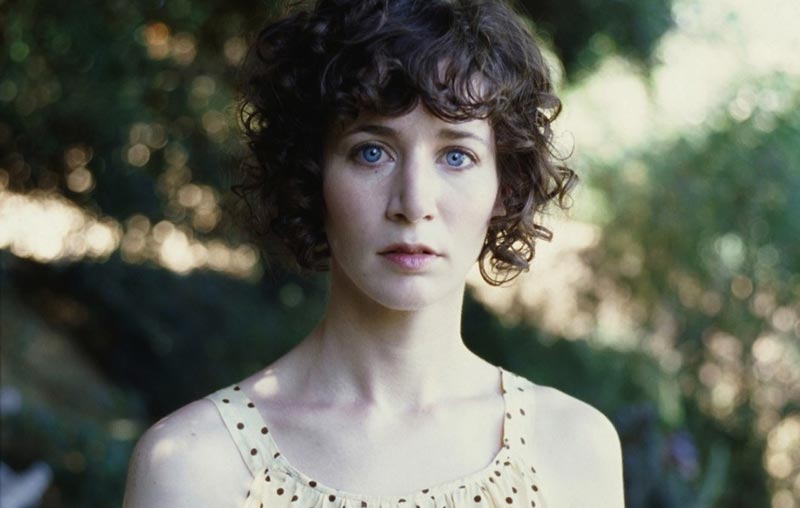
"caption": "Miranda July's new book features a conflicted character who lives largely inside her own head. (Photo: Todd Cole for Kroll Project)",
"description": null,
"title": "MirandaJuly",
"credit": null,
"status": "inherit",
"isLoading": false,
"fetchFailed": false
},
"arts_10298207": {
"type": "attachments",
"id": "arts_10298207",
"meta": {
"index": "attachments_1716263798",
"site": "arts",
"id": "10298207",
"found": true
},
"parent": 10298202,
"imgSizes": {
"thumbnail": {
"file": "https://ww2.kqed.org/app/uploads/sites/2/2015/01/Maupin-400x225.jpg",
"width": 400,
"mimeType": "image/jpeg",
"height": 225
},
"post-thumbnail": {
"file": "https://ww2.kqed.org/app/uploads/sites/2/2015/01/Maupin-672x372.jpg",
"width": 672,
"mimeType": "image/jpeg",
"height": 372
},
"kqedFullSize": {
"file": "https://ww2.kqed.org/app/uploads/sites/2/2015/01/Maupin.jpg",
"width": 800,
"height": 450
},
"guest-author-96": {
"file": "https://ww2.kqed.org/app/uploads/sites/2/2015/01/Maupin-96x96.jpg",
"width": 96,
"mimeType": "image/jpeg",
"height": 96
},
"guest-author-64": {
"file": "https://ww2.kqed.org/app/uploads/sites/2/2015/01/Maupin-64x64.jpg",
"width": 64,
"mimeType": "image/jpeg",
"height": 64
},
"detail": {
"file": "https://ww2.kqed.org/app/uploads/sites/2/2015/01/Maupin-75x75.jpg",
"width": 75,
"mimeType": "image/jpeg",
"height": 75
},
"guest-author-32": {
"file": "https://ww2.kqed.org/app/uploads/sites/2/2015/01/Maupin-32x32.jpg",
"width": 32,
"mimeType": "image/jpeg",
"height": 32
},
"guest-author-128": {
"file": "https://ww2.kqed.org/app/uploads/sites/2/2015/01/Maupin-128x128.jpg",
"width": 128,
"mimeType": "image/jpeg",
"height": 128
}
},
"publishDate": 1421131267,
"modified": 1421131267,
"caption": null,
"description": null,
"title": "Maupin",
"credit": null,
"status": "inherit",
"isLoading": false,
"fetchFailed": false
},
"arts_10296200": {
"type": "attachments",
"id": "arts_10296200",
"meta": {
"index": "attachments_1716263798",
"site": "arts",
"id": "10296200",
"found": true
},
"parent": 10296199,
"imgSizes": {
"twentyfourteen-full-width": {
"file": "https://ww2.kqed.org/app/uploads/sites/2/2015/01/BCAFposterccc2-1038x576.jpg",
"width": 1038,
"mimeType": "image/jpeg",
"height": 576
},
"thumbnail": {
"file": "https://ww2.kqed.org/app/uploads/sites/2/2015/01/BCAFposterccc2-400x266.jpg",
"width": 400,
"mimeType": "image/jpeg",
"height": 266
},
"post-thumbnail": {
"file": "https://ww2.kqed.org/app/uploads/sites/2/2015/01/BCAFposterccc2-672x372.jpg",
"width": 672,
"mimeType": "image/jpeg",
"height": 372
},
"kqedFullSize": {
"file": "https://ww2.kqed.org/app/uploads/sites/2/2015/01/BCAFposterccc2.jpg",
"width": 1188,
"height": 792
},
"large": {
"file": "https://ww2.kqed.org/app/uploads/sites/2/2015/01/BCAFposterccc2-1180x786.jpg",
"width": 1180,
"mimeType": "image/jpeg",
"height": 786
},
"guest-author-96": {
"file": "https://ww2.kqed.org/app/uploads/sites/2/2015/01/BCAFposterccc2-96x96.jpg",
"width": 96,
"mimeType": "image/jpeg",
"height": 96
},
"medium": {
"file": "https://ww2.kqed.org/app/uploads/sites/2/2015/01/BCAFposterccc2-800x533.jpg",
"width": 800,
"mimeType": "image/jpeg",
"height": 533
},
"guest-author-64": {
"file": "https://ww2.kqed.org/app/uploads/sites/2/2015/01/BCAFposterccc2-64x64.jpg",
"width": 64,
"mimeType": "image/jpeg",
"height": 64
},
"detail": {
"file": "https://ww2.kqed.org/app/uploads/sites/2/2015/01/BCAFposterccc2-75x75.jpg",
"width": 75,
"mimeType": "image/jpeg",
"height": 75
},
"guest-author-32": {
"file": "https://ww2.kqed.org/app/uploads/sites/2/2015/01/BCAFposterccc2-32x32.jpg",
"width": 32,
"mimeType": "image/jpeg",
"height": 32
},
"guest-author-128": {
"file": "https://ww2.kqed.org/app/uploads/sites/2/2015/01/BCAFposterccc2-128x128.jpg",
"width": 128,
"mimeType": "image/jpeg",
"height": 128
}
},
"publishDate": 1421073836,
"modified": 1421101249,
"caption": "The inaugural 2015 Black Comix Arts Festival poster. (Illustration: John Jennings)",
"description": null,
"title": "BCAFposterccc2",
"credit": null,
"status": "inherit",
"isLoading": false,
"fetchFailed": false
},
"arts_10296793": {
"type": "attachments",
"id": "arts_10296793",
"meta": {
"index": "attachments_1716263798",
"site": "arts",
"id": "10296793",
"found": true
},
"parent": 10296787,
"imgSizes": {
"thumbnail": {
"file": "https://ww2.kqed.org/app/uploads/sites/2/2015/01/SpareParts-400x225.jpg",
"width": 400,
"mimeType": "image/jpeg",
"height": 225
},
"post-thumbnail": {
"file": "https://ww2.kqed.org/app/uploads/sites/2/2015/01/SpareParts-672x372.jpg",
"width": 672,
"mimeType": "image/jpeg",
"height": 372
},
"kqedFullSize": {
"file": "https://ww2.kqed.org/app/uploads/sites/2/2015/01/SpareParts.jpg",
"width": 800,
"height": 450
},
"guest-author-96": {
"file": "https://ww2.kqed.org/app/uploads/sites/2/2015/01/SpareParts-96x96.jpg",
"width": 96,
"mimeType": "image/jpeg",
"height": 96
},
"guest-author-64": {
"file": "https://ww2.kqed.org/app/uploads/sites/2/2015/01/SpareParts-64x64.jpg",
"width": 64,
"mimeType": "image/jpeg",
"height": 64
},
"detail": {
"file": "https://ww2.kqed.org/app/uploads/sites/2/2015/01/SpareParts-75x75.jpg",
"width": 75,
"mimeType": "image/jpeg",
"height": 75
},
"guest-author-32": {
"file": "https://ww2.kqed.org/app/uploads/sites/2/2015/01/SpareParts-32x32.jpg",
"width": 32,
"mimeType": "image/jpeg",
"height": 32
},
"guest-author-128": {
"file": "https://ww2.kqed.org/app/uploads/sites/2/2015/01/SpareParts-128x128.jpg",
"width": 128,
"mimeType": "image/jpeg",
"height": 128
}
},
"publishDate": 1421091981,
"modified": 1421092045,
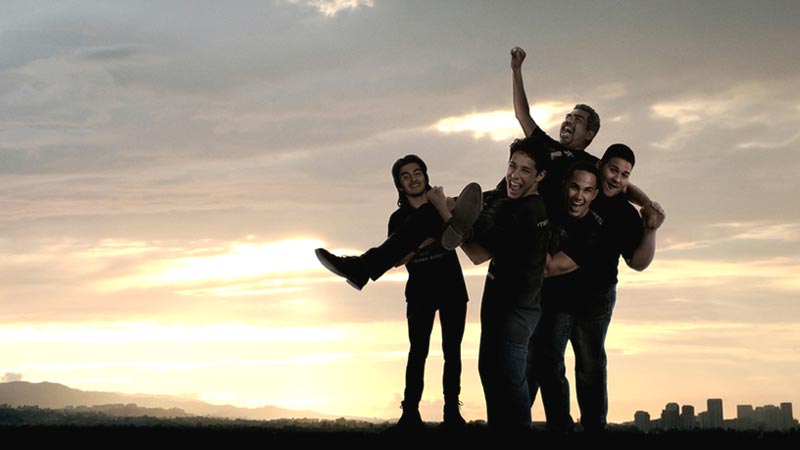
"caption": "Detail of the movie poster for 'Spare Parts,' which conveniently wraps up author Joshua Davis' book on a happy note.",
"description": null,
"title": "SpareParts",
"credit": null,
"status": "inherit",
"isLoading": false,
"fetchFailed": false
},
"arts_10285543": {
"type": "attachments",
"id": "arts_10285543",
"meta": {
"index": "attachments_1716263798",
"site": "arts",
"id": "10285543",
"found": true
},
"parent": 10285539,
"imgSizes": {
"twentyfourteen-full-width": {
"file": "https://ww2.kqed.org/app/uploads/sites/2/2015/01/IMG_5071-1038x576.jpg",
"width": 1038,
"mimeType": "image/jpeg",
"height": 576
},
"thumbnail": {
"file": "https://ww2.kqed.org/app/uploads/sites/2/2015/01/IMG_5071-400x300.jpg",
"width": 400,
"mimeType": "image/jpeg",
"height": 300
},
"post-thumbnail": {
"file": "https://ww2.kqed.org/app/uploads/sites/2/2015/01/IMG_5071-672x372.jpg",
"width": 672,
"mimeType": "image/jpeg",
"height": 372
},
"kqedFullSize": {
"file": "https://ww2.kqed.org/app/uploads/sites/2/2015/01/IMG_5071-e1420761184420.jpg",
"width": 800,
"height": 600
},
"large": {
"file": "https://ww2.kqed.org/app/uploads/sites/2/2015/01/IMG_5071-1180x885.jpg",
"width": 1180,
"mimeType": "image/jpeg",
"height": 885
},
"guest-author-96": {
"file": "https://ww2.kqed.org/app/uploads/sites/2/2015/01/IMG_5071-96x96.jpg",
"width": 96,
"mimeType": "image/jpeg",
"height": 96
},
"medium": {
"file": "https://ww2.kqed.org/app/uploads/sites/2/2015/01/IMG_5071-800x600.jpg",
"width": 800,
"mimeType": "image/jpeg",
"height": 600
},
"guest-author-64": {
"file": "https://ww2.kqed.org/app/uploads/sites/2/2015/01/IMG_5071-64x64.jpg",
"width": 64,
"mimeType": "image/jpeg",
"height": 64
},
"detail": {
"file": "https://ww2.kqed.org/app/uploads/sites/2/2015/01/IMG_5071-75x75.jpg",
"width": 75,
"mimeType": "image/jpeg",
"height": 75
},
"guest-author-32": {
"file": "https://ww2.kqed.org/app/uploads/sites/2/2015/01/IMG_5071-32x32.jpg",
"width": 32,
"mimeType": "image/jpeg",
"height": 32
},
"guest-author-128": {
"file": "https://ww2.kqed.org/app/uploads/sites/2/2015/01/IMG_5071-128x128.jpg",
"width": 128,
"mimeType": "image/jpeg",
"height": 128
}
},
"publishDate": 1420740565,
"modified": 1420757397,
"caption": "Zyzzyva's managing editor Oscar Villalon takes a break from reading manuscripts at the journal's offices in downtown San Francisco. Photo by Jeanne Carstensen for KQED.",
"description": null,
"title": "IMG_5071",
"credit": null,
"status": "inherit",
"isLoading": false,
"fetchFailed": false
},
"arts_10284540": {
"type": "attachments",
"id": "arts_10284540",
"meta": {
"index": "attachments_1716263798",
"site": "arts",
"id": "10284540",
"found": true
},
"parent": 10284539,
"imgSizes": {
"thumbnail": {
"file": "https://ww2.kqed.org/app/uploads/sites/2/2015/01/Ron-Turner-400x225.jpg",
"width": 400,
"mimeType": "image/jpeg",
"height": 225
},
"post-thumbnail": {
"file": "https://ww2.kqed.org/app/uploads/sites/2/2015/01/Ron-Turner-672x372.jpg",
"width": 672,
"mimeType": "image/jpeg",
"height": 372
},
"kqedFullSize": {
"file": "https://ww2.kqed.org/app/uploads/sites/2/2015/01/Ron-Turner.jpg",
"width": 800,
"height": 450
},
"guest-author-96": {
"file": "https://ww2.kqed.org/app/uploads/sites/2/2015/01/Ron-Turner-96x96.jpg",
"width": 96,
"mimeType": "image/jpeg",
"height": 96
},
"guest-author-64": {
"file": "https://ww2.kqed.org/app/uploads/sites/2/2015/01/Ron-Turner-64x64.jpg",
"width": 64,
"mimeType": "image/jpeg",
"height": 64
},
"detail": {
"file": "https://ww2.kqed.org/app/uploads/sites/2/2015/01/Ron-Turner-75x75.jpg",
"width": 75,
"mimeType": "image/jpeg",
"height": 75
},
"guest-author-32": {
"file": "https://ww2.kqed.org/app/uploads/sites/2/2015/01/Ron-Turner-32x32.jpg",
"width": 32,
"mimeType": "image/jpeg",
"height": 32
},
"guest-author-128": {
"file": "https://ww2.kqed.org/app/uploads/sites/2/2015/01/Ron-Turner-128x128.jpg",
"width": 128,
"mimeType": "image/jpeg",
"height": 128
}
},
"publishDate": 1420707466,
"modified": 1420707503,
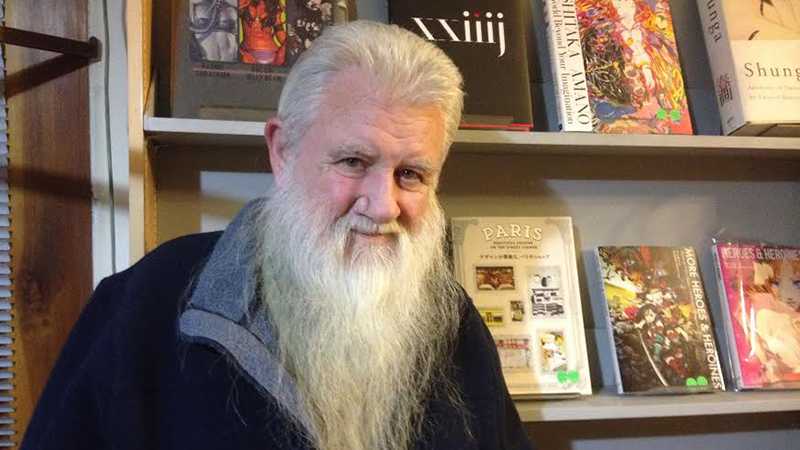
"caption": "Ron Turner at Last Gasp Books",
"description": "Ron Turner at Last Gasp Books",
"title": "Ron Turner",
"credit": "Kevin L. Jones",
"status": "inherit",
"isLoading": false,
"fetchFailed": false
},
"arts_10264640": {
"type": "attachments",
"id": "arts_10264640",
"meta": {
"index": "attachments_1716263798",
"site": "arts",
"id": "10264640",
"found": true
},
"parent": 10208105,
"imgSizes": {
"thumbnail": {
"file": "https://ww2.kqed.org/app/uploads/sites/2/2014/12/newyearreads-400x225.jpg",
"width": 400,
"mimeType": "image/jpeg",
"height": 225
},
"post-thumbnail": {
"file": "https://ww2.kqed.org/app/uploads/sites/2/2014/12/newyearreads-672x372.jpg",
"width": 672,
"mimeType": "image/jpeg",
"height": 372
},
"kqedFullSize": {
"file": "https://ww2.kqed.org/app/uploads/sites/2/2014/12/newyearreads.jpg",
"width": 800,
"height": 450
},
"guest-author-96": {
"file": "https://ww2.kqed.org/app/uploads/sites/2/2014/12/newyearreads-96x96.jpg",
"width": 96,
"mimeType": "image/jpeg",
"height": 96
},
"guest-author-64": {
"file": "https://ww2.kqed.org/app/uploads/sites/2/2014/12/newyearreads-64x64.jpg",
"width": 64,
"mimeType": "image/jpeg",
"height": 64
},
"detail": {
"file": "https://ww2.kqed.org/app/uploads/sites/2/2014/12/newyearreads-75x75.jpg",
"width": 75,
"mimeType": "image/jpeg",
"height": 75
},
"guest-author-32": {
"file": "https://ww2.kqed.org/app/uploads/sites/2/2014/12/newyearreads-32x32.jpg",
"width": 32,
"mimeType": "image/jpeg",
"height": 32
},
"guest-author-128": {
"file": "https://ww2.kqed.org/app/uploads/sites/2/2014/12/newyearreads-128x128.jpg",
"width": 128,
"mimeType": "image/jpeg",
"height": 128
}
},
"publishDate": 1420072012,
"modified": 1420072041,
"caption": "Detail from the cover of Stuart O'Nan's \u003ci>West of Sunset\u003c/i>",
"description": null,
"title": "newyearreads",
"credit": null,
"status": "inherit",
"isLoading": false,
"fetchFailed": false
},
"arts_10208117": {
"type": "attachments",
"id": "arts_10208117",
"meta": {
"index": "attachments_1716263798",
"site": "arts",
"id": "10208117",
"found": true
},
"parent": 10208103,
"imgSizes": {
"thumbnail": {
"file": "https://ww2.kqed.org/app/uploads/sites/2/2014/12/lead-katakis-400x225.png",
"width": 400,
"mimeType": "image/png",
"height": 225
},
"post-thumbnail": {
"file": "https://ww2.kqed.org/app/uploads/sites/2/2014/12/lead-katakis-672x372.png",
"width": 672,
"mimeType": "image/png",
"height": 372
},
"kqedFullSize": {
"file": "https://ww2.kqed.org/app/uploads/sites/2/2014/12/lead-katakis.png",
"width": 800,
"height": 450
},
"guest-author-96": {
"file": "https://ww2.kqed.org/app/uploads/sites/2/2014/12/lead-katakis-96x96.png",
"width": 96,
"mimeType": "image/png",
"height": 96
},
"guest-author-64": {
"file": "https://ww2.kqed.org/app/uploads/sites/2/2014/12/lead-katakis-64x64.png",
"width": 64,
"mimeType": "image/png",
"height": 64
},
"detail": {
"file": "https://ww2.kqed.org/app/uploads/sites/2/2014/12/lead-katakis-75x75.png",
"width": 75,
"mimeType": "image/png",
"height": 75
},
"guest-author-32": {
"file": "https://ww2.kqed.org/app/uploads/sites/2/2014/12/lead-katakis-32x32.png",
"width": 32,
"mimeType": "image/png",
"height": 32
},
"guest-author-128": {
"file": "https://ww2.kqed.org/app/uploads/sites/2/2014/12/lead-katakis-128x128.png",
"width": 128,
"mimeType": "image/png",
"height": 128
}
},
"publishDate": 1418331251,
"modified": 1419973845,
"caption": "Detail from \u003ci>A Thousand Shards of Glass\u003c/i> by Michael Katakis",
"description": null,
"title": "lead-katakis",
"credit": null,
"status": "inherit",
"isLoading": false,
"fetchFailed": false
},
"arts_10188496": {
"type": "attachments",
"id": "arts_10188496",
"meta": {
"index": "attachments_1716263798",
"site": "arts",
"id": "10188496",
"found": true
},
"parent": 10188371,
"imgSizes": {
"thumbnail": {
"file": "https://ww2.kqed.org/app/uploads/sites/2/2014/12/FrankPortman-400x225.jpg",
"width": 400,
"mimeType": "image/jpeg",
"height": 225
},
"post-thumbnail": {
"file": "https://ww2.kqed.org/app/uploads/sites/2/2014/12/FrankPortman-672x372.jpg",
"width": 672,
"mimeType": "image/jpeg",
"height": 372
},
"kqedFullSize": {
"file": "https://ww2.kqed.org/app/uploads/sites/2/2014/12/FrankPortman.jpg",
"width": 800,
"height": 450
},
"guest-author-96": {
"file": "https://ww2.kqed.org/app/uploads/sites/2/2014/12/FrankPortman-96x96.jpg",
"width": 96,
"mimeType": "image/jpeg",
"height": 96
},
"guest-author-64": {
"file": "https://ww2.kqed.org/app/uploads/sites/2/2014/12/FrankPortman-64x64.jpg",
"width": 64,
"mimeType": "image/jpeg",
"height": 64
},
"detail": {
"file": "https://ww2.kqed.org/app/uploads/sites/2/2014/12/FrankPortman-75x75.jpg",
"width": 75,
"mimeType": "image/jpeg",
"height": 75
},
"guest-author-32": {
"file": "https://ww2.kqed.org/app/uploads/sites/2/2014/12/FrankPortman-32x32.jpg",
"width": 32,
"mimeType": "image/jpeg",
"height": 32
},
"guest-author-128": {
"file": "https://ww2.kqed.org/app/uploads/sites/2/2014/12/FrankPortman-128x128.jpg",
"width": 128,
"mimeType": "image/jpeg",
"height": 128
}
},
"publishDate": 1417725126,
"modified": 1417769797,
"caption": "Frank Portman in Oakland. (Photo: Gabe Meline)",
"description": null,
"title": "FrankPortman",
"credit": null,
"status": "inherit",
"isLoading": false,
"fetchFailed": false
}
},
"audioPlayerReducer": {
"postId": "stream_live",
"isPaused": true,
"isPlaying": false,
"pfsActive": false,
"pledgeModalIsOpen": true,
"playerDrawerIsOpen": false,
"liveAudioPlayStartedAt": 0,
"liveAudioPlayContext": ""
},
"authorsReducer": {
"rkleffel": {
"type": "authors",
"id": "88",
"meta": {
"index": "authors_1716337520",
"id": "88",
"found": true
},
"name": "Rick Kleffel",
"firstName": "Rick",
"lastName": "Kleffel",
"slug": "rkleffel",
"email": "editor@bookotron.com",
"display_author_email": false,
"staff_mastheads": [],
"title": null,
"bio": "Rick Kleffel has been reading for more than half a century. He lives in Aptos, near the Palo Alto, a cement boat built at the end of World War I. He writes about books and podcasts interviews with authors at \u003ca href=\"http://agonycolumn.com\">The Agony Column\u003c/a>.",
"avatar": "https://secure.gravatar.com/avatar/179f850e768733fdeabc3c0c48ebf0e9?s=600&d=blank&r=g",
"twitter": null,
"facebook": null,
"instagram": null,
"linkedin": null,
"sites": [
{
"site": "arts",
"roles": [
"Contributor",
"contributor"
]
}
],
"headData": {
"title": "Rick Kleffel | KQED",
"description": null,
"ogImgSrc": "https://secure.gravatar.com/avatar/179f850e768733fdeabc3c0c48ebf0e9?s=600&d=blank&r=g",
"twImgSrc": "https://secure.gravatar.com/avatar/179f850e768733fdeabc3c0c48ebf0e9?s=600&d=blank&r=g"
},
"isLoading": false,
"link": "/author/rkleffel"
},
"kjones": {
"type": "authors",
"id": "93",
"meta": {
"index": "authors_1716337520",
"id": "93",
"found": true
},
"name": "Kevin L. Jones",
"firstName": "Kevin",
"lastName": "Jones",
"slug": "kjones",
"email": "kjones@kqed.org",
"display_author_email": false,
"staff_mastheads": [],
"title": null,
"bio": null,
"avatar": "https://secure.gravatar.com/avatar/12c65b5633ed39d0a59bb7f497eff645?s=600&d=blank&r=g",
"twitter": null,
"facebook": null,
"instagram": null,
"linkedin": null,
"sites": [
{
"site": "arts",
"roles": [
"subscriber"
]
},
{
"site": "styleguide",
"roles": [
"contributor"
]
},
{
"site": "artschool",
"roles": [
"subscriber"
]
},
{
"site": "news",
"roles": [
"subscriber"
]
},
{
"site": "pop",
"roles": [
"subscriber"
]
}
],
"headData": {
"title": "Kevin L. Jones | KQED",
"description": null,
"ogImgSrc": "https://secure.gravatar.com/avatar/12c65b5633ed39d0a59bb7f497eff645?s=600&d=blank&r=g",
"twImgSrc": "https://secure.gravatar.com/avatar/12c65b5633ed39d0a59bb7f497eff645?s=600&d=blank&r=g"
},
"isLoading": false,
"link": "/author/kjones"
},
"gmeline": {
"type": "authors",
"id": "185",
"meta": {
"index": "authors_1716337520",
"id": "185",
"found": true
},
"name": "Gabe Meline",
"firstName": "Gabe",
"lastName": "Meline",
"slug": "gmeline",
"email": "gmeline@kqed.org",
"display_author_email": true,
"staff_mastheads": [
"arts"
],
"title": "Senior Editor, KQED Arts & Culture",
"bio": "Gabe Meline entered journalism at age 15 making photocopied zines, and has since earned awards from the Edward R. Murrow Awards, the Society for Professional Journalists, the Online Journalism Awards, the Association of Alternative Newsweeklies and the California Newspaper Publishers Association. Prior to KQED, he was the editor of the \u003cem>North Bay Bohemian\u003c/em> and a touring musician. He lives with his wife and daughter in his hometown of Santa Rosa, CA.",
"avatar": "https://secure.gravatar.com/avatar/5bebe57be0d8bc2dd318934feb47299e2d2d10cba28d09d8d7afb389a2ce2bdd?s=600&d=blank&r=g",
"twitter": null,
"bluesky": null,
"facebook": null,
"instagram": null,
"linkedin": null,
"sites": [
{
"site": "",
"roles": [
"editor"
]
},
{
"site": "arts",
"roles": [
"administrator"
]
},
{
"site": "artschool",
"roles": [
"editor"
]
},
{
"site": "news",
"roles": [
"author"
]
},
{
"site": "pop",
"roles": [
"editor"
]
},
{
"site": "bayareabites",
"roles": [
"editor"
]
},
{
"site": "food",
"roles": [
"editor"
]
},
{
"site": "forum",
"roles": [
"administrator"
]
},
{
"site": "liveblog",
"roles": [
"editor"
]
},
{
"site": "hiphop",
"roles": [
"editor"
]
}
],
"headData": {
"title": "Gabe Meline | KQED",
"description": "Senior Editor, KQED Arts & Culture",
"ogImgSrc": "https://secure.gravatar.com/avatar/5bebe57be0d8bc2dd318934feb47299e2d2d10cba28d09d8d7afb389a2ce2bdd?s=600&d=blank&r=g",
"twImgSrc": "https://secure.gravatar.com/avatar/5bebe57be0d8bc2dd318934feb47299e2d2d10cba28d09d8d7afb389a2ce2bdd?s=600&d=blank&r=g"
},
"isLoading": false,
"link": "/author/gmeline"
},
"jcarstensen": {
"type": "authors",
"id": "2597",
"meta": {
"index": "authors_1716337520",
"id": "2597",
"found": true
},
"name": "Jeanne Carstensen",
"firstName": "Jeanne",
"lastName": "Carstensen",
"slug": "jcarstensen",
"email": "jeanne.carstensen@gmail.com",
"display_author_email": false,
"staff_mastheads": [],
"title": null,
"bio": null,
"avatar": "https://secure.gravatar.com/avatar/6e425ab6a3c7b1e4cbbc03b457fb6812?s=600&d=blank&r=g",
"twitter": null,
"facebook": null,
"instagram": null,
"linkedin": null,
"sites": [
{
"site": "arts",
"roles": [
"contributor"
]
},
{
"site": "news",
"roles": [
"contributor"
]
}
],
"headData": {
"title": "Jeanne Carstensen | KQED",
"description": null,
"ogImgSrc": "https://secure.gravatar.com/avatar/6e425ab6a3c7b1e4cbbc03b457fb6812?s=600&d=blank&r=g",
"twImgSrc": "https://secure.gravatar.com/avatar/6e425ab6a3c7b1e4cbbc03b457fb6812?s=600&d=blank&r=g"
},
"isLoading": false,
"link": "/author/jcarstensen"
},
"thedolist": {
"type": "authors",
"id": "3215",
"meta": {
"index": "authors_1716337520",
"id": "3215",
"found": true
},
"name": "The Do List",
"firstName": "Do",
"lastName": "List",
"slug": "thedolist",
"email": "harold.check+dolist@gmail.com",
"display_author_email": false,
"staff_mastheads": [],
"title": null,
"bio": "The Do List scours the Bay Area for superb and surprising performing arts events, with an eye for local talent, new discoveries, and fun opportunities across the price spectrum. Every Friday morning at 6:23 and 8:23am on KQED Radio, you can hear Do List regulars Cy Musiker and David Wiegand discuss the upcoming week's best picks.",
"avatar": "https://secure.gravatar.com/avatar/25ef8068d096493f649195742621360d?s=600&d=blank&r=g",
"twitter": null,
"facebook": null,
"instagram": null,
"linkedin": null,
"sites": [
{
"site": "arts",
"roles": [
"contributor"
]
}
],
"headData": {
"title": "The Do List | KQED",
"description": null,
"ogImgSrc": "https://secure.gravatar.com/avatar/25ef8068d096493f649195742621360d?s=600&d=blank&r=g",
"twImgSrc": "https://secure.gravatar.com/avatar/25ef8068d096493f649195742621360d?s=600&d=blank&r=g"
},
"isLoading": false,
"link": "/author/thedolist"
},
"dburlison": {
"type": "authors",
"id": "3216",
"meta": {
"index": "authors_1716337520",
"id": "3216",
"found": true
},
"name": "Dani Burlison",
"firstName": "Dani",
"lastName": "Burlison",
"slug": "dburlison",
"email": "danisavestheworld@yahoo.com",
"display_author_email": false,
"staff_mastheads": [],
"title": null,
"bio": "\u003cb id=\"yui_3_16_0_1_1416414652499_5365\" class=\"yiv3033141065\">Dani Burlison\u003c/b> is an award-winning writer, teacher and North Bay resident with a special interest in California's fascinating subcultures. You can find her commentary on writing, feminism, social justice and life with two teen daughters on Twitter at @DaniBurlison.",
"avatar": "https://secure.gravatar.com/avatar/c0b371463a220978c947a5c4ce2da294?s=600&d=blank&r=g",
"twitter": null,
"facebook": null,
"instagram": null,
"linkedin": null,
"sites": [
{
"site": "arts",
"roles": [
"contributor"
]
}
],
"headData": {
"title": "Dani Burlison | KQED",
"description": null,
"ogImgSrc": "https://secure.gravatar.com/avatar/c0b371463a220978c947a5c4ce2da294?s=600&d=blank&r=g",
"twImgSrc": "https://secure.gravatar.com/avatar/c0b371463a220978c947a5c4ce2da294?s=600&d=blank&r=g"
},
"isLoading": false,
"link": "/author/dburlison"
},
"lclark": {
"type": "authors",
"id": "3224",
"meta": {
"index": "authors_1716337520",
"id": "3224",
"found": true
},
"name": "Leilani Clark",
"firstName": "Leilani",
"lastName": "Clark",
"slug": "lclark",
"email": "clark.leil@gmail.com",
"display_author_email": false,
"staff_mastheads": [],
"title": null,
"bio": "Leilani Clark writes about books for KQED Arts. Her writing has been published at Mother Jones, The Guardian, Civil Eats, Time Magazine, Food & Wine, Edible Marin & Wine Country, and The Rumpus. She is the editor of Made Local magazine in Sonoma County. Find her on Twitter \u003ca href=\"https://twitter.com/leilclark\">@leilclark\u003c/a>.",
"avatar": "https://secure.gravatar.com/avatar/7f691fdc52ed2e3f4cf164d1f4ec0889?s=600&d=blank&r=g",
"twitter": null,
"facebook": null,
"instagram": null,
"linkedin": null,
"sites": [
{
"site": "arts",
"roles": [
"contributor"
]
},
{
"site": "bayareabites",
"roles": [
"contributor"
]
},
{
"site": "food",
"roles": [
"contributor"
]
}
],
"headData": {
"title": "Leilani Clark | KQED",
"description": null,
"ogImgSrc": "https://secure.gravatar.com/avatar/7f691fdc52ed2e3f4cf164d1f4ec0889?s=600&d=blank&r=g",
"twImgSrc": "https://secure.gravatar.com/avatar/7f691fdc52ed2e3f4cf164d1f4ec0889?s=600&d=blank&r=g"
},
"isLoading": false,
"link": "/author/lclark"
}
},
"pagesReducer": {
"arts_category_literature": {
"type": "terms",
"id": "arts_73",
"meta": {
"index": "terms_1716263798",
"site": "arts",
"id": "73",
"score": 12.797728
},
"featImg": null,
"name": "Books",
"description": null,
"taxonomy": "category",
"headData": {
"twImgId": null,
"twTitle": null,
"ogTitle": null,
"ogImgId": null,
"twDescription": null,
"description": null,
"title": "Books Archives | KQED Arts",
"ogDescription": null
},
"ttid": 74,
"slug": "literature",
"isLoading": false,
"title": "Books",
"pageMeta": {
"site": "arts",
"WpPageTemplate": "page-topic-editorial",
"currentPage": 100
},
"blocks": [
{
"blockName": "kqed/post-list",
"attrs": {
"layout": "cardArticle2",
"query": "posts/arts?category=literature",
"seeMore": false,
"paginated": true,
"page": 100
}
},
{
"blockName": "kqed/ad"
}
]
}
},
"pfsSessionReducer": {},
"postsReducer": {
"stream_live": {
"type": "live",
"id": "stream_live",
"audioUrl": "https://streams.kqed.org/kqedradio",
"title": "Live Stream",
"excerpt": "Live Stream information currently unavailable.",
"link": "/radio",
"featImg": "",
"label": {
"name": "KQED Live",
"link": "/"
}
},
"stream_kqedNewscast": {
"type": "posts",
"id": "stream_kqedNewscast",
"audioUrl": "https://www.kqed.org/.stream/anon/radio/RDnews/newscast.mp3?_=1",
"title": "KQED Newscast",
"featImg": "",
"label": {
"name": "88.5 FM",
"link": "/"
}
},
"arts_10317721": {
"type": "posts",
"id": "arts_10317721",
"meta": {
"index": "posts_1716263798",
"site": "arts",
"id": "10317721",
"score": null,
"sort": [
1421720776000
]
},
"parent": 0,
"labelTerm": {
"site": "arts"
},
"blocks": [],
"publishDate": 1421720776,
"format": "video",
"title": "Margaret Atwood Sings and Answers Quirky Questions in 'Foreword' Clip",
"headTitle": "Margaret Atwood Sings and Answers Quirky Questions in ‘Foreword’ Clip | KQED",
"content": "\u003cp>Few people writing today have Margaret Atwood’s depth of perspective and devilish sense of humor. She’s written 53 books in about as many years, which means she has thought through just about everything. On the latest episode of Medium’s Foreword, Kelly Corrigan chose to look ahead with her at the future of marriage, the arts and the planet. Enjoy this segment, called the Afterword, which consists of seven questions that host Kelly Corrigan poses to each guest. Atwood’s answers are, of course, brilliant.\u003c/p>\n\u003cp>The full interview will be available on Jan. 21, 2015 at 9am PST at \u003ca href=\"https://medium.com/foreword\" target=\"_blank\" rel=\"noopener\">medium.com/foreword\u003c/a> and \u003ca href=\"https://www.facebook.com/mediumforeword\" target=\"_blank\" rel=\"noopener\">www.facebook.com/mediumforeword\u003c/a>.\u003c/p>\n\u003cp>About ‘Foreword’ — Hosted by the bestselling author Corrigan (\u003cem>The Middle Place\u003c/em>, \u003cem>LIFT\u003c/em>, and \u003cem>Glitter and Glue\u003c/em>), \u003cem>Foreword\u003c/em> is a digital series where top notch thinkers take on big time ideas in front of a live studio audience. Visit medium.com/foreword for more information.\u003c/p>\n\u003cp>[ad fullwidth]\u003c/p>\u003cp>\u003c/p>\n",
"stats": {
"hasVideo": false,
"hasChartOrMap": false,
"hasAudio": false,
"hasPolis": false,
"wordCount": 162,
"hasGoogleForm": false,
"hasGallery": false,
"hasHearkenModule": false,
"iframeSrcs": [],
"paragraphCount": 5
},
"modified": 1705047715,
"excerpt": null,
"headData": {
"twImgId": "",
"twTitle": "",
"ogTitle": "",
"ogImgId": "",
"twDescription": "",
"description": "Few people writing today have Margaret Atwood's depth of perspective and devilish sense of humor. She's written 53 books in about as many years, which means she has thought through just about everything. On the latest episode of Medium's Foreword, Kelly Corrigan chose to look ahead with her at the future of marriage, the arts",
"title": "Margaret Atwood Sings and Answers Quirky Questions in 'Foreword' Clip | KQED",
"ogDescription": "",
"schema": {
"@context": "https://schema.org",
"@type": "Article",
"headline": "Margaret Atwood Sings and Answers Quirky Questions in 'Foreword' Clip",
"datePublished": "2015-01-19T18:26:16-08:00",
"dateModified": "2024-01-12T00:21:55-08:00",
"image": "https://cdn.kqed.org/wp-content/uploads/2020/02/KQED-OG-Image@1x.png"
}
},
"guestAuthors": [],
"slug": "margaret-atwood-sings-and-answers-quirky-questions-in-foreword-clip",
"status": "publish",
"videoEmbed": "https://www.youtube.com/watch?v=cx5zqi5WjOc",
"sticky": false,
"path": "/arts/10317721/margaret-atwood-sings-and-answers-quirky-questions-in-foreword-clip",
"audioTrackLength": null,
"parsedContent": [
{
"type": "contentString",
"content": "\u003cdiv class=\"post-body\">\u003cp>\u003cp>Few people writing today have Margaret Atwood’s depth of perspective and devilish sense of humor. She’s written 53 books in about as many years, which means she has thought through just about everything. On the latest episode of Medium’s Foreword, Kelly Corrigan chose to look ahead with her at the future of marriage, the arts and the planet. Enjoy this segment, called the Afterword, which consists of seven questions that host Kelly Corrigan poses to each guest. Atwood’s answers are, of course, brilliant.\u003c/p>\n\u003cp>The full interview will be available on Jan. 21, 2015 at 9am PST at \u003ca href=\"https://medium.com/foreword\" target=\"_blank\" rel=\"noopener\">medium.com/foreword\u003c/a> and \u003ca href=\"https://www.facebook.com/mediumforeword\" target=\"_blank\" rel=\"noopener\">www.facebook.com/mediumforeword\u003c/a>.\u003c/p>\n\u003cp>About ‘Foreword’ — Hosted by the bestselling author Corrigan (\u003cem>The Middle Place\u003c/em>, \u003cem>LIFT\u003c/em>, and \u003cem>Glitter and Glue\u003c/em>), \u003cem>Foreword\u003c/em> is a digital series where top notch thinkers take on big time ideas in front of a live studio audience. Visit medium.com/foreword for more information.\u003c/p>\n\u003cp>\u003c/p>\u003c/div>",
"attributes": {
"named": {},
"numeric": []
}
},
{
"type": "component",
"content": "",
"name": "ad",
"attributes": {
"named": {
"label": "fullwidth"
},
"numeric": [
"fullwidth"
]
}
},
{
"type": "contentString",
"content": "\u003cdiv class=\"post-body\">\u003cp>\u003c/p>\u003cp>\u003c/p>\n\u003c/div>\u003c/p>",
"attributes": {
"named": {},
"numeric": []
}
}
],
"link": "/arts/10317721/margaret-atwood-sings-and-answers-quirky-questions-in-foreword-clip",
"authors": [
"93"
],
"categories": [
"arts_73"
],
"featImg": "arts_10317723",
"label": "arts"
},
"arts_10300098": {
"type": "posts",
"id": "arts_10300098",
"meta": {
"index": "posts_1716263798",
"site": "arts",
"id": "10300098",
"score": null,
"sort": [
1421589653000
]
},
"parent": 0,
"labelTerm": {
"site": "arts",
"term": 140
},
"blocks": [],
"publishDate": 1421589653,
"format": "standard",
"title": "Marie Mutsuki Mockett on Death, Ghosts, and Zen in Post-Tsunami Japan",
"headTitle": "Marie Mutsuki Mockett on Death, Ghosts, and Zen in Post-Tsunami Japan | KQED",
"content": "\u003caside class=\"event-info alignright\">\n\u003cfigure>\u003ca href=\"http://ww2.kqed.org/arts/programs/the-do-list/\">\u003cimg decoding=\"async\" src=\"http://ww2.kqed.org/wp-content/themes/KQED-unified/img/thedolist_icon.png\" alt=\"\" width=\"100\">\u003c/a>\u003c/figure>\n\u003ch3>\u003ca href=\"http://ww2.kqed.org/arts/the-do-list/marie-mutsuki-mockett/\">Event Information\u003c/a>\u003c/h3>\n\u003ch4>Marie Mutsuki Mockett\u003c/h4>\n\u003cdiv class=\"event-desc\">Author reads from new book.\u003c/div>\n\u003cdiv class=\"event-dates\">\n\u003ch4>Jan. 20, 2015\u003c/h4>\n\u003c/div>\n\u003cdiv class=\"event-venue\">Book Passage, Ferry Building\u003c/div>\n\u003cul>\n\u003cli>\u003ca href=\"http://ww2.kqed.org/arts/the-do-list/marie-mutsuki-mockett/\">Details and tickets\u003c/a>\u003c/li>\n\u003c/ul>\n\u003c/aside>\n\u003cp>Marie Mutsuki Mockett wasn’t in Japan in March 2011, when the country was partially destroyed by a 9.0 earthquake and its subsequent tsunami. At the time, she lived in New York, far away from the disaster’s epicenter. But she had ancestral connections to the island nation, and as survivors worked through their collective mourning for over 18,000 people dead or missing, Mockett began to ask questions about the universal nature of grief and the ways that ancient cultures handle death.\u003c/p>\n\u003cp>“The tsunami was such an enormous tragedy,” says Mockett by phone from her San Francisco home, where she now lives with her husband and son. “It was the sort of thing that causes anyone to ask large questions.”\u003c/p>\n\u003cp>Born to an American father and a Japanese mother, and raised in California, from an early age Mockett visited her Japanese grandparents on a yearly basis. As a child, she developed a love for the people and culture of Japan.\u003c/p>\n\u003cp>Just three weeks after the tsunami hit, Mockett returned to Iwaki, where her relatives ran a Zen Buddhist temple high in the mountains above the ruined coast, to bury the bones of her grandfather, who had died of natural causes two months before.\u003c/p>\n\u003cp>In Japan, surrounded by death and destruction, Mockett confronted her own depression. Not only had she lost both of her Japanese maternal grandparents, but her beloved father had died of a sudden illness three years previous, leaving behind a “complicated grief.” And so, Mockett did what any great writer does when faced with existentialist dread. Instead of hoping for the pain to go away, she examined it more deeply. As a “bookish nerdy girl,” she looked to books for guidance.\u003c/p>\n\u003cp>[ad fullwidth]\u003c/p>\n\u003cp>“I couldn’t find anything that addressed the largeness, the multi-faceted nature of grief,” she says. “Writing the book gave me a chance to bring together a lot of different information and to examine it again and again. Generations of people before have had their hearts broken, and fallen in love, and left behind notes for us to find about their observations and their insights. In the case of Japan, you have so much information to dig up.” The resulting memoir, \u003cem>Where the Dead Pause and the Japanese Say Goodbye: A Journey\u003c/em>, is released on Jan. 19.\u003c/p>\n\u003cfigure id=\"attachment_10312632\" class=\"wp-caption alignright\" style=\"max-width: 500px\">\u003cimg loading=\"lazy\" decoding=\"async\" src=\"http://ww2.kqed.org/arts/wp-content/uploads/sites/2/2015/01/WhereTheDead.jpg\" alt=\"Instead of hoping for her own pain to go away, Mockett, through writing, chose to examine it more deeply.\" width=\"500\" height=\"756\" class=\"size-full wp-image-10312632\" srcset=\"https://cdn.kqed.org/wp-content/uploads/sites/2/2015/01/WhereTheDead.jpg 500w, https://cdn.kqed.org/wp-content/uploads/sites/2/2015/01/WhereTheDead-400x604.jpg 400w, https://cdn.kqed.org/wp-content/uploads/sites/2/2015/01/WhereTheDead-396x600.jpg 396w\" sizes=\"(max-width: 500px) 100vw, 500px\">\u003cfigcaption class=\"wp-caption-text\">Instead of hoping for her own pain to go away, Mockett, through writing, chose to examine it more deeply.\u003c/figcaption>\u003c/figure>\n\u003cp>Funding from the Japan-United States Friendship Commission and the National Endowment for the Arts enabled Mockett to live in Japan, with her toddler son, for a few months in 2013. Because of her Western features and American upbringing, Mockett was seen as an outsider during visits to Buddhist temples, festivals, and temporary housing projects built for those who lost their homes in the tsunami. At the same time, Mockett’s connection with her mother’s homeland provided access not usually given to Westerners, allowing the writer to fastidiously research and experience multiple layers of the country’s cultural and spiritual approaches to grief.\u003c/p>\n\u003cp>Mockett describes the land as “awash with ghosts,” something that might surprise those who view Japan as a modernized country. “The soul of Japan is still very much connected to her twelve-hundred-year-old history, and within that belief system, ghosts are a powerful and meaningful presence,” writes Mockett.\u003c/p>\n\u003cp>Mockett’s writing, beautiful and self-assured, leaves the reader with a fuller understanding of a place more often painted as twee and quirky than spiritually rich. She travels from Ishinomaki, a small fishing town where hundreds of schoolchildren died in the tsunami, to Nagasaki, where she hears a particularly chilling account of the 1945 atomic bombing by the U.S.\u003c/p>\n\u003cp>On the Tohoku coast, a region devastated by the tsunami, Mockett meets a Zen Buddhist priest named Kaneta. He runs a weekly event called “Cafe de Monk,” a reference to the music of jazz artist Thelonious Monk, which plays in the background as people eat cake, drink coffee, share their grief, and receive spiritual counsel from monks.\u003c/p>\n\u003cp>At Eiheiji, a revered Soto Zen training temple, Mockett studies meditation and expands her understanding of the sometimes baffling spiritual tradition of Zen. In later chapters, she journeys to Mount Doom, a mountain where the dead are said to cross into the underworld.\u003c/p>\n\u003cp>In the town of Mutsu, Mockett meets a fuzzy-headed priest running a Pure Land temple, where he is the steward to an old hag in a box: Shozuku no Baba. According to Japanese folklore, the scary old hag controls the entrance of the dead into the underworld. At first, Mockett finds the statue of the hag disturbing, until the fuzzy-headed priest encourages her to look again from the side. She sees a face more compassionate than menacing.\u003c/p>\n\u003cp>“When you confront grief and suffering, it looks terrifying, like the front face of the statue,” Mockett says. “But look at it from the side, and you will have greater compassion for people. Suffering and grieving is something we all go through. You can’t get rid of the pain, of losing people you love, but you can look at the world with more love. It was a fascinating insight, and one that I realized I’d been learning all along.”\u003c/p>\n\u003cp>As our conversation draws to a close, Mockett recalls a scene from \u003cem>Time’s Arrow\u003c/em> by Martin Amis. A character hears someone crying on an airplane; he’s convinced they are crying over a death. “Someone is always dying somewhere,” he thinks.\u003c/p>\n\u003cp>“All around, everywhere, people are experiencing loss, so we might as well be compassionate about it,” Mockett adds.\u003c/p>\n\u003cp>Mockett says she didn’t necessarily come out of years of research, travel, and immersion in Japanese grief rituals and spiritual traditions a happier person, with all sadness removed. Nevertheless, she has been able to integrate her grief enough to go about daily life—in part, because the canvas is bigger.\u003c/p>\n\u003cp>[ad floatright]\u003c/p>\n\u003cp>“Because the perspective is larger, my pain seems much smaller,” she says. “It’s like fractions, where 75/100 is still three quarters when you reduce it down. Instead of looking at tiny numbers, I’m looking at larger numbers. My world has enlarged, and my compassion for people has enlarged.”\u003c/p>\n\n",
"stats": {
"hasVideo": false,
"hasChartOrMap": false,
"hasAudio": false,
"hasPolis": false,
"wordCount": 1107,
"hasGoogleForm": false,
"hasGallery": false,
"hasHearkenModule": false,
"iframeSrcs": [],
"paragraphCount": 19
},
"modified": 1705047723,
"excerpt": "In her new memoir centered around the 2011 Tōhoku earthquake and tsunami, Marie Mutsuki Mockett explores the universal nature of grief.",
"headData": {
"twImgId": "",
"twTitle": "",
"ogTitle": "",
"ogImgId": "",
"twDescription": "",
"description": "In her new memoir centered around the 2011 Tōhoku earthquake and tsunami, Marie Mutsuki Mockett explores the universal nature of grief.",
"title": "Marie Mutsuki Mockett on Death, Ghosts, and Zen in Post-Tsunami Japan | KQED",
"ogDescription": "",
"schema": {
"@context": "https://schema.org",
"@type": "Article",
"headline": "Marie Mutsuki Mockett on Death, Ghosts, and Zen in Post-Tsunami Japan",
"datePublished": "2015-01-18T06:00:53-08:00",
"dateModified": "2024-01-12T00:22:03-08:00",
"image": "https://cdn.kqed.org/wp-content/uploads/2020/02/KQED-OG-Image@1x.png"
}
},
"guestAuthors": [],
"slug": "marie-mutsuki-mockett-on-death-ghosts-and-zen-in-post-tsunami-japan",
"status": "publish",
"sticky": false,
"path": "/arts/10300098/marie-mutsuki-mockett-on-death-ghosts-and-zen-in-post-tsunami-japan",
"audioTrackLength": null,
"parsedContent": [
{
"type": "contentString",
"content": "\u003cdiv class=\"post-body\">\u003cp>\u003caside class=\"event-info alignright\">\n\u003cfigure>\u003ca href=\"http://ww2.kqed.org/arts/programs/the-do-list/\">\u003cimg decoding=\"async\" src=\"http://ww2.kqed.org/wp-content/themes/KQED-unified/img/thedolist_icon.png\" alt=\"\" width=\"100\">\u003c/a>\u003c/figure>\n\u003ch3>\u003ca href=\"http://ww2.kqed.org/arts/the-do-list/marie-mutsuki-mockett/\">Event Information\u003c/a>\u003c/h3>\n\u003ch4>Marie Mutsuki Mockett\u003c/h4>\n\u003cdiv class=\"event-desc\">Author reads from new book.\u003c/div>\n\u003cdiv class=\"event-dates\">\n\u003ch4>Jan. 20, 2015\u003c/h4>\n\u003c/div>\n\u003cdiv class=\"event-venue\">Book Passage, Ferry Building\u003c/div>\n\u003cul>\n\u003cli>\u003ca href=\"http://ww2.kqed.org/arts/the-do-list/marie-mutsuki-mockett/\">Details and tickets\u003c/a>\u003c/li>\n\u003c/ul>\n\u003c/aside>\n\u003cp>Marie Mutsuki Mockett wasn’t in Japan in March 2011, when the country was partially destroyed by a 9.0 earthquake and its subsequent tsunami. At the time, she lived in New York, far away from the disaster’s epicenter. But she had ancestral connections to the island nation, and as survivors worked through their collective mourning for over 18,000 people dead or missing, Mockett began to ask questions about the universal nature of grief and the ways that ancient cultures handle death.\u003c/p>\n\u003cp>“The tsunami was such an enormous tragedy,” says Mockett by phone from her San Francisco home, where she now lives with her husband and son. “It was the sort of thing that causes anyone to ask large questions.”\u003c/p>\n\u003cp>Born to an American father and a Japanese mother, and raised in California, from an early age Mockett visited her Japanese grandparents on a yearly basis. As a child, she developed a love for the people and culture of Japan.\u003c/p>\n\u003cp>Just three weeks after the tsunami hit, Mockett returned to Iwaki, where her relatives ran a Zen Buddhist temple high in the mountains above the ruined coast, to bury the bones of her grandfather, who had died of natural causes two months before.\u003c/p>\n\u003cp>In Japan, surrounded by death and destruction, Mockett confronted her own depression. Not only had she lost both of her Japanese maternal grandparents, but her beloved father had died of a sudden illness three years previous, leaving behind a “complicated grief.” And so, Mockett did what any great writer does when faced with existentialist dread. Instead of hoping for the pain to go away, she examined it more deeply. As a “bookish nerdy girl,” she looked to books for guidance.\u003c/p>\n\u003cp>\u003c/p>\u003c/div>",
"attributes": {
"named": {},
"numeric": []
}
},
{
"type": "component",
"content": "",
"name": "ad",
"attributes": {
"named": {
"label": "fullwidth"
},
"numeric": [
"fullwidth"
]
}
},
{
"type": "contentString",
"content": "\u003cdiv class=\"post-body\">\u003cp>\u003c/p>\n\u003cp>“I couldn’t find anything that addressed the largeness, the multi-faceted nature of grief,” she says. “Writing the book gave me a chance to bring together a lot of different information and to examine it again and again. Generations of people before have had their hearts broken, and fallen in love, and left behind notes for us to find about their observations and their insights. In the case of Japan, you have so much information to dig up.” The resulting memoir, \u003cem>Where the Dead Pause and the Japanese Say Goodbye: A Journey\u003c/em>, is released on Jan. 19.\u003c/p>\n\u003cfigure id=\"attachment_10312632\" class=\"wp-caption alignright\" style=\"max-width: 500px\">\u003cimg loading=\"lazy\" decoding=\"async\" src=\"http://ww2.kqed.org/arts/wp-content/uploads/sites/2/2015/01/WhereTheDead.jpg\" alt=\"Instead of hoping for her own pain to go away, Mockett, through writing, chose to examine it more deeply.\" width=\"500\" height=\"756\" class=\"size-full wp-image-10312632\" srcset=\"https://cdn.kqed.org/wp-content/uploads/sites/2/2015/01/WhereTheDead.jpg 500w, https://cdn.kqed.org/wp-content/uploads/sites/2/2015/01/WhereTheDead-400x604.jpg 400w, https://cdn.kqed.org/wp-content/uploads/sites/2/2015/01/WhereTheDead-396x600.jpg 396w\" sizes=\"(max-width: 500px) 100vw, 500px\">\u003cfigcaption class=\"wp-caption-text\">Instead of hoping for her own pain to go away, Mockett, through writing, chose to examine it more deeply.\u003c/figcaption>\u003c/figure>\n\u003cp>Funding from the Japan-United States Friendship Commission and the National Endowment for the Arts enabled Mockett to live in Japan, with her toddler son, for a few months in 2013. Because of her Western features and American upbringing, Mockett was seen as an outsider during visits to Buddhist temples, festivals, and temporary housing projects built for those who lost their homes in the tsunami. At the same time, Mockett’s connection with her mother’s homeland provided access not usually given to Westerners, allowing the writer to fastidiously research and experience multiple layers of the country’s cultural and spiritual approaches to grief.\u003c/p>\n\u003cp>Mockett describes the land as “awash with ghosts,” something that might surprise those who view Japan as a modernized country. “The soul of Japan is still very much connected to her twelve-hundred-year-old history, and within that belief system, ghosts are a powerful and meaningful presence,” writes Mockett.\u003c/p>\n\u003cp>Mockett’s writing, beautiful and self-assured, leaves the reader with a fuller understanding of a place more often painted as twee and quirky than spiritually rich. She travels from Ishinomaki, a small fishing town where hundreds of schoolchildren died in the tsunami, to Nagasaki, where she hears a particularly chilling account of the 1945 atomic bombing by the U.S.\u003c/p>\n\u003cp>On the Tohoku coast, a region devastated by the tsunami, Mockett meets a Zen Buddhist priest named Kaneta. He runs a weekly event called “Cafe de Monk,” a reference to the music of jazz artist Thelonious Monk, which plays in the background as people eat cake, drink coffee, share their grief, and receive spiritual counsel from monks.\u003c/p>\n\u003cp>At Eiheiji, a revered Soto Zen training temple, Mockett studies meditation and expands her understanding of the sometimes baffling spiritual tradition of Zen. In later chapters, she journeys to Mount Doom, a mountain where the dead are said to cross into the underworld.\u003c/p>\n\u003cp>In the town of Mutsu, Mockett meets a fuzzy-headed priest running a Pure Land temple, where he is the steward to an old hag in a box: Shozuku no Baba. According to Japanese folklore, the scary old hag controls the entrance of the dead into the underworld. At first, Mockett finds the statue of the hag disturbing, until the fuzzy-headed priest encourages her to look again from the side. She sees a face more compassionate than menacing.\u003c/p>\n\u003cp>“When you confront grief and suffering, it looks terrifying, like the front face of the statue,” Mockett says. “But look at it from the side, and you will have greater compassion for people. Suffering and grieving is something we all go through. You can’t get rid of the pain, of losing people you love, but you can look at the world with more love. It was a fascinating insight, and one that I realized I’d been learning all along.”\u003c/p>\n\u003cp>As our conversation draws to a close, Mockett recalls a scene from \u003cem>Time’s Arrow\u003c/em> by Martin Amis. A character hears someone crying on an airplane; he’s convinced they are crying over a death. “Someone is always dying somewhere,” he thinks.\u003c/p>\n\u003cp>“All around, everywhere, people are experiencing loss, so we might as well be compassionate about it,” Mockett adds.\u003c/p>\n\u003cp>Mockett says she didn’t necessarily come out of years of research, travel, and immersion in Japanese grief rituals and spiritual traditions a happier person, with all sadness removed. Nevertheless, she has been able to integrate her grief enough to go about daily life—in part, because the canvas is bigger.\u003c/p>\n\u003cp>\u003c/p>\u003c/div>",
"attributes": {
"named": {},
"numeric": []
}
},
{
"type": "component",
"content": "",
"name": "ad",
"attributes": {
"named": {
"label": "floatright"
},
"numeric": [
"floatright"
]
}
},
{
"type": "contentString",
"content": "\u003cdiv class=\"post-body\">\u003cp>\u003c/p>\n\u003cp>“Because the perspective is larger, my pain seems much smaller,” she says. “It’s like fractions, where 75/100 is still three quarters when you reduce it down. Instead of looking at tiny numbers, I’m looking at larger numbers. My world has enlarged, and my compassion for people has enlarged.”\u003c/p>\n\n\u003c/div>\u003c/p>",
"attributes": {
"named": {},
"numeric": []
}
}
],
"link": "/arts/10300098/marie-mutsuki-mockett-on-death-ghosts-and-zen-in-post-tsunami-japan",
"authors": [
"3224"
],
"programs": [
"arts_140"
],
"categories": [
"arts_73"
],
"tags": [
"arts_596",
"arts_989"
],
"featImg": "arts_10300345",
"label": "arts_140"
},
"arts_10302917": {
"type": "posts",
"id": "arts_10302917",
"meta": {
"index": "posts_1716263798",
"site": "arts",
"id": "10302917",
"score": null,
"sort": [
1421442055000
]
},
"parent": 0,
"labelTerm": {
"site": "arts",
"term": 140
},
"blocks": [],
"publishDate": 1421442055,
"format": "standard",
"title": "Body Talk: Miranda July's Unsettling, Dirty, and Triumphant New Novel",
"headTitle": "Body Talk: Miranda July’s Unsettling, Dirty, and Triumphant New Novel | KQED",
"content": "\u003caside class=\"event-info alignright\">\n\u003cfigure>\u003ca href=\"http://ww2.kqed.org/arts/programs/the-do-list/\">\u003cimg decoding=\"async\" src=\"http://ww2.kqed.org/wp-content/themes/KQED-unified/img/thedolist_icon.png\" alt=\"\" width=\"100\">\u003c/a>\u003c/figure>\n\u003ch3>\u003ca href=\"http://ww2.kqed.org/arts/the-do-list/miranda-july/\">Event Information\u003c/a>\u003c/h3>\n\u003ch4>Miranda July\u003c/h4>\n\u003cdiv class=\"event-desc\">Artist in conversation with Adam Savage.\u003c/div>\n\u003cdiv class=\"event-dates\">\n\u003ch4>Jan. 20, 2015\u003c/h4>\n\u003c/div>\n\u003cdiv class=\"event-venue\">Nourse Theater\u003c/div>\n\u003cul>\n\u003cli>\u003ca href=\"http://ww2.kqed.org/arts/the-do-list/miranda-july/\">Details and tickets\u003c/a>\u003c/li>\n\u003c/ul>\n\u003c/aside>\n\u003cp>On a 2010 visit to New York, I attended \u003ca href=\"http://www.moma.org/visit/calendar/exhibitions/965\">\u003cem>The Artist is Present\u003c/em>\u003c/a>, a retrospective of the work of Marina Abramović. Making my way through all the bodies—some real and some on film, naked, bloodied, scratched, bulging with physicality—made for an unsettling experience, simultaneously sickening and ebullient. Reading Miranda July’s debut novel \u003ca href=\"http://www.thefirstbadman.com/\">\u003cem>The First Bad Man\u003c/em>\u003c/a> brought about a similar reaction.\u003c/p>\n\u003cp>July has been \u003ca href=\"http://www.nytimes.com/2011/07/17/magazine/the-make-believer.html?pagewanted=all\">written off by critics as infuriatingly quirky\u003c/a>, but really, she’s made a career of excavating how women live and survive in contemporary America. Her early work, in both film and live performance, was abstract and raw; it provided a mirror for young punk feminists like myself to see themselves in her characters, who navigated dystopian, future-like territories constructed of puzzling, contradictory social interactions and a pummeling sexual subjectivity. A world where they could never just be themselves, whatever that was. And there was the body, always, the messy, sexualized, repressed female body, enmeshed in the male gaze.\u003c/p>\n\u003cp>\u003cem>The First Bad Man\u003c/em> continues these themes, but with more finesse. Which isn’t surprising, since July has amassed a mountain of award-winning books, films, online art projects, and Venice Biennale sculpture gardens since her earlier work like Miss Moviola Project, \u003ca href=\"http://www.killrockstars.com/about/timeline\">Margie Ruskie Stops Time\u003c/a> and \u003ca href=\"http://ravepad.com/page/miranda-july/videos/view/305868/love-diamond-by-miranda-july\">Love Diamond\u003c/a>. Written when she was at the precipice of 40 and a new mother, the book finds July seemingly working out the complexities of these dual realities through her characters.\u003c/p>\n\u003cfigure id=\"attachment_10306764\" class=\"wp-caption alignright\" style=\"max-width: 500px\">\u003cimg loading=\"lazy\" decoding=\"async\" src=\"http://ww2.kqed.org/arts/wp-content/uploads/sites/2/2015/01/BadMan.jpg\" alt=\"Instead of playing it safe, July explores her character's fantasies fully.\" width=\"500\" height=\"770\" class=\"size-full wp-image-10306764\" srcset=\"https://cdn.kqed.org/wp-content/uploads/sites/2/2015/01/BadMan.jpg 500w, https://cdn.kqed.org/wp-content/uploads/sites/2/2015/01/BadMan-400x616.jpg 400w, https://cdn.kqed.org/wp-content/uploads/sites/2/2015/01/BadMan-389x600.jpg 389w\" sizes=\"(max-width: 500px) 100vw, 500px\">\u003cfigcaption class=\"wp-caption-text\">Instead of playing it safe, July explores her character’s fantasies fully.\u003c/figcaption>\u003c/figure>\n\u003cp>In \u003cem>The First Bad Man\u003c/em>, Cheryl Glickman, the 43-year-old protagonist, has a sense being watched. The book begins as Cheryl heads to an appointment with Dr. Jens Broyard, a chromatherapy specialist who might be able to cure her Global hystericus.\u003c/p>\n\u003cp>“When I stopped at red lights, I kept my eyes mysteriously forward. \u003cem>Who is she\u003c/em>? people might have been wondering. \u003cem>Who is that middle-aged woman in the blue Honda\u003c/em>?” Cheryl thinks. She is a strange and socially awkward woman, and she’s reached the age where women are tucked away as sexual creatures and handed an invisibility cloak. Much of what she imagines exists only in her head. She is self-aware to a fault, causing more repression than joy. This aggravates her Globus hystericus, an anxiety-induced lump in the throat with no apparent cause.\u003c/p>\n\u003cp>[ad fullwidth]\u003c/p>\n\u003cp>Cheryl has lived most of her life alone. She believes in past lives and destiny, but she has no close friends, unless Phillip Bettelheim, the rich, borderline pedophile that Cheryl crushes on, counts as a friend. She employs obsessive (and questionable) systems for keeping her house in order. “Like a rich person, I live with a full-time servant who keeps everything in order—and because the servant is me there’s no invasion of privacy. At its best, my system gives me a smoother living experience. My days become dreamlike, no edges anywhere, none of the snags and snafus life is so famous for. After days and days alone it gets silky to the point where I can’t feel myself anymore, it’s as if I don’t exist,” she explains.\u003c/p>\n\u003cp>She’s also worked for decades as a manager at a women’s self-defense nonprofit that makes money selling fitness videos. Then, her New Age-y and self-absorbed Ojai-based bosses send their 20-something daughter Clee to live at Cheryl’s house.\u003c/p>\n\u003cp>Everything in Cheryl’s life is disrupted by Clee, a smelly, bad-tempered bombshell with a “blonde, tan largeness of scale.” She watches TV constantly and eats foul-smelling microwave dinners between shifts at a local grocery store. She has animal appetites for junk food, men, television and physical and psychological meanness. In short, she is Cheryl’s polar opposite: a woman who lives fully in her body, and in the moment.\u003c/p>\n\u003cp>Cheryl’s life is broken open by aggressive role-playing games instigated by Clee, who calls herself a “misogynist” (she means “masochist”). July does something brave here. Rather than side-stepping or downplaying the fantasies of her middle-aged protagonist, she goes straight for the guttural, splaying out of all the gruesome and gory details of Cheryl’s newly fluid and overflowing sexuality (most of which, once again, is occurring only in her head).\u003c/p>\n\u003cp>At the same time, it’s difficult to get a read on Clee, or to see her as complex. Maybe that’s the point. With her blond hair and hourglass figure, Clee has been objectified since puberty. Cheryl is disgusted, at first, by how men react to the new rude interloper in her life—until she herself, in effect, becomes one of them. “Her cowlike vacuousness didn’t really bother me anymore. Or it didn’t matter—her personality was just a little piece of parsley decorating warm tawny paunches,” says Cheryl.\u003c/p>\n\u003cp>\u003c/p>\n\u003cp>Cheryl lives almost outside of her body when we first meet her, detached to the point of pathology. But Clee, animalistic in her urges, appetites, and smells—and eventually, her ability to give birth to a child—unleashes something primal and slightly sinister in Cheryl. Until another shift occurs. An opening in Cheryl’s heart, a chance at love. The book’s copy describes \u003cem>The First Bad Man\u003c/em> as a sort of love story. In a way, that’s accurate, but mostly it’s about how connection, real connection to another person, can change the course of a life. \u003cem>The First Bad Man\u003c/em>, for all its missed connections and depraved fantasies, is ultimately optimistic, and a story of triumph. Of a middle-aged woman coming into her body and into love, finding connection and reality, but not in the way her original fantasies foretold.\u003c/p>\n\n",
"stats": {
"hasVideo": false,
"hasChartOrMap": false,
"hasAudio": false,
"hasPolis": false,
"wordCount": 1020,
"hasGoogleForm": false,
"hasGallery": false,
"hasHearkenModule": false,
"iframeSrcs": [],
"paragraphCount": 13
},
"modified": 1705047733,
"excerpt": "On a 2010 visit to New York, I attended \u003ca href=\"http://www.moma.org/visit/calendar/exhibitions/965\">\u003cem>The Artist is Present\u003c/em>\u003c/a>, a retrospective of the work of Marina Abramović. Making my way through all the bodies—some real and some on film, naked, bloodied, scratched, bulging with physicality—made for an unsettling experience, simultaneously sickening and ebullient.",
"headData": {
"twImgId": "",
"twTitle": "",
"ogTitle": "",
"ogImgId": "",
"twDescription": "",
"description": "On a 2010 visit to New York, I attended The Artist is Present, a retrospective of the work of Marina Abramović. Making my way through all the bodies—some real and some on film, naked, bloodied, scratched, bulging with physicality—made for an unsettling experience, simultaneously sickening and ebullient.",
"title": "Body Talk: Miranda July's Unsettling, Dirty, and Triumphant New Novel | KQED",
"ogDescription": "",
"schema": {
"@context": "https://schema.org",
"@type": "Article",
"headline": "Body Talk: Miranda July's Unsettling, Dirty, and Triumphant New Novel",
"datePublished": "2015-01-16T13:00:55-08:00",
"dateModified": "2024-01-12T00:22:13-08:00",
"image": "https://cdn.kqed.org/wp-content/uploads/2020/02/KQED-OG-Image@1x.png"
}
},
"guestAuthors": [],
"slug": "body-talk-miranda-julys-unsettling-dirty-and-ultimately-triumphant-new-novel",
"status": "publish",
"sticky": false,
"path": "/arts/10302917/body-talk-miranda-julys-unsettling-dirty-and-ultimately-triumphant-new-novel",
"audioTrackLength": null,
"parsedContent": [
{
"type": "contentString",
"content": "\u003cdiv class=\"post-body\">\u003cp>\u003caside class=\"event-info alignright\">\n\u003cfigure>\u003ca href=\"http://ww2.kqed.org/arts/programs/the-do-list/\">\u003cimg decoding=\"async\" src=\"http://ww2.kqed.org/wp-content/themes/KQED-unified/img/thedolist_icon.png\" alt=\"\" width=\"100\">\u003c/a>\u003c/figure>\n\u003ch3>\u003ca href=\"http://ww2.kqed.org/arts/the-do-list/miranda-july/\">Event Information\u003c/a>\u003c/h3>\n\u003ch4>Miranda July\u003c/h4>\n\u003cdiv class=\"event-desc\">Artist in conversation with Adam Savage.\u003c/div>\n\u003cdiv class=\"event-dates\">\n\u003ch4>Jan. 20, 2015\u003c/h4>\n\u003c/div>\n\u003cdiv class=\"event-venue\">Nourse Theater\u003c/div>\n\u003cul>\n\u003cli>\u003ca href=\"http://ww2.kqed.org/arts/the-do-list/miranda-july/\">Details and tickets\u003c/a>\u003c/li>\n\u003c/ul>\n\u003c/aside>\n\u003cp>On a 2010 visit to New York, I attended \u003ca href=\"http://www.moma.org/visit/calendar/exhibitions/965\">\u003cem>The Artist is Present\u003c/em>\u003c/a>, a retrospective of the work of Marina Abramović. Making my way through all the bodies—some real and some on film, naked, bloodied, scratched, bulging with physicality—made for an unsettling experience, simultaneously sickening and ebullient. Reading Miranda July’s debut novel \u003ca href=\"http://www.thefirstbadman.com/\">\u003cem>The First Bad Man\u003c/em>\u003c/a> brought about a similar reaction.\u003c/p>\n\u003cp>July has been \u003ca href=\"http://www.nytimes.com/2011/07/17/magazine/the-make-believer.html?pagewanted=all\">written off by critics as infuriatingly quirky\u003c/a>, but really, she’s made a career of excavating how women live and survive in contemporary America. Her early work, in both film and live performance, was abstract and raw; it provided a mirror for young punk feminists like myself to see themselves in her characters, who navigated dystopian, future-like territories constructed of puzzling, contradictory social interactions and a pummeling sexual subjectivity. A world where they could never just be themselves, whatever that was. And there was the body, always, the messy, sexualized, repressed female body, enmeshed in the male gaze.\u003c/p>\n\u003cp>\u003cem>The First Bad Man\u003c/em> continues these themes, but with more finesse. Which isn’t surprising, since July has amassed a mountain of award-winning books, films, online art projects, and Venice Biennale sculpture gardens since her earlier work like Miss Moviola Project, \u003ca href=\"http://www.killrockstars.com/about/timeline\">Margie Ruskie Stops Time\u003c/a> and \u003ca href=\"http://ravepad.com/page/miranda-july/videos/view/305868/love-diamond-by-miranda-july\">Love Diamond\u003c/a>. Written when she was at the precipice of 40 and a new mother, the book finds July seemingly working out the complexities of these dual realities through her characters.\u003c/p>\n\u003cfigure id=\"attachment_10306764\" class=\"wp-caption alignright\" style=\"max-width: 500px\">\u003cimg loading=\"lazy\" decoding=\"async\" src=\"http://ww2.kqed.org/arts/wp-content/uploads/sites/2/2015/01/BadMan.jpg\" alt=\"Instead of playing it safe, July explores her character's fantasies fully.\" width=\"500\" height=\"770\" class=\"size-full wp-image-10306764\" srcset=\"https://cdn.kqed.org/wp-content/uploads/sites/2/2015/01/BadMan.jpg 500w, https://cdn.kqed.org/wp-content/uploads/sites/2/2015/01/BadMan-400x616.jpg 400w, https://cdn.kqed.org/wp-content/uploads/sites/2/2015/01/BadMan-389x600.jpg 389w\" sizes=\"(max-width: 500px) 100vw, 500px\">\u003cfigcaption class=\"wp-caption-text\">Instead of playing it safe, July explores her character’s fantasies fully.\u003c/figcaption>\u003c/figure>\n\u003cp>In \u003cem>The First Bad Man\u003c/em>, Cheryl Glickman, the 43-year-old protagonist, has a sense being watched. The book begins as Cheryl heads to an appointment with Dr. Jens Broyard, a chromatherapy specialist who might be able to cure her Global hystericus.\u003c/p>\n\u003cp>“When I stopped at red lights, I kept my eyes mysteriously forward. \u003cem>Who is she\u003c/em>? people might have been wondering. \u003cem>Who is that middle-aged woman in the blue Honda\u003c/em>?” Cheryl thinks. She is a strange and socially awkward woman, and she’s reached the age where women are tucked away as sexual creatures and handed an invisibility cloak. Much of what she imagines exists only in her head. She is self-aware to a fault, causing more repression than joy. This aggravates her Globus hystericus, an anxiety-induced lump in the throat with no apparent cause.\u003c/p>\n\u003cp>\u003c/p>\u003c/div>",
"attributes": {
"named": {},
"numeric": []
}
},
{
"type": "component",
"content": "",
"name": "ad",
"attributes": {
"named": {
"label": "fullwidth"
},
"numeric": [
"fullwidth"
]
}
},
{
"type": "contentString",
"content": "\u003cdiv class=\"post-body\">\u003cp>\u003c/p>\n\u003cp>Cheryl has lived most of her life alone. She believes in past lives and destiny, but she has no close friends, unless Phillip Bettelheim, the rich, borderline pedophile that Cheryl crushes on, counts as a friend. She employs obsessive (and questionable) systems for keeping her house in order. “Like a rich person, I live with a full-time servant who keeps everything in order—and because the servant is me there’s no invasion of privacy. At its best, my system gives me a smoother living experience. My days become dreamlike, no edges anywhere, none of the snags and snafus life is so famous for. After days and days alone it gets silky to the point where I can’t feel myself anymore, it’s as if I don’t exist,” she explains.\u003c/p>\n\u003cp>She’s also worked for decades as a manager at a women’s self-defense nonprofit that makes money selling fitness videos. Then, her New Age-y and self-absorbed Ojai-based bosses send their 20-something daughter Clee to live at Cheryl’s house.\u003c/p>\n\u003cp>Everything in Cheryl’s life is disrupted by Clee, a smelly, bad-tempered bombshell with a “blonde, tan largeness of scale.” She watches TV constantly and eats foul-smelling microwave dinners between shifts at a local grocery store. She has animal appetites for junk food, men, television and physical and psychological meanness. In short, she is Cheryl’s polar opposite: a woman who lives fully in her body, and in the moment.\u003c/p>\n\u003cp>Cheryl’s life is broken open by aggressive role-playing games instigated by Clee, who calls herself a “misogynist” (she means “masochist”). July does something brave here. Rather than side-stepping or downplaying the fantasies of her middle-aged protagonist, she goes straight for the guttural, splaying out of all the gruesome and gory details of Cheryl’s newly fluid and overflowing sexuality (most of which, once again, is occurring only in her head).\u003c/p>\n\u003cp>At the same time, it’s difficult to get a read on Clee, or to see her as complex. Maybe that’s the point. With her blond hair and hourglass figure, Clee has been objectified since puberty. Cheryl is disgusted, at first, by how men react to the new rude interloper in her life—until she herself, in effect, becomes one of them. “Her cowlike vacuousness didn’t really bother me anymore. Or it didn’t matter—her personality was just a little piece of parsley decorating warm tawny paunches,” says Cheryl.\u003c/p>\n\u003cp>\u003c/p>\n\u003cp>Cheryl lives almost outside of her body when we first meet her, detached to the point of pathology. But Clee, animalistic in her urges, appetites, and smells—and eventually, her ability to give birth to a child—unleashes something primal and slightly sinister in Cheryl. Until another shift occurs. An opening in Cheryl’s heart, a chance at love. The book’s copy describes \u003cem>The First Bad Man\u003c/em> as a sort of love story. In a way, that’s accurate, but mostly it’s about how connection, real connection to another person, can change the course of a life. \u003cem>The First Bad Man\u003c/em>, for all its missed connections and depraved fantasies, is ultimately optimistic, and a story of triumph. Of a middle-aged woman coming into her body and into love, finding connection and reality, but not in the way her original fantasies foretold.\u003c/p>\n\n\u003c/div>\u003c/p>",
"attributes": {
"named": {},
"numeric": []
}
}
],
"link": "/arts/10302917/body-talk-miranda-julys-unsettling-dirty-and-ultimately-triumphant-new-novel",
"authors": [
"3224"
],
"programs": [
"arts_140"
],
"categories": [
"arts_73"
],
"tags": [
"arts_596",
"arts_769"
],
"featImg": "arts_10306763",
"label": "arts_140"
},
"arts_10303243": {
"type": "posts",
"id": "arts_10303243",
"meta": {
"index": "posts_1716263798",
"site": "arts",
"id": "10303243",
"score": null,
"sort": [
1421434808000
]
},
"parent": 0,
"labelTerm": {
"site": "arts",
"term": 140
},
"blocks": [],
"publishDate": 1421434808,
"format": "standard",
"title": "Armistead Maupin Makes Return to the Bay Area",
"headTitle": "Armistead Maupin Makes Return to the Bay Area | KQED",
"content": "\u003caside class=\"event-info alignright\">\n\u003cfigure>\u003ca href=\"http://ww2.kqed.org/arts/programs/the-do-list/\">\u003cimg decoding=\"async\" src=\"http://ww2.kqed.org/wp-content/themes/KQED-unified/img/thedolist_icon.png\" alt=\"\" width=\"100\">\u003c/a>\u003c/figure>\n\u003ch3>Event Information\u003c/h3>\n\u003ch4>Armistead Maupin\u003c/h4>\n\u003cdiv class=\"event-desc\">Three appearances in the Bay Area.\u003c/div>\n\u003cdiv class=\"event-dates\">\n\u003ch4>Jan 23, 2015\u003c/h4>\n\u003c/div>\n\u003cdiv class=\"event-venue\">Copperfield’s Books\u003c/div>\n\u003cul>\n\u003cli>\u003ca href=\"http://ww2.kqed.org/arts/the-do-list/armistead-maupin/\">Event details\u003c/a>\u003c/li>\n\u003c/ul>\n\u003cdiv class=\"event-dates\">\n\u003ch4>Jan 28, 2015\u003c/h4>\n\u003c/div>\n\u003cdiv class=\"event-venue\">Kepler’s Books\u003c/div>\n\u003cul>\n\u003cli>\u003ca href=\"http://ww2.kqed.org/arts/the-do-list/armistead-maupin-2/\">Event details\u003c/a>\u003c/li>\n\u003c/ul>\n\u003cdiv class=\"event-dates\">\n\u003ch4>Jan 29, 2015\u003c/h4>\n\u003c/div>\n\u003cdiv class=\"event-venue\">Bookshop Santa Cruz\u003c/div>\n\u003cul>\n\u003cli>\u003ca href=\"http://www.bookshopsantacruz.com/event/armistead-maupin-days-anna-madrigal\">Event details\u003c/a>\u003c/li>\n\u003c/ul>\n\u003c/aside>\n\u003cp>Has it really been 40 years?\u003c/p>\n\u003cp>Longtime San Francisco residents and \u003ci>\u003ca href=\"http://www.armisteadmaupin.com/BooksTOTC.html\">Tales of the City\u003c/a>\u003c/i> fans might find it hard to believe that the saga of 28 Barbary Lane turned the big four-oh last August. Author \u003ca href=\"http://www.armisteadmaupin.com/\">Armistead Maupin\u003c/a>’s columns first ran in the short-lived San Francisco edition of Marin County’s \u003ci>Pacific Sun \u003c/i>weekly in 1974 before being picked up by the \u003ci>San Francisco Chronicle \u003c/i>in 1976. The series became a much-anticipated weekly read for many bohemians of the day, and was subsequently published as a series of nine novels before being adapted as a television series for PBS in 1994.\u003c/p>\n\u003cp>The \u003ci>Tales of the City\u003c/i> series brought representation of San Francisco’s LGBT community to readers at a pivotal time in history, addressing issues of the early AIDS epidemic and highlighting the humanness of transgender people in an otherwise extremely homophobic and ill-informed era.\u003c/p>\n\u003cp>Readers looked forward to each installment of Maupin’s serialized tales, eager to see what situations Mona Ramsey, Michael Tolliver, Anna Madgrigal and the story’s naïve Midwest transplant, Mary Ann Singleton, would find themselves wrapped up in next.\u003c/p>\n\u003cp>\u003ca href=\"http://ww2.kqed.org/arts/wp-content/uploads/sites/2/2015/01/days-of-anna.jpg\">\u003cimg loading=\"lazy\" decoding=\"async\" class=\"alignright size-medium wp-image-10303248\" src=\"http://ww2.kqed.org/arts/wp-content/uploads/sites/2/2015/01/days-of-anna-397x600.jpg\" alt=\"days of anna\" width=\"397\" height=\"600\" srcset=\"https://cdn.kqed.org/wp-content/uploads/sites/2/2015/01/days-of-anna-397x600.jpg 397w, https://cdn.kqed.org/wp-content/uploads/sites/2/2015/01/days-of-anna-400x604.jpg 400w, https://cdn.kqed.org/wp-content/uploads/sites/2/2015/01/days-of-anna-781x1180.jpg 781w, https://cdn.kqed.org/wp-content/uploads/sites/2/2015/01/days-of-anna.jpg 1600w\" sizes=\"(max-width: 397px) 100vw, 397px\">\u003c/a>\u003c/p>\n\u003cp>[ad fullwidth]\u003c/p>\n\u003cp>Maupin’s ninth and final novel in the series, \u003ci>\u003ca href=\"http://www.armisteadmaupin.com/BooksDOAM.html\">The Days of Anna Madrigal\u003c/a>\u003c/i>, brings readers the surviving cast of characters from the early days at 28 Barbary Lane, now set against the backdrop of a San Francisco overrun with techies, hipster cafes and Google buses. The novel doesn’t keep us in 92-year old transgender landlady Anna Madrigal’s apartment, however. The story carries readers out to \u003ca href=\"http://burningman.org/\">Burning Man\u003c/a> and beyond, including dusty Winnemucca, NV where Anna lived in his mother’s brothel as a young man, Andy Ramsey, before running away to San Francisco.\u003c/p>\n\u003cp>Much like the novel leading characters east and away from San Francisco in his latest work, \u003ca href=\"http://ww2.kqed.org/pop/2014/01/29/armistead-maupin-on-saying-goodbye-to-san-francisco-and-tales-of-the-city/\" target=\"_blank\" rel=\"noopener\">Maupin himself left the city in 2012\u003c/a> and relocated to New Mexico with his husband, temporarily closing a chapter in his own life.\u003c/p>\n\u003cp>He can’t stay away long, though, it seems. Maupin, who returned to San Francisco six months ago, tours around the Bay Area this month to promote the paperback release of \u003ci>The Days of Anna Madrigal\u003c/i>. In fact, fans who have followed his career and the lives of the mythological San Francisco residents in his work have several upcoming opportunities to hear him read, at independent bookstores in San Rafael (\u003ca href=\"http://www.copperfieldsbooks.com/event/armistead-maupin\">Copperfield’s Books\u003c/a>; Jan. 23), San Francisco (\u003ca href=\"http://www.keplers.com/armistead-maupin\">Kepler’s Books\u003c/a>; Jan. 28) and Santa Cruz (\u003ca href=\"http://www.bookshopsantacruz.com/event/armistead-maupin-days-anna-madrigal\">Bookshop\u003c/a>; Jan. 29).\u003c/p>\n\u003cp>\u003c/p>\n\u003cp>It’s announced that \u003ci>The Days of Anna Madrigal\u003c/i> is the final installment of the decades-long saga of 28 Barbary Lane. One can hope that Maupin has something more up his sleeve—and if not, we can rest well knowing that this cast of characters lives on in his novels. Because as wise old Mrs. Madrigal once said herself: “When you get this old lady, you get her for life.”\u003c/p>\n\n",
"stats": {
"hasVideo": false,
"hasChartOrMap": false,
"hasAudio": false,
"hasPolis": false,
"wordCount": 543,
"hasGoogleForm": false,
"hasGallery": false,
"hasHearkenModule": false,
"iframeSrcs": [],
"paragraphCount": 11
},
"modified": 1705047734,
"excerpt": "The author who shocked fans by moving to Santa Fe two years ago returns to the Bay Area to celebrate the final \u003cem>Tales of the City\u003c/em> novel.",
"headData": {
"twImgId": "",
"twTitle": "",
"ogTitle": "",
"ogImgId": "",
"twDescription": "",
"description": "The author who shocked fans by moving to Santa Fe two years ago returns to the Bay Area to celebrate the final Tales of the City novel.",
"title": "Armistead Maupin Makes Return to the Bay Area | KQED",
"ogDescription": "",
"schema": {
"@context": "https://schema.org",
"@type": "Article",
"headline": "Armistead Maupin Makes Return to the Bay Area",
"datePublished": "2015-01-16T11:00:08-08:00",
"dateModified": "2024-01-12T00:22:14-08:00",
"image": "https://cdn.kqed.org/wp-content/uploads/2020/02/KQED-OG-Image@1x.png"
}
},
"guestAuthors": [],
"slug": "armistead-maupin-makes-a-quick-return-to-the-bay-area",
"status": "publish",
"sticky": false,
"path": "/arts/10303243/armistead-maupin-makes-a-quick-return-to-the-bay-area",
"audioTrackLength": null,
"parsedContent": [
{
"type": "contentString",
"content": "\u003cdiv class=\"post-body\">\u003cp>\u003caside class=\"event-info alignright\">\n\u003cfigure>\u003ca href=\"http://ww2.kqed.org/arts/programs/the-do-list/\">\u003cimg decoding=\"async\" src=\"http://ww2.kqed.org/wp-content/themes/KQED-unified/img/thedolist_icon.png\" alt=\"\" width=\"100\">\u003c/a>\u003c/figure>\n\u003ch3>Event Information\u003c/h3>\n\u003ch4>Armistead Maupin\u003c/h4>\n\u003cdiv class=\"event-desc\">Three appearances in the Bay Area.\u003c/div>\n\u003cdiv class=\"event-dates\">\n\u003ch4>Jan 23, 2015\u003c/h4>\n\u003c/div>\n\u003cdiv class=\"event-venue\">Copperfield’s Books\u003c/div>\n\u003cul>\n\u003cli>\u003ca href=\"http://ww2.kqed.org/arts/the-do-list/armistead-maupin/\">Event details\u003c/a>\u003c/li>\n\u003c/ul>\n\u003cdiv class=\"event-dates\">\n\u003ch4>Jan 28, 2015\u003c/h4>\n\u003c/div>\n\u003cdiv class=\"event-venue\">Kepler’s Books\u003c/div>\n\u003cul>\n\u003cli>\u003ca href=\"http://ww2.kqed.org/arts/the-do-list/armistead-maupin-2/\">Event details\u003c/a>\u003c/li>\n\u003c/ul>\n\u003cdiv class=\"event-dates\">\n\u003ch4>Jan 29, 2015\u003c/h4>\n\u003c/div>\n\u003cdiv class=\"event-venue\">Bookshop Santa Cruz\u003c/div>\n\u003cul>\n\u003cli>\u003ca href=\"http://www.bookshopsantacruz.com/event/armistead-maupin-days-anna-madrigal\">Event details\u003c/a>\u003c/li>\n\u003c/ul>\n\u003c/aside>\n\u003cp>Has it really been 40 years?\u003c/p>\n\u003cp>Longtime San Francisco residents and \u003ci>\u003ca href=\"http://www.armisteadmaupin.com/BooksTOTC.html\">Tales of the City\u003c/a>\u003c/i> fans might find it hard to believe that the saga of 28 Barbary Lane turned the big four-oh last August. Author \u003ca href=\"http://www.armisteadmaupin.com/\">Armistead Maupin\u003c/a>’s columns first ran in the short-lived San Francisco edition of Marin County’s \u003ci>Pacific Sun \u003c/i>weekly in 1974 before being picked up by the \u003ci>San Francisco Chronicle \u003c/i>in 1976. The series became a much-anticipated weekly read for many bohemians of the day, and was subsequently published as a series of nine novels before being adapted as a television series for PBS in 1994.\u003c/p>\n\u003cp>The \u003ci>Tales of the City\u003c/i> series brought representation of San Francisco’s LGBT community to readers at a pivotal time in history, addressing issues of the early AIDS epidemic and highlighting the humanness of transgender people in an otherwise extremely homophobic and ill-informed era.\u003c/p>\n\u003cp>Readers looked forward to each installment of Maupin’s serialized tales, eager to see what situations Mona Ramsey, Michael Tolliver, Anna Madgrigal and the story’s naïve Midwest transplant, Mary Ann Singleton, would find themselves wrapped up in next.\u003c/p>\n\u003cp>\u003ca href=\"http://ww2.kqed.org/arts/wp-content/uploads/sites/2/2015/01/days-of-anna.jpg\">\u003cimg loading=\"lazy\" decoding=\"async\" class=\"alignright size-medium wp-image-10303248\" src=\"http://ww2.kqed.org/arts/wp-content/uploads/sites/2/2015/01/days-of-anna-397x600.jpg\" alt=\"days of anna\" width=\"397\" height=\"600\" srcset=\"https://cdn.kqed.org/wp-content/uploads/sites/2/2015/01/days-of-anna-397x600.jpg 397w, https://cdn.kqed.org/wp-content/uploads/sites/2/2015/01/days-of-anna-400x604.jpg 400w, https://cdn.kqed.org/wp-content/uploads/sites/2/2015/01/days-of-anna-781x1180.jpg 781w, https://cdn.kqed.org/wp-content/uploads/sites/2/2015/01/days-of-anna.jpg 1600w\" sizes=\"(max-width: 397px) 100vw, 397px\">\u003c/a>\u003c/p>\n\u003cp>\u003c/p>\u003c/div>",
"attributes": {
"named": {},
"numeric": []
}
},
{
"type": "component",
"content": "",
"name": "ad",
"attributes": {
"named": {
"label": "fullwidth"
},
"numeric": [
"fullwidth"
]
}
},
{
"type": "contentString",
"content": "\u003cdiv class=\"post-body\">\u003cp>\u003c/p>\n\u003cp>Maupin’s ninth and final novel in the series, \u003ci>\u003ca href=\"http://www.armisteadmaupin.com/BooksDOAM.html\">The Days of Anna Madrigal\u003c/a>\u003c/i>, brings readers the surviving cast of characters from the early days at 28 Barbary Lane, now set against the backdrop of a San Francisco overrun with techies, hipster cafes and Google buses. The novel doesn’t keep us in 92-year old transgender landlady Anna Madrigal’s apartment, however. The story carries readers out to \u003ca href=\"http://burningman.org/\">Burning Man\u003c/a> and beyond, including dusty Winnemucca, NV where Anna lived in his mother’s brothel as a young man, Andy Ramsey, before running away to San Francisco.\u003c/p>\n\u003cp>Much like the novel leading characters east and away from San Francisco in his latest work, \u003ca href=\"http://ww2.kqed.org/pop/2014/01/29/armistead-maupin-on-saying-goodbye-to-san-francisco-and-tales-of-the-city/\" target=\"_blank\" rel=\"noopener\">Maupin himself left the city in 2012\u003c/a> and relocated to New Mexico with his husband, temporarily closing a chapter in his own life.\u003c/p>\n\u003cp>He can’t stay away long, though, it seems. Maupin, who returned to San Francisco six months ago, tours around the Bay Area this month to promote the paperback release of \u003ci>The Days of Anna Madrigal\u003c/i>. In fact, fans who have followed his career and the lives of the mythological San Francisco residents in his work have several upcoming opportunities to hear him read, at independent bookstores in San Rafael (\u003ca href=\"http://www.copperfieldsbooks.com/event/armistead-maupin\">Copperfield’s Books\u003c/a>; Jan. 23), San Francisco (\u003ca href=\"http://www.keplers.com/armistead-maupin\">Kepler’s Books\u003c/a>; Jan. 28) and Santa Cruz (\u003ca href=\"http://www.bookshopsantacruz.com/event/armistead-maupin-days-anna-madrigal\">Bookshop\u003c/a>; Jan. 29).\u003c/p>\n\u003cp>\u003c/p>\n\u003cp>It’s announced that \u003ci>The Days of Anna Madrigal\u003c/i> is the final installment of the decades-long saga of 28 Barbary Lane. One can hope that Maupin has something more up his sleeve—and if not, we can rest well knowing that this cast of characters lives on in his novels. Because as wise old Mrs. Madrigal once said herself: “When you get this old lady, you get her for life.”\u003c/p>\n\n\u003c/div>\u003c/p>",
"attributes": {
"named": {},
"numeric": []
}
}
],
"link": "/arts/10303243/armistead-maupin-makes-a-quick-return-to-the-bay-area",
"authors": [
"3216"
],
"programs": [
"arts_140"
],
"categories": [
"arts_73"
],
"tags": [
"arts_596"
],
"featImg": "arts_10298207",
"label": "arts_140"
},
"arts_10296199": {
"type": "posts",
"id": "arts_10296199",
"meta": {
"index": "posts_1716263798",
"site": "arts",
"id": "10296199",
"score": null,
"sort": [
1421157642000
]
},
"parent": 0,
"labelTerm": {
"site": "arts",
"term": 140
},
"blocks": [],
"publishDate": 1421157642,
"format": "standard",
"title": "The Black Comix Art Festival Celebrates the March to Freedom",
"headTitle": "The Black Comix Art Festival Celebrates the March to Freedom | KQED",
"content": "\u003caside class=\"event-info alignright\">\n\u003cfigure>\u003ca href=\"http://ww2.kqed.org/arts/programs/the-do-list/\">\u003cimg decoding=\"async\" src=\"http://ww2.kqed.org/wp-content/themes/KQED-unified/img/thedolist_icon.png\" alt=\"\" width=\"100\">\u003c/a>\u003c/figure>\n\u003ch3>\u003ca href=\"http://ww2.kqed.org/arts/the-do-list/black-comix-art-festival/\">Event Information\u003c/a>\u003c/h3>\n\u003ch4>Black Comix Art Festival\u003c/h4>\n\u003cdiv class=\"event-desc\">Inaugural celebration with artists, panels and more.\u003c/div>\n\u003cdiv class=\"event-dates\">\n\u003ch4>Jan 18-19, 2015\u003c/h4>\n\u003c/div>\n\u003cdiv class=\"event-venue\">Yerba Buena Gardens\u003c/div>\n\u003cul>\n\u003cli>\u003ca href=\"http://ww2.kqed.org/arts/the-do-list/black-comix-art-festival/\">Details and tickets\u003c/a>\u003c/li>\n\u003c/ul>\n\u003c/aside>\n\u003cp>It’s been two years since mega comic-book convention WonderCon packed up and headed south to Anaheim. And this year, the Alternative Press Expo (APE) returns to San Jose, leaving local comic book lovers without a simple BART ride over to their favorite annual gathering. What’s a comic lover to do, you ask?\u003c/p>\n\u003cp>To start, one can spend two days celebrating the brilliant creativity of comic book artists at the first annual \u003ca href=\"http://bcaf.norcalmlkfoundation.org/\" target=\"_blank\" rel=\"noopener\">Black Comix Art Festival\u003c/a> (BCAF). The festival, a program sponsored by the Northern California Martin Luther King, Jr. Community Foundation, runs Jan. 18-19.\u003c/p>\n\u003cp>“Our overarching goal, our mission, is to celebrate African Americans in the comic arts and popular visual culture,” says Aaron Grizzell, event co-founder and executive director of the Northern California MLK Community Foundation. “Every community who lives in this area, who lives in this state, should be able to see themselves within the culture in which they participate. You ought to be able to see a superhero or see someone you can dream about, that you want to be.”\u003c/p>\n\u003cp>Grizzell and co-founder and comic book artist John Jennings—who also co-founded the annual Black Comic Book Festival in Harlem—hope to provide just that. In the spirit of accessibility, the event is free; what’s more, both BART and MUNI will provide free transportation to attendees around the bay.\u003c/p>\n\u003cp>“We want people of all ages, particularly the young people, when they’re just sort of formulating what their community looks like, to see within this space positive visions of themselves so they can create and be inspired,” says Grizzell.\u003c/p>\n\u003cfigure id=\"attachment_10296201\" class=\"wp-caption alignright\" style=\"max-width: 446px\">\u003cimg loading=\"lazy\" decoding=\"async\" src=\"http://ww2.kqed.org/arts/wp-content/uploads/sites/2/2015/01/Afua-Niobe.jpg\" alt=\"Afua Richardson's "Niobe"\" width=\"446\" height=\"409\" class=\"size-full wp-image-10296201\" srcset=\"https://cdn.kqed.org/wp-content/uploads/sites/2/2015/01/Afua-Niobe.jpg 446w, https://cdn.kqed.org/wp-content/uploads/sites/2/2015/01/Afua-Niobe-400x366.jpg 400w\" sizes=\"(max-width: 446px) 100vw, 446px\">\u003cfigcaption class=\"wp-caption-text\">Afua Richardson’s “Niobe,” from ‘The Untamed’ (Stranger Comics).\u003c/figcaption>\u003c/figure>\n\u003cp>The theme for the inaugural BCAF is “March to Freedom,” commemorating the 50th anniversary of the historic civil-rights march from Selma to Montgomery and the passing of the 1965 Voting Rights Act.\u003c/p>\n\u003cp>[ad fullwidth]\u003c/p>\n\u003cp>“We also see BCAF as being, for some of us who are a little more active in the space, a space where we can open up various conversations that might be a little more difficult than in ‘real life,’” says Grizzell. “Artists in the comic space can create certain types of messages, and because it’s in an animation space, it might be able to open up new conversations.”\u003c/p>\n\u003cp>Those conversations include the representation of women and people of color in the traditionally white, male-dominated culture of comic books, but also the current climate of race, gender and class issues around the country. The organizing committee kept conscious of gender representation with vendors and presenters, and will host a strong presence of celebrated black women artists. Among them are \u003ci>Genius\u003c/i> creator \u003ca href=\"http://www.afuarichardson.info/\" target=\"_blank\" rel=\"noopener\">Afua Richardson\u003c/a>, who has an upcoming digital \u003ci>Wonder Woman\u003c/i> project in the works with DC Comics, and \u003ci>Concrete Park\u003c/i> co-creator \u003ca href=\"http://www.darkhorse.com/Blog/1676/tony-puryear-and-erika-alexanders-concrete-park-re\" target=\"_blank\" rel=\"noopener\">Erika Alexander\u003c/a>. Actress \u003ca href=\"http://www.amandlastenberg.com/\" target=\"_blank\" rel=\"noopener\">Amandla Stenberg\u003c/a> (known to many for her portrayal of Rue in the \u003ci>Hunger Games\u003c/i> films) will be in attendance with her latest comic project, as well.\u003c/p>\n\u003cp>The event will also host panel discussions and presentations specific to the African-American comic world.\u003c/p>\n\u003cp>“We don’t put any restrictions on the subject matter, only that we need to make sure it’s age-appropriate in how we discuss it,” says Grizzell. “We suspect this is going to generate a lot of conversations specific to what is going on in our social milieu.”\u003c/p>\n\u003cp>The panel discussions include a wide array of topics, from self-publishing to media critic \u003ca href=\"http://rutgerspress.rutgers.edu/product/Blacker-the-Ink,5473.aspx\" target=\"_blank\" rel=\"noopener\">Frances Gateward\u003c/a>'s exploration of African-American comics’ impact on pop culture at large. Writer and culture critic \u003ca href=\"http://thenerdsofcolor.org/author/shawntca/\" target=\"_blank\" rel=\"noopener\">Shawn Taylor\u003c/a> will present on “hip-hop, comics and popular culture.” A presentation on police brutality is on the schedule, with \u003ci>K Chronicles\u003c/i> creator \u003ca href=\"http://www.kchronicles.com/\" target=\"_blank\" rel=\"noopener\">Keith Knight\u003c/a> moderating.\u003c/p>\n\u003cp>And let’s not forget the talented lineup of artists presenting their work. In addition to the panelists, other vendors include \u003ci>Blue Marvel\u003c/i>'s \u003ca href=\"https://www.facebook.com/kevin.grevioux\" target=\"_blank\" rel=\"noopener\">Kevin Grevioux\u003c/a>, \u003ci>Black Dynamite\u003c/i> creator \u003ca href=\"http://leseanthomas.com/\" target=\"_blank\" rel=\"noopener\">LeSean Thomas\u003c/a>, and \u003ci>Miranda Mercury\u003c/i> and \u003ci>Voltron\u003c/i> writer \u003ca href=\"http://mirandamercury.com/?tag=brandon-thomas\" target=\"_blank\" rel=\"noopener\">Brandon Thomas\u003c/a>, among many others.\u003c/p>\n\u003cp>\u003c/p>\n\u003cp>“We’re ecstatic about where we’ve been able to set this up and how it’s been set up,” says Grizzell. “As the head of the foundation, our joy comes from when we see something coming together and how it can have a real impact on the community—not just the target community of African Americans, but the community as a whole—we’re really happy about that.”\u003c/p>\n\n",
"stats": {
"hasVideo": false,
"hasChartOrMap": false,
"hasAudio": false,
"hasPolis": false,
"wordCount": 801,
"hasGoogleForm": false,
"hasGallery": false,
"hasHearkenModule": false,
"iframeSrcs": [],
"paragraphCount": 15
},
"modified": 1705047751,
"excerpt": "A talk with the founders of the inaugural Black Comix Art Festival, which runs two days and includes panel discussions, artist presentations and more.",
"headData": {
"twImgId": "",
"twTitle": "",
"ogTitle": "",
"ogImgId": "",
"twDescription": "",
"description": "A talk with the founders of the inaugural Black Comix Art Festival, which runs two days and includes panel discussions, artist presentations and more.",
"title": "The Black Comix Art Festival Celebrates the March to Freedom | KQED",
"ogDescription": "",
"schema": {
"@context": "https://schema.org",
"@type": "Article",
"headline": "The Black Comix Art Festival Celebrates the March to Freedom",
"datePublished": "2015-01-13T06:00:42-08:00",
"dateModified": "2024-01-12T00:22:31-08:00",
"image": "https://cdn.kqed.org/wp-content/uploads/2020/02/KQED-OG-Image@1x.png"
}
},
"guestAuthors": [],
"slug": "the-black-comix-art-festival-celebrates-the-march-to-freedom",
"status": "publish",
"sticky": false,
"path": "/arts/10296199/the-black-comix-art-festival-celebrates-the-march-to-freedom",
"audioTrackLength": null,
"parsedContent": [
{
"type": "contentString",
"content": "\u003cdiv class=\"post-body\">\u003cp>\u003caside class=\"event-info alignright\">\n\u003cfigure>\u003ca href=\"http://ww2.kqed.org/arts/programs/the-do-list/\">\u003cimg decoding=\"async\" src=\"http://ww2.kqed.org/wp-content/themes/KQED-unified/img/thedolist_icon.png\" alt=\"\" width=\"100\">\u003c/a>\u003c/figure>\n\u003ch3>\u003ca href=\"http://ww2.kqed.org/arts/the-do-list/black-comix-art-festival/\">Event Information\u003c/a>\u003c/h3>\n\u003ch4>Black Comix Art Festival\u003c/h4>\n\u003cdiv class=\"event-desc\">Inaugural celebration with artists, panels and more.\u003c/div>\n\u003cdiv class=\"event-dates\">\n\u003ch4>Jan 18-19, 2015\u003c/h4>\n\u003c/div>\n\u003cdiv class=\"event-venue\">Yerba Buena Gardens\u003c/div>\n\u003cul>\n\u003cli>\u003ca href=\"http://ww2.kqed.org/arts/the-do-list/black-comix-art-festival/\">Details and tickets\u003c/a>\u003c/li>\n\u003c/ul>\n\u003c/aside>\n\u003cp>It’s been two years since mega comic-book convention WonderCon packed up and headed south to Anaheim. And this year, the Alternative Press Expo (APE) returns to San Jose, leaving local comic book lovers without a simple BART ride over to their favorite annual gathering. What’s a comic lover to do, you ask?\u003c/p>\n\u003cp>To start, one can spend two days celebrating the brilliant creativity of comic book artists at the first annual \u003ca href=\"http://bcaf.norcalmlkfoundation.org/\" target=\"_blank\" rel=\"noopener\">Black Comix Art Festival\u003c/a> (BCAF). The festival, a program sponsored by the Northern California Martin Luther King, Jr. Community Foundation, runs Jan. 18-19.\u003c/p>\n\u003cp>“Our overarching goal, our mission, is to celebrate African Americans in the comic arts and popular visual culture,” says Aaron Grizzell, event co-founder and executive director of the Northern California MLK Community Foundation. “Every community who lives in this area, who lives in this state, should be able to see themselves within the culture in which they participate. You ought to be able to see a superhero or see someone you can dream about, that you want to be.”\u003c/p>\n\u003cp>Grizzell and co-founder and comic book artist John Jennings—who also co-founded the annual Black Comic Book Festival in Harlem—hope to provide just that. In the spirit of accessibility, the event is free; what’s more, both BART and MUNI will provide free transportation to attendees around the bay.\u003c/p>\n\u003cp>“We want people of all ages, particularly the young people, when they’re just sort of formulating what their community looks like, to see within this space positive visions of themselves so they can create and be inspired,” says Grizzell.\u003c/p>\n\u003cfigure id=\"attachment_10296201\" class=\"wp-caption alignright\" style=\"max-width: 446px\">\u003cimg loading=\"lazy\" decoding=\"async\" src=\"http://ww2.kqed.org/arts/wp-content/uploads/sites/2/2015/01/Afua-Niobe.jpg\" alt=\"Afua Richardson's "Niobe"\" width=\"446\" height=\"409\" class=\"size-full wp-image-10296201\" srcset=\"https://cdn.kqed.org/wp-content/uploads/sites/2/2015/01/Afua-Niobe.jpg 446w, https://cdn.kqed.org/wp-content/uploads/sites/2/2015/01/Afua-Niobe-400x366.jpg 400w\" sizes=\"(max-width: 446px) 100vw, 446px\">\u003cfigcaption class=\"wp-caption-text\">Afua Richardson’s “Niobe,” from ‘The Untamed’ (Stranger Comics).\u003c/figcaption>\u003c/figure>\n\u003cp>The theme for the inaugural BCAF is “March to Freedom,” commemorating the 50th anniversary of the historic civil-rights march from Selma to Montgomery and the passing of the 1965 Voting Rights Act.\u003c/p>\n\u003cp>\u003c/p>\u003c/div>",
"attributes": {
"named": {},
"numeric": []
}
},
{
"type": "component",
"content": "",
"name": "ad",
"attributes": {
"named": {
"label": "fullwidth"
},
"numeric": [
"fullwidth"
]
}
},
{
"type": "contentString",
"content": "\u003cdiv class=\"post-body\">\u003cp>\u003c/p>\n\u003cp>“We also see BCAF as being, for some of us who are a little more active in the space, a space where we can open up various conversations that might be a little more difficult than in ‘real life,’” says Grizzell. “Artists in the comic space can create certain types of messages, and because it’s in an animation space, it might be able to open up new conversations.”\u003c/p>\n\u003cp>Those conversations include the representation of women and people of color in the traditionally white, male-dominated culture of comic books, but also the current climate of race, gender and class issues around the country. The organizing committee kept conscious of gender representation with vendors and presenters, and will host a strong presence of celebrated black women artists. Among them are \u003ci>Genius\u003c/i> creator \u003ca href=\"http://www.afuarichardson.info/\" target=\"_blank\" rel=\"noopener\">Afua Richardson\u003c/a>, who has an upcoming digital \u003ci>Wonder Woman\u003c/i> project in the works with DC Comics, and \u003ci>Concrete Park\u003c/i> co-creator \u003ca href=\"http://www.darkhorse.com/Blog/1676/tony-puryear-and-erika-alexanders-concrete-park-re\" target=\"_blank\" rel=\"noopener\">Erika Alexander\u003c/a>. Actress \u003ca href=\"http://www.amandlastenberg.com/\" target=\"_blank\" rel=\"noopener\">Amandla Stenberg\u003c/a> (known to many for her portrayal of Rue in the \u003ci>Hunger Games\u003c/i> films) will be in attendance with her latest comic project, as well.\u003c/p>\n\u003cp>The event will also host panel discussions and presentations specific to the African-American comic world.\u003c/p>\n\u003cp>“We don’t put any restrictions on the subject matter, only that we need to make sure it’s age-appropriate in how we discuss it,” says Grizzell. “We suspect this is going to generate a lot of conversations specific to what is going on in our social milieu.”\u003c/p>\n\u003cp>The panel discussions include a wide array of topics, from self-publishing to media critic \u003ca href=\"http://rutgerspress.rutgers.edu/product/Blacker-the-Ink,5473.aspx\" target=\"_blank\" rel=\"noopener\">Frances Gateward\u003c/a>'s exploration of African-American comics’ impact on pop culture at large. Writer and culture critic \u003ca href=\"http://thenerdsofcolor.org/author/shawntca/\" target=\"_blank\" rel=\"noopener\">Shawn Taylor\u003c/a> will present on “hip-hop, comics and popular culture.” A presentation on police brutality is on the schedule, with \u003ci>K Chronicles\u003c/i> creator \u003ca href=\"http://www.kchronicles.com/\" target=\"_blank\" rel=\"noopener\">Keith Knight\u003c/a> moderating.\u003c/p>\n\u003cp>And let’s not forget the talented lineup of artists presenting their work. In addition to the panelists, other vendors include \u003ci>Blue Marvel\u003c/i>'s \u003ca href=\"https://www.facebook.com/kevin.grevioux\" target=\"_blank\" rel=\"noopener\">Kevin Grevioux\u003c/a>, \u003ci>Black Dynamite\u003c/i> creator \u003ca href=\"http://leseanthomas.com/\" target=\"_blank\" rel=\"noopener\">LeSean Thomas\u003c/a>, and \u003ci>Miranda Mercury\u003c/i> and \u003ci>Voltron\u003c/i> writer \u003ca href=\"http://mirandamercury.com/?tag=brandon-thomas\" target=\"_blank\" rel=\"noopener\">Brandon Thomas\u003c/a>, among many others.\u003c/p>\n\u003cp>\u003c/p>\n\u003cp>“We’re ecstatic about where we’ve been able to set this up and how it’s been set up,” says Grizzell. “As the head of the foundation, our joy comes from when we see something coming together and how it can have a real impact on the community—not just the target community of African Americans, but the community as a whole—we’re really happy about that.”\u003c/p>\n\n\u003c/div>\u003c/p>",
"attributes": {
"named": {},
"numeric": []
}
}
],
"link": "/arts/10296199/the-black-comix-art-festival-celebrates-the-march-to-freedom",
"authors": [
"3216"
],
"programs": [
"arts_140"
],
"categories": [
"arts_73",
"arts_70"
],
"tags": [
"arts_596",
"arts_626"
],
"featImg": "arts_10296200",
"label": "arts_140"
},
"arts_10296787": {
"type": "posts",
"id": "arts_10296787",
"meta": {
"index": "posts_1716263798",
"site": "arts",
"id": "10296787",
"score": null,
"sort": [
1421096414000
]
},
"parent": 0,
"labelTerm": {
"site": "arts",
"term": 140
},
"blocks": [],
"publishDate": 1421096414,
"format": "standard",
"title": "Robots Can Only Get You So Far: 'Spare Parts' and the American Dream",
"headTitle": "Robots Can Only Get You So Far: ‘Spare Parts’ and the American Dream | KQED",
"content": "\u003caside class=\"event-info alignright\">\n\u003cfigure>\u003ca href=\"http://ww2.kqed.org/arts/programs/the-do-list/\">\u003cimg decoding=\"async\" src=\"http://ww2.kqed.org/wp-content/themes/KQED-unified/img/thedolist_icon.png\" alt=\"\" width=\"100\">\u003c/a>\u003c/figure>\n\u003ch3>Event Information\u003c/h3>\n\u003ch4>Joshua Davis\u003c/h4>\n\u003cdiv class=\"event-desc\">‘Spare Parts’ author in three separate appearances.\u003c/div>\n\u003cdiv class=\"event-dates\">\n\u003ch4>Jan 12, 2015\u003c/h4>\n\u003c/div>\n\u003cdiv class=\"event-venue\">A Great Good Place for Books\u003c/div>\n\u003cul>\n\u003cli>\u003ca href=\"http://ww2.kqed.org/arts/the-do-list/joshua-davis/\">Details\u003c/a>\u003c/li>\n\u003c/ul>\n\u003cdiv class=\"event-dates\">\n\u003ch4>Jan 13, 2015\u003c/h4>\n\u003c/div>\n\u003cdiv class=\"event-venue\">Kepler’s Books\u003c/div>\n\u003cul>\n\u003cli>\u003ca href=\"http://ww2.kqed.org/arts/the-do-list/joshua-davis-2/\">Details and tickets\u003c/a>\u003c/li>\n\u003c/ul>\n\u003cdiv class=\"event-dates\">\n\u003ch4>Jan 20, 2015\u003c/h4>\n\u003c/div>\n\u003cdiv class=\"event-venue\">Green Apple Books\u003c/div>\n\u003cul>\n\u003cli>\u003ca href=\"http://ww2.kqed.org/arts/the-do-list/joshua-davis-3/\">Details\u003c/a>\u003c/li>\n\u003c/ul>\n\u003c/aside>\n\u003cp>The United States, despite a host of examples to the contrary, fancies itself a country where race and class don’t impact upward mobility. On the surface, Joshua Davis’ new book \u003cem>Spare Parts\u003c/em> appears to undergird this faulty belief. The book tells the story of four undocumented Latino students from impoverished Carl Hayden Community High School in West Phoenix who manage, through hard work and ingenuity borne of their difficult lives, to win first place at a prestigious underwater robotics competition in 2004. \u003c/p>\n\u003cp>Yet \u003cem>Spare Parts\u003c/em> ultimately illustrates the idea of the American Dream as a myth, a construct that benefits only a select few, and excludes the majority. Davis obviously spent painstaking hours interviewing his subjects and researching their lives, and the result is a gripping piece of storytelling about people who don’t usually get the hero treatment. Each student’s life gets a chance in the spotlight, with Davis poring over their early lives in Mexico, along with tense border crossings, even tenser living conditions under poverty’s grip, and Arizona’s progressively worsening anti-immigrant stance. \u003c/p>\n\u003cp>Oscar Vasquez, a star ROTC student, desperately wants to join the U.S. Army, but is foiled by his immigration status. Cristian Arcega loves to build robots and other contraptions, and is primed for college, only to have those dreams disrupted by the 2006 legislation that tripled college costs for undocumented immigrant students. Lorenzo Santillan dreams of being a chef, despite growing up in extreme poverty with an uncaring father. And Luis Aranda, with a passion for cooking and electronics, hopes to escape the low-wage jobs that appear to be his destiny. \u003c/p>\n\u003cp>As the students scramble to raise $1,000 to build their robot from simple parts purchased at Home Depot (along with a couple of high tech pieces from generous donors), you can’t help but root for them. Against all odds, they arrive at the MATE competition in Santa Barbara, with a robot named “Stinky” in tow, hoping to place anywhere but last. Instead, their sweat equity leads to a victory over even MIT’s $10,000 Exxon-Mobil-sponsored robot. \u003c/p>\n\u003cp>But as the teenagers rise to greet a standing ovation at the awards dinner, it’s hard not to wonder: what happens next? Would this victory be enough to bust them out of their marginalized positions in a society that still defines people along sharply drawn lines of race and class, no matter how much lip service is paid to equality and equal opportunity in America? \u003c/p>\n\u003cp>[ad fullwidth]\u003c/p>\n\u003cp>\u003cimg loading=\"lazy\" decoding=\"async\" src=\"http://ww2.kqed.org/arts/wp-content/uploads/sites/2/2015/01/SparePartsCover.jpg\" alt=\"SparePartsCover\" width=\"400\" height=\"600\" class=\"alignright size-full wp-image-10296936\">At this crucial point in the narrative, Davis turns to Oscar Vasquez, who’s about to turn 18, a reality that exposes him to the possibility of being deported to Mexico for ten years—a country to which he now has few ties, either familial or national. A heavy-handed metaphor involving shrimp that have washed up on the beach around the students, “hundreds that had been overpowered by forces behind their control,” hammers the point that as undocumented immigrants, no matter how hard they work, these kids have little control over the outcome of their lives. They will always be trapped by the constraints of their immigration status and the limited opportunities provided to low-income and poor people in the United States. \u003c/p>\n\u003cp>And yes, to prove the point, Davis returns eight months later to Vasquez, who despite his promising leadership in the robotics competition, is now hammering Sheetrock into the wall of a half-built apartment building. \u003c/p>\n\u003cp>“He may have proven himself to be one of the most innovative underwater engineers in the country, but now he was just another day laborer,” writes Davis, with a tinge of sadness. \u003c/p>\n\u003cp>Still, after a feature story detailing the robotics championship runs in \u003cem>Wired\u003c/em> in 2005, readers band together to fund a $120,000 scholarship for the four boys. This allows Vasquez to attend Arizona State University, where he graduates with high honors and a degree in mechanical engineering. The robotics program, still led by hard-working teacher Fredi Lajvardi, morphs into a pathway to college for many students at Carl Hayden. “This team has transformed so deeply the expectations, dreams, and possibilities have expanded beyond what was previously imaginable,” says one billionaire funder. \u003c/p>\n\u003cp>The story of Vasquez’s return to Mexico, in an attempt to legally migrate into the United States, is particularly compelling. It’s a reminder that the DREAM Act and the creation of a legal pathway to U.S. citizenship for young immigrants is long overdue. As Davis points out, there is no Hollywood ending to this story. Ironically, \u003ca href=\"http://www.imdb.com/title/tt3233418/\" target=\"_blank\" rel=\"noopener\">the film adaptation of \u003cem>Spare Parts\u003c/em>\u003c/a>, which stars George Lopez and Jamie Lee Curtis and opens in theaters this weekend, ends with the victory at the 2004 MATE competition. But the real-life story itself is still in progress.\u003c/p>\n\u003cp>\u003c/p>\n\u003cp>“The movie provides a happy ending,” writes Davis. “It’s an ending that continues to elude some of the individuals portrayed in this story.” The challenges that continue to face the former robotics champions—to escape the hold of poverty, to get a college degree from a decent school, and to get a decent and well-paying job—stand as a reminder that the United States has a long road to travel towards honoring the humanity of all people that cross borders looking for a better life. \u003c/p>\n\n",
"stats": {
"hasVideo": false,
"hasChartOrMap": false,
"hasAudio": false,
"hasPolis": false,
"wordCount": 958,
"hasGoogleForm": false,
"hasGallery": false,
"hasHearkenModule": false,
"iframeSrcs": [],
"paragraphCount": 13
},
"modified": 1705047754,
"excerpt": "Author Joshua Davis' book chronicling a robotics competition has been turned into a major motion picture, but the Hollywood ending it's given isn't the last word.",
"headData": {
"twImgId": "",
"twTitle": "",
"ogTitle": "",
"ogImgId": "",
"twDescription": "",
"description": "Author Joshua Davis' book chronicling a robotics competition has been turned into a major motion picture, but the Hollywood ending it's given isn't the last word.",
"title": "Robots Can Only Get You So Far: 'Spare Parts' and the American Dream | KQED",
"ogDescription": "",
"schema": {
"@context": "https://schema.org",
"@type": "Article",
"headline": "Robots Can Only Get You So Far: 'Spare Parts' and the American Dream",
"datePublished": "2015-01-12T13:00:14-08:00",
"dateModified": "2024-01-12T00:22:34-08:00",
"image": "https://cdn.kqed.org/wp-content/uploads/2020/02/KQED-OG-Image@1x.png"
}
},
"guestAuthors": [],
"slug": "robots-can-only-get-you-so-far-spare-parts-and-the-american-dream",
"status": "publish",
"sticky": false,
"path": "/arts/10296787/robots-can-only-get-you-so-far-spare-parts-and-the-american-dream",
"audioTrackLength": null,
"parsedContent": [
{
"type": "contentString",
"content": "\u003cdiv class=\"post-body\">\u003cp>\u003caside class=\"event-info alignright\">\n\u003cfigure>\u003ca href=\"http://ww2.kqed.org/arts/programs/the-do-list/\">\u003cimg decoding=\"async\" src=\"http://ww2.kqed.org/wp-content/themes/KQED-unified/img/thedolist_icon.png\" alt=\"\" width=\"100\">\u003c/a>\u003c/figure>\n\u003ch3>Event Information\u003c/h3>\n\u003ch4>Joshua Davis\u003c/h4>\n\u003cdiv class=\"event-desc\">‘Spare Parts’ author in three separate appearances.\u003c/div>\n\u003cdiv class=\"event-dates\">\n\u003ch4>Jan 12, 2015\u003c/h4>\n\u003c/div>\n\u003cdiv class=\"event-venue\">A Great Good Place for Books\u003c/div>\n\u003cul>\n\u003cli>\u003ca href=\"http://ww2.kqed.org/arts/the-do-list/joshua-davis/\">Details\u003c/a>\u003c/li>\n\u003c/ul>\n\u003cdiv class=\"event-dates\">\n\u003ch4>Jan 13, 2015\u003c/h4>\n\u003c/div>\n\u003cdiv class=\"event-venue\">Kepler’s Books\u003c/div>\n\u003cul>\n\u003cli>\u003ca href=\"http://ww2.kqed.org/arts/the-do-list/joshua-davis-2/\">Details and tickets\u003c/a>\u003c/li>\n\u003c/ul>\n\u003cdiv class=\"event-dates\">\n\u003ch4>Jan 20, 2015\u003c/h4>\n\u003c/div>\n\u003cdiv class=\"event-venue\">Green Apple Books\u003c/div>\n\u003cul>\n\u003cli>\u003ca href=\"http://ww2.kqed.org/arts/the-do-list/joshua-davis-3/\">Details\u003c/a>\u003c/li>\n\u003c/ul>\n\u003c/aside>\n\u003cp>The United States, despite a host of examples to the contrary, fancies itself a country where race and class don’t impact upward mobility. On the surface, Joshua Davis’ new book \u003cem>Spare Parts\u003c/em> appears to undergird this faulty belief. The book tells the story of four undocumented Latino students from impoverished Carl Hayden Community High School in West Phoenix who manage, through hard work and ingenuity borne of their difficult lives, to win first place at a prestigious underwater robotics competition in 2004. \u003c/p>\n\u003cp>Yet \u003cem>Spare Parts\u003c/em> ultimately illustrates the idea of the American Dream as a myth, a construct that benefits only a select few, and excludes the majority. Davis obviously spent painstaking hours interviewing his subjects and researching their lives, and the result is a gripping piece of storytelling about people who don’t usually get the hero treatment. Each student’s life gets a chance in the spotlight, with Davis poring over their early lives in Mexico, along with tense border crossings, even tenser living conditions under poverty’s grip, and Arizona’s progressively worsening anti-immigrant stance. \u003c/p>\n\u003cp>Oscar Vasquez, a star ROTC student, desperately wants to join the U.S. Army, but is foiled by his immigration status. Cristian Arcega loves to build robots and other contraptions, and is primed for college, only to have those dreams disrupted by the 2006 legislation that tripled college costs for undocumented immigrant students. Lorenzo Santillan dreams of being a chef, despite growing up in extreme poverty with an uncaring father. And Luis Aranda, with a passion for cooking and electronics, hopes to escape the low-wage jobs that appear to be his destiny. \u003c/p>\n\u003cp>As the students scramble to raise $1,000 to build their robot from simple parts purchased at Home Depot (along with a couple of high tech pieces from generous donors), you can’t help but root for them. Against all odds, they arrive at the MATE competition in Santa Barbara, with a robot named “Stinky” in tow, hoping to place anywhere but last. Instead, their sweat equity leads to a victory over even MIT’s $10,000 Exxon-Mobil-sponsored robot. \u003c/p>\n\u003cp>But as the teenagers rise to greet a standing ovation at the awards dinner, it’s hard not to wonder: what happens next? Would this victory be enough to bust them out of their marginalized positions in a society that still defines people along sharply drawn lines of race and class, no matter how much lip service is paid to equality and equal opportunity in America? \u003c/p>\n\u003cp>\u003c/p>\u003c/div>",
"attributes": {
"named": {},
"numeric": []
}
},
{
"type": "component",
"content": "",
"name": "ad",
"attributes": {
"named": {
"label": "fullwidth"
},
"numeric": [
"fullwidth"
]
}
},
{
"type": "contentString",
"content": "\u003cdiv class=\"post-body\">\u003cp>\u003c/p>\n\u003cp>\u003cimg loading=\"lazy\" decoding=\"async\" src=\"http://ww2.kqed.org/arts/wp-content/uploads/sites/2/2015/01/SparePartsCover.jpg\" alt=\"SparePartsCover\" width=\"400\" height=\"600\" class=\"alignright size-full wp-image-10296936\">At this crucial point in the narrative, Davis turns to Oscar Vasquez, who’s about to turn 18, a reality that exposes him to the possibility of being deported to Mexico for ten years—a country to which he now has few ties, either familial or national. A heavy-handed metaphor involving shrimp that have washed up on the beach around the students, “hundreds that had been overpowered by forces behind their control,” hammers the point that as undocumented immigrants, no matter how hard they work, these kids have little control over the outcome of their lives. They will always be trapped by the constraints of their immigration status and the limited opportunities provided to low-income and poor people in the United States. \u003c/p>\n\u003cp>And yes, to prove the point, Davis returns eight months later to Vasquez, who despite his promising leadership in the robotics competition, is now hammering Sheetrock into the wall of a half-built apartment building. \u003c/p>\n\u003cp>“He may have proven himself to be one of the most innovative underwater engineers in the country, but now he was just another day laborer,” writes Davis, with a tinge of sadness. \u003c/p>\n\u003cp>Still, after a feature story detailing the robotics championship runs in \u003cem>Wired\u003c/em> in 2005, readers band together to fund a $120,000 scholarship for the four boys. This allows Vasquez to attend Arizona State University, where he graduates with high honors and a degree in mechanical engineering. The robotics program, still led by hard-working teacher Fredi Lajvardi, morphs into a pathway to college for many students at Carl Hayden. “This team has transformed so deeply the expectations, dreams, and possibilities have expanded beyond what was previously imaginable,” says one billionaire funder. \u003c/p>\n\u003cp>The story of Vasquez’s return to Mexico, in an attempt to legally migrate into the United States, is particularly compelling. It’s a reminder that the DREAM Act and the creation of a legal pathway to U.S. citizenship for young immigrants is long overdue. As Davis points out, there is no Hollywood ending to this story. Ironically, \u003ca href=\"http://www.imdb.com/title/tt3233418/\" target=\"_blank\" rel=\"noopener\">the film adaptation of \u003cem>Spare Parts\u003c/em>\u003c/a>, which stars George Lopez and Jamie Lee Curtis and opens in theaters this weekend, ends with the victory at the 2004 MATE competition. But the real-life story itself is still in progress.\u003c/p>\n\u003cp>\u003c/p>\n\u003cp>“The movie provides a happy ending,” writes Davis. “It’s an ending that continues to elude some of the individuals portrayed in this story.” The challenges that continue to face the former robotics champions—to escape the hold of poverty, to get a college degree from a decent school, and to get a decent and well-paying job—stand as a reminder that the United States has a long road to travel towards honoring the humanity of all people that cross borders looking for a better life. \u003c/p>\n\n\u003c/div>\u003c/p>",
"attributes": {
"named": {},
"numeric": []
}
}
],
"link": "/arts/10296787/robots-can-only-get-you-so-far-spare-parts-and-the-american-dream",
"authors": [
"3224"
],
"programs": [
"arts_140"
],
"categories": [
"arts_73"
],
"tags": [
"arts_596",
"arts_626"
],
"featImg": "arts_10296793",
"label": "arts_140"
},
"arts_10285539": {
"type": "posts",
"id": "arts_10285539",
"meta": {
"index": "posts_1716263798",
"site": "arts",
"id": "10285539",
"score": null,
"sort": [
1420837240000
]
},
"parent": 0,
"labelTerm": {
"site": "arts"
},
"blocks": [],
"publishDate": 1420837240,
"format": "standard",
"title": "San Francisco's Zyzzyva Turns 30 with Literary Aplomb",
"headTitle": "San Francisco’s Zyzzyva Turns 30 with Literary Aplomb | KQED",
"content": "\u003cp>Recent issues of the San Francisco literary journal \u003cem>Zyzzyva\u003c/em> have included names such as Rebecca Solnit, Daniel Handler, Kay Ryan — and Daniel Tovrov. Don’t fret if that last one doesn’t ring a bell. Daniel Tovrov’s piece, which won a prestigious Pushcart Prize, was his first ever in print.\u003c/p>\n\u003cp>\u003cem>Zyzzyva\u003c/em>, founded by editor Howard Junker in 1985 (it’s named after a tropical beetle, the last word in many dictionaries), has a venerable history of publishing wonderful established writers side by side with emerging voices. Haruki Murakami was one of those newcomers, as was Kobo Abe.\u003c/p>\n\u003cp>When Junker retired in 2011 after 25 years, \u003cem>Zyzzyva\u003c/em> could have faded away. But instead he turned the magazine over to another emerging talent, editor Laura Cogan. At only 29, Cogan had never run a literary magazine before, but she teamed up with Oscar Villalon, formerly the \u003cem>San Francisco Chronicle’s\u003c/em> Book Editor, and together the pair has built on \u003cem>Zyzzyva’s\u003c/em> strong foundations and revivified the institution.\u003c/p>\n\u003cp>This year is the journal’s 30th anniversary and there is plenty to celebrate. Besides the Pushcart Prize for Daniel Tovrov, the journal has won numerous awards and has been widely anthologized. Subscriptions are holding strong at 1,300 and their milestone 100th issue, published last year, sold out on newsstands. “That’s the first time ever,” Oscar Villalon says, beaming.\u003c/p>\n\u003cfigure id=\"attachment_10285656\" class=\"wp-caption alignright\" style=\"max-width: 426px\">\u003ca href=\"http://ww2.kqed.org/arts/wp-content/uploads/sites/2/2015/01/Winter-2014.jpg\">\u003cimg loading=\"lazy\" decoding=\"async\" src=\"http://ww2.kqed.org/arts/wp-content/uploads/sites/2/2015/01/Winter-2014.jpg\" alt=\"Winter 2014 issue of Zyzzyva. Image courtesy of Zyzzyva.\" width=\"426\" height=\"647\" class=\"size-full wp-image-10285656\" srcset=\"https://cdn.kqed.org/wp-content/uploads/sites/2/2015/01/Winter-2014.jpg 426w, https://cdn.kqed.org/wp-content/uploads/sites/2/2015/01/Winter-2014-400x607.jpg 400w, https://cdn.kqed.org/wp-content/uploads/sites/2/2015/01/Winter-2014-395x600.jpg 395w\" sizes=\"(max-width: 426px) 100vw, 426px\">\u003c/a>\u003cfigcaption class=\"wp-caption-text\">Winter 2014 issue of \u003cem>Zyzzyva\u003c/em>\u003c/figcaption>\u003c/figure>\n\u003cp>The 30th year festivities begin Tuesday night (Jan. 13) at City Lights Books where renowned playwright Octavio Solis will perform from “Retablos,” his piece in the current issue. Novelist Josh Emmons will read as well. Then the magazine is headed to New York City at the the end of the month where it will hold two more events, another first for the proudly West Coast \u003cem>Zyzzyva\u003c/em>.\u003c/p>\n\u003cp>[ad fullwidth]\u003c/p>\n\u003cp>I chatted with Oscar Villalon at \u003cem>Zyzzyva’s\u003c/em> offices above the \u003ca href=\"http://www.milibrary.org/\">Mechanics’ Institute Library\u003c/a> in downtown San Francisco about the journal’s upcoming plans and the challenges of being an independent arts organization in a changing city.\u003c/p>\n\u003cp>\u003cstrong>Are you seeking a more national audience?\u003c/strong>\u003c/p>\n\u003cp>We have a national profile but now we want to embrace it. Laura and I have opened it up a bit. We still publish mostly West Coast writers, but if we like something by someone who happens to live in New York, like Daniel Tovrov, we’ll take it. We’re a San Francisco journal of national repute. If you’re a New York writer and want to get published, we’re a good option. It doesn’t always have to be that you feel like you have to be legitimized by being published in a N.Y. journal.\u003c/p>\n\u003cp>\u003cstrong>How does \u003cem>Zyzzyva\u003c/em> and its legacy fit into the national literary scene?\u003c/strong>\u003c/p>\n\u003cp>It’s always been about paying attention to voices that otherwise might have been overlooked. It wasn’t just folks from the West Coast not getting attention from New York, but writers of various ethnicities, sexualities, transgressive-type writing. Howard published Sherman Alexie. There was queer, African American, Latino, and Asian writing. From the beginning the journal was there championing those people, giving them the spotlight.\u003c/p>\n\u003cp>The other idea is that San Francisco could be this beacon for the entire region, to help give it identity through its literature. Los Angeles is lousy with writers. But at the end of the day it’s an industry town. It’s about entertainment. It’s about Hollywood. You could get eclipsed. We like the idea of shining a light on all of these people.\u003c/p>\n\u003cfigure id=\"attachment_10285657\" class=\"wp-caption alignright\" style=\"max-width: 640px\">\u003ca href=\"http://ww2.kqed.org/arts/wp-content/uploads/sites/2/2015/01/IMG_5079-e1420761057531.jpg\">\u003cimg loading=\"lazy\" decoding=\"async\" src=\"http://ww2.kqed.org/arts/wp-content/uploads/sites/2/2015/01/IMG_5079-e1420761057531.jpg\" alt=\"Zyzzyva editors and interns read and evaluate approximately 160 submissions every month; Photo by Jeanne Carstensen/KQED\" width=\"640\" height=\"480\" class=\"size-full wp-image-10285657\">\u003c/a>\u003cfigcaption class=\"wp-caption-text\">Zyzzyva editors and interns read and evaluate approximately 160 submissions every month; Photo by Jeanne Carstensen/KQED\u003c/figcaption>\u003c/figure>\n\u003cp>\u003cstrong>How do you feel about the changes San Francisco is experiencing?\u003c/strong>\u003c/p>\n\u003cp>Now \u003cem>we’re\u003c/em> sort of becoming an industry town. What do I feel about it? There’s an anxiety in the sense that it’s not clear how folks who aren’t in tech are going to be accommodated in the city — where our place is going to be — if we do have a place.\u003c/p>\n\u003cp>We’re still committed to the idea of San Francisco being an important cultural center and precede accordingly. I want to believe that this is going to shake out and everything is going to be OK. Maybe like with the original 49ers, once they make their money they’ll suddenly be interested in investing in the community where they live, assuming the community they want is not a bedroom community. If it is, we’re screwed. But if it is the S.F. that all of us have come to embrace, one of diversity, of nonconformity, of surprise, then we’ll be OK.\u003c/p>\n\u003cp>\u003cstrong>There’s a lot at stake…\u003c/strong>\u003c/p>\n\u003cp>Yes. And it’s all still to be decided and not only by the people in the industry but by whoever sets policy, policy that could nurture or in this case protect the creative communities in this city. These things don’t happen in a vacuum. Someone decides rent control is extended or not. Someone decides we curtail the Ellis Act evictions or not. This isn’t organic or natural. It’s not a typhoon.\u003c/p>\n\u003cp>\u003cstrong>You took over the magazine four years ago. What have you learned about literary publishing in the digital era?\u003c/strong>\u003c/p>\n\u003cp>What we do as a print journal is not affected greatly one way or another by digital. We have a web presence, but it isn’t our main focus or future. What we’re making is a print product.\u003c/p>\n\u003cp>What we’re doing isn’t mainstream. Our audience isn’t going to be huge. It’s a cottage industry. We’re making artisan cheese, not Velveeta. If it was mainstream that would be awesome — and I’m not just speaking about \u003cem>Zyzzyva\u003c/em>, but for every journal — because that would mean that every American wanted to read serious literature.\u003c/p>\n\u003cp>\u003cstrong>What are you most proud of in your first four years?\u003c/strong>\u003c/p>\n\u003cp>Not letting this San Francisco institution fall by the wayside. We’re an independent, non-profit literary journal with no backing from a university or institution. That’s not easy to do.\u003c/p>\n\u003cp>\u003cstrong>What is your goal for the future?\u003c/strong>\u003c/p>\n\u003cp>The idea is to make \u003cem>Zyzzyva\u003c/em> so indispensable that when the day comes that Laura and I leave, it’s still here and someone can take it over.\u003c/p>\n\u003cp>[ad floatright]\u003c/p>\n\u003cp class=\"gce-list-event\">\u003cstrong>ZYZZYVA’s Winter Issue / 30th Anniversary Event\u003c/strong> is January 13, 7pm at City Lights Books in San Francisco. For \u003ca href=\"http://www.citylights.com/info/?fa=event&event_id=2228\">more information\u003c/a> visit citylights.com.\u003c/p>\n\n",
"stats": {
"hasVideo": false,
"hasChartOrMap": false,
"hasAudio": false,
"hasPolis": false,
"wordCount": 1149,
"hasGoogleForm": false,
"hasGallery": false,
"hasHearkenModule": false,
"iframeSrcs": [],
"paragraphCount": 25
},
"modified": 1705047761,
"excerpt": "An interview with Oscar Villalon, the managing editor of Zyzzyva, the San Francisco literary magazine that celebrates its 30th anniversary at City Lights Book Store on Tuesday, January 13. ",
"headData": {
"twImgId": "",
"twTitle": "",
"ogTitle": "",
"ogImgId": "",
"twDescription": "",
"description": "An interview with Oscar Villalon, the managing editor of Zyzzyva, the San Francisco literary magazine that celebrates its 30th anniversary at City Lights Book Store on Tuesday, January 13. ",
"title": "San Francisco's Zyzzyva Turns 30 with Literary Aplomb | KQED",
"ogDescription": "",
"schema": {
"@context": "https://schema.org",
"@type": "Article",
"headline": "San Francisco's Zyzzyva Turns 30 with Literary Aplomb",
"datePublished": "2015-01-09T13:00:40-08:00",
"dateModified": "2024-01-12T00:22:41-08:00",
"image": "https://cdn.kqed.org/wp-content/uploads/2020/02/KQED-OG-Image@1x.png"
}
},
"guestAuthors": [],
"slug": "san-franciscos-zyzzyva-turns-30-with-literary-aplomb",
"status": "publish",
"sticky": false,
"path": "/arts/10285539/san-franciscos-zyzzyva-turns-30-with-literary-aplomb",
"audioTrackLength": null,
"parsedContent": [
{
"type": "contentString",
"content": "\u003cdiv class=\"post-body\">\u003cp>\u003cp>Recent issues of the San Francisco literary journal \u003cem>Zyzzyva\u003c/em> have included names such as Rebecca Solnit, Daniel Handler, Kay Ryan — and Daniel Tovrov. Don’t fret if that last one doesn’t ring a bell. Daniel Tovrov’s piece, which won a prestigious Pushcart Prize, was his first ever in print.\u003c/p>\n\u003cp>\u003cem>Zyzzyva\u003c/em>, founded by editor Howard Junker in 1985 (it’s named after a tropical beetle, the last word in many dictionaries), has a venerable history of publishing wonderful established writers side by side with emerging voices. Haruki Murakami was one of those newcomers, as was Kobo Abe.\u003c/p>\n\u003cp>When Junker retired in 2011 after 25 years, \u003cem>Zyzzyva\u003c/em> could have faded away. But instead he turned the magazine over to another emerging talent, editor Laura Cogan. At only 29, Cogan had never run a literary magazine before, but she teamed up with Oscar Villalon, formerly the \u003cem>San Francisco Chronicle’s\u003c/em> Book Editor, and together the pair has built on \u003cem>Zyzzyva’s\u003c/em> strong foundations and revivified the institution.\u003c/p>\n\u003cp>This year is the journal’s 30th anniversary and there is plenty to celebrate. Besides the Pushcart Prize for Daniel Tovrov, the journal has won numerous awards and has been widely anthologized. Subscriptions are holding strong at 1,300 and their milestone 100th issue, published last year, sold out on newsstands. “That’s the first time ever,” Oscar Villalon says, beaming.\u003c/p>\n\u003cfigure id=\"attachment_10285656\" class=\"wp-caption alignright\" style=\"max-width: 426px\">\u003ca href=\"http://ww2.kqed.org/arts/wp-content/uploads/sites/2/2015/01/Winter-2014.jpg\">\u003cimg loading=\"lazy\" decoding=\"async\" src=\"http://ww2.kqed.org/arts/wp-content/uploads/sites/2/2015/01/Winter-2014.jpg\" alt=\"Winter 2014 issue of Zyzzyva. Image courtesy of Zyzzyva.\" width=\"426\" height=\"647\" class=\"size-full wp-image-10285656\" srcset=\"https://cdn.kqed.org/wp-content/uploads/sites/2/2015/01/Winter-2014.jpg 426w, https://cdn.kqed.org/wp-content/uploads/sites/2/2015/01/Winter-2014-400x607.jpg 400w, https://cdn.kqed.org/wp-content/uploads/sites/2/2015/01/Winter-2014-395x600.jpg 395w\" sizes=\"(max-width: 426px) 100vw, 426px\">\u003c/a>\u003cfigcaption class=\"wp-caption-text\">Winter 2014 issue of \u003cem>Zyzzyva\u003c/em>\u003c/figcaption>\u003c/figure>\n\u003cp>The 30th year festivities begin Tuesday night (Jan. 13) at City Lights Books where renowned playwright Octavio Solis will perform from “Retablos,” his piece in the current issue. Novelist Josh Emmons will read as well. Then the magazine is headed to New York City at the the end of the month where it will hold two more events, another first for the proudly West Coast \u003cem>Zyzzyva\u003c/em>.\u003c/p>\n\u003cp>\u003c/p>\u003c/div>",
"attributes": {
"named": {},
"numeric": []
}
},
{
"type": "component",
"content": "",
"name": "ad",
"attributes": {
"named": {
"label": "fullwidth"
},
"numeric": [
"fullwidth"
]
}
},
{
"type": "contentString",
"content": "\u003cdiv class=\"post-body\">\u003cp>\u003c/p>\n\u003cp>I chatted with Oscar Villalon at \u003cem>Zyzzyva’s\u003c/em> offices above the \u003ca href=\"http://www.milibrary.org/\">Mechanics’ Institute Library\u003c/a> in downtown San Francisco about the journal’s upcoming plans and the challenges of being an independent arts organization in a changing city.\u003c/p>\n\u003cp>\u003cstrong>Are you seeking a more national audience?\u003c/strong>\u003c/p>\n\u003cp>We have a national profile but now we want to embrace it. Laura and I have opened it up a bit. We still publish mostly West Coast writers, but if we like something by someone who happens to live in New York, like Daniel Tovrov, we’ll take it. We’re a San Francisco journal of national repute. If you’re a New York writer and want to get published, we’re a good option. It doesn’t always have to be that you feel like you have to be legitimized by being published in a N.Y. journal.\u003c/p>\n\u003cp>\u003cstrong>How does \u003cem>Zyzzyva\u003c/em> and its legacy fit into the national literary scene?\u003c/strong>\u003c/p>\n\u003cp>It’s always been about paying attention to voices that otherwise might have been overlooked. It wasn’t just folks from the West Coast not getting attention from New York, but writers of various ethnicities, sexualities, transgressive-type writing. Howard published Sherman Alexie. There was queer, African American, Latino, and Asian writing. From the beginning the journal was there championing those people, giving them the spotlight.\u003c/p>\n\u003cp>The other idea is that San Francisco could be this beacon for the entire region, to help give it identity through its literature. Los Angeles is lousy with writers. But at the end of the day it’s an industry town. It’s about entertainment. It’s about Hollywood. You could get eclipsed. We like the idea of shining a light on all of these people.\u003c/p>\n\u003cfigure id=\"attachment_10285657\" class=\"wp-caption alignright\" style=\"max-width: 640px\">\u003ca href=\"http://ww2.kqed.org/arts/wp-content/uploads/sites/2/2015/01/IMG_5079-e1420761057531.jpg\">\u003cimg loading=\"lazy\" decoding=\"async\" src=\"http://ww2.kqed.org/arts/wp-content/uploads/sites/2/2015/01/IMG_5079-e1420761057531.jpg\" alt=\"Zyzzyva editors and interns read and evaluate approximately 160 submissions every month; Photo by Jeanne Carstensen/KQED\" width=\"640\" height=\"480\" class=\"size-full wp-image-10285657\">\u003c/a>\u003cfigcaption class=\"wp-caption-text\">Zyzzyva editors and interns read and evaluate approximately 160 submissions every month; Photo by Jeanne Carstensen/KQED\u003c/figcaption>\u003c/figure>\n\u003cp>\u003cstrong>How do you feel about the changes San Francisco is experiencing?\u003c/strong>\u003c/p>\n\u003cp>Now \u003cem>we’re\u003c/em> sort of becoming an industry town. What do I feel about it? There’s an anxiety in the sense that it’s not clear how folks who aren’t in tech are going to be accommodated in the city — where our place is going to be — if we do have a place.\u003c/p>\n\u003cp>We’re still committed to the idea of San Francisco being an important cultural center and precede accordingly. I want to believe that this is going to shake out and everything is going to be OK. Maybe like with the original 49ers, once they make their money they’ll suddenly be interested in investing in the community where they live, assuming the community they want is not a bedroom community. If it is, we’re screwed. But if it is the S.F. that all of us have come to embrace, one of diversity, of nonconformity, of surprise, then we’ll be OK.\u003c/p>\n\u003cp>\u003cstrong>There’s a lot at stake…\u003c/strong>\u003c/p>\n\u003cp>Yes. And it’s all still to be decided and not only by the people in the industry but by whoever sets policy, policy that could nurture or in this case protect the creative communities in this city. These things don’t happen in a vacuum. Someone decides rent control is extended or not. Someone decides we curtail the Ellis Act evictions or not. This isn’t organic or natural. It’s not a typhoon.\u003c/p>\n\u003cp>\u003cstrong>You took over the magazine four years ago. What have you learned about literary publishing in the digital era?\u003c/strong>\u003c/p>\n\u003cp>What we do as a print journal is not affected greatly one way or another by digital. We have a web presence, but it isn’t our main focus or future. What we’re making is a print product.\u003c/p>\n\u003cp>What we’re doing isn’t mainstream. Our audience isn’t going to be huge. It’s a cottage industry. We’re making artisan cheese, not Velveeta. If it was mainstream that would be awesome — and I’m not just speaking about \u003cem>Zyzzyva\u003c/em>, but for every journal — because that would mean that every American wanted to read serious literature.\u003c/p>\n\u003cp>\u003cstrong>What are you most proud of in your first four years?\u003c/strong>\u003c/p>\n\u003cp>Not letting this San Francisco institution fall by the wayside. We’re an independent, non-profit literary journal with no backing from a university or institution. That’s not easy to do.\u003c/p>\n\u003cp>\u003cstrong>What is your goal for the future?\u003c/strong>\u003c/p>\n\u003cp>The idea is to make \u003cem>Zyzzyva\u003c/em> so indispensable that when the day comes that Laura and I leave, it’s still here and someone can take it over.\u003c/p>\n\u003cp>\u003c/p>\u003c/div>",
"attributes": {
"named": {},
"numeric": []
}
},
{
"type": "component",
"content": "",
"name": "ad",
"attributes": {
"named": {
"label": "floatright"
},
"numeric": [
"floatright"
]
}
},
{
"type": "contentString",
"content": "\u003cdiv class=\"post-body\">\u003cp>\u003c/p>\n\u003cp class=\"gce-list-event\">\u003cstrong>ZYZZYVA’s Winter Issue / 30th Anniversary Event\u003c/strong> is January 13, 7pm at City Lights Books in San Francisco. For \u003ca href=\"http://www.citylights.com/info/?fa=event&event_id=2228\">more information\u003c/a> visit citylights.com.\u003c/p>\n\n\u003c/div>\u003c/p>",
"attributes": {
"named": {},
"numeric": []
}
}
],
"link": "/arts/10285539/san-franciscos-zyzzyva-turns-30-with-literary-aplomb",
"authors": [
"2597"
],
"categories": [
"arts_73"
],
"tags": [
"arts_596"
],
"featImg": "arts_10285543",
"label": "arts"
},
"arts_10284539": {
"type": "posts",
"id": "arts_10284539",
"meta": {
"index": "posts_1716263798",
"site": "arts",
"id": "10284539",
"score": null,
"sort": [
1420772433000
]
},
"parent": 0,
"labelTerm": {
"site": "arts"
},
"blocks": [],
"publishDate": 1420772433,
"format": "standard",
"title": "In Wake of Attack, Comix Legend Says Satire Must Stay Offensive",
"headTitle": "In Wake of Attack, Comix Legend Says Satire Must Stay Offensive | KQED",
"content": "\u003cp>For Ron Turner, waking in the middle of the night early Wednesday was nothing new; he would just watch some news and hopefully go back to sleep again. But the news that morning was about the brutal massacre of 10 journalists and two police officers at \u003cem>Charlie Hebdo\u003c/em>, France’s long-running satirical magazine, by Islamic terrorists, and it was hard to stay calm after seeing something that hit so close to home. For Turner, the shootings struck at the core of his business: comics that (sometimes) offend.\u003c/p>\n\u003cfigure id=\"attachment_10286152\" class=\"wp-caption alignright\" style=\"max-width: 640px\">\u003cimg loading=\"lazy\" decoding=\"async\" class=\"size-full wp-image-10286152\" src=\"http://ww2.kqed.org/arts/wp-content/uploads/sites/2/2015/01/Charlie-Hebdo-vigil.jpg\" alt=\"People hold a vigil at the Place de la Republique (Republic Square) for victims of the terrorist attack, on January 8, 2015 in Paris, France. Twelve people were killed yesterday including two police officers as two gunmen opened fire at the offices of the French satirical publication Charlie Hebdo. (Photo by Dan Kitwood/Getty Images)\" width=\"640\" height=\"360\" srcset=\"https://cdn.kqed.org/wp-content/uploads/sites/2/2015/01/Charlie-Hebdo-vigil.jpg 640w, https://cdn.kqed.org/wp-content/uploads/sites/2/2015/01/Charlie-Hebdo-vigil-400x225.jpg 400w\" sizes=\"(max-width: 640px) 100vw, 640px\">\u003cfigcaption class=\"wp-caption-text\">People hold a vigil at the Place de la Republique (Republic Square) for victims of the terrorist attack, on January 8, 2015 in Paris, France. Twelve people were killed yesterday including two police officers as two gunmen opened fire at the offices of the French satirical publication \u003ci>Charlie Hebdo\u003c/i>. (Photo by Dan Kitwood/Getty Images)\u003c/figcaption>\u003c/figure>\n\u003cp>Since he started it in 1970, Turner has run \u003ca href=\"http://www.lastgasp.com/\" target=\"_blank\" rel=\"noopener\">Last Gasp Books\u003c/a>, one of the largest publishers of underground books and comics in the world, including \u003ci>Zap,\u003c/i> \u003ci>Weirdo\u003c/i> and \u003ci>Binky Brown Meets the Holy Virgin Mary.\u003c/i> The stable of artists on Last Gasp’s roster reads like a blacklist compiled by the establishment of the art world: R Crumb, Ron English, Winston Smith, Robert Williams, Mark Ryden and S. Clay Wilson are just a few of the rebel kind who Turner has worked with. And it’s not just Last Gasp’s artists that garner attention, as there are plenty of notable Last Gasp publications, including \u003ci>Barefoot Gen,\u003c/i> the controversial graphic novel about the aftermath of the atomic bombing of Japan; several collections of erotic art, including a fetish coloring book and a collection of photographs of female genitalia; and even a book on the “Painter of Light,” Thomas Kinkade.\u003c/p>\n\u003cp>“There’s been a couple of employees that I’ve bought weapons off of over the years because they were nuts and certainly didn’t need a weapon,” Turner says. He stowed the guns in a drawer. “Maybe it’s time to get those things cleaned and set them up by my desk,” the publisher mused. \u003c/p>\n\u003cfigure id=\"attachment_10286080\" class=\"wp-caption alignright\" style=\"max-width: 640px\">\u003cimg loading=\"lazy\" decoding=\"async\" class=\"size-full wp-image-10286080\" src=\"http://ww2.kqed.org/arts/wp-content/uploads/sites/2/2015/01/Scene-from-Legion-of-Charlies.jpg\" alt=\"Two pages from <i>Legion of Charlies</i>\" width=\"640\" height=\"468\" srcset=\"https://cdn.kqed.org/wp-content/uploads/sites/2/2015/01/Scene-from-Legion-of-Charlies.jpg 640w, https://cdn.kqed.org/wp-content/uploads/sites/2/2015/01/Scene-from-Legion-of-Charlies-400x292.jpg 400w\" sizes=\"(max-width: 640px) 100vw, 640px\">\u003cfigcaption class=\"wp-caption-text\">Two pages from \u003ci>Legion of Charlies\u003c/i>\u003c/figcaption>\u003c/figure>\n\u003cp>Turner has even received death threats for his work. Back in 1971, Last Gasp published \u003ci>Legion of Charlies,\u003c/i> a graphic novel illustrated by underground cartoonist Greg Irons that told the stories of both the \u003ca href=\"http://en.wikipedia.org/wiki/My_Lai_Massacre\" target=\"_blank\" rel=\"noopener\">My Lai Massacre\u003c/a> (carried out by the Charlie Company) and \u003ca href=\"http://en.wikipedia.org/wiki/Charles_Manson#Tate_murders\" target=\"_blank\" rel=\"noopener\">the Tate Murders\u003c/a> (which were ordered by Charlie Manson). After the book started receiving publicity, Last Gasp started receiving threats from Manson’s followers.\u003c/p>\n\u003cp>“In a fair fight, I don’t think hardly any of Manson followers would’ve been hard to defeat or defend against.” Still, Turner muses, “When you have people you don’t know issuing you threats, you have to take that seriously.”\u003c/p>\n\u003cp>[ad fullwidth]\u003c/p>\n\u003cp>Thankfully nothing came of the threats. Yet in France, where comics are a celebrated art form — it’s home to the \u003ca href=\"http://en.wikipedia.org/wiki/Angoul%C3%AAme_International_Comics_Festival\" target=\"_blank\" rel=\"noopener\">third largest comic book festival in the world\u003c/a> — \u003ci>Charlie Hebdo\u003c/i> was the target of attacks over its content even before this week’s brutal massacre, including a \u003ca href=\"http://www.nytimes.com/2011/11/03/world/europe/charlie-hebdo-magazine-in-paris-is-firebombed.html\" target=\"_blank\" rel=\"noopener\">firebombing back in 2011\u003c/a>. That still didn’t stop the paper from publishing more \u003ca href=\"http://www.npr.org/blogs/thetwo-way/2012/09/19/161394146/france-on-alert-closing-embassies-after-magazine-publishes-muhammad-cartoons\" target=\"_blank\" rel=\"noopener\">inflammatory drawings of the prophet Mohammed\u003c/a> in the wake of the terrorist attacks on the U.S. Consulate in Benghazi, Libya back in 2012.\u003c/p>\n\u003cp>And despite the fact that the magazine experienced such a horrible event, critics have continued to take the publication to task for its crude, bigoted portrayals of Mohammed. In response, Turner says that such criticisms are part and parcel of creating satire.\u003c/p>\n\u003cp>“If you’re not offending somebody, you’re not doing your job,” said Turner.\u003c/p>\n\u003cfigure id=\"attachment_10286271\" class=\"wp-caption alignright\" style=\"max-width: 400px\">\u003cimg loading=\"lazy\" decoding=\"async\" src=\"http://ww2.kqed.org/arts/wp-content/uploads/sites/2/2015/01/Charlie-Hebdo-vigil2-400x266.jpg\" alt='A journalist holds a placard reading in French\" I am Charlie\" during a gathering on the streets of Pristina on January 8, 2015 in solidarity with the victims of the shooting at the Paris office of the satirical newspaper Charlie Hebdo which left 12 people dead. ARMEND NIMANI/AFP/Getty Images)' width=\"400\" height=\"266\" class=\"size-thumbnail wp-image-10286271\" srcset=\"https://cdn.kqed.org/wp-content/uploads/sites/2/2015/01/Charlie-Hebdo-vigil2-400x266.jpg 400w, https://cdn.kqed.org/wp-content/uploads/sites/2/2015/01/Charlie-Hebdo-vigil2.jpg 640w\" sizes=\"(max-width: 400px) 100vw, 400px\">\u003cfigcaption class=\"wp-caption-text\">A journalist holds a placard reading in French “I am Charlie” during a gathering on the streets of Pristina on January 8, 2015 in solidarity with the victims of the shooting at the Paris office of the satirical newspaper Charlie Hebdo which left 12 people dead. ARMEND NIMANI/AFP/Getty Images)\u003c/figcaption>\u003c/figure>\n\u003cp>On Wednesday, while the magazine’s staff and the rest of the world continued to recover from such senseless murders, Turner vocalized why satire is such a necessary component of modern society.\u003c/p>\n\u003cp>\u003c/p>\n\u003cp>“[Satire] is important because it brings out the flaws we all have and throws them up on the screen of another person,” said Turner. “How they react sort of shows how important that really is.” Later, he added, “Charlie took a hit for everybody.”\u003c/p>\n\n",
"stats": {
"hasVideo": false,
"hasChartOrMap": false,
"hasAudio": false,
"hasPolis": false,
"wordCount": 776,
"hasGoogleForm": false,
"hasGallery": false,
"hasHearkenModule": false,
"iframeSrcs": [],
"paragraphCount": 12
},
"modified": 1705047765,
"excerpt": "In the aftermath of the deadly attacks on a French satirical magazine, Last Gasp's Ron Turner details his own experiences with controversial content and why satire is important, even when it's offensive.",
"headData": {
"twImgId": "",
"twTitle": "",
"ogTitle": "",
"ogImgId": "",
"twDescription": "",
"description": "In the aftermath of the deadly attacks on a French satirical magazine, Last Gasp's Ron Turner details his own experiences with controversial content and why satire is important, even when it's offensive.",
"title": "In Wake of Attack, Comix Legend Says Satire Must Stay Offensive | KQED",
"ogDescription": "",
"schema": {
"@context": "https://schema.org",
"@type": "Article",
"headline": "In Wake of Attack, Comix Legend Says Satire Must Stay Offensive",
"datePublished": "2015-01-08T19:00:33-08:00",
"dateModified": "2024-01-12T00:22:45-08:00",
"image": "https://cdn.kqed.org/wp-content/uploads/2020/02/KQED-OG-Image@1x.png"
}
},
"guestAuthors": [],
"slug": "in-wake-of-attack-comix-legend-says-satire-must-stay-offensive",
"status": "publish",
"sticky": false,
"path": "/arts/10284539/in-wake-of-attack-comix-legend-says-satire-must-stay-offensive",
"audioTrackLength": null,
"parsedContent": [
{
"type": "contentString",
"content": "\u003cdiv class=\"post-body\">\u003cp>\u003cp>For Ron Turner, waking in the middle of the night early Wednesday was nothing new; he would just watch some news and hopefully go back to sleep again. But the news that morning was about the brutal massacre of 10 journalists and two police officers at \u003cem>Charlie Hebdo\u003c/em>, France’s long-running satirical magazine, by Islamic terrorists, and it was hard to stay calm after seeing something that hit so close to home. For Turner, the shootings struck at the core of his business: comics that (sometimes) offend.\u003c/p>\n\u003cfigure id=\"attachment_10286152\" class=\"wp-caption alignright\" style=\"max-width: 640px\">\u003cimg loading=\"lazy\" decoding=\"async\" class=\"size-full wp-image-10286152\" src=\"http://ww2.kqed.org/arts/wp-content/uploads/sites/2/2015/01/Charlie-Hebdo-vigil.jpg\" alt=\"People hold a vigil at the Place de la Republique (Republic Square) for victims of the terrorist attack, on January 8, 2015 in Paris, France. Twelve people were killed yesterday including two police officers as two gunmen opened fire at the offices of the French satirical publication Charlie Hebdo. (Photo by Dan Kitwood/Getty Images)\" width=\"640\" height=\"360\" srcset=\"https://cdn.kqed.org/wp-content/uploads/sites/2/2015/01/Charlie-Hebdo-vigil.jpg 640w, https://cdn.kqed.org/wp-content/uploads/sites/2/2015/01/Charlie-Hebdo-vigil-400x225.jpg 400w\" sizes=\"(max-width: 640px) 100vw, 640px\">\u003cfigcaption class=\"wp-caption-text\">People hold a vigil at the Place de la Republique (Republic Square) for victims of the terrorist attack, on January 8, 2015 in Paris, France. Twelve people were killed yesterday including two police officers as two gunmen opened fire at the offices of the French satirical publication \u003ci>Charlie Hebdo\u003c/i>. (Photo by Dan Kitwood/Getty Images)\u003c/figcaption>\u003c/figure>\n\u003cp>Since he started it in 1970, Turner has run \u003ca href=\"http://www.lastgasp.com/\" target=\"_blank\" rel=\"noopener\">Last Gasp Books\u003c/a>, one of the largest publishers of underground books and comics in the world, including \u003ci>Zap,\u003c/i> \u003ci>Weirdo\u003c/i> and \u003ci>Binky Brown Meets the Holy Virgin Mary.\u003c/i> The stable of artists on Last Gasp’s roster reads like a blacklist compiled by the establishment of the art world: R Crumb, Ron English, Winston Smith, Robert Williams, Mark Ryden and S. Clay Wilson are just a few of the rebel kind who Turner has worked with. And it’s not just Last Gasp’s artists that garner attention, as there are plenty of notable Last Gasp publications, including \u003ci>Barefoot Gen,\u003c/i> the controversial graphic novel about the aftermath of the atomic bombing of Japan; several collections of erotic art, including a fetish coloring book and a collection of photographs of female genitalia; and even a book on the “Painter of Light,” Thomas Kinkade.\u003c/p>\n\u003cp>“There’s been a couple of employees that I’ve bought weapons off of over the years because they were nuts and certainly didn’t need a weapon,” Turner says. He stowed the guns in a drawer. “Maybe it’s time to get those things cleaned and set them up by my desk,” the publisher mused. \u003c/p>\n\u003cfigure id=\"attachment_10286080\" class=\"wp-caption alignright\" style=\"max-width: 640px\">\u003cimg loading=\"lazy\" decoding=\"async\" class=\"size-full wp-image-10286080\" src=\"http://ww2.kqed.org/arts/wp-content/uploads/sites/2/2015/01/Scene-from-Legion-of-Charlies.jpg\" alt=\"Two pages from <i>Legion of Charlies</i>\" width=\"640\" height=\"468\" srcset=\"https://cdn.kqed.org/wp-content/uploads/sites/2/2015/01/Scene-from-Legion-of-Charlies.jpg 640w, https://cdn.kqed.org/wp-content/uploads/sites/2/2015/01/Scene-from-Legion-of-Charlies-400x292.jpg 400w\" sizes=\"(max-width: 640px) 100vw, 640px\">\u003cfigcaption class=\"wp-caption-text\">Two pages from \u003ci>Legion of Charlies\u003c/i>\u003c/figcaption>\u003c/figure>\n\u003cp>Turner has even received death threats for his work. Back in 1971, Last Gasp published \u003ci>Legion of Charlies,\u003c/i> a graphic novel illustrated by underground cartoonist Greg Irons that told the stories of both the \u003ca href=\"http://en.wikipedia.org/wiki/My_Lai_Massacre\" target=\"_blank\" rel=\"noopener\">My Lai Massacre\u003c/a> (carried out by the Charlie Company) and \u003ca href=\"http://en.wikipedia.org/wiki/Charles_Manson#Tate_murders\" target=\"_blank\" rel=\"noopener\">the Tate Murders\u003c/a> (which were ordered by Charlie Manson). After the book started receiving publicity, Last Gasp started receiving threats from Manson’s followers.\u003c/p>\n\u003cp>“In a fair fight, I don’t think hardly any of Manson followers would’ve been hard to defeat or defend against.” Still, Turner muses, “When you have people you don’t know issuing you threats, you have to take that seriously.”\u003c/p>\n\u003cp>\u003c/p>\u003c/div>",
"attributes": {
"named": {},
"numeric": []
}
},
{
"type": "component",
"content": "",
"name": "ad",
"attributes": {
"named": {
"label": "fullwidth"
},
"numeric": [
"fullwidth"
]
}
},
{
"type": "contentString",
"content": "\u003cdiv class=\"post-body\">\u003cp>\u003c/p>\n\u003cp>Thankfully nothing came of the threats. Yet in France, where comics are a celebrated art form — it’s home to the \u003ca href=\"http://en.wikipedia.org/wiki/Angoul%C3%AAme_International_Comics_Festival\" target=\"_blank\" rel=\"noopener\">third largest comic book festival in the world\u003c/a> — \u003ci>Charlie Hebdo\u003c/i> was the target of attacks over its content even before this week’s brutal massacre, including a \u003ca href=\"http://www.nytimes.com/2011/11/03/world/europe/charlie-hebdo-magazine-in-paris-is-firebombed.html\" target=\"_blank\" rel=\"noopener\">firebombing back in 2011\u003c/a>. That still didn’t stop the paper from publishing more \u003ca href=\"http://www.npr.org/blogs/thetwo-way/2012/09/19/161394146/france-on-alert-closing-embassies-after-magazine-publishes-muhammad-cartoons\" target=\"_blank\" rel=\"noopener\">inflammatory drawings of the prophet Mohammed\u003c/a> in the wake of the terrorist attacks on the U.S. Consulate in Benghazi, Libya back in 2012.\u003c/p>\n\u003cp>And despite the fact that the magazine experienced such a horrible event, critics have continued to take the publication to task for its crude, bigoted portrayals of Mohammed. In response, Turner says that such criticisms are part and parcel of creating satire.\u003c/p>\n\u003cp>“If you’re not offending somebody, you’re not doing your job,” said Turner.\u003c/p>\n\u003cfigure id=\"attachment_10286271\" class=\"wp-caption alignright\" style=\"max-width: 400px\">\u003cimg loading=\"lazy\" decoding=\"async\" src=\"http://ww2.kqed.org/arts/wp-content/uploads/sites/2/2015/01/Charlie-Hebdo-vigil2-400x266.jpg\" alt='A journalist holds a placard reading in French\" I am Charlie\" during a gathering on the streets of Pristina on January 8, 2015 in solidarity with the victims of the shooting at the Paris office of the satirical newspaper Charlie Hebdo which left 12 people dead. ARMEND NIMANI/AFP/Getty Images)' width=\"400\" height=\"266\" class=\"size-thumbnail wp-image-10286271\" srcset=\"https://cdn.kqed.org/wp-content/uploads/sites/2/2015/01/Charlie-Hebdo-vigil2-400x266.jpg 400w, https://cdn.kqed.org/wp-content/uploads/sites/2/2015/01/Charlie-Hebdo-vigil2.jpg 640w\" sizes=\"(max-width: 400px) 100vw, 400px\">\u003cfigcaption class=\"wp-caption-text\">A journalist holds a placard reading in French “I am Charlie” during a gathering on the streets of Pristina on January 8, 2015 in solidarity with the victims of the shooting at the Paris office of the satirical newspaper Charlie Hebdo which left 12 people dead. ARMEND NIMANI/AFP/Getty Images)\u003c/figcaption>\u003c/figure>\n\u003cp>On Wednesday, while the magazine’s staff and the rest of the world continued to recover from such senseless murders, Turner vocalized why satire is such a necessary component of modern society.\u003c/p>\n\u003cp>\u003c/p>\n\u003cp>“[Satire] is important because it brings out the flaws we all have and throws them up on the screen of another person,” said Turner. “How they react sort of shows how important that really is.” Later, he added, “Charlie took a hit for everybody.”\u003c/p>\n\n\u003c/div>\u003c/p>",
"attributes": {
"named": {},
"numeric": []
}
}
],
"link": "/arts/10284539/in-wake-of-attack-comix-legend-says-satire-must-stay-offensive",
"authors": [
"93"
],
"categories": [
"arts_73",
"arts_235"
],
"tags": [
"arts_596"
],
"featImg": "arts_10284540",
"label": "arts"
},
"arts_10208105": {
"type": "posts",
"id": "arts_10208105",
"meta": {
"index": "posts_1716263798",
"site": "arts",
"id": "10208105",
"score": null,
"sort": [
1420466431000
]
},
"parent": 0,
"labelTerm": {
"site": "arts"
},
"blocks": [],
"publishDate": 1420466431,
"format": "standard",
"title": "Reasons to Be Cheerful: Books to Look Forward to in 2015",
"headTitle": "Reasons to Be Cheerful: Books to Look Forward to in 2015 | KQED",
"content": "\u003cp>One of the things that differentiates humans from the rest of the animal world is our ability, indeed, our inclination, to plan for and ponder the future. It works two ways. We need to know that we’re not going to drive over a cliff, bounce a check, step in front of a bus, or miss a deadline. (Even if we agree with the late Douglas Adams, who quipped, “I love deadlines. I love the whooshing noise they make as they go by.”) We need to anticipate the future for sheer self-preservation.\u003c/p>\n\u003cp>But we also have to look into the future for amusement, for reasons to keep on slogging through traffic to the office, spend another 8 hours in our cubicles, wash our clothes, wash the dishes, and in general keep our lives on track. At the end of those days, if we’re lucky, and indeed in this age we are incredibly lucky, we can have a good book waiting to be read. Books provide a continuity from our past to our present and into the future, no matter how much the format mutates.\u003c/p>\n\u003cp>To this end, in the immortal worlds of Ian Drury, “Why don’t you get back into bed?” and read a book this weekend. You should have a stack from this year, and there are plenty of all varieties to look forward to next year. There’s a book for every taste in the year to come, big, small, intense, lovely, imaginative – and more. “Reasons to be cheerful – one, two, three…” (Why don’t you get back into bed?)\u003c/p>\n\u003cp>\u003ca href=\"http://ww2.kqed.org/arts/wp-content/uploads/sites/2/2014/12/burgess-uncle_janice-e1420072107904.jpeg\">\u003cimg loading=\"lazy\" decoding=\"async\" src=\"http://ww2.kqed.org/arts/wp-content/uploads/sites/2/2014/12/burgess-uncle_janice-e1420072107904.jpeg\" alt=\"burgess-uncle_janice\" width=\"400\" height=\"601\" class=\"alignleft size-full wp-image-10227674\">\u003c/a>\u003c/p>\n\u003ch3>Uncle Janice\u003c/h3>\n\u003ch5>by Matt Burgess\u003c/h5>\n\u003cp>Janice Itwaru is seventeen months into an eighteen month probationary period as an NYPD undercover narcotics officer, which is referred to as an “uncle.” She’s caught between competitive cops, a B.S.-ified bureaucracy, career criminals, street thugs and her own ailing mother. It’s a glorious mess, and fantastic fun to read in Matt Burgess’ second novel, \u003cem>Uncle Janice\u003c/em>. Reading should be fun and here’s the proof, a hilarious, intense novel full of guns, drugs, rock and roll, and armor-piercing dialogue.\u003c/p>\n\u003cp>[ad fullwidth]\u003c/p>\n\u003cp>Burgess confronts the uglies and makes them walk, talk and sing like birds. This is a 99-proof, grain-fed police procedural, chock-ablock with sound and fury, signifying everything we fear to be true about the great cities in this great nation. Burgess nails us and them to a wall and makes us laugh even as he makes us see, turning the pages ever-faster to catch a glimpse of the life down under the underclass. Pretty soon we’ll all be here, once the wealthy have skimmed off the rest of the American riches. Better to get down now with Burgess and scope out the view from your next rung down the economic ladder.\u003c/p>\n\u003cp>\u003ca href=\"http://ww2.kqed.org/arts/wp-content/uploads/sites/2/2014/12/gesson-the_brothers-e1420072161909.jpg\">\u003cimg loading=\"lazy\" decoding=\"async\" src=\"http://ww2.kqed.org/arts/wp-content/uploads/sites/2/2014/12/gesson-the_brothers-e1420072161909.jpg\" alt=\"gesson-the_brothers\" width=\"400\" height=\"604\" class=\"alignleft size-full wp-image-10227676\">\u003c/a>\u003c/p>\n\u003ch3>The Brothers\u003c/h3>\n\u003ch5>by Masha Geeson\u003c/h5>\n\u003cp>“It can’t happen here.” These words are a lot less likely to be heard these days, because it \u003cem>has\u003c/em> happened here. Bestselling, award-winning, Russian-American journalist Masha Gessen gets us as close as possible to the Tsarnaev brothers in her forthcoming book, \u003cem>The Brothers\u003c/em>. Coming in April, Gessen unfolds and explores an American immigrant nightmare come to life. Like any great work of literature, this is a story about people, and Gessen traveled to Kyrgyzstan, Dagestan, and Chechnya researching this story. She interviewed all the people in the lives of these men, their friends, neighbors, family, teachers and co-workers. She went inside their lives.\u003c/p>\n\u003cp>Like the Tsarnaev brothers, Gessen came to the Boston area as a Russian-speaking teenager. She returned to live and work in Russia in her early twenties, experiencing first-hand the transformations that wracked the former Soviet Union. Gessen covered the Chechen diaspora and the internecine wars in Russia as a reporter. Moreover, she’s a consummate storyteller, putting the facts together with the skill of a novelist. This is gripping, intense reading, a thriller that is terrifyingly true. It’s the sort of book that will make you lose sleep while you read – and continue to do so after you have finished.\u003c/p>\n\u003cp>\u003ca href=\"http://ww2.kqed.org/arts/wp-content/uploads/sites/2/2014/12/goodman-future_crimes-e1420072199404.jpeg\">\u003cimg loading=\"lazy\" decoding=\"async\" src=\"http://ww2.kqed.org/arts/wp-content/uploads/sites/2/2014/12/goodman-future_crimes-e1420072199404.jpeg\" alt=\"goodman-future_crimes\" width=\"400\" height=\"588\" class=\"alignleft size-full wp-image-10227677\">\u003c/a>\u003c/p>\n\u003ch3>Future Crimes\u003c/h3>\n\u003ch5>by Marc Goodman\u003c/h5>\n\u003cp>This is the kind of book that, when it arrives, you want to sit down and read immediately, for a variety of reasons. First and foremost, this is utterly fascinating stuff, and it is growing around us as we speak. Look to this week’s headlines. The very nature of crime is changing and expanding, as is the damage done. The connectedness of our world offers us a power that is unparalleled in history. It has changed the way we work, live, love and more, not always for the better. But with great power comes, not great responsibility (NOT ME rides again!), but rather great vulnerability. We are so easily undone.\u003c/p>\n\u003cp>Goodman organizes his book well, offering present-day examples and unpleasantly plausible extrapolations. The benefits of a wireless pacemaker crash up against the risks; you’re now potentially in the cross hairs of a remote control – forget the rifle. All those Silicon Valley start-ups promising us the connected house, car and baby monitor will be followed by a wave of start-ups promising to protect us from those who will hack them. And the real problem is almost at our doorstep. How do we know that those offering a solution to these susceptibilities have not created them in the first place? Goodman weds the joy of geeky technology with the tension of true crime. The future of crime prevention starts here, in February. The author will be in town. Don’t say you were not warned.\u003c/p>\n\u003cp>\u003ca href=\"http://ww2.kqed.org/arts/wp-content/uploads/sites/2/2014/12/handler-we_are_pirates-e1420072241850.jpeg\">\u003cimg loading=\"lazy\" decoding=\"async\" src=\"http://ww2.kqed.org/arts/wp-content/uploads/sites/2/2014/12/handler-we_are_pirates-e1420072241850.jpeg\" alt=\"handler-we_are_pirates\" width=\"400\" height=\"588\" class=\"alignleft size-full wp-image-10227678\">\u003c/a>\u003c/p>\n\u003ch3>We Are Pirates\u003c/h3>\n\u003ch5>by Daniel Handler\u003c/h5>\n\u003cp>The day after the groundhog does his shadow check, we can look forward to the new novel from Daniel Handler, AKA Lemony Snicket. \u003cem>We Are Pirates\u003c/em> does the unthinkable, and puts pirates in the San Francisco Bay, with very unpredictable results. Handler is a master of shifting a few minor things in our workaday world in just the manner required to turn the ordinary into the fantastic. \u003c/p>\n\u003cp>Phil Needle is a radio producer who is trying to keep his grip on a career that seems past its sell-by date with a daughter who is clearly too young to worry about any date. It’s the present day, and anything is possible, even pirates. Handler manages the neat trick of writing a novel that is at turns funny, dark, full of extroverted action and lots of high-order kookiness, but at the same time capable of peering into the unhappiness of our discomfited lives. His patented ability to find the quirk in the world is on fire here. Readers can look forward to blasts of laughter interspersed with bouts of un-blissful insight. Moreover, Handler lives in S.F., so plan on plenty of opportunities to see him live, which is itself a wonder to behold. Reasons to be cheerful? More than three in this one book!\u003c/p>\n\u003cp>\u003ca href=\"http://ww2.kqed.org/arts/wp-content/uploads/sites/2/2014/12/hornbny-funny_girl-e1420072273125.jpg\">\u003cimg loading=\"lazy\" decoding=\"async\" src=\"http://ww2.kqed.org/arts/wp-content/uploads/sites/2/2014/12/hornbny-funny_girl-e1420072273125.jpg\" alt=\"hornbny-funny_girl\" width=\"400\" height=\"629\" class=\"alignleft size-full wp-image-10227679\">\u003c/a>\u003c/p>\n\u003ch3>Funny Girl\u003c/h3>\n\u003ch5>by Nick Hornby\u003c/h5>\n\u003cp>Title and author all you need here, but I’ll offer a few details, just because, well, we like our futures to have some sans-spoiler high points. Yes, it is true, Nick Hornby has revealed far too much about the way men think to the women of this world. In novel after novel, men’s flaws, frailties, foibles and fantasies have been laid bare for all to see, for all to know and for just about 50% to keep in mind when dealing with us. If his books were not so entertaining, even to those of us whose secrets he lays bare, we’d have found a place for him in a cubicle years ago.\u003c/p>\n\u003cp>So look out ladies, he’s turning his keen insight in your direction, even if he’s winding back the clock to 1960’s London. Sophie Straw ascends from provincial ingénue to TV comedienne. Hearts are broken, lives are made and unmade, and the minds of men and women revealed in all their self-conflicted glory. Humanity is a wonderful species in the hands of a writer like Nick Hornby, who will also be coming to the Bay Area in February. Get in line now! Having written the screenplay for \u003cem>Wild\u003c/em>, Hornby has found even more ways to be popular.\u003c/p>\n\u003cp>\u003ca href=\"http://ww2.kqed.org/arts/wp-content/uploads/sites/2/2014/12/link-get_in_trouble-e1420072309752.jpeg\">\u003cimg loading=\"lazy\" decoding=\"async\" src=\"http://ww2.kqed.org/arts/wp-content/uploads/sites/2/2014/12/link-get_in_trouble-e1420072309752.jpeg\" alt=\"link-get_in_trouble\" width=\"396\" height=\"602\" class=\"alignleft size-full wp-image-10227680\">\u003c/a>\u003c/p>\n\u003ch3>Get in Trouble\u003c/h3>\n\u003ch5>by Kelly Link\u003c/h5>\n\u003cp>Kelly Link is seven kinds of brilliant, and then just when you think you have your brain wrapped around all of them, another pops up. For all that her stories traffic in the unusual, she’s really a very American institution. After all, it no less a cultural icon than Rod Serling who invented \u003cem>The Twilight Zone\u003c/em>, America’s answer to the Greek Myths reborn in the 20th century. Kelly Link offers the same sort of vision for the 21st century. Sure, these stories start in our backyards, only to inform us that there are things in our backyards not yet accounted for by our philosophy.\u003c/p>\n\u003cp>And that notion – that we, and all the everyday things around us, are the great undiscovered country – is what Kelly Link reveals with joy, sadness, hilarity and eventually the sort of raw honesty that enables the weird to achieve expression. The stories here offer ghosts that will become more real to readers than the person sitting next to them, a superhero with the powers of Thomas Mann and deserted theme parks, among other mysterious and magical things. Link has the literary skills to remind us that as much as we like to think the edges of our world are all touchable, they are in fact the products of our hyperactive imaginations.\u003c/p>\n\u003cp>\u003ca href=\"http://ww2.kqed.org/arts/wp-content/uploads/sites/2/2014/12/ndibe-arrows_of_rain.jpeg\">\u003cimg loading=\"lazy\" decoding=\"async\" src=\"http://ww2.kqed.org/arts/wp-content/uploads/sites/2/2014/12/ndibe-arrows_of_rain.jpeg\" alt=\"ndibe-arrows_of_rain\" width=\"399\" height=\"581\" class=\"alignleft size-full wp-image-10227681\">\u003c/a>\u003c/p>\n\u003ch3>Arrows of Rain\u003c/h3>\n\u003ch5>by Okey Ndibe\u003c/h5>\n\u003cp>Last Year, Okey Ndibe’s \u003cem>Foreign Gods, Inc\u003c/em> turned more than a few heads with its story of a Nigerian cab driver who finds himself selling gods to an art dealer in Manhattan. That was actually his second novel. His first, \u003cem>Arrows of Rain\u003c/em>, arrives next month, as does the author himself. Given the themes of his work – the interconnectedness of this world (see \u003cem>Future Crimes\u003c/em> above), it’s only appropriate that he comes to the source of much of the technology behind that interconnectedness, even as he proves to be a powerful chronicler of the ruin that follows in its footsteps.\u003c/p>\n\u003cp>Ndibe sets this novel in the fictional country of Madia, standing in for Nigeria. Fiction has its uses. Bukuru is the last man to see a now-dead prostitute, and in his trial he makes some injudicious statements. In jail afterwards, he tells his story. Ndibe has a knack for crafting characters who speak for nations, and stories that speak to history. But he also writes one hell of a page-turning story about people we believe in and care about as well. This novel does what great novels are supposed to do. It creates a new world that, bigger than ours, closer than ours, more intense than ours, brings us back to where we live with a better understanding of just what our lives mean to those we will never see, touch or know.\u003c/p>\n\u003cp>\u003ca href=\"http://ww2.kqed.org/arts/wp-content/uploads/sites/2/2014/12/onan-west_of_sunset.jpg\">\u003cimg loading=\"lazy\" decoding=\"async\" src=\"http://ww2.kqed.org/arts/wp-content/uploads/sites/2/2014/12/onan-west_of_sunset.jpg\" alt=\"onan-west_of_sunset\" width=\"400\" height=\"603\" class=\"alignleft size-full wp-image-10227682\" srcset=\"https://cdn.kqed.org/wp-content/uploads/sites/2/2014/12/onan-west_of_sunset.jpg 400w, https://cdn.kqed.org/wp-content/uploads/sites/2/2014/12/onan-west_of_sunset-398x600.jpg 398w\" sizes=\"(max-width: 400px) 100vw, 400px\">\u003c/a>\u003c/p>\n\u003ch3>West of Sunset\u003c/h3>\n\u003ch5>by Stewart O’Nan\u003c/h5>\n\u003cp>A great American novelist writes about a great American novelist. There’s risk in that equation, and who better to bring it off than Stewart O’Nan, author of \u003cem>Songs for the Missing\u003c/em> and \u003cem>Last Night at the Lobster\u003c/em>. With \u003cem>West of Sunset\u003c/em>, O’Nan brings us the twilight of F. Scott Fitzgerald. Readers who enjoyed Maureen Corrigan’s \u003cem>So We Read On: How The Great Gatsby Came to Be and Why It Endures\u003c/em> (and \u003cem>The Great Gatsby\u003c/em> itself) can rejoice as O’Nan nails the decline of a man who never gave up, even as he fell into what he had every reason to expect might be obscurity.\u003c/p>\n\u003cp>The novel begins in 1937, long after Fitgerald’s moments in the sun. The Jazz Age is over, and the movies are grinding up America’s greatest novelists and turning them into Hollywood hacks. O’Nan has the chops to take on Fitzgerald and turn the man who crafted indelible characters that became American icons into a character himself, to look inside the man who made us look inside ourselves. O’Nan will be in the Bay Area and he is every bit as engaging as his work. There’s beauty in despair, and in America, and O’Nan takes readers to the place where those two meet.\u003c/p>\n\u003cp>\u003ca href=\"http://ww2.kqed.org/arts/wp-content/uploads/sites/2/2014/12/percy-the_dead_lands-e1420072383547.jpeg\">\u003cimg loading=\"lazy\" decoding=\"async\" src=\"http://ww2.kqed.org/arts/wp-content/uploads/sites/2/2014/12/percy-the_dead_lands-e1420072383547.jpeg\" alt=\"percy-the_dead_lands\" width=\"400\" height=\"589\" class=\"alignleft size-full wp-image-10227683\">\u003c/a>\u003c/p>\n\u003ch3>The Dead Lands\u003c/h3>\n\u003ch5>by Benjamin Percy\u003c/h5>\n\u003cp>Post-apocalypse America used to be the province of adult novels, until teenaged girls overran it. Benjamin Percy stakes his claim for adults with \u003cem>The Dead Lands\u003c/em>, elevator-pitchable as Lewis and Clark after The End. Percy’s last novel, \u003cem>Red Moon\u003c/em>, was an ingenious take on werewolves and terrorism, on red-baiting and homeland witch-hunts. This time, he takes on similar themes in a different, but wonderfully wrought wasteland in the ruins of the 21st century. A frontier is always a frontier.\u003c/p>\n\u003cp>Lewis Meriwether and Mina Clark live in what was once St. Louis, but is now called the Sanctuary, and offers respite for fear, not from it. A lone rider brings word of something better, but not without danger, beyond the walls. Lewis and Clark set out to see if indeed the grass is greener, but the Sanctuary is not so keen on rivals. And the outside world is just as dangerous as the one they are trying to leave behind. Percy is a master world-builder, de-constructing today’s world brick by brick and putting it back together in a way that tells us more about it than the reality might.\u003c/p>\n\u003cp>\u003ca href=\"http://ww2.kqed.org/arts/wp-content/uploads/sites/2/2014/12/simmons-thez-fifth_heart-e1420072418358.jpeg\">\u003cimg loading=\"lazy\" decoding=\"async\" src=\"http://ww2.kqed.org/arts/wp-content/uploads/sites/2/2014/12/simmons-thez-fifth_heart-e1420072418358.jpeg\" alt=\"simmons-thez-fifth_heart\" width=\"400\" height=\"589\" class=\"alignleft size-full wp-image-10227684\">\u003c/a>\u003c/p>\n\u003ch3>The Fifth Heart\u003c/h3>\n\u003ch5>by Dan Simmons\u003c/h5>\n\u003cp>Simmons is one of America’s great writers who never gives himself a break. He writes award-winning science-fiction (\u003cem>Hyperion\u003c/em> and its sequels optioned by James Cameron and now Bradley Cooper), then walks away from them to write hard-boiled mysteries, American horror novels, historical fiction (\u003cem>The Terror\u003c/em>, optioned by David Fincher and Ridley Scott) and in his latest, something nobody can easily describe. \u003cem>The Fifth Heart\u003c/em> begins as Henry James stands on a bridge over the Seine River contemplating suicide. He’s joined by another Englishman, also contemplating the end. This man, in a hiatus during his career as the world’s first consulting detective, has just deduced that he is a fictional character. Sherlock Holmes is indeed unhappy, but a mere ten pages into the book, readers will be delighted.\u003c/p>\n\u003cp>[ad floatright]\u003c/p>\n\u003cp>Simmons sends the two to investigate a suicide that may be a murder, and leads readers into the heart of historical meta-fiction. He knows how to craft an intricate, dense historical world and play with our perceptions of the real and the unreal. This is a novel that manages to be both deadly serious and giddy fun at the same time. \u003c/p>\n\n",
"stats": {
"hasVideo": false,
"hasChartOrMap": false,
"hasAudio": false,
"hasPolis": false,
"wordCount": 2547,
"hasGoogleForm": false,
"hasGallery": false,
"hasHearkenModule": false,
"iframeSrcs": [],
"paragraphCount": 35
},
"modified": 1705047786,
"excerpt": "Plan on reading these ten books coming out in early 2015.",
"headData": {
"twImgId": "",
"twTitle": "",
"ogTitle": "",
"ogImgId": "",
"twDescription": "",
"description": "Plan on reading these ten books coming out in early 2015.",
"title": "Reasons to Be Cheerful: Books to Look Forward to in 2015 | KQED",
"ogDescription": "",
"schema": {
"@context": "https://schema.org",
"@type": "Article",
"headline": "Reasons to Be Cheerful: Books to Look Forward to in 2015",
"datePublished": "2015-01-05T06:00:31-08:00",
"dateModified": "2024-01-12T00:23:06-08:00",
"image": "https://cdn.kqed.org/wp-content/uploads/2020/02/KQED-OG-Image@1x.png"
}
},
"guestAuthors": [],
"slug": "reasons-to-be-cheerful-books-to-look-forward-to-in-2015",
"status": "publish",
"sticky": false,
"path": "/arts/10208105/reasons-to-be-cheerful-books-to-look-forward-to-in-2015",
"audioTrackLength": null,
"parsedContent": [
{
"type": "contentString",
"content": "\u003cdiv class=\"post-body\">\u003cp>\u003cp>One of the things that differentiates humans from the rest of the animal world is our ability, indeed, our inclination, to plan for and ponder the future. It works two ways. We need to know that we’re not going to drive over a cliff, bounce a check, step in front of a bus, or miss a deadline. (Even if we agree with the late Douglas Adams, who quipped, “I love deadlines. I love the whooshing noise they make as they go by.”) We need to anticipate the future for sheer self-preservation.\u003c/p>\n\u003cp>But we also have to look into the future for amusement, for reasons to keep on slogging through traffic to the office, spend another 8 hours in our cubicles, wash our clothes, wash the dishes, and in general keep our lives on track. At the end of those days, if we’re lucky, and indeed in this age we are incredibly lucky, we can have a good book waiting to be read. Books provide a continuity from our past to our present and into the future, no matter how much the format mutates.\u003c/p>\n\u003cp>To this end, in the immortal worlds of Ian Drury, “Why don’t you get back into bed?” and read a book this weekend. You should have a stack from this year, and there are plenty of all varieties to look forward to next year. There’s a book for every taste in the year to come, big, small, intense, lovely, imaginative – and more. “Reasons to be cheerful – one, two, three…” (Why don’t you get back into bed?)\u003c/p>\n\u003cp>\u003ca href=\"http://ww2.kqed.org/arts/wp-content/uploads/sites/2/2014/12/burgess-uncle_janice-e1420072107904.jpeg\">\u003cimg loading=\"lazy\" decoding=\"async\" src=\"http://ww2.kqed.org/arts/wp-content/uploads/sites/2/2014/12/burgess-uncle_janice-e1420072107904.jpeg\" alt=\"burgess-uncle_janice\" width=\"400\" height=\"601\" class=\"alignleft size-full wp-image-10227674\">\u003c/a>\u003c/p>\n\u003ch3>Uncle Janice\u003c/h3>\n\u003ch5>by Matt Burgess\u003c/h5>\n\u003cp>Janice Itwaru is seventeen months into an eighteen month probationary period as an NYPD undercover narcotics officer, which is referred to as an “uncle.” She’s caught between competitive cops, a B.S.-ified bureaucracy, career criminals, street thugs and her own ailing mother. It’s a glorious mess, and fantastic fun to read in Matt Burgess’ second novel, \u003cem>Uncle Janice\u003c/em>. Reading should be fun and here’s the proof, a hilarious, intense novel full of guns, drugs, rock and roll, and armor-piercing dialogue.\u003c/p>\n\u003cp>\u003c/p>\u003c/div>",
"attributes": {
"named": {},
"numeric": []
}
},
{
"type": "component",
"content": "",
"name": "ad",
"attributes": {
"named": {
"label": "fullwidth"
},
"numeric": [
"fullwidth"
]
}
},
{
"type": "contentString",
"content": "\u003cdiv class=\"post-body\">\u003cp>\u003c/p>\n\u003cp>Burgess confronts the uglies and makes them walk, talk and sing like birds. This is a 99-proof, grain-fed police procedural, chock-ablock with sound and fury, signifying everything we fear to be true about the great cities in this great nation. Burgess nails us and them to a wall and makes us laugh even as he makes us see, turning the pages ever-faster to catch a glimpse of the life down under the underclass. Pretty soon we’ll all be here, once the wealthy have skimmed off the rest of the American riches. Better to get down now with Burgess and scope out the view from your next rung down the economic ladder.\u003c/p>\n\u003cp>\u003ca href=\"http://ww2.kqed.org/arts/wp-content/uploads/sites/2/2014/12/gesson-the_brothers-e1420072161909.jpg\">\u003cimg loading=\"lazy\" decoding=\"async\" src=\"http://ww2.kqed.org/arts/wp-content/uploads/sites/2/2014/12/gesson-the_brothers-e1420072161909.jpg\" alt=\"gesson-the_brothers\" width=\"400\" height=\"604\" class=\"alignleft size-full wp-image-10227676\">\u003c/a>\u003c/p>\n\u003ch3>The Brothers\u003c/h3>\n\u003ch5>by Masha Geeson\u003c/h5>\n\u003cp>“It can’t happen here.” These words are a lot less likely to be heard these days, because it \u003cem>has\u003c/em> happened here. Bestselling, award-winning, Russian-American journalist Masha Gessen gets us as close as possible to the Tsarnaev brothers in her forthcoming book, \u003cem>The Brothers\u003c/em>. Coming in April, Gessen unfolds and explores an American immigrant nightmare come to life. Like any great work of literature, this is a story about people, and Gessen traveled to Kyrgyzstan, Dagestan, and Chechnya researching this story. She interviewed all the people in the lives of these men, their friends, neighbors, family, teachers and co-workers. She went inside their lives.\u003c/p>\n\u003cp>Like the Tsarnaev brothers, Gessen came to the Boston area as a Russian-speaking teenager. She returned to live and work in Russia in her early twenties, experiencing first-hand the transformations that wracked the former Soviet Union. Gessen covered the Chechen diaspora and the internecine wars in Russia as a reporter. Moreover, she’s a consummate storyteller, putting the facts together with the skill of a novelist. This is gripping, intense reading, a thriller that is terrifyingly true. It’s the sort of book that will make you lose sleep while you read – and continue to do so after you have finished.\u003c/p>\n\u003cp>\u003ca href=\"http://ww2.kqed.org/arts/wp-content/uploads/sites/2/2014/12/goodman-future_crimes-e1420072199404.jpeg\">\u003cimg loading=\"lazy\" decoding=\"async\" src=\"http://ww2.kqed.org/arts/wp-content/uploads/sites/2/2014/12/goodman-future_crimes-e1420072199404.jpeg\" alt=\"goodman-future_crimes\" width=\"400\" height=\"588\" class=\"alignleft size-full wp-image-10227677\">\u003c/a>\u003c/p>\n\u003ch3>Future Crimes\u003c/h3>\n\u003ch5>by Marc Goodman\u003c/h5>\n\u003cp>This is the kind of book that, when it arrives, you want to sit down and read immediately, for a variety of reasons. First and foremost, this is utterly fascinating stuff, and it is growing around us as we speak. Look to this week’s headlines. The very nature of crime is changing and expanding, as is the damage done. The connectedness of our world offers us a power that is unparalleled in history. It has changed the way we work, live, love and more, not always for the better. But with great power comes, not great responsibility (NOT ME rides again!), but rather great vulnerability. We are so easily undone.\u003c/p>\n\u003cp>Goodman organizes his book well, offering present-day examples and unpleasantly plausible extrapolations. The benefits of a wireless pacemaker crash up against the risks; you’re now potentially in the cross hairs of a remote control – forget the rifle. All those Silicon Valley start-ups promising us the connected house, car and baby monitor will be followed by a wave of start-ups promising to protect us from those who will hack them. And the real problem is almost at our doorstep. How do we know that those offering a solution to these susceptibilities have not created them in the first place? Goodman weds the joy of geeky technology with the tension of true crime. The future of crime prevention starts here, in February. The author will be in town. Don’t say you were not warned.\u003c/p>\n\u003cp>\u003ca href=\"http://ww2.kqed.org/arts/wp-content/uploads/sites/2/2014/12/handler-we_are_pirates-e1420072241850.jpeg\">\u003cimg loading=\"lazy\" decoding=\"async\" src=\"http://ww2.kqed.org/arts/wp-content/uploads/sites/2/2014/12/handler-we_are_pirates-e1420072241850.jpeg\" alt=\"handler-we_are_pirates\" width=\"400\" height=\"588\" class=\"alignleft size-full wp-image-10227678\">\u003c/a>\u003c/p>\n\u003ch3>We Are Pirates\u003c/h3>\n\u003ch5>by Daniel Handler\u003c/h5>\n\u003cp>The day after the groundhog does his shadow check, we can look forward to the new novel from Daniel Handler, AKA Lemony Snicket. \u003cem>We Are Pirates\u003c/em> does the unthinkable, and puts pirates in the San Francisco Bay, with very unpredictable results. Handler is a master of shifting a few minor things in our workaday world in just the manner required to turn the ordinary into the fantastic. \u003c/p>\n\u003cp>Phil Needle is a radio producer who is trying to keep his grip on a career that seems past its sell-by date with a daughter who is clearly too young to worry about any date. It’s the present day, and anything is possible, even pirates. Handler manages the neat trick of writing a novel that is at turns funny, dark, full of extroverted action and lots of high-order kookiness, but at the same time capable of peering into the unhappiness of our discomfited lives. His patented ability to find the quirk in the world is on fire here. Readers can look forward to blasts of laughter interspersed with bouts of un-blissful insight. Moreover, Handler lives in S.F., so plan on plenty of opportunities to see him live, which is itself a wonder to behold. Reasons to be cheerful? More than three in this one book!\u003c/p>\n\u003cp>\u003ca href=\"http://ww2.kqed.org/arts/wp-content/uploads/sites/2/2014/12/hornbny-funny_girl-e1420072273125.jpg\">\u003cimg loading=\"lazy\" decoding=\"async\" src=\"http://ww2.kqed.org/arts/wp-content/uploads/sites/2/2014/12/hornbny-funny_girl-e1420072273125.jpg\" alt=\"hornbny-funny_girl\" width=\"400\" height=\"629\" class=\"alignleft size-full wp-image-10227679\">\u003c/a>\u003c/p>\n\u003ch3>Funny Girl\u003c/h3>\n\u003ch5>by Nick Hornby\u003c/h5>\n\u003cp>Title and author all you need here, but I’ll offer a few details, just because, well, we like our futures to have some sans-spoiler high points. Yes, it is true, Nick Hornby has revealed far too much about the way men think to the women of this world. In novel after novel, men’s flaws, frailties, foibles and fantasies have been laid bare for all to see, for all to know and for just about 50% to keep in mind when dealing with us. If his books were not so entertaining, even to those of us whose secrets he lays bare, we’d have found a place for him in a cubicle years ago.\u003c/p>\n\u003cp>So look out ladies, he’s turning his keen insight in your direction, even if he’s winding back the clock to 1960’s London. Sophie Straw ascends from provincial ingénue to TV comedienne. Hearts are broken, lives are made and unmade, and the minds of men and women revealed in all their self-conflicted glory. Humanity is a wonderful species in the hands of a writer like Nick Hornby, who will also be coming to the Bay Area in February. Get in line now! Having written the screenplay for \u003cem>Wild\u003c/em>, Hornby has found even more ways to be popular.\u003c/p>\n\u003cp>\u003ca href=\"http://ww2.kqed.org/arts/wp-content/uploads/sites/2/2014/12/link-get_in_trouble-e1420072309752.jpeg\">\u003cimg loading=\"lazy\" decoding=\"async\" src=\"http://ww2.kqed.org/arts/wp-content/uploads/sites/2/2014/12/link-get_in_trouble-e1420072309752.jpeg\" alt=\"link-get_in_trouble\" width=\"396\" height=\"602\" class=\"alignleft size-full wp-image-10227680\">\u003c/a>\u003c/p>\n\u003ch3>Get in Trouble\u003c/h3>\n\u003ch5>by Kelly Link\u003c/h5>\n\u003cp>Kelly Link is seven kinds of brilliant, and then just when you think you have your brain wrapped around all of them, another pops up. For all that her stories traffic in the unusual, she’s really a very American institution. After all, it no less a cultural icon than Rod Serling who invented \u003cem>The Twilight Zone\u003c/em>, America’s answer to the Greek Myths reborn in the 20th century. Kelly Link offers the same sort of vision for the 21st century. Sure, these stories start in our backyards, only to inform us that there are things in our backyards not yet accounted for by our philosophy.\u003c/p>\n\u003cp>And that notion – that we, and all the everyday things around us, are the great undiscovered country – is what Kelly Link reveals with joy, sadness, hilarity and eventually the sort of raw honesty that enables the weird to achieve expression. The stories here offer ghosts that will become more real to readers than the person sitting next to them, a superhero with the powers of Thomas Mann and deserted theme parks, among other mysterious and magical things. Link has the literary skills to remind us that as much as we like to think the edges of our world are all touchable, they are in fact the products of our hyperactive imaginations.\u003c/p>\n\u003cp>\u003ca href=\"http://ww2.kqed.org/arts/wp-content/uploads/sites/2/2014/12/ndibe-arrows_of_rain.jpeg\">\u003cimg loading=\"lazy\" decoding=\"async\" src=\"http://ww2.kqed.org/arts/wp-content/uploads/sites/2/2014/12/ndibe-arrows_of_rain.jpeg\" alt=\"ndibe-arrows_of_rain\" width=\"399\" height=\"581\" class=\"alignleft size-full wp-image-10227681\">\u003c/a>\u003c/p>\n\u003ch3>Arrows of Rain\u003c/h3>\n\u003ch5>by Okey Ndibe\u003c/h5>\n\u003cp>Last Year, Okey Ndibe’s \u003cem>Foreign Gods, Inc\u003c/em> turned more than a few heads with its story of a Nigerian cab driver who finds himself selling gods to an art dealer in Manhattan. That was actually his second novel. His first, \u003cem>Arrows of Rain\u003c/em>, arrives next month, as does the author himself. Given the themes of his work – the interconnectedness of this world (see \u003cem>Future Crimes\u003c/em> above), it’s only appropriate that he comes to the source of much of the technology behind that interconnectedness, even as he proves to be a powerful chronicler of the ruin that follows in its footsteps.\u003c/p>\n\u003cp>Ndibe sets this novel in the fictional country of Madia, standing in for Nigeria. Fiction has its uses. Bukuru is the last man to see a now-dead prostitute, and in his trial he makes some injudicious statements. In jail afterwards, he tells his story. Ndibe has a knack for crafting characters who speak for nations, and stories that speak to history. But he also writes one hell of a page-turning story about people we believe in and care about as well. This novel does what great novels are supposed to do. It creates a new world that, bigger than ours, closer than ours, more intense than ours, brings us back to where we live with a better understanding of just what our lives mean to those we will never see, touch or know.\u003c/p>\n\u003cp>\u003ca href=\"http://ww2.kqed.org/arts/wp-content/uploads/sites/2/2014/12/onan-west_of_sunset.jpg\">\u003cimg loading=\"lazy\" decoding=\"async\" src=\"http://ww2.kqed.org/arts/wp-content/uploads/sites/2/2014/12/onan-west_of_sunset.jpg\" alt=\"onan-west_of_sunset\" width=\"400\" height=\"603\" class=\"alignleft size-full wp-image-10227682\" srcset=\"https://cdn.kqed.org/wp-content/uploads/sites/2/2014/12/onan-west_of_sunset.jpg 400w, https://cdn.kqed.org/wp-content/uploads/sites/2/2014/12/onan-west_of_sunset-398x600.jpg 398w\" sizes=\"(max-width: 400px) 100vw, 400px\">\u003c/a>\u003c/p>\n\u003ch3>West of Sunset\u003c/h3>\n\u003ch5>by Stewart O’Nan\u003c/h5>\n\u003cp>A great American novelist writes about a great American novelist. There’s risk in that equation, and who better to bring it off than Stewart O’Nan, author of \u003cem>Songs for the Missing\u003c/em> and \u003cem>Last Night at the Lobster\u003c/em>. With \u003cem>West of Sunset\u003c/em>, O’Nan brings us the twilight of F. Scott Fitzgerald. Readers who enjoyed Maureen Corrigan’s \u003cem>So We Read On: How The Great Gatsby Came to Be and Why It Endures\u003c/em> (and \u003cem>The Great Gatsby\u003c/em> itself) can rejoice as O’Nan nails the decline of a man who never gave up, even as he fell into what he had every reason to expect might be obscurity.\u003c/p>\n\u003cp>The novel begins in 1937, long after Fitgerald’s moments in the sun. The Jazz Age is over, and the movies are grinding up America’s greatest novelists and turning them into Hollywood hacks. O’Nan has the chops to take on Fitzgerald and turn the man who crafted indelible characters that became American icons into a character himself, to look inside the man who made us look inside ourselves. O’Nan will be in the Bay Area and he is every bit as engaging as his work. There’s beauty in despair, and in America, and O’Nan takes readers to the place where those two meet.\u003c/p>\n\u003cp>\u003ca href=\"http://ww2.kqed.org/arts/wp-content/uploads/sites/2/2014/12/percy-the_dead_lands-e1420072383547.jpeg\">\u003cimg loading=\"lazy\" decoding=\"async\" src=\"http://ww2.kqed.org/arts/wp-content/uploads/sites/2/2014/12/percy-the_dead_lands-e1420072383547.jpeg\" alt=\"percy-the_dead_lands\" width=\"400\" height=\"589\" class=\"alignleft size-full wp-image-10227683\">\u003c/a>\u003c/p>\n\u003ch3>The Dead Lands\u003c/h3>\n\u003ch5>by Benjamin Percy\u003c/h5>\n\u003cp>Post-apocalypse America used to be the province of adult novels, until teenaged girls overran it. Benjamin Percy stakes his claim for adults with \u003cem>The Dead Lands\u003c/em>, elevator-pitchable as Lewis and Clark after The End. Percy’s last novel, \u003cem>Red Moon\u003c/em>, was an ingenious take on werewolves and terrorism, on red-baiting and homeland witch-hunts. This time, he takes on similar themes in a different, but wonderfully wrought wasteland in the ruins of the 21st century. A frontier is always a frontier.\u003c/p>\n\u003cp>Lewis Meriwether and Mina Clark live in what was once St. Louis, but is now called the Sanctuary, and offers respite for fear, not from it. A lone rider brings word of something better, but not without danger, beyond the walls. Lewis and Clark set out to see if indeed the grass is greener, but the Sanctuary is not so keen on rivals. And the outside world is just as dangerous as the one they are trying to leave behind. Percy is a master world-builder, de-constructing today’s world brick by brick and putting it back together in a way that tells us more about it than the reality might.\u003c/p>\n\u003cp>\u003ca href=\"http://ww2.kqed.org/arts/wp-content/uploads/sites/2/2014/12/simmons-thez-fifth_heart-e1420072418358.jpeg\">\u003cimg loading=\"lazy\" decoding=\"async\" src=\"http://ww2.kqed.org/arts/wp-content/uploads/sites/2/2014/12/simmons-thez-fifth_heart-e1420072418358.jpeg\" alt=\"simmons-thez-fifth_heart\" width=\"400\" height=\"589\" class=\"alignleft size-full wp-image-10227684\">\u003c/a>\u003c/p>\n\u003ch3>The Fifth Heart\u003c/h3>\n\u003ch5>by Dan Simmons\u003c/h5>\n\u003cp>Simmons is one of America’s great writers who never gives himself a break. He writes award-winning science-fiction (\u003cem>Hyperion\u003c/em> and its sequels optioned by James Cameron and now Bradley Cooper), then walks away from them to write hard-boiled mysteries, American horror novels, historical fiction (\u003cem>The Terror\u003c/em>, optioned by David Fincher and Ridley Scott) and in his latest, something nobody can easily describe. \u003cem>The Fifth Heart\u003c/em> begins as Henry James stands on a bridge over the Seine River contemplating suicide. He’s joined by another Englishman, also contemplating the end. This man, in a hiatus during his career as the world’s first consulting detective, has just deduced that he is a fictional character. Sherlock Holmes is indeed unhappy, but a mere ten pages into the book, readers will be delighted.\u003c/p>\n\u003cp>\u003c/p>\u003c/div>",
"attributes": {
"named": {},
"numeric": []
}
},
{
"type": "component",
"content": "",
"name": "ad",
"attributes": {
"named": {
"label": "floatright"
},
"numeric": [
"floatright"
]
}
},
{
"type": "contentString",
"content": "\u003cdiv class=\"post-body\">\u003cp>\u003c/p>\n\u003cp>Simmons sends the two to investigate a suicide that may be a murder, and leads readers into the heart of historical meta-fiction. He knows how to craft an intricate, dense historical world and play with our perceptions of the real and the unreal. This is a novel that manages to be both deadly serious and giddy fun at the same time. \u003c/p>\n\n\u003c/div>\u003c/p>",
"attributes": {
"named": {},
"numeric": []
}
}
],
"link": "/arts/10208105/reasons-to-be-cheerful-books-to-look-forward-to-in-2015",
"authors": [
"88"
],
"categories": [
"arts_73"
],
"tags": [
"arts_596"
],
"featImg": "arts_10264640",
"label": "arts"
},
"arts_10208103": {
"type": "posts",
"id": "arts_10208103",
"meta": {
"index": "posts_1716263798",
"site": "arts",
"id": "10208103",
"score": null,
"sort": [
1420034405000
]
},
"parent": 0,
"labelTerm": {
"site": "arts"
},
"blocks": [],
"publishDate": 1420034405,
"format": "standard",
"title": "Nine World-Changing Books From 2014",
"headTitle": "Nine World-Changing Books From 2014 | KQED",
"content": "\u003cp>Some ideas answer questions, asked or in-waiting, with such ease that they linger, like rocks in a river, and change the course of history. Books are one such idea. The technology is more than 500 years old, and remains relatively unchanged. But some books have unarguably changed the course of history.\u003c/p>\n\u003cp>One (still controversial) academic study by a Victorian scientist comes immediately to mind. \u003cem>On the Origin of the Species by Means of Natural Selection, or the Preservation of Favoured Races in the Struggle for Life\u003c/em>, first published in 1859 by Charles Darwin, caused a bit of a stir when it was printed. You can imagine his publisher saying, “That title is a mouthful, Charles, you’re never going to sell a single copy!” Darwin eventually shortened it to the familiar \u003cem>The Origin of Species\u003c/em> for the 1872 edition. It was a book that changed the world and continues to do so.\u003c/p>\n\u003cp>Karl Marx, another academic, spent much of his life writing \u003cem>Das Kapital, Kritik der politischen Ökonomie\u003c/em>, which we know (but don’t love quite so much) as \u003cem>Capital: Critique of Political Economy\u003c/em>. Whatever our feelings about the book and its ideas, the remnants of a wall in Berlin attest to its power.\u003c/p>\n\u003cp>It may be tempting to think that world-changing literature must be non-fiction, but that is clearly not the case. Jane Austen’s entire oeuvre, from \u003cem>Sense and Sensibility\u003c/em> to \u003cem>Persuasion\u003c/em>, changed the way we saw ourselves and others – and will always do so. George Orwell’s \u003cem>1984\u003c/em> changed the way we looked at the real-world results of Karl Marx’s work, and continues to inform our vision of our own growing “kleptocracy.” Moreover, July 1, 1984 saw the publication of \u003cem>Neuromancer\u003c/em> by a then-unknown Canadian science-fiction writer named William Gibson. With the word, “cyberspace,” (coined for the earlier short story “Burning Chrome,” but used and explored extensively in the novel) Gibson single-handedly laid the foundational block for our connected world.\u003c/p>\n\u003cp>More than 2 million books were published this year. Statistically, it’s certain that some will prove to change history, and not just by virtue of re-writing and revising it, though that’s an honorable and time-tested manner of doing so. With that in mind, here’s a look back at the last year in book history, before it gets revised, and some books worthy of provoking change.\u003c/p>\n\u003cdiv class=\"callout noborder\">\n\u003ca href=\"http://ww2.kqed.org/arts/wp-content/uploads/sites/2/2014/12/armstrong-fields_of_blood.jpg\">\u003cimg loading=\"lazy\" decoding=\"async\" class=\"alignleft size-full wp-image-10208109\" src=\"http://ww2.kqed.org/arts/wp-content/uploads/sites/2/2014/12/armstrong-fields_of_blood.jpg\" alt=\"armstrong-fields_of_blood\" width=\"400\" height=\"600\">\u003c/a>\n\u003ch3>Fields of Blood: Religion and the History of Violence\u003c/h3>\n\u003ch5>by Karen Armstrong\u003c/h5>\n\u003cp>Current history seems rife with examples of religious violence. Without irony, it’s a common belief that belief itself is a major contributor to the violent tendencies of humankind. We’re told that religions, made to bring out the best in mankind, do exactly the opposite. This reader might have thought as much as well, but after finishing religious scholar Karen Armstrong’s latest book, \u003cem>Fields of Blood: Religion and the History of Violence\u003c/em>, I’ve begun the healthy process of questioning my own beliefs.\u003c/p>\n\u003cp>Armstrong argues, quite convincingly, that our notion of “religion” is flawed at best, and that the idea of separating religion from every other damn thing in our lives is laughable. She then goes on to take a second, third, or ten thousandth look at, well, the entire history of the world. She writes both powerfully and engagingly. She may be a scholar, but she’s writing for anyone who cares about the world around them, which should be most of us. Before you finish this book, you’ll want to see that it gets into every classroom in the world. Buy two copies, one to keep and re-read, and one to press on your friends. Well, \u003cem>friend\u003c/em>. Chances are you won’t get it back.\n\u003c/p>\u003c/div>\n\u003cdiv class=\"callout noborder\">\n\u003ca href=\"http://ww2.kqed.org/arts/wp-content/uploads/sites/2/2014/12/chast-cant_we_talk_about_something_more_pleasant.jpg\">\u003cimg loading=\"lazy\" decoding=\"async\" class=\"alignleft size-full wp-image-10208110\" src=\"http://ww2.kqed.org/arts/wp-content/uploads/sites/2/2014/12/chast-cant_we_talk_about_something_more_pleasant.jpg\" alt=\"chast-cant_we_talk_about_something_more_pleasant\" width=\"400\" height=\"489\">\u003c/a>\n\u003ch3>Can’t We Talk about Something More Pleasant?: A Memoir\u003c/h3>\n\u003ch5>by Roz Chast\u003c/h5>\n\u003cp>The world is growing older, faster, than ever before in history. It’s not just medical technology driving this; our ability to get decent food and shelter is the basis for a life less threatened. The upshot is that we find ourselves at a turning point where more and more of us are ending up as the caretakers of aging parents. No one has spoken for those caretakers as well as Roz Chast in her graphic memoir \u003cem>Can’t We Talk about Something More Pleasant?\u003c/em> That’s the question spoken and unspoken in Chast’s parents’ minds as their daughter Roz finds herself called to tasks she’d never imagined.\u003c/p>\n\u003cp>This book is a powerful example of the graphic memoir form, and for those who have not yet had this kind of life experience, it’s a truly eye-opening vision of what’s to come from both sides of the equation. As Chast tells the stories of her parents’ physical decline with humor, joy, love and anguish, expressing the double vision that is inherent in taking care of one’s parents. Through Chast’s candor, we understand that soon enough, we will need that kind of care as well. How will we cope? Our children’s children’s children will read this book in a future we cannot imagine, but their tears will be no different from ours.\u003c/p>\n\u003cp>LISTEN: Roz Chast Discusses \u003cem>\u003ca href=\"http://bookotron.com/agony/audio/2014/2014-interviews/roz_chast-2014.mp3\" target=\"_blank\" rel=\"noopener\">Can’t We Talk about Something More Pleasant?\u003c/a>\u003c/em>\n\u003c/p>\u003c/div>\n\u003cdiv class=\"callout noborder\">\n\u003ca href=\"http://ww2.kqed.org/arts/wp-content/uploads/sites/2/2014/12/doctorow-information_doesnt_want_to_be_free.png\">\u003cimg loading=\"lazy\" decoding=\"async\" class=\"alignleft size-full wp-image-10208111\" src=\"http://ww2.kqed.org/arts/wp-content/uploads/sites/2/2014/12/doctorow-information_doesnt_want_to_be_free.png\" alt=\"doctorow-information_doesnt_want_to_be_free\" width=\"400\" height=\"558\">\u003c/a>\n\u003ch3>Information Doesn’t Want to Be Free: Laws for the Internet Age\u003c/h3>\n\u003ch5>by Cory Doctorow\u003c/h5>\n\u003cp>The word “freedom” is bandied about with complete aplomb, generally by those oblivious to the fact that it is a whirling, roaring chainsaw that cuts both ways. Cory Doctorow, a novelist and an information-age activist, is keenly aware of the many meanings of freedom, and of the feedback loop that exists between unfettered technological change and society. \u003cem>Information Doesn’t Want to Be Free\u003c/em> examines the notions of freedom, creativity and responsibility in an inherently unstable world.\u003c/p>\n\u003cp>Doctorow knows that literature is itself a technology, and he uses it wisely. Here, he’s talking about that battle between laws that are discovered and those that are legislated. The latter inevitably lose when they come up against the former, but often not before damaging and destabilizing society as an unfortunate side effect. Doctorow boils his discovered laws down to three tenets; “Any Time Someone Puts a Lock on Something That Belongs to You and Won’t Give You the Key, That Lock Isn’t There for Your Benefit;” “Fame Won’t Make You Rich, But You Can’t Get Paid Without It;” and “Information Doesn’t Want to Be Free, People Do.” He spins each one into a series of attention-grabbing, thought-provoking little essays. The power of crispy-clear thought and logic leaps off these pages. Long after the technologies are obsolete, the first principles Doctorow discusses will still be in action, in our lives and the lives of those who follow.\n\u003c/p>\u003c/div>\n\u003cdiv class=\"callout noborder\">\n\u003ca href=\"http://ww2.kqed.org/arts/wp-content/uploads/sites/2/2014/12/ford-let_me_be_frank_with_you.jpg\">\u003cimg loading=\"lazy\" decoding=\"async\" class=\"alignleft size-full wp-image-10208112\" src=\"http://ww2.kqed.org/arts/wp-content/uploads/sites/2/2014/12/ford-let_me_be_frank_with_you.jpg\" alt=\"ford-let_me_be_frank_with_you\" width=\"400\" height=\"604\" srcset=\"https://cdn.kqed.org/wp-content/uploads/sites/2/2014/12/ford-let_me_be_frank_with_you.jpg 400w, https://cdn.kqed.org/wp-content/uploads/sites/2/2014/12/ford-let_me_be_frank_with_you-397x600.jpg 397w\" sizes=\"(max-width: 400px) 100vw, 400px\">\u003c/a>\n\u003ch3>Let Me Be Frank With You\u003c/h3>\n\u003ch5>by Richard Ford\u003c/h5>\n\u003cp>In another life, Richard Ford would have been a clinical psychologist, whose insights into the human psyche would be the foundation of whole schools of thought. We’re extremely, incredibly fortunate then, that in this world he’s a novelist and fiction writer. In his latest book, \u003cem>Let Me Be Frank With You\u003c/em>, Ford returns to the voice of his greatest creation, one-time sports-writer and realtor, Frank Bascombe. Overtly, the book looks at the aftermath of Hurricane Sandy. But make no mistake, the four stories here are perfect windows into the American soul. Sex, politics, personal power and frailty, approaching the end of life, how we know who we are – Ford tells it all with a perfect balance of humor and wisdom.\u003c/p>\n\u003cp>The key to Ford’s power is his ability to evoke full-on laughter and deep introspection at once, often in the same sentence. The humor underscores the wisdom without undermining the effect. His understanding of the interplay between our motivations and the desires of those around us is similar to that of Jane Austen, even if his milieu is vastly different. Ford evokes the eternal absurdities of human life in the mundane world of the New Jersey suburb of Haddam. This book is shorter than any of its predecessors, but no less brilliant for its brevity. \u003cem>Let Me Be Frank With You\u003c/em> lives up to its title in every way possible. It’s a mirror, and like those made of glass and silver, it will always work whether you want it to or not.\n\u003c/p>\u003c/div>\n\u003cdiv class=\"callout noborder\">\n\u003ca href=\"http://ww2.kqed.org/arts/wp-content/uploads/sites/2/2014/12/gibson-the_peripheral.jpg\">\u003cimg loading=\"lazy\" decoding=\"async\" class=\"alignleft size-full wp-image-10208113\" src=\"http://ww2.kqed.org/arts/wp-content/uploads/sites/2/2014/12/gibson-the_peripheral.jpg\" alt=\"gibson-the_peripheral\" width=\"400\" height=\"605\" srcset=\"https://cdn.kqed.org/wp-content/uploads/sites/2/2014/12/gibson-the_peripheral.jpg 400w, https://cdn.kqed.org/wp-content/uploads/sites/2/2014/12/gibson-the_peripheral-396x600.jpg 396w\" sizes=\"(max-width: 400px) 100vw, 400px\">\u003c/a>\n\u003ch3>The Peripheral\u003c/h3>\n\u003ch5>by William Gibson\u003c/h5>\n\u003cp>Don’t let the genre or the setting fool you. William Gibson’s \u003cem>The Peripheral\u003c/em> offers not one but two futures, entwined in a dance as dense and intricate as that of \u003cem>Neuromancer\u003c/em>. But like every science fiction writer, he’s writing in the present and about the present. In alternating chapters, we follow the lives of two very different characters. Flynne is a young woman who plays video games to test them and to help less-skilled players achieve a one-up. Wilf is a celebrity handler with more problems than he’d prefer to be handling. As the two very different narratives spiral around and towards one another we see the effects of Big Technology on very small lives.\u003c/p>\n\u003cp>Only time will tell if these Gibson futures are as eerily predictive as \u003cem>Neuromancer\u003c/em> now seems. But in the present, it is perfectly clear that this is a carefully sculpted vision of the forces that shape our world, regardless of what year it is. It’s also a spot-on look at how we experience the present, the casual iceberg of unspoken knowledge upon which our daily lives drift. More than just about any novelist out there, Gibson seems to be able to summon the Platonic ideals that cast their shadows into our world. Reading \u003cem>The Peripheral\u003c/em>, now or in a future very different from that portrayed, you will feel submerged in the tidal forces that shape our lives without our knowledge or consent. At least until we look up from the pages in front of us.\u003c/p>\n\u003cp>LISTEN: William Gibson discusses \u003cem>\u003ca href=\"http://www.bookotron.com/agony/audio/2014/2014-time_to_read/time_to_read_ep184_william_gibson.mp3\" target=\"_blank\" rel=\"noopener\">The Peripheral.\u003c/a>\u003c/em>\u003c/p>\n\u003c/div>\n\u003cdiv class=\"callout noborder\">\n\u003ca href=\"http://ww2.kqed.org/arts/wp-content/uploads/sites/2/2014/12/halpern-bad_paper.png\">\u003cimg loading=\"lazy\" decoding=\"async\" class=\"alignleft size-full wp-image-10208114\" src=\"http://ww2.kqed.org/arts/wp-content/uploads/sites/2/2014/12/halpern-bad_paper.png\" alt=\"halpern-bad_paper\" width=\"400\" height=\"597\">\u003c/a>\n\u003ch3>Bad Paper: Chasing Debt from Wall Street to the Underworld\u003c/h3>\n\u003ch5>by Jake Halpern\u003c/h5>\n\u003cp>It’s easy to think we understand the workings of the world, how money moves and matters. It’s quite another to see what really happens from the street on up, and Jake Halpern’s \u003cem>Bad Paper: Chasing Debt from Wall Street to the Underworld\u003c/em> is a tight, smart look at money from the bottom feeders on up – slightly. This work of non-fiction reads like a crackerjack 1950’s noir, re-tooled for the 21st century, an Upton Sinclair-style muckraking of what they sweep from the meat-cutting floor of the financial world and serve up as money for nothing. It’s you. This is the luxury gap in person.\u003c/p>\n\u003cp>“Paper” in Halpern’s book translates to Excel spreadsheets carrying credit card debt information that’s been written off by the banks. He starts his book with the story of Aaron Siegel, a hedge-fund manager who moves back to his hometown of Buffalo and discovers a grey-zone economy of sold, and unfortunately, sometimes stolen debt information. But as Aaron digs himself into the life, he finds that the seamier it gets, the better it gets, and the same is true of this book. By focusing on what seems to be a tiny bit of wild financial frontier, \u003cem>Bad Paper\u003c/em> proves to be an excruciatingly clear look at why we are who we are. Humans, and Americans in particular, are revealed as predators and prey in pursuit of everything, not because we need it but because, by bringing back the prize, we deny it to another. Greed was never as good a read about as it is in \u003cem>Bad Paper\u003c/em>.\u003c/p>\n\u003cp>That mirror? Damn, it’s still working, isn’t it?\n\u003c/p>\u003c/div>\n\u003cdiv class=\"callout noborder\">\n\u003ca href=\"http://ww2.kqed.org/arts/wp-content/uploads/sites/2/2014/12/katakis-a_thousand_shards_of_glass.png\">\u003cimg loading=\"lazy\" decoding=\"async\" class=\"alignleft size-full wp-image-10208115\" src=\"http://ww2.kqed.org/arts/wp-content/uploads/sites/2/2014/12/katakis-a_thousand_shards_of_glass.png\" alt=\"katakis-a_thousand_shards_of_glass\" width=\"400\" height=\"643\" srcset=\"https://cdn.kqed.org/wp-content/uploads/sites/2/2014/12/katakis-a_thousand_shards_of_glass.png 400w, https://cdn.kqed.org/wp-content/uploads/sites/2/2014/12/katakis-a_thousand_shards_of_glass-373x600.png 373w\" sizes=\"(max-width: 400px) 100vw, 400px\">\u003c/a>\n\u003ch3>A Thousand Shards of Glass\u003c/h3>\n\u003ch5>by Michael Katakis\u003c/h5>\n\u003cp>Well, one way to prevent a mirror from working is to never glance at it. Thank American publishers for that, because American writer Michael Katakis managed to get \u003cem>A Thousand Shards of Glass\u003c/em>, his book about the United States, published and acclaimed everywhere \u003cem>but\u003c/em> the United States. His U.K. publisher, Simon & Schuster, has nominated the book for the Orwell Prize, and reading the essays herein, it’s easy to see why. In the aftermath of 9/11, Katakis traveled around the U.S. to get a read on what Americans were thinking and feeling. What he finds is both disturbing and inspiring.\u003c/p>\n\u003cp>Crisp, concise writing makes each of the essays here shards in which we can glimpse ourselves. Of any book in this list, \u003cem>A Thousand Shards of Glass\u003c/em> is arguably the most directly world-changing title. It’s being read and well received abroad. Given the combination of caustic self-excoriation and sweet, intelligent sentiment, the world is getting a deeper, more intense portrait of America than America itself. This is a book that is changing the way the world looks at America, for the better, because here you have the raw truth in a real voice. There’s a sparse elegance to the way Katakis addresses matters most personal. The core of the collection is fury and love entwined in “Dying the American Way,” the story of American healthcare as a voracious monster that consumed the author’s wife. It’s heartbreaking, rabble-rousing and eloquent. This is the world we create and the world we live in. It’d be nice if we were able to look it in the eye.\u003c/p>\n\u003cp>LISTEN: Michael Katakis discusses \u003cem>\u003ca href=\"http://bookotron.com/agony/audio/2014/2014-interviews/michael_katakis-2014.mp3\" target=\"_blank\" rel=\"noopener\">A Thousand Shards of Glass.\u003c/a>\u003c/em>:\n\u003c/p>\u003c/div>\n\u003cdiv class=\"callout noborder\">\n\u003ca href=\"http://ww2.kqed.org/arts/wp-content/uploads/sites/2/2014/12/piketty-capita_in_the_twenty_first_century.jpg\">\u003cimg loading=\"lazy\" decoding=\"async\" class=\"alignleft size-thumbnail wp-image-10208118\" src=\"http://ww2.kqed.org/arts/wp-content/uploads/sites/2/2014/12/piketty-capita_in_the_twenty_first_century-400x603.jpg\" alt=\"piketty-capita_in_the_twenty_first_century\" width=\"400\" height=\"603\" srcset=\"https://cdn.kqed.org/wp-content/uploads/sites/2/2014/12/piketty-capita_in_the_twenty_first_century-400x603.jpg 400w, https://cdn.kqed.org/wp-content/uploads/sites/2/2014/12/piketty-capita_in_the_twenty_first_century-781x1180.jpg 781w, https://cdn.kqed.org/wp-content/uploads/sites/2/2014/12/piketty-capita_in_the_twenty_first_century.jpg 994w\" sizes=\"(max-width: 400px) 100vw, 400px\">\u003c/a>\n\u003ch3>Capital in the Twenty-First Century\u003c/h3>\n\u003ch5>by Thomas Piketty\u003c/h5>\n\u003cp>We live in an age of unprecedented wealth – of data. It is, alas, no more than a tool, an instrument that can be hurled at a wall, or used, as Thomas Piketty does here, to craft an inspiring work of art. Of course, what’s inspired is not happiness and joy, but an intimate understanding of what is happening now, beneath the hood of a machine so vast we are not really certain it exists. \u003cem>Capital in the Twenty-First Century\u003c/em> is a companion volume to both \u003cem>Bad Paper\u003c/em> and \u003cem>Das Kapital\u003c/em>.\u003c/p>\n\u003cp>The genius to be found here, and that will continue to be discovered here – we hope – is Piketty’s ability to translate data into stories and structures that we can understand. The future of the entire world is at stake, and the only possible cure is for us to comprehend what is happening. As long as the seemingly inexorable march towards a futuristic feudalism is concealed behind the minutia of our daily lives, we’ll be content to sail towards a fiscal cliff, and not just the free-for-all fun ride we enjoyed in the past years. Reading this book is a transformative experience, as Piketty and his team of experts examine inequality in a manner that lets readers internalize an intricate, inexorable machine. What many intuit, Piketty intellectualizes, in a way that lets you wrap your brain around the problem. Knowing that the problem exists is the most critical step in solving it.\n\u003c/p>\u003c/div>\n\u003cdiv class=\"callout noborder\">\n\u003ca href=\"http://ww2.kqed.org/arts/wp-content/uploads/sites/2/2014/12/wright-thirteen_days_in_september.png\">\u003cimg loading=\"lazy\" decoding=\"async\" class=\"alignleft size-full wp-image-10208119\" src=\"http://ww2.kqed.org/arts/wp-content/uploads/sites/2/2014/12/wright-thirteen_days_in_september.png\" alt=\"wright-thirteen_days_in_september\" width=\"399\" height=\"576\">\u003c/a>\n\u003ch3>Thirteen Days in September: Carter, Begin, and Sadat at Camp David\u003c/h3>\n\u003ch5>by Lawrence Wright\u003c/h5>\n\u003cp>Intractable problems, clashing religions – they’re all the rage this year, and every other. What would we do if we had an example of solving the unsolvable, of bringing together the most assiduous of enemies? We do and we have, and Lawrence Wright’s \u003cem>Thirteen Days in September: Carter, Begin, and Sadat at Camp David\u003c/em> suggests that admitting a problem can be solved is possible once the problem’s existence has been identified. Wright takes the history we know and turns it into a page-turning, eye-opening thriller.\u003c/p>\n\u003cp>Wright is a masterful historian, crafting a cast of characters that remain indelible in our memories, even as we lived through those events. He manages to evoke true tension even though we know how the talks sorted out. Wright’s ability to wrest story from history is unparalleled. \u003cem>Thirteen Days in September\u003c/em> excels at giving readers a background in Middle Eastern history to help shade their understanding of the recent past and the present. Wright’s treatment of recent and ancient history and his access to sources lend his story the ring of truth. Close this book and you will never close your mind to the possibility of peace. And that is a message that is worth hearing well beyond this holiday or the next century of holidays.\u003c/p>\n\u003cp>LISTEN: Lawrence Wright discusses \u003cem>\u003ca href=\"http://bookotron.com/agony/audio/2014/2014-interviews/lawrence_wright-2014.mp3\" target=\"_blank\" rel=\"noopener\">Thirteen Days in September: Carter, Begin, and Sadat at Camp David.\u003c/a>\u003c/em>\n\u003c/p>\u003c/div>\n\u003cp>We know for a fact that books can change the world. Our world now – fraught with wars, clashing religions, inequality, love, joy, terror and hope – is captured in the words of these books. Atoms in an ocean, molecules of water form a wave. No single being comprehends the whole, but each of us is part of that whole. Each word on a page stands on its own, and no word knows the book within which it is written.\u003c/p>\n\u003cp>[ad fullwidth]\u003c/p>\u003cp>[ad floatright]\u003c/p>\n",
"stats": {
"hasVideo": false,
"hasChartOrMap": false,
"hasAudio": false,
"hasPolis": false,
"wordCount": 2949,
"hasGoogleForm": false,
"hasGallery": false,
"hasHearkenModule": false,
"iframeSrcs": [],
"paragraphCount": 31
},
"modified": 1705047805,
"excerpt": "The year in books that tackled important subjects and changed the way we see ourselves and others.",
"headData": {
"twImgId": "",
"twTitle": "",
"ogTitle": "",
"ogImgId": "",
"twDescription": "",
"description": "The year in books that tackled important subjects and changed the way we see ourselves and others.",
"title": "Nine World-Changing Books From 2014 | KQED",
"ogDescription": "",
"schema": {
"@context": "https://schema.org",
"@type": "Article",
"headline": "Nine World-Changing Books From 2014",
"datePublished": "2014-12-31T06:00:05-08:00",
"dateModified": "2024-01-12T00:23:25-08:00",
"image": "https://cdn.kqed.org/wp-content/uploads/2020/02/KQED-OG-Image@1x.png"
}
},
"guestAuthors": [],
"slug": "world-changing-books-from-2014",
"status": "publish",
"sticky": false,
"path": "/arts/10208103/world-changing-books-from-2014",
"audioUrl": "http://bookotron.com/agony/audio/2014/2014-interviews/roz_chast-2014.mp3",
"audioDuration": null,
"audioTrackLength": null,
"parsedContent": [
{
"type": "contentString",
"content": "\u003cdiv class=\"post-body\">\u003cp>\u003cp>Some ideas answer questions, asked or in-waiting, with such ease that they linger, like rocks in a river, and change the course of history. Books are one such idea. The technology is more than 500 years old, and remains relatively unchanged. But some books have unarguably changed the course of history.\u003c/p>\n\u003cp>One (still controversial) academic study by a Victorian scientist comes immediately to mind. \u003cem>On the Origin of the Species by Means of Natural Selection, or the Preservation of Favoured Races in the Struggle for Life\u003c/em>, first published in 1859 by Charles Darwin, caused a bit of a stir when it was printed. You can imagine his publisher saying, “That title is a mouthful, Charles, you’re never going to sell a single copy!” Darwin eventually shortened it to the familiar \u003cem>The Origin of Species\u003c/em> for the 1872 edition. It was a book that changed the world and continues to do so.\u003c/p>\n\u003cp>Karl Marx, another academic, spent much of his life writing \u003cem>Das Kapital, Kritik der politischen Ökonomie\u003c/em>, which we know (but don’t love quite so much) as \u003cem>Capital: Critique of Political Economy\u003c/em>. Whatever our feelings about the book and its ideas, the remnants of a wall in Berlin attest to its power.\u003c/p>\n\u003cp>It may be tempting to think that world-changing literature must be non-fiction, but that is clearly not the case. Jane Austen’s entire oeuvre, from \u003cem>Sense and Sensibility\u003c/em> to \u003cem>Persuasion\u003c/em>, changed the way we saw ourselves and others – and will always do so. George Orwell’s \u003cem>1984\u003c/em> changed the way we looked at the real-world results of Karl Marx’s work, and continues to inform our vision of our own growing “kleptocracy.” Moreover, July 1, 1984 saw the publication of \u003cem>Neuromancer\u003c/em> by a then-unknown Canadian science-fiction writer named William Gibson. With the word, “cyberspace,” (coined for the earlier short story “Burning Chrome,” but used and explored extensively in the novel) Gibson single-handedly laid the foundational block for our connected world.\u003c/p>\n\u003cp>More than 2 million books were published this year. Statistically, it’s certain that some will prove to change history, and not just by virtue of re-writing and revising it, though that’s an honorable and time-tested manner of doing so. With that in mind, here’s a look back at the last year in book history, before it gets revised, and some books worthy of provoking change.\u003c/p>\n\u003cdiv class=\"callout noborder\">\n\u003ca href=\"http://ww2.kqed.org/arts/wp-content/uploads/sites/2/2014/12/armstrong-fields_of_blood.jpg\">\u003cimg loading=\"lazy\" decoding=\"async\" class=\"alignleft size-full wp-image-10208109\" src=\"http://ww2.kqed.org/arts/wp-content/uploads/sites/2/2014/12/armstrong-fields_of_blood.jpg\" alt=\"armstrong-fields_of_blood\" width=\"400\" height=\"600\">\u003c/a>\n\u003ch3>Fields of Blood: Religion and the History of Violence\u003c/h3>\n\u003ch5>by Karen Armstrong\u003c/h5>\n\u003cp>Current history seems rife with examples of religious violence. Without irony, it’s a common belief that belief itself is a major contributor to the violent tendencies of humankind. We’re told that religions, made to bring out the best in mankind, do exactly the opposite. This reader might have thought as much as well, but after finishing religious scholar Karen Armstrong’s latest book, \u003cem>Fields of Blood: Religion and the History of Violence\u003c/em>, I’ve begun the healthy process of questioning my own beliefs.\u003c/p>\n\u003cp>Armstrong argues, quite convincingly, that our notion of “religion” is flawed at best, and that the idea of separating religion from every other damn thing in our lives is laughable. She then goes on to take a second, third, or ten thousandth look at, well, the entire history of the world. She writes both powerfully and engagingly. She may be a scholar, but she’s writing for anyone who cares about the world around them, which should be most of us. Before you finish this book, you’ll want to see that it gets into every classroom in the world. Buy two copies, one to keep and re-read, and one to press on your friends. Well, \u003cem>friend\u003c/em>. Chances are you won’t get it back.\n\u003c/p>\u003c/div>\n\u003cdiv class=\"callout noborder\">\n\u003ca href=\"http://ww2.kqed.org/arts/wp-content/uploads/sites/2/2014/12/chast-cant_we_talk_about_something_more_pleasant.jpg\">\u003cimg loading=\"lazy\" decoding=\"async\" class=\"alignleft size-full wp-image-10208110\" src=\"http://ww2.kqed.org/arts/wp-content/uploads/sites/2/2014/12/chast-cant_we_talk_about_something_more_pleasant.jpg\" alt=\"chast-cant_we_talk_about_something_more_pleasant\" width=\"400\" height=\"489\">\u003c/a>\n\u003ch3>Can’t We Talk about Something More Pleasant?: A Memoir\u003c/h3>\n\u003ch5>by Roz Chast\u003c/h5>\n\u003cp>The world is growing older, faster, than ever before in history. It’s not just medical technology driving this; our ability to get decent food and shelter is the basis for a life less threatened. The upshot is that we find ourselves at a turning point where more and more of us are ending up as the caretakers of aging parents. No one has spoken for those caretakers as well as Roz Chast in her graphic memoir \u003cem>Can’t We Talk about Something More Pleasant?\u003c/em> That’s the question spoken and unspoken in Chast’s parents’ minds as their daughter Roz finds herself called to tasks she’d never imagined.\u003c/p>\n\u003cp>This book is a powerful example of the graphic memoir form, and for those who have not yet had this kind of life experience, it’s a truly eye-opening vision of what’s to come from both sides of the equation. As Chast tells the stories of her parents’ physical decline with humor, joy, love and anguish, expressing the double vision that is inherent in taking care of one’s parents. Through Chast’s candor, we understand that soon enough, we will need that kind of care as well. How will we cope? Our children’s children’s children will read this book in a future we cannot imagine, but their tears will be no different from ours.\u003c/p>\n\u003cp>LISTEN: Roz Chast Discusses \u003cem>\u003ca href=\"http://bookotron.com/agony/audio/2014/2014-interviews/roz_chast-2014.mp3\" target=\"_blank\" rel=\"noopener\">Can’t We Talk about Something More Pleasant?\u003c/a>\u003c/em>\n\u003c/p>\u003c/div>\n\u003cdiv class=\"callout noborder\">\n\u003ca href=\"http://ww2.kqed.org/arts/wp-content/uploads/sites/2/2014/12/doctorow-information_doesnt_want_to_be_free.png\">\u003cimg loading=\"lazy\" decoding=\"async\" class=\"alignleft size-full wp-image-10208111\" src=\"http://ww2.kqed.org/arts/wp-content/uploads/sites/2/2014/12/doctorow-information_doesnt_want_to_be_free.png\" alt=\"doctorow-information_doesnt_want_to_be_free\" width=\"400\" height=\"558\">\u003c/a>\n\u003ch3>Information Doesn’t Want to Be Free: Laws for the Internet Age\u003c/h3>\n\u003ch5>by Cory Doctorow\u003c/h5>\n\u003cp>The word “freedom” is bandied about with complete aplomb, generally by those oblivious to the fact that it is a whirling, roaring chainsaw that cuts both ways. Cory Doctorow, a novelist and an information-age activist, is keenly aware of the many meanings of freedom, and of the feedback loop that exists between unfettered technological change and society. \u003cem>Information Doesn’t Want to Be Free\u003c/em> examines the notions of freedom, creativity and responsibility in an inherently unstable world.\u003c/p>\n\u003cp>Doctorow knows that literature is itself a technology, and he uses it wisely. Here, he’s talking about that battle between laws that are discovered and those that are legislated. The latter inevitably lose when they come up against the former, but often not before damaging and destabilizing society as an unfortunate side effect. Doctorow boils his discovered laws down to three tenets; “Any Time Someone Puts a Lock on Something That Belongs to You and Won’t Give You the Key, That Lock Isn’t There for Your Benefit;” “Fame Won’t Make You Rich, But You Can’t Get Paid Without It;” and “Information Doesn’t Want to Be Free, People Do.” He spins each one into a series of attention-grabbing, thought-provoking little essays. The power of crispy-clear thought and logic leaps off these pages. Long after the technologies are obsolete, the first principles Doctorow discusses will still be in action, in our lives and the lives of those who follow.\n\u003c/p>\u003c/div>\n\u003cdiv class=\"callout noborder\">\n\u003ca href=\"http://ww2.kqed.org/arts/wp-content/uploads/sites/2/2014/12/ford-let_me_be_frank_with_you.jpg\">\u003cimg loading=\"lazy\" decoding=\"async\" class=\"alignleft size-full wp-image-10208112\" src=\"http://ww2.kqed.org/arts/wp-content/uploads/sites/2/2014/12/ford-let_me_be_frank_with_you.jpg\" alt=\"ford-let_me_be_frank_with_you\" width=\"400\" height=\"604\" srcset=\"https://cdn.kqed.org/wp-content/uploads/sites/2/2014/12/ford-let_me_be_frank_with_you.jpg 400w, https://cdn.kqed.org/wp-content/uploads/sites/2/2014/12/ford-let_me_be_frank_with_you-397x600.jpg 397w\" sizes=\"(max-width: 400px) 100vw, 400px\">\u003c/a>\n\u003ch3>Let Me Be Frank With You\u003c/h3>\n\u003ch5>by Richard Ford\u003c/h5>\n\u003cp>In another life, Richard Ford would have been a clinical psychologist, whose insights into the human psyche would be the foundation of whole schools of thought. We’re extremely, incredibly fortunate then, that in this world he’s a novelist and fiction writer. In his latest book, \u003cem>Let Me Be Frank With You\u003c/em>, Ford returns to the voice of his greatest creation, one-time sports-writer and realtor, Frank Bascombe. Overtly, the book looks at the aftermath of Hurricane Sandy. But make no mistake, the four stories here are perfect windows into the American soul. Sex, politics, personal power and frailty, approaching the end of life, how we know who we are – Ford tells it all with a perfect balance of humor and wisdom.\u003c/p>\n\u003cp>The key to Ford’s power is his ability to evoke full-on laughter and deep introspection at once, often in the same sentence. The humor underscores the wisdom without undermining the effect. His understanding of the interplay between our motivations and the desires of those around us is similar to that of Jane Austen, even if his milieu is vastly different. Ford evokes the eternal absurdities of human life in the mundane world of the New Jersey suburb of Haddam. This book is shorter than any of its predecessors, but no less brilliant for its brevity. \u003cem>Let Me Be Frank With You\u003c/em> lives up to its title in every way possible. It’s a mirror, and like those made of glass and silver, it will always work whether you want it to or not.\n\u003c/p>\u003c/div>\n\u003cdiv class=\"callout noborder\">\n\u003ca href=\"http://ww2.kqed.org/arts/wp-content/uploads/sites/2/2014/12/gibson-the_peripheral.jpg\">\u003cimg loading=\"lazy\" decoding=\"async\" class=\"alignleft size-full wp-image-10208113\" src=\"http://ww2.kqed.org/arts/wp-content/uploads/sites/2/2014/12/gibson-the_peripheral.jpg\" alt=\"gibson-the_peripheral\" width=\"400\" height=\"605\" srcset=\"https://cdn.kqed.org/wp-content/uploads/sites/2/2014/12/gibson-the_peripheral.jpg 400w, https://cdn.kqed.org/wp-content/uploads/sites/2/2014/12/gibson-the_peripheral-396x600.jpg 396w\" sizes=\"(max-width: 400px) 100vw, 400px\">\u003c/a>\n\u003ch3>The Peripheral\u003c/h3>\n\u003ch5>by William Gibson\u003c/h5>\n\u003cp>Don’t let the genre or the setting fool you. William Gibson’s \u003cem>The Peripheral\u003c/em> offers not one but two futures, entwined in a dance as dense and intricate as that of \u003cem>Neuromancer\u003c/em>. But like every science fiction writer, he’s writing in the present and about the present. In alternating chapters, we follow the lives of two very different characters. Flynne is a young woman who plays video games to test them and to help less-skilled players achieve a one-up. Wilf is a celebrity handler with more problems than he’d prefer to be handling. As the two very different narratives spiral around and towards one another we see the effects of Big Technology on very small lives.\u003c/p>\n\u003cp>Only time will tell if these Gibson futures are as eerily predictive as \u003cem>Neuromancer\u003c/em> now seems. But in the present, it is perfectly clear that this is a carefully sculpted vision of the forces that shape our world, regardless of what year it is. It’s also a spot-on look at how we experience the present, the casual iceberg of unspoken knowledge upon which our daily lives drift. More than just about any novelist out there, Gibson seems to be able to summon the Platonic ideals that cast their shadows into our world. Reading \u003cem>The Peripheral\u003c/em>, now or in a future very different from that portrayed, you will feel submerged in the tidal forces that shape our lives without our knowledge or consent. At least until we look up from the pages in front of us.\u003c/p>\n\u003cp>LISTEN: William Gibson discusses \u003cem>\u003ca href=\"http://www.bookotron.com/agony/audio/2014/2014-time_to_read/time_to_read_ep184_william_gibson.mp3\" target=\"_blank\" rel=\"noopener\">The Peripheral.\u003c/a>\u003c/em>\u003c/p>\n\u003c/div>\n\u003cdiv class=\"callout noborder\">\n\u003ca href=\"http://ww2.kqed.org/arts/wp-content/uploads/sites/2/2014/12/halpern-bad_paper.png\">\u003cimg loading=\"lazy\" decoding=\"async\" class=\"alignleft size-full wp-image-10208114\" src=\"http://ww2.kqed.org/arts/wp-content/uploads/sites/2/2014/12/halpern-bad_paper.png\" alt=\"halpern-bad_paper\" width=\"400\" height=\"597\">\u003c/a>\n\u003ch3>Bad Paper: Chasing Debt from Wall Street to the Underworld\u003c/h3>\n\u003ch5>by Jake Halpern\u003c/h5>\n\u003cp>It’s easy to think we understand the workings of the world, how money moves and matters. It’s quite another to see what really happens from the street on up, and Jake Halpern’s \u003cem>Bad Paper: Chasing Debt from Wall Street to the Underworld\u003c/em> is a tight, smart look at money from the bottom feeders on up – slightly. This work of non-fiction reads like a crackerjack 1950’s noir, re-tooled for the 21st century, an Upton Sinclair-style muckraking of what they sweep from the meat-cutting floor of the financial world and serve up as money for nothing. It’s you. This is the luxury gap in person.\u003c/p>\n\u003cp>“Paper” in Halpern’s book translates to Excel spreadsheets carrying credit card debt information that’s been written off by the banks. He starts his book with the story of Aaron Siegel, a hedge-fund manager who moves back to his hometown of Buffalo and discovers a grey-zone economy of sold, and unfortunately, sometimes stolen debt information. But as Aaron digs himself into the life, he finds that the seamier it gets, the better it gets, and the same is true of this book. By focusing on what seems to be a tiny bit of wild financial frontier, \u003cem>Bad Paper\u003c/em> proves to be an excruciatingly clear look at why we are who we are. Humans, and Americans in particular, are revealed as predators and prey in pursuit of everything, not because we need it but because, by bringing back the prize, we deny it to another. Greed was never as good a read about as it is in \u003cem>Bad Paper\u003c/em>.\u003c/p>\n\u003cp>That mirror? Damn, it’s still working, isn’t it?\n\u003c/p>\u003c/div>\n\u003cdiv class=\"callout noborder\">\n\u003ca href=\"http://ww2.kqed.org/arts/wp-content/uploads/sites/2/2014/12/katakis-a_thousand_shards_of_glass.png\">\u003cimg loading=\"lazy\" decoding=\"async\" class=\"alignleft size-full wp-image-10208115\" src=\"http://ww2.kqed.org/arts/wp-content/uploads/sites/2/2014/12/katakis-a_thousand_shards_of_glass.png\" alt=\"katakis-a_thousand_shards_of_glass\" width=\"400\" height=\"643\" srcset=\"https://cdn.kqed.org/wp-content/uploads/sites/2/2014/12/katakis-a_thousand_shards_of_glass.png 400w, https://cdn.kqed.org/wp-content/uploads/sites/2/2014/12/katakis-a_thousand_shards_of_glass-373x600.png 373w\" sizes=\"(max-width: 400px) 100vw, 400px\">\u003c/a>\n\u003ch3>A Thousand Shards of Glass\u003c/h3>\n\u003ch5>by Michael Katakis\u003c/h5>\n\u003cp>Well, one way to prevent a mirror from working is to never glance at it. Thank American publishers for that, because American writer Michael Katakis managed to get \u003cem>A Thousand Shards of Glass\u003c/em>, his book about the United States, published and acclaimed everywhere \u003cem>but\u003c/em> the United States. His U.K. publisher, Simon & Schuster, has nominated the book for the Orwell Prize, and reading the essays herein, it’s easy to see why. In the aftermath of 9/11, Katakis traveled around the U.S. to get a read on what Americans were thinking and feeling. What he finds is both disturbing and inspiring.\u003c/p>\n\u003cp>Crisp, concise writing makes each of the essays here shards in which we can glimpse ourselves. Of any book in this list, \u003cem>A Thousand Shards of Glass\u003c/em> is arguably the most directly world-changing title. It’s being read and well received abroad. Given the combination of caustic self-excoriation and sweet, intelligent sentiment, the world is getting a deeper, more intense portrait of America than America itself. This is a book that is changing the way the world looks at America, for the better, because here you have the raw truth in a real voice. There’s a sparse elegance to the way Katakis addresses matters most personal. The core of the collection is fury and love entwined in “Dying the American Way,” the story of American healthcare as a voracious monster that consumed the author’s wife. It’s heartbreaking, rabble-rousing and eloquent. This is the world we create and the world we live in. It’d be nice if we were able to look it in the eye.\u003c/p>\n\u003cp>LISTEN: Michael Katakis discusses \u003cem>\u003ca href=\"http://bookotron.com/agony/audio/2014/2014-interviews/michael_katakis-2014.mp3\" target=\"_blank\" rel=\"noopener\">A Thousand Shards of Glass.\u003c/a>\u003c/em>:\n\u003c/p>\u003c/div>\n\u003cdiv class=\"callout noborder\">\n\u003ca href=\"http://ww2.kqed.org/arts/wp-content/uploads/sites/2/2014/12/piketty-capita_in_the_twenty_first_century.jpg\">\u003cimg loading=\"lazy\" decoding=\"async\" class=\"alignleft size-thumbnail wp-image-10208118\" src=\"http://ww2.kqed.org/arts/wp-content/uploads/sites/2/2014/12/piketty-capita_in_the_twenty_first_century-400x603.jpg\" alt=\"piketty-capita_in_the_twenty_first_century\" width=\"400\" height=\"603\" srcset=\"https://cdn.kqed.org/wp-content/uploads/sites/2/2014/12/piketty-capita_in_the_twenty_first_century-400x603.jpg 400w, https://cdn.kqed.org/wp-content/uploads/sites/2/2014/12/piketty-capita_in_the_twenty_first_century-781x1180.jpg 781w, https://cdn.kqed.org/wp-content/uploads/sites/2/2014/12/piketty-capita_in_the_twenty_first_century.jpg 994w\" sizes=\"(max-width: 400px) 100vw, 400px\">\u003c/a>\n\u003ch3>Capital in the Twenty-First Century\u003c/h3>\n\u003ch5>by Thomas Piketty\u003c/h5>\n\u003cp>We live in an age of unprecedented wealth – of data. It is, alas, no more than a tool, an instrument that can be hurled at a wall, or used, as Thomas Piketty does here, to craft an inspiring work of art. Of course, what’s inspired is not happiness and joy, but an intimate understanding of what is happening now, beneath the hood of a machine so vast we are not really certain it exists. \u003cem>Capital in the Twenty-First Century\u003c/em> is a companion volume to both \u003cem>Bad Paper\u003c/em> and \u003cem>Das Kapital\u003c/em>.\u003c/p>\n\u003cp>The genius to be found here, and that will continue to be discovered here – we hope – is Piketty’s ability to translate data into stories and structures that we can understand. The future of the entire world is at stake, and the only possible cure is for us to comprehend what is happening. As long as the seemingly inexorable march towards a futuristic feudalism is concealed behind the minutia of our daily lives, we’ll be content to sail towards a fiscal cliff, and not just the free-for-all fun ride we enjoyed in the past years. Reading this book is a transformative experience, as Piketty and his team of experts examine inequality in a manner that lets readers internalize an intricate, inexorable machine. What many intuit, Piketty intellectualizes, in a way that lets you wrap your brain around the problem. Knowing that the problem exists is the most critical step in solving it.\n\u003c/p>\u003c/div>\n\u003cdiv class=\"callout noborder\">\n\u003ca href=\"http://ww2.kqed.org/arts/wp-content/uploads/sites/2/2014/12/wright-thirteen_days_in_september.png\">\u003cimg loading=\"lazy\" decoding=\"async\" class=\"alignleft size-full wp-image-10208119\" src=\"http://ww2.kqed.org/arts/wp-content/uploads/sites/2/2014/12/wright-thirteen_days_in_september.png\" alt=\"wright-thirteen_days_in_september\" width=\"399\" height=\"576\">\u003c/a>\n\u003ch3>Thirteen Days in September: Carter, Begin, and Sadat at Camp David\u003c/h3>\n\u003ch5>by Lawrence Wright\u003c/h5>\n\u003cp>Intractable problems, clashing religions – they’re all the rage this year, and every other. What would we do if we had an example of solving the unsolvable, of bringing together the most assiduous of enemies? We do and we have, and Lawrence Wright’s \u003cem>Thirteen Days in September: Carter, Begin, and Sadat at Camp David\u003c/em> suggests that admitting a problem can be solved is possible once the problem’s existence has been identified. Wright takes the history we know and turns it into a page-turning, eye-opening thriller.\u003c/p>\n\u003cp>Wright is a masterful historian, crafting a cast of characters that remain indelible in our memories, even as we lived through those events. He manages to evoke true tension even though we know how the talks sorted out. Wright’s ability to wrest story from history is unparalleled. \u003cem>Thirteen Days in September\u003c/em> excels at giving readers a background in Middle Eastern history to help shade their understanding of the recent past and the present. Wright’s treatment of recent and ancient history and his access to sources lend his story the ring of truth. Close this book and you will never close your mind to the possibility of peace. And that is a message that is worth hearing well beyond this holiday or the next century of holidays.\u003c/p>\n\u003cp>LISTEN: Lawrence Wright discusses \u003cem>\u003ca href=\"http://bookotron.com/agony/audio/2014/2014-interviews/lawrence_wright-2014.mp3\" target=\"_blank\" rel=\"noopener\">Thirteen Days in September: Carter, Begin, and Sadat at Camp David.\u003c/a>\u003c/em>\n\u003c/p>\u003c/div>\n\u003cp>We know for a fact that books can change the world. Our world now – fraught with wars, clashing religions, inequality, love, joy, terror and hope – is captured in the words of these books. Atoms in an ocean, molecules of water form a wave. No single being comprehends the whole, but each of us is part of that whole. Each word on a page stands on its own, and no word knows the book within which it is written.\u003c/p>\n\u003cp>\u003c/p>\u003c/div>",
"attributes": {
"named": {},
"numeric": []
}
},
{
"type": "component",
"content": "",
"name": "ad",
"attributes": {
"named": {
"label": "fullwidth"
},
"numeric": [
"fullwidth"
]
}
},
{
"type": "contentString",
"content": "\u003cdiv class=\"post-body\">\u003cp>\u003c/p>\u003cp>\u003c/p>\u003c/div>",
"attributes": {
"named": {},
"numeric": []
}
},
{
"type": "component",
"content": "",
"name": "ad",
"attributes": {
"named": {
"label": "floatright"
},
"numeric": [
"floatright"
]
}
},
{
"type": "contentString",
"content": "\u003cdiv class=\"post-body\">\u003cp>\u003c/p>\n\u003c/div>\u003c/p>",
"attributes": {
"named": {},
"numeric": []
}
}
],
"link": "/arts/10208103/world-changing-books-from-2014",
"authors": [
"88"
],
"categories": [
"arts_73"
],
"tags": [
"arts_596"
],
"featImg": "arts_10208117",
"label": "arts"
},
"arts_10188371": {
"type": "posts",
"id": "arts_10188371",
"meta": {
"index": "posts_1716263798",
"site": "arts",
"id": "10188371",
"score": null,
"sort": [
1417788014000
]
},
"parent": 0,
"labelTerm": {
"site": "arts",
"term": 140
},
"blocks": [],
"publishDate": 1417788014,
"format": "standard",
"title": "Frank Portman Revisits the Torture of High School With 'King Dork Approximately'",
"headTitle": "Frank Portman Revisits the Torture of High School With ‘King Dork Approximately’ | KQED",
"content": "\u003caside class=\"event-info alignright\">\n\u003cfigure>\u003ca href=\"http://ww2.kqed.org/arts/programs/the-do-list/\">\u003cimg decoding=\"async\" src=\"http://ww2.kqed.org/wp-content/themes/KQED-unified/img/thedolist_icon.png\" alt=\"\" width=\"100\">\u003c/a>\u003c/figure>\n\u003ch3>\u003ca href=\"http://ww2.kqed.org/arts/the-do-list/king-dork-approximately-book-release/\">Event Information\u003c/a>\u003c/h3>\n\u003ch4>‘King Dork Approximately’ Book Release\u003c/h4>\n\u003cdiv class=\"event-desc\">Star-studded free show, with trombones.\u003c/div>\n\u003cdiv class=\"event-dates\">\n\u003ch4>Dec. 7\u003c/h4>\n\u003c/div>\n\u003cdiv class=\"event-venue\">1-2-3-4 Go! Records\u003c/div>\n\u003cul>\n\u003cli>\u003ca href=\"http://ww2.kqed.org/arts/the-do-list/king-dork-approximately-book-release/\">Details and info.\u003c/a>\u003c/li>\n\u003c/ul>\n\u003c/aside>\n\u003cp>\u003cstrong>I first met\u003c/strong> Dr. Frank over 23 years ago, in 1991, outside 924 Gilman in Berkeley. I was an avowed fan of his pop-punk band, the Mr. T Experience, but my purpose in talking to him was more immediate to my everyday reality: I wanted to know, for a series of band interviews I was conducting on the subject, his thoughts on high school.\u003c/p>\n\u003cp>“High school,” he opined, “would be better if it were more school and less high.”\u003c/p>\n\u003cp>He spent the next hour telling me about his own high school, Mills High in Millbrae—about the kid who died playing chicken; the valedictorian who used his speech to wish, in Latin, for a larger penis; and the day he was reported to the FBI for passing out hammer-and-sickle armbands to the marching band.\u003c/p>\n\u003cp>It’d be years before Dr. Frank, born Frank Portman, would call me up to play bass in his band. It’d be even more years before he would write his first Young Adult novel, the massively acclaimed \u003cem>King Dork\u003c/em>. But I knew right then and there that I had an ally in the demeaning experience known as the American public school system.\u003c/p>\n\u003cp>Now, with his third novel \u003cem>King Dork Approximately\u003c/em>, out this week and celebrated in a free \u003ca href=\"http://1234gorecords.com/events/2014/12/7/tba-1-2-3-4-go-records\" target=\"_blank\" rel=\"noopener\">book-release show on Dec. 7\u003c/a> in Oakland, Portman continues to display a perspicacious grasp of the teenage years that’s simultaneously eloquent and hilarious. The sequel picks up with \u003cem>King Dork’s\u003c/em> hero Tom Henderson, his conniving sidekick Sam Hellerman, his band (which has just changed its name from Encyclopedia Satanica to I Hate This Jar), and a rotating cast of weird teachers, even weirder baby-boomer parents and, weirdest and most mystifying of all, the school’s female population.\u003c/p>\n\u003cp>[ad fullwidth]\u003c/p>\n\u003cp>Last week, after having not seen him for eight years, I caught up with Portman at Sparky’s in Oakland, down the way from the same apartment he’s called home since 1993. In trademark black band T-shirt, jeans and Converse, he really hadn’t changed much—except that now, instead of soundchecking, tuning his guitar and writing set lists, he’s on a tour of press interviews as a published author of teen fiction.\u003c/p>\n\u003cp>Well removed from high school himself, Portman credits songwriting with helping him maintain a teenage mindset throughout his 20s, 30s and 40s. The process of creating characters for Mr. T Experience songs, he says, isn’t unlike writing a Young Adult novel. “You very deliberately take a conventional topic, a conventional conceit, and then try to see what you can do to it to make it justify its existence by being different enough from all the other iterations of it,” he says. “That’s not every song, but it’s a lot of rock and roll—which is the mind of an obsessed teenager, writ large.”\u003c/p>\n\u003cp>And, of course, there’s Portman’s chosen lifestyle. “It helps that I never grew up. I don’t have a lot of hallmarks of adulthood. I don’t have kids. I don’t own anything,” he says, not at all ruefully. “I’ve only got massive debt. I guess that’s an adult thing, right?”\u003c/p>\n\u003cp> \u003c/p>\n\u003cfigure id=\"attachment_10188494\" class=\"wp-caption alignleft\" style=\"max-width: 300px\">\u003cimg loading=\"lazy\" decoding=\"async\" class=\"size-full wp-image-10188494\" src=\"http://ww2.kqed.org/arts/wp-content/uploads/sites/2/2014/12/FrankHS.jpg\" alt=\"Frank Portman as a budding rock 'n' roller at Mills High School, in Millbrae.\" width=\"300\" height=\"446\">\u003cfigcaption class=\"wp-caption-text\">Frank Portman as a budding rock ‘n’ roller at Mills High School, in Millbrae.\u003c/figcaption>\u003c/figure>\n\u003cp>\u003cstrong>The East Bay punk rocker\u003c/strong> who “never grew up” actually did undergo a significant turning point into adulthood, however. In the mid-90s, Portman’s father died of cancer. And on his hospital bed, he issued to his son, then working a day job at UC Berkeley, an entirely unexpected bit of advice: to quit the job and keep playing punk rock.\u003c/p>\n\u003cp>“It was the sort of thing where we were discussing what’s important in life,” Portman recalls. “And I had—it wasn’t much—but I had this thing I was doing that \u003cem>only\u003c/em> I could do. That was the premise of the conversation: If I didn’t do it, no one was gonna do it, whatever that thing was. And there were a lot of people in bands, but then there was my particular screwy version of it.”\u003c/p>\n\u003cp>Shortly thereafter, the Mr. T Experience released its highest-selling album, \u003cem>Love Is Dead\u003c/em>, rife with Portman’s clever, smart songs that precede \u003cem>King Dork Approximately\u003c/em>‘s themes of alienation, self-doubt, unrequited love and being bullied. There’s even a hint on the record to Tom Henderson’s predilection for bygone cultural markers—\u003cem>Bye Bye Birdie\u003c/em>, Big Bill Broonzy, \u003cem>Brighton Rock\u003c/em> and a host of others—in the form of \u003ca href=\"https://www.youtube.com/watch?v=2J0QM8p0W-4\" target=\"_blank\" rel=\"noopener\">Dorothy Parker’s “Somebody’s Song,” set to breakneck distorted guitars\u003c/a>.\u003c/p>\n\u003cp>For a while—including the two years I played alongside him, touring around the country and Europe and drinking more gallons of beer together than possibly fathomable—the Mr. T Experience sustained Portman’s modest lifestyle. But after the band’s last album, 2004’s \u003cem>Yesterday Rules\u003c/em>, and after its longtime label Lookout Records folded, Portman embarked on writing \u003cem>King Dork\u003c/em>. He sold the idea to Random House, got an advance, and for months, while he went around telling people he was writing a book, he kept a Word file on his laptop titled ‘Novel.doc,’ which contained just one sentence: “There is no way I could ever write a whole novel.”\u003c/p>\n\u003cp>But finish the book he did. \u003cem>King Dork\u003c/em> went on to receive raves, from \u003cem>USA Today\u003c/em> to \u003cem>Entertainment Weekly\u003c/em>, and has even been optioned for a Hollywood movie by director Miguel Arteta. After a second novel, \u003cem>Andromeda Klein\u003c/em>, which featured a female protagonist, it only made sense to revisit Tom Henderson’s world of blood, guitars, the Bible, rock ‘n’ roll, and a vehement hatred for \u003cem>Catcher in the Rye\u003c/em>.\u003c/p>\n\u003cp>\u003cem>\u003cimg loading=\"lazy\" decoding=\"async\" class=\"alignright size-full wp-image-10188502\" src=\"http://ww2.kqed.org/arts/wp-content/uploads/sites/2/2014/12/kda.jpg\" alt=\"King Dork Approximately\" width=\"300\" height=\"400\">King Dork Approximately\u003c/em>‘s engaging strength is in Tom’s running inner monologue; indeed, at least in the first half of the book, there’s not much action. “A lot of a teenager’s life doesn’t involve \u003cem>doing\u003c/em> a whole lot,” Portman explains. “There are exceptions, but the kind of world that Tom lives in, which is the kind of world a lot of us grew up in, all the interesting stuff is happening inside his head.”\u003c/p>\n\u003cp>Much of this running monologue consists of Tom’s distrust of teachers, of parents and of the school system in general. To those familiar with Portman’s relatively conservative position in the notoriously leftist East Bay punk scene, this aspect of the book might seem like a flowering of his anti-establishment side. But Portman contends it’s always been there.\u003c/p>\n\u003cp>“I remember talking to [\u003cem>MaximumRockNRoll\u003c/em> founder] Tim Yohannon once,” he says, “trying to basically explain to him my weird particular version of contrarianism, which is that no matter what subculture it is, there are people in charge of it who are kind of dumb.”\u003c/p>\n\u003cp>It’s the same with high school, he continues: “Where, you know, you just go along with everything, and then one day you wake up and you say, ‘This is all stupid. Why are they making me do this? Who made this up? Why are we doing it?’ That’s a very important thing. If you don’t go through that questioning part, then you can’t meaningfully participate in the world when you re-join it.”\u003c/p>\n\u003cp>In \u003cem>King Dork Approximately\u003c/em>, Tom continuously questions everything, from why the marching band has to wear silly berets to why his English teacher’s reading list includes \u003cem>A Farewell to Arms\u003c/em>. Meanwhile, he receives long rambling notes. He practices with his band for a benefit concert for the International Ted Nugent Center for the Promotion of Recycling. And yes, he ends up with the girl. I won’t say which one.\u003c/p>\n\u003cp>[youtube http://www.youtube.com/watch?v=FZkEYgp0RM4]\u003c/p>\n\u003cp>\u003cstrong>There’s an added bonus\u003c/strong> this year for Mr. T Experience fans: for the first time in 10 years, the band in its current incarnation re-entered the studio to record the “title track” of the book. It went so well, Portman says, that instead of recording two songs as planned, a full-length album is emerging.\u003c/p>\n\u003cp>At the book’s release show this weekend, Portman will play an amplified set with special guests, along with music from the Bye Bye Blackbirds, Chuck Prophet, Victor Krummenacher from Camper Van Beethoven, John Denery from the Hi-Fives and more. Jack Boulware, founder of Litquake and author of the seminal Bay Area oral history \u003cem>Gimme Something Better\u003c/em>, will read, along with others.\u003c/p>\n\u003cp>And after the album of \u003cem>King Dork Approximately\u003c/em> songs is recorded, Portman says he’s already got another album written and ready to go.\u003c/p>\n\u003cp>“I forgot how great it was to play in a living band,” he says, with a noticeable twinkle in his eye as our lunch winds down. “It was something I’d lost track of, a little bit. Now, it’s just like going back to the conversation I had with my dad, on his deathbed: there’s this thing, that for better or for worse, for good or ill, this kind of songwriting I do, I’m the only person that can do it. So I’m giving it a shot at existing.”\u003c/p>\n\u003cp>And as for what his dad might’ve made of his newfound writing career?\u003c/p>\n\u003cp>[ad floatright]\u003c/p>\n\u003cp>“Oh, he would have been very tickled,” Portman says, “at the idea of me being an author.”\u003c/p>\n\n",
"stats": {
"hasVideo": true,
"hasChartOrMap": false,
"hasAudio": false,
"hasPolis": false,
"wordCount": 1708,
"hasGoogleForm": false,
"hasGallery": false,
"hasHearkenModule": false,
"iframeSrcs": [],
"paragraphCount": 27
},
"modified": 1705047898,
"excerpt": "Frank Portman talks about his new novel 'King Dork Approximately,' his personal recollections of high school, and the resurrection of his East Bay punk band, the Mr. T Experience.",
"headData": {
"twImgId": "",
"twTitle": "",
"ogTitle": "",
"ogImgId": "",
"twDescription": "",
"description": "Frank Portman talks about his new novel 'King Dork Approximately,' his personal recollections of high school, and the resurrection of his East Bay punk band, the Mr. T Experience.",
"title": "Frank Portman Revisits the Torture of High School With 'King Dork Approximately' | KQED",
"ogDescription": "",
"schema": {
"@context": "https://schema.org",
"@type": "Article",
"headline": "Frank Portman Revisits the Torture of High School With 'King Dork Approximately'",
"datePublished": "2014-12-05T06:00:14-08:00",
"dateModified": "2024-01-12T00:24:58-08:00",
"image": "https://cdn.kqed.org/wp-content/uploads/2020/02/KQED-OG-Image@1x.png"
}
},
"guestAuthors": [],
"slug": "frank-portman-revisits-the-torture-of-high-school-with-king-dork-approximately",
"status": "publish",
"sticky": false,
"path": "/arts/10188371/frank-portman-revisits-the-torture-of-high-school-with-king-dork-approximately",
"audioTrackLength": null,
"parsedContent": [
{
"type": "contentString",
"content": "\u003cdiv class=\"post-body\">\u003cp>\u003caside class=\"event-info alignright\">\n\u003cfigure>\u003ca href=\"http://ww2.kqed.org/arts/programs/the-do-list/\">\u003cimg decoding=\"async\" src=\"http://ww2.kqed.org/wp-content/themes/KQED-unified/img/thedolist_icon.png\" alt=\"\" width=\"100\">\u003c/a>\u003c/figure>\n\u003ch3>\u003ca href=\"http://ww2.kqed.org/arts/the-do-list/king-dork-approximately-book-release/\">Event Information\u003c/a>\u003c/h3>\n\u003ch4>‘King Dork Approximately’ Book Release\u003c/h4>\n\u003cdiv class=\"event-desc\">Star-studded free show, with trombones.\u003c/div>\n\u003cdiv class=\"event-dates\">\n\u003ch4>Dec. 7\u003c/h4>\n\u003c/div>\n\u003cdiv class=\"event-venue\">1-2-3-4 Go! Records\u003c/div>\n\u003cul>\n\u003cli>\u003ca href=\"http://ww2.kqed.org/arts/the-do-list/king-dork-approximately-book-release/\">Details and info.\u003c/a>\u003c/li>\n\u003c/ul>\n\u003c/aside>\n\u003cp>\u003cstrong>I first met\u003c/strong> Dr. Frank over 23 years ago, in 1991, outside 924 Gilman in Berkeley. I was an avowed fan of his pop-punk band, the Mr. T Experience, but my purpose in talking to him was more immediate to my everyday reality: I wanted to know, for a series of band interviews I was conducting on the subject, his thoughts on high school.\u003c/p>\n\u003cp>“High school,” he opined, “would be better if it were more school and less high.”\u003c/p>\n\u003cp>He spent the next hour telling me about his own high school, Mills High in Millbrae—about the kid who died playing chicken; the valedictorian who used his speech to wish, in Latin, for a larger penis; and the day he was reported to the FBI for passing out hammer-and-sickle armbands to the marching band.\u003c/p>\n\u003cp>It’d be years before Dr. Frank, born Frank Portman, would call me up to play bass in his band. It’d be even more years before he would write his first Young Adult novel, the massively acclaimed \u003cem>King Dork\u003c/em>. But I knew right then and there that I had an ally in the demeaning experience known as the American public school system.\u003c/p>\n\u003cp>Now, with his third novel \u003cem>King Dork Approximately\u003c/em>, out this week and celebrated in a free \u003ca href=\"http://1234gorecords.com/events/2014/12/7/tba-1-2-3-4-go-records\" target=\"_blank\" rel=\"noopener\">book-release show on Dec. 7\u003c/a> in Oakland, Portman continues to display a perspicacious grasp of the teenage years that’s simultaneously eloquent and hilarious. The sequel picks up with \u003cem>King Dork’s\u003c/em> hero Tom Henderson, his conniving sidekick Sam Hellerman, his band (which has just changed its name from Encyclopedia Satanica to I Hate This Jar), and a rotating cast of weird teachers, even weirder baby-boomer parents and, weirdest and most mystifying of all, the school’s female population.\u003c/p>\n\u003cp>\u003c/p>\u003c/div>",
"attributes": {
"named": {},
"numeric": []
}
},
{
"type": "component",
"content": "",
"name": "ad",
"attributes": {
"named": {
"label": "fullwidth"
},
"numeric": [
"fullwidth"
]
}
},
{
"type": "contentString",
"content": "\u003cdiv class=\"post-body\">\u003cp>\u003c/p>\n\u003cp>Last week, after having not seen him for eight years, I caught up with Portman at Sparky’s in Oakland, down the way from the same apartment he’s called home since 1993. In trademark black band T-shirt, jeans and Converse, he really hadn’t changed much—except that now, instead of soundchecking, tuning his guitar and writing set lists, he’s on a tour of press interviews as a published author of teen fiction.\u003c/p>\n\u003cp>Well removed from high school himself, Portman credits songwriting with helping him maintain a teenage mindset throughout his 20s, 30s and 40s. The process of creating characters for Mr. T Experience songs, he says, isn’t unlike writing a Young Adult novel. “You very deliberately take a conventional topic, a conventional conceit, and then try to see what you can do to it to make it justify its existence by being different enough from all the other iterations of it,” he says. “That’s not every song, but it’s a lot of rock and roll—which is the mind of an obsessed teenager, writ large.”\u003c/p>\n\u003cp>And, of course, there’s Portman’s chosen lifestyle. “It helps that I never grew up. I don’t have a lot of hallmarks of adulthood. I don’t have kids. I don’t own anything,” he says, not at all ruefully. “I’ve only got massive debt. I guess that’s an adult thing, right?”\u003c/p>\n\u003cp> \u003c/p>\n\u003cfigure id=\"attachment_10188494\" class=\"wp-caption alignleft\" style=\"max-width: 300px\">\u003cimg loading=\"lazy\" decoding=\"async\" class=\"size-full wp-image-10188494\" src=\"http://ww2.kqed.org/arts/wp-content/uploads/sites/2/2014/12/FrankHS.jpg\" alt=\"Frank Portman as a budding rock 'n' roller at Mills High School, in Millbrae.\" width=\"300\" height=\"446\">\u003cfigcaption class=\"wp-caption-text\">Frank Portman as a budding rock ‘n’ roller at Mills High School, in Millbrae.\u003c/figcaption>\u003c/figure>\n\u003cp>\u003cstrong>The East Bay punk rocker\u003c/strong> who “never grew up” actually did undergo a significant turning point into adulthood, however. In the mid-90s, Portman’s father died of cancer. And on his hospital bed, he issued to his son, then working a day job at UC Berkeley, an entirely unexpected bit of advice: to quit the job and keep playing punk rock.\u003c/p>\n\u003cp>“It was the sort of thing where we were discussing what’s important in life,” Portman recalls. “And I had—it wasn’t much—but I had this thing I was doing that \u003cem>only\u003c/em> I could do. That was the premise of the conversation: If I didn’t do it, no one was gonna do it, whatever that thing was. And there were a lot of people in bands, but then there was my particular screwy version of it.”\u003c/p>\n\u003cp>Shortly thereafter, the Mr. T Experience released its highest-selling album, \u003cem>Love Is Dead\u003c/em>, rife with Portman’s clever, smart songs that precede \u003cem>King Dork Approximately\u003c/em>‘s themes of alienation, self-doubt, unrequited love and being bullied. There’s even a hint on the record to Tom Henderson’s predilection for bygone cultural markers—\u003cem>Bye Bye Birdie\u003c/em>, Big Bill Broonzy, \u003cem>Brighton Rock\u003c/em> and a host of others—in the form of \u003ca href=\"https://www.youtube.com/watch?v=2J0QM8p0W-4\" target=\"_blank\" rel=\"noopener\">Dorothy Parker’s “Somebody’s Song,” set to breakneck distorted guitars\u003c/a>.\u003c/p>\n\u003cp>For a while—including the two years I played alongside him, touring around the country and Europe and drinking more gallons of beer together than possibly fathomable—the Mr. T Experience sustained Portman’s modest lifestyle. But after the band’s last album, 2004’s \u003cem>Yesterday Rules\u003c/em>, and after its longtime label Lookout Records folded, Portman embarked on writing \u003cem>King Dork\u003c/em>. He sold the idea to Random House, got an advance, and for months, while he went around telling people he was writing a book, he kept a Word file on his laptop titled ‘Novel.doc,’ which contained just one sentence: “There is no way I could ever write a whole novel.”\u003c/p>\n\u003cp>But finish the book he did. \u003cem>King Dork\u003c/em> went on to receive raves, from \u003cem>USA Today\u003c/em> to \u003cem>Entertainment Weekly\u003c/em>, and has even been optioned for a Hollywood movie by director Miguel Arteta. After a second novel, \u003cem>Andromeda Klein\u003c/em>, which featured a female protagonist, it only made sense to revisit Tom Henderson’s world of blood, guitars, the Bible, rock ‘n’ roll, and a vehement hatred for \u003cem>Catcher in the Rye\u003c/em>.\u003c/p>\n\u003cp>\u003cem>\u003cimg loading=\"lazy\" decoding=\"async\" class=\"alignright size-full wp-image-10188502\" src=\"http://ww2.kqed.org/arts/wp-content/uploads/sites/2/2014/12/kda.jpg\" alt=\"King Dork Approximately\" width=\"300\" height=\"400\">King Dork Approximately\u003c/em>‘s engaging strength is in Tom’s running inner monologue; indeed, at least in the first half of the book, there’s not much action. “A lot of a teenager’s life doesn’t involve \u003cem>doing\u003c/em> a whole lot,” Portman explains. “There are exceptions, but the kind of world that Tom lives in, which is the kind of world a lot of us grew up in, all the interesting stuff is happening inside his head.”\u003c/p>\n\u003cp>Much of this running monologue consists of Tom’s distrust of teachers, of parents and of the school system in general. To those familiar with Portman’s relatively conservative position in the notoriously leftist East Bay punk scene, this aspect of the book might seem like a flowering of his anti-establishment side. But Portman contends it’s always been there.\u003c/p>\n\u003cp>“I remember talking to [\u003cem>MaximumRockNRoll\u003c/em> founder] Tim Yohannon once,” he says, “trying to basically explain to him my weird particular version of contrarianism, which is that no matter what subculture it is, there are people in charge of it who are kind of dumb.”\u003c/p>\n\u003cp>It’s the same with high school, he continues: “Where, you know, you just go along with everything, and then one day you wake up and you say, ‘This is all stupid. Why are they making me do this? Who made this up? Why are we doing it?’ That’s a very important thing. If you don’t go through that questioning part, then you can’t meaningfully participate in the world when you re-join it.”\u003c/p>\n\u003cp>In \u003cem>King Dork Approximately\u003c/em>, Tom continuously questions everything, from why the marching band has to wear silly berets to why his English teacher’s reading list includes \u003cem>A Farewell to Arms\u003c/em>. Meanwhile, he receives long rambling notes. He practices with his band for a benefit concert for the International Ted Nugent Center for the Promotion of Recycling. And yes, he ends up with the girl. I won’t say which one.\u003c/p>\n\u003cp>\u003c/p>\u003cp>\u003cspan class='utils-parseShortcode-shortcodes-__youtubeShortcode__embedYoutube'>\n \u003cspan class='utils-parseShortcode-shortcodes-__youtubeShortcode__embedYoutubeInside'>\n \u003ciframe\n loading='lazy'\n class='utils-parseShortcode-shortcodes-__youtubeShortcode__youtubePlayer'\n type='text/html'\n src='//www.youtube.com/embed/FZkEYgp0RM4'\n title='//www.youtube.com/embed/FZkEYgp0RM4'\n allowfullscreen='true'\n style='border:0;'>\u003c/iframe>\n \u003c/span>\n \u003c/span>\u003c/p>\u003cp>\u003c/p>\n\u003cp>\u003cstrong>There’s an added bonus\u003c/strong> this year for Mr. T Experience fans: for the first time in 10 years, the band in its current incarnation re-entered the studio to record the “title track” of the book. It went so well, Portman says, that instead of recording two songs as planned, a full-length album is emerging.\u003c/p>\n\u003cp>At the book’s release show this weekend, Portman will play an amplified set with special guests, along with music from the Bye Bye Blackbirds, Chuck Prophet, Victor Krummenacher from Camper Van Beethoven, John Denery from the Hi-Fives and more. Jack Boulware, founder of Litquake and author of the seminal Bay Area oral history \u003cem>Gimme Something Better\u003c/em>, will read, along with others.\u003c/p>\n\u003cp>And after the album of \u003cem>King Dork Approximately\u003c/em> songs is recorded, Portman says he’s already got another album written and ready to go.\u003c/p>\n\u003cp>“I forgot how great it was to play in a living band,” he says, with a noticeable twinkle in his eye as our lunch winds down. “It was something I’d lost track of, a little bit. Now, it’s just like going back to the conversation I had with my dad, on his deathbed: there’s this thing, that for better or for worse, for good or ill, this kind of songwriting I do, I’m the only person that can do it. So I’m giving it a shot at existing.”\u003c/p>\n\u003cp>And as for what his dad might’ve made of his newfound writing career?\u003c/p>\n\u003cp>\u003c/p>\u003c/div>",
"attributes": {
"named": {},
"numeric": []
}
},
{
"type": "component",
"content": "",
"name": "ad",
"attributes": {
"named": {
"label": "floatright"
},
"numeric": [
"floatright"
]
}
},
{
"type": "contentString",
"content": "\u003cdiv class=\"post-body\">\u003cp>\u003c/p>\n\u003cp>“Oh, he would have been very tickled,” Portman says, “at the idea of me being an author.”\u003c/p>\n\n\u003c/div>\u003c/p>",
"attributes": {
"named": {},
"numeric": []
}
}
],
"link": "/arts/10188371/frank-portman-revisits-the-torture-of-high-school-with-king-dork-approximately",
"authors": [
"185"
],
"programs": [
"arts_140"
],
"categories": [
"arts_73",
"arts_69"
],
"tags": [
"arts_596",
"arts_626"
],
"featImg": "arts_10188496",
"label": "arts_140"
},
"arts_10188640": {
"type": "posts",
"id": "arts_10188640",
"meta": {
"index": "posts_1716263798",
"site": "arts",
"id": "10188640",
"score": null,
"sort": [
1417744855000
]
},
"parent": 0,
"labelTerm": {
"site": "arts",
"term": 140
},
"blocks": [],
"publishDate": 1417744855,
"format": "audio",
"title": "Radio Show: Nerd, Dork, Diamond, Legend. And Burt Bacharach.",
"headTitle": "Radio Show: Nerd, Dork, Diamond, Legend. And Burt Bacharach. | KQED",
"content": "\u003caside class=\"aligncenter\">\n\u003ch4>Cy Musiker and David Wiegand share their picks for great events around the Bay Area this week.\u003c/h4>\n\u003cp>http://www.kqed.org/.stream/anon/radio/thedolist/2014/12/20141205tdl.mp3\u003c/p>\n\u003c/aside>\n\u003cdiv class=\"callout aligncenter noborder\">\n\u003ch3>Burt Bacharach\u003c/h3>\n\u003cp>\u003cstrong>Note: The Burt Bacharach show at Davies Symphony Hall has been canceled.\u003c/strong>\u003c/p>\n\u003cp>From Dionne Warwick to \u003cem>Austin Powers\u003c/em>, the appeal of Burt Bacharach and Hal David’s collaborations is an enduring one. In this special concert, Bacharach appears at the piano backed by the San Francisco Symphony to play hits like “I Say A Little Prayer,” “What the World Needs Now” and “Walk on By” with a handful of guest vocalists. One of the last living “composer’s songwriters,” Bacharach is a national treasure; any opportunity to see him perform live is to be seized. \u003ca href=\"http://ww2.kqed.org/arts/the-do-list/burt-bacharach/\">Details and ticket information here\u003c/a>.\u003c/p>\n\u003c/div>\n\u003cdiv class=\"callout aligncenter noborder\">\n\u003ch3>\u003cimg loading=\"lazy\" decoding=\"async\" class=\"alignright size-thumbnail wp-image-10159970\" src=\"http://ww2.kqed.org/arts/wp-content/uploads/sites/2/2014/11/ChrisHardwick-400x225.jpg\" alt=\"Chris Hardwick\" width=\"400\" height=\"225\" srcset=\"https://cdn.kqed.org/wp-content/uploads/sites/2/2014/11/ChrisHardwick-400x225.jpg 400w, https://cdn.kqed.org/wp-content/uploads/sites/2/2014/11/ChrisHardwick.jpg 800w\" sizes=\"(max-width: 400px) 100vw, 400px\">Chris Hardwick\u003c/h3>\n\u003cp>He’s been an alt-rock radio DJ, a self-help author, a TV and movie actor, a video game contributor, a writer for \u003cem>Wired\u003c/em> and, with \u003cem>The Nerdist\u003c/em>, a podcast founder and host. Who could have predicted the zany host of MTV’s trashy 1990s dating show \u003cem>Singled Out\u003c/em> would go on to such a dynamic career? And yet Chris Hardwick has done all this and more. Running through all Hardwick’s work is a comedic streak, and when he’s on stage with a mic in his hand, he’s hard to beat in the stand-up world. In December, he plays three nights at Cobb’s to what should surely be an attentive, nerd-proud audience.\u003ca id=\"coltrane\" name=\"coltrane\">\u003c/a>\u003cbr>\n\u003ca href=\"http://ww2.kqed.org/arts/the-do-list/chris-hardwick/\">Details and ticket information here\u003c/a>.\u003c/p>\n\u003c/div>\n\u003cdiv class=\"callout aligncenter noborder\">\n\u003ch3>\u003cimg loading=\"lazy\" decoding=\"async\" class=\"alignright size-thumbnail wp-image-10185614\" src=\"http://ww2.kqed.org/arts/wp-content/uploads/sites/2/2014/12/John-Coltrane-A-Love-Supreme-LP-400x224.jpg\" alt=\"A Love Supreme\" width=\"400\" height=\"224\" srcset=\"https://cdn.kqed.org/wp-content/uploads/sites/2/2014/12/John-Coltrane-A-Love-Supreme-LP-400x224.jpg 400w, https://cdn.kqed.org/wp-content/uploads/sites/2/2014/12/John-Coltrane-A-Love-Supreme-LP-800x449.jpg 800w, https://cdn.kqed.org/wp-content/uploads/sites/2/2014/12/John-Coltrane-A-Love-Supreme-LP-1180x663.jpg 1180w, https://cdn.kqed.org/wp-content/uploads/sites/2/2014/12/John-Coltrane-A-Love-Supreme-LP.jpg 1762w\" sizes=\"(max-width: 400px) 100vw, 400px\">‘A Love Supreme’ 50th Anniversary\u003c/h3>\n\u003cp>John Coltrane’s landmark album turns 50 this month, and to celebrate its longstanding status, SFJAZZ brings in the second-best thing to Coltrane himself: his son. Over five days, Ravi Coltrane hosts a revolving door of guests to recreate the music and spirit of \u003cem>A Love Supreme\u003c/em>, including Nicholas Payton, Ishmael Reed, Joe Lovano, the Turtle Island Quartet and more. Now well-established outside his father’s shadow, Ravi Coltrane is a formidable talent in his own right—but indeed, every once in a while, there’s an unmistakably familiar tone in his playing that could only come from the royal bloodline. \u003ca href=\"http://ww2.kqed.org/arts/the-do-list/a-love-supreme-50th-anniversary/\">Details and ticket information here\u003c/a>.\u003c/p>\n\u003cp>https://www.youtube.com/watch?v=_qt435yF2Qg\u003c/p>\n\u003c/div>\n\u003cdiv class=\"callout aligncenter noborder\">\n\u003ch3>\u003cimg loading=\"lazy\" decoding=\"async\" class=\"alignright size-thumbnail wp-image-10188496\" src=\"http://ww2.kqed.org/arts/wp-content/uploads/sites/2/2014/12/FrankPortman-400x225.jpg\" alt=\"Frank Portman\" width=\"400\" height=\"225\" srcset=\"https://cdn.kqed.org/wp-content/uploads/sites/2/2014/12/FrankPortman-400x225.jpg 400w, https://cdn.kqed.org/wp-content/uploads/sites/2/2014/12/FrankPortman.jpg 800w\" sizes=\"(max-width: 400px) 100vw, 400px\">Frank Portman\u003c/h3>\n\u003cp>Frank Portman from the East Bay punk band Mr. T Experience releases his third novel, \u003cem>King Dork Approximately\u003c/em>, with a star-studded free show of rock ‘n’ roll, reading, and trombones. Musical guests include Chuck Prophet, the Bye Bye Blackbirds, Victor Krummenacher, the Devil-ettes, John Denery and Dina Graves; readings by Jack Boulware, Bucky Sinister, Karen Finlay and Paige O’Donaghue. \u003ca href=\"http://ww2.kqed.org/arts/the-do-list/king-dork-approximately-book-release/\">Details and ticket information here\u003c/a>.\u003c/p>\n\u003c/div>\n\u003cdiv class=\"callout aligncenter noborder\">\n\u003ch3>\u003cimg loading=\"lazy\" decoding=\"async\" class=\"alignright size-thumbnail wp-image-10185494\" src=\"http://ww2.kqed.org/arts/wp-content/uploads/sites/2/2014/12/diamond-400x225.jpg\" alt=\"My Brightest Diamond\" width=\"400\" height=\"225\" srcset=\"https://cdn.kqed.org/wp-content/uploads/sites/2/2014/12/diamond-400x225.jpg 400w, https://cdn.kqed.org/wp-content/uploads/sites/2/2014/12/diamond-800x450.jpg 800w, https://cdn.kqed.org/wp-content/uploads/sites/2/2014/12/diamond.jpg 1054w\" sizes=\"(max-width: 400px) 100vw, 400px\">My Brightest Diamond\u003c/h3>\n\u003cp>Shara Worden is a clasically trained opera singer with a decidedly modernist outlook; her four albums under the name My Brightest Diamond employ fresh production and rich textures. Her latest full-length, \u003cem>This Is My Hand\u003c/em>, even features the Detroit Party Marching Band on the lead single “Pressure.” Live, Worden and her band combine live instrumentation with triggered effects and other electronics, making for an engaging experience. \u003ca href=\"http://ww2.kqed.org/arts/the-do-list/my-brightest-diamond/\">Details and ticket information here\u003c/a>.\u003c/p>\n\u003c/div>\n\u003cp>[ad fullwidth]\u003c/p>\u003cp>\u003c/p>\n",
"stats": {
"hasVideo": true,
"hasChartOrMap": false,
"hasAudio": true,
"hasPolis": false,
"wordCount": 550,
"hasGoogleForm": false,
"hasGallery": false,
"hasHearkenModule": false,
"iframeSrcs": [],
"paragraphCount": 8
},
"modified": 1705047899,
"excerpt": "Cy Musiker and David Wiegand share their picks for great events around the Bay Area this week.",
"headData": {
"twImgId": "",
"twTitle": "",
"ogTitle": "",
"ogImgId": "",
"twDescription": "",
"description": "Cy Musiker and David Wiegand share their picks for great events around the Bay Area this week.",
"title": "Radio Show: Nerd, Dork, Diamond, Legend. And Burt Bacharach. | KQED",
"ogDescription": "",
"schema": {
"@context": "https://schema.org",
"@type": "Article",
"headline": "Radio Show: Nerd, Dork, Diamond, Legend. And Burt Bacharach.",
"datePublished": "2014-12-04T18:00:55-08:00",
"dateModified": "2024-01-12T00:24:59-08:00",
"image": "https://cdn.kqed.org/wp-content/uploads/2020/02/KQED-OG-Image@1x.png"
}
},
"guestAuthors": [],
"slug": "radio-show-nerd-dork-diamond-legend-and-burt-bacharach",
"status": "publish",
"sticky": false,
"path": "/arts/10188640/radio-show-nerd-dork-diamond-legend-and-burt-bacharach",
"audioUrl": "http://www.kqed.org/.stream/anon/radio/thedolist/2014/12/20141205tdl.mp3",
"audioDuration": null,
"audioTrackLength": null,
"parsedContent": [
{
"type": "contentString",
"content": "\u003cdiv class=\"post-body\">\u003cp>\u003caside class=\"aligncenter\">\n\u003ch4>Cy Musiker and David Wiegand share their picks for great events around the Bay Area this week.\u003c/h4>\u003c/p>\u003c/div>",
"attributes": {
"named": {},
"numeric": []
}
},
{
"type": "component",
"content": "",
"name": "audioLink",
"attributes": {
"named": {
"src": "http://www.kqed.org/.stream/anon/radio/thedolist/2014/12/20141205tdl.mp3"
},
"numeric": []
}
},
{
"type": "contentString",
"content": "\u003cdiv class=\"post-body\">\u003cp>\u003c/aside>\n\u003cdiv class=\"callout aligncenter noborder\">\n\u003ch3>Burt Bacharach\u003c/h3>\n\u003cp>\u003cstrong>Note: The Burt Bacharach show at Davies Symphony Hall has been canceled.\u003c/strong>\u003c/p>\n\u003cp>From Dionne Warwick to \u003cem>Austin Powers\u003c/em>, the appeal of Burt Bacharach and Hal David’s collaborations is an enduring one. In this special concert, Bacharach appears at the piano backed by the San Francisco Symphony to play hits like “I Say A Little Prayer,” “What the World Needs Now” and “Walk on By” with a handful of guest vocalists. One of the last living “composer’s songwriters,” Bacharach is a national treasure; any opportunity to see him perform live is to be seized. \u003ca href=\"http://ww2.kqed.org/arts/the-do-list/burt-bacharach/\">Details and ticket information here\u003c/a>.\u003c/p>\n\u003c/div>\n\u003cdiv class=\"callout aligncenter noborder\">\n\u003ch3>\u003cimg loading=\"lazy\" decoding=\"async\" class=\"alignright size-thumbnail wp-image-10159970\" src=\"http://ww2.kqed.org/arts/wp-content/uploads/sites/2/2014/11/ChrisHardwick-400x225.jpg\" alt=\"Chris Hardwick\" width=\"400\" height=\"225\" srcset=\"https://cdn.kqed.org/wp-content/uploads/sites/2/2014/11/ChrisHardwick-400x225.jpg 400w, https://cdn.kqed.org/wp-content/uploads/sites/2/2014/11/ChrisHardwick.jpg 800w\" sizes=\"(max-width: 400px) 100vw, 400px\">Chris Hardwick\u003c/h3>\n\u003cp>He’s been an alt-rock radio DJ, a self-help author, a TV and movie actor, a video game contributor, a writer for \u003cem>Wired\u003c/em> and, with \u003cem>The Nerdist\u003c/em>, a podcast founder and host. Who could have predicted the zany host of MTV’s trashy 1990s dating show \u003cem>Singled Out\u003c/em> would go on to such a dynamic career? And yet Chris Hardwick has done all this and more. Running through all Hardwick’s work is a comedic streak, and when he’s on stage with a mic in his hand, he’s hard to beat in the stand-up world. In December, he plays three nights at Cobb’s to what should surely be an attentive, nerd-proud audience.\u003ca id=\"coltrane\" name=\"coltrane\">\u003c/a>\u003cbr>\n\u003ca href=\"http://ww2.kqed.org/arts/the-do-list/chris-hardwick/\">Details and ticket information here\u003c/a>.\u003c/p>\n\u003c/div>\n\u003cdiv class=\"callout aligncenter noborder\">\n\u003ch3>\u003cimg loading=\"lazy\" decoding=\"async\" class=\"alignright size-thumbnail wp-image-10185614\" src=\"http://ww2.kqed.org/arts/wp-content/uploads/sites/2/2014/12/John-Coltrane-A-Love-Supreme-LP-400x224.jpg\" alt=\"A Love Supreme\" width=\"400\" height=\"224\" srcset=\"https://cdn.kqed.org/wp-content/uploads/sites/2/2014/12/John-Coltrane-A-Love-Supreme-LP-400x224.jpg 400w, https://cdn.kqed.org/wp-content/uploads/sites/2/2014/12/John-Coltrane-A-Love-Supreme-LP-800x449.jpg 800w, https://cdn.kqed.org/wp-content/uploads/sites/2/2014/12/John-Coltrane-A-Love-Supreme-LP-1180x663.jpg 1180w, https://cdn.kqed.org/wp-content/uploads/sites/2/2014/12/John-Coltrane-A-Love-Supreme-LP.jpg 1762w\" sizes=\"(max-width: 400px) 100vw, 400px\">‘A Love Supreme’ 50th Anniversary\u003c/h3>\n\u003cp>John Coltrane’s landmark album turns 50 this month, and to celebrate its longstanding status, SFJAZZ brings in the second-best thing to Coltrane himself: his son. Over five days, Ravi Coltrane hosts a revolving door of guests to recreate the music and spirit of \u003cem>A Love Supreme\u003c/em>, including Nicholas Payton, Ishmael Reed, Joe Lovano, the Turtle Island Quartet and more. Now well-established outside his father’s shadow, Ravi Coltrane is a formidable talent in his own right—but indeed, every once in a while, there’s an unmistakably familiar tone in his playing that could only come from the royal bloodline. \u003ca href=\"http://ww2.kqed.org/arts/the-do-list/a-love-supreme-50th-anniversary/\">Details and ticket information here\u003c/a>.\u003c/p>\u003c/p>\u003cp>\u003cspan class='utils-parseShortcode-shortcodes-__youtubeShortcode__embedYoutube'>\n \u003cspan class='utils-parseShortcode-shortcodes-__youtubeShortcode__embedYoutubeInside'>\n \u003ciframe\n loading='lazy'\n class='utils-parseShortcode-shortcodes-__youtubeShortcode__youtubePlayer'\n type='text/html'\n src='//www.youtube.com/embed/_qt435yF2Qg'\n title='//www.youtube.com/embed/_qt435yF2Qg'\n allowfullscreen='true'\n style='border:0;'>\u003c/iframe>\n \u003c/span>\n \u003c/span>\u003c/p>\u003cp>\u003c/div>\n\u003cdiv class=\"callout aligncenter noborder\">\n\u003ch3>\u003cimg loading=\"lazy\" decoding=\"async\" class=\"alignright size-thumbnail wp-image-10188496\" src=\"http://ww2.kqed.org/arts/wp-content/uploads/sites/2/2014/12/FrankPortman-400x225.jpg\" alt=\"Frank Portman\" width=\"400\" height=\"225\" srcset=\"https://cdn.kqed.org/wp-content/uploads/sites/2/2014/12/FrankPortman-400x225.jpg 400w, https://cdn.kqed.org/wp-content/uploads/sites/2/2014/12/FrankPortman.jpg 800w\" sizes=\"(max-width: 400px) 100vw, 400px\">Frank Portman\u003c/h3>\n\u003cp>Frank Portman from the East Bay punk band Mr. T Experience releases his third novel, \u003cem>King Dork Approximately\u003c/em>, with a star-studded free show of rock ‘n’ roll, reading, and trombones. Musical guests include Chuck Prophet, the Bye Bye Blackbirds, Victor Krummenacher, the Devil-ettes, John Denery and Dina Graves; readings by Jack Boulware, Bucky Sinister, Karen Finlay and Paige O’Donaghue. \u003ca href=\"http://ww2.kqed.org/arts/the-do-list/king-dork-approximately-book-release/\">Details and ticket information here\u003c/a>.\u003c/p>\n\u003c/div>\n\u003cdiv class=\"callout aligncenter noborder\">\n\u003ch3>\u003cimg loading=\"lazy\" decoding=\"async\" class=\"alignright size-thumbnail wp-image-10185494\" src=\"http://ww2.kqed.org/arts/wp-content/uploads/sites/2/2014/12/diamond-400x225.jpg\" alt=\"My Brightest Diamond\" width=\"400\" height=\"225\" srcset=\"https://cdn.kqed.org/wp-content/uploads/sites/2/2014/12/diamond-400x225.jpg 400w, https://cdn.kqed.org/wp-content/uploads/sites/2/2014/12/diamond-800x450.jpg 800w, https://cdn.kqed.org/wp-content/uploads/sites/2/2014/12/diamond.jpg 1054w\" sizes=\"(max-width: 400px) 100vw, 400px\">My Brightest Diamond\u003c/h3>\n\u003cp>Shara Worden is a clasically trained opera singer with a decidedly modernist outlook; her four albums under the name My Brightest Diamond employ fresh production and rich textures. Her latest full-length, \u003cem>This Is My Hand\u003c/em>, even features the Detroit Party Marching Band on the lead single “Pressure.” Live, Worden and her band combine live instrumentation with triggered effects and other electronics, making for an engaging experience. \u003ca href=\"http://ww2.kqed.org/arts/the-do-list/my-brightest-diamond/\">Details and ticket information here\u003c/a>.\u003c/p>\n\u003c/div>\n\u003cp>\u003c/p>\u003c/div>",
"attributes": {
"named": {},
"numeric": []
}
},
{
"type": "component",
"content": "",
"name": "ad",
"attributes": {
"named": {
"label": "fullwidth"
},
"numeric": [
"fullwidth"
]
}
},
{
"type": "contentString",
"content": "\u003cdiv class=\"post-body\">\u003cp>\u003c/p>\u003cp>\u003c/p>\n\u003c/div>\u003c/p>",
"attributes": {
"named": {},
"numeric": []
}
}
],
"link": "/arts/10188640/radio-show-nerd-dork-diamond-legend-and-burt-bacharach",
"authors": [
"3215"
],
"programs": [
"arts_140"
],
"categories": [
"arts_73",
"arts_69"
],
"tags": [
"arts_626"
],
"featImg": "arts_10185492",
"label": "arts_140"
}
},
"podcastsReducer": {
"isFetching": false,
"fetchFailed": false,
"hasFetched": false,
"podcasts": {}
},
"radioProgramsReducer": {
"isFetching": false,
"fetchFailed": false,
"hasFetched": false,
"radioPrograms": {}
},
"radioSearchSegmentsReducer": {},
"programsReducer": {
"all-things-considered": {
"id": "all-things-considered",
"title": "All Things Considered",
"info": "Every weekday, \u003cem>All Things Considered\u003c/em> hosts Robert Siegel, Audie Cornish, Ari Shapiro, and Kelly McEvers present the program's trademark mix of news, interviews, commentaries, reviews, and offbeat features. Michel Martin hosts on the weekends.",
"airtime": "MON-FRI 1pm-2pm, 4:30pm-6:30pm\u003cbr />SAT-SUN 5pm-6pm",
"imageSrc": "https://cdn.kqed.org/wp-content/uploads/2024/04/All-Things-Considered-Podcast-Tile-360x360-1.jpg",
"officialWebsiteLink": "https://www.npr.org/programs/all-things-considered/",
"meta": {
"site": "news",
"source": "npr"
},
"link": "/radio/program/all-things-considered"
},
"american-suburb-podcast": {
"id": "american-suburb-podcast",
"title": "American Suburb: The Podcast",
"tagline": "The flip side of gentrification, told through one town",
"info": "Gentrification is changing cities across America, forcing people from neighborhoods they have long called home. Call them the displaced. Now those priced out of the Bay Area are looking for a better life in an unlikely place. American Suburb follows this migration to one California town along the Delta, 45 miles from San Francisco. But is this once sleepy suburb ready for them?",
"imageSrc": "https://cdn.kqed.org/wp-content/uploads/2024/04/American-Suburb-Podcast-Tile-703x703-1.jpg",
"officialWebsiteLink": "/news/series/american-suburb-podcast",
"meta": {
"site": "news",
"source": "kqed",
"order": 19
},
"link": "/news/series/american-suburb-podcast/",
"subscribe": {
"npr": "https://rpb3r.app.goo.gl/RBrW",
"apple": "https://itunes.apple.com/WebObjects/MZStore.woa/wa/viewPodcast?mt=2&id=1287748328",
"tuneIn": "https://tunein.com/radio/American-Suburb-p1086805/",
"rss": "https://ww2.kqed.org/news/series/american-suburb-podcast/feed/podcast",
"google": "https://podcasts.google.com/feed/aHR0cHM6Ly9mZWVkcy5tZWdhcGhvbmUuZm0vS1FJTkMzMDExODgxNjA5"
}
},
"baycurious": {
"id": "baycurious",
"title": "Bay Curious",
"tagline": "Exploring the Bay Area, one question at a time",
"info": "KQED’s new podcast, Bay Curious, gets to the bottom of the mysteries — both profound and peculiar — that give the Bay Area its unique identity. And we’ll do it with your help! You ask the questions. You decide what Bay Curious investigates. And you join us on the journey to find the answers.",
"imageSrc": "https://cdn.kqed.org/wp-content/uploads/2024/04/Bay-Curious-Podcast-Tile-703x703-1.jpg",
"imageAlt": "KQED Bay Curious",
"officialWebsiteLink": "/news/series/baycurious",
"meta": {
"site": "news",
"source": "kqed",
"order": 3
},
"link": "/podcasts/baycurious",
"subscribe": {
"apple": "https://podcasts.apple.com/us/podcast/bay-curious/id1172473406",
"npr": "https://www.npr.org/podcasts/500557090/bay-curious",
"rss": "https://ww2.kqed.org/news/category/bay-curious-podcast/feed/podcast",
"amazon": "https://music.amazon.com/podcasts/9a90d476-aa04-455d-9a4c-0871ed6216d4/bay-curious",
"stitcher": "https://www.stitcher.com/podcast/kqed/bay-curious",
"spotify": "https://open.spotify.com/show/6O76IdmhixfijmhTZLIJ8k"
}
},
"bbc-world-service": {
"id": "bbc-world-service",
"title": "BBC World Service",
"info": "The day's top stories from BBC News compiled twice daily in the week, once at weekends.",
"airtime": "MON-FRI 9pm-10pm, TUE-FRI 1am-2am",
"imageSrc": "https://cdn.kqed.org/wp-content/uploads/2024/04/BBC-World-Service-Podcast-Tile-360x360-1.jpg",
"officialWebsiteLink": "https://www.bbc.co.uk/sounds/play/live:bbc_world_service",
"meta": {
"site": "news",
"source": "BBC World Service"
},
"link": "/radio/program/bbc-world-service",
"subscribe": {
"apple": "https://itunes.apple.com/us/podcast/global-news-podcast/id135067274?mt=2",
"tuneIn": "https://tunein.com/radio/BBC-World-Service-p455581/",
"rss": "https://podcasts.files.bbci.co.uk/p02nq0gn.rss"
}
},
"californiareport": {
"id": "californiareport",
"title": "The California Report",
"tagline": "California, day by day",
"info": "KQED’s statewide radio news program providing daily coverage of issues, trends and public policy decisions.",
"imageSrc": "https://cdn.kqed.org/wp-content/uploads/2024/04/The-California-Report-Podcast-Tile-703x703-1.jpg",
"imageAlt": "KQED The California Report",
"officialWebsiteLink": "/californiareport",
"meta": {
"site": "news",
"source": "kqed",
"order": 8
},
"link": "/californiareport",
"subscribe": {
"apple": "https://podcasts.apple.com/us/podcast/kqeds-the-california-report/id79681292",
"amazon": "https://music.amazon.com/podcasts/26099305-72af-4542-9dde-ac1807fe36d5/kqed-s-the-california-report",
"npr": "https://www.npr.org/podcasts/432285393/the-california-report",
"stitcher": "https://www.stitcher.com/podcast/kqedfm-kqeds-the-california-report-podcast-8838",
"rss": "https://ww2.kqed.org/news/tag/tcram/feed/podcast"
}
},
"californiareportmagazine": {
"id": "californiareportmagazine",
"title": "The California Report Magazine",
"tagline": "Your state, your stories",
"info": "Every week, The California Report Magazine takes you on a road trip for the ears: to visit the places and meet the people who make California unique. The in-depth storytelling podcast from the California Report.",
"airtime": "FRI 4:30pm-5pm, 6:30pm-7pm, 11pm-11:30pm",
"imageSrc": "https://cdn.kqed.org/wp-content/uploads/2024/04/The-California-Report-Magazine-Podcast-Tile-703x703-1.jpg",
"imageAlt": "KQED The California Report Magazine",
"officialWebsiteLink": "/californiareportmagazine",
"meta": {
"site": "news",
"source": "kqed",
"order": 10
},
"link": "/californiareportmagazine",
"subscribe": {
"apple": "https://podcasts.apple.com/us/podcast/the-california-report-magazine/id1314750545",
"google": "https://podcasts.google.com/feed/aHR0cHM6Ly9mZWVkcy5tZWdhcGhvbmUuZm0vS1FJTkM3NjkwNjk1OTAz",
"npr": "https://www.npr.org/podcasts/564733126/the-california-report-magazine",
"stitcher": "https://www.stitcher.com/podcast/kqed/the-california-report-magazine",
"rss": "https://ww2.kqed.org/news/tag/tcrmag/feed/podcast"
}
},
"city-arts": {
"id": "city-arts",
"title": "City Arts & Lectures",
"info": "A one-hour radio program to hear celebrated writers, artists and thinkers address contemporary ideas and values, often discussing the creative process. Please note: tapes or transcripts are not available",
"imageSrc": "https://ww2.kqed.org/radio/wp-content/uploads/sites/50/2018/05/cityartsandlecture-300x300.jpg",
"officialWebsiteLink": "https://www.cityarts.net/",
"airtime": "SUN 1pm-2pm, TUE 10pm, WED 1am",
"meta": {
"site": "news",
"source": "City Arts & Lectures"
},
"link": "https://www.cityarts.net",
"subscribe": {
"tuneIn": "https://tunein.com/radio/City-Arts-and-Lectures-p692/",
"rss": "https://www.cityarts.net/feed/"
}
},
"closealltabs": {
"id": "closealltabs",
"title": "Close All Tabs",
"tagline": "Your irreverent guide to the trends redefining our world",
"info": "Close All Tabs breaks down how digital culture shapes our world through thoughtful insights and irreverent humor.",
"imageSrc": "https://cdn.kqed.org/wp-content/uploads/2025/02/CAT_2_Tile-scaled.jpg",
"imageAlt": "KQED Close All Tabs",
"officialWebsiteLink": "/podcasts/closealltabs",
"meta": {
"site": "news",
"source": "kqed",
"order": 1
},
"link": "/podcasts/closealltabs",
"subscribe": {
"apple": "https://podcasts.apple.com/us/podcast/close-all-tabs/id214663465",
"rss": "https://feeds.megaphone.fm/KQINC6993880386",
"amazon": "https://music.amazon.com/podcasts/92d9d4ac-67a3-4eed-b10a-fb45d45b1ef2/close-all-tabs",
"spotify": "https://open.spotify.com/show/6LAJFHnGK1pYXYzv6SIol6?si=deb0cae19813417c"
}
},
"code-switch-life-kit": {
"id": "code-switch-life-kit",
"title": "Code Switch / Life Kit",
"info": "\u003cem>Code Switch\u003c/em>, which listeners will hear in the first part of the hour, has fearless and much-needed conversations about race. Hosted by journalists of color, the show tackles the subject of race head-on, exploring how it impacts every part of society — from politics and pop culture to history, sports and more.\u003cbr />\u003cbr />\u003cem>Life Kit\u003c/em>, which will be in the second part of the hour, guides you through spaces and feelings no one prepares you for — from finances to mental health, from workplace microaggressions to imposter syndrome, from relationships to parenting. The show features experts with real world experience and shares their knowledge. Because everyone needs a little help being human.\u003cbr />\u003cbr />\u003ca href=\"https://www.npr.org/podcasts/510312/codeswitch\">\u003cem>Code Switch\u003c/em> offical site and podcast\u003c/a>\u003cbr />\u003ca href=\"https://www.npr.org/lifekit\">\u003cem>Life Kit\u003c/em> offical site and podcast\u003c/a>\u003cbr />",
"airtime": "SUN 9pm-10pm",
"imageSrc": "https://cdn.kqed.org/wp-content/uploads/2024/04/Code-Switch-Life-Kit-Podcast-Tile-360x360-1.jpg",
"meta": {
"site": "radio",
"source": "npr"
},
"link": "/radio/program/code-switch-life-kit",
"subscribe": {
"apple": "https://podcasts.apple.com/podcast/1112190608?mt=2&at=11l79Y&ct=nprdirectory",
"google": "https://podcasts.google.com/feed/aHR0cHM6Ly93d3cubnByLm9yZy9yc3MvcG9kY2FzdC5waHA_aWQ9NTEwMzEy",
"spotify": "https://open.spotify.com/show/3bExJ9JQpkwNhoHvaIIuyV",
"rss": "https://feeds.npr.org/510312/podcast.xml"
}
},
"commonwealth-club": {
"id": "commonwealth-club",
"title": "Commonwealth Club of California Podcast",
"info": "The Commonwealth Club of California is the nation's oldest and largest public affairs forum. As a non-partisan forum, The Club brings to the public airwaves diverse viewpoints on important topics. The Club's weekly radio broadcast - the oldest in the U.S., dating back to 1924 - is carried across the nation on public radio stations and is now podcasting. Our website archive features audio of our recent programs, as well as selected speeches from our long and distinguished history. This podcast feed is usually updated twice a week and is always un-edited.",
"airtime": "THU 10pm, FRI 1am",
"imageSrc": "https://cdn.kqed.org/wp-content/uploads/2024/04/Commonwealth-Club-Podcast-Tile-360x360-1.jpg",
"officialWebsiteLink": "https://www.commonwealthclub.org/podcasts",
"meta": {
"site": "news",
"source": "Commonwealth Club of California"
},
"link": "/radio/program/commonwealth-club",
"subscribe": {
"apple": "https://itunes.apple.com/us/podcast/commonwealth-club-of-california-podcast/id976334034?mt=2",
"google": "https://podcasts.google.com/feed/aHR0cDovL3d3dy5jb21tb253ZWFsdGhjbHViLm9yZy9hdWRpby9wb2RjYXN0L3dlZWtseS54bWw",
"tuneIn": "https://tunein.com/radio/Commonwealth-Club-of-California-p1060/"
}
},
"forum": {
"id": "forum",
"title": "Forum",
"tagline": "The conversation starts here",
"info": "KQED’s live call-in program discussing local, state, national and international issues, as well as in-depth interviews.",
"airtime": "MON-FRI 9am-11am, 10pm-11pm",
"imageSrc": "https://cdn.kqed.org/wp-content/uploads/2024/04/Forum-Podcast-Tile-703x703-1.jpg",
"imageAlt": "KQED Forum with Mina Kim and Alexis Madrigal",
"officialWebsiteLink": "/forum",
"meta": {
"site": "news",
"source": "kqed",
"order": 9
},
"link": "/forum",
"subscribe": {
"apple": "https://podcasts.apple.com/us/podcast/kqeds-forum/id73329719",
"google": "https://podcasts.google.com/feed/aHR0cHM6Ly9mZWVkcy5tZWdhcGhvbmUuZm0vS1FJTkM5NTU3MzgxNjMz",
"npr": "https://www.npr.org/podcasts/432307980/forum",
"stitcher": "https://www.stitcher.com/podcast/kqedfm-kqeds-forum-podcast",
"rss": "https://feeds.megaphone.fm/KQINC9557381633"
}
},
"freakonomics-radio": {
"id": "freakonomics-radio",
"title": "Freakonomics Radio",
"info": "Freakonomics Radio is a one-hour award-winning podcast and public-radio project hosted by Stephen Dubner, with co-author Steve Levitt as a regular guest. It is produced in partnership with WNYC.",
"imageSrc": "https://ww2.kqed.org/news/wp-content/uploads/sites/10/2018/05/freakonomicsRadio.png",
"officialWebsiteLink": "http://freakonomics.com/",
"airtime": "SUN 1am-2am, SAT 3pm-4pm",
"meta": {
"site": "radio",
"source": "WNYC"
},
"link": "/radio/program/freakonomics-radio",
"subscribe": {
"npr": "https://rpb3r.app.goo.gl/4s8b",
"apple": "https://itunes.apple.com/us/podcast/freakonomics-radio/id354668519",
"tuneIn": "https://tunein.com/podcasts/WNYC-Podcasts/Freakonomics-Radio-p272293/",
"rss": "https://feeds.feedburner.com/freakonomicsradio"
}
},
"fresh-air": {
"id": "fresh-air",
"title": "Fresh Air",
"info": "Hosted by Terry Gross, \u003cem>Fresh Air from WHYY\u003c/em> is the Peabody Award-winning weekday magazine of contemporary arts and issues. One of public radio's most popular programs, Fresh Air features intimate conversations with today's biggest luminaries.",
"airtime": "MON-FRI 7pm-8pm",
"imageSrc": "https://cdn.kqed.org/wp-content/uploads/2024/04/Fresh-Air-Podcast-Tile-360x360-1.jpg",
"officialWebsiteLink": "https://www.npr.org/programs/fresh-air/",
"meta": {
"site": "radio",
"source": "npr"
},
"link": "/radio/program/fresh-air",
"subscribe": {
"npr": "https://rpb3r.app.goo.gl/4s8b",
"apple": "https://itunes.apple.com/WebObjects/MZStore.woa/wa/viewPodcast?s=143441&mt=2&id=214089682&at=11l79Y&ct=nprdirectory",
"tuneIn": "https://tunein.com/radio/Fresh-Air-p17/",
"rss": "https://feeds.npr.org/381444908/podcast.xml"
}
},
"here-and-now": {
"id": "here-and-now",
"title": "Here & Now",
"info": "A live production of NPR and WBUR Boston, in collaboration with stations across the country, Here & Now reflects the fluid world of news as it's happening in the middle of the day, with timely, in-depth news, interviews and conversation. Hosted by Robin Young, Jeremy Hobson and Tonya Mosley.",
"airtime": "MON-THU 11am-12pm",
"imageSrc": "https://cdn.kqed.org/wp-content/uploads/2024/04/Here-And-Now-Podcast-Tile-360x360-1.jpg",
"officialWebsiteLink": "http://www.wbur.org/hereandnow",
"meta": {
"site": "news",
"source": "npr"
},
"link": "/radio/program/here-and-now",
"subsdcribe": {
"apple": "https://itunes.apple.com/WebObjects/MZStore.woa/wa/viewPodcast?mt=2&id=426698661",
"tuneIn": "https://tunein.com/radio/Here--Now-p211/",
"rss": "https://feeds.npr.org/510051/podcast.xml"
}
},
"hidden-brain": {
"id": "hidden-brain",
"title": "Hidden Brain",
"info": "Shankar Vedantam uses science and storytelling to reveal the unconscious patterns that drive human behavior, shape our choices and direct our relationships.",
"imageSrc": "https://ww2.kqed.org/radio/wp-content/uploads/sites/50/2018/05/hiddenbrain.jpg",
"officialWebsiteLink": "https://www.npr.org/series/423302056/hidden-brain",
"airtime": "SUN 7pm-8pm",
"meta": {
"site": "news",
"source": "NPR"
},
"link": "/radio/program/hidden-brain",
"subscribe": {
"apple": "https://itunes.apple.com/us/podcast/hidden-brain/id1028908750?mt=2",
"tuneIn": "https://tunein.com/podcasts/Science-Podcasts/Hidden-Brain-p787503/",
"rss": "https://feeds.npr.org/510308/podcast.xml"
}
},
"how-i-built-this": {
"id": "how-i-built-this",
"title": "How I Built This with Guy Raz",
"info": "Guy Raz dives into the stories behind some of the world's best known companies. How I Built This weaves a narrative journey about innovators, entrepreneurs and idealists—and the movements they built.",
"imageSrc": "https://ww2.kqed.org/news/wp-content/uploads/sites/10/2018/05/howIBuiltThis.png",
"officialWebsiteLink": "https://www.npr.org/podcasts/510313/how-i-built-this",
"airtime": "SUN 7:30pm-8pm",
"meta": {
"site": "news",
"source": "npr"
},
"link": "/radio/program/how-i-built-this",
"subscribe": {
"npr": "https://rpb3r.app.goo.gl/3zxy",
"apple": "https://itunes.apple.com/us/podcast/how-i-built-this-with-guy-raz/id1150510297?mt=2",
"tuneIn": "https://tunein.com/podcasts/Arts--Culture-Podcasts/How-I-Built-This-p910896/",
"rss": "https://feeds.npr.org/510313/podcast.xml"
}
},
"hyphenacion": {
"id": "hyphenacion",
"title": "Hyphenación",
"tagline": "Where conversation and cultura meet",
"info": "What kind of no sabo word is Hyphenación? For us, it’s about living within a hyphenation. Like being a third-gen Mexican-American from the Texas border now living that Bay Area Chicano life. Like Xorje! Each week we bring together a couple of hyphenated Latinos to talk all about personal life choices: family, careers, relationships, belonging … everything is on the table. ",
"imageSrc": "https://cdn.kqed.org/wp-content/uploads/2025/03/Hyphenacion_FinalAssets_PodcastTile.png",
"imageAlt": "KQED Hyphenación",
"officialWebsiteLink": "/podcasts/hyphenacion",
"meta": {
"site": "news",
"source": "kqed",
"order": 15
},
"link": "/podcasts/hyphenacion",
"subscribe": {
"apple": "https://podcasts.apple.com/us/podcast/hyphenaci%C3%B3n/id1191591838",
"spotify": "https://open.spotify.com/show/2p3Fifq96nw9BPcmFdIq0o?si=39209f7b25774f38",
"youtube": "https://www.youtube.com/c/kqedarts",
"amazon": "https://music.amazon.com/podcasts/6c3dd23c-93fb-4aab-97ba-1725fa6315f1/hyphenaci%C3%B3n",
"rss": "https://feeds.megaphone.fm/KQINC2275451163"
}
},
"jerrybrown": {
"id": "jerrybrown",
"title": "The Political Mind of Jerry Brown",
"tagline": "Lessons from a lifetime in politics",
"info": "The Political Mind of Jerry Brown brings listeners the wisdom of the former Governor, Mayor, and presidential candidate. Scott Shafer interviewed Brown for more than 40 hours, covering the former governor's life and half-century in the political game – and Brown has some lessons he'd like to share. ",
"imageSrc": "https://cdn.kqed.org/wp-content/uploads/2024/04/The-Political-Mind-of-Jerry-Brown-Podcast-Tile-703x703-1.jpg",
"imageAlt": "KQED The Political Mind of Jerry Brown",
"officialWebsiteLink": "/podcasts/jerrybrown",
"meta": {
"site": "news",
"source": "kqed",
"order": 18
},
"link": "/podcasts/jerrybrown",
"subscribe": {
"npr": "https://www.npr.org/podcasts/790253322/the-political-mind-of-jerry-brown",
"apple": "https://itunes.apple.com/us/podcast/id1492194549",
"rss": "https://ww2.kqed.org/news/series/jerrybrown/feed/podcast/",
"tuneIn": "http://tun.in/pjGcK",
"stitcher": "https://www.stitcher.com/podcast/kqed/the-political-mind-of-jerry-brown",
"spotify": "https://open.spotify.com/show/54C1dmuyFyKMFttY6X2j6r?si=K8SgRCoISNK6ZbjpXrX5-w",
"amazon": "https://music.amazon.com/podcasts/44420f75-3b0e-4301-ab3b-16da6b09e543/the-political-mind-of-jerry-brown"
}
},
"latino-usa": {
"id": "latino-usa",
"title": "Latino USA",
"airtime": "MON 1am-2am, SUN 6pm-7pm",
"info": "Latino USA, the radio journal of news and culture, is the only national, English-language radio program produced from a Latino perspective.",
"imageSrc": "https://ww2.kqed.org/radio/wp-content/uploads/sites/50/2018/04/latinoUsa.jpg",
"officialWebsiteLink": "http://latinousa.org/",
"meta": {
"site": "news",
"source": "npr"
},
"link": "/radio/program/latino-usa",
"subscribe": {
"npr": "https://rpb3r.app.goo.gl/xtTd",
"apple": "https://itunes.apple.com/WebObjects/MZStore.woa/wa/viewPodcast?s=143441&mt=2&id=79681317&at=11l79Y&ct=nprdirectory",
"tuneIn": "https://tunein.com/radio/Latino-USA-p621/",
"rss": "https://feeds.npr.org/510016/podcast.xml"
}
},
"marketplace": {
"id": "marketplace",
"title": "Marketplace",
"info": "Our flagship program, helmed by Kai Ryssdal, examines what the day in money delivered, through stories, conversations, newsworthy numbers and more. Updated Monday through Friday at about 3:30 p.m. PT.",
"airtime": "MON-FRI 4pm-4:30pm, MON-WED 6:30pm-7pm",
"imageSrc": "https://cdn.kqed.org/wp-content/uploads/2024/04/Marketplace-Podcast-Tile-360x360-1.jpg",
"officialWebsiteLink": "https://www.marketplace.org/",
"meta": {
"site": "news",
"source": "American Public Media"
},
"link": "/radio/program/marketplace",
"subscribe": {
"apple": "https://itunes.apple.com/WebObjects/MZStore.woa/wa/viewPodcast?s=143441&mt=2&id=201853034&at=11l79Y&ct=nprdirectory",
"tuneIn": "https://tunein.com/radio/APM-Marketplace-p88/",
"rss": "https://feeds.publicradio.org/public_feeds/marketplace-pm/rss/rss"
}
},
"masters-of-scale": {
"id": "masters-of-scale",
"title": "Masters of Scale",
"info": "Masters of Scale is an original podcast in which LinkedIn co-founder and Greylock Partner Reid Hoffman sets out to describe and prove theories that explain how great entrepreneurs take their companies from zero to a gazillion in ingenious fashion.",
"airtime": "Every other Wednesday June 12 through October 16 at 8pm (repeats Thursdays at 2am)",
"imageSrc": "https://cdn.kqed.org/wp-content/uploads/2024/04/Masters-of-Scale-Podcast-Tile-360x360-1.jpg",
"officialWebsiteLink": "https://mastersofscale.com/",
"meta": {
"site": "radio",
"source": "WaitWhat"
},
"link": "/radio/program/masters-of-scale",
"subscribe": {
"apple": "http://mastersofscale.app.link/",
"rss": "https://rss.art19.com/masters-of-scale"
}
},
"mindshift": {
"id": "mindshift",
"title": "MindShift",
"tagline": "A podcast about the future of learning and how we raise our kids",
"info": "The MindShift podcast explores the innovations in education that are shaping how kids learn. Hosts Ki Sung and Katrina Schwartz introduce listeners to educators, researchers, parents and students who are developing effective ways to improve how kids learn. We cover topics like how fed-up administrators are developing surprising tactics to deal with classroom disruptions; how listening to podcasts are helping kids develop reading skills; the consequences of overparenting; and why interdisciplinary learning can engage students on all ends of the traditional achievement spectrum. This podcast is part of the MindShift education site, a division of KQED News. KQED is an NPR/PBS member station based in San Francisco. You can also visit the MindShift website for episodes and supplemental blog posts or tweet us \u003ca href=\"https://twitter.com/MindShiftKQED\">@MindShiftKQED\u003c/a> or visit us at \u003ca href=\"/mindshift\">MindShift.KQED.org\u003c/a>",
"imageSrc": "https://cdn.kqed.org/wp-content/uploads/2024/04/Mindshift-Podcast-Tile-703x703-1.jpg",
"imageAlt": "KQED MindShift: How We Will Learn",
"officialWebsiteLink": "/mindshift/",
"meta": {
"site": "news",
"source": "kqed",
"order": 12
},
"link": "/podcasts/mindshift",
"subscribe": {
"apple": "https://podcasts.apple.com/us/podcast/mindshift-podcast/id1078765985",
"google": "https://podcasts.google.com/feed/aHR0cHM6Ly9mZWVkcy5tZWdhcGhvbmUuZm0vS1FJTkM1NzY0NjAwNDI5",
"npr": "https://www.npr.org/podcasts/464615685/mind-shift-podcast",
"stitcher": "https://www.stitcher.com/podcast/kqed/stories-teachers-share",
"spotify": "https://open.spotify.com/show/0MxSpNYZKNprFLCl7eEtyx"
}
},
"morning-edition": {
"id": "morning-edition",
"title": "Morning Edition",
"info": "\u003cem>Morning Edition\u003c/em> takes listeners around the country and the world with multi-faceted stories and commentaries every weekday. Hosts Steve Inskeep, David Greene and Rachel Martin bring you the latest breaking news and features to prepare you for the day.",
"airtime": "MON-FRI 3am-9am",
"imageSrc": "https://cdn.kqed.org/wp-content/uploads/2024/04/Morning-Edition-Podcast-Tile-360x360-1.jpg",
"officialWebsiteLink": "https://www.npr.org/programs/morning-edition/",
"meta": {
"site": "news",
"source": "npr"
},
"link": "/radio/program/morning-edition"
},
"onourwatch": {
"id": "onourwatch",
"title": "On Our Watch",
"tagline": "Deeply-reported investigative journalism",
"info": "For decades, the process for how police police themselves has been inconsistent – if not opaque. In some states, like California, these proceedings were completely hidden. After a new police transparency law unsealed scores of internal affairs files, our reporters set out to examine these cases and the shadow world of police discipline. On Our Watch brings listeners into the rooms where officers are questioned and witnesses are interrogated to find out who this system is really protecting. Is it the officers, or the public they've sworn to serve?",
"imageSrc": "https://cdn.kqed.org/wp-content/uploads/2024/04/On-Our-Watch-Podcast-Tile-703x703-1.jpg",
"imageAlt": "On Our Watch from NPR and KQED",
"officialWebsiteLink": "/podcasts/onourwatch",
"meta": {
"site": "news",
"source": "kqed",
"order": 11
},
"link": "/podcasts/onourwatch",
"subscribe": {
"apple": "https://podcasts.apple.com/podcast/id1567098962",
"google": "https://podcasts.google.com/feed/aHR0cHM6Ly9mZWVkcy5ucHIub3JnLzUxMDM2MC9wb2RjYXN0LnhtbD9zYz1nb29nbGVwb2RjYXN0cw",
"npr": "https://rpb3r.app.goo.gl/onourwatch",
"spotify": "https://open.spotify.com/show/0OLWoyizopu6tY1XiuX70x",
"tuneIn": "https://tunein.com/radio/On-Our-Watch-p1436229/",
"stitcher": "https://www.stitcher.com/show/on-our-watch",
"rss": "https://feeds.npr.org/510360/podcast.xml"
}
},
"on-the-media": {
"id": "on-the-media",
"title": "On The Media",
"info": "Our weekly podcast explores how the media 'sausage' is made, casts an incisive eye on fluctuations in the marketplace of ideas, and examines threats to the freedom of information and expression in America and abroad. For one hour a week, the show tries to lift the veil from the process of \"making media,\" especially news media, because it's through that lens that we see the world and the world sees us",
"airtime": "SUN 2pm-3pm, MON 12am-1am",
"imageSrc": "https://ww2.kqed.org/radio/wp-content/uploads/sites/50/2018/04/onTheMedia.png",
"officialWebsiteLink": "https://www.wnycstudios.org/shows/otm",
"meta": {
"site": "news",
"source": "wnyc"
},
"link": "/radio/program/on-the-media",
"subscribe": {
"apple": "https://itunes.apple.com/us/podcast/on-the-media/id73330715?mt=2",
"tuneIn": "https://tunein.com/radio/On-the-Media-p69/",
"rss": "http://feeds.wnyc.org/onthemedia"
}
},
"pbs-newshour": {
"id": "pbs-newshour",
"title": "PBS NewsHour",
"info": "Analysis, background reports and updates from the PBS NewsHour putting today's news in context.",
"airtime": "MON-FRI 3pm-4pm",
"imageSrc": "https://cdn.kqed.org/wp-content/uploads/2024/04/PBS-News-Hour-Podcast-Tile-360x360-1.jpg",
"officialWebsiteLink": "https://www.pbs.org/newshour/",
"meta": {
"site": "news",
"source": "pbs"
},
"link": "/radio/program/pbs-newshour",
"subscribe": {
"apple": "https://itunes.apple.com/us/podcast/pbs-newshour-full-show/id394432287?mt=2",
"tuneIn": "https://tunein.com/radio/PBS-NewsHour---Full-Show-p425698/",
"rss": "https://www.pbs.org/newshour/feeds/rss/podcasts/show"
}
},
"perspectives": {
"id": "perspectives",
"title": "Perspectives",
"tagline": "KQED's series of daily listener commentaries since 1991",
"info": "KQED's series of daily listener commentaries since 1991.",
"imageSrc": "https://cdn.kqed.org/wp-content/uploads/2025/01/Perspectives_Tile_Final.jpg",
"imageAlt": "KQED Perspectives",
"officialWebsiteLink": "/perspectives/",
"meta": {
"site": "radio",
"source": "kqed",
"order": 14
},
"link": "/perspectives",
"subscribe": {
"apple": "https://podcasts.apple.com/us/podcast/id73801135",
"npr": "https://www.npr.org/podcasts/432309616/perspectives",
"rss": "https://ww2.kqed.org/perspectives/category/perspectives/feed/",
"google": "https://podcasts.google.com/feed/aHR0cHM6Ly93dzIua3FlZC5vcmcvcGVyc3BlY3RpdmVzL2NhdGVnb3J5L3BlcnNwZWN0aXZlcy9mZWVkLw"
}
},
"planet-money": {
"id": "planet-money",
"title": "Planet Money",
"info": "The economy explained. Imagine you could call up a friend and say, Meet me at the bar and tell me what's going on with the economy. Now imagine that's actually a fun evening.",
"airtime": "SUN 3pm-4pm",
"imageSrc": "https://ww2.kqed.org/radio/wp-content/uploads/sites/50/2018/04/planetmoney.jpg",
"officialWebsiteLink": "https://www.npr.org/sections/money/",
"meta": {
"site": "news",
"source": "npr"
},
"link": "/radio/program/planet-money",
"subscribe": {
"npr": "https://rpb3r.app.goo.gl/M4f5",
"apple": "https://itunes.apple.com/us/podcast/planet-money/id290783428?mt=2",
"tuneIn": "https://tunein.com/podcasts/Business--Economics-Podcasts/Planet-Money-p164680/",
"rss": "https://feeds.npr.org/510289/podcast.xml"
}
},
"politicalbreakdown": {
"id": "politicalbreakdown",
"title": "Political Breakdown",
"tagline": "Politics from a personal perspective",
"info": "Political Breakdown is a new series that explores the political intersection of California and the nation. Each week hosts Scott Shafer and Marisa Lagos are joined with a new special guest to unpack politics -- with personality — and offer an insider’s glimpse at how politics happens.",
"airtime": "THU 6:30pm-7pm",
"imageSrc": "https://cdn.kqed.org/wp-content/uploads/2024/04/Political-Breakdown-2024-Podcast-Tile-703x703-1.jpg",
"imageAlt": "KQED Political Breakdown",
"officialWebsiteLink": "/podcasts/politicalbreakdown",
"meta": {
"site": "radio",
"source": "kqed",
"order": 5
},
"link": "/podcasts/politicalbreakdown",
"subscribe": {
"apple": "https://podcasts.apple.com/us/podcast/political-breakdown/id1327641087",
"amazon": "https://music.amazon.com/podcasts/e0c2d153-ad36-4c8d-901d-f1da6a724824/political-breakdown",
"npr": "https://www.npr.org/podcasts/572155894/political-breakdown",
"stitcher": "https://www.stitcher.com/podcast/kqed/political-breakdown",
"spotify": "https://open.spotify.com/show/07RVyIjIdk2WDuVehvBMoN",
"rss": "https://ww2.kqed.org/news/tag/political-breakdown/feed/podcast"
}
},
"possible": {
"id": "possible",
"title": "Possible",
"info": "Possible is hosted by entrepreneur Reid Hoffman and writer Aria Finger. Together in Possible, Hoffman and Finger lead enlightening discussions about building a brighter collective future. The show features interviews with visionary guests like Trevor Noah, Sam Altman and Janette Sadik-Khan. Possible paints an optimistic portrait of the world we can create through science, policy, business, art and our shared humanity. It asks: What if everything goes right for once? How can we get there? Each episode also includes a short fiction story generated by advanced AI GPT-4, serving as a thought-provoking springboard to speculate how humanity could leverage technology for good.",
"airtime": "SUN 2pm",
"imageSrc": "https://cdn.kqed.org/wp-content/uploads/2024/04/Possible-Podcast-Tile-360x360-1.jpg",
"officialWebsiteLink": "https://www.possible.fm/",
"meta": {
"site": "news",
"source": "Possible"
},
"link": "/radio/program/possible",
"subscribe": {
"apple": "https://podcasts.apple.com/us/podcast/possible/id1677184070",
"spotify": "https://open.spotify.com/show/730YpdUSNlMyPQwNnyjp4k"
}
},
"pri-the-world": {
"id": "pri-the-world",
"title": "PRI's The World: Latest Edition",
"info": "Each weekday, host Marco Werman and his team of producers bring you the world's most interesting stories in an hour of radio that reminds us just how small our planet really is.",
"airtime": "MON-FRI 2pm-3pm",
"imageSrc": "https://cdn.kqed.org/wp-content/uploads/2024/04/The-World-Podcast-Tile-360x360-1.jpg",
"officialWebsiteLink": "https://www.pri.org/programs/the-world",
"meta": {
"site": "news",
"source": "PRI"
},
"link": "/radio/program/pri-the-world",
"subscribe": {
"apple": "https://itunes.apple.com/us/podcast/pris-the-world-latest-edition/id278196007?mt=2",
"tuneIn": "https://tunein.com/podcasts/News--Politics-Podcasts/PRIs-The-World-p24/",
"rss": "http://feeds.feedburner.com/pri/theworld"
}
},
"radiolab": {
"id": "radiolab",
"title": "Radiolab",
"info": "A two-time Peabody Award-winner, Radiolab is an investigation told through sounds and stories, and centered around one big idea. In the Radiolab world, information sounds like music and science and culture collide. Hosted by Jad Abumrad and Robert Krulwich, the show is designed for listeners who demand skepticism, but appreciate wonder. WNYC Studios is the producer of other leading podcasts including Freakonomics Radio, Death, Sex & Money, On the Media and many more.",
"airtime": "SUN 12am-1am, SAT 2pm-3pm",
"imageSrc": "https://ww2.kqed.org/radio/wp-content/uploads/sites/50/2018/04/radiolab1400.png",
"officialWebsiteLink": "https://www.wnycstudios.org/shows/radiolab/",
"meta": {
"site": "science",
"source": "WNYC"
},
"link": "/radio/program/radiolab",
"subscribe": {
"apple": "https://itunes.apple.com/us/podcast/radiolab/id152249110?mt=2",
"tuneIn": "https://tunein.com/radio/RadioLab-p68032/",
"rss": "https://feeds.wnyc.org/radiolab"
}
},
"reveal": {
"id": "reveal",
"title": "Reveal",
"info": "Created by The Center for Investigative Reporting and PRX, Reveal is public radios first one-hour weekly radio show and podcast dedicated to investigative reporting. Credible, fact based and without a partisan agenda, Reveal combines the power and artistry of driveway moment storytelling with data-rich reporting on critically important issues. The result is stories that inform and inspire, arming our listeners with information to right injustices, hold the powerful accountable and improve lives.Reveal is hosted by Al Letson and showcases the award-winning work of CIR and newsrooms large and small across the nation. In a radio and podcast market crowded with choices, Reveal focuses on important and often surprising stories that illuminate the world for our listeners.",
"airtime": "SAT 4pm-5pm",
"imageSrc": "https://ww2.kqed.org/radio/wp-content/uploads/sites/50/2018/04/reveal300px.png",
"officialWebsiteLink": "https://www.revealnews.org/episodes/",
"meta": {
"site": "news",
"source": "npr"
},
"link": "/radio/program/reveal",
"subscribe": {
"apple": "https://itunes.apple.com/us/podcast/reveal/id886009669",
"tuneIn": "https://tunein.com/radio/Reveal-p679597/",
"rss": "http://feeds.revealradio.org/revealpodcast"
}
},
"rightnowish": {
"id": "rightnowish",
"title": "Rightnowish",
"tagline": "Art is where you find it",
"info": "Rightnowish digs into life in the Bay Area right now… ish. Journalist Pendarvis Harshaw takes us to galleries painted on the sides of liquor stores in West Oakland. We'll dance in warehouses in the Bayview, make smoothies with kids in South Berkeley, and listen to classical music in a 1984 Cutlass Supreme in Richmond. Every week, Pen talks to movers and shakers about how the Bay Area shapes what they create, and how they shape the place we call home.",
"imageSrc": "https://cdn.kqed.org/wp-content/uploads/2024/04/Rightnowish-Podcast-Tile-500x500-1.jpg",
"imageAlt": "KQED Rightnowish with Pendarvis Harshaw",
"officialWebsiteLink": "/podcasts/rightnowish",
"meta": {
"site": "arts",
"source": "kqed",
"order": 16
},
"link": "/podcasts/rightnowish",
"subscribe": {
"npr": "https://www.npr.org/podcasts/721590300/rightnowish",
"rss": "https://ww2.kqed.org/arts/programs/rightnowish/feed/podcast",
"apple": "https://podcasts.apple.com/us/podcast/rightnowish/id1482187648",
"stitcher": "https://www.stitcher.com/podcast/kqed/rightnowish",
"google": "https://podcasts.google.com/feed/aHR0cHM6Ly9mZWVkcy5tZWdhcGhvbmUuZm0vS1FJTkMxMjU5MTY3NDc4",
"spotify": "https://open.spotify.com/show/7kEJuafTzTVan7B78ttz1I"
}
},
"science-friday": {
"id": "science-friday",
"title": "Science Friday",
"info": "Science Friday is a weekly science talk show, broadcast live over public radio stations nationwide. Each week, the show focuses on science topics that are in the news and tries to bring an educated, balanced discussion to bear on the scientific issues at hand. Panels of expert guests join host Ira Flatow, a veteran science journalist, to discuss science and to take questions from listeners during the call-in portion of the program.",
"airtime": "FRI 11am-1pm",
"imageSrc": "https://cdn.kqed.org/wp-content/uploads/2024/04/Science-Friday-Podcast-Tile-360x360-1.jpg",
"officialWebsiteLink": "https://www.wnycstudios.org/shows/science-friday",
"meta": {
"site": "news",
"source": "npr"
},
"link": "/radio/program/science-friday",
"subscribe": {
"apple": "https://itunes.apple.com/WebObjects/MZStore.woa/wa/viewPodcast?s=143441&mt=2&id=73329284&at=11l79Y&ct=nprdirectory",
"tuneIn": "https://tunein.com/radio/Science-Friday-p394/",
"rss": "http://feeds.wnyc.org/science-friday"
}
},
"snap-judgment": {
"id": "snap-judgment",
"title": "Snap Judgment",
"tagline": "Real stories with killer beats",
"info": "The Snap Judgment radio show and podcast mixes real stories with killer beats to produce cinematic, dramatic radio. Snap's musical brand of storytelling dares listeners to see the world through the eyes of another. This is storytelling... with a BEAT!! Snap first aired on public radio stations nationwide in July 2010. Today, Snap Judgment airs on over 450 public radio stations and is brought to the airwaves by KQED & PRX.",
"airtime": "SAT 1pm-2pm, 9pm-10pm",
"imageSrc": "https://cdn.kqed.org/wp-content/uploads/2024/05/Snap-Judgment-Podcast-Tile-703x703-1.jpg",
"imageAlt": "KQED Snap Judgment",
"officialWebsiteLink": "https://snapjudgment.org",
"meta": {
"site": "arts",
"source": "kqed",
"order": 4
},
"link": "https://snapjudgment.org",
"subscribe": {
"apple": "https://podcasts.apple.com/us/podcast/snap-judgment/id283657561",
"npr": "https://www.npr.org/podcasts/449018144/snap-judgment",
"stitcher": "https://www.pandora.com/podcast/snap-judgment/PC:241?source=stitcher-sunset",
"spotify": "https://open.spotify.com/show/3Cct7ZWmxHNAtLgBTqjC5v",
"rss": "https://snap.feed.snapjudgment.org/"
}
},
"soldout": {
"id": "soldout",
"title": "SOLD OUT: Rethinking Housing in America",
"tagline": "A new future for housing",
"info": "Sold Out: Rethinking Housing in America",
"imageSrc": "https://cdn.kqed.org/wp-content/uploads/2024/04/Sold-Out-Podcast-Tile-703x703-1.jpg",
"imageAlt": "KQED Sold Out: Rethinking Housing in America",
"officialWebsiteLink": "/podcasts/soldout",
"meta": {
"site": "news",
"source": "kqed",
"order": 13
},
"link": "/podcasts/soldout",
"subscribe": {
"npr": "https://www.npr.org/podcasts/911586047/s-o-l-d-o-u-t-a-new-future-for-housing",
"apple": "https://podcasts.apple.com/us/podcast/introducing-sold-out-rethinking-housing-in-america/id1531354937",
"rss": "https://feeds.megaphone.fm/soldout",
"spotify": "https://open.spotify.com/show/38dTBSk2ISFoPiyYNoKn1X",
"stitcher": "https://www.stitcher.com/podcast/kqed/sold-out-rethinking-housing-in-america",
"tunein": "https://tunein.com/radio/SOLD-OUT-Rethinking-Housing-in-America-p1365871/"
}
},
"spooked": {
"id": "spooked",
"title": "Spooked",
"tagline": "True-life supernatural stories",
"info": "",
"imageSrc": "https://cdn.kqed.org/wp-content/uploads/2024/10/Spooked-Podcast-Tile-703x703-1.jpg",
"imageAlt": "KQED Spooked",
"officialWebsiteLink": "https://spookedpodcast.org/",
"meta": {
"site": "news",
"source": "kqed",
"order": 7
},
"link": "https://spookedpodcast.org/",
"subscribe": {
"apple": "https://podcasts.apple.com/us/podcast/spooked/id1279361017",
"npr": "https://www.npr.org/podcasts/549547848/snap-judgment-presents-spooked",
"spotify": "https://open.spotify.com/show/76571Rfl3m7PLJQZKQIGCT",
"rss": "https://feeds.simplecast.com/TBotaapn"
}
},
"tech-nation": {
"id": "tech-nation",
"title": "Tech Nation Radio Podcast",
"info": "Tech Nation is a weekly public radio program, hosted by Dr. Moira Gunn. Founded in 1993, it has grown from a simple interview show to a multi-faceted production, featuring conversations with noted technology and science leaders, and a weekly science and technology-related commentary.",
"airtime": "FRI 10pm",
"imageSrc": "https://cdn.kqed.org/wp-content/uploads/2024/04/Tech-Nation-Radio-Podcast-Tile-360x360-1.jpg",
"officialWebsiteLink": "http://technation.podomatic.com/",
"meta": {
"site": "science",
"source": "Tech Nation Media"
},
"link": "/radio/program/tech-nation",
"subscribe": {
"rss": "https://technation.podomatic.com/rss2.xml"
}
},
"ted-radio-hour": {
"id": "ted-radio-hour",
"title": "TED Radio Hour",
"info": "The TED Radio Hour is a journey through fascinating ideas, astonishing inventions, fresh approaches to old problems, and new ways to think and create.",
"airtime": "SUN 3pm-4pm, SAT 10pm-11pm",
"imageSrc": "https://ww2.kqed.org/radio/wp-content/uploads/sites/50/2018/04/tedRadioHour.jpg",
"officialWebsiteLink": "https://www.npr.org/programs/ted-radio-hour/?showDate=2018-06-22",
"meta": {
"site": "news",
"source": "npr"
},
"link": "/radio/program/ted-radio-hour",
"subscribe": {
"npr": "https://rpb3r.app.goo.gl/8vsS",
"apple": "https://itunes.apple.com/WebObjects/MZStore.woa/wa/viewPodcast?s=143441&mt=2&id=523121474&at=11l79Y&ct=nprdirectory",
"tuneIn": "https://tunein.com/radio/TED-Radio-Hour-p418021/",
"rss": "https://feeds.npr.org/510298/podcast.xml"
}
},
"thebay": {
"id": "thebay",
"title": "The Bay",
"tagline": "Local news to keep you rooted",
"info": "Host Devin Katayama walks you through the biggest story of the day with reporters and newsmakers.",
"imageSrc": "https://cdn.kqed.org/wp-content/uploads/2024/04/The-Bay-Podcast-Tile-703x703-1.jpg",
"imageAlt": "KQED The Bay",
"officialWebsiteLink": "/podcasts/thebay",
"meta": {
"site": "radio",
"source": "kqed",
"order": 2
},
"link": "/podcasts/thebay",
"subscribe": {
"apple": "https://podcasts.apple.com/us/podcast/the-bay/id1350043452",
"amazon": "https://music.amazon.com/podcasts/d800ea4c-7a2c-42f2-b861-edaf78a5db0b/the-bay",
"npr": "https://www.npr.org/podcasts/586725995/the-bay",
"stitcher": "https://www.stitcher.com/podcast/kqed/the-bay",
"spotify": "https://open.spotify.com/show/4BIKBKIujizLHlIlBNaAqQ",
"rss": "https://feeds.megaphone.fm/KQINC8259786327"
}
},
"thelatest": {
"id": "thelatest",
"title": "The Latest",
"tagline": "Trusted local news in real time",
"info": "",
"imageSrc": "https://cdn.kqed.org/wp-content/uploads/2025/05/The-Latest-2025-Podcast-Tile-703x703-1.jpg",
"imageAlt": "KQED The Latest",
"officialWebsiteLink": "/thelatest",
"meta": {
"site": "news",
"source": "kqed",
"order": 6
},
"link": "/thelatest",
"subscribe": {
"apple": "https://podcasts.apple.com/us/podcast/the-latest-from-kqed/id1197721799",
"npr": "https://www.npr.org/podcasts/1257949365/the-latest-from-k-q-e-d",
"spotify": "https://open.spotify.com/show/5KIIXMgM9GTi5AepwOYvIZ?si=bd3053fec7244dba",
"rss": "https://feeds.megaphone.fm/KQINC9137121918"
}
},
"theleap": {
"id": "theleap",
"title": "The Leap",
"tagline": "What if you closed your eyes, and jumped?",
"info": "Stories about people making dramatic, risky changes, told by award-winning public radio reporter Judy Campbell.",
"imageSrc": "https://cdn.kqed.org/wp-content/uploads/2024/04/The-Leap-Podcast-Tile-703x703-1.jpg",
"imageAlt": "KQED The Leap",
"officialWebsiteLink": "/podcasts/theleap",
"meta": {
"site": "news",
"source": "kqed",
"order": 17
},
"link": "/podcasts/theleap",
"subscribe": {
"apple": "https://podcasts.apple.com/us/podcast/the-leap/id1046668171",
"npr": "https://www.npr.org/podcasts/447248267/the-leap",
"stitcher": "https://www.stitcher.com/podcast/kqed/the-leap",
"spotify": "https://open.spotify.com/show/3sSlVHHzU0ytLwuGs1SD1U",
"rss": "https://ww2.kqed.org/news/programs/the-leap/feed/podcast"
}
},
"the-moth-radio-hour": {
"id": "the-moth-radio-hour",
"title": "The Moth Radio Hour",
"info": "Since its launch in 1997, The Moth has presented thousands of true stories, told live and without notes, to standing-room-only crowds worldwide. Moth storytellers stand alone, under a spotlight, with only a microphone and a roomful of strangers. The storyteller and the audience embark on a high-wire act of shared experience which is both terrifying and exhilarating. Since 2008, The Moth podcast has featured many of our favorite stories told live on Moth stages around the country. For information on all of our programs and live events, visit themoth.org.",
"airtime": "SAT 8pm-9pm and SUN 11am-12pm",
"imageSrc": "https://ww2.kqed.org/radio/wp-content/uploads/sites/50/2018/04/theMoth.jpg",
"officialWebsiteLink": "https://themoth.org/",
"meta": {
"site": "arts",
"source": "prx"
},
"link": "/radio/program/the-moth-radio-hour",
"subscribe": {
"apple": "https://itunes.apple.com/us/podcast/the-moth-podcast/id275699983?mt=2",
"tuneIn": "https://tunein.com/radio/The-Moth-p273888/",
"rss": "http://feeds.themoth.org/themothpodcast"
}
},
"the-new-yorker-radio-hour": {
"id": "the-new-yorker-radio-hour",
"title": "The New Yorker Radio Hour",
"info": "The New Yorker Radio Hour is a weekly program presented by the magazine's editor, David Remnick, and produced by WNYC Studios and The New Yorker. Each episode features a diverse mix of interviews, profiles, storytelling, and an occasional burst of humor inspired by the magazine, and shaped by its writers, artists, and editors. This isn't a radio version of a magazine, but something all its own, reflecting the rich possibilities of audio storytelling and conversation. Theme music for the show was composed and performed by Merrill Garbus of tUnE-YArDs.",
"airtime": "SAT 10am-11am",
"imageSrc": "https://cdn.kqed.org/wp-content/uploads/2024/04/The-New-Yorker-Podcast-Tile-360x360-1.jpg",
"officialWebsiteLink": "https://www.wnycstudios.org/shows/tnyradiohour",
"meta": {
"site": "arts",
"source": "WNYC"
},
"link": "/radio/program/the-new-yorker-radio-hour",
"subscribe": {
"apple": "https://itunes.apple.com/us/podcast/id1050430296",
"tuneIn": "https://tunein.com/podcasts/WNYC-Podcasts/New-Yorker-Radio-Hour-p803804/",
"rss": "https://feeds.feedburner.com/newyorkerradiohour"
}
},
"the-sam-sanders-show": {
"id": "the-sam-sanders-show",
"title": "The Sam Sanders Show",
"info": "One of public radio's most dynamic voices, Sam Sanders helped launch The NPR Politics Podcast and hosted NPR's hit show It's Been A Minute. Now, the award-winning host returns with something brand new, The Sam Sanders Show. Every week, Sam Sanders and friends dig into the culture that shapes our lives: what's driving the biggest trends, how artists really think, and even the memes you can't stop scrolling past. Sam is beloved for his way of unpacking the world and bringing you up close to fresh currents and engaging conversations. The Sam Sanders Show is smart, funny and always a good time.",
"airtime": "FRI 12-1pm AND SAT 11am-12pm",
"imageSrc": "https://cdn.kqed.org/wp-content/uploads/2025/11/The-Sam-Sanders-Show-Podcast-Tile-400x400-1.jpg",
"officialWebsiteLink": "https://www.kcrw.com/shows/the-sam-sanders-show/latest",
"meta": {
"site": "arts",
"source": "KCRW"
},
"link": "https://www.kcrw.com/shows/the-sam-sanders-show/latest",
"subscribe": {
"rss": "https://feed.cdnstream1.com/zjb/feed/download/ac/28/59/ac28594c-e1d0-4231-8728-61865cdc80e8.xml"
}
},
"the-splendid-table": {
"id": "the-splendid-table",
"title": "The Splendid Table",
"info": "\u003cem>The Splendid Table\u003c/em> hosts our nation's conversations about cooking, sustainability and food culture.",
"imageSrc": "https://cdn.kqed.org/wp-content/uploads/2024/04/The-Splendid-Table-Podcast-Tile-360x360-1.jpg",
"officialWebsiteLink": "https://www.splendidtable.org/",
"airtime": "SUN 10-11 pm",
"meta": {
"site": "radio",
"source": "npr"
},
"link": "/radio/program/the-splendid-table"
},
"this-american-life": {
"id": "this-american-life",
"title": "This American Life",
"info": "This American Life is a weekly public radio show, heard by 2.2 million people on more than 500 stations. Another 2.5 million people download the weekly podcast. It is hosted by Ira Glass, produced in collaboration with Chicago Public Media, delivered to stations by PRX The Public Radio Exchange, and has won all of the major broadcasting awards.",
"airtime": "SAT 12pm-1pm, 7pm-8pm",
"imageSrc": "https://ww2.kqed.org/radio/wp-content/uploads/sites/50/2018/04/thisAmericanLife.png",
"officialWebsiteLink": "https://www.thisamericanlife.org/",
"meta": {
"site": "news",
"source": "wbez"
},
"link": "/radio/program/this-american-life",
"subscribe": {
"apple": "https://itunes.apple.com/WebObjects/MZStore.woa/wa/viewPodcast?s=143441&mt=2&id=201671138&at=11l79Y&ct=nprdirectory",
"rss": "https://www.thisamericanlife.org/podcast/rss.xml"
}
},
"tinydeskradio": {
"id": "tinydeskradio",
"title": "Tiny Desk Radio",
"info": "We're bringing the best of Tiny Desk to the airwaves, only on public radio.",
"airtime": "SUN 8pm and SAT 9pm",
"imageSrc": "https://cdn.kqed.org/wp-content/uploads/2025/04/300x300-For-Member-Station-Logo-Tiny-Desk-Radio-@2x.png",
"officialWebsiteLink": "https://www.npr.org/series/g-s1-52030/tiny-desk-radio",
"meta": {
"site": "news",
"source": "npr"
},
"link": "/radio/program/tinydeskradio",
"subscribe": {
"rss": "https://feeds.npr.org/g-s1-52030/rss.xml"
}
},
"wait-wait-dont-tell-me": {
"id": "wait-wait-dont-tell-me",
"title": "Wait Wait... Don't Tell Me!",
"info": "Peter Sagal and Bill Kurtis host the weekly NPR News quiz show alongside some of the best and brightest news and entertainment personalities.",
"airtime": "SUN 10am-11am, SAT 11am-12pm, SAT 6pm-7pm",
"imageSrc": "https://cdn.kqed.org/wp-content/uploads/2024/04/Wait-Wait-Podcast-Tile-300x300-1.jpg",
"officialWebsiteLink": "https://www.npr.org/programs/wait-wait-dont-tell-me/",
"meta": {
"site": "news",
"source": "npr"
},
"link": "/radio/program/wait-wait-dont-tell-me",
"subscribe": {
"npr": "https://rpb3r.app.goo.gl/Xogv",
"apple": "https://itunes.apple.com/WebObjects/MZStore.woa/wa/viewPodcast?s=143441&mt=2&id=121493804&at=11l79Y&ct=nprdirectory",
"tuneIn": "https://tunein.com/radio/Wait-Wait-Dont-Tell-Me-p46/",
"rss": "https://feeds.npr.org/344098539/podcast.xml"
}
},
"weekend-edition-saturday": {
"id": "weekend-edition-saturday",
"title": "Weekend Edition Saturday",
"info": "Weekend Edition Saturday wraps up the week's news and offers a mix of analysis and features on a wide range of topics, including arts, sports, entertainment, and human interest stories. The two-hour program is hosted by NPR's Peabody Award-winning Scott Simon.",
"airtime": "SAT 5am-10am",
"imageSrc": "https://cdn.kqed.org/wp-content/uploads/2024/04/Weekend-Edition-Podcast-Tile-360x360-1.jpg",
"officialWebsiteLink": "https://www.npr.org/programs/weekend-edition-saturday/",
"meta": {
"site": "news",
"source": "npr"
},
"link": "/radio/program/weekend-edition-saturday"
},
"weekend-edition-sunday": {
"id": "weekend-edition-sunday",
"title": "Weekend Edition Sunday",
"info": "Weekend Edition Sunday features interviews with newsmakers, artists, scientists, politicians, musicians, writers, theologians and historians. The program has covered news events from Nelson Mandela's 1990 release from a South African prison to the capture of Saddam Hussein.",
"airtime": "SUN 5am-10am",
"imageSrc": "https://cdn.kqed.org/wp-content/uploads/2024/04/Weekend-Edition-Podcast-Tile-360x360-1.jpg",
"officialWebsiteLink": "https://www.npr.org/programs/weekend-edition-sunday/",
"meta": {
"site": "news",
"source": "npr"
},
"link": "/radio/program/weekend-edition-sunday"
}
},
"racesReducer": {},
"racesGenElectionReducer": {},
"racesGenElection2026Reducer": {},
"racesGenElection2026PresidentialReducer": {},
"radioSchedulesReducer": {},
"listsReducer": {
"posts/arts?category=literature": {
"isFetching": false,
"latestQuery": {
"from": 1188,
"size": 12
},
"vitalsOnly": false,
"totalRequested": 12,
"isLoading": false,
"isLoadingMore": true,
"total": {
"value": 1928,
"relation": "eq"
},
"items": [
"arts_10317721",
"arts_10300098",
"arts_10302917",
"arts_10303243",
"arts_10296199",
"arts_10296787",
"arts_10285539",
"arts_10284539",
"arts_10208105",
"arts_10208103",
"arts_10188371",
"arts_10188640"
],
"complete": true
}
},
"recallGuideReducer": {
"intros": {},
"policy": {},
"candidates": {}
},
"savedArticleReducer": {
"articles": [],
"status": {}
},
"newslettersReducer": {
"isFetching": false,
"fetchFailed": false,
"hasFetched": false,
"newsletters": {},
"isSubscribing": false,
"isUnsubscribing": false,
"subscribedNewsletters": {}
},
"termsReducer": {
"about": {
"name": "About",
"type": "terms",
"id": "about",
"slug": "about",
"link": "/about",
"taxonomy": "site"
},
"arts": {
"name": "Arts & Culture",
"grouping": [
"arts",
"pop",
"trulyca"
],
"description": "KQED Arts provides daily in-depth coverage of the Bay Area's music, art, film, performing arts, literature and arts news, as well as cultural commentary and criticism.",
"type": "terms",
"id": "arts",
"slug": "arts",
"link": "/arts",
"taxonomy": "site"
},
"artschool": {
"name": "Art School",
"parent": "arts",
"type": "terms",
"id": "artschool",
"slug": "artschool",
"link": "/artschool",
"taxonomy": "site"
},
"bayareabites": {
"name": "KQED food",
"grouping": [
"food",
"bayareabites",
"checkplease"
],
"parent": "food",
"type": "terms",
"id": "bayareabites",
"slug": "bayareabites",
"link": "/food",
"taxonomy": "site"
},
"bayareahiphop": {
"name": "Bay Area Hiphop",
"type": "terms",
"id": "bayareahiphop",
"slug": "bayareahiphop",
"link": "/bayareahiphop",
"taxonomy": "site"
},
"campaign21": {
"name": "Campaign 21",
"type": "terms",
"id": "campaign21",
"slug": "campaign21",
"link": "/campaign21",
"taxonomy": "site"
},
"careers": {
"name": "Careers",
"type": "terms",
"id": "careers",
"slug": "careers",
"link": "/careers",
"taxonomy": "site"
},
"checkplease": {
"name": "KQED food",
"grouping": [
"food",
"bayareabites",
"checkplease"
],
"parent": "food",
"type": "terms",
"id": "checkplease",
"slug": "checkplease",
"link": "/food",
"taxonomy": "site"
},
"education": {
"name": "Education",
"grouping": [
"education"
],
"type": "terms",
"id": "education",
"slug": "education",
"link": "/education",
"taxonomy": "site"
},
"elections": {
"name": "Elections",
"type": "terms",
"id": "elections",
"slug": "elections",
"link": "/elections",
"taxonomy": "site"
},
"events": {
"name": "Events",
"type": "terms",
"id": "events",
"slug": "events",
"link": "/events",
"taxonomy": "site"
},
"event": {
"name": "Event",
"alias": "events",
"type": "terms",
"id": "event",
"slug": "event",
"link": "/event",
"taxonomy": "site"
},
"filmschoolshorts": {
"name": "Film School Shorts",
"type": "terms",
"id": "filmschoolshorts",
"slug": "filmschoolshorts",
"link": "/filmschoolshorts",
"taxonomy": "site"
},
"food": {
"name": "KQED food",
"grouping": [
"food",
"bayareabites",
"checkplease"
],
"type": "terms",
"id": "food",
"slug": "food",
"link": "/food",
"taxonomy": "site"
},
"forum": {
"name": "Forum",
"relatedContentQuery": "posts/forum?",
"parent": "news",
"type": "terms",
"id": "forum",
"slug": "forum",
"link": "/forum",
"taxonomy": "site"
},
"futureofyou": {
"name": "Future of You",
"grouping": [
"science",
"futureofyou"
],
"parent": "science",
"type": "terms",
"id": "futureofyou",
"slug": "futureofyou",
"link": "/futureofyou",
"taxonomy": "site"
},
"jpepinheart": {
"name": "KQED food",
"relatedContentQuery": "posts/food,bayareabites,checkplease",
"parent": "food",
"type": "terms",
"id": "jpepinheart",
"slug": "jpepinheart",
"link": "/food",
"taxonomy": "site"
},
"liveblog": {
"name": "Live Blog",
"type": "terms",
"id": "liveblog",
"slug": "liveblog",
"link": "/liveblog",
"taxonomy": "site"
},
"livetv": {
"name": "Live TV",
"parent": "tv",
"type": "terms",
"id": "livetv",
"slug": "livetv",
"link": "/livetv",
"taxonomy": "site"
},
"lowdown": {
"name": "The Lowdown",
"relatedContentQuery": "posts/lowdown?",
"parent": "news",
"type": "terms",
"id": "lowdown",
"slug": "lowdown",
"link": "/lowdown",
"taxonomy": "site"
},
"mindshift": {
"name": "Mindshift",
"parent": "news",
"description": "MindShift explores the future of education by highlighting the innovative – and sometimes counterintuitive – ways educators and parents are helping all children succeed.",
"type": "terms",
"id": "mindshift",
"slug": "mindshift",
"link": "/mindshift",
"taxonomy": "site"
},
"news": {
"name": "News",
"grouping": [
"news",
"forum"
],
"type": "terms",
"id": "news",
"slug": "news",
"link": "/news",
"taxonomy": "site"
},
"newsletters": {
"name": "newsletters",
"type": "terms",
"id": "newsletters",
"slug": "newsletters",
"link": "/newsletters",
"taxonomy": "site"
},
"perspectives": {
"name": "Perspectives",
"parent": "radio",
"type": "terms",
"id": "perspectives",
"slug": "perspectives",
"link": "/perspectives",
"taxonomy": "site"
},
"podcasts": {
"name": "Podcasts",
"type": "terms",
"id": "podcasts",
"slug": "podcasts",
"link": "/podcasts",
"taxonomy": "site"
},
"pop": {
"name": "Pop",
"parent": "arts",
"type": "terms",
"id": "pop",
"slug": "pop",
"link": "/pop",
"taxonomy": "site"
},
"pressroom": {
"name": "Pressroom",
"type": "terms",
"id": "pressroom",
"slug": "pressroom",
"link": "/pressroom",
"taxonomy": "site"
},
"quest": {
"name": "Quest",
"parent": "science",
"type": "terms",
"id": "quest",
"slug": "quest",
"link": "/quest",
"taxonomy": "site"
},
"radio": {
"name": "Radio",
"grouping": [
"forum",
"perspectives"
],
"description": "Listen to KQED Public Radio – home of Forum and The California Report – on 88.5 FM in San Francisco, 89.3 FM in Sacramento, 88.3 FM in Santa Rosa and 88.1 FM in Martinez.",
"type": "terms",
"id": "radio",
"slug": "radio",
"link": "/radio",
"taxonomy": "site"
},
"root": {
"name": "KQED",
"image": "https://ww2.kqed.org/app/uploads/2020/02/KQED-OG-Image@1x.png",
"imageWidth": 1200,
"imageHeight": 630,
"headData": {
"title": "KQED | News, Radio, Podcasts, TV | Public Media for Northern California",
"description": "KQED provides public radio, television, and independent reporting on issues that matter to the Bay Area. We’re the NPR and PBS member station for Northern California."
},
"type": "terms",
"id": "root",
"slug": "root",
"link": "/root",
"taxonomy": "site"
},
"science": {
"name": "Science",
"grouping": [
"science",
"futureofyou"
],
"description": "KQED Science brings you award-winning science and environment coverage from the Bay Area and beyond.",
"type": "terms",
"id": "science",
"slug": "science",
"link": "/science",
"taxonomy": "site"
},
"stateofhealth": {
"name": "State of Health",
"parent": "science",
"type": "terms",
"id": "stateofhealth",
"slug": "stateofhealth",
"link": "/stateofhealth",
"taxonomy": "site"
},
"support": {
"name": "Support",
"type": "terms",
"id": "support",
"slug": "support",
"link": "/support",
"taxonomy": "site"
},
"thedolist": {
"name": "The Do List",
"parent": "arts",
"type": "terms",
"id": "thedolist",
"slug": "thedolist",
"link": "/thedolist",
"taxonomy": "site"
},
"trulyca": {
"name": "Truly CA",
"grouping": [
"arts",
"pop",
"trulyca"
],
"parent": "arts",
"type": "terms",
"id": "trulyca",
"slug": "trulyca",
"link": "/trulyca",
"taxonomy": "site"
},
"tv": {
"name": "TV",
"type": "terms",
"id": "tv",
"slug": "tv",
"link": "/tv",
"taxonomy": "site"
},
"voterguide": {
"name": "Voter Guide",
"parent": "elections",
"alias": "elections",
"type": "terms",
"id": "voterguide",
"slug": "voterguide",
"link": "/voterguide",
"taxonomy": "site"
},
"guiaelectoral": {
"name": "Guia Electoral",
"parent": "elections",
"alias": "elections",
"type": "terms",
"id": "guiaelectoral",
"slug": "guiaelectoral",
"link": "/guiaelectoral",
"taxonomy": "site"
},
"arts_category_literature": {
"isLoading": true
},
"arts_73": {
"type": "terms",
"id": "arts_73",
"meta": {
"index": "terms_1716263798",
"site": "arts",
"id": "73",
"found": true
},
"relationships": {},
"featImg": null,
"name": "Books",
"description": null,
"taxonomy": "category",
"headData": {
"twImgId": null,
"twTitle": null,
"ogTitle": null,
"ogImgId": null,
"twDescription": null,
"description": null,
"title": "Books Archives | KQED Arts",
"ogDescription": null
},
"ttid": 74,
"slug": "literature",
"isLoading": false,
"link": "/arts/category/literature"
},
"arts_140": {
"type": "terms",
"id": "arts_140",
"meta": {
"index": "terms_1716263798",
"site": "arts",
"id": "140",
"found": true
},
"relationships": {},
"name": "The Do List",
"slug": "the-do-list",
"taxonomy": "program",
"description": null,
"featImg": "https://cdn.kqed.org/wp-content/uploads/sites/2/2015/11/The-Do-LIst-logo-2014-horizontal-015.png",
"headData": {
"title": "The Do List Archives | KQED Arts",
"description": null,
"ogTitle": null,
"ogDescription": null,
"ogImgId": null,
"twTitle": null,
"twDescription": null,
"twImgId": null
},
"ttid": 141,
"isLoading": false,
"link": "/arts/program/the-do-list"
},
"arts_596": {
"type": "terms",
"id": "arts_596",
"meta": {
"index": "terms_1716263798",
"site": "arts",
"id": "596",
"found": true
},
"relationships": {},
"featImg": null,
"name": "ntv",
"description": null,
"taxonomy": "tag",
"headData": {
"twImgId": null,
"twTitle": null,
"ogTitle": null,
"ogImgId": null,
"twDescription": null,
"description": null,
"title": "ntv Archives | KQED Arts",
"ogDescription": null
},
"ttid": 602,
"slug": "ntv",
"isLoading": false,
"link": "/arts/tag/ntv"
},
"arts_989": {
"type": "terms",
"id": "arts_989",
"meta": {
"index": "terms_1716263798",
"site": "arts",
"id": "989",
"found": true
},
"relationships": {},
"featImg": null,
"name": "Q&A",
"description": null,
"taxonomy": "tag",
"headData": {
"twImgId": null,
"twTitle": null,
"ogTitle": null,
"ogImgId": null,
"twDescription": null,
"description": null,
"title": "Q&A Archives | KQED Arts",
"ogDescription": null
},
"ttid": 1007,
"slug": "qa",
"isLoading": false,
"link": "/arts/tag/qa"
},
"arts_769": {
"type": "terms",
"id": "arts_769",
"meta": {
"index": "terms_1716263798",
"site": "arts",
"id": "769",
"found": true
},
"relationships": {},
"featImg": null,
"name": "review",
"description": null,
"taxonomy": "tag",
"headData": {
"twImgId": null,
"twTitle": null,
"ogTitle": null,
"ogImgId": null,
"twDescription": null,
"description": null,
"title": "review Archives | KQED Arts",
"ogDescription": null
},
"ttid": 787,
"slug": "review",
"isLoading": false,
"link": "/arts/tag/review"
},
"arts_70": {
"type": "terms",
"id": "arts_70",
"meta": {
"index": "terms_1716263798",
"site": "arts",
"id": "70",
"found": true
},
"relationships": {},
"featImg": null,
"name": "Visual Arts",
"description": null,
"taxonomy": "category",
"headData": {
"twImgId": null,
"twTitle": null,
"ogTitle": null,
"ogImgId": null,
"twDescription": null,
"description": null,
"title": "Visual Arts Archives | KQED Arts",
"ogDescription": null
},
"ttid": 71,
"slug": "visualarts",
"isLoading": false,
"link": "/arts/category/visualarts"
},
"arts_626": {
"type": "terms",
"id": "arts_626",
"meta": {
"index": "terms_1716263798",
"site": "arts",
"id": "626",
"found": true
},
"relationships": {},
"featImg": null,
"name": "the-do-list-featured",
"description": null,
"taxonomy": "tag",
"headData": {
"twImgId": null,
"twTitle": null,
"ogTitle": null,
"ogImgId": null,
"twDescription": null,
"description": null,
"title": "the-do-list-featured Archives | KQED Arts",
"ogDescription": null
},
"ttid": 634,
"slug": "the-do-list-featured",
"isLoading": false,
"link": "/arts/tag/the-do-list-featured"
},
"arts_235": {
"type": "terms",
"id": "arts_235",
"meta": {
"index": "terms_1716263798",
"site": "arts",
"id": "235",
"found": true
},
"relationships": {},
"featImg": null,
"name": "News",
"description": null,
"taxonomy": "category",
"headData": {
"twImgId": null,
"twTitle": null,
"ogTitle": null,
"ogImgId": null,
"twDescription": null,
"description": null,
"title": "News Archives | KQED Arts",
"ogDescription": null
},
"ttid": 236,
"slug": "news",
"isLoading": false,
"link": "/arts/category/news"
},
"arts_69": {
"type": "terms",
"id": "arts_69",
"meta": {
"index": "terms_1716263798",
"site": "arts",
"id": "69",
"found": true
},
"relationships": {},
"featImg": null,
"name": "Music",
"description": null,
"taxonomy": "category",
"headData": {
"twImgId": null,
"twTitle": null,
"ogTitle": null,
"ogImgId": null,
"twDescription": null,
"description": null,
"title": "Music Archives | KQED Arts",
"ogDescription": null
},
"ttid": 70,
"slug": "music",
"isLoading": false,
"link": "/arts/category/music"
}
},
"userPermissionsReducer": {
"wpLoggedIn": false
},
"eventsReducer": {},
"fssReducer": {},
"tvDailyScheduleReducer": {},
"tvWeeklyScheduleReducer": {},
"tvPrimetimeScheduleReducer": {},
"tvMonthlyScheduleReducer": {},
"userAccountReducer": {
"user": {
"email": null,
"emailStatus": "EMAIL_UNVALIDATED",
"loggedStatus": "LOGGED_OUT",
"loggingChecked": false,
"articles": [],
"firstName": null,
"lastName": null,
"phoneNumber": null,
"fetchingMembership": false,
"membershipError": false,
"memberships": [
{
"id": null,
"startDate": null,
"firstName": null,
"lastName": null,
"familyNumber": null,
"memberNumber": null,
"memberSince": null,
"expirationDate": null,
"pfsEligible": false,
"isSustaining": false,
"membershipLevel": "Prospect",
"membershipStatus": "Non Member",
"lastGiftDate": null,
"renewalDate": null,
"lastDonationAmount": null
}
]
},
"authModal": {
"isOpen": false,
"view": "LANDING_VIEW"
},
"error": null
},
"youthMediaReducer": {},
"checkPleaseReducer": {
"filterData": {
"region": {
"key": "Restaurant Region",
"filters": [
"Any Region"
]
},
"cuisine": {
"key": "Restaurant Cuisine",
"filters": [
"Any Cuisine"
]
}
},
"restaurantDataById": {},
"restaurantIdsSorted": [],
"error": null
},
"userAgentReducer": {
"userAgent": "Mozilla/5.0 AppleWebKit/537.36 (KHTML, like Gecko; compatible; ClaudeBot/1.0; +claudebot@anthropic.com)",
"isBot": true
},
"requestOutcomesReducer": {
"notFound": []
}
}