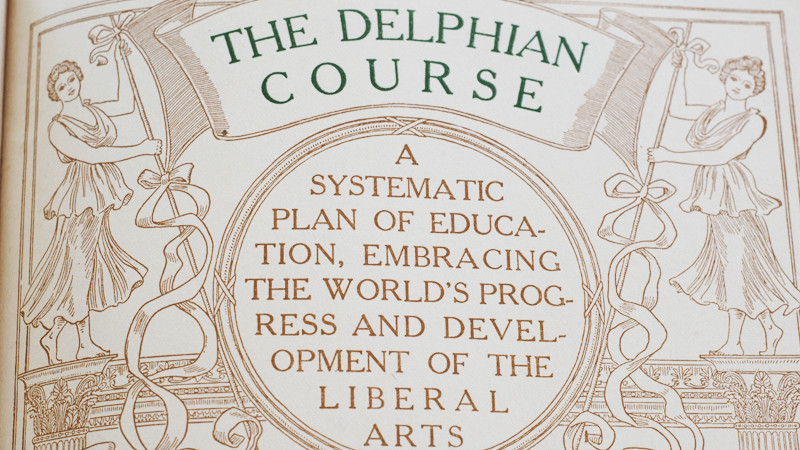
window.__IS_SSR__=true
window.__INITIAL_STATE__={
"attachmentsReducer": {
"audio_0": {
"type": "attachments",
"id": "audio_0",
"imgSizes": {
"kqedFullSize": {
"file": "https://ww2.kqed.org/news/wp-content/themes/KQED-unified/img/audio_bgs/background0.jpg"
}
}
},
"audio_1": {
"type": "attachments",
"id": "audio_1",
"imgSizes": {
"kqedFullSize": {
"file": "https://ww2.kqed.org/news/wp-content/themes/KQED-unified/img/audio_bgs/background1.jpg"
}
}
},
"audio_2": {
"type": "attachments",
"id": "audio_2",
"imgSizes": {
"kqedFullSize": {
"file": "https://ww2.kqed.org/news/wp-content/themes/KQED-unified/img/audio_bgs/background2.jpg"
}
}
},
"audio_3": {
"type": "attachments",
"id": "audio_3",
"imgSizes": {
"kqedFullSize": {
"file": "https://ww2.kqed.org/news/wp-content/themes/KQED-unified/img/audio_bgs/background3.jpg"
}
}
},
"audio_4": {
"type": "attachments",
"id": "audio_4",
"imgSizes": {
"kqedFullSize": {
"file": "https://ww2.kqed.org/news/wp-content/themes/KQED-unified/img/audio_bgs/background4.jpg"
}
}
},
"placeholder": {
"type": "attachments",
"id": "placeholder",
"imgSizes": {
"thumbnail": {
"file": "https://cdn.kqed.org/wp-content/uploads/2024/12/KQED-Default-Image-816638274-2000x1333-1-160x107.jpg",
"width": 160,
"height": 107,
"mimeType": "image/jpeg"
},
"medium": {
"file": "https://cdn.kqed.org/wp-content/uploads/2024/12/KQED-Default-Image-816638274-2000x1333-1-800x533.jpg",
"width": 800,
"height": 533,
"mimeType": "image/jpeg"
},
"medium_large": {
"file": "https://cdn.kqed.org/wp-content/uploads/2024/12/KQED-Default-Image-816638274-2000x1333-1-768x512.jpg",
"width": 768,
"height": 512,
"mimeType": "image/jpeg"
},
"large": {
"file": "https://cdn.kqed.org/wp-content/uploads/2024/12/KQED-Default-Image-816638274-2000x1333-1-1020x680.jpg",
"width": 1020,
"height": 680,
"mimeType": "image/jpeg"
},
"1536x1536": {
"file": "https://cdn.kqed.org/wp-content/uploads/2024/12/KQED-Default-Image-816638274-2000x1333-1-1536x1024.jpg",
"width": 1536,
"height": 1024,
"mimeType": "image/jpeg"
},
"fd-lrg": {
"file": "https://cdn.kqed.org/wp-content/uploads/2024/12/KQED-Default-Image-816638274-2000x1333-1-1536x1024.jpg",
"width": 1536,
"height": 1024,
"mimeType": "image/jpeg"
},
"fd-med": {
"file": "https://cdn.kqed.org/wp-content/uploads/2024/12/KQED-Default-Image-816638274-2000x1333-1-1020x680.jpg",
"width": 1020,
"height": 680,
"mimeType": "image/jpeg"
},
"fd-sm": {
"file": "https://cdn.kqed.org/wp-content/uploads/2024/12/KQED-Default-Image-816638274-2000x1333-1-800x533.jpg",
"width": 800,
"height": 533,
"mimeType": "image/jpeg"
},
"post-thumbnail": {
"file": "https://cdn.kqed.org/wp-content/uploads/2024/12/KQED-Default-Image-816638274-2000x1333-1-672x372.jpg",
"width": 672,
"height": 372,
"mimeType": "image/jpeg"
},
"twentyfourteen-full-width": {
"file": "https://cdn.kqed.org/wp-content/uploads/2024/12/KQED-Default-Image-816638274-2000x1333-1-1038x576.jpg",
"width": 1038,
"height": 576,
"mimeType": "image/jpeg"
},
"xxsmall": {
"file": "https://cdn.kqed.org/wp-content/uploads/2024/12/KQED-Default-Image-816638274-2000x1333-1-160x107.jpg",
"width": 160,
"height": 107,
"mimeType": "image/jpeg"
},
"xsmall": {
"file": "https://cdn.kqed.org/wp-content/uploads/2024/12/KQED-Default-Image-816638274-2000x1333-1-672x372.jpg",
"width": 672,
"height": 372,
"mimeType": "image/jpeg"
},
"small": {
"file": "https://cdn.kqed.org/wp-content/uploads/2024/12/KQED-Default-Image-816638274-2000x1333-1-672x372.jpg",
"width": 672,
"height": 372,
"mimeType": "image/jpeg"
},
"xlarge": {
"file": "https://cdn.kqed.org/wp-content/uploads/2024/12/KQED-Default-Image-816638274-2000x1333-1-1020x680.jpg",
"width": 1020,
"height": 680,
"mimeType": "image/jpeg"
},
"full-width": {
"file": "https://cdn.kqed.org/wp-content/uploads/2024/12/KQED-Default-Image-816638274-2000x1333-1-1920x1280.jpg",
"width": 1920,
"height": 1280,
"mimeType": "image/jpeg"
},
"guest-author-32": {
"file": "https://cdn.kqed.org/wp-content/uploads/2025/01/KQED-Default-Image-816638274-1333x1333-1-160x160.jpg",
"width": 32,
"height": 32,
"mimeType": "image/jpeg"
},
"guest-author-50": {
"file": "https://cdn.kqed.org/wp-content/uploads/2025/01/KQED-Default-Image-816638274-1333x1333-1-160x160.jpg",
"width": 50,
"height": 50,
"mimeType": "image/jpeg"
},
"guest-author-64": {
"file": "https://cdn.kqed.org/wp-content/uploads/2025/01/KQED-Default-Image-816638274-1333x1333-1-160x160.jpg",
"width": 64,
"height": 64,
"mimeType": "image/jpeg"
},
"guest-author-96": {
"file": "https://cdn.kqed.org/wp-content/uploads/2025/01/KQED-Default-Image-816638274-1333x1333-1-160x160.jpg",
"width": 96,
"height": 96,
"mimeType": "image/jpeg"
},
"guest-author-128": {
"file": "https://cdn.kqed.org/wp-content/uploads/2025/01/KQED-Default-Image-816638274-1333x1333-1-160x160.jpg",
"width": 128,
"height": 128,
"mimeType": "image/jpeg"
},
"detail": {
"file": "https://cdn.kqed.org/wp-content/uploads/2025/01/KQED-Default-Image-816638274-1333x1333-1-160x160.jpg",
"width": 160,
"height": 160,
"mimeType": "image/jpeg"
},
"kqedFullSize": {
"file": "https://cdn.kqed.org/wp-content/uploads/2024/12/KQED-Default-Image-816638274-2000x1333-1.jpg",
"width": 2000,
"height": 1333
}
}
},
"arts_10428668": {
"type": "attachments",
"id": "arts_10428668",
"meta": {
"index": "attachments_1716263798",
"site": "arts",
"id": "10428668",
"found": true
},
"parent": 10428662,
"imgSizes": {
"thumbnail": {
"file": "https://ww2.kqed.org/app/uploads/sites/2/2015/02/lead_image1-400x226.jpg",
"width": 400,
"mimeType": "image/jpeg",
"height": 226
},
"fd-sm": {
"file": "https://ww2.kqed.org/app/uploads/sites/2/2015/02/lead_image1-320x180.jpg",
"width": 320,
"mimeType": "image/jpeg",
"height": 180
},
"post-thumbnail": {
"file": "https://ww2.kqed.org/app/uploads/sites/2/2015/02/lead_image1-672x372.jpg",
"width": 672,
"mimeType": "image/jpeg",
"height": 372
},
"kqedFullSize": {
"file": "https://ww2.kqed.org/app/uploads/sites/2/2015/02/lead_image1.jpg",
"width": 798,
"height": 450
},
"fd-med": {
"file": "https://ww2.kqed.org/app/uploads/sites/2/2015/02/lead_image1-768x433.jpg",
"width": 768,
"mimeType": "image/jpeg",
"height": 433
},
"guest-author-96": {
"file": "https://ww2.kqed.org/app/uploads/sites/2/2015/02/lead_image1-96x96.jpg",
"width": 96,
"mimeType": "image/jpeg",
"height": 96
},
"guest-author-64": {
"file": "https://ww2.kqed.org/app/uploads/sites/2/2015/02/lead_image1-64x64.jpg",
"width": 64,
"mimeType": "image/jpeg",
"height": 64
},
"detail": {
"file": "https://ww2.kqed.org/app/uploads/sites/2/2015/02/lead_image1-75x75.jpg",
"width": 75,
"mimeType": "image/jpeg",
"height": 75
},
"guest-author-32": {
"file": "https://ww2.kqed.org/app/uploads/sites/2/2015/02/lead_image1-32x32.jpg",
"width": 32,
"mimeType": "image/jpeg",
"height": 32
},
"guest-author-128": {
"file": "https://ww2.kqed.org/app/uploads/sites/2/2015/02/lead_image1-128x128.jpg",
"width": 128,
"mimeType": "image/jpeg",
"height": 128
}
},
"publishDate": 1425081530,
"modified": 1425504126,
"caption": "Rather than close entirely when faced with higher minimum-wage requirements, Borderlands Books enacted a unique sponsorship program. (Photo courtesy Borderlands Books)",
"description": null,
"title": "l;ead_image",
"credit": null,
"status": "inherit",
"isLoading": false,
"fetchFailed": false
},
"arts_10419914": {
"type": "attachments",
"id": "arts_10419914",
"meta": {
"index": "attachments_1716263798",
"site": "arts",
"id": "10419914",
"found": true
},
"parent": 0,
"imgSizes": {
"thumbnail": {
"file": "https://ww2.kqed.org/app/uploads/sites/2/2015/02/LiberalArts-400x225.jpg",
"width": 400,
"mimeType": "image/jpeg",
"height": 225
},
"post-thumbnail": {
"file": "https://ww2.kqed.org/app/uploads/sites/2/2015/02/LiberalArts-672x372.jpg",
"width": 672,
"mimeType": "image/jpeg",
"height": 372
},
"kqedFullSize": {
"file": "https://ww2.kqed.org/app/uploads/sites/2/2015/02/LiberalArts.jpg",
"width": 800,
"height": 450
},
"guest-author-96": {
"file": "https://ww2.kqed.org/app/uploads/sites/2/2015/02/LiberalArts-96x96.jpg",
"width": 96,
"mimeType": "image/jpeg",
"height": 96
},
"medium": {
"file": "https://ww2.kqed.org/app/uploads/sites/2/2015/02/LiberalArts-800x450.jpg",
"width": 800,
"mimeType": "image/jpeg",
"height": 450
},
"guest-author-64": {
"file": "https://ww2.kqed.org/app/uploads/sites/2/2015/02/LiberalArts-64x64.jpg",
"width": 64,
"mimeType": "image/jpeg",
"height": 64
},
"detail": {
"file": "https://ww2.kqed.org/app/uploads/sites/2/2015/02/LiberalArts-75x75.jpg",
"width": 75,
"mimeType": "image/jpeg",
"height": 75
},
"guest-author-32": {
"file": "https://ww2.kqed.org/app/uploads/sites/2/2015/02/LiberalArts-32x32.jpg",
"width": 32,
"mimeType": "image/jpeg",
"height": 32
},
"guest-author-128": {
"file": "https://ww2.kqed.org/app/uploads/sites/2/2015/02/LiberalArts-128x128.jpg",
"width": 128,
"mimeType": "image/jpeg",
"height": 128
}
},
"publishDate": 1424807378,
"modified": 1425673529,
"caption": "A page from the Delphian Course of Reading, 1913. (Photo: Adrienne Blaine)",
"description": null,
"title": "LiberalArts",
"credit": null,
"status": "inherit",
"isLoading": false,
"fetchFailed": false
},
"arts_10425442": {
"type": "attachments",
"id": "arts_10425442",
"meta": {
"index": "attachments_1716263798",
"site": "arts",
"id": "10425442",
"found": true
},
"parent": 10402917,
"imgSizes": {
"thumbnail": {
"file": "https://ww2.kqed.org/app/uploads/sites/2/2015/02/MM-400x237.jpg",
"width": 400,
"mimeType": "image/jpeg",
"height": 237
},
"fd-sm": {
"file": "https://ww2.kqed.org/app/uploads/sites/2/2015/02/MM-320x190.jpg",
"width": 320,
"mimeType": "image/jpeg",
"height": 190
},
"post-thumbnail": {
"file": "https://ww2.kqed.org/app/uploads/sites/2/2015/02/MM-672x372.jpg",
"width": 672,
"mimeType": "image/jpeg",
"height": 372
},
"kqedFullSize": {
"file": "https://ww2.kqed.org/app/uploads/sites/2/2015/02/MM.jpg",
"width": 800,
"height": 474
},
"fd-med": {
"file": "https://ww2.kqed.org/app/uploads/sites/2/2015/02/MM-768x455.jpg",
"width": 768,
"mimeType": "image/jpeg",
"height": 455
},
"guest-author-96": {
"file": "https://ww2.kqed.org/app/uploads/sites/2/2015/02/MM-96x96.jpg",
"width": 96,
"mimeType": "image/jpeg",
"height": 96
},
"medium": {
"file": "https://ww2.kqed.org/app/uploads/sites/2/2015/02/MM-800x474.jpg",
"width": 800,
"mimeType": "image/jpeg",
"height": 474
},
"guest-author-64": {
"file": "https://ww2.kqed.org/app/uploads/sites/2/2015/02/MM-64x64.jpg",
"width": 64,
"mimeType": "image/jpeg",
"height": 64
},
"detail": {
"file": "https://ww2.kqed.org/app/uploads/sites/2/2015/02/MM-75x75.jpg",
"width": 75,
"mimeType": "image/jpeg",
"height": 75
},
"guest-author-32": {
"file": "https://ww2.kqed.org/app/uploads/sites/2/2015/02/MM-32x32.jpg",
"width": 32,
"mimeType": "image/jpeg",
"height": 32
},
"guest-author-128": {
"file": "https://ww2.kqed.org/app/uploads/sites/2/2015/02/MM-128x128.jpg",
"width": 128,
"mimeType": "image/jpeg",
"height": 128
}
},
"publishDate": 1424978798,
"modified": 1424978845,
"caption": "(Photo: Joey Shemuel / mac-mcclelland.com)",
"description": null,
"title": "MM",
"credit": null,
"status": "inherit",
"isLoading": false,
"fetchFailed": false
},
"arts_10408815": {
"type": "attachments",
"id": "arts_10408815",
"meta": {
"index": "attachments_1716263798",
"site": "arts",
"id": "10408815",
"found": true
},
"parent": 10408694,
"imgSizes": {
"twentyfourteen-full-width": {
"file": "https://ww2.kqed.org/app/uploads/sites/2/2015/02/sandip-roy-1038x576.jpg",
"width": 1038,
"mimeType": "image/jpeg",
"height": 576
},
"thumbnail": {
"file": "https://ww2.kqed.org/app/uploads/sites/2/2015/02/sandip-roy-400x265.jpg",
"width": 400,
"mimeType": "image/jpeg",
"height": 265
},
"post-thumbnail": {
"file": "https://ww2.kqed.org/app/uploads/sites/2/2015/02/sandip-roy-672x372.jpg",
"width": 672,
"mimeType": "image/jpeg",
"height": 372
},
"kqedFullSize": {
"file": "https://ww2.kqed.org/app/uploads/sites/2/2015/02/sandip-roy.jpg",
"width": 1200,
"height": 795
},
"large": {
"file": "https://ww2.kqed.org/app/uploads/sites/2/2015/02/sandip-roy-1180x782.jpg",
"width": 1180,
"mimeType": "image/jpeg",
"height": 782
},
"guest-author-96": {
"file": "https://ww2.kqed.org/app/uploads/sites/2/2015/02/sandip-roy-96x96.jpg",
"width": 96,
"mimeType": "image/jpeg",
"height": 96
},
"medium": {
"file": "https://ww2.kqed.org/app/uploads/sites/2/2015/02/sandip-roy-800x530.jpg",
"width": 800,
"mimeType": "image/jpeg",
"height": 530
},
"guest-author-64": {
"file": "https://ww2.kqed.org/app/uploads/sites/2/2015/02/sandip-roy-64x64.jpg",
"width": 64,
"mimeType": "image/jpeg",
"height": 64
},
"detail": {
"file": "https://ww2.kqed.org/app/uploads/sites/2/2015/02/sandip-roy-75x75.jpg",
"width": 75,
"mimeType": "image/jpeg",
"height": 75
},
"guest-author-32": {
"file": "https://ww2.kqed.org/app/uploads/sites/2/2015/02/sandip-roy-32x32.jpg",
"width": 32,
"mimeType": "image/jpeg",
"height": 32
},
"guest-author-128": {
"file": "https://ww2.kqed.org/app/uploads/sites/2/2015/02/sandip-roy-128x128.jpg",
"width": 128,
"mimeType": "image/jpeg",
"height": 128
}
},
"publishDate": 1424467057,
"modified": 1424475673,
"caption": "Sandip Roy's new novel explores one family's secrets. (Photo: Bishan Samaddar)",
"description": null,
"title": "Sandip Roy",
"credit": null,
"status": "inherit",
"isLoading": false,
"fetchFailed": false
},
"arts_10394095": {
"type": "attachments",
"id": "arts_10394095",
"meta": {
"index": "attachments_1716263798",
"site": "arts",
"id": "10394095",
"found": true
},
"parent": 10385086,
"imgSizes": {
"thumbnail": {
"file": "https://ww2.kqed.org/app/uploads/sites/2/2015/02/lead_1mage_back_pages-400x237.jpg",
"width": 400,
"mimeType": "image/jpeg",
"height": 237
},
"post-thumbnail": {
"file": "https://ww2.kqed.org/app/uploads/sites/2/2015/02/lead_1mage_back_pages-672x372.jpg",
"width": 672,
"mimeType": "image/jpeg",
"height": 372
},
"kqedFullSize": {
"file": "https://ww2.kqed.org/app/uploads/sites/2/2015/02/lead_1mage_back_pages.jpg",
"width": 798,
"height": 472
},
"guest-author-96": {
"file": "https://ww2.kqed.org/app/uploads/sites/2/2015/02/lead_1mage_back_pages-96x96.jpg",
"width": 96,
"mimeType": "image/jpeg",
"height": 96
},
"guest-author-64": {
"file": "https://ww2.kqed.org/app/uploads/sites/2/2015/02/lead_1mage_back_pages-64x64.jpg",
"width": 64,
"mimeType": "image/jpeg",
"height": 64
},
"detail": {
"file": "https://ww2.kqed.org/app/uploads/sites/2/2015/02/lead_1mage_back_pages-75x75.jpg",
"width": 75,
"mimeType": "image/jpeg",
"height": 75
},
"guest-author-32": {
"file": "https://ww2.kqed.org/app/uploads/sites/2/2015/02/lead_1mage_back_pages-32x32.jpg",
"width": 32,
"mimeType": "image/jpeg",
"height": 32
},
"guest-author-128": {
"file": "https://ww2.kqed.org/app/uploads/sites/2/2015/02/lead_1mage_back_pages-128x128.jpg",
"width": 128,
"mimeType": "image/jpeg",
"height": 128
}
},
"publishDate": 1424031544,
"modified": 1424031544,
"caption": null,
"description": null,
"title": "lead_1mage_back_pages",
"credit": null,
"status": "inherit",
"isLoading": false,
"fetchFailed": false
},
"arts_10357034": {
"type": "attachments",
"id": "arts_10357034",
"meta": {
"index": "attachments_1716263798",
"site": "arts",
"id": "10357034",
"found": true
},
"parent": 10356146,
"imgSizes": {
"thumbnail": {
"file": "https://ww2.kqed.org/app/uploads/sites/2/2015/02/MO-Walsh-400x225.jpg",
"width": 400,
"mimeType": "image/jpeg",
"height": 225
},
"post-thumbnail": {
"file": "https://ww2.kqed.org/app/uploads/sites/2/2015/02/MO-Walsh-672x372.jpg",
"width": 672,
"mimeType": "image/jpeg",
"height": 372
},
"kqedFullSize": {
"file": "https://ww2.kqed.org/app/uploads/sites/2/2015/02/MO-Walsh.jpg",
"width": 800,
"height": 450
},
"guest-author-96": {
"file": "https://ww2.kqed.org/app/uploads/sites/2/2015/02/MO-Walsh-96x96.jpg",
"width": 96,
"mimeType": "image/jpeg",
"height": 96
},
"medium": {
"file": "https://ww2.kqed.org/app/uploads/sites/2/2015/02/MO-Walsh-800x450.jpg",
"width": 800,
"mimeType": "image/jpeg",
"height": 450
},
"guest-author-64": {
"file": "https://ww2.kqed.org/app/uploads/sites/2/2015/02/MO-Walsh-64x64.jpg",
"width": 64,
"mimeType": "image/jpeg",
"height": 64
},
"detail": {
"file": "https://ww2.kqed.org/app/uploads/sites/2/2015/02/MO-Walsh-75x75.jpg",
"width": 75,
"mimeType": "image/jpeg",
"height": 75
},
"guest-author-32": {
"file": "https://ww2.kqed.org/app/uploads/sites/2/2015/02/MO-Walsh-32x32.jpg",
"width": 32,
"mimeType": "image/jpeg",
"height": 32
},
"guest-author-128": {
"file": "https://ww2.kqed.org/app/uploads/sites/2/2015/02/MO-Walsh-128x128.jpg",
"width": 128,
"mimeType": "image/jpeg",
"height": 128
}
},
"publishDate": 1422924237,
"modified": 1422924254,
"caption": null,
"description": null,
"title": "MO Walsh",
"credit": "Sam Gregory Photography",
"status": "inherit",
"isLoading": false,
"fetchFailed": false
},
"arts_10388811": {
"type": "attachments",
"id": "arts_10388811",
"meta": {
"index": "attachments_1716263798",
"site": "arts",
"id": "10388811",
"found": true
},
"parent": 10353585,
"imgSizes": {
"thumbnail": {
"file": "https://ww2.kqed.org/app/uploads/sites/2/2015/02/lead_image-800x4501-400x225.jpg",
"width": 400,
"mimeType": "image/jpeg",
"height": 225
},
"post-thumbnail": {
"file": "https://ww2.kqed.org/app/uploads/sites/2/2015/02/lead_image-800x4501-672x372.jpg",
"width": 672,
"mimeType": "image/jpeg",
"height": 372
},
"kqedFullSize": {
"file": "https://ww2.kqed.org/app/uploads/sites/2/2015/02/lead_image-800x4501.jpg",
"width": 800,
"height": 450
},
"guest-author-96": {
"file": "https://ww2.kqed.org/app/uploads/sites/2/2015/02/lead_image-800x4501-96x96.jpg",
"width": 96,
"mimeType": "image/jpeg",
"height": 96
},
"medium": {
"file": "https://ww2.kqed.org/app/uploads/sites/2/2015/02/lead_image-800x4501-800x450.jpg",
"width": 800,
"mimeType": "image/jpeg",
"height": 450
},
"guest-author-64": {
"file": "https://ww2.kqed.org/app/uploads/sites/2/2015/02/lead_image-800x4501-64x64.jpg",
"width": 64,
"mimeType": "image/jpeg",
"height": 64
},
"detail": {
"file": "https://ww2.kqed.org/app/uploads/sites/2/2015/02/lead_image-800x4501-75x75.jpg",
"width": 75,
"mimeType": "image/jpeg",
"height": 75
},
"guest-author-32": {
"file": "https://ww2.kqed.org/app/uploads/sites/2/2015/02/lead_image-800x4501-32x32.jpg",
"width": 32,
"mimeType": "image/jpeg",
"height": 32
},
"guest-author-128": {
"file": "https://ww2.kqed.org/app/uploads/sites/2/2015/02/lead_image-800x4501-128x128.jpg",
"width": 128,
"mimeType": "image/jpeg",
"height": 128
}
},
"publishDate": 1423870227,
"modified": 1423870227,
"caption": null,
"description": null,
"title": "lead_image-800x450",
"credit": null,
"status": "inherit",
"isLoading": false,
"fetchFailed": false
},
"arts_10366707": {
"type": "attachments",
"id": "arts_10366707",
"meta": {
"index": "attachments_1716263798",
"site": "arts",
"id": "10366707",
"found": true
},
"parent": 10344707,
"imgSizes": {
"thumbnail": {
"file": "https://ww2.kqed.org/app/uploads/sites/2/2015/02/JTL-400x225.jpg",
"width": 400,
"mimeType": "image/jpeg",
"height": 225
},
"post-thumbnail": {
"file": "https://ww2.kqed.org/app/uploads/sites/2/2015/02/JTL-672x372.jpg",
"width": 672,
"mimeType": "image/jpeg",
"height": 372
},
"kqedFullSize": {
"file": "https://ww2.kqed.org/app/uploads/sites/2/2015/02/JTL.jpg",
"width": 800,
"height": 450
},
"guest-author-96": {
"file": "https://ww2.kqed.org/app/uploads/sites/2/2015/02/JTL-96x96.jpg",
"width": 96,
"mimeType": "image/jpeg",
"height": 96
},
"medium": {
"file": "https://ww2.kqed.org/app/uploads/sites/2/2015/02/JTL-800x450.jpg",
"width": 800,
"mimeType": "image/jpeg",
"height": 450
},
"guest-author-64": {
"file": "https://ww2.kqed.org/app/uploads/sites/2/2015/02/JTL-64x64.jpg",
"width": 64,
"mimeType": "image/jpeg",
"height": 64
},
"detail": {
"file": "https://ww2.kqed.org/app/uploads/sites/2/2015/02/JTL-75x75.jpg",
"width": 75,
"mimeType": "image/jpeg",
"height": 75
},
"guest-author-32": {
"file": "https://ww2.kqed.org/app/uploads/sites/2/2015/02/JTL-32x32.jpg",
"width": 32,
"mimeType": "image/jpeg",
"height": 32
},
"guest-author-128": {
"file": "https://ww2.kqed.org/app/uploads/sites/2/2015/02/JTL-128x128.jpg",
"width": 128,
"mimeType": "image/jpeg",
"height": 128
}
},
"publishDate": 1423211035,
"modified": 1423211127,
"caption": "A still from \u003cem>The Cult of JT Leroy\u003c/em>.",
"description": null,
"title": "JTL",
"credit": null,
"status": "inherit",
"isLoading": false,
"fetchFailed": false
},
"arts_10339327": {
"type": "attachments",
"id": "arts_10339327",
"meta": {
"index": "attachments_1716263798",
"site": "arts",
"id": "10339327",
"found": true
},
"parent": 10339326,
"imgSizes": {
"twentyfourteen-full-width": {
"file": "https://ww2.kqed.org/app/uploads/sites/2/2015/01/zombie-e18e183f2341f51be11ccecb9dada6576eea1922-e1422391031377-1038x576.jpg",
"width": 1038,
"mimeType": "image/jpeg",
"height": 576
},
"thumbnail": {
"file": "https://ww2.kqed.org/app/uploads/sites/2/2015/01/zombie-e18e183f2341f51be11ccecb9dada6576eea1922-e1422391031377-400x225.jpg",
"width": 400,
"mimeType": "image/jpeg",
"height": 225
},
"post-thumbnail": {
"file": "https://ww2.kqed.org/app/uploads/sites/2/2015/01/zombie-e18e183f2341f51be11ccecb9dada6576eea1922-e1422391031377-672x372.jpg",
"width": 672,
"mimeType": "image/jpeg",
"height": 372
},
"kqedFullSize": {
"file": "https://ww2.kqed.org/app/uploads/sites/2/2015/01/zombie-e18e183f2341f51be11ccecb9dada6576eea1922-e1422391044365.jpg",
"width": 800,
"height": 450
},
"large": {
"file": "https://ww2.kqed.org/app/uploads/sites/2/2015/01/zombie-e18e183f2341f51be11ccecb9dada6576eea1922-e1422391031377-1180x664.jpg",
"width": 1180,
"mimeType": "image/jpeg",
"height": 664
},
"guest-author-96": {
"file": "https://ww2.kqed.org/app/uploads/sites/2/2015/01/zombie-e18e183f2341f51be11ccecb9dada6576eea1922-e1422391031377-96x96.jpg",
"width": 96,
"mimeType": "image/jpeg",
"height": 96
},
"medium": {
"file": "https://ww2.kqed.org/app/uploads/sites/2/2015/01/zombie-e18e183f2341f51be11ccecb9dada6576eea1922-e1422391031377-800x450.jpg",
"width": 800,
"mimeType": "image/jpeg",
"height": 450
},
"guest-author-64": {
"file": "https://ww2.kqed.org/app/uploads/sites/2/2015/01/zombie-e18e183f2341f51be11ccecb9dada6576eea1922-e1422391031377-64x64.jpg",
"width": 64,
"mimeType": "image/jpeg",
"height": 64
},
"detail": {
"file": "https://ww2.kqed.org/app/uploads/sites/2/2015/01/zombie-e18e183f2341f51be11ccecb9dada6576eea1922-e1422391031377-75x75.jpg",
"width": 75,
"mimeType": "image/jpeg",
"height": 75
},
"guest-author-32": {
"file": "https://ww2.kqed.org/app/uploads/sites/2/2015/01/zombie-e18e183f2341f51be11ccecb9dada6576eea1922-e1422391031377-32x32.jpg",
"width": 32,
"mimeType": "image/jpeg",
"height": 32
},
"guest-author-128": {
"file": "https://ww2.kqed.org/app/uploads/sites/2/2015/01/zombie-e18e183f2341f51be11ccecb9dada6576eea1922-e1422391031377-128x128.jpg",
"width": 128,
"mimeType": "image/jpeg",
"height": 128
}
},
"publishDate": 1422390756,
"modified": 1422390980,
"caption": "Many NPR readers wrote in lamenting the possible loss of the \"Zombie of Montclair Moors\" statue.",
"description": "Many NPR readers wrote in lamenting the possible loss of the \"Zombie of Montclair Moors\" statue.",
"title": "Many NPR readers wrote in lamenting the possible loss of the \"Zombie of Montclair Moors\" statue.",
"credit": null,
"status": "inherit",
"isLoading": false,
"fetchFailed": false
},
"arts_10335105": {
"type": "attachments",
"id": "arts_10335105",
"meta": {
"index": "attachments_1716263798",
"site": "arts",
"id": "10335105",
"found": true
},
"parent": 10316663,
"imgSizes": {
"thumbnail": {
"file": "https://ww2.kqed.org/app/uploads/sites/2/2015/01/Narcissims365-400x225.jpg",
"width": 400,
"mimeType": "image/jpeg",
"height": 225
},
"post-thumbnail": {
"file": "https://ww2.kqed.org/app/uploads/sites/2/2015/01/Narcissims365-672x372.jpg",
"width": 672,
"mimeType": "image/jpeg",
"height": 372
},
"kqedFullSize": {
"file": "https://ww2.kqed.org/app/uploads/sites/2/2015/01/Narcissims365.jpg",
"width": 800,
"height": 450
},
"guest-author-96": {
"file": "https://ww2.kqed.org/app/uploads/sites/2/2015/01/Narcissims365-96x96.jpg",
"width": 96,
"mimeType": "image/jpeg",
"height": 96
},
"medium": {
"file": "https://ww2.kqed.org/app/uploads/sites/2/2015/01/Narcissims365-800x450.jpg",
"width": 800,
"mimeType": "image/jpeg",
"height": 450
},
"guest-author-64": {
"file": "https://ww2.kqed.org/app/uploads/sites/2/2015/01/Narcissims365-64x64.jpg",
"width": 64,
"mimeType": "image/jpeg",
"height": 64
},
"detail": {
"file": "https://ww2.kqed.org/app/uploads/sites/2/2015/01/Narcissims365-75x75.jpg",
"width": 75,
"mimeType": "image/jpeg",
"height": 75
},
"guest-author-32": {
"file": "https://ww2.kqed.org/app/uploads/sites/2/2015/01/Narcissims365-32x32.jpg",
"width": 32,
"mimeType": "image/jpeg",
"height": 32
},
"guest-author-128": {
"file": "https://ww2.kqed.org/app/uploads/sites/2/2015/01/Narcissims365-128x128.jpg",
"width": 128,
"mimeType": "image/jpeg",
"height": 128
}
},
"publishDate": 1422262860,
"modified": 1422263596,
"caption": "Yes, I am reading 'The Culture of Narcissism' on my phone.",
"description": null,
"title": "Narcissims365",
"credit": null,
"status": "inherit",
"isLoading": false,
"fetchFailed": false
},
"arts_10328043": {
"type": "attachments",
"id": "arts_10328043",
"meta": {
"index": "attachments_1716263798",
"site": "arts",
"id": "10328043",
"found": true
},
"parent": 10320262,
"imgSizes": {
"thumbnail": {
"file": "https://ww2.kqed.org/app/uploads/sites/2/2015/01/michelletea1-400x255.jpg",
"width": 400,
"mimeType": "image/jpeg",
"height": 255
},
"post-thumbnail": {
"file": "https://ww2.kqed.org/app/uploads/sites/2/2015/01/michelletea1-672x372.jpg",
"width": 672,
"mimeType": "image/jpeg",
"height": 372
},
"kqedFullSize": {
"file": "https://ww2.kqed.org/app/uploads/sites/2/2015/01/michelletea1.jpg",
"width": 800,
"height": 509
},
"guest-author-96": {
"file": "https://ww2.kqed.org/app/uploads/sites/2/2015/01/michelletea1-96x96.jpg",
"width": 96,
"mimeType": "image/jpeg",
"height": 96
},
"medium": {
"file": "https://ww2.kqed.org/app/uploads/sites/2/2015/01/michelletea1-800x509.jpg",
"width": 800,
"mimeType": "image/jpeg",
"height": 509
},
"guest-author-64": {
"file": "https://ww2.kqed.org/app/uploads/sites/2/2015/01/michelletea1-64x64.jpg",
"width": 64,
"mimeType": "image/jpeg",
"height": 64
},
"detail": {
"file": "https://ww2.kqed.org/app/uploads/sites/2/2015/01/michelletea1-75x75.jpg",
"width": 75,
"mimeType": "image/jpeg",
"height": 75
},
"guest-author-32": {
"file": "https://ww2.kqed.org/app/uploads/sites/2/2015/01/michelletea1-32x32.jpg",
"width": 32,
"mimeType": "image/jpeg",
"height": 32
},
"guest-author-128": {
"file": "https://ww2.kqed.org/app/uploads/sites/2/2015/01/michelletea1-128x128.jpg",
"width": 128,
"mimeType": "image/jpeg",
"height": 128
}
},
"publishDate": 1422041378,
"modified": 1422041396,
"caption": "Michelle Tea. (Photo: Lydia Daniller)",
"description": null,
"title": "michelletea1",
"credit": null,
"status": "inherit",
"isLoading": false,
"fetchFailed": false
},
"arts_10277752": {
"type": "attachments",
"id": "arts_10277752",
"meta": {
"index": "attachments_1716263798",
"site": "arts",
"id": "10277752",
"found": true
},
"parent": 10261542,
"imgSizes": {
"thumbnail": {
"file": "https://ww2.kqed.org/app/uploads/sites/2/2015/01/lead_frionge-400x225.jpg",
"width": 400,
"mimeType": "image/jpeg",
"height": 225
},
"post-thumbnail": {
"file": "https://ww2.kqed.org/app/uploads/sites/2/2015/01/lead_frionge-672x372.jpg",
"width": 672,
"mimeType": "image/jpeg",
"height": 372
},
"kqedFullSize": {
"file": "https://ww2.kqed.org/app/uploads/sites/2/2015/01/lead_frionge.jpg",
"width": 800,
"height": 451
},
"guest-author-96": {
"file": "https://ww2.kqed.org/app/uploads/sites/2/2015/01/lead_frionge-96x96.jpg",
"width": 96,
"mimeType": "image/jpeg",
"height": 96
},
"guest-author-64": {
"file": "https://ww2.kqed.org/app/uploads/sites/2/2015/01/lead_frionge-64x64.jpg",
"width": 64,
"mimeType": "image/jpeg",
"height": 64
},
"detail": {
"file": "https://ww2.kqed.org/app/uploads/sites/2/2015/01/lead_frionge-75x75.jpg",
"width": 75,
"mimeType": "image/jpeg",
"height": 75
},
"guest-author-32": {
"file": "https://ww2.kqed.org/app/uploads/sites/2/2015/01/lead_frionge-32x32.jpg",
"width": 32,
"mimeType": "image/jpeg",
"height": 32
},
"guest-author-128": {
"file": "https://ww2.kqed.org/app/uploads/sites/2/2015/01/lead_frionge-128x128.jpg",
"width": 128,
"mimeType": "image/jpeg",
"height": 128
}
},
"publishDate": 1420491398,
"modified": 1421793284,
"caption": "Scene from TV show \u003ci>Fringe\u003c/i>",
"description": "Scene from TV show \u003ci>Fringe\u003c/i>",
"title": "lead_fringe",
"credit": null,
"status": "inherit",
"isLoading": false,
"fetchFailed": false
}
},
"audioPlayerReducer": {
"postId": "stream_live",
"isPaused": true,
"isPlaying": false,
"pfsActive": false,
"pledgeModalIsOpen": true,
"playerDrawerIsOpen": false,
"liveAudioPlayStartedAt": 0,
"liveAudioPlayContext": ""
},
"authorsReducer": {
"byline_arts_10339326": {
"type": "authors",
"id": "byline_arts_10339326",
"meta": {
"override": true
},
"slug": "byline_arts_10339326",
"name": "Elise Hu",
"isLoading": false
},
"ablaine": {
"type": "authors",
"id": "72",
"meta": {
"index": "authors_1716337520",
"id": "72",
"found": true
},
"name": "Adrienne Blaine",
"firstName": "Adrienne",
"lastName": "Blaine",
"slug": "ablaine",
"email": "adrienneblaine@hotmail.com",
"display_author_email": false,
"staff_mastheads": [],
"title": null,
"bio": "Adrienne Blaine is a Millennial writer from the South Bay. She has a BA in Comparative Literary and Cultural Studies combined with Communications and Media Studies from Franklin University Switzerland. Living in Switzerland for four years and traveling from Morocco to Iceland introduced her to diverse art, culture and food. She currently lives in San Francisco and writes about these topics.",
"avatar": "https://secure.gravatar.com/avatar/10d0a10a2189067e5e3f6fc9fc4ebdf2?s=600&d=blank&r=g",
"twitter": null,
"facebook": null,
"instagram": null,
"linkedin": null,
"sites": [
{
"site": "arts",
"roles": [
"Contributor",
"contributor"
]
},
{
"site": "bayareabites",
"roles": [
"contributor"
]
},
{
"site": "food",
"roles": [
"contributor"
]
}
],
"headData": {
"title": "Adrienne Blaine | KQED",
"description": null,
"ogImgSrc": "https://secure.gravatar.com/avatar/10d0a10a2189067e5e3f6fc9fc4ebdf2?s=600&d=blank&r=g",
"twImgSrc": "https://secure.gravatar.com/avatar/10d0a10a2189067e5e3f6fc9fc4ebdf2?s=600&d=blank&r=g"
},
"isLoading": false,
"link": "/author/ablaine"
},
"agilbert": {
"type": "authors",
"id": "86",
"meta": {
"index": "authors_1716337520",
"id": "86",
"found": true
},
"name": "Andrew Gilbert",
"firstName": "Andrew",
"lastName": "Gilbert",
"slug": "agilbert",
"email": "jazzscribe@aol.com",
"display_author_email": false,
"staff_mastheads": [],
"title": "KQED Contributor",
"bio": "A Los Angeles native based in the Berkeley area since 1996, Andrew Gilbert covers jazz, international music and dance for KQED's \u003ci>California Report, \u003c/i>the\u003ci> Mercury News\u003c/i>, \u003ci>San Francisco Chronicle\u003c/i>, \u003ci>Berkeleyside.com\u003c/i>, and other publications. He is available for weddings and bar and bat mitzvahs. #jazzscribe",
"avatar": "https://secure.gravatar.com/avatar/d7bcafdbefdd39e9a68f88724ca616eb4e7a5a6bff9cdfb62de652a1e1751471?s=600&d=blank&r=g",
"twitter": null,
"bluesky": null,
"facebook": null,
"instagram": null,
"linkedin": null,
"sites": [
{
"site": "arts",
"roles": [
"Contributor",
"author"
]
},
{
"site": "news",
"roles": [
"author"
]
}
],
"headData": {
"title": "Andrew Gilbert | KQED",
"description": "KQED Contributor",
"ogImgSrc": "https://secure.gravatar.com/avatar/d7bcafdbefdd39e9a68f88724ca616eb4e7a5a6bff9cdfb62de652a1e1751471?s=600&d=blank&r=g",
"twImgSrc": "https://secure.gravatar.com/avatar/d7bcafdbefdd39e9a68f88724ca616eb4e7a5a6bff9cdfb62de652a1e1751471?s=600&d=blank&r=g"
},
"isLoading": false,
"link": "/author/agilbert"
},
"rkleffel": {
"type": "authors",
"id": "88",
"meta": {
"index": "authors_1716337520",
"id": "88",
"found": true
},
"name": "Rick Kleffel",
"firstName": "Rick",
"lastName": "Kleffel",
"slug": "rkleffel",
"email": "editor@bookotron.com",
"display_author_email": false,
"staff_mastheads": [],
"title": null,
"bio": "Rick Kleffel has been reading for more than half a century. He lives in Aptos, near the Palo Alto, a cement boat built at the end of World War I. He writes about books and podcasts interviews with authors at \u003ca href=\"http://agonycolumn.com\">The Agony Column\u003c/a>.",
"avatar": "https://secure.gravatar.com/avatar/179f850e768733fdeabc3c0c48ebf0e9?s=600&d=blank&r=g",
"twitter": null,
"facebook": null,
"instagram": null,
"linkedin": null,
"sites": [
{
"site": "arts",
"roles": [
"Contributor",
"contributor"
]
}
],
"headData": {
"title": "Rick Kleffel | KQED",
"description": null,
"ogImgSrc": "https://secure.gravatar.com/avatar/179f850e768733fdeabc3c0c48ebf0e9?s=600&d=blank&r=g",
"twImgSrc": "https://secure.gravatar.com/avatar/179f850e768733fdeabc3c0c48ebf0e9?s=600&d=blank&r=g"
},
"isLoading": false,
"link": "/author/rkleffel"
},
"lclark": {
"type": "authors",
"id": "3224",
"meta": {
"index": "authors_1716337520",
"id": "3224",
"found": true
},
"name": "Leilani Clark",
"firstName": "Leilani",
"lastName": "Clark",
"slug": "lclark",
"email": "clark.leil@gmail.com",
"display_author_email": false,
"staff_mastheads": [],
"title": null,
"bio": "Leilani Clark writes about books for KQED Arts. Her writing has been published at Mother Jones, The Guardian, Civil Eats, Time Magazine, Food & Wine, Edible Marin & Wine Country, and The Rumpus. She is the editor of Made Local magazine in Sonoma County. Find her on Twitter \u003ca href=\"https://twitter.com/leilclark\">@leilclark\u003c/a>.",
"avatar": "https://secure.gravatar.com/avatar/7f691fdc52ed2e3f4cf164d1f4ec0889?s=600&d=blank&r=g",
"twitter": null,
"facebook": null,
"instagram": null,
"linkedin": null,
"sites": [
{
"site": "arts",
"roles": [
"contributor"
]
},
{
"site": "bayareabites",
"roles": [
"contributor"
]
},
{
"site": "food",
"roles": [
"contributor"
]
}
],
"headData": {
"title": "Leilani Clark | KQED",
"description": null,
"ogImgSrc": "https://secure.gravatar.com/avatar/7f691fdc52ed2e3f4cf164d1f4ec0889?s=600&d=blank&r=g",
"twImgSrc": "https://secure.gravatar.com/avatar/7f691fdc52ed2e3f4cf164d1f4ec0889?s=600&d=blank&r=g"
},
"isLoading": false,
"link": "/author/lclark"
}
},
"pagesReducer": {
"arts_category_literature": {
"type": "terms",
"id": "arts_73",
"meta": {
"index": "terms_1716263798",
"site": "arts",
"id": "73",
"score": 12.797771
},
"featImg": null,
"name": "Books",
"description": null,
"taxonomy": "category",
"headData": {
"twImgId": null,
"twTitle": null,
"ogTitle": null,
"ogImgId": null,
"twDescription": null,
"description": null,
"title": "Books Archives | KQED Arts",
"ogDescription": null
},
"ttid": 74,
"slug": "literature",
"isLoading": false,
"title": "Books",
"pageMeta": {
"site": "arts",
"WpPageTemplate": "page-topic-editorial",
"currentPage": 99
},
"blocks": [
{
"blockName": "kqed/post-list",
"attrs": {
"layout": "cardArticle2",
"query": "posts/arts?category=literature",
"seeMore": false,
"paginated": true,
"page": 99
}
},
{
"blockName": "kqed/ad"
}
]
}
},
"pfsSessionReducer": {},
"postsReducer": {
"stream_live": {
"type": "live",
"id": "stream_live",
"audioUrl": "https://streams.kqed.org/kqedradio",
"title": "Live Stream",
"excerpt": "Live Stream information currently unavailable.",
"link": "/radio",
"featImg": "",
"label": {
"name": "KQED Live",
"link": "/"
}
},
"stream_kqedNewscast": {
"type": "posts",
"id": "stream_kqedNewscast",
"audioUrl": "https://www.kqed.org/.stream/anon/radio/RDnews/newscast.mp3?_=1",
"title": "KQED Newscast",
"featImg": "",
"label": {
"name": "88.5 FM",
"link": "/"
}
},
"arts_10428662": {
"type": "posts",
"id": "arts_10428662",
"meta": {
"index": "posts_1716263798",
"site": "arts",
"id": "10428662",
"score": null,
"sort": [
1425999658000
]
},
"parent": 0,
"labelTerm": {
"site": "arts"
},
"blocks": [],
"publishDate": 1425999658,
"format": "standard",
"title": "The Borderlands of Small Business: How to Save a Bookstore",
"headTitle": "The Borderlands of Small Business: How to Save a Bookstore | KQED",
"content": "\u003cp>The first “last dispatch” arrived on Feb. 1, 2015, from Alan Beatts. His store, Borderlands Books, had been in business for 18 years, and for the last several of those years, he’d been sending out email messages notifying customers of author events, sales, and he store’s own bestsellers list. But the tone of this latest dispatch was markedly different.\u003c/p>\n\u003cp>\u003ca href=\"http://ww2.kqed.org/arts/wp-content/uploads/sites/2/2015/02/email.jpg\">\u003cimg loading=\"lazy\" decoding=\"async\" class=\" size-full wp-image-10428671 alignleft\" src=\"http://ww2.kqed.org/arts/wp-content/uploads/sites/2/2015/02/email.jpg\" alt=\"email\" width=\"300\" height=\"250\">\u003c/a>“In 18 years of business, Borderlands has faced a number of challenges,” Beatts wrote, adding that “it fills us with sorrow and horror to say that we will be closing very soon.”\u003c/p>\n\u003cp>At issue was the mandatory minimum-wage increase approved by San Francisco voters last November, scheduled to rise to $15 an hour by 2018. “Although all of us at Borderlands support the concept of a living wage in principle, and we believe that it’s possible that the new law will be good for San Francisco,” Beatts said, “Borderlands Books as it exists is not a financially viable business if subject to that minimum wage. Consequently we will be closing our doors no later than March 31.”\u003c/p>\n\u003cp>That was just the start of what would prove to be a new beginning. Alan Beatts’ decision to close the shop followed the same sort of logic that had led him to open it; a combination of pragmatism and passion. Of starting the shop, he tells me, “I discovered I actually quite enjoyed doing customer service and working with the public, and then I also realized that I was not tremendously suited to working for anyone else. So, those two things led me to wanting to open my own shop.”\u003c/p>\n\u003cp>That worked out well at his first location, until the rent was raised by 100%. Beatts was later able to move to Valencia St. and handle subsequent problems he describes as “less clear-cut, but more difficult” (think Amazon, the recession, e-books), and in fact, 2014 has been his best year yet. For this, he credits his employees and his manager, Jude Feldman.\u003c/p>\n\u003cp>[ad fullwidth]\u003c/p>\n\u003cp>Like other bookstore owners, Beatts opened a café next door, which is thriving. But the new minimum-wage law, passed last year, forced Beatts to recalculate his operating expenses for the bookstore. “Though I strongly support a national minimum wage, and I think that a higher local minimum wage, as San Francisco has had for years and years, is frequently a positive thing, the economics of bookselling mean we can’t raise our prices, because the prices are printed on the books.”\u003c/p>\n\u003cp>\u003ca href=\"http://ww2.kqed.org/arts/wp-content/uploads/sites/2/2015/02/alan-inside.jpg\">\u003cimg loading=\"lazy\" decoding=\"async\" class=\" wp-image-10428665 alignleft\" src=\"http://ww2.kqed.org/arts/wp-content/uploads/sites/2/2015/02/alan-inside.jpg\" alt=\"alan-inside\" width=\"306\" height=\"438\" srcset=\"https://cdn.kqed.org/wp-content/uploads/sites/2/2015/02/alan-inside.jpg 400w, https://cdn.kqed.org/wp-content/uploads/sites/2/2015/02/alan-inside-320x458.jpg 320w\" sizes=\"(max-width: 306px) 100vw, 306px\">\u003c/a>Beatts did not want to draw out the agony. “There were things that I could have done, but they just really weren’t acceptable options, so I chose to close instead, and I chose to close in a clear and sort of organized fashion while things were still going well, instead of hanging around waiting for something to happen while the business slowly lost money.”\u003c/p>\n\u003cp>Response to his announcement about the store’s closure was varied. “The reactions ranged from very angry, at me, for suggesting that there were negative consequences to a minimum-wage increase, to being quite understanding and very supportive, to thinking that I was an idiot for supporting a minimum-wage increase in principle even though it was costing me my business.”\u003c/p>\n\u003cp>Subsequently, Beatts was the subject of intense national media attention, fielding appearances on television and talk radio shows of all political stripes. Everyone seemed to want to spin his modest store’s story to support their political agenda, but he was resolutely resistant, and kept his attention on the problem at hand.\u003c/p>\n\u003cp>More than anything, Beatts knew his customers, and knew they would want to talk to him about his decision. He scheduled a meeting about closing the bookstore, and ways to perhaps keep it open. “I was very clear, saying that I didn’t think there was anything that was going to solve the problem,” Beatts says.\u003c/p>\n\u003cp>“We had the meeting, and people were very enthusiastic about the store and seemed very willing to do whatever they could to keep the store open. And over the 18 years that I’ve been involved in bookselling, I’ve seen stores sort of try to save themselves… by using the financial support, charity, and goodwill of their customers to address financial shortfalls. And I’ve never seen it work. What happens is the store does very well initially and then it tapers off and the store ends up closing anyway, usually within six months.\u003c/p>\n\u003cp>All this made Beatts resistant to the idea of launching a Kickstarter campaign. “The other thing that made me very resistant,” he says, “was the fact that I don’t think that it’s appropriate for a for-profit business to ask for handouts from its customers.”\u003c/p>\n\u003cp>\u003ca href=\"http://ww2.kqed.org/arts/wp-content/uploads/sites/2/2015/02/Ripley_gargoyle_f.jpg\">\u003cimg loading=\"lazy\" decoding=\"async\" class=\" wp-image-10428669 alignright\" src=\"http://ww2.kqed.org/arts/wp-content/uploads/sites/2/2015/02/Ripley_gargoyle_f.jpg\" alt=\"Ripley_gargoyle_f\" width=\"258\" height=\"263\" srcset=\"https://cdn.kqed.org/wp-content/uploads/sites/2/2015/02/Ripley_gargoyle_f.jpg 400w, https://cdn.kqed.org/wp-content/uploads/sites/2/2015/02/Ripley_gargoyle_f-320x326.jpg 320w, https://cdn.kqed.org/wp-content/uploads/sites/2/2015/02/Ripley_gargoyle_f-32x32.jpg 32w, https://cdn.kqed.org/wp-content/uploads/sites/2/2015/02/Ripley_gargoyle_f-64x64.jpg 64w, https://cdn.kqed.org/wp-content/uploads/sites/2/2015/02/Ripley_gargoyle_f-75x75.jpg 75w\" sizes=\"(max-width: 258px) 100vw, 258px\">\u003c/a>But Beatts and his staff saw the passion for the store, and decided to sell sponsorships to customers. With 300 sponsors at $100 a pop, Beatts will be able to keep the store open for another calendar year. It’s the NPR/PBS model rolled out into the sphere of for-profit business, and not without precedent. For every year that they get 300 sponsors by March 31, they’ll stay open for another year.\u003c/p>\n\u003cp>Borderlands met this year’s goal in less than 48 hours, and more sponsors are still signing up.\u003c/p>\n\u003cp>\u003ca href=\"http://ww2.kqed.org/arts/wp-content/uploads/sites/2/2015/02/jude_pluscustomer.jpg\">\u003cimg loading=\"lazy\" decoding=\"async\" class=\" wp-image-10428667 alignleft\" src=\"http://ww2.kqed.org/arts/wp-content/uploads/sites/2/2015/02/jude_pluscustomer.jpg\" alt=\"jude_pluscustomer\" width=\"244\" height=\"243\" srcset=\"https://cdn.kqed.org/wp-content/uploads/sites/2/2015/02/jude_pluscustomer.jpg 400w, https://cdn.kqed.org/wp-content/uploads/sites/2/2015/02/jude_pluscustomer-320x318.jpg 320w, https://cdn.kqed.org/wp-content/uploads/sites/2/2015/02/jude_pluscustomer-32x32.jpg 32w, https://cdn.kqed.org/wp-content/uploads/sites/2/2015/02/jude_pluscustomer-64x64.jpg 64w, https://cdn.kqed.org/wp-content/uploads/sites/2/2015/02/jude_pluscustomer-96x96.jpg 96w, https://cdn.kqed.org/wp-content/uploads/sites/2/2015/02/jude_pluscustomer-128x128.jpg 128w, https://cdn.kqed.org/wp-content/uploads/sites/2/2015/02/jude_pluscustomer-75x75.jpg 75w\" sizes=\"(max-width: 244px) 100vw, 244px\">\u003c/a>The experience has opened up visions of new opportunities, both immediate and long-range. “I now have a group of more than 500 people who really care about this business,” Beatts says. “If I have questions about what I should be doing here — for example, should I put in a kids section of books or should I put in a San Francisco fiction and history section? These are both things we’ve discussed, and I’m going to email all our sponsors and ask them what they think, because if I can’t decide between the two, I might as well do what our sponsors would like.”\u003c/p>\n\u003cp>There’s a longer-range goal as well. “Given the amount of support I have received from our sponsors, there’s more money than I need, and I am going to be using that to start a non-profit organization, and the non-profit’s goal will be to purchase a building to house a bookstore in San Francisco,” Beatts says. “Given that it’s the nonprofit that we’re starting, and it’s funded in part by our sponsors, the first choice would of course be Borderlands, but I would love it if the building were large enough to accommodate more than one bookstore.”\u003c/p>\n\u003cp>While it may seem like what Beatts is doing is not dissimilar from a Kickstarter campaign or a store membership (like certain big-box stores offer), he remains adamant that his model is different. “We are not giving any of our sponsors any kind of discount whatsoever. By spending money on their sponsorship, they get the opportunity to spend more money here…. I think that makes it more than just a financial calculation…. We’re giving people an opportunity to support something they care about, and because they are supporting it, they become more involved in the thing that they care about, both in terms of being able to rent our space, but as well in terms of giving us advice about the direction we should take our business.”\u003c/p>\n\u003cp>It may be difficult to forget the simple joy of this small bookstore, with wooden floors and shelves stacked with gateways to other worlds. But Beatts’ pragmatic approach undermines all the signs beyond the one that matters most, from noon to 8pm, seven days a week: “OPEN.”\u003c/p>\n\u003cp>[ad floatright]\u003c/p>\n\u003cp>\u003ca href=\"http://ww2.kqed.org/arts/wp-content/uploads/sites/2/2015/02/alan-outside.jpg\">\u003cimg loading=\"lazy\" decoding=\"async\" class=\"aligncenter size-medium wp-image-10428666\" src=\"http://ww2.kqed.org/arts/wp-content/uploads/sites/2/2015/02/alan-outside-800x559.jpg\" alt=\"alan-outside\" width=\"800\" height=\"559\" srcset=\"https://cdn.kqed.org/wp-content/uploads/sites/2/2015/02/alan-outside.jpg 800w, https://cdn.kqed.org/wp-content/uploads/sites/2/2015/02/alan-outside-400x280.jpg 400w, https://cdn.kqed.org/wp-content/uploads/sites/2/2015/02/alan-outside-768x537.jpg 768w, https://cdn.kqed.org/wp-content/uploads/sites/2/2015/02/alan-outside-320x224.jpg 320w\" sizes=\"(max-width: 800px) 100vw, 800px\">\u003c/a>\u003c/p>\n\n",
"stats": {
"hasVideo": false,
"hasChartOrMap": false,
"hasAudio": false,
"hasPolis": false,
"wordCount": 1349,
"hasGoogleForm": false,
"hasGallery": false,
"hasHearkenModule": false,
"iframeSrcs": [],
"paragraphCount": 21
},
"modified": 1705047444,
"excerpt": "A look inside Borderlands Books' unique sponsorship model for staying afloat. ",
"headData": {
"twImgId": "",
"twTitle": "",
"ogTitle": "",
"ogImgId": "",
"twDescription": "",
"description": "A look inside Borderlands Books' unique sponsorship model for staying afloat. ",
"title": "The Borderlands of Small Business: How to Save a Bookstore | KQED",
"ogDescription": "",
"schema": {
"@context": "https://schema.org",
"@type": "Article",
"headline": "The Borderlands of Small Business: How to Save a Bookstore",
"datePublished": "2015-03-10T08:00:58-07:00",
"dateModified": "2024-01-12T00:17:24-08:00",
"image": "https://cdn.kqed.org/wp-content/uploads/2020/02/KQED-OG-Image@1x.png"
}
},
"guestAuthors": [],
"slug": "the-borderlands-of-small-business-how-to-save-a-bookstore",
"status": "publish",
"sticky": false,
"path": "/arts/10428662/the-borderlands-of-small-business-how-to-save-a-bookstore",
"audioTrackLength": null,
"parsedContent": [
{
"type": "contentString",
"content": "\u003cdiv class=\"post-body\">\u003cp>\u003cp>The first “last dispatch” arrived on Feb. 1, 2015, from Alan Beatts. His store, Borderlands Books, had been in business for 18 years, and for the last several of those years, he’d been sending out email messages notifying customers of author events, sales, and he store’s own bestsellers list. But the tone of this latest dispatch was markedly different.\u003c/p>\n\u003cp>\u003ca href=\"http://ww2.kqed.org/arts/wp-content/uploads/sites/2/2015/02/email.jpg\">\u003cimg loading=\"lazy\" decoding=\"async\" class=\" size-full wp-image-10428671 alignleft\" src=\"http://ww2.kqed.org/arts/wp-content/uploads/sites/2/2015/02/email.jpg\" alt=\"email\" width=\"300\" height=\"250\">\u003c/a>“In 18 years of business, Borderlands has faced a number of challenges,” Beatts wrote, adding that “it fills us with sorrow and horror to say that we will be closing very soon.”\u003c/p>\n\u003cp>At issue was the mandatory minimum-wage increase approved by San Francisco voters last November, scheduled to rise to $15 an hour by 2018. “Although all of us at Borderlands support the concept of a living wage in principle, and we believe that it’s possible that the new law will be good for San Francisco,” Beatts said, “Borderlands Books as it exists is not a financially viable business if subject to that minimum wage. Consequently we will be closing our doors no later than March 31.”\u003c/p>\n\u003cp>That was just the start of what would prove to be a new beginning. Alan Beatts’ decision to close the shop followed the same sort of logic that had led him to open it; a combination of pragmatism and passion. Of starting the shop, he tells me, “I discovered I actually quite enjoyed doing customer service and working with the public, and then I also realized that I was not tremendously suited to working for anyone else. So, those two things led me to wanting to open my own shop.”\u003c/p>\n\u003cp>That worked out well at his first location, until the rent was raised by 100%. Beatts was later able to move to Valencia St. and handle subsequent problems he describes as “less clear-cut, but more difficult” (think Amazon, the recession, e-books), and in fact, 2014 has been his best year yet. For this, he credits his employees and his manager, Jude Feldman.\u003c/p>\n\u003cp>\u003c/p>\u003c/div>",
"attributes": {
"named": {},
"numeric": []
}
},
{
"type": "component",
"content": "",
"name": "ad",
"attributes": {
"named": {
"label": "fullwidth"
},
"numeric": [
"fullwidth"
]
}
},
{
"type": "contentString",
"content": "\u003cdiv class=\"post-body\">\u003cp>\u003c/p>\n\u003cp>Like other bookstore owners, Beatts opened a café next door, which is thriving. But the new minimum-wage law, passed last year, forced Beatts to recalculate his operating expenses for the bookstore. “Though I strongly support a national minimum wage, and I think that a higher local minimum wage, as San Francisco has had for years and years, is frequently a positive thing, the economics of bookselling mean we can’t raise our prices, because the prices are printed on the books.”\u003c/p>\n\u003cp>\u003ca href=\"http://ww2.kqed.org/arts/wp-content/uploads/sites/2/2015/02/alan-inside.jpg\">\u003cimg loading=\"lazy\" decoding=\"async\" class=\" wp-image-10428665 alignleft\" src=\"http://ww2.kqed.org/arts/wp-content/uploads/sites/2/2015/02/alan-inside.jpg\" alt=\"alan-inside\" width=\"306\" height=\"438\" srcset=\"https://cdn.kqed.org/wp-content/uploads/sites/2/2015/02/alan-inside.jpg 400w, https://cdn.kqed.org/wp-content/uploads/sites/2/2015/02/alan-inside-320x458.jpg 320w\" sizes=\"(max-width: 306px) 100vw, 306px\">\u003c/a>Beatts did not want to draw out the agony. “There were things that I could have done, but they just really weren’t acceptable options, so I chose to close instead, and I chose to close in a clear and sort of organized fashion while things were still going well, instead of hanging around waiting for something to happen while the business slowly lost money.”\u003c/p>\n\u003cp>Response to his announcement about the store’s closure was varied. “The reactions ranged from very angry, at me, for suggesting that there were negative consequences to a minimum-wage increase, to being quite understanding and very supportive, to thinking that I was an idiot for supporting a minimum-wage increase in principle even though it was costing me my business.”\u003c/p>\n\u003cp>Subsequently, Beatts was the subject of intense national media attention, fielding appearances on television and talk radio shows of all political stripes. Everyone seemed to want to spin his modest store’s story to support their political agenda, but he was resolutely resistant, and kept his attention on the problem at hand.\u003c/p>\n\u003cp>More than anything, Beatts knew his customers, and knew they would want to talk to him about his decision. He scheduled a meeting about closing the bookstore, and ways to perhaps keep it open. “I was very clear, saying that I didn’t think there was anything that was going to solve the problem,” Beatts says.\u003c/p>\n\u003cp>“We had the meeting, and people were very enthusiastic about the store and seemed very willing to do whatever they could to keep the store open. And over the 18 years that I’ve been involved in bookselling, I’ve seen stores sort of try to save themselves… by using the financial support, charity, and goodwill of their customers to address financial shortfalls. And I’ve never seen it work. What happens is the store does very well initially and then it tapers off and the store ends up closing anyway, usually within six months.\u003c/p>\n\u003cp>All this made Beatts resistant to the idea of launching a Kickstarter campaign. “The other thing that made me very resistant,” he says, “was the fact that I don’t think that it’s appropriate for a for-profit business to ask for handouts from its customers.”\u003c/p>\n\u003cp>\u003ca href=\"http://ww2.kqed.org/arts/wp-content/uploads/sites/2/2015/02/Ripley_gargoyle_f.jpg\">\u003cimg loading=\"lazy\" decoding=\"async\" class=\" wp-image-10428669 alignright\" src=\"http://ww2.kqed.org/arts/wp-content/uploads/sites/2/2015/02/Ripley_gargoyle_f.jpg\" alt=\"Ripley_gargoyle_f\" width=\"258\" height=\"263\" srcset=\"https://cdn.kqed.org/wp-content/uploads/sites/2/2015/02/Ripley_gargoyle_f.jpg 400w, https://cdn.kqed.org/wp-content/uploads/sites/2/2015/02/Ripley_gargoyle_f-320x326.jpg 320w, https://cdn.kqed.org/wp-content/uploads/sites/2/2015/02/Ripley_gargoyle_f-32x32.jpg 32w, https://cdn.kqed.org/wp-content/uploads/sites/2/2015/02/Ripley_gargoyle_f-64x64.jpg 64w, https://cdn.kqed.org/wp-content/uploads/sites/2/2015/02/Ripley_gargoyle_f-75x75.jpg 75w\" sizes=\"(max-width: 258px) 100vw, 258px\">\u003c/a>But Beatts and his staff saw the passion for the store, and decided to sell sponsorships to customers. With 300 sponsors at $100 a pop, Beatts will be able to keep the store open for another calendar year. It’s the NPR/PBS model rolled out into the sphere of for-profit business, and not without precedent. For every year that they get 300 sponsors by March 31, they’ll stay open for another year.\u003c/p>\n\u003cp>Borderlands met this year’s goal in less than 48 hours, and more sponsors are still signing up.\u003c/p>\n\u003cp>\u003ca href=\"http://ww2.kqed.org/arts/wp-content/uploads/sites/2/2015/02/jude_pluscustomer.jpg\">\u003cimg loading=\"lazy\" decoding=\"async\" class=\" wp-image-10428667 alignleft\" src=\"http://ww2.kqed.org/arts/wp-content/uploads/sites/2/2015/02/jude_pluscustomer.jpg\" alt=\"jude_pluscustomer\" width=\"244\" height=\"243\" srcset=\"https://cdn.kqed.org/wp-content/uploads/sites/2/2015/02/jude_pluscustomer.jpg 400w, https://cdn.kqed.org/wp-content/uploads/sites/2/2015/02/jude_pluscustomer-320x318.jpg 320w, https://cdn.kqed.org/wp-content/uploads/sites/2/2015/02/jude_pluscustomer-32x32.jpg 32w, https://cdn.kqed.org/wp-content/uploads/sites/2/2015/02/jude_pluscustomer-64x64.jpg 64w, https://cdn.kqed.org/wp-content/uploads/sites/2/2015/02/jude_pluscustomer-96x96.jpg 96w, https://cdn.kqed.org/wp-content/uploads/sites/2/2015/02/jude_pluscustomer-128x128.jpg 128w, https://cdn.kqed.org/wp-content/uploads/sites/2/2015/02/jude_pluscustomer-75x75.jpg 75w\" sizes=\"(max-width: 244px) 100vw, 244px\">\u003c/a>The experience has opened up visions of new opportunities, both immediate and long-range. “I now have a group of more than 500 people who really care about this business,” Beatts says. “If I have questions about what I should be doing here — for example, should I put in a kids section of books or should I put in a San Francisco fiction and history section? These are both things we’ve discussed, and I’m going to email all our sponsors and ask them what they think, because if I can’t decide between the two, I might as well do what our sponsors would like.”\u003c/p>\n\u003cp>There’s a longer-range goal as well. “Given the amount of support I have received from our sponsors, there’s more money than I need, and I am going to be using that to start a non-profit organization, and the non-profit’s goal will be to purchase a building to house a bookstore in San Francisco,” Beatts says. “Given that it’s the nonprofit that we’re starting, and it’s funded in part by our sponsors, the first choice would of course be Borderlands, but I would love it if the building were large enough to accommodate more than one bookstore.”\u003c/p>\n\u003cp>While it may seem like what Beatts is doing is not dissimilar from a Kickstarter campaign or a store membership (like certain big-box stores offer), he remains adamant that his model is different. “We are not giving any of our sponsors any kind of discount whatsoever. By spending money on their sponsorship, they get the opportunity to spend more money here…. I think that makes it more than just a financial calculation…. We’re giving people an opportunity to support something they care about, and because they are supporting it, they become more involved in the thing that they care about, both in terms of being able to rent our space, but as well in terms of giving us advice about the direction we should take our business.”\u003c/p>\n\u003cp>It may be difficult to forget the simple joy of this small bookstore, with wooden floors and shelves stacked with gateways to other worlds. But Beatts’ pragmatic approach undermines all the signs beyond the one that matters most, from noon to 8pm, seven days a week: “OPEN.”\u003c/p>\n\u003cp>\u003c/p>\u003c/div>",
"attributes": {
"named": {},
"numeric": []
}
},
{
"type": "component",
"content": "",
"name": "ad",
"attributes": {
"named": {
"label": "floatright"
},
"numeric": [
"floatright"
]
}
},
{
"type": "contentString",
"content": "\u003cdiv class=\"post-body\">\u003cp>\u003c/p>\n\u003cp>\u003ca href=\"http://ww2.kqed.org/arts/wp-content/uploads/sites/2/2015/02/alan-outside.jpg\">\u003cimg loading=\"lazy\" decoding=\"async\" class=\"aligncenter size-medium wp-image-10428666\" src=\"http://ww2.kqed.org/arts/wp-content/uploads/sites/2/2015/02/alan-outside-800x559.jpg\" alt=\"alan-outside\" width=\"800\" height=\"559\" srcset=\"https://cdn.kqed.org/wp-content/uploads/sites/2/2015/02/alan-outside.jpg 800w, https://cdn.kqed.org/wp-content/uploads/sites/2/2015/02/alan-outside-400x280.jpg 400w, https://cdn.kqed.org/wp-content/uploads/sites/2/2015/02/alan-outside-768x537.jpg 768w, https://cdn.kqed.org/wp-content/uploads/sites/2/2015/02/alan-outside-320x224.jpg 320w\" sizes=\"(max-width: 800px) 100vw, 800px\">\u003c/a>\u003c/p>\n\n\u003c/div>\u003c/p>",
"attributes": {
"named": {},
"numeric": []
}
}
],
"link": "/arts/10428662/the-borderlands-of-small-business-how-to-save-a-bookstore",
"authors": [
"88"
],
"categories": [
"arts_73"
],
"tags": [
"arts_596",
"arts_989"
],
"featImg": "arts_10428668",
"label": "arts"
},
"arts_10441697": {
"type": "posts",
"id": "arts_10441697",
"meta": {
"index": "posts_1716263798",
"site": "arts",
"id": "10441697",
"score": null,
"sort": [
1425697257000
]
},
"parent": 0,
"labelTerm": {
"site": "arts"
},
"blocks": [],
"publishDate": 1425697257,
"format": "standard",
"title": "The Liberal Arts, From the Oracles of Delphi to Girls Who Code",
"headTitle": "The Liberal Arts, From the Oracles of Delphi to Girls Who Code | KQED",
"content": "\u003cp>Ten encyclopedic books from 1913 inspired me to contribute to Wikipedia for the first time. These volumes were published by the Delphian Society, a women-centric educational organization founded in Chicago around 1910. But you wouldn’t have learned that from Wikipedia before this year.\u003c/p>\n\u003cp>\u003cem>The Delphian Course of Reading\u003c/em> initially intrigued me with its gilded art nouveau embellishment on the spine and cover on the outside, and the colorized plates delicately covered with vellum on the inside. But what made me buy the whole set was its use of the words “liberal arts.”\u003c/p>\n\u003cfigure id=\"attachment_10419915\" class=\"wp-caption aligncenter\" style=\"max-width: 1100px\">\u003ca href=\"http://ww2.kqed.org/arts/wp-content/uploads/sites/2/2015/02/Color-Plate.jpg\">\u003cimg loading=\"lazy\" decoding=\"async\" class=\"size-full wp-image-10419915\" src=\"http://ww2.kqed.org/arts/wp-content/uploads/sites/2/2015/02/Color-Plate.jpg\" alt=\"A colorized plate with a vellum insert inside the Delphian Course of Reading, Volume One, 1913 (Photo: Adrienne Blaine).\" width=\"1100\" height=\"732\" srcset=\"https://cdn.kqed.org/wp-content/uploads/sites/2/2015/02/Color-Plate.jpg 1100w, https://cdn.kqed.org/wp-content/uploads/sites/2/2015/02/Color-Plate-400x266.jpg 400w, https://cdn.kqed.org/wp-content/uploads/sites/2/2015/02/Color-Plate-800x532.jpg 800w\" sizes=\"(max-width: 1100px) 100vw, 1100px\">\u003c/a>\u003cfigcaption class=\"wp-caption-text\">A colorized plate with a vellum insert inside the Delphian Course of Reading, Volume One, 1913. (Photo: Adrienne Blaine)\u003c/figcaption>\u003c/figure>\n\u003cp>Spanning ancient civilizations to contemporary history, \u003cem>The Delphian Course\u003c/em> positioned itself as “a systematic plan of education, embracing the world’s progress and development of the liberal arts,” to be used by groups of women across the United States.\u003c/p>\n\u003cp>“What are you going to do with a liberal arts degree?” is an all too familiar question. I wish I had responded earlier with, “Contribute to Wikipedia!” because as the Delphian Society writes, “No amount of heterogenous reading can compare with the systematic tracing of one subject from its early manifestations to its present forms.”\u003c/p>\n\u003cp>With its name, the Delphian Society paid homage to the Oracles of Delphi as knowledgeable and powerful women. The society wrote, “No vapor can inspire sudden revelations — the result only of faithful effort and earnest thought. Yet the story of the ancient oracle charms us still and when a name was sought for a national organization, that had for its avowed purpose the promotion of educational interests in a continent, none were deemed more suitable than that which for so many years cast its gracious spell from one sea to another.”\u003c/p>\n\u003cp>[ad fullwidth]\u003c/p>\n\u003cp>When I tried to cite this source on Wikipedia, I was unexpectedly intimidated by the raw code and the tools meant to aid in constructing lines of code. I briefly considered holding off until I could get a male high-schooler who studies AP Computer Science to help me. Then I pushed on.\u003c/p>\n\u003cp>Much like the Oracles of Delphi, women in 1913 still relied on middlemen to bolster the credibility of their proclamations. The council of review for \u003cem>The Delphian Course\u003c/em> included men from various universities. The introduction to \u003cem>The Delphian Course\u003c/em> makes no special mention of women aside from the Oracles of Delphi, and refers mainly to the “enduring thoughts of men.”\u003c/p>\n\u003cp>One such man was the influential Harvard president \u003ca href=\"https://en.wikipedia.org/wiki/Charles_William_Eliot\" target=\"_blank\" rel=\"noopener\">Charles William Eliot\u003c/a>, who encouraged “fifteen minutes a day of good reading” to sustain lifelong learning. According to \u003ca href=\"http://www.collectorsquest.com/blog/2008/06/02/the-delphian-course/\" target=\"_blank\" rel=\"noopener\">some collectors\u003c/a>, chapters of the Delphian Society were expected to take the course in pieces over six years. While most women were probably capable of reading more than fifteen minutes a day of academic material, perhaps it was still not socially acceptable to do so.\u003c/p>\n\u003cfigure id=\"attachment_10419916\" class=\"wp-caption aligncenter\" style=\"max-width: 1100px\">\u003ca href=\"http://ww2.kqed.org/arts/wp-content/uploads/sites/2/2015/02/10-Volumes.jpg\">\u003cimg loading=\"lazy\" decoding=\"async\" class=\"size-full wp-image-10419916\" src=\"http://ww2.kqed.org/arts/wp-content/uploads/sites/2/2015/02/10-Volumes.jpg\" alt=\"The ten volumes of the Delphian Course of Reading, 1913 (Photo: Adrienne Blaine)\" width=\"1100\" height=\"678\" srcset=\"https://cdn.kqed.org/wp-content/uploads/sites/2/2015/02/10-Volumes.jpg 1100w, https://cdn.kqed.org/wp-content/uploads/sites/2/2015/02/10-Volumes-400x247.jpg 400w, https://cdn.kqed.org/wp-content/uploads/sites/2/2015/02/10-Volumes-800x493.jpg 800w\" sizes=\"(max-width: 1100px) 100vw, 1100px\">\u003c/a>\u003cfigcaption class=\"wp-caption-text\">The ten volumes of the Delphian Course of Reading, 1913. (Photo: Adrienne Blaine)\u003c/figcaption>\u003c/figure>\n\u003cp>Though I’ve always known that I could contribute to Wikipedia, the only person I’ve met who frequently did so was a young woman I met in college. Known as \u003ca href=\"https://en.wikipedia.org/wiki/User:Enchanting_catalyst\" target=\"_blank\" rel=\"noopener\">Enchanting Catalyst\u003c/a> on Wikipedia, 25-year-old Aleja Boland says, “I started editing Wikipedia for grammar and punctuation while I was in high school, but I finally made an account when I found a more glaring error.” She discovered the error while researching the Chilean-American writer Isabel Allende for her Spanish class, and had to fight to defend her substantiated correction.\u003c/p>\n\u003cp>She was the first person to explain to me that Wikipedia operates on a merit-based system, which only allows trusted members to edit controversial pages, like the one for the Holocaust. It had never occurred to me that there was a hierarchy, but apparently there were few women, like Boland, at the top. \u003ca href=\"http://www.telegraph.co.uk/technology/wikipedia/8293217/Why-Wikipedias-editors-are-mostly-male.html\" target=\"_blank\" rel=\"noopener\">According to the \u003cem>London Telegraph\u003c/em>\u003c/a>, Wikipedia founder Jimmy Wales “thinks Wikipedia still, to too great an extent, appeals to geeks: they tend to be male and comfortable with using Wikipedia’s programmer-style editing language.”\u003c/p>\n\u003cp>In the male-dominated universities of the early 21st Century, peer-reviewed academic materials were not readily available to the average American woman. Whether it was considered radical at the time or not, the Delphian Society strategically placed the national struggle for women’s rights in the homes and communities of women all over the United States.\u003c/p>\n\u003cp>As I researched how to format my entry in Wikipedia, I signed up for \u003ca href=\"http://www.codecademy.com/learn\" target=\"_blank\" rel=\"noopener\">Code Academy\u003c/a>. I took a break and came across a \u003ca href=\"http://www.latimes.com/business/la-fi-women-tech-20150222-story.html#page=1\" target=\"_blank\" rel=\"noopener\">\u003cem>Los Angeles Times\u003c/em> article\u003c/a> that revealed the everyday sexism Silicon Valley’s few female programmers endure. Organizations like \u003ca href=\"http://girlswhocode.com\" target=\"_blank\" rel=\"noopener\">Girls Who Code\u003c/a>, fighting to level the playing field with access to coding classes, embody the same spirit as \u003cem>The Delphian Course\u003c/em>.\u003c/p>\n\u003cp>The last paragraph of the course’s introduction reads, “If those adopting the Delphian Course as the basis of their reading find that with its aid they are enabled to accomplish more satisfying results; if they finally discover that with its guidance one can make more intelligent use of [her] own library; if a love for things worthwhile — the lasting and enduring thoughts and sentiments of men [and women] — increases, and the desire for wider knowledge is aroused — the hopes and ambitions of the Delphian Society shall have been largely realized.”\u003c/p>\n\u003cp>Living in a time when \u003ca href=\"http://www.washingtonpost.com/news/storyline/wp/2014/12/11/women-are-dominating-men-at-college-blame-sexism/\" target=\"_blank\" rel=\"noopener\">more women attend college than men\u003c/a>, it is difficult to imagine how hard women had to work for their education before they even had the right to vote. Holding the finely crafted volumes of \u003cem>The Delphian Course\u003c/em> in my hands is the closest I have been able to get.\u003c/p>\n\u003cp>\u003c/p>\n\u003cp>And as I saved my edits to \u003ca href=\"https://en.wikipedia.org/wiki/Delphian_Society\" target=\"_blank\" rel=\"noopener\">Wikipedia’s Delphian Society page\u003c/a>, I had a renewed appreciation for how far women have come in this country — and how much further we have to go.\u003c/p>\n\n",
"stats": {
"hasVideo": false,
"hasChartOrMap": false,
"hasAudio": false,
"hasPolis": false,
"wordCount": 1026,
"hasGoogleForm": false,
"hasGallery": false,
"hasHearkenModule": false,
"iframeSrcs": [],
"paragraphCount": 17
},
"modified": 1705047458,
"excerpt": "How a 10-volume set published by the nearly forgotten Delphian Society in 1913 inspired one young writer to finally start contributing to Wikipedia -- and to throw herself into the male-dominated world of coding.",
"headData": {
"twImgId": "",
"twTitle": "",
"ogTitle": "",
"ogImgId": "",
"twDescription": "",
"description": "How a 10-volume set published by the nearly forgotten Delphian Society in 1913 inspired one young writer to finally start contributing to Wikipedia -- and to throw herself into the male-dominated world of coding.",
"title": "The Liberal Arts, From the Oracles of Delphi to Girls Who Code | KQED",
"ogDescription": "",
"schema": {
"@context": "https://schema.org",
"@type": "Article",
"headline": "The Liberal Arts, From the Oracles of Delphi to Girls Who Code",
"datePublished": "2015-03-06T19:00:57-08:00",
"dateModified": "2024-01-12T00:17:38-08:00",
"image": "https://cdn.kqed.org/wp-content/uploads/2020/02/KQED-OG-Image@1x.png"
}
},
"guestAuthors": [],
"slug": "from-the-oracles-of-delphi-to-girls-who-code",
"status": "publish",
"sticky": false,
"path": "/arts/10441697/from-the-oracles-of-delphi-to-girls-who-code",
"audioTrackLength": null,
"parsedContent": [
{
"type": "contentString",
"content": "\u003cdiv class=\"post-body\">\u003cp>\u003cp>Ten encyclopedic books from 1913 inspired me to contribute to Wikipedia for the first time. These volumes were published by the Delphian Society, a women-centric educational organization founded in Chicago around 1910. But you wouldn’t have learned that from Wikipedia before this year.\u003c/p>\n\u003cp>\u003cem>The Delphian Course of Reading\u003c/em> initially intrigued me with its gilded art nouveau embellishment on the spine and cover on the outside, and the colorized plates delicately covered with vellum on the inside. But what made me buy the whole set was its use of the words “liberal arts.”\u003c/p>\n\u003cfigure id=\"attachment_10419915\" class=\"wp-caption aligncenter\" style=\"max-width: 1100px\">\u003ca href=\"http://ww2.kqed.org/arts/wp-content/uploads/sites/2/2015/02/Color-Plate.jpg\">\u003cimg loading=\"lazy\" decoding=\"async\" class=\"size-full wp-image-10419915\" src=\"http://ww2.kqed.org/arts/wp-content/uploads/sites/2/2015/02/Color-Plate.jpg\" alt=\"A colorized plate with a vellum insert inside the Delphian Course of Reading, Volume One, 1913 (Photo: Adrienne Blaine).\" width=\"1100\" height=\"732\" srcset=\"https://cdn.kqed.org/wp-content/uploads/sites/2/2015/02/Color-Plate.jpg 1100w, https://cdn.kqed.org/wp-content/uploads/sites/2/2015/02/Color-Plate-400x266.jpg 400w, https://cdn.kqed.org/wp-content/uploads/sites/2/2015/02/Color-Plate-800x532.jpg 800w\" sizes=\"(max-width: 1100px) 100vw, 1100px\">\u003c/a>\u003cfigcaption class=\"wp-caption-text\">A colorized plate with a vellum insert inside the Delphian Course of Reading, Volume One, 1913. (Photo: Adrienne Blaine)\u003c/figcaption>\u003c/figure>\n\u003cp>Spanning ancient civilizations to contemporary history, \u003cem>The Delphian Course\u003c/em> positioned itself as “a systematic plan of education, embracing the world’s progress and development of the liberal arts,” to be used by groups of women across the United States.\u003c/p>\n\u003cp>“What are you going to do with a liberal arts degree?” is an all too familiar question. I wish I had responded earlier with, “Contribute to Wikipedia!” because as the Delphian Society writes, “No amount of heterogenous reading can compare with the systematic tracing of one subject from its early manifestations to its present forms.”\u003c/p>\n\u003cp>With its name, the Delphian Society paid homage to the Oracles of Delphi as knowledgeable and powerful women. The society wrote, “No vapor can inspire sudden revelations — the result only of faithful effort and earnest thought. Yet the story of the ancient oracle charms us still and when a name was sought for a national organization, that had for its avowed purpose the promotion of educational interests in a continent, none were deemed more suitable than that which for so many years cast its gracious spell from one sea to another.”\u003c/p>\n\u003cp>\u003c/p>\u003c/div>",
"attributes": {
"named": {},
"numeric": []
}
},
{
"type": "component",
"content": "",
"name": "ad",
"attributes": {
"named": {
"label": "fullwidth"
},
"numeric": [
"fullwidth"
]
}
},
{
"type": "contentString",
"content": "\u003cdiv class=\"post-body\">\u003cp>\u003c/p>\n\u003cp>When I tried to cite this source on Wikipedia, I was unexpectedly intimidated by the raw code and the tools meant to aid in constructing lines of code. I briefly considered holding off until I could get a male high-schooler who studies AP Computer Science to help me. Then I pushed on.\u003c/p>\n\u003cp>Much like the Oracles of Delphi, women in 1913 still relied on middlemen to bolster the credibility of their proclamations. The council of review for \u003cem>The Delphian Course\u003c/em> included men from various universities. The introduction to \u003cem>The Delphian Course\u003c/em> makes no special mention of women aside from the Oracles of Delphi, and refers mainly to the “enduring thoughts of men.”\u003c/p>\n\u003cp>One such man was the influential Harvard president \u003ca href=\"https://en.wikipedia.org/wiki/Charles_William_Eliot\" target=\"_blank\" rel=\"noopener\">Charles William Eliot\u003c/a>, who encouraged “fifteen minutes a day of good reading” to sustain lifelong learning. According to \u003ca href=\"http://www.collectorsquest.com/blog/2008/06/02/the-delphian-course/\" target=\"_blank\" rel=\"noopener\">some collectors\u003c/a>, chapters of the Delphian Society were expected to take the course in pieces over six years. While most women were probably capable of reading more than fifteen minutes a day of academic material, perhaps it was still not socially acceptable to do so.\u003c/p>\n\u003cfigure id=\"attachment_10419916\" class=\"wp-caption aligncenter\" style=\"max-width: 1100px\">\u003ca href=\"http://ww2.kqed.org/arts/wp-content/uploads/sites/2/2015/02/10-Volumes.jpg\">\u003cimg loading=\"lazy\" decoding=\"async\" class=\"size-full wp-image-10419916\" src=\"http://ww2.kqed.org/arts/wp-content/uploads/sites/2/2015/02/10-Volumes.jpg\" alt=\"The ten volumes of the Delphian Course of Reading, 1913 (Photo: Adrienne Blaine)\" width=\"1100\" height=\"678\" srcset=\"https://cdn.kqed.org/wp-content/uploads/sites/2/2015/02/10-Volumes.jpg 1100w, https://cdn.kqed.org/wp-content/uploads/sites/2/2015/02/10-Volumes-400x247.jpg 400w, https://cdn.kqed.org/wp-content/uploads/sites/2/2015/02/10-Volumes-800x493.jpg 800w\" sizes=\"(max-width: 1100px) 100vw, 1100px\">\u003c/a>\u003cfigcaption class=\"wp-caption-text\">The ten volumes of the Delphian Course of Reading, 1913. (Photo: Adrienne Blaine)\u003c/figcaption>\u003c/figure>\n\u003cp>Though I’ve always known that I could contribute to Wikipedia, the only person I’ve met who frequently did so was a young woman I met in college. Known as \u003ca href=\"https://en.wikipedia.org/wiki/User:Enchanting_catalyst\" target=\"_blank\" rel=\"noopener\">Enchanting Catalyst\u003c/a> on Wikipedia, 25-year-old Aleja Boland says, “I started editing Wikipedia for grammar and punctuation while I was in high school, but I finally made an account when I found a more glaring error.” She discovered the error while researching the Chilean-American writer Isabel Allende for her Spanish class, and had to fight to defend her substantiated correction.\u003c/p>\n\u003cp>She was the first person to explain to me that Wikipedia operates on a merit-based system, which only allows trusted members to edit controversial pages, like the one for the Holocaust. It had never occurred to me that there was a hierarchy, but apparently there were few women, like Boland, at the top. \u003ca href=\"http://www.telegraph.co.uk/technology/wikipedia/8293217/Why-Wikipedias-editors-are-mostly-male.html\" target=\"_blank\" rel=\"noopener\">According to the \u003cem>London Telegraph\u003c/em>\u003c/a>, Wikipedia founder Jimmy Wales “thinks Wikipedia still, to too great an extent, appeals to geeks: they tend to be male and comfortable with using Wikipedia’s programmer-style editing language.”\u003c/p>\n\u003cp>In the male-dominated universities of the early 21st Century, peer-reviewed academic materials were not readily available to the average American woman. Whether it was considered radical at the time or not, the Delphian Society strategically placed the national struggle for women’s rights in the homes and communities of women all over the United States.\u003c/p>\n\u003cp>As I researched how to format my entry in Wikipedia, I signed up for \u003ca href=\"http://www.codecademy.com/learn\" target=\"_blank\" rel=\"noopener\">Code Academy\u003c/a>. I took a break and came across a \u003ca href=\"http://www.latimes.com/business/la-fi-women-tech-20150222-story.html#page=1\" target=\"_blank\" rel=\"noopener\">\u003cem>Los Angeles Times\u003c/em> article\u003c/a> that revealed the everyday sexism Silicon Valley’s few female programmers endure. Organizations like \u003ca href=\"http://girlswhocode.com\" target=\"_blank\" rel=\"noopener\">Girls Who Code\u003c/a>, fighting to level the playing field with access to coding classes, embody the same spirit as \u003cem>The Delphian Course\u003c/em>.\u003c/p>\n\u003cp>The last paragraph of the course’s introduction reads, “If those adopting the Delphian Course as the basis of their reading find that with its aid they are enabled to accomplish more satisfying results; if they finally discover that with its guidance one can make more intelligent use of [her] own library; if a love for things worthwhile — the lasting and enduring thoughts and sentiments of men [and women] — increases, and the desire for wider knowledge is aroused — the hopes and ambitions of the Delphian Society shall have been largely realized.”\u003c/p>\n\u003cp>Living in a time when \u003ca href=\"http://www.washingtonpost.com/news/storyline/wp/2014/12/11/women-are-dominating-men-at-college-blame-sexism/\" target=\"_blank\" rel=\"noopener\">more women attend college than men\u003c/a>, it is difficult to imagine how hard women had to work for their education before they even had the right to vote. Holding the finely crafted volumes of \u003cem>The Delphian Course\u003c/em> in my hands is the closest I have been able to get.\u003c/p>\n\u003cp>\u003c/p>\n\u003cp>And as I saved my edits to \u003ca href=\"https://en.wikipedia.org/wiki/Delphian_Society\" target=\"_blank\" rel=\"noopener\">Wikipedia’s Delphian Society page\u003c/a>, I had a renewed appreciation for how far women have come in this country — and how much further we have to go.\u003c/p>\n\n\u003c/div>\u003c/p>",
"attributes": {
"named": {},
"numeric": []
}
}
],
"link": "/arts/10441697/from-the-oracles-of-delphi-to-girls-who-code",
"authors": [
"72"
],
"categories": [
"arts_73"
],
"tags": [
"arts_596"
],
"featImg": "arts_10419914",
"label": "arts"
},
"arts_10402917": {
"type": "posts",
"id": "arts_10402917",
"meta": {
"index": "posts_1716263798",
"site": "arts",
"id": "10402917",
"score": null,
"sort": [
1424991633000
]
},
"parent": 0,
"labelTerm": {
"site": "arts"
},
"blocks": [],
"publishDate": 1424991633,
"format": "standard",
"title": "Mac McClelland on Her New Memoir, 'Irritable Hearts: A PTSD Love Story'",
"headTitle": "Mac McClelland on Her New Memoir, ‘Irritable Hearts: A PTSD Love Story’ | KQED",
"content": "\u003caside class=\"event-info alignright\">\n\u003cfigure>\u003ca href=\"http://ww2.kqed.org/arts/programs/the-do-list/\">\u003cimg decoding=\"async\" src=\"http://ww2.kqed.org/wp-content/themes/KQED-unified/img/thedolist_icon.png\" alt=\"\" width=\"100\">\u003c/a>\u003c/figure>\n\u003ch3>\u003ca href=\"http://ww2.kqed.org/arts/the-do-list/mac-mcclelland/\" target=\"_blank\" rel=\"noopener\">Event Information\u003c/a>\u003c/h3>\n\u003ch2>Mac McClelland\u003c/h2>\n\u003cdiv class=\"event-desc\">Author reads and discusses new book.\u003c/div>\n\u003cdiv class=\"event-dates\">\n\u003ch4>Feb. 28, 2015\u003c/h4>\n\u003c/div>\n\u003cdiv class=\"event-venue\">Book Passage, Corte Madera\u003c/div>\n\u003cul>\n\u003cli>\u003ca href=\"http://ww2.kqed.org/arts/the-do-list/mac-mcclelland/\" target=\"_blank\" rel=\"noopener\">Details and tickets\u003c/a>\u003c/li>\n\u003c/ul>\n\u003c/aside>\n\u003cp>“It was getting so that everywhere I looked, I saw trauma.”\u003c/p>\n\u003cp>So writes journalist Mac McClelland in her new book, \u003cem>Irritable Hearts: A PTSD Love Story\u003c/em>. In the riveting and intimate memoir, McClelland recounts her battle with severe PTSD, triggered after witnessing an attack while on assignment in Haiti covering a \u003ca href=\"http://www.motherjones.com/politics/2011/01/haiti-rape-earthquake-mac-mcclelland\">post-earthquake rape epidemic\u003c/a>. As a human rights reporter for \u003cem>Mother Jones\u003c/em> magazine, McClelland — who made her home in San Francisco for many years but has since relocated to North Carolina — had witnessed human devastation in the past, but this particular incident, for unknown reasons, trapped her in trauma’s Vise-Grip.\u003c/p>\n\u003cp>“I was lucky to be able to get individualized treatment, but most people can’t,” says McClelland, by phone from her home in Asheville, “and it breaks my heart.”\u003c/p>\n\u003cp>Thanks to worker’s compensation through \u003cem>Mother Jones\u003c/em>, McClelland was able to receive $20,000 worth of treatment for recurring anxiety, violent thoughts, and dissociation, which she had placated by bouts of heavy drinking, hours of television, and a workaholic overdrive. In treatment, McClelland was able to understand her situation — and thus begin the healing process — as a result of intense therapy sessions with Denise Benson, an M.F.T. and master somatic coach with an unconventional approach to treating trauma.\u003c/p>\n\u003cp>\u003ca href=\"http://ww2.kqed.org/arts/wp-content/uploads/sites/2/2015/02/22537675.jpg\">\u003cimg loading=\"lazy\" decoding=\"async\" class=\"alignright size-full wp-image-10402918\" src=\"http://ww2.kqed.org/arts/wp-content/uploads/sites/2/2015/02/22537675.jpg\" alt=\"22537675\" width=\"313\" height=\"475\">\u003c/a>\u003c/p>\n\u003cp>[ad fullwidth]\u003c/p>\n\u003cp>\u003cem>Irritable Hearts\u003c/em> begins in 2010, with McClelland traveling to Haiti after spending four months in New Orleans covering the Deepwater Horizon oil spill. Upon her arrival in Port-au-Prince, two life-altering events occur. While swimming in the hotel pool, McClelland meets and falls for Nico, a French military policeman who will eventually become her husband. The next morning, she goes out to do some reporting. As she leaves the hospital with her guide, they suddenly witness something that she never fully describes in the book, but that she \u003ca href=\"http://magazine.good.is/articles/how-violent-sex-helped-ease-my-ptsd\" target=\"_blank\" rel=\"noopener\">detailed in 2011\u003c/a>:\u003c/p>\n\u003cblockquote>\u003cp>I spent my first day out accompanying a rape victim we’ll call Sybille to the hospital. The way her five attackers had maimed her in addition to sexually violating her was unspeakable. The way the surgeon who was going to try to reconstruct the damage yelled at her, telling her she’d got what was coming to her because she was a slut, was unconscionable. And the way Sybille went into a full paroxysm when we were on the way back to the post-quake tarp city she lived in was the worst thing I ever saw in my life. We were sitting in traffic and saw one of her rapists, and she started just SCREEEAMING a few inches away from my face, her eyes wide and rolling in abject terror.\u003c/p>\u003c/blockquote>\n\u003cp>The experience triggers severe PTSD, something from which, McClelland acknowledges, she may never fully recover.\u003c/p>\n\u003cp>Five years later, McClelland tells me that it wasn’t easy to write with such rawness about her past, something that may surprise anyone who has read her 2011 \u003cem>Good \u003c/em>magazine essay, \u003ca href=\"http://magazine.good.is/articles/how-violent-sex-helped-ease-my-ptsd\">“I’m Gonna Need You to Fight Me On This: How Violent Sex Helped Ease My PTSD,” \u003c/a>where she details the incident above and addresses the violent sexual fantasies that became a compulsive aspect of her life. In fact, her original book proposal was not a memoir. The book was to be about trauma and the people she’d met over the past few years; the author would take a backseat to the story rather than serve as the main character. But according to her agent, it just wasn’t compelling enough.\u003c/p>\n\u003cp>“I made the book about myself reluctantly,” McClelland says. “I’m not sorry I did it, but it did make it harder to write.” For one, the original essay had triggered strong reactions, both positive and negative. One critic accused her of being narcissistic; a \u003cem>New York Times\u003c/em> article, because McClelland wrote of having sex with Nico, questioned whether she was a “reporter or a UN prostitute”; others accused her of being racist, self-glorifying, colonialist, and irresponsible.\u003c/p>\n\u003cp>During the writing process, she couldn’t help but worry about the reaction to \u003cem>Irritable Hearts\u003c/em>.\u003c/p>\n\u003cp>“At least once a week, I would stop and say, ‘What am I doing? How can I possibly say these things to the world?’ I mean, you and I are strangers, and you know how crazy I am now. You put all of your vulnerabilities out there, and you can’t take them back. I’m not going to pretend that I’m a hard-ass. It’s terrifying.”\u003c/p>\n\u003cp>But, still, there were all of the positive reactions, and the desire to tell a gut-wrenching story of the real and unacknowledged effects of PTSD — on loved ones, on the person in its grip, and on larger society. And then there were the emails sent to McClelland, stories from people who had been traumatized and who were currently living with PTSD. She also began coming up against something called the “trauma hierarchy,” the way that one person’s suffering is always seen as worse than your own.\u003c/p>\n\u003cp>“We’ve been socialized to think our suffering is not that bad,” she says. “Our culture says that trauma is not that big of a deal, that people don’t deserve to be traumatized, so they should just suck it up. Like you don’t have a right to own that suffering.”\u003c/p>\n\u003cp>Some of the book’s most harrowing moments come when McClelland reports on veterans — of Vietnam, Afghanistan, and Iraq — who return from warzones to a “clinical and cultural amnesia” around their suffering.\u003c/p>\n\u003cp>“If you say, ‘I was really traumatized,’ you feel like people are looking at you and saying, like, ‘that’s so sad and I don’t want to see your pain,'” adds McClelland.\u003c/p>\n\u003cp>\u003cem>Irritable Hearts\u003c/em> raises more questions than answers, which is unsurprising given the complicated and pervasive nature of PTSD. For herself, McClelland is back on the job as a freelancer, writing features for publications like \u003cem>Matter \u003c/em>and \u003cem>Rolling Stone,\u003c/em> working 40 hours a week, and happily married to Nico. But it’s not exactly a Disney ending.\u003c/p>\n\u003cp>“In my opinion, I’m going really well,” she says, before acknowledging that anyone who entered her emotional life right now might feel overwhelmed. “I definitely build in a lot more self-care than I did before. There’s not a week that goes by that I’m not experiencing and treating symptoms, but I have accepted them as part of life. I am managing them well.”\u003c/p>\n\u003cp> \u003c/p>\n\u003cp>[ad floatright]\u003c/p>\n\u003cp>\u003cem>Mac McClelland appears \u003ca href=\"http://www.booksmith.com/event/mac-mcclelland-irritable-hearts-ptsd-love-story\" target=\"_blank\" rel=\"noopener\">Feb. 26, 7:30pm, at The Booksmith\u003c/a>; and also \u003ca href=\"http://www.bookpassage.com/event/mac-mcclelland-irritable-hearts-ptsd-love-story\" target=\"_blank\" rel=\"noopener\">Feb. 28, 7pm, at Book Passage in Corte Madera\u003c/a>.\u003c/em>\u003c/p>\n\n",
"stats": {
"hasVideo": false,
"hasChartOrMap": false,
"hasAudio": false,
"hasPolis": false,
"wordCount": 1185,
"hasGoogleForm": false,
"hasGallery": false,
"hasHearkenModule": false,
"iframeSrcs": [],
"paragraphCount": 21
},
"modified": 1705047510,
"excerpt": "The award-winning journalist talks with KQED about her new book, which chronicles her recovery from the trauma inherent in her human-rights reporting for \u003cem>Mother Jones\u003c/em> and others.",
"headData": {
"twImgId": "",
"twTitle": "",
"ogTitle": "",
"ogImgId": "",
"twDescription": "",
"description": "The award-winning journalist talks with KQED about her new book, which chronicles her recovery from the trauma inherent in her human-rights reporting for Mother Jones and others.",
"title": "Mac McClelland on Her New Memoir, 'Irritable Hearts: A PTSD Love Story' | KQED",
"ogDescription": "",
"schema": {
"@context": "https://schema.org",
"@type": "Article",
"headline": "Mac McClelland on Her New Memoir, 'Irritable Hearts: A PTSD Love Story'",
"datePublished": "2015-02-26T15:00:33-08:00",
"dateModified": "2024-01-12T00:18:30-08:00",
"image": "https://cdn.kqed.org/wp-content/uploads/2020/02/KQED-OG-Image@1x.png"
}
},
"guestAuthors": [],
"slug": "mac-mcclelland-on-her-new-memoir-irritable-hearts-a-ptsd-love-story",
"status": "publish",
"sticky": false,
"path": "/arts/10402917/mac-mcclelland-on-her-new-memoir-irritable-hearts-a-ptsd-love-story",
"audioTrackLength": null,
"parsedContent": [
{
"type": "contentString",
"content": "\u003cdiv class=\"post-body\">\u003cp>\u003caside class=\"event-info alignright\">\n\u003cfigure>\u003ca href=\"http://ww2.kqed.org/arts/programs/the-do-list/\">\u003cimg decoding=\"async\" src=\"http://ww2.kqed.org/wp-content/themes/KQED-unified/img/thedolist_icon.png\" alt=\"\" width=\"100\">\u003c/a>\u003c/figure>\n\u003ch3>\u003ca href=\"http://ww2.kqed.org/arts/the-do-list/mac-mcclelland/\" target=\"_blank\" rel=\"noopener\">Event Information\u003c/a>\u003c/h3>\n\u003ch2>Mac McClelland\u003c/h2>\n\u003cdiv class=\"event-desc\">Author reads and discusses new book.\u003c/div>\n\u003cdiv class=\"event-dates\">\n\u003ch4>Feb. 28, 2015\u003c/h4>\n\u003c/div>\n\u003cdiv class=\"event-venue\">Book Passage, Corte Madera\u003c/div>\n\u003cul>\n\u003cli>\u003ca href=\"http://ww2.kqed.org/arts/the-do-list/mac-mcclelland/\" target=\"_blank\" rel=\"noopener\">Details and tickets\u003c/a>\u003c/li>\n\u003c/ul>\n\u003c/aside>\n\u003cp>“It was getting so that everywhere I looked, I saw trauma.”\u003c/p>\n\u003cp>So writes journalist Mac McClelland in her new book, \u003cem>Irritable Hearts: A PTSD Love Story\u003c/em>. In the riveting and intimate memoir, McClelland recounts her battle with severe PTSD, triggered after witnessing an attack while on assignment in Haiti covering a \u003ca href=\"http://www.motherjones.com/politics/2011/01/haiti-rape-earthquake-mac-mcclelland\">post-earthquake rape epidemic\u003c/a>. As a human rights reporter for \u003cem>Mother Jones\u003c/em> magazine, McClelland — who made her home in San Francisco for many years but has since relocated to North Carolina — had witnessed human devastation in the past, but this particular incident, for unknown reasons, trapped her in trauma’s Vise-Grip.\u003c/p>\n\u003cp>“I was lucky to be able to get individualized treatment, but most people can’t,” says McClelland, by phone from her home in Asheville, “and it breaks my heart.”\u003c/p>\n\u003cp>Thanks to worker’s compensation through \u003cem>Mother Jones\u003c/em>, McClelland was able to receive $20,000 worth of treatment for recurring anxiety, violent thoughts, and dissociation, which she had placated by bouts of heavy drinking, hours of television, and a workaholic overdrive. In treatment, McClelland was able to understand her situation — and thus begin the healing process — as a result of intense therapy sessions with Denise Benson, an M.F.T. and master somatic coach with an unconventional approach to treating trauma.\u003c/p>\n\u003cp>\u003ca href=\"http://ww2.kqed.org/arts/wp-content/uploads/sites/2/2015/02/22537675.jpg\">\u003cimg loading=\"lazy\" decoding=\"async\" class=\"alignright size-full wp-image-10402918\" src=\"http://ww2.kqed.org/arts/wp-content/uploads/sites/2/2015/02/22537675.jpg\" alt=\"22537675\" width=\"313\" height=\"475\">\u003c/a>\u003c/p>\n\u003cp>\u003c/p>\u003c/div>",
"attributes": {
"named": {},
"numeric": []
}
},
{
"type": "component",
"content": "",
"name": "ad",
"attributes": {
"named": {
"label": "fullwidth"
},
"numeric": [
"fullwidth"
]
}
},
{
"type": "contentString",
"content": "\u003cdiv class=\"post-body\">\u003cp>\u003c/p>\n\u003cp>\u003cem>Irritable Hearts\u003c/em> begins in 2010, with McClelland traveling to Haiti after spending four months in New Orleans covering the Deepwater Horizon oil spill. Upon her arrival in Port-au-Prince, two life-altering events occur. While swimming in the hotel pool, McClelland meets and falls for Nico, a French military policeman who will eventually become her husband. The next morning, she goes out to do some reporting. As she leaves the hospital with her guide, they suddenly witness something that she never fully describes in the book, but that she \u003ca href=\"http://magazine.good.is/articles/how-violent-sex-helped-ease-my-ptsd\" target=\"_blank\" rel=\"noopener\">detailed in 2011\u003c/a>:\u003c/p>\n\u003cblockquote>\u003cp>I spent my first day out accompanying a rape victim we’ll call Sybille to the hospital. The way her five attackers had maimed her in addition to sexually violating her was unspeakable. The way the surgeon who was going to try to reconstruct the damage yelled at her, telling her she’d got what was coming to her because she was a slut, was unconscionable. And the way Sybille went into a full paroxysm when we were on the way back to the post-quake tarp city she lived in was the worst thing I ever saw in my life. We were sitting in traffic and saw one of her rapists, and she started just SCREEEAMING a few inches away from my face, her eyes wide and rolling in abject terror.\u003c/p>\u003c/blockquote>\n\u003cp>The experience triggers severe PTSD, something from which, McClelland acknowledges, she may never fully recover.\u003c/p>\n\u003cp>Five years later, McClelland tells me that it wasn’t easy to write with such rawness about her past, something that may surprise anyone who has read her 2011 \u003cem>Good \u003c/em>magazine essay, \u003ca href=\"http://magazine.good.is/articles/how-violent-sex-helped-ease-my-ptsd\">“I’m Gonna Need You to Fight Me On This: How Violent Sex Helped Ease My PTSD,” \u003c/a>where she details the incident above and addresses the violent sexual fantasies that became a compulsive aspect of her life. In fact, her original book proposal was not a memoir. The book was to be about trauma and the people she’d met over the past few years; the author would take a backseat to the story rather than serve as the main character. But according to her agent, it just wasn’t compelling enough.\u003c/p>\n\u003cp>“I made the book about myself reluctantly,” McClelland says. “I’m not sorry I did it, but it did make it harder to write.” For one, the original essay had triggered strong reactions, both positive and negative. One critic accused her of being narcissistic; a \u003cem>New York Times\u003c/em> article, because McClelland wrote of having sex with Nico, questioned whether she was a “reporter or a UN prostitute”; others accused her of being racist, self-glorifying, colonialist, and irresponsible.\u003c/p>\n\u003cp>During the writing process, she couldn’t help but worry about the reaction to \u003cem>Irritable Hearts\u003c/em>.\u003c/p>\n\u003cp>“At least once a week, I would stop and say, ‘What am I doing? How can I possibly say these things to the world?’ I mean, you and I are strangers, and you know how crazy I am now. You put all of your vulnerabilities out there, and you can’t take them back. I’m not going to pretend that I’m a hard-ass. It’s terrifying.”\u003c/p>\n\u003cp>But, still, there were all of the positive reactions, and the desire to tell a gut-wrenching story of the real and unacknowledged effects of PTSD — on loved ones, on the person in its grip, and on larger society. And then there were the emails sent to McClelland, stories from people who had been traumatized and who were currently living with PTSD. She also began coming up against something called the “trauma hierarchy,” the way that one person’s suffering is always seen as worse than your own.\u003c/p>\n\u003cp>“We’ve been socialized to think our suffering is not that bad,” she says. “Our culture says that trauma is not that big of a deal, that people don’t deserve to be traumatized, so they should just suck it up. Like you don’t have a right to own that suffering.”\u003c/p>\n\u003cp>Some of the book’s most harrowing moments come when McClelland reports on veterans — of Vietnam, Afghanistan, and Iraq — who return from warzones to a “clinical and cultural amnesia” around their suffering.\u003c/p>\n\u003cp>“If you say, ‘I was really traumatized,’ you feel like people are looking at you and saying, like, ‘that’s so sad and I don’t want to see your pain,'” adds McClelland.\u003c/p>\n\u003cp>\u003cem>Irritable Hearts\u003c/em> raises more questions than answers, which is unsurprising given the complicated and pervasive nature of PTSD. For herself, McClelland is back on the job as a freelancer, writing features for publications like \u003cem>Matter \u003c/em>and \u003cem>Rolling Stone,\u003c/em> working 40 hours a week, and happily married to Nico. But it’s not exactly a Disney ending.\u003c/p>\n\u003cp>“In my opinion, I’m going really well,” she says, before acknowledging that anyone who entered her emotional life right now might feel overwhelmed. “I definitely build in a lot more self-care than I did before. There’s not a week that goes by that I’m not experiencing and treating symptoms, but I have accepted them as part of life. I am managing them well.”\u003c/p>\n\u003cp> \u003c/p>\n\u003cp>\u003c/p>\u003c/div>",
"attributes": {
"named": {},
"numeric": []
}
},
{
"type": "component",
"content": "",
"name": "ad",
"attributes": {
"named": {
"label": "floatright"
},
"numeric": [
"floatright"
]
}
},
{
"type": "contentString",
"content": "\u003cdiv class=\"post-body\">\u003cp>\u003c/p>\n\u003cp>\u003cem>Mac McClelland appears \u003ca href=\"http://www.booksmith.com/event/mac-mcclelland-irritable-hearts-ptsd-love-story\" target=\"_blank\" rel=\"noopener\">Feb. 26, 7:30pm, at The Booksmith\u003c/a>; and also \u003ca href=\"http://www.bookpassage.com/event/mac-mcclelland-irritable-hearts-ptsd-love-story\" target=\"_blank\" rel=\"noopener\">Feb. 28, 7pm, at Book Passage in Corte Madera\u003c/a>.\u003c/em>\u003c/p>\n\n\u003c/div>\u003c/p>",
"attributes": {
"named": {},
"numeric": []
}
}
],
"link": "/arts/10402917/mac-mcclelland-on-her-new-memoir-irritable-hearts-a-ptsd-love-story",
"authors": [
"3224"
],
"categories": [
"arts_73"
],
"tags": [
"arts_596",
"arts_989",
"arts_626"
],
"featImg": "arts_10425442",
"label": "arts"
},
"arts_10408694": {
"type": "posts",
"id": "arts_10408694",
"meta": {
"index": "posts_1716263798",
"site": "arts",
"id": "10408694",
"score": null,
"sort": [
1424725240000
]
},
"parent": 0,
"labelTerm": {
"site": "arts"
},
"blocks": [],
"publishDate": 1424725240,
"format": "standard",
"title": "A Petri Dish of Secrets: Sandip Roy On His New Novel, 'Don't Let Him Know'",
"headTitle": "A Petri Dish of Secrets: Sandip Roy On His New Novel, ‘Don’t Let Him Know’ | KQED",
"content": "\u003caside class=\"event-info alignright\">\n\u003cfigure>\u003ca href=\"http://ww2.kqed.org/arts/programs/the-do-list/\">\u003cimg decoding=\"async\" src=\"http://ww2.kqed.org/wp-content/themes/KQED-unified/img/thedolist_icon.png\" alt=\"\" width=\"100\">\u003c/a>\u003c/figure>\n\u003ch3>\u003ca href=\"http://ww2.kqed.org/arts/the-do-list/sandip-roy/\">Event Information\u003c/a>\u003c/h3>\n\u003ch2>Sandip Roy\u003c/h2>\n\u003cdiv class=\"event-desc\">A writer comes home\u003c/div>\n\u003cdiv class=\"event-dates\">\n\u003ch4>Feb. 25, 2015\u003c/h4>\n\u003c/div>\n\u003cdiv class=\"event-venue\">City Lights\u003c/div>\n\u003cul>\n\u003cli>\u003ca href=\"http://ww2.kqed.org/arts/the-do-list/sandip-roy/\">Details\u003c/a>\u003c/li>\n\u003c/ul>\n\u003c/aside>\n\u003cp>With a laugh, longtime Bay Area radio personality and journalist Sandip Roy calls himself a “twice-cooked immigrant.”\u003c/p>\n\u003cp>He’s been back in Calcutta for the past four years, to be closer to his aging mother. But prior to that, he spent 20 years in California — and he’s not quite done with the place. Roy still owns a house in San Francisco, and he kept his gym membership, he says, again with a laugh. This month, a flurry of Bay Area events centered around the Jan. 20 publication of his first novel, \u003cem>Don’t Let Him Know\u003c/em>, serves as a homecoming, of sorts.\u003c/p>\n\u003cp>“I decided that I’d go back to India for an indefinite period of time,” he says. “People ask me if I’ve moved for good — for good is a very permanent word that doesn’t work for us anymore.”\u003c/p>\n\u003cp>Roy originally came to the U.S. two decades ago to study computer science. He ended up working as a software engineer in Silicon Valley, dabbling in writing on the side. Before long, he’d came into contact with New American Media and began hosting a radio show, notwithstanding a total lack of experience. This led to a stint as a commentator on \u003cem>Morning Edition\u003c/em> on NPR, and hosting duties at KALW in San Francisco. Journalism eventually subsumed the computer science work. Now, Roy is a senior editor at Firstpost.com, a popular digital news platform in India, and he writes fiction on the side. At least, it \u003cem>was\u003c/em> a side gig, until an book editor came knocking on his door.\u003c/p>\n\u003cp>“‘Accidentally’ seems to be the theme of my life,” Roy says, tossing out another friendly laugh. “It’s not been the most planned journey, but it has been very serendipitous, lots of lucky accidents and chance encounters.”\u003c/p>\n\u003cp>[ad fullwidth]\u003c/p>\n\u003cp>This particular chance encounter was an unexpected call from Diya Kar Hazra, an editor at Bloomsbury, which ended up publishing \u003cem>Don’t Let Him Know\u003c/em>. Hazra was tipped off to Roy by bestselling novelist Manil Suri, who’d read one of Roy’s stories in the anthology \u003cem>Out! Stories from the New Queer India\u003c/em>. (The story was one of a few that Roy had workshopped with his San Francisco writing group.) As he set out with Hazra’s coaxing to write a book, another friend pointed out that the vignettes he’d already written, ones that Roy thought of as stand-alone pieces, were actually about the same characters.\u003c/p>\n\u003cp>“I realized,” Roy says, “that I was telling different parts of the same story.”\u003c/p>\n\u003cp>\u003cimg loading=\"lazy\" decoding=\"async\" src=\"http://ww2.kqed.org/arts/wp-content/uploads/sites/2/2015/02/9781408856635.jpg\" alt=\"9781408856635\" width=\"420\" height=\"679\" class=\"alignright size-full wp-image-10408816\" srcset=\"https://cdn.kqed.org/wp-content/uploads/sites/2/2015/02/9781408856635.jpg 420w, https://cdn.kqed.org/wp-content/uploads/sites/2/2015/02/9781408856635-400x647.jpg 400w, https://cdn.kqed.org/wp-content/uploads/sites/2/2015/02/9781408856635-371x600.jpg 371w\" sizes=\"(max-width: 420px) 100vw, 420px\">\u003c/p>\n\u003cp>The end result is a poignant, empathetic, and gripping portrayal of the secrets kept to preserve familial safety nets. The novel opens with a mystery: Amit, the grown son of Romola and Avinash, lives in the Bay Area with his American wife June. Romola has come to live with Amit in America after the death of her husband. Soon after, Amit discovers a letter tucked away in an old address book; a love letter, perhaps, a confession of a thwarted lover’s reunion. He confronts his mother with the contents, assuming, since the letter is signed by a man, that it was sent by a former lover. A Pandora’s Box opens up as Romola remembers the origins of the letter — how she opened it one day many years back, as a young and lonely bride freshly relocated from India to the Midwest, only to find that it was written by her husband’s childhood friend and male lover back home.\u003c/p>\n\u003cp>“The genesis of the book is an image I had while driving on the freeway. Romola is standing on the roof of her house, watching as her husband stands at the door with the other man,” recalls Roy. “I always had that image in my mind like a photograph. What is the relationship between the two men? Does she know the relationship?” The rest of the book radiates out from that moment, says Roy, rewinding and fast-forwarding to fill in the gaps.\u003c/p>\n\u003cp>“We never want to really know about our parents’ life before us,” says Roy. “We get squeamish hearing about their romances and that they, too, had guilty secrets we are not part of. I was thinking about the letter as a secret within a secret, but I realized that there were all kind of secrets in this book, and they were all carrying them around with them like little knapsacks.”\u003c/p>\n\u003cp>When Amit returns to Calcutta for his father’s burial, he struggles against a lack of connection with the dusty and crowded city of his youth. Romola carries the flame of a youthful dalliance with a famous film actor. Avinash lurks in gay chat rooms, but his desires remain sublimated by fear of repercussion. Secrets are at the heart of the novel, says Roy.\u003c/p>\n\u003cp>\u003c/p>\n\u003cp>“The family that I have portrayed is in many ways, to all outward appearances, a fairly happy family,” he adds. “There’s no great childhood trauma or abuse, and yet, it is a petri dish of secrets. Some are dark and traumatic and could tear the family apart. Some are delicious — a flirtation that isn’t acted on, a secret desire for food that you shouldn’t eat. Contrary to the famous Tolstoy line, all happy families aren’t alike, they just know how to hide their secrets better.”\u003c/p>\n\n",
"stats": {
"hasVideo": false,
"hasChartOrMap": false,
"hasAudio": false,
"hasPolis": false,
"wordCount": 962,
"hasGoogleForm": false,
"hasGallery": false,
"hasHearkenModule": false,
"iframeSrcs": [],
"paragraphCount": 15
},
"modified": 1705047532,
"excerpt": "The longtime Bay Area radio personality and journalist discusses his new novel, which examines an immigrant family carrying around secrets \"like little knapsacks.\"",
"headData": {
"twImgId": "",
"twTitle": "",
"ogTitle": "",
"ogImgId": "",
"twDescription": "",
"description": "The longtime Bay Area radio personality and journalist discusses his new novel, which examines an immigrant family carrying around secrets "like little knapsacks."",
"title": "A Petri Dish of Secrets: Sandip Roy On His New Novel, 'Don't Let Him Know' | KQED",
"ogDescription": "",
"schema": {
"@context": "https://schema.org",
"@type": "Article",
"headline": "A Petri Dish of Secrets: Sandip Roy On His New Novel, 'Don't Let Him Know'",
"datePublished": "2015-02-23T13:00:40-08:00",
"dateModified": "2024-01-12T00:18:52-08:00",
"image": "https://cdn.kqed.org/wp-content/uploads/2020/02/KQED-OG-Image@1x.png"
}
},
"guestAuthors": [],
"slug": "a-petri-dish-of-secrets-sandip-roy-on-his-new-novel-dont-let-him-know",
"status": "publish",
"sticky": false,
"path": "/arts/10408694/a-petri-dish-of-secrets-sandip-roy-on-his-new-novel-dont-let-him-know",
"audioTrackLength": null,
"parsedContent": [
{
"type": "contentString",
"content": "\u003cdiv class=\"post-body\">\u003cp>\u003caside class=\"event-info alignright\">\n\u003cfigure>\u003ca href=\"http://ww2.kqed.org/arts/programs/the-do-list/\">\u003cimg decoding=\"async\" src=\"http://ww2.kqed.org/wp-content/themes/KQED-unified/img/thedolist_icon.png\" alt=\"\" width=\"100\">\u003c/a>\u003c/figure>\n\u003ch3>\u003ca href=\"http://ww2.kqed.org/arts/the-do-list/sandip-roy/\">Event Information\u003c/a>\u003c/h3>\n\u003ch2>Sandip Roy\u003c/h2>\n\u003cdiv class=\"event-desc\">A writer comes home\u003c/div>\n\u003cdiv class=\"event-dates\">\n\u003ch4>Feb. 25, 2015\u003c/h4>\n\u003c/div>\n\u003cdiv class=\"event-venue\">City Lights\u003c/div>\n\u003cul>\n\u003cli>\u003ca href=\"http://ww2.kqed.org/arts/the-do-list/sandip-roy/\">Details\u003c/a>\u003c/li>\n\u003c/ul>\n\u003c/aside>\n\u003cp>With a laugh, longtime Bay Area radio personality and journalist Sandip Roy calls himself a “twice-cooked immigrant.”\u003c/p>\n\u003cp>He’s been back in Calcutta for the past four years, to be closer to his aging mother. But prior to that, he spent 20 years in California — and he’s not quite done with the place. Roy still owns a house in San Francisco, and he kept his gym membership, he says, again with a laugh. This month, a flurry of Bay Area events centered around the Jan. 20 publication of his first novel, \u003cem>Don’t Let Him Know\u003c/em>, serves as a homecoming, of sorts.\u003c/p>\n\u003cp>“I decided that I’d go back to India for an indefinite period of time,” he says. “People ask me if I’ve moved for good — for good is a very permanent word that doesn’t work for us anymore.”\u003c/p>\n\u003cp>Roy originally came to the U.S. two decades ago to study computer science. He ended up working as a software engineer in Silicon Valley, dabbling in writing on the side. Before long, he’d came into contact with New American Media and began hosting a radio show, notwithstanding a total lack of experience. This led to a stint as a commentator on \u003cem>Morning Edition\u003c/em> on NPR, and hosting duties at KALW in San Francisco. Journalism eventually subsumed the computer science work. Now, Roy is a senior editor at Firstpost.com, a popular digital news platform in India, and he writes fiction on the side. At least, it \u003cem>was\u003c/em> a side gig, until an book editor came knocking on his door.\u003c/p>\n\u003cp>“‘Accidentally’ seems to be the theme of my life,” Roy says, tossing out another friendly laugh. “It’s not been the most planned journey, but it has been very serendipitous, lots of lucky accidents and chance encounters.”\u003c/p>\n\u003cp>\u003c/p>\u003c/div>",
"attributes": {
"named": {},
"numeric": []
}
},
{
"type": "component",
"content": "",
"name": "ad",
"attributes": {
"named": {
"label": "fullwidth"
},
"numeric": [
"fullwidth"
]
}
},
{
"type": "contentString",
"content": "\u003cdiv class=\"post-body\">\u003cp>\u003c/p>\n\u003cp>This particular chance encounter was an unexpected call from Diya Kar Hazra, an editor at Bloomsbury, which ended up publishing \u003cem>Don’t Let Him Know\u003c/em>. Hazra was tipped off to Roy by bestselling novelist Manil Suri, who’d read one of Roy’s stories in the anthology \u003cem>Out! Stories from the New Queer India\u003c/em>. (The story was one of a few that Roy had workshopped with his San Francisco writing group.) As he set out with Hazra’s coaxing to write a book, another friend pointed out that the vignettes he’d already written, ones that Roy thought of as stand-alone pieces, were actually about the same characters.\u003c/p>\n\u003cp>“I realized,” Roy says, “that I was telling different parts of the same story.”\u003c/p>\n\u003cp>\u003cimg loading=\"lazy\" decoding=\"async\" src=\"http://ww2.kqed.org/arts/wp-content/uploads/sites/2/2015/02/9781408856635.jpg\" alt=\"9781408856635\" width=\"420\" height=\"679\" class=\"alignright size-full wp-image-10408816\" srcset=\"https://cdn.kqed.org/wp-content/uploads/sites/2/2015/02/9781408856635.jpg 420w, https://cdn.kqed.org/wp-content/uploads/sites/2/2015/02/9781408856635-400x647.jpg 400w, https://cdn.kqed.org/wp-content/uploads/sites/2/2015/02/9781408856635-371x600.jpg 371w\" sizes=\"(max-width: 420px) 100vw, 420px\">\u003c/p>\n\u003cp>The end result is a poignant, empathetic, and gripping portrayal of the secrets kept to preserve familial safety nets. The novel opens with a mystery: Amit, the grown son of Romola and Avinash, lives in the Bay Area with his American wife June. Romola has come to live with Amit in America after the death of her husband. Soon after, Amit discovers a letter tucked away in an old address book; a love letter, perhaps, a confession of a thwarted lover’s reunion. He confronts his mother with the contents, assuming, since the letter is signed by a man, that it was sent by a former lover. A Pandora’s Box opens up as Romola remembers the origins of the letter — how she opened it one day many years back, as a young and lonely bride freshly relocated from India to the Midwest, only to find that it was written by her husband’s childhood friend and male lover back home.\u003c/p>\n\u003cp>“The genesis of the book is an image I had while driving on the freeway. Romola is standing on the roof of her house, watching as her husband stands at the door with the other man,” recalls Roy. “I always had that image in my mind like a photograph. What is the relationship between the two men? Does she know the relationship?” The rest of the book radiates out from that moment, says Roy, rewinding and fast-forwarding to fill in the gaps.\u003c/p>\n\u003cp>“We never want to really know about our parents’ life before us,” says Roy. “We get squeamish hearing about their romances and that they, too, had guilty secrets we are not part of. I was thinking about the letter as a secret within a secret, but I realized that there were all kind of secrets in this book, and they were all carrying them around with them like little knapsacks.”\u003c/p>\n\u003cp>When Amit returns to Calcutta for his father’s burial, he struggles against a lack of connection with the dusty and crowded city of his youth. Romola carries the flame of a youthful dalliance with a famous film actor. Avinash lurks in gay chat rooms, but his desires remain sublimated by fear of repercussion. Secrets are at the heart of the novel, says Roy.\u003c/p>\n\u003cp>\u003c/p>\n\u003cp>“The family that I have portrayed is in many ways, to all outward appearances, a fairly happy family,” he adds. “There’s no great childhood trauma or abuse, and yet, it is a petri dish of secrets. Some are dark and traumatic and could tear the family apart. Some are delicious — a flirtation that isn’t acted on, a secret desire for food that you shouldn’t eat. Contrary to the famous Tolstoy line, all happy families aren’t alike, they just know how to hide their secrets better.”\u003c/p>\n\n\u003c/div>\u003c/p>",
"attributes": {
"named": {},
"numeric": []
}
}
],
"link": "/arts/10408694/a-petri-dish-of-secrets-sandip-roy-on-his-new-novel-dont-let-him-know",
"authors": [
"3224"
],
"categories": [
"arts_73"
],
"tags": [
"arts_596",
"arts_989",
"arts_626"
],
"featImg": "arts_10408815",
"label": "arts"
},
"arts_10385086": {
"type": "posts",
"id": "arts_10385086",
"meta": {
"index": "posts_1716263798",
"site": "arts",
"id": "10385086",
"score": null,
"sort": [
1424199616000
]
},
"parent": 0,
"labelTerm": {
"site": "arts"
},
"blocks": [],
"publishDate": 1424199616,
"format": "standard",
"title": "My Back Pages: Reading is Discovering",
"headTitle": "My Back Pages: Reading is Discovering | KQED",
"content": "\u003cp>Every time a reader opens a book, a discovery is made. We find ourselves in a new world of words, an experience unique and ineffable. That sense of novelty can be addictive. Once we make that discovery, how can we follow the trail to new worlds and new words?\u003c/p>\n\u003cp>Debut novels are a great way to find new work; look no further than \u003ca href=\"http://ww2.kqed.org/arts/2015/02/15/south-of-memory-m-o-walsh-discusses-my-sunshine-away/\">\u003cem>My Sunshine Away\u003c/em> by M. O. Walsh\u003c/a> for an excellent example in the fictional world, and \u003cem>All Joy and No Fun: The Paradox of Modern Parenthood\u003c/em> by Jennifer Senior for non-fiction. But one of the true joys of reading is to find a new author and discover a huge back catalog of titles to read. If you find a writer you like, finding a lot of books to like by that writer is like hitting a mother lode.\u003c/p>\n\u003cp>It turns out that there are a lot of writers closer than you think, of all varieties, who have extensive and often varied back catalogs. With these writers and their works, you can always have something fun, engrossing, and even intellectually stimulating to slot in between the many worthy newbies in your to-be-read stack. We are definitely living in a time when anyone who’s willing to read can find their heart’s desire ready to set before their mind’s eye. Here are some eye-opening examples of writers with great back catalogs to give you a reason to wake up every morning — and keep you up at night.\u003c/p>\n\u003cp>\u003ca href=\"http://ww2.kqed.org/arts/wp-content/uploads/sites/2/2015/02/tad_williams-2014-pgc.jpg\">\u003cimg loading=\"lazy\" decoding=\"async\" class=\" wp-image-10394098 alignright\" src=\"http://ww2.kqed.org/arts/wp-content/uploads/sites/2/2015/02/tad_williams-2014-pgc.jpg\" alt=\"tad_williams-2014-pgc\" width=\"282\" height=\"361\">\u003c/a>Based on his recent Bobby Dollar trilogy – \u003cem>The Dirty Streets of Heaven, Happy Hour in Hell\u003c/em> and \u003cem>Sleeping Late on Judgment Day\u003c/em> – you might think that Tad Williams is America’s best urban fantasist. Set in the fictional town of San Judas, a conflation of San Jose and Woodside, these intense and hilarious novels follow the adventures of Bobby Dollar, a.k.a. the Angel Doloriel, an advocate for departing souls hoping to reach Heaven as opposed to Hell. Williams writes what he calls “hard fantasy,” which, akin to hard science fiction, tries to play it by the rules.\u003c/p>\n\u003cp>\u003cimg loading=\"lazy\" decoding=\"async\" class=\"aligncenter size-medium wp-image-10394099\" src=\"http://ww2.kqed.org/arts/wp-content/uploads/sites/2/2015/02/williams-800-800x230.jpg\" alt=\"williams-800\" width=\"800\" height=\"230\" srcset=\"https://cdn.kqed.org/wp-content/uploads/sites/2/2015/02/williams-800.jpg 800w, https://cdn.kqed.org/wp-content/uploads/sites/2/2015/02/williams-800-400x115.jpg 400w\" sizes=\"(max-width: 800px) 100vw, 800px\">\u003c/p>\n\u003cp>[ad fullwidth]\u003c/p>\n\u003cp>Look a little — well, maybe a \u003cem>lot\u003c/em> — further back, and you’ll learn that Williams is simply one of our best practitioners of the fantastic. You can start some \u003cem>ahem\u003c/em> years ago with \u003cem>Tailchaser’s Song\u003c/em>, an epic fantasy set in the world of cats. It’s dark, complex and only hints at what would follow. The \u003cem>Memory, Sorrow and Thorn\u003c/em> trilogy brought a level of grit and intensity to fantasy that helped to inspire the writer of a currently well-known televised series.\u003c/p>\n\u003cp>\u003ca href=\"http://ww2.kqed.org/arts/wp-content/uploads/sites/2/2015/02/williams-sleeping_late_on_judgement_day-490.jpg\">\u003cimg loading=\"lazy\" decoding=\"async\" class=\" size-full wp-image-10394100 alignleft\" src=\"http://ww2.kqed.org/arts/wp-content/uploads/sites/2/2015/02/williams-sleeping_late_on_judgement_day-490.jpg\" alt=\"williams-sleeping_late_on_judgement_day-490\" width=\"400\" height=\"599\">\u003c/a>The \u003cem>Otherland\u003c/em> trilogy crafts a virtual future where a powerful elite controls the alternate universe where our fantasies can play out, often in a deadly manner. [Note; this series is fiction, not non-fiction.] The \u003cem>Shadowmarch\u003c/em> trilogy once again explores a world of magic and peril. By the time you get through these, you can look forward to the thirty-years later sequel to \u003cem>Memory, Sorrow and Thorn\u003c/em>, \u003cem>The Last King of Osten Ard\u003c/em>, which will be yes -– a trilogy. Williams has more –- \u003cem>The Ordinary Farm Adventures\u003c/em>, co-written with Deborah Beale, and a sack full of standalone novels and short-story collections. He’s busy writing to keep you busy reading. \u003ca href=\"http://bookotron.com/agony/audio/2014/2014-interviews/tad_williams-2014.mp3\">You can listen to Tad Williams discuss his latest Bobby Dollar novel and the trilogy to come here\u003c/a>.\u003c/p>\n\u003cp>\u003ca href=\"http://ww2.kqed.org/arts/wp-content/uploads/sites/2/2015/02/baker-in_the_garden_of_iden.jpg\">\u003cimg loading=\"lazy\" decoding=\"async\" class=\" size-medium wp-image-10394222 alignleft\" src=\"http://ww2.kqed.org/arts/wp-content/uploads/sites/2/2015/02/baker-in_the_garden_of_iden-397x600.jpg\" alt=\"baker-in_the_garden_of_iden\" width=\"397\" height=\"600\" srcset=\"https://cdn.kqed.org/wp-content/uploads/sites/2/2015/02/baker-in_the_garden_of_iden-397x600.jpg 397w, https://cdn.kqed.org/wp-content/uploads/sites/2/2015/02/baker-in_the_garden_of_iden.jpg 398w\" sizes=\"(max-width: 397px) 100vw, 397px\">\u003c/a>History, we are told, is written by the victors. The late Kage Baker, who spent most of her life in Pismo Beach, is a winner by any measure. Her signature work is the series called simply \u003cem>The Novels of the Company\u003c/em>. In them, she uses time travel to explore history and a technological convergence to an immortal future. The premise is that time travel is discovered in the 24th century, and run by Dr. Zeus, Inc. The past cannot be changed, but The Company can send immortal cyborgs back to cache unknown rarities to be retrieved and sold in the far future. From simple beginnings with her first novel, \u003cem>In the Garden of Iden \u003c/em>(in which she crafts her characters and riffs about gardening in the Elizabethan era), a remarkably complex and literate series emerges.\u003c/p>\n\u003cp>\u003ca href=\"http://ww2.kqed.org/arts/wp-content/uploads/sites/2/2015/02/baker-rude_mechanicals.jpg\">\u003cimg loading=\"lazy\" decoding=\"async\" class=\" size-medium wp-image-10394081 alignleft\" src=\"http://ww2.kqed.org/arts/wp-content/uploads/sites/2/2015/02/baker-rude_mechanicals-397x600.jpg\" alt=\"baker-rude_mechanicals\" width=\"397\" height=\"600\" srcset=\"https://cdn.kqed.org/wp-content/uploads/sites/2/2015/02/baker-rude_mechanicals-397x600.jpg 397w, https://cdn.kqed.org/wp-content/uploads/sites/2/2015/02/baker-rude_mechanicals.jpg 400w\" sizes=\"(max-width: 397px) 100vw, 397px\">\u003c/a>This is a series that readers can start now, knowing it is complete. Baker, who was one of the minds behind the original version of the Renaissance Faire, was steeped in literature, history and the history of California in particular. Her Company stories traveled far, but returned home often. \u003cem>Sky Coyote\u003c/em> riffs off of local Native American legends and \u003cem>Loony Tunes\u003c/em> cartoons. It is both hilarious and heartbreaking. And while the whole sequence of novels tells a long story, Baker wrote plenty of short stories that stand alone. \u003ca href=\"http://trashotron.com/agony/audio/2007/2007-news/103007-sfinsf-baker.mp3\">You can hear her read her superb evocation of Sutro Park here\u003c/a>. She also wrote more traditional fantasies, with a literary spin, and lots of short stories. Hers is a permanent back catalog, and a true treasure for readers to find. Not surprisingly, she wrote well about pirates. \u003ca href=\"http://bookotron.com/agony/audio/2009/2009-interviews/kage_baker-2009.mp3\">She discusses her entire body of work in a conversation recorded in Pismo Beach at Spyglass Park, overlooking the ocean, here\u003c/a>.\u003c/p>\n\u003cp>\u003ca href=\"http://ww2.kqed.org/arts/wp-content/uploads/sites/2/2015/02/alan_cheuse-2012.jpg\">\u003cimg loading=\"lazy\" decoding=\"async\" class=\" wp-image-10394080 alignright\" src=\"http://ww2.kqed.org/arts/wp-content/uploads/sites/2/2015/02/alan_cheuse-2012-467x600.jpg\" alt=\"alan_cheuse-2012\" width=\"344\" height=\"442\" srcset=\"https://cdn.kqed.org/wp-content/uploads/sites/2/2015/02/alan_cheuse-2012-467x600.jpg 467w, https://cdn.kqed.org/wp-content/uploads/sites/2/2015/02/alan_cheuse-2012-400x513.jpg 400w, https://cdn.kqed.org/wp-content/uploads/sites/2/2015/02/alan_cheuse-2012.jpg 490w\" sizes=\"(max-width: 344px) 100vw, 344px\">\u003c/a>You’ve heard his voice on the radio, on KQED, innumerable times. Alan Cheuse, “the voice of books” for NPR, the man who has been instrumental in reaching millions of readers in his reviews both in print and on the air, is himself an accomplished author, with a back catalog of fiction, non-fiction and memoir to keep his fans busy reading for any spare second they might have when they’re not reading the books he recommends.\u003c/p>\n\u003cp>\u003ca href=\"http://ww2.kqed.org/arts/wp-content/uploads/sites/2/2015/02/cheuse_prayers_for_the_living.jpg\">\u003cimg loading=\"lazy\" decoding=\"async\" class=\" size-medium wp-image-10394085 alignleft\" src=\"http://ww2.kqed.org/arts/wp-content/uploads/sites/2/2015/02/cheuse_prayers_for_the_living-394x600.jpg\" alt=\"cheuse_prayers_for_the_living\" width=\"394\" height=\"600\" srcset=\"https://cdn.kqed.org/wp-content/uploads/sites/2/2015/02/cheuse_prayers_for_the_living-394x600.jpg 394w, https://cdn.kqed.org/wp-content/uploads/sites/2/2015/02/cheuse_prayers_for_the_living.jpg 400w\" sizes=\"(max-width: 394px) 100vw, 394px\">\u003c/a>His newest book, \u003cem>Prayers for the Living\u003c/em>, manages the unique feat of being both his latest published work and, at the same time, an entry in his back catalog under the title \u003cem>The Grandmothers Club\u003c/em>. This time around, he’s chosen to edit it, as he told me, by changing the punctuation in a manner that significantly changes the reading experience. File this title, then, under both back catalog and re-reading. When you’re done with this look at three generations of the Bloch family, you can go back into the generations of Cheuse’s catalog. If you’re enamored of his reviews, why not check out \u003cem>Listening to the Page: Adventures in Reading and Writing\u003c/em>? Here’s a book that speaks to both those who would write and read fiction. With Nicholas Delbanco, he’s written magnificent textbooks that are worth reading for pleasure.\u003c/p>\n\u003cp>Pleasure is to be had in his fiction as well. I found \u003cem>To Catch the Lightning,\u003c/em> his historical novel about photographer Edward Curtis, who took 1,500 portraits of Native Americans that would fill 20 volumes, to be immersive and intense. On the other side of the coin, \u003cem>The Fires\u003c/em> is a collection of novellas that burns with contemporary passion. For readers, Alan Cheuse is a portal to a universe of reading, both what he reads and what he writes. \u003ca href=\"http://trashotron.com/agony/audio/2008/2008-interviews/alan_cheuse-2008.mp3\">You can hear a discussion about \u003cem>To Catch the Lightning \u003c/em> here\u003c/a>.\u003c/p>\n\u003cp>\u003ca href=\"http://ww2.kqed.org/arts/wp-content/uploads/sites/2/2015/02/king-beekeeper_uk_cover.jpg\">\u003cimg loading=\"lazy\" decoding=\"async\" class=\" size-full wp-image-10394090 alignleft\" src=\"http://ww2.kqed.org/arts/wp-content/uploads/sites/2/2015/02/king-beekeeper_uk_cover.jpg\" alt=\"king-beekeeper_uk_cover\" width=\"318\" height=\"500\">\u003c/a>I can still remember seeing Laurie R. King’s first novel, \u003cem>The Beekeeper’s Apprentice\u003c/em>, in our (now, alas, closed) local bookstore. It had a sticker that read “Local Author,” and featured Sherlock Holmes and Mary Russell, his titular apprentice. If only I had bought fifteen copies back then. Her latest novel, the 13th in this acclaimed series, \u003cem>Dreaming Spies\u003c/em>, is out this week. With modern spins on the classic character all the rage, here is a series that has earned its keep, and our respect. Plus, there is that instant, ready-to-read back-catalog. King is remarkably consistent in her ability to craft page-turning, thought-provoking historical mysteries wrapped around two fantastic characters.\u003c/p>\n\u003cp>\u003ca href=\"http://ww2.kqed.org/arts/wp-content/uploads/sites/2/2015/02/laurie_R_King_Mystery_Author_Bay_Area_Portrait_Photography_400.jpg\">\u003cimg loading=\"lazy\" decoding=\"async\" class=\" wp-image-10394094 alignright\" src=\"http://ww2.kqed.org/arts/wp-content/uploads/sites/2/2015/02/laurie_R_King_Mystery_Author_Bay_Area_Portrait_Photography_400.jpg\" alt=\"laurie_R_King_Mystery_Author_Bay_Area_Portrait_Photography_400\" width=\"285\" height=\"265\">\u003c/a>But there’s a lot more to Laurie R. King than the Mary Russell and Sherlock Holmes novels. She’s two books into her superb \u003cem>Stuyvesant & Grey\u003c/em> series, with which she aims to take readers from the ending of World War I to just before World War II. \u003cem>Touchstone\u003c/em> is a sort of English country house mystery, written with an understanding of what it takes to be a terrorist, and \u003cem>The Bones of Paris\u003c/em> takes us to jazz-age Paris… and underneath. There are five extra-fine Kate Martinelli contemporary procedurals, the last of which intersects with the Russell & Holmes series. There’s an informal duet that many contend to have her finest work, starting with \u003cem>Folly\u003c/em>, followed by \u003cem>Keeping Watch\u003c/em>.\u003cem> A Darker Place\u003c/em> draws on her knowledge of religion, and \u003cem>Califia’s Dauighters\u003c/em> gives readers a glimpse of California’s future. Your reading future is well covered once you start down this path. \u003ca href=\"http://bookotron.com/agony/audio/2013/2013-interviews/laurie_r_king-2013-higher_mysteries_1.mp3\">Laurie R. King discusses her past, present and future here\u003c/a>.\u003c/p>\n\u003cp>\u003ca href=\"http://ww2.kqed.org/arts/wp-content/uploads/sites/2/2015/02/larson-dead_wake-400.jpg\">\u003cimg loading=\"lazy\" decoding=\"async\" class=\" size-medium wp-image-10394092 alignleft\" src=\"http://ww2.kqed.org/arts/wp-content/uploads/sites/2/2015/02/larson-dead_wake-400-399x600.jpg\" alt=\"larson-dead_wake-400\" width=\"399\" height=\"600\" srcset=\"https://cdn.kqed.org/wp-content/uploads/sites/2/2015/02/larson-dead_wake-400-399x600.jpg 399w, https://cdn.kqed.org/wp-content/uploads/sites/2/2015/02/larson-dead_wake-400.jpg 400w\" sizes=\"(max-width: 399px) 100vw, 399px\">\u003c/a>It’s easy to think that the back-catalog world is limited to serial fiction, but, happily, you can find this in non-fiction as well. It’s the 100th anniversary of the sinking of the Lusitania, and your best bet to relive this complicated tragedy is Erik Larson’s forthcoming book, \u003cem>Dead Wake\u003c/em>. The basics are well-known; a British state-of-the-art luxury liner full of tourists is sunk by a U-boat torpedo in the early days of the first World War. Larson dug deeper, found some new facts, and then set forth to turn history into story. Larson is a master of writing about real events in novelistic form. He gets into the minds of his characters, understands their arcs, and truly understands how to keep readers glued to the pages while he etches the lessons of history into our minds.\u003c/p>\n\u003cfigure id=\"attachment_10394089\" class=\"wp-caption aligncenter\" style=\"max-width: 400px\">\u003ca href=\"http://ww2.kqed.org/arts/wp-content/uploads/sites/2/2015/02/Erik-Larson-Benjamin-Benschneider.jpg\">\u003cimg loading=\"lazy\" decoding=\"async\" class=\"size-full wp-image-10394089\" src=\"http://ww2.kqed.org/arts/wp-content/uploads/sites/2/2015/02/Erik-Larson-Benjamin-Benschneider.jpg\" alt=\"Erik-Larson- Benjamin Benschneider\" width=\"400\" height=\"366\">\u003c/a>\u003cfigcaption class=\"wp-caption-text\">Erik Larson (Benjamin Benschneider)\u003c/figcaption>\u003c/figure>\n\u003cp>Fortunately, he’s been doing this for a while, and you can go back and discover more than you thought possible. His book \u003cem>The Naked Consumer\u003c/em>, inspired by a rash of junk mail sent to his parents, became a PBS documentary. \u003cem>Lethal Passage\u003c/em> has the distinction of being “The Story of a Gun,” while \u003cem>Isaac’s Storm\u003c/em> tells the story of the Galveston Hurricane that killed 10,000 people. \u003cem>The Devil in the White City\u003c/em> tells the story of the Chicago World’s Fair of 1893 and the serial killer who used it as a lure. \u003cem>Thunderstuck\u003c/em> explores the connections between Marconi’s invention of the radio and the trans-Atlantic pursuit of a killer. And his most recent book, \u003cem>In the Garden of Beasts\u003c/em>, looks at the lives of the American Ambassador to Germany, who lived in Berlin with his daughter as the Nazis were taking over. No matter what Larson looks at, he brings a documentarian’s accuracy and a novelist’s heart. Larson writes history so you are happy to read it and not doomed to repeat it. If only our leaders read his books. \u003ca href=\"http://bookotron.com/agony/audio/2011/2011-interviews/erik_larson-2011.mp3\">Or, they could listen to him talk about the politics of the United States just before the Second World War here\u003c/a>.\u003c/p>\n\u003cp>\u003ca href=\"http://ww2.kqed.org/arts/wp-content/uploads/sites/2/2015/02/charles_caroline_todd-2015-pgc.jpg\">\u003cimg loading=\"lazy\" decoding=\"async\" class=\"aligncenter size-full wp-image-10394084\" src=\"http://ww2.kqed.org/arts/wp-content/uploads/sites/2/2015/02/charles_caroline_todd-2015-pgc.jpg\" alt=\"charles_caroline_todd-2015-pgc\" width=\"490\" height=\"410\" srcset=\"https://cdn.kqed.org/wp-content/uploads/sites/2/2015/02/charles_caroline_todd-2015-pgc.jpg 490w, https://cdn.kqed.org/wp-content/uploads/sites/2/2015/02/charles_caroline_todd-2015-pgc-400x335.jpg 400w\" sizes=\"(max-width: 490px) 100vw, 490px\">\u003c/a>\u003cbr>\nRarely does the publishing world offer newcomers to an established author a chance such as that afforded by \u003cem>A Fine Summer’s Day\u003c/em>, the latest novel from the mother-son writing team Caroline and Charles Todd, who write as Charles Todd. This novel is a prequel to their entire Inspector Ian Rutledge series, most of which occurs after World War I. In \u003cem>A Fine Summer’s Day\u003c/em>, we meet Ian Rutledge before he goes to war. He’s a very different man, in ways that are best enjoyed by reading the novel. When you’re done, there are \u003cem>fifteen\u003c/em> more Inspector Rutledge mysteries to follow. Rutledge is a great figure, traumatized not just by what he experienced in the war, but more so by what he \u003cem>did\u003c/em> in the war. The authors manage to speak to the present by focusing on the past. Finding\u003cem> A Fine Summer’s Day\u003c/em> is like striking a rich gold mine of great reading, where the latest novel leads you on to the rest of the series.\u003c/p>\n\u003cp>\u003ca href=\"http://ww2.kqed.org/arts/wp-content/uploads/sites/2/2015/02/todd-a_fine_summers_day.jpg\">\u003cimg loading=\"lazy\" decoding=\"async\" class=\" size-full wp-image-10394227 alignleft\" src=\"http://ww2.kqed.org/arts/wp-content/uploads/sites/2/2015/02/todd-a_fine_summers_day.jpg\" alt=\"todd-a_fine_summers_day\" width=\"400\" height=\"589\">\u003c/a>But the Ian Rutledge series is not their only period work. The Bess Crawford series currently stands at six novels, with another due later this year. We meet Crawford as a nurse on the doomed ship the \u003cem>Brittanic\u003c/em>, and can follow her path through the war, and the crimes committed on and off home soil, during the war. There are period Holiday novels to fill out the oeuvre and offer a bit of pleasantness to combat all the combat. You need never leave the twentieth century — but while you’re here, you can \u003ca href=\"http://bookotron.com/agony/audio/2015/2015-interviews/charles_caroline_todd-2015.mp3\">hear the team talk about their collaboration\u003c/a>.\u003c/p>\n\u003cp>\u003ca href=\"http://ww2.kqed.org/arts/wp-content/uploads/sites/2/2015/02/cara_black.jpg\">\u003cimg loading=\"lazy\" decoding=\"async\" class=\"aligncenter size-full wp-image-10394083\" src=\"http://ww2.kqed.org/arts/wp-content/uploads/sites/2/2015/02/cara_black.jpg\" alt=\"cara_black\" width=\"480\" height=\"340\" srcset=\"https://cdn.kqed.org/wp-content/uploads/sites/2/2015/02/cara_black.jpg 480w, https://cdn.kqed.org/wp-content/uploads/sites/2/2015/02/cara_black-400x283.jpg 400w\" sizes=\"(max-width: 480px) 100vw, 480px\">\u003c/a>Cara Black, on the other hand, will make sure that you need never leave your favorite place to read while making very sure that you can spend quality time in Paris with her detective, Aimée Leduc. She’s lived in the Bay Area since she was five years old, where nuns who spoke French taught her a love all things French. Starting with 1999’s \u003cem>Murder in the Marais\u003c/em>, she hit upon an ideal method of crafting her books. She travels to Paris, entrenches herself in a different part of the city, then finds the crime that fits her detective, and her sense of story. Now \u003cem>that\u003c/em> is a gold-plated business plan, popping from one ideal city to the other, writing off your travel with a motto of keeping your work fresh for your audience.\u003c/p>\n\u003cp>\u003ca href=\"http://ww2.kqed.org/arts/wp-content/uploads/sites/2/2015/02/black-murder_on-the_champs_de_mars.jpg\">\u003cimg loading=\"lazy\" decoding=\"async\" class=\" size-full wp-image-10394082 alignleft\" src=\"http://ww2.kqed.org/arts/wp-content/uploads/sites/2/2015/02/black-murder_on-the_champs_de_mars.jpg\" alt=\"black-murder_on-the_champs_de_mars\" width=\"318\" height=\"465\">\u003c/a>Appropriately enough for the high-tech focus of the Bay Area, Aimée is a computer security expert. She’s also a \u003cem>very\u003c/em> stylish girl who rides a Vespa at a pace to rival that of the books themselves. Don’t be daunted by the depth you find here. These books will go every bit as quickly as your vacation in Paris, if they do not in fact \u003cem>become\u003c/em> your vacation in Paris. Black’s latest novel in the series, \u003cem>Murder in the Champs de Mars\u003c/em>, finds Aimée a new mother to a small baby while helping a young Gypsy boy whose own mother may have a clue to a mystery in Aimée’s past. But the boy’s mother has disappeared. Aimée has to move at the speed of a novel by Cara Black to keep up. Readers will be happy to follow suit. \u003ca href=\"http://bookotron.com/agony/audio/2010/2010-interviews/cara_black-2010.mp3\">Cara Black discusses her travel plans both real and fictional in this interview.\u003c/a>\u003c/p>\n\u003cp>\u003ca href=\"http://ww2.kqed.org/arts/wp-content/uploads/sites/2/2015/02/michael_marshall_smith-2011.jpg\">\u003cimg loading=\"lazy\" decoding=\"async\" class=\" size-full wp-image-10394228 alignright\" src=\"http://ww2.kqed.org/arts/wp-content/uploads/sites/2/2015/02/michael_marshall_smith-2011.jpg\" alt=\"michael_marshall_smith-2011\" width=\"333\" height=\"500\">\u003c/a>In the US, we’ve always known him as Michael Marshall. His most recent novel, \u003cem>We Are Here\u003c/em>, is a gripping story of surrealistic urban terror, and ultimately, love. It plays on those faces we half-glimpse on the streets. There are so many people around us. Who are they? Sometimes it seems as if they must be connected to us, even if they are complete strangers. What do we imagine their lives to be and just how powerful is our imagination? Marshall’s story is emotionally powerful with a knockout mystery that is insanely compelling.\u003c/p>\n\u003cp>\u003ca href=\"http://ww2.kqed.org/arts/wp-content/uploads/sites/2/2015/02/marshall-we_are_here_us.jpg\">\u003cimg loading=\"lazy\" decoding=\"async\" class=\" wp-image-10394096 alignleft\" src=\"http://ww2.kqed.org/arts/wp-content/uploads/sites/2/2015/02/marshall-we_are_here_us.jpg\" alt=\"marshall-we_are_here_us\" width=\"233\" height=\"352\">\u003c/a>Poke a bit father back in Marshall’s list, and you’ll find the same characters first show up in \u003cem>Bad Things\u003c/em>. You’ll find \u003cem>Killer Move\u003c/em>, where the perfect suburban life is so easily twisted into the perfect suburban nightmare. His novel \u003cem>The Intruders\u003c/em>, which recently came to the US as a BBC America TV series, is a twisty and complex story of power and the corruption of the innocent. Look back further to his trilogy offering a deeply disturbing United Theory of serial killers, T\u003cem>he Straw Men, Blood of Angels\u003c/em>, and \u003cem>The Lonely Dead\u003c/em>. These books gave him a foothold (and his name) here in the U.S. Hunt them down before the characters within hunt you down. But you’re not done with Michael Marshall yet!\u003c/p>\n\u003cp>\u003ca href=\"http://ww2.kqed.org/arts/wp-content/uploads/sites/2/2015/02/smith-only_forward.jpg\">\u003cimg loading=\"lazy\" decoding=\"async\" class=\" size-full wp-image-10394097 alignleft\" src=\"http://ww2.kqed.org/arts/wp-content/uploads/sites/2/2015/02/smith-only_forward.jpg\" alt=\"smith-only_forward\" width=\"312\" height=\"489\">\u003c/a>Take another step back in his catalog, and you find the \u003cem>British\u003c/em> version of the man, Michael Marshall \u003cem>Smith\u003c/em>, who before he became our prime writer of imaginative thrillers, wrote wildly imaginative and often hilarious science fiction. \u003cem>Spares\u003c/em> was the first novel to look at cloning as a source of, well… I won’t tell. \u003cem>Only Forward\u003c/em> is the almost indescribably weird detective novel that won Michel Marshall \u003cem>Smith\u003c/em> a Philip K. Dick award. And he’s only just getting started. Excavating the work of Michael Marshall Smith is particularly pleasurable. \u003ca href=\"http://bookotron.com/agony/audio/2012/2012-interviews/michael_marshall_smith-2012.mp3\">He discusses his tilt towards the strange and how to write the perfect thriller for a live audience in this interview.\u003c/a>\u003c/p>\n\u003cp>\u003ca href=\"http://ww2.kqed.org/arts/wp-content/uploads/sites/2/2015/02/dan_simmons-2013-pgc.jpg\">\u003cimg loading=\"lazy\" decoding=\"async\" class=\" wp-image-10394088 alignright\" src=\"http://ww2.kqed.org/arts/wp-content/uploads/sites/2/2015/02/dan_simmons-2013-pgc.jpg\" alt=\"dan_simmons-2013-pgc\" width=\"288\" height=\"318\">\u003c/a>Dan Simmons is easily the greatest American writer who has seemingly sabotaged his career at regular intervals simply because he’s a restless man with a restless and unboxed mind. His first novel was a surreal thriller set in modern-day India titled \u003cem>Song of Kali\u003c/em>, which though it arguably contains no fantasy, nonetheless won a World Fantasy Award. He followed that with an unconventional novel about psychic vampires, \u003cem>Carrion Comfort\u003c/em>. Soon after came what many consider his signature novel, \u003cem>Hyperion\u003c/em>, a far-reaching science fiction novel about the end of mankind told in the style of the Canterbury Tales. It won a posse of science fiction awards, was optioned first by James Cameron, and was last under option by Bradley Cooper. Three sequels followed, but every time Simmons achieves success in any form, from mainstream to genre, he jumps ship and does something completely different.\u003c/p>\n\u003cp>\u003ca href=\"http://ww2.kqed.org/arts/wp-content/uploads/sites/2/2015/02/simmons-song_of_kali_first.jpg\">\u003cimg loading=\"lazy\" decoding=\"async\" class=\" wp-image-10394229 alignleft\" src=\"http://ww2.kqed.org/arts/wp-content/uploads/sites/2/2015/02/simmons-song_of_kali_first.jpg\" alt=\"simmons-song_of_kali_first\" width=\"241\" height=\"360\">\u003c/a>You may know him from his Joe Kurtz detective novels, \u003cem>Hard Case, Hard Freeze\u003c/em>, and \u003cem>Hard as Nails\u003c/em>. You can whip through his semi-serial mainstream horror novels, \u003cem>Summer of Night, Children of the Night\u003c/em> and \u003cem>A Midwinter Haunting\u003c/em>. You most likely know him as the author of a series of recent historical novels. \u003cem>The Terror\u003c/em> imagines what we can only guess, based on the true story of a failed Northwest Passage attempt by the HMS Terror. He followed that with \u003cem>Drood\u003c/em>, based on the life of Charles Dickens; both came years after \u003cem>The Crook Factory,\u003c/em> which looked at Hemingway’s time in Cuba. \u003cem>The Abominable\u003c/em> scaled Everest, and explored a nascent Nazi Germany. (Shades of Erik Larson.) Simmons has left a trail of awards scattered in the dust behind him. \u003ca href=\"http://bookotron.com/agony/audio/2013/2013-interviews/dan_simmons-2013.mp3\">He discusses both \u003cem>The Abominable\u003c/em> and previews his latest in this interview\u003c/a>.\u003c/p>\n\u003cp>H\u003cimg loading=\"lazy\" decoding=\"async\" class=\" size-medium wp-image-10394230 alignleft\" src=\"http://ww2.kqed.org/arts/wp-content/uploads/sites/2/2015/02/simmons-the_fifth_heart-388x600.jpg\" alt=\"simmons-the_fifth_heart\" width=\"388\" height=\"600\" srcset=\"https://cdn.kqed.org/wp-content/uploads/sites/2/2015/02/simmons-the_fifth_heart-388x600.jpg 388w, https://cdn.kqed.org/wp-content/uploads/sites/2/2015/02/simmons-the_fifth_heart.jpg 400w\" sizes=\"(max-width: 388px) 100vw, 388px\">is newest looks to step outside of any lines one might imagine. \u003cem>The Fifth Heart\u003c/em>, coming in March (as is the author, to the Bay Area), riffs on both historical reality and the reality of fictional characters — to wit, Sherlock Holmes. It begins with Holmes meeting Henry James as they both contemplate suicide; they eventually end up collaborating as they try to solve a real-life murder. It’s intricate, brilliant, imaginative and compelling. And different from not only anything Simmons has written, but from anything you have read. It’s a discovery, one of many you can make when you journey into the long list of works by Dan Simmons.\u003c/p>\n\u003cp>[ad floatright]\u003c/p>\n\u003cp>Such a journey into a back catalog can start anywhere. I encourage readers to contribute their own suggestions in the comments. After all, the journey down a back catalog comes from the same instinct that inspires any reader to begin a new book. We are humans, and we want to embark upon a journey of discovery every day of our lives. Books give us the means to travel anywhere in the universe, real or imagined. Or both!\u003c/p>\n\n",
"stats": {
"hasVideo": false,
"hasChartOrMap": false,
"hasAudio": false,
"hasPolis": false,
"wordCount": 3301,
"hasGoogleForm": false,
"hasGallery": false,
"hasHearkenModule": false,
"iframeSrcs": [],
"paragraphCount": 29
},
"modified": 1705047576,
"excerpt": "There's nothing quite like the joy of discovering that a new favorite author has a deep back catalog; we take a look at nine authors with plenty of rewarding titles under their belts.",
"headData": {
"twImgId": "",
"twTitle": "",
"ogTitle": "",
"ogImgId": "",
"twDescription": "",
"description": "There's nothing quite like the joy of discovering that a new favorite author has a deep back catalog; we take a look at nine authors with plenty of rewarding titles under their belts.",
"title": "My Back Pages: Reading is Discovering | KQED",
"ogDescription": "",
"schema": {
"@context": "https://schema.org",
"@type": "Article",
"headline": "My Back Pages: Reading is Discovering",
"datePublished": "2015-02-17T11:00:16-08:00",
"dateModified": "2024-01-12T00:19:36-08:00",
"image": "https://cdn.kqed.org/wp-content/uploads/2020/02/KQED-OG-Image@1x.png"
}
},
"guestAuthors": [],
"slug": "my-back-pages-reading-is-discovering",
"status": "publish",
"sticky": false,
"path": "/arts/10385086/my-back-pages-reading-is-discovering",
"audioTrackLength": null,
"parsedContent": [
{
"type": "contentString",
"content": "\u003cdiv class=\"post-body\">\u003cp>\u003cp>Every time a reader opens a book, a discovery is made. We find ourselves in a new world of words, an experience unique and ineffable. That sense of novelty can be addictive. Once we make that discovery, how can we follow the trail to new worlds and new words?\u003c/p>\n\u003cp>Debut novels are a great way to find new work; look no further than \u003ca href=\"http://ww2.kqed.org/arts/2015/02/15/south-of-memory-m-o-walsh-discusses-my-sunshine-away/\">\u003cem>My Sunshine Away\u003c/em> by M. O. Walsh\u003c/a> for an excellent example in the fictional world, and \u003cem>All Joy and No Fun: The Paradox of Modern Parenthood\u003c/em> by Jennifer Senior for non-fiction. But one of the true joys of reading is to find a new author and discover a huge back catalog of titles to read. If you find a writer you like, finding a lot of books to like by that writer is like hitting a mother lode.\u003c/p>\n\u003cp>It turns out that there are a lot of writers closer than you think, of all varieties, who have extensive and often varied back catalogs. With these writers and their works, you can always have something fun, engrossing, and even intellectually stimulating to slot in between the many worthy newbies in your to-be-read stack. We are definitely living in a time when anyone who’s willing to read can find their heart’s desire ready to set before their mind’s eye. Here are some eye-opening examples of writers with great back catalogs to give you a reason to wake up every morning — and keep you up at night.\u003c/p>\n\u003cp>\u003ca href=\"http://ww2.kqed.org/arts/wp-content/uploads/sites/2/2015/02/tad_williams-2014-pgc.jpg\">\u003cimg loading=\"lazy\" decoding=\"async\" class=\" wp-image-10394098 alignright\" src=\"http://ww2.kqed.org/arts/wp-content/uploads/sites/2/2015/02/tad_williams-2014-pgc.jpg\" alt=\"tad_williams-2014-pgc\" width=\"282\" height=\"361\">\u003c/a>Based on his recent Bobby Dollar trilogy – \u003cem>The Dirty Streets of Heaven, Happy Hour in Hell\u003c/em> and \u003cem>Sleeping Late on Judgment Day\u003c/em> – you might think that Tad Williams is America’s best urban fantasist. Set in the fictional town of San Judas, a conflation of San Jose and Woodside, these intense and hilarious novels follow the adventures of Bobby Dollar, a.k.a. the Angel Doloriel, an advocate for departing souls hoping to reach Heaven as opposed to Hell. Williams writes what he calls “hard fantasy,” which, akin to hard science fiction, tries to play it by the rules.\u003c/p>\n\u003cp>\u003cimg loading=\"lazy\" decoding=\"async\" class=\"aligncenter size-medium wp-image-10394099\" src=\"http://ww2.kqed.org/arts/wp-content/uploads/sites/2/2015/02/williams-800-800x230.jpg\" alt=\"williams-800\" width=\"800\" height=\"230\" srcset=\"https://cdn.kqed.org/wp-content/uploads/sites/2/2015/02/williams-800.jpg 800w, https://cdn.kqed.org/wp-content/uploads/sites/2/2015/02/williams-800-400x115.jpg 400w\" sizes=\"(max-width: 800px) 100vw, 800px\">\u003c/p>\n\u003cp>\u003c/p>\u003c/div>",
"attributes": {
"named": {},
"numeric": []
}
},
{
"type": "component",
"content": "",
"name": "ad",
"attributes": {
"named": {
"label": "fullwidth"
},
"numeric": [
"fullwidth"
]
}
},
{
"type": "contentString",
"content": "\u003cdiv class=\"post-body\">\u003cp>\u003c/p>\n\u003cp>Look a little — well, maybe a \u003cem>lot\u003c/em> — further back, and you’ll learn that Williams is simply one of our best practitioners of the fantastic. You can start some \u003cem>ahem\u003c/em> years ago with \u003cem>Tailchaser’s Song\u003c/em>, an epic fantasy set in the world of cats. It’s dark, complex and only hints at what would follow. The \u003cem>Memory, Sorrow and Thorn\u003c/em> trilogy brought a level of grit and intensity to fantasy that helped to inspire the writer of a currently well-known televised series.\u003c/p>\n\u003cp>\u003ca href=\"http://ww2.kqed.org/arts/wp-content/uploads/sites/2/2015/02/williams-sleeping_late_on_judgement_day-490.jpg\">\u003cimg loading=\"lazy\" decoding=\"async\" class=\" size-full wp-image-10394100 alignleft\" src=\"http://ww2.kqed.org/arts/wp-content/uploads/sites/2/2015/02/williams-sleeping_late_on_judgement_day-490.jpg\" alt=\"williams-sleeping_late_on_judgement_day-490\" width=\"400\" height=\"599\">\u003c/a>The \u003cem>Otherland\u003c/em> trilogy crafts a virtual future where a powerful elite controls the alternate universe where our fantasies can play out, often in a deadly manner. [Note; this series is fiction, not non-fiction.] The \u003cem>Shadowmarch\u003c/em> trilogy once again explores a world of magic and peril. By the time you get through these, you can look forward to the thirty-years later sequel to \u003cem>Memory, Sorrow and Thorn\u003c/em>, \u003cem>The Last King of Osten Ard\u003c/em>, which will be yes -– a trilogy. Williams has more –- \u003cem>The Ordinary Farm Adventures\u003c/em>, co-written with Deborah Beale, and a sack full of standalone novels and short-story collections. He’s busy writing to keep you busy reading. \u003ca href=\"http://bookotron.com/agony/audio/2014/2014-interviews/tad_williams-2014.mp3\">You can listen to Tad Williams discuss his latest Bobby Dollar novel and the trilogy to come here\u003c/a>.\u003c/p>\n\u003cp>\u003ca href=\"http://ww2.kqed.org/arts/wp-content/uploads/sites/2/2015/02/baker-in_the_garden_of_iden.jpg\">\u003cimg loading=\"lazy\" decoding=\"async\" class=\" size-medium wp-image-10394222 alignleft\" src=\"http://ww2.kqed.org/arts/wp-content/uploads/sites/2/2015/02/baker-in_the_garden_of_iden-397x600.jpg\" alt=\"baker-in_the_garden_of_iden\" width=\"397\" height=\"600\" srcset=\"https://cdn.kqed.org/wp-content/uploads/sites/2/2015/02/baker-in_the_garden_of_iden-397x600.jpg 397w, https://cdn.kqed.org/wp-content/uploads/sites/2/2015/02/baker-in_the_garden_of_iden.jpg 398w\" sizes=\"(max-width: 397px) 100vw, 397px\">\u003c/a>History, we are told, is written by the victors. The late Kage Baker, who spent most of her life in Pismo Beach, is a winner by any measure. Her signature work is the series called simply \u003cem>The Novels of the Company\u003c/em>. In them, she uses time travel to explore history and a technological convergence to an immortal future. The premise is that time travel is discovered in the 24th century, and run by Dr. Zeus, Inc. The past cannot be changed, but The Company can send immortal cyborgs back to cache unknown rarities to be retrieved and sold in the far future. From simple beginnings with her first novel, \u003cem>In the Garden of Iden \u003c/em>(in which she crafts her characters and riffs about gardening in the Elizabethan era), a remarkably complex and literate series emerges.\u003c/p>\n\u003cp>\u003ca href=\"http://ww2.kqed.org/arts/wp-content/uploads/sites/2/2015/02/baker-rude_mechanicals.jpg\">\u003cimg loading=\"lazy\" decoding=\"async\" class=\" size-medium wp-image-10394081 alignleft\" src=\"http://ww2.kqed.org/arts/wp-content/uploads/sites/2/2015/02/baker-rude_mechanicals-397x600.jpg\" alt=\"baker-rude_mechanicals\" width=\"397\" height=\"600\" srcset=\"https://cdn.kqed.org/wp-content/uploads/sites/2/2015/02/baker-rude_mechanicals-397x600.jpg 397w, https://cdn.kqed.org/wp-content/uploads/sites/2/2015/02/baker-rude_mechanicals.jpg 400w\" sizes=\"(max-width: 397px) 100vw, 397px\">\u003c/a>This is a series that readers can start now, knowing it is complete. Baker, who was one of the minds behind the original version of the Renaissance Faire, was steeped in literature, history and the history of California in particular. Her Company stories traveled far, but returned home often. \u003cem>Sky Coyote\u003c/em> riffs off of local Native American legends and \u003cem>Loony Tunes\u003c/em> cartoons. It is both hilarious and heartbreaking. And while the whole sequence of novels tells a long story, Baker wrote plenty of short stories that stand alone. \u003ca href=\"http://trashotron.com/agony/audio/2007/2007-news/103007-sfinsf-baker.mp3\">You can hear her read her superb evocation of Sutro Park here\u003c/a>. She also wrote more traditional fantasies, with a literary spin, and lots of short stories. Hers is a permanent back catalog, and a true treasure for readers to find. Not surprisingly, she wrote well about pirates. \u003ca href=\"http://bookotron.com/agony/audio/2009/2009-interviews/kage_baker-2009.mp3\">She discusses her entire body of work in a conversation recorded in Pismo Beach at Spyglass Park, overlooking the ocean, here\u003c/a>.\u003c/p>\n\u003cp>\u003ca href=\"http://ww2.kqed.org/arts/wp-content/uploads/sites/2/2015/02/alan_cheuse-2012.jpg\">\u003cimg loading=\"lazy\" decoding=\"async\" class=\" wp-image-10394080 alignright\" src=\"http://ww2.kqed.org/arts/wp-content/uploads/sites/2/2015/02/alan_cheuse-2012-467x600.jpg\" alt=\"alan_cheuse-2012\" width=\"344\" height=\"442\" srcset=\"https://cdn.kqed.org/wp-content/uploads/sites/2/2015/02/alan_cheuse-2012-467x600.jpg 467w, https://cdn.kqed.org/wp-content/uploads/sites/2/2015/02/alan_cheuse-2012-400x513.jpg 400w, https://cdn.kqed.org/wp-content/uploads/sites/2/2015/02/alan_cheuse-2012.jpg 490w\" sizes=\"(max-width: 344px) 100vw, 344px\">\u003c/a>You’ve heard his voice on the radio, on KQED, innumerable times. Alan Cheuse, “the voice of books” for NPR, the man who has been instrumental in reaching millions of readers in his reviews both in print and on the air, is himself an accomplished author, with a back catalog of fiction, non-fiction and memoir to keep his fans busy reading for any spare second they might have when they’re not reading the books he recommends.\u003c/p>\n\u003cp>\u003ca href=\"http://ww2.kqed.org/arts/wp-content/uploads/sites/2/2015/02/cheuse_prayers_for_the_living.jpg\">\u003cimg loading=\"lazy\" decoding=\"async\" class=\" size-medium wp-image-10394085 alignleft\" src=\"http://ww2.kqed.org/arts/wp-content/uploads/sites/2/2015/02/cheuse_prayers_for_the_living-394x600.jpg\" alt=\"cheuse_prayers_for_the_living\" width=\"394\" height=\"600\" srcset=\"https://cdn.kqed.org/wp-content/uploads/sites/2/2015/02/cheuse_prayers_for_the_living-394x600.jpg 394w, https://cdn.kqed.org/wp-content/uploads/sites/2/2015/02/cheuse_prayers_for_the_living.jpg 400w\" sizes=\"(max-width: 394px) 100vw, 394px\">\u003c/a>His newest book, \u003cem>Prayers for the Living\u003c/em>, manages the unique feat of being both his latest published work and, at the same time, an entry in his back catalog under the title \u003cem>The Grandmothers Club\u003c/em>. This time around, he’s chosen to edit it, as he told me, by changing the punctuation in a manner that significantly changes the reading experience. File this title, then, under both back catalog and re-reading. When you’re done with this look at three generations of the Bloch family, you can go back into the generations of Cheuse’s catalog. If you’re enamored of his reviews, why not check out \u003cem>Listening to the Page: Adventures in Reading and Writing\u003c/em>? Here’s a book that speaks to both those who would write and read fiction. With Nicholas Delbanco, he’s written magnificent textbooks that are worth reading for pleasure.\u003c/p>\n\u003cp>Pleasure is to be had in his fiction as well. I found \u003cem>To Catch the Lightning,\u003c/em> his historical novel about photographer Edward Curtis, who took 1,500 portraits of Native Americans that would fill 20 volumes, to be immersive and intense. On the other side of the coin, \u003cem>The Fires\u003c/em> is a collection of novellas that burns with contemporary passion. For readers, Alan Cheuse is a portal to a universe of reading, both what he reads and what he writes. \u003ca href=\"http://trashotron.com/agony/audio/2008/2008-interviews/alan_cheuse-2008.mp3\">You can hear a discussion about \u003cem>To Catch the Lightning \u003c/em> here\u003c/a>.\u003c/p>\n\u003cp>\u003ca href=\"http://ww2.kqed.org/arts/wp-content/uploads/sites/2/2015/02/king-beekeeper_uk_cover.jpg\">\u003cimg loading=\"lazy\" decoding=\"async\" class=\" size-full wp-image-10394090 alignleft\" src=\"http://ww2.kqed.org/arts/wp-content/uploads/sites/2/2015/02/king-beekeeper_uk_cover.jpg\" alt=\"king-beekeeper_uk_cover\" width=\"318\" height=\"500\">\u003c/a>I can still remember seeing Laurie R. King’s first novel, \u003cem>The Beekeeper’s Apprentice\u003c/em>, in our (now, alas, closed) local bookstore. It had a sticker that read “Local Author,” and featured Sherlock Holmes and Mary Russell, his titular apprentice. If only I had bought fifteen copies back then. Her latest novel, the 13th in this acclaimed series, \u003cem>Dreaming Spies\u003c/em>, is out this week. With modern spins on the classic character all the rage, here is a series that has earned its keep, and our respect. Plus, there is that instant, ready-to-read back-catalog. King is remarkably consistent in her ability to craft page-turning, thought-provoking historical mysteries wrapped around two fantastic characters.\u003c/p>\n\u003cp>\u003ca href=\"http://ww2.kqed.org/arts/wp-content/uploads/sites/2/2015/02/laurie_R_King_Mystery_Author_Bay_Area_Portrait_Photography_400.jpg\">\u003cimg loading=\"lazy\" decoding=\"async\" class=\" wp-image-10394094 alignright\" src=\"http://ww2.kqed.org/arts/wp-content/uploads/sites/2/2015/02/laurie_R_King_Mystery_Author_Bay_Area_Portrait_Photography_400.jpg\" alt=\"laurie_R_King_Mystery_Author_Bay_Area_Portrait_Photography_400\" width=\"285\" height=\"265\">\u003c/a>But there’s a lot more to Laurie R. King than the Mary Russell and Sherlock Holmes novels. She’s two books into her superb \u003cem>Stuyvesant & Grey\u003c/em> series, with which she aims to take readers from the ending of World War I to just before World War II. \u003cem>Touchstone\u003c/em> is a sort of English country house mystery, written with an understanding of what it takes to be a terrorist, and \u003cem>The Bones of Paris\u003c/em> takes us to jazz-age Paris… and underneath. There are five extra-fine Kate Martinelli contemporary procedurals, the last of which intersects with the Russell & Holmes series. There’s an informal duet that many contend to have her finest work, starting with \u003cem>Folly\u003c/em>, followed by \u003cem>Keeping Watch\u003c/em>.\u003cem> A Darker Place\u003c/em> draws on her knowledge of religion, and \u003cem>Califia’s Dauighters\u003c/em> gives readers a glimpse of California’s future. Your reading future is well covered once you start down this path. \u003ca href=\"http://bookotron.com/agony/audio/2013/2013-interviews/laurie_r_king-2013-higher_mysteries_1.mp3\">Laurie R. King discusses her past, present and future here\u003c/a>.\u003c/p>\n\u003cp>\u003ca href=\"http://ww2.kqed.org/arts/wp-content/uploads/sites/2/2015/02/larson-dead_wake-400.jpg\">\u003cimg loading=\"lazy\" decoding=\"async\" class=\" size-medium wp-image-10394092 alignleft\" src=\"http://ww2.kqed.org/arts/wp-content/uploads/sites/2/2015/02/larson-dead_wake-400-399x600.jpg\" alt=\"larson-dead_wake-400\" width=\"399\" height=\"600\" srcset=\"https://cdn.kqed.org/wp-content/uploads/sites/2/2015/02/larson-dead_wake-400-399x600.jpg 399w, https://cdn.kqed.org/wp-content/uploads/sites/2/2015/02/larson-dead_wake-400.jpg 400w\" sizes=\"(max-width: 399px) 100vw, 399px\">\u003c/a>It’s easy to think that the back-catalog world is limited to serial fiction, but, happily, you can find this in non-fiction as well. It’s the 100th anniversary of the sinking of the Lusitania, and your best bet to relive this complicated tragedy is Erik Larson’s forthcoming book, \u003cem>Dead Wake\u003c/em>. The basics are well-known; a British state-of-the-art luxury liner full of tourists is sunk by a U-boat torpedo in the early days of the first World War. Larson dug deeper, found some new facts, and then set forth to turn history into story. Larson is a master of writing about real events in novelistic form. He gets into the minds of his characters, understands their arcs, and truly understands how to keep readers glued to the pages while he etches the lessons of history into our minds.\u003c/p>\n\u003cfigure id=\"attachment_10394089\" class=\"wp-caption aligncenter\" style=\"max-width: 400px\">\u003ca href=\"http://ww2.kqed.org/arts/wp-content/uploads/sites/2/2015/02/Erik-Larson-Benjamin-Benschneider.jpg\">\u003cimg loading=\"lazy\" decoding=\"async\" class=\"size-full wp-image-10394089\" src=\"http://ww2.kqed.org/arts/wp-content/uploads/sites/2/2015/02/Erik-Larson-Benjamin-Benschneider.jpg\" alt=\"Erik-Larson- Benjamin Benschneider\" width=\"400\" height=\"366\">\u003c/a>\u003cfigcaption class=\"wp-caption-text\">Erik Larson (Benjamin Benschneider)\u003c/figcaption>\u003c/figure>\n\u003cp>Fortunately, he’s been doing this for a while, and you can go back and discover more than you thought possible. His book \u003cem>The Naked Consumer\u003c/em>, inspired by a rash of junk mail sent to his parents, became a PBS documentary. \u003cem>Lethal Passage\u003c/em> has the distinction of being “The Story of a Gun,” while \u003cem>Isaac’s Storm\u003c/em> tells the story of the Galveston Hurricane that killed 10,000 people. \u003cem>The Devil in the White City\u003c/em> tells the story of the Chicago World’s Fair of 1893 and the serial killer who used it as a lure. \u003cem>Thunderstuck\u003c/em> explores the connections between Marconi’s invention of the radio and the trans-Atlantic pursuit of a killer. And his most recent book, \u003cem>In the Garden of Beasts\u003c/em>, looks at the lives of the American Ambassador to Germany, who lived in Berlin with his daughter as the Nazis were taking over. No matter what Larson looks at, he brings a documentarian’s accuracy and a novelist’s heart. Larson writes history so you are happy to read it and not doomed to repeat it. If only our leaders read his books. \u003ca href=\"http://bookotron.com/agony/audio/2011/2011-interviews/erik_larson-2011.mp3\">Or, they could listen to him talk about the politics of the United States just before the Second World War here\u003c/a>.\u003c/p>\n\u003cp>\u003ca href=\"http://ww2.kqed.org/arts/wp-content/uploads/sites/2/2015/02/charles_caroline_todd-2015-pgc.jpg\">\u003cimg loading=\"lazy\" decoding=\"async\" class=\"aligncenter size-full wp-image-10394084\" src=\"http://ww2.kqed.org/arts/wp-content/uploads/sites/2/2015/02/charles_caroline_todd-2015-pgc.jpg\" alt=\"charles_caroline_todd-2015-pgc\" width=\"490\" height=\"410\" srcset=\"https://cdn.kqed.org/wp-content/uploads/sites/2/2015/02/charles_caroline_todd-2015-pgc.jpg 490w, https://cdn.kqed.org/wp-content/uploads/sites/2/2015/02/charles_caroline_todd-2015-pgc-400x335.jpg 400w\" sizes=\"(max-width: 490px) 100vw, 490px\">\u003c/a>\u003cbr>\nRarely does the publishing world offer newcomers to an established author a chance such as that afforded by \u003cem>A Fine Summer’s Day\u003c/em>, the latest novel from the mother-son writing team Caroline and Charles Todd, who write as Charles Todd. This novel is a prequel to their entire Inspector Ian Rutledge series, most of which occurs after World War I. In \u003cem>A Fine Summer’s Day\u003c/em>, we meet Ian Rutledge before he goes to war. He’s a very different man, in ways that are best enjoyed by reading the novel. When you’re done, there are \u003cem>fifteen\u003c/em> more Inspector Rutledge mysteries to follow. Rutledge is a great figure, traumatized not just by what he experienced in the war, but more so by what he \u003cem>did\u003c/em> in the war. The authors manage to speak to the present by focusing on the past. Finding\u003cem> A Fine Summer’s Day\u003c/em> is like striking a rich gold mine of great reading, where the latest novel leads you on to the rest of the series.\u003c/p>\n\u003cp>\u003ca href=\"http://ww2.kqed.org/arts/wp-content/uploads/sites/2/2015/02/todd-a_fine_summers_day.jpg\">\u003cimg loading=\"lazy\" decoding=\"async\" class=\" size-full wp-image-10394227 alignleft\" src=\"http://ww2.kqed.org/arts/wp-content/uploads/sites/2/2015/02/todd-a_fine_summers_day.jpg\" alt=\"todd-a_fine_summers_day\" width=\"400\" height=\"589\">\u003c/a>But the Ian Rutledge series is not their only period work. The Bess Crawford series currently stands at six novels, with another due later this year. We meet Crawford as a nurse on the doomed ship the \u003cem>Brittanic\u003c/em>, and can follow her path through the war, and the crimes committed on and off home soil, during the war. There are period Holiday novels to fill out the oeuvre and offer a bit of pleasantness to combat all the combat. You need never leave the twentieth century — but while you’re here, you can \u003ca href=\"http://bookotron.com/agony/audio/2015/2015-interviews/charles_caroline_todd-2015.mp3\">hear the team talk about their collaboration\u003c/a>.\u003c/p>\n\u003cp>\u003ca href=\"http://ww2.kqed.org/arts/wp-content/uploads/sites/2/2015/02/cara_black.jpg\">\u003cimg loading=\"lazy\" decoding=\"async\" class=\"aligncenter size-full wp-image-10394083\" src=\"http://ww2.kqed.org/arts/wp-content/uploads/sites/2/2015/02/cara_black.jpg\" alt=\"cara_black\" width=\"480\" height=\"340\" srcset=\"https://cdn.kqed.org/wp-content/uploads/sites/2/2015/02/cara_black.jpg 480w, https://cdn.kqed.org/wp-content/uploads/sites/2/2015/02/cara_black-400x283.jpg 400w\" sizes=\"(max-width: 480px) 100vw, 480px\">\u003c/a>Cara Black, on the other hand, will make sure that you need never leave your favorite place to read while making very sure that you can spend quality time in Paris with her detective, Aimée Leduc. She’s lived in the Bay Area since she was five years old, where nuns who spoke French taught her a love all things French. Starting with 1999’s \u003cem>Murder in the Marais\u003c/em>, she hit upon an ideal method of crafting her books. She travels to Paris, entrenches herself in a different part of the city, then finds the crime that fits her detective, and her sense of story. Now \u003cem>that\u003c/em> is a gold-plated business plan, popping from one ideal city to the other, writing off your travel with a motto of keeping your work fresh for your audience.\u003c/p>\n\u003cp>\u003ca href=\"http://ww2.kqed.org/arts/wp-content/uploads/sites/2/2015/02/black-murder_on-the_champs_de_mars.jpg\">\u003cimg loading=\"lazy\" decoding=\"async\" class=\" size-full wp-image-10394082 alignleft\" src=\"http://ww2.kqed.org/arts/wp-content/uploads/sites/2/2015/02/black-murder_on-the_champs_de_mars.jpg\" alt=\"black-murder_on-the_champs_de_mars\" width=\"318\" height=\"465\">\u003c/a>Appropriately enough for the high-tech focus of the Bay Area, Aimée is a computer security expert. She’s also a \u003cem>very\u003c/em> stylish girl who rides a Vespa at a pace to rival that of the books themselves. Don’t be daunted by the depth you find here. These books will go every bit as quickly as your vacation in Paris, if they do not in fact \u003cem>become\u003c/em> your vacation in Paris. Black’s latest novel in the series, \u003cem>Murder in the Champs de Mars\u003c/em>, finds Aimée a new mother to a small baby while helping a young Gypsy boy whose own mother may have a clue to a mystery in Aimée’s past. But the boy’s mother has disappeared. Aimée has to move at the speed of a novel by Cara Black to keep up. Readers will be happy to follow suit. \u003ca href=\"http://bookotron.com/agony/audio/2010/2010-interviews/cara_black-2010.mp3\">Cara Black discusses her travel plans both real and fictional in this interview.\u003c/a>\u003c/p>\n\u003cp>\u003ca href=\"http://ww2.kqed.org/arts/wp-content/uploads/sites/2/2015/02/michael_marshall_smith-2011.jpg\">\u003cimg loading=\"lazy\" decoding=\"async\" class=\" size-full wp-image-10394228 alignright\" src=\"http://ww2.kqed.org/arts/wp-content/uploads/sites/2/2015/02/michael_marshall_smith-2011.jpg\" alt=\"michael_marshall_smith-2011\" width=\"333\" height=\"500\">\u003c/a>In the US, we’ve always known him as Michael Marshall. His most recent novel, \u003cem>We Are Here\u003c/em>, is a gripping story of surrealistic urban terror, and ultimately, love. It plays on those faces we half-glimpse on the streets. There are so many people around us. Who are they? Sometimes it seems as if they must be connected to us, even if they are complete strangers. What do we imagine their lives to be and just how powerful is our imagination? Marshall’s story is emotionally powerful with a knockout mystery that is insanely compelling.\u003c/p>\n\u003cp>\u003ca href=\"http://ww2.kqed.org/arts/wp-content/uploads/sites/2/2015/02/marshall-we_are_here_us.jpg\">\u003cimg loading=\"lazy\" decoding=\"async\" class=\" wp-image-10394096 alignleft\" src=\"http://ww2.kqed.org/arts/wp-content/uploads/sites/2/2015/02/marshall-we_are_here_us.jpg\" alt=\"marshall-we_are_here_us\" width=\"233\" height=\"352\">\u003c/a>Poke a bit father back in Marshall’s list, and you’ll find the same characters first show up in \u003cem>Bad Things\u003c/em>. You’ll find \u003cem>Killer Move\u003c/em>, where the perfect suburban life is so easily twisted into the perfect suburban nightmare. His novel \u003cem>The Intruders\u003c/em>, which recently came to the US as a BBC America TV series, is a twisty and complex story of power and the corruption of the innocent. Look back further to his trilogy offering a deeply disturbing United Theory of serial killers, T\u003cem>he Straw Men, Blood of Angels\u003c/em>, and \u003cem>The Lonely Dead\u003c/em>. These books gave him a foothold (and his name) here in the U.S. Hunt them down before the characters within hunt you down. But you’re not done with Michael Marshall yet!\u003c/p>\n\u003cp>\u003ca href=\"http://ww2.kqed.org/arts/wp-content/uploads/sites/2/2015/02/smith-only_forward.jpg\">\u003cimg loading=\"lazy\" decoding=\"async\" class=\" size-full wp-image-10394097 alignleft\" src=\"http://ww2.kqed.org/arts/wp-content/uploads/sites/2/2015/02/smith-only_forward.jpg\" alt=\"smith-only_forward\" width=\"312\" height=\"489\">\u003c/a>Take another step back in his catalog, and you find the \u003cem>British\u003c/em> version of the man, Michael Marshall \u003cem>Smith\u003c/em>, who before he became our prime writer of imaginative thrillers, wrote wildly imaginative and often hilarious science fiction. \u003cem>Spares\u003c/em> was the first novel to look at cloning as a source of, well… I won’t tell. \u003cem>Only Forward\u003c/em> is the almost indescribably weird detective novel that won Michel Marshall \u003cem>Smith\u003c/em> a Philip K. Dick award. And he’s only just getting started. Excavating the work of Michael Marshall Smith is particularly pleasurable. \u003ca href=\"http://bookotron.com/agony/audio/2012/2012-interviews/michael_marshall_smith-2012.mp3\">He discusses his tilt towards the strange and how to write the perfect thriller for a live audience in this interview.\u003c/a>\u003c/p>\n\u003cp>\u003ca href=\"http://ww2.kqed.org/arts/wp-content/uploads/sites/2/2015/02/dan_simmons-2013-pgc.jpg\">\u003cimg loading=\"lazy\" decoding=\"async\" class=\" wp-image-10394088 alignright\" src=\"http://ww2.kqed.org/arts/wp-content/uploads/sites/2/2015/02/dan_simmons-2013-pgc.jpg\" alt=\"dan_simmons-2013-pgc\" width=\"288\" height=\"318\">\u003c/a>Dan Simmons is easily the greatest American writer who has seemingly sabotaged his career at regular intervals simply because he’s a restless man with a restless and unboxed mind. His first novel was a surreal thriller set in modern-day India titled \u003cem>Song of Kali\u003c/em>, which though it arguably contains no fantasy, nonetheless won a World Fantasy Award. He followed that with an unconventional novel about psychic vampires, \u003cem>Carrion Comfort\u003c/em>. Soon after came what many consider his signature novel, \u003cem>Hyperion\u003c/em>, a far-reaching science fiction novel about the end of mankind told in the style of the Canterbury Tales. It won a posse of science fiction awards, was optioned first by James Cameron, and was last under option by Bradley Cooper. Three sequels followed, but every time Simmons achieves success in any form, from mainstream to genre, he jumps ship and does something completely different.\u003c/p>\n\u003cp>\u003ca href=\"http://ww2.kqed.org/arts/wp-content/uploads/sites/2/2015/02/simmons-song_of_kali_first.jpg\">\u003cimg loading=\"lazy\" decoding=\"async\" class=\" wp-image-10394229 alignleft\" src=\"http://ww2.kqed.org/arts/wp-content/uploads/sites/2/2015/02/simmons-song_of_kali_first.jpg\" alt=\"simmons-song_of_kali_first\" width=\"241\" height=\"360\">\u003c/a>You may know him from his Joe Kurtz detective novels, \u003cem>Hard Case, Hard Freeze\u003c/em>, and \u003cem>Hard as Nails\u003c/em>. You can whip through his semi-serial mainstream horror novels, \u003cem>Summer of Night, Children of the Night\u003c/em> and \u003cem>A Midwinter Haunting\u003c/em>. You most likely know him as the author of a series of recent historical novels. \u003cem>The Terror\u003c/em> imagines what we can only guess, based on the true story of a failed Northwest Passage attempt by the HMS Terror. He followed that with \u003cem>Drood\u003c/em>, based on the life of Charles Dickens; both came years after \u003cem>The Crook Factory,\u003c/em> which looked at Hemingway’s time in Cuba. \u003cem>The Abominable\u003c/em> scaled Everest, and explored a nascent Nazi Germany. (Shades of Erik Larson.) Simmons has left a trail of awards scattered in the dust behind him. \u003ca href=\"http://bookotron.com/agony/audio/2013/2013-interviews/dan_simmons-2013.mp3\">He discusses both \u003cem>The Abominable\u003c/em> and previews his latest in this interview\u003c/a>.\u003c/p>\n\u003cp>H\u003cimg loading=\"lazy\" decoding=\"async\" class=\" size-medium wp-image-10394230 alignleft\" src=\"http://ww2.kqed.org/arts/wp-content/uploads/sites/2/2015/02/simmons-the_fifth_heart-388x600.jpg\" alt=\"simmons-the_fifth_heart\" width=\"388\" height=\"600\" srcset=\"https://cdn.kqed.org/wp-content/uploads/sites/2/2015/02/simmons-the_fifth_heart-388x600.jpg 388w, https://cdn.kqed.org/wp-content/uploads/sites/2/2015/02/simmons-the_fifth_heart.jpg 400w\" sizes=\"(max-width: 388px) 100vw, 388px\">is newest looks to step outside of any lines one might imagine. \u003cem>The Fifth Heart\u003c/em>, coming in March (as is the author, to the Bay Area), riffs on both historical reality and the reality of fictional characters — to wit, Sherlock Holmes. It begins with Holmes meeting Henry James as they both contemplate suicide; they eventually end up collaborating as they try to solve a real-life murder. It’s intricate, brilliant, imaginative and compelling. And different from not only anything Simmons has written, but from anything you have read. It’s a discovery, one of many you can make when you journey into the long list of works by Dan Simmons.\u003c/p>\n\u003cp>\u003c/p>\u003c/div>",
"attributes": {
"named": {},
"numeric": []
}
},
{
"type": "component",
"content": "",
"name": "ad",
"attributes": {
"named": {
"label": "floatright"
},
"numeric": [
"floatright"
]
}
},
{
"type": "contentString",
"content": "\u003cdiv class=\"post-body\">\u003cp>\u003c/p>\n\u003cp>Such a journey into a back catalog can start anywhere. I encourage readers to contribute their own suggestions in the comments. After all, the journey down a back catalog comes from the same instinct that inspires any reader to begin a new book. We are humans, and we want to embark upon a journey of discovery every day of our lives. Books give us the means to travel anywhere in the universe, real or imagined. Or both!\u003c/p>\n\n\u003c/div>\u003c/p>",
"attributes": {
"named": {},
"numeric": []
}
}
],
"link": "/arts/10385086/my-back-pages-reading-is-discovering",
"authors": [
"88"
],
"categories": [
"arts_73"
],
"tags": [
"arts_596",
"arts_989"
],
"featImg": "arts_10394095",
"label": "arts"
},
"arts_10385084": {
"type": "posts",
"id": "arts_10385084",
"meta": {
"index": "posts_1716263798",
"site": "arts",
"id": "10385084",
"score": null,
"sort": [
1424008813000
]
},
"parent": 0,
"labelTerm": {
"site": "arts",
"term": 140
},
"blocks": [],
"publishDate": 1424008813,
"format": "standard",
"title": "South of Memory: M. O. Walsh Discusses 'My Sunshine Away'",
"headTitle": "South of Memory: M. O. Walsh Discusses ‘My Sunshine Away’ | KQED",
"content": "\u003caside class=\"event-info alignright\">\n\u003cfigure>\u003ca href=\"http://ww2.kqed.org/arts/programs/the-do-list/\">\u003cimg decoding=\"async\" src=\"http://ww2.kqed.org/wp-content/themes/KQED-unified/img/thedolist_icon.png\" alt=\"\" width=\"100\">\u003c/a>\u003c/figure>\n\u003ch3>\u003ca href=\"http://ww2.kqed.org/arts/the-do-list/m-o-walsh/\" target=\"_blank\" rel=\"noopener\">Event Information\u003c/a>\u003c/h3>\n\u003ch2>M.O. Walsh\u003c/h2>\n\u003cdiv class=\"event-desc\">Author appearance for \u003cem>My Sunshine Away\u003c/em>.\u003c/div>\n\u003cdiv class=\"event-dates\">\n\u003ch4>Feb. 15, 2015\u003c/h4>\n\u003c/div>\n\u003cdiv class=\"event-venue\">Book Passage, Corte Madera\u003c/div>\n\u003cul>\n\u003cli>\u003ca href=\"http://ww2.kqed.org/arts/the-do-list/m-o-walsh/\" target=\"_blank\" rel=\"noopener\">Details and tickets\u003c/a>\u003c/li>\n\u003c/ul>\n\u003cdiv class=\"event-dates\">\n\u003ch4>Feb. 16, 2015\u003c/h4>\n\u003c/div>\n\u003cdiv class=\"event-venue\">Roaring Donkey, Petaluma\u003c/div>\n\u003cul>\n\u003cli>\u003ca href=\"http://www.roaring-donkey.com/event/book-event-m-o-walsh-my-sunshine-away/\" target=\"_blank\" rel=\"noopener\">Details and tickets\u003c/a>\u003c/li>\n\u003c/ul>\n\u003c/aside>\n\u003cp>The experience of memory can be so vivid that we want to think it infallible, even while we know it is not. In our memories, we craft stories out of the raw stuff of life. Sometimes they resemble what happens, but that’s not the imperative; the story is. M. O. Walsh’s debut novel, \u003cem>My Sunshine Away\u003c/em>, offers readers the teenaged memory of languid summers long lost, marred by the violence of an unsolved crime. Walsh’s ability to craft a personal world and keep the reader there is remarkable. He mixes tense and touching with the egalitarian aplomb of the reader’s own confabulating mind. It’s a masterful exercise in that most American of literary forms, the Southern Gothic.\u003c/p>\n\u003cp>I caught up with M.O. Walsh via email to discuss his dark-hued creation.\u003c/p>\n\u003cp>\u003cstrong>For a novel filled with memorable characters, the first one we meet is by stealth; the setting, a Baton Rouge suburb. You evoke the specificity of the Southern Gothic, but also the more universal American suburb. Did you find the suburb in the South or the South in the suburb?\u003c/strong>\u003c/p>\n\u003cp>Actually, for me, they are kind of inseparable. What I consider a very typical Southern upbringing, at least the way I describe it to people (growing up in a house with both a front and backyard, a driveway, a couple of dogs), is what a lot of people classify simply as a suburban upbringing. So I’m not sure if I consciously brought one to the other, or just tried to write what I am familiar with. The fact that this type of setting is more common than people who read a lot of the gritty Southern fiction might think, where everyone lives either down a long dirt road or in a swamp or on a farm, is perhaps part of the narrator’s point, when he tries to explain Baton Rouge and Louisiana in the novel.\u003c/p>\n\u003cp>\u003cstrong>Memory and story intertwine in this novel. They’re inseparable. It’s so easy to remember creatively, and your narrative immerses readers in that mix, lets us understand that memory is malleable. When you were writing the novel, were you immersing yourself in your own memories?\u003c/strong>\u003c/p>\n\u003cp>[ad fullwidth]\u003c/p>\n\u003cp>I definitely drew a lot from the geography of my youth and my own family dynamics. I can remember, for instance, making beds of Spanish Moss in the same way some of the characters do in the book. However, I wouldn’t be surprised if someone else who did this with me remembers it totally differently than I do. Perhaps for them it was not a bed, but a shoebox. And perhaps we didn’t do this every weekend, but only on one occasion. I’ve become increasingly aware and interested in the way we make or recreate our own memories. It’s so bizarre that we remember the same events differently, isn’t it? How much of this is subconscious? How much is intentional? How much is repression? How much is self-preservation? I think for the narrator of this novel, the answer might be all of the above.\u003c/p>\n\u003cp>\u003cstrong>The teenage years are treacherous terrain. We find both our most horrific fears and our most tender joys. \u003cem>My Sunshine Away\u003c/em> finds a means of mixing the two without muddling them or letting one moderate the other. Instead, you let them meet with the wisdom and idiocy of those who are still children but think themselves to be immortal adults. Was that a balance and meeting place you found before the book, or as you wrote the prose?\u003c/strong>\u003c/p>\n\u003cp>The way I remember adolescence is pretty simple. Everything that happened was one of three things, either: 1) The Best, Most Important Thing Ever 2) The Worst, Most Important Thing Ever, or 3) Totally Irrelevant. The problem, of course, is not only that teenagers use these categories, but that they use them entirely inappropriately. Things that should be filed in Best Thing Ever are often put in the Totally Irrelevant file. Things that should obviously be Worst Thing are interpreted as Best Thing. If the novel is fortunate enough to navigate these moments without muddling them (as you generously suggest), I think it is because of the perspective of the narrator as he exists now, as a man in his thirties, when he is telling the tale. So, to answer the question, I think my tactic for dealing with a teenage narrator started by making sure he would not actually be a teenage narrator! Ha. Some things, I suppose, are truly too scary to write.\u003c/p>\n\u003cp>\u003cimg loading=\"lazy\" decoding=\"async\" src=\"http://ww2.kqed.org/arts/wp-content/uploads/sites/2/2015/02/Sunshine.jpg\" alt=\"Sunshine\" width=\"424\" height=\"640\" class=\"alignright size-full wp-image-10392343\" srcset=\"https://cdn.kqed.org/wp-content/uploads/sites/2/2015/02/Sunshine.jpg 424w, https://cdn.kqed.org/wp-content/uploads/sites/2/2015/02/Sunshine-400x604.jpg 400w, https://cdn.kqed.org/wp-content/uploads/sites/2/2015/02/Sunshine-398x600.jpg 398w\" sizes=\"(max-width: 424px) 100vw, 424px\">\u003c/p>\n\u003cp>\u003cstrong>The crime at the heart of this novel has the unfinished feel of the crimes we hear about outside the headlines. Did you rifle through the files to see what was out there, or let your imagination roam?\u003c/strong>\u003c/p>\n\u003cp>I actually let my imagination roam. This story stemmed from something I overheard my mother say when I was very young, about a girl in our neighborhood being attacked, but I never went back to do any research on it. I also never asked my mom about it, and once the book was going to be published, made sure she knew I didn’t feel any desire or right to know who it was she might have been talking about all those years ago. It’s awful no matter who it happened to. Plus, I feel that, for fiction, the imagination is the best place to go. One of my favorite writers, Lewis Nordan, once said that when he was trying to write his great novel \u003cem>Wolf Whistle\u003c/em>, based on the real-life murder of Emmett Till, he found that the more research he did, the worse the book became. Nordan knew how he felt about things and how he envisioned the world, and his imagination could never get square with the facts as he read about them. So, he decided to listen to his heart, let his imagination guide him, and now we’ve got a totally singular book that will last forever. I personally have no history or expertise in writing about crime, so I didn’t really feel like I was taking that on. I was trying more, I think, to write about the people and do them justice.\u003c/p>\n\u003cp>\u003cstrong>America in the late 1980s and early 1990s is also a vivid character. You manage to make what for some might seem like yesterday to read a bit like historical fiction, in that the world you create is subtly different from that which we live in now. What kind of research did this require?\u003c/strong>\u003c/p>\n\u003cp>I enjoyed being able to go back and watch internet clips of some of the things I initially saw on TV as a child, before YouTube was ever invented. I’m not very internet-savvy, barely ever spend any time on YouTube or anything like that, and so this ability struck me as a weird sort of time-traveling miracle. Watching footage of the Challenger, watching Ronald Reagan deliver his speech about it, these were some of the defining moments for a whole generation of people who grew up in the ’80s and ’90s. For me, that is history. A telephone attached to the wall by a cord? A television with knobs on the front? My kids can’t believe these things any more than I can imagine a time before electricity. So, it felt like an honor to me, to try to memorialize these important events.\u003c/p>\n\u003cp>\u003cstrong>The character arcs in this novel have the chaotic feel of actual lives as opposed to the orchestrated sensibility of invention. Did your characters wrest control of the story from you and insist on you telling their version of events?\u003c/strong>\u003c/p>\n\u003cp>[ad floatright]\u003c/p>\n\u003cp>I think I knew the roles I wanted each character to play pretty early on. However, I definitely wound up in some places I didn’t expect to. I work incredibly slowly, though, so I rarely have any sort of feeling of being swept away by a character’s actions. Instead, when I have a new idea, I’ll sit there and think something like, “Is Jason Landry going to lead the narrator out into the woods? Hmm. That might make for a good scene.” And then I’ll think about that scene for a few weeks or months before ever sitting down to write it. I should mention, by the way, that I do not, by any stretch, encourage other writers to be so dense.\u003c/p>\n\n",
"stats": {
"hasVideo": false,
"hasChartOrMap": false,
"hasAudio": false,
"hasPolis": false,
"wordCount": 1472,
"hasGoogleForm": false,
"hasGallery": false,
"hasHearkenModule": false,
"iframeSrcs": [],
"paragraphCount": 17
},
"modified": 1705047585,
"excerpt": "An interview with author M.O. Walsh about adolescent memory and its effect over time.",
"headData": {
"twImgId": "",
"twTitle": "",
"ogTitle": "",
"ogImgId": "",
"twDescription": "",
"description": "An interview with author M.O. Walsh about adolescent memory and its effect over time.",
"title": "South of Memory: M. O. Walsh Discusses 'My Sunshine Away' | KQED",
"ogDescription": "",
"schema": {
"@context": "https://schema.org",
"@type": "Article",
"headline": "South of Memory: M. O. Walsh Discusses 'My Sunshine Away'",
"datePublished": "2015-02-15T06:00:13-08:00",
"dateModified": "2024-01-12T00:19:45-08:00",
"image": "https://cdn.kqed.org/wp-content/uploads/2020/02/KQED-OG-Image@1x.png"
}
},
"guestAuthors": [],
"slug": "south-of-memory-m-o-walsh-discusses-my-sunshine-away",
"status": "publish",
"sticky": false,
"path": "/arts/10385084/south-of-memory-m-o-walsh-discusses-my-sunshine-away",
"audioTrackLength": null,
"parsedContent": [
{
"type": "contentString",
"content": "\u003cdiv class=\"post-body\">\u003cp>\u003caside class=\"event-info alignright\">\n\u003cfigure>\u003ca href=\"http://ww2.kqed.org/arts/programs/the-do-list/\">\u003cimg decoding=\"async\" src=\"http://ww2.kqed.org/wp-content/themes/KQED-unified/img/thedolist_icon.png\" alt=\"\" width=\"100\">\u003c/a>\u003c/figure>\n\u003ch3>\u003ca href=\"http://ww2.kqed.org/arts/the-do-list/m-o-walsh/\" target=\"_blank\" rel=\"noopener\">Event Information\u003c/a>\u003c/h3>\n\u003ch2>M.O. Walsh\u003c/h2>\n\u003cdiv class=\"event-desc\">Author appearance for \u003cem>My Sunshine Away\u003c/em>.\u003c/div>\n\u003cdiv class=\"event-dates\">\n\u003ch4>Feb. 15, 2015\u003c/h4>\n\u003c/div>\n\u003cdiv class=\"event-venue\">Book Passage, Corte Madera\u003c/div>\n\u003cul>\n\u003cli>\u003ca href=\"http://ww2.kqed.org/arts/the-do-list/m-o-walsh/\" target=\"_blank\" rel=\"noopener\">Details and tickets\u003c/a>\u003c/li>\n\u003c/ul>\n\u003cdiv class=\"event-dates\">\n\u003ch4>Feb. 16, 2015\u003c/h4>\n\u003c/div>\n\u003cdiv class=\"event-venue\">Roaring Donkey, Petaluma\u003c/div>\n\u003cul>\n\u003cli>\u003ca href=\"http://www.roaring-donkey.com/event/book-event-m-o-walsh-my-sunshine-away/\" target=\"_blank\" rel=\"noopener\">Details and tickets\u003c/a>\u003c/li>\n\u003c/ul>\n\u003c/aside>\n\u003cp>The experience of memory can be so vivid that we want to think it infallible, even while we know it is not. In our memories, we craft stories out of the raw stuff of life. Sometimes they resemble what happens, but that’s not the imperative; the story is. M. O. Walsh’s debut novel, \u003cem>My Sunshine Away\u003c/em>, offers readers the teenaged memory of languid summers long lost, marred by the violence of an unsolved crime. Walsh’s ability to craft a personal world and keep the reader there is remarkable. He mixes tense and touching with the egalitarian aplomb of the reader’s own confabulating mind. It’s a masterful exercise in that most American of literary forms, the Southern Gothic.\u003c/p>\n\u003cp>I caught up with M.O. Walsh via email to discuss his dark-hued creation.\u003c/p>\n\u003cp>\u003cstrong>For a novel filled with memorable characters, the first one we meet is by stealth; the setting, a Baton Rouge suburb. You evoke the specificity of the Southern Gothic, but also the more universal American suburb. Did you find the suburb in the South or the South in the suburb?\u003c/strong>\u003c/p>\n\u003cp>Actually, for me, they are kind of inseparable. What I consider a very typical Southern upbringing, at least the way I describe it to people (growing up in a house with both a front and backyard, a driveway, a couple of dogs), is what a lot of people classify simply as a suburban upbringing. So I’m not sure if I consciously brought one to the other, or just tried to write what I am familiar with. The fact that this type of setting is more common than people who read a lot of the gritty Southern fiction might think, where everyone lives either down a long dirt road or in a swamp or on a farm, is perhaps part of the narrator’s point, when he tries to explain Baton Rouge and Louisiana in the novel.\u003c/p>\n\u003cp>\u003cstrong>Memory and story intertwine in this novel. They’re inseparable. It’s so easy to remember creatively, and your narrative immerses readers in that mix, lets us understand that memory is malleable. When you were writing the novel, were you immersing yourself in your own memories?\u003c/strong>\u003c/p>\n\u003cp>\u003c/p>\u003c/div>",
"attributes": {
"named": {},
"numeric": []
}
},
{
"type": "component",
"content": "",
"name": "ad",
"attributes": {
"named": {
"label": "fullwidth"
},
"numeric": [
"fullwidth"
]
}
},
{
"type": "contentString",
"content": "\u003cdiv class=\"post-body\">\u003cp>\u003c/p>\n\u003cp>I definitely drew a lot from the geography of my youth and my own family dynamics. I can remember, for instance, making beds of Spanish Moss in the same way some of the characters do in the book. However, I wouldn’t be surprised if someone else who did this with me remembers it totally differently than I do. Perhaps for them it was not a bed, but a shoebox. And perhaps we didn’t do this every weekend, but only on one occasion. I’ve become increasingly aware and interested in the way we make or recreate our own memories. It’s so bizarre that we remember the same events differently, isn’t it? How much of this is subconscious? How much is intentional? How much is repression? How much is self-preservation? I think for the narrator of this novel, the answer might be all of the above.\u003c/p>\n\u003cp>\u003cstrong>The teenage years are treacherous terrain. We find both our most horrific fears and our most tender joys. \u003cem>My Sunshine Away\u003c/em> finds a means of mixing the two without muddling them or letting one moderate the other. Instead, you let them meet with the wisdom and idiocy of those who are still children but think themselves to be immortal adults. Was that a balance and meeting place you found before the book, or as you wrote the prose?\u003c/strong>\u003c/p>\n\u003cp>The way I remember adolescence is pretty simple. Everything that happened was one of three things, either: 1) The Best, Most Important Thing Ever 2) The Worst, Most Important Thing Ever, or 3) Totally Irrelevant. The problem, of course, is not only that teenagers use these categories, but that they use them entirely inappropriately. Things that should be filed in Best Thing Ever are often put in the Totally Irrelevant file. Things that should obviously be Worst Thing are interpreted as Best Thing. If the novel is fortunate enough to navigate these moments without muddling them (as you generously suggest), I think it is because of the perspective of the narrator as he exists now, as a man in his thirties, when he is telling the tale. So, to answer the question, I think my tactic for dealing with a teenage narrator started by making sure he would not actually be a teenage narrator! Ha. Some things, I suppose, are truly too scary to write.\u003c/p>\n\u003cp>\u003cimg loading=\"lazy\" decoding=\"async\" src=\"http://ww2.kqed.org/arts/wp-content/uploads/sites/2/2015/02/Sunshine.jpg\" alt=\"Sunshine\" width=\"424\" height=\"640\" class=\"alignright size-full wp-image-10392343\" srcset=\"https://cdn.kqed.org/wp-content/uploads/sites/2/2015/02/Sunshine.jpg 424w, https://cdn.kqed.org/wp-content/uploads/sites/2/2015/02/Sunshine-400x604.jpg 400w, https://cdn.kqed.org/wp-content/uploads/sites/2/2015/02/Sunshine-398x600.jpg 398w\" sizes=\"(max-width: 424px) 100vw, 424px\">\u003c/p>\n\u003cp>\u003cstrong>The crime at the heart of this novel has the unfinished feel of the crimes we hear about outside the headlines. Did you rifle through the files to see what was out there, or let your imagination roam?\u003c/strong>\u003c/p>\n\u003cp>I actually let my imagination roam. This story stemmed from something I overheard my mother say when I was very young, about a girl in our neighborhood being attacked, but I never went back to do any research on it. I also never asked my mom about it, and once the book was going to be published, made sure she knew I didn’t feel any desire or right to know who it was she might have been talking about all those years ago. It’s awful no matter who it happened to. Plus, I feel that, for fiction, the imagination is the best place to go. One of my favorite writers, Lewis Nordan, once said that when he was trying to write his great novel \u003cem>Wolf Whistle\u003c/em>, based on the real-life murder of Emmett Till, he found that the more research he did, the worse the book became. Nordan knew how he felt about things and how he envisioned the world, and his imagination could never get square with the facts as he read about them. So, he decided to listen to his heart, let his imagination guide him, and now we’ve got a totally singular book that will last forever. I personally have no history or expertise in writing about crime, so I didn’t really feel like I was taking that on. I was trying more, I think, to write about the people and do them justice.\u003c/p>\n\u003cp>\u003cstrong>America in the late 1980s and early 1990s is also a vivid character. You manage to make what for some might seem like yesterday to read a bit like historical fiction, in that the world you create is subtly different from that which we live in now. What kind of research did this require?\u003c/strong>\u003c/p>\n\u003cp>I enjoyed being able to go back and watch internet clips of some of the things I initially saw on TV as a child, before YouTube was ever invented. I’m not very internet-savvy, barely ever spend any time on YouTube or anything like that, and so this ability struck me as a weird sort of time-traveling miracle. Watching footage of the Challenger, watching Ronald Reagan deliver his speech about it, these were some of the defining moments for a whole generation of people who grew up in the ’80s and ’90s. For me, that is history. A telephone attached to the wall by a cord? A television with knobs on the front? My kids can’t believe these things any more than I can imagine a time before electricity. So, it felt like an honor to me, to try to memorialize these important events.\u003c/p>\n\u003cp>\u003cstrong>The character arcs in this novel have the chaotic feel of actual lives as opposed to the orchestrated sensibility of invention. Did your characters wrest control of the story from you and insist on you telling their version of events?\u003c/strong>\u003c/p>\n\u003cp>\u003c/p>\u003c/div>",
"attributes": {
"named": {},
"numeric": []
}
},
{
"type": "component",
"content": "",
"name": "ad",
"attributes": {
"named": {
"label": "floatright"
},
"numeric": [
"floatright"
]
}
},
{
"type": "contentString",
"content": "\u003cdiv class=\"post-body\">\u003cp>\u003c/p>\n\u003cp>I think I knew the roles I wanted each character to play pretty early on. However, I definitely wound up in some places I didn’t expect to. I work incredibly slowly, though, so I rarely have any sort of feeling of being swept away by a character’s actions. Instead, when I have a new idea, I’ll sit there and think something like, “Is Jason Landry going to lead the narrator out into the woods? Hmm. That might make for a good scene.” And then I’ll think about that scene for a few weeks or months before ever sitting down to write it. I should mention, by the way, that I do not, by any stretch, encourage other writers to be so dense.\u003c/p>\n\n\u003c/div>\u003c/p>",
"attributes": {
"named": {},
"numeric": []
}
}
],
"link": "/arts/10385084/south-of-memory-m-o-walsh-discusses-my-sunshine-away",
"authors": [
"88"
],
"programs": [
"arts_140"
],
"categories": [
"arts_73"
],
"tags": [
"arts_596",
"arts_626"
],
"featImg": "arts_10357034",
"label": "arts_140"
},
"arts_10353585": {
"type": "posts",
"id": "arts_10353585",
"meta": {
"index": "posts_1716263798",
"site": "arts",
"id": "10353585",
"score": null,
"sort": [
1423922451000
]
},
"parent": 0,
"labelTerm": {
"site": "arts"
},
"blocks": [],
"publishDate": 1423922451,
"format": "standard",
"title": "Bookstores We Love Share the Books About Love They Love To Recommend",
"headTitle": "Bookstores We Love Share the Books About Love They Love To Recommend | KQED",
"content": "\u003cp>As Valentine’s Day approaches, it’s natural to think about love. We default to considering the bonds between two people, but love casts a wider net. In his book \u003cem>The Four Loves\u003c/em>, C. S. Lewis broke it down two ways. The four types of love, he tells us, are \u003cem>Storge\u003c/em>, generally, family love; \u003cem>Philia\u003c/em>, friendship; \u003cem>Eros\u003c/em>, well you know, Romance! – and \u003cem>Agape\u003c/em>, unconditional love.\u003c/p>\n\u003cp>\u003ca href=\"http://ww2.kqed.org/arts/wp-content/uploads/sites/2/2015/02/The_Four_Loves.jpg\">\u003cimg loading=\"lazy\" decoding=\"async\" class=\" size-full wp-image-10353607 alignleft\" src=\"http://ww2.kqed.org/arts/wp-content/uploads/sites/2/2015/02/The_Four_Loves.jpg\" alt=\"The_Four_Loves\" width=\"260\" height=\"406\">\u003c/a>But that was not quite fine enough; Lewis went further. “Need-Love” is, for example, the love of a child for his or her mother, while “Gift-Love” is ultimately, according to Lewis, the love of God for humanity. To this he added “Appreciative love,” our ability to love, for example, nature.\u003c/p>\n\u003cp>Or books, like that by Lewis, and the places that sell them. Bookstores hold a special place in our hearts. They are special places \u003cem>for\u003c/em> our hearts, where we can explore our feelings and find them in the words of others. The power of reading is that the experience goes beyond the book to the places we read it, and the way we found it. This is why bricks crush clicks every time.\u003c/p>\n\u003cp>Valentines Day is the perfect excuse to “hie thee hence” to a bookstore and find a book about love. And so we set about asking the bookstores we love to tell us the books about love they love to recommend to customers. Remember — love casts a wide net.\u003c/p>\n\u003cp> \u003c/p>\n\u003cp>[ad fullwidth]\u003c/p>\n\u003cp>\u003cstrong>\u003ca href=\"http://ww2.kqed.org/arts/wp-content/uploads/sites/2/2015/02/green_apple_books.jpg\">\u003cimg loading=\"lazy\" decoding=\"async\" class=\"aligncenter size-full wp-image-10353599\" src=\"http://ww2.kqed.org/arts/wp-content/uploads/sites/2/2015/02/green_apple_books.jpg\" alt=\"green_apple_books\" width=\"640\" height=\"553\" srcset=\"https://cdn.kqed.org/wp-content/uploads/sites/2/2015/02/green_apple_books.jpg 640w, https://cdn.kqed.org/wp-content/uploads/sites/2/2015/02/green_apple_books-400x346.jpg 400w\" sizes=\"(max-width: 640px) 100vw, 640px\">\u003c/a>\u003c/strong>\u003c/p>\n\u003cp>\u003cstrong>Stephen Sparks\u003c/strong> of \u003ca href=\"http://www.greenapplebooks.com\">Green Apple Books\u003c/a> has two suggestions for readers:\u003c/p>\n\u003cp>\u003ca href=\"http://ww2.kqed.org/arts/wp-content/uploads/sites/2/2015/02/bronte-wuthering_heights.jpg\">\u003cimg loading=\"lazy\" decoding=\"async\" class=\" size-full wp-image-10353594 alignleft\" src=\"http://ww2.kqed.org/arts/wp-content/uploads/sites/2/2015/02/bronte-wuthering_heights.jpg\" alt=\"bronte-wuthering_heights\" width=\"321\" height=\"422\">\u003c/a>Emily Bronte, \u003cem>Wuthering Heights\u003c/em>\u003c/p>\n\u003cp>\u003cem>Wuthering Heights\u003c/em> is not a sweet love story. Perhaps because of this it remains one of the most powerful novels about the subject. It’s an intense, brooding tale of thwarted love and vengeance, full of ghosts, strange weather, and violent passion. Anyone who has loved someone inaccessible understands the unstoppable power of desire. Few books relate these feelings as accurately, and eerily, as Emily Bronte’s only novel.\u003c/p>\n\u003cp>\u003ca href=\"http://ww2.kqed.org/arts/wp-content/uploads/sites/2/2015/02/ondaatje-in_the_skin_of_a_lion.jpg\">\u003cimg loading=\"lazy\" decoding=\"async\" class=\" wp-image-10353606 alignleft\" src=\"http://ww2.kqed.org/arts/wp-content/uploads/sites/2/2015/02/ondaatje-in_the_skin_of_a_lion.jpg\" alt=\"ondaatje-in_the_skin_of_a_lion\" width=\"272\" height=\"404\">\u003c/a>\u003cbr>\nMichael Ondaatje, \u003cem>In the Skin of a Lion\u003c/em>\u003c/p>\n\u003cp>\u003cem>The English Patient\u003c/em> is better known, but \u003cem>In the Skin of the Lion is\u003c/em>, in my opinion, Ondaatje’s best novel. (The two works share a few characters.) Written in lyrical and evocative prose, Ondaatje brings his readers to Toronto of the 1930s, a city on the verge of modernization, where, for starters, a nun is blown off a bridge and saved by a daredevil construction worker and later, a man falls in love with two women. If this doesn’t get your heart pumping, I don’t know what will.\u003c/p>\n\u003cp> \u003c/p>\n\u003cp>\u003ca href=\"http://ww2.kqed.org/arts/wp-content/uploads/sites/2/2015/02/jude_the_princess_bride.jpg\">\u003cimg loading=\"lazy\" decoding=\"async\" class=\"aligncenter size-full wp-image-10353600\" src=\"http://ww2.kqed.org/arts/wp-content/uploads/sites/2/2015/02/jude_the_princess_bride.jpg\" alt=\"jude_the_princess_bride\" width=\"640\" height=\"480\" srcset=\"https://cdn.kqed.org/wp-content/uploads/sites/2/2015/02/jude_the_princess_bride.jpg 640w, https://cdn.kqed.org/wp-content/uploads/sites/2/2015/02/jude_the_princess_bride-400x300.jpg 400w\" sizes=\"(max-width: 640px) 100vw, 640px\">\u003c/a>\u003c/p>\n\u003cp>\u003cstrong>Jude Feldman\u003c/strong>, General Manager, \u003ca href=\"http://www.borderlands-books.com\">Borderlands Books\u003c/a>, San Francisco, writes:\u003c/p>\n\u003cp>\u003cem>The Princess Bride\u003c/em> by William Goldman — almost every American is familiar with the adored and hilarious movie, but few know that before William Goldman wrote his brilliant screenplay, he wrote \u003cem>The Princess Bride\u003c/em> as a book. It’s actually a book-within-a-book; Goldman put a fictional version of himself in the narrative, as a troubled screenwriter who decides to abridge the beloved tale his father read him as a child, since his father only ever read him “the good parts” of S. Morgenstern’s \u003cem>The Princess Bride\u003c/em>. (S. Morgenstern’s version, by the way, is entirely the fictional creation of Goldman – I cannot tell you how many calls I’ve gotten over the years looking for an “original, unabridged” copy!) \u003cem>The Princess Bride\u003c/em> is full of the author’s interesting asides and commentary, but it’s also overflowing with derring-do, swordplay, wordplay, high adventure, miraculous escapes, Rodents Of Unusual Size, pirates, and of course, true love. There is so much to adore about \u003cem>The Princess Bride\u003c/em> — its structure, its intelligence, its charm — but above all its humor. I recommend it heartily to almost any reader seeking a lighthearted story with unexpected depth, and it is a perfect read for Valentine’s Day.\u003c/p>\n\u003cp> \u003c/p>\n\u003cp>\u003ca href=\"http://ww2.kqed.org/arts/wp-content/uploads/sites/2/2015/02/keplers-640.jpg\">\u003cimg loading=\"lazy\" decoding=\"async\" class=\"aligncenter size-full wp-image-10353602\" src=\"http://ww2.kqed.org/arts/wp-content/uploads/sites/2/2015/02/keplers-640.jpg\" alt=\"keplers-640\" width=\"640\" height=\"487\" srcset=\"https://cdn.kqed.org/wp-content/uploads/sites/2/2015/02/keplers-640.jpg 640w, https://cdn.kqed.org/wp-content/uploads/sites/2/2015/02/keplers-640-400x304.jpg 400w\" sizes=\"(max-width: 640px) 100vw, 640px\">\u003c/a>\u003c/p>\n\u003cp>\u003ca href=\"http://www.keplers.com\">Kepler’s Books\u003c/a> cup floweth over, with three books from three employees:\u003c/p>\n\u003cp>From \u003cstrong>Caitlin Jordan\u003c/strong>: \u003cem>Isle of Youth\u003c/em> by Laura van den Berg – “I read this book in one sitting! Laura van den Berg’s stories are so magnetic and haunting, she will show you pieces of yourself you were never aware of.”\u003c/p>\n\u003cp>From \u003cstrong>Cynthia St. John\u003c/strong>: \u003cem>How To Grow Up\u003c/em> by Michelle Tea – Another honest and straightforward memoir mixing Tea’s trademark grit with some self-help ideas. A unique picture of growing into the ability to love and care for ones self and loved ones, despite living the broke writer’s life.\u003c/p>\n\u003cp>From \u003cstrong>Kirsten Huffaker\u003c/strong>: \u003cem>Perfect Chemistry\u003c/em> by Simone Elkeles – A passionate story about looking beneath the surface and breaking through High School stereotypes that threaten to keep Brittany Ellis and Alex Fuentes apart.\u003c/p>\n\u003cp> \u003c/p>\n\u003cp>\u003ca href=\"http://ww2.kqed.org/arts/wp-content/uploads/sites/2/2015/02/diesel_books_john_evans.jpg\">\u003cimg loading=\"lazy\" decoding=\"async\" class=\"aligncenter size-medium wp-image-10353596\" src=\"http://ww2.kqed.org/arts/wp-content/uploads/sites/2/2015/02/diesel_books_john_evans-450x600.jpg\" alt=\"diesel_books_john_evans\" width=\"450\" height=\"600\" srcset=\"https://cdn.kqed.org/wp-content/uploads/sites/2/2015/02/diesel_books_john_evans-450x600.jpg 450w, https://cdn.kqed.org/wp-content/uploads/sites/2/2015/02/diesel_books_john_evans-400x533.jpg 400w, https://cdn.kqed.org/wp-content/uploads/sites/2/2015/02/diesel_books_john_evans.jpg 480w\" sizes=\"(max-width: 450px) 100vw, 450px\">\u003c/a>\u003c/p>\n\u003cp>\u003cstrong>John Evans\u003c/strong> of \u003ca href=\"http://www.dieselbookstore.com\">Diesel Books\u003c/a> in Oakland writes:\u003c/p>\n\u003cp>This year I love to recommend \u003cem>The Book of Love: Improvisations on a Crazy Little Thing\u003c/em>, by Robert Rosenblatt. Is it the beautiful cover with a book and a heart, or the artfully designed book itself with thick paper stock and pages edged in red? All of this, and of course the text, which is improvisatory (one of my favorite words and activities) and full of delightful references to love songs, fictional vignettes, and thoughts on love: all a delightful, swirling meditational devotion. Makes a great gift!\u003c/p>\n\u003cp> \u003c/p>\n\u003cp>\u003ca href=\"http://ww2.kqed.org/arts/wp-content/uploads/sites/2/2015/02/booksmith_camden_avery.jpg\">\u003cimg loading=\"lazy\" decoding=\"async\" class=\"aligncenter size-full wp-image-10353593\" src=\"http://ww2.kqed.org/arts/wp-content/uploads/sites/2/2015/02/booksmith_camden_avery.jpg\" alt=\"booksmith_camden_avery\" width=\"640\" height=\"478\" srcset=\"https://cdn.kqed.org/wp-content/uploads/sites/2/2015/02/booksmith_camden_avery.jpg 640w, https://cdn.kqed.org/wp-content/uploads/sites/2/2015/02/booksmith_camden_avery-400x299.jpg 400w\" sizes=\"(max-width: 640px) 100vw, 640px\">\u003c/a>\u003c/p>\n\u003cp>\u003cstrong>Camden Avery\u003c/strong>, General Manager and buyer over at \u003ca href=\"http://www.booksmith.com\">Booksmith\u003c/a>, weighs in with a perfect pair for your love chair:\u003c/p>\n\u003cp>\u003cem>Offshore\u003c/em>, by Penelope Fitzgerald — \u003cem>Offshore\u003c/em> is the story of a ragtag gang of losers drifting at the edge of the Thames, drifting through middle age, and unsure of where they belong. It’s about the love of family, the love of life, the magical and mysterious love of our friends and neighbors that wells up when we find ourselves in need.\u003c/p>\n\u003cp>\u003cem>Autobiography Of Red,\u003c/em> by Anne Carson — Geryon is a monster: winged, red. He comes from a good family, not too much money but his mom loves him. Herakles is a boy in school, gets around a lot, a little bad. \u003cem>Autobiography of Red\u003c/em> is about Geryon’s love for Herakles, the way Herakles leaves Geryon, the adventure of life this love launches Geryon into and where it takes him as he grows up.\u003c/p>\n\u003cp> \u003c/p>\n\u003cp>\u003ca href=\"http://ww2.kqed.org/arts/wp-content/uploads/sites/2/2015/02/copperfields-luisa-640.jpg\">\u003cimg loading=\"lazy\" decoding=\"async\" class=\"aligncenter size-full wp-image-10353972\" src=\"http://ww2.kqed.org/arts/wp-content/uploads/sites/2/2015/02/copperfields-luisa-640.jpg\" alt=\"copperfields-luisa-640\" width=\"640\" height=\"480\" srcset=\"https://cdn.kqed.org/wp-content/uploads/sites/2/2015/02/copperfields-luisa-640.jpg 640w, https://cdn.kqed.org/wp-content/uploads/sites/2/2015/02/copperfields-luisa-640-400x300.jpg 400w\" sizes=\"(max-width: 640px) 100vw, 640px\">\u003c/a>\u003c/p>\n\u003cp>\u003cstrong>Luisa Smith\u003c/strong>, Buying Director for \u003ca href=\"http://www.bookpassage.com\">Book Passage\u003c/a>, weighs in with these passages:\u003c/p>\n\u003cp>The exceptional storytelling in \u003cem>Euphoria\u003c/em> by Lily King details many kinds of love. Nell is surprised to find herself drawn into a passionate love triangle while working as an archeologist in the jungles of New Guinea. The deep love she has for the work she is doing in this burgeoning field threatens to complicate all of her relationships, and perhaps hurt the very people she loves. Loosely based on the life of Margaret Mead, \u003cem>Euphoria\u003c/em> beautifully paints the discovery of love in many forms and the risks and rewards of following your heart.\u003c/p>\n\u003cp>How deeply can one person love another? \u003cem>Etta and Otto and Russell and James\u003c/em> by Emma Hooper looks at a lifetime of love while following Etta on her quest at the end of her life to see the sea. Loving Etta are Otto and Russell, her husband and best friend, both with their own loving and painful memories. Both are unwilling to give up on this remarkable woman and the promises they have made. As they examine their lives and who they have become, Emma Hooper’s enchanting novel reminds us of the ocean of love and longing that can resist.\u003c/p>\n\u003cp> \u003c/p>\n\u003cp>\u003ca href=\"http://ww2.kqed.org/arts/wp-content/uploads/sites/2/2015/02/copperfields_althea_kent_jane_eyre.jpg\">\u003cimg loading=\"lazy\" decoding=\"async\" class=\"aligncenter size-medium wp-image-10353595\" src=\"http://ww2.kqed.org/arts/wp-content/uploads/sites/2/2015/02/copperfields_althea_kent_jane_eyre-337x600.jpg\" alt=\"copperfields_althea_kent_jane_eyre\" width=\"337\" height=\"600\" srcset=\"https://cdn.kqed.org/wp-content/uploads/sites/2/2015/02/copperfields_althea_kent_jane_eyre-337x600.jpg 337w, https://cdn.kqed.org/wp-content/uploads/sites/2/2015/02/copperfields_althea_kent_jane_eyre-400x711.jpg 400w, https://cdn.kqed.org/wp-content/uploads/sites/2/2015/02/copperfields_althea_kent_jane_eyre.jpg 640w\" sizes=\"(max-width: 337px) 100vw, 337px\">\u003c/a>\u003c/p>\n\u003cp>\u003cstrong>Althea Kent\u003c/strong> of Copperfield’s Books calls for the classics, making sure the Bronte sisters are equally represented:\u003c/p>\n\u003cp>\u003cem>Jane Eyre\u003c/em> by Charlotte Bronte – From the very first time my mother read it to me when I was nine years old, Charlotte Bronte’s \u003cem>Jane Eyre\u003c/em> has been a favorite book of mine. And while there are many aspects of the story that appeal to me, what keeps me returning, time and again, is that it is such a complete and compelling story of love. Jane is a figure constantly striving for love in all of its forms and complexities. She seeks familial affection and kindness, is wary but entranced by the grand and sweeping gestures of a first romance, and eventually discovers the beauty and simplicity of learning how to genuinely care and love oneself.\u003c/p>\n\u003cp>Through Jane, Bronte illustrates the importance of finding balance and maintaining balance in love- a lesson that is particularly significant during a month when love is all anyone seems to want to talk about. Whether you feel stuck in your own personal Red Room, or are attempting to determine if he is more a St. John or a Rochester, or just scared about the uncertainty of the future, Jane will be there. And so will all of the love.\u003c/p>\n\u003cp> \u003c/p>\n\u003cp>\u003ca href=\"http://ww2.kqed.org/arts/wp-content/uploads/sites/2/2015/02/bookshop_santa-cruz-640.jpg\">\u003cimg loading=\"lazy\" decoding=\"async\" class=\"aligncenter size-medium wp-image-10353608\" src=\"http://ww2.kqed.org/arts/wp-content/uploads/sites/2/2015/02/bookshop_santa-cruz-640-450x600.jpg\" alt=\"bookshop_santa-cruz-640\" width=\"450\" height=\"600\" srcset=\"https://cdn.kqed.org/wp-content/uploads/sites/2/2015/02/bookshop_santa-cruz-640-450x600.jpg 450w, https://cdn.kqed.org/wp-content/uploads/sites/2/2015/02/bookshop_santa-cruz-640-400x533.jpg 400w, https://cdn.kqed.org/wp-content/uploads/sites/2/2015/02/bookshop_santa-cruz-640.jpg 640w\" sizes=\"(max-width: 450px) 100vw, 450px\">\u003c/a>\u003c/p>\n\u003cp>\u003cstrong>Casey Protti\u003c/strong> of \u003ca href=\"http://www.bookshopsantacruz.com\">Bookshop Santa Cruz\u003c/a> offers us a book that harkens back to an event of love in hew own life:\u003c/p>\n\u003cp>Ten years ago at my wedding, my then-fiancé and I asked our friends and family to suggest the best books about love. Being a bookseller, our wedding was infused with book-related treats and we wanted the suggestions to compile a collection of books that could be given as party favors. When one starts to think about the trove of literature about love, one quickly realizes how much of that love is tragic or misdirected, which wasn’t the tone we wanted to set on our wedding day.\u003c/p>\n\u003cp>However, as any married couple knows, books about love should be just that – a reminder that love is not always clean and easy and romantic. That is why my favorite book about love is \u003cem>Love in the Time of Cholera\u003c/em> by Gabriel Garcia Marquez. It is true that the passionate longings coming from the protagonist Florentino, aptly written by the poetic and romantic Marquez, is the original reason I fell in love with this book. But it is the unrequited nature of his love and the question that lingers about what makes for a good marriage that makes me believe that \u003cem>Love in the Time of Cholera\u003c/em> is ultimately the best book ever written about love.\u003c/p>\n\u003cp> \u003c/p>\n\u003cp>\u003ca href=\"http://ww2.kqed.org/arts/wp-content/uploads/sites/2/2015/02/rakestraw-michael-640.jpg\">\u003cimg loading=\"lazy\" decoding=\"async\" class=\"aligncenter size-medium wp-image-10353973\" src=\"http://ww2.kqed.org/arts/wp-content/uploads/sites/2/2015/02/rakestraw-michael-640-587x600.jpg\" alt=\"rakestraw-michael-640\" width=\"587\" height=\"600\" srcset=\"https://cdn.kqed.org/wp-content/uploads/sites/2/2015/02/rakestraw-michael-640-587x600.jpg 587w, https://cdn.kqed.org/wp-content/uploads/sites/2/2015/02/rakestraw-michael-640-400x409.jpg 400w, https://cdn.kqed.org/wp-content/uploads/sites/2/2015/02/rakestraw-michael-640-32x32.jpg 32w, https://cdn.kqed.org/wp-content/uploads/sites/2/2015/02/rakestraw-michael-640-64x64.jpg 64w, https://cdn.kqed.org/wp-content/uploads/sites/2/2015/02/rakestraw-michael-640.jpg 640w\" sizes=\"(max-width: 587px) 100vw, 587px\">\u003c/a>\u003c/p>\n\u003cp>From Danville, \u003cstrong>Michael Barnard\u003c/strong>, owner and General Manager of \u003ca href=\"http://www.rakestrawbooks.com\">Rakestraw Books\u003c/a>, writes:\u003c/p>\n\u003cp>\u003cem>An Unnecessary Woman\u003c/em> by Rabih Alameddine. The title character is a 72-year-old woman who lives alone in Beirut: divorced and childless. She spends her days reading and her years translating books that she has loved out of English and French into Arabic. She shows her translations to no one. “I thought that reading would make me a better person. I also thought it would make me better than you.” Aaliya is a utterly compelling character: brilliant, funny, angry, and damaged. This might be the best novel I read last year.\u003c/p>\n\u003cp>\u003cem>In the Kingdom of Ice: The Grand and Terrible Polar Voyage of the USS Jeannette\u003c/em> by Hampton Sides. The Jeannette left San Francisco in 1879 bound for the North Pole. Two years later, surrounded by pack ice and a thousand miles from anywhere, the ship sank leaving behind some of the men and a couple long boats. Their story is as gripping as any you have ever read.\u003c/p>\n\u003cp> \u003c/p>\n\u003cp>\u003ca href=\"http://ww2.kqed.org/arts/wp-content/uploads/sites/2/2015/02/ken_white_books_inc_the_rosie_project.jpg\">\u003cimg loading=\"lazy\" decoding=\"async\" class=\"aligncenter size-full wp-image-10353601\" src=\"http://ww2.kqed.org/arts/wp-content/uploads/sites/2/2015/02/ken_white_books_inc_the_rosie_project.jpg\" alt=\"ken_white_books_inc_the_rosie_project\" width=\"640\" height=\"512\" srcset=\"https://cdn.kqed.org/wp-content/uploads/sites/2/2015/02/ken_white_books_inc_the_rosie_project.jpg 640w, https://cdn.kqed.org/wp-content/uploads/sites/2/2015/02/ken_white_books_inc_the_rosie_project-400x320.jpg 400w\" sizes=\"(max-width: 640px) 100vw, 640px\">\u003c/a>\u003c/p>\n\u003cp>From \u003ca href=\"http://www.booksinc.net\">Books, Inc. in the Castro\u003c/a>, \u003cstrong>Ken White\u003c/strong> brings us this up-to-the-minute choice, with the sequel and the writer in town this month:\u003c/p>\n\u003cp>I’m not against a good love story, but I usually don’t read books that are mostly romance. So when customers come in to Books Inc. in the Castro, it’s a good thing that \u003cem>The Rosie Project\u003c/em> by George Simsion came along for me to recommend!\u003c/p>\n\u003cp>This is not your average boy-meets-girl scenario. The boy (Don Tillman) in this case has a problem reading people. Social nuances are completely lost on him, and first dates are usually a disaster. He has a fine scientific mind, however, so he’s decided to go the logical route towards finding a new mate: he’s composed a personality test for prospective female partners to fill out, so he can pre-screen them. \u003c/p>\n\u003cp>One morning, Rosie knocks on his door needing Don’s help with a problem of her own. Rosie might be pretty, but she is unsuitable in every possible way, and has a way of disrupting his life on a scale previously unknown to him. She leads him into one uproariously funny situation after another. Thankfully their relationship is not of the romantic sort…or is it?\u003c/p>\n\u003cp>Don’s voice in the book is unlike any that I’ve ever read before. His mind is clear and logical, but he’s frustrated by a world that won’t always adhere to method and sensibility. Yet he’s a lovable character getting into all kinds of mischief, and the book is something really rare in the literary world: it’s a crowd-pleaser.\u003c/p>\n\u003cp>*****\u003c/p>\n\u003cp>[ad floatright]\u003c/p>\n\u003cp>Love itself is the real crowd-pleaser. We all love to eat, and thus \u003cem>The Heart of the Plate\u003c/em> by Mollie Katzen; love is eternal, and thus \u003cem>The Time-Traveler’s Wife\u003c/em> by Audrey Niffeneggar; we all love San Francisco and thus, \u003cem>Tales of the City\u003c/em> by Armistead Maupin. For readers, walking into a bookstore is an act of public love. These are indeed the gifts that keep on giving.\u003c/p>\n\n",
"stats": {
"hasVideo": false,
"hasChartOrMap": false,
"hasAudio": false,
"hasPolis": false,
"wordCount": 2276,
"hasGoogleForm": false,
"hasGallery": false,
"hasHearkenModule": false,
"iframeSrcs": [],
"paragraphCount": 51
},
"modified": 1705047589,
"excerpt": "Suggestions from booksellers on all sides of the Bay Area abound on this, the great day of celebrating — or at least reading about — love.",
"headData": {
"twImgId": "",
"twTitle": "",
"ogTitle": "",
"ogImgId": "",
"twDescription": "",
"description": "Suggestions from booksellers on all sides of the Bay Area abound on this, the great day of celebrating — or at least reading about — love.",
"title": "Bookstores We Love Share the Books About Love They Love To Recommend | KQED",
"ogDescription": "",
"schema": {
"@context": "https://schema.org",
"@type": "Article",
"headline": "Bookstores We Love Share the Books About Love They Love To Recommend",
"datePublished": "2015-02-14T06:00:51-08:00",
"dateModified": "2024-01-12T00:19:49-08:00",
"image": "https://cdn.kqed.org/wp-content/uploads/2020/02/KQED-OG-Image@1x.png"
}
},
"guestAuthors": [],
"slug": "bookstores-we-love-share-the-books-about-love-they-love-to-recommend",
"status": "publish",
"sticky": false,
"path": "/arts/10353585/bookstores-we-love-share-the-books-about-love-they-love-to-recommend",
"audioTrackLength": null,
"parsedContent": [
{
"type": "contentString",
"content": "\u003cdiv class=\"post-body\">\u003cp>\u003cp>As Valentine’s Day approaches, it’s natural to think about love. We default to considering the bonds between two people, but love casts a wider net. In his book \u003cem>The Four Loves\u003c/em>, C. S. Lewis broke it down two ways. The four types of love, he tells us, are \u003cem>Storge\u003c/em>, generally, family love; \u003cem>Philia\u003c/em>, friendship; \u003cem>Eros\u003c/em>, well you know, Romance! – and \u003cem>Agape\u003c/em>, unconditional love.\u003c/p>\n\u003cp>\u003ca href=\"http://ww2.kqed.org/arts/wp-content/uploads/sites/2/2015/02/The_Four_Loves.jpg\">\u003cimg loading=\"lazy\" decoding=\"async\" class=\" size-full wp-image-10353607 alignleft\" src=\"http://ww2.kqed.org/arts/wp-content/uploads/sites/2/2015/02/The_Four_Loves.jpg\" alt=\"The_Four_Loves\" width=\"260\" height=\"406\">\u003c/a>But that was not quite fine enough; Lewis went further. “Need-Love” is, for example, the love of a child for his or her mother, while “Gift-Love” is ultimately, according to Lewis, the love of God for humanity. To this he added “Appreciative love,” our ability to love, for example, nature.\u003c/p>\n\u003cp>Or books, like that by Lewis, and the places that sell them. Bookstores hold a special place in our hearts. They are special places \u003cem>for\u003c/em> our hearts, where we can explore our feelings and find them in the words of others. The power of reading is that the experience goes beyond the book to the places we read it, and the way we found it. This is why bricks crush clicks every time.\u003c/p>\n\u003cp>Valentines Day is the perfect excuse to “hie thee hence” to a bookstore and find a book about love. And so we set about asking the bookstores we love to tell us the books about love they love to recommend to customers. Remember — love casts a wide net.\u003c/p>\n\u003cp> \u003c/p>\n\u003cp>\u003c/p>\u003c/div>",
"attributes": {
"named": {},
"numeric": []
}
},
{
"type": "component",
"content": "",
"name": "ad",
"attributes": {
"named": {
"label": "fullwidth"
},
"numeric": [
"fullwidth"
]
}
},
{
"type": "contentString",
"content": "\u003cdiv class=\"post-body\">\u003cp>\u003c/p>\n\u003cp>\u003cstrong>\u003ca href=\"http://ww2.kqed.org/arts/wp-content/uploads/sites/2/2015/02/green_apple_books.jpg\">\u003cimg loading=\"lazy\" decoding=\"async\" class=\"aligncenter size-full wp-image-10353599\" src=\"http://ww2.kqed.org/arts/wp-content/uploads/sites/2/2015/02/green_apple_books.jpg\" alt=\"green_apple_books\" width=\"640\" height=\"553\" srcset=\"https://cdn.kqed.org/wp-content/uploads/sites/2/2015/02/green_apple_books.jpg 640w, https://cdn.kqed.org/wp-content/uploads/sites/2/2015/02/green_apple_books-400x346.jpg 400w\" sizes=\"(max-width: 640px) 100vw, 640px\">\u003c/a>\u003c/strong>\u003c/p>\n\u003cp>\u003cstrong>Stephen Sparks\u003c/strong> of \u003ca href=\"http://www.greenapplebooks.com\">Green Apple Books\u003c/a> has two suggestions for readers:\u003c/p>\n\u003cp>\u003ca href=\"http://ww2.kqed.org/arts/wp-content/uploads/sites/2/2015/02/bronte-wuthering_heights.jpg\">\u003cimg loading=\"lazy\" decoding=\"async\" class=\" size-full wp-image-10353594 alignleft\" src=\"http://ww2.kqed.org/arts/wp-content/uploads/sites/2/2015/02/bronte-wuthering_heights.jpg\" alt=\"bronte-wuthering_heights\" width=\"321\" height=\"422\">\u003c/a>Emily Bronte, \u003cem>Wuthering Heights\u003c/em>\u003c/p>\n\u003cp>\u003cem>Wuthering Heights\u003c/em> is not a sweet love story. Perhaps because of this it remains one of the most powerful novels about the subject. It’s an intense, brooding tale of thwarted love and vengeance, full of ghosts, strange weather, and violent passion. Anyone who has loved someone inaccessible understands the unstoppable power of desire. Few books relate these feelings as accurately, and eerily, as Emily Bronte’s only novel.\u003c/p>\n\u003cp>\u003ca href=\"http://ww2.kqed.org/arts/wp-content/uploads/sites/2/2015/02/ondaatje-in_the_skin_of_a_lion.jpg\">\u003cimg loading=\"lazy\" decoding=\"async\" class=\" wp-image-10353606 alignleft\" src=\"http://ww2.kqed.org/arts/wp-content/uploads/sites/2/2015/02/ondaatje-in_the_skin_of_a_lion.jpg\" alt=\"ondaatje-in_the_skin_of_a_lion\" width=\"272\" height=\"404\">\u003c/a>\u003cbr>\nMichael Ondaatje, \u003cem>In the Skin of a Lion\u003c/em>\u003c/p>\n\u003cp>\u003cem>The English Patient\u003c/em> is better known, but \u003cem>In the Skin of the Lion is\u003c/em>, in my opinion, Ondaatje’s best novel. (The two works share a few characters.) Written in lyrical and evocative prose, Ondaatje brings his readers to Toronto of the 1930s, a city on the verge of modernization, where, for starters, a nun is blown off a bridge and saved by a daredevil construction worker and later, a man falls in love with two women. If this doesn’t get your heart pumping, I don’t know what will.\u003c/p>\n\u003cp> \u003c/p>\n\u003cp>\u003ca href=\"http://ww2.kqed.org/arts/wp-content/uploads/sites/2/2015/02/jude_the_princess_bride.jpg\">\u003cimg loading=\"lazy\" decoding=\"async\" class=\"aligncenter size-full wp-image-10353600\" src=\"http://ww2.kqed.org/arts/wp-content/uploads/sites/2/2015/02/jude_the_princess_bride.jpg\" alt=\"jude_the_princess_bride\" width=\"640\" height=\"480\" srcset=\"https://cdn.kqed.org/wp-content/uploads/sites/2/2015/02/jude_the_princess_bride.jpg 640w, https://cdn.kqed.org/wp-content/uploads/sites/2/2015/02/jude_the_princess_bride-400x300.jpg 400w\" sizes=\"(max-width: 640px) 100vw, 640px\">\u003c/a>\u003c/p>\n\u003cp>\u003cstrong>Jude Feldman\u003c/strong>, General Manager, \u003ca href=\"http://www.borderlands-books.com\">Borderlands Books\u003c/a>, San Francisco, writes:\u003c/p>\n\u003cp>\u003cem>The Princess Bride\u003c/em> by William Goldman — almost every American is familiar with the adored and hilarious movie, but few know that before William Goldman wrote his brilliant screenplay, he wrote \u003cem>The Princess Bride\u003c/em> as a book. It’s actually a book-within-a-book; Goldman put a fictional version of himself in the narrative, as a troubled screenwriter who decides to abridge the beloved tale his father read him as a child, since his father only ever read him “the good parts” of S. Morgenstern’s \u003cem>The Princess Bride\u003c/em>. (S. Morgenstern’s version, by the way, is entirely the fictional creation of Goldman – I cannot tell you how many calls I’ve gotten over the years looking for an “original, unabridged” copy!) \u003cem>The Princess Bride\u003c/em> is full of the author’s interesting asides and commentary, but it’s also overflowing with derring-do, swordplay, wordplay, high adventure, miraculous escapes, Rodents Of Unusual Size, pirates, and of course, true love. There is so much to adore about \u003cem>The Princess Bride\u003c/em> — its structure, its intelligence, its charm — but above all its humor. I recommend it heartily to almost any reader seeking a lighthearted story with unexpected depth, and it is a perfect read for Valentine’s Day.\u003c/p>\n\u003cp> \u003c/p>\n\u003cp>\u003ca href=\"http://ww2.kqed.org/arts/wp-content/uploads/sites/2/2015/02/keplers-640.jpg\">\u003cimg loading=\"lazy\" decoding=\"async\" class=\"aligncenter size-full wp-image-10353602\" src=\"http://ww2.kqed.org/arts/wp-content/uploads/sites/2/2015/02/keplers-640.jpg\" alt=\"keplers-640\" width=\"640\" height=\"487\" srcset=\"https://cdn.kqed.org/wp-content/uploads/sites/2/2015/02/keplers-640.jpg 640w, https://cdn.kqed.org/wp-content/uploads/sites/2/2015/02/keplers-640-400x304.jpg 400w\" sizes=\"(max-width: 640px) 100vw, 640px\">\u003c/a>\u003c/p>\n\u003cp>\u003ca href=\"http://www.keplers.com\">Kepler’s Books\u003c/a> cup floweth over, with three books from three employees:\u003c/p>\n\u003cp>From \u003cstrong>Caitlin Jordan\u003c/strong>: \u003cem>Isle of Youth\u003c/em> by Laura van den Berg – “I read this book in one sitting! Laura van den Berg’s stories are so magnetic and haunting, she will show you pieces of yourself you were never aware of.”\u003c/p>\n\u003cp>From \u003cstrong>Cynthia St. John\u003c/strong>: \u003cem>How To Grow Up\u003c/em> by Michelle Tea – Another honest and straightforward memoir mixing Tea’s trademark grit with some self-help ideas. A unique picture of growing into the ability to love and care for ones self and loved ones, despite living the broke writer’s life.\u003c/p>\n\u003cp>From \u003cstrong>Kirsten Huffaker\u003c/strong>: \u003cem>Perfect Chemistry\u003c/em> by Simone Elkeles – A passionate story about looking beneath the surface and breaking through High School stereotypes that threaten to keep Brittany Ellis and Alex Fuentes apart.\u003c/p>\n\u003cp> \u003c/p>\n\u003cp>\u003ca href=\"http://ww2.kqed.org/arts/wp-content/uploads/sites/2/2015/02/diesel_books_john_evans.jpg\">\u003cimg loading=\"lazy\" decoding=\"async\" class=\"aligncenter size-medium wp-image-10353596\" src=\"http://ww2.kqed.org/arts/wp-content/uploads/sites/2/2015/02/diesel_books_john_evans-450x600.jpg\" alt=\"diesel_books_john_evans\" width=\"450\" height=\"600\" srcset=\"https://cdn.kqed.org/wp-content/uploads/sites/2/2015/02/diesel_books_john_evans-450x600.jpg 450w, https://cdn.kqed.org/wp-content/uploads/sites/2/2015/02/diesel_books_john_evans-400x533.jpg 400w, https://cdn.kqed.org/wp-content/uploads/sites/2/2015/02/diesel_books_john_evans.jpg 480w\" sizes=\"(max-width: 450px) 100vw, 450px\">\u003c/a>\u003c/p>\n\u003cp>\u003cstrong>John Evans\u003c/strong> of \u003ca href=\"http://www.dieselbookstore.com\">Diesel Books\u003c/a> in Oakland writes:\u003c/p>\n\u003cp>This year I love to recommend \u003cem>The Book of Love: Improvisations on a Crazy Little Thing\u003c/em>, by Robert Rosenblatt. Is it the beautiful cover with a book and a heart, or the artfully designed book itself with thick paper stock and pages edged in red? All of this, and of course the text, which is improvisatory (one of my favorite words and activities) and full of delightful references to love songs, fictional vignettes, and thoughts on love: all a delightful, swirling meditational devotion. Makes a great gift!\u003c/p>\n\u003cp> \u003c/p>\n\u003cp>\u003ca href=\"http://ww2.kqed.org/arts/wp-content/uploads/sites/2/2015/02/booksmith_camden_avery.jpg\">\u003cimg loading=\"lazy\" decoding=\"async\" class=\"aligncenter size-full wp-image-10353593\" src=\"http://ww2.kqed.org/arts/wp-content/uploads/sites/2/2015/02/booksmith_camden_avery.jpg\" alt=\"booksmith_camden_avery\" width=\"640\" height=\"478\" srcset=\"https://cdn.kqed.org/wp-content/uploads/sites/2/2015/02/booksmith_camden_avery.jpg 640w, https://cdn.kqed.org/wp-content/uploads/sites/2/2015/02/booksmith_camden_avery-400x299.jpg 400w\" sizes=\"(max-width: 640px) 100vw, 640px\">\u003c/a>\u003c/p>\n\u003cp>\u003cstrong>Camden Avery\u003c/strong>, General Manager and buyer over at \u003ca href=\"http://www.booksmith.com\">Booksmith\u003c/a>, weighs in with a perfect pair for your love chair:\u003c/p>\n\u003cp>\u003cem>Offshore\u003c/em>, by Penelope Fitzgerald — \u003cem>Offshore\u003c/em> is the story of a ragtag gang of losers drifting at the edge of the Thames, drifting through middle age, and unsure of where they belong. It’s about the love of family, the love of life, the magical and mysterious love of our friends and neighbors that wells up when we find ourselves in need.\u003c/p>\n\u003cp>\u003cem>Autobiography Of Red,\u003c/em> by Anne Carson — Geryon is a monster: winged, red. He comes from a good family, not too much money but his mom loves him. Herakles is a boy in school, gets around a lot, a little bad. \u003cem>Autobiography of Red\u003c/em> is about Geryon’s love for Herakles, the way Herakles leaves Geryon, the adventure of life this love launches Geryon into and where it takes him as he grows up.\u003c/p>\n\u003cp> \u003c/p>\n\u003cp>\u003ca href=\"http://ww2.kqed.org/arts/wp-content/uploads/sites/2/2015/02/copperfields-luisa-640.jpg\">\u003cimg loading=\"lazy\" decoding=\"async\" class=\"aligncenter size-full wp-image-10353972\" src=\"http://ww2.kqed.org/arts/wp-content/uploads/sites/2/2015/02/copperfields-luisa-640.jpg\" alt=\"copperfields-luisa-640\" width=\"640\" height=\"480\" srcset=\"https://cdn.kqed.org/wp-content/uploads/sites/2/2015/02/copperfields-luisa-640.jpg 640w, https://cdn.kqed.org/wp-content/uploads/sites/2/2015/02/copperfields-luisa-640-400x300.jpg 400w\" sizes=\"(max-width: 640px) 100vw, 640px\">\u003c/a>\u003c/p>\n\u003cp>\u003cstrong>Luisa Smith\u003c/strong>, Buying Director for \u003ca href=\"http://www.bookpassage.com\">Book Passage\u003c/a>, weighs in with these passages:\u003c/p>\n\u003cp>The exceptional storytelling in \u003cem>Euphoria\u003c/em> by Lily King details many kinds of love. Nell is surprised to find herself drawn into a passionate love triangle while working as an archeologist in the jungles of New Guinea. The deep love she has for the work she is doing in this burgeoning field threatens to complicate all of her relationships, and perhaps hurt the very people she loves. Loosely based on the life of Margaret Mead, \u003cem>Euphoria\u003c/em> beautifully paints the discovery of love in many forms and the risks and rewards of following your heart.\u003c/p>\n\u003cp>How deeply can one person love another? \u003cem>Etta and Otto and Russell and James\u003c/em> by Emma Hooper looks at a lifetime of love while following Etta on her quest at the end of her life to see the sea. Loving Etta are Otto and Russell, her husband and best friend, both with their own loving and painful memories. Both are unwilling to give up on this remarkable woman and the promises they have made. As they examine their lives and who they have become, Emma Hooper’s enchanting novel reminds us of the ocean of love and longing that can resist.\u003c/p>\n\u003cp> \u003c/p>\n\u003cp>\u003ca href=\"http://ww2.kqed.org/arts/wp-content/uploads/sites/2/2015/02/copperfields_althea_kent_jane_eyre.jpg\">\u003cimg loading=\"lazy\" decoding=\"async\" class=\"aligncenter size-medium wp-image-10353595\" src=\"http://ww2.kqed.org/arts/wp-content/uploads/sites/2/2015/02/copperfields_althea_kent_jane_eyre-337x600.jpg\" alt=\"copperfields_althea_kent_jane_eyre\" width=\"337\" height=\"600\" srcset=\"https://cdn.kqed.org/wp-content/uploads/sites/2/2015/02/copperfields_althea_kent_jane_eyre-337x600.jpg 337w, https://cdn.kqed.org/wp-content/uploads/sites/2/2015/02/copperfields_althea_kent_jane_eyre-400x711.jpg 400w, https://cdn.kqed.org/wp-content/uploads/sites/2/2015/02/copperfields_althea_kent_jane_eyre.jpg 640w\" sizes=\"(max-width: 337px) 100vw, 337px\">\u003c/a>\u003c/p>\n\u003cp>\u003cstrong>Althea Kent\u003c/strong> of Copperfield’s Books calls for the classics, making sure the Bronte sisters are equally represented:\u003c/p>\n\u003cp>\u003cem>Jane Eyre\u003c/em> by Charlotte Bronte – From the very first time my mother read it to me when I was nine years old, Charlotte Bronte’s \u003cem>Jane Eyre\u003c/em> has been a favorite book of mine. And while there are many aspects of the story that appeal to me, what keeps me returning, time and again, is that it is such a complete and compelling story of love. Jane is a figure constantly striving for love in all of its forms and complexities. She seeks familial affection and kindness, is wary but entranced by the grand and sweeping gestures of a first romance, and eventually discovers the beauty and simplicity of learning how to genuinely care and love oneself.\u003c/p>\n\u003cp>Through Jane, Bronte illustrates the importance of finding balance and maintaining balance in love- a lesson that is particularly significant during a month when love is all anyone seems to want to talk about. Whether you feel stuck in your own personal Red Room, or are attempting to determine if he is more a St. John or a Rochester, or just scared about the uncertainty of the future, Jane will be there. And so will all of the love.\u003c/p>\n\u003cp> \u003c/p>\n\u003cp>\u003ca href=\"http://ww2.kqed.org/arts/wp-content/uploads/sites/2/2015/02/bookshop_santa-cruz-640.jpg\">\u003cimg loading=\"lazy\" decoding=\"async\" class=\"aligncenter size-medium wp-image-10353608\" src=\"http://ww2.kqed.org/arts/wp-content/uploads/sites/2/2015/02/bookshop_santa-cruz-640-450x600.jpg\" alt=\"bookshop_santa-cruz-640\" width=\"450\" height=\"600\" srcset=\"https://cdn.kqed.org/wp-content/uploads/sites/2/2015/02/bookshop_santa-cruz-640-450x600.jpg 450w, https://cdn.kqed.org/wp-content/uploads/sites/2/2015/02/bookshop_santa-cruz-640-400x533.jpg 400w, https://cdn.kqed.org/wp-content/uploads/sites/2/2015/02/bookshop_santa-cruz-640.jpg 640w\" sizes=\"(max-width: 450px) 100vw, 450px\">\u003c/a>\u003c/p>\n\u003cp>\u003cstrong>Casey Protti\u003c/strong> of \u003ca href=\"http://www.bookshopsantacruz.com\">Bookshop Santa Cruz\u003c/a> offers us a book that harkens back to an event of love in hew own life:\u003c/p>\n\u003cp>Ten years ago at my wedding, my then-fiancé and I asked our friends and family to suggest the best books about love. Being a bookseller, our wedding was infused with book-related treats and we wanted the suggestions to compile a collection of books that could be given as party favors. When one starts to think about the trove of literature about love, one quickly realizes how much of that love is tragic or misdirected, which wasn’t the tone we wanted to set on our wedding day.\u003c/p>\n\u003cp>However, as any married couple knows, books about love should be just that – a reminder that love is not always clean and easy and romantic. That is why my favorite book about love is \u003cem>Love in the Time of Cholera\u003c/em> by Gabriel Garcia Marquez. It is true that the passionate longings coming from the protagonist Florentino, aptly written by the poetic and romantic Marquez, is the original reason I fell in love with this book. But it is the unrequited nature of his love and the question that lingers about what makes for a good marriage that makes me believe that \u003cem>Love in the Time of Cholera\u003c/em> is ultimately the best book ever written about love.\u003c/p>\n\u003cp> \u003c/p>\n\u003cp>\u003ca href=\"http://ww2.kqed.org/arts/wp-content/uploads/sites/2/2015/02/rakestraw-michael-640.jpg\">\u003cimg loading=\"lazy\" decoding=\"async\" class=\"aligncenter size-medium wp-image-10353973\" src=\"http://ww2.kqed.org/arts/wp-content/uploads/sites/2/2015/02/rakestraw-michael-640-587x600.jpg\" alt=\"rakestraw-michael-640\" width=\"587\" height=\"600\" srcset=\"https://cdn.kqed.org/wp-content/uploads/sites/2/2015/02/rakestraw-michael-640-587x600.jpg 587w, https://cdn.kqed.org/wp-content/uploads/sites/2/2015/02/rakestraw-michael-640-400x409.jpg 400w, https://cdn.kqed.org/wp-content/uploads/sites/2/2015/02/rakestraw-michael-640-32x32.jpg 32w, https://cdn.kqed.org/wp-content/uploads/sites/2/2015/02/rakestraw-michael-640-64x64.jpg 64w, https://cdn.kqed.org/wp-content/uploads/sites/2/2015/02/rakestraw-michael-640.jpg 640w\" sizes=\"(max-width: 587px) 100vw, 587px\">\u003c/a>\u003c/p>\n\u003cp>From Danville, \u003cstrong>Michael Barnard\u003c/strong>, owner and General Manager of \u003ca href=\"http://www.rakestrawbooks.com\">Rakestraw Books\u003c/a>, writes:\u003c/p>\n\u003cp>\u003cem>An Unnecessary Woman\u003c/em> by Rabih Alameddine. The title character is a 72-year-old woman who lives alone in Beirut: divorced and childless. She spends her days reading and her years translating books that she has loved out of English and French into Arabic. She shows her translations to no one. “I thought that reading would make me a better person. I also thought it would make me better than you.” Aaliya is a utterly compelling character: brilliant, funny, angry, and damaged. This might be the best novel I read last year.\u003c/p>\n\u003cp>\u003cem>In the Kingdom of Ice: The Grand and Terrible Polar Voyage of the USS Jeannette\u003c/em> by Hampton Sides. The Jeannette left San Francisco in 1879 bound for the North Pole. Two years later, surrounded by pack ice and a thousand miles from anywhere, the ship sank leaving behind some of the men and a couple long boats. Their story is as gripping as any you have ever read.\u003c/p>\n\u003cp> \u003c/p>\n\u003cp>\u003ca href=\"http://ww2.kqed.org/arts/wp-content/uploads/sites/2/2015/02/ken_white_books_inc_the_rosie_project.jpg\">\u003cimg loading=\"lazy\" decoding=\"async\" class=\"aligncenter size-full wp-image-10353601\" src=\"http://ww2.kqed.org/arts/wp-content/uploads/sites/2/2015/02/ken_white_books_inc_the_rosie_project.jpg\" alt=\"ken_white_books_inc_the_rosie_project\" width=\"640\" height=\"512\" srcset=\"https://cdn.kqed.org/wp-content/uploads/sites/2/2015/02/ken_white_books_inc_the_rosie_project.jpg 640w, https://cdn.kqed.org/wp-content/uploads/sites/2/2015/02/ken_white_books_inc_the_rosie_project-400x320.jpg 400w\" sizes=\"(max-width: 640px) 100vw, 640px\">\u003c/a>\u003c/p>\n\u003cp>From \u003ca href=\"http://www.booksinc.net\">Books, Inc. in the Castro\u003c/a>, \u003cstrong>Ken White\u003c/strong> brings us this up-to-the-minute choice, with the sequel and the writer in town this month:\u003c/p>\n\u003cp>I’m not against a good love story, but I usually don’t read books that are mostly romance. So when customers come in to Books Inc. in the Castro, it’s a good thing that \u003cem>The Rosie Project\u003c/em> by George Simsion came along for me to recommend!\u003c/p>\n\u003cp>This is not your average boy-meets-girl scenario. The boy (Don Tillman) in this case has a problem reading people. Social nuances are completely lost on him, and first dates are usually a disaster. He has a fine scientific mind, however, so he’s decided to go the logical route towards finding a new mate: he’s composed a personality test for prospective female partners to fill out, so he can pre-screen them. \u003c/p>\n\u003cp>One morning, Rosie knocks on his door needing Don’s help with a problem of her own. Rosie might be pretty, but she is unsuitable in every possible way, and has a way of disrupting his life on a scale previously unknown to him. She leads him into one uproariously funny situation after another. Thankfully their relationship is not of the romantic sort…or is it?\u003c/p>\n\u003cp>Don’s voice in the book is unlike any that I’ve ever read before. His mind is clear and logical, but he’s frustrated by a world that won’t always adhere to method and sensibility. Yet he’s a lovable character getting into all kinds of mischief, and the book is something really rare in the literary world: it’s a crowd-pleaser.\u003c/p>\n\u003cp>*****\u003c/p>\n\u003cp>\u003c/p>\u003c/div>",
"attributes": {
"named": {},
"numeric": []
}
},
{
"type": "component",
"content": "",
"name": "ad",
"attributes": {
"named": {
"label": "floatright"
},
"numeric": [
"floatright"
]
}
},
{
"type": "contentString",
"content": "\u003cdiv class=\"post-body\">\u003cp>\u003c/p>\n\u003cp>Love itself is the real crowd-pleaser. We all love to eat, and thus \u003cem>The Heart of the Plate\u003c/em> by Mollie Katzen; love is eternal, and thus \u003cem>The Time-Traveler’s Wife\u003c/em> by Audrey Niffeneggar; we all love San Francisco and thus, \u003cem>Tales of the City\u003c/em> by Armistead Maupin. For readers, walking into a bookstore is an act of public love. These are indeed the gifts that keep on giving.\u003c/p>\n\n\u003c/div>\u003c/p>",
"attributes": {
"named": {},
"numeric": []
}
}
],
"link": "/arts/10353585/bookstores-we-love-share-the-books-about-love-they-love-to-recommend",
"authors": [
"88"
],
"categories": [
"arts_73"
],
"tags": [
"arts_596",
"arts_769"
],
"featImg": "arts_10388811",
"label": "arts"
},
"arts_10344707": {
"type": "posts",
"id": "arts_10344707",
"meta": {
"index": "posts_1716263798",
"site": "arts",
"id": "10344707",
"score": null,
"sort": [
1423231206000
]
},
"parent": 0,
"labelTerm": {
"site": "arts",
"term": 140
},
"blocks": [],
"publishDate": 1423231206,
"format": "standard",
"title": "The Cult of JT LeRoy: A Conversation with Filmmaker Marjorie Sturm",
"headTitle": "The Cult of JT LeRoy: A Conversation with Filmmaker Marjorie Sturm | KQED",
"content": "\u003caside class=\"event-info alignright\">\n\u003cfigure>\u003ca href=\"http://ww2.kqed.org/arts/programs/the-do-list/\">\u003cimg decoding=\"async\" src=\"http://ww2.kqed.org/wp-content/themes/KQED-unified/img/thedolist_icon.png\" alt=\"\" width=\"100\">\u003c/a>\u003c/figure>\n\u003ch3>\u003ca href=\"http://ww2.kqed.org/arts/the-do-list/sf-indiefest/\" target=\"_blank\" rel=\"noopener\">Event Information\u003c/a>\u003c/h3>\n\u003ch2>SF Indiefest\u003c/h2>\n\u003cdiv class=\"event-desc\">Film fest featuring ‘The Cult of JT Leroy.’\u003c/div>\n\u003cdiv class=\"event-dates\">\n\u003ch4>Feb. 5-19, 2015\u003c/h4>\n\u003c/div>\n\u003cdiv class=\"event-venue\">Various Venues\u003c/div>\n\u003cul>\n\u003cli>\u003ca href=\"http://ww2.kqed.org/arts/the-do-list/sf-indiefest/\" target=\"_blank\" rel=\"noopener\">Details and tickets\u003c/a>\u003c/li>\n\u003c/ul>\n\u003c/aside>\n\u003cp>Even if you wanted to write a cautionary tale about the present age’s toxic sanctification of victimhood and celebrity, the rise and fall of JT LeRoy would seem too outlandish and audacious to be true. But it was. \u003c/p>\n\u003cp>San Francisco filmmaker Marjorie Sturm started filming LeRoy in 2002, when he was the darling of the Bay Area literary scene. That was before the story of a drug-addicted, HIV-positive transgender teen prostitute who was encouraged to start writing by his therapist, San Francisco psychologist Dr. Terrence Owens, was revealed as a master con perpetrated by Laura Albert, erstwhile vocalist in the bands Daddy Don’t Go and Thistle. \u003c/p>\n\u003cp>In 2005, it became clear that LeRoy’s ascent as a celebrity—fueled by a parade of famous writers, musicians and actors like Lou Reed, Sandra Bernhard, and Nancy Sinatra (who stepped in to do public readings because LeRoy was supposedly too shy)—was an outlandish deception, and a hoax that left feelings of betrayal among some of the street kids who had idolized LeRoy as a triumphant survivor. \u003c/p>\n\u003cp>What’s harrowing about Sturm’s enthralling new documentary \u003cem>The Cult of JT LeRoy\u003c/em> isn’t the abuse detailed in LeRoy’s bestselling tales of woe, \u003cem>Sarah\u003c/em> and \u003cem>The Heart is Deceitful Above All Things\u003c/em>. Rather it’s the ordeal that Albert inflicted on writers like Joel Rose, Dennis Cooper, and Bruce Benderson, who describes Albert’s “sadistic manipulations,” while she pursued notoriety for her creation. SF IndieFest presents the Bay Area debut of \u003cem>The Cult of JT LeRoy\u003c/em> at the Roxie Theater, screening from Feb. 7-15. The film returns for a regular run at the Roxie March 13-18. \u003c/p>\n\u003cp>Though Sturm doesn’t make a point of it, the documentary amounts to a scathing indictment of the credulousness of the press. In a film bathed in surreality—Albert hired her boyfriend’s half-sister to appear publicly as LeRoy, her face often half obscured by a wig, oversized hat and sunglasses—one of the most biting scenes unfolds in Napa, where Sturm follows LeRoy to a celebrity-strewn photo shoot staged by the \u003cem>New York Times Magazine\u003c/em>. It wasn’t until writer Stephen Beachy published an \u003ca href=\"http://nymag.com/nymetro/news/people/features/14718/\" target=\"_blank\" rel=\"noopener\">article in \u003cem>New York\u003c/em> magazine\u003c/a> in October of 2005 that Albert’s dauntingly complex decade-long hoax was unmasked, which led to a fraud lawsuit from the film company that optioned \u003cem>Sarah\u003c/em>. Part detective story and part postmodern inquiry into the nature of authorship, the film is most interested in the ways that a cold-blooded con artist can prey upon the empathy and good intentions of the unwitting. I spoke with Sturm on the phone from her home in San Francisco. \u003c/p>\n\u003cp>[ad fullwidth]\u003c/p>\n\u003cp> \u003c/p>\n\u003cp>\u003cstrong>You came to the JT LeRoy story in 2002, when you started to make a documentary about him. At that point, had you read the novels and what did you make of them?\u003c/strong>\u003c/p>\n\u003cp>I hadn’t read them. A friend had just moved to Los Angeles and he called me saying the photographer Kate Garner is looking for a documentary filmmaker, and do you want to start working on a project about this poet who lives in the Tenderloin? I jumped on the plane the next day and read \u003cem>The Heart is Deceitful Above All Things\u003c/em>. At that point, John Waters, Tom Waits and Dennis Cooper were completely excited about JT. I jumped in. It was fun, and I had a good time hanging out with him. I felt a kinship. They seemed very San Francisco-in-Los Angeles. That was my superficial take. At that point I worked on the film for 10 months, doing five or six shoots. \u003c/p>\n\u003cp>\u003cstrong>When you started filming, JT was being played by Savannah Knoop, and Laura Albert and her partner Geoffrey Knoop were posing as JT’s confidants and housemates Speedie and Astor. Did you have any inkling about what was going on?\u003c/strong>\u003c/p>\n\u003cp>It all seemed strange, and they acted strange. In hindsight, people said Savannah had no Adam’s apple, but I absolutely thought there was a JT who wrote those books. From that first shoot in L.A. to the shoot in Napa, the question for me was that I didn’t know if I liked where he was going. JT seemed to be turning into this diva asshole. \u003c/p>\n\u003cp>\u003cstrong>As the story came out that LeRoy didn’t exist, what was your reaction?\u003c/strong>\u003c/p>\n\u003cp>Just the audacity to do it, that’s why it’s so astounding. Laura was the only one making the phone calls and emails. Savannah was hired for those occasions. At first I thought that JT definitely existed and Laura ghostwrote the books. Stephen Beachy basically had to deprogram me. I was blown away by his analysis of the situation from the get-go. He’s really brilliant. I just generally try to see the good in people, and this topic has been really challenging.\u003c/p>\n\u003cp>\u003cstrong>The footage from Dr. Terrence Owens’s deposition is the most conspicuous thread running through the film. Can you talk a little bit about what he was being deposed for, and his relationship with JT and Laura?\u003c/strong>\u003c/p>\n\u003cp>That was a deposition from the film company’s fraud lawsuit. Dr. Owens always did phone therapy with JT. He was duped like every other person, and just as shocked. But after that he continues to treat her as Laura. And Laura thinks that her therapeutic needs are so great it justifies everything.\u003c/p>\n\u003cp>\u003cstrong>You don’t get into your relationship with Laura Albert, or your attempts to interview her.\u003c/strong>\u003c/p>\n\u003cp>I decided not to make it about us, because that would be a limitation. It’s a much bigger story. About six months after Stephen Beachy’s story came out, she called me back after my attempt to interview her, and it started friendly enough. “How are you doing? How is your baby?” Then she started screaming and raging at me in this intense way, threatening to sue me if I made the film. “You’re an opportunist,” she said. “You’re going to kiss your kid’s college education goodbye.” I said, “Laura, you’re acting like you and me had this open and honest relationship.” And she said, “Oh, so you’re going to play that card.” This is what she does, and it works. Most people aren’t used to being on the receiving end of so much vitriol. I’ve worked with gang members and felons and the mentally ill, and I’ve never crossed paths with something like this. \u003c/p>\n\u003cp>\u003cstrong>You end the film with a title card saying that Laura Albert hasn’t published any books under her own name, but she’s had a fairly visible post-JT career, working in fashion, serving on the jury for film festivals. What do you make of that?\u003c/strong>\u003c/p>\n\u003cp>I think it really shows the power of a con artist, a cult leader, to twist and warp reality through charisma and lies. I think the story is confusing enough that I give some people the benefit of the doubt that they don’t fully understand the facts about it all. And some people prefer a good story to the facts. I don’t doubt that the people who Laura is ensnaring now are empathetic sorts who think she is a victim somehow. That is who con artists go after. I think we want to believe that we live in some sort of civilization, and it’s quite disconcerting that our world is as predatory as it is. We don’t expect this from artists. We expect this from Wall Street and wars. The other element is the curiosity factor. Laura has branded herself a celebrity by association with JT, who managed to get close to celebrities. Sadly enough, for some that is extremely exciting. \u003c/p>\n\u003cp>\u003cstrong>Often, discussions about the hoax center on Laura Albert’s right to use a pseudonym, but I think your film establishes that’s the least interesting question about this case.\u003c/strong>\u003c/p>\n\u003cp>The pseudonym thing is a weird red herring that she used in the fraud trial. The work was always presented as autobiographical fiction. The first thing Laura Albert wrote as JT was a memoir published under the name “Terminator” in Laurie Stone’s \u003cem>Close to the Bone\u003c/em> anthology. The problem is that everyone interviews her and she just lies and lies. They go to her as a source for the story. The meta story is the relentless spinning and how the media gets it so wrong again and again. Like she keeps saying she never said JT was HIV positive, and she did numerous times. \u003c/p>\n\u003cp>\u003cstrong>Toward the end of the film, several people address whether or not JT LeRoy’s work can stand on its own. What do you think?\u003c/strong>\u003c/p>\n\u003cp>[ad floatright]\u003c/p>\n\u003cp>It’s a circular question. It’s so subjective. Do people get value? Is she an outsider artist, writing her experience? I don’t care about the writing. I think it’s obvious the writing was fueled by the marketing. This work will always be caught up in the deception and the scandal. If people enjoy it, great.\u003c/p>\n\n",
"stats": {
"hasVideo": false,
"hasChartOrMap": false,
"hasAudio": false,
"hasPolis": false,
"wordCount": 1610,
"hasGoogleForm": false,
"hasGallery": false,
"hasHearkenModule": false,
"iframeSrcs": [],
"paragraphCount": 23
},
"modified": 1705047645,
"excerpt": "New documentary examines the strange circumstances of the celebrated author and the eventual unraveling of the JT Leroy hoax.",
"headData": {
"twImgId": "",
"twTitle": "",
"ogTitle": "",
"ogImgId": "",
"twDescription": "",
"description": "New documentary examines the strange circumstances of the celebrated author and the eventual unraveling of the JT Leroy hoax.",
"title": "The Cult of JT LeRoy: A Conversation with Filmmaker Marjorie Sturm | KQED",
"ogDescription": "",
"schema": {
"@context": "https://schema.org",
"@type": "Article",
"headline": "The Cult of JT LeRoy: A Conversation with Filmmaker Marjorie Sturm",
"datePublished": "2015-02-06T06:00:06-08:00",
"dateModified": "2024-01-12T00:20:45-08:00",
"image": "https://cdn.kqed.org/wp-content/uploads/2020/02/KQED-OG-Image@1x.png"
}
},
"guestAuthors": [],
"slug": "the-cult-of-jt-leroy-a-conversation-with-filmmaker-marjorie-sturm",
"status": "publish",
"sticky": false,
"path": "/arts/10344707/the-cult-of-jt-leroy-a-conversation-with-filmmaker-marjorie-sturm",
"audioTrackLength": null,
"parsedContent": [
{
"type": "contentString",
"content": "\u003cdiv class=\"post-body\">\u003cp>\u003caside class=\"event-info alignright\">\n\u003cfigure>\u003ca href=\"http://ww2.kqed.org/arts/programs/the-do-list/\">\u003cimg decoding=\"async\" src=\"http://ww2.kqed.org/wp-content/themes/KQED-unified/img/thedolist_icon.png\" alt=\"\" width=\"100\">\u003c/a>\u003c/figure>\n\u003ch3>\u003ca href=\"http://ww2.kqed.org/arts/the-do-list/sf-indiefest/\" target=\"_blank\" rel=\"noopener\">Event Information\u003c/a>\u003c/h3>\n\u003ch2>SF Indiefest\u003c/h2>\n\u003cdiv class=\"event-desc\">Film fest featuring ‘The Cult of JT Leroy.’\u003c/div>\n\u003cdiv class=\"event-dates\">\n\u003ch4>Feb. 5-19, 2015\u003c/h4>\n\u003c/div>\n\u003cdiv class=\"event-venue\">Various Venues\u003c/div>\n\u003cul>\n\u003cli>\u003ca href=\"http://ww2.kqed.org/arts/the-do-list/sf-indiefest/\" target=\"_blank\" rel=\"noopener\">Details and tickets\u003c/a>\u003c/li>\n\u003c/ul>\n\u003c/aside>\n\u003cp>Even if you wanted to write a cautionary tale about the present age’s toxic sanctification of victimhood and celebrity, the rise and fall of JT LeRoy would seem too outlandish and audacious to be true. But it was. \u003c/p>\n\u003cp>San Francisco filmmaker Marjorie Sturm started filming LeRoy in 2002, when he was the darling of the Bay Area literary scene. That was before the story of a drug-addicted, HIV-positive transgender teen prostitute who was encouraged to start writing by his therapist, San Francisco psychologist Dr. Terrence Owens, was revealed as a master con perpetrated by Laura Albert, erstwhile vocalist in the bands Daddy Don’t Go and Thistle. \u003c/p>\n\u003cp>In 2005, it became clear that LeRoy’s ascent as a celebrity—fueled by a parade of famous writers, musicians and actors like Lou Reed, Sandra Bernhard, and Nancy Sinatra (who stepped in to do public readings because LeRoy was supposedly too shy)—was an outlandish deception, and a hoax that left feelings of betrayal among some of the street kids who had idolized LeRoy as a triumphant survivor. \u003c/p>\n\u003cp>What’s harrowing about Sturm’s enthralling new documentary \u003cem>The Cult of JT LeRoy\u003c/em> isn’t the abuse detailed in LeRoy’s bestselling tales of woe, \u003cem>Sarah\u003c/em> and \u003cem>The Heart is Deceitful Above All Things\u003c/em>. Rather it’s the ordeal that Albert inflicted on writers like Joel Rose, Dennis Cooper, and Bruce Benderson, who describes Albert’s “sadistic manipulations,” while she pursued notoriety for her creation. SF IndieFest presents the Bay Area debut of \u003cem>The Cult of JT LeRoy\u003c/em> at the Roxie Theater, screening from Feb. 7-15. The film returns for a regular run at the Roxie March 13-18. \u003c/p>\n\u003cp>Though Sturm doesn’t make a point of it, the documentary amounts to a scathing indictment of the credulousness of the press. In a film bathed in surreality—Albert hired her boyfriend’s half-sister to appear publicly as LeRoy, her face often half obscured by a wig, oversized hat and sunglasses—one of the most biting scenes unfolds in Napa, where Sturm follows LeRoy to a celebrity-strewn photo shoot staged by the \u003cem>New York Times Magazine\u003c/em>. It wasn’t until writer Stephen Beachy published an \u003ca href=\"http://nymag.com/nymetro/news/people/features/14718/\" target=\"_blank\" rel=\"noopener\">article in \u003cem>New York\u003c/em> magazine\u003c/a> in October of 2005 that Albert’s dauntingly complex decade-long hoax was unmasked, which led to a fraud lawsuit from the film company that optioned \u003cem>Sarah\u003c/em>. Part detective story and part postmodern inquiry into the nature of authorship, the film is most interested in the ways that a cold-blooded con artist can prey upon the empathy and good intentions of the unwitting. I spoke with Sturm on the phone from her home in San Francisco. \u003c/p>\n\u003cp>\u003c/p>\u003c/div>",
"attributes": {
"named": {},
"numeric": []
}
},
{
"type": "component",
"content": "",
"name": "ad",
"attributes": {
"named": {
"label": "fullwidth"
},
"numeric": [
"fullwidth"
]
}
},
{
"type": "contentString",
"content": "\u003cdiv class=\"post-body\">\u003cp>\u003c/p>\n\u003cp> \u003c/p>\n\u003cp>\u003cstrong>You came to the JT LeRoy story in 2002, when you started to make a documentary about him. At that point, had you read the novels and what did you make of them?\u003c/strong>\u003c/p>\n\u003cp>I hadn’t read them. A friend had just moved to Los Angeles and he called me saying the photographer Kate Garner is looking for a documentary filmmaker, and do you want to start working on a project about this poet who lives in the Tenderloin? I jumped on the plane the next day and read \u003cem>The Heart is Deceitful Above All Things\u003c/em>. At that point, John Waters, Tom Waits and Dennis Cooper were completely excited about JT. I jumped in. It was fun, and I had a good time hanging out with him. I felt a kinship. They seemed very San Francisco-in-Los Angeles. That was my superficial take. At that point I worked on the film for 10 months, doing five or six shoots. \u003c/p>\n\u003cp>\u003cstrong>When you started filming, JT was being played by Savannah Knoop, and Laura Albert and her partner Geoffrey Knoop were posing as JT’s confidants and housemates Speedie and Astor. Did you have any inkling about what was going on?\u003c/strong>\u003c/p>\n\u003cp>It all seemed strange, and they acted strange. In hindsight, people said Savannah had no Adam’s apple, but I absolutely thought there was a JT who wrote those books. From that first shoot in L.A. to the shoot in Napa, the question for me was that I didn’t know if I liked where he was going. JT seemed to be turning into this diva asshole. \u003c/p>\n\u003cp>\u003cstrong>As the story came out that LeRoy didn’t exist, what was your reaction?\u003c/strong>\u003c/p>\n\u003cp>Just the audacity to do it, that’s why it’s so astounding. Laura was the only one making the phone calls and emails. Savannah was hired for those occasions. At first I thought that JT definitely existed and Laura ghostwrote the books. Stephen Beachy basically had to deprogram me. I was blown away by his analysis of the situation from the get-go. He’s really brilliant. I just generally try to see the good in people, and this topic has been really challenging.\u003c/p>\n\u003cp>\u003cstrong>The footage from Dr. Terrence Owens’s deposition is the most conspicuous thread running through the film. Can you talk a little bit about what he was being deposed for, and his relationship with JT and Laura?\u003c/strong>\u003c/p>\n\u003cp>That was a deposition from the film company’s fraud lawsuit. Dr. Owens always did phone therapy with JT. He was duped like every other person, and just as shocked. But after that he continues to treat her as Laura. And Laura thinks that her therapeutic needs are so great it justifies everything.\u003c/p>\n\u003cp>\u003cstrong>You don’t get into your relationship with Laura Albert, or your attempts to interview her.\u003c/strong>\u003c/p>\n\u003cp>I decided not to make it about us, because that would be a limitation. It’s a much bigger story. About six months after Stephen Beachy’s story came out, she called me back after my attempt to interview her, and it started friendly enough. “How are you doing? How is your baby?” Then she started screaming and raging at me in this intense way, threatening to sue me if I made the film. “You’re an opportunist,” she said. “You’re going to kiss your kid’s college education goodbye.” I said, “Laura, you’re acting like you and me had this open and honest relationship.” And she said, “Oh, so you’re going to play that card.” This is what she does, and it works. Most people aren’t used to being on the receiving end of so much vitriol. I’ve worked with gang members and felons and the mentally ill, and I’ve never crossed paths with something like this. \u003c/p>\n\u003cp>\u003cstrong>You end the film with a title card saying that Laura Albert hasn’t published any books under her own name, but she’s had a fairly visible post-JT career, working in fashion, serving on the jury for film festivals. What do you make of that?\u003c/strong>\u003c/p>\n\u003cp>I think it really shows the power of a con artist, a cult leader, to twist and warp reality through charisma and lies. I think the story is confusing enough that I give some people the benefit of the doubt that they don’t fully understand the facts about it all. And some people prefer a good story to the facts. I don’t doubt that the people who Laura is ensnaring now are empathetic sorts who think she is a victim somehow. That is who con artists go after. I think we want to believe that we live in some sort of civilization, and it’s quite disconcerting that our world is as predatory as it is. We don’t expect this from artists. We expect this from Wall Street and wars. The other element is the curiosity factor. Laura has branded herself a celebrity by association with JT, who managed to get close to celebrities. Sadly enough, for some that is extremely exciting. \u003c/p>\n\u003cp>\u003cstrong>Often, discussions about the hoax center on Laura Albert’s right to use a pseudonym, but I think your film establishes that’s the least interesting question about this case.\u003c/strong>\u003c/p>\n\u003cp>The pseudonym thing is a weird red herring that she used in the fraud trial. The work was always presented as autobiographical fiction. The first thing Laura Albert wrote as JT was a memoir published under the name “Terminator” in Laurie Stone’s \u003cem>Close to the Bone\u003c/em> anthology. The problem is that everyone interviews her and she just lies and lies. They go to her as a source for the story. The meta story is the relentless spinning and how the media gets it so wrong again and again. Like she keeps saying she never said JT was HIV positive, and she did numerous times. \u003c/p>\n\u003cp>\u003cstrong>Toward the end of the film, several people address whether or not JT LeRoy’s work can stand on its own. What do you think?\u003c/strong>\u003c/p>\n\u003cp>\u003c/p>\u003c/div>",
"attributes": {
"named": {},
"numeric": []
}
},
{
"type": "component",
"content": "",
"name": "ad",
"attributes": {
"named": {
"label": "floatright"
},
"numeric": [
"floatright"
]
}
},
{
"type": "contentString",
"content": "\u003cdiv class=\"post-body\">\u003cp>\u003c/p>\n\u003cp>It’s a circular question. It’s so subjective. Do people get value? Is she an outsider artist, writing her experience? I don’t care about the writing. I think it’s obvious the writing was fueled by the marketing. This work will always be caught up in the deception and the scandal. If people enjoy it, great.\u003c/p>\n\n\u003c/div>\u003c/p>",
"attributes": {
"named": {},
"numeric": []
}
}
],
"link": "/arts/10344707/the-cult-of-jt-leroy-a-conversation-with-filmmaker-marjorie-sturm",
"authors": [
"86"
],
"programs": [
"arts_140"
],
"categories": [
"arts_73",
"arts_74",
"arts_235"
],
"tags": [
"arts_596"
],
"featImg": "arts_10366707",
"label": "arts_140"
},
"arts_10339326": {
"type": "posts",
"id": "arts_10339326",
"meta": {
"index": "posts_1716263798",
"site": "arts",
"id": "10339326",
"score": null,
"sort": [
1422392441000
]
},
"parent": 0,
"labelTerm": {
"site": "arts",
"term": 137
},
"blocks": [],
"publishDate": 1422392441,
"format": "standard",
"title": "Just Plane Sad: A Show of Support for SkyMall",
"headTitle": "Just Plane Sad: A Show of Support for SkyMall | KQED",
"content": "\u003cp>Whether it was the $85,000 personal submarine craft, the telepathic obstacle course or the yeti yard ornaments we could never quite afford, in-flight catalog \u003cem>SkyMall\u003c/em> — and the kitschy items sold inside its pages — are going to be hard to forget.\u003c/p>\n\u003cp>On Friday, \u003cem>SkyMall\u003c/em>‘s parent company filed for bankruptcy protection and announced that its assets would go up for auction in late March. So in preparation for the catalog’s possible disappearance from our seatback pockets, we asked people how they’d remember \u003cem>SkyMall\u003c/em>. Some of you wrote heartfelt testimonials. A few made it into \u003ca href=\"http://www.npr.org/blogs/thetwo-way/2015/01/23/379334220/goodbye-garden-yeti-in-flight-catalog-skymall-files-for-bankruptcy\" target=\"_blank\" rel=\"noopener\">this post\u003c/a>, but there were many more. Here’s a sampling:\u003c/p>\n\u003cp>\u003cem>SkyMall\u003c/em>‘s write-on map inspired an entire math education program in New Mexico, as Martha Riecks explains:\u003c/p>\n\u003cblockquote>\n\u003cp>“While on a flight to an education conference in 2003, Scott Laidlaw, a middle school math teacher, opened up a \u003cem>Skymall\u003c/em> Catalog and saw the ‘World’s Largest Write On Map.’ He immediately envisioned his students trading merchandise while exploring the world in the 1600s.\u003c/p>\n\u003cp>“When the map arrived, it took up his entire classroom when spread out, and was soon covered with over 3,000 sticky notes. Students made small wooden ships, learning ratios and proportions as they enacted the spice trade. For six more years, Laidlaw developed and implemented new semester-long historical fiction math games.”\u003c/p>\n\u003c/blockquote>\n\u003cp>Laurie Harari of Delray Beach, Fla., considers \u003cem>SkyMall\u003c/em> items such as the doggy stairs aspirational:\u003c/p>\n\u003cblockquote>\n\u003cp>“\u003cem>SkyMall\u003c/em> has kept me going on my journey to get a real job someday. Since I was a small girl, I envisioned one day graduating from college, making a lot of money at my job, and having a really really tall bed. Beside that tall bed, I would have those doggy stairs that \u003cem>SkyMall\u003c/em> sold in its catalog.”\u003c/p>\n\u003c/blockquote>\n\u003cp>This blogger may be partial to \u003ca href=\"http://www.npr.org/blogs/thetwo-way/2015/01/23/379334220/goodbye-garden-yeti-in-flight-catalog-skymall-files-for-bankruptcy\" target=\"_blank\" rel=\"noopener\">the garden yeti,\u003c/a> but a lot of you professed your love for the zombie yard ornament (seen above). Medical school student Mehwish Farooqi wrote:\u003c/p>\n\u003cblockquote>\n\u003cp>“I am disappointed that someday after medical school and my eventual pay off of my student loans, I will no longer have the opportunity to purchase a zombie yard ornament such as this. It was something to look forward to.”\u003c/p>\n\u003c/blockquote>\n\u003cp>\u003cem>SkyMall\u003c/em>‘s demise also is a financial hit for those vendors whose wares are featured in the catalog, as Car-Dek President Joe Volpe shares:\u003c/p>\n\u003cblockquote>\n\u003cp>“We are one of the suppliers that is going to take a big financial hit by this bankruptcy. Our product, the Petdek, was sold by [\u003cem>SkyMall\u003c/em>] as the ‘All in one carrier’ for carrying pets and cargo in the back seat of vehicles. It was one of the most successful products they have ever sold and were averaging over 130 a month for retail sales of $165,000 last year. We manufacture in the US so quite a few people are going to be affected by this. Luckily we have many other vendors for our product, but this loss caught us completely off guard as they kept telling me they were financially solvent.”\u003c/p>\n\u003c/blockquote>\n\u003cp>And what happens to all the in-flight guerrilla art projects that \u003cem>SkyMall\u003c/em> inspired? Miles Taylor of Austin, Texas, explains:\u003c/p>\n\u003cfigure id=\"attachment_10339329\" class=\"wp-caption alignright\" style=\"max-width: 200px\">\u003cimg loading=\"lazy\" decoding=\"async\" src=\"http://ww2.kqed.org/arts/wp-content/uploads/sites/2/2015/01/skymall_custom-4e44304ed62f847b01b5bad474edd50ea16e8dbc.jpg\" alt=\"SkyMall inspired a running guerrilla art project.\" width=\"200\" height=\"243\" class=\"size-full wp-image-10339329\">\u003cfigcaption class=\"wp-caption-text\">\u003cem>SkyMall\u003c/em> inspired a running guerrilla art project.\u003c/figcaption>\u003c/figure>\n\u003cblockquote>\n\u003cp>“We would take \u003cem>SkyMall\u003c/em> magazine (which I remind you is ‘yours to keep’) and we would alter the images using various markers and pens. After filling the magazine with our little gags, we would take pictures on our phones and return the magazines to the seat pockets in front of us. Did any of you every come across our altered \u003cem>SkyMall\u003c/em> magazines on your flights?”\u003c/p>\n\u003c/blockquote>\n\u003cp>Not to by outdone, Paul Madore of St. Paul, Minn., sent in a poem with stanzas full of actual \u003cem>SkyMall\u003c/em> items available for purchase. This is called “Poem #18: Random Crap”:\u003c/p>\n\u003cblockquote>\n\u003cp>\u003cem>A grill cleaning robot\u003c/em>\u003c/p>\n\u003cp>\u003cem>video screen microscopes,\u003c/em>\u003c/p>\n\u003cp>\u003cem>a “Snow Joe” brand snow broom\u003c/em>\u003c/p>\n\u003cp>\u003cem>with handle that telescopes,\u003c/em>\u003c/p>\n\u003cp>\u003cem>An electric blue corkscrew,\u003c/em>\u003c/p>\n\u003cp>\u003cem>personalized wine stopper,\u003c/em>\u003c/p>\n\u003cp>\u003cem>a “Sheng Kwong” metal gong,\u003c/em>\u003c/p>\n\u003cp>\u003cem>an old-time corn popper,\u003c/em>\u003c/p>\n\u003cp>\u003cem>An illuminated zipline,\u003c/em>\u003c/p>\n\u003cp>\u003cem>a poole-themed clock (quartz),\u003c/em>\u003c/p>\n\u003cp>\u003cem>a paper towel rac\u003c/em>\u003c/p>\n\u003cp>\u003cem>housing four USB ports,\u003c/em>\u003c/p>\n\u003cp>\u003cem>talking Smurf toothbrushes\u003c/em>\u003c/p>\n\u003cp>\u003cem>a king crab-shaped chair,\u003c/em>\u003c/p>\n\u003cp>\u003cem>remote-controlled shark balloon\u003c/em>\u003c/p>\n\u003cp>\u003cem>that inflates with air,\u003c/em>\u003c/p>\n\u003cp>\u003cem>All these and more\u003c/em>\u003c/p>\n\u003cp>\u003cem>you can greedily eyeball\u003c/em>\u003c/p>\n\u003cp>\u003cem>while flying in comfort,\u003c/em>\u003c/p>\n\u003cp>\u003cem>please enjoy “SkyMall”\u003c/em>\u003c/p>\n\u003c/blockquote>\n\u003cdiv class=\"fullattribution\">Copyright 2015 NPR. To see more, visit http://www.npr.org/.\u003cimg decoding=\"async\" src=\"http://www.google-analytics.com/__utm.gif?utmac=UA-5828686-4&utmdt=Just+Plane+Sad%3A+A+Show+Of+Support+For+SkyMall&utme=8(APIKey)9(MDAxOTAwOTE4MDEyMTkxMDAzNjczZDljZA004)\">\u003c/div>\n\u003cp>[ad fullwidth]\u003c/p>\u003cp>\u003c/p>\n",
"stats": {
"hasVideo": false,
"hasChartOrMap": false,
"hasAudio": false,
"hasPolis": false,
"wordCount": 756,
"hasGoogleForm": false,
"hasGallery": false,
"hasHearkenModule": false,
"iframeSrcs": [],
"paragraphCount": 36
},
"modified": 1705047682,
"excerpt": "News last week that SkyMall's parent company has filed for bankruptcy protection inspired an outpouring of odes to the kitschy in-flight catalog.",
"headData": {
"twImgId": "",
"twTitle": "",
"ogTitle": "",
"ogImgId": "",
"twDescription": "",
"description": "News last week that SkyMall's parent company has filed for bankruptcy protection inspired an outpouring of odes to the kitschy in-flight catalog.",
"title": "Just Plane Sad: A Show of Support for SkyMall | KQED",
"ogDescription": "",
"schema": {
"@context": "https://schema.org",
"@type": "Article",
"headline": "Just Plane Sad: A Show of Support for SkyMall",
"datePublished": "2015-01-27T13:00:41-08:00",
"dateModified": "2024-01-12T00:21:22-08:00",
"image": "https://cdn.kqed.org/wp-content/uploads/2020/02/KQED-OG-Image@1x.png"
}
},
"guestAuthors": [],
"slug": "just-plane-sad-a-show-of-support-for-skymall",
"status": "publish",
"nprApiLink": "http://api.npr.org/query?id=381621445&apiKey=MDAxOTAwOTE4MDEyMTkxMDAzNjczZDljZA004",
"nprByline": "Elise Hu",
"nprStoryDate": "Mon, 26 Jan 2015 15:20:00 -0500",
"nprLastModifiedDate": "Mon, 26 Jan 2015 17:30:02 -0500",
"sticky": false,
"nprHtmlLink": "http://www.npr.org/blogs/thetwo-way/2015/01/26/381621445/just-plane-sad-a-show-of-support-for-skymall?ft=nprml&f=381621445",
"nprStoryId": "381621445",
"nprRetrievedStory": "1",
"nprPubDate": "Mon, 26 Jan 2015 17:30:00 -0500",
"path": "/arts/10339326/just-plane-sad-a-show-of-support-for-skymall",
"audioTrackLength": null,
"parsedContent": [
{
"type": "contentString",
"content": "\u003cdiv class=\"post-body\">\u003cp>\u003cp>Whether it was the $85,000 personal submarine craft, the telepathic obstacle course or the yeti yard ornaments we could never quite afford, in-flight catalog \u003cem>SkyMall\u003c/em> — and the kitschy items sold inside its pages — are going to be hard to forget.\u003c/p>\n\u003cp>On Friday, \u003cem>SkyMall\u003c/em>‘s parent company filed for bankruptcy protection and announced that its assets would go up for auction in late March. So in preparation for the catalog’s possible disappearance from our seatback pockets, we asked people how they’d remember \u003cem>SkyMall\u003c/em>. Some of you wrote heartfelt testimonials. A few made it into \u003ca href=\"http://www.npr.org/blogs/thetwo-way/2015/01/23/379334220/goodbye-garden-yeti-in-flight-catalog-skymall-files-for-bankruptcy\" target=\"_blank\" rel=\"noopener\">this post\u003c/a>, but there were many more. Here’s a sampling:\u003c/p>\n\u003cp>\u003cem>SkyMall\u003c/em>‘s write-on map inspired an entire math education program in New Mexico, as Martha Riecks explains:\u003c/p>\n\u003cblockquote>\n\u003cp>“While on a flight to an education conference in 2003, Scott Laidlaw, a middle school math teacher, opened up a \u003cem>Skymall\u003c/em> Catalog and saw the ‘World’s Largest Write On Map.’ He immediately envisioned his students trading merchandise while exploring the world in the 1600s.\u003c/p>\n\u003cp>“When the map arrived, it took up his entire classroom when spread out, and was soon covered with over 3,000 sticky notes. Students made small wooden ships, learning ratios and proportions as they enacted the spice trade. For six more years, Laidlaw developed and implemented new semester-long historical fiction math games.”\u003c/p>\n\u003c/blockquote>\n\u003cp>Laurie Harari of Delray Beach, Fla., considers \u003cem>SkyMall\u003c/em> items such as the doggy stairs aspirational:\u003c/p>\n\u003cblockquote>\n\u003cp>“\u003cem>SkyMall\u003c/em> has kept me going on my journey to get a real job someday. Since I was a small girl, I envisioned one day graduating from college, making a lot of money at my job, and having a really really tall bed. Beside that tall bed, I would have those doggy stairs that \u003cem>SkyMall\u003c/em> sold in its catalog.”\u003c/p>\n\u003c/blockquote>\n\u003cp>This blogger may be partial to \u003ca href=\"http://www.npr.org/blogs/thetwo-way/2015/01/23/379334220/goodbye-garden-yeti-in-flight-catalog-skymall-files-for-bankruptcy\" target=\"_blank\" rel=\"noopener\">the garden yeti,\u003c/a> but a lot of you professed your love for the zombie yard ornament (seen above). Medical school student Mehwish Farooqi wrote:\u003c/p>\n\u003cblockquote>\n\u003cp>“I am disappointed that someday after medical school and my eventual pay off of my student loans, I will no longer have the opportunity to purchase a zombie yard ornament such as this. It was something to look forward to.”\u003c/p>\n\u003c/blockquote>\n\u003cp>\u003cem>SkyMall\u003c/em>‘s demise also is a financial hit for those vendors whose wares are featured in the catalog, as Car-Dek President Joe Volpe shares:\u003c/p>\n\u003cblockquote>\n\u003cp>“We are one of the suppliers that is going to take a big financial hit by this bankruptcy. Our product, the Petdek, was sold by [\u003cem>SkyMall\u003c/em>] as the ‘All in one carrier’ for carrying pets and cargo in the back seat of vehicles. It was one of the most successful products they have ever sold and were averaging over 130 a month for retail sales of $165,000 last year. We manufacture in the US so quite a few people are going to be affected by this. Luckily we have many other vendors for our product, but this loss caught us completely off guard as they kept telling me they were financially solvent.”\u003c/p>\n\u003c/blockquote>\n\u003cp>And what happens to all the in-flight guerrilla art projects that \u003cem>SkyMall\u003c/em> inspired? Miles Taylor of Austin, Texas, explains:\u003c/p>\n\u003cfigure id=\"attachment_10339329\" class=\"wp-caption alignright\" style=\"max-width: 200px\">\u003cimg loading=\"lazy\" decoding=\"async\" src=\"http://ww2.kqed.org/arts/wp-content/uploads/sites/2/2015/01/skymall_custom-4e44304ed62f847b01b5bad474edd50ea16e8dbc.jpg\" alt=\"SkyMall inspired a running guerrilla art project.\" width=\"200\" height=\"243\" class=\"size-full wp-image-10339329\">\u003cfigcaption class=\"wp-caption-text\">\u003cem>SkyMall\u003c/em> inspired a running guerrilla art project.\u003c/figcaption>\u003c/figure>\n\u003cblockquote>\n\u003cp>“We would take \u003cem>SkyMall\u003c/em> magazine (which I remind you is ‘yours to keep’) and we would alter the images using various markers and pens. After filling the magazine with our little gags, we would take pictures on our phones and return the magazines to the seat pockets in front of us. Did any of you every come across our altered \u003cem>SkyMall\u003c/em> magazines on your flights?”\u003c/p>\n\u003c/blockquote>\n\u003cp>Not to by outdone, Paul Madore of St. Paul, Minn., sent in a poem with stanzas full of actual \u003cem>SkyMall\u003c/em> items available for purchase. This is called “Poem #18: Random Crap”:\u003c/p>\n\u003cblockquote>\n\u003cp>\u003cem>A grill cleaning robot\u003c/em>\u003c/p>\n\u003cp>\u003cem>video screen microscopes,\u003c/em>\u003c/p>\n\u003cp>\u003cem>a “Snow Joe” brand snow broom\u003c/em>\u003c/p>\n\u003cp>\u003cem>with handle that telescopes,\u003c/em>\u003c/p>\n\u003cp>\u003cem>An electric blue corkscrew,\u003c/em>\u003c/p>\n\u003cp>\u003cem>personalized wine stopper,\u003c/em>\u003c/p>\n\u003cp>\u003cem>a “Sheng Kwong” metal gong,\u003c/em>\u003c/p>\n\u003cp>\u003cem>an old-time corn popper,\u003c/em>\u003c/p>\n\u003cp>\u003cem>An illuminated zipline,\u003c/em>\u003c/p>\n\u003cp>\u003cem>a poole-themed clock (quartz),\u003c/em>\u003c/p>\n\u003cp>\u003cem>a paper towel rac\u003c/em>\u003c/p>\n\u003cp>\u003cem>housing four USB ports,\u003c/em>\u003c/p>\n\u003cp>\u003cem>talking Smurf toothbrushes\u003c/em>\u003c/p>\n\u003cp>\u003cem>a king crab-shaped chair,\u003c/em>\u003c/p>\n\u003cp>\u003cem>remote-controlled shark balloon\u003c/em>\u003c/p>\n\u003cp>\u003cem>that inflates with air,\u003c/em>\u003c/p>\n\u003cp>\u003cem>All these and more\u003c/em>\u003c/p>\n\u003cp>\u003cem>you can greedily eyeball\u003c/em>\u003c/p>\n\u003cp>\u003cem>while flying in comfort,\u003c/em>\u003c/p>\n\u003cp>\u003cem>please enjoy “SkyMall”\u003c/em>\u003c/p>\n\u003c/blockquote>\n\u003cdiv class=\"fullattribution\">Copyright 2015 NPR. To see more, visit http://www.npr.org/.\u003cimg decoding=\"async\" src=\"http://www.google-analytics.com/__utm.gif?utmac=UA-5828686-4&utmdt=Just+Plane+Sad%3A+A+Show+Of+Support+For+SkyMall&utme=8(APIKey)9(MDAxOTAwOTE4MDEyMTkxMDAzNjczZDljZA004)\">\u003c/div>\n\u003cp>\u003c/p>\u003c/div>",
"attributes": {
"named": {},
"numeric": []
}
},
{
"type": "component",
"content": "",
"name": "ad",
"attributes": {
"named": {
"label": "fullwidth"
},
"numeric": [
"fullwidth"
]
}
},
{
"type": "contentString",
"content": "\u003cdiv class=\"post-body\">\u003cp>\u003c/p>\u003cp>\u003c/p>\n\u003c/div>\u003c/p>",
"attributes": {
"named": {},
"numeric": []
}
}
],
"link": "/arts/10339326/just-plane-sad-a-show-of-support-for-skymall",
"authors": [
"byline_arts_10339326"
],
"categories": [
"arts_73",
"arts_235"
],
"affiliates": [
"arts_137"
],
"featImg": "arts_10339327",
"label": "arts_137"
},
"arts_10316663": {
"type": "posts",
"id": "arts_10316663",
"meta": {
"index": "posts_1716263798",
"site": "arts",
"id": "10316663",
"score": null,
"sort": [
1422280842000
]
},
"parent": 0,
"labelTerm": {
"site": "arts"
},
"blocks": [],
"publishDate": 1422280842,
"format": "standard",
"title": "Christopher Lasch’s 'The Culture of Narcissism': Written about Baby Boomers, Perpetuated by Millennials",
"headTitle": "Christopher Lasch’s ‘The Culture of Narcissism’: Written about Baby Boomers, Perpetuated by Millennials | KQED",
"content": "\u003cp>Ten months ago, I encountered this uncharacteristically long post in my Facebook feed:\u003c/p>\n\u003cp>\u003ca href=\"http://ww2.kqed.org/arts/wp-content/uploads/sites/2/2015/01/FBNarcissim1.jpg\">\u003cimg loading=\"lazy\" decoding=\"async\" class=\"alignright size-full wp-image-10316665\" src=\"http://ww2.kqed.org/arts/wp-content/uploads/sites/2/2015/01/FBNarcissim1.jpg\" alt=\"FBNarcissim1\" width=\"638\" height=\"620\" srcset=\"https://cdn.kqed.org/wp-content/uploads/sites/2/2015/01/FBNarcissim1.jpg 638w, https://cdn.kqed.org/wp-content/uploads/sites/2/2015/01/FBNarcissim1-400x388.jpg 400w, https://cdn.kqed.org/wp-content/uploads/sites/2/2015/01/FBNarcissim1-617x600.jpg 617w, https://cdn.kqed.org/wp-content/uploads/sites/2/2015/01/FBNarcissim1-32x32.jpg 32w\" sizes=\"(max-width: 638px) 100vw, 638px\">\u003c/a>\u003c/p>\n\u003cp>This passage resonated with me, as do many decontextualized quotations on social media. Wasn’t it \u003ca href=\"http://www.carlysimon.com/\" target=\"_blank\" rel=\"noopener\">Carly Simon\u003c/a> who sang, “\u003ca href=\"http://youtu.be/mQZmCJUSC6g\" target=\"_blank\" rel=\"noopener\">You’re so vain\u003c/a>, you probably think this post is about you”?\u003c/p>\n\u003cp>The comments that followed revealed this kind of attribution confusion. Luckily, my friend was able to redirect us to the source, a book he was reading by the cultural historian Christopher Lasch, titled \u003ca href=\"http://www.indiebound.org/book/9780393307382\" target=\"_blank\" rel=\"noopener\">\u003cem>The Culture of Narcissism: American Life in an Age of Diminishing Expectations\u003c/em>\u003c/a>.\u003c/p>\n\u003cp>\u003ca href=\"http://ww2.kqed.org/arts/wp-content/uploads/sites/2/2015/01/FBNarcissism2.jpg\">\u003cimg loading=\"lazy\" decoding=\"async\" class=\"alignright size-full wp-image-10316666\" src=\"http://ww2.kqed.org/arts/wp-content/uploads/sites/2/2015/01/FBNarcissism2.jpg\" alt=\"FBNarcissism2\" width=\"639\" height=\"931\" srcset=\"https://cdn.kqed.org/wp-content/uploads/sites/2/2015/01/FBNarcissism2.jpg 639w, https://cdn.kqed.org/wp-content/uploads/sites/2/2015/01/FBNarcissism2-400x582.jpg 400w, https://cdn.kqed.org/wp-content/uploads/sites/2/2015/01/FBNarcissism2-411x600.jpg 411w\" sizes=\"(max-width: 639px) 100vw, 639px\">\u003c/a>\u003c/p>\n\u003cp>[ad fullwidth]\u003c/p>\n\u003cp>After following the \u003ca href=\"http://en.wikipedia.org/wiki/The_Culture_of_Narcissism\" target=\"_blank\" rel=\"noopener\">Wikipedia link\u003c/a> he provided, I was surprised to see that the book was published in 1979, and not aimed at myself as a \u003ca href=\"http://en.wikipedia.org/wiki/Millennials\" target=\"_blank\" rel=\"noopener\">Millennial\u003c/a>, but at my parents, the \u003ca href=\"http://en.wikipedia.org/wiki/Baby_boomers\" target=\"_blank\" rel=\"noopener\">Baby Boomers\u003c/a>. Is it possible that I wasn’t always the center of attention?\u003c/p>\n\u003cp>I quickly purchased the e–book version of \u003cem>The Culture of Narcissism\u003c/em>, which I began reading with the tenacity of a twenty-something hoping to vindicate her entire generation by blaming her parents, like the Millennials in the video below.\u003c/p>\n\u003cp>[youtube http://www.youtube.com/watch?v=M4IjTUxZORE?rel=0&controls=0&showinfo=0]\u003c/p>\n\u003cp>I read damning passages aloud to my loving parents, who infuriatingly nodded their heads and agreed, for the most part. “That sounds about right,” they would say, encouragingly, as I made futile attempts to lambast their generation.\u003c/p>\n\u003cp>But as I continued reading, it became harder and harder to believe that Lasch died just three years after I was born. How could a man write, “To live for the moment is the prevailing passion—to live for yourself, not for your predecessors or posterity,” and not have been exposed to \u003ca href=\"http://en.wikipedia.org/wiki/YOLO_%28motto%29\" target=\"_blank\" rel=\"noopener\">#YOLO\u003c/a>?\u003c/p>\n\u003cp>When I visited my brother in Los Angeles and noticed he had \u003cem>The Culture of Narcissism\u003c/em> in his bathroom, I started to sense a larger trend. He found his copy at a yard sale in Hollywood and picked it up at a time when he was questioning his own narcissism as a musician.\u003c/p>\n\u003cp>When Lasch writes, “Notwithstanding his occasional illusions of omnipotence, the narcissist depends on others to validate his self-esteem. He cannot live without an admiring audience,” he could be describing a Hollywood star just as easily as he could anyone who uses social media.\u003c/p>\n\u003cp>Although his copy is clearly dated by its beat-up cover, my brother recognizes that “the word ‘narcissism’ is more loaded than ever,” and that people may be picking up the book again for that reason. He has been surprised by what a conversation-starter it’s been amongst his houseguests.\u003c/p>\n\u003cp>When I went on a mission to buy a hard copy of my own, I found it was not as easy to procure as I’d thought. I asked for \u003cem>The Culture of Narcissism\u003c/em> at the \u003ca href=\"http://www.literaryguillotine.com/\" target=\"_blank\" rel=\"noopener\">Literary Guillotine\u003c/a> in Santa Cruz, and the older man helping me referred to it as “that old chestnut.” Perhaps it hadn’t been cracked as recently as I assumed it had been? He offered to order a copy for me, but I was still hoping to find a Lasch in the wild.\u003c/p>\n\u003cp>At \u003ca href=\"http://www.citylights.com/\" target=\"_blank\" rel=\"noopener\">City Lights\u003c/a> in North Beach, my search turned up empty again. But I was told they had sold nine copies in the first few weeks of January alone, which got me thinking again. In the Haight, I asked around the \u003ca href=\"http://www.booksmith.com/http://www.booksmith.com/\" target=\"_blank\" rel=\"noopener\">Booksmith\u003c/a>, and though a young clerk had read it, he couldn’t find it in stock.\u003c/p>\n\u003cp>In my search to prove the book was making a resurgence, I found \u003ca href=\"Lee_Siegel_\" target=\"_blank\" rel=\"noopener\">Lee Siegel\u003c/a>’s \u003ca href=\"http://www.nytimes.com/2010/02/07/books/review/Siegel-t.html?pagewanted=all&_r=0\" target=\"_blank\" rel=\"noopener\">2010 essay\u003c/a> about \u003cem>The Culture of Narcissism\u003c/em> for the \u003cem>New York Times\u003c/em>. In it, he writes, “The next time you close a book frustrated by the author’s ‘pseudo self-insight’ or are taken in by someone’s ‘nervous, self-deprecatory humor,’ the next time you find yourself repelled by the general collapse of ‘impulse control’ and by the type of person who ‘sees the world as a mirror of himself,’ you might want to seek solace in Lasch’s illuminations. The personality of his time, it seems, is even more the personality of ours.”\u003c/p>\n\u003cfigure id=\"attachment_10316668\" class=\"wp-caption aligncenter\" style=\"max-width: 1100px\">\u003ca href=\"http://ww2.kqed.org/arts/wp-content/uploads/sites/2/2015/01/WilliamsBrown1.jpg\">\u003cimg loading=\"lazy\" decoding=\"async\" class=\"size-full wp-image-10316668\" src=\"http://ww2.kqed.org/arts/wp-content/uploads/sites/2/2015/01/WilliamsBrown1.jpg\" alt=\"A screenshot from Kelly Williams Brown's TEDx Salem lecture on Millennials, 2014\" width=\"1100\" height=\"823\" srcset=\"https://cdn.kqed.org/wp-content/uploads/sites/2/2015/01/WilliamsBrown1.jpg 1100w, https://cdn.kqed.org/wp-content/uploads/sites/2/2015/01/WilliamsBrown1-400x299.jpg 400w, https://cdn.kqed.org/wp-content/uploads/sites/2/2015/01/WilliamsBrown1-800x598.jpg 800w\" sizes=\"(max-width: 1100px) 100vw, 1100px\">\u003c/a>\u003cfigcaption class=\"wp-caption-text\">A screenshot from Kelly Williams Brown’s TEDx Salem lecture on Millennials, 2014\u003c/figcaption>\u003c/figure>\n\u003cp>While the Baby Boomers were the “Me Generation,” Millennials have been dubbed the \u003ca href=\"http://time.com/247/millennials-the-me-me-me-generation/\" target=\"_blank\" rel=\"noopener\">“Me Me Me Generation.”\u003c/a> This kind of exponential narcissism suggests that the apple doesn’t fall far from the tree.\u003c/p>\n\u003cp>In the video below, \u003ca href=\"http://kellywilliamsbrown.com/\" target=\"_blank\" rel=\"noopener\">Kelly Williams Brown\u003c/a>, the author of \u003ca href=\"http://www.indiebound.org/book/9781455516902\" target=\"_blank\" rel=\"noopener\">\u003cem>Adulting: How to Become A Grown-Up in 468 Easy(ish) Steps\u003c/em>\u003c/a>, defends Millennials as just another generation grappling with adulthood as it matures. She points out that criticisms of young people remain fairly consistent across generations.\u003c/p>\n\u003cp>[youtube http://www.youtube.com/watch?v=ygBfwgnijlk?rel=0&controls=0&showinfo=0]\u003c/p>\n\u003cp>“Gosh, it’s almost just enough to make you feel that hand-wringing trend pieces about the awfulness of the young people are less of a valid cultural or sociological critique and more of an easy trend piece that moves magazine covers,” says Williams Brown. Lasch’s well-researched tome falls on the side of valid critique, although it could still be considered inflammatory.\u003c/p>\n\u003cp>Perhaps the true narcissists are those who refuse “to accept the fact that a younger generation now possesses many of the previously cherished gratifications of beauty, wealth, power and, particularly, creativity,” according to the psychoanalyst \u003ca href=\"http://en.wikipedia.org/wiki/Otto_F._Kernberg\" target=\"_blank\" rel=\"noopener\">Otto Kernberg\u003c/a>, quoted by Lasch. “To be able to enjoy life in a process involving a growing identification with other people’s happiness and achievements is tragically beyond the capacity of narcissistic personalities,” Kernberg continues.\u003c/p>\n\u003cp>With a definition like that, it’s hard to say Baby Boomer parents who continue to support their boomerang children, financially and emotionally, could truly be considered clinical narcissists. Nor could their millennial children who still look to their parents for guidance.\u003c/p>\n\u003cp>The sociologist \u003ca href=\"http://en.wikipedia.org/wiki/Richard_Sennett\" target=\"_blank\" rel=\"noopener\">Richard Sennett\u003c/a> “reminds us that narcissism has more in common with self-hatred than with self-admiration,” writes Lasch. If Millennials are supposedly so much like their parents, maybe it’s time we embrace the narcissist in each of us so that we can coexist.\u003c/p>\n\u003cp>[ad floatright]\u003c/p>\n\u003cp>If nothing else, we can all agree that \u003ca href=\"http://en.wikipedia.org/wiki/Generation_Z\" target=\"_blank\" rel=\"noopener\">Generation Z\u003c/a> is going to be the worst.\u003c/p>\n\n",
"stats": {
"hasVideo": true,
"hasChartOrMap": false,
"hasAudio": false,
"hasPolis": false,
"wordCount": 1091,
"hasGoogleForm": false,
"hasGallery": false,
"hasHearkenModule": false,
"iframeSrcs": [],
"paragraphCount": 26
},
"modified": 1705047685,
"excerpt": "Christopher Lasch's 'The Culture of Narcissism' was published in 1979, well before the supposed 'Me Me Me Generation' of millennials. What gives?",
"headData": {
"twImgId": "",
"twTitle": "",
"ogTitle": "",
"ogImgId": "",
"twDescription": "",
"description": "Christopher Lasch's 'The Culture of Narcissism' was published in 1979, well before the supposed 'Me Me Me Generation' of millennials. What gives?",
"title": "Christopher Lasch’s 'The Culture of Narcissism': Written about Baby Boomers, Perpetuated by Millennials | KQED",
"ogDescription": "",
"schema": {
"@context": "https://schema.org",
"@type": "Article",
"headline": "Christopher Lasch’s 'The Culture of Narcissism': Written about Baby Boomers, Perpetuated by Millennials",
"datePublished": "2015-01-26T06:00:42-08:00",
"dateModified": "2024-01-12T00:21:25-08:00",
"image": "https://cdn.kqed.org/wp-content/uploads/2020/02/KQED-OG-Image@1x.png"
}
},
"guestAuthors": [],
"slug": "christopher-laschs-the-culture-of-narcissism-written-about-baby-boomers-perpetuated-by-millennials",
"status": "publish",
"sticky": false,
"path": "/arts/10316663/christopher-laschs-the-culture-of-narcissism-written-about-baby-boomers-perpetuated-by-millennials",
"audioTrackLength": null,
"parsedContent": [
{
"type": "contentString",
"content": "\u003cdiv class=\"post-body\">\u003cp>\u003cp>Ten months ago, I encountered this uncharacteristically long post in my Facebook feed:\u003c/p>\n\u003cp>\u003ca href=\"http://ww2.kqed.org/arts/wp-content/uploads/sites/2/2015/01/FBNarcissim1.jpg\">\u003cimg loading=\"lazy\" decoding=\"async\" class=\"alignright size-full wp-image-10316665\" src=\"http://ww2.kqed.org/arts/wp-content/uploads/sites/2/2015/01/FBNarcissim1.jpg\" alt=\"FBNarcissim1\" width=\"638\" height=\"620\" srcset=\"https://cdn.kqed.org/wp-content/uploads/sites/2/2015/01/FBNarcissim1.jpg 638w, https://cdn.kqed.org/wp-content/uploads/sites/2/2015/01/FBNarcissim1-400x388.jpg 400w, https://cdn.kqed.org/wp-content/uploads/sites/2/2015/01/FBNarcissim1-617x600.jpg 617w, https://cdn.kqed.org/wp-content/uploads/sites/2/2015/01/FBNarcissim1-32x32.jpg 32w\" sizes=\"(max-width: 638px) 100vw, 638px\">\u003c/a>\u003c/p>\n\u003cp>This passage resonated with me, as do many decontextualized quotations on social media. Wasn’t it \u003ca href=\"http://www.carlysimon.com/\" target=\"_blank\" rel=\"noopener\">Carly Simon\u003c/a> who sang, “\u003ca href=\"http://youtu.be/mQZmCJUSC6g\" target=\"_blank\" rel=\"noopener\">You’re so vain\u003c/a>, you probably think this post is about you”?\u003c/p>\n\u003cp>The comments that followed revealed this kind of attribution confusion. Luckily, my friend was able to redirect us to the source, a book he was reading by the cultural historian Christopher Lasch, titled \u003ca href=\"http://www.indiebound.org/book/9780393307382\" target=\"_blank\" rel=\"noopener\">\u003cem>The Culture of Narcissism: American Life in an Age of Diminishing Expectations\u003c/em>\u003c/a>.\u003c/p>\n\u003cp>\u003ca href=\"http://ww2.kqed.org/arts/wp-content/uploads/sites/2/2015/01/FBNarcissism2.jpg\">\u003cimg loading=\"lazy\" decoding=\"async\" class=\"alignright size-full wp-image-10316666\" src=\"http://ww2.kqed.org/arts/wp-content/uploads/sites/2/2015/01/FBNarcissism2.jpg\" alt=\"FBNarcissism2\" width=\"639\" height=\"931\" srcset=\"https://cdn.kqed.org/wp-content/uploads/sites/2/2015/01/FBNarcissism2.jpg 639w, https://cdn.kqed.org/wp-content/uploads/sites/2/2015/01/FBNarcissism2-400x582.jpg 400w, https://cdn.kqed.org/wp-content/uploads/sites/2/2015/01/FBNarcissism2-411x600.jpg 411w\" sizes=\"(max-width: 639px) 100vw, 639px\">\u003c/a>\u003c/p>\n\u003cp>\u003c/p>\u003c/div>",
"attributes": {
"named": {},
"numeric": []
}
},
{
"type": "component",
"content": "",
"name": "ad",
"attributes": {
"named": {
"label": "fullwidth"
},
"numeric": [
"fullwidth"
]
}
},
{
"type": "contentString",
"content": "\u003cdiv class=\"post-body\">\u003cp>\u003c/p>\n\u003cp>After following the \u003ca href=\"http://en.wikipedia.org/wiki/The_Culture_of_Narcissism\" target=\"_blank\" rel=\"noopener\">Wikipedia link\u003c/a> he provided, I was surprised to see that the book was published in 1979, and not aimed at myself as a \u003ca href=\"http://en.wikipedia.org/wiki/Millennials\" target=\"_blank\" rel=\"noopener\">Millennial\u003c/a>, but at my parents, the \u003ca href=\"http://en.wikipedia.org/wiki/Baby_boomers\" target=\"_blank\" rel=\"noopener\">Baby Boomers\u003c/a>. Is it possible that I wasn’t always the center of attention?\u003c/p>\n\u003cp>I quickly purchased the e–book version of \u003cem>The Culture of Narcissism\u003c/em>, which I began reading with the tenacity of a twenty-something hoping to vindicate her entire generation by blaming her parents, like the Millennials in the video below.\u003c/p>\n\u003cp>\u003c/p>\u003cp>\u003cspan class='utils-parseShortcode-shortcodes-__youtubeShortcode__embedYoutube'>\n \u003cspan class='utils-parseShortcode-shortcodes-__youtubeShortcode__embedYoutubeInside'>\n \u003ciframe\n loading='lazy'\n class='utils-parseShortcode-shortcodes-__youtubeShortcode__youtubePlayer'\n type='text/html'\n src='//www.youtube.com/embed/M4IjTUxZORE?rel=0'\n title='//www.youtube.com/embed/M4IjTUxZORE?rel=0'\n allowfullscreen='true'\n style='border:0;'>\u003c/iframe>\n \u003c/span>\n \u003c/span>\u003c/p>\u003cp>\u003c/p>\n\u003cp>I read damning passages aloud to my loving parents, who infuriatingly nodded their heads and agreed, for the most part. “That sounds about right,” they would say, encouragingly, as I made futile attempts to lambast their generation.\u003c/p>\n\u003cp>But as I continued reading, it became harder and harder to believe that Lasch died just three years after I was born. How could a man write, “To live for the moment is the prevailing passion—to live for yourself, not for your predecessors or posterity,” and not have been exposed to \u003ca href=\"http://en.wikipedia.org/wiki/YOLO_%28motto%29\" target=\"_blank\" rel=\"noopener\">#YOLO\u003c/a>?\u003c/p>\n\u003cp>When I visited my brother in Los Angeles and noticed he had \u003cem>The Culture of Narcissism\u003c/em> in his bathroom, I started to sense a larger trend. He found his copy at a yard sale in Hollywood and picked it up at a time when he was questioning his own narcissism as a musician.\u003c/p>\n\u003cp>When Lasch writes, “Notwithstanding his occasional illusions of omnipotence, the narcissist depends on others to validate his self-esteem. He cannot live without an admiring audience,” he could be describing a Hollywood star just as easily as he could anyone who uses social media.\u003c/p>\n\u003cp>Although his copy is clearly dated by its beat-up cover, my brother recognizes that “the word ‘narcissism’ is more loaded than ever,” and that people may be picking up the book again for that reason. He has been surprised by what a conversation-starter it’s been amongst his houseguests.\u003c/p>\n\u003cp>When I went on a mission to buy a hard copy of my own, I found it was not as easy to procure as I’d thought. I asked for \u003cem>The Culture of Narcissism\u003c/em> at the \u003ca href=\"http://www.literaryguillotine.com/\" target=\"_blank\" rel=\"noopener\">Literary Guillotine\u003c/a> in Santa Cruz, and the older man helping me referred to it as “that old chestnut.” Perhaps it hadn’t been cracked as recently as I assumed it had been? He offered to order a copy for me, but I was still hoping to find a Lasch in the wild.\u003c/p>\n\u003cp>At \u003ca href=\"http://www.citylights.com/\" target=\"_blank\" rel=\"noopener\">City Lights\u003c/a> in North Beach, my search turned up empty again. But I was told they had sold nine copies in the first few weeks of January alone, which got me thinking again. In the Haight, I asked around the \u003ca href=\"http://www.booksmith.com/http://www.booksmith.com/\" target=\"_blank\" rel=\"noopener\">Booksmith\u003c/a>, and though a young clerk had read it, he couldn’t find it in stock.\u003c/p>\n\u003cp>In my search to prove the book was making a resurgence, I found \u003ca href=\"Lee_Siegel_\" target=\"_blank\" rel=\"noopener\">Lee Siegel\u003c/a>’s \u003ca href=\"http://www.nytimes.com/2010/02/07/books/review/Siegel-t.html?pagewanted=all&_r=0\" target=\"_blank\" rel=\"noopener\">2010 essay\u003c/a> about \u003cem>The Culture of Narcissism\u003c/em> for the \u003cem>New York Times\u003c/em>. In it, he writes, “The next time you close a book frustrated by the author’s ‘pseudo self-insight’ or are taken in by someone’s ‘nervous, self-deprecatory humor,’ the next time you find yourself repelled by the general collapse of ‘impulse control’ and by the type of person who ‘sees the world as a mirror of himself,’ you might want to seek solace in Lasch’s illuminations. The personality of his time, it seems, is even more the personality of ours.”\u003c/p>\n\u003cfigure id=\"attachment_10316668\" class=\"wp-caption aligncenter\" style=\"max-width: 1100px\">\u003ca href=\"http://ww2.kqed.org/arts/wp-content/uploads/sites/2/2015/01/WilliamsBrown1.jpg\">\u003cimg loading=\"lazy\" decoding=\"async\" class=\"size-full wp-image-10316668\" src=\"http://ww2.kqed.org/arts/wp-content/uploads/sites/2/2015/01/WilliamsBrown1.jpg\" alt=\"A screenshot from Kelly Williams Brown's TEDx Salem lecture on Millennials, 2014\" width=\"1100\" height=\"823\" srcset=\"https://cdn.kqed.org/wp-content/uploads/sites/2/2015/01/WilliamsBrown1.jpg 1100w, https://cdn.kqed.org/wp-content/uploads/sites/2/2015/01/WilliamsBrown1-400x299.jpg 400w, https://cdn.kqed.org/wp-content/uploads/sites/2/2015/01/WilliamsBrown1-800x598.jpg 800w\" sizes=\"(max-width: 1100px) 100vw, 1100px\">\u003c/a>\u003cfigcaption class=\"wp-caption-text\">A screenshot from Kelly Williams Brown’s TEDx Salem lecture on Millennials, 2014\u003c/figcaption>\u003c/figure>\n\u003cp>While the Baby Boomers were the “Me Generation,” Millennials have been dubbed the \u003ca href=\"http://time.com/247/millennials-the-me-me-me-generation/\" target=\"_blank\" rel=\"noopener\">“Me Me Me Generation.”\u003c/a> This kind of exponential narcissism suggests that the apple doesn’t fall far from the tree.\u003c/p>\n\u003cp>In the video below, \u003ca href=\"http://kellywilliamsbrown.com/\" target=\"_blank\" rel=\"noopener\">Kelly Williams Brown\u003c/a>, the author of \u003ca href=\"http://www.indiebound.org/book/9781455516902\" target=\"_blank\" rel=\"noopener\">\u003cem>Adulting: How to Become A Grown-Up in 468 Easy(ish) Steps\u003c/em>\u003c/a>, defends Millennials as just another generation grappling with adulthood as it matures. She points out that criticisms of young people remain fairly consistent across generations.\u003c/p>\n\u003cp>\u003c/p>\u003cp>\u003cspan class='utils-parseShortcode-shortcodes-__youtubeShortcode__embedYoutube'>\n \u003cspan class='utils-parseShortcode-shortcodes-__youtubeShortcode__embedYoutubeInside'>\n \u003ciframe\n loading='lazy'\n class='utils-parseShortcode-shortcodes-__youtubeShortcode__youtubePlayer'\n type='text/html'\n src='//www.youtube.com/embed/ygBfwgnijlk?rel=0'\n title='//www.youtube.com/embed/ygBfwgnijlk?rel=0'\n allowfullscreen='true'\n style='border:0;'>\u003c/iframe>\n \u003c/span>\n \u003c/span>\u003c/p>\u003cp>\u003c/p>\n\u003cp>“Gosh, it’s almost just enough to make you feel that hand-wringing trend pieces about the awfulness of the young people are less of a valid cultural or sociological critique and more of an easy trend piece that moves magazine covers,” says Williams Brown. Lasch’s well-researched tome falls on the side of valid critique, although it could still be considered inflammatory.\u003c/p>\n\u003cp>Perhaps the true narcissists are those who refuse “to accept the fact that a younger generation now possesses many of the previously cherished gratifications of beauty, wealth, power and, particularly, creativity,” according to the psychoanalyst \u003ca href=\"http://en.wikipedia.org/wiki/Otto_F._Kernberg\" target=\"_blank\" rel=\"noopener\">Otto Kernberg\u003c/a>, quoted by Lasch. “To be able to enjoy life in a process involving a growing identification with other people’s happiness and achievements is tragically beyond the capacity of narcissistic personalities,” Kernberg continues.\u003c/p>\n\u003cp>With a definition like that, it’s hard to say Baby Boomer parents who continue to support their boomerang children, financially and emotionally, could truly be considered clinical narcissists. Nor could their millennial children who still look to their parents for guidance.\u003c/p>\n\u003cp>The sociologist \u003ca href=\"http://en.wikipedia.org/wiki/Richard_Sennett\" target=\"_blank\" rel=\"noopener\">Richard Sennett\u003c/a> “reminds us that narcissism has more in common with self-hatred than with self-admiration,” writes Lasch. If Millennials are supposedly so much like their parents, maybe it’s time we embrace the narcissist in each of us so that we can coexist.\u003c/p>\n\u003cp>\u003c/p>\u003c/div>",
"attributes": {
"named": {},
"numeric": []
}
},
{
"type": "component",
"content": "",
"name": "ad",
"attributes": {
"named": {
"label": "floatright"
},
"numeric": [
"floatright"
]
}
},
{
"type": "contentString",
"content": "\u003cdiv class=\"post-body\">\u003cp>\u003c/p>\n\u003cp>If nothing else, we can all agree that \u003ca href=\"http://en.wikipedia.org/wiki/Generation_Z\" target=\"_blank\" rel=\"noopener\">Generation Z\u003c/a> is going to be the worst.\u003c/p>\n\n\u003c/div>\u003c/p>",
"attributes": {
"named": {},
"numeric": []
}
}
],
"link": "/arts/10316663/christopher-laschs-the-culture-of-narcissism-written-about-baby-boomers-perpetuated-by-millennials",
"authors": [
"72"
],
"categories": [
"arts_73"
],
"tags": [
"arts_596"
],
"featImg": "arts_10335105",
"label": "arts"
},
"arts_10320262": {
"type": "posts",
"id": "arts_10320262",
"meta": {
"index": "posts_1716263798",
"site": "arts",
"id": "10320262",
"score": null,
"sort": [
1422194401000
]
},
"parent": 0,
"labelTerm": {
"site": "arts",
"term": 140
},
"blocks": [],
"publishDate": 1422194401,
"format": "standard",
"title": "Michelle Tea's Bumpy Backroad to Adulthood",
"headTitle": "Michelle Tea’s Bumpy Backroad to Adulthood | KQED",
"content": "\u003caside class=\"event-info alignright\">\n\u003cfigure>\u003ca href=\"http://ww2.kqed.org/arts/programs/the-do-list/\">\u003cimg decoding=\"async\" src=\"http://ww2.kqed.org/wp-content/themes/KQED-unified/img/thedolist_icon.png\" alt=\"\" width=\"100\">\u003c/a>\u003c/figure>\n\u003ch3>\u003ca href=\"http://ww2.kqed.org/arts/the-do-list/michelle-tea/\" target=\"_blank\" rel=\"noopener\">Event Information\u003c/a>\u003c/h3>\n\u003ch4>Michelle Tea\u003c/h4>\n\u003cdiv class=\"event-desc\">Author reads from new memoir of survival.\u003c/div>\n\u003cdiv class=\"event-dates\">\n\u003ch4>Jan. 27, 2015\u003c/h4>\n\u003c/div>\n\u003cdiv class=\"event-venue\">Books Inc. Castro\u003c/div>\n\u003cul>\n\u003cli>\u003ca href=\"http://ww2.kqed.org/arts/the-do-list/michelle-tea/\" target=\"_blank\" rel=\"noopener\">Details and tickets\u003c/a>\u003c/li>\n\u003c/ul>\n\u003c/aside>\n\u003cp>Michelle Tea has come a long way since her days as a poor young writer, penning drug-fueled memoirs and novels like \u003cem>Valencia \u003c/em>and \u003cem>Rent Girl\u003c/em> about her colorful life as a sex worker and queer artist in the ’90s-era Mission District. Now, she lives in a cozy house in the Outer Sunset, not so far geographically from the gritty streets where her DIY literary career ignited. But at 43, sober, newly married to her partner Dashiell and a mother to a three-month old boy named Atticus, Tea has grown up—on her own terms.\u003c/p>\n\u003cp>“Those things work and feel relevant for a period of time, but not forever,” Tea tells me about her marked transformation. “Which is great because then you get to live this whole other way.”\u003c/p>\n\u003cp>Tea, who appears Jan. 27 at Books Inc. in the Castro, writes about stumbling into healthy, responsible, and self-aware adulthood in \u003cem>How to Grow Up, \u003c/em>her new memoir. In essays peppered with honesty and wit, Tea doles out life lessons on love, money, sex, aging, DIY careers, poverty, writing, spirituality, making babies, fashion, and moving from maggot-infested punk houses into her very own clean, well-lit apartment on her 40th birthday.\u003c/p>\n\u003cp>The transition from working-class wild child, who co-founded the hard-living feminist spoken-word troupe Sister Spit and snorted meth at endless parties, into a spiritual and sober adult may surprise those who’ve followed Tea from her early days. But it didn’t happen overnight. Things shifted slowly, once Tea extracted herself from a toxic eight-year relationship and committed to radical self-care.\u003c/p>\n\u003cp>“You can get away with not nurturing yourself when you’re in your twenties and existing on pure adrenaline, and everything’s a little bit new, but that shit gets old,” Tea says. “If you don’t take care of yourself, things will fall apart. Whether that’s your physical health, or your emotional health, there’s a time limit on things not being sustainable.”\u003c/p>\n\u003cp>[ad fullwidth]\u003c/p>\n\u003cp>\u003cimg loading=\"lazy\" decoding=\"async\" src=\"http://ww2.kqed.org/arts/wp-content/uploads/sites/2/2015/01/MTeaHowTo.jpg\" alt=\"MTeaHowTo\" width=\"230\" height=\"346\" class=\"alignleft size-full wp-image-10333838\">\u003c/p>\n\u003cp>Tea wasn’t sure how her already-established fan base would take to the new memoir. In early talks with her agent, Tea actually tossed around the idea of writing a straight self-help book, or possibly something that focused exclusively on money, a topic she says she’s “obsessed” with. Eventually, she settled into a chatty, super-honest memoir mode, similar to her popular\u003ca href=\"http://www.xojane.com/family/getting-pregnant-michelle-tea#!\"> “Getting Pregnant with Michelle Tea” \u003c/a>column at \u003cem>XOJane\u003c/em>.\u003c/p>\n\u003cp>“There’s a sort of aspirational vibe to the book, and I didn’t honestly know if the people who enjoy my writing would appreciate that,” Tea says. She also worried that the stories about a happy, confident, and fashion-obsessed Michelle might come across as “braggy” or “arrogant.”\u003c/p>\n\u003cp>“They don’t necessarily come to my work to read about how I want to get Botox,” she adds with a laugh, referencing the book’s essay “I’m So Vain,” where, at 39, she becomes convinced that her forehead wrinkles make her look like Johnny Cash.\u003c/p>\n\u003cp>“I can imagine a woman, who, through aging, comes to resemble Johnny Cash in a way that is very handsome and attractive,” Tea writes. “She is the kind of woman I would have dated, not the kind of woman I would want to be. A very forbidden thought occurred to me: Maybe I’ll get some Botox.” And, indeed, she does. Once, and never again.\u003c/p>\n\u003cp>The birth of her son Atticus last October has definitely slowed down Tea’s relentless work schedule, although she continues to organize literary events for RADAR Productions, the non-profit literary arts organization she started in 2003 with a mission to support queer, feminist, and working-class writers.\u003c/p>\n\u003cp>“But I could very happily just hang out with Atticus all day, spinning a mobile over his head, and not book another literary event for the next five years,” Tea says.\u003c/p>\n\u003cp>This, of course, is coming from the woman who actually has three books being published this year. The follow-up to her YA novel \u003cem>Mermaid in Chelsea Creek\u003c/em> comes out on McSweeney’s Young Adult imprint this summer. And then there’s \u003cem>Black Waves\u003c/em>, due in the fall from Tea’s Sister Spit City Lights imprint, a “magical sci-fi book and a hybrid fiction-memoir about the world coming to an end.” Tea may not be writing much in 2015, but she’ll definitely still be out of the nursery and in the world, with a scaled-down schedule of readings and events in the Bay Area, Portland and the east coast.\u003c/p>\n\u003cp>The events will be bittersweet, considering that the arts scene in San Francisco has changed dramatically since Tea first hightailed it out of her working-class hometown of Chelsea, Mass. two decades ago.\u003c/p>\n\u003cp>“The landscape I inhabited is just gone,” she says.\u003c/p>\n\u003cp>“I’ve had to adjust to having hardly any friends because they can’t afford to live here anymore,” says Tea. “But the quality of life they were having here, as artists, as creative people and non-profit workers, wasn’t good. The biggest thing that’s come up for me over the last year, as I hunker down to raising a family, is that all the people I really want around me, or the majority of them, are gone.”\u003c/p>\n\u003cp>It’s a reality that’s reflected in shrinking audiences at her acclaimed RADAR productions reading series at the San Francisco Public Library. But, ever resilient, Tea says she’s okay with a life that’s grown somehow “smaller.” Though she’s always had a large community, she says her life now is cozy and idyllic, with an “amazing relationship” and a baby that arrived after a two-year fertility struggle.\u003c/p>\n\u003cp>\u003c/p>\n\u003cp>“Sometimes I feel like I did things backwards,” she adds. “You hear the stories about people who have a mid-life crisis and they kind of blow up their lives so they can do some wacky thing. But I did everything crazy until the middle of my life and then settled down. Now, I’m pretty happy.”\u003c/p>\n\n",
"stats": {
"hasVideo": false,
"hasChartOrMap": false,
"hasAudio": false,
"hasPolis": false,
"wordCount": 1110,
"hasGoogleForm": false,
"hasGallery": false,
"hasHearkenModule": false,
"iframeSrcs": [],
"paragraphCount": 20
},
"modified": 1705047686,
"excerpt": "The San Francisco author who once led a life of drug use and sex work talks about her new memoir—and her eventual transformation into an ambitious, healthy mother.",
"headData": {
"twImgId": "",
"twTitle": "",
"ogTitle": "",
"ogImgId": "",
"twDescription": "",
"description": "The San Francisco author who once led a life of drug use and sex work talks about her new memoir—and her eventual transformation into an ambitious, healthy mother.",
"title": "Michelle Tea's Bumpy Backroad to Adulthood | KQED",
"ogDescription": "",
"schema": {
"@context": "https://schema.org",
"@type": "Article",
"headline": "Michelle Tea's Bumpy Backroad to Adulthood",
"datePublished": "2015-01-25T06:00:01-08:00",
"dateModified": "2024-01-12T00:21:26-08:00",
"image": "https://cdn.kqed.org/wp-content/uploads/2020/02/KQED-OG-Image@1x.png"
}
},
"guestAuthors": [],
"slug": "michelle-teas-bumpy-back-road-to-adulthood",
"status": "publish",
"sticky": false,
"path": "/arts/10320262/michelle-teas-bumpy-back-road-to-adulthood",
"audioTrackLength": null,
"parsedContent": [
{
"type": "contentString",
"content": "\u003cdiv class=\"post-body\">\u003cp>\u003caside class=\"event-info alignright\">\n\u003cfigure>\u003ca href=\"http://ww2.kqed.org/arts/programs/the-do-list/\">\u003cimg decoding=\"async\" src=\"http://ww2.kqed.org/wp-content/themes/KQED-unified/img/thedolist_icon.png\" alt=\"\" width=\"100\">\u003c/a>\u003c/figure>\n\u003ch3>\u003ca href=\"http://ww2.kqed.org/arts/the-do-list/michelle-tea/\" target=\"_blank\" rel=\"noopener\">Event Information\u003c/a>\u003c/h3>\n\u003ch4>Michelle Tea\u003c/h4>\n\u003cdiv class=\"event-desc\">Author reads from new memoir of survival.\u003c/div>\n\u003cdiv class=\"event-dates\">\n\u003ch4>Jan. 27, 2015\u003c/h4>\n\u003c/div>\n\u003cdiv class=\"event-venue\">Books Inc. Castro\u003c/div>\n\u003cul>\n\u003cli>\u003ca href=\"http://ww2.kqed.org/arts/the-do-list/michelle-tea/\" target=\"_blank\" rel=\"noopener\">Details and tickets\u003c/a>\u003c/li>\n\u003c/ul>\n\u003c/aside>\n\u003cp>Michelle Tea has come a long way since her days as a poor young writer, penning drug-fueled memoirs and novels like \u003cem>Valencia \u003c/em>and \u003cem>Rent Girl\u003c/em> about her colorful life as a sex worker and queer artist in the ’90s-era Mission District. Now, she lives in a cozy house in the Outer Sunset, not so far geographically from the gritty streets where her DIY literary career ignited. But at 43, sober, newly married to her partner Dashiell and a mother to a three-month old boy named Atticus, Tea has grown up—on her own terms.\u003c/p>\n\u003cp>“Those things work and feel relevant for a period of time, but not forever,” Tea tells me about her marked transformation. “Which is great because then you get to live this whole other way.”\u003c/p>\n\u003cp>Tea, who appears Jan. 27 at Books Inc. in the Castro, writes about stumbling into healthy, responsible, and self-aware adulthood in \u003cem>How to Grow Up, \u003c/em>her new memoir. In essays peppered with honesty and wit, Tea doles out life lessons on love, money, sex, aging, DIY careers, poverty, writing, spirituality, making babies, fashion, and moving from maggot-infested punk houses into her very own clean, well-lit apartment on her 40th birthday.\u003c/p>\n\u003cp>The transition from working-class wild child, who co-founded the hard-living feminist spoken-word troupe Sister Spit and snorted meth at endless parties, into a spiritual and sober adult may surprise those who’ve followed Tea from her early days. But it didn’t happen overnight. Things shifted slowly, once Tea extracted herself from a toxic eight-year relationship and committed to radical self-care.\u003c/p>\n\u003cp>“You can get away with not nurturing yourself when you’re in your twenties and existing on pure adrenaline, and everything’s a little bit new, but that shit gets old,” Tea says. “If you don’t take care of yourself, things will fall apart. Whether that’s your physical health, or your emotional health, there’s a time limit on things not being sustainable.”\u003c/p>\n\u003cp>\u003c/p>\u003c/div>",
"attributes": {
"named": {},
"numeric": []
}
},
{
"type": "component",
"content": "",
"name": "ad",
"attributes": {
"named": {
"label": "fullwidth"
},
"numeric": [
"fullwidth"
]
}
},
{
"type": "contentString",
"content": "\u003cdiv class=\"post-body\">\u003cp>\u003c/p>\n\u003cp>\u003cimg loading=\"lazy\" decoding=\"async\" src=\"http://ww2.kqed.org/arts/wp-content/uploads/sites/2/2015/01/MTeaHowTo.jpg\" alt=\"MTeaHowTo\" width=\"230\" height=\"346\" class=\"alignleft size-full wp-image-10333838\">\u003c/p>\n\u003cp>Tea wasn’t sure how her already-established fan base would take to the new memoir. In early talks with her agent, Tea actually tossed around the idea of writing a straight self-help book, or possibly something that focused exclusively on money, a topic she says she’s “obsessed” with. Eventually, she settled into a chatty, super-honest memoir mode, similar to her popular\u003ca href=\"http://www.xojane.com/family/getting-pregnant-michelle-tea#!\"> “Getting Pregnant with Michelle Tea” \u003c/a>column at \u003cem>XOJane\u003c/em>.\u003c/p>\n\u003cp>“There’s a sort of aspirational vibe to the book, and I didn’t honestly know if the people who enjoy my writing would appreciate that,” Tea says. She also worried that the stories about a happy, confident, and fashion-obsessed Michelle might come across as “braggy” or “arrogant.”\u003c/p>\n\u003cp>“They don’t necessarily come to my work to read about how I want to get Botox,” she adds with a laugh, referencing the book’s essay “I’m So Vain,” where, at 39, she becomes convinced that her forehead wrinkles make her look like Johnny Cash.\u003c/p>\n\u003cp>“I can imagine a woman, who, through aging, comes to resemble Johnny Cash in a way that is very handsome and attractive,” Tea writes. “She is the kind of woman I would have dated, not the kind of woman I would want to be. A very forbidden thought occurred to me: Maybe I’ll get some Botox.” And, indeed, she does. Once, and never again.\u003c/p>\n\u003cp>The birth of her son Atticus last October has definitely slowed down Tea’s relentless work schedule, although she continues to organize literary events for RADAR Productions, the non-profit literary arts organization she started in 2003 with a mission to support queer, feminist, and working-class writers.\u003c/p>\n\u003cp>“But I could very happily just hang out with Atticus all day, spinning a mobile over his head, and not book another literary event for the next five years,” Tea says.\u003c/p>\n\u003cp>This, of course, is coming from the woman who actually has three books being published this year. The follow-up to her YA novel \u003cem>Mermaid in Chelsea Creek\u003c/em> comes out on McSweeney’s Young Adult imprint this summer. And then there’s \u003cem>Black Waves\u003c/em>, due in the fall from Tea’s Sister Spit City Lights imprint, a “magical sci-fi book and a hybrid fiction-memoir about the world coming to an end.” Tea may not be writing much in 2015, but she’ll definitely still be out of the nursery and in the world, with a scaled-down schedule of readings and events in the Bay Area, Portland and the east coast.\u003c/p>\n\u003cp>The events will be bittersweet, considering that the arts scene in San Francisco has changed dramatically since Tea first hightailed it out of her working-class hometown of Chelsea, Mass. two decades ago.\u003c/p>\n\u003cp>“The landscape I inhabited is just gone,” she says.\u003c/p>\n\u003cp>“I’ve had to adjust to having hardly any friends because they can’t afford to live here anymore,” says Tea. “But the quality of life they were having here, as artists, as creative people and non-profit workers, wasn’t good. The biggest thing that’s come up for me over the last year, as I hunker down to raising a family, is that all the people I really want around me, or the majority of them, are gone.”\u003c/p>\n\u003cp>It’s a reality that’s reflected in shrinking audiences at her acclaimed RADAR productions reading series at the San Francisco Public Library. But, ever resilient, Tea says she’s okay with a life that’s grown somehow “smaller.” Though she’s always had a large community, she says her life now is cozy and idyllic, with an “amazing relationship” and a baby that arrived after a two-year fertility struggle.\u003c/p>\n\u003cp>\u003c/p>\n\u003cp>“Sometimes I feel like I did things backwards,” she adds. “You hear the stories about people who have a mid-life crisis and they kind of blow up their lives so they can do some wacky thing. But I did everything crazy until the middle of my life and then settled down. Now, I’m pretty happy.”\u003c/p>\n\n\u003c/div>\u003c/p>",
"attributes": {
"named": {},
"numeric": []
}
}
],
"link": "/arts/10320262/michelle-teas-bumpy-back-road-to-adulthood",
"authors": [
"3224"
],
"programs": [
"arts_140"
],
"categories": [
"arts_73"
],
"tags": [
"arts_596",
"arts_989",
"arts_626"
],
"featImg": "arts_10328043",
"label": "arts_140"
},
"arts_10261542": {
"type": "posts",
"id": "arts_10261542",
"meta": {
"index": "posts_1716263798",
"site": "arts",
"id": "10261542",
"score": null,
"sort": [
1421874055000
]
},
"parent": 0,
"labelTerm": {
"site": "arts"
},
"blocks": [],
"publishDate": 1421874055,
"format": "standard",
"title": "The Future Now: Pass the Gasoline and Praise the Profit",
"headTitle": "The Future Now: Pass the Gasoline and Praise the Profit | KQED",
"content": "\u003cp>Humanity is a future-oriented species. It’s an evolutionary advantage that took us from running the plains of the savanna in pursuit of prey to the first settlements of hunters and gatherers. Our ability to conceive of a time other than the present, and to project our lives into the time is part and parcel of who we are. We make \u003cem>plans\u003c/em>. They may not always pan out, but by the time we finish, we’ve generally forgotten the goal in our haste to create new futures.\u003c/p>\n\u003cp>But this year, 2015, like pretty much any year past \u003cem>1984\u003c/em>, has been foretold. What might feel to us like everyday reality was for those of the past, including many still alive and kicking, an all-too-imaginable future. The stories crafted out of those visions of the future tell us more about the past than they ever told their own present about the imagined future. Until someone invents a time machine, or pops back from the future in one (Doc Brown, where \u003cem>are\u003c/em> you?), science fiction set in any future will almost always be about the present in which the work is written.\u003c/p>\n\u003cp>\u003ca href=\"http://ww2.kqed.org/arts/wp-content/uploads/sites/2/2015/01/flying_marty.jpg\">\u003cimg loading=\"lazy\" decoding=\"async\" class=\"size-full wp-image-10277753 alignright\" src=\"http://ww2.kqed.org/arts/wp-content/uploads/sites/2/2015/01/flying_marty.jpg\" alt=\"flying_marty\" width=\"400\" height=\"561\">\u003c/a>That said, some people get it right, and others manage to be at least entertaining. The tease factor of these visions can be irresistible. Forget your flying cars and jetpacks—who couldn’t want a flying skateboard from 1989’s \u003cem>Back to the Future, Part II\u003c/em>? It’s the best pedestal that freedom could hope to have.\u003c/p>\n\u003cp>We’ve been looking forward to 2015 for a long time. Yet we’ll spend a fair amount of it thinking about the future yet to unfold, the greener grass (or lack thereof) on the other side of the day after tomorrow. As we begin our journey into what seems like an entirely all-too-predictable future, we’re well advised to take a look at what we were expecting. In short: not this.\u003c/p>\n\u003cp>And because we so admire freedom, especially in the form of a flying skateboard, we’ll rate those visions of today from the past in skateboards, from zero (Wipeout!) to ten (Hang ten!). We won’t always base our judgment on the accuracy of those predictions for today, either. Science fiction is better at predicting the present than the future, and make no mistake, entertainment value and troublemaking ability matter.\u003c/p>\n\u003cp>[ad fullwidth]\u003c/p>\n\u003cp>\u003ca href=\"http://ww2.kqed.org/arts/wp-content/uploads/sites/2/2015/01/zemeckis-back_to_the_future_2.jpg\">\u003cimg loading=\"lazy\" decoding=\"async\" class=\"aligncenter size-full wp-image-10277750\" src=\"http://ww2.kqed.org/arts/wp-content/uploads/sites/2/2015/01/zemeckis-back_to_the_future_2.jpg\" alt=\"zemeckis-back_to_the_future_2\" width=\"800\" height=\"450\" srcset=\"https://cdn.kqed.org/wp-content/uploads/sites/2/2015/01/zemeckis-back_to_the_future_2.jpg 800w, https://cdn.kqed.org/wp-content/uploads/sites/2/2015/01/zemeckis-back_to_the_future_2-400x225.jpg 400w\" sizes=\"(max-width: 800px) 100vw, 800px\">\u003c/a>\u003c/p>\n\u003ch2>Back to the Future, Part II\u003c/h2>\n\u003ch3>Written by Robert Zemeckis and Bob Gale; directed by Robert Zemeckis (1989)\u003c/h3>\n\u003cp>As much as I trend towards formatting these lists alphabetically by the author’s last name, this time we’ll go in reverse, in honor of the source of our skateboards. Since \u003cem>Back to the Future\u003c/em> left off in basically the middle of the story, this part picks up shortly after the ending of Part I, and before you can say “Fasten your seat belt,” Zemeckis has transported viewers some 26 years into the future. As much as we may lament the absence of flying skateboards in our present (other than in this movie), Zemeckis and his team nonetheless did a good job crafting the atmosphere, if not the actuality, of today’s 2015.\u003c/p>\n\u003cp>\u003cem>Back to the Future, Part II\u003c/em> shows a messy, dystopian America. And while the purveyors of the teen dystopian serials might have us think we’ve got it good, by many measures, we are living in a chaotic dystopia. \u003cem>And we don’t even have flying skateboards to compensate\u003c/em>. Say what you will to the science fiction purity of this movie—it’s clearly a fun-filled fantasy—but Zemeckis and Gale took the pulse of 1985 and coughed up a 2015 that was highly entertaining, inspiring, even, and not without some prickly sharp observations of that which we’d prefer \u003cem>not\u003c/em> to think about.\u003c/p>\n\u003cp>\u003cstrong>Rating\u003c/strong>: 10 Skateboards—Hang Ten. You can still watch this movie and make the bleak future they show a bit more fun.\u003c/p>\n\u003cp>\u003ca href=\"http://ww2.kqed.org/arts/wp-content/uploads/sites/2/2015/01/vonnegut-player_piano.jpg\">\u003cimg loading=\"lazy\" decoding=\"async\" class=\"size-full wp-image-10277749 alignleft\" src=\"http://ww2.kqed.org/arts/wp-content/uploads/sites/2/2015/01/vonnegut-player_piano.jpg\" alt=\"vonnegut-player_piano\" width=\"400\" height=\"590\">\u003c/a>\u003c/p>\n\u003ch2>Player Piano\u003c/h2>\n\u003ch3>By Kurt Vonnegut (1952)\u003c/h3>\n\u003cp>One of America’s great minds of the twentieth century began his career some 63 years ago with a novel set “sometime after a third world war.” This is a common call in early visions of the future, and quite important. It speaks to a deep-seated pessimism that colors how we see what is to come. But that’s not the worst part of the deal in \u003cem>Player Piano\u003c/em>. Vonnegut, who wrote the book while he was employed at GE, was unfortunately clear on where technology was headed. In an interview about the book, he said, “\u003cem>Player Piano\u003c/em> was my response to the implications of having everything run by little boxes. The idea of doing that, you know, made sense, perfect sense. To have a little clicking box make all the decisions wasn’t a vicious thing to do. But it was too bad for the human beings who got their dignity from their jobs.”\u003c/p>\n\u003cp>The boxes are smaller that Vonnegut might have imagined, but he’s got the income gap and the demolished middle class about right. He also treats all this with a foretaste of the mordant sense of humor that would infuse and inform his later works. Reading \u003cem>Player Piano\u003c/em> today (and you should, even if they ditched the nifty jacket for the first edition), one can see just how much Vonnegut got so chillingly right. Oh, the details may be different, but the feel of America is here in spades. Toss in a subplot about a traveling Shah, and you have the perfect recipe for nightmares and laughter. The proportion between the two will depend on your place in the Luxury Gap.\u003c/p>\n\u003cp>\u003cstrong>Rating\u003c/strong>: Nine Skateboards. Ready for Maverick’s, Kurt!\u003c/p>\n\u003cp>\u003ca href=\"http://ww2.kqed.org/arts/wp-content/uploads/sites/2/2015/01/robinson-global_warming_trilogy.jpg\">\u003cimg loading=\"lazy\" decoding=\"async\" class=\"aligncenter size-full wp-image-10277745\" src=\"http://ww2.kqed.org/arts/wp-content/uploads/sites/2/2015/01/robinson-global_warming_trilogy.jpg\" alt=\"robinson-global_warming_trilogy\" width=\"800\" height=\"416\" srcset=\"https://cdn.kqed.org/wp-content/uploads/sites/2/2015/01/robinson-global_warming_trilogy.jpg 800w, https://cdn.kqed.org/wp-content/uploads/sites/2/2015/01/robinson-global_warming_trilogy-400x208.jpg 400w\" sizes=\"(max-width: 800px) 100vw, 800px\">\u003c/a>\u003c/p>\n\u003ch2>Forty Signs of Rain, Fifty Degrees Below and Sixty Days and Counting\u003c/h2>\n\u003ch3>By Kim Stanley Robinson (2005-2007)\u003c/h3>\n\u003cp>Leave it to Kim Stanley Robinson, the maverick from Davis, to offer up a science-fiction trilogy about global warming that’s mostly a domestic comedy. Robinson is no stranger to dystopia; he once told me that “We’re \u003cem>living\u003c/em> in a bad science fiction novel”—words to hold close in these long cold nights. The books make great company as well, as they offer up a smart recombination of humorous insights into the dynamics of marriage, government, society and the environment of the whole damn planet.\u003c/p>\n\u003cp>The through line in these novels is Charlie Quibler, a midlevel scientist trying to convince politicians that yes, the sky is blue, and yes, the world is getting warmer faster because humanity has pioneered a means of pumping bucket-loads of greenhouse gasses in the atmosphere, and yes, we’d be well-advised to do something about it before we’re, well, extinct. Robinson crafts great characters, including a President beleaguered by opposition to anything that does not maximize donor corporate profit. Will he succeed? Just look around. Or better still, read Robinson’s engaging narratives and immerse yourself in a world where science matters and some facts prove to matter as well.\u003c/p>\n\u003cp>\u003cstrong>Rating\u003c/strong>: Nine Skateboards. A three-wave ride through the rip curls of family, science and politics. Phew!\u003c/p>\n\u003cp>Listen to conversations with Kim Stanley Robinson about these books \u003ca href=\"http://bookotron.com/agony/audio/ks_robinson.mp3\" target=\"_blank\" rel=\"noopener\">here\u003c/a>, \u003ca href=\"http://bookotron.com/agony/audio/ks_robinson_2006_part_1.mp3\" target=\"_blank\" rel=\"noopener\">here\u003c/a>, \u003ca href=\"http://bookotron.com/agony/audio/ks_robinson_2006_part_2.mp3\" target=\"_blank\" rel=\"noopener\">here\u003c/a> and \u003ca href=\"http://bookotron.com/agony/audio/2007/2007-news/090507-ks_robinson.mp3\" target=\"_blank\" rel=\"noopener\">here\u003c/a>.\u003c/p>\n\u003cp>\u003ca href=\"http://ww2.kqed.org/arts/wp-content/uploads/sites/2/2015/01/firebird_2015ad.jpg\">\u003cimg loading=\"lazy\" decoding=\"async\" class=\"size-medium wp-image-10277740 alignleft\" src=\"http://ww2.kqed.org/arts/wp-content/uploads/sites/2/2015/01/firebird_2015ad-394x600.jpg\" alt=\"firebird_2015ad\" width=\"394\" height=\"600\" srcset=\"https://cdn.kqed.org/wp-content/uploads/sites/2/2015/01/firebird_2015ad-394x600.jpg 394w, https://cdn.kqed.org/wp-content/uploads/sites/2/2015/01/firebird_2015ad.jpg 400w\" sizes=\"(max-width: 394px) 100vw, 394px\">\u003c/a>\u003c/p>\n\u003ch2>Firebird 2015 A.D.\u003c/h2>\n\u003ch3>Screenplay by Barry Pearson, Maurice Hurley and Biff McGuire; Directed by David M. Robertson\u003c/h3>\n\u003cp>This is not a great work of art. It’s not a great movie, and not even a good Douglas McClure movie when compared with his classics like \u003cem>At the Earth’s Core\u003c/em>. But it does name-check this year, and more importantly, shows the import of limitations when trying to peer into the future. Having no budget, no new ideas, and probably working from one of those plan-to-lose-money schemes, our three intrepid screenwriters still somehow manage to put their finger into an ugly bit of the American psyche. (Today, to a certain crowd, this might seem like reality TV.)\u003c/p>\n\u003cp>At a time when Mitch McConnell was the top dog in Jefferson County, John Boehner was cost-cutting his way through his time as the man in charge of Nucite Sales, and the Tea Party was just a gleam in the Koch Brothers’ eyes, Barry, Maurice and Biff took America’s temperature and came up with “burners.” Not burners as in Burning Man, but rather those still willing to drive their sports cars when the President of the U. S. of A. declares gas-burning automobiles \u003cem>illegal\u003c/em>—giving birth to \u003cem>Firebird 2015 A.D.\u003c/em>. The writers were canny to push forward culture instead of technology. They may have ignored technology because their movie had no budget, but that limitation forced to them to work with what they had. Theirs was the American Ugly right after the Gas Crises of the 1970’s: rev it, crack a six-pack, and try to stay awake through endless desert car chases. \u003cem>Firebird 2015 A.D.\u003c/em> is not unlike the traffic you’ll be fighting. And to be honest, 1981 looks a lot like 2015… without the distracted driving, that is.\u003c/p>\n\u003cp>\u003cstrong>Rating\u003c/strong>: Three skateboards, never got off the ground, but thanks for trying. Might have been two skateboards, but with they get one for having Biff on board.\u003c/p>\n\u003cp>\u003ca href=\"http://ww2.kqed.org/arts/wp-content/uploads/sites/2/2015/01/heinlein-stranger_in_a_strange_land.jpg\">\u003cimg loading=\"lazy\" decoding=\"async\" class=\"size-medium wp-image-10277742 alignleft\" src=\"http://ww2.kqed.org/arts/wp-content/uploads/sites/2/2015/01/heinlein-stranger_in_a_strange_land-399x600.jpg\" alt=\"heinlein-stranger_in_a_strange_land\" width=\"399\" height=\"600\" srcset=\"https://cdn.kqed.org/wp-content/uploads/sites/2/2015/01/heinlein-stranger_in_a_strange_land-399x600.jpg 399w, https://cdn.kqed.org/wp-content/uploads/sites/2/2015/01/heinlein-stranger_in_a_strange_land.jpg 400w\" sizes=\"(max-width: 399px) 100vw, 399px\">\u003c/a>\u003c/p>\n\u003ch2>Stranger in a Strange Land\u003c/h2>\n\u003ch3>By Robert A. Heinlein (1961)\u003c/h3>\n\u003cp>Robert A. Heinlein is a divisive figure in the world of fiction, and science fiction in particular. And in these divisive times, he still matters. No matter how unpleasant his perspectives may have been, he was always a keen observer of our culture. Moreover, he was quite adept at using science fiction to expose things in a manner that upset a lot of people, entertained a lot of people, and still makes us think to this day. \u003cem>Stranger in a Strange Land\u003c/em> was originally conceived as a science fiction spin on \u003cem>The Jungle Book\u003c/em>, but Heinlein took it to typically extreme lengths.\u003c/p>\n\u003cp>Once again, there’s a post-WW III setting, which we’ll conveniently assign the fixed date of 2015. I think Heinlein of 1961 would have grokked that date, and in fact that word (which means “to intuitively and completely understand something”) is now a part of our vocabulary. Heinlein’s Mowgli, Michael Valentine Smith, raised by Martians, returns to Earth with psychic powers that turn him into a religious figure. Heinlein’s vision of politicized religion, power, and pop culture was all right on, even if his predictions about World War were (understandably) wrong. Heinlein’s views are to many sensibilities abhorrent. But—just look around. He had the vibe nailed.\u003c/p>\n\u003cp>\u003cstrong>Rating\u003c/strong>: Seven skateboards. A good flight, but a little too much baggage for most of us.\u003c/p>\n\u003cp>\u003ca href=\"http://ww2.kqed.org/arts/wp-content/uploads/sites/2/2015/01/fringe-freedom.jpg\">\u003cimg loading=\"lazy\" decoding=\"async\" class=\"aligncenter size-full wp-image-10277754\" src=\"http://ww2.kqed.org/arts/wp-content/uploads/sites/2/2015/01/fringe-freedom.jpg\" alt=\"fringe-freedom\" width=\"576\" height=\"273\" srcset=\"https://cdn.kqed.org/wp-content/uploads/sites/2/2015/01/fringe-freedom.jpg 576w, https://cdn.kqed.org/wp-content/uploads/sites/2/2015/01/fringe-freedom-400x189.jpg 400w\" sizes=\"(max-width: 576px) 100vw, 576px\">\u003c/a>\u003c/p>\n\u003ch2>“Letters of Transit,” \u003cem>Fringe\u003c/em>, Season 4, Episode 19\u003c/h2>\n\u003ch3>Written by Akiva Goldsman, J. H. Wyman], Jeff Pinkner; Directed by Joe Chappelle (2012)\u003c/h3>\n\u003cp>In the run of this show that was itself very peculiar, generally in the best possible way, “Letters of Transit,” the one episode set in the dystopian future of 2015, was more peculiar than most. Credit that to co-creator J.J. Abrams and executive producer Pinkner, both from the ABC series \u003cem>Lost\u003c/em>. Goldsman, who won an Best Adapted Screenplay Oscar for the 2001 (another iconic date!) movie \u003cem>A Beautiful Mind\u003c/em>, brings in the heavyweight considerations. While the story arc for this show is not in any way suitable for summary, let us simplify and say that this was the episode in which the Observers, humanity’s distant descendents, having wrecked the earth in the future, pop back to 2015 when things were still good. Then they enslave the humanity of our time—that is, us.\u003c/p>\n\u003cp>Global warming, global oppression; even just three years ago, it might have seemed a bit outré. But to many, at this point, the Observers might look pretty good. Moreover, the show captures and exaggerates to great effect the feeling that our present feels unpleasantly futuristic. It’s not Alvin Toffler’s famous \u003cem>Future Shock\u003c/em> so much as it is future nausea. We feel woozy and confused, and not in a good way. Available via the futuristic platform of “streaming,” the entire run of \u003cem>Fringe\u003c/em> is worth binge-watching.\u003c/p>\n\u003cp>And you thought you had to \u003cem>wait\u003c/em> for the future.\u003c/p>\n\u003cp>\u003cstrong>Rating\u003c/strong>: Eight skateboards. A solid ride with lots of TV parking.\u003c/p>\n\u003cp>\u003ca href=\"http://ww2.kqed.org/arts/wp-content/uploads/sites/2/2015/01/egan_a_visit_from_the_goon_squad.jpg\">\u003cimg loading=\"lazy\" decoding=\"async\" class=\"size-full wp-image-10277739 alignleft\" src=\"http://ww2.kqed.org/arts/wp-content/uploads/sites/2/2015/01/egan_a_visit_from_the_goon_squad.jpg\" alt=\"egan_a_visit_from_the_goon_squad\" width=\"400\" height=\"587\">\u003c/a>\u003c/p>\n\u003ch2>A Visit from the Goon Squad\n\u003ch2>\n\u003ch3>By Jennifer Egan\u003c/h3>\n\u003c/h2>\u003c/h2>\u003cp>Future histories that begin in the past are time-tested. Robert A. Heinlein devoted a large portion of his oeuvre to them, and Jennifer Egan’s masterpiece \u003cem>A Visit from the Goon Squad\u003c/em> is a superb, moving vision that begins in San Francisco during the punk rock years and ends up in the 2020s. \u003cem>A Visit from the Goon Squad\u003c/em> is a literary triumph that is about ten thousand times more entertaining than most fiction tagged with the “L” word. Using intricately interlocked narratives, Egan jumps back and forth in time to craft a vision of the past and the present that is peopled by characters so achingly real that when she heads out into the future, we buy it without question. This is the book that makes \u003cem>Powerpoint\u003c/em> poignant.\u003c/p>\n\u003cp>As with the best science fiction, Egan crafts great characters, and deploys them with insights into our culture and our morals and ethics that are both understated and overwhelming. She fires on all cylinders as her broken musicians, parents, sons, and daughters scatter around the world. She’s smart enough to see the almost universally ignored truth about prognostication: that the future does not replace the present. It is instead heaped on top of it, mixed with it, until one dissolves into another and one day, we’re standing on the Golden Gate Bridge, talking on a cell phone and thinking, “My six year-old self would have \u003cem>loved\u003c/em> to know this was in store for me.” As for pros, the SF world ignored this book, while the rest went on to give it the Pulitzer Prize, proving that sometimes, the future \u003cem>does\u003c/em> get it right.\u003c/p>\n\u003cp>\u003cstrong>Rating\u003c/strong>: 10 skateboards. Books still matter!\u003c/p>\n\u003cp>Hear a conversation with Jennifer Egan about\u003cem> A Visit from the Goon Squad\u003c/em> \u003ca href=\"http://bookotron.com/agony/audio/2010/2010-interviews/jennifer_egan-2010.mp3\" target=\"_blank\" rel=\"noopener\">here\u003c/a>.\u003c/p>\n\u003cp>\u003ca href=\"http://ww2.kqed.org/arts/wp-content/uploads/sites/2/2015/01/clarke-profies_of_the_future.jpg\">\u003cimg loading=\"lazy\" decoding=\"async\" class=\"size-medium wp-image-10277738 alignleft\" src=\"http://ww2.kqed.org/arts/wp-content/uploads/sites/2/2015/01/clarke-profies_of_the_future-352x600.jpg\" alt=\"clarke-profies_of_the_future\" width=\"352\" height=\"600\">\u003c/a>\u003c/p>\n\u003ch2>Profiles of the Future\u003c/h2>\n\u003ch3>Arthur C. Clarke, 1962\u003c/h3>\n\u003cp>Arthur C. Clarke had a rocking track record when he wrote this book in 1962. He’d predicted (which is to say invented, without profit or copyright) the communications satellite while barely into his 20s, in 1945. By 1960, he was a respected futurist (a real thing by then, which he also helped invent) and science fiction writer. In 1961, he published a work on non-fiction futurology, \u003cem>Profiles of the Future\u003c/em>, required reading for a generation of kids growing up on rocket launches and America’s nascent space program. A mere eight years later, he’d collaborate with Stanley Kubrick on \u003cem>2001\u003c/em>, easily one of the greatest science-fiction works ever created.\u003c/p>\n\u003cp>But \u003cem>Profiles of the Future\u003c/em> is not science fiction. One might expect he’d thus get it wrong, but looking at his timeline tells another story. Importantly, this is the first time Clarke stated his \u003cem>Three Laws\u003c/em>. They still apply today:\u003c/p>\n\u003col>\n\u003cli>When a distinguished but elderly scientist states that something is possible, he is almost certainly right. When he states that something is impossible, he is very probably wrong.\u003c/li>\n\u003cli>The only way of discovering the limits of the possible is to venture a little way past them into the impossible.\u003c/li>\n\u003cli>Any sufficiently advanced technology is indistinguishable from magic.\u003c/li>\n\u003c/ol>\n\u003cp>\u003ca href=\"http://ww2.kqed.org/arts/wp-content/uploads/sites/2/2015/01/clarke-future_detail_scan.jpg\">\u003cimg loading=\"lazy\" decoding=\"async\" class=\"aligncenter size-medium wp-image-10277751\" src=\"http://ww2.kqed.org/arts/wp-content/uploads/sites/2/2015/01/clarke-future_detail_scan-425x600.jpg\" alt=\"clarke-future_detail_scan\" width=\"425\" height=\"600\" srcset=\"https://cdn.kqed.org/wp-content/uploads/sites/2/2015/01/clarke-future_detail_scan-425x600.jpg 425w, https://cdn.kqed.org/wp-content/uploads/sites/2/2015/01/clarke-future_detail_scan.jpg 574w\" sizes=\"(max-width: 425px) 100vw, 425px\">\u003c/a>\u003cbr>\nTechnologically, his timeline is eerily prescient. As a young lad, I remember reading this book with the (Using the Terminology of the Future, Johnny) “takeaway” that we humans had better get around to inventing a decent battery. We’re still at it! Ultimately, Clarke nailed any future in one sentence: “The only thing that we can be sure of the future is that it will be absolutely fantastic.”\u003c/p>\n\u003cp>\u003cstrong>Rating\u003c/strong>: 10 Skateboards and a magic iPhone.\u003c/p>\n\u003cp>\u003ca href=\"http://ww2.kqed.org/arts/wp-content/uploads/sites/2/2015/01/bacigalupi-the_doubt_factory.jpg\">\u003cimg loading=\"lazy\" decoding=\"async\" class=\"size-full wp-image-10277736 alignleft\" src=\"http://ww2.kqed.org/arts/wp-content/uploads/sites/2/2015/01/bacigalupi-the_doubt_factory.jpg\" alt=\"bacigalupi-the_doubt_factory\" width=\"300\" height=\"453\">\u003c/a>\u003c/p>\n\u003ch2>The Doubt Factory\u003c/h2>\n\u003ch3>By Paolo Bacigalupi (2014)\u003c/h3>\n\u003cp>While science fiction is supposed to be good at predicting the future, its real strength is to be found, as Cory Doctorow says, in its revelation of the present. Paolo Bacigalupi has written plenty of science fiction set in our future. \u003cem>The Doubt Factory\u003c/em>, his current-day YA novel, is not a dystopia (per se), but instead a toe-tapping tale of corporate misdeeds that adults should read both for entertainment value and to get a science-fiction take on the present and recent past that is more mind-boggling than a dozen detonated post-apocalyptic doom zones.\u003c/p>\n\u003cp>Alix Banks is not a normal teenager, exactly. She’s pretty damn far to the right-hand side of that Luxury Gap. She attends a costly private school and lives in a wealthy neighborhood with her noisy but engaging family. Her father, however, is in the business of casting doubt on science in order to preserve corporate profits. Bacigalupi manages to weave in the sordid story of thousands of child deaths needlessly caused by Reyes syndrome. When it’s done kicking your reading butt, \u003cem>The Doubt Factory\u003c/em> will leave you with a prescient vision of the present. It will not make you happy, even if it does entertain.\u003c/p>\n\u003cp>\u003cstrong>Rating\u003c/strong>: Nine skateboards. It’s that good. Do you doubt me?\u003c/p>\n\u003cp>Hear a conversation with Paolo Bacigalupi \u003ca href=\"http://bookotron.com/agony/audio/2014/2014-interviews/paolo_bacigalupi-2014.mp3\" target=\"_blank\" rel=\"noopener\">here\u003c/a>.\u003c/p>\n\u003cp>\u003ca href=\"http://ww2.kqed.org/arts/wp-content/uploads/sites/2/2015/01/runarond-asimov.jpg\">\u003cimg loading=\"lazy\" decoding=\"async\" class=\"size-full wp-image-10277748 alignleft\" src=\"http://ww2.kqed.org/arts/wp-content/uploads/sites/2/2015/01/runarond-asimov.jpg\" alt=\"runarond-asimov\" width=\"373\" height=\"512\">\u003c/a>\u003c/p>\n\u003ch2>Runaround\u003c/h2>\n\u003ch3>By Isaac Asimov (1942)\u003c/h3>\n\u003cp>Here’s the 2015 many were hoping for back in the day before it was clearly not going to happen. America is on the planet Mercury, busily trying to restart a mining operation abandoned ten years earlier.\u003c/p>\n\u003cp>Let’s put this in perspective. We were \u003cem>walking on the moon in 1972\u003c/em>. Is there any reason, other than a preoccupation with, what, a world’s war worth of mini-wars, and consummate greediness, that we could not expect to be mining on Mercury some 43 years later? We pretty much had the technology \u003cem>then\u003c/em>. What we lacked was the cultural fiber to do so, which is why cultural science fiction tends to get it right.\u003c/p>\n\u003cp>\u003ca href=\"http://ww2.kqed.org/arts/wp-content/uploads/sites/2/2015/01/runarond-asimov-interior_ill.jpg\">\u003cimg loading=\"lazy\" decoding=\"async\" class=\"size-full wp-image-10277755 alignleft\" src=\"http://ww2.kqed.org/arts/wp-content/uploads/sites/2/2015/01/runarond-asimov-interior_ill.jpg\" alt=\"runarond-asimov-interior_ill\" width=\"309\" height=\"442\">\u003c/a>But Asimov, writing in the midst of World War II, was serenely and technologically optimistic. \u003cem>Runaround\u003c/em> finds Powell, Donovan and Robot SPD-13 (“Speedy”) realizing the “photo-cell banks” are about to die. Speedy is sent to fix them, but instead ends up circling them. The reason for this is another set of three famous laws from science fiction, introduced here for the first time, Asimov’s Laws of Robotics:\u003c/p>\n\u003col>\n\u003cli>A robot may not injure a human being or, through inaction, allow a human being to come to harm.\u003c/li>\n\u003cli>A robot must obey the orders given to it by human beings, except where such orders would conflict with the First Law.\u003c/li>\n\u003cli>A robot must protect its own existence as long as such protection does not conflict with the First or Second Law.\u003c/li>\n\u003c/ol>\n\u003cp>While Asimov essentially got everything else wrong, he got these so right we still have them with us today. Now \u003cem>that\u003c/em> is prognostication beyond the call of duty, when you split the difference between predicting and inventing the future.\u003c/p>\n\u003cp>\u003cstrong>Rating\u003c/strong>: 10 skateboards that may not injure a human being or, through inaction, allow a human being to come to harm.\u003c/p>\n\u003cp>[ad floatright]\u003c/p>\n\u003cp>Step back from this list, and from the “bad science fiction novel” that is your life, and you’ll see the import and the danger of prognostications of the future. In fact, turn it around, and you’ll realize, that, as William Gibson suggested, the \u003cem>past\u003c/em> is just about as fantastic to those of us in the present as the future. We live in this moment. We’d best make the most of it.\u003c/p>\n\n",
"stats": {
"hasVideo": false,
"hasChartOrMap": false,
"hasAudio": false,
"hasPolis": false,
"wordCount": 3356,
"hasGoogleForm": false,
"hasGallery": false,
"hasHearkenModule": false,
"iframeSrcs": [],
"paragraphCount": 55
},
"modified": 1705047706,
"excerpt": "We've been looking forward to 2015 for a long time. And like pretty much any year past \u003cem>1984\u003c/em>, what is expected to occur this year has been foretold multiple times.",
"headData": {
"twImgId": "",
"twTitle": "",
"ogTitle": "",
"ogImgId": "",
"twDescription": "",
"description": "We've been looking forward to 2015 for a long time. And like pretty much any year past 1984, what is expected to occur this year has been foretold multiple times.",
"title": "The Future Now: Pass the Gasoline and Praise the Profit | KQED",
"ogDescription": "",
"schema": {
"@context": "https://schema.org",
"@type": "Article",
"headline": "The Future Now: Pass the Gasoline and Praise the Profit",
"datePublished": "2015-01-21T13:00:55-08:00",
"dateModified": "2024-01-12T00:21:46-08:00",
"image": "https://cdn.kqed.org/wp-content/uploads/2020/02/KQED-OG-Image@1x.png"
}
},
"guestAuthors": [],
"slug": "the-future-now-pass-the-gasoline-and-praise-the-profit",
"status": "publish",
"sticky": false,
"path": "/arts/10261542/the-future-now-pass-the-gasoline-and-praise-the-profit",
"audioUrl": "http://bookotron.com/agony/audio/ks_robinson.mp3",
"audioDuration": null,
"audioTrackLength": null,
"parsedContent": [
{
"type": "contentString",
"content": "\u003cdiv class=\"post-body\">\u003cp>\u003cp>Humanity is a future-oriented species. It’s an evolutionary advantage that took us from running the plains of the savanna in pursuit of prey to the first settlements of hunters and gatherers. Our ability to conceive of a time other than the present, and to project our lives into the time is part and parcel of who we are. We make \u003cem>plans\u003c/em>. They may not always pan out, but by the time we finish, we’ve generally forgotten the goal in our haste to create new futures.\u003c/p>\n\u003cp>But this year, 2015, like pretty much any year past \u003cem>1984\u003c/em>, has been foretold. What might feel to us like everyday reality was for those of the past, including many still alive and kicking, an all-too-imaginable future. The stories crafted out of those visions of the future tell us more about the past than they ever told their own present about the imagined future. Until someone invents a time machine, or pops back from the future in one (Doc Brown, where \u003cem>are\u003c/em> you?), science fiction set in any future will almost always be about the present in which the work is written.\u003c/p>\n\u003cp>\u003ca href=\"http://ww2.kqed.org/arts/wp-content/uploads/sites/2/2015/01/flying_marty.jpg\">\u003cimg loading=\"lazy\" decoding=\"async\" class=\"size-full wp-image-10277753 alignright\" src=\"http://ww2.kqed.org/arts/wp-content/uploads/sites/2/2015/01/flying_marty.jpg\" alt=\"flying_marty\" width=\"400\" height=\"561\">\u003c/a>That said, some people get it right, and others manage to be at least entertaining. The tease factor of these visions can be irresistible. Forget your flying cars and jetpacks—who couldn’t want a flying skateboard from 1989’s \u003cem>Back to the Future, Part II\u003c/em>? It’s the best pedestal that freedom could hope to have.\u003c/p>\n\u003cp>We’ve been looking forward to 2015 for a long time. Yet we’ll spend a fair amount of it thinking about the future yet to unfold, the greener grass (or lack thereof) on the other side of the day after tomorrow. As we begin our journey into what seems like an entirely all-too-predictable future, we’re well advised to take a look at what we were expecting. In short: not this.\u003c/p>\n\u003cp>And because we so admire freedom, especially in the form of a flying skateboard, we’ll rate those visions of today from the past in skateboards, from zero (Wipeout!) to ten (Hang ten!). We won’t always base our judgment on the accuracy of those predictions for today, either. Science fiction is better at predicting the present than the future, and make no mistake, entertainment value and troublemaking ability matter.\u003c/p>\n\u003cp>\u003c/p>\u003c/div>",
"attributes": {
"named": {},
"numeric": []
}
},
{
"type": "component",
"content": "",
"name": "ad",
"attributes": {
"named": {
"label": "fullwidth"
},
"numeric": [
"fullwidth"
]
}
},
{
"type": "contentString",
"content": "\u003cdiv class=\"post-body\">\u003cp>\u003c/p>\n\u003cp>\u003ca href=\"http://ww2.kqed.org/arts/wp-content/uploads/sites/2/2015/01/zemeckis-back_to_the_future_2.jpg\">\u003cimg loading=\"lazy\" decoding=\"async\" class=\"aligncenter size-full wp-image-10277750\" src=\"http://ww2.kqed.org/arts/wp-content/uploads/sites/2/2015/01/zemeckis-back_to_the_future_2.jpg\" alt=\"zemeckis-back_to_the_future_2\" width=\"800\" height=\"450\" srcset=\"https://cdn.kqed.org/wp-content/uploads/sites/2/2015/01/zemeckis-back_to_the_future_2.jpg 800w, https://cdn.kqed.org/wp-content/uploads/sites/2/2015/01/zemeckis-back_to_the_future_2-400x225.jpg 400w\" sizes=\"(max-width: 800px) 100vw, 800px\">\u003c/a>\u003c/p>\n\u003ch2>Back to the Future, Part II\u003c/h2>\n\u003ch3>Written by Robert Zemeckis and Bob Gale; directed by Robert Zemeckis (1989)\u003c/h3>\n\u003cp>As much as I trend towards formatting these lists alphabetically by the author’s last name, this time we’ll go in reverse, in honor of the source of our skateboards. Since \u003cem>Back to the Future\u003c/em> left off in basically the middle of the story, this part picks up shortly after the ending of Part I, and before you can say “Fasten your seat belt,” Zemeckis has transported viewers some 26 years into the future. As much as we may lament the absence of flying skateboards in our present (other than in this movie), Zemeckis and his team nonetheless did a good job crafting the atmosphere, if not the actuality, of today’s 2015.\u003c/p>\n\u003cp>\u003cem>Back to the Future, Part II\u003c/em> shows a messy, dystopian America. And while the purveyors of the teen dystopian serials might have us think we’ve got it good, by many measures, we are living in a chaotic dystopia. \u003cem>And we don’t even have flying skateboards to compensate\u003c/em>. Say what you will to the science fiction purity of this movie—it’s clearly a fun-filled fantasy—but Zemeckis and Gale took the pulse of 1985 and coughed up a 2015 that was highly entertaining, inspiring, even, and not without some prickly sharp observations of that which we’d prefer \u003cem>not\u003c/em> to think about.\u003c/p>\n\u003cp>\u003cstrong>Rating\u003c/strong>: 10 Skateboards—Hang Ten. You can still watch this movie and make the bleak future they show a bit more fun.\u003c/p>\n\u003cp>\u003ca href=\"http://ww2.kqed.org/arts/wp-content/uploads/sites/2/2015/01/vonnegut-player_piano.jpg\">\u003cimg loading=\"lazy\" decoding=\"async\" class=\"size-full wp-image-10277749 alignleft\" src=\"http://ww2.kqed.org/arts/wp-content/uploads/sites/2/2015/01/vonnegut-player_piano.jpg\" alt=\"vonnegut-player_piano\" width=\"400\" height=\"590\">\u003c/a>\u003c/p>\n\u003ch2>Player Piano\u003c/h2>\n\u003ch3>By Kurt Vonnegut (1952)\u003c/h3>\n\u003cp>One of America’s great minds of the twentieth century began his career some 63 years ago with a novel set “sometime after a third world war.” This is a common call in early visions of the future, and quite important. It speaks to a deep-seated pessimism that colors how we see what is to come. But that’s not the worst part of the deal in \u003cem>Player Piano\u003c/em>. Vonnegut, who wrote the book while he was employed at GE, was unfortunately clear on where technology was headed. In an interview about the book, he said, “\u003cem>Player Piano\u003c/em> was my response to the implications of having everything run by little boxes. The idea of doing that, you know, made sense, perfect sense. To have a little clicking box make all the decisions wasn’t a vicious thing to do. But it was too bad for the human beings who got their dignity from their jobs.”\u003c/p>\n\u003cp>The boxes are smaller that Vonnegut might have imagined, but he’s got the income gap and the demolished middle class about right. He also treats all this with a foretaste of the mordant sense of humor that would infuse and inform his later works. Reading \u003cem>Player Piano\u003c/em> today (and you should, even if they ditched the nifty jacket for the first edition), one can see just how much Vonnegut got so chillingly right. Oh, the details may be different, but the feel of America is here in spades. Toss in a subplot about a traveling Shah, and you have the perfect recipe for nightmares and laughter. The proportion between the two will depend on your place in the Luxury Gap.\u003c/p>\n\u003cp>\u003cstrong>Rating\u003c/strong>: Nine Skateboards. Ready for Maverick’s, Kurt!\u003c/p>\n\u003cp>\u003ca href=\"http://ww2.kqed.org/arts/wp-content/uploads/sites/2/2015/01/robinson-global_warming_trilogy.jpg\">\u003cimg loading=\"lazy\" decoding=\"async\" class=\"aligncenter size-full wp-image-10277745\" src=\"http://ww2.kqed.org/arts/wp-content/uploads/sites/2/2015/01/robinson-global_warming_trilogy.jpg\" alt=\"robinson-global_warming_trilogy\" width=\"800\" height=\"416\" srcset=\"https://cdn.kqed.org/wp-content/uploads/sites/2/2015/01/robinson-global_warming_trilogy.jpg 800w, https://cdn.kqed.org/wp-content/uploads/sites/2/2015/01/robinson-global_warming_trilogy-400x208.jpg 400w\" sizes=\"(max-width: 800px) 100vw, 800px\">\u003c/a>\u003c/p>\n\u003ch2>Forty Signs of Rain, Fifty Degrees Below and Sixty Days and Counting\u003c/h2>\n\u003ch3>By Kim Stanley Robinson (2005-2007)\u003c/h3>\n\u003cp>Leave it to Kim Stanley Robinson, the maverick from Davis, to offer up a science-fiction trilogy about global warming that’s mostly a domestic comedy. Robinson is no stranger to dystopia; he once told me that “We’re \u003cem>living\u003c/em> in a bad science fiction novel”—words to hold close in these long cold nights. The books make great company as well, as they offer up a smart recombination of humorous insights into the dynamics of marriage, government, society and the environment of the whole damn planet.\u003c/p>\n\u003cp>The through line in these novels is Charlie Quibler, a midlevel scientist trying to convince politicians that yes, the sky is blue, and yes, the world is getting warmer faster because humanity has pioneered a means of pumping bucket-loads of greenhouse gasses in the atmosphere, and yes, we’d be well-advised to do something about it before we’re, well, extinct. Robinson crafts great characters, including a President beleaguered by opposition to anything that does not maximize donor corporate profit. Will he succeed? Just look around. Or better still, read Robinson’s engaging narratives and immerse yourself in a world where science matters and some facts prove to matter as well.\u003c/p>\n\u003cp>\u003cstrong>Rating\u003c/strong>: Nine Skateboards. A three-wave ride through the rip curls of family, science and politics. Phew!\u003c/p>\n\u003cp>Listen to conversations with Kim Stanley Robinson about these books \u003ca href=\"http://bookotron.com/agony/audio/ks_robinson.mp3\" target=\"_blank\" rel=\"noopener\">here\u003c/a>, \u003ca href=\"http://bookotron.com/agony/audio/ks_robinson_2006_part_1.mp3\" target=\"_blank\" rel=\"noopener\">here\u003c/a>, \u003ca href=\"http://bookotron.com/agony/audio/ks_robinson_2006_part_2.mp3\" target=\"_blank\" rel=\"noopener\">here\u003c/a> and \u003ca href=\"http://bookotron.com/agony/audio/2007/2007-news/090507-ks_robinson.mp3\" target=\"_blank\" rel=\"noopener\">here\u003c/a>.\u003c/p>\n\u003cp>\u003ca href=\"http://ww2.kqed.org/arts/wp-content/uploads/sites/2/2015/01/firebird_2015ad.jpg\">\u003cimg loading=\"lazy\" decoding=\"async\" class=\"size-medium wp-image-10277740 alignleft\" src=\"http://ww2.kqed.org/arts/wp-content/uploads/sites/2/2015/01/firebird_2015ad-394x600.jpg\" alt=\"firebird_2015ad\" width=\"394\" height=\"600\" srcset=\"https://cdn.kqed.org/wp-content/uploads/sites/2/2015/01/firebird_2015ad-394x600.jpg 394w, https://cdn.kqed.org/wp-content/uploads/sites/2/2015/01/firebird_2015ad.jpg 400w\" sizes=\"(max-width: 394px) 100vw, 394px\">\u003c/a>\u003c/p>\n\u003ch2>Firebird 2015 A.D.\u003c/h2>\n\u003ch3>Screenplay by Barry Pearson, Maurice Hurley and Biff McGuire; Directed by David M. Robertson\u003c/h3>\n\u003cp>This is not a great work of art. It’s not a great movie, and not even a good Douglas McClure movie when compared with his classics like \u003cem>At the Earth’s Core\u003c/em>. But it does name-check this year, and more importantly, shows the import of limitations when trying to peer into the future. Having no budget, no new ideas, and probably working from one of those plan-to-lose-money schemes, our three intrepid screenwriters still somehow manage to put their finger into an ugly bit of the American psyche. (Today, to a certain crowd, this might seem like reality TV.)\u003c/p>\n\u003cp>At a time when Mitch McConnell was the top dog in Jefferson County, John Boehner was cost-cutting his way through his time as the man in charge of Nucite Sales, and the Tea Party was just a gleam in the Koch Brothers’ eyes, Barry, Maurice and Biff took America’s temperature and came up with “burners.” Not burners as in Burning Man, but rather those still willing to drive their sports cars when the President of the U. S. of A. declares gas-burning automobiles \u003cem>illegal\u003c/em>—giving birth to \u003cem>Firebird 2015 A.D.\u003c/em>. The writers were canny to push forward culture instead of technology. They may have ignored technology because their movie had no budget, but that limitation forced to them to work with what they had. Theirs was the American Ugly right after the Gas Crises of the 1970’s: rev it, crack a six-pack, and try to stay awake through endless desert car chases. \u003cem>Firebird 2015 A.D.\u003c/em> is not unlike the traffic you’ll be fighting. And to be honest, 1981 looks a lot like 2015… without the distracted driving, that is.\u003c/p>\n\u003cp>\u003cstrong>Rating\u003c/strong>: Three skateboards, never got off the ground, but thanks for trying. Might have been two skateboards, but with they get one for having Biff on board.\u003c/p>\n\u003cp>\u003ca href=\"http://ww2.kqed.org/arts/wp-content/uploads/sites/2/2015/01/heinlein-stranger_in_a_strange_land.jpg\">\u003cimg loading=\"lazy\" decoding=\"async\" class=\"size-medium wp-image-10277742 alignleft\" src=\"http://ww2.kqed.org/arts/wp-content/uploads/sites/2/2015/01/heinlein-stranger_in_a_strange_land-399x600.jpg\" alt=\"heinlein-stranger_in_a_strange_land\" width=\"399\" height=\"600\" srcset=\"https://cdn.kqed.org/wp-content/uploads/sites/2/2015/01/heinlein-stranger_in_a_strange_land-399x600.jpg 399w, https://cdn.kqed.org/wp-content/uploads/sites/2/2015/01/heinlein-stranger_in_a_strange_land.jpg 400w\" sizes=\"(max-width: 399px) 100vw, 399px\">\u003c/a>\u003c/p>\n\u003ch2>Stranger in a Strange Land\u003c/h2>\n\u003ch3>By Robert A. Heinlein (1961)\u003c/h3>\n\u003cp>Robert A. Heinlein is a divisive figure in the world of fiction, and science fiction in particular. And in these divisive times, he still matters. No matter how unpleasant his perspectives may have been, he was always a keen observer of our culture. Moreover, he was quite adept at using science fiction to expose things in a manner that upset a lot of people, entertained a lot of people, and still makes us think to this day. \u003cem>Stranger in a Strange Land\u003c/em> was originally conceived as a science fiction spin on \u003cem>The Jungle Book\u003c/em>, but Heinlein took it to typically extreme lengths.\u003c/p>\n\u003cp>Once again, there’s a post-WW III setting, which we’ll conveniently assign the fixed date of 2015. I think Heinlein of 1961 would have grokked that date, and in fact that word (which means “to intuitively and completely understand something”) is now a part of our vocabulary. Heinlein’s Mowgli, Michael Valentine Smith, raised by Martians, returns to Earth with psychic powers that turn him into a religious figure. Heinlein’s vision of politicized religion, power, and pop culture was all right on, even if his predictions about World War were (understandably) wrong. Heinlein’s views are to many sensibilities abhorrent. But—just look around. He had the vibe nailed.\u003c/p>\n\u003cp>\u003cstrong>Rating\u003c/strong>: Seven skateboards. A good flight, but a little too much baggage for most of us.\u003c/p>\n\u003cp>\u003ca href=\"http://ww2.kqed.org/arts/wp-content/uploads/sites/2/2015/01/fringe-freedom.jpg\">\u003cimg loading=\"lazy\" decoding=\"async\" class=\"aligncenter size-full wp-image-10277754\" src=\"http://ww2.kqed.org/arts/wp-content/uploads/sites/2/2015/01/fringe-freedom.jpg\" alt=\"fringe-freedom\" width=\"576\" height=\"273\" srcset=\"https://cdn.kqed.org/wp-content/uploads/sites/2/2015/01/fringe-freedom.jpg 576w, https://cdn.kqed.org/wp-content/uploads/sites/2/2015/01/fringe-freedom-400x189.jpg 400w\" sizes=\"(max-width: 576px) 100vw, 576px\">\u003c/a>\u003c/p>\n\u003ch2>“Letters of Transit,” \u003cem>Fringe\u003c/em>, Season 4, Episode 19\u003c/h2>\n\u003ch3>Written by Akiva Goldsman, J. H. Wyman], Jeff Pinkner; Directed by Joe Chappelle (2012)\u003c/h3>\n\u003cp>In the run of this show that was itself very peculiar, generally in the best possible way, “Letters of Transit,” the one episode set in the dystopian future of 2015, was more peculiar than most. Credit that to co-creator J.J. Abrams and executive producer Pinkner, both from the ABC series \u003cem>Lost\u003c/em>. Goldsman, who won an Best Adapted Screenplay Oscar for the 2001 (another iconic date!) movie \u003cem>A Beautiful Mind\u003c/em>, brings in the heavyweight considerations. While the story arc for this show is not in any way suitable for summary, let us simplify and say that this was the episode in which the Observers, humanity’s distant descendents, having wrecked the earth in the future, pop back to 2015 when things were still good. Then they enslave the humanity of our time—that is, us.\u003c/p>\n\u003cp>Global warming, global oppression; even just three years ago, it might have seemed a bit outré. But to many, at this point, the Observers might look pretty good. Moreover, the show captures and exaggerates to great effect the feeling that our present feels unpleasantly futuristic. It’s not Alvin Toffler’s famous \u003cem>Future Shock\u003c/em> so much as it is future nausea. We feel woozy and confused, and not in a good way. Available via the futuristic platform of “streaming,” the entire run of \u003cem>Fringe\u003c/em> is worth binge-watching.\u003c/p>\n\u003cp>And you thought you had to \u003cem>wait\u003c/em> for the future.\u003c/p>\n\u003cp>\u003cstrong>Rating\u003c/strong>: Eight skateboards. A solid ride with lots of TV parking.\u003c/p>\n\u003cp>\u003ca href=\"http://ww2.kqed.org/arts/wp-content/uploads/sites/2/2015/01/egan_a_visit_from_the_goon_squad.jpg\">\u003cimg loading=\"lazy\" decoding=\"async\" class=\"size-full wp-image-10277739 alignleft\" src=\"http://ww2.kqed.org/arts/wp-content/uploads/sites/2/2015/01/egan_a_visit_from_the_goon_squad.jpg\" alt=\"egan_a_visit_from_the_goon_squad\" width=\"400\" height=\"587\">\u003c/a>\u003c/p>\n\u003ch2>A Visit from the Goon Squad\n\u003ch2>\n\u003ch3>By Jennifer Egan\u003c/h3>\n\u003c/h2>\u003c/h2>\u003cp>Future histories that begin in the past are time-tested. Robert A. Heinlein devoted a large portion of his oeuvre to them, and Jennifer Egan’s masterpiece \u003cem>A Visit from the Goon Squad\u003c/em> is a superb, moving vision that begins in San Francisco during the punk rock years and ends up in the 2020s. \u003cem>A Visit from the Goon Squad\u003c/em> is a literary triumph that is about ten thousand times more entertaining than most fiction tagged with the “L” word. Using intricately interlocked narratives, Egan jumps back and forth in time to craft a vision of the past and the present that is peopled by characters so achingly real that when she heads out into the future, we buy it without question. This is the book that makes \u003cem>Powerpoint\u003c/em> poignant.\u003c/p>\n\u003cp>As with the best science fiction, Egan crafts great characters, and deploys them with insights into our culture and our morals and ethics that are both understated and overwhelming. She fires on all cylinders as her broken musicians, parents, sons, and daughters scatter around the world. She’s smart enough to see the almost universally ignored truth about prognostication: that the future does not replace the present. It is instead heaped on top of it, mixed with it, until one dissolves into another and one day, we’re standing on the Golden Gate Bridge, talking on a cell phone and thinking, “My six year-old self would have \u003cem>loved\u003c/em> to know this was in store for me.” As for pros, the SF world ignored this book, while the rest went on to give it the Pulitzer Prize, proving that sometimes, the future \u003cem>does\u003c/em> get it right.\u003c/p>\n\u003cp>\u003cstrong>Rating\u003c/strong>: 10 skateboards. Books still matter!\u003c/p>\n\u003cp>Hear a conversation with Jennifer Egan about\u003cem> A Visit from the Goon Squad\u003c/em> \u003ca href=\"http://bookotron.com/agony/audio/2010/2010-interviews/jennifer_egan-2010.mp3\" target=\"_blank\" rel=\"noopener\">here\u003c/a>.\u003c/p>\n\u003cp>\u003ca href=\"http://ww2.kqed.org/arts/wp-content/uploads/sites/2/2015/01/clarke-profies_of_the_future.jpg\">\u003cimg loading=\"lazy\" decoding=\"async\" class=\"size-medium wp-image-10277738 alignleft\" src=\"http://ww2.kqed.org/arts/wp-content/uploads/sites/2/2015/01/clarke-profies_of_the_future-352x600.jpg\" alt=\"clarke-profies_of_the_future\" width=\"352\" height=\"600\">\u003c/a>\u003c/p>\n\u003ch2>Profiles of the Future\u003c/h2>\n\u003ch3>Arthur C. Clarke, 1962\u003c/h3>\n\u003cp>Arthur C. Clarke had a rocking track record when he wrote this book in 1962. He’d predicted (which is to say invented, without profit or copyright) the communications satellite while barely into his 20s, in 1945. By 1960, he was a respected futurist (a real thing by then, which he also helped invent) and science fiction writer. In 1961, he published a work on non-fiction futurology, \u003cem>Profiles of the Future\u003c/em>, required reading for a generation of kids growing up on rocket launches and America’s nascent space program. A mere eight years later, he’d collaborate with Stanley Kubrick on \u003cem>2001\u003c/em>, easily one of the greatest science-fiction works ever created.\u003c/p>\n\u003cp>But \u003cem>Profiles of the Future\u003c/em> is not science fiction. One might expect he’d thus get it wrong, but looking at his timeline tells another story. Importantly, this is the first time Clarke stated his \u003cem>Three Laws\u003c/em>. They still apply today:\u003c/p>\n\u003col>\n\u003cli>When a distinguished but elderly scientist states that something is possible, he is almost certainly right. When he states that something is impossible, he is very probably wrong.\u003c/li>\n\u003cli>The only way of discovering the limits of the possible is to venture a little way past them into the impossible.\u003c/li>\n\u003cli>Any sufficiently advanced technology is indistinguishable from magic.\u003c/li>\n\u003c/ol>\n\u003cp>\u003ca href=\"http://ww2.kqed.org/arts/wp-content/uploads/sites/2/2015/01/clarke-future_detail_scan.jpg\">\u003cimg loading=\"lazy\" decoding=\"async\" class=\"aligncenter size-medium wp-image-10277751\" src=\"http://ww2.kqed.org/arts/wp-content/uploads/sites/2/2015/01/clarke-future_detail_scan-425x600.jpg\" alt=\"clarke-future_detail_scan\" width=\"425\" height=\"600\" srcset=\"https://cdn.kqed.org/wp-content/uploads/sites/2/2015/01/clarke-future_detail_scan-425x600.jpg 425w, https://cdn.kqed.org/wp-content/uploads/sites/2/2015/01/clarke-future_detail_scan.jpg 574w\" sizes=\"(max-width: 425px) 100vw, 425px\">\u003c/a>\u003cbr>\nTechnologically, his timeline is eerily prescient. As a young lad, I remember reading this book with the (Using the Terminology of the Future, Johnny) “takeaway” that we humans had better get around to inventing a decent battery. We’re still at it! Ultimately, Clarke nailed any future in one sentence: “The only thing that we can be sure of the future is that it will be absolutely fantastic.”\u003c/p>\n\u003cp>\u003cstrong>Rating\u003c/strong>: 10 Skateboards and a magic iPhone.\u003c/p>\n\u003cp>\u003ca href=\"http://ww2.kqed.org/arts/wp-content/uploads/sites/2/2015/01/bacigalupi-the_doubt_factory.jpg\">\u003cimg loading=\"lazy\" decoding=\"async\" class=\"size-full wp-image-10277736 alignleft\" src=\"http://ww2.kqed.org/arts/wp-content/uploads/sites/2/2015/01/bacigalupi-the_doubt_factory.jpg\" alt=\"bacigalupi-the_doubt_factory\" width=\"300\" height=\"453\">\u003c/a>\u003c/p>\n\u003ch2>The Doubt Factory\u003c/h2>\n\u003ch3>By Paolo Bacigalupi (2014)\u003c/h3>\n\u003cp>While science fiction is supposed to be good at predicting the future, its real strength is to be found, as Cory Doctorow says, in its revelation of the present. Paolo Bacigalupi has written plenty of science fiction set in our future. \u003cem>The Doubt Factory\u003c/em>, his current-day YA novel, is not a dystopia (per se), but instead a toe-tapping tale of corporate misdeeds that adults should read both for entertainment value and to get a science-fiction take on the present and recent past that is more mind-boggling than a dozen detonated post-apocalyptic doom zones.\u003c/p>\n\u003cp>Alix Banks is not a normal teenager, exactly. She’s pretty damn far to the right-hand side of that Luxury Gap. She attends a costly private school and lives in a wealthy neighborhood with her noisy but engaging family. Her father, however, is in the business of casting doubt on science in order to preserve corporate profits. Bacigalupi manages to weave in the sordid story of thousands of child deaths needlessly caused by Reyes syndrome. When it’s done kicking your reading butt, \u003cem>The Doubt Factory\u003c/em> will leave you with a prescient vision of the present. It will not make you happy, even if it does entertain.\u003c/p>\n\u003cp>\u003cstrong>Rating\u003c/strong>: Nine skateboards. It’s that good. Do you doubt me?\u003c/p>\n\u003cp>Hear a conversation with Paolo Bacigalupi \u003ca href=\"http://bookotron.com/agony/audio/2014/2014-interviews/paolo_bacigalupi-2014.mp3\" target=\"_blank\" rel=\"noopener\">here\u003c/a>.\u003c/p>\n\u003cp>\u003ca href=\"http://ww2.kqed.org/arts/wp-content/uploads/sites/2/2015/01/runarond-asimov.jpg\">\u003cimg loading=\"lazy\" decoding=\"async\" class=\"size-full wp-image-10277748 alignleft\" src=\"http://ww2.kqed.org/arts/wp-content/uploads/sites/2/2015/01/runarond-asimov.jpg\" alt=\"runarond-asimov\" width=\"373\" height=\"512\">\u003c/a>\u003c/p>\n\u003ch2>Runaround\u003c/h2>\n\u003ch3>By Isaac Asimov (1942)\u003c/h3>\n\u003cp>Here’s the 2015 many were hoping for back in the day before it was clearly not going to happen. America is on the planet Mercury, busily trying to restart a mining operation abandoned ten years earlier.\u003c/p>\n\u003cp>Let’s put this in perspective. We were \u003cem>walking on the moon in 1972\u003c/em>. Is there any reason, other than a preoccupation with, what, a world’s war worth of mini-wars, and consummate greediness, that we could not expect to be mining on Mercury some 43 years later? We pretty much had the technology \u003cem>then\u003c/em>. What we lacked was the cultural fiber to do so, which is why cultural science fiction tends to get it right.\u003c/p>\n\u003cp>\u003ca href=\"http://ww2.kqed.org/arts/wp-content/uploads/sites/2/2015/01/runarond-asimov-interior_ill.jpg\">\u003cimg loading=\"lazy\" decoding=\"async\" class=\"size-full wp-image-10277755 alignleft\" src=\"http://ww2.kqed.org/arts/wp-content/uploads/sites/2/2015/01/runarond-asimov-interior_ill.jpg\" alt=\"runarond-asimov-interior_ill\" width=\"309\" height=\"442\">\u003c/a>But Asimov, writing in the midst of World War II, was serenely and technologically optimistic. \u003cem>Runaround\u003c/em> finds Powell, Donovan and Robot SPD-13 (“Speedy”) realizing the “photo-cell banks” are about to die. Speedy is sent to fix them, but instead ends up circling them. The reason for this is another set of three famous laws from science fiction, introduced here for the first time, Asimov’s Laws of Robotics:\u003c/p>\n\u003col>\n\u003cli>A robot may not injure a human being or, through inaction, allow a human being to come to harm.\u003c/li>\n\u003cli>A robot must obey the orders given to it by human beings, except where such orders would conflict with the First Law.\u003c/li>\n\u003cli>A robot must protect its own existence as long as such protection does not conflict with the First or Second Law.\u003c/li>\n\u003c/ol>\n\u003cp>While Asimov essentially got everything else wrong, he got these so right we still have them with us today. Now \u003cem>that\u003c/em> is prognostication beyond the call of duty, when you split the difference between predicting and inventing the future.\u003c/p>\n\u003cp>\u003cstrong>Rating\u003c/strong>: 10 skateboards that may not injure a human being or, through inaction, allow a human being to come to harm.\u003c/p>\n\u003cp>\u003c/p>\u003c/div>",
"attributes": {
"named": {},
"numeric": []
}
},
{
"type": "component",
"content": "",
"name": "ad",
"attributes": {
"named": {
"label": "floatright"
},
"numeric": [
"floatright"
]
}
},
{
"type": "contentString",
"content": "\u003cdiv class=\"post-body\">\u003cp>\u003c/p>\n\u003cp>Step back from this list, and from the “bad science fiction novel” that is your life, and you’ll see the import and the danger of prognostications of the future. In fact, turn it around, and you’ll realize, that, as William Gibson suggested, the \u003cem>past\u003c/em> is just about as fantastic to those of us in the present as the future. We live in this moment. We’d best make the most of it.\u003c/p>\n\n\u003c/div>\u003c/p>",
"attributes": {
"named": {},
"numeric": []
}
}
],
"link": "/arts/10261542/the-future-now-pass-the-gasoline-and-praise-the-profit",
"authors": [
"88"
],
"categories": [
"arts_73",
"arts_74"
],
"tags": [
"arts_596"
],
"featImg": "arts_10277752",
"label": "arts"
}
},
"podcastsReducer": {
"isFetching": false,
"fetchFailed": false,
"hasFetched": false,
"podcasts": {}
},
"radioProgramsReducer": {
"isFetching": false,
"fetchFailed": false,
"hasFetched": false,
"radioPrograms": {}
},
"radioSearchSegmentsReducer": {},
"programsReducer": {
"all-things-considered": {
"id": "all-things-considered",
"title": "All Things Considered",
"info": "Every weekday, \u003cem>All Things Considered\u003c/em> hosts Robert Siegel, Audie Cornish, Ari Shapiro, and Kelly McEvers present the program's trademark mix of news, interviews, commentaries, reviews, and offbeat features. Michel Martin hosts on the weekends.",
"airtime": "MON-FRI 1pm-2pm, 4:30pm-6:30pm\u003cbr />SAT-SUN 5pm-6pm",
"imageSrc": "https://cdn.kqed.org/wp-content/uploads/2024/04/All-Things-Considered-Podcast-Tile-360x360-1.jpg",
"officialWebsiteLink": "https://www.npr.org/programs/all-things-considered/",
"meta": {
"site": "news",
"source": "npr"
},
"link": "/radio/program/all-things-considered"
},
"american-suburb-podcast": {
"id": "american-suburb-podcast",
"title": "American Suburb: The Podcast",
"tagline": "The flip side of gentrification, told through one town",
"info": "Gentrification is changing cities across America, forcing people from neighborhoods they have long called home. Call them the displaced. Now those priced out of the Bay Area are looking for a better life in an unlikely place. American Suburb follows this migration to one California town along the Delta, 45 miles from San Francisco. But is this once sleepy suburb ready for them?",
"imageSrc": "https://cdn.kqed.org/wp-content/uploads/2024/04/American-Suburb-Podcast-Tile-703x703-1.jpg",
"officialWebsiteLink": "/news/series/american-suburb-podcast",
"meta": {
"site": "news",
"source": "kqed",
"order": 19
},
"link": "/news/series/american-suburb-podcast/",
"subscribe": {
"npr": "https://rpb3r.app.goo.gl/RBrW",
"apple": "https://itunes.apple.com/WebObjects/MZStore.woa/wa/viewPodcast?mt=2&id=1287748328",
"tuneIn": "https://tunein.com/radio/American-Suburb-p1086805/",
"rss": "https://ww2.kqed.org/news/series/american-suburb-podcast/feed/podcast",
"google": "https://podcasts.google.com/feed/aHR0cHM6Ly9mZWVkcy5tZWdhcGhvbmUuZm0vS1FJTkMzMDExODgxNjA5"
}
},
"baycurious": {
"id": "baycurious",
"title": "Bay Curious",
"tagline": "Exploring the Bay Area, one question at a time",
"info": "KQED’s new podcast, Bay Curious, gets to the bottom of the mysteries — both profound and peculiar — that give the Bay Area its unique identity. And we’ll do it with your help! You ask the questions. You decide what Bay Curious investigates. And you join us on the journey to find the answers.",
"imageSrc": "https://cdn.kqed.org/wp-content/uploads/2024/04/Bay-Curious-Podcast-Tile-703x703-1.jpg",
"imageAlt": "KQED Bay Curious",
"officialWebsiteLink": "/news/series/baycurious",
"meta": {
"site": "news",
"source": "kqed",
"order": 3
},
"link": "/podcasts/baycurious",
"subscribe": {
"apple": "https://podcasts.apple.com/us/podcast/bay-curious/id1172473406",
"npr": "https://www.npr.org/podcasts/500557090/bay-curious",
"rss": "https://ww2.kqed.org/news/category/bay-curious-podcast/feed/podcast",
"amazon": "https://music.amazon.com/podcasts/9a90d476-aa04-455d-9a4c-0871ed6216d4/bay-curious",
"stitcher": "https://www.stitcher.com/podcast/kqed/bay-curious",
"spotify": "https://open.spotify.com/show/6O76IdmhixfijmhTZLIJ8k"
}
},
"bbc-world-service": {
"id": "bbc-world-service",
"title": "BBC World Service",
"info": "The day's top stories from BBC News compiled twice daily in the week, once at weekends.",
"airtime": "MON-FRI 9pm-10pm, TUE-FRI 1am-2am",
"imageSrc": "https://cdn.kqed.org/wp-content/uploads/2024/04/BBC-World-Service-Podcast-Tile-360x360-1.jpg",
"officialWebsiteLink": "https://www.bbc.co.uk/sounds/play/live:bbc_world_service",
"meta": {
"site": "news",
"source": "BBC World Service"
},
"link": "/radio/program/bbc-world-service",
"subscribe": {
"apple": "https://itunes.apple.com/us/podcast/global-news-podcast/id135067274?mt=2",
"tuneIn": "https://tunein.com/radio/BBC-World-Service-p455581/",
"rss": "https://podcasts.files.bbci.co.uk/p02nq0gn.rss"
}
},
"californiareport": {
"id": "californiareport",
"title": "The California Report",
"tagline": "California, day by day",
"info": "KQED’s statewide radio news program providing daily coverage of issues, trends and public policy decisions.",
"imageSrc": "https://cdn.kqed.org/wp-content/uploads/2024/04/The-California-Report-Podcast-Tile-703x703-1.jpg",
"imageAlt": "KQED The California Report",
"officialWebsiteLink": "/californiareport",
"meta": {
"site": "news",
"source": "kqed",
"order": 8
},
"link": "/californiareport",
"subscribe": {
"apple": "https://podcasts.apple.com/us/podcast/kqeds-the-california-report/id79681292",
"amazon": "https://music.amazon.com/podcasts/26099305-72af-4542-9dde-ac1807fe36d5/kqed-s-the-california-report",
"npr": "https://www.npr.org/podcasts/432285393/the-california-report",
"stitcher": "https://www.stitcher.com/podcast/kqedfm-kqeds-the-california-report-podcast-8838",
"rss": "https://ww2.kqed.org/news/tag/tcram/feed/podcast"
}
},
"californiareportmagazine": {
"id": "californiareportmagazine",
"title": "The California Report Magazine",
"tagline": "Your state, your stories",
"info": "Every week, The California Report Magazine takes you on a road trip for the ears: to visit the places and meet the people who make California unique. The in-depth storytelling podcast from the California Report.",
"airtime": "FRI 4:30pm-5pm, 6:30pm-7pm, 11pm-11:30pm",
"imageSrc": "https://cdn.kqed.org/wp-content/uploads/2024/04/The-California-Report-Magazine-Podcast-Tile-703x703-1.jpg",
"imageAlt": "KQED The California Report Magazine",
"officialWebsiteLink": "/californiareportmagazine",
"meta": {
"site": "news",
"source": "kqed",
"order": 10
},
"link": "/californiareportmagazine",
"subscribe": {
"apple": "https://podcasts.apple.com/us/podcast/the-california-report-magazine/id1314750545",
"google": "https://podcasts.google.com/feed/aHR0cHM6Ly9mZWVkcy5tZWdhcGhvbmUuZm0vS1FJTkM3NjkwNjk1OTAz",
"npr": "https://www.npr.org/podcasts/564733126/the-california-report-magazine",
"stitcher": "https://www.stitcher.com/podcast/kqed/the-california-report-magazine",
"rss": "https://ww2.kqed.org/news/tag/tcrmag/feed/podcast"
}
},
"city-arts": {
"id": "city-arts",
"title": "City Arts & Lectures",
"info": "A one-hour radio program to hear celebrated writers, artists and thinkers address contemporary ideas and values, often discussing the creative process. Please note: tapes or transcripts are not available",
"imageSrc": "https://ww2.kqed.org/radio/wp-content/uploads/sites/50/2018/05/cityartsandlecture-300x300.jpg",
"officialWebsiteLink": "https://www.cityarts.net/",
"airtime": "SUN 1pm-2pm, TUE 10pm, WED 1am",
"meta": {
"site": "news",
"source": "City Arts & Lectures"
},
"link": "https://www.cityarts.net",
"subscribe": {
"tuneIn": "https://tunein.com/radio/City-Arts-and-Lectures-p692/",
"rss": "https://www.cityarts.net/feed/"
}
},
"closealltabs": {
"id": "closealltabs",
"title": "Close All Tabs",
"tagline": "Your irreverent guide to the trends redefining our world",
"info": "Close All Tabs breaks down how digital culture shapes our world through thoughtful insights and irreverent humor.",
"imageSrc": "https://cdn.kqed.org/wp-content/uploads/2025/02/CAT_2_Tile-scaled.jpg",
"imageAlt": "KQED Close All Tabs",
"officialWebsiteLink": "/podcasts/closealltabs",
"meta": {
"site": "news",
"source": "kqed",
"order": 1
},
"link": "/podcasts/closealltabs",
"subscribe": {
"apple": "https://podcasts.apple.com/us/podcast/close-all-tabs/id214663465",
"rss": "https://feeds.megaphone.fm/KQINC6993880386",
"amazon": "https://music.amazon.com/podcasts/92d9d4ac-67a3-4eed-b10a-fb45d45b1ef2/close-all-tabs",
"spotify": "https://open.spotify.com/show/6LAJFHnGK1pYXYzv6SIol6?si=deb0cae19813417c"
}
},
"code-switch-life-kit": {
"id": "code-switch-life-kit",
"title": "Code Switch / Life Kit",
"info": "\u003cem>Code Switch\u003c/em>, which listeners will hear in the first part of the hour, has fearless and much-needed conversations about race. Hosted by journalists of color, the show tackles the subject of race head-on, exploring how it impacts every part of society — from politics and pop culture to history, sports and more.\u003cbr />\u003cbr />\u003cem>Life Kit\u003c/em>, which will be in the second part of the hour, guides you through spaces and feelings no one prepares you for — from finances to mental health, from workplace microaggressions to imposter syndrome, from relationships to parenting. The show features experts with real world experience and shares their knowledge. Because everyone needs a little help being human.\u003cbr />\u003cbr />\u003ca href=\"https://www.npr.org/podcasts/510312/codeswitch\">\u003cem>Code Switch\u003c/em> offical site and podcast\u003c/a>\u003cbr />\u003ca href=\"https://www.npr.org/lifekit\">\u003cem>Life Kit\u003c/em> offical site and podcast\u003c/a>\u003cbr />",
"airtime": "SUN 9pm-10pm",
"imageSrc": "https://cdn.kqed.org/wp-content/uploads/2024/04/Code-Switch-Life-Kit-Podcast-Tile-360x360-1.jpg",
"meta": {
"site": "radio",
"source": "npr"
},
"link": "/radio/program/code-switch-life-kit",
"subscribe": {
"apple": "https://podcasts.apple.com/podcast/1112190608?mt=2&at=11l79Y&ct=nprdirectory",
"google": "https://podcasts.google.com/feed/aHR0cHM6Ly93d3cubnByLm9yZy9yc3MvcG9kY2FzdC5waHA_aWQ9NTEwMzEy",
"spotify": "https://open.spotify.com/show/3bExJ9JQpkwNhoHvaIIuyV",
"rss": "https://feeds.npr.org/510312/podcast.xml"
}
},
"commonwealth-club": {
"id": "commonwealth-club",
"title": "Commonwealth Club of California Podcast",
"info": "The Commonwealth Club of California is the nation's oldest and largest public affairs forum. As a non-partisan forum, The Club brings to the public airwaves diverse viewpoints on important topics. The Club's weekly radio broadcast - the oldest in the U.S., dating back to 1924 - is carried across the nation on public radio stations and is now podcasting. Our website archive features audio of our recent programs, as well as selected speeches from our long and distinguished history. This podcast feed is usually updated twice a week and is always un-edited.",
"airtime": "THU 10pm, FRI 1am",
"imageSrc": "https://cdn.kqed.org/wp-content/uploads/2024/04/Commonwealth-Club-Podcast-Tile-360x360-1.jpg",
"officialWebsiteLink": "https://www.commonwealthclub.org/podcasts",
"meta": {
"site": "news",
"source": "Commonwealth Club of California"
},
"link": "/radio/program/commonwealth-club",
"subscribe": {
"apple": "https://itunes.apple.com/us/podcast/commonwealth-club-of-california-podcast/id976334034?mt=2",
"google": "https://podcasts.google.com/feed/aHR0cDovL3d3dy5jb21tb253ZWFsdGhjbHViLm9yZy9hdWRpby9wb2RjYXN0L3dlZWtseS54bWw",
"tuneIn": "https://tunein.com/radio/Commonwealth-Club-of-California-p1060/"
}
},
"forum": {
"id": "forum",
"title": "Forum",
"tagline": "The conversation starts here",
"info": "KQED’s live call-in program discussing local, state, national and international issues, as well as in-depth interviews.",
"airtime": "MON-FRI 9am-11am, 10pm-11pm",
"imageSrc": "https://cdn.kqed.org/wp-content/uploads/2024/04/Forum-Podcast-Tile-703x703-1.jpg",
"imageAlt": "KQED Forum with Mina Kim and Alexis Madrigal",
"officialWebsiteLink": "/forum",
"meta": {
"site": "news",
"source": "kqed",
"order": 9
},
"link": "/forum",
"subscribe": {
"apple": "https://podcasts.apple.com/us/podcast/kqeds-forum/id73329719",
"google": "https://podcasts.google.com/feed/aHR0cHM6Ly9mZWVkcy5tZWdhcGhvbmUuZm0vS1FJTkM5NTU3MzgxNjMz",
"npr": "https://www.npr.org/podcasts/432307980/forum",
"stitcher": "https://www.stitcher.com/podcast/kqedfm-kqeds-forum-podcast",
"rss": "https://feeds.megaphone.fm/KQINC9557381633"
}
},
"freakonomics-radio": {
"id": "freakonomics-radio",
"title": "Freakonomics Radio",
"info": "Freakonomics Radio is a one-hour award-winning podcast and public-radio project hosted by Stephen Dubner, with co-author Steve Levitt as a regular guest. It is produced in partnership with WNYC.",
"imageSrc": "https://ww2.kqed.org/news/wp-content/uploads/sites/10/2018/05/freakonomicsRadio.png",
"officialWebsiteLink": "http://freakonomics.com/",
"airtime": "SUN 1am-2am, SAT 3pm-4pm",
"meta": {
"site": "radio",
"source": "WNYC"
},
"link": "/radio/program/freakonomics-radio",
"subscribe": {
"npr": "https://rpb3r.app.goo.gl/4s8b",
"apple": "https://itunes.apple.com/us/podcast/freakonomics-radio/id354668519",
"tuneIn": "https://tunein.com/podcasts/WNYC-Podcasts/Freakonomics-Radio-p272293/",
"rss": "https://feeds.feedburner.com/freakonomicsradio"
}
},
"fresh-air": {
"id": "fresh-air",
"title": "Fresh Air",
"info": "Hosted by Terry Gross, \u003cem>Fresh Air from WHYY\u003c/em> is the Peabody Award-winning weekday magazine of contemporary arts and issues. One of public radio's most popular programs, Fresh Air features intimate conversations with today's biggest luminaries.",
"airtime": "MON-FRI 7pm-8pm",
"imageSrc": "https://cdn.kqed.org/wp-content/uploads/2024/04/Fresh-Air-Podcast-Tile-360x360-1.jpg",
"officialWebsiteLink": "https://www.npr.org/programs/fresh-air/",
"meta": {
"site": "radio",
"source": "npr"
},
"link": "/radio/program/fresh-air",
"subscribe": {
"npr": "https://rpb3r.app.goo.gl/4s8b",
"apple": "https://itunes.apple.com/WebObjects/MZStore.woa/wa/viewPodcast?s=143441&mt=2&id=214089682&at=11l79Y&ct=nprdirectory",
"tuneIn": "https://tunein.com/radio/Fresh-Air-p17/",
"rss": "https://feeds.npr.org/381444908/podcast.xml"
}
},
"here-and-now": {
"id": "here-and-now",
"title": "Here & Now",
"info": "A live production of NPR and WBUR Boston, in collaboration with stations across the country, Here & Now reflects the fluid world of news as it's happening in the middle of the day, with timely, in-depth news, interviews and conversation. Hosted by Robin Young, Jeremy Hobson and Tonya Mosley.",
"airtime": "MON-THU 11am-12pm",
"imageSrc": "https://cdn.kqed.org/wp-content/uploads/2024/04/Here-And-Now-Podcast-Tile-360x360-1.jpg",
"officialWebsiteLink": "http://www.wbur.org/hereandnow",
"meta": {
"site": "news",
"source": "npr"
},
"link": "/radio/program/here-and-now",
"subsdcribe": {
"apple": "https://itunes.apple.com/WebObjects/MZStore.woa/wa/viewPodcast?mt=2&id=426698661",
"tuneIn": "https://tunein.com/radio/Here--Now-p211/",
"rss": "https://feeds.npr.org/510051/podcast.xml"
}
},
"hidden-brain": {
"id": "hidden-brain",
"title": "Hidden Brain",
"info": "Shankar Vedantam uses science and storytelling to reveal the unconscious patterns that drive human behavior, shape our choices and direct our relationships.",
"imageSrc": "https://ww2.kqed.org/radio/wp-content/uploads/sites/50/2018/05/hiddenbrain.jpg",
"officialWebsiteLink": "https://www.npr.org/series/423302056/hidden-brain",
"airtime": "SUN 7pm-8pm",
"meta": {
"site": "news",
"source": "NPR"
},
"link": "/radio/program/hidden-brain",
"subscribe": {
"apple": "https://itunes.apple.com/us/podcast/hidden-brain/id1028908750?mt=2",
"tuneIn": "https://tunein.com/podcasts/Science-Podcasts/Hidden-Brain-p787503/",
"rss": "https://feeds.npr.org/510308/podcast.xml"
}
},
"how-i-built-this": {
"id": "how-i-built-this",
"title": "How I Built This with Guy Raz",
"info": "Guy Raz dives into the stories behind some of the world's best known companies. How I Built This weaves a narrative journey about innovators, entrepreneurs and idealists—and the movements they built.",
"imageSrc": "https://ww2.kqed.org/news/wp-content/uploads/sites/10/2018/05/howIBuiltThis.png",
"officialWebsiteLink": "https://www.npr.org/podcasts/510313/how-i-built-this",
"airtime": "SUN 7:30pm-8pm",
"meta": {
"site": "news",
"source": "npr"
},
"link": "/radio/program/how-i-built-this",
"subscribe": {
"npr": "https://rpb3r.app.goo.gl/3zxy",
"apple": "https://itunes.apple.com/us/podcast/how-i-built-this-with-guy-raz/id1150510297?mt=2",
"tuneIn": "https://tunein.com/podcasts/Arts--Culture-Podcasts/How-I-Built-This-p910896/",
"rss": "https://feeds.npr.org/510313/podcast.xml"
}
},
"hyphenacion": {
"id": "hyphenacion",
"title": "Hyphenación",
"tagline": "Where conversation and cultura meet",
"info": "What kind of no sabo word is Hyphenación? For us, it’s about living within a hyphenation. Like being a third-gen Mexican-American from the Texas border now living that Bay Area Chicano life. Like Xorje! Each week we bring together a couple of hyphenated Latinos to talk all about personal life choices: family, careers, relationships, belonging … everything is on the table. ",
"imageSrc": "https://cdn.kqed.org/wp-content/uploads/2025/03/Hyphenacion_FinalAssets_PodcastTile.png",
"imageAlt": "KQED Hyphenación",
"officialWebsiteLink": "/podcasts/hyphenacion",
"meta": {
"site": "news",
"source": "kqed",
"order": 15
},
"link": "/podcasts/hyphenacion",
"subscribe": {
"apple": "https://podcasts.apple.com/us/podcast/hyphenaci%C3%B3n/id1191591838",
"spotify": "https://open.spotify.com/show/2p3Fifq96nw9BPcmFdIq0o?si=39209f7b25774f38",
"youtube": "https://www.youtube.com/c/kqedarts",
"amazon": "https://music.amazon.com/podcasts/6c3dd23c-93fb-4aab-97ba-1725fa6315f1/hyphenaci%C3%B3n",
"rss": "https://feeds.megaphone.fm/KQINC2275451163"
}
},
"jerrybrown": {
"id": "jerrybrown",
"title": "The Political Mind of Jerry Brown",
"tagline": "Lessons from a lifetime in politics",
"info": "The Political Mind of Jerry Brown brings listeners the wisdom of the former Governor, Mayor, and presidential candidate. Scott Shafer interviewed Brown for more than 40 hours, covering the former governor's life and half-century in the political game – and Brown has some lessons he'd like to share. ",
"imageSrc": "https://cdn.kqed.org/wp-content/uploads/2024/04/The-Political-Mind-of-Jerry-Brown-Podcast-Tile-703x703-1.jpg",
"imageAlt": "KQED The Political Mind of Jerry Brown",
"officialWebsiteLink": "/podcasts/jerrybrown",
"meta": {
"site": "news",
"source": "kqed",
"order": 18
},
"link": "/podcasts/jerrybrown",
"subscribe": {
"npr": "https://www.npr.org/podcasts/790253322/the-political-mind-of-jerry-brown",
"apple": "https://itunes.apple.com/us/podcast/id1492194549",
"rss": "https://ww2.kqed.org/news/series/jerrybrown/feed/podcast/",
"tuneIn": "http://tun.in/pjGcK",
"stitcher": "https://www.stitcher.com/podcast/kqed/the-political-mind-of-jerry-brown",
"spotify": "https://open.spotify.com/show/54C1dmuyFyKMFttY6X2j6r?si=K8SgRCoISNK6ZbjpXrX5-w",
"amazon": "https://music.amazon.com/podcasts/44420f75-3b0e-4301-ab3b-16da6b09e543/the-political-mind-of-jerry-brown"
}
},
"latino-usa": {
"id": "latino-usa",
"title": "Latino USA",
"airtime": "MON 1am-2am, SUN 6pm-7pm",
"info": "Latino USA, the radio journal of news and culture, is the only national, English-language radio program produced from a Latino perspective.",
"imageSrc": "https://ww2.kqed.org/radio/wp-content/uploads/sites/50/2018/04/latinoUsa.jpg",
"officialWebsiteLink": "http://latinousa.org/",
"meta": {
"site": "news",
"source": "npr"
},
"link": "/radio/program/latino-usa",
"subscribe": {
"npr": "https://rpb3r.app.goo.gl/xtTd",
"apple": "https://itunes.apple.com/WebObjects/MZStore.woa/wa/viewPodcast?s=143441&mt=2&id=79681317&at=11l79Y&ct=nprdirectory",
"tuneIn": "https://tunein.com/radio/Latino-USA-p621/",
"rss": "https://feeds.npr.org/510016/podcast.xml"
}
},
"marketplace": {
"id": "marketplace",
"title": "Marketplace",
"info": "Our flagship program, helmed by Kai Ryssdal, examines what the day in money delivered, through stories, conversations, newsworthy numbers and more. Updated Monday through Friday at about 3:30 p.m. PT.",
"airtime": "MON-FRI 4pm-4:30pm, MON-WED 6:30pm-7pm",
"imageSrc": "https://cdn.kqed.org/wp-content/uploads/2024/04/Marketplace-Podcast-Tile-360x360-1.jpg",
"officialWebsiteLink": "https://www.marketplace.org/",
"meta": {
"site": "news",
"source": "American Public Media"
},
"link": "/radio/program/marketplace",
"subscribe": {
"apple": "https://itunes.apple.com/WebObjects/MZStore.woa/wa/viewPodcast?s=143441&mt=2&id=201853034&at=11l79Y&ct=nprdirectory",
"tuneIn": "https://tunein.com/radio/APM-Marketplace-p88/",
"rss": "https://feeds.publicradio.org/public_feeds/marketplace-pm/rss/rss"
}
},
"masters-of-scale": {
"id": "masters-of-scale",
"title": "Masters of Scale",
"info": "Masters of Scale is an original podcast in which LinkedIn co-founder and Greylock Partner Reid Hoffman sets out to describe and prove theories that explain how great entrepreneurs take their companies from zero to a gazillion in ingenious fashion.",
"airtime": "Every other Wednesday June 12 through October 16 at 8pm (repeats Thursdays at 2am)",
"imageSrc": "https://cdn.kqed.org/wp-content/uploads/2024/04/Masters-of-Scale-Podcast-Tile-360x360-1.jpg",
"officialWebsiteLink": "https://mastersofscale.com/",
"meta": {
"site": "radio",
"source": "WaitWhat"
},
"link": "/radio/program/masters-of-scale",
"subscribe": {
"apple": "http://mastersofscale.app.link/",
"rss": "https://rss.art19.com/masters-of-scale"
}
},
"mindshift": {
"id": "mindshift",
"title": "MindShift",
"tagline": "A podcast about the future of learning and how we raise our kids",
"info": "The MindShift podcast explores the innovations in education that are shaping how kids learn. Hosts Ki Sung and Katrina Schwartz introduce listeners to educators, researchers, parents and students who are developing effective ways to improve how kids learn. We cover topics like how fed-up administrators are developing surprising tactics to deal with classroom disruptions; how listening to podcasts are helping kids develop reading skills; the consequences of overparenting; and why interdisciplinary learning can engage students on all ends of the traditional achievement spectrum. This podcast is part of the MindShift education site, a division of KQED News. KQED is an NPR/PBS member station based in San Francisco. You can also visit the MindShift website for episodes and supplemental blog posts or tweet us \u003ca href=\"https://twitter.com/MindShiftKQED\">@MindShiftKQED\u003c/a> or visit us at \u003ca href=\"/mindshift\">MindShift.KQED.org\u003c/a>",
"imageSrc": "https://cdn.kqed.org/wp-content/uploads/2024/04/Mindshift-Podcast-Tile-703x703-1.jpg",
"imageAlt": "KQED MindShift: How We Will Learn",
"officialWebsiteLink": "/mindshift/",
"meta": {
"site": "news",
"source": "kqed",
"order": 12
},
"link": "/podcasts/mindshift",
"subscribe": {
"apple": "https://podcasts.apple.com/us/podcast/mindshift-podcast/id1078765985",
"google": "https://podcasts.google.com/feed/aHR0cHM6Ly9mZWVkcy5tZWdhcGhvbmUuZm0vS1FJTkM1NzY0NjAwNDI5",
"npr": "https://www.npr.org/podcasts/464615685/mind-shift-podcast",
"stitcher": "https://www.stitcher.com/podcast/kqed/stories-teachers-share",
"spotify": "https://open.spotify.com/show/0MxSpNYZKNprFLCl7eEtyx"
}
},
"morning-edition": {
"id": "morning-edition",
"title": "Morning Edition",
"info": "\u003cem>Morning Edition\u003c/em> takes listeners around the country and the world with multi-faceted stories and commentaries every weekday. Hosts Steve Inskeep, David Greene and Rachel Martin bring you the latest breaking news and features to prepare you for the day.",
"airtime": "MON-FRI 3am-9am",
"imageSrc": "https://cdn.kqed.org/wp-content/uploads/2024/04/Morning-Edition-Podcast-Tile-360x360-1.jpg",
"officialWebsiteLink": "https://www.npr.org/programs/morning-edition/",
"meta": {
"site": "news",
"source": "npr"
},
"link": "/radio/program/morning-edition"
},
"onourwatch": {
"id": "onourwatch",
"title": "On Our Watch",
"tagline": "Deeply-reported investigative journalism",
"info": "For decades, the process for how police police themselves has been inconsistent – if not opaque. In some states, like California, these proceedings were completely hidden. After a new police transparency law unsealed scores of internal affairs files, our reporters set out to examine these cases and the shadow world of police discipline. On Our Watch brings listeners into the rooms where officers are questioned and witnesses are interrogated to find out who this system is really protecting. Is it the officers, or the public they've sworn to serve?",
"imageSrc": "https://cdn.kqed.org/wp-content/uploads/2024/04/On-Our-Watch-Podcast-Tile-703x703-1.jpg",
"imageAlt": "On Our Watch from NPR and KQED",
"officialWebsiteLink": "/podcasts/onourwatch",
"meta": {
"site": "news",
"source": "kqed",
"order": 11
},
"link": "/podcasts/onourwatch",
"subscribe": {
"apple": "https://podcasts.apple.com/podcast/id1567098962",
"google": "https://podcasts.google.com/feed/aHR0cHM6Ly9mZWVkcy5ucHIub3JnLzUxMDM2MC9wb2RjYXN0LnhtbD9zYz1nb29nbGVwb2RjYXN0cw",
"npr": "https://rpb3r.app.goo.gl/onourwatch",
"spotify": "https://open.spotify.com/show/0OLWoyizopu6tY1XiuX70x",
"tuneIn": "https://tunein.com/radio/On-Our-Watch-p1436229/",
"stitcher": "https://www.stitcher.com/show/on-our-watch",
"rss": "https://feeds.npr.org/510360/podcast.xml"
}
},
"on-the-media": {
"id": "on-the-media",
"title": "On The Media",
"info": "Our weekly podcast explores how the media 'sausage' is made, casts an incisive eye on fluctuations in the marketplace of ideas, and examines threats to the freedom of information and expression in America and abroad. For one hour a week, the show tries to lift the veil from the process of \"making media,\" especially news media, because it's through that lens that we see the world and the world sees us",
"airtime": "SUN 2pm-3pm, MON 12am-1am",
"imageSrc": "https://ww2.kqed.org/radio/wp-content/uploads/sites/50/2018/04/onTheMedia.png",
"officialWebsiteLink": "https://www.wnycstudios.org/shows/otm",
"meta": {
"site": "news",
"source": "wnyc"
},
"link": "/radio/program/on-the-media",
"subscribe": {
"apple": "https://itunes.apple.com/us/podcast/on-the-media/id73330715?mt=2",
"tuneIn": "https://tunein.com/radio/On-the-Media-p69/",
"rss": "http://feeds.wnyc.org/onthemedia"
}
},
"pbs-newshour": {
"id": "pbs-newshour",
"title": "PBS NewsHour",
"info": "Analysis, background reports and updates from the PBS NewsHour putting today's news in context.",
"airtime": "MON-FRI 3pm-4pm",
"imageSrc": "https://cdn.kqed.org/wp-content/uploads/2024/04/PBS-News-Hour-Podcast-Tile-360x360-1.jpg",
"officialWebsiteLink": "https://www.pbs.org/newshour/",
"meta": {
"site": "news",
"source": "pbs"
},
"link": "/radio/program/pbs-newshour",
"subscribe": {
"apple": "https://itunes.apple.com/us/podcast/pbs-newshour-full-show/id394432287?mt=2",
"tuneIn": "https://tunein.com/radio/PBS-NewsHour---Full-Show-p425698/",
"rss": "https://www.pbs.org/newshour/feeds/rss/podcasts/show"
}
},
"perspectives": {
"id": "perspectives",
"title": "Perspectives",
"tagline": "KQED's series of daily listener commentaries since 1991",
"info": "KQED's series of daily listener commentaries since 1991.",
"imageSrc": "https://cdn.kqed.org/wp-content/uploads/2025/01/Perspectives_Tile_Final.jpg",
"imageAlt": "KQED Perspectives",
"officialWebsiteLink": "/perspectives/",
"meta": {
"site": "radio",
"source": "kqed",
"order": 14
},
"link": "/perspectives",
"subscribe": {
"apple": "https://podcasts.apple.com/us/podcast/id73801135",
"npr": "https://www.npr.org/podcasts/432309616/perspectives",
"rss": "https://ww2.kqed.org/perspectives/category/perspectives/feed/",
"google": "https://podcasts.google.com/feed/aHR0cHM6Ly93dzIua3FlZC5vcmcvcGVyc3BlY3RpdmVzL2NhdGVnb3J5L3BlcnNwZWN0aXZlcy9mZWVkLw"
}
},
"planet-money": {
"id": "planet-money",
"title": "Planet Money",
"info": "The economy explained. Imagine you could call up a friend and say, Meet me at the bar and tell me what's going on with the economy. Now imagine that's actually a fun evening.",
"airtime": "SUN 3pm-4pm",
"imageSrc": "https://ww2.kqed.org/radio/wp-content/uploads/sites/50/2018/04/planetmoney.jpg",
"officialWebsiteLink": "https://www.npr.org/sections/money/",
"meta": {
"site": "news",
"source": "npr"
},
"link": "/radio/program/planet-money",
"subscribe": {
"npr": "https://rpb3r.app.goo.gl/M4f5",
"apple": "https://itunes.apple.com/us/podcast/planet-money/id290783428?mt=2",
"tuneIn": "https://tunein.com/podcasts/Business--Economics-Podcasts/Planet-Money-p164680/",
"rss": "https://feeds.npr.org/510289/podcast.xml"
}
},
"politicalbreakdown": {
"id": "politicalbreakdown",
"title": "Political Breakdown",
"tagline": "Politics from a personal perspective",
"info": "Political Breakdown is a new series that explores the political intersection of California and the nation. Each week hosts Scott Shafer and Marisa Lagos are joined with a new special guest to unpack politics -- with personality — and offer an insider’s glimpse at how politics happens.",
"airtime": "THU 6:30pm-7pm",
"imageSrc": "https://cdn.kqed.org/wp-content/uploads/2024/04/Political-Breakdown-2024-Podcast-Tile-703x703-1.jpg",
"imageAlt": "KQED Political Breakdown",
"officialWebsiteLink": "/podcasts/politicalbreakdown",
"meta": {
"site": "radio",
"source": "kqed",
"order": 5
},
"link": "/podcasts/politicalbreakdown",
"subscribe": {
"apple": "https://podcasts.apple.com/us/podcast/political-breakdown/id1327641087",
"amazon": "https://music.amazon.com/podcasts/e0c2d153-ad36-4c8d-901d-f1da6a724824/political-breakdown",
"npr": "https://www.npr.org/podcasts/572155894/political-breakdown",
"stitcher": "https://www.stitcher.com/podcast/kqed/political-breakdown",
"spotify": "https://open.spotify.com/show/07RVyIjIdk2WDuVehvBMoN",
"rss": "https://ww2.kqed.org/news/tag/political-breakdown/feed/podcast"
}
},
"possible": {
"id": "possible",
"title": "Possible",
"info": "Possible is hosted by entrepreneur Reid Hoffman and writer Aria Finger. Together in Possible, Hoffman and Finger lead enlightening discussions about building a brighter collective future. The show features interviews with visionary guests like Trevor Noah, Sam Altman and Janette Sadik-Khan. Possible paints an optimistic portrait of the world we can create through science, policy, business, art and our shared humanity. It asks: What if everything goes right for once? How can we get there? Each episode also includes a short fiction story generated by advanced AI GPT-4, serving as a thought-provoking springboard to speculate how humanity could leverage technology for good.",
"airtime": "SUN 2pm",
"imageSrc": "https://cdn.kqed.org/wp-content/uploads/2024/04/Possible-Podcast-Tile-360x360-1.jpg",
"officialWebsiteLink": "https://www.possible.fm/",
"meta": {
"site": "news",
"source": "Possible"
},
"link": "/radio/program/possible",
"subscribe": {
"apple": "https://podcasts.apple.com/us/podcast/possible/id1677184070",
"spotify": "https://open.spotify.com/show/730YpdUSNlMyPQwNnyjp4k"
}
},
"pri-the-world": {
"id": "pri-the-world",
"title": "PRI's The World: Latest Edition",
"info": "Each weekday, host Marco Werman and his team of producers bring you the world's most interesting stories in an hour of radio that reminds us just how small our planet really is.",
"airtime": "MON-FRI 2pm-3pm",
"imageSrc": "https://cdn.kqed.org/wp-content/uploads/2024/04/The-World-Podcast-Tile-360x360-1.jpg",
"officialWebsiteLink": "https://www.pri.org/programs/the-world",
"meta": {
"site": "news",
"source": "PRI"
},
"link": "/radio/program/pri-the-world",
"subscribe": {
"apple": "https://itunes.apple.com/us/podcast/pris-the-world-latest-edition/id278196007?mt=2",
"tuneIn": "https://tunein.com/podcasts/News--Politics-Podcasts/PRIs-The-World-p24/",
"rss": "http://feeds.feedburner.com/pri/theworld"
}
},
"radiolab": {
"id": "radiolab",
"title": "Radiolab",
"info": "A two-time Peabody Award-winner, Radiolab is an investigation told through sounds and stories, and centered around one big idea. In the Radiolab world, information sounds like music and science and culture collide. Hosted by Jad Abumrad and Robert Krulwich, the show is designed for listeners who demand skepticism, but appreciate wonder. WNYC Studios is the producer of other leading podcasts including Freakonomics Radio, Death, Sex & Money, On the Media and many more.",
"airtime": "SUN 12am-1am, SAT 2pm-3pm",
"imageSrc": "https://ww2.kqed.org/radio/wp-content/uploads/sites/50/2018/04/radiolab1400.png",
"officialWebsiteLink": "https://www.wnycstudios.org/shows/radiolab/",
"meta": {
"site": "science",
"source": "WNYC"
},
"link": "/radio/program/radiolab",
"subscribe": {
"apple": "https://itunes.apple.com/us/podcast/radiolab/id152249110?mt=2",
"tuneIn": "https://tunein.com/radio/RadioLab-p68032/",
"rss": "https://feeds.wnyc.org/radiolab"
}
},
"reveal": {
"id": "reveal",
"title": "Reveal",
"info": "Created by The Center for Investigative Reporting and PRX, Reveal is public radios first one-hour weekly radio show and podcast dedicated to investigative reporting. Credible, fact based and without a partisan agenda, Reveal combines the power and artistry of driveway moment storytelling with data-rich reporting on critically important issues. The result is stories that inform and inspire, arming our listeners with information to right injustices, hold the powerful accountable and improve lives.Reveal is hosted by Al Letson and showcases the award-winning work of CIR and newsrooms large and small across the nation. In a radio and podcast market crowded with choices, Reveal focuses on important and often surprising stories that illuminate the world for our listeners.",
"airtime": "SAT 4pm-5pm",
"imageSrc": "https://ww2.kqed.org/radio/wp-content/uploads/sites/50/2018/04/reveal300px.png",
"officialWebsiteLink": "https://www.revealnews.org/episodes/",
"meta": {
"site": "news",
"source": "npr"
},
"link": "/radio/program/reveal",
"subscribe": {
"apple": "https://itunes.apple.com/us/podcast/reveal/id886009669",
"tuneIn": "https://tunein.com/radio/Reveal-p679597/",
"rss": "http://feeds.revealradio.org/revealpodcast"
}
},
"rightnowish": {
"id": "rightnowish",
"title": "Rightnowish",
"tagline": "Art is where you find it",
"info": "Rightnowish digs into life in the Bay Area right now… ish. Journalist Pendarvis Harshaw takes us to galleries painted on the sides of liquor stores in West Oakland. We'll dance in warehouses in the Bayview, make smoothies with kids in South Berkeley, and listen to classical music in a 1984 Cutlass Supreme in Richmond. Every week, Pen talks to movers and shakers about how the Bay Area shapes what they create, and how they shape the place we call home.",
"imageSrc": "https://cdn.kqed.org/wp-content/uploads/2024/04/Rightnowish-Podcast-Tile-500x500-1.jpg",
"imageAlt": "KQED Rightnowish with Pendarvis Harshaw",
"officialWebsiteLink": "/podcasts/rightnowish",
"meta": {
"site": "arts",
"source": "kqed",
"order": 16
},
"link": "/podcasts/rightnowish",
"subscribe": {
"npr": "https://www.npr.org/podcasts/721590300/rightnowish",
"rss": "https://ww2.kqed.org/arts/programs/rightnowish/feed/podcast",
"apple": "https://podcasts.apple.com/us/podcast/rightnowish/id1482187648",
"stitcher": "https://www.stitcher.com/podcast/kqed/rightnowish",
"google": "https://podcasts.google.com/feed/aHR0cHM6Ly9mZWVkcy5tZWdhcGhvbmUuZm0vS1FJTkMxMjU5MTY3NDc4",
"spotify": "https://open.spotify.com/show/7kEJuafTzTVan7B78ttz1I"
}
},
"science-friday": {
"id": "science-friday",
"title": "Science Friday",
"info": "Science Friday is a weekly science talk show, broadcast live over public radio stations nationwide. Each week, the show focuses on science topics that are in the news and tries to bring an educated, balanced discussion to bear on the scientific issues at hand. Panels of expert guests join host Ira Flatow, a veteran science journalist, to discuss science and to take questions from listeners during the call-in portion of the program.",
"airtime": "FRI 11am-1pm",
"imageSrc": "https://cdn.kqed.org/wp-content/uploads/2024/04/Science-Friday-Podcast-Tile-360x360-1.jpg",
"officialWebsiteLink": "https://www.wnycstudios.org/shows/science-friday",
"meta": {
"site": "news",
"source": "npr"
},
"link": "/radio/program/science-friday",
"subscribe": {
"apple": "https://itunes.apple.com/WebObjects/MZStore.woa/wa/viewPodcast?s=143441&mt=2&id=73329284&at=11l79Y&ct=nprdirectory",
"tuneIn": "https://tunein.com/radio/Science-Friday-p394/",
"rss": "http://feeds.wnyc.org/science-friday"
}
},
"snap-judgment": {
"id": "snap-judgment",
"title": "Snap Judgment",
"tagline": "Real stories with killer beats",
"info": "The Snap Judgment radio show and podcast mixes real stories with killer beats to produce cinematic, dramatic radio. Snap's musical brand of storytelling dares listeners to see the world through the eyes of another. This is storytelling... with a BEAT!! Snap first aired on public radio stations nationwide in July 2010. Today, Snap Judgment airs on over 450 public radio stations and is brought to the airwaves by KQED & PRX.",
"airtime": "SAT 1pm-2pm, 9pm-10pm",
"imageSrc": "https://cdn.kqed.org/wp-content/uploads/2024/05/Snap-Judgment-Podcast-Tile-703x703-1.jpg",
"imageAlt": "KQED Snap Judgment",
"officialWebsiteLink": "https://snapjudgment.org",
"meta": {
"site": "arts",
"source": "kqed",
"order": 4
},
"link": "https://snapjudgment.org",
"subscribe": {
"apple": "https://podcasts.apple.com/us/podcast/snap-judgment/id283657561",
"npr": "https://www.npr.org/podcasts/449018144/snap-judgment",
"stitcher": "https://www.pandora.com/podcast/snap-judgment/PC:241?source=stitcher-sunset",
"spotify": "https://open.spotify.com/show/3Cct7ZWmxHNAtLgBTqjC5v",
"rss": "https://snap.feed.snapjudgment.org/"
}
},
"soldout": {
"id": "soldout",
"title": "SOLD OUT: Rethinking Housing in America",
"tagline": "A new future for housing",
"info": "Sold Out: Rethinking Housing in America",
"imageSrc": "https://cdn.kqed.org/wp-content/uploads/2024/04/Sold-Out-Podcast-Tile-703x703-1.jpg",
"imageAlt": "KQED Sold Out: Rethinking Housing in America",
"officialWebsiteLink": "/podcasts/soldout",
"meta": {
"site": "news",
"source": "kqed",
"order": 13
},
"link": "/podcasts/soldout",
"subscribe": {
"npr": "https://www.npr.org/podcasts/911586047/s-o-l-d-o-u-t-a-new-future-for-housing",
"apple": "https://podcasts.apple.com/us/podcast/introducing-sold-out-rethinking-housing-in-america/id1531354937",
"rss": "https://feeds.megaphone.fm/soldout",
"spotify": "https://open.spotify.com/show/38dTBSk2ISFoPiyYNoKn1X",
"stitcher": "https://www.stitcher.com/podcast/kqed/sold-out-rethinking-housing-in-america",
"tunein": "https://tunein.com/radio/SOLD-OUT-Rethinking-Housing-in-America-p1365871/"
}
},
"spooked": {
"id": "spooked",
"title": "Spooked",
"tagline": "True-life supernatural stories",
"info": "",
"imageSrc": "https://cdn.kqed.org/wp-content/uploads/2024/10/Spooked-Podcast-Tile-703x703-1.jpg",
"imageAlt": "KQED Spooked",
"officialWebsiteLink": "https://spookedpodcast.org/",
"meta": {
"site": "news",
"source": "kqed",
"order": 7
},
"link": "https://spookedpodcast.org/",
"subscribe": {
"apple": "https://podcasts.apple.com/us/podcast/spooked/id1279361017",
"npr": "https://www.npr.org/podcasts/549547848/snap-judgment-presents-spooked",
"spotify": "https://open.spotify.com/show/76571Rfl3m7PLJQZKQIGCT",
"rss": "https://feeds.simplecast.com/TBotaapn"
}
},
"tech-nation": {
"id": "tech-nation",
"title": "Tech Nation Radio Podcast",
"info": "Tech Nation is a weekly public radio program, hosted by Dr. Moira Gunn. Founded in 1993, it has grown from a simple interview show to a multi-faceted production, featuring conversations with noted technology and science leaders, and a weekly science and technology-related commentary.",
"airtime": "FRI 10pm",
"imageSrc": "https://cdn.kqed.org/wp-content/uploads/2024/04/Tech-Nation-Radio-Podcast-Tile-360x360-1.jpg",
"officialWebsiteLink": "http://technation.podomatic.com/",
"meta": {
"site": "science",
"source": "Tech Nation Media"
},
"link": "/radio/program/tech-nation",
"subscribe": {
"rss": "https://technation.podomatic.com/rss2.xml"
}
},
"ted-radio-hour": {
"id": "ted-radio-hour",
"title": "TED Radio Hour",
"info": "The TED Radio Hour is a journey through fascinating ideas, astonishing inventions, fresh approaches to old problems, and new ways to think and create.",
"airtime": "SUN 3pm-4pm, SAT 10pm-11pm",
"imageSrc": "https://ww2.kqed.org/radio/wp-content/uploads/sites/50/2018/04/tedRadioHour.jpg",
"officialWebsiteLink": "https://www.npr.org/programs/ted-radio-hour/?showDate=2018-06-22",
"meta": {
"site": "news",
"source": "npr"
},
"link": "/radio/program/ted-radio-hour",
"subscribe": {
"npr": "https://rpb3r.app.goo.gl/8vsS",
"apple": "https://itunes.apple.com/WebObjects/MZStore.woa/wa/viewPodcast?s=143441&mt=2&id=523121474&at=11l79Y&ct=nprdirectory",
"tuneIn": "https://tunein.com/radio/TED-Radio-Hour-p418021/",
"rss": "https://feeds.npr.org/510298/podcast.xml"
}
},
"thebay": {
"id": "thebay",
"title": "The Bay",
"tagline": "Local news to keep you rooted",
"info": "Host Devin Katayama walks you through the biggest story of the day with reporters and newsmakers.",
"imageSrc": "https://cdn.kqed.org/wp-content/uploads/2024/04/The-Bay-Podcast-Tile-703x703-1.jpg",
"imageAlt": "KQED The Bay",
"officialWebsiteLink": "/podcasts/thebay",
"meta": {
"site": "radio",
"source": "kqed",
"order": 2
},
"link": "/podcasts/thebay",
"subscribe": {
"apple": "https://podcasts.apple.com/us/podcast/the-bay/id1350043452",
"amazon": "https://music.amazon.com/podcasts/d800ea4c-7a2c-42f2-b861-edaf78a5db0b/the-bay",
"npr": "https://www.npr.org/podcasts/586725995/the-bay",
"stitcher": "https://www.stitcher.com/podcast/kqed/the-bay",
"spotify": "https://open.spotify.com/show/4BIKBKIujizLHlIlBNaAqQ",
"rss": "https://feeds.megaphone.fm/KQINC8259786327"
}
},
"thelatest": {
"id": "thelatest",
"title": "The Latest",
"tagline": "Trusted local news in real time",
"info": "",
"imageSrc": "https://cdn.kqed.org/wp-content/uploads/2025/05/The-Latest-2025-Podcast-Tile-703x703-1.jpg",
"imageAlt": "KQED The Latest",
"officialWebsiteLink": "/thelatest",
"meta": {
"site": "news",
"source": "kqed",
"order": 6
},
"link": "/thelatest",
"subscribe": {
"apple": "https://podcasts.apple.com/us/podcast/the-latest-from-kqed/id1197721799",
"npr": "https://www.npr.org/podcasts/1257949365/the-latest-from-k-q-e-d",
"spotify": "https://open.spotify.com/show/5KIIXMgM9GTi5AepwOYvIZ?si=bd3053fec7244dba",
"rss": "https://feeds.megaphone.fm/KQINC9137121918"
}
},
"theleap": {
"id": "theleap",
"title": "The Leap",
"tagline": "What if you closed your eyes, and jumped?",
"info": "Stories about people making dramatic, risky changes, told by award-winning public radio reporter Judy Campbell.",
"imageSrc": "https://cdn.kqed.org/wp-content/uploads/2024/04/The-Leap-Podcast-Tile-703x703-1.jpg",
"imageAlt": "KQED The Leap",
"officialWebsiteLink": "/podcasts/theleap",
"meta": {
"site": "news",
"source": "kqed",
"order": 17
},
"link": "/podcasts/theleap",
"subscribe": {
"apple": "https://podcasts.apple.com/us/podcast/the-leap/id1046668171",
"npr": "https://www.npr.org/podcasts/447248267/the-leap",
"stitcher": "https://www.stitcher.com/podcast/kqed/the-leap",
"spotify": "https://open.spotify.com/show/3sSlVHHzU0ytLwuGs1SD1U",
"rss": "https://ww2.kqed.org/news/programs/the-leap/feed/podcast"
}
},
"the-moth-radio-hour": {
"id": "the-moth-radio-hour",
"title": "The Moth Radio Hour",
"info": "Since its launch in 1997, The Moth has presented thousands of true stories, told live and without notes, to standing-room-only crowds worldwide. Moth storytellers stand alone, under a spotlight, with only a microphone and a roomful of strangers. The storyteller and the audience embark on a high-wire act of shared experience which is both terrifying and exhilarating. Since 2008, The Moth podcast has featured many of our favorite stories told live on Moth stages around the country. For information on all of our programs and live events, visit themoth.org.",
"airtime": "SAT 8pm-9pm and SUN 11am-12pm",
"imageSrc": "https://ww2.kqed.org/radio/wp-content/uploads/sites/50/2018/04/theMoth.jpg",
"officialWebsiteLink": "https://themoth.org/",
"meta": {
"site": "arts",
"source": "prx"
},
"link": "/radio/program/the-moth-radio-hour",
"subscribe": {
"apple": "https://itunes.apple.com/us/podcast/the-moth-podcast/id275699983?mt=2",
"tuneIn": "https://tunein.com/radio/The-Moth-p273888/",
"rss": "http://feeds.themoth.org/themothpodcast"
}
},
"the-new-yorker-radio-hour": {
"id": "the-new-yorker-radio-hour",
"title": "The New Yorker Radio Hour",
"info": "The New Yorker Radio Hour is a weekly program presented by the magazine's editor, David Remnick, and produced by WNYC Studios and The New Yorker. Each episode features a diverse mix of interviews, profiles, storytelling, and an occasional burst of humor inspired by the magazine, and shaped by its writers, artists, and editors. This isn't a radio version of a magazine, but something all its own, reflecting the rich possibilities of audio storytelling and conversation. Theme music for the show was composed and performed by Merrill Garbus of tUnE-YArDs.",
"airtime": "SAT 10am-11am",
"imageSrc": "https://cdn.kqed.org/wp-content/uploads/2024/04/The-New-Yorker-Podcast-Tile-360x360-1.jpg",
"officialWebsiteLink": "https://www.wnycstudios.org/shows/tnyradiohour",
"meta": {
"site": "arts",
"source": "WNYC"
},
"link": "/radio/program/the-new-yorker-radio-hour",
"subscribe": {
"apple": "https://itunes.apple.com/us/podcast/id1050430296",
"tuneIn": "https://tunein.com/podcasts/WNYC-Podcasts/New-Yorker-Radio-Hour-p803804/",
"rss": "https://feeds.feedburner.com/newyorkerradiohour"
}
},
"the-sam-sanders-show": {
"id": "the-sam-sanders-show",
"title": "The Sam Sanders Show",
"info": "One of public radio's most dynamic voices, Sam Sanders helped launch The NPR Politics Podcast and hosted NPR's hit show It's Been A Minute. Now, the award-winning host returns with something brand new, The Sam Sanders Show. Every week, Sam Sanders and friends dig into the culture that shapes our lives: what's driving the biggest trends, how artists really think, and even the memes you can't stop scrolling past. Sam is beloved for his way of unpacking the world and bringing you up close to fresh currents and engaging conversations. The Sam Sanders Show is smart, funny and always a good time.",
"airtime": "FRI 12-1pm AND SAT 11am-12pm",
"imageSrc": "https://cdn.kqed.org/wp-content/uploads/2025/11/The-Sam-Sanders-Show-Podcast-Tile-400x400-1.jpg",
"officialWebsiteLink": "https://www.kcrw.com/shows/the-sam-sanders-show/latest",
"meta": {
"site": "arts",
"source": "KCRW"
},
"link": "https://www.kcrw.com/shows/the-sam-sanders-show/latest",
"subscribe": {
"rss": "https://feed.cdnstream1.com/zjb/feed/download/ac/28/59/ac28594c-e1d0-4231-8728-61865cdc80e8.xml"
}
},
"the-splendid-table": {
"id": "the-splendid-table",
"title": "The Splendid Table",
"info": "\u003cem>The Splendid Table\u003c/em> hosts our nation's conversations about cooking, sustainability and food culture.",
"imageSrc": "https://cdn.kqed.org/wp-content/uploads/2024/04/The-Splendid-Table-Podcast-Tile-360x360-1.jpg",
"officialWebsiteLink": "https://www.splendidtable.org/",
"airtime": "SUN 10-11 pm",
"meta": {
"site": "radio",
"source": "npr"
},
"link": "/radio/program/the-splendid-table"
},
"this-american-life": {
"id": "this-american-life",
"title": "This American Life",
"info": "This American Life is a weekly public radio show, heard by 2.2 million people on more than 500 stations. Another 2.5 million people download the weekly podcast. It is hosted by Ira Glass, produced in collaboration with Chicago Public Media, delivered to stations by PRX The Public Radio Exchange, and has won all of the major broadcasting awards.",
"airtime": "SAT 12pm-1pm, 7pm-8pm",
"imageSrc": "https://ww2.kqed.org/radio/wp-content/uploads/sites/50/2018/04/thisAmericanLife.png",
"officialWebsiteLink": "https://www.thisamericanlife.org/",
"meta": {
"site": "news",
"source": "wbez"
},
"link": "/radio/program/this-american-life",
"subscribe": {
"apple": "https://itunes.apple.com/WebObjects/MZStore.woa/wa/viewPodcast?s=143441&mt=2&id=201671138&at=11l79Y&ct=nprdirectory",
"rss": "https://www.thisamericanlife.org/podcast/rss.xml"
}
},
"tinydeskradio": {
"id": "tinydeskradio",
"title": "Tiny Desk Radio",
"info": "We're bringing the best of Tiny Desk to the airwaves, only on public radio.",
"airtime": "SUN 8pm and SAT 9pm",
"imageSrc": "https://cdn.kqed.org/wp-content/uploads/2025/04/300x300-For-Member-Station-Logo-Tiny-Desk-Radio-@2x.png",
"officialWebsiteLink": "https://www.npr.org/series/g-s1-52030/tiny-desk-radio",
"meta": {
"site": "news",
"source": "npr"
},
"link": "/radio/program/tinydeskradio",
"subscribe": {
"rss": "https://feeds.npr.org/g-s1-52030/rss.xml"
}
},
"wait-wait-dont-tell-me": {
"id": "wait-wait-dont-tell-me",
"title": "Wait Wait... Don't Tell Me!",
"info": "Peter Sagal and Bill Kurtis host the weekly NPR News quiz show alongside some of the best and brightest news and entertainment personalities.",
"airtime": "SUN 10am-11am, SAT 11am-12pm, SAT 6pm-7pm",
"imageSrc": "https://cdn.kqed.org/wp-content/uploads/2024/04/Wait-Wait-Podcast-Tile-300x300-1.jpg",
"officialWebsiteLink": "https://www.npr.org/programs/wait-wait-dont-tell-me/",
"meta": {
"site": "news",
"source": "npr"
},
"link": "/radio/program/wait-wait-dont-tell-me",
"subscribe": {
"npr": "https://rpb3r.app.goo.gl/Xogv",
"apple": "https://itunes.apple.com/WebObjects/MZStore.woa/wa/viewPodcast?s=143441&mt=2&id=121493804&at=11l79Y&ct=nprdirectory",
"tuneIn": "https://tunein.com/radio/Wait-Wait-Dont-Tell-Me-p46/",
"rss": "https://feeds.npr.org/344098539/podcast.xml"
}
},
"weekend-edition-saturday": {
"id": "weekend-edition-saturday",
"title": "Weekend Edition Saturday",
"info": "Weekend Edition Saturday wraps up the week's news and offers a mix of analysis and features on a wide range of topics, including arts, sports, entertainment, and human interest stories. The two-hour program is hosted by NPR's Peabody Award-winning Scott Simon.",
"airtime": "SAT 5am-10am",
"imageSrc": "https://cdn.kqed.org/wp-content/uploads/2024/04/Weekend-Edition-Podcast-Tile-360x360-1.jpg",
"officialWebsiteLink": "https://www.npr.org/programs/weekend-edition-saturday/",
"meta": {
"site": "news",
"source": "npr"
},
"link": "/radio/program/weekend-edition-saturday"
},
"weekend-edition-sunday": {
"id": "weekend-edition-sunday",
"title": "Weekend Edition Sunday",
"info": "Weekend Edition Sunday features interviews with newsmakers, artists, scientists, politicians, musicians, writers, theologians and historians. The program has covered news events from Nelson Mandela's 1990 release from a South African prison to the capture of Saddam Hussein.",
"airtime": "SUN 5am-10am",
"imageSrc": "https://cdn.kqed.org/wp-content/uploads/2024/04/Weekend-Edition-Podcast-Tile-360x360-1.jpg",
"officialWebsiteLink": "https://www.npr.org/programs/weekend-edition-sunday/",
"meta": {
"site": "news",
"source": "npr"
},
"link": "/radio/program/weekend-edition-sunday"
}
},
"racesReducer": {},
"racesGenElectionReducer": {},
"racesGenElection2026Reducer": {},
"racesGenElection2026PresidentialReducer": {},
"radioSchedulesReducer": {},
"listsReducer": {
"posts/arts?category=literature": {
"isFetching": false,
"latestQuery": {
"from": 1176,
"size": 12
},
"vitalsOnly": false,
"totalRequested": 12,
"isLoading": false,
"isLoadingMore": true,
"total": {
"value": 1928,
"relation": "eq"
},
"items": [
"arts_10428662",
"arts_10441697",
"arts_10402917",
"arts_10408694",
"arts_10385086",
"arts_10385084",
"arts_10353585",
"arts_10344707",
"arts_10339326",
"arts_10316663",
"arts_10320262",
"arts_10261542"
],
"complete": true
}
},
"recallGuideReducer": {
"intros": {},
"policy": {},
"candidates": {}
},
"savedArticleReducer": {
"articles": [],
"status": {}
},
"newslettersReducer": {
"isFetching": false,
"fetchFailed": false,
"hasFetched": false,
"newsletters": {},
"isSubscribing": false,
"isUnsubscribing": false,
"subscribedNewsletters": {}
},
"termsReducer": {
"about": {
"name": "About",
"type": "terms",
"id": "about",
"slug": "about",
"link": "/about",
"taxonomy": "site"
},
"arts": {
"name": "Arts & Culture",
"grouping": [
"arts",
"pop",
"trulyca"
],
"description": "KQED Arts provides daily in-depth coverage of the Bay Area's music, art, film, performing arts, literature and arts news, as well as cultural commentary and criticism.",
"type": "terms",
"id": "arts",
"slug": "arts",
"link": "/arts",
"taxonomy": "site"
},
"artschool": {
"name": "Art School",
"parent": "arts",
"type": "terms",
"id": "artschool",
"slug": "artschool",
"link": "/artschool",
"taxonomy": "site"
},
"bayareabites": {
"name": "KQED food",
"grouping": [
"food",
"bayareabites",
"checkplease"
],
"parent": "food",
"type": "terms",
"id": "bayareabites",
"slug": "bayareabites",
"link": "/food",
"taxonomy": "site"
},
"bayareahiphop": {
"name": "Bay Area Hiphop",
"type": "terms",
"id": "bayareahiphop",
"slug": "bayareahiphop",
"link": "/bayareahiphop",
"taxonomy": "site"
},
"campaign21": {
"name": "Campaign 21",
"type": "terms",
"id": "campaign21",
"slug": "campaign21",
"link": "/campaign21",
"taxonomy": "site"
},
"careers": {
"name": "Careers",
"type": "terms",
"id": "careers",
"slug": "careers",
"link": "/careers",
"taxonomy": "site"
},
"checkplease": {
"name": "KQED food",
"grouping": [
"food",
"bayareabites",
"checkplease"
],
"parent": "food",
"type": "terms",
"id": "checkplease",
"slug": "checkplease",
"link": "/food",
"taxonomy": "site"
},
"education": {
"name": "Education",
"grouping": [
"education"
],
"type": "terms",
"id": "education",
"slug": "education",
"link": "/education",
"taxonomy": "site"
},
"elections": {
"name": "Elections",
"type": "terms",
"id": "elections",
"slug": "elections",
"link": "/elections",
"taxonomy": "site"
},
"events": {
"name": "Events",
"type": "terms",
"id": "events",
"slug": "events",
"link": "/events",
"taxonomy": "site"
},
"event": {
"name": "Event",
"alias": "events",
"type": "terms",
"id": "event",
"slug": "event",
"link": "/event",
"taxonomy": "site"
},
"filmschoolshorts": {
"name": "Film School Shorts",
"type": "terms",
"id": "filmschoolshorts",
"slug": "filmschoolshorts",
"link": "/filmschoolshorts",
"taxonomy": "site"
},
"food": {
"name": "KQED food",
"grouping": [
"food",
"bayareabites",
"checkplease"
],
"type": "terms",
"id": "food",
"slug": "food",
"link": "/food",
"taxonomy": "site"
},
"forum": {
"name": "Forum",
"relatedContentQuery": "posts/forum?",
"parent": "news",
"type": "terms",
"id": "forum",
"slug": "forum",
"link": "/forum",
"taxonomy": "site"
},
"futureofyou": {
"name": "Future of You",
"grouping": [
"science",
"futureofyou"
],
"parent": "science",
"type": "terms",
"id": "futureofyou",
"slug": "futureofyou",
"link": "/futureofyou",
"taxonomy": "site"
},
"jpepinheart": {
"name": "KQED food",
"relatedContentQuery": "posts/food,bayareabites,checkplease",
"parent": "food",
"type": "terms",
"id": "jpepinheart",
"slug": "jpepinheart",
"link": "/food",
"taxonomy": "site"
},
"liveblog": {
"name": "Live Blog",
"type": "terms",
"id": "liveblog",
"slug": "liveblog",
"link": "/liveblog",
"taxonomy": "site"
},
"livetv": {
"name": "Live TV",
"parent": "tv",
"type": "terms",
"id": "livetv",
"slug": "livetv",
"link": "/livetv",
"taxonomy": "site"
},
"lowdown": {
"name": "The Lowdown",
"relatedContentQuery": "posts/lowdown?",
"parent": "news",
"type": "terms",
"id": "lowdown",
"slug": "lowdown",
"link": "/lowdown",
"taxonomy": "site"
},
"mindshift": {
"name": "Mindshift",
"parent": "news",
"description": "MindShift explores the future of education by highlighting the innovative – and sometimes counterintuitive – ways educators and parents are helping all children succeed.",
"type": "terms",
"id": "mindshift",
"slug": "mindshift",
"link": "/mindshift",
"taxonomy": "site"
},
"news": {
"name": "News",
"grouping": [
"news",
"forum"
],
"type": "terms",
"id": "news",
"slug": "news",
"link": "/news",
"taxonomy": "site"
},
"newsletters": {
"name": "newsletters",
"type": "terms",
"id": "newsletters",
"slug": "newsletters",
"link": "/newsletters",
"taxonomy": "site"
},
"perspectives": {
"name": "Perspectives",
"parent": "radio",
"type": "terms",
"id": "perspectives",
"slug": "perspectives",
"link": "/perspectives",
"taxonomy": "site"
},
"podcasts": {
"name": "Podcasts",
"type": "terms",
"id": "podcasts",
"slug": "podcasts",
"link": "/podcasts",
"taxonomy": "site"
},
"pop": {
"name": "Pop",
"parent": "arts",
"type": "terms",
"id": "pop",
"slug": "pop",
"link": "/pop",
"taxonomy": "site"
},
"pressroom": {
"name": "Pressroom",
"type": "terms",
"id": "pressroom",
"slug": "pressroom",
"link": "/pressroom",
"taxonomy": "site"
},
"quest": {
"name": "Quest",
"parent": "science",
"type": "terms",
"id": "quest",
"slug": "quest",
"link": "/quest",
"taxonomy": "site"
},
"radio": {
"name": "Radio",
"grouping": [
"forum",
"perspectives"
],
"description": "Listen to KQED Public Radio – home of Forum and The California Report – on 88.5 FM in San Francisco, 89.3 FM in Sacramento, 88.3 FM in Santa Rosa and 88.1 FM in Martinez.",
"type": "terms",
"id": "radio",
"slug": "radio",
"link": "/radio",
"taxonomy": "site"
},
"root": {
"name": "KQED",
"image": "https://ww2.kqed.org/app/uploads/2020/02/KQED-OG-Image@1x.png",
"imageWidth": 1200,
"imageHeight": 630,
"headData": {
"title": "KQED | News, Radio, Podcasts, TV | Public Media for Northern California",
"description": "KQED provides public radio, television, and independent reporting on issues that matter to the Bay Area. We’re the NPR and PBS member station for Northern California."
},
"type": "terms",
"id": "root",
"slug": "root",
"link": "/root",
"taxonomy": "site"
},
"science": {
"name": "Science",
"grouping": [
"science",
"futureofyou"
],
"description": "KQED Science brings you award-winning science and environment coverage from the Bay Area and beyond.",
"type": "terms",
"id": "science",
"slug": "science",
"link": "/science",
"taxonomy": "site"
},
"stateofhealth": {
"name": "State of Health",
"parent": "science",
"type": "terms",
"id": "stateofhealth",
"slug": "stateofhealth",
"link": "/stateofhealth",
"taxonomy": "site"
},
"support": {
"name": "Support",
"type": "terms",
"id": "support",
"slug": "support",
"link": "/support",
"taxonomy": "site"
},
"thedolist": {
"name": "The Do List",
"parent": "arts",
"type": "terms",
"id": "thedolist",
"slug": "thedolist",
"link": "/thedolist",
"taxonomy": "site"
},
"trulyca": {
"name": "Truly CA",
"grouping": [
"arts",
"pop",
"trulyca"
],
"parent": "arts",
"type": "terms",
"id": "trulyca",
"slug": "trulyca",
"link": "/trulyca",
"taxonomy": "site"
},
"tv": {
"name": "TV",
"type": "terms",
"id": "tv",
"slug": "tv",
"link": "/tv",
"taxonomy": "site"
},
"voterguide": {
"name": "Voter Guide",
"parent": "elections",
"alias": "elections",
"type": "terms",
"id": "voterguide",
"slug": "voterguide",
"link": "/voterguide",
"taxonomy": "site"
},
"guiaelectoral": {
"name": "Guia Electoral",
"parent": "elections",
"alias": "elections",
"type": "terms",
"id": "guiaelectoral",
"slug": "guiaelectoral",
"link": "/guiaelectoral",
"taxonomy": "site"
},
"arts_category_literature": {
"isLoading": true
},
"arts_73": {
"type": "terms",
"id": "arts_73",
"meta": {
"index": "terms_1716263798",
"site": "arts",
"id": "73",
"found": true
},
"relationships": {},
"featImg": null,
"name": "Books",
"description": null,
"taxonomy": "category",
"headData": {
"twImgId": null,
"twTitle": null,
"ogTitle": null,
"ogImgId": null,
"twDescription": null,
"description": null,
"title": "Books Archives | KQED Arts",
"ogDescription": null
},
"ttid": 74,
"slug": "literature",
"isLoading": false,
"link": "/arts/category/literature"
},
"arts_596": {
"type": "terms",
"id": "arts_596",
"meta": {
"index": "terms_1716263798",
"site": "arts",
"id": "596",
"found": true
},
"relationships": {},
"featImg": null,
"name": "ntv",
"description": null,
"taxonomy": "tag",
"headData": {
"twImgId": null,
"twTitle": null,
"ogTitle": null,
"ogImgId": null,
"twDescription": null,
"description": null,
"title": "ntv Archives | KQED Arts",
"ogDescription": null
},
"ttid": 602,
"slug": "ntv",
"isLoading": false,
"link": "/arts/tag/ntv"
},
"arts_989": {
"type": "terms",
"id": "arts_989",
"meta": {
"index": "terms_1716263798",
"site": "arts",
"id": "989",
"found": true
},
"relationships": {},
"featImg": null,
"name": "Q&A",
"description": null,
"taxonomy": "tag",
"headData": {
"twImgId": null,
"twTitle": null,
"ogTitle": null,
"ogImgId": null,
"twDescription": null,
"description": null,
"title": "Q&A Archives | KQED Arts",
"ogDescription": null
},
"ttid": 1007,
"slug": "qa",
"isLoading": false,
"link": "/arts/tag/qa"
},
"arts_626": {
"type": "terms",
"id": "arts_626",
"meta": {
"index": "terms_1716263798",
"site": "arts",
"id": "626",
"found": true
},
"relationships": {},
"featImg": null,
"name": "the-do-list-featured",
"description": null,
"taxonomy": "tag",
"headData": {
"twImgId": null,
"twTitle": null,
"ogTitle": null,
"ogImgId": null,
"twDescription": null,
"description": null,
"title": "the-do-list-featured Archives | KQED Arts",
"ogDescription": null
},
"ttid": 634,
"slug": "the-do-list-featured",
"isLoading": false,
"link": "/arts/tag/the-do-list-featured"
},
"arts_140": {
"type": "terms",
"id": "arts_140",
"meta": {
"index": "terms_1716263798",
"site": "arts",
"id": "140",
"found": true
},
"relationships": {},
"name": "The Do List",
"slug": "the-do-list",
"taxonomy": "program",
"description": null,
"featImg": "https://cdn.kqed.org/wp-content/uploads/sites/2/2015/11/The-Do-LIst-logo-2014-horizontal-015.png",
"headData": {
"title": "The Do List Archives | KQED Arts",
"description": null,
"ogTitle": null,
"ogDescription": null,
"ogImgId": null,
"twTitle": null,
"twDescription": null,
"twImgId": null
},
"ttid": 141,
"isLoading": false,
"link": "/arts/program/the-do-list"
},
"arts_769": {
"type": "terms",
"id": "arts_769",
"meta": {
"index": "terms_1716263798",
"site": "arts",
"id": "769",
"found": true
},
"relationships": {},
"featImg": null,
"name": "review",
"description": null,
"taxonomy": "tag",
"headData": {
"twImgId": null,
"twTitle": null,
"ogTitle": null,
"ogImgId": null,
"twDescription": null,
"description": null,
"title": "review Archives | KQED Arts",
"ogDescription": null
},
"ttid": 787,
"slug": "review",
"isLoading": false,
"link": "/arts/tag/review"
},
"arts_74": {
"type": "terms",
"id": "arts_74",
"meta": {
"index": "terms_1716263798",
"site": "arts",
"id": "74",
"found": true
},
"relationships": {},
"featImg": null,
"name": "Movies",
"description": null,
"taxonomy": "category",
"headData": {
"twImgId": null,
"twTitle": null,
"ogTitle": null,
"ogImgId": null,
"twDescription": null,
"description": null,
"title": "Movies Archives | KQED Arts",
"ogDescription": null
},
"ttid": 75,
"slug": "movies",
"isLoading": false,
"link": "/arts/category/movies"
},
"arts_235": {
"type": "terms",
"id": "arts_235",
"meta": {
"index": "terms_1716263798",
"site": "arts",
"id": "235",
"found": true
},
"relationships": {},
"featImg": null,
"name": "News",
"description": null,
"taxonomy": "category",
"headData": {
"twImgId": null,
"twTitle": null,
"ogTitle": null,
"ogImgId": null,
"twDescription": null,
"description": null,
"title": "News Archives | KQED Arts",
"ogDescription": null
},
"ttid": 236,
"slug": "news",
"isLoading": false,
"link": "/arts/category/news"
},
"arts_137": {
"type": "terms",
"id": "arts_137",
"meta": {
"index": "terms_1716263798",
"site": "arts",
"id": "137",
"found": true
},
"relationships": {},
"featImg": "https://ww2.kqed.org/app/uploads/sites/2/2014/04/logo-npr-lg1.png",
"name": "NPR",
"description": null,
"taxonomy": "affiliate",
"headData": {
"twImgId": null,
"twTitle": null,
"ogTitle": null,
"ogImgId": null,
"twDescription": null,
"description": null,
"title": "NPR Archives | KQED Arts",
"ogDescription": null
},
"ttid": 138,
"slug": "npr",
"isLoading": false,
"link": "/arts/affiliate/npr"
}
},
"userPermissionsReducer": {
"wpLoggedIn": false
},
"eventsReducer": {},
"fssReducer": {},
"tvDailyScheduleReducer": {},
"tvWeeklyScheduleReducer": {},
"tvPrimetimeScheduleReducer": {},
"tvMonthlyScheduleReducer": {},
"userAccountReducer": {
"user": {
"email": null,
"emailStatus": "EMAIL_UNVALIDATED",
"loggedStatus": "LOGGED_OUT",
"loggingChecked": false,
"articles": [],
"firstName": null,
"lastName": null,
"phoneNumber": null,
"fetchingMembership": false,
"membershipError": false,
"memberships": [
{
"id": null,
"startDate": null,
"firstName": null,
"lastName": null,
"familyNumber": null,
"memberNumber": null,
"memberSince": null,
"expirationDate": null,
"pfsEligible": false,
"isSustaining": false,
"membershipLevel": "Prospect",
"membershipStatus": "Non Member",
"lastGiftDate": null,
"renewalDate": null,
"lastDonationAmount": null
}
]
},
"authModal": {
"isOpen": false,
"view": "LANDING_VIEW"
},
"error": null
},
"youthMediaReducer": {},
"checkPleaseReducer": {
"filterData": {
"region": {
"key": "Restaurant Region",
"filters": [
"Any Region"
]
},
"cuisine": {
"key": "Restaurant Cuisine",
"filters": [
"Any Cuisine"
]
}
},
"restaurantDataById": {},
"restaurantIdsSorted": [],
"error": null
},
"userAgentReducer": {
"userAgent": "Mozilla/5.0 AppleWebKit/537.36 (KHTML, like Gecko; compatible; ClaudeBot/1.0; +claudebot@anthropic.com)",
"isBot": true
},
"requestOutcomesReducer": {
"notFound": []
}
}