window.__IS_SSR__=true
window.__INITIAL_STATE__={
"attachmentsReducer": {
"audio_0": {
"type": "attachments",
"id": "audio_0",
"imgSizes": {
"kqedFullSize": {
"file": "https://ww2.kqed.org/news/wp-content/themes/KQED-unified/img/audio_bgs/background0.jpg"
}
}
},
"audio_1": {
"type": "attachments",
"id": "audio_1",
"imgSizes": {
"kqedFullSize": {
"file": "https://ww2.kqed.org/news/wp-content/themes/KQED-unified/img/audio_bgs/background1.jpg"
}
}
},
"audio_2": {
"type": "attachments",
"id": "audio_2",
"imgSizes": {
"kqedFullSize": {
"file": "https://ww2.kqed.org/news/wp-content/themes/KQED-unified/img/audio_bgs/background2.jpg"
}
}
},
"audio_3": {
"type": "attachments",
"id": "audio_3",
"imgSizes": {
"kqedFullSize": {
"file": "https://ww2.kqed.org/news/wp-content/themes/KQED-unified/img/audio_bgs/background3.jpg"
}
}
},
"audio_4": {
"type": "attachments",
"id": "audio_4",
"imgSizes": {
"kqedFullSize": {
"file": "https://ww2.kqed.org/news/wp-content/themes/KQED-unified/img/audio_bgs/background4.jpg"
}
}
},
"placeholder": {
"type": "attachments",
"id": "placeholder",
"imgSizes": {
"thumbnail": {
"file": "https://cdn.kqed.org/wp-content/uploads/2024/12/KQED-Default-Image-816638274-2000x1333-1-160x107.jpg",
"width": 160,
"height": 107,
"mimeType": "image/jpeg"
},
"medium": {
"file": "https://cdn.kqed.org/wp-content/uploads/2024/12/KQED-Default-Image-816638274-2000x1333-1-800x533.jpg",
"width": 800,
"height": 533,
"mimeType": "image/jpeg"
},
"medium_large": {
"file": "https://cdn.kqed.org/wp-content/uploads/2024/12/KQED-Default-Image-816638274-2000x1333-1-768x512.jpg",
"width": 768,
"height": 512,
"mimeType": "image/jpeg"
},
"large": {
"file": "https://cdn.kqed.org/wp-content/uploads/2024/12/KQED-Default-Image-816638274-2000x1333-1-1020x680.jpg",
"width": 1020,
"height": 680,
"mimeType": "image/jpeg"
},
"1536x1536": {
"file": "https://cdn.kqed.org/wp-content/uploads/2024/12/KQED-Default-Image-816638274-2000x1333-1-1536x1024.jpg",
"width": 1536,
"height": 1024,
"mimeType": "image/jpeg"
},
"fd-lrg": {
"file": "https://cdn.kqed.org/wp-content/uploads/2024/12/KQED-Default-Image-816638274-2000x1333-1-1536x1024.jpg",
"width": 1536,
"height": 1024,
"mimeType": "image/jpeg"
},
"fd-med": {
"file": "https://cdn.kqed.org/wp-content/uploads/2024/12/KQED-Default-Image-816638274-2000x1333-1-1020x680.jpg",
"width": 1020,
"height": 680,
"mimeType": "image/jpeg"
},
"fd-sm": {
"file": "https://cdn.kqed.org/wp-content/uploads/2024/12/KQED-Default-Image-816638274-2000x1333-1-800x533.jpg",
"width": 800,
"height": 533,
"mimeType": "image/jpeg"
},
"post-thumbnail": {
"file": "https://cdn.kqed.org/wp-content/uploads/2024/12/KQED-Default-Image-816638274-2000x1333-1-672x372.jpg",
"width": 672,
"height": 372,
"mimeType": "image/jpeg"
},
"twentyfourteen-full-width": {
"file": "https://cdn.kqed.org/wp-content/uploads/2024/12/KQED-Default-Image-816638274-2000x1333-1-1038x576.jpg",
"width": 1038,
"height": 576,
"mimeType": "image/jpeg"
},
"xxsmall": {
"file": "https://cdn.kqed.org/wp-content/uploads/2024/12/KQED-Default-Image-816638274-2000x1333-1-160x107.jpg",
"width": 160,
"height": 107,
"mimeType": "image/jpeg"
},
"xsmall": {
"file": "https://cdn.kqed.org/wp-content/uploads/2024/12/KQED-Default-Image-816638274-2000x1333-1-672x372.jpg",
"width": 672,
"height": 372,
"mimeType": "image/jpeg"
},
"small": {
"file": "https://cdn.kqed.org/wp-content/uploads/2024/12/KQED-Default-Image-816638274-2000x1333-1-672x372.jpg",
"width": 672,
"height": 372,
"mimeType": "image/jpeg"
},
"xlarge": {
"file": "https://cdn.kqed.org/wp-content/uploads/2024/12/KQED-Default-Image-816638274-2000x1333-1-1020x680.jpg",
"width": 1020,
"height": 680,
"mimeType": "image/jpeg"
},
"full-width": {
"file": "https://cdn.kqed.org/wp-content/uploads/2024/12/KQED-Default-Image-816638274-2000x1333-1-1920x1280.jpg",
"width": 1920,
"height": 1280,
"mimeType": "image/jpeg"
},
"guest-author-32": {
"file": "https://cdn.kqed.org/wp-content/uploads/2025/01/KQED-Default-Image-816638274-1333x1333-1-160x160.jpg",
"width": 32,
"height": 32,
"mimeType": "image/jpeg"
},
"guest-author-50": {
"file": "https://cdn.kqed.org/wp-content/uploads/2025/01/KQED-Default-Image-816638274-1333x1333-1-160x160.jpg",
"width": 50,
"height": 50,
"mimeType": "image/jpeg"
},
"guest-author-64": {
"file": "https://cdn.kqed.org/wp-content/uploads/2025/01/KQED-Default-Image-816638274-1333x1333-1-160x160.jpg",
"width": 64,
"height": 64,
"mimeType": "image/jpeg"
},
"guest-author-96": {
"file": "https://cdn.kqed.org/wp-content/uploads/2025/01/KQED-Default-Image-816638274-1333x1333-1-160x160.jpg",
"width": 96,
"height": 96,
"mimeType": "image/jpeg"
},
"guest-author-128": {
"file": "https://cdn.kqed.org/wp-content/uploads/2025/01/KQED-Default-Image-816638274-1333x1333-1-160x160.jpg",
"width": 128,
"height": 128,
"mimeType": "image/jpeg"
},
"detail": {
"file": "https://cdn.kqed.org/wp-content/uploads/2025/01/KQED-Default-Image-816638274-1333x1333-1-160x160.jpg",
"width": 160,
"height": 160,
"mimeType": "image/jpeg"
},
"kqedFullSize": {
"file": "https://cdn.kqed.org/wp-content/uploads/2024/12/KQED-Default-Image-816638274-2000x1333-1.jpg",
"width": 2000,
"height": 1333
}
}
},
"arts_10182884": {
"type": "attachments",
"id": "arts_10182884",
"meta": {
"index": "attachments_1716263798",
"site": "arts",
"id": "10182884",
"found": true
},
"parent": 10182883,
"imgSizes": {
"thumbnail": {
"file": "https://ww2.kqed.org/app/uploads/sites/2/2014/12/RebeccaSolnit-400x225.jpg",
"width": 400,
"mimeType": "image/jpeg",
"height": 225
},
"post-thumbnail": {
"file": "https://ww2.kqed.org/app/uploads/sites/2/2014/12/RebeccaSolnit-672x372.jpg",
"width": 672,
"mimeType": "image/jpeg",
"height": 372
},
"kqedFullSize": {
"file": "https://ww2.kqed.org/app/uploads/sites/2/2014/12/RebeccaSolnit.jpg",
"width": 800,
"height": 450
},
"guest-author-96": {
"file": "https://ww2.kqed.org/app/uploads/sites/2/2014/12/RebeccaSolnit-96x96.jpg",
"width": 96,
"mimeType": "image/jpeg",
"height": 96
},
"guest-author-64": {
"file": "https://ww2.kqed.org/app/uploads/sites/2/2014/12/RebeccaSolnit-64x64.jpg",
"width": 64,
"mimeType": "image/jpeg",
"height": 64
},
"detail": {
"file": "https://ww2.kqed.org/app/uploads/sites/2/2014/12/RebeccaSolnit-75x75.jpg",
"width": 75,
"mimeType": "image/jpeg",
"height": 75
},
"guest-author-32": {
"file": "https://ww2.kqed.org/app/uploads/sites/2/2014/12/RebeccaSolnit-32x32.jpg",
"width": 32,
"mimeType": "image/jpeg",
"height": 32
},
"guest-author-128": {
"file": "https://ww2.kqed.org/app/uploads/sites/2/2014/12/RebeccaSolnit-128x128.jpg",
"width": 128,
"mimeType": "image/jpeg",
"height": 128
}
},
"publishDate": 1417555519,
"modified": 1479254415,
"caption": "A publisher is giving away free ebooks of San Francisco author Rebecca Solnit's 'Hope in the Dark' as a comment on the election ",
"description": "A publisher is giving away free ebooks of San Francisco author Rebecca Solnit's 'Hope in the Dark' as a comment on the election ",
"title": "Rebecca Solnit",
"credit": "Photo: Courtesy of Rebecca Solnit",
"status": "inherit",
"isLoading": false,
"fetchFailed": false
},
"arts_10185982": {
"type": "attachments",
"id": "arts_10185982",
"meta": {
"index": "attachments_1716263798",
"site": "arts",
"id": "10185982",
"found": true
},
"parent": 10185861,
"imgSizes": {
"thumbnail": {
"file": "https://ww2.kqed.org/app/uploads/sites/2/2014/12/browngirl800-400x225.jpg",
"width": 400,
"mimeType": "image/jpeg",
"height": 225
},
"post-thumbnail": {
"file": "https://ww2.kqed.org/app/uploads/sites/2/2014/12/browngirl800-672x372.jpg",
"width": 672,
"mimeType": "image/jpeg",
"height": 372
},
"kqedFullSize": {
"file": "https://ww2.kqed.org/app/uploads/sites/2/2014/12/browngirl800.jpg",
"width": 800,
"height": 450
},
"guest-author-96": {
"file": "https://ww2.kqed.org/app/uploads/sites/2/2014/12/browngirl800-96x96.jpg",
"width": 96,
"mimeType": "image/jpeg",
"height": 96
},
"guest-author-64": {
"file": "https://ww2.kqed.org/app/uploads/sites/2/2014/12/browngirl800-64x64.jpg",
"width": 64,
"mimeType": "image/jpeg",
"height": 64
},
"detail": {
"file": "https://ww2.kqed.org/app/uploads/sites/2/2014/12/browngirl800-75x75.jpg",
"width": 75,
"mimeType": "image/jpeg",
"height": 75
},
"guest-author-32": {
"file": "https://ww2.kqed.org/app/uploads/sites/2/2014/12/browngirl800-32x32.jpg",
"width": 32,
"mimeType": "image/jpeg",
"height": 32
},
"guest-author-128": {
"file": "https://ww2.kqed.org/app/uploads/sites/2/2014/12/browngirl800-128x128.jpg",
"width": 128,
"mimeType": "image/jpeg",
"height": 128
}
},
"publishDate": 1417648631,
"modified": 1417648646,
"caption": "Cover graphic from \u003ci>Brown Girl Dreaming\u003c/i>",
"description": null,
"title": "browngirl800",
"credit": null,
"status": "inherit",
"isLoading": false,
"fetchFailed": false
},
"arts_10181078": {
"type": "attachments",
"id": "arts_10181078",
"meta": {
"index": "attachments_1716263798",
"site": "arts",
"id": "10181078",
"found": true
},
"parent": 10180958,
"imgSizes": {
"thumbnail": {
"file": "https://ww2.kqed.org/app/uploads/sites/2/2014/12/TinySplendor-400x256.jpg",
"width": 400,
"mimeType": "image/jpeg",
"height": 256
},
"post-thumbnail": {
"file": "https://ww2.kqed.org/app/uploads/sites/2/2014/12/TinySplendor-672x372.jpg",
"width": 672,
"mimeType": "image/jpeg",
"height": 372
},
"kqedFullSize": {
"file": "https://ww2.kqed.org/app/uploads/sites/2/2014/12/TinySplendor.jpg",
"width": 800,
"height": 512
},
"guest-author-96": {
"file": "https://ww2.kqed.org/app/uploads/sites/2/2014/12/TinySplendor-96x96.jpg",
"width": 96,
"mimeType": "image/jpeg",
"height": 96
},
"guest-author-64": {
"file": "https://ww2.kqed.org/app/uploads/sites/2/2014/12/TinySplendor-64x64.jpg",
"width": 64,
"mimeType": "image/jpeg",
"height": 64
},
"detail": {
"file": "https://ww2.kqed.org/app/uploads/sites/2/2014/12/TinySplendor-75x75.jpg",
"width": 75,
"mimeType": "image/jpeg",
"height": 75
},
"guest-author-32": {
"file": "https://ww2.kqed.org/app/uploads/sites/2/2014/12/TinySplendor-32x32.jpg",
"width": 32,
"mimeType": "image/jpeg",
"height": 32
},
"guest-author-128": {
"file": "https://ww2.kqed.org/app/uploads/sites/2/2014/12/TinySplendor-128x128.jpg",
"width": 128,
"mimeType": "image/jpeg",
"height": 128
}
},
"publishDate": 1417500886,
"modified": 1417501002,
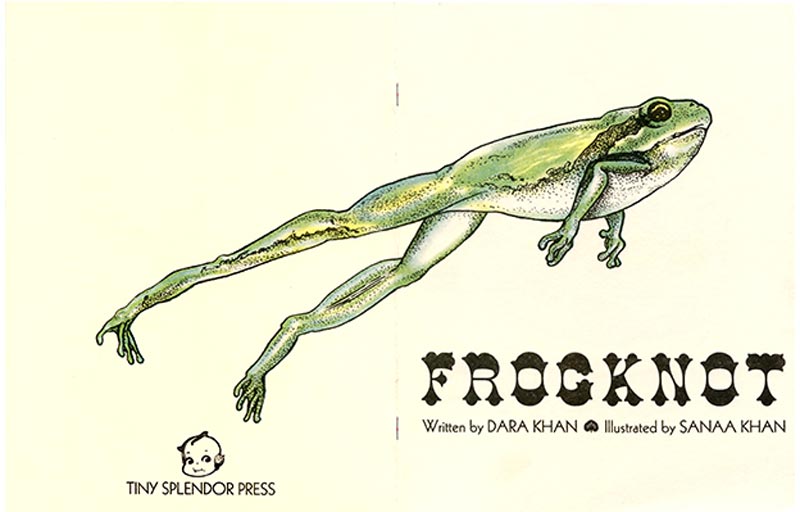
"caption": "'Frogknot,' a zine by Dara Khan and Sanaa Khan, distributed by Tiny Splendor.",
"description": null,
"title": "TinySplendor",
"credit": null,
"status": "inherit",
"isLoading": false,
"fetchFailed": false
},
"arts_10160125": {
"type": "attachments",
"id": "arts_10160125",
"meta": {
"index": "attachments_1716263798",
"site": "arts",
"id": "10160125",
"found": true
},
"parent": 10160000,
"imgSizes": {
"thumbnail": {
"file": "https://ww2.kqed.org/app/uploads/sites/2/2014/11/RichardFord.GretaRybus1-400x225.jpg",
"width": 400,
"mimeType": "image/jpeg",
"height": 225
},
"post-thumbnail": {
"file": "https://ww2.kqed.org/app/uploads/sites/2/2014/11/RichardFord.GretaRybus1-672x372.jpg",
"width": 672,
"mimeType": "image/jpeg",
"height": 372
},
"kqedFullSize": {
"file": "https://ww2.kqed.org/app/uploads/sites/2/2014/11/RichardFord.GretaRybus1.jpg",
"width": 800,
"height": 450
},
"guest-author-96": {
"file": "https://ww2.kqed.org/app/uploads/sites/2/2014/11/RichardFord.GretaRybus1-96x96.jpg",
"width": 96,
"mimeType": "image/jpeg",
"height": 96
},
"guest-author-64": {
"file": "https://ww2.kqed.org/app/uploads/sites/2/2014/11/RichardFord.GretaRybus1-64x64.jpg",
"width": 64,
"mimeType": "image/jpeg",
"height": 64
},
"detail": {
"file": "https://ww2.kqed.org/app/uploads/sites/2/2014/11/RichardFord.GretaRybus1-75x75.jpg",
"width": 75,
"mimeType": "image/jpeg",
"height": 75
},
"guest-author-32": {
"file": "https://ww2.kqed.org/app/uploads/sites/2/2014/11/RichardFord.GretaRybus1-32x32.jpg",
"width": 32,
"mimeType": "image/jpeg",
"height": 32
},
"guest-author-128": {
"file": "https://ww2.kqed.org/app/uploads/sites/2/2014/11/RichardFord.GretaRybus1-128x128.jpg",
"width": 128,
"mimeType": "image/jpeg",
"height": 128
}
},
"publishDate": 1416860802,
"modified": 1416860813,
"caption": null,
"description": null,
"title": "RichardFord.GretaRybus1",
"credit": "Greta Rybus",
"status": "inherit",
"isLoading": false,
"fetchFailed": false
},
"arts_10166119": {
"type": "attachments",
"id": "arts_10166119",
"meta": {
"index": "attachments_1716263798",
"site": "arts",
"id": "10166119",
"found": true
},
"parent": 10165998,
"imgSizes": {
"thumbnail": {
"file": "https://ww2.kqed.org/app/uploads/sites/2/2014/11/KinseySicksHed-400x225.jpg",
"width": 400,
"mimeType": "image/jpeg",
"height": 225
},
"post-thumbnail": {
"file": "https://ww2.kqed.org/app/uploads/sites/2/2014/11/KinseySicksHed-672x372.jpg",
"width": 672,
"mimeType": "image/jpeg",
"height": 372
},
"kqedFullSize": {
"file": "https://ww2.kqed.org/app/uploads/sites/2/2014/11/KinseySicksHed.jpg",
"width": 800,
"height": 450
},
"guest-author-96": {
"file": "https://ww2.kqed.org/app/uploads/sites/2/2014/11/KinseySicksHed-96x96.jpg",
"width": 96,
"mimeType": "image/jpeg",
"height": 96
},
"guest-author-64": {
"file": "https://ww2.kqed.org/app/uploads/sites/2/2014/11/KinseySicksHed-64x64.jpg",
"width": 64,
"mimeType": "image/jpeg",
"height": 64
},
"detail": {
"file": "https://ww2.kqed.org/app/uploads/sites/2/2014/11/KinseySicksHed-75x75.jpg",
"width": 75,
"mimeType": "image/jpeg",
"height": 75
},
"guest-author-32": {
"file": "https://ww2.kqed.org/app/uploads/sites/2/2014/11/KinseySicksHed-32x32.jpg",
"width": 32,
"mimeType": "image/jpeg",
"height": 32
},
"guest-author-128": {
"file": "https://ww2.kqed.org/app/uploads/sites/2/2014/11/KinseySicksHed-128x128.jpg",
"width": 128,
"mimeType": "image/jpeg",
"height": 128
}
},
"publishDate": 1417046434,
"modified": 1417046550,
"caption": "The Kinsey Sicks bring their subversive \"dragapella\" holiday show 'Oy Vey in a Manger' to the stage.",
"description": null,
"title": "KinseySicksHed",
"credit": null,
"status": "inherit",
"isLoading": false,
"fetchFailed": false
},
"arts_10163220": {
"type": "attachments",
"id": "arts_10163220",
"meta": {
"index": "attachments_1716263798",
"site": "arts",
"id": "10163220",
"found": true
},
"parent": 10145618,
"imgSizes": {
"twentyfourteen-full-width": {
"file": "https://ww2.kqed.org/app/uploads/sites/2/2014/11/rereading-800x576.jpg",
"width": 800,
"mimeType": "image/jpeg",
"height": 576
},
"thumbnail": {
"file": "https://ww2.kqed.org/app/uploads/sites/2/2014/11/rereading-400x363.jpg",
"width": 400,
"mimeType": "image/jpeg",
"height": 363
},
"post-thumbnail": {
"file": "https://ww2.kqed.org/app/uploads/sites/2/2014/11/rereading-672x372.jpg",
"width": 672,
"mimeType": "image/jpeg",
"height": 372
},
"kqedFullSize": {
"file": "https://ww2.kqed.org/app/uploads/sites/2/2014/11/rereading.jpg",
"width": 800,
"height": 727
},
"guest-author-96": {
"file": "https://ww2.kqed.org/app/uploads/sites/2/2014/11/rereading-96x96.jpg",
"width": 96,
"mimeType": "image/jpeg",
"height": 96
},
"medium": {
"file": "https://ww2.kqed.org/app/uploads/sites/2/2014/11/rereading-660x600.jpg",
"width": 660,
"mimeType": "image/jpeg",
"height": 600
},
"guest-author-64": {
"file": "https://ww2.kqed.org/app/uploads/sites/2/2014/11/rereading-64x64.jpg",
"width": 64,
"mimeType": "image/jpeg",
"height": 64
},
"detail": {
"file": "https://ww2.kqed.org/app/uploads/sites/2/2014/11/rereading-75x75.jpg",
"width": 75,
"mimeType": "image/jpeg",
"height": 75
},
"guest-author-32": {
"file": "https://ww2.kqed.org/app/uploads/sites/2/2014/11/rereading-32x32.jpg",
"width": 32,
"mimeType": "image/jpeg",
"height": 32
},
"guest-author-128": {
"file": "https://ww2.kqed.org/app/uploads/sites/2/2014/11/rereading-128x128.jpg",
"width": 128,
"mimeType": "image/jpeg",
"height": 128
}
},
"publishDate": 1416955023,
"modified": 1416955044,
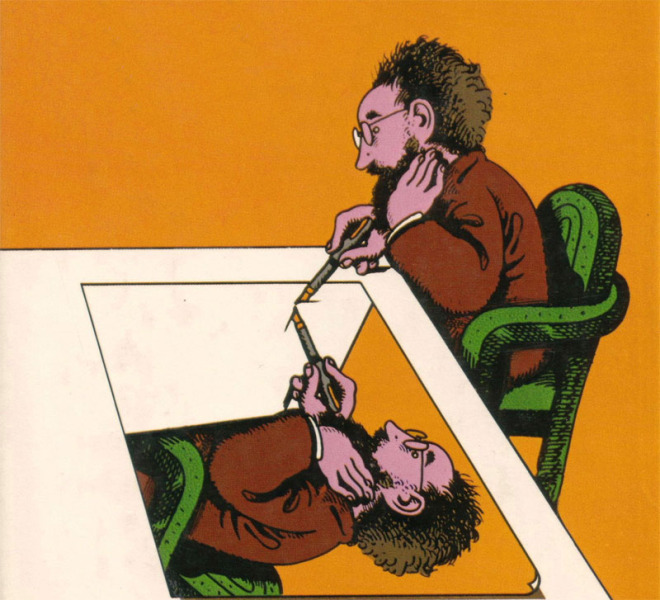
"caption": "Cover graphic for Stanislaw Lem's \u003ci>A Perfect Vacuum\u003c/i>",
"description": null,
"title": "rereading",
"credit": null,
"status": "inherit",
"isLoading": false,
"fetchFailed": false
},
"arts_10160259": {
"type": "attachments",
"id": "arts_10160259",
"meta": {
"index": "attachments_1716263798",
"site": "arts",
"id": "10160259",
"found": true
},
"parent": 10145400,
"imgSizes": {
"thumbnail": {
"file": "https://ww2.kqed.org/app/uploads/sites/2/2014/11/bestofbooktrailers-400x225.jpg",
"width": 400,
"mimeType": "image/jpeg",
"height": 225
},
"post-thumbnail": {
"file": "https://ww2.kqed.org/app/uploads/sites/2/2014/11/bestofbooktrailers-672x372.jpg",
"width": 672,
"mimeType": "image/jpeg",
"height": 372
},
"kqedFullSize": {
"file": "https://ww2.kqed.org/app/uploads/sites/2/2014/11/bestofbooktrailers.jpg",
"width": 800,
"height": 450
},
"guest-author-96": {
"file": "https://ww2.kqed.org/app/uploads/sites/2/2014/11/bestofbooktrailers-96x96.jpg",
"width": 96,
"mimeType": "image/jpeg",
"height": 96
},
"guest-author-64": {
"file": "https://ww2.kqed.org/app/uploads/sites/2/2014/11/bestofbooktrailers-64x64.jpg",
"width": 64,
"mimeType": "image/jpeg",
"height": 64
},
"detail": {
"file": "https://ww2.kqed.org/app/uploads/sites/2/2014/11/bestofbooktrailers-75x75.jpg",
"width": 75,
"mimeType": "image/jpeg",
"height": 75
},
"guest-author-32": {
"file": "https://ww2.kqed.org/app/uploads/sites/2/2014/11/bestofbooktrailers-32x32.jpg",
"width": 32,
"mimeType": "image/jpeg",
"height": 32
},
"guest-author-128": {
"file": "https://ww2.kqed.org/app/uploads/sites/2/2014/11/bestofbooktrailers-128x128.jpg",
"width": 128,
"mimeType": "image/jpeg",
"height": 128
}
},
"publishDate": 1416865656,
"modified": 1416865752,
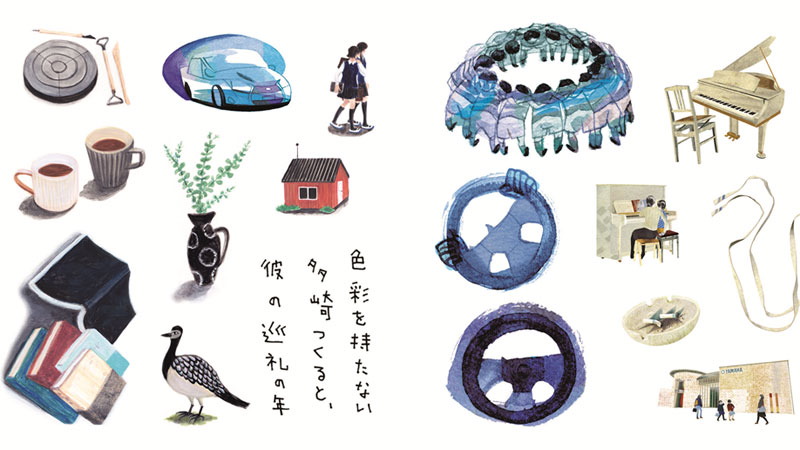
"caption": "Detail from a sticker sheet included in the first edition printing of Haruki Murakami's \u003ci>Colourless Tsukuru Tazaki and the Year of His Pilgrimage\u003c/i> by Random House Australia",
"description": null,
"title": "bestofbooktrailers",
"credit": null,
"status": "inherit",
"isLoading": false,
"fetchFailed": false
},
"arts_10145838": {
"type": "attachments",
"id": "arts_10145838",
"meta": {
"index": "attachments_1716263798",
"site": "arts",
"id": "10145838",
"found": true
},
"parent": 10145836,
"imgSizes": {
"thumbnail": {
"file": "https://ww2.kqed.org/app/uploads/sites/2/2014/11/MalloryOrtberg-400x263.jpg",
"width": 400,
"mimeType": "image/jpeg",
"height": 263
},
"post-thumbnail": {
"file": "https://ww2.kqed.org/app/uploads/sites/2/2014/11/MalloryOrtberg-672x372.jpg",
"width": 672,
"mimeType": "image/jpeg",
"height": 372
},
"kqedFullSize": {
"file": "https://ww2.kqed.org/app/uploads/sites/2/2014/11/MalloryOrtberg.jpg",
"width": 800,
"height": 526
},
"guest-author-96": {
"file": "https://ww2.kqed.org/app/uploads/sites/2/2014/11/MalloryOrtberg-96x96.jpg",
"width": 96,
"mimeType": "image/jpeg",
"height": 96
},
"guest-author-64": {
"file": "https://ww2.kqed.org/app/uploads/sites/2/2014/11/MalloryOrtberg-64x64.jpg",
"width": 64,
"mimeType": "image/jpeg",
"height": 64
},
"detail": {
"file": "https://ww2.kqed.org/app/uploads/sites/2/2014/11/MalloryOrtberg-75x75.jpg",
"width": 75,
"mimeType": "image/jpeg",
"height": 75
},
"guest-author-32": {
"file": "https://ww2.kqed.org/app/uploads/sites/2/2014/11/MalloryOrtberg-32x32.jpg",
"width": 32,
"mimeType": "image/jpeg",
"height": 32
},
"guest-author-128": {
"file": "https://ww2.kqed.org/app/uploads/sites/2/2014/11/MalloryOrtberg-128x128.jpg",
"width": 128,
"mimeType": "image/jpeg",
"height": 128
}
},
"publishDate": 1416334020,
"modified": 1416336562,
"caption": "Mallory Ortberg's new book imagines the immediacy of smartphones in the hands of historic literary characters—\"jerks that I care deeply about,\" she says. (Photo: Nicole Cliffe)",
"description": null,
"title": "MalloryOrtberg",
"credit": null,
"status": "inherit",
"isLoading": false,
"fetchFailed": false
},
"arts_10145000": {
"type": "attachments",
"id": "arts_10145000",
"meta": {
"index": "attachments_1716263798",
"site": "arts",
"id": "10145000",
"found": true
},
"parent": 10144923,
"imgSizes": {
"twentyfourteen-full-width": {
"file": "https://ww2.kqed.org/app/uploads/sites/2/2014/11/howardzinn800-800x576.jpg",
"width": 800,
"mimeType": "image/jpeg",
"height": 576
},
"thumbnail": {
"file": "https://ww2.kqed.org/app/uploads/sites/2/2014/11/howardzinn800-400x387.jpg",
"width": 400,
"mimeType": "image/jpeg",
"height": 387
},
"post-thumbnail": {
"file": "https://ww2.kqed.org/app/uploads/sites/2/2014/11/howardzinn800-672x372.jpg",
"width": 672,
"mimeType": "image/jpeg",
"height": 372
},
"kqedFullSize": {
"file": "https://ww2.kqed.org/app/uploads/sites/2/2014/11/howardzinn800.jpg",
"width": 800,
"height": 774
},
"guest-author-96": {
"file": "https://ww2.kqed.org/app/uploads/sites/2/2014/11/howardzinn800-96x96.jpg",
"width": 96,
"mimeType": "image/jpeg",
"height": 96
},
"medium": {
"file": "https://ww2.kqed.org/app/uploads/sites/2/2014/11/howardzinn800-620x600.jpg",
"width": 620,
"mimeType": "image/jpeg",
"height": 600
},
"guest-author-64": {
"file": "https://ww2.kqed.org/app/uploads/sites/2/2014/11/howardzinn800-64x64.jpg",
"width": 64,
"mimeType": "image/jpeg",
"height": 64
},
"detail": {
"file": "https://ww2.kqed.org/app/uploads/sites/2/2014/11/howardzinn800-75x75.jpg",
"width": 75,
"mimeType": "image/jpeg",
"height": 75
},
"guest-author-32": {
"file": "https://ww2.kqed.org/app/uploads/sites/2/2014/11/howardzinn800-32x32.jpg",
"width": 32,
"mimeType": "image/jpeg",
"height": 32
},
"guest-author-128": {
"file": "https://ww2.kqed.org/app/uploads/sites/2/2014/11/howardzinn800-128x128.jpg",
"width": 128,
"mimeType": "image/jpeg",
"height": 128
}
},
"publishDate": 1415047064,
"modified": 1415047086,
"caption": "Design by Dignidadrebelde.com",
"description": null,
"title": "howardzinn800",
"credit": null,
"status": "inherit",
"isLoading": false,
"fetchFailed": false
},
"arts_10144579": {
"type": "attachments",
"id": "arts_10144579",
"meta": {
"index": "attachments_1716263798",
"site": "arts",
"id": "10144579",
"found": true
},
"parent": 10144532,
"imgSizes": {
"thumbnail": {
"file": "https://ww2.kqed.org/app/uploads/sites/2/2014/10/140Characters-400x225.jpg",
"width": 400,
"mimeType": "image/jpeg",
"height": 225
},
"post-thumbnail": {
"file": "https://ww2.kqed.org/app/uploads/sites/2/2014/10/140Characters-672x372.jpg",
"width": 672,
"mimeType": "image/jpeg",
"height": 372
},
"kqedFullSize": {
"file": "https://ww2.kqed.org/app/uploads/sites/2/2014/10/140Characters.jpg",
"width": 800,
"height": 450
},
"guest-author-96": {
"file": "https://ww2.kqed.org/app/uploads/sites/2/2014/10/140Characters-96x96.jpg",
"width": 96,
"mimeType": "image/jpeg",
"height": 96
},
"guest-author-64": {
"file": "https://ww2.kqed.org/app/uploads/sites/2/2014/10/140Characters-64x64.jpg",
"width": 64,
"mimeType": "image/jpeg",
"height": 64
},
"detail": {
"file": "https://ww2.kqed.org/app/uploads/sites/2/2014/10/140Characters-75x75.jpg",
"width": 75,
"mimeType": "image/jpeg",
"height": 75
},
"guest-author-32": {
"file": "https://ww2.kqed.org/app/uploads/sites/2/2014/10/140Characters-32x32.jpg",
"width": 32,
"mimeType": "image/jpeg",
"height": 32
},
"guest-author-128": {
"file": "https://ww2.kqed.org/app/uploads/sites/2/2014/10/140Characters-128x128.jpg",
"width": 128,
"mimeType": "image/jpeg",
"height": 128
}
},
"publishDate": 1414432953,
"modified": 1414432953,
"caption": "Many Silicon Valley teens would prefer to read text limited to 140 characters or less than a book.",
"description": null,
"title": "140Characters",
"credit": "Richard Blaine",
"status": "inherit",
"isLoading": false,
"fetchFailed": false
},
"arts_10144679": {
"type": "attachments",
"id": "arts_10144679",
"meta": {
"index": "attachments_1716263798",
"site": "arts",
"id": "10144679",
"found": true
},
"parent": 10144678,
"imgSizes": {
"thumbnail": {
"file": "https://ww2.kqed.org/app/uploads/sites/2/2014/10/10144678-thumb-400x225.jpg",
"width": 400,
"mimeType": "image/jpeg",
"height": 225
},
"post-thumbnail": {
"file": "https://ww2.kqed.org/app/uploads/sites/2/2014/10/10144678-thumb-672x372.jpg",
"width": 672,
"mimeType": "image/jpeg",
"height": 372
},
"kqedFullSize": {
"file": "https://ww2.kqed.org/app/uploads/sites/2/2014/10/10144678-thumb.jpg",
"width": 800,
"height": 450
},
"guest-author-96": {
"file": "https://ww2.kqed.org/app/uploads/sites/2/2014/10/10144678-thumb-96x96.jpg",
"width": 96,
"mimeType": "image/jpeg",
"height": 96
},
"guest-author-64": {
"file": "https://ww2.kqed.org/app/uploads/sites/2/2014/10/10144678-thumb-64x64.jpg",
"width": 64,
"mimeType": "image/jpeg",
"height": 64
},
"detail": {
"file": "https://ww2.kqed.org/app/uploads/sites/2/2014/10/10144678-thumb-75x75.jpg",
"width": 75,
"mimeType": "image/jpeg",
"height": 75
},
"guest-author-32": {
"file": "https://ww2.kqed.org/app/uploads/sites/2/2014/10/10144678-thumb-32x32.jpg",
"width": 32,
"mimeType": "image/jpeg",
"height": 32
},
"guest-author-128": {
"file": "https://ww2.kqed.org/app/uploads/sites/2/2014/10/10144678-thumb-128x128.jpg",
"width": 128,
"mimeType": "image/jpeg",
"height": 128
}
},
"publishDate": 1414479796,
"modified": 1414479796,
"caption": null,
"description": null,
"title": "Thumbnail for 10144678",
"credit": null,
"status": "inherit",
"isLoading": false,
"fetchFailed": false
}
},
"audioPlayerReducer": {
"postId": "stream_live",
"isPaused": true,
"isPlaying": false,
"pfsActive": false,
"pledgeModalIsOpen": true,
"playerDrawerIsOpen": false,
"liveAudioPlayStartedAt": 0,
"liveAudioPlayContext": ""
},
"authorsReducer": {
"cmusiker": {
"type": "authors",
"id": "32",
"meta": {
"index": "authors_1716337520",
"id": "32",
"found": true
},
"name": "Cy Musiker",
"firstName": "Cy",
"lastName": "Musiker",
"slug": "cmusiker",
"email": "cmusiker@kqed.org",
"display_author_email": false,
"staff_mastheads": [],
"title": "KQED Contributor",
"bio": "Cy Musiker is a former co-host of The Do List and a former reporter covering the arts for KQED News and The California Report. He loves live performance, especially great theater, jazz, roots music, anything by Mahler. Cy has an MJ from UC Berkeley's School of Journalism, and got his BA from Hampshire College. His work has been recognized by the Society for Professional Journalists with their Sigma Delta Chi Award for Public Service in Journalism. When he can, Cy likes to swim in Tomales Bay, run with his dog in the East Bay Hills, and hike the Sierra.",
"avatar": "https://secure.gravatar.com/avatar/05eaba5c5696ce8f062e4ea2df428a43?s=600&d=blank&r=g",
"twitter": null,
"facebook": null,
"instagram": null,
"linkedin": null,
"sites": [
{
"site": "arts",
"roles": [
"Contributor",
"subscriber"
]
},
{
"site": "news",
"roles": [
"author"
]
},
{
"site": "bayareabites",
"roles": [
"contributor"
]
}
],
"headData": {
"title": "Cy Musiker | KQED",
"description": "KQED Contributor",
"ogImgSrc": "https://secure.gravatar.com/avatar/05eaba5c5696ce8f062e4ea2df428a43?s=600&d=blank&r=g",
"twImgSrc": "https://secure.gravatar.com/avatar/05eaba5c5696ce8f062e4ea2df428a43?s=600&d=blank&r=g"
},
"isLoading": false,
"link": "/author/cmusiker"
},
"ablaine": {
"type": "authors",
"id": "72",
"meta": {
"index": "authors_1716337520",
"id": "72",
"found": true
},
"name": "Adrienne Blaine",
"firstName": "Adrienne",
"lastName": "Blaine",
"slug": "ablaine",
"email": "adrienneblaine@hotmail.com",
"display_author_email": false,
"staff_mastheads": [],
"title": null,
"bio": "Adrienne Blaine is a Millennial writer from the South Bay. She has a BA in Comparative Literary and Cultural Studies combined with Communications and Media Studies from Franklin University Switzerland. Living in Switzerland for four years and traveling from Morocco to Iceland introduced her to diverse art, culture and food. She currently lives in San Francisco and writes about these topics.",
"avatar": "https://secure.gravatar.com/avatar/10d0a10a2189067e5e3f6fc9fc4ebdf2?s=600&d=blank&r=g",
"twitter": null,
"facebook": null,
"instagram": null,
"linkedin": null,
"sites": [
{
"site": "arts",
"roles": [
"Contributor",
"contributor"
]
},
{
"site": "bayareabites",
"roles": [
"contributor"
]
},
{
"site": "food",
"roles": [
"contributor"
]
}
],
"headData": {
"title": "Adrienne Blaine | KQED",
"description": null,
"ogImgSrc": "https://secure.gravatar.com/avatar/10d0a10a2189067e5e3f6fc9fc4ebdf2?s=600&d=blank&r=g",
"twImgSrc": "https://secure.gravatar.com/avatar/10d0a10a2189067e5e3f6fc9fc4ebdf2?s=600&d=blank&r=g"
},
"isLoading": false,
"link": "/author/ablaine"
},
"irojascontreras": {
"type": "authors",
"id": "78",
"meta": {
"index": "authors_1716337520",
"id": "78",
"found": true
},
"name": "Ingrid Rojas Contreras",
"firstName": "Ingrid",
"lastName": "Rojas Contreras",
"slug": "irojascontreras",
"email": "ingrid.rojas.c@gmail.com",
"display_author_email": false,
"staff_mastheads": [],
"title": null,
"bio": "Ingrid Rojas Contreras lives in San Francisco with her books. Her debut novel\u003cem> Fruit of the Drunken Tree \u003c/em>is forthcoming from Doubleday (Summer 2018). Find more at \u003ca href=\"http://www.ingridrojascontreras.com\">www.ingridrojascontreras.com\u003c/a>.",
"avatar": "https://secure.gravatar.com/avatar/908d94de9342e71b9d5ceaa8152a16a0?s=600&d=blank&r=g",
"twitter": null,
"facebook": null,
"instagram": null,
"linkedin": null,
"sites": [
{
"site": "arts",
"roles": [
"Contributor",
"contributor"
]
}
],
"headData": {
"title": "Ingrid Rojas Contreras | KQED",
"description": null,
"ogImgSrc": "https://secure.gravatar.com/avatar/908d94de9342e71b9d5ceaa8152a16a0?s=600&d=blank&r=g",
"twImgSrc": "https://secure.gravatar.com/avatar/908d94de9342e71b9d5ceaa8152a16a0?s=600&d=blank&r=g"
},
"isLoading": false,
"link": "/author/irojascontreras"
},
"rkleffel": {
"type": "authors",
"id": "88",
"meta": {
"index": "authors_1716337520",
"id": "88",
"found": true
},
"name": "Rick Kleffel",
"firstName": "Rick",
"lastName": "Kleffel",
"slug": "rkleffel",
"email": "editor@bookotron.com",
"display_author_email": false,
"staff_mastheads": [],
"title": null,
"bio": "Rick Kleffel has been reading for more than half a century. He lives in Aptos, near the Palo Alto, a cement boat built at the end of World War I. He writes about books and podcasts interviews with authors at \u003ca href=\"http://agonycolumn.com\">The Agony Column\u003c/a>.",
"avatar": "https://secure.gravatar.com/avatar/179f850e768733fdeabc3c0c48ebf0e9?s=600&d=blank&r=g",
"twitter": null,
"facebook": null,
"instagram": null,
"linkedin": null,
"sites": [
{
"site": "arts",
"roles": [
"Contributor",
"contributor"
]
}
],
"headData": {
"title": "Rick Kleffel | KQED",
"description": null,
"ogImgSrc": "https://secure.gravatar.com/avatar/179f850e768733fdeabc3c0c48ebf0e9?s=600&d=blank&r=g",
"twImgSrc": "https://secure.gravatar.com/avatar/179f850e768733fdeabc3c0c48ebf0e9?s=600&d=blank&r=g"
},
"isLoading": false,
"link": "/author/rkleffel"
},
"kqedarts": {
"type": "authors",
"id": "92",
"meta": {
"index": "authors_1716337520",
"id": "92",
"found": true
},
"name": "KQED Arts",
"firstName": "KQED",
"lastName": "Arts",
"slug": "kqedarts",
"email": "arts@kqed.org",
"display_author_email": false,
"staff_mastheads": [],
"title": "KQED Staff",
"bio": null,
"avatar": "https://secure.gravatar.com/avatar/321c9ebfeb7736f9e55366a6d3399ab0?s=600&d=blank&r=g",
"twitter": null,
"facebook": null,
"instagram": "https://www.instagram.com/kqed_arts/",
"linkedin": null,
"sites": [
{
"site": "arts",
"roles": [
"contributor"
]
},
{
"site": "pop",
"roles": [
"contributor"
]
},
{
"site": "science",
"roles": [
"author"
]
},
{
"site": "food",
"roles": [
"contributor"
]
}
],
"headData": {
"title": "KQED Arts | KQED",
"description": "KQED Staff",
"ogImgSrc": "https://secure.gravatar.com/avatar/321c9ebfeb7736f9e55366a6d3399ab0?s=600&d=blank&r=g",
"twImgSrc": "https://secure.gravatar.com/avatar/321c9ebfeb7736f9e55366a6d3399ab0?s=600&d=blank&r=g"
},
"isLoading": false,
"link": "/author/kqedarts"
},
"gmeline": {
"type": "authors",
"id": "185",
"meta": {
"index": "authors_1716337520",
"id": "185",
"found": true
},
"name": "Gabe Meline",
"firstName": "Gabe",
"lastName": "Meline",
"slug": "gmeline",
"email": "gmeline@kqed.org",
"display_author_email": true,
"staff_mastheads": [
"arts"
],
"title": "Senior Editor, KQED Arts & Culture",
"bio": "Gabe Meline entered journalism at age 15 making photocopied zines, and has since earned awards from the Edward R. Murrow Awards, the Society for Professional Journalists, the Online Journalism Awards, the Association of Alternative Newsweeklies and the California Newspaper Publishers Association. Prior to KQED, he was the editor of the \u003cem>North Bay Bohemian\u003c/em> and a touring musician. He lives with his wife and daughter in his hometown of Santa Rosa, CA.",
"avatar": "https://secure.gravatar.com/avatar/5bebe57be0d8bc2dd318934feb47299e2d2d10cba28d09d8d7afb389a2ce2bdd?s=600&d=blank&r=g",
"twitter": null,
"bluesky": null,
"facebook": null,
"instagram": null,
"linkedin": null,
"sites": [
{
"site": "",
"roles": [
"editor"
]
},
{
"site": "arts",
"roles": [
"administrator"
]
},
{
"site": "artschool",
"roles": [
"editor"
]
},
{
"site": "news",
"roles": [
"author"
]
},
{
"site": "pop",
"roles": [
"editor"
]
},
{
"site": "bayareabites",
"roles": [
"editor"
]
},
{
"site": "food",
"roles": [
"editor"
]
},
{
"site": "forum",
"roles": [
"administrator"
]
},
{
"site": "liveblog",
"roles": [
"editor"
]
},
{
"site": "hiphop",
"roles": [
"editor"
]
}
],
"headData": {
"title": "Gabe Meline | KQED",
"description": "Senior Editor, KQED Arts & Culture",
"ogImgSrc": "https://secure.gravatar.com/avatar/5bebe57be0d8bc2dd318934feb47299e2d2d10cba28d09d8d7afb389a2ce2bdd?s=600&d=blank&r=g",
"twImgSrc": "https://secure.gravatar.com/avatar/5bebe57be0d8bc2dd318934feb47299e2d2d10cba28d09d8d7afb389a2ce2bdd?s=600&d=blank&r=g"
},
"isLoading": false,
"link": "/author/gmeline"
},
"kpawlowska": {
"type": "authors",
"id": "3212",
"meta": {
"index": "authors_1716337520",
"id": "3212",
"found": true
},
"name": "Kasia Pawlowska",
"firstName": "Kasia",
"lastName": "Pawlowska",
"slug": "kpawlowska",
"email": "ohhkasia@gmail.com",
"display_author_email": false,
"staff_mastheads": [],
"title": null,
"bio": "Kasia is a San Francisco based writer. You can follow her on Twitter \u003ca title=\"kasia twitter\" href=\"https://twitter.com/ohhkasia\" target=\"_blank\">@ohhkasia\u003c/a>.",
"avatar": "https://secure.gravatar.com/avatar/b6bb6987474c7c311f305b672d81dc87?s=600&d=blank&r=g",
"twitter": null,
"facebook": null,
"instagram": null,
"linkedin": null,
"sites": [
{
"site": "arts",
"roles": [
"contributor"
]
}
],
"headData": {
"title": "Kasia Pawlowska | KQED",
"description": null,
"ogImgSrc": "https://secure.gravatar.com/avatar/b6bb6987474c7c311f305b672d81dc87?s=600&d=blank&r=g",
"twImgSrc": "https://secure.gravatar.com/avatar/b6bb6987474c7c311f305b672d81dc87?s=600&d=blank&r=g"
},
"isLoading": false,
"link": "/author/kpawlowska"
},
"thedolist": {
"type": "authors",
"id": "3215",
"meta": {
"index": "authors_1716337520",
"id": "3215",
"found": true
},
"name": "The Do List",
"firstName": "Do",
"lastName": "List",
"slug": "thedolist",
"email": "harold.check+dolist@gmail.com",
"display_author_email": false,
"staff_mastheads": [],
"title": null,
"bio": "The Do List scours the Bay Area for superb and surprising performing arts events, with an eye for local talent, new discoveries, and fun opportunities across the price spectrum. Every Friday morning at 6:23 and 8:23am on KQED Radio, you can hear Do List regulars Cy Musiker and David Wiegand discuss the upcoming week's best picks.",
"avatar": "https://secure.gravatar.com/avatar/25ef8068d096493f649195742621360d?s=600&d=blank&r=g",
"twitter": null,
"facebook": null,
"instagram": null,
"linkedin": null,
"sites": [
{
"site": "arts",
"roles": [
"contributor"
]
}
],
"headData": {
"title": "The Do List | KQED",
"description": null,
"ogImgSrc": "https://secure.gravatar.com/avatar/25ef8068d096493f649195742621360d?s=600&d=blank&r=g",
"twImgSrc": "https://secure.gravatar.com/avatar/25ef8068d096493f649195742621360d?s=600&d=blank&r=g"
},
"isLoading": false,
"link": "/author/thedolist"
},
"lclark": {
"type": "authors",
"id": "3224",
"meta": {
"index": "authors_1716337520",
"id": "3224",
"found": true
},
"name": "Leilani Clark",
"firstName": "Leilani",
"lastName": "Clark",
"slug": "lclark",
"email": "clark.leil@gmail.com",
"display_author_email": false,
"staff_mastheads": [],
"title": null,
"bio": "Leilani Clark writes about books for KQED Arts. Her writing has been published at Mother Jones, The Guardian, Civil Eats, Time Magazine, Food & Wine, Edible Marin & Wine Country, and The Rumpus. She is the editor of Made Local magazine in Sonoma County. Find her on Twitter \u003ca href=\"https://twitter.com/leilclark\">@leilclark\u003c/a>.",
"avatar": "https://secure.gravatar.com/avatar/7f691fdc52ed2e3f4cf164d1f4ec0889?s=600&d=blank&r=g",
"twitter": null,
"facebook": null,
"instagram": null,
"linkedin": null,
"sites": [
{
"site": "arts",
"roles": [
"contributor"
]
},
{
"site": "bayareabites",
"roles": [
"contributor"
]
},
{
"site": "food",
"roles": [
"contributor"
]
}
],
"headData": {
"title": "Leilani Clark | KQED",
"description": null,
"ogImgSrc": "https://secure.gravatar.com/avatar/7f691fdc52ed2e3f4cf164d1f4ec0889?s=600&d=blank&r=g",
"twImgSrc": "https://secure.gravatar.com/avatar/7f691fdc52ed2e3f4cf164d1f4ec0889?s=600&d=blank&r=g"
},
"isLoading": false,
"link": "/author/lclark"
}
},
"pagesReducer": {
"arts_category_literature": {
"type": "terms",
"id": "arts_73",
"meta": {
"index": "terms_1716263798",
"site": "arts",
"id": "73",
"score": 12.797728
},
"featImg": null,
"name": "Books",
"description": null,
"taxonomy": "category",
"headData": {
"twImgId": null,
"twTitle": null,
"ogTitle": null,
"ogImgId": null,
"twDescription": null,
"description": null,
"title": "Books Archives | KQED Arts",
"ogDescription": null
},
"ttid": 74,
"slug": "literature",
"isLoading": false,
"title": "Books",
"pageMeta": {
"site": "arts",
"WpPageTemplate": "page-topic-editorial",
"currentPage": 101
},
"blocks": [
{
"blockName": "kqed/post-list",
"attrs": {
"layout": "cardArticle2",
"query": "posts/arts?category=literature",
"seeMore": false,
"paginated": true,
"page": 101
}
},
{
"blockName": "kqed/ad"
}
]
}
},
"pfsSessionReducer": {},
"postsReducer": {
"stream_live": {
"type": "live",
"id": "stream_live",
"audioUrl": "https://streams.kqed.org/kqedradio",
"title": "Live Stream",
"excerpt": "Live Stream information currently unavailable.",
"link": "/radio",
"featImg": "",
"label": {
"name": "KQED Live",
"link": "/"
}
},
"stream_kqedNewscast": {
"type": "posts",
"id": "stream_kqedNewscast",
"audioUrl": "https://www.kqed.org/.stream/anon/radio/RDnews/newscast.mp3?_=1",
"title": "KQED Newscast",
"featImg": "",
"label": {
"name": "88.5 FM",
"link": "/"
}
},
"arts_10182883": {
"type": "posts",
"id": "arts_10182883",
"meta": {
"index": "posts_1716263798",
"site": "arts",
"id": "10182883",
"score": null,
"sort": [
1417719641000
]
},
"parent": 0,
"labelTerm": {
"site": "arts",
"term": 140
},
"blocks": [],
"publishDate": 1417719641,
"format": "standard",
"title": "The Marvelous, Complex World of Rebecca Solnit's 'The Encyclopedia of Trouble and Spaciousness'",
"headTitle": "The Marvelous, Complex World of Rebecca Solnit’s ‘The Encyclopedia of Trouble and Spaciousness’ | KQED",
"content": "\u003caside class=\"event-info alignright\">\n\u003cfigure>\u003ca href=\"http://ww2.kqed.org/arts/programs/the-do-list/\">\u003cimg decoding=\"async\" src=\"http://ww2.kqed.org/wp-content/themes/KQED-unified/img/thedolist_icon.png\" alt=\"\" width=\"100\">\u003c/a>\u003c/figure>\n\u003ch3>\u003ca href=\"http://ww2.kqed.org/arts/the-do-list/rebecca-solnit-and-peter-turchi/\">Event Information\u003c/a>\u003c/h3>\n\u003ch4>Rebecca Solnit\u003c/h4>\n\u003cdiv class=\"event-desc\">The writer in conversation with Peter Turchi.\u003c/div>\n\u003cdiv class=\"event-dates\">\n\u003ch4>Dec. 7\u003c/h4>\n\u003c/div>\n\u003cdiv class=\"event-venue\">City Lights Books\u003c/div>\n\u003cul>\n\u003cli>\u003ca href=\"http://ww2.kqed.org/arts/the-do-list/rebecca-solnit-and-peter-turchi/\">Details and info.\u003c/a>\u003c/li>\n\u003c/ul>\n\u003c/aside>\n\u003cp>The world, according to Rebecca Solnit, isn’t for the faint of heart. Or, I should say, it’s not for those who think in strict binaries, or eschew complexity for simple stories. It is a world where hope can be found in disaster, arrivals are the beginning and the end, and assumptions about race, class, gender, the environment, America, drug wars and so on are set up to be studiously dismantled, always with humor and grace.\u003c/p>\n\u003cp>The San Francisco-based writer’s latest collection, \u003cem>The Encyclopedia of Trouble and Spaciousness\u003c/em>, gathers pieces written by Solnit for \u003cem>Harper’s\u003c/em>, \u003cem>London Review of Books\u003c/em>, \u003cem>Boom\u003c/em>, \u003cem>The Nation\u003c/em>, \u003cem>Orion,\u003c/em> tomdispatch.com and others. Written over nearly a decade, the book’s essays cover a large geographical territory, including Silicon Valley, Fukishima, New Orleans, the Gulf of Mexico, Iceland, Haiti, Detroit, Iceland and the Artic. The range of topics, too, is as large as the territory traveled: Occupy Wall Street, urban gardening, the Arab Spring, Mexican drug wars, Mardi Gras and Carnival, the BP oil spill, Post- Hurricane Katrina, Haiti, Google Buses, Silicon Valley libertarians, the Inari Shrine, Hiroshima and Fukishima in Japan and more.\u003c/p>\n\u003cp>On Dec. 7, Solnit appears in conversation with Peter Turchi, another writer whose work dwells in maps, cartography and puzzles, at City Lights Books.\u003c/p>\n\u003cp>“Truth for me has always come in tints and shades and spectrums and never in black and white, and America is a category so big as to be useless, unless you’re talking about government,” writes Solnit in “On the Dirtiness of Laundry and the Strength of Sisters,” an essay that starts with the oft-repeated argument that Thoreau’s mother did his laundry—and was inspired, Solnit admits, by a Facebook beef.\u003c/p>\n\u003cp>In that same essay, essentially a defense of Henry David Thoreau disguised as an investigation into who actually did do his laundry (it’s never revealed with absolute certainty), Rebecca Solnit defines categories as “leaky vessels”: “Everything you can say about a category of people has its exceptions, and so the category obscures more than it explains.”\u003c/p>\n\u003cp>[ad fullwidth]\u003c/p>\n\u003cp>In fact, throughout the book, Solnit bristles at assumptions and categorization. And, to no surprise, her new book defies categorization itself. In “Arrival Gates,” about the Inari Shrine in Kyoto, Japan, Solnit begins with a retelling of her reporting trip to cover the aftermath of the devastating Japanese earthquake and tsunami of 2001. But this retelling reveals the hidden cracks and fissures left out of her first essay, which focuses on the stories at hand and not on Solnit’s emotional state. It leads perfectly into a walking meditation on the nature of time, slowness and arrivals, stimulated by the experience of the Torii gates in Kyoto, in a color of “orange so vivid it is as though you have at last gone beyond things that are colored orange to the color itself.”\u003c/p>\n\u003cp>When \u003ca href=\"http://www.bohemian.com/northbay/lost-and-found/Content?oid=2448328\" target=\"_blank\" rel=\"noopener\">I interviewed Solnit in 2013\u003c/a>, just after the release of \u003cem>The Faraway Nearby\u003c/em>, she discussed the pros of living on the West Coast, so far away from the European influence that sometimes stifles or holds back East Coast intellectualism. It’s a mixed blessing, as the book examines in “The Google Bus: Silicon Valley Invades” and “Pale Bus, Pale Rider” wherein the spoils of Silicon Valley (itself a beneficiary of California’s long history of experimentalism and outlier thinking) come up against economic injustice.\u003c/p>\n\u003cp>You can’t write about California without writing about water. In “Dry Lands,” Solnit offers a crash course in the water dynamics that have plagued California from the early days of statehood. This includes the ongoing exploitation of the Colorado River, ill-thought outer water projects like the Glen Canyon Dam, and the accidental lake and “toxic bird sanctuary” known as the Salton Sea.\u003c/p>\n\u003cp>As is her way, Solnit rescues obscure voices lost (or purposely buried) by history. In “Dry Lands,” she vindicates Major John Wesley Powell, a prophet of sorts, who saw as far back as 1878 that “there wasn’t enough water to irrigate people’s visions of a big agricultural society in the west and that the limits on water would ultimately be the limit on everything else.” He was booed off the stage in Los Angeles and, obviously, ignored by the powers that be. As Solnit points out, this was before the populations of Los Angeles and Phoenix exploded—and before that hedonistic water-sucker between the two, Las Vegas, was even a gleam in a gangster’s eye.\u003c/p>\n\u003cp>Apocalyptic images of Phoenix flow easily into an essay on the “post-American landscape” of Detroit, an excellent example of Solnit’s ability to swing gracefully between hope and pathos.\u003c/p>\n\u003cp>Other essays, like “Climate Change is Violence,” venture into the political territory inhabited most recently by journalist and activist Naomi Klein. “Climate change is global-scale violence against the places and species, as well as against human beings,” writes Solnit. In “Oil and Water: The BP Spill in the Gulf” she travels to Louisiana, just after the horrific BP oil spill, interviewing clean-up workers, fisherman and environmentalists along the way. She digs into the many ways petroleum, and other extractive industries, have altered the Gulf. Unlike so many of the other essays wherein Solnit excavates hope or beauty in the grimmest of locales, there is no good news to be found here; just death, and future death, all around.\u003c/p>\n\u003cp>“In Haiti, Words Can Kill” puts a new spin on the concept of looting after major disasters. “We need to banish the word \u003cem>looting\u003c/em> from the English language,” she writes, “It incites madness and obscures realities.” She challenges the media for perpetrating the image of the lawless looter after the earthquake in Haiti. “Immediate personal gain is the last thing most people are thinking about in the aftermath of a disaster,” Solnit argues. The problem with a hyped-up view of looting, she maintains, is the inevitable emphasis on protecting private property over saving human lives, a situation that led to multiple, avoidable tragedies in Haiti and New Orleans.\u003c/p>\n\u003cp>[ad floatright]\u003c/p>\n\u003cp>In the end, \u003cem>The Encyclopedia of Trouble and Spaciousness\u003c/em> lives up to the promise of its ambitious title. The reader leaves the book both troubled by the disaster and injustice bubbling in every corner of the globe, but with an equally strong glimpse of how life could be if we broke down the walls and acknowledged each other with compassion and awareness, with a readiness to engage in civic society, with nature, and with our own edges. Without numbness, but with heads up and hearts attached.\u003c/p>\n\n",
"stats": {
"hasVideo": false,
"hasChartOrMap": false,
"hasAudio": false,
"hasPolis": false,
"wordCount": 1173,
"hasGoogleForm": false,
"hasGallery": false,
"hasHearkenModule": false,
"iframeSrcs": [],
"paragraphCount": 15
},
"modified": 1705047902,
"excerpt": "A review of Rebecca Solnit's newest collection of essays, 'The Encyclopedia of Trouble and Spaciousness,' in advance of her appearance at City Lights.",
"headData": {
"twImgId": "",
"twTitle": "",
"ogTitle": "",
"ogImgId": "",
"twDescription": "",
"description": "A review of Rebecca Solnit's newest collection of essays, 'The Encyclopedia of Trouble and Spaciousness,' in advance of her appearance at City Lights.",
"title": "The Marvelous, Complex World of Rebecca Solnit's 'The Encyclopedia of Trouble and Spaciousness' | KQED",
"ogDescription": "",
"schema": {
"@context": "https://schema.org",
"@type": "Article",
"headline": "The Marvelous, Complex World of Rebecca Solnit's 'The Encyclopedia of Trouble and Spaciousness'",
"datePublished": "2014-12-04T11:00:41-08:00",
"dateModified": "2024-01-12T00:25:02-08:00",
"image": "https://cdn.kqed.org/wp-content/uploads/2020/02/KQED-OG-Image@1x.png"
}
},
"guestAuthors": [],
"slug": "the-marvelous-complex-world-of-rebecca-solnits-the-encyclopedia-of-trouble-and-spaciousness",
"status": "publish",
"sticky": false,
"path": "/arts/10182883/the-marvelous-complex-world-of-rebecca-solnits-the-encyclopedia-of-trouble-and-spaciousness",
"audioTrackLength": null,
"parsedContent": [
{
"type": "contentString",
"content": "\u003cdiv class=\"post-body\">\u003cp>\u003caside class=\"event-info alignright\">\n\u003cfigure>\u003ca href=\"http://ww2.kqed.org/arts/programs/the-do-list/\">\u003cimg decoding=\"async\" src=\"http://ww2.kqed.org/wp-content/themes/KQED-unified/img/thedolist_icon.png\" alt=\"\" width=\"100\">\u003c/a>\u003c/figure>\n\u003ch3>\u003ca href=\"http://ww2.kqed.org/arts/the-do-list/rebecca-solnit-and-peter-turchi/\">Event Information\u003c/a>\u003c/h3>\n\u003ch4>Rebecca Solnit\u003c/h4>\n\u003cdiv class=\"event-desc\">The writer in conversation with Peter Turchi.\u003c/div>\n\u003cdiv class=\"event-dates\">\n\u003ch4>Dec. 7\u003c/h4>\n\u003c/div>\n\u003cdiv class=\"event-venue\">City Lights Books\u003c/div>\n\u003cul>\n\u003cli>\u003ca href=\"http://ww2.kqed.org/arts/the-do-list/rebecca-solnit-and-peter-turchi/\">Details and info.\u003c/a>\u003c/li>\n\u003c/ul>\n\u003c/aside>\n\u003cp>The world, according to Rebecca Solnit, isn’t for the faint of heart. Or, I should say, it’s not for those who think in strict binaries, or eschew complexity for simple stories. It is a world where hope can be found in disaster, arrivals are the beginning and the end, and assumptions about race, class, gender, the environment, America, drug wars and so on are set up to be studiously dismantled, always with humor and grace.\u003c/p>\n\u003cp>The San Francisco-based writer’s latest collection, \u003cem>The Encyclopedia of Trouble and Spaciousness\u003c/em>, gathers pieces written by Solnit for \u003cem>Harper’s\u003c/em>, \u003cem>London Review of Books\u003c/em>, \u003cem>Boom\u003c/em>, \u003cem>The Nation\u003c/em>, \u003cem>Orion,\u003c/em> tomdispatch.com and others. Written over nearly a decade, the book’s essays cover a large geographical territory, including Silicon Valley, Fukishima, New Orleans, the Gulf of Mexico, Iceland, Haiti, Detroit, Iceland and the Artic. The range of topics, too, is as large as the territory traveled: Occupy Wall Street, urban gardening, the Arab Spring, Mexican drug wars, Mardi Gras and Carnival, the BP oil spill, Post- Hurricane Katrina, Haiti, Google Buses, Silicon Valley libertarians, the Inari Shrine, Hiroshima and Fukishima in Japan and more.\u003c/p>\n\u003cp>On Dec. 7, Solnit appears in conversation with Peter Turchi, another writer whose work dwells in maps, cartography and puzzles, at City Lights Books.\u003c/p>\n\u003cp>“Truth for me has always come in tints and shades and spectrums and never in black and white, and America is a category so big as to be useless, unless you’re talking about government,” writes Solnit in “On the Dirtiness of Laundry and the Strength of Sisters,” an essay that starts with the oft-repeated argument that Thoreau’s mother did his laundry—and was inspired, Solnit admits, by a Facebook beef.\u003c/p>\n\u003cp>In that same essay, essentially a defense of Henry David Thoreau disguised as an investigation into who actually did do his laundry (it’s never revealed with absolute certainty), Rebecca Solnit defines categories as “leaky vessels”: “Everything you can say about a category of people has its exceptions, and so the category obscures more than it explains.”\u003c/p>\n\u003cp>\u003c/p>\u003c/div>",
"attributes": {
"named": {},
"numeric": []
}
},
{
"type": "component",
"content": "",
"name": "ad",
"attributes": {
"named": {
"label": "fullwidth"
},
"numeric": [
"fullwidth"
]
}
},
{
"type": "contentString",
"content": "\u003cdiv class=\"post-body\">\u003cp>\u003c/p>\n\u003cp>In fact, throughout the book, Solnit bristles at assumptions and categorization. And, to no surprise, her new book defies categorization itself. In “Arrival Gates,” about the Inari Shrine in Kyoto, Japan, Solnit begins with a retelling of her reporting trip to cover the aftermath of the devastating Japanese earthquake and tsunami of 2001. But this retelling reveals the hidden cracks and fissures left out of her first essay, which focuses on the stories at hand and not on Solnit’s emotional state. It leads perfectly into a walking meditation on the nature of time, slowness and arrivals, stimulated by the experience of the Torii gates in Kyoto, in a color of “orange so vivid it is as though you have at last gone beyond things that are colored orange to the color itself.”\u003c/p>\n\u003cp>When \u003ca href=\"http://www.bohemian.com/northbay/lost-and-found/Content?oid=2448328\" target=\"_blank\" rel=\"noopener\">I interviewed Solnit in 2013\u003c/a>, just after the release of \u003cem>The Faraway Nearby\u003c/em>, she discussed the pros of living on the West Coast, so far away from the European influence that sometimes stifles or holds back East Coast intellectualism. It’s a mixed blessing, as the book examines in “The Google Bus: Silicon Valley Invades” and “Pale Bus, Pale Rider” wherein the spoils of Silicon Valley (itself a beneficiary of California’s long history of experimentalism and outlier thinking) come up against economic injustice.\u003c/p>\n\u003cp>You can’t write about California without writing about water. In “Dry Lands,” Solnit offers a crash course in the water dynamics that have plagued California from the early days of statehood. This includes the ongoing exploitation of the Colorado River, ill-thought outer water projects like the Glen Canyon Dam, and the accidental lake and “toxic bird sanctuary” known as the Salton Sea.\u003c/p>\n\u003cp>As is her way, Solnit rescues obscure voices lost (or purposely buried) by history. In “Dry Lands,” she vindicates Major John Wesley Powell, a prophet of sorts, who saw as far back as 1878 that “there wasn’t enough water to irrigate people’s visions of a big agricultural society in the west and that the limits on water would ultimately be the limit on everything else.” He was booed off the stage in Los Angeles and, obviously, ignored by the powers that be. As Solnit points out, this was before the populations of Los Angeles and Phoenix exploded—and before that hedonistic water-sucker between the two, Las Vegas, was even a gleam in a gangster’s eye.\u003c/p>\n\u003cp>Apocalyptic images of Phoenix flow easily into an essay on the “post-American landscape” of Detroit, an excellent example of Solnit’s ability to swing gracefully between hope and pathos.\u003c/p>\n\u003cp>Other essays, like “Climate Change is Violence,” venture into the political territory inhabited most recently by journalist and activist Naomi Klein. “Climate change is global-scale violence against the places and species, as well as against human beings,” writes Solnit. In “Oil and Water: The BP Spill in the Gulf” she travels to Louisiana, just after the horrific BP oil spill, interviewing clean-up workers, fisherman and environmentalists along the way. She digs into the many ways petroleum, and other extractive industries, have altered the Gulf. Unlike so many of the other essays wherein Solnit excavates hope or beauty in the grimmest of locales, there is no good news to be found here; just death, and future death, all around.\u003c/p>\n\u003cp>“In Haiti, Words Can Kill” puts a new spin on the concept of looting after major disasters. “We need to banish the word \u003cem>looting\u003c/em> from the English language,” she writes, “It incites madness and obscures realities.” She challenges the media for perpetrating the image of the lawless looter after the earthquake in Haiti. “Immediate personal gain is the last thing most people are thinking about in the aftermath of a disaster,” Solnit argues. The problem with a hyped-up view of looting, she maintains, is the inevitable emphasis on protecting private property over saving human lives, a situation that led to multiple, avoidable tragedies in Haiti and New Orleans.\u003c/p>\n\u003cp>\u003c/p>\u003c/div>",
"attributes": {
"named": {},
"numeric": []
}
},
{
"type": "component",
"content": "",
"name": "ad",
"attributes": {
"named": {
"label": "floatright"
},
"numeric": [
"floatright"
]
}
},
{
"type": "contentString",
"content": "\u003cdiv class=\"post-body\">\u003cp>\u003c/p>\n\u003cp>In the end, \u003cem>The Encyclopedia of Trouble and Spaciousness\u003c/em> lives up to the promise of its ambitious title. The reader leaves the book both troubled by the disaster and injustice bubbling in every corner of the globe, but with an equally strong glimpse of how life could be if we broke down the walls and acknowledged each other with compassion and awareness, with a readiness to engage in civic society, with nature, and with our own edges. Without numbness, but with heads up and hearts attached.\u003c/p>\n\n\u003c/div>\u003c/p>",
"attributes": {
"named": {},
"numeric": []
}
}
],
"link": "/arts/10182883/the-marvelous-complex-world-of-rebecca-solnits-the-encyclopedia-of-trouble-and-spaciousness",
"authors": [
"3224"
],
"programs": [
"arts_140"
],
"categories": [
"arts_73"
],
"tags": [
"arts_596",
"arts_626"
],
"featImg": "arts_10182884",
"label": "arts_140"
},
"arts_10185861": {
"type": "posts",
"id": "arts_10185861",
"meta": {
"index": "posts_1716263798",
"site": "arts",
"id": "10185861",
"score": null,
"sort": [
1417701611000
]
},
"guestAuthors": [],
"slug": "kids-books-the-gifts-that-never-wear-out",
"title": "Kids' Books: The Gifts That Never Wear Out",
"publishDate": 1417701611,
"format": "standard",
"headTitle": "Kids’ Books: The Gifts That Never Wear Out | KQED",
"labelTerm": {
"site": "arts"
},
"content": "\u003cp>I look forward every year to doing this story, a short list of new and classic children’s books that would make good gifts for Hanukkah, Kwanzaa or Christmas.\u003c/p>\n\u003cp>\u003ca href=\"http://ww2.kqed.org/arts/wp-content/uploads/sites/2/2014/12/underpants.jpg\">\u003cimg loading=\"lazy\" decoding=\"async\" src=\"http://ww2.kqed.org/arts/wp-content/uploads/sites/2/2014/12/underpants.jpg\" alt=\"underpants\" width=\"400\" height=\"523\" class=\"alignright size-full wp-image-10185983\">\u003c/a>\u003c/p>\n\u003cp>That’s partly because I get to visit the most enthusiastic booksellers in the world, like Valerie Lewis, owner of \u003ca href=\"http://www.hicklebees.com/\" target=\"_blank\" rel=\"noopener\">Hicklebee’s Books\u003c/a> in the Willow Glen neighborhood of San Jose. Lewis is very fond of \u003cem>The Frog Who Lost His Underpants\u003c/em>. “‘Walking through the jungle left foot, right foot. Kicking up the lakka leaves, making up a song. Walking through the jungle one step, two step, goes the teddy bear, when who should come along? Orange-spotted jungle frog!’ And that’s how it starts,” Lewis says. “It’s a rhythmic walk through the jungle.”\u003c/p>\n\u003cp>She is also a fan of \u003cem>El Deafo\u003c/em>, a memoir by Cece Bell. It’s a graphic novel featuring a rabbit — “They’re all rabbits,” Lewis notes — who has to wear a bulky hearing aid around her neck. “This is her story, about what it’s like to be that different kid,” Lewis says. “And throughout the story any child who feels different — whether it’s because they have a physical problem or they just feel they don’t fit in — they’ll eat this book up.”\u003c/p>\n\u003cp>Lewis also suggested a book for older readers that’s great to read aloud. Jacqueline Woodson’s \u003cem>Brown Girl Dreaming\u003c/em> won a National Book Award the day after Lewis and I talked. “‘Good enough name for me,’ my father said the day I was born. ‘Don’t see why she can’t have it, too.’\u003c/p>\n\u003cp>[ad fullwidth]\u003c/p>\n\u003cp>“But the women said no. ‘We won’t have a girl named Jack,’ my mother said. And my father’s sisters whispered, ‘A boy named Jack was bad enough.’ But only so my mother could hear.”\u003c/p>\n\u003cp>“You don’t have to be a black girl born in the south and raised in New York to be able to identify with this,” says Lewis. “There’s so much about family. Things that’ll make you laugh. Things that’ll make you cry.”\u003c/p>\n\u003cp>\u003cem>Brown Girl Dreaming\u003c/em> is a rarity, NBA or not. It’s hard to find kids’ books by or about African-Americans. But not at \u003ca href=\"http://www.marcusbookstores.com/\" target=\"_blank\" rel=\"noopener\">Marcus Books\u003c/a> in Oakland.\u003c/p>\n\u003cp>\u003ca href=\"http://ww2.kqed.org/arts/wp-content/uploads/sites/2/2014/12/dancing.jpg\">\u003cimg loading=\"lazy\" decoding=\"async\" src=\"http://ww2.kqed.org/arts/wp-content/uploads/sites/2/2014/12/dancing.jpg\" alt=\"dancing\" width=\"400\" height=\"553\" class=\"alignright size-full wp-image-10185985\">\u003c/a>\u003c/p>\n\u003cp>“Not here. We specialize in that, so definitely not here.” Janese Irby works at \u003ca href=\"http://www.marcusbookstores.com/\" target=\"_blank\" rel=\"noopener\">Marcus Books\u003c/a> in North Oakland with its deep selection about black people everywhere. Irby says she fell in love with books because her mother read to her as a child. Now her list is shaped by her own three year old daughter, who adores ballet and, consequently, Debbie Allen’s classic \u003cem>Dancing in the Wings\u003c/em>. It features pictures by Kadir Nelson, an award-winning kids’ book illustrator from Los Angeles. The cover shows a little black girl in a pink tutu.\u003c/p>\n\u003cp>Irby’s daughter is also a fan of \u003cem>I Like Myself\u003c/em> by Karen Beaumont. “I like me wild, I like me tame. I like me fast, I like me slow. I like me everywhere I go.”\u003c/p>\n\u003cp>Irby says, “This one is one of those books where you can’t tell if it’s a girl or a boy, or really what race it is, and my daughter had me read this one for about 6 months straight.”\u003c/p>\n\u003cp>Race isn’t an issue in children’s books featuring non-human characters, and Simona Ciraolo nicely finesses the issue in \u003cem>Hug Me\u003c/em>, a story about a cactus named Felipe. It’s a favorite of Ashley Despain, the children’s book buyer at \u003ca href=\"http://www.greenapplebooks.com/\" target=\"_blank\" rel=\"noopener\">Green Apple Books\u003c/a> in San Francisco.\u003c/p>\n\u003cp>Despain says, “This one really kind of tugged at my heartstrings, because I was born in Arizona, and this is about a little cactus.”\u003c/p>\n\u003cp>\u003ca href=\"http://ww2.kqed.org/arts/wp-content/uploads/sites/2/2014/12/shhhwe.jpg\">\u003cimg loading=\"lazy\" decoding=\"async\" src=\"http://ww2.kqed.org/arts/wp-content/uploads/sites/2/2014/12/shhhwe.jpg\" alt=\"shhhwe\" width=\"400\" height=\"419\" class=\"alignright size-full wp-image-10185986\">\u003c/a>\u003c/p>\n\u003cp>Despain has no kids of his own, but for years he’s tested his favorite books on his 24 nieces and nephews. One thing he has learned: skip the moral, as in \u003cem>Shh! We Have A Plan\u003c/em>, a beautiful picture book by Chris Haughton about some clumsy bird hunters.\u003c/p>\n\u003cp>“They’re not telling you, ‘Oh, you must be nice,’ or ‘Oh, you can’t harm birds,'” Despain says. “It tells these stories in a very subtle way that kids understand. It’s just really nice stories and you can take away from it what you will.”\u003c/p>\n\u003cp>This year, you can also enter the world — literally — of a popular kids book, one chronicling the adventures of a professional bird-chasing dog. Twenty years ago, Oakland’s J. Otto Seibold and Vivien Walsh published \u003cem>Mr. Lunch Takes a Plane Ride\u003c/em>, inspired by their own Jack Russell Terrier, Dexter Lunch, and his plane trip from New York to San Francisco.\u003c/p>\n\u003cp>And now the \u003ca href=\"http://www.thecjm.org/on-view/currently/j-otto-seibold-and-mr-lunch/about\" target=\"_blank\" rel=\"noopener\">Contemporary Jewish Museum\u003c/a> has filled a gallery with Seibold’s old sketches and layouts, plus kid-size versions of stuff from three Dexter Lunch books. There’s also a huge play area for kids, equipped with suitcases, a jet, and a boat; visitors enter through a security gate where they can get their passport stamped. \u003c/p>\n\u003cfigure id=\"attachment_10185987\" class=\"wp-caption alignright\" style=\"max-width: 640px\">\u003ca href=\"http://ww2.kqed.org/arts/wp-content/uploads/sites/2/2014/12/siebold.jpg\">\u003cimg loading=\"lazy\" decoding=\"async\" src=\"http://ww2.kqed.org/arts/wp-content/uploads/sites/2/2014/12/siebold.jpg\" alt=\"Siebold at the Contemporary Jewish Museum\" width=\"640\" height=\"403\" class=\"size-full wp-image-10185987\" srcset=\"https://cdn.kqed.org/wp-content/uploads/sites/2/2014/12/siebold.jpg 640w, https://cdn.kqed.org/wp-content/uploads/sites/2/2014/12/siebold-400x251.jpg 400w\" sizes=\"(max-width: 640px) 100vw, 640px\">\u003c/a>\u003cfigcaption class=\"wp-caption-text\">Siebold at the Contemporary Jewish Museum\u003c/figcaption>\u003c/figure>\n\u003cp>“[\u003cem>Mr. Lunch Takes a Plane Ride\u003c/em>] was definitely based on a true dog travel experience,” Siebold said recently as he walked me around the show. “I used to call him ‘Lawman’ because when we’d go to the park, he would break up dogfights. And I was just like, ‘that is an honorable guy right there.'”\u003c/p>\n\u003cp>Seibold is also famous for \u003cem>Olive the Other Reindeer\u003c/em>, which was made into a movie with the voice of Drew Barrymore. All of his books are filled with puns and cheerful, loony characters, which rather describes the tall, bearded Seibold himself. He plans to make regular visits to the exhibit during its run (through March 8, 2015) — all the better to encourage a bit of creative chaos.\u003c/p>\n\u003cp>“You can’t allow a bunch of children to come into a big fake jet and not have them jump all over it,” Seibold says. “I’ve raised three kids and things you couldn’t imagine happening have happened. So it’s almost a shoo-in.”\u003c/p>\n\u003cp>The great thing about giving books as presents, I think, is that they have such a long life. The wheels never fall off, the batteries never die, and the book we most loved as a child may become a favorite for the next generation.\u003c/p>\n\u003cp>“You very often find people picking up [a book],” says Hicklebee’s Valerie Lewis, “and holding it to their chest when they’re talking about it, because it’s dear to them. It’s sort of a natural thing you can do.”\u003c/p>\n\u003cp>I’m holding a copy of Ruth Stiles’ \u003cem>My Father’s Dragon\u003c/em> close to my chest right now.\u003c/p>\n\u003ch4>Books recommended by Valerie Lewis at Hicklebee’s:\u003c/h4>\n\u003cp>\u003ca href=\"http://ww2.kqed.org/arts/wp-content/uploads/sites/2/2014/12/deafo.jpg\">\u003cimg loading=\"lazy\" decoding=\"async\" src=\"http://ww2.kqed.org/arts/wp-content/uploads/sites/2/2014/12/deafo.jpg\" alt=\"deafo\" width=\"400\" height=\"600\" class=\"alignleft size-full wp-image-10185988\">\u003c/a>\u003cem>A Possum’s Tail\u003c/em> by Gabby Dawnay, Illustrated by Alex Barrow\u003cbr>\n“One of my favorites for the preschool set. Wherever young Samuel Drew goes, his dog-on-wheels goes too. There is much to see on every page as Samuel travels through town to the zoo and back — with possums and surprises in tow.\u003c/p>\n\u003cp>\u003cem>The Frog Who Lost His Underpants\u003c/em> by Juliett Maciver, Illustrated by Cat Chapman\u003cbr>\n“The idea of a frog with underpants is funny enough, but the illustrations of this frog in despair with his dear friend bear and the culprits who stole the beloved briefs will have youngsters laughing out loud.”\u003c/p>\n\u003cp>\u003cem>El Deafo\u003c/em> by Cece Bell\u003cbr> \u003cbr>\n“Starting a new school can be scary, but when you come with a giant hearing aid strapped to your chest it can be downright embarrassing. This warm, often funny graphic novel about growing up deaf will appeal to any youngster who feels different from the others in school.”\u003c/p>\n\u003cp>\u003cem>Brown Girl Dreaming \u003c/em>by Jacqueline Woodson\u003cbr>\n“In mesmerizing verse, Woodson tells the story of growing up as an African American in the ’60s and ’70s in South Carolina and New York City. Woodson has the rare ability to make the reader feel part of her conversation. Touching and powerful, each page — each poem — can be read as a story in itself.”\u003c/p>\n\u003cp>\u003cem>Accidental Highwayman\u003c/em> by Ben Tripp\u003cbr> \u003cbr>\n“A swashbuckling adventure for readers of fantasy that takes place in 18th-century England. Kit Bristol is the unwitting servant of notorious Whistling Jack who arrives one night bleeding from a mortal wound. Ben dons the man’s riding cloak to seek help, and changes the direction of his life. Magic, a feisty fairy princess, a magical map & true love.” \u003c/p>\n\u003ch4>Books recommended by Ashley Despain at Green Apple Books:\u003c/h4>\n\u003cp>\u003ca href=\"http://ww2.kqed.org/arts/wp-content/uploads/sites/2/2014/12/stormwhale.jpg\">\u003cimg loading=\"lazy\" decoding=\"async\" src=\"http://ww2.kqed.org/arts/wp-content/uploads/sites/2/2014/12/stormwhale.jpg\" alt=\"stormwhale\" width=\"400\" height=\"353\" class=\"alignleft size-full wp-image-10185990\">\u003c/a>\u003cem>Shh! We Have A Plan \u003c/em>by Chris Haughton\u003cbr> \u003cbr>\n“Brilliantly nuanced illustration and design complement the story to a satisfying conclusion.”\u003c/p>\n\u003cp>\u003cem>Hug Me\u003c/em> by Simona Ciraolo\u003cbr> \u003cbr>\n“I have a soft spot for cacti, and this sweet gem of a story definitely tugged at my heart-strings.”\u003c/p>\n\u003cp>\u003cem>The Storm Whale\u003c/em> by Benji Davies\u003cbr> \u003cbr>\n“The story of a boy trying to rescue a beached whale, but if you look a little deeper you will uncover a very powerful relationship between a boy and his father.”\u003c/p>\n\u003cp>\u003cem>The Knight and the Dragon\u003c/em> by Tomi dePaola\u003cbr> \u003cbr>\n“My favorite classic picture book. Conflict resolution in the most creative way.”\u003c/p>\n\u003ch4>Books recommended by Janese Irby at Marcus Books:\u003c/h4>\n\u003cp>\u003ca href=\"http://ww2.kqed.org/arts/wp-content/uploads/sites/2/2014/12/likeme.jpg\">\u003cimg loading=\"lazy\" decoding=\"async\" src=\"http://ww2.kqed.org/arts/wp-content/uploads/sites/2/2014/12/likeme.jpg\" alt=\"likeme\" width=\"400\" height=\"440\" class=\"alignleft size-full wp-image-10185989\">\u003c/a>\u003cbr>\n\u003cem>I Like Myself\u003c/em> by Karen Beaumont\u003c/p>\n\u003cp>\u003cem>Mufaro’s Beautiful Daughters\u003c/em> by John Steptoe\u003c/p>\n\u003cp>\u003cem>Dancing In The Wings\u003c/em> by Debbie Allen\u003c/p>\n\u003cp>[ad floatright]\u003c/p>\n\u003cp>\u003cem>Honey I Love\u003c/em> by Eloise Greenfield\u003c/p>\n\n",
"blocks": [],
"excerpt": "A short list of new and classic children's books that would make good gifts for the holidays.",
"status": "publish",
"parent": 0,
"modified": 1726701846,
"stats": {
"hasAudio": false,
"hasVideo": false,
"hasChartOrMap": false,
"iframeSrcs": [],
"hasGoogleForm": false,
"hasGallery": false,
"hasHearkenModule": false,
"hasPolis": false,
"paragraphCount": 40,
"wordCount": 1697
},
"headData": {
"title": "Kids' Books: The Gifts That Never Wear Out | KQED",
"description": "A short list of new and classic children's books that would make good gifts for the holidays.",
"ogTitle": "",
"ogDescription": "",
"ogImgId": "",
"twTitle": "",
"twDescription": "",
"twImgId": "",
"schema": {
"@context": "https://schema.org",
"@type": "Article",
"headline": "Kids' Books: The Gifts That Never Wear Out",
"datePublished": "2014-12-04T06:00:11-08:00",
"dateModified": "2024-09-18T16:24:06-07:00",
"image": "https://cdn.kqed.org/wp-content/uploads/2020/02/KQED-OG-Image@1x.png"
}
},
"sticky": false,
"path": "/arts/10185861/kids-books-the-gifts-that-never-wear-out",
"audioTrackLength": null,
"parsedContent": [
{
"type": "contentString",
"content": "\u003cdiv class=\"post-body\">\u003cp>\u003cp>I look forward every year to doing this story, a short list of new and classic children’s books that would make good gifts for Hanukkah, Kwanzaa or Christmas.\u003c/p>\n\u003cp>\u003ca href=\"http://ww2.kqed.org/arts/wp-content/uploads/sites/2/2014/12/underpants.jpg\">\u003cimg loading=\"lazy\" decoding=\"async\" src=\"http://ww2.kqed.org/arts/wp-content/uploads/sites/2/2014/12/underpants.jpg\" alt=\"underpants\" width=\"400\" height=\"523\" class=\"alignright size-full wp-image-10185983\">\u003c/a>\u003c/p>\n\u003cp>That’s partly because I get to visit the most enthusiastic booksellers in the world, like Valerie Lewis, owner of \u003ca href=\"http://www.hicklebees.com/\" target=\"_blank\" rel=\"noopener\">Hicklebee’s Books\u003c/a> in the Willow Glen neighborhood of San Jose. Lewis is very fond of \u003cem>The Frog Who Lost His Underpants\u003c/em>. “‘Walking through the jungle left foot, right foot. Kicking up the lakka leaves, making up a song. Walking through the jungle one step, two step, goes the teddy bear, when who should come along? Orange-spotted jungle frog!’ And that’s how it starts,” Lewis says. “It’s a rhythmic walk through the jungle.”\u003c/p>\n\u003cp>She is also a fan of \u003cem>El Deafo\u003c/em>, a memoir by Cece Bell. It’s a graphic novel featuring a rabbit — “They’re all rabbits,” Lewis notes — who has to wear a bulky hearing aid around her neck. “This is her story, about what it’s like to be that different kid,” Lewis says. “And throughout the story any child who feels different — whether it’s because they have a physical problem or they just feel they don’t fit in — they’ll eat this book up.”\u003c/p>\n\u003cp>Lewis also suggested a book for older readers that’s great to read aloud. Jacqueline Woodson’s \u003cem>Brown Girl Dreaming\u003c/em> won a National Book Award the day after Lewis and I talked. “‘Good enough name for me,’ my father said the day I was born. ‘Don’t see why she can’t have it, too.’\u003c/p>\n\u003cp>\u003c/p>\u003c/div>",
"attributes": {
"named": {},
"numeric": []
}
},
{
"type": "component",
"content": "",
"name": "ad",
"attributes": {
"named": {
"label": "fullwidth"
},
"numeric": [
"fullwidth"
]
}
},
{
"type": "contentString",
"content": "\u003cdiv class=\"post-body\">\u003cp>\u003c/p>\n\u003cp>“But the women said no. ‘We won’t have a girl named Jack,’ my mother said. And my father’s sisters whispered, ‘A boy named Jack was bad enough.’ But only so my mother could hear.”\u003c/p>\n\u003cp>“You don’t have to be a black girl born in the south and raised in New York to be able to identify with this,” says Lewis. “There’s so much about family. Things that’ll make you laugh. Things that’ll make you cry.”\u003c/p>\n\u003cp>\u003cem>Brown Girl Dreaming\u003c/em> is a rarity, NBA or not. It’s hard to find kids’ books by or about African-Americans. But not at \u003ca href=\"http://www.marcusbookstores.com/\" target=\"_blank\" rel=\"noopener\">Marcus Books\u003c/a> in Oakland.\u003c/p>\n\u003cp>\u003ca href=\"http://ww2.kqed.org/arts/wp-content/uploads/sites/2/2014/12/dancing.jpg\">\u003cimg loading=\"lazy\" decoding=\"async\" src=\"http://ww2.kqed.org/arts/wp-content/uploads/sites/2/2014/12/dancing.jpg\" alt=\"dancing\" width=\"400\" height=\"553\" class=\"alignright size-full wp-image-10185985\">\u003c/a>\u003c/p>\n\u003cp>“Not here. We specialize in that, so definitely not here.” Janese Irby works at \u003ca href=\"http://www.marcusbookstores.com/\" target=\"_blank\" rel=\"noopener\">Marcus Books\u003c/a> in North Oakland with its deep selection about black people everywhere. Irby says she fell in love with books because her mother read to her as a child. Now her list is shaped by her own three year old daughter, who adores ballet and, consequently, Debbie Allen’s classic \u003cem>Dancing in the Wings\u003c/em>. It features pictures by Kadir Nelson, an award-winning kids’ book illustrator from Los Angeles. The cover shows a little black girl in a pink tutu.\u003c/p>\n\u003cp>Irby’s daughter is also a fan of \u003cem>I Like Myself\u003c/em> by Karen Beaumont. “I like me wild, I like me tame. I like me fast, I like me slow. I like me everywhere I go.”\u003c/p>\n\u003cp>Irby says, “This one is one of those books where you can’t tell if it’s a girl or a boy, or really what race it is, and my daughter had me read this one for about 6 months straight.”\u003c/p>\n\u003cp>Race isn’t an issue in children’s books featuring non-human characters, and Simona Ciraolo nicely finesses the issue in \u003cem>Hug Me\u003c/em>, a story about a cactus named Felipe. It’s a favorite of Ashley Despain, the children’s book buyer at \u003ca href=\"http://www.greenapplebooks.com/\" target=\"_blank\" rel=\"noopener\">Green Apple Books\u003c/a> in San Francisco.\u003c/p>\n\u003cp>Despain says, “This one really kind of tugged at my heartstrings, because I was born in Arizona, and this is about a little cactus.”\u003c/p>\n\u003cp>\u003ca href=\"http://ww2.kqed.org/arts/wp-content/uploads/sites/2/2014/12/shhhwe.jpg\">\u003cimg loading=\"lazy\" decoding=\"async\" src=\"http://ww2.kqed.org/arts/wp-content/uploads/sites/2/2014/12/shhhwe.jpg\" alt=\"shhhwe\" width=\"400\" height=\"419\" class=\"alignright size-full wp-image-10185986\">\u003c/a>\u003c/p>\n\u003cp>Despain has no kids of his own, but for years he’s tested his favorite books on his 24 nieces and nephews. One thing he has learned: skip the moral, as in \u003cem>Shh! We Have A Plan\u003c/em>, a beautiful picture book by Chris Haughton about some clumsy bird hunters.\u003c/p>\n\u003cp>“They’re not telling you, ‘Oh, you must be nice,’ or ‘Oh, you can’t harm birds,'” Despain says. “It tells these stories in a very subtle way that kids understand. It’s just really nice stories and you can take away from it what you will.”\u003c/p>\n\u003cp>This year, you can also enter the world — literally — of a popular kids book, one chronicling the adventures of a professional bird-chasing dog. Twenty years ago, Oakland’s J. Otto Seibold and Vivien Walsh published \u003cem>Mr. Lunch Takes a Plane Ride\u003c/em>, inspired by their own Jack Russell Terrier, Dexter Lunch, and his plane trip from New York to San Francisco.\u003c/p>\n\u003cp>And now the \u003ca href=\"http://www.thecjm.org/on-view/currently/j-otto-seibold-and-mr-lunch/about\" target=\"_blank\" rel=\"noopener\">Contemporary Jewish Museum\u003c/a> has filled a gallery with Seibold’s old sketches and layouts, plus kid-size versions of stuff from three Dexter Lunch books. There’s also a huge play area for kids, equipped with suitcases, a jet, and a boat; visitors enter through a security gate where they can get their passport stamped. \u003c/p>\n\u003cfigure id=\"attachment_10185987\" class=\"wp-caption alignright\" style=\"max-width: 640px\">\u003ca href=\"http://ww2.kqed.org/arts/wp-content/uploads/sites/2/2014/12/siebold.jpg\">\u003cimg loading=\"lazy\" decoding=\"async\" src=\"http://ww2.kqed.org/arts/wp-content/uploads/sites/2/2014/12/siebold.jpg\" alt=\"Siebold at the Contemporary Jewish Museum\" width=\"640\" height=\"403\" class=\"size-full wp-image-10185987\" srcset=\"https://cdn.kqed.org/wp-content/uploads/sites/2/2014/12/siebold.jpg 640w, https://cdn.kqed.org/wp-content/uploads/sites/2/2014/12/siebold-400x251.jpg 400w\" sizes=\"(max-width: 640px) 100vw, 640px\">\u003c/a>\u003cfigcaption class=\"wp-caption-text\">Siebold at the Contemporary Jewish Museum\u003c/figcaption>\u003c/figure>\n\u003cp>“[\u003cem>Mr. Lunch Takes a Plane Ride\u003c/em>] was definitely based on a true dog travel experience,” Siebold said recently as he walked me around the show. “I used to call him ‘Lawman’ because when we’d go to the park, he would break up dogfights. And I was just like, ‘that is an honorable guy right there.'”\u003c/p>\n\u003cp>Seibold is also famous for \u003cem>Olive the Other Reindeer\u003c/em>, which was made into a movie with the voice of Drew Barrymore. All of his books are filled with puns and cheerful, loony characters, which rather describes the tall, bearded Seibold himself. He plans to make regular visits to the exhibit during its run (through March 8, 2015) — all the better to encourage a bit of creative chaos.\u003c/p>\n\u003cp>“You can’t allow a bunch of children to come into a big fake jet and not have them jump all over it,” Seibold says. “I’ve raised three kids and things you couldn’t imagine happening have happened. So it’s almost a shoo-in.”\u003c/p>\n\u003cp>The great thing about giving books as presents, I think, is that they have such a long life. The wheels never fall off, the batteries never die, and the book we most loved as a child may become a favorite for the next generation.\u003c/p>\n\u003cp>“You very often find people picking up [a book],” says Hicklebee’s Valerie Lewis, “and holding it to their chest when they’re talking about it, because it’s dear to them. It’s sort of a natural thing you can do.”\u003c/p>\n\u003cp>I’m holding a copy of Ruth Stiles’ \u003cem>My Father’s Dragon\u003c/em> close to my chest right now.\u003c/p>\n\u003ch4>Books recommended by Valerie Lewis at Hicklebee’s:\u003c/h4>\n\u003cp>\u003ca href=\"http://ww2.kqed.org/arts/wp-content/uploads/sites/2/2014/12/deafo.jpg\">\u003cimg loading=\"lazy\" decoding=\"async\" src=\"http://ww2.kqed.org/arts/wp-content/uploads/sites/2/2014/12/deafo.jpg\" alt=\"deafo\" width=\"400\" height=\"600\" class=\"alignleft size-full wp-image-10185988\">\u003c/a>\u003cem>A Possum’s Tail\u003c/em> by Gabby Dawnay, Illustrated by Alex Barrow\u003cbr>\n“One of my favorites for the preschool set. Wherever young Samuel Drew goes, his dog-on-wheels goes too. There is much to see on every page as Samuel travels through town to the zoo and back — with possums and surprises in tow.\u003c/p>\n\u003cp>\u003cem>The Frog Who Lost His Underpants\u003c/em> by Juliett Maciver, Illustrated by Cat Chapman\u003cbr>\n“The idea of a frog with underpants is funny enough, but the illustrations of this frog in despair with his dear friend bear and the culprits who stole the beloved briefs will have youngsters laughing out loud.”\u003c/p>\n\u003cp>\u003cem>El Deafo\u003c/em> by Cece Bell\u003cbr> \u003cbr>\n“Starting a new school can be scary, but when you come with a giant hearing aid strapped to your chest it can be downright embarrassing. This warm, often funny graphic novel about growing up deaf will appeal to any youngster who feels different from the others in school.”\u003c/p>\n\u003cp>\u003cem>Brown Girl Dreaming \u003c/em>by Jacqueline Woodson\u003cbr>\n“In mesmerizing verse, Woodson tells the story of growing up as an African American in the ’60s and ’70s in South Carolina and New York City. Woodson has the rare ability to make the reader feel part of her conversation. Touching and powerful, each page — each poem — can be read as a story in itself.”\u003c/p>\n\u003cp>\u003cem>Accidental Highwayman\u003c/em> by Ben Tripp\u003cbr> \u003cbr>\n“A swashbuckling adventure for readers of fantasy that takes place in 18th-century England. Kit Bristol is the unwitting servant of notorious Whistling Jack who arrives one night bleeding from a mortal wound. Ben dons the man’s riding cloak to seek help, and changes the direction of his life. Magic, a feisty fairy princess, a magical map & true love.” \u003c/p>\n\u003ch4>Books recommended by Ashley Despain at Green Apple Books:\u003c/h4>\n\u003cp>\u003ca href=\"http://ww2.kqed.org/arts/wp-content/uploads/sites/2/2014/12/stormwhale.jpg\">\u003cimg loading=\"lazy\" decoding=\"async\" src=\"http://ww2.kqed.org/arts/wp-content/uploads/sites/2/2014/12/stormwhale.jpg\" alt=\"stormwhale\" width=\"400\" height=\"353\" class=\"alignleft size-full wp-image-10185990\">\u003c/a>\u003cem>Shh! We Have A Plan \u003c/em>by Chris Haughton\u003cbr> \u003cbr>\n“Brilliantly nuanced illustration and design complement the story to a satisfying conclusion.”\u003c/p>\n\u003cp>\u003cem>Hug Me\u003c/em> by Simona Ciraolo\u003cbr> \u003cbr>\n“I have a soft spot for cacti, and this sweet gem of a story definitely tugged at my heart-strings.”\u003c/p>\n\u003cp>\u003cem>The Storm Whale\u003c/em> by Benji Davies\u003cbr> \u003cbr>\n“The story of a boy trying to rescue a beached whale, but if you look a little deeper you will uncover a very powerful relationship between a boy and his father.”\u003c/p>\n\u003cp>\u003cem>The Knight and the Dragon\u003c/em> by Tomi dePaola\u003cbr> \u003cbr>\n“My favorite classic picture book. Conflict resolution in the most creative way.”\u003c/p>\n\u003ch4>Books recommended by Janese Irby at Marcus Books:\u003c/h4>\n\u003cp>\u003ca href=\"http://ww2.kqed.org/arts/wp-content/uploads/sites/2/2014/12/likeme.jpg\">\u003cimg loading=\"lazy\" decoding=\"async\" src=\"http://ww2.kqed.org/arts/wp-content/uploads/sites/2/2014/12/likeme.jpg\" alt=\"likeme\" width=\"400\" height=\"440\" class=\"alignleft size-full wp-image-10185989\">\u003c/a>\u003cbr>\n\u003cem>I Like Myself\u003c/em> by Karen Beaumont\u003c/p>\n\u003cp>\u003cem>Mufaro’s Beautiful Daughters\u003c/em> by John Steptoe\u003c/p>\n\u003cp>\u003cem>Dancing In The Wings\u003c/em> by Debbie Allen\u003c/p>\n\u003cp>\u003c/p>\u003c/div>",
"attributes": {
"named": {},
"numeric": []
}
},
{
"type": "component",
"content": "",
"name": "ad",
"attributes": {
"named": {
"label": "floatright"
},
"numeric": [
"floatright"
]
}
},
{
"type": "contentString",
"content": "\u003cdiv class=\"post-body\">\u003cp>\u003c/p>\n\u003cp>\u003cem>Honey I Love\u003c/em> by Eloise Greenfield\u003c/p>\n\n\u003c/div>\u003c/p>",
"attributes": {
"named": {},
"numeric": []
}
}
],
"link": "/arts/10185861/kids-books-the-gifts-that-never-wear-out",
"authors": [
"32"
],
"categories": [
"arts_73"
],
"tags": [
"arts_596"
],
"featImg": "arts_10185982",
"label": "arts"
},
"arts_10180958": {
"type": "posts",
"id": "arts_10180958",
"meta": {
"index": "posts_1716263798",
"site": "arts",
"id": "10180958",
"score": null,
"sort": [
1417546818000
]
},
"parent": 0,
"labelTerm": {
"site": "arts",
"term": 140
},
"blocks": [],
"publishDate": 1417546818,
"format": "standard",
"title": "Cutting and Pasting the Old-School Way at the East Bay Zine Fest",
"headTitle": "Cutting and Pasting the Old-School Way at the East Bay Zine Fest | KQED",
"content": "\u003caside class=\"event-info alignright\">\n\u003cfigure>\u003ca href=\"http://ww2.kqed.org/arts/programs/the-do-list/\">\u003cimg decoding=\"async\" src=\"http://ww2.kqed.org/wp-content/themes/KQED-unified/img/thedolist_icon.png\" alt=\"\" width=\"100\">\u003c/a>\u003c/figure>\n\u003ch3>\u003ca href=\"http://ww2.kqed.org/arts/the-do-list/east-bay-alternative-book-and-zine-fest/\">Event Information\u003c/a>\u003c/h3>\n\u003ch4>East Bay Alternative Book and Zine Fest\u003c/h4>\n\u003cdiv class=\"event-desc\">Scissors, glue sticks, staplers, and creativity galore.\u003c/div>\n\u003cdiv class=\"event-dates\">\n\u003ch4>Dec. 6\u003c/h4>\n\u003c/div>\n\u003cdiv class=\"event-venue\">Berkeley City College\u003c/div>\n\u003cul>\n\u003cli>\u003ca href=\"http://ww2.kqed.org/arts/the-do-list/east-bay-alternative-book-and-zine-fest/\">Details and info.\u003c/a>\u003c/li>\n\u003c/ul>\n\u003c/aside>\n\u003cp>Despite the news about print’s impending demise, the internet hasn’t yet managed to kill off zine culture. In fact, what might be written off as a cute relic of the ’80s and ’90s, when self-published books printed at a midnight Kinko’s were \u003cem>de rigueur\u003c/em> for any punk rocker worth her salt, is alive and well, thank you.\u003c/p>\n\u003cp>Need proof? Head over to the fifth-annual East Bay Alternative Book and ZineFest (EBABZ) on Dec. 6 at Berkeley City College. Step inside the packed-to-the-gills downstairs room, and behold the wonder of table upon table of zinesters, comic nerds and alternative book purveyors, all sketching, writing, and cutting-and-pasting as though it was 1996 and a Tumblr was still just a glass spelled funny. This year’s fest boasts the largest number of participants yet, including a choice list of “zinerati” like \u003ca href=\"http://www.brewforbreakfast.com/\" target=\"_blank\" rel=\"noopener\">Nomi Kane\u003c/a>, \u003ca href=\"http://8-rock.com/\" target=\"_blank\" rel=\"noopener\">1001 Black Men\u003c/a>, \u003ca href=\"http://www.jenoaks.com/\" target=\"_blank\" rel=\"noopener\">Jen Oaks Illustration\u003c/a>, \u003cem>\u003ca href=\"https://www.etsy.com/shop/artnoose\" target=\"_blank\" rel=\"noopener\">Ker-bloom!\u003c/a>\u003c/em>, \u003ca href=\"http://www.tinysplendor.com/\" target=\"_blank\" rel=\"noopener\">Tiny Splendor\u003c/a>, \u003ca href=\"http://mcbflibrary.blogspot.com/\" target=\"_blank\" rel=\"noopener\">\u003cem>Murder Can Be Fun\u003c/em>\u003c/a>, and \u003ca href=\"http://endlesscanvas.com/\" target=\"_blank\" rel=\"noopener\">Endless Canvas\u003c/a>. All in all, the day-long event offers a pleasant mix of cartoon artists, old-school zinesters, young upstarts, graffiti legends and crafty folks.\u003c/p>\n\u003cfigure id=\"attachment_10180959\" class=\"wp-caption alignleft\" style=\"max-width: 300px\">\u003cimg loading=\"lazy\" decoding=\"async\" class=\"size-full wp-image-10180959\" src=\"http://ww2.kqed.org/arts/wp-content/uploads/sites/2/2014/12/1001BlackMen.jpg\" alt=\"1001 Black Men\" width=\"300\" height=\"389\">\u003cfigcaption class=\"wp-caption-text\">‘1001 Black Men’ #770, by Ajuan Mance.\u003c/figcaption>\u003c/figure>\n\u003cp>EBABZ co-founder Tomas Moniz, editor of \u003cem>Rad Dad\u003c/em> magazine, points to the beauty and vulnerability inherent in the experience of reading a zine. “Whether it’s about bad dates or radical parenting, zines take risks,” Moniz tells KQED Arts. “They lay bare the ugliness and the beauty we all see in the world around us. Collect them, or read them and give them away. That’s what it’s all about.”\u003c/p>\n\u003cp>The East Bay’s only zine fest provides the chance to pick up a stack of new reading materials for super cheap while supporting the independent artists and writing communities that continue to thrive in the Bay Area. “It’s a supportive and friendly environment,” says Moniz. “And we encourage trading!”\u003c/p>\n\u003cp>[ad fullwidth]\u003c/p>\u003cp>\u003c/p>\n",
"stats": {
"hasVideo": false,
"hasChartOrMap": false,
"hasAudio": false,
"hasPolis": false,
"wordCount": 370,
"hasGoogleForm": false,
"hasGallery": false,
"hasHearkenModule": false,
"iframeSrcs": [],
"paragraphCount": 6
},
"modified": 1705047910,
"excerpt": "Berkeley City College hosts the East Bay's own zine fest, with Nomi Kane, 1001 Black Men, Jen Oaks Illustration, 'Ker-bloom!,' Tiny Splendor, 'Rad Dad' and many others.",
"headData": {
"twImgId": "",
"twTitle": "",
"ogTitle": "",
"ogImgId": "",
"twDescription": "",
"description": "Berkeley City College hosts the East Bay's own zine fest, with Nomi Kane, 1001 Black Men, Jen Oaks Illustration, 'Ker-bloom!,' Tiny Splendor, 'Rad Dad' and many others.",
"title": "Cutting and Pasting the Old-School Way at the East Bay Zine Fest | KQED",
"ogDescription": "",
"schema": {
"@context": "https://schema.org",
"@type": "Article",
"headline": "Cutting and Pasting the Old-School Way at the East Bay Zine Fest",
"datePublished": "2014-12-02T11:00:18-08:00",
"dateModified": "2024-01-12T00:25:10-08:00",
"image": "https://cdn.kqed.org/wp-content/uploads/2020/02/KQED-OG-Image@1x.png"
}
},
"guestAuthors": [],
"slug": "cutting-and-pasting-the-old-school-way-at-the-east-bay-zine-fest",
"status": "publish",
"sticky": false,
"path": "/arts/10180958/cutting-and-pasting-the-old-school-way-at-the-east-bay-zine-fest",
"audioTrackLength": null,
"parsedContent": [
{
"type": "contentString",
"content": "\u003cdiv class=\"post-body\">\u003cp>\u003caside class=\"event-info alignright\">\n\u003cfigure>\u003ca href=\"http://ww2.kqed.org/arts/programs/the-do-list/\">\u003cimg decoding=\"async\" src=\"http://ww2.kqed.org/wp-content/themes/KQED-unified/img/thedolist_icon.png\" alt=\"\" width=\"100\">\u003c/a>\u003c/figure>\n\u003ch3>\u003ca href=\"http://ww2.kqed.org/arts/the-do-list/east-bay-alternative-book-and-zine-fest/\">Event Information\u003c/a>\u003c/h3>\n\u003ch4>East Bay Alternative Book and Zine Fest\u003c/h4>\n\u003cdiv class=\"event-desc\">Scissors, glue sticks, staplers, and creativity galore.\u003c/div>\n\u003cdiv class=\"event-dates\">\n\u003ch4>Dec. 6\u003c/h4>\n\u003c/div>\n\u003cdiv class=\"event-venue\">Berkeley City College\u003c/div>\n\u003cul>\n\u003cli>\u003ca href=\"http://ww2.kqed.org/arts/the-do-list/east-bay-alternative-book-and-zine-fest/\">Details and info.\u003c/a>\u003c/li>\n\u003c/ul>\n\u003c/aside>\n\u003cp>Despite the news about print’s impending demise, the internet hasn’t yet managed to kill off zine culture. In fact, what might be written off as a cute relic of the ’80s and ’90s, when self-published books printed at a midnight Kinko’s were \u003cem>de rigueur\u003c/em> for any punk rocker worth her salt, is alive and well, thank you.\u003c/p>\n\u003cp>Need proof? Head over to the fifth-annual East Bay Alternative Book and ZineFest (EBABZ) on Dec. 6 at Berkeley City College. Step inside the packed-to-the-gills downstairs room, and behold the wonder of table upon table of zinesters, comic nerds and alternative book purveyors, all sketching, writing, and cutting-and-pasting as though it was 1996 and a Tumblr was still just a glass spelled funny. This year’s fest boasts the largest number of participants yet, including a choice list of “zinerati” like \u003ca href=\"http://www.brewforbreakfast.com/\" target=\"_blank\" rel=\"noopener\">Nomi Kane\u003c/a>, \u003ca href=\"http://8-rock.com/\" target=\"_blank\" rel=\"noopener\">1001 Black Men\u003c/a>, \u003ca href=\"http://www.jenoaks.com/\" target=\"_blank\" rel=\"noopener\">Jen Oaks Illustration\u003c/a>, \u003cem>\u003ca href=\"https://www.etsy.com/shop/artnoose\" target=\"_blank\" rel=\"noopener\">Ker-bloom!\u003c/a>\u003c/em>, \u003ca href=\"http://www.tinysplendor.com/\" target=\"_blank\" rel=\"noopener\">Tiny Splendor\u003c/a>, \u003ca href=\"http://mcbflibrary.blogspot.com/\" target=\"_blank\" rel=\"noopener\">\u003cem>Murder Can Be Fun\u003c/em>\u003c/a>, and \u003ca href=\"http://endlesscanvas.com/\" target=\"_blank\" rel=\"noopener\">Endless Canvas\u003c/a>. All in all, the day-long event offers a pleasant mix of cartoon artists, old-school zinesters, young upstarts, graffiti legends and crafty folks.\u003c/p>\n\u003cfigure id=\"attachment_10180959\" class=\"wp-caption alignleft\" style=\"max-width: 300px\">\u003cimg loading=\"lazy\" decoding=\"async\" class=\"size-full wp-image-10180959\" src=\"http://ww2.kqed.org/arts/wp-content/uploads/sites/2/2014/12/1001BlackMen.jpg\" alt=\"1001 Black Men\" width=\"300\" height=\"389\">\u003cfigcaption class=\"wp-caption-text\">‘1001 Black Men’ #770, by Ajuan Mance.\u003c/figcaption>\u003c/figure>\n\u003cp>EBABZ co-founder Tomas Moniz, editor of \u003cem>Rad Dad\u003c/em> magazine, points to the beauty and vulnerability inherent in the experience of reading a zine. “Whether it’s about bad dates or radical parenting, zines take risks,” Moniz tells KQED Arts. “They lay bare the ugliness and the beauty we all see in the world around us. Collect them, or read them and give them away. That’s what it’s all about.”\u003c/p>\n\u003cp>The East Bay’s only zine fest provides the chance to pick up a stack of new reading materials for super cheap while supporting the independent artists and writing communities that continue to thrive in the Bay Area. “It’s a supportive and friendly environment,” says Moniz. “And we encourage trading!”\u003c/p>\n\u003cp>\u003c/p>\u003c/div>",
"attributes": {
"named": {},
"numeric": []
}
},
{
"type": "component",
"content": "",
"name": "ad",
"attributes": {
"named": {
"label": "fullwidth"
},
"numeric": [
"fullwidth"
]
}
},
{
"type": "contentString",
"content": "\u003cdiv class=\"post-body\">\u003cp>\u003c/p>\u003cp>\u003c/p>\n\u003c/div>\u003c/p>",
"attributes": {
"named": {},
"numeric": []
}
}
],
"link": "/arts/10180958/cutting-and-pasting-the-old-school-way-at-the-east-bay-zine-fest",
"authors": [
"3224"
],
"programs": [
"arts_140"
],
"categories": [
"arts_73"
],
"tags": [
"arts_596",
"arts_626"
],
"featImg": "arts_10181078",
"label": "arts_140"
},
"arts_10179734": {
"type": "posts",
"id": "arts_10179734",
"meta": {
"index": "posts_1716263798",
"site": "arts",
"id": "10179734",
"score": null,
"sort": [
1417467621000
]
},
"parent": 0,
"labelTerm": {
"site": "arts",
"term": 140
},
"blocks": [],
"publishDate": 1417467621,
"format": "standard",
"title": "Richard Ford Brings Back Bascombe in 'Let Me Be Frank With You'",
"headTitle": "Richard Ford Brings Back Bascombe in ‘Let Me Be Frank With You’ | KQED",
"content": "\u003caside class=\"event-info alignright\">\n\u003cfigure>\u003ca href=\"http://ww2.kqed.org/arts/programs/the-do-list/\">\u003cimg decoding=\"async\" src=\"http://ww2.kqed.org/wp-content/themes/KQED-unified/img/thedolist_icon.png\" alt=\"\" width=\"100\">\u003c/a>\u003c/figure>\n\u003ch3>\u003ca href=\"http://ww2.kqed.org/arts/the-do-list/richard-ford/\">Event Information\u003c/a>\u003c/h3>\n\u003ch4>Richard Ford\u003c/h4>\n\u003cdiv class=\"event-desc\">Author in conversation with Rachel Smith.\u003c/div>\n\u003cdiv class=\"event-dates\">\n\u003ch4>Dec. 1\u003c/h4>\n\u003c/div>\n\u003cdiv class=\"event-venue\">Kepler’s Books\u003c/div>\n\u003cul>\n\u003cli>\u003ca href=\"http://ww2.kqed.org/arts/the-do-list/richard-ford/\">Details and tickets\u003c/a>\u003c/li>\n\u003c/ul>\n\u003c/aside>\n\u003cp>In a 1996 \u003cem>Paris Review\u003c/em> interview, Richard Ford, the Pulitzer-winning author of multiple books and short story collections, gives some words of advice to aspiring writers: \u003ca href=\"http://www.theparisreview.org/interviews/1365/the-art-of-fiction-no-147-richard-ford\" target=\"_blank\" rel=\"noopener\">If you can, talk yourself out of it\u003c/a>.\u003c/p>\n\u003cp>The writing life is forged in misery and failure, he goes on to say, ascribing his own success as an anomaly, and “a rare combination of fear, an affection for language, a reverence for literature, doggedness, and good luck.” Plus, he adds, “I married the right girl.”\u003c/p>\n\u003cp>The Mississippi-born author left the south for Michigan when he was still a teenager, to “save” himself, he’s said; he counts among his literary influences Eudora Welty, Ann Beattie, Joan Didion, and Walker Percy. But Ford’s most enduring association is with the “\u003ca href=\"http://www.granta.com/Archive/8\" target=\"_blank\" rel=\"noopener\">dirty realists\u003c/a>,” a label tacked onto a group of writers in the 1970s and 1980s who wrote about the “belly-side of contemporary life” in a spare and minimalist style infused with dark humor. Tobias Woolf, Raymond Carver, Jayne Ann Phillips and Joy Williams found themselves lumped into this category, as did Ford himself, for his short story “Rock Springs.”\u003c/p>\n\u003cp>Ford’s latest novel \u003cem>Let Me Be Frank With You\u003c/em> continues with the Frank Bascombe series that put Ford on the literary map in 1986, with \u003cem>The Sportswriter\u003c/em>. Lauded as a milestone by the \u003cem>New York Times Book Review\u003c/em>, the novel introduced Bascombe, a failed novelist turned sportswriter whose life is turned upside-down by the death of his nine-year-old son. The Bascombe trilogy continued with \u003cem>Independence Day\u003c/em> (1995), winner of the Pulitzer Prize, and \u003cem>The Lay of the Land\u003c/em> (2006).\u003c/p>\n\u003cp>Ford’s latest book adds a fourth installment, taking up with Bascombe as a 68-year-old retired real estate agent living in post-Hurricane Sandy New Jersey. Told as a collection of longer short stories, Bascombe is grumpy, existential and searching for comfort amid a host of physical and mental maladies. The book arrived last month to mixed reviews, but if you’re an established fan of the Bascombe tales, it’ll surely be something to add to the Christmas vacation reading list.\u003c/p>\n\u003cp>[ad fullwidth]\u003c/p>\u003cp>\u003c/p>\n",
"stats": {
"hasVideo": false,
"hasChartOrMap": false,
"hasAudio": false,
"hasPolis": false,
"wordCount": 393,
"hasGoogleForm": false,
"hasGallery": false,
"hasHearkenModule": false,
"iframeSrcs": [],
"paragraphCount": 7
},
"modified": 1705047916,
"excerpt": "Author Richard Ford comes to Kepler's Books to talk about his latest Frank Bascombe outing, 'Let Me Be Frank With You.'",
"headData": {
"twImgId": "",
"twTitle": "",
"ogTitle": "",
"ogImgId": "",
"twDescription": "",
"description": "Author Richard Ford comes to Kepler's Books to talk about his latest Frank Bascombe outing, 'Let Me Be Frank With You.'",
"title": "Richard Ford Brings Back Bascombe in 'Let Me Be Frank With You' | KQED",
"ogDescription": "",
"schema": {
"@context": "https://schema.org",
"@type": "Article",
"headline": "Richard Ford Brings Back Bascombe in 'Let Me Be Frank With You'",
"datePublished": "2014-12-01T13:00:21-08:00",
"dateModified": "2024-01-12T00:25:16-08:00",
"image": "https://cdn.kqed.org/wp-content/uploads/2020/02/KQED-OG-Image@1x.png"
}
},
"guestAuthors": [],
"slug": "richard-ford-brings-back-bascombe-in-let-me-be-frank-with-you",
"status": "publish",
"sticky": false,
"path": "/arts/10179734/richard-ford-brings-back-bascombe-in-let-me-be-frank-with-you",
"audioTrackLength": null,
"parsedContent": [
{
"type": "contentString",
"content": "\u003cdiv class=\"post-body\">\u003cp>\u003caside class=\"event-info alignright\">\n\u003cfigure>\u003ca href=\"http://ww2.kqed.org/arts/programs/the-do-list/\">\u003cimg decoding=\"async\" src=\"http://ww2.kqed.org/wp-content/themes/KQED-unified/img/thedolist_icon.png\" alt=\"\" width=\"100\">\u003c/a>\u003c/figure>\n\u003ch3>\u003ca href=\"http://ww2.kqed.org/arts/the-do-list/richard-ford/\">Event Information\u003c/a>\u003c/h3>\n\u003ch4>Richard Ford\u003c/h4>\n\u003cdiv class=\"event-desc\">Author in conversation with Rachel Smith.\u003c/div>\n\u003cdiv class=\"event-dates\">\n\u003ch4>Dec. 1\u003c/h4>\n\u003c/div>\n\u003cdiv class=\"event-venue\">Kepler’s Books\u003c/div>\n\u003cul>\n\u003cli>\u003ca href=\"http://ww2.kqed.org/arts/the-do-list/richard-ford/\">Details and tickets\u003c/a>\u003c/li>\n\u003c/ul>\n\u003c/aside>\n\u003cp>In a 1996 \u003cem>Paris Review\u003c/em> interview, Richard Ford, the Pulitzer-winning author of multiple books and short story collections, gives some words of advice to aspiring writers: \u003ca href=\"http://www.theparisreview.org/interviews/1365/the-art-of-fiction-no-147-richard-ford\" target=\"_blank\" rel=\"noopener\">If you can, talk yourself out of it\u003c/a>.\u003c/p>\n\u003cp>The writing life is forged in misery and failure, he goes on to say, ascribing his own success as an anomaly, and “a rare combination of fear, an affection for language, a reverence for literature, doggedness, and good luck.” Plus, he adds, “I married the right girl.”\u003c/p>\n\u003cp>The Mississippi-born author left the south for Michigan when he was still a teenager, to “save” himself, he’s said; he counts among his literary influences Eudora Welty, Ann Beattie, Joan Didion, and Walker Percy. But Ford’s most enduring association is with the “\u003ca href=\"http://www.granta.com/Archive/8\" target=\"_blank\" rel=\"noopener\">dirty realists\u003c/a>,” a label tacked onto a group of writers in the 1970s and 1980s who wrote about the “belly-side of contemporary life” in a spare and minimalist style infused with dark humor. Tobias Woolf, Raymond Carver, Jayne Ann Phillips and Joy Williams found themselves lumped into this category, as did Ford himself, for his short story “Rock Springs.”\u003c/p>\n\u003cp>Ford’s latest novel \u003cem>Let Me Be Frank With You\u003c/em> continues with the Frank Bascombe series that put Ford on the literary map in 1986, with \u003cem>The Sportswriter\u003c/em>. Lauded as a milestone by the \u003cem>New York Times Book Review\u003c/em>, the novel introduced Bascombe, a failed novelist turned sportswriter whose life is turned upside-down by the death of his nine-year-old son. The Bascombe trilogy continued with \u003cem>Independence Day\u003c/em> (1995), winner of the Pulitzer Prize, and \u003cem>The Lay of the Land\u003c/em> (2006).\u003c/p>\n\u003cp>Ford’s latest book adds a fourth installment, taking up with Bascombe as a 68-year-old retired real estate agent living in post-Hurricane Sandy New Jersey. Told as a collection of longer short stories, Bascombe is grumpy, existential and searching for comfort amid a host of physical and mental maladies. The book arrived last month to mixed reviews, but if you’re an established fan of the Bascombe tales, it’ll surely be something to add to the Christmas vacation reading list.\u003c/p>\n\u003cp>\u003c/p>\u003c/div>",
"attributes": {
"named": {},
"numeric": []
}
},
{
"type": "component",
"content": "",
"name": "ad",
"attributes": {
"named": {
"label": "fullwidth"
},
"numeric": [
"fullwidth"
]
}
},
{
"type": "contentString",
"content": "\u003cdiv class=\"post-body\">\u003cp>\u003c/p>\u003cp>\u003c/p>\n\u003c/div>\u003c/p>",
"attributes": {
"named": {},
"numeric": []
}
}
],
"link": "/arts/10179734/richard-ford-brings-back-bascombe-in-let-me-be-frank-with-you",
"authors": [
"3224"
],
"programs": [
"arts_140"
],
"categories": [
"arts_73"
],
"tags": [
"arts_596",
"arts_626"
],
"featImg": "arts_10160125",
"label": "arts_140"
},
"arts_10165998": {
"type": "posts",
"id": "arts_10165998",
"meta": {
"index": "posts_1716263798",
"site": "arts",
"id": "10165998",
"score": null,
"sort": [
1417140057000
]
},
"parent": 0,
"labelTerm": {
"site": "arts",
"term": 140
},
"blocks": [],
"publishDate": 1417140057,
"format": "audio",
"title": "Radio Show: Of Sugarplums and Sufganiyot",
"headTitle": "Radio Show: Of Sugarplums and Sufganiyot | KQED",
"content": "\u003caside class=\"aligncenter\">\n\u003ch4>Cy Musiker and David Wiegand share their picks for great events around the Bay Area this week.\u003c/h4>\n\u003cp>http://www.kqed.org/.stream/anon/radio/thedolist/2014/11/20141128tdl.mp3\u003c/p>\n\u003c/aside>\n\u003cdiv class=\"callout aligncenter noborder\">\n\u003ch3>\u003cimg loading=\"lazy\" decoding=\"async\" class=\"alignright size-full wp-image-10145649\" src=\"http://ww2.kqed.org/arts/wp-content/uploads/sites/2/2014/11/alvvays.jpg\" alt=\"Alvvays\" width=\"600\" height=\"338\">Alvvays\u003c/h3>\n\u003cp>That’s no typo. Canadian indie pop band Alvvays—pronounced “always”—is among a recent trend of new bands who’ve resorted to using a double-V as a W (see also: \u003ca href=\"http://www.sfweekly.com/shookdown/2014/06/23/ovvns-b-l-o-vv-n-video-manginas-bloody-gums-and-horse-heads-nsfw\" target=\"_blank\" rel=\"noopener\">Ovvn\u003c/a>, \u003ca href=\"http://ovvls.bandcamp.com/\" target=\"_blank\" rel=\"noopener\">Ovvls\u003c/a>). But the music of Alvvays is decidedly timeless, with jangly guitars, melodic choruses and lovelorn lyrics. Frontwoman Molly Rankin’s voice, deceptively simple, carries a type of confident yearning native to the genre; think a more riff-laden version of Best Coast or Teenage Fanclub, and you’re ready for an exciting new band. \u003ca href=\"http://ww2.kqed.org/arts/the-do-list/alvvays/\" target=\"_blank\" rel=\"noopener\">Details and information here\u003c/a>.\u003c/p>\n\u003c/div>\n\u003cdiv class=\"callout aligncenter noborder\">\n\u003ch3>\u003cimg loading=\"lazy\" decoding=\"async\" class=\"alignright size-full wp-image-10145649\" src=\"http://ww2.kqed.org/arts/wp-content/uploads/sites/2/2014/11/emerald-tablet.jpg\" alt=\"Quiet Lightning\" width=\"600\" height=\"338\">Quiet Lightning’s Fifth Anniversary\u003c/h3>\n\u003cp>Quiet Lightning’s monthly readings are unlike any other in the Bay Area—instead of pre-screening individual submissions, organizer Evan Karp assigns a broad theme. The result is not only a series of surprises, but what Karp, an all-around lit impresario who’s also \u003ca href=\"http://www.kqed.org/arts/profile/index.jsp?essid=46596\" target=\"_blank\" rel=\"noopener\">contributed to KQED\u003c/a>, dubs a “literary mixtape.” To celebrate five years of such events, Quiet Lightning hosts a full gallery exhibit and literary mixtape reading featuring 11 writers, with free copies of its \u003cem>sparkle & blink\u003c/em> zine to the first 100 attendees. \u003ca href=\"http://ww2.kqed.org/arts/the-do-list/quiet-lightning-5th-anniversary-2/\" target=\"_blank\" rel=\"noopener\">Details and information here\u003c/a>.\u003c/p>\n\u003c/div>\n\u003cdiv class=\"callout aligncenter noborder\">\n\u003ch3>\u003cimg loading=\"lazy\" decoding=\"async\" class=\"alignright size-full wp-image-10145649\" src=\"http://ww2.kqed.org/arts/wp-content/uploads/sites/2/2014/11/denk.jpg\" alt=\"Jeremy Denk\" width=\"600\" height=\"338\">San Francisco Symphony: Brahms and Bartók\u003c/h3>\n\u003cp>With his wedding earlier this month to longtime partner Joshua Mark Robison, conductor Michael Tilson Thomas has plenty reason to be joyful. So it’s fitting that this weekend, the San Francisco Symphony performs Brahms’ Symphony No. 2, a famously jubilant work composed in a burst of happiness. Thomas won’t be at the podium, however: that duty falls to Susanna Mälkki, a Finnish conductor, who also oversees pianist Jeremy Denk (pictured) in a performance of Bartók’s Piano Concerto No. 3. Kicking off the program is the short piece \u003cem>The White Peacock\u003c/em> by the turn-of-the-century composer Charles Tomlinson Griffes, who in times very different from now was compelled to protectively hide his relationship with another man. \u003ca href=\"http://ww2.kqed.org/arts/the-do-list/san-francisco-symphony-brahms-and-bartok/\" target=\"_blank\" rel=\"noopener\">Details and information here\u003c/a>.\u003c/p>\n\u003c/div>\n\u003cdiv class=\"callout aligncenter noborder\">\n\u003ch3>\u003cimg loading=\"lazy\" decoding=\"async\" class=\"alignright size-full wp-image-10145649\" src=\"http://ww2.kqed.org/arts/wp-content/uploads/sites/2/2014/11/starcatcher.jpg\" alt=\"Peter and the Starcatcher\" width=\"600\" height=\"338\">Peter and the Starcatcher\u003c/h3>\n\u003cp>From \u003cem>The Phantom Menace\u003c/em> to \u003cem>Wicked\u003c/em>, the showbusiness world has been rife with prequels in the past decade. Into this mix comes Peter and the Starcatcher, a Tony-winning play that gives the backstory on everyone’s favorite pillar of eternal childhood, Peter Pan. The story of the orphaned child (simply called “Boy”), an influential heroine, and the quest to save treasure chests from the hands of evil in Neverland is augmented by spontaneous song and adventurous scenarios. Directed at TheatreWorks Silicon Valley this December by Robert Kelley, it’s a perfect holiday show for \u003cem>Nutcracker\u003c/em>-beleagured parents and their children. \u003ca href=\"http://ww2.kqed.org/arts/the-do-list/peter-and-the-starcatcher/\" target=\"_blank\" rel=\"noopener\">Details and information here\u003c/a>.\u003c/p>\n\u003c/div>\n\u003cdiv class=\"callout aligncenter noborder\">\n\u003ch3>\u003cimg loading=\"lazy\" decoding=\"async\" class=\"alignright size-full wp-image-10145649\" src=\"http://ww2.kqed.org/arts/wp-content/uploads/sites/2/2014/11/kinsey.jpg\" alt=\"Kinsey Sicks\" width=\"600\" height=\"338\">Oy Vey in a Manger\u003c/h3>\n\u003cp>The Kinsey Sicks are our very own “dragapella” group, and their subversive holiday shows never fail to disappoint. This year’s, \u003cem>Oy Vey in A Manger\u003c/em>, features toe-tapping numbers such as “‘Tis the Season to Drink Stoli,” “Harried Little Christmas,” “God Bless Ye Femmy Lesbians” and more to help drown out the incessant cheer of the department store P.A. and the dentist’s office. This year’s show also marks the bittersweet retirement from the group of Irwin Keller, the real-life rabbi of Congregation Ner Shalom who leaves as the Kinsey Sicks’ beloved, horn-rimmed Winnie. And though their makeup and hair may be over-the-top, this ain’t no cheap drag show—the group’s voices are as glorious as angels on high. \u003ca href=\"http://ww2.kqed.org/arts/the-do-list/oy-vey-in-a-manger/\" target=\"_blank\" rel=\"noopener\">Details and information here\u003c/a>.\u003c/p>\n\u003c/div>\n\u003cdiv class=\"callout aligncenter noborder\">\n\u003ch3>\u003cimg loading=\"lazy\" decoding=\"async\" class=\"alignright size-full wp-image-10145649\" src=\"http://ww2.kqed.org/arts/wp-content/uploads/sites/2/2014/11/Truce-e1416855402168.jpg\" alt=\"Truce\" width=\"600\" height=\"338\">Truce: A Christmas Wish from the Great War\u003c/h3>\n\u003cp>The year was 1914; the setting was the battlefield in France; and the time was Christmas. And for one night, World War I soldiers on both sides of the conflict agreed to put down their weapons and celebrate the holiday together. One hundred years later, San Jose playwrights Kit Wilder and Jeffrey Bracco have brought this historic event to the stage in \u003cem>Truce\u003c/em>, which sees its world premiere this month. Based on real-life letters from soldiers and augmented by carols and music, the script balances the horrors of war with individual characters’ personal stories and serves as a reminder of not just a rare moment in history, but of the true holiday spirit. \u003ca href=\"http://ww2.kqed.org/arts/the-do-list/truce-a-christmas-wish-from-the-great-war/\" target=\"_blank\" rel=\"noopener\">Details and information here\u003c/a>.\u003c/p>\n\u003c/div>\n\u003cdiv class=\"callout aligncenter noborder\">\n\u003ch3>\u003cimg loading=\"lazy\" decoding=\"async\" class=\"alignright size-full wp-image-10145649\" src=\"http://ww2.kqed.org/arts/wp-content/uploads/sites/2/2014/11/Cantus.CurtisJohnson.jpg\" alt=\"Cantus\" width=\"600\" height=\"338\">All is Calm\u003c/h3>\n\u003cp>It’s been seven years since Minneapolis vocal ensemble Cantus first debuted their holiday show \u003cem>All is Calm\u003c/em>, but this year’s 100th anniversary of the WWI Christmas truce of 1914 renders it especially poignant. According to accounts, when soldiers on both sides of the war laid down their arms and joined in peaceful celebration, they also sang carols, folk songs and popular tunes; the likeliest among them, including “Silent Night,” make up this program of storytelling and music. \u003ca href=\"http://ww2.kqed.org/arts/the-do-list/all-is-calm-the-christmas-truce-of-1914/\" target=\"_blank\" rel=\"noopener\">Details and information here\u003c/a>.\u003c/p>\n\u003c/div>\n\u003cp>[ad fullwidth]\u003c/p>\u003cp>\u003c/p>\n",
"stats": {
"hasVideo": false,
"hasChartOrMap": false,
"hasAudio": true,
"hasPolis": false,
"wordCount": 858,
"hasGoogleForm": false,
"hasGallery": false,
"hasHearkenModule": false,
"iframeSrcs": [],
"paragraphCount": 9
},
"modified": 1705047925,
"excerpt": "Cy Musiker and David Weigand preview this week's must-see shows from a Canadian pop band, a \"literary mixtape,\" a piano genius, a 'Peter Pan' prequel and some off-the-beaten-path holiday performances.",
"headData": {
"twImgId": "",
"twTitle": "",
"ogTitle": "",
"ogImgId": "",
"twDescription": "",
"description": "Cy Musiker and David Weigand preview this week's must-see shows from a Canadian pop band, a "literary mixtape," a piano genius, a 'Peter Pan' prequel and some off-the-beaten-path holiday performances.",
"title": "Radio Show: Of Sugarplums and Sufganiyot | KQED",
"ogDescription": "",
"schema": {
"@context": "https://schema.org",
"@type": "Article",
"headline": "Radio Show: Of Sugarplums and Sufganiyot",
"datePublished": "2014-11-27T18:00:57-08:00",
"dateModified": "2024-01-12T00:25:25-08:00",
"image": "https://cdn.kqed.org/wp-content/uploads/2020/02/KQED-OG-Image@1x.png"
}
},
"guestAuthors": [],
"slug": "radio-show-sugarplums-and-sufganiyot",
"status": "publish",
"sticky": false,
"path": "/arts/10165998/radio-show-sugarplums-and-sufganiyot",
"audioUrl": "http://www.kqed.org/.stream/anon/radio/thedolist/2014/11/20141128tdl.mp3",
"audioDuration": null,
"audioTrackLength": null,
"parsedContent": [
{
"type": "contentString",
"content": "\u003cdiv class=\"post-body\">\u003cp>\u003caside class=\"aligncenter\">\n\u003ch4>Cy Musiker and David Wiegand share their picks for great events around the Bay Area this week.\u003c/h4>\u003c/p>\u003c/div>",
"attributes": {
"named": {},
"numeric": []
}
},
{
"type": "component",
"content": "",
"name": "audioLink",
"attributes": {
"named": {
"src": "http://www.kqed.org/.stream/anon/radio/thedolist/2014/11/20141128tdl.mp3"
},
"numeric": []
}
},
{
"type": "contentString",
"content": "\u003cdiv class=\"post-body\">\u003cp>\u003c/aside>\n\u003cdiv class=\"callout aligncenter noborder\">\n\u003ch3>\u003cimg loading=\"lazy\" decoding=\"async\" class=\"alignright size-full wp-image-10145649\" src=\"http://ww2.kqed.org/arts/wp-content/uploads/sites/2/2014/11/alvvays.jpg\" alt=\"Alvvays\" width=\"600\" height=\"338\">Alvvays\u003c/h3>\n\u003cp>That’s no typo. Canadian indie pop band Alvvays—pronounced “always”—is among a recent trend of new bands who’ve resorted to using a double-V as a W (see also: \u003ca href=\"http://www.sfweekly.com/shookdown/2014/06/23/ovvns-b-l-o-vv-n-video-manginas-bloody-gums-and-horse-heads-nsfw\" target=\"_blank\" rel=\"noopener\">Ovvn\u003c/a>, \u003ca href=\"http://ovvls.bandcamp.com/\" target=\"_blank\" rel=\"noopener\">Ovvls\u003c/a>). But the music of Alvvays is decidedly timeless, with jangly guitars, melodic choruses and lovelorn lyrics. Frontwoman Molly Rankin’s voice, deceptively simple, carries a type of confident yearning native to the genre; think a more riff-laden version of Best Coast or Teenage Fanclub, and you’re ready for an exciting new band. \u003ca href=\"http://ww2.kqed.org/arts/the-do-list/alvvays/\" target=\"_blank\" rel=\"noopener\">Details and information here\u003c/a>.\u003c/p>\n\u003c/div>\n\u003cdiv class=\"callout aligncenter noborder\">\n\u003ch3>\u003cimg loading=\"lazy\" decoding=\"async\" class=\"alignright size-full wp-image-10145649\" src=\"http://ww2.kqed.org/arts/wp-content/uploads/sites/2/2014/11/emerald-tablet.jpg\" alt=\"Quiet Lightning\" width=\"600\" height=\"338\">Quiet Lightning’s Fifth Anniversary\u003c/h3>\n\u003cp>Quiet Lightning’s monthly readings are unlike any other in the Bay Area—instead of pre-screening individual submissions, organizer Evan Karp assigns a broad theme. The result is not only a series of surprises, but what Karp, an all-around lit impresario who’s also \u003ca href=\"http://www.kqed.org/arts/profile/index.jsp?essid=46596\" target=\"_blank\" rel=\"noopener\">contributed to KQED\u003c/a>, dubs a “literary mixtape.” To celebrate five years of such events, Quiet Lightning hosts a full gallery exhibit and literary mixtape reading featuring 11 writers, with free copies of its \u003cem>sparkle & blink\u003c/em> zine to the first 100 attendees. \u003ca href=\"http://ww2.kqed.org/arts/the-do-list/quiet-lightning-5th-anniversary-2/\" target=\"_blank\" rel=\"noopener\">Details and information here\u003c/a>.\u003c/p>\n\u003c/div>\n\u003cdiv class=\"callout aligncenter noborder\">\n\u003ch3>\u003cimg loading=\"lazy\" decoding=\"async\" class=\"alignright size-full wp-image-10145649\" src=\"http://ww2.kqed.org/arts/wp-content/uploads/sites/2/2014/11/denk.jpg\" alt=\"Jeremy Denk\" width=\"600\" height=\"338\">San Francisco Symphony: Brahms and Bartók\u003c/h3>\n\u003cp>With his wedding earlier this month to longtime partner Joshua Mark Robison, conductor Michael Tilson Thomas has plenty reason to be joyful. So it’s fitting that this weekend, the San Francisco Symphony performs Brahms’ Symphony No. 2, a famously jubilant work composed in a burst of happiness. Thomas won’t be at the podium, however: that duty falls to Susanna Mälkki, a Finnish conductor, who also oversees pianist Jeremy Denk (pictured) in a performance of Bartók’s Piano Concerto No. 3. Kicking off the program is the short piece \u003cem>The White Peacock\u003c/em> by the turn-of-the-century composer Charles Tomlinson Griffes, who in times very different from now was compelled to protectively hide his relationship with another man. \u003ca href=\"http://ww2.kqed.org/arts/the-do-list/san-francisco-symphony-brahms-and-bartok/\" target=\"_blank\" rel=\"noopener\">Details and information here\u003c/a>.\u003c/p>\n\u003c/div>\n\u003cdiv class=\"callout aligncenter noborder\">\n\u003ch3>\u003cimg loading=\"lazy\" decoding=\"async\" class=\"alignright size-full wp-image-10145649\" src=\"http://ww2.kqed.org/arts/wp-content/uploads/sites/2/2014/11/starcatcher.jpg\" alt=\"Peter and the Starcatcher\" width=\"600\" height=\"338\">Peter and the Starcatcher\u003c/h3>\n\u003cp>From \u003cem>The Phantom Menace\u003c/em> to \u003cem>Wicked\u003c/em>, the showbusiness world has been rife with prequels in the past decade. Into this mix comes Peter and the Starcatcher, a Tony-winning play that gives the backstory on everyone’s favorite pillar of eternal childhood, Peter Pan. The story of the orphaned child (simply called “Boy”), an influential heroine, and the quest to save treasure chests from the hands of evil in Neverland is augmented by spontaneous song and adventurous scenarios. Directed at TheatreWorks Silicon Valley this December by Robert Kelley, it’s a perfect holiday show for \u003cem>Nutcracker\u003c/em>-beleagured parents and their children. \u003ca href=\"http://ww2.kqed.org/arts/the-do-list/peter-and-the-starcatcher/\" target=\"_blank\" rel=\"noopener\">Details and information here\u003c/a>.\u003c/p>\n\u003c/div>\n\u003cdiv class=\"callout aligncenter noborder\">\n\u003ch3>\u003cimg loading=\"lazy\" decoding=\"async\" class=\"alignright size-full wp-image-10145649\" src=\"http://ww2.kqed.org/arts/wp-content/uploads/sites/2/2014/11/kinsey.jpg\" alt=\"Kinsey Sicks\" width=\"600\" height=\"338\">Oy Vey in a Manger\u003c/h3>\n\u003cp>The Kinsey Sicks are our very own “dragapella” group, and their subversive holiday shows never fail to disappoint. This year’s, \u003cem>Oy Vey in A Manger\u003c/em>, features toe-tapping numbers such as “‘Tis the Season to Drink Stoli,” “Harried Little Christmas,” “God Bless Ye Femmy Lesbians” and more to help drown out the incessant cheer of the department store P.A. and the dentist’s office. This year’s show also marks the bittersweet retirement from the group of Irwin Keller, the real-life rabbi of Congregation Ner Shalom who leaves as the Kinsey Sicks’ beloved, horn-rimmed Winnie. And though their makeup and hair may be over-the-top, this ain’t no cheap drag show—the group’s voices are as glorious as angels on high. \u003ca href=\"http://ww2.kqed.org/arts/the-do-list/oy-vey-in-a-manger/\" target=\"_blank\" rel=\"noopener\">Details and information here\u003c/a>.\u003c/p>\n\u003c/div>\n\u003cdiv class=\"callout aligncenter noborder\">\n\u003ch3>\u003cimg loading=\"lazy\" decoding=\"async\" class=\"alignright size-full wp-image-10145649\" src=\"http://ww2.kqed.org/arts/wp-content/uploads/sites/2/2014/11/Truce-e1416855402168.jpg\" alt=\"Truce\" width=\"600\" height=\"338\">Truce: A Christmas Wish from the Great War\u003c/h3>\n\u003cp>The year was 1914; the setting was the battlefield in France; and the time was Christmas. And for one night, World War I soldiers on both sides of the conflict agreed to put down their weapons and celebrate the holiday together. One hundred years later, San Jose playwrights Kit Wilder and Jeffrey Bracco have brought this historic event to the stage in \u003cem>Truce\u003c/em>, which sees its world premiere this month. Based on real-life letters from soldiers and augmented by carols and music, the script balances the horrors of war with individual characters’ personal stories and serves as a reminder of not just a rare moment in history, but of the true holiday spirit. \u003ca href=\"http://ww2.kqed.org/arts/the-do-list/truce-a-christmas-wish-from-the-great-war/\" target=\"_blank\" rel=\"noopener\">Details and information here\u003c/a>.\u003c/p>\n\u003c/div>\n\u003cdiv class=\"callout aligncenter noborder\">\n\u003ch3>\u003cimg loading=\"lazy\" decoding=\"async\" class=\"alignright size-full wp-image-10145649\" src=\"http://ww2.kqed.org/arts/wp-content/uploads/sites/2/2014/11/Cantus.CurtisJohnson.jpg\" alt=\"Cantus\" width=\"600\" height=\"338\">All is Calm\u003c/h3>\n\u003cp>It’s been seven years since Minneapolis vocal ensemble Cantus first debuted their holiday show \u003cem>All is Calm\u003c/em>, but this year’s 100th anniversary of the WWI Christmas truce of 1914 renders it especially poignant. According to accounts, when soldiers on both sides of the war laid down their arms and joined in peaceful celebration, they also sang carols, folk songs and popular tunes; the likeliest among them, including “Silent Night,” make up this program of storytelling and music. \u003ca href=\"http://ww2.kqed.org/arts/the-do-list/all-is-calm-the-christmas-truce-of-1914/\" target=\"_blank\" rel=\"noopener\">Details and information here\u003c/a>.\u003c/p>\n\u003c/div>\n\u003cp>\u003c/p>\u003c/div>",
"attributes": {
"named": {},
"numeric": []
}
},
{
"type": "component",
"content": "",
"name": "ad",
"attributes": {
"named": {
"label": "fullwidth"
},
"numeric": [
"fullwidth"
]
}
},
{
"type": "contentString",
"content": "\u003cdiv class=\"post-body\">\u003cp>\u003c/p>\u003cp>\u003c/p>\n\u003c/div>\u003c/p>",
"attributes": {
"named": {},
"numeric": []
}
}
],
"link": "/arts/10165998/radio-show-sugarplums-and-sufganiyot",
"authors": [
"3215"
],
"programs": [
"arts_140"
],
"categories": [
"arts_73",
"arts_69"
],
"tags": [
"arts_596",
"arts_626"
],
"featImg": "arts_10166119",
"label": "arts_140"
},
"arts_10145618": {
"type": "posts",
"id": "arts_10145618",
"meta": {
"index": "posts_1716263798",
"site": "arts",
"id": "10145618",
"score": null,
"sort": [
1417096825000
]
},
"guestAuthors": [],
"slug": "thank-you-for-re-reading-reading-books-about-reading-books",
"title": "Thank You for Re-Reading: Reading Books About Reading Books",
"publishDate": 1417096825,
"format": "standard",
"headTitle": "Thank You for Re-Reading: Reading Books About Reading Books | KQED",
"labelTerm": {
"site": "arts"
},
"content": "\u003cp>In “Pierre Menard, Author of the Quixote,” Jorge Luis Borges “reviews” a word-for-word re-creation of \u003cem>Don Quixote\u003c/em> by “Pierre Menard,” a 20th-century French writer created by Borges. Borges tells us that Menard, in his introduction to what seems to be a brazen work of plagiarism, claims that his “re-creation” is instead a work of subtle imagination, because though the words are the same, the circumstances under which they were “created” are totally different. A reading of Menard’s work, then, will be an entirely different experience from a reading of Cervantes’ original, even though every word is the exactly same.\u003c/p>\n\u003cp>Borges never passed up the opportunity for a grand literary jest, and he’s in fine form with “Pierre Menard, Author of the Quixote.” If you haven’t read it – or even if you have – it’s always good for a thought-provoking laugh. Great books are not meant to be read once. They grow with successive readings, and can offer us insights into our past and present selves. As Borges so entertainingly demonstrates, even if the words are the same, you’re not the same person who last read the book – and it’s not the same book.\u003c/p>\n\u003cp>The great books ripe for re-reading are generally handed to us at a time when we’re least prepared to truly enjoy them – in high school and college. \u003cem>Huck Finn\u003c/em>, \u003cem>Great Expectations\u003c/em>, \u003cem>Babbitt\u003c/em>, \u003cem>The Great Gatsby\u003c/em>, \u003cem>The Heart Is a Lonely Hunter\u003c/em> – we’re often given these gifts long before we can wrap our brains around the reasons anyone would want to read them in the first place, let alone make others read them. But re-read them now and those same words will no longer seem the same.\u003c/p>\n\u003cp>Writers are all too aware of this power, and they’re not shy when it comes to talking about it. If you are not a re-reader (yet) or haven’t read some of the books the following writers discuss (or seen the movies!), these books will offer you the experience of re-reading a book you’ve not read. \u003c/p>\n\u003cp>\u003ca href=\"http://ww2.kqed.org/arts/wp-content/uploads/sites/2/2014/11/atwood-in_other_worlds.jpg\">\u003cimg loading=\"lazy\" decoding=\"async\" src=\"http://ww2.kqed.org/arts/wp-content/uploads/sites/2/2014/11/atwood-in_other_worlds.jpg\" alt=\"atwood-in_other_worlds\" width=\"324\" height=\"500\" class=\"alignleft size-full wp-image-10145621\">\u003c/a>\u003c/p>\n\u003ch3>\u003ci>In Other Worlds: SF and the Human Imagination\u003c/i> by Margaret Atwood\u003c/h3>\n\u003cp>Margaret Atwood is a genuine joy, a mischievous literary figure who delights in puncturing literary blowhards. With \u003cem>In Other Worlds\u003c/em>, she sheds her literary mantle and tells us just why she and others see the so-called literary ghetto of science fiction as vital and important. Atwood is well-known for her science fiction (\u003cem>The Handmaid’s Tale\u003c/em>, \u003cem>Oryx & Crake\u003c/em>, \u003cem>The Year of the Flood\u003c/em>), and equally well-known in the science fiction world for disavowing the genre she loves. Expect her to not just split that baby, but flay it, with the expertise of a ginzu chef as she explores her relationship with the genre. As for re-reading, \u003cem>In Other Worlds\u003c/em> is a two-fer; you’ll get a perspective on your re-reads of the works she discusses (\u003cem>Brave New World\u003c/em>, \u003cem>Never Let Me Go\u003c/em>, \u003cem>Gulliver’s Travels\u003c/em>) and a new backdrop for Atwood’s own work. Atwood takes literature and science fiction seriously – but not herself. \u003cem>In Other Worlds\u003c/em> is fun to read and re-read and as a gateway to re-reading.\u003c/p>\n\u003cp>[ad fullwidth]\u003c/p>\n\u003cp>\u003ca href=\"http://ww2.kqed.org/arts/wp-content/uploads/sites/2/2014/11/corrigan-so_we_read_on.jpg\">\u003cimg loading=\"lazy\" decoding=\"async\" src=\"http://ww2.kqed.org/arts/wp-content/uploads/sites/2/2014/11/corrigan-so_we_read_on-397x600.jpg\" alt=\"corrigan-so_we_read_on\" width=\"397\" height=\"600\" class=\"alignleft size-medium wp-image-10145622\" srcset=\"https://cdn.kqed.org/wp-content/uploads/sites/2/2014/11/corrigan-so_we_read_on-397x600.jpg 397w, https://cdn.kqed.org/wp-content/uploads/sites/2/2014/11/corrigan-so_we_read_on.jpg 400w\" sizes=\"(max-width: 397px) 100vw, 397px\">\u003c/a>\u003c/p>\n\u003ch3>\u003cem>So We Read On: How The Great Gatsby Came to Be and Why It Endures\u003c/em> by Maureen Corrigan\u003c/h3>\n\u003cp>Like most, my first experience with F. Scott Fitzgerald’s \u003cem>The Great Gatsby\u003c/em> was in college, and at the time I felt it to be a perfect display of the virtues of brevity. I had a heavy reading schedule. But re-reading it and reading Maureen Corrigan’s \u003cem>So We Read On\u003c/em> was a revelation. Clearly the callow, over-stressed college kid was not the ideal reader for Fitzgerald’s incarnation of The Great American Novel. Corrigan’s book explores both the themes and the creation of the novel, looks at its reception in the past (underwhelming; first editions were remaindered!) and its place in the present. You get a wonderful look at the literary times and Fitzgerald’s troubled life, sans excessive exploration of Fitzgerald’s own excesses. Corrigan writes with a light touch about heavyweight literature, and preps you to be the perfect re-reader of a legitimate masterpiece.\u003c/p>\n\u003cp>\u003ca href=\"http://ww2.kqed.org/arts/wp-content/uploads/sites/2/2014/11/elwes-as_you_wish.jpg\">\u003cimg loading=\"lazy\" decoding=\"async\" src=\"http://ww2.kqed.org/arts/wp-content/uploads/sites/2/2014/11/elwes-as_you_wish-397x600.jpg\" alt=\"elwes-as_you_wish\" width=\"397\" height=\"600\" class=\"alignleft size-medium wp-image-10145623\" srcset=\"https://cdn.kqed.org/wp-content/uploads/sites/2/2014/11/elwes-as_you_wish-397x600.jpg 397w, https://cdn.kqed.org/wp-content/uploads/sites/2/2014/11/elwes-as_you_wish.jpg 400w\" sizes=\"(max-width: 397px) 100vw, 397px\">\u003c/a>\u003c/p>\n\u003ch3>\u003ci>As You Wish: Inconceivable Tales from the Making of The Princess Bride\u003c/i> by Cary Elwes\u003c/h3>\n\u003cp>If re-reading is an exercise in recursion, here’s a book to make M. C. Escher dizzy. Cary Elwes starred as Westley in Rob Reiner’s movie adaptation of William Goldman’s novel, \u003cem>The Princess Bride\u003c/em>. The book upon which the movie is based is presented as “The good parts version,” abridged by William Goldman, of “S. Morgenstern’s Classic Tale of True Love and High adventure.” “Simon Morgenstern” was both a pseudonym and creation of Goldman. The movie took that conceit and began with a grandfather (Peter Falk) reading (and “abridging”) Morgenstern’s novel to his grandson (Fred Savage). The story that unfolds on screen with Westley and company is essentially a visualization of the grandson’s reading experience.\u003c/p>\n\u003cp>Elwes here tells gentle, funny, insightful stories about how the movie came to be. Both Elwes and Reiner had read (and re-read) Goldman’s original novel as children. Since Goldman was a legendary writer, there were many attempts to bring his book to the screen. The book itself became notorious as being un-filmable, until Reiner pulled it off. Even then, only in hindsight – and after repeated re-viewing, did the charm become apparent. Elwes writes his book in the manner of the movie and reading this will transform your next viewing or reading of the original book, which itself is all about re-reading. In this case, however, Goldman and Reiner and Elwes have crafted a whole of “good parts.”\u003c/p>\n\u003cp>\u003ca href=\"http://ww2.kqed.org/arts/wp-content/uploads/sites/2/2014/11/fforde-the_eyre_affair.jpg\">\u003cimg loading=\"lazy\" decoding=\"async\" src=\"http://ww2.kqed.org/arts/wp-content/uploads/sites/2/2014/11/fforde-the_eyre_affair-388x600.jpg\" alt=\"fforde-the_eyre_affair\" width=\"388\" height=\"600\" class=\"alignleft size-medium wp-image-10145624\" srcset=\"https://cdn.kqed.org/wp-content/uploads/sites/2/2014/11/fforde-the_eyre_affair-388x600.jpg 388w, https://cdn.kqed.org/wp-content/uploads/sites/2/2014/11/fforde-the_eyre_affair.jpg 400w\" sizes=\"(max-width: 388px) 100vw, 388px\">\u003c/a>\u003c/p>\n\u003ch3>\u003cem>The Eyre Affair\u003c/em> by Jasper Fforde\u003c/h3>\n\u003cp>Thursday Next is a literary detective on the trail of Acheron Hades, a criminal mastermind who is stealing characters from original manuscripts and changing every book for every reader in the process. Jasper Fforde’s debut novel describes a book world in which reading experiences are equivalent to actual experiences, which to many readers is in fact the case. The novel is a spectacular ode to re-reading, as Thursday Next finds herself inside Jane Eyre in pursuit of heinous villains and outside, in a Great Britain of 1985 that’s practically a police state, looking for a boyfriend. Fforde is witty, intelligent and fun to read. Thursday has been doing a lot of crime solving; in later installments she is forced to deal with the fictionalized version of herself. Fforde’s latest Thursday Next book is \u003cem>The Woman Who Died A Lot\u003c/em>.\u003c/p>\n\u003cp>\u003ca href=\"http://ww2.kqed.org/arts/wp-content/uploads/sites/2/2014/11/lem-a_perfect_vacuum.jpg\">\u003cimg loading=\"lazy\" decoding=\"async\" src=\"http://ww2.kqed.org/arts/wp-content/uploads/sites/2/2014/11/lem-a_perfect_vacuum.jpg\" alt=\"lem-a_perfect_vacuum\" width=\"394\" height=\"612\" class=\"alignleft size-full wp-image-10145627\" srcset=\"https://cdn.kqed.org/wp-content/uploads/sites/2/2014/11/lem-a_perfect_vacuum.jpg 394w, https://cdn.kqed.org/wp-content/uploads/sites/2/2014/11/lem-a_perfect_vacuum-386x600.jpg 386w\" sizes=\"(max-width: 394px) 100vw, 394px\">\u003c/a>\u003c/p>\n\u003ch3>\u003cem>A Perfect Vacuum\u003c/em> by Stanislaw Lem\u003c/h3>\n\u003cp>In \u003cem>A Perfect Vacuum\u003c/em>, Stanislaw Lem makes good on the promise in Borges’ “Pierre Menard, Author of the Quixote,” by offering readers a collection of what he describes as “perfect reviews of non-existent books.” Not surprisingly, the first book he reviews is \u003cem>A Perfect Vacuum\u003c/em>, but not exactly the copy we get. He gives his own book a rather poor review, suggesting that portions are simply elaborate literary jokes, while other parts are the work of someone too lazy to write a novel. It’s the perfect introduction of Lem’s dry and hilarious sense of humor, and the reviews that follow are perfect for inspiring readers to go back and re-read some of the text that inform this book. Lem was an early supporter of Philip K. Dick, who made a lot of enemies in the science fiction world with his essay “Science Fiction, A Hopeless Case – With Exceptions” one of these being Dick. So expect that reviews of “Sexplosion” and “Being, Inc” will bring Dick’s best work to mind.\u003c/p>\n\u003cp>But there’s a lot here beyond SF. Lem reviews “Les Robinsonades,” a philosophical essay on Robinson Crusoe taken to an absurd level. Shockingly, you’ll be breaking out \u003cem>Hamlet\u003c/em> when you read his review of “Gruppenführer Louis XVI,” an utterly brilliant riff in which an addled SS officer succeeds, with the help of stolen Nazi gold, in re-creating the French monarchy in the remote Amazon jungle. Lem also foresaw the self-publishing revolution in “Pericalypsis,” a proposal to pay writers NOT to write books. Because we are buried beneath our own intellectual trash, the writer being reviewed says, the Apocalypse has come and gone, “..only it went unnoticed in the general haste.” Just look around; is he wrong?\u003c/p>\n\u003cp>\u003ca href=\"http://ww2.kqed.org/arts/wp-content/uploads/sites/2/2014/11/nafisi-the_republic_of_imagination.jpg\">\u003cimg loading=\"lazy\" decoding=\"async\" src=\"http://ww2.kqed.org/arts/wp-content/uploads/sites/2/2014/11/nafisi-the_republic_of_imagination.jpg\" alt=\"nafisi-the_republic_of_imagination\" width=\"400\" height=\"599\" class=\"alignleft size-full wp-image-10145628\">\u003c/a>\u003c/p>\n\u003ch3>\u003cem>The Republic of Imagination: America in Three Books\u003c/em> by Azar Nafisi\u003c/h3>\n\u003cp>Azar Nafisi, the reigning queen of re-reading for her book \u003cem>Reading Lolita in Tehran\u003c/em>, describes the state in which all readers reside with \u003cem>The Republic of Imagination: America in Three Books\u003c/em>. Originally conceived as a critical look at Mark Twain’s classic \u003cem>Huck Finn\u003c/em>, and then as a look at too many books to fit into one, Nafisi punts most of the literary criticism to offer a passionate, rabble-rousing call to arms for readers.\u003c/p>\n\u003cp>The book’s introduction should be required reading in America. Nafisi is no stranger to dictatorships that want to control what their citizens read, and she pulls off a polemic that is a pure pleasure. She knows how to put an intimate and personal touch on the reading experience, and then goes forth and tackles three American classics;\u003cem> Huck Finn\u003c/em>, \u003cem>Babbitt\u003c/em>, and \u003cem>The Heart Is a Lonely Hunter\u003c/em>, with a James Baldwin epilogue. Through her explorations of the works themselves Nafisi weaves personal stories that are compelling and pertinent. Her examination of \u003cem>Babbitt\u003c/em> offers a particularly precise and engaging look at why a so-called “liberal” education is necessary in any working democracy. She also opens up all three books in a manner that will have you searching the shelves of your local independent bookstore (not an online giant, mind you) for the titles she mentions, and more. Re-reading with Azar Nafisi borders on a religious experience.\u003c/p>\n\u003cp>\u003ca href=\"http://ww2.kqed.org/arts/wp-content/uploads/sites/2/2014/11/sloane-mr_penumbras_24_hour_bookstore.jpg.jpg\">\u003cimg loading=\"lazy\" decoding=\"async\" src=\"http://ww2.kqed.org/arts/wp-content/uploads/sites/2/2014/11/sloane-mr_penumbras_24_hour_bookstore.jpg.jpg\" alt=\"sloane-mr_penumbras_24_hour_bookstore.jpg\" width=\"400\" height=\"600\" class=\"alignleft size-full wp-image-10145630\">\u003c/a>\u003c/p>\n\u003ch3>\u003ci>Mr Penumbra’s 24-Hour Bookstore\u003c/i> by Robin Sloane\u003c/h3>\n\u003cp>San Francisco has a heart made of books and bookstores. It took a high-tech rebel by the name of Robin Sloane to let us in on the secret and his novel, \u003cem>Mr Penumbra’s 24-Hour Bookstore\u003c/em>, offers characters you might know (a one-time web designer, a currently employed techno-geek, oddballs and art mavens) and visions you’d hope to discover. Clay Jannon (the out of work web designer) finds himself working at a mysterious 24-hour bookstore with not as much business as one would suspect is required to keep the place open 24 hours a day. Readers here will find mystery, humor, and all the arcana you would expect at such an establishment. Moreover, you’ll find a novel where the plot hinges on a book, and re-reading is a particularly important plot point.\u003cem> Mr Penumbra’s 24-Hour Bookstore\u003c/em> plays with reality in a way that makes the everyday world seem like some sort of science-fiction conspiracy theory brought to life.\u003c/p>\n\u003cp>\u003ca href=\"http://ww2.kqed.org/arts/wp-content/uploads/sites/2/2014/11/zafon-the_shadow_of_the_wind.jpg\">\u003cimg loading=\"lazy\" decoding=\"async\" src=\"http://ww2.kqed.org/arts/wp-content/uploads/sites/2/2014/11/zafon-the_shadow_of_the_wind.jpg\" alt=\"zafon-the_shadow_of_the_wind\" width=\"400\" height=\"590\" class=\"alignleft size-full wp-image-10145632\">\u003c/a>\u003c/p>\n\u003ch3>\u003cem>The Shadow of the Wind\u003c/em> by Carlos Ruiz Zafón\u003c/h3>\n\u003cp>Daniel Sempere’s mother has died – and he has forgotten her face. To help, his father takes him to the Cemetery of Forgotten Books, an enormous underground library in Barcelona, where Daniel is permitted to check out a volume. He selects an adventure, \u003cem>The Shadow of the Wind\u003c/em> by one Julián Carax, and falls in literary love with the novel. Alas, someone, or \u003cem>something\u003c/em> is trying to destroy all of the author’s novels.\u003c/p>\n\u003cp>Zafón crafts a lovely literary underworld, a gorgeously detailed Barcelona that may or may not have existed, or exist now. And in the process, he elicits the joys of reading and re-reading while crafting a novel in which both play an integral part in the plot. Romance and adventure in a world of used books turn this novel into a true hymn to reading. Keep an eye out for the limited edition from Subterranean Press, suitable for shelving in the Cemetery of Forgotten Books\u003c/p>\n\u003cp>What really sets \u003cem>The Shadow of the Wind\u003c/em> apart are the sequels, \u003cem>The Angel’s Game\u003c/em> and \u003cem>Prisoner of Heaven\u003c/em>, each of which looks at similar and successive events in the same time, and some of the same events from a different perspective. As you read each book, your inclination to go back and re-read the others, and your pleasure in doing so, is increased.\u003c/p>\n\u003cp>[ad floatright]\u003c/p>\n\u003cp>And this is perhaps where re-reading reveals its most important purpose. When we pick up a book to explore again, we are explicitly challenging our old assumptions about the book. We are taking up the past and asking it hard questions. We hope for, and find bigger, better and new answers.\u003c/p>\n\n",
"blocks": [],
"excerpt": "If you are not a re-reader (yet) or haven't read some of the books the following writers discuss (or seen the movies!), these books will offer you the experience of re-reading a book you've not read. ",
"status": "publish",
"parent": 0,
"modified": 1726701883,
"stats": {
"hasAudio": false,
"hasVideo": false,
"hasChartOrMap": false,
"iframeSrcs": [],
"hasGoogleForm": false,
"hasGallery": false,
"hasHearkenModule": false,
"hasPolis": false,
"paragraphCount": 28,
"wordCount": 2239
},
"headData": {
"title": "Thank You for Re-Reading: Reading Books About Reading Books | KQED",
"description": "If you are not a re-reader (yet) or haven't read some of the books the following writers discuss (or seen the movies!), these books will offer you the experience of re-reading a book you've not read. ",
"ogTitle": "",
"ogDescription": "",
"ogImgId": "",
"twTitle": "",
"twDescription": "",
"twImgId": "",
"schema": {
"@context": "https://schema.org",
"@type": "Article",
"headline": "Thank You for Re-Reading: Reading Books About Reading Books",
"datePublished": "2014-11-27T06:00:25-08:00",
"dateModified": "2024-09-18T16:24:43-07:00",
"image": "https://cdn.kqed.org/wp-content/uploads/2020/02/KQED-OG-Image@1x.png"
}
},
"sticky": false,
"path": "/arts/10145618/thank-you-for-re-reading-reading-books-about-reading-books",
"audioTrackLength": null,
"parsedContent": [
{
"type": "contentString",
"content": "\u003cdiv class=\"post-body\">\u003cp>\u003cp>In “Pierre Menard, Author of the Quixote,” Jorge Luis Borges “reviews” a word-for-word re-creation of \u003cem>Don Quixote\u003c/em> by “Pierre Menard,” a 20th-century French writer created by Borges. Borges tells us that Menard, in his introduction to what seems to be a brazen work of plagiarism, claims that his “re-creation” is instead a work of subtle imagination, because though the words are the same, the circumstances under which they were “created” are totally different. A reading of Menard’s work, then, will be an entirely different experience from a reading of Cervantes’ original, even though every word is the exactly same.\u003c/p>\n\u003cp>Borges never passed up the opportunity for a grand literary jest, and he’s in fine form with “Pierre Menard, Author of the Quixote.” If you haven’t read it – or even if you have – it’s always good for a thought-provoking laugh. Great books are not meant to be read once. They grow with successive readings, and can offer us insights into our past and present selves. As Borges so entertainingly demonstrates, even if the words are the same, you’re not the same person who last read the book – and it’s not the same book.\u003c/p>\n\u003cp>The great books ripe for re-reading are generally handed to us at a time when we’re least prepared to truly enjoy them – in high school and college. \u003cem>Huck Finn\u003c/em>, \u003cem>Great Expectations\u003c/em>, \u003cem>Babbitt\u003c/em>, \u003cem>The Great Gatsby\u003c/em>, \u003cem>The Heart Is a Lonely Hunter\u003c/em> – we’re often given these gifts long before we can wrap our brains around the reasons anyone would want to read them in the first place, let alone make others read them. But re-read them now and those same words will no longer seem the same.\u003c/p>\n\u003cp>Writers are all too aware of this power, and they’re not shy when it comes to talking about it. If you are not a re-reader (yet) or haven’t read some of the books the following writers discuss (or seen the movies!), these books will offer you the experience of re-reading a book you’ve not read. \u003c/p>\n\u003cp>\u003ca href=\"http://ww2.kqed.org/arts/wp-content/uploads/sites/2/2014/11/atwood-in_other_worlds.jpg\">\u003cimg loading=\"lazy\" decoding=\"async\" src=\"http://ww2.kqed.org/arts/wp-content/uploads/sites/2/2014/11/atwood-in_other_worlds.jpg\" alt=\"atwood-in_other_worlds\" width=\"324\" height=\"500\" class=\"alignleft size-full wp-image-10145621\">\u003c/a>\u003c/p>\n\u003ch3>\u003ci>In Other Worlds: SF and the Human Imagination\u003c/i> by Margaret Atwood\u003c/h3>\n\u003cp>Margaret Atwood is a genuine joy, a mischievous literary figure who delights in puncturing literary blowhards. With \u003cem>In Other Worlds\u003c/em>, she sheds her literary mantle and tells us just why she and others see the so-called literary ghetto of science fiction as vital and important. Atwood is well-known for her science fiction (\u003cem>The Handmaid’s Tale\u003c/em>, \u003cem>Oryx & Crake\u003c/em>, \u003cem>The Year of the Flood\u003c/em>), and equally well-known in the science fiction world for disavowing the genre she loves. Expect her to not just split that baby, but flay it, with the expertise of a ginzu chef as she explores her relationship with the genre. As for re-reading, \u003cem>In Other Worlds\u003c/em> is a two-fer; you’ll get a perspective on your re-reads of the works she discusses (\u003cem>Brave New World\u003c/em>, \u003cem>Never Let Me Go\u003c/em>, \u003cem>Gulliver’s Travels\u003c/em>) and a new backdrop for Atwood’s own work. Atwood takes literature and science fiction seriously – but not herself. \u003cem>In Other Worlds\u003c/em> is fun to read and re-read and as a gateway to re-reading.\u003c/p>\n\u003cp>\u003c/p>\u003c/div>",
"attributes": {
"named": {},
"numeric": []
}
},
{
"type": "component",
"content": "",
"name": "ad",
"attributes": {
"named": {
"label": "fullwidth"
},
"numeric": [
"fullwidth"
]
}
},
{
"type": "contentString",
"content": "\u003cdiv class=\"post-body\">\u003cp>\u003c/p>\n\u003cp>\u003ca href=\"http://ww2.kqed.org/arts/wp-content/uploads/sites/2/2014/11/corrigan-so_we_read_on.jpg\">\u003cimg loading=\"lazy\" decoding=\"async\" src=\"http://ww2.kqed.org/arts/wp-content/uploads/sites/2/2014/11/corrigan-so_we_read_on-397x600.jpg\" alt=\"corrigan-so_we_read_on\" width=\"397\" height=\"600\" class=\"alignleft size-medium wp-image-10145622\" srcset=\"https://cdn.kqed.org/wp-content/uploads/sites/2/2014/11/corrigan-so_we_read_on-397x600.jpg 397w, https://cdn.kqed.org/wp-content/uploads/sites/2/2014/11/corrigan-so_we_read_on.jpg 400w\" sizes=\"(max-width: 397px) 100vw, 397px\">\u003c/a>\u003c/p>\n\u003ch3>\u003cem>So We Read On: How The Great Gatsby Came to Be and Why It Endures\u003c/em> by Maureen Corrigan\u003c/h3>\n\u003cp>Like most, my first experience with F. Scott Fitzgerald’s \u003cem>The Great Gatsby\u003c/em> was in college, and at the time I felt it to be a perfect display of the virtues of brevity. I had a heavy reading schedule. But re-reading it and reading Maureen Corrigan’s \u003cem>So We Read On\u003c/em> was a revelation. Clearly the callow, over-stressed college kid was not the ideal reader for Fitzgerald’s incarnation of The Great American Novel. Corrigan’s book explores both the themes and the creation of the novel, looks at its reception in the past (underwhelming; first editions were remaindered!) and its place in the present. You get a wonderful look at the literary times and Fitzgerald’s troubled life, sans excessive exploration of Fitzgerald’s own excesses. Corrigan writes with a light touch about heavyweight literature, and preps you to be the perfect re-reader of a legitimate masterpiece.\u003c/p>\n\u003cp>\u003ca href=\"http://ww2.kqed.org/arts/wp-content/uploads/sites/2/2014/11/elwes-as_you_wish.jpg\">\u003cimg loading=\"lazy\" decoding=\"async\" src=\"http://ww2.kqed.org/arts/wp-content/uploads/sites/2/2014/11/elwes-as_you_wish-397x600.jpg\" alt=\"elwes-as_you_wish\" width=\"397\" height=\"600\" class=\"alignleft size-medium wp-image-10145623\" srcset=\"https://cdn.kqed.org/wp-content/uploads/sites/2/2014/11/elwes-as_you_wish-397x600.jpg 397w, https://cdn.kqed.org/wp-content/uploads/sites/2/2014/11/elwes-as_you_wish.jpg 400w\" sizes=\"(max-width: 397px) 100vw, 397px\">\u003c/a>\u003c/p>\n\u003ch3>\u003ci>As You Wish: Inconceivable Tales from the Making of The Princess Bride\u003c/i> by Cary Elwes\u003c/h3>\n\u003cp>If re-reading is an exercise in recursion, here’s a book to make M. C. Escher dizzy. Cary Elwes starred as Westley in Rob Reiner’s movie adaptation of William Goldman’s novel, \u003cem>The Princess Bride\u003c/em>. The book upon which the movie is based is presented as “The good parts version,” abridged by William Goldman, of “S. Morgenstern’s Classic Tale of True Love and High adventure.” “Simon Morgenstern” was both a pseudonym and creation of Goldman. The movie took that conceit and began with a grandfather (Peter Falk) reading (and “abridging”) Morgenstern’s novel to his grandson (Fred Savage). The story that unfolds on screen with Westley and company is essentially a visualization of the grandson’s reading experience.\u003c/p>\n\u003cp>Elwes here tells gentle, funny, insightful stories about how the movie came to be. Both Elwes and Reiner had read (and re-read) Goldman’s original novel as children. Since Goldman was a legendary writer, there were many attempts to bring his book to the screen. The book itself became notorious as being un-filmable, until Reiner pulled it off. Even then, only in hindsight – and after repeated re-viewing, did the charm become apparent. Elwes writes his book in the manner of the movie and reading this will transform your next viewing or reading of the original book, which itself is all about re-reading. In this case, however, Goldman and Reiner and Elwes have crafted a whole of “good parts.”\u003c/p>\n\u003cp>\u003ca href=\"http://ww2.kqed.org/arts/wp-content/uploads/sites/2/2014/11/fforde-the_eyre_affair.jpg\">\u003cimg loading=\"lazy\" decoding=\"async\" src=\"http://ww2.kqed.org/arts/wp-content/uploads/sites/2/2014/11/fforde-the_eyre_affair-388x600.jpg\" alt=\"fforde-the_eyre_affair\" width=\"388\" height=\"600\" class=\"alignleft size-medium wp-image-10145624\" srcset=\"https://cdn.kqed.org/wp-content/uploads/sites/2/2014/11/fforde-the_eyre_affair-388x600.jpg 388w, https://cdn.kqed.org/wp-content/uploads/sites/2/2014/11/fforde-the_eyre_affair.jpg 400w\" sizes=\"(max-width: 388px) 100vw, 388px\">\u003c/a>\u003c/p>\n\u003ch3>\u003cem>The Eyre Affair\u003c/em> by Jasper Fforde\u003c/h3>\n\u003cp>Thursday Next is a literary detective on the trail of Acheron Hades, a criminal mastermind who is stealing characters from original manuscripts and changing every book for every reader in the process. Jasper Fforde’s debut novel describes a book world in which reading experiences are equivalent to actual experiences, which to many readers is in fact the case. The novel is a spectacular ode to re-reading, as Thursday Next finds herself inside Jane Eyre in pursuit of heinous villains and outside, in a Great Britain of 1985 that’s practically a police state, looking for a boyfriend. Fforde is witty, intelligent and fun to read. Thursday has been doing a lot of crime solving; in later installments she is forced to deal with the fictionalized version of herself. Fforde’s latest Thursday Next book is \u003cem>The Woman Who Died A Lot\u003c/em>.\u003c/p>\n\u003cp>\u003ca href=\"http://ww2.kqed.org/arts/wp-content/uploads/sites/2/2014/11/lem-a_perfect_vacuum.jpg\">\u003cimg loading=\"lazy\" decoding=\"async\" src=\"http://ww2.kqed.org/arts/wp-content/uploads/sites/2/2014/11/lem-a_perfect_vacuum.jpg\" alt=\"lem-a_perfect_vacuum\" width=\"394\" height=\"612\" class=\"alignleft size-full wp-image-10145627\" srcset=\"https://cdn.kqed.org/wp-content/uploads/sites/2/2014/11/lem-a_perfect_vacuum.jpg 394w, https://cdn.kqed.org/wp-content/uploads/sites/2/2014/11/lem-a_perfect_vacuum-386x600.jpg 386w\" sizes=\"(max-width: 394px) 100vw, 394px\">\u003c/a>\u003c/p>\n\u003ch3>\u003cem>A Perfect Vacuum\u003c/em> by Stanislaw Lem\u003c/h3>\n\u003cp>In \u003cem>A Perfect Vacuum\u003c/em>, Stanislaw Lem makes good on the promise in Borges’ “Pierre Menard, Author of the Quixote,” by offering readers a collection of what he describes as “perfect reviews of non-existent books.” Not surprisingly, the first book he reviews is \u003cem>A Perfect Vacuum\u003c/em>, but not exactly the copy we get. He gives his own book a rather poor review, suggesting that portions are simply elaborate literary jokes, while other parts are the work of someone too lazy to write a novel. It’s the perfect introduction of Lem’s dry and hilarious sense of humor, and the reviews that follow are perfect for inspiring readers to go back and re-read some of the text that inform this book. Lem was an early supporter of Philip K. Dick, who made a lot of enemies in the science fiction world with his essay “Science Fiction, A Hopeless Case – With Exceptions” one of these being Dick. So expect that reviews of “Sexplosion” and “Being, Inc” will bring Dick’s best work to mind.\u003c/p>\n\u003cp>But there’s a lot here beyond SF. Lem reviews “Les Robinsonades,” a philosophical essay on Robinson Crusoe taken to an absurd level. Shockingly, you’ll be breaking out \u003cem>Hamlet\u003c/em> when you read his review of “Gruppenführer Louis XVI,” an utterly brilliant riff in which an addled SS officer succeeds, with the help of stolen Nazi gold, in re-creating the French monarchy in the remote Amazon jungle. Lem also foresaw the self-publishing revolution in “Pericalypsis,” a proposal to pay writers NOT to write books. Because we are buried beneath our own intellectual trash, the writer being reviewed says, the Apocalypse has come and gone, “..only it went unnoticed in the general haste.” Just look around; is he wrong?\u003c/p>\n\u003cp>\u003ca href=\"http://ww2.kqed.org/arts/wp-content/uploads/sites/2/2014/11/nafisi-the_republic_of_imagination.jpg\">\u003cimg loading=\"lazy\" decoding=\"async\" src=\"http://ww2.kqed.org/arts/wp-content/uploads/sites/2/2014/11/nafisi-the_republic_of_imagination.jpg\" alt=\"nafisi-the_republic_of_imagination\" width=\"400\" height=\"599\" class=\"alignleft size-full wp-image-10145628\">\u003c/a>\u003c/p>\n\u003ch3>\u003cem>The Republic of Imagination: America in Three Books\u003c/em> by Azar Nafisi\u003c/h3>\n\u003cp>Azar Nafisi, the reigning queen of re-reading for her book \u003cem>Reading Lolita in Tehran\u003c/em>, describes the state in which all readers reside with \u003cem>The Republic of Imagination: America in Three Books\u003c/em>. Originally conceived as a critical look at Mark Twain’s classic \u003cem>Huck Finn\u003c/em>, and then as a look at too many books to fit into one, Nafisi punts most of the literary criticism to offer a passionate, rabble-rousing call to arms for readers.\u003c/p>\n\u003cp>The book’s introduction should be required reading in America. Nafisi is no stranger to dictatorships that want to control what their citizens read, and she pulls off a polemic that is a pure pleasure. She knows how to put an intimate and personal touch on the reading experience, and then goes forth and tackles three American classics;\u003cem> Huck Finn\u003c/em>, \u003cem>Babbitt\u003c/em>, and \u003cem>The Heart Is a Lonely Hunter\u003c/em>, with a James Baldwin epilogue. Through her explorations of the works themselves Nafisi weaves personal stories that are compelling and pertinent. Her examination of \u003cem>Babbitt\u003c/em> offers a particularly precise and engaging look at why a so-called “liberal” education is necessary in any working democracy. She also opens up all three books in a manner that will have you searching the shelves of your local independent bookstore (not an online giant, mind you) for the titles she mentions, and more. Re-reading with Azar Nafisi borders on a religious experience.\u003c/p>\n\u003cp>\u003ca href=\"http://ww2.kqed.org/arts/wp-content/uploads/sites/2/2014/11/sloane-mr_penumbras_24_hour_bookstore.jpg.jpg\">\u003cimg loading=\"lazy\" decoding=\"async\" src=\"http://ww2.kqed.org/arts/wp-content/uploads/sites/2/2014/11/sloane-mr_penumbras_24_hour_bookstore.jpg.jpg\" alt=\"sloane-mr_penumbras_24_hour_bookstore.jpg\" width=\"400\" height=\"600\" class=\"alignleft size-full wp-image-10145630\">\u003c/a>\u003c/p>\n\u003ch3>\u003ci>Mr Penumbra’s 24-Hour Bookstore\u003c/i> by Robin Sloane\u003c/h3>\n\u003cp>San Francisco has a heart made of books and bookstores. It took a high-tech rebel by the name of Robin Sloane to let us in on the secret and his novel, \u003cem>Mr Penumbra’s 24-Hour Bookstore\u003c/em>, offers characters you might know (a one-time web designer, a currently employed techno-geek, oddballs and art mavens) and visions you’d hope to discover. Clay Jannon (the out of work web designer) finds himself working at a mysterious 24-hour bookstore with not as much business as one would suspect is required to keep the place open 24 hours a day. Readers here will find mystery, humor, and all the arcana you would expect at such an establishment. Moreover, you’ll find a novel where the plot hinges on a book, and re-reading is a particularly important plot point.\u003cem> Mr Penumbra’s 24-Hour Bookstore\u003c/em> plays with reality in a way that makes the everyday world seem like some sort of science-fiction conspiracy theory brought to life.\u003c/p>\n\u003cp>\u003ca href=\"http://ww2.kqed.org/arts/wp-content/uploads/sites/2/2014/11/zafon-the_shadow_of_the_wind.jpg\">\u003cimg loading=\"lazy\" decoding=\"async\" src=\"http://ww2.kqed.org/arts/wp-content/uploads/sites/2/2014/11/zafon-the_shadow_of_the_wind.jpg\" alt=\"zafon-the_shadow_of_the_wind\" width=\"400\" height=\"590\" class=\"alignleft size-full wp-image-10145632\">\u003c/a>\u003c/p>\n\u003ch3>\u003cem>The Shadow of the Wind\u003c/em> by Carlos Ruiz Zafón\u003c/h3>\n\u003cp>Daniel Sempere’s mother has died – and he has forgotten her face. To help, his father takes him to the Cemetery of Forgotten Books, an enormous underground library in Barcelona, where Daniel is permitted to check out a volume. He selects an adventure, \u003cem>The Shadow of the Wind\u003c/em> by one Julián Carax, and falls in literary love with the novel. Alas, someone, or \u003cem>something\u003c/em> is trying to destroy all of the author’s novels.\u003c/p>\n\u003cp>Zafón crafts a lovely literary underworld, a gorgeously detailed Barcelona that may or may not have existed, or exist now. And in the process, he elicits the joys of reading and re-reading while crafting a novel in which both play an integral part in the plot. Romance and adventure in a world of used books turn this novel into a true hymn to reading. Keep an eye out for the limited edition from Subterranean Press, suitable for shelving in the Cemetery of Forgotten Books\u003c/p>\n\u003cp>What really sets \u003cem>The Shadow of the Wind\u003c/em> apart are the sequels, \u003cem>The Angel’s Game\u003c/em> and \u003cem>Prisoner of Heaven\u003c/em>, each of which looks at similar and successive events in the same time, and some of the same events from a different perspective. As you read each book, your inclination to go back and re-read the others, and your pleasure in doing so, is increased.\u003c/p>\n\u003cp>\u003c/p>\u003c/div>",
"attributes": {
"named": {},
"numeric": []
}
},
{
"type": "component",
"content": "",
"name": "ad",
"attributes": {
"named": {
"label": "floatright"
},
"numeric": [
"floatright"
]
}
},
{
"type": "contentString",
"content": "\u003cdiv class=\"post-body\">\u003cp>\u003c/p>\n\u003cp>And this is perhaps where re-reading reveals its most important purpose. When we pick up a book to explore again, we are explicitly challenging our old assumptions about the book. We are taking up the past and asking it hard questions. We hope for, and find bigger, better and new answers.\u003c/p>\n\n\u003c/div>\u003c/p>",
"attributes": {
"named": {},
"numeric": []
}
}
],
"link": "/arts/10145618/thank-you-for-re-reading-reading-books-about-reading-books",
"authors": [
"88"
],
"categories": [
"arts_73"
],
"tags": [
"arts_596"
],
"featImg": "arts_10163220",
"label": "arts"
},
"arts_10145400": {
"type": "posts",
"id": "arts_10145400",
"meta": {
"index": "posts_1716263798",
"site": "arts",
"id": "10145400",
"score": null,
"sort": [
1416924050000
]
},
"guestAuthors": [],
"slug": "the-best-book-trailers-of-2014",
"title": "The Best Book Trailers of 2014",
"publishDate": 1416924050,
"format": "standard",
"headTitle": "The Best Book Trailers of 2014 | KQED",
"labelTerm": {
"site": "arts"
},
"content": "\u003cp>This year’s top book trailers include French New Wave, acerbic dry humor, what looks like a marble borzoi, and the sleekest animation design that has ever graced your computer screen.\u003c/p>\n\u003ch3>1st Place: \u003cem>Colorless Tsukuru Tazaki and His Years of Pilgrimage \u003c/em>by Haruki Murakami\u003c/h3>\n\u003cp>Knopf, Murakami, and designer Aimee Hunt win the internet with this jaw-dropping book trailer. The perfect marriage of narration and animation, the transition of geometric shapes — from musical notations, to the location dots in Tokyo railway maps — make me feel downright devotional. Then there’s the impeccable narration, which belies a taste of what the book is about: a close group of friends who fall out of each other lives. If I believed that licking the screen would make me feel closer to the awesomeness of this trailer I would.\u003cbr>\nhttp://youtu.be/bPQnYYvnBZA\u003c/p>\n\u003ch3>2nd Place: \u003ci>The Love Song of Jonny Valentine\u003c/i> by Teddy Wayne\u003c/h3>\n\u003cp>This is a trailer for \u003ci>The Love Song of Jonny Valentine\u003c/i> (a book about a Bieberesque 11-year-old heartthrob who slowly realizes he is but a saleable product to his mother and marketing men). But like a snake that bites its own tail, it is also a skit that hilariously portrays how Teddy Wayne is caught in a similar marketing web, and it is also brilliant subtle commentary. “Can you imagine James Joyce prostituting himself–” Wayne is cut off by a behind-the-scenes someone who shoves a book into his hand. Not only that, but this trailer cleverly portrays the type of comedic stuntsmanship that Teddy Wayne has become known for. Wowza.\u003cbr>\nhttp://youtu.be/0YyuT9XVA9A\u003c/p>\n\u003ch3>3rd Place: \u003ci>Perfidia\u003c/i> by James Ellroy\u003c/h3>\n\u003cp>When have you had this much fun watching an author simply address a camera? Let me answer that: \u003ci>never\u003c/i> have you had this much fun. James Ellroy is capable of just leaving you breathless, taking you along for a ride with his punchy sentences that are also dazzlingly specific. His writing is similar. \u003cem>The New York Times\u003c/em> called\u003cem> Perfidia\u003c/em> “a staccato bebop: less Chandler or Conrad and more Spillane, or possibly Runyon overdosing on Benzedrine.” Plus he is sitting next to that white marble dog and how could you ever take your eyes off such a strange scenario?\u003cbr>\nhttp://youtu.be/LlRDaX7vxHU\u003c/p>\n\u003ch3>Runner Up: \u003cem>Now I See You \u003c/em>by Nicole C. Kear\u003c/h3>\n\u003cp>Tragicomedy is king in Nicol C. Kear’s 2014 memoir about going blind and keeping it a secret. So too in this snappy trailer, disguised as a tips-for-the-secretly-blind video. The elevator music that runs in the background makes everything extra funny — cutting off the tip of your finger! setting your bed on fire! putting jingling ankle bracelets on your kids to keep tabs on them!\u003cbr>\nhttp://youtu.be/Z5EPk8t4l1s\u003c/p>\n\u003ch3>Runner Up: \u003ci>One More Thing\u003c/i> by B.J. Novak\u003c/h3>\n\u003cp>I love the concept of this trailer: the stark black and white, the snobby air of guest star Mindy Kaling as she holds court at a Parisian café with her short lace gloves. But I love more the moment when the concept crumbles and Mindy Kaling breaks character. “Oh my God? Did you see the cover of the new \u003cem>GQ\u003c/em> with Rihanna on it? She’s like—” Best line is Novak in response to Kaling breaking character, “Can we just try to be French New Wave for, like, a minute?”\u003cbr>\nhttp://youtu.be/2FxhTn9cEhI\u003c/p>\n\u003cp>[ad fullwidth]\u003c/p>\u003cp>\u003c/p>\n",
"blocks": [],
"excerpt": "Books really are the perfect gifts and book trailers have definitely come into their own. Before you hit the bookstore this holiday season, check out this book trailer best of. ",
"status": "publish",
"parent": 0,
"modified": 1726701899,
"stats": {
"hasAudio": false,
"hasVideo": false,
"hasChartOrMap": false,
"iframeSrcs": [],
"hasGoogleForm": false,
"hasGallery": false,
"hasHearkenModule": false,
"hasPolis": false,
"paragraphCount": 8,
"wordCount": 586
},
"headData": {
"title": "The Best Book Trailers of 2014 | KQED",
"description": "Books really are the perfect gifts and book trailers have definitely come into their own. Before you hit the bookstore this holiday season, check out this book trailer best of. ",
"ogTitle": "",
"ogDescription": "",
"ogImgId": "",
"twTitle": "",
"twDescription": "",
"twImgId": "",
"schema": {
"@context": "https://schema.org",
"@type": "Article",
"headline": "The Best Book Trailers of 2014",
"datePublished": "2014-11-25T06:00:50-08:00",
"dateModified": "2024-09-18T16:24:59-07:00",
"image": "https://cdn.kqed.org/wp-content/uploads/2020/02/KQED-OG-Image@1x.png"
}
},
"sticky": false,
"path": "/arts/10145400/the-best-book-trailers-of-2014",
"audioTrackLength": null,
"parsedContent": [
{
"type": "contentString",
"content": "\u003cdiv class=\"post-body\">\u003cp>\u003cp>This year’s top book trailers include French New Wave, acerbic dry humor, what looks like a marble borzoi, and the sleekest animation design that has ever graced your computer screen.\u003c/p>\n\u003ch3>1st Place: \u003cem>Colorless Tsukuru Tazaki and His Years of Pilgrimage \u003c/em>by Haruki Murakami\u003c/h3>\n\u003cp>Knopf, Murakami, and designer Aimee Hunt win the internet with this jaw-dropping book trailer. The perfect marriage of narration and animation, the transition of geometric shapes — from musical notations, to the location dots in Tokyo railway maps — make me feel downright devotional. Then there’s the impeccable narration, which belies a taste of what the book is about: a close group of friends who fall out of each other lives. If I believed that licking the screen would make me feel closer to the awesomeness of this trailer I would.\u003cbr>\u003c/p>\u003cp>\u003cspan class='utils-parseShortcode-shortcodes-__youtubeShortcode__embedYoutube'>\n \u003cspan class='utils-parseShortcode-shortcodes-__youtubeShortcode__embedYoutubeInside'>\n \u003ciframe\n loading='lazy'\n class='utils-parseShortcode-shortcodes-__youtubeShortcode__youtubePlayer'\n type='text/html'\n src='//www.youtube.com/embed/bPQnYYvnBZA'\n title='//www.youtube.com/embed/bPQnYYvnBZA'\n allowfullscreen='true'\n style='border:0;'>\u003c/iframe>\n \u003c/span>\n \u003c/span>\u003c/p>\u003cp>\u003ch3>2nd Place: \u003ci>The Love Song of Jonny Valentine\u003c/i> by Teddy Wayne\u003c/h3>\n\u003cp>This is a trailer for \u003ci>The Love Song of Jonny Valentine\u003c/i> (a book about a Bieberesque 11-year-old heartthrob who slowly realizes he is but a saleable product to his mother and marketing men). But like a snake that bites its own tail, it is also a skit that hilariously portrays how Teddy Wayne is caught in a similar marketing web, and it is also brilliant subtle commentary. “Can you imagine James Joyce prostituting himself–” Wayne is cut off by a behind-the-scenes someone who shoves a book into his hand. Not only that, but this trailer cleverly portrays the type of comedic stuntsmanship that Teddy Wayne has become known for. Wowza.\u003cbr>\u003c/p>\u003cp>\u003cspan class='utils-parseShortcode-shortcodes-__youtubeShortcode__embedYoutube'>\n \u003cspan class='utils-parseShortcode-shortcodes-__youtubeShortcode__embedYoutubeInside'>\n \u003ciframe\n loading='lazy'\n class='utils-parseShortcode-shortcodes-__youtubeShortcode__youtubePlayer'\n type='text/html'\n src='//www.youtube.com/embed/0YyuT9XVA9A'\n title='//www.youtube.com/embed/0YyuT9XVA9A'\n allowfullscreen='true'\n style='border:0;'>\u003c/iframe>\n \u003c/span>\n \u003c/span>\u003c/p>\u003cp>\u003ch3>3rd Place: \u003ci>Perfidia\u003c/i> by James Ellroy\u003c/h3>\n\u003cp>When have you had this much fun watching an author simply address a camera? Let me answer that: \u003ci>never\u003c/i> have you had this much fun. James Ellroy is capable of just leaving you breathless, taking you along for a ride with his punchy sentences that are also dazzlingly specific. His writing is similar. \u003cem>The New York Times\u003c/em> called\u003cem> Perfidia\u003c/em> “a staccato bebop: less Chandler or Conrad and more Spillane, or possibly Runyon overdosing on Benzedrine.” Plus he is sitting next to that white marble dog and how could you ever take your eyes off such a strange scenario?\u003cbr>\u003c/p>\u003cp>\u003cspan class='utils-parseShortcode-shortcodes-__youtubeShortcode__embedYoutube'>\n \u003cspan class='utils-parseShortcode-shortcodes-__youtubeShortcode__embedYoutubeInside'>\n \u003ciframe\n loading='lazy'\n class='utils-parseShortcode-shortcodes-__youtubeShortcode__youtubePlayer'\n type='text/html'\n src='//www.youtube.com/embed/LlRDaX7vxHU'\n title='//www.youtube.com/embed/LlRDaX7vxHU'\n allowfullscreen='true'\n style='border:0;'>\u003c/iframe>\n \u003c/span>\n \u003c/span>\u003c/p>\u003cp>\u003ch3>Runner Up: \u003cem>Now I See You \u003c/em>by Nicole C. Kear\u003c/h3>\n\u003cp>Tragicomedy is king in Nicol C. Kear’s 2014 memoir about going blind and keeping it a secret. So too in this snappy trailer, disguised as a tips-for-the-secretly-blind video. The elevator music that runs in the background makes everything extra funny — cutting off the tip of your finger! setting your bed on fire! putting jingling ankle bracelets on your kids to keep tabs on them!\u003cbr>\u003c/p>\u003cp>\u003cspan class='utils-parseShortcode-shortcodes-__youtubeShortcode__embedYoutube'>\n \u003cspan class='utils-parseShortcode-shortcodes-__youtubeShortcode__embedYoutubeInside'>\n \u003ciframe\n loading='lazy'\n class='utils-parseShortcode-shortcodes-__youtubeShortcode__youtubePlayer'\n type='text/html'\n src='//www.youtube.com/embed/Z5EPk8t4l1s'\n title='//www.youtube.com/embed/Z5EPk8t4l1s'\n allowfullscreen='true'\n style='border:0;'>\u003c/iframe>\n \u003c/span>\n \u003c/span>\u003c/p>\u003cp>\u003ch3>Runner Up: \u003ci>One More Thing\u003c/i> by B.J. Novak\u003c/h3>\n\u003cp>I love the concept of this trailer: the stark black and white, the snobby air of guest star Mindy Kaling as she holds court at a Parisian café with her short lace gloves. But I love more the moment when the concept crumbles and Mindy Kaling breaks character. “Oh my God? Did you see the cover of the new \u003cem>GQ\u003c/em> with Rihanna on it? She’s like—” Best line is Novak in response to Kaling breaking character, “Can we just try to be French New Wave for, like, a minute?”\u003cbr>\u003c/p>\u003cp>\u003cspan class='utils-parseShortcode-shortcodes-__youtubeShortcode__embedYoutube'>\n \u003cspan class='utils-parseShortcode-shortcodes-__youtubeShortcode__embedYoutubeInside'>\n \u003ciframe\n loading='lazy'\n class='utils-parseShortcode-shortcodes-__youtubeShortcode__youtubePlayer'\n type='text/html'\n src='//www.youtube.com/embed/2FxhTn9cEhI'\n title='//www.youtube.com/embed/2FxhTn9cEhI'\n allowfullscreen='true'\n style='border:0;'>\u003c/iframe>\n \u003c/span>\n \u003c/span>\u003c/p>\u003cp>\u003cp>\u003c/p>\u003c/div>",
"attributes": {
"named": {},
"numeric": []
}
},
{
"type": "component",
"content": "",
"name": "ad",
"attributes": {
"named": {
"label": "fullwidth"
},
"numeric": [
"fullwidth"
]
}
},
{
"type": "contentString",
"content": "\u003cdiv class=\"post-body\">\u003cp>\u003c/p>\u003cp>\u003c/p>\n\u003c/div>\u003c/p>",
"attributes": {
"named": {},
"numeric": []
}
}
],
"link": "/arts/10145400/the-best-book-trailers-of-2014",
"authors": [
"78"
],
"categories": [
"arts_73"
],
"tags": [
"arts_596"
],
"featImg": "arts_10160259",
"label": "arts"
},
"arts_10145836": {
"type": "posts",
"id": "arts_10145836",
"meta": {
"index": "posts_1716263798",
"site": "arts",
"id": "10145836",
"score": null,
"sort": [
1416337254000
]
},
"parent": 0,
"labelTerm": {
"site": "arts",
"term": 140
},
"blocks": [],
"publishDate": 1416337254,
"format": "standard",
"title": "If Hamlet Had an iPhone: Talking With Mallory Ortberg About 'Texts From Jane Eyre'",
"headTitle": "If Hamlet Had an iPhone: Talking With Mallory Ortberg About ‘Texts From Jane Eyre’ | KQED",
"content": "\u003caside class=\"event-info alignright\">\n\u003cfigure>\u003ca href=\"http://ww2.kqed.org/arts/programs/the-do-list/\">\u003cimg decoding=\"async\" src=\"http://ww2.kqed.org/wp-content/themes/KQED-unified/img/thedolist_icon.png\" alt=\"\" width=\"100\">\u003c/a>\u003c/figure>\n\u003ch3>\u003ca href=\"http://ww2.kqed.org/arts/the-do-list/mallory-ortberg/\">Event Information\u003c/a>\u003c/h3>\n\u003ch4>Mallory Ortberg\u003c/h4>\n\u003cdiv class=\"event-desc\">Three appearances in the Bay Area.\u003c/div>\n\u003cdiv class=\"event-dates\">\n\u003ch4>Nov. 19\u003c/h4>\n\u003c/div>\n\u003cdiv class=\"event-venue\">Books Inc., Chestnut St.\u003c/div>\n\u003cdiv class=\"event-dates\">\n\u003ch4>Nov. 21\u003c/h4>\n\u003c/div>\n\u003cdiv class=\"event-venue\">The Booksmith, Haight St.\u003c/div>\n\u003cdiv class=\"event-dates\">\n\u003ch4>Nov. 22\u003c/h4>\n\u003c/div>\n\u003cdiv class=\"event-venue\">Pegasus Books, Berkeley\u003c/div>\n\u003cul>\n\u003cli>\u003ca href=\"http://ww2.kqed.org/arts/the-do-list/mallory-ortberg/\">Details and tickets\u003c/a>\u003c/li>\n\u003c/ul>\n\u003c/aside>\n\u003cp>If there’s one recurring theme in Mallory Ortberg’s sharp-witted satire, it’s taking down giants—both literary and otherwise. As cofounder and editor at website \u003ca href=\"http://the-toast.net/\" target=\"_blank\" rel=\"noopener\">The Toast\u003c/a>, her writing skewers everything from \u003ca href=\"http://the-toast.net/2013/11/04/male-novelist-jokes/\" target=\"_blank\" rel=\"noopener\">important male novelists\u003c/a> and classic works of western art history to \u003ca href=\"http://the-toast.net/2014/11/14/bible-verses-word-praying-replaced-truckin/\" target=\"_blank\" rel=\"noopener\">the Bible\u003c/a>, usually employing millennial-speak in the form of text messages, emails and lists. Not even those seemingly innocent of all earth dwellers, house plants, have escaped Ortberg’s exaggerated wrath.\u003c/p>\n\u003cp>Or \u003cem>is\u003c/em> it exaggerated? Ortberg started The Toast in 2013 with co-editor Nicole Cliffe and publisher Nicholas Pavitch, and \u003ca href=\"http://www.fastcompany.com/3036230/most-creative-people/the-toasts-recipe-for-bootstrapping-a-profitable-media-business\" target=\"_blank\" rel=\"noopener\">describes the site\u003c/a> in simple terms as a “general interest website that happens to be run mostly by women.” The Toast offers up funny, satirical pieces with a feminist twist, mixed with more straight-forward, voice-driven essays. According to Ortberg, it sees about two million visitors a month—an impressive readership on an internet screaming with blogs, startup news sites and an exhausting amount of online magazines.\u003c/p>\n\u003cp>Today, as she speaks with KQED, the 28-year-old Bay Area resident revs up for an evening’s appearance in support of her new book, out this month. \u003ca href=\"http://textsfromjaneeyre.com/\" target=\"_blank\" rel=\"noopener\">\u003cem>Texts from Jane Eyre\u003c/em>\u003c/a> started out as a one-off post, “\u003ca href=\"http://thehairpin.com/2012/06/texts-from-scarlett-ohara\" target=\"_blank\" rel=\"noopener\">Texts from Scarlett O’Hara\u003c/a>,” in which \u003cem>Gone with the Wind\u003c/em>’s main character sends out a series of self-absorbed and inappropriate (and drunken) texts to Rhett, Ashley and Mammy. The series took off, with subsequent posts featuring \u003ca href=\"http://the-toast.net/2013/11/07/texts-lord-byron/\" target=\"_blank\" rel=\"noopener\">Lord Byron\u003c/a> (spoiler: he grumbles about his life between sexting, no surprise), \u003ca href=\"http://the-toast.net/2013/10/23/texts-william-blake/\" target=\"_blank\" rel=\"noopener\">William Blake\u003c/a>, and \u003ca href=\"http://the-toast.net/2013/08/14/texts-from-emily-dickinson/\" target=\"_blank\" rel=\"noopener\">Emily Dickinson\u003c/a>; within a few weeks, Ortberg had caught a book agent’s attention.\u003c/p>\n\u003cp>Though it might seem like just another blog-to-book deal, \u003cem>Texts from Jane Eyre\u003c/em> stands out from the rest. Part feminist literary critique, part tribute to classic literature and part dismantling of all that is holy and elevated, it’ll please the biggest book nerds and the grumpiest back-of-the-classroom freshman. But Ortberg downplays the notion that she’s created high satire (though she does love herself some P.G. Wodehouse). For her, it’s all just another day at the office, being funny as hell.\u003c/p>\n\u003cp>\u003cimg loading=\"lazy\" decoding=\"async\" class=\"aligncenter size-thumbnail wp-image-10145778\" src=\"http://ww2.kqed.org/arts/wp-content/uploads/sites/2/2014/11/textsfromjaneeyre-400x225.jpg\" alt=\"Texts From Jane Eyre\" width=\"400\" height=\"225\" srcset=\"https://cdn.kqed.org/wp-content/uploads/sites/2/2014/11/textsfromjaneeyre-400x225.jpg 400w, https://cdn.kqed.org/wp-content/uploads/sites/2/2014/11/textsfromjaneeyre.jpg 800w\" sizes=\"(max-width: 400px) 100vw, 400px\">\u003c/p>\n\u003cp>[ad fullwidth]\u003c/p>\n\u003cp>\u003cstrong>A recent review in the \u003cem>Los Angeles Review of Books\u003c/em> referred to your work at The Toast and in \u003cem>Texts from Jane Eyre\u003c/em> as the “Mallory Ortberg dismantling machine,” specifically in reference to your ability to take down high-art concepts, not to mention the myth of the Lone Male Genius.\u003c/strong>\u003c/p>\n\u003cp>One thing that’s important is that you can dismantle something and still love it and still think it matters. That’s important to me, anyhow. There’s an idea that if you really love something, you can’t laugh at it. I don’t think this is true. There are aspects of that kind of literature that deserve to be laughed at and need to be laughed at. I went to a school and grew up reading these books like \u003cem>Moby Dick\u003c/em> and \u003cem>Hamlet\u003c/em>, and they were presented in a way like, “here’s what they are.” But I always had my own thoughts about them.\u003c/p>\n\u003cp>\u003cstrong>The reviewer, Sarah Mesle, also referred to your book as a “significant contribution to feminist literary criticism,” even though some might write it off as another blog-to-book stocking stuffer.\u003c/strong>\u003c/p>\n\u003cp>Which was something I was worried about. It was important to me that people understood it wasn’t that. It’s not just like, “What if people from the past had emojis, that would be hilarious because their technology is different from ours!” The jokes are really about the way that these characters behaved with each other, in ways which don’t tend to get criticized or examined. Anything that’s really dramatic, or overwrought or self-serious. Anything that’s clearly awful behavior that’s being rationalized away. It’s really fun to poke at that with a strategic use of jokes. Jokes are my favorite form of criticism.\u003c/p>\n\u003cp>\u003cstrong>And the book came out of the “Texts from Scarlett O’ Hara” post?\u003c/strong>\u003c/p>\n\u003cp>Yeah, that was the first one. People responded to it so quickly and I had such a good time doing it. It became apparent that it wasn’t a one-off joke about a particular book. It works for a ton of classic literature.\u003c/p>\n\u003cp>\u003cstrong>What about it do you think people gravitated to?\u003c/strong>\u003c/p>\n\u003cp>The interactions are really rooted in characterization, so people who are familiar with those characters got it in one way. But I tried to find something that was really familiar in these interactions and to connect to ways that we interact with each other now. For example, \u003ca href=\"http://the-toast.net/2013/10/01/texts-from-edgar-allen-poe/\" target=\"_blank\" rel=\"noopener\">the Edgar Allen Poe piece\u003c/a>. It definitely helps to be familiar with “The Raven,” and it helps to be familiar with his crazy poem about bells. He literally repeats the word “bells” 50 times and that’s bonkers. Yet even if you’re not familiar with that part of his work, but you do know about trying to get out of something that you know you’re supposed to go to, and that you’re not giving someone enough advance warning, and you know you’re behaving badly but you don’t want to be criticized for it, that’s when you send someone a text message five minutes before the event is about to start, and you’re falsely cheerful and bright like, “Hey, I know it’s no big deal but I’m not going to make it tonight sorry!” because you’re trying to preemptively avoid criticism.\u003c/p>\n\u003cp>\u003cstrong>There are things from these classic works, like \u003cem>The Odyssey\u003c/em> and \u003cem>Hamlet\u003c/em>, that stand the test of time in regards to humanity, but you’re bringing it into this super modern context.\u003c/strong>\u003c/p>\n\u003cp>I didn’t want people to only be able to appreciate it if they had an English degree. If you’re vaguely familiar with a handful of well-known books, and/or you’ve ever had a phone, and/or ever had a slightly disappointing friend, you’ll get it. It’s definitely accessible to a wide swath of people. And it has more to do with how we behave and how certain behavior tries to escape criticism, rather than “Wouldn’t it be really funny if a guy wearing a cravat had text messaging?” Because that’s only going to carry you maybe five minutes, and then you’re going to be: okay, Mr. Darcy, cell phone, got it.\u003c/p>\n\u003cp>The reason texting, in this case, was useful, is because there’s an immediacy to it. You can get a hold of somebody any time of day. You don’t have to be in the same room and you can talk without having to see their face, and you can say things you might not necessarily say in person.\u003c/p>\n\u003cp>\u003cstrong>What was the process of putting the book together like?\u003c/strong>\u003c/p>\n\u003cp>I re-read a quarter or a third of the books. Most of the books I had read so many times that they were all already in my head. It was very Talmudic; I just remembered because I read a ton as a kid. I re-read parts of \u003cem>The Epic of Gilgamesh\u003c/em>, \u003cem>Medea\u003c/em>, and parts of \u003cem>King Lear\u003c/em> to refamiliarize myself with the characters and the world they lived in. I was able to work out a lot of the material online for about six months to a year before I started getting serious about the book.\u003c/p>\n\u003cp>\u003cstrong>In the book’s promo video, you say something like, “The Western canon is filled with jerks.”\u003c/strong>\u003c/p>\n\u003cp>Obviously, these are jerks that I care deeply about and jerks that I love, but yeah, it’s the big tragic flaws that make them interesting and also what makes them really frustrating. The way that somebody behaves in a grand tragedy is really fascinating and stirring and moving when you’re watching it from the audience, but if it’s a part of your real life, it’s unbelievably frustrating.\u003c/p>\n\u003cp>\u003cstrong>Exactly—you wouldn’t necessarily want to be friends with Hamlet, for example!\u003c/strong>\u003c/p>\n\u003cp>In the play, it’s like, this guy is very important and serious and he needs to spend a lot of time ruminating about the nature of life and meaninglessness and death, and that’s fascinating and I cry when I read it and it means a lot to me and stirs me deeply. But the flipside of that is, you know, he’s in his thirties, he has not finished school, he’s living in his mother’s house, and he’s just being rude at dinner. Which has nothing to do with meaning and existence, and everything to do with throwing a goddamn temper tantrum. While he’s deciding whether or not to murder everybody, he’s also rooming for free at his mom’s place and eating dinner with her and being a dick. And then telling his girlfriend, who’s not really his girlfriend, that they were never really going out. In the play it’s so tragic, and she goes mad, but it’s literally like he just rolled up to her house and said, “You didn’t think we were \u003cem>really\u003c/em> going out, right?” And it kind of loses its tragic importance when you put it in those terms.\u003c/p>\n\u003cp>[ad floatright]\u003c/p>\n\u003cp>I don’t think, ultimately, there’s anything wrong with laughing at the tragic, as long as you’re laughing with a lot of affection. In the same way that you might gently point out to a family member, who you really care about, when they’re being particularly self-indulgent or ridiculous. Like, of course you still matter, of course we still cherish you, of course you’re still a fiery transcendent being of pure light created by the universe, but also, get over it.\u003c/p>\n\n",
"stats": {
"hasVideo": false,
"hasChartOrMap": false,
"hasAudio": false,
"hasPolis": false,
"wordCount": 1771,
"hasGoogleForm": false,
"hasGallery": false,
"hasHearkenModule": false,
"iframeSrcs": [],
"paragraphCount": 25
},
"modified": 1705047963,
"excerpt": "The co-founder and editor of The Toast discusses her very funny new book, \u003cem>Texts from Jane Eyre\u003c/em>, which imagines smartphones in the impulsive hands of classic literary characters.",
"headData": {
"twImgId": "",
"twTitle": "",
"ogTitle": "",
"ogImgId": "",
"twDescription": "",
"description": "The co-founder and editor of The Toast discusses her very funny new book, Texts from Jane Eyre, which imagines smartphones in the impulsive hands of classic literary characters.",
"title": "If Hamlet Had an iPhone: Talking With Mallory Ortberg About 'Texts From Jane Eyre' | KQED",
"ogDescription": "",
"schema": {
"@context": "https://schema.org",
"@type": "Article",
"headline": "If Hamlet Had an iPhone: Talking With Mallory Ortberg About 'Texts From Jane Eyre'",
"datePublished": "2014-11-18T11:00:54-08:00",
"dateModified": "2024-01-12T00:26:03-08:00",
"image": "https://cdn.kqed.org/wp-content/uploads/2020/02/KQED-OG-Image@1x.png"
}
},
"guestAuthors": [],
"slug": "if-hamlet-had-an-iphone-talking-with-mallory-ortberg-about-texts-from-jane-eyre",
"status": "publish",
"sticky": false,
"path": "/arts/10145836/if-hamlet-had-an-iphone-talking-with-mallory-ortberg-about-texts-from-jane-eyre",
"audioTrackLength": null,
"parsedContent": [
{
"type": "contentString",
"content": "\u003cdiv class=\"post-body\">\u003cp>\u003caside class=\"event-info alignright\">\n\u003cfigure>\u003ca href=\"http://ww2.kqed.org/arts/programs/the-do-list/\">\u003cimg decoding=\"async\" src=\"http://ww2.kqed.org/wp-content/themes/KQED-unified/img/thedolist_icon.png\" alt=\"\" width=\"100\">\u003c/a>\u003c/figure>\n\u003ch3>\u003ca href=\"http://ww2.kqed.org/arts/the-do-list/mallory-ortberg/\">Event Information\u003c/a>\u003c/h3>\n\u003ch4>Mallory Ortberg\u003c/h4>\n\u003cdiv class=\"event-desc\">Three appearances in the Bay Area.\u003c/div>\n\u003cdiv class=\"event-dates\">\n\u003ch4>Nov. 19\u003c/h4>\n\u003c/div>\n\u003cdiv class=\"event-venue\">Books Inc., Chestnut St.\u003c/div>\n\u003cdiv class=\"event-dates\">\n\u003ch4>Nov. 21\u003c/h4>\n\u003c/div>\n\u003cdiv class=\"event-venue\">The Booksmith, Haight St.\u003c/div>\n\u003cdiv class=\"event-dates\">\n\u003ch4>Nov. 22\u003c/h4>\n\u003c/div>\n\u003cdiv class=\"event-venue\">Pegasus Books, Berkeley\u003c/div>\n\u003cul>\n\u003cli>\u003ca href=\"http://ww2.kqed.org/arts/the-do-list/mallory-ortberg/\">Details and tickets\u003c/a>\u003c/li>\n\u003c/ul>\n\u003c/aside>\n\u003cp>If there’s one recurring theme in Mallory Ortberg’s sharp-witted satire, it’s taking down giants—both literary and otherwise. As cofounder and editor at website \u003ca href=\"http://the-toast.net/\" target=\"_blank\" rel=\"noopener\">The Toast\u003c/a>, her writing skewers everything from \u003ca href=\"http://the-toast.net/2013/11/04/male-novelist-jokes/\" target=\"_blank\" rel=\"noopener\">important male novelists\u003c/a> and classic works of western art history to \u003ca href=\"http://the-toast.net/2014/11/14/bible-verses-word-praying-replaced-truckin/\" target=\"_blank\" rel=\"noopener\">the Bible\u003c/a>, usually employing millennial-speak in the form of text messages, emails and lists. Not even those seemingly innocent of all earth dwellers, house plants, have escaped Ortberg’s exaggerated wrath.\u003c/p>\n\u003cp>Or \u003cem>is\u003c/em> it exaggerated? Ortberg started The Toast in 2013 with co-editor Nicole Cliffe and publisher Nicholas Pavitch, and \u003ca href=\"http://www.fastcompany.com/3036230/most-creative-people/the-toasts-recipe-for-bootstrapping-a-profitable-media-business\" target=\"_blank\" rel=\"noopener\">describes the site\u003c/a> in simple terms as a “general interest website that happens to be run mostly by women.” The Toast offers up funny, satirical pieces with a feminist twist, mixed with more straight-forward, voice-driven essays. According to Ortberg, it sees about two million visitors a month—an impressive readership on an internet screaming with blogs, startup news sites and an exhausting amount of online magazines.\u003c/p>\n\u003cp>Today, as she speaks with KQED, the 28-year-old Bay Area resident revs up for an evening’s appearance in support of her new book, out this month. \u003ca href=\"http://textsfromjaneeyre.com/\" target=\"_blank\" rel=\"noopener\">\u003cem>Texts from Jane Eyre\u003c/em>\u003c/a> started out as a one-off post, “\u003ca href=\"http://thehairpin.com/2012/06/texts-from-scarlett-ohara\" target=\"_blank\" rel=\"noopener\">Texts from Scarlett O’Hara\u003c/a>,” in which \u003cem>Gone with the Wind\u003c/em>’s main character sends out a series of self-absorbed and inappropriate (and drunken) texts to Rhett, Ashley and Mammy. The series took off, with subsequent posts featuring \u003ca href=\"http://the-toast.net/2013/11/07/texts-lord-byron/\" target=\"_blank\" rel=\"noopener\">Lord Byron\u003c/a> (spoiler: he grumbles about his life between sexting, no surprise), \u003ca href=\"http://the-toast.net/2013/10/23/texts-william-blake/\" target=\"_blank\" rel=\"noopener\">William Blake\u003c/a>, and \u003ca href=\"http://the-toast.net/2013/08/14/texts-from-emily-dickinson/\" target=\"_blank\" rel=\"noopener\">Emily Dickinson\u003c/a>; within a few weeks, Ortberg had caught a book agent’s attention.\u003c/p>\n\u003cp>Though it might seem like just another blog-to-book deal, \u003cem>Texts from Jane Eyre\u003c/em> stands out from the rest. Part feminist literary critique, part tribute to classic literature and part dismantling of all that is holy and elevated, it’ll please the biggest book nerds and the grumpiest back-of-the-classroom freshman. But Ortberg downplays the notion that she’s created high satire (though she does love herself some P.G. Wodehouse). For her, it’s all just another day at the office, being funny as hell.\u003c/p>\n\u003cp>\u003cimg loading=\"lazy\" decoding=\"async\" class=\"aligncenter size-thumbnail wp-image-10145778\" src=\"http://ww2.kqed.org/arts/wp-content/uploads/sites/2/2014/11/textsfromjaneeyre-400x225.jpg\" alt=\"Texts From Jane Eyre\" width=\"400\" height=\"225\" srcset=\"https://cdn.kqed.org/wp-content/uploads/sites/2/2014/11/textsfromjaneeyre-400x225.jpg 400w, https://cdn.kqed.org/wp-content/uploads/sites/2/2014/11/textsfromjaneeyre.jpg 800w\" sizes=\"(max-width: 400px) 100vw, 400px\">\u003c/p>\n\u003cp>\u003c/p>\u003c/div>",
"attributes": {
"named": {},
"numeric": []
}
},
{
"type": "component",
"content": "",
"name": "ad",
"attributes": {
"named": {
"label": "fullwidth"
},
"numeric": [
"fullwidth"
]
}
},
{
"type": "contentString",
"content": "\u003cdiv class=\"post-body\">\u003cp>\u003c/p>\n\u003cp>\u003cstrong>A recent review in the \u003cem>Los Angeles Review of Books\u003c/em> referred to your work at The Toast and in \u003cem>Texts from Jane Eyre\u003c/em> as the “Mallory Ortberg dismantling machine,” specifically in reference to your ability to take down high-art concepts, not to mention the myth of the Lone Male Genius.\u003c/strong>\u003c/p>\n\u003cp>One thing that’s important is that you can dismantle something and still love it and still think it matters. That’s important to me, anyhow. There’s an idea that if you really love something, you can’t laugh at it. I don’t think this is true. There are aspects of that kind of literature that deserve to be laughed at and need to be laughed at. I went to a school and grew up reading these books like \u003cem>Moby Dick\u003c/em> and \u003cem>Hamlet\u003c/em>, and they were presented in a way like, “here’s what they are.” But I always had my own thoughts about them.\u003c/p>\n\u003cp>\u003cstrong>The reviewer, Sarah Mesle, also referred to your book as a “significant contribution to feminist literary criticism,” even though some might write it off as another blog-to-book stocking stuffer.\u003c/strong>\u003c/p>\n\u003cp>Which was something I was worried about. It was important to me that people understood it wasn’t that. It’s not just like, “What if people from the past had emojis, that would be hilarious because their technology is different from ours!” The jokes are really about the way that these characters behaved with each other, in ways which don’t tend to get criticized or examined. Anything that’s really dramatic, or overwrought or self-serious. Anything that’s clearly awful behavior that’s being rationalized away. It’s really fun to poke at that with a strategic use of jokes. Jokes are my favorite form of criticism.\u003c/p>\n\u003cp>\u003cstrong>And the book came out of the “Texts from Scarlett O’ Hara” post?\u003c/strong>\u003c/p>\n\u003cp>Yeah, that was the first one. People responded to it so quickly and I had such a good time doing it. It became apparent that it wasn’t a one-off joke about a particular book. It works for a ton of classic literature.\u003c/p>\n\u003cp>\u003cstrong>What about it do you think people gravitated to?\u003c/strong>\u003c/p>\n\u003cp>The interactions are really rooted in characterization, so people who are familiar with those characters got it in one way. But I tried to find something that was really familiar in these interactions and to connect to ways that we interact with each other now. For example, \u003ca href=\"http://the-toast.net/2013/10/01/texts-from-edgar-allen-poe/\" target=\"_blank\" rel=\"noopener\">the Edgar Allen Poe piece\u003c/a>. It definitely helps to be familiar with “The Raven,” and it helps to be familiar with his crazy poem about bells. He literally repeats the word “bells” 50 times and that’s bonkers. Yet even if you’re not familiar with that part of his work, but you do know about trying to get out of something that you know you’re supposed to go to, and that you’re not giving someone enough advance warning, and you know you’re behaving badly but you don’t want to be criticized for it, that’s when you send someone a text message five minutes before the event is about to start, and you’re falsely cheerful and bright like, “Hey, I know it’s no big deal but I’m not going to make it tonight sorry!” because you’re trying to preemptively avoid criticism.\u003c/p>\n\u003cp>\u003cstrong>There are things from these classic works, like \u003cem>The Odyssey\u003c/em> and \u003cem>Hamlet\u003c/em>, that stand the test of time in regards to humanity, but you’re bringing it into this super modern context.\u003c/strong>\u003c/p>\n\u003cp>I didn’t want people to only be able to appreciate it if they had an English degree. If you’re vaguely familiar with a handful of well-known books, and/or you’ve ever had a phone, and/or ever had a slightly disappointing friend, you’ll get it. It’s definitely accessible to a wide swath of people. And it has more to do with how we behave and how certain behavior tries to escape criticism, rather than “Wouldn’t it be really funny if a guy wearing a cravat had text messaging?” Because that’s only going to carry you maybe five minutes, and then you’re going to be: okay, Mr. Darcy, cell phone, got it.\u003c/p>\n\u003cp>The reason texting, in this case, was useful, is because there’s an immediacy to it. You can get a hold of somebody any time of day. You don’t have to be in the same room and you can talk without having to see their face, and you can say things you might not necessarily say in person.\u003c/p>\n\u003cp>\u003cstrong>What was the process of putting the book together like?\u003c/strong>\u003c/p>\n\u003cp>I re-read a quarter or a third of the books. Most of the books I had read so many times that they were all already in my head. It was very Talmudic; I just remembered because I read a ton as a kid. I re-read parts of \u003cem>The Epic of Gilgamesh\u003c/em>, \u003cem>Medea\u003c/em>, and parts of \u003cem>King Lear\u003c/em> to refamiliarize myself with the characters and the world they lived in. I was able to work out a lot of the material online for about six months to a year before I started getting serious about the book.\u003c/p>\n\u003cp>\u003cstrong>In the book’s promo video, you say something like, “The Western canon is filled with jerks.”\u003c/strong>\u003c/p>\n\u003cp>Obviously, these are jerks that I care deeply about and jerks that I love, but yeah, it’s the big tragic flaws that make them interesting and also what makes them really frustrating. The way that somebody behaves in a grand tragedy is really fascinating and stirring and moving when you’re watching it from the audience, but if it’s a part of your real life, it’s unbelievably frustrating.\u003c/p>\n\u003cp>\u003cstrong>Exactly—you wouldn’t necessarily want to be friends with Hamlet, for example!\u003c/strong>\u003c/p>\n\u003cp>In the play, it’s like, this guy is very important and serious and he needs to spend a lot of time ruminating about the nature of life and meaninglessness and death, and that’s fascinating and I cry when I read it and it means a lot to me and stirs me deeply. But the flipside of that is, you know, he’s in his thirties, he has not finished school, he’s living in his mother’s house, and he’s just being rude at dinner. Which has nothing to do with meaning and existence, and everything to do with throwing a goddamn temper tantrum. While he’s deciding whether or not to murder everybody, he’s also rooming for free at his mom’s place and eating dinner with her and being a dick. And then telling his girlfriend, who’s not really his girlfriend, that they were never really going out. In the play it’s so tragic, and she goes mad, but it’s literally like he just rolled up to her house and said, “You didn’t think we were \u003cem>really\u003c/em> going out, right?” And it kind of loses its tragic importance when you put it in those terms.\u003c/p>\n\u003cp>\u003c/p>\u003c/div>",
"attributes": {
"named": {},
"numeric": []
}
},
{
"type": "component",
"content": "",
"name": "ad",
"attributes": {
"named": {
"label": "floatright"
},
"numeric": [
"floatright"
]
}
},
{
"type": "contentString",
"content": "\u003cdiv class=\"post-body\">\u003cp>\u003c/p>\n\u003cp>I don’t think, ultimately, there’s anything wrong with laughing at the tragic, as long as you’re laughing with a lot of affection. In the same way that you might gently point out to a family member, who you really care about, when they’re being particularly self-indulgent or ridiculous. Like, of course you still matter, of course we still cherish you, of course you’re still a fiery transcendent being of pure light created by the universe, but also, get over it.\u003c/p>\n\n\u003c/div>\u003c/p>",
"attributes": {
"named": {},
"numeric": []
}
}
],
"link": "/arts/10145836/if-hamlet-had-an-iphone-talking-with-mallory-ortberg-about-texts-from-jane-eyre",
"authors": [
"3224"
],
"programs": [
"arts_140"
],
"categories": [
"arts_73"
],
"tags": [
"arts_596"
],
"featImg": "arts_10145838",
"label": "arts_140"
},
"arts_10144923": {
"type": "posts",
"id": "arts_10144923",
"meta": {
"index": "posts_1716263798",
"site": "arts",
"id": "10144923",
"score": null,
"sort": [
1415739655000
]
},
"parent": 0,
"labelTerm": {
"site": "arts"
},
"blocks": [],
"publishDate": 1415739655,
"format": "standard",
"title": "Howard Zinn Bookfair Celebrates Radical Culture Amidst Displacement",
"headTitle": "Howard Zinn Bookfair Celebrates Radical Culture Amidst Displacement | KQED",
"content": "\u003cp>Arriving on the heels of the \u003ca href=\"http://www.newyorker.com/tech/elements/dropbox-airbnb-fight-san-franciscos-public-spaces\" target=\"_blank\" rel=\"noopener\">clash between adult tech employees and local kids\u003c/a> over the use of a field at Mission Playground, the inaugural Howard Zinn Bookfair aims to showcase subversive books and thinkers that make us question our roles in the world and connect people with hidden histories — but will these histories be heard amidst the sound of the new construction taking place in the city?\u003c/p>\n\u003cp>The idea of the book fair came from an informal discussion between local authors James Tracy, Rebecca Solnit, and Roxanne Dunbar-Ortiz about their desire to see a radically inclusive and progressive book fair; something to celebrate the dissident cultural life of a Bay Area that is being challenged by displacement. The organizing committee is proud to host historian \u003ca href=\"http://www.history.ucla.edu/people/faculty/faculty-1/faculty-1?lid=6785\" target=\"_blank\" rel=\"noopener\">Robin D.G. Kelley\u003c/a> as one of the evening’s keynote speakers — Dr. Kelley will present a Lifetime Achievement Award to Marcus Bookstore (the nation’s oldest black-owned bookstore, located in the Fillmore District) as it faces an uncertain future. Community members have been rallying over the past year in an ongoing campaign to save the store from eviction; its current building is being sold. \u003c/p>\n\u003cp>The program features an array of offerings ranging from panels of young, queer writers sharing original pieces about their experiences being \u003ca href=\"http://oregonstate.edu/pridecenter/terms-and-definitions\" target=\"_blank\" rel=\"noopener\">LGBTQQIA\u003c/a> to presentations about how the war on drugs is used against populations in cities and rural areas across Mexico, Columbia, and Central America.\u003c/p>\n\u003cp>A year and a half after the initial three-person chat, the Howard Zinn Bookfair committee has grown significantly and hopes that this will become an annual affair. Mission High School is set to serve as the venue for the 100+ authors who will converge in rooms named after local activists like Bill Sorro and Gloria D. Anzaldúa for readings, roundtable discussions, moderated panels, and more.\u003c/p>\n\u003cp>The Howard Zinn Bookfair will be held at San Francisco’s Mission High School on Saturday, Nov. 15, 2014 from 10am to 5pm. For \u003ca href=\"http://howardzinnbookfair.com/\" target=\"_blank\" rel=\"noopener\">more information\u003c/a>, visit howardzinnbookfair.com.\u003c/p>\n\u003cp>[ad fullwidth]\u003c/p>\u003cp>\u003c/p>\n",
"stats": {
"hasVideo": false,
"hasChartOrMap": false,
"hasAudio": false,
"hasPolis": false,
"wordCount": 347,
"hasGoogleForm": false,
"hasGallery": false,
"hasHearkenModule": false,
"iframeSrcs": [],
"paragraphCount": 7
},
"modified": 1705047998,
"excerpt": "The one-day Howard Zinn Bookfair takes over Mission High School to celebrate radical writers and activists and give voice to the dissident cultural life of the Bay Area.",
"headData": {
"twImgId": "",
"twTitle": "",
"ogTitle": "",
"ogImgId": "",
"twDescription": "",
"description": "The one-day Howard Zinn Bookfair takes over Mission High School to celebrate radical writers and activists and give voice to the dissident cultural life of the Bay Area.",
"title": "Howard Zinn Bookfair Celebrates Radical Culture Amidst Displacement | KQED",
"ogDescription": "",
"schema": {
"@context": "https://schema.org",
"@type": "Article",
"headline": "Howard Zinn Bookfair Celebrates Radical Culture Amidst Displacement",
"datePublished": "2014-11-11T13:00:55-08:00",
"dateModified": "2024-01-12T00:26:38-08:00",
"image": "https://cdn.kqed.org/wp-content/uploads/2020/02/KQED-OG-Image@1x.png"
}
},
"guestAuthors": [],
"slug": "howard-zinn-bookfair-celebrates-radical-culture-amidst-displacement",
"status": "publish",
"sticky": false,
"path": "/arts/10144923/howard-zinn-bookfair-celebrates-radical-culture-amidst-displacement",
"audioTrackLength": null,
"parsedContent": [
{
"type": "contentString",
"content": "\u003cdiv class=\"post-body\">\u003cp>\u003cp>Arriving on the heels of the \u003ca href=\"http://www.newyorker.com/tech/elements/dropbox-airbnb-fight-san-franciscos-public-spaces\" target=\"_blank\" rel=\"noopener\">clash between adult tech employees and local kids\u003c/a> over the use of a field at Mission Playground, the inaugural Howard Zinn Bookfair aims to showcase subversive books and thinkers that make us question our roles in the world and connect people with hidden histories — but will these histories be heard amidst the sound of the new construction taking place in the city?\u003c/p>\n\u003cp>The idea of the book fair came from an informal discussion between local authors James Tracy, Rebecca Solnit, and Roxanne Dunbar-Ortiz about their desire to see a radically inclusive and progressive book fair; something to celebrate the dissident cultural life of a Bay Area that is being challenged by displacement. The organizing committee is proud to host historian \u003ca href=\"http://www.history.ucla.edu/people/faculty/faculty-1/faculty-1?lid=6785\" target=\"_blank\" rel=\"noopener\">Robin D.G. Kelley\u003c/a> as one of the evening’s keynote speakers — Dr. Kelley will present a Lifetime Achievement Award to Marcus Bookstore (the nation’s oldest black-owned bookstore, located in the Fillmore District) as it faces an uncertain future. Community members have been rallying over the past year in an ongoing campaign to save the store from eviction; its current building is being sold. \u003c/p>\n\u003cp>The program features an array of offerings ranging from panels of young, queer writers sharing original pieces about their experiences being \u003ca href=\"http://oregonstate.edu/pridecenter/terms-and-definitions\" target=\"_blank\" rel=\"noopener\">LGBTQQIA\u003c/a> to presentations about how the war on drugs is used against populations in cities and rural areas across Mexico, Columbia, and Central America.\u003c/p>\n\u003cp>A year and a half after the initial three-person chat, the Howard Zinn Bookfair committee has grown significantly and hopes that this will become an annual affair. Mission High School is set to serve as the venue for the 100+ authors who will converge in rooms named after local activists like Bill Sorro and Gloria D. Anzaldúa for readings, roundtable discussions, moderated panels, and more.\u003c/p>\n\u003cp>The Howard Zinn Bookfair will be held at San Francisco’s Mission High School on Saturday, Nov. 15, 2014 from 10am to 5pm. For \u003ca href=\"http://howardzinnbookfair.com/\" target=\"_blank\" rel=\"noopener\">more information\u003c/a>, visit howardzinnbookfair.com.\u003c/p>\n\u003cp>\u003c/p>\u003c/div>",
"attributes": {
"named": {},
"numeric": []
}
},
{
"type": "component",
"content": "",
"name": "ad",
"attributes": {
"named": {
"label": "fullwidth"
},
"numeric": [
"fullwidth"
]
}
},
{
"type": "contentString",
"content": "\u003cdiv class=\"post-body\">\u003cp>\u003c/p>\u003cp>\u003c/p>\n\u003c/div>\u003c/p>",
"attributes": {
"named": {},
"numeric": []
}
}
],
"link": "/arts/10144923/howard-zinn-bookfair-celebrates-radical-culture-amidst-displacement",
"authors": [
"3212"
],
"categories": [
"arts_73"
],
"tags": [
"arts_596"
],
"featImg": "arts_10145000",
"label": "arts"
},
"arts_10144532": {
"type": "posts",
"id": "arts_10144532",
"meta": {
"index": "posts_1716263798",
"site": "arts",
"id": "10144532",
"score": null,
"sort": [
1415134827000
]
},
"parent": 0,
"labelTerm": {
"site": "arts"
},
"blocks": [],
"publishDate": 1415134827,
"format": "standard",
"title": "140 Characters or Less: Aliteracy & Silicon Valley Youth",
"headTitle": "140 Characters or Less: Aliteracy & Silicon Valley Youth | KQED",
"content": "\u003cp>The popular Internet abbreviation “\u003ca href=\"http://knowyourmeme.com/memes/tldr\" target=\"_blank\" rel=\"noopener\">TLDR\u003c/a>” stands for “too long, didn’t read.” As social media springing from Silicon Valley condenses messaging to shorter and shorter character counts, local educators struggle with “aliterate” students. Unlike illiteracy, aliteracy means, “I can read, but I won’t read,” or “I can read, but I don’t care,” according to \u003ca href=\"http://www.sjsu.edu/faculty/mary.warner/\" target=\"_blank\" rel=\"noopener\">Dr. Mary Warner\u003c/a>, an English professor at San Jose State University who specializes in young adult literature and literacy.\u003c/p>\n\u003cfigure id=\"attachment_10144565\" class=\"wp-caption alignright\" style=\"max-width: 640px\">\u003ca href=\"http://ww2.kqed.org/arts/wp-content/uploads/sites/2/2014/10/MaryWarner.jpg\">\u003cimg loading=\"lazy\" decoding=\"async\" class=\"size-full wp-image-10144565\" src=\"http://ww2.kqed.org/arts/wp-content/uploads/sites/2/2014/10/MaryWarner.jpg\" alt=\"Dr. Mary Warner sharing her collection of young adult novels in her office at San Jose State University.\" width=\"640\" height=\"962\" srcset=\"https://cdn.kqed.org/wp-content/uploads/sites/2/2014/10/MaryWarner.jpg 640w, https://cdn.kqed.org/wp-content/uploads/sites/2/2014/10/MaryWarner-400x601.jpg 400w, https://cdn.kqed.org/wp-content/uploads/sites/2/2014/10/MaryWarner-399x600.jpg 399w\" sizes=\"(max-width: 640px) 100vw, 640px\">\u003c/a>\u003cfigcaption class=\"wp-caption-text\">Dr. Mary Warner shares her collection of young adult novels in her office at San Jose State University. \u003ccite>(Adrienne Blaine)\u003c/cite>\u003c/figcaption>\u003c/figure>\n\u003cp>As the director of the English single subject teaching credential program, Dr. Warner increasingly encounters students looking to become teachers who do not identify as readers. She says, “Very often, students will say things like, ‘Well, you know, I was a reader up ‘till . . .’ It would always sadden me that people would say, ‘I no longer read.’”\u003c/p>\n\u003cp>In her course, “\u003ca href=\"http://www.sjsu.edu/faculty/mary.warner/English%20112B%20Spr14%20access%20syll.pdf\" target=\"_blank\" rel=\"noopener\">Literature for Young Adults\u003c/a>,” however, each of her students readily lists a book they read as a child or teenager that had an impact on him or her. This demonstrates the power of the young adult genre, which Dr. Warner researched extensively for her 2006 book, \u003ca href=\"http://www.amazon.com/Adolescents-Search-Meaning-Powerful-Resource/dp/0810854309\" target=\"_blank\" rel=\"noopener\">\u003ci>Adolescents in the Search for Meaning: Tapping the Powerful Resource of Story\u003c/i>\u003c/a>.\u003c/p>\n\u003cp>The young adult genre exploded in the 1970s with authors like \u003ca href=\"http://www.judyblume.com/books.php\" target=\"_blank\" rel=\"noopener\">Judy Blume\u003c/a> and continues to grow with series like \u003ca href=\"http://harrypotter.scholastic.com/\" target=\"_blank\" rel=\"noopener\">\u003ci>Harry Potter\u003c/i>\u003c/a> and \u003ca href=\"http://www.scholastic.com/thehungergames/about-the-books.htm\" target=\"_blank\" rel=\"noopener\">\u003ci>The Hunger Games\u003c/i>\u003c/a>. Dr. Warner believes young adult novels are valuable resources for teenagers who struggle to find meaning in their own lives. “Teenagers want to know who they are and what life holds for them, and they are in the search for and development of identity with peers who are equally adrift,” she writes. With relatable teenage protagonists, she argues, young adult novels allow teenagers to learn about various life challenges from a “safe and neutral distance.”\u003c/p>\n\u003cfigure id=\"attachment_10144568\" class=\"wp-caption alignright\" style=\"max-width: 500px\">\u003ca href=\"http://ww2.kqed.org/arts/wp-content/uploads/sites/2/2014/10/AISOM.jpg\">\u003cimg loading=\"lazy\" decoding=\"async\" class=\"wp-image-10144568 size-full\" src=\"http://ww2.kqed.org/arts/wp-content/uploads/sites/2/2014/10/AISOM.jpg\" alt=\"Dr. Warner's book, .\" width=\"500\" height=\"769\" srcset=\"https://cdn.kqed.org/wp-content/uploads/sites/2/2014/10/AISOM.jpg 500w, https://cdn.kqed.org/wp-content/uploads/sites/2/2014/10/AISOM-400x615.jpg 400w, https://cdn.kqed.org/wp-content/uploads/sites/2/2014/10/AISOM-390x600.jpg 390w\" sizes=\"(max-width: 500px) 100vw, 500px\">\u003c/a>\u003cfigcaption class=\"wp-caption-text\">Dr. Warner’s book, \u003ci>Adolescents in the Search for Meaning: Tapping the Powerful Resource of Story\u003c/i>.\u003c/figcaption>\u003c/figure>\n\u003cp>But when teenagers express themselves in abbreviated terms on the Internet, the potential for loss of meaning grows. The stories we tell about ourselves on social media do not necessarily reflect the depth of our struggles and could perpetuate unrealistic expectations among youths who have not experienced enough to recognize the editing and airbrushing of our digital selves.\u003c/p>\n\u003cp>[ad fullwidth]\u003c/p>\n\u003cp>Dr. Warner says, “Literature and reading is so much about connecting with someone else’s story. Finding my story in someone else.” Empathy is in high demand when “\u003ca href=\"http://www.stopbullying.gov/cyberbullying/\" target=\"_blank\" rel=\"noopener\">cyber bullying\u003c/a>” plagues social media. Paradoxically, as communications increase in \u003ca href=\"http://en.wikipedia.org/wiki/Information_Age\" target=\"_blank\" rel=\"noopener\">the information age\u003c/a> the amount of time we have to reflect on the written word has decreased.\u003c/p>\n\u003cp>“There isn’t a single reason why literacy is a challenge, and if there was a single reason, then it would be much easier to address,” says Dr. Warner. The distractions technologies present are far from the most serious challenges students in Silicon Valley face. Economic disparity prevents many students from even accessing the materials necessary to become literate — much less aliterate.\u003c/p>\n\u003cp>“In an area, which by its nature privileges technological advancement, it’s easy to de-emphasize that which does not seem to be directly connected,” says Dr. Warner. However, she maintains that even those in \u003ca href=\"http://en.wikipedia.org/wiki/STEM_fields\" target=\"_blank\" rel=\"noopener\">STEM\u003c/a> (science, technology, engineering, mathematics) fields will all encounter problems in their lives that cannot be solved with a computer or an equation. This is where she sees the value of literature and the meaning it offers to us all.\u003c/p>\n\u003cp>“I would argue that there’s still a place for the actual, not the virtual,” says Dr. Warner, as someone who doesn’t have a smart phone. She believes presenting aliterate teens with a physical book and a recommendation is still the best way to establish a personal connection to a text. Many young adult writers, including \u003ca href=\"https://www.randomhouse.com/features/garypaulsen/about.html\" target=\"_blank\" rel=\"noopener\">Gary Paulsen,\u003c/a> author of the \u003ca href=\"http://www.randomhousekids.com/brand/gary-paulsen/wilderness-awaits/\" target=\"_blank\" rel=\"noopener\">\u003ci>Hatchet\u003c/i>\u003c/a> series, trace their interest in literature to such a recommendation from a teacher, librarian or other significant adult in their lives.\u003c/p>\n\u003cp>Starting with a significant quotation or powerful passage is another way Dr. Warner creates interest in specific books. These often speak to certain universal themes that can be meaningful to any reader. “It’s a matter of finding what’s at the core and trying to share it,” she explains. We can even reverse engineer context for teens by starting with the isolated quotes proliferated on \u003ca href=\"http://www.pinterest.com/search/pins/?q=literature%20quotes\" target=\"_blank\" rel=\"noopener\">Pinterest\u003c/a> and other social media platforms and providing literary background wherever possible.\u003c/p>\n\u003cp>And for those teens who still refuse to read, Dr. Warner reminds us that we can always take a cue from story time and read to them. She recommends audio books that feature talented readers like \u003ca href=\"http://www.randomhouse.com/audio/listeninglibrary/catalog/author.php?authorid=44504\">Jim Dale\u003c/a> who recorded the \u003ci>Harry Potter\u003c/i> series.\u003c/p>\n\u003cp>Dr. Warner’s enthusiasm for reading comes through as she discuses characters from young adult novels as if they were life-long friends — these are not friends she made in 140 characters or less.\u003c/p>\n\u003cp>\u003c/p>\n\u003cp>For more of Dr. Warner’s recommendations read, \u003ca href=\"http://www.amazon.com/Adolescents-Search-Meaning-Powerful-Resource/dp/0810854309\" target=\"_blank\" rel=\"noopener\">\u003ci>Adolescents in the Search for Meaning\u003c/i>\u003c/a>, or find her reviews of young adult novels in \u003ca href=\"http://signal-ya.org/\" target=\"_blank\" rel=\"noopener\">SIGNAL\u003c/a> (The Journals of the International Reading Association’s Special Interest Group: Network on Adolescent Literature).\u003c/p>\n\n",
"stats": {
"hasVideo": false,
"hasChartOrMap": false,
"hasAudio": false,
"hasPolis": false,
"wordCount": 918,
"hasGoogleForm": false,
"hasGallery": false,
"hasHearkenModule": false,
"iframeSrcs": [],
"paragraphCount": 15
},
"modified": 1705048030,
"excerpt": "Dr. Mary Warner, an English professor at San Jose State University who specializes in young adult literature and literacy, shares ways to address aliteracy -- I can read, but I won’t read -- in Silicon Valley youth.",
"headData": {
"twImgId": "",
"twTitle": "",
"ogTitle": "",
"ogImgId": "",
"twDescription": "",
"description": "Dr. Mary Warner, an English professor at San Jose State University who specializes in young adult literature and literacy, shares ways to address aliteracy -- I can read, but I won’t read -- in Silicon Valley youth.",
"title": "140 Characters or Less: Aliteracy & Silicon Valley Youth | KQED",
"ogDescription": "",
"schema": {
"@context": "https://schema.org",
"@type": "Article",
"headline": "140 Characters or Less: Aliteracy & Silicon Valley Youth",
"datePublished": "2014-11-04T13:00:27-08:00",
"dateModified": "2024-01-12T00:27:10-08:00",
"image": "https://cdn.kqed.org/wp-content/uploads/2020/02/KQED-OG-Image@1x.png"
}
},
"guestAuthors": [],
"slug": "140-characters-or-less-aliteracy-silicon-valley-youth",
"status": "publish",
"sticky": false,
"path": "/arts/10144532/140-characters-or-less-aliteracy-silicon-valley-youth",
"audioTrackLength": null,
"parsedContent": [
{
"type": "contentString",
"content": "\u003cdiv class=\"post-body\">\u003cp>\u003cp>The popular Internet abbreviation “\u003ca href=\"http://knowyourmeme.com/memes/tldr\" target=\"_blank\" rel=\"noopener\">TLDR\u003c/a>” stands for “too long, didn’t read.” As social media springing from Silicon Valley condenses messaging to shorter and shorter character counts, local educators struggle with “aliterate” students. Unlike illiteracy, aliteracy means, “I can read, but I won’t read,” or “I can read, but I don’t care,” according to \u003ca href=\"http://www.sjsu.edu/faculty/mary.warner/\" target=\"_blank\" rel=\"noopener\">Dr. Mary Warner\u003c/a>, an English professor at San Jose State University who specializes in young adult literature and literacy.\u003c/p>\n\u003cfigure id=\"attachment_10144565\" class=\"wp-caption alignright\" style=\"max-width: 640px\">\u003ca href=\"http://ww2.kqed.org/arts/wp-content/uploads/sites/2/2014/10/MaryWarner.jpg\">\u003cimg loading=\"lazy\" decoding=\"async\" class=\"size-full wp-image-10144565\" src=\"http://ww2.kqed.org/arts/wp-content/uploads/sites/2/2014/10/MaryWarner.jpg\" alt=\"Dr. Mary Warner sharing her collection of young adult novels in her office at San Jose State University.\" width=\"640\" height=\"962\" srcset=\"https://cdn.kqed.org/wp-content/uploads/sites/2/2014/10/MaryWarner.jpg 640w, https://cdn.kqed.org/wp-content/uploads/sites/2/2014/10/MaryWarner-400x601.jpg 400w, https://cdn.kqed.org/wp-content/uploads/sites/2/2014/10/MaryWarner-399x600.jpg 399w\" sizes=\"(max-width: 640px) 100vw, 640px\">\u003c/a>\u003cfigcaption class=\"wp-caption-text\">Dr. Mary Warner shares her collection of young adult novels in her office at San Jose State University. \u003ccite>(Adrienne Blaine)\u003c/cite>\u003c/figcaption>\u003c/figure>\n\u003cp>As the director of the English single subject teaching credential program, Dr. Warner increasingly encounters students looking to become teachers who do not identify as readers. She says, “Very often, students will say things like, ‘Well, you know, I was a reader up ‘till . . .’ It would always sadden me that people would say, ‘I no longer read.’”\u003c/p>\n\u003cp>In her course, “\u003ca href=\"http://www.sjsu.edu/faculty/mary.warner/English%20112B%20Spr14%20access%20syll.pdf\" target=\"_blank\" rel=\"noopener\">Literature for Young Adults\u003c/a>,” however, each of her students readily lists a book they read as a child or teenager that had an impact on him or her. This demonstrates the power of the young adult genre, which Dr. Warner researched extensively for her 2006 book, \u003ca href=\"http://www.amazon.com/Adolescents-Search-Meaning-Powerful-Resource/dp/0810854309\" target=\"_blank\" rel=\"noopener\">\u003ci>Adolescents in the Search for Meaning: Tapping the Powerful Resource of Story\u003c/i>\u003c/a>.\u003c/p>\n\u003cp>The young adult genre exploded in the 1970s with authors like \u003ca href=\"http://www.judyblume.com/books.php\" target=\"_blank\" rel=\"noopener\">Judy Blume\u003c/a> and continues to grow with series like \u003ca href=\"http://harrypotter.scholastic.com/\" target=\"_blank\" rel=\"noopener\">\u003ci>Harry Potter\u003c/i>\u003c/a> and \u003ca href=\"http://www.scholastic.com/thehungergames/about-the-books.htm\" target=\"_blank\" rel=\"noopener\">\u003ci>The Hunger Games\u003c/i>\u003c/a>. Dr. Warner believes young adult novels are valuable resources for teenagers who struggle to find meaning in their own lives. “Teenagers want to know who they are and what life holds for them, and they are in the search for and development of identity with peers who are equally adrift,” she writes. With relatable teenage protagonists, she argues, young adult novels allow teenagers to learn about various life challenges from a “safe and neutral distance.”\u003c/p>\n\u003cfigure id=\"attachment_10144568\" class=\"wp-caption alignright\" style=\"max-width: 500px\">\u003ca href=\"http://ww2.kqed.org/arts/wp-content/uploads/sites/2/2014/10/AISOM.jpg\">\u003cimg loading=\"lazy\" decoding=\"async\" class=\"wp-image-10144568 size-full\" src=\"http://ww2.kqed.org/arts/wp-content/uploads/sites/2/2014/10/AISOM.jpg\" alt=\"Dr. Warner's book, .\" width=\"500\" height=\"769\" srcset=\"https://cdn.kqed.org/wp-content/uploads/sites/2/2014/10/AISOM.jpg 500w, https://cdn.kqed.org/wp-content/uploads/sites/2/2014/10/AISOM-400x615.jpg 400w, https://cdn.kqed.org/wp-content/uploads/sites/2/2014/10/AISOM-390x600.jpg 390w\" sizes=\"(max-width: 500px) 100vw, 500px\">\u003c/a>\u003cfigcaption class=\"wp-caption-text\">Dr. Warner’s book, \u003ci>Adolescents in the Search for Meaning: Tapping the Powerful Resource of Story\u003c/i>.\u003c/figcaption>\u003c/figure>\n\u003cp>But when teenagers express themselves in abbreviated terms on the Internet, the potential for loss of meaning grows. The stories we tell about ourselves on social media do not necessarily reflect the depth of our struggles and could perpetuate unrealistic expectations among youths who have not experienced enough to recognize the editing and airbrushing of our digital selves.\u003c/p>\n\u003cp>\u003c/p>\u003c/div>",
"attributes": {
"named": {},
"numeric": []
}
},
{
"type": "component",
"content": "",
"name": "ad",
"attributes": {
"named": {
"label": "fullwidth"
},
"numeric": [
"fullwidth"
]
}
},
{
"type": "contentString",
"content": "\u003cdiv class=\"post-body\">\u003cp>\u003c/p>\n\u003cp>Dr. Warner says, “Literature and reading is so much about connecting with someone else’s story. Finding my story in someone else.” Empathy is in high demand when “\u003ca href=\"http://www.stopbullying.gov/cyberbullying/\" target=\"_blank\" rel=\"noopener\">cyber bullying\u003c/a>” plagues social media. Paradoxically, as communications increase in \u003ca href=\"http://en.wikipedia.org/wiki/Information_Age\" target=\"_blank\" rel=\"noopener\">the information age\u003c/a> the amount of time we have to reflect on the written word has decreased.\u003c/p>\n\u003cp>“There isn’t a single reason why literacy is a challenge, and if there was a single reason, then it would be much easier to address,” says Dr. Warner. The distractions technologies present are far from the most serious challenges students in Silicon Valley face. Economic disparity prevents many students from even accessing the materials necessary to become literate — much less aliterate.\u003c/p>\n\u003cp>“In an area, which by its nature privileges technological advancement, it’s easy to de-emphasize that which does not seem to be directly connected,” says Dr. Warner. However, she maintains that even those in \u003ca href=\"http://en.wikipedia.org/wiki/STEM_fields\" target=\"_blank\" rel=\"noopener\">STEM\u003c/a> (science, technology, engineering, mathematics) fields will all encounter problems in their lives that cannot be solved with a computer or an equation. This is where she sees the value of literature and the meaning it offers to us all.\u003c/p>\n\u003cp>“I would argue that there’s still a place for the actual, not the virtual,” says Dr. Warner, as someone who doesn’t have a smart phone. She believes presenting aliterate teens with a physical book and a recommendation is still the best way to establish a personal connection to a text. Many young adult writers, including \u003ca href=\"https://www.randomhouse.com/features/garypaulsen/about.html\" target=\"_blank\" rel=\"noopener\">Gary Paulsen,\u003c/a> author of the \u003ca href=\"http://www.randomhousekids.com/brand/gary-paulsen/wilderness-awaits/\" target=\"_blank\" rel=\"noopener\">\u003ci>Hatchet\u003c/i>\u003c/a> series, trace their interest in literature to such a recommendation from a teacher, librarian or other significant adult in their lives.\u003c/p>\n\u003cp>Starting with a significant quotation or powerful passage is another way Dr. Warner creates interest in specific books. These often speak to certain universal themes that can be meaningful to any reader. “It’s a matter of finding what’s at the core and trying to share it,” she explains. We can even reverse engineer context for teens by starting with the isolated quotes proliferated on \u003ca href=\"http://www.pinterest.com/search/pins/?q=literature%20quotes\" target=\"_blank\" rel=\"noopener\">Pinterest\u003c/a> and other social media platforms and providing literary background wherever possible.\u003c/p>\n\u003cp>And for those teens who still refuse to read, Dr. Warner reminds us that we can always take a cue from story time and read to them. She recommends audio books that feature talented readers like \u003ca href=\"http://www.randomhouse.com/audio/listeninglibrary/catalog/author.php?authorid=44504\">Jim Dale\u003c/a> who recorded the \u003ci>Harry Potter\u003c/i> series.\u003c/p>\n\u003cp>Dr. Warner’s enthusiasm for reading comes through as she discuses characters from young adult novels as if they were life-long friends — these are not friends she made in 140 characters or less.\u003c/p>\n\u003cp>\u003c/p>\n\u003cp>For more of Dr. Warner’s recommendations read, \u003ca href=\"http://www.amazon.com/Adolescents-Search-Meaning-Powerful-Resource/dp/0810854309\" target=\"_blank\" rel=\"noopener\">\u003ci>Adolescents in the Search for Meaning\u003c/i>\u003c/a>, or find her reviews of young adult novels in \u003ca href=\"http://signal-ya.org/\" target=\"_blank\" rel=\"noopener\">SIGNAL\u003c/a> (The Journals of the International Reading Association’s Special Interest Group: Network on Adolescent Literature).\u003c/p>\n\n\u003c/div>\u003c/p>",
"attributes": {
"named": {},
"numeric": []
}
}
],
"link": "/arts/10144532/140-characters-or-less-aliteracy-silicon-valley-youth",
"authors": [
"72"
],
"categories": [
"arts_73"
],
"tags": [
"arts_596"
],
"featImg": "arts_10144579",
"label": "arts"
},
"arts_10144770": {
"type": "posts",
"id": "arts_10144770",
"meta": {
"index": "posts_1716263798",
"site": "arts",
"id": "10144770",
"score": null,
"sort": [
1414713601000
]
},
"parent": 0,
"labelTerm": {
"site": "arts",
"term": 140
},
"blocks": [],
"publishDate": 1414713601,
"format": "audio",
"title": "Radio Show: Trash, Thrills, and Testament",
"headTitle": "Radio Show: Trash, Thrills, and Testament | KQED",
"content": "\u003caside class=\"aligncenter\">\n\u003ch4>Cy Musiker and David Wiegand share their picks for great events around the Bay Area this week.\u003c/h4>\n\u003cp>http://www.kqed.org/.stream/anon/radio/thedolist/2014/10/20141031tdl.mp3\u003c/p>\n\u003c/aside>\n\u003cdiv class=\"callout aligncenter noborder\">\n\u003ch3>\u003cimg loading=\"lazy\" decoding=\"async\" class=\"alignleft size-thumbnail wp-image-10144778\" src=\"http://ww2.kqed.org/arts/wp-content/uploads/sites/2/2014/10/pomp-vid-400x225.jpg\" alt=\"Pomplamoose video\" width=\"400\" height=\"225\" srcset=\"https://cdn.kqed.org/wp-content/uploads/sites/2/2014/10/pomp-vid-400x225.jpg 400w, https://cdn.kqed.org/wp-content/uploads/sites/2/2014/10/pomp-vid.jpg 479w\" sizes=\"(max-width: 400px) 100vw, 400px\">Pomplamoose\u003c/h3>\n\u003cp>It’d be easy to dismiss Pomplamoose as a YouTube sensation, but there’s more to this duo than meets the eye. While they’re known for their covers of hit songs (“Single Ladies,” “Beat It,” “All About That Bass”), their appeal is based on fresh visual ideas and consistently unique musical arrangements, usually altering entire chord structures and other key elements from the original recordings. Live, the two perform with a full band, alternating between stoic calm (Nataly Dawn) and unleashed excitement (Jack Conte) in a mix of covers and originals. Both alumni of Stanford, the couple return for a special concert on campus. \u003ca href=\"http://ww2.kqed.org/arts/the-do-list/pomplamoose/\">Details and ticket information here\u003c/a>.\u003c/p>\n\u003c/div>\n\u003cdiv class=\"callout aligncenter noborder\">\n\u003ch3>\u003cimg loading=\"lazy\" decoding=\"async\" class=\"alignleft size-thumbnail wp-image-10144823\" src=\"http://ww2.kqed.org/arts/wp-content/uploads/sites/2/2014/10/alarcon-400x278.jpg\" alt=\"Daniel Alarcon\" width=\"400\" height=\"278\">Radio Ambulante Live\u003c/h3>\n\u003cp>Founded by novelist Daniel Alarcón, who hails from Peru but lives and works in the Bay Area, the podcast \u003cem>Radio Ambulante\u003c/em> focuses on stories from “wherever Spanish is spoken.” This weekend, you can enjoy a live taping of this always-lively show at the Yerba Buena Center for the Arts, with subtitles to support monolingual speakers of both English and Spanish. \u003ca href=\"http://ww2.kqed.org/arts/the-do-list/outsiders-radio-ambulante-live/\">Details and ticket information here\u003c/a>.\u003c/p>\n\u003c/div>\n\u003cdiv class=\"callout aligncenter noborder\">\n\u003ch3>\u003cimg loading=\"lazy\" decoding=\"async\" class=\"alignleft size-thumbnail wp-image-10144818\" src=\"http://ww2.kqed.org/arts/wp-content/uploads/sites/2/2014/10/JD-McPherson-400x282.jpg\" alt=\"JD-McPherson\" width=\"400\" height=\"282\" srcset=\"https://cdn.kqed.org/wp-content/uploads/sites/2/2014/10/JD-McPherson-400x282.jpg 400w, https://cdn.kqed.org/wp-content/uploads/sites/2/2014/10/JD-McPherson-800x565.jpg 800w, https://cdn.kqed.org/wp-content/uploads/sites/2/2014/10/JD-McPherson.jpg 1032w\" sizes=\"(max-width: 400px) 100vw, 400px\">JD McPherson\u003c/h3>\n\u003cp>Performing at Great American Music Hall on Nov. 5, JD McPherson offers a fusion of ’50s boogie, R&B and rockabilly. Call it “vintage” if you must, but don’t mistake it for being dated. The singer’s 2012 album \u003cem>Signs & Signifiers\u003c/em> is rich with retro soul, but the power in McPherson’s silky voice bursts with modern energy. \u003ca href=\"http://ww2.kqed.org/arts/the-do-list/jd-mcpherson/\">Details and ticket information here\u003c/a>.\u003c/p>\n\u003cp>https://www.youtube.com/watch?v=066ZhVlK1mQ\u003c/p>\n\u003c/div>\n\u003cdiv class=\"callout aligncenter noborder\">\n\u003ch3>\u003cimg loading=\"lazy\" decoding=\"async\" class=\"alignleft size-thumbnail wp-image-10144819\" src=\"http://ww2.kqed.org/arts/wp-content/uploads/sites/2/2014/10/TestamentEvent-e1414705572370-400x269.jpg\" alt=\"Seana McKenna\" width=\"400\" height=\"269\" srcset=\"https://cdn.kqed.org/wp-content/uploads/sites/2/2014/10/TestamentEvent-e1414705572370-400x269.jpg 400w, https://cdn.kqed.org/wp-content/uploads/sites/2/2014/10/TestamentEvent-e1414705572370.jpg 478w\" sizes=\"(max-width: 400px) 100vw, 400px\">‘Testament’\u003c/h3>\n\u003cp>From playwright Colm Tóibín comes this portrait of the Virgin Mary, originally staged on Broadway as The Testament of Mary. The story of a mother whose son, as the description notes, “has been taken from her by men she regards as fanatics,” the play has faced criticism from Catholic groups for its so-called blasphemous portrayal. The indefatigable Carey Perloff directs and \u003cspan id=\"article-body\">Seana McKenna\u003c/span> stars in this production by A.C.T.. \u003ca href=\"http://ww2.kqed.org/arts/the-do-list/testament/\">Details and ticket information here\u003c/a>.\u003c/p>\n\u003c/div>\n\u003cdiv class=\"callout aligncenter noborder\">\n\u003ch3>\u003cimg loading=\"lazy\" decoding=\"async\" class=\"alignleft size-thumbnail wp-image-10144820\" src=\"http://ww2.kqed.org/arts/wp-content/uploads/sites/2/2014/10/gayracula-400x237.jpg\" alt=\"Total Trash\" width=\"400\" height=\"237\" srcset=\"https://cdn.kqed.org/wp-content/uploads/sites/2/2014/10/gayracula-400x237.jpg 400w, https://cdn.kqed.org/wp-content/uploads/sites/2/2014/10/gayracula.jpg 800w\" sizes=\"(max-width: 400px) 100vw, 400px\">Total Trash Halloween Bash\u003c/h3>\n\u003cp>It’s not uncommon for local bands to “dress up” on Halloween as other, more famous bands, but this year’s Total Trash Halloween Bash promises a very large tongue in the proverbial cheek. Shannon and the Clams appear as “Metallica”; Yogurt Brain as “Smashing Pumpkins”; Pookie and the Poodles as “The Donnas” and more. Hosted by Hunx (pictured) as “Gayracula,” the two-night shindig takes place in two venues in the East Bay: Leo’s Music Club (Oct. 31) and Eli’s Mile High Club (Nov. 1, with headliners the Phantom Surfers). Tickets available separately, or as a weekend pass. \u003ca href=\"http://ww2.kqed.org/arts/the-do-list/total-trash-halloween-bash-2014/\">Details and ticket information here\u003c/a>.\u003c/p>\n\u003c/div>\n\u003cp>[ad fullwidth]\u003c/p>\u003cp>\u003c/p>\n",
"stats": {
"hasVideo": true,
"hasChartOrMap": false,
"hasAudio": true,
"hasPolis": false,
"wordCount": 515,
"hasGoogleForm": false,
"hasGallery": false,
"hasHearkenModule": false,
"iframeSrcs": [],
"paragraphCount": 7
},
"modified": 1705048045,
"excerpt": null,
"headData": {
"twImgId": "",
"twTitle": "",
"ogTitle": "",
"ogImgId": "",
"twDescription": "",
"description": "Cy Musiker and David Wiegand share their picks for great events around the Bay Area this week. http://www.kqed.org/.stream/anon/radio/thedolist/2014/10/20141031tdl.mp3 Pomplamoose It'd be easy to dismiss Pomplamoose as a YouTube sensation, but there's more to this duo than meets the eye. While they're known for their covers of hit songs ("Single Ladies," "Beat It," "All About That",
"title": "Radio Show: Trash, Thrills, and Testament | KQED",
"ogDescription": "",
"schema": {
"@context": "https://schema.org",
"@type": "Article",
"headline": "Radio Show: Trash, Thrills, and Testament",
"datePublished": "2014-10-30T17:00:01-07:00",
"dateModified": "2024-01-12T00:27:25-08:00",
"image": "https://cdn.kqed.org/wp-content/uploads/2020/02/KQED-OG-Image@1x.png"
}
},
"guestAuthors": [],
"slug": "radio-show-trash-thrills-and-testament",
"status": "publish",
"sticky": false,
"path": "/arts/10144770/radio-show-trash-thrills-and-testament",
"audioUrl": "http://www.kqed.org/.stream/anon/radio/thedolist/2014/10/20141031tdl.mp3",
"audioDuration": null,
"audioTrackLength": null,
"parsedContent": [
{
"type": "contentString",
"content": "\u003cdiv class=\"post-body\">\u003cp>\u003caside class=\"aligncenter\">\n\u003ch4>Cy Musiker and David Wiegand share their picks for great events around the Bay Area this week.\u003c/h4>\u003c/p>\u003c/div>",
"attributes": {
"named": {},
"numeric": []
}
},
{
"type": "component",
"content": "",
"name": "audioLink",
"attributes": {
"named": {
"src": "http://www.kqed.org/.stream/anon/radio/thedolist/2014/10/20141031tdl.mp3"
},
"numeric": []
}
},
{
"type": "contentString",
"content": "\u003cdiv class=\"post-body\">\u003cp>\u003c/aside>\n\u003cdiv class=\"callout aligncenter noborder\">\n\u003ch3>\u003cimg loading=\"lazy\" decoding=\"async\" class=\"alignleft size-thumbnail wp-image-10144778\" src=\"http://ww2.kqed.org/arts/wp-content/uploads/sites/2/2014/10/pomp-vid-400x225.jpg\" alt=\"Pomplamoose video\" width=\"400\" height=\"225\" srcset=\"https://cdn.kqed.org/wp-content/uploads/sites/2/2014/10/pomp-vid-400x225.jpg 400w, https://cdn.kqed.org/wp-content/uploads/sites/2/2014/10/pomp-vid.jpg 479w\" sizes=\"(max-width: 400px) 100vw, 400px\">Pomplamoose\u003c/h3>\n\u003cp>It’d be easy to dismiss Pomplamoose as a YouTube sensation, but there’s more to this duo than meets the eye. While they’re known for their covers of hit songs (“Single Ladies,” “Beat It,” “All About That Bass”), their appeal is based on fresh visual ideas and consistently unique musical arrangements, usually altering entire chord structures and other key elements from the original recordings. Live, the two perform with a full band, alternating between stoic calm (Nataly Dawn) and unleashed excitement (Jack Conte) in a mix of covers and originals. Both alumni of Stanford, the couple return for a special concert on campus. \u003ca href=\"http://ww2.kqed.org/arts/the-do-list/pomplamoose/\">Details and ticket information here\u003c/a>.\u003c/p>\n\u003c/div>\n\u003cdiv class=\"callout aligncenter noborder\">\n\u003ch3>\u003cimg loading=\"lazy\" decoding=\"async\" class=\"alignleft size-thumbnail wp-image-10144823\" src=\"http://ww2.kqed.org/arts/wp-content/uploads/sites/2/2014/10/alarcon-400x278.jpg\" alt=\"Daniel Alarcon\" width=\"400\" height=\"278\">Radio Ambulante Live\u003c/h3>\n\u003cp>Founded by novelist Daniel Alarcón, who hails from Peru but lives and works in the Bay Area, the podcast \u003cem>Radio Ambulante\u003c/em> focuses on stories from “wherever Spanish is spoken.” This weekend, you can enjoy a live taping of this always-lively show at the Yerba Buena Center for the Arts, with subtitles to support monolingual speakers of both English and Spanish. \u003ca href=\"http://ww2.kqed.org/arts/the-do-list/outsiders-radio-ambulante-live/\">Details and ticket information here\u003c/a>.\u003c/p>\n\u003c/div>\n\u003cdiv class=\"callout aligncenter noborder\">\n\u003ch3>\u003cimg loading=\"lazy\" decoding=\"async\" class=\"alignleft size-thumbnail wp-image-10144818\" src=\"http://ww2.kqed.org/arts/wp-content/uploads/sites/2/2014/10/JD-McPherson-400x282.jpg\" alt=\"JD-McPherson\" width=\"400\" height=\"282\" srcset=\"https://cdn.kqed.org/wp-content/uploads/sites/2/2014/10/JD-McPherson-400x282.jpg 400w, https://cdn.kqed.org/wp-content/uploads/sites/2/2014/10/JD-McPherson-800x565.jpg 800w, https://cdn.kqed.org/wp-content/uploads/sites/2/2014/10/JD-McPherson.jpg 1032w\" sizes=\"(max-width: 400px) 100vw, 400px\">JD McPherson\u003c/h3>\n\u003cp>Performing at Great American Music Hall on Nov. 5, JD McPherson offers a fusion of ’50s boogie, R&B and rockabilly. Call it “vintage” if you must, but don’t mistake it for being dated. The singer’s 2012 album \u003cem>Signs & Signifiers\u003c/em> is rich with retro soul, but the power in McPherson’s silky voice bursts with modern energy. \u003ca href=\"http://ww2.kqed.org/arts/the-do-list/jd-mcpherson/\">Details and ticket information here\u003c/a>.\u003c/p>\u003c/p>\u003cp>\u003cspan class='utils-parseShortcode-shortcodes-__youtubeShortcode__embedYoutube'>\n \u003cspan class='utils-parseShortcode-shortcodes-__youtubeShortcode__embedYoutubeInside'>\n \u003ciframe\n loading='lazy'\n class='utils-parseShortcode-shortcodes-__youtubeShortcode__youtubePlayer'\n type='text/html'\n src='//www.youtube.com/embed/066ZhVlK1mQ'\n title='//www.youtube.com/embed/066ZhVlK1mQ'\n allowfullscreen='true'\n style='border:0;'>\u003c/iframe>\n \u003c/span>\n \u003c/span>\u003c/p>\u003cp>\u003c/div>\n\u003cdiv class=\"callout aligncenter noborder\">\n\u003ch3>\u003cimg loading=\"lazy\" decoding=\"async\" class=\"alignleft size-thumbnail wp-image-10144819\" src=\"http://ww2.kqed.org/arts/wp-content/uploads/sites/2/2014/10/TestamentEvent-e1414705572370-400x269.jpg\" alt=\"Seana McKenna\" width=\"400\" height=\"269\" srcset=\"https://cdn.kqed.org/wp-content/uploads/sites/2/2014/10/TestamentEvent-e1414705572370-400x269.jpg 400w, https://cdn.kqed.org/wp-content/uploads/sites/2/2014/10/TestamentEvent-e1414705572370.jpg 478w\" sizes=\"(max-width: 400px) 100vw, 400px\">‘Testament’\u003c/h3>\n\u003cp>From playwright Colm Tóibín comes this portrait of the Virgin Mary, originally staged on Broadway as The Testament of Mary. The story of a mother whose son, as the description notes, “has been taken from her by men she regards as fanatics,” the play has faced criticism from Catholic groups for its so-called blasphemous portrayal. The indefatigable Carey Perloff directs and \u003cspan id=\"article-body\">Seana McKenna\u003c/span> stars in this production by A.C.T.. \u003ca href=\"http://ww2.kqed.org/arts/the-do-list/testament/\">Details and ticket information here\u003c/a>.\u003c/p>\n\u003c/div>\n\u003cdiv class=\"callout aligncenter noborder\">\n\u003ch3>\u003cimg loading=\"lazy\" decoding=\"async\" class=\"alignleft size-thumbnail wp-image-10144820\" src=\"http://ww2.kqed.org/arts/wp-content/uploads/sites/2/2014/10/gayracula-400x237.jpg\" alt=\"Total Trash\" width=\"400\" height=\"237\" srcset=\"https://cdn.kqed.org/wp-content/uploads/sites/2/2014/10/gayracula-400x237.jpg 400w, https://cdn.kqed.org/wp-content/uploads/sites/2/2014/10/gayracula.jpg 800w\" sizes=\"(max-width: 400px) 100vw, 400px\">Total Trash Halloween Bash\u003c/h3>\n\u003cp>It’s not uncommon for local bands to “dress up” on Halloween as other, more famous bands, but this year’s Total Trash Halloween Bash promises a very large tongue in the proverbial cheek. Shannon and the Clams appear as “Metallica”; Yogurt Brain as “Smashing Pumpkins”; Pookie and the Poodles as “The Donnas” and more. Hosted by Hunx (pictured) as “Gayracula,” the two-night shindig takes place in two venues in the East Bay: Leo’s Music Club (Oct. 31) and Eli’s Mile High Club (Nov. 1, with headliners the Phantom Surfers). Tickets available separately, or as a weekend pass. \u003ca href=\"http://ww2.kqed.org/arts/the-do-list/total-trash-halloween-bash-2014/\">Details and ticket information here\u003c/a>.\u003c/p>\n\u003c/div>\n\u003cp>\u003c/p>\u003c/div>",
"attributes": {
"named": {},
"numeric": []
}
},
{
"type": "component",
"content": "",
"name": "ad",
"attributes": {
"named": {
"label": "fullwidth"
},
"numeric": [
"fullwidth"
]
}
},
{
"type": "contentString",
"content": "\u003cdiv class=\"post-body\">\u003cp>\u003c/p>\u003cp>\u003c/p>\n\u003c/div>\u003c/p>",
"attributes": {
"named": {},
"numeric": []
}
}
],
"link": "/arts/10144770/radio-show-trash-thrills-and-testament",
"authors": [
"3215",
"185",
"189"
],
"programs": [
"arts_140"
],
"categories": [
"arts_73",
"arts_69",
"arts_967"
],
"featImg": "arts_10144777",
"label": "arts_140"
},
"arts_10144678": {
"type": "posts",
"id": "arts_10144678",
"meta": {
"index": "posts_1716263798",
"site": "arts",
"id": "10144678",
"score": null,
"sort": [
1414447560000
]
},
"parent": 0,
"labelTerm": {
"site": "forum"
},
"blocks": [],
"publishDate": 1414447560,
"format": "standard",
"title": "Colm Toibin's 'Nora Webster': A Powerful Portrait of Grief",
"headTitle": "Colm Toibin’s ‘Nora Webster’: A Powerful Portrait of Grief | KQED",
"content": "\u003cp>Celebrated Irish writer Colm Toibin joins Forum to talk about his new novel, “Nora Webster,” a story about a woman who loses her husband in 1960s Ireland. The Guardian calls the book “a rare and tremendous achievement.” We’ll also ask Toibin about American Conservatory Theater’s staging of his controversial play \u003ca href=\"http://www.kqed.org/epArchive/R201410281000?pid=RD19\" target=\"_self\" class=\"rssmi_more\" rel=\"noopener\"> …read more\u003c/a> \u003c/p>\n\u003cp>Source: \u003ca href=\"http://www.kqed.org/epArchive/R201410281000?pid=RD19\" target=\"_self\" title=\"Colm Toibin's 'Nora Webster': A Powerful Portrait of Grief\" rel=\"noopener\">Forum Books\u003c/a>\u003c/p>\n\u003cp>[ad fullwidth]\u003c/p>\u003cp>\u003c/p>\n",
"stats": {
"hasVideo": false,
"hasChartOrMap": false,
"hasAudio": false,
"hasPolis": false,
"wordCount": 66,
"hasGoogleForm": false,
"hasGallery": false,
"hasHearkenModule": false,
"iframeSrcs": [],
"paragraphCount": 4
},
"modified": 1705048065,
"excerpt": "Celebrated Irish writer Colm Toibin joins Forum to talk about his new novel, \"Nora Webster,\" a story about a woman who loses her husband in 1960s Ireland. The Guardian calls the book \"a rare and tremendous achievement.\" We'll also ask Toibin about American Conservatory Theater's staging of his controversial play \u003ca href=\"http://www.kqed.org/epArchive/R201410281000?pid=RD19\" target=\"_self\" class=\"rssmi_more\" rel=\"noopener\"> ...read more\u003c/a>",
"headData": {
"twImgId": "",
"twTitle": "",
"ogTitle": "",
"ogImgId": "",
"twDescription": "",
"description": "Celebrated Irish writer Colm Toibin joins Forum to talk about his new novel, "Nora Webster," a story about a woman who loses her husband in 1960s Ireland. The Guardian calls the book "a rare and tremendous achievement." We'll also ask Toibin about American Conservatory Theater's staging of his controversial play ...read more",
"title": "Colm Toibin's 'Nora Webster': A Powerful Portrait of Grief | KQED",
"ogDescription": "",
"schema": {
"@context": "https://schema.org",
"@type": "Article",
"headline": "Colm Toibin's 'Nora Webster': A Powerful Portrait of Grief",
"datePublished": "2014-10-27T15:06:00-07:00",
"dateModified": "2024-01-12T00:27:45-08:00",
"image": "https://cdn.kqed.org/wp-content/uploads/2020/02/KQED-OG-Image@1x.png"
}
},
"guestAuthors": [],
"slug": "colm-toibins-nora-webster-a-powerful-portrait-of-grief",
"status": "publish",
"redirect": {
"type": "external",
"url": "http://www.kqed.org/epArchive/R201410281000?pid=RD19"
},
"rssmiSourceLink": "http://www.kqed.org/epArchive/R201410281000?pid=RD19",
"sticky": false,
"path": "/arts/10144678/colm-toibins-nora-webster-a-powerful-portrait-of-grief",
"audioTrackLength": null,
"parsedContent": [
{
"type": "contentString",
"content": "\u003cdiv class=\"post-body\">\u003cp>\u003cp>Celebrated Irish writer Colm Toibin joins Forum to talk about his new novel, “Nora Webster,” a story about a woman who loses her husband in 1960s Ireland. The Guardian calls the book “a rare and tremendous achievement.” We’ll also ask Toibin about American Conservatory Theater’s staging of his controversial play \u003ca href=\"http://www.kqed.org/epArchive/R201410281000?pid=RD19\" target=\"_self\" class=\"rssmi_more\" rel=\"noopener\"> …read more\u003c/a> \u003c/p>\n\u003cp>Source: \u003ca href=\"http://www.kqed.org/epArchive/R201410281000?pid=RD19\" target=\"_self\" title=\"Colm Toibin's 'Nora Webster': A Powerful Portrait of Grief\" rel=\"noopener\">Forum Books\u003c/a>\u003c/p>\n\u003cp>\u003c/p>\u003c/div>",
"attributes": {
"named": {},
"numeric": []
}
},
{
"type": "component",
"content": "",
"name": "ad",
"attributes": {
"named": {
"label": "fullwidth"
},
"numeric": [
"fullwidth"
]
}
},
{
"type": "contentString",
"content": "\u003cdiv class=\"post-body\">\u003cp>\u003c/p>\u003cp>\u003c/p>\n\u003c/div>\u003c/p>",
"attributes": {
"named": {},
"numeric": []
}
}
],
"link": "http://www.kqed.org/epArchive/R201410281000?pid=RD19",
"authors": [
"92"
],
"categories": [
"arts_73"
],
"featImg": "arts_10144679",
"label": "arts"
}
},
"podcastsReducer": {
"isFetching": false,
"fetchFailed": false,
"hasFetched": false,
"podcasts": {}
},
"radioProgramsReducer": {
"isFetching": false,
"fetchFailed": false,
"hasFetched": false,
"radioPrograms": {}
},
"radioSearchSegmentsReducer": {},
"programsReducer": {
"all-things-considered": {
"id": "all-things-considered",
"title": "All Things Considered",
"info": "Every weekday, \u003cem>All Things Considered\u003c/em> hosts Robert Siegel, Audie Cornish, Ari Shapiro, and Kelly McEvers present the program's trademark mix of news, interviews, commentaries, reviews, and offbeat features. Michel Martin hosts on the weekends.",
"airtime": "MON-FRI 1pm-2pm, 4:30pm-6:30pm\u003cbr />SAT-SUN 5pm-6pm",
"imageSrc": "https://cdn.kqed.org/wp-content/uploads/2024/04/All-Things-Considered-Podcast-Tile-360x360-1.jpg",
"officialWebsiteLink": "https://www.npr.org/programs/all-things-considered/",
"meta": {
"site": "news",
"source": "npr"
},
"link": "/radio/program/all-things-considered"
},
"american-suburb-podcast": {
"id": "american-suburb-podcast",
"title": "American Suburb: The Podcast",
"tagline": "The flip side of gentrification, told through one town",
"info": "Gentrification is changing cities across America, forcing people from neighborhoods they have long called home. Call them the displaced. Now those priced out of the Bay Area are looking for a better life in an unlikely place. American Suburb follows this migration to one California town along the Delta, 45 miles from San Francisco. But is this once sleepy suburb ready for them?",
"imageSrc": "https://cdn.kqed.org/wp-content/uploads/2024/04/American-Suburb-Podcast-Tile-703x703-1.jpg",
"officialWebsiteLink": "/news/series/american-suburb-podcast",
"meta": {
"site": "news",
"source": "kqed",
"order": 19
},
"link": "/news/series/american-suburb-podcast/",
"subscribe": {
"npr": "https://rpb3r.app.goo.gl/RBrW",
"apple": "https://itunes.apple.com/WebObjects/MZStore.woa/wa/viewPodcast?mt=2&id=1287748328",
"tuneIn": "https://tunein.com/radio/American-Suburb-p1086805/",
"rss": "https://ww2.kqed.org/news/series/american-suburb-podcast/feed/podcast",
"google": "https://podcasts.google.com/feed/aHR0cHM6Ly9mZWVkcy5tZWdhcGhvbmUuZm0vS1FJTkMzMDExODgxNjA5"
}
},
"baycurious": {
"id": "baycurious",
"title": "Bay Curious",
"tagline": "Exploring the Bay Area, one question at a time",
"info": "KQED’s new podcast, Bay Curious, gets to the bottom of the mysteries — both profound and peculiar — that give the Bay Area its unique identity. And we’ll do it with your help! You ask the questions. You decide what Bay Curious investigates. And you join us on the journey to find the answers.",
"imageSrc": "https://cdn.kqed.org/wp-content/uploads/2024/04/Bay-Curious-Podcast-Tile-703x703-1.jpg",
"imageAlt": "KQED Bay Curious",
"officialWebsiteLink": "/news/series/baycurious",
"meta": {
"site": "news",
"source": "kqed",
"order": 3
},
"link": "/podcasts/baycurious",
"subscribe": {
"apple": "https://podcasts.apple.com/us/podcast/bay-curious/id1172473406",
"npr": "https://www.npr.org/podcasts/500557090/bay-curious",
"rss": "https://ww2.kqed.org/news/category/bay-curious-podcast/feed/podcast",
"amazon": "https://music.amazon.com/podcasts/9a90d476-aa04-455d-9a4c-0871ed6216d4/bay-curious",
"stitcher": "https://www.stitcher.com/podcast/kqed/bay-curious",
"spotify": "https://open.spotify.com/show/6O76IdmhixfijmhTZLIJ8k"
}
},
"bbc-world-service": {
"id": "bbc-world-service",
"title": "BBC World Service",
"info": "The day's top stories from BBC News compiled twice daily in the week, once at weekends.",
"airtime": "MON-FRI 9pm-10pm, TUE-FRI 1am-2am",
"imageSrc": "https://cdn.kqed.org/wp-content/uploads/2024/04/BBC-World-Service-Podcast-Tile-360x360-1.jpg",
"officialWebsiteLink": "https://www.bbc.co.uk/sounds/play/live:bbc_world_service",
"meta": {
"site": "news",
"source": "BBC World Service"
},
"link": "/radio/program/bbc-world-service",
"subscribe": {
"apple": "https://itunes.apple.com/us/podcast/global-news-podcast/id135067274?mt=2",
"tuneIn": "https://tunein.com/radio/BBC-World-Service-p455581/",
"rss": "https://podcasts.files.bbci.co.uk/p02nq0gn.rss"
}
},
"californiareport": {
"id": "californiareport",
"title": "The California Report",
"tagline": "California, day by day",
"info": "KQED’s statewide radio news program providing daily coverage of issues, trends and public policy decisions.",
"imageSrc": "https://cdn.kqed.org/wp-content/uploads/2024/04/The-California-Report-Podcast-Tile-703x703-1.jpg",
"imageAlt": "KQED The California Report",
"officialWebsiteLink": "/californiareport",
"meta": {
"site": "news",
"source": "kqed",
"order": 8
},
"link": "/californiareport",
"subscribe": {
"apple": "https://podcasts.apple.com/us/podcast/kqeds-the-california-report/id79681292",
"amazon": "https://music.amazon.com/podcasts/26099305-72af-4542-9dde-ac1807fe36d5/kqed-s-the-california-report",
"npr": "https://www.npr.org/podcasts/432285393/the-california-report",
"stitcher": "https://www.stitcher.com/podcast/kqedfm-kqeds-the-california-report-podcast-8838",
"rss": "https://ww2.kqed.org/news/tag/tcram/feed/podcast"
}
},
"californiareportmagazine": {
"id": "californiareportmagazine",
"title": "The California Report Magazine",
"tagline": "Your state, your stories",
"info": "Every week, The California Report Magazine takes you on a road trip for the ears: to visit the places and meet the people who make California unique. The in-depth storytelling podcast from the California Report.",
"airtime": "FRI 4:30pm-5pm, 6:30pm-7pm, 11pm-11:30pm",
"imageSrc": "https://cdn.kqed.org/wp-content/uploads/2024/04/The-California-Report-Magazine-Podcast-Tile-703x703-1.jpg",
"imageAlt": "KQED The California Report Magazine",
"officialWebsiteLink": "/californiareportmagazine",
"meta": {
"site": "news",
"source": "kqed",
"order": 10
},
"link": "/californiareportmagazine",
"subscribe": {
"apple": "https://podcasts.apple.com/us/podcast/the-california-report-magazine/id1314750545",
"google": "https://podcasts.google.com/feed/aHR0cHM6Ly9mZWVkcy5tZWdhcGhvbmUuZm0vS1FJTkM3NjkwNjk1OTAz",
"npr": "https://www.npr.org/podcasts/564733126/the-california-report-magazine",
"stitcher": "https://www.stitcher.com/podcast/kqed/the-california-report-magazine",
"rss": "https://ww2.kqed.org/news/tag/tcrmag/feed/podcast"
}
},
"city-arts": {
"id": "city-arts",
"title": "City Arts & Lectures",
"info": "A one-hour radio program to hear celebrated writers, artists and thinkers address contemporary ideas and values, often discussing the creative process. Please note: tapes or transcripts are not available",
"imageSrc": "https://ww2.kqed.org/radio/wp-content/uploads/sites/50/2018/05/cityartsandlecture-300x300.jpg",
"officialWebsiteLink": "https://www.cityarts.net/",
"airtime": "SUN 1pm-2pm, TUE 10pm, WED 1am",
"meta": {
"site": "news",
"source": "City Arts & Lectures"
},
"link": "https://www.cityarts.net",
"subscribe": {
"tuneIn": "https://tunein.com/radio/City-Arts-and-Lectures-p692/",
"rss": "https://www.cityarts.net/feed/"
}
},
"closealltabs": {
"id": "closealltabs",
"title": "Close All Tabs",
"tagline": "Your irreverent guide to the trends redefining our world",
"info": "Close All Tabs breaks down how digital culture shapes our world through thoughtful insights and irreverent humor.",
"imageSrc": "https://cdn.kqed.org/wp-content/uploads/2025/02/CAT_2_Tile-scaled.jpg",
"imageAlt": "KQED Close All Tabs",
"officialWebsiteLink": "/podcasts/closealltabs",
"meta": {
"site": "news",
"source": "kqed",
"order": 1
},
"link": "/podcasts/closealltabs",
"subscribe": {
"apple": "https://podcasts.apple.com/us/podcast/close-all-tabs/id214663465",
"rss": "https://feeds.megaphone.fm/KQINC6993880386",
"amazon": "https://music.amazon.com/podcasts/92d9d4ac-67a3-4eed-b10a-fb45d45b1ef2/close-all-tabs",
"spotify": "https://open.spotify.com/show/6LAJFHnGK1pYXYzv6SIol6?si=deb0cae19813417c"
}
},
"code-switch-life-kit": {
"id": "code-switch-life-kit",
"title": "Code Switch / Life Kit",
"info": "\u003cem>Code Switch\u003c/em>, which listeners will hear in the first part of the hour, has fearless and much-needed conversations about race. Hosted by journalists of color, the show tackles the subject of race head-on, exploring how it impacts every part of society — from politics and pop culture to history, sports and more.\u003cbr />\u003cbr />\u003cem>Life Kit\u003c/em>, which will be in the second part of the hour, guides you through spaces and feelings no one prepares you for — from finances to mental health, from workplace microaggressions to imposter syndrome, from relationships to parenting. The show features experts with real world experience and shares their knowledge. Because everyone needs a little help being human.\u003cbr />\u003cbr />\u003ca href=\"https://www.npr.org/podcasts/510312/codeswitch\">\u003cem>Code Switch\u003c/em> offical site and podcast\u003c/a>\u003cbr />\u003ca href=\"https://www.npr.org/lifekit\">\u003cem>Life Kit\u003c/em> offical site and podcast\u003c/a>\u003cbr />",
"airtime": "SUN 9pm-10pm",
"imageSrc": "https://cdn.kqed.org/wp-content/uploads/2024/04/Code-Switch-Life-Kit-Podcast-Tile-360x360-1.jpg",
"meta": {
"site": "radio",
"source": "npr"
},
"link": "/radio/program/code-switch-life-kit",
"subscribe": {
"apple": "https://podcasts.apple.com/podcast/1112190608?mt=2&at=11l79Y&ct=nprdirectory",
"google": "https://podcasts.google.com/feed/aHR0cHM6Ly93d3cubnByLm9yZy9yc3MvcG9kY2FzdC5waHA_aWQ9NTEwMzEy",
"spotify": "https://open.spotify.com/show/3bExJ9JQpkwNhoHvaIIuyV",
"rss": "https://feeds.npr.org/510312/podcast.xml"
}
},
"commonwealth-club": {
"id": "commonwealth-club",
"title": "Commonwealth Club of California Podcast",
"info": "The Commonwealth Club of California is the nation's oldest and largest public affairs forum. As a non-partisan forum, The Club brings to the public airwaves diverse viewpoints on important topics. The Club's weekly radio broadcast - the oldest in the U.S., dating back to 1924 - is carried across the nation on public radio stations and is now podcasting. Our website archive features audio of our recent programs, as well as selected speeches from our long and distinguished history. This podcast feed is usually updated twice a week and is always un-edited.",
"airtime": "THU 10pm, FRI 1am",
"imageSrc": "https://cdn.kqed.org/wp-content/uploads/2024/04/Commonwealth-Club-Podcast-Tile-360x360-1.jpg",
"officialWebsiteLink": "https://www.commonwealthclub.org/podcasts",
"meta": {
"site": "news",
"source": "Commonwealth Club of California"
},
"link": "/radio/program/commonwealth-club",
"subscribe": {
"apple": "https://itunes.apple.com/us/podcast/commonwealth-club-of-california-podcast/id976334034?mt=2",
"google": "https://podcasts.google.com/feed/aHR0cDovL3d3dy5jb21tb253ZWFsdGhjbHViLm9yZy9hdWRpby9wb2RjYXN0L3dlZWtseS54bWw",
"tuneIn": "https://tunein.com/radio/Commonwealth-Club-of-California-p1060/"
}
},
"forum": {
"id": "forum",
"title": "Forum",
"tagline": "The conversation starts here",
"info": "KQED’s live call-in program discussing local, state, national and international issues, as well as in-depth interviews.",
"airtime": "MON-FRI 9am-11am, 10pm-11pm",
"imageSrc": "https://cdn.kqed.org/wp-content/uploads/2024/04/Forum-Podcast-Tile-703x703-1.jpg",
"imageAlt": "KQED Forum with Mina Kim and Alexis Madrigal",
"officialWebsiteLink": "/forum",
"meta": {
"site": "news",
"source": "kqed",
"order": 9
},
"link": "/forum",
"subscribe": {
"apple": "https://podcasts.apple.com/us/podcast/kqeds-forum/id73329719",
"google": "https://podcasts.google.com/feed/aHR0cHM6Ly9mZWVkcy5tZWdhcGhvbmUuZm0vS1FJTkM5NTU3MzgxNjMz",
"npr": "https://www.npr.org/podcasts/432307980/forum",
"stitcher": "https://www.stitcher.com/podcast/kqedfm-kqeds-forum-podcast",
"rss": "https://feeds.megaphone.fm/KQINC9557381633"
}
},
"freakonomics-radio": {
"id": "freakonomics-radio",
"title": "Freakonomics Radio",
"info": "Freakonomics Radio is a one-hour award-winning podcast and public-radio project hosted by Stephen Dubner, with co-author Steve Levitt as a regular guest. It is produced in partnership with WNYC.",
"imageSrc": "https://ww2.kqed.org/news/wp-content/uploads/sites/10/2018/05/freakonomicsRadio.png",
"officialWebsiteLink": "http://freakonomics.com/",
"airtime": "SUN 1am-2am, SAT 3pm-4pm",
"meta": {
"site": "radio",
"source": "WNYC"
},
"link": "/radio/program/freakonomics-radio",
"subscribe": {
"npr": "https://rpb3r.app.goo.gl/4s8b",
"apple": "https://itunes.apple.com/us/podcast/freakonomics-radio/id354668519",
"tuneIn": "https://tunein.com/podcasts/WNYC-Podcasts/Freakonomics-Radio-p272293/",
"rss": "https://feeds.feedburner.com/freakonomicsradio"
}
},
"fresh-air": {
"id": "fresh-air",
"title": "Fresh Air",
"info": "Hosted by Terry Gross, \u003cem>Fresh Air from WHYY\u003c/em> is the Peabody Award-winning weekday magazine of contemporary arts and issues. One of public radio's most popular programs, Fresh Air features intimate conversations with today's biggest luminaries.",
"airtime": "MON-FRI 7pm-8pm",
"imageSrc": "https://cdn.kqed.org/wp-content/uploads/2024/04/Fresh-Air-Podcast-Tile-360x360-1.jpg",
"officialWebsiteLink": "https://www.npr.org/programs/fresh-air/",
"meta": {
"site": "radio",
"source": "npr"
},
"link": "/radio/program/fresh-air",
"subscribe": {
"npr": "https://rpb3r.app.goo.gl/4s8b",
"apple": "https://itunes.apple.com/WebObjects/MZStore.woa/wa/viewPodcast?s=143441&mt=2&id=214089682&at=11l79Y&ct=nprdirectory",
"tuneIn": "https://tunein.com/radio/Fresh-Air-p17/",
"rss": "https://feeds.npr.org/381444908/podcast.xml"
}
},
"here-and-now": {
"id": "here-and-now",
"title": "Here & Now",
"info": "A live production of NPR and WBUR Boston, in collaboration with stations across the country, Here & Now reflects the fluid world of news as it's happening in the middle of the day, with timely, in-depth news, interviews and conversation. Hosted by Robin Young, Jeremy Hobson and Tonya Mosley.",
"airtime": "MON-THU 11am-12pm",
"imageSrc": "https://cdn.kqed.org/wp-content/uploads/2024/04/Here-And-Now-Podcast-Tile-360x360-1.jpg",
"officialWebsiteLink": "http://www.wbur.org/hereandnow",
"meta": {
"site": "news",
"source": "npr"
},
"link": "/radio/program/here-and-now",
"subsdcribe": {
"apple": "https://itunes.apple.com/WebObjects/MZStore.woa/wa/viewPodcast?mt=2&id=426698661",
"tuneIn": "https://tunein.com/radio/Here--Now-p211/",
"rss": "https://feeds.npr.org/510051/podcast.xml"
}
},
"hidden-brain": {
"id": "hidden-brain",
"title": "Hidden Brain",
"info": "Shankar Vedantam uses science and storytelling to reveal the unconscious patterns that drive human behavior, shape our choices and direct our relationships.",
"imageSrc": "https://ww2.kqed.org/radio/wp-content/uploads/sites/50/2018/05/hiddenbrain.jpg",
"officialWebsiteLink": "https://www.npr.org/series/423302056/hidden-brain",
"airtime": "SUN 7pm-8pm",
"meta": {
"site": "news",
"source": "NPR"
},
"link": "/radio/program/hidden-brain",
"subscribe": {
"apple": "https://itunes.apple.com/us/podcast/hidden-brain/id1028908750?mt=2",
"tuneIn": "https://tunein.com/podcasts/Science-Podcasts/Hidden-Brain-p787503/",
"rss": "https://feeds.npr.org/510308/podcast.xml"
}
},
"how-i-built-this": {
"id": "how-i-built-this",
"title": "How I Built This with Guy Raz",
"info": "Guy Raz dives into the stories behind some of the world's best known companies. How I Built This weaves a narrative journey about innovators, entrepreneurs and idealists—and the movements they built.",
"imageSrc": "https://ww2.kqed.org/news/wp-content/uploads/sites/10/2018/05/howIBuiltThis.png",
"officialWebsiteLink": "https://www.npr.org/podcasts/510313/how-i-built-this",
"airtime": "SUN 7:30pm-8pm",
"meta": {
"site": "news",
"source": "npr"
},
"link": "/radio/program/how-i-built-this",
"subscribe": {
"npr": "https://rpb3r.app.goo.gl/3zxy",
"apple": "https://itunes.apple.com/us/podcast/how-i-built-this-with-guy-raz/id1150510297?mt=2",
"tuneIn": "https://tunein.com/podcasts/Arts--Culture-Podcasts/How-I-Built-This-p910896/",
"rss": "https://feeds.npr.org/510313/podcast.xml"
}
},
"hyphenacion": {
"id": "hyphenacion",
"title": "Hyphenación",
"tagline": "Where conversation and cultura meet",
"info": "What kind of no sabo word is Hyphenación? For us, it’s about living within a hyphenation. Like being a third-gen Mexican-American from the Texas border now living that Bay Area Chicano life. Like Xorje! Each week we bring together a couple of hyphenated Latinos to talk all about personal life choices: family, careers, relationships, belonging … everything is on the table. ",
"imageSrc": "https://cdn.kqed.org/wp-content/uploads/2025/03/Hyphenacion_FinalAssets_PodcastTile.png",
"imageAlt": "KQED Hyphenación",
"officialWebsiteLink": "/podcasts/hyphenacion",
"meta": {
"site": "news",
"source": "kqed",
"order": 15
},
"link": "/podcasts/hyphenacion",
"subscribe": {
"apple": "https://podcasts.apple.com/us/podcast/hyphenaci%C3%B3n/id1191591838",
"spotify": "https://open.spotify.com/show/2p3Fifq96nw9BPcmFdIq0o?si=39209f7b25774f38",
"youtube": "https://www.youtube.com/c/kqedarts",
"amazon": "https://music.amazon.com/podcasts/6c3dd23c-93fb-4aab-97ba-1725fa6315f1/hyphenaci%C3%B3n",
"rss": "https://feeds.megaphone.fm/KQINC2275451163"
}
},
"jerrybrown": {
"id": "jerrybrown",
"title": "The Political Mind of Jerry Brown",
"tagline": "Lessons from a lifetime in politics",
"info": "The Political Mind of Jerry Brown brings listeners the wisdom of the former Governor, Mayor, and presidential candidate. Scott Shafer interviewed Brown for more than 40 hours, covering the former governor's life and half-century in the political game – and Brown has some lessons he'd like to share. ",
"imageSrc": "https://cdn.kqed.org/wp-content/uploads/2024/04/The-Political-Mind-of-Jerry-Brown-Podcast-Tile-703x703-1.jpg",
"imageAlt": "KQED The Political Mind of Jerry Brown",
"officialWebsiteLink": "/podcasts/jerrybrown",
"meta": {
"site": "news",
"source": "kqed",
"order": 18
},
"link": "/podcasts/jerrybrown",
"subscribe": {
"npr": "https://www.npr.org/podcasts/790253322/the-political-mind-of-jerry-brown",
"apple": "https://itunes.apple.com/us/podcast/id1492194549",
"rss": "https://ww2.kqed.org/news/series/jerrybrown/feed/podcast/",
"tuneIn": "http://tun.in/pjGcK",
"stitcher": "https://www.stitcher.com/podcast/kqed/the-political-mind-of-jerry-brown",
"spotify": "https://open.spotify.com/show/54C1dmuyFyKMFttY6X2j6r?si=K8SgRCoISNK6ZbjpXrX5-w",
"amazon": "https://music.amazon.com/podcasts/44420f75-3b0e-4301-ab3b-16da6b09e543/the-political-mind-of-jerry-brown"
}
},
"latino-usa": {
"id": "latino-usa",
"title": "Latino USA",
"airtime": "MON 1am-2am, SUN 6pm-7pm",
"info": "Latino USA, the radio journal of news and culture, is the only national, English-language radio program produced from a Latino perspective.",
"imageSrc": "https://ww2.kqed.org/radio/wp-content/uploads/sites/50/2018/04/latinoUsa.jpg",
"officialWebsiteLink": "http://latinousa.org/",
"meta": {
"site": "news",
"source": "npr"
},
"link": "/radio/program/latino-usa",
"subscribe": {
"npr": "https://rpb3r.app.goo.gl/xtTd",
"apple": "https://itunes.apple.com/WebObjects/MZStore.woa/wa/viewPodcast?s=143441&mt=2&id=79681317&at=11l79Y&ct=nprdirectory",
"tuneIn": "https://tunein.com/radio/Latino-USA-p621/",
"rss": "https://feeds.npr.org/510016/podcast.xml"
}
},
"marketplace": {
"id": "marketplace",
"title": "Marketplace",
"info": "Our flagship program, helmed by Kai Ryssdal, examines what the day in money delivered, through stories, conversations, newsworthy numbers and more. Updated Monday through Friday at about 3:30 p.m. PT.",
"airtime": "MON-FRI 4pm-4:30pm, MON-WED 6:30pm-7pm",
"imageSrc": "https://cdn.kqed.org/wp-content/uploads/2024/04/Marketplace-Podcast-Tile-360x360-1.jpg",
"officialWebsiteLink": "https://www.marketplace.org/",
"meta": {
"site": "news",
"source": "American Public Media"
},
"link": "/radio/program/marketplace",
"subscribe": {
"apple": "https://itunes.apple.com/WebObjects/MZStore.woa/wa/viewPodcast?s=143441&mt=2&id=201853034&at=11l79Y&ct=nprdirectory",
"tuneIn": "https://tunein.com/radio/APM-Marketplace-p88/",
"rss": "https://feeds.publicradio.org/public_feeds/marketplace-pm/rss/rss"
}
},
"masters-of-scale": {
"id": "masters-of-scale",
"title": "Masters of Scale",
"info": "Masters of Scale is an original podcast in which LinkedIn co-founder and Greylock Partner Reid Hoffman sets out to describe and prove theories that explain how great entrepreneurs take their companies from zero to a gazillion in ingenious fashion.",
"airtime": "Every other Wednesday June 12 through October 16 at 8pm (repeats Thursdays at 2am)",
"imageSrc": "https://cdn.kqed.org/wp-content/uploads/2024/04/Masters-of-Scale-Podcast-Tile-360x360-1.jpg",
"officialWebsiteLink": "https://mastersofscale.com/",
"meta": {
"site": "radio",
"source": "WaitWhat"
},
"link": "/radio/program/masters-of-scale",
"subscribe": {
"apple": "http://mastersofscale.app.link/",
"rss": "https://rss.art19.com/masters-of-scale"
}
},
"mindshift": {
"id": "mindshift",
"title": "MindShift",
"tagline": "A podcast about the future of learning and how we raise our kids",
"info": "The MindShift podcast explores the innovations in education that are shaping how kids learn. Hosts Ki Sung and Katrina Schwartz introduce listeners to educators, researchers, parents and students who are developing effective ways to improve how kids learn. We cover topics like how fed-up administrators are developing surprising tactics to deal with classroom disruptions; how listening to podcasts are helping kids develop reading skills; the consequences of overparenting; and why interdisciplinary learning can engage students on all ends of the traditional achievement spectrum. This podcast is part of the MindShift education site, a division of KQED News. KQED is an NPR/PBS member station based in San Francisco. You can also visit the MindShift website for episodes and supplemental blog posts or tweet us \u003ca href=\"https://twitter.com/MindShiftKQED\">@MindShiftKQED\u003c/a> or visit us at \u003ca href=\"/mindshift\">MindShift.KQED.org\u003c/a>",
"imageSrc": "https://cdn.kqed.org/wp-content/uploads/2024/04/Mindshift-Podcast-Tile-703x703-1.jpg",
"imageAlt": "KQED MindShift: How We Will Learn",
"officialWebsiteLink": "/mindshift/",
"meta": {
"site": "news",
"source": "kqed",
"order": 12
},
"link": "/podcasts/mindshift",
"subscribe": {
"apple": "https://podcasts.apple.com/us/podcast/mindshift-podcast/id1078765985",
"google": "https://podcasts.google.com/feed/aHR0cHM6Ly9mZWVkcy5tZWdhcGhvbmUuZm0vS1FJTkM1NzY0NjAwNDI5",
"npr": "https://www.npr.org/podcasts/464615685/mind-shift-podcast",
"stitcher": "https://www.stitcher.com/podcast/kqed/stories-teachers-share",
"spotify": "https://open.spotify.com/show/0MxSpNYZKNprFLCl7eEtyx"
}
},
"morning-edition": {
"id": "morning-edition",
"title": "Morning Edition",
"info": "\u003cem>Morning Edition\u003c/em> takes listeners around the country and the world with multi-faceted stories and commentaries every weekday. Hosts Steve Inskeep, David Greene and Rachel Martin bring you the latest breaking news and features to prepare you for the day.",
"airtime": "MON-FRI 3am-9am",
"imageSrc": "https://cdn.kqed.org/wp-content/uploads/2024/04/Morning-Edition-Podcast-Tile-360x360-1.jpg",
"officialWebsiteLink": "https://www.npr.org/programs/morning-edition/",
"meta": {
"site": "news",
"source": "npr"
},
"link": "/radio/program/morning-edition"
},
"onourwatch": {
"id": "onourwatch",
"title": "On Our Watch",
"tagline": "Deeply-reported investigative journalism",
"info": "For decades, the process for how police police themselves has been inconsistent – if not opaque. In some states, like California, these proceedings were completely hidden. After a new police transparency law unsealed scores of internal affairs files, our reporters set out to examine these cases and the shadow world of police discipline. On Our Watch brings listeners into the rooms where officers are questioned and witnesses are interrogated to find out who this system is really protecting. Is it the officers, or the public they've sworn to serve?",
"imageSrc": "https://cdn.kqed.org/wp-content/uploads/2024/04/On-Our-Watch-Podcast-Tile-703x703-1.jpg",
"imageAlt": "On Our Watch from NPR and KQED",
"officialWebsiteLink": "/podcasts/onourwatch",
"meta": {
"site": "news",
"source": "kqed",
"order": 11
},
"link": "/podcasts/onourwatch",
"subscribe": {
"apple": "https://podcasts.apple.com/podcast/id1567098962",
"google": "https://podcasts.google.com/feed/aHR0cHM6Ly9mZWVkcy5ucHIub3JnLzUxMDM2MC9wb2RjYXN0LnhtbD9zYz1nb29nbGVwb2RjYXN0cw",
"npr": "https://rpb3r.app.goo.gl/onourwatch",
"spotify": "https://open.spotify.com/show/0OLWoyizopu6tY1XiuX70x",
"tuneIn": "https://tunein.com/radio/On-Our-Watch-p1436229/",
"stitcher": "https://www.stitcher.com/show/on-our-watch",
"rss": "https://feeds.npr.org/510360/podcast.xml"
}
},
"on-the-media": {
"id": "on-the-media",
"title": "On The Media",
"info": "Our weekly podcast explores how the media 'sausage' is made, casts an incisive eye on fluctuations in the marketplace of ideas, and examines threats to the freedom of information and expression in America and abroad. For one hour a week, the show tries to lift the veil from the process of \"making media,\" especially news media, because it's through that lens that we see the world and the world sees us",
"airtime": "SUN 2pm-3pm, MON 12am-1am",
"imageSrc": "https://ww2.kqed.org/radio/wp-content/uploads/sites/50/2018/04/onTheMedia.png",
"officialWebsiteLink": "https://www.wnycstudios.org/shows/otm",
"meta": {
"site": "news",
"source": "wnyc"
},
"link": "/radio/program/on-the-media",
"subscribe": {
"apple": "https://itunes.apple.com/us/podcast/on-the-media/id73330715?mt=2",
"tuneIn": "https://tunein.com/radio/On-the-Media-p69/",
"rss": "http://feeds.wnyc.org/onthemedia"
}
},
"pbs-newshour": {
"id": "pbs-newshour",
"title": "PBS NewsHour",
"info": "Analysis, background reports and updates from the PBS NewsHour putting today's news in context.",
"airtime": "MON-FRI 3pm-4pm",
"imageSrc": "https://cdn.kqed.org/wp-content/uploads/2024/04/PBS-News-Hour-Podcast-Tile-360x360-1.jpg",
"officialWebsiteLink": "https://www.pbs.org/newshour/",
"meta": {
"site": "news",
"source": "pbs"
},
"link": "/radio/program/pbs-newshour",
"subscribe": {
"apple": "https://itunes.apple.com/us/podcast/pbs-newshour-full-show/id394432287?mt=2",
"tuneIn": "https://tunein.com/radio/PBS-NewsHour---Full-Show-p425698/",
"rss": "https://www.pbs.org/newshour/feeds/rss/podcasts/show"
}
},
"perspectives": {
"id": "perspectives",
"title": "Perspectives",
"tagline": "KQED's series of daily listener commentaries since 1991",
"info": "KQED's series of daily listener commentaries since 1991.",
"imageSrc": "https://cdn.kqed.org/wp-content/uploads/2025/01/Perspectives_Tile_Final.jpg",
"imageAlt": "KQED Perspectives",
"officialWebsiteLink": "/perspectives/",
"meta": {
"site": "radio",
"source": "kqed",
"order": 14
},
"link": "/perspectives",
"subscribe": {
"apple": "https://podcasts.apple.com/us/podcast/id73801135",
"npr": "https://www.npr.org/podcasts/432309616/perspectives",
"rss": "https://ww2.kqed.org/perspectives/category/perspectives/feed/",
"google": "https://podcasts.google.com/feed/aHR0cHM6Ly93dzIua3FlZC5vcmcvcGVyc3BlY3RpdmVzL2NhdGVnb3J5L3BlcnNwZWN0aXZlcy9mZWVkLw"
}
},
"planet-money": {
"id": "planet-money",
"title": "Planet Money",
"info": "The economy explained. Imagine you could call up a friend and say, Meet me at the bar and tell me what's going on with the economy. Now imagine that's actually a fun evening.",
"airtime": "SUN 3pm-4pm",
"imageSrc": "https://ww2.kqed.org/radio/wp-content/uploads/sites/50/2018/04/planetmoney.jpg",
"officialWebsiteLink": "https://www.npr.org/sections/money/",
"meta": {
"site": "news",
"source": "npr"
},
"link": "/radio/program/planet-money",
"subscribe": {
"npr": "https://rpb3r.app.goo.gl/M4f5",
"apple": "https://itunes.apple.com/us/podcast/planet-money/id290783428?mt=2",
"tuneIn": "https://tunein.com/podcasts/Business--Economics-Podcasts/Planet-Money-p164680/",
"rss": "https://feeds.npr.org/510289/podcast.xml"
}
},
"politicalbreakdown": {
"id": "politicalbreakdown",
"title": "Political Breakdown",
"tagline": "Politics from a personal perspective",
"info": "Political Breakdown is a new series that explores the political intersection of California and the nation. Each week hosts Scott Shafer and Marisa Lagos are joined with a new special guest to unpack politics -- with personality — and offer an insider’s glimpse at how politics happens.",
"airtime": "THU 6:30pm-7pm",
"imageSrc": "https://cdn.kqed.org/wp-content/uploads/2024/04/Political-Breakdown-2024-Podcast-Tile-703x703-1.jpg",
"imageAlt": "KQED Political Breakdown",
"officialWebsiteLink": "/podcasts/politicalbreakdown",
"meta": {
"site": "radio",
"source": "kqed",
"order": 5
},
"link": "/podcasts/politicalbreakdown",
"subscribe": {
"apple": "https://podcasts.apple.com/us/podcast/political-breakdown/id1327641087",
"amazon": "https://music.amazon.com/podcasts/e0c2d153-ad36-4c8d-901d-f1da6a724824/political-breakdown",
"npr": "https://www.npr.org/podcasts/572155894/political-breakdown",
"stitcher": "https://www.stitcher.com/podcast/kqed/political-breakdown",
"spotify": "https://open.spotify.com/show/07RVyIjIdk2WDuVehvBMoN",
"rss": "https://ww2.kqed.org/news/tag/political-breakdown/feed/podcast"
}
},
"possible": {
"id": "possible",
"title": "Possible",
"info": "Possible is hosted by entrepreneur Reid Hoffman and writer Aria Finger. Together in Possible, Hoffman and Finger lead enlightening discussions about building a brighter collective future. The show features interviews with visionary guests like Trevor Noah, Sam Altman and Janette Sadik-Khan. Possible paints an optimistic portrait of the world we can create through science, policy, business, art and our shared humanity. It asks: What if everything goes right for once? How can we get there? Each episode also includes a short fiction story generated by advanced AI GPT-4, serving as a thought-provoking springboard to speculate how humanity could leverage technology for good.",
"airtime": "SUN 2pm",
"imageSrc": "https://cdn.kqed.org/wp-content/uploads/2024/04/Possible-Podcast-Tile-360x360-1.jpg",
"officialWebsiteLink": "https://www.possible.fm/",
"meta": {
"site": "news",
"source": "Possible"
},
"link": "/radio/program/possible",
"subscribe": {
"apple": "https://podcasts.apple.com/us/podcast/possible/id1677184070",
"spotify": "https://open.spotify.com/show/730YpdUSNlMyPQwNnyjp4k"
}
},
"pri-the-world": {
"id": "pri-the-world",
"title": "PRI's The World: Latest Edition",
"info": "Each weekday, host Marco Werman and his team of producers bring you the world's most interesting stories in an hour of radio that reminds us just how small our planet really is.",
"airtime": "MON-FRI 2pm-3pm",
"imageSrc": "https://cdn.kqed.org/wp-content/uploads/2024/04/The-World-Podcast-Tile-360x360-1.jpg",
"officialWebsiteLink": "https://www.pri.org/programs/the-world",
"meta": {
"site": "news",
"source": "PRI"
},
"link": "/radio/program/pri-the-world",
"subscribe": {
"apple": "https://itunes.apple.com/us/podcast/pris-the-world-latest-edition/id278196007?mt=2",
"tuneIn": "https://tunein.com/podcasts/News--Politics-Podcasts/PRIs-The-World-p24/",
"rss": "http://feeds.feedburner.com/pri/theworld"
}
},
"radiolab": {
"id": "radiolab",
"title": "Radiolab",
"info": "A two-time Peabody Award-winner, Radiolab is an investigation told through sounds and stories, and centered around one big idea. In the Radiolab world, information sounds like music and science and culture collide. Hosted by Jad Abumrad and Robert Krulwich, the show is designed for listeners who demand skepticism, but appreciate wonder. WNYC Studios is the producer of other leading podcasts including Freakonomics Radio, Death, Sex & Money, On the Media and many more.",
"airtime": "SUN 12am-1am, SAT 2pm-3pm",
"imageSrc": "https://ww2.kqed.org/radio/wp-content/uploads/sites/50/2018/04/radiolab1400.png",
"officialWebsiteLink": "https://www.wnycstudios.org/shows/radiolab/",
"meta": {
"site": "science",
"source": "WNYC"
},
"link": "/radio/program/radiolab",
"subscribe": {
"apple": "https://itunes.apple.com/us/podcast/radiolab/id152249110?mt=2",
"tuneIn": "https://tunein.com/radio/RadioLab-p68032/",
"rss": "https://feeds.wnyc.org/radiolab"
}
},
"reveal": {
"id": "reveal",
"title": "Reveal",
"info": "Created by The Center for Investigative Reporting and PRX, Reveal is public radios first one-hour weekly radio show and podcast dedicated to investigative reporting. Credible, fact based and without a partisan agenda, Reveal combines the power and artistry of driveway moment storytelling with data-rich reporting on critically important issues. The result is stories that inform and inspire, arming our listeners with information to right injustices, hold the powerful accountable and improve lives.Reveal is hosted by Al Letson and showcases the award-winning work of CIR and newsrooms large and small across the nation. In a radio and podcast market crowded with choices, Reveal focuses on important and often surprising stories that illuminate the world for our listeners.",
"airtime": "SAT 4pm-5pm",
"imageSrc": "https://ww2.kqed.org/radio/wp-content/uploads/sites/50/2018/04/reveal300px.png",
"officialWebsiteLink": "https://www.revealnews.org/episodes/",
"meta": {
"site": "news",
"source": "npr"
},
"link": "/radio/program/reveal",
"subscribe": {
"apple": "https://itunes.apple.com/us/podcast/reveal/id886009669",
"tuneIn": "https://tunein.com/radio/Reveal-p679597/",
"rss": "http://feeds.revealradio.org/revealpodcast"
}
},
"rightnowish": {
"id": "rightnowish",
"title": "Rightnowish",
"tagline": "Art is where you find it",
"info": "Rightnowish digs into life in the Bay Area right now… ish. Journalist Pendarvis Harshaw takes us to galleries painted on the sides of liquor stores in West Oakland. We'll dance in warehouses in the Bayview, make smoothies with kids in South Berkeley, and listen to classical music in a 1984 Cutlass Supreme in Richmond. Every week, Pen talks to movers and shakers about how the Bay Area shapes what they create, and how they shape the place we call home.",
"imageSrc": "https://cdn.kqed.org/wp-content/uploads/2024/04/Rightnowish-Podcast-Tile-500x500-1.jpg",
"imageAlt": "KQED Rightnowish with Pendarvis Harshaw",
"officialWebsiteLink": "/podcasts/rightnowish",
"meta": {
"site": "arts",
"source": "kqed",
"order": 16
},
"link": "/podcasts/rightnowish",
"subscribe": {
"npr": "https://www.npr.org/podcasts/721590300/rightnowish",
"rss": "https://ww2.kqed.org/arts/programs/rightnowish/feed/podcast",
"apple": "https://podcasts.apple.com/us/podcast/rightnowish/id1482187648",
"stitcher": "https://www.stitcher.com/podcast/kqed/rightnowish",
"google": "https://podcasts.google.com/feed/aHR0cHM6Ly9mZWVkcy5tZWdhcGhvbmUuZm0vS1FJTkMxMjU5MTY3NDc4",
"spotify": "https://open.spotify.com/show/7kEJuafTzTVan7B78ttz1I"
}
},
"science-friday": {
"id": "science-friday",
"title": "Science Friday",
"info": "Science Friday is a weekly science talk show, broadcast live over public radio stations nationwide. Each week, the show focuses on science topics that are in the news and tries to bring an educated, balanced discussion to bear on the scientific issues at hand. Panels of expert guests join host Ira Flatow, a veteran science journalist, to discuss science and to take questions from listeners during the call-in portion of the program.",
"airtime": "FRI 11am-1pm",
"imageSrc": "https://cdn.kqed.org/wp-content/uploads/2024/04/Science-Friday-Podcast-Tile-360x360-1.jpg",
"officialWebsiteLink": "https://www.wnycstudios.org/shows/science-friday",
"meta": {
"site": "news",
"source": "npr"
},
"link": "/radio/program/science-friday",
"subscribe": {
"apple": "https://itunes.apple.com/WebObjects/MZStore.woa/wa/viewPodcast?s=143441&mt=2&id=73329284&at=11l79Y&ct=nprdirectory",
"tuneIn": "https://tunein.com/radio/Science-Friday-p394/",
"rss": "http://feeds.wnyc.org/science-friday"
}
},
"snap-judgment": {
"id": "snap-judgment",
"title": "Snap Judgment",
"tagline": "Real stories with killer beats",
"info": "The Snap Judgment radio show and podcast mixes real stories with killer beats to produce cinematic, dramatic radio. Snap's musical brand of storytelling dares listeners to see the world through the eyes of another. This is storytelling... with a BEAT!! Snap first aired on public radio stations nationwide in July 2010. Today, Snap Judgment airs on over 450 public radio stations and is brought to the airwaves by KQED & PRX.",
"airtime": "SAT 1pm-2pm, 9pm-10pm",
"imageSrc": "https://cdn.kqed.org/wp-content/uploads/2024/05/Snap-Judgment-Podcast-Tile-703x703-1.jpg",
"imageAlt": "KQED Snap Judgment",
"officialWebsiteLink": "https://snapjudgment.org",
"meta": {
"site": "arts",
"source": "kqed",
"order": 4
},
"link": "https://snapjudgment.org",
"subscribe": {
"apple": "https://podcasts.apple.com/us/podcast/snap-judgment/id283657561",
"npr": "https://www.npr.org/podcasts/449018144/snap-judgment",
"stitcher": "https://www.pandora.com/podcast/snap-judgment/PC:241?source=stitcher-sunset",
"spotify": "https://open.spotify.com/show/3Cct7ZWmxHNAtLgBTqjC5v",
"rss": "https://snap.feed.snapjudgment.org/"
}
},
"soldout": {
"id": "soldout",
"title": "SOLD OUT: Rethinking Housing in America",
"tagline": "A new future for housing",
"info": "Sold Out: Rethinking Housing in America",
"imageSrc": "https://cdn.kqed.org/wp-content/uploads/2024/04/Sold-Out-Podcast-Tile-703x703-1.jpg",
"imageAlt": "KQED Sold Out: Rethinking Housing in America",
"officialWebsiteLink": "/podcasts/soldout",
"meta": {
"site": "news",
"source": "kqed",
"order": 13
},
"link": "/podcasts/soldout",
"subscribe": {
"npr": "https://www.npr.org/podcasts/911586047/s-o-l-d-o-u-t-a-new-future-for-housing",
"apple": "https://podcasts.apple.com/us/podcast/introducing-sold-out-rethinking-housing-in-america/id1531354937",
"rss": "https://feeds.megaphone.fm/soldout",
"spotify": "https://open.spotify.com/show/38dTBSk2ISFoPiyYNoKn1X",
"stitcher": "https://www.stitcher.com/podcast/kqed/sold-out-rethinking-housing-in-america",
"tunein": "https://tunein.com/radio/SOLD-OUT-Rethinking-Housing-in-America-p1365871/"
}
},
"spooked": {
"id": "spooked",
"title": "Spooked",
"tagline": "True-life supernatural stories",
"info": "",
"imageSrc": "https://cdn.kqed.org/wp-content/uploads/2024/10/Spooked-Podcast-Tile-703x703-1.jpg",
"imageAlt": "KQED Spooked",
"officialWebsiteLink": "https://spookedpodcast.org/",
"meta": {
"site": "news",
"source": "kqed",
"order": 7
},
"link": "https://spookedpodcast.org/",
"subscribe": {
"apple": "https://podcasts.apple.com/us/podcast/spooked/id1279361017",
"npr": "https://www.npr.org/podcasts/549547848/snap-judgment-presents-spooked",
"spotify": "https://open.spotify.com/show/76571Rfl3m7PLJQZKQIGCT",
"rss": "https://feeds.simplecast.com/TBotaapn"
}
},
"tech-nation": {
"id": "tech-nation",
"title": "Tech Nation Radio Podcast",
"info": "Tech Nation is a weekly public radio program, hosted by Dr. Moira Gunn. Founded in 1993, it has grown from a simple interview show to a multi-faceted production, featuring conversations with noted technology and science leaders, and a weekly science and technology-related commentary.",
"airtime": "FRI 10pm",
"imageSrc": "https://cdn.kqed.org/wp-content/uploads/2024/04/Tech-Nation-Radio-Podcast-Tile-360x360-1.jpg",
"officialWebsiteLink": "http://technation.podomatic.com/",
"meta": {
"site": "science",
"source": "Tech Nation Media"
},
"link": "/radio/program/tech-nation",
"subscribe": {
"rss": "https://technation.podomatic.com/rss2.xml"
}
},
"ted-radio-hour": {
"id": "ted-radio-hour",
"title": "TED Radio Hour",
"info": "The TED Radio Hour is a journey through fascinating ideas, astonishing inventions, fresh approaches to old problems, and new ways to think and create.",
"airtime": "SUN 3pm-4pm, SAT 10pm-11pm",
"imageSrc": "https://ww2.kqed.org/radio/wp-content/uploads/sites/50/2018/04/tedRadioHour.jpg",
"officialWebsiteLink": "https://www.npr.org/programs/ted-radio-hour/?showDate=2018-06-22",
"meta": {
"site": "news",
"source": "npr"
},
"link": "/radio/program/ted-radio-hour",
"subscribe": {
"npr": "https://rpb3r.app.goo.gl/8vsS",
"apple": "https://itunes.apple.com/WebObjects/MZStore.woa/wa/viewPodcast?s=143441&mt=2&id=523121474&at=11l79Y&ct=nprdirectory",
"tuneIn": "https://tunein.com/radio/TED-Radio-Hour-p418021/",
"rss": "https://feeds.npr.org/510298/podcast.xml"
}
},
"thebay": {
"id": "thebay",
"title": "The Bay",
"tagline": "Local news to keep you rooted",
"info": "Host Devin Katayama walks you through the biggest story of the day with reporters and newsmakers.",
"imageSrc": "https://cdn.kqed.org/wp-content/uploads/2024/04/The-Bay-Podcast-Tile-703x703-1.jpg",
"imageAlt": "KQED The Bay",
"officialWebsiteLink": "/podcasts/thebay",
"meta": {
"site": "radio",
"source": "kqed",
"order": 2
},
"link": "/podcasts/thebay",
"subscribe": {
"apple": "https://podcasts.apple.com/us/podcast/the-bay/id1350043452",
"amazon": "https://music.amazon.com/podcasts/d800ea4c-7a2c-42f2-b861-edaf78a5db0b/the-bay",
"npr": "https://www.npr.org/podcasts/586725995/the-bay",
"stitcher": "https://www.stitcher.com/podcast/kqed/the-bay",
"spotify": "https://open.spotify.com/show/4BIKBKIujizLHlIlBNaAqQ",
"rss": "https://feeds.megaphone.fm/KQINC8259786327"
}
},
"thelatest": {
"id": "thelatest",
"title": "The Latest",
"tagline": "Trusted local news in real time",
"info": "",
"imageSrc": "https://cdn.kqed.org/wp-content/uploads/2025/05/The-Latest-2025-Podcast-Tile-703x703-1.jpg",
"imageAlt": "KQED The Latest",
"officialWebsiteLink": "/thelatest",
"meta": {
"site": "news",
"source": "kqed",
"order": 6
},
"link": "/thelatest",
"subscribe": {
"apple": "https://podcasts.apple.com/us/podcast/the-latest-from-kqed/id1197721799",
"npr": "https://www.npr.org/podcasts/1257949365/the-latest-from-k-q-e-d",
"spotify": "https://open.spotify.com/show/5KIIXMgM9GTi5AepwOYvIZ?si=bd3053fec7244dba",
"rss": "https://feeds.megaphone.fm/KQINC9137121918"
}
},
"theleap": {
"id": "theleap",
"title": "The Leap",
"tagline": "What if you closed your eyes, and jumped?",
"info": "Stories about people making dramatic, risky changes, told by award-winning public radio reporter Judy Campbell.",
"imageSrc": "https://cdn.kqed.org/wp-content/uploads/2024/04/The-Leap-Podcast-Tile-703x703-1.jpg",
"imageAlt": "KQED The Leap",
"officialWebsiteLink": "/podcasts/theleap",
"meta": {
"site": "news",
"source": "kqed",
"order": 17
},
"link": "/podcasts/theleap",
"subscribe": {
"apple": "https://podcasts.apple.com/us/podcast/the-leap/id1046668171",
"npr": "https://www.npr.org/podcasts/447248267/the-leap",
"stitcher": "https://www.stitcher.com/podcast/kqed/the-leap",
"spotify": "https://open.spotify.com/show/3sSlVHHzU0ytLwuGs1SD1U",
"rss": "https://ww2.kqed.org/news/programs/the-leap/feed/podcast"
}
},
"the-moth-radio-hour": {
"id": "the-moth-radio-hour",
"title": "The Moth Radio Hour",
"info": "Since its launch in 1997, The Moth has presented thousands of true stories, told live and without notes, to standing-room-only crowds worldwide. Moth storytellers stand alone, under a spotlight, with only a microphone and a roomful of strangers. The storyteller and the audience embark on a high-wire act of shared experience which is both terrifying and exhilarating. Since 2008, The Moth podcast has featured many of our favorite stories told live on Moth stages around the country. For information on all of our programs and live events, visit themoth.org.",
"airtime": "SAT 8pm-9pm and SUN 11am-12pm",
"imageSrc": "https://ww2.kqed.org/radio/wp-content/uploads/sites/50/2018/04/theMoth.jpg",
"officialWebsiteLink": "https://themoth.org/",
"meta": {
"site": "arts",
"source": "prx"
},
"link": "/radio/program/the-moth-radio-hour",
"subscribe": {
"apple": "https://itunes.apple.com/us/podcast/the-moth-podcast/id275699983?mt=2",
"tuneIn": "https://tunein.com/radio/The-Moth-p273888/",
"rss": "http://feeds.themoth.org/themothpodcast"
}
},
"the-new-yorker-radio-hour": {
"id": "the-new-yorker-radio-hour",
"title": "The New Yorker Radio Hour",
"info": "The New Yorker Radio Hour is a weekly program presented by the magazine's editor, David Remnick, and produced by WNYC Studios and The New Yorker. Each episode features a diverse mix of interviews, profiles, storytelling, and an occasional burst of humor inspired by the magazine, and shaped by its writers, artists, and editors. This isn't a radio version of a magazine, but something all its own, reflecting the rich possibilities of audio storytelling and conversation. Theme music for the show was composed and performed by Merrill Garbus of tUnE-YArDs.",
"airtime": "SAT 10am-11am",
"imageSrc": "https://cdn.kqed.org/wp-content/uploads/2024/04/The-New-Yorker-Podcast-Tile-360x360-1.jpg",
"officialWebsiteLink": "https://www.wnycstudios.org/shows/tnyradiohour",
"meta": {
"site": "arts",
"source": "WNYC"
},
"link": "/radio/program/the-new-yorker-radio-hour",
"subscribe": {
"apple": "https://itunes.apple.com/us/podcast/id1050430296",
"tuneIn": "https://tunein.com/podcasts/WNYC-Podcasts/New-Yorker-Radio-Hour-p803804/",
"rss": "https://feeds.feedburner.com/newyorkerradiohour"
}
},
"the-sam-sanders-show": {
"id": "the-sam-sanders-show",
"title": "The Sam Sanders Show",
"info": "One of public radio's most dynamic voices, Sam Sanders helped launch The NPR Politics Podcast and hosted NPR's hit show It's Been A Minute. Now, the award-winning host returns with something brand new, The Sam Sanders Show. Every week, Sam Sanders and friends dig into the culture that shapes our lives: what's driving the biggest trends, how artists really think, and even the memes you can't stop scrolling past. Sam is beloved for his way of unpacking the world and bringing you up close to fresh currents and engaging conversations. The Sam Sanders Show is smart, funny and always a good time.",
"airtime": "FRI 12-1pm AND SAT 11am-12pm",
"imageSrc": "https://cdn.kqed.org/wp-content/uploads/2025/11/The-Sam-Sanders-Show-Podcast-Tile-400x400-1.jpg",
"officialWebsiteLink": "https://www.kcrw.com/shows/the-sam-sanders-show/latest",
"meta": {
"site": "arts",
"source": "KCRW"
},
"link": "https://www.kcrw.com/shows/the-sam-sanders-show/latest",
"subscribe": {
"rss": "https://feed.cdnstream1.com/zjb/feed/download/ac/28/59/ac28594c-e1d0-4231-8728-61865cdc80e8.xml"
}
},
"the-splendid-table": {
"id": "the-splendid-table",
"title": "The Splendid Table",
"info": "\u003cem>The Splendid Table\u003c/em> hosts our nation's conversations about cooking, sustainability and food culture.",
"imageSrc": "https://cdn.kqed.org/wp-content/uploads/2024/04/The-Splendid-Table-Podcast-Tile-360x360-1.jpg",
"officialWebsiteLink": "https://www.splendidtable.org/",
"airtime": "SUN 10-11 pm",
"meta": {
"site": "radio",
"source": "npr"
},
"link": "/radio/program/the-splendid-table"
},
"this-american-life": {
"id": "this-american-life",
"title": "This American Life",
"info": "This American Life is a weekly public radio show, heard by 2.2 million people on more than 500 stations. Another 2.5 million people download the weekly podcast. It is hosted by Ira Glass, produced in collaboration with Chicago Public Media, delivered to stations by PRX The Public Radio Exchange, and has won all of the major broadcasting awards.",
"airtime": "SAT 12pm-1pm, 7pm-8pm",
"imageSrc": "https://ww2.kqed.org/radio/wp-content/uploads/sites/50/2018/04/thisAmericanLife.png",
"officialWebsiteLink": "https://www.thisamericanlife.org/",
"meta": {
"site": "news",
"source": "wbez"
},
"link": "/radio/program/this-american-life",
"subscribe": {
"apple": "https://itunes.apple.com/WebObjects/MZStore.woa/wa/viewPodcast?s=143441&mt=2&id=201671138&at=11l79Y&ct=nprdirectory",
"rss": "https://www.thisamericanlife.org/podcast/rss.xml"
}
},
"tinydeskradio": {
"id": "tinydeskradio",
"title": "Tiny Desk Radio",
"info": "We're bringing the best of Tiny Desk to the airwaves, only on public radio.",
"airtime": "SUN 8pm and SAT 9pm",
"imageSrc": "https://cdn.kqed.org/wp-content/uploads/2025/04/300x300-For-Member-Station-Logo-Tiny-Desk-Radio-@2x.png",
"officialWebsiteLink": "https://www.npr.org/series/g-s1-52030/tiny-desk-radio",
"meta": {
"site": "news",
"source": "npr"
},
"link": "/radio/program/tinydeskradio",
"subscribe": {
"rss": "https://feeds.npr.org/g-s1-52030/rss.xml"
}
},
"wait-wait-dont-tell-me": {
"id": "wait-wait-dont-tell-me",
"title": "Wait Wait... Don't Tell Me!",
"info": "Peter Sagal and Bill Kurtis host the weekly NPR News quiz show alongside some of the best and brightest news and entertainment personalities.",
"airtime": "SUN 10am-11am, SAT 11am-12pm, SAT 6pm-7pm",
"imageSrc": "https://cdn.kqed.org/wp-content/uploads/2024/04/Wait-Wait-Podcast-Tile-300x300-1.jpg",
"officialWebsiteLink": "https://www.npr.org/programs/wait-wait-dont-tell-me/",
"meta": {
"site": "news",
"source": "npr"
},
"link": "/radio/program/wait-wait-dont-tell-me",
"subscribe": {
"npr": "https://rpb3r.app.goo.gl/Xogv",
"apple": "https://itunes.apple.com/WebObjects/MZStore.woa/wa/viewPodcast?s=143441&mt=2&id=121493804&at=11l79Y&ct=nprdirectory",
"tuneIn": "https://tunein.com/radio/Wait-Wait-Dont-Tell-Me-p46/",
"rss": "https://feeds.npr.org/344098539/podcast.xml"
}
},
"weekend-edition-saturday": {
"id": "weekend-edition-saturday",
"title": "Weekend Edition Saturday",
"info": "Weekend Edition Saturday wraps up the week's news and offers a mix of analysis and features on a wide range of topics, including arts, sports, entertainment, and human interest stories. The two-hour program is hosted by NPR's Peabody Award-winning Scott Simon.",
"airtime": "SAT 5am-10am",
"imageSrc": "https://cdn.kqed.org/wp-content/uploads/2024/04/Weekend-Edition-Podcast-Tile-360x360-1.jpg",
"officialWebsiteLink": "https://www.npr.org/programs/weekend-edition-saturday/",
"meta": {
"site": "news",
"source": "npr"
},
"link": "/radio/program/weekend-edition-saturday"
},
"weekend-edition-sunday": {
"id": "weekend-edition-sunday",
"title": "Weekend Edition Sunday",
"info": "Weekend Edition Sunday features interviews with newsmakers, artists, scientists, politicians, musicians, writers, theologians and historians. The program has covered news events from Nelson Mandela's 1990 release from a South African prison to the capture of Saddam Hussein.",
"airtime": "SUN 5am-10am",
"imageSrc": "https://cdn.kqed.org/wp-content/uploads/2024/04/Weekend-Edition-Podcast-Tile-360x360-1.jpg",
"officialWebsiteLink": "https://www.npr.org/programs/weekend-edition-sunday/",
"meta": {
"site": "news",
"source": "npr"
},
"link": "/radio/program/weekend-edition-sunday"
}
},
"racesReducer": {},
"racesGenElectionReducer": {},
"racesGenElection2026Reducer": {},
"racesGenElection2026PresidentialReducer": {},
"radioSchedulesReducer": {},
"listsReducer": {
"posts/arts?category=literature": {
"isFetching": false,
"latestQuery": {
"from": 1200,
"size": 12
},
"vitalsOnly": false,
"totalRequested": 12,
"isLoading": false,
"isLoadingMore": true,
"total": {
"value": 1928,
"relation": "eq"
},
"items": [
"arts_10182883",
"arts_10185861",
"arts_10180958",
"arts_10179734",
"arts_10165998",
"arts_10145618",
"arts_10145400",
"arts_10145836",
"arts_10144923",
"arts_10144532",
"arts_10144770",
"arts_10144678"
],
"complete": true
}
},
"recallGuideReducer": {
"intros": {},
"policy": {},
"candidates": {}
},
"savedArticleReducer": {
"articles": [],
"status": {}
},
"newslettersReducer": {
"isFetching": false,
"fetchFailed": false,
"hasFetched": false,
"newsletters": {},
"isSubscribing": false,
"isUnsubscribing": false,
"subscribedNewsletters": {}
},
"termsReducer": {
"about": {
"name": "About",
"type": "terms",
"id": "about",
"slug": "about",
"link": "/about",
"taxonomy": "site"
},
"arts": {
"name": "Arts & Culture",
"grouping": [
"arts",
"pop",
"trulyca"
],
"description": "KQED Arts provides daily in-depth coverage of the Bay Area's music, art, film, performing arts, literature and arts news, as well as cultural commentary and criticism.",
"type": "terms",
"id": "arts",
"slug": "arts",
"link": "/arts",
"taxonomy": "site"
},
"artschool": {
"name": "Art School",
"parent": "arts",
"type": "terms",
"id": "artschool",
"slug": "artschool",
"link": "/artschool",
"taxonomy": "site"
},
"bayareabites": {
"name": "KQED food",
"grouping": [
"food",
"bayareabites",
"checkplease"
],
"parent": "food",
"type": "terms",
"id": "bayareabites",
"slug": "bayareabites",
"link": "/food",
"taxonomy": "site"
},
"bayareahiphop": {
"name": "Bay Area Hiphop",
"type": "terms",
"id": "bayareahiphop",
"slug": "bayareahiphop",
"link": "/bayareahiphop",
"taxonomy": "site"
},
"campaign21": {
"name": "Campaign 21",
"type": "terms",
"id": "campaign21",
"slug": "campaign21",
"link": "/campaign21",
"taxonomy": "site"
},
"careers": {
"name": "Careers",
"type": "terms",
"id": "careers",
"slug": "careers",
"link": "/careers",
"taxonomy": "site"
},
"checkplease": {
"name": "KQED food",
"grouping": [
"food",
"bayareabites",
"checkplease"
],
"parent": "food",
"type": "terms",
"id": "checkplease",
"slug": "checkplease",
"link": "/food",
"taxonomy": "site"
},
"education": {
"name": "Education",
"grouping": [
"education"
],
"type": "terms",
"id": "education",
"slug": "education",
"link": "/education",
"taxonomy": "site"
},
"elections": {
"name": "Elections",
"type": "terms",
"id": "elections",
"slug": "elections",
"link": "/elections",
"taxonomy": "site"
},
"events": {
"name": "Events",
"type": "terms",
"id": "events",
"slug": "events",
"link": "/events",
"taxonomy": "site"
},
"event": {
"name": "Event",
"alias": "events",
"type": "terms",
"id": "event",
"slug": "event",
"link": "/event",
"taxonomy": "site"
},
"filmschoolshorts": {
"name": "Film School Shorts",
"type": "terms",
"id": "filmschoolshorts",
"slug": "filmschoolshorts",
"link": "/filmschoolshorts",
"taxonomy": "site"
},
"food": {
"name": "KQED food",
"grouping": [
"food",
"bayareabites",
"checkplease"
],
"type": "terms",
"id": "food",
"slug": "food",
"link": "/food",
"taxonomy": "site"
},
"forum": {
"name": "Forum",
"relatedContentQuery": "posts/forum?",
"parent": "news",
"type": "terms",
"id": "forum",
"slug": "forum",
"link": "/forum",
"taxonomy": "site"
},
"futureofyou": {
"name": "Future of You",
"grouping": [
"science",
"futureofyou"
],
"parent": "science",
"type": "terms",
"id": "futureofyou",
"slug": "futureofyou",
"link": "/futureofyou",
"taxonomy": "site"
},
"jpepinheart": {
"name": "KQED food",
"relatedContentQuery": "posts/food,bayareabites,checkplease",
"parent": "food",
"type": "terms",
"id": "jpepinheart",
"slug": "jpepinheart",
"link": "/food",
"taxonomy": "site"
},
"liveblog": {
"name": "Live Blog",
"type": "terms",
"id": "liveblog",
"slug": "liveblog",
"link": "/liveblog",
"taxonomy": "site"
},
"livetv": {
"name": "Live TV",
"parent": "tv",
"type": "terms",
"id": "livetv",
"slug": "livetv",
"link": "/livetv",
"taxonomy": "site"
},
"lowdown": {
"name": "The Lowdown",
"relatedContentQuery": "posts/lowdown?",
"parent": "news",
"type": "terms",
"id": "lowdown",
"slug": "lowdown",
"link": "/lowdown",
"taxonomy": "site"
},
"mindshift": {
"name": "Mindshift",
"parent": "news",
"description": "MindShift explores the future of education by highlighting the innovative – and sometimes counterintuitive – ways educators and parents are helping all children succeed.",
"type": "terms",
"id": "mindshift",
"slug": "mindshift",
"link": "/mindshift",
"taxonomy": "site"
},
"news": {
"name": "News",
"grouping": [
"news",
"forum"
],
"type": "terms",
"id": "news",
"slug": "news",
"link": "/news",
"taxonomy": "site"
},
"newsletters": {
"name": "newsletters",
"type": "terms",
"id": "newsletters",
"slug": "newsletters",
"link": "/newsletters",
"taxonomy": "site"
},
"perspectives": {
"name": "Perspectives",
"parent": "radio",
"type": "terms",
"id": "perspectives",
"slug": "perspectives",
"link": "/perspectives",
"taxonomy": "site"
},
"podcasts": {
"name": "Podcasts",
"type": "terms",
"id": "podcasts",
"slug": "podcasts",
"link": "/podcasts",
"taxonomy": "site"
},
"pop": {
"name": "Pop",
"parent": "arts",
"type": "terms",
"id": "pop",
"slug": "pop",
"link": "/pop",
"taxonomy": "site"
},
"pressroom": {
"name": "Pressroom",
"type": "terms",
"id": "pressroom",
"slug": "pressroom",
"link": "/pressroom",
"taxonomy": "site"
},
"quest": {
"name": "Quest",
"parent": "science",
"type": "terms",
"id": "quest",
"slug": "quest",
"link": "/quest",
"taxonomy": "site"
},
"radio": {
"name": "Radio",
"grouping": [
"forum",
"perspectives"
],
"description": "Listen to KQED Public Radio – home of Forum and The California Report – on 88.5 FM in San Francisco, 89.3 FM in Sacramento, 88.3 FM in Santa Rosa and 88.1 FM in Martinez.",
"type": "terms",
"id": "radio",
"slug": "radio",
"link": "/radio",
"taxonomy": "site"
},
"root": {
"name": "KQED",
"image": "https://ww2.kqed.org/app/uploads/2020/02/KQED-OG-Image@1x.png",
"imageWidth": 1200,
"imageHeight": 630,
"headData": {
"title": "KQED | News, Radio, Podcasts, TV | Public Media for Northern California",
"description": "KQED provides public radio, television, and independent reporting on issues that matter to the Bay Area. We’re the NPR and PBS member station for Northern California."
},
"type": "terms",
"id": "root",
"slug": "root",
"link": "/root",
"taxonomy": "site"
},
"science": {
"name": "Science",
"grouping": [
"science",
"futureofyou"
],
"description": "KQED Science brings you award-winning science and environment coverage from the Bay Area and beyond.",
"type": "terms",
"id": "science",
"slug": "science",
"link": "/science",
"taxonomy": "site"
},
"stateofhealth": {
"name": "State of Health",
"parent": "science",
"type": "terms",
"id": "stateofhealth",
"slug": "stateofhealth",
"link": "/stateofhealth",
"taxonomy": "site"
},
"support": {
"name": "Support",
"type": "terms",
"id": "support",
"slug": "support",
"link": "/support",
"taxonomy": "site"
},
"thedolist": {
"name": "The Do List",
"parent": "arts",
"type": "terms",
"id": "thedolist",
"slug": "thedolist",
"link": "/thedolist",
"taxonomy": "site"
},
"trulyca": {
"name": "Truly CA",
"grouping": [
"arts",
"pop",
"trulyca"
],
"parent": "arts",
"type": "terms",
"id": "trulyca",
"slug": "trulyca",
"link": "/trulyca",
"taxonomy": "site"
},
"tv": {
"name": "TV",
"type": "terms",
"id": "tv",
"slug": "tv",
"link": "/tv",
"taxonomy": "site"
},
"voterguide": {
"name": "Voter Guide",
"parent": "elections",
"alias": "elections",
"type": "terms",
"id": "voterguide",
"slug": "voterguide",
"link": "/voterguide",
"taxonomy": "site"
},
"guiaelectoral": {
"name": "Guia Electoral",
"parent": "elections",
"alias": "elections",
"type": "terms",
"id": "guiaelectoral",
"slug": "guiaelectoral",
"link": "/guiaelectoral",
"taxonomy": "site"
},
"arts_category_literature": {
"isLoading": true
},
"arts_73": {
"type": "terms",
"id": "arts_73",
"meta": {
"index": "terms_1716263798",
"site": "arts",
"id": "73",
"found": true
},
"relationships": {},
"featImg": null,
"name": "Books",
"description": null,
"taxonomy": "category",
"headData": {
"twImgId": null,
"twTitle": null,
"ogTitle": null,
"ogImgId": null,
"twDescription": null,
"description": null,
"title": "Books Archives | KQED Arts",
"ogDescription": null
},
"ttid": 74,
"slug": "literature",
"isLoading": false,
"link": "/arts/category/literature"
},
"arts_140": {
"type": "terms",
"id": "arts_140",
"meta": {
"index": "terms_1716263798",
"site": "arts",
"id": "140",
"found": true
},
"relationships": {},
"name": "The Do List",
"slug": "the-do-list",
"taxonomy": "program",
"description": null,
"featImg": "https://cdn.kqed.org/wp-content/uploads/sites/2/2015/11/The-Do-LIst-logo-2014-horizontal-015.png",
"headData": {
"title": "The Do List Archives | KQED Arts",
"description": null,
"ogTitle": null,
"ogDescription": null,
"ogImgId": null,
"twTitle": null,
"twDescription": null,
"twImgId": null
},
"ttid": 141,
"isLoading": false,
"link": "/arts/program/the-do-list"
},
"arts_596": {
"type": "terms",
"id": "arts_596",
"meta": {
"index": "terms_1716263798",
"site": "arts",
"id": "596",
"found": true
},
"relationships": {},
"featImg": null,
"name": "ntv",
"description": null,
"taxonomy": "tag",
"headData": {
"twImgId": null,
"twTitle": null,
"ogTitle": null,
"ogImgId": null,
"twDescription": null,
"description": null,
"title": "ntv Archives | KQED Arts",
"ogDescription": null
},
"ttid": 602,
"slug": "ntv",
"isLoading": false,
"link": "/arts/tag/ntv"
},
"arts_626": {
"type": "terms",
"id": "arts_626",
"meta": {
"index": "terms_1716263798",
"site": "arts",
"id": "626",
"found": true
},
"relationships": {},
"featImg": null,
"name": "the-do-list-featured",
"description": null,
"taxonomy": "tag",
"headData": {
"twImgId": null,
"twTitle": null,
"ogTitle": null,
"ogImgId": null,
"twDescription": null,
"description": null,
"title": "the-do-list-featured Archives | KQED Arts",
"ogDescription": null
},
"ttid": 634,
"slug": "the-do-list-featured",
"isLoading": false,
"link": "/arts/tag/the-do-list-featured"
},
"arts_69": {
"type": "terms",
"id": "arts_69",
"meta": {
"index": "terms_1716263798",
"site": "arts",
"id": "69",
"found": true
},
"relationships": {},
"featImg": null,
"name": "Music",
"description": null,
"taxonomy": "category",
"headData": {
"twImgId": null,
"twTitle": null,
"ogTitle": null,
"ogImgId": null,
"twDescription": null,
"description": null,
"title": "Music Archives | KQED Arts",
"ogDescription": null
},
"ttid": 70,
"slug": "music",
"isLoading": false,
"link": "/arts/category/music"
},
"arts_967": {
"type": "terms",
"id": "arts_967",
"meta": {
"index": "terms_1716263798",
"site": "arts",
"id": "967",
"found": true
},
"relationships": {},
"featImg": null,
"name": "Theater",
"description": null,
"taxonomy": "category",
"headData": {
"twImgId": null,
"twTitle": null,
"ogTitle": null,
"ogImgId": null,
"twDescription": null,
"description": null,
"title": "Theater Archives | KQED Arts",
"ogDescription": null
},
"ttid": 985,
"slug": "theater",
"isLoading": false,
"link": "/arts/category/theater"
}
},
"userPermissionsReducer": {
"wpLoggedIn": false
},
"eventsReducer": {},
"fssReducer": {},
"tvDailyScheduleReducer": {},
"tvWeeklyScheduleReducer": {},
"tvPrimetimeScheduleReducer": {},
"tvMonthlyScheduleReducer": {},
"userAccountReducer": {
"user": {
"email": null,
"emailStatus": "EMAIL_UNVALIDATED",
"loggedStatus": "LOGGED_OUT",
"loggingChecked": false,
"articles": [],
"firstName": null,
"lastName": null,
"phoneNumber": null,
"fetchingMembership": false,
"membershipError": false,
"memberships": [
{
"id": null,
"startDate": null,
"firstName": null,
"lastName": null,
"familyNumber": null,
"memberNumber": null,
"memberSince": null,
"expirationDate": null,
"pfsEligible": false,
"isSustaining": false,
"membershipLevel": "Prospect",
"membershipStatus": "Non Member",
"lastGiftDate": null,
"renewalDate": null,
"lastDonationAmount": null
}
]
},
"authModal": {
"isOpen": false,
"view": "LANDING_VIEW"
},
"error": null
},
"youthMediaReducer": {},
"checkPleaseReducer": {
"filterData": {
"region": {
"key": "Restaurant Region",
"filters": [
"Any Region"
]
},
"cuisine": {
"key": "Restaurant Cuisine",
"filters": [
"Any Cuisine"
]
}
},
"restaurantDataById": {},
"restaurantIdsSorted": [],
"error": null
},
"userAgentReducer": {
"userAgent": "Mozilla/5.0 AppleWebKit/537.36 (KHTML, like Gecko; compatible; ClaudeBot/1.0; +claudebot@anthropic.com)",
"isBot": true
},
"requestOutcomesReducer": {
"notFound": []
}
}