window.__IS_SSR__=true
window.__INITIAL_STATE__={
"attachmentsReducer": {
"audio_0": {
"type": "attachments",
"id": "audio_0",
"imgSizes": {
"kqedFullSize": {
"file": "https://ww2.kqed.org/news/wp-content/themes/KQED-unified/img/audio_bgs/background0.jpg"
}
}
},
"audio_1": {
"type": "attachments",
"id": "audio_1",
"imgSizes": {
"kqedFullSize": {
"file": "https://ww2.kqed.org/news/wp-content/themes/KQED-unified/img/audio_bgs/background1.jpg"
}
}
},
"audio_2": {
"type": "attachments",
"id": "audio_2",
"imgSizes": {
"kqedFullSize": {
"file": "https://ww2.kqed.org/news/wp-content/themes/KQED-unified/img/audio_bgs/background2.jpg"
}
}
},
"audio_3": {
"type": "attachments",
"id": "audio_3",
"imgSizes": {
"kqedFullSize": {
"file": "https://ww2.kqed.org/news/wp-content/themes/KQED-unified/img/audio_bgs/background3.jpg"
}
}
},
"audio_4": {
"type": "attachments",
"id": "audio_4",
"imgSizes": {
"kqedFullSize": {
"file": "https://ww2.kqed.org/news/wp-content/themes/KQED-unified/img/audio_bgs/background4.jpg"
}
}
},
"placeholder": {
"type": "attachments",
"id": "placeholder",
"imgSizes": {
"thumbnail": {
"file": "https://cdn.kqed.org/wp-content/uploads/2024/12/KQED-Default-Image-816638274-2000x1333-1-160x107.jpg",
"width": 160,
"height": 107,
"mimeType": "image/jpeg"
},
"medium": {
"file": "https://cdn.kqed.org/wp-content/uploads/2024/12/KQED-Default-Image-816638274-2000x1333-1-800x533.jpg",
"width": 800,
"height": 533,
"mimeType": "image/jpeg"
},
"medium_large": {
"file": "https://cdn.kqed.org/wp-content/uploads/2024/12/KQED-Default-Image-816638274-2000x1333-1-768x512.jpg",
"width": 768,
"height": 512,
"mimeType": "image/jpeg"
},
"large": {
"file": "https://cdn.kqed.org/wp-content/uploads/2024/12/KQED-Default-Image-816638274-2000x1333-1-1020x680.jpg",
"width": 1020,
"height": 680,
"mimeType": "image/jpeg"
},
"1536x1536": {
"file": "https://cdn.kqed.org/wp-content/uploads/2024/12/KQED-Default-Image-816638274-2000x1333-1-1536x1024.jpg",
"width": 1536,
"height": 1024,
"mimeType": "image/jpeg"
},
"fd-lrg": {
"file": "https://cdn.kqed.org/wp-content/uploads/2024/12/KQED-Default-Image-816638274-2000x1333-1-1536x1024.jpg",
"width": 1536,
"height": 1024,
"mimeType": "image/jpeg"
},
"fd-med": {
"file": "https://cdn.kqed.org/wp-content/uploads/2024/12/KQED-Default-Image-816638274-2000x1333-1-1020x680.jpg",
"width": 1020,
"height": 680,
"mimeType": "image/jpeg"
},
"fd-sm": {
"file": "https://cdn.kqed.org/wp-content/uploads/2024/12/KQED-Default-Image-816638274-2000x1333-1-800x533.jpg",
"width": 800,
"height": 533,
"mimeType": "image/jpeg"
},
"post-thumbnail": {
"file": "https://cdn.kqed.org/wp-content/uploads/2024/12/KQED-Default-Image-816638274-2000x1333-1-672x372.jpg",
"width": 672,
"height": 372,
"mimeType": "image/jpeg"
},
"twentyfourteen-full-width": {
"file": "https://cdn.kqed.org/wp-content/uploads/2024/12/KQED-Default-Image-816638274-2000x1333-1-1038x576.jpg",
"width": 1038,
"height": 576,
"mimeType": "image/jpeg"
},
"xxsmall": {
"file": "https://cdn.kqed.org/wp-content/uploads/2024/12/KQED-Default-Image-816638274-2000x1333-1-160x107.jpg",
"width": 160,
"height": 107,
"mimeType": "image/jpeg"
},
"xsmall": {
"file": "https://cdn.kqed.org/wp-content/uploads/2024/12/KQED-Default-Image-816638274-2000x1333-1-672x372.jpg",
"width": 672,
"height": 372,
"mimeType": "image/jpeg"
},
"small": {
"file": "https://cdn.kqed.org/wp-content/uploads/2024/12/KQED-Default-Image-816638274-2000x1333-1-672x372.jpg",
"width": 672,
"height": 372,
"mimeType": "image/jpeg"
},
"xlarge": {
"file": "https://cdn.kqed.org/wp-content/uploads/2024/12/KQED-Default-Image-816638274-2000x1333-1-1020x680.jpg",
"width": 1020,
"height": 680,
"mimeType": "image/jpeg"
},
"full-width": {
"file": "https://cdn.kqed.org/wp-content/uploads/2024/12/KQED-Default-Image-816638274-2000x1333-1-1920x1280.jpg",
"width": 1920,
"height": 1280,
"mimeType": "image/jpeg"
},
"guest-author-32": {
"file": "https://cdn.kqed.org/wp-content/uploads/2025/01/KQED-Default-Image-816638274-1333x1333-1-160x160.jpg",
"width": 32,
"height": 32,
"mimeType": "image/jpeg"
},
"guest-author-50": {
"file": "https://cdn.kqed.org/wp-content/uploads/2025/01/KQED-Default-Image-816638274-1333x1333-1-160x160.jpg",
"width": 50,
"height": 50,
"mimeType": "image/jpeg"
},
"guest-author-64": {
"file": "https://cdn.kqed.org/wp-content/uploads/2025/01/KQED-Default-Image-816638274-1333x1333-1-160x160.jpg",
"width": 64,
"height": 64,
"mimeType": "image/jpeg"
},
"guest-author-96": {
"file": "https://cdn.kqed.org/wp-content/uploads/2025/01/KQED-Default-Image-816638274-1333x1333-1-160x160.jpg",
"width": 96,
"height": 96,
"mimeType": "image/jpeg"
},
"guest-author-128": {
"file": "https://cdn.kqed.org/wp-content/uploads/2025/01/KQED-Default-Image-816638274-1333x1333-1-160x160.jpg",
"width": 128,
"height": 128,
"mimeType": "image/jpeg"
},
"detail": {
"file": "https://cdn.kqed.org/wp-content/uploads/2025/01/KQED-Default-Image-816638274-1333x1333-1-160x160.jpg",
"width": 160,
"height": 160,
"mimeType": "image/jpeg"
},
"kqedFullSize": {
"file": "https://cdn.kqed.org/wp-content/uploads/2024/12/KQED-Default-Image-816638274-2000x1333-1.jpg",
"width": 2000,
"height": 1333
}
}
},
"arts_13892634": {
"type": "attachments",
"id": "arts_13892634",
"meta": {
"index": "attachments_1716263798",
"site": "arts",
"id": "13892634",
"found": true
},
"parent": 13892633,
"imgSizes": {
"twentyfourteen-full-width": {
"file": "https://ww2.kqed.org/app/uploads/sites/2/2021/02/gina-carano-star-wars-c274add870dc8e0621384889d73bf4cde997e026-1038x576.jpg",
"width": 1038,
"mimeType": "image/jpeg",
"height": 576
},
"thumbnail": {
"file": "https://ww2.kqed.org/app/uploads/sites/2/2021/02/gina-carano-star-wars-c274add870dc8e0621384889d73bf4cde997e026-160x120.jpg",
"width": 160,
"mimeType": "image/jpeg",
"height": 120
},
"post-thumbnail": {
"file": "https://ww2.kqed.org/app/uploads/sites/2/2021/02/gina-carano-star-wars-c274add870dc8e0621384889d73bf4cde997e026-672x372.jpg",
"width": 672,
"mimeType": "image/jpeg",
"height": 372
},
"kqedFullSize": {
"file": "https://ww2.kqed.org/app/uploads/sites/2/2021/02/gina-carano-star-wars-c274add870dc8e0621384889d73bf4cde997e026.jpg",
"width": 1376,
"height": 1032
},
"large": {
"file": "https://ww2.kqed.org/app/uploads/sites/2/2021/02/gina-carano-star-wars-c274add870dc8e0621384889d73bf4cde997e026-1020x765.jpg",
"width": 1020,
"mimeType": "image/jpeg",
"height": 765
},
"medium": {
"file": "https://ww2.kqed.org/app/uploads/sites/2/2021/02/gina-carano-star-wars-c274add870dc8e0621384889d73bf4cde997e026-800x600.jpg",
"width": 800,
"mimeType": "image/jpeg",
"height": 600
},
"medium_large": {
"file": "https://ww2.kqed.org/app/uploads/sites/2/2021/02/gina-carano-star-wars-c274add870dc8e0621384889d73bf4cde997e026-768x576.jpg",
"width": 768,
"mimeType": "image/jpeg",
"height": 576
}
},
"publishDate": 1613070325,
"modified": 1613070730,
"caption": "Gina Carano is no longer part of the cast of 'The Mandalorian,' with Lucasfilm calling her recent social media posts \"abhorrent.\"",
"description": "Gina Carano is no longer part of the cast of 'The Mandalorian,' with Lucasfilm calling her recent social media posts \"abhorrent.\"",
"title": "Gina Carano is no longer part of the cast of 'The Mandalorian,' with Lucasfilm calling her recent social media posts \"abhorrent.\"",
"credit": "Jean Baptiste Lacroix/Getty Images",
"status": "inherit",
"altTag": "Gina Carano attends the premiere of Disney+'s \"The Mandalorian.\"",
"isLoading": false,
"fetchFailed": false
},
"arts_13892490": {
"type": "attachments",
"id": "arts_13892490",
"meta": {
"index": "attachments_1716263798",
"site": "arts",
"id": "13892490",
"found": true
},
"parent": 13892489,
"imgSizes": {
"twentyfourteen-full-width": {
"file": "https://ww2.kqed.org/app/uploads/sites/2/2021/02/maryanne-amacher-courtesy-of-peggy-weil_wide-65252ab30c247d21bce2fd9323352b5810b50382-1038x576.jpg",
"width": 1038,
"mimeType": "image/jpeg",
"height": 576
},
"thumbnail": {
"file": "https://ww2.kqed.org/app/uploads/sites/2/2021/02/maryanne-amacher-courtesy-of-peggy-weil_wide-65252ab30c247d21bce2fd9323352b5810b50382-160x90.jpg",
"width": 160,
"mimeType": "image/jpeg",
"height": 90
},
"post-thumbnail": {
"file": "https://ww2.kqed.org/app/uploads/sites/2/2021/02/maryanne-amacher-courtesy-of-peggy-weil_wide-65252ab30c247d21bce2fd9323352b5810b50382-672x372.jpg",
"width": 672,
"mimeType": "image/jpeg",
"height": 372
},
"kqedFullSize": {
"file": "https://ww2.kqed.org/app/uploads/sites/2/2021/02/maryanne-amacher-courtesy-of-peggy-weil_wide-65252ab30c247d21bce2fd9323352b5810b50382.jpg",
"width": 1596,
"height": 898
},
"large": {
"file": "https://ww2.kqed.org/app/uploads/sites/2/2021/02/maryanne-amacher-courtesy-of-peggy-weil_wide-65252ab30c247d21bce2fd9323352b5810b50382-1020x574.jpg",
"width": 1020,
"mimeType": "image/jpeg",
"height": 574
},
"1536x1536": {
"file": "https://ww2.kqed.org/app/uploads/sites/2/2021/02/maryanne-amacher-courtesy-of-peggy-weil_wide-65252ab30c247d21bce2fd9323352b5810b50382-1536x864.jpg",
"width": 1536,
"mimeType": "image/jpeg",
"height": 864
},
"medium": {
"file": "https://ww2.kqed.org/app/uploads/sites/2/2021/02/maryanne-amacher-courtesy-of-peggy-weil_wide-65252ab30c247d21bce2fd9323352b5810b50382-800x450.jpg",
"width": 800,
"mimeType": "image/jpeg",
"height": 450
},
"medium_large": {
"file": "https://ww2.kqed.org/app/uploads/sites/2/2021/02/maryanne-amacher-courtesy-of-peggy-weil_wide-65252ab30c247d21bce2fd9323352b5810b50382-768x432.jpg",
"width": 768,
"mimeType": "image/jpeg",
"height": 432
}
},
"publishDate": 1612914190,
"modified": 1612914697,
"caption": "Maryanne Amacher, an artist and composer, is one of the women featured in the new documentary 'Sisters with Transistors.'",
"description": "Maryanne Amacher, an artist and composer, is one of the women featured in the new documentary 'Sisters with Transistors.'",
"title": "Maryanne Amacher, an artist and composer, is one of the women featured in the new documentary 'Sisters with Transistors.'",
"credit": "Peggy Weil/Courtesy of the artist",
"status": "inherit",
"altTag": "Maryanne Amacher, an artist and composer, is one of the women featured in the new documentary 'Sisters with Transistors.'",
"isLoading": false,
"fetchFailed": false
},
"arts_13892462": {
"type": "attachments",
"id": "arts_13892462",
"meta": {
"index": "attachments_1716263798",
"site": "arts",
"id": "13892462",
"found": true
},
"parent": 13892455,
"imgSizes": {
"twentyfourteen-full-width": {
"file": "https://ww2.kqed.org/app/uploads/sites/2/2021/02/kingdom_wide-813ef3f0c9d676550cad283b24a4a5d602dbc18d-1038x576.jpg",
"width": 1038,
"mimeType": "image/jpeg",
"height": 576
},
"thumbnail": {
"file": "https://ww2.kqed.org/app/uploads/sites/2/2021/02/kingdom_wide-813ef3f0c9d676550cad283b24a4a5d602dbc18d-160x90.jpg",
"width": 160,
"mimeType": "image/jpeg",
"height": 90
},
"post-thumbnail": {
"file": "https://ww2.kqed.org/app/uploads/sites/2/2021/02/kingdom_wide-813ef3f0c9d676550cad283b24a4a5d602dbc18d-672x372.jpg",
"width": 672,
"mimeType": "image/jpeg",
"height": 372
},
"kqedFullSize": {
"file": "https://ww2.kqed.org/app/uploads/sites/2/2021/02/kingdom_wide-813ef3f0c9d676550cad283b24a4a5d602dbc18d.jpg",
"width": 1400,
"height": 787
},
"large": {
"file": "https://ww2.kqed.org/app/uploads/sites/2/2021/02/kingdom_wide-813ef3f0c9d676550cad283b24a4a5d602dbc18d-1020x573.jpg",
"width": 1020,
"mimeType": "image/jpeg",
"height": 573
},
"medium": {
"file": "https://ww2.kqed.org/app/uploads/sites/2/2021/02/kingdom_wide-813ef3f0c9d676550cad283b24a4a5d602dbc18d-800x450.jpg",
"width": 800,
"mimeType": "image/jpeg",
"height": 450
},
"medium_large": {
"file": "https://ww2.kqed.org/app/uploads/sites/2/2021/02/kingdom_wide-813ef3f0c9d676550cad283b24a4a5d602dbc18d-768x432.jpg",
"width": 768,
"mimeType": "image/jpeg",
"height": 432
}
},
"publishDate": 1612902470,
"modified": 1612902504,
"caption": null,
"description": null,
"title": "Between Two Kingdoms",
"credit": "Random House",
"status": "inherit",
"altTag": null,
"isLoading": false,
"fetchFailed": false
},
"arts_13892407": {
"type": "attachments",
"id": "arts_13892407",
"meta": {
"index": "attachments_1716263798",
"site": "arts",
"id": "13892407",
"found": true
},
"parent": 13892406,
"imgSizes": {
"twentyfourteen-full-width": {
"file": "https://ww2.kqed.org/app/uploads/sites/2/2021/02/tu-mourras-a-20ans-photo_custom-31d2c46c38b1fadcd02a516cb961c1f760d60a4d-1038x576.jpg",
"width": 1038,
"mimeType": "image/jpeg",
"height": 576
},
"thumbnail": {
"file": "https://ww2.kqed.org/app/uploads/sites/2/2021/02/tu-mourras-a-20ans-photo_custom-31d2c46c38b1fadcd02a516cb961c1f760d60a4d-160x67.jpg",
"width": 160,
"mimeType": "image/jpeg",
"height": 67
},
"post-thumbnail": {
"file": "https://ww2.kqed.org/app/uploads/sites/2/2021/02/tu-mourras-a-20ans-photo_custom-31d2c46c38b1fadcd02a516cb961c1f760d60a4d-672x372.jpg",
"width": 672,
"mimeType": "image/jpeg",
"height": 372
},
"kqedFullSize": {
"file": "https://ww2.kqed.org/app/uploads/sites/2/2021/02/tu-mourras-a-20ans-photo_custom-31d2c46c38b1fadcd02a516cb961c1f760d60a4d.jpg",
"width": 1920,
"height": 801
},
"large": {
"file": "https://ww2.kqed.org/app/uploads/sites/2/2021/02/tu-mourras-a-20ans-photo_custom-31d2c46c38b1fadcd02a516cb961c1f760d60a4d-1020x426.jpg",
"width": 1020,
"mimeType": "image/jpeg",
"height": 426
},
"1536x1536": {
"file": "https://ww2.kqed.org/app/uploads/sites/2/2021/02/tu-mourras-a-20ans-photo_custom-31d2c46c38b1fadcd02a516cb961c1f760d60a4d-1536x641.jpg",
"width": 1536,
"mimeType": "image/jpeg",
"height": 641
},
"medium": {
"file": "https://ww2.kqed.org/app/uploads/sites/2/2021/02/tu-mourras-a-20ans-photo_custom-31d2c46c38b1fadcd02a516cb961c1f760d60a4d-800x334.jpg",
"width": 800,
"mimeType": "image/jpeg",
"height": 334
},
"medium_large": {
"file": "https://ww2.kqed.org/app/uploads/sites/2/2021/02/tu-mourras-a-20ans-photo_custom-31d2c46c38b1fadcd02a516cb961c1f760d60a4d-768x320.jpg",
"width": 768,
"mimeType": "image/jpeg",
"height": 320
}
},
"publishDate": 1612823393,
"modified": 1612825240,
"caption": "Islam Mubarak as Sakina in 'You Will Die at Twenty,' the first Sudanese film submitted for an Academy Award.",
"description": "Islam Mubarak as Sakina in 'You Will Die at Twenty,' the first Sudanese film submitted for an Academy Award.",
"title": "Islam Mubarak as Sakina in 'You Will Die at Twenty,' the first Sudanese film submitted for an Academy Award.",
"credit": "Film Movement",
"status": "inherit",
"altTag": "Islam Mubarak as Sakina in 'You Will Die at Twenty,' the first Sudanese film submitted for an Academy Award.",
"isLoading": false,
"fetchFailed": false
},
"arts_13892368": {
"type": "attachments",
"id": "arts_13892368",
"meta": {
"index": "attachments_1716263798",
"site": "arts",
"id": "13892368",
"found": true
},
"parent": 13892367,
"imgSizes": {
"thumbnail": {
"file": "https://ww2.kqed.org/app/uploads/sites/2/2021/02/lemons-9e945e0c5fefd7c28d0dd7258625e003b3661244-160x120.jpg",
"width": 160,
"mimeType": "image/jpeg",
"height": 120
},
"post-thumbnail": {
"file": "https://ww2.kqed.org/app/uploads/sites/2/2021/02/lemons-9e945e0c5fefd7c28d0dd7258625e003b3661244-672x372.jpg",
"width": 672,
"mimeType": "image/jpeg",
"height": 372
},
"kqedFullSize": {
"file": "https://ww2.kqed.org/app/uploads/sites/2/2021/02/lemons-9e945e0c5fefd7c28d0dd7258625e003b3661244.jpg",
"width": 758,
"height": 568
}
},
"publishDate": 1612810040,
"modified": 1612810845,
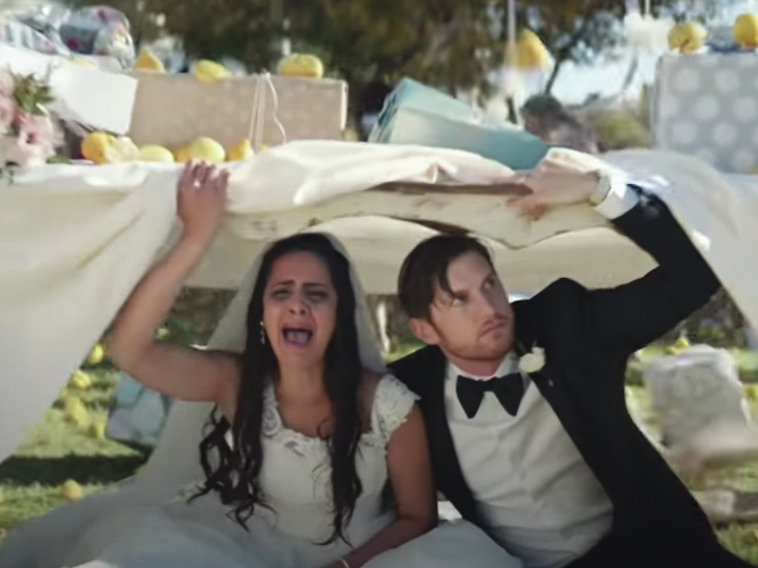
"caption": "Bud Light's \"Lemons\" Super Bowl Ad.",
"description": "Bud Light's \"Lemons\" Super Bowl Ad.",
"title": "Bud Light's \"Lemons\" Super Bowl Ad.",
"credit": null,
"status": "inherit",
"altTag": "A bride and groom hide under a table in Bud Light's \"Lemons\" Super Bowl Ad.",
"isLoading": false,
"fetchFailed": false
},
"arts_13892299": {
"type": "attachments",
"id": "arts_13892299",
"meta": {
"index": "attachments_1716263798",
"site": "arts",
"id": "13892299",
"found": true
},
"parent": 13892298,
"imgSizes": {
"twentyfourteen-full-width": {
"file": "https://ww2.kqed.org/app/uploads/sites/2/2021/02/ap_110524036743_custom-01900073787117a42adb6f4c495b9a729120b297-1038x576.jpg",
"width": 1038,
"mimeType": "image/jpeg",
"height": 576
},
"thumbnail": {
"file": "https://ww2.kqed.org/app/uploads/sites/2/2021/02/ap_110524036743_custom-01900073787117a42adb6f4c495b9a729120b297-160x107.jpg",
"width": 160,
"mimeType": "image/jpeg",
"height": 107
},
"post-thumbnail": {
"file": "https://ww2.kqed.org/app/uploads/sites/2/2021/02/ap_110524036743_custom-01900073787117a42adb6f4c495b9a729120b297-672x372.jpg",
"width": 672,
"mimeType": "image/jpeg",
"height": 372
},
"kqedFullSize": {
"file": "https://ww2.kqed.org/app/uploads/sites/2/2021/02/ap_110524036743_custom-01900073787117a42adb6f4c495b9a729120b297-scaled-e1612549376755.jpg",
"width": 1920,
"height": 1279
},
"2048x2048": {
"file": "https://ww2.kqed.org/app/uploads/sites/2/2021/02/ap_110524036743_custom-01900073787117a42adb6f4c495b9a729120b297-2048x1364.jpg",
"width": 2048,
"mimeType": "image/jpeg",
"height": 1364
},
"large": {
"file": "https://ww2.kqed.org/app/uploads/sites/2/2021/02/ap_110524036743_custom-01900073787117a42adb6f4c495b9a729120b297-1020x679.jpg",
"width": 1020,
"mimeType": "image/jpeg",
"height": 679
},
"1536x1536": {
"file": "https://ww2.kqed.org/app/uploads/sites/2/2021/02/ap_110524036743_custom-01900073787117a42adb6f4c495b9a729120b297-1536x1023.jpg",
"width": 1536,
"mimeType": "image/jpeg",
"height": 1023
},
"full-width": {
"file": "https://ww2.kqed.org/app/uploads/sites/2/2021/02/ap_110524036743_custom-01900073787117a42adb6f4c495b9a729120b297-1920x1279.jpg",
"width": 1920,
"mimeType": "image/jpeg",
"height": 1279
},
"medium": {
"file": "https://ww2.kqed.org/app/uploads/sites/2/2021/02/ap_110524036743_custom-01900073787117a42adb6f4c495b9a729120b297-800x533.jpg",
"width": 800,
"mimeType": "image/jpeg",
"height": 533
},
"medium_large": {
"file": "https://ww2.kqed.org/app/uploads/sites/2/2021/02/ap_110524036743_custom-01900073787117a42adb6f4c495b9a729120b297-768x511.jpg",
"width": 768,
"mimeType": "image/jpeg",
"height": 511
}
},
"publishDate": 1612549309,
"modified": 1612549421,
"caption": "Born in Toronto, Christopher Plummer made his name as a classical actor—performing Shakespeare at the Stratford Festival in Canada and the Royal Shakespeare Company in England. He began acting in films in the 1950s. He's pictured above in 2011.",
"description": "Born in Toronto, Christopher Plummer made his name as a classical actor—performing Shakespeare at the Stratford Festival in Canada and the Royal Shakespeare Company in England. He began acting in films in the 1950s. He's pictured above in 2011.",
"title": "Born in Toronto, Christopher Plummer made his name as a classical actor—performing Shakespeare at the Stratford Festival in Canada and the Royal Shakespeare Company in England. He began acting in films in the 1950s. He's pictured above in 2011.",
"credit": "Charles Sykes/AP",
"status": "inherit",
"altTag": "Born in Toronto, Christopher Plummer made his name as a classical actor—performing Shakespeare at the Stratford Festival in Canada and the Royal Shakespeare Company in England. He began acting in films in the 1950s. He's pictured above in 2011.",
"isLoading": false,
"fetchFailed": false
},
"arts_13892258": {
"type": "attachments",
"id": "arts_13892258",
"meta": {
"index": "attachments_1716263798",
"site": "arts",
"id": "13892258",
"found": true
},
"parent": 13892252,
"imgSizes": {
"twentyfourteen-full-width": {
"file": "https://ww2.kqed.org/app/uploads/sites/2/2021/02/marie-2zpWPy0hLxQ-unsplash-1038x576.jpg",
"width": 1038,
"mimeType": "image/jpeg",
"height": 576
},
"thumbnail": {
"file": "https://ww2.kqed.org/app/uploads/sites/2/2021/02/marie-2zpWPy0hLxQ-unsplash-160x107.jpg",
"width": 160,
"mimeType": "image/jpeg",
"height": 107
},
"post-thumbnail": {
"file": "https://ww2.kqed.org/app/uploads/sites/2/2021/02/marie-2zpWPy0hLxQ-unsplash-672x372.jpg",
"width": 672,
"mimeType": "image/jpeg",
"height": 372
},
"kqedFullSize": {
"file": "https://ww2.kqed.org/app/uploads/sites/2/2021/02/marie-2zpWPy0hLxQ-unsplash-scaled-e1612481204605.jpg",
"width": 1920,
"height": 1280
},
"2048x2048": {
"file": "https://ww2.kqed.org/app/uploads/sites/2/2021/02/marie-2zpWPy0hLxQ-unsplash-2048x1365.jpg",
"width": 2048,
"mimeType": "image/jpeg",
"height": 1365
},
"large": {
"file": "https://ww2.kqed.org/app/uploads/sites/2/2021/02/marie-2zpWPy0hLxQ-unsplash-1020x680.jpg",
"width": 1020,
"mimeType": "image/jpeg",
"height": 680
},
"1536x1536": {
"file": "https://ww2.kqed.org/app/uploads/sites/2/2021/02/marie-2zpWPy0hLxQ-unsplash-1536x1024.jpg",
"width": 1536,
"mimeType": "image/jpeg",
"height": 1024
},
"full-width": {
"file": "https://ww2.kqed.org/app/uploads/sites/2/2021/02/marie-2zpWPy0hLxQ-unsplash-1920x1280.jpg",
"width": 1920,
"mimeType": "image/jpeg",
"height": 1280
},
"medium": {
"file": "https://ww2.kqed.org/app/uploads/sites/2/2021/02/marie-2zpWPy0hLxQ-unsplash-800x533.jpg",
"width": 800,
"mimeType": "image/jpeg",
"height": 533
},
"medium_large": {
"file": "https://ww2.kqed.org/app/uploads/sites/2/2021/02/marie-2zpWPy0hLxQ-unsplash-768x512.jpg",
"width": 768,
"mimeType": "image/jpeg",
"height": 512
}
},
"publishDate": 1612481178,
"modified": 1612481222,
"caption": null,
"description": null,
"title": "marie-2zpWPy0hLxQ-unsplash",
"credit": "Marie/Unsplash",
"status": "inherit",
"altTag": null,
"isLoading": false,
"fetchFailed": false
},
"arts_13892208": {
"type": "attachments",
"id": "arts_13892208",
"meta": {
"index": "attachments_1716263798",
"site": "arts",
"id": "13892208",
"found": true
},
"parent": 13892207,
"imgSizes": {
"twentyfourteen-full-width": {
"file": "https://ww2.kqed.org/app/uploads/sites/2/2021/02/jan22-ep7-d_025-161-1-_wide-67dde0efc427e0c7afb8279dc61552d126615a43-1038x576.jpg",
"width": 1038,
"mimeType": "image/jpeg",
"height": 576
},
"thumbnail": {
"file": "https://ww2.kqed.org/app/uploads/sites/2/2021/02/jan22-ep7-d_025-161-1-_wide-67dde0efc427e0c7afb8279dc61552d126615a43-160x90.jpg",
"width": 160,
"mimeType": "image/jpeg",
"height": 90
},
"post-thumbnail": {
"file": "https://ww2.kqed.org/app/uploads/sites/2/2021/02/jan22-ep7-d_025-161-1-_wide-67dde0efc427e0c7afb8279dc61552d126615a43-672x372.jpg",
"width": 672,
"mimeType": "image/jpeg",
"height": 372
},
"kqedFullSize": {
"file": "https://ww2.kqed.org/app/uploads/sites/2/2021/02/jan22-ep7-d_025-161-1-_wide-67dde0efc427e0c7afb8279dc61552d126615a43.jpg",
"width": 1920,
"height": 1080
},
"large": {
"file": "https://ww2.kqed.org/app/uploads/sites/2/2021/02/jan22-ep7-d_025-161-1-_wide-67dde0efc427e0c7afb8279dc61552d126615a43-1020x574.jpg",
"width": 1020,
"mimeType": "image/jpeg",
"height": 574
},
"1536x1536": {
"file": "https://ww2.kqed.org/app/uploads/sites/2/2021/02/jan22-ep7-d_025-161-1-_wide-67dde0efc427e0c7afb8279dc61552d126615a43-1536x864.jpg",
"width": 1536,
"mimeType": "image/jpeg",
"height": 864
},
"medium": {
"file": "https://ww2.kqed.org/app/uploads/sites/2/2021/02/jan22-ep7-d_025-161-1-_wide-67dde0efc427e0c7afb8279dc61552d126615a43-800x450.jpg",
"width": 800,
"mimeType": "image/jpeg",
"height": 450
},
"medium_large": {
"file": "https://ww2.kqed.org/app/uploads/sites/2/2021/02/jan22-ep7-d_025-161-1-_wide-67dde0efc427e0c7afb8279dc61552d126615a43-768x432.jpg",
"width": 768,
"mimeType": "image/jpeg",
"height": 432
}
},
"publishDate": 1612461210,
"modified": 1612461936,
"caption": "Michaela Coel's 'I May Destroy You' was a critical favorite last year—but didn't garner any Golden Globe nominations.",
"description": "Michaela Coel's 'I May Destroy You' was a critical favorite last year—but didn't garner any Golden Globe nominations.",
"title": "Michaela Coel's 'I May Destroy You' was a critical favorite last year—but didn't garner any Golden Globe nominations.",
"credit": "Natalie Seery/HBO",
"status": "inherit",
"altTag": "Michaela Coel, starring in 'I May Destroy You.' The show was a critical favorite last year—but didn't garner any Golden Globe nominations.",
"isLoading": false,
"fetchFailed": false
},
"arts_13892140": {
"type": "attachments",
"id": "arts_13892140",
"meta": {
"index": "attachments_1716263798",
"site": "arts",
"id": "13892140",
"found": true
},
"parent": 13892124,
"imgSizes": {
"twentyfourteen-full-width": {
"file": "https://ww2.kqed.org/app/uploads/sites/2/2021/02/GettyImages-1228694789-1038x576.jpg",
"width": 1038,
"mimeType": "image/jpeg",
"height": 576
},
"thumbnail": {
"file": "https://ww2.kqed.org/app/uploads/sites/2/2021/02/GettyImages-1228694789-160x107.jpg",
"width": 160,
"mimeType": "image/jpeg",
"height": 107
},
"post-thumbnail": {
"file": "https://ww2.kqed.org/app/uploads/sites/2/2021/02/GettyImages-1228694789-672x372.jpg",
"width": 672,
"mimeType": "image/jpeg",
"height": 372
},
"kqedFullSize": {
"file": "https://ww2.kqed.org/app/uploads/sites/2/2021/02/GettyImages-1228694789-scaled-e1612306845461.jpg",
"width": 1920,
"height": 1280
},
"2048x2048": {
"file": "https://ww2.kqed.org/app/uploads/sites/2/2021/02/GettyImages-1228694789-2048x1365.jpg",
"width": 2048,
"mimeType": "image/jpeg",
"height": 1365
},
"large": {
"file": "https://ww2.kqed.org/app/uploads/sites/2/2021/02/GettyImages-1228694789-1020x680.jpg",
"width": 1020,
"mimeType": "image/jpeg",
"height": 680
},
"1536x1536": {
"file": "https://ww2.kqed.org/app/uploads/sites/2/2021/02/GettyImages-1228694789-1536x1024.jpg",
"width": 1536,
"mimeType": "image/jpeg",
"height": 1024
},
"full-width": {
"file": "https://ww2.kqed.org/app/uploads/sites/2/2021/02/GettyImages-1228694789-1920x1280.jpg",
"width": 1920,
"mimeType": "image/jpeg",
"height": 1280
},
"medium": {
"file": "https://ww2.kqed.org/app/uploads/sites/2/2021/02/GettyImages-1228694789-800x533.jpg",
"width": 800,
"mimeType": "image/jpeg",
"height": 533
},
"medium_large": {
"file": "https://ww2.kqed.org/app/uploads/sites/2/2021/02/GettyImages-1228694789-768x512.jpg",
"width": 768,
"mimeType": "image/jpeg",
"height": 512
}
},
"publishDate": 1612306824,
"modified": 1612306870,
"caption": null,
"description": null,
"title": "Louisville Police Officer Charged With Wanton Endangerment In Breonna Taylors Death",
"credit": "Jon Cherry/Getty Images",
"status": "inherit",
"altTag": null,
"isLoading": false,
"fetchFailed": false
},
"arts_13892065": {
"type": "attachments",
"id": "arts_13892065",
"meta": {
"index": "attachments_1716263798",
"site": "arts",
"id": "13892065",
"found": true
},
"parent": 13892064,
"imgSizes": {
"twentyfourteen-full-width": {
"file": "https://ww2.kqed.org/app/uploads/sites/2/2021/02/gettyimages-179710738-86e35b4e6556d1496baaf88a194396866296e3a9-1038x576.jpg",
"width": 1038,
"mimeType": "image/jpeg",
"height": 576
},
"thumbnail": {
"file": "https://ww2.kqed.org/app/uploads/sites/2/2021/02/gettyimages-179710738-86e35b4e6556d1496baaf88a194396866296e3a9-160x120.jpg",
"width": 160,
"mimeType": "image/jpeg",
"height": 120
},
"post-thumbnail": {
"file": "https://ww2.kqed.org/app/uploads/sites/2/2021/02/gettyimages-179710738-86e35b4e6556d1496baaf88a194396866296e3a9-672x372.jpg",
"width": 672,
"mimeType": "image/jpeg",
"height": 372
},
"kqedFullSize": {
"file": "https://ww2.kqed.org/app/uploads/sites/2/2021/02/gettyimages-179710738-86e35b4e6556d1496baaf88a194396866296e3a9-e1612216348223.jpg",
"width": 1920,
"height": 1441
},
"large": {
"file": "https://ww2.kqed.org/app/uploads/sites/2/2021/02/gettyimages-179710738-86e35b4e6556d1496baaf88a194396866296e3a9-1020x766.jpg",
"width": 1020,
"mimeType": "image/jpeg",
"height": 766
},
"1536x1536": {
"file": "https://ww2.kqed.org/app/uploads/sites/2/2021/02/gettyimages-179710738-86e35b4e6556d1496baaf88a194396866296e3a9-1536x1153.jpg",
"width": 1536,
"mimeType": "image/jpeg",
"height": 1153
},
"full-width": {
"file": "https://ww2.kqed.org/app/uploads/sites/2/2021/02/gettyimages-179710738-86e35b4e6556d1496baaf88a194396866296e3a9-1920x1441.jpg",
"width": 1920,
"mimeType": "image/jpeg",
"height": 1441
},
"medium": {
"file": "https://ww2.kqed.org/app/uploads/sites/2/2021/02/gettyimages-179710738-86e35b4e6556d1496baaf88a194396866296e3a9-800x600.jpg",
"width": 800,
"mimeType": "image/jpeg",
"height": 600
},
"medium_large": {
"file": "https://ww2.kqed.org/app/uploads/sites/2/2021/02/gettyimages-179710738-86e35b4e6556d1496baaf88a194396866296e3a9-768x576.jpg",
"width": 768,
"mimeType": "image/jpeg",
"height": 576
}
},
"publishDate": 1612216239,
"modified": 1612216391,
"caption": "After 'Saved by the Bell,' Diamond made many reality TV appearances, such as 'Celebrity Big Brother.'",
"description": "After 'Saved by the Bell,' Diamond made many reality TV appearances, such as 'Celebrity Big Brother.'",
"title": "After 'Saved by the Bell,' Diamond made many reality TV appearances, such as 'Celebrity Big Brother.'",
"credit": "Ben A. Pruchnie/Getty Images",
"status": "inherit",
"altTag": "After 'Saved by the Bell,' Diamond made many reality TV appearances, such as 'Celebrity Big Brother.'",
"isLoading": false,
"fetchFailed": false
},
"arts_13892049": {
"type": "attachments",
"id": "arts_13892049",
"meta": {
"index": "attachments_1716263798",
"site": "arts",
"id": "13892049",
"found": true
},
"parent": 13892048,
"imgSizes": {
"twentyfourteen-full-width": {
"file": "https://ww2.kqed.org/app/uploads/sites/2/2021/02/gettyimages-74023239-00e2b7f5589f5dfd8d5f40f7d7f3dabc565ce86b-1038x576.jpg",
"width": 1038,
"mimeType": "image/jpeg",
"height": 576
},
"thumbnail": {
"file": "https://ww2.kqed.org/app/uploads/sites/2/2021/02/gettyimages-74023239-00e2b7f5589f5dfd8d5f40f7d7f3dabc565ce86b-160x120.jpg",
"width": 160,
"mimeType": "image/jpeg",
"height": 120
},
"post-thumbnail": {
"file": "https://ww2.kqed.org/app/uploads/sites/2/2021/02/gettyimages-74023239-00e2b7f5589f5dfd8d5f40f7d7f3dabc565ce86b-672x372.jpg",
"width": 672,
"mimeType": "image/jpeg",
"height": 372
},
"kqedFullSize": {
"file": "https://ww2.kqed.org/app/uploads/sites/2/2021/02/gettyimages-74023239-00e2b7f5589f5dfd8d5f40f7d7f3dabc565ce86b-scaled-e1612204615104.jpg",
"width": 1920,
"height": 1439
},
"2048x2048": {
"file": "https://ww2.kqed.org/app/uploads/sites/2/2021/02/gettyimages-74023239-00e2b7f5589f5dfd8d5f40f7d7f3dabc565ce86b-2048x1535.jpg",
"width": 2048,
"mimeType": "image/jpeg",
"height": 1535
},
"large": {
"file": "https://ww2.kqed.org/app/uploads/sites/2/2021/02/gettyimages-74023239-00e2b7f5589f5dfd8d5f40f7d7f3dabc565ce86b-1020x765.jpg",
"width": 1020,
"mimeType": "image/jpeg",
"height": 765
},
"1536x1536": {
"file": "https://ww2.kqed.org/app/uploads/sites/2/2021/02/gettyimages-74023239-00e2b7f5589f5dfd8d5f40f7d7f3dabc565ce86b-1536x1152.jpg",
"width": 1536,
"mimeType": "image/jpeg",
"height": 1152
},
"full-width": {
"file": "https://ww2.kqed.org/app/uploads/sites/2/2021/02/gettyimages-74023239-00e2b7f5589f5dfd8d5f40f7d7f3dabc565ce86b-1920x1439.jpg",
"width": 1920,
"mimeType": "image/jpeg",
"height": 1439
},
"medium": {
"file": "https://ww2.kqed.org/app/uploads/sites/2/2021/02/gettyimages-74023239-00e2b7f5589f5dfd8d5f40f7d7f3dabc565ce86b-800x600.jpg",
"width": 800,
"mimeType": "image/jpeg",
"height": 600
},
"medium_large": {
"file": "https://ww2.kqed.org/app/uploads/sites/2/2021/02/gettyimages-74023239-00e2b7f5589f5dfd8d5f40f7d7f3dabc565ce86b-768x576.jpg",
"width": 768,
"mimeType": "image/jpeg",
"height": 576
}
},
"publishDate": 1612204244,
"modified": 1612204645,
"caption": "Singer Tony Bennett performing at the Royal Albert Hall in London in 2007.",
"description": "Singer Tony Bennett performing at the Royal Albert Hall in London in 2007.",
"title": "Singer Tony Bennett performing at the Royal Albert Hall in London in 2007.",
"credit": "Jo Hale/Getty Images",
"status": "inherit",
"altTag": "Singer Tony Bennett performing at the Royal Albert Hall in London in 2007.",
"isLoading": false,
"fetchFailed": false
},
"arts_13892006": {
"type": "attachments",
"id": "arts_13892006",
"meta": {
"index": "attachments_1716263798",
"site": "arts",
"id": "13892006",
"found": true
},
"parent": 13892005,
"imgSizes": {
"twentyfourteen-full-width": {
"file": "https://ww2.kqed.org/app/uploads/sites/2/2021/01/gettyimages-1230695900-594a1e201bfb2495daecf5fcefed33429ddc3365-1038x576.jpg",
"width": 1038,
"mimeType": "image/jpeg",
"height": 576
},
"thumbnail": {
"file": "https://ww2.kqed.org/app/uploads/sites/2/2021/01/gettyimages-1230695900-594a1e201bfb2495daecf5fcefed33429ddc3365-160x120.jpg",
"width": 160,
"mimeType": "image/jpeg",
"height": 120
},
"post-thumbnail": {
"file": "https://ww2.kqed.org/app/uploads/sites/2/2021/01/gettyimages-1230695900-594a1e201bfb2495daecf5fcefed33429ddc3365-672x372.jpg",
"width": 672,
"mimeType": "image/jpeg",
"height": 372
},
"kqedFullSize": {
"file": "https://ww2.kqed.org/app/uploads/sites/2/2021/01/gettyimages-1230695900-594a1e201bfb2495daecf5fcefed33429ddc3365-scaled-e1611950192805.jpg",
"width": 1920,
"height": 1440
},
"2048x2048": {
"file": "https://ww2.kqed.org/app/uploads/sites/2/2021/01/gettyimages-1230695900-594a1e201bfb2495daecf5fcefed33429ddc3365-2048x1536.jpg",
"width": 2048,
"mimeType": "image/jpeg",
"height": 1536
},
"large": {
"file": "https://ww2.kqed.org/app/uploads/sites/2/2021/01/gettyimages-1230695900-594a1e201bfb2495daecf5fcefed33429ddc3365-1020x765.jpg",
"width": 1020,
"mimeType": "image/jpeg",
"height": 765
},
"1536x1536": {
"file": "https://ww2.kqed.org/app/uploads/sites/2/2021/01/gettyimages-1230695900-594a1e201bfb2495daecf5fcefed33429ddc3365-1536x1152.jpg",
"width": 1536,
"mimeType": "image/jpeg",
"height": 1152
},
"full-width": {
"file": "https://ww2.kqed.org/app/uploads/sites/2/2021/01/gettyimages-1230695900-594a1e201bfb2495daecf5fcefed33429ddc3365-1920x1440.jpg",
"width": 1920,
"mimeType": "image/jpeg",
"height": 1440
},
"medium": {
"file": "https://ww2.kqed.org/app/uploads/sites/2/2021/01/gettyimages-1230695900-594a1e201bfb2495daecf5fcefed33429ddc3365-800x600.jpg",
"width": 800,
"mimeType": "image/jpeg",
"height": 600
},
"medium_large": {
"file": "https://ww2.kqed.org/app/uploads/sites/2/2021/01/gettyimages-1230695900-594a1e201bfb2495daecf5fcefed33429ddc3365-768x576.jpg",
"width": 768,
"mimeType": "image/jpeg",
"height": 576
}
},
"publishDate": 1611949663,
"modified": 1611950240,
"caption": "Amanda Gorman, the country's first National Youth Poet Laureate, recited her poetry at President Biden's inauguration on Jan. 20.",
"description": "Amanda Gorman, the country's first National Youth Poet Laureate, recited her poetry at President Biden's inauguration on Jan. 20.",
"title": "Amanda Gorman, the country's first National Youth Poet Laureate, recited her poetry at President Biden's inauguration on Jan. 20.",
"credit": "Patrick Semansky/Getty Images",
"status": "inherit",
"altTag": "Amanda Gorman, the country's first National Youth Poet Laureate, reciting her poetry at President Biden's inauguration on Jan. 20.",
"isLoading": false,
"fetchFailed": false
}
},
"audioPlayerReducer": {
"postId": "stream_live",
"isPaused": true,
"isPlaying": false,
"pfsActive": false,
"pledgeModalIsOpen": true,
"playerDrawerIsOpen": false,
"liveAudioPlayStartedAt": 0,
"liveAudioPlayContext": ""
},
"authorsReducer": {
"byline_arts_13892633": {
"type": "authors",
"id": "byline_arts_13892633",
"meta": {
"override": true
},
"slug": "byline_arts_13892633",
"name": "Bill Chappell",
"isLoading": false
},
"byline_arts_13892489": {
"type": "authors",
"id": "byline_arts_13892489",
"meta": {
"override": true
},
"slug": "byline_arts_13892489",
"name": "Allyson McCabe",
"isLoading": false
},
"byline_arts_13892455": {
"type": "authors",
"id": "byline_arts_13892455",
"meta": {
"override": true
},
"slug": "byline_arts_13892455",
"name": "Heller McAlpin",
"isLoading": false
},
"byline_arts_13892406": {
"type": "authors",
"id": "byline_arts_13892406",
"meta": {
"override": true
},
"slug": "byline_arts_13892406",
"name": "Neda Ulaby",
"isLoading": false
},
"byline_arts_13892367": {
"type": "authors",
"id": "byline_arts_13892367",
"meta": {
"override": true
},
"slug": "byline_arts_13892367",
"name": "Eric Deggans",
"isLoading": false
},
"byline_arts_13892298": {
"type": "authors",
"id": "byline_arts_13892298",
"meta": {
"override": true
},
"slug": "byline_arts_13892298",
"name": "Jeff Lunden",
"isLoading": false
},
"byline_arts_13892252": {
"type": "authors",
"id": "byline_arts_13892252",
"meta": {
"override": true
},
"slug": "byline_arts_13892252",
"name": "Gabino Iglesias",
"isLoading": false
},
"byline_arts_13892207": {
"type": "authors",
"id": "byline_arts_13892207",
"meta": {
"override": true
},
"slug": "byline_arts_13892207",
"name": "Eric Deggans",
"isLoading": false
},
"byline_arts_13892124": {
"type": "authors",
"id": "byline_arts_13892124",
"meta": {
"override": true
},
"slug": "byline_arts_13892124",
"name": "Ericka Taylor",
"isLoading": false
},
"byline_arts_13892064": {
"type": "authors",
"id": "byline_arts_13892064",
"meta": {
"override": true
},
"slug": "byline_arts_13892064",
"name": "Andrew Limbong",
"isLoading": false
},
"byline_arts_13892048": {
"type": "authors",
"id": "byline_arts_13892048",
"meta": {
"override": true
},
"slug": "byline_arts_13892048",
"name": "Anastasia Tsioulcas",
"isLoading": false
},
"byline_arts_13892005": {
"type": "authors",
"id": "byline_arts_13892005",
"meta": {
"override": true
},
"slug": "byline_arts_13892005",
"name": "Anastasia Tsioulcas",
"isLoading": false
}
},
"pagesReducer": {
"arts_affiliate_npr": {
"type": "terms",
"id": "arts_137",
"meta": {
"index": "terms_1716263798",
"site": "arts",
"id": "137",
"score": 14.258219
},
"featImg": "https://ww2.kqed.org/app/uploads/sites/2/2014/04/logo-npr-lg1.png",
"name": "NPR",
"description": null,
"taxonomy": "affiliate",
"headData": {
"twImgId": null,
"twTitle": null,
"ogTitle": null,
"ogImgId": null,
"twDescription": null,
"description": null,
"title": "NPR Archives | KQED Arts",
"ogDescription": null
},
"ttid": 138,
"slug": "npr",
"isLoading": false,
"title": "NPR",
"pageMeta": {
"site": "arts",
"WpPageTemplate": "page-topic-editorial",
"currentPage": 86
},
"blocks": [
{
"blockName": "kqed/post-list",
"attrs": {
"layout": "cardArticle2",
"query": "posts/arts?affiliate=npr",
"seeMore": false,
"paginated": true,
"page": 86
}
},
{
"blockName": "kqed/ad"
}
]
}
},
"pfsSessionReducer": {},
"postsReducer": {
"stream_live": {
"type": "live",
"id": "stream_live",
"audioUrl": "https://streams.kqed.org/kqedradio",
"title": "Live Stream",
"excerpt": "Live Stream information currently unavailable.",
"link": "/radio",
"featImg": "",
"label": {
"name": "KQED Live",
"link": "/"
}
},
"stream_kqedNewscast": {
"type": "posts",
"id": "stream_kqedNewscast",
"audioUrl": "https://www.kqed.org/.stream/anon/radio/RDnews/newscast.mp3?_=1",
"title": "KQED Newscast",
"featImg": "",
"label": {
"name": "88.5 FM",
"link": "/"
}
},
"arts_13892633": {
"type": "posts",
"id": "arts_13892633",
"meta": {
"index": "posts_1716263798",
"site": "arts",
"id": "13892633",
"score": null,
"sort": [
1613070991000
]
},
"parent": 0,
"labelTerm": {
"site": "arts",
"term": 137
},
"blocks": [],
"publishDate": 1613070991,
"format": "standard",
"title": "Lucasfilm Ditches Gina Carano From 'The Mandalorian' Over Social Media Posts",
"headTitle": "Lucasfilm Ditches Gina Carano From ‘The Mandalorian’ Over Social Media Posts | KQED",
"content": "\u003cp>Lucasfilm has fired Gina Carano from her job on \u003cem>The Mandalorian\u003c/em>, after the action star posted on social media that today’s political climate in the U.S. is similar to Nazi Germany’s treatment of Jews. The comments were “abhorrent,” the company said.\u003c/p>\n\u003cp>“Gina Carano is not currently employed by Lucasfilm and there are no plans for her to be in the future,” a Lucasfilm spokesperson said in a widely distributed statement. “Nevertheless, her social media posts denigrating people based on their cultural and religious identities are abhorrent and unacceptable.”\u003c/p>\n\u003cp>Carano was also dropped by the United Talent Agency, which had been representing her, according to \u003ca href=\"https://deadline.com/2021/02/the-mandalorian-actress-gina-carano-agency-uta-part-ways-in-wake-of-social-media-controversy-1234691964/\" target=\"_blank\" rel=\"noopener noreferrer\">\u003cem>Deadline\u003c/em>\u003c/a>.\u003c/p>\n\u003cp>The comments were made on Carano’s Instagram account, where she shared an image of a woman being chased through the streets. The accompanying text stated that the Nazis fomented public hatred against Jews as part of the Holocaust.\u003c/p>\n\u003cp>“How is that any different from hating someone for their political views?” the post asked.\u003c/p>\n\u003cp>[ad fullwidth]\u003c/p>\n\u003cp>In response, commenters said it was offensive to compare political divisions and rancor with the state-engineered systematic killing of millions of Jews and other people.\u003c/p>\n\u003cp>Carano’s Instagram posting was later deleted. But it sparked the hashtag \u003ca href=\"https://twitter.com/search?q=%23FireGinaCarano&src=typeahead_click\" target=\"_blank\" rel=\"noopener noreferrer\">#FireGinaCarano\u003c/a>, which gained steam as people \u003ca href=\"https://twitter.com/djarinculture/status/1359547709900922884\" target=\"_blank\" rel=\"noopener noreferrer\">shared screenshots\u003c/a> of the deleted message.\u003c/p>\n\u003cp>Carano has been criticized for her posts before, including last fall, when she echoed President Donald Trump’s false claims that the 2020 election was stolen.\u003c/p>\n\u003cp>“We need to clean up the election process so we are not left feeling the way we do today,” Carano said two days after the Nov. 3 vote.\u003c/p>\n\u003cp>She has also posted comments and images about face masks that were seen as mocking an essential tool in combating a global pandemic. Carano later clarified that she respects anyone who requests that she wear a mask.\u003c/p>\n\u003cp>“With all the misinformation, I understand either way,” \u003ca href=\"https://twitter.com/ginacarano/status/1303457936069373952\" target=\"_blank\" rel=\"noopener noreferrer\">she said\u003c/a>.\u003c/p>\n\u003cp>The action star, who translated a winning career in mixed martial arts into roles in films and TV, had won new fans with her portrayal of the battle-hardened Cara Dune on \u003cem>The Mandalorian\u003c/em>. [aside postid='pop_83529']\u003c/p>\n\u003cp>Some of those fans are defending her now, saying that the reprisals she faces are proof that the current political climate in the U.S. is intolerant. Calling Carano a victim of cancel culture, her supporters are in turn calling for people to cancel Disney Plus, the streaming service on which \u003cem>The Mandalorian \u003c/em>appears.\u003c/p>\n\u003cp>Lucasfilm is parting ways with Carano after reports had suggested she would play a prominent role in future \u003cem>Star Wars\u003c/em> spinoffs, propelled by the runaway success of \u003cem>The Mandalorian\u003c/em>.\u003c/p>\n\u003cp>\u003c/p>\n\u003cp>“According to sources, Lucasfilm planned to unveil Carano as the star of her own Disney+ series during a \u003ca href=\"https://www.hollywoodreporter.com/heat-vision/disney-plans-10-star-wars-and-10-marvel-series-over-next-few-years\" target=\"_blank\" rel=\"noopener noreferrer\">December investors presentation\u003c/a> but scrapped those plans following her November tweets,” \u003cem>\u003ca href=\"https://www.hollywoodreporter.com/news/the-mandalorian-star-gina-carano-fired-amid-social-media-controversy\" target=\"_blank\" rel=\"noopener noreferrer\">The Hollywood Reporter\u003c/a>\u003c/em> said.\u003c/p>\n\u003cdiv class=\"fullattribution\">\u003cem>Copyright 2021 NPR. To see more, visit \u003ca href=\"https://www.npr.org\" target=\"_blank\" rel=\"noopener noreferrer\">NPR\u003c/a>.\u003cimg decoding=\"async\" src=\"https://www.google-analytics.com/__utm.gif?utmac=UA-5828686-4&utmdt=Lucasfilm+Ditches+Gina+Carano+From+%27The+Mandalorian%27+Over+Social+Media+Posts&utme=8(APIKey)9(MDAxOTAwOTE4MDEyMTkxMDAzNjczZDljZA004)\">\u003c/em>\u003c/div>\n\n",
"stats": {
"hasVideo": false,
"hasChartOrMap": false,
"hasAudio": false,
"hasPolis": false,
"wordCount": 495,
"hasGoogleForm": false,
"hasGallery": false,
"hasHearkenModule": false,
"iframeSrcs": [],
"paragraphCount": 17
},
"modified": 1705019495,
"excerpt": "The action star came under fire for saying today's political climate in the U.S. is similar to Nazi Germany's treatment of Jews.",
"headData": {
"twImgId": "",
"twTitle": "",
"ogTitle": "",
"ogImgId": "",
"twDescription": "",
"description": "The action star came under fire for saying today's political climate in the U.S. is similar to Nazi Germany's treatment of Jews.",
"title": "Lucasfilm Ditches Gina Carano From 'The Mandalorian' Over Social Media Posts | KQED",
"ogDescription": "",
"schema": {
"@context": "https://schema.org",
"@type": "Article",
"headline": "Lucasfilm Ditches Gina Carano From 'The Mandalorian' Over Social Media Posts",
"datePublished": "2021-02-11T11:16:31-08:00",
"dateModified": "2024-01-11T16:31:35-08:00",
"image": "https://cdn.kqed.org/wp-content/uploads/2020/02/KQED-OG-Image@1x.png"
}
},
"guestAuthors": [],
"slug": "lucasfilm-ditches-gina-carano-from-the-mandalorian-over-social-media-posts",
"status": "publish",
"nprApiLink": "http://api.npr.org/query?id=966826718&apiKey=MDAxOTAwOTE4MDEyMTkxMDAzNjczZDljZA004",
"templateType": "standard",
"nprStoryDate": "Thu, 11 Feb 2021 09:49:42 -0500",
"nprLastModifiedDate": "Thu, 11 Feb 2021 11:16:29 -0500",
"featuredImageType": "standard",
"nprHtmlLink": "https://www.npr.org/2021/02/11/966826718/lucasfilm-fires-gina-carano-from-the-mandalorian-over-social-media-posts?ft=nprml&f=966826718",
"nprImageAgency": "Getty Images",
"nprStoryId": "966826718",
"nprByline": "Bill Chappell",
"sticky": false,
"nprImageCredit": "Jean Baptiste Lacroix",
"nprRetrievedStory": "1",
"nprPubDate": "Thu, 11 Feb 2021 11:16:00 -0500",
"path": "/arts/13892633/lucasfilm-ditches-gina-carano-from-the-mandalorian-over-social-media-posts",
"audioTrackLength": null,
"parsedContent": [
{
"type": "contentString",
"content": "\u003cdiv class=\"post-body\">\u003cp>\u003cp>Lucasfilm has fired Gina Carano from her job on \u003cem>The Mandalorian\u003c/em>, after the action star posted on social media that today’s political climate in the U.S. is similar to Nazi Germany’s treatment of Jews. The comments were “abhorrent,” the company said.\u003c/p>\n\u003cp>“Gina Carano is not currently employed by Lucasfilm and there are no plans for her to be in the future,” a Lucasfilm spokesperson said in a widely distributed statement. “Nevertheless, her social media posts denigrating people based on their cultural and religious identities are abhorrent and unacceptable.”\u003c/p>\n\u003cp>Carano was also dropped by the United Talent Agency, which had been representing her, according to \u003ca href=\"https://deadline.com/2021/02/the-mandalorian-actress-gina-carano-agency-uta-part-ways-in-wake-of-social-media-controversy-1234691964/\" target=\"_blank\" rel=\"noopener noreferrer\">\u003cem>Deadline\u003c/em>\u003c/a>.\u003c/p>\n\u003cp>The comments were made on Carano’s Instagram account, where she shared an image of a woman being chased through the streets. The accompanying text stated that the Nazis fomented public hatred against Jews as part of the Holocaust.\u003c/p>\n\u003cp>“How is that any different from hating someone for their political views?” the post asked.\u003c/p>\n\u003cp>\u003c/p>\u003c/div>",
"attributes": {
"named": {},
"numeric": []
}
},
{
"type": "component",
"content": "",
"name": "ad",
"attributes": {
"named": {
"label": "fullwidth"
},
"numeric": [
"fullwidth"
]
}
},
{
"type": "contentString",
"content": "\u003cdiv class=\"post-body\">\u003cp>\u003c/p>\n\u003cp>In response, commenters said it was offensive to compare political divisions and rancor with the state-engineered systematic killing of millions of Jews and other people.\u003c/p>\n\u003cp>Carano’s Instagram posting was later deleted. But it sparked the hashtag \u003ca href=\"https://twitter.com/search?q=%23FireGinaCarano&src=typeahead_click\" target=\"_blank\" rel=\"noopener noreferrer\">#FireGinaCarano\u003c/a>, which gained steam as people \u003ca href=\"https://twitter.com/djarinculture/status/1359547709900922884\" target=\"_blank\" rel=\"noopener noreferrer\">shared screenshots\u003c/a> of the deleted message.\u003c/p>\n\u003cp>Carano has been criticized for her posts before, including last fall, when she echoed President Donald Trump’s false claims that the 2020 election was stolen.\u003c/p>\n\u003cp>“We need to clean up the election process so we are not left feeling the way we do today,” Carano said two days after the Nov. 3 vote.\u003c/p>\n\u003cp>She has also posted comments and images about face masks that were seen as mocking an essential tool in combating a global pandemic. Carano later clarified that she respects anyone who requests that she wear a mask.\u003c/p>\n\u003cp>“With all the misinformation, I understand either way,” \u003ca href=\"https://twitter.com/ginacarano/status/1303457936069373952\" target=\"_blank\" rel=\"noopener noreferrer\">she said\u003c/a>.\u003c/p>\n\u003cp>The action star, who translated a winning career in mixed martial arts into roles in films and TV, had won new fans with her portrayal of the battle-hardened Cara Dune on \u003cem>The Mandalorian\u003c/em>. \u003c/p>\u003c/div>",
"attributes": {
"named": {},
"numeric": []
}
},
{
"type": "component",
"content": "",
"name": "aside",
"attributes": {
"named": {
"postid": "pop_83529",
"label": ""
},
"numeric": []
}
},
{
"type": "contentString",
"content": "\u003cdiv class=\"post-body\">\u003cp>\u003c/p>\n\u003cp>Some of those fans are defending her now, saying that the reprisals she faces are proof that the current political climate in the U.S. is intolerant. Calling Carano a victim of cancel culture, her supporters are in turn calling for people to cancel Disney Plus, the streaming service on which \u003cem>The Mandalorian \u003c/em>appears.\u003c/p>\n\u003cp>Lucasfilm is parting ways with Carano after reports had suggested she would play a prominent role in future \u003cem>Star Wars\u003c/em> spinoffs, propelled by the runaway success of \u003cem>The Mandalorian\u003c/em>.\u003c/p>\n\u003cp>\u003c/p>\n\u003cp>“According to sources, Lucasfilm planned to unveil Carano as the star of her own Disney+ series during a \u003ca href=\"https://www.hollywoodreporter.com/heat-vision/disney-plans-10-star-wars-and-10-marvel-series-over-next-few-years\" target=\"_blank\" rel=\"noopener noreferrer\">December investors presentation\u003c/a> but scrapped those plans following her November tweets,” \u003cem>\u003ca href=\"https://www.hollywoodreporter.com/news/the-mandalorian-star-gina-carano-fired-amid-social-media-controversy\" target=\"_blank\" rel=\"noopener noreferrer\">The Hollywood Reporter\u003c/a>\u003c/em> said.\u003c/p>\n\u003cdiv class=\"fullattribution\">\u003cem>Copyright 2021 NPR. To see more, visit \u003ca href=\"https://www.npr.org\" target=\"_blank\" rel=\"noopener noreferrer\">NPR\u003c/a>.\u003cimg decoding=\"async\" src=\"https://www.google-analytics.com/__utm.gif?utmac=UA-5828686-4&utmdt=Lucasfilm+Ditches+Gina+Carano+From+%27The+Mandalorian%27+Over+Social+Media+Posts&utme=8(APIKey)9(MDAxOTAwOTE4MDEyMTkxMDAzNjczZDljZA004)\">\u003c/em>\u003c/div>\n\n\u003c/div>\u003c/p>",
"attributes": {
"named": {},
"numeric": []
}
}
],
"link": "/arts/13892633/lucasfilm-ditches-gina-carano-from-the-mandalorian-over-social-media-posts",
"authors": [
"byline_arts_13892633"
],
"categories": [
"arts_1",
"arts_75",
"arts_990"
],
"tags": [
"arts_3114",
"arts_977",
"arts_3241",
"arts_5422"
],
"affiliates": [
"arts_137"
],
"featImg": "arts_13892634",
"label": "arts_137"
},
"arts_13892489": {
"type": "posts",
"id": "arts_13892489",
"meta": {
"index": "posts_1716263798",
"site": "arts",
"id": "13892489",
"score": null,
"sort": [
1612915114000
]
},
"parent": 0,
"labelTerm": {
"site": "arts",
"term": 137
},
"blocks": [],
"publishDate": 1612915114,
"format": "standard",
"title": "'Sisters With Transistors' Traces Female Pioneers of Electronic Music",
"headTitle": "‘Sisters With Transistors’ Traces Female Pioneers of Electronic Music | KQED",
"content": "\u003cp>In the 1920s, the Russian physicist Leon Theremin debuted an electronic instrument that could be played without any physical contact. Players stood in front of a box and waved their hands over antennas, \u003ca href=\"https://www.youtube.com/watch?v=w5qf9O6c20o\" target=\"_blank\" rel=\"noopener noreferrer\">summoning otherworldly sounds\u003c/a> seemingly from thin air. The theremin might have been regarded as a passing novelty if not for the late \u003ca href=\"http://nadiareisenberg-clararockmore.org/clara-rockmore-biography/\" target=\"_blank\" rel=\"noopener noreferrer\">Clara Rockmore\u003c/a>, a virtuoso who helped to refine the instrument’s design, and wowed concert hall audiences with her performances.\u003c/p>\n\u003cp>https://www.youtube.com/watch?v=pSzTPGlNa5U\u003c/p>\n\u003cp>Rockmore is but a single figure in a long line of women who have changed the shape and sound of modern music—often invisibly, says filmmaker Lisa Rovner. “I think when most people think of electronic music, in most cases they’ll picture men pushing the buttons, the knobs, and the boundaries.” [aside postid='pop_92372']\u003c/p>\n\u003cp>Rovner’s new documentary, \u003ca href=\"https://sisterswithtransistors.com/\" target=\"_blank\" rel=\"noopener noreferrer\">\u003cem>Sisters with Transistors\u003c/em>\u003c/a>, corrects the record. Narrated by \u003ca href=\"https://laurieanderson.com/\" target=\"_blank\" rel=\"noopener noreferrer\">Laurie Anderson\u003c/a>, the film celebrates the achievements of early pioneers such as Daphne Oram, who was hired by the BBC as a studio engineer in the 1940s. After hours, Oram began recording and manipulating sounds on magnetic tape, experiments that led to the co-founding of the BBC’s Radiophonic Workshop in 1958. Another pioneer, Delia Derbyshire, crafted sounds for nearly 200 BBC programs, including the \u003ca href=\"https://youtu.be/75V4ClJZME4\" target=\"_blank\" rel=\"noopener noreferrer\">iconic theme music for the sci-fi series \u003cem>Doctor Who\u003c/em>\u003c/a>\u003cem>,\u003c/em> which debuted in 1963.\u003c/p>\n\u003cp>Modular synthesizers soon followed, and the development of the first commercially available models was guided by women. \u003ca href=\"http://www.wendycarlos.com/\" target=\"_blank\" rel=\"noopener noreferrer\">Wendy Carlos\u003c/a> advised Robert Moog on the design of the first keyboard-based model, and introduced it to the general public on her 1968 album, \u003cem>Switched-On Bach\u003c/em>, which sold more than a million copies. \u003ca href=\"https://www.sevwave.com/\" target=\"_blank\" rel=\"noopener noreferrer\">Suzanne Ciani\u003c/a> realized the \u003ca href=\"https://youtu.be/7vZGeHBfxU0\" target=\"_blank\" rel=\"noopener noreferrer\">creative potential\u003c/a> of a contemporaneous system designed by Don Buchla, which allowed artists to patch components together to control characteristics of sound such as pitch and timbre.\u003c/p>\n\u003cp>[ad fullwidth]\u003c/p>\n\u003cp>Juilliard-trained composer \u003ca href=\"http://retiary.org/ls/index.html\" target=\"_blank\" rel=\"noopener noreferrer\">Laurie Spiegel\u003c/a> describes these technologies as revolutionary. “The way composing was previously done was you wrote on a piece of paper, with a pencil, a set of instructions for someone else to make music,” she recalls. Free to realize her own creative vision, Spiegel programmed computer-based music generation systems while working as a researcher at Bell Labs in the 1970s. She was able to fashion \u003ca href=\"https://www.youtube.com/watch?v=BUgSJt7Q7gw\" target=\"_blank\" rel=\"noopener noreferrer\">entirely new sounds, as well as variations within sound itself\u003c/a>, and share her music directly with audiences.\u003c/p>\n\u003cp>https://www.youtube.com/watch?v=22PRZO2HnJE\u003c/p>\n\u003cp>In 1977, Spiegel’s work caught the attention of NASA. Her \u003ca href=\"https://youtu.be/ErT83n_YdGs\" target=\"_blank\" rel=\"noopener noreferrer\">musical interpretation\u003c/a> of Johannes Kepler’s “Harmonices Mundi” was included on the Voyager Golden Records, launched into space to represent all of humankind. However, she is quick to point out that she is too often seen as an anomaly. Spiegel recalled being part of an active community of women who were affiliated with university-based and non-profit electronic music studios in and around New York City. Some of those studios, such as \u003ca href=\"https://www.harvestworks.org/mission/\" target=\"_blank\" rel=\"noopener noreferrer\">Harvestworks\u003c/a>, are still around today. [aside postid='arts_13892242']\u003c/p>\n\u003cp>In a sense, all music is “electronic” now, since digital technology is a ubiquitous part of how tracks and albums are made and consumed. But composer Yvette Janine Jackson, \u003ca href=\"https://www.fridmangallery.com/product-page/yvette-janine-jackson-freedom\" target=\"_blank\" rel=\"noopener noreferrer\">whose work explores historical events and current social issues\u003c/a>, says there is still plenty of room for innovation and legacy building.\u003c/p>\n\u003cp>“My creative journey with electronic music has been centered around trying to find a voice,” says Jackson, “an African American voice, a queer voice, a female voice, the intersection of these voices.” She hopes tomorrow’s creators will have expanded access to tools, and receive greater recognition for their work.\u003c/p>\n\u003cp>\u003c/p>\n\u003cp>Having premiered at SXSW in 2020, \u003cem>Sisters with Transistors\u003c/em> has screened at prestigious U.S. and international festivals, including Sundance and the AFI. It is slated for national release on virtual cinema platforms early this spring.\u003c/p>\n\u003cdiv class=\"fullattribution\">\u003cem>Copyright 2021 NPR. To see more, visit \u003ca href=\"https://www.npr.org\" target=\"_blank\" rel=\"noopener noreferrer\">NPR\u003c/a>.\u003cimg decoding=\"async\" src=\"https://www.google-analytics.com/__utm.gif?utmac=UA-5828686-4&utmdt=%27Sisters+With+Transistors%27%3A+Pioneers+Of+Electronic+Music&utme=8(APIKey)9(MDAxOTAwOTE4MDEyMTkxMDAzNjczZDljZA004)\">\u003c/em>\u003c/div>\n\n",
"stats": {
"hasVideo": true,
"hasChartOrMap": false,
"hasAudio": false,
"hasPolis": false,
"wordCount": 663,
"hasGoogleForm": false,
"hasGallery": false,
"hasHearkenModule": false,
"iframeSrcs": [],
"paragraphCount": 11
},
"modified": 1705019508,
"excerpt": "The documentary tells the story of the roles women played—and continue to play—in the creation and development of electronic music.",
"headData": {
"twImgId": "",
"twTitle": "",
"ogTitle": "",
"ogImgId": "",
"twDescription": "",
"description": "The documentary tells the story of the roles women played—and continue to play—in the creation and development of electronic music.",
"title": "'Sisters With Transistors' Traces Female Pioneers of Electronic Music | KQED",
"ogDescription": "",
"schema": {
"@context": "https://schema.org",
"@type": "Article",
"headline": "'Sisters With Transistors' Traces Female Pioneers of Electronic Music",
"datePublished": "2021-02-09T15:58:34-08:00",
"dateModified": "2024-01-11T16:31:48-08:00",
"image": "https://cdn.kqed.org/wp-content/uploads/2020/02/KQED-OG-Image@1x.png"
}
},
"guestAuthors": [],
"slug": "sisters-with-transistors-traces-female-pioneers-of-electronic-music",
"status": "publish",
"nprApiLink": "http://api.npr.org/query?id=963206642&apiKey=MDAxOTAwOTE4MDEyMTkxMDAzNjczZDljZA004",
"templateType": "standard",
"nprStoryDate": "Tue, 09 Feb 2021 16:21:00 -0500",
"nprLastModifiedDate": "Tue, 09 Feb 2021 17:53:58 -0500",
"featuredImageType": "standard",
"nprHtmlLink": "https://www.npr.org/2021/02/09/963206642/sisters-with-transistors-pioneers-of-electronic-music?ft=nprml&f=963206642",
"nprAudio": "https://ondemand.npr.org/anon.npr-mp3/npr/atc/2021/02/20210209_atc_sisters_with_transistors_pioneers_of_electronic_music.mp3?orgId=1&topicId=613820055&d=328&p=2&story=963206642&ft=nprml&f=963206642",
"nprImageAgency": "Courtesy of the artist",
"nprAudioM3u": "http://api.npr.org/m3u/1965966868-5cd56a.m3u?orgId=1&topicId=613820055&d=328&p=2&story=963206642&ft=nprml&f=963206642",
"nprStoryId": "963206642",
"nprByline": "Allyson McCabe",
"sticky": false,
"nprImageCredit": "Peggy Weil",
"nprRetrievedStory": "1",
"nprPubDate": "Tue, 09 Feb 2021 16:27:00 -0500",
"path": "/arts/13892489/sisters-with-transistors-traces-female-pioneers-of-electronic-music",
"audioUrl": "https://ondemand.npr.org/anon.npr-mp3/npr/atc/2021/02/20210209_atc_sisters_with_transistors_pioneers_of_electronic_music.mp3?orgId=1&topicId=613820055&d=328&p=2&story=963206642&ft=nprml&f=963206642",
"audioTrackLength": null,
"parsedContent": [
{
"type": "contentString",
"content": "\u003cdiv class=\"post-body\">\u003cp>\u003cp>In the 1920s, the Russian physicist Leon Theremin debuted an electronic instrument that could be played without any physical contact. Players stood in front of a box and waved their hands over antennas, \u003ca href=\"https://www.youtube.com/watch?v=w5qf9O6c20o\" target=\"_blank\" rel=\"noopener noreferrer\">summoning otherworldly sounds\u003c/a> seemingly from thin air. The theremin might have been regarded as a passing novelty if not for the late \u003ca href=\"http://nadiareisenberg-clararockmore.org/clara-rockmore-biography/\" target=\"_blank\" rel=\"noopener noreferrer\">Clara Rockmore\u003c/a>, a virtuoso who helped to refine the instrument’s design, and wowed concert hall audiences with her performances.\u003c/p>\u003c/p>\u003cp>\u003cspan class='utils-parseShortcode-shortcodes-__youtubeShortcode__embedYoutube'>\n \u003cspan class='utils-parseShortcode-shortcodes-__youtubeShortcode__embedYoutubeInside'>\n \u003ciframe\n loading='lazy'\n class='utils-parseShortcode-shortcodes-__youtubeShortcode__youtubePlayer'\n type='text/html'\n src='//www.youtube.com/embed/pSzTPGlNa5U'\n title='//www.youtube.com/embed/pSzTPGlNa5U'\n allowfullscreen='true'\n style='border:0;'>\u003c/iframe>\n \u003c/span>\n \u003c/span>\u003c/p>\u003cp>\u003cp>Rockmore is but a single figure in a long line of women who have changed the shape and sound of modern music—often invisibly, says filmmaker Lisa Rovner. “I think when most people think of electronic music, in most cases they’ll picture men pushing the buttons, the knobs, and the boundaries.” \u003c/p>\u003c/div>",
"attributes": {
"named": {},
"numeric": []
}
},
{
"type": "component",
"content": "",
"name": "aside",
"attributes": {
"named": {
"postid": "pop_92372",
"label": ""
},
"numeric": []
}
},
{
"type": "contentString",
"content": "\u003cdiv class=\"post-body\">\u003cp>\u003c/p>\n\u003cp>Rovner’s new documentary, \u003ca href=\"https://sisterswithtransistors.com/\" target=\"_blank\" rel=\"noopener noreferrer\">\u003cem>Sisters with Transistors\u003c/em>\u003c/a>, corrects the record. Narrated by \u003ca href=\"https://laurieanderson.com/\" target=\"_blank\" rel=\"noopener noreferrer\">Laurie Anderson\u003c/a>, the film celebrates the achievements of early pioneers such as Daphne Oram, who was hired by the BBC as a studio engineer in the 1940s. After hours, Oram began recording and manipulating sounds on magnetic tape, experiments that led to the co-founding of the BBC’s Radiophonic Workshop in 1958. Another pioneer, Delia Derbyshire, crafted sounds for nearly 200 BBC programs, including the \u003ca href=\"https://youtu.be/75V4ClJZME4\" target=\"_blank\" rel=\"noopener noreferrer\">iconic theme music for the sci-fi series \u003cem>Doctor Who\u003c/em>\u003c/a>\u003cem>,\u003c/em> which debuted in 1963.\u003c/p>\n\u003cp>Modular synthesizers soon followed, and the development of the first commercially available models was guided by women. \u003ca href=\"http://www.wendycarlos.com/\" target=\"_blank\" rel=\"noopener noreferrer\">Wendy Carlos\u003c/a> advised Robert Moog on the design of the first keyboard-based model, and introduced it to the general public on her 1968 album, \u003cem>Switched-On Bach\u003c/em>, which sold more than a million copies. \u003ca href=\"https://www.sevwave.com/\" target=\"_blank\" rel=\"noopener noreferrer\">Suzanne Ciani\u003c/a> realized the \u003ca href=\"https://youtu.be/7vZGeHBfxU0\" target=\"_blank\" rel=\"noopener noreferrer\">creative potential\u003c/a> of a contemporaneous system designed by Don Buchla, which allowed artists to patch components together to control characteristics of sound such as pitch and timbre.\u003c/p>\n\u003cp>\u003c/p>\u003c/div>",
"attributes": {
"named": {},
"numeric": []
}
},
{
"type": "component",
"content": "",
"name": "ad",
"attributes": {
"named": {
"label": "fullwidth"
},
"numeric": [
"fullwidth"
]
}
},
{
"type": "contentString",
"content": "\u003cdiv class=\"post-body\">\u003cp>\u003c/p>\n\u003cp>Juilliard-trained composer \u003ca href=\"http://retiary.org/ls/index.html\" target=\"_blank\" rel=\"noopener noreferrer\">Laurie Spiegel\u003c/a> describes these technologies as revolutionary. “The way composing was previously done was you wrote on a piece of paper, with a pencil, a set of instructions for someone else to make music,” she recalls. Free to realize her own creative vision, Spiegel programmed computer-based music generation systems while working as a researcher at Bell Labs in the 1970s. She was able to fashion \u003ca href=\"https://www.youtube.com/watch?v=BUgSJt7Q7gw\" target=\"_blank\" rel=\"noopener noreferrer\">entirely new sounds, as well as variations within sound itself\u003c/a>, and share her music directly with audiences.\u003c/p>\u003c/p>\u003cp>\u003cspan class='utils-parseShortcode-shortcodes-__youtubeShortcode__embedYoutube'>\n \u003cspan class='utils-parseShortcode-shortcodes-__youtubeShortcode__embedYoutubeInside'>\n \u003ciframe\n loading='lazy'\n class='utils-parseShortcode-shortcodes-__youtubeShortcode__youtubePlayer'\n type='text/html'\n src='//www.youtube.com/embed/22PRZO2HnJE'\n title='//www.youtube.com/embed/22PRZO2HnJE'\n allowfullscreen='true'\n style='border:0;'>\u003c/iframe>\n \u003c/span>\n \u003c/span>\u003c/p>\u003cp>\u003cp>In 1977, Spiegel’s work caught the attention of NASA. Her \u003ca href=\"https://youtu.be/ErT83n_YdGs\" target=\"_blank\" rel=\"noopener noreferrer\">musical interpretation\u003c/a> of Johannes Kepler’s “Harmonices Mundi” was included on the Voyager Golden Records, launched into space to represent all of humankind. However, she is quick to point out that she is too often seen as an anomaly. Spiegel recalled being part of an active community of women who were affiliated with university-based and non-profit electronic music studios in and around New York City. Some of those studios, such as \u003ca href=\"https://www.harvestworks.org/mission/\" target=\"_blank\" rel=\"noopener noreferrer\">Harvestworks\u003c/a>, are still around today. \u003c/p>\u003c/div>",
"attributes": {
"named": {},
"numeric": []
}
},
{
"type": "component",
"content": "",
"name": "aside",
"attributes": {
"named": {
"postid": "arts_13892242",
"label": ""
},
"numeric": []
}
},
{
"type": "contentString",
"content": "\u003cdiv class=\"post-body\">\u003cp>\u003c/p>\n\u003cp>In a sense, all music is “electronic” now, since digital technology is a ubiquitous part of how tracks and albums are made and consumed. But composer Yvette Janine Jackson, \u003ca href=\"https://www.fridmangallery.com/product-page/yvette-janine-jackson-freedom\" target=\"_blank\" rel=\"noopener noreferrer\">whose work explores historical events and current social issues\u003c/a>, says there is still plenty of room for innovation and legacy building.\u003c/p>\n\u003cp>“My creative journey with electronic music has been centered around trying to find a voice,” says Jackson, “an African American voice, a queer voice, a female voice, the intersection of these voices.” She hopes tomorrow’s creators will have expanded access to tools, and receive greater recognition for their work.\u003c/p>\n\u003cp>\u003c/p>\n\u003cp>Having premiered at SXSW in 2020, \u003cem>Sisters with Transistors\u003c/em> has screened at prestigious U.S. and international festivals, including Sundance and the AFI. It is slated for national release on virtual cinema platforms early this spring.\u003c/p>\n\u003cdiv class=\"fullattribution\">\u003cem>Copyright 2021 NPR. To see more, visit \u003ca href=\"https://www.npr.org\" target=\"_blank\" rel=\"noopener noreferrer\">NPR\u003c/a>.\u003cimg decoding=\"async\" src=\"https://www.google-analytics.com/__utm.gif?utmac=UA-5828686-4&utmdt=%27Sisters+With+Transistors%27%3A+Pioneers+Of+Electronic+Music&utme=8(APIKey)9(MDAxOTAwOTE4MDEyMTkxMDAzNjczZDljZA004)\">\u003c/em>\u003c/div>\n\n\u003c/div>\u003c/p>",
"attributes": {
"named": {},
"numeric": []
}
}
],
"link": "/arts/13892489/sisters-with-transistors-traces-female-pioneers-of-electronic-music",
"authors": [
"byline_arts_13892489"
],
"categories": [
"arts_1",
"arts_74",
"arts_69"
],
"tags": [
"arts_1501"
],
"affiliates": [
"arts_137"
],
"featImg": "arts_13892490",
"label": "arts_137"
},
"arts_13892455": {
"type": "posts",
"id": "arts_13892455",
"meta": {
"index": "posts_1716263798",
"site": "arts",
"id": "13892455",
"score": null,
"sort": [
1612902565000
]
},
"parent": 0,
"labelTerm": {
"site": "arts",
"term": 137
},
"blocks": [],
"publishDate": 1612902565,
"format": "standard",
"title": "'Between Two Kingdoms' Tells a Story of Survival—and of a Journey to Learn to Live",
"headTitle": "‘Between Two Kingdoms’ Tells a Story of Survival—and of a Journey to Learn to Live | KQED",
"content": "\u003cp>When Suleika Jaouad graduated from Princeton in 2010, she was considering a career as a war correspondent. Instead, within months, she was diagnosed with a rare form of acute myeloid leukemia. She quickly found herself fighting for her life in New York City cancer wards, where she was given a 35 percent chance of survival.\u003c/p>\n\u003cp>Jaouad started writing about what it’s like to face a life-threatening illness at 22. During her “incanceration”—months in isolation to prevent infections—she documented her grueling treatments, first in a blog, then in a weekly column and videos for \u003cem>The New York Times\u003c/em> called “Life, Interrupted,” which generated an enormous response. She had become a different sort of war correspondent.\u003c/p>\n\u003cp>\u003cimg loading=\"lazy\" decoding=\"async\" class=\"size-full wp-image-13892461 aligncenter\" src=\"https://ww2.kqed.org/app/uploads/sites/2/2021/02/Screen-Shot-2021-02-09-at-12.20.50-PM.png\" alt=\"\" width=\"598\" height=\"826\" srcset=\"https://cdn.kqed.org/wp-content/uploads/sites/2/2021/02/Screen-Shot-2021-02-09-at-12.20.50-PM.png 598w, https://cdn.kqed.org/wp-content/uploads/sites/2/2021/02/Screen-Shot-2021-02-09-at-12.20.50-PM-160x221.png 160w\" sizes=\"(max-width: 598px) 100vw, 598px\">\u003c/p>\n\u003cp>\u003cem>Between Two Kingdoms, \u003c/em>Jaouad’s searching memoir of her illness and its aftermath, takes its title from an observation in Susan Sontag’s \u003cem>Illness as Metaphor: \u003c/em>“Everyone who is born holds dual citizenship in the kingdom of the well and in the kingdom of the sick.” The line between them, Jaouad discovers, is more porous than most people realize.\u003c/p>\n\u003cp>The daughter of a Tunisian-born French literature professor and a Swiss-born painter, Jaouad is a lifelong over-achiever. In addition to English, she speaks French (her first language), Arabic, Spanish, and Farsi. As a high school student, she traveled solo by train to NYC early every Saturday morning, lugging her double-bass from her home in Saratoga to Juilliard’s precollege program. At Princeton, which she attended on full scholarship, she majored in Near Eastern studies, double-minored in French and gender studies, and received highest honors.\u003c/p>\n\u003cp>[ad fullwidth]\u003c/p>\n\u003cp>Jaouad’s discipline served her well during her nearly four years of treatments for a particularly intractable cancer. These included multiple rounds of painful chemotheraphy and a brutal clinical trial followed by a bone marrow transplant (“a medical game of Russian roulette”) for which her younger brother, who dubbed her “Suleikemia,” turned out to be a perfect match and blessedly willing donor. [aside postid='arts_13883658']\u003c/p>\n\u003cp>Her proactive, disciplined approach to life also helped Jaouad through what she has called the hardest part of her illness, which began after her cancer was declared in remission: figuring out how to live again.\u003c/p>\n\u003cp>The year after her treatment ended, Jouad was newly single, frail, and lost. As she points out in her 2019 TED Talk, “What Almost Dying Taught Me About Living,” after 1,500 days spent focused on survival, cancer had ravaged her body, her sense of self, and her relationship with the boyfriend who had so loyally supported her through her long medical ordeal. (Her boyfriend’s devotion was so extraordinary that—spoiler alert—it’s hard to believe she didn’t end up marrying him. How that came to be is part of her story. So, too, is her relationship with jazz pianist Jon Batiste—whom she met when they were teens in band camp.)\u003c/p>\n\u003cp>https://www.youtube.com/watch?v=m5HQamrXlSY\u003c/p>\n\u003cp>At a low point, Jaouad revisited some of the emails she had received from farflung readers of “Life, Interrupted” while she was hospitalized—lifelines that had given her a portal into a world she could no longer inhabit. Re-reading letters like the one from Lil’GQ, a convicted murderer on Texas’s death row who compared his isolation and threat of impending death with her situation, or from Katherine, a high school teacher in California mourning the suicide of her bipolar son, helped take her out of herself.\u003c/p>\n\u003cp>Jaouad hit on an idea that she hoped would help her reassert her independence, tame her fears, and find her bearings: a road trip with her adopted terrier mutt across America. Limited to the 100 days she could be away from her medical team, her ambitious 15,000 mile route was shaped by planned visits to people whose stories had moved her most. Her hope was that she could learn something from them. [aside postid='arts_13891399']\u003c/p>\n\u003cp>There have been some gorgeous cancer memoirs in recent years, including Paul Kalanithi’s \u003cem>When Breath Becomes Air \u003c/em>and Nina Riggs’ \u003cem>The Bright Hour, \u003c/em>which are all the more heartrending because they were published posthumously. Among the posse of cancer buddies Jaouad met at Memorial Sloan Kettering and sadly lost was the poet Max Ritvo, whose books, \u003cem>Four Reincarnations \u003c/em>and \u003cem>The Final Voicemails,\u003c/em> were published after his death from Ewing’s sarcoma in 2016, at age 25. A visit to her dying friend in California was an important stop on her journey.\u003c/p>\n\u003cp>So, what starts as a cancer chronicle becomes a unique twist on the classic American road-trip narrative, books that include John Steinbeck’s \u003cem>Travels with Charley\u003c/em>, Vladimir Nabokov’s \u003cem>Lolita, \u003c/em>and Jack Kerouac’s \u003cem>On the Road. Between Two Kingdoms \u003c/em>shares with them the idea of finding freedom and answers by lighting out for the territory and exploring the diverse ways that people live.\u003c/p>\n\u003cp>\u003c/p>\n\u003cp>Jaouad’s book stands out not only because she has lived to parse the saga of her medical battle with the benefit of hindsight, but also because it encompasses the less familiar tale of what it’s like to survive and have to figure out how to live again. It helps that she is a deft researcher, a smart, sometimes painfully honest writer, and an audacious reporter. \u003cem>Between Two Kingdoms\u003c/em> is a spectacular debut which leaves us eager to see what this gifted young woman will do next.\u003c/p>\n\u003cdiv class=\"fullattribution\">\u003cem>Copyright 2021 NPR. To see more, visit \u003ca href=\"https://www.npr.org\" target=\"_blank\" rel=\"noopener noreferrer\">NPR\u003c/a>.\u003cimg decoding=\"async\" src=\"https://www.google-analytics.com/__utm.gif?utmac=UA-5828686-4&utmdt=%27Between+Two+Kingdoms%27+Tells+A+Story+Of+Survival+%E2%80%94+And+Of+A+Journey+To+Learn+To+Live&utme=8(APIKey)9(MDAxOTAwOTE4MDEyMTkxMDAzNjczZDljZA004)\">\u003c/em>\u003c/div>\n\n",
"stats": {
"hasVideo": true,
"hasChartOrMap": false,
"hasAudio": false,
"hasPolis": false,
"wordCount": 946,
"hasGoogleForm": false,
"hasGallery": false,
"hasHearkenModule": false,
"iframeSrcs": [],
"paragraphCount": 15
},
"modified": 1705019512,
"excerpt": "Suleika Jaouad's book encompasses a less familiar tale of what it's like to survive cancer, then figure out how to live again.",
"headData": {
"twImgId": "",
"twTitle": "",
"ogTitle": "",
"ogImgId": "",
"twDescription": "",
"description": "Suleika Jaouad's book encompasses a less familiar tale of what it's like to survive cancer, then figure out how to live again.",
"title": "'Between Two Kingdoms' Tells a Story of Survival—and of a Journey to Learn to Live | KQED",
"ogDescription": "",
"schema": {
"@context": "https://schema.org",
"@type": "Article",
"headline": "'Between Two Kingdoms' Tells a Story of Survival—and of a Journey to Learn to Live",
"datePublished": "2021-02-09T12:29:25-08:00",
"dateModified": "2024-01-11T16:31:52-08:00",
"image": "https://cdn.kqed.org/wp-content/uploads/2020/02/KQED-OG-Image@1x.png"
}
},
"guestAuthors": [],
"slug": "between-two-kingdoms-tells-a-story-of-survival-and-of-a-journey-to-learn-to-live",
"status": "publish",
"nprApiLink": "http://api.npr.org/query?id=965693636&apiKey=MDAxOTAwOTE4MDEyMTkxMDAzNjczZDljZA004",
"templateType": "standard",
"nprByline": "Heller McAlpin",
"nprStoryDate": "Tue, 09 Feb 2021 10:29:00 -0500",
"nprLastModifiedDate": "Tue, 09 Feb 2021 10:32:09 -0500",
"featuredImageType": "standard",
"sticky": false,
"nprHtmlLink": "https://www.npr.org/2021/02/09/965693636/between-two-kingdoms-tells-a-story-of-survival-and-of-a-journey-to-learn-to-live?ft=nprml&f=965693636",
"nprImageAgency": "Random House",
"nprStoryId": "965693636",
"nprRetrievedStory": "1",
"nprPubDate": "Tue, 09 Feb 2021 10:32:00 -0500",
"path": "/arts/13892455/between-two-kingdoms-tells-a-story-of-survival-and-of-a-journey-to-learn-to-live",
"audioTrackLength": null,
"parsedContent": [
{
"type": "contentString",
"content": "\u003cdiv class=\"post-body\">\u003cp>\u003cp>When Suleika Jaouad graduated from Princeton in 2010, she was considering a career as a war correspondent. Instead, within months, she was diagnosed with a rare form of acute myeloid leukemia. She quickly found herself fighting for her life in New York City cancer wards, where she was given a 35 percent chance of survival.\u003c/p>\n\u003cp>Jaouad started writing about what it’s like to face a life-threatening illness at 22. During her “incanceration”—months in isolation to prevent infections—she documented her grueling treatments, first in a blog, then in a weekly column and videos for \u003cem>The New York Times\u003c/em> called “Life, Interrupted,” which generated an enormous response. She had become a different sort of war correspondent.\u003c/p>\n\u003cp>\u003cimg loading=\"lazy\" decoding=\"async\" class=\"size-full wp-image-13892461 aligncenter\" src=\"https://ww2.kqed.org/app/uploads/sites/2/2021/02/Screen-Shot-2021-02-09-at-12.20.50-PM.png\" alt=\"\" width=\"598\" height=\"826\" srcset=\"https://cdn.kqed.org/wp-content/uploads/sites/2/2021/02/Screen-Shot-2021-02-09-at-12.20.50-PM.png 598w, https://cdn.kqed.org/wp-content/uploads/sites/2/2021/02/Screen-Shot-2021-02-09-at-12.20.50-PM-160x221.png 160w\" sizes=\"(max-width: 598px) 100vw, 598px\">\u003c/p>\n\u003cp>\u003cem>Between Two Kingdoms, \u003c/em>Jaouad’s searching memoir of her illness and its aftermath, takes its title from an observation in Susan Sontag’s \u003cem>Illness as Metaphor: \u003c/em>“Everyone who is born holds dual citizenship in the kingdom of the well and in the kingdom of the sick.” The line between them, Jaouad discovers, is more porous than most people realize.\u003c/p>\n\u003cp>The daughter of a Tunisian-born French literature professor and a Swiss-born painter, Jaouad is a lifelong over-achiever. In addition to English, she speaks French (her first language), Arabic, Spanish, and Farsi. As a high school student, she traveled solo by train to NYC early every Saturday morning, lugging her double-bass from her home in Saratoga to Juilliard’s precollege program. At Princeton, which she attended on full scholarship, she majored in Near Eastern studies, double-minored in French and gender studies, and received highest honors.\u003c/p>\n\u003cp>\u003c/p>\u003c/div>",
"attributes": {
"named": {},
"numeric": []
}
},
{
"type": "component",
"content": "",
"name": "ad",
"attributes": {
"named": {
"label": "fullwidth"
},
"numeric": [
"fullwidth"
]
}
},
{
"type": "contentString",
"content": "\u003cdiv class=\"post-body\">\u003cp>\u003c/p>\n\u003cp>Jaouad’s discipline served her well during her nearly four years of treatments for a particularly intractable cancer. These included multiple rounds of painful chemotheraphy and a brutal clinical trial followed by a bone marrow transplant (“a medical game of Russian roulette”) for which her younger brother, who dubbed her “Suleikemia,” turned out to be a perfect match and blessedly willing donor. \u003c/p>\u003c/div>",
"attributes": {
"named": {},
"numeric": []
}
},
{
"type": "component",
"content": "",
"name": "aside",
"attributes": {
"named": {
"postid": "arts_13883658",
"label": ""
},
"numeric": []
}
},
{
"type": "contentString",
"content": "\u003cdiv class=\"post-body\">\u003cp>\u003c/p>\n\u003cp>Her proactive, disciplined approach to life also helped Jaouad through what she has called the hardest part of her illness, which began after her cancer was declared in remission: figuring out how to live again.\u003c/p>\n\u003cp>The year after her treatment ended, Jouad was newly single, frail, and lost. As she points out in her 2019 TED Talk, “What Almost Dying Taught Me About Living,” after 1,500 days spent focused on survival, cancer had ravaged her body, her sense of self, and her relationship with the boyfriend who had so loyally supported her through her long medical ordeal. (Her boyfriend’s devotion was so extraordinary that—spoiler alert—it’s hard to believe she didn’t end up marrying him. How that came to be is part of her story. So, too, is her relationship with jazz pianist Jon Batiste—whom she met when they were teens in band camp.)\u003c/p>\u003c/p>\u003cp>\u003cspan class='utils-parseShortcode-shortcodes-__youtubeShortcode__embedYoutube'>\n \u003cspan class='utils-parseShortcode-shortcodes-__youtubeShortcode__embedYoutubeInside'>\n \u003ciframe\n loading='lazy'\n class='utils-parseShortcode-shortcodes-__youtubeShortcode__youtubePlayer'\n type='text/html'\n src='//www.youtube.com/embed/m5HQamrXlSY'\n title='//www.youtube.com/embed/m5HQamrXlSY'\n allowfullscreen='true'\n style='border:0;'>\u003c/iframe>\n \u003c/span>\n \u003c/span>\u003c/p>\u003cp>\u003cp>At a low point, Jaouad revisited some of the emails she had received from farflung readers of “Life, Interrupted” while she was hospitalized—lifelines that had given her a portal into a world she could no longer inhabit. Re-reading letters like the one from Lil’GQ, a convicted murderer on Texas’s death row who compared his isolation and threat of impending death with her situation, or from Katherine, a high school teacher in California mourning the suicide of her bipolar son, helped take her out of herself.\u003c/p>\n\u003cp>Jaouad hit on an idea that she hoped would help her reassert her independence, tame her fears, and find her bearings: a road trip with her adopted terrier mutt across America. Limited to the 100 days she could be away from her medical team, her ambitious 15,000 mile route was shaped by planned visits to people whose stories had moved her most. Her hope was that she could learn something from them. \u003c/p>\u003c/div>",
"attributes": {
"named": {},
"numeric": []
}
},
{
"type": "component",
"content": "",
"name": "aside",
"attributes": {
"named": {
"postid": "arts_13891399",
"label": ""
},
"numeric": []
}
},
{
"type": "contentString",
"content": "\u003cdiv class=\"post-body\">\u003cp>\u003c/p>\n\u003cp>There have been some gorgeous cancer memoirs in recent years, including Paul Kalanithi’s \u003cem>When Breath Becomes Air \u003c/em>and Nina Riggs’ \u003cem>The Bright Hour, \u003c/em>which are all the more heartrending because they were published posthumously. Among the posse of cancer buddies Jaouad met at Memorial Sloan Kettering and sadly lost was the poet Max Ritvo, whose books, \u003cem>Four Reincarnations \u003c/em>and \u003cem>The Final Voicemails,\u003c/em> were published after his death from Ewing’s sarcoma in 2016, at age 25. A visit to her dying friend in California was an important stop on her journey.\u003c/p>\n\u003cp>So, what starts as a cancer chronicle becomes a unique twist on the classic American road-trip narrative, books that include John Steinbeck’s \u003cem>Travels with Charley\u003c/em>, Vladimir Nabokov’s \u003cem>Lolita, \u003c/em>and Jack Kerouac’s \u003cem>On the Road. Between Two Kingdoms \u003c/em>shares with them the idea of finding freedom and answers by lighting out for the territory and exploring the diverse ways that people live.\u003c/p>\n\u003cp>\u003c/p>\n\u003cp>Jaouad’s book stands out not only because she has lived to parse the saga of her medical battle with the benefit of hindsight, but also because it encompasses the less familiar tale of what it’s like to survive and have to figure out how to live again. It helps that she is a deft researcher, a smart, sometimes painfully honest writer, and an audacious reporter. \u003cem>Between Two Kingdoms\u003c/em> is a spectacular debut which leaves us eager to see what this gifted young woman will do next.\u003c/p>\n\u003cdiv class=\"fullattribution\">\u003cem>Copyright 2021 NPR. To see more, visit \u003ca href=\"https://www.npr.org\" target=\"_blank\" rel=\"noopener noreferrer\">NPR\u003c/a>.\u003cimg decoding=\"async\" src=\"https://www.google-analytics.com/__utm.gif?utmac=UA-5828686-4&utmdt=%27Between+Two+Kingdoms%27+Tells+A+Story+Of+Survival+%E2%80%94+And+Of+A+Journey+To+Learn+To+Live&utme=8(APIKey)9(MDAxOTAwOTE4MDEyMTkxMDAzNjczZDljZA004)\">\u003c/em>\u003c/div>\n\n\u003c/div>\u003c/p>",
"attributes": {
"named": {},
"numeric": []
}
}
],
"link": "/arts/13892455/between-two-kingdoms-tells-a-story-of-survival-and-of-a-journey-to-learn-to-live",
"authors": [
"byline_arts_13892455"
],
"categories": [
"arts_1",
"arts_73"
],
"tags": [
"arts_11690",
"arts_9598"
],
"affiliates": [
"arts_137"
],
"featImg": "arts_13892462",
"label": "arts_137"
},
"arts_13892406": {
"type": "posts",
"id": "arts_13892406",
"meta": {
"index": "posts_1716263798",
"site": "arts",
"id": "13892406",
"score": null,
"sort": [
1612825635000
]
},
"parent": 0,
"labelTerm": {
"site": "arts",
"term": 137
},
"blocks": [],
"publishDate": 1612825635,
"format": "standard",
"title": "'You Will Die at Twenty' is Sudan's First Ever Academy Awards Entry",
"headTitle": "‘You Will Die at Twenty’ is Sudan’s First Ever Academy Awards Entry | KQED",
"content": "\u003cp>What do Mexico, Malaysia, Morocco and Montenegro have in common? They’re among the 93 countries hoping for Oscar consideration this year.\u003c/p>\n\u003cp>For the first time, a movie from Sudan is also in the running for Best International Feature Film. \u003cem>You Will Die at Twenty\u003c/em> is also notably the first feature film made in Sudan in 20 years—and only the seventh to come from the country.\u003c/p>\n\u003cp>“I wanted to see how stories can be told in Sudan,” explains director Amjad Abu Alala. Dressed in a brown suede jacket, the 38-year-old radiates upbeat energy on a Zoom call from Cairo. “Because it’s a very unique country and Sudan is the heart of Africa.”\u003c/p>\n\u003cp>The grim title—\u003cem>You Will Die at Twenty\u003c/em>—suggests it’s about war or conflict. Neither is true. It’s a tenderhearted fable that starts with a couple proudly presenting a newborn to a village leader for blessings. But a guest at the ritual unexpectedly keels over and dies. The startled sheik utters a prophecy: this child will die at 20. From birth, the boy is already almost a ghost.\u003c/p>\n\u003cp>Alala adapted his script from Hammour Ziada’s short story “Sleeping at the Foot of the Mountain.” It’s about a child growing up under a cloud of dread and diminished expectations. It’s a meditation on mortality rife with exorcisms, dervishes and a thwarted romance with a confident girl.\u003c/p>\n\u003cp>[ad fullwidth]\u003c/p>\n\u003cp>The director, who was born in Dubai to Sudanese parents, moved back to Sudan when he was 6 and spent much of his childhood there. Alala’s mother worked in a Sudanese public library, and her bookworm son remembers devouring novels by Isabel Allende, Gabriel García Márquez and Naguib Mahfouz. Magical realism inspired this film, from a country where Arab and African worlds swirl together.\u003c/p>\n\u003cp>“The Arabic language, the African faces,” says Alala. “Islamic but very African roots and ceremonies. I just feel like it’s the land of untold stories, unseen faces.”\u003c/p>\n\u003cp>Telling those stories and showing those faces is partly why Film Movement decided to distribute \u003cem>You Will Die at Twenty\u003c/em> in North America.\u003c/p>\n\u003cp>https://www.youtube.com/watch?v=fGO7jgOUQ00\u003c/p>\n\u003cp>“It puts you in a very different place than Americans are used to being,” says Film Movement’s president, Michael Rosenberg. While he admits there are challenges to any small, subtitled arthouse film—from a developing country—with a depressing title, Rosenberg says it didn’t hurt that the movie has been picking up awards at film festivals around the world, including Best Debut at the Venice Film Festival, and enrapturing critics.\u003c/p>\n\u003cp>“We got \u003ca href=\"https://www.nytimes.com/2021/01/21/movies/you-will-die-at-twenty-review.html\" target=\"_blank\" rel=\"noopener noreferrer\">a review in \u003cem>The New York Times\u003c/em>\u003c/a> and it was a critics’ pick,” Rosenberg notes. “And we got a critics’ pick \u003ca href=\"https://variety.com/2019/film/reviews/you-will-die-at-twenty-review-1203322894/\" target=\"_blank\" rel=\"noopener noreferrer\">review from\u003cem> Variety\u003c/em>\u003c/a> and we got \u003ca href=\"https://www.latimes.com/entertainment-arts/movies/story/2021-01-22/you-will-die-at-20-review-amjad-abu-alala-sudan\" target=\"_blank\" rel=\"noopener noreferrer\">a rave review from the\u003cem> Los Angeles Times\u003c/em>\u003c/a>\u003cem>.\u003c/em>”\u003c/p>\n\u003cp>For now, \u003cem>You Will Die at Twenty\u003c/em> can be watched through Film Movement’s website, which links through to the websites of numerous art house cinemas. In April, it’s scheduled to be on Amazon and Apple. The challenges of making it, says director Amjad Abu Alala ranged from arranging financing to filming in a country with virtually no infrastructure to a production schedule unfortunately timed to December 2018.\u003c/p>\n\u003cp>“That happened to be when the revolution was starting,” Alala says, calmly. “I had mixed feelings.”\u003c/p>\n\u003cp>Mixed because right when he started filming his dream passion project, the movement for democracy—which he ardently supports—created complications. The fighting never came close to his set, but Alala was unable to pick up four tons of equipment he’d shipped from Egypt for 10 of the 24 days he had budgeted to film. So he shot all of his exterior daytime scenes, the ones less dependent on technical lighting, first. “It was hit and run, hit and run,” he recalls, chuckling. “I could never know what would happen.”\u003c/p>\n\u003cp>He could not know the authoritarian Islamic government would get paranoid about his script, even though they’d approved it. To be fair, Alala had given them a fake version, leaving out the kissing and the alcohol.\u003c/p>\n\u003cp>“They started sending spies on the set,” he grins. “And we know them. We can see them. That one’s a spy, that one’s a spy and we actually found a way to deal with them by getting them involved in the film.”\u003c/p>\n\u003cp>He bursts out laughing. Some of the spies became extras, he says, and even helped cast other spies.\u003c/p>\n\u003cp>These days, Alala has much to feel good about. He just signed with the top Hollywood agency—CAA—that also represents Steven Spielberg and Tom Cruise. Not bad for a guy representing a country that was banned by the Trump administration until two weeks ago. For Alala, a revolution is just beginning.\u003c/p>\n\u003cp>“A revolution on closed minds,” he says. “A revolution for artists’ freedom. Freedom of art.”\u003c/p>\n\u003cp>The Academy announces its shortlist of 15 movies for Best International Feature on Tue., Feb. 9. Even if his film is not on it, director Amjad Abu Alala feels he’s won.\u003c/p>\n\u003cp>\u003c/p>\n\u003cp>\u003cem>Nina Gregory edited this story.\u003c/em>\u003c/p>\n\u003cdiv class=\"fullattribution\">\u003cem>Copyright 2021 NPR. To see more, visit \u003ca href=\"https://www.npr.org\" target=\"_blank\" rel=\"noopener noreferrer\">NPR\u003c/a>.\u003cimg decoding=\"async\" src=\"https://www.google-analytics.com/__utm.gif?utmac=UA-5828686-4&utmdt=%27You+Will+Die+At+Twenty%27+Is+Sudan%27s+First+Ever+Academy+Awards+Entry&utme=8(APIKey)9(MDAxOTAwOTE4MDEyMTkxMDAzNjczZDljZA004)\">\u003c/em>\u003c/div>\n\n",
"stats": {
"hasVideo": true,
"hasChartOrMap": false,
"hasAudio": false,
"hasPolis": false,
"wordCount": 923,
"hasGoogleForm": false,
"hasGallery": false,
"hasHearkenModule": false,
"iframeSrcs": [],
"paragraphCount": 22
},
"modified": 1705019516,
"excerpt": "The film is the first Sudanese feature made in 20 years, and only the seventh ever to come from the country. ",
"headData": {
"twImgId": "",
"twTitle": "",
"ogTitle": "",
"ogImgId": "",
"twDescription": "",
"description": "The film is the first Sudanese feature made in 20 years, and only the seventh ever to come from the country. ",
"title": "'You Will Die at Twenty' is Sudan's First Ever Academy Awards Entry | KQED",
"ogDescription": "",
"schema": {
"@context": "https://schema.org",
"@type": "Article",
"headline": "'You Will Die at Twenty' is Sudan's First Ever Academy Awards Entry",
"datePublished": "2021-02-08T15:07:15-08:00",
"dateModified": "2024-01-11T16:31:56-08:00",
"image": "https://cdn.kqed.org/wp-content/uploads/2020/02/KQED-OG-Image@1x.png"
}
},
"guestAuthors": [],
"slug": "you-will-die-at-twenty-is-sudans-first-ever-academy-awards-entry",
"status": "publish",
"nprApiLink": "http://api.npr.org/query?id=963286387&apiKey=MDAxOTAwOTE4MDEyMTkxMDAzNjczZDljZA004",
"templateType": "standard",
"nprStoryDate": "Mon, 08 Feb 2021 05:00:00 -0500",
"nprLastModifiedDate": "Mon, 08 Feb 2021 06:50:29 -0500",
"featuredImageType": "standard",
"nprHtmlLink": "https://www.npr.org/2021/02/08/963286387/you-will-die-at-twenty-is-sudans-first-ever-academy-awards-entry?ft=nprml&f=963286387",
"nprAudio": "https://ondemand.npr.org/anon.npr-mp3/npr/me/2021/02/20210208_me_you_will_die_at_twenty_is_sudans_first_ever_academy_awards_entry.mp3?orgId=1&topicId=1045&d=224&p=3&story=963286387&ft=nprml&f=963286387",
"nprImageAgency": "Film Movement",
"nprAudioM3u": "http://api.npr.org/m3u/1965261789-adf5c2.m3u?orgId=1&topicId=1045&d=224&p=3&story=963286387&ft=nprml&f=963286387",
"nprStoryId": "963286387",
"nprByline": "Neda Ulaby",
"sticky": false,
"nprRetrievedStory": "1",
"nprPubDate": "Mon, 08 Feb 2021 06:55:00 -0500",
"path": "/arts/13892406/you-will-die-at-twenty-is-sudans-first-ever-academy-awards-entry",
"audioUrl": "https://ondemand.npr.org/anon.npr-mp3/npr/me/2021/02/20210208_me_you_will_die_at_twenty_is_sudans_first_ever_academy_awards_entry.mp3?orgId=1&topicId=1045&d=224&p=3&story=963286387&ft=nprml&f=963286387",
"audioTrackLength": null,
"parsedContent": [
{
"type": "contentString",
"content": "\u003cdiv class=\"post-body\">\u003cp>\u003cp>What do Mexico, Malaysia, Morocco and Montenegro have in common? They’re among the 93 countries hoping for Oscar consideration this year.\u003c/p>\n\u003cp>For the first time, a movie from Sudan is also in the running for Best International Feature Film. \u003cem>You Will Die at Twenty\u003c/em> is also notably the first feature film made in Sudan in 20 years—and only the seventh to come from the country.\u003c/p>\n\u003cp>“I wanted to see how stories can be told in Sudan,” explains director Amjad Abu Alala. Dressed in a brown suede jacket, the 38-year-old radiates upbeat energy on a Zoom call from Cairo. “Because it’s a very unique country and Sudan is the heart of Africa.”\u003c/p>\n\u003cp>The grim title—\u003cem>You Will Die at Twenty\u003c/em>—suggests it’s about war or conflict. Neither is true. It’s a tenderhearted fable that starts with a couple proudly presenting a newborn to a village leader for blessings. But a guest at the ritual unexpectedly keels over and dies. The startled sheik utters a prophecy: this child will die at 20. From birth, the boy is already almost a ghost.\u003c/p>\n\u003cp>Alala adapted his script from Hammour Ziada’s short story “Sleeping at the Foot of the Mountain.” It’s about a child growing up under a cloud of dread and diminished expectations. It’s a meditation on mortality rife with exorcisms, dervishes and a thwarted romance with a confident girl.\u003c/p>\n\u003cp>\u003c/p>\u003c/div>",
"attributes": {
"named": {},
"numeric": []
}
},
{
"type": "component",
"content": "",
"name": "ad",
"attributes": {
"named": {
"label": "fullwidth"
},
"numeric": [
"fullwidth"
]
}
},
{
"type": "contentString",
"content": "\u003cdiv class=\"post-body\">\u003cp>\u003c/p>\n\u003cp>The director, who was born in Dubai to Sudanese parents, moved back to Sudan when he was 6 and spent much of his childhood there. Alala’s mother worked in a Sudanese public library, and her bookworm son remembers devouring novels by Isabel Allende, Gabriel García Márquez and Naguib Mahfouz. Magical realism inspired this film, from a country where Arab and African worlds swirl together.\u003c/p>\n\u003cp>“The Arabic language, the African faces,” says Alala. “Islamic but very African roots and ceremonies. I just feel like it’s the land of untold stories, unseen faces.”\u003c/p>\n\u003cp>Telling those stories and showing those faces is partly why Film Movement decided to distribute \u003cem>You Will Die at Twenty\u003c/em> in North America.\u003c/p>\u003c/p>\u003cp>\u003cspan class='utils-parseShortcode-shortcodes-__youtubeShortcode__embedYoutube'>\n \u003cspan class='utils-parseShortcode-shortcodes-__youtubeShortcode__embedYoutubeInside'>\n \u003ciframe\n loading='lazy'\n class='utils-parseShortcode-shortcodes-__youtubeShortcode__youtubePlayer'\n type='text/html'\n src='//www.youtube.com/embed/fGO7jgOUQ00'\n title='//www.youtube.com/embed/fGO7jgOUQ00'\n allowfullscreen='true'\n style='border:0;'>\u003c/iframe>\n \u003c/span>\n \u003c/span>\u003c/p>\u003cp>\u003cp>“It puts you in a very different place than Americans are used to being,” says Film Movement’s president, Michael Rosenberg. While he admits there are challenges to any small, subtitled arthouse film—from a developing country—with a depressing title, Rosenberg says it didn’t hurt that the movie has been picking up awards at film festivals around the world, including Best Debut at the Venice Film Festival, and enrapturing critics.\u003c/p>\n\u003cp>“We got \u003ca href=\"https://www.nytimes.com/2021/01/21/movies/you-will-die-at-twenty-review.html\" target=\"_blank\" rel=\"noopener noreferrer\">a review in \u003cem>The New York Times\u003c/em>\u003c/a> and it was a critics’ pick,” Rosenberg notes. “And we got a critics’ pick \u003ca href=\"https://variety.com/2019/film/reviews/you-will-die-at-twenty-review-1203322894/\" target=\"_blank\" rel=\"noopener noreferrer\">review from\u003cem> Variety\u003c/em>\u003c/a> and we got \u003ca href=\"https://www.latimes.com/entertainment-arts/movies/story/2021-01-22/you-will-die-at-20-review-amjad-abu-alala-sudan\" target=\"_blank\" rel=\"noopener noreferrer\">a rave review from the\u003cem> Los Angeles Times\u003c/em>\u003c/a>\u003cem>.\u003c/em>”\u003c/p>\n\u003cp>For now, \u003cem>You Will Die at Twenty\u003c/em> can be watched through Film Movement’s website, which links through to the websites of numerous art house cinemas. In April, it’s scheduled to be on Amazon and Apple. The challenges of making it, says director Amjad Abu Alala ranged from arranging financing to filming in a country with virtually no infrastructure to a production schedule unfortunately timed to December 2018.\u003c/p>\n\u003cp>“That happened to be when the revolution was starting,” Alala says, calmly. “I had mixed feelings.”\u003c/p>\n\u003cp>Mixed because right when he started filming his dream passion project, the movement for democracy—which he ardently supports—created complications. The fighting never came close to his set, but Alala was unable to pick up four tons of equipment he’d shipped from Egypt for 10 of the 24 days he had budgeted to film. So he shot all of his exterior daytime scenes, the ones less dependent on technical lighting, first. “It was hit and run, hit and run,” he recalls, chuckling. “I could never know what would happen.”\u003c/p>\n\u003cp>He could not know the authoritarian Islamic government would get paranoid about his script, even though they’d approved it. To be fair, Alala had given them a fake version, leaving out the kissing and the alcohol.\u003c/p>\n\u003cp>“They started sending spies on the set,” he grins. “And we know them. We can see them. That one’s a spy, that one’s a spy and we actually found a way to deal with them by getting them involved in the film.”\u003c/p>\n\u003cp>He bursts out laughing. Some of the spies became extras, he says, and even helped cast other spies.\u003c/p>\n\u003cp>These days, Alala has much to feel good about. He just signed with the top Hollywood agency—CAA—that also represents Steven Spielberg and Tom Cruise. Not bad for a guy representing a country that was banned by the Trump administration until two weeks ago. For Alala, a revolution is just beginning.\u003c/p>\n\u003cp>“A revolution on closed minds,” he says. “A revolution for artists’ freedom. Freedom of art.”\u003c/p>\n\u003cp>The Academy announces its shortlist of 15 movies for Best International Feature on Tue., Feb. 9. Even if his film is not on it, director Amjad Abu Alala feels he’s won.\u003c/p>\n\u003cp>\u003c/p>\n\u003cp>\u003cem>Nina Gregory edited this story.\u003c/em>\u003c/p>\n\u003cdiv class=\"fullattribution\">\u003cem>Copyright 2021 NPR. To see more, visit \u003ca href=\"https://www.npr.org\" target=\"_blank\" rel=\"noopener noreferrer\">NPR\u003c/a>.\u003cimg decoding=\"async\" src=\"https://www.google-analytics.com/__utm.gif?utmac=UA-5828686-4&utmdt=%27You+Will+Die+At+Twenty%27+Is+Sudan%27s+First+Ever+Academy+Awards+Entry&utme=8(APIKey)9(MDAxOTAwOTE4MDEyMTkxMDAzNjczZDljZA004)\">\u003c/em>\u003c/div>\n\n\u003c/div>\u003c/p>",
"attributes": {
"named": {},
"numeric": []
}
}
],
"link": "/arts/13892406/you-will-die-at-twenty-is-sudans-first-ever-academy-awards-entry",
"authors": [
"byline_arts_13892406"
],
"categories": [
"arts_1",
"arts_74"
],
"tags": [
"arts_3701",
"arts_4976",
"arts_977",
"arts_3698"
],
"affiliates": [
"arts_137"
],
"featImg": "arts_13892407",
"label": "arts_137"
},
"arts_13892367": {
"type": "posts",
"id": "arts_13892367",
"meta": {
"index": "posts_1716263798",
"site": "arts",
"id": "13892367",
"score": null,
"sort": [
1612811209000
]
},
"parent": 0,
"labelTerm": {
"site": "arts",
"term": 137
},
"blocks": [],
"publishDate": 1612811209,
"format": "standard",
"title": "Flat Matt, Falling Lemons and Digital Dolly: The 2021 Super Bowl Ads",
"headTitle": "Flat Matt, Falling Lemons and Digital Dolly: The 2021 Super Bowl Ads | KQED",
"content": "\u003cp>\u003cstrong>Updated at 8:30am ET\u003c/strong>\u003c/p>\n\u003cp>If you saw Bud Light’s “Legends” ad during the Super Bowl—the one featuring everyone from Cedric the Entertainer to Post Malone in an \u003cem>Avengers: Endgame\u003c/em>-style gathering of the brand’s biggest stars—this element stood out like the Bud Knight at a square dance.\u003c/p>\n\u003cp>No masks. No social distancing. No signs at all of the pandemic as a gang of beloved mascots crowded together to make sure football fans have their Bud Light on Super Bowl Sunday.\u003c/p>\n\u003cp>“We did talk about, ‘Should everyone be wearing a mask [in the spot]?’ ” said Andy Goeler, vice president of marketing for Bud Light, when I talked to him well before the game. “But we felt the spot was a bit surreal and we had the ability to not have people wearing masks and kind of [avoid] reminding people of the time we’re in.”\u003c/p>\n\u003cp>https://www.youtube.com/watch?v=zFfsO49AfzI\u003c/p>\n\u003cp>[ad fullwidth]\u003c/p>\n\u003cp>That sort of escapism stood out in the flood of commercials airing in the Super Bowl, priced up to $5.5 million for 30 seconds of airtime. Aside from a few spots, including ads from Ford and Bass Pro Shops, most commercials tiptoed around references to the pandemic, lockdowns or political instability, as if America was still a little too brittle to really face the conversation.\u003c/p>\n\u003cp>Still, despite that avoidance, the roster of Super Bowl ads never seemed to really cut loose in celebration. John Travolta dancing awkwardly on TikTok; Anthony Anderson playing touch football with his mom; a CGI Samuel L. Jackson getting swallowed up by a fish—too many of the moments felt weird and self-conscious, unsure of how to make a nation laugh quite yet.\u003c/p>\n\u003cp>In an inspired bit of head-fakery, some brands drew big headlines for opting out of ads inside the Big Game—like Budweiser and Pepsi—but they still found other ways to stay in. Budweiser’s parent company, Anheuser Busch, bankrolled commercials promoting itself and brands like Bud Light and Michelob Ultra; Pepsi famously sponsors the halftime show. What else would you expect from TV’s biggest showcase for marketing and spin?\u003c/p>\n\u003cp>I didn’t have space to dissect all the ads I found entertaining—including spots featuring Daveed Diggs and the Muppets from \u003cem>Sesame Street\u003c/em> for DoorDash and Mike Myers recreating \u003cem>Wayne’s World\u003c/em> with Dana Carvey and Cardi B for Uber Eats. But here’s my roster featuring some of the coolest, weirdest, most telling advertising moments of the evening.\u003c/p>\n\u003cp>\u003cstrong>Best use of a celebrity brand: Rocket Mortgage’s “Certain Is Better” \u003c/strong>[aside postid='arts_13873945']\u003c/p>\n\u003cp>For my money, this was the funniest ad of the night, featuring gonzo \u003cem>Saturday Night Live\u003c/em> alum Tracy Morgan showing a hapless couple buying a home how being “pretty sure” about something isn’t as good as knowing for sure. He gets the dad in a fight with musclebound superstar Dave Bautista (“I’m pretty sure you could take Bautista down,” Morgan tells the dad before he gets knocked out) and shoves the family out of an airplane wearing backpacks saying, “I’m pretty sure these are parachutes.” Best of all, the company had two ads featuring Morgan tormenting two different families, airing at different points during the game.\u003c/p>\n\u003cp>\u003cstrong>Worst hypocrisy from a sports league: The NFL’s “Inspire Change”\u003c/strong>\u003c/p>\n\u003cp>The ad itself is inspiring, featuring quotes from former San Diego Chargers running back LaDainian Tomlinson’s Hall of Fame speech, played over images of civil rights protests and a graphic noting that the NFL is giving $250 million to fight systemic racism. But the league still hasn’t apologized or publicly made amends with Colin Kaepernick, the onetime San Francisco 49ers quarterback whose kneeling during the National Anthem starting in 2016 to call attention to police brutality ignited a huge controversy. Kaepernick became a free agent and remains unsigned by any team, while the NFL tries to pose like an ally, avoiding any memory that it failed to support a player actually trying to fight systemic racism when it really mattered.\u003c/p>\n\u003cp>\u003cstrong>Most desperate use of an iconic rock star: Jeep’s “The Middle”\u003c/strong>\u003c/p>\n\u003cp>We see his worn cowboy boots and hear his rough-hewn voice before we see him. But there’s no mistaking Bruce Springsteen’s world-weary words as he pleads with viewers to “come meet here in the middle.” Decked out in a simple coat, driving around an old Jeep, Springsteen conjures every ounce of his working-class hero legend to deliver a message aimed at bringing left and right together one month after a group of Trump supporters stormed the Capitol building. “We just have to remember the very soil we stand on is common ground,” he intones, driving through deserted rural areas and a snow-covered city center. Well-meaning as this message is, it feels less like an inspiring call to unity than an unsure plea for sanity at a time when it is tough to know if anyone is really listening.\u003c/p>\n\u003cp>https://www.youtube.com/watch?v=D2XYH-IEvhI\u003c/p>\n\u003cp>\u003cstrong>Best promotion of a Wall Street insurgency: Robinhood’s “We Are All Investors”\u003c/strong>\u003c/p>\n\u003cp>Yup, the stock trading app that helped fuel the takedown of Wall Street hedge funds over investments in GameStop has a curiously timed Super Bowl ad encouraging average folks to get into the stock market. Amid shots of a woman dyeing her hair pink and cowboy hat-wearing seniors sharing a joke at a bar, an announcer asks, “Don’t think you’re an investor?” Couldn’t help thinking it would have been cooler if they had asked, “Want to stick it to The Man while helping the Average Joe take over the stock market?” I would have signed up for \u003cem>that\u003c/em>.\u003c/p>\n\u003cp>\u003cstrong>Most troubling ode to the side hustle: Squarespace’s “5 to 9”\u003c/strong>\u003c/p>\n\u003cp>Much as we all love Dolly Parton, she may have crossed a line on this one, retooling her upbeat hit about surviving the workday, “9-to-5,” into a chirpy take on the depressing reality of modern workplaces. It’s a trippy tribute to those who use the website-building company Squarespace to promote the side business they really care about when the clock strikes 5 p.m. on their soul-crushing day job. Awesome as it is to see a computer-generated Dolly winking from a magazine cover during the spot, you also wonder: Is it appropriate to make some people’s desperate need for a side job look so fun?\u003c/p>\n\u003cp>\u003cstrong>Most bizarre use of a celebrity, Part 1: Tide’s “The Jason Alexander Hoodie”\u003c/strong>\u003c/p>\n\u003cp>For some reason, a young man has a hoodie emblazoned with the face of \u003cem>Seinfeld \u003c/em>alum Jason Alexander, which grimaces and changes expression every time the kid wears him while doing something messy or disgusting, like washing a car or taking out the trash. Besides being an odd, clumsy showcase for CGI technology, it fails to answer a central question: Why would any kid constantly wear a sweatshirt featuring the co-star from a sitcom that left TV more than 20 years ago?\u003c/p>\n\u003cp>\u003cstrong>Best reference to the pandemic that doesn’t mention the pandemic: Bud Light’s “Last Year’s Lemons”\u003c/strong>\u003c/p>\n\u003cp>Pronouncing 2020 “a lemon of a year,” Bud Light promotes its seltzer lemonade with a spot that shows people getting knocked over, people chased out of ballparks and airports, and weddings ruined by a mysterious deluge of lemons pouring from the sky. Of course, the friends who are musing about this terrible 2020 are gathered at a backyard barbecue, no masks in sight, surrounded by people at what looks like a party. Way to have your cake—nodding to a mysterious event that canceled air travel, professional sports and family gatherings—without actually uttering the word “pandemic” or showing a single face covering (or telling us what seltzer lemonade actually is). That’s masterful marketing.\u003c/p>\n\u003cp>\u003cstrong>Most bizarre use of a celebrity, Part 2: Doritos’ “Flat Matthew”\u003c/strong>\u003c/p>\n\u003cp>After the year we’ve all just had, it irritated me a bit to see hunky, successful movie star Matthew McConaughey moping around, looking (and feeling) flat as a cardboard cutout until he eats the new Doritos 3D Crunch and pops back to full size—inside a vending machine. (I’m thinking maybe it was the check from PepsiCo’s Frito Lay that helped him feel better?) As if a guy with abs like that would get anywhere near something so obviously fattening. Mindy Kaling’s look of impatient bewilderment in the spot, sitting across from McConaughey while he mopes during an appearance on \u003cem>Jimmy Kimmel Live!\u003c/em>, made my week.\u003c/p>\n\u003cp>https://www.youtube.com/watch?v=MpL1ci08p60\u003c/p>\n\u003cp>\u003cstrong>Most likely to make you ask, “Is this safe?”: Inspiration4’s “Join Us”\u003c/strong>\u003c/p>\n\u003cp>Elon Musk’s ambitious plan to send four civilians into space has left two spots open for U.S. citizens who embody the ideals of “prosperity” and “generosity.” This spot encourages viewers to head to a website, inspiration4.com, where they can enter a sweepstakes to be selected for one of those two spots. As the spot played, I couldn’t help thinking: Isn’t there a better, more scientific, \u003cem>safer\u003c/em> way to choose crew members for a spaceflight than the method used by Publishers Clearing House?\u003c/p>\n\u003cp>[ad floatright]\u003c/p>\n\u003cp>\u003cem>This story was edited for radio by Nina Gregory and adapted for the Web by Petra Mayer.\u003c/em>\u003c/p>\n\u003cdiv class=\"fullattribution\">\u003cem>Copyright 2021 NPR. To see more, visit \u003ca href=\"https://www.npr.org\" target=\"_blank\" rel=\"noopener noreferrer\">NPR\u003c/a>.\u003cimg decoding=\"async\" src=\"https://www.google-analytics.com/__utm.gif?utmac=UA-5828686-4&utmdt=Flat+Matt%2C+Falling+Lemons+And+Digital+Dolly%3A+The+2021+Super+Bowl+Ads&utme=8(APIKey)9(MDAxOTAwOTE4MDEyMTkxMDAzNjczZDljZA004)\">\u003c/em>\u003c/div>\n\n",
"stats": {
"hasVideo": true,
"hasChartOrMap": false,
"hasAudio": false,
"hasPolis": false,
"wordCount": 1665,
"hasGoogleForm": false,
"hasGallery": false,
"hasHearkenModule": false,
"iframeSrcs": [],
"paragraphCount": 29
},
"modified": 1705019521,
"excerpt": "Super Bowl LV was Sunday and a lot of viewers tuned in for the over-the-top ads. Bud Light and Robinhood were standouts.",
"headData": {
"twImgId": "",
"twTitle": "",
"ogTitle": "",
"ogImgId": "",
"twDescription": "",
"description": "Super Bowl LV was Sunday and a lot of viewers tuned in for the over-the-top ads. Bud Light and Robinhood were standouts.",
"title": "Flat Matt, Falling Lemons and Digital Dolly: The 2021 Super Bowl Ads | KQED",
"ogDescription": "",
"schema": {
"@context": "https://schema.org",
"@type": "Article",
"headline": "Flat Matt, Falling Lemons and Digital Dolly: The 2021 Super Bowl Ads",
"datePublished": "2021-02-08T11:06:49-08:00",
"dateModified": "2024-01-11T16:32:01-08:00",
"image": "https://cdn.kqed.org/wp-content/uploads/2020/02/KQED-OG-Image@1x.png"
}
},
"guestAuthors": [],
"slug": "flat-matt-falling-lemons-and-digital-dolly-the-2021-super-bowl-ads",
"status": "publish",
"nprApiLink": "http://api.npr.org/query?id=964481236&apiKey=MDAxOTAwOTE4MDEyMTkxMDAzNjczZDljZA004",
"templateType": "standard",
"nprStoryDate": "Mon, 08 Feb 2021 05:00:00 -0500",
"nprLastModifiedDate": "Mon, 08 Feb 2021 10:41:04 -0500",
"featuredImageType": "standard",
"nprHtmlLink": "https://www.npr.org/2021/02/08/964481236/flat-matt-falling-lemons-and-digital-dolly-the-2021-super-bowl-ads?ft=nprml&f=964481236",
"nprAudio": "https://ondemand.npr.org/anon.npr-mp3/npr/me/2021/02/20210208_me_flat_matt_falling_lemons_and_digital_dolly_the_2021_super_bowl_ads.mp3?orgId=1&topicId=1138&d=217&p=3&story=964481236&ft=nprml&f=964481236",
"nprImageAgency": "screenshot by NPR",
"nprAudioM3u": "http://api.npr.org/m3u/1965261783-39ebae.m3u?orgId=1&topicId=1138&d=217&p=3&story=964481236&ft=nprml&f=964481236",
"nprStoryId": "964481236",
"nprByline": "Eric Deggans",
"sticky": false,
"nprImageCredit": "Anhheuser-Busch",
"nprRetrievedStory": "1",
"nprPubDate": "Mon, 08 Feb 2021 10:41:00 -0500",
"path": "/arts/13892367/flat-matt-falling-lemons-and-digital-dolly-the-2021-super-bowl-ads",
"audioUrl": "https://ondemand.npr.org/anon.npr-mp3/npr/me/2021/02/20210208_me_flat_matt_falling_lemons_and_digital_dolly_the_2021_super_bowl_ads.mp3?orgId=1&topicId=1138&d=217&p=3&story=964481236&ft=nprml&f=964481236",
"audioTrackLength": null,
"parsedContent": [
{
"type": "contentString",
"content": "\u003cdiv class=\"post-body\">\u003cp>\u003cp>\u003cstrong>Updated at 8:30am ET\u003c/strong>\u003c/p>\n\u003cp>If you saw Bud Light’s “Legends” ad during the Super Bowl—the one featuring everyone from Cedric the Entertainer to Post Malone in an \u003cem>Avengers: Endgame\u003c/em>-style gathering of the brand’s biggest stars—this element stood out like the Bud Knight at a square dance.\u003c/p>\n\u003cp>No masks. No social distancing. No signs at all of the pandemic as a gang of beloved mascots crowded together to make sure football fans have their Bud Light on Super Bowl Sunday.\u003c/p>\n\u003cp>“We did talk about, ‘Should everyone be wearing a mask [in the spot]?’ ” said Andy Goeler, vice president of marketing for Bud Light, when I talked to him well before the game. “But we felt the spot was a bit surreal and we had the ability to not have people wearing masks and kind of [avoid] reminding people of the time we’re in.”\u003c/p>\u003c/p>\u003cp>\u003cspan class='utils-parseShortcode-shortcodes-__youtubeShortcode__embedYoutube'>\n \u003cspan class='utils-parseShortcode-shortcodes-__youtubeShortcode__embedYoutubeInside'>\n \u003ciframe\n loading='lazy'\n class='utils-parseShortcode-shortcodes-__youtubeShortcode__youtubePlayer'\n type='text/html'\n src='//www.youtube.com/embed/zFfsO49AfzI'\n title='//www.youtube.com/embed/zFfsO49AfzI'\n allowfullscreen='true'\n style='border:0;'>\u003c/iframe>\n \u003c/span>\n \u003c/span>\u003c/p>\u003cp>\u003cp>\u003c/p>\u003c/div>",
"attributes": {
"named": {},
"numeric": []
}
},
{
"type": "component",
"content": "",
"name": "ad",
"attributes": {
"named": {
"label": "fullwidth"
},
"numeric": [
"fullwidth"
]
}
},
{
"type": "contentString",
"content": "\u003cdiv class=\"post-body\">\u003cp>\u003c/p>\n\u003cp>That sort of escapism stood out in the flood of commercials airing in the Super Bowl, priced up to $5.5 million for 30 seconds of airtime. Aside from a few spots, including ads from Ford and Bass Pro Shops, most commercials tiptoed around references to the pandemic, lockdowns or political instability, as if America was still a little too brittle to really face the conversation.\u003c/p>\n\u003cp>Still, despite that avoidance, the roster of Super Bowl ads never seemed to really cut loose in celebration. John Travolta dancing awkwardly on TikTok; Anthony Anderson playing touch football with his mom; a CGI Samuel L. Jackson getting swallowed up by a fish—too many of the moments felt weird and self-conscious, unsure of how to make a nation laugh quite yet.\u003c/p>\n\u003cp>In an inspired bit of head-fakery, some brands drew big headlines for opting out of ads inside the Big Game—like Budweiser and Pepsi—but they still found other ways to stay in. Budweiser’s parent company, Anheuser Busch, bankrolled commercials promoting itself and brands like Bud Light and Michelob Ultra; Pepsi famously sponsors the halftime show. What else would you expect from TV’s biggest showcase for marketing and spin?\u003c/p>\n\u003cp>I didn’t have space to dissect all the ads I found entertaining—including spots featuring Daveed Diggs and the Muppets from \u003cem>Sesame Street\u003c/em> for DoorDash and Mike Myers recreating \u003cem>Wayne’s World\u003c/em> with Dana Carvey and Cardi B for Uber Eats. But here’s my roster featuring some of the coolest, weirdest, most telling advertising moments of the evening.\u003c/p>\n\u003cp>\u003cstrong>Best use of a celebrity brand: Rocket Mortgage’s “Certain Is Better” \u003c/strong>\u003c/p>\u003c/div>",
"attributes": {
"named": {},
"numeric": []
}
},
{
"type": "component",
"content": "",
"name": "aside",
"attributes": {
"named": {
"postid": "arts_13873945",
"label": ""
},
"numeric": []
}
},
{
"type": "contentString",
"content": "\u003cdiv class=\"post-body\">\u003cp>\u003c/p>\n\u003cp>For my money, this was the funniest ad of the night, featuring gonzo \u003cem>Saturday Night Live\u003c/em> alum Tracy Morgan showing a hapless couple buying a home how being “pretty sure” about something isn’t as good as knowing for sure. He gets the dad in a fight with musclebound superstar Dave Bautista (“I’m pretty sure you could take Bautista down,” Morgan tells the dad before he gets knocked out) and shoves the family out of an airplane wearing backpacks saying, “I’m pretty sure these are parachutes.” Best of all, the company had two ads featuring Morgan tormenting two different families, airing at different points during the game.\u003c/p>\n\u003cp>\u003cstrong>Worst hypocrisy from a sports league: The NFL’s “Inspire Change”\u003c/strong>\u003c/p>\n\u003cp>The ad itself is inspiring, featuring quotes from former San Diego Chargers running back LaDainian Tomlinson’s Hall of Fame speech, played over images of civil rights protests and a graphic noting that the NFL is giving $250 million to fight systemic racism. But the league still hasn’t apologized or publicly made amends with Colin Kaepernick, the onetime San Francisco 49ers quarterback whose kneeling during the National Anthem starting in 2016 to call attention to police brutality ignited a huge controversy. Kaepernick became a free agent and remains unsigned by any team, while the NFL tries to pose like an ally, avoiding any memory that it failed to support a player actually trying to fight systemic racism when it really mattered.\u003c/p>\n\u003cp>\u003cstrong>Most desperate use of an iconic rock star: Jeep’s “The Middle”\u003c/strong>\u003c/p>\n\u003cp>We see his worn cowboy boots and hear his rough-hewn voice before we see him. But there’s no mistaking Bruce Springsteen’s world-weary words as he pleads with viewers to “come meet here in the middle.” Decked out in a simple coat, driving around an old Jeep, Springsteen conjures every ounce of his working-class hero legend to deliver a message aimed at bringing left and right together one month after a group of Trump supporters stormed the Capitol building. “We just have to remember the very soil we stand on is common ground,” he intones, driving through deserted rural areas and a snow-covered city center. Well-meaning as this message is, it feels less like an inspiring call to unity than an unsure plea for sanity at a time when it is tough to know if anyone is really listening.\u003c/p>\u003c/p>\u003cp>\u003cspan class='utils-parseShortcode-shortcodes-__youtubeShortcode__embedYoutube'>\n \u003cspan class='utils-parseShortcode-shortcodes-__youtubeShortcode__embedYoutubeInside'>\n \u003ciframe\n loading='lazy'\n class='utils-parseShortcode-shortcodes-__youtubeShortcode__youtubePlayer'\n type='text/html'\n src='//www.youtube.com/embed/D2XYH-IEvhI'\n title='//www.youtube.com/embed/D2XYH-IEvhI'\n allowfullscreen='true'\n style='border:0;'>\u003c/iframe>\n \u003c/span>\n \u003c/span>\u003c/p>\u003cp>\u003cp>\u003cstrong>Best promotion of a Wall Street insurgency: Robinhood’s “We Are All Investors”\u003c/strong>\u003c/p>\n\u003cp>Yup, the stock trading app that helped fuel the takedown of Wall Street hedge funds over investments in GameStop has a curiously timed Super Bowl ad encouraging average folks to get into the stock market. Amid shots of a woman dyeing her hair pink and cowboy hat-wearing seniors sharing a joke at a bar, an announcer asks, “Don’t think you’re an investor?” Couldn’t help thinking it would have been cooler if they had asked, “Want to stick it to The Man while helping the Average Joe take over the stock market?” I would have signed up for \u003cem>that\u003c/em>.\u003c/p>\n\u003cp>\u003cstrong>Most troubling ode to the side hustle: Squarespace’s “5 to 9”\u003c/strong>\u003c/p>\n\u003cp>Much as we all love Dolly Parton, she may have crossed a line on this one, retooling her upbeat hit about surviving the workday, “9-to-5,” into a chirpy take on the depressing reality of modern workplaces. It’s a trippy tribute to those who use the website-building company Squarespace to promote the side business they really care about when the clock strikes 5 p.m. on their soul-crushing day job. Awesome as it is to see a computer-generated Dolly winking from a magazine cover during the spot, you also wonder: Is it appropriate to make some people’s desperate need for a side job look so fun?\u003c/p>\n\u003cp>\u003cstrong>Most bizarre use of a celebrity, Part 1: Tide’s “The Jason Alexander Hoodie”\u003c/strong>\u003c/p>\n\u003cp>For some reason, a young man has a hoodie emblazoned with the face of \u003cem>Seinfeld \u003c/em>alum Jason Alexander, which grimaces and changes expression every time the kid wears him while doing something messy or disgusting, like washing a car or taking out the trash. Besides being an odd, clumsy showcase for CGI technology, it fails to answer a central question: Why would any kid constantly wear a sweatshirt featuring the co-star from a sitcom that left TV more than 20 years ago?\u003c/p>\n\u003cp>\u003cstrong>Best reference to the pandemic that doesn’t mention the pandemic: Bud Light’s “Last Year’s Lemons”\u003c/strong>\u003c/p>\n\u003cp>Pronouncing 2020 “a lemon of a year,” Bud Light promotes its seltzer lemonade with a spot that shows people getting knocked over, people chased out of ballparks and airports, and weddings ruined by a mysterious deluge of lemons pouring from the sky. Of course, the friends who are musing about this terrible 2020 are gathered at a backyard barbecue, no masks in sight, surrounded by people at what looks like a party. Way to have your cake—nodding to a mysterious event that canceled air travel, professional sports and family gatherings—without actually uttering the word “pandemic” or showing a single face covering (or telling us what seltzer lemonade actually is). That’s masterful marketing.\u003c/p>\n\u003cp>\u003cstrong>Most bizarre use of a celebrity, Part 2: Doritos’ “Flat Matthew”\u003c/strong>\u003c/p>\n\u003cp>After the year we’ve all just had, it irritated me a bit to see hunky, successful movie star Matthew McConaughey moping around, looking (and feeling) flat as a cardboard cutout until he eats the new Doritos 3D Crunch and pops back to full size—inside a vending machine. (I’m thinking maybe it was the check from PepsiCo’s Frito Lay that helped him feel better?) As if a guy with abs like that would get anywhere near something so obviously fattening. Mindy Kaling’s look of impatient bewilderment in the spot, sitting across from McConaughey while he mopes during an appearance on \u003cem>Jimmy Kimmel Live!\u003c/em>, made my week.\u003c/p>\u003c/p>\u003cp>\u003cspan class='utils-parseShortcode-shortcodes-__youtubeShortcode__embedYoutube'>\n \u003cspan class='utils-parseShortcode-shortcodes-__youtubeShortcode__embedYoutubeInside'>\n \u003ciframe\n loading='lazy'\n class='utils-parseShortcode-shortcodes-__youtubeShortcode__youtubePlayer'\n type='text/html'\n src='//www.youtube.com/embed/MpL1ci08p60'\n title='//www.youtube.com/embed/MpL1ci08p60'\n allowfullscreen='true'\n style='border:0;'>\u003c/iframe>\n \u003c/span>\n \u003c/span>\u003c/p>\u003cp>\u003cp>\u003cstrong>Most likely to make you ask, “Is this safe?”: Inspiration4’s “Join Us”\u003c/strong>\u003c/p>\n\u003cp>Elon Musk’s ambitious plan to send four civilians into space has left two spots open for U.S. citizens who embody the ideals of “prosperity” and “generosity.” This spot encourages viewers to head to a website, inspiration4.com, where they can enter a sweepstakes to be selected for one of those two spots. As the spot played, I couldn’t help thinking: Isn’t there a better, more scientific, \u003cem>safer\u003c/em> way to choose crew members for a spaceflight than the method used by Publishers Clearing House?\u003c/p>\n\u003cp>\u003c/p>\u003c/div>",
"attributes": {
"named": {},
"numeric": []
}
},
{
"type": "component",
"content": "",
"name": "ad",
"attributes": {
"named": {
"label": "floatright"
},
"numeric": [
"floatright"
]
}
},
{
"type": "contentString",
"content": "\u003cdiv class=\"post-body\">\u003cp>\u003c/p>\n\u003cp>\u003cem>This story was edited for radio by Nina Gregory and adapted for the Web by Petra Mayer.\u003c/em>\u003c/p>\n\u003cdiv class=\"fullattribution\">\u003cem>Copyright 2021 NPR. To see more, visit \u003ca href=\"https://www.npr.org\" target=\"_blank\" rel=\"noopener noreferrer\">NPR\u003c/a>.\u003cimg decoding=\"async\" src=\"https://www.google-analytics.com/__utm.gif?utmac=UA-5828686-4&utmdt=Flat+Matt%2C+Falling+Lemons+And+Digital+Dolly%3A+The+2021+Super+Bowl+Ads&utme=8(APIKey)9(MDAxOTAwOTE4MDEyMTkxMDAzNjczZDljZA004)\">\u003c/em>\u003c/div>\n\n\u003c/div>\u003c/p>",
"attributes": {
"named": {},
"numeric": []
}
}
],
"link": "/arts/13892367/flat-matt-falling-lemons-and-digital-dolly-the-2021-super-bowl-ads",
"authors": [
"byline_arts_13892367"
],
"categories": [
"arts_1",
"arts_75",
"arts_13238"
],
"tags": [
"arts_6226",
"arts_2558",
"arts_2467",
"arts_4088",
"arts_977",
"arts_6494",
"arts_2565",
"arts_905",
"arts_1191",
"arts_1935",
"arts_5422"
],
"affiliates": [
"arts_137"
],
"featImg": "arts_13892368",
"label": "arts_137"
},
"arts_13892298": {
"type": "posts",
"id": "arts_13892298",
"meta": {
"index": "posts_1716263798",
"site": "arts",
"id": "13892298",
"score": null,
"sort": [
1612549935000
]
},
"parent": 0,
"labelTerm": {
"site": "arts",
"term": 137
},
"blocks": [],
"publishDate": 1612549935,
"format": "standard",
"title": "Christopher Plummer, Star of Stage, Screen, 'Sound of Music,' Dies at 91",
"headTitle": "Christopher Plummer, Star of Stage, Screen, ‘Sound of Music,’ Dies at 91 | KQED",
"content": "\u003cp>In 2012, when he was already well into his 80s, Christopher Plummer \u003ca href=\"https://www.npr.org/2012/11/17/165226043/plummer-portrays-one-of-the-greats-again\" target=\"_blank\" rel=\"noopener noreferrer\">told NPR\u003c/a> that he was busier than he had been in a long time—and that was okay with him. “You never stop learning how to act, both on screen and on the stage,” he said. “I feel like I’m starting all over again. Every sort of decade I feel this, and that’s very satisfying.”\u003c/p>\n\u003cp>The Oscar, Emmy and Tony Award-winning actor died Friday at his home in Connecticut. He was 91.\u003c/p>\n\u003cp>Plummer was ironically best known for playing Captain von Trapp in the wildly successful \u003cem>The Sound of Music\u003c/em>—a movie he didn’t much like. “It is not my favorite film, of course, because I do think it borders on mawkishness, but we did our damn best not to make it too mawkish,” he \u003ca href=\"https://www.npr.org/transcripts/96373876\" target=\"_blank\" rel=\"noopener noreferrer\">told\u003c/a> \u003cem>Fresh Air\u003c/em> in 2007.\u003c/p>\n\u003cfigure id=\"attachment_13892300\" class=\"wp-caption alignright\" style=\"max-width: 200px\">\u003cimg loading=\"lazy\" decoding=\"async\" class=\"size-full wp-image-13892300\" src=\"https://ww2.kqed.org/app/uploads/sites/2/2021/02/gettyimages-180258062_custom-28955198f62ce786c0feb192a3572ec1357b599f.jpg\" alt=\"The cast of 'The Sound of Music.'\" width=\"200\" height=\"159\" srcset=\"https://cdn.kqed.org/wp-content/uploads/sites/2/2021/02/gettyimages-180258062_custom-28955198f62ce786c0feb192a3572ec1357b599f.jpg 200w, https://cdn.kqed.org/wp-content/uploads/sites/2/2021/02/gettyimages-180258062_custom-28955198f62ce786c0feb192a3572ec1357b599f-160x127.jpg 160w\" sizes=\"(max-width: 200px) 100vw, 200px\">\u003cfigcaption class=\"wp-caption-text\">The cast of\u003cbr>‘The Sound of Music.’\u003c/figcaption>\u003c/figure>\n\u003cp>Plummer was “quite peeved,” explains NYU theater professor Laurence Maslon, when his voice was dubbed for songs in the film. (You’re actually hearing the voice of Bill Lee on Rodgers and Hammerstein classics such as “Edelweiss.”) “Christopher Plummer was a classically trained actor. He thought, quite rightly, he could do anything,” Maslon says.\u003c/p>\n\u003cp>Plummer told \u003cem>Fresh Air\u003c/em> he was ultimately grateful for the film and its success, though in 2012 when Scott Simon \u003ca href=\"https://www.npr.org/2012/11/24/165806779/the-unsung-overdub-star-in-sound-of-music\" target=\"_blank\" rel=\"noopener noreferrer\">asked him\u003c/a> whether he ever found himself singing “Edelweiss” all these years later, his response was: “Of course not—are you mad?!”\u003c/p>\n\u003cp>[ad fullwidth]\u003c/p>\n\u003cp>Plummer was born in 1929 in Toronto and fell in love with theater in high school. He developed some serious acting chops, playing Shakespearean roles in both Canada and England.\u003c/p>\n\u003cp>“I’m so glad I was Canadian, in a way, because a Canadian can take the best of the British and the best of the American school,” he \u003ca href=\"https://www.npr.org/transcripts/96373876\" target=\"_blank\" rel=\"noopener noreferrer\">said.\u003c/a> “We’re rather good at that—we’re kind of like chameleons in that respect.”\u003c/p>\n\u003cp>He said his relationship with Shakespeare changed over the years. “As you grow older, and you have some experience of life, you see more into the depths of each character,” he \u003ca href=\"https://www.npr.org/transcripts/96373876\" target=\"_blank\" rel=\"noopener noreferrer\">told\u003c/a> \u003cem>Fresh Air. \u003c/em>Take \u003cem>King Lear\u003c/em> for instance—”It is so very modern in its dysfunctional family and all of the trappings of power that are disappearing from them—is so modern, it’s so human. You need to be much older to understand the depths of a part like that,” he said.\u003c/p>\n\u003cfigure id=\"attachment_13892301\" class=\"wp-caption aligncenter\" style=\"max-width: 800px\">\u003cimg loading=\"lazy\" decoding=\"async\" class=\"size-medium wp-image-13892301\" src=\"https://ww2.kqed.org/app/uploads/sites/2/2021/02/gettyimages-3267364_enl-a02c4dc0e1c9993d70d28e172b4f90203c9ab471-800x1202.jpg\" alt=\"Christopher Plummer as Sherlock Holmes in 1978.\" width=\"800\" height=\"1202\" srcset=\"https://cdn.kqed.org/wp-content/uploads/sites/2/2021/02/gettyimages-3267364_enl-a02c4dc0e1c9993d70d28e172b4f90203c9ab471-800x1202.jpg 800w, https://cdn.kqed.org/wp-content/uploads/sites/2/2021/02/gettyimages-3267364_enl-a02c4dc0e1c9993d70d28e172b4f90203c9ab471-1020x1533.jpg 1020w, https://cdn.kqed.org/wp-content/uploads/sites/2/2021/02/gettyimages-3267364_enl-a02c4dc0e1c9993d70d28e172b4f90203c9ab471-160x240.jpg 160w, https://cdn.kqed.org/wp-content/uploads/sites/2/2021/02/gettyimages-3267364_enl-a02c4dc0e1c9993d70d28e172b4f90203c9ab471-768x1154.jpg 768w, https://cdn.kqed.org/wp-content/uploads/sites/2/2021/02/gettyimages-3267364_enl-a02c4dc0e1c9993d70d28e172b4f90203c9ab471-1022x1536.jpg 1022w, https://cdn.kqed.org/wp-content/uploads/sites/2/2021/02/gettyimages-3267364_enl-a02c4dc0e1c9993d70d28e172b4f90203c9ab471-1363x2048.jpg 1363w, https://cdn.kqed.org/wp-content/uploads/sites/2/2021/02/gettyimages-3267364_enl-a02c4dc0e1c9993d70d28e172b4f90203c9ab471-1920x2885.jpg 1920w, https://cdn.kqed.org/wp-content/uploads/sites/2/2021/02/gettyimages-3267364_enl-a02c4dc0e1c9993d70d28e172b4f90203c9ab471-scaled.jpg 1704w\" sizes=\"(max-width: 800px) 100vw, 800px\">\u003cfigcaption class=\"wp-caption-text\">Christopher Plummer as Sherlock Holmes in 1978. \u003ccite>(Keystone/Getty Images)\u003c/cite>\u003c/figcaption>\u003c/figure>\n\u003cp>For most of his more than 60-year career, Plummer split his time appearing both on stage and in films—among his movies were \u003cem>Stage Struck\u003c/em> and \u003cem>The Man Who Would Be King\u003c/em>. He even played a Klingon general in \u003cem>Star Trek VI: The Undiscovered Country\u003c/em>.\u003c/p>\n\u003cp>Onstage, he played Iago to James Earl Jones’ Othello. He played Cyrano de Bergerac in a musical version of the Edmond Rostand play, for which he won a Tony Award … using his \u003cem>own\u003c/em> voice.\u003c/p>\n\u003cp>“His characters were so big,” Maslon says. “He filled them with so much verve and talent.”\u003c/p>\n\u003cp>Plummer’s film career flowered as he got older. He says playing Mike Wallace in \u003cem>The Insider\u003c/em> was a turning point—the scripts got more “intelligent” he said, an “A level rather than a B plus.” He was cast in plummy character roles, including J. Paul Getty in \u003cem>All the Money in the World\u003c/em>, and a father who comes out as gay at the age of 75 in \u003cem>Beginners\u003c/em>—a performance that won him an Oscar.\u003c/p>\n\u003cp>“I adored the part and I thought it was so well written and so unsentimental and brave and witty and free …” Plummer \u003ca href=\"https://www.npr.org/2011/06/03/136923439/christopher-plummer-after-81-years-a-beginner\" target=\"_blank\" rel=\"noopener noreferrer\">said\u003c/a> of playing Hal in \u003cem>Beginners\u003c/em>. “It was tackled with such humanity and sweetness and fun.”\u003c/p>\n\u003cp>\u003c/p>\n\u003cp>Plummer said the characters he played later on in his career were the ones that that interested him: “They’re witty,” he said. “They’ve got a wonderful edge to them.”\u003c/p>\n\u003cdiv class=\"fullattribution\">\u003cem>Copyright 2021 NPR. To see more, visit\u003ca href=\"https://www.npr.org\" target=\"_blank\" rel=\"noopener noreferrer\"> NPR\u003c/a>.\u003cimg decoding=\"async\" src=\"https://www.google-analytics.com/__utm.gif?utmac=UA-5828686-4&utmdt=Christopher+Plummer%2C+Star+Of+Stage%2C+Screen%2C+%27Sound+Of+Music%2C%27+Dies+At+91&utme=8(APIKey)9(MDAxOTAwOTE4MDEyMTkxMDAzNjczZDljZA004)\">\u003c/em>\u003c/div>\n\n",
"stats": {
"hasVideo": false,
"hasChartOrMap": false,
"hasAudio": false,
"hasPolis": false,
"wordCount": 733,
"hasGoogleForm": false,
"hasGallery": false,
"hasHearkenModule": false,
"iframeSrcs": [],
"paragraphCount": 16
},
"modified": 1705019529,
"excerpt": "The Oscar, Emmy and Tony Award-winning actor began a film career in the 1950s. \"You never stop learning how to act,\" he said.",
"headData": {
"twImgId": "",
"twTitle": "",
"ogTitle": "",
"ogImgId": "",
"twDescription": "",
"description": "The Oscar, Emmy and Tony Award-winning actor began a film career in the 1950s. "You never stop learning how to act," he said.",
"title": "Christopher Plummer, Star of Stage, Screen, 'Sound of Music,' Dies at 91 | KQED",
"ogDescription": "",
"schema": {
"@context": "https://schema.org",
"@type": "Article",
"headline": "Christopher Plummer, Star of Stage, Screen, 'Sound of Music,' Dies at 91",
"datePublished": "2021-02-05T10:32:15-08:00",
"dateModified": "2024-01-11T16:32:09-08:00",
"image": "https://cdn.kqed.org/wp-content/uploads/2020/02/KQED-OG-Image@1x.png"
}
},
"guestAuthors": [],
"slug": "christopher-plummer-star-of-stage-screen-sound-of-music-dies-at-91",
"status": "publish",
"nprApiLink": "http://api.npr.org/query?id=856951396&apiKey=MDAxOTAwOTE4MDEyMTkxMDAzNjczZDljZA004",
"templateType": "standard",
"nprStoryDate": "Fri, 05 Feb 2021 13:19:02 -0500",
"nprLastModifiedDate": "Fri, 05 Feb 2021 13:19:21 -0500",
"featuredImageType": "standard",
"nprHtmlLink": "https://www.npr.org/2021/02/05/856951396/christopher-plummer-star-of-stage-screen-sound-of-music-dies-at-91?ft=nprml&f=856951396",
"nprImageAgency": "AP",
"nprStoryId": "856951396",
"nprByline": "Jeff Lunden",
"sticky": false,
"nprImageCredit": "Charles Sykes",
"nprRetrievedStory": "1",
"nprPubDate": "Fri, 05 Feb 2021 13:19:00 -0500",
"path": "/arts/13892298/christopher-plummer-star-of-stage-screen-sound-of-music-dies-at-91",
"audioTrackLength": null,
"parsedContent": [
{
"type": "contentString",
"content": "\u003cdiv class=\"post-body\">\u003cp>\u003cp>In 2012, when he was already well into his 80s, Christopher Plummer \u003ca href=\"https://www.npr.org/2012/11/17/165226043/plummer-portrays-one-of-the-greats-again\" target=\"_blank\" rel=\"noopener noreferrer\">told NPR\u003c/a> that he was busier than he had been in a long time—and that was okay with him. “You never stop learning how to act, both on screen and on the stage,” he said. “I feel like I’m starting all over again. Every sort of decade I feel this, and that’s very satisfying.”\u003c/p>\n\u003cp>The Oscar, Emmy and Tony Award-winning actor died Friday at his home in Connecticut. He was 91.\u003c/p>\n\u003cp>Plummer was ironically best known for playing Captain von Trapp in the wildly successful \u003cem>The Sound of Music\u003c/em>—a movie he didn’t much like. “It is not my favorite film, of course, because I do think it borders on mawkishness, but we did our damn best not to make it too mawkish,” he \u003ca href=\"https://www.npr.org/transcripts/96373876\" target=\"_blank\" rel=\"noopener noreferrer\">told\u003c/a> \u003cem>Fresh Air\u003c/em> in 2007.\u003c/p>\n\u003cfigure id=\"attachment_13892300\" class=\"wp-caption alignright\" style=\"max-width: 200px\">\u003cimg loading=\"lazy\" decoding=\"async\" class=\"size-full wp-image-13892300\" src=\"https://ww2.kqed.org/app/uploads/sites/2/2021/02/gettyimages-180258062_custom-28955198f62ce786c0feb192a3572ec1357b599f.jpg\" alt=\"The cast of 'The Sound of Music.'\" width=\"200\" height=\"159\" srcset=\"https://cdn.kqed.org/wp-content/uploads/sites/2/2021/02/gettyimages-180258062_custom-28955198f62ce786c0feb192a3572ec1357b599f.jpg 200w, https://cdn.kqed.org/wp-content/uploads/sites/2/2021/02/gettyimages-180258062_custom-28955198f62ce786c0feb192a3572ec1357b599f-160x127.jpg 160w\" sizes=\"(max-width: 200px) 100vw, 200px\">\u003cfigcaption class=\"wp-caption-text\">The cast of\u003cbr>‘The Sound of Music.’\u003c/figcaption>\u003c/figure>\n\u003cp>Plummer was “quite peeved,” explains NYU theater professor Laurence Maslon, when his voice was dubbed for songs in the film. (You’re actually hearing the voice of Bill Lee on Rodgers and Hammerstein classics such as “Edelweiss.”) “Christopher Plummer was a classically trained actor. He thought, quite rightly, he could do anything,” Maslon says.\u003c/p>\n\u003cp>Plummer told \u003cem>Fresh Air\u003c/em> he was ultimately grateful for the film and its success, though in 2012 when Scott Simon \u003ca href=\"https://www.npr.org/2012/11/24/165806779/the-unsung-overdub-star-in-sound-of-music\" target=\"_blank\" rel=\"noopener noreferrer\">asked him\u003c/a> whether he ever found himself singing “Edelweiss” all these years later, his response was: “Of course not—are you mad?!”\u003c/p>\n\u003cp>\u003c/p>\u003c/div>",
"attributes": {
"named": {},
"numeric": []
}
},
{
"type": "component",
"content": "",
"name": "ad",
"attributes": {
"named": {
"label": "fullwidth"
},
"numeric": [
"fullwidth"
]
}
},
{
"type": "contentString",
"content": "\u003cdiv class=\"post-body\">\u003cp>\u003c/p>\n\u003cp>Plummer was born in 1929 in Toronto and fell in love with theater in high school. He developed some serious acting chops, playing Shakespearean roles in both Canada and England.\u003c/p>\n\u003cp>“I’m so glad I was Canadian, in a way, because a Canadian can take the best of the British and the best of the American school,” he \u003ca href=\"https://www.npr.org/transcripts/96373876\" target=\"_blank\" rel=\"noopener noreferrer\">said.\u003c/a> “We’re rather good at that—we’re kind of like chameleons in that respect.”\u003c/p>\n\u003cp>He said his relationship with Shakespeare changed over the years. “As you grow older, and you have some experience of life, you see more into the depths of each character,” he \u003ca href=\"https://www.npr.org/transcripts/96373876\" target=\"_blank\" rel=\"noopener noreferrer\">told\u003c/a> \u003cem>Fresh Air. \u003c/em>Take \u003cem>King Lear\u003c/em> for instance—”It is so very modern in its dysfunctional family and all of the trappings of power that are disappearing from them—is so modern, it’s so human. You need to be much older to understand the depths of a part like that,” he said.\u003c/p>\n\u003cfigure id=\"attachment_13892301\" class=\"wp-caption aligncenter\" style=\"max-width: 800px\">\u003cimg loading=\"lazy\" decoding=\"async\" class=\"size-medium wp-image-13892301\" src=\"https://ww2.kqed.org/app/uploads/sites/2/2021/02/gettyimages-3267364_enl-a02c4dc0e1c9993d70d28e172b4f90203c9ab471-800x1202.jpg\" alt=\"Christopher Plummer as Sherlock Holmes in 1978.\" width=\"800\" height=\"1202\" srcset=\"https://cdn.kqed.org/wp-content/uploads/sites/2/2021/02/gettyimages-3267364_enl-a02c4dc0e1c9993d70d28e172b4f90203c9ab471-800x1202.jpg 800w, https://cdn.kqed.org/wp-content/uploads/sites/2/2021/02/gettyimages-3267364_enl-a02c4dc0e1c9993d70d28e172b4f90203c9ab471-1020x1533.jpg 1020w, https://cdn.kqed.org/wp-content/uploads/sites/2/2021/02/gettyimages-3267364_enl-a02c4dc0e1c9993d70d28e172b4f90203c9ab471-160x240.jpg 160w, https://cdn.kqed.org/wp-content/uploads/sites/2/2021/02/gettyimages-3267364_enl-a02c4dc0e1c9993d70d28e172b4f90203c9ab471-768x1154.jpg 768w, https://cdn.kqed.org/wp-content/uploads/sites/2/2021/02/gettyimages-3267364_enl-a02c4dc0e1c9993d70d28e172b4f90203c9ab471-1022x1536.jpg 1022w, https://cdn.kqed.org/wp-content/uploads/sites/2/2021/02/gettyimages-3267364_enl-a02c4dc0e1c9993d70d28e172b4f90203c9ab471-1363x2048.jpg 1363w, https://cdn.kqed.org/wp-content/uploads/sites/2/2021/02/gettyimages-3267364_enl-a02c4dc0e1c9993d70d28e172b4f90203c9ab471-1920x2885.jpg 1920w, https://cdn.kqed.org/wp-content/uploads/sites/2/2021/02/gettyimages-3267364_enl-a02c4dc0e1c9993d70d28e172b4f90203c9ab471-scaled.jpg 1704w\" sizes=\"(max-width: 800px) 100vw, 800px\">\u003cfigcaption class=\"wp-caption-text\">Christopher Plummer as Sherlock Holmes in 1978. \u003ccite>(Keystone/Getty Images)\u003c/cite>\u003c/figcaption>\u003c/figure>\n\u003cp>For most of his more than 60-year career, Plummer split his time appearing both on stage and in films—among his movies were \u003cem>Stage Struck\u003c/em> and \u003cem>The Man Who Would Be King\u003c/em>. He even played a Klingon general in \u003cem>Star Trek VI: The Undiscovered Country\u003c/em>.\u003c/p>\n\u003cp>Onstage, he played Iago to James Earl Jones’ Othello. He played Cyrano de Bergerac in a musical version of the Edmond Rostand play, for which he won a Tony Award … using his \u003cem>own\u003c/em> voice.\u003c/p>\n\u003cp>“His characters were so big,” Maslon says. “He filled them with so much verve and talent.”\u003c/p>\n\u003cp>Plummer’s film career flowered as he got older. He says playing Mike Wallace in \u003cem>The Insider\u003c/em> was a turning point—the scripts got more “intelligent” he said, an “A level rather than a B plus.” He was cast in plummy character roles, including J. Paul Getty in \u003cem>All the Money in the World\u003c/em>, and a father who comes out as gay at the age of 75 in \u003cem>Beginners\u003c/em>—a performance that won him an Oscar.\u003c/p>\n\u003cp>“I adored the part and I thought it was so well written and so unsentimental and brave and witty and free …” Plummer \u003ca href=\"https://www.npr.org/2011/06/03/136923439/christopher-plummer-after-81-years-a-beginner\" target=\"_blank\" rel=\"noopener noreferrer\">said\u003c/a> of playing Hal in \u003cem>Beginners\u003c/em>. “It was tackled with such humanity and sweetness and fun.”\u003c/p>\n\u003cp>\u003c/p>\n\u003cp>Plummer said the characters he played later on in his career were the ones that that interested him: “They’re witty,” he said. “They’ve got a wonderful edge to them.”\u003c/p>\n\u003cdiv class=\"fullattribution\">\u003cem>Copyright 2021 NPR. To see more, visit\u003ca href=\"https://www.npr.org\" target=\"_blank\" rel=\"noopener noreferrer\"> NPR\u003c/a>.\u003cimg decoding=\"async\" src=\"https://www.google-analytics.com/__utm.gif?utmac=UA-5828686-4&utmdt=Christopher+Plummer%2C+Star+Of+Stage%2C+Screen%2C+%27Sound+Of+Music%2C%27+Dies+At+91&utme=8(APIKey)9(MDAxOTAwOTE4MDEyMTkxMDAzNjczZDljZA004)\">\u003c/em>\u003c/div>\n\n\u003c/div>\u003c/p>",
"attributes": {
"named": {},
"numeric": []
}
}
],
"link": "/arts/13892298/christopher-plummer-star-of-stage-screen-sound-of-music-dies-at-91",
"authors": [
"byline_arts_13892298"
],
"categories": [
"arts_1",
"arts_74",
"arts_75",
"arts_1564"
],
"affiliates": [
"arts_137"
],
"featImg": "arts_13892299",
"label": "arts_137"
},
"arts_13892252": {
"type": "posts",
"id": "arts_13892252",
"meta": {
"index": "posts_1716263798",
"site": "arts",
"id": "13892252",
"score": null,
"sort": [
1612481518000
]
},
"parent": 0,
"labelTerm": {
"site": "arts",
"term": 137
},
"blocks": [],
"publishDate": 1612481518,
"format": "standard",
"title": "You'll Never Look at Your 'Good Neighbors' the Same Way Again",
"headTitle": "You’ll Never Look at Your ‘Good Neighbors’ the Same Way Again | KQED",
"content": "\u003cp>Sarah Langan’s \u003cem>Good Neighbors\u003c/em> is one of the creepiest, most unnerving deconstructions of American suburbia I’ve ever read. Langan cuts to the heart of upper middle class lives like a skilled surgeon and exposes the rotten realities behind manicured lawns and perfect families, and the result is horrifically plausible.\u003c/p>\n\u003cp>\u003cimg loading=\"lazy\" decoding=\"async\" class=\"size-full wp-image-13892257 alignright\" src=\"https://ww2.kqed.org/app/uploads/sites/2/2021/02/Screen-Shot-2021-02-04-at-3.21.58-PM.png\" alt=\"\" width=\"303\" height=\"461\" srcset=\"https://cdn.kqed.org/wp-content/uploads/sites/2/2021/02/Screen-Shot-2021-02-04-at-3.21.58-PM.png 303w, https://cdn.kqed.org/wp-content/uploads/sites/2/2021/02/Screen-Shot-2021-02-04-at-3.21.58-PM-160x243.png 160w\" sizes=\"(max-width: 303px) 100vw, 303px\">Maple Street is a crescent of perfection in suburban Long Island. It’s a safe place where families tend to their Harvard-bound children, no one worries about mortgage or car payments, and everyone gets along splendidly. But there’s something dark and evil bubbling beneath the nice cars and bright smiles, and when the Wilde family moves into the neighborhood, everything changes. The Wildes are disruptive because they don’t fit in. Dad Arlo is a has-been rock star with arms covered in tattoos of demons that hide his track marks. Mom Gertie is a tall blonde with breast implants who used to be a beauty queen. The kids, Julia and Larry, are weird, loud, and foulmouthed.\u003c/p>\n\u003cp>Despite this, Rhea Schroeder, the queen of Maple Street—and a college professor unable to cope with her dark past—welcomes the Wildes and befriends Gertie. But when Rhea drunkenly shares too much with her new friend, she changes her mind: Gertie is now her enemy. Tensions ratchet up even further when a sinkhole opens in a nearby park, and a few days later, Rhea’s daughter Shelly falls into the sinkhole and the façade finally collapses. During the search for Shelly, accusations against the Wildes fly, physical altercations erupt, and lies eventually lead to murder.\u003c/p>\n\u003cp>Despite being mostly about upper middle class white Americans, \u003cem>Good Neighbors\u003c/em> is anchored in otherness. The Wildes know they don’t belong. They understand they’re constantly “breaking tacit rules,” but they don’t know what those rules are. And when Rhea turns against them, she knows just where to stick the dagger in, because she knows the rest of the neighbors consider them “ghetto.” In the absence of race, class is a perfect excuse to hate. The Wildes don’t dress nicely, their car is old, and they weren’t born into money like everyone else, so they’re perpetual outsiders whose differences make them lesser. Using strange events that preceded Shelley’s falling into the sinkhole, Rhea accuses Arlo of raping her daughter, and no one jumps to his defense. It only gets worse from there.\u003c/p>\n\u003cp>Langan has created an entire mythos around “the Maple Street Murders,” peppering her narrative with magazine, newspaper, and scholarly articles about the event. These writings shift in tone and author and often include interviews that offer different perspectives on the murders—and sometimes perpetuate lies. Here’s an excerpt from \u003cem>Believing What You See\u003c/em>: \u003cem>Untangling the Maple Street Murders \u003c/em>that discusses Gertie’s role in Shelly’s (nonexistent) sexual abuse by her husband:\u003c/p>\n\u003cblockquote>\u003cp>She was shuffled through the foster system until her father’s wife, Cheerie Maupin, agreed to keep her. Cheerie was problematic. She freely admits to having loaned Gertie out to men. It’s not so surprising, then, that Gertie would have missed all the signs of sexual abuse. It’s equally possible that she did recognize them, but chose to cover for her husband. Potentially, she even participated.\u003c/p>\u003c/blockquote>\n\u003cp>Langan’s unflinching prose obliterates suburbia’s shiny veneer and makes \u003cem>Good Neighbors\u003c/em> an uncomfortable read. These people live in beautiful houses with air conditioning where everything is clean, they have nice jobs, and their kids never have to worry about their clothing “being someone else’s hand-me-downs.” However, even those kids can see beyond that. As Charlie, the 13-year old son of the Walshes—who live two houses down from the Wildes — grumbles: “It’s a lie. There is no perfect.” Loveless marriages, spying on neighbors, lies, physical and psychological abuse, hidden crimes, pill addictions, mounting frustration, and dissatisfaction brew behind closed doors. [aside postid='arts_111715']\u003c/p>\n\u003cp>[ad fullwidth]\u003c/p>\n\u003cp>This is a story about murder, but it’s also much more. This is narrative about childhood trauma and motherhood and how both shape people. Narratives about suburbia’s rotten core aren’t new, but Langan brings them into the present and pushes them into the future. In fact, the murders take place in 2028, and the book written about them is published 15 years after, proving ugliness under pretty facades is a perennial problem.\u003c/p>\n\u003cp>\u003cem>Good Neighbors\u003c/em> shows how easily the discourse can go from disliking someone to spilling blood, and how those involved don’t feel responsible as long as they’re not alone: “Consent given, the inchoate scheme took form, and so many contributed to its birth that none felt wholly responsible. They were passengers, riding the momentum of something greater than themselves.”\u003c/p>\n\u003cp>“We had a problem on the block and the cops wouldn’t solve it. So we solved our own problem,” says one of the neighbors—and he could easily be your neighbor. That plausibility is what makes this novel such a harrowing read. You will read this and be enthralled, but you will never look at your neighbors the same way again.\u003c/p>\n\u003cp>\u003c/p>\n\u003cp>\u003cem>Gabino Iglesias is an author, book reviewer and professor living in Austin, Texas. Find him on Twitter at\u003c/em> \u003ca href=\"https://twitter.com/Gabino_Iglesias\" target=\"_blank\" rel=\"noopener noreferrer\">@Gabino_Iglesias\u003c/a>.\u003c/p>\n\u003cdiv class=\"fullattribution\">\u003cem>Copyright 2021 NPR. To see more, visit \u003ca href=\"https://www.npr.org\" target=\"_blank\" rel=\"noopener noreferrer\">NPR\u003c/a>.\u003cimg decoding=\"async\" src=\"https://www.google-analytics.com/__utm.gif?utmac=UA-5828686-4&utmdt=You%27ll+Never+Look+At+Your+%27Good+Neighbors%27+The+Same+Way+Again&utme=8(APIKey)9(MDAxOTAwOTE4MDEyMTkxMDAzNjczZDljZA004)\">\u003c/em>\u003c/div>\n\n",
"stats": {
"hasVideo": false,
"hasChartOrMap": false,
"hasAudio": false,
"hasPolis": false,
"wordCount": 932,
"hasGoogleForm": false,
"hasGallery": false,
"hasHearkenModule": false,
"iframeSrcs": [],
"paragraphCount": 13
},
"modified": 1705019535,
"excerpt": "Sarah Langan's new novel takes the old theme of \"something rotten in suburbia\" and pushes it into the future.",
"headData": {
"twImgId": "",
"twTitle": "",
"ogTitle": "",
"ogImgId": "",
"twDescription": "",
"description": "Sarah Langan's new novel takes the old theme of "something rotten in suburbia" and pushes it into the future.",
"title": "You'll Never Look at Your 'Good Neighbors' the Same Way Again | KQED",
"ogDescription": "",
"schema": {
"@context": "https://schema.org",
"@type": "Article",
"headline": "You'll Never Look at Your 'Good Neighbors' the Same Way Again",
"datePublished": "2021-02-04T15:31:58-08:00",
"dateModified": "2024-01-11T16:32:15-08:00",
"image": "https://cdn.kqed.org/wp-content/uploads/2020/02/KQED-OG-Image@1x.png"
}
},
"guestAuthors": [],
"slug": "youll-never-look-at-your-good-neighbors-the-same-way-again",
"status": "publish",
"nprApiLink": "http://api.npr.org/query?id=964046839&apiKey=MDAxOTAwOTE4MDEyMTkxMDAzNjczZDljZA004",
"templateType": "standard",
"nprByline": "Gabino Iglesias",
"nprStoryDate": "Thu, 04 Feb 2021 13:00:27 -0500",
"nprLastModifiedDate": "Thu, 04 Feb 2021 13:00:27 -0500",
"featuredImageType": "standard",
"sticky": false,
"nprHtmlLink": "https://www.npr.org/2021/02/04/964046839/youll-never-look-at-your-good-neighbors-the-same-way-again?ft=nprml&f=964046839",
"nprImageAgency": "Atria Books",
"nprStoryId": "964046839",
"nprRetrievedStory": "1",
"nprPubDate": "Thu, 04 Feb 2021 13:00:00 -0500",
"path": "/arts/13892252/youll-never-look-at-your-good-neighbors-the-same-way-again",
"audioTrackLength": null,
"parsedContent": [
{
"type": "contentString",
"content": "\u003cdiv class=\"post-body\">\u003cp>\u003cp>Sarah Langan’s \u003cem>Good Neighbors\u003c/em> is one of the creepiest, most unnerving deconstructions of American suburbia I’ve ever read. Langan cuts to the heart of upper middle class lives like a skilled surgeon and exposes the rotten realities behind manicured lawns and perfect families, and the result is horrifically plausible.\u003c/p>\n\u003cp>\u003cimg loading=\"lazy\" decoding=\"async\" class=\"size-full wp-image-13892257 alignright\" src=\"https://ww2.kqed.org/app/uploads/sites/2/2021/02/Screen-Shot-2021-02-04-at-3.21.58-PM.png\" alt=\"\" width=\"303\" height=\"461\" srcset=\"https://cdn.kqed.org/wp-content/uploads/sites/2/2021/02/Screen-Shot-2021-02-04-at-3.21.58-PM.png 303w, https://cdn.kqed.org/wp-content/uploads/sites/2/2021/02/Screen-Shot-2021-02-04-at-3.21.58-PM-160x243.png 160w\" sizes=\"(max-width: 303px) 100vw, 303px\">Maple Street is a crescent of perfection in suburban Long Island. It’s a safe place where families tend to their Harvard-bound children, no one worries about mortgage or car payments, and everyone gets along splendidly. But there’s something dark and evil bubbling beneath the nice cars and bright smiles, and when the Wilde family moves into the neighborhood, everything changes. The Wildes are disruptive because they don’t fit in. Dad Arlo is a has-been rock star with arms covered in tattoos of demons that hide his track marks. Mom Gertie is a tall blonde with breast implants who used to be a beauty queen. The kids, Julia and Larry, are weird, loud, and foulmouthed.\u003c/p>\n\u003cp>Despite this, Rhea Schroeder, the queen of Maple Street—and a college professor unable to cope with her dark past—welcomes the Wildes and befriends Gertie. But when Rhea drunkenly shares too much with her new friend, she changes her mind: Gertie is now her enemy. Tensions ratchet up even further when a sinkhole opens in a nearby park, and a few days later, Rhea’s daughter Shelly falls into the sinkhole and the façade finally collapses. During the search for Shelly, accusations against the Wildes fly, physical altercations erupt, and lies eventually lead to murder.\u003c/p>\n\u003cp>Despite being mostly about upper middle class white Americans, \u003cem>Good Neighbors\u003c/em> is anchored in otherness. The Wildes know they don’t belong. They understand they’re constantly “breaking tacit rules,” but they don’t know what those rules are. And when Rhea turns against them, she knows just where to stick the dagger in, because she knows the rest of the neighbors consider them “ghetto.” In the absence of race, class is a perfect excuse to hate. The Wildes don’t dress nicely, their car is old, and they weren’t born into money like everyone else, so they’re perpetual outsiders whose differences make them lesser. Using strange events that preceded Shelley’s falling into the sinkhole, Rhea accuses Arlo of raping her daughter, and no one jumps to his defense. It only gets worse from there.\u003c/p>\n\u003cp>Langan has created an entire mythos around “the Maple Street Murders,” peppering her narrative with magazine, newspaper, and scholarly articles about the event. These writings shift in tone and author and often include interviews that offer different perspectives on the murders—and sometimes perpetuate lies. Here’s an excerpt from \u003cem>Believing What You See\u003c/em>: \u003cem>Untangling the Maple Street Murders \u003c/em>that discusses Gertie’s role in Shelly’s (nonexistent) sexual abuse by her husband:\u003c/p>\n\u003cblockquote>\u003cp>She was shuffled through the foster system until her father’s wife, Cheerie Maupin, agreed to keep her. Cheerie was problematic. She freely admits to having loaned Gertie out to men. It’s not so surprising, then, that Gertie would have missed all the signs of sexual abuse. It’s equally possible that she did recognize them, but chose to cover for her husband. Potentially, she even participated.\u003c/p>\u003c/blockquote>\n\u003cp>Langan’s unflinching prose obliterates suburbia’s shiny veneer and makes \u003cem>Good Neighbors\u003c/em> an uncomfortable read. These people live in beautiful houses with air conditioning where everything is clean, they have nice jobs, and their kids never have to worry about their clothing “being someone else’s hand-me-downs.” However, even those kids can see beyond that. As Charlie, the 13-year old son of the Walshes—who live two houses down from the Wildes — grumbles: “It’s a lie. There is no perfect.” Loveless marriages, spying on neighbors, lies, physical and psychological abuse, hidden crimes, pill addictions, mounting frustration, and dissatisfaction brew behind closed doors. \u003c/p>\u003c/div>",
"attributes": {
"named": {},
"numeric": []
}
},
{
"type": "component",
"content": "",
"name": "aside",
"attributes": {
"named": {
"postid": "arts_111715",
"label": ""
},
"numeric": []
}
},
{
"type": "contentString",
"content": "\u003cdiv class=\"post-body\">\u003cp>\u003c/p>\n\u003cp>\u003c/p>\u003c/div>",
"attributes": {
"named": {},
"numeric": []
}
},
{
"type": "component",
"content": "",
"name": "ad",
"attributes": {
"named": {
"label": "fullwidth"
},
"numeric": [
"fullwidth"
]
}
},
{
"type": "contentString",
"content": "\u003cdiv class=\"post-body\">\u003cp>\u003c/p>\n\u003cp>This is a story about murder, but it’s also much more. This is narrative about childhood trauma and motherhood and how both shape people. Narratives about suburbia’s rotten core aren’t new, but Langan brings them into the present and pushes them into the future. In fact, the murders take place in 2028, and the book written about them is published 15 years after, proving ugliness under pretty facades is a perennial problem.\u003c/p>\n\u003cp>\u003cem>Good Neighbors\u003c/em> shows how easily the discourse can go from disliking someone to spilling blood, and how those involved don’t feel responsible as long as they’re not alone: “Consent given, the inchoate scheme took form, and so many contributed to its birth that none felt wholly responsible. They were passengers, riding the momentum of something greater than themselves.”\u003c/p>\n\u003cp>“We had a problem on the block and the cops wouldn’t solve it. So we solved our own problem,” says one of the neighbors—and he could easily be your neighbor. That plausibility is what makes this novel such a harrowing read. You will read this and be enthralled, but you will never look at your neighbors the same way again.\u003c/p>\n\u003cp>\u003c/p>\n\u003cp>\u003cem>Gabino Iglesias is an author, book reviewer and professor living in Austin, Texas. Find him on Twitter at\u003c/em> \u003ca href=\"https://twitter.com/Gabino_Iglesias\" target=\"_blank\" rel=\"noopener noreferrer\">@Gabino_Iglesias\u003c/a>.\u003c/p>\n\u003cdiv class=\"fullattribution\">\u003cem>Copyright 2021 NPR. To see more, visit \u003ca href=\"https://www.npr.org\" target=\"_blank\" rel=\"noopener noreferrer\">NPR\u003c/a>.\u003cimg decoding=\"async\" src=\"https://www.google-analytics.com/__utm.gif?utmac=UA-5828686-4&utmdt=You%27ll+Never+Look+At+Your+%27Good+Neighbors%27+The+Same+Way+Again&utme=8(APIKey)9(MDAxOTAwOTE4MDEyMTkxMDAzNjczZDljZA004)\">\u003c/em>\u003c/div>\n\n\u003c/div>\u003c/p>",
"attributes": {
"named": {},
"numeric": []
}
}
],
"link": "/arts/13892252/youll-never-look-at-your-good-neighbors-the-same-way-again",
"authors": [
"byline_arts_13892252"
],
"categories": [
"arts_1",
"arts_73"
],
"tags": [
"arts_7172"
],
"affiliates": [
"arts_137"
],
"featImg": "arts_13892258",
"label": "arts_137"
},
"arts_13892207": {
"type": "posts",
"id": "arts_13892207",
"meta": {
"index": "posts_1716263798",
"site": "arts",
"id": "13892207",
"score": null,
"sort": [
1612462156000
]
},
"parent": 0,
"labelTerm": {
"site": "arts",
"term": 137
},
"blocks": [],
"publishDate": 1612462156,
"format": "standard",
"title": "Lack of Diversity Mars Golden Globe TV Nominations",
"headTitle": "Lack of Diversity Mars Golden Globe TV Nominations | KQED",
"content": "\u003cp>When it came time to pick the best TV shows of 2020 late last year, I and my fellow critics at NPR were all over the map. But there was one we could all agree on: Michaela Coel’s HBO drama \u003cem>I May Destroy You\u003c/em>. A masterpiece, it was the only show that landed on \u003ca href=\"https://www.npr.org/2020/12/14/945214786/npr-critics-pick-their-favorite-tv-from-a-strange-2020\" target=\"_blank\" rel=\"noopener noreferrer\">everyone’s best-of list\u003c/a>.\u003c/p>\n\u003cp>So it was a surprise to look at the roster of nominees for the Golden Globe awards in television on Wednesday and not see her name or the show listed anywhere.\u003c/p>\n\u003cp>Coel, a British-born Black woman, created, wrote, directed and starred in this searing series about a novelist who slowly comes to realize that she was drugged and raped during a night out with friends. \u003ca href=\"https://www.npr.org/2020/07/22/891856632/i-may-destroy-you-let-michaela-coel-explore-dangerous-areas-in-a-safe-place\" target=\"_blank\" rel=\"noopener noreferrer\">It was based on a horrible experience from her own life\u003c/a>—just the sort of personal and artistic courage that awards shows like the Globes are supposed to reward.\u003c/p>\n\u003cp>But they didn’t even give her a chance. [aside postid='arts_13891785']\u003c/p>\n\u003cp>Beyond her own achievements, Coel’s work was the best example of how the high-quality TV space saw some much-needed ethnic diversity last year, especially among female performers. Jurnee Smollett, Aunjanue Ellis and Wunmi Mosaku on HBO’s\u003cem> Lovecraft Country\u003c/em>. Adjoa Andoh, who played the smart, sharp-tongued Lady Danbury on Netflix’s hit drama, \u003cem>Bridgerton\u003c/em>. Emmy winner Zendaya, in the Christmas episode of HBO’s \u003cem>Euphoria\u003c/em>. Uzo Aduba as Shirley Chisholm on FX’s miniseries \u003cem>Mrs. America.\u003c/em>\u003c/p>\n\u003cp>[ad fullwidth]\u003c/p>\n\u003cp>None nominated by the Globes.\u003c/p>\n\u003cp>And there was the work from non-white males. Michael K. Williams on \u003cem>Lovecraft\u003c/em>. Colman Domingo on \u003cem>Euphoria\u003c/em>. Lamorne Morris on Hulu’s \u003cem>Woke\u003c/em>. Sterling K. Brown, who was nominated in two different Emmy categories for two different roles last year, including NBC’s \u003cem>This Is Us\u003c/em>. Joshua Caleb Johnson from Showtime’s \u003cem>The Good Lord Bird\u003c/em>. Nicco Annan as non-binary strip club owner Uncle Clifford on Starz’ \u003cem>P-Valley\u003c/em>. Chris Rock as crime boss Loy Cannon and Glynn Turman as his second-in-command on the fourth season of FX’s \u003cem>Fargo\u003c/em>.\u003c/p>\n\u003cp>All high-quality work. All snubbed by the Globes.\u003c/p>\n\u003cp>In the past, when people of color came up short in high-profile industry nominations and awards—the #OscarsSoWhite hashtag feels like it happened a century ago, doesn’t it?—the argument was that the performances weren’t there. But this year, months after a summer where the public reckoning over civil rights and police brutality got two TV shows canceled—\u003cem>Cops\u003c/em> and \u003cem>Live PD\u003c/em>—that excuse doesn’t pass muster any longer.\u003c/p>\n\u003cp>Two TV projects with predominantly Black casts were nominated in this year’s Golden Globes: \u003cem>Lovecraft Country\u003c/em> as best drama and Amazon Prime Video’s \u003cem>Small Axe\u003c/em> as best limited series. Likewise, Black male actors from those projects, Jonathan Majors from \u003cem>Lovecraft\u003c/em> and John Boyega from \u003cem>Small Axe\u003c/em>, were nominated, along with Don Cheadle from Showtime’s \u003cem>Black Monday\u003c/em> and Ramy Youssef from Hulu’s \u003cem>Ramy\u003c/em>. But that still leaves 16 other nomination slots for male performers which all went to white guys.\u003c/p>\n\u003cp>Not a single Black woman was nominated in the Globes’ 20 nomination slots for female performers. (Anya Taylor-Joy, who is of Argentine descent and self-identifies as Latina, was nominated playing a white character on Netflix’s \u003cem>The Queen’s Gambit\u003c/em>.)\u003c/p>\n\u003cp>It’s easy to blame the Hollywood Foreign Press Association, the group that chooses Golden Globes nominees and winners. Over the years, they’ve developed a well-deserved reputation for eccentric choices focused on celebrity, Europeans and those who schmooze them. And unlike the Oscars, they also hand out awards in TV, where their taste is even less predictable. [aside postid='arts_13884214']\u003c/p>\n\u003cp>But the Globes made some amazing choices in its film nominations this year. For the first time, three women were nominated for best director, including Regina King. Non-white performers like Viola Davis, Andra Day, Riz Ahmed, Chadwick Boseman, Lin-Manuel Miranda and Daniel Kaluuya all earned well-deserved nods (as did Anya Taylor-Joy, this time, for the film \u003cem>Emma\u003c/em>).\u003c/p>\n\u003cp>So this diversity problem seems uniquely confined to the Globes’ TV side. Last year was undoubtedly a challenge for the TV industry, buffeted by pandemic lockdowns, shifting release schedules, a shortage of new material and more. And as someone who has helped judge honors ranging from the George Foster Peabody Awards to the Critic’s Choice Awards, I know that someone always gets snubbed, sometime.\u003c/p>\n\u003cp>But I also know, when this many great performances surface by people of color in critically-acclaimed TV projects, there is something seriously wrong when so few non-white people are recognized.\u003c/p>\n\u003cp>\u003c/p>\n\u003cp>Let’s hope it doesn’t take another hashtag—#GlobesTVSoWhite, perhaps?—to push the HFPA to recognize quality work in television no matter who delivers it.\u003c/p>\n\u003cdiv class=\"fullattribution\">\u003cem>Copyright 2021 NPR. To see more, visit \u003ca href=\"https://www.npr.org\" target=\"_blank\" rel=\"noopener noreferrer\">NPR\u003c/a>.\u003cimg decoding=\"async\" src=\"https://www.google-analytics.com/__utm.gif?utmac=UA-5828686-4&utmdt=Lack+Of+Diversity+Mars+Golden+Globe+TV+Nominations&utme=8(APIKey)9(MDAxOTAwOTE4MDEyMTkxMDAzNjczZDljZA004)\">\u003c/em>\u003c/div>\n\n",
"stats": {
"hasVideo": false,
"hasChartOrMap": false,
"hasAudio": false,
"hasPolis": false,
"wordCount": 845,
"hasGoogleForm": false,
"hasGallery": false,
"hasHearkenModule": false,
"iframeSrcs": [],
"paragraphCount": 18
},
"modified": 1705019541,
"excerpt": "Michaela Coel's masterpiece, 'I May Destroy You,' was one of many TV shows with creators and actors of color that were snubbed.",
"headData": {
"twImgId": "",
"twTitle": "",
"ogTitle": "",
"ogImgId": "",
"twDescription": "",
"description": "Michaela Coel's masterpiece, 'I May Destroy You,' was one of many TV shows with creators and actors of color that were snubbed.",
"title": "Lack of Diversity Mars Golden Globe TV Nominations | KQED",
"ogDescription": "",
"schema": {
"@context": "https://schema.org",
"@type": "Article",
"headline": "Lack of Diversity Mars Golden Globe TV Nominations",
"datePublished": "2021-02-04T10:09:16-08:00",
"dateModified": "2024-01-11T16:32:21-08:00",
"image": "https://cdn.kqed.org/wp-content/uploads/2020/02/KQED-OG-Image@1x.png"
}
},
"guestAuthors": [],
"slug": "lack-of-diversity-mars-golden-globe-tv-nominations",
"status": "publish",
"nprApiLink": "http://api.npr.org/query?id=963726157&apiKey=MDAxOTAwOTE4MDEyMTkxMDAzNjczZDljZA004",
"templateType": "standard",
"nprStoryDate": "Wed, 03 Feb 2021 18:58:00 -0500",
"excludeFromSiteSearch": "Include",
"nprLastModifiedDate": "Thu, 04 Feb 2021 03:37:33 -0500",
"featuredImageType": "standard",
"nprHtmlLink": "https://www.npr.org/2021/02/03/963726157/lack-of-diversity-mars-golden-globe-tv-nominations?ft=nprml&f=963726157",
"nprImageAgency": "Natalie Seery/HBO",
"nprStoryId": "963726157",
"nprByline": "Eric Deggans",
"sticky": false,
"showOnAuthorArchivePages": "No",
"articleAge": "0",
"nprRetrievedStory": "1",
"nprPubDate": "Thu, 04 Feb 2021 03:37:00 -0500",
"path": "/arts/13892207/lack-of-diversity-mars-golden-globe-tv-nominations",
"audioTrackLength": null,
"parsedContent": [
{
"type": "contentString",
"content": "\u003cdiv class=\"post-body\">\u003cp>\u003cp>When it came time to pick the best TV shows of 2020 late last year, I and my fellow critics at NPR were all over the map. But there was one we could all agree on: Michaela Coel’s HBO drama \u003cem>I May Destroy You\u003c/em>. A masterpiece, it was the only show that landed on \u003ca href=\"https://www.npr.org/2020/12/14/945214786/npr-critics-pick-their-favorite-tv-from-a-strange-2020\" target=\"_blank\" rel=\"noopener noreferrer\">everyone’s best-of list\u003c/a>.\u003c/p>\n\u003cp>So it was a surprise to look at the roster of nominees for the Golden Globe awards in television on Wednesday and not see her name or the show listed anywhere.\u003c/p>\n\u003cp>Coel, a British-born Black woman, created, wrote, directed and starred in this searing series about a novelist who slowly comes to realize that she was drugged and raped during a night out with friends. \u003ca href=\"https://www.npr.org/2020/07/22/891856632/i-may-destroy-you-let-michaela-coel-explore-dangerous-areas-in-a-safe-place\" target=\"_blank\" rel=\"noopener noreferrer\">It was based on a horrible experience from her own life\u003c/a>—just the sort of personal and artistic courage that awards shows like the Globes are supposed to reward.\u003c/p>\n\u003cp>But they didn’t even give her a chance. \u003c/p>\u003c/div>",
"attributes": {
"named": {},
"numeric": []
}
},
{
"type": "component",
"content": "",
"name": "aside",
"attributes": {
"named": {
"postid": "arts_13891785",
"label": ""
},
"numeric": []
}
},
{
"type": "contentString",
"content": "\u003cdiv class=\"post-body\">\u003cp>\u003c/p>\n\u003cp>Beyond her own achievements, Coel’s work was the best example of how the high-quality TV space saw some much-needed ethnic diversity last year, especially among female performers. Jurnee Smollett, Aunjanue Ellis and Wunmi Mosaku on HBO’s\u003cem> Lovecraft Country\u003c/em>. Adjoa Andoh, who played the smart, sharp-tongued Lady Danbury on Netflix’s hit drama, \u003cem>Bridgerton\u003c/em>. Emmy winner Zendaya, in the Christmas episode of HBO’s \u003cem>Euphoria\u003c/em>. Uzo Aduba as Shirley Chisholm on FX’s miniseries \u003cem>Mrs. America.\u003c/em>\u003c/p>\n\u003cp>\u003c/p>\u003c/div>",
"attributes": {
"named": {},
"numeric": []
}
},
{
"type": "component",
"content": "",
"name": "ad",
"attributes": {
"named": {
"label": "fullwidth"
},
"numeric": [
"fullwidth"
]
}
},
{
"type": "contentString",
"content": "\u003cdiv class=\"post-body\">\u003cp>\u003c/p>\n\u003cp>None nominated by the Globes.\u003c/p>\n\u003cp>And there was the work from non-white males. Michael K. Williams on \u003cem>Lovecraft\u003c/em>. Colman Domingo on \u003cem>Euphoria\u003c/em>. Lamorne Morris on Hulu’s \u003cem>Woke\u003c/em>. Sterling K. Brown, who was nominated in two different Emmy categories for two different roles last year, including NBC’s \u003cem>This Is Us\u003c/em>. Joshua Caleb Johnson from Showtime’s \u003cem>The Good Lord Bird\u003c/em>. Nicco Annan as non-binary strip club owner Uncle Clifford on Starz’ \u003cem>P-Valley\u003c/em>. Chris Rock as crime boss Loy Cannon and Glynn Turman as his second-in-command on the fourth season of FX’s \u003cem>Fargo\u003c/em>.\u003c/p>\n\u003cp>All high-quality work. All snubbed by the Globes.\u003c/p>\n\u003cp>In the past, when people of color came up short in high-profile industry nominations and awards—the #OscarsSoWhite hashtag feels like it happened a century ago, doesn’t it?—the argument was that the performances weren’t there. But this year, months after a summer where the public reckoning over civil rights and police brutality got two TV shows canceled—\u003cem>Cops\u003c/em> and \u003cem>Live PD\u003c/em>—that excuse doesn’t pass muster any longer.\u003c/p>\n\u003cp>Two TV projects with predominantly Black casts were nominated in this year’s Golden Globes: \u003cem>Lovecraft Country\u003c/em> as best drama and Amazon Prime Video’s \u003cem>Small Axe\u003c/em> as best limited series. Likewise, Black male actors from those projects, Jonathan Majors from \u003cem>Lovecraft\u003c/em> and John Boyega from \u003cem>Small Axe\u003c/em>, were nominated, along with Don Cheadle from Showtime’s \u003cem>Black Monday\u003c/em> and Ramy Youssef from Hulu’s \u003cem>Ramy\u003c/em>. But that still leaves 16 other nomination slots for male performers which all went to white guys.\u003c/p>\n\u003cp>Not a single Black woman was nominated in the Globes’ 20 nomination slots for female performers. (Anya Taylor-Joy, who is of Argentine descent and self-identifies as Latina, was nominated playing a white character on Netflix’s \u003cem>The Queen’s Gambit\u003c/em>.)\u003c/p>\n\u003cp>It’s easy to blame the Hollywood Foreign Press Association, the group that chooses Golden Globes nominees and winners. Over the years, they’ve developed a well-deserved reputation for eccentric choices focused on celebrity, Europeans and those who schmooze them. And unlike the Oscars, they also hand out awards in TV, where their taste is even less predictable. \u003c/p>\u003c/div>",
"attributes": {
"named": {},
"numeric": []
}
},
{
"type": "component",
"content": "",
"name": "aside",
"attributes": {
"named": {
"postid": "arts_13884214",
"label": ""
},
"numeric": []
}
},
{
"type": "contentString",
"content": "\u003cdiv class=\"post-body\">\u003cp>\u003c/p>\n\u003cp>But the Globes made some amazing choices in its film nominations this year. For the first time, three women were nominated for best director, including Regina King. Non-white performers like Viola Davis, Andra Day, Riz Ahmed, Chadwick Boseman, Lin-Manuel Miranda and Daniel Kaluuya all earned well-deserved nods (as did Anya Taylor-Joy, this time, for the film \u003cem>Emma\u003c/em>).\u003c/p>\n\u003cp>So this diversity problem seems uniquely confined to the Globes’ TV side. Last year was undoubtedly a challenge for the TV industry, buffeted by pandemic lockdowns, shifting release schedules, a shortage of new material and more. And as someone who has helped judge honors ranging from the George Foster Peabody Awards to the Critic’s Choice Awards, I know that someone always gets snubbed, sometime.\u003c/p>\n\u003cp>But I also know, when this many great performances surface by people of color in critically-acclaimed TV projects, there is something seriously wrong when so few non-white people are recognized.\u003c/p>\n\u003cp>\u003c/p>\n\u003cp>Let’s hope it doesn’t take another hashtag—#GlobesTVSoWhite, perhaps?—to push the HFPA to recognize quality work in television no matter who delivers it.\u003c/p>\n\u003cdiv class=\"fullattribution\">\u003cem>Copyright 2021 NPR. To see more, visit \u003ca href=\"https://www.npr.org\" target=\"_blank\" rel=\"noopener noreferrer\">NPR\u003c/a>.\u003cimg decoding=\"async\" src=\"https://www.google-analytics.com/__utm.gif?utmac=UA-5828686-4&utmdt=Lack+Of+Diversity+Mars+Golden+Globe+TV+Nominations&utme=8(APIKey)9(MDAxOTAwOTE4MDEyMTkxMDAzNjczZDljZA004)\">\u003c/em>\u003c/div>\n\n\u003c/div>\u003c/p>",
"attributes": {
"named": {},
"numeric": []
}
}
],
"link": "/arts/13892207/lack-of-diversity-mars-golden-globe-tv-nominations",
"authors": [
"byline_arts_13892207"
],
"categories": [
"arts_1",
"arts_2303",
"arts_990"
],
"tags": [
"arts_2767",
"arts_12226",
"arts_6174"
],
"affiliates": [
"arts_137"
],
"featImg": "arts_13892208",
"label": "arts_137"
},
"arts_13892124": {
"type": "posts",
"id": "arts_13892124",
"meta": {
"index": "posts_1716263798",
"site": "arts",
"id": "13892124",
"score": null,
"sort": [
1612307015000
]
},
"parent": 0,
"labelTerm": {
"site": "arts",
"term": 137
},
"blocks": [],
"publishDate": 1612307015,
"format": "standard",
"title": "'Halfway Home' Makes Case That the Formerly Incarcerated Are Never Truly Free",
"headTitle": "‘Halfway Home’ Makes Case That the Formerly Incarcerated Are Never Truly Free | KQED",
"content": "\u003cp>To say that this nation’s criminal justice system is deeply flawed is to flirt with understatement.\u003c/p>\n\u003cp>Everything from the oversurveillance of Black and Brown communities, to police brutality, to stop and frisk policies, to a multibillion-dollar prison labor industry demonstrates how a system ostensibly designed for fairness is anything but.\u003c/p>\n\u003cp>\u003cimg loading=\"lazy\" decoding=\"async\" class=\"size-full wp-image-13892127 alignright\" src=\"https://ww2.kqed.org/app/uploads/sites/2/2021/02/Screen-Shot-2021-02-02-at-2.22.29-PM.png\" alt=\"\" width=\"275\" height=\"458\" srcset=\"https://cdn.kqed.org/wp-content/uploads/sites/2/2021/02/Screen-Shot-2021-02-02-at-2.22.29-PM.png 275w, https://cdn.kqed.org/wp-content/uploads/sites/2/2021/02/Screen-Shot-2021-02-02-at-2.22.29-PM-160x266.png 160w\" sizes=\"(max-width: 275px) 100vw, 275px\">Perhaps one of the most tragic aspects of this reality, as Reuben Jonathan Miller explores in his impressive new book \u003cem>Halfway Home: Race, Punishment, and the Afterlife of Mass Incarceration\u003c/em>, is that even those who leave incarceration are in many ways never truly free. They instead become members of the “supervised society”—and it is this uniquely disenfranchised population that is the focus of his book.\u003c/p>\n\u003cp>This indictment of the criminal justice system should trouble the soul of the nation. Miller writes in prose that is at once powerful and engaging—and combines an abundance of data with the lived experiences of the people the numbers represent. A sociologist, criminologist, social worker, and former chaplain at Chicago’s Cook County Jail, his insights are partly drawn from having spent 15 years interviewing nearly 250 people caught up in the prison industrial complex. This work included a research project during which he spent three years engaging with 60 men and 30 women after their release from incarceration in Michigan. Miller can also claim far more experiential expertise, because he was “born black and poor in the age of mass incarceration” and, like every Black person he knows, “was stopped by the police a number of times.” He is a scientist armed with statistical information, and he is the son and brother of incarcerated men.\u003c/p>\n\u003cp>Miller is thus more than adequately equipped to make the observation that “no other marginalized group—not poor black people without criminal records, not mothers on welfare, not even undocumented immigrants—experience [the] profound level of legal exclusion” that the formerly imprisoned do. The breadth of these restrictions—which can include everything from being ineligible for student loans or public housing to living in a home that has a foster child—is remarkable. As Miller notes, “Forty-five thousand federal and state laws regulate the lives of the accused…. In Illinois, there are over 1,400, including more than 1,000 employment regulations, 186 policies that limit political participation, 54 laws restricting family rights, and 21 housing statutes.”\u003c/p>\n\u003cp>[ad fullwidth]\u003c/p>\n\u003cp>Many of the labyrinthine rules and regulations that govern the lives of the released don’t go away even when they are no longer formally under supervision. Take, for example, the story of Sabrina, told in Miller’s book. Her accomplishments post-release include working on the successful campaign to restore voting rights to people with felony convictions in Florida, an international fellowship, being featured in a documentary, and taking a tour of prisons in Norway. Nonetheless, despite being employed and having strong credit—plus a letter of recommendation from a state representative—Sabrina couldn’t find anyone to rent her an apartment. If an employer wanted to fire Sabrina because of her race or gender, they would be in violation of the law, and she could file a lawsuit. If, however, they wanted to fire her, or anyone else with a felony conviction for that reason alone, they would be completely within their rights to do so.\u003c/p>\n\u003cp>These are among the many reasons that Miller has concluded that:\u003c/p>\n\u003cblockquote>\u003cp>“…the problem of mass incarceration is really a problem of citizenship. This is because citizenship isn’t just about whether or not someone has a set of legal rights. Citizenship is something each of us practices in everyday life. It is made through everyday exchanges and people at every level, because citizenship is about belonging.”\u003c/p>\u003c/blockquote>\n\u003cp>It is long past time we reexamine who we deem as perennially other, and why. When we consider, that “of the 2.3 million people who are incarcerated, 40 percent are black, 84 percent are poor, and half have no income at all” we have to agree that it should be “clear to anyone paying attention that the legal system does not administer anything resembling justice but instead manages the nation’s problemed populations,” Miller writes. [aside postid='arts_13889157']\u003c/p>\n\u003cp>One member of that population is Miller’s older brother Jeremiah, whose present-day experiences with the carceral system are woven throughout the book. Their relationship brings the frustrations and fickleness of the system into sharp relief. It demonstrates the psychic and financial costs of loving someone who is incarcerated and shows how difficult it is to do something as essential as finding a place to lay one’s head. It’s hard not to see the restrictions on members of the supervised society as intentionally inhumane when considering that homelessness can be a violation of parole.\u003c/p>\n\u003cp>\u003cem>Halfway Home\u003c/em> shines a light on a wide range of absurdities baked into an inherently unjust system. Even though the book’s primary focus is on life after incarceration, Miller makes clear that the problems with the criminal justice system are grounded in history. He tackles everything from 15th-century racial slavery to Bacon’s Rebellion and the invention of whiteness to gentrification and the dramatically reduced life expectancy that results from incarceration.\u003c/p>\n\u003cp>This seminal work tracks the path of how we got here, recognizing that “to live through mass incarceration is to take part in a lineage of control that can be traced from the slave ships, through the Jim Crow South, to the ghettoes of the North, and to the many millions of almost-always-filled bunk beds in jails and prison cells that make the United States the world’s leading jailer.” If we are truly a nation that believes in democracy and freedom, it is incumbent on us to chart a better path forward.\u003c/p>\n\u003cp>\u003c/p>\n\u003cp>\u003cem>Ericka Taylor is the popular education manager for Take on Wall Street and a freelance writer. Her work has appeared in\u003c/em> Bloom, The Millions, \u003cem>and\u003c/em> Willow Springs.\u003c/p>\n\u003cdiv class=\"fullattribution\">\u003cem>Copyright 2021 NPR. To see more, visit \u003ca href=\"https://www.npr.org\" target=\"_blank\" rel=\"noopener noreferrer\">NPR\u003c/a>.\u003c/em>\u003cimg decoding=\"async\" src=\"https://www.google-analytics.com/__utm.gif?utmac=UA-5828686-4&utmdt=%27Halfway+Home%27+Makes+Case+That+The+Formerly+Incarcerated+Are+Never+Truly+Free&utme=8(APIKey)9(MDAxOTAwOTE4MDEyMTkxMDAzNjczZDljZA004)\">\u003c/div>\n\n",
"stats": {
"hasVideo": false,
"hasChartOrMap": false,
"hasAudio": false,
"hasPolis": false,
"wordCount": 1039,
"hasGoogleForm": false,
"hasGallery": false,
"hasHearkenModule": false,
"iframeSrcs": [],
"paragraphCount": 15
},
"modified": 1705019551,
"excerpt": "Reuben Jonathan Miller says \"no other marginalized group... experience[s] [the] profound level of legal exclusion\" that those once imprisoned do.",
"headData": {
"twImgId": "",
"twTitle": "",
"ogTitle": "",
"ogImgId": "",
"twDescription": "",
"description": "Reuben Jonathan Miller says "no other marginalized group... experience profound level of legal exclusion" that those once imprisoned do.",
"title": "'Halfway Home' Makes Case That the Formerly Incarcerated Are Never Truly Free | KQED",
"ogDescription": "",
"schema": {
"@context": "https://schema.org",
"@type": "Article",
"headline": "'Halfway Home' Makes Case That the Formerly Incarcerated Are Never Truly Free",
"datePublished": "2021-02-02T15:03:35-08:00",
"dateModified": "2024-01-11T16:32:31-08:00",
"image": "https://cdn.kqed.org/wp-content/uploads/2020/02/KQED-OG-Image@1x.png"
}
},
"guestAuthors": [],
"slug": "halfway-home-makes-case-that-the-formerly-incarcerated-are-never-truly-free",
"status": "publish",
"nprApiLink": "http://api.npr.org/query?id=962722415&apiKey=MDAxOTAwOTE4MDEyMTkxMDAzNjczZDljZA004",
"templateType": "standard",
"nprByline": "Ericka Taylor",
"nprStoryDate": "Tue, 02 Feb 2021 05:00:30 -0500",
"nprLastModifiedDate": "Tue, 02 Feb 2021 05:00:30 -0500",
"featuredImageType": "standard",
"sticky": false,
"nprHtmlLink": "https://www.npr.org/2021/02/02/962722415/halfway-home-makes-case-that-the-formerly-incarcerated-are-never-truly-free?ft=nprml&f=962722415",
"nprImageAgency": "Little, Brown and Company ",
"nprStoryId": "962722415",
"nprRetrievedStory": "1",
"nprPubDate": "Tue, 02 Feb 2021 05:00:00 -0500",
"path": "/arts/13892124/halfway-home-makes-case-that-the-formerly-incarcerated-are-never-truly-free",
"audioTrackLength": null,
"parsedContent": [
{
"type": "contentString",
"content": "\u003cdiv class=\"post-body\">\u003cp>\u003cp>To say that this nation’s criminal justice system is deeply flawed is to flirt with understatement.\u003c/p>\n\u003cp>Everything from the oversurveillance of Black and Brown communities, to police brutality, to stop and frisk policies, to a multibillion-dollar prison labor industry demonstrates how a system ostensibly designed for fairness is anything but.\u003c/p>\n\u003cp>\u003cimg loading=\"lazy\" decoding=\"async\" class=\"size-full wp-image-13892127 alignright\" src=\"https://ww2.kqed.org/app/uploads/sites/2/2021/02/Screen-Shot-2021-02-02-at-2.22.29-PM.png\" alt=\"\" width=\"275\" height=\"458\" srcset=\"https://cdn.kqed.org/wp-content/uploads/sites/2/2021/02/Screen-Shot-2021-02-02-at-2.22.29-PM.png 275w, https://cdn.kqed.org/wp-content/uploads/sites/2/2021/02/Screen-Shot-2021-02-02-at-2.22.29-PM-160x266.png 160w\" sizes=\"(max-width: 275px) 100vw, 275px\">Perhaps one of the most tragic aspects of this reality, as Reuben Jonathan Miller explores in his impressive new book \u003cem>Halfway Home: Race, Punishment, and the Afterlife of Mass Incarceration\u003c/em>, is that even those who leave incarceration are in many ways never truly free. They instead become members of the “supervised society”—and it is this uniquely disenfranchised population that is the focus of his book.\u003c/p>\n\u003cp>This indictment of the criminal justice system should trouble the soul of the nation. Miller writes in prose that is at once powerful and engaging—and combines an abundance of data with the lived experiences of the people the numbers represent. A sociologist, criminologist, social worker, and former chaplain at Chicago’s Cook County Jail, his insights are partly drawn from having spent 15 years interviewing nearly 250 people caught up in the prison industrial complex. This work included a research project during which he spent three years engaging with 60 men and 30 women after their release from incarceration in Michigan. Miller can also claim far more experiential expertise, because he was “born black and poor in the age of mass incarceration” and, like every Black person he knows, “was stopped by the police a number of times.” He is a scientist armed with statistical information, and he is the son and brother of incarcerated men.\u003c/p>\n\u003cp>Miller is thus more than adequately equipped to make the observation that “no other marginalized group—not poor black people without criminal records, not mothers on welfare, not even undocumented immigrants—experience [the] profound level of legal exclusion” that the formerly imprisoned do. The breadth of these restrictions—which can include everything from being ineligible for student loans or public housing to living in a home that has a foster child—is remarkable. As Miller notes, “Forty-five thousand federal and state laws regulate the lives of the accused…. In Illinois, there are over 1,400, including more than 1,000 employment regulations, 186 policies that limit political participation, 54 laws restricting family rights, and 21 housing statutes.”\u003c/p>\n\u003cp>\u003c/p>\u003c/div>",
"attributes": {
"named": {},
"numeric": []
}
},
{
"type": "component",
"content": "",
"name": "ad",
"attributes": {
"named": {
"label": "fullwidth"
},
"numeric": [
"fullwidth"
]
}
},
{
"type": "contentString",
"content": "\u003cdiv class=\"post-body\">\u003cp>\u003c/p>\n\u003cp>Many of the labyrinthine rules and regulations that govern the lives of the released don’t go away even when they are no longer formally under supervision. Take, for example, the story of Sabrina, told in Miller’s book. Her accomplishments post-release include working on the successful campaign to restore voting rights to people with felony convictions in Florida, an international fellowship, being featured in a documentary, and taking a tour of prisons in Norway. Nonetheless, despite being employed and having strong credit—plus a letter of recommendation from a state representative—Sabrina couldn’t find anyone to rent her an apartment. If an employer wanted to fire Sabrina because of her race or gender, they would be in violation of the law, and she could file a lawsuit. If, however, they wanted to fire her, or anyone else with a felony conviction for that reason alone, they would be completely within their rights to do so.\u003c/p>\n\u003cp>These are among the many reasons that Miller has concluded that:\u003c/p>\n\u003cblockquote>\u003cp>“…the problem of mass incarceration is really a problem of citizenship. This is because citizenship isn’t just about whether or not someone has a set of legal rights. Citizenship is something each of us practices in everyday life. It is made through everyday exchanges and people at every level, because citizenship is about belonging.”\u003c/p>\u003c/blockquote>\n\u003cp>It is long past time we reexamine who we deem as perennially other, and why. When we consider, that “of the 2.3 million people who are incarcerated, 40 percent are black, 84 percent are poor, and half have no income at all” we have to agree that it should be “clear to anyone paying attention that the legal system does not administer anything resembling justice but instead manages the nation’s problemed populations,” Miller writes. \u003c/p>\u003c/div>",
"attributes": {
"named": {},
"numeric": []
}
},
{
"type": "component",
"content": "",
"name": "aside",
"attributes": {
"named": {
"postid": "arts_13889157",
"label": ""
},
"numeric": []
}
},
{
"type": "contentString",
"content": "\u003cdiv class=\"post-body\">\u003cp>\u003c/p>\n\u003cp>One member of that population is Miller’s older brother Jeremiah, whose present-day experiences with the carceral system are woven throughout the book. Their relationship brings the frustrations and fickleness of the system into sharp relief. It demonstrates the psychic and financial costs of loving someone who is incarcerated and shows how difficult it is to do something as essential as finding a place to lay one’s head. It’s hard not to see the restrictions on members of the supervised society as intentionally inhumane when considering that homelessness can be a violation of parole.\u003c/p>\n\u003cp>\u003cem>Halfway Home\u003c/em> shines a light on a wide range of absurdities baked into an inherently unjust system. Even though the book’s primary focus is on life after incarceration, Miller makes clear that the problems with the criminal justice system are grounded in history. He tackles everything from 15th-century racial slavery to Bacon’s Rebellion and the invention of whiteness to gentrification and the dramatically reduced life expectancy that results from incarceration.\u003c/p>\n\u003cp>This seminal work tracks the path of how we got here, recognizing that “to live through mass incarceration is to take part in a lineage of control that can be traced from the slave ships, through the Jim Crow South, to the ghettoes of the North, and to the many millions of almost-always-filled bunk beds in jails and prison cells that make the United States the world’s leading jailer.” If we are truly a nation that believes in democracy and freedom, it is incumbent on us to chart a better path forward.\u003c/p>\n\u003cp>\u003c/p>\n\u003cp>\u003cem>Ericka Taylor is the popular education manager for Take on Wall Street and a freelance writer. Her work has appeared in\u003c/em> Bloom, The Millions, \u003cem>and\u003c/em> Willow Springs.\u003c/p>\n\u003cdiv class=\"fullattribution\">\u003cem>Copyright 2021 NPR. To see more, visit \u003ca href=\"https://www.npr.org\" target=\"_blank\" rel=\"noopener noreferrer\">NPR\u003c/a>.\u003c/em>\u003cimg decoding=\"async\" src=\"https://www.google-analytics.com/__utm.gif?utmac=UA-5828686-4&utmdt=%27Halfway+Home%27+Makes+Case+That+The+Formerly+Incarcerated+Are+Never+Truly+Free&utme=8(APIKey)9(MDAxOTAwOTE4MDEyMTkxMDAzNjczZDljZA004)\">\u003c/div>\n\n\u003c/div>\u003c/p>",
"attributes": {
"named": {},
"numeric": []
}
}
],
"link": "/arts/13892124/halfway-home-makes-case-that-the-formerly-incarcerated-are-never-truly-free",
"authors": [
"byline_arts_13892124"
],
"categories": [
"arts_1",
"arts_73"
],
"tags": [
"arts_1526"
],
"affiliates": [
"arts_137"
],
"featImg": "arts_13892140",
"label": "arts_137"
},
"arts_13892064": {
"type": "posts",
"id": "arts_13892064",
"meta": {
"index": "posts_1716263798",
"site": "arts",
"id": "13892064",
"score": null,
"sort": [
1612216403000
]
},
"parent": 0,
"labelTerm": {
"site": "arts",
"term": 137
},
"blocks": [],
"publishDate": 1612216403,
"format": "standard",
"title": "'Saved By the Bell' Star Dustin Diamond Dead at 44",
"headTitle": "‘Saved By the Bell’ Star Dustin Diamond Dead at 44 | KQED",
"content": "\u003cp>Dustin Diamond, the actor known for his role as Screech in the hit sitcom \u003cem>Saved by the Bell,\u003c/em> died Monday, from cancer. According to a statement from his manager Roger Paul, “he was diagnosed with this brutal, relentless form of malignant cancer only three weeks ago. In that time, it managed to spread rapidly throughout his system; the only mercy it exhibited was its sharp and swift execution.” He was 44 years old.\u003c/p>\n\u003cp>As Samuel “Screech” Powers, Diamond played the goofy, nerdy sidekick on \u003cem>Saved by the Bell\u003c/em>. He was a foil to the troublemaking charm of Zack Morris (played by Mark-Paul Gosselaar), and an annoyance to the rich and snobby Lisa Turtle (played by Lark Voorhies). Though Diamond had been attached to the show since its precursor, \u003cem>Good Morning, Miss Bliss\u003c/em>, through to its spinoff \u003cem>Saved the Be Bell: The New Class\u003c/em>, he did not appear in the current iteration of the show that’s streaming on Peacock.\u003c/p>\n\u003cp>After \u003cem>Saved by the Bell\u003c/em>, Diamond distanced himself from the character. In 2006 he directed himself in and released a sex tape called “Screeched,” which he later told the Oprah Winfrey Network was faked using a stunt person.\u003c/p>\n\u003cp>“People, to this day, look down on me,” he said. “And I didn’t really do it.”\u003c/p>\n\u003cp>https://www.youtube.com/watch?v=GWtctcYcDeo\u003c/p>\n\u003cp>[ad fullwidth]\u003c/p>\n\u003cp>Diamond also made appearances on various reality TV shows throughout the 2000s, such as \u003cem>Celebrity Fit Club\u003c/em>, \u003cem>Hulk Hogan’s Celebrity Championship Wrestling\u003c/em> and \u003cem>Celebrity Big Brother. \u003c/em>On those shows and in his 2009 book \u003cem>Behind the Bell\u003c/em>, Diamond came off as acerbic and possibly off-putting. But his manager Roger Paul said in the statement, “[Diamond]—much like the rest of those who act out and behave poorly—had undergone a great deal of turmoil and heartache. His actions, though rebukeable, stemmed from loss and the lack of knowledge on how to process that pain properly.”\u003c/p>\n\u003cp>\u003c/p>\n\u003cp>“In actuality,” the statement continued, “Dustin was a humorous and high-spirited individual whose greatest passion was to make others laugh. He was able to sense and feel other peoples’ emotions to such a length that he was able to feel them too—a strength and a flaw, all in one.”\u003c/p>\n\u003cdiv class=\"fullattribution\">\u003cem>Copyright 2021 NPR. To see more, visit \u003ca href=\"https://www.npr.org\" target=\"_blank\" rel=\"noopener noreferrer\">NPR\u003c/a>.\u003c/em>\u003cimg decoding=\"async\" src=\"https://www.google-analytics.com/__utm.gif?utmac=UA-5828686-4&utmdt=%27Saved+By+The+Bell%27+Star+Dustin+Diamond+Dead+At+44&utme=8(APIKey)9(MDAxOTAwOTE4MDEyMTkxMDAzNjczZDljZA004)\">\u003c/div>\n\n",
"stats": {
"hasVideo": true,
"hasChartOrMap": false,
"hasAudio": false,
"hasPolis": false,
"wordCount": 403,
"hasGoogleForm": false,
"hasGallery": false,
"hasHearkenModule": false,
"iframeSrcs": [],
"paragraphCount": 8
},
"modified": 1705019557,
"excerpt": "Dustin Diamond played Screech in the hit sitcom. He died Monday of cancer, after having been diagnosed three weeks ago.",
"headData": {
"twImgId": "",
"twTitle": "",
"ogTitle": "",
"ogImgId": "",
"twDescription": "",
"description": "Dustin Diamond played Screech in the hit sitcom. He died Monday of cancer, after having been diagnosed three weeks ago.",
"title": "'Saved By the Bell' Star Dustin Diamond Dead at 44 | KQED",
"ogDescription": "",
"schema": {
"@context": "https://schema.org",
"@type": "Article",
"headline": "'Saved By the Bell' Star Dustin Diamond Dead at 44",
"datePublished": "2021-02-01T13:53:23-08:00",
"dateModified": "2024-01-11T16:32:37-08:00",
"image": "https://cdn.kqed.org/wp-content/uploads/2020/02/KQED-OG-Image@1x.png"
}
},
"guestAuthors": [],
"slug": "saved-by-the-bell-star-dustin-diamond-dead-at-44",
"status": "publish",
"nprApiLink": "http://api.npr.org/query?id=962919023&apiKey=MDAxOTAwOTE4MDEyMTkxMDAzNjczZDljZA004",
"templateType": "standard",
"nprStoryDate": "Mon, 01 Feb 2021 16:06:11 -0500",
"nprLastModifiedDate": "Mon, 01 Feb 2021 16:41:39 -0500",
"featuredImageType": "standard",
"nprHtmlLink": "https://www.npr.org/2021/02/01/962919023/saved-by-the-bell-star-dustin-diamond-dead-at-44?ft=nprml&f=962919023",
"nprImageAgency": "Getty Images",
"nprStoryId": "962919023",
"nprByline": "Andrew Limbong",
"sticky": false,
"nprImageCredit": "Ben A. Pruchnie",
"nprRetrievedStory": "1",
"nprPubDate": "Mon, 01 Feb 2021 16:41:00 -0500",
"path": "/arts/13892064/saved-by-the-bell-star-dustin-diamond-dead-at-44",
"audioTrackLength": null,
"parsedContent": [
{
"type": "contentString",
"content": "\u003cdiv class=\"post-body\">\u003cp>\u003cp>Dustin Diamond, the actor known for his role as Screech in the hit sitcom \u003cem>Saved by the Bell,\u003c/em> died Monday, from cancer. According to a statement from his manager Roger Paul, “he was diagnosed with this brutal, relentless form of malignant cancer only three weeks ago. In that time, it managed to spread rapidly throughout his system; the only mercy it exhibited was its sharp and swift execution.” He was 44 years old.\u003c/p>\n\u003cp>As Samuel “Screech” Powers, Diamond played the goofy, nerdy sidekick on \u003cem>Saved by the Bell\u003c/em>. He was a foil to the troublemaking charm of Zack Morris (played by Mark-Paul Gosselaar), and an annoyance to the rich and snobby Lisa Turtle (played by Lark Voorhies). Though Diamond had been attached to the show since its precursor, \u003cem>Good Morning, Miss Bliss\u003c/em>, through to its spinoff \u003cem>Saved the Be Bell: The New Class\u003c/em>, he did not appear in the current iteration of the show that’s streaming on Peacock.\u003c/p>\n\u003cp>After \u003cem>Saved by the Bell\u003c/em>, Diamond distanced himself from the character. In 2006 he directed himself in and released a sex tape called “Screeched,” which he later told the Oprah Winfrey Network was faked using a stunt person.\u003c/p>\n\u003cp>“People, to this day, look down on me,” he said. “And I didn’t really do it.”\u003c/p>\u003c/p>\u003cp>\u003cspan class='utils-parseShortcode-shortcodes-__youtubeShortcode__embedYoutube'>\n \u003cspan class='utils-parseShortcode-shortcodes-__youtubeShortcode__embedYoutubeInside'>\n \u003ciframe\n loading='lazy'\n class='utils-parseShortcode-shortcodes-__youtubeShortcode__youtubePlayer'\n type='text/html'\n src='//www.youtube.com/embed/GWtctcYcDeo'\n title='//www.youtube.com/embed/GWtctcYcDeo'\n allowfullscreen='true'\n style='border:0;'>\u003c/iframe>\n \u003c/span>\n \u003c/span>\u003c/p>\u003cp>\u003cp>\u003c/p>\u003c/div>",
"attributes": {
"named": {},
"numeric": []
}
},
{
"type": "component",
"content": "",
"name": "ad",
"attributes": {
"named": {
"label": "fullwidth"
},
"numeric": [
"fullwidth"
]
}
},
{
"type": "contentString",
"content": "\u003cdiv class=\"post-body\">\u003cp>\u003c/p>\n\u003cp>Diamond also made appearances on various reality TV shows throughout the 2000s, such as \u003cem>Celebrity Fit Club\u003c/em>, \u003cem>Hulk Hogan’s Celebrity Championship Wrestling\u003c/em> and \u003cem>Celebrity Big Brother. \u003c/em>On those shows and in his 2009 book \u003cem>Behind the Bell\u003c/em>, Diamond came off as acerbic and possibly off-putting. But his manager Roger Paul said in the statement, “[Diamond]—much like the rest of those who act out and behave poorly—had undergone a great deal of turmoil and heartache. His actions, though rebukeable, stemmed from loss and the lack of knowledge on how to process that pain properly.”\u003c/p>\n\u003cp>\u003c/p>\n\u003cp>“In actuality,” the statement continued, “Dustin was a humorous and high-spirited individual whose greatest passion was to make others laugh. He was able to sense and feel other peoples’ emotions to such a length that he was able to feel them too—a strength and a flaw, all in one.”\u003c/p>\n\u003cdiv class=\"fullattribution\">\u003cem>Copyright 2021 NPR. To see more, visit \u003ca href=\"https://www.npr.org\" target=\"_blank\" rel=\"noopener noreferrer\">NPR\u003c/a>.\u003c/em>\u003cimg decoding=\"async\" src=\"https://www.google-analytics.com/__utm.gif?utmac=UA-5828686-4&utmdt=%27Saved+By+The+Bell%27+Star+Dustin+Diamond+Dead+At+44&utme=8(APIKey)9(MDAxOTAwOTE4MDEyMTkxMDAzNjczZDljZA004)\">\u003c/div>\n\n\u003c/div>\u003c/p>",
"attributes": {
"named": {},
"numeric": []
}
}
],
"link": "/arts/13892064/saved-by-the-bell-star-dustin-diamond-dead-at-44",
"authors": [
"byline_arts_13892064"
],
"categories": [
"arts_1",
"arts_75",
"arts_1564",
"arts_990"
],
"tags": [
"arts_6222"
],
"affiliates": [
"arts_137"
],
"featImg": "arts_13892065",
"label": "arts_137"
},
"arts_13892048": {
"type": "posts",
"id": "arts_13892048",
"meta": {
"index": "posts_1716263798",
"site": "arts",
"id": "13892048",
"score": null,
"sort": [
1612204686000
]
},
"parent": 0,
"labelTerm": {
"site": "arts",
"term": 137
},
"blocks": [],
"publishDate": 1612204686,
"format": "standard",
"title": "Tony Bennett Has Alzheimer's Disease",
"headTitle": "Tony Bennett Has Alzheimer’s Disease | KQED",
"content": "\u003cp>The family of legendary singer Tony Bennett—a staple presence who introduced generations to the American songbook and pop standards—says he has Alzheimer’s disease.\u003c/p>\n\u003cp>The announcement was made in \u003ca href=\"https://www.aarp.org/entertainment/celebrities/info-2021/tony-bennett-alzheimers.html\" target=\"_blank\" rel=\"noopener noreferrer\">a profile of Bennett\u003c/a> published by \u003cem>AARP The Magazine\u003c/em> on Monday; his wife, Susan Benedetto, says that he was diagnosed with the debilitating disease in 2016. On Monday morning, Bennett’s Twitter account posted \u003ca href=\"https://twitter.com/itstonybennett/status/1356232201810157568?ref_src=twsrc%5Egoogle%7Ctwcamp%5Eserp%7Ctwgr%5Etweet\" target=\"_blank\" rel=\"noopener noreferrer\">a note\u003c/a> in the singer’s name, writing: “Life is a gift—even with Alzheimer’s. Thank you to Susan and my family for their support, and \u003cem>AARP The Magazine\u003c/em> for telling my story.”\u003c/p>\n\u003cp>Benedetto also gave an interview to \u003ca href=\"https://www.cbsnews.com/news/tony-bennett-alzheimers-disease/\" target=\"_blank\" rel=\"noopener noreferrer\">\u003cem>CBS This Morning\u003c/em>\u003c/a> on Monday, saying that Bennett is still able to rehearse twice a week at home, singing for an hour or so at a time.\u003c/p>\n\u003cp>Benedetto told \u003cem>AARP\u003c/em> that the singer is often disoriented and sometimes doesn’t recognize the utility of household objects such as forks or keys, but that he still recognizes family members.\u003c/p>\n\u003cp>Despite his battle, Bennett has recorded a new album of duets with Lady Gaga as a follow-up to their 2014 project, \u003cem>Cheek to Cheek.\u003c/em> According to\u003cem> AARP\u003c/em>, the new material was recorded “in widely spaced sessions” between 2018 and early last year and Gaga was aware of his disease while they were recording.\u003c/p>\n\u003cp>[ad fullwidth]\u003c/p>\n\u003cp>When the \u003cem>AARP \u003c/em>journalist asked the singer in early November 2020 if he was excited about the project, however, Bennett “stared silently.”\u003c/p>\n\u003cp>The family—chiefly his wife and his son, Danny, who has managed Bennett’s career for the past 40 years (and who \u003ca href=\"https://variety.com/2019/music/news/verve-records-president-danny-bennett-steps-down-1203169829/\" target=\"_blank\" rel=\"noopener noreferrer\">led\u003c/a> the Verve record label between 2016 and 2019)—told \u003cem>AARP\u003c/em> that they felt that with this new—and perhaps final—album scheduled for release this spring, it was time to disclose his condition.\u003c/p>\n\u003cp>\u003c/p>\n\u003cp>https://www.youtube.com/watch?v=EIoyTlfUPPU\u003c/p>\n\u003cdiv class=\"fullattribution\">\u003cem>Copyright 2021 NPR. To see more, visit \u003ca href=\"https://www.npr.org\" target=\"_blank\" rel=\"noopener noreferrer\">NPR\u003c/a>.\u003cimg decoding=\"async\" src=\"https://www.google-analytics.com/__utm.gif?utmac=UA-5828686-4&utmdt=Tony+Bennett+Has+Alzheimer%27s+Disease&utme=8(APIKey)9(MDAxOTAwOTE4MDEyMTkxMDAzNjczZDljZA004)\">\u003c/em>\u003c/div>\n\n",
"stats": {
"hasVideo": true,
"hasChartOrMap": false,
"hasAudio": false,
"hasPolis": false,
"wordCount": 331,
"hasGoogleForm": false,
"hasGallery": false,
"hasHearkenModule": false,
"iframeSrcs": [],
"paragraphCount": 9
},
"modified": 1705019558,
"excerpt": "In a profile of the iconic 94-year-old singer for 'AARP The Magazine,' Bennett's wife says he was diagnosed in 2016.",
"headData": {
"twImgId": "",
"twTitle": "",
"ogTitle": "",
"ogImgId": "",
"twDescription": "",
"description": "In a profile of the iconic 94-year-old singer for 'AARP The Magazine,' Bennett's wife says he was diagnosed in 2016.",
"title": "Tony Bennett Has Alzheimer's Disease | KQED",
"ogDescription": "",
"schema": {
"@context": "https://schema.org",
"@type": "Article",
"headline": "Tony Bennett Has Alzheimer's Disease",
"datePublished": "2021-02-01T10:38:06-08:00",
"dateModified": "2024-01-11T16:32:38-08:00",
"image": "https://cdn.kqed.org/wp-content/uploads/2020/02/KQED-OG-Image@1x.png"
}
},
"guestAuthors": [],
"slug": "tony-bennett-has-alzheimers-disease",
"status": "publish",
"nprApiLink": "http://api.npr.org/query?id=962766181&apiKey=MDAxOTAwOTE4MDEyMTkxMDAzNjczZDljZA004",
"templateType": "standard",
"nprStoryDate": "Mon, 01 Feb 2021 11:40:14 -0500",
"nprLastModifiedDate": "Mon, 01 Feb 2021 12:07:31 -0500",
"featuredImageType": "standard",
"nprHtmlLink": "https://www.npr.org/2021/02/01/962766181/tony-bennett-has-alzheimers-disease?ft=nprml&f=962766181",
"nprImageAgency": "Getty Images",
"nprStoryId": "962766181",
"nprByline": "Anastasia Tsioulcas",
"sticky": false,
"nprImageCredit": "Jo Hale",
"nprRetrievedStory": "1",
"nprPubDate": "Mon, 01 Feb 2021 12:07:00 -0500",
"path": "/arts/13892048/tony-bennett-has-alzheimers-disease",
"audioTrackLength": null,
"parsedContent": [
{
"type": "contentString",
"content": "\u003cdiv class=\"post-body\">\u003cp>\u003cp>The family of legendary singer Tony Bennett—a staple presence who introduced generations to the American songbook and pop standards—says he has Alzheimer’s disease.\u003c/p>\n\u003cp>The announcement was made in \u003ca href=\"https://www.aarp.org/entertainment/celebrities/info-2021/tony-bennett-alzheimers.html\" target=\"_blank\" rel=\"noopener noreferrer\">a profile of Bennett\u003c/a> published by \u003cem>AARP The Magazine\u003c/em> on Monday; his wife, Susan Benedetto, says that he was diagnosed with the debilitating disease in 2016. On Monday morning, Bennett’s Twitter account posted \u003ca href=\"https://twitter.com/itstonybennett/status/1356232201810157568?ref_src=twsrc%5Egoogle%7Ctwcamp%5Eserp%7Ctwgr%5Etweet\" target=\"_blank\" rel=\"noopener noreferrer\">a note\u003c/a> in the singer’s name, writing: “Life is a gift—even with Alzheimer’s. Thank you to Susan and my family for their support, and \u003cem>AARP The Magazine\u003c/em> for telling my story.”\u003c/p>\n\u003cp>Benedetto also gave an interview to \u003ca href=\"https://www.cbsnews.com/news/tony-bennett-alzheimers-disease/\" target=\"_blank\" rel=\"noopener noreferrer\">\u003cem>CBS This Morning\u003c/em>\u003c/a> on Monday, saying that Bennett is still able to rehearse twice a week at home, singing for an hour or so at a time.\u003c/p>\n\u003cp>Benedetto told \u003cem>AARP\u003c/em> that the singer is often disoriented and sometimes doesn’t recognize the utility of household objects such as forks or keys, but that he still recognizes family members.\u003c/p>\n\u003cp>Despite his battle, Bennett has recorded a new album of duets with Lady Gaga as a follow-up to their 2014 project, \u003cem>Cheek to Cheek.\u003c/em> According to\u003cem> AARP\u003c/em>, the new material was recorded “in widely spaced sessions” between 2018 and early last year and Gaga was aware of his disease while they were recording.\u003c/p>\n\u003cp>\u003c/p>\u003c/div>",
"attributes": {
"named": {},
"numeric": []
}
},
{
"type": "component",
"content": "",
"name": "ad",
"attributes": {
"named": {
"label": "fullwidth"
},
"numeric": [
"fullwidth"
]
}
},
{
"type": "contentString",
"content": "\u003cdiv class=\"post-body\">\u003cp>\u003c/p>\n\u003cp>When the \u003cem>AARP \u003c/em>journalist asked the singer in early November 2020 if he was excited about the project, however, Bennett “stared silently.”\u003c/p>\n\u003cp>The family—chiefly his wife and his son, Danny, who has managed Bennett’s career for the past 40 years (and who \u003ca href=\"https://variety.com/2019/music/news/verve-records-president-danny-bennett-steps-down-1203169829/\" target=\"_blank\" rel=\"noopener noreferrer\">led\u003c/a> the Verve record label between 2016 and 2019)—told \u003cem>AARP\u003c/em> that they felt that with this new—and perhaps final—album scheduled for release this spring, it was time to disclose his condition.\u003c/p>\n\u003cp>\u003c/p>\u003c/p>\u003cp>\u003cspan class='utils-parseShortcode-shortcodes-__youtubeShortcode__embedYoutube'>\n \u003cspan class='utils-parseShortcode-shortcodes-__youtubeShortcode__embedYoutubeInside'>\n \u003ciframe\n loading='lazy'\n class='utils-parseShortcode-shortcodes-__youtubeShortcode__youtubePlayer'\n type='text/html'\n src='//www.youtube.com/embed/EIoyTlfUPPU'\n title='//www.youtube.com/embed/EIoyTlfUPPU'\n allowfullscreen='true'\n style='border:0;'>\u003c/iframe>\n \u003c/span>\n \u003c/span>\u003c/p>\u003cp>\u003cdiv class=\"fullattribution\">\u003cem>Copyright 2021 NPR. To see more, visit \u003ca href=\"https://www.npr.org\" target=\"_blank\" rel=\"noopener noreferrer\">NPR\u003c/a>.\u003cimg decoding=\"async\" src=\"https://www.google-analytics.com/__utm.gif?utmac=UA-5828686-4&utmdt=Tony+Bennett+Has+Alzheimer%27s+Disease&utme=8(APIKey)9(MDAxOTAwOTE4MDEyMTkxMDAzNjczZDljZA004)\">\u003c/em>\u003c/div>\n\n\u003c/div>\u003c/p>",
"attributes": {
"named": {},
"numeric": []
}
}
],
"link": "/arts/13892048/tony-bennett-has-alzheimers-disease",
"authors": [
"byline_arts_13892048"
],
"categories": [
"arts_1",
"arts_69",
"arts_235"
],
"tags": [
"arts_9598",
"arts_2797"
],
"affiliates": [
"arts_137"
],
"featImg": "arts_13892049",
"label": "arts_137"
},
"arts_13892005": {
"type": "posts",
"id": "arts_13892005",
"meta": {
"index": "posts_1716263798",
"site": "arts",
"id": "13892005",
"score": null,
"sort": [
1611953206000
]
},
"parent": 0,
"labelTerm": {
"site": "arts",
"term": 137
},
"blocks": [],
"publishDate": 1611953206,
"format": "standard",
"title": "Amanda Gorman—and Poetry—Will Be Part of Super Bowl LV",
"headTitle": "Amanda Gorman—and Poetry—Will Be Part of Super Bowl LV | KQED",
"content": "\u003cp>The country’s newest literary superstar, 22-year-old poet \u003ca href=\"https://www.theamandagorman.com/\" target=\"_blank\" rel=\"noopener noreferrer\">Amanda Gorman\u003c/a>, is going to be showcased at an event more often associated with beer, chicken wings and Cheetos: Super Bowl LV.\u003c/p>\n\u003cp>Gorman, the country’s first National Youth Poet Laureate, dazzled viewers with her recitation of her poem “The Hill We Climb” at President Biden’s inauguration this month, and the video of her performance has gone viral. She will be reciting at the Super Bowl pre-show on Feb. 7, before the Kansas City Chiefs play the Tampa Bay Buccaneers.\u003c/p>\n\u003cp>Gorman could reach far more Americans through her appearance at the Super Bowl than she did during Inauguration Day: viewership for the football game in 2020 peaked at \u003ca href=\"https://www.cbssports.com/nfl/news/2020-super-bowl-ratings-revealed-chiefs-49ers-ranks-as-the-11th-most-watched-show-in-tv-history/\" target=\"_blank\" rel=\"noopener noreferrer\">99.9 million\u003c/a>—by contrast, President Biden’s inauguration—which was one of the most-watched in American history—drew \u003ca href=\"https://apnews.com/article/joe-biden-donald-trump-new-york-ronald-reagan-television-cebdb622a8d8e93fd01f4820d559c9d3\" target=\"_blank\" rel=\"noopener noreferrer\">33.8 million\u003c/a> viewers.\u003c/p>\n\u003cp>Her new poem will honor \u003ca href=\"https://www.pbs.org/newshour/arts/amanda-gorman-to-read-poem-at-super-bowl\" target=\"_blank\" rel=\"noopener noreferrer\">three Americans\u003c/a>—Los Angeles educator Trimaine Davis, Florida nurse manager Suzie Dorner and Pittsburgh-based James Martin, a Marine veteran who volunteers with the Wounded Warrior Project and who has taken in local kids facing issues at home—for their work during the coronavirus pandemic. The three have also been named honorary captains for the Super Bowl by the NFL. [aside postid='arts_13863975']\u003c/p>\n\u003cp>It’s unclear if Gorman’s invitation came directly from the NFL or from Jay-Z, whose Roc Nation entertainment company \u003ca href=\"https://www.npr.org/2019/08/22/753387025/jay-z-roc-nation-nfl-partnership-colin-kaepernick\" target=\"_blank\" rel=\"noopener noreferrer\">formed a partnership\u003c/a> with the football league last year to help amp up its social justice profile in the aftermath of the controversy surrounding former San Francisco 49ers quarterback Colin Kaepernick and his activism.\u003c/p>\n\u003cp>[ad fullwidth]\u003c/p>\n\u003cp>It’s been a big week for Gorman, who is the the youngest poet in presidential inauguration history. Not only did she announce her Super Bowl performance, but she also nabbed a modeling contract with one of the world’s top modeling agencies, \u003ca href=\"https://twitter.com/IMGmodels/status/1354110297678770177?s=20\" target=\"_blank\" rel=\"noopener noreferrer\">IMG\u003c/a> (as did Vice President Harris’ stepdaughter \u003ca href=\"https://www.cnn.com/style/article/ella-emhoff-img-models/index.html\" target=\"_blank\" rel=\"noopener noreferrer\">Ella Emhoff\u003c/a>). [aside postid='arts_13891604']\u003c/p>\n\u003cp>\u003c/p>\n\u003cp>Gorman is also enjoying massive presales for three upcoming books being published by Penguin Random House, including a collection of her work called \u003cem>The Hill We Climb and Other Poems \u003c/em>and a children’s book entitled \u003cem>Change Sings\u003c/em>, both of which are scheduled to be published on Sept. 21. A collectible edition of her inauguration poem will be published on March 16. Penguin Random House has announced that each of the three books will have a whopping initial publishing run of 1 million copies—putting her work in the same sales league as titles in Lemony Snicket’s \u003cem>A Series of Unfortunate Events.\u003c/em>\u003c/p>\n\u003cdiv class=\"fullattribution\">\u003cem>Copyright 2021 NPR. To see more, visit \u003ca href=\"https://www.npr.org\" target=\"_blank\" rel=\"noopener noreferrer\">NPR\u003c/a>.\u003cimg decoding=\"async\" src=\"https://www.google-analytics.com/__utm.gif?utmac=UA-5828686-4&utmdt=Amanda+Gorman+%E2%80%94+And+Poetry+%E2%80%94+Will+Be+Part+Of+Super+Bowl+LV&utme=8(APIKey)9(MDAxOTAwOTE4MDEyMTkxMDAzNjczZDljZA004)\">\u003c/em>\u003c/div>\n\n",
"stats": {
"hasVideo": false,
"hasChartOrMap": false,
"hasAudio": false,
"hasPolis": false,
"wordCount": 454,
"hasGoogleForm": false,
"hasGallery": false,
"hasHearkenModule": false,
"iframeSrcs": [],
"paragraphCount": 9
},
"modified": 1705019563,
"excerpt": "The poet will recite a new piece during the Super Bowl LV pre-show next Sunday, fresh from her appearance at the inauguration.",
"headData": {
"twImgId": "",
"twTitle": "",
"ogTitle": "",
"ogImgId": "",
"twDescription": "",
"description": "The poet will recite a new piece during the Super Bowl LV pre-show next Sunday, fresh from her appearance at the inauguration.",
"title": "Amanda Gorman—and Poetry—Will Be Part of Super Bowl LV | KQED",
"ogDescription": "",
"schema": {
"@context": "https://schema.org",
"@type": "Article",
"headline": "Amanda Gorman—and Poetry—Will Be Part of Super Bowl LV",
"datePublished": "2021-01-29T12:46:46-08:00",
"dateModified": "2024-01-11T16:32:43-08:00",
"image": "https://cdn.kqed.org/wp-content/uploads/2020/02/KQED-OG-Image@1x.png"
}
},
"guestAuthors": [],
"slug": "amanda-gorman-and-poetry-will-be-part-of-super-bowl-lv",
"status": "publish",
"nprApiLink": "http://api.npr.org/query?id=962030186&apiKey=MDAxOTAwOTE4MDEyMTkxMDAzNjczZDljZA004",
"templateType": "standard",
"nprStoryDate": "Fri, 29 Jan 2021 12:04:00 -0500",
"nprLastModifiedDate": "Fri, 29 Jan 2021 13:08:03 -0500",
"featuredImageType": "standard",
"nprHtmlLink": "https://www.npr.org/2021/01/29/962030186/amanda-gorman-and-poetry-will-be-part-of-super-bowl-lv?ft=nprml&f=962030186",
"nprImageAgency": "Getty Images",
"nprStoryId": "962030186",
"nprByline": "Anastasia Tsioulcas",
"sticky": false,
"nprImageCredit": "Patrick Semansky",
"nprRetrievedStory": "1",
"nprPubDate": "Fri, 29 Jan 2021 13:08:00 -0500",
"path": "/arts/13892005/amanda-gorman-and-poetry-will-be-part-of-super-bowl-lv",
"audioTrackLength": null,
"parsedContent": [
{
"type": "contentString",
"content": "\u003cdiv class=\"post-body\">\u003cp>\u003cp>The country’s newest literary superstar, 22-year-old poet \u003ca href=\"https://www.theamandagorman.com/\" target=\"_blank\" rel=\"noopener noreferrer\">Amanda Gorman\u003c/a>, is going to be showcased at an event more often associated with beer, chicken wings and Cheetos: Super Bowl LV.\u003c/p>\n\u003cp>Gorman, the country’s first National Youth Poet Laureate, dazzled viewers with her recitation of her poem “The Hill We Climb” at President Biden’s inauguration this month, and the video of her performance has gone viral. She will be reciting at the Super Bowl pre-show on Feb. 7, before the Kansas City Chiefs play the Tampa Bay Buccaneers.\u003c/p>\n\u003cp>Gorman could reach far more Americans through her appearance at the Super Bowl than she did during Inauguration Day: viewership for the football game in 2020 peaked at \u003ca href=\"https://www.cbssports.com/nfl/news/2020-super-bowl-ratings-revealed-chiefs-49ers-ranks-as-the-11th-most-watched-show-in-tv-history/\" target=\"_blank\" rel=\"noopener noreferrer\">99.9 million\u003c/a>—by contrast, President Biden’s inauguration—which was one of the most-watched in American history—drew \u003ca href=\"https://apnews.com/article/joe-biden-donald-trump-new-york-ronald-reagan-television-cebdb622a8d8e93fd01f4820d559c9d3\" target=\"_blank\" rel=\"noopener noreferrer\">33.8 million\u003c/a> viewers.\u003c/p>\n\u003cp>Her new poem will honor \u003ca href=\"https://www.pbs.org/newshour/arts/amanda-gorman-to-read-poem-at-super-bowl\" target=\"_blank\" rel=\"noopener noreferrer\">three Americans\u003c/a>—Los Angeles educator Trimaine Davis, Florida nurse manager Suzie Dorner and Pittsburgh-based James Martin, a Marine veteran who volunteers with the Wounded Warrior Project and who has taken in local kids facing issues at home—for their work during the coronavirus pandemic. The three have also been named honorary captains for the Super Bowl by the NFL. \u003c/p>\u003c/div>",
"attributes": {
"named": {},
"numeric": []
}
},
{
"type": "component",
"content": "",
"name": "aside",
"attributes": {
"named": {
"postid": "arts_13863975",
"label": ""
},
"numeric": []
}
},
{
"type": "contentString",
"content": "\u003cdiv class=\"post-body\">\u003cp>\u003c/p>\n\u003cp>It’s unclear if Gorman’s invitation came directly from the NFL or from Jay-Z, whose Roc Nation entertainment company \u003ca href=\"https://www.npr.org/2019/08/22/753387025/jay-z-roc-nation-nfl-partnership-colin-kaepernick\" target=\"_blank\" rel=\"noopener noreferrer\">formed a partnership\u003c/a> with the football league last year to help amp up its social justice profile in the aftermath of the controversy surrounding former San Francisco 49ers quarterback Colin Kaepernick and his activism.\u003c/p>\n\u003cp>\u003c/p>\u003c/div>",
"attributes": {
"named": {},
"numeric": []
}
},
{
"type": "component",
"content": "",
"name": "ad",
"attributes": {
"named": {
"label": "fullwidth"
},
"numeric": [
"fullwidth"
]
}
},
{
"type": "contentString",
"content": "\u003cdiv class=\"post-body\">\u003cp>\u003c/p>\n\u003cp>It’s been a big week for Gorman, who is the the youngest poet in presidential inauguration history. Not only did she announce her Super Bowl performance, but she also nabbed a modeling contract with one of the world’s top modeling agencies, \u003ca href=\"https://twitter.com/IMGmodels/status/1354110297678770177?s=20\" target=\"_blank\" rel=\"noopener noreferrer\">IMG\u003c/a> (as did Vice President Harris’ stepdaughter \u003ca href=\"https://www.cnn.com/style/article/ella-emhoff-img-models/index.html\" target=\"_blank\" rel=\"noopener noreferrer\">Ella Emhoff\u003c/a>). \u003c/p>\u003c/div>",
"attributes": {
"named": {},
"numeric": []
}
},
{
"type": "component",
"content": "",
"name": "aside",
"attributes": {
"named": {
"postid": "arts_13891604",
"label": ""
},
"numeric": []
}
},
{
"type": "contentString",
"content": "\u003cdiv class=\"post-body\">\u003cp>\u003c/p>\n\u003cp>\u003c/p>\n\u003cp>Gorman is also enjoying massive presales for three upcoming books being published by Penguin Random House, including a collection of her work called \u003cem>The Hill We Climb and Other Poems \u003c/em>and a children’s book entitled \u003cem>Change Sings\u003c/em>, both of which are scheduled to be published on Sept. 21. A collectible edition of her inauguration poem will be published on March 16. Penguin Random House has announced that each of the three books will have a whopping initial publishing run of 1 million copies—putting her work in the same sales league as titles in Lemony Snicket’s \u003cem>A Series of Unfortunate Events.\u003c/em>\u003c/p>\n\u003cdiv class=\"fullattribution\">\u003cem>Copyright 2021 NPR. To see more, visit \u003ca href=\"https://www.npr.org\" target=\"_blank\" rel=\"noopener noreferrer\">NPR\u003c/a>.\u003cimg decoding=\"async\" src=\"https://www.google-analytics.com/__utm.gif?utmac=UA-5828686-4&utmdt=Amanda+Gorman+%E2%80%94+And+Poetry+%E2%80%94+Will+Be+Part+Of+Super+Bowl+LV&utme=8(APIKey)9(MDAxOTAwOTE4MDEyMTkxMDAzNjczZDljZA004)\">\u003c/em>\u003c/div>\n\n\u003c/div>\u003c/p>",
"attributes": {
"named": {},
"numeric": []
}
}
],
"link": "/arts/13892005/amanda-gorman-and-poetry-will-be-part-of-super-bowl-lv",
"authors": [
"byline_arts_13892005"
],
"categories": [
"arts_1",
"arts_75",
"arts_13238"
],
"tags": [
"arts_3070",
"arts_13310"
],
"affiliates": [
"arts_137"
],
"featImg": "arts_13892006",
"label": "arts_137"
}
},
"podcastsReducer": {
"isFetching": false,
"fetchFailed": false,
"hasFetched": false,
"podcasts": {}
},
"radioProgramsReducer": {
"isFetching": false,
"fetchFailed": false,
"hasFetched": false,
"radioPrograms": {}
},
"radioSearchSegmentsReducer": {},
"programsReducer": {
"all-things-considered": {
"id": "all-things-considered",
"title": "All Things Considered",
"info": "Every weekday, \u003cem>All Things Considered\u003c/em> hosts Robert Siegel, Audie Cornish, Ari Shapiro, and Kelly McEvers present the program's trademark mix of news, interviews, commentaries, reviews, and offbeat features. Michel Martin hosts on the weekends.",
"airtime": "MON-FRI 1pm-2pm, 4:30pm-6:30pm\u003cbr />SAT-SUN 5pm-6pm",
"imageSrc": "https://cdn.kqed.org/wp-content/uploads/2024/04/All-Things-Considered-Podcast-Tile-360x360-1.jpg",
"officialWebsiteLink": "https://www.npr.org/programs/all-things-considered/",
"meta": {
"site": "news",
"source": "npr"
},
"link": "/radio/program/all-things-considered"
},
"american-suburb-podcast": {
"id": "american-suburb-podcast",
"title": "American Suburb: The Podcast",
"tagline": "The flip side of gentrification, told through one town",
"info": "Gentrification is changing cities across America, forcing people from neighborhoods they have long called home. Call them the displaced. Now those priced out of the Bay Area are looking for a better life in an unlikely place. American Suburb follows this migration to one California town along the Delta, 45 miles from San Francisco. But is this once sleepy suburb ready for them?",
"imageSrc": "https://cdn.kqed.org/wp-content/uploads/2024/04/American-Suburb-Podcast-Tile-703x703-1.jpg",
"officialWebsiteLink": "/news/series/american-suburb-podcast",
"meta": {
"site": "news",
"source": "kqed",
"order": 19
},
"link": "/news/series/american-suburb-podcast/",
"subscribe": {
"npr": "https://rpb3r.app.goo.gl/RBrW",
"apple": "https://itunes.apple.com/WebObjects/MZStore.woa/wa/viewPodcast?mt=2&id=1287748328",
"tuneIn": "https://tunein.com/radio/American-Suburb-p1086805/",
"rss": "https://ww2.kqed.org/news/series/american-suburb-podcast/feed/podcast",
"google": "https://podcasts.google.com/feed/aHR0cHM6Ly9mZWVkcy5tZWdhcGhvbmUuZm0vS1FJTkMzMDExODgxNjA5"
}
},
"baycurious": {
"id": "baycurious",
"title": "Bay Curious",
"tagline": "Exploring the Bay Area, one question at a time",
"info": "KQED’s new podcast, Bay Curious, gets to the bottom of the mysteries — both profound and peculiar — that give the Bay Area its unique identity. And we’ll do it with your help! You ask the questions. You decide what Bay Curious investigates. And you join us on the journey to find the answers.",
"imageSrc": "https://cdn.kqed.org/wp-content/uploads/2024/04/Bay-Curious-Podcast-Tile-703x703-1.jpg",
"imageAlt": "KQED Bay Curious",
"officialWebsiteLink": "/news/series/baycurious",
"meta": {
"site": "news",
"source": "kqed",
"order": 3
},
"link": "/podcasts/baycurious",
"subscribe": {
"apple": "https://podcasts.apple.com/us/podcast/bay-curious/id1172473406",
"npr": "https://www.npr.org/podcasts/500557090/bay-curious",
"rss": "https://ww2.kqed.org/news/category/bay-curious-podcast/feed/podcast",
"amazon": "https://music.amazon.com/podcasts/9a90d476-aa04-455d-9a4c-0871ed6216d4/bay-curious",
"stitcher": "https://www.stitcher.com/podcast/kqed/bay-curious",
"spotify": "https://open.spotify.com/show/6O76IdmhixfijmhTZLIJ8k"
}
},
"bbc-world-service": {
"id": "bbc-world-service",
"title": "BBC World Service",
"info": "The day's top stories from BBC News compiled twice daily in the week, once at weekends.",
"airtime": "MON-FRI 9pm-10pm, TUE-FRI 1am-2am",
"imageSrc": "https://cdn.kqed.org/wp-content/uploads/2024/04/BBC-World-Service-Podcast-Tile-360x360-1.jpg",
"officialWebsiteLink": "https://www.bbc.co.uk/sounds/play/live:bbc_world_service",
"meta": {
"site": "news",
"source": "BBC World Service"
},
"link": "/radio/program/bbc-world-service",
"subscribe": {
"apple": "https://itunes.apple.com/us/podcast/global-news-podcast/id135067274?mt=2",
"tuneIn": "https://tunein.com/radio/BBC-World-Service-p455581/",
"rss": "https://podcasts.files.bbci.co.uk/p02nq0gn.rss"
}
},
"californiareport": {
"id": "californiareport",
"title": "The California Report",
"tagline": "California, day by day",
"info": "KQED’s statewide radio news program providing daily coverage of issues, trends and public policy decisions.",
"imageSrc": "https://cdn.kqed.org/wp-content/uploads/2024/04/The-California-Report-Podcast-Tile-703x703-1.jpg",
"imageAlt": "KQED The California Report",
"officialWebsiteLink": "/californiareport",
"meta": {
"site": "news",
"source": "kqed",
"order": 8
},
"link": "/californiareport",
"subscribe": {
"apple": "https://podcasts.apple.com/us/podcast/kqeds-the-california-report/id79681292",
"amazon": "https://music.amazon.com/podcasts/26099305-72af-4542-9dde-ac1807fe36d5/kqed-s-the-california-report",
"npr": "https://www.npr.org/podcasts/432285393/the-california-report",
"stitcher": "https://www.stitcher.com/podcast/kqedfm-kqeds-the-california-report-podcast-8838",
"rss": "https://ww2.kqed.org/news/tag/tcram/feed/podcast"
}
},
"californiareportmagazine": {
"id": "californiareportmagazine",
"title": "The California Report Magazine",
"tagline": "Your state, your stories",
"info": "Every week, The California Report Magazine takes you on a road trip for the ears: to visit the places and meet the people who make California unique. The in-depth storytelling podcast from the California Report.",
"airtime": "FRI 4:30pm-5pm, 6:30pm-7pm, 11pm-11:30pm",
"imageSrc": "https://cdn.kqed.org/wp-content/uploads/2024/04/The-California-Report-Magazine-Podcast-Tile-703x703-1.jpg",
"imageAlt": "KQED The California Report Magazine",
"officialWebsiteLink": "/californiareportmagazine",
"meta": {
"site": "news",
"source": "kqed",
"order": 10
},
"link": "/californiareportmagazine",
"subscribe": {
"apple": "https://podcasts.apple.com/us/podcast/the-california-report-magazine/id1314750545",
"google": "https://podcasts.google.com/feed/aHR0cHM6Ly9mZWVkcy5tZWdhcGhvbmUuZm0vS1FJTkM3NjkwNjk1OTAz",
"npr": "https://www.npr.org/podcasts/564733126/the-california-report-magazine",
"stitcher": "https://www.stitcher.com/podcast/kqed/the-california-report-magazine",
"rss": "https://ww2.kqed.org/news/tag/tcrmag/feed/podcast"
}
},
"city-arts": {
"id": "city-arts",
"title": "City Arts & Lectures",
"info": "A one-hour radio program to hear celebrated writers, artists and thinkers address contemporary ideas and values, often discussing the creative process. Please note: tapes or transcripts are not available",
"imageSrc": "https://ww2.kqed.org/radio/wp-content/uploads/sites/50/2018/05/cityartsandlecture-300x300.jpg",
"officialWebsiteLink": "https://www.cityarts.net/",
"airtime": "SUN 1pm-2pm, TUE 10pm, WED 1am",
"meta": {
"site": "news",
"source": "City Arts & Lectures"
},
"link": "https://www.cityarts.net",
"subscribe": {
"tuneIn": "https://tunein.com/radio/City-Arts-and-Lectures-p692/",
"rss": "https://www.cityarts.net/feed/"
}
},
"closealltabs": {
"id": "closealltabs",
"title": "Close All Tabs",
"tagline": "Your irreverent guide to the trends redefining our world",
"info": "Close All Tabs breaks down how digital culture shapes our world through thoughtful insights and irreverent humor.",
"imageSrc": "https://cdn.kqed.org/wp-content/uploads/2025/02/CAT_2_Tile-scaled.jpg",
"imageAlt": "KQED Close All Tabs",
"officialWebsiteLink": "/podcasts/closealltabs",
"meta": {
"site": "news",
"source": "kqed",
"order": 1
},
"link": "/podcasts/closealltabs",
"subscribe": {
"apple": "https://podcasts.apple.com/us/podcast/close-all-tabs/id214663465",
"rss": "https://feeds.megaphone.fm/KQINC6993880386",
"amazon": "https://music.amazon.com/podcasts/92d9d4ac-67a3-4eed-b10a-fb45d45b1ef2/close-all-tabs",
"spotify": "https://open.spotify.com/show/6LAJFHnGK1pYXYzv6SIol6?si=deb0cae19813417c"
}
},
"code-switch-life-kit": {
"id": "code-switch-life-kit",
"title": "Code Switch / Life Kit",
"info": "\u003cem>Code Switch\u003c/em>, which listeners will hear in the first part of the hour, has fearless and much-needed conversations about race. Hosted by journalists of color, the show tackles the subject of race head-on, exploring how it impacts every part of society — from politics and pop culture to history, sports and more.\u003cbr />\u003cbr />\u003cem>Life Kit\u003c/em>, which will be in the second part of the hour, guides you through spaces and feelings no one prepares you for — from finances to mental health, from workplace microaggressions to imposter syndrome, from relationships to parenting. The show features experts with real world experience and shares their knowledge. Because everyone needs a little help being human.\u003cbr />\u003cbr />\u003ca href=\"https://www.npr.org/podcasts/510312/codeswitch\">\u003cem>Code Switch\u003c/em> offical site and podcast\u003c/a>\u003cbr />\u003ca href=\"https://www.npr.org/lifekit\">\u003cem>Life Kit\u003c/em> offical site and podcast\u003c/a>\u003cbr />",
"airtime": "SUN 9pm-10pm",
"imageSrc": "https://cdn.kqed.org/wp-content/uploads/2024/04/Code-Switch-Life-Kit-Podcast-Tile-360x360-1.jpg",
"meta": {
"site": "radio",
"source": "npr"
},
"link": "/radio/program/code-switch-life-kit",
"subscribe": {
"apple": "https://podcasts.apple.com/podcast/1112190608?mt=2&at=11l79Y&ct=nprdirectory",
"google": "https://podcasts.google.com/feed/aHR0cHM6Ly93d3cubnByLm9yZy9yc3MvcG9kY2FzdC5waHA_aWQ9NTEwMzEy",
"spotify": "https://open.spotify.com/show/3bExJ9JQpkwNhoHvaIIuyV",
"rss": "https://feeds.npr.org/510312/podcast.xml"
}
},
"commonwealth-club": {
"id": "commonwealth-club",
"title": "Commonwealth Club of California Podcast",
"info": "The Commonwealth Club of California is the nation's oldest and largest public affairs forum. As a non-partisan forum, The Club brings to the public airwaves diverse viewpoints on important topics. The Club's weekly radio broadcast - the oldest in the U.S., dating back to 1924 - is carried across the nation on public radio stations and is now podcasting. Our website archive features audio of our recent programs, as well as selected speeches from our long and distinguished history. This podcast feed is usually updated twice a week and is always un-edited.",
"airtime": "THU 10pm, FRI 1am",
"imageSrc": "https://cdn.kqed.org/wp-content/uploads/2024/04/Commonwealth-Club-Podcast-Tile-360x360-1.jpg",
"officialWebsiteLink": "https://www.commonwealthclub.org/podcasts",
"meta": {
"site": "news",
"source": "Commonwealth Club of California"
},
"link": "/radio/program/commonwealth-club",
"subscribe": {
"apple": "https://itunes.apple.com/us/podcast/commonwealth-club-of-california-podcast/id976334034?mt=2",
"google": "https://podcasts.google.com/feed/aHR0cDovL3d3dy5jb21tb253ZWFsdGhjbHViLm9yZy9hdWRpby9wb2RjYXN0L3dlZWtseS54bWw",
"tuneIn": "https://tunein.com/radio/Commonwealth-Club-of-California-p1060/"
}
},
"forum": {
"id": "forum",
"title": "Forum",
"tagline": "The conversation starts here",
"info": "KQED’s live call-in program discussing local, state, national and international issues, as well as in-depth interviews.",
"airtime": "MON-FRI 9am-11am, 10pm-11pm",
"imageSrc": "https://cdn.kqed.org/wp-content/uploads/2024/04/Forum-Podcast-Tile-703x703-1.jpg",
"imageAlt": "KQED Forum with Mina Kim and Alexis Madrigal",
"officialWebsiteLink": "/forum",
"meta": {
"site": "news",
"source": "kqed",
"order": 9
},
"link": "/forum",
"subscribe": {
"apple": "https://podcasts.apple.com/us/podcast/kqeds-forum/id73329719",
"google": "https://podcasts.google.com/feed/aHR0cHM6Ly9mZWVkcy5tZWdhcGhvbmUuZm0vS1FJTkM5NTU3MzgxNjMz",
"npr": "https://www.npr.org/podcasts/432307980/forum",
"stitcher": "https://www.stitcher.com/podcast/kqedfm-kqeds-forum-podcast",
"rss": "https://feeds.megaphone.fm/KQINC9557381633"
}
},
"freakonomics-radio": {
"id": "freakonomics-radio",
"title": "Freakonomics Radio",
"info": "Freakonomics Radio is a one-hour award-winning podcast and public-radio project hosted by Stephen Dubner, with co-author Steve Levitt as a regular guest. It is produced in partnership with WNYC.",
"imageSrc": "https://ww2.kqed.org/news/wp-content/uploads/sites/10/2018/05/freakonomicsRadio.png",
"officialWebsiteLink": "http://freakonomics.com/",
"airtime": "SUN 1am-2am, SAT 3pm-4pm",
"meta": {
"site": "radio",
"source": "WNYC"
},
"link": "/radio/program/freakonomics-radio",
"subscribe": {
"npr": "https://rpb3r.app.goo.gl/4s8b",
"apple": "https://itunes.apple.com/us/podcast/freakonomics-radio/id354668519",
"tuneIn": "https://tunein.com/podcasts/WNYC-Podcasts/Freakonomics-Radio-p272293/",
"rss": "https://feeds.feedburner.com/freakonomicsradio"
}
},
"fresh-air": {
"id": "fresh-air",
"title": "Fresh Air",
"info": "Hosted by Terry Gross, \u003cem>Fresh Air from WHYY\u003c/em> is the Peabody Award-winning weekday magazine of contemporary arts and issues. One of public radio's most popular programs, Fresh Air features intimate conversations with today's biggest luminaries.",
"airtime": "MON-FRI 7pm-8pm",
"imageSrc": "https://cdn.kqed.org/wp-content/uploads/2024/04/Fresh-Air-Podcast-Tile-360x360-1.jpg",
"officialWebsiteLink": "https://www.npr.org/programs/fresh-air/",
"meta": {
"site": "radio",
"source": "npr"
},
"link": "/radio/program/fresh-air",
"subscribe": {
"npr": "https://rpb3r.app.goo.gl/4s8b",
"apple": "https://itunes.apple.com/WebObjects/MZStore.woa/wa/viewPodcast?s=143441&mt=2&id=214089682&at=11l79Y&ct=nprdirectory",
"tuneIn": "https://tunein.com/radio/Fresh-Air-p17/",
"rss": "https://feeds.npr.org/381444908/podcast.xml"
}
},
"here-and-now": {
"id": "here-and-now",
"title": "Here & Now",
"info": "A live production of NPR and WBUR Boston, in collaboration with stations across the country, Here & Now reflects the fluid world of news as it's happening in the middle of the day, with timely, in-depth news, interviews and conversation. Hosted by Robin Young, Jeremy Hobson and Tonya Mosley.",
"airtime": "MON-THU 11am-12pm",
"imageSrc": "https://cdn.kqed.org/wp-content/uploads/2024/04/Here-And-Now-Podcast-Tile-360x360-1.jpg",
"officialWebsiteLink": "http://www.wbur.org/hereandnow",
"meta": {
"site": "news",
"source": "npr"
},
"link": "/radio/program/here-and-now",
"subsdcribe": {
"apple": "https://itunes.apple.com/WebObjects/MZStore.woa/wa/viewPodcast?mt=2&id=426698661",
"tuneIn": "https://tunein.com/radio/Here--Now-p211/",
"rss": "https://feeds.npr.org/510051/podcast.xml"
}
},
"hidden-brain": {
"id": "hidden-brain",
"title": "Hidden Brain",
"info": "Shankar Vedantam uses science and storytelling to reveal the unconscious patterns that drive human behavior, shape our choices and direct our relationships.",
"imageSrc": "https://ww2.kqed.org/radio/wp-content/uploads/sites/50/2018/05/hiddenbrain.jpg",
"officialWebsiteLink": "https://www.npr.org/series/423302056/hidden-brain",
"airtime": "SUN 7pm-8pm",
"meta": {
"site": "news",
"source": "NPR"
},
"link": "/radio/program/hidden-brain",
"subscribe": {
"apple": "https://itunes.apple.com/us/podcast/hidden-brain/id1028908750?mt=2",
"tuneIn": "https://tunein.com/podcasts/Science-Podcasts/Hidden-Brain-p787503/",
"rss": "https://feeds.npr.org/510308/podcast.xml"
}
},
"how-i-built-this": {
"id": "how-i-built-this",
"title": "How I Built This with Guy Raz",
"info": "Guy Raz dives into the stories behind some of the world's best known companies. How I Built This weaves a narrative journey about innovators, entrepreneurs and idealists—and the movements they built.",
"imageSrc": "https://ww2.kqed.org/news/wp-content/uploads/sites/10/2018/05/howIBuiltThis.png",
"officialWebsiteLink": "https://www.npr.org/podcasts/510313/how-i-built-this",
"airtime": "SUN 7:30pm-8pm",
"meta": {
"site": "news",
"source": "npr"
},
"link": "/radio/program/how-i-built-this",
"subscribe": {
"npr": "https://rpb3r.app.goo.gl/3zxy",
"apple": "https://itunes.apple.com/us/podcast/how-i-built-this-with-guy-raz/id1150510297?mt=2",
"tuneIn": "https://tunein.com/podcasts/Arts--Culture-Podcasts/How-I-Built-This-p910896/",
"rss": "https://feeds.npr.org/510313/podcast.xml"
}
},
"hyphenacion": {
"id": "hyphenacion",
"title": "Hyphenación",
"tagline": "Where conversation and cultura meet",
"info": "What kind of no sabo word is Hyphenación? For us, it’s about living within a hyphenation. Like being a third-gen Mexican-American from the Texas border now living that Bay Area Chicano life. Like Xorje! Each week we bring together a couple of hyphenated Latinos to talk all about personal life choices: family, careers, relationships, belonging … everything is on the table. ",
"imageSrc": "https://cdn.kqed.org/wp-content/uploads/2025/03/Hyphenacion_FinalAssets_PodcastTile.png",
"imageAlt": "KQED Hyphenación",
"officialWebsiteLink": "/podcasts/hyphenacion",
"meta": {
"site": "news",
"source": "kqed",
"order": 15
},
"link": "/podcasts/hyphenacion",
"subscribe": {
"apple": "https://podcasts.apple.com/us/podcast/hyphenaci%C3%B3n/id1191591838",
"spotify": "https://open.spotify.com/show/2p3Fifq96nw9BPcmFdIq0o?si=39209f7b25774f38",
"youtube": "https://www.youtube.com/c/kqedarts",
"amazon": "https://music.amazon.com/podcasts/6c3dd23c-93fb-4aab-97ba-1725fa6315f1/hyphenaci%C3%B3n",
"rss": "https://feeds.megaphone.fm/KQINC2275451163"
}
},
"jerrybrown": {
"id": "jerrybrown",
"title": "The Political Mind of Jerry Brown",
"tagline": "Lessons from a lifetime in politics",
"info": "The Political Mind of Jerry Brown brings listeners the wisdom of the former Governor, Mayor, and presidential candidate. Scott Shafer interviewed Brown for more than 40 hours, covering the former governor's life and half-century in the political game – and Brown has some lessons he'd like to share. ",
"imageSrc": "https://cdn.kqed.org/wp-content/uploads/2024/04/The-Political-Mind-of-Jerry-Brown-Podcast-Tile-703x703-1.jpg",
"imageAlt": "KQED The Political Mind of Jerry Brown",
"officialWebsiteLink": "/podcasts/jerrybrown",
"meta": {
"site": "news",
"source": "kqed",
"order": 18
},
"link": "/podcasts/jerrybrown",
"subscribe": {
"npr": "https://www.npr.org/podcasts/790253322/the-political-mind-of-jerry-brown",
"apple": "https://itunes.apple.com/us/podcast/id1492194549",
"rss": "https://ww2.kqed.org/news/series/jerrybrown/feed/podcast/",
"tuneIn": "http://tun.in/pjGcK",
"stitcher": "https://www.stitcher.com/podcast/kqed/the-political-mind-of-jerry-brown",
"spotify": "https://open.spotify.com/show/54C1dmuyFyKMFttY6X2j6r?si=K8SgRCoISNK6ZbjpXrX5-w",
"amazon": "https://music.amazon.com/podcasts/44420f75-3b0e-4301-ab3b-16da6b09e543/the-political-mind-of-jerry-brown"
}
},
"latino-usa": {
"id": "latino-usa",
"title": "Latino USA",
"airtime": "MON 1am-2am, SUN 6pm-7pm",
"info": "Latino USA, the radio journal of news and culture, is the only national, English-language radio program produced from a Latino perspective.",
"imageSrc": "https://ww2.kqed.org/radio/wp-content/uploads/sites/50/2018/04/latinoUsa.jpg",
"officialWebsiteLink": "http://latinousa.org/",
"meta": {
"site": "news",
"source": "npr"
},
"link": "/radio/program/latino-usa",
"subscribe": {
"npr": "https://rpb3r.app.goo.gl/xtTd",
"apple": "https://itunes.apple.com/WebObjects/MZStore.woa/wa/viewPodcast?s=143441&mt=2&id=79681317&at=11l79Y&ct=nprdirectory",
"tuneIn": "https://tunein.com/radio/Latino-USA-p621/",
"rss": "https://feeds.npr.org/510016/podcast.xml"
}
},
"marketplace": {
"id": "marketplace",
"title": "Marketplace",
"info": "Our flagship program, helmed by Kai Ryssdal, examines what the day in money delivered, through stories, conversations, newsworthy numbers and more. Updated Monday through Friday at about 3:30 p.m. PT.",
"airtime": "MON-FRI 4pm-4:30pm, MON-WED 6:30pm-7pm",
"imageSrc": "https://cdn.kqed.org/wp-content/uploads/2024/04/Marketplace-Podcast-Tile-360x360-1.jpg",
"officialWebsiteLink": "https://www.marketplace.org/",
"meta": {
"site": "news",
"source": "American Public Media"
},
"link": "/radio/program/marketplace",
"subscribe": {
"apple": "https://itunes.apple.com/WebObjects/MZStore.woa/wa/viewPodcast?s=143441&mt=2&id=201853034&at=11l79Y&ct=nprdirectory",
"tuneIn": "https://tunein.com/radio/APM-Marketplace-p88/",
"rss": "https://feeds.publicradio.org/public_feeds/marketplace-pm/rss/rss"
}
},
"masters-of-scale": {
"id": "masters-of-scale",
"title": "Masters of Scale",
"info": "Masters of Scale is an original podcast in which LinkedIn co-founder and Greylock Partner Reid Hoffman sets out to describe and prove theories that explain how great entrepreneurs take their companies from zero to a gazillion in ingenious fashion.",
"airtime": "Every other Wednesday June 12 through October 16 at 8pm (repeats Thursdays at 2am)",
"imageSrc": "https://cdn.kqed.org/wp-content/uploads/2024/04/Masters-of-Scale-Podcast-Tile-360x360-1.jpg",
"officialWebsiteLink": "https://mastersofscale.com/",
"meta": {
"site": "radio",
"source": "WaitWhat"
},
"link": "/radio/program/masters-of-scale",
"subscribe": {
"apple": "http://mastersofscale.app.link/",
"rss": "https://rss.art19.com/masters-of-scale"
}
},
"mindshift": {
"id": "mindshift",
"title": "MindShift",
"tagline": "A podcast about the future of learning and how we raise our kids",
"info": "The MindShift podcast explores the innovations in education that are shaping how kids learn. Hosts Ki Sung and Katrina Schwartz introduce listeners to educators, researchers, parents and students who are developing effective ways to improve how kids learn. We cover topics like how fed-up administrators are developing surprising tactics to deal with classroom disruptions; how listening to podcasts are helping kids develop reading skills; the consequences of overparenting; and why interdisciplinary learning can engage students on all ends of the traditional achievement spectrum. This podcast is part of the MindShift education site, a division of KQED News. KQED is an NPR/PBS member station based in San Francisco. You can also visit the MindShift website for episodes and supplemental blog posts or tweet us \u003ca href=\"https://twitter.com/MindShiftKQED\">@MindShiftKQED\u003c/a> or visit us at \u003ca href=\"/mindshift\">MindShift.KQED.org\u003c/a>",
"imageSrc": "https://cdn.kqed.org/wp-content/uploads/2024/04/Mindshift-Podcast-Tile-703x703-1.jpg",
"imageAlt": "KQED MindShift: How We Will Learn",
"officialWebsiteLink": "/mindshift/",
"meta": {
"site": "news",
"source": "kqed",
"order": 12
},
"link": "/podcasts/mindshift",
"subscribe": {
"apple": "https://podcasts.apple.com/us/podcast/mindshift-podcast/id1078765985",
"google": "https://podcasts.google.com/feed/aHR0cHM6Ly9mZWVkcy5tZWdhcGhvbmUuZm0vS1FJTkM1NzY0NjAwNDI5",
"npr": "https://www.npr.org/podcasts/464615685/mind-shift-podcast",
"stitcher": "https://www.stitcher.com/podcast/kqed/stories-teachers-share",
"spotify": "https://open.spotify.com/show/0MxSpNYZKNprFLCl7eEtyx"
}
},
"morning-edition": {
"id": "morning-edition",
"title": "Morning Edition",
"info": "\u003cem>Morning Edition\u003c/em> takes listeners around the country and the world with multi-faceted stories and commentaries every weekday. Hosts Steve Inskeep, David Greene and Rachel Martin bring you the latest breaking news and features to prepare you for the day.",
"airtime": "MON-FRI 3am-9am",
"imageSrc": "https://cdn.kqed.org/wp-content/uploads/2024/04/Morning-Edition-Podcast-Tile-360x360-1.jpg",
"officialWebsiteLink": "https://www.npr.org/programs/morning-edition/",
"meta": {
"site": "news",
"source": "npr"
},
"link": "/radio/program/morning-edition"
},
"onourwatch": {
"id": "onourwatch",
"title": "On Our Watch",
"tagline": "Deeply-reported investigative journalism",
"info": "For decades, the process for how police police themselves has been inconsistent – if not opaque. In some states, like California, these proceedings were completely hidden. After a new police transparency law unsealed scores of internal affairs files, our reporters set out to examine these cases and the shadow world of police discipline. On Our Watch brings listeners into the rooms where officers are questioned and witnesses are interrogated to find out who this system is really protecting. Is it the officers, or the public they've sworn to serve?",
"imageSrc": "https://cdn.kqed.org/wp-content/uploads/2024/04/On-Our-Watch-Podcast-Tile-703x703-1.jpg",
"imageAlt": "On Our Watch from NPR and KQED",
"officialWebsiteLink": "/podcasts/onourwatch",
"meta": {
"site": "news",
"source": "kqed",
"order": 11
},
"link": "/podcasts/onourwatch",
"subscribe": {
"apple": "https://podcasts.apple.com/podcast/id1567098962",
"google": "https://podcasts.google.com/feed/aHR0cHM6Ly9mZWVkcy5ucHIub3JnLzUxMDM2MC9wb2RjYXN0LnhtbD9zYz1nb29nbGVwb2RjYXN0cw",
"npr": "https://rpb3r.app.goo.gl/onourwatch",
"spotify": "https://open.spotify.com/show/0OLWoyizopu6tY1XiuX70x",
"tuneIn": "https://tunein.com/radio/On-Our-Watch-p1436229/",
"stitcher": "https://www.stitcher.com/show/on-our-watch",
"rss": "https://feeds.npr.org/510360/podcast.xml"
}
},
"on-the-media": {
"id": "on-the-media",
"title": "On The Media",
"info": "Our weekly podcast explores how the media 'sausage' is made, casts an incisive eye on fluctuations in the marketplace of ideas, and examines threats to the freedom of information and expression in America and abroad. For one hour a week, the show tries to lift the veil from the process of \"making media,\" especially news media, because it's through that lens that we see the world and the world sees us",
"airtime": "SUN 2pm-3pm, MON 12am-1am",
"imageSrc": "https://ww2.kqed.org/radio/wp-content/uploads/sites/50/2018/04/onTheMedia.png",
"officialWebsiteLink": "https://www.wnycstudios.org/shows/otm",
"meta": {
"site": "news",
"source": "wnyc"
},
"link": "/radio/program/on-the-media",
"subscribe": {
"apple": "https://itunes.apple.com/us/podcast/on-the-media/id73330715?mt=2",
"tuneIn": "https://tunein.com/radio/On-the-Media-p69/",
"rss": "http://feeds.wnyc.org/onthemedia"
}
},
"pbs-newshour": {
"id": "pbs-newshour",
"title": "PBS NewsHour",
"info": "Analysis, background reports and updates from the PBS NewsHour putting today's news in context.",
"airtime": "MON-FRI 3pm-4pm",
"imageSrc": "https://cdn.kqed.org/wp-content/uploads/2024/04/PBS-News-Hour-Podcast-Tile-360x360-1.jpg",
"officialWebsiteLink": "https://www.pbs.org/newshour/",
"meta": {
"site": "news",
"source": "pbs"
},
"link": "/radio/program/pbs-newshour",
"subscribe": {
"apple": "https://itunes.apple.com/us/podcast/pbs-newshour-full-show/id394432287?mt=2",
"tuneIn": "https://tunein.com/radio/PBS-NewsHour---Full-Show-p425698/",
"rss": "https://www.pbs.org/newshour/feeds/rss/podcasts/show"
}
},
"perspectives": {
"id": "perspectives",
"title": "Perspectives",
"tagline": "KQED's series of daily listener commentaries since 1991",
"info": "KQED's series of daily listener commentaries since 1991.",
"imageSrc": "https://cdn.kqed.org/wp-content/uploads/2025/01/Perspectives_Tile_Final.jpg",
"imageAlt": "KQED Perspectives",
"officialWebsiteLink": "/perspectives/",
"meta": {
"site": "radio",
"source": "kqed",
"order": 14
},
"link": "/perspectives",
"subscribe": {
"apple": "https://podcasts.apple.com/us/podcast/id73801135",
"npr": "https://www.npr.org/podcasts/432309616/perspectives",
"rss": "https://ww2.kqed.org/perspectives/category/perspectives/feed/",
"google": "https://podcasts.google.com/feed/aHR0cHM6Ly93dzIua3FlZC5vcmcvcGVyc3BlY3RpdmVzL2NhdGVnb3J5L3BlcnNwZWN0aXZlcy9mZWVkLw"
}
},
"planet-money": {
"id": "planet-money",
"title": "Planet Money",
"info": "The economy explained. Imagine you could call up a friend and say, Meet me at the bar and tell me what's going on with the economy. Now imagine that's actually a fun evening.",
"airtime": "SUN 3pm-4pm",
"imageSrc": "https://ww2.kqed.org/radio/wp-content/uploads/sites/50/2018/04/planetmoney.jpg",
"officialWebsiteLink": "https://www.npr.org/sections/money/",
"meta": {
"site": "news",
"source": "npr"
},
"link": "/radio/program/planet-money",
"subscribe": {
"npr": "https://rpb3r.app.goo.gl/M4f5",
"apple": "https://itunes.apple.com/us/podcast/planet-money/id290783428?mt=2",
"tuneIn": "https://tunein.com/podcasts/Business--Economics-Podcasts/Planet-Money-p164680/",
"rss": "https://feeds.npr.org/510289/podcast.xml"
}
},
"politicalbreakdown": {
"id": "politicalbreakdown",
"title": "Political Breakdown",
"tagline": "Politics from a personal perspective",
"info": "Political Breakdown is a new series that explores the political intersection of California and the nation. Each week hosts Scott Shafer and Marisa Lagos are joined with a new special guest to unpack politics -- with personality — and offer an insider’s glimpse at how politics happens.",
"airtime": "THU 6:30pm-7pm",
"imageSrc": "https://cdn.kqed.org/wp-content/uploads/2024/04/Political-Breakdown-2024-Podcast-Tile-703x703-1.jpg",
"imageAlt": "KQED Political Breakdown",
"officialWebsiteLink": "/podcasts/politicalbreakdown",
"meta": {
"site": "radio",
"source": "kqed",
"order": 5
},
"link": "/podcasts/politicalbreakdown",
"subscribe": {
"apple": "https://podcasts.apple.com/us/podcast/political-breakdown/id1327641087",
"amazon": "https://music.amazon.com/podcasts/e0c2d153-ad36-4c8d-901d-f1da6a724824/political-breakdown",
"npr": "https://www.npr.org/podcasts/572155894/political-breakdown",
"stitcher": "https://www.stitcher.com/podcast/kqed/political-breakdown",
"spotify": "https://open.spotify.com/show/07RVyIjIdk2WDuVehvBMoN",
"rss": "https://ww2.kqed.org/news/tag/political-breakdown/feed/podcast"
}
},
"possible": {
"id": "possible",
"title": "Possible",
"info": "Possible is hosted by entrepreneur Reid Hoffman and writer Aria Finger. Together in Possible, Hoffman and Finger lead enlightening discussions about building a brighter collective future. The show features interviews with visionary guests like Trevor Noah, Sam Altman and Janette Sadik-Khan. Possible paints an optimistic portrait of the world we can create through science, policy, business, art and our shared humanity. It asks: What if everything goes right for once? How can we get there? Each episode also includes a short fiction story generated by advanced AI GPT-4, serving as a thought-provoking springboard to speculate how humanity could leverage technology for good.",
"airtime": "SUN 2pm",
"imageSrc": "https://cdn.kqed.org/wp-content/uploads/2024/04/Possible-Podcast-Tile-360x360-1.jpg",
"officialWebsiteLink": "https://www.possible.fm/",
"meta": {
"site": "news",
"source": "Possible"
},
"link": "/radio/program/possible",
"subscribe": {
"apple": "https://podcasts.apple.com/us/podcast/possible/id1677184070",
"spotify": "https://open.spotify.com/show/730YpdUSNlMyPQwNnyjp4k"
}
},
"pri-the-world": {
"id": "pri-the-world",
"title": "PRI's The World: Latest Edition",
"info": "Each weekday, host Marco Werman and his team of producers bring you the world's most interesting stories in an hour of radio that reminds us just how small our planet really is.",
"airtime": "MON-FRI 2pm-3pm",
"imageSrc": "https://cdn.kqed.org/wp-content/uploads/2024/04/The-World-Podcast-Tile-360x360-1.jpg",
"officialWebsiteLink": "https://www.pri.org/programs/the-world",
"meta": {
"site": "news",
"source": "PRI"
},
"link": "/radio/program/pri-the-world",
"subscribe": {
"apple": "https://itunes.apple.com/us/podcast/pris-the-world-latest-edition/id278196007?mt=2",
"tuneIn": "https://tunein.com/podcasts/News--Politics-Podcasts/PRIs-The-World-p24/",
"rss": "http://feeds.feedburner.com/pri/theworld"
}
},
"radiolab": {
"id": "radiolab",
"title": "Radiolab",
"info": "A two-time Peabody Award-winner, Radiolab is an investigation told through sounds and stories, and centered around one big idea. In the Radiolab world, information sounds like music and science and culture collide. Hosted by Jad Abumrad and Robert Krulwich, the show is designed for listeners who demand skepticism, but appreciate wonder. WNYC Studios is the producer of other leading podcasts including Freakonomics Radio, Death, Sex & Money, On the Media and many more.",
"airtime": "SUN 12am-1am, SAT 2pm-3pm",
"imageSrc": "https://ww2.kqed.org/radio/wp-content/uploads/sites/50/2018/04/radiolab1400.png",
"officialWebsiteLink": "https://www.wnycstudios.org/shows/radiolab/",
"meta": {
"site": "science",
"source": "WNYC"
},
"link": "/radio/program/radiolab",
"subscribe": {
"apple": "https://itunes.apple.com/us/podcast/radiolab/id152249110?mt=2",
"tuneIn": "https://tunein.com/radio/RadioLab-p68032/",
"rss": "https://feeds.wnyc.org/radiolab"
}
},
"reveal": {
"id": "reveal",
"title": "Reveal",
"info": "Created by The Center for Investigative Reporting and PRX, Reveal is public radios first one-hour weekly radio show and podcast dedicated to investigative reporting. Credible, fact based and without a partisan agenda, Reveal combines the power and artistry of driveway moment storytelling with data-rich reporting on critically important issues. The result is stories that inform and inspire, arming our listeners with information to right injustices, hold the powerful accountable and improve lives.Reveal is hosted by Al Letson and showcases the award-winning work of CIR and newsrooms large and small across the nation. In a radio and podcast market crowded with choices, Reveal focuses on important and often surprising stories that illuminate the world for our listeners.",
"airtime": "SAT 4pm-5pm",
"imageSrc": "https://ww2.kqed.org/radio/wp-content/uploads/sites/50/2018/04/reveal300px.png",
"officialWebsiteLink": "https://www.revealnews.org/episodes/",
"meta": {
"site": "news",
"source": "npr"
},
"link": "/radio/program/reveal",
"subscribe": {
"apple": "https://itunes.apple.com/us/podcast/reveal/id886009669",
"tuneIn": "https://tunein.com/radio/Reveal-p679597/",
"rss": "http://feeds.revealradio.org/revealpodcast"
}
},
"rightnowish": {
"id": "rightnowish",
"title": "Rightnowish",
"tagline": "Art is where you find it",
"info": "Rightnowish digs into life in the Bay Area right now… ish. Journalist Pendarvis Harshaw takes us to galleries painted on the sides of liquor stores in West Oakland. We'll dance in warehouses in the Bayview, make smoothies with kids in South Berkeley, and listen to classical music in a 1984 Cutlass Supreme in Richmond. Every week, Pen talks to movers and shakers about how the Bay Area shapes what they create, and how they shape the place we call home.",
"imageSrc": "https://cdn.kqed.org/wp-content/uploads/2024/04/Rightnowish-Podcast-Tile-500x500-1.jpg",
"imageAlt": "KQED Rightnowish with Pendarvis Harshaw",
"officialWebsiteLink": "/podcasts/rightnowish",
"meta": {
"site": "arts",
"source": "kqed",
"order": 16
},
"link": "/podcasts/rightnowish",
"subscribe": {
"npr": "https://www.npr.org/podcasts/721590300/rightnowish",
"rss": "https://ww2.kqed.org/arts/programs/rightnowish/feed/podcast",
"apple": "https://podcasts.apple.com/us/podcast/rightnowish/id1482187648",
"stitcher": "https://www.stitcher.com/podcast/kqed/rightnowish",
"google": "https://podcasts.google.com/feed/aHR0cHM6Ly9mZWVkcy5tZWdhcGhvbmUuZm0vS1FJTkMxMjU5MTY3NDc4",
"spotify": "https://open.spotify.com/show/7kEJuafTzTVan7B78ttz1I"
}
},
"science-friday": {
"id": "science-friday",
"title": "Science Friday",
"info": "Science Friday is a weekly science talk show, broadcast live over public radio stations nationwide. Each week, the show focuses on science topics that are in the news and tries to bring an educated, balanced discussion to bear on the scientific issues at hand. Panels of expert guests join host Ira Flatow, a veteran science journalist, to discuss science and to take questions from listeners during the call-in portion of the program.",
"airtime": "FRI 11am-1pm",
"imageSrc": "https://cdn.kqed.org/wp-content/uploads/2024/04/Science-Friday-Podcast-Tile-360x360-1.jpg",
"officialWebsiteLink": "https://www.wnycstudios.org/shows/science-friday",
"meta": {
"site": "news",
"source": "npr"
},
"link": "/radio/program/science-friday",
"subscribe": {
"apple": "https://itunes.apple.com/WebObjects/MZStore.woa/wa/viewPodcast?s=143441&mt=2&id=73329284&at=11l79Y&ct=nprdirectory",
"tuneIn": "https://tunein.com/radio/Science-Friday-p394/",
"rss": "http://feeds.wnyc.org/science-friday"
}
},
"snap-judgment": {
"id": "snap-judgment",
"title": "Snap Judgment",
"tagline": "Real stories with killer beats",
"info": "The Snap Judgment radio show and podcast mixes real stories with killer beats to produce cinematic, dramatic radio. Snap's musical brand of storytelling dares listeners to see the world through the eyes of another. This is storytelling... with a BEAT!! Snap first aired on public radio stations nationwide in July 2010. Today, Snap Judgment airs on over 450 public radio stations and is brought to the airwaves by KQED & PRX.",
"airtime": "SAT 1pm-2pm, 9pm-10pm",
"imageSrc": "https://cdn.kqed.org/wp-content/uploads/2024/05/Snap-Judgment-Podcast-Tile-703x703-1.jpg",
"imageAlt": "KQED Snap Judgment",
"officialWebsiteLink": "https://snapjudgment.org",
"meta": {
"site": "arts",
"source": "kqed",
"order": 4
},
"link": "https://snapjudgment.org",
"subscribe": {
"apple": "https://podcasts.apple.com/us/podcast/snap-judgment/id283657561",
"npr": "https://www.npr.org/podcasts/449018144/snap-judgment",
"stitcher": "https://www.pandora.com/podcast/snap-judgment/PC:241?source=stitcher-sunset",
"spotify": "https://open.spotify.com/show/3Cct7ZWmxHNAtLgBTqjC5v",
"rss": "https://snap.feed.snapjudgment.org/"
}
},
"soldout": {
"id": "soldout",
"title": "SOLD OUT: Rethinking Housing in America",
"tagline": "A new future for housing",
"info": "Sold Out: Rethinking Housing in America",
"imageSrc": "https://cdn.kqed.org/wp-content/uploads/2024/04/Sold-Out-Podcast-Tile-703x703-1.jpg",
"imageAlt": "KQED Sold Out: Rethinking Housing in America",
"officialWebsiteLink": "/podcasts/soldout",
"meta": {
"site": "news",
"source": "kqed",
"order": 13
},
"link": "/podcasts/soldout",
"subscribe": {
"npr": "https://www.npr.org/podcasts/911586047/s-o-l-d-o-u-t-a-new-future-for-housing",
"apple": "https://podcasts.apple.com/us/podcast/introducing-sold-out-rethinking-housing-in-america/id1531354937",
"rss": "https://feeds.megaphone.fm/soldout",
"spotify": "https://open.spotify.com/show/38dTBSk2ISFoPiyYNoKn1X",
"stitcher": "https://www.stitcher.com/podcast/kqed/sold-out-rethinking-housing-in-america",
"tunein": "https://tunein.com/radio/SOLD-OUT-Rethinking-Housing-in-America-p1365871/"
}
},
"spooked": {
"id": "spooked",
"title": "Spooked",
"tagline": "True-life supernatural stories",
"info": "",
"imageSrc": "https://cdn.kqed.org/wp-content/uploads/2024/10/Spooked-Podcast-Tile-703x703-1.jpg",
"imageAlt": "KQED Spooked",
"officialWebsiteLink": "https://spookedpodcast.org/",
"meta": {
"site": "news",
"source": "kqed",
"order": 7
},
"link": "https://spookedpodcast.org/",
"subscribe": {
"apple": "https://podcasts.apple.com/us/podcast/spooked/id1279361017",
"npr": "https://www.npr.org/podcasts/549547848/snap-judgment-presents-spooked",
"spotify": "https://open.spotify.com/show/76571Rfl3m7PLJQZKQIGCT",
"rss": "https://feeds.simplecast.com/TBotaapn"
}
},
"tech-nation": {
"id": "tech-nation",
"title": "Tech Nation Radio Podcast",
"info": "Tech Nation is a weekly public radio program, hosted by Dr. Moira Gunn. Founded in 1993, it has grown from a simple interview show to a multi-faceted production, featuring conversations with noted technology and science leaders, and a weekly science and technology-related commentary.",
"airtime": "FRI 10pm",
"imageSrc": "https://cdn.kqed.org/wp-content/uploads/2024/04/Tech-Nation-Radio-Podcast-Tile-360x360-1.jpg",
"officialWebsiteLink": "http://technation.podomatic.com/",
"meta": {
"site": "science",
"source": "Tech Nation Media"
},
"link": "/radio/program/tech-nation",
"subscribe": {
"rss": "https://technation.podomatic.com/rss2.xml"
}
},
"ted-radio-hour": {
"id": "ted-radio-hour",
"title": "TED Radio Hour",
"info": "The TED Radio Hour is a journey through fascinating ideas, astonishing inventions, fresh approaches to old problems, and new ways to think and create.",
"airtime": "SUN 3pm-4pm, SAT 10pm-11pm",
"imageSrc": "https://ww2.kqed.org/radio/wp-content/uploads/sites/50/2018/04/tedRadioHour.jpg",
"officialWebsiteLink": "https://www.npr.org/programs/ted-radio-hour/?showDate=2018-06-22",
"meta": {
"site": "news",
"source": "npr"
},
"link": "/radio/program/ted-radio-hour",
"subscribe": {
"npr": "https://rpb3r.app.goo.gl/8vsS",
"apple": "https://itunes.apple.com/WebObjects/MZStore.woa/wa/viewPodcast?s=143441&mt=2&id=523121474&at=11l79Y&ct=nprdirectory",
"tuneIn": "https://tunein.com/radio/TED-Radio-Hour-p418021/",
"rss": "https://feeds.npr.org/510298/podcast.xml"
}
},
"thebay": {
"id": "thebay",
"title": "The Bay",
"tagline": "Local news to keep you rooted",
"info": "Host Devin Katayama walks you through the biggest story of the day with reporters and newsmakers.",
"imageSrc": "https://cdn.kqed.org/wp-content/uploads/2024/04/The-Bay-Podcast-Tile-703x703-1.jpg",
"imageAlt": "KQED The Bay",
"officialWebsiteLink": "/podcasts/thebay",
"meta": {
"site": "radio",
"source": "kqed",
"order": 2
},
"link": "/podcasts/thebay",
"subscribe": {
"apple": "https://podcasts.apple.com/us/podcast/the-bay/id1350043452",
"amazon": "https://music.amazon.com/podcasts/d800ea4c-7a2c-42f2-b861-edaf78a5db0b/the-bay",
"npr": "https://www.npr.org/podcasts/586725995/the-bay",
"stitcher": "https://www.stitcher.com/podcast/kqed/the-bay",
"spotify": "https://open.spotify.com/show/4BIKBKIujizLHlIlBNaAqQ",
"rss": "https://feeds.megaphone.fm/KQINC8259786327"
}
},
"thelatest": {
"id": "thelatest",
"title": "The Latest",
"tagline": "Trusted local news in real time",
"info": "",
"imageSrc": "https://cdn.kqed.org/wp-content/uploads/2025/05/The-Latest-2025-Podcast-Tile-703x703-1.jpg",
"imageAlt": "KQED The Latest",
"officialWebsiteLink": "/thelatest",
"meta": {
"site": "news",
"source": "kqed",
"order": 6
},
"link": "/thelatest",
"subscribe": {
"apple": "https://podcasts.apple.com/us/podcast/the-latest-from-kqed/id1197721799",
"npr": "https://www.npr.org/podcasts/1257949365/the-latest-from-k-q-e-d",
"spotify": "https://open.spotify.com/show/5KIIXMgM9GTi5AepwOYvIZ?si=bd3053fec7244dba",
"rss": "https://feeds.megaphone.fm/KQINC9137121918"
}
},
"theleap": {
"id": "theleap",
"title": "The Leap",
"tagline": "What if you closed your eyes, and jumped?",
"info": "Stories about people making dramatic, risky changes, told by award-winning public radio reporter Judy Campbell.",
"imageSrc": "https://cdn.kqed.org/wp-content/uploads/2024/04/The-Leap-Podcast-Tile-703x703-1.jpg",
"imageAlt": "KQED The Leap",
"officialWebsiteLink": "/podcasts/theleap",
"meta": {
"site": "news",
"source": "kqed",
"order": 17
},
"link": "/podcasts/theleap",
"subscribe": {
"apple": "https://podcasts.apple.com/us/podcast/the-leap/id1046668171",
"npr": "https://www.npr.org/podcasts/447248267/the-leap",
"stitcher": "https://www.stitcher.com/podcast/kqed/the-leap",
"spotify": "https://open.spotify.com/show/3sSlVHHzU0ytLwuGs1SD1U",
"rss": "https://ww2.kqed.org/news/programs/the-leap/feed/podcast"
}
},
"the-moth-radio-hour": {
"id": "the-moth-radio-hour",
"title": "The Moth Radio Hour",
"info": "Since its launch in 1997, The Moth has presented thousands of true stories, told live and without notes, to standing-room-only crowds worldwide. Moth storytellers stand alone, under a spotlight, with only a microphone and a roomful of strangers. The storyteller and the audience embark on a high-wire act of shared experience which is both terrifying and exhilarating. Since 2008, The Moth podcast has featured many of our favorite stories told live on Moth stages around the country. For information on all of our programs and live events, visit themoth.org.",
"airtime": "SAT 8pm-9pm and SUN 11am-12pm",
"imageSrc": "https://ww2.kqed.org/radio/wp-content/uploads/sites/50/2018/04/theMoth.jpg",
"officialWebsiteLink": "https://themoth.org/",
"meta": {
"site": "arts",
"source": "prx"
},
"link": "/radio/program/the-moth-radio-hour",
"subscribe": {
"apple": "https://itunes.apple.com/us/podcast/the-moth-podcast/id275699983?mt=2",
"tuneIn": "https://tunein.com/radio/The-Moth-p273888/",
"rss": "http://feeds.themoth.org/themothpodcast"
}
},
"the-new-yorker-radio-hour": {
"id": "the-new-yorker-radio-hour",
"title": "The New Yorker Radio Hour",
"info": "The New Yorker Radio Hour is a weekly program presented by the magazine's editor, David Remnick, and produced by WNYC Studios and The New Yorker. Each episode features a diverse mix of interviews, profiles, storytelling, and an occasional burst of humor inspired by the magazine, and shaped by its writers, artists, and editors. This isn't a radio version of a magazine, but something all its own, reflecting the rich possibilities of audio storytelling and conversation. Theme music for the show was composed and performed by Merrill Garbus of tUnE-YArDs.",
"airtime": "SAT 10am-11am",
"imageSrc": "https://cdn.kqed.org/wp-content/uploads/2024/04/The-New-Yorker-Podcast-Tile-360x360-1.jpg",
"officialWebsiteLink": "https://www.wnycstudios.org/shows/tnyradiohour",
"meta": {
"site": "arts",
"source": "WNYC"
},
"link": "/radio/program/the-new-yorker-radio-hour",
"subscribe": {
"apple": "https://itunes.apple.com/us/podcast/id1050430296",
"tuneIn": "https://tunein.com/podcasts/WNYC-Podcasts/New-Yorker-Radio-Hour-p803804/",
"rss": "https://feeds.feedburner.com/newyorkerradiohour"
}
},
"the-sam-sanders-show": {
"id": "the-sam-sanders-show",
"title": "The Sam Sanders Show",
"info": "One of public radio's most dynamic voices, Sam Sanders helped launch The NPR Politics Podcast and hosted NPR's hit show It's Been A Minute. Now, the award-winning host returns with something brand new, The Sam Sanders Show. Every week, Sam Sanders and friends dig into the culture that shapes our lives: what's driving the biggest trends, how artists really think, and even the memes you can't stop scrolling past. Sam is beloved for his way of unpacking the world and bringing you up close to fresh currents and engaging conversations. The Sam Sanders Show is smart, funny and always a good time.",
"airtime": "FRI 12-1pm AND SAT 11am-12pm",
"imageSrc": "https://cdn.kqed.org/wp-content/uploads/2025/11/The-Sam-Sanders-Show-Podcast-Tile-400x400-1.jpg",
"officialWebsiteLink": "https://www.kcrw.com/shows/the-sam-sanders-show/latest",
"meta": {
"site": "arts",
"source": "KCRW"
},
"link": "https://www.kcrw.com/shows/the-sam-sanders-show/latest",
"subscribe": {
"rss": "https://feed.cdnstream1.com/zjb/feed/download/ac/28/59/ac28594c-e1d0-4231-8728-61865cdc80e8.xml"
}
},
"the-splendid-table": {
"id": "the-splendid-table",
"title": "The Splendid Table",
"info": "\u003cem>The Splendid Table\u003c/em> hosts our nation's conversations about cooking, sustainability and food culture.",
"imageSrc": "https://cdn.kqed.org/wp-content/uploads/2024/04/The-Splendid-Table-Podcast-Tile-360x360-1.jpg",
"officialWebsiteLink": "https://www.splendidtable.org/",
"airtime": "SUN 10-11 pm",
"meta": {
"site": "radio",
"source": "npr"
},
"link": "/radio/program/the-splendid-table"
},
"this-american-life": {
"id": "this-american-life",
"title": "This American Life",
"info": "This American Life is a weekly public radio show, heard by 2.2 million people on more than 500 stations. Another 2.5 million people download the weekly podcast. It is hosted by Ira Glass, produced in collaboration with Chicago Public Media, delivered to stations by PRX The Public Radio Exchange, and has won all of the major broadcasting awards.",
"airtime": "SAT 12pm-1pm, 7pm-8pm",
"imageSrc": "https://ww2.kqed.org/radio/wp-content/uploads/sites/50/2018/04/thisAmericanLife.png",
"officialWebsiteLink": "https://www.thisamericanlife.org/",
"meta": {
"site": "news",
"source": "wbez"
},
"link": "/radio/program/this-american-life",
"subscribe": {
"apple": "https://itunes.apple.com/WebObjects/MZStore.woa/wa/viewPodcast?s=143441&mt=2&id=201671138&at=11l79Y&ct=nprdirectory",
"rss": "https://www.thisamericanlife.org/podcast/rss.xml"
}
},
"tinydeskradio": {
"id": "tinydeskradio",
"title": "Tiny Desk Radio",
"info": "We're bringing the best of Tiny Desk to the airwaves, only on public radio.",
"airtime": "SUN 8pm and SAT 9pm",
"imageSrc": "https://cdn.kqed.org/wp-content/uploads/2025/04/300x300-For-Member-Station-Logo-Tiny-Desk-Radio-@2x.png",
"officialWebsiteLink": "https://www.npr.org/series/g-s1-52030/tiny-desk-radio",
"meta": {
"site": "news",
"source": "npr"
},
"link": "/radio/program/tinydeskradio",
"subscribe": {
"rss": "https://feeds.npr.org/g-s1-52030/rss.xml"
}
},
"wait-wait-dont-tell-me": {
"id": "wait-wait-dont-tell-me",
"title": "Wait Wait... Don't Tell Me!",
"info": "Peter Sagal and Bill Kurtis host the weekly NPR News quiz show alongside some of the best and brightest news and entertainment personalities.",
"airtime": "SUN 10am-11am, SAT 11am-12pm, SAT 6pm-7pm",
"imageSrc": "https://cdn.kqed.org/wp-content/uploads/2024/04/Wait-Wait-Podcast-Tile-300x300-1.jpg",
"officialWebsiteLink": "https://www.npr.org/programs/wait-wait-dont-tell-me/",
"meta": {
"site": "news",
"source": "npr"
},
"link": "/radio/program/wait-wait-dont-tell-me",
"subscribe": {
"npr": "https://rpb3r.app.goo.gl/Xogv",
"apple": "https://itunes.apple.com/WebObjects/MZStore.woa/wa/viewPodcast?s=143441&mt=2&id=121493804&at=11l79Y&ct=nprdirectory",
"tuneIn": "https://tunein.com/radio/Wait-Wait-Dont-Tell-Me-p46/",
"rss": "https://feeds.npr.org/344098539/podcast.xml"
}
},
"weekend-edition-saturday": {
"id": "weekend-edition-saturday",
"title": "Weekend Edition Saturday",
"info": "Weekend Edition Saturday wraps up the week's news and offers a mix of analysis and features on a wide range of topics, including arts, sports, entertainment, and human interest stories. The two-hour program is hosted by NPR's Peabody Award-winning Scott Simon.",
"airtime": "SAT 5am-10am",
"imageSrc": "https://cdn.kqed.org/wp-content/uploads/2024/04/Weekend-Edition-Podcast-Tile-360x360-1.jpg",
"officialWebsiteLink": "https://www.npr.org/programs/weekend-edition-saturday/",
"meta": {
"site": "news",
"source": "npr"
},
"link": "/radio/program/weekend-edition-saturday"
},
"weekend-edition-sunday": {
"id": "weekend-edition-sunday",
"title": "Weekend Edition Sunday",
"info": "Weekend Edition Sunday features interviews with newsmakers, artists, scientists, politicians, musicians, writers, theologians and historians. The program has covered news events from Nelson Mandela's 1990 release from a South African prison to the capture of Saddam Hussein.",
"airtime": "SUN 5am-10am",
"imageSrc": "https://cdn.kqed.org/wp-content/uploads/2024/04/Weekend-Edition-Podcast-Tile-360x360-1.jpg",
"officialWebsiteLink": "https://www.npr.org/programs/weekend-edition-sunday/",
"meta": {
"site": "news",
"source": "npr"
},
"link": "/radio/program/weekend-edition-sunday"
}
},
"racesReducer": {},
"racesGenElectionReducer": {},
"racesGenElection2026Reducer": {},
"racesGenElection2026PresidentialReducer": {},
"radioSchedulesReducer": {},
"listsReducer": {
"posts/arts?affiliate=npr": {
"isFetching": false,
"latestQuery": {
"from": 1020,
"size": 12
},
"vitalsOnly": false,
"totalRequested": 12,
"isLoading": false,
"isLoadingMore": true,
"total": {
"value": 2513,
"relation": "eq"
},
"items": [
"arts_13892633",
"arts_13892489",
"arts_13892455",
"arts_13892406",
"arts_13892367",
"arts_13892298",
"arts_13892252",
"arts_13892207",
"arts_13892124",
"arts_13892064",
"arts_13892048",
"arts_13892005"
],
"complete": true
}
},
"recallGuideReducer": {
"intros": {},
"policy": {},
"candidates": {}
},
"savedArticleReducer": {
"articles": [],
"status": {}
},
"newslettersReducer": {
"isFetching": false,
"fetchFailed": false,
"hasFetched": false,
"newsletters": {},
"isSubscribing": false,
"isUnsubscribing": false,
"subscribedNewsletters": {}
},
"termsReducer": {
"about": {
"name": "About",
"type": "terms",
"id": "about",
"slug": "about",
"link": "/about",
"taxonomy": "site"
},
"arts": {
"name": "Arts & Culture",
"grouping": [
"arts",
"pop",
"trulyca"
],
"description": "KQED Arts provides daily in-depth coverage of the Bay Area's music, art, film, performing arts, literature and arts news, as well as cultural commentary and criticism.",
"type": "terms",
"id": "arts",
"slug": "arts",
"link": "/arts",
"taxonomy": "site"
},
"artschool": {
"name": "Art School",
"parent": "arts",
"type": "terms",
"id": "artschool",
"slug": "artschool",
"link": "/artschool",
"taxonomy": "site"
},
"bayareabites": {
"name": "KQED food",
"grouping": [
"food",
"bayareabites",
"checkplease"
],
"parent": "food",
"type": "terms",
"id": "bayareabites",
"slug": "bayareabites",
"link": "/food",
"taxonomy": "site"
},
"bayareahiphop": {
"name": "Bay Area Hiphop",
"type": "terms",
"id": "bayareahiphop",
"slug": "bayareahiphop",
"link": "/bayareahiphop",
"taxonomy": "site"
},
"campaign21": {
"name": "Campaign 21",
"type": "terms",
"id": "campaign21",
"slug": "campaign21",
"link": "/campaign21",
"taxonomy": "site"
},
"careers": {
"name": "Careers",
"type": "terms",
"id": "careers",
"slug": "careers",
"link": "/careers",
"taxonomy": "site"
},
"checkplease": {
"name": "KQED food",
"grouping": [
"food",
"bayareabites",
"checkplease"
],
"parent": "food",
"type": "terms",
"id": "checkplease",
"slug": "checkplease",
"link": "/food",
"taxonomy": "site"
},
"education": {
"name": "Education",
"grouping": [
"education"
],
"type": "terms",
"id": "education",
"slug": "education",
"link": "/education",
"taxonomy": "site"
},
"elections": {
"name": "Elections",
"type": "terms",
"id": "elections",
"slug": "elections",
"link": "/elections",
"taxonomy": "site"
},
"events": {
"name": "Events",
"type": "terms",
"id": "events",
"slug": "events",
"link": "/events",
"taxonomy": "site"
},
"event": {
"name": "Event",
"alias": "events",
"type": "terms",
"id": "event",
"slug": "event",
"link": "/event",
"taxonomy": "site"
},
"filmschoolshorts": {
"name": "Film School Shorts",
"type": "terms",
"id": "filmschoolshorts",
"slug": "filmschoolshorts",
"link": "/filmschoolshorts",
"taxonomy": "site"
},
"food": {
"name": "KQED food",
"grouping": [
"food",
"bayareabites",
"checkplease"
],
"type": "terms",
"id": "food",
"slug": "food",
"link": "/food",
"taxonomy": "site"
},
"forum": {
"name": "Forum",
"relatedContentQuery": "posts/forum?",
"parent": "news",
"type": "terms",
"id": "forum",
"slug": "forum",
"link": "/forum",
"taxonomy": "site"
},
"futureofyou": {
"name": "Future of You",
"grouping": [
"science",
"futureofyou"
],
"parent": "science",
"type": "terms",
"id": "futureofyou",
"slug": "futureofyou",
"link": "/futureofyou",
"taxonomy": "site"
},
"jpepinheart": {
"name": "KQED food",
"relatedContentQuery": "posts/food,bayareabites,checkplease",
"parent": "food",
"type": "terms",
"id": "jpepinheart",
"slug": "jpepinheart",
"link": "/food",
"taxonomy": "site"
},
"liveblog": {
"name": "Live Blog",
"type": "terms",
"id": "liveblog",
"slug": "liveblog",
"link": "/liveblog",
"taxonomy": "site"
},
"livetv": {
"name": "Live TV",
"parent": "tv",
"type": "terms",
"id": "livetv",
"slug": "livetv",
"link": "/livetv",
"taxonomy": "site"
},
"lowdown": {
"name": "The Lowdown",
"relatedContentQuery": "posts/lowdown?",
"parent": "news",
"type": "terms",
"id": "lowdown",
"slug": "lowdown",
"link": "/lowdown",
"taxonomy": "site"
},
"mindshift": {
"name": "Mindshift",
"parent": "news",
"description": "MindShift explores the future of education by highlighting the innovative – and sometimes counterintuitive – ways educators and parents are helping all children succeed.",
"type": "terms",
"id": "mindshift",
"slug": "mindshift",
"link": "/mindshift",
"taxonomy": "site"
},
"news": {
"name": "News",
"grouping": [
"news",
"forum"
],
"type": "terms",
"id": "news",
"slug": "news",
"link": "/news",
"taxonomy": "site"
},
"newsletters": {
"name": "newsletters",
"type": "terms",
"id": "newsletters",
"slug": "newsletters",
"link": "/newsletters",
"taxonomy": "site"
},
"perspectives": {
"name": "Perspectives",
"parent": "radio",
"type": "terms",
"id": "perspectives",
"slug": "perspectives",
"link": "/perspectives",
"taxonomy": "site"
},
"podcasts": {
"name": "Podcasts",
"type": "terms",
"id": "podcasts",
"slug": "podcasts",
"link": "/podcasts",
"taxonomy": "site"
},
"pop": {
"name": "Pop",
"parent": "arts",
"type": "terms",
"id": "pop",
"slug": "pop",
"link": "/pop",
"taxonomy": "site"
},
"pressroom": {
"name": "Pressroom",
"type": "terms",
"id": "pressroom",
"slug": "pressroom",
"link": "/pressroom",
"taxonomy": "site"
},
"quest": {
"name": "Quest",
"parent": "science",
"type": "terms",
"id": "quest",
"slug": "quest",
"link": "/quest",
"taxonomy": "site"
},
"radio": {
"name": "Radio",
"grouping": [
"forum",
"perspectives"
],
"description": "Listen to KQED Public Radio – home of Forum and The California Report – on 88.5 FM in San Francisco, 89.3 FM in Sacramento, 88.3 FM in Santa Rosa and 88.1 FM in Martinez.",
"type": "terms",
"id": "radio",
"slug": "radio",
"link": "/radio",
"taxonomy": "site"
},
"root": {
"name": "KQED",
"image": "https://ww2.kqed.org/app/uploads/2020/02/KQED-OG-Image@1x.png",
"imageWidth": 1200,
"imageHeight": 630,
"headData": {
"title": "KQED | News, Radio, Podcasts, TV | Public Media for Northern California",
"description": "KQED provides public radio, television, and independent reporting on issues that matter to the Bay Area. We’re the NPR and PBS member station for Northern California."
},
"type": "terms",
"id": "root",
"slug": "root",
"link": "/root",
"taxonomy": "site"
},
"science": {
"name": "Science",
"grouping": [
"science",
"futureofyou"
],
"description": "KQED Science brings you award-winning science and environment coverage from the Bay Area and beyond.",
"type": "terms",
"id": "science",
"slug": "science",
"link": "/science",
"taxonomy": "site"
},
"stateofhealth": {
"name": "State of Health",
"parent": "science",
"type": "terms",
"id": "stateofhealth",
"slug": "stateofhealth",
"link": "/stateofhealth",
"taxonomy": "site"
},
"support": {
"name": "Support",
"type": "terms",
"id": "support",
"slug": "support",
"link": "/support",
"taxonomy": "site"
},
"thedolist": {
"name": "The Do List",
"parent": "arts",
"type": "terms",
"id": "thedolist",
"slug": "thedolist",
"link": "/thedolist",
"taxonomy": "site"
},
"trulyca": {
"name": "Truly CA",
"grouping": [
"arts",
"pop",
"trulyca"
],
"parent": "arts",
"type": "terms",
"id": "trulyca",
"slug": "trulyca",
"link": "/trulyca",
"taxonomy": "site"
},
"tv": {
"name": "TV",
"type": "terms",
"id": "tv",
"slug": "tv",
"link": "/tv",
"taxonomy": "site"
},
"voterguide": {
"name": "Voter Guide",
"parent": "elections",
"alias": "elections",
"type": "terms",
"id": "voterguide",
"slug": "voterguide",
"link": "/voterguide",
"taxonomy": "site"
},
"guiaelectoral": {
"name": "Guia Electoral",
"parent": "elections",
"alias": "elections",
"type": "terms",
"id": "guiaelectoral",
"slug": "guiaelectoral",
"link": "/guiaelectoral",
"taxonomy": "site"
},
"arts_affiliate_npr": {
"isLoading": true
},
"arts_137": {
"type": "terms",
"id": "arts_137",
"meta": {
"index": "terms_1716263798",
"site": "arts",
"id": "137",
"found": true
},
"relationships": {},
"featImg": "https://ww2.kqed.org/app/uploads/sites/2/2014/04/logo-npr-lg1.png",
"name": "NPR",
"description": null,
"taxonomy": "affiliate",
"headData": {
"twImgId": null,
"twTitle": null,
"ogTitle": null,
"ogImgId": null,
"twDescription": null,
"description": null,
"title": "NPR Archives | KQED Arts",
"ogDescription": null
},
"ttid": 138,
"slug": "npr",
"isLoading": false,
"link": "/arts/affiliate/npr"
},
"arts_1": {
"type": "terms",
"id": "arts_1",
"meta": {
"index": "terms_1716263798",
"site": "arts",
"id": "1",
"found": true
},
"relationships": {},
"featImg": null,
"name": "Arts",
"description": null,
"taxonomy": "category",
"headData": {
"twImgId": null,
"twTitle": null,
"ogTitle": null,
"ogImgId": null,
"twDescription": null,
"description": null,
"title": "Arts Archives | KQED Arts",
"ogDescription": null
},
"ttid": 1,
"slug": "arts",
"isLoading": false,
"link": "/arts/category/arts"
},
"arts_75": {
"type": "terms",
"id": "arts_75",
"meta": {
"index": "terms_1716263798",
"site": "arts",
"id": "75",
"found": true
},
"relationships": {},
"featImg": null,
"name": "Pop Culture",
"description": null,
"taxonomy": "category",
"headData": {
"twImgId": null,
"twTitle": null,
"ogTitle": null,
"ogImgId": null,
"twDescription": null,
"description": null,
"title": "Pop Culture Archives | KQED Arts",
"ogDescription": null
},
"ttid": 76,
"slug": "popculture",
"isLoading": false,
"link": "/arts/category/popculture"
},
"arts_990": {
"type": "terms",
"id": "arts_990",
"meta": {
"index": "terms_1716263798",
"site": "arts",
"id": "990",
"found": true
},
"relationships": {},
"featImg": null,
"name": "TV",
"description": null,
"taxonomy": "category",
"headData": {
"twImgId": null,
"twTitle": null,
"ogTitle": null,
"ogImgId": null,
"twDescription": null,
"description": null,
"title": "TV Archives | KQED Arts",
"ogDescription": null
},
"ttid": 1008,
"slug": "tv",
"isLoading": false,
"link": "/arts/category/tv"
},
"arts_3114": {
"type": "terms",
"id": "arts_3114",
"meta": {
"index": "terms_1716263798",
"site": "arts",
"id": "3114",
"found": true
},
"relationships": {},
"featImg": null,
"name": "Disney",
"description": null,
"taxonomy": "tag",
"headData": {
"twImgId": null,
"twTitle": null,
"ogTitle": null,
"ogImgId": null,
"twDescription": null,
"description": null,
"title": "Disney Archives | KQED Arts",
"ogDescription": null
},
"ttid": 3126,
"slug": "disney",
"isLoading": false,
"link": "/arts/tag/disney"
},
"arts_977": {
"type": "terms",
"id": "arts_977",
"meta": {
"index": "terms_1716263798",
"site": "arts",
"id": "977",
"found": true
},
"relationships": {},
"name": "Film",
"slug": "film",
"taxonomy": "tag",
"description": null,
"featImg": null,
"headData": {
"title": "Film Archives | KQED Arts",
"description": null,
"ogTitle": null,
"ogDescription": null,
"ogImgId": null,
"twTitle": null,
"twDescription": null,
"twImgId": null
},
"ttid": 995,
"isLoading": false,
"link": "/arts/tag/film"
},
"arts_3241": {
"type": "terms",
"id": "arts_3241",
"meta": {
"index": "terms_1716263798",
"site": "arts",
"id": "3241",
"found": true
},
"relationships": {},
"featImg": null,
"name": "Star Wars",
"description": null,
"taxonomy": "tag",
"headData": {
"twImgId": null,
"twTitle": null,
"ogTitle": null,
"ogImgId": null,
"twDescription": null,
"description": null,
"title": "Star Wars Archives | KQED Arts",
"ogDescription": null
},
"ttid": 3253,
"slug": "star-wars",
"isLoading": false,
"link": "/arts/tag/star-wars"
},
"arts_5422": {
"type": "terms",
"id": "arts_5422",
"meta": {
"index": "terms_1716263798",
"site": "arts",
"id": "5422",
"found": true
},
"relationships": {},
"featImg": null,
"name": "television",
"description": null,
"taxonomy": "tag",
"headData": {
"twImgId": null,
"twTitle": null,
"ogTitle": null,
"ogImgId": null,
"twDescription": null,
"description": null,
"title": "television Archives | KQED Arts",
"ogDescription": null
},
"ttid": 5434,
"slug": "television",
"isLoading": false,
"link": "/arts/tag/television"
},
"arts_74": {
"type": "terms",
"id": "arts_74",
"meta": {
"index": "terms_1716263798",
"site": "arts",
"id": "74",
"found": true
},
"relationships": {},
"featImg": null,
"name": "Movies",
"description": null,
"taxonomy": "category",
"headData": {
"twImgId": null,
"twTitle": null,
"ogTitle": null,
"ogImgId": null,
"twDescription": null,
"description": null,
"title": "Movies Archives | KQED Arts",
"ogDescription": null
},
"ttid": 75,
"slug": "movies",
"isLoading": false,
"link": "/arts/category/movies"
},
"arts_69": {
"type": "terms",
"id": "arts_69",
"meta": {
"index": "terms_1716263798",
"site": "arts",
"id": "69",
"found": true
},
"relationships": {},
"featImg": null,
"name": "Music",
"description": null,
"taxonomy": "category",
"headData": {
"twImgId": null,
"twTitle": null,
"ogTitle": null,
"ogImgId": null,
"twDescription": null,
"description": null,
"title": "Music Archives | KQED Arts",
"ogDescription": null
},
"ttid": 70,
"slug": "music",
"isLoading": false,
"link": "/arts/category/music"
},
"arts_1501": {
"type": "terms",
"id": "arts_1501",
"meta": {
"index": "terms_1716263798",
"site": "arts",
"id": "1501",
"found": true
},
"relationships": {},
"featImg": null,
"name": "electronic music",
"description": null,
"taxonomy": "tag",
"headData": {
"twImgId": null,
"twTitle": null,
"ogTitle": null,
"ogImgId": null,
"twDescription": null,
"description": null,
"title": "electronic music Archives | KQED Arts",
"ogDescription": null
},
"ttid": 1513,
"slug": "electronic-music",
"isLoading": false,
"link": "/arts/tag/electronic-music"
},
"arts_73": {
"type": "terms",
"id": "arts_73",
"meta": {
"index": "terms_1716263798",
"site": "arts",
"id": "73",
"found": true
},
"relationships": {},
"featImg": null,
"name": "Books",
"description": null,
"taxonomy": "category",
"headData": {
"twImgId": null,
"twTitle": null,
"ogTitle": null,
"ogImgId": null,
"twDescription": null,
"description": null,
"title": "Books Archives | KQED Arts",
"ogDescription": null
},
"ttid": 74,
"slug": "literature",
"isLoading": false,
"link": "/arts/category/literature"
},
"arts_11690": {
"type": "terms",
"id": "arts_11690",
"meta": {
"index": "terms_1716263798",
"site": "arts",
"id": "11690",
"found": true
},
"relationships": {},
"featImg": null,
"name": "cancer",
"description": null,
"taxonomy": "tag",
"headData": {
"twImgId": null,
"twTitle": null,
"ogTitle": null,
"ogImgId": null,
"twDescription": null,
"description": null,
"title": "cancer Archives | KQED Arts",
"ogDescription": null
},
"ttid": 11702,
"slug": "cancer",
"isLoading": false,
"link": "/arts/tag/cancer"
},
"arts_9598": {
"type": "terms",
"id": "arts_9598",
"meta": {
"index": "terms_1716263798",
"site": "arts",
"id": "9598",
"found": true
},
"relationships": {},
"featImg": null,
"name": "health",
"description": null,
"taxonomy": "tag",
"headData": {
"twImgId": null,
"twTitle": null,
"ogTitle": null,
"ogImgId": null,
"twDescription": null,
"description": null,
"title": "health Archives | KQED Arts",
"ogDescription": null
},
"ttid": 9610,
"slug": "health",
"isLoading": false,
"link": "/arts/tag/health"
},
"arts_3701": {
"type": "terms",
"id": "arts_3701",
"meta": {
"index": "terms_1716263798",
"site": "arts",
"id": "3701",
"found": true
},
"relationships": {},
"featImg": null,
"name": "academy awards",
"description": null,
"taxonomy": "tag",
"headData": {
"twImgId": null,
"twTitle": null,
"ogTitle": null,
"ogImgId": null,
"twDescription": null,
"description": null,
"title": "academy awards Archives | KQED Arts",
"ogDescription": null
},
"ttid": 3713,
"slug": "academy-awards",
"isLoading": false,
"link": "/arts/tag/academy-awards"
},
"arts_4976": {
"type": "terms",
"id": "arts_4976",
"meta": {
"index": "terms_1716263798",
"site": "arts",
"id": "4976",
"found": true
},
"relationships": {},
"featImg": null,
"name": "africa",
"description": null,
"taxonomy": "tag",
"headData": {
"twImgId": null,
"twTitle": null,
"ogTitle": null,
"ogImgId": null,
"twDescription": null,
"description": null,
"title": "africa Archives | KQED Arts",
"ogDescription": null
},
"ttid": 4988,
"slug": "africa",
"isLoading": false,
"link": "/arts/tag/africa"
},
"arts_3698": {
"type": "terms",
"id": "arts_3698",
"meta": {
"index": "terms_1716263798",
"site": "arts",
"id": "3698",
"found": true
},
"relationships": {},
"featImg": null,
"name": "oscars",
"description": null,
"taxonomy": "tag",
"headData": {
"twImgId": null,
"twTitle": null,
"ogTitle": null,
"ogImgId": null,
"twDescription": null,
"description": null,
"title": "oscars Archives | KQED Arts",
"ogDescription": null
},
"ttid": 3710,
"slug": "oscars",
"isLoading": false,
"link": "/arts/tag/oscars"
},
"arts_13238": {
"type": "terms",
"id": "arts_13238",
"meta": {
"index": "terms_1716263798",
"site": "arts",
"id": "13238",
"found": true
},
"relationships": {},
"featImg": null,
"name": "Sports",
"description": null,
"taxonomy": "category",
"headData": {
"twImgId": null,
"twTitle": null,
"ogTitle": null,
"ogImgId": null,
"twDescription": null,
"description": null,
"title": "Sports Archives | KQED Arts",
"ogDescription": null
},
"ttid": 13250,
"slug": "sports",
"isLoading": false,
"link": "/arts/category/sports"
},
"arts_6226": {
"type": "terms",
"id": "arts_6226",
"meta": {
"index": "terms_1716263798",
"site": "arts",
"id": "6226",
"found": true
},
"relationships": {},
"featImg": null,
"name": "cardi b",
"description": null,
"taxonomy": "tag",
"headData": {
"twImgId": null,
"twTitle": null,
"ogTitle": null,
"ogImgId": null,
"twDescription": null,
"description": null,
"title": "cardi b Archives | KQED Arts",
"ogDescription": null
},
"ttid": 6238,
"slug": "cardi-b",
"isLoading": false,
"link": "/arts/tag/cardi-b"
},
"arts_2558": {
"type": "terms",
"id": "arts_2558",
"meta": {
"index": "terms_1716263798",
"site": "arts",
"id": "2558",
"found": true
},
"relationships": {},
"featImg": null,
"name": "colin kaepernick",
"description": null,
"taxonomy": "tag",
"headData": {
"twImgId": null,
"twTitle": null,
"ogTitle": null,
"ogImgId": null,
"twDescription": null,
"description": null,
"title": "colin kaepernick Archives | KQED Arts",
"ogDescription": null
},
"ttid": 2570,
"slug": "colin-kaepernick",
"isLoading": false,
"link": "/arts/tag/colin-kaepernick"
},
"arts_2467": {
"type": "terms",
"id": "arts_2467",
"meta": {
"index": "terms_1716263798",
"site": "arts",
"id": "2467",
"found": true
},
"relationships": {},
"featImg": null,
"name": "daveed diggs",
"description": null,
"taxonomy": "tag",
"headData": {
"twImgId": null,
"twTitle": null,
"ogTitle": null,
"ogImgId": null,
"twDescription": null,
"description": null,
"title": "daveed diggs Archives | KQED Arts",
"ogDescription": null
},
"ttid": 2479,
"slug": "daveed-diggs",
"isLoading": false,
"link": "/arts/tag/daveed-diggs"
},
"arts_4088": {
"type": "terms",
"id": "arts_4088",
"meta": {
"index": "terms_1716263798",
"site": "arts",
"id": "4088",
"found": true
},
"relationships": {},
"name": "Dolly Parton",
"slug": "dolly-parton",
"taxonomy": "tag",
"description": null,
"featImg": null,
"headData": {
"title": "Dolly Parton | KQED Arts",
"description": null,
"ogTitle": null,
"ogDescription": null,
"ogImgId": null,
"twTitle": null,
"twDescription": null,
"twImgId": null
},
"ttid": 4100,
"isLoading": false,
"link": "/arts/tag/dolly-parton"
},
"arts_6494": {
"type": "terms",
"id": "arts_6494",
"meta": {
"index": "terms_1716263798",
"site": "arts",
"id": "6494",
"found": true
},
"relationships": {},
"featImg": null,
"name": "matthew mcconaughey",
"description": null,
"taxonomy": "tag",
"headData": {
"twImgId": null,
"twTitle": null,
"ogTitle": null,
"ogImgId": null,
"twDescription": null,
"description": null,
"title": "matthew mcconaughey Archives | KQED Arts",
"ogDescription": null
},
"ttid": 6506,
"slug": "matthew-mcconaughey",
"isLoading": false,
"link": "/arts/tag/matthew-mcconaughey"
},
"arts_2565": {
"type": "terms",
"id": "arts_2565",
"meta": {
"index": "terms_1716263798",
"site": "arts",
"id": "2565",
"found": true
},
"relationships": {},
"featImg": null,
"name": "nfl",
"description": null,
"taxonomy": "tag",
"headData": {
"twImgId": null,
"twTitle": null,
"ogTitle": null,
"ogImgId": null,
"twDescription": null,
"description": null,
"title": "nfl Archives | KQED Arts",
"ogDescription": null
},
"ttid": 2577,
"slug": "nfl",
"isLoading": false,
"link": "/arts/tag/nfl"
},
"arts_905": {
"type": "terms",
"id": "arts_905",
"meta": {
"index": "terms_1716263798",
"site": "arts",
"id": "905",
"found": true
},
"relationships": {},
"featImg": null,
"name": "rock",
"description": null,
"taxonomy": "tag",
"headData": {
"twImgId": null,
"twTitle": null,
"ogTitle": null,
"ogImgId": null,
"twDescription": null,
"description": null,
"title": "rock Archives | KQED Arts",
"ogDescription": null
},
"ttid": 923,
"slug": "rock",
"isLoading": false,
"link": "/arts/tag/rock"
},
"arts_1191": {
"type": "terms",
"id": "arts_1191",
"meta": {
"index": "terms_1716263798",
"site": "arts",
"id": "1191",
"found": true
},
"relationships": {},
"featImg": null,
"name": "Sesame Street",
"description": null,
"taxonomy": "tag",
"headData": {
"twImgId": null,
"twTitle": null,
"socialTitle": "Sesame Street in the Bay: Fun & Learning for the Bay's Little Ones",
"ogTitle": null,
"ogImgId": null,
"twDescription": null,
"description": "Learn with Elmo, Grover & friends in sunny San Francisco! KQED shares Sesame Street's Bay Area adventures, songs, and educational resources.",
"metaRobotsNoIndex": "index",
"title": "Sesame Street in the Bay: Fun & Learning for the Bay's Little Ones",
"ogDescription": null
},
"ttid": 1203,
"slug": "sesame-street",
"isLoading": false,
"link": "/arts/tag/sesame-street"
},
"arts_1935": {
"type": "terms",
"id": "arts_1935",
"meta": {
"index": "terms_1716263798",
"site": "arts",
"id": "1935",
"found": true
},
"relationships": {},
"featImg": null,
"name": "tech",
"description": null,
"taxonomy": "tag",
"headData": {
"twImgId": null,
"twTitle": null,
"ogTitle": null,
"ogImgId": null,
"twDescription": null,
"description": null,
"title": "tech Archives | KQED Arts",
"ogDescription": null
},
"ttid": 1947,
"slug": "tech",
"isLoading": false,
"link": "/arts/tag/tech"
},
"arts_1564": {
"type": "terms",
"id": "arts_1564",
"meta": {
"index": "terms_1716263798",
"site": "arts",
"id": "1564",
"found": true
},
"relationships": {},
"featImg": null,
"name": "Remembrance",
"description": null,
"taxonomy": "category",
"headData": {
"twImgId": null,
"twTitle": null,
"ogTitle": null,
"ogImgId": null,
"twDescription": null,
"description": null,
"title": "Remembrance Archives | KQED Arts",
"ogDescription": null
},
"ttid": 1576,
"slug": "remembrance",
"isLoading": false,
"link": "/arts/category/remembrance"
},
"arts_7172": {
"type": "terms",
"id": "arts_7172",
"meta": {
"index": "terms_1716263798",
"site": "arts",
"id": "7172",
"found": true
},
"relationships": {},
"featImg": null,
"name": "suburbs",
"description": null,
"taxonomy": "tag",
"headData": {
"twImgId": null,
"twTitle": null,
"ogTitle": null,
"ogImgId": null,
"twDescription": null,
"description": null,
"title": "suburbs Archives | KQED Arts",
"ogDescription": null
},
"ttid": 7184,
"slug": "suburbs",
"isLoading": false,
"link": "/arts/tag/suburbs"
},
"arts_2303": {
"type": "terms",
"id": "arts_2303",
"meta": {
"index": "terms_1716263798",
"site": "arts",
"id": "2303",
"found": true
},
"relationships": {},
"featImg": null,
"name": "Commentary",
"description": null,
"taxonomy": "category",
"headData": {
"twImgId": null,
"twTitle": null,
"ogTitle": null,
"ogImgId": null,
"twDescription": null,
"description": null,
"title": "Commentary Archives | KQED Arts",
"ogDescription": null
},
"ttid": 2315,
"slug": "commentary",
"isLoading": false,
"link": "/arts/category/commentary"
},
"arts_2767": {
"type": "terms",
"id": "arts_2767",
"meta": {
"index": "terms_1716263798",
"site": "arts",
"id": "2767",
"found": true
},
"relationships": {},
"featImg": null,
"name": "commentary",
"description": null,
"taxonomy": "tag",
"headData": {
"twImgId": null,
"twTitle": null,
"ogTitle": null,
"ogImgId": null,
"twDescription": null,
"description": null,
"title": "commentary Archives | KQED Arts",
"ogDescription": null
},
"ttid": 2779,
"slug": "commentary",
"isLoading": false,
"link": "/arts/tag/commentary"
},
"arts_12226": {
"type": "terms",
"id": "arts_12226",
"meta": {
"index": "terms_1716263798",
"site": "arts",
"id": "12226",
"found": true
},
"relationships": {},
"featImg": null,
"name": "Euphoria",
"description": null,
"taxonomy": "tag",
"headData": {
"twImgId": null,
"twTitle": null,
"ogTitle": null,
"ogImgId": null,
"twDescription": null,
"description": null,
"title": "Euphoria Archives | KQED Arts",
"ogDescription": null
},
"ttid": 12238,
"slug": "euphoria",
"isLoading": false,
"link": "/arts/tag/euphoria"
},
"arts_6174": {
"type": "terms",
"id": "arts_6174",
"meta": {
"index": "terms_1716263798",
"site": "arts",
"id": "6174",
"found": true
},
"relationships": {},
"featImg": null,
"name": "golden globes",
"description": null,
"taxonomy": "tag",
"headData": {
"twImgId": null,
"twTitle": null,
"ogTitle": null,
"ogImgId": null,
"twDescription": null,
"description": null,
"title": "golden globes Archives | KQED Arts",
"ogDescription": null
},
"ttid": 6186,
"slug": "golden-globes",
"isLoading": false,
"link": "/arts/tag/golden-globes"
},
"arts_1526": {
"type": "terms",
"id": "arts_1526",
"meta": {
"index": "terms_1716263798",
"site": "arts",
"id": "1526",
"found": true
},
"relationships": {},
"featImg": null,
"name": "prison",
"description": null,
"taxonomy": "tag",
"headData": {
"twImgId": null,
"twTitle": null,
"ogTitle": null,
"ogImgId": null,
"twDescription": null,
"description": null,
"title": "prison Archives | KQED Arts",
"ogDescription": null
},
"ttid": 1538,
"slug": "prison",
"isLoading": false,
"link": "/arts/tag/prison"
},
"arts_6222": {
"type": "terms",
"id": "arts_6222",
"meta": {
"index": "terms_1716263798",
"site": "arts",
"id": "6222",
"found": true
},
"relationships": {},
"featImg": null,
"name": "90s",
"description": null,
"taxonomy": "tag",
"headData": {
"twImgId": null,
"twTitle": null,
"ogTitle": null,
"ogImgId": null,
"twDescription": null,
"description": null,
"title": "90s Archives | KQED Arts",
"ogDescription": null
},
"ttid": 6234,
"slug": "90s",
"isLoading": false,
"link": "/arts/tag/90s"
},
"arts_235": {
"type": "terms",
"id": "arts_235",
"meta": {
"index": "terms_1716263798",
"site": "arts",
"id": "235",
"found": true
},
"relationships": {},
"featImg": null,
"name": "News",
"description": null,
"taxonomy": "category",
"headData": {
"twImgId": null,
"twTitle": null,
"ogTitle": null,
"ogImgId": null,
"twDescription": null,
"description": null,
"title": "News Archives | KQED Arts",
"ogDescription": null
},
"ttid": 236,
"slug": "news",
"isLoading": false,
"link": "/arts/category/news"
},
"arts_2797": {
"type": "terms",
"id": "arts_2797",
"meta": {
"index": "terms_1716263798",
"site": "arts",
"id": "2797",
"found": true
},
"relationships": {},
"featImg": null,
"name": "Lady Gaga",
"description": null,
"taxonomy": "tag",
"headData": {
"twImgId": null,
"twTitle": null,
"ogTitle": null,
"ogImgId": null,
"twDescription": null,
"description": null,
"title": "Lady Gaga Archives | KQED Arts",
"ogDescription": null
},
"ttid": 2809,
"slug": "lady-gaga",
"isLoading": false,
"link": "/arts/tag/lady-gaga"
},
"arts_3070": {
"type": "terms",
"id": "arts_3070",
"meta": {
"index": "terms_1716263798",
"site": "arts",
"id": "3070",
"found": true
},
"relationships": {},
"featImg": null,
"name": "Jay Z",
"description": null,
"taxonomy": "tag",
"headData": {
"twImgId": null,
"twTitle": null,
"ogTitle": null,
"ogImgId": null,
"twDescription": null,
"description": null,
"title": "Jay Z Archives | KQED Arts",
"ogDescription": null
},
"ttid": 3082,
"slug": "jay-z",
"isLoading": false,
"link": "/arts/tag/jay-z"
},
"arts_13310": {
"type": "terms",
"id": "arts_13310",
"meta": {
"index": "terms_1716263798",
"site": "arts",
"id": "13310",
"found": true
},
"relationships": {},
"featImg": null,
"name": "Super Bowl LV",
"description": null,
"taxonomy": "tag",
"headData": {
"twImgId": null,
"twTitle": null,
"ogTitle": null,
"ogImgId": null,
"twDescription": null,
"description": null,
"title": "Super Bowl LV Archives | KQED Arts",
"ogDescription": null
},
"ttid": 13322,
"slug": "super-bowl-lv",
"isLoading": false,
"link": "/arts/tag/super-bowl-lv"
}
},
"userPermissionsReducer": {
"wpLoggedIn": false
},
"eventsReducer": {},
"fssReducer": {},
"tvDailyScheduleReducer": {},
"tvWeeklyScheduleReducer": {},
"tvPrimetimeScheduleReducer": {},
"tvMonthlyScheduleReducer": {},
"userAccountReducer": {
"user": {
"email": null,
"emailStatus": "EMAIL_UNVALIDATED",
"loggedStatus": "LOGGED_OUT",
"loggingChecked": false,
"articles": [],
"firstName": null,
"lastName": null,
"phoneNumber": null,
"fetchingMembership": false,
"membershipError": false,
"memberships": [
{
"id": null,
"startDate": null,
"firstName": null,
"lastName": null,
"familyNumber": null,
"memberNumber": null,
"memberSince": null,
"expirationDate": null,
"pfsEligible": false,
"isSustaining": false,
"membershipLevel": "Prospect",
"membershipStatus": "Non Member",
"lastGiftDate": null,
"renewalDate": null,
"lastDonationAmount": null
}
]
},
"authModal": {
"isOpen": false,
"view": "LANDING_VIEW"
},
"error": null
},
"youthMediaReducer": {},
"checkPleaseReducer": {
"filterData": {
"region": {
"key": "Restaurant Region",
"filters": [
"Any Region"
]
},
"cuisine": {
"key": "Restaurant Cuisine",
"filters": [
"Any Cuisine"
]
}
},
"restaurantDataById": {},
"restaurantIdsSorted": [],
"error": null
},
"userAgentReducer": {
"userAgent": "Mozilla/5.0 AppleWebKit/537.36 (KHTML, like Gecko; compatible; ClaudeBot/1.0; +claudebot@anthropic.com)",
"isBot": true
},
"requestOutcomesReducer": {
"notFound": []
}
}