What does health look like for you, your family, and your neighborhood? Share your story about what your community needs to be healthy.
If you would like to learn more, please contact KQED's Farida Jhabvala Romero.
Mendocino County Mom Turns Trauma, Violence Into Career Teaching Life Lessons
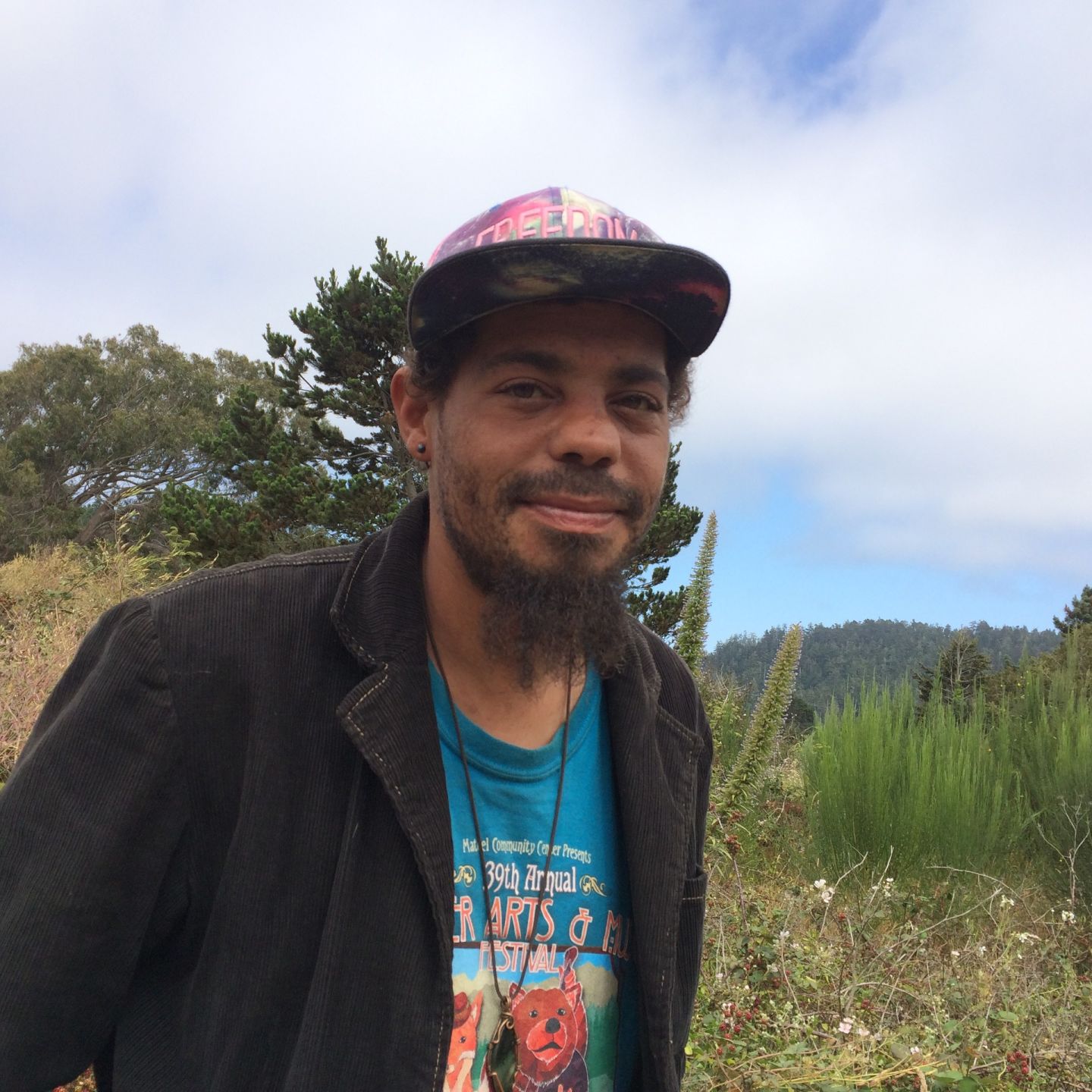
Homeless in Mendocino and Foraging for Food
Tackling Domestic Abuse, Man to Man
A Portrait of Caregiving: Devoted Daughter and Her Mother (Video)
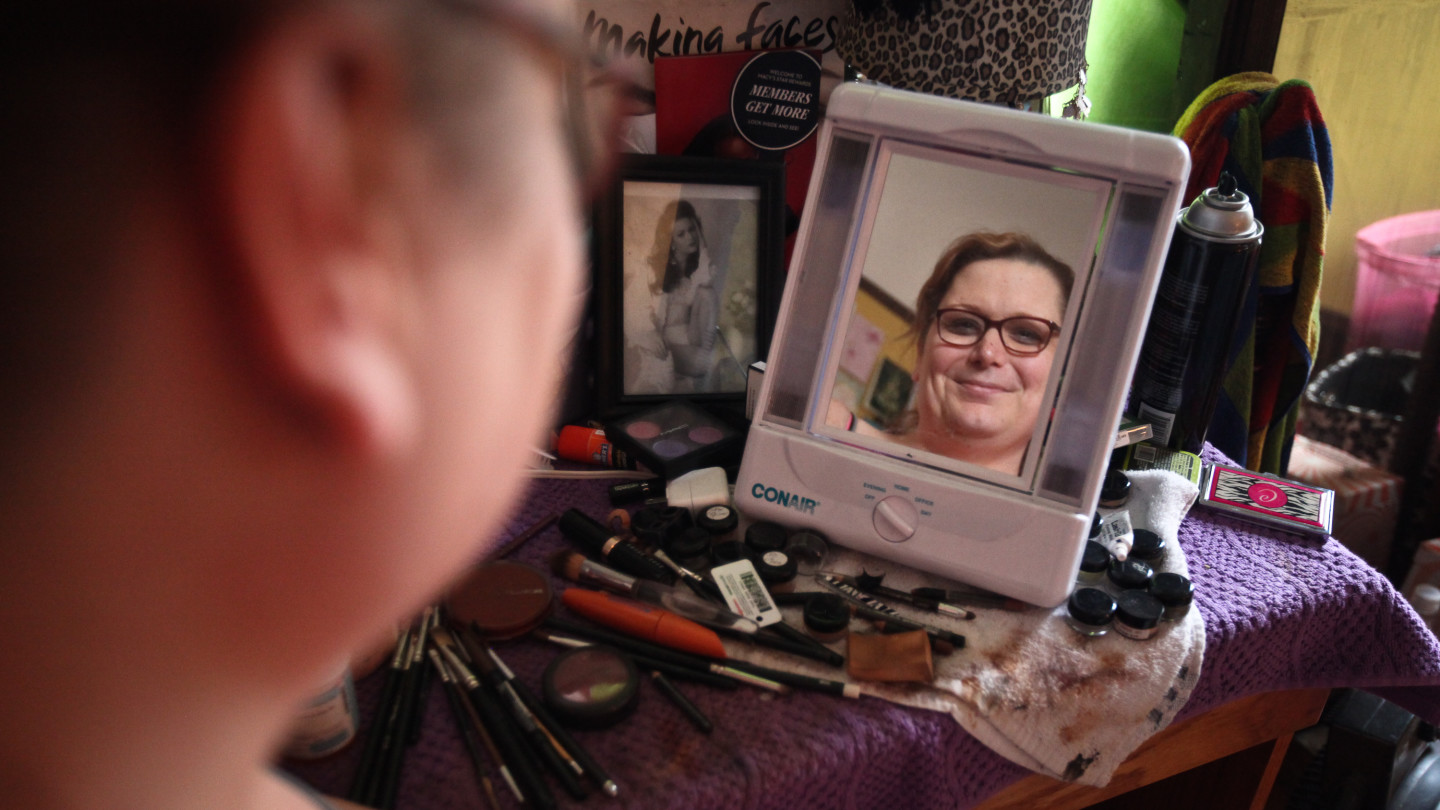
Follow Two Transgender People Through a Year of Transitioning (Video)
Gunfire Down in East Palo Alto Thanks to ... Volleyball?
Treating Type 2 Diabetes With A Dose Of History
Bay Area Golf Coach With Cerebral Palsy Defies Stereotypes (Video)
Mental Health 'Warm Line' Helps Prevent Crises With Good Listening
Not Vaccinated? 'Stay Home from School,' Says Marin Dad of Leukemia Patient
Keeping A Watchful Eye On Farmworker Health
Video: San Francisco Homeless Veterans Get Permanent Place to Live
window.__IS_SSR__=true
window.__INITIAL_STATE__={
"attachmentsReducer": {
"audio_0": {
"type": "attachments",
"id": "audio_0",
"imgSizes": {
"kqedFullSize": {
"file": "https://ww2.kqed.org/news/wp-content/themes/KQED-unified/img/audio_bgs/background0.jpg"
}
}
},
"audio_1": {
"type": "attachments",
"id": "audio_1",
"imgSizes": {
"kqedFullSize": {
"file": "https://ww2.kqed.org/news/wp-content/themes/KQED-unified/img/audio_bgs/background1.jpg"
}
}
},
"audio_2": {
"type": "attachments",
"id": "audio_2",
"imgSizes": {
"kqedFullSize": {
"file": "https://ww2.kqed.org/news/wp-content/themes/KQED-unified/img/audio_bgs/background2.jpg"
}
}
},
"audio_3": {
"type": "attachments",
"id": "audio_3",
"imgSizes": {
"kqedFullSize": {
"file": "https://ww2.kqed.org/news/wp-content/themes/KQED-unified/img/audio_bgs/background3.jpg"
}
}
},
"audio_4": {
"type": "attachments",
"id": "audio_4",
"imgSizes": {
"kqedFullSize": {
"file": "https://ww2.kqed.org/news/wp-content/themes/KQED-unified/img/audio_bgs/background4.jpg"
}
}
},
"placeholder": {
"type": "attachments",
"id": "placeholder",
"imgSizes": {
"thumbnail": {
"file": "https://cdn.kqed.org/wp-content/uploads/2024/12/KQED-Default-Image-816638274-2000x1333-1-160x107.jpg",
"width": 160,
"height": 107,
"mimeType": "image/jpeg"
},
"medium": {
"file": "https://cdn.kqed.org/wp-content/uploads/2024/12/KQED-Default-Image-816638274-2000x1333-1-800x533.jpg",
"width": 800,
"height": 533,
"mimeType": "image/jpeg"
},
"medium_large": {
"file": "https://cdn.kqed.org/wp-content/uploads/2024/12/KQED-Default-Image-816638274-2000x1333-1-768x512.jpg",
"width": 768,
"height": 512,
"mimeType": "image/jpeg"
},
"large": {
"file": "https://cdn.kqed.org/wp-content/uploads/2024/12/KQED-Default-Image-816638274-2000x1333-1-1020x680.jpg",
"width": 1020,
"height": 680,
"mimeType": "image/jpeg"
},
"1536x1536": {
"file": "https://cdn.kqed.org/wp-content/uploads/2024/12/KQED-Default-Image-816638274-2000x1333-1-1536x1024.jpg",
"width": 1536,
"height": 1024,
"mimeType": "image/jpeg"
},
"fd-lrg": {
"file": "https://cdn.kqed.org/wp-content/uploads/2024/12/KQED-Default-Image-816638274-2000x1333-1-1536x1024.jpg",
"width": 1536,
"height": 1024,
"mimeType": "image/jpeg"
},
"fd-med": {
"file": "https://cdn.kqed.org/wp-content/uploads/2024/12/KQED-Default-Image-816638274-2000x1333-1-1020x680.jpg",
"width": 1020,
"height": 680,
"mimeType": "image/jpeg"
},
"fd-sm": {
"file": "https://cdn.kqed.org/wp-content/uploads/2024/12/KQED-Default-Image-816638274-2000x1333-1-800x533.jpg",
"width": 800,
"height": 533,
"mimeType": "image/jpeg"
},
"post-thumbnail": {
"file": "https://cdn.kqed.org/wp-content/uploads/2024/12/KQED-Default-Image-816638274-2000x1333-1-672x372.jpg",
"width": 672,
"height": 372,
"mimeType": "image/jpeg"
},
"twentyfourteen-full-width": {
"file": "https://cdn.kqed.org/wp-content/uploads/2024/12/KQED-Default-Image-816638274-2000x1333-1-1038x576.jpg",
"width": 1038,
"height": 576,
"mimeType": "image/jpeg"
},
"xxsmall": {
"file": "https://cdn.kqed.org/wp-content/uploads/2024/12/KQED-Default-Image-816638274-2000x1333-1-160x107.jpg",
"width": 160,
"height": 107,
"mimeType": "image/jpeg"
},
"xsmall": {
"file": "https://cdn.kqed.org/wp-content/uploads/2024/12/KQED-Default-Image-816638274-2000x1333-1-672x372.jpg",
"width": 672,
"height": 372,
"mimeType": "image/jpeg"
},
"small": {
"file": "https://cdn.kqed.org/wp-content/uploads/2024/12/KQED-Default-Image-816638274-2000x1333-1-672x372.jpg",
"width": 672,
"height": 372,
"mimeType": "image/jpeg"
},
"xlarge": {
"file": "https://cdn.kqed.org/wp-content/uploads/2024/12/KQED-Default-Image-816638274-2000x1333-1-1020x680.jpg",
"width": 1020,
"height": 680,
"mimeType": "image/jpeg"
},
"full-width": {
"file": "https://cdn.kqed.org/wp-content/uploads/2024/12/KQED-Default-Image-816638274-2000x1333-1-1920x1280.jpg",
"width": 1920,
"height": 1280,
"mimeType": "image/jpeg"
},
"guest-author-32": {
"file": "https://cdn.kqed.org/wp-content/uploads/2025/01/KQED-Default-Image-816638274-1333x1333-1-160x160.jpg",
"width": 32,
"height": 32,
"mimeType": "image/jpeg"
},
"guest-author-50": {
"file": "https://cdn.kqed.org/wp-content/uploads/2025/01/KQED-Default-Image-816638274-1333x1333-1-160x160.jpg",
"width": 50,
"height": 50,
"mimeType": "image/jpeg"
},
"guest-author-64": {
"file": "https://cdn.kqed.org/wp-content/uploads/2025/01/KQED-Default-Image-816638274-1333x1333-1-160x160.jpg",
"width": 64,
"height": 64,
"mimeType": "image/jpeg"
},
"guest-author-96": {
"file": "https://cdn.kqed.org/wp-content/uploads/2025/01/KQED-Default-Image-816638274-1333x1333-1-160x160.jpg",
"width": 96,
"height": 96,
"mimeType": "image/jpeg"
},
"guest-author-128": {
"file": "https://cdn.kqed.org/wp-content/uploads/2025/01/KQED-Default-Image-816638274-1333x1333-1-160x160.jpg",
"width": 128,
"height": 128,
"mimeType": "image/jpeg"
},
"detail": {
"file": "https://cdn.kqed.org/wp-content/uploads/2025/01/KQED-Default-Image-816638274-1333x1333-1-160x160.jpg",
"width": 160,
"height": 160,
"mimeType": "image/jpeg"
},
"kqedFullSize": {
"file": "https://cdn.kqed.org/wp-content/uploads/2024/12/KQED-Default-Image-816638274-2000x1333-1.jpg",
"width": 2000,
"height": 1333
}
}
},
"stateofhealth_63563": {
"type": "attachments",
"id": "stateofhealth_63563",
"meta": {
"index": "attachments_1716263798",
"site": "stateofhealth",
"id": "63563",
"found": true
},
"parent": 63251,
"imgSizes": {
"twentyfourteen-full-width": {
"file": "https://ww2.kqed.org/app/uploads/sites/27/2015/08/RS16378_IMG_3735.JPG-alt_322-1038x576.jpg",
"width": 1038,
"mimeType": "image/jpeg",
"height": 576
},
"thumbnail": {
"file": "https://ww2.kqed.org/app/uploads/sites/27/2015/08/RS16378_IMG_3735.JPG-alt_322-400x280.jpg",
"width": 400,
"mimeType": "image/jpeg",
"height": 280
},
"fd-sm": {
"file": "https://ww2.kqed.org/app/uploads/sites/27/2015/08/RS16378_IMG_3735.JPG-alt_322-960x672.jpg",
"width": 960,
"mimeType": "image/jpeg",
"height": 672
},
"post-thumbnail": {
"file": "https://ww2.kqed.org/app/uploads/sites/27/2015/08/RS16378_IMG_3735.JPG-alt_322-672x372.jpg",
"width": 672,
"mimeType": "image/jpeg",
"height": 372
},
"kqedFullSize": {
"file": "https://ww2.kqed.org/app/uploads/sites/27/2015/08/RS16378_IMG_3735.JPG-alt_322.jpg",
"width": 1920,
"height": 1344
},
"large": {
"file": "https://ww2.kqed.org/app/uploads/sites/27/2015/08/RS16378_IMG_3735.JPG-alt_322-1440x1008.jpg",
"width": 1440,
"mimeType": "image/jpeg",
"height": 1008
},
"guest-author-96": {
"file": "https://ww2.kqed.org/app/uploads/sites/27/2015/08/RS16378_IMG_3735.JPG-alt_322-96x96.jpg",
"width": 96,
"mimeType": "image/jpeg",
"height": 96
},
"medium": {
"file": "https://ww2.kqed.org/app/uploads/sites/27/2015/08/RS16378_IMG_3735.JPG-alt_322-800x560.jpg",
"width": 800,
"mimeType": "image/jpeg",
"height": 560
},
"guest-author-64": {
"file": "https://ww2.kqed.org/app/uploads/sites/27/2015/08/RS16378_IMG_3735.JPG-alt_322-64x64.jpg",
"width": 64,
"mimeType": "image/jpeg",
"height": 64
},
"guest-author-32": {
"file": "https://ww2.kqed.org/app/uploads/sites/27/2015/08/RS16378_IMG_3735.JPG-alt_322-32x32.jpg",
"width": 32,
"mimeType": "image/jpeg",
"height": 32
},
"jmtc-small-thumb": {
"file": "https://ww2.kqed.org/app/uploads/sites/27/2015/08/RS16378_IMG_3735.JPG-alt_322-280x150.jpg",
"width": 280,
"mimeType": "image/jpeg",
"height": 150
},
"fd-lrg": {
"file": "https://ww2.kqed.org/app/uploads/sites/27/2015/08/RS16378_IMG_3735.JPG-alt_322-1920x1344.jpg",
"width": 1920,
"mimeType": "image/jpeg",
"height": 1344
},
"fd-med": {
"file": "https://ww2.kqed.org/app/uploads/sites/27/2015/08/RS16378_IMG_3735.JPG-alt_322-1180x826.jpg",
"width": 1180,
"mimeType": "image/jpeg",
"height": 826
},
"detail": {
"file": "https://ww2.kqed.org/app/uploads/sites/27/2015/08/RS16378_IMG_3735.JPG-alt_322-75x75.jpg",
"width": 75,
"mimeType": "image/jpeg",
"height": 75
},
"guest-author-128": {
"file": "https://ww2.kqed.org/app/uploads/sites/27/2015/08/RS16378_IMG_3735.JPG-alt_322-128x128.jpg",
"width": 128,
"mimeType": "image/jpeg",
"height": 128
}
},
"publishDate": 1439918417,
"modified": 1439920494,
"caption": "Jade Aldrich teaches parenting skills at the Family Passage Resource Center in Fort Bragg, Calif.",
"description": null,
"title": "RS16378_IMG_3735.JPG-alt_322",
"credit": "Farida Jhabvala Romero / KQED",
"status": "inherit",
"isLoading": false,
"fetchFailed": false
},
"stateofhealth_59887": {
"type": "attachments",
"id": "stateofhealth_59887",
"meta": {
"index": "attachments_1716263798",
"site": "stateofhealth",
"id": "59887",
"found": true
},
"parent": 59885,
"imgSizes": {
"twentyfourteen-full-width": {
"file": "https://ww2.kqed.org/app/uploads/sites/27/2015/08/RS16315_IMG_3678.JPG-qut-1038x576.jpg",
"width": 1038,
"mimeType": "image/jpeg",
"height": 576
},
"thumbnail": {
"file": "https://ww2.kqed.org/app/uploads/sites/27/2015/08/RS16315_IMG_3678.JPG-qut-400x400.jpg",
"width": 400,
"mimeType": "image/jpeg",
"height": 400
},
"fd-sm": {
"file": "https://ww2.kqed.org/app/uploads/sites/27/2015/08/RS16315_IMG_3678.JPG-qut-960x960.jpg",
"width": 960,
"mimeType": "image/jpeg",
"height": 960
},
"post-thumbnail": {
"file": "https://ww2.kqed.org/app/uploads/sites/27/2015/08/RS16315_IMG_3678.JPG-qut-672x372.jpg",
"width": 672,
"mimeType": "image/jpeg",
"height": 372
},
"kqedFullSize": {
"file": "https://ww2.kqed.org/app/uploads/sites/27/2015/08/RS16315_IMG_3678.JPG-qut.jpg",
"width": 1920,
"height": 1920
},
"large": {
"file": "https://ww2.kqed.org/app/uploads/sites/27/2015/08/RS16315_IMG_3678.JPG-qut-1440x1440.jpg",
"width": 1440,
"mimeType": "image/jpeg",
"height": 1440
},
"guest-author-96": {
"file": "https://ww2.kqed.org/app/uploads/sites/27/2015/08/RS16315_IMG_3678.JPG-qut-96x96.jpg",
"width": 96,
"mimeType": "image/jpeg",
"height": 96
},
"medium": {
"file": "https://ww2.kqed.org/app/uploads/sites/27/2015/08/RS16315_IMG_3678.JPG-qut-800x800.jpg",
"width": 800,
"mimeType": "image/jpeg",
"height": 800
},
"guest-author-64": {
"file": "https://ww2.kqed.org/app/uploads/sites/27/2015/08/RS16315_IMG_3678.JPG-qut-64x64.jpg",
"width": 64,
"mimeType": "image/jpeg",
"height": 64
},
"guest-author-32": {
"file": "https://ww2.kqed.org/app/uploads/sites/27/2015/08/RS16315_IMG_3678.JPG-qut-32x32.jpg",
"width": 32,
"mimeType": "image/jpeg",
"height": 32
},
"jmtc-small-thumb": {
"file": "https://ww2.kqed.org/app/uploads/sites/27/2015/08/RS16315_IMG_3678.JPG-qut-280x150.jpg",
"width": 280,
"mimeType": "image/jpeg",
"height": 150
},
"fd-lrg": {
"file": "https://ww2.kqed.org/app/uploads/sites/27/2015/08/RS16315_IMG_3678.JPG-qut-1920x1920.jpg",
"width": 1920,
"mimeType": "image/jpeg",
"height": 1920
},
"fd-med": {
"file": "https://ww2.kqed.org/app/uploads/sites/27/2015/08/RS16315_IMG_3678.JPG-qut-1180x1180.jpg",
"width": 1180,
"mimeType": "image/jpeg",
"height": 1180
},
"detail": {
"file": "https://ww2.kqed.org/app/uploads/sites/27/2015/08/RS16315_IMG_3678.JPG-qut-75x75.jpg",
"width": 75,
"mimeType": "image/jpeg",
"height": 75
},
"guest-author-128": {
"file": "https://ww2.kqed.org/app/uploads/sites/27/2015/08/RS16315_IMG_3678.JPG-qut-128x128.jpg",
"width": 128,
"mimeType": "image/jpeg",
"height": 128
}
},
"publishDate": 1439251327,
"modified": 1439251383,
"caption": "Darion, who also calls himself Blackbird, has been homeless for 15 years. He forages for edible plants in the Mendocino coast to supplement his diet.",
"description": null,
"title": "Blackbird",
"credit": "Farida Jhabvala Romero/KQED",
"status": "inherit",
"isLoading": false,
"fetchFailed": false
},
"stateofhealth_41774": {
"type": "attachments",
"id": "stateofhealth_41774",
"meta": {
"index": "attachments_1716263798",
"site": "stateofhealth",
"id": "41774",
"found": true
},
"parent": 41771,
"imgSizes": {
"twentyfourteen-full-width": {
"file": "https://ww2.kqed.org/app/uploads/sites/27/2015/06/rachel-wide-2-of-3-1038x576.jpg",
"width": 1038,
"mimeType": "image/jpeg",
"height": 576
},
"thumbnail": {
"file": "https://ww2.kqed.org/app/uploads/sites/27/2015/06/rachel-wide-2-of-3-400x225.jpg",
"width": 400,
"mimeType": "image/jpeg",
"height": 225
},
"fd-sm": {
"file": "https://ww2.kqed.org/app/uploads/sites/27/2015/06/rachel-wide-2-of-3-960x540.jpg",
"width": 960,
"mimeType": "image/jpeg",
"height": 540
},
"post-thumbnail": {
"file": "https://ww2.kqed.org/app/uploads/sites/27/2015/06/rachel-wide-2-of-3-672x372.jpg",
"width": 672,
"mimeType": "image/jpeg",
"height": 372
},
"kqedFullSize": {
"file": "https://ww2.kqed.org/app/uploads/sites/27/2015/06/rachel-wide-2-of-3.jpg",
"width": 1920,
"height": 1080
},
"large": {
"file": "https://ww2.kqed.org/app/uploads/sites/27/2015/06/rachel-wide-2-of-3-1440x810.jpg",
"width": 1440,
"mimeType": "image/jpeg",
"height": 810
},
"guest-author-96": {
"file": "https://ww2.kqed.org/app/uploads/sites/27/2015/06/rachel-wide-2-of-3-96x96.jpg",
"width": 96,
"mimeType": "image/jpeg",
"height": 96
},
"medium": {
"file": "https://ww2.kqed.org/app/uploads/sites/27/2015/06/rachel-wide-2-of-3-800x450.jpg",
"width": 800,
"mimeType": "image/jpeg",
"height": 450
},
"guest-author-64": {
"file": "https://ww2.kqed.org/app/uploads/sites/27/2015/06/rachel-wide-2-of-3-64x64.jpg",
"width": 64,
"mimeType": "image/jpeg",
"height": 64
},
"guest-author-32": {
"file": "https://ww2.kqed.org/app/uploads/sites/27/2015/06/rachel-wide-2-of-3-32x32.jpg",
"width": 32,
"mimeType": "image/jpeg",
"height": 32
},
"fd-med": {
"file": "https://ww2.kqed.org/app/uploads/sites/27/2015/06/rachel-wide-2-of-3-1180x664.jpg",
"width": 1180,
"mimeType": "image/jpeg",
"height": 664
},
"detail": {
"file": "https://ww2.kqed.org/app/uploads/sites/27/2015/06/rachel-wide-2-of-3-75x75.jpg",
"width": 75,
"mimeType": "image/jpeg",
"height": 75
},
"guest-author-128": {
"file": "https://ww2.kqed.org/app/uploads/sites/27/2015/06/rachel-wide-2-of-3-128x128.jpg",
"width": 128,
"mimeType": "image/jpeg",
"height": 128
}
},
"publishDate": 1435604748,
"modified": 1435619097,
"caption": "\"For me as an indigenous person, hitting our wives is not part of our culture,\" said Arcenio Lopez.",
"description": null,
"title": "rachel wide (2 of 3)",
"credit": "Jeremy Raff/KQED",
"status": "inherit",
"isLoading": false,
"fetchFailed": false
},
"stateofhealth_33582": {
"type": "attachments",
"id": "stateofhealth_33582",
"meta": {
"index": "attachments_1716263798",
"site": "stateofhealth",
"id": "33582",
"found": true
},
"parent": 25344,
"imgSizes": {
"twentyfourteen-full-width": {
"file": "https://ww2.kqed.org/app/uploads/sites/27/2015/06/Screen-Shot-2015-06-04-at-12.44.16-PM-1038x576.png",
"width": 1038,
"mimeType": "image/png",
"height": 576
},
"thumbnail": {
"file": "https://ww2.kqed.org/app/uploads/sites/27/2015/06/Screen-Shot-2015-06-04-at-12.44.16-PM-400x225.png",
"width": 400,
"mimeType": "image/png",
"height": 225
},
"fd-sm": {
"file": "https://ww2.kqed.org/app/uploads/sites/27/2015/06/Screen-Shot-2015-06-04-at-12.44.16-PM-960x539.png",
"width": 960,
"mimeType": "image/png",
"height": 539
},
"post-thumbnail": {
"file": "https://ww2.kqed.org/app/uploads/sites/27/2015/06/Screen-Shot-2015-06-04-at-12.44.16-PM-672x372.png",
"width": 672,
"mimeType": "image/png",
"height": 372
},
"kqedFullSize": {
"file": "https://ww2.kqed.org/app/uploads/sites/27/2015/06/Screen-Shot-2015-06-04-at-12.44.16-PM.png",
"width": 1268,
"height": 712
},
"fd-med": {
"file": "https://ww2.kqed.org/app/uploads/sites/27/2015/06/Screen-Shot-2015-06-04-at-12.44.16-PM-1180x663.png",
"width": 1180,
"mimeType": "image/png",
"height": 663
},
"guest-author-96": {
"file": "https://ww2.kqed.org/app/uploads/sites/27/2015/06/Screen-Shot-2015-06-04-at-12.44.16-PM-96x96.png",
"width": 96,
"mimeType": "image/png",
"height": 96
},
"medium": {
"file": "https://ww2.kqed.org/app/uploads/sites/27/2015/06/Screen-Shot-2015-06-04-at-12.44.16-PM-800x449.png",
"width": 800,
"mimeType": "image/png",
"height": 449
},
"guest-author-64": {
"file": "https://ww2.kqed.org/app/uploads/sites/27/2015/06/Screen-Shot-2015-06-04-at-12.44.16-PM-64x64.png",
"width": 64,
"mimeType": "image/png",
"height": 64
},
"detail": {
"file": "https://ww2.kqed.org/app/uploads/sites/27/2015/06/Screen-Shot-2015-06-04-at-12.44.16-PM-75x75.png",
"width": 75,
"mimeType": "image/png",
"height": 75
},
"guest-author-32": {
"file": "https://ww2.kqed.org/app/uploads/sites/27/2015/06/Screen-Shot-2015-06-04-at-12.44.16-PM-32x32.png",
"width": 32,
"mimeType": "image/png",
"height": 32
},
"guest-author-128": {
"file": "https://ww2.kqed.org/app/uploads/sites/27/2015/06/Screen-Shot-2015-06-04-at-12.44.16-PM-128x128.png",
"width": 128,
"mimeType": "image/png",
"height": 128
}
},
"publishDate": 1433447087,
"modified": 1433447129,
"caption": "Maria Martinez (left) works full time as an occupational therapist, then cares for her mother who has Alzheimer's disease.",
"description": null,
"title": "Screen Shot 2015-06-04 at 12.44.16 PM",
"credit": "Lynne Shallcross",
"status": "inherit",
"isLoading": false,
"fetchFailed": false
},
"stateofhealth_30451": {
"type": "attachments",
"id": "stateofhealth_30451",
"meta": {
"index": "attachments_1716263798",
"site": "stateofhealth",
"id": "30451",
"found": true
},
"parent": 30382,
"imgSizes": {
"twentyfourteen-full-width": {
"file": "https://ww2.kqed.org/app/uploads/sites/27/2015/05/002-1038x576.jpg",
"width": 1038,
"mimeType": "image/jpeg",
"height": 576
},
"thumbnail": {
"file": "https://ww2.kqed.org/app/uploads/sites/27/2015/05/002-400x225.jpg",
"width": 400,
"mimeType": "image/jpeg",
"height": 225
},
"fd-sm": {
"file": "https://ww2.kqed.org/app/uploads/sites/27/2015/05/002-960x540.jpg",
"width": 960,
"mimeType": "image/jpeg",
"height": 540
},
"post-thumbnail": {
"file": "https://ww2.kqed.org/app/uploads/sites/27/2015/05/002-672x372.jpg",
"width": 672,
"mimeType": "image/jpeg",
"height": 372
},
"kqedFullSize": {
"file": "https://ww2.kqed.org/app/uploads/sites/27/2015/05/002-e1432678588614.jpg",
"width": 1919,
"height": 1080
},
"large": {
"file": "https://ww2.kqed.org/app/uploads/sites/27/2015/05/002-1440x810.jpg",
"width": 1440,
"mimeType": "image/jpeg",
"height": 810
},
"guest-author-96": {
"file": "https://ww2.kqed.org/app/uploads/sites/27/2015/05/002-96x96.jpg",
"width": 96,
"mimeType": "image/jpeg",
"height": 96
},
"medium": {
"file": "https://ww2.kqed.org/app/uploads/sites/27/2015/05/002-800x450.jpg",
"width": 800,
"mimeType": "image/jpeg",
"height": 450
},
"guest-author-64": {
"file": "https://ww2.kqed.org/app/uploads/sites/27/2015/05/002-64x64.jpg",
"width": 64,
"mimeType": "image/jpeg",
"height": 64
},
"guest-author-32": {
"file": "https://ww2.kqed.org/app/uploads/sites/27/2015/05/002-32x32.jpg",
"width": 32,
"mimeType": "image/jpeg",
"height": 32
},
"fd-med": {
"file": "https://ww2.kqed.org/app/uploads/sites/27/2015/05/002-1180x664.jpg",
"width": 1180,
"mimeType": "image/jpeg",
"height": 664
},
"detail": {
"file": "https://ww2.kqed.org/app/uploads/sites/27/2015/05/002-75x75.jpg",
"width": 75,
"mimeType": "image/jpeg",
"height": 75
},
"guest-author-128": {
"file": "https://ww2.kqed.org/app/uploads/sites/27/2015/05/002-128x128.jpg",
"width": 128,
"mimeType": "image/jpeg",
"height": 128
}
},
"publishDate": 1432678527,
"modified": 1432678598,
"caption": "Jetta'Mae Carlisle says she was assigned the male gender at birth, but identifies as a straight woman.",
"description": "Jetta'Mae Carlisle says she was assigned the male gender at birth, but identifies as a straight woman.",
"title": "002",
"credit": "Deborah Svoboda",
"status": "inherit",
"isLoading": false,
"fetchFailed": false
},
"stateofhealth_25140": {
"type": "attachments",
"id": "stateofhealth_25140",
"meta": {
"index": "attachments_1716263798",
"site": "stateofhealth",
"id": "25140",
"found": true
},
"parent": 0,
"imgSizes": {
"twentyfourteen-full-width": {
"file": "https://ww2.kqed.org/app/uploads/sites/27/2015/04/EPA-Fit-Zone-1038x576.jpg",
"width": 1038,
"mimeType": "image/jpeg",
"height": 576
},
"thumbnail": {
"file": "https://ww2.kqed.org/app/uploads/sites/27/2015/04/EPA-Fit-Zone-400x267.jpg",
"width": 400,
"mimeType": "image/jpeg",
"height": 267
},
"fd-sm": {
"file": "https://ww2.kqed.org/app/uploads/sites/27/2015/04/EPA-Fit-Zone-320x213.jpg",
"width": 320,
"mimeType": "image/jpeg",
"height": 213
},
"post-thumbnail": {
"file": "https://ww2.kqed.org/app/uploads/sites/27/2015/04/EPA-Fit-Zone-672x372.jpg",
"width": 672,
"mimeType": "image/jpeg",
"height": 372
},
"kqedFullSize": {
"file": "https://ww2.kqed.org/app/uploads/sites/27/2015/04/EPA-Fit-Zone.jpg",
"width": 4842,
"height": 3228
},
"large": {
"file": "https://ww2.kqed.org/app/uploads/sites/27/2015/04/EPA-Fit-Zone-1440x960.jpg",
"width": 1440,
"mimeType": "image/jpeg",
"height": 960
},
"guest-author-96": {
"file": "https://ww2.kqed.org/app/uploads/sites/27/2015/04/EPA-Fit-Zone-96x96.jpg",
"width": 96,
"mimeType": "image/jpeg",
"height": 96
},
"medium": {
"file": "https://ww2.kqed.org/app/uploads/sites/27/2015/04/EPA-Fit-Zone-800x533.jpg",
"width": 800,
"mimeType": "image/jpeg",
"height": 533
},
"guest-author-64": {
"file": "https://ww2.kqed.org/app/uploads/sites/27/2015/04/EPA-Fit-Zone-64x64.jpg",
"width": 64,
"mimeType": "image/jpeg",
"height": 64
},
"guest-author-32": {
"file": "https://ww2.kqed.org/app/uploads/sites/27/2015/04/EPA-Fit-Zone-32x32.jpg",
"width": 32,
"mimeType": "image/jpeg",
"height": 32
},
"fd-lrg": {
"file": "https://ww2.kqed.org/app/uploads/sites/27/2015/04/EPA-Fit-Zone-1180x787.jpg",
"width": 1180,
"mimeType": "image/jpeg",
"height": 787
},
"fd-med": {
"file": "https://ww2.kqed.org/app/uploads/sites/27/2015/04/EPA-Fit-Zone-768x512.jpg",
"width": 768,
"mimeType": "image/jpeg",
"height": 512
},
"detail": {
"file": "https://ww2.kqed.org/app/uploads/sites/27/2015/04/EPA-Fit-Zone-75x75.jpg",
"width": 75,
"mimeType": "image/jpeg",
"height": 75
},
"guest-author-128": {
"file": "https://ww2.kqed.org/app/uploads/sites/27/2015/04/EPA-Fit-Zone-128x128.jpg",
"width": 128,
"mimeType": "image/jpeg",
"height": 128
}
},
"publishDate": 1430178733,
"modified": 1430866384,
"caption": "Cops and community members exercising together reduced shootings in East Palo Alto. (Jeremy Raff/KQED).",
"description": null,
"title": "EPA Fit Zone",
"credit": null,
"status": "inherit",
"isLoading": false,
"fetchFailed": false
},
"stateofhealth_24795": {
"type": "attachments",
"id": "stateofhealth_24795",
"meta": {
"index": "attachments_1716263798",
"site": "stateofhealth",
"id": "24795",
"found": true
},
"parent": 24794,
"imgSizes": {
"twentyfourteen-full-width": {
"file": "https://ww2.kqed.org/app/uploads/sites/27/2015/03/Erica-McMath-Photo-1038x576.jpg",
"width": 1038,
"mimeType": "image/jpeg",
"height": 576
},
"thumbnail": {
"file": "https://ww2.kqed.org/app/uploads/sites/27/2015/03/Erica-McMath-Photo-400x267.jpg",
"width": 400,
"mimeType": "image/jpeg",
"height": 267
},
"fd-sm": {
"file": "https://ww2.kqed.org/app/uploads/sites/27/2015/03/Erica-McMath-Photo-320x213.jpg",
"width": 320,
"mimeType": "image/jpeg",
"height": 213
},
"post-thumbnail": {
"file": "https://ww2.kqed.org/app/uploads/sites/27/2015/03/Erica-McMath-Photo-672x372.jpg",
"width": 672,
"mimeType": "image/jpeg",
"height": 372
},
"kqedFullSize": {
"file": "https://ww2.kqed.org/app/uploads/sites/27/2015/03/Erica-McMath-Photo.jpg",
"width": 5076,
"height": 3385
},
"large": {
"file": "https://ww2.kqed.org/app/uploads/sites/27/2015/03/Erica-McMath-Photo-1440x960.jpg",
"width": 1440,
"mimeType": "image/jpeg",
"height": 960
},
"guest-author-96": {
"file": "https://ww2.kqed.org/app/uploads/sites/27/2015/03/Erica-McMath-Photo-96x96.jpg",
"width": 96,
"mimeType": "image/jpeg",
"height": 96
},
"medium": {
"file": "https://ww2.kqed.org/app/uploads/sites/27/2015/03/Erica-McMath-Photo-800x533.jpg",
"width": 800,
"mimeType": "image/jpeg",
"height": 533
},
"guest-author-64": {
"file": "https://ww2.kqed.org/app/uploads/sites/27/2015/03/Erica-McMath-Photo-64x64.jpg",
"width": 64,
"mimeType": "image/jpeg",
"height": 64
},
"guest-author-32": {
"file": "https://ww2.kqed.org/app/uploads/sites/27/2015/03/Erica-McMath-Photo-32x32.jpg",
"width": 32,
"mimeType": "image/jpeg",
"height": 32
},
"fd-lrg": {
"file": "https://ww2.kqed.org/app/uploads/sites/27/2015/03/Erica-McMath-Photo-1180x787.jpg",
"width": 1180,
"mimeType": "image/jpeg",
"height": 787
},
"fd-med": {
"file": "https://ww2.kqed.org/app/uploads/sites/27/2015/03/Erica-McMath-Photo-768x512.jpg",
"width": 768,
"mimeType": "image/jpeg",
"height": 512
},
"detail": {
"file": "https://ww2.kqed.org/app/uploads/sites/27/2015/03/Erica-McMath-Photo-75x75.jpg",
"width": 75,
"mimeType": "image/jpeg",
"height": 75
},
"guest-author-128": {
"file": "https://ww2.kqed.org/app/uploads/sites/27/2015/03/Erica-McMath-Photo-128x128.jpg",
"width": 128,
"mimeType": "image/jpeg",
"height": 128
}
},
"publishDate": 1427839856,
"modified": 1427841426,
"caption": "San Francisco poet Erica McMath has seen the devastating effects of type-2 diabetes first hand (Jeremy Raff/KQED)",
"description": null,
"title": "Erica McMath Photo",
"credit": null,
"status": "inherit",
"isLoading": false,
"fetchFailed": false
},
"stateofhealth_24149": {
"type": "attachments",
"id": "stateofhealth_24149",
"meta": {
"index": "attachments_1716263798",
"site": "stateofhealth",
"id": "24149",
"found": true
},
"parent": 24140,
"imgSizes": {
"twentyfourteen-full-width": {
"file": "https://ww2.kqed.org/app/uploads/sites/27/2015/03/Marty_club-e1425585566718-1038x576.png",
"width": 1038,
"mimeType": "image/png",
"height": 576
},
"thumbnail": {
"file": "https://ww2.kqed.org/app/uploads/sites/27/2015/03/Marty_club-e1425585566718-400x225.png",
"width": 400,
"mimeType": "image/png",
"height": 225
},
"fd-sm": {
"file": "https://ww2.kqed.org/app/uploads/sites/27/2015/03/Marty_club-e1425585566718-320x180.png",
"width": 320,
"mimeType": "image/png",
"height": 180
},
"post-thumbnail": {
"file": "https://ww2.kqed.org/app/uploads/sites/27/2015/03/Marty_club-e1425585566718-672x372.png",
"width": 672,
"mimeType": "image/png",
"height": 372
},
"kqedFullSize": {
"file": "https://ww2.kqed.org/app/uploads/sites/27/2015/03/Marty_club-e1425585566718.png",
"width": 1920,
"height": 1080
},
"large": {
"file": "https://ww2.kqed.org/app/uploads/sites/27/2015/03/Marty_club-e1425585566718-1440x810.png",
"width": 1440,
"mimeType": "image/png",
"height": 810
},
"guest-author-96": {
"file": "https://ww2.kqed.org/app/uploads/sites/27/2015/03/Marty_club-e1425585566718-96x96.png",
"width": 96,
"mimeType": "image/png",
"height": 96
},
"medium": {
"file": "https://ww2.kqed.org/app/uploads/sites/27/2015/03/Marty_club-e1425585566718-800x450.png",
"width": 800,
"mimeType": "image/png",
"height": 450
},
"guest-author-64": {
"file": "https://ww2.kqed.org/app/uploads/sites/27/2015/03/Marty_club-e1425585566718-64x64.png",
"width": 64,
"mimeType": "image/png",
"height": 64
},
"guest-author-32": {
"file": "https://ww2.kqed.org/app/uploads/sites/27/2015/03/Marty_club-e1425585566718-32x32.png",
"width": 32,
"mimeType": "image/png",
"height": 32
},
"fd-lrg": {
"file": "https://ww2.kqed.org/app/uploads/sites/27/2015/03/Marty_club-e1425585566718-1180x664.png",
"width": 1180,
"mimeType": "image/png",
"height": 664
},
"fd-med": {
"file": "https://ww2.kqed.org/app/uploads/sites/27/2015/03/Marty_club-e1425585566718-768x432.png",
"width": 768,
"mimeType": "image/png",
"height": 432
},
"detail": {
"file": "https://ww2.kqed.org/app/uploads/sites/27/2015/03/Marty_club-e1425585566718-75x75.png",
"width": 75,
"mimeType": "image/png",
"height": 75
},
"guest-author-128": {
"file": "https://ww2.kqed.org/app/uploads/sites/27/2015/03/Marty_club-e1425585566718-128x128.png",
"width": 128,
"mimeType": "image/png",
"height": 128
}
},
"publishDate": 1425415012,
"modified": 1425415023,
"caption": null,
"description": null,
"title": "Marty Turcios",
"credit": null,
"status": "inherit",
"isLoading": false,
"fetchFailed": false
},
"stateofhealth_23631": {
"type": "attachments",
"id": "stateofhealth_23631",
"meta": {
"index": "attachments_1716263798",
"site": "stateofhealth",
"id": "23631",
"found": true
},
"parent": 23629,
"imgSizes": {
"twentyfourteen-full-width": {
"file": "https://ww2.kqed.org/app/uploads/sites/27/2015/01/Daisy-Matthias-Photo-1038x576.jpg",
"width": 1038,
"mimeType": "image/jpeg",
"height": 576
},
"thumbnail": {
"file": "https://ww2.kqed.org/app/uploads/sites/27/2015/01/Daisy-Matthias-Photo-400x299.jpg",
"width": 400,
"mimeType": "image/jpeg",
"height": 299
},
"fd-sm": {
"file": "https://ww2.kqed.org/app/uploads/sites/27/2015/01/Daisy-Matthias-Photo-320x239.jpg",
"width": 320,
"mimeType": "image/jpeg",
"height": 239
},
"post-thumbnail": {
"file": "https://ww2.kqed.org/app/uploads/sites/27/2015/01/Daisy-Matthias-Photo-672x372.jpg",
"width": 672,
"mimeType": "image/jpeg",
"height": 372
},
"kqedFullSize": {
"file": "https://ww2.kqed.org/app/uploads/sites/27/2015/01/Daisy-Matthias-Photo.jpg",
"width": 2766,
"height": 2070
},
"large": {
"file": "https://ww2.kqed.org/app/uploads/sites/27/2015/01/Daisy-Matthias-Photo-1440x1078.jpg",
"width": 1440,
"mimeType": "image/jpeg",
"height": 1078
},
"guest-author-96": {
"file": "https://ww2.kqed.org/app/uploads/sites/27/2015/01/Daisy-Matthias-Photo-96x96.jpg",
"width": 96,
"mimeType": "image/jpeg",
"height": 96
},
"medium": {
"file": "https://ww2.kqed.org/app/uploads/sites/27/2015/01/Daisy-Matthias-Photo-800x599.jpg",
"width": 800,
"mimeType": "image/jpeg",
"height": 599
},
"guest-author-64": {
"file": "https://ww2.kqed.org/app/uploads/sites/27/2015/01/Daisy-Matthias-Photo-64x64.jpg",
"width": 64,
"mimeType": "image/jpeg",
"height": 64
},
"guest-author-32": {
"file": "https://ww2.kqed.org/app/uploads/sites/27/2015/01/Daisy-Matthias-Photo-32x32.jpg",
"width": 32,
"mimeType": "image/jpeg",
"height": 32
},
"fd-lrg": {
"file": "https://ww2.kqed.org/app/uploads/sites/27/2015/01/Daisy-Matthias-Photo-1180x883.jpg",
"width": 1180,
"mimeType": "image/jpeg",
"height": 883
},
"fd-med": {
"file": "https://ww2.kqed.org/app/uploads/sites/27/2015/01/Daisy-Matthias-Photo-768x575.jpg",
"width": 768,
"mimeType": "image/jpeg",
"height": 575
},
"detail": {
"file": "https://ww2.kqed.org/app/uploads/sites/27/2015/01/Daisy-Matthias-Photo-75x75.jpg",
"width": 75,
"mimeType": "image/jpeg",
"height": 75
},
"guest-author-128": {
"file": "https://ww2.kqed.org/app/uploads/sites/27/2015/01/Daisy-Matthias-Photo-128x128.jpg",
"width": 128,
"mimeType": "image/jpeg",
"height": 128
}
},
"publishDate": 1422309753,
"modified": 1422309922,
"caption": "Daisy Matthias is a counselor at the San Francisco-based Mental Health Triage Warm Line. Most callers are struggling with anxiety, depression, loneliness, and stress. (Jeremy Raff /KQED)",
"description": null,
"title": "Daisy Matthias Photo",
"credit": null,
"status": "inherit",
"isLoading": false,
"fetchFailed": false
},
"stateofhealth_23647": {
"type": "attachments",
"id": "stateofhealth_23647",
"meta": {
"index": "attachments_1716263798",
"site": "stateofhealth",
"id": "23647",
"found": true
},
"parent": 23624,
"imgSizes": {
"twentyfourteen-full-width": {
"file": "https://ww2.kqed.org/app/uploads/sites/27/2015/01/2013-08-22-08.15.12-2-e1423546953785-1038x576.jpg",
"width": 1038,
"mimeType": "image/jpeg",
"height": 576
},
"thumbnail": {
"file": "https://ww2.kqed.org/app/uploads/sites/27/2015/01/2013-08-22-08.15.12-2-e1423546953785-400x296.jpg",
"width": 400,
"mimeType": "image/jpeg",
"height": 296
},
"fd-sm": {
"file": "https://ww2.kqed.org/app/uploads/sites/27/2015/01/2013-08-22-08.15.12-2-e1423546953785-320x237.jpg",
"width": 320,
"mimeType": "image/jpeg",
"height": 237
},
"post-thumbnail": {
"file": "https://ww2.kqed.org/app/uploads/sites/27/2015/01/2013-08-22-08.15.12-2-e1423546953785-672x372.jpg",
"width": 672,
"mimeType": "image/jpeg",
"height": 372
},
"kqedFullSize": {
"file": "https://ww2.kqed.org/app/uploads/sites/27/2015/01/2013-08-22-08.15.12-2-e1423546953785.jpg",
"width": 1441,
"height": 1065
},
"large": {
"file": "https://ww2.kqed.org/app/uploads/sites/27/2015/01/2013-08-22-08.15.12-2-e1423546953785-1440x1064.jpg",
"width": 1440,
"mimeType": "image/jpeg",
"height": 1064
},
"guest-author-96": {
"file": "https://ww2.kqed.org/app/uploads/sites/27/2015/01/2013-08-22-08.15.12-2-e1423546953785-96x96.jpg",
"width": 96,
"mimeType": "image/jpeg",
"height": 96
},
"medium": {
"file": "https://ww2.kqed.org/app/uploads/sites/27/2015/01/2013-08-22-08.15.12-2-e1423546953785-800x591.jpg",
"width": 800,
"mimeType": "image/jpeg",
"height": 591
},
"guest-author-64": {
"file": "https://ww2.kqed.org/app/uploads/sites/27/2015/01/2013-08-22-08.15.12-2-e1423546953785-64x64.jpg",
"width": 64,
"mimeType": "image/jpeg",
"height": 64
},
"guest-author-32": {
"file": "https://ww2.kqed.org/app/uploads/sites/27/2015/01/2013-08-22-08.15.12-2-e1423546953785-32x32.jpg",
"width": 32,
"mimeType": "image/jpeg",
"height": 32
},
"fd-lrg": {
"file": "https://ww2.kqed.org/app/uploads/sites/27/2015/01/2013-08-22-08.15.12-2-e1423546953785-1180x872.jpg",
"width": 1180,
"mimeType": "image/jpeg",
"height": 872
},
"fd-med": {
"file": "https://ww2.kqed.org/app/uploads/sites/27/2015/01/2013-08-22-08.15.12-2-e1423546953785-768x568.jpg",
"width": 768,
"mimeType": "image/jpeg",
"height": 568
},
"detail": {
"file": "https://ww2.kqed.org/app/uploads/sites/27/2015/01/2013-08-22-08.15.12-2-e1423546953785-75x75.jpg",
"width": 75,
"mimeType": "image/jpeg",
"height": 75
},
"guest-author-128": {
"file": "https://ww2.kqed.org/app/uploads/sites/27/2015/01/2013-08-22-08.15.12-2-e1423546953785-128x128.jpg",
"width": 128,
"mimeType": "image/jpeg",
"height": 128
}
},
"publishDate": 1422318668,
"modified": 1452037346,
"caption": "Rhett Krawitt, outside his classroom at Reed Elementary, in Tiburon. ",
"description": "Rhett Krawitt, outside a classroom at Reed Elementary, in Tiburon. (Courtesy: Carl Krawitt)",
"title": "2013-08-22 08.15.12-2",
"credit": "Courtesy: Carl Krawitt ",
"status": "inherit",
"isLoading": false,
"fetchFailed": false
},
"stateofhealth_23020": {
"type": "attachments",
"id": "stateofhealth_23020",
"meta": {
"index": "attachments_1716263798",
"site": "stateofhealth",
"id": "23020",
"found": true
},
"parent": 23017,
"imgSizes": {
"twentyfourteen-full-width": {
"file": "https://ww2.kqed.org/app/uploads/sites/27/2014/12/Eph-e1419900771473-1038x576.jpg",
"width": 1038,
"mimeType": "image/jpeg",
"height": 576
},
"thumbnail": {
"file": "https://ww2.kqed.org/app/uploads/sites/27/2014/12/Eph-e1419900771473-400x267.jpg",
"width": 400,
"mimeType": "image/jpeg",
"height": 267
},
"fd-sm": {
"file": "https://ww2.kqed.org/app/uploads/sites/27/2014/12/Eph-e1419900771473-320x213.jpg",
"width": 320,
"mimeType": "image/jpeg",
"height": 213
},
"post-thumbnail": {
"file": "https://ww2.kqed.org/app/uploads/sites/27/2014/12/Eph-e1419900771473-672x372.jpg",
"width": 672,
"mimeType": "image/jpeg",
"height": 372
},
"kqedFullSize": {
"file": "https://ww2.kqed.org/app/uploads/sites/27/2014/12/Eph-e1419900771473.jpg",
"width": 1440,
"height": 960
},
"large": {
"file": "https://ww2.kqed.org/app/uploads/sites/27/2014/12/Eph-e1419900771473-1440x960.jpg",
"width": 1440,
"mimeType": "image/jpeg",
"height": 960
},
"guest-author-96": {
"file": "https://ww2.kqed.org/app/uploads/sites/27/2014/12/Eph-e1419900771473-96x96.jpg",
"width": 96,
"mimeType": "image/jpeg",
"height": 96
},
"medium": {
"file": "https://ww2.kqed.org/app/uploads/sites/27/2014/12/Eph-e1419900771473-800x533.jpg",
"width": 800,
"mimeType": "image/jpeg",
"height": 533
},
"guest-author-64": {
"file": "https://ww2.kqed.org/app/uploads/sites/27/2014/12/Eph-e1419900771473-64x64.jpg",
"width": 64,
"mimeType": "image/jpeg",
"height": 64
},
"guest-author-32": {
"file": "https://ww2.kqed.org/app/uploads/sites/27/2014/12/Eph-e1419900771473-32x32.jpg",
"width": 32,
"mimeType": "image/jpeg",
"height": 32
},
"fd-lrg": {
"file": "https://ww2.kqed.org/app/uploads/sites/27/2014/12/Eph-e1419900771473-1180x787.jpg",
"width": 1180,
"mimeType": "image/jpeg",
"height": 787
},
"fd-med": {
"file": "https://ww2.kqed.org/app/uploads/sites/27/2014/12/Eph-e1419900771473-768x512.jpg",
"width": 768,
"mimeType": "image/jpeg",
"height": 512
},
"detail": {
"file": "https://ww2.kqed.org/app/uploads/sites/27/2014/12/Eph-e1419900771473-75x75.jpg",
"width": 75,
"mimeType": "image/jpeg",
"height": 75
},
"guest-author-128": {
"file": "https://ww2.kqed.org/app/uploads/sites/27/2014/12/Eph-e1419900771473-128x128.jpg",
"width": 128,
"mimeType": "image/jpeg",
"height": 128
}
},
"publishDate": 1418780507,
"modified": 1419901033,
"caption": "Ephraim Camacho, a community worker with California Rural Legal Assistance, hands out brochures on the Affordable Care Act, heat illness, and wage theft at a farmworker health fair. (Jeremy Raff/KQED)",
"description": "Ephraim Camacho, a community worker with California Rural Legal Assistance; rural, farmworker",
"title": "Huron health fair",
"credit": null,
"status": "inherit",
"isLoading": false,
"fetchFailed": false
},
"stateofhealth_23152": {
"type": "attachments",
"id": "stateofhealth_23152",
"meta": {
"index": "attachments_1716263798",
"site": "stateofhealth",
"id": "23152",
"found": true
},
"parent": 23135,
"imgSizes": {
"twentyfourteen-full-width": {
"file": "https://ww2.kqed.org/app/uploads/sites/27/2014/12/clarence1CROP-1038x576.jpg",
"width": 1038,
"mimeType": "image/jpeg",
"height": 576
},
"thumbnail": {
"file": "https://ww2.kqed.org/app/uploads/sites/27/2014/12/clarence1CROP-400x278.jpg",
"width": 400,
"mimeType": "image/jpeg",
"height": 278
},
"fd-sm": {
"file": "https://ww2.kqed.org/app/uploads/sites/27/2014/12/clarence1CROP-320x222.jpg",
"width": 320,
"mimeType": "image/jpeg",
"height": 222
},
"post-thumbnail": {
"file": "https://ww2.kqed.org/app/uploads/sites/27/2014/12/clarence1CROP-672x372.jpg",
"width": 672,
"mimeType": "image/jpeg",
"height": 372
},
"kqedFullSize": {
"file": "https://ww2.kqed.org/app/uploads/sites/27/2014/12/clarence1CROP.jpg",
"width": 1085,
"height": 753
},
"fd-med": {
"file": "https://ww2.kqed.org/app/uploads/sites/27/2014/12/clarence1CROP-768x533.jpg",
"width": 768,
"mimeType": "image/jpeg",
"height": 533
},
"guest-author-96": {
"file": "https://ww2.kqed.org/app/uploads/sites/27/2014/12/clarence1CROP-96x96.jpg",
"width": 96,
"mimeType": "image/jpeg",
"height": 96
},
"medium": {
"file": "https://ww2.kqed.org/app/uploads/sites/27/2014/12/clarence1CROP-800x555.jpg",
"width": 800,
"mimeType": "image/jpeg",
"height": 555
},
"guest-author-64": {
"file": "https://ww2.kqed.org/app/uploads/sites/27/2014/12/clarence1CROP-64x64.jpg",
"width": 64,
"mimeType": "image/jpeg",
"height": 64
},
"detail": {
"file": "https://ww2.kqed.org/app/uploads/sites/27/2014/12/clarence1CROP-75x75.jpg",
"width": 75,
"mimeType": "image/jpeg",
"height": 75
},
"guest-author-32": {
"file": "https://ww2.kqed.org/app/uploads/sites/27/2014/12/clarence1CROP-32x32.jpg",
"width": 32,
"mimeType": "image/jpeg",
"height": 32
},
"guest-author-128": {
"file": "https://ww2.kqed.org/app/uploads/sites/27/2014/12/clarence1CROP-128x128.jpg",
"width": 128,
"mimeType": "image/jpeg",
"height": 128
}
},
"publishDate": 1419275304,
"modified": 1419275331,
"caption": "Clarence Cook moves into his brand new apartment at 250 Kearny, with the help of his girlfriend Lynette Baldwin. (Adam Grossberg/KQED)",
"description": "Clarence Cook moves into his brand new apartment at 250 Kearny, with the help of his girlfriend Lynette Baldwin. (Adam Grossberg/KQED)",
"title": "clarence1CROP",
"credit": null,
"status": "inherit",
"isLoading": false,
"fetchFailed": false
}
},
"audioPlayerReducer": {
"postId": "stream_live",
"isPaused": true,
"isPlaying": false,
"pfsActive": false,
"pledgeModalIsOpen": true,
"playerDrawerIsOpen": false,
"liveAudioPlayStartedAt": 0,
"liveAudioPlayContext": ""
},
"authorsReducer": {
"byline_stateofhealth_25344": {
"type": "authors",
"id": "byline_stateofhealth_25344",
"meta": {
"override": true
},
"slug": "byline_stateofhealth_25344",
"name": "Lynne Shallcross",
"isLoading": false
},
"byline_stateofhealth_30382": {
"type": "authors",
"id": "byline_stateofhealth_30382",
"meta": {
"override": true
},
"slug": "byline_stateofhealth_30382",
"name": "Deborah Svoboda",
"isLoading": false
},
"jeremyraff": {
"type": "authors",
"id": "230",
"meta": {
"index": "authors_1716337520",
"id": "230",
"found": true
},
"name": "Jeremy Raff",
"firstName": "Jeremy",
"lastName": "Raff",
"slug": "jeremyraff",
"email": "jeremyraff@gmail.com",
"display_author_email": false,
"staff_mastheads": [],
"title": null,
"bio": "Jeremy Raff is a multimedia producer interested in migration, rural change, and health disparities. He produces KQED's community health series\u003ca href=\"http://blogs.kqed.org/stateofhealth/series/vital-signs/\" target=\"_blank\" rel=\"noopener\"> Vital Signs\u003c/a>. Reach him at jraff@kqed.org",
"avatar": "https://secure.gravatar.com/avatar/1444299e18b67b815fbbdc87a85e7dff?s=600&d=blank&r=g",
"twitter": null,
"facebook": null,
"instagram": null,
"linkedin": null,
"sites": [
{
"site": "news",
"roles": [
"subscriber"
]
},
{
"site": "stateofhealth",
"roles": [
"subscriber"
]
}
],
"headData": {
"title": "Jeremy Raff | KQED",
"description": null,
"ogImgSrc": "https://secure.gravatar.com/avatar/1444299e18b67b815fbbdc87a85e7dff?s=600&d=blank&r=g",
"twImgSrc": "https://secure.gravatar.com/avatar/1444299e18b67b815fbbdc87a85e7dff?s=600&d=blank&r=g"
},
"isLoading": false,
"link": "/author/jeremyraff"
},
"lisaaliferis": {
"type": "authors",
"id": "240",
"meta": {
"index": "authors_1716337520",
"id": "240",
"found": true
},
"name": "Lisa Aliferis",
"firstName": "Lisa",
"lastName": "Aliferis",
"slug": "lisaaliferis",
"email": "laliferis@kqed.org",
"display_author_email": false,
"staff_mastheads": [],
"title": "KQED Contributor",
"bio": "Lisa Aliferis is the founding editor of KQED's \u003cem>State of Health\u003c/em> blog. Since 2011, she's been writing and editing stories for the site. Before taking up blogging, she toiled for many years (more than we can count) producing health stories for television, including\u003cem> Dateline NBC\u003c/em> and San Francisco's CBS affiliate, KPIX-TV. She also wrote up a \u003ca title=\"http://www.kqed.org/news/health/obamacare/obamacare-guide.jsp\" href=\"http://www.kqed.org/news/health/obamacare/obamacare-guide.jsp\">handy guide to the Affordable Care Act\u003c/a>, especially for Californians. Her work has been honored for many awards. Most recently she was a finalist for \"Best Topical Reporting\" from the Online News Association. You can follow her on Twitter: \u003ca title=\"https://twitter.com/laliferis\" href=\"https://twitter.com/laliferis\">@laliferis\u003c/a>",
"avatar": "https://secure.gravatar.com/avatar/86c339d5cdcb0dcd2b6cf5d7c3f5886b?s=600&d=mm&r=g",
"twitter": "laliferis",
"facebook": null,
"instagram": null,
"linkedin": null,
"sites": [
{
"site": "news",
"roles": [
"subscriber"
]
},
{
"site": "futureofyou",
"roles": [
"subscriber"
]
},
{
"site": "stateofhealth",
"roles": [
"subscriber"
]
},
{
"site": "science",
"roles": [
"subscriber"
]
},
{
"site": "food",
"roles": []
}
],
"headData": {
"title": "Lisa Aliferis | KQED",
"description": "KQED Contributor",
"ogImgSrc": "https://secure.gravatar.com/avatar/86c339d5cdcb0dcd2b6cf5d7c3f5886b?s=600&d=mm&r=g",
"twImgSrc": "https://secure.gravatar.com/avatar/86c339d5cdcb0dcd2b6cf5d7c3f5886b?s=600&d=mm&r=g"
},
"isLoading": false,
"link": "/author/lisaaliferis"
},
"state-of-health": {
"type": "authors",
"id": "8344",
"meta": {
"index": "authors_1716337520",
"id": "8344",
"found": true
},
"name": "State of Health",
"firstName": "State of Health",
"lastName": null,
"slug": "state-of-health",
"email": "stateofhealth@kqed.org",
"display_author_email": false,
"staff_mastheads": [],
"title": null,
"bio": null,
"avatar": "https://secure.gravatar.com/avatar/66de4bf6d331fa7402bba1ffe8135e17?s=600&d=blank&r=g",
"twitter": null,
"facebook": null,
"instagram": null,
"linkedin": null,
"sites": [
{
"site": "arts",
"roles": [
"author"
]
},
{
"site": "stateofhealth",
"roles": [
"editor"
]
}
],
"headData": {
"title": "State of Health | KQED",
"description": null,
"ogImgSrc": "https://secure.gravatar.com/avatar/66de4bf6d331fa7402bba1ffe8135e17?s=600&d=blank&r=g",
"twImgSrc": "https://secure.gravatar.com/avatar/66de4bf6d331fa7402bba1ffe8135e17?s=600&d=blank&r=g"
},
"isLoading": false,
"link": "/author/state-of-health"
},
"fjhabvala": {
"type": "authors",
"id": "8659",
"meta": {
"index": "authors_1716337520",
"id": "8659",
"found": true
},
"name": "Farida Jhabvala Romero",
"firstName": "Farida",
"lastName": "Jhabvala Romero",
"slug": "fjhabvala",
"email": "fjhabvala@kqed.org",
"display_author_email": true,
"staff_mastheads": [
"news"
],
"title": "KQED Contributor",
"bio": "Farida Jhabvala Romero is a Labor Correspondent for KQED. She previously covered immigration. Farida was \u003ca href=\"https://www.ccnma.org/2022-most-influential-latina-journalists\">named\u003c/a> one of the 10 Most Influential Latina Journalists in California in 2022 by the California Chicano News Media Association. Her work has won awards from the Society of Professional Journalists (Northern California), as well as a national and regional Edward M. Murrow Award for the collaborative reporting projects “Dangerous Air” and “Graying California.” Before joining KQED, Farida worked as a producer at Radio Bilingüe, a national public radio network. Farida earned her master’s degree in journalism from Stanford University.",
"avatar": "https://secure.gravatar.com/avatar/f9f022d4e2609741874222a1e9d41f48fea74011aa7c615eef91d9a50c944ebe?s=600&d=blank&r=g",
"twitter": "FaridaJhabvala",
"bluesky": null,
"facebook": null,
"instagram": null,
"linkedin": "https://www.linkedin.com/in/faridajhabvala/",
"sites": [
{
"site": "news",
"roles": [
"editor"
]
},
{
"site": "stateofhealth",
"roles": [
"author"
]
},
{
"site": "liveblog",
"roles": [
"author"
]
}
],
"headData": {
"title": "Farida Jhabvala Romero | KQED",
"description": "KQED Contributor",
"ogImgSrc": "https://secure.gravatar.com/avatar/f9f022d4e2609741874222a1e9d41f48fea74011aa7c615eef91d9a50c944ebe?s=600&d=blank&r=g",
"twImgSrc": "https://secure.gravatar.com/avatar/f9f022d4e2609741874222a1e9d41f48fea74011aa7c615eef91d9a50c944ebe?s=600&d=blank&r=g"
},
"isLoading": false,
"link": "/author/fjhabvala"
}
},
"pagesReducer": {
"stateofhealth_series_vital-signs": {
"type": "terms",
"id": "stateofhealth_2363",
"meta": {
"index": "terms_1716263798",
"site": "stateofhealth",
"id": "2363",
"score": 15.236424
},
"featImg": null,
"name": "Vital Signs",
"description": "What does health look like for you, your family, and your neighborhood? Share your story about what your community needs to be healthy.\r\n\r\nIf you would like to learn more, please contact KQED's \u003ca href=\"mailto:fjhabvala@kqed.org\" target=\"_blank\">Farida Jhabvala Romero.\u003c/a>",
"taxonomy": "series",
"headData": {
"twImgId": null,
"twTitle": null,
"ogTitle": null,
"ogImgId": null,
"twDescription": null,
"description": "What does health look like for you, your family, and your neighborhood? Share your story about what your community needs to be healthy. If you would like to learn more, please contact KQED's Farida Jhabvala Romero.",
"title": "Vital Signs Archives | KQED Arts",
"ogDescription": null
},
"ttid": 722,
"slug": "vital-signs",
"isLoading": false,
"title": "Vital Signs",
"pageMeta": {
"site": "stateofhealth",
"WpPageTemplate": "page-topic-editorial",
"currentPage": 2
},
"blocks": [
{
"blockName": "kqed/company-paragraph",
"content": "What does health look like for you, your family, and your neighborhood? Share your story about what your community needs to be healthy.\r\n\r\nIf you would like to learn more, please contact KQED's \u003ca href=\"mailto:fjhabvala@kqed.org\" target=\"_blank\">Farida Jhabvala Romero.\u003c/a>"
},
{
"blockName": "kqed/post-list",
"attrs": {
"layout": "cardArticle2",
"query": "posts/stateofhealth?series=vital-signs",
"seeMore": false,
"paginated": true,
"page": 2
}
},
{
"blockName": "kqed/ad"
}
]
}
},
"pfsSessionReducer": {},
"postsReducer": {
"stream_live": {
"type": "live",
"id": "stream_live",
"audioUrl": "https://streams.kqed.org/kqedradio",
"title": "Live Stream",
"excerpt": "Live Stream information currently unavailable.",
"link": "/radio",
"featImg": "",
"label": {
"name": "KQED Live",
"link": "/"
}
},
"stream_kqedNewscast": {
"type": "posts",
"id": "stream_kqedNewscast",
"audioUrl": "https://www.kqed.org/.stream/anon/radio/RDnews/newscast.mp3?_=1",
"title": "KQED Newscast",
"featImg": "",
"label": {
"name": "88.5 FM",
"link": "/"
}
},
"stateofhealth_63251": {
"type": "posts",
"id": "stateofhealth_63251",
"meta": {
"index": "posts_1716263798",
"site": "stateofhealth",
"id": "63251",
"score": null,
"sort": [
1439927228000
]
},
"parent": 0,
"labelTerm": {
"site": "stateofhealth",
"term": 2363
},
"blocks": [],
"publishDate": 1439927228,
"format": "standard",
"disqusTitle": "Mendocino County Mom Turns Trauma, Violence Into Career Teaching Life Lessons",
"title": "Mendocino County Mom Turns Trauma, Violence Into Career Teaching Life Lessons",
"headTitle": "Vital Signs | State of Health | KQED News",
"content": "\u003cp>Mendocino County has one of the \u003ca href=\"http://cssr.berkeley.edu/ucb_childwelfare/InCareRates.aspx\">highest rates\u003c/a> of children living in foster care, double the rate for California, according to the UC Berkeley California Child Welfare Indicators Project. Jade Aldrich sees this statistic come to life during her work as a parenting skills teacher in the coastal city of Fort Bragg, population 7,250. Her latest class was full of parents recently addicted to alcoholism or methamphetamines. These were parents trying to get their children back from Child Protective Services.\u003c/p>\n\u003cp>Aldrich said the parents' experience of having their children taken away is devastating. But through her classes, parents are \"able to bond with other people grieving the long row of loopholes to getting their children back once they’ve been removed from the household.”\u003c/p>\n\u003cp>[soundcloud url=\"https://api.soundcloud.com/tracks/219784280\" params=\"color=ff5500&auto_play=false&hide_related=false&show_comments=true&show_user=true&show_reposts=false\" width=\"100%\" height=\"166\" iframe=\"true\" /]\u003c/p>\n\u003cp>The eight-to-10 week sessions, free of charge, tackle how to calmly manage temper tantrums, bedtime battles and other daily challenges of family life.\u003c/p>\n\u003cp>Parenting can be hard, even in the best of circumstances. Add poverty, unemployment and lack of transportation in an isolated area that is one of the country's largest producers of marijuana, and things can get overwhelming.\u003c/p>\n\u003cp>[ad fullwidth]\u003c/p>\n\u003cp>Mendocino and neighboring Humboldt County, part of the so-called \u003ca href=\"https://www.google.com/search?q=emerald+triangle\" target=\"_blank\">Emerald Triangle\u003c/a>, is the area in the state with the highest prevalence of adults reporting adverse childhood experiences, such as witnessing domestic violence. That's according to a \u003ca href=\"http://bit.ly/CYWHiddenCrisisReport\">report\u003c/a> published last year by the Center for Youth and Wellness in San Francisco.\u003c/p>\n\u003cp>“It’s generational abuse and neglect that impacts a person’s well-being, and now these are the people having kids,” said Jena Conner, deputy director for family and children services in Mendocino County.\u003c/p>\n\u003cp>Conner said that unemployment, lack of affordable housing and a dearth of transportation all contribute to the high rate of child neglect in the county. A typical case of her agency acting to remove a child from a household, she said, involves parents who have substance abuse or mental health issues.\u003c/p>\n\u003cp>“Typically we find that this leads to an unsafe home environment for children and domestic violence,” she said.\u003c/p>\n\u003cp>Jade Aldrich, the parenting skills teacher, experienced some of those issues first-hand. About 15 years ago, she walked through the brightly decorated doors of the Safe Passage Family Resource Center, where she now works, as an exhausted parent in desperate need of help.\u003c/p>\n\u003cp>Her partner at the time was a veteran with PTSD and no access to mental health services. He engaged in domestic violence, she says, a traumatic experience for her and her children. She turned to alcohol in response.\u003c/p>\n\u003cp>\"That was definitely one of the most difficult times of my life,\" Aldrich said.\u003c/p>\n\u003cp>The family survived on $500 a month on welfare, plus food stamps, while living in a moldy subsidized housing complex that has since been shut down. But it was the birth of her second child that really shook her.\u003c/p>\n\u003cp>“My partner was not only suffering a mental illness, he was incarcerated,\" Aldrich said. \"So I had to give childbirth on my own. And that was sad. It was definitely emotional for me. It was at that moment that I decided I wanted to offer support to people who felt just like me. I knew that people deserved somebody to stand by their side, somebody to believe in them.”\u003c/p>\n\u003cp>She studied at College of the Redwoods and California State University, Chico, while working full time and caring for her two young children. It took her years to get her first associate degree in technical preparation, and to become certified as a doula and parenting teacher.\u003c/p>\n\u003cp>“I was able to turn around and leave waitressing for a career, and that has led me to continue to seek out higher education and the things that are important to me, like parenting,” she said proudly, adding that her oldest daughter is a senior who will be applying to college.\u003c/p>\n\u003cp>Aldrich credits the Safe Passage Family Resource Center, which was established in 1996, as her lifesaver. The center describes itself as a \"one- stop shop\" that connects families -- sometimes with a long and daunting list of housing, food and other needs -- to programs and services.\u003c/p>\n\u003cp>Recently, a small group of Spanish-speaking parents stood at the entrance with children in tow. They scanned a bulletin board with ads for services and free clothes. In a brightly lit room with tapestries and books lining the walls, Aldrich met with Elcie Cooper, a former foster kid who is expecting her first child.\u003c/p>\n\u003cfigure id=\"attachment_63566\" class=\"wp-caption alignnone\" style=\"max-width: 800px\">\u003ca href=\"http://ww2.kqed.org/stateofhealth/wp-content/uploads/sites/27/2015/08/16380_transform.jpg\">\u003cimg class=\"size-medium wp-image-63566\" src=\"http://ww2.kqed.org/stateofhealth/wp-content/uploads/sites/27/2015/08/16380_transform-800x528.jpg\" alt=\"Elcie Cooper, a former foster kid, takes Aldrich's classes to get ready for the birth of her first child. She is due in two weeks.\" width=\"800\" height=\"528\" srcset=\"https://ww2.kqed.org/app/uploads/sites/27/2015/08/16380_transform-800x528.jpg 800w, https://ww2.kqed.org/app/uploads/sites/27/2015/08/16380_transform-400x264.jpg 400w, https://ww2.kqed.org/app/uploads/sites/27/2015/08/16380_transform-1440x950.jpg 1440w, https://ww2.kqed.org/app/uploads/sites/27/2015/08/16380_transform-1180x778.jpg 1180w, https://ww2.kqed.org/app/uploads/sites/27/2015/08/16380_transform-960x633.jpg 960w\" sizes=\"(max-width: 800px) 100vw, 800px\">\u003c/a>\u003cfigcaption class=\"wp-caption-text\">Elcie Cooper, a former foster kid, takes Aldrich's classes to get ready for the birth of her first child. She is due in two weeks. \u003ccite>(Farida Jhabvala Romero / KQED)\u003c/cite>\u003c/figcaption>\u003c/figure>\n\u003cp>Cooper had brought 3-D ultrasound pictures of her baby to show Aldrich, who pointed excitedly at the baby’s nose.\u003c/p>\n\u003cp>“It’s like peeking at a wrapped present!” Aldrich said. During their meeting, Aldrich asked Cooper if she was getting enough food from the local food bank (she was not) and whether Cooper was on the list to wait for subsidized housing (she was).\u003c/p>\n\u003cp>Cooper grew up in a foster home in Mendocino, and she describes her experience in the foster care system as “horrible.” Her four siblings were separated when their mother lost them to CPS while involved in a string of abusive relationships. Cooper has spent over 10 years trying to reunite her family. Now that she’s becoming a new mom, Cooper said, Aldrich’s example and support are helping her to avoid making her mother’s mistakes.\u003c/p>\n\u003cp>“Without this support, where would I be?” asked Cooper, who is due to have her baby in two weeks. “Me being the old foster kid, I’m always looking for someone that actually cares to see me do better.”\u003c/p>\n\u003cp>For Aldrich, it's a great satisfaction to connect with other parents.\u003c/p>\n\u003cp>[ad floatright]\u003c/p>\n\u003cp>“Seeing people stay sober while they are pregnant, give birth to a beautiful new baby and then come back and receive the support classes here, that’s coming full circle for me. It’s a wonderful thing to give someone hope and skills to back that up.”\u003c/p>\n\n",
"disqusIdentifier": "63251 http://ww2.kqed.org/stateofhealth/?p=63251",
"disqusUrl": "https://ww2.kqed.org/stateofhealth/2015/08/18/mendocino-county-mom-turns-trauma-violence-into-life-lessons/",
"stats": {
"hasVideo": false,
"hasChartOrMap": false,
"hasAudio": false,
"hasPolis": false,
"wordCount": 1108,
"hasGoogleForm": false,
"hasGallery": false,
"hasHearkenModule": false,
"iframeSrcs": [],
"paragraphCount": 26
},
"modified": 1439927446,
"excerpt": "Parenting can be hard. Add poverty, unemployment and lack of transportation, and things can get overwhelming.",
"headData": {
"twImgId": "",
"twTitle": "",
"ogTitle": "",
"ogImgId": "",
"twDescription": "",
"description": "Parenting can be hard. Add poverty, unemployment and lack of transportation, and things can get overwhelming.",
"title": "Mendocino County Mom Turns Trauma, Violence Into Career Teaching Life Lessons | KQED",
"ogDescription": "",
"schema": {
"@context": "https://schema.org",
"@type": "Article",
"headline": "Mendocino County Mom Turns Trauma, Violence Into Career Teaching Life Lessons",
"datePublished": "2015-08-18T12:47:08-07:00",
"dateModified": "2015-08-18T12:50:46-07:00",
"image": "https://cdn.kqed.org/wp-content/uploads/2020/02/KQED-OG-Image@1x.png"
}
},
"guestAuthors": [],
"slug": "mendocino-county-mom-turns-trauma-violence-into-life-lessons",
"status": "publish",
"path": "/stateofhealth/63251/mendocino-county-mom-turns-trauma-violence-into-life-lessons",
"audioTrackLength": null,
"parsedContent": [
{
"type": "contentString",
"content": "\u003cdiv class=\"post-body\">\u003cp>\u003cp>Mendocino County has one of the \u003ca href=\"http://cssr.berkeley.edu/ucb_childwelfare/InCareRates.aspx\">highest rates\u003c/a> of children living in foster care, double the rate for California, according to the UC Berkeley California Child Welfare Indicators Project. Jade Aldrich sees this statistic come to life during her work as a parenting skills teacher in the coastal city of Fort Bragg, population 7,250. Her latest class was full of parents recently addicted to alcoholism or methamphetamines. These were parents trying to get their children back from Child Protective Services.\u003c/p>\n\u003cp>Aldrich said the parents' experience of having their children taken away is devastating. But through her classes, parents are \"able to bond with other people grieving the long row of loopholes to getting their children back once they’ve been removed from the household.”\u003c/p>\n\u003cp>\u003c/p>\u003cp>\u003cdiv class='utils-parseShortcode-shortcodes-__shortcodes__shortcodeWrapper'>\n \u003ciframe width='100%' height='166'\n scrolling='no' frameborder='no'\n src='https://w.soundcloud.com/player/?url=https://api.soundcloud.com/tracks/219784280&visual=true&color=ff5500&auto_play=false&hide_related=false&show_comments=true&show_user=true&show_reposts=false'\n title='https://api.soundcloud.com/tracks/219784280'>\n \u003c/iframe>\n \u003c/div>\u003c/p>\u003cp>\u003c/p>\n\u003cp>The eight-to-10 week sessions, free of charge, tackle how to calmly manage temper tantrums, bedtime battles and other daily challenges of family life.\u003c/p>\n\u003cp>Parenting can be hard, even in the best of circumstances. Add poverty, unemployment and lack of transportation in an isolated area that is one of the country's largest producers of marijuana, and things can get overwhelming.\u003c/p>\n\u003cp>\u003c/p>\u003c/div>",
"attributes": {
"named": {},
"numeric": []
}
},
{
"type": "component",
"content": "",
"name": "ad",
"attributes": {
"named": {
"label": "fullwidth"
},
"numeric": [
"fullwidth"
]
}
},
{
"type": "contentString",
"content": "\u003cdiv class=\"post-body\">\u003cp>\u003c/p>\n\u003cp>Mendocino and neighboring Humboldt County, part of the so-called \u003ca href=\"https://www.google.com/search?q=emerald+triangle\" target=\"_blank\">Emerald Triangle\u003c/a>, is the area in the state with the highest prevalence of adults reporting adverse childhood experiences, such as witnessing domestic violence. That's according to a \u003ca href=\"http://bit.ly/CYWHiddenCrisisReport\">report\u003c/a> published last year by the Center for Youth and Wellness in San Francisco.\u003c/p>\n\u003cp>“It’s generational abuse and neglect that impacts a person’s well-being, and now these are the people having kids,” said Jena Conner, deputy director for family and children services in Mendocino County.\u003c/p>\n\u003cp>Conner said that unemployment, lack of affordable housing and a dearth of transportation all contribute to the high rate of child neglect in the county. A typical case of her agency acting to remove a child from a household, she said, involves parents who have substance abuse or mental health issues.\u003c/p>\n\u003cp>“Typically we find that this leads to an unsafe home environment for children and domestic violence,” she said.\u003c/p>\n\u003cp>Jade Aldrich, the parenting skills teacher, experienced some of those issues first-hand. About 15 years ago, she walked through the brightly decorated doors of the Safe Passage Family Resource Center, where she now works, as an exhausted parent in desperate need of help.\u003c/p>\n\u003cp>Her partner at the time was a veteran with PTSD and no access to mental health services. He engaged in domestic violence, she says, a traumatic experience for her and her children. She turned to alcohol in response.\u003c/p>\n\u003cp>\"That was definitely one of the most difficult times of my life,\" Aldrich said.\u003c/p>\n\u003cp>The family survived on $500 a month on welfare, plus food stamps, while living in a moldy subsidized housing complex that has since been shut down. But it was the birth of her second child that really shook her.\u003c/p>\n\u003cp>“My partner was not only suffering a mental illness, he was incarcerated,\" Aldrich said. \"So I had to give childbirth on my own. And that was sad. It was definitely emotional for me. It was at that moment that I decided I wanted to offer support to people who felt just like me. I knew that people deserved somebody to stand by their side, somebody to believe in them.”\u003c/p>\n\u003cp>She studied at College of the Redwoods and California State University, Chico, while working full time and caring for her two young children. It took her years to get her first associate degree in technical preparation, and to become certified as a doula and parenting teacher.\u003c/p>\n\u003cp>“I was able to turn around and leave waitressing for a career, and that has led me to continue to seek out higher education and the things that are important to me, like parenting,” she said proudly, adding that her oldest daughter is a senior who will be applying to college.\u003c/p>\n\u003cp>Aldrich credits the Safe Passage Family Resource Center, which was established in 1996, as her lifesaver. The center describes itself as a \"one- stop shop\" that connects families -- sometimes with a long and daunting list of housing, food and other needs -- to programs and services.\u003c/p>\n\u003cp>Recently, a small group of Spanish-speaking parents stood at the entrance with children in tow. They scanned a bulletin board with ads for services and free clothes. In a brightly lit room with tapestries and books lining the walls, Aldrich met with Elcie Cooper, a former foster kid who is expecting her first child.\u003c/p>\n\u003cfigure id=\"attachment_63566\" class=\"wp-caption alignnone\" style=\"max-width: 800px\">\u003ca href=\"http://ww2.kqed.org/stateofhealth/wp-content/uploads/sites/27/2015/08/16380_transform.jpg\">\u003cimg class=\"size-medium wp-image-63566\" src=\"http://ww2.kqed.org/stateofhealth/wp-content/uploads/sites/27/2015/08/16380_transform-800x528.jpg\" alt=\"Elcie Cooper, a former foster kid, takes Aldrich's classes to get ready for the birth of her first child. She is due in two weeks.\" width=\"800\" height=\"528\" srcset=\"https://ww2.kqed.org/app/uploads/sites/27/2015/08/16380_transform-800x528.jpg 800w, https://ww2.kqed.org/app/uploads/sites/27/2015/08/16380_transform-400x264.jpg 400w, https://ww2.kqed.org/app/uploads/sites/27/2015/08/16380_transform-1440x950.jpg 1440w, https://ww2.kqed.org/app/uploads/sites/27/2015/08/16380_transform-1180x778.jpg 1180w, https://ww2.kqed.org/app/uploads/sites/27/2015/08/16380_transform-960x633.jpg 960w\" sizes=\"(max-width: 800px) 100vw, 800px\">\u003c/a>\u003cfigcaption class=\"wp-caption-text\">Elcie Cooper, a former foster kid, takes Aldrich's classes to get ready for the birth of her first child. She is due in two weeks. \u003ccite>(Farida Jhabvala Romero / KQED)\u003c/cite>\u003c/figcaption>\u003c/figure>\n\u003cp>Cooper had brought 3-D ultrasound pictures of her baby to show Aldrich, who pointed excitedly at the baby’s nose.\u003c/p>\n\u003cp>“It’s like peeking at a wrapped present!” Aldrich said. During their meeting, Aldrich asked Cooper if she was getting enough food from the local food bank (she was not) and whether Cooper was on the list to wait for subsidized housing (she was).\u003c/p>\n\u003cp>Cooper grew up in a foster home in Mendocino, and she describes her experience in the foster care system as “horrible.” Her four siblings were separated when their mother lost them to CPS while involved in a string of abusive relationships. Cooper has spent over 10 years trying to reunite her family. Now that she’s becoming a new mom, Cooper said, Aldrich’s example and support are helping her to avoid making her mother’s mistakes.\u003c/p>\n\u003cp>“Without this support, where would I be?” asked Cooper, who is due to have her baby in two weeks. “Me being the old foster kid, I’m always looking for someone that actually cares to see me do better.”\u003c/p>\n\u003cp>For Aldrich, it's a great satisfaction to connect with other parents.\u003c/p>\n\u003cp>\u003c/p>\u003c/div>",
"attributes": {
"named": {},
"numeric": []
}
},
{
"type": "component",
"content": "",
"name": "ad",
"attributes": {
"named": {
"label": "floatright"
},
"numeric": [
"floatright"
]
}
},
{
"type": "contentString",
"content": "\u003cdiv class=\"post-body\">\u003cp>\u003c/p>\n\u003cp>“Seeing people stay sober while they are pregnant, give birth to a beautiful new baby and then come back and receive the support classes here, that’s coming full circle for me. It’s a wonderful thing to give someone hope and skills to back that up.”\u003c/p>\n\n\u003c/div>\u003c/p>",
"attributes": {
"named": {},
"numeric": []
}
}
],
"link": "/stateofhealth/63251/mendocino-county-mom-turns-trauma-violence-into-life-lessons",
"authors": [
"8659"
],
"series": [
"stateofhealth_2363"
],
"categories": [
"stateofhealth_11"
],
"tags": [
"stateofhealth_93"
],
"featImg": "stateofhealth_63563",
"label": "stateofhealth_2363"
},
"stateofhealth_59885": {
"type": "posts",
"id": "stateofhealth_59885",
"meta": {
"index": "posts_1716263798",
"site": "stateofhealth",
"id": "59885",
"score": null,
"sort": [
1439328902000
]
},
"parent": 0,
"labelTerm": {
"site": "stateofhealth",
"term": 2363
},
"blocks": [],
"publishDate": 1439328902,
"format": "standard",
"disqusTitle": "Homeless in Mendocino and Foraging for Food",
"title": "Homeless in Mendocino and Foraging for Food",
"headTitle": "Vital Signs | State of Health | KQED News",
"content": "\u003cp>Every Tuesday, the Mendocino Presbyterian Church offers free meals and showers to homeless locals. On this particular Tuesday, 30 or so visitors emerge from a church building carrying paper plates with scrambled eggs, pickles and bags of potato chips.\u003c/p>\n\u003cp>The once-a-week meal is welcome to regulars like Darion, who calls himself “Blackbird\" and declined to give his last name.\u003c/p>\n\u003cp>Unlike homeless people in urban areas with more options for meal programs and shelters, Blackbird has a very limited number of soup kitchens and other services nearby. Only the Mendocino Coast Hospitality Center in Fort Bragg, 10 miles up the road on Highway 1, offers daily breakfasts and dinners. Clients at the Fort Bragg Food Bank may pick up food bags just once per week.\u003c/p>\n\u003cp>So Blackbird turns to the wild to supplement his diet -- he forages edible plants and wild eggs in the headlands near the town of Mendocino.\u003c/p>\n\u003cp>“When I am hungry and I don’t have any money or no means of making food, I can always walk around and make a stew or a salad out of all the different plants,” he says. He has been living out of his backpack for 15 years and carries pots and pans to cook the food he gathers.\u003c/p>\n\u003cp>[ad fullwidth]\u003c/p>\n\u003cp>[soundcloud url=\"https://api.soundcloud.com/tracks/218666845\" params=\"color=ff5500&auto_play=false&hide_related=false&show_comments=true&show_user=true&show_reposts=false\" width=\"100%\" height=\"166\" iframe=\"true\" /]\u003c/p>\n\u003cp>Blackbird lists boysenberries, peaches, apples and garlic as some of the plants he relies on.\u003c/p>\n\u003cp>He wanders off a trail and stops by a plant he recognizes -- wild radish. He carefully picks a seed pod and munches on it. The radish grows underground.\u003c/p>\n\u003cp>Blackbird learned about foraging after he graduated from high school and left his family and started a nomadic life that he calls traveling -- living without a regular residence.\u003c/p>\n\u003cp>He says he wanted to get away from the people that fed his years-long methamphetamine addiction in San Luis Obispo. “I had to get away from my dealer and friends there,” he says.\u003c/p>\n\u003cp>Now 33, he says he shuns fast food and avoids anything with additives such as monosodium glutamate (MSG) if labeling is visible. He has ample time to forage, but the amount of food he can collect is still not enough to sustain himself. So, to the dismay of some local business owners, he heads to local dumpsters and digs for food on a regular basis as well.\u003c/p>\n\u003cp>\"A lot of businesses throw food [away] that's not even bad yet, and you can just jump in there and eat it,\" he says, adding that this is just part of his choice of lifestyle, just like living without a steady home or job. “I proved to myself that you don’t need money to live.”\u003c/p>\n\u003cfigure id=\"attachment_59890\" class=\"wp-caption alignnone\" style=\"max-width: 800px\">\u003ca href=\"http://ww2.kqed.org/stateofhealth/wp-content/uploads/sites/27/2015/08/RS16314_IMG_3664-1.JPG-qut.jpg\">\u003cimg class=\"size-medium wp-image-59890\" src=\"http://ww2.kqed.org/stateofhealth/wp-content/uploads/sites/27/2015/08/RS16314_IMG_3664-1.JPG-qut-800x800.jpg\" alt=\"The Mendocino Presbyterian Church has been serving meals once a week for over 25 years. \" width=\"800\" height=\"800\" srcset=\"https://ww2.kqed.org/app/uploads/sites/27/2015/08/RS16314_IMG_3664-1.JPG-qut-800x800.jpg 800w, https://ww2.kqed.org/app/uploads/sites/27/2015/08/RS16314_IMG_3664-1.JPG-qut-400x400.jpg 400w, https://ww2.kqed.org/app/uploads/sites/27/2015/08/RS16314_IMG_3664-1.JPG-qut-1440x1440.jpg 1440w, https://ww2.kqed.org/app/uploads/sites/27/2015/08/RS16314_IMG_3664-1.JPG-qut-1180x1180.jpg 1180w, https://ww2.kqed.org/app/uploads/sites/27/2015/08/RS16314_IMG_3664-1.JPG-qut-960x960.jpg 960w, https://ww2.kqed.org/app/uploads/sites/27/2015/08/RS16314_IMG_3664-1.JPG-qut-32x32.jpg 32w, https://ww2.kqed.org/app/uploads/sites/27/2015/08/RS16314_IMG_3664-1.JPG-qut-64x64.jpg 64w, https://ww2.kqed.org/app/uploads/sites/27/2015/08/RS16314_IMG_3664-1.JPG-qut-96x96.jpg 96w, https://ww2.kqed.org/app/uploads/sites/27/2015/08/RS16314_IMG_3664-1.JPG-qut-128x128.jpg 128w, https://ww2.kqed.org/app/uploads/sites/27/2015/08/RS16314_IMG_3664-1.JPG-qut-75x75.jpg 75w\" sizes=\"(max-width: 800px) 100vw, 800px\">\u003c/a>\u003cfigcaption class=\"wp-caption-text\">The Mendocino Presbyterian Church has been serving meals once a week for over 25 years. \u003ccite>(Farida Jhabvala Romero/KQED)\u003c/cite>\u003c/figcaption>\u003c/figure>\n\u003cp>Blackbird’s friend Evan Singer, 28, who used to be homeless, says he also learned to pick edible plants as a way to survive.\u003c/p>\n\u003cp>“I can eat three different things I’m looking at right now,” said Singer, as he gazed at the bushes by the trail leading to an ocean bluff. “Even if you are homeless this is the best place to be. Because I’ve been places where I didn’t eat for weeks, eating food off the ground in alleys, and now I’m in the redwoods looking at blooming flowers.”\u003c/p>\n\u003cp>The Northern California coast's temperate weather is a big plus for homeless people here, estimated at about \u003ca href=\"http://www.co.mendocino.ca.us/hhsa/pdf/Point-in-Time_Count_Report.pdf\" target=\"_blank\">1,000\u003c/a> by county officials. But Susan Holli, a board member of the Mendocino County Homeless Services Continuum of Care, says that estimate is low. She believes the real number is triple that -- with many living along the coast, mostly in the towns of Mendocino and Fort Bragg.\u003c/p>\n\u003cp>“The density of homelessness is very high here,” said Holli, noting that Fort Bragg and Mendocino's combined total population is about 8,200. “And we don’t have enough resources.”\u003c/p>\n\u003cp>Mendocino County has one of the highest \u003ca href=\"http://www.ppic.org/content/pubs/jtf/JTF_PovertyJTF.pdf\" target=\"_blank\">poverty rates\u003c/a> in the state, according to the Public Policy Institute of California. Finding healthy food on a regular basis can be tough for low-income residents in more remote communities such as Laytonville and Gualala. Fewer grocery stores exist there when compared to Ukiah, the county seat, or Fort Bragg.\u003c/p>\n\u003cp>Housing is even more challenging, Holli says. Along the 140 mile coastline only one 24-bed shelter is open, the Hospitality Center in Fort Bragg, and low income residents must compete for those spaces.\u003c/p>\n\u003cp>\u003c/p>\n\u003cp>“(Mendocino) is a very pleasant place to live if you have enough to live on,\" said Laura Welter, executive director at Safe Passage Family Resource Center in Fort Bragg. \"If not, it’s really hard.”\u003c/p>\n\n",
"disqusIdentifier": "59885 http://ww2.kqed.org/stateofhealth/?p=59885",
"disqusUrl": "https://ww2.kqed.org/stateofhealth/2015/08/11/homeless-in-mendocino-and-foraging-for-food/",
"stats": {
"hasVideo": false,
"hasChartOrMap": false,
"hasAudio": false,
"hasPolis": false,
"wordCount": 860,
"hasGoogleForm": false,
"hasGallery": false,
"hasHearkenModule": false,
"iframeSrcs": [],
"paragraphCount": 21
},
"modified": 1439338018,
"excerpt": "Being homeless in rural California has both similar -- and distinct -- challenges than people in cities face.",
"headData": {
"twImgId": "",
"twTitle": "",
"ogTitle": "",
"ogImgId": "",
"twDescription": "",
"description": "Being homeless in rural California has both similar -- and distinct -- challenges than people in cities face.",
"title": "Homeless in Mendocino and Foraging for Food | KQED",
"ogDescription": "",
"schema": {
"@context": "https://schema.org",
"@type": "Article",
"headline": "Homeless in Mendocino and Foraging for Food",
"datePublished": "2015-08-11T14:35:02-07:00",
"dateModified": "2015-08-11T17:06:58-07:00",
"image": "https://cdn.kqed.org/wp-content/uploads/2020/02/KQED-OG-Image@1x.png"
}
},
"guestAuthors": [],
"slug": "homeless-in-mendocino-and-foraging-for-food",
"status": "publish",
"path": "/stateofhealth/59885/homeless-in-mendocino-and-foraging-for-food",
"audioTrackLength": null,
"parsedContent": [
{
"type": "contentString",
"content": "\u003cdiv class=\"post-body\">\u003cp>\u003cp>Every Tuesday, the Mendocino Presbyterian Church offers free meals and showers to homeless locals. On this particular Tuesday, 30 or so visitors emerge from a church building carrying paper plates with scrambled eggs, pickles and bags of potato chips.\u003c/p>\n\u003cp>The once-a-week meal is welcome to regulars like Darion, who calls himself “Blackbird\" and declined to give his last name.\u003c/p>\n\u003cp>Unlike homeless people in urban areas with more options for meal programs and shelters, Blackbird has a very limited number of soup kitchens and other services nearby. Only the Mendocino Coast Hospitality Center in Fort Bragg, 10 miles up the road on Highway 1, offers daily breakfasts and dinners. Clients at the Fort Bragg Food Bank may pick up food bags just once per week.\u003c/p>\n\u003cp>So Blackbird turns to the wild to supplement his diet -- he forages edible plants and wild eggs in the headlands near the town of Mendocino.\u003c/p>\n\u003cp>“When I am hungry and I don’t have any money or no means of making food, I can always walk around and make a stew or a salad out of all the different plants,” he says. He has been living out of his backpack for 15 years and carries pots and pans to cook the food he gathers.\u003c/p>\n\u003cp>\u003c/p>\u003c/div>",
"attributes": {
"named": {},
"numeric": []
}
},
{
"type": "component",
"content": "",
"name": "ad",
"attributes": {
"named": {
"label": "fullwidth"
},
"numeric": [
"fullwidth"
]
}
},
{
"type": "contentString",
"content": "\u003cdiv class=\"post-body\">\u003cp>\u003c/p>\n\u003cp>\u003c/p>\u003cp>\u003cdiv class='utils-parseShortcode-shortcodes-__shortcodes__shortcodeWrapper'>\n \u003ciframe width='100%' height='166'\n scrolling='no' frameborder='no'\n src='https://w.soundcloud.com/player/?url=https://api.soundcloud.com/tracks/218666845&visual=true&color=ff5500&auto_play=false&hide_related=false&show_comments=true&show_user=true&show_reposts=false'\n title='https://api.soundcloud.com/tracks/218666845'>\n \u003c/iframe>\n \u003c/div>\u003c/p>\u003cp>\u003c/p>\n\u003cp>Blackbird lists boysenberries, peaches, apples and garlic as some of the plants he relies on.\u003c/p>\n\u003cp>He wanders off a trail and stops by a plant he recognizes -- wild radish. He carefully picks a seed pod and munches on it. The radish grows underground.\u003c/p>\n\u003cp>Blackbird learned about foraging after he graduated from high school and left his family and started a nomadic life that he calls traveling -- living without a regular residence.\u003c/p>\n\u003cp>He says he wanted to get away from the people that fed his years-long methamphetamine addiction in San Luis Obispo. “I had to get away from my dealer and friends there,” he says.\u003c/p>\n\u003cp>Now 33, he says he shuns fast food and avoids anything with additives such as monosodium glutamate (MSG) if labeling is visible. He has ample time to forage, but the amount of food he can collect is still not enough to sustain himself. So, to the dismay of some local business owners, he heads to local dumpsters and digs for food on a regular basis as well.\u003c/p>\n\u003cp>\"A lot of businesses throw food [away] that's not even bad yet, and you can just jump in there and eat it,\" he says, adding that this is just part of his choice of lifestyle, just like living without a steady home or job. “I proved to myself that you don’t need money to live.”\u003c/p>\n\u003cfigure id=\"attachment_59890\" class=\"wp-caption alignnone\" style=\"max-width: 800px\">\u003ca href=\"http://ww2.kqed.org/stateofhealth/wp-content/uploads/sites/27/2015/08/RS16314_IMG_3664-1.JPG-qut.jpg\">\u003cimg class=\"size-medium wp-image-59890\" src=\"http://ww2.kqed.org/stateofhealth/wp-content/uploads/sites/27/2015/08/RS16314_IMG_3664-1.JPG-qut-800x800.jpg\" alt=\"The Mendocino Presbyterian Church has been serving meals once a week for over 25 years. \" width=\"800\" height=\"800\" srcset=\"https://ww2.kqed.org/app/uploads/sites/27/2015/08/RS16314_IMG_3664-1.JPG-qut-800x800.jpg 800w, https://ww2.kqed.org/app/uploads/sites/27/2015/08/RS16314_IMG_3664-1.JPG-qut-400x400.jpg 400w, https://ww2.kqed.org/app/uploads/sites/27/2015/08/RS16314_IMG_3664-1.JPG-qut-1440x1440.jpg 1440w, https://ww2.kqed.org/app/uploads/sites/27/2015/08/RS16314_IMG_3664-1.JPG-qut-1180x1180.jpg 1180w, https://ww2.kqed.org/app/uploads/sites/27/2015/08/RS16314_IMG_3664-1.JPG-qut-960x960.jpg 960w, https://ww2.kqed.org/app/uploads/sites/27/2015/08/RS16314_IMG_3664-1.JPG-qut-32x32.jpg 32w, https://ww2.kqed.org/app/uploads/sites/27/2015/08/RS16314_IMG_3664-1.JPG-qut-64x64.jpg 64w, https://ww2.kqed.org/app/uploads/sites/27/2015/08/RS16314_IMG_3664-1.JPG-qut-96x96.jpg 96w, https://ww2.kqed.org/app/uploads/sites/27/2015/08/RS16314_IMG_3664-1.JPG-qut-128x128.jpg 128w, https://ww2.kqed.org/app/uploads/sites/27/2015/08/RS16314_IMG_3664-1.JPG-qut-75x75.jpg 75w\" sizes=\"(max-width: 800px) 100vw, 800px\">\u003c/a>\u003cfigcaption class=\"wp-caption-text\">The Mendocino Presbyterian Church has been serving meals once a week for over 25 years. \u003ccite>(Farida Jhabvala Romero/KQED)\u003c/cite>\u003c/figcaption>\u003c/figure>\n\u003cp>Blackbird’s friend Evan Singer, 28, who used to be homeless, says he also learned to pick edible plants as a way to survive.\u003c/p>\n\u003cp>“I can eat three different things I’m looking at right now,” said Singer, as he gazed at the bushes by the trail leading to an ocean bluff. “Even if you are homeless this is the best place to be. Because I’ve been places where I didn’t eat for weeks, eating food off the ground in alleys, and now I’m in the redwoods looking at blooming flowers.”\u003c/p>\n\u003cp>The Northern California coast's temperate weather is a big plus for homeless people here, estimated at about \u003ca href=\"http://www.co.mendocino.ca.us/hhsa/pdf/Point-in-Time_Count_Report.pdf\" target=\"_blank\">1,000\u003c/a> by county officials. But Susan Holli, a board member of the Mendocino County Homeless Services Continuum of Care, says that estimate is low. She believes the real number is triple that -- with many living along the coast, mostly in the towns of Mendocino and Fort Bragg.\u003c/p>\n\u003cp>“The density of homelessness is very high here,” said Holli, noting that Fort Bragg and Mendocino's combined total population is about 8,200. “And we don’t have enough resources.”\u003c/p>\n\u003cp>Mendocino County has one of the highest \u003ca href=\"http://www.ppic.org/content/pubs/jtf/JTF_PovertyJTF.pdf\" target=\"_blank\">poverty rates\u003c/a> in the state, according to the Public Policy Institute of California. Finding healthy food on a regular basis can be tough for low-income residents in more remote communities such as Laytonville and Gualala. Fewer grocery stores exist there when compared to Ukiah, the county seat, or Fort Bragg.\u003c/p>\n\u003cp>Housing is even more challenging, Holli says. Along the 140 mile coastline only one 24-bed shelter is open, the Hospitality Center in Fort Bragg, and low income residents must compete for those spaces.\u003c/p>\n\u003cp>\u003c/p>\n\u003cp>“(Mendocino) is a very pleasant place to live if you have enough to live on,\" said Laura Welter, executive director at Safe Passage Family Resource Center in Fort Bragg. \"If not, it’s really hard.”\u003c/p>\n\n\u003c/div>\u003c/p>",
"attributes": {
"named": {},
"numeric": []
}
}
],
"link": "/stateofhealth/59885/homeless-in-mendocino-and-foraging-for-food",
"authors": [
"8659"
],
"series": [
"stateofhealth_2363"
],
"categories": [
"stateofhealth_11"
],
"tags": [
"stateofhealth_333"
],
"featImg": "stateofhealth_59887",
"label": "stateofhealth_2363"
},
"stateofhealth_41771": {
"type": "posts",
"id": "stateofhealth_41771",
"meta": {
"index": "posts_1716263798",
"site": "stateofhealth",
"id": "41771",
"score": null,
"sort": [
1435617987000
]
},
"parent": 0,
"labelTerm": {
"site": "stateofhealth",
"term": 2363
},
"blocks": [],
"publishDate": 1435617987,
"format": "standard",
"disqusTitle": "Tackling Domestic Abuse, Man to Man",
"title": "Tackling Domestic Abuse, Man to Man",
"headTitle": "Vital Signs | State of Health | KQED News",
"content": "\u003cp>Tired of seeing the effects of alcoholism and domestic abuse in their community, a group of men in Oxnard are getting together to do something about it.\u003c/p>\n\u003cp>They say domestic abuse is not just a women's problem. It's something that should be addressed openly among men, or “Entre Hombres,\" which is what they're calling their effort. The group has now trained 12 men, who will engage local farmworkers on the issue.\u003c/p>\n\u003cp>As part of our community health series, \u003ca href=\"http://ww2.kqed.org/stateofhealth/series/vital-signs/\" target=\"_blank\">Vital Signs\u003c/a>, I spoke with the group's leader, Arcenio Lopez, executive director of the Mixteco/Indígena Community Organizing Project. Our conversation below has been edited and condensed.\u003c/p>\n\u003cp>[soundcloud url=\"https://api.soundcloud.com/tracks/212519149\" params=\"color=ff5500&auto_play=false&hide_related=false&show_comments=true&show_user=true&show_reposts=false\" width=\"100%\" height=\"166\" iframe=\"true\" /]\u003c/p>\n\u003cp>\u003cstrong>Jeremy Raff: \u003c/strong>How did you come up with this idea, Entre Hombres, a men’s group to address domestic violence?\u003c/p>\n\u003cp>[ad fullwidth]\u003c/p>\n\u003cp>\u003cstrong>Arcenio Lopez:\u003c/strong> We started seeing more cases of DUIs. Often, the women come into our office saying, \"My husband is in jail.\"\u003c/p>\n\u003cp>And then they start opening up. They say, \"I’ve been having this issue for the last three, four, five years, and I feel like I can't move.\"\u003c/p>\n\u003cp>We were trying to support the women by connecting them to services. But eventually, we realized that we were doing superficial work and not going to the root of the problem. So we thought, OK, let’s start a men's group and start this kind of conversation.\u003c/p>\n\u003cp>We see men as part of the solution. And if we don't help them, we’ll never help all the women coming to our office saying, \"I have this issue.\"\u003c/p>\n\u003cp>\u003cstrong>JR:\u003c/strong> What kind of conversation will you try to start?\u003c/p>\n\u003cp>\u003cstrong>AL:\u003c/strong> We’re not going to say directly, \"This is a domestic violence men's group,\" or something. We want to talk about that, but also about how we should be raising our children in the United States, why our children should be in school and what kind of future we're looking for.\u003c/p>\n\u003cp>This is more about having conversations to identify those things that sometimes cause all the problems.\u003c/p>\n\u003cp>\u003cstrong>JR:\u003c/strong> What do you think causes the problems?\u003c/p>\n\u003cp>\u003cstrong>AL:\u003c/strong> I think machismo plays a role. You are a man and you have to have control in the house, and you shouldn’t express your feelings.\u003c/p>\n\u003cp>We’re farmworkers. It’s seasonal, so you work a few months, and then you can’t find any work. You are the only one earning money. You want to be a man and not show you are worried. You start feeling stressed, and the way you express it is being angry. You yell at your kids and wife and start drinking alcohol.\u003c/p>\n\u003cp>We want to let people know it’s normal to feel stressed and to talk about it. That there are other ways of dealing with it. I think that Entre Hombres is trying to talk about all of that stuff.\u003c/p>\n\u003cp>\u003cstrong>JR:\u003c/strong> Who is going to participate?\u003c/p>\n\u003cp>\u003cstrong>AL:\u003c/strong> Usually, the people who are trained to start these conversations are women, but we have just trained 12 men as \u003cem>promotores de salud\u003c/em> (health promoters).\u003c/p>\n\u003cp>They will talk to men in parks, where they play soccer after work, and we have agreements with a few growers to talk to workers in the fields.\u003c/p>\n\u003cfigure id=\"attachment_41797\" class=\"wp-caption aligncenter\" style=\"max-width: 2048px\">\u003ca href=\"http://ww2.kqed.org/stateofhealth/wp-content/uploads/sites/27/2015/06/Entre-Hombres-mtg-photo.jpeg\">\u003cimg class=\"wp-image-41797 size-full\" src=\"http://ww2.kqed.org/stateofhealth/wp-content/uploads/sites/27/2015/06/Entre-Hombres-mtg-photo.jpeg\" alt=\"Arcenio Lopez leads a brainstorming session about how best to start conversations with men about abuse. (Jeremy Raff/KQED)\" width=\"2048\" height=\"1154\" srcset=\"https://ww2.kqed.org/app/uploads/sites/27/2015/06/Entre-Hombres-mtg-photo.jpeg 2048w, https://ww2.kqed.org/app/uploads/sites/27/2015/06/Entre-Hombres-mtg-photo-400x225.jpeg 400w, https://ww2.kqed.org/app/uploads/sites/27/2015/06/Entre-Hombres-mtg-photo-800x451.jpeg 800w, https://ww2.kqed.org/app/uploads/sites/27/2015/06/Entre-Hombres-mtg-photo-1440x811.jpeg 1440w, https://ww2.kqed.org/app/uploads/sites/27/2015/06/Entre-Hombres-mtg-photo-1180x665.jpeg 1180w, https://ww2.kqed.org/app/uploads/sites/27/2015/06/Entre-Hombres-mtg-photo-960x541.jpeg 960w\" sizes=\"(max-width: 2048px) 100vw, 2048px\">\u003c/a>\u003cfigcaption class=\"wp-caption-text\">Arcenio Lopez leads a brainstorming session about how best to start conversations with men about abuse. (Jeremy Raff/KQED)\u003c/figcaption>\u003c/figure>\n\u003cp>\u003cstrong>JR: \u003c/strong>So how does Entre Hombres -- men just talking to one another -- help?\u003c/p>\n\u003cp>\u003cstrong>AL:\u003c/strong> This is also an opportunity to learn about our own culture.\u003c/p>\n\u003cp>I’m Mixteco myself; I speak Mixteco. For people who don't know, the Mixtec people are one of the native peoples in Mexico, like the Chumash or the Navajo in America.\u003c/p>\n\u003cp>Women played a strong role in our culture, something I didn’t learn in the Mexican school system growing up. Women were part of the conversation about what is best for families and also for society -- something that's not happening right now in our culture, something that got lost.\u003c/p>\n\u003cp>For me as an indigenous person, hitting our wives is not part of our culture.\u003c/p>\n\u003cfigure id=\"attachment_41798\" class=\"wp-caption alignright\" style=\"max-width: 1920px\">\u003ca href=\"http://ww2.kqed.org/stateofhealth/wp-content/uploads/sites/27/2015/06/rachel-wide-1-of-1.jpg\">\u003cimg class=\"wp-image-41798 size-full\" src=\"http://ww2.kqed.org/stateofhealth/wp-content/uploads/sites/27/2015/06/rachel-wide-1-of-1.jpg\" alt=\"Arcenio Lopez's bracelet reads "don't call me Qaxaquita," a common slur used against Mixtecos (Jeremy Raff/KQED).\" width=\"1920\" height=\"1080\" srcset=\"https://ww2.kqed.org/app/uploads/sites/27/2015/06/rachel-wide-1-of-1.jpg 1920w, https://ww2.kqed.org/app/uploads/sites/27/2015/06/rachel-wide-1-of-1-400x225.jpg 400w, https://ww2.kqed.org/app/uploads/sites/27/2015/06/rachel-wide-1-of-1-800x450.jpg 800w, https://ww2.kqed.org/app/uploads/sites/27/2015/06/rachel-wide-1-of-1-1440x810.jpg 1440w, https://ww2.kqed.org/app/uploads/sites/27/2015/06/rachel-wide-1-of-1-1180x664.jpg 1180w, https://ww2.kqed.org/app/uploads/sites/27/2015/06/rachel-wide-1-of-1-960x540.jpg 960w\" sizes=\"(max-width: 1920px) 100vw, 1920px\">\u003c/a>\u003cfigcaption class=\"wp-caption-text\">Arcenio Lopez's bracelet says \"don't call me Qaxaquita,\" a common slur used against Mixtecos (Jeremy Raff/KQED).\u003c/figcaption>\u003c/figure>\n\u003cp>Alcohol abuse is not part of our culture. It’s something that was imposed on us— it was a technique that the dominant culture [the Spanish] used to keep us oppressed, and to keep us a mess.\u003c/p>\n\u003cp>I think we need to learn our history because identity is a huge thing for you as a person. Without it, you are going to have a lot of problems in your life.\u003c/p>\n\u003cp>\u003c/p>\n\u003cp>I don't think it will be the only solution, but I think it's important to know who you are.\u003c/p>\n\n",
"disqusIdentifier": "41771 http://ww2.kqed.org/stateofhealth/?p=41771",
"disqusUrl": "https://ww2.kqed.org/stateofhealth/2015/06/29/latino-mens-group-to-confront-domestic-abuse-among-farmworkers/",
"stats": {
"hasVideo": false,
"hasChartOrMap": false,
"hasAudio": false,
"hasPolis": false,
"wordCount": 842,
"hasGoogleForm": false,
"hasGallery": false,
"hasHearkenModule": false,
"iframeSrcs": [],
"paragraphCount": 29
},
"modified": 1435693996,
"excerpt": "Oxnard Mixteco/indígena group confronts alcoholism and domestic violence in their community.",
"headData": {
"twImgId": "",
"twTitle": "",
"ogTitle": "",
"ogImgId": "",
"twDescription": "",
"description": "Oxnard Mixteco/indígena group confronts alcoholism and domestic violence in their community.",
"title": "Tackling Domestic Abuse, Man to Man | KQED",
"ogDescription": "",
"schema": {
"@context": "https://schema.org",
"@type": "Article",
"headline": "Tackling Domestic Abuse, Man to Man",
"datePublished": "2015-06-29T15:46:27-07:00",
"dateModified": "2015-06-30T12:53:16-07:00",
"image": "https://cdn.kqed.org/wp-content/uploads/2020/02/KQED-OG-Image@1x.png"
}
},
"guestAuthors": [],
"slug": "latino-mens-group-to-confront-domestic-abuse-among-farmworkers",
"status": "publish",
"path": "/stateofhealth/41771/latino-mens-group-to-confront-domestic-abuse-among-farmworkers",
"audioTrackLength": null,
"parsedContent": [
{
"type": "contentString",
"content": "\u003cdiv class=\"post-body\">\u003cp>\u003cp>Tired of seeing the effects of alcoholism and domestic abuse in their community, a group of men in Oxnard are getting together to do something about it.\u003c/p>\n\u003cp>They say domestic abuse is not just a women's problem. It's something that should be addressed openly among men, or “Entre Hombres,\" which is what they're calling their effort. The group has now trained 12 men, who will engage local farmworkers on the issue.\u003c/p>\n\u003cp>As part of our community health series, \u003ca href=\"http://ww2.kqed.org/stateofhealth/series/vital-signs/\" target=\"_blank\">Vital Signs\u003c/a>, I spoke with the group's leader, Arcenio Lopez, executive director of the Mixteco/Indígena Community Organizing Project. Our conversation below has been edited and condensed.\u003c/p>\n\u003cp>\u003c/p>\u003cp>\u003cdiv class='utils-parseShortcode-shortcodes-__shortcodes__shortcodeWrapper'>\n \u003ciframe width='100%' height='166'\n scrolling='no' frameborder='no'\n src='https://w.soundcloud.com/player/?url=https://api.soundcloud.com/tracks/212519149&visual=true&color=ff5500&auto_play=false&hide_related=false&show_comments=true&show_user=true&show_reposts=false'\n title='https://api.soundcloud.com/tracks/212519149'>\n \u003c/iframe>\n \u003c/div>\u003c/p>\u003cp>\u003c/p>\n\u003cp>\u003cstrong>Jeremy Raff: \u003c/strong>How did you come up with this idea, Entre Hombres, a men’s group to address domestic violence?\u003c/p>\n\u003cp>\u003c/p>\u003c/div>",
"attributes": {
"named": {},
"numeric": []
}
},
{
"type": "component",
"content": "",
"name": "ad",
"attributes": {
"named": {
"label": "fullwidth"
},
"numeric": [
"fullwidth"
]
}
},
{
"type": "contentString",
"content": "\u003cdiv class=\"post-body\">\u003cp>\u003c/p>\n\u003cp>\u003cstrong>Arcenio Lopez:\u003c/strong> We started seeing more cases of DUIs. Often, the women come into our office saying, \"My husband is in jail.\"\u003c/p>\n\u003cp>And then they start opening up. They say, \"I’ve been having this issue for the last three, four, five years, and I feel like I can't move.\"\u003c/p>\n\u003cp>We were trying to support the women by connecting them to services. But eventually, we realized that we were doing superficial work and not going to the root of the problem. So we thought, OK, let’s start a men's group and start this kind of conversation.\u003c/p>\n\u003cp>We see men as part of the solution. And if we don't help them, we’ll never help all the women coming to our office saying, \"I have this issue.\"\u003c/p>\n\u003cp>\u003cstrong>JR:\u003c/strong> What kind of conversation will you try to start?\u003c/p>\n\u003cp>\u003cstrong>AL:\u003c/strong> We’re not going to say directly, \"This is a domestic violence men's group,\" or something. We want to talk about that, but also about how we should be raising our children in the United States, why our children should be in school and what kind of future we're looking for.\u003c/p>\n\u003cp>This is more about having conversations to identify those things that sometimes cause all the problems.\u003c/p>\n\u003cp>\u003cstrong>JR:\u003c/strong> What do you think causes the problems?\u003c/p>\n\u003cp>\u003cstrong>AL:\u003c/strong> I think machismo plays a role. You are a man and you have to have control in the house, and you shouldn’t express your feelings.\u003c/p>\n\u003cp>We’re farmworkers. It’s seasonal, so you work a few months, and then you can’t find any work. You are the only one earning money. You want to be a man and not show you are worried. You start feeling stressed, and the way you express it is being angry. You yell at your kids and wife and start drinking alcohol.\u003c/p>\n\u003cp>We want to let people know it’s normal to feel stressed and to talk about it. That there are other ways of dealing with it. I think that Entre Hombres is trying to talk about all of that stuff.\u003c/p>\n\u003cp>\u003cstrong>JR:\u003c/strong> Who is going to participate?\u003c/p>\n\u003cp>\u003cstrong>AL:\u003c/strong> Usually, the people who are trained to start these conversations are women, but we have just trained 12 men as \u003cem>promotores de salud\u003c/em> (health promoters).\u003c/p>\n\u003cp>They will talk to men in parks, where they play soccer after work, and we have agreements with a few growers to talk to workers in the fields.\u003c/p>\n\u003cfigure id=\"attachment_41797\" class=\"wp-caption aligncenter\" style=\"max-width: 2048px\">\u003ca href=\"http://ww2.kqed.org/stateofhealth/wp-content/uploads/sites/27/2015/06/Entre-Hombres-mtg-photo.jpeg\">\u003cimg class=\"wp-image-41797 size-full\" src=\"http://ww2.kqed.org/stateofhealth/wp-content/uploads/sites/27/2015/06/Entre-Hombres-mtg-photo.jpeg\" alt=\"Arcenio Lopez leads a brainstorming session about how best to start conversations with men about abuse. (Jeremy Raff/KQED)\" width=\"2048\" height=\"1154\" srcset=\"https://ww2.kqed.org/app/uploads/sites/27/2015/06/Entre-Hombres-mtg-photo.jpeg 2048w, https://ww2.kqed.org/app/uploads/sites/27/2015/06/Entre-Hombres-mtg-photo-400x225.jpeg 400w, https://ww2.kqed.org/app/uploads/sites/27/2015/06/Entre-Hombres-mtg-photo-800x451.jpeg 800w, https://ww2.kqed.org/app/uploads/sites/27/2015/06/Entre-Hombres-mtg-photo-1440x811.jpeg 1440w, https://ww2.kqed.org/app/uploads/sites/27/2015/06/Entre-Hombres-mtg-photo-1180x665.jpeg 1180w, https://ww2.kqed.org/app/uploads/sites/27/2015/06/Entre-Hombres-mtg-photo-960x541.jpeg 960w\" sizes=\"(max-width: 2048px) 100vw, 2048px\">\u003c/a>\u003cfigcaption class=\"wp-caption-text\">Arcenio Lopez leads a brainstorming session about how best to start conversations with men about abuse. (Jeremy Raff/KQED)\u003c/figcaption>\u003c/figure>\n\u003cp>\u003cstrong>JR: \u003c/strong>So how does Entre Hombres -- men just talking to one another -- help?\u003c/p>\n\u003cp>\u003cstrong>AL:\u003c/strong> This is also an opportunity to learn about our own culture.\u003c/p>\n\u003cp>I’m Mixteco myself; I speak Mixteco. For people who don't know, the Mixtec people are one of the native peoples in Mexico, like the Chumash or the Navajo in America.\u003c/p>\n\u003cp>Women played a strong role in our culture, something I didn’t learn in the Mexican school system growing up. Women were part of the conversation about what is best for families and also for society -- something that's not happening right now in our culture, something that got lost.\u003c/p>\n\u003cp>For me as an indigenous person, hitting our wives is not part of our culture.\u003c/p>\n\u003cfigure id=\"attachment_41798\" class=\"wp-caption alignright\" style=\"max-width: 1920px\">\u003ca href=\"http://ww2.kqed.org/stateofhealth/wp-content/uploads/sites/27/2015/06/rachel-wide-1-of-1.jpg\">\u003cimg class=\"wp-image-41798 size-full\" src=\"http://ww2.kqed.org/stateofhealth/wp-content/uploads/sites/27/2015/06/rachel-wide-1-of-1.jpg\" alt=\"Arcenio Lopez's bracelet reads "don't call me Qaxaquita," a common slur used against Mixtecos (Jeremy Raff/KQED).\" width=\"1920\" height=\"1080\" srcset=\"https://ww2.kqed.org/app/uploads/sites/27/2015/06/rachel-wide-1-of-1.jpg 1920w, https://ww2.kqed.org/app/uploads/sites/27/2015/06/rachel-wide-1-of-1-400x225.jpg 400w, https://ww2.kqed.org/app/uploads/sites/27/2015/06/rachel-wide-1-of-1-800x450.jpg 800w, https://ww2.kqed.org/app/uploads/sites/27/2015/06/rachel-wide-1-of-1-1440x810.jpg 1440w, https://ww2.kqed.org/app/uploads/sites/27/2015/06/rachel-wide-1-of-1-1180x664.jpg 1180w, https://ww2.kqed.org/app/uploads/sites/27/2015/06/rachel-wide-1-of-1-960x540.jpg 960w\" sizes=\"(max-width: 1920px) 100vw, 1920px\">\u003c/a>\u003cfigcaption class=\"wp-caption-text\">Arcenio Lopez's bracelet says \"don't call me Qaxaquita,\" a common slur used against Mixtecos (Jeremy Raff/KQED).\u003c/figcaption>\u003c/figure>\n\u003cp>Alcohol abuse is not part of our culture. It’s something that was imposed on us— it was a technique that the dominant culture [the Spanish] used to keep us oppressed, and to keep us a mess.\u003c/p>\n\u003cp>I think we need to learn our history because identity is a huge thing for you as a person. Without it, you are going to have a lot of problems in your life.\u003c/p>\n\u003cp>\u003c/p>\n\u003cp>I don't think it will be the only solution, but I think it's important to know who you are.\u003c/p>\n\n\u003c/div>\u003c/p>",
"attributes": {
"named": {},
"numeric": []
}
}
],
"link": "/stateofhealth/41771/latino-mens-group-to-confront-domestic-abuse-among-farmworkers",
"authors": [
"230"
],
"series": [
"stateofhealth_2363"
],
"categories": [
"stateofhealth_11"
],
"featImg": "stateofhealth_41774",
"label": "stateofhealth_2363"
},
"stateofhealth_25344": {
"type": "posts",
"id": "stateofhealth_25344",
"meta": {
"index": "posts_1716263798",
"site": "stateofhealth",
"id": "25344",
"score": null,
"sort": [
1433867995000
]
},
"parent": 0,
"labelTerm": {
"site": "stateofhealth",
"term": 2363
},
"blocks": [],
"publishDate": 1433867995,
"format": "video",
"disqusTitle": "A Portrait of Caregiving: Devoted Daughter and Her Mother (Video)",
"title": "A Portrait of Caregiving: Devoted Daughter and Her Mother (Video)",
"headTitle": "Vital Signs | State of Health | KQED News",
"content": "\u003cp>As an occupational therapist, Maria Martinez spends her days working with clients of all ages, including older adults dealing\u003cbr>\nwith dementia.\u003c/p>\n\u003cp>But when Martinez's workday is over, she heads to her parents' apartment in San Rafael to continue many of the same tasks\u003cbr>\nshe does all day. Only, at night, she's caring for her own mother, Aurora, who is one of the 5.3 million Americans living with Alzheimer's disease.\u003c/p>\n\u003cp>When Martinez started noticing signs of Alzheimer’s in her mom a few years ago, her father told her she was being overly cautious because of her work as an occupational therapist.\u003c/p>\n\u003cp>While it took Martinez’s father longer to accept the diagnosis, he was certain about one thing. The thought of sending his wife to a nursing home weighed heavily on him, he says, and he decided he wasn’t going to hand his wife over “like an object.”\u003c/p>\n\u003cp>So Martinez, an only child, and her father share the caregiving for her mother. “I never thought in my mind that I would be dealing with my own issues of family caregiving,” Martinez says.\u003c/p>\n\u003cp>[ad fullwidth]\u003c/p>\n\u003cp>Aurora goes to an adult day center five days a week, which Martinez says is indispensable to her mother’s well-being. After Aurora comes home from the center in the evening, Martinez often spends a couple of hours bathing her mother, making sure her medications are in order and keeping up with other caregiving tasks.\u003c/p>\n\u003cp>Despite the tough times — like when Aurora thinks Martinez is her niece, not her daughter — there are good times, Martinez says. “Once in a while, I’ll get that spark and spunkiness. And that’s when I’m like, ‘Oh, that’s my mom.’”\u003c/p>\n\u003cp>\u003c/p>\n\u003cp>\u003cem>This story is part of KQED’s ongoing health series \u003ca title=\"Vital Signs\" href=\"http://ww2.kqed.org/stateofhealth/series/vital-signs/\" target=\"_blank\">Vital Signs\u003c/a>.\u003c/em>\u003c/p>\n\n",
"disqusIdentifier": "25344 http://ww2.kqed.org/stateofhealth/?p=25344",
"disqusUrl": "https://ww2.kqed.org/stateofhealth/2015/06/09/a-portait-of-caregiving-devoted-daughter-and-her-mother-video/",
"stats": {
"hasVideo": false,
"hasChartOrMap": false,
"hasAudio": false,
"hasPolis": false,
"wordCount": 329,
"hasGoogleForm": false,
"hasGallery": false,
"hasHearkenModule": false,
"iframeSrcs": [],
"paragraphCount": 10
},
"modified": 1439909253,
"excerpt": "When Maria Martinez's day of working as an occupational therapist ends, she continues much of the same work -- caring for her mother with Alzheimer's disease.",
"headData": {
"twImgId": "",
"twTitle": "",
"ogTitle": "",
"ogImgId": "",
"twDescription": "",
"description": "When Maria Martinez's day of working as an occupational therapist ends, she continues much of the same work -- caring for her mother with Alzheimer's disease.",
"title": "A Portrait of Caregiving: Devoted Daughter and Her Mother (Video) | KQED",
"ogDescription": "",
"schema": {
"@context": "https://schema.org",
"@type": "Article",
"headline": "A Portrait of Caregiving: Devoted Daughter and Her Mother (Video)",
"datePublished": "2015-06-09T09:39:55-07:00",
"dateModified": "2015-08-18T07:47:33-07:00",
"image": "https://cdn.kqed.org/wp-content/uploads/2020/02/KQED-OG-Image@1x.png"
}
},
"guestAuthors": [],
"slug": "a-portait-of-caregiving-devoted-daughter-and-her-mother-video",
"status": "publish",
"videoEmbed": "https://vimeo.com/101243425",
"nprByline": "Lynne Shallcross",
"path": "/stateofhealth/25344/a-portait-of-caregiving-devoted-daughter-and-her-mother-video",
"audioTrackLength": null,
"parsedContent": [
{
"type": "contentString",
"content": "\u003cdiv class=\"post-body\">\u003cp>\u003cp>As an occupational therapist, Maria Martinez spends her days working with clients of all ages, including older adults dealing\u003cbr>\nwith dementia.\u003c/p>\n\u003cp>But when Martinez's workday is over, she heads to her parents' apartment in San Rafael to continue many of the same tasks\u003cbr>\nshe does all day. Only, at night, she's caring for her own mother, Aurora, who is one of the 5.3 million Americans living with Alzheimer's disease.\u003c/p>\n\u003cp>When Martinez started noticing signs of Alzheimer’s in her mom a few years ago, her father told her she was being overly cautious because of her work as an occupational therapist.\u003c/p>\n\u003cp>While it took Martinez’s father longer to accept the diagnosis, he was certain about one thing. The thought of sending his wife to a nursing home weighed heavily on him, he says, and he decided he wasn’t going to hand his wife over “like an object.”\u003c/p>\n\u003cp>So Martinez, an only child, and her father share the caregiving for her mother. “I never thought in my mind that I would be dealing with my own issues of family caregiving,” Martinez says.\u003c/p>\n\u003cp>\u003c/p>\u003c/div>",
"attributes": {
"named": {},
"numeric": []
}
},
{
"type": "component",
"content": "",
"name": "ad",
"attributes": {
"named": {
"label": "fullwidth"
},
"numeric": [
"fullwidth"
]
}
},
{
"type": "contentString",
"content": "\u003cdiv class=\"post-body\">\u003cp>\u003c/p>\n\u003cp>Aurora goes to an adult day center five days a week, which Martinez says is indispensable to her mother’s well-being. After Aurora comes home from the center in the evening, Martinez often spends a couple of hours bathing her mother, making sure her medications are in order and keeping up with other caregiving tasks.\u003c/p>\n\u003cp>Despite the tough times — like when Aurora thinks Martinez is her niece, not her daughter — there are good times, Martinez says. “Once in a while, I’ll get that spark and spunkiness. And that’s when I’m like, ‘Oh, that’s my mom.’”\u003c/p>\n\u003cp>\u003c/p>\n\u003cp>\u003cem>This story is part of KQED’s ongoing health series \u003ca title=\"Vital Signs\" href=\"http://ww2.kqed.org/stateofhealth/series/vital-signs/\" target=\"_blank\">Vital Signs\u003c/a>.\u003c/em>\u003c/p>\n\n\u003c/div>\u003c/p>",
"attributes": {
"named": {},
"numeric": []
}
}
],
"link": "/stateofhealth/25344/a-portait-of-caregiving-devoted-daughter-and-her-mother-video",
"authors": [
"byline_stateofhealth_25344"
],
"series": [
"stateofhealth_2363"
],
"categories": [
"stateofhealth_11"
],
"featImg": "stateofhealth_33582",
"label": "stateofhealth_2363"
},
"stateofhealth_30382": {
"type": "posts",
"id": "stateofhealth_30382",
"meta": {
"index": "posts_1716263798",
"site": "stateofhealth",
"id": "30382",
"score": null,
"sort": [
1432744771000
]
},
"parent": 0,
"labelTerm": {
"site": "stateofhealth",
"term": 2363
},
"blocks": [],
"publishDate": 1432744771,
"format": "video",
"disqusTitle": "Follow Two Transgender People Through a Year of Transitioning (Video)",
"title": "Follow Two Transgender People Through a Year of Transitioning (Video)",
"headTitle": "Vital Signs | State of Health | KQED News",
"content": "\u003cp>\"Over the moon excited, terrified, scared, emotional.\"\u003c/p>\n\u003cp>That's how Jetta'Mae Carlisle described feeling as her sexual re-assignment surgery got closer. Carlisle says she was assigned as male at birth, but felt like she was female since she was a child. She identifies as a straight woman.\u003c/p>\n\u003cp>Jamie Nelson says he identifies \"as a transgender male who is queer.\" When I met him, he had already been taking testosterone and was getting ready for top surgery.\u003c/p>\n\u003cp>I followed Carlisle and Nelson over a year as they transitioned -- which is about much more than surgery. Watch their stories unfold and hear their dreams for their lives going forward.\u003c/p>\n\u003cp>\u003cem>This story is part of KQED’s ongoing health series \u003ca title=\"Vital Signs\" href=\"http://ww2.kqed.org/stateofhealth/series/vital-signs/\" target=\"_blank\">Vital Signs\u003c/a>.\u003c/em>\u003c/p>\n\u003cp>[ad fullwidth]\u003c/p>\u003cp>\u003c/p>\n",
"disqusIdentifier": "30382 http://ww2.kqed.org/stateofhealth/?p=30382",
"disqusUrl": "https://ww2.kqed.org/stateofhealth/2015/05/27/follow-two-transgender-people-through-a-year-of-transitioning-video/",
"stats": {
"hasVideo": false,
"hasChartOrMap": false,
"hasAudio": false,
"hasPolis": false,
"wordCount": 125,
"hasGoogleForm": false,
"hasGallery": false,
"hasHearkenModule": false,
"iframeSrcs": [],
"paragraphCount": 7
},
"modified": 1433450257,
"excerpt": "Watch their stories unfold as they transition, and hear their dreams for their lives going forward.",
"headData": {
"twImgId": "",
"twTitle": "",
"ogTitle": "",
"ogImgId": "",
"twDescription": "",
"description": "Watch their stories unfold as they transition, and hear their dreams for their lives going forward.",
"title": "Follow Two Transgender People Through a Year of Transitioning (Video) | KQED",
"ogDescription": "",
"schema": {
"@context": "https://schema.org",
"@type": "Article",
"headline": "Follow Two Transgender People Through a Year of Transitioning (Video)",
"datePublished": "2015-05-27T09:39:31-07:00",
"dateModified": "2015-06-04T13:37:37-07:00",
"image": "https://cdn.kqed.org/wp-content/uploads/2020/02/KQED-OG-Image@1x.png"
}
},
"guestAuthors": [],
"slug": "follow-two-transgender-people-through-a-year-of-transitioning-video",
"status": "publish",
"videoEmbed": "https://vimeo.com/128523924",
"nprByline": "Deborah Svoboda",
"path": "/stateofhealth/30382/follow-two-transgender-people-through-a-year-of-transitioning-video",
"audioTrackLength": null,
"parsedContent": [
{
"type": "contentString",
"content": "\u003cdiv class=\"post-body\">\u003cp>\u003cp>\"Over the moon excited, terrified, scared, emotional.\"\u003c/p>\n\u003cp>That's how Jetta'Mae Carlisle described feeling as her sexual re-assignment surgery got closer. Carlisle says she was assigned as male at birth, but felt like she was female since she was a child. She identifies as a straight woman.\u003c/p>\n\u003cp>Jamie Nelson says he identifies \"as a transgender male who is queer.\" When I met him, he had already been taking testosterone and was getting ready for top surgery.\u003c/p>\n\u003cp>I followed Carlisle and Nelson over a year as they transitioned -- which is about much more than surgery. Watch their stories unfold and hear their dreams for their lives going forward.\u003c/p>\n\u003cp>\u003cem>This story is part of KQED’s ongoing health series \u003ca title=\"Vital Signs\" href=\"http://ww2.kqed.org/stateofhealth/series/vital-signs/\" target=\"_blank\">Vital Signs\u003c/a>.\u003c/em>\u003c/p>\n\u003cp>\u003c/p>\u003c/div>",
"attributes": {
"named": {},
"numeric": []
}
},
{
"type": "component",
"content": "",
"name": "ad",
"attributes": {
"named": {
"label": "fullwidth"
},
"numeric": [
"fullwidth"
]
}
},
{
"type": "contentString",
"content": "\u003cdiv class=\"post-body\">\u003cp>\u003c/p>\u003cp>\u003c/p>\n\u003c/div>\u003c/p>",
"attributes": {
"named": {},
"numeric": []
}
}
],
"link": "/stateofhealth/30382/follow-two-transgender-people-through-a-year-of-transitioning-video",
"authors": [
"byline_stateofhealth_30382"
],
"series": [
"stateofhealth_2363"
],
"categories": [
"stateofhealth_12",
"stateofhealth_13"
],
"tags": [
"stateofhealth_783"
],
"featImg": "stateofhealth_30451",
"label": "stateofhealth_2363"
},
"stateofhealth_25278": {
"type": "posts",
"id": "stateofhealth_25278",
"meta": {
"index": "posts_1716263798",
"site": "stateofhealth",
"id": "25278",
"score": null,
"sort": [
1430847093000
]
},
"parent": 0,
"labelTerm": {
"site": "stateofhealth",
"term": 2363
},
"blocks": [],
"publishDate": 1430847093,
"format": "standard",
"disqusTitle": "Gunfire Down in East Palo Alto Thanks to ... Volleyball?",
"title": "Gunfire Down in East Palo Alto Thanks to ... Volleyball?",
"headTitle": "Vital Signs | State of Health | KQED News",
"content": "\u003cp>\u003cem>This story is part of KQED's ongoing health series \u003ca title=\"Vital Signs\" href=\"http://ww2.kqed.org/stateofhealth/series/vital-signs/\" target=\"_blank\">Vital Signs\u003c/a>.\u003c/em>\u003c/p>\n\u003cp>Sia Kailahi is a tough-looking amateur boxer with dark eyeliner and tattoo-covered arms, but today her boxing gloves are off. She tosses up a volleyball and smacks a serve over a net.\u003c/p>\n\u003cp>A dozen people, laughing, keep the ball airborne at Bell Street Park in East Palo Alto. The park sits right next to a freeway exit in a city that remains an important \u003ca title=\"http://archive.peninsulapress.com/2014/06/11/east-palo-alto-gang-crime/\" href=\"http://archive.peninsulapress.com/2014/06/11/east-palo-alto-gang-crime/\" target=\"_blank\">hub of gang activity\u003c/a>, partly because it's an easy stop-off point for buying and selling drugs.\u003c/p>\n\u003cp>But the park’s visibility may also be a reason why these volleyball games have helped reduce shootings in the area, according \u003ca title=\"https://gspp.berkeley.edu/research/featured/assessing-an-innovative-policing-program\" href=\"https://gspp.berkeley.edu/research/featured/assessing-an-innovative-policing-program\" target=\"_blank\">to a new report\u003c/a> from UC Berkeley’s Warren Institute on Law and Social Policy. These are not just pickup games, but part of East Palo Alto’s \"FIT Zones.\" The acronym is short for \"Fitness Improvement Training,\" but the program is equal parts community building and public health.\u003c/p>\n\u003cp style=\"text-align: left\">“I think people in the community can really appreciate us being out here making our city look like a livable place,” said Kailahi, on the sidelines.\u003c/p>\n\u003cp>[ad fullwidth]\u003c/p>\n\u003cp style=\"text-align: left\">[soundcloud url=\"https://api.soundcloud.com/tracks/202799389\" params=\"color=ff5500&auto_play=false&hide_related=false&show_comments=true&show_user=true&show_reposts=false\" width=\"100%\" height=\"166\" iframe=\"true\" /]\u003c/p>\n\u003cp style=\"text-align: left\">In 2012, the police department started FIT Zones in the places with the highest concentration of gunshots. Researchers had used data from ShotSpotter, a gunshot detection system, to select the sites.\u003c/p>\n\u003cp>“The overall idea,” said Melvin Gaines, who works for the City of East Palo Alto and has been with the project since it started, is for “residents to overwhelm the negative activities with positive things, so bad guys don’t feel comfortable.”\u003c/p>\n\u003cp>With police officers providing security, community members began riding bikes, playing soccer and volleyball, and taking free nutrition classes from the staff of a nearby health clinic. Participation grew over time, and today dozens of people show up three times a week at different East Palo Alto parks.\u003c/p>\n\u003cp>\u003cstrong>Where Shootings Are Down\u003c/strong>\u003c/p>\n\u003cp>“We found that there was a statistically significant decline in shootings after the introduction of FIT Zones,” said report co-author Sarah Lawrence, with the UC Berkeley Law School's Warren Institute. “There is a huge potential for this type of initiative.\"\u003c/p>\n\u003cp>When Lawrence and her colleagues compared FIT zone sites to neighborhoods with similar demographics over 17 months, they found that shootings were at least 27 percent lower in the FIT zones.\u003c/p>\n\u003cp>But the shooting reduction was not uniform at the two sites. Shootings decreased significantly around one site -- Jack Farrell Park -- but there was not a significant reduction around the other site, Martin Luther King, Jr. Park.\u003c/p>\n\u003cfigure id=\"attachment_25295\" class=\"wp-caption alignleft\" style=\"max-width: 800px\">\u003ca href=\"http://ww2.kqed.org/stateofhealth/wp-content/uploads/sites/27/2015/05/EPA-MLK-Park.jpg\">\u003cimg class=\"size-medium wp-image-25295\" src=\"http://ww2.kqed.org/stateofhealth/wp-content/uploads/sites/27/2015/05/EPA-MLK-Park-800x612.jpg\" alt=\"A violence reduction intervention that was successful elsewhere in East Palo Alto did not seem to work at MLK Park. The park's lack of visibility may be one reason why: a half-dozen of these signs lead visitors through the neighborhood to arrive at the park (Jeremy Raff/KQED).\" width=\"800\" height=\"612\" srcset=\"https://ww2.kqed.org/app/uploads/sites/27/2015/05/EPA-MLK-Park-800x612.jpg 800w, https://ww2.kqed.org/app/uploads/sites/27/2015/05/EPA-MLK-Park-400x306.jpg 400w, https://ww2.kqed.org/app/uploads/sites/27/2015/05/EPA-MLK-Park-1440x1102.jpg 1440w, https://ww2.kqed.org/app/uploads/sites/27/2015/05/EPA-MLK-Park-1180x903.jpg 1180w, https://ww2.kqed.org/app/uploads/sites/27/2015/05/EPA-MLK-Park-960x734.jpg 960w\" sizes=\"(max-width: 800px) 100vw, 800px\">\u003c/a>\u003cfigcaption class=\"wp-caption-text\">FIT Zones did not reduce shootings around MLK Park. The park's lack of visibility may be one reason why: a half-dozen of these signs lead visitors through the neighborhood to arrive at the park. (Jeremy Raff/KQED).\u003c/figcaption>\u003c/figure>\n\u003cp>The study does not explain why FIT Zones worked only in one place, but Lawrence said the parks’ locations within their respective neighborhoods may have made a difference. Jack Farrell is central and visible, so anyone walking by could see cops and kids playing together.\u003c/p>\n\u003cp>MLK Park, by contrast, is so hidden that the city has put up a half-dozen signs with arrows leading visitors through the neighborhood to the park. The entrance is at the end of a cul-de-sac, and most of the park faces the San Francisco Bay. That makes it harder for residents to notice that more people, and police, are using the park.\u003c/p>\n\u003cp>\u003cstrong>Public Health Approach\u003c/strong>\u003c/p>\n\u003cp>Fit Zones are about reducing shootings, but also about improving health.\u003c/p>\n\u003cp>“We know that communities like East Palo Alto suffer from high chronic disease rates as well as high crime,” said Gaines. “Assuming people are less active in East Palo Alto out of fear, we asked, 'Can we do something that addresses both?' And the answer was Fit Zones.\"\u003c/p>\n\u003cp>Lawrence credits the city's police chief at the time, Ron Davis, for implementing the program. Davis thought \"the police department had a role to play in the health of residents,” said Lawrence. “He is a visionary guy.”\u003c/p>\n\u003cp>In East Palo Alto, shootings are down, and people at Bell Street Park said that a safe place to play has helped them improve their own health. A 14-year-old girl named Paluteia was playing volleyball after rock-band practice.\u003c/p>\n\u003cp>“A lot of my family is overweight,” she said, but “seeing other people work out, it's motivating. I can do more, and there are other people who will do it with me.”\u003c/p>\n\u003cp>“When I started, I was 397 pounds,” said Smokey, another regular. “I weighed myself last Saturday, and I was 332 pounds.”\u003c/p>\n\u003cp>Overall, health indicators are much worse in East Palo Alto than in the surrounding affluent cities. Life expectancy is 62 years -- \u003ca title=\"https://books.google.com/books?hl=en&lr=&id=6tn8tBvwD1sC&oi=fnd&pg=PP2&dq=Demographic+Changes,+a+View+from+California:+Implications+for+Framing+Health+Disparities:+Workshop+Summary.+National+Academies+Press,+p.+35‐6%3B+Babey+et+al.+(2011).&ots=8vihjh43lz&sig=KqLLCPxmyrcwlJtXSA0oUIvWAaE#v=onepage&q&f=false\" href=\"https://books.google.com/books?hl=en&lr=&id=6tn8tBvwD1sC&oi=fnd&pg=PP2&dq=Demographic+Changes,+a+View+from+California:+Implications+for+Framing+Health+Disparities:+Workshop+Summary.+National+Academies+Press,+p.+35%E2%80%906%3B+Babey+et+al.+(2011).&ots=8vihjh43lz&sig=KqLLCPxmyrcwlJtXSA0oUIvWAaE#v=onepage&q&f=false\" target=\"_blank\">13 years less\u003c/a> than the San Mateo County average. Half of all kids in East Palo Alto are overweight or obese, \u003ca title=\"http://www.publichealthadvocacy.org/research/patchworkdocs/OFT%20brief_final.pdf\" href=\"http://www.publichealthadvocacy.org/research/patchworkdocs/OFT%20brief_final.pdf\" target=\"_blank\">compared with 34 percent\u003c/a> in the rest of the county.\u003c/p>\n\u003cp>\u003cstrong>Changing Relationship Between Cops and Community\u003c/strong>\u003c/p>\n\u003cp>For some, FIT Zones are an opportunity to interact differently with police in a community where mistrust is common.\u003c/p>\n\u003cp>“In a dark place,” said Kailahi, “I could be scared of them, and they could be scared of me -- we don't know each other. But we’re in the light, we’re saying hello.”\u003c/p>\n\u003cp>“They’re just like regular people. They come play games, they mess up, they do good,” said Carl Mitchell, a high school student. “At least while they’re here, they’re acting good, let's say that.”\u003c/p>\n\u003cp>Cops’ attitudes may also be changing. “I’ve really seen a shift in the police officers' perspective,” said Lawrence. When the program started, she interviewed participating cops. “I asked why they were doing it, and quite frankly a lot of them said, ‘I’m getting paid to exercise.’ ”\u003c/p>\n\u003cp>“Now,” said Lawrence, “those same officers are saying, ‘These are my kids,’ and really taking ownership.”\u003c/p>\n\u003cp>Brian Lee, an East Palo Alto police officer, struck up a conversation with a 5-year-old boy who was poking at a dead opossum during a FIT Zone event. As they were chatting, Lee realized, “I knew his dad from the streets. He was a known drug dealer.”\u003c/p>\n\u003cp>The boy's father had been murdered on Michigan Avenue, next to Jack Farrell Park, the same block where Lee and the boy now both ride bikes.\u003c/p>\n\u003cp>\"I had personally taken his dad's homicide report,\" Lee says.\u003c/p>\n\u003cp>[ad floatright]\u003c/p>\n\u003cp>Lee has his own kids, so he could appreciate how sharp the boy was for his age, how bright a future he could have, given a chance. \"Imagining this child's future,\" Lee says, was \"one of the most powerful things I've felt.\"\u003c/p>\n\n",
"disqusIdentifier": "25278 http://ww2.kqed.org/stateofhealth/?p=25278",
"disqusUrl": "https://ww2.kqed.org/stateofhealth/2015/05/05/gunfire-down-in-east-palo-alto-thanks-to-volleyball/",
"stats": {
"hasVideo": false,
"hasChartOrMap": false,
"hasAudio": false,
"hasPolis": false,
"wordCount": 1212,
"hasGoogleForm": false,
"hasGallery": false,
"hasHearkenModule": false,
"iframeSrcs": [],
"paragraphCount": 32
},
"modified": 1431363139,
"excerpt": "Innovative program helps turn park in neighborhood of high gunfire into home for volleyball and soccer players. ",
"headData": {
"twImgId": "",
"twTitle": "",
"ogTitle": "",
"ogImgId": "",
"twDescription": "",
"description": "Innovative program helps turn park in neighborhood of high gunfire into home for volleyball and soccer players. ",
"title": "Gunfire Down in East Palo Alto Thanks to ... Volleyball? | KQED",
"ogDescription": "",
"schema": {
"@context": "https://schema.org",
"@type": "Article",
"headline": "Gunfire Down in East Palo Alto Thanks to ... Volleyball?",
"datePublished": "2015-05-05T10:31:33-07:00",
"dateModified": "2015-05-11T09:52:19-07:00",
"image": "https://cdn.kqed.org/wp-content/uploads/2020/02/KQED-OG-Image@1x.png"
}
},
"guestAuthors": [],
"slug": "gunfire-down-in-east-palo-alto-thanks-to-volleyball",
"status": "publish",
"path": "/stateofhealth/25278/gunfire-down-in-east-palo-alto-thanks-to-volleyball",
"audioTrackLength": null,
"parsedContent": [
{
"type": "contentString",
"content": "\u003cdiv class=\"post-body\">\u003cp>\u003cp>\u003cem>This story is part of KQED's ongoing health series \u003ca title=\"Vital Signs\" href=\"http://ww2.kqed.org/stateofhealth/series/vital-signs/\" target=\"_blank\">Vital Signs\u003c/a>.\u003c/em>\u003c/p>\n\u003cp>Sia Kailahi is a tough-looking amateur boxer with dark eyeliner and tattoo-covered arms, but today her boxing gloves are off. She tosses up a volleyball and smacks a serve over a net.\u003c/p>\n\u003cp>A dozen people, laughing, keep the ball airborne at Bell Street Park in East Palo Alto. The park sits right next to a freeway exit in a city that remains an important \u003ca title=\"http://archive.peninsulapress.com/2014/06/11/east-palo-alto-gang-crime/\" href=\"http://archive.peninsulapress.com/2014/06/11/east-palo-alto-gang-crime/\" target=\"_blank\">hub of gang activity\u003c/a>, partly because it's an easy stop-off point for buying and selling drugs.\u003c/p>\n\u003cp>But the park’s visibility may also be a reason why these volleyball games have helped reduce shootings in the area, according \u003ca title=\"https://gspp.berkeley.edu/research/featured/assessing-an-innovative-policing-program\" href=\"https://gspp.berkeley.edu/research/featured/assessing-an-innovative-policing-program\" target=\"_blank\">to a new report\u003c/a> from UC Berkeley’s Warren Institute on Law and Social Policy. These are not just pickup games, but part of East Palo Alto’s \"FIT Zones.\" The acronym is short for \"Fitness Improvement Training,\" but the program is equal parts community building and public health.\u003c/p>\n\u003cp style=\"text-align: left\">“I think people in the community can really appreciate us being out here making our city look like a livable place,” said Kailahi, on the sidelines.\u003c/p>\n\u003cp>\u003c/p>\u003c/div>",
"attributes": {
"named": {},
"numeric": []
}
},
{
"type": "component",
"content": "",
"name": "ad",
"attributes": {
"named": {
"label": "fullwidth"
},
"numeric": [
"fullwidth"
]
}
},
{
"type": "contentString",
"content": "\u003cdiv class=\"post-body\">\u003cp>\u003c/p>\n\u003cp style=\"text-align: left\">\u003c/p>\u003cp>\u003cdiv class='utils-parseShortcode-shortcodes-__shortcodes__shortcodeWrapper'>\n \u003ciframe width='100%' height='166'\n scrolling='no' frameborder='no'\n src='https://w.soundcloud.com/player/?url=https://api.soundcloud.com/tracks/202799389&visual=true&color=ff5500&auto_play=false&hide_related=false&show_comments=true&show_user=true&show_reposts=false'\n title='https://api.soundcloud.com/tracks/202799389'>\n \u003c/iframe>\n \u003c/div>\u003c/p>\u003cp>\u003c/p>\n\u003cp style=\"text-align: left\">In 2012, the police department started FIT Zones in the places with the highest concentration of gunshots. Researchers had used data from ShotSpotter, a gunshot detection system, to select the sites.\u003c/p>\n\u003cp>“The overall idea,” said Melvin Gaines, who works for the City of East Palo Alto and has been with the project since it started, is for “residents to overwhelm the negative activities with positive things, so bad guys don’t feel comfortable.”\u003c/p>\n\u003cp>With police officers providing security, community members began riding bikes, playing soccer and volleyball, and taking free nutrition classes from the staff of a nearby health clinic. Participation grew over time, and today dozens of people show up three times a week at different East Palo Alto parks.\u003c/p>\n\u003cp>\u003cstrong>Where Shootings Are Down\u003c/strong>\u003c/p>\n\u003cp>“We found that there was a statistically significant decline in shootings after the introduction of FIT Zones,” said report co-author Sarah Lawrence, with the UC Berkeley Law School's Warren Institute. “There is a huge potential for this type of initiative.\"\u003c/p>\n\u003cp>When Lawrence and her colleagues compared FIT zone sites to neighborhoods with similar demographics over 17 months, they found that shootings were at least 27 percent lower in the FIT zones.\u003c/p>\n\u003cp>But the shooting reduction was not uniform at the two sites. Shootings decreased significantly around one site -- Jack Farrell Park -- but there was not a significant reduction around the other site, Martin Luther King, Jr. Park.\u003c/p>\n\u003cfigure id=\"attachment_25295\" class=\"wp-caption alignleft\" style=\"max-width: 800px\">\u003ca href=\"http://ww2.kqed.org/stateofhealth/wp-content/uploads/sites/27/2015/05/EPA-MLK-Park.jpg\">\u003cimg class=\"size-medium wp-image-25295\" src=\"http://ww2.kqed.org/stateofhealth/wp-content/uploads/sites/27/2015/05/EPA-MLK-Park-800x612.jpg\" alt=\"A violence reduction intervention that was successful elsewhere in East Palo Alto did not seem to work at MLK Park. The park's lack of visibility may be one reason why: a half-dozen of these signs lead visitors through the neighborhood to arrive at the park (Jeremy Raff/KQED).\" width=\"800\" height=\"612\" srcset=\"https://ww2.kqed.org/app/uploads/sites/27/2015/05/EPA-MLK-Park-800x612.jpg 800w, https://ww2.kqed.org/app/uploads/sites/27/2015/05/EPA-MLK-Park-400x306.jpg 400w, https://ww2.kqed.org/app/uploads/sites/27/2015/05/EPA-MLK-Park-1440x1102.jpg 1440w, https://ww2.kqed.org/app/uploads/sites/27/2015/05/EPA-MLK-Park-1180x903.jpg 1180w, https://ww2.kqed.org/app/uploads/sites/27/2015/05/EPA-MLK-Park-960x734.jpg 960w\" sizes=\"(max-width: 800px) 100vw, 800px\">\u003c/a>\u003cfigcaption class=\"wp-caption-text\">FIT Zones did not reduce shootings around MLK Park. The park's lack of visibility may be one reason why: a half-dozen of these signs lead visitors through the neighborhood to arrive at the park. (Jeremy Raff/KQED).\u003c/figcaption>\u003c/figure>\n\u003cp>The study does not explain why FIT Zones worked only in one place, but Lawrence said the parks’ locations within their respective neighborhoods may have made a difference. Jack Farrell is central and visible, so anyone walking by could see cops and kids playing together.\u003c/p>\n\u003cp>MLK Park, by contrast, is so hidden that the city has put up a half-dozen signs with arrows leading visitors through the neighborhood to the park. The entrance is at the end of a cul-de-sac, and most of the park faces the San Francisco Bay. That makes it harder for residents to notice that more people, and police, are using the park.\u003c/p>\n\u003cp>\u003cstrong>Public Health Approach\u003c/strong>\u003c/p>\n\u003cp>Fit Zones are about reducing shootings, but also about improving health.\u003c/p>\n\u003cp>“We know that communities like East Palo Alto suffer from high chronic disease rates as well as high crime,” said Gaines. “Assuming people are less active in East Palo Alto out of fear, we asked, 'Can we do something that addresses both?' And the answer was Fit Zones.\"\u003c/p>\n\u003cp>Lawrence credits the city's police chief at the time, Ron Davis, for implementing the program. Davis thought \"the police department had a role to play in the health of residents,” said Lawrence. “He is a visionary guy.”\u003c/p>\n\u003cp>In East Palo Alto, shootings are down, and people at Bell Street Park said that a safe place to play has helped them improve their own health. A 14-year-old girl named Paluteia was playing volleyball after rock-band practice.\u003c/p>\n\u003cp>“A lot of my family is overweight,” she said, but “seeing other people work out, it's motivating. I can do more, and there are other people who will do it with me.”\u003c/p>\n\u003cp>“When I started, I was 397 pounds,” said Smokey, another regular. “I weighed myself last Saturday, and I was 332 pounds.”\u003c/p>\n\u003cp>Overall, health indicators are much worse in East Palo Alto than in the surrounding affluent cities. Life expectancy is 62 years -- \u003ca title=\"https://books.google.com/books?hl=en&lr=&id=6tn8tBvwD1sC&oi=fnd&pg=PP2&dq=Demographic+Changes,+a+View+from+California:+Implications+for+Framing+Health+Disparities:+Workshop+Summary.+National+Academies+Press,+p.+35‐6%3B+Babey+et+al.+(2011).&ots=8vihjh43lz&sig=KqLLCPxmyrcwlJtXSA0oUIvWAaE#v=onepage&q&f=false\" href=\"https://books.google.com/books?hl=en&lr=&id=6tn8tBvwD1sC&oi=fnd&pg=PP2&dq=Demographic+Changes,+a+View+from+California:+Implications+for+Framing+Health+Disparities:+Workshop+Summary.+National+Academies+Press,+p.+35%E2%80%906%3B+Babey+et+al.+(2011).&ots=8vihjh43lz&sig=KqLLCPxmyrcwlJtXSA0oUIvWAaE#v=onepage&q&f=false\" target=\"_blank\">13 years less\u003c/a> than the San Mateo County average. Half of all kids in East Palo Alto are overweight or obese, \u003ca title=\"http://www.publichealthadvocacy.org/research/patchworkdocs/OFT%20brief_final.pdf\" href=\"http://www.publichealthadvocacy.org/research/patchworkdocs/OFT%20brief_final.pdf\" target=\"_blank\">compared with 34 percent\u003c/a> in the rest of the county.\u003c/p>\n\u003cp>\u003cstrong>Changing Relationship Between Cops and Community\u003c/strong>\u003c/p>\n\u003cp>For some, FIT Zones are an opportunity to interact differently with police in a community where mistrust is common.\u003c/p>\n\u003cp>“In a dark place,” said Kailahi, “I could be scared of them, and they could be scared of me -- we don't know each other. But we’re in the light, we’re saying hello.”\u003c/p>\n\u003cp>“They’re just like regular people. They come play games, they mess up, they do good,” said Carl Mitchell, a high school student. “At least while they’re here, they’re acting good, let's say that.”\u003c/p>\n\u003cp>Cops’ attitudes may also be changing. “I’ve really seen a shift in the police officers' perspective,” said Lawrence. When the program started, she interviewed participating cops. “I asked why they were doing it, and quite frankly a lot of them said, ‘I’m getting paid to exercise.’ ”\u003c/p>\n\u003cp>“Now,” said Lawrence, “those same officers are saying, ‘These are my kids,’ and really taking ownership.”\u003c/p>\n\u003cp>Brian Lee, an East Palo Alto police officer, struck up a conversation with a 5-year-old boy who was poking at a dead opossum during a FIT Zone event. As they were chatting, Lee realized, “I knew his dad from the streets. He was a known drug dealer.”\u003c/p>\n\u003cp>The boy's father had been murdered on Michigan Avenue, next to Jack Farrell Park, the same block where Lee and the boy now both ride bikes.\u003c/p>\n\u003cp>\"I had personally taken his dad's homicide report,\" Lee says.\u003c/p>\n\u003cp>\u003c/p>\u003c/div>",
"attributes": {
"named": {},
"numeric": []
}
},
{
"type": "component",
"content": "",
"name": "ad",
"attributes": {
"named": {
"label": "floatright"
},
"numeric": [
"floatright"
]
}
},
{
"type": "contentString",
"content": "\u003cdiv class=\"post-body\">\u003cp>\u003c/p>\n\u003cp>Lee has his own kids, so he could appreciate how sharp the boy was for his age, how bright a future he could have, given a chance. \"Imagining this child's future,\" Lee says, was \"one of the most powerful things I've felt.\"\u003c/p>\n\n\u003c/div>\u003c/p>",
"attributes": {
"named": {},
"numeric": []
}
}
],
"link": "/stateofhealth/25278/gunfire-down-in-east-palo-alto-thanks-to-volleyball",
"authors": [
"230"
],
"series": [
"stateofhealth_2363"
],
"categories": [
"stateofhealth_11"
],
"featImg": "stateofhealth_25140",
"label": "stateofhealth_2363"
},
"stateofhealth_24794": {
"type": "posts",
"id": "stateofhealth_24794",
"meta": {
"index": "posts_1716263798",
"site": "stateofhealth",
"id": "24794",
"score": null,
"sort": [
1428076498000
]
},
"parent": 0,
"labelTerm": {
"site": "stateofhealth",
"term": 2363
},
"blocks": [],
"publishDate": 1428076498,
"format": "aside",
"disqusTitle": "Treating Type 2 Diabetes With A Dose Of History",
"title": "Treating Type 2 Diabetes With A Dose Of History",
"headTitle": "Vital Signs | State of Health | KQED News",
"content": "\u003cfigure id=\"attachment_24795\" class=\"wp-caption alignnone\" style=\"max-width: 640px\">\u003ca href=\"http://ww2.kqed.org/stateofhealth/wp-content/uploads/sites/27/2015/03/Erica-McMath-Photo.jpg\">\u003cimg class=\"size-large wp-image-24795\" title=\"\" src=\"http://ww2.kqed.org/stateofhealth/wp-content/uploads/sites/27/2015/03/Erica-McMath-Photo-640x427.jpg\" alt=\"San Francisco poet Erica McMath has seen the devastating effects of type-2 diabetes first hand (Jeremy Raff/KQED)\" width=\"640\" height=\"427\">\u003c/a>\u003cfigcaption class=\"wp-caption-text\">Erica Sheppard McMath has seen the devastating effects of Type 2 diabetes first hand (Jeremy Raff/KQED)\u003c/figcaption>\u003c/figure>\n\u003cp>The diabetes epidemic is not abstract to Erica Sheppard McMath. As a girl, she watched her uncle deteriorate each time she saw him at family events. His eyes yellowed before he went blind. Then, his foot was amputated. Finally, he died from diabetes-related complications.\u003c/p>\n\u003cp>“It’s like seeing someone literally fall apart limb by limb because of what they’re putting in their mouth,” said McMath.\u003c/p>\n\u003cp>Growing up, diabetes was everywhere. In just a few years, one aunt was blind at 32, another was on dialysis, and a 9-year-old cousin started insulin treatment.\u003cbr>\n\u003c!--more-->\u003c/p>\n\u003cp>[soundcloud url=\"https://api.soundcloud.com/tracks/198906613\" params=\"color=ff5500&auto_play=false&hide_related=false&show_comments=true&show_user=true&show_reposts=false\" width=\"100%\" height=\"166\" iframe=\"true\" /]\u003c/p>\n\u003cp>Her own health suffered as her home life descended into chaos. A fight with her mother’s boyfriend, who was an alcoholic, landed her in foster care at age 15.\u003c/p>\n\u003cp>[ad fullwidth]\u003c/p>\n\u003cp>“I was dealing with the pain of living in a group home, with the pain of sexual abuse,” she says. “I dealt with my pain through food because that was the only thing that could calm me down.”\u003c/p>\n\u003cp>She gained a lot of weight, increasing her risk for developing diabetes. She knew that her source of comfort was the same thing that was killing her family members.\u003c/p>\n\u003cp>That tension became the subject of her slam poem \"Death Recipe,\" which she performed on \u003ca href=\"http://www.hbo.com/russell-simmons-presents-brave-new-voices/cast-and-crew/team-bay-area/article/untitled-by-erica-mcmath-sheppard.html#/\" target=\"_blank\">HBO's Brave New Voices in 2010.\u003c/a>\u003c/p>\n\u003cp>In it, she criticizes herself, her community, and above all, the unequal society McMath says contributed to her family's health crises. The poem begins, “We eat like we still slaves/ cause back in the days we got what whites didn’t want.”\u003c/p>\n\u003cp>She says that \"things like chitlins or pig's feet -- in slavery times you ate whatever was available to you.\"\u003c/p>\n\u003cp>McMath sees a connection to today. \"If you don’t have enough money to consider other options, your focus is just staying alive. It is a poor man’s appetite, and it’s absolutely killing us.”\u003c/p>\n\u003cp>\u003cstrong>Prescription for Diabetes: A History Lesson\u003c/strong>\u003c/p>\n\u003cp>“You cannot find a McDonald's in San Francisco, except for in communities of color,” says Zea Malawa, a pediatrician in San Francisco’s Bayview neighborhood, where \u003ca title=\"http://www.sfhip.org/index.php?module=htmlpages&func=display&pid=57\" href=\"http://www.sfhip.org/index.php?module=htmlpages&func=display&pid=57\" target=\"_blank\">life expectancy is 14 years less\u003c/a> than in a nearby affluent neighborhood.\u003c/p>\n\u003cp>She says fast food and sodas “are like the modern iteration of pig’s feet -- the garbage falling down on disenfranchised communities.”\u003c/p>\n\u003cp>This perspective, says Malawa, is an important part of her medical practice.\u003c/p>\n\u003cp>“One thing I often talk about with families around cooking is (that) this food comes from a time when we spent 10-hour days in the field in the South,\" she says. \"That makes sense when you’re burning incredible calories, but now, we’re sedentary.”\u003c/p>\n\u003cp>Malawa says she re-frames nutrition advice this way because too often in the doctor's office, “people feel patronized, like our culture is negated or wrong -- like you’re saying their grandmother did it all wrong.”\u003c/p>\n\u003caside class=\"pullquote alignleft\">\"It’s important to ask, how is structural racism playing into this?\"\u003c/aside>\n\u003cp>Grandmothers weren't all wrong for expressing their culture and their love through food, says Malawa, even though an excess of those foods can contribute to obesity and diabetes.\u003c/p>\n\u003cp>Instead, she says, “it’s important to ask, how is structural racism playing into this? How is this is an all-of-us problem?”\u003c/p>\n\u003cp>Malawa says this conversation helps parents feel empowered instead of marginalized, which opens the door to healthier eating for both parents and kids.\u003c/p>\n\u003cp>\u003cstrong>Food Industry To Blame\u003c/strong>\u003c/p>\n\u003cp>McMath says that her uncle who ultimately died of diabetes complications did drink soda, but adds that, \"a factory made that soda and sold it at a very affordable price.\"\u003c/p>\n\u003cp>UCSF endocrinologist Robert Lustig puts it in more stark terms. He compares the added sugar in processed foods to alcohol and tobacco -- an addictive, disease-causing substance that needs to be regulated. \"The food industry cannot be given carte blanche. They're allowed to make money, but they're not allowed to make money by making people sick,\" \u003ca href=\"http://www.theguardian.com/lifeandstyle/2014/aug/24/robert-lustig-sugar-poison\" target=\"_blank\">Lustig told The Guardian.\u003c/a>\u003c/p>\n\u003cp>Advocates say food and soda companies aggressively market sugary drinks and unhealthy food to children of color. For example, black children and teens saw more than twice as many ads for sugary drinks and energy drinks on TV compared with white children and teens in 2013, \u003ca href=\"http://www.sugarydrinkfacts.org/resources/SugaryDrinkFACTS_Report.pdf\" target=\"_blank\">according to Yale’s Rudd Center for Food Policy and Obesity.\u003c/a>\u003c/p>\n\u003cp>\"I call it food addiction,\" said McMath, \"it's an everyday struggle.\"\u003c/p>\n\u003cp>\u003cstrong>Obligated to Do Something\u003c/strong>\u003c/p>\n\u003cp>McMath handles stress differently now and eats more fresh food. She's lost 85 pounds. She's a sociology major, and will graduate from San Francisco State University in a few months.\u003c/p>\n\u003cp>Her life is a lot better than when she wrote the poem, but she’s dismayed to see her family’s health problems reflected in the elementary school students she works with.\u003c/p>\n\u003cp>“I was eating a regular salad with tomatoes and onions, and a 7-year-old boy asked me, ‘What’s that?’ Students who have never seen an eggplant or fresh tomato turn into adults who barely know what those vegetables look like,” she says.\u003c/p>\n\u003cp>She wants to turn that frustration into action now that she’s graduating. She says that her \"goal is to focus on food and justice, to bridge this gap between the wealthy and the unwealthy.\"\u003c/p>\n\u003cp>“We’re living in this epidemic of death,\" she says. \"Death from food, homicide, mental death, incarceration. My people are passing away at numbers that are crazy, and I feel obligated to do something about it.\"\u003c/p>\n\u003cp>\u003c/p>\n\u003cp>Watch McMath perform her poem \"Death Recipe\" in this video:\u003cbr>\n[youtube http://www.youtube.com/watch?v=Xe69WNbNS0g&w=560&h=315]\u003c/p>\n\n",
"disqusIdentifier": "24794 http://blogs.kqed.org/stateofhealth/?p=24794",
"disqusUrl": "https://ww2.kqed.org/stateofhealth/2015/04/03/treating-type-2-diabetes-with-a-dose-of-history/",
"stats": {
"hasVideo": true,
"hasChartOrMap": false,
"hasAudio": false,
"hasPolis": false,
"wordCount": 1037,
"hasGoogleForm": false,
"hasGallery": false,
"hasHearkenModule": false,
"iframeSrcs": [],
"paragraphCount": 34
},
"modified": 1430780123,
"excerpt": "In poetry and at the doctor's office, linking diabetes to racial oppression to improve health.",
"headData": {
"twImgId": "",
"twTitle": "",
"ogTitle": "",
"ogImgId": "",
"twDescription": "",
"description": "In poetry and at the doctor's office, linking diabetes to racial oppression to improve health.",
"title": "Treating Type 2 Diabetes With A Dose Of History | KQED",
"ogDescription": "",
"schema": {
"@context": "https://schema.org",
"@type": "Article",
"headline": "Treating Type 2 Diabetes With A Dose Of History",
"datePublished": "2015-04-03T08:54:58-07:00",
"dateModified": "2015-05-04T15:55:23-07:00",
"image": "https://cdn.kqed.org/wp-content/uploads/2020/02/KQED-OG-Image@1x.png"
}
},
"guestAuthors": [],
"slug": "treating-type-2-diabetes-with-a-dose-of-history",
"status": "publish",
"path": "/stateofhealth/24794/treating-type-2-diabetes-with-a-dose-of-history",
"audioTrackLength": null,
"parsedContent": [
{
"type": "contentString",
"content": "\u003cdiv class=\"post-body\">\u003cp>\u003cfigure id=\"attachment_24795\" class=\"wp-caption alignnone\" style=\"max-width: 640px\">\u003ca href=\"http://ww2.kqed.org/stateofhealth/wp-content/uploads/sites/27/2015/03/Erica-McMath-Photo.jpg\">\u003cimg class=\"size-large wp-image-24795\" title=\"\" src=\"http://ww2.kqed.org/stateofhealth/wp-content/uploads/sites/27/2015/03/Erica-McMath-Photo-640x427.jpg\" alt=\"San Francisco poet Erica McMath has seen the devastating effects of type-2 diabetes first hand (Jeremy Raff/KQED)\" width=\"640\" height=\"427\">\u003c/a>\u003cfigcaption class=\"wp-caption-text\">Erica Sheppard McMath has seen the devastating effects of Type 2 diabetes first hand (Jeremy Raff/KQED)\u003c/figcaption>\u003c/figure>\n\u003cp>The diabetes epidemic is not abstract to Erica Sheppard McMath. As a girl, she watched her uncle deteriorate each time she saw him at family events. His eyes yellowed before he went blind. Then, his foot was amputated. Finally, he died from diabetes-related complications.\u003c/p>\n\u003cp>“It’s like seeing someone literally fall apart limb by limb because of what they’re putting in their mouth,” said McMath.\u003c/p>\n\u003cp>Growing up, diabetes was everywhere. In just a few years, one aunt was blind at 32, another was on dialysis, and a 9-year-old cousin started insulin treatment.\u003cbr>\n\u003c!--more-->\u003c/p>\n\u003cp>\u003c/p>\u003cp>\u003cdiv class='utils-parseShortcode-shortcodes-__shortcodes__shortcodeWrapper'>\n \u003ciframe width='100%' height='166'\n scrolling='no' frameborder='no'\n src='https://w.soundcloud.com/player/?url=https://api.soundcloud.com/tracks/198906613&visual=true&color=ff5500&auto_play=false&hide_related=false&show_comments=true&show_user=true&show_reposts=false'\n title='https://api.soundcloud.com/tracks/198906613'>\n \u003c/iframe>\n \u003c/div>\u003c/p>\u003cp>\u003c/p>\n\u003cp>Her own health suffered as her home life descended into chaos. A fight with her mother’s boyfriend, who was an alcoholic, landed her in foster care at age 15.\u003c/p>\n\u003cp>\u003c/p>\u003c/div>",
"attributes": {
"named": {},
"numeric": []
}
},
{
"type": "component",
"content": "",
"name": "ad",
"attributes": {
"named": {
"label": "fullwidth"
},
"numeric": [
"fullwidth"
]
}
},
{
"type": "contentString",
"content": "\u003cdiv class=\"post-body\">\u003cp>\u003c/p>\n\u003cp>“I was dealing with the pain of living in a group home, with the pain of sexual abuse,” she says. “I dealt with my pain through food because that was the only thing that could calm me down.”\u003c/p>\n\u003cp>She gained a lot of weight, increasing her risk for developing diabetes. She knew that her source of comfort was the same thing that was killing her family members.\u003c/p>\n\u003cp>That tension became the subject of her slam poem \"Death Recipe,\" which she performed on \u003ca href=\"http://www.hbo.com/russell-simmons-presents-brave-new-voices/cast-and-crew/team-bay-area/article/untitled-by-erica-mcmath-sheppard.html#/\" target=\"_blank\">HBO's Brave New Voices in 2010.\u003c/a>\u003c/p>\n\u003cp>In it, she criticizes herself, her community, and above all, the unequal society McMath says contributed to her family's health crises. The poem begins, “We eat like we still slaves/ cause back in the days we got what whites didn’t want.”\u003c/p>\n\u003cp>She says that \"things like chitlins or pig's feet -- in slavery times you ate whatever was available to you.\"\u003c/p>\n\u003cp>McMath sees a connection to today. \"If you don’t have enough money to consider other options, your focus is just staying alive. It is a poor man’s appetite, and it’s absolutely killing us.”\u003c/p>\n\u003cp>\u003cstrong>Prescription for Diabetes: A History Lesson\u003c/strong>\u003c/p>\n\u003cp>“You cannot find a McDonald's in San Francisco, except for in communities of color,” says Zea Malawa, a pediatrician in San Francisco’s Bayview neighborhood, where \u003ca title=\"http://www.sfhip.org/index.php?module=htmlpages&func=display&pid=57\" href=\"http://www.sfhip.org/index.php?module=htmlpages&func=display&pid=57\" target=\"_blank\">life expectancy is 14 years less\u003c/a> than in a nearby affluent neighborhood.\u003c/p>\n\u003cp>She says fast food and sodas “are like the modern iteration of pig’s feet -- the garbage falling down on disenfranchised communities.”\u003c/p>\n\u003cp>This perspective, says Malawa, is an important part of her medical practice.\u003c/p>\n\u003cp>“One thing I often talk about with families around cooking is (that) this food comes from a time when we spent 10-hour days in the field in the South,\" she says. \"That makes sense when you’re burning incredible calories, but now, we’re sedentary.”\u003c/p>\n\u003cp>Malawa says she re-frames nutrition advice this way because too often in the doctor's office, “people feel patronized, like our culture is negated or wrong -- like you’re saying their grandmother did it all wrong.”\u003c/p>\n\u003caside class=\"pullquote alignleft\">\"It’s important to ask, how is structural racism playing into this?\"\u003c/aside>\n\u003cp>Grandmothers weren't all wrong for expressing their culture and their love through food, says Malawa, even though an excess of those foods can contribute to obesity and diabetes.\u003c/p>\n\u003cp>Instead, she says, “it’s important to ask, how is structural racism playing into this? How is this is an all-of-us problem?”\u003c/p>\n\u003cp>Malawa says this conversation helps parents feel empowered instead of marginalized, which opens the door to healthier eating for both parents and kids.\u003c/p>\n\u003cp>\u003cstrong>Food Industry To Blame\u003c/strong>\u003c/p>\n\u003cp>McMath says that her uncle who ultimately died of diabetes complications did drink soda, but adds that, \"a factory made that soda and sold it at a very affordable price.\"\u003c/p>\n\u003cp>UCSF endocrinologist Robert Lustig puts it in more stark terms. He compares the added sugar in processed foods to alcohol and tobacco -- an addictive, disease-causing substance that needs to be regulated. \"The food industry cannot be given carte blanche. They're allowed to make money, but they're not allowed to make money by making people sick,\" \u003ca href=\"http://www.theguardian.com/lifeandstyle/2014/aug/24/robert-lustig-sugar-poison\" target=\"_blank\">Lustig told The Guardian.\u003c/a>\u003c/p>\n\u003cp>Advocates say food and soda companies aggressively market sugary drinks and unhealthy food to children of color. For example, black children and teens saw more than twice as many ads for sugary drinks and energy drinks on TV compared with white children and teens in 2013, \u003ca href=\"http://www.sugarydrinkfacts.org/resources/SugaryDrinkFACTS_Report.pdf\" target=\"_blank\">according to Yale’s Rudd Center for Food Policy and Obesity.\u003c/a>\u003c/p>\n\u003cp>\"I call it food addiction,\" said McMath, \"it's an everyday struggle.\"\u003c/p>\n\u003cp>\u003cstrong>Obligated to Do Something\u003c/strong>\u003c/p>\n\u003cp>McMath handles stress differently now and eats more fresh food. She's lost 85 pounds. She's a sociology major, and will graduate from San Francisco State University in a few months.\u003c/p>\n\u003cp>Her life is a lot better than when she wrote the poem, but she’s dismayed to see her family’s health problems reflected in the elementary school students she works with.\u003c/p>\n\u003cp>“I was eating a regular salad with tomatoes and onions, and a 7-year-old boy asked me, ‘What’s that?’ Students who have never seen an eggplant or fresh tomato turn into adults who barely know what those vegetables look like,” she says.\u003c/p>\n\u003cp>She wants to turn that frustration into action now that she’s graduating. She says that her \"goal is to focus on food and justice, to bridge this gap between the wealthy and the unwealthy.\"\u003c/p>\n\u003cp>“We’re living in this epidemic of death,\" she says. \"Death from food, homicide, mental death, incarceration. My people are passing away at numbers that are crazy, and I feel obligated to do something about it.\"\u003c/p>\n\u003cp>\u003c/p>\n\u003cp>Watch McMath perform her poem \"Death Recipe\" in this video:\u003cbr>\n\u003c/p>\u003cp>\u003cspan class='utils-parseShortcode-shortcodes-__youtubeShortcode__embedYoutube'>\n \u003cspan class='utils-parseShortcode-shortcodes-__youtubeShortcode__embedYoutubeInside'>\n \u003ciframe\n loading='lazy'\n class='utils-parseShortcode-shortcodes-__youtubeShortcode__youtubePlayer'\n type='text/html'\n src='//www.youtube.com/embed/Xe69WNbNS0g'\n title='//www.youtube.com/embed/Xe69WNbNS0g'\n allowfullscreen='true'\n style='border:0;'>\u003c/iframe>\n \u003c/span>\n \u003c/span>\u003c/p>\u003cp>\u003c/p>\n\n\u003c/div>\u003c/p>",
"attributes": {
"named": {},
"numeric": []
}
}
],
"link": "/stateofhealth/24794/treating-type-2-diabetes-with-a-dose-of-history",
"authors": [
"230"
],
"series": [
"stateofhealth_2363"
],
"categories": [
"stateofhealth_11"
],
"tags": [
"stateofhealth_248",
"stateofhealth_2373"
],
"featImg": "stateofhealth_24795",
"label": "stateofhealth_2363"
},
"stateofhealth_24140": {
"type": "posts",
"id": "stateofhealth_24140",
"meta": {
"index": "posts_1716263798",
"site": "stateofhealth",
"id": "24140",
"score": null,
"sort": [
1425585609000
]
},
"parent": 0,
"labelTerm": {
"site": "stateofhealth",
"term": 2363
},
"blocks": [],
"publishDate": 1425585609,
"format": "aside",
"disqusTitle": "Bay Area Golf Coach With Cerebral Palsy Defies Stereotypes (Video)",
"title": "Bay Area Golf Coach With Cerebral Palsy Defies Stereotypes (Video)",
"headTitle": "Vital Signs | State of Health | KQED News",
"content": "\u003cp>Don’t call Marty Turcios inspiring. Yes, he motivates and challenges his students, but not simply because he’s a golf coach with cerebral palsy.\u003c/p>\n\u003cp>Instead, his students say it’s his commitment to self-directed learning that is so empowering.\u003c/p>\n\u003cp>At the center of his coaching is this question: “When we teach, are we teaching people to think for themselves?”\u003c/p>\n\u003cp>https://vimeo.com/120747574\u003c/p>\n\u003cp>On Friday mornings, Turcios critiques the golf swings of able-bodied UC Berkeley students at the Tilden Park driving range. Some regulars have been coming for two years; others are holding a golf club for the first time.\u003c/p>\n\u003cp>[ad fullwidth]\u003c/p>\n\u003cp>For the uninitiated, it is surprising to see Turcios, with his spasmodic movements and halting gait, swing a golf club. But he says his disability is not his problem: “My problem is how people look at me with a disability.”\u003c!--more-->\u003c/p>\n\u003cp>\u003cstrong>Oppressive Misconceptions\u003c/strong>\u003c/p>\n\u003cp>In the 1960s, the disability rights movement grew out of the movement for civil rights. Activists criticized what they called the medical model of disability, which is the idea that people with, say, cerebral palsy are broken and must be rehabilitated by medical experts to rejoin society—in other words, to \"fix\" them.\u003c/p>\n\u003cp>The social model of disability, by contrast, says that people with disabilities are actually the experts on their conditions, and that they should be free to define their own normal. Society’s role is not to fix them, but to remove barriers to independent living by providing housing subsidies, assistive technology, choice of medical providers and other help.\u003c/p>\n\u003cfigure id=\"attachment_24142\" class=\"wp-caption alignnone\" style=\"max-width: 640px\">\u003ca href=\"http://ww2.kqed.org/stateofhealth/wp-content/uploads/sites/27/2015/03/Marty_Toothbrush.png\">\u003cimg class=\"size-large wp-image-24142\" title=\"\" src=\"http://ww2.kqed.org/stateofhealth/wp-content/uploads/sites/27/2015/03/Marty_Toothbrush-640x360.png\" alt='With cerebral palsy, everyday tasks can be time-consuming, but Turcios says \"disability is not my problem...my problem is what people see.\" (Jeremy Raff/KQED)' width=\"640\" height=\"360\">\u003c/a>\u003cfigcaption class=\"wp-caption-text\">Though everyday tasks can be time-consuming, Turcios says \"disability is not my problem … my problem is what people see.\" (Jeremy Raff/KQED)\u003c/figcaption>\u003c/figure>\n\u003cp> \u003c/p>\n\u003cp>Another barrier is the baggage that comes along with having a disability. Ingrid Tischer of the Disability Rights Education & Defense Fund says misconceptions are a common burden. “Nobody wants to carry around being the personification of everyone’s worst nightmare,” she says.\u003c/p>\n\u003cp>Turcios, for his part, says cerebral palsy is not as disabling as the stereotypes that come with it. “It’s a dismissive attitude—‘we’ll \u003cem>let\u003c/em> you do this, but it’s not real—you’re not doing it the way we would.' ” He says that if it weren't for him, disability and all, activities such as teaching golf in Concord to autistic teens and vets with PTSD wouldn't happen at all.\u003c/p>\n\u003cp>Turcios, who is 55 and lives in Martinez, provides instruction every Tuesday to Veterans Administration patients at a Concord driving range. “I really connect with them,” Turcios said, “because I probably suffered PTSD, too, only from the way I had to grow up.”\u003c/p>\n\u003cfigure id=\"attachment_24143\" class=\"wp-caption alignnone\" style=\"max-width: 640px\">\u003ca href=\"http://ww2.kqed.org/stateofhealth/wp-content/uploads/sites/27/2015/03/Marty-Coaching.png\">\u003cimg class=\"wp-image-24143 size-large\" src=\"http://ww2.kqed.org/stateofhealth/wp-content/uploads/sites/27/2015/03/Marty-Coaching-640x360.png\" alt=\""Sometimes he helps you realize you're more capable than you think," said Katie Keliiaa, a UC Berkeley student. (Jeremy Raff/KQED)\" width=\"640\" height=\"360\">\u003c/a>\u003cfigcaption class=\"wp-caption-text\">'Sometimes he helps you realize you're more capable than you think,' said Katie Keliiaa, a UC Berkeley student. (Jeremy Raff/KQED)\u003c/figcaption>\u003c/figure>\n\u003cp>He feels like he’s had to defend his achievements, such as earning a master’s degree in therapeutic recreation at San Jose State and starting a nonprofit organization to support his coaching. “There are even members of my family who think [my work] is a joke or affirmative action,” he said. “It’s sad.\"\u003c/p>\n\u003cp>The late satirist and disability activist Stella Young discussed the negative effects of stereotypes, even if they're well-meaning. In a \u003ca href=\"http://www.ted.com/talks/stella_young_i_m_not_your_inspiration_thank_you_very_much/transcript?language=en#t-291496\" target=\"_blank\">TED talk titled \"I'm not your inspiration, thank you very much,\u003c/a>\" she said: “I've lost count of the number of times that I've been approached by strangers wanting to tell me that they think I'm brave or inspirational … just kind of congratulating me for managing to get up in the morning and remember my own name. It's objectifying ...” she said, calling the phenomenon \u003ca href=\"http://www.abc.net.au/rampup/articles/2012/07/02/3537035.htm\" target=\"_blank\">“inspiration porn.”\u003c/a>\u003c/p>\n\u003cp>The burden of these stereotypes contributed to Turcios’ alcoholism. He’s been sober for decades but says, “I could fall apart all over again in a heartbeat. That’s the reality of my life.”\u003c/p>\n\u003cp>Coaching gives him stability and a sense of meaning. “I love to watch people -- disabled and non-disabled -- be successful at something they thought they couldn’t do,” he said. “To watch people change their outlook.”\u003c/p>\n\u003cp>\u003c/p>\n\u003cp>And, he said, “in a lot of ways I’m helping myself more than anything else. I’m getting out of my head, and that’s why it works so well.”\u003c/p>\n\n",
"disqusIdentifier": "24140 http://blogs.kqed.org/stateofhealth/?p=24140",
"disqusUrl": "https://ww2.kqed.org/stateofhealth/2015/03/05/bay-area-golf-coach-with-cerebral-palsy-defies-stereotypes-video/",
"stats": {
"hasVideo": false,
"hasChartOrMap": false,
"hasAudio": false,
"hasPolis": false,
"wordCount": 770,
"hasGoogleForm": false,
"hasGallery": false,
"hasHearkenModule": false,
"iframeSrcs": [],
"paragraphCount": 18
},
"modified": 1439909451,
"excerpt": "Teacher says his neurological disorder is not the problem: It's how other people deal with it.",
"headData": {
"twImgId": "",
"twTitle": "",
"ogTitle": "",
"ogImgId": "",
"twDescription": "",
"description": "Teacher says his neurological disorder is not the problem: It's how other people deal with it.",
"title": "Bay Area Golf Coach With Cerebral Palsy Defies Stereotypes (Video) | KQED",
"ogDescription": "",
"schema": {
"@context": "https://schema.org",
"@type": "Article",
"headline": "Bay Area Golf Coach With Cerebral Palsy Defies Stereotypes (Video)",
"datePublished": "2015-03-05T12:00:09-08:00",
"dateModified": "2015-08-18T07:50:51-07:00",
"image": "https://cdn.kqed.org/wp-content/uploads/2020/02/KQED-OG-Image@1x.png"
}
},
"guestAuthors": [],
"slug": "bay-area-golf-coach-with-cerebral-palsy-defies-stereotypes-video",
"status": "publish",
"path": "/stateofhealth/24140/bay-area-golf-coach-with-cerebral-palsy-defies-stereotypes-video",
"audioTrackLength": null,
"parsedContent": [
{
"type": "contentString",
"content": "\u003cdiv class=\"post-body\">\u003cp>\u003cp>Don’t call Marty Turcios inspiring. Yes, he motivates and challenges his students, but not simply because he’s a golf coach with cerebral palsy.\u003c/p>\n\u003cp>Instead, his students say it’s his commitment to self-directed learning that is so empowering.\u003c/p>\n\u003cp>At the center of his coaching is this question: “When we teach, are we teaching people to think for themselves?”\u003c/p>\u003c/p>\u003c/div>",
"attributes": {
"named": {},
"numeric": []
}
},
{
"type": "component",
"content": "",
"name": "vimeoLink",
"attributes": {
"named": {
"vimeoId": "120747574"
},
"numeric": []
}
},
{
"type": "contentString",
"content": "\u003cdiv class=\"post-body\">\u003cp>\u003cp>On Friday mornings, Turcios critiques the golf swings of able-bodied UC Berkeley students at the Tilden Park driving range. Some regulars have been coming for two years; others are holding a golf club for the first time.\u003c/p>\n\u003cp>\u003c/p>\u003c/div>",
"attributes": {
"named": {},
"numeric": []
}
},
{
"type": "component",
"content": "",
"name": "ad",
"attributes": {
"named": {
"label": "fullwidth"
},
"numeric": [
"fullwidth"
]
}
},
{
"type": "contentString",
"content": "\u003cdiv class=\"post-body\">\u003cp>\u003c/p>\n\u003cp>For the uninitiated, it is surprising to see Turcios, with his spasmodic movements and halting gait, swing a golf club. But he says his disability is not his problem: “My problem is how people look at me with a disability.”\u003c!--more-->\u003c/p>\n\u003cp>\u003cstrong>Oppressive Misconceptions\u003c/strong>\u003c/p>\n\u003cp>In the 1960s, the disability rights movement grew out of the movement for civil rights. Activists criticized what they called the medical model of disability, which is the idea that people with, say, cerebral palsy are broken and must be rehabilitated by medical experts to rejoin society—in other words, to \"fix\" them.\u003c/p>\n\u003cp>The social model of disability, by contrast, says that people with disabilities are actually the experts on their conditions, and that they should be free to define their own normal. Society’s role is not to fix them, but to remove barriers to independent living by providing housing subsidies, assistive technology, choice of medical providers and other help.\u003c/p>\n\u003cfigure id=\"attachment_24142\" class=\"wp-caption alignnone\" style=\"max-width: 640px\">\u003ca href=\"http://ww2.kqed.org/stateofhealth/wp-content/uploads/sites/27/2015/03/Marty_Toothbrush.png\">\u003cimg class=\"size-large wp-image-24142\" title=\"\" src=\"http://ww2.kqed.org/stateofhealth/wp-content/uploads/sites/27/2015/03/Marty_Toothbrush-640x360.png\" alt='With cerebral palsy, everyday tasks can be time-consuming, but Turcios says \"disability is not my problem...my problem is what people see.\" (Jeremy Raff/KQED)' width=\"640\" height=\"360\">\u003c/a>\u003cfigcaption class=\"wp-caption-text\">Though everyday tasks can be time-consuming, Turcios says \"disability is not my problem … my problem is what people see.\" (Jeremy Raff/KQED)\u003c/figcaption>\u003c/figure>\n\u003cp> \u003c/p>\n\u003cp>Another barrier is the baggage that comes along with having a disability. Ingrid Tischer of the Disability Rights Education & Defense Fund says misconceptions are a common burden. “Nobody wants to carry around being the personification of everyone’s worst nightmare,” she says.\u003c/p>\n\u003cp>Turcios, for his part, says cerebral palsy is not as disabling as the stereotypes that come with it. “It’s a dismissive attitude—‘we’ll \u003cem>let\u003c/em> you do this, but it’s not real—you’re not doing it the way we would.' ” He says that if it weren't for him, disability and all, activities such as teaching golf in Concord to autistic teens and vets with PTSD wouldn't happen at all.\u003c/p>\n\u003cp>Turcios, who is 55 and lives in Martinez, provides instruction every Tuesday to Veterans Administration patients at a Concord driving range. “I really connect with them,” Turcios said, “because I probably suffered PTSD, too, only from the way I had to grow up.”\u003c/p>\n\u003cfigure id=\"attachment_24143\" class=\"wp-caption alignnone\" style=\"max-width: 640px\">\u003ca href=\"http://ww2.kqed.org/stateofhealth/wp-content/uploads/sites/27/2015/03/Marty-Coaching.png\">\u003cimg class=\"wp-image-24143 size-large\" src=\"http://ww2.kqed.org/stateofhealth/wp-content/uploads/sites/27/2015/03/Marty-Coaching-640x360.png\" alt=\""Sometimes he helps you realize you're more capable than you think," said Katie Keliiaa, a UC Berkeley student. (Jeremy Raff/KQED)\" width=\"640\" height=\"360\">\u003c/a>\u003cfigcaption class=\"wp-caption-text\">'Sometimes he helps you realize you're more capable than you think,' said Katie Keliiaa, a UC Berkeley student. (Jeremy Raff/KQED)\u003c/figcaption>\u003c/figure>\n\u003cp>He feels like he’s had to defend his achievements, such as earning a master’s degree in therapeutic recreation at San Jose State and starting a nonprofit organization to support his coaching. “There are even members of my family who think [my work] is a joke or affirmative action,” he said. “It’s sad.\"\u003c/p>\n\u003cp>The late satirist and disability activist Stella Young discussed the negative effects of stereotypes, even if they're well-meaning. In a \u003ca href=\"http://www.ted.com/talks/stella_young_i_m_not_your_inspiration_thank_you_very_much/transcript?language=en#t-291496\" target=\"_blank\">TED talk titled \"I'm not your inspiration, thank you very much,\u003c/a>\" she said: “I've lost count of the number of times that I've been approached by strangers wanting to tell me that they think I'm brave or inspirational … just kind of congratulating me for managing to get up in the morning and remember my own name. It's objectifying ...” she said, calling the phenomenon \u003ca href=\"http://www.abc.net.au/rampup/articles/2012/07/02/3537035.htm\" target=\"_blank\">“inspiration porn.”\u003c/a>\u003c/p>\n\u003cp>The burden of these stereotypes contributed to Turcios’ alcoholism. He’s been sober for decades but says, “I could fall apart all over again in a heartbeat. That’s the reality of my life.”\u003c/p>\n\u003cp>Coaching gives him stability and a sense of meaning. “I love to watch people -- disabled and non-disabled -- be successful at something they thought they couldn’t do,” he said. “To watch people change their outlook.”\u003c/p>\n\u003cp>\u003c/p>\n\u003cp>And, he said, “in a lot of ways I’m helping myself more than anything else. I’m getting out of my head, and that’s why it works so well.”\u003c/p>\n\n\u003c/div>\u003c/p>",
"attributes": {
"named": {},
"numeric": []
}
}
],
"link": "/stateofhealth/24140/bay-area-golf-coach-with-cerebral-palsy-defies-stereotypes-video",
"authors": [
"230"
],
"series": [
"stateofhealth_2363"
],
"categories": [
"stateofhealth_11",
"stateofhealth_12"
],
"featImg": "stateofhealth_24149",
"label": "stateofhealth_2363"
},
"stateofhealth_23629": {
"type": "posts",
"id": "stateofhealth_23629",
"meta": {
"index": "posts_1716263798",
"site": "stateofhealth",
"id": "23629",
"score": null,
"sort": [
1423160538000
]
},
"parent": 0,
"labelTerm": {
"site": "stateofhealth",
"term": 2363
},
"blocks": [],
"publishDate": 1423160538,
"format": "aside",
"disqusTitle": "Mental Health 'Warm Line' Helps Prevent Crises With Good Listening",
"title": "Mental Health 'Warm Line' Helps Prevent Crises With Good Listening",
"headTitle": "Vital Signs | State of Health | KQED News",
"content": "\u003cfigure id=\"attachment_23631\" class=\"wp-caption alignnone\" style=\"max-width: 640px\">\u003ca href=\"http://ww2.kqed.org/stateofhealth/wp-content/uploads/sites/27/2015/01/Daisy-Matthias-Photo.jpg\">\u003cimg class=\"size-large wp-image-23631\" title=\"\" src=\"http://ww2.kqed.org/stateofhealth/wp-content/uploads/sites/27/2015/01/Daisy-Matthias-Photo-640x478.jpg\" alt=\"Daisy Matthias is a counselor at the San Francisco-based Mental Health Triage Warm Line. Most callers are struggling with anxiety, depression, loneliness, and stress. (Jeremy Raff /KQED)\" width=\"640\" height=\"478\">\u003c/a>\u003cfigcaption class=\"wp-caption-text\">Daisy Matthias is a counselor at the San Francisco-based Mental Health Triage Warm Line. Most callers are struggling with anxiety, depression, loneliness, and stress. (Jeremy Raff /KQED)\u003c/figcaption>\u003c/figure>\n\u003cp>\u003cem>Editor's note: a warm line is a place where people struggling with mental illness, but not in an acute state of crisis, can call and talk to a trained counselor as long as they need to. As part our community health series \u003ca href=\"http://ww2.kqed.org/stateofhealth/series/vital-signs/\" target=\"_blank\">Vital Signs\u003c/a>, we caught up with Daisy Matthias, a counselor at San Francisco’s new warm line, in between phone calls.\u003cbr>\n\u003c/em>\u003c/p>\n\u003cp>\u003cstrong>By Daisy Matthias\u003cbr>\n\u003c/strong>\u003cbr>\nThe majority of the people call about anxiety, depression, loneliness, or even stress.\u003c/p>\n\u003cp>We’ll be there for as long as you need us. We don’t have a time limit. And other warm lines sometimes will have a time limit of 20 minutes, 30 minutes.\u003c/p>\n\u003cp>Every counselor has a history of dealing with mental health.\u003c!--more-->\u003c/p>\n\u003cp>In my case, there was a moment I was very stressed out at my last job. I really just couldn't take it anymore. I was depressed, and since I worked overnight I had no one to call. I called a crisis line and I said, “I just want someone to talk to.” But they couldn't help me cause I wasn't going to commit suicide.\u003c/p>\n\u003cp>[ad fullwidth]\u003c/p>\n\u003cp>So when I heard about the warm line and applied for it, I was like, “Oh thank god -- there’s something like that here.”\u003c/p>\n\u003cp>Every since I was a little girl, I've been living with depression and anxiety. I did do my best to find ways to cope with it, but I always felt like I was different.\u003c/p>\n\u003cp>I grew up in the United States -- with American values in a very traditional Mexican home. So there was a lot of conflict especially when it came to gender roles.\u003c/p>\n\u003cp>Even though I was a student at UC Berkeley, none of my accomplishments mattered because I was bisexual. That little fact seemed to block everything else I've done -- and that led to my anxiety and depression.\u003c/p>\n\u003cp>The reasons why we have callers is that people just want to vent, and they just want to talk.\u003c/p>\n\u003cp>In the medical community, sometimes ... they don’t listen to us, they don’t want to talk to us. They just want to solve the problem.\u003c/p>\n\u003cp>Here in the warm line, I love it because we can talk to people. They don’t have to be in an extreme crisis.\u003c/p>\n\u003cp>Sometimes people are stressed out; they need someone to talk to. They just want to hear a voice, just to hear, \"It's going to be ok.\"[soundcloud url=\"https://api.soundcloud.com/tracks/189660688\" params=\"color=ff5500&auto_play=false&hide_related=false&show_comments=true&show_user=true&show_reposts=false\" width=\"100%\" height=\"166\" iframe=\"true\" /]\u003c/p>\n\u003cp>\u003cem>\u003ca href=\"http://ww2.kqed.org/news/author/jeremyraff\" target=\"_blank\">Jeremy Raff\u003c/a> reported this story. Email him: jraff@kqed.org\u003c/em>\u003c/p>\n\u003cp>\u003c/p>\n\u003cp>\u003cem>Reach a Mental Health Triage Warm Line counselor at (855) 845-7415; or\u003c/em> \u003ca href=\"http://mentalhealthsf.org/\" target=\"_blank\">chat with counselor\u003c/a>\u003c/p>\n\n",
"disqusIdentifier": "23629 http://blogs.kqed.org/stateofhealth/?p=23629",
"disqusUrl": "https://ww2.kqed.org/stateofhealth/2015/02/05/mental-health-warm-line-helps-prevent-crises-with-good-listening/",
"stats": {
"hasVideo": false,
"hasChartOrMap": false,
"hasAudio": false,
"hasPolis": false,
"wordCount": 511,
"hasGoogleForm": false,
"hasGallery": false,
"hasHearkenModule": false,
"iframeSrcs": [],
"paragraphCount": 17
},
"modified": 1430780149,
"excerpt": null,
"headData": {
"twImgId": "",
"twTitle": "",
"ogTitle": "",
"ogImgId": "",
"twDescription": "",
"description": "Editor's note: a warm line is a place where people struggling with mental illness, but not in an acute state of crisis, can call and talk to a trained counselor as long as they need to. As part our community health series Vital Signs, we caught up with Daisy Matthias, a counselor at San Francisco’s",
"title": "Mental Health 'Warm Line' Helps Prevent Crises With Good Listening | KQED",
"ogDescription": "",
"schema": {
"@context": "https://schema.org",
"@type": "Article",
"headline": "Mental Health 'Warm Line' Helps Prevent Crises With Good Listening",
"datePublished": "2015-02-05T10:22:18-08:00",
"dateModified": "2015-05-04T15:55:49-07:00",
"image": "https://cdn.kqed.org/wp-content/uploads/2020/02/KQED-OG-Image@1x.png"
}
},
"guestAuthors": [],
"slug": "mental-health-warm-line-helps-prevent-crises-with-good-listening",
"status": "publish",
"path": "/stateofhealth/23629/mental-health-warm-line-helps-prevent-crises-with-good-listening",
"audioTrackLength": null,
"parsedContent": [
{
"type": "contentString",
"content": "\u003cdiv class=\"post-body\">\u003cp>\u003cfigure id=\"attachment_23631\" class=\"wp-caption alignnone\" style=\"max-width: 640px\">\u003ca href=\"http://ww2.kqed.org/stateofhealth/wp-content/uploads/sites/27/2015/01/Daisy-Matthias-Photo.jpg\">\u003cimg class=\"size-large wp-image-23631\" title=\"\" src=\"http://ww2.kqed.org/stateofhealth/wp-content/uploads/sites/27/2015/01/Daisy-Matthias-Photo-640x478.jpg\" alt=\"Daisy Matthias is a counselor at the San Francisco-based Mental Health Triage Warm Line. Most callers are struggling with anxiety, depression, loneliness, and stress. (Jeremy Raff /KQED)\" width=\"640\" height=\"478\">\u003c/a>\u003cfigcaption class=\"wp-caption-text\">Daisy Matthias is a counselor at the San Francisco-based Mental Health Triage Warm Line. Most callers are struggling with anxiety, depression, loneliness, and stress. (Jeremy Raff /KQED)\u003c/figcaption>\u003c/figure>\n\u003cp>\u003cem>Editor's note: a warm line is a place where people struggling with mental illness, but not in an acute state of crisis, can call and talk to a trained counselor as long as they need to. As part our community health series \u003ca href=\"http://ww2.kqed.org/stateofhealth/series/vital-signs/\" target=\"_blank\">Vital Signs\u003c/a>, we caught up with Daisy Matthias, a counselor at San Francisco’s new warm line, in between phone calls.\u003cbr>\n\u003c/em>\u003c/p>\n\u003cp>\u003cstrong>By Daisy Matthias\u003cbr>\n\u003c/strong>\u003cbr>\nThe majority of the people call about anxiety, depression, loneliness, or even stress.\u003c/p>\n\u003cp>We’ll be there for as long as you need us. We don’t have a time limit. And other warm lines sometimes will have a time limit of 20 minutes, 30 minutes.\u003c/p>\n\u003cp>Every counselor has a history of dealing with mental health.\u003c!--more-->\u003c/p>\n\u003cp>In my case, there was a moment I was very stressed out at my last job. I really just couldn't take it anymore. I was depressed, and since I worked overnight I had no one to call. I called a crisis line and I said, “I just want someone to talk to.” But they couldn't help me cause I wasn't going to commit suicide.\u003c/p>\n\u003cp>\u003c/p>\u003c/div>",
"attributes": {
"named": {},
"numeric": []
}
},
{
"type": "component",
"content": "",
"name": "ad",
"attributes": {
"named": {
"label": "fullwidth"
},
"numeric": [
"fullwidth"
]
}
},
{
"type": "contentString",
"content": "\u003cdiv class=\"post-body\">\u003cp>\u003c/p>\n\u003cp>So when I heard about the warm line and applied for it, I was like, “Oh thank god -- there’s something like that here.”\u003c/p>\n\u003cp>Every since I was a little girl, I've been living with depression and anxiety. I did do my best to find ways to cope with it, but I always felt like I was different.\u003c/p>\n\u003cp>I grew up in the United States -- with American values in a very traditional Mexican home. So there was a lot of conflict especially when it came to gender roles.\u003c/p>\n\u003cp>Even though I was a student at UC Berkeley, none of my accomplishments mattered because I was bisexual. That little fact seemed to block everything else I've done -- and that led to my anxiety and depression.\u003c/p>\n\u003cp>The reasons why we have callers is that people just want to vent, and they just want to talk.\u003c/p>\n\u003cp>In the medical community, sometimes ... they don’t listen to us, they don’t want to talk to us. They just want to solve the problem.\u003c/p>\n\u003cp>Here in the warm line, I love it because we can talk to people. They don’t have to be in an extreme crisis.\u003c/p>\n\u003cp>Sometimes people are stressed out; they need someone to talk to. They just want to hear a voice, just to hear, \"It's going to be ok.\"\u003c/p>\u003cp>\u003cdiv class='utils-parseShortcode-shortcodes-__shortcodes__shortcodeWrapper'>\n \u003ciframe width='100%' height='166'\n scrolling='no' frameborder='no'\n src='https://w.soundcloud.com/player/?url=https://api.soundcloud.com/tracks/189660688&visual=true&color=ff5500&auto_play=false&hide_related=false&show_comments=true&show_user=true&show_reposts=false'\n title='https://api.soundcloud.com/tracks/189660688'>\n \u003c/iframe>\n \u003c/div>\u003c/p>\u003cp>\u003c/p>\n\u003cp>\u003cem>\u003ca href=\"http://ww2.kqed.org/news/author/jeremyraff\" target=\"_blank\">Jeremy Raff\u003c/a> reported this story. Email him: jraff@kqed.org\u003c/em>\u003c/p>\n\u003cp>\u003c/p>\n\u003cp>\u003cem>Reach a Mental Health Triage Warm Line counselor at (855) 845-7415; or\u003c/em> \u003ca href=\"http://mentalhealthsf.org/\" target=\"_blank\">chat with counselor\u003c/a>\u003c/p>\n\n\u003c/div>\u003c/p>",
"attributes": {
"named": {},
"numeric": []
}
}
],
"link": "/stateofhealth/23629/mental-health-warm-line-helps-prevent-crises-with-good-listening",
"authors": [
"230"
],
"series": [
"stateofhealth_2363"
],
"categories": [
"stateofhealth_11"
],
"tags": [
"stateofhealth_68"
],
"featImg": "stateofhealth_23631",
"label": "stateofhealth_2363"
},
"stateofhealth_23624": {
"type": "posts",
"id": "stateofhealth_23624",
"meta": {
"index": "posts_1716263798",
"site": "stateofhealth",
"id": "23624",
"score": null,
"sort": [
1422319281000
]
},
"parent": 0,
"labelTerm": {
"site": "stateofhealth",
"term": 2363
},
"blocks": [],
"publishDate": 1422319281,
"format": "standard",
"disqusTitle": "Not Vaccinated? 'Stay Home from School,' Says Marin Dad of Leukemia Patient",
"title": "Not Vaccinated? 'Stay Home from School,' Says Marin Dad of Leukemia Patient",
"headTitle": "Vital Signs | State of Health | KQED News",
"content": "\u003cp>Carl Krawitt has watched his son, Rhett, now 6, fight leukemia for the last 4½ years. For more than three of those years, Rhett has undergone round after round of chemotherapy. Last year, he finished chemotherapy, and doctors say he is in remission.\u003c/p>\n\u003caside class=\"pullquote alignright\">Do you want to help the family of a child with cancer? Make sure your own children are vaccinated, doctor says.\u003c/aside>\n\u003cp>Now, there's a new threat: measles. \u003ca href=\"http://ww2.kqed.org/stateofhealth/2015/01/07/nine-measles-cases-tied-to-disneyland-parks/\" target=\"_blank\">An outbreak tied to Disneyland has grown from 9\u003c/a> to \u003ca href=\"http://ww2.kqed.org/stateofhealth/2015/01/21/state-measles-cases-now-at-59-expect-more-2/\" target=\"_blank\">73 cases \u003c/a>in just two and a half weeks. Public health officials fear it will spread further.\u003c/p>\n\u003cp>Rhett cannot be vaccinated, because his immune system is still rebuilding. It may be months more before his body is healthy enough to get all his immunizations. Until then, he depends on everyone around him for protection -- or what's known as \u003ca title=\"http://ww2.kqed.org/stateofhealth/2013/08/23/5-things-you-should-know-about-vaccines/\" href=\"http://ww2.kqed.org/stateofhealth/2013/08/23/5-things-you-should-know-about-vaccines/\" target=\"_blank\">herd immunity\u003c/a>.\u003c/p>\n\u003cp>But Rhett lives in Marin, a county with the \u003ca title=\"http://ww2.kqed.org/news/2013/08/21/marin-vaccinations/\" href=\"http://ww2.kqed.org/news/2013/08/21/marin-vaccinations/\" target=\"_blank\">dubious honor of having the highest rate of \"personal belief exemptions\"\u003c/a> (PBE) in the Bay Area and among the highest in the state. This school year, 6.45 percent of Marin's kindergarteners have a PBE, which allows parents to lawfully send their children to school unvaccinated against communicable diseases like measles, polio, whooping cough and more. The statewide average is 2.50 percent.\u003c!--more-->\u003c/p>\n\u003cp>Carl Krawitt has just about had enough. \"It's very emotional for me,\" he said. \"If you choose not to immunize your own child and your own child dies because they get measles, OK, that's your responsibility, that's your choice. But if your child gets sick and gets my child sick and my child dies, then … your action has harmed my child.\"\u003c/p>\n\u003cp>[ad fullwidth]\u003c/p>\n\u003cp>Krawitt is taking action of his own. His son attends Reed Elementary in Tiburon, a school with a 7 percent PBE rate, nearly triple the statewide average. Krawitt had previously worked with the school nurse to make sure that all the children in his son's class were fully vaccinated. He said the school was very helpful and accommodating.\u003c/p>\n\u003cp>\u003ca href=\"http://ww2.kqed.org/stateofhealth/2014/09/11/vaccine-opt-out-rate-doubled-in-7-years-look-up-your-school-online/\">\u003cimg class=\"alignright size-full wp-image-23583\" title=\"\" src=\"http://ww2.kqed.org/stateofhealth/wp-content/uploads/sites/27/2015/01/lookup.jpg\" alt=\"lookup\" width=\"300\" height=\"151\">\u003c/a>Now Krawitt and his wife, Jodi, have emailed the district's superintendent, requesting that the district \"require immunization as a condition of attendance, with the only exception being those who cannot medically be vaccinated.\"\u003c/p>\n\u003cp>Carl Krawitt provided me with Superintendent Steven Herzog's response. Herzog didn't directly address their query, instead saying: \"\u003cspan class=\"Apple-style-span\">We are monitoring the situation closely and will take whatever actions necessary to ensure the safety of our students.\"\u003c/span>\u003c/p>\n\u003cp>Typically, response to health emergencies rests with county health officers. During the current measles outbreak, we've already seen that unvaccinated students at Huntington Beach High School in Orange County \u003ca title=\"http://www.latimes.com/local/lanow/la-me-ln-students-exposed-to-measles-oc-20150120-story.html\" href=\"http://www.latimes.com/local/lanow/la-me-ln-students-exposed-to-measles-oc-20150120-story.html\" target=\"_blank\">were ordered to stay \u003c/a>out of school for three weeks after a student there contracted measles. It's a way to contain an outbreak.\u003c/p>\n\u003cp>But those steps were taken in the face a confirmed case at the school.\u003c/p>\n\u003cp>When I called Marin County health officer Matt Willis to see what he thought of keeping unvaccinated kids out of school even if there were no confirmed cases, he sounded intrigued. \"This is partly a legal question,\" he said.\u003c/p>\n\u003cp>But he was open to the idea and said he was going to check with the state to see what precedent there was to take such an action. Right now, there are no cases of measles anywhere in Marin and no suspected cases either. Still, \"if the outbreak progresses and we start seeing more and more cases,\" Willis said, \"then this is a step we might want to consider' -- requiring unvaccinated children to stay home, even without confirmed cases at a specific school.\u003c/p>\n\u003cp>[soundcloud url=\"https://api.soundcloud.com/tracks/188229275\" params=\"color=ff5500&auto_play=false&hide_related=false&show_comments=true&show_user=true&show_reposts=false\" width=\"100%\" height=\"166\" iframe=\"true\" /]\u003c/p>\n\u003cp>Rhett has been treated at UCSF, and his oncologist there, Dr. Robert Goldsby, said that Rhett is likely at higher risk of complications if he were to get measles. \"When your immune system isn't working as well, it allows many different infections to be worse,\" he said. \"It's not just Rhett. There are hundreds of other kids in the Bay Area that are going through cancer therapy, and it's not fair to them. They can't get immunized, they have to rely on their friends and colleagues and community to help protect them.\"\u003c/p>\n\u003cfigure id=\"attachment_23648\" class=\"wp-caption alignleft\" style=\"max-width: 300px\">\u003ca href=\"http://ww2.kqed.org/stateofhealth/wp-content/uploads/sites/27/2015/01/pre-op-helping-doctors-12-6-10.jpg\">\u003cimg class=\"size-medium wp-image-23648\" title=\"\" src=\"http://ww2.kqed.org/stateofhealth/wp-content/uploads/sites/27/2015/01/pre-op-helping-doctors-12-6-10-300x225.jpg\" alt=\"Rhett Krawitt, just weeks after starting chemotherapy, in 2010. (Courtesy: Carl Krawitt)\" width=\"300\" height=\"225\">\u003c/a>\u003cfigcaption class=\"wp-caption-text\">Rhett Krawitt, just weeks after starting chemotherapy, in 2010. (Courtesy: Carl Krawitt)\u003c/figcaption>\u003c/figure>\n\u003cp>Goldsby pointed to the number of people who, when facing a friend or family member who receives a challenging diagnosis, will immediately ask how they can help. \"Many families will say, 'What can I do to help? What can I do to help?'\" he said, repeating it for emphasis. \"One of the main things they can do is make sure their [own] kids are vaccinated to protect others.\"\u003c/p>\n\u003cp>Krawitt has been speaking up about vaccination for a long time now. He told me about going to a parent meeting at his daughter's school just before the start of the school year, where a staff member reminded parents not to send peanut products to school, since a child or children had an allergy. \"It's really important your kids don't bring peanuts, because kids can die,\" Krawitt recalls the group being told.\u003c/p>\n\u003cp>The irony was not lost on him. He told me he immediately responded, \"In the interest of the health and safety of our children, can we have the assurance that all the kids at our school are immunized?\"\u003c/p>\n\u003cp>He found out later from a friend that other parents who were present were \"mad that you asked the question, because they don't immunize their kids.\"\u003c/p>\n\u003cp>\u003c/p>\n\u003cp>http://vimeo.com/118290318\u003c/p>\n\n",
"disqusIdentifier": "23624 http://blogs.kqed.org/stateofhealth/?p=23624",
"disqusUrl": "https://ww2.kqed.org/stateofhealth/2015/01/26/not-vaccinated-stay-home-from-school-says-marin-dad-of-leukemia-patient/",
"stats": {
"hasVideo": false,
"hasChartOrMap": false,
"hasAudio": false,
"hasPolis": false,
"wordCount": 966,
"hasGoogleForm": false,
"hasGallery": false,
"hasHearkenModule": false,
"iframeSrcs": [],
"paragraphCount": 20
},
"modified": 1452037743,
"excerpt": "His son is in remission after three years of chemotherapy. Now the family is worried about measles. ",
"headData": {
"twImgId": "",
"twTitle": "",
"ogTitle": "",
"ogImgId": "",
"twDescription": "",
"description": "His son is in remission after three years of chemotherapy. Now the family is worried about measles. ",
"title": "Not Vaccinated? 'Stay Home from School,' Says Marin Dad of Leukemia Patient | KQED",
"ogDescription": "",
"schema": {
"@context": "https://schema.org",
"@type": "Article",
"headline": "Not Vaccinated? 'Stay Home from School,' Says Marin Dad of Leukemia Patient",
"datePublished": "2015-01-26T16:41:21-08:00",
"dateModified": "2016-01-05T15:49:03-08:00",
"image": "https://cdn.kqed.org/wp-content/uploads/2020/02/KQED-OG-Image@1x.png"
}
},
"guestAuthors": [],
"slug": "not-vaccinated-stay-home-from-school-says-marin-dad-of-leukemia-patient",
"status": "publish",
"path": "/stateofhealth/23624/not-vaccinated-stay-home-from-school-says-marin-dad-of-leukemia-patient",
"audioTrackLength": null,
"parsedContent": [
{
"type": "contentString",
"content": "\u003cdiv class=\"post-body\">\u003cp>\u003cp>Carl Krawitt has watched his son, Rhett, now 6, fight leukemia for the last 4½ years. For more than three of those years, Rhett has undergone round after round of chemotherapy. Last year, he finished chemotherapy, and doctors say he is in remission.\u003c/p>\n\u003caside class=\"pullquote alignright\">Do you want to help the family of a child with cancer? Make sure your own children are vaccinated, doctor says.\u003c/aside>\n\u003cp>Now, there's a new threat: measles. \u003ca href=\"http://ww2.kqed.org/stateofhealth/2015/01/07/nine-measles-cases-tied-to-disneyland-parks/\" target=\"_blank\">An outbreak tied to Disneyland has grown from 9\u003c/a> to \u003ca href=\"http://ww2.kqed.org/stateofhealth/2015/01/21/state-measles-cases-now-at-59-expect-more-2/\" target=\"_blank\">73 cases \u003c/a>in just two and a half weeks. Public health officials fear it will spread further.\u003c/p>\n\u003cp>Rhett cannot be vaccinated, because his immune system is still rebuilding. It may be months more before his body is healthy enough to get all his immunizations. Until then, he depends on everyone around him for protection -- or what's known as \u003ca title=\"http://ww2.kqed.org/stateofhealth/2013/08/23/5-things-you-should-know-about-vaccines/\" href=\"http://ww2.kqed.org/stateofhealth/2013/08/23/5-things-you-should-know-about-vaccines/\" target=\"_blank\">herd immunity\u003c/a>.\u003c/p>\n\u003cp>But Rhett lives in Marin, a county with the \u003ca title=\"http://ww2.kqed.org/news/2013/08/21/marin-vaccinations/\" href=\"http://ww2.kqed.org/news/2013/08/21/marin-vaccinations/\" target=\"_blank\">dubious honor of having the highest rate of \"personal belief exemptions\"\u003c/a> (PBE) in the Bay Area and among the highest in the state. This school year, 6.45 percent of Marin's kindergarteners have a PBE, which allows parents to lawfully send their children to school unvaccinated against communicable diseases like measles, polio, whooping cough and more. The statewide average is 2.50 percent.\u003c!--more-->\u003c/p>\n\u003cp>Carl Krawitt has just about had enough. \"It's very emotional for me,\" he said. \"If you choose not to immunize your own child and your own child dies because they get measles, OK, that's your responsibility, that's your choice. But if your child gets sick and gets my child sick and my child dies, then … your action has harmed my child.\"\u003c/p>\n\u003cp>\u003c/p>\u003c/div>",
"attributes": {
"named": {},
"numeric": []
}
},
{
"type": "component",
"content": "",
"name": "ad",
"attributes": {
"named": {
"label": "fullwidth"
},
"numeric": [
"fullwidth"
]
}
},
{
"type": "contentString",
"content": "\u003cdiv class=\"post-body\">\u003cp>\u003c/p>\n\u003cp>Krawitt is taking action of his own. His son attends Reed Elementary in Tiburon, a school with a 7 percent PBE rate, nearly triple the statewide average. Krawitt had previously worked with the school nurse to make sure that all the children in his son's class were fully vaccinated. He said the school was very helpful and accommodating.\u003c/p>\n\u003cp>\u003ca href=\"http://ww2.kqed.org/stateofhealth/2014/09/11/vaccine-opt-out-rate-doubled-in-7-years-look-up-your-school-online/\">\u003cimg class=\"alignright size-full wp-image-23583\" title=\"\" src=\"http://ww2.kqed.org/stateofhealth/wp-content/uploads/sites/27/2015/01/lookup.jpg\" alt=\"lookup\" width=\"300\" height=\"151\">\u003c/a>Now Krawitt and his wife, Jodi, have emailed the district's superintendent, requesting that the district \"require immunization as a condition of attendance, with the only exception being those who cannot medically be vaccinated.\"\u003c/p>\n\u003cp>Carl Krawitt provided me with Superintendent Steven Herzog's response. Herzog didn't directly address their query, instead saying: \"\u003cspan class=\"Apple-style-span\">We are monitoring the situation closely and will take whatever actions necessary to ensure the safety of our students.\"\u003c/span>\u003c/p>\n\u003cp>Typically, response to health emergencies rests with county health officers. During the current measles outbreak, we've already seen that unvaccinated students at Huntington Beach High School in Orange County \u003ca title=\"http://www.latimes.com/local/lanow/la-me-ln-students-exposed-to-measles-oc-20150120-story.html\" href=\"http://www.latimes.com/local/lanow/la-me-ln-students-exposed-to-measles-oc-20150120-story.html\" target=\"_blank\">were ordered to stay \u003c/a>out of school for three weeks after a student there contracted measles. It's a way to contain an outbreak.\u003c/p>\n\u003cp>But those steps were taken in the face a confirmed case at the school.\u003c/p>\n\u003cp>When I called Marin County health officer Matt Willis to see what he thought of keeping unvaccinated kids out of school even if there were no confirmed cases, he sounded intrigued. \"This is partly a legal question,\" he said.\u003c/p>\n\u003cp>But he was open to the idea and said he was going to check with the state to see what precedent there was to take such an action. Right now, there are no cases of measles anywhere in Marin and no suspected cases either. Still, \"if the outbreak progresses and we start seeing more and more cases,\" Willis said, \"then this is a step we might want to consider' -- requiring unvaccinated children to stay home, even without confirmed cases at a specific school.\u003c/p>\n\u003cp>\u003c/p>\u003cp>\u003cdiv class='utils-parseShortcode-shortcodes-__shortcodes__shortcodeWrapper'>\n \u003ciframe width='100%' height='166'\n scrolling='no' frameborder='no'\n src='https://w.soundcloud.com/player/?url=https://api.soundcloud.com/tracks/188229275&visual=true&color=ff5500&auto_play=false&hide_related=false&show_comments=true&show_user=true&show_reposts=false'\n title='https://api.soundcloud.com/tracks/188229275'>\n \u003c/iframe>\n \u003c/div>\u003c/p>\u003cp>\u003c/p>\n\u003cp>Rhett has been treated at UCSF, and his oncologist there, Dr. Robert Goldsby, said that Rhett is likely at higher risk of complications if he were to get measles. \"When your immune system isn't working as well, it allows many different infections to be worse,\" he said. \"It's not just Rhett. There are hundreds of other kids in the Bay Area that are going through cancer therapy, and it's not fair to them. They can't get immunized, they have to rely on their friends and colleagues and community to help protect them.\"\u003c/p>\n\u003cfigure id=\"attachment_23648\" class=\"wp-caption alignleft\" style=\"max-width: 300px\">\u003ca href=\"http://ww2.kqed.org/stateofhealth/wp-content/uploads/sites/27/2015/01/pre-op-helping-doctors-12-6-10.jpg\">\u003cimg class=\"size-medium wp-image-23648\" title=\"\" src=\"http://ww2.kqed.org/stateofhealth/wp-content/uploads/sites/27/2015/01/pre-op-helping-doctors-12-6-10-300x225.jpg\" alt=\"Rhett Krawitt, just weeks after starting chemotherapy, in 2010. (Courtesy: Carl Krawitt)\" width=\"300\" height=\"225\">\u003c/a>\u003cfigcaption class=\"wp-caption-text\">Rhett Krawitt, just weeks after starting chemotherapy, in 2010. (Courtesy: Carl Krawitt)\u003c/figcaption>\u003c/figure>\n\u003cp>Goldsby pointed to the number of people who, when facing a friend or family member who receives a challenging diagnosis, will immediately ask how they can help. \"Many families will say, 'What can I do to help? What can I do to help?'\" he said, repeating it for emphasis. \"One of the main things they can do is make sure their [own] kids are vaccinated to protect others.\"\u003c/p>\n\u003cp>Krawitt has been speaking up about vaccination for a long time now. He told me about going to a parent meeting at his daughter's school just before the start of the school year, where a staff member reminded parents not to send peanut products to school, since a child or children had an allergy. \"It's really important your kids don't bring peanuts, because kids can die,\" Krawitt recalls the group being told.\u003c/p>\n\u003cp>The irony was not lost on him. He told me he immediately responded, \"In the interest of the health and safety of our children, can we have the assurance that all the kids at our school are immunized?\"\u003c/p>\n\u003cp>He found out later from a friend that other parents who were present were \"mad that you asked the question, because they don't immunize their kids.\"\u003c/p>\n\u003cp>\u003c/p>\u003c/p>\u003c/div>",
"attributes": {
"named": {},
"numeric": []
}
},
{
"type": "component",
"content": "",
"name": "vimeoLink",
"attributes": {
"named": {
"vimeoId": "118290318"
},
"numeric": []
}
},
{
"type": "contentString",
"content": "\u003cdiv class=\"post-body\">\u003cp>\n\u003c/div>\u003c/p>",
"attributes": {
"named": {},
"numeric": []
}
}
],
"link": "/stateofhealth/23624/not-vaccinated-stay-home-from-school-says-marin-dad-of-leukemia-patient",
"authors": [
"240"
],
"series": [
"stateofhealth_2363"
],
"categories": [
"stateofhealth_11",
"stateofhealth_13"
],
"tags": [
"stateofhealth_726",
"stateofhealth_461",
"stateofhealth_725"
],
"featImg": "stateofhealth_23647",
"label": "stateofhealth_2363"
},
"stateofhealth_23017": {
"type": "posts",
"id": "stateofhealth_23017",
"meta": {
"index": "posts_1716263798",
"site": "stateofhealth",
"id": "23017",
"score": null,
"sort": [
1419951860000
]
},
"parent": 0,
"labelTerm": {
"site": "stateofhealth",
"term": 2363
},
"blocks": [],
"publishDate": 1419951860,
"format": "aside",
"disqusTitle": "Keeping A Watchful Eye On Farmworker Health",
"title": "Keeping A Watchful Eye On Farmworker Health",
"headTitle": "Vital Signs | State of Health | KQED News",
"content": "\u003cfigure id=\"attachment_23020\" class=\"wp-caption alignnone\" style=\"max-width: 640px\">\u003ca href=\"http://ww2.kqed.org/stateofhealth/wp-content/uploads/sites/27/2014/12/Eph.jpg\">\u003cimg class=\"size-large wp-image-23020\" title=\"\" src=\"http://ww2.kqed.org/stateofhealth/wp-content/uploads/sites/27/2014/12/Eph-640x426.jpg\" alt=\"Ephraim Camacho, a community worker with California Rural Legal Assistance, hands out brochures on the Affordable Care Act, heat illness, and wage theft at a farmworker health fair in Huron, Calif. (Jeremy Raff/KQED).\" width=\"640\" height=\"426\">\u003c/a>\u003cfigcaption class=\"wp-caption-text\">Ephraim Camacho, a community worker with California Rural Legal Assistance, hands out brochures on the Affordable Care Act, heat illness, and wage theft at a farmworker health fair in Huron, Calif. (Jeremy Raff/KQED).\u003c/figcaption>\u003c/figure>\n\u003cp>\u003cem>Editor's note: California’s farmworkers face a litany of health hazards on the job: working bent over and carrying heavy loads of produce is hard on the back, hips, and knees; long hours in the sun can mean heat exhaustion, or worse. Employers don’t always provide the state-mandated access to shade, drinking water, and restrooms. The state’s regulatory agencies can’t keep a very close eye on such a large area.\u003c/em>\u003c/p>\n\u003cp>\u003cem>To help fill this gap in enforcement, community health worker Ephrain Camacho drives the back roads with a pair of binoculars, pulling over wherever he sees a crew of workers to make sure they have the workplace protections they’re entitled to. As part of our community health series \u003ca href=\"http://ww2.kqed.org/stateofhealth/series/vital-signs/\">Vital Signs\u003c/a>, we followed him to a health fair near Fresno to learn more about his work and about farmworker health.\u003c/em>\u003c/p>\n\u003cp>\u003cstrong>By Ephraim Camacho\u003c/strong>\u003c/p>\n\u003cp>We call it 'reading the land.' You park on the side of the road and observe. The first thing we look for is the porta-potties, drinking water, and the shade.\u003c/p>\n\u003cp>If we see that there are not enough toilets, or that they’re lacking drinking water, or even drinking cups, we enter the field and talk to the employer about voluntary compliance.\u003c!--more-->\u003c/p>\n\u003cp>[ad fullwidth]\u003c/p>\n\u003cp>We are going to do everything that we can to bring that employer into compliance. Even if it means having Cal/OSHA [the state's workplace safety regulator] come out and cite them.\u003c/p>\n\u003cp>We’re out there because there’s a lack of enforcement. There’s like a no-care attitude for the farmworkers. It’s just not a priority for these enforcement agencies to do anything.\u003c/p>\n\u003cfigure id=\"attachment_23018\" class=\"wp-caption alignnone\" style=\"max-width: 640px\">\u003ca href=\"http://ww2.kqed.org/stateofhealth/wp-content/uploads/sites/27/2014/12/health-fair-fun.jpg\">\u003cimg class=\"size-large wp-image-23018\" title=\"\" src=\"http://ww2.kqed.org/stateofhealth/wp-content/uploads/sites/27/2014/12/health-fair-fun-640x426.jpg\" alt=\"The health fair in Huron, Calif., outside of Fresno, retained the atmosphere of a modest quinceñera, even as farmworkers sought legal help for unpaid wages.\" width=\"640\" height=\"426\">\u003c/a>\u003cfigcaption class=\"wp-caption-text\">The health fair had the atmosphere of a modest quinceñera, even as farmworkers sought legal help for unpaid wages (Jeremy Raff/KQED).\u003c/figcaption>\u003c/figure>\n\u003cp>There are probably close to 200 people at this health fair. Most of the families here are farmworkers. People have trouble finding a doctor. We get people from this community all the time who are injured on the job and the employer did not take them to the doctor. These are people who are still hurting, and they need a place to go.\u003c/p>\n\u003cp>The more we talk to people the more we find out that there's this big gap there. That farmworkers don’t have the same basic rights as others.\u003c/p>\n\u003cp>So that's our job: to educate the farmworkers about what their basic rights are.\u003c/p>\n\u003cp>I was a farmworker myself in the early 1960s. There was no toilet, no drinking water, and of course, no shade. Farmworkers couldn't get unemployment benefits. It wasn't until Cesar Chavez started the United Farmworker's Union that we started to see real positive changes.\u003c/p>\n\u003cp>There has been some progress, but not as much as we'd like to see.\u003c/p>\n\u003cp>My dad used to say, the better working conditions have to be there for the people coming behind us. That was my dad’s concept, and I believe that.\u003c/p>\n\u003cp>[soundcloud url=\"https://api.soundcloud.com/tracks/184822677\" params=\"color=ff5500&auto_play=false&hide_related=false&show_comments=true&show_user=true&show_reposts=false\" width=\"100%\" height=\"166\" iframe=\"true\" /]\u003c/p>\n\u003cp>\u003c/p>\n\u003cp>\u003cem>Jeremy Raff reported this story.\u003c/em>\u003c/p>\n\n",
"disqusIdentifier": "23017 http://blogs.kqed.org/stateofhealth/?p=23017",
"disqusUrl": "https://ww2.kqed.org/stateofhealth/2014/12/30/keeping-a-watchful-eye-on-farmworker-health/",
"stats": {
"hasVideo": false,
"hasChartOrMap": false,
"hasAudio": false,
"hasPolis": false,
"wordCount": 588,
"hasGoogleForm": false,
"hasGallery": false,
"hasHearkenModule": false,
"iframeSrcs": [],
"paragraphCount": 17
},
"modified": 1430780162,
"excerpt": "Legal advocate Ephraim Camacho travels the Central Valley ensuring farmworkers' rights are protected. ",
"headData": {
"twImgId": "",
"twTitle": "",
"ogTitle": "",
"ogImgId": "",
"twDescription": "",
"description": "Legal advocate Ephraim Camacho travels the Central Valley ensuring farmworkers' rights are protected. ",
"title": "Keeping A Watchful Eye On Farmworker Health | KQED",
"ogDescription": "",
"schema": {
"@context": "https://schema.org",
"@type": "Article",
"headline": "Keeping A Watchful Eye On Farmworker Health",
"datePublished": "2014-12-30T07:04:20-08:00",
"dateModified": "2015-05-04T15:56:02-07:00",
"image": "https://cdn.kqed.org/wp-content/uploads/2020/02/KQED-OG-Image@1x.png"
}
},
"guestAuthors": [],
"slug": "keeping-a-watchful-eye-on-farmworker-health",
"status": "publish",
"path": "/stateofhealth/23017/keeping-a-watchful-eye-on-farmworker-health",
"audioTrackLength": null,
"parsedContent": [
{
"type": "contentString",
"content": "\u003cdiv class=\"post-body\">\u003cp>\u003cfigure id=\"attachment_23020\" class=\"wp-caption alignnone\" style=\"max-width: 640px\">\u003ca href=\"http://ww2.kqed.org/stateofhealth/wp-content/uploads/sites/27/2014/12/Eph.jpg\">\u003cimg class=\"size-large wp-image-23020\" title=\"\" src=\"http://ww2.kqed.org/stateofhealth/wp-content/uploads/sites/27/2014/12/Eph-640x426.jpg\" alt=\"Ephraim Camacho, a community worker with California Rural Legal Assistance, hands out brochures on the Affordable Care Act, heat illness, and wage theft at a farmworker health fair in Huron, Calif. (Jeremy Raff/KQED).\" width=\"640\" height=\"426\">\u003c/a>\u003cfigcaption class=\"wp-caption-text\">Ephraim Camacho, a community worker with California Rural Legal Assistance, hands out brochures on the Affordable Care Act, heat illness, and wage theft at a farmworker health fair in Huron, Calif. (Jeremy Raff/KQED).\u003c/figcaption>\u003c/figure>\n\u003cp>\u003cem>Editor's note: California’s farmworkers face a litany of health hazards on the job: working bent over and carrying heavy loads of produce is hard on the back, hips, and knees; long hours in the sun can mean heat exhaustion, or worse. Employers don’t always provide the state-mandated access to shade, drinking water, and restrooms. The state’s regulatory agencies can’t keep a very close eye on such a large area.\u003c/em>\u003c/p>\n\u003cp>\u003cem>To help fill this gap in enforcement, community health worker Ephrain Camacho drives the back roads with a pair of binoculars, pulling over wherever he sees a crew of workers to make sure they have the workplace protections they’re entitled to. As part of our community health series \u003ca href=\"http://ww2.kqed.org/stateofhealth/series/vital-signs/\">Vital Signs\u003c/a>, we followed him to a health fair near Fresno to learn more about his work and about farmworker health.\u003c/em>\u003c/p>\n\u003cp>\u003cstrong>By Ephraim Camacho\u003c/strong>\u003c/p>\n\u003cp>We call it 'reading the land.' You park on the side of the road and observe. The first thing we look for is the porta-potties, drinking water, and the shade.\u003c/p>\n\u003cp>If we see that there are not enough toilets, or that they’re lacking drinking water, or even drinking cups, we enter the field and talk to the employer about voluntary compliance.\u003c!--more-->\u003c/p>\n\u003cp>\u003c/p>\u003c/div>",
"attributes": {
"named": {},
"numeric": []
}
},
{
"type": "component",
"content": "",
"name": "ad",
"attributes": {
"named": {
"label": "fullwidth"
},
"numeric": [
"fullwidth"
]
}
},
{
"type": "contentString",
"content": "\u003cdiv class=\"post-body\">\u003cp>\u003c/p>\n\u003cp>We are going to do everything that we can to bring that employer into compliance. Even if it means having Cal/OSHA [the state's workplace safety regulator] come out and cite them.\u003c/p>\n\u003cp>We’re out there because there’s a lack of enforcement. There’s like a no-care attitude for the farmworkers. It’s just not a priority for these enforcement agencies to do anything.\u003c/p>\n\u003cfigure id=\"attachment_23018\" class=\"wp-caption alignnone\" style=\"max-width: 640px\">\u003ca href=\"http://ww2.kqed.org/stateofhealth/wp-content/uploads/sites/27/2014/12/health-fair-fun.jpg\">\u003cimg class=\"size-large wp-image-23018\" title=\"\" src=\"http://ww2.kqed.org/stateofhealth/wp-content/uploads/sites/27/2014/12/health-fair-fun-640x426.jpg\" alt=\"The health fair in Huron, Calif., outside of Fresno, retained the atmosphere of a modest quinceñera, even as farmworkers sought legal help for unpaid wages.\" width=\"640\" height=\"426\">\u003c/a>\u003cfigcaption class=\"wp-caption-text\">The health fair had the atmosphere of a modest quinceñera, even as farmworkers sought legal help for unpaid wages (Jeremy Raff/KQED).\u003c/figcaption>\u003c/figure>\n\u003cp>There are probably close to 200 people at this health fair. Most of the families here are farmworkers. People have trouble finding a doctor. We get people from this community all the time who are injured on the job and the employer did not take them to the doctor. These are people who are still hurting, and they need a place to go.\u003c/p>\n\u003cp>The more we talk to people the more we find out that there's this big gap there. That farmworkers don’t have the same basic rights as others.\u003c/p>\n\u003cp>So that's our job: to educate the farmworkers about what their basic rights are.\u003c/p>\n\u003cp>I was a farmworker myself in the early 1960s. There was no toilet, no drinking water, and of course, no shade. Farmworkers couldn't get unemployment benefits. It wasn't until Cesar Chavez started the United Farmworker's Union that we started to see real positive changes.\u003c/p>\n\u003cp>There has been some progress, but not as much as we'd like to see.\u003c/p>\n\u003cp>My dad used to say, the better working conditions have to be there for the people coming behind us. That was my dad’s concept, and I believe that.\u003c/p>\n\u003cp>\u003c/p>\u003cp>\u003cdiv class='utils-parseShortcode-shortcodes-__shortcodes__shortcodeWrapper'>\n \u003ciframe width='100%' height='166'\n scrolling='no' frameborder='no'\n src='https://w.soundcloud.com/player/?url=https://api.soundcloud.com/tracks/184822677&visual=true&color=ff5500&auto_play=false&hide_related=false&show_comments=true&show_user=true&show_reposts=false'\n title='https://api.soundcloud.com/tracks/184822677'>\n \u003c/iframe>\n \u003c/div>\u003c/p>\u003cp>\u003c/p>\n\u003cp>\u003c/p>\n\u003cp>\u003cem>Jeremy Raff reported this story.\u003c/em>\u003c/p>\n\n\u003c/div>\u003c/p>",
"attributes": {
"named": {},
"numeric": []
}
}
],
"link": "/stateofhealth/23017/keeping-a-watchful-eye-on-farmworker-health",
"authors": [
"230"
],
"series": [
"stateofhealth_2363"
],
"categories": [
"stateofhealth_11",
"stateofhealth_166"
],
"featImg": "stateofhealth_23020",
"label": "stateofhealth_2363"
},
"stateofhealth_23135": {
"type": "posts",
"id": "stateofhealth_23135",
"meta": {
"index": "posts_1716263798",
"site": "stateofhealth",
"id": "23135",
"score": null,
"sort": [
1419270343000
]
},
"parent": 0,
"labelTerm": {
"site": "stateofhealth",
"term": 2363
},
"blocks": [],
"publishDate": 1419270343,
"format": "aside",
"disqusTitle": "Video: San Francisco Homeless Veterans Get Permanent Place to Live",
"title": "Video: San Francisco Homeless Veterans Get Permanent Place to Live",
"headTitle": "Vital Signs | State of Health | KQED News",
"content": "\u003cp>[vimeo 114609694 w=640 h=360]\u003c/p>\n\u003cp>\u003cstrong>By Katie Brigham\u003c/strong>\u003c/p>\n\u003cp>At 58 years old, Clarence Cook finally has a place of his own to call home.\u003c/p>\n\u003cp>Living on the streets of San Francisco since 1997, the Army veteran has been in and out of jail for more than three decades while battling a heroin addiction.\u003c/p>\n\u003cp>Today, Cook has been clean for six months. Earlier this month, he become one of the first 30 residents to move into 250 Kearny — a single-room-occupancy property on the edge of San Francisco's Financial District that has been newly renovated to house 130 homeless veterans.\u003c!--more-->\u003c/p>\n\u003cfigure id=\"attachment_23136\" class=\"wp-caption aligncenter\" style=\"max-width: 640px\">\u003ca href=\"http://ww2.kqed.org/stateofhealth/wp-content/uploads/sites/27/2014/12/clarence1.jpg\">\u003cimg class=\"wp-image-23136 size-large\" src=\"http://ww2.kqed.org/stateofhealth/wp-content/uploads/sites/27/2014/12/clarence1-640x360.jpg\" alt=\"Clarence Cook moves into his brand new apartment at 250 Kearny, with the help of his girlfriend Lynette Baldwin. (Adam Grossberg/KQED)\" width=\"640\" height=\"360\">\u003c/a>\u003cfigcaption class=\"wp-caption-text\">Clarence Cook moves into his brand-new apartment at 250 Kearny, with the help of his girlfriend, Lynette Baldwin. (Adam Grossberg/KQED)\u003c/figcaption>\u003c/figure>\n\u003cp>“I feel more of a sense of independence by having my own key,” Cook said. “Now I will have the opportunity to get me some employment … and give back to society, for giving me a second chance.”\u003c/p>\n\u003cp>[ad fullwidth]\u003c/p>\n\u003cp>The former Stanford Hotel has been under construction since 2010 after a notorious past as one of the worst SROs in the city. It was mostly vacant, and filled with debris left by squatters, before it was bought and renovated by real estate developer Sam Patel.\u003c/p>\n\u003cp>Persuaded by San Francisco’s goal of ending veteran homelessness, Patel chose to rent the building to the city even though there were eight other bidders, some of whom were willing to pay 25 percent more than what the city offered. He and partner Sam Devdhara invested $10 million in improving the property. They have\u003ca title=\"http://www.beyondchron.org/transformed-horror-show-sro/\" href=\"http://www.beyondchron.org/transformed-horror-show-sro/\" target=\"_blank\"> a history of supporting housing for homeless people\u003c/a>.\u003c/p>\n\u003cp>It was a major triumph for the city, the U.S. Department of Veterans Affairs, related veterans service organizations and community partners, all of whom worked together to secure funding for the lease.\u003c/p>\n\u003cp>Eager for a new beginning, Cook is the type of chronically homeless veteran that the city and the VA targeted for residency at 250 Kearny.\u003c/p>\n\u003cp>“Once someone who is highly vulnerable moves into independent housing, they are significantly more likely to be successful in all other areas of their life,” said Miriam Beyer, a social work supervisor for the Department of Housing and Urban Development Veterans Affairs Supportive Housing program.\u003c/p>\n\u003cp>Beyer explains that research within the last 20 years supports “housing-first principles.” This is the idea that the most effective solution for chronic homelessness is moving individuals straight from the streets into stable housing, as opposed to a \"housing-readiness\" philosophy, which moves people through different levels of transitional housing.\u003c/p>\n\u003cp>“Once somebody has a home that’s consistent, that’s stable, they’re able to work on all of those other tasks that are not immediately related to survival on the streets,” Beyer said.\u003c/p>\n\u003cfigure id=\"attachment_23137\" class=\"wp-caption aligncenter\" style=\"max-width: 640px\">\u003ca href=\"http://ww2.kqed.org/stateofhealth/wp-content/uploads/sites/27/2014/12/clarence2.jpg\">\u003cimg class=\"size-large wp-image-23137\" title=\"\" src=\"http://ww2.kqed.org/stateofhealth/wp-content/uploads/sites/27/2014/12/clarence2-640x359.jpg\" alt=\"After living on the streets for seventeen years, Clarence Cook moved into a 250 Kearny on December 4th. (Adam Grossberg/KQED)\" width=\"640\" height=\"359\">\u003c/a>\u003cfigcaption class=\"wp-caption-text\">After living on the streets for 17 years, Clarence Cook moved into permanent housing earlier this month. (Adam Grossberg/KQED)\u003c/figcaption>\u003c/figure>\n\u003cp>Bevan Dufty, director of Housing Opportunity, Partnerships and Engagement for the City and County of San Francisco, estimated that there are 700 homeless veterans in San Francisco. About 375 of them applied for the 130 slots available at 250 Kearny.\u003c/p>\n\u003cp>Those selected had been homeless the longest and have the highest need for the comprehensive services and on-site social workers that 250 Kearny provides.\u003c/p>\n\u003cp>Cook said it’s also important that 250 Kearny is located outside the Tenderloin, where drugs and violence are rampant. “A lot of veterans, including myself, we may have problems with different chemicals. By being outside, it gives you a better chance at staying clean.”\u003c/p>\n\u003cp>At last, Cook seems on track to achieve this goal. He is engaged to his girlfriend of 14 months, Lynette Baldwin, who helped him through a relapse and inspired him to stay sober.\u003c/p>\n\u003cp>Now that Cook has a stable address, he is eager to find employment. He says he could see himself as a truck driver, but he’s not picky. “As long as it’s work that’s honest,” he says.\u003c/p>\n\u003cp>As veterans like Cook search for new jobs, they need not fear getting behind on rent. Though rooms at 250 Kearny go for $1,190 per month, residents are required to pay only 30 percent of their income in rent. If they are still searching for work, their rent will be covered in the meantime.\u003c/p>\n\u003cp>The remainder is covered with housing vouchers from Veterans Affairs Supportive Housing, a partnership between the VA and U.S. Department of Housing and Urban Development.\u003c/p>\n\u003cp>Cook says he wishes every veteran were afforded this opportunity to get back on their feet, and hopes those who are struggling can find hope in his story.\u003c/p>\n\u003cp>\u003c/p>\n\u003cp>“It just might save someone young, it just might save them to hear an old veteran, convict, dope user, stopped and turned his life around. It’s never too late.”\u003c/p>\n\n",
"disqusIdentifier": "23135 http://blogs.kqed.org/stateofhealth/?p=23135",
"disqusUrl": "https://ww2.kqed.org/stateofhealth/2014/12/22/video-san-francisco-homeless-veterans-get-permanent-place-to-live-250-kearney/",
"stats": {
"hasVideo": true,
"hasChartOrMap": false,
"hasAudio": false,
"hasPolis": false,
"wordCount": 831,
"hasGoogleForm": false,
"hasGallery": false,
"hasHearkenModule": false,
"iframeSrcs": [],
"paragraphCount": 24
},
"modified": 1419611567,
"excerpt": "Newly renovated building at 250 Kearny in San Francisco now houses 130 veterans.",
"headData": {
"twImgId": "",
"twTitle": "",
"ogTitle": "",
"ogImgId": "",
"twDescription": "",
"description": "Newly renovated building at 250 Kearny in San Francisco now houses 130 veterans.",
"title": "Video: San Francisco Homeless Veterans Get Permanent Place to Live | KQED",
"ogDescription": "",
"schema": {
"@context": "https://schema.org",
"@type": "Article",
"headline": "Video: San Francisco Homeless Veterans Get Permanent Place to Live",
"datePublished": "2014-12-22T09:45:43-08:00",
"dateModified": "2014-12-26T08:32:47-08:00",
"image": "https://cdn.kqed.org/wp-content/uploads/2020/02/KQED-OG-Image@1x.png"
}
},
"guestAuthors": [],
"slug": "video-san-francisco-homeless-veterans-get-permanent-place-to-live-250-kearney",
"status": "publish",
"path": "/stateofhealth/23135/video-san-francisco-homeless-veterans-get-permanent-place-to-live-250-kearney",
"audioTrackLength": null,
"parsedContent": [
{
"type": "contentString",
"content": "\u003cdiv class=\"post-body\">\u003cp>\u003cp>\u003c/p>\u003c/div>",
"attributes": {
"named": {},
"numeric": []
}
},
{
"type": "component",
"content": "",
"name": "vimeo",
"attributes": {
"named": {
"w": "640",
"h": "360",
"label": "114609694"
},
"numeric": [
"114609694"
]
}
},
{
"type": "contentString",
"content": "\u003cdiv class=\"post-body\">\u003cp>\u003c/p>\n\u003cp>\u003cstrong>By Katie Brigham\u003c/strong>\u003c/p>\n\u003cp>At 58 years old, Clarence Cook finally has a place of his own to call home.\u003c/p>\n\u003cp>Living on the streets of San Francisco since 1997, the Army veteran has been in and out of jail for more than three decades while battling a heroin addiction.\u003c/p>\n\u003cp>Today, Cook has been clean for six months. Earlier this month, he become one of the first 30 residents to move into 250 Kearny — a single-room-occupancy property on the edge of San Francisco's Financial District that has been newly renovated to house 130 homeless veterans.\u003c!--more-->\u003c/p>\n\u003cfigure id=\"attachment_23136\" class=\"wp-caption aligncenter\" style=\"max-width: 640px\">\u003ca href=\"http://ww2.kqed.org/stateofhealth/wp-content/uploads/sites/27/2014/12/clarence1.jpg\">\u003cimg class=\"wp-image-23136 size-large\" src=\"http://ww2.kqed.org/stateofhealth/wp-content/uploads/sites/27/2014/12/clarence1-640x360.jpg\" alt=\"Clarence Cook moves into his brand new apartment at 250 Kearny, with the help of his girlfriend Lynette Baldwin. (Adam Grossberg/KQED)\" width=\"640\" height=\"360\">\u003c/a>\u003cfigcaption class=\"wp-caption-text\">Clarence Cook moves into his brand-new apartment at 250 Kearny, with the help of his girlfriend, Lynette Baldwin. (Adam Grossberg/KQED)\u003c/figcaption>\u003c/figure>\n\u003cp>“I feel more of a sense of independence by having my own key,” Cook said. “Now I will have the opportunity to get me some employment … and give back to society, for giving me a second chance.”\u003c/p>\n\u003cp>\u003c/p>\u003c/div>",
"attributes": {
"named": {},
"numeric": []
}
},
{
"type": "component",
"content": "",
"name": "ad",
"attributes": {
"named": {
"label": "fullwidth"
},
"numeric": [
"fullwidth"
]
}
},
{
"type": "contentString",
"content": "\u003cdiv class=\"post-body\">\u003cp>\u003c/p>\n\u003cp>The former Stanford Hotel has been under construction since 2010 after a notorious past as one of the worst SROs in the city. It was mostly vacant, and filled with debris left by squatters, before it was bought and renovated by real estate developer Sam Patel.\u003c/p>\n\u003cp>Persuaded by San Francisco’s goal of ending veteran homelessness, Patel chose to rent the building to the city even though there were eight other bidders, some of whom were willing to pay 25 percent more than what the city offered. He and partner Sam Devdhara invested $10 million in improving the property. They have\u003ca title=\"http://www.beyondchron.org/transformed-horror-show-sro/\" href=\"http://www.beyondchron.org/transformed-horror-show-sro/\" target=\"_blank\"> a history of supporting housing for homeless people\u003c/a>.\u003c/p>\n\u003cp>It was a major triumph for the city, the U.S. Department of Veterans Affairs, related veterans service organizations and community partners, all of whom worked together to secure funding for the lease.\u003c/p>\n\u003cp>Eager for a new beginning, Cook is the type of chronically homeless veteran that the city and the VA targeted for residency at 250 Kearny.\u003c/p>\n\u003cp>“Once someone who is highly vulnerable moves into independent housing, they are significantly more likely to be successful in all other areas of their life,” said Miriam Beyer, a social work supervisor for the Department of Housing and Urban Development Veterans Affairs Supportive Housing program.\u003c/p>\n\u003cp>Beyer explains that research within the last 20 years supports “housing-first principles.” This is the idea that the most effective solution for chronic homelessness is moving individuals straight from the streets into stable housing, as opposed to a \"housing-readiness\" philosophy, which moves people through different levels of transitional housing.\u003c/p>\n\u003cp>“Once somebody has a home that’s consistent, that’s stable, they’re able to work on all of those other tasks that are not immediately related to survival on the streets,” Beyer said.\u003c/p>\n\u003cfigure id=\"attachment_23137\" class=\"wp-caption aligncenter\" style=\"max-width: 640px\">\u003ca href=\"http://ww2.kqed.org/stateofhealth/wp-content/uploads/sites/27/2014/12/clarence2.jpg\">\u003cimg class=\"size-large wp-image-23137\" title=\"\" src=\"http://ww2.kqed.org/stateofhealth/wp-content/uploads/sites/27/2014/12/clarence2-640x359.jpg\" alt=\"After living on the streets for seventeen years, Clarence Cook moved into a 250 Kearny on December 4th. (Adam Grossberg/KQED)\" width=\"640\" height=\"359\">\u003c/a>\u003cfigcaption class=\"wp-caption-text\">After living on the streets for 17 years, Clarence Cook moved into permanent housing earlier this month. (Adam Grossberg/KQED)\u003c/figcaption>\u003c/figure>\n\u003cp>Bevan Dufty, director of Housing Opportunity, Partnerships and Engagement for the City and County of San Francisco, estimated that there are 700 homeless veterans in San Francisco. About 375 of them applied for the 130 slots available at 250 Kearny.\u003c/p>\n\u003cp>Those selected had been homeless the longest and have the highest need for the comprehensive services and on-site social workers that 250 Kearny provides.\u003c/p>\n\u003cp>Cook said it’s also important that 250 Kearny is located outside the Tenderloin, where drugs and violence are rampant. “A lot of veterans, including myself, we may have problems with different chemicals. By being outside, it gives you a better chance at staying clean.”\u003c/p>\n\u003cp>At last, Cook seems on track to achieve this goal. He is engaged to his girlfriend of 14 months, Lynette Baldwin, who helped him through a relapse and inspired him to stay sober.\u003c/p>\n\u003cp>Now that Cook has a stable address, he is eager to find employment. He says he could see himself as a truck driver, but he’s not picky. “As long as it’s work that’s honest,” he says.\u003c/p>\n\u003cp>As veterans like Cook search for new jobs, they need not fear getting behind on rent. Though rooms at 250 Kearny go for $1,190 per month, residents are required to pay only 30 percent of their income in rent. If they are still searching for work, their rent will be covered in the meantime.\u003c/p>\n\u003cp>The remainder is covered with housing vouchers from Veterans Affairs Supportive Housing, a partnership between the VA and U.S. Department of Housing and Urban Development.\u003c/p>\n\u003cp>Cook says he wishes every veteran were afforded this opportunity to get back on their feet, and hopes those who are struggling can find hope in his story.\u003c/p>\n\u003cp>\u003c/p>\n\u003cp>“It just might save someone young, it just might save them to hear an old veteran, convict, dope user, stopped and turned his life around. It’s never too late.”\u003c/p>\n\n\u003c/div>\u003c/p>",
"attributes": {
"named": {},
"numeric": []
}
}
],
"link": "/stateofhealth/23135/video-san-francisco-homeless-veterans-get-permanent-place-to-live-250-kearney",
"authors": [
"8344"
],
"series": [
"stateofhealth_2363"
],
"categories": [
"stateofhealth_11"
],
"tags": [
"stateofhealth_333"
],
"featImg": "stateofhealth_23152",
"label": "stateofhealth_2363"
}
},
"podcastsReducer": {
"isFetching": false,
"fetchFailed": false,
"hasFetched": false,
"podcasts": {}
},
"radioProgramsReducer": {
"isFetching": false,
"fetchFailed": false,
"hasFetched": false,
"radioPrograms": {}
},
"radioSearchSegmentsReducer": {},
"programsReducer": {
"all-things-considered": {
"id": "all-things-considered",
"title": "All Things Considered",
"info": "Every weekday, \u003cem>All Things Considered\u003c/em> hosts Robert Siegel, Audie Cornish, Ari Shapiro, and Kelly McEvers present the program's trademark mix of news, interviews, commentaries, reviews, and offbeat features. Michel Martin hosts on the weekends.",
"airtime": "MON-FRI 1pm-2pm, 4:30pm-6:30pm\u003cbr />SAT-SUN 5pm-6pm",
"imageSrc": "https://cdn.kqed.org/wp-content/uploads/2024/04/All-Things-Considered-Podcast-Tile-360x360-1.jpg",
"officialWebsiteLink": "https://www.npr.org/programs/all-things-considered/",
"meta": {
"site": "news",
"source": "npr"
},
"link": "/radio/program/all-things-considered"
},
"american-suburb-podcast": {
"id": "american-suburb-podcast",
"title": "American Suburb: The Podcast",
"tagline": "The flip side of gentrification, told through one town",
"info": "Gentrification is changing cities across America, forcing people from neighborhoods they have long called home. Call them the displaced. Now those priced out of the Bay Area are looking for a better life in an unlikely place. American Suburb follows this migration to one California town along the Delta, 45 miles from San Francisco. But is this once sleepy suburb ready for them?",
"imageSrc": "https://cdn.kqed.org/wp-content/uploads/2024/04/American-Suburb-Podcast-Tile-703x703-1.jpg",
"officialWebsiteLink": "/news/series/american-suburb-podcast",
"meta": {
"site": "news",
"source": "kqed",
"order": 19
},
"link": "/news/series/american-suburb-podcast/",
"subscribe": {
"npr": "https://rpb3r.app.goo.gl/RBrW",
"apple": "https://itunes.apple.com/WebObjects/MZStore.woa/wa/viewPodcast?mt=2&id=1287748328",
"tuneIn": "https://tunein.com/radio/American-Suburb-p1086805/",
"rss": "https://ww2.kqed.org/news/series/american-suburb-podcast/feed/podcast",
"google": "https://podcasts.google.com/feed/aHR0cHM6Ly9mZWVkcy5tZWdhcGhvbmUuZm0vS1FJTkMzMDExODgxNjA5"
}
},
"baycurious": {
"id": "baycurious",
"title": "Bay Curious",
"tagline": "Exploring the Bay Area, one question at a time",
"info": "KQED’s new podcast, Bay Curious, gets to the bottom of the mysteries — both profound and peculiar — that give the Bay Area its unique identity. And we’ll do it with your help! You ask the questions. You decide what Bay Curious investigates. And you join us on the journey to find the answers.",
"imageSrc": "https://cdn.kqed.org/wp-content/uploads/2024/04/Bay-Curious-Podcast-Tile-703x703-1.jpg",
"imageAlt": "KQED Bay Curious",
"officialWebsiteLink": "/news/series/baycurious",
"meta": {
"site": "news",
"source": "kqed",
"order": 3
},
"link": "/podcasts/baycurious",
"subscribe": {
"apple": "https://podcasts.apple.com/us/podcast/bay-curious/id1172473406",
"npr": "https://www.npr.org/podcasts/500557090/bay-curious",
"rss": "https://ww2.kqed.org/news/category/bay-curious-podcast/feed/podcast",
"amazon": "https://music.amazon.com/podcasts/9a90d476-aa04-455d-9a4c-0871ed6216d4/bay-curious",
"stitcher": "https://www.stitcher.com/podcast/kqed/bay-curious",
"spotify": "https://open.spotify.com/show/6O76IdmhixfijmhTZLIJ8k"
}
},
"bbc-world-service": {
"id": "bbc-world-service",
"title": "BBC World Service",
"info": "The day's top stories from BBC News compiled twice daily in the week, once at weekends.",
"airtime": "MON-FRI 9pm-10pm, TUE-FRI 1am-2am",
"imageSrc": "https://cdn.kqed.org/wp-content/uploads/2024/04/BBC-World-Service-Podcast-Tile-360x360-1.jpg",
"officialWebsiteLink": "https://www.bbc.co.uk/sounds/play/live:bbc_world_service",
"meta": {
"site": "news",
"source": "BBC World Service"
},
"link": "/radio/program/bbc-world-service",
"subscribe": {
"apple": "https://itunes.apple.com/us/podcast/global-news-podcast/id135067274?mt=2",
"tuneIn": "https://tunein.com/radio/BBC-World-Service-p455581/",
"rss": "https://podcasts.files.bbci.co.uk/p02nq0gn.rss"
}
},
"californiareport": {
"id": "californiareport",
"title": "The California Report",
"tagline": "California, day by day",
"info": "KQED’s statewide radio news program providing daily coverage of issues, trends and public policy decisions.",
"imageSrc": "https://cdn.kqed.org/wp-content/uploads/2024/04/The-California-Report-Podcast-Tile-703x703-1.jpg",
"imageAlt": "KQED The California Report",
"officialWebsiteLink": "/californiareport",
"meta": {
"site": "news",
"source": "kqed",
"order": 8
},
"link": "/californiareport",
"subscribe": {
"apple": "https://podcasts.apple.com/us/podcast/kqeds-the-california-report/id79681292",
"amazon": "https://music.amazon.com/podcasts/26099305-72af-4542-9dde-ac1807fe36d5/kqed-s-the-california-report",
"npr": "https://www.npr.org/podcasts/432285393/the-california-report",
"stitcher": "https://www.stitcher.com/podcast/kqedfm-kqeds-the-california-report-podcast-8838",
"rss": "https://ww2.kqed.org/news/tag/tcram/feed/podcast"
}
},
"californiareportmagazine": {
"id": "californiareportmagazine",
"title": "The California Report Magazine",
"tagline": "Your state, your stories",
"info": "Every week, The California Report Magazine takes you on a road trip for the ears: to visit the places and meet the people who make California unique. The in-depth storytelling podcast from the California Report.",
"airtime": "FRI 4:30pm-5pm, 6:30pm-7pm, 11pm-11:30pm",
"imageSrc": "https://cdn.kqed.org/wp-content/uploads/2024/04/The-California-Report-Magazine-Podcast-Tile-703x703-1.jpg",
"imageAlt": "KQED The California Report Magazine",
"officialWebsiteLink": "/californiareportmagazine",
"meta": {
"site": "news",
"source": "kqed",
"order": 10
},
"link": "/californiareportmagazine",
"subscribe": {
"apple": "https://podcasts.apple.com/us/podcast/the-california-report-magazine/id1314750545",
"google": "https://podcasts.google.com/feed/aHR0cHM6Ly9mZWVkcy5tZWdhcGhvbmUuZm0vS1FJTkM3NjkwNjk1OTAz",
"npr": "https://www.npr.org/podcasts/564733126/the-california-report-magazine",
"stitcher": "https://www.stitcher.com/podcast/kqed/the-california-report-magazine",
"rss": "https://ww2.kqed.org/news/tag/tcrmag/feed/podcast"
}
},
"city-arts": {
"id": "city-arts",
"title": "City Arts & Lectures",
"info": "A one-hour radio program to hear celebrated writers, artists and thinkers address contemporary ideas and values, often discussing the creative process. Please note: tapes or transcripts are not available",
"imageSrc": "https://ww2.kqed.org/radio/wp-content/uploads/sites/50/2018/05/cityartsandlecture-300x300.jpg",
"officialWebsiteLink": "https://www.cityarts.net/",
"airtime": "SUN 1pm-2pm, TUE 10pm, WED 1am",
"meta": {
"site": "news",
"source": "City Arts & Lectures"
},
"link": "https://www.cityarts.net",
"subscribe": {
"tuneIn": "https://tunein.com/radio/City-Arts-and-Lectures-p692/",
"rss": "https://www.cityarts.net/feed/"
}
},
"closealltabs": {
"id": "closealltabs",
"title": "Close All Tabs",
"tagline": "Your irreverent guide to the trends redefining our world",
"info": "Close All Tabs breaks down how digital culture shapes our world through thoughtful insights and irreverent humor.",
"imageSrc": "https://cdn.kqed.org/wp-content/uploads/2025/02/CAT_2_Tile-scaled.jpg",
"imageAlt": "KQED Close All Tabs",
"officialWebsiteLink": "/podcasts/closealltabs",
"meta": {
"site": "news",
"source": "kqed",
"order": 1
},
"link": "/podcasts/closealltabs",
"subscribe": {
"apple": "https://podcasts.apple.com/us/podcast/close-all-tabs/id214663465",
"rss": "https://feeds.megaphone.fm/KQINC6993880386",
"amazon": "https://music.amazon.com/podcasts/92d9d4ac-67a3-4eed-b10a-fb45d45b1ef2/close-all-tabs",
"spotify": "https://open.spotify.com/show/6LAJFHnGK1pYXYzv6SIol6?si=deb0cae19813417c"
}
},
"code-switch-life-kit": {
"id": "code-switch-life-kit",
"title": "Code Switch / Life Kit",
"info": "\u003cem>Code Switch\u003c/em>, which listeners will hear in the first part of the hour, has fearless and much-needed conversations about race. Hosted by journalists of color, the show tackles the subject of race head-on, exploring how it impacts every part of society — from politics and pop culture to history, sports and more.\u003cbr />\u003cbr />\u003cem>Life Kit\u003c/em>, which will be in the second part of the hour, guides you through spaces and feelings no one prepares you for — from finances to mental health, from workplace microaggressions to imposter syndrome, from relationships to parenting. The show features experts with real world experience and shares their knowledge. Because everyone needs a little help being human.\u003cbr />\u003cbr />\u003ca href=\"https://www.npr.org/podcasts/510312/codeswitch\">\u003cem>Code Switch\u003c/em> offical site and podcast\u003c/a>\u003cbr />\u003ca href=\"https://www.npr.org/lifekit\">\u003cem>Life Kit\u003c/em> offical site and podcast\u003c/a>\u003cbr />",
"airtime": "SUN 9pm-10pm",
"imageSrc": "https://cdn.kqed.org/wp-content/uploads/2024/04/Code-Switch-Life-Kit-Podcast-Tile-360x360-1.jpg",
"meta": {
"site": "radio",
"source": "npr"
},
"link": "/radio/program/code-switch-life-kit",
"subscribe": {
"apple": "https://podcasts.apple.com/podcast/1112190608?mt=2&at=11l79Y&ct=nprdirectory",
"google": "https://podcasts.google.com/feed/aHR0cHM6Ly93d3cubnByLm9yZy9yc3MvcG9kY2FzdC5waHA_aWQ9NTEwMzEy",
"spotify": "https://open.spotify.com/show/3bExJ9JQpkwNhoHvaIIuyV",
"rss": "https://feeds.npr.org/510312/podcast.xml"
}
},
"commonwealth-club": {
"id": "commonwealth-club",
"title": "Commonwealth Club of California Podcast",
"info": "The Commonwealth Club of California is the nation's oldest and largest public affairs forum. As a non-partisan forum, The Club brings to the public airwaves diverse viewpoints on important topics. The Club's weekly radio broadcast - the oldest in the U.S., dating back to 1924 - is carried across the nation on public radio stations and is now podcasting. Our website archive features audio of our recent programs, as well as selected speeches from our long and distinguished history. This podcast feed is usually updated twice a week and is always un-edited.",
"airtime": "THU 10pm, FRI 1am",
"imageSrc": "https://cdn.kqed.org/wp-content/uploads/2024/04/Commonwealth-Club-Podcast-Tile-360x360-1.jpg",
"officialWebsiteLink": "https://www.commonwealthclub.org/podcasts",
"meta": {
"site": "news",
"source": "Commonwealth Club of California"
},
"link": "/radio/program/commonwealth-club",
"subscribe": {
"apple": "https://itunes.apple.com/us/podcast/commonwealth-club-of-california-podcast/id976334034?mt=2",
"google": "https://podcasts.google.com/feed/aHR0cDovL3d3dy5jb21tb253ZWFsdGhjbHViLm9yZy9hdWRpby9wb2RjYXN0L3dlZWtseS54bWw",
"tuneIn": "https://tunein.com/radio/Commonwealth-Club-of-California-p1060/"
}
},
"forum": {
"id": "forum",
"title": "Forum",
"tagline": "The conversation starts here",
"info": "KQED’s live call-in program discussing local, state, national and international issues, as well as in-depth interviews.",
"airtime": "MON-FRI 9am-11am, 10pm-11pm",
"imageSrc": "https://cdn.kqed.org/wp-content/uploads/2024/04/Forum-Podcast-Tile-703x703-1.jpg",
"imageAlt": "KQED Forum with Mina Kim and Alexis Madrigal",
"officialWebsiteLink": "/forum",
"meta": {
"site": "news",
"source": "kqed",
"order": 9
},
"link": "/forum",
"subscribe": {
"apple": "https://podcasts.apple.com/us/podcast/kqeds-forum/id73329719",
"google": "https://podcasts.google.com/feed/aHR0cHM6Ly9mZWVkcy5tZWdhcGhvbmUuZm0vS1FJTkM5NTU3MzgxNjMz",
"npr": "https://www.npr.org/podcasts/432307980/forum",
"stitcher": "https://www.stitcher.com/podcast/kqedfm-kqeds-forum-podcast",
"rss": "https://feeds.megaphone.fm/KQINC9557381633"
}
},
"freakonomics-radio": {
"id": "freakonomics-radio",
"title": "Freakonomics Radio",
"info": "Freakonomics Radio is a one-hour award-winning podcast and public-radio project hosted by Stephen Dubner, with co-author Steve Levitt as a regular guest. It is produced in partnership with WNYC.",
"imageSrc": "https://ww2.kqed.org/news/wp-content/uploads/sites/10/2018/05/freakonomicsRadio.png",
"officialWebsiteLink": "http://freakonomics.com/",
"airtime": "SUN 1am-2am, SAT 3pm-4pm",
"meta": {
"site": "radio",
"source": "WNYC"
},
"link": "/radio/program/freakonomics-radio",
"subscribe": {
"npr": "https://rpb3r.app.goo.gl/4s8b",
"apple": "https://itunes.apple.com/us/podcast/freakonomics-radio/id354668519",
"tuneIn": "https://tunein.com/podcasts/WNYC-Podcasts/Freakonomics-Radio-p272293/",
"rss": "https://feeds.feedburner.com/freakonomicsradio"
}
},
"fresh-air": {
"id": "fresh-air",
"title": "Fresh Air",
"info": "Hosted by Terry Gross, \u003cem>Fresh Air from WHYY\u003c/em> is the Peabody Award-winning weekday magazine of contemporary arts and issues. One of public radio's most popular programs, Fresh Air features intimate conversations with today's biggest luminaries.",
"airtime": "MON-FRI 7pm-8pm",
"imageSrc": "https://cdn.kqed.org/wp-content/uploads/2024/04/Fresh-Air-Podcast-Tile-360x360-1.jpg",
"officialWebsiteLink": "https://www.npr.org/programs/fresh-air/",
"meta": {
"site": "radio",
"source": "npr"
},
"link": "/radio/program/fresh-air",
"subscribe": {
"npr": "https://rpb3r.app.goo.gl/4s8b",
"apple": "https://itunes.apple.com/WebObjects/MZStore.woa/wa/viewPodcast?s=143441&mt=2&id=214089682&at=11l79Y&ct=nprdirectory",
"tuneIn": "https://tunein.com/radio/Fresh-Air-p17/",
"rss": "https://feeds.npr.org/381444908/podcast.xml"
}
},
"here-and-now": {
"id": "here-and-now",
"title": "Here & Now",
"info": "A live production of NPR and WBUR Boston, in collaboration with stations across the country, Here & Now reflects the fluid world of news as it's happening in the middle of the day, with timely, in-depth news, interviews and conversation. Hosted by Robin Young, Jeremy Hobson and Tonya Mosley.",
"airtime": "MON-THU 11am-12pm",
"imageSrc": "https://cdn.kqed.org/wp-content/uploads/2024/04/Here-And-Now-Podcast-Tile-360x360-1.jpg",
"officialWebsiteLink": "http://www.wbur.org/hereandnow",
"meta": {
"site": "news",
"source": "npr"
},
"link": "/radio/program/here-and-now",
"subsdcribe": {
"apple": "https://itunes.apple.com/WebObjects/MZStore.woa/wa/viewPodcast?mt=2&id=426698661",
"tuneIn": "https://tunein.com/radio/Here--Now-p211/",
"rss": "https://feeds.npr.org/510051/podcast.xml"
}
},
"hidden-brain": {
"id": "hidden-brain",
"title": "Hidden Brain",
"info": "Shankar Vedantam uses science and storytelling to reveal the unconscious patterns that drive human behavior, shape our choices and direct our relationships.",
"imageSrc": "https://ww2.kqed.org/radio/wp-content/uploads/sites/50/2018/05/hiddenbrain.jpg",
"officialWebsiteLink": "https://www.npr.org/series/423302056/hidden-brain",
"airtime": "SUN 7pm-8pm",
"meta": {
"site": "news",
"source": "NPR"
},
"link": "/radio/program/hidden-brain",
"subscribe": {
"apple": "https://itunes.apple.com/us/podcast/hidden-brain/id1028908750?mt=2",
"tuneIn": "https://tunein.com/podcasts/Science-Podcasts/Hidden-Brain-p787503/",
"rss": "https://feeds.npr.org/510308/podcast.xml"
}
},
"how-i-built-this": {
"id": "how-i-built-this",
"title": "How I Built This with Guy Raz",
"info": "Guy Raz dives into the stories behind some of the world's best known companies. How I Built This weaves a narrative journey about innovators, entrepreneurs and idealists—and the movements they built.",
"imageSrc": "https://ww2.kqed.org/news/wp-content/uploads/sites/10/2018/05/howIBuiltThis.png",
"officialWebsiteLink": "https://www.npr.org/podcasts/510313/how-i-built-this",
"airtime": "SUN 7:30pm-8pm",
"meta": {
"site": "news",
"source": "npr"
},
"link": "/radio/program/how-i-built-this",
"subscribe": {
"npr": "https://rpb3r.app.goo.gl/3zxy",
"apple": "https://itunes.apple.com/us/podcast/how-i-built-this-with-guy-raz/id1150510297?mt=2",
"tuneIn": "https://tunein.com/podcasts/Arts--Culture-Podcasts/How-I-Built-This-p910896/",
"rss": "https://feeds.npr.org/510313/podcast.xml"
}
},
"hyphenacion": {
"id": "hyphenacion",
"title": "Hyphenación",
"tagline": "Where conversation and cultura meet",
"info": "What kind of no sabo word is Hyphenación? For us, it’s about living within a hyphenation. Like being a third-gen Mexican-American from the Texas border now living that Bay Area Chicano life. Like Xorje! Each week we bring together a couple of hyphenated Latinos to talk all about personal life choices: family, careers, relationships, belonging … everything is on the table. ",
"imageSrc": "https://cdn.kqed.org/wp-content/uploads/2025/03/Hyphenacion_FinalAssets_PodcastTile.png",
"imageAlt": "KQED Hyphenación",
"officialWebsiteLink": "/podcasts/hyphenacion",
"meta": {
"site": "news",
"source": "kqed",
"order": 15
},
"link": "/podcasts/hyphenacion",
"subscribe": {
"apple": "https://podcasts.apple.com/us/podcast/hyphenaci%C3%B3n/id1191591838",
"spotify": "https://open.spotify.com/show/2p3Fifq96nw9BPcmFdIq0o?si=39209f7b25774f38",
"youtube": "https://www.youtube.com/c/kqedarts",
"amazon": "https://music.amazon.com/podcasts/6c3dd23c-93fb-4aab-97ba-1725fa6315f1/hyphenaci%C3%B3n",
"rss": "https://feeds.megaphone.fm/KQINC2275451163"
}
},
"jerrybrown": {
"id": "jerrybrown",
"title": "The Political Mind of Jerry Brown",
"tagline": "Lessons from a lifetime in politics",
"info": "The Political Mind of Jerry Brown brings listeners the wisdom of the former Governor, Mayor, and presidential candidate. Scott Shafer interviewed Brown for more than 40 hours, covering the former governor's life and half-century in the political game – and Brown has some lessons he'd like to share. ",
"imageSrc": "https://cdn.kqed.org/wp-content/uploads/2024/04/The-Political-Mind-of-Jerry-Brown-Podcast-Tile-703x703-1.jpg",
"imageAlt": "KQED The Political Mind of Jerry Brown",
"officialWebsiteLink": "/podcasts/jerrybrown",
"meta": {
"site": "news",
"source": "kqed",
"order": 18
},
"link": "/podcasts/jerrybrown",
"subscribe": {
"npr": "https://www.npr.org/podcasts/790253322/the-political-mind-of-jerry-brown",
"apple": "https://itunes.apple.com/us/podcast/id1492194549",
"rss": "https://ww2.kqed.org/news/series/jerrybrown/feed/podcast/",
"tuneIn": "http://tun.in/pjGcK",
"stitcher": "https://www.stitcher.com/podcast/kqed/the-political-mind-of-jerry-brown",
"spotify": "https://open.spotify.com/show/54C1dmuyFyKMFttY6X2j6r?si=K8SgRCoISNK6ZbjpXrX5-w",
"amazon": "https://music.amazon.com/podcasts/44420f75-3b0e-4301-ab3b-16da6b09e543/the-political-mind-of-jerry-brown"
}
},
"latino-usa": {
"id": "latino-usa",
"title": "Latino USA",
"airtime": "MON 1am-2am, SUN 6pm-7pm",
"info": "Latino USA, the radio journal of news and culture, is the only national, English-language radio program produced from a Latino perspective.",
"imageSrc": "https://ww2.kqed.org/radio/wp-content/uploads/sites/50/2018/04/latinoUsa.jpg",
"officialWebsiteLink": "http://latinousa.org/",
"meta": {
"site": "news",
"source": "npr"
},
"link": "/radio/program/latino-usa",
"subscribe": {
"npr": "https://rpb3r.app.goo.gl/xtTd",
"apple": "https://itunes.apple.com/WebObjects/MZStore.woa/wa/viewPodcast?s=143441&mt=2&id=79681317&at=11l79Y&ct=nprdirectory",
"tuneIn": "https://tunein.com/radio/Latino-USA-p621/",
"rss": "https://feeds.npr.org/510016/podcast.xml"
}
},
"marketplace": {
"id": "marketplace",
"title": "Marketplace",
"info": "Our flagship program, helmed by Kai Ryssdal, examines what the day in money delivered, through stories, conversations, newsworthy numbers and more. Updated Monday through Friday at about 3:30 p.m. PT.",
"airtime": "MON-FRI 4pm-4:30pm, MON-WED 6:30pm-7pm",
"imageSrc": "https://cdn.kqed.org/wp-content/uploads/2024/04/Marketplace-Podcast-Tile-360x360-1.jpg",
"officialWebsiteLink": "https://www.marketplace.org/",
"meta": {
"site": "news",
"source": "American Public Media"
},
"link": "/radio/program/marketplace",
"subscribe": {
"apple": "https://itunes.apple.com/WebObjects/MZStore.woa/wa/viewPodcast?s=143441&mt=2&id=201853034&at=11l79Y&ct=nprdirectory",
"tuneIn": "https://tunein.com/radio/APM-Marketplace-p88/",
"rss": "https://feeds.publicradio.org/public_feeds/marketplace-pm/rss/rss"
}
},
"masters-of-scale": {
"id": "masters-of-scale",
"title": "Masters of Scale",
"info": "Masters of Scale is an original podcast in which LinkedIn co-founder and Greylock Partner Reid Hoffman sets out to describe and prove theories that explain how great entrepreneurs take their companies from zero to a gazillion in ingenious fashion.",
"airtime": "Every other Wednesday June 12 through October 16 at 8pm (repeats Thursdays at 2am)",
"imageSrc": "https://cdn.kqed.org/wp-content/uploads/2024/04/Masters-of-Scale-Podcast-Tile-360x360-1.jpg",
"officialWebsiteLink": "https://mastersofscale.com/",
"meta": {
"site": "radio",
"source": "WaitWhat"
},
"link": "/radio/program/masters-of-scale",
"subscribe": {
"apple": "http://mastersofscale.app.link/",
"rss": "https://rss.art19.com/masters-of-scale"
}
},
"mindshift": {
"id": "mindshift",
"title": "MindShift",
"tagline": "A podcast about the future of learning and how we raise our kids",
"info": "The MindShift podcast explores the innovations in education that are shaping how kids learn. Hosts Ki Sung and Katrina Schwartz introduce listeners to educators, researchers, parents and students who are developing effective ways to improve how kids learn. We cover topics like how fed-up administrators are developing surprising tactics to deal with classroom disruptions; how listening to podcasts are helping kids develop reading skills; the consequences of overparenting; and why interdisciplinary learning can engage students on all ends of the traditional achievement spectrum. This podcast is part of the MindShift education site, a division of KQED News. KQED is an NPR/PBS member station based in San Francisco. You can also visit the MindShift website for episodes and supplemental blog posts or tweet us \u003ca href=\"https://twitter.com/MindShiftKQED\">@MindShiftKQED\u003c/a> or visit us at \u003ca href=\"/mindshift\">MindShift.KQED.org\u003c/a>",
"imageSrc": "https://cdn.kqed.org/wp-content/uploads/2024/04/Mindshift-Podcast-Tile-703x703-1.jpg",
"imageAlt": "KQED MindShift: How We Will Learn",
"officialWebsiteLink": "/mindshift/",
"meta": {
"site": "news",
"source": "kqed",
"order": 12
},
"link": "/podcasts/mindshift",
"subscribe": {
"apple": "https://podcasts.apple.com/us/podcast/mindshift-podcast/id1078765985",
"google": "https://podcasts.google.com/feed/aHR0cHM6Ly9mZWVkcy5tZWdhcGhvbmUuZm0vS1FJTkM1NzY0NjAwNDI5",
"npr": "https://www.npr.org/podcasts/464615685/mind-shift-podcast",
"stitcher": "https://www.stitcher.com/podcast/kqed/stories-teachers-share",
"spotify": "https://open.spotify.com/show/0MxSpNYZKNprFLCl7eEtyx"
}
},
"morning-edition": {
"id": "morning-edition",
"title": "Morning Edition",
"info": "\u003cem>Morning Edition\u003c/em> takes listeners around the country and the world with multi-faceted stories and commentaries every weekday. Hosts Steve Inskeep, David Greene and Rachel Martin bring you the latest breaking news and features to prepare you for the day.",
"airtime": "MON-FRI 3am-9am",
"imageSrc": "https://cdn.kqed.org/wp-content/uploads/2024/04/Morning-Edition-Podcast-Tile-360x360-1.jpg",
"officialWebsiteLink": "https://www.npr.org/programs/morning-edition/",
"meta": {
"site": "news",
"source": "npr"
},
"link": "/radio/program/morning-edition"
},
"onourwatch": {
"id": "onourwatch",
"title": "On Our Watch",
"tagline": "Deeply-reported investigative journalism",
"info": "For decades, the process for how police police themselves has been inconsistent – if not opaque. In some states, like California, these proceedings were completely hidden. After a new police transparency law unsealed scores of internal affairs files, our reporters set out to examine these cases and the shadow world of police discipline. On Our Watch brings listeners into the rooms where officers are questioned and witnesses are interrogated to find out who this system is really protecting. Is it the officers, or the public they've sworn to serve?",
"imageSrc": "https://cdn.kqed.org/wp-content/uploads/2024/04/On-Our-Watch-Podcast-Tile-703x703-1.jpg",
"imageAlt": "On Our Watch from NPR and KQED",
"officialWebsiteLink": "/podcasts/onourwatch",
"meta": {
"site": "news",
"source": "kqed",
"order": 11
},
"link": "/podcasts/onourwatch",
"subscribe": {
"apple": "https://podcasts.apple.com/podcast/id1567098962",
"google": "https://podcasts.google.com/feed/aHR0cHM6Ly9mZWVkcy5ucHIub3JnLzUxMDM2MC9wb2RjYXN0LnhtbD9zYz1nb29nbGVwb2RjYXN0cw",
"npr": "https://rpb3r.app.goo.gl/onourwatch",
"spotify": "https://open.spotify.com/show/0OLWoyizopu6tY1XiuX70x",
"tuneIn": "https://tunein.com/radio/On-Our-Watch-p1436229/",
"stitcher": "https://www.stitcher.com/show/on-our-watch",
"rss": "https://feeds.npr.org/510360/podcast.xml"
}
},
"on-the-media": {
"id": "on-the-media",
"title": "On The Media",
"info": "Our weekly podcast explores how the media 'sausage' is made, casts an incisive eye on fluctuations in the marketplace of ideas, and examines threats to the freedom of information and expression in America and abroad. For one hour a week, the show tries to lift the veil from the process of \"making media,\" especially news media, because it's through that lens that we see the world and the world sees us",
"airtime": "SUN 2pm-3pm, MON 12am-1am",
"imageSrc": "https://ww2.kqed.org/radio/wp-content/uploads/sites/50/2018/04/onTheMedia.png",
"officialWebsiteLink": "https://www.wnycstudios.org/shows/otm",
"meta": {
"site": "news",
"source": "wnyc"
},
"link": "/radio/program/on-the-media",
"subscribe": {
"apple": "https://itunes.apple.com/us/podcast/on-the-media/id73330715?mt=2",
"tuneIn": "https://tunein.com/radio/On-the-Media-p69/",
"rss": "http://feeds.wnyc.org/onthemedia"
}
},
"pbs-newshour": {
"id": "pbs-newshour",
"title": "PBS NewsHour",
"info": "Analysis, background reports and updates from the PBS NewsHour putting today's news in context.",
"airtime": "MON-FRI 3pm-4pm",
"imageSrc": "https://cdn.kqed.org/wp-content/uploads/2024/04/PBS-News-Hour-Podcast-Tile-360x360-1.jpg",
"officialWebsiteLink": "https://www.pbs.org/newshour/",
"meta": {
"site": "news",
"source": "pbs"
},
"link": "/radio/program/pbs-newshour",
"subscribe": {
"apple": "https://itunes.apple.com/us/podcast/pbs-newshour-full-show/id394432287?mt=2",
"tuneIn": "https://tunein.com/radio/PBS-NewsHour---Full-Show-p425698/",
"rss": "https://www.pbs.org/newshour/feeds/rss/podcasts/show"
}
},
"perspectives": {
"id": "perspectives",
"title": "Perspectives",
"tagline": "KQED's series of daily listener commentaries since 1991",
"info": "KQED's series of daily listener commentaries since 1991.",
"imageSrc": "https://cdn.kqed.org/wp-content/uploads/2025/01/Perspectives_Tile_Final.jpg",
"imageAlt": "KQED Perspectives",
"officialWebsiteLink": "/perspectives/",
"meta": {
"site": "radio",
"source": "kqed",
"order": 14
},
"link": "/perspectives",
"subscribe": {
"apple": "https://podcasts.apple.com/us/podcast/id73801135",
"npr": "https://www.npr.org/podcasts/432309616/perspectives",
"rss": "https://ww2.kqed.org/perspectives/category/perspectives/feed/",
"google": "https://podcasts.google.com/feed/aHR0cHM6Ly93dzIua3FlZC5vcmcvcGVyc3BlY3RpdmVzL2NhdGVnb3J5L3BlcnNwZWN0aXZlcy9mZWVkLw"
}
},
"planet-money": {
"id": "planet-money",
"title": "Planet Money",
"info": "The economy explained. Imagine you could call up a friend and say, Meet me at the bar and tell me what's going on with the economy. Now imagine that's actually a fun evening.",
"airtime": "SUN 3pm-4pm",
"imageSrc": "https://ww2.kqed.org/radio/wp-content/uploads/sites/50/2018/04/planetmoney.jpg",
"officialWebsiteLink": "https://www.npr.org/sections/money/",
"meta": {
"site": "news",
"source": "npr"
},
"link": "/radio/program/planet-money",
"subscribe": {
"npr": "https://rpb3r.app.goo.gl/M4f5",
"apple": "https://itunes.apple.com/us/podcast/planet-money/id290783428?mt=2",
"tuneIn": "https://tunein.com/podcasts/Business--Economics-Podcasts/Planet-Money-p164680/",
"rss": "https://feeds.npr.org/510289/podcast.xml"
}
},
"politicalbreakdown": {
"id": "politicalbreakdown",
"title": "Political Breakdown",
"tagline": "Politics from a personal perspective",
"info": "Political Breakdown is a new series that explores the political intersection of California and the nation. Each week hosts Scott Shafer and Marisa Lagos are joined with a new special guest to unpack politics -- with personality — and offer an insider’s glimpse at how politics happens.",
"airtime": "THU 6:30pm-7pm",
"imageSrc": "https://cdn.kqed.org/wp-content/uploads/2024/04/Political-Breakdown-2024-Podcast-Tile-703x703-1.jpg",
"imageAlt": "KQED Political Breakdown",
"officialWebsiteLink": "/podcasts/politicalbreakdown",
"meta": {
"site": "radio",
"source": "kqed",
"order": 5
},
"link": "/podcasts/politicalbreakdown",
"subscribe": {
"apple": "https://podcasts.apple.com/us/podcast/political-breakdown/id1327641087",
"amazon": "https://music.amazon.com/podcasts/e0c2d153-ad36-4c8d-901d-f1da6a724824/political-breakdown",
"npr": "https://www.npr.org/podcasts/572155894/political-breakdown",
"stitcher": "https://www.stitcher.com/podcast/kqed/political-breakdown",
"spotify": "https://open.spotify.com/show/07RVyIjIdk2WDuVehvBMoN",
"rss": "https://ww2.kqed.org/news/tag/political-breakdown/feed/podcast"
}
},
"possible": {
"id": "possible",
"title": "Possible",
"info": "Possible is hosted by entrepreneur Reid Hoffman and writer Aria Finger. Together in Possible, Hoffman and Finger lead enlightening discussions about building a brighter collective future. The show features interviews with visionary guests like Trevor Noah, Sam Altman and Janette Sadik-Khan. Possible paints an optimistic portrait of the world we can create through science, policy, business, art and our shared humanity. It asks: What if everything goes right for once? How can we get there? Each episode also includes a short fiction story generated by advanced AI GPT-4, serving as a thought-provoking springboard to speculate how humanity could leverage technology for good.",
"airtime": "SUN 2pm",
"imageSrc": "https://cdn.kqed.org/wp-content/uploads/2024/04/Possible-Podcast-Tile-360x360-1.jpg",
"officialWebsiteLink": "https://www.possible.fm/",
"meta": {
"site": "news",
"source": "Possible"
},
"link": "/radio/program/possible",
"subscribe": {
"apple": "https://podcasts.apple.com/us/podcast/possible/id1677184070",
"spotify": "https://open.spotify.com/show/730YpdUSNlMyPQwNnyjp4k"
}
},
"pri-the-world": {
"id": "pri-the-world",
"title": "PRI's The World: Latest Edition",
"info": "Each weekday, host Marco Werman and his team of producers bring you the world's most interesting stories in an hour of radio that reminds us just how small our planet really is.",
"airtime": "MON-FRI 2pm-3pm",
"imageSrc": "https://cdn.kqed.org/wp-content/uploads/2024/04/The-World-Podcast-Tile-360x360-1.jpg",
"officialWebsiteLink": "https://www.pri.org/programs/the-world",
"meta": {
"site": "news",
"source": "PRI"
},
"link": "/radio/program/pri-the-world",
"subscribe": {
"apple": "https://itunes.apple.com/us/podcast/pris-the-world-latest-edition/id278196007?mt=2",
"tuneIn": "https://tunein.com/podcasts/News--Politics-Podcasts/PRIs-The-World-p24/",
"rss": "http://feeds.feedburner.com/pri/theworld"
}
},
"radiolab": {
"id": "radiolab",
"title": "Radiolab",
"info": "A two-time Peabody Award-winner, Radiolab is an investigation told through sounds and stories, and centered around one big idea. In the Radiolab world, information sounds like music and science and culture collide. Hosted by Jad Abumrad and Robert Krulwich, the show is designed for listeners who demand skepticism, but appreciate wonder. WNYC Studios is the producer of other leading podcasts including Freakonomics Radio, Death, Sex & Money, On the Media and many more.",
"airtime": "SUN 12am-1am, SAT 2pm-3pm",
"imageSrc": "https://ww2.kqed.org/radio/wp-content/uploads/sites/50/2018/04/radiolab1400.png",
"officialWebsiteLink": "https://www.wnycstudios.org/shows/radiolab/",
"meta": {
"site": "science",
"source": "WNYC"
},
"link": "/radio/program/radiolab",
"subscribe": {
"apple": "https://itunes.apple.com/us/podcast/radiolab/id152249110?mt=2",
"tuneIn": "https://tunein.com/radio/RadioLab-p68032/",
"rss": "https://feeds.wnyc.org/radiolab"
}
},
"reveal": {
"id": "reveal",
"title": "Reveal",
"info": "Created by The Center for Investigative Reporting and PRX, Reveal is public radios first one-hour weekly radio show and podcast dedicated to investigative reporting. Credible, fact based and without a partisan agenda, Reveal combines the power and artistry of driveway moment storytelling with data-rich reporting on critically important issues. The result is stories that inform and inspire, arming our listeners with information to right injustices, hold the powerful accountable and improve lives.Reveal is hosted by Al Letson and showcases the award-winning work of CIR and newsrooms large and small across the nation. In a radio and podcast market crowded with choices, Reveal focuses on important and often surprising stories that illuminate the world for our listeners.",
"airtime": "SAT 4pm-5pm",
"imageSrc": "https://ww2.kqed.org/radio/wp-content/uploads/sites/50/2018/04/reveal300px.png",
"officialWebsiteLink": "https://www.revealnews.org/episodes/",
"meta": {
"site": "news",
"source": "npr"
},
"link": "/radio/program/reveal",
"subscribe": {
"apple": "https://itunes.apple.com/us/podcast/reveal/id886009669",
"tuneIn": "https://tunein.com/radio/Reveal-p679597/",
"rss": "http://feeds.revealradio.org/revealpodcast"
}
},
"rightnowish": {
"id": "rightnowish",
"title": "Rightnowish",
"tagline": "Art is where you find it",
"info": "Rightnowish digs into life in the Bay Area right now… ish. Journalist Pendarvis Harshaw takes us to galleries painted on the sides of liquor stores in West Oakland. We'll dance in warehouses in the Bayview, make smoothies with kids in South Berkeley, and listen to classical music in a 1984 Cutlass Supreme in Richmond. Every week, Pen talks to movers and shakers about how the Bay Area shapes what they create, and how they shape the place we call home.",
"imageSrc": "https://cdn.kqed.org/wp-content/uploads/2024/04/Rightnowish-Podcast-Tile-500x500-1.jpg",
"imageAlt": "KQED Rightnowish with Pendarvis Harshaw",
"officialWebsiteLink": "/podcasts/rightnowish",
"meta": {
"site": "arts",
"source": "kqed",
"order": 16
},
"link": "/podcasts/rightnowish",
"subscribe": {
"npr": "https://www.npr.org/podcasts/721590300/rightnowish",
"rss": "https://ww2.kqed.org/arts/programs/rightnowish/feed/podcast",
"apple": "https://podcasts.apple.com/us/podcast/rightnowish/id1482187648",
"stitcher": "https://www.stitcher.com/podcast/kqed/rightnowish",
"google": "https://podcasts.google.com/feed/aHR0cHM6Ly9mZWVkcy5tZWdhcGhvbmUuZm0vS1FJTkMxMjU5MTY3NDc4",
"spotify": "https://open.spotify.com/show/7kEJuafTzTVan7B78ttz1I"
}
},
"science-friday": {
"id": "science-friday",
"title": "Science Friday",
"info": "Science Friday is a weekly science talk show, broadcast live over public radio stations nationwide. Each week, the show focuses on science topics that are in the news and tries to bring an educated, balanced discussion to bear on the scientific issues at hand. Panels of expert guests join host Ira Flatow, a veteran science journalist, to discuss science and to take questions from listeners during the call-in portion of the program.",
"airtime": "FRI 11am-1pm",
"imageSrc": "https://cdn.kqed.org/wp-content/uploads/2024/04/Science-Friday-Podcast-Tile-360x360-1.jpg",
"officialWebsiteLink": "https://www.wnycstudios.org/shows/science-friday",
"meta": {
"site": "news",
"source": "npr"
},
"link": "/radio/program/science-friday",
"subscribe": {
"apple": "https://itunes.apple.com/WebObjects/MZStore.woa/wa/viewPodcast?s=143441&mt=2&id=73329284&at=11l79Y&ct=nprdirectory",
"tuneIn": "https://tunein.com/radio/Science-Friday-p394/",
"rss": "http://feeds.wnyc.org/science-friday"
}
},
"snap-judgment": {
"id": "snap-judgment",
"title": "Snap Judgment",
"tagline": "Real stories with killer beats",
"info": "The Snap Judgment radio show and podcast mixes real stories with killer beats to produce cinematic, dramatic radio. Snap's musical brand of storytelling dares listeners to see the world through the eyes of another. This is storytelling... with a BEAT!! Snap first aired on public radio stations nationwide in July 2010. Today, Snap Judgment airs on over 450 public radio stations and is brought to the airwaves by KQED & PRX.",
"airtime": "SAT 1pm-2pm, 9pm-10pm",
"imageSrc": "https://cdn.kqed.org/wp-content/uploads/2024/05/Snap-Judgment-Podcast-Tile-703x703-1.jpg",
"imageAlt": "KQED Snap Judgment",
"officialWebsiteLink": "https://snapjudgment.org",
"meta": {
"site": "arts",
"source": "kqed",
"order": 4
},
"link": "https://snapjudgment.org",
"subscribe": {
"apple": "https://podcasts.apple.com/us/podcast/snap-judgment/id283657561",
"npr": "https://www.npr.org/podcasts/449018144/snap-judgment",
"stitcher": "https://www.pandora.com/podcast/snap-judgment/PC:241?source=stitcher-sunset",
"spotify": "https://open.spotify.com/show/3Cct7ZWmxHNAtLgBTqjC5v",
"rss": "https://snap.feed.snapjudgment.org/"
}
},
"soldout": {
"id": "soldout",
"title": "SOLD OUT: Rethinking Housing in America",
"tagline": "A new future for housing",
"info": "Sold Out: Rethinking Housing in America",
"imageSrc": "https://cdn.kqed.org/wp-content/uploads/2024/04/Sold-Out-Podcast-Tile-703x703-1.jpg",
"imageAlt": "KQED Sold Out: Rethinking Housing in America",
"officialWebsiteLink": "/podcasts/soldout",
"meta": {
"site": "news",
"source": "kqed",
"order": 13
},
"link": "/podcasts/soldout",
"subscribe": {
"npr": "https://www.npr.org/podcasts/911586047/s-o-l-d-o-u-t-a-new-future-for-housing",
"apple": "https://podcasts.apple.com/us/podcast/introducing-sold-out-rethinking-housing-in-america/id1531354937",
"rss": "https://feeds.megaphone.fm/soldout",
"spotify": "https://open.spotify.com/show/38dTBSk2ISFoPiyYNoKn1X",
"stitcher": "https://www.stitcher.com/podcast/kqed/sold-out-rethinking-housing-in-america",
"tunein": "https://tunein.com/radio/SOLD-OUT-Rethinking-Housing-in-America-p1365871/"
}
},
"spooked": {
"id": "spooked",
"title": "Spooked",
"tagline": "True-life supernatural stories",
"info": "",
"imageSrc": "https://cdn.kqed.org/wp-content/uploads/2024/10/Spooked-Podcast-Tile-703x703-1.jpg",
"imageAlt": "KQED Spooked",
"officialWebsiteLink": "https://spookedpodcast.org/",
"meta": {
"site": "news",
"source": "kqed",
"order": 7
},
"link": "https://spookedpodcast.org/",
"subscribe": {
"apple": "https://podcasts.apple.com/us/podcast/spooked/id1279361017",
"npr": "https://www.npr.org/podcasts/549547848/snap-judgment-presents-spooked",
"spotify": "https://open.spotify.com/show/76571Rfl3m7PLJQZKQIGCT",
"rss": "https://feeds.simplecast.com/TBotaapn"
}
},
"tech-nation": {
"id": "tech-nation",
"title": "Tech Nation Radio Podcast",
"info": "Tech Nation is a weekly public radio program, hosted by Dr. Moira Gunn. Founded in 1993, it has grown from a simple interview show to a multi-faceted production, featuring conversations with noted technology and science leaders, and a weekly science and technology-related commentary.",
"airtime": "FRI 10pm",
"imageSrc": "https://cdn.kqed.org/wp-content/uploads/2024/04/Tech-Nation-Radio-Podcast-Tile-360x360-1.jpg",
"officialWebsiteLink": "http://technation.podomatic.com/",
"meta": {
"site": "science",
"source": "Tech Nation Media"
},
"link": "/radio/program/tech-nation",
"subscribe": {
"rss": "https://technation.podomatic.com/rss2.xml"
}
},
"ted-radio-hour": {
"id": "ted-radio-hour",
"title": "TED Radio Hour",
"info": "The TED Radio Hour is a journey through fascinating ideas, astonishing inventions, fresh approaches to old problems, and new ways to think and create.",
"airtime": "SUN 3pm-4pm, SAT 10pm-11pm",
"imageSrc": "https://ww2.kqed.org/radio/wp-content/uploads/sites/50/2018/04/tedRadioHour.jpg",
"officialWebsiteLink": "https://www.npr.org/programs/ted-radio-hour/?showDate=2018-06-22",
"meta": {
"site": "news",
"source": "npr"
},
"link": "/radio/program/ted-radio-hour",
"subscribe": {
"npr": "https://rpb3r.app.goo.gl/8vsS",
"apple": "https://itunes.apple.com/WebObjects/MZStore.woa/wa/viewPodcast?s=143441&mt=2&id=523121474&at=11l79Y&ct=nprdirectory",
"tuneIn": "https://tunein.com/radio/TED-Radio-Hour-p418021/",
"rss": "https://feeds.npr.org/510298/podcast.xml"
}
},
"thebay": {
"id": "thebay",
"title": "The Bay",
"tagline": "Local news to keep you rooted",
"info": "Host Devin Katayama walks you through the biggest story of the day with reporters and newsmakers.",
"imageSrc": "https://cdn.kqed.org/wp-content/uploads/2024/04/The-Bay-Podcast-Tile-703x703-1.jpg",
"imageAlt": "KQED The Bay",
"officialWebsiteLink": "/podcasts/thebay",
"meta": {
"site": "radio",
"source": "kqed",
"order": 2
},
"link": "/podcasts/thebay",
"subscribe": {
"apple": "https://podcasts.apple.com/us/podcast/the-bay/id1350043452",
"amazon": "https://music.amazon.com/podcasts/d800ea4c-7a2c-42f2-b861-edaf78a5db0b/the-bay",
"npr": "https://www.npr.org/podcasts/586725995/the-bay",
"stitcher": "https://www.stitcher.com/podcast/kqed/the-bay",
"spotify": "https://open.spotify.com/show/4BIKBKIujizLHlIlBNaAqQ",
"rss": "https://feeds.megaphone.fm/KQINC8259786327"
}
},
"thelatest": {
"id": "thelatest",
"title": "The Latest",
"tagline": "Trusted local news in real time",
"info": "",
"imageSrc": "https://cdn.kqed.org/wp-content/uploads/2025/05/The-Latest-2025-Podcast-Tile-703x703-1.jpg",
"imageAlt": "KQED The Latest",
"officialWebsiteLink": "/thelatest",
"meta": {
"site": "news",
"source": "kqed",
"order": 6
},
"link": "/thelatest",
"subscribe": {
"apple": "https://podcasts.apple.com/us/podcast/the-latest-from-kqed/id1197721799",
"npr": "https://www.npr.org/podcasts/1257949365/the-latest-from-k-q-e-d",
"spotify": "https://open.spotify.com/show/5KIIXMgM9GTi5AepwOYvIZ?si=bd3053fec7244dba",
"rss": "https://feeds.megaphone.fm/KQINC9137121918"
}
},
"theleap": {
"id": "theleap",
"title": "The Leap",
"tagline": "What if you closed your eyes, and jumped?",
"info": "Stories about people making dramatic, risky changes, told by award-winning public radio reporter Judy Campbell.",
"imageSrc": "https://cdn.kqed.org/wp-content/uploads/2024/04/The-Leap-Podcast-Tile-703x703-1.jpg",
"imageAlt": "KQED The Leap",
"officialWebsiteLink": "/podcasts/theleap",
"meta": {
"site": "news",
"source": "kqed",
"order": 17
},
"link": "/podcasts/theleap",
"subscribe": {
"apple": "https://podcasts.apple.com/us/podcast/the-leap/id1046668171",
"npr": "https://www.npr.org/podcasts/447248267/the-leap",
"stitcher": "https://www.stitcher.com/podcast/kqed/the-leap",
"spotify": "https://open.spotify.com/show/3sSlVHHzU0ytLwuGs1SD1U",
"rss": "https://ww2.kqed.org/news/programs/the-leap/feed/podcast"
}
},
"the-moth-radio-hour": {
"id": "the-moth-radio-hour",
"title": "The Moth Radio Hour",
"info": "Since its launch in 1997, The Moth has presented thousands of true stories, told live and without notes, to standing-room-only crowds worldwide. Moth storytellers stand alone, under a spotlight, with only a microphone and a roomful of strangers. The storyteller and the audience embark on a high-wire act of shared experience which is both terrifying and exhilarating. Since 2008, The Moth podcast has featured many of our favorite stories told live on Moth stages around the country. For information on all of our programs and live events, visit themoth.org.",
"airtime": "SAT 8pm-9pm and SUN 11am-12pm",
"imageSrc": "https://ww2.kqed.org/radio/wp-content/uploads/sites/50/2018/04/theMoth.jpg",
"officialWebsiteLink": "https://themoth.org/",
"meta": {
"site": "arts",
"source": "prx"
},
"link": "/radio/program/the-moth-radio-hour",
"subscribe": {
"apple": "https://itunes.apple.com/us/podcast/the-moth-podcast/id275699983?mt=2",
"tuneIn": "https://tunein.com/radio/The-Moth-p273888/",
"rss": "http://feeds.themoth.org/themothpodcast"
}
},
"the-new-yorker-radio-hour": {
"id": "the-new-yorker-radio-hour",
"title": "The New Yorker Radio Hour",
"info": "The New Yorker Radio Hour is a weekly program presented by the magazine's editor, David Remnick, and produced by WNYC Studios and The New Yorker. Each episode features a diverse mix of interviews, profiles, storytelling, and an occasional burst of humor inspired by the magazine, and shaped by its writers, artists, and editors. This isn't a radio version of a magazine, but something all its own, reflecting the rich possibilities of audio storytelling and conversation. Theme music for the show was composed and performed by Merrill Garbus of tUnE-YArDs.",
"airtime": "SAT 10am-11am",
"imageSrc": "https://cdn.kqed.org/wp-content/uploads/2024/04/The-New-Yorker-Podcast-Tile-360x360-1.jpg",
"officialWebsiteLink": "https://www.wnycstudios.org/shows/tnyradiohour",
"meta": {
"site": "arts",
"source": "WNYC"
},
"link": "/radio/program/the-new-yorker-radio-hour",
"subscribe": {
"apple": "https://itunes.apple.com/us/podcast/id1050430296",
"tuneIn": "https://tunein.com/podcasts/WNYC-Podcasts/New-Yorker-Radio-Hour-p803804/",
"rss": "https://feeds.feedburner.com/newyorkerradiohour"
}
},
"the-sam-sanders-show": {
"id": "the-sam-sanders-show",
"title": "The Sam Sanders Show",
"info": "One of public radio's most dynamic voices, Sam Sanders helped launch The NPR Politics Podcast and hosted NPR's hit show It's Been A Minute. Now, the award-winning host returns with something brand new, The Sam Sanders Show. Every week, Sam Sanders and friends dig into the culture that shapes our lives: what's driving the biggest trends, how artists really think, and even the memes you can't stop scrolling past. Sam is beloved for his way of unpacking the world and bringing you up close to fresh currents and engaging conversations. The Sam Sanders Show is smart, funny and always a good time.",
"airtime": "FRI 12-1pm AND SAT 11am-12pm",
"imageSrc": "https://cdn.kqed.org/wp-content/uploads/2025/11/The-Sam-Sanders-Show-Podcast-Tile-400x400-1.jpg",
"officialWebsiteLink": "https://www.kcrw.com/shows/the-sam-sanders-show/latest",
"meta": {
"site": "arts",
"source": "KCRW"
},
"link": "https://www.kcrw.com/shows/the-sam-sanders-show/latest",
"subscribe": {
"rss": "https://feed.cdnstream1.com/zjb/feed/download/ac/28/59/ac28594c-e1d0-4231-8728-61865cdc80e8.xml"
}
},
"the-splendid-table": {
"id": "the-splendid-table",
"title": "The Splendid Table",
"info": "\u003cem>The Splendid Table\u003c/em> hosts our nation's conversations about cooking, sustainability and food culture.",
"imageSrc": "https://cdn.kqed.org/wp-content/uploads/2024/04/The-Splendid-Table-Podcast-Tile-360x360-1.jpg",
"officialWebsiteLink": "https://www.splendidtable.org/",
"airtime": "SUN 10-11 pm",
"meta": {
"site": "radio",
"source": "npr"
},
"link": "/radio/program/the-splendid-table"
},
"this-american-life": {
"id": "this-american-life",
"title": "This American Life",
"info": "This American Life is a weekly public radio show, heard by 2.2 million people on more than 500 stations. Another 2.5 million people download the weekly podcast. It is hosted by Ira Glass, produced in collaboration with Chicago Public Media, delivered to stations by PRX The Public Radio Exchange, and has won all of the major broadcasting awards.",
"airtime": "SAT 12pm-1pm, 7pm-8pm",
"imageSrc": "https://ww2.kqed.org/radio/wp-content/uploads/sites/50/2018/04/thisAmericanLife.png",
"officialWebsiteLink": "https://www.thisamericanlife.org/",
"meta": {
"site": "news",
"source": "wbez"
},
"link": "/radio/program/this-american-life",
"subscribe": {
"apple": "https://itunes.apple.com/WebObjects/MZStore.woa/wa/viewPodcast?s=143441&mt=2&id=201671138&at=11l79Y&ct=nprdirectory",
"rss": "https://www.thisamericanlife.org/podcast/rss.xml"
}
},
"tinydeskradio": {
"id": "tinydeskradio",
"title": "Tiny Desk Radio",
"info": "We're bringing the best of Tiny Desk to the airwaves, only on public radio.",
"airtime": "SUN 8pm and SAT 9pm",
"imageSrc": "https://cdn.kqed.org/wp-content/uploads/2025/04/300x300-For-Member-Station-Logo-Tiny-Desk-Radio-@2x.png",
"officialWebsiteLink": "https://www.npr.org/series/g-s1-52030/tiny-desk-radio",
"meta": {
"site": "news",
"source": "npr"
},
"link": "/radio/program/tinydeskradio",
"subscribe": {
"rss": "https://feeds.npr.org/g-s1-52030/rss.xml"
}
},
"wait-wait-dont-tell-me": {
"id": "wait-wait-dont-tell-me",
"title": "Wait Wait... Don't Tell Me!",
"info": "Peter Sagal and Bill Kurtis host the weekly NPR News quiz show alongside some of the best and brightest news and entertainment personalities.",
"airtime": "SUN 10am-11am, SAT 11am-12pm, SAT 6pm-7pm",
"imageSrc": "https://cdn.kqed.org/wp-content/uploads/2024/04/Wait-Wait-Podcast-Tile-300x300-1.jpg",
"officialWebsiteLink": "https://www.npr.org/programs/wait-wait-dont-tell-me/",
"meta": {
"site": "news",
"source": "npr"
},
"link": "/radio/program/wait-wait-dont-tell-me",
"subscribe": {
"npr": "https://rpb3r.app.goo.gl/Xogv",
"apple": "https://itunes.apple.com/WebObjects/MZStore.woa/wa/viewPodcast?s=143441&mt=2&id=121493804&at=11l79Y&ct=nprdirectory",
"tuneIn": "https://tunein.com/radio/Wait-Wait-Dont-Tell-Me-p46/",
"rss": "https://feeds.npr.org/344098539/podcast.xml"
}
},
"weekend-edition-saturday": {
"id": "weekend-edition-saturday",
"title": "Weekend Edition Saturday",
"info": "Weekend Edition Saturday wraps up the week's news and offers a mix of analysis and features on a wide range of topics, including arts, sports, entertainment, and human interest stories. The two-hour program is hosted by NPR's Peabody Award-winning Scott Simon.",
"airtime": "SAT 5am-10am",
"imageSrc": "https://cdn.kqed.org/wp-content/uploads/2024/04/Weekend-Edition-Podcast-Tile-360x360-1.jpg",
"officialWebsiteLink": "https://www.npr.org/programs/weekend-edition-saturday/",
"meta": {
"site": "news",
"source": "npr"
},
"link": "/radio/program/weekend-edition-saturday"
},
"weekend-edition-sunday": {
"id": "weekend-edition-sunday",
"title": "Weekend Edition Sunday",
"info": "Weekend Edition Sunday features interviews with newsmakers, artists, scientists, politicians, musicians, writers, theologians and historians. The program has covered news events from Nelson Mandela's 1990 release from a South African prison to the capture of Saddam Hussein.",
"airtime": "SUN 5am-10am",
"imageSrc": "https://cdn.kqed.org/wp-content/uploads/2024/04/Weekend-Edition-Podcast-Tile-360x360-1.jpg",
"officialWebsiteLink": "https://www.npr.org/programs/weekend-edition-sunday/",
"meta": {
"site": "news",
"source": "npr"
},
"link": "/radio/program/weekend-edition-sunday"
}
},
"racesReducer": {},
"racesGenElectionReducer": {},
"racesGenElection2026Reducer": {},
"radioSchedulesReducer": {},
"listsReducer": {
"posts/stateofhealth?series=vital-signs": {
"isFetching": false,
"latestQuery": {
"from": 12,
"size": 12
},
"vitalsOnly": false,
"totalRequested": 12,
"isLoading": false,
"isLoadingMore": true,
"total": {
"value": 58,
"relation": "eq"
},
"items": [
"stateofhealth_63251",
"stateofhealth_59885",
"stateofhealth_41771",
"stateofhealth_25344",
"stateofhealth_30382",
"stateofhealth_25278",
"stateofhealth_24794",
"stateofhealth_24140",
"stateofhealth_23629",
"stateofhealth_23624",
"stateofhealth_23017",
"stateofhealth_23135"
],
"complete": true
}
},
"recallGuideReducer": {
"intros": {},
"policy": {},
"candidates": {}
},
"savedArticleReducer": {
"articles": [],
"status": {}
},
"newslettersReducer": {
"isFetching": false,
"fetchFailed": false,
"hasFetched": false,
"newsletters": {},
"isSubscribing": false,
"isUnsubscribing": false,
"subscribedNewsletters": {}
},
"termsReducer": {
"about": {
"name": "About",
"type": "terms",
"id": "about",
"slug": "about",
"link": "/about",
"taxonomy": "site"
},
"arts": {
"name": "Arts & Culture",
"grouping": [
"arts",
"pop",
"trulyca"
],
"description": "KQED Arts provides daily in-depth coverage of the Bay Area's music, art, film, performing arts, literature and arts news, as well as cultural commentary and criticism.",
"type": "terms",
"id": "arts",
"slug": "arts",
"link": "/arts",
"taxonomy": "site"
},
"artschool": {
"name": "Art School",
"parent": "arts",
"type": "terms",
"id": "artschool",
"slug": "artschool",
"link": "/artschool",
"taxonomy": "site"
},
"bayareabites": {
"name": "KQED food",
"grouping": [
"food",
"bayareabites",
"checkplease"
],
"parent": "food",
"type": "terms",
"id": "bayareabites",
"slug": "bayareabites",
"link": "/food",
"taxonomy": "site"
},
"bayareahiphop": {
"name": "Bay Area Hiphop",
"type": "terms",
"id": "bayareahiphop",
"slug": "bayareahiphop",
"link": "/bayareahiphop",
"taxonomy": "site"
},
"campaign21": {
"name": "Campaign 21",
"type": "terms",
"id": "campaign21",
"slug": "campaign21",
"link": "/campaign21",
"taxonomy": "site"
},
"careers": {
"name": "Careers",
"type": "terms",
"id": "careers",
"slug": "careers",
"link": "/careers",
"taxonomy": "site"
},
"checkplease": {
"name": "KQED food",
"grouping": [
"food",
"bayareabites",
"checkplease"
],
"parent": "food",
"type": "terms",
"id": "checkplease",
"slug": "checkplease",
"link": "/food",
"taxonomy": "site"
},
"education": {
"name": "Education",
"grouping": [
"education"
],
"type": "terms",
"id": "education",
"slug": "education",
"link": "/education",
"taxonomy": "site"
},
"elections": {
"name": "Elections",
"type": "terms",
"id": "elections",
"slug": "elections",
"link": "/elections",
"taxonomy": "site"
},
"events": {
"name": "Events",
"type": "terms",
"id": "events",
"slug": "events",
"link": "/events",
"taxonomy": "site"
},
"event": {
"name": "Event",
"alias": "events",
"type": "terms",
"id": "event",
"slug": "event",
"link": "/event",
"taxonomy": "site"
},
"filmschoolshorts": {
"name": "Film School Shorts",
"type": "terms",
"id": "filmschoolshorts",
"slug": "filmschoolshorts",
"link": "/filmschoolshorts",
"taxonomy": "site"
},
"food": {
"name": "KQED food",
"grouping": [
"food",
"bayareabites",
"checkplease"
],
"type": "terms",
"id": "food",
"slug": "food",
"link": "/food",
"taxonomy": "site"
},
"forum": {
"name": "Forum",
"relatedContentQuery": "posts/forum?",
"parent": "news",
"type": "terms",
"id": "forum",
"slug": "forum",
"link": "/forum",
"taxonomy": "site"
},
"futureofyou": {
"name": "Future of You",
"grouping": [
"science",
"futureofyou"
],
"parent": "science",
"type": "terms",
"id": "futureofyou",
"slug": "futureofyou",
"link": "/futureofyou",
"taxonomy": "site"
},
"jpepinheart": {
"name": "KQED food",
"relatedContentQuery": "posts/food,bayareabites,checkplease",
"parent": "food",
"type": "terms",
"id": "jpepinheart",
"slug": "jpepinheart",
"link": "/food",
"taxonomy": "site"
},
"liveblog": {
"name": "Live Blog",
"type": "terms",
"id": "liveblog",
"slug": "liveblog",
"link": "/liveblog",
"taxonomy": "site"
},
"livetv": {
"name": "Live TV",
"parent": "tv",
"type": "terms",
"id": "livetv",
"slug": "livetv",
"link": "/livetv",
"taxonomy": "site"
},
"lowdown": {
"name": "The Lowdown",
"relatedContentQuery": "posts/lowdown?",
"parent": "news",
"type": "terms",
"id": "lowdown",
"slug": "lowdown",
"link": "/lowdown",
"taxonomy": "site"
},
"mindshift": {
"name": "Mindshift",
"parent": "news",
"description": "MindShift explores the future of education by highlighting the innovative – and sometimes counterintuitive – ways educators and parents are helping all children succeed.",
"type": "terms",
"id": "mindshift",
"slug": "mindshift",
"link": "/mindshift",
"taxonomy": "site"
},
"news": {
"name": "News",
"grouping": [
"news",
"forum"
],
"type": "terms",
"id": "news",
"slug": "news",
"link": "/news",
"taxonomy": "site"
},
"newsletters": {
"name": "newsletters",
"type": "terms",
"id": "newsletters",
"slug": "newsletters",
"link": "/newsletters",
"taxonomy": "site"
},
"perspectives": {
"name": "Perspectives",
"parent": "radio",
"type": "terms",
"id": "perspectives",
"slug": "perspectives",
"link": "/perspectives",
"taxonomy": "site"
},
"podcasts": {
"name": "Podcasts",
"type": "terms",
"id": "podcasts",
"slug": "podcasts",
"link": "/podcasts",
"taxonomy": "site"
},
"pop": {
"name": "Pop",
"parent": "arts",
"type": "terms",
"id": "pop",
"slug": "pop",
"link": "/pop",
"taxonomy": "site"
},
"pressroom": {
"name": "Pressroom",
"type": "terms",
"id": "pressroom",
"slug": "pressroom",
"link": "/pressroom",
"taxonomy": "site"
},
"quest": {
"name": "Quest",
"parent": "science",
"type": "terms",
"id": "quest",
"slug": "quest",
"link": "/quest",
"taxonomy": "site"
},
"radio": {
"name": "Radio",
"grouping": [
"forum",
"perspectives"
],
"description": "Listen to KQED Public Radio – home of Forum and The California Report – on 88.5 FM in San Francisco, 89.3 FM in Sacramento, 88.3 FM in Santa Rosa and 88.1 FM in Martinez.",
"type": "terms",
"id": "radio",
"slug": "radio",
"link": "/radio",
"taxonomy": "site"
},
"root": {
"name": "KQED",
"image": "https://ww2.kqed.org/app/uploads/2020/02/KQED-OG-Image@1x.png",
"imageWidth": 1200,
"imageHeight": 630,
"headData": {
"title": "KQED | News, Radio, Podcasts, TV | Public Media for Northern California",
"description": "KQED provides public radio, television, and independent reporting on issues that matter to the Bay Area. We’re the NPR and PBS member station for Northern California."
},
"type": "terms",
"id": "root",
"slug": "root",
"link": "/root",
"taxonomy": "site"
},
"science": {
"name": "Science",
"grouping": [
"science",
"futureofyou"
],
"description": "KQED Science brings you award-winning science and environment coverage from the Bay Area and beyond.",
"type": "terms",
"id": "science",
"slug": "science",
"link": "/science",
"taxonomy": "site"
},
"stateofhealth": {
"name": "State of Health",
"parent": "science",
"type": "terms",
"id": "stateofhealth",
"slug": "stateofhealth",
"link": "/stateofhealth",
"taxonomy": "site"
},
"support": {
"name": "Support",
"type": "terms",
"id": "support",
"slug": "support",
"link": "/support",
"taxonomy": "site"
},
"thedolist": {
"name": "The Do List",
"parent": "arts",
"type": "terms",
"id": "thedolist",
"slug": "thedolist",
"link": "/thedolist",
"taxonomy": "site"
},
"trulyca": {
"name": "Truly CA",
"grouping": [
"arts",
"pop",
"trulyca"
],
"parent": "arts",
"type": "terms",
"id": "trulyca",
"slug": "trulyca",
"link": "/trulyca",
"taxonomy": "site"
},
"tv": {
"name": "TV",
"type": "terms",
"id": "tv",
"slug": "tv",
"link": "/tv",
"taxonomy": "site"
},
"voterguide": {
"name": "Voter Guide",
"parent": "elections",
"alias": "elections",
"type": "terms",
"id": "voterguide",
"slug": "voterguide",
"link": "/voterguide",
"taxonomy": "site"
},
"guiaelectoral": {
"name": "Guia Electoral",
"parent": "elections",
"alias": "elections",
"type": "terms",
"id": "guiaelectoral",
"slug": "guiaelectoral",
"link": "/guiaelectoral",
"taxonomy": "site"
},
"stateofhealth_series_vital-signs": {
"isLoading": true
},
"stateofhealth_2363": {
"type": "terms",
"id": "stateofhealth_2363",
"meta": {
"index": "terms_1716263798",
"site": "stateofhealth",
"id": "2363",
"found": true
},
"relationships": {},
"featImg": null,
"name": "Vital Signs",
"description": "What does health look like for you, your family, and your neighborhood? Share your story about what your community needs to be healthy.\r\n\r\nIf you would like to learn more, please contact KQED's \u003ca href=\"mailto:fjhabvala@kqed.org\" target=\"_blank\">Farida Jhabvala Romero.\u003c/a>",
"taxonomy": "series",
"headData": {
"twImgId": null,
"twTitle": null,
"ogTitle": null,
"ogImgId": null,
"twDescription": null,
"description": "What does health look like for you, your family, and your neighborhood? Share your story about what your community needs to be healthy. If you would like to learn more, please contact KQED's Farida Jhabvala Romero.",
"title": "Vital Signs Archives | KQED Arts",
"ogDescription": null
},
"ttid": 722,
"slug": "vital-signs",
"isLoading": false,
"link": "/stateofhealth/series/vital-signs"
},
"stateofhealth_11": {
"type": "terms",
"id": "stateofhealth_11",
"meta": {
"index": "terms_1716263798",
"site": "stateofhealth",
"id": "11",
"found": true
},
"relationships": {},
"featImg": null,
"name": "Community Health",
"description": "\r\n\r\nFrom rural California to urban neighborhoods, where you live affects your health",
"taxonomy": "category",
"headData": {
"twImgId": null,
"twTitle": null,
"ogTitle": null,
"ogImgId": null,
"twDescription": null,
"description": "From rural California to urban neighborhoods, where you live affects your health",
"title": "Community Health Archives | KQED Arts",
"ogDescription": null
},
"ttid": 11,
"slug": "place-matters",
"isLoading": false,
"link": "/stateofhealth/category/place-matters"
},
"stateofhealth_93": {
"type": "terms",
"id": "stateofhealth_93",
"meta": {
"index": "terms_1716263798",
"site": "stateofhealth",
"id": "93",
"found": true
},
"relationships": {},
"featImg": null,
"name": "Parenting",
"description": null,
"taxonomy": "tag",
"headData": {
"twImgId": null,
"twTitle": null,
"ogTitle": null,
"ogImgId": null,
"twDescription": null,
"description": null,
"title": "Parenting Archives | KQED Arts",
"ogDescription": null
},
"ttid": 93,
"slug": "parenting",
"isLoading": false,
"link": "/stateofhealth/tag/parenting"
},
"stateofhealth_333": {
"type": "terms",
"id": "stateofhealth_333",
"meta": {
"index": "terms_1716263798",
"site": "stateofhealth",
"id": "333",
"found": true
},
"relationships": {},
"featImg": null,
"name": "Homeless",
"description": null,
"taxonomy": "tag",
"headData": {
"twImgId": null,
"twTitle": null,
"ogTitle": null,
"ogImgId": null,
"twDescription": null,
"description": null,
"title": "Homeless Archives | KQED Arts",
"ogDescription": null
},
"ttid": 334,
"slug": "homeless",
"isLoading": false,
"link": "/stateofhealth/tag/homeless"
},
"stateofhealth_12": {
"type": "terms",
"id": "stateofhealth_12",
"meta": {
"index": "terms_1716263798",
"site": "stateofhealth",
"id": "12",
"found": true
},
"relationships": {},
"featImg": null,
"name": "Living Healthy",
"description": "Health is about much more than medicine. We show you what's new to help you attain and maintain a healthy life",
"taxonomy": "category",
"headData": {
"twImgId": null,
"twTitle": null,
"ogTitle": null,
"ogImgId": null,
"twDescription": null,
"description": "Health is about much more than medicine. We show you what's new to help you attain and maintain a healthy life",
"title": "Living Healthy Archives | KQED Arts",
"ogDescription": null
},
"ttid": 12,
"slug": "living-healthy",
"isLoading": false,
"link": "/stateofhealth/category/living-healthy"
},
"stateofhealth_13": {
"type": "terms",
"id": "stateofhealth_13",
"meta": {
"index": "terms_1716263798",
"site": "stateofhealth",
"id": "13",
"found": true
},
"relationships": {},
"featImg": null,
"name": "Tests & Treatments",
"description": "Information and new research about advances in discovering and treating diseases and conditions.",
"taxonomy": "category",
"headData": {
"twImgId": null,
"twTitle": null,
"ogTitle": null,
"ogImgId": null,
"twDescription": null,
"description": "Information and new research about advances in discovering and treating diseases and conditions.",
"title": "Tests & Treatments Archives | KQED Arts",
"ogDescription": null
},
"ttid": 13,
"slug": "tests-treatments",
"isLoading": false,
"link": "/stateofhealth/category/tests-treatments"
},
"stateofhealth_783": {
"type": "terms",
"id": "stateofhealth_783",
"meta": {
"index": "terms_1716263798",
"site": "stateofhealth",
"id": "783",
"found": true
},
"relationships": {},
"featImg": null,
"name": "Trans Health",
"description": null,
"taxonomy": "tag",
"headData": {
"twImgId": null,
"twTitle": null,
"ogTitle": null,
"ogImgId": null,
"twDescription": null,
"description": null,
"title": "Trans Health Archives | KQED Arts",
"ogDescription": null
},
"ttid": 785,
"slug": "trans-health",
"isLoading": false,
"link": "/stateofhealth/tag/trans-health"
},
"stateofhealth_248": {
"type": "terms",
"id": "stateofhealth_248",
"meta": {
"index": "terms_1716263798",
"site": "stateofhealth",
"id": "248",
"found": true
},
"relationships": {},
"featImg": null,
"name": "Social Determinants of Health",
"description": null,
"taxonomy": "tag",
"headData": {
"twImgId": null,
"twTitle": null,
"ogTitle": null,
"ogImgId": null,
"twDescription": null,
"description": null,
"title": "Social Determinants of Health Archives | KQED Arts",
"ogDescription": null
},
"ttid": 248,
"slug": "social-determinants-of-health",
"isLoading": false,
"link": "/stateofhealth/tag/social-determinants-of-health"
},
"stateofhealth_2373": {
"type": "terms",
"id": "stateofhealth_2373",
"meta": {
"index": "terms_1716263798",
"site": "stateofhealth",
"id": "2373",
"found": true
},
"relationships": {},
"featImg": null,
"name": "Vital Signs",
"description": null,
"taxonomy": "tag",
"headData": {
"twImgId": null,
"twTitle": null,
"ogTitle": null,
"ogImgId": null,
"twDescription": null,
"description": null,
"title": "Vital Signs Archives | KQED Arts",
"ogDescription": null
},
"ttid": 2384,
"slug": "vital-signs",
"isLoading": false,
"link": "/stateofhealth/tag/vital-signs"
},
"stateofhealth_68": {
"type": "terms",
"id": "stateofhealth_68",
"meta": {
"index": "terms_1716263798",
"site": "stateofhealth",
"id": "68",
"found": true
},
"relationships": {},
"featImg": null,
"name": "Mental Health",
"description": null,
"taxonomy": "tag",
"headData": {
"twImgId": null,
"twTitle": null,
"ogTitle": null,
"ogImgId": null,
"twDescription": null,
"description": null,
"title": "Mental Health Archives | KQED Arts",
"ogDescription": null
},
"ttid": 68,
"slug": "mental-health",
"isLoading": false,
"link": "/stateofhealth/tag/mental-health"
},
"stateofhealth_726": {
"type": "terms",
"id": "stateofhealth_726",
"meta": {
"index": "terms_1716263798",
"site": "stateofhealth",
"id": "726",
"found": true
},
"relationships": {},
"featImg": null,
"name": "Measles",
"description": null,
"taxonomy": "tag",
"headData": {
"twImgId": null,
"twTitle": null,
"ogTitle": null,
"ogImgId": null,
"twDescription": null,
"description": null,
"title": "Measles Archives | KQED Arts",
"ogDescription": null
},
"ttid": 728,
"slug": "measles",
"isLoading": false,
"link": "/stateofhealth/tag/measles"
},
"stateofhealth_461": {
"type": "terms",
"id": "stateofhealth_461",
"meta": {
"index": "terms_1716263798",
"site": "stateofhealth",
"id": "461",
"found": true
},
"relationships": {},
"featImg": null,
"name": "Science",
"description": null,
"taxonomy": "tag",
"headData": {
"twImgId": null,
"twTitle": null,
"ogTitle": null,
"ogImgId": null,
"twDescription": null,
"description": null,
"title": "Science Archives | KQED Arts",
"ogDescription": null
},
"ttid": 462,
"slug": "science",
"isLoading": false,
"link": "/stateofhealth/tag/science"
},
"stateofhealth_725": {
"type": "terms",
"id": "stateofhealth_725",
"meta": {
"index": "terms_1716263798",
"site": "stateofhealth",
"id": "725",
"found": true
},
"relationships": {},
"featImg": null,
"name": "Vaccine",
"description": null,
"taxonomy": "tag",
"headData": {
"twImgId": null,
"twTitle": null,
"ogTitle": null,
"ogImgId": null,
"twDescription": null,
"description": null,
"title": "Vaccine Archives | KQED Arts",
"ogDescription": null
},
"ttid": 727,
"slug": "vaccine",
"isLoading": false,
"link": "/stateofhealth/tag/vaccine"
},
"stateofhealth_166": {
"type": "terms",
"id": "stateofhealth_166",
"meta": {
"index": "terms_1716263798",
"site": "stateofhealth",
"id": "166",
"found": true
},
"relationships": {},
"featImg": null,
"name": "KQED blogs",
"description": null,
"taxonomy": "category",
"headData": {
"twImgId": null,
"twTitle": null,
"ogTitle": null,
"ogImgId": null,
"twDescription": null,
"description": null,
"title": "KQED blogs Archives | KQED Arts",
"ogDescription": null
},
"ttid": 166,
"slug": "kqed-blogs",
"isLoading": false,
"link": "/stateofhealth/category/kqed-blogs"
}
},
"userPermissionsReducer": {
"wpLoggedIn": false
},
"eventsReducer": {},
"fssReducer": {},
"tvDailyScheduleReducer": {},
"tvWeeklyScheduleReducer": {},
"tvPrimetimeScheduleReducer": {},
"tvMonthlyScheduleReducer": {},
"userAccountReducer": {
"user": {
"email": null,
"emailStatus": "EMAIL_UNVALIDATED",
"loggedStatus": "LOGGED_OUT",
"loggingChecked": false,
"articles": [],
"firstName": null,
"lastName": null,
"phoneNumber": null,
"fetchingMembership": false,
"membershipError": false,
"memberships": [
{
"id": null,
"startDate": null,
"firstName": null,
"lastName": null,
"familyNumber": null,
"memberNumber": null,
"memberSince": null,
"expirationDate": null,
"pfsEligible": false,
"isSustaining": false,
"membershipLevel": "Prospect",
"membershipStatus": "Non Member",
"lastGiftDate": null,
"renewalDate": null,
"lastDonationAmount": null
}
]
},
"authModal": {
"isOpen": false,
"view": "LANDING_VIEW"
},
"error": null
},
"youthMediaReducer": {},
"checkPleaseReducer": {
"filterData": {
"region": {
"key": "Restaurant Region",
"filters": [
"Any Region"
]
},
"cuisine": {
"key": "Restaurant Cuisine",
"filters": [
"Any Cuisine"
]
}
},
"restaurantDataById": {},
"restaurantIdsSorted": [],
"error": null
},
"userAgentReducer": {
"userAgent": "Mozilla/5.0 AppleWebKit/537.36 (KHTML, like Gecko; compatible; ClaudeBot/1.0; +claudebot@anthropic.com)",
"isBot": true
},
"requestOutcomesReducer": {
"notFound": []
}
}