window.__IS_SSR__=true
window.__INITIAL_STATE__={
"attachmentsReducer": {
"audio_0": {
"type": "attachments",
"id": "audio_0",
"imgSizes": {
"kqedFullSize": {
"file": "https://ww2.kqed.org/news/wp-content/themes/KQED-unified/img/audio_bgs/background0.jpg"
}
}
},
"audio_1": {
"type": "attachments",
"id": "audio_1",
"imgSizes": {
"kqedFullSize": {
"file": "https://ww2.kqed.org/news/wp-content/themes/KQED-unified/img/audio_bgs/background1.jpg"
}
}
},
"audio_2": {
"type": "attachments",
"id": "audio_2",
"imgSizes": {
"kqedFullSize": {
"file": "https://ww2.kqed.org/news/wp-content/themes/KQED-unified/img/audio_bgs/background2.jpg"
}
}
},
"audio_3": {
"type": "attachments",
"id": "audio_3",
"imgSizes": {
"kqedFullSize": {
"file": "https://ww2.kqed.org/news/wp-content/themes/KQED-unified/img/audio_bgs/background3.jpg"
}
}
},
"audio_4": {
"type": "attachments",
"id": "audio_4",
"imgSizes": {
"kqedFullSize": {
"file": "https://ww2.kqed.org/news/wp-content/themes/KQED-unified/img/audio_bgs/background4.jpg"
}
}
},
"placeholder": {
"type": "attachments",
"id": "placeholder",
"imgSizes": {
"thumbnail": {
"file": "https://cdn.kqed.org/wp-content/uploads/2024/12/KQED-Default-Image-816638274-2000x1333-1-160x107.jpg",
"width": 160,
"height": 107,
"mimeType": "image/jpeg"
},
"medium": {
"file": "https://cdn.kqed.org/wp-content/uploads/2024/12/KQED-Default-Image-816638274-2000x1333-1-800x533.jpg",
"width": 800,
"height": 533,
"mimeType": "image/jpeg"
},
"medium_large": {
"file": "https://cdn.kqed.org/wp-content/uploads/2024/12/KQED-Default-Image-816638274-2000x1333-1-768x512.jpg",
"width": 768,
"height": 512,
"mimeType": "image/jpeg"
},
"large": {
"file": "https://cdn.kqed.org/wp-content/uploads/2024/12/KQED-Default-Image-816638274-2000x1333-1-1020x680.jpg",
"width": 1020,
"height": 680,
"mimeType": "image/jpeg"
},
"1536x1536": {
"file": "https://cdn.kqed.org/wp-content/uploads/2024/12/KQED-Default-Image-816638274-2000x1333-1-1536x1024.jpg",
"width": 1536,
"height": 1024,
"mimeType": "image/jpeg"
},
"fd-lrg": {
"file": "https://cdn.kqed.org/wp-content/uploads/2024/12/KQED-Default-Image-816638274-2000x1333-1-1536x1024.jpg",
"width": 1536,
"height": 1024,
"mimeType": "image/jpeg"
},
"fd-med": {
"file": "https://cdn.kqed.org/wp-content/uploads/2024/12/KQED-Default-Image-816638274-2000x1333-1-1020x680.jpg",
"width": 1020,
"height": 680,
"mimeType": "image/jpeg"
},
"fd-sm": {
"file": "https://cdn.kqed.org/wp-content/uploads/2024/12/KQED-Default-Image-816638274-2000x1333-1-800x533.jpg",
"width": 800,
"height": 533,
"mimeType": "image/jpeg"
},
"post-thumbnail": {
"file": "https://cdn.kqed.org/wp-content/uploads/2024/12/KQED-Default-Image-816638274-2000x1333-1-672x372.jpg",
"width": 672,
"height": 372,
"mimeType": "image/jpeg"
},
"twentyfourteen-full-width": {
"file": "https://cdn.kqed.org/wp-content/uploads/2024/12/KQED-Default-Image-816638274-2000x1333-1-1038x576.jpg",
"width": 1038,
"height": 576,
"mimeType": "image/jpeg"
},
"xxsmall": {
"file": "https://cdn.kqed.org/wp-content/uploads/2024/12/KQED-Default-Image-816638274-2000x1333-1-160x107.jpg",
"width": 160,
"height": 107,
"mimeType": "image/jpeg"
},
"xsmall": {
"file": "https://cdn.kqed.org/wp-content/uploads/2024/12/KQED-Default-Image-816638274-2000x1333-1-672x372.jpg",
"width": 672,
"height": 372,
"mimeType": "image/jpeg"
},
"small": {
"file": "https://cdn.kqed.org/wp-content/uploads/2024/12/KQED-Default-Image-816638274-2000x1333-1-672x372.jpg",
"width": 672,
"height": 372,
"mimeType": "image/jpeg"
},
"xlarge": {
"file": "https://cdn.kqed.org/wp-content/uploads/2024/12/KQED-Default-Image-816638274-2000x1333-1-1020x680.jpg",
"width": 1020,
"height": 680,
"mimeType": "image/jpeg"
},
"full-width": {
"file": "https://cdn.kqed.org/wp-content/uploads/2024/12/KQED-Default-Image-816638274-2000x1333-1-1920x1280.jpg",
"width": 1920,
"height": 1280,
"mimeType": "image/jpeg"
},
"guest-author-32": {
"file": "https://cdn.kqed.org/wp-content/uploads/2025/01/KQED-Default-Image-816638274-1333x1333-1-160x160.jpg",
"width": 32,
"height": 32,
"mimeType": "image/jpeg"
},
"guest-author-50": {
"file": "https://cdn.kqed.org/wp-content/uploads/2025/01/KQED-Default-Image-816638274-1333x1333-1-160x160.jpg",
"width": 50,
"height": 50,
"mimeType": "image/jpeg"
},
"guest-author-64": {
"file": "https://cdn.kqed.org/wp-content/uploads/2025/01/KQED-Default-Image-816638274-1333x1333-1-160x160.jpg",
"width": 64,
"height": 64,
"mimeType": "image/jpeg"
},
"guest-author-96": {
"file": "https://cdn.kqed.org/wp-content/uploads/2025/01/KQED-Default-Image-816638274-1333x1333-1-160x160.jpg",
"width": 96,
"height": 96,
"mimeType": "image/jpeg"
},
"guest-author-128": {
"file": "https://cdn.kqed.org/wp-content/uploads/2025/01/KQED-Default-Image-816638274-1333x1333-1-160x160.jpg",
"width": 128,
"height": 128,
"mimeType": "image/jpeg"
},
"detail": {
"file": "https://cdn.kqed.org/wp-content/uploads/2025/01/KQED-Default-Image-816638274-1333x1333-1-160x160.jpg",
"width": 160,
"height": 160,
"mimeType": "image/jpeg"
},
"kqedFullSize": {
"file": "https://cdn.kqed.org/wp-content/uploads/2024/12/KQED-Default-Image-816638274-2000x1333-1.jpg",
"width": 2000,
"height": 1333
}
}
},
"stateofhealth_11944": {
"type": "attachments",
"id": "stateofhealth_11944",
"meta": {
"index": "attachments_1716263798",
"site": "stateofhealth",
"id": "11944",
"found": true
},
"parent": 11935,
"imgSizes": {
"kqedFullSize": {
"file": "https://ww2.kqed.org/app/uploads/sites/27/2013/04/kids_AlamedaCoPublicHealthDept.jpg",
"width": 224,
"height": 224
},
"guest-author-96": {
"file": "https://ww2.kqed.org/app/uploads/sites/27/2013/04/kids_AlamedaCoPublicHealthDept-96x96.jpg",
"width": 96,
"mimeType": "image/jpeg",
"height": 96
},
"guest-author-64": {
"file": "https://ww2.kqed.org/app/uploads/sites/27/2013/04/kids_AlamedaCoPublicHealthDept-64x64.jpg",
"width": 64,
"mimeType": "image/jpeg",
"height": 64
},
"detail": {
"file": "https://ww2.kqed.org/app/uploads/sites/27/2013/04/kids_AlamedaCoPublicHealthDept-75x75.jpg",
"width": 75,
"mimeType": "image/jpeg",
"height": 75
},
"guest-author-32": {
"file": "https://ww2.kqed.org/app/uploads/sites/27/2013/04/kids_AlamedaCoPublicHealthDept-32x32.jpg",
"width": 32,
"mimeType": "image/jpeg",
"height": 32
},
"guest-author-128": {
"file": "https://ww2.kqed.org/app/uploads/sites/27/2013/04/kids_AlamedaCoPublicHealthDept-128x128.jpg",
"width": 128,
"mimeType": "image/jpeg",
"height": 128
}
},
"publishDate": 1365034139,
"modified": 1365034139,
"caption": "Students learn how to care for their teeth and receive preventive care at a dental clinic at James Madison Middle School in Oakland. (Photo/Alameda County Public Health Department)",
"description": "Dental Kids",
"title": "kids_AlamedaCoPublicHealthDept",
"credit": null,
"status": "inherit",
"isLoading": false,
"fetchFailed": false
},
"stateofhealth_11889": {
"type": "attachments",
"id": "stateofhealth_11889",
"meta": {
"index": "attachments_1716263798",
"site": "stateofhealth",
"id": "11889",
"found": true
},
"parent": 11883,
"imgSizes": {
"twentyfourteen-full-width": {
"file": "https://ww2.kqed.org/app/uploads/sites/27/2013/04/PaeSaephan_RebeccaPlevin_KVPR-1038x576.jpg",
"width": 1038,
"mimeType": "image/jpeg",
"height": 576
},
"thumbnail": {
"file": "https://ww2.kqed.org/app/uploads/sites/27/2013/04/PaeSaephan_RebeccaPlevin_KVPR-400x300.jpg",
"width": 400,
"mimeType": "image/jpeg",
"height": 300
},
"fd-sm": {
"file": "https://ww2.kqed.org/app/uploads/sites/27/2013/04/PaeSaephan_RebeccaPlevin_KVPR-320x240.jpg",
"width": 320,
"mimeType": "image/jpeg",
"height": 240
},
"post-thumbnail": {
"file": "https://ww2.kqed.org/app/uploads/sites/27/2013/04/PaeSaephan_RebeccaPlevin_KVPR-672x372.jpg",
"width": 672,
"mimeType": "image/jpeg",
"height": 372
},
"kqedFullSize": {
"file": "https://ww2.kqed.org/app/uploads/sites/27/2013/04/PaeSaephan_RebeccaPlevin_KVPR.jpg",
"width": 4608,
"height": 3456
},
"large": {
"file": "https://ww2.kqed.org/app/uploads/sites/27/2013/04/PaeSaephan_RebeccaPlevin_KVPR-1440x1080.jpg",
"width": 1440,
"mimeType": "image/jpeg",
"height": 1080
},
"guest-author-96": {
"file": "https://ww2.kqed.org/app/uploads/sites/27/2013/04/PaeSaephan_RebeccaPlevin_KVPR-96x96.jpg",
"width": 96,
"mimeType": "image/jpeg",
"height": 96
},
"medium": {
"file": "https://ww2.kqed.org/app/uploads/sites/27/2013/04/PaeSaephan_RebeccaPlevin_KVPR-800x600.jpg",
"width": 800,
"mimeType": "image/jpeg",
"height": 600
},
"guest-author-64": {
"file": "https://ww2.kqed.org/app/uploads/sites/27/2013/04/PaeSaephan_RebeccaPlevin_KVPR-64x64.jpg",
"width": 64,
"mimeType": "image/jpeg",
"height": 64
},
"guest-author-32": {
"file": "https://ww2.kqed.org/app/uploads/sites/27/2013/04/PaeSaephan_RebeccaPlevin_KVPR-32x32.jpg",
"width": 32,
"mimeType": "image/jpeg",
"height": 32
},
"fd-lrg": {
"file": "https://ww2.kqed.org/app/uploads/sites/27/2013/04/PaeSaephan_RebeccaPlevin_KVPR-1180x885.jpg",
"width": 1180,
"mimeType": "image/jpeg",
"height": 885
},
"fd-med": {
"file": "https://ww2.kqed.org/app/uploads/sites/27/2013/04/PaeSaephan_RebeccaPlevin_KVPR-768x576.jpg",
"width": 768,
"mimeType": "image/jpeg",
"height": 576
},
"detail": {
"file": "https://ww2.kqed.org/app/uploads/sites/27/2013/04/PaeSaephan_RebeccaPlevin_KVPR-75x75.jpg",
"width": 75,
"mimeType": "image/jpeg",
"height": 75
},
"guest-author-128": {
"file": "https://ww2.kqed.org/app/uploads/sites/27/2013/04/PaeSaephan_RebeccaPlevin_KVPR-128x128.jpg",
"width": 128,
"mimeType": "image/jpeg",
"height": 128
}
},
"publishDate": 1365012215,
"modified": 1365012215,
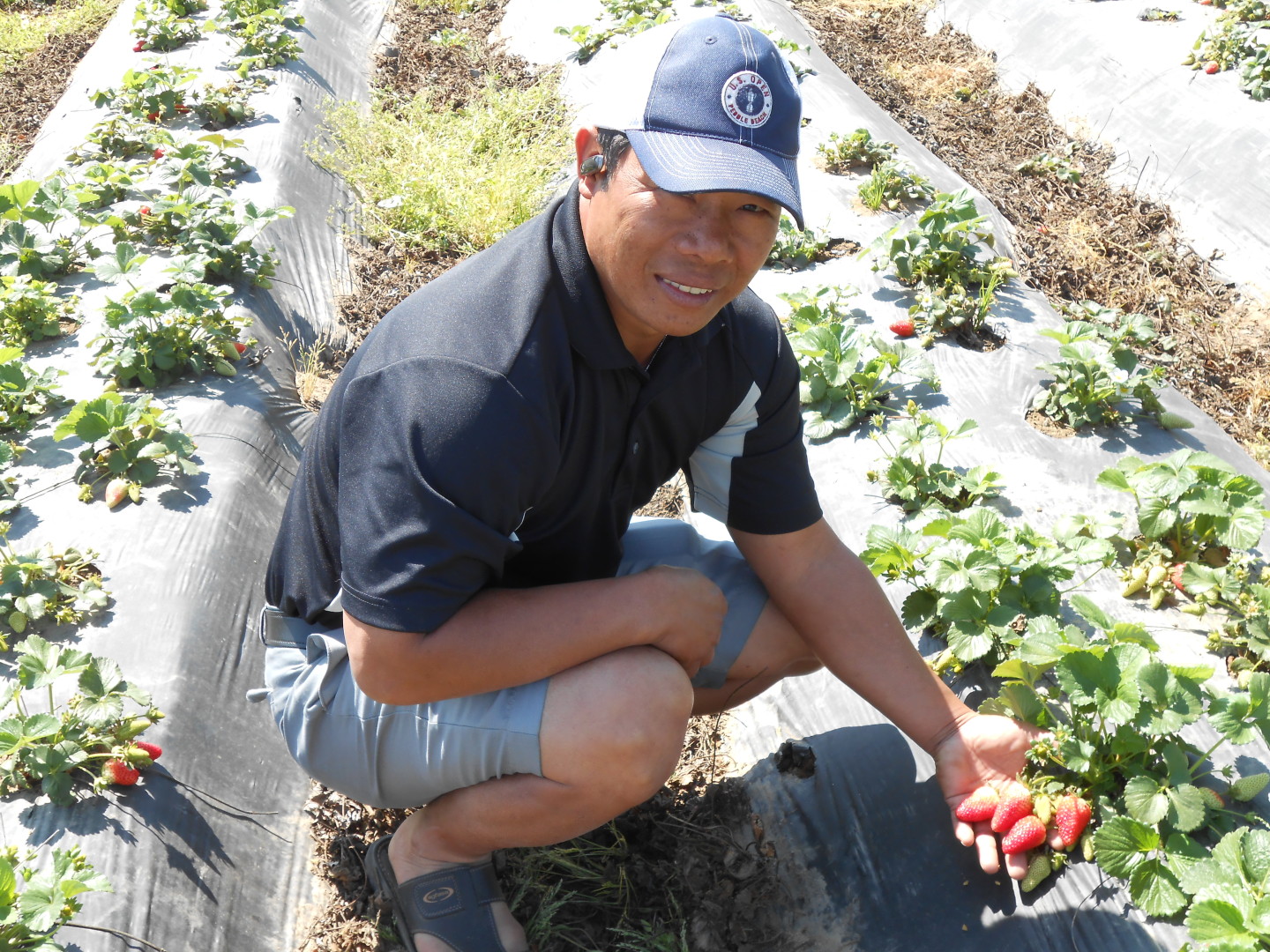
"caption": "Pao Saephan's strawberries are just days away from being fully ripe. (Rebecca Plevin/Valley Public Radio)",
"description": "strawberry farmer Pao Saephan",
"title": "PaeSaephan_RebeccaPlevin_KVPR",
"credit": null,
"status": "inherit",
"isLoading": false,
"fetchFailed": false
},
"stateofhealth_6253": {
"type": "attachments",
"id": "stateofhealth_6253",
"meta": {
"index": "attachments_1716263798",
"site": "stateofhealth",
"id": "6253",
"found": true
},
"parent": 6250,
"imgSizes": {
"kqedFullSize": {
"file": "https://ww2.kqed.org/app/uploads/sites/27/2012/06/CentralValleyPollution_Smog_Getty_.gif",
"width": 300,
"height": 300
},
"guest-author-96": {
"file": "https://ww2.kqed.org/app/uploads/sites/27/2012/06/CentralValleyPollution_Smog_Getty_-96x96.gif",
"width": 96,
"mimeType": "image/gif",
"height": 96
},
"guest-author-64": {
"file": "https://ww2.kqed.org/app/uploads/sites/27/2012/06/CentralValleyPollution_Smog_Getty_-64x64.gif",
"width": 64,
"mimeType": "image/gif",
"height": 64
},
"detail": {
"file": "https://ww2.kqed.org/app/uploads/sites/27/2012/06/CentralValleyPollution_Smog_Getty_-75x75.gif",
"width": 75,
"mimeType": "image/gif",
"height": 75
},
"guest-author-32": {
"file": "https://ww2.kqed.org/app/uploads/sites/27/2012/06/CentralValleyPollution_Smog_Getty_-32x32.gif",
"width": 32,
"mimeType": "image/gif",
"height": 32
},
"guest-author-128": {
"file": "https://ww2.kqed.org/app/uploads/sites/27/2012/06/CentralValleyPollution_Smog_Getty_-128x128.gif",
"width": 128,
"mimeType": "image/gif",
"height": 128
}
},
"publishDate": 1338586979,
"modified": 1338586979,
"caption": "Farming in California's Central Valley is a source of smog, a major contributor to the region's high asthma rates. (Getty Images)",
"description": null,
"title": "Farming in California's Central Valley is a source of smog, a major contributor to the region's high asthma rates. (Getty Images)",
"credit": null,
"status": "inherit",
"isLoading": false,
"fetchFailed": false
},
"stateofhealth_11808": {
"type": "attachments",
"id": "stateofhealth_11808",
"meta": {
"index": "attachments_1716263798",
"site": "stateofhealth",
"id": "11808",
"found": true
},
"parent": 11543,
"imgSizes": {
"thumbnail": {
"file": "https://ww2.kqed.org/app/uploads/sites/27/2013/03/Central-Elem-2-400x300.jpg",
"width": 400,
"mimeType": "image/jpeg",
"height": 300
},
"fd-sm": {
"file": "https://ww2.kqed.org/app/uploads/sites/27/2013/03/Central-Elem-2-320x240.jpg",
"width": 320,
"mimeType": "image/jpeg",
"height": 240
},
"post-thumbnail": {
"file": "https://ww2.kqed.org/app/uploads/sites/27/2013/03/Central-Elem-2-640x372.jpg",
"width": 640,
"mimeType": "image/jpeg",
"height": 372
},
"kqedFullSize": {
"file": "https://ww2.kqed.org/app/uploads/sites/27/2013/03/Central-Elem-2.jpg",
"width": 640,
"height": 480
},
"guest-author-96": {
"file": "https://ww2.kqed.org/app/uploads/sites/27/2013/03/Central-Elem-2-96x96.jpg",
"width": 96,
"mimeType": "image/jpeg",
"height": 96
},
"guest-author-64": {
"file": "https://ww2.kqed.org/app/uploads/sites/27/2013/03/Central-Elem-2-64x64.jpg",
"width": 64,
"mimeType": "image/jpeg",
"height": 64
},
"detail": {
"file": "https://ww2.kqed.org/app/uploads/sites/27/2013/03/Central-Elem-2-75x75.jpg",
"width": 75,
"mimeType": "image/jpeg",
"height": 75
},
"guest-author-32": {
"file": "https://ww2.kqed.org/app/uploads/sites/27/2013/03/Central-Elem-2-32x32.jpg",
"width": 32,
"mimeType": "image/jpeg",
"height": 32
},
"guest-author-128": {
"file": "https://ww2.kqed.org/app/uploads/sites/27/2013/03/Central-Elem-2-128x128.jpg",
"width": 128,
"mimeType": "image/jpeg",
"height": 128
}
},
"publishDate": 1364573603,
"modified": 1364573603,
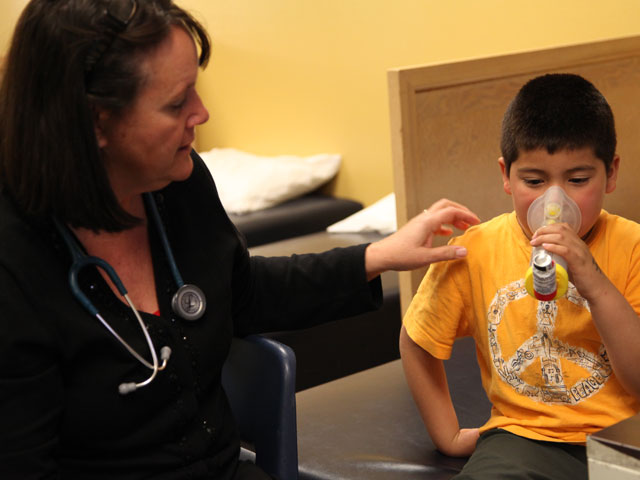
"caption": "School Nurse Gail McLaurin treats a student for asthma at Central Elementary's on-campus Health and Wellness Center. (Marnette Federis/KQED)School Nurse Gail McLaurin treats a student for asthma at Central Elementary's on-campus Health and Wellness Center. (Marnette Federis/KQED)",
"description": "asthma, school nurse",
"title": "Central-Elem-2",
"credit": null,
"status": "inherit",
"isLoading": false,
"fetchFailed": false
},
"stateofhealth_11770": {
"type": "attachments",
"id": "stateofhealth_11770",
"meta": {
"index": "attachments_1716263798",
"site": "stateofhealth",
"id": "11770",
"found": true
},
"parent": 11768,
"imgSizes": {
"twentyfourteen-full-width": {
"file": "https://ww2.kqed.org/app/uploads/sites/27/2013/03/GroceryStore_GraphiChris_Flickr-1024x576.jpg",
"width": 1024,
"mimeType": "image/jpeg",
"height": 576
},
"thumbnail": {
"file": "https://ww2.kqed.org/app/uploads/sites/27/2013/03/GroceryStore_GraphiChris_Flickr-400x243.jpg",
"width": 400,
"mimeType": "image/jpeg",
"height": 243
},
"fd-sm": {
"file": "https://ww2.kqed.org/app/uploads/sites/27/2013/03/GroceryStore_GraphiChris_Flickr-320x194.jpg",
"width": 320,
"mimeType": "image/jpeg",
"height": 194
},
"post-thumbnail": {
"file": "https://ww2.kqed.org/app/uploads/sites/27/2013/03/GroceryStore_GraphiChris_Flickr-672x372.jpg",
"width": 672,
"mimeType": "image/jpeg",
"height": 372
},
"kqedFullSize": {
"file": "https://ww2.kqed.org/app/uploads/sites/27/2013/03/GroceryStore_GraphiChris_Flickr.jpg",
"width": 1024,
"height": 621
},
"fd-med": {
"file": "https://ww2.kqed.org/app/uploads/sites/27/2013/03/GroceryStore_GraphiChris_Flickr-768x466.jpg",
"width": 768,
"mimeType": "image/jpeg",
"height": 466
},
"guest-author-96": {
"file": "https://ww2.kqed.org/app/uploads/sites/27/2013/03/GroceryStore_GraphiChris_Flickr-96x96.jpg",
"width": 96,
"mimeType": "image/jpeg",
"height": 96
},
"medium": {
"file": "https://ww2.kqed.org/app/uploads/sites/27/2013/03/GroceryStore_GraphiChris_Flickr-800x485.jpg",
"width": 800,
"mimeType": "image/jpeg",
"height": 485
},
"guest-author-64": {
"file": "https://ww2.kqed.org/app/uploads/sites/27/2013/03/GroceryStore_GraphiChris_Flickr-64x64.jpg",
"width": 64,
"mimeType": "image/jpeg",
"height": 64
},
"detail": {
"file": "https://ww2.kqed.org/app/uploads/sites/27/2013/03/GroceryStore_GraphiChris_Flickr-75x75.jpg",
"width": 75,
"mimeType": "image/jpeg",
"height": 75
},
"guest-author-32": {
"file": "https://ww2.kqed.org/app/uploads/sites/27/2013/03/GroceryStore_GraphiChris_Flickr-32x32.jpg",
"width": 32,
"mimeType": "image/jpeg",
"height": 32
},
"guest-author-128": {
"file": "https://ww2.kqed.org/app/uploads/sites/27/2013/03/GroceryStore_GraphiChris_Flickr-128x128.jpg",
"width": 128,
"mimeType": "image/jpeg",
"height": 128
}
},
"publishDate": 1364421117,
"modified": 1364421117,
"caption": "(GraphiChris/Flickr)",
"description": "Grocery store aisle",
"title": "GroceryStore_GraphiChris_Flickr",
"credit": null,
"status": "inherit",
"isLoading": false,
"fetchFailed": false
},
"stateofhealth_10990": {
"type": "attachments",
"id": "stateofhealth_10990",
"meta": {
"index": "attachments_1716263798",
"site": "stateofhealth",
"id": "10990",
"found": true
},
"parent": 10938,
"imgSizes": {
"thumbnail": {
"file": "https://ww2.kqed.org/app/uploads/sites/27/2013/03/Screen-Shot-2013-03-04-at-11.08.22-AM-400x389.png",
"width": 400,
"mimeType": "image/png",
"height": 389
},
"fd-sm": {
"file": "https://ww2.kqed.org/app/uploads/sites/27/2013/03/Screen-Shot-2013-03-04-at-11.08.22-AM-320x311.png",
"width": 320,
"mimeType": "image/png",
"height": 311
},
"post-thumbnail": {
"file": "https://ww2.kqed.org/app/uploads/sites/27/2013/03/Screen-Shot-2013-03-04-at-11.08.22-AM-461x372.png",
"width": 461,
"mimeType": "image/png",
"height": 372
},
"kqedFullSize": {
"file": "https://ww2.kqed.org/app/uploads/sites/27/2013/03/Screen-Shot-2013-03-04-at-11.08.22-AM.png",
"width": 461,
"height": 448
},
"guest-author-96": {
"file": "https://ww2.kqed.org/app/uploads/sites/27/2013/03/Screen-Shot-2013-03-04-at-11.08.22-AM-96x96.png",
"width": 96,
"mimeType": "image/png",
"height": 96
},
"guest-author-64": {
"file": "https://ww2.kqed.org/app/uploads/sites/27/2013/03/Screen-Shot-2013-03-04-at-11.08.22-AM-64x64.png",
"width": 64,
"mimeType": "image/png",
"height": 64
},
"detail": {
"file": "https://ww2.kqed.org/app/uploads/sites/27/2013/03/Screen-Shot-2013-03-04-at-11.08.22-AM-75x75.png",
"width": 75,
"mimeType": "image/png",
"height": 75
},
"guest-author-32": {
"file": "https://ww2.kqed.org/app/uploads/sites/27/2013/03/Screen-Shot-2013-03-04-at-11.08.22-AM-32x32.png",
"width": 32,
"mimeType": "image/png",
"height": 32
},
"guest-author-128": {
"file": "https://ww2.kqed.org/app/uploads/sites/27/2013/03/Screen-Shot-2013-03-04-at-11.08.22-AM-128x128.png",
"width": 128,
"mimeType": "image/png",
"height": 128
}
},
"publishDate": 1362424138,
"modified": 1362424138,
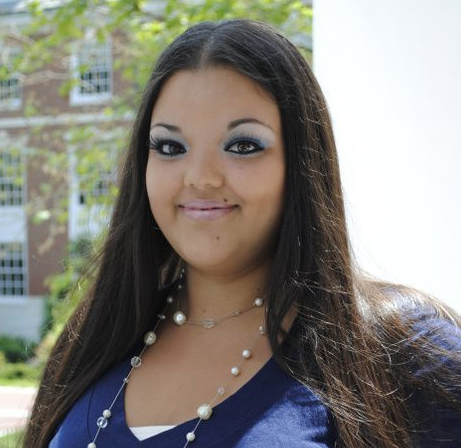
"caption": "Vanessa Armendariz says her goal is to go to medical school and become a primary care physician so she can help serve her community. (Photo Courtesy of Vanessa Armendariz)",
"description": "Vanessa Armendariz",
"title": "Vanessa Armendariz",
"credit": null,
"status": "inherit",
"isLoading": false,
"fetchFailed": false
},
"stateofhealth_10770": {
"type": "attachments",
"id": "stateofhealth_10770",
"meta": {
"index": "attachments_1716263798",
"site": "stateofhealth",
"id": "10770",
"found": true
},
"parent": 10765,
"imgSizes": {
"thumbnail": {
"file": "https://ww2.kqed.org/app/uploads/sites/27/2013/02/PlevinPhoto-e1426871743106-400x300.jpg",
"width": 400,
"mimeType": "image/jpeg",
"height": 300
},
"fd-sm": {
"file": "https://ww2.kqed.org/app/uploads/sites/27/2013/02/PlevinPhoto-e1426871743106-320x240.jpg",
"width": 320,
"mimeType": "image/jpeg",
"height": 240
},
"post-thumbnail": {
"file": "https://ww2.kqed.org/app/uploads/sites/27/2013/02/PlevinPhoto-e1426871743106-640x372.jpg",
"width": 640,
"mimeType": "image/jpeg",
"height": 372
},
"kqedFullSize": {
"file": "https://ww2.kqed.org/app/uploads/sites/27/2013/02/PlevinPhoto-e1426871743106.jpg",
"width": 640,
"height": 480
},
"guest-author-96": {
"file": "https://ww2.kqed.org/app/uploads/sites/27/2013/02/PlevinPhoto-e1426871743106-96x96.jpg",
"width": 96,
"mimeType": "image/jpeg",
"height": 96
},
"guest-author-64": {
"file": "https://ww2.kqed.org/app/uploads/sites/27/2013/02/PlevinPhoto-e1426871743106-64x64.jpg",
"width": 64,
"mimeType": "image/jpeg",
"height": 64
},
"detail": {
"file": "https://ww2.kqed.org/app/uploads/sites/27/2013/02/PlevinPhoto-e1426871743106-75x75.jpg",
"width": 75,
"mimeType": "image/jpeg",
"height": 75
},
"guest-author-32": {
"file": "https://ww2.kqed.org/app/uploads/sites/27/2013/02/PlevinPhoto-e1426871743106-32x32.jpg",
"width": 32,
"mimeType": "image/jpeg",
"height": 32
},
"guest-author-128": {
"file": "https://ww2.kqed.org/app/uploads/sites/27/2013/02/PlevinPhoto-e1426871743106-128x128.jpg",
"width": 128,
"mimeType": "image/jpeg",
"height": 128
}
},
"publishDate": 1361798619,
"modified": 1426871751,
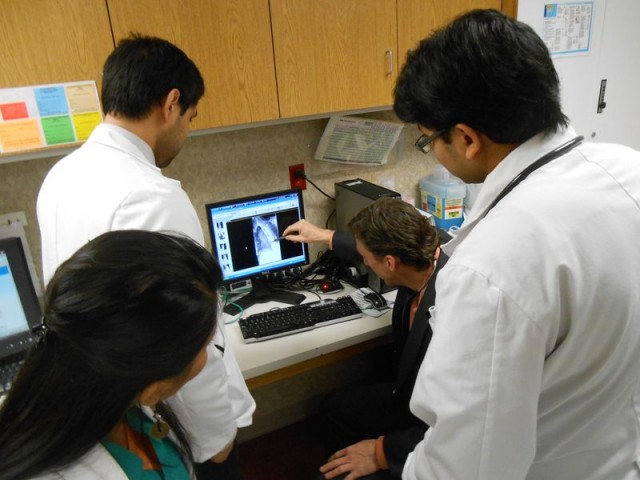
"caption": "Dr. Peter Broderick of Doctors Medical Center in Modesto examines a patient's x-ray while family practice medical residents look on. (Rebecca Plevin/KVPR)",
"description": "doctors look at x-ray",
"title": "Dr. Peter Broderick examines a patient's x-ray while family practice medical residents look on. (Rebecca Plevin/KVPR)",
"credit": null,
"status": "inherit",
"isLoading": false,
"fetchFailed": false
},
"stateofhealth_10688": {
"type": "attachments",
"id": "stateofhealth_10688",
"meta": {
"index": "attachments_1716263798",
"site": "stateofhealth",
"id": "10688",
"found": true
},
"parent": 10684,
"imgSizes": {
"twentyfourteen-full-width": {
"file": "https://ww2.kqed.org/app/uploads/sites/27/2013/02/2Marnette-Federis-1024x576.jpg",
"width": 1024,
"mimeType": "image/jpeg",
"height": 576
},
"thumbnail": {
"file": "https://ww2.kqed.org/app/uploads/sites/27/2013/02/2Marnette-Federis-400x292.jpg",
"width": 400,
"mimeType": "image/jpeg",
"height": 292
},
"fd-sm": {
"file": "https://ww2.kqed.org/app/uploads/sites/27/2013/02/2Marnette-Federis-320x234.jpg",
"width": 320,
"mimeType": "image/jpeg",
"height": 234
},
"post-thumbnail": {
"file": "https://ww2.kqed.org/app/uploads/sites/27/2013/02/2Marnette-Federis-672x372.jpg",
"width": 672,
"mimeType": "image/jpeg",
"height": 372
},
"kqedFullSize": {
"file": "https://ww2.kqed.org/app/uploads/sites/27/2013/02/2Marnette-Federis.jpg",
"width": 1024,
"height": 748
},
"fd-med": {
"file": "https://ww2.kqed.org/app/uploads/sites/27/2013/02/2Marnette-Federis-768x561.jpg",
"width": 768,
"mimeType": "image/jpeg",
"height": 561
},
"guest-author-96": {
"file": "https://ww2.kqed.org/app/uploads/sites/27/2013/02/2Marnette-Federis-96x96.jpg",
"width": 96,
"mimeType": "image/jpeg",
"height": 96
},
"medium": {
"file": "https://ww2.kqed.org/app/uploads/sites/27/2013/02/2Marnette-Federis-800x584.jpg",
"width": 800,
"mimeType": "image/jpeg",
"height": 584
},
"guest-author-64": {
"file": "https://ww2.kqed.org/app/uploads/sites/27/2013/02/2Marnette-Federis-64x64.jpg",
"width": 64,
"mimeType": "image/jpeg",
"height": 64
},
"detail": {
"file": "https://ww2.kqed.org/app/uploads/sites/27/2013/02/2Marnette-Federis-75x75.jpg",
"width": 75,
"mimeType": "image/jpeg",
"height": 75
},
"guest-author-32": {
"file": "https://ww2.kqed.org/app/uploads/sites/27/2013/02/2Marnette-Federis-32x32.jpg",
"width": 32,
"mimeType": "image/jpeg",
"height": 32
},
"guest-author-128": {
"file": "https://ww2.kqed.org/app/uploads/sites/27/2013/02/2Marnette-Federis-128x128.jpg",
"width": 128,
"mimeType": "image/jpeg",
"height": 128
}
},
"publishDate": 1361392959,
"modified": 1361392959,
"caption": "During the physical activity component of CATCH Healthy Habits, kids play active games for 30 minutes. (Photo: Marnette Federis)",
"description": "physical activity, children's health, CATCH San Diego",
"title": "(Marnette Federis)",
"credit": null,
"status": "inherit",
"isLoading": false,
"fetchFailed": false
},
"stateofhealth_10454": {
"type": "attachments",
"id": "stateofhealth_10454",
"meta": {
"index": "attachments_1716263798",
"site": "stateofhealth",
"id": "10454",
"found": true
},
"parent": 10450,
"imgSizes": {
"twentyfourteen-full-width": {
"file": "https://ww2.kqed.org/app/uploads/sites/27/2013/02/Dr.-Perez-Lopez-1038x576.jpg",
"width": 1038,
"mimeType": "image/jpeg",
"height": 576
},
"thumbnail": {
"file": "https://ww2.kqed.org/app/uploads/sites/27/2013/02/Dr.-Perez-Lopez-400x300.jpg",
"width": 400,
"mimeType": "image/jpeg",
"height": 300
},
"fd-sm": {
"file": "https://ww2.kqed.org/app/uploads/sites/27/2013/02/Dr.-Perez-Lopez-320x240.jpg",
"width": 320,
"mimeType": "image/jpeg",
"height": 240
},
"post-thumbnail": {
"file": "https://ww2.kqed.org/app/uploads/sites/27/2013/02/Dr.-Perez-Lopez-672x372.jpg",
"width": 672,
"mimeType": "image/jpeg",
"height": 372
},
"kqedFullSize": {
"file": "https://ww2.kqed.org/app/uploads/sites/27/2013/02/Dr.-Perez-Lopez.jpg",
"width": 3648,
"height": 2736
},
"large": {
"file": "https://ww2.kqed.org/app/uploads/sites/27/2013/02/Dr.-Perez-Lopez-1440x1080.jpg",
"width": 1440,
"mimeType": "image/jpeg",
"height": 1080
},
"guest-author-96": {
"file": "https://ww2.kqed.org/app/uploads/sites/27/2013/02/Dr.-Perez-Lopez-96x96.jpg",
"width": 96,
"mimeType": "image/jpeg",
"height": 96
},
"medium": {
"file": "https://ww2.kqed.org/app/uploads/sites/27/2013/02/Dr.-Perez-Lopez-800x600.jpg",
"width": 800,
"mimeType": "image/jpeg",
"height": 600
},
"guest-author-64": {
"file": "https://ww2.kqed.org/app/uploads/sites/27/2013/02/Dr.-Perez-Lopez-64x64.jpg",
"width": 64,
"mimeType": "image/jpeg",
"height": 64
},
"guest-author-32": {
"file": "https://ww2.kqed.org/app/uploads/sites/27/2013/02/Dr.-Perez-Lopez-32x32.jpg",
"width": 32,
"mimeType": "image/jpeg",
"height": 32
},
"fd-lrg": {
"file": "https://ww2.kqed.org/app/uploads/sites/27/2013/02/Dr.-Perez-Lopez-1180x885.jpg",
"width": 1180,
"mimeType": "image/jpeg",
"height": 885
},
"fd-med": {
"file": "https://ww2.kqed.org/app/uploads/sites/27/2013/02/Dr.-Perez-Lopez-768x576.jpg",
"width": 768,
"mimeType": "image/jpeg",
"height": 576
},
"detail": {
"file": "https://ww2.kqed.org/app/uploads/sites/27/2013/02/Dr.-Perez-Lopez-75x75.jpg",
"width": 75,
"mimeType": "image/jpeg",
"height": 75
},
"guest-author-128": {
"file": "https://ww2.kqed.org/app/uploads/sites/27/2013/02/Dr.-Perez-Lopez-128x128.jpg",
"width": 128,
"mimeType": "image/jpeg",
"height": 128
}
},
"publishDate": 1360275844,
"modified": 1360275844,
"caption": "Dr. Minerva Perez-Lopez in the neonatal intensive care unit at Natividad Medical Center in Salinas. While Perez-Lopez speaks both English and Spanish, she needs interpreter services for her indigenous Mexican patients. (Photo: Lisa Morehouse)",
"description": "Dr. Minerva Perez-Lopez in the neonatal intensive care unit at Natividad Medical Center in Salinas. While Perez-Lopez speaks both English and Spanish, she needs interpreter services for her indigenous Mexican patients. (Photo: Lisa Morehouse)",
"title": "Dr. Perez-Lopez",
"credit": null,
"status": "inherit",
"isLoading": false,
"fetchFailed": false
},
"stateofhealth_10279": {
"type": "attachments",
"id": "stateofhealth_10279",
"meta": {
"index": "attachments_1716263798",
"site": "stateofhealth",
"id": "10279",
"found": true
},
"parent": 10272,
"imgSizes": {
"twentyfourteen-full-width": {
"file": "https://ww2.kqed.org/app/uploads/sites/27/2013/01/IMG_1101-1038x576.jpg",
"width": 1038,
"mimeType": "image/jpeg",
"height": 576
},
"thumbnail": {
"file": "https://ww2.kqed.org/app/uploads/sites/27/2013/01/IMG_1101-400x300.jpg",
"width": 400,
"mimeType": "image/jpeg",
"height": 300
},
"fd-sm": {
"file": "https://ww2.kqed.org/app/uploads/sites/27/2013/01/IMG_1101-320x240.jpg",
"width": 320,
"mimeType": "image/jpeg",
"height": 240
},
"post-thumbnail": {
"file": "https://ww2.kqed.org/app/uploads/sites/27/2013/01/IMG_1101-672x372.jpg",
"width": 672,
"mimeType": "image/jpeg",
"height": 372
},
"kqedFullSize": {
"file": "https://ww2.kqed.org/app/uploads/sites/27/2013/01/IMG_1101.jpg",
"width": 2048,
"height": 1536
},
"large": {
"file": "https://ww2.kqed.org/app/uploads/sites/27/2013/01/IMG_1101-1440x1080.jpg",
"width": 1440,
"mimeType": "image/jpeg",
"height": 1080
},
"guest-author-96": {
"file": "https://ww2.kqed.org/app/uploads/sites/27/2013/01/IMG_1101-96x96.jpg",
"width": 96,
"mimeType": "image/jpeg",
"height": 96
},
"medium": {
"file": "https://ww2.kqed.org/app/uploads/sites/27/2013/01/IMG_1101-800x600.jpg",
"width": 800,
"mimeType": "image/jpeg",
"height": 600
},
"guest-author-64": {
"file": "https://ww2.kqed.org/app/uploads/sites/27/2013/01/IMG_1101-64x64.jpg",
"width": 64,
"mimeType": "image/jpeg",
"height": 64
},
"guest-author-32": {
"file": "https://ww2.kqed.org/app/uploads/sites/27/2013/01/IMG_1101-32x32.jpg",
"width": 32,
"mimeType": "image/jpeg",
"height": 32
},
"fd-lrg": {
"file": "https://ww2.kqed.org/app/uploads/sites/27/2013/01/IMG_1101-1180x885.jpg",
"width": 1180,
"mimeType": "image/jpeg",
"height": 885
},
"fd-med": {
"file": "https://ww2.kqed.org/app/uploads/sites/27/2013/01/IMG_1101-768x576.jpg",
"width": 768,
"mimeType": "image/jpeg",
"height": 576
},
"detail": {
"file": "https://ww2.kqed.org/app/uploads/sites/27/2013/01/IMG_1101-75x75.jpg",
"width": 75,
"mimeType": "image/jpeg",
"height": 75
},
"guest-author-128": {
"file": "https://ww2.kqed.org/app/uploads/sites/27/2013/01/IMG_1101-128x128.jpg",
"width": 128,
"mimeType": "image/jpeg",
"height": 128
}
},
"publishDate": 1359574430,
"modified": 1359574430,
"caption": "Ayary Diaz (L) says she can finally work to help support her family because of the Deferred Action for Childhood Arrivals program.Ayary Diaz (L) says she can finally work to help support her family because of the Deferred Action for Childhood Arrivals program.",
"description": null,
"title": "deferred-action",
"credit": null,
"status": "inherit",
"isLoading": false,
"fetchFailed": false
},
"stateofhealth_10232": {
"type": "attachments",
"id": "stateofhealth_10232",
"meta": {
"index": "attachments_1716263798",
"site": "stateofhealth",
"id": "10232",
"found": true
},
"parent": 10227,
"imgSizes": {
"twentyfourteen-full-width": {
"file": "https://ww2.kqed.org/app/uploads/sites/27/2013/01/clinica_3-1038x576.jpg",
"width": 1038,
"mimeType": "image/jpeg",
"height": 576
},
"thumbnail": {
"file": "https://ww2.kqed.org/app/uploads/sites/27/2013/01/clinica_3-400x309.jpg",
"width": 400,
"mimeType": "image/jpeg",
"height": 309
},
"fd-sm": {
"file": "https://ww2.kqed.org/app/uploads/sites/27/2013/01/clinica_3-320x247.jpg",
"width": 320,
"mimeType": "image/jpeg",
"height": 247
},
"post-thumbnail": {
"file": "https://ww2.kqed.org/app/uploads/sites/27/2013/01/clinica_3-672x372.jpg",
"width": 672,
"mimeType": "image/jpeg",
"height": 372
},
"kqedFullSize": {
"file": "https://ww2.kqed.org/app/uploads/sites/27/2013/01/clinica_3.jpg",
"width": 3780,
"height": 2916
},
"large": {
"file": "https://ww2.kqed.org/app/uploads/sites/27/2013/01/clinica_3-1440x1111.jpg",
"width": 1440,
"mimeType": "image/jpeg",
"height": 1111
},
"guest-author-96": {
"file": "https://ww2.kqed.org/app/uploads/sites/27/2013/01/clinica_3-96x96.jpg",
"width": 96,
"mimeType": "image/jpeg",
"height": 96
},
"medium": {
"file": "https://ww2.kqed.org/app/uploads/sites/27/2013/01/clinica_3-800x617.jpg",
"width": 800,
"mimeType": "image/jpeg",
"height": 617
},
"guest-author-64": {
"file": "https://ww2.kqed.org/app/uploads/sites/27/2013/01/clinica_3-64x64.jpg",
"width": 64,
"mimeType": "image/jpeg",
"height": 64
},
"guest-author-32": {
"file": "https://ww2.kqed.org/app/uploads/sites/27/2013/01/clinica_3-32x32.jpg",
"width": 32,
"mimeType": "image/jpeg",
"height": 32
},
"fd-lrg": {
"file": "https://ww2.kqed.org/app/uploads/sites/27/2013/01/clinica_3-1180x910.jpg",
"width": 1180,
"mimeType": "image/jpeg",
"height": 910
},
"fd-med": {
"file": "https://ww2.kqed.org/app/uploads/sites/27/2013/01/clinica_3-768x592.jpg",
"width": 768,
"mimeType": "image/jpeg",
"height": 592
},
"detail": {
"file": "https://ww2.kqed.org/app/uploads/sites/27/2013/01/clinica_3-75x75.jpg",
"width": 75,
"mimeType": "image/jpeg",
"height": 75
},
"guest-author-128": {
"file": "https://ww2.kqed.org/app/uploads/sites/27/2013/01/clinica_3-128x128.jpg",
"width": 128,
"mimeType": "image/jpeg",
"height": 128
}
},
"publishDate": 1359486783,
"modified": 1359486783,
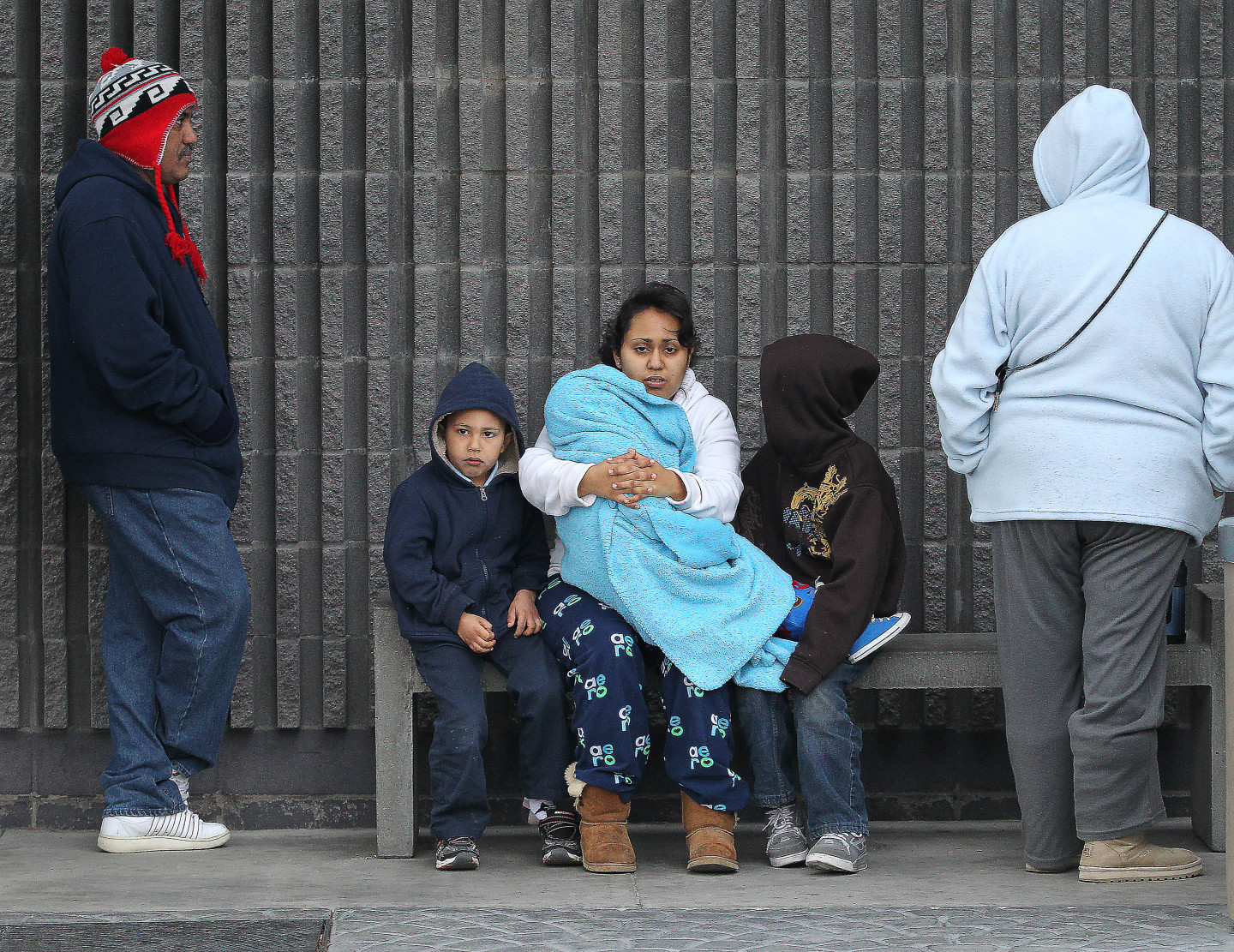
"caption": "People wait in line at Clinica Sierra Vista at the East Bakersfield Community Health Center. Some were waiting before they opened at 7:30am. (Casey Christie / The Californian)",
"description": "Casey Christie / The Californian\nPeople wait in line at Clinica Sierra Vista on Dr. Martin Luther King Jr., Blvd., at the East Bakersfield Community Health Center. Some were sitting and some standing before they opened at 7:30am.",
"title": "CLINICA",
"credit": null,
"status": "inherit",
"isLoading": false,
"fetchFailed": false
}
},
"audioPlayerReducer": {
"postId": "stream_live",
"isPaused": true,
"isPlaying": false,
"pfsActive": false,
"pledgeModalIsOpen": true,
"playerDrawerIsOpen": false,
"liveAudioPlayStartedAt": 0,
"liveAudioPlayContext": ""
},
"authorsReducer": {
"lisaaliferis": {
"type": "authors",
"id": "240",
"meta": {
"index": "authors_1716337520",
"id": "240",
"found": true
},
"name": "Lisa Aliferis",
"firstName": "Lisa",
"lastName": "Aliferis",
"slug": "lisaaliferis",
"email": "laliferis@kqed.org",
"display_author_email": false,
"staff_mastheads": [],
"title": "KQED Contributor",
"bio": "Lisa Aliferis is the founding editor of KQED's \u003cem>State of Health\u003c/em> blog. Since 2011, she's been writing and editing stories for the site. Before taking up blogging, she toiled for many years (more than we can count) producing health stories for television, including\u003cem> Dateline NBC\u003c/em> and San Francisco's CBS affiliate, KPIX-TV. She also wrote up a \u003ca title=\"http://www.kqed.org/news/health/obamacare/obamacare-guide.jsp\" href=\"http://www.kqed.org/news/health/obamacare/obamacare-guide.jsp\">handy guide to the Affordable Care Act\u003c/a>, especially for Californians. Her work has been honored for many awards. Most recently she was a finalist for \"Best Topical Reporting\" from the Online News Association. You can follow her on Twitter: \u003ca title=\"https://twitter.com/laliferis\" href=\"https://twitter.com/laliferis\">@laliferis\u003c/a>",
"avatar": "https://secure.gravatar.com/avatar/86c339d5cdcb0dcd2b6cf5d7c3f5886b?s=600&d=mm&r=g",
"twitter": "laliferis",
"facebook": null,
"instagram": null,
"linkedin": null,
"sites": [
{
"site": "news",
"roles": [
"subscriber"
]
},
{
"site": "futureofyou",
"roles": [
"subscriber"
]
},
{
"site": "stateofhealth",
"roles": [
"subscriber"
]
},
{
"site": "science",
"roles": [
"subscriber"
]
},
{
"site": "food",
"roles": []
}
],
"headData": {
"title": "Lisa Aliferis | KQED",
"description": "KQED Contributor",
"ogImgSrc": "https://secure.gravatar.com/avatar/86c339d5cdcb0dcd2b6cf5d7c3f5886b?s=600&d=mm&r=g",
"twImgSrc": "https://secure.gravatar.com/avatar/86c339d5cdcb0dcd2b6cf5d7c3f5886b?s=600&d=mm&r=g"
},
"isLoading": false,
"link": "/author/lisaaliferis"
},
"state-of-health": {
"type": "authors",
"id": "8344",
"meta": {
"index": "authors_1716337520",
"id": "8344",
"found": true
},
"name": "State of Health",
"firstName": "State of Health",
"lastName": null,
"slug": "state-of-health",
"email": "stateofhealth@kqed.org",
"display_author_email": false,
"staff_mastheads": [],
"title": null,
"bio": null,
"avatar": "https://secure.gravatar.com/avatar/66de4bf6d331fa7402bba1ffe8135e17?s=600&d=blank&r=g",
"twitter": null,
"facebook": null,
"instagram": null,
"linkedin": null,
"sites": [
{
"site": "arts",
"roles": [
"author"
]
},
{
"site": "stateofhealth",
"roles": [
"editor"
]
}
],
"headData": {
"title": "State of Health | KQED",
"description": null,
"ogImgSrc": "https://secure.gravatar.com/avatar/66de4bf6d331fa7402bba1ffe8135e17?s=600&d=blank&r=g",
"twImgSrc": "https://secure.gravatar.com/avatar/66de4bf6d331fa7402bba1ffe8135e17?s=600&d=blank&r=g"
},
"isLoading": false,
"link": "/author/state-of-health"
}
},
"pagesReducer": {
"stateofhealth_category_place-matters": {
"type": "terms",
"id": "stateofhealth_11",
"meta": {
"index": "terms_1716263798",
"site": "stateofhealth",
"id": "11",
"score": 14.406069
},
"featImg": null,
"name": "Community Health",
"description": "\r\n\r\nFrom rural California to urban neighborhoods, where you live affects your health",
"taxonomy": "category",
"headData": {
"twImgId": null,
"twTitle": null,
"ogTitle": null,
"ogImgId": null,
"twDescription": null,
"description": "From rural California to urban neighborhoods, where you live affects your health",
"title": "Community Health Archives | KQED Arts",
"ogDescription": null
},
"ttid": 11,
"slug": "place-matters",
"isLoading": false,
"title": "Community Health",
"pageMeta": {
"site": "stateofhealth",
"WpPageTemplate": "page-topic-editorial",
"currentPage": 48
},
"blocks": [
{
"blockName": "kqed/company-paragraph",
"content": "\r\n\r\nFrom rural California to urban neighborhoods, where you live affects your health"
},
{
"blockName": "kqed/post-list",
"attrs": {
"layout": "cardArticle2",
"query": "posts/stateofhealth?category=place-matters",
"seeMore": false,
"paginated": true,
"page": 48
}
},
{
"blockName": "kqed/ad"
}
]
}
},
"pfsSessionReducer": {},
"postsReducer": {
"stream_live": {
"type": "live",
"id": "stream_live",
"audioUrl": "https://streams.kqed.org/kqedradio",
"title": "Live Stream",
"excerpt": "Live Stream information currently unavailable.",
"link": "/radio",
"featImg": "",
"label": {
"name": "KQED Live",
"link": "/"
}
},
"stream_kqedNewscast": {
"type": "posts",
"id": "stream_kqedNewscast",
"audioUrl": "https://www.kqed.org/.stream/anon/radio/RDnews/newscast.mp3?_=1",
"title": "KQED Newscast",
"featImg": "",
"label": {
"name": "88.5 FM",
"link": "/"
}
},
"stateofhealth_11935": {
"type": "posts",
"id": "stateofhealth_11935",
"meta": {
"index": "posts_1716263798",
"site": "stateofhealth",
"id": "11935",
"score": null,
"sort": [
1365034440000
]
},
"parent": 0,
"labelTerm": {
"site": "stateofhealth"
},
"blocks": [],
"publishDate": 1365034440,
"format": "aside",
"disqusTitle": "Schools Struggle to Provide Dental Health Safety Net",
"title": "Schools Struggle to Provide Dental Health Safety Net",
"headTitle": "State of Health | KQED News",
"content": "\u003cp>\u003cstrong>Dental disease at the intersection of school performance and health for thousands of California children\u003c/strong>\u003c/p>\n\u003cp>\u003cem>By Jane Meredith Adams\u003c/em>, \u003ca href=\"http://www.edsource.org/today/2013/schools-struggle-to-provide-dental-health-safety-net/29167#.UVy3xb_JDHh\" target=\"_blank\">EdSource Today\u003c/a>\u003c/p>\n\u003cfigure id=\"attachment_11944\" class=\"wp-caption alignleft\" style=\"max-width: 224px\">\u003ca href=\"http://ww2.kqed.org/stateofhealth/2013/04/03/schools-struggle-to-provide-dental-health-safety-net/kids_alamedacopublichealthdept/\" rel=\"attachment wp-att-11944\">\u003cimg class=\"size-full wp-image-11944\" title=\"\" src=\"http://ww2.kqed.org/stateofhealth/wp-content/uploads/sites/27/2013/04/kids_AlamedaCoPublicHealthDept.jpg\" alt=\"Students learn how to care for their teeth and receive preventive care at a dental clinic at James Madison Middle School in Oakland. (Photo/Alameda County Public Health Department)\" width=\"224\" height=\"224\" srcset=\"https://ww2.kqed.org/app/uploads/sites/27/2013/04/kids_AlamedaCoPublicHealthDept.jpg 224w, https://ww2.kqed.org/app/uploads/sites/27/2013/04/kids_AlamedaCoPublicHealthDept-32x32.jpg 32w, https://ww2.kqed.org/app/uploads/sites/27/2013/04/kids_AlamedaCoPublicHealthDept-64x64.jpg 64w, https://ww2.kqed.org/app/uploads/sites/27/2013/04/kids_AlamedaCoPublicHealthDept-96x96.jpg 96w, https://ww2.kqed.org/app/uploads/sites/27/2013/04/kids_AlamedaCoPublicHealthDept-128x128.jpg 128w, https://ww2.kqed.org/app/uploads/sites/27/2013/04/kids_AlamedaCoPublicHealthDept-75x75.jpg 75w\" sizes=\"(max-width: 224px) 100vw, 224px\">\u003c/a>\u003cfigcaption class=\"wp-caption-text\">Students learn how to care for their teeth and receive preventive care at a dental clinic at James Madison Middle School in Oakland. (Photo/Alameda County Public Health Department)\u003c/figcaption>\u003c/figure>\n\u003cp>As California educators grapple with boosting student achievement across economic lines, the teeth of poor children are holding them back.\u003c/p>\n\u003cp>Hundreds of thousands of children suffering from dental disease, some with teeth rotted to the gum line, are presenting California school districts with a widespread public health problem.\u003c/p>\n\u003cp>Increasingly, dental health advocates are looking to school districts to help solve the crisis. Innovative oral health care projects have been launched in school districts around the state that provide students with no-cost dental screening or treatment. Insurance companies are billed whenever possible.\u003c/p>\n\u003cp>[ad fullwidth]\u003c/p>\n\u003cp>Dental disease is at “epidemic” levels among California children, \u003ca title=\"2010 US Surgeon General Report on Oral Health\" href=\"https://www.documentcloud.org/documents/616913-phr125000158.html\" target=\"_blank\">according to the U.S. Surgeon General\u003c/a>, and low-income children are disproportionately affected. They are 12 times more likely to miss school because of dental problems than children from higher-income families.\u003c/p>\n\u003caside class=\"pullquote alignleft\">Students with toothaches were almost four times as likely to have a lower grade point average than students with healthy teeth.\u003c/aside>\n\u003cp>“The issue is huge,” said Gordon Jackson, director of the state Department of Education’s division which oversees health, counseling and other support programs provided at schools. “Tooth decay remains one of the most chronic diseases for children and adolescents. As we’re having the conversation about California’s future and student academic achievement, we have to have a conversation about oral health as well.”\u003c/p>\n\u003cp>But many districts lack the resources, or balk at being asked to provide dental care on top of a rigorous curriculum.\u003c/p>\n\u003cp>“It’s a great idea to bring universal prevention programs of all types, including dental, to schools,” said Kimberly Uyeda, director of student medical services for the Los Angeles Unified School District. “Whether there’s enough time in the day is another question.”\u003c!--more-->\u003c/p>\n\u003ch4>\u003cstrong>Lost revenue\u003c/strong>\u003c/h4>\n\u003cp>Still, schools have a vested interest in helping solve the problem.\u003c/p>\n\u003cp>Dental problems keep California students out of school an estimated 874,000 days a year, costing schools about $29.7 million in lost attendance based-funding, according to the 2007 California Health Interview Survey, conducted by researchers at UCLA.\u003c/p>\n\u003cdiv>\n\u003cp>\u003ca href=\"http://ww2.kqed.org/stateofhealth/2013/04/03/schools-struggle-to-provide-dental-health-safety-net/dental_infographic_to-post/\" rel=\"attachment wp-att-11946\">\u003cimg class=\"alignright size-full wp-image-11946\" title=\"\" src=\"http://ww2.kqed.org/stateofhealth/wp-content/uploads/sites/27/2013/04/Dental_infographic_to-post.jpg\" alt=\"Dental_infographic_to-post\" width=\"300\" height=\"540\">\u003c/a>Dental health also affects student performance. Students with toothaches were almost four times as likely to have a lower grade point average than students with healthy teeth, according to a \u003ca href=\"https://www.documentcloud.org/documents/609845-the-impact-of-oral-health-on-the-academic.html\" target=\"_blank\">2012 study\u003c/a> by the USC School of Dentistry.\u003c/p>\n\u003c/div>\n\u003cp>Advocates say the dental health crisis is exacerbated by the \u003ca href=\"https://www.documentcloud.org/documents/609584-tcp-fix-medical-dental-final.html\" target=\"_blank\">failure of Medi-Cal’s dental program\u003c/a>, called Denti-Cal, to adequately serve low-income children, \u003ca href=\"https://www.documentcloud.org/documents/609596-calif-dental-assoc-journal-032012-school-clinics.html\" target=\"_blank\">lack of funding\u003c/a> for a state school-based dental disease prevention program for low-income children, and the lack of money to enforce existing state laws requiring oral screenings and preventive care for school children.\u003c/p>\n\u003cp>School-based dental clinics can play a large part in the solution, given the holes in the state’s safety net. One model is to house dental care inside a school-based medical clinic. Some 61 school-based health clinics, out of about 200 in California, offer dental screening or treatment.\u003c/p>\n\u003cp>Outside of a school setting, finding a dentist who accepts Denti-Cal is a significant obstacle for low-income children. California’s reimbursement rates to Denti-Cal dentists are among the lowest in the nation, according to a \u003ca href=\"https://www.documentcloud.org/documents/609584-tcp-fix-medical-dental-final.html\" target=\"_blank\">recent report\u003c/a> by The Children’s Partnership.\u003c/p>\n\u003cp>The numbers of low-income children who need care are expected to increase when the Affordable Care Act -- including its Medi-Cal expansion -- is fully implemented. Come January 1, nearly half of California’s children will be Denti-Cal patients, according to The Children’s Partnership report.\u003c/p>\n\u003cp>The implications are clear, advocates say. “You’ve got to bring the services to the children,” said Roseann Mulligan, with the USC School of Dentistry and one of the authors of the study regarding oral health and student achievement.\u003c/p>\n\u003ch4>Reaching students\u003c/h4>\n\u003cp>A number of districts are doing just that. Some of the dental services are financially self-sustaining through billing to insurers, while others rely on grants and partnerships. The goal is for all clinics to become self-sustaining.\u003c/p>\n\u003cp>Two days a week, inside the sleek new student health center housed at \u003ca href=\"http://www.ousd.k12.ca.us/Page/9002\" target=\"_blank\">James Madison Middle School\u003c/a> in Oakland, students spend about 50 minutes during physical education class period or the “sixth period” extra time in a baby-blue dental chair. A hygienist screens students for tooth decay, cleans teeth, and applies fluoride varnish and sealants. The clinic, which doesn’t provide fillings or other restorative dentistry, accepts dental insurance and Denti-Cal, and provides free service to the uninsured. Services are funded by the Alameda County Public Health Department and The Atlantic Philanthropies.\u003c/p>\n\u003cp>Another model is a mobile dental clinic. In the San Diego Unified School District, the La Maestra Mobile Health Clinic, which includes dental services, began operating in fall 2012 to provide fillings and restorative dentistry to students at the Hoover Cluster of schools: 10 elementary schools, two middle schools, and one high school in the \u003ca href=\"http://ww2.kqed.org/stateofhealth/2013/03/29/on-campus-clinics-a-safety-net-for-neighborhood-children/\" target=\"_blank\">City Heights neighborhood\u003c/a>, an area of high need.\u003c/p>\n\u003cp>“What we are trying to do is make it a positive experience,” said Dorothy Zirkle, a consultant for \u003ca href=\"http://www.pricecharities.com/\" target=\"_blank\">Price Charities\u003c/a>, a nonprofit dedicated to improving the quality of life for children in City Heights. “Our kids have a high need for multiple fillings. We need to build trust.”\u003c/p>\n\u003cp>All services are no-cost, with providers seeking reimbursement from insurers when possible. Among the organizations funding the facilities and services at the mobile dental clinic are \u003ca href=\"http://www.lamaestra.org/\" target=\"_blank\">La Maestra Community Health Centers\u003c/a>, private foundations including the City Heights Partnership for Children, and the Health Resources and Services Administration of the U.S. Department of Health and Human Services.\u003c/p>\n\u003cp>A third model is a partnership with a nearby dental college to offer expanded services for students. In the \u003ca href=\"http://emcsd.schoolwebportal.com/\" target=\"_blank\">El Monte City School District\u003c/a>, students receive comprehensive dental care at two dental clinics housed in elementary schools, as well as from a mobile dental unit.\u003c/p>\n\u003cp>Advocates say these programs and others like them are key to helping solve the dental health crisis facing California students.\u003c/p>\n\u003cp>Data that show the connection between oral health and student achievement will help persuade districts to support school-based dental care, said Maryjane Puffer, executive director of the Los Angeles Trust for Children’s Health, a nonprofit founded to serve students in LA Unified.\u003c/p>\n\u003cp>“School districts are eager to find a way to help kids stay in school and achieve,” she said.\u003c/p>\n\u003cp>\u003cstrong>Learn more:\u003c/strong>\u003c/p>\n\u003cp>[ad floatright]\u003c/p>\n\u003cp>\u003ca href=\"http://www.kqed.org/news/story/2013/04/03/118857/californias_most_common_childhood_health_problem_dental_disease?category=bay+area\" target=\"_blank\">California's Most Common Childhood Health Problem? Dental Disease\u003c/a> (KQED Public Radio)\u003c/p>\n\n",
"disqusIdentifier": "11935 http://blogs.kqed.org/stateofhealth/?p=11935",
"disqusUrl": "https://ww2.kqed.org/stateofhealth/2013/04/03/schools-struggle-to-provide-dental-health-safety-net/",
"stats": {
"hasVideo": false,
"hasChartOrMap": false,
"hasAudio": false,
"hasPolis": false,
"wordCount": 1166,
"hasGoogleForm": false,
"hasGallery": false,
"hasHearkenModule": false,
"iframeSrcs": [],
"paragraphCount": 30
},
"modified": 1365102033,
"excerpt": "As California educators grapple with boosting student achievement across economic lines, the teeth of poor children are holding them back.\r\n\r\nHundreds of thousands of children suffering from dental disease, some with teeth rotted to the gum line, are presenting California school districts with a widespread public health problem.\r\n\r\nIncreasingly, dental health advocates are looking to school districts to help solve the crisis. Innovative oral health care projects have been launched in school districts around the state that provide students with no-cost dental screening or treatment. Insurance companies are billed whenever possible.",
"headData": {
"twImgId": "",
"twTitle": "",
"ogTitle": "",
"ogImgId": "",
"twDescription": "",
"description": "As California educators grapple with boosting student achievement across economic lines, the teeth of poor children are holding them back.\r\n\r\nHundreds of thousands of children suffering from dental disease, some with teeth rotted to the gum line, are presenting California school districts with a widespread public health problem.\r\n\r\nIncreasingly, dental health advocates are looking to school districts to help solve the crisis. Innovative oral health care projects have been launched in school districts around the state that provide students with no-cost dental screening or treatment. Insurance companies are billed whenever possible.",
"title": "Schools Struggle to Provide Dental Health Safety Net | KQED",
"ogDescription": "",
"schema": {
"@context": "https://schema.org",
"@type": "Article",
"headline": "Schools Struggle to Provide Dental Health Safety Net",
"datePublished": "2013-04-03T17:14:00-07:00",
"dateModified": "2013-04-04T12:00:33-07:00",
"image": "https://cdn.kqed.org/wp-content/uploads/2020/02/KQED-OG-Image@1x.png"
}
},
"guestAuthors": [],
"slug": "schools-struggle-to-provide-dental-health-safety-net",
"status": "publish",
"path": "/stateofhealth/11935/schools-struggle-to-provide-dental-health-safety-net",
"audioTrackLength": null,
"parsedContent": [
{
"type": "contentString",
"content": "\u003cdiv class=\"post-body\">\u003cp>\u003cp>\u003cstrong>Dental disease at the intersection of school performance and health for thousands of California children\u003c/strong>\u003c/p>\n\u003cp>\u003cem>By Jane Meredith Adams\u003c/em>, \u003ca href=\"http://www.edsource.org/today/2013/schools-struggle-to-provide-dental-health-safety-net/29167#.UVy3xb_JDHh\" target=\"_blank\">EdSource Today\u003c/a>\u003c/p>\n\u003cfigure id=\"attachment_11944\" class=\"wp-caption alignleft\" style=\"max-width: 224px\">\u003ca href=\"http://ww2.kqed.org/stateofhealth/2013/04/03/schools-struggle-to-provide-dental-health-safety-net/kids_alamedacopublichealthdept/\" rel=\"attachment wp-att-11944\">\u003cimg class=\"size-full wp-image-11944\" title=\"\" src=\"http://ww2.kqed.org/stateofhealth/wp-content/uploads/sites/27/2013/04/kids_AlamedaCoPublicHealthDept.jpg\" alt=\"Students learn how to care for their teeth and receive preventive care at a dental clinic at James Madison Middle School in Oakland. (Photo/Alameda County Public Health Department)\" width=\"224\" height=\"224\" srcset=\"https://ww2.kqed.org/app/uploads/sites/27/2013/04/kids_AlamedaCoPublicHealthDept.jpg 224w, https://ww2.kqed.org/app/uploads/sites/27/2013/04/kids_AlamedaCoPublicHealthDept-32x32.jpg 32w, https://ww2.kqed.org/app/uploads/sites/27/2013/04/kids_AlamedaCoPublicHealthDept-64x64.jpg 64w, https://ww2.kqed.org/app/uploads/sites/27/2013/04/kids_AlamedaCoPublicHealthDept-96x96.jpg 96w, https://ww2.kqed.org/app/uploads/sites/27/2013/04/kids_AlamedaCoPublicHealthDept-128x128.jpg 128w, https://ww2.kqed.org/app/uploads/sites/27/2013/04/kids_AlamedaCoPublicHealthDept-75x75.jpg 75w\" sizes=\"(max-width: 224px) 100vw, 224px\">\u003c/a>\u003cfigcaption class=\"wp-caption-text\">Students learn how to care for their teeth and receive preventive care at a dental clinic at James Madison Middle School in Oakland. (Photo/Alameda County Public Health Department)\u003c/figcaption>\u003c/figure>\n\u003cp>As California educators grapple with boosting student achievement across economic lines, the teeth of poor children are holding them back.\u003c/p>\n\u003cp>Hundreds of thousands of children suffering from dental disease, some with teeth rotted to the gum line, are presenting California school districts with a widespread public health problem.\u003c/p>\n\u003cp>Increasingly, dental health advocates are looking to school districts to help solve the crisis. Innovative oral health care projects have been launched in school districts around the state that provide students with no-cost dental screening or treatment. Insurance companies are billed whenever possible.\u003c/p>\n\u003cp>\u003c/p>\u003c/div>",
"attributes": {
"named": {},
"numeric": []
}
},
{
"type": "component",
"content": "",
"name": "ad",
"attributes": {
"named": {
"label": "fullwidth"
},
"numeric": [
"fullwidth"
]
}
},
{
"type": "contentString",
"content": "\u003cdiv class=\"post-body\">\u003cp>\u003c/p>\n\u003cp>Dental disease is at “epidemic” levels among California children, \u003ca title=\"2010 US Surgeon General Report on Oral Health\" href=\"https://www.documentcloud.org/documents/616913-phr125000158.html\" target=\"_blank\">according to the U.S. Surgeon General\u003c/a>, and low-income children are disproportionately affected. They are 12 times more likely to miss school because of dental problems than children from higher-income families.\u003c/p>\n\u003caside class=\"pullquote alignleft\">Students with toothaches were almost four times as likely to have a lower grade point average than students with healthy teeth.\u003c/aside>\n\u003cp>“The issue is huge,” said Gordon Jackson, director of the state Department of Education’s division which oversees health, counseling and other support programs provided at schools. “Tooth decay remains one of the most chronic diseases for children and adolescents. As we’re having the conversation about California’s future and student academic achievement, we have to have a conversation about oral health as well.”\u003c/p>\n\u003cp>But many districts lack the resources, or balk at being asked to provide dental care on top of a rigorous curriculum.\u003c/p>\n\u003cp>“It’s a great idea to bring universal prevention programs of all types, including dental, to schools,” said Kimberly Uyeda, director of student medical services for the Los Angeles Unified School District. “Whether there’s enough time in the day is another question.”\u003c!--more-->\u003c/p>\n\u003ch4>\u003cstrong>Lost revenue\u003c/strong>\u003c/h4>\n\u003cp>Still, schools have a vested interest in helping solve the problem.\u003c/p>\n\u003cp>Dental problems keep California students out of school an estimated 874,000 days a year, costing schools about $29.7 million in lost attendance based-funding, according to the 2007 California Health Interview Survey, conducted by researchers at UCLA.\u003c/p>\n\u003cdiv>\n\u003cp>\u003ca href=\"http://ww2.kqed.org/stateofhealth/2013/04/03/schools-struggle-to-provide-dental-health-safety-net/dental_infographic_to-post/\" rel=\"attachment wp-att-11946\">\u003cimg class=\"alignright size-full wp-image-11946\" title=\"\" src=\"http://ww2.kqed.org/stateofhealth/wp-content/uploads/sites/27/2013/04/Dental_infographic_to-post.jpg\" alt=\"Dental_infographic_to-post\" width=\"300\" height=\"540\">\u003c/a>Dental health also affects student performance. Students with toothaches were almost four times as likely to have a lower grade point average than students with healthy teeth, according to a \u003ca href=\"https://www.documentcloud.org/documents/609845-the-impact-of-oral-health-on-the-academic.html\" target=\"_blank\">2012 study\u003c/a> by the USC School of Dentistry.\u003c/p>\n\u003c/div>\n\u003cp>Advocates say the dental health crisis is exacerbated by the \u003ca href=\"https://www.documentcloud.org/documents/609584-tcp-fix-medical-dental-final.html\" target=\"_blank\">failure of Medi-Cal’s dental program\u003c/a>, called Denti-Cal, to adequately serve low-income children, \u003ca href=\"https://www.documentcloud.org/documents/609596-calif-dental-assoc-journal-032012-school-clinics.html\" target=\"_blank\">lack of funding\u003c/a> for a state school-based dental disease prevention program for low-income children, and the lack of money to enforce existing state laws requiring oral screenings and preventive care for school children.\u003c/p>\n\u003cp>School-based dental clinics can play a large part in the solution, given the holes in the state’s safety net. One model is to house dental care inside a school-based medical clinic. Some 61 school-based health clinics, out of about 200 in California, offer dental screening or treatment.\u003c/p>\n\u003cp>Outside of a school setting, finding a dentist who accepts Denti-Cal is a significant obstacle for low-income children. California’s reimbursement rates to Denti-Cal dentists are among the lowest in the nation, according to a \u003ca href=\"https://www.documentcloud.org/documents/609584-tcp-fix-medical-dental-final.html\" target=\"_blank\">recent report\u003c/a> by The Children’s Partnership.\u003c/p>\n\u003cp>The numbers of low-income children who need care are expected to increase when the Affordable Care Act -- including its Medi-Cal expansion -- is fully implemented. Come January 1, nearly half of California’s children will be Denti-Cal patients, according to The Children’s Partnership report.\u003c/p>\n\u003cp>The implications are clear, advocates say. “You’ve got to bring the services to the children,” said Roseann Mulligan, with the USC School of Dentistry and one of the authors of the study regarding oral health and student achievement.\u003c/p>\n\u003ch4>Reaching students\u003c/h4>\n\u003cp>A number of districts are doing just that. Some of the dental services are financially self-sustaining through billing to insurers, while others rely on grants and partnerships. The goal is for all clinics to become self-sustaining.\u003c/p>\n\u003cp>Two days a week, inside the sleek new student health center housed at \u003ca href=\"http://www.ousd.k12.ca.us/Page/9002\" target=\"_blank\">James Madison Middle School\u003c/a> in Oakland, students spend about 50 minutes during physical education class period or the “sixth period” extra time in a baby-blue dental chair. A hygienist screens students for tooth decay, cleans teeth, and applies fluoride varnish and sealants. The clinic, which doesn’t provide fillings or other restorative dentistry, accepts dental insurance and Denti-Cal, and provides free service to the uninsured. Services are funded by the Alameda County Public Health Department and The Atlantic Philanthropies.\u003c/p>\n\u003cp>Another model is a mobile dental clinic. In the San Diego Unified School District, the La Maestra Mobile Health Clinic, which includes dental services, began operating in fall 2012 to provide fillings and restorative dentistry to students at the Hoover Cluster of schools: 10 elementary schools, two middle schools, and one high school in the \u003ca href=\"http://ww2.kqed.org/stateofhealth/2013/03/29/on-campus-clinics-a-safety-net-for-neighborhood-children/\" target=\"_blank\">City Heights neighborhood\u003c/a>, an area of high need.\u003c/p>\n\u003cp>“What we are trying to do is make it a positive experience,” said Dorothy Zirkle, a consultant for \u003ca href=\"http://www.pricecharities.com/\" target=\"_blank\">Price Charities\u003c/a>, a nonprofit dedicated to improving the quality of life for children in City Heights. “Our kids have a high need for multiple fillings. We need to build trust.”\u003c/p>\n\u003cp>All services are no-cost, with providers seeking reimbursement from insurers when possible. Among the organizations funding the facilities and services at the mobile dental clinic are \u003ca href=\"http://www.lamaestra.org/\" target=\"_blank\">La Maestra Community Health Centers\u003c/a>, private foundations including the City Heights Partnership for Children, and the Health Resources and Services Administration of the U.S. Department of Health and Human Services.\u003c/p>\n\u003cp>A third model is a partnership with a nearby dental college to offer expanded services for students. In the \u003ca href=\"http://emcsd.schoolwebportal.com/\" target=\"_blank\">El Monte City School District\u003c/a>, students receive comprehensive dental care at two dental clinics housed in elementary schools, as well as from a mobile dental unit.\u003c/p>\n\u003cp>Advocates say these programs and others like them are key to helping solve the dental health crisis facing California students.\u003c/p>\n\u003cp>Data that show the connection between oral health and student achievement will help persuade districts to support school-based dental care, said Maryjane Puffer, executive director of the Los Angeles Trust for Children’s Health, a nonprofit founded to serve students in LA Unified.\u003c/p>\n\u003cp>“School districts are eager to find a way to help kids stay in school and achieve,” she said.\u003c/p>\n\u003cp>\u003cstrong>Learn more:\u003c/strong>\u003c/p>\n\u003cp>\u003c/p>\u003c/div>",
"attributes": {
"named": {},
"numeric": []
}
},
{
"type": "component",
"content": "",
"name": "ad",
"attributes": {
"named": {
"label": "floatright"
},
"numeric": [
"floatright"
]
}
},
{
"type": "contentString",
"content": "\u003cdiv class=\"post-body\">\u003cp>\u003c/p>\n\u003cp>\u003ca href=\"http://www.kqed.org/news/story/2013/04/03/118857/californias_most_common_childhood_health_problem_dental_disease?category=bay+area\" target=\"_blank\">California's Most Common Childhood Health Problem? Dental Disease\u003c/a> (KQED Public Radio)\u003c/p>\n\n\u003c/div>\u003c/p>",
"attributes": {
"named": {},
"numeric": []
}
}
],
"link": "/stateofhealth/11935/schools-struggle-to-provide-dental-health-safety-net",
"authors": [
"8344"
],
"categories": [
"stateofhealth_11",
"stateofhealth_13"
],
"tags": [
"stateofhealth_96",
"stateofhealth_396"
],
"featImg": "stateofhealth_11944",
"label": "stateofhealth"
},
"stateofhealth_11901": {
"type": "posts",
"id": "stateofhealth_11901",
"meta": {
"index": "posts_1716263798",
"site": "stateofhealth",
"id": "11901",
"score": null,
"sort": [
1365015995000
]
},
"parent": 0,
"labelTerm": {
"site": "stateofhealth",
"term": 2363
},
"blocks": [],
"publishDate": 1365015995,
"format": "aside",
"disqusTitle": "A Woman's Search for Mental Health -- Beyond Medication",
"title": "A Woman's Search for Mental Health -- Beyond Medication",
"headTitle": "Vital Signs | State of Health | KQED News",
"content": "\u003cp>\u003cem>Editor's Note: Many Americans seek prescription medication to manage stress, anxiety and depression. But for some, the pills become a problem in their own right. As part of our first-person series \u003ca href=\"http://www.californiareport.org/specialcoverage/whatsyourstory/index.jsp\" target=\"_blank\">\"What's Your Story?\"\u003c/a> Sabirah Mustafa of \u003ca href=\"http://oaklandvoices.us/\" target=\"_blank\">Oakland Voices\u003c/a> tells how she and her doctor came up with another approach. \u003c/em>\u003c/p>\n\u003cp>\u003cstrong>By Sabirah Mustafa\u003c/strong>\u003c/p>\n\u003cfigure class=\"wp-caption alignleft\" style=\"max-width: 360px\">\u003cimg class=\" \" src=\"http://u.s.kqed.net/2013/04/03/sabirahmustafa.jpg\" alt=\"\" width=\"360\" height=\"203\">\u003cfigcaption class=\"wp-caption-text\">When Sabirah Mustafa was suffering from depression, she found that medication wasn't the best prescription for her. (Shuka Kalantari/KQED)\u003c/figcaption>\u003c/figure>\n\u003cp>I used to wish for a magic pill that would enable me to swallow away my problems, so I could successfully navigate my unfulfilled life. But when I found it, it wasn’t in any pharmacy. For many years I suffered from trauma and abuse, but I saw them as symptoms of a soul struggling to find answers in a question complicated life.\u003c/p>\n\u003cp>I wasn’t necessarily searching for easy solutions, just a way to cope with it all. When my doctor became aware of the overwhelming helplessness and sadness I felt, he prescribed medication he thought would help. But the debilitating side-effects were terrible. My environment appeared apart and distant from me. My mind and body felt out of sync with how I moved and spoke, which made me feel awkward and self-conscious. Joy, anger, sympathy and other emotions non-medicated people experience routinely were lost to me. I began to doubt not just the meds' function, but also their purpose. When I complained about their side effects, my medications were adjusted, but the adjustments would transform one problem into another.\u003c/p>\n\u003cp>Roller coaster treatment finally reached a conclusion one day, when I saw my primary physician for chest pain and difficulty breathing. “Let’s talk,\" he said.\u003c/p>\n\u003cp>[ad fullwidth]\u003c/p>\n\u003cp>\u003c!--more-->He performed his routine check of my blood pressure and temperature, but he also listened as I described my personal and workplace challenges. My physical symptoms, he determined, were due to not managing my stress well. I was feeling overwhelmed at work and wasn't communicating well with my boss.\u003c/p>\n\u003cp>My doctor suggested some ideas around communicating better, streamlining my workload, even considering a new job. Most of his suggestions I had already tried unsuccessfully. But he didn’t give up. We dug deeper. We spent about an hour going over each obstacle, including my complicated personal life. His prescription and referral tablet never left his pocket. Instead he spoke to me as a person who understood human challenges, without judging me.\u003c/p>\n\u003cp>It was difficult working through my issues without medication as a crutch. I wanted to just let myself off the hook and let my doctor solve all my problems for me, but it didn’t work that way this time, I had to come up with my own plan, tackling each problem until I could choose a solution I felt comfortable committing to.\u003c/p>\n\u003cp>I had to become the boss of my own life, a responsibility I had given to medication.\u003c/p>\n\u003cp>Confronting problems is not without uncomfortable side effects, too, I learned, like fear and worry, and like my medication, I had to adjust to the uncomfortable side effects of confronting my problems. But the benefit of being my own boss had surely outweighed the negative.\u003c/p>\n\u003cp>I now have a personal prescription for my magic pill that I wrote for myself: “Life is a drama. You write the script.\"\u003c/p>\n\u003cp>\u003cobject width=\"335\" height=\"85\" classid=\"d27cdb6e-ae6d-11cf-96b8-444553540000\" codebase=\"http://download.macromedia.com/pub/shockwave/cabs/flash/swflash.cab#version=6,0,40,0\">\u003cparam name=\"flashvars\" value=\"file=http://www.kqed.org/radio/archives/R201304030850c.xml\">\u003cparam name=\"src\" value=\"http://www.kqed.org/assets/flash/kqedplayer.swf\">\u003cembed width=\"335\" height=\"85\" type=\"application/x-shockwave-flash\" src=\"http://www.kqed.org/assets/flash/kqedplayer.swf\" flashvars=\"file=http://www.kqed.org/radio/archives/R201304030850c.xml\">\u003c/embed>\u003c/object>\u003c/p>\n\u003cp>\u003c/p>\n\u003cp>\u003cem>\u003cstrong>Sabirah Mustafa is a community liaison for \u003ca href=\"http://oaklandvoices.us/author/sabirah-mustafa/\" target=\"_blank\">Oakland Voices,\u003c/a> a project of The Oakland Tribune.\u003c/strong>\u003c/em>\u003c/p>\n\n",
"disqusIdentifier": "11901 http://blogs.kqed.org/stateofhealth/?p=11901",
"disqusUrl": "https://ww2.kqed.org/stateofhealth/2013/04/03/a-womans-search-for-a-drug-free-mental-health-solution/",
"stats": {
"hasVideo": false,
"hasChartOrMap": false,
"hasAudio": false,
"hasPolis": false,
"wordCount": 592,
"hasGoogleForm": false,
"hasGallery": false,
"hasHearkenModule": false,
"iframeSrcs": [],
"paragraphCount": 15
},
"modified": 1392158956,
"excerpt": "Many Americans seek prescription medication to manage stress, anxiety and depression. But for some, the pills become a problem in their own right. As part of our first-person series \"What's Your Story?\" we hear from Sabirah Mustafa of Oakland about how she and her doctor came up with another approach.",
"headData": {
"twImgId": "",
"twTitle": "",
"ogTitle": "",
"ogImgId": "",
"twDescription": "",
"description": "Many Americans seek prescription medication to manage stress, anxiety and depression. But for some, the pills become a problem in their own right. As part of our first-person series "What's Your Story?" we hear from Sabirah Mustafa of Oakland about how she and her doctor came up with another approach.",
"title": "A Woman's Search for Mental Health -- Beyond Medication | KQED",
"ogDescription": "",
"schema": {
"@context": "https://schema.org",
"@type": "Article",
"headline": "A Woman's Search for Mental Health -- Beyond Medication",
"datePublished": "2013-04-03T12:06:35-07:00",
"dateModified": "2014-02-11T14:49:16-08:00",
"image": "https://cdn.kqed.org/wp-content/uploads/2020/02/KQED-OG-Image@1x.png"
}
},
"guestAuthors": [],
"slug": "a-womans-search-for-a-drug-free-mental-health-solution",
"status": "publish",
"path": "/stateofhealth/11901/a-womans-search-for-a-drug-free-mental-health-solution",
"audioTrackLength": null,
"parsedContent": [
{
"type": "contentString",
"content": "\u003cdiv class=\"post-body\">\u003cp>\u003cp>\u003cem>Editor's Note: Many Americans seek prescription medication to manage stress, anxiety and depression. But for some, the pills become a problem in their own right. As part of our first-person series \u003ca href=\"http://www.californiareport.org/specialcoverage/whatsyourstory/index.jsp\" target=\"_blank\">\"What's Your Story?\"\u003c/a> Sabirah Mustafa of \u003ca href=\"http://oaklandvoices.us/\" target=\"_blank\">Oakland Voices\u003c/a> tells how she and her doctor came up with another approach. \u003c/em>\u003c/p>\n\u003cp>\u003cstrong>By Sabirah Mustafa\u003c/strong>\u003c/p>\n\u003cfigure class=\"wp-caption alignleft\" style=\"max-width: 360px\">\u003cimg class=\" \" src=\"http://u.s.kqed.net/2013/04/03/sabirahmustafa.jpg\" alt=\"\" width=\"360\" height=\"203\">\u003cfigcaption class=\"wp-caption-text\">When Sabirah Mustafa was suffering from depression, she found that medication wasn't the best prescription for her. (Shuka Kalantari/KQED)\u003c/figcaption>\u003c/figure>\n\u003cp>I used to wish for a magic pill that would enable me to swallow away my problems, so I could successfully navigate my unfulfilled life. But when I found it, it wasn’t in any pharmacy. For many years I suffered from trauma and abuse, but I saw them as symptoms of a soul struggling to find answers in a question complicated life.\u003c/p>\n\u003cp>I wasn’t necessarily searching for easy solutions, just a way to cope with it all. When my doctor became aware of the overwhelming helplessness and sadness I felt, he prescribed medication he thought would help. But the debilitating side-effects were terrible. My environment appeared apart and distant from me. My mind and body felt out of sync with how I moved and spoke, which made me feel awkward and self-conscious. Joy, anger, sympathy and other emotions non-medicated people experience routinely were lost to me. I began to doubt not just the meds' function, but also their purpose. When I complained about their side effects, my medications were adjusted, but the adjustments would transform one problem into another.\u003c/p>\n\u003cp>Roller coaster treatment finally reached a conclusion one day, when I saw my primary physician for chest pain and difficulty breathing. “Let’s talk,\" he said.\u003c/p>\n\u003cp>\u003c/p>\u003c/div>",
"attributes": {
"named": {},
"numeric": []
}
},
{
"type": "component",
"content": "",
"name": "ad",
"attributes": {
"named": {
"label": "fullwidth"
},
"numeric": [
"fullwidth"
]
}
},
{
"type": "contentString",
"content": "\u003cdiv class=\"post-body\">\u003cp>\u003c/p>\n\u003cp>\u003c!--more-->He performed his routine check of my blood pressure and temperature, but he also listened as I described my personal and workplace challenges. My physical symptoms, he determined, were due to not managing my stress well. I was feeling overwhelmed at work and wasn't communicating well with my boss.\u003c/p>\n\u003cp>My doctor suggested some ideas around communicating better, streamlining my workload, even considering a new job. Most of his suggestions I had already tried unsuccessfully. But he didn’t give up. We dug deeper. We spent about an hour going over each obstacle, including my complicated personal life. His prescription and referral tablet never left his pocket. Instead he spoke to me as a person who understood human challenges, without judging me.\u003c/p>\n\u003cp>It was difficult working through my issues without medication as a crutch. I wanted to just let myself off the hook and let my doctor solve all my problems for me, but it didn’t work that way this time, I had to come up with my own plan, tackling each problem until I could choose a solution I felt comfortable committing to.\u003c/p>\n\u003cp>I had to become the boss of my own life, a responsibility I had given to medication.\u003c/p>\n\u003cp>Confronting problems is not without uncomfortable side effects, too, I learned, like fear and worry, and like my medication, I had to adjust to the uncomfortable side effects of confronting my problems. But the benefit of being my own boss had surely outweighed the negative.\u003c/p>\n\u003cp>I now have a personal prescription for my magic pill that I wrote for myself: “Life is a drama. You write the script.\"\u003c/p>\n\u003cp>\u003cobject width=\"335\" height=\"85\" classid=\"d27cdb6e-ae6d-11cf-96b8-444553540000\" codebase=\"http://download.macromedia.com/pub/shockwave/cabs/flash/swflash.cab#version=6,0,40,0\">\u003cparam name=\"flashvars\" value=\"file=http://www.kqed.org/radio/archives/R201304030850c.xml\">\u003cparam name=\"src\" value=\"http://www.kqed.org/assets/flash/kqedplayer.swf\">\u003cembed width=\"335\" height=\"85\" type=\"application/x-shockwave-flash\" src=\"http://www.kqed.org/assets/flash/kqedplayer.swf\" flashvars=\"file=http://www.kqed.org/radio/archives/R201304030850c.xml\">\u003c/embed>\u003c/object>\u003c/p>\n\u003cp>\u003c/p>\n\u003cp>\u003cem>\u003cstrong>Sabirah Mustafa is a community liaison for \u003ca href=\"http://oaklandvoices.us/author/sabirah-mustafa/\" target=\"_blank\">Oakland Voices,\u003c/a> a project of The Oakland Tribune.\u003c/strong>\u003c/em>\u003c/p>\n\n\u003c/div>\u003c/p>",
"attributes": {
"named": {},
"numeric": []
}
}
],
"link": "/stateofhealth/11901/a-womans-search-for-a-drug-free-mental-health-solution",
"authors": [
"8344"
],
"series": [
"stateofhealth_2363"
],
"categories": [
"stateofhealth_11",
"stateofhealth_14"
],
"tags": [
"stateofhealth_68",
"stateofhealth_145",
"stateofhealth_461",
"stateofhealth_2373"
],
"label": "stateofhealth_2363"
},
"stateofhealth_11883": {
"type": "posts",
"id": "stateofhealth_11883",
"meta": {
"index": "posts_1716263798",
"site": "stateofhealth",
"id": "11883",
"score": null,
"sort": [
1365012423000
]
},
"parent": 0,
"labelTerm": {
"site": "stateofhealth"
},
"blocks": [],
"publishDate": 1365012423,
"format": "aside",
"disqusTitle": "Small Farmer In Central Valley Takes His Strawberries 'Farm to School'",
"title": "Small Farmer In Central Valley Takes His Strawberries 'Farm to School'",
"headTitle": "State of Health | KQED News",
"content": "\u003cp>By \u003ca href=\"http://kvpr.org/people/rebecca-plevin\" target=\"_blank\">Rebecca Plevin\u003c/a>, \u003ca href=\"http://kvpr.org/post/reedley-farmer-goes-farm-school-strawberries\" target=\"_blank\">Valley Public Radio\u003c/a>\u003c/p>\n\u003cfigure id=\"attachment_11889\" class=\"wp-caption aligncenter\" style=\"max-width: 620px\">\u003ca href=\"http://ww2.kqed.org/stateofhealth/2013/04/03/small-farmer-in-central-valley-takes-his-strawberries-farm-to-school/paesaephan_rebeccaplevin_kvpr/\" rel=\"attachment wp-att-11889\">\u003cimg class=\"size-large wp-image-11889\" title=\"\" src=\"http://ww2.kqed.org/stateofhealth/wp-content/uploads/sites/27/2013/04/PaeSaephan_RebeccaPlevin_KVPR-620x465.jpg\" alt=\"Pao Saephan's strawberries are just days away from being fully ripe. (Rebecca Plevin/Valley Public Radio)\" width=\"620\" height=\"465\">\u003c/a>\u003cfigcaption class=\"wp-caption-text\">Pao Saephan's strawberries are just days away from being fully ripe. (Rebecca Plevin/Valley Public Radio)\u003c/figcaption>\u003c/figure>\n\u003cp>Pao Saephan crouches down in his sun-drenched field. He cups a red jewel in his hand. In a few more days, his strawberries will be fully ripe. He’ll pick them once they are rosy red from stem to tip.\u003c/p>\n\u003cp>“We want all the strawberries, to be full ripe, full flavor, with 100 percent sugar in them,” says Saephan.\u003c/p>\n\u003cp>In the past, he would sell the fresh berries at his roadside stand, in the small town of Reedley, southeast of Fresno.\u003c/p>\n\u003caside class=\"pullquote alignright\">The goal is for children to “experience fresh produce and make healthy eating choices over a lifetime.”\u003c/aside>\n\u003cp>But this year, he will sell the bulk of his berries directly to the Fresno Unified School District. He says he is thrilled to share the fruits of his labor with Central Valley students.\u003c/p>\n\u003cp>[ad fullwidth]\u003c/p>\n\u003cp>“We have farmed a long time, but this is my passion, to be farming something that feeds local,” says Saephan.\u003c/p>\n\u003cp>Saephan is the first small farmer to sell his produce directly to Fresno Unified. He could pave the way for other small farmers to begin selling their produce directly with the school district.\u003c/p>\n\u003cp>Jose Alvarado, food services director for Fresno Unified notes that the district is located in the \"produce and vegetable capital\" of the world. “We have been taking advantage of that,\" he says, \"but now it’s taking it to another level, from the farmer, when the occasion is right, and it meets our needs. Strawberries were just a natural for us.\"\u003c!--more-->\u003c/p>\n\u003cp>Alvarado hopes every Fresno Unified student can taste Saephan’s strawberries at their peak. His goal, he said, is for children to “experience fresh produce and make healthy eating choices over a lifetime.”\u003c/p>\n\u003cp>Still, he acknowledged that there are several barriers to linking small farms and large school districts. For logistical reasons, it’s often easier for school districts to buy produce from large distributors.\u003c/p>\n\u003cp>“Some school districts like to work with one company: you go to the grocery store, not the cucumber stand, the broccoli stand, the strawberry stand,” Alvarado said.\u003c/p>\n\u003cp>He said another challenge is that some small farmers are not trained in food safety.\u003c/p>\n\u003cp>“Pao is our first step to truly go to the farm – we have worked with other farmers, this is one where the farmer was lacking all the food safety certifications,\" Alvarado said. \"We’re breaking new ground with Pao, and learning what it takes for him to be certified.\"\u003c/p>\n\u003cp>Despite those barriers, Alvarado said there are many benefits to buying produce, and especially strawberries, from local farmers. Among those is the cost.\u003c/p>\n\u003cp>The district serves about 85,000 meals a day. Alvarado’s goal is for each of those meals to include three or four of Saephan’s beauties.\u003c/p>\n\u003cp>“A locally grown strawberry that we buy from the farmer more than likely will be more cost effective for the district,\" Alvarado said. \"But that’s not the driver.\"\u003c/p>\n\u003cp>Beyond dollars, strawberries are one of those fruits that just taste better when they’re picked fully ripe.\u003c/p>\n\u003cp>“The driver is, fresh products that taste good are more likely to be eaten than products that don’t,\" Alvarado said. \"If they don’t eat it, we’re wasting money.\" Plus fruits and vegetables in school lunches that end up in the trash aren't helping children's overall nutrition either.\u003c/p>\n\u003cp>\u003c/p>\n\u003cp>Fresno Unified students should start seeing Saephan’s berries on the menu in May.\u003c/p>\n\n",
"disqusIdentifier": "11883 http://blogs.kqed.org/stateofhealth/?p=11883",
"disqusUrl": "https://ww2.kqed.org/stateofhealth/2013/04/03/small-farmer-in-central-valley-takes-his-strawberries-farm-to-school/",
"stats": {
"hasVideo": false,
"hasChartOrMap": false,
"hasAudio": false,
"hasPolis": false,
"wordCount": 621,
"hasGoogleForm": false,
"hasGallery": false,
"hasHearkenModule": false,
"iframeSrcs": [],
"paragraphCount": 21
},
"modified": 1365051015,
"excerpt": "Pao Saephan crouches down in his sun-drenched field. He cups a red jewel in his hand. In a few more days, his strawberries will be fully ripe. He’ll pick them once they are rosy red from stem to tip.\r\n\r\n“We want all the strawberries, to be full ripe, full flavor, with 100 percent sugar in them,” says Saephan.\r\n\r\nIn the past, he would sell the fresh berries at his roadside stand, in the small town of Reedley, southeast of Fresno. But this year, he will sell the bulk of his berries directly to the Fresno Unified School District. He says he is thrilled to share the fruits of his labor with Central Valley students.",
"headData": {
"twImgId": "",
"twTitle": "",
"ogTitle": "",
"ogImgId": "",
"twDescription": "",
"description": "Pao Saephan crouches down in his sun-drenched field. He cups a red jewel in his hand. In a few more days, his strawberries will be fully ripe. He’ll pick them once they are rosy red from stem to tip.\r\n\r\n“We want all the strawberries, to be full ripe, full flavor, with 100 percent sugar in them,” says Saephan.\r\n\r\nIn the past, he would sell the fresh berries at his roadside stand, in the small town of Reedley, southeast of Fresno. But this year, he will sell the bulk of his berries directly to the Fresno Unified School District. He says he is thrilled to share the fruits of his labor with Central Valley students.",
"title": "Small Farmer In Central Valley Takes His Strawberries 'Farm to School' | KQED",
"ogDescription": "",
"schema": {
"@context": "https://schema.org",
"@type": "Article",
"headline": "Small Farmer In Central Valley Takes His Strawberries 'Farm to School'",
"datePublished": "2013-04-03T11:07:03-07:00",
"dateModified": "2013-04-03T21:50:15-07:00",
"image": "https://cdn.kqed.org/wp-content/uploads/2020/02/KQED-OG-Image@1x.png"
}
},
"guestAuthors": [],
"slug": "small-farmer-in-central-valley-takes-his-strawberries-farm-to-school",
"status": "publish",
"path": "/stateofhealth/11883/small-farmer-in-central-valley-takes-his-strawberries-farm-to-school",
"audioTrackLength": null,
"parsedContent": [
{
"type": "contentString",
"content": "\u003cdiv class=\"post-body\">\u003cp>\u003cp>By \u003ca href=\"http://kvpr.org/people/rebecca-plevin\" target=\"_blank\">Rebecca Plevin\u003c/a>, \u003ca href=\"http://kvpr.org/post/reedley-farmer-goes-farm-school-strawberries\" target=\"_blank\">Valley Public Radio\u003c/a>\u003c/p>\n\u003cfigure id=\"attachment_11889\" class=\"wp-caption aligncenter\" style=\"max-width: 620px\">\u003ca href=\"http://ww2.kqed.org/stateofhealth/2013/04/03/small-farmer-in-central-valley-takes-his-strawberries-farm-to-school/paesaephan_rebeccaplevin_kvpr/\" rel=\"attachment wp-att-11889\">\u003cimg class=\"size-large wp-image-11889\" title=\"\" src=\"http://ww2.kqed.org/stateofhealth/wp-content/uploads/sites/27/2013/04/PaeSaephan_RebeccaPlevin_KVPR-620x465.jpg\" alt=\"Pao Saephan's strawberries are just days away from being fully ripe. (Rebecca Plevin/Valley Public Radio)\" width=\"620\" height=\"465\">\u003c/a>\u003cfigcaption class=\"wp-caption-text\">Pao Saephan's strawberries are just days away from being fully ripe. (Rebecca Plevin/Valley Public Radio)\u003c/figcaption>\u003c/figure>\n\u003cp>Pao Saephan crouches down in his sun-drenched field. He cups a red jewel in his hand. In a few more days, his strawberries will be fully ripe. He’ll pick them once they are rosy red from stem to tip.\u003c/p>\n\u003cp>“We want all the strawberries, to be full ripe, full flavor, with 100 percent sugar in them,” says Saephan.\u003c/p>\n\u003cp>In the past, he would sell the fresh berries at his roadside stand, in the small town of Reedley, southeast of Fresno.\u003c/p>\n\u003caside class=\"pullquote alignright\">The goal is for children to “experience fresh produce and make healthy eating choices over a lifetime.”\u003c/aside>\n\u003cp>But this year, he will sell the bulk of his berries directly to the Fresno Unified School District. He says he is thrilled to share the fruits of his labor with Central Valley students.\u003c/p>\n\u003cp>\u003c/p>\u003c/div>",
"attributes": {
"named": {},
"numeric": []
}
},
{
"type": "component",
"content": "",
"name": "ad",
"attributes": {
"named": {
"label": "fullwidth"
},
"numeric": [
"fullwidth"
]
}
},
{
"type": "contentString",
"content": "\u003cdiv class=\"post-body\">\u003cp>\u003c/p>\n\u003cp>“We have farmed a long time, but this is my passion, to be farming something that feeds local,” says Saephan.\u003c/p>\n\u003cp>Saephan is the first small farmer to sell his produce directly to Fresno Unified. He could pave the way for other small farmers to begin selling their produce directly with the school district.\u003c/p>\n\u003cp>Jose Alvarado, food services director for Fresno Unified notes that the district is located in the \"produce and vegetable capital\" of the world. “We have been taking advantage of that,\" he says, \"but now it’s taking it to another level, from the farmer, when the occasion is right, and it meets our needs. Strawberries were just a natural for us.\"\u003c!--more-->\u003c/p>\n\u003cp>Alvarado hopes every Fresno Unified student can taste Saephan’s strawberries at their peak. His goal, he said, is for children to “experience fresh produce and make healthy eating choices over a lifetime.”\u003c/p>\n\u003cp>Still, he acknowledged that there are several barriers to linking small farms and large school districts. For logistical reasons, it’s often easier for school districts to buy produce from large distributors.\u003c/p>\n\u003cp>“Some school districts like to work with one company: you go to the grocery store, not the cucumber stand, the broccoli stand, the strawberry stand,” Alvarado said.\u003c/p>\n\u003cp>He said another challenge is that some small farmers are not trained in food safety.\u003c/p>\n\u003cp>“Pao is our first step to truly go to the farm – we have worked with other farmers, this is one where the farmer was lacking all the food safety certifications,\" Alvarado said. \"We’re breaking new ground with Pao, and learning what it takes for him to be certified.\"\u003c/p>\n\u003cp>Despite those barriers, Alvarado said there are many benefits to buying produce, and especially strawberries, from local farmers. Among those is the cost.\u003c/p>\n\u003cp>The district serves about 85,000 meals a day. Alvarado’s goal is for each of those meals to include three or four of Saephan’s beauties.\u003c/p>\n\u003cp>“A locally grown strawberry that we buy from the farmer more than likely will be more cost effective for the district,\" Alvarado said. \"But that’s not the driver.\"\u003c/p>\n\u003cp>Beyond dollars, strawberries are one of those fruits that just taste better when they’re picked fully ripe.\u003c/p>\n\u003cp>“The driver is, fresh products that taste good are more likely to be eaten than products that don’t,\" Alvarado said. \"If they don’t eat it, we’re wasting money.\" Plus fruits and vegetables in school lunches that end up in the trash aren't helping children's overall nutrition either.\u003c/p>\n\u003cp>\u003c/p>\n\u003cp>Fresno Unified students should start seeing Saephan’s berries on the menu in May.\u003c/p>\n\n\u003c/div>\u003c/p>",
"attributes": {
"named": {},
"numeric": []
}
}
],
"link": "/stateofhealth/11883/small-farmer-in-central-valley-takes-his-strawberries-farm-to-school",
"authors": [
"8344"
],
"categories": [
"stateofhealth_11",
"stateofhealth_14"
],
"tags": [
"stateofhealth_280",
"stateofhealth_299",
"stateofhealth_461"
],
"featImg": "stateofhealth_11889",
"label": "stateofhealth"
},
"stateofhealth_11828": {
"type": "posts",
"id": "stateofhealth_11828",
"meta": {
"index": "posts_1716263798",
"site": "stateofhealth",
"id": "11828",
"score": null,
"sort": [
1364599988000
]
},
"parent": 0,
"labelTerm": {
"site": "stateofhealth"
},
"blocks": [],
"publishDate": 1364599988,
"format": "aside",
"disqusTitle": "Valley Fever Cases Skyrocketing, Says CDC",
"title": "Valley Fever Cases Skyrocketing, Says CDC",
"headTitle": "State of Health | KQED News",
"content": "\u003cp>BY \u003ca href=\"rcook@bakersfield.com\" target=\"_blank\">RACHEL COOK\u003c/a>, \u003ca href=\"http://www.reportingonhealth.org/valleyfever/valley-fever-cases-skyrocketings-says-cdc\" target=\"_blank\">Reporting on Health Collaborative\u003c/a>\u003c/p>\n\u003cfigure id=\"attachment_6253\" class=\"wp-caption alignleft\" style=\"max-width: 300px\">\u003ca href=\"http://ww2.kqed.org/stateofhealth/2012/06/01/temperatures-smog-soar-in-central-valley-in-time-for-statewide-track-meet/centralvalleypollution_smog_getty_/\" rel=\"attachment wp-att-6253\">\u003cimg class=\"size-full wp-image-6253\" title=\"\" src=\"http://ww2.kqed.org/stateofhealth/wp-content/uploads/sites/27/2012/06/CentralValleyPollution_Smog_Getty_.gif\" alt=\"Farming in California's Central Valley is a source of smog, a major contributor to the region's high asthma rates. (Getty Images)\" width=\"300\" height=\"300\" srcset=\"https://ww2.kqed.org/app/uploads/sites/27/2012/06/CentralValleyPollution_Smog_Getty_.gif 300w, https://ww2.kqed.org/app/uploads/sites/27/2012/06/CentralValleyPollution_Smog_Getty_-32x32.gif 32w, https://ww2.kqed.org/app/uploads/sites/27/2012/06/CentralValleyPollution_Smog_Getty_-64x64.gif 64w, https://ww2.kqed.org/app/uploads/sites/27/2012/06/CentralValleyPollution_Smog_Getty_-96x96.gif 96w, https://ww2.kqed.org/app/uploads/sites/27/2012/06/CentralValleyPollution_Smog_Getty_-128x128.gif 128w, https://ww2.kqed.org/app/uploads/sites/27/2012/06/CentralValleyPollution_Smog_Getty_-75x75.gif 75w\" sizes=\"(max-width: 300px) 100vw, 300px\">\u003c/a>\u003cfigcaption class=\"wp-caption-text\">Valley Fever is a disease caused by a fungus found in the soil in certain parts of the southwestern U.S., including California. (Getty Images)\u003c/figcaption>\u003c/figure>\n\u003cp>The Centers for Disease Control and Prevention confirms in a new research article this week what doctors, epidemiologists and people who suffer from valley fever have experienced first-hand — cases of the fungal disease rose at stunning rates over the last decade, especially in California and Arizona.\u003c/p>\n\u003cp>The \u003ca href=\"http://www.cdc.gov/mmwr/preview/mmwrhtml/mm6212a1.htm?s_cid=mm6212a1_w\" target=\"_blank\">CDC’s analysis\u003c/a> addresses the findings reported in\u003ca href=\"http://www.reportingonhealth.org/content/valley-fever-stories\" target=\"_blank\"> Just One Breath\u003c/a>, a series of news stories on valley fever by the Reporting on Health Collaborative published in The [Bakersfield] Californian and other outlets. The series chronicled the rise in valley fever cases and deaths and the lack of attention by state and federal policymakers.\u003c/p>\n\u003cp>“I do think that the reporting series helped to put (valley fever) at the forefront, especially in California,” said Dr. Benjamin Park, medical officer in the CDC’s Mycotic Diseases Branch and the study’s senior author.\u003c/p>\n\u003caside class=\"pullquote alignleft\">The total number of valley fever cases rose by more than 850 percent between 1998 and 2011 in the area where valley fever is most common.\u003c/aside>\n\u003cp>People catch coccidioidomycosis, also known as valley fever, after inhaling fungal spores that are common in the dry parts of the Southwest as well as Mexico and Latin America. Experts say the lack of funding and serious attention to valley fever has stalled efforts to combat the disease.\u003c/p>\n\u003cp>[ad fullwidth]\u003c/p>\n\u003cp>But valley fever seems to be gaining policy attention. House Majority Whip Kevin McCarthy, R-Bakersfield, and CDC Director Dr. Tom Frieden recently met to talk about valley fever’s impact in the Southwest.\u003c!--more-->\u003c/p>\n\u003cp>\"We discussed the possibility of developing a vaccine and also developing various strategies to combat this disease through better diagnosis, treatment and prevention, and I commend Dr. Frieden's willingness to accept the invitation I made for CDC officials to come to Bakersfield to improve awareness and meet with our local valley fever experts and our medical community,” McCarthy wrote in an email.\u003c/p>\n\u003cp>In an email, Frieden wrote that his agency is “committed to continuing to work together to address this serious and costly disease.”\u003c/p>\n\u003cp>Frieden also wrote that he is looking forward to welcoming McCarthy on a visit to the CDC in April to meet with the agency’s valley fever experts and tour facilities.\u003c/p>\n\u003cp>To better understand valley fever’s toll, the CDC analyzed data from the \u003ca href=\"http://wwwn.cdc.gov/nndss/\" target=\"_blank\">National Notifiable Diseases Surveillance System\u003c/a> for the years from 1998 to 2011.\u003c/p>\n\u003cp>“What was surprising to me was that these increases (in valley fever) have been very consistent year over year,” Park said. “Overall, the trend, I think, is quite striking and it clearly shows that there is an increasing burden.”\u003c/p>\n\u003cp>The findings, published Thursday on the CDC’s Morbidity and Mortality Weekly Report, mirror much of what the Reporting on Health Collaborative found, including:\u003c/p>\n\u003cul>\n\u003cli>The total number of valley fever cases rose by more than 850 percent between 1998 and 2011 in the area where valley fever is most common — California, Arizona, Nevada, New Mexico and Utah — to 22,401. In California, the case counts rose from 719 to 5,697 over the 13-year period.\u003c/li>\n\u003c/ul>\n\u003cp>Cases in Arizona increased from 1,474 to 16,467 during the same time. The study noted that a change in a major Arizona lab’s reporting practices could account for part of Arizona’s increase.\u003c/p>\n\u003cp>In states where the disease is not as common, the number of valley fever cases reported jumped from six in 1998 to 240 in 2011.\u003c/p>\n\u003cul>\n\u003cli>For the entire period, a total of 111,717 coccidioidomycosis cases were reported to the CDC from 28 states and the District of Columbia. The CDC found that 66 percent were reported from Arizona and 31 percent were from California.\u003c/li>\n\u003cli>Because cases can go up simply as a matter of the population increasing, the CDC also tracks the rate of the disease in the population — known as the incidence. The incidence of reported valley fever grew eight-fold from 1998 to 2011, rising from 5.3 per 100,000 people in the areas where valley fever is common to 42.6 per 100,000, the article said.\u003c/li>\n\u003cli>The rise of valley fever occurred across all age groups. The rate of the disease was highest among 40- to 59-year-olds in California, but in other states the incidence was higher among people 60 and older.\u003c/li>\n\u003c/ul>\n\u003cp>The study includes several caveats about its findings, noting that artificial increases in cases could be spurred by changes in how states monitor the disease and increases in the number of people being tested for valley fever. But the CDC research paper also points out that a 2006 study found only 2 to 13 percent of patients with signs and symptoms were tested for valley fever, indicating that the disease is likely greatly underreported.\u003c/p>\n\u003cp>“The problem is we don't really know what the underreporting rate is, but it's substantial,” said Dr. Royce H. Johnson, professor of medicine at UCLA and chief of infectious disease at Kern Medical Center.\u003c/p>\n\u003cp>Michael Lancaster, director of laboratory services at the Kern County Public Health Services Department, said the various factors mentioned in the article could add up to a bit of an increase but that “we're probably in reality seeing more valley fever.”\u003c/p>\n\u003cp>The study also notes a lack of data about race and ethnicity. Higher valley fever rates have been shown among blacks and Asians, and blacks are at greater risk for developing the most serious form of the disease, the study says. But the study says that about 70 percent of cases were missing details about race and ethnicity.\u003c/p>\n\u003cp>Valley fever experts said the numbers prove that the disease is a public health concern worthy of research dollars.\u003c/p>\n\u003cp>Better diagnostics, medications and a vaccine to fight the disease cannot be achieved without more money, they said.\u003c/p>\n\u003cp>Industry and government funding for valley fever research has dried up, Johnson said.\u003c/p>\n\u003cp>“There are many, many diseases getting more funding that are less important than this one,” Johnson said, noting the personal and financial cost of failing to address the growing problem of valley fever.\u003c/p>\n\u003cp>CDC’s Park said the study’s findings provide a strong argument for development of better treatments for valley fever so people suffering from the disease can resume their normal lives sooner and stay out of the hospital.\u003c/p>\n\u003cp>“Clearly more research is warranted and is needed,” he said.\u003c/p>\n\u003cp>Misdiagnosis is common when it comes to valley fever.\u003c/p>\n\u003cp>Doctors and public health officials stressed that educating physicians and the public generally to identify valley fever symptoms remains crucial because the disease is difficult to prevent.\u003c/p>\n\u003cp>“Because fungus particles spread through the air, it's nearly impossible to completely avoid exposure to this fungus in these hardest-hit states,” Frieden wrote. “It's important that people be aware of valley fever if they live in or have traveled to the southwest United States.\"\u003c/p>\n\u003cp>Clarisse Tsang, acting infectious disease epidemiology program manager for the Arizona Department of Health Services and an author of the CDC study, said people should learn valley fever symptoms and ask their doctors to test them for the disease if they are suffering from a cough, fever and fatigue.\u003c/p>\n\u003cp>Physician awareness matters beyond Arizona and California, experts said, so that doctors examine patients’ travel histories and recognize that valley fever is a possibility if patients have journeyed through endemic areas.\u003c/p>\n\u003cp>Valley fever will continue to be a public health issue as more people who have not been exposed to the disease travel to areas where the fungus is common, Lancaster said.\u003c/p>\n\u003cp>“It's going to become an even worse problem,” he said.\u003c/p>\n\u003cp>[ad floatright]\u003c/p>\n\u003cp>\u003cem>The Reporting on Health Collaborative involves The Californian, the Merced Sun-Star, Radio Bilingue in Fresno, The Record in Stockton, Valley Public Radio in Fresno and Bakersfield, Vida en el Valle in Fresno, the Voice of OC in Santa Ana and ReportingonHealth.org. It's an initiative of The California Endowment Health Journalism Fellowships at the University of Southern California's Annenberg School for Communication and Journalism.\u003c/em>\u003c/p>\n\n",
"disqusIdentifier": "11828 http://blogs.kqed.org/stateofhealth/?p=11828",
"disqusUrl": "https://ww2.kqed.org/stateofhealth/2013/03/29/valley-fever-cases-skyrocketing-says-cdc/",
"stats": {
"hasVideo": false,
"hasChartOrMap": false,
"hasAudio": false,
"hasPolis": false,
"wordCount": 1399,
"hasGoogleForm": false,
"hasGallery": false,
"hasHearkenModule": false,
"iframeSrcs": [],
"paragraphCount": 34
},
"modified": 1372877594,
"excerpt": "The Centers for Disease Control and Prevention confirms in a new research article this week what doctors, epidemiologists and people who suffer from valley fever have experienced first-hand — cases of the fungal disease rose at stunning rates over the last decade, especially in California and Arizona.\r\n\r\nThe CDC’s analysis addresses the findings reported in Just One Breath, a series of news stories on valley fever by the Reporting on Health Collaborative published in The Californian and other outlets. The series chronicled the rise in valley fever cases and deaths and the lack of attention by state and federal policymakers",
"headData": {
"twImgId": "",
"twTitle": "",
"ogTitle": "",
"ogImgId": "",
"twDescription": "",
"description": "The Centers for Disease Control and Prevention confirms in a new research article this week what doctors, epidemiologists and people who suffer from valley fever have experienced first-hand — cases of the fungal disease rose at stunning rates over the last decade, especially in California and Arizona.\r\n\r\nThe CDC’s analysis addresses the findings reported in Just One Breath, a series of news stories on valley fever by the Reporting on Health Collaborative published in The Californian and other outlets. The series chronicled the rise in valley fever cases and deaths and the lack of attention by state and federal policymakers",
"title": "Valley Fever Cases Skyrocketing, Says CDC | KQED",
"ogDescription": "",
"schema": {
"@context": "https://schema.org",
"@type": "Article",
"headline": "Valley Fever Cases Skyrocketing, Says CDC",
"datePublished": "2013-03-29T16:33:08-07:00",
"dateModified": "2013-07-03T11:53:14-07:00",
"image": "https://cdn.kqed.org/wp-content/uploads/2020/02/KQED-OG-Image@1x.png"
}
},
"guestAuthors": [],
"slug": "valley-fever-cases-skyrocketing-says-cdc",
"status": "publish",
"path": "/stateofhealth/11828/valley-fever-cases-skyrocketing-says-cdc",
"audioTrackLength": null,
"parsedContent": [
{
"type": "contentString",
"content": "\u003cdiv class=\"post-body\">\u003cp>\u003cp>BY \u003ca href=\"rcook@bakersfield.com\" target=\"_blank\">RACHEL COOK\u003c/a>, \u003ca href=\"http://www.reportingonhealth.org/valleyfever/valley-fever-cases-skyrocketings-says-cdc\" target=\"_blank\">Reporting on Health Collaborative\u003c/a>\u003c/p>\n\u003cfigure id=\"attachment_6253\" class=\"wp-caption alignleft\" style=\"max-width: 300px\">\u003ca href=\"http://ww2.kqed.org/stateofhealth/2012/06/01/temperatures-smog-soar-in-central-valley-in-time-for-statewide-track-meet/centralvalleypollution_smog_getty_/\" rel=\"attachment wp-att-6253\">\u003cimg class=\"size-full wp-image-6253\" title=\"\" src=\"http://ww2.kqed.org/stateofhealth/wp-content/uploads/sites/27/2012/06/CentralValleyPollution_Smog_Getty_.gif\" alt=\"Farming in California's Central Valley is a source of smog, a major contributor to the region's high asthma rates. (Getty Images)\" width=\"300\" height=\"300\" srcset=\"https://ww2.kqed.org/app/uploads/sites/27/2012/06/CentralValleyPollution_Smog_Getty_.gif 300w, https://ww2.kqed.org/app/uploads/sites/27/2012/06/CentralValleyPollution_Smog_Getty_-32x32.gif 32w, https://ww2.kqed.org/app/uploads/sites/27/2012/06/CentralValleyPollution_Smog_Getty_-64x64.gif 64w, https://ww2.kqed.org/app/uploads/sites/27/2012/06/CentralValleyPollution_Smog_Getty_-96x96.gif 96w, https://ww2.kqed.org/app/uploads/sites/27/2012/06/CentralValleyPollution_Smog_Getty_-128x128.gif 128w, https://ww2.kqed.org/app/uploads/sites/27/2012/06/CentralValleyPollution_Smog_Getty_-75x75.gif 75w\" sizes=\"(max-width: 300px) 100vw, 300px\">\u003c/a>\u003cfigcaption class=\"wp-caption-text\">Valley Fever is a disease caused by a fungus found in the soil in certain parts of the southwestern U.S., including California. (Getty Images)\u003c/figcaption>\u003c/figure>\n\u003cp>The Centers for Disease Control and Prevention confirms in a new research article this week what doctors, epidemiologists and people who suffer from valley fever have experienced first-hand — cases of the fungal disease rose at stunning rates over the last decade, especially in California and Arizona.\u003c/p>\n\u003cp>The \u003ca href=\"http://www.cdc.gov/mmwr/preview/mmwrhtml/mm6212a1.htm?s_cid=mm6212a1_w\" target=\"_blank\">CDC’s analysis\u003c/a> addresses the findings reported in\u003ca href=\"http://www.reportingonhealth.org/content/valley-fever-stories\" target=\"_blank\"> Just One Breath\u003c/a>, a series of news stories on valley fever by the Reporting on Health Collaborative published in The [Bakersfield] Californian and other outlets. The series chronicled the rise in valley fever cases and deaths and the lack of attention by state and federal policymakers.\u003c/p>\n\u003cp>“I do think that the reporting series helped to put (valley fever) at the forefront, especially in California,” said Dr. Benjamin Park, medical officer in the CDC’s Mycotic Diseases Branch and the study’s senior author.\u003c/p>\n\u003caside class=\"pullquote alignleft\">The total number of valley fever cases rose by more than 850 percent between 1998 and 2011 in the area where valley fever is most common.\u003c/aside>\n\u003cp>People catch coccidioidomycosis, also known as valley fever, after inhaling fungal spores that are common in the dry parts of the Southwest as well as Mexico and Latin America. Experts say the lack of funding and serious attention to valley fever has stalled efforts to combat the disease.\u003c/p>\n\u003cp>\u003c/p>\u003c/div>",
"attributes": {
"named": {},
"numeric": []
}
},
{
"type": "component",
"content": "",
"name": "ad",
"attributes": {
"named": {
"label": "fullwidth"
},
"numeric": [
"fullwidth"
]
}
},
{
"type": "contentString",
"content": "\u003cdiv class=\"post-body\">\u003cp>\u003c/p>\n\u003cp>But valley fever seems to be gaining policy attention. House Majority Whip Kevin McCarthy, R-Bakersfield, and CDC Director Dr. Tom Frieden recently met to talk about valley fever’s impact in the Southwest.\u003c!--more-->\u003c/p>\n\u003cp>\"We discussed the possibility of developing a vaccine and also developing various strategies to combat this disease through better diagnosis, treatment and prevention, and I commend Dr. Frieden's willingness to accept the invitation I made for CDC officials to come to Bakersfield to improve awareness and meet with our local valley fever experts and our medical community,” McCarthy wrote in an email.\u003c/p>\n\u003cp>In an email, Frieden wrote that his agency is “committed to continuing to work together to address this serious and costly disease.”\u003c/p>\n\u003cp>Frieden also wrote that he is looking forward to welcoming McCarthy on a visit to the CDC in April to meet with the agency’s valley fever experts and tour facilities.\u003c/p>\n\u003cp>To better understand valley fever’s toll, the CDC analyzed data from the \u003ca href=\"http://wwwn.cdc.gov/nndss/\" target=\"_blank\">National Notifiable Diseases Surveillance System\u003c/a> for the years from 1998 to 2011.\u003c/p>\n\u003cp>“What was surprising to me was that these increases (in valley fever) have been very consistent year over year,” Park said. “Overall, the trend, I think, is quite striking and it clearly shows that there is an increasing burden.”\u003c/p>\n\u003cp>The findings, published Thursday on the CDC’s Morbidity and Mortality Weekly Report, mirror much of what the Reporting on Health Collaborative found, including:\u003c/p>\n\u003cul>\n\u003cli>The total number of valley fever cases rose by more than 850 percent between 1998 and 2011 in the area where valley fever is most common — California, Arizona, Nevada, New Mexico and Utah — to 22,401. In California, the case counts rose from 719 to 5,697 over the 13-year period.\u003c/li>\n\u003c/ul>\n\u003cp>Cases in Arizona increased from 1,474 to 16,467 during the same time. The study noted that a change in a major Arizona lab’s reporting practices could account for part of Arizona’s increase.\u003c/p>\n\u003cp>In states where the disease is not as common, the number of valley fever cases reported jumped from six in 1998 to 240 in 2011.\u003c/p>\n\u003cul>\n\u003cli>For the entire period, a total of 111,717 coccidioidomycosis cases were reported to the CDC from 28 states and the District of Columbia. The CDC found that 66 percent were reported from Arizona and 31 percent were from California.\u003c/li>\n\u003cli>Because cases can go up simply as a matter of the population increasing, the CDC also tracks the rate of the disease in the population — known as the incidence. The incidence of reported valley fever grew eight-fold from 1998 to 2011, rising from 5.3 per 100,000 people in the areas where valley fever is common to 42.6 per 100,000, the article said.\u003c/li>\n\u003cli>The rise of valley fever occurred across all age groups. The rate of the disease was highest among 40- to 59-year-olds in California, but in other states the incidence was higher among people 60 and older.\u003c/li>\n\u003c/ul>\n\u003cp>The study includes several caveats about its findings, noting that artificial increases in cases could be spurred by changes in how states monitor the disease and increases in the number of people being tested for valley fever. But the CDC research paper also points out that a 2006 study found only 2 to 13 percent of patients with signs and symptoms were tested for valley fever, indicating that the disease is likely greatly underreported.\u003c/p>\n\u003cp>“The problem is we don't really know what the underreporting rate is, but it's substantial,” said Dr. Royce H. Johnson, professor of medicine at UCLA and chief of infectious disease at Kern Medical Center.\u003c/p>\n\u003cp>Michael Lancaster, director of laboratory services at the Kern County Public Health Services Department, said the various factors mentioned in the article could add up to a bit of an increase but that “we're probably in reality seeing more valley fever.”\u003c/p>\n\u003cp>The study also notes a lack of data about race and ethnicity. Higher valley fever rates have been shown among blacks and Asians, and blacks are at greater risk for developing the most serious form of the disease, the study says. But the study says that about 70 percent of cases were missing details about race and ethnicity.\u003c/p>\n\u003cp>Valley fever experts said the numbers prove that the disease is a public health concern worthy of research dollars.\u003c/p>\n\u003cp>Better diagnostics, medications and a vaccine to fight the disease cannot be achieved without more money, they said.\u003c/p>\n\u003cp>Industry and government funding for valley fever research has dried up, Johnson said.\u003c/p>\n\u003cp>“There are many, many diseases getting more funding that are less important than this one,” Johnson said, noting the personal and financial cost of failing to address the growing problem of valley fever.\u003c/p>\n\u003cp>CDC’s Park said the study’s findings provide a strong argument for development of better treatments for valley fever so people suffering from the disease can resume their normal lives sooner and stay out of the hospital.\u003c/p>\n\u003cp>“Clearly more research is warranted and is needed,” he said.\u003c/p>\n\u003cp>Misdiagnosis is common when it comes to valley fever.\u003c/p>\n\u003cp>Doctors and public health officials stressed that educating physicians and the public generally to identify valley fever symptoms remains crucial because the disease is difficult to prevent.\u003c/p>\n\u003cp>“Because fungus particles spread through the air, it's nearly impossible to completely avoid exposure to this fungus in these hardest-hit states,” Frieden wrote. “It's important that people be aware of valley fever if they live in or have traveled to the southwest United States.\"\u003c/p>\n\u003cp>Clarisse Tsang, acting infectious disease epidemiology program manager for the Arizona Department of Health Services and an author of the CDC study, said people should learn valley fever symptoms and ask their doctors to test them for the disease if they are suffering from a cough, fever and fatigue.\u003c/p>\n\u003cp>Physician awareness matters beyond Arizona and California, experts said, so that doctors examine patients’ travel histories and recognize that valley fever is a possibility if patients have journeyed through endemic areas.\u003c/p>\n\u003cp>Valley fever will continue to be a public health issue as more people who have not been exposed to the disease travel to areas where the fungus is common, Lancaster said.\u003c/p>\n\u003cp>“It's going to become an even worse problem,” he said.\u003c/p>\n\u003cp>\u003c/p>\u003c/div>",
"attributes": {
"named": {},
"numeric": []
}
},
{
"type": "component",
"content": "",
"name": "ad",
"attributes": {
"named": {
"label": "floatright"
},
"numeric": [
"floatright"
]
}
},
{
"type": "contentString",
"content": "\u003cdiv class=\"post-body\">\u003cp>\u003c/p>\n\u003cp>\u003cem>The Reporting on Health Collaborative involves The Californian, the Merced Sun-Star, Radio Bilingue in Fresno, The Record in Stockton, Valley Public Radio in Fresno and Bakersfield, Vida en el Valle in Fresno, the Voice of OC in Santa Ana and ReportingonHealth.org. It's an initiative of The California Endowment Health Journalism Fellowships at the University of Southern California's Annenberg School for Communication and Journalism.\u003c/em>\u003c/p>\n\n\u003c/div>\u003c/p>",
"attributes": {
"named": {},
"numeric": []
}
}
],
"link": "/stateofhealth/11828/valley-fever-cases-skyrocketing-says-cdc",
"authors": [
"8344"
],
"categories": [
"stateofhealth_11",
"stateofhealth_166"
],
"tags": [
"stateofhealth_356"
],
"featImg": "stateofhealth_6253",
"label": "stateofhealth"
},
"stateofhealth_11543": {
"type": "posts",
"id": "stateofhealth_11543",
"meta": {
"index": "posts_1716263798",
"site": "stateofhealth",
"id": "11543",
"score": null,
"sort": [
1364574348000
]
},
"parent": 0,
"labelTerm": {
"site": "stateofhealth"
},
"blocks": [],
"publishDate": 1364574348,
"format": "aside",
"disqusTitle": "On-Campus Clinics, a Safety Net for Neighborhood Children",
"title": "On-Campus Clinics, a Safety Net for Neighborhood Children",
"headTitle": "State of Health | KQED News",
"content": "\u003cp>\u003cstrong>By Marnette Federis\u003c/strong>\u003c/p>\n\u003cfigure id=\"attachment_11808\" class=\"wp-caption alignleft\" style=\"max-width: 300px\">\u003ca href=\"http://ww2.kqed.org/stateofhealth/2013/03/29/on-campus-clinics-a-safety-net-for-neighborhood-children/central-elem-2/\" rel=\"attachment wp-att-11808\">\u003cimg class=\"size-medium wp-image-11808\" title=\"\" src=\"http://ww2.kqed.org/stateofhealth/wp-content/uploads/sites/27/2013/03/Central-Elem-2-300x225.jpg\" alt=\"School Nurse Gail McLaurin treats a student for asthma at Central Elementary's on-campus Health and Wellness Center. (Marnette Federis/KQED)School Nurse Gail McLaurin treats a student for asthma at Central Elementary's on-campus Health and Wellness Center. (Marnette Federis/KQED)\" width=\"300\" height=\"225\">\u003c/a>\u003cfigcaption class=\"wp-caption-text\">San Diego School Nurse Gail McLaurin treats a student for asthma at Central Elementary's on-campus Health and Wellness Center. (Marnette Federis/KQED)\u003c/figcaption>\u003c/figure>\n\u003cp>Fourteen-year-old Andrea Vizcarra visited her San Diego middle school's health center because of a bad cough. But the nurse she saw didn't stop there. Vizcarra learned she also had high blood pressure.\u003c/p>\n\u003cp>Then Vizcarra got information and plenty of it. She says after talking with the nurse, she began eating more vegetables and fruits and looked into physical activities, such as running on a treadmill and boxing, so that she can avoid getting sick later in life.\u003c/p>\n\u003cp>“I don't want to have a health problem,\" she said, \"when I can prevent it right now.\"\u003c/p>\n\u003cp>Vizcarra's visit took place at Monroe Clark Middle School's Health and Wellness Center, part of a network of K-12 on-campus clinics in San Diego that aims to make primary and preventive services accessible to children.\u003c/p>\n\u003cp>[ad fullwidth]\u003c/p>\n\u003cp>The network of centers grew out of a partnership between The California Endowment, Price Charities and two well-established community clinics: La Maestra Community Health Centers and Mid-City Community Clinic.\u003c!--more-->\u003c/p>\n\u003cp>Together, these organizations mapped out a section in San Diego's City Heights neighborhood which include a high school, two middle schools and 10 elementary schools all within walking distance from one another. From there, they created a plan to provide health coverage to every child living in the area, from birth to age 17.\u003c/p>\n\u003cp>Two of the schools -- Rosa Parks Elementary and Hoover High School -- already had clinics. Monroe Clark's clinic opened last year and Central Elementary School in 2010. At all the health centers, children receive medical care with no co-pay.\u003c/p>\n\u003cp>“We're establishing a whole system of care,\" said Steven Eldred, with The California Endowment. \"It's not just a clinic, but schools become a point of entry to a comprehensive safety net of services.”\u003c/p>\n\u003cp>The health centers at Central and Monroe Clark look just like any other community clinic. Patients can be treated for the flu, minor injuries or a sudden asthma attack. But there is also a focus on preventive services including immunizations, well-baby checkups and education for patients on managing chronic conditions.\u003c/p>\n\u003cp>“We're trying to be proactive rather than be reactive. Once you have a disease, you have to respond and treat, but what we're trying to do is prevent disease,” said Dorothy Zirkle, director of health services for Price Charities.\u003c/p>\n\u003cp>Doctors and nurses team with a school nurse, who acts as a care coordinator for ailing students.\u003c/p>\n\u003cp>In a community like City Heights, where a large portion of the population are immigrants and refugees, the school nurse is a trusted figure who can help families navigate the health care system, according to Zirkle.\u003c/p>\n\u003cp>The centers become a medical home for the students and their siblings.\u003cem> \u003c/em>\u003c/p>\n\u003cp>“You're able to invest more on patients, and you get to see them back,“ said KT Helgesen, a nurse practitioner with La Maestra Community Health Centers. “It helps build that credibility and that professional relationship with them. “\u003c/p>\n\u003cp>Patients also tap into mental health resources. If a nurse practitioner suspects a stomach ache or headache is related to an emotional issue, such as a troubled home life, the child is referred to a psychologist.\u003c/p>\n\u003cp>“Having a coordinated school health program … is about making sure a child has all aspects of their lives positively impacted,” said Andrea Karp, a psychologist with Mid-City Community Clinic.\u003c/p>\n\u003cp>Part of that coordinated approach includes nutrition education. A nutritionist comes to Central once a week to talk with overweight and underweight children -- as well as their families -- about food and proper exercise. At Monroe Clark Middle School, the team works with children who are obese by checking on them on a monthly basis.\u003c/p>\n\u003cp>Donna Magden, a school nurse at Monroe Clark, said just the presence of the clinics has made a difference.\u003c/p>\n\u003cp>“I think everybody is just more aware of wellness and health by having the clinic on site,” she said.\u003c/p>\n\u003cp>The health centers are already making an impact, advocates say. They say that attendance is up at Central since its center opened in 2010 because kids do not have to skip classes to see a doctor and instead can get immediate medical care for minor issues at the school.\u003c/p>\n\u003cp>\"The child spends less time missing school and spends a lot more time in the classroom,\" said Helgesen.\u003c/p>\n\u003cp>Putting health clinics at schools is not a new phenomenon. But their role as a safety net in some communities is growing.\u003c/p>\n\u003cp>In late 2012, the U.S. Department of Health and Human Services announced the release of $80 million to school-based health center programs across the country. An additional clinic will be added within the 13-school cluster in City Heights by the end of 2013.\u003c/p>\n\u003cp>\u003c/p>\n\u003cp>\u003cem>Marnette Federis is a freelance writer living in San Diego.\u003c/em>\u003c/p>\n\n",
"disqusIdentifier": "11543 http://blogs.kqed.org/stateofhealth/?p=11543",
"disqusUrl": "https://ww2.kqed.org/stateofhealth/2013/03/29/on-campus-clinics-a-safety-net-for-neighborhood-children/",
"stats": {
"hasVideo": false,
"hasChartOrMap": false,
"hasAudio": false,
"hasPolis": false,
"wordCount": 845,
"hasGoogleForm": false,
"hasGallery": false,
"hasHearkenModule": false,
"iframeSrcs": [],
"paragraphCount": 27
},
"modified": 1364658722,
"excerpt": "Fourteen-year-old Andrea Vizcarra visited her San Diego middle school's health center because of a bad cough. But the nurse she saw didn't stop there. Vizcarra learned she also had high blood pressure.\r\n\r\nThen Vizcarra got information and plenty of it. She says after talking with the nurse, she began eating more vegetables and fruits and looked into physical activities, such as running on a treadmill and boxing, so that she can avoid getting sick later in life.",
"headData": {
"twImgId": "",
"twTitle": "",
"ogTitle": "",
"ogImgId": "",
"twDescription": "",
"description": "Fourteen-year-old Andrea Vizcarra visited her San Diego middle school's health center because of a bad cough. But the nurse she saw didn't stop there. Vizcarra learned she also had high blood pressure.\r\n\r\nThen Vizcarra got information and plenty of it. She says after talking with the nurse, she began eating more vegetables and fruits and looked into physical activities, such as running on a treadmill and boxing, so that she can avoid getting sick later in life.",
"title": "On-Campus Clinics, a Safety Net for Neighborhood Children | KQED",
"ogDescription": "",
"schema": {
"@context": "https://schema.org",
"@type": "Article",
"headline": "On-Campus Clinics, a Safety Net for Neighborhood Children",
"datePublished": "2013-03-29T09:25:48-07:00",
"dateModified": "2013-03-30T08:52:02-07:00",
"image": "https://cdn.kqed.org/wp-content/uploads/2020/02/KQED-OG-Image@1x.png"
}
},
"guestAuthors": [],
"slug": "on-campus-clinics-a-safety-net-for-neighborhood-children",
"status": "publish",
"path": "/stateofhealth/11543/on-campus-clinics-a-safety-net-for-neighborhood-children",
"audioTrackLength": null,
"parsedContent": [
{
"type": "contentString",
"content": "\u003cdiv class=\"post-body\">\u003cp>\u003cp>\u003cstrong>By Marnette Federis\u003c/strong>\u003c/p>\n\u003cfigure id=\"attachment_11808\" class=\"wp-caption alignleft\" style=\"max-width: 300px\">\u003ca href=\"http://ww2.kqed.org/stateofhealth/2013/03/29/on-campus-clinics-a-safety-net-for-neighborhood-children/central-elem-2/\" rel=\"attachment wp-att-11808\">\u003cimg class=\"size-medium wp-image-11808\" title=\"\" src=\"http://ww2.kqed.org/stateofhealth/wp-content/uploads/sites/27/2013/03/Central-Elem-2-300x225.jpg\" alt=\"School Nurse Gail McLaurin treats a student for asthma at Central Elementary's on-campus Health and Wellness Center. (Marnette Federis/KQED)School Nurse Gail McLaurin treats a student for asthma at Central Elementary's on-campus Health and Wellness Center. (Marnette Federis/KQED)\" width=\"300\" height=\"225\">\u003c/a>\u003cfigcaption class=\"wp-caption-text\">San Diego School Nurse Gail McLaurin treats a student for asthma at Central Elementary's on-campus Health and Wellness Center. (Marnette Federis/KQED)\u003c/figcaption>\u003c/figure>\n\u003cp>Fourteen-year-old Andrea Vizcarra visited her San Diego middle school's health center because of a bad cough. But the nurse she saw didn't stop there. Vizcarra learned she also had high blood pressure.\u003c/p>\n\u003cp>Then Vizcarra got information and plenty of it. She says after talking with the nurse, she began eating more vegetables and fruits and looked into physical activities, such as running on a treadmill and boxing, so that she can avoid getting sick later in life.\u003c/p>\n\u003cp>“I don't want to have a health problem,\" she said, \"when I can prevent it right now.\"\u003c/p>\n\u003cp>Vizcarra's visit took place at Monroe Clark Middle School's Health and Wellness Center, part of a network of K-12 on-campus clinics in San Diego that aims to make primary and preventive services accessible to children.\u003c/p>\n\u003cp>\u003c/p>\u003c/div>",
"attributes": {
"named": {},
"numeric": []
}
},
{
"type": "component",
"content": "",
"name": "ad",
"attributes": {
"named": {
"label": "fullwidth"
},
"numeric": [
"fullwidth"
]
}
},
{
"type": "contentString",
"content": "\u003cdiv class=\"post-body\">\u003cp>\u003c/p>\n\u003cp>The network of centers grew out of a partnership between The California Endowment, Price Charities and two well-established community clinics: La Maestra Community Health Centers and Mid-City Community Clinic.\u003c!--more-->\u003c/p>\n\u003cp>Together, these organizations mapped out a section in San Diego's City Heights neighborhood which include a high school, two middle schools and 10 elementary schools all within walking distance from one another. From there, they created a plan to provide health coverage to every child living in the area, from birth to age 17.\u003c/p>\n\u003cp>Two of the schools -- Rosa Parks Elementary and Hoover High School -- already had clinics. Monroe Clark's clinic opened last year and Central Elementary School in 2010. At all the health centers, children receive medical care with no co-pay.\u003c/p>\n\u003cp>“We're establishing a whole system of care,\" said Steven Eldred, with The California Endowment. \"It's not just a clinic, but schools become a point of entry to a comprehensive safety net of services.”\u003c/p>\n\u003cp>The health centers at Central and Monroe Clark look just like any other community clinic. Patients can be treated for the flu, minor injuries or a sudden asthma attack. But there is also a focus on preventive services including immunizations, well-baby checkups and education for patients on managing chronic conditions.\u003c/p>\n\u003cp>“We're trying to be proactive rather than be reactive. Once you have a disease, you have to respond and treat, but what we're trying to do is prevent disease,” said Dorothy Zirkle, director of health services for Price Charities.\u003c/p>\n\u003cp>Doctors and nurses team with a school nurse, who acts as a care coordinator for ailing students.\u003c/p>\n\u003cp>In a community like City Heights, where a large portion of the population are immigrants and refugees, the school nurse is a trusted figure who can help families navigate the health care system, according to Zirkle.\u003c/p>\n\u003cp>The centers become a medical home for the students and their siblings.\u003cem> \u003c/em>\u003c/p>\n\u003cp>“You're able to invest more on patients, and you get to see them back,“ said KT Helgesen, a nurse practitioner with La Maestra Community Health Centers. “It helps build that credibility and that professional relationship with them. “\u003c/p>\n\u003cp>Patients also tap into mental health resources. If a nurse practitioner suspects a stomach ache or headache is related to an emotional issue, such as a troubled home life, the child is referred to a psychologist.\u003c/p>\n\u003cp>“Having a coordinated school health program … is about making sure a child has all aspects of their lives positively impacted,” said Andrea Karp, a psychologist with Mid-City Community Clinic.\u003c/p>\n\u003cp>Part of that coordinated approach includes nutrition education. A nutritionist comes to Central once a week to talk with overweight and underweight children -- as well as their families -- about food and proper exercise. At Monroe Clark Middle School, the team works with children who are obese by checking on them on a monthly basis.\u003c/p>\n\u003cp>Donna Magden, a school nurse at Monroe Clark, said just the presence of the clinics has made a difference.\u003c/p>\n\u003cp>“I think everybody is just more aware of wellness and health by having the clinic on site,” she said.\u003c/p>\n\u003cp>The health centers are already making an impact, advocates say. They say that attendance is up at Central since its center opened in 2010 because kids do not have to skip classes to see a doctor and instead can get immediate medical care for minor issues at the school.\u003c/p>\n\u003cp>\"The child spends less time missing school and spends a lot more time in the classroom,\" said Helgesen.\u003c/p>\n\u003cp>Putting health clinics at schools is not a new phenomenon. But their role as a safety net in some communities is growing.\u003c/p>\n\u003cp>In late 2012, the U.S. Department of Health and Human Services announced the release of $80 million to school-based health center programs across the country. An additional clinic will be added within the 13-school cluster in City Heights by the end of 2013.\u003c/p>\n\u003cp>\u003c/p>\n\u003cp>\u003cem>Marnette Federis is a freelance writer living in San Diego.\u003c/em>\u003c/p>\n\n\u003c/div>\u003c/p>",
"attributes": {
"named": {},
"numeric": []
}
}
],
"link": "/stateofhealth/11543/on-campus-clinics-a-safety-net-for-neighborhood-children",
"authors": [
"8344"
],
"categories": [
"stateofhealth_11"
],
"tags": [
"stateofhealth_396"
],
"featImg": "stateofhealth_11808",
"label": "stateofhealth"
},
"stateofhealth_11768": {
"type": "posts",
"id": "stateofhealth_11768",
"meta": {
"index": "posts_1716263798",
"site": "stateofhealth",
"id": "11768",
"score": null,
"sort": [
1364421231000
]
},
"parent": 0,
"labelTerm": {
"site": "stateofhealth"
},
"blocks": [],
"publishDate": 1364421231,
"format": "aside",
"disqusTitle": "Food Deserts Not Strongly Connected to Obesity, Study Shows",
"title": "Food Deserts Not Strongly Connected to Obesity, Study Shows",
"headTitle": "State of Health | KQED News",
"content": "\u003cfigure id=\"attachment_11770\" class=\"wp-caption alignleft\" style=\"max-width: 300px\">\u003ca href=\"http://ww2.kqed.org/stateofhealth/2013/03/27/food-deserts-not-strongly-connected-to-obesity-study-shows/grocerystore_graphichris_flickr/\" rel=\"attachment wp-att-11770\">\u003cimg class=\"size-medium wp-image-11770\" title=\"\" src=\"http://ww2.kqed.org/stateofhealth/wp-content/uploads/sites/27/2013/03/GroceryStore_GraphiChris_Flickr-300x181.jpg\" alt=\"(GraphiChris/Flickr)\" width=\"300\" height=\"181\">\u003c/a>\u003cfigcaption class=\"wp-caption-text\">(GraphiChris/Flickr)\u003c/figcaption>\u003c/figure>\n\u003cp>A new study found \"no strong evidence\" that being within walking distance to food outlets was associated with being obese or not.\u003c/p>\n\u003cp>Researchers at UCLA and the Rand Corporation analyzed data from the California Health Interview Survey -- nearly 100,000 people were included -- and published their findings in \u003ca href=\"http://www.cdc.gov/pcd/issues/2013/12_0123.htm\" target=\"_blank\">Preventing Chronic Disease\u003c/a>.\u003c/p>\n\u003cp>The\u003ca href=\"http://www.latimes.com/health/boostershots/la-heb-food-deserts-20130326,0,3336698.story\" target=\"_blank\"> L.A. Times \u003c/a>picks up the story:\u003c/p>\n\u003cblockquote>\u003cp>Given the attention to the idea of food deserts – areas with limited access to healthful food – and their effect on people’s health, the researchers wanted to find how much it mattered to have stores and restaurants within walking distance, which they defined as a mile from home.\u003c/p>\n\u003cp>But the number of fast-food outlets within three miles of home was associated with eating more fast food, fried potatoes and caloric soft drinks, and with less frequent consumption of produce, the researchers said. And they found that the number of large supermarkets within 1.5 miles and three miles of home was associated with drinking fewer caloric soft drinks.\u003c/p>\n\u003cp>\u003c!--more-->They said “shopping patterns are weakly related, if at all, to neighborhoods in the United States because of access to motorized transportation.” ...\u003c/p>\n\u003cp>“Evidence is more tentative than often presented in the news media and in policy arguments” linking \u003ca id=\"HEDAI0000057\" title=\"Obesity\" href=\"http://www.latimes.com/topic/health/physical-conditions/obesity-HEDAI0000057.topic\">obesity\u003c/a> with the food environment, the researchers said. That is, the idea that people who live close to lots of fast-food outlets and far from big, well-stocked supermarkets are more likely to be overweight or obese, or to show other health results of poor eating habits.\u003c/p>\n\u003cp>“The evidence is not clear on whether promoting or discouraging a particular type of food outlet is an effective approach to promoting healthful dietary behavior and weight status,” the researchers said. Los Angeles has tried \u003ca href=\"http://latimesblogs.latimes.com/lanow/2010/12/council-limits-new-fast-food-outlests-in-south-los-angeles.html\">legislating the types of food outlets\u003c/a> in South L.A. to help bring down obesity rates.\u003c/p>\u003c/blockquote>\n\u003cp> \u003c/p>\n\u003cp> \u003c/p>\n\u003cp>[ad fullwidth]\u003c/p>\u003cp>\u003c/p>\n",
"disqusIdentifier": "11768 http://blogs.kqed.org/stateofhealth/?p=11768",
"disqusUrl": "https://ww2.kqed.org/stateofhealth/2013/03/27/food-deserts-not-strongly-connected-to-obesity-study-shows/",
"stats": {
"hasVideo": false,
"hasChartOrMap": false,
"hasAudio": false,
"hasPolis": false,
"wordCount": 325,
"hasGoogleForm": false,
"hasGallery": false,
"hasHearkenModule": false,
"iframeSrcs": [],
"paragraphCount": 10
},
"modified": 1364576326,
"excerpt": "A new study found \"no strong evidence\" that being within walking distance to food outlets was associated with obesity.\r\n\r\nResearchers at UCLA and the Rand Corporation analyzed data from the California Health Interview Survey -- nearly 100,000 people were included -- and published their findings in Preventing Chronic Disease.",
"headData": {
"twImgId": "",
"twTitle": "",
"ogTitle": "",
"ogImgId": "",
"twDescription": "",
"description": "A new study found "no strong evidence" that being within walking distance to food outlets was associated with obesity.\r\n\r\nResearchers at UCLA and the Rand Corporation analyzed data from the California Health Interview Survey -- nearly 100,000 people were included -- and published their findings in Preventing Chronic Disease.",
"title": "Food Deserts Not Strongly Connected to Obesity, Study Shows | KQED",
"ogDescription": "",
"schema": {
"@context": "https://schema.org",
"@type": "Article",
"headline": "Food Deserts Not Strongly Connected to Obesity, Study Shows",
"datePublished": "2013-03-27T14:53:51-07:00",
"dateModified": "2013-03-29T09:58:46-07:00",
"image": "https://cdn.kqed.org/wp-content/uploads/2020/02/KQED-OG-Image@1x.png"
}
},
"guestAuthors": [],
"slug": "food-deserts-not-strongly-connected-to-obesity-study-shows",
"status": "publish",
"path": "/stateofhealth/11768/food-deserts-not-strongly-connected-to-obesity-study-shows",
"audioTrackLength": null,
"parsedContent": [
{
"type": "contentString",
"content": "\u003cdiv class=\"post-body\">\u003cp>\u003cfigure id=\"attachment_11770\" class=\"wp-caption alignleft\" style=\"max-width: 300px\">\u003ca href=\"http://ww2.kqed.org/stateofhealth/2013/03/27/food-deserts-not-strongly-connected-to-obesity-study-shows/grocerystore_graphichris_flickr/\" rel=\"attachment wp-att-11770\">\u003cimg class=\"size-medium wp-image-11770\" title=\"\" src=\"http://ww2.kqed.org/stateofhealth/wp-content/uploads/sites/27/2013/03/GroceryStore_GraphiChris_Flickr-300x181.jpg\" alt=\"(GraphiChris/Flickr)\" width=\"300\" height=\"181\">\u003c/a>\u003cfigcaption class=\"wp-caption-text\">(GraphiChris/Flickr)\u003c/figcaption>\u003c/figure>\n\u003cp>A new study found \"no strong evidence\" that being within walking distance to food outlets was associated with being obese or not.\u003c/p>\n\u003cp>Researchers at UCLA and the Rand Corporation analyzed data from the California Health Interview Survey -- nearly 100,000 people were included -- and published their findings in \u003ca href=\"http://www.cdc.gov/pcd/issues/2013/12_0123.htm\" target=\"_blank\">Preventing Chronic Disease\u003c/a>.\u003c/p>\n\u003cp>The\u003ca href=\"http://www.latimes.com/health/boostershots/la-heb-food-deserts-20130326,0,3336698.story\" target=\"_blank\"> L.A. Times \u003c/a>picks up the story:\u003c/p>\n\u003cblockquote>\u003cp>Given the attention to the idea of food deserts – areas with limited access to healthful food – and their effect on people’s health, the researchers wanted to find how much it mattered to have stores and restaurants within walking distance, which they defined as a mile from home.\u003c/p>\n\u003cp>But the number of fast-food outlets within three miles of home was associated with eating more fast food, fried potatoes and caloric soft drinks, and with less frequent consumption of produce, the researchers said. And they found that the number of large supermarkets within 1.5 miles and three miles of home was associated with drinking fewer caloric soft drinks.\u003c/p>\n\u003cp>\u003c!--more-->They said “shopping patterns are weakly related, if at all, to neighborhoods in the United States because of access to motorized transportation.” ...\u003c/p>\n\u003cp>“Evidence is more tentative than often presented in the news media and in policy arguments” linking \u003ca id=\"HEDAI0000057\" title=\"Obesity\" href=\"http://www.latimes.com/topic/health/physical-conditions/obesity-HEDAI0000057.topic\">obesity\u003c/a> with the food environment, the researchers said. That is, the idea that people who live close to lots of fast-food outlets and far from big, well-stocked supermarkets are more likely to be overweight or obese, or to show other health results of poor eating habits.\u003c/p>\n\u003cp>“The evidence is not clear on whether promoting or discouraging a particular type of food outlet is an effective approach to promoting healthful dietary behavior and weight status,” the researchers said. Los Angeles has tried \u003ca href=\"http://latimesblogs.latimes.com/lanow/2010/12/council-limits-new-fast-food-outlests-in-south-los-angeles.html\">legislating the types of food outlets\u003c/a> in South L.A. to help bring down obesity rates.\u003c/p>\u003c/blockquote>\n\u003cp> \u003c/p>\n\u003cp> \u003c/p>\n\u003cp>\u003c/p>\u003c/div>",
"attributes": {
"named": {},
"numeric": []
}
},
{
"type": "component",
"content": "",
"name": "ad",
"attributes": {
"named": {
"label": "fullwidth"
},
"numeric": [
"fullwidth"
]
}
},
{
"type": "contentString",
"content": "\u003cdiv class=\"post-body\">\u003cp>\u003c/p>\u003cp>\u003c/p>\n\u003c/div>\u003c/p>",
"attributes": {
"named": {},
"numeric": []
}
}
],
"link": "/stateofhealth/11768/food-deserts-not-strongly-connected-to-obesity-study-shows",
"authors": [
"240"
],
"categories": [
"stateofhealth_11"
],
"tags": [
"stateofhealth_117"
],
"featImg": "stateofhealth_11770",
"label": "stateofhealth"
},
"stateofhealth_10938": {
"type": "posts",
"id": "stateofhealth_10938",
"meta": {
"index": "posts_1716263798",
"site": "stateofhealth",
"id": "10938",
"score": null,
"sort": [
1362424408000
]
},
"parent": 0,
"labelTerm": {
"site": "stateofhealth",
"term": 2363
},
"blocks": [],
"publishDate": 1362424408,
"format": "aside",
"disqusTitle": "Mentors Inspire Young Woman To Become Doctor For Low-Income Communities",
"title": "Mentors Inspire Young Woman To Become Doctor For Low-Income Communities",
"headTitle": "Vital Signs | State of Health | KQED News",
"content": "\u003cp>\u003cem>Editor's note: There was little in her background to suggest Vanessa Armendariz could become a doctor. But as she was growing up, mentors from similar circumstances made her dream seem possible. As part of our occasional series, \"\u003ca href=\"http://www.californiareport.org/specialcoverage/whatsyourstory/index.jsp\" target=\"_blank\">What's Your Story?\u003c/a>\" \u003cem>Armendariz explains why she wants to be a primary care physician for people in low-income communities like her own\u003c/em>.\u003c/em>\u003c/p>\n\u003cfigure id=\"attachment_10990\" class=\"wp-caption alignright\" style=\"max-width: 300px\">\u003ca href=\"http://ww2.kqed.org/stateofhealth/2013/03/04/mentors-inspire-young-woman-to-become-doctor-for-low-income-communities/screen-shot-2013-03-04-at-11-08-22-am/\" rel=\"attachment wp-att-10990\">\u003cimg class=\"size-medium wp-image-10990\" title=\"\" src=\"http://ww2.kqed.org/stateofhealth/wp-content/uploads/sites/27/2013/03/Screen-Shot-2013-03-04-at-11.08.22-AM-300x291.png\" alt=\"Vanessa Armendariz says her goal is to go to medical school and become a primary care physician so she can help serve her community. (Photo Courtesy of Vanessa Armendariz)\" width=\"300\" height=\"291\">\u003c/a>\u003cfigcaption class=\"wp-caption-text\">Vanessa Armendariz says her goal is to go to medical school and become a primary care physician so she can help serve her community. (Photo Courtesy of Vanessa Armendariz)\u003c/figcaption>\u003c/figure>\n\u003cp>Like any child, I was terrified of going to the doctor. But as a child of a low-income family in Stockton, my reasons were different.\u003c/p>\n\u003cp>I wasn't afraid of a shot. Instead, I dreaded the hours-long waits and seeing my parents struggle to afford the visits. I couldn't stand my family feeling unheard or helpless.\u003c/p>\n\u003cp>I wanted to change that for families like mine, so I decided to become a doctor.\u003c/p>\n\u003cp>But in high school, I was told that as a low-income Latina, my chances of getting pregnant were higher than going to college. My mother was pregnant at 16, and no one in my family had attended college, so it was hard to argue those statistics.\u003c/p>\n\u003caside class=\"pullquote alignleft\">\"In high school I was told that as a low-income Latina, my chances of getting pregnant were higher than going to college.\"\u003c/aside>\n\u003cp>Then, my parents were caught selling drugs to support our family. My mother continued to support my dream, but it seemed impossible. That changed when I found a program that introduced disadvantaged students to medicine through mentoring and visits to our regional health centers.\u003c/p>\n\u003cp>[ad fullwidth]\u003c/p>\n\u003cp>I interacted with physicians I could relate to. They came from low-income, minority backgrounds and were passionate about giving back. I realized that if they could do it, so could I. I excelled academically \u003c!--more-->and graduated high school as valedictorian. I was even accepted to my dream school, Johns Hopkins University, on a scholarship. There, I met world-renowned physicians, traveled to Honduras and mentored Latino youth. My students, many of whom were undocumented, gang-affiliated, or from low-income households, reminded me of myself.\u003c/p>\n\u003cp>I met students like my brothers, who were capable but never attended college because they felt compelled to provide for their families. Many children of low-income families have this mindset. The only way to change it is to help them believe they can pursue their goals and to show them how. That’s what mentors from difficult backgrounds who have achieved their dreams can do. When we inspire and challenge our young people of color, they achieve much more than they’ve imagined.\u003c/p>\n\u003cp>Today, I work at the \u003ca href=\"http://www.sjcms.org/\" target=\"_blank\">San Joaquin Medical Society in Stockton\u003c/a>, a job that includes facilitating the very program that got me started. I will apply to medical school this summer.\u003c/p>\n\u003cp>I hope to return to the San Joaquin Valley to practice medicine and to help more families trust their doctors, rather than fear them; to deliver quality care -- regardless of income, or language, or the struggles they’ve faced. If more young people of color get the kind of help I did, the future of health care in all communities will be brighter.\u003c/p>\n\u003cp>\u003cstrong>Listen to the story:\u003c/strong>\u003c/p>\n\u003cp>\u003c/p>\n\u003cp>\u003cobject width=\"335\" height=\"85\" classid=\"d27cdb6e-ae6d-11cf-96b8-444553540000\" codebase=\"http://download.macromedia.com/pub/shockwave/cabs/flash/swflash.cab#version=6,0,40,0\">\u003cparam name=\"flashvars\" value=\"file=http://www.kqed.org/radio/archives/R201303040850b.xml\">\u003cparam name=\"src\" value=\"http://www.kqed.org/assets/flash/kqedplayer.swf\">\u003cembed width=\"335\" height=\"85\" type=\"application/x-shockwave-flash\" src=\"http://www.kqed.org/assets/flash/kqedplayer.swf\" flashvars=\"file=http://www.kqed.org/radio/archives/R201303040850b.xml\">\u003c/embed>\u003c/object>\u003c/p>\n\n",
"disqusIdentifier": "10938 http://blogs.kqed.org/stateofhealth/?p=10938",
"disqusUrl": "https://ww2.kqed.org/stateofhealth/2013/03/04/mentors-inspire-young-woman-to-become-doctor-for-low-income-communities/",
"stats": {
"hasVideo": false,
"hasChartOrMap": false,
"hasAudio": false,
"hasPolis": false,
"wordCount": 558,
"hasGoogleForm": false,
"hasGallery": false,
"hasHearkenModule": false,
"iframeSrcs": [],
"paragraphCount": 14
},
"modified": 1392158990,
"excerpt": "There was little in her background to suggest Vanessa Armendariz could become a doctor. But at key moments when she was growing up, mentors from similar circumstances made her dream seem possible. Armendariz explains now as part of KQED Public Radio's occasional series, \"What's Your Story?\" ",
"headData": {
"twImgId": "",
"twTitle": "",
"ogTitle": "",
"ogImgId": "",
"twDescription": "",
"description": "There was little in her background to suggest Vanessa Armendariz could become a doctor. But at key moments when she was growing up, mentors from similar circumstances made her dream seem possible. Armendariz explains now as part of KQED Public Radio's occasional series, "What's Your Story?" ",
"title": "Mentors Inspire Young Woman To Become Doctor For Low-Income Communities | KQED",
"ogDescription": "",
"schema": {
"@context": "https://schema.org",
"@type": "Article",
"headline": "Mentors Inspire Young Woman To Become Doctor For Low-Income Communities",
"datePublished": "2013-03-04T11:13:28-08:00",
"dateModified": "2014-02-11T14:49:50-08:00",
"image": "https://cdn.kqed.org/wp-content/uploads/2020/02/KQED-OG-Image@1x.png"
}
},
"guestAuthors": [],
"slug": "mentors-inspire-young-woman-to-become-doctor-for-low-income-communities",
"status": "publish",
"path": "/stateofhealth/10938/mentors-inspire-young-woman-to-become-doctor-for-low-income-communities",
"audioTrackLength": null,
"parsedContent": [
{
"type": "contentString",
"content": "\u003cdiv class=\"post-body\">\u003cp>\u003cp>\u003cem>Editor's note: There was little in her background to suggest Vanessa Armendariz could become a doctor. But as she was growing up, mentors from similar circumstances made her dream seem possible. As part of our occasional series, \"\u003ca href=\"http://www.californiareport.org/specialcoverage/whatsyourstory/index.jsp\" target=\"_blank\">What's Your Story?\u003c/a>\" \u003cem>Armendariz explains why she wants to be a primary care physician for people in low-income communities like her own\u003c/em>.\u003c/em>\u003c/p>\n\u003cfigure id=\"attachment_10990\" class=\"wp-caption alignright\" style=\"max-width: 300px\">\u003ca href=\"http://ww2.kqed.org/stateofhealth/2013/03/04/mentors-inspire-young-woman-to-become-doctor-for-low-income-communities/screen-shot-2013-03-04-at-11-08-22-am/\" rel=\"attachment wp-att-10990\">\u003cimg class=\"size-medium wp-image-10990\" title=\"\" src=\"http://ww2.kqed.org/stateofhealth/wp-content/uploads/sites/27/2013/03/Screen-Shot-2013-03-04-at-11.08.22-AM-300x291.png\" alt=\"Vanessa Armendariz says her goal is to go to medical school and become a primary care physician so she can help serve her community. (Photo Courtesy of Vanessa Armendariz)\" width=\"300\" height=\"291\">\u003c/a>\u003cfigcaption class=\"wp-caption-text\">Vanessa Armendariz says her goal is to go to medical school and become a primary care physician so she can help serve her community. (Photo Courtesy of Vanessa Armendariz)\u003c/figcaption>\u003c/figure>\n\u003cp>Like any child, I was terrified of going to the doctor. But as a child of a low-income family in Stockton, my reasons were different.\u003c/p>\n\u003cp>I wasn't afraid of a shot. Instead, I dreaded the hours-long waits and seeing my parents struggle to afford the visits. I couldn't stand my family feeling unheard or helpless.\u003c/p>\n\u003cp>I wanted to change that for families like mine, so I decided to become a doctor.\u003c/p>\n\u003cp>But in high school, I was told that as a low-income Latina, my chances of getting pregnant were higher than going to college. My mother was pregnant at 16, and no one in my family had attended college, so it was hard to argue those statistics.\u003c/p>\n\u003caside class=\"pullquote alignleft\">\"In high school I was told that as a low-income Latina, my chances of getting pregnant were higher than going to college.\"\u003c/aside>\n\u003cp>Then, my parents were caught selling drugs to support our family. My mother continued to support my dream, but it seemed impossible. That changed when I found a program that introduced disadvantaged students to medicine through mentoring and visits to our regional health centers.\u003c/p>\n\u003cp>\u003c/p>\u003c/div>",
"attributes": {
"named": {},
"numeric": []
}
},
{
"type": "component",
"content": "",
"name": "ad",
"attributes": {
"named": {
"label": "fullwidth"
},
"numeric": [
"fullwidth"
]
}
},
{
"type": "contentString",
"content": "\u003cdiv class=\"post-body\">\u003cp>\u003c/p>\n\u003cp>I interacted with physicians I could relate to. They came from low-income, minority backgrounds and were passionate about giving back. I realized that if they could do it, so could I. I excelled academically \u003c!--more-->and graduated high school as valedictorian. I was even accepted to my dream school, Johns Hopkins University, on a scholarship. There, I met world-renowned physicians, traveled to Honduras and mentored Latino youth. My students, many of whom were undocumented, gang-affiliated, or from low-income households, reminded me of myself.\u003c/p>\n\u003cp>I met students like my brothers, who were capable but never attended college because they felt compelled to provide for their families. Many children of low-income families have this mindset. The only way to change it is to help them believe they can pursue their goals and to show them how. That’s what mentors from difficult backgrounds who have achieved their dreams can do. When we inspire and challenge our young people of color, they achieve much more than they’ve imagined.\u003c/p>\n\u003cp>Today, I work at the \u003ca href=\"http://www.sjcms.org/\" target=\"_blank\">San Joaquin Medical Society in Stockton\u003c/a>, a job that includes facilitating the very program that got me started. I will apply to medical school this summer.\u003c/p>\n\u003cp>I hope to return to the San Joaquin Valley to practice medicine and to help more families trust their doctors, rather than fear them; to deliver quality care -- regardless of income, or language, or the struggles they’ve faced. If more young people of color get the kind of help I did, the future of health care in all communities will be brighter.\u003c/p>\n\u003cp>\u003cstrong>Listen to the story:\u003c/strong>\u003c/p>\n\u003cp>\u003c/p>\n\u003cp>\u003cobject width=\"335\" height=\"85\" classid=\"d27cdb6e-ae6d-11cf-96b8-444553540000\" codebase=\"http://download.macromedia.com/pub/shockwave/cabs/flash/swflash.cab#version=6,0,40,0\">\u003cparam name=\"flashvars\" value=\"file=http://www.kqed.org/radio/archives/R201303040850b.xml\">\u003cparam name=\"src\" value=\"http://www.kqed.org/assets/flash/kqedplayer.swf\">\u003cembed width=\"335\" height=\"85\" type=\"application/x-shockwave-flash\" src=\"http://www.kqed.org/assets/flash/kqedplayer.swf\" flashvars=\"file=http://www.kqed.org/radio/archives/R201303040850b.xml\">\u003c/embed>\u003c/object>\u003c/p>\n\n\u003c/div>\u003c/p>",
"attributes": {
"named": {},
"numeric": []
}
}
],
"link": "/stateofhealth/10938/mentors-inspire-young-woman-to-become-doctor-for-low-income-communities",
"authors": [
"8344"
],
"series": [
"stateofhealth_2363"
],
"categories": [
"stateofhealth_11"
],
"tags": [
"stateofhealth_415",
"stateofhealth_325",
"stateofhealth_2373"
],
"featImg": "stateofhealth_10990",
"label": "stateofhealth_2363"
},
"stateofhealth_10765": {
"type": "posts",
"id": "stateofhealth_10765",
"meta": {
"index": "posts_1716263798",
"site": "stateofhealth",
"id": "10765",
"score": null,
"sort": [
1361798922000
]
},
"parent": 0,
"labelTerm": {
"site": "stateofhealth"
},
"blocks": [],
"publishDate": 1361798922,
"format": "aside",
"disqusTitle": "New Approach to Medical Residency May Ease Doctor Shortage in Central Valley",
"title": "New Approach to Medical Residency May Ease Doctor Shortage in Central Valley",
"headTitle": "State of Health | KQED News",
"content": "\u003cp>By Rebecca Plevin, \u003ca href=\"http://kvpr.org/post/are-teaching-health-centers-cure-valleys-doctor-shortage#.USea0lGUDxU.twitter\" target=\"_blank\">Valley Public Radio\u003c/a>\u003c/p>\n\u003cfigure id=\"attachment_10770\" class=\"wp-caption alignleft\" style=\"max-width: 300px\">\u003ca href=\"http://ww2.kqed.org/stateofhealth/2013/02/25/new-approach-to-medical-residency-may-ease-doctor-shortage-in-central-valley/plevinphoto/\" rel=\"attachment wp-att-10770\">\u003cimg class=\"size-medium wp-image-10770\" title=\"\" src=\"http://ww2.kqed.org/stateofhealth/wp-content/uploads/sites/27/2013/02/PlevinPhoto-300x225.jpg\" alt=\"Dr. Peter Broderick examines a patient's x-ray while family practice medical residents look on. (Rebecca Plevin/KVPR)\" width=\"300\" height=\"225\">\u003c/a>\u003cfigcaption class=\"wp-caption-text\">Dr. Peter Broderick examines a patient's x-ray while family practice medical residents look on. (Rebecca Plevin/KVPR)\u003c/figcaption>\u003c/figure>\n\u003cp>The Central Valley suffers from an \u003ca href=\"http://ww2.kqed.org/stateofhealth/2013/01/17/in-fresno-the-road-to-health-reform-is-bumpy/\" target=\"_blank\">acute shortage of doctors\u003c/a> -- especially primary care doctors -- but a new type of residency program aims to bring relief. These new \"teaching health centers\" are funded by the Affordable Care Act.\u003c/p>\n\u003cp>This new approach contrasts with traditional medical residency programs, which are often based at university medical centers in large cities and encourage specialty training.\u003c/p>\n\u003cp>With the recognition that medical residents often stay where they are trained, the idea behind this new approach is to place these young doctors not in large hospitals but in community health centers where they will focus on primary care.\u003c/p>\n\u003cp>“The hope is that more of the graduates from these programs will stay in these underserved settings, will work in these community health clinics, and hopefully address some of the shortages that we have with that population,” said Dr. Peter Broderick, the CEO of Modesto's Valley Consortium of Medical Education.\u003c/p>\n\u003cp>[ad fullwidth]\u003c/p>\n\u003cp>In 2010 Broderick's group opened the state's first \"teaching health center\" -- the Valley Family Medical Residency Program. It has trained 12 doctors a year since then.\u003c!--more-->\u003c/p>\n\u003cp>The teaching health center model is gaining traction. This summer, the Sierra Vista Family Medicine Residency Program will welcome its first four residents to Fresno. California's third teaching health center will be located in Redding.\u003c/p>\n\u003cp>Still, traditional programs play a huge role in training the Central Valley's future doctors. UCSF-Fresno remains the largest provider of graduate medical education in the Valley, including 12 family medicine residents each year.\u003c/p>\n\u003cp>Gene Kallsen, the assistant dean of UCSF-Fresno, says the university and the teaching health centers share the goal of increasing the number of primary care doctors in the Valley.\u003c/p>\n\u003cp>But, Kallsen explains, UCSF-Fresno is blocked from growing its residency programs to meet the region’s needs for primary care doctors. A major one, he says, is a convoluted system that ties -- and caps -- the number of medical residents to the number of Medicare patients at a hospital. Once that cap is set, it can’t be changed.\u003c/p>\n\u003cp>“One of the barriers is that programs like ours can’t grow unless we identify new sites,” Kallen said. \"We can only get federal funding for so many residents, and we live up against that cap.”\u003c/p>\n\u003cp>That’s where new programs, like the teaching health centers, come in.\u003c/p>\n\u003cp>“We’re not trying to compete with UCSF at all, and we don’t want to have that perception,” said Norma Forbes, the executive director of Fresno Healthy Community Access Partners. Her organization partnered with Clinica Sierra Vista to launch its Medicine Residency Program.\u003c/p>\n\u003cp>“This is a different model that we hope will grow the number of family medicine doctors,\" she says. \"There is room for both types of training residents here in the Valley and across the country.\"\u003c/p>\n\u003cp>Forbes said the program follows a curriculum similar to more traditional family medicine residency programs. But residents at the teaching health center will gain experience with a variety of patients and procedures, instead of specializing in one specific type of medicine. She drew a distinction between the care offered at a large university hospital's outpatient -- or ambulatory care -- clinics and that of community health center's primary care clinics.\u003c/p>\n\u003cp>“Those primary clinics are free-standing and they are really focused on prevention and wellness -- and working with patients from birth to death,\" Forbes says.\"And when you get into ambulatory clinics associated with more urban environment hospitals, you run into the specialization.”\u003c/p>\n\u003cp>She is confident that the teaching health center model will help train more doctors who are dedicated to serving Valley communities and slowly remedy the region’s primary care doctor shortage. She hopes all of the program’s residents will practice in clinics in rural areas of the Valley after they finish their residencies.\u003c/p>\n\u003cp>“Our goal is to get 100 percent of them, all four of them (each year), staying right here, so we can truly increase the number of doctors through this residency program,” Forbes said.\u003c/p>\n\u003cp>The program currently has a three-year grant from the federal government.\u003c/p>\n\u003cp>Back at the teaching health center in Modesto, Dr. Broderick congratulated medical student Dr. Gewel de los Santos for helping a patient reach a healthy weight. She responded with outright enthusiasm.\u003c/p>\n\u003cp>\u003c/p>\n\u003cp>Valley residents can only hope that more family medicine residents are as excited about practicing in the region.\u003c/p>\n\n",
"disqusIdentifier": "10765 http://blogs.kqed.org/stateofhealth/?p=10765",
"disqusUrl": "https://ww2.kqed.org/stateofhealth/2013/02/25/new-approach-to-medical-residency-may-ease-doctor-shortage-in-central-valley/",
"stats": {
"hasVideo": false,
"hasChartOrMap": false,
"hasAudio": false,
"hasPolis": false,
"wordCount": 778,
"hasGoogleForm": false,
"hasGallery": false,
"hasHearkenModule": false,
"iframeSrcs": [],
"paragraphCount": 23
},
"modified": 1361898836,
"excerpt": null,
"headData": {
"twImgId": "",
"twTitle": "",
"ogTitle": "",
"ogImgId": "",
"twDescription": "",
"description": "By Rebecca Plevin, Valley Public Radio The Central Valley suffers from an acute shortage of doctors -- especially primary care doctors -- but a new type of residency program aims to bring relief. These new "teaching health centers" are funded by the Affordable Care Act. This new approach contrasts with traditional medical residency programs, which are",
"title": "New Approach to Medical Residency May Ease Doctor Shortage in Central Valley | KQED",
"ogDescription": "",
"schema": {
"@context": "https://schema.org",
"@type": "Article",
"headline": "New Approach to Medical Residency May Ease Doctor Shortage in Central Valley",
"datePublished": "2013-02-25T05:28:42-08:00",
"dateModified": "2013-02-26T09:13:56-08:00",
"image": "https://cdn.kqed.org/wp-content/uploads/2020/02/KQED-OG-Image@1x.png"
}
},
"guestAuthors": [],
"slug": "new-approach-to-medical-residency-may-ease-doctor-shortage-in-central-valley",
"status": "publish",
"path": "/stateofhealth/10765/new-approach-to-medical-residency-may-ease-doctor-shortage-in-central-valley",
"audioTrackLength": null,
"parsedContent": [
{
"type": "contentString",
"content": "\u003cdiv class=\"post-body\">\u003cp>\u003cp>By Rebecca Plevin, \u003ca href=\"http://kvpr.org/post/are-teaching-health-centers-cure-valleys-doctor-shortage#.USea0lGUDxU.twitter\" target=\"_blank\">Valley Public Radio\u003c/a>\u003c/p>\n\u003cfigure id=\"attachment_10770\" class=\"wp-caption alignleft\" style=\"max-width: 300px\">\u003ca href=\"http://ww2.kqed.org/stateofhealth/2013/02/25/new-approach-to-medical-residency-may-ease-doctor-shortage-in-central-valley/plevinphoto/\" rel=\"attachment wp-att-10770\">\u003cimg class=\"size-medium wp-image-10770\" title=\"\" src=\"http://ww2.kqed.org/stateofhealth/wp-content/uploads/sites/27/2013/02/PlevinPhoto-300x225.jpg\" alt=\"Dr. Peter Broderick examines a patient's x-ray while family practice medical residents look on. (Rebecca Plevin/KVPR)\" width=\"300\" height=\"225\">\u003c/a>\u003cfigcaption class=\"wp-caption-text\">Dr. Peter Broderick examines a patient's x-ray while family practice medical residents look on. (Rebecca Plevin/KVPR)\u003c/figcaption>\u003c/figure>\n\u003cp>The Central Valley suffers from an \u003ca href=\"http://ww2.kqed.org/stateofhealth/2013/01/17/in-fresno-the-road-to-health-reform-is-bumpy/\" target=\"_blank\">acute shortage of doctors\u003c/a> -- especially primary care doctors -- but a new type of residency program aims to bring relief. These new \"teaching health centers\" are funded by the Affordable Care Act.\u003c/p>\n\u003cp>This new approach contrasts with traditional medical residency programs, which are often based at university medical centers in large cities and encourage specialty training.\u003c/p>\n\u003cp>With the recognition that medical residents often stay where they are trained, the idea behind this new approach is to place these young doctors not in large hospitals but in community health centers where they will focus on primary care.\u003c/p>\n\u003cp>“The hope is that more of the graduates from these programs will stay in these underserved settings, will work in these community health clinics, and hopefully address some of the shortages that we have with that population,” said Dr. Peter Broderick, the CEO of Modesto's Valley Consortium of Medical Education.\u003c/p>\n\u003cp>\u003c/p>\u003c/div>",
"attributes": {
"named": {},
"numeric": []
}
},
{
"type": "component",
"content": "",
"name": "ad",
"attributes": {
"named": {
"label": "fullwidth"
},
"numeric": [
"fullwidth"
]
}
},
{
"type": "contentString",
"content": "\u003cdiv class=\"post-body\">\u003cp>\u003c/p>\n\u003cp>In 2010 Broderick's group opened the state's first \"teaching health center\" -- the Valley Family Medical Residency Program. It has trained 12 doctors a year since then.\u003c!--more-->\u003c/p>\n\u003cp>The teaching health center model is gaining traction. This summer, the Sierra Vista Family Medicine Residency Program will welcome its first four residents to Fresno. California's third teaching health center will be located in Redding.\u003c/p>\n\u003cp>Still, traditional programs play a huge role in training the Central Valley's future doctors. UCSF-Fresno remains the largest provider of graduate medical education in the Valley, including 12 family medicine residents each year.\u003c/p>\n\u003cp>Gene Kallsen, the assistant dean of UCSF-Fresno, says the university and the teaching health centers share the goal of increasing the number of primary care doctors in the Valley.\u003c/p>\n\u003cp>But, Kallsen explains, UCSF-Fresno is blocked from growing its residency programs to meet the region’s needs for primary care doctors. A major one, he says, is a convoluted system that ties -- and caps -- the number of medical residents to the number of Medicare patients at a hospital. Once that cap is set, it can’t be changed.\u003c/p>\n\u003cp>“One of the barriers is that programs like ours can’t grow unless we identify new sites,” Kallen said. \"We can only get federal funding for so many residents, and we live up against that cap.”\u003c/p>\n\u003cp>That’s where new programs, like the teaching health centers, come in.\u003c/p>\n\u003cp>“We’re not trying to compete with UCSF at all, and we don’t want to have that perception,” said Norma Forbes, the executive director of Fresno Healthy Community Access Partners. Her organization partnered with Clinica Sierra Vista to launch its Medicine Residency Program.\u003c/p>\n\u003cp>“This is a different model that we hope will grow the number of family medicine doctors,\" she says. \"There is room for both types of training residents here in the Valley and across the country.\"\u003c/p>\n\u003cp>Forbes said the program follows a curriculum similar to more traditional family medicine residency programs. But residents at the teaching health center will gain experience with a variety of patients and procedures, instead of specializing in one specific type of medicine. She drew a distinction between the care offered at a large university hospital's outpatient -- or ambulatory care -- clinics and that of community health center's primary care clinics.\u003c/p>\n\u003cp>“Those primary clinics are free-standing and they are really focused on prevention and wellness -- and working with patients from birth to death,\" Forbes says.\"And when you get into ambulatory clinics associated with more urban environment hospitals, you run into the specialization.”\u003c/p>\n\u003cp>She is confident that the teaching health center model will help train more doctors who are dedicated to serving Valley communities and slowly remedy the region’s primary care doctor shortage. She hopes all of the program’s residents will practice in clinics in rural areas of the Valley after they finish their residencies.\u003c/p>\n\u003cp>“Our goal is to get 100 percent of them, all four of them (each year), staying right here, so we can truly increase the number of doctors through this residency program,” Forbes said.\u003c/p>\n\u003cp>The program currently has a three-year grant from the federal government.\u003c/p>\n\u003cp>Back at the teaching health center in Modesto, Dr. Broderick congratulated medical student Dr. Gewel de los Santos for helping a patient reach a healthy weight. She responded with outright enthusiasm.\u003c/p>\n\u003cp>\u003c/p>\n\u003cp>Valley residents can only hope that more family medicine residents are as excited about practicing in the region.\u003c/p>\n\n\u003c/div>\u003c/p>",
"attributes": {
"named": {},
"numeric": []
}
}
],
"link": "/stateofhealth/10765/new-approach-to-medical-residency-may-ease-doctor-shortage-in-central-valley",
"authors": [
"8344"
],
"categories": [
"stateofhealth_11",
"stateofhealth_14"
],
"tags": [
"stateofhealth_415",
"stateofhealth_37"
],
"featImg": "stateofhealth_10770",
"label": "stateofhealth"
},
"stateofhealth_10684": {
"type": "posts",
"id": "stateofhealth_10684",
"meta": {
"index": "posts_1716263798",
"site": "stateofhealth",
"id": "10684",
"score": null,
"sort": [
1361393102000
]
},
"parent": 0,
"labelTerm": {
"site": "stateofhealth"
},
"blocks": [],
"publishDate": 1361393102,
"format": "aside",
"disqusTitle": "Seniors Help Kids CATCH Healthy Habits in San Diego",
"title": "Seniors Help Kids CATCH Healthy Habits in San Diego",
"headTitle": "State of Health | KQED News",
"content": "\u003cp>\u003cstrong>By Marnette Federis\u003c/strong>\u003c/p>\n\u003cfigure id=\"attachment_10688\" class=\"wp-caption alignleft\" style=\"max-width: 300px\">\u003ca href=\"http://ww2.kqed.org/stateofhealth/2013/02/20/seniors-help-kids-catch-healthy-habits-in-san-diego/2marnette-federis/\" rel=\"attachment wp-att-10688\">\u003cimg class=\"size-medium wp-image-10688\" title=\"\" src=\"http://ww2.kqed.org/stateofhealth/wp-content/uploads/sites/27/2013/02/2Marnette-Federis-300x219.jpg\" alt=\"During the physical activity component of CATCH Healthy Habits, kids play active games for 30 minutes. (Photo: Marnette Federis)\" width=\"300\" height=\"219\">\u003c/a>\u003cfigcaption class=\"wp-caption-text\">During the physical activity component of CATCH Healthy Habits, kids play active games for 30 minutes. (Photo: Marnette Federis)\u003c/figcaption>\u003c/figure>\n\u003cp>A novel after-school program in the San Diego area is bringing together older and younger generations and helping encourage healthy lifestyles.\u003c/p>\n\u003cp>The program, called Coordinated Approach To Child Health, or CATCH Healthy Habits, trains and places senior volunteers in after-school programs and youth clubs where they teach kids about health.\u003c/p>\n\u003cp>CATCH is run by San Diego OASIS, an older adult educational center that encourages productive living for adults 50 years of age or older.\u003c/p>\n\u003cp>Many volunteers are retired teachers and nurses who said they were looking to give back to the community and be active even though they are no longer in the workforce.\u003c/p>\n\u003cp>[ad fullwidth]\u003c/p>\n\u003cp>Lala Bence, 69, worked as a pre-school teacher for 25 years. “I love children, I retired [from teaching] for a year and I couldn't do without it,” said Bence, who now works with CATCH in San Diego’s Logan Heights neighborhood.\u003c!--more-->\u003c/p>\n\u003cp>Each class of CATCH Healthy Habits, usually held for one hour each week for up to eight weeks, is made up of three elements -- a healthy snack, a nutrition lesson and physical activity.\u003c/p>\n\u003cp>The classes always start with adults encouraging kids to eat something healthy such as grains, yogurt, fruit or vegetables. The volunteers then go on to teach nutritional facts. For example, volunteers talk to third and fifth graders about the importance of fiber and to be careful about daily sodium intake. Younger-aged kids, from kindergarten through second grade, learn about food that is healthy versus ones that are unhealthy. Then kids play tag and other games that get them moving.\u003c/p>\n\u003cp>Erica Macht, coordinator for CATCH, says the curriculum gives children simple tools on how they can make healthy decisions in their lives.\u003c/p>\n\u003cp>“I always say it's implanting that little seed in their head,\" says Macht, \"They might not get a whole bunch of stuff out of the program, but if they can go away with just a little bit, that would be great.\"\u003c/p>\n\u003cp>Proponents say what makes CATCH unique is its intergenerational approach to health and nutrition education. They said the program not only benefits the young, but also the retirees who feel that they are doing something productive.\u003c/p>\n\u003cp>Bence said the dynamic between the older and younger generations works because the volunteers are seen as the “grandmother and grandfather” figures, unlike other adults, such as a parent or a teacher, who have to play more authoritative roles.\u003c/p>\n\u003cp>Many of the children said they enjoyed interacting with the seniors.\u003c/p>\n\u003cp>\"They're really nice and caring,\" said 8-year-old Bubba, a CATCH participant.\u003c/p>\n\u003cp>Diane Lieberman, 63, said she has plenty of other physical activities, such as cycling and soccer. But she said volunteering is different.\u003c/p>\n\u003cp>“This is the one thing that I really get the most satisfaction out of,” said Lieberman, who volunteers with CATCH at an elementary school in east San Diego.\u003c/p>\n\u003cp>“Since I started volunteering,\" said Malcolm Carmichael, 73, \"my general health is so much better than it would be if I didn't participate in these things.\"\u003c/p>\n\u003cp>The program is funded by Anthem Blue Cross Foundation and administered around the country through regional branches of OASIS. CATCH is also in Los Angeles County, and program coordinators are looking to bring CATCH to the Sacramento area.\u003cstrong> \u003c/strong>\u003c/p>\n\u003cp>Before and after the 8-week sessions both the children and volunteers take surveys to track whether they changed their eating and exercise habits. Nationally, surveys show a significant increase in physical activity, fruit and vegetable consumption, and nutrition label reading within the adult and children groups.\u003c/p>\n\u003cp>Volunteers said one important component of the program is that the kids are encouraged to bring what they learn to their families.\u003c/p>\n\u003cp>“Parents always pay attention to their children no matter what, so if a child says ‘Mom, salt isn't good for you, let's read the label,’ … that's a big deal,” said Bence.\u003c/p>\n\u003cp>CATCH Healthy Habits is even more important to communities such as Logan Heights, a working-class neighborhood in southeast San Diego.\u003c/p>\n\u003cp>Ricardo Sandoval the director of Boys & Girls Club, whose membership is 80 percent Latino families, said the kids in CATCH learn about the importance of a balanced lifestyle.\u003c/p>\n\u003cp>“Especially with Hispanic cooking that might have lard, grease, a lot of carbs … it’s a lot of things that add up,” said Sandoval.\u003c/p>\n\u003cp>School sites and youth clubs decide who is eligible to participate in the free program. Sandoval said that while CATCH is still new at the Boys & Girls Club, enthusiasm for the program is high.\u003c/p>\n\u003cp>\"I think it's really good and healthy, they always give us healthy foods, and they always make us feel better and they give us healthy stuff,\" said 8-year-old Heaven.\u003c/p>\n\u003cp>CATCH Healthy Habits is at 20 locations throughout the San Diego region. This includes elementary schools, youth clubs and some city-run facilities such as local libraries.\u003cem>\u003c/em>\u003c/p>\n\u003cp>\u003c/p>\n\u003cp>\u003cem>Marnette Federis is a freelance writer living in San Diego.\u003c/em>\u003c/p>\n\n",
"disqusIdentifier": "10684 http://blogs.kqed.org/stateofhealth/?p=10684",
"disqusUrl": "https://ww2.kqed.org/stateofhealth/2013/02/20/seniors-help-kids-catch-healthy-habits-in-san-diego/",
"stats": {
"hasVideo": false,
"hasChartOrMap": false,
"hasAudio": false,
"hasPolis": false,
"wordCount": 869,
"hasGoogleForm": false,
"hasGallery": false,
"hasHearkenModule": false,
"iframeSrcs": [],
"paragraphCount": 30
},
"modified": 1361898862,
"excerpt": "A novel after-school program in the San Diego area is bringing together older and younger generations and helping encourage healthy lifestyles.\r\n\r\nThe program, called Coordinated Approach To Child Health, or CATCH Healthy Habits, trains and places senior volunteers in after-school programs and youth clubs where they teach kids about health.",
"headData": {
"twImgId": "",
"twTitle": "",
"ogTitle": "",
"ogImgId": "",
"twDescription": "",
"description": "A novel after-school program in the San Diego area is bringing together older and younger generations and helping encourage healthy lifestyles.\r\n\r\nThe program, called Coordinated Approach To Child Health, or CATCH Healthy Habits, trains and places senior volunteers in after-school programs and youth clubs where they teach kids about health.",
"title": "Seniors Help Kids CATCH Healthy Habits in San Diego | KQED",
"ogDescription": "",
"schema": {
"@context": "https://schema.org",
"@type": "Article",
"headline": "Seniors Help Kids CATCH Healthy Habits in San Diego",
"datePublished": "2013-02-20T12:45:02-08:00",
"dateModified": "2013-02-26T09:14:22-08:00",
"image": "https://cdn.kqed.org/wp-content/uploads/2020/02/KQED-OG-Image@1x.png"
}
},
"guestAuthors": [],
"slug": "seniors-help-kids-catch-healthy-habits-in-san-diego",
"status": "publish",
"path": "/stateofhealth/10684/seniors-help-kids-catch-healthy-habits-in-san-diego",
"audioTrackLength": null,
"parsedContent": [
{
"type": "contentString",
"content": "\u003cdiv class=\"post-body\">\u003cp>\u003cp>\u003cstrong>By Marnette Federis\u003c/strong>\u003c/p>\n\u003cfigure id=\"attachment_10688\" class=\"wp-caption alignleft\" style=\"max-width: 300px\">\u003ca href=\"http://ww2.kqed.org/stateofhealth/2013/02/20/seniors-help-kids-catch-healthy-habits-in-san-diego/2marnette-federis/\" rel=\"attachment wp-att-10688\">\u003cimg class=\"size-medium wp-image-10688\" title=\"\" src=\"http://ww2.kqed.org/stateofhealth/wp-content/uploads/sites/27/2013/02/2Marnette-Federis-300x219.jpg\" alt=\"During the physical activity component of CATCH Healthy Habits, kids play active games for 30 minutes. (Photo: Marnette Federis)\" width=\"300\" height=\"219\">\u003c/a>\u003cfigcaption class=\"wp-caption-text\">During the physical activity component of CATCH Healthy Habits, kids play active games for 30 minutes. (Photo: Marnette Federis)\u003c/figcaption>\u003c/figure>\n\u003cp>A novel after-school program in the San Diego area is bringing together older and younger generations and helping encourage healthy lifestyles.\u003c/p>\n\u003cp>The program, called Coordinated Approach To Child Health, or CATCH Healthy Habits, trains and places senior volunteers in after-school programs and youth clubs where they teach kids about health.\u003c/p>\n\u003cp>CATCH is run by San Diego OASIS, an older adult educational center that encourages productive living for adults 50 years of age or older.\u003c/p>\n\u003cp>Many volunteers are retired teachers and nurses who said they were looking to give back to the community and be active even though they are no longer in the workforce.\u003c/p>\n\u003cp>\u003c/p>\u003c/div>",
"attributes": {
"named": {},
"numeric": []
}
},
{
"type": "component",
"content": "",
"name": "ad",
"attributes": {
"named": {
"label": "fullwidth"
},
"numeric": [
"fullwidth"
]
}
},
{
"type": "contentString",
"content": "\u003cdiv class=\"post-body\">\u003cp>\u003c/p>\n\u003cp>Lala Bence, 69, worked as a pre-school teacher for 25 years. “I love children, I retired [from teaching] for a year and I couldn't do without it,” said Bence, who now works with CATCH in San Diego’s Logan Heights neighborhood.\u003c!--more-->\u003c/p>\n\u003cp>Each class of CATCH Healthy Habits, usually held for one hour each week for up to eight weeks, is made up of three elements -- a healthy snack, a nutrition lesson and physical activity.\u003c/p>\n\u003cp>The classes always start with adults encouraging kids to eat something healthy such as grains, yogurt, fruit or vegetables. The volunteers then go on to teach nutritional facts. For example, volunteers talk to third and fifth graders about the importance of fiber and to be careful about daily sodium intake. Younger-aged kids, from kindergarten through second grade, learn about food that is healthy versus ones that are unhealthy. Then kids play tag and other games that get them moving.\u003c/p>\n\u003cp>Erica Macht, coordinator for CATCH, says the curriculum gives children simple tools on how they can make healthy decisions in their lives.\u003c/p>\n\u003cp>“I always say it's implanting that little seed in their head,\" says Macht, \"They might not get a whole bunch of stuff out of the program, but if they can go away with just a little bit, that would be great.\"\u003c/p>\n\u003cp>Proponents say what makes CATCH unique is its intergenerational approach to health and nutrition education. They said the program not only benefits the young, but also the retirees who feel that they are doing something productive.\u003c/p>\n\u003cp>Bence said the dynamic between the older and younger generations works because the volunteers are seen as the “grandmother and grandfather” figures, unlike other adults, such as a parent or a teacher, who have to play more authoritative roles.\u003c/p>\n\u003cp>Many of the children said they enjoyed interacting with the seniors.\u003c/p>\n\u003cp>\"They're really nice and caring,\" said 8-year-old Bubba, a CATCH participant.\u003c/p>\n\u003cp>Diane Lieberman, 63, said she has plenty of other physical activities, such as cycling and soccer. But she said volunteering is different.\u003c/p>\n\u003cp>“This is the one thing that I really get the most satisfaction out of,” said Lieberman, who volunteers with CATCH at an elementary school in east San Diego.\u003c/p>\n\u003cp>“Since I started volunteering,\" said Malcolm Carmichael, 73, \"my general health is so much better than it would be if I didn't participate in these things.\"\u003c/p>\n\u003cp>The program is funded by Anthem Blue Cross Foundation and administered around the country through regional branches of OASIS. CATCH is also in Los Angeles County, and program coordinators are looking to bring CATCH to the Sacramento area.\u003cstrong> \u003c/strong>\u003c/p>\n\u003cp>Before and after the 8-week sessions both the children and volunteers take surveys to track whether they changed their eating and exercise habits. Nationally, surveys show a significant increase in physical activity, fruit and vegetable consumption, and nutrition label reading within the adult and children groups.\u003c/p>\n\u003cp>Volunteers said one important component of the program is that the kids are encouraged to bring what they learn to their families.\u003c/p>\n\u003cp>“Parents always pay attention to their children no matter what, so if a child says ‘Mom, salt isn't good for you, let's read the label,’ … that's a big deal,” said Bence.\u003c/p>\n\u003cp>CATCH Healthy Habits is even more important to communities such as Logan Heights, a working-class neighborhood in southeast San Diego.\u003c/p>\n\u003cp>Ricardo Sandoval the director of Boys & Girls Club, whose membership is 80 percent Latino families, said the kids in CATCH learn about the importance of a balanced lifestyle.\u003c/p>\n\u003cp>“Especially with Hispanic cooking that might have lard, grease, a lot of carbs … it’s a lot of things that add up,” said Sandoval.\u003c/p>\n\u003cp>School sites and youth clubs decide who is eligible to participate in the free program. Sandoval said that while CATCH is still new at the Boys & Girls Club, enthusiasm for the program is high.\u003c/p>\n\u003cp>\"I think it's really good and healthy, they always give us healthy foods, and they always make us feel better and they give us healthy stuff,\" said 8-year-old Heaven.\u003c/p>\n\u003cp>CATCH Healthy Habits is at 20 locations throughout the San Diego region. This includes elementary schools, youth clubs and some city-run facilities such as local libraries.\u003cem>\u003c/em>\u003c/p>\n\u003cp>\u003c/p>\n\u003cp>\u003cem>Marnette Federis is a freelance writer living in San Diego.\u003c/em>\u003c/p>\n\n\u003c/div>\u003c/p>",
"attributes": {
"named": {},
"numeric": []
}
}
],
"link": "/stateofhealth/10684/seniors-help-kids-catch-healthy-habits-in-san-diego",
"authors": [
"8344"
],
"categories": [
"stateofhealth_11"
],
"tags": [
"stateofhealth_96",
"stateofhealth_298"
],
"featImg": "stateofhealth_10688",
"label": "stateofhealth"
},
"stateofhealth_10450": {
"type": "posts",
"id": "stateofhealth_10450",
"meta": {
"index": "posts_1716263798",
"site": "stateofhealth",
"id": "10450",
"score": null,
"sort": [
1360363926000
]
},
"parent": 0,
"labelTerm": {
"site": "stateofhealth"
},
"blocks": [],
"publishDate": 1360363926,
"format": "aside",
"disqusTitle": "More Than Spanish: Salinas Hospital Has Extensive Interpreter Program",
"title": "More Than Spanish: Salinas Hospital Has Extensive Interpreter Program",
"headTitle": "State of Health | KQED News",
"content": "\u003cp>By Lisa Morehouse\u003c/p>\n\u003cfigure id=\"attachment_10454\" class=\"wp-caption alignleft\" style=\"max-width: 300px\">\u003ca href=\"http://ww2.kqed.org/stateofhealth/2013/02/08/more-than-spanish-salinas-hospital-has-extensive-interpreter-program/dr-perez-lopez/\" rel=\"attachment wp-att-10454\">\u003cimg class=\"size-medium wp-image-10454\" title=\"\" src=\"http://ww2.kqed.org/stateofhealth/wp-content/uploads/sites/27/2013/02/Dr.-Perez-Lopez-300x225.jpg\" alt=\"Dr. Minerva Perez-Lopez in the neonatal intensive care unit at Natividad Medical Center in Salinas. While Perez-Lopez speaks both English and Spanish, she needs interpreter services for her indigenous Mexican patients. (Photo: Lisa Morehouse)\" width=\"300\" height=\"225\">\u003c/a>\u003cfigcaption class=\"wp-caption-text\">Dr. Minerva Perez-Lopez in the neonatal intensive care unit at Natividad Medical Center in Salinas. While Perez-Lopez speaks both English and Spanish, she needs interpreter services for her indigenous Mexican patients. (Photo: Lisa Morehouse)\u003c/figcaption>\u003c/figure>\n\u003cp>Angelica Isidro is only 4’9” tall, but she has a huge presence. I was almost exhausted by her energy as she took me on a tour of her Salinas Valley town of Greenfield. With about 15,000 residents Greenfield is surrounded by fields. On the edge of town, Isidro points to one that’s been prepared for lettuce crops. Across the street, there’s another for string beans and next to that, one for spinach.\u003c/p>\n\u003cp>Isidro has worked in the fields for twenty years. She says she and other farmworkers work 10 hour days at $8.50 or $9 an hour. She and her fellow farmworkers have specific health concerns.\u003c/p>\n\u003cp>“There are some dangers of working in the fields,” she says in Spanish through an interpreter. “People can get infections, like they might get fungus in their feet and also in their bodies. And also the pesticides. Sometimes we'll be out in the fields and close by we’ll have the airplane that's dusting the crops. That could potentially be dangerous.”\u003c!--more-->\u003c/p>\n\u003cp>Isidro is one of more than 20,000 indigenous people from Oaxaca and other parts of Mexico who started coming to Greenfield and other towns in the Salinas Valley more than a decade ago for jobs in agriculture. Now, almost a quarter of all indigenous Mexicans in California live in the Salinas Valley.\u003c/p>\n\u003cp>[ad fullwidth]\u003c/p>\n\u003cp>Isidro speaks Mixteco, Spanish and a little English. But for the indigenous workers who don’t, there’s a major question: how do you get the right health care if you can’t communicate with doctors?\u003c/p>\n\u003cp>Isidro is actually part of the answer. As I described Friday on \u003ca href=\"http://www.californiareport.org/archive/R201302081630/b\" target=\"_blank\">The California Report\u003c/a>, she is one of 35 people, all of whom speak an indigenous language from Mexico, to be formally trained as medical interpreters at Natividad Medical Center in nearby Salinas.\u003c/p>\n\u003cp>Natividad is the region’s safety-net hospital meaning it provides cares for patients regardless of their ability to pay. In the hospital’s neonatal intensive care unit, I met Dr. Minerva Perez-Lopez, at the bedside of a baby girl who was just minutes old. Perez-Lopez is just one of the hospital's doctors who benefits from the language skills and training of Angelica Isidro and the other interpreters.\u003c/p>\n\u003cp>Perez-Lopez knows this hospital –- and the Salinas Valley –- well. She was born here, in the old building, and her father picked lettuce in the Salinas Valley for nearly 40 years. After growing up in Salinas, then going to college and medical school, Perez-Lopez came back and did her residency at Natividad. She joined the staff in 2006.\u003c/p>\n\u003cp>She was surprised when she started meeting patients from Mexico who didn’t speak Spanish. “I speak Spanish,\" she says she recalls thinking at the time. \"I thought ‘I can go back to the town where I grew up. I can help patients, and everything will be a breeze.’”\u003c/p>\n\u003cp>She found, to her frustration, that she couldn’t always communicate with her patients.\u003c/p>\n\u003cp>Her own family history told her of the dangers of miscommunication. It was in the 1960s, at another hospital, and her Spanish-speaking mother gave birth to her brother. After taking the newborn away for a while, nurses accidentally brought back a different baby. Her mom couldn’t explain the mistake. Finally, after they checked the bandages, the nurses realized they had switched the babies.\u003cstrong> \u003c/strong>\u003c/p>\n\u003cp>It’s no wonder that Perez-Lopez finds comfort in the indigenous interpretation services. She remembers one patient, a woman whose uterine fibroids caused excessive bleeding. Perez-Lopez determined that the woman needed surgery but, like many indigenous people, her patient viewed surgery skeptically. Also, there are challenges with time off from work and insurance, especially for seasonal farmworkers. “Their concern is, ‘If I have surgery I can’t work for four or five weeks, I can’t feed my family. Let’s wait until I stop work,'\" Perez-Lopez says.\u003c/p>\n\u003cp>Perez-Lopez was able to speak with her patient with the help of an indigenous interpreter, and the doctor and patient worked out a plan.\u003c/p>\n\u003cp>\u003c/p>\n\u003cp>“She was able to get the care she needed at the time she needed,” says Perez-Lopez.\u003c/p>\n\n",
"disqusIdentifier": "10450 http://blogs.kqed.org/stateofhealth/?p=10450",
"disqusUrl": "https://ww2.kqed.org/stateofhealth/2013/02/08/more-than-spanish-salinas-hospital-has-extensive-interpreter-program/",
"stats": {
"hasVideo": false,
"hasChartOrMap": false,
"hasAudio": false,
"hasPolis": false,
"wordCount": 773,
"hasGoogleForm": false,
"hasGallery": false,
"hasHearkenModule": false,
"iframeSrcs": [],
"paragraphCount": 17
},
"modified": 1360622774,
"excerpt": "Angelica Isidro is only 4’9” tall, but she has a huge presence. I was almost exhausted by her energy as she took me on a tour of her Salinas Valley town of Greenfield. With about 15,000 residents Greenfield is surrounded by fields. On the edge of town, Isidro points to one that’s been prepared for lettuce crops. Across the street, there’s another for string beans and next to that, one for spinach.\r\n\r\nIsidro has worked in the fields for twenty years. She says she and other farmworkers work 10 hour days at $8.50 or $9 an hour. She and her fellow farmworkers have specific health concerns.",
"headData": {
"twImgId": "",
"twTitle": "",
"ogTitle": "",
"ogImgId": "",
"twDescription": "",
"description": "Angelica Isidro is only 4’9” tall, but she has a huge presence. I was almost exhausted by her energy as she took me on a tour of her Salinas Valley town of Greenfield. With about 15,000 residents Greenfield is surrounded by fields. On the edge of town, Isidro points to one that’s been prepared for lettuce crops. Across the street, there’s another for string beans and next to that, one for spinach.\r\n\r\nIsidro has worked in the fields for twenty years. She says she and other farmworkers work 10 hour days at $8.50 or $9 an hour. She and her fellow farmworkers have specific health concerns.",
"title": "More Than Spanish: Salinas Hospital Has Extensive Interpreter Program | KQED",
"ogDescription": "",
"schema": {
"@context": "https://schema.org",
"@type": "Article",
"headline": "More Than Spanish: Salinas Hospital Has Extensive Interpreter Program",
"datePublished": "2013-02-08T14:52:06-08:00",
"dateModified": "2013-02-11T14:46:14-08:00",
"image": "https://cdn.kqed.org/wp-content/uploads/2020/02/KQED-OG-Image@1x.png"
}
},
"guestAuthors": [],
"slug": "more-than-spanish-salinas-hospital-has-extensive-interpreter-program",
"status": "publish",
"path": "/stateofhealth/10450/more-than-spanish-salinas-hospital-has-extensive-interpreter-program",
"audioTrackLength": null,
"parsedContent": [
{
"type": "contentString",
"content": "\u003cdiv class=\"post-body\">\u003cp>\u003cp>By Lisa Morehouse\u003c/p>\n\u003cfigure id=\"attachment_10454\" class=\"wp-caption alignleft\" style=\"max-width: 300px\">\u003ca href=\"http://ww2.kqed.org/stateofhealth/2013/02/08/more-than-spanish-salinas-hospital-has-extensive-interpreter-program/dr-perez-lopez/\" rel=\"attachment wp-att-10454\">\u003cimg class=\"size-medium wp-image-10454\" title=\"\" src=\"http://ww2.kqed.org/stateofhealth/wp-content/uploads/sites/27/2013/02/Dr.-Perez-Lopez-300x225.jpg\" alt=\"Dr. Minerva Perez-Lopez in the neonatal intensive care unit at Natividad Medical Center in Salinas. While Perez-Lopez speaks both English and Spanish, she needs interpreter services for her indigenous Mexican patients. (Photo: Lisa Morehouse)\" width=\"300\" height=\"225\">\u003c/a>\u003cfigcaption class=\"wp-caption-text\">Dr. Minerva Perez-Lopez in the neonatal intensive care unit at Natividad Medical Center in Salinas. While Perez-Lopez speaks both English and Spanish, she needs interpreter services for her indigenous Mexican patients. (Photo: Lisa Morehouse)\u003c/figcaption>\u003c/figure>\n\u003cp>Angelica Isidro is only 4’9” tall, but she has a huge presence. I was almost exhausted by her energy as she took me on a tour of her Salinas Valley town of Greenfield. With about 15,000 residents Greenfield is surrounded by fields. On the edge of town, Isidro points to one that’s been prepared for lettuce crops. Across the street, there’s another for string beans and next to that, one for spinach.\u003c/p>\n\u003cp>Isidro has worked in the fields for twenty years. She says she and other farmworkers work 10 hour days at $8.50 or $9 an hour. She and her fellow farmworkers have specific health concerns.\u003c/p>\n\u003cp>“There are some dangers of working in the fields,” she says in Spanish through an interpreter. “People can get infections, like they might get fungus in their feet and also in their bodies. And also the pesticides. Sometimes we'll be out in the fields and close by we’ll have the airplane that's dusting the crops. That could potentially be dangerous.”\u003c!--more-->\u003c/p>\n\u003cp>Isidro is one of more than 20,000 indigenous people from Oaxaca and other parts of Mexico who started coming to Greenfield and other towns in the Salinas Valley more than a decade ago for jobs in agriculture. Now, almost a quarter of all indigenous Mexicans in California live in the Salinas Valley.\u003c/p>\n\u003cp>\u003c/p>\u003c/div>",
"attributes": {
"named": {},
"numeric": []
}
},
{
"type": "component",
"content": "",
"name": "ad",
"attributes": {
"named": {
"label": "fullwidth"
},
"numeric": [
"fullwidth"
]
}
},
{
"type": "contentString",
"content": "\u003cdiv class=\"post-body\">\u003cp>\u003c/p>\n\u003cp>Isidro speaks Mixteco, Spanish and a little English. But for the indigenous workers who don’t, there’s a major question: how do you get the right health care if you can’t communicate with doctors?\u003c/p>\n\u003cp>Isidro is actually part of the answer. As I described Friday on \u003ca href=\"http://www.californiareport.org/archive/R201302081630/b\" target=\"_blank\">The California Report\u003c/a>, she is one of 35 people, all of whom speak an indigenous language from Mexico, to be formally trained as medical interpreters at Natividad Medical Center in nearby Salinas.\u003c/p>\n\u003cp>Natividad is the region’s safety-net hospital meaning it provides cares for patients regardless of their ability to pay. In the hospital’s neonatal intensive care unit, I met Dr. Minerva Perez-Lopez, at the bedside of a baby girl who was just minutes old. Perez-Lopez is just one of the hospital's doctors who benefits from the language skills and training of Angelica Isidro and the other interpreters.\u003c/p>\n\u003cp>Perez-Lopez knows this hospital –- and the Salinas Valley –- well. She was born here, in the old building, and her father picked lettuce in the Salinas Valley for nearly 40 years. After growing up in Salinas, then going to college and medical school, Perez-Lopez came back and did her residency at Natividad. She joined the staff in 2006.\u003c/p>\n\u003cp>She was surprised when she started meeting patients from Mexico who didn’t speak Spanish. “I speak Spanish,\" she says she recalls thinking at the time. \"I thought ‘I can go back to the town where I grew up. I can help patients, and everything will be a breeze.’”\u003c/p>\n\u003cp>She found, to her frustration, that she couldn’t always communicate with her patients.\u003c/p>\n\u003cp>Her own family history told her of the dangers of miscommunication. It was in the 1960s, at another hospital, and her Spanish-speaking mother gave birth to her brother. After taking the newborn away for a while, nurses accidentally brought back a different baby. Her mom couldn’t explain the mistake. Finally, after they checked the bandages, the nurses realized they had switched the babies.\u003cstrong> \u003c/strong>\u003c/p>\n\u003cp>It’s no wonder that Perez-Lopez finds comfort in the indigenous interpretation services. She remembers one patient, a woman whose uterine fibroids caused excessive bleeding. Perez-Lopez determined that the woman needed surgery but, like many indigenous people, her patient viewed surgery skeptically. Also, there are challenges with time off from work and insurance, especially for seasonal farmworkers. “Their concern is, ‘If I have surgery I can’t work for four or five weeks, I can’t feed my family. Let’s wait until I stop work,'\" Perez-Lopez says.\u003c/p>\n\u003cp>Perez-Lopez was able to speak with her patient with the help of an indigenous interpreter, and the doctor and patient worked out a plan.\u003c/p>\n\u003cp>\u003c/p>\n\u003cp>“She was able to get the care she needed at the time she needed,” says Perez-Lopez.\u003c/p>\n\n\u003c/div>\u003c/p>",
"attributes": {
"named": {},
"numeric": []
}
}
],
"link": "/stateofhealth/10450/more-than-spanish-salinas-hospital-has-extensive-interpreter-program",
"authors": [
"8344"
],
"categories": [
"stateofhealth_11"
],
"featImg": "stateofhealth_10454",
"label": "stateofhealth"
},
"stateofhealth_10272": {
"type": "posts",
"id": "stateofhealth_10272",
"meta": {
"index": "posts_1716263798",
"site": "stateofhealth",
"id": "10272",
"score": null,
"sort": [
1359580735000
]
},
"parent": 0,
"labelTerm": {
"site": "stateofhealth",
"term": 2363
},
"blocks": [],
"publishDate": 1359580735,
"format": "aside",
"disqusTitle": "For Young Mother, Immigration Program Puts American Dream Within Reach",
"title": "For Young Mother, Immigration Program Puts American Dream Within Reach",
"headTitle": "Vital Signs | State of Health | KQED News",
"content": "\u003cfigure id=\"attachment_10279\" class=\"wp-caption alignleft\" style=\"max-width: 300px\">\u003ca href=\"http://ww2.kqed.org/stateofhealth/2013/01/30/for-young-mother-immigration-program-puts-american-dream-within-reach/img_1101/\" rel=\"attachment wp-att-10279\">\u003cimg class=\"size-medium wp-image-10279\" title=\"\" src=\"http://ww2.kqed.org/stateofhealth/wp-content/uploads/sites/27/2013/01/IMG_1101-300x225.jpg\" alt=\"Ayary Diaz (L) says she can finally work to help support her family because of the Deferred Action for Childhood Arrivals program.Ayary Diaz (L) says she can finally work to help support her family because of the Deferred Action for Childhood Arrivals program.\" width=\"300\" height=\"225\">\u003c/a>\u003cfigcaption class=\"wp-caption-text\">San Jose resident Ayary Diaz (L) says she can finally work to help support her family because of the Deferred Action for Childhood Arrivals program.\u003c/figcaption>\u003c/figure>\n\u003cp>\u003cem>Last year the Obama administration passed a law allowing some undocumented immigrants to apply for work permits. As part of our occasional series called \"\u003ca href=\"http://www.californiareport.org/specialcoverage/whatsyourstory/index.jsp\" target=\"_blank\">What's Your Story?\u003c/a>\" San Jose resident Ayary Diaz talks about how \u003ca href=\"http://www.dhs.gov/deferred-action-childhood-arrivals\" target=\"_blank\">Deferred Action for Childhood Arrivals\u003c/a> is opening doors to opportunities she says she never thought she'd have. We post it here, since there is an intersection between Diaz' immigration status and her health. The following is a transcript of her first-person radio story.\u003c/em>\u003c/p>\n\u003cp>For 24 years I've been forced to live in the shadows because of a choice that was never mine.\u003c/p>\n\u003cp>I’m an ‘illegal.’ My parents brought me here from Mexico when I was five, and I have been living -- undocumented -- in the United States ever since. I have two amazing children and a loving fiance but my road has been hard.\u003c/p>\n\u003caside class=\"pullquote alignleft\">I can finally come out of the shadows, stop hiding who I am, and shine in a country that I've always considered my home.\u003c/aside>\n\u003cp>When I graduated from high school, I hoped to go to college like my peers. But I needed a Social Security number to apply and, most importantly, to get financial aid. I didn't have one and began to think that I would have the same poor and unproductive life I’d seen my parents live.\u003c/p>\n\u003cp>But in 2001, a new California law changed things. Undocumented students could apply to college as California residents if they had graduated high school and had been continuously living in the States for several years. So I went to Foothill Community College and then San Francisco State. It took me eight years, working countless hours as a minimum wage server while going to school fulltime to pay for my tuition in cash. But I had my degree, in international business, the first in my family.\u003c/p>\n\u003cp>[ad fullwidth]\u003c/p>\n\u003cp>\u003c!--more-->\u003c/p>\n\u003cp>It gave me the greatest sense of accomplishment. Education was the way out of poverty. But I couldn't have been further from the truth because now I had a new problem. I’m still undocumented, so most people don’t want to hire me.\u003c/p>\n\u003cp>\u003cstrong>After college, dreams deferred indefinitely\u003c/strong>\u003c/p>\n\u003cp>Graduating from college was my greatest achievement educationally. But it also has been a source of distress and sorrow. It has been extremely difficult to see my former classmates succeed professionally, while I can’t. Being unable to reach my full potential professionally has driven me to depression. Discontent and failure dominate my thoughts. I often fantasize about what I could have accomplished if I had the same opportunities as my successful classmates.\u003c/p>\n\u003cp>Almost four years after graduation, my diploma continues to sadly hang and accumulate dust in my room, a constant reminder of how far my determination, perseverance and hard work have come -- but also a bigger reminder of how much further I still need to go.\u003c/p>\n\u003cp>\u003cstrong>\"Deferred Action\" brings opportunity to shine\u003c/strong>\u003c/p>\n\u003cp>But now another law has changed my life, known as Deferred Action. It means I can get a Social Security number and a work permit for two years that will allow me to work legally. This is a vindication of everything I've worked hard for. I can finally come out of the shadows, stop hiding who I am, and shine in a country that I've always considered my home. I will no longer be punished for a decision I did not make.\u003c/p>\n\u003cp>I now have this huge sense of relief and hope. The stress I've been living with for 24 years has lifted because I will now be able to drive without the fear of being stopped and having my vehicle confiscated. My fiance won’t have to be the sole provider for our family. I will be able to live my life to the fullest. I can now proudly display who I am: A qualified professional.\u003c/p>\n\u003cp>But most importantly I can proudly say, \"My name is Ayary Diaz, and it's now my turn to live the American Dream.\"\u003c/p>\n\u003cp>\u003cstrong>Listen to Ayary Diaz' story:\u003c/strong>\u003c/p>\n\u003cp>\u003cobject width=\"335\" height=\"85\" classid=\"d27cdb6e-ae6d-11cf-96b8-444553540000\" codebase=\"http://download.macromedia.com/pub/shockwave/cabs/flash/swflash.cab#version=6,0,40,0\">\u003cparam name=\"flashvars\" value=\"file=http://www.kqed.org/radio/archives/R201301300850b.xml\">\u003cparam name=\"src\" value=\"http://www.kqed.org/assets/flash/kqedplayer.swf\">\u003cembed width=\"335\" height=\"85\" type=\"application/x-shockwave-flash\" src=\"http://www.kqed.org/assets/flash/kqedplayer.swf\" flashvars=\"file=http://www.kqed.org/radio/archives/R201301300850b.xml\">\u003c/embed>\u003c/object>\u003c/p>\n\u003cp>\u003c/p>\n\u003cp>\u003cem>Do you have a health-related story to share? Visit KQED's \"\u003ca href=\"http://www.californiareport.org/specialcoverage/whatsyourstory/index.jsp\" target=\"_blank\">What's Your Story?\u003c/a>\" to learn more\u003c/em>.\u003c/p>\n\n",
"disqusIdentifier": "10272 http://blogs.kqed.org/stateofhealth/?p=10272",
"disqusUrl": "https://ww2.kqed.org/stateofhealth/2013/01/30/for-young-mother-immigration-program-puts-american-dream-within-reach/",
"stats": {
"hasVideo": false,
"hasChartOrMap": false,
"hasAudio": false,
"hasPolis": false,
"wordCount": 748,
"hasGoogleForm": false,
"hasGallery": false,
"hasHearkenModule": false,
"iframeSrcs": [],
"paragraphCount": 19
},
"modified": 1392159006,
"excerpt": "For 24 years I've been forced to live in the shadows because of a choice that was never mine.\r\n\r\nI’m an ‘illegal.’ My parents brought me here from Mexico when I was five, and I have been living -- undocumented -- in the United States ever since. I have two amazing children and a loving fiance but my road has been hard.",
"headData": {
"twImgId": "",
"twTitle": "",
"ogTitle": "",
"ogImgId": "",
"twDescription": "",
"description": "For 24 years I've been forced to live in the shadows because of a choice that was never mine.\r\n\r\nI’m an ‘illegal.’ My parents brought me here from Mexico when I was five, and I have been living -- undocumented -- in the United States ever since. I have two amazing children and a loving fiance but my road has been hard.",
"title": "For Young Mother, Immigration Program Puts American Dream Within Reach | KQED",
"ogDescription": "",
"schema": {
"@context": "https://schema.org",
"@type": "Article",
"headline": "For Young Mother, Immigration Program Puts American Dream Within Reach",
"datePublished": "2013-01-30T13:18:55-08:00",
"dateModified": "2014-02-11T14:50:06-08:00",
"image": "https://cdn.kqed.org/wp-content/uploads/2020/02/KQED-OG-Image@1x.png"
}
},
"guestAuthors": [],
"slug": "for-young-mother-immigration-program-puts-american-dream-within-reach",
"status": "publish",
"path": "/stateofhealth/10272/for-young-mother-immigration-program-puts-american-dream-within-reach",
"audioTrackLength": null,
"parsedContent": [
{
"type": "contentString",
"content": "\u003cdiv class=\"post-body\">\u003cp>\u003cfigure id=\"attachment_10279\" class=\"wp-caption alignleft\" style=\"max-width: 300px\">\u003ca href=\"http://ww2.kqed.org/stateofhealth/2013/01/30/for-young-mother-immigration-program-puts-american-dream-within-reach/img_1101/\" rel=\"attachment wp-att-10279\">\u003cimg class=\"size-medium wp-image-10279\" title=\"\" src=\"http://ww2.kqed.org/stateofhealth/wp-content/uploads/sites/27/2013/01/IMG_1101-300x225.jpg\" alt=\"Ayary Diaz (L) says she can finally work to help support her family because of the Deferred Action for Childhood Arrivals program.Ayary Diaz (L) says she can finally work to help support her family because of the Deferred Action for Childhood Arrivals program.\" width=\"300\" height=\"225\">\u003c/a>\u003cfigcaption class=\"wp-caption-text\">San Jose resident Ayary Diaz (L) says she can finally work to help support her family because of the Deferred Action for Childhood Arrivals program.\u003c/figcaption>\u003c/figure>\n\u003cp>\u003cem>Last year the Obama administration passed a law allowing some undocumented immigrants to apply for work permits. As part of our occasional series called \"\u003ca href=\"http://www.californiareport.org/specialcoverage/whatsyourstory/index.jsp\" target=\"_blank\">What's Your Story?\u003c/a>\" San Jose resident Ayary Diaz talks about how \u003ca href=\"http://www.dhs.gov/deferred-action-childhood-arrivals\" target=\"_blank\">Deferred Action for Childhood Arrivals\u003c/a> is opening doors to opportunities she says she never thought she'd have. We post it here, since there is an intersection between Diaz' immigration status and her health. The following is a transcript of her first-person radio story.\u003c/em>\u003c/p>\n\u003cp>For 24 years I've been forced to live in the shadows because of a choice that was never mine.\u003c/p>\n\u003cp>I’m an ‘illegal.’ My parents brought me here from Mexico when I was five, and I have been living -- undocumented -- in the United States ever since. I have two amazing children and a loving fiance but my road has been hard.\u003c/p>\n\u003caside class=\"pullquote alignleft\">I can finally come out of the shadows, stop hiding who I am, and shine in a country that I've always considered my home.\u003c/aside>\n\u003cp>When I graduated from high school, I hoped to go to college like my peers. But I needed a Social Security number to apply and, most importantly, to get financial aid. I didn't have one and began to think that I would have the same poor and unproductive life I’d seen my parents live.\u003c/p>\n\u003cp>But in 2001, a new California law changed things. Undocumented students could apply to college as California residents if they had graduated high school and had been continuously living in the States for several years. So I went to Foothill Community College and then San Francisco State. It took me eight years, working countless hours as a minimum wage server while going to school fulltime to pay for my tuition in cash. But I had my degree, in international business, the first in my family.\u003c/p>\n\u003cp>\u003c/p>\u003c/div>",
"attributes": {
"named": {},
"numeric": []
}
},
{
"type": "component",
"content": "",
"name": "ad",
"attributes": {
"named": {
"label": "fullwidth"
},
"numeric": [
"fullwidth"
]
}
},
{
"type": "contentString",
"content": "\u003cdiv class=\"post-body\">\u003cp>\u003c/p>\n\u003cp>\u003c!--more-->\u003c/p>\n\u003cp>It gave me the greatest sense of accomplishment. Education was the way out of poverty. But I couldn't have been further from the truth because now I had a new problem. I’m still undocumented, so most people don’t want to hire me.\u003c/p>\n\u003cp>\u003cstrong>After college, dreams deferred indefinitely\u003c/strong>\u003c/p>\n\u003cp>Graduating from college was my greatest achievement educationally. But it also has been a source of distress and sorrow. It has been extremely difficult to see my former classmates succeed professionally, while I can’t. Being unable to reach my full potential professionally has driven me to depression. Discontent and failure dominate my thoughts. I often fantasize about what I could have accomplished if I had the same opportunities as my successful classmates.\u003c/p>\n\u003cp>Almost four years after graduation, my diploma continues to sadly hang and accumulate dust in my room, a constant reminder of how far my determination, perseverance and hard work have come -- but also a bigger reminder of how much further I still need to go.\u003c/p>\n\u003cp>\u003cstrong>\"Deferred Action\" brings opportunity to shine\u003c/strong>\u003c/p>\n\u003cp>But now another law has changed my life, known as Deferred Action. It means I can get a Social Security number and a work permit for two years that will allow me to work legally. This is a vindication of everything I've worked hard for. I can finally come out of the shadows, stop hiding who I am, and shine in a country that I've always considered my home. I will no longer be punished for a decision I did not make.\u003c/p>\n\u003cp>I now have this huge sense of relief and hope. The stress I've been living with for 24 years has lifted because I will now be able to drive without the fear of being stopped and having my vehicle confiscated. My fiance won’t have to be the sole provider for our family. I will be able to live my life to the fullest. I can now proudly display who I am: A qualified professional.\u003c/p>\n\u003cp>But most importantly I can proudly say, \"My name is Ayary Diaz, and it's now my turn to live the American Dream.\"\u003c/p>\n\u003cp>\u003cstrong>Listen to Ayary Diaz' story:\u003c/strong>\u003c/p>\n\u003cp>\u003cobject width=\"335\" height=\"85\" classid=\"d27cdb6e-ae6d-11cf-96b8-444553540000\" codebase=\"http://download.macromedia.com/pub/shockwave/cabs/flash/swflash.cab#version=6,0,40,0\">\u003cparam name=\"flashvars\" value=\"file=http://www.kqed.org/radio/archives/R201301300850b.xml\">\u003cparam name=\"src\" value=\"http://www.kqed.org/assets/flash/kqedplayer.swf\">\u003cembed width=\"335\" height=\"85\" type=\"application/x-shockwave-flash\" src=\"http://www.kqed.org/assets/flash/kqedplayer.swf\" flashvars=\"file=http://www.kqed.org/radio/archives/R201301300850b.xml\">\u003c/embed>\u003c/object>\u003c/p>\n\u003cp>\u003c/p>\n\u003cp>\u003cem>Do you have a health-related story to share? Visit KQED's \"\u003ca href=\"http://www.californiareport.org/specialcoverage/whatsyourstory/index.jsp\" target=\"_blank\">What's Your Story?\u003c/a>\" to learn more\u003c/em>.\u003c/p>\n\n\u003c/div>\u003c/p>",
"attributes": {
"named": {},
"numeric": []
}
}
],
"link": "/stateofhealth/10272/for-young-mother-immigration-program-puts-american-dream-within-reach",
"authors": [
"8344"
],
"series": [
"stateofhealth_2363"
],
"categories": [
"stateofhealth_11",
"stateofhealth_14"
],
"tags": [
"stateofhealth_2373"
],
"featImg": "stateofhealth_10279",
"label": "stateofhealth_2363"
},
"stateofhealth_10227": {
"type": "posts",
"id": "stateofhealth_10227",
"meta": {
"index": "posts_1716263798",
"site": "stateofhealth",
"id": "10227",
"score": null,
"sort": [
1359487164000
]
},
"parent": 0,
"labelTerm": {
"site": "stateofhealth"
},
"blocks": [],
"publishDate": 1359487164,
"format": "aside",
"disqusTitle": "Are There Enough Medi-Cal Doctors in Kern County? How About Statewide? Who Knows?",
"title": "Are There Enough Medi-Cal Doctors in Kern County? How About Statewide? Who Knows?",
"headTitle": "State of Health | KQED News",
"content": "\u003cfigure id=\"attachment_10232\" class=\"wp-caption alignleft\" style=\"max-width: 300px\">\u003ca href=\"http://ww2.kqed.org/stateofhealth/2013/01/29/are-there-enough-medi-cal-doctors-in-kern-county-how-about-statewide-who-knows/clinica/\" rel=\"attachment wp-att-10232\">\u003cimg class=\"size-medium wp-image-10232\" title=\"\" src=\"http://ww2.kqed.org/stateofhealth/wp-content/uploads/sites/27/2013/01/clinica_3-300x231.jpg\" alt=\"People wait in line at Clinica Sierra Vista at the East Bakersfield Community Health Center. Some were waiting before they opened at 7:30am. (Casey Christie / The Californian)\" width=\"300\" height=\"231\">\u003c/a>\u003cfigcaption class=\"wp-caption-text\">People wait in line at Clinica Sierra Vista at the East Bakersfield Community Health Center. Some were waiting before they opened at 7:30am. (Casey Christie / The Californian)\u003c/figcaption>\u003c/figure>\n\u003cp>Once Obamacare is fully implemented in January, hundreds of thousands of Californians will move from the ranks of the uninsured to the insured. That's the good news. The downside: many California counties already face \u003ca href=\"http://ww2.kqed.org/stateofhealth/2012/11/29/california-faces-shortage-of-primary-care-doctors/\" target=\"_blank\">a shortage of primary care doctors\u003c/a> -- a shortage that is especially\u003ca href=\"http://ww2.kqed.org/stateofhealth/2013/01/17/in-fresno-the-road-to-health-reform-is-bumpy/\" target=\"_blank\"> acute in the Central Valley\u003c/a>.\u003c/p>\n\u003cp>How those newly insured -- especially those who will be enrolled under Medi-Cal -- will access care is an especially pressing question in Kern County, as the CHCF Center for Health Reporting has been exploring under a series,\u003ca href=\"http://centerforhealthreporting.org/project/desperate-doctors-will-obamacare-deliver-access-physicians-poor-kern-residents\" target=\"_blank\"> Desperate for Doctors\u003c/a>.\u003c/p>\n\u003caside class=\"pullquote alignright\">“It would be really helpful for policymakers to have an agreed upon set of facts.”\u003c/aside>\n\u003cp>A chief problem is not only the shortage of primary care doctors, but also the question of whether physicians accept Medi-Cal patients. If individuals and families hold Medi-Cal insurance, but can't find a doctor who will accept it, their new coverage isn't much help.\u003c!--more-->\u003c/p>\n\u003cp>A straightforward starting point would be to quantify how many doctors there are and how many accept Medi-Cal. But, in a \u003ca href=\"http://centerforhealthreporting.org/article/are-there-enough-medi-cal-doctors-kern-county-who-knows1050\" target=\"_blank\">great piece of reporting\u003c/a>, Emily Bazar found that there's little agreement on these two critical pieces of information -- within statewide agencies.\u003c/p>\n\u003cp>The state's Department of Health Care Services (DHCS) report there are 2,023 Kern County doctors who see Medi-Cal patients, Bazar writes. Starting point, yes? But this number was a surprise to people on the ground in Kern County. From Bazar's report:\u003c/p>\n\u003cblockquote>\u003cp>Here’s what Sandi Palumbo, executive director of the \u003ca href=\"http://www.kms.org/\" target=\"_blank\">Kern County Medical Society\u003c/a>, says:\u003c/p>\n\u003cp>“Whaaaattt!? I didn’t even know there were that many licensed physicians in Kern County.\"...\u003c/p>\n\u003cp>There aren’t.\u003c/p>\n\u003cp>The state \u003ca href=\"http://www.mbc.ca.gov/\" target=\"_blank\">Medical\u003c/a> and \u003ca href=\"http://www.ombc.ca.gov/\" target=\"_blank\">Osteopathic Medical\u003c/a> Boards, in charge of licensing doctors who practice in California, show about 1,200 physicians in Kern County, more than 800 fewer than the state’s statistic.\u003c/p>\u003c/blockquote>\n\u003cp>A DHCS spokeswoman told Bazar that the discrepancy could be accounted for by doctors who are licensed in other counties, but practice in Kern. Palumbo didn't buy it.\u003c/p>\n\u003cp>[ad fullwidth]\u003c/p>\n\u003cp>Bazar reports that DHCS says there are 104,239 doctors statewide who are enrolled as Medi-Cal providers. But the California Medical Association doesn't buy that number, either. From Bazar's report:\u003c/p>\n\u003cblockquote>\u003cp>Lisa Folberg, vice president of medical and regulatory policy for the California Medical Association ... says the state’s number is “ridiculously overinflated.” ...\u003c/p>\n\u003cp>She points to the number of doctors licensed by the state with addresses in the state: About 107,000.\u003c/p>\n\u003cp>Folberg said there’s no way that almost every doctor in the state accepts Medi-Cal. “Every study across the nation shows that not all physicians participate in Medicaid,” she said.\u003c/p>\u003c/blockquote>\n\u003cp>State officials again had an explanation for these conflicting numbers: there is currently no expiration date on a doctor's enrollment in Medi-Cal. But starting this month, the Affordable Care Act requires that state's confirm a doctor's participation in the program every five years.\u003c/p>\n\u003cp>Perhaps that 104,000 number of doctors who accept Medi-Cal will decline.\u003c/p>\n\u003cp>“It would be really helpful for policymakers to have an agreed upon set of facts,” Andrew Bindman, director of the University of California-based California Medicaid Research Institute, told Bazar.\u003c/p>\n\u003cp>\u003c/p>\n\u003cp>\u003cem>Staff writer Rachel Cook of \u003ca href=\"http://www.bakersfield.com/\" target=\"_blank\">The Bakersfield Californian\u003c/a> contributed to Emily Bazar's report.\u003c/em>\u003c/p>\n\n",
"disqusIdentifier": "10227 http://blogs.kqed.org/stateofhealth/?p=10227",
"disqusUrl": "https://ww2.kqed.org/stateofhealth/2013/01/29/are-there-enough-medi-cal-doctors-in-kern-county-how-about-statewide-who-knows/",
"stats": {
"hasVideo": false,
"hasChartOrMap": false,
"hasAudio": false,
"hasPolis": false,
"wordCount": 604,
"hasGoogleForm": false,
"hasGallery": false,
"hasHearkenModule": false,
"iframeSrcs": [],
"paragraphCount": 20
},
"modified": 1359570083,
"excerpt": "Once Obamacare is fully implemented in January, hundreds of thousands of Californians will move from the ranks of the uninsured to the insured. But as we've reported, many California counties already face a shortage of primary care doctors -- a shortage that is especially acute in the Central Valley.\r\n\r\nHow those newly insured -- especially those who will be enrolled under Medi-Cal -- will access care is an especially pressing question in Kern County, as the CHCF Center for Health Reporting has been exploring under a series, Desperate for Doctors.",
"headData": {
"twImgId": "",
"twTitle": "",
"ogTitle": "",
"ogImgId": "",
"twDescription": "",
"description": "Once Obamacare is fully implemented in January, hundreds of thousands of Californians will move from the ranks of the uninsured to the insured. But as we've reported, many California counties already face a shortage of primary care doctors -- a shortage that is especially acute in the Central Valley.\r\n\r\nHow those newly insured -- especially those who will be enrolled under Medi-Cal -- will access care is an especially pressing question in Kern County, as the CHCF Center for Health Reporting has been exploring under a series, Desperate for Doctors.",
"title": "Are There Enough Medi-Cal Doctors in Kern County? How About Statewide? Who Knows? | KQED",
"ogDescription": "",
"schema": {
"@context": "https://schema.org",
"@type": "Article",
"headline": "Are There Enough Medi-Cal Doctors in Kern County? How About Statewide? Who Knows?",
"datePublished": "2013-01-29T11:19:24-08:00",
"dateModified": "2013-01-30T10:21:23-08:00",
"image": "https://cdn.kqed.org/wp-content/uploads/2020/02/KQED-OG-Image@1x.png"
}
},
"guestAuthors": [],
"slug": "are-there-enough-medi-cal-doctors-in-kern-county-how-about-statewide-who-knows",
"status": "publish",
"path": "/stateofhealth/10227/are-there-enough-medi-cal-doctors-in-kern-county-how-about-statewide-who-knows",
"audioTrackLength": null,
"parsedContent": [
{
"type": "contentString",
"content": "\u003cdiv class=\"post-body\">\u003cp>\u003cfigure id=\"attachment_10232\" class=\"wp-caption alignleft\" style=\"max-width: 300px\">\u003ca href=\"http://ww2.kqed.org/stateofhealth/2013/01/29/are-there-enough-medi-cal-doctors-in-kern-county-how-about-statewide-who-knows/clinica/\" rel=\"attachment wp-att-10232\">\u003cimg class=\"size-medium wp-image-10232\" title=\"\" src=\"http://ww2.kqed.org/stateofhealth/wp-content/uploads/sites/27/2013/01/clinica_3-300x231.jpg\" alt=\"People wait in line at Clinica Sierra Vista at the East Bakersfield Community Health Center. Some were waiting before they opened at 7:30am. (Casey Christie / The Californian)\" width=\"300\" height=\"231\">\u003c/a>\u003cfigcaption class=\"wp-caption-text\">People wait in line at Clinica Sierra Vista at the East Bakersfield Community Health Center. Some were waiting before they opened at 7:30am. (Casey Christie / The Californian)\u003c/figcaption>\u003c/figure>\n\u003cp>Once Obamacare is fully implemented in January, hundreds of thousands of Californians will move from the ranks of the uninsured to the insured. That's the good news. The downside: many California counties already face \u003ca href=\"http://ww2.kqed.org/stateofhealth/2012/11/29/california-faces-shortage-of-primary-care-doctors/\" target=\"_blank\">a shortage of primary care doctors\u003c/a> -- a shortage that is especially\u003ca href=\"http://ww2.kqed.org/stateofhealth/2013/01/17/in-fresno-the-road-to-health-reform-is-bumpy/\" target=\"_blank\"> acute in the Central Valley\u003c/a>.\u003c/p>\n\u003cp>How those newly insured -- especially those who will be enrolled under Medi-Cal -- will access care is an especially pressing question in Kern County, as the CHCF Center for Health Reporting has been exploring under a series,\u003ca href=\"http://centerforhealthreporting.org/project/desperate-doctors-will-obamacare-deliver-access-physicians-poor-kern-residents\" target=\"_blank\"> Desperate for Doctors\u003c/a>.\u003c/p>\n\u003caside class=\"pullquote alignright\">“It would be really helpful for policymakers to have an agreed upon set of facts.”\u003c/aside>\n\u003cp>A chief problem is not only the shortage of primary care doctors, but also the question of whether physicians accept Medi-Cal patients. If individuals and families hold Medi-Cal insurance, but can't find a doctor who will accept it, their new coverage isn't much help.\u003c!--more-->\u003c/p>\n\u003cp>A straightforward starting point would be to quantify how many doctors there are and how many accept Medi-Cal. But, in a \u003ca href=\"http://centerforhealthreporting.org/article/are-there-enough-medi-cal-doctors-kern-county-who-knows1050\" target=\"_blank\">great piece of reporting\u003c/a>, Emily Bazar found that there's little agreement on these two critical pieces of information -- within statewide agencies.\u003c/p>\n\u003cp>The state's Department of Health Care Services (DHCS) report there are 2,023 Kern County doctors who see Medi-Cal patients, Bazar writes. Starting point, yes? But this number was a surprise to people on the ground in Kern County. From Bazar's report:\u003c/p>\n\u003cblockquote>\u003cp>Here’s what Sandi Palumbo, executive director of the \u003ca href=\"http://www.kms.org/\" target=\"_blank\">Kern County Medical Society\u003c/a>, says:\u003c/p>\n\u003cp>“Whaaaattt!? I didn’t even know there were that many licensed physicians in Kern County.\"...\u003c/p>\n\u003cp>There aren’t.\u003c/p>\n\u003cp>The state \u003ca href=\"http://www.mbc.ca.gov/\" target=\"_blank\">Medical\u003c/a> and \u003ca href=\"http://www.ombc.ca.gov/\" target=\"_blank\">Osteopathic Medical\u003c/a> Boards, in charge of licensing doctors who practice in California, show about 1,200 physicians in Kern County, more than 800 fewer than the state’s statistic.\u003c/p>\u003c/blockquote>\n\u003cp>A DHCS spokeswoman told Bazar that the discrepancy could be accounted for by doctors who are licensed in other counties, but practice in Kern. Palumbo didn't buy it.\u003c/p>\n\u003cp>\u003c/p>\u003c/div>",
"attributes": {
"named": {},
"numeric": []
}
},
{
"type": "component",
"content": "",
"name": "ad",
"attributes": {
"named": {
"label": "fullwidth"
},
"numeric": [
"fullwidth"
]
}
},
{
"type": "contentString",
"content": "\u003cdiv class=\"post-body\">\u003cp>\u003c/p>\n\u003cp>Bazar reports that DHCS says there are 104,239 doctors statewide who are enrolled as Medi-Cal providers. But the California Medical Association doesn't buy that number, either. From Bazar's report:\u003c/p>\n\u003cblockquote>\u003cp>Lisa Folberg, vice president of medical and regulatory policy for the California Medical Association ... says the state’s number is “ridiculously overinflated.” ...\u003c/p>\n\u003cp>She points to the number of doctors licensed by the state with addresses in the state: About 107,000.\u003c/p>\n\u003cp>Folberg said there’s no way that almost every doctor in the state accepts Medi-Cal. “Every study across the nation shows that not all physicians participate in Medicaid,” she said.\u003c/p>\u003c/blockquote>\n\u003cp>State officials again had an explanation for these conflicting numbers: there is currently no expiration date on a doctor's enrollment in Medi-Cal. But starting this month, the Affordable Care Act requires that state's confirm a doctor's participation in the program every five years.\u003c/p>\n\u003cp>Perhaps that 104,000 number of doctors who accept Medi-Cal will decline.\u003c/p>\n\u003cp>“It would be really helpful for policymakers to have an agreed upon set of facts,” Andrew Bindman, director of the University of California-based California Medicaid Research Institute, told Bazar.\u003c/p>\n\u003cp>\u003c/p>\n\u003cp>\u003cem>Staff writer Rachel Cook of \u003ca href=\"http://www.bakersfield.com/\" target=\"_blank\">The Bakersfield Californian\u003c/a> contributed to Emily Bazar's report.\u003c/em>\u003c/p>\n\n\u003c/div>\u003c/p>",
"attributes": {
"named": {},
"numeric": []
}
}
],
"link": "/stateofhealth/10227/are-there-enough-medi-cal-doctors-in-kern-county-how-about-statewide-who-knows",
"authors": [
"240"
],
"categories": [
"stateofhealth_11",
"stateofhealth_15"
],
"tags": [
"stateofhealth_38",
"stateofhealth_415",
"stateofhealth_99"
],
"featImg": "stateofhealth_10232",
"label": "stateofhealth"
}
},
"podcastsReducer": {
"isFetching": false,
"fetchFailed": false,
"hasFetched": false,
"podcasts": {}
},
"radioProgramsReducer": {
"isFetching": false,
"fetchFailed": false,
"hasFetched": false,
"radioPrograms": {}
},
"radioSearchSegmentsReducer": {},
"programsReducer": {
"all-things-considered": {
"id": "all-things-considered",
"title": "All Things Considered",
"info": "Every weekday, \u003cem>All Things Considered\u003c/em> hosts Robert Siegel, Audie Cornish, Ari Shapiro, and Kelly McEvers present the program's trademark mix of news, interviews, commentaries, reviews, and offbeat features. Michel Martin hosts on the weekends.",
"airtime": "MON-FRI 1pm-2pm, 4:30pm-6:30pm\u003cbr />SAT-SUN 5pm-6pm",
"imageSrc": "https://cdn.kqed.org/wp-content/uploads/2024/04/All-Things-Considered-Podcast-Tile-360x360-1.jpg",
"officialWebsiteLink": "https://www.npr.org/programs/all-things-considered/",
"meta": {
"site": "news",
"source": "npr"
},
"link": "/radio/program/all-things-considered"
},
"american-suburb-podcast": {
"id": "american-suburb-podcast",
"title": "American Suburb: The Podcast",
"tagline": "The flip side of gentrification, told through one town",
"info": "Gentrification is changing cities across America, forcing people from neighborhoods they have long called home. Call them the displaced. Now those priced out of the Bay Area are looking for a better life in an unlikely place. American Suburb follows this migration to one California town along the Delta, 45 miles from San Francisco. But is this once sleepy suburb ready for them?",
"imageSrc": "https://cdn.kqed.org/wp-content/uploads/2024/04/American-Suburb-Podcast-Tile-703x703-1.jpg",
"officialWebsiteLink": "/news/series/american-suburb-podcast",
"meta": {
"site": "news",
"source": "kqed",
"order": 19
},
"link": "/news/series/american-suburb-podcast/",
"subscribe": {
"npr": "https://rpb3r.app.goo.gl/RBrW",
"apple": "https://itunes.apple.com/WebObjects/MZStore.woa/wa/viewPodcast?mt=2&id=1287748328",
"tuneIn": "https://tunein.com/radio/American-Suburb-p1086805/",
"rss": "https://ww2.kqed.org/news/series/american-suburb-podcast/feed/podcast",
"google": "https://podcasts.google.com/feed/aHR0cHM6Ly9mZWVkcy5tZWdhcGhvbmUuZm0vS1FJTkMzMDExODgxNjA5"
}
},
"baycurious": {
"id": "baycurious",
"title": "Bay Curious",
"tagline": "Exploring the Bay Area, one question at a time",
"info": "KQED’s new podcast, Bay Curious, gets to the bottom of the mysteries — both profound and peculiar — that give the Bay Area its unique identity. And we’ll do it with your help! You ask the questions. You decide what Bay Curious investigates. And you join us on the journey to find the answers.",
"imageSrc": "https://cdn.kqed.org/wp-content/uploads/2024/04/Bay-Curious-Podcast-Tile-703x703-1.jpg",
"imageAlt": "KQED Bay Curious",
"officialWebsiteLink": "/news/series/baycurious",
"meta": {
"site": "news",
"source": "kqed",
"order": 3
},
"link": "/podcasts/baycurious",
"subscribe": {
"apple": "https://podcasts.apple.com/us/podcast/bay-curious/id1172473406",
"npr": "https://www.npr.org/podcasts/500557090/bay-curious",
"rss": "https://ww2.kqed.org/news/category/bay-curious-podcast/feed/podcast",
"amazon": "https://music.amazon.com/podcasts/9a90d476-aa04-455d-9a4c-0871ed6216d4/bay-curious",
"stitcher": "https://www.stitcher.com/podcast/kqed/bay-curious",
"spotify": "https://open.spotify.com/show/6O76IdmhixfijmhTZLIJ8k"
}
},
"bbc-world-service": {
"id": "bbc-world-service",
"title": "BBC World Service",
"info": "The day's top stories from BBC News compiled twice daily in the week, once at weekends.",
"airtime": "MON-FRI 9pm-10pm, TUE-FRI 1am-2am",
"imageSrc": "https://cdn.kqed.org/wp-content/uploads/2024/04/BBC-World-Service-Podcast-Tile-360x360-1.jpg",
"officialWebsiteLink": "https://www.bbc.co.uk/sounds/play/live:bbc_world_service",
"meta": {
"site": "news",
"source": "BBC World Service"
},
"link": "/radio/program/bbc-world-service",
"subscribe": {
"apple": "https://itunes.apple.com/us/podcast/global-news-podcast/id135067274?mt=2",
"tuneIn": "https://tunein.com/radio/BBC-World-Service-p455581/",
"rss": "https://podcasts.files.bbci.co.uk/p02nq0gn.rss"
}
},
"californiareport": {
"id": "californiareport",
"title": "The California Report",
"tagline": "California, day by day",
"info": "KQED’s statewide radio news program providing daily coverage of issues, trends and public policy decisions.",
"imageSrc": "https://cdn.kqed.org/wp-content/uploads/2024/04/The-California-Report-Podcast-Tile-703x703-1.jpg",
"imageAlt": "KQED The California Report",
"officialWebsiteLink": "/californiareport",
"meta": {
"site": "news",
"source": "kqed",
"order": 8
},
"link": "/californiareport",
"subscribe": {
"apple": "https://podcasts.apple.com/us/podcast/kqeds-the-california-report/id79681292",
"amazon": "https://music.amazon.com/podcasts/26099305-72af-4542-9dde-ac1807fe36d5/kqed-s-the-california-report",
"npr": "https://www.npr.org/podcasts/432285393/the-california-report",
"stitcher": "https://www.stitcher.com/podcast/kqedfm-kqeds-the-california-report-podcast-8838",
"rss": "https://ww2.kqed.org/news/tag/tcram/feed/podcast"
}
},
"californiareportmagazine": {
"id": "californiareportmagazine",
"title": "The California Report Magazine",
"tagline": "Your state, your stories",
"info": "Every week, The California Report Magazine takes you on a road trip for the ears: to visit the places and meet the people who make California unique. The in-depth storytelling podcast from the California Report.",
"airtime": "FRI 4:30pm-5pm, 6:30pm-7pm, 11pm-11:30pm",
"imageSrc": "https://cdn.kqed.org/wp-content/uploads/2024/04/The-California-Report-Magazine-Podcast-Tile-703x703-1.jpg",
"imageAlt": "KQED The California Report Magazine",
"officialWebsiteLink": "/californiareportmagazine",
"meta": {
"site": "news",
"source": "kqed",
"order": 10
},
"link": "/californiareportmagazine",
"subscribe": {
"apple": "https://podcasts.apple.com/us/podcast/the-california-report-magazine/id1314750545",
"google": "https://podcasts.google.com/feed/aHR0cHM6Ly9mZWVkcy5tZWdhcGhvbmUuZm0vS1FJTkM3NjkwNjk1OTAz",
"npr": "https://www.npr.org/podcasts/564733126/the-california-report-magazine",
"stitcher": "https://www.stitcher.com/podcast/kqed/the-california-report-magazine",
"rss": "https://ww2.kqed.org/news/tag/tcrmag/feed/podcast"
}
},
"city-arts": {
"id": "city-arts",
"title": "City Arts & Lectures",
"info": "A one-hour radio program to hear celebrated writers, artists and thinkers address contemporary ideas and values, often discussing the creative process. Please note: tapes or transcripts are not available",
"imageSrc": "https://ww2.kqed.org/radio/wp-content/uploads/sites/50/2018/05/cityartsandlecture-300x300.jpg",
"officialWebsiteLink": "https://www.cityarts.net/",
"airtime": "SUN 1pm-2pm, TUE 10pm, WED 1am",
"meta": {
"site": "news",
"source": "City Arts & Lectures"
},
"link": "https://www.cityarts.net",
"subscribe": {
"tuneIn": "https://tunein.com/radio/City-Arts-and-Lectures-p692/",
"rss": "https://www.cityarts.net/feed/"
}
},
"closealltabs": {
"id": "closealltabs",
"title": "Close All Tabs",
"tagline": "Your irreverent guide to the trends redefining our world",
"info": "Close All Tabs breaks down how digital culture shapes our world through thoughtful insights and irreverent humor.",
"imageSrc": "https://cdn.kqed.org/wp-content/uploads/2025/02/CAT_2_Tile-scaled.jpg",
"imageAlt": "KQED Close All Tabs",
"officialWebsiteLink": "/podcasts/closealltabs",
"meta": {
"site": "news",
"source": "kqed",
"order": 1
},
"link": "/podcasts/closealltabs",
"subscribe": {
"apple": "https://podcasts.apple.com/us/podcast/close-all-tabs/id214663465",
"rss": "https://feeds.megaphone.fm/KQINC6993880386",
"amazon": "https://music.amazon.com/podcasts/92d9d4ac-67a3-4eed-b10a-fb45d45b1ef2/close-all-tabs",
"spotify": "https://open.spotify.com/show/6LAJFHnGK1pYXYzv6SIol6?si=deb0cae19813417c"
}
},
"code-switch-life-kit": {
"id": "code-switch-life-kit",
"title": "Code Switch / Life Kit",
"info": "\u003cem>Code Switch\u003c/em>, which listeners will hear in the first part of the hour, has fearless and much-needed conversations about race. Hosted by journalists of color, the show tackles the subject of race head-on, exploring how it impacts every part of society — from politics and pop culture to history, sports and more.\u003cbr />\u003cbr />\u003cem>Life Kit\u003c/em>, which will be in the second part of the hour, guides you through spaces and feelings no one prepares you for — from finances to mental health, from workplace microaggressions to imposter syndrome, from relationships to parenting. The show features experts with real world experience and shares their knowledge. Because everyone needs a little help being human.\u003cbr />\u003cbr />\u003ca href=\"https://www.npr.org/podcasts/510312/codeswitch\">\u003cem>Code Switch\u003c/em> offical site and podcast\u003c/a>\u003cbr />\u003ca href=\"https://www.npr.org/lifekit\">\u003cem>Life Kit\u003c/em> offical site and podcast\u003c/a>\u003cbr />",
"airtime": "SUN 9pm-10pm",
"imageSrc": "https://cdn.kqed.org/wp-content/uploads/2024/04/Code-Switch-Life-Kit-Podcast-Tile-360x360-1.jpg",
"meta": {
"site": "radio",
"source": "npr"
},
"link": "/radio/program/code-switch-life-kit",
"subscribe": {
"apple": "https://podcasts.apple.com/podcast/1112190608?mt=2&at=11l79Y&ct=nprdirectory",
"google": "https://podcasts.google.com/feed/aHR0cHM6Ly93d3cubnByLm9yZy9yc3MvcG9kY2FzdC5waHA_aWQ9NTEwMzEy",
"spotify": "https://open.spotify.com/show/3bExJ9JQpkwNhoHvaIIuyV",
"rss": "https://feeds.npr.org/510312/podcast.xml"
}
},
"commonwealth-club": {
"id": "commonwealth-club",
"title": "Commonwealth Club of California Podcast",
"info": "The Commonwealth Club of California is the nation's oldest and largest public affairs forum. As a non-partisan forum, The Club brings to the public airwaves diverse viewpoints on important topics. The Club's weekly radio broadcast - the oldest in the U.S., dating back to 1924 - is carried across the nation on public radio stations and is now podcasting. Our website archive features audio of our recent programs, as well as selected speeches from our long and distinguished history. This podcast feed is usually updated twice a week and is always un-edited.",
"airtime": "THU 10pm, FRI 1am",
"imageSrc": "https://cdn.kqed.org/wp-content/uploads/2024/04/Commonwealth-Club-Podcast-Tile-360x360-1.jpg",
"officialWebsiteLink": "https://www.commonwealthclub.org/podcasts",
"meta": {
"site": "news",
"source": "Commonwealth Club of California"
},
"link": "/radio/program/commonwealth-club",
"subscribe": {
"apple": "https://itunes.apple.com/us/podcast/commonwealth-club-of-california-podcast/id976334034?mt=2",
"google": "https://podcasts.google.com/feed/aHR0cDovL3d3dy5jb21tb253ZWFsdGhjbHViLm9yZy9hdWRpby9wb2RjYXN0L3dlZWtseS54bWw",
"tuneIn": "https://tunein.com/radio/Commonwealth-Club-of-California-p1060/"
}
},
"forum": {
"id": "forum",
"title": "Forum",
"tagline": "The conversation starts here",
"info": "KQED’s live call-in program discussing local, state, national and international issues, as well as in-depth interviews.",
"airtime": "MON-FRI 9am-11am, 10pm-11pm",
"imageSrc": "https://cdn.kqed.org/wp-content/uploads/2024/04/Forum-Podcast-Tile-703x703-1.jpg",
"imageAlt": "KQED Forum with Mina Kim and Alexis Madrigal",
"officialWebsiteLink": "/forum",
"meta": {
"site": "news",
"source": "kqed",
"order": 9
},
"link": "/forum",
"subscribe": {
"apple": "https://podcasts.apple.com/us/podcast/kqeds-forum/id73329719",
"google": "https://podcasts.google.com/feed/aHR0cHM6Ly9mZWVkcy5tZWdhcGhvbmUuZm0vS1FJTkM5NTU3MzgxNjMz",
"npr": "https://www.npr.org/podcasts/432307980/forum",
"stitcher": "https://www.stitcher.com/podcast/kqedfm-kqeds-forum-podcast",
"rss": "https://feeds.megaphone.fm/KQINC9557381633"
}
},
"freakonomics-radio": {
"id": "freakonomics-radio",
"title": "Freakonomics Radio",
"info": "Freakonomics Radio is a one-hour award-winning podcast and public-radio project hosted by Stephen Dubner, with co-author Steve Levitt as a regular guest. It is produced in partnership with WNYC.",
"imageSrc": "https://ww2.kqed.org/news/wp-content/uploads/sites/10/2018/05/freakonomicsRadio.png",
"officialWebsiteLink": "http://freakonomics.com/",
"airtime": "SUN 1am-2am, SAT 3pm-4pm",
"meta": {
"site": "radio",
"source": "WNYC"
},
"link": "/radio/program/freakonomics-radio",
"subscribe": {
"npr": "https://rpb3r.app.goo.gl/4s8b",
"apple": "https://itunes.apple.com/us/podcast/freakonomics-radio/id354668519",
"tuneIn": "https://tunein.com/podcasts/WNYC-Podcasts/Freakonomics-Radio-p272293/",
"rss": "https://feeds.feedburner.com/freakonomicsradio"
}
},
"fresh-air": {
"id": "fresh-air",
"title": "Fresh Air",
"info": "Hosted by Terry Gross, \u003cem>Fresh Air from WHYY\u003c/em> is the Peabody Award-winning weekday magazine of contemporary arts and issues. One of public radio's most popular programs, Fresh Air features intimate conversations with today's biggest luminaries.",
"airtime": "MON-FRI 7pm-8pm",
"imageSrc": "https://cdn.kqed.org/wp-content/uploads/2024/04/Fresh-Air-Podcast-Tile-360x360-1.jpg",
"officialWebsiteLink": "https://www.npr.org/programs/fresh-air/",
"meta": {
"site": "radio",
"source": "npr"
},
"link": "/radio/program/fresh-air",
"subscribe": {
"npr": "https://rpb3r.app.goo.gl/4s8b",
"apple": "https://itunes.apple.com/WebObjects/MZStore.woa/wa/viewPodcast?s=143441&mt=2&id=214089682&at=11l79Y&ct=nprdirectory",
"tuneIn": "https://tunein.com/radio/Fresh-Air-p17/",
"rss": "https://feeds.npr.org/381444908/podcast.xml"
}
},
"here-and-now": {
"id": "here-and-now",
"title": "Here & Now",
"info": "A live production of NPR and WBUR Boston, in collaboration with stations across the country, Here & Now reflects the fluid world of news as it's happening in the middle of the day, with timely, in-depth news, interviews and conversation. Hosted by Robin Young, Jeremy Hobson and Tonya Mosley.",
"airtime": "MON-THU 11am-12pm",
"imageSrc": "https://cdn.kqed.org/wp-content/uploads/2024/04/Here-And-Now-Podcast-Tile-360x360-1.jpg",
"officialWebsiteLink": "http://www.wbur.org/hereandnow",
"meta": {
"site": "news",
"source": "npr"
},
"link": "/radio/program/here-and-now",
"subsdcribe": {
"apple": "https://itunes.apple.com/WebObjects/MZStore.woa/wa/viewPodcast?mt=2&id=426698661",
"tuneIn": "https://tunein.com/radio/Here--Now-p211/",
"rss": "https://feeds.npr.org/510051/podcast.xml"
}
},
"hidden-brain": {
"id": "hidden-brain",
"title": "Hidden Brain",
"info": "Shankar Vedantam uses science and storytelling to reveal the unconscious patterns that drive human behavior, shape our choices and direct our relationships.",
"imageSrc": "https://ww2.kqed.org/radio/wp-content/uploads/sites/50/2018/05/hiddenbrain.jpg",
"officialWebsiteLink": "https://www.npr.org/series/423302056/hidden-brain",
"airtime": "SUN 7pm-8pm",
"meta": {
"site": "news",
"source": "NPR"
},
"link": "/radio/program/hidden-brain",
"subscribe": {
"apple": "https://itunes.apple.com/us/podcast/hidden-brain/id1028908750?mt=2",
"tuneIn": "https://tunein.com/podcasts/Science-Podcasts/Hidden-Brain-p787503/",
"rss": "https://feeds.npr.org/510308/podcast.xml"
}
},
"how-i-built-this": {
"id": "how-i-built-this",
"title": "How I Built This with Guy Raz",
"info": "Guy Raz dives into the stories behind some of the world's best known companies. How I Built This weaves a narrative journey about innovators, entrepreneurs and idealists—and the movements they built.",
"imageSrc": "https://ww2.kqed.org/news/wp-content/uploads/sites/10/2018/05/howIBuiltThis.png",
"officialWebsiteLink": "https://www.npr.org/podcasts/510313/how-i-built-this",
"airtime": "SUN 7:30pm-8pm",
"meta": {
"site": "news",
"source": "npr"
},
"link": "/radio/program/how-i-built-this",
"subscribe": {
"npr": "https://rpb3r.app.goo.gl/3zxy",
"apple": "https://itunes.apple.com/us/podcast/how-i-built-this-with-guy-raz/id1150510297?mt=2",
"tuneIn": "https://tunein.com/podcasts/Arts--Culture-Podcasts/How-I-Built-This-p910896/",
"rss": "https://feeds.npr.org/510313/podcast.xml"
}
},
"hyphenacion": {
"id": "hyphenacion",
"title": "Hyphenación",
"tagline": "Where conversation and cultura meet",
"info": "What kind of no sabo word is Hyphenación? For us, it’s about living within a hyphenation. Like being a third-gen Mexican-American from the Texas border now living that Bay Area Chicano life. Like Xorje! Each week we bring together a couple of hyphenated Latinos to talk all about personal life choices: family, careers, relationships, belonging … everything is on the table. ",
"imageSrc": "https://cdn.kqed.org/wp-content/uploads/2025/03/Hyphenacion_FinalAssets_PodcastTile.png",
"imageAlt": "KQED Hyphenación",
"officialWebsiteLink": "/podcasts/hyphenacion",
"meta": {
"site": "news",
"source": "kqed",
"order": 15
},
"link": "/podcasts/hyphenacion",
"subscribe": {
"apple": "https://podcasts.apple.com/us/podcast/hyphenaci%C3%B3n/id1191591838",
"spotify": "https://open.spotify.com/show/2p3Fifq96nw9BPcmFdIq0o?si=39209f7b25774f38",
"youtube": "https://www.youtube.com/c/kqedarts",
"amazon": "https://music.amazon.com/podcasts/6c3dd23c-93fb-4aab-97ba-1725fa6315f1/hyphenaci%C3%B3n",
"rss": "https://feeds.megaphone.fm/KQINC2275451163"
}
},
"jerrybrown": {
"id": "jerrybrown",
"title": "The Political Mind of Jerry Brown",
"tagline": "Lessons from a lifetime in politics",
"info": "The Political Mind of Jerry Brown brings listeners the wisdom of the former Governor, Mayor, and presidential candidate. Scott Shafer interviewed Brown for more than 40 hours, covering the former governor's life and half-century in the political game – and Brown has some lessons he'd like to share. ",
"imageSrc": "https://cdn.kqed.org/wp-content/uploads/2024/04/The-Political-Mind-of-Jerry-Brown-Podcast-Tile-703x703-1.jpg",
"imageAlt": "KQED The Political Mind of Jerry Brown",
"officialWebsiteLink": "/podcasts/jerrybrown",
"meta": {
"site": "news",
"source": "kqed",
"order": 18
},
"link": "/podcasts/jerrybrown",
"subscribe": {
"npr": "https://www.npr.org/podcasts/790253322/the-political-mind-of-jerry-brown",
"apple": "https://itunes.apple.com/us/podcast/id1492194549",
"rss": "https://ww2.kqed.org/news/series/jerrybrown/feed/podcast/",
"tuneIn": "http://tun.in/pjGcK",
"stitcher": "https://www.stitcher.com/podcast/kqed/the-political-mind-of-jerry-brown",
"spotify": "https://open.spotify.com/show/54C1dmuyFyKMFttY6X2j6r?si=K8SgRCoISNK6ZbjpXrX5-w",
"amazon": "https://music.amazon.com/podcasts/44420f75-3b0e-4301-ab3b-16da6b09e543/the-political-mind-of-jerry-brown"
}
},
"latino-usa": {
"id": "latino-usa",
"title": "Latino USA",
"airtime": "MON 1am-2am, SUN 6pm-7pm",
"info": "Latino USA, the radio journal of news and culture, is the only national, English-language radio program produced from a Latino perspective.",
"imageSrc": "https://ww2.kqed.org/radio/wp-content/uploads/sites/50/2018/04/latinoUsa.jpg",
"officialWebsiteLink": "http://latinousa.org/",
"meta": {
"site": "news",
"source": "npr"
},
"link": "/radio/program/latino-usa",
"subscribe": {
"npr": "https://rpb3r.app.goo.gl/xtTd",
"apple": "https://itunes.apple.com/WebObjects/MZStore.woa/wa/viewPodcast?s=143441&mt=2&id=79681317&at=11l79Y&ct=nprdirectory",
"tuneIn": "https://tunein.com/radio/Latino-USA-p621/",
"rss": "https://feeds.npr.org/510016/podcast.xml"
}
},
"marketplace": {
"id": "marketplace",
"title": "Marketplace",
"info": "Our flagship program, helmed by Kai Ryssdal, examines what the day in money delivered, through stories, conversations, newsworthy numbers and more. Updated Monday through Friday at about 3:30 p.m. PT.",
"airtime": "MON-FRI 4pm-4:30pm, MON-WED 6:30pm-7pm",
"imageSrc": "https://cdn.kqed.org/wp-content/uploads/2024/04/Marketplace-Podcast-Tile-360x360-1.jpg",
"officialWebsiteLink": "https://www.marketplace.org/",
"meta": {
"site": "news",
"source": "American Public Media"
},
"link": "/radio/program/marketplace",
"subscribe": {
"apple": "https://itunes.apple.com/WebObjects/MZStore.woa/wa/viewPodcast?s=143441&mt=2&id=201853034&at=11l79Y&ct=nprdirectory",
"tuneIn": "https://tunein.com/radio/APM-Marketplace-p88/",
"rss": "https://feeds.publicradio.org/public_feeds/marketplace-pm/rss/rss"
}
},
"masters-of-scale": {
"id": "masters-of-scale",
"title": "Masters of Scale",
"info": "Masters of Scale is an original podcast in which LinkedIn co-founder and Greylock Partner Reid Hoffman sets out to describe and prove theories that explain how great entrepreneurs take their companies from zero to a gazillion in ingenious fashion.",
"airtime": "Every other Wednesday June 12 through October 16 at 8pm (repeats Thursdays at 2am)",
"imageSrc": "https://cdn.kqed.org/wp-content/uploads/2024/04/Masters-of-Scale-Podcast-Tile-360x360-1.jpg",
"officialWebsiteLink": "https://mastersofscale.com/",
"meta": {
"site": "radio",
"source": "WaitWhat"
},
"link": "/radio/program/masters-of-scale",
"subscribe": {
"apple": "http://mastersofscale.app.link/",
"rss": "https://rss.art19.com/masters-of-scale"
}
},
"mindshift": {
"id": "mindshift",
"title": "MindShift",
"tagline": "A podcast about the future of learning and how we raise our kids",
"info": "The MindShift podcast explores the innovations in education that are shaping how kids learn. Hosts Ki Sung and Katrina Schwartz introduce listeners to educators, researchers, parents and students who are developing effective ways to improve how kids learn. We cover topics like how fed-up administrators are developing surprising tactics to deal with classroom disruptions; how listening to podcasts are helping kids develop reading skills; the consequences of overparenting; and why interdisciplinary learning can engage students on all ends of the traditional achievement spectrum. This podcast is part of the MindShift education site, a division of KQED News. KQED is an NPR/PBS member station based in San Francisco. You can also visit the MindShift website for episodes and supplemental blog posts or tweet us \u003ca href=\"https://twitter.com/MindShiftKQED\">@MindShiftKQED\u003c/a> or visit us at \u003ca href=\"/mindshift\">MindShift.KQED.org\u003c/a>",
"imageSrc": "https://cdn.kqed.org/wp-content/uploads/2024/04/Mindshift-Podcast-Tile-703x703-1.jpg",
"imageAlt": "KQED MindShift: How We Will Learn",
"officialWebsiteLink": "/mindshift/",
"meta": {
"site": "news",
"source": "kqed",
"order": 12
},
"link": "/podcasts/mindshift",
"subscribe": {
"apple": "https://podcasts.apple.com/us/podcast/mindshift-podcast/id1078765985",
"google": "https://podcasts.google.com/feed/aHR0cHM6Ly9mZWVkcy5tZWdhcGhvbmUuZm0vS1FJTkM1NzY0NjAwNDI5",
"npr": "https://www.npr.org/podcasts/464615685/mind-shift-podcast",
"stitcher": "https://www.stitcher.com/podcast/kqed/stories-teachers-share",
"spotify": "https://open.spotify.com/show/0MxSpNYZKNprFLCl7eEtyx"
}
},
"morning-edition": {
"id": "morning-edition",
"title": "Morning Edition",
"info": "\u003cem>Morning Edition\u003c/em> takes listeners around the country and the world with multi-faceted stories and commentaries every weekday. Hosts Steve Inskeep, David Greene and Rachel Martin bring you the latest breaking news and features to prepare you for the day.",
"airtime": "MON-FRI 3am-9am",
"imageSrc": "https://cdn.kqed.org/wp-content/uploads/2024/04/Morning-Edition-Podcast-Tile-360x360-1.jpg",
"officialWebsiteLink": "https://www.npr.org/programs/morning-edition/",
"meta": {
"site": "news",
"source": "npr"
},
"link": "/radio/program/morning-edition"
},
"onourwatch": {
"id": "onourwatch",
"title": "On Our Watch",
"tagline": "Deeply-reported investigative journalism",
"info": "For decades, the process for how police police themselves has been inconsistent – if not opaque. In some states, like California, these proceedings were completely hidden. After a new police transparency law unsealed scores of internal affairs files, our reporters set out to examine these cases and the shadow world of police discipline. On Our Watch brings listeners into the rooms where officers are questioned and witnesses are interrogated to find out who this system is really protecting. Is it the officers, or the public they've sworn to serve?",
"imageSrc": "https://cdn.kqed.org/wp-content/uploads/2024/04/On-Our-Watch-Podcast-Tile-703x703-1.jpg",
"imageAlt": "On Our Watch from NPR and KQED",
"officialWebsiteLink": "/podcasts/onourwatch",
"meta": {
"site": "news",
"source": "kqed",
"order": 11
},
"link": "/podcasts/onourwatch",
"subscribe": {
"apple": "https://podcasts.apple.com/podcast/id1567098962",
"google": "https://podcasts.google.com/feed/aHR0cHM6Ly9mZWVkcy5ucHIub3JnLzUxMDM2MC9wb2RjYXN0LnhtbD9zYz1nb29nbGVwb2RjYXN0cw",
"npr": "https://rpb3r.app.goo.gl/onourwatch",
"spotify": "https://open.spotify.com/show/0OLWoyizopu6tY1XiuX70x",
"tuneIn": "https://tunein.com/radio/On-Our-Watch-p1436229/",
"stitcher": "https://www.stitcher.com/show/on-our-watch",
"rss": "https://feeds.npr.org/510360/podcast.xml"
}
},
"on-the-media": {
"id": "on-the-media",
"title": "On The Media",
"info": "Our weekly podcast explores how the media 'sausage' is made, casts an incisive eye on fluctuations in the marketplace of ideas, and examines threats to the freedom of information and expression in America and abroad. For one hour a week, the show tries to lift the veil from the process of \"making media,\" especially news media, because it's through that lens that we see the world and the world sees us",
"airtime": "SUN 2pm-3pm, MON 12am-1am",
"imageSrc": "https://ww2.kqed.org/radio/wp-content/uploads/sites/50/2018/04/onTheMedia.png",
"officialWebsiteLink": "https://www.wnycstudios.org/shows/otm",
"meta": {
"site": "news",
"source": "wnyc"
},
"link": "/radio/program/on-the-media",
"subscribe": {
"apple": "https://itunes.apple.com/us/podcast/on-the-media/id73330715?mt=2",
"tuneIn": "https://tunein.com/radio/On-the-Media-p69/",
"rss": "http://feeds.wnyc.org/onthemedia"
}
},
"pbs-newshour": {
"id": "pbs-newshour",
"title": "PBS NewsHour",
"info": "Analysis, background reports and updates from the PBS NewsHour putting today's news in context.",
"airtime": "MON-FRI 3pm-4pm",
"imageSrc": "https://cdn.kqed.org/wp-content/uploads/2024/04/PBS-News-Hour-Podcast-Tile-360x360-1.jpg",
"officialWebsiteLink": "https://www.pbs.org/newshour/",
"meta": {
"site": "news",
"source": "pbs"
},
"link": "/radio/program/pbs-newshour",
"subscribe": {
"apple": "https://itunes.apple.com/us/podcast/pbs-newshour-full-show/id394432287?mt=2",
"tuneIn": "https://tunein.com/radio/PBS-NewsHour---Full-Show-p425698/",
"rss": "https://www.pbs.org/newshour/feeds/rss/podcasts/show"
}
},
"perspectives": {
"id": "perspectives",
"title": "Perspectives",
"tagline": "KQED's series of daily listener commentaries since 1991",
"info": "KQED's series of daily listener commentaries since 1991.",
"imageSrc": "https://cdn.kqed.org/wp-content/uploads/2025/01/Perspectives_Tile_Final.jpg",
"imageAlt": "KQED Perspectives",
"officialWebsiteLink": "/perspectives/",
"meta": {
"site": "radio",
"source": "kqed",
"order": 14
},
"link": "/perspectives",
"subscribe": {
"apple": "https://podcasts.apple.com/us/podcast/id73801135",
"npr": "https://www.npr.org/podcasts/432309616/perspectives",
"rss": "https://ww2.kqed.org/perspectives/category/perspectives/feed/",
"google": "https://podcasts.google.com/feed/aHR0cHM6Ly93dzIua3FlZC5vcmcvcGVyc3BlY3RpdmVzL2NhdGVnb3J5L3BlcnNwZWN0aXZlcy9mZWVkLw"
}
},
"planet-money": {
"id": "planet-money",
"title": "Planet Money",
"info": "The economy explained. Imagine you could call up a friend and say, Meet me at the bar and tell me what's going on with the economy. Now imagine that's actually a fun evening.",
"airtime": "SUN 3pm-4pm",
"imageSrc": "https://ww2.kqed.org/radio/wp-content/uploads/sites/50/2018/04/planetmoney.jpg",
"officialWebsiteLink": "https://www.npr.org/sections/money/",
"meta": {
"site": "news",
"source": "npr"
},
"link": "/radio/program/planet-money",
"subscribe": {
"npr": "https://rpb3r.app.goo.gl/M4f5",
"apple": "https://itunes.apple.com/us/podcast/planet-money/id290783428?mt=2",
"tuneIn": "https://tunein.com/podcasts/Business--Economics-Podcasts/Planet-Money-p164680/",
"rss": "https://feeds.npr.org/510289/podcast.xml"
}
},
"politicalbreakdown": {
"id": "politicalbreakdown",
"title": "Political Breakdown",
"tagline": "Politics from a personal perspective",
"info": "Political Breakdown is a new series that explores the political intersection of California and the nation. Each week hosts Scott Shafer and Marisa Lagos are joined with a new special guest to unpack politics -- with personality — and offer an insider’s glimpse at how politics happens.",
"airtime": "THU 6:30pm-7pm",
"imageSrc": "https://cdn.kqed.org/wp-content/uploads/2024/04/Political-Breakdown-2024-Podcast-Tile-703x703-1.jpg",
"imageAlt": "KQED Political Breakdown",
"officialWebsiteLink": "/podcasts/politicalbreakdown",
"meta": {
"site": "radio",
"source": "kqed",
"order": 5
},
"link": "/podcasts/politicalbreakdown",
"subscribe": {
"apple": "https://podcasts.apple.com/us/podcast/political-breakdown/id1327641087",
"amazon": "https://music.amazon.com/podcasts/e0c2d153-ad36-4c8d-901d-f1da6a724824/political-breakdown",
"npr": "https://www.npr.org/podcasts/572155894/political-breakdown",
"stitcher": "https://www.stitcher.com/podcast/kqed/political-breakdown",
"spotify": "https://open.spotify.com/show/07RVyIjIdk2WDuVehvBMoN",
"rss": "https://ww2.kqed.org/news/tag/political-breakdown/feed/podcast"
}
},
"possible": {
"id": "possible",
"title": "Possible",
"info": "Possible is hosted by entrepreneur Reid Hoffman and writer Aria Finger. Together in Possible, Hoffman and Finger lead enlightening discussions about building a brighter collective future. The show features interviews with visionary guests like Trevor Noah, Sam Altman and Janette Sadik-Khan. Possible paints an optimistic portrait of the world we can create through science, policy, business, art and our shared humanity. It asks: What if everything goes right for once? How can we get there? Each episode also includes a short fiction story generated by advanced AI GPT-4, serving as a thought-provoking springboard to speculate how humanity could leverage technology for good.",
"airtime": "SUN 2pm",
"imageSrc": "https://cdn.kqed.org/wp-content/uploads/2024/04/Possible-Podcast-Tile-360x360-1.jpg",
"officialWebsiteLink": "https://www.possible.fm/",
"meta": {
"site": "news",
"source": "Possible"
},
"link": "/radio/program/possible",
"subscribe": {
"apple": "https://podcasts.apple.com/us/podcast/possible/id1677184070",
"spotify": "https://open.spotify.com/show/730YpdUSNlMyPQwNnyjp4k"
}
},
"pri-the-world": {
"id": "pri-the-world",
"title": "PRI's The World: Latest Edition",
"info": "Each weekday, host Marco Werman and his team of producers bring you the world's most interesting stories in an hour of radio that reminds us just how small our planet really is.",
"airtime": "MON-FRI 2pm-3pm",
"imageSrc": "https://cdn.kqed.org/wp-content/uploads/2024/04/The-World-Podcast-Tile-360x360-1.jpg",
"officialWebsiteLink": "https://www.pri.org/programs/the-world",
"meta": {
"site": "news",
"source": "PRI"
},
"link": "/radio/program/pri-the-world",
"subscribe": {
"apple": "https://itunes.apple.com/us/podcast/pris-the-world-latest-edition/id278196007?mt=2",
"tuneIn": "https://tunein.com/podcasts/News--Politics-Podcasts/PRIs-The-World-p24/",
"rss": "http://feeds.feedburner.com/pri/theworld"
}
},
"radiolab": {
"id": "radiolab",
"title": "Radiolab",
"info": "A two-time Peabody Award-winner, Radiolab is an investigation told through sounds and stories, and centered around one big idea. In the Radiolab world, information sounds like music and science and culture collide. Hosted by Jad Abumrad and Robert Krulwich, the show is designed for listeners who demand skepticism, but appreciate wonder. WNYC Studios is the producer of other leading podcasts including Freakonomics Radio, Death, Sex & Money, On the Media and many more.",
"airtime": "SUN 12am-1am, SAT 2pm-3pm",
"imageSrc": "https://ww2.kqed.org/radio/wp-content/uploads/sites/50/2018/04/radiolab1400.png",
"officialWebsiteLink": "https://www.wnycstudios.org/shows/radiolab/",
"meta": {
"site": "science",
"source": "WNYC"
},
"link": "/radio/program/radiolab",
"subscribe": {
"apple": "https://itunes.apple.com/us/podcast/radiolab/id152249110?mt=2",
"tuneIn": "https://tunein.com/radio/RadioLab-p68032/",
"rss": "https://feeds.wnyc.org/radiolab"
}
},
"reveal": {
"id": "reveal",
"title": "Reveal",
"info": "Created by The Center for Investigative Reporting and PRX, Reveal is public radios first one-hour weekly radio show and podcast dedicated to investigative reporting. Credible, fact based and without a partisan agenda, Reveal combines the power and artistry of driveway moment storytelling with data-rich reporting on critically important issues. The result is stories that inform and inspire, arming our listeners with information to right injustices, hold the powerful accountable and improve lives.Reveal is hosted by Al Letson and showcases the award-winning work of CIR and newsrooms large and small across the nation. In a radio and podcast market crowded with choices, Reveal focuses on important and often surprising stories that illuminate the world for our listeners.",
"airtime": "SAT 4pm-5pm",
"imageSrc": "https://ww2.kqed.org/radio/wp-content/uploads/sites/50/2018/04/reveal300px.png",
"officialWebsiteLink": "https://www.revealnews.org/episodes/",
"meta": {
"site": "news",
"source": "npr"
},
"link": "/radio/program/reveal",
"subscribe": {
"apple": "https://itunes.apple.com/us/podcast/reveal/id886009669",
"tuneIn": "https://tunein.com/radio/Reveal-p679597/",
"rss": "http://feeds.revealradio.org/revealpodcast"
}
},
"rightnowish": {
"id": "rightnowish",
"title": "Rightnowish",
"tagline": "Art is where you find it",
"info": "Rightnowish digs into life in the Bay Area right now… ish. Journalist Pendarvis Harshaw takes us to galleries painted on the sides of liquor stores in West Oakland. We'll dance in warehouses in the Bayview, make smoothies with kids in South Berkeley, and listen to classical music in a 1984 Cutlass Supreme in Richmond. Every week, Pen talks to movers and shakers about how the Bay Area shapes what they create, and how they shape the place we call home.",
"imageSrc": "https://cdn.kqed.org/wp-content/uploads/2024/04/Rightnowish-Podcast-Tile-500x500-1.jpg",
"imageAlt": "KQED Rightnowish with Pendarvis Harshaw",
"officialWebsiteLink": "/podcasts/rightnowish",
"meta": {
"site": "arts",
"source": "kqed",
"order": 16
},
"link": "/podcasts/rightnowish",
"subscribe": {
"npr": "https://www.npr.org/podcasts/721590300/rightnowish",
"rss": "https://ww2.kqed.org/arts/programs/rightnowish/feed/podcast",
"apple": "https://podcasts.apple.com/us/podcast/rightnowish/id1482187648",
"stitcher": "https://www.stitcher.com/podcast/kqed/rightnowish",
"google": "https://podcasts.google.com/feed/aHR0cHM6Ly9mZWVkcy5tZWdhcGhvbmUuZm0vS1FJTkMxMjU5MTY3NDc4",
"spotify": "https://open.spotify.com/show/7kEJuafTzTVan7B78ttz1I"
}
},
"science-friday": {
"id": "science-friday",
"title": "Science Friday",
"info": "Science Friday is a weekly science talk show, broadcast live over public radio stations nationwide. Each week, the show focuses on science topics that are in the news and tries to bring an educated, balanced discussion to bear on the scientific issues at hand. Panels of expert guests join host Ira Flatow, a veteran science journalist, to discuss science and to take questions from listeners during the call-in portion of the program.",
"airtime": "FRI 11am-1pm",
"imageSrc": "https://cdn.kqed.org/wp-content/uploads/2024/04/Science-Friday-Podcast-Tile-360x360-1.jpg",
"officialWebsiteLink": "https://www.wnycstudios.org/shows/science-friday",
"meta": {
"site": "news",
"source": "npr"
},
"link": "/radio/program/science-friday",
"subscribe": {
"apple": "https://itunes.apple.com/WebObjects/MZStore.woa/wa/viewPodcast?s=143441&mt=2&id=73329284&at=11l79Y&ct=nprdirectory",
"tuneIn": "https://tunein.com/radio/Science-Friday-p394/",
"rss": "http://feeds.wnyc.org/science-friday"
}
},
"snap-judgment": {
"id": "snap-judgment",
"title": "Snap Judgment",
"tagline": "Real stories with killer beats",
"info": "The Snap Judgment radio show and podcast mixes real stories with killer beats to produce cinematic, dramatic radio. Snap's musical brand of storytelling dares listeners to see the world through the eyes of another. This is storytelling... with a BEAT!! Snap first aired on public radio stations nationwide in July 2010. Today, Snap Judgment airs on over 450 public radio stations and is brought to the airwaves by KQED & PRX.",
"airtime": "SAT 1pm-2pm, 9pm-10pm",
"imageSrc": "https://cdn.kqed.org/wp-content/uploads/2024/05/Snap-Judgment-Podcast-Tile-703x703-1.jpg",
"imageAlt": "KQED Snap Judgment",
"officialWebsiteLink": "https://snapjudgment.org",
"meta": {
"site": "arts",
"source": "kqed",
"order": 4
},
"link": "https://snapjudgment.org",
"subscribe": {
"apple": "https://podcasts.apple.com/us/podcast/snap-judgment/id283657561",
"npr": "https://www.npr.org/podcasts/449018144/snap-judgment",
"stitcher": "https://www.pandora.com/podcast/snap-judgment/PC:241?source=stitcher-sunset",
"spotify": "https://open.spotify.com/show/3Cct7ZWmxHNAtLgBTqjC5v",
"rss": "https://snap.feed.snapjudgment.org/"
}
},
"soldout": {
"id": "soldout",
"title": "SOLD OUT: Rethinking Housing in America",
"tagline": "A new future for housing",
"info": "Sold Out: Rethinking Housing in America",
"imageSrc": "https://cdn.kqed.org/wp-content/uploads/2024/04/Sold-Out-Podcast-Tile-703x703-1.jpg",
"imageAlt": "KQED Sold Out: Rethinking Housing in America",
"officialWebsiteLink": "/podcasts/soldout",
"meta": {
"site": "news",
"source": "kqed",
"order": 13
},
"link": "/podcasts/soldout",
"subscribe": {
"npr": "https://www.npr.org/podcasts/911586047/s-o-l-d-o-u-t-a-new-future-for-housing",
"apple": "https://podcasts.apple.com/us/podcast/introducing-sold-out-rethinking-housing-in-america/id1531354937",
"rss": "https://feeds.megaphone.fm/soldout",
"spotify": "https://open.spotify.com/show/38dTBSk2ISFoPiyYNoKn1X",
"stitcher": "https://www.stitcher.com/podcast/kqed/sold-out-rethinking-housing-in-america",
"tunein": "https://tunein.com/radio/SOLD-OUT-Rethinking-Housing-in-America-p1365871/"
}
},
"spooked": {
"id": "spooked",
"title": "Spooked",
"tagline": "True-life supernatural stories",
"info": "",
"imageSrc": "https://cdn.kqed.org/wp-content/uploads/2024/10/Spooked-Podcast-Tile-703x703-1.jpg",
"imageAlt": "KQED Spooked",
"officialWebsiteLink": "https://spookedpodcast.org/",
"meta": {
"site": "news",
"source": "kqed",
"order": 7
},
"link": "https://spookedpodcast.org/",
"subscribe": {
"apple": "https://podcasts.apple.com/us/podcast/spooked/id1279361017",
"npr": "https://www.npr.org/podcasts/549547848/snap-judgment-presents-spooked",
"spotify": "https://open.spotify.com/show/76571Rfl3m7PLJQZKQIGCT",
"rss": "https://feeds.simplecast.com/TBotaapn"
}
},
"tech-nation": {
"id": "tech-nation",
"title": "Tech Nation Radio Podcast",
"info": "Tech Nation is a weekly public radio program, hosted by Dr. Moira Gunn. Founded in 1993, it has grown from a simple interview show to a multi-faceted production, featuring conversations with noted technology and science leaders, and a weekly science and technology-related commentary.",
"airtime": "FRI 10pm",
"imageSrc": "https://cdn.kqed.org/wp-content/uploads/2024/04/Tech-Nation-Radio-Podcast-Tile-360x360-1.jpg",
"officialWebsiteLink": "http://technation.podomatic.com/",
"meta": {
"site": "science",
"source": "Tech Nation Media"
},
"link": "/radio/program/tech-nation",
"subscribe": {
"rss": "https://technation.podomatic.com/rss2.xml"
}
},
"ted-radio-hour": {
"id": "ted-radio-hour",
"title": "TED Radio Hour",
"info": "The TED Radio Hour is a journey through fascinating ideas, astonishing inventions, fresh approaches to old problems, and new ways to think and create.",
"airtime": "SUN 3pm-4pm, SAT 10pm-11pm",
"imageSrc": "https://ww2.kqed.org/radio/wp-content/uploads/sites/50/2018/04/tedRadioHour.jpg",
"officialWebsiteLink": "https://www.npr.org/programs/ted-radio-hour/?showDate=2018-06-22",
"meta": {
"site": "news",
"source": "npr"
},
"link": "/radio/program/ted-radio-hour",
"subscribe": {
"npr": "https://rpb3r.app.goo.gl/8vsS",
"apple": "https://itunes.apple.com/WebObjects/MZStore.woa/wa/viewPodcast?s=143441&mt=2&id=523121474&at=11l79Y&ct=nprdirectory",
"tuneIn": "https://tunein.com/radio/TED-Radio-Hour-p418021/",
"rss": "https://feeds.npr.org/510298/podcast.xml"
}
},
"thebay": {
"id": "thebay",
"title": "The Bay",
"tagline": "Local news to keep you rooted",
"info": "Host Devin Katayama walks you through the biggest story of the day with reporters and newsmakers.",
"imageSrc": "https://cdn.kqed.org/wp-content/uploads/2024/04/The-Bay-Podcast-Tile-703x703-1.jpg",
"imageAlt": "KQED The Bay",
"officialWebsiteLink": "/podcasts/thebay",
"meta": {
"site": "radio",
"source": "kqed",
"order": 2
},
"link": "/podcasts/thebay",
"subscribe": {
"apple": "https://podcasts.apple.com/us/podcast/the-bay/id1350043452",
"amazon": "https://music.amazon.com/podcasts/d800ea4c-7a2c-42f2-b861-edaf78a5db0b/the-bay",
"npr": "https://www.npr.org/podcasts/586725995/the-bay",
"stitcher": "https://www.stitcher.com/podcast/kqed/the-bay",
"spotify": "https://open.spotify.com/show/4BIKBKIujizLHlIlBNaAqQ",
"rss": "https://feeds.megaphone.fm/KQINC8259786327"
}
},
"thelatest": {
"id": "thelatest",
"title": "The Latest",
"tagline": "Trusted local news in real time",
"info": "",
"imageSrc": "https://cdn.kqed.org/wp-content/uploads/2025/05/The-Latest-2025-Podcast-Tile-703x703-1.jpg",
"imageAlt": "KQED The Latest",
"officialWebsiteLink": "/thelatest",
"meta": {
"site": "news",
"source": "kqed",
"order": 6
},
"link": "/thelatest",
"subscribe": {
"apple": "https://podcasts.apple.com/us/podcast/the-latest-from-kqed/id1197721799",
"npr": "https://www.npr.org/podcasts/1257949365/the-latest-from-k-q-e-d",
"spotify": "https://open.spotify.com/show/5KIIXMgM9GTi5AepwOYvIZ?si=bd3053fec7244dba",
"rss": "https://feeds.megaphone.fm/KQINC9137121918"
}
},
"theleap": {
"id": "theleap",
"title": "The Leap",
"tagline": "What if you closed your eyes, and jumped?",
"info": "Stories about people making dramatic, risky changes, told by award-winning public radio reporter Judy Campbell.",
"imageSrc": "https://cdn.kqed.org/wp-content/uploads/2024/04/The-Leap-Podcast-Tile-703x703-1.jpg",
"imageAlt": "KQED The Leap",
"officialWebsiteLink": "/podcasts/theleap",
"meta": {
"site": "news",
"source": "kqed",
"order": 17
},
"link": "/podcasts/theleap",
"subscribe": {
"apple": "https://podcasts.apple.com/us/podcast/the-leap/id1046668171",
"npr": "https://www.npr.org/podcasts/447248267/the-leap",
"stitcher": "https://www.stitcher.com/podcast/kqed/the-leap",
"spotify": "https://open.spotify.com/show/3sSlVHHzU0ytLwuGs1SD1U",
"rss": "https://ww2.kqed.org/news/programs/the-leap/feed/podcast"
}
},
"the-moth-radio-hour": {
"id": "the-moth-radio-hour",
"title": "The Moth Radio Hour",
"info": "Since its launch in 1997, The Moth has presented thousands of true stories, told live and without notes, to standing-room-only crowds worldwide. Moth storytellers stand alone, under a spotlight, with only a microphone and a roomful of strangers. The storyteller and the audience embark on a high-wire act of shared experience which is both terrifying and exhilarating. Since 2008, The Moth podcast has featured many of our favorite stories told live on Moth stages around the country. For information on all of our programs and live events, visit themoth.org.",
"airtime": "SAT 8pm-9pm and SUN 11am-12pm",
"imageSrc": "https://ww2.kqed.org/radio/wp-content/uploads/sites/50/2018/04/theMoth.jpg",
"officialWebsiteLink": "https://themoth.org/",
"meta": {
"site": "arts",
"source": "prx"
},
"link": "/radio/program/the-moth-radio-hour",
"subscribe": {
"apple": "https://itunes.apple.com/us/podcast/the-moth-podcast/id275699983?mt=2",
"tuneIn": "https://tunein.com/radio/The-Moth-p273888/",
"rss": "http://feeds.themoth.org/themothpodcast"
}
},
"the-new-yorker-radio-hour": {
"id": "the-new-yorker-radio-hour",
"title": "The New Yorker Radio Hour",
"info": "The New Yorker Radio Hour is a weekly program presented by the magazine's editor, David Remnick, and produced by WNYC Studios and The New Yorker. Each episode features a diverse mix of interviews, profiles, storytelling, and an occasional burst of humor inspired by the magazine, and shaped by its writers, artists, and editors. This isn't a radio version of a magazine, but something all its own, reflecting the rich possibilities of audio storytelling and conversation. Theme music for the show was composed and performed by Merrill Garbus of tUnE-YArDs.",
"airtime": "SAT 10am-11am",
"imageSrc": "https://cdn.kqed.org/wp-content/uploads/2024/04/The-New-Yorker-Podcast-Tile-360x360-1.jpg",
"officialWebsiteLink": "https://www.wnycstudios.org/shows/tnyradiohour",
"meta": {
"site": "arts",
"source": "WNYC"
},
"link": "/radio/program/the-new-yorker-radio-hour",
"subscribe": {
"apple": "https://itunes.apple.com/us/podcast/id1050430296",
"tuneIn": "https://tunein.com/podcasts/WNYC-Podcasts/New-Yorker-Radio-Hour-p803804/",
"rss": "https://feeds.feedburner.com/newyorkerradiohour"
}
},
"the-sam-sanders-show": {
"id": "the-sam-sanders-show",
"title": "The Sam Sanders Show",
"info": "One of public radio's most dynamic voices, Sam Sanders helped launch The NPR Politics Podcast and hosted NPR's hit show It's Been A Minute. Now, the award-winning host returns with something brand new, The Sam Sanders Show. Every week, Sam Sanders and friends dig into the culture that shapes our lives: what's driving the biggest trends, how artists really think, and even the memes you can't stop scrolling past. Sam is beloved for his way of unpacking the world and bringing you up close to fresh currents and engaging conversations. The Sam Sanders Show is smart, funny and always a good time.",
"airtime": "FRI 12-1pm AND SAT 11am-12pm",
"imageSrc": "https://cdn.kqed.org/wp-content/uploads/2025/11/The-Sam-Sanders-Show-Podcast-Tile-400x400-1.jpg",
"officialWebsiteLink": "https://www.kcrw.com/shows/the-sam-sanders-show/latest",
"meta": {
"site": "arts",
"source": "KCRW"
},
"link": "https://www.kcrw.com/shows/the-sam-sanders-show/latest",
"subscribe": {
"rss": "https://feed.cdnstream1.com/zjb/feed/download/ac/28/59/ac28594c-e1d0-4231-8728-61865cdc80e8.xml"
}
},
"the-splendid-table": {
"id": "the-splendid-table",
"title": "The Splendid Table",
"info": "\u003cem>The Splendid Table\u003c/em> hosts our nation's conversations about cooking, sustainability and food culture.",
"imageSrc": "https://cdn.kqed.org/wp-content/uploads/2024/04/The-Splendid-Table-Podcast-Tile-360x360-1.jpg",
"officialWebsiteLink": "https://www.splendidtable.org/",
"airtime": "SUN 10-11 pm",
"meta": {
"site": "radio",
"source": "npr"
},
"link": "/radio/program/the-splendid-table"
},
"this-american-life": {
"id": "this-american-life",
"title": "This American Life",
"info": "This American Life is a weekly public radio show, heard by 2.2 million people on more than 500 stations. Another 2.5 million people download the weekly podcast. It is hosted by Ira Glass, produced in collaboration with Chicago Public Media, delivered to stations by PRX The Public Radio Exchange, and has won all of the major broadcasting awards.",
"airtime": "SAT 12pm-1pm, 7pm-8pm",
"imageSrc": "https://ww2.kqed.org/radio/wp-content/uploads/sites/50/2018/04/thisAmericanLife.png",
"officialWebsiteLink": "https://www.thisamericanlife.org/",
"meta": {
"site": "news",
"source": "wbez"
},
"link": "/radio/program/this-american-life",
"subscribe": {
"apple": "https://itunes.apple.com/WebObjects/MZStore.woa/wa/viewPodcast?s=143441&mt=2&id=201671138&at=11l79Y&ct=nprdirectory",
"rss": "https://www.thisamericanlife.org/podcast/rss.xml"
}
},
"tinydeskradio": {
"id": "tinydeskradio",
"title": "Tiny Desk Radio",
"info": "We're bringing the best of Tiny Desk to the airwaves, only on public radio.",
"airtime": "SUN 8pm and SAT 9pm",
"imageSrc": "https://cdn.kqed.org/wp-content/uploads/2025/04/300x300-For-Member-Station-Logo-Tiny-Desk-Radio-@2x.png",
"officialWebsiteLink": "https://www.npr.org/series/g-s1-52030/tiny-desk-radio",
"meta": {
"site": "news",
"source": "npr"
},
"link": "/radio/program/tinydeskradio",
"subscribe": {
"rss": "https://feeds.npr.org/g-s1-52030/rss.xml"
}
},
"wait-wait-dont-tell-me": {
"id": "wait-wait-dont-tell-me",
"title": "Wait Wait... Don't Tell Me!",
"info": "Peter Sagal and Bill Kurtis host the weekly NPR News quiz show alongside some of the best and brightest news and entertainment personalities.",
"airtime": "SUN 10am-11am, SAT 11am-12pm, SAT 6pm-7pm",
"imageSrc": "https://cdn.kqed.org/wp-content/uploads/2024/04/Wait-Wait-Podcast-Tile-300x300-1.jpg",
"officialWebsiteLink": "https://www.npr.org/programs/wait-wait-dont-tell-me/",
"meta": {
"site": "news",
"source": "npr"
},
"link": "/radio/program/wait-wait-dont-tell-me",
"subscribe": {
"npr": "https://rpb3r.app.goo.gl/Xogv",
"apple": "https://itunes.apple.com/WebObjects/MZStore.woa/wa/viewPodcast?s=143441&mt=2&id=121493804&at=11l79Y&ct=nprdirectory",
"tuneIn": "https://tunein.com/radio/Wait-Wait-Dont-Tell-Me-p46/",
"rss": "https://feeds.npr.org/344098539/podcast.xml"
}
},
"weekend-edition-saturday": {
"id": "weekend-edition-saturday",
"title": "Weekend Edition Saturday",
"info": "Weekend Edition Saturday wraps up the week's news and offers a mix of analysis and features on a wide range of topics, including arts, sports, entertainment, and human interest stories. The two-hour program is hosted by NPR's Peabody Award-winning Scott Simon.",
"airtime": "SAT 5am-10am",
"imageSrc": "https://cdn.kqed.org/wp-content/uploads/2024/04/Weekend-Edition-Podcast-Tile-360x360-1.jpg",
"officialWebsiteLink": "https://www.npr.org/programs/weekend-edition-saturday/",
"meta": {
"site": "news",
"source": "npr"
},
"link": "/radio/program/weekend-edition-saturday"
},
"weekend-edition-sunday": {
"id": "weekend-edition-sunday",
"title": "Weekend Edition Sunday",
"info": "Weekend Edition Sunday features interviews with newsmakers, artists, scientists, politicians, musicians, writers, theologians and historians. The program has covered news events from Nelson Mandela's 1990 release from a South African prison to the capture of Saddam Hussein.",
"airtime": "SUN 5am-10am",
"imageSrc": "https://cdn.kqed.org/wp-content/uploads/2024/04/Weekend-Edition-Podcast-Tile-360x360-1.jpg",
"officialWebsiteLink": "https://www.npr.org/programs/weekend-edition-sunday/",
"meta": {
"site": "news",
"source": "npr"
},
"link": "/radio/program/weekend-edition-sunday"
}
},
"racesReducer": {},
"racesGenElectionReducer": {},
"racesGenElection2026Reducer": {},
"radioSchedulesReducer": {},
"listsReducer": {
"posts/stateofhealth?category=place-matters": {
"isFetching": false,
"latestQuery": {
"from": 564,
"size": 12
},
"vitalsOnly": false,
"totalRequested": 12,
"isLoading": false,
"isLoadingMore": true,
"total": {
"value": 676,
"relation": "eq"
},
"items": [
"stateofhealth_11935",
"stateofhealth_11901",
"stateofhealth_11883",
"stateofhealth_11828",
"stateofhealth_11543",
"stateofhealth_11768",
"stateofhealth_10938",
"stateofhealth_10765",
"stateofhealth_10684",
"stateofhealth_10450",
"stateofhealth_10272",
"stateofhealth_10227"
],
"complete": true
}
},
"recallGuideReducer": {
"intros": {},
"policy": {},
"candidates": {}
},
"savedArticleReducer": {
"articles": [],
"status": {}
},
"newslettersReducer": {
"isFetching": false,
"fetchFailed": false,
"hasFetched": false,
"newsletters": {},
"isSubscribing": false,
"isUnsubscribing": false,
"subscribedNewsletters": {}
},
"termsReducer": {
"about": {
"name": "About",
"type": "terms",
"id": "about",
"slug": "about",
"link": "/about",
"taxonomy": "site"
},
"arts": {
"name": "Arts & Culture",
"grouping": [
"arts",
"pop",
"trulyca"
],
"description": "KQED Arts provides daily in-depth coverage of the Bay Area's music, art, film, performing arts, literature and arts news, as well as cultural commentary and criticism.",
"type": "terms",
"id": "arts",
"slug": "arts",
"link": "/arts",
"taxonomy": "site"
},
"artschool": {
"name": "Art School",
"parent": "arts",
"type": "terms",
"id": "artschool",
"slug": "artschool",
"link": "/artschool",
"taxonomy": "site"
},
"bayareabites": {
"name": "KQED food",
"grouping": [
"food",
"bayareabites",
"checkplease"
],
"parent": "food",
"type": "terms",
"id": "bayareabites",
"slug": "bayareabites",
"link": "/food",
"taxonomy": "site"
},
"bayareahiphop": {
"name": "Bay Area Hiphop",
"type": "terms",
"id": "bayareahiphop",
"slug": "bayareahiphop",
"link": "/bayareahiphop",
"taxonomy": "site"
},
"campaign21": {
"name": "Campaign 21",
"type": "terms",
"id": "campaign21",
"slug": "campaign21",
"link": "/campaign21",
"taxonomy": "site"
},
"careers": {
"name": "Careers",
"type": "terms",
"id": "careers",
"slug": "careers",
"link": "/careers",
"taxonomy": "site"
},
"checkplease": {
"name": "KQED food",
"grouping": [
"food",
"bayareabites",
"checkplease"
],
"parent": "food",
"type": "terms",
"id": "checkplease",
"slug": "checkplease",
"link": "/food",
"taxonomy": "site"
},
"education": {
"name": "Education",
"grouping": [
"education"
],
"type": "terms",
"id": "education",
"slug": "education",
"link": "/education",
"taxonomy": "site"
},
"elections": {
"name": "Elections",
"type": "terms",
"id": "elections",
"slug": "elections",
"link": "/elections",
"taxonomy": "site"
},
"events": {
"name": "Events",
"type": "terms",
"id": "events",
"slug": "events",
"link": "/events",
"taxonomy": "site"
},
"event": {
"name": "Event",
"alias": "events",
"type": "terms",
"id": "event",
"slug": "event",
"link": "/event",
"taxonomy": "site"
},
"filmschoolshorts": {
"name": "Film School Shorts",
"type": "terms",
"id": "filmschoolshorts",
"slug": "filmschoolshorts",
"link": "/filmschoolshorts",
"taxonomy": "site"
},
"food": {
"name": "KQED food",
"grouping": [
"food",
"bayareabites",
"checkplease"
],
"type": "terms",
"id": "food",
"slug": "food",
"link": "/food",
"taxonomy": "site"
},
"forum": {
"name": "Forum",
"relatedContentQuery": "posts/forum?",
"parent": "news",
"type": "terms",
"id": "forum",
"slug": "forum",
"link": "/forum",
"taxonomy": "site"
},
"futureofyou": {
"name": "Future of You",
"grouping": [
"science",
"futureofyou"
],
"parent": "science",
"type": "terms",
"id": "futureofyou",
"slug": "futureofyou",
"link": "/futureofyou",
"taxonomy": "site"
},
"jpepinheart": {
"name": "KQED food",
"relatedContentQuery": "posts/food,bayareabites,checkplease",
"parent": "food",
"type": "terms",
"id": "jpepinheart",
"slug": "jpepinheart",
"link": "/food",
"taxonomy": "site"
},
"liveblog": {
"name": "Live Blog",
"type": "terms",
"id": "liveblog",
"slug": "liveblog",
"link": "/liveblog",
"taxonomy": "site"
},
"livetv": {
"name": "Live TV",
"parent": "tv",
"type": "terms",
"id": "livetv",
"slug": "livetv",
"link": "/livetv",
"taxonomy": "site"
},
"lowdown": {
"name": "The Lowdown",
"relatedContentQuery": "posts/lowdown?",
"parent": "news",
"type": "terms",
"id": "lowdown",
"slug": "lowdown",
"link": "/lowdown",
"taxonomy": "site"
},
"mindshift": {
"name": "Mindshift",
"parent": "news",
"description": "MindShift explores the future of education by highlighting the innovative – and sometimes counterintuitive – ways educators and parents are helping all children succeed.",
"type": "terms",
"id": "mindshift",
"slug": "mindshift",
"link": "/mindshift",
"taxonomy": "site"
},
"news": {
"name": "News",
"grouping": [
"news",
"forum"
],
"type": "terms",
"id": "news",
"slug": "news",
"link": "/news",
"taxonomy": "site"
},
"newsletters": {
"name": "newsletters",
"type": "terms",
"id": "newsletters",
"slug": "newsletters",
"link": "/newsletters",
"taxonomy": "site"
},
"perspectives": {
"name": "Perspectives",
"parent": "radio",
"type": "terms",
"id": "perspectives",
"slug": "perspectives",
"link": "/perspectives",
"taxonomy": "site"
},
"podcasts": {
"name": "Podcasts",
"type": "terms",
"id": "podcasts",
"slug": "podcasts",
"link": "/podcasts",
"taxonomy": "site"
},
"pop": {
"name": "Pop",
"parent": "arts",
"type": "terms",
"id": "pop",
"slug": "pop",
"link": "/pop",
"taxonomy": "site"
},
"pressroom": {
"name": "Pressroom",
"type": "terms",
"id": "pressroom",
"slug": "pressroom",
"link": "/pressroom",
"taxonomy": "site"
},
"quest": {
"name": "Quest",
"parent": "science",
"type": "terms",
"id": "quest",
"slug": "quest",
"link": "/quest",
"taxonomy": "site"
},
"radio": {
"name": "Radio",
"grouping": [
"forum",
"perspectives"
],
"description": "Listen to KQED Public Radio – home of Forum and The California Report – on 88.5 FM in San Francisco, 89.3 FM in Sacramento, 88.3 FM in Santa Rosa and 88.1 FM in Martinez.",
"type": "terms",
"id": "radio",
"slug": "radio",
"link": "/radio",
"taxonomy": "site"
},
"root": {
"name": "KQED",
"image": "https://ww2.kqed.org/app/uploads/2020/02/KQED-OG-Image@1x.png",
"imageWidth": 1200,
"imageHeight": 630,
"headData": {
"title": "KQED | News, Radio, Podcasts, TV | Public Media for Northern California",
"description": "KQED provides public radio, television, and independent reporting on issues that matter to the Bay Area. We’re the NPR and PBS member station for Northern California."
},
"type": "terms",
"id": "root",
"slug": "root",
"link": "/root",
"taxonomy": "site"
},
"science": {
"name": "Science",
"grouping": [
"science",
"futureofyou"
],
"description": "KQED Science brings you award-winning science and environment coverage from the Bay Area and beyond.",
"type": "terms",
"id": "science",
"slug": "science",
"link": "/science",
"taxonomy": "site"
},
"stateofhealth": {
"name": "State of Health",
"parent": "science",
"type": "terms",
"id": "stateofhealth",
"slug": "stateofhealth",
"link": "/stateofhealth",
"taxonomy": "site"
},
"support": {
"name": "Support",
"type": "terms",
"id": "support",
"slug": "support",
"link": "/support",
"taxonomy": "site"
},
"thedolist": {
"name": "The Do List",
"parent": "arts",
"type": "terms",
"id": "thedolist",
"slug": "thedolist",
"link": "/thedolist",
"taxonomy": "site"
},
"trulyca": {
"name": "Truly CA",
"grouping": [
"arts",
"pop",
"trulyca"
],
"parent": "arts",
"type": "terms",
"id": "trulyca",
"slug": "trulyca",
"link": "/trulyca",
"taxonomy": "site"
},
"tv": {
"name": "TV",
"type": "terms",
"id": "tv",
"slug": "tv",
"link": "/tv",
"taxonomy": "site"
},
"voterguide": {
"name": "Voter Guide",
"parent": "elections",
"alias": "elections",
"type": "terms",
"id": "voterguide",
"slug": "voterguide",
"link": "/voterguide",
"taxonomy": "site"
},
"guiaelectoral": {
"name": "Guia Electoral",
"parent": "elections",
"alias": "elections",
"type": "terms",
"id": "guiaelectoral",
"slug": "guiaelectoral",
"link": "/guiaelectoral",
"taxonomy": "site"
},
"stateofhealth_category_place-matters": {
"isLoading": true
},
"stateofhealth_11": {
"type": "terms",
"id": "stateofhealth_11",
"meta": {
"index": "terms_1716263798",
"site": "stateofhealth",
"id": "11",
"found": true
},
"relationships": {},
"featImg": null,
"name": "Community Health",
"description": "\r\n\r\nFrom rural California to urban neighborhoods, where you live affects your health",
"taxonomy": "category",
"headData": {
"twImgId": null,
"twTitle": null,
"ogTitle": null,
"ogImgId": null,
"twDescription": null,
"description": "From rural California to urban neighborhoods, where you live affects your health",
"title": "Community Health Archives | KQED Arts",
"ogDescription": null
},
"ttid": 11,
"slug": "place-matters",
"isLoading": false,
"link": "/stateofhealth/category/place-matters"
},
"stateofhealth_13": {
"type": "terms",
"id": "stateofhealth_13",
"meta": {
"index": "terms_1716263798",
"site": "stateofhealth",
"id": "13",
"found": true
},
"relationships": {},
"featImg": null,
"name": "Tests & Treatments",
"description": "Information and new research about advances in discovering and treating diseases and conditions.",
"taxonomy": "category",
"headData": {
"twImgId": null,
"twTitle": null,
"ogTitle": null,
"ogImgId": null,
"twDescription": null,
"description": "Information and new research about advances in discovering and treating diseases and conditions.",
"title": "Tests & Treatments Archives | KQED Arts",
"ogDescription": null
},
"ttid": 13,
"slug": "tests-treatments",
"isLoading": false,
"link": "/stateofhealth/category/tests-treatments"
},
"stateofhealth_96": {
"type": "terms",
"id": "stateofhealth_96",
"meta": {
"index": "terms_1716263798",
"site": "stateofhealth",
"id": "96",
"found": true
},
"relationships": {},
"featImg": null,
"name": "Children's Health",
"description": null,
"taxonomy": "tag",
"headData": {
"twImgId": null,
"twTitle": null,
"ogTitle": null,
"ogImgId": null,
"twDescription": null,
"description": null,
"title": "Children's Health Archives | KQED Arts",
"ogDescription": null
},
"ttid": 96,
"slug": "childrens-health",
"isLoading": false,
"link": "/stateofhealth/tag/childrens-health"
},
"stateofhealth_396": {
"type": "terms",
"id": "stateofhealth_396",
"meta": {
"index": "terms_1716263798",
"site": "stateofhealth",
"id": "396",
"found": true
},
"relationships": {},
"featImg": null,
"name": "School Health Centers",
"description": null,
"taxonomy": "tag",
"headData": {
"twImgId": null,
"twTitle": null,
"ogTitle": null,
"ogImgId": null,
"twDescription": null,
"description": null,
"title": "School Health Centers Archives | KQED Arts",
"ogDescription": null
},
"ttid": 397,
"slug": "school-health-centers",
"isLoading": false,
"link": "/stateofhealth/tag/school-health-centers"
},
"stateofhealth_2363": {
"type": "terms",
"id": "stateofhealth_2363",
"meta": {
"index": "terms_1716263798",
"site": "stateofhealth",
"id": "2363",
"found": true
},
"relationships": {},
"featImg": null,
"name": "Vital Signs",
"description": "What does health look like for you, your family, and your neighborhood? Share your story about what your community needs to be healthy.\r\n\r\nIf you would like to learn more, please contact KQED's \u003ca href=\"mailto:fjhabvala@kqed.org\" target=\"_blank\">Farida Jhabvala Romero.\u003c/a>",
"taxonomy": "series",
"headData": {
"twImgId": null,
"twTitle": null,
"ogTitle": null,
"ogImgId": null,
"twDescription": null,
"description": "What does health look like for you, your family, and your neighborhood? Share your story about what your community needs to be healthy. If you would like to learn more, please contact KQED's Farida Jhabvala Romero.",
"title": "Vital Signs Archives | KQED Arts",
"ogDescription": null
},
"ttid": 722,
"slug": "vital-signs",
"isLoading": false,
"link": "/stateofhealth/series/vital-signs"
},
"stateofhealth_14": {
"type": "terms",
"id": "stateofhealth_14",
"meta": {
"index": "terms_1716263798",
"site": "stateofhealth",
"id": "14",
"found": true
},
"relationships": {},
"featImg": null,
"name": "Policy",
"description": "Actions by people in power – lawmakers, regulators and the like – can make a difference to your health, for better or for worse. We keep you informed",
"taxonomy": "category",
"headData": {
"twImgId": null,
"twTitle": null,
"ogTitle": null,
"ogImgId": null,
"twDescription": null,
"description": "Actions by people in power – lawmakers, regulators and the like – can make a difference to your health, for better or for worse. We keep you informed",
"title": "Policy Archives | KQED Arts",
"ogDescription": null
},
"ttid": 14,
"slug": "policy",
"isLoading": false,
"link": "/stateofhealth/category/policy"
},
"stateofhealth_68": {
"type": "terms",
"id": "stateofhealth_68",
"meta": {
"index": "terms_1716263798",
"site": "stateofhealth",
"id": "68",
"found": true
},
"relationships": {},
"featImg": null,
"name": "Mental Health",
"description": null,
"taxonomy": "tag",
"headData": {
"twImgId": null,
"twTitle": null,
"ogTitle": null,
"ogImgId": null,
"twDescription": null,
"description": null,
"title": "Mental Health Archives | KQED Arts",
"ogDescription": null
},
"ttid": 68,
"slug": "mental-health",
"isLoading": false,
"link": "/stateofhealth/tag/mental-health"
},
"stateofhealth_145": {
"type": "terms",
"id": "stateofhealth_145",
"meta": {
"index": "terms_1716263798",
"site": "stateofhealth",
"id": "145",
"found": true
},
"relationships": {},
"featImg": null,
"name": "Oakland",
"description": null,
"taxonomy": "tag",
"headData": {
"twImgId": null,
"twTitle": null,
"ogTitle": null,
"ogImgId": null,
"twDescription": null,
"description": null,
"title": "Oakland Archives | KQED Arts",
"ogDescription": null
},
"ttid": 145,
"slug": "oakland",
"isLoading": false,
"link": "/stateofhealth/tag/oakland"
},
"stateofhealth_461": {
"type": "terms",
"id": "stateofhealth_461",
"meta": {
"index": "terms_1716263798",
"site": "stateofhealth",
"id": "461",
"found": true
},
"relationships": {},
"featImg": null,
"name": "Science",
"description": null,
"taxonomy": "tag",
"headData": {
"twImgId": null,
"twTitle": null,
"ogTitle": null,
"ogImgId": null,
"twDescription": null,
"description": null,
"title": "Science Archives | KQED Arts",
"ogDescription": null
},
"ttid": 462,
"slug": "science",
"isLoading": false,
"link": "/stateofhealth/tag/science"
},
"stateofhealth_2373": {
"type": "terms",
"id": "stateofhealth_2373",
"meta": {
"index": "terms_1716263798",
"site": "stateofhealth",
"id": "2373",
"found": true
},
"relationships": {},
"featImg": null,
"name": "Vital Signs",
"description": null,
"taxonomy": "tag",
"headData": {
"twImgId": null,
"twTitle": null,
"ogTitle": null,
"ogImgId": null,
"twDescription": null,
"description": null,
"title": "Vital Signs Archives | KQED Arts",
"ogDescription": null
},
"ttid": 2384,
"slug": "vital-signs",
"isLoading": false,
"link": "/stateofhealth/tag/vital-signs"
},
"stateofhealth_280": {
"type": "terms",
"id": "stateofhealth_280",
"meta": {
"index": "terms_1716263798",
"site": "stateofhealth",
"id": "280",
"found": true
},
"relationships": {},
"featImg": null,
"name": "Central Valley",
"description": null,
"taxonomy": "tag",
"headData": {
"twImgId": null,
"twTitle": null,
"ogTitle": null,
"ogImgId": null,
"twDescription": null,
"description": null,
"title": "Central Valley Archives | KQED Arts",
"ogDescription": null
},
"ttid": 280,
"slug": "central-valley",
"isLoading": false,
"link": "/stateofhealth/tag/central-valley"
},
"stateofhealth_299": {
"type": "terms",
"id": "stateofhealth_299",
"meta": {
"index": "terms_1716263798",
"site": "stateofhealth",
"id": "299",
"found": true
},
"relationships": {},
"featImg": null,
"name": "School Lunch",
"description": null,
"taxonomy": "tag",
"headData": {
"twImgId": null,
"twTitle": null,
"ogTitle": null,
"ogImgId": null,
"twDescription": null,
"description": null,
"title": "School Lunch Archives | KQED Arts",
"ogDescription": null
},
"ttid": 300,
"slug": "school-lunch",
"isLoading": false,
"link": "/stateofhealth/tag/school-lunch"
},
"stateofhealth_166": {
"type": "terms",
"id": "stateofhealth_166",
"meta": {
"index": "terms_1716263798",
"site": "stateofhealth",
"id": "166",
"found": true
},
"relationships": {},
"featImg": null,
"name": "KQED blogs",
"description": null,
"taxonomy": "category",
"headData": {
"twImgId": null,
"twTitle": null,
"ogTitle": null,
"ogImgId": null,
"twDescription": null,
"description": null,
"title": "KQED blogs Archives | KQED Arts",
"ogDescription": null
},
"ttid": 166,
"slug": "kqed-blogs",
"isLoading": false,
"link": "/stateofhealth/category/kqed-blogs"
},
"stateofhealth_356": {
"type": "terms",
"id": "stateofhealth_356",
"meta": {
"index": "terms_1716263798",
"site": "stateofhealth",
"id": "356",
"found": true
},
"relationships": {},
"featImg": null,
"name": "Valley Fever",
"description": null,
"taxonomy": "tag",
"headData": {
"twImgId": null,
"twTitle": null,
"ogTitle": null,
"ogImgId": null,
"twDescription": null,
"description": null,
"title": "Valley Fever Archives | KQED Arts",
"ogDescription": null
},
"ttid": 357,
"slug": "valley-fever",
"isLoading": false,
"link": "/stateofhealth/tag/valley-fever"
},
"stateofhealth_117": {
"type": "terms",
"id": "stateofhealth_117",
"meta": {
"index": "terms_1716263798",
"site": "stateofhealth",
"id": "117",
"found": true
},
"relationships": {},
"featImg": null,
"name": "Obesity",
"description": null,
"taxonomy": "tag",
"headData": {
"twImgId": null,
"twTitle": null,
"ogTitle": null,
"ogImgId": null,
"twDescription": null,
"description": null,
"title": "Obesity Archives | KQED Arts",
"ogDescription": null
},
"ttid": 117,
"slug": "obesity",
"isLoading": false,
"link": "/stateofhealth/tag/obesity"
},
"stateofhealth_415": {
"type": "terms",
"id": "stateofhealth_415",
"meta": {
"index": "terms_1716263798",
"site": "stateofhealth",
"id": "415",
"found": true
},
"relationships": {},
"featImg": null,
"name": "Doctor Shortage",
"description": null,
"taxonomy": "tag",
"headData": {
"twImgId": null,
"twTitle": null,
"ogTitle": null,
"ogImgId": null,
"twDescription": null,
"description": null,
"title": "Doctor Shortage Archives | KQED Arts",
"ogDescription": null
},
"ttid": 416,
"slug": "doctor-shortage",
"isLoading": false,
"link": "/stateofhealth/tag/doctor-shortage"
},
"stateofhealth_325": {
"type": "terms",
"id": "stateofhealth_325",
"meta": {
"index": "terms_1716263798",
"site": "stateofhealth",
"id": "325",
"found": true
},
"relationships": {},
"featImg": null,
"name": "Latino Health",
"description": null,
"taxonomy": "tag",
"headData": {
"twImgId": null,
"twTitle": null,
"ogTitle": null,
"ogImgId": null,
"twDescription": null,
"description": null,
"title": "Latino Health Archives | KQED Arts",
"ogDescription": null
},
"ttid": 326,
"slug": "latino-health",
"isLoading": false,
"link": "/stateofhealth/tag/latino-health"
},
"stateofhealth_37": {
"type": "terms",
"id": "stateofhealth_37",
"meta": {
"index": "terms_1716263798",
"site": "stateofhealth",
"id": "37",
"found": true
},
"relationships": {},
"featImg": null,
"name": "Primary Care",
"description": null,
"taxonomy": "tag",
"headData": {
"twImgId": null,
"twTitle": null,
"ogTitle": null,
"ogImgId": null,
"twDescription": null,
"description": null,
"title": "Primary Care Archives | KQED Arts",
"ogDescription": null
},
"ttid": 37,
"slug": "primary-care",
"isLoading": false,
"link": "/stateofhealth/tag/primary-care"
},
"stateofhealth_298": {
"type": "terms",
"id": "stateofhealth_298",
"meta": {
"index": "terms_1716263798",
"site": "stateofhealth",
"id": "298",
"found": true
},
"relationships": {},
"featImg": null,
"name": "Nutrition",
"description": null,
"taxonomy": "tag",
"headData": {
"twImgId": null,
"twTitle": null,
"ogTitle": null,
"ogImgId": null,
"twDescription": null,
"description": null,
"title": "Nutrition Archives | KQED Arts",
"ogDescription": null
},
"ttid": 299,
"slug": "nutrition",
"isLoading": false,
"link": "/stateofhealth/tag/nutrition"
},
"stateofhealth_15": {
"type": "terms",
"id": "stateofhealth_15",
"meta": {
"index": "terms_1716263798",
"site": "stateofhealth",
"id": "15",
"found": true
},
"relationships": {},
"featImg": null,
"name": "Obamacare",
"description": "The Affordable Care Act celebrates its seventh birthday this year. California has embraced the law, but will it survive a new Congress and President? \r\n",
"taxonomy": "category",
"headData": {
"twImgId": null,
"twTitle": null,
"ogTitle": null,
"ogImgId": null,
"twDescription": null,
"description": "The Affordable Care Act celebrates its seventh birthday this year. California has embraced the law, but will it survive a new Congress and President?",
"title": "Obamacare Archives | KQED Arts",
"ogDescription": null
},
"ttid": 15,
"slug": "reform",
"isLoading": false,
"link": "/stateofhealth/category/reform"
},
"stateofhealth_38": {
"type": "terms",
"id": "stateofhealth_38",
"meta": {
"index": "terms_1716263798",
"site": "stateofhealth",
"id": "38",
"found": true
},
"relationships": {},
"featImg": null,
"name": "Affordable Care Act",
"description": null,
"taxonomy": "tag",
"headData": {
"twImgId": null,
"twTitle": null,
"ogTitle": null,
"ogImgId": null,
"twDescription": null,
"description": null,
"title": "Affordable Care Act Archives | KQED Arts",
"ogDescription": null
},
"ttid": 38,
"slug": "affordable-care-act",
"isLoading": false,
"link": "/stateofhealth/tag/affordable-care-act"
},
"stateofhealth_99": {
"type": "terms",
"id": "stateofhealth_99",
"meta": {
"index": "terms_1716263798",
"site": "stateofhealth",
"id": "99",
"found": true
},
"relationships": {},
"featImg": null,
"name": "Medi-Cal",
"description": null,
"taxonomy": "tag",
"headData": {
"twImgId": null,
"twTitle": null,
"ogTitle": null,
"ogImgId": null,
"twDescription": null,
"description": null,
"title": "Medi-Cal Archives | KQED Arts",
"ogDescription": null
},
"ttid": 99,
"slug": "medi-cal",
"isLoading": false,
"link": "/stateofhealth/tag/medi-cal"
}
},
"userPermissionsReducer": {
"wpLoggedIn": false
},
"eventsReducer": {},
"fssReducer": {},
"tvDailyScheduleReducer": {},
"tvWeeklyScheduleReducer": {},
"tvPrimetimeScheduleReducer": {},
"tvMonthlyScheduleReducer": {},
"userAccountReducer": {
"user": {
"email": null,
"emailStatus": "EMAIL_UNVALIDATED",
"loggedStatus": "LOGGED_OUT",
"loggingChecked": false,
"articles": [],
"firstName": null,
"lastName": null,
"phoneNumber": null,
"fetchingMembership": false,
"membershipError": false,
"memberships": [
{
"id": null,
"startDate": null,
"firstName": null,
"lastName": null,
"familyNumber": null,
"memberNumber": null,
"memberSince": null,
"expirationDate": null,
"pfsEligible": false,
"isSustaining": false,
"membershipLevel": "Prospect",
"membershipStatus": "Non Member",
"lastGiftDate": null,
"renewalDate": null,
"lastDonationAmount": null
}
]
},
"authModal": {
"isOpen": false,
"view": "LANDING_VIEW"
},
"error": null
},
"youthMediaReducer": {},
"checkPleaseReducer": {
"filterData": {
"region": {
"key": "Restaurant Region",
"filters": [
"Any Region"
]
},
"cuisine": {
"key": "Restaurant Cuisine",
"filters": [
"Any Cuisine"
]
}
},
"restaurantDataById": {},
"restaurantIdsSorted": [],
"error": null
},
"userAgentReducer": {
"userAgent": "Mozilla/5.0 AppleWebKit/537.36 (KHTML, like Gecko; compatible; ClaudeBot/1.0; +claudebot@anthropic.com)",
"isBot": true
},
"requestOutcomesReducer": {
"notFound": []
}
}