window.__IS_SSR__=true
window.__INITIAL_STATE__={
"attachmentsReducer": {
"audio_0": {
"type": "attachments",
"id": "audio_0",
"imgSizes": {
"kqedFullSize": {
"file": "https://ww2.kqed.org/news/wp-content/themes/KQED-unified/img/audio_bgs/background0.jpg"
}
}
},
"audio_1": {
"type": "attachments",
"id": "audio_1",
"imgSizes": {
"kqedFullSize": {
"file": "https://ww2.kqed.org/news/wp-content/themes/KQED-unified/img/audio_bgs/background1.jpg"
}
}
},
"audio_2": {
"type": "attachments",
"id": "audio_2",
"imgSizes": {
"kqedFullSize": {
"file": "https://ww2.kqed.org/news/wp-content/themes/KQED-unified/img/audio_bgs/background2.jpg"
}
}
},
"audio_3": {
"type": "attachments",
"id": "audio_3",
"imgSizes": {
"kqedFullSize": {
"file": "https://ww2.kqed.org/news/wp-content/themes/KQED-unified/img/audio_bgs/background3.jpg"
}
}
},
"audio_4": {
"type": "attachments",
"id": "audio_4",
"imgSizes": {
"kqedFullSize": {
"file": "https://ww2.kqed.org/news/wp-content/themes/KQED-unified/img/audio_bgs/background4.jpg"
}
}
},
"placeholder": {
"type": "attachments",
"id": "placeholder",
"imgSizes": {
"thumbnail": {
"file": "https://cdn.kqed.org/wp-content/uploads/2024/12/KQED-Default-Image-816638274-2000x1333-1-160x107.jpg",
"width": 160,
"height": 107,
"mimeType": "image/jpeg"
},
"medium": {
"file": "https://cdn.kqed.org/wp-content/uploads/2024/12/KQED-Default-Image-816638274-2000x1333-1-800x533.jpg",
"width": 800,
"height": 533,
"mimeType": "image/jpeg"
},
"medium_large": {
"file": "https://cdn.kqed.org/wp-content/uploads/2024/12/KQED-Default-Image-816638274-2000x1333-1-768x512.jpg",
"width": 768,
"height": 512,
"mimeType": "image/jpeg"
},
"large": {
"file": "https://cdn.kqed.org/wp-content/uploads/2024/12/KQED-Default-Image-816638274-2000x1333-1-1020x680.jpg",
"width": 1020,
"height": 680,
"mimeType": "image/jpeg"
},
"1536x1536": {
"file": "https://cdn.kqed.org/wp-content/uploads/2024/12/KQED-Default-Image-816638274-2000x1333-1-1536x1024.jpg",
"width": 1536,
"height": 1024,
"mimeType": "image/jpeg"
},
"fd-lrg": {
"file": "https://cdn.kqed.org/wp-content/uploads/2024/12/KQED-Default-Image-816638274-2000x1333-1-1536x1024.jpg",
"width": 1536,
"height": 1024,
"mimeType": "image/jpeg"
},
"fd-med": {
"file": "https://cdn.kqed.org/wp-content/uploads/2024/12/KQED-Default-Image-816638274-2000x1333-1-1020x680.jpg",
"width": 1020,
"height": 680,
"mimeType": "image/jpeg"
},
"fd-sm": {
"file": "https://cdn.kqed.org/wp-content/uploads/2024/12/KQED-Default-Image-816638274-2000x1333-1-800x533.jpg",
"width": 800,
"height": 533,
"mimeType": "image/jpeg"
},
"post-thumbnail": {
"file": "https://cdn.kqed.org/wp-content/uploads/2024/12/KQED-Default-Image-816638274-2000x1333-1-672x372.jpg",
"width": 672,
"height": 372,
"mimeType": "image/jpeg"
},
"twentyfourteen-full-width": {
"file": "https://cdn.kqed.org/wp-content/uploads/2024/12/KQED-Default-Image-816638274-2000x1333-1-1038x576.jpg",
"width": 1038,
"height": 576,
"mimeType": "image/jpeg"
},
"xxsmall": {
"file": "https://cdn.kqed.org/wp-content/uploads/2024/12/KQED-Default-Image-816638274-2000x1333-1-160x107.jpg",
"width": 160,
"height": 107,
"mimeType": "image/jpeg"
},
"xsmall": {
"file": "https://cdn.kqed.org/wp-content/uploads/2024/12/KQED-Default-Image-816638274-2000x1333-1-672x372.jpg",
"width": 672,
"height": 372,
"mimeType": "image/jpeg"
},
"small": {
"file": "https://cdn.kqed.org/wp-content/uploads/2024/12/KQED-Default-Image-816638274-2000x1333-1-672x372.jpg",
"width": 672,
"height": 372,
"mimeType": "image/jpeg"
},
"xlarge": {
"file": "https://cdn.kqed.org/wp-content/uploads/2024/12/KQED-Default-Image-816638274-2000x1333-1-1020x680.jpg",
"width": 1020,
"height": 680,
"mimeType": "image/jpeg"
},
"full-width": {
"file": "https://cdn.kqed.org/wp-content/uploads/2024/12/KQED-Default-Image-816638274-2000x1333-1-1920x1280.jpg",
"width": 1920,
"height": 1280,
"mimeType": "image/jpeg"
},
"guest-author-32": {
"file": "https://cdn.kqed.org/wp-content/uploads/2025/01/KQED-Default-Image-816638274-1333x1333-1-160x160.jpg",
"width": 32,
"height": 32,
"mimeType": "image/jpeg"
},
"guest-author-50": {
"file": "https://cdn.kqed.org/wp-content/uploads/2025/01/KQED-Default-Image-816638274-1333x1333-1-160x160.jpg",
"width": 50,
"height": 50,
"mimeType": "image/jpeg"
},
"guest-author-64": {
"file": "https://cdn.kqed.org/wp-content/uploads/2025/01/KQED-Default-Image-816638274-1333x1333-1-160x160.jpg",
"width": 64,
"height": 64,
"mimeType": "image/jpeg"
},
"guest-author-96": {
"file": "https://cdn.kqed.org/wp-content/uploads/2025/01/KQED-Default-Image-816638274-1333x1333-1-160x160.jpg",
"width": 96,
"height": 96,
"mimeType": "image/jpeg"
},
"guest-author-128": {
"file": "https://cdn.kqed.org/wp-content/uploads/2025/01/KQED-Default-Image-816638274-1333x1333-1-160x160.jpg",
"width": 128,
"height": 128,
"mimeType": "image/jpeg"
},
"detail": {
"file": "https://cdn.kqed.org/wp-content/uploads/2025/01/KQED-Default-Image-816638274-1333x1333-1-160x160.jpg",
"width": 160,
"height": 160,
"mimeType": "image/jpeg"
},
"kqedFullSize": {
"file": "https://cdn.kqed.org/wp-content/uploads/2024/12/KQED-Default-Image-816638274-2000x1333-1.jpg",
"width": 2000,
"height": 1333
}
}
},
"stateofhealth_13049": {
"type": "attachments",
"id": "stateofhealth_13049",
"meta": {
"index": "attachments_1716263798",
"site": "stateofhealth",
"id": "13049",
"found": true
},
"parent": 13044,
"imgSizes": {
"twentyfourteen-full-width": {
"file": "https://ww2.kqed.org/app/uploads/sites/27/2013/05/FreshFund_MarnetteFederisKQED-1038x576.jpg",
"width": 1038,
"mimeType": "image/jpeg",
"height": 576
},
"thumbnail": {
"file": "https://ww2.kqed.org/app/uploads/sites/27/2013/05/FreshFund_MarnetteFederisKQED-400x271.jpg",
"width": 400,
"mimeType": "image/jpeg",
"height": 271
},
"fd-sm": {
"file": "https://ww2.kqed.org/app/uploads/sites/27/2013/05/FreshFund_MarnetteFederisKQED-320x217.jpg",
"width": 320,
"mimeType": "image/jpeg",
"height": 217
},
"post-thumbnail": {
"file": "https://ww2.kqed.org/app/uploads/sites/27/2013/05/FreshFund_MarnetteFederisKQED-672x372.jpg",
"width": 672,
"mimeType": "image/jpeg",
"height": 372
},
"kqedFullSize": {
"file": "https://ww2.kqed.org/app/uploads/sites/27/2013/05/FreshFund_MarnetteFederisKQED.jpg",
"width": 4944,
"height": 3354
},
"large": {
"file": "https://ww2.kqed.org/app/uploads/sites/27/2013/05/FreshFund_MarnetteFederisKQED-1440x977.jpg",
"width": 1440,
"mimeType": "image/jpeg",
"height": 977
},
"guest-author-96": {
"file": "https://ww2.kqed.org/app/uploads/sites/27/2013/05/FreshFund_MarnetteFederisKQED-96x96.jpg",
"width": 96,
"mimeType": "image/jpeg",
"height": 96
},
"medium": {
"file": "https://ww2.kqed.org/app/uploads/sites/27/2013/05/FreshFund_MarnetteFederisKQED-800x543.jpg",
"width": 800,
"mimeType": "image/jpeg",
"height": 543
},
"guest-author-64": {
"file": "https://ww2.kqed.org/app/uploads/sites/27/2013/05/FreshFund_MarnetteFederisKQED-64x64.jpg",
"width": 64,
"mimeType": "image/jpeg",
"height": 64
},
"guest-author-32": {
"file": "https://ww2.kqed.org/app/uploads/sites/27/2013/05/FreshFund_MarnetteFederisKQED-32x32.jpg",
"width": 32,
"mimeType": "image/jpeg",
"height": 32
},
"fd-lrg": {
"file": "https://ww2.kqed.org/app/uploads/sites/27/2013/05/FreshFund_MarnetteFederisKQED-1180x801.jpg",
"width": 1180,
"mimeType": "image/jpeg",
"height": 801
},
"fd-med": {
"file": "https://ww2.kqed.org/app/uploads/sites/27/2013/05/FreshFund_MarnetteFederisKQED-768x521.jpg",
"width": 768,
"mimeType": "image/jpeg",
"height": 521
},
"detail": {
"file": "https://ww2.kqed.org/app/uploads/sites/27/2013/05/FreshFund_MarnetteFederisKQED-75x75.jpg",
"width": 75,
"mimeType": "image/jpeg",
"height": 75
},
"guest-author-128": {
"file": "https://ww2.kqed.org/app/uploads/sites/27/2013/05/FreshFund_MarnetteFederisKQED-128x128.jpg",
"width": 128,
"mimeType": "image/jpeg",
"height": 128
}
},
"publishDate": 1370027760,
"modified": 1370027760,
"caption": "(Marnette Federis/KQED)",
"description": null,
"title": "FreshFund_MarnetteFederis:KQED",
"credit": null,
"status": "inherit",
"isLoading": false,
"fetchFailed": false
},
"stateofhealth_12805": {
"type": "attachments",
"id": "stateofhealth_12805",
"meta": {
"index": "attachments_1716263798",
"site": "stateofhealth",
"id": "12805",
"found": true
},
"parent": 12798,
"imgSizes": {
"thumbnail": {
"file": "https://ww2.kqed.org/app/uploads/sites/27/2013/05/91942032-400x300.jpg",
"width": 400,
"mimeType": "image/jpeg",
"height": 300
},
"fd-sm": {
"file": "https://ww2.kqed.org/app/uploads/sites/27/2013/05/91942032-320x240.jpg",
"width": 320,
"mimeType": "image/jpeg",
"height": 240
},
"kqedFullSize": {
"file": "https://ww2.kqed.org/app/uploads/sites/27/2013/05/91942032.jpg",
"width": 477,
"height": 358
},
"guest-author-96": {
"file": "https://ww2.kqed.org/app/uploads/sites/27/2013/05/91942032-96x96.jpg",
"width": 96,
"mimeType": "image/jpeg",
"height": 96
},
"guest-author-64": {
"file": "https://ww2.kqed.org/app/uploads/sites/27/2013/05/91942032-64x64.jpg",
"width": 64,
"mimeType": "image/jpeg",
"height": 64
},
"detail": {
"file": "https://ww2.kqed.org/app/uploads/sites/27/2013/05/91942032-75x75.jpg",
"width": 75,
"mimeType": "image/jpeg",
"height": 75
},
"guest-author-32": {
"file": "https://ww2.kqed.org/app/uploads/sites/27/2013/05/91942032-32x32.jpg",
"width": 32,
"mimeType": "image/jpeg",
"height": 32
},
"guest-author-128": {
"file": "https://ww2.kqed.org/app/uploads/sites/27/2013/05/91942032-128x128.jpg",
"width": 128,
"mimeType": "image/jpeg",
"height": 128
}
},
"publishDate": 1368728993,
"modified": 1368728993,
"caption": "(Getty Images)",
"description": "Getty Images/Thinkstock",
"title": "91942032",
"credit": null,
"status": "inherit",
"isLoading": false,
"fetchFailed": false
},
"stateofhealth_12531": {
"type": "attachments",
"id": "stateofhealth_12531",
"meta": {
"index": "attachments_1716263798",
"site": "stateofhealth",
"id": "12531",
"found": true
},
"parent": 12516,
"imgSizes": {
"post-thumbnail": {
"file": "https://ww2.kqed.org/app/uploads/sites/27/2013/05/Nurse_stethoscope-306x372.jpg",
"width": 306,
"mimeType": "image/jpeg",
"height": 372
},
"kqedFullSize": {
"file": "https://ww2.kqed.org/app/uploads/sites/27/2013/05/Nurse_stethoscope.jpg",
"width": 306,
"height": 422
},
"guest-author-96": {
"file": "https://ww2.kqed.org/app/uploads/sites/27/2013/05/Nurse_stethoscope-96x96.jpg",
"width": 96,
"mimeType": "image/jpeg",
"height": 96
},
"guest-author-64": {
"file": "https://ww2.kqed.org/app/uploads/sites/27/2013/05/Nurse_stethoscope-64x64.jpg",
"width": 64,
"mimeType": "image/jpeg",
"height": 64
},
"detail": {
"file": "https://ww2.kqed.org/app/uploads/sites/27/2013/05/Nurse_stethoscope-75x75.jpg",
"width": 75,
"mimeType": "image/jpeg",
"height": 75
},
"guest-author-32": {
"file": "https://ww2.kqed.org/app/uploads/sites/27/2013/05/Nurse_stethoscope-32x32.jpg",
"width": 32,
"mimeType": "image/jpeg",
"height": 32
},
"guest-author-128": {
"file": "https://ww2.kqed.org/app/uploads/sites/27/2013/05/Nurse_stethoscope-128x128.jpg",
"width": 128,
"mimeType": "image/jpeg",
"height": 128
}
},
"publishDate": 1367616073,
"modified": 1367616073,
"caption": "(Keith Brofsky/Getty Images)",
"description": "Doctor Holding a Stethoscope",
"title": "MD000661",
"credit": null,
"status": "inherit",
"isLoading": false,
"fetchFailed": false
},
"stateofhealth_12470": {
"type": "attachments",
"id": "stateofhealth_12470",
"meta": {
"index": "attachments_1716263798",
"site": "stateofhealth",
"id": "12470",
"found": true
},
"parent": 12466,
"imgSizes": {
"thumbnail": {
"file": "https://ww2.kqed.org/app/uploads/sites/27/2013/05/AvenalStatePrison_Buzzbo_Flickr-e1372880137951-400x267.jpg",
"width": 400,
"mimeType": "image/jpeg",
"height": 267
},
"fd-sm": {
"file": "https://ww2.kqed.org/app/uploads/sites/27/2013/05/AvenalStatePrison_Buzzbo_Flickr-e1372880137951-320x213.jpg",
"width": 320,
"mimeType": "image/jpeg",
"height": 213
},
"post-thumbnail": {
"file": "https://ww2.kqed.org/app/uploads/sites/27/2013/05/AvenalStatePrison_Buzzbo_Flickr-e1372880137951-621x372.jpg",
"width": 621,
"mimeType": "image/jpeg",
"height": 372
},
"kqedFullSize": {
"file": "https://ww2.kqed.org/app/uploads/sites/27/2013/05/AvenalStatePrison_Buzzbo_Flickr-e1372880137951.jpg",
"width": 621,
"height": 414
},
"guest-author-96": {
"file": "https://ww2.kqed.org/app/uploads/sites/27/2013/05/AvenalStatePrison_Buzzbo_Flickr-e1372880137951-96x96.jpg",
"width": 96,
"mimeType": "image/jpeg",
"height": 96
},
"guest-author-64": {
"file": "https://ww2.kqed.org/app/uploads/sites/27/2013/05/AvenalStatePrison_Buzzbo_Flickr-e1372880137951-64x64.jpg",
"width": 64,
"mimeType": "image/jpeg",
"height": 64
},
"detail": {
"file": "https://ww2.kqed.org/app/uploads/sites/27/2013/05/AvenalStatePrison_Buzzbo_Flickr-e1372880137951-75x75.jpg",
"width": 75,
"mimeType": "image/jpeg",
"height": 75
},
"guest-author-32": {
"file": "https://ww2.kqed.org/app/uploads/sites/27/2013/05/AvenalStatePrison_Buzzbo_Flickr-e1372880137951-32x32.jpg",
"width": 32,
"mimeType": "image/jpeg",
"height": 32
},
"guest-author-128": {
"file": "https://ww2.kqed.org/app/uploads/sites/27/2013/05/AvenalStatePrison_Buzzbo_Flickr-e1372880137951-128x128.jpg",
"width": 128,
"mimeType": "image/jpeg",
"height": 128
}
},
"publishDate": 1367448170,
"modified": 1367448170,
"caption": "Aerial view of Avenal State Prison, near Coalinga in the Central Valley, where inmates have been hit hard by Valley Fever. (Buzzbo/Flickr)",
"description": "Avenal State Prison, valley fever",
"title": "AvenalStatePrison_Buzzbo_Flickr",
"credit": null,
"status": "inherit",
"isLoading": false,
"fetchFailed": false
},
"stateofhealth_12415": {
"type": "attachments",
"id": "stateofhealth_12415",
"meta": {
"index": "attachments_1716263798",
"site": "stateofhealth",
"id": "12415",
"found": true
},
"parent": 12410,
"imgSizes": {
"twentyfourteen-full-width": {
"file": "https://ww2.kqed.org/app/uploads/sites/27/2013/04/WellnessCenter_ChrisRichard-1038x576.jpg",
"width": 1038,
"mimeType": "image/jpeg",
"height": 576
},
"thumbnail": {
"file": "https://ww2.kqed.org/app/uploads/sites/27/2013/04/WellnessCenter_ChrisRichard-400x300.jpg",
"width": 400,
"mimeType": "image/jpeg",
"height": 300
},
"fd-sm": {
"file": "https://ww2.kqed.org/app/uploads/sites/27/2013/04/WellnessCenter_ChrisRichard-320x240.jpg",
"width": 320,
"mimeType": "image/jpeg",
"height": 240
},
"post-thumbnail": {
"file": "https://ww2.kqed.org/app/uploads/sites/27/2013/04/WellnessCenter_ChrisRichard-672x372.jpg",
"width": 672,
"mimeType": "image/jpeg",
"height": 372
},
"kqedFullSize": {
"file": "https://ww2.kqed.org/app/uploads/sites/27/2013/04/WellnessCenter_ChrisRichard.jpg",
"width": 3264,
"height": 2448
},
"large": {
"file": "https://ww2.kqed.org/app/uploads/sites/27/2013/04/WellnessCenter_ChrisRichard-1440x1080.jpg",
"width": 1440,
"mimeType": "image/jpeg",
"height": 1080
},
"guest-author-96": {
"file": "https://ww2.kqed.org/app/uploads/sites/27/2013/04/WellnessCenter_ChrisRichard-96x96.jpg",
"width": 96,
"mimeType": "image/jpeg",
"height": 96
},
"medium": {
"file": "https://ww2.kqed.org/app/uploads/sites/27/2013/04/WellnessCenter_ChrisRichard-800x600.jpg",
"width": 800,
"mimeType": "image/jpeg",
"height": 600
},
"guest-author-64": {
"file": "https://ww2.kqed.org/app/uploads/sites/27/2013/04/WellnessCenter_ChrisRichard-64x64.jpg",
"width": 64,
"mimeType": "image/jpeg",
"height": 64
},
"guest-author-32": {
"file": "https://ww2.kqed.org/app/uploads/sites/27/2013/04/WellnessCenter_ChrisRichard-32x32.jpg",
"width": 32,
"mimeType": "image/jpeg",
"height": 32
},
"fd-lrg": {
"file": "https://ww2.kqed.org/app/uploads/sites/27/2013/04/WellnessCenter_ChrisRichard-1180x885.jpg",
"width": 1180,
"mimeType": "image/jpeg",
"height": 885
},
"fd-med": {
"file": "https://ww2.kqed.org/app/uploads/sites/27/2013/04/WellnessCenter_ChrisRichard-768x576.jpg",
"width": 768,
"mimeType": "image/jpeg",
"height": 576
},
"detail": {
"file": "https://ww2.kqed.org/app/uploads/sites/27/2013/04/WellnessCenter_ChrisRichard-75x75.jpg",
"width": 75,
"mimeType": "image/jpeg",
"height": 75
},
"guest-author-128": {
"file": "https://ww2.kqed.org/app/uploads/sites/27/2013/04/WellnessCenter_ChrisRichard-128x128.jpg",
"width": 128,
"mimeType": "image/jpeg",
"height": 128
}
},
"publishDate": 1367017383,
"modified": 1367017383,
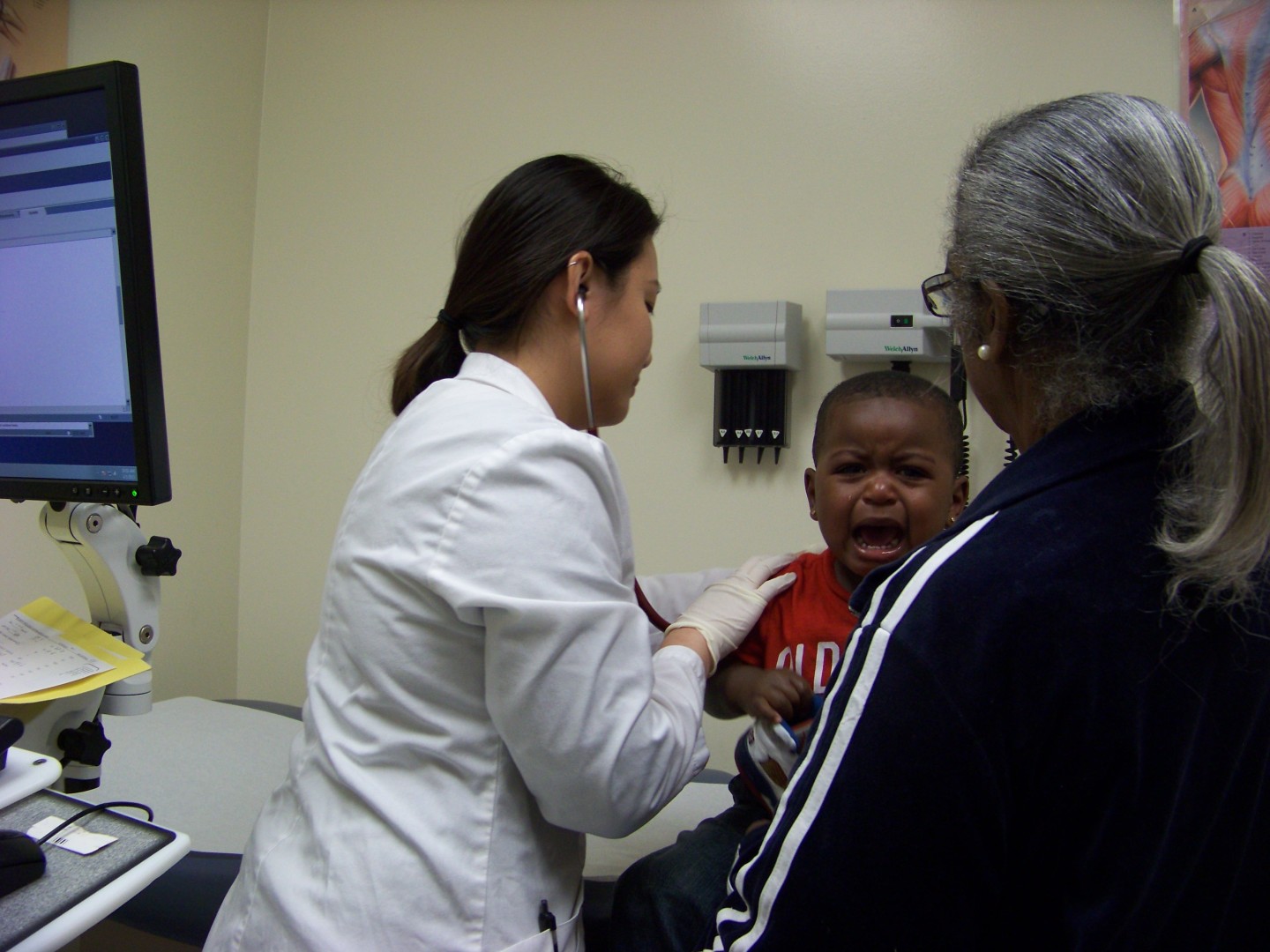
"caption": "At the Manual Arts High School Wellness Center in Los Angeles, pediatric nurse practitioner Jennie Lien gives 15-month-old Andrew Baptist a medical examination. Andrew's great-grandmother, Yvonne Lee (right) says Andrew's entire family relies on the center for medical care.(Photo/Chris Richard)",
"description": "pediatric nurse practitioner and child",
"title": "WellnessCenter_ChrisRichard",
"credit": null,
"status": "inherit",
"isLoading": false,
"fetchFailed": false
},
"stateofhealth_12314": {
"type": "attachments",
"id": "stateofhealth_12314",
"meta": {
"index": "attachments_1716263798",
"site": "stateofhealth",
"id": "12314",
"found": true
},
"parent": 12312,
"imgSizes": {
"thumbnail": {
"file": "https://ww2.kqed.org/app/uploads/sites/27/2013/04/PuzzlePiece_Getty_Thinkstock-400x267.jpg",
"width": 400,
"mimeType": "image/jpeg",
"height": 267
},
"fd-sm": {
"file": "https://ww2.kqed.org/app/uploads/sites/27/2013/04/PuzzlePiece_Getty_Thinkstock-320x213.jpg",
"width": 320,
"mimeType": "image/jpeg",
"height": 213
},
"kqedFullSize": {
"file": "https://ww2.kqed.org/app/uploads/sites/27/2013/04/PuzzlePiece_Getty_Thinkstock.jpg",
"width": 507,
"height": 338
},
"guest-author-96": {
"file": "https://ww2.kqed.org/app/uploads/sites/27/2013/04/PuzzlePiece_Getty_Thinkstock-96x96.jpg",
"width": 96,
"mimeType": "image/jpeg",
"height": 96
},
"guest-author-64": {
"file": "https://ww2.kqed.org/app/uploads/sites/27/2013/04/PuzzlePiece_Getty_Thinkstock-64x64.jpg",
"width": 64,
"mimeType": "image/jpeg",
"height": 64
},
"detail": {
"file": "https://ww2.kqed.org/app/uploads/sites/27/2013/04/PuzzlePiece_Getty_Thinkstock-75x75.jpg",
"width": 75,
"mimeType": "image/jpeg",
"height": 75
},
"guest-author-32": {
"file": "https://ww2.kqed.org/app/uploads/sites/27/2013/04/PuzzlePiece_Getty_Thinkstock-32x32.jpg",
"width": 32,
"mimeType": "image/jpeg",
"height": 32
},
"guest-author-128": {
"file": "https://ww2.kqed.org/app/uploads/sites/27/2013/04/PuzzlePiece_Getty_Thinkstock-128x128.jpg",
"width": 128,
"mimeType": "image/jpeg",
"height": 128
}
},
"publishDate": 1366830969,
"modified": 1366830969,
"caption": "(Getty Images)",
"description": "Jigsaw pieces in shape of house (Digital)",
"title": "200317882-001",
"credit": null,
"status": "inherit",
"isLoading": false,
"fetchFailed": false
},
"stateofhealth_12294": {
"type": "attachments",
"id": "stateofhealth_12294",
"meta": {
"index": "attachments_1716263798",
"site": "stateofhealth",
"id": "12294",
"found": true
},
"parent": 12251,
"imgSizes": {
"thumbnail": {
"file": "https://ww2.kqed.org/app/uploads/sites/27/2013/04/AutoPollution_GettyImages-400x284.jpg",
"width": 400,
"mimeType": "image/jpeg",
"height": 284
},
"fd-sm": {
"file": "https://ww2.kqed.org/app/uploads/sites/27/2013/04/AutoPollution_GettyImages-320x227.jpg",
"width": 320,
"mimeType": "image/jpeg",
"height": 227
},
"kqedFullSize": {
"file": "https://ww2.kqed.org/app/uploads/sites/27/2013/04/AutoPollution_GettyImages.jpg",
"width": 491,
"height": 349
},
"guest-author-96": {
"file": "https://ww2.kqed.org/app/uploads/sites/27/2013/04/AutoPollution_GettyImages-96x96.jpg",
"width": 96,
"mimeType": "image/jpeg",
"height": 96
},
"guest-author-64": {
"file": "https://ww2.kqed.org/app/uploads/sites/27/2013/04/AutoPollution_GettyImages-64x64.jpg",
"width": 64,
"mimeType": "image/jpeg",
"height": 64
},
"detail": {
"file": "https://ww2.kqed.org/app/uploads/sites/27/2013/04/AutoPollution_GettyImages-75x75.jpg",
"width": 75,
"mimeType": "image/jpeg",
"height": 75
},
"guest-author-32": {
"file": "https://ww2.kqed.org/app/uploads/sites/27/2013/04/AutoPollution_GettyImages-32x32.jpg",
"width": 32,
"mimeType": "image/jpeg",
"height": 32
},
"guest-author-128": {
"file": "https://ww2.kqed.org/app/uploads/sites/27/2013/04/AutoPollution_GettyImages-128x128.jpg",
"width": 128,
"mimeType": "image/jpeg",
"height": 128
}
},
"publishDate": 1366677299,
"modified": 1366677299,
"caption": "(Getty Images/Thinkstock)",
"description": "traffic, auto pollution, exhaust",
"title": "AutoPollution_GettyImages",
"credit": null,
"status": "inherit",
"isLoading": false,
"fetchFailed": false
},
"stateofhealth_12218": {
"type": "attachments",
"id": "stateofhealth_12218",
"meta": {
"index": "attachments_1716263798",
"site": "stateofhealth",
"id": "12218",
"found": true
},
"parent": 12215,
"imgSizes": {
"twentyfourteen-full-width": {
"file": "https://ww2.kqed.org/app/uploads/sites/27/2013/04/ShielaJumping-Bull_ShukaKalantari-1038x576.jpg",
"width": 1038,
"mimeType": "image/jpeg",
"height": 576
},
"thumbnail": {
"file": "https://ww2.kqed.org/app/uploads/sites/27/2013/04/ShielaJumping-Bull_ShukaKalantari-400x300.jpg",
"width": 400,
"mimeType": "image/jpeg",
"height": 300
},
"fd-sm": {
"file": "https://ww2.kqed.org/app/uploads/sites/27/2013/04/ShielaJumping-Bull_ShukaKalantari-320x240.jpg",
"width": 320,
"mimeType": "image/jpeg",
"height": 240
},
"post-thumbnail": {
"file": "https://ww2.kqed.org/app/uploads/sites/27/2013/04/ShielaJumping-Bull_ShukaKalantari-672x372.jpg",
"width": 672,
"mimeType": "image/jpeg",
"height": 372
},
"kqedFullSize": {
"file": "https://ww2.kqed.org/app/uploads/sites/27/2013/04/ShielaJumping-Bull_ShukaKalantari.jpg",
"width": 3264,
"height": 2448
},
"large": {
"file": "https://ww2.kqed.org/app/uploads/sites/27/2013/04/ShielaJumping-Bull_ShukaKalantari-1440x1080.jpg",
"width": 1440,
"mimeType": "image/jpeg",
"height": 1080
},
"guest-author-96": {
"file": "https://ww2.kqed.org/app/uploads/sites/27/2013/04/ShielaJumping-Bull_ShukaKalantari-96x96.jpg",
"width": 96,
"mimeType": "image/jpeg",
"height": 96
},
"medium": {
"file": "https://ww2.kqed.org/app/uploads/sites/27/2013/04/ShielaJumping-Bull_ShukaKalantari-800x600.jpg",
"width": 800,
"mimeType": "image/jpeg",
"height": 600
},
"guest-author-64": {
"file": "https://ww2.kqed.org/app/uploads/sites/27/2013/04/ShielaJumping-Bull_ShukaKalantari-64x64.jpg",
"width": 64,
"mimeType": "image/jpeg",
"height": 64
},
"guest-author-32": {
"file": "https://ww2.kqed.org/app/uploads/sites/27/2013/04/ShielaJumping-Bull_ShukaKalantari-32x32.jpg",
"width": 32,
"mimeType": "image/jpeg",
"height": 32
},
"fd-lrg": {
"file": "https://ww2.kqed.org/app/uploads/sites/27/2013/04/ShielaJumping-Bull_ShukaKalantari-1180x885.jpg",
"width": 1180,
"mimeType": "image/jpeg",
"height": 885
},
"fd-med": {
"file": "https://ww2.kqed.org/app/uploads/sites/27/2013/04/ShielaJumping-Bull_ShukaKalantari-768x576.jpg",
"width": 768,
"mimeType": "image/jpeg",
"height": 576
},
"detail": {
"file": "https://ww2.kqed.org/app/uploads/sites/27/2013/04/ShielaJumping-Bull_ShukaKalantari-75x75.jpg",
"width": 75,
"mimeType": "image/jpeg",
"height": 75
},
"guest-author-128": {
"file": "https://ww2.kqed.org/app/uploads/sites/27/2013/04/ShielaJumping-Bull_ShukaKalantari-128x128.jpg",
"width": 128,
"mimeType": "image/jpeg",
"height": 128
}
},
"publishDate": 1366392759,
"modified": 1366392759,
"caption": "Shiela Jumping-Bull records her commentary in a KQED studio as part of the \"What's Your Story?\" series.",
"description": "Shiela Jumping-Bull",
"title": "ShielaJumping-Bull_ShukaKalantari",
"credit": null,
"status": "inherit",
"isLoading": false,
"fetchFailed": false
},
"stateofhealth_12010": {
"type": "attachments",
"id": "stateofhealth_12010",
"meta": {
"index": "attachments_1716263798",
"site": "stateofhealth",
"id": "12010",
"found": true
},
"parent": 12005,
"imgSizes": {
"kqedFullSize": {
"file": "https://ww2.kqed.org/app/uploads/sites/27/2013/04/immigrant-doc-300_JennyGold_KHN.jpg",
"width": 300,
"height": 199
},
"guest-author-96": {
"file": "https://ww2.kqed.org/app/uploads/sites/27/2013/04/immigrant-doc-300_JennyGold_KHN-96x96.jpg",
"width": 96,
"mimeType": "image/jpeg",
"height": 96
},
"guest-author-64": {
"file": "https://ww2.kqed.org/app/uploads/sites/27/2013/04/immigrant-doc-300_JennyGold_KHN-64x64.jpg",
"width": 64,
"mimeType": "image/jpeg",
"height": 64
},
"detail": {
"file": "https://ww2.kqed.org/app/uploads/sites/27/2013/04/immigrant-doc-300_JennyGold_KHN-75x75.jpg",
"width": 75,
"mimeType": "image/jpeg",
"height": 75
},
"guest-author-32": {
"file": "https://ww2.kqed.org/app/uploads/sites/27/2013/04/immigrant-doc-300_JennyGold_KHN-32x32.jpg",
"width": 32,
"mimeType": "image/jpeg",
"height": 32
},
"guest-author-128": {
"file": "https://ww2.kqed.org/app/uploads/sites/27/2013/04/immigrant-doc-300_JennyGold_KHN-128x128.jpg",
"width": 128,
"mimeType": "image/jpeg",
"height": 128
}
},
"publishDate": 1365457899,
"modified": 1365457899,
"caption": "Dr. Jose Chavez Gonzalez examines Graciela Jauregui at Riverside County Regional Medical Center (Jenny Gold/Kaiser Health News).",
"description": "Dr. Jose Chavez Gonzalez examines Graciela Jauregui at Riverside County Regional Medical Center (Jenny Gold/Kaiser Health News).",
"title": "immigrant doc 300_JennyGold_KHN",
"credit": null,
"status": "inherit",
"isLoading": false,
"fetchFailed": false
},
"stateofhealth_11996": {
"type": "attachments",
"id": "stateofhealth_11996",
"meta": {
"index": "attachments_1716263798",
"site": "stateofhealth",
"id": "11996",
"found": true
},
"parent": 11994,
"imgSizes": {
"twentyfourteen-full-width": {
"file": "https://ww2.kqed.org/app/uploads/sites/27/2013/04/SmartPhone_okalkavan_Flickr-1024x576.jpg",
"width": 1024,
"mimeType": "image/jpeg",
"height": 576
},
"thumbnail": {
"file": "https://ww2.kqed.org/app/uploads/sites/27/2013/04/SmartPhone_okalkavan_Flickr-400x267.jpg",
"width": 400,
"mimeType": "image/jpeg",
"height": 267
},
"fd-sm": {
"file": "https://ww2.kqed.org/app/uploads/sites/27/2013/04/SmartPhone_okalkavan_Flickr-320x213.jpg",
"width": 320,
"mimeType": "image/jpeg",
"height": 213
},
"post-thumbnail": {
"file": "https://ww2.kqed.org/app/uploads/sites/27/2013/04/SmartPhone_okalkavan_Flickr-672x372.jpg",
"width": 672,
"mimeType": "image/jpeg",
"height": 372
},
"kqedFullSize": {
"file": "https://ww2.kqed.org/app/uploads/sites/27/2013/04/SmartPhone_okalkavan_Flickr.jpg",
"width": 1024,
"height": 683
},
"fd-med": {
"file": "https://ww2.kqed.org/app/uploads/sites/27/2013/04/SmartPhone_okalkavan_Flickr-768x512.jpg",
"width": 768,
"mimeType": "image/jpeg",
"height": 512
},
"guest-author-96": {
"file": "https://ww2.kqed.org/app/uploads/sites/27/2013/04/SmartPhone_okalkavan_Flickr-96x96.jpg",
"width": 96,
"mimeType": "image/jpeg",
"height": 96
},
"medium": {
"file": "https://ww2.kqed.org/app/uploads/sites/27/2013/04/SmartPhone_okalkavan_Flickr-800x534.jpg",
"width": 800,
"mimeType": "image/jpeg",
"height": 534
},
"guest-author-64": {
"file": "https://ww2.kqed.org/app/uploads/sites/27/2013/04/SmartPhone_okalkavan_Flickr-64x64.jpg",
"width": 64,
"mimeType": "image/jpeg",
"height": 64
},
"detail": {
"file": "https://ww2.kqed.org/app/uploads/sites/27/2013/04/SmartPhone_okalkavan_Flickr-75x75.jpg",
"width": 75,
"mimeType": "image/jpeg",
"height": 75
},
"guest-author-32": {
"file": "https://ww2.kqed.org/app/uploads/sites/27/2013/04/SmartPhone_okalkavan_Flickr-32x32.jpg",
"width": 32,
"mimeType": "image/jpeg",
"height": 32
},
"guest-author-128": {
"file": "https://ww2.kqed.org/app/uploads/sites/27/2013/04/SmartPhone_okalkavan_Flickr-128x128.jpg",
"width": 128,
"mimeType": "image/jpeg",
"height": 128
}
},
"publishDate": 1365445813,
"modified": 1365445813,
"caption": "A powerful way to reach teens with credible health information say conference organizers. (okalkavan/Flickr)",
"description": "smart phone",
"title": "SmartPhone_okalkavan_Flickr",
"credit": null,
"status": "inherit",
"isLoading": false,
"fetchFailed": false
},
"stateofhealth_9107": {
"type": "attachments",
"id": "stateofhealth_9107",
"meta": {
"index": "attachments_1716263798",
"site": "stateofhealth",
"id": "9107",
"found": true
},
"parent": 9074,
"imgSizes": {
"twentyfourteen-full-width": {
"file": "https://ww2.kqed.org/app/uploads/sites/27/2012/11/AIDSribbon_gernhaex_flickr-740x576.jpg",
"width": 740,
"mimeType": "image/jpeg",
"height": 576
},
"thumbnail": {
"file": "https://ww2.kqed.org/app/uploads/sites/27/2012/11/AIDSribbon_gernhaex_flickr-400x394.jpg",
"width": 400,
"mimeType": "image/jpeg",
"height": 394
},
"fd-sm": {
"file": "https://ww2.kqed.org/app/uploads/sites/27/2012/11/AIDSribbon_gernhaex_flickr-320x315.jpg",
"width": 320,
"mimeType": "image/jpeg",
"height": 315
},
"post-thumbnail": {
"file": "https://ww2.kqed.org/app/uploads/sites/27/2012/11/AIDSribbon_gernhaex_flickr-672x372.jpg",
"width": 672,
"mimeType": "image/jpeg",
"height": 372
},
"kqedFullSize": {
"file": "https://ww2.kqed.org/app/uploads/sites/27/2012/11/AIDSribbon_gernhaex_flickr.jpg",
"width": 740,
"height": 728
},
"guest-author-96": {
"file": "https://ww2.kqed.org/app/uploads/sites/27/2012/11/AIDSribbon_gernhaex_flickr-96x96.jpg",
"width": 96,
"mimeType": "image/jpeg",
"height": 96
},
"guest-author-64": {
"file": "https://ww2.kqed.org/app/uploads/sites/27/2012/11/AIDSribbon_gernhaex_flickr-64x64.jpg",
"width": 64,
"mimeType": "image/jpeg",
"height": 64
},
"detail": {
"file": "https://ww2.kqed.org/app/uploads/sites/27/2012/11/AIDSribbon_gernhaex_flickr-75x75.jpg",
"width": 75,
"mimeType": "image/jpeg",
"height": 75
},
"guest-author-32": {
"file": "https://ww2.kqed.org/app/uploads/sites/27/2012/11/AIDSribbon_gernhaex_flickr-32x32.jpg",
"width": 32,
"mimeType": "image/jpeg",
"height": 32
},
"guest-author-128": {
"file": "https://ww2.kqed.org/app/uploads/sites/27/2012/11/AIDSribbon_gernhaex_flickr-128x128.jpg",
"width": 128,
"mimeType": "image/jpeg",
"height": 128
}
},
"publishDate": 1354170609,
"modified": 1354170609,
"caption": "(gernhaex/Flickr)",
"description": "red ribbon",
"title": "(gernhaex/Flickr)",
"credit": null,
"status": "inherit",
"isLoading": false,
"fetchFailed": false
}
},
"audioPlayerReducer": {
"postId": "stream_live",
"isPaused": true,
"isPlaying": false,
"pfsActive": false,
"pledgeModalIsOpen": true,
"playerDrawerIsOpen": false,
"liveAudioPlayStartedAt": 0,
"liveAudioPlayContext": ""
},
"authorsReducer": {
"skalantari": {
"type": "authors",
"id": "46",
"meta": {
"index": "authors_1716337520",
"id": "46",
"found": true
},
"name": "Shuka Kalantari",
"firstName": "Shuka",
"lastName": "Kalantari",
"slug": "skalantari",
"email": "skalantari@kqed.org",
"display_author_email": false,
"staff_mastheads": [],
"title": "KQED Contributor",
"bio": "Shuka Kalantari is a Bay Area journalist reporting on health, food, culture and immigrant communities in California and internationally. She's reported for Public Radio International’s The World, BBC World News Service’s Outlook, Philosophy Talk, Vice Magazine. Shuka is also a frequent contributor to KQED Public Media. You can follow her \u003ca href=\"https://twitter.com/skalantari\">@skalantari\u003c/a> on Twitter and \u003ca href=\"https://instagram.com/skalantari/\">Instagram\u003c/a>.",
"avatar": "https://secure.gravatar.com/avatar/51d9608640bde16ba09124272a0c0f355429db1ebc29f1853b8d87aab1ae1753?s=600&d=blank&r=g",
"twitter": null,
"bluesky": null,
"facebook": null,
"instagram": null,
"linkedin": null,
"sites": [
{
"site": "news",
"roles": [
"subscriber"
]
},
{
"site": "bayareabites",
"roles": [
"subscriber"
]
},
{
"site": "stateofhealth",
"roles": [
"subscriber"
]
}
],
"headData": {
"title": "Shuka Kalantari | KQED",
"description": "KQED Contributor",
"ogImgSrc": "https://secure.gravatar.com/avatar/51d9608640bde16ba09124272a0c0f355429db1ebc29f1853b8d87aab1ae1753?s=600&d=blank&r=g",
"twImgSrc": "https://secure.gravatar.com/avatar/51d9608640bde16ba09124272a0c0f355429db1ebc29f1853b8d87aab1ae1753?s=600&d=blank&r=g"
},
"isLoading": false,
"link": "/author/skalantari"
},
"lisaaliferis": {
"type": "authors",
"id": "240",
"meta": {
"index": "authors_1716337520",
"id": "240",
"found": true
},
"name": "Lisa Aliferis",
"firstName": "Lisa",
"lastName": "Aliferis",
"slug": "lisaaliferis",
"email": "laliferis@kqed.org",
"display_author_email": false,
"staff_mastheads": [],
"title": "KQED Contributor",
"bio": "Lisa Aliferis is the founding editor of KQED's \u003cem>State of Health\u003c/em> blog. Since 2011, she's been writing and editing stories for the site. Before taking up blogging, she toiled for many years (more than we can count) producing health stories for television, including\u003cem> Dateline NBC\u003c/em> and San Francisco's CBS affiliate, KPIX-TV. She also wrote up a \u003ca title=\"http://www.kqed.org/news/health/obamacare/obamacare-guide.jsp\" href=\"http://www.kqed.org/news/health/obamacare/obamacare-guide.jsp\">handy guide to the Affordable Care Act\u003c/a>, especially for Californians. Her work has been honored for many awards. Most recently she was a finalist for \"Best Topical Reporting\" from the Online News Association. You can follow her on Twitter: \u003ca title=\"https://twitter.com/laliferis\" href=\"https://twitter.com/laliferis\">@laliferis\u003c/a>",
"avatar": "https://secure.gravatar.com/avatar/86c339d5cdcb0dcd2b6cf5d7c3f5886b?s=600&d=mm&r=g",
"twitter": "laliferis",
"facebook": null,
"instagram": null,
"linkedin": null,
"sites": [
{
"site": "news",
"roles": [
"subscriber"
]
},
{
"site": "futureofyou",
"roles": [
"subscriber"
]
},
{
"site": "stateofhealth",
"roles": [
"subscriber"
]
},
{
"site": "science",
"roles": [
"subscriber"
]
},
{
"site": "food",
"roles": []
}
],
"headData": {
"title": "Lisa Aliferis | KQED",
"description": "KQED Contributor",
"ogImgSrc": "https://secure.gravatar.com/avatar/86c339d5cdcb0dcd2b6cf5d7c3f5886b?s=600&d=mm&r=g",
"twImgSrc": "https://secure.gravatar.com/avatar/86c339d5cdcb0dcd2b6cf5d7c3f5886b?s=600&d=mm&r=g"
},
"isLoading": false,
"link": "/author/lisaaliferis"
},
"sasha-khokha": {
"type": "authors",
"id": "254",
"meta": {
"index": "authors_1716337520",
"id": "254",
"found": true
},
"name": "Sasha Khokha",
"firstName": "Sasha",
"lastName": "Khokha",
"slug": "sasha-khokha",
"email": "skhokha@kqed.org",
"display_author_email": true,
"staff_mastheads": [
"news"
],
"title": "Host, The California Report Magazine",
"bio": "Sasha Khokha is the host of \u003cem>The California Report's \u003c/em> weekly magazine program, which takes listeners on sound-rich excursions to meet the people that make the Golden State unique -- through audio documentaries and long-form stories. As \u003cem>The California Report's\u003c/em> Central Valley Bureau Chief based in Fresno for nearly a dozen years, Sasha brought the lives and concerns of rural Californians to listeners around the state. Her reporting helped expose the hidden price immigrant women janitors and farmworkers may pay to keep their jobs: sexual assault at work. It inspired two new California laws to protect them from sexual harassment. She was a key member of the reporting team for the Frontline film \u003cem>Rape on the Night Shift, \u003c/em>which was nominated for two national Emmys. Sasha has also won a national Edward R. Murrow and a national PRNDI award for investigative reporting, as well as multiple prizes from the Society for Professional Journalists. Sasha is a proud alum of the UC Berkeley Graduate School of Journalism and Brown University and a member of the South Asian Journalists Association.",
"avatar": "https://secure.gravatar.com/avatar/e4b5e1541aaeea2aa356aa1fb2a68950?s=600&d=blank&r=g",
"twitter": "KQEDSashaKhokha",
"facebook": null,
"instagram": null,
"linkedin": null,
"sites": [
{
"site": "news",
"roles": [
"editor"
]
},
{
"site": "stateofhealth",
"roles": [
"author"
]
},
{
"site": "science",
"roles": [
"author"
]
},
{
"site": "quest",
"roles": [
"subscriber"
]
}
],
"headData": {
"title": "Sasha Khokha | KQED",
"description": "Host, The California Report Magazine",
"ogImgSrc": "https://secure.gravatar.com/avatar/e4b5e1541aaeea2aa356aa1fb2a68950?s=600&d=blank&r=g",
"twImgSrc": "https://secure.gravatar.com/avatar/e4b5e1541aaeea2aa356aa1fb2a68950?s=600&d=blank&r=g"
},
"isLoading": false,
"link": "/author/sasha-khokha"
},
"state-of-health": {
"type": "authors",
"id": "8344",
"meta": {
"index": "authors_1716337520",
"id": "8344",
"found": true
},
"name": "State of Health",
"firstName": "State of Health",
"lastName": null,
"slug": "state-of-health",
"email": "stateofhealth@kqed.org",
"display_author_email": false,
"staff_mastheads": [],
"title": null,
"bio": null,
"avatar": "https://secure.gravatar.com/avatar/66de4bf6d331fa7402bba1ffe8135e17?s=600&d=blank&r=g",
"twitter": null,
"facebook": null,
"instagram": null,
"linkedin": null,
"sites": [
{
"site": "arts",
"roles": [
"author"
]
},
{
"site": "stateofhealth",
"roles": [
"editor"
]
}
],
"headData": {
"title": "State of Health | KQED",
"description": null,
"ogImgSrc": "https://secure.gravatar.com/avatar/66de4bf6d331fa7402bba1ffe8135e17?s=600&d=blank&r=g",
"twImgSrc": "https://secure.gravatar.com/avatar/66de4bf6d331fa7402bba1ffe8135e17?s=600&d=blank&r=g"
},
"isLoading": false,
"link": "/author/state-of-health"
}
},
"pagesReducer": {
"stateofhealth_category_place-matters": {
"type": "terms",
"id": "stateofhealth_11",
"meta": {
"index": "terms_1716263798",
"site": "stateofhealth",
"id": "11",
"score": 14.406069
},
"featImg": null,
"name": "Community Health",
"description": "\r\n\r\nFrom rural California to urban neighborhoods, where you live affects your health",
"taxonomy": "category",
"headData": {
"twImgId": null,
"twTitle": null,
"ogTitle": null,
"ogImgId": null,
"twDescription": null,
"description": "From rural California to urban neighborhoods, where you live affects your health",
"title": "Community Health Archives | KQED Arts",
"ogDescription": null
},
"ttid": 11,
"slug": "place-matters",
"isLoading": false,
"title": "Community Health",
"pageMeta": {
"site": "stateofhealth",
"WpPageTemplate": "page-topic-editorial",
"currentPage": 47
},
"blocks": [
{
"blockName": "kqed/company-paragraph",
"content": "\r\n\r\nFrom rural California to urban neighborhoods, where you live affects your health"
},
{
"blockName": "kqed/post-list",
"attrs": {
"layout": "cardArticle2",
"query": "posts/stateofhealth?category=place-matters",
"seeMore": false,
"paginated": true,
"page": 47
}
},
{
"blockName": "kqed/ad"
}
]
}
},
"pfsSessionReducer": {},
"postsReducer": {
"stream_live": {
"type": "live",
"id": "stream_live",
"audioUrl": "https://streams.kqed.org/kqedradio",
"title": "Live Stream",
"excerpt": "Live Stream information currently unavailable.",
"link": "/radio",
"featImg": "",
"label": {
"name": "KQED Live",
"link": "/"
}
},
"stream_kqedNewscast": {
"type": "posts",
"id": "stream_kqedNewscast",
"audioUrl": "https://www.kqed.org/.stream/anon/radio/RDnews/newscast.mp3?_=1",
"title": "KQED Newscast",
"featImg": "",
"label": {
"name": "88.5 FM",
"link": "/"
}
},
"stateofhealth_13110": {
"type": "posts",
"id": "stateofhealth_13110",
"meta": {
"index": "posts_1716263798",
"site": "stateofhealth",
"id": "13110",
"score": null,
"sort": [
1370458951000
]
},
"parent": 0,
"labelTerm": {
"site": "stateofhealth",
"term": 2363
},
"blocks": [],
"publishDate": 1370458951,
"format": "aside",
"disqusTitle": "Distance a Barrier for Rural Californians with Health Problems",
"title": "Distance a Barrier for Rural Californians with Health Problems",
"headTitle": "Vital Signs | State of Health | KQED News",
"content": "\u003cfigure id=\"attachment_13118\" class=\"wp-caption alignleft\" style=\"max-width: 300px\">\u003ca href=\"http://www.flickr.com/photos/62116165@N00/2171603420/in/photolist-4iU33h-48fK3N-48bMSr-48bs1x-48fzE3-48fteA-48bQg8-48fFXU-48fmCo-48fEZd-48fGD9-48frsy-48fC5A-48bybH-48foEb-48bt3t-48bPA2-48brtR-48bAuZ-48fsCh-48brcB-cg45CS-48bPjg-48bzLB-48bkde-48bnvX-48bnaT-48fmS1-48bBAX-48bBWR-48bFpn-48bNbB-48bHGe-48bGnc-48bwPr-48bKgF-48fRTA-48fwqm-48bLFv-48fpay-48bRFR-48bKAa-48fMW9-48bEGp-48bqmZ-48boY8-48bCZF-48bCgX-48fnpE-48bpGV-48foPN\">\u003cimg class=\"size-medium wp-image-13118\" title=\"\" src=\"http://ww2.kqed.org/stateofhealth/wp-content/uploads/sites/27/2013/06/2171603420_20e91f454a_o-300x225.jpg\" alt=\"If you live in a small far-northern California town like Susanville, seen here, you may need to travel more than one hundred miles for health care. (ceiling/Flickr)\" width=\"300\" height=\"225\">\u003c/a>\u003cfigcaption class=\"wp-caption-text\">If you live in a small far-northern California town like Susanville, seen here, you may need to travel more than one hundred miles for health care. (ceiling/Flickr)\u003c/figcaption>\u003c/figure>\n\u003cp>\u003cem>Editor's Note: The barriers to getting health care can be bad enough in urban areas, where poverty, lack of insurance and cultural divides are serious barriers to care. But if you live in rural parts of California there’s a serious barrier of a different kind: distance. As part of our first-person series \"\u003ca href=\"http://www.californiareport.org/specialcoverage/whatsyourstory/index.jsp\" target=\"_blank\">What's Your Story?\u003c/a>\" we hear from Kelly Frost of Redding about how the care you need may be hours away from your home.\u003c/em>\u003c/p>\n\u003cp>Being on dialysis is tough enough without having to travel two or three hours each way just to get to the clinic. But when you live in the far reaches of Northern California, that is exactly what you must do. I sometimes sit with my wife when she does her dialysis treatment. We are lucky because we live only about 10 minutes away from the clinic in Redding. But every morning, the “remotes,” people who live on farms or in rural towns, climb into the mini-vans and come from Trinity County to the west; Mount Shasta, Weed, and Alturas to the North; and some from as far away as Susanville, near Reno.\u003c/p>\n\u003cp>They get up in the middle of the night, travel several hours, sometimes in bad weather, sit for treatment for three hours, and go home. Then in two days they do it all over again. When the weather turns, or there is an accident which closes the interstate, the problem compounds. Sometimes, they can’t get to Redding, or worse yet, they get here and can’t get home. Packing a lunch and three days of meds is standard fare for most. You’ve got to think ahead. Have a plan, a place to stay until the roads open. The dialysis center has some funds to help with a motel or a meal, but not much. Not for everyone, and not for more than a day.\u003c!--more-->\u003c/p>\n\u003cp>Some are lucky to have family nearby, but not the others. They have to fend for themselves, and some are in wheelchairs or otherwise can’t get around. Better have some money for a room. And with most of them on Medi-Cal that’s not easy.\u003c/p>\n\u003cp>The social worker tells me that missing a treatment or two can also be extremely dangerous. Fluid overload, shortness of breath, nausea. Even death if you miss too many. It’s a bad deal. Some consider moving to Redding to be closer to the clinic or stay near family. Others can’t afford to move. Others just like the rural lifestyle and feel they couldn’t make it in the big city.\u003c/p>\n\u003cp>[ad fullwidth]\u003c/p>\n\u003cp>I never thought of Redding as the big city, but I suppose when it’s the only place to have dialysis for several hundred miles in each direction, it is. And with the only hospital around that can deal with their chronic condition it makes living so far away hard as well. What if they need to get to the ER? An ambulance could take several hours. A helicopter? That takes time too. And money. Medi-Cal pays for those who qualify. But some are paying $50 or more each way. And those who drive are paying even more than that. Plus the cost of meals.\u003c/p>\n\u003cp>A lot is made of the virtue of giving people more choices in health care. Usually they’re talking about insurance plans, deductibles and such. But in this part of California, choice has a different meaning, as in ‘you don’t really have one’ when you or a loved one is ill. You do what you have to do, go where you have to go, even if that means going very far and doing what you never dreamed you’d have to do.\u003c/p>\n\u003cp>\u003cstrong>Listen to Kelly Frost on The California Report:\u003c/strong>\u003c/p>\n\u003cp>\u003c/p>\n\u003cp>\u003cobject width=\"335\" height=\"85\" classid=\"d27cdb6e-ae6d-11cf-96b8-444553540000\" codebase=\"http://download.macromedia.com/pub/shockwave/cabs/flash/swflash.cab#version=6,0,40,0\">\u003cparam name=\"flashvars\" value=\"file=http://www.kqed.org/radio/archives/R201306030850b.xml\">\u003cparam name=\"src\" value=\"http://www.kqed.org/assets/flash/kqedplayer.swf\">\u003cembed width=\"335\" height=\"85\" type=\"application/x-shockwave-flash\" src=\"http://www.kqed.org/assets/flash/kqedplayer.swf\" flashvars=\"file=http://www.kqed.org/radio/archives/R201306030850b.xml\">\u003c/embed>\u003c/object>\u003c/p>\n\n",
"disqusIdentifier": "13110 http://blogs.kqed.org/stateofhealth/?p=13110",
"disqusUrl": "https://ww2.kqed.org/stateofhealth/2013/06/05/distance-a-barrier-for-rural-californians-with-health-problems/",
"stats": {
"hasVideo": false,
"hasChartOrMap": false,
"hasAudio": false,
"hasPolis": false,
"wordCount": 682,
"hasGoogleForm": false,
"hasGallery": false,
"hasHearkenModule": false,
"iframeSrcs": [],
"paragraphCount": 11
},
"modified": 1392158901,
"excerpt": "The barriers to getting health care can be bad enough in urban areas, where poverty, lack of insurance and cultural divides are serious barriers to care. But if you live in rural parts of California there’s another, really serious barrier - distance. As part of our first-person series \"What's Your Story?\" we hear from Kelly Frost of Redding about how the care you need may be a hours away from your home.",
"headData": {
"twImgId": "",
"twTitle": "",
"ogTitle": "",
"ogImgId": "",
"twDescription": "",
"description": "The barriers to getting health care can be bad enough in urban areas, where poverty, lack of insurance and cultural divides are serious barriers to care. But if you live in rural parts of California there’s another, really serious barrier - distance. As part of our first-person series "What's Your Story?" we hear from Kelly Frost of Redding about how the care you need may be a hours away from your home.",
"title": "Distance a Barrier for Rural Californians with Health Problems | KQED",
"ogDescription": "",
"schema": {
"@context": "https://schema.org",
"@type": "Article",
"headline": "Distance a Barrier for Rural Californians with Health Problems",
"datePublished": "2013-06-05T12:02:31-07:00",
"dateModified": "2014-02-11T14:48:21-08:00",
"image": "https://cdn.kqed.org/wp-content/uploads/2020/02/KQED-OG-Image@1x.png"
}
},
"guestAuthors": [],
"slug": "distance-a-barrier-for-rural-californians-with-health-problems",
"status": "publish",
"path": "/stateofhealth/13110/distance-a-barrier-for-rural-californians-with-health-problems",
"audioTrackLength": null,
"parsedContent": [
{
"type": "contentString",
"content": "\u003cdiv class=\"post-body\">\u003cp>\u003cfigure id=\"attachment_13118\" class=\"wp-caption alignleft\" style=\"max-width: 300px\">\u003ca href=\"http://www.flickr.com/photos/62116165@N00/2171603420/in/photolist-4iU33h-48fK3N-48bMSr-48bs1x-48fzE3-48fteA-48bQg8-48fFXU-48fmCo-48fEZd-48fGD9-48frsy-48fC5A-48bybH-48foEb-48bt3t-48bPA2-48brtR-48bAuZ-48fsCh-48brcB-cg45CS-48bPjg-48bzLB-48bkde-48bnvX-48bnaT-48fmS1-48bBAX-48bBWR-48bFpn-48bNbB-48bHGe-48bGnc-48bwPr-48bKgF-48fRTA-48fwqm-48bLFv-48fpay-48bRFR-48bKAa-48fMW9-48bEGp-48bqmZ-48boY8-48bCZF-48bCgX-48fnpE-48bpGV-48foPN\">\u003cimg class=\"size-medium wp-image-13118\" title=\"\" src=\"http://ww2.kqed.org/stateofhealth/wp-content/uploads/sites/27/2013/06/2171603420_20e91f454a_o-300x225.jpg\" alt=\"If you live in a small far-northern California town like Susanville, seen here, you may need to travel more than one hundred miles for health care. (ceiling/Flickr)\" width=\"300\" height=\"225\">\u003c/a>\u003cfigcaption class=\"wp-caption-text\">If you live in a small far-northern California town like Susanville, seen here, you may need to travel more than one hundred miles for health care. (ceiling/Flickr)\u003c/figcaption>\u003c/figure>\n\u003cp>\u003cem>Editor's Note: The barriers to getting health care can be bad enough in urban areas, where poverty, lack of insurance and cultural divides are serious barriers to care. But if you live in rural parts of California there’s a serious barrier of a different kind: distance. As part of our first-person series \"\u003ca href=\"http://www.californiareport.org/specialcoverage/whatsyourstory/index.jsp\" target=\"_blank\">What's Your Story?\u003c/a>\" we hear from Kelly Frost of Redding about how the care you need may be hours away from your home.\u003c/em>\u003c/p>\n\u003cp>Being on dialysis is tough enough without having to travel two or three hours each way just to get to the clinic. But when you live in the far reaches of Northern California, that is exactly what you must do. I sometimes sit with my wife when she does her dialysis treatment. We are lucky because we live only about 10 minutes away from the clinic in Redding. But every morning, the “remotes,” people who live on farms or in rural towns, climb into the mini-vans and come from Trinity County to the west; Mount Shasta, Weed, and Alturas to the North; and some from as far away as Susanville, near Reno.\u003c/p>\n\u003cp>They get up in the middle of the night, travel several hours, sometimes in bad weather, sit for treatment for three hours, and go home. Then in two days they do it all over again. When the weather turns, or there is an accident which closes the interstate, the problem compounds. Sometimes, they can’t get to Redding, or worse yet, they get here and can’t get home. Packing a lunch and three days of meds is standard fare for most. You’ve got to think ahead. Have a plan, a place to stay until the roads open. The dialysis center has some funds to help with a motel or a meal, but not much. Not for everyone, and not for more than a day.\u003c!--more-->\u003c/p>\n\u003cp>Some are lucky to have family nearby, but not the others. They have to fend for themselves, and some are in wheelchairs or otherwise can’t get around. Better have some money for a room. And with most of them on Medi-Cal that’s not easy.\u003c/p>\n\u003cp>The social worker tells me that missing a treatment or two can also be extremely dangerous. Fluid overload, shortness of breath, nausea. Even death if you miss too many. It’s a bad deal. Some consider moving to Redding to be closer to the clinic or stay near family. Others can’t afford to move. Others just like the rural lifestyle and feel they couldn’t make it in the big city.\u003c/p>\n\u003cp>\u003c/p>\u003c/div>",
"attributes": {
"named": {},
"numeric": []
}
},
{
"type": "component",
"content": "",
"name": "ad",
"attributes": {
"named": {
"label": "fullwidth"
},
"numeric": [
"fullwidth"
]
}
},
{
"type": "contentString",
"content": "\u003cdiv class=\"post-body\">\u003cp>\u003c/p>\n\u003cp>I never thought of Redding as the big city, but I suppose when it’s the only place to have dialysis for several hundred miles in each direction, it is. And with the only hospital around that can deal with their chronic condition it makes living so far away hard as well. What if they need to get to the ER? An ambulance could take several hours. A helicopter? That takes time too. And money. Medi-Cal pays for those who qualify. But some are paying $50 or more each way. And those who drive are paying even more than that. Plus the cost of meals.\u003c/p>\n\u003cp>A lot is made of the virtue of giving people more choices in health care. Usually they’re talking about insurance plans, deductibles and such. But in this part of California, choice has a different meaning, as in ‘you don’t really have one’ when you or a loved one is ill. You do what you have to do, go where you have to go, even if that means going very far and doing what you never dreamed you’d have to do.\u003c/p>\n\u003cp>\u003cstrong>Listen to Kelly Frost on The California Report:\u003c/strong>\u003c/p>\n\u003cp>\u003c/p>\n\u003cp>\u003cobject width=\"335\" height=\"85\" classid=\"d27cdb6e-ae6d-11cf-96b8-444553540000\" codebase=\"http://download.macromedia.com/pub/shockwave/cabs/flash/swflash.cab#version=6,0,40,0\">\u003cparam name=\"flashvars\" value=\"file=http://www.kqed.org/radio/archives/R201306030850b.xml\">\u003cparam name=\"src\" value=\"http://www.kqed.org/assets/flash/kqedplayer.swf\">\u003cembed width=\"335\" height=\"85\" type=\"application/x-shockwave-flash\" src=\"http://www.kqed.org/assets/flash/kqedplayer.swf\" flashvars=\"file=http://www.kqed.org/radio/archives/R201306030850b.xml\">\u003c/embed>\u003c/object>\u003c/p>\n\n\u003c/div>\u003c/p>",
"attributes": {
"named": {},
"numeric": []
}
}
],
"link": "/stateofhealth/13110/distance-a-barrier-for-rural-californians-with-health-problems",
"authors": [
"46"
],
"series": [
"stateofhealth_2363"
],
"categories": [
"stateofhealth_11"
],
"tags": [
"stateofhealth_251",
"stateofhealth_2373"
],
"label": "stateofhealth_2363"
},
"stateofhealth_13044": {
"type": "posts",
"id": "stateofhealth_13044",
"meta": {
"index": "posts_1716263798",
"site": "stateofhealth",
"id": "13044",
"score": null,
"sort": [
1370035830000
]
},
"parent": 0,
"labelTerm": {
"site": "stateofhealth"
},
"blocks": [],
"publishDate": 1370035830,
"format": "aside",
"disqusTitle": "Want To Get People to Eat More Fresh Produce? Give Them A Little Money",
"title": "Want To Get People to Eat More Fresh Produce? Give Them A Little Money",
"headTitle": "State of Health | KQED News",
"content": "\u003cp>By\u003ca href=\"http://www.marnettefederis.com\" target=\"_blank\"> Marnette Federis\u003c/a>\u003c/p>\n\u003cfigure id=\"attachment_13049\" class=\"wp-caption aligncenter\" style=\"max-width: 620px\">\u003cimg class=\"size-large wp-image-13049\" title=\"\" src=\"http://ww2.kqed.org/stateofhealth/wp-content/uploads/sites/27/2013/05/FreshFund_MarnetteFederisKQED-620x420.jpg\" alt=\"(Marnette Federis/KQED)\" width=\"620\" height=\"420\">\u003cfigcaption class=\"wp-caption-text\">(Marnette Federis/KQED)\u003c/figcaption>\u003c/figure>\n\u003cp>Collene Kraut says she never misses a chance to tell her 3-year-old daughter to eat vegetables and fruits. So when a farmers’ market launched in March, a block away from her home near San Diego, Kraut was eager to go.\u003c/p>\n\u003cp>“I don’t like it when people give my kid bad things to eat,\" said Kraut. \"I just want her to be healthy.\"\u003c/p>\n\u003cp>Kraut receives funds from SNAP (formerly called food stamps), and she learned that she could use those funds at this new market. But Kraut learned about another new program while she was there, one that would help her stretch her dollars further. It's called\u003ca href=\"http://www.healthyworks.org/healthy-foods/fresh-fund\" target=\"_blank\"> Fresh Fund,\u003c/a> a grant-funded program which provides matching dollars specifically to purchase produce.\u003c/p>\n\u003caside class=\"pullquote alignleft\">The program's goal is to help low-income families buy accessible, affordable, nutritious produce.\u003c/aside>\n\u003cp>That extra money is having an impact. Because of Fresh Fund, Kraut says she and other family members are now trying different varieties of fruits and vegetables. Kraut says she especially likes the different varieties of greens she finds, adding that they taste better than what she can buy at the supermarket.\u003c/p>\n\u003cp>[ad fullwidth]\u003c/p>\n\u003cp>“I brought some [greens] back for my dad, and he was eating it plain without salad dressing, he said it was good,” she recounts.\u003c/p>\n\u003cp>The Fresh Fund program helps families such as Kraut’s to stretch their food budgets so they have more room to shop for healthier food. The program's goal is to help low-income families buy accessible, affordable, nutritious produce. Offering matching dollars for produce appears to influence people's diets.\u003c!--more-->\u003c/p>\n\u003cp>“People come out and try things they may not be used to, and they understand this produce tastes so much better than what they can get at the corner store,” said Troy McKinney, coordinator of Fresh Fund.\u003c/p>\n\u003cp>At the El Cajon Farmers’ Market, eligible families may collect up to $30 over a two months. At another market, in San Diego’s City Heights neighborhood, people get up to $90 over three months.\u003c/p>\n\u003cp>Organizers acknowledge that there are some limitations to the program because participants only have a two or three-month period to be part of it. The goal is that once families try out the farmers’ market they will keep coming back.\u003c/p>\n\u003cp>“We’re hoping that in that short period of time, they’ll come out here … they’ll try the produce, and they’ll choose to budget farmers’ market produce\" into their regular shopping McKinney explained.\u003c/p>\n\u003cp>The \u003ca href=\"http://www.rescue.org/us-program/us-san-diego-ca/fresh-fund\" target=\"_blank\">International Rescue Committee\u003c/a>, which provides services to refugees resettling in the United States, launched both the farmers’ markets and Fresh Fund as a way to expand access to healthier food for low-income families.\u003c/p>\n\u003cp>In 2008, IRC opened the market in City Heights, a low-income neighborhood and home to a large population of refugees from Southeast Asia, Africa and other parts of the world.\u003c/p>\n\u003cp>IRC staffers said the farmers’ market was a way to address challenges often faced by low to moderate-income families when it comes to eating healthy.\u003c/p>\n\u003cp>“Families don’t have to fall into the trap of buying calorie-rich but nutrient-deficient, cheap food,” said Ralph Achenbach, IRC’s Food and Farming Marketing Coordinator.\u003c/p>\n\u003cp>Refugees also find it difficult to cook native dishes without access to fruits and vegetables they traditionally use, said Achenbach. At the City Heights Farmers’ Market, some of the vendors include refugees who are trained by IRC to grow and sell produce found in their home countries.\u003c/p>\n\u003cp>“Some of the African farmers are growing African amaranth or cassava, or things you don't necessarily find in other farmer's market,” said Achenbach.\u003c/p>\n\u003cp>McKinney said El Cajon was chosen as the site for the newest farmers’ market because many of IRC’s clients, including Iraqi refugees, have resettled in the area.\u003c/p>\n\u003cp>“We want to make sure that our clients and the community, have access to this quality produce, which we think is really the highest quality produce you can buy in San Diego or in any other neighborhood,” said McKinney.\u003c/p>\n\u003cp>Mayce Kadhum is from Iraq and recently moved to El Cajon in the beginning of 2013. She said she appreciates the produce available at the farmers’ market because she is unable to plant her own vegetables.\u003c/p>\n\u003cp>“Someone told me to plant something,” Kadhum said. “The problem is, I don't have enough space in my flat. This is the problem.”\u003c/p>\n\u003cp>Fresh Fund organizers said they have seen the program improve the lives of participants.\u003c/p>\n\u003cp>\u003c/p>\n\u003cp>Of participants surveyed, more than 95 percent said they have increased or greatly increased both the amount and variety of fruits and vegetables they eat.\u003c/p>\n\n",
"disqusIdentifier": "13044 http://blogs.kqed.org/stateofhealth/?p=13044",
"disqusUrl": "https://ww2.kqed.org/stateofhealth/2013/05/31/in-san-diego-matching-funds-help-people-eat-more-fruits-and-vegetables/",
"stats": {
"hasVideo": false,
"hasChartOrMap": false,
"hasAudio": false,
"hasPolis": false,
"wordCount": 817,
"hasGoogleForm": false,
"hasGallery": false,
"hasHearkenModule": false,
"iframeSrcs": [],
"paragraphCount": 25
},
"modified": 1370269477,
"excerpt": "Collene Kraut says she never misses a chance to tell her 3-year-old daughter to eat vegetables and fruits. So when a farmers’ market launched in March, a block away from her home near San Diego, Kraut was eager to go.\r\n\r\n“I don’t like it when people give my kid bad things to eat,\" said Kraut. \"I just want her to be healthy.\"\r\n\r\nAt the market, Kraut learned not only would she be able to use money she gets through SNAP (formerly food stamps), but that she also qualifies for Fresh Fund, a grant-funded program, which provides matching dollars to purchase produce.",
"headData": {
"twImgId": "",
"twTitle": "",
"ogTitle": "",
"ogImgId": "",
"twDescription": "",
"description": "Collene Kraut says she never misses a chance to tell her 3-year-old daughter to eat vegetables and fruits. So when a farmers’ market launched in March, a block away from her home near San Diego, Kraut was eager to go.\r\n\r\n“I don’t like it when people give my kid bad things to eat," said Kraut. "I just want her to be healthy."\r\n\r\nAt the market, Kraut learned not only would she be able to use money she gets through SNAP (formerly food stamps), but that she also qualifies for Fresh Fund, a grant-funded program, which provides matching dollars to purchase produce.",
"title": "Want To Get People to Eat More Fresh Produce? Give Them A Little Money | KQED",
"ogDescription": "",
"schema": {
"@context": "https://schema.org",
"@type": "Article",
"headline": "Want To Get People to Eat More Fresh Produce? Give Them A Little Money",
"datePublished": "2013-05-31T14:30:30-07:00",
"dateModified": "2013-06-03T07:24:37-07:00",
"image": "https://cdn.kqed.org/wp-content/uploads/2020/02/KQED-OG-Image@1x.png"
}
},
"guestAuthors": [],
"slug": "in-san-diego-matching-funds-help-people-eat-more-fruits-and-vegetables",
"status": "publish",
"WpOldSlug": "matching-dollars-help-people-eat-more-fruits-and-vegetables",
"path": "/stateofhealth/13044/in-san-diego-matching-funds-help-people-eat-more-fruits-and-vegetables",
"audioTrackLength": null,
"parsedContent": [
{
"type": "contentString",
"content": "\u003cdiv class=\"post-body\">\u003cp>\u003cp>By\u003ca href=\"http://www.marnettefederis.com\" target=\"_blank\"> Marnette Federis\u003c/a>\u003c/p>\n\u003cfigure id=\"attachment_13049\" class=\"wp-caption aligncenter\" style=\"max-width: 620px\">\u003cimg class=\"size-large wp-image-13049\" title=\"\" src=\"http://ww2.kqed.org/stateofhealth/wp-content/uploads/sites/27/2013/05/FreshFund_MarnetteFederisKQED-620x420.jpg\" alt=\"(Marnette Federis/KQED)\" width=\"620\" height=\"420\">\u003cfigcaption class=\"wp-caption-text\">(Marnette Federis/KQED)\u003c/figcaption>\u003c/figure>\n\u003cp>Collene Kraut says she never misses a chance to tell her 3-year-old daughter to eat vegetables and fruits. So when a farmers’ market launched in March, a block away from her home near San Diego, Kraut was eager to go.\u003c/p>\n\u003cp>“I don’t like it when people give my kid bad things to eat,\" said Kraut. \"I just want her to be healthy.\"\u003c/p>\n\u003cp>Kraut receives funds from SNAP (formerly called food stamps), and she learned that she could use those funds at this new market. But Kraut learned about another new program while she was there, one that would help her stretch her dollars further. It's called\u003ca href=\"http://www.healthyworks.org/healthy-foods/fresh-fund\" target=\"_blank\"> Fresh Fund,\u003c/a> a grant-funded program which provides matching dollars specifically to purchase produce.\u003c/p>\n\u003caside class=\"pullquote alignleft\">The program's goal is to help low-income families buy accessible, affordable, nutritious produce.\u003c/aside>\n\u003cp>That extra money is having an impact. Because of Fresh Fund, Kraut says she and other family members are now trying different varieties of fruits and vegetables. Kraut says she especially likes the different varieties of greens she finds, adding that they taste better than what she can buy at the supermarket.\u003c/p>\n\u003cp>\u003c/p>\u003c/div>",
"attributes": {
"named": {},
"numeric": []
}
},
{
"type": "component",
"content": "",
"name": "ad",
"attributes": {
"named": {
"label": "fullwidth"
},
"numeric": [
"fullwidth"
]
}
},
{
"type": "contentString",
"content": "\u003cdiv class=\"post-body\">\u003cp>\u003c/p>\n\u003cp>“I brought some [greens] back for my dad, and he was eating it plain without salad dressing, he said it was good,” she recounts.\u003c/p>\n\u003cp>The Fresh Fund program helps families such as Kraut’s to stretch their food budgets so they have more room to shop for healthier food. The program's goal is to help low-income families buy accessible, affordable, nutritious produce. Offering matching dollars for produce appears to influence people's diets.\u003c!--more-->\u003c/p>\n\u003cp>“People come out and try things they may not be used to, and they understand this produce tastes so much better than what they can get at the corner store,” said Troy McKinney, coordinator of Fresh Fund.\u003c/p>\n\u003cp>At the El Cajon Farmers’ Market, eligible families may collect up to $30 over a two months. At another market, in San Diego’s City Heights neighborhood, people get up to $90 over three months.\u003c/p>\n\u003cp>Organizers acknowledge that there are some limitations to the program because participants only have a two or three-month period to be part of it. The goal is that once families try out the farmers’ market they will keep coming back.\u003c/p>\n\u003cp>“We’re hoping that in that short period of time, they’ll come out here … they’ll try the produce, and they’ll choose to budget farmers’ market produce\" into their regular shopping McKinney explained.\u003c/p>\n\u003cp>The \u003ca href=\"http://www.rescue.org/us-program/us-san-diego-ca/fresh-fund\" target=\"_blank\">International Rescue Committee\u003c/a>, which provides services to refugees resettling in the United States, launched both the farmers’ markets and Fresh Fund as a way to expand access to healthier food for low-income families.\u003c/p>\n\u003cp>In 2008, IRC opened the market in City Heights, a low-income neighborhood and home to a large population of refugees from Southeast Asia, Africa and other parts of the world.\u003c/p>\n\u003cp>IRC staffers said the farmers’ market was a way to address challenges often faced by low to moderate-income families when it comes to eating healthy.\u003c/p>\n\u003cp>“Families don’t have to fall into the trap of buying calorie-rich but nutrient-deficient, cheap food,” said Ralph Achenbach, IRC’s Food and Farming Marketing Coordinator.\u003c/p>\n\u003cp>Refugees also find it difficult to cook native dishes without access to fruits and vegetables they traditionally use, said Achenbach. At the City Heights Farmers’ Market, some of the vendors include refugees who are trained by IRC to grow and sell produce found in their home countries.\u003c/p>\n\u003cp>“Some of the African farmers are growing African amaranth or cassava, or things you don't necessarily find in other farmer's market,” said Achenbach.\u003c/p>\n\u003cp>McKinney said El Cajon was chosen as the site for the newest farmers’ market because many of IRC’s clients, including Iraqi refugees, have resettled in the area.\u003c/p>\n\u003cp>“We want to make sure that our clients and the community, have access to this quality produce, which we think is really the highest quality produce you can buy in San Diego or in any other neighborhood,” said McKinney.\u003c/p>\n\u003cp>Mayce Kadhum is from Iraq and recently moved to El Cajon in the beginning of 2013. She said she appreciates the produce available at the farmers’ market because she is unable to plant her own vegetables.\u003c/p>\n\u003cp>“Someone told me to plant something,” Kadhum said. “The problem is, I don't have enough space in my flat. This is the problem.”\u003c/p>\n\u003cp>Fresh Fund organizers said they have seen the program improve the lives of participants.\u003c/p>\n\u003cp>\u003c/p>\n\u003cp>Of participants surveyed, more than 95 percent said they have increased or greatly increased both the amount and variety of fruits and vegetables they eat.\u003c/p>\n\n\u003c/div>\u003c/p>",
"attributes": {
"named": {},
"numeric": []
}
}
],
"link": "/stateofhealth/13044/in-san-diego-matching-funds-help-people-eat-more-fruits-and-vegetables",
"authors": [
"8344"
],
"categories": [
"stateofhealth_11",
"stateofhealth_14"
],
"featImg": "stateofhealth_13049",
"label": "stateofhealth"
},
"stateofhealth_12798": {
"type": "posts",
"id": "stateofhealth_12798",
"meta": {
"index": "posts_1716263798",
"site": "stateofhealth",
"id": "12798",
"score": null,
"sort": [
1368729529000
]
},
"parent": 0,
"labelTerm": {
"site": "stateofhealth"
},
"blocks": [],
"publishDate": 1368729529,
"format": "aside",
"disqusTitle": "Alameda County Details How Transit Cuts Harm Health",
"title": "Alameda County Details How Transit Cuts Harm Health",
"headTitle": "State of Health | KQED News",
"content": "\u003cp>\u003cstrong>By Rachel Dornhelm\u003c/strong>\u003c/p>\n\u003cfigure id=\"attachment_12805\" class=\"wp-caption aligncenter\" style=\"max-width: 477px\">\u003cimg class=\"size-full wp-image-12805\" title=\"\" src=\"http://ww2.kqed.org/stateofhealth/wp-content/uploads/sites/27/2013/05/91942032.jpg\" alt=\"(Getty Images)\" width=\"477\" height=\"358\" srcset=\"https://ww2.kqed.org/app/uploads/sites/27/2013/05/91942032.jpg 477w, https://ww2.kqed.org/app/uploads/sites/27/2013/05/91942032-400x300.jpg 400w, https://ww2.kqed.org/app/uploads/sites/27/2013/05/91942032-320x240.jpg 320w\" sizes=\"(max-width: 477px) 100vw, 477px\">\u003cfigcaption class=\"wp-caption-text\">(Getty Images)\u003c/figcaption>\u003c/figure>\n\u003cp>At first glance, you might not think that cuts to public transportation might affect someone's health. But Devilla Ervin understands the impact firsthand. The 23-year-old lives in West Oakland and a few years ago worked the graveyard shift at McDonald’s.\u003c/p>\n\u003cp>“I got off work at 4 a.m. and there was no bus service,\" he describes. \"And so I was walking in my community of West Oakland, with shootings and violence, 45 minutes to an hour to get home.\"\u003c/p>\n\u003cp>Yet, in addition to the threat of violence, Ervin also described a sense of social isolation that he’s felt as a result of recent cuts to bus service in his area.\u003c/p>\n\u003cp>“It’s not good for physical and mental health,” he says. “It wasn’t good for my spiritual health too, because I couldn’t get to church. A lot of the bus cuts were around International Boulevard where my church is.”\u003c/p>\n\u003cp>[ad fullwidth]\u003c/p>\n\u003cp>Access to public transportation is what policy types call a \"\u003ca href=\"http://ww2.kqed.org/stateofhealth/2012/04/17/smoking-or-schools-which-is-more-important-to-your-health/\" target=\"_blank\">social determinant of health\u003c/a>\" or SDOH. Health is about much more than health care, than simply seeing a doctor.\u003c/p>\n\u003cp>Now, \u003ca href=\"http://www.acphd.org/media/308930/transithia_es.pdf\" target=\"_blank\">in a new study\u003c/a>, the Alameda County Public Health Department documents the link Ervin has experienced between health and access to reliable public transportation.\u003c!--more-->\u003c/p>\n\u003cp>In the report, Getting on Board for Health, health department representatives surveyed transit-dependent riders in Alameda County. The Bay Area as a whole has experienced an 8 percent cut to bus service between 2006 and 2011.\u003c/p>\n\u003cp>“We found among the transit dependent riders we surveyed, more than 8 in 10 say they have more difficulty getting to their jobs, social activities, school or doctors office,” says study co-author Rebecca Flournoy. “And we know this is problem from public health\" studies (for example, \u003ca href=\"http://www.apha.org/NR/rdonlyres/43F10382-FB68-4112-8C75-49DCB10F8ECF/0/TransportationBrief.pdf\" target=\"_blank\">this one\u003c/a>).\u003c/p>\n\u003cp>Flournoy, the deputy director for planning policy and health equity at the Alameda County Public Health Department says the health impacts include cumulative effects of stress and social isolation, as well as missed doctors care.\u003c/p>\n\u003cp>And Devilla Ervin is not alone. There are about 2 million Bay Area residents who do not have a car and are transit dependent.\u003c/p>\n\u003cp>The survey included 477 transit-dependent riders in Alameda County. Nearly two-thirds reported longer wait times as a result of service cuts, one-third said they had longer commutes, and about one in ten said they didn’t see friends or family as frequently. About 6 percent -- mostly seniors and people with disabilities -- reported less access to health care appointments.\u003c/p>\n\u003cp>Sheela Gunn-Cushman, a member of the Disability Action Network of Hayward, is blind and relies on buses to get around. She says there’s a clear link for her between health and transit.\u003c/p>\n\u003cp>“When the buses don’t run, neither do we. That means we can’t work, play, socialize things like that. And we can’t get jobs and keep jobs and and go to doctors appointments and be human,” says Gunn-Cushman.\u003c/p>\n\u003cp>“A lot of these residents really build their daily lives around where, when and if public transportation is available,” says study co-author Flournoy.\u003c/p>\n\u003cp>While other transportation studies have explored public transit health impacts in terms of physical activity, traffic safety, and air quality this is one of the first of its kind to focus on health benefits from improving transportation access.\u003c/p>\n\u003cp>The county health agency released the report now in hopes of influencing the draft \u003ca href=\"http://www.mtc.ca.gov/planning/plan_bay_area/\" target=\"_blank\">Plan Bay Area\u003c/a> which will go before the Metropolitan Transportation Commission (MTC) for a vote in July. The long-term plan helps determine the allocation of $289 billion in regional transportation spending over the next 27 years.\u003c/p>\n\u003cp>\u003c/p>\n\u003cp>One option for the MTC's plan includes maintaining public transportation funding at current levels. The Alameda report advocates for a different option called the “Equity, Environment and Jobs” alternative. This approach would invest more funding into services, including bus transit around the region.\u003c/p>\n\n",
"disqusIdentifier": "12798 http://blogs.kqed.org/stateofhealth/?p=12798",
"disqusUrl": "https://ww2.kqed.org/stateofhealth/2013/05/16/alameda-county-details-how-transit-cuts-harm-health/",
"stats": {
"hasVideo": false,
"hasChartOrMap": false,
"hasAudio": false,
"hasPolis": false,
"wordCount": 683,
"hasGoogleForm": false,
"hasGallery": false,
"hasHearkenModule": false,
"iframeSrcs": [],
"paragraphCount": 20
},
"modified": 1369081313,
"excerpt": "At first glance, you might not think that cuts to public transportation might affect someone's health. But Devilla Ervin understands the impact firsthand. The 23-year-old lives in West Oakland and a few years ago worked the graveyard shift at McDonald’s.\r\n\r\n“I got off work at 4 a.m. and there was no bus service,\" he describes. \"And so I was walking in my community of West Oakland, with shootings and violence, 45 minutes to an hour to get home.\"\r\n\r\nYet, in addition to the threat of violence, Ervin also described a sense of social isolation that he’s felt as a result of recent cuts to bus service in his area.",
"headData": {
"twImgId": "",
"twTitle": "",
"ogTitle": "",
"ogImgId": "",
"twDescription": "",
"description": "At first glance, you might not think that cuts to public transportation might affect someone's health. But Devilla Ervin understands the impact firsthand. The 23-year-old lives in West Oakland and a few years ago worked the graveyard shift at McDonald’s.\r\n\r\n“I got off work at 4 a.m. and there was no bus service," he describes. "And so I was walking in my community of West Oakland, with shootings and violence, 45 minutes to an hour to get home."\r\n\r\nYet, in addition to the threat of violence, Ervin also described a sense of social isolation that he’s felt as a result of recent cuts to bus service in his area.",
"title": "Alameda County Details How Transit Cuts Harm Health | KQED",
"ogDescription": "",
"schema": {
"@context": "https://schema.org",
"@type": "Article",
"headline": "Alameda County Details How Transit Cuts Harm Health",
"datePublished": "2013-05-16T11:38:49-07:00",
"dateModified": "2013-05-20T13:21:53-07:00",
"image": "https://cdn.kqed.org/wp-content/uploads/2020/02/KQED-OG-Image@1x.png"
}
},
"guestAuthors": [],
"slug": "alameda-county-details-how-transit-cuts-harm-health",
"status": "publish",
"path": "/stateofhealth/12798/alameda-county-details-how-transit-cuts-harm-health",
"audioTrackLength": null,
"parsedContent": [
{
"type": "contentString",
"content": "\u003cdiv class=\"post-body\">\u003cp>\u003cp>\u003cstrong>By Rachel Dornhelm\u003c/strong>\u003c/p>\n\u003cfigure id=\"attachment_12805\" class=\"wp-caption aligncenter\" style=\"max-width: 477px\">\u003cimg class=\"size-full wp-image-12805\" title=\"\" src=\"http://ww2.kqed.org/stateofhealth/wp-content/uploads/sites/27/2013/05/91942032.jpg\" alt=\"(Getty Images)\" width=\"477\" height=\"358\" srcset=\"https://ww2.kqed.org/app/uploads/sites/27/2013/05/91942032.jpg 477w, https://ww2.kqed.org/app/uploads/sites/27/2013/05/91942032-400x300.jpg 400w, https://ww2.kqed.org/app/uploads/sites/27/2013/05/91942032-320x240.jpg 320w\" sizes=\"(max-width: 477px) 100vw, 477px\">\u003cfigcaption class=\"wp-caption-text\">(Getty Images)\u003c/figcaption>\u003c/figure>\n\u003cp>At first glance, you might not think that cuts to public transportation might affect someone's health. But Devilla Ervin understands the impact firsthand. The 23-year-old lives in West Oakland and a few years ago worked the graveyard shift at McDonald’s.\u003c/p>\n\u003cp>“I got off work at 4 a.m. and there was no bus service,\" he describes. \"And so I was walking in my community of West Oakland, with shootings and violence, 45 minutes to an hour to get home.\"\u003c/p>\n\u003cp>Yet, in addition to the threat of violence, Ervin also described a sense of social isolation that he’s felt as a result of recent cuts to bus service in his area.\u003c/p>\n\u003cp>“It’s not good for physical and mental health,” he says. “It wasn’t good for my spiritual health too, because I couldn’t get to church. A lot of the bus cuts were around International Boulevard where my church is.”\u003c/p>\n\u003cp>\u003c/p>\u003c/div>",
"attributes": {
"named": {},
"numeric": []
}
},
{
"type": "component",
"content": "",
"name": "ad",
"attributes": {
"named": {
"label": "fullwidth"
},
"numeric": [
"fullwidth"
]
}
},
{
"type": "contentString",
"content": "\u003cdiv class=\"post-body\">\u003cp>\u003c/p>\n\u003cp>Access to public transportation is what policy types call a \"\u003ca href=\"http://ww2.kqed.org/stateofhealth/2012/04/17/smoking-or-schools-which-is-more-important-to-your-health/\" target=\"_blank\">social determinant of health\u003c/a>\" or SDOH. Health is about much more than health care, than simply seeing a doctor.\u003c/p>\n\u003cp>Now, \u003ca href=\"http://www.acphd.org/media/308930/transithia_es.pdf\" target=\"_blank\">in a new study\u003c/a>, the Alameda County Public Health Department documents the link Ervin has experienced between health and access to reliable public transportation.\u003c!--more-->\u003c/p>\n\u003cp>In the report, Getting on Board for Health, health department representatives surveyed transit-dependent riders in Alameda County. The Bay Area as a whole has experienced an 8 percent cut to bus service between 2006 and 2011.\u003c/p>\n\u003cp>“We found among the transit dependent riders we surveyed, more than 8 in 10 say they have more difficulty getting to their jobs, social activities, school or doctors office,” says study co-author Rebecca Flournoy. “And we know this is problem from public health\" studies (for example, \u003ca href=\"http://www.apha.org/NR/rdonlyres/43F10382-FB68-4112-8C75-49DCB10F8ECF/0/TransportationBrief.pdf\" target=\"_blank\">this one\u003c/a>).\u003c/p>\n\u003cp>Flournoy, the deputy director for planning policy and health equity at the Alameda County Public Health Department says the health impacts include cumulative effects of stress and social isolation, as well as missed doctors care.\u003c/p>\n\u003cp>And Devilla Ervin is not alone. There are about 2 million Bay Area residents who do not have a car and are transit dependent.\u003c/p>\n\u003cp>The survey included 477 transit-dependent riders in Alameda County. Nearly two-thirds reported longer wait times as a result of service cuts, one-third said they had longer commutes, and about one in ten said they didn’t see friends or family as frequently. About 6 percent -- mostly seniors and people with disabilities -- reported less access to health care appointments.\u003c/p>\n\u003cp>Sheela Gunn-Cushman, a member of the Disability Action Network of Hayward, is blind and relies on buses to get around. She says there’s a clear link for her between health and transit.\u003c/p>\n\u003cp>“When the buses don’t run, neither do we. That means we can’t work, play, socialize things like that. And we can’t get jobs and keep jobs and and go to doctors appointments and be human,” says Gunn-Cushman.\u003c/p>\n\u003cp>“A lot of these residents really build their daily lives around where, when and if public transportation is available,” says study co-author Flournoy.\u003c/p>\n\u003cp>While other transportation studies have explored public transit health impacts in terms of physical activity, traffic safety, and air quality this is one of the first of its kind to focus on health benefits from improving transportation access.\u003c/p>\n\u003cp>The county health agency released the report now in hopes of influencing the draft \u003ca href=\"http://www.mtc.ca.gov/planning/plan_bay_area/\" target=\"_blank\">Plan Bay Area\u003c/a> which will go before the Metropolitan Transportation Commission (MTC) for a vote in July. The long-term plan helps determine the allocation of $289 billion in regional transportation spending over the next 27 years.\u003c/p>\n\u003cp>\u003c/p>\n\u003cp>One option for the MTC's plan includes maintaining public transportation funding at current levels. The Alameda report advocates for a different option called the “Equity, Environment and Jobs” alternative. This approach would invest more funding into services, including bus transit around the region.\u003c/p>\n\n\u003c/div>\u003c/p>",
"attributes": {
"named": {},
"numeric": []
}
}
],
"link": "/stateofhealth/12798/alameda-county-details-how-transit-cuts-harm-health",
"authors": [
"8344"
],
"categories": [
"stateofhealth_11",
"stateofhealth_14"
],
"tags": [
"stateofhealth_248"
],
"featImg": "stateofhealth_12805",
"label": "stateofhealth"
},
"stateofhealth_12516": {
"type": "posts",
"id": "stateofhealth_12516",
"meta": {
"index": "posts_1716263798",
"site": "stateofhealth",
"id": "12516",
"score": null,
"sort": [
1367601526000
]
},
"parent": 0,
"labelTerm": {
"site": "stateofhealth"
},
"blocks": [],
"publishDate": 1367601526,
"format": "aside",
"disqusTitle": "How Nurses and Other 'Mid-Level Providers' Fill Growing Gap in Primary Care",
"title": "How Nurses and Other 'Mid-Level Providers' Fill Growing Gap in Primary Care",
"headTitle": "State of Health | KQED News",
"content": "\u003cp>\u003cstrong>By Jose Martinez, KPCC\u003c/strong>\u003c/p>\n\u003cfigure id=\"attachment_12531\" class=\"wp-caption alignleft\" style=\"max-width: 217px\">\u003ca href=\"http://ww2.kqed.org/stateofhealth/2013/05/03/how-nurses-and-other-mid-level-providers-fill-growing-gap-in-primary-care/md000661/\" rel=\"attachment wp-att-12531\">\u003cimg class=\"size-medium wp-image-12531\" title=\"\" src=\"http://ww2.kqed.org/stateofhealth/wp-content/uploads/sites/27/2013/05/Nurse_stethoscope-300x413.jpg\" alt=\"(Keith Brofsky/Getty Images)\" width=\"217\" height=\"300\">\u003c/a>\u003cfigcaption class=\"wp-caption-text\">(Keith Brofsky/Getty Images)\u003c/figcaption>\u003c/figure>\n\u003cp>Simmi Gandhi -- a family nurse practitioner at South LA's UMMA Community Clinic -- is at work early. When she calls a patient, she apologizes for waking the woman up. But she knew the woman was waiting for test results.\u003c/p>\n\u003cp>In Urdu, she tells the patient her mammogram shows the mass in the woman's breast isn't cancer. After Gandhi hangs up, she doesn't miss a beat: She starts debriefing for her next patient, who's been missing appointment for months.\u003c/p>\n\u003cp>\"Looks like he has diabetes,\" she says. \"I had asked for him to be able to get an appointment six weeks thereafter, so that was back in September. That was cancelled, and then he didn't come for two appointments that were rescheduled. And now he's finally back.\"\u003c/p>\n\u003cp>Simmi Gandhi is what's called a midlevel provider -- which includes registered nurses, physician assistants and nurse practitioners. These are medical professionals who are in-between physicians and lower skilled medical technicians and nurses. At the UMMA clinic, she provides a wide range of primary care people in need.\u003c/p>\n\u003cp>[ad fullwidth]\u003c/p>\n\u003cp>\"A community like this has less resources,\" she says. \"A lot of the folks that live here have less education as I'm sure everybody's aware, our educational system is stressed so the basic education people get around their bodies ... is low.\"\u003c!--more-->\u003c/p>\n\u003cp>UMMA clinic sees many patients who have diabetes and hypertension but don't know how to deal manage their illnesses. Doctors often come at a premium in community clinics -- where salaries are lower -- so midlevel providers often shoulder the workload.\u003c/p>\n\u003cp>In an exam room, Gandhi examines her long-missing patient, Hamdi Badar, a 52-year-old taxi driver originally from Indonesia. He's had diabetes years, but because he's been AWOL from the clinic, it's now out of control.\u003c/p>\n\u003cp>Gandhi reminds him what poorly controlled diabetes can do. \"Sometimes that can mean that you get problems with your heart, right, you remember that?\" she asks him. \"With your eyes? With your kidneys?\"\u003c/p>\n\u003cp>Gandhi seems to have captured Badar's attention. \"I didn't realize it was so bad like that,\" he says.\u003c/p>\n\u003cp>About 2,000 patients walk into UMMA every year. Simmi Gandhi sees up to four patients an hour. Without her and her fellow mid-level providers, UMMA couldn't care for as many people as it does.\u003c/p>\n\u003cp>Five minutes away, at St. John's Well Child and Family Center, family nurse practitioner Alexis Gomez is checking up on 74-year-old Rafael Baez. He has high blood pressure, diabetes and a history of heart failure. So Gomez questions him in Spanish about his diet. Are you eating a lot of tortillas? No, says Baez. How about fruits and vegetables. Yes, Baez says. Gomez tells him that's good, because fruits and vegetables are important to his diet.\u003c/p>\n\u003cp>Gomez has an unusual vantage point. He was a doctor in Cuba and a midlevel provider in the U.S. He sees the importance of professionals like him to fill a yawning gap in primary care.\u003c/p>\n\u003cp>Gomez puts it in simple terms: If St. Johns' midlevel providers played hooky one day, it would be \"a disaster,\" he says.\u003c/p>\n\u003cp>Dr. Padra Nourparvar is the lone doctor at the same St. John's clinic where Gomez works. He agrees with Gomez and says there's a \"always a shortage\" of primary care providers in their clinic.\u003c/p>\n\u003cp>But Dr. Nourpavar says that doesn't mean mid-levels can replace doctors. He says that'll be true even as the patient load swells next year with people who'll gain health insurance under the Affordable Care Act's Medi-Cal expansion.\u003c/p>\n\u003cp>\"You cannot completely substitute physicians,\" he says. \"Because then the quality of the care can go down. You need ... [some] people with more experience and higher education to also be involved, to make sure that the quality is not compromised.\"\u003c/p>\n\u003cp>Back at UMMA clinic Dr. Felix Aguilar its president and CEO, disagrees. \"The future is not with physicians; the future of primary care will be with what we call mid-level providers.\"\u003c/p>\n\u003cp>\u003c/p>\n\u003cp>\u003cstrong>Listen to the story:\u003c/strong>\u003cbr>\n\u003cobject width=\"335\" height=\"85\" classid=\"d27cdb6e-ae6d-11cf-96b8-444553540000\" codebase=\"http://download.macromedia.com/pub/shockwave/cabs/flash/swflash.cab#version=6,0,40,0\">\u003cparam name=\"flashvars\" value=\"file=http://www.kqed.org/radio/archives/R201305030850b.xml\">\u003cparam name=\"src\" value=\"http://www.kqed.org/assets/flash/kqedplayer.swf\">\u003cembed width=\"335\" height=\"85\" type=\"application/x-shockwave-flash\" src=\"http://www.kqed.org/assets/flash/kqedplayer.swf\" flashvars=\"file=http://www.kqed.org/radio/archives/R201305030850b.xml\">\u003c/embed>\u003c/object>\u003c/p>\n\n",
"disqusIdentifier": "12516 http://blogs.kqed.org/stateofhealth/?p=12516",
"disqusUrl": "https://ww2.kqed.org/stateofhealth/2013/05/03/how-nurses-and-other-mid-level-providers-fill-growing-gap-in-primary-care/",
"stats": {
"hasVideo": false,
"hasChartOrMap": false,
"hasAudio": false,
"hasPolis": false,
"wordCount": 699,
"hasGoogleForm": false,
"hasGallery": false,
"hasHearkenModule": false,
"iframeSrcs": [],
"paragraphCount": 21
},
"modified": 1376070066,
"excerpt": "Simmi Gandhi -- a family nurse practitioner at South LA's UMMA Community Clinic -- is at work early. When she calls a patient, she apologizes for waking the woman up. But she knew the woman was waiting for test results.\r\n\r\nIn Urdu, she tells the patient her mammogram shows the mass in the woman's breast isn't cancer. After Gandhi hangs up, she doesn't miss a beat: She starts debriefing for her next patient, who's been missing appointment for months.",
"headData": {
"twImgId": "",
"twTitle": "",
"ogTitle": "",
"ogImgId": "",
"twDescription": "",
"description": "Simmi Gandhi -- a family nurse practitioner at South LA's UMMA Community Clinic -- is at work early. When she calls a patient, she apologizes for waking the woman up. But she knew the woman was waiting for test results.\r\n\r\nIn Urdu, she tells the patient her mammogram shows the mass in the woman's breast isn't cancer. After Gandhi hangs up, she doesn't miss a beat: She starts debriefing for her next patient, who's been missing appointment for months.",
"title": "How Nurses and Other 'Mid-Level Providers' Fill Growing Gap in Primary Care | KQED",
"ogDescription": "",
"schema": {
"@context": "https://schema.org",
"@type": "Article",
"headline": "How Nurses and Other 'Mid-Level Providers' Fill Growing Gap in Primary Care",
"datePublished": "2013-05-03T10:18:46-07:00",
"dateModified": "2013-08-09T10:41:06-07:00",
"image": "https://cdn.kqed.org/wp-content/uploads/2020/02/KQED-OG-Image@1x.png"
}
},
"guestAuthors": [],
"slug": "how-nurses-and-other-mid-level-providers-fill-growing-gap-in-primary-care",
"status": "publish",
"path": "/stateofhealth/12516/how-nurses-and-other-mid-level-providers-fill-growing-gap-in-primary-care",
"audioTrackLength": null,
"parsedContent": [
{
"type": "contentString",
"content": "\u003cdiv class=\"post-body\">\u003cp>\u003cp>\u003cstrong>By Jose Martinez, KPCC\u003c/strong>\u003c/p>\n\u003cfigure id=\"attachment_12531\" class=\"wp-caption alignleft\" style=\"max-width: 217px\">\u003ca href=\"http://ww2.kqed.org/stateofhealth/2013/05/03/how-nurses-and-other-mid-level-providers-fill-growing-gap-in-primary-care/md000661/\" rel=\"attachment wp-att-12531\">\u003cimg class=\"size-medium wp-image-12531\" title=\"\" src=\"http://ww2.kqed.org/stateofhealth/wp-content/uploads/sites/27/2013/05/Nurse_stethoscope-300x413.jpg\" alt=\"(Keith Brofsky/Getty Images)\" width=\"217\" height=\"300\">\u003c/a>\u003cfigcaption class=\"wp-caption-text\">(Keith Brofsky/Getty Images)\u003c/figcaption>\u003c/figure>\n\u003cp>Simmi Gandhi -- a family nurse practitioner at South LA's UMMA Community Clinic -- is at work early. When she calls a patient, she apologizes for waking the woman up. But she knew the woman was waiting for test results.\u003c/p>\n\u003cp>In Urdu, she tells the patient her mammogram shows the mass in the woman's breast isn't cancer. After Gandhi hangs up, she doesn't miss a beat: She starts debriefing for her next patient, who's been missing appointment for months.\u003c/p>\n\u003cp>\"Looks like he has diabetes,\" she says. \"I had asked for him to be able to get an appointment six weeks thereafter, so that was back in September. That was cancelled, and then he didn't come for two appointments that were rescheduled. And now he's finally back.\"\u003c/p>\n\u003cp>Simmi Gandhi is what's called a midlevel provider -- which includes registered nurses, physician assistants and nurse practitioners. These are medical professionals who are in-between physicians and lower skilled medical technicians and nurses. At the UMMA clinic, she provides a wide range of primary care people in need.\u003c/p>\n\u003cp>\u003c/p>\u003c/div>",
"attributes": {
"named": {},
"numeric": []
}
},
{
"type": "component",
"content": "",
"name": "ad",
"attributes": {
"named": {
"label": "fullwidth"
},
"numeric": [
"fullwidth"
]
}
},
{
"type": "contentString",
"content": "\u003cdiv class=\"post-body\">\u003cp>\u003c/p>\n\u003cp>\"A community like this has less resources,\" she says. \"A lot of the folks that live here have less education as I'm sure everybody's aware, our educational system is stressed so the basic education people get around their bodies ... is low.\"\u003c!--more-->\u003c/p>\n\u003cp>UMMA clinic sees many patients who have diabetes and hypertension but don't know how to deal manage their illnesses. Doctors often come at a premium in community clinics -- where salaries are lower -- so midlevel providers often shoulder the workload.\u003c/p>\n\u003cp>In an exam room, Gandhi examines her long-missing patient, Hamdi Badar, a 52-year-old taxi driver originally from Indonesia. He's had diabetes years, but because he's been AWOL from the clinic, it's now out of control.\u003c/p>\n\u003cp>Gandhi reminds him what poorly controlled diabetes can do. \"Sometimes that can mean that you get problems with your heart, right, you remember that?\" she asks him. \"With your eyes? With your kidneys?\"\u003c/p>\n\u003cp>Gandhi seems to have captured Badar's attention. \"I didn't realize it was so bad like that,\" he says.\u003c/p>\n\u003cp>About 2,000 patients walk into UMMA every year. Simmi Gandhi sees up to four patients an hour. Without her and her fellow mid-level providers, UMMA couldn't care for as many people as it does.\u003c/p>\n\u003cp>Five minutes away, at St. John's Well Child and Family Center, family nurse practitioner Alexis Gomez is checking up on 74-year-old Rafael Baez. He has high blood pressure, diabetes and a history of heart failure. So Gomez questions him in Spanish about his diet. Are you eating a lot of tortillas? No, says Baez. How about fruits and vegetables. Yes, Baez says. Gomez tells him that's good, because fruits and vegetables are important to his diet.\u003c/p>\n\u003cp>Gomez has an unusual vantage point. He was a doctor in Cuba and a midlevel provider in the U.S. He sees the importance of professionals like him to fill a yawning gap in primary care.\u003c/p>\n\u003cp>Gomez puts it in simple terms: If St. Johns' midlevel providers played hooky one day, it would be \"a disaster,\" he says.\u003c/p>\n\u003cp>Dr. Padra Nourparvar is the lone doctor at the same St. John's clinic where Gomez works. He agrees with Gomez and says there's a \"always a shortage\" of primary care providers in their clinic.\u003c/p>\n\u003cp>But Dr. Nourpavar says that doesn't mean mid-levels can replace doctors. He says that'll be true even as the patient load swells next year with people who'll gain health insurance under the Affordable Care Act's Medi-Cal expansion.\u003c/p>\n\u003cp>\"You cannot completely substitute physicians,\" he says. \"Because then the quality of the care can go down. You need ... [some] people with more experience and higher education to also be involved, to make sure that the quality is not compromised.\"\u003c/p>\n\u003cp>Back at UMMA clinic Dr. Felix Aguilar its president and CEO, disagrees. \"The future is not with physicians; the future of primary care will be with what we call mid-level providers.\"\u003c/p>\n\u003cp>\u003c/p>\n\u003cp>\u003cstrong>Listen to the story:\u003c/strong>\u003cbr>\n\u003cobject width=\"335\" height=\"85\" classid=\"d27cdb6e-ae6d-11cf-96b8-444553540000\" codebase=\"http://download.macromedia.com/pub/shockwave/cabs/flash/swflash.cab#version=6,0,40,0\">\u003cparam name=\"flashvars\" value=\"file=http://www.kqed.org/radio/archives/R201305030850b.xml\">\u003cparam name=\"src\" value=\"http://www.kqed.org/assets/flash/kqedplayer.swf\">\u003cembed width=\"335\" height=\"85\" type=\"application/x-shockwave-flash\" src=\"http://www.kqed.org/assets/flash/kqedplayer.swf\" flashvars=\"file=http://www.kqed.org/radio/archives/R201305030850b.xml\">\u003c/embed>\u003c/object>\u003c/p>\n\n\u003c/div>\u003c/p>",
"attributes": {
"named": {},
"numeric": []
}
}
],
"link": "/stateofhealth/12516/how-nurses-and-other-mid-level-providers-fill-growing-gap-in-primary-care",
"authors": [
"8344"
],
"categories": [
"stateofhealth_11"
],
"tags": [
"stateofhealth_37"
],
"featImg": "stateofhealth_12531",
"label": "stateofhealth"
},
"stateofhealth_12466": {
"type": "posts",
"id": "stateofhealth_12466",
"meta": {
"index": "posts_1716263798",
"site": "stateofhealth",
"id": "12466",
"score": null,
"sort": [
1367448577000
]
},
"parent": 0,
"labelTerm": {
"site": "stateofhealth"
},
"blocks": [],
"publishDate": 1367448577,
"format": "aside",
"disqusTitle": "What Prisons and the Solar Industry Have in Common in California",
"title": "What Prisons and the Solar Industry Have in Common in California",
"headTitle": "State of Health | KQED News",
"content": "\u003cfigure id=\"attachment_12470\" class=\"wp-caption alignleft\" style=\"max-width: 300px\">\u003ca href=\"http://ww2.kqed.org/stateofhealth/2013/05/01/what-prisons-and-the-solar-industry-have-in-common-in-california/avenalstateprison_buzzbo_flickr/\" rel=\"attachment wp-att-12470\">\u003cimg class=\"size-medium wp-image-12470 \" src=\"http://ww2.kqed.org/stateofhealth/wp-content/uploads/sites/27/2013/05/AvenalStatePrison_Buzzbo_Flickr-300x200.jpg\" alt=\"It's all that land around the prison (Avenal State Prison seen here) that carries a health hazard, the same one that affects solar manufacturers. (Buzzbo/Flickr)\" width=\"300\" height=\"200\">\u003c/a>\u003cfigcaption class=\"wp-caption-text\">It's all that land around the prison (Avenal State Prison seen here) that carries a health hazard, the same one that affects solar manufacturers. (Buzzbo/Flickr)\u003c/figcaption>\u003c/figure>\n\u003cp>Normally, you wouldn't put \"prisons\" and \"solar\" together when thinking about a significant health problem hitting California. But the two prisons in question are in the dry, dusty Central Valley. The solar manufacturing is on huge construction sites in the California desert. Anyone who lives in those areas of California might quickly add these two clues together and come up with an answer:\u003c/p>\n\u003cp>Valley Fever.\u003c/p>\n\u003cp>Valley Fever can cause something like a nasty flu, but some people, especially those with compromised immune systems, can die. It is not contagious. Instead the illness spreads when people inhale fungal spores carried in the dirt by the wind.\u003c/p>\n\u003cp>California's prison system has been \u003ca href=\"http://ww2.kqed.org/stateofhealth/jp/quick-read-taxpayers-spend-millions-on-valley-fever-in-prisons/\" target=\"_blank\">fighting a losing battle\u003c/a> with Valley Fever since 2006. In particular, inmates in two prisons along the I-5 corridor are right in harms way.\u003c!--more-->\u003c/p>\n\u003cp>Now the federal receiver in charge of health care in California's prisons has ordered state officials to move 3,300 inmates out, as Julie Small \u003ca href=\"http://www.californiareport.org/archive/R201305010850/b\" target=\"_blank\">detailed on The California Report\u003c/a> Wednesday morning. Inmates at higher risk include those over age 55, people undergoing chemotherapy or anyone with an illness that compromises the immune system, such as HIV/AIDS.\u003c/p>\n\u003cp>[ad fullwidth]\u003c/p>\n\u003cp>This move would be a \"logistical nightmare\" for prison officials, Small reported. The 3,300 inmates are roughly 40 percent of the two prisons' population. Still the directive is effective immediately and has the additional headache of coming just days before state corrections officials are to submit a plan to federal court on reducing the state prison population by 9,000 inmates by the end of the year.\u003c/p>\n\u003cp>Meanwhile, 28 workers at two large solar power plant construction sites in eastern San Luis Obispo County have also come down with Valley Fever. As \u003ca href=\"http://www.latimes.com/news/local/la-me-solar-fever-20130501,0,2746691.story\" target=\"_blank\">the Los Angeles Times reports\u003c/a>, officials from the California Department of Public Health visited the sites two months ago.\u003c/p>\n\u003cp>This type of construction involves scraping and clearing ground to make room for thousands of acres of solar panels. Dust goes flying. From the Times:\u003c/p>\n\u003cblockquote>\u003cp>Although respirators can prevent valley fever, workers laboring in harsh desert heat find the large commercial masks uncomfortable and are reluctant to wear them, Simonin said. He said the developer has done good job keeping dust down on the site.\u003c/p>\n\u003cp>The threat of acquiring the respiratory illness extends to residents living near expansive construction sites. That risk is rising given the scope of the renewable energy boom centered in the state. Scores of solar projects are planned for millions of acres across California's Mojave Desert and elsewhere.\u003c/p>\u003c/blockquote>\n\u003cp>People who work outside -- in construction and agriculture -- are at highest risk of contracting Valley Fever. And incidence is way up. Over the last dozen years, \u003ca href=\"http://ww2.kqed.org/stateofhealth/2012/09/10/valley-fever-cases-soar-harm-remains-hidden/\" target=\"_blank\">cases are up nearly 800 percent\u003c/a>, according to the CDC. \u003ca href=\"http://ww2.kqed.org/stateofhealth/2013/03/29/valley-fever-cases-skyrocketing-says-cdc/\" target=\"_blank\">\u003cbr>\n\u003c/a>\u003c/p>\n\u003cp>\u003cstrong>Learn more:\u003c/strong>\u003c/p>\n\u003cp>\u003c/p>\n\u003cp>\u003ca href=\"http://www.kvpr.org/post/prison-health-advocates-call-more-steps-stop-valley-fever-outbreak\" target=\"_blank\">Prison Health Advocates Call for More Steps to Stop Valley Fever Outbreak\u003c/a> (KVPR)\u003c/p>\n\n",
"disqusIdentifier": "12466 http://blogs.kqed.org/stateofhealth/?p=12466",
"disqusUrl": "https://ww2.kqed.org/stateofhealth/2013/05/01/what-prisons-and-the-solar-industry-have-in-common-in-california/",
"stats": {
"hasVideo": false,
"hasChartOrMap": false,
"hasAudio": false,
"hasPolis": false,
"wordCount": 502,
"hasGoogleForm": false,
"hasGallery": false,
"hasHearkenModule": false,
"iframeSrcs": [],
"paragraphCount": 15
},
"modified": 1367525530,
"excerpt": "Normally, you wouldn't put \"prisons\" and \"solar\" together when thinking about a significant health problem hitting California. But the two prisons in question are in the dry, dusty Central Valley. The solar manufacturing is on huge construction sites in the California desert. Anyone who lives in those areas of California might quickly add these two clues together and come up with an answer:\r\n\r\nValley Fever.",
"headData": {
"twImgId": "",
"twTitle": "",
"ogTitle": "",
"ogImgId": "",
"twDescription": "",
"description": "Normally, you wouldn't put "prisons" and "solar" together when thinking about a significant health problem hitting California. But the two prisons in question are in the dry, dusty Central Valley. The solar manufacturing is on huge construction sites in the California desert. Anyone who lives in those areas of California might quickly add these two clues together and come up with an answer:\r\n\r\nValley Fever.",
"title": "What Prisons and the Solar Industry Have in Common in California | KQED",
"ogDescription": "",
"schema": {
"@context": "https://schema.org",
"@type": "Article",
"headline": "What Prisons and the Solar Industry Have in Common in California",
"datePublished": "2013-05-01T15:49:37-07:00",
"dateModified": "2013-05-02T13:12:10-07:00",
"image": "https://cdn.kqed.org/wp-content/uploads/2020/02/KQED-OG-Image@1x.png"
}
},
"guestAuthors": [],
"slug": "what-prisons-and-the-solar-industry-have-in-common-in-california",
"status": "publish",
"path": "/stateofhealth/12466/what-prisons-and-the-solar-industry-have-in-common-in-california",
"audioTrackLength": null,
"parsedContent": [
{
"type": "contentString",
"content": "\u003cdiv class=\"post-body\">\u003cp>\u003cfigure id=\"attachment_12470\" class=\"wp-caption alignleft\" style=\"max-width: 300px\">\u003ca href=\"http://ww2.kqed.org/stateofhealth/2013/05/01/what-prisons-and-the-solar-industry-have-in-common-in-california/avenalstateprison_buzzbo_flickr/\" rel=\"attachment wp-att-12470\">\u003cimg class=\"size-medium wp-image-12470 \" src=\"http://ww2.kqed.org/stateofhealth/wp-content/uploads/sites/27/2013/05/AvenalStatePrison_Buzzbo_Flickr-300x200.jpg\" alt=\"It's all that land around the prison (Avenal State Prison seen here) that carries a health hazard, the same one that affects solar manufacturers. (Buzzbo/Flickr)\" width=\"300\" height=\"200\">\u003c/a>\u003cfigcaption class=\"wp-caption-text\">It's all that land around the prison (Avenal State Prison seen here) that carries a health hazard, the same one that affects solar manufacturers. (Buzzbo/Flickr)\u003c/figcaption>\u003c/figure>\n\u003cp>Normally, you wouldn't put \"prisons\" and \"solar\" together when thinking about a significant health problem hitting California. But the two prisons in question are in the dry, dusty Central Valley. The solar manufacturing is on huge construction sites in the California desert. Anyone who lives in those areas of California might quickly add these two clues together and come up with an answer:\u003c/p>\n\u003cp>Valley Fever.\u003c/p>\n\u003cp>Valley Fever can cause something like a nasty flu, but some people, especially those with compromised immune systems, can die. It is not contagious. Instead the illness spreads when people inhale fungal spores carried in the dirt by the wind.\u003c/p>\n\u003cp>California's prison system has been \u003ca href=\"http://ww2.kqed.org/stateofhealth/jp/quick-read-taxpayers-spend-millions-on-valley-fever-in-prisons/\" target=\"_blank\">fighting a losing battle\u003c/a> with Valley Fever since 2006. In particular, inmates in two prisons along the I-5 corridor are right in harms way.\u003c!--more-->\u003c/p>\n\u003cp>Now the federal receiver in charge of health care in California's prisons has ordered state officials to move 3,300 inmates out, as Julie Small \u003ca href=\"http://www.californiareport.org/archive/R201305010850/b\" target=\"_blank\">detailed on The California Report\u003c/a> Wednesday morning. Inmates at higher risk include those over age 55, people undergoing chemotherapy or anyone with an illness that compromises the immune system, such as HIV/AIDS.\u003c/p>\n\u003cp>\u003c/p>\u003c/div>",
"attributes": {
"named": {},
"numeric": []
}
},
{
"type": "component",
"content": "",
"name": "ad",
"attributes": {
"named": {
"label": "fullwidth"
},
"numeric": [
"fullwidth"
]
}
},
{
"type": "contentString",
"content": "\u003cdiv class=\"post-body\">\u003cp>\u003c/p>\n\u003cp>This move would be a \"logistical nightmare\" for prison officials, Small reported. The 3,300 inmates are roughly 40 percent of the two prisons' population. Still the directive is effective immediately and has the additional headache of coming just days before state corrections officials are to submit a plan to federal court on reducing the state prison population by 9,000 inmates by the end of the year.\u003c/p>\n\u003cp>Meanwhile, 28 workers at two large solar power plant construction sites in eastern San Luis Obispo County have also come down with Valley Fever. As \u003ca href=\"http://www.latimes.com/news/local/la-me-solar-fever-20130501,0,2746691.story\" target=\"_blank\">the Los Angeles Times reports\u003c/a>, officials from the California Department of Public Health visited the sites two months ago.\u003c/p>\n\u003cp>This type of construction involves scraping and clearing ground to make room for thousands of acres of solar panels. Dust goes flying. From the Times:\u003c/p>\n\u003cblockquote>\u003cp>Although respirators can prevent valley fever, workers laboring in harsh desert heat find the large commercial masks uncomfortable and are reluctant to wear them, Simonin said. He said the developer has done good job keeping dust down on the site.\u003c/p>\n\u003cp>The threat of acquiring the respiratory illness extends to residents living near expansive construction sites. That risk is rising given the scope of the renewable energy boom centered in the state. Scores of solar projects are planned for millions of acres across California's Mojave Desert and elsewhere.\u003c/p>\u003c/blockquote>\n\u003cp>People who work outside -- in construction and agriculture -- are at highest risk of contracting Valley Fever. And incidence is way up. Over the last dozen years, \u003ca href=\"http://ww2.kqed.org/stateofhealth/2012/09/10/valley-fever-cases-soar-harm-remains-hidden/\" target=\"_blank\">cases are up nearly 800 percent\u003c/a>, according to the CDC. \u003ca href=\"http://ww2.kqed.org/stateofhealth/2013/03/29/valley-fever-cases-skyrocketing-says-cdc/\" target=\"_blank\">\u003cbr>\n\u003c/a>\u003c/p>\n\u003cp>\u003cstrong>Learn more:\u003c/strong>\u003c/p>\n\u003cp>\u003c/p>\n\u003cp>\u003ca href=\"http://www.kvpr.org/post/prison-health-advocates-call-more-steps-stop-valley-fever-outbreak\" target=\"_blank\">Prison Health Advocates Call for More Steps to Stop Valley Fever Outbreak\u003c/a> (KVPR)\u003c/p>\n\n\u003c/div>\u003c/p>",
"attributes": {
"named": {},
"numeric": []
}
}
],
"link": "/stateofhealth/12466/what-prisons-and-the-solar-industry-have-in-common-in-california",
"authors": [
"240"
],
"categories": [
"stateofhealth_11"
],
"tags": [
"stateofhealth_461",
"stateofhealth_356"
],
"featImg": "stateofhealth_12470",
"label": "stateofhealth"
},
"stateofhealth_12410": {
"type": "posts",
"id": "stateofhealth_12410",
"meta": {
"index": "posts_1716263798",
"site": "stateofhealth",
"id": "12410",
"score": null,
"sort": [
1367252868000
]
},
"parent": 0,
"labelTerm": {
"site": "stateofhealth"
},
"blocks": [],
"publishDate": 1367252868,
"format": "aside",
"disqusTitle": "School-Based Health Centers Serve More Than Just Students",
"title": "School-Based Health Centers Serve More Than Just Students",
"headTitle": "State of Health | KQED News",
"content": "\u003cp>\u003ca href=\"http://chrisrichard.org\" target=\"_blank\">\u003cstrong>By Chris Richard\u003c/strong>\u003c/a>\u003c/p>\n\u003cfigure id=\"attachment_12415\" class=\"wp-caption alignleft\" style=\"max-width: 300px\">\u003ca href=\"http://ww2.kqed.org/stateofhealth/2013/04/29/school-based-health-centers-serve-more-than-just-students/wellnesscenter_chrisrichard/\" rel=\"attachment wp-att-12415\">\u003cimg class=\"size-medium wp-image-12415\" title=\"\" src=\"http://ww2.kqed.org/stateofhealth/wp-content/uploads/sites/27/2013/04/WellnessCenter_ChrisRichard-300x225.jpg\" alt=\"At the Manual Arts High School Wellness Center in Los Angeles, pediatric nurse practitioner Jennie Lien gives 15-month-old Andrew Baptist a medical examination. Andrew's great-grandmother, Yvonne Lee (right) says Andrew's entire family relies on the center for medical care.(Photo/Chris Richard)\" width=\"300\" height=\"225\">\u003c/a>\u003cfigcaption class=\"wp-caption-text\">At the Manual Arts High School Wellness Center in Los Angeles, pediatric nurse practitioner Jennie Lien gives 15-month-old Andrew Baptist a medical examination. Andrew's great-grandmother, Yvonne Lee (right) says Andrew's entire family relies on the center for medical care.(Photo/Chris Richard)\u003c/figcaption>\u003c/figure>\n\u003cp>When Compton’s Dominguez High School celebrated the opening of a new campus wellness center last month, it was a timeless moment.\u003c/p>\n\u003cp>The marching band blared and thundered. Drill teams members pranced and whirled, just as they’ve been dancing and high-kicking on high school campuses for generations.\u003c/p>\n\u003cp>But the scene in the wellness center itself offered a glimpse of what the future could be for school medical services in California.\u003c/p>\n\u003cp>There was a student in for routine blood work. In the next cubicle, a mother had brought her young son, who had the flu. And neighborhood resident Jonetta Stewart, 76, had come seeking relief from frequent vertigo and headaches.\u003c/p>\n\u003cp>[ad fullwidth]\u003c/p>\n\u003cp>Physician’s assistant Rachel Damicali checked Stewart’s blood pressure. It was very high.\u003c/p>\n\u003caside class=\"pullquote alignleft\">Some campus-based wellness centers offer free and low-cost services not just to students, but to entire neighborhoods, to people of any age.\u003c/aside>\n\u003cp>Dimacali says she sees a lot of variety in her fast-paced days.\u003c/p>\n\u003cp>“My last patient was a 4-year-old kid, and now I’m seeing Jonetta for her blood pressure management,” she said. “So, we see a whole range: from chronic disease to urgent care visits to just physical exams.”\u003c/p>\n\u003cp>Just in time for the implementation of President Obama's health care overhaul coming Jan. 1, a handful of California schools are starting to open campus-based wellness centers like the one at Dominguez, offering free and low-cost services not just to students, but to entire neighborhoods, to people of any age.\u003c!--more-->\u003c/p>\n\u003cp>It's part of the health overhaul's emphasis on development of so-called “medical homes,” in which providers agree to give each patient wide-ranging medical services, with an emphasis on preventive care.\u003c/p>\n\u003cp>\"This is better than a doctor's office\" says Jim Mangia, CEO of St. John's Well Child and Family Center, which runs the Dominguez wellness center.\u003c/p>\n\u003cp>“This is comprehensive medical, dental health, mental health, enabling services, care coordination, case management, social workers,\" Mangia added. \"So this is a doctor’s office on steroids.”\u003c/p>\n\u003cp>Los Angeles Unified School District is one leader in embracing school centers. The district will have 14 of them within the year, says Kimberly Uyeda, Los Angeles Unified’s director of student medical services. To determine where to place the centers, district officials used computerized maps to identify “hot spots” for social and health ills including exposure to violence, poverty, obesity and high rates of sexually transmitted disease, Uyeda said.\u003c/p>\n\u003cp>Uyeda points out that students are often affected not only by the health and wellness of their families, but also by that of the broader community. “So if we don’t either address ... the families and the communities, we’re only going to get so far with students.”\u003c/p>\n\u003cp>\u003cstrong>Money is a big issue\u003c/strong>\u003c/p>\n\u003cp>The school board has built the centers from bond funds. But money to keep the clinics operating is harder to come by.\u003c/p>\n\u003cp>The nonprofits that run the wellness centers bill Medi-Cal and other public insurance programs for the services they provide. But startup costs of up to a half-million dollars per clinic can be harder to recover. Health care advocates are lobbying Congress for support.\u003c/p>\n\u003cp>L.A. County Supervisor Mark Ridley-Thomas is a strong backer. As a state senator, he wrote the legislation establishing a state grant program. At the Dominguez High School opening, he vowed continued support.\u003c/p>\n\u003cp>“The more school-based health clinics that we build, the better this community and this broader area will be.”\u003c/p>\n\u003cp>Los Angeles Unified would like to keep building, too. Someday, the district would like a center on every high school campus.\u003c/p>\n\u003cp>Alex Briscoe, director of the Alameda County Health Care Services Agency, said it’s important to proceed carefully. Privacy is a key concern.\u003c/p>\n\u003cp>“If adolescents think their parents or their friends’ parents are going to be in the waiting room when they come in,\" Briscoe says, \"they’re not going to seek these services that have a huge stigma around them, like mental health, like alcohol and drugs, like reproductive health.”\u003c/p>\n\u003cp>Protecting the privacy of patients could be as simple as providing separate entrances, waiting and treatment rooms for students and the public, Briscoe said. Alternatively, the centers might only be open to the public after school hours, he said.\u003c/p>\n\u003cp>If such precautions are followed, Briscoe said he’s very excited about the potential for expanded services.\u003c/p>\n\u003cp>“We think that schools can be a center of community building if you have things that people need there,” he said.\u003c/p>\n\u003cp>“And comprehensive health services is a really good one.”\u003c/p>\n\u003cp>\u003c/p>\n\u003cp>\u003cstrong>Listen to Chris Richard's report:\u003c/strong>\u003cbr>\n\u003cobject width=\"335\" height=\"85\" classid=\"d27cdb6e-ae6d-11cf-96b8-444553540000\" codebase=\"http://download.macromedia.com/pub/shockwave/cabs/flash/swflash.cab#version=6,0,40,0\">\u003cparam name=\"flashvars\" value=\"file=http://www.kqed.org/radio/archives/R201304290850b.xml\">\u003cparam name=\"src\" value=\"http://www.kqed.org/assets/flash/kqedplayer.swf\">\u003cembed width=\"335\" height=\"85\" type=\"application/x-shockwave-flash\" src=\"http://www.kqed.org/assets/flash/kqedplayer.swf\" flashvars=\"file=http://www.kqed.org/radio/archives/R201304290850b.xml\">\u003c/embed>\u003c/object>\u003c/p>\n\n",
"disqusIdentifier": "12410 http://blogs.kqed.org/stateofhealth/?p=12410",
"disqusUrl": "https://ww2.kqed.org/stateofhealth/2013/04/29/school-based-health-centers-serve-more-than-just-students/",
"stats": {
"hasVideo": false,
"hasChartOrMap": false,
"hasAudio": false,
"hasPolis": false,
"wordCount": 857,
"hasGoogleForm": false,
"hasGallery": false,
"hasHearkenModule": false,
"iframeSrcs": [],
"paragraphCount": 29
},
"modified": 1368468522,
"excerpt": "When Compton’s Dominguez High School celebrated the opening of a new campus wellness center recently, it was a timeless moment.\r\n\r\nThe marching band blared and thundered. Drill teams members pranced and whirled, just as they’ve been dancing and high-kicking on high school campuses for generations.\r\n\r\nBut the scene in the wellness center itself offered a glimpse of what the future could be for school medical services in California.",
"headData": {
"twImgId": "",
"twTitle": "",
"ogTitle": "",
"ogImgId": "",
"twDescription": "",
"description": "When Compton’s Dominguez High School celebrated the opening of a new campus wellness center recently, it was a timeless moment.\r\n\r\nThe marching band blared and thundered. Drill teams members pranced and whirled, just as they’ve been dancing and high-kicking on high school campuses for generations.\r\n\r\nBut the scene in the wellness center itself offered a glimpse of what the future could be for school medical services in California.",
"title": "School-Based Health Centers Serve More Than Just Students | KQED",
"ogDescription": "",
"schema": {
"@context": "https://schema.org",
"@type": "Article",
"headline": "School-Based Health Centers Serve More Than Just Students",
"datePublished": "2013-04-29T09:27:48-07:00",
"dateModified": "2013-05-13T11:08:42-07:00",
"image": "https://cdn.kqed.org/wp-content/uploads/2020/02/KQED-OG-Image@1x.png"
}
},
"guestAuthors": [],
"slug": "school-based-health-centers-serve-more-than-just-students",
"status": "publish",
"path": "/stateofhealth/12410/school-based-health-centers-serve-more-than-just-students",
"audioTrackLength": null,
"parsedContent": [
{
"type": "contentString",
"content": "\u003cdiv class=\"post-body\">\u003cp>\u003cp>\u003ca href=\"http://chrisrichard.org\" target=\"_blank\">\u003cstrong>By Chris Richard\u003c/strong>\u003c/a>\u003c/p>\n\u003cfigure id=\"attachment_12415\" class=\"wp-caption alignleft\" style=\"max-width: 300px\">\u003ca href=\"http://ww2.kqed.org/stateofhealth/2013/04/29/school-based-health-centers-serve-more-than-just-students/wellnesscenter_chrisrichard/\" rel=\"attachment wp-att-12415\">\u003cimg class=\"size-medium wp-image-12415\" title=\"\" src=\"http://ww2.kqed.org/stateofhealth/wp-content/uploads/sites/27/2013/04/WellnessCenter_ChrisRichard-300x225.jpg\" alt=\"At the Manual Arts High School Wellness Center in Los Angeles, pediatric nurse practitioner Jennie Lien gives 15-month-old Andrew Baptist a medical examination. Andrew's great-grandmother, Yvonne Lee (right) says Andrew's entire family relies on the center for medical care.(Photo/Chris Richard)\" width=\"300\" height=\"225\">\u003c/a>\u003cfigcaption class=\"wp-caption-text\">At the Manual Arts High School Wellness Center in Los Angeles, pediatric nurse practitioner Jennie Lien gives 15-month-old Andrew Baptist a medical examination. Andrew's great-grandmother, Yvonne Lee (right) says Andrew's entire family relies on the center for medical care.(Photo/Chris Richard)\u003c/figcaption>\u003c/figure>\n\u003cp>When Compton’s Dominguez High School celebrated the opening of a new campus wellness center last month, it was a timeless moment.\u003c/p>\n\u003cp>The marching band blared and thundered. Drill teams members pranced and whirled, just as they’ve been dancing and high-kicking on high school campuses for generations.\u003c/p>\n\u003cp>But the scene in the wellness center itself offered a glimpse of what the future could be for school medical services in California.\u003c/p>\n\u003cp>There was a student in for routine blood work. In the next cubicle, a mother had brought her young son, who had the flu. And neighborhood resident Jonetta Stewart, 76, had come seeking relief from frequent vertigo and headaches.\u003c/p>\n\u003cp>\u003c/p>\u003c/div>",
"attributes": {
"named": {},
"numeric": []
}
},
{
"type": "component",
"content": "",
"name": "ad",
"attributes": {
"named": {
"label": "fullwidth"
},
"numeric": [
"fullwidth"
]
}
},
{
"type": "contentString",
"content": "\u003cdiv class=\"post-body\">\u003cp>\u003c/p>\n\u003cp>Physician’s assistant Rachel Damicali checked Stewart’s blood pressure. It was very high.\u003c/p>\n\u003caside class=\"pullquote alignleft\">Some campus-based wellness centers offer free and low-cost services not just to students, but to entire neighborhoods, to people of any age.\u003c/aside>\n\u003cp>Dimacali says she sees a lot of variety in her fast-paced days.\u003c/p>\n\u003cp>“My last patient was a 4-year-old kid, and now I’m seeing Jonetta for her blood pressure management,” she said. “So, we see a whole range: from chronic disease to urgent care visits to just physical exams.”\u003c/p>\n\u003cp>Just in time for the implementation of President Obama's health care overhaul coming Jan. 1, a handful of California schools are starting to open campus-based wellness centers like the one at Dominguez, offering free and low-cost services not just to students, but to entire neighborhoods, to people of any age.\u003c!--more-->\u003c/p>\n\u003cp>It's part of the health overhaul's emphasis on development of so-called “medical homes,” in which providers agree to give each patient wide-ranging medical services, with an emphasis on preventive care.\u003c/p>\n\u003cp>\"This is better than a doctor's office\" says Jim Mangia, CEO of St. John's Well Child and Family Center, which runs the Dominguez wellness center.\u003c/p>\n\u003cp>“This is comprehensive medical, dental health, mental health, enabling services, care coordination, case management, social workers,\" Mangia added. \"So this is a doctor’s office on steroids.”\u003c/p>\n\u003cp>Los Angeles Unified School District is one leader in embracing school centers. The district will have 14 of them within the year, says Kimberly Uyeda, Los Angeles Unified’s director of student medical services. To determine where to place the centers, district officials used computerized maps to identify “hot spots” for social and health ills including exposure to violence, poverty, obesity and high rates of sexually transmitted disease, Uyeda said.\u003c/p>\n\u003cp>Uyeda points out that students are often affected not only by the health and wellness of their families, but also by that of the broader community. “So if we don’t either address ... the families and the communities, we’re only going to get so far with students.”\u003c/p>\n\u003cp>\u003cstrong>Money is a big issue\u003c/strong>\u003c/p>\n\u003cp>The school board has built the centers from bond funds. But money to keep the clinics operating is harder to come by.\u003c/p>\n\u003cp>The nonprofits that run the wellness centers bill Medi-Cal and other public insurance programs for the services they provide. But startup costs of up to a half-million dollars per clinic can be harder to recover. Health care advocates are lobbying Congress for support.\u003c/p>\n\u003cp>L.A. County Supervisor Mark Ridley-Thomas is a strong backer. As a state senator, he wrote the legislation establishing a state grant program. At the Dominguez High School opening, he vowed continued support.\u003c/p>\n\u003cp>“The more school-based health clinics that we build, the better this community and this broader area will be.”\u003c/p>\n\u003cp>Los Angeles Unified would like to keep building, too. Someday, the district would like a center on every high school campus.\u003c/p>\n\u003cp>Alex Briscoe, director of the Alameda County Health Care Services Agency, said it’s important to proceed carefully. Privacy is a key concern.\u003c/p>\n\u003cp>“If adolescents think their parents or their friends’ parents are going to be in the waiting room when they come in,\" Briscoe says, \"they’re not going to seek these services that have a huge stigma around them, like mental health, like alcohol and drugs, like reproductive health.”\u003c/p>\n\u003cp>Protecting the privacy of patients could be as simple as providing separate entrances, waiting and treatment rooms for students and the public, Briscoe said. Alternatively, the centers might only be open to the public after school hours, he said.\u003c/p>\n\u003cp>If such precautions are followed, Briscoe said he’s very excited about the potential for expanded services.\u003c/p>\n\u003cp>“We think that schools can be a center of community building if you have things that people need there,” he said.\u003c/p>\n\u003cp>“And comprehensive health services is a really good one.”\u003c/p>\n\u003cp>\u003c/p>\n\u003cp>\u003cstrong>Listen to Chris Richard's report:\u003c/strong>\u003cbr>\n\u003cobject width=\"335\" height=\"85\" classid=\"d27cdb6e-ae6d-11cf-96b8-444553540000\" codebase=\"http://download.macromedia.com/pub/shockwave/cabs/flash/swflash.cab#version=6,0,40,0\">\u003cparam name=\"flashvars\" value=\"file=http://www.kqed.org/radio/archives/R201304290850b.xml\">\u003cparam name=\"src\" value=\"http://www.kqed.org/assets/flash/kqedplayer.swf\">\u003cembed width=\"335\" height=\"85\" type=\"application/x-shockwave-flash\" src=\"http://www.kqed.org/assets/flash/kqedplayer.swf\" flashvars=\"file=http://www.kqed.org/radio/archives/R201304290850b.xml\">\u003c/embed>\u003c/object>\u003c/p>\n\n\u003c/div>\u003c/p>",
"attributes": {
"named": {},
"numeric": []
}
}
],
"link": "/stateofhealth/12410/school-based-health-centers-serve-more-than-just-students",
"authors": [
"8344"
],
"categories": [
"stateofhealth_11",
"stateofhealth_14"
],
"tags": [
"stateofhealth_396",
"stateofhealth_461"
],
"featImg": "stateofhealth_12415",
"label": "stateofhealth"
},
"stateofhealth_12312": {
"type": "posts",
"id": "stateofhealth_12312",
"meta": {
"index": "posts_1716263798",
"site": "stateofhealth",
"id": "12312",
"score": null,
"sort": [
1366833018000
]
},
"parent": 0,
"labelTerm": {
"site": "stateofhealth"
},
"blocks": [],
"publishDate": 1366833018,
"format": "aside",
"disqusTitle": "Are Minority Kids Being Missed In ADHD Diagnosis?",
"title": "Are Minority Kids Being Missed In ADHD Diagnosis?",
"headTitle": "State of Health | KQED News",
"content": "\u003cfigure id=\"attachment_12314\" class=\"wp-caption alignleft\" style=\"max-width: 300px\">\u003ca href=\"http://ww2.kqed.org/stateofhealth/2013/04/24/are-minority-kids-being-missed-in-adhd-diagnosis/200317882-001/\" rel=\"attachment wp-att-12314\">\u003cimg class=\"size-medium wp-image-12314\" title=\"\" src=\"http://ww2.kqed.org/stateofhealth/wp-content/uploads/sites/27/2013/04/PuzzlePiece_Getty_Thinkstock-300x200.jpg\" alt=\"(Getty Images)\" width=\"300\" height=\"200\">\u003c/a>\u003cfigcaption class=\"wp-caption-text\">(Getty Images)\u003c/figcaption>\u003c/figure>\n\u003cp>\u003ca href=\"http://www.ncbi.nlm.nih.gov/pubmed/10405496\" target=\"_blank\">For years\u003c/a>, doctors, teachers and parents have fretted that attention deficit hyperactivity disorder (ADHD) is overdiagnosed and that children are overprescribed the stimulants that treat the brain disorder too often.\u003c/p>\n\u003cp>But, as EdSource Today reports, that's not the case in California. According to new data from the \u003ca href=\"http://www.childhealthdata.org/browse/allstates?q=2388\" target=\"_blank\">National Survey of Children's Health\u003c/a>, California ranks 5th lowest in the country in diagnosis. The national average of children with ADHD is 7.9 percent, but in California, the rate is 5.2 percent.\u003c/p>\n\u003cp>That 5.2 percent rate may be a low one nationally. But globally, rates vary between 3 and 9 percent, \"with the average closer to 5,\" Prof. Joshua Israel told EdSource Today.\u003c/p>\n\u003cp>Still, within ethnic groups in California, the diagnosis rates drop dramatically. Kaiser researchers \u003ca href=\"https://www.documentcloud.org/documents/686373-adhd-trends-poa120076-282-288.html\" target=\"_blank\">published data\u003c/a> earlier this year which showed white children had a 5.6 percent rate -- well in line with global averages. But other groups had much lower ADHD diagnosis rates as follows:\u003c/p>\n\u003cul>\n\u003cli>Black children: 4.1 percent\u003c/li>\n\u003cli>Latino children: 2.5 percent\u003c/li>\n\u003cli>Asian American children: 1.9 percent\u003c!--more-->\u003c/li>\n\u003c/ul>\n\u003cp>Which leads us to the question not of overdiagnosis, but underdiagnosis for some groups of children -- and potentially serious consequences, says Prof. Sandra Loo, an ADHD researcher at UCLA.\u003c/p>\n\u003cp>[ad fullwidth]\u003c/p>\n\u003cp>From\u003ca href=\"http://www.edsource.org/today/2013/california-ranks-low-in-rates-of-attention-deficit-disorder/30448#.UXgYVZXJDHg\" target=\"_blank\"> EdSource Today\u003c/a>:\u003c/p>\n\u003cblockquote>\u003cp>“There is a common perception that ADHD is not as severe as other disorders, when in fact the long-term outcomes of people with untreated ADHD are really horrible,” [Loo] said, including high rates of dropping out of school.\u003c/p>\n\u003cp>In fact, nearly one-third of children with ADHD drop out or delay high school graduation, according to \u003ca href=\"http://www.ncbi.nlm.nih.gov/pubmed/20638079\" target=\"_blank\">research\u003c/a> conducted at the UC Davis School of Medicine. ...\u003c/p>\n\u003cp>To avoid over- or under-diagnosis of ADHD, the evaluation process is supposed to be thorough. Yet at every step of the way the process can go awry, subject to pressures from schools, doctors and families.\u003c/p>\n\u003cp>Schools are on the front lines of identifying children who may have ADHD, working with their families and doctors and creating educational plans or accommodations if necessary.\u003c/p>\u003c/blockquote>\n\u003cp>\u003c/p>\n\u003cp>But schools do not do a uniform job in identifying children. Ruth Hughes, CEO of the Maryland-based advocacy group \u003ca title=\"CHADD\" href=\"http://www.chadd.org/\" target=\"_blank\">Children and Adults with Attention Deficit Hyperactivity Disorder\u003c/a>, tells EdSource Today that \"subtle, powerful messages in schools\" can determine whether children with ADHD are diagnosed:\u003c/p>\n\u003cblockquote>\u003cp>“The same kid who was never identified as having ADHD in one school system can move to another school system and be identified.”\u003c/p>\n\u003cp>Families, too, vary in their willingness to consider that their child might have a brain disorder, and their willingness to discuss the matter with teachers and doctors.\u003c/p>\n\u003cp>Another obstacle is that pediatricians, who make the bulk of diagnoses of childhood ADHD, typically aren’t reimbursed for the time it takes to conduct a rigorous evaluation, making the process “particularly challenging for primary care clinicians,” the American Academy of Pediatrics noted.\u003c/p>\n\u003cp>The need for appropriate diagnosis is considerable, researchers said, given risks at both ends of the spectrum: medicating children who don’t have ADHD or under-treating children who suffer from a disorder that may seriously impair their social and educational functioning.\u003c/p>\n\u003cp>“I am a researcher, but I am also a medical doctor, and I see the benefit of a carefully made diagnosis,” said Darios Getahun, lead author of the Kaiser Permanente study. “If you identify a child with ADHD in a timely way, and initiate treatment, the outcome will be better learning and better functioning in social situations.”\u003c/p>\u003c/blockquote>\n\n",
"disqusIdentifier": "12312 http://blogs.kqed.org/stateofhealth/?p=12312",
"disqusUrl": "https://ww2.kqed.org/stateofhealth/2013/04/24/are-minority-kids-being-missed-in-adhd-diagnosis/",
"stats": {
"hasVideo": false,
"hasChartOrMap": false,
"hasAudio": false,
"hasPolis": false,
"wordCount": 597,
"hasGoogleForm": false,
"hasGallery": false,
"hasHearkenModule": false,
"iframeSrcs": [],
"paragraphCount": 18
},
"modified": 1366912212,
"excerpt": "For years, doctors, teachers and parents have fretted that attention deficit hyperactivity disorder (ADHD) is overdiagnosed and that children are overprescribed the stimulants that treat the disorder too often.\r\n\r\nBut, as EdSource Today reports, that's not the case in California. According to new data from the National Survey of Children's Health, California ranks 5th lowest in the country in diagnosis. The national average of children with either ADHD or ADD (attention deficit disorder) is 7.9 percent, but in California, the rate is 5.2 percent.",
"headData": {
"twImgId": "",
"twTitle": "",
"ogTitle": "",
"ogImgId": "",
"twDescription": "",
"description": "For years, doctors, teachers and parents have fretted that attention deficit hyperactivity disorder (ADHD) is overdiagnosed and that children are overprescribed the stimulants that treat the disorder too often.\r\n\r\nBut, as EdSource Today reports, that's not the case in California. According to new data from the National Survey of Children's Health, California ranks 5th lowest in the country in diagnosis. The national average of children with either ADHD or ADD (attention deficit disorder) is 7.9 percent, but in California, the rate is 5.2 percent.",
"title": "Are Minority Kids Being Missed In ADHD Diagnosis? | KQED",
"ogDescription": "",
"schema": {
"@context": "https://schema.org",
"@type": "Article",
"headline": "Are Minority Kids Being Missed In ADHD Diagnosis?",
"datePublished": "2013-04-24T12:50:18-07:00",
"dateModified": "2013-04-25T10:50:12-07:00",
"image": "https://cdn.kqed.org/wp-content/uploads/2020/02/KQED-OG-Image@1x.png"
}
},
"guestAuthors": [],
"slug": "are-minority-kids-being-missed-in-adhd-diagnosis",
"status": "publish",
"path": "/stateofhealth/12312/are-minority-kids-being-missed-in-adhd-diagnosis",
"audioTrackLength": null,
"parsedContent": [
{
"type": "contentString",
"content": "\u003cdiv class=\"post-body\">\u003cp>\u003cfigure id=\"attachment_12314\" class=\"wp-caption alignleft\" style=\"max-width: 300px\">\u003ca href=\"http://ww2.kqed.org/stateofhealth/2013/04/24/are-minority-kids-being-missed-in-adhd-diagnosis/200317882-001/\" rel=\"attachment wp-att-12314\">\u003cimg class=\"size-medium wp-image-12314\" title=\"\" src=\"http://ww2.kqed.org/stateofhealth/wp-content/uploads/sites/27/2013/04/PuzzlePiece_Getty_Thinkstock-300x200.jpg\" alt=\"(Getty Images)\" width=\"300\" height=\"200\">\u003c/a>\u003cfigcaption class=\"wp-caption-text\">(Getty Images)\u003c/figcaption>\u003c/figure>\n\u003cp>\u003ca href=\"http://www.ncbi.nlm.nih.gov/pubmed/10405496\" target=\"_blank\">For years\u003c/a>, doctors, teachers and parents have fretted that attention deficit hyperactivity disorder (ADHD) is overdiagnosed and that children are overprescribed the stimulants that treat the brain disorder too often.\u003c/p>\n\u003cp>But, as EdSource Today reports, that's not the case in California. According to new data from the \u003ca href=\"http://www.childhealthdata.org/browse/allstates?q=2388\" target=\"_blank\">National Survey of Children's Health\u003c/a>, California ranks 5th lowest in the country in diagnosis. The national average of children with ADHD is 7.9 percent, but in California, the rate is 5.2 percent.\u003c/p>\n\u003cp>That 5.2 percent rate may be a low one nationally. But globally, rates vary between 3 and 9 percent, \"with the average closer to 5,\" Prof. Joshua Israel told EdSource Today.\u003c/p>\n\u003cp>Still, within ethnic groups in California, the diagnosis rates drop dramatically. Kaiser researchers \u003ca href=\"https://www.documentcloud.org/documents/686373-adhd-trends-poa120076-282-288.html\" target=\"_blank\">published data\u003c/a> earlier this year which showed white children had a 5.6 percent rate -- well in line with global averages. But other groups had much lower ADHD diagnosis rates as follows:\u003c/p>\n\u003cul>\n\u003cli>Black children: 4.1 percent\u003c/li>\n\u003cli>Latino children: 2.5 percent\u003c/li>\n\u003cli>Asian American children: 1.9 percent\u003c!--more-->\u003c/li>\n\u003c/ul>\n\u003cp>Which leads us to the question not of overdiagnosis, but underdiagnosis for some groups of children -- and potentially serious consequences, says Prof. Sandra Loo, an ADHD researcher at UCLA.\u003c/p>\n\u003cp>\u003c/p>\u003c/div>",
"attributes": {
"named": {},
"numeric": []
}
},
{
"type": "component",
"content": "",
"name": "ad",
"attributes": {
"named": {
"label": "fullwidth"
},
"numeric": [
"fullwidth"
]
}
},
{
"type": "contentString",
"content": "\u003cdiv class=\"post-body\">\u003cp>\u003c/p>\n\u003cp>From\u003ca href=\"http://www.edsource.org/today/2013/california-ranks-low-in-rates-of-attention-deficit-disorder/30448#.UXgYVZXJDHg\" target=\"_blank\"> EdSource Today\u003c/a>:\u003c/p>\n\u003cblockquote>\u003cp>“There is a common perception that ADHD is not as severe as other disorders, when in fact the long-term outcomes of people with untreated ADHD are really horrible,” [Loo] said, including high rates of dropping out of school.\u003c/p>\n\u003cp>In fact, nearly one-third of children with ADHD drop out or delay high school graduation, according to \u003ca href=\"http://www.ncbi.nlm.nih.gov/pubmed/20638079\" target=\"_blank\">research\u003c/a> conducted at the UC Davis School of Medicine. ...\u003c/p>\n\u003cp>To avoid over- or under-diagnosis of ADHD, the evaluation process is supposed to be thorough. Yet at every step of the way the process can go awry, subject to pressures from schools, doctors and families.\u003c/p>\n\u003cp>Schools are on the front lines of identifying children who may have ADHD, working with their families and doctors and creating educational plans or accommodations if necessary.\u003c/p>\u003c/blockquote>\n\u003cp>\u003c/p>\n\u003cp>But schools do not do a uniform job in identifying children. Ruth Hughes, CEO of the Maryland-based advocacy group \u003ca title=\"CHADD\" href=\"http://www.chadd.org/\" target=\"_blank\">Children and Adults with Attention Deficit Hyperactivity Disorder\u003c/a>, tells EdSource Today that \"subtle, powerful messages in schools\" can determine whether children with ADHD are diagnosed:\u003c/p>\n\u003cblockquote>\u003cp>“The same kid who was never identified as having ADHD in one school system can move to another school system and be identified.”\u003c/p>\n\u003cp>Families, too, vary in their willingness to consider that their child might have a brain disorder, and their willingness to discuss the matter with teachers and doctors.\u003c/p>\n\u003cp>Another obstacle is that pediatricians, who make the bulk of diagnoses of childhood ADHD, typically aren’t reimbursed for the time it takes to conduct a rigorous evaluation, making the process “particularly challenging for primary care clinicians,” the American Academy of Pediatrics noted.\u003c/p>\n\u003cp>The need for appropriate diagnosis is considerable, researchers said, given risks at both ends of the spectrum: medicating children who don’t have ADHD or under-treating children who suffer from a disorder that may seriously impair their social and educational functioning.\u003c/p>\n\u003cp>“I am a researcher, but I am also a medical doctor, and I see the benefit of a carefully made diagnosis,” said Darios Getahun, lead author of the Kaiser Permanente study. “If you identify a child with ADHD in a timely way, and initiate treatment, the outcome will be better learning and better functioning in social situations.”\u003c/p>\u003c/blockquote>\n\n\u003c/div>\u003c/p>",
"attributes": {
"named": {},
"numeric": []
}
}
],
"link": "/stateofhealth/12312/are-minority-kids-being-missed-in-adhd-diagnosis",
"authors": [
"240"
],
"categories": [
"stateofhealth_11",
"stateofhealth_14"
],
"tags": [
"stateofhealth_511",
"stateofhealth_461"
],
"featImg": "stateofhealth_12314",
"label": "stateofhealth"
},
"stateofhealth_12251": {
"type": "posts",
"id": "stateofhealth_12251",
"meta": {
"index": "posts_1716263798",
"site": "stateofhealth",
"id": "12251",
"score": null,
"sort": [
1366718413000
]
},
"parent": 0,
"labelTerm": {
"site": "stateofhealth"
},
"blocks": [],
"publishDate": 1366718413,
"format": "aside",
"disqusTitle": "'Cal Enviroscreen' Ranks Zip Codes Statewide By Pollution",
"title": "'Cal Enviroscreen' Ranks Zip Codes Statewide By Pollution",
"headTitle": "State of Health | KQED News",
"content": "\u003cp>\u003cstrong>New Screening Tool Provides Broad Snapshot of Total Environmental Burden\u003c/strong>\u003c/p>\n\u003cfigure id=\"attachment_12264\" class=\"wp-caption alignleft\" style=\"max-width: 300px\">\u003ca href=\"http://ww2.kqed.org/stateofhealth/2013/04/23/worried-about-pollution-where-you-live-check-how-your-zip-code-ranks/west-fresno-factories/\" rel=\"attachment wp-att-12264\">\u003cimg class=\"size-medium wp-image-12264\" title=\"\" src=\"http://ww2.kqed.org/stateofhealth/wp-content/uploads/sites/27/2013/04/west-fresno-factories-300x200.jpg\" alt=\"Factory in West Fresno. (Sasha Khokha/KQED)\" width=\"300\" height=\"200\">\u003c/a>\u003cfigcaption class=\"wp-caption-text\">A factory in West Fresno. (Sasha Khokha/KQED)\u003c/figcaption>\u003c/figure>\n\u003cp>It's the first environmental health screening tool of its kind in the country.\u003c/p>\n\u003cp>California’s Environmental Protection Agency is rolling out \"Cal Enviroscreen\" which helps pinpoint communities that may be particularly vulnerable to pollution. And it's not just for wonks. You can look up your own community. Cal Enviroscreen measures a broad range of pollutants and health indicators in every zip code across the state.\u003c/p>\n\u003cp>The most vulnerable community in the state? West Fresno, one of Fresno's poorest areas. Other zip codes in the top ten include Bakersfield, Stockton and the Los Angeles-area communities of Vernon, Baldwin Park, and Boyle Heights.\u003c/p>\n\u003caside class=\"pullquote alignright\">\u003ca href=\"http://www.oehha.ca.gov/ej/ces042313.html\" target=\"_blank\">Look up your community's score by zip code\u003c/a>\u003c/aside>\n\u003cp>Toxicologist Dr. George Alexeeff heads the state’s Office of Environmental Health Hazard Assessment. He says California regulators have done a pretty good job of targeting individual pollution problems, like reducing diesel exhaust, or eliminating particular chemicals in drinking water.\u003c/p>\n\u003cp>[ad fullwidth]\u003c/p>\n\u003cp>But that kind of regulation doesn’t give a broad snapshot of the total environmental burden some communities face.\u003c!--more-->\u003c/p>\n\u003cp>“This tool was to try and look at [a] community as a whole rather than a specific site or chemical,” says Alexeeff. “What about those areas that seem to be suffering from multiple sources of pollution?”\u003c/p>\n\u003cp>Cal Enviroscreen measures things like traffic, hazardous waste facilities, and pesticides. Top-scoring communities generally have high rates of air pollution and multiple toxic cleanup sites. The tool also measures population and health indicators, like poverty, low birth weight, and asthma rates.\u003c/p>\n\u003cp>But Alexeeff is careful to say while the tool gauges health indicators, it doesn’t imply a causal link.\u003c/p>\n\u003cp>“We’re using something like asthma or birth weight in this analysis, not to say the pollution is causing the asthma or the low birth weight,” he says. “Instead, what we’re saying is the community has people with asthma or seems to have a higher rate of low birth weight, and those individuals are more sensitive to pollution.”\u003c/p>\n\u003cp>\u003cstrong>Life in West Fresno: New Park Built on Superfund Cleanup Site\u003c/strong>\u003c/p>\n\u003cp>In some ways, it's no wonder that West Fresno scored highest in the state on the index: the area is a perfect storm of pollution and poor health.\u003c/p>\n\u003cp>City leaders recently opened a new sports complex there, billing it a “baseball, softball, and soccer dreamland.” It also features a skateboard park, paintball, and a fishing pond.\u003c/p>\n\u003cp>Watching kids play, you might not realize the park is also built on a \u003ca href=\"http://www.envirostor.dtsc.ca.gov/public/profile_report.asp?global_id=10490097\" target=\"_blank\">superfund cleanup site\u003c/a>. \u003ca href=\"http://www.envirostor.dtsc.ca.gov/public/profile_report.asp?global_id=10490097\">\u003cbr>\n\u003c/a>\u003c/p>\n\u003cp>“This location was formerly a dump. This is what we have as a park in West Fresno,” says community activist Bob Mitchell.\u003c/p>\n\u003cp>The park sits adjacent to a former landfill that was actually \u003ca href=\"http://articles.philly.com/2001-08-29/news/25299445_1_fresno-municipal-sanitary-landfill-fresno-site-martin-melosi\" target=\"_blank\">once honored \u003c/a>on the national register of historic places. \u003ca href=\"http://articles.philly.com/2001-08-29/news/25299445_1_fresno-municipal-sanitary-landfill-fresno-site-martin-melosi\">\u003cbr>\n\u003c/a>\u003c/p>\n\u003cp>It was closed after regulators figured out it was leaking dangerous pollutants into the air and water. Even though the site has been cleaned up, the city still burns off methane from the landfill and monitors the groundwater for chemicals.\u003c/p>\n\u003cp>“We’re glad the dump is gone,” says Mitchell. “But we don’t know what the pollutants are under here. And how they may impact a child who runs and rolls around in the grass.”\u003c/p>\n\u003cp>Mitchell’s a retired police officer. These days he’s active with Concerned Citizens of West Fresno, which has been \u003ca href=\"http://www.californiareport.org/archive/R201207310850/b\" target=\"_blank\">fighting odors\u003c/a> from a meat-rendering plant down the street from this park.\u003c/p>\n\u003cp>If you were to stand up on the grassy mound covering the landfill, you’d likely see \u003ca href=\"http://www.envirostor.dtsc.ca.gov/public/profile_report.asp?global_id=10490090\" target=\"_blank\">an abandoned junk yard\u003c/a> where the state found heavy metals and PCBs.\u003c/p>\n\u003cp>You’d catch a glimpse of meat-processing plants, factories, and miles of orchards and vineyards, where farmers spray pesticides and the 99 freeway, pulsing with diesel trucks.\u003c/p>\n\u003cp>West Fresno has some of the highest rates of asthma in the state. And a\u003ca href=\"http://www.fresnostate.edu/chhs/cvhpi/documents/40123_JCPES_English_CX_2_23_12.pdf\" target=\"_blank\"> recent study\u003c/a> estimates that life expectancy here is about 20 years less than people living just across town in North Fresno.\u003c/p>\n\u003cp>“That is simply ridiculous,” says Mitchell. “And that is the direct result of the cumulative effect of what has been put into our community.“\u003c/p>\n\u003cp>\u003cstrong>Bad for Business?\u003c/strong>\u003c/p>\n\u003cp>While \u003ca href=\"http://www.oehha.ca.gov/ej/cipa021913.html\" target=\"_blank\">industry has been concerned\u003c/a> Cal Enviroscreen will create more regulations, Alexeef says that’s not the goal. He says the tool is designed to help target resources. Under SB 535 25 percent of the \u003ca href=\"http://www.arb.ca.gov/cc/capandtrade/auctionproceeds/DraftCapandTradeInvestmentPlan.pdf\" target=\"_blank\">funds raised from cap-and-trade auctions \u003c/a>under California’s greenhouse gas laws, for example, are supposed to benefit disadvantaged communities –- and this tool can help pinpoint those areas.\u003c/p>\n\u003cp>But some local leaders from LA and the Central Valley are worried the data gives too much weight to pesticides and diesel pollution.\u003c/p>\n\u003cp>“If you were just to look at the map, you’d think we’d have our mouths attached to the tailpipes along the [Highway] 99 corridor,” says Vito Chiesa, Chair of the Stanislaus County board of Supervisors. At first, he thought the Cal Enviroscreen tool was a good idea. After all, his constituents are always complaining the state doesn’t pay enough attention to their region’s problems.\u003c/p>\n\u003cp>But then, he started to worry it could backfire.\u003c/p>\n\u003cp>“This would be like hanging a sign at the county or the city limits saying, hey, don’t even think about doing business here,” says Chiesa.\u003c/p>\n\u003cp>Environmental Justice groups applaud the tool, saying it will bring needed funds to low-income communities. But they also have concerns.\u003c/p>\n\u003cp>“Zip codes are a very large geographic unit,” says Amy Vanderwarker, who chairs the statewide California Environmental Justice Alliance, based in Oakland.\u003c/p>\n\u003cp>“Within one zip code, you can have communities that are right next to refineries or power plants, and then you can have well-off communities that have good environmental conditions in their area,” Vanderwarker says.\u003c/p>\n\u003cp>Environmental and health activists are also worried Cal Enviroscreen also doesn’t take into account drinking water contamination. And it may not detect asthma rates in remote rural communities, since it measures asthma through emergency room visits.\u003c/p>\n\u003cp>Cal EPA officials received \u003ca href=\"http://www.oehha.ca.gov/ej/pdf/011113CIPAWorkGroupMeetSum.pdf\" target=\"_blank\">more than a thousand comments\u003c/a> [PDF] on drafts of the tool. And they say they plan to release a version using smaller geographic units, like census tracts, later this year.\u003c/p>\n\u003cp>Back in West Fresno, young pregnant moms recovering from drug and alcohol addiction are listening to a health educator give them tips on taking care of themselves. The Cal Enviroscreen tool shows that this community scores among the highest in the state when it comes to low birth weight-babies.\u003c/p>\n\u003cp>The class is sponsored by the West Fresno Family Resource Center. Director Yolanda Randles says she’s not surprised by the grim data. But she wants to see more resources headed to her community, now.\u003c/p>\n\u003cp>“You’re saying in West Fresno, it’s like the worst place to live, but you’re not putting [in] any funds to help change that direction for the residents here,” says Randles.\u003c/p>\n\u003cp>It’s unclear just how soon Cal Enviroscreen will translate into dollars for high-scoring communities. The California Air Resources Board will consider the tool at \u003ca href=\"http://www.arb.ca.gov/regact/nonreg/2013/ghgreductfund13.pdf\" target=\"_blank\">a meeting later this week\u003c/a>, a first step in figuring out how to allocate cap and trade money to disadvantaged communities.\u003c/p>\n\u003cp>[ad floatright]\u003c/p>\n\u003cp>\u003cstrong>Listen to Sasha Khokha's Story:\u003c/strong>\u003cbr>\n\u003cobject width=\"335\" height=\"85\">\u003cparam name=\"movie\" value=\"http://www.kqed.org/assets/flash/kqedplayer.swf\">\u003cparam name=\"flashvars\" value=\"file=http://www.kqed.org/radio/archives/R201304230850a.xml\">\u003cembed src=\"http://www.kqed.org/assets/flash/kqedplayer.swf\" type=\"application/x-shockwave-flash\" width=\"335\" height=\"85\" flashvars=\"file=http://www.kqed.org/radio/archives/R201304230850a.xml\">\u003c/embed>\u003c/object>\u003c/p>\n\n",
"disqusIdentifier": "12251 http://blogs.kqed.org/stateofhealth/?p=12251",
"disqusUrl": "https://ww2.kqed.org/stateofhealth/2013/04/23/worried-about-pollution-where-you-live-check-how-your-zip-code-ranks/",
"stats": {
"hasVideo": false,
"hasChartOrMap": false,
"hasAudio": false,
"hasPolis": false,
"wordCount": 1278,
"hasGoogleForm": false,
"hasGallery": false,
"hasHearkenModule": false,
"iframeSrcs": [],
"paragraphCount": 41
},
"modified": 1430410406,
"excerpt": "California’s Environmental Protection Agency is rolling out a new tool to help pinpoint communities that may be particularly vulnerable to pollution. It’s the first environmental index of its kind in the nation, measuring a broad range of pollutants and health indicators in every zip code across the state.\r\n\r\nThe highest scoring community is West Fresno, one of the city’s poorest areas. City leaders recently opened a new sports complex there, billing it a “baseball, softball, and soccer dreamland.” It also features a skateboard park, paintball, and a fishing pond.",
"headData": {
"twImgId": "",
"twTitle": "",
"ogTitle": "",
"ogImgId": "",
"twDescription": "",
"description": "California’s Environmental Protection Agency is rolling out a new tool to help pinpoint communities that may be particularly vulnerable to pollution. It’s the first environmental index of its kind in the nation, measuring a broad range of pollutants and health indicators in every zip code across the state.\r\n\r\nThe highest scoring community is West Fresno, one of the city’s poorest areas. City leaders recently opened a new sports complex there, billing it a “baseball, softball, and soccer dreamland.” It also features a skateboard park, paintball, and a fishing pond.",
"title": "'Cal Enviroscreen' Ranks Zip Codes Statewide By Pollution | KQED",
"ogDescription": "",
"schema": {
"@context": "https://schema.org",
"@type": "Article",
"headline": "'Cal Enviroscreen' Ranks Zip Codes Statewide By Pollution",
"datePublished": "2013-04-23T05:00:13-07:00",
"dateModified": "2015-04-30T09:13:26-07:00",
"image": "https://cdn.kqed.org/wp-content/uploads/2020/02/KQED-OG-Image@1x.png"
}
},
"guestAuthors": [],
"slug": "worried-about-pollution-where-you-live-check-how-your-zip-code-ranks",
"status": "publish",
"path": "/stateofhealth/12251/worried-about-pollution-where-you-live-check-how-your-zip-code-ranks",
"audioTrackLength": null,
"parsedContent": [
{
"type": "contentString",
"content": "\u003cdiv class=\"post-body\">\u003cp>\u003cp>\u003cstrong>New Screening Tool Provides Broad Snapshot of Total Environmental Burden\u003c/strong>\u003c/p>\n\u003cfigure id=\"attachment_12264\" class=\"wp-caption alignleft\" style=\"max-width: 300px\">\u003ca href=\"http://ww2.kqed.org/stateofhealth/2013/04/23/worried-about-pollution-where-you-live-check-how-your-zip-code-ranks/west-fresno-factories/\" rel=\"attachment wp-att-12264\">\u003cimg class=\"size-medium wp-image-12264\" title=\"\" src=\"http://ww2.kqed.org/stateofhealth/wp-content/uploads/sites/27/2013/04/west-fresno-factories-300x200.jpg\" alt=\"Factory in West Fresno. (Sasha Khokha/KQED)\" width=\"300\" height=\"200\">\u003c/a>\u003cfigcaption class=\"wp-caption-text\">A factory in West Fresno. (Sasha Khokha/KQED)\u003c/figcaption>\u003c/figure>\n\u003cp>It's the first environmental health screening tool of its kind in the country.\u003c/p>\n\u003cp>California’s Environmental Protection Agency is rolling out \"Cal Enviroscreen\" which helps pinpoint communities that may be particularly vulnerable to pollution. And it's not just for wonks. You can look up your own community. Cal Enviroscreen measures a broad range of pollutants and health indicators in every zip code across the state.\u003c/p>\n\u003cp>The most vulnerable community in the state? West Fresno, one of Fresno's poorest areas. Other zip codes in the top ten include Bakersfield, Stockton and the Los Angeles-area communities of Vernon, Baldwin Park, and Boyle Heights.\u003c/p>\n\u003caside class=\"pullquote alignright\">\u003ca href=\"http://www.oehha.ca.gov/ej/ces042313.html\" target=\"_blank\">Look up your community's score by zip code\u003c/a>\u003c/aside>\n\u003cp>Toxicologist Dr. George Alexeeff heads the state’s Office of Environmental Health Hazard Assessment. He says California regulators have done a pretty good job of targeting individual pollution problems, like reducing diesel exhaust, or eliminating particular chemicals in drinking water.\u003c/p>\n\u003cp>\u003c/p>\u003c/div>",
"attributes": {
"named": {},
"numeric": []
}
},
{
"type": "component",
"content": "",
"name": "ad",
"attributes": {
"named": {
"label": "fullwidth"
},
"numeric": [
"fullwidth"
]
}
},
{
"type": "contentString",
"content": "\u003cdiv class=\"post-body\">\u003cp>\u003c/p>\n\u003cp>But that kind of regulation doesn’t give a broad snapshot of the total environmental burden some communities face.\u003c!--more-->\u003c/p>\n\u003cp>“This tool was to try and look at [a] community as a whole rather than a specific site or chemical,” says Alexeeff. “What about those areas that seem to be suffering from multiple sources of pollution?”\u003c/p>\n\u003cp>Cal Enviroscreen measures things like traffic, hazardous waste facilities, and pesticides. Top-scoring communities generally have high rates of air pollution and multiple toxic cleanup sites. The tool also measures population and health indicators, like poverty, low birth weight, and asthma rates.\u003c/p>\n\u003cp>But Alexeeff is careful to say while the tool gauges health indicators, it doesn’t imply a causal link.\u003c/p>\n\u003cp>“We’re using something like asthma or birth weight in this analysis, not to say the pollution is causing the asthma or the low birth weight,” he says. “Instead, what we’re saying is the community has people with asthma or seems to have a higher rate of low birth weight, and those individuals are more sensitive to pollution.”\u003c/p>\n\u003cp>\u003cstrong>Life in West Fresno: New Park Built on Superfund Cleanup Site\u003c/strong>\u003c/p>\n\u003cp>In some ways, it's no wonder that West Fresno scored highest in the state on the index: the area is a perfect storm of pollution and poor health.\u003c/p>\n\u003cp>City leaders recently opened a new sports complex there, billing it a “baseball, softball, and soccer dreamland.” It also features a skateboard park, paintball, and a fishing pond.\u003c/p>\n\u003cp>Watching kids play, you might not realize the park is also built on a \u003ca href=\"http://www.envirostor.dtsc.ca.gov/public/profile_report.asp?global_id=10490097\" target=\"_blank\">superfund cleanup site\u003c/a>. \u003ca href=\"http://www.envirostor.dtsc.ca.gov/public/profile_report.asp?global_id=10490097\">\u003cbr>\n\u003c/a>\u003c/p>\n\u003cp>“This location was formerly a dump. This is what we have as a park in West Fresno,” says community activist Bob Mitchell.\u003c/p>\n\u003cp>The park sits adjacent to a former landfill that was actually \u003ca href=\"http://articles.philly.com/2001-08-29/news/25299445_1_fresno-municipal-sanitary-landfill-fresno-site-martin-melosi\" target=\"_blank\">once honored \u003c/a>on the national register of historic places. \u003ca href=\"http://articles.philly.com/2001-08-29/news/25299445_1_fresno-municipal-sanitary-landfill-fresno-site-martin-melosi\">\u003cbr>\n\u003c/a>\u003c/p>\n\u003cp>It was closed after regulators figured out it was leaking dangerous pollutants into the air and water. Even though the site has been cleaned up, the city still burns off methane from the landfill and monitors the groundwater for chemicals.\u003c/p>\n\u003cp>“We’re glad the dump is gone,” says Mitchell. “But we don’t know what the pollutants are under here. And how they may impact a child who runs and rolls around in the grass.”\u003c/p>\n\u003cp>Mitchell’s a retired police officer. These days he’s active with Concerned Citizens of West Fresno, which has been \u003ca href=\"http://www.californiareport.org/archive/R201207310850/b\" target=\"_blank\">fighting odors\u003c/a> from a meat-rendering plant down the street from this park.\u003c/p>\n\u003cp>If you were to stand up on the grassy mound covering the landfill, you’d likely see \u003ca href=\"http://www.envirostor.dtsc.ca.gov/public/profile_report.asp?global_id=10490090\" target=\"_blank\">an abandoned junk yard\u003c/a> where the state found heavy metals and PCBs.\u003c/p>\n\u003cp>You’d catch a glimpse of meat-processing plants, factories, and miles of orchards and vineyards, where farmers spray pesticides and the 99 freeway, pulsing with diesel trucks.\u003c/p>\n\u003cp>West Fresno has some of the highest rates of asthma in the state. And a\u003ca href=\"http://www.fresnostate.edu/chhs/cvhpi/documents/40123_JCPES_English_CX_2_23_12.pdf\" target=\"_blank\"> recent study\u003c/a> estimates that life expectancy here is about 20 years less than people living just across town in North Fresno.\u003c/p>\n\u003cp>“That is simply ridiculous,” says Mitchell. “And that is the direct result of the cumulative effect of what has been put into our community.“\u003c/p>\n\u003cp>\u003cstrong>Bad for Business?\u003c/strong>\u003c/p>\n\u003cp>While \u003ca href=\"http://www.oehha.ca.gov/ej/cipa021913.html\" target=\"_blank\">industry has been concerned\u003c/a> Cal Enviroscreen will create more regulations, Alexeef says that’s not the goal. He says the tool is designed to help target resources. Under SB 535 25 percent of the \u003ca href=\"http://www.arb.ca.gov/cc/capandtrade/auctionproceeds/DraftCapandTradeInvestmentPlan.pdf\" target=\"_blank\">funds raised from cap-and-trade auctions \u003c/a>under California’s greenhouse gas laws, for example, are supposed to benefit disadvantaged communities –- and this tool can help pinpoint those areas.\u003c/p>\n\u003cp>But some local leaders from LA and the Central Valley are worried the data gives too much weight to pesticides and diesel pollution.\u003c/p>\n\u003cp>“If you were just to look at the map, you’d think we’d have our mouths attached to the tailpipes along the [Highway] 99 corridor,” says Vito Chiesa, Chair of the Stanislaus County board of Supervisors. At first, he thought the Cal Enviroscreen tool was a good idea. After all, his constituents are always complaining the state doesn’t pay enough attention to their region’s problems.\u003c/p>\n\u003cp>But then, he started to worry it could backfire.\u003c/p>\n\u003cp>“This would be like hanging a sign at the county or the city limits saying, hey, don’t even think about doing business here,” says Chiesa.\u003c/p>\n\u003cp>Environmental Justice groups applaud the tool, saying it will bring needed funds to low-income communities. But they also have concerns.\u003c/p>\n\u003cp>“Zip codes are a very large geographic unit,” says Amy Vanderwarker, who chairs the statewide California Environmental Justice Alliance, based in Oakland.\u003c/p>\n\u003cp>“Within one zip code, you can have communities that are right next to refineries or power plants, and then you can have well-off communities that have good environmental conditions in their area,” Vanderwarker says.\u003c/p>\n\u003cp>Environmental and health activists are also worried Cal Enviroscreen also doesn’t take into account drinking water contamination. And it may not detect asthma rates in remote rural communities, since it measures asthma through emergency room visits.\u003c/p>\n\u003cp>Cal EPA officials received \u003ca href=\"http://www.oehha.ca.gov/ej/pdf/011113CIPAWorkGroupMeetSum.pdf\" target=\"_blank\">more than a thousand comments\u003c/a> [PDF] on drafts of the tool. And they say they plan to release a version using smaller geographic units, like census tracts, later this year.\u003c/p>\n\u003cp>Back in West Fresno, young pregnant moms recovering from drug and alcohol addiction are listening to a health educator give them tips on taking care of themselves. The Cal Enviroscreen tool shows that this community scores among the highest in the state when it comes to low birth weight-babies.\u003c/p>\n\u003cp>The class is sponsored by the West Fresno Family Resource Center. Director Yolanda Randles says she’s not surprised by the grim data. But she wants to see more resources headed to her community, now.\u003c/p>\n\u003cp>“You’re saying in West Fresno, it’s like the worst place to live, but you’re not putting [in] any funds to help change that direction for the residents here,” says Randles.\u003c/p>\n\u003cp>It’s unclear just how soon Cal Enviroscreen will translate into dollars for high-scoring communities. The California Air Resources Board will consider the tool at \u003ca href=\"http://www.arb.ca.gov/regact/nonreg/2013/ghgreductfund13.pdf\" target=\"_blank\">a meeting later this week\u003c/a>, a first step in figuring out how to allocate cap and trade money to disadvantaged communities.\u003c/p>\n\u003cp>\u003c/p>\u003c/div>",
"attributes": {
"named": {},
"numeric": []
}
},
{
"type": "component",
"content": "",
"name": "ad",
"attributes": {
"named": {
"label": "floatright"
},
"numeric": [
"floatright"
]
}
},
{
"type": "contentString",
"content": "\u003cdiv class=\"post-body\">\u003cp>\u003c/p>\n\u003cp>\u003cstrong>Listen to Sasha Khokha's Story:\u003c/strong>\u003cbr>\n\u003cobject width=\"335\" height=\"85\">\u003cparam name=\"movie\" value=\"http://www.kqed.org/assets/flash/kqedplayer.swf\">\u003cparam name=\"flashvars\" value=\"file=http://www.kqed.org/radio/archives/R201304230850a.xml\">\u003cembed src=\"http://www.kqed.org/assets/flash/kqedplayer.swf\" type=\"application/x-shockwave-flash\" width=\"335\" height=\"85\" flashvars=\"file=http://www.kqed.org/radio/archives/R201304230850a.xml\">\u003c/embed>\u003c/object>\u003c/p>\n\n\u003c/div>\u003c/p>",
"attributes": {
"named": {},
"numeric": []
}
}
],
"link": "/stateofhealth/12251/worried-about-pollution-where-you-live-check-how-your-zip-code-ranks",
"authors": [
"254"
],
"categories": [
"stateofhealth_11",
"stateofhealth_14"
],
"tags": [
"stateofhealth_461"
],
"featImg": "stateofhealth_12294",
"label": "stateofhealth"
},
"stateofhealth_12215": {
"type": "posts",
"id": "stateofhealth_12215",
"meta": {
"index": "posts_1716263798",
"site": "stateofhealth",
"id": "12215",
"score": null,
"sort": [
1366393025000
]
},
"parent": 0,
"labelTerm": {
"site": "stateofhealth",
"term": 2363
},
"blocks": [],
"publishDate": 1366393025,
"format": "aside",
"disqusTitle": "Native American Woman Finds Strength in Spiritual Ceremony",
"title": "Native American Woman Finds Strength in Spiritual Ceremony",
"headTitle": "Vital Signs | State of Health | KQED News",
"content": "\u003cp>\u003cem>Editor's Note: In a world where random violence seems to be a constant threat, it can feel like we're on our own, unprotected and unsupported. As part of our occasional series \"\u003ca href=\"http://www.californiareport.org/specialcoverage/whatsyourstory/index.jsp\" target=\"_blank\">What's Your Story\u003c/a>,\" Sheila Jumping Bull of Oakland describes how she found strength and solace from a spiritual ceremony called \"Wiping of the Tears.\"\u003c/em>\u003c/p>\n\u003cp>\u003cstrong>By Sheila Jumping Bull\u003c/strong>\u003c/p>\n\u003cfigure id=\"attachment_12218\" class=\"wp-caption alignleft\" style=\"max-width: 300px\">\u003ca href=\"http://ww2.kqed.org/stateofhealth/2013/04/19/native-american-woman-finds-strength-in-spiritual-ceremony/shielajumping-bull_shukakalantari/\" rel=\"attachment wp-att-12218\">\u003cimg class=\"size-medium wp-image-12218\" title=\"\" src=\"http://ww2.kqed.org/stateofhealth/wp-content/uploads/sites/27/2013/04/ShielaJumping-Bull_ShukaKalantari-300x225.jpg\" alt=\"Shiela Jumping-Bull records her commentary in a KQED studio as part of the "What's Your Story?" series.\" width=\"300\" height=\"225\">\u003c/a>\u003cfigcaption class=\"wp-caption-text\">Shiela Jumping-Bull records her commentary in a KQED studio as part of the \"What's Your Story?\" series. (Shuka Kalantari/KQED)\u003c/figcaption>\u003c/figure>\n\u003cp>Two years ago I was shot in my leg while waiting for the bus. I was in the wrong place at the wrong time. After being shot, I was told that I would never walk again, or that if I did, I'd have to walk with a cane. Being that I had to stay in bed for three months straight, not being able to walk or hold my own baby or do anything for myself, I became depressed. I didn't want anything to do with life. Mentally, I was not here. I couldn't believe what was going on. I was angry, confused and hurt.\u003c/p>\n\u003cp>We have a medicine man that comes to our Native community, once a month. He does ceremonies, sweat lodges, talking circles. He did a ceremony called Wiping of the Tears. I didn't want to participate in this ceremony, but a lot of people from the Native American community told me that I should because it would help me.\u003c/p>\n\u003caside class=\"pullquote alignright\">As I prayed and as these songs were being sung, I could feel my spirit coming back.\u003c/aside>\n\u003cp>A Wiping of the Tears ceremony is where you call upon your ancestors and those who have passed before you to come and help heal you -- and take away your pain. As the medicine man sings these songs, these sacred songs, these ceremonial songs, you pray, and you ask for their guidance, their strength, their love, and their help.\u003c!--more-->\u003c/p>\n\u003cp>[ad fullwidth]\u003c/p>\n\u003cp>It helped me in my mental state because I was going through a really hard time, and I felt lost. As I prayed and as these songs were being sung, I could feel my spirit coming back, I could feel my mentality coming back, I could feel myself being Sheila again -- and not some victim.\u003c/p>\n\u003cp>When I think about it, the Wiping of the Tears ceremony really brought me back to reality. It helped me to start building my life over again and to build my courage and strength up to start trying to help others. I feel like I am me again.\u003c/p>\n\u003cp>I feel determined to let the Native American Community know more about mental health, and that it's okay to be diagnosed with a mental health issue or to be on medication. It does not mean you are crazy.\u003c/p>\n\u003cp>Thanks to the ceremony -- and the strength I got from the ancestors -- I am ready to get my life back and get back to my life.\u003c/p>\n\u003cp>\u003c/p>\n\u003cp>\u003cstrong>Listen to Jumping Bull's Story:\u003c/strong>\u003cbr>\n\u003cobject width=\"335\" height=\"85\" classid=\"d27cdb6e-ae6d-11cf-96b8-444553540000\" codebase=\"http://download.macromedia.com/pub/shockwave/cabs/flash/swflash.cab#version=6,0,40,0\">\u003cparam name=\"flashvars\" value=\"file=http://www.kqed.org/radio/archives/R201304190850b.xml\">\u003cparam name=\"src\" value=\"http://www.kqed.org/assets/flash/kqedplayer.swf\">\u003cembed width=\"335\" height=\"85\" type=\"application/x-shockwave-flash\" src=\"http://www.kqed.org/assets/flash/kqedplayer.swf\" flashvars=\"file=http://www.kqed.org/radio/archives/R201304190850b.xml\">\u003c/embed>\u003c/object>\u003c/p>\n\n",
"disqusIdentifier": "12215 http://blogs.kqed.org/stateofhealth/?p=12215",
"disqusUrl": "https://ww2.kqed.org/stateofhealth/2013/04/19/native-american-woman-finds-strength-in-spiritual-ceremony/",
"stats": {
"hasVideo": false,
"hasChartOrMap": false,
"hasAudio": false,
"hasPolis": false,
"wordCount": 502,
"hasGoogleForm": false,
"hasGallery": false,
"hasHearkenModule": false,
"iframeSrcs": [],
"paragraphCount": 12
},
"modified": 1392158948,
"excerpt": "Two years ago I was shot in my leg while waiting for the bus. I was in the wrong place at the wrong time. After being shot, I was told that I would never walk again, or that if I did, I'd have to walk with a cane. Being that I had to stay in bed for three months straight, not being able to walk or hold my own baby or do anything for myself, I became depressed. I didn't want anything to do with life. Mentally, I was not here. I couldn't believe what was going on. I was angry, confused and hurt.",
"headData": {
"twImgId": "",
"twTitle": "",
"ogTitle": "",
"ogImgId": "",
"twDescription": "",
"description": "Two years ago I was shot in my leg while waiting for the bus. I was in the wrong place at the wrong time. After being shot, I was told that I would never walk again, or that if I did, I'd have to walk with a cane. Being that I had to stay in bed for three months straight, not being able to walk or hold my own baby or do anything for myself, I became depressed. I didn't want anything to do with life. Mentally, I was not here. I couldn't believe what was going on. I was angry, confused and hurt.",
"title": "Native American Woman Finds Strength in Spiritual Ceremony | KQED",
"ogDescription": "",
"schema": {
"@context": "https://schema.org",
"@type": "Article",
"headline": "Native American Woman Finds Strength in Spiritual Ceremony",
"datePublished": "2013-04-19T10:37:05-07:00",
"dateModified": "2014-02-11T14:49:08-08:00",
"image": "https://cdn.kqed.org/wp-content/uploads/2020/02/KQED-OG-Image@1x.png"
}
},
"guestAuthors": [],
"slug": "native-american-woman-finds-strength-in-spiritual-ceremony",
"status": "publish",
"path": "/stateofhealth/12215/native-american-woman-finds-strength-in-spiritual-ceremony",
"audioTrackLength": null,
"parsedContent": [
{
"type": "contentString",
"content": "\u003cdiv class=\"post-body\">\u003cp>\u003cp>\u003cem>Editor's Note: In a world where random violence seems to be a constant threat, it can feel like we're on our own, unprotected and unsupported. As part of our occasional series \"\u003ca href=\"http://www.californiareport.org/specialcoverage/whatsyourstory/index.jsp\" target=\"_blank\">What's Your Story\u003c/a>,\" Sheila Jumping Bull of Oakland describes how she found strength and solace from a spiritual ceremony called \"Wiping of the Tears.\"\u003c/em>\u003c/p>\n\u003cp>\u003cstrong>By Sheila Jumping Bull\u003c/strong>\u003c/p>\n\u003cfigure id=\"attachment_12218\" class=\"wp-caption alignleft\" style=\"max-width: 300px\">\u003ca href=\"http://ww2.kqed.org/stateofhealth/2013/04/19/native-american-woman-finds-strength-in-spiritual-ceremony/shielajumping-bull_shukakalantari/\" rel=\"attachment wp-att-12218\">\u003cimg class=\"size-medium wp-image-12218\" title=\"\" src=\"http://ww2.kqed.org/stateofhealth/wp-content/uploads/sites/27/2013/04/ShielaJumping-Bull_ShukaKalantari-300x225.jpg\" alt=\"Shiela Jumping-Bull records her commentary in a KQED studio as part of the "What's Your Story?" series.\" width=\"300\" height=\"225\">\u003c/a>\u003cfigcaption class=\"wp-caption-text\">Shiela Jumping-Bull records her commentary in a KQED studio as part of the \"What's Your Story?\" series. (Shuka Kalantari/KQED)\u003c/figcaption>\u003c/figure>\n\u003cp>Two years ago I was shot in my leg while waiting for the bus. I was in the wrong place at the wrong time. After being shot, I was told that I would never walk again, or that if I did, I'd have to walk with a cane. Being that I had to stay in bed for three months straight, not being able to walk or hold my own baby or do anything for myself, I became depressed. I didn't want anything to do with life. Mentally, I was not here. I couldn't believe what was going on. I was angry, confused and hurt.\u003c/p>\n\u003cp>We have a medicine man that comes to our Native community, once a month. He does ceremonies, sweat lodges, talking circles. He did a ceremony called Wiping of the Tears. I didn't want to participate in this ceremony, but a lot of people from the Native American community told me that I should because it would help me.\u003c/p>\n\u003caside class=\"pullquote alignright\">As I prayed and as these songs were being sung, I could feel my spirit coming back.\u003c/aside>\n\u003cp>A Wiping of the Tears ceremony is where you call upon your ancestors and those who have passed before you to come and help heal you -- and take away your pain. As the medicine man sings these songs, these sacred songs, these ceremonial songs, you pray, and you ask for their guidance, their strength, their love, and their help.\u003c!--more-->\u003c/p>\n\u003cp>\u003c/p>\u003c/div>",
"attributes": {
"named": {},
"numeric": []
}
},
{
"type": "component",
"content": "",
"name": "ad",
"attributes": {
"named": {
"label": "fullwidth"
},
"numeric": [
"fullwidth"
]
}
},
{
"type": "contentString",
"content": "\u003cdiv class=\"post-body\">\u003cp>\u003c/p>\n\u003cp>It helped me in my mental state because I was going through a really hard time, and I felt lost. As I prayed and as these songs were being sung, I could feel my spirit coming back, I could feel my mentality coming back, I could feel myself being Sheila again -- and not some victim.\u003c/p>\n\u003cp>When I think about it, the Wiping of the Tears ceremony really brought me back to reality. It helped me to start building my life over again and to build my courage and strength up to start trying to help others. I feel like I am me again.\u003c/p>\n\u003cp>I feel determined to let the Native American Community know more about mental health, and that it's okay to be diagnosed with a mental health issue or to be on medication. It does not mean you are crazy.\u003c/p>\n\u003cp>Thanks to the ceremony -- and the strength I got from the ancestors -- I am ready to get my life back and get back to my life.\u003c/p>\n\u003cp>\u003c/p>\n\u003cp>\u003cstrong>Listen to Jumping Bull's Story:\u003c/strong>\u003cbr>\n\u003cobject width=\"335\" height=\"85\" classid=\"d27cdb6e-ae6d-11cf-96b8-444553540000\" codebase=\"http://download.macromedia.com/pub/shockwave/cabs/flash/swflash.cab#version=6,0,40,0\">\u003cparam name=\"flashvars\" value=\"file=http://www.kqed.org/radio/archives/R201304190850b.xml\">\u003cparam name=\"src\" value=\"http://www.kqed.org/assets/flash/kqedplayer.swf\">\u003cembed width=\"335\" height=\"85\" type=\"application/x-shockwave-flash\" src=\"http://www.kqed.org/assets/flash/kqedplayer.swf\" flashvars=\"file=http://www.kqed.org/radio/archives/R201304190850b.xml\">\u003c/embed>\u003c/object>\u003c/p>\n\n\u003c/div>\u003c/p>",
"attributes": {
"named": {},
"numeric": []
}
}
],
"link": "/stateofhealth/12215/native-american-woman-finds-strength-in-spiritual-ceremony",
"authors": [
"8344"
],
"series": [
"stateofhealth_2363"
],
"categories": [
"stateofhealth_11",
"stateofhealth_12"
],
"tags": [
"stateofhealth_2373"
],
"featImg": "stateofhealth_12218",
"label": "stateofhealth_2363"
},
"stateofhealth_12005": {
"type": "posts",
"id": "stateofhealth_12005",
"meta": {
"index": "posts_1716263798",
"site": "stateofhealth",
"id": "12005",
"score": null,
"sort": [
1365458112000
]
},
"parent": 0,
"labelTerm": {
"site": "stateofhealth"
},
"blocks": [],
"publishDate": 1365458112,
"format": "aside",
"disqusTitle": "Immigrant Doctors Help Ease California's Primary Care Doctor Shortage",
"title": "Immigrant Doctors Help Ease California's Primary Care Doctor Shortage",
"headTitle": "State of Health | KQED News",
"content": "\u003cp>By \u003ca href=\"http://www.kaiserhealthnews.org/Reporters/GoldJ.aspx\">Jenny Gold\u003c/a>, \u003ca href=\"http://www.kaiserhealthnews.org/Stories/2013/April/04/california-doctors-primary-care-latin-america.aspx\" target=\"_blank\">Kaiser Health News\u003c/a>\u003c/p>\n\u003cdiv>\n\u003cfigure id=\"attachment_12010\" class=\"wp-caption alignleft\" style=\"max-width: 300px\">\u003ca href=\"http://ww2.kqed.org/stateofhealth/2013/04/08/immigrant-doctors-help-ease-californias-primary-care-doctor-shortage/immigrant-doc-300_jennygold_khn/\" rel=\"attachment wp-att-12010\">\u003cimg class=\"size-full wp-image-12010\" title=\"\" src=\"http://ww2.kqed.org/stateofhealth/wp-content/uploads/sites/27/2013/04/immigrant-doc-300_JennyGold_KHN.jpg\" alt=\"Dr. Jose Chavez Gonzalez examines Graciela Jauregui at Riverside County Regional Medical Center (Jenny Gold/Kaiser Health News).\" width=\"300\" height=\"199\">\u003c/a>\u003cfigcaption class=\"wp-caption-text\">Dr. Jose Chavez Gonzalez examines Graciela Jauregui at Riverside County Regional Medical Center (Jenny Gold/Kaiser Health News).\u003c/figcaption>\u003c/figure>\n\u003cp>It's a familiar story in California.\u003c/p>\n\u003cp>When Jose Chavez Gonzalez moved to the United States from El Salvador, he took any job he could get -- stocking warehouses, construction, cleaning houses and working in a meat processing plant.\u003c/p>\n\u003cp>But unlike most of the other immigrants he worked alongside, Chavez, 38, was a doctor with eight years of medical training. He came to the U.S. in the mid-1990’s to be with his family, but like all doctors from other countries, he still had to pass the U.S. medical boards and go through at least three years of residency in order to practice here. The process can be both expensive and time consuming, so during the day he worked various menial jobs. At night he studied for the boards.\u003c/p>\n\u003caside class=\"pullquote alignright\">Hundreds, maybe thousands, of immigrant doctors from Latin America could be practicing, but are instead working other –- often menial –- jobs. That’s a wasted resource.\u003c/aside>\n\u003cp>“I had to do it. And I wouldn’t complain,” says Chavez. “It was OK to me. I mean, of course medicine is my passion, but since I didn’t have a license here, I couldn’t practice it.”\u003c/p>\n\u003cp>A quarter of U.S. doctors are foreign-born, mostly from countries like India that focus on training medical students to work in the U.S. Many other immigrant physicians never become American doctors, particularly those who come from Latin American countries like Chavez.\u003c/p>\n\u003cp>But a program at the University of California is seeking to change that, while at the same time helping to address \u003ca href=\"http://www.npr.org/2012/08/07/158370069/the-prognosis-for-the-shortage-in-primary-care\" target=\"_blank\">the shortage of primary care doctors\u003c/a> in the state. The UCLA \u003ca href=\"http://fm.mednet.ucla.edu/IMG/img_program.asp\" target=\"_blank\">International Medical Graduate Program\u003c/a> offers Latino doctors a stipend along with board preparation classes, mentorship and references to help them find a good residency slot in primary care. In return, the doctors pledge to work in an underserved area of California for two or three years.\u003c!--more-->\u003c/p>\n\u003cp>The program at UCLA was founded by Dr. Patrick Dowling and Dr. Michelle Bholat to help address the shortage of primary care doctors in the state, and a particular shortage of doctors of Latin American heritage. Though more than one-third of California’s population is Hispanic, only 5 percent of its doctors are.\u003c/p>\n\u003cp>In addition, nearly half of the estimated \u003ca href=\"http://www.healthexchange.ca.gov/BoardMeetings/Documents/November%2014_2012/IX_HBEX_CoveredCaBoardLevel2-Blueprint11-14-2012_Final.pdf\">5 million Californians\u003c/a> expected to be newly eligible for health insurance under the Affordable Care Act are Latino, and Dowling says it’s key that patients see a doctor who understands their language and culture.\u003c/p>\n\u003cp>“You can either do total body cat scans on everybody or you can sit down and try to understand what the patient is saying and why and what’s going on in their life,” says Dowling.\u003c/p>\n\u003cp>The program is small. But slowly, it’s making a dent. Chavez was able to pass his medical exams in two years. Today, he’s hard at work as a first-year resident at the Riverside County Regional Medical Center. Most of his patients are Hispanic, and many are immigrants like him.\u003c/p>\n\u003cp>Graciela Jauregui came to the clinic with severe pain in her knee. She was born in Mexico but has lived in the U.S. for 17 years, working as a housekeeper. She’s 62 and doesn’t speak English. She says she always prefers to see a doctor who can actually understand her.\u003c/p>\n\u003cp>Speaking through an interpreter, Jauregui says, “All doctors are good people, but when they speak Spanish it’s better.”\u003c/p>\n\u003cp>Chavez’s fluency in Spanish is prized by his boss, Riverside’s chief of family medicine Dr. Geoffrey Leung. Leung says the clinic employs translators, but they are often in short supply. And even \u003ca href=\"http://www.kaiserhealthnews.org/Stories/2009/April/21/Medical-Interpreters.aspx\" target=\"_blank\">with a translator\u003c/a>, important details can be lost.\u003c/p>\n\u003cp>“No matter how good of a translator you have, your concern is that you may lose some part of the integrity of the message,” Leung says.\u003c/p>\n\u003cp>So far, the UCLA program has placed 54 Hispanic doctors into family medicine training programs –- Dowling says that’s almost as many as came from all 10 California medical schools put together.\u003c/p>\n\u003cp>Dowling says hundreds and maybe thousands of immigrant doctors from Latin America could be practicing, but are instead working other –- often menial –- jobs. And that’s a wasted resource.\u003c/p>\n\u003cp>“I was just reviewing an applicant this morning who’s currently working in McDonalds,” Dowling says. “And I thought of the irony: She’s serving people Big Macs right now and what she could be doing is explaining to people that isn’t what you want you want to be eating.”\u003c/p>\n\u003cp>Chavez, for his part, is happy to be treating patients again: “[It] gave me the opportunity to stop working and focus full-time on studying. Without the program, I would still be working on construction.”\u003c/p>\n\u003c/div>\n\u003cp>[ad fullwidth]\u003c/p>\u003cp>\u003c/p>\n",
"disqusIdentifier": "12005 http://blogs.kqed.org/stateofhealth/?p=12005",
"disqusUrl": "https://ww2.kqed.org/stateofhealth/2013/04/08/immigrant-doctors-help-ease-californias-primary-care-doctor-shortage/",
"stats": {
"hasVideo": false,
"hasChartOrMap": false,
"hasAudio": false,
"hasPolis": false,
"wordCount": 866,
"hasGoogleForm": false,
"hasGallery": false,
"hasHearkenModule": false,
"iframeSrcs": [],
"paragraphCount": 21
},
"modified": 1365627038,
"excerpt": "When Jose Chavez Gonzalez moved to the United States from El Salvador, he took any job he could get -- stocking warehouses, construction, cleaning houses and working in a meat processing plant.\r\n\r\nBut unlike most of the other immigrants he worked alongside, Chavez, 38, was a doctor with eight years of medical training. He came to the U.S. in the mid-1990’s to be with his family, but like all doctors from other countries, he still had to pass the U.S. medical boards and go through at least three years of residency in order to practice here. The process can be both expensive and time consuming, so during the day he worked various menial jobs and at night he studied for the boards.\r\n",
"headData": {
"twImgId": "",
"twTitle": "",
"ogTitle": "",
"ogImgId": "",
"twDescription": "",
"description": "When Jose Chavez Gonzalez moved to the United States from El Salvador, he took any job he could get -- stocking warehouses, construction, cleaning houses and working in a meat processing plant.\r\n\r\nBut unlike most of the other immigrants he worked alongside, Chavez, 38, was a doctor with eight years of medical training. He came to the U.S. in the mid-1990’s to be with his family, but like all doctors from other countries, he still had to pass the U.S. medical boards and go through at least three years of residency in order to practice here. The process can be both expensive and time consuming, so during the day he worked various menial jobs and at night he studied for the boards.\r\n",
"title": "Immigrant Doctors Help Ease California's Primary Care Doctor Shortage | KQED",
"ogDescription": "",
"schema": {
"@context": "https://schema.org",
"@type": "Article",
"headline": "Immigrant Doctors Help Ease California's Primary Care Doctor Shortage",
"datePublished": "2013-04-08T14:55:12-07:00",
"dateModified": "2013-04-10T13:50:38-07:00",
"image": "https://cdn.kqed.org/wp-content/uploads/2020/02/KQED-OG-Image@1x.png"
}
},
"guestAuthors": [],
"slug": "immigrant-doctors-help-ease-californias-primary-care-doctor-shortage",
"status": "publish",
"path": "/stateofhealth/12005/immigrant-doctors-help-ease-californias-primary-care-doctor-shortage",
"audioTrackLength": null,
"parsedContent": [
{
"type": "contentString",
"content": "\u003cdiv class=\"post-body\">\u003cp>\u003cp>By \u003ca href=\"http://www.kaiserhealthnews.org/Reporters/GoldJ.aspx\">Jenny Gold\u003c/a>, \u003ca href=\"http://www.kaiserhealthnews.org/Stories/2013/April/04/california-doctors-primary-care-latin-america.aspx\" target=\"_blank\">Kaiser Health News\u003c/a>\u003c/p>\n\u003cdiv>\n\u003cfigure id=\"attachment_12010\" class=\"wp-caption alignleft\" style=\"max-width: 300px\">\u003ca href=\"http://ww2.kqed.org/stateofhealth/2013/04/08/immigrant-doctors-help-ease-californias-primary-care-doctor-shortage/immigrant-doc-300_jennygold_khn/\" rel=\"attachment wp-att-12010\">\u003cimg class=\"size-full wp-image-12010\" title=\"\" src=\"http://ww2.kqed.org/stateofhealth/wp-content/uploads/sites/27/2013/04/immigrant-doc-300_JennyGold_KHN.jpg\" alt=\"Dr. Jose Chavez Gonzalez examines Graciela Jauregui at Riverside County Regional Medical Center (Jenny Gold/Kaiser Health News).\" width=\"300\" height=\"199\">\u003c/a>\u003cfigcaption class=\"wp-caption-text\">Dr. Jose Chavez Gonzalez examines Graciela Jauregui at Riverside County Regional Medical Center (Jenny Gold/Kaiser Health News).\u003c/figcaption>\u003c/figure>\n\u003cp>It's a familiar story in California.\u003c/p>\n\u003cp>When Jose Chavez Gonzalez moved to the United States from El Salvador, he took any job he could get -- stocking warehouses, construction, cleaning houses and working in a meat processing plant.\u003c/p>\n\u003cp>But unlike most of the other immigrants he worked alongside, Chavez, 38, was a doctor with eight years of medical training. He came to the U.S. in the mid-1990’s to be with his family, but like all doctors from other countries, he still had to pass the U.S. medical boards and go through at least three years of residency in order to practice here. The process can be both expensive and time consuming, so during the day he worked various menial jobs. At night he studied for the boards.\u003c/p>\n\u003caside class=\"pullquote alignright\">Hundreds, maybe thousands, of immigrant doctors from Latin America could be practicing, but are instead working other –- often menial –- jobs. That’s a wasted resource.\u003c/aside>\n\u003cp>“I had to do it. And I wouldn’t complain,” says Chavez. “It was OK to me. I mean, of course medicine is my passion, but since I didn’t have a license here, I couldn’t practice it.”\u003c/p>\n\u003cp>A quarter of U.S. doctors are foreign-born, mostly from countries like India that focus on training medical students to work in the U.S. Many other immigrant physicians never become American doctors, particularly those who come from Latin American countries like Chavez.\u003c/p>\n\u003cp>But a program at the University of California is seeking to change that, while at the same time helping to address \u003ca href=\"http://www.npr.org/2012/08/07/158370069/the-prognosis-for-the-shortage-in-primary-care\" target=\"_blank\">the shortage of primary care doctors\u003c/a> in the state. The UCLA \u003ca href=\"http://fm.mednet.ucla.edu/IMG/img_program.asp\" target=\"_blank\">International Medical Graduate Program\u003c/a> offers Latino doctors a stipend along with board preparation classes, mentorship and references to help them find a good residency slot in primary care. In return, the doctors pledge to work in an underserved area of California for two or three years.\u003c!--more-->\u003c/p>\n\u003cp>The program at UCLA was founded by Dr. Patrick Dowling and Dr. Michelle Bholat to help address the shortage of primary care doctors in the state, and a particular shortage of doctors of Latin American heritage. Though more than one-third of California’s population is Hispanic, only 5 percent of its doctors are.\u003c/p>\n\u003cp>In addition, nearly half of the estimated \u003ca href=\"http://www.healthexchange.ca.gov/BoardMeetings/Documents/November%2014_2012/IX_HBEX_CoveredCaBoardLevel2-Blueprint11-14-2012_Final.pdf\">5 million Californians\u003c/a> expected to be newly eligible for health insurance under the Affordable Care Act are Latino, and Dowling says it’s key that patients see a doctor who understands their language and culture.\u003c/p>\n\u003cp>“You can either do total body cat scans on everybody or you can sit down and try to understand what the patient is saying and why and what’s going on in their life,” says Dowling.\u003c/p>\n\u003cp>The program is small. But slowly, it’s making a dent. Chavez was able to pass his medical exams in two years. Today, he’s hard at work as a first-year resident at the Riverside County Regional Medical Center. Most of his patients are Hispanic, and many are immigrants like him.\u003c/p>\n\u003cp>Graciela Jauregui came to the clinic with severe pain in her knee. She was born in Mexico but has lived in the U.S. for 17 years, working as a housekeeper. She’s 62 and doesn’t speak English. She says she always prefers to see a doctor who can actually understand her.\u003c/p>\n\u003cp>Speaking through an interpreter, Jauregui says, “All doctors are good people, but when they speak Spanish it’s better.”\u003c/p>\n\u003cp>Chavez’s fluency in Spanish is prized by his boss, Riverside’s chief of family medicine Dr. Geoffrey Leung. Leung says the clinic employs translators, but they are often in short supply. And even \u003ca href=\"http://www.kaiserhealthnews.org/Stories/2009/April/21/Medical-Interpreters.aspx\" target=\"_blank\">with a translator\u003c/a>, important details can be lost.\u003c/p>\n\u003cp>“No matter how good of a translator you have, your concern is that you may lose some part of the integrity of the message,” Leung says.\u003c/p>\n\u003cp>So far, the UCLA program has placed 54 Hispanic doctors into family medicine training programs –- Dowling says that’s almost as many as came from all 10 California medical schools put together.\u003c/p>\n\u003cp>Dowling says hundreds and maybe thousands of immigrant doctors from Latin America could be practicing, but are instead working other –- often menial –- jobs. And that’s a wasted resource.\u003c/p>\n\u003cp>“I was just reviewing an applicant this morning who’s currently working in McDonalds,” Dowling says. “And I thought of the irony: She’s serving people Big Macs right now and what she could be doing is explaining to people that isn’t what you want you want to be eating.”\u003c/p>\n\u003cp>Chavez, for his part, is happy to be treating patients again: “[It] gave me the opportunity to stop working and focus full-time on studying. Without the program, I would still be working on construction.”\u003c/p>\n\u003c/div>\n\u003cp>\u003c/p>\u003c/div>",
"attributes": {
"named": {},
"numeric": []
}
},
{
"type": "component",
"content": "",
"name": "ad",
"attributes": {
"named": {
"label": "fullwidth"
},
"numeric": [
"fullwidth"
]
}
},
{
"type": "contentString",
"content": "\u003cdiv class=\"post-body\">\u003cp>\u003c/p>\u003cp>\u003c/p>\n\u003c/div>\u003c/p>",
"attributes": {
"named": {},
"numeric": []
}
}
],
"link": "/stateofhealth/12005/immigrant-doctors-help-ease-californias-primary-care-doctor-shortage",
"authors": [
"240"
],
"categories": [
"stateofhealth_11",
"stateofhealth_14"
],
"tags": [
"stateofhealth_415",
"stateofhealth_407",
"stateofhealth_37"
],
"featImg": "stateofhealth_12010",
"label": "stateofhealth"
},
"stateofhealth_11994": {
"type": "posts",
"id": "stateofhealth_11994",
"meta": {
"index": "posts_1716263798",
"site": "stateofhealth",
"id": "11994",
"score": null,
"sort": [
1365446071000
]
},
"parent": 0,
"labelTerm": {
"site": "stateofhealth"
},
"blocks": [],
"publishDate": 1365446071,
"format": "aside",
"disqusTitle": "Sex Information, Teens and Technology: YTHLive in San Francisco",
"title": "Sex Information, Teens and Technology: YTHLive in San Francisco",
"headTitle": "State of Health | KQED News",
"content": "\u003cfigure id=\"attachment_11996\" class=\"wp-caption alignleft\" style=\"max-width: 300px\">\u003ca href=\"http://ww2.kqed.org/stateofhealth/2013/04/08/sex-information-teens-and-technology-ythlive-in-san-francisco/smartphone_okalkavan_flickr/\" rel=\"attachment wp-att-11996\">\u003cimg class=\"size-medium wp-image-11996\" title=\"\" src=\"http://ww2.kqed.org/stateofhealth/wp-content/uploads/sites/27/2013/04/SmartPhone_okalkavan_Flickr-300x200.jpg\" alt=\"A powerful way to reach teens with credible health information say conference organizers. (okalkavan/Flickr)\" width=\"300\" height=\"200\">\u003c/a>\u003cfigcaption class=\"wp-caption-text\">A powerful way to reach underserved teens with credible health information say conference organizers. (okalkavan/Flickr)\u003c/figcaption>\u003c/figure>\n\u003cp>In the olden days, teens and young adults who wanted accurate information about contraception or sexually transmitted diseases would perhaps find a trusted adult or sneak a book or perhaps rely on information (misinformation?) from peers.\u003c/p>\n\u003cp>Not so much any more. Mobile apps and websites provide a range of options, and YTH.org (that's for youth, tech, health) is the focal point.\u003c/p>\n\u003cp>Its mission: To advance youth health and wellness through technology.\u003c/p>\n\u003cp>\u003ca href=\"http://ythlive.org\" target=\"_blank\">YTH Live\u003c/a> kicked off Sunday in San Francisco and runs through tomorrow. The conference convenes everyone from public health professionals to youth advocates to social entrepreneurs. KQED's Stephanie Martin \u003ca href=\"http://www.kqed.org/news/story/2013/04/05/118978/annual_sf_conference_on_youth_health_and_tech_underway?category=bay+area\" target=\"_blank\">talked with YTH.org executive director Deb Levine\u003c/a> about the conference.\u003c/p>\n\u003cp>Here's their conversation, lightly edited:\u003c!--more-->\u003c/p>\n\u003cp>[ad fullwidth]\u003c/p>\n\u003cp>\u003cstrong>STEPHANIE MARTIN:\u003c/strong> On the Frequently Asked Questions section of YTH's website, one of the questions that struck me was: \"Is this conference for real?\" What about this conference would prompt people to ask a question like that?\u003c/p>\n\u003cp>\u003cstrong>DEB LEVINE: \u003c/strong>Our conference is the only one of its kind, not only in the United States but globally. People really can’t believe that there’s a conference around youth, sex and technology. Back in the early 90s I started the first question-and-answer service around health for college students called Go Ask Alice, and 75 percent of questions on that website were about sexual health, relationships, sexual identity, reproductive health, STDs and so on. That was when we realized -- almost 20 years ago -- that the power of the small screen really does enable young people to ask those burning questions around their bodies and their own lives.\u003c/p>\n\u003cp>\u003cstrong>MARTIN\u003c/strong>: What kind of apps and other services are available to teens right now?\u003c/p>\n\u003cp>\u003cstrong>LEVINE\u003c/strong>: People are putting together incredible videos, teen citizen journalists, who have made videos about their own communities that you can watch on your phone. For text messaging, we have Mt. Sinai Adolescent Health Center in New York, they have a text messaging question and answer service, so you ask a question and you get an answer form a medical provider. \u003cem>(Editor's note: the service, called \u003ca href=\"http://textinthecity.posterous.com\" target=\"_blank\">Text in the City\u003c/a>, appears to be in a trial phase, exclusively for teens attending the Mt. Sinai Center.)\u003c/em>\u003c/p>\n\u003cp>\u003cstrong>MARTIN\u003c/strong>: Your conference addresses the popularity of texting among young people. How can that be leveraged to help them locate information and resources related to their sexual health?\u003c/p>\n\u003cp>\u003cstrong>LEVINE\u003c/strong>: For example, at the conference, we have \u003ca href=\"http://www.mobilecommons.com\" target=\"_blank\">mobilecommons\u003c/a> as a representative of \u003ca href=\"http://www.dosomething.org\" target=\"_blank\">DoSomething.Org\u003c/a>. DoSomething is setting up a crisis text line where young people can text any kind of question, fear or crisis that they’re going through -- right at that moment -- and it’s 24/7. They get texts back with conversation with a real person and the ability to connect to youth friendly services.\u003c/p>\n\u003cp>\u003cstrong>MARTIN\u003c/strong>: How are tech developers addressing the concerns of parents, many of whom argue that if their child is under 18 -- they should be in the loop?\u003c/p>\n\u003cp>\u003cstrong>LEVINE\u003c/strong>: I love that question! As a parent of a tween, I’m concerned too. This is what I say to all parents: you need to know what your kids are doing online. If they download an app, then you should go and check that app on their phone. Nothing is meant to be kept from parents, but ideally this technology will help start a conversation between parents and teens about these difficult subjects.\u003c/p>\n\u003cp> \u003c/p>\n\u003cp> \u003c/p>\n\u003cp> \u003c/p>\n\u003cp> \u003c/p>\n\u003cp>\u003c/p>\n\u003cp> \u003c/p>\n\n",
"disqusIdentifier": "11994 http://blogs.kqed.org/stateofhealth/?p=11994",
"disqusUrl": "https://ww2.kqed.org/stateofhealth/2013/04/08/sex-information-teens-and-technology-ythlive-in-san-francisco/",
"stats": {
"hasVideo": false,
"hasChartOrMap": false,
"hasAudio": false,
"hasPolis": false,
"wordCount": 600,
"hasGoogleForm": false,
"hasGallery": false,
"hasHearkenModule": false,
"iframeSrcs": [],
"paragraphCount": 15
},
"modified": 1365462255,
"excerpt": "In the olden days, teens and young adults who wanted accurate information about contraception or sexually transmitted diseases would perhaps find a trusted adult or sneak a book or perhaps rely on information (misinformation?) from peers.\r\n\r\nNot so much any more. Mobile apps and websites provide a range of options, and YTH.org (that's for youth, tech, health) is the focal point.",
"headData": {
"twImgId": "",
"twTitle": "",
"ogTitle": "",
"ogImgId": "",
"twDescription": "",
"description": "In the olden days, teens and young adults who wanted accurate information about contraception or sexually transmitted diseases would perhaps find a trusted adult or sneak a book or perhaps rely on information (misinformation?) from peers.\r\n\r\nNot so much any more. Mobile apps and websites provide a range of options, and YTH.org (that's for youth, tech, health) is the focal point.",
"title": "Sex Information, Teens and Technology: YTHLive in San Francisco | KQED",
"ogDescription": "",
"schema": {
"@context": "https://schema.org",
"@type": "Article",
"headline": "Sex Information, Teens and Technology: YTHLive in San Francisco",
"datePublished": "2013-04-08T11:34:31-07:00",
"dateModified": "2013-04-08T16:04:15-07:00",
"image": "https://cdn.kqed.org/wp-content/uploads/2020/02/KQED-OG-Image@1x.png"
}
},
"guestAuthors": [],
"slug": "sex-information-teens-and-technology-ythlive-in-san-francisco",
"status": "publish",
"path": "/stateofhealth/11994/sex-information-teens-and-technology-ythlive-in-san-francisco",
"audioTrackLength": null,
"parsedContent": [
{
"type": "contentString",
"content": "\u003cdiv class=\"post-body\">\u003cp>\u003cfigure id=\"attachment_11996\" class=\"wp-caption alignleft\" style=\"max-width: 300px\">\u003ca href=\"http://ww2.kqed.org/stateofhealth/2013/04/08/sex-information-teens-and-technology-ythlive-in-san-francisco/smartphone_okalkavan_flickr/\" rel=\"attachment wp-att-11996\">\u003cimg class=\"size-medium wp-image-11996\" title=\"\" src=\"http://ww2.kqed.org/stateofhealth/wp-content/uploads/sites/27/2013/04/SmartPhone_okalkavan_Flickr-300x200.jpg\" alt=\"A powerful way to reach teens with credible health information say conference organizers. (okalkavan/Flickr)\" width=\"300\" height=\"200\">\u003c/a>\u003cfigcaption class=\"wp-caption-text\">A powerful way to reach underserved teens with credible health information say conference organizers. (okalkavan/Flickr)\u003c/figcaption>\u003c/figure>\n\u003cp>In the olden days, teens and young adults who wanted accurate information about contraception or sexually transmitted diseases would perhaps find a trusted adult or sneak a book or perhaps rely on information (misinformation?) from peers.\u003c/p>\n\u003cp>Not so much any more. Mobile apps and websites provide a range of options, and YTH.org (that's for youth, tech, health) is the focal point.\u003c/p>\n\u003cp>Its mission: To advance youth health and wellness through technology.\u003c/p>\n\u003cp>\u003ca href=\"http://ythlive.org\" target=\"_blank\">YTH Live\u003c/a> kicked off Sunday in San Francisco and runs through tomorrow. The conference convenes everyone from public health professionals to youth advocates to social entrepreneurs. KQED's Stephanie Martin \u003ca href=\"http://www.kqed.org/news/story/2013/04/05/118978/annual_sf_conference_on_youth_health_and_tech_underway?category=bay+area\" target=\"_blank\">talked with YTH.org executive director Deb Levine\u003c/a> about the conference.\u003c/p>\n\u003cp>Here's their conversation, lightly edited:\u003c!--more-->\u003c/p>\n\u003cp>\u003c/p>\u003c/div>",
"attributes": {
"named": {},
"numeric": []
}
},
{
"type": "component",
"content": "",
"name": "ad",
"attributes": {
"named": {
"label": "fullwidth"
},
"numeric": [
"fullwidth"
]
}
},
{
"type": "contentString",
"content": "\u003cdiv class=\"post-body\">\u003cp>\u003c/p>\n\u003cp>\u003cstrong>STEPHANIE MARTIN:\u003c/strong> On the Frequently Asked Questions section of YTH's website, one of the questions that struck me was: \"Is this conference for real?\" What about this conference would prompt people to ask a question like that?\u003c/p>\n\u003cp>\u003cstrong>DEB LEVINE: \u003c/strong>Our conference is the only one of its kind, not only in the United States but globally. People really can’t believe that there’s a conference around youth, sex and technology. Back in the early 90s I started the first question-and-answer service around health for college students called Go Ask Alice, and 75 percent of questions on that website were about sexual health, relationships, sexual identity, reproductive health, STDs and so on. That was when we realized -- almost 20 years ago -- that the power of the small screen really does enable young people to ask those burning questions around their bodies and their own lives.\u003c/p>\n\u003cp>\u003cstrong>MARTIN\u003c/strong>: What kind of apps and other services are available to teens right now?\u003c/p>\n\u003cp>\u003cstrong>LEVINE\u003c/strong>: People are putting together incredible videos, teen citizen journalists, who have made videos about their own communities that you can watch on your phone. For text messaging, we have Mt. Sinai Adolescent Health Center in New York, they have a text messaging question and answer service, so you ask a question and you get an answer form a medical provider. \u003cem>(Editor's note: the service, called \u003ca href=\"http://textinthecity.posterous.com\" target=\"_blank\">Text in the City\u003c/a>, appears to be in a trial phase, exclusively for teens attending the Mt. Sinai Center.)\u003c/em>\u003c/p>\n\u003cp>\u003cstrong>MARTIN\u003c/strong>: Your conference addresses the popularity of texting among young people. How can that be leveraged to help them locate information and resources related to their sexual health?\u003c/p>\n\u003cp>\u003cstrong>LEVINE\u003c/strong>: For example, at the conference, we have \u003ca href=\"http://www.mobilecommons.com\" target=\"_blank\">mobilecommons\u003c/a> as a representative of \u003ca href=\"http://www.dosomething.org\" target=\"_blank\">DoSomething.Org\u003c/a>. DoSomething is setting up a crisis text line where young people can text any kind of question, fear or crisis that they’re going through -- right at that moment -- and it’s 24/7. They get texts back with conversation with a real person and the ability to connect to youth friendly services.\u003c/p>\n\u003cp>\u003cstrong>MARTIN\u003c/strong>: How are tech developers addressing the concerns of parents, many of whom argue that if their child is under 18 -- they should be in the loop?\u003c/p>\n\u003cp>\u003cstrong>LEVINE\u003c/strong>: I love that question! As a parent of a tween, I’m concerned too. This is what I say to all parents: you need to know what your kids are doing online. If they download an app, then you should go and check that app on their phone. Nothing is meant to be kept from parents, but ideally this technology will help start a conversation between parents and teens about these difficult subjects.\u003c/p>\n\u003cp> \u003c/p>\n\u003cp> \u003c/p>\n\u003cp> \u003c/p>\n\u003cp> \u003c/p>\n\u003cp>\u003c/p>\n\u003cp> \u003c/p>\n\n\u003c/div>\u003c/p>",
"attributes": {
"named": {},
"numeric": []
}
}
],
"link": "/stateofhealth/11994/sex-information-teens-and-technology-ythlive-in-san-francisco",
"authors": [
"240"
],
"categories": [
"stateofhealth_11"
],
"tags": [
"stateofhealth_461",
"stateofhealth_491"
],
"featImg": "stateofhealth_11996",
"label": "stateofhealth"
},
"stateofhealth_11980": {
"type": "posts",
"id": "stateofhealth_11980",
"meta": {
"index": "posts_1716263798",
"site": "stateofhealth",
"id": "11980",
"score": null,
"sort": [
1365163242000
]
},
"parent": 0,
"labelTerm": {
"site": "stateofhealth"
},
"blocks": [],
"publishDate": 1365163242,
"format": "aside",
"disqusTitle": "Study Finds Surprising Outcomes for Undocumented HIV Patients",
"title": "Study Finds Surprising Outcomes for Undocumented HIV Patients",
"headTitle": "State of Health | KQED News",
"content": "\u003cp>\u003cstrong>By Mina Kim\u003c/strong>\u003c/p>\n\u003cfigure id=\"attachment_9107\" class=\"wp-caption alignleft\" style=\"max-width: 300px\">\u003ca href=\"http://ww2.kqed.org/stateofhealth/2012/11/29/what-is-the-cost-of-living-with-hiv/aidsribbon_gernhaex_flickr/\" rel=\"attachment wp-att-9107\">\u003cimg class=\"size-medium wp-image-9107\" title=\"\" src=\"http://ww2.kqed.org/stateofhealth/wp-content/uploads/sites/27/2012/11/AIDSribbon_gernhaex_flickr-300x295.jpg\" alt=\"(gernhaex/Flickr)\" width=\"300\" height=\"295\">\u003c/a>\u003cfigcaption class=\"wp-caption-text\">(gernhaex/Flickr)\u003c/figcaption>\u003c/figure>\n\u003cp>While there hasn't been much research into how well undocumented Hispanic immigrants do if they are infected with HIV, a\u003ca href=\"http://www.plosone.org/article/info%3Adoi%2F10.1371%2Fjournal.pone.0060022\" target=\"_blank\"> small study\u003c/a> from researchers at Baylor adds to what's known -- and found some surprising results.\u003c/p>\n\u003cp>In the retrospective study researchers reviewed the cases of 1,620 HIV-positive adults at a clinic in Houston. Researchers looked at patients' health one year after they started HIV treatment and compared between groups -- African American, white, Hispanic -- with undocumented Hispanics reviewed in a separate category.\u003c/p>\n\u003cp>\"What we found was, though they entered care with more advanced HIV,\" said lead researcher Thomas Giordano in reference to the undocumented Hispanics, \"actually when we looked at their outcomes they did as well, if not better, than the other groups in the study.\"\u003c/p>\n\u003cp>Giordano says the study did not look specifically at why this might be happening, but did recount what is known about undocumented immigrants and overall health status. From the study:\u003c!--more-->\u003c/p>\n\u003cblockquote>\u003cp>Undocumented persons often endure formidable journeys to cross the US border and oftentimes work in physically demanding jobs once in the US \u003ca href=\"http://www.plosone.org/article/info%3Adoi%2F10.1371%2Fjournal.pone.0060022#pone.0060022-DeLuca1\" target=\"_blank\">[25]\u003c/a>. Their sense of resilience and self-efficacy most likely differ from their native-born counterparts in the countries from which and to which they migrated. Studies have consistently shown more favorable health outcomes in foreign-born Hispanic patients and use terms such as the “healthy migrant effect” and “Hispanic paradox” in explaining this phenomenon \u003ca href=\"http://www.plosone.org/article/info%3Adoi%2F10.1371%2Fjournal.pone.0060022#pone.0060022-Franzini1\" target=\"_blank\">[26]\u003c/a>. Possible explanations include selective migration, less adverse health behaviors, and greater social support.\u003c/p>\u003c/blockquote>\n\u003cp>Kathleen Clanon, Chief Medical Officer at Alameda County Medical Center in Oakland, says that she finds Latinos are more likely to take their medication.\u003c/p>\n\u003cp>[ad fullwidth]\u003c/p>\n\u003cp>\"Unlike our African American patients for instance they don't have a history of concern that comes from\u003ca href=\"http://www.npr.org/programs/morning/features/2002/jul/tuskegee/\" target=\"_blank\"> Tuskeegee\u003c/a> and other history in the U.S. that doctors are going to poison them or institutions are going to give them medicine that is not going to make them better,\" Clanon said.\u003c/p>\n\u003cp>Clanon says she hopes the Baylor study will encourage more Latinos to get HIV testing and treatment. She says even Latino citizens or Latino immigrants here legally will delay care because of stigma against the illness.\u003c/p>\n\u003cp>The study also noted that African Americans had significantly worse HIV outcomes than all other racial groups. The research was funded in part by the Department of Veterans Affairs.\u003c/p>\n\u003cp>\u003cstrong>Listen to the story:\u003c/strong>\u003c/p>\n\u003cp>\u003c/p>\n\u003cp>\u003cobject width=\"335\" height=\"85\" classid=\"d27cdb6e-ae6d-11cf-96b8-444553540000\" codebase=\"http://download.macromedia.com/pub/shockwave/cabs/flash/swflash.cab#version=6,0,40,0\">\u003cparam name=\"flashvars\" value=\"file=http://www.kqed.org/radio/archives/R201304030850b.xml\">\u003cparam name=\"src\" value=\"http://www.kqed.org/assets/flash/kqedplayer.swf\">\u003cembed width=\"335\" height=\"85\" type=\"application/x-shockwave-flash\" src=\"http://www.kqed.org/assets/flash/kqedplayer.swf\" flashvars=\"file=http://www.kqed.org/radio/archives/R201304030850b.xml\">\u003c/embed>\u003c/object>\u003c/p>\n\n",
"disqusIdentifier": "11980 http://blogs.kqed.org/stateofhealth/?p=11980",
"disqusUrl": "https://ww2.kqed.org/stateofhealth/2013/04/05/small-study-examines-good-outcomes-for-undocumented-hiv-patients/",
"stats": {
"hasVideo": false,
"hasChartOrMap": false,
"hasAudio": false,
"hasPolis": false,
"wordCount": 410,
"hasGoogleForm": false,
"hasGallery": false,
"hasHearkenModule": false,
"iframeSrcs": [],
"paragraphCount": 14
},
"modified": 1365458442,
"excerpt": "There hasn't been a lot of research into how well undocumented Hispanic immigrants do if they are infected with HIV. A small study from researchers at Baylor found some surprising results.\r\n\r\nIn the retrospective study researchers looked at a population of 1,620 HIV-positive adults at a clinic in Houston. Researchers looked at patients' health one year after they started HIV treatment and compared between groups -- African American, white, Hispanic -- with undocumented Hispanics reviewed in a separate category.",
"headData": {
"twImgId": "",
"twTitle": "",
"ogTitle": "",
"ogImgId": "",
"twDescription": "",
"description": "There hasn't been a lot of research into how well undocumented Hispanic immigrants do if they are infected with HIV. A small study from researchers at Baylor found some surprising results.\r\n\r\nIn the retrospective study researchers looked at a population of 1,620 HIV-positive adults at a clinic in Houston. Researchers looked at patients' health one year after they started HIV treatment and compared between groups -- African American, white, Hispanic -- with undocumented Hispanics reviewed in a separate category.",
"title": "Study Finds Surprising Outcomes for Undocumented HIV Patients | KQED",
"ogDescription": "",
"schema": {
"@context": "https://schema.org",
"@type": "Article",
"headline": "Study Finds Surprising Outcomes for Undocumented HIV Patients",
"datePublished": "2013-04-05T05:00:42-07:00",
"dateModified": "2013-04-08T15:00:42-07:00",
"image": "https://cdn.kqed.org/wp-content/uploads/2020/02/KQED-OG-Image@1x.png"
}
},
"guestAuthors": [],
"slug": "small-study-examines-good-outcomes-for-undocumented-hiv-patients",
"status": "publish",
"path": "/stateofhealth/11980/small-study-examines-good-outcomes-for-undocumented-hiv-patients",
"audioTrackLength": null,
"parsedContent": [
{
"type": "contentString",
"content": "\u003cdiv class=\"post-body\">\u003cp>\u003cp>\u003cstrong>By Mina Kim\u003c/strong>\u003c/p>\n\u003cfigure id=\"attachment_9107\" class=\"wp-caption alignleft\" style=\"max-width: 300px\">\u003ca href=\"http://ww2.kqed.org/stateofhealth/2012/11/29/what-is-the-cost-of-living-with-hiv/aidsribbon_gernhaex_flickr/\" rel=\"attachment wp-att-9107\">\u003cimg class=\"size-medium wp-image-9107\" title=\"\" src=\"http://ww2.kqed.org/stateofhealth/wp-content/uploads/sites/27/2012/11/AIDSribbon_gernhaex_flickr-300x295.jpg\" alt=\"(gernhaex/Flickr)\" width=\"300\" height=\"295\">\u003c/a>\u003cfigcaption class=\"wp-caption-text\">(gernhaex/Flickr)\u003c/figcaption>\u003c/figure>\n\u003cp>While there hasn't been much research into how well undocumented Hispanic immigrants do if they are infected with HIV, a\u003ca href=\"http://www.plosone.org/article/info%3Adoi%2F10.1371%2Fjournal.pone.0060022\" target=\"_blank\"> small study\u003c/a> from researchers at Baylor adds to what's known -- and found some surprising results.\u003c/p>\n\u003cp>In the retrospective study researchers reviewed the cases of 1,620 HIV-positive adults at a clinic in Houston. Researchers looked at patients' health one year after they started HIV treatment and compared between groups -- African American, white, Hispanic -- with undocumented Hispanics reviewed in a separate category.\u003c/p>\n\u003cp>\"What we found was, though they entered care with more advanced HIV,\" said lead researcher Thomas Giordano in reference to the undocumented Hispanics, \"actually when we looked at their outcomes they did as well, if not better, than the other groups in the study.\"\u003c/p>\n\u003cp>Giordano says the study did not look specifically at why this might be happening, but did recount what is known about undocumented immigrants and overall health status. From the study:\u003c!--more-->\u003c/p>\n\u003cblockquote>\u003cp>Undocumented persons often endure formidable journeys to cross the US border and oftentimes work in physically demanding jobs once in the US \u003ca href=\"http://www.plosone.org/article/info%3Adoi%2F10.1371%2Fjournal.pone.0060022#pone.0060022-DeLuca1\" target=\"_blank\">[25]\u003c/a>. Their sense of resilience and self-efficacy most likely differ from their native-born counterparts in the countries from which and to which they migrated. Studies have consistently shown more favorable health outcomes in foreign-born Hispanic patients and use terms such as the “healthy migrant effect” and “Hispanic paradox” in explaining this phenomenon \u003ca href=\"http://www.plosone.org/article/info%3Adoi%2F10.1371%2Fjournal.pone.0060022#pone.0060022-Franzini1\" target=\"_blank\">[26]\u003c/a>. Possible explanations include selective migration, less adverse health behaviors, and greater social support.\u003c/p>\u003c/blockquote>\n\u003cp>Kathleen Clanon, Chief Medical Officer at Alameda County Medical Center in Oakland, says that she finds Latinos are more likely to take their medication.\u003c/p>\n\u003cp>\u003c/p>\u003c/div>",
"attributes": {
"named": {},
"numeric": []
}
},
{
"type": "component",
"content": "",
"name": "ad",
"attributes": {
"named": {
"label": "fullwidth"
},
"numeric": [
"fullwidth"
]
}
},
{
"type": "contentString",
"content": "\u003cdiv class=\"post-body\">\u003cp>\u003c/p>\n\u003cp>\"Unlike our African American patients for instance they don't have a history of concern that comes from\u003ca href=\"http://www.npr.org/programs/morning/features/2002/jul/tuskegee/\" target=\"_blank\"> Tuskeegee\u003c/a> and other history in the U.S. that doctors are going to poison them or institutions are going to give them medicine that is not going to make them better,\" Clanon said.\u003c/p>\n\u003cp>Clanon says she hopes the Baylor study will encourage more Latinos to get HIV testing and treatment. She says even Latino citizens or Latino immigrants here legally will delay care because of stigma against the illness.\u003c/p>\n\u003cp>The study also noted that African Americans had significantly worse HIV outcomes than all other racial groups. The research was funded in part by the Department of Veterans Affairs.\u003c/p>\n\u003cp>\u003cstrong>Listen to the story:\u003c/strong>\u003c/p>\n\u003cp>\u003c/p>\n\u003cp>\u003cobject width=\"335\" height=\"85\" classid=\"d27cdb6e-ae6d-11cf-96b8-444553540000\" codebase=\"http://download.macromedia.com/pub/shockwave/cabs/flash/swflash.cab#version=6,0,40,0\">\u003cparam name=\"flashvars\" value=\"file=http://www.kqed.org/radio/archives/R201304030850b.xml\">\u003cparam name=\"src\" value=\"http://www.kqed.org/assets/flash/kqedplayer.swf\">\u003cembed width=\"335\" height=\"85\" type=\"application/x-shockwave-flash\" src=\"http://www.kqed.org/assets/flash/kqedplayer.swf\" flashvars=\"file=http://www.kqed.org/radio/archives/R201304030850b.xml\">\u003c/embed>\u003c/object>\u003c/p>\n\n\u003c/div>\u003c/p>",
"attributes": {
"named": {},
"numeric": []
}
}
],
"link": "/stateofhealth/11980/small-study-examines-good-outcomes-for-undocumented-hiv-patients",
"authors": [
"8344"
],
"categories": [
"stateofhealth_11",
"stateofhealth_14"
],
"tags": [
"stateofhealth_249",
"stateofhealth_64",
"stateofhealth_489"
],
"featImg": "stateofhealth_9107",
"label": "stateofhealth"
}
},
"podcastsReducer": {
"isFetching": false,
"fetchFailed": false,
"hasFetched": false,
"podcasts": {}
},
"radioProgramsReducer": {
"isFetching": false,
"fetchFailed": false,
"hasFetched": false,
"radioPrograms": {}
},
"radioSearchSegmentsReducer": {},
"programsReducer": {
"all-things-considered": {
"id": "all-things-considered",
"title": "All Things Considered",
"info": "Every weekday, \u003cem>All Things Considered\u003c/em> hosts Robert Siegel, Audie Cornish, Ari Shapiro, and Kelly McEvers present the program's trademark mix of news, interviews, commentaries, reviews, and offbeat features. Michel Martin hosts on the weekends.",
"airtime": "MON-FRI 1pm-2pm, 4:30pm-6:30pm\u003cbr />SAT-SUN 5pm-6pm",
"imageSrc": "https://cdn.kqed.org/wp-content/uploads/2024/04/All-Things-Considered-Podcast-Tile-360x360-1.jpg",
"officialWebsiteLink": "https://www.npr.org/programs/all-things-considered/",
"meta": {
"site": "news",
"source": "npr"
},
"link": "/radio/program/all-things-considered"
},
"american-suburb-podcast": {
"id": "american-suburb-podcast",
"title": "American Suburb: The Podcast",
"tagline": "The flip side of gentrification, told through one town",
"info": "Gentrification is changing cities across America, forcing people from neighborhoods they have long called home. Call them the displaced. Now those priced out of the Bay Area are looking for a better life in an unlikely place. American Suburb follows this migration to one California town along the Delta, 45 miles from San Francisco. But is this once sleepy suburb ready for them?",
"imageSrc": "https://cdn.kqed.org/wp-content/uploads/2024/04/American-Suburb-Podcast-Tile-703x703-1.jpg",
"officialWebsiteLink": "/news/series/american-suburb-podcast",
"meta": {
"site": "news",
"source": "kqed",
"order": 19
},
"link": "/news/series/american-suburb-podcast/",
"subscribe": {
"npr": "https://rpb3r.app.goo.gl/RBrW",
"apple": "https://itunes.apple.com/WebObjects/MZStore.woa/wa/viewPodcast?mt=2&id=1287748328",
"tuneIn": "https://tunein.com/radio/American-Suburb-p1086805/",
"rss": "https://ww2.kqed.org/news/series/american-suburb-podcast/feed/podcast",
"google": "https://podcasts.google.com/feed/aHR0cHM6Ly9mZWVkcy5tZWdhcGhvbmUuZm0vS1FJTkMzMDExODgxNjA5"
}
},
"baycurious": {
"id": "baycurious",
"title": "Bay Curious",
"tagline": "Exploring the Bay Area, one question at a time",
"info": "KQED’s new podcast, Bay Curious, gets to the bottom of the mysteries — both profound and peculiar — that give the Bay Area its unique identity. And we’ll do it with your help! You ask the questions. You decide what Bay Curious investigates. And you join us on the journey to find the answers.",
"imageSrc": "https://cdn.kqed.org/wp-content/uploads/2024/04/Bay-Curious-Podcast-Tile-703x703-1.jpg",
"imageAlt": "KQED Bay Curious",
"officialWebsiteLink": "/news/series/baycurious",
"meta": {
"site": "news",
"source": "kqed",
"order": 3
},
"link": "/podcasts/baycurious",
"subscribe": {
"apple": "https://podcasts.apple.com/us/podcast/bay-curious/id1172473406",
"npr": "https://www.npr.org/podcasts/500557090/bay-curious",
"rss": "https://ww2.kqed.org/news/category/bay-curious-podcast/feed/podcast",
"amazon": "https://music.amazon.com/podcasts/9a90d476-aa04-455d-9a4c-0871ed6216d4/bay-curious",
"stitcher": "https://www.stitcher.com/podcast/kqed/bay-curious",
"spotify": "https://open.spotify.com/show/6O76IdmhixfijmhTZLIJ8k"
}
},
"bbc-world-service": {
"id": "bbc-world-service",
"title": "BBC World Service",
"info": "The day's top stories from BBC News compiled twice daily in the week, once at weekends.",
"airtime": "MON-FRI 9pm-10pm, TUE-FRI 1am-2am",
"imageSrc": "https://cdn.kqed.org/wp-content/uploads/2024/04/BBC-World-Service-Podcast-Tile-360x360-1.jpg",
"officialWebsiteLink": "https://www.bbc.co.uk/sounds/play/live:bbc_world_service",
"meta": {
"site": "news",
"source": "BBC World Service"
},
"link": "/radio/program/bbc-world-service",
"subscribe": {
"apple": "https://itunes.apple.com/us/podcast/global-news-podcast/id135067274?mt=2",
"tuneIn": "https://tunein.com/radio/BBC-World-Service-p455581/",
"rss": "https://podcasts.files.bbci.co.uk/p02nq0gn.rss"
}
},
"californiareport": {
"id": "californiareport",
"title": "The California Report",
"tagline": "California, day by day",
"info": "KQED’s statewide radio news program providing daily coverage of issues, trends and public policy decisions.",
"imageSrc": "https://cdn.kqed.org/wp-content/uploads/2024/04/The-California-Report-Podcast-Tile-703x703-1.jpg",
"imageAlt": "KQED The California Report",
"officialWebsiteLink": "/californiareport",
"meta": {
"site": "news",
"source": "kqed",
"order": 8
},
"link": "/californiareport",
"subscribe": {
"apple": "https://podcasts.apple.com/us/podcast/kqeds-the-california-report/id79681292",
"amazon": "https://music.amazon.com/podcasts/26099305-72af-4542-9dde-ac1807fe36d5/kqed-s-the-california-report",
"npr": "https://www.npr.org/podcasts/432285393/the-california-report",
"stitcher": "https://www.stitcher.com/podcast/kqedfm-kqeds-the-california-report-podcast-8838",
"rss": "https://ww2.kqed.org/news/tag/tcram/feed/podcast"
}
},
"californiareportmagazine": {
"id": "californiareportmagazine",
"title": "The California Report Magazine",
"tagline": "Your state, your stories",
"info": "Every week, The California Report Magazine takes you on a road trip for the ears: to visit the places and meet the people who make California unique. The in-depth storytelling podcast from the California Report.",
"airtime": "FRI 4:30pm-5pm, 6:30pm-7pm, 11pm-11:30pm",
"imageSrc": "https://cdn.kqed.org/wp-content/uploads/2024/04/The-California-Report-Magazine-Podcast-Tile-703x703-1.jpg",
"imageAlt": "KQED The California Report Magazine",
"officialWebsiteLink": "/californiareportmagazine",
"meta": {
"site": "news",
"source": "kqed",
"order": 10
},
"link": "/californiareportmagazine",
"subscribe": {
"apple": "https://podcasts.apple.com/us/podcast/the-california-report-magazine/id1314750545",
"google": "https://podcasts.google.com/feed/aHR0cHM6Ly9mZWVkcy5tZWdhcGhvbmUuZm0vS1FJTkM3NjkwNjk1OTAz",
"npr": "https://www.npr.org/podcasts/564733126/the-california-report-magazine",
"stitcher": "https://www.stitcher.com/podcast/kqed/the-california-report-magazine",
"rss": "https://ww2.kqed.org/news/tag/tcrmag/feed/podcast"
}
},
"city-arts": {
"id": "city-arts",
"title": "City Arts & Lectures",
"info": "A one-hour radio program to hear celebrated writers, artists and thinkers address contemporary ideas and values, often discussing the creative process. Please note: tapes or transcripts are not available",
"imageSrc": "https://ww2.kqed.org/radio/wp-content/uploads/sites/50/2018/05/cityartsandlecture-300x300.jpg",
"officialWebsiteLink": "https://www.cityarts.net/",
"airtime": "SUN 1pm-2pm, TUE 10pm, WED 1am",
"meta": {
"site": "news",
"source": "City Arts & Lectures"
},
"link": "https://www.cityarts.net",
"subscribe": {
"tuneIn": "https://tunein.com/radio/City-Arts-and-Lectures-p692/",
"rss": "https://www.cityarts.net/feed/"
}
},
"closealltabs": {
"id": "closealltabs",
"title": "Close All Tabs",
"tagline": "Your irreverent guide to the trends redefining our world",
"info": "Close All Tabs breaks down how digital culture shapes our world through thoughtful insights and irreverent humor.",
"imageSrc": "https://cdn.kqed.org/wp-content/uploads/2025/02/CAT_2_Tile-scaled.jpg",
"imageAlt": "KQED Close All Tabs",
"officialWebsiteLink": "/podcasts/closealltabs",
"meta": {
"site": "news",
"source": "kqed",
"order": 1
},
"link": "/podcasts/closealltabs",
"subscribe": {
"apple": "https://podcasts.apple.com/us/podcast/close-all-tabs/id214663465",
"rss": "https://feeds.megaphone.fm/KQINC6993880386",
"amazon": "https://music.amazon.com/podcasts/92d9d4ac-67a3-4eed-b10a-fb45d45b1ef2/close-all-tabs",
"spotify": "https://open.spotify.com/show/6LAJFHnGK1pYXYzv6SIol6?si=deb0cae19813417c"
}
},
"code-switch-life-kit": {
"id": "code-switch-life-kit",
"title": "Code Switch / Life Kit",
"info": "\u003cem>Code Switch\u003c/em>, which listeners will hear in the first part of the hour, has fearless and much-needed conversations about race. Hosted by journalists of color, the show tackles the subject of race head-on, exploring how it impacts every part of society — from politics and pop culture to history, sports and more.\u003cbr />\u003cbr />\u003cem>Life Kit\u003c/em>, which will be in the second part of the hour, guides you through spaces and feelings no one prepares you for — from finances to mental health, from workplace microaggressions to imposter syndrome, from relationships to parenting. The show features experts with real world experience and shares their knowledge. Because everyone needs a little help being human.\u003cbr />\u003cbr />\u003ca href=\"https://www.npr.org/podcasts/510312/codeswitch\">\u003cem>Code Switch\u003c/em> offical site and podcast\u003c/a>\u003cbr />\u003ca href=\"https://www.npr.org/lifekit\">\u003cem>Life Kit\u003c/em> offical site and podcast\u003c/a>\u003cbr />",
"airtime": "SUN 9pm-10pm",
"imageSrc": "https://cdn.kqed.org/wp-content/uploads/2024/04/Code-Switch-Life-Kit-Podcast-Tile-360x360-1.jpg",
"meta": {
"site": "radio",
"source": "npr"
},
"link": "/radio/program/code-switch-life-kit",
"subscribe": {
"apple": "https://podcasts.apple.com/podcast/1112190608?mt=2&at=11l79Y&ct=nprdirectory",
"google": "https://podcasts.google.com/feed/aHR0cHM6Ly93d3cubnByLm9yZy9yc3MvcG9kY2FzdC5waHA_aWQ9NTEwMzEy",
"spotify": "https://open.spotify.com/show/3bExJ9JQpkwNhoHvaIIuyV",
"rss": "https://feeds.npr.org/510312/podcast.xml"
}
},
"commonwealth-club": {
"id": "commonwealth-club",
"title": "Commonwealth Club of California Podcast",
"info": "The Commonwealth Club of California is the nation's oldest and largest public affairs forum. As a non-partisan forum, The Club brings to the public airwaves diverse viewpoints on important topics. The Club's weekly radio broadcast - the oldest in the U.S., dating back to 1924 - is carried across the nation on public radio stations and is now podcasting. Our website archive features audio of our recent programs, as well as selected speeches from our long and distinguished history. This podcast feed is usually updated twice a week and is always un-edited.",
"airtime": "THU 10pm, FRI 1am",
"imageSrc": "https://cdn.kqed.org/wp-content/uploads/2024/04/Commonwealth-Club-Podcast-Tile-360x360-1.jpg",
"officialWebsiteLink": "https://www.commonwealthclub.org/podcasts",
"meta": {
"site": "news",
"source": "Commonwealth Club of California"
},
"link": "/radio/program/commonwealth-club",
"subscribe": {
"apple": "https://itunes.apple.com/us/podcast/commonwealth-club-of-california-podcast/id976334034?mt=2",
"google": "https://podcasts.google.com/feed/aHR0cDovL3d3dy5jb21tb253ZWFsdGhjbHViLm9yZy9hdWRpby9wb2RjYXN0L3dlZWtseS54bWw",
"tuneIn": "https://tunein.com/radio/Commonwealth-Club-of-California-p1060/"
}
},
"forum": {
"id": "forum",
"title": "Forum",
"tagline": "The conversation starts here",
"info": "KQED’s live call-in program discussing local, state, national and international issues, as well as in-depth interviews.",
"airtime": "MON-FRI 9am-11am, 10pm-11pm",
"imageSrc": "https://cdn.kqed.org/wp-content/uploads/2024/04/Forum-Podcast-Tile-703x703-1.jpg",
"imageAlt": "KQED Forum with Mina Kim and Alexis Madrigal",
"officialWebsiteLink": "/forum",
"meta": {
"site": "news",
"source": "kqed",
"order": 9
},
"link": "/forum",
"subscribe": {
"apple": "https://podcasts.apple.com/us/podcast/kqeds-forum/id73329719",
"google": "https://podcasts.google.com/feed/aHR0cHM6Ly9mZWVkcy5tZWdhcGhvbmUuZm0vS1FJTkM5NTU3MzgxNjMz",
"npr": "https://www.npr.org/podcasts/432307980/forum",
"stitcher": "https://www.stitcher.com/podcast/kqedfm-kqeds-forum-podcast",
"rss": "https://feeds.megaphone.fm/KQINC9557381633"
}
},
"freakonomics-radio": {
"id": "freakonomics-radio",
"title": "Freakonomics Radio",
"info": "Freakonomics Radio is a one-hour award-winning podcast and public-radio project hosted by Stephen Dubner, with co-author Steve Levitt as a regular guest. It is produced in partnership with WNYC.",
"imageSrc": "https://ww2.kqed.org/news/wp-content/uploads/sites/10/2018/05/freakonomicsRadio.png",
"officialWebsiteLink": "http://freakonomics.com/",
"airtime": "SUN 1am-2am, SAT 3pm-4pm",
"meta": {
"site": "radio",
"source": "WNYC"
},
"link": "/radio/program/freakonomics-radio",
"subscribe": {
"npr": "https://rpb3r.app.goo.gl/4s8b",
"apple": "https://itunes.apple.com/us/podcast/freakonomics-radio/id354668519",
"tuneIn": "https://tunein.com/podcasts/WNYC-Podcasts/Freakonomics-Radio-p272293/",
"rss": "https://feeds.feedburner.com/freakonomicsradio"
}
},
"fresh-air": {
"id": "fresh-air",
"title": "Fresh Air",
"info": "Hosted by Terry Gross, \u003cem>Fresh Air from WHYY\u003c/em> is the Peabody Award-winning weekday magazine of contemporary arts and issues. One of public radio's most popular programs, Fresh Air features intimate conversations with today's biggest luminaries.",
"airtime": "MON-FRI 7pm-8pm",
"imageSrc": "https://cdn.kqed.org/wp-content/uploads/2024/04/Fresh-Air-Podcast-Tile-360x360-1.jpg",
"officialWebsiteLink": "https://www.npr.org/programs/fresh-air/",
"meta": {
"site": "radio",
"source": "npr"
},
"link": "/radio/program/fresh-air",
"subscribe": {
"npr": "https://rpb3r.app.goo.gl/4s8b",
"apple": "https://itunes.apple.com/WebObjects/MZStore.woa/wa/viewPodcast?s=143441&mt=2&id=214089682&at=11l79Y&ct=nprdirectory",
"tuneIn": "https://tunein.com/radio/Fresh-Air-p17/",
"rss": "https://feeds.npr.org/381444908/podcast.xml"
}
},
"here-and-now": {
"id": "here-and-now",
"title": "Here & Now",
"info": "A live production of NPR and WBUR Boston, in collaboration with stations across the country, Here & Now reflects the fluid world of news as it's happening in the middle of the day, with timely, in-depth news, interviews and conversation. Hosted by Robin Young, Jeremy Hobson and Tonya Mosley.",
"airtime": "MON-THU 11am-12pm",
"imageSrc": "https://cdn.kqed.org/wp-content/uploads/2024/04/Here-And-Now-Podcast-Tile-360x360-1.jpg",
"officialWebsiteLink": "http://www.wbur.org/hereandnow",
"meta": {
"site": "news",
"source": "npr"
},
"link": "/radio/program/here-and-now",
"subsdcribe": {
"apple": "https://itunes.apple.com/WebObjects/MZStore.woa/wa/viewPodcast?mt=2&id=426698661",
"tuneIn": "https://tunein.com/radio/Here--Now-p211/",
"rss": "https://feeds.npr.org/510051/podcast.xml"
}
},
"hidden-brain": {
"id": "hidden-brain",
"title": "Hidden Brain",
"info": "Shankar Vedantam uses science and storytelling to reveal the unconscious patterns that drive human behavior, shape our choices and direct our relationships.",
"imageSrc": "https://ww2.kqed.org/radio/wp-content/uploads/sites/50/2018/05/hiddenbrain.jpg",
"officialWebsiteLink": "https://www.npr.org/series/423302056/hidden-brain",
"airtime": "SUN 7pm-8pm",
"meta": {
"site": "news",
"source": "NPR"
},
"link": "/radio/program/hidden-brain",
"subscribe": {
"apple": "https://itunes.apple.com/us/podcast/hidden-brain/id1028908750?mt=2",
"tuneIn": "https://tunein.com/podcasts/Science-Podcasts/Hidden-Brain-p787503/",
"rss": "https://feeds.npr.org/510308/podcast.xml"
}
},
"how-i-built-this": {
"id": "how-i-built-this",
"title": "How I Built This with Guy Raz",
"info": "Guy Raz dives into the stories behind some of the world's best known companies. How I Built This weaves a narrative journey about innovators, entrepreneurs and idealists—and the movements they built.",
"imageSrc": "https://ww2.kqed.org/news/wp-content/uploads/sites/10/2018/05/howIBuiltThis.png",
"officialWebsiteLink": "https://www.npr.org/podcasts/510313/how-i-built-this",
"airtime": "SUN 7:30pm-8pm",
"meta": {
"site": "news",
"source": "npr"
},
"link": "/radio/program/how-i-built-this",
"subscribe": {
"npr": "https://rpb3r.app.goo.gl/3zxy",
"apple": "https://itunes.apple.com/us/podcast/how-i-built-this-with-guy-raz/id1150510297?mt=2",
"tuneIn": "https://tunein.com/podcasts/Arts--Culture-Podcasts/How-I-Built-This-p910896/",
"rss": "https://feeds.npr.org/510313/podcast.xml"
}
},
"hyphenacion": {
"id": "hyphenacion",
"title": "Hyphenación",
"tagline": "Where conversation and cultura meet",
"info": "What kind of no sabo word is Hyphenación? For us, it’s about living within a hyphenation. Like being a third-gen Mexican-American from the Texas border now living that Bay Area Chicano life. Like Xorje! Each week we bring together a couple of hyphenated Latinos to talk all about personal life choices: family, careers, relationships, belonging … everything is on the table. ",
"imageSrc": "https://cdn.kqed.org/wp-content/uploads/2025/03/Hyphenacion_FinalAssets_PodcastTile.png",
"imageAlt": "KQED Hyphenación",
"officialWebsiteLink": "/podcasts/hyphenacion",
"meta": {
"site": "news",
"source": "kqed",
"order": 15
},
"link": "/podcasts/hyphenacion",
"subscribe": {
"apple": "https://podcasts.apple.com/us/podcast/hyphenaci%C3%B3n/id1191591838",
"spotify": "https://open.spotify.com/show/2p3Fifq96nw9BPcmFdIq0o?si=39209f7b25774f38",
"youtube": "https://www.youtube.com/c/kqedarts",
"amazon": "https://music.amazon.com/podcasts/6c3dd23c-93fb-4aab-97ba-1725fa6315f1/hyphenaci%C3%B3n",
"rss": "https://feeds.megaphone.fm/KQINC2275451163"
}
},
"jerrybrown": {
"id": "jerrybrown",
"title": "The Political Mind of Jerry Brown",
"tagline": "Lessons from a lifetime in politics",
"info": "The Political Mind of Jerry Brown brings listeners the wisdom of the former Governor, Mayor, and presidential candidate. Scott Shafer interviewed Brown for more than 40 hours, covering the former governor's life and half-century in the political game – and Brown has some lessons he'd like to share. ",
"imageSrc": "https://cdn.kqed.org/wp-content/uploads/2024/04/The-Political-Mind-of-Jerry-Brown-Podcast-Tile-703x703-1.jpg",
"imageAlt": "KQED The Political Mind of Jerry Brown",
"officialWebsiteLink": "/podcasts/jerrybrown",
"meta": {
"site": "news",
"source": "kqed",
"order": 18
},
"link": "/podcasts/jerrybrown",
"subscribe": {
"npr": "https://www.npr.org/podcasts/790253322/the-political-mind-of-jerry-brown",
"apple": "https://itunes.apple.com/us/podcast/id1492194549",
"rss": "https://ww2.kqed.org/news/series/jerrybrown/feed/podcast/",
"tuneIn": "http://tun.in/pjGcK",
"stitcher": "https://www.stitcher.com/podcast/kqed/the-political-mind-of-jerry-brown",
"spotify": "https://open.spotify.com/show/54C1dmuyFyKMFttY6X2j6r?si=K8SgRCoISNK6ZbjpXrX5-w",
"amazon": "https://music.amazon.com/podcasts/44420f75-3b0e-4301-ab3b-16da6b09e543/the-political-mind-of-jerry-brown"
}
},
"latino-usa": {
"id": "latino-usa",
"title": "Latino USA",
"airtime": "MON 1am-2am, SUN 6pm-7pm",
"info": "Latino USA, the radio journal of news and culture, is the only national, English-language radio program produced from a Latino perspective.",
"imageSrc": "https://ww2.kqed.org/radio/wp-content/uploads/sites/50/2018/04/latinoUsa.jpg",
"officialWebsiteLink": "http://latinousa.org/",
"meta": {
"site": "news",
"source": "npr"
},
"link": "/radio/program/latino-usa",
"subscribe": {
"npr": "https://rpb3r.app.goo.gl/xtTd",
"apple": "https://itunes.apple.com/WebObjects/MZStore.woa/wa/viewPodcast?s=143441&mt=2&id=79681317&at=11l79Y&ct=nprdirectory",
"tuneIn": "https://tunein.com/radio/Latino-USA-p621/",
"rss": "https://feeds.npr.org/510016/podcast.xml"
}
},
"marketplace": {
"id": "marketplace",
"title": "Marketplace",
"info": "Our flagship program, helmed by Kai Ryssdal, examines what the day in money delivered, through stories, conversations, newsworthy numbers and more. Updated Monday through Friday at about 3:30 p.m. PT.",
"airtime": "MON-FRI 4pm-4:30pm, MON-WED 6:30pm-7pm",
"imageSrc": "https://cdn.kqed.org/wp-content/uploads/2024/04/Marketplace-Podcast-Tile-360x360-1.jpg",
"officialWebsiteLink": "https://www.marketplace.org/",
"meta": {
"site": "news",
"source": "American Public Media"
},
"link": "/radio/program/marketplace",
"subscribe": {
"apple": "https://itunes.apple.com/WebObjects/MZStore.woa/wa/viewPodcast?s=143441&mt=2&id=201853034&at=11l79Y&ct=nprdirectory",
"tuneIn": "https://tunein.com/radio/APM-Marketplace-p88/",
"rss": "https://feeds.publicradio.org/public_feeds/marketplace-pm/rss/rss"
}
},
"masters-of-scale": {
"id": "masters-of-scale",
"title": "Masters of Scale",
"info": "Masters of Scale is an original podcast in which LinkedIn co-founder and Greylock Partner Reid Hoffman sets out to describe and prove theories that explain how great entrepreneurs take their companies from zero to a gazillion in ingenious fashion.",
"airtime": "Every other Wednesday June 12 through October 16 at 8pm (repeats Thursdays at 2am)",
"imageSrc": "https://cdn.kqed.org/wp-content/uploads/2024/04/Masters-of-Scale-Podcast-Tile-360x360-1.jpg",
"officialWebsiteLink": "https://mastersofscale.com/",
"meta": {
"site": "radio",
"source": "WaitWhat"
},
"link": "/radio/program/masters-of-scale",
"subscribe": {
"apple": "http://mastersofscale.app.link/",
"rss": "https://rss.art19.com/masters-of-scale"
}
},
"mindshift": {
"id": "mindshift",
"title": "MindShift",
"tagline": "A podcast about the future of learning and how we raise our kids",
"info": "The MindShift podcast explores the innovations in education that are shaping how kids learn. Hosts Ki Sung and Katrina Schwartz introduce listeners to educators, researchers, parents and students who are developing effective ways to improve how kids learn. We cover topics like how fed-up administrators are developing surprising tactics to deal with classroom disruptions; how listening to podcasts are helping kids develop reading skills; the consequences of overparenting; and why interdisciplinary learning can engage students on all ends of the traditional achievement spectrum. This podcast is part of the MindShift education site, a division of KQED News. KQED is an NPR/PBS member station based in San Francisco. You can also visit the MindShift website for episodes and supplemental blog posts or tweet us \u003ca href=\"https://twitter.com/MindShiftKQED\">@MindShiftKQED\u003c/a> or visit us at \u003ca href=\"/mindshift\">MindShift.KQED.org\u003c/a>",
"imageSrc": "https://cdn.kqed.org/wp-content/uploads/2024/04/Mindshift-Podcast-Tile-703x703-1.jpg",
"imageAlt": "KQED MindShift: How We Will Learn",
"officialWebsiteLink": "/mindshift/",
"meta": {
"site": "news",
"source": "kqed",
"order": 12
},
"link": "/podcasts/mindshift",
"subscribe": {
"apple": "https://podcasts.apple.com/us/podcast/mindshift-podcast/id1078765985",
"google": "https://podcasts.google.com/feed/aHR0cHM6Ly9mZWVkcy5tZWdhcGhvbmUuZm0vS1FJTkM1NzY0NjAwNDI5",
"npr": "https://www.npr.org/podcasts/464615685/mind-shift-podcast",
"stitcher": "https://www.stitcher.com/podcast/kqed/stories-teachers-share",
"spotify": "https://open.spotify.com/show/0MxSpNYZKNprFLCl7eEtyx"
}
},
"morning-edition": {
"id": "morning-edition",
"title": "Morning Edition",
"info": "\u003cem>Morning Edition\u003c/em> takes listeners around the country and the world with multi-faceted stories and commentaries every weekday. Hosts Steve Inskeep, David Greene and Rachel Martin bring you the latest breaking news and features to prepare you for the day.",
"airtime": "MON-FRI 3am-9am",
"imageSrc": "https://cdn.kqed.org/wp-content/uploads/2024/04/Morning-Edition-Podcast-Tile-360x360-1.jpg",
"officialWebsiteLink": "https://www.npr.org/programs/morning-edition/",
"meta": {
"site": "news",
"source": "npr"
},
"link": "/radio/program/morning-edition"
},
"onourwatch": {
"id": "onourwatch",
"title": "On Our Watch",
"tagline": "Deeply-reported investigative journalism",
"info": "For decades, the process for how police police themselves has been inconsistent – if not opaque. In some states, like California, these proceedings were completely hidden. After a new police transparency law unsealed scores of internal affairs files, our reporters set out to examine these cases and the shadow world of police discipline. On Our Watch brings listeners into the rooms where officers are questioned and witnesses are interrogated to find out who this system is really protecting. Is it the officers, or the public they've sworn to serve?",
"imageSrc": "https://cdn.kqed.org/wp-content/uploads/2024/04/On-Our-Watch-Podcast-Tile-703x703-1.jpg",
"imageAlt": "On Our Watch from NPR and KQED",
"officialWebsiteLink": "/podcasts/onourwatch",
"meta": {
"site": "news",
"source": "kqed",
"order": 11
},
"link": "/podcasts/onourwatch",
"subscribe": {
"apple": "https://podcasts.apple.com/podcast/id1567098962",
"google": "https://podcasts.google.com/feed/aHR0cHM6Ly9mZWVkcy5ucHIub3JnLzUxMDM2MC9wb2RjYXN0LnhtbD9zYz1nb29nbGVwb2RjYXN0cw",
"npr": "https://rpb3r.app.goo.gl/onourwatch",
"spotify": "https://open.spotify.com/show/0OLWoyizopu6tY1XiuX70x",
"tuneIn": "https://tunein.com/radio/On-Our-Watch-p1436229/",
"stitcher": "https://www.stitcher.com/show/on-our-watch",
"rss": "https://feeds.npr.org/510360/podcast.xml"
}
},
"on-the-media": {
"id": "on-the-media",
"title": "On The Media",
"info": "Our weekly podcast explores how the media 'sausage' is made, casts an incisive eye on fluctuations in the marketplace of ideas, and examines threats to the freedom of information and expression in America and abroad. For one hour a week, the show tries to lift the veil from the process of \"making media,\" especially news media, because it's through that lens that we see the world and the world sees us",
"airtime": "SUN 2pm-3pm, MON 12am-1am",
"imageSrc": "https://ww2.kqed.org/radio/wp-content/uploads/sites/50/2018/04/onTheMedia.png",
"officialWebsiteLink": "https://www.wnycstudios.org/shows/otm",
"meta": {
"site": "news",
"source": "wnyc"
},
"link": "/radio/program/on-the-media",
"subscribe": {
"apple": "https://itunes.apple.com/us/podcast/on-the-media/id73330715?mt=2",
"tuneIn": "https://tunein.com/radio/On-the-Media-p69/",
"rss": "http://feeds.wnyc.org/onthemedia"
}
},
"pbs-newshour": {
"id": "pbs-newshour",
"title": "PBS NewsHour",
"info": "Analysis, background reports and updates from the PBS NewsHour putting today's news in context.",
"airtime": "MON-FRI 3pm-4pm",
"imageSrc": "https://cdn.kqed.org/wp-content/uploads/2024/04/PBS-News-Hour-Podcast-Tile-360x360-1.jpg",
"officialWebsiteLink": "https://www.pbs.org/newshour/",
"meta": {
"site": "news",
"source": "pbs"
},
"link": "/radio/program/pbs-newshour",
"subscribe": {
"apple": "https://itunes.apple.com/us/podcast/pbs-newshour-full-show/id394432287?mt=2",
"tuneIn": "https://tunein.com/radio/PBS-NewsHour---Full-Show-p425698/",
"rss": "https://www.pbs.org/newshour/feeds/rss/podcasts/show"
}
},
"perspectives": {
"id": "perspectives",
"title": "Perspectives",
"tagline": "KQED's series of daily listener commentaries since 1991",
"info": "KQED's series of daily listener commentaries since 1991.",
"imageSrc": "https://cdn.kqed.org/wp-content/uploads/2025/01/Perspectives_Tile_Final.jpg",
"imageAlt": "KQED Perspectives",
"officialWebsiteLink": "/perspectives/",
"meta": {
"site": "radio",
"source": "kqed",
"order": 14
},
"link": "/perspectives",
"subscribe": {
"apple": "https://podcasts.apple.com/us/podcast/id73801135",
"npr": "https://www.npr.org/podcasts/432309616/perspectives",
"rss": "https://ww2.kqed.org/perspectives/category/perspectives/feed/",
"google": "https://podcasts.google.com/feed/aHR0cHM6Ly93dzIua3FlZC5vcmcvcGVyc3BlY3RpdmVzL2NhdGVnb3J5L3BlcnNwZWN0aXZlcy9mZWVkLw"
}
},
"planet-money": {
"id": "planet-money",
"title": "Planet Money",
"info": "The economy explained. Imagine you could call up a friend and say, Meet me at the bar and tell me what's going on with the economy. Now imagine that's actually a fun evening.",
"airtime": "SUN 3pm-4pm",
"imageSrc": "https://ww2.kqed.org/radio/wp-content/uploads/sites/50/2018/04/planetmoney.jpg",
"officialWebsiteLink": "https://www.npr.org/sections/money/",
"meta": {
"site": "news",
"source": "npr"
},
"link": "/radio/program/planet-money",
"subscribe": {
"npr": "https://rpb3r.app.goo.gl/M4f5",
"apple": "https://itunes.apple.com/us/podcast/planet-money/id290783428?mt=2",
"tuneIn": "https://tunein.com/podcasts/Business--Economics-Podcasts/Planet-Money-p164680/",
"rss": "https://feeds.npr.org/510289/podcast.xml"
}
},
"politicalbreakdown": {
"id": "politicalbreakdown",
"title": "Political Breakdown",
"tagline": "Politics from a personal perspective",
"info": "Political Breakdown is a new series that explores the political intersection of California and the nation. Each week hosts Scott Shafer and Marisa Lagos are joined with a new special guest to unpack politics -- with personality — and offer an insider’s glimpse at how politics happens.",
"airtime": "THU 6:30pm-7pm",
"imageSrc": "https://cdn.kqed.org/wp-content/uploads/2024/04/Political-Breakdown-2024-Podcast-Tile-703x703-1.jpg",
"imageAlt": "KQED Political Breakdown",
"officialWebsiteLink": "/podcasts/politicalbreakdown",
"meta": {
"site": "radio",
"source": "kqed",
"order": 5
},
"link": "/podcasts/politicalbreakdown",
"subscribe": {
"apple": "https://podcasts.apple.com/us/podcast/political-breakdown/id1327641087",
"amazon": "https://music.amazon.com/podcasts/e0c2d153-ad36-4c8d-901d-f1da6a724824/political-breakdown",
"npr": "https://www.npr.org/podcasts/572155894/political-breakdown",
"stitcher": "https://www.stitcher.com/podcast/kqed/political-breakdown",
"spotify": "https://open.spotify.com/show/07RVyIjIdk2WDuVehvBMoN",
"rss": "https://ww2.kqed.org/news/tag/political-breakdown/feed/podcast"
}
},
"possible": {
"id": "possible",
"title": "Possible",
"info": "Possible is hosted by entrepreneur Reid Hoffman and writer Aria Finger. Together in Possible, Hoffman and Finger lead enlightening discussions about building a brighter collective future. The show features interviews with visionary guests like Trevor Noah, Sam Altman and Janette Sadik-Khan. Possible paints an optimistic portrait of the world we can create through science, policy, business, art and our shared humanity. It asks: What if everything goes right for once? How can we get there? Each episode also includes a short fiction story generated by advanced AI GPT-4, serving as a thought-provoking springboard to speculate how humanity could leverage technology for good.",
"airtime": "SUN 2pm",
"imageSrc": "https://cdn.kqed.org/wp-content/uploads/2024/04/Possible-Podcast-Tile-360x360-1.jpg",
"officialWebsiteLink": "https://www.possible.fm/",
"meta": {
"site": "news",
"source": "Possible"
},
"link": "/radio/program/possible",
"subscribe": {
"apple": "https://podcasts.apple.com/us/podcast/possible/id1677184070",
"spotify": "https://open.spotify.com/show/730YpdUSNlMyPQwNnyjp4k"
}
},
"pri-the-world": {
"id": "pri-the-world",
"title": "PRI's The World: Latest Edition",
"info": "Each weekday, host Marco Werman and his team of producers bring you the world's most interesting stories in an hour of radio that reminds us just how small our planet really is.",
"airtime": "MON-FRI 2pm-3pm",
"imageSrc": "https://cdn.kqed.org/wp-content/uploads/2024/04/The-World-Podcast-Tile-360x360-1.jpg",
"officialWebsiteLink": "https://www.pri.org/programs/the-world",
"meta": {
"site": "news",
"source": "PRI"
},
"link": "/radio/program/pri-the-world",
"subscribe": {
"apple": "https://itunes.apple.com/us/podcast/pris-the-world-latest-edition/id278196007?mt=2",
"tuneIn": "https://tunein.com/podcasts/News--Politics-Podcasts/PRIs-The-World-p24/",
"rss": "http://feeds.feedburner.com/pri/theworld"
}
},
"radiolab": {
"id": "radiolab",
"title": "Radiolab",
"info": "A two-time Peabody Award-winner, Radiolab is an investigation told through sounds and stories, and centered around one big idea. In the Radiolab world, information sounds like music and science and culture collide. Hosted by Jad Abumrad and Robert Krulwich, the show is designed for listeners who demand skepticism, but appreciate wonder. WNYC Studios is the producer of other leading podcasts including Freakonomics Radio, Death, Sex & Money, On the Media and many more.",
"airtime": "SUN 12am-1am, SAT 2pm-3pm",
"imageSrc": "https://ww2.kqed.org/radio/wp-content/uploads/sites/50/2018/04/radiolab1400.png",
"officialWebsiteLink": "https://www.wnycstudios.org/shows/radiolab/",
"meta": {
"site": "science",
"source": "WNYC"
},
"link": "/radio/program/radiolab",
"subscribe": {
"apple": "https://itunes.apple.com/us/podcast/radiolab/id152249110?mt=2",
"tuneIn": "https://tunein.com/radio/RadioLab-p68032/",
"rss": "https://feeds.wnyc.org/radiolab"
}
},
"reveal": {
"id": "reveal",
"title": "Reveal",
"info": "Created by The Center for Investigative Reporting and PRX, Reveal is public radios first one-hour weekly radio show and podcast dedicated to investigative reporting. Credible, fact based and without a partisan agenda, Reveal combines the power and artistry of driveway moment storytelling with data-rich reporting on critically important issues. The result is stories that inform and inspire, arming our listeners with information to right injustices, hold the powerful accountable and improve lives.Reveal is hosted by Al Letson and showcases the award-winning work of CIR and newsrooms large and small across the nation. In a radio and podcast market crowded with choices, Reveal focuses on important and often surprising stories that illuminate the world for our listeners.",
"airtime": "SAT 4pm-5pm",
"imageSrc": "https://ww2.kqed.org/radio/wp-content/uploads/sites/50/2018/04/reveal300px.png",
"officialWebsiteLink": "https://www.revealnews.org/episodes/",
"meta": {
"site": "news",
"source": "npr"
},
"link": "/radio/program/reveal",
"subscribe": {
"apple": "https://itunes.apple.com/us/podcast/reveal/id886009669",
"tuneIn": "https://tunein.com/radio/Reveal-p679597/",
"rss": "http://feeds.revealradio.org/revealpodcast"
}
},
"rightnowish": {
"id": "rightnowish",
"title": "Rightnowish",
"tagline": "Art is where you find it",
"info": "Rightnowish digs into life in the Bay Area right now… ish. Journalist Pendarvis Harshaw takes us to galleries painted on the sides of liquor stores in West Oakland. We'll dance in warehouses in the Bayview, make smoothies with kids in South Berkeley, and listen to classical music in a 1984 Cutlass Supreme in Richmond. Every week, Pen talks to movers and shakers about how the Bay Area shapes what they create, and how they shape the place we call home.",
"imageSrc": "https://cdn.kqed.org/wp-content/uploads/2024/04/Rightnowish-Podcast-Tile-500x500-1.jpg",
"imageAlt": "KQED Rightnowish with Pendarvis Harshaw",
"officialWebsiteLink": "/podcasts/rightnowish",
"meta": {
"site": "arts",
"source": "kqed",
"order": 16
},
"link": "/podcasts/rightnowish",
"subscribe": {
"npr": "https://www.npr.org/podcasts/721590300/rightnowish",
"rss": "https://ww2.kqed.org/arts/programs/rightnowish/feed/podcast",
"apple": "https://podcasts.apple.com/us/podcast/rightnowish/id1482187648",
"stitcher": "https://www.stitcher.com/podcast/kqed/rightnowish",
"google": "https://podcasts.google.com/feed/aHR0cHM6Ly9mZWVkcy5tZWdhcGhvbmUuZm0vS1FJTkMxMjU5MTY3NDc4",
"spotify": "https://open.spotify.com/show/7kEJuafTzTVan7B78ttz1I"
}
},
"science-friday": {
"id": "science-friday",
"title": "Science Friday",
"info": "Science Friday is a weekly science talk show, broadcast live over public radio stations nationwide. Each week, the show focuses on science topics that are in the news and tries to bring an educated, balanced discussion to bear on the scientific issues at hand. Panels of expert guests join host Ira Flatow, a veteran science journalist, to discuss science and to take questions from listeners during the call-in portion of the program.",
"airtime": "FRI 11am-1pm",
"imageSrc": "https://cdn.kqed.org/wp-content/uploads/2024/04/Science-Friday-Podcast-Tile-360x360-1.jpg",
"officialWebsiteLink": "https://www.wnycstudios.org/shows/science-friday",
"meta": {
"site": "news",
"source": "npr"
},
"link": "/radio/program/science-friday",
"subscribe": {
"apple": "https://itunes.apple.com/WebObjects/MZStore.woa/wa/viewPodcast?s=143441&mt=2&id=73329284&at=11l79Y&ct=nprdirectory",
"tuneIn": "https://tunein.com/radio/Science-Friday-p394/",
"rss": "http://feeds.wnyc.org/science-friday"
}
},
"snap-judgment": {
"id": "snap-judgment",
"title": "Snap Judgment",
"tagline": "Real stories with killer beats",
"info": "The Snap Judgment radio show and podcast mixes real stories with killer beats to produce cinematic, dramatic radio. Snap's musical brand of storytelling dares listeners to see the world through the eyes of another. This is storytelling... with a BEAT!! Snap first aired on public radio stations nationwide in July 2010. Today, Snap Judgment airs on over 450 public radio stations and is brought to the airwaves by KQED & PRX.",
"airtime": "SAT 1pm-2pm, 9pm-10pm",
"imageSrc": "https://cdn.kqed.org/wp-content/uploads/2024/05/Snap-Judgment-Podcast-Tile-703x703-1.jpg",
"imageAlt": "KQED Snap Judgment",
"officialWebsiteLink": "https://snapjudgment.org",
"meta": {
"site": "arts",
"source": "kqed",
"order": 4
},
"link": "https://snapjudgment.org",
"subscribe": {
"apple": "https://podcasts.apple.com/us/podcast/snap-judgment/id283657561",
"npr": "https://www.npr.org/podcasts/449018144/snap-judgment",
"stitcher": "https://www.pandora.com/podcast/snap-judgment/PC:241?source=stitcher-sunset",
"spotify": "https://open.spotify.com/show/3Cct7ZWmxHNAtLgBTqjC5v",
"rss": "https://snap.feed.snapjudgment.org/"
}
},
"soldout": {
"id": "soldout",
"title": "SOLD OUT: Rethinking Housing in America",
"tagline": "A new future for housing",
"info": "Sold Out: Rethinking Housing in America",
"imageSrc": "https://cdn.kqed.org/wp-content/uploads/2024/04/Sold-Out-Podcast-Tile-703x703-1.jpg",
"imageAlt": "KQED Sold Out: Rethinking Housing in America",
"officialWebsiteLink": "/podcasts/soldout",
"meta": {
"site": "news",
"source": "kqed",
"order": 13
},
"link": "/podcasts/soldout",
"subscribe": {
"npr": "https://www.npr.org/podcasts/911586047/s-o-l-d-o-u-t-a-new-future-for-housing",
"apple": "https://podcasts.apple.com/us/podcast/introducing-sold-out-rethinking-housing-in-america/id1531354937",
"rss": "https://feeds.megaphone.fm/soldout",
"spotify": "https://open.spotify.com/show/38dTBSk2ISFoPiyYNoKn1X",
"stitcher": "https://www.stitcher.com/podcast/kqed/sold-out-rethinking-housing-in-america",
"tunein": "https://tunein.com/radio/SOLD-OUT-Rethinking-Housing-in-America-p1365871/"
}
},
"spooked": {
"id": "spooked",
"title": "Spooked",
"tagline": "True-life supernatural stories",
"info": "",
"imageSrc": "https://cdn.kqed.org/wp-content/uploads/2024/10/Spooked-Podcast-Tile-703x703-1.jpg",
"imageAlt": "KQED Spooked",
"officialWebsiteLink": "https://spookedpodcast.org/",
"meta": {
"site": "news",
"source": "kqed",
"order": 7
},
"link": "https://spookedpodcast.org/",
"subscribe": {
"apple": "https://podcasts.apple.com/us/podcast/spooked/id1279361017",
"npr": "https://www.npr.org/podcasts/549547848/snap-judgment-presents-spooked",
"spotify": "https://open.spotify.com/show/76571Rfl3m7PLJQZKQIGCT",
"rss": "https://feeds.simplecast.com/TBotaapn"
}
},
"tech-nation": {
"id": "tech-nation",
"title": "Tech Nation Radio Podcast",
"info": "Tech Nation is a weekly public radio program, hosted by Dr. Moira Gunn. Founded in 1993, it has grown from a simple interview show to a multi-faceted production, featuring conversations with noted technology and science leaders, and a weekly science and technology-related commentary.",
"airtime": "FRI 10pm",
"imageSrc": "https://cdn.kqed.org/wp-content/uploads/2024/04/Tech-Nation-Radio-Podcast-Tile-360x360-1.jpg",
"officialWebsiteLink": "http://technation.podomatic.com/",
"meta": {
"site": "science",
"source": "Tech Nation Media"
},
"link": "/radio/program/tech-nation",
"subscribe": {
"rss": "https://technation.podomatic.com/rss2.xml"
}
},
"ted-radio-hour": {
"id": "ted-radio-hour",
"title": "TED Radio Hour",
"info": "The TED Radio Hour is a journey through fascinating ideas, astonishing inventions, fresh approaches to old problems, and new ways to think and create.",
"airtime": "SUN 3pm-4pm, SAT 10pm-11pm",
"imageSrc": "https://ww2.kqed.org/radio/wp-content/uploads/sites/50/2018/04/tedRadioHour.jpg",
"officialWebsiteLink": "https://www.npr.org/programs/ted-radio-hour/?showDate=2018-06-22",
"meta": {
"site": "news",
"source": "npr"
},
"link": "/radio/program/ted-radio-hour",
"subscribe": {
"npr": "https://rpb3r.app.goo.gl/8vsS",
"apple": "https://itunes.apple.com/WebObjects/MZStore.woa/wa/viewPodcast?s=143441&mt=2&id=523121474&at=11l79Y&ct=nprdirectory",
"tuneIn": "https://tunein.com/radio/TED-Radio-Hour-p418021/",
"rss": "https://feeds.npr.org/510298/podcast.xml"
}
},
"thebay": {
"id": "thebay",
"title": "The Bay",
"tagline": "Local news to keep you rooted",
"info": "Host Devin Katayama walks you through the biggest story of the day with reporters and newsmakers.",
"imageSrc": "https://cdn.kqed.org/wp-content/uploads/2024/04/The-Bay-Podcast-Tile-703x703-1.jpg",
"imageAlt": "KQED The Bay",
"officialWebsiteLink": "/podcasts/thebay",
"meta": {
"site": "radio",
"source": "kqed",
"order": 2
},
"link": "/podcasts/thebay",
"subscribe": {
"apple": "https://podcasts.apple.com/us/podcast/the-bay/id1350043452",
"amazon": "https://music.amazon.com/podcasts/d800ea4c-7a2c-42f2-b861-edaf78a5db0b/the-bay",
"npr": "https://www.npr.org/podcasts/586725995/the-bay",
"stitcher": "https://www.stitcher.com/podcast/kqed/the-bay",
"spotify": "https://open.spotify.com/show/4BIKBKIujizLHlIlBNaAqQ",
"rss": "https://feeds.megaphone.fm/KQINC8259786327"
}
},
"thelatest": {
"id": "thelatest",
"title": "The Latest",
"tagline": "Trusted local news in real time",
"info": "",
"imageSrc": "https://cdn.kqed.org/wp-content/uploads/2025/05/The-Latest-2025-Podcast-Tile-703x703-1.jpg",
"imageAlt": "KQED The Latest",
"officialWebsiteLink": "/thelatest",
"meta": {
"site": "news",
"source": "kqed",
"order": 6
},
"link": "/thelatest",
"subscribe": {
"apple": "https://podcasts.apple.com/us/podcast/the-latest-from-kqed/id1197721799",
"npr": "https://www.npr.org/podcasts/1257949365/the-latest-from-k-q-e-d",
"spotify": "https://open.spotify.com/show/5KIIXMgM9GTi5AepwOYvIZ?si=bd3053fec7244dba",
"rss": "https://feeds.megaphone.fm/KQINC9137121918"
}
},
"theleap": {
"id": "theleap",
"title": "The Leap",
"tagline": "What if you closed your eyes, and jumped?",
"info": "Stories about people making dramatic, risky changes, told by award-winning public radio reporter Judy Campbell.",
"imageSrc": "https://cdn.kqed.org/wp-content/uploads/2024/04/The-Leap-Podcast-Tile-703x703-1.jpg",
"imageAlt": "KQED The Leap",
"officialWebsiteLink": "/podcasts/theleap",
"meta": {
"site": "news",
"source": "kqed",
"order": 17
},
"link": "/podcasts/theleap",
"subscribe": {
"apple": "https://podcasts.apple.com/us/podcast/the-leap/id1046668171",
"npr": "https://www.npr.org/podcasts/447248267/the-leap",
"stitcher": "https://www.stitcher.com/podcast/kqed/the-leap",
"spotify": "https://open.spotify.com/show/3sSlVHHzU0ytLwuGs1SD1U",
"rss": "https://ww2.kqed.org/news/programs/the-leap/feed/podcast"
}
},
"the-moth-radio-hour": {
"id": "the-moth-radio-hour",
"title": "The Moth Radio Hour",
"info": "Since its launch in 1997, The Moth has presented thousands of true stories, told live and without notes, to standing-room-only crowds worldwide. Moth storytellers stand alone, under a spotlight, with only a microphone and a roomful of strangers. The storyteller and the audience embark on a high-wire act of shared experience which is both terrifying and exhilarating. Since 2008, The Moth podcast has featured many of our favorite stories told live on Moth stages around the country. For information on all of our programs and live events, visit themoth.org.",
"airtime": "SAT 8pm-9pm and SUN 11am-12pm",
"imageSrc": "https://ww2.kqed.org/radio/wp-content/uploads/sites/50/2018/04/theMoth.jpg",
"officialWebsiteLink": "https://themoth.org/",
"meta": {
"site": "arts",
"source": "prx"
},
"link": "/radio/program/the-moth-radio-hour",
"subscribe": {
"apple": "https://itunes.apple.com/us/podcast/the-moth-podcast/id275699983?mt=2",
"tuneIn": "https://tunein.com/radio/The-Moth-p273888/",
"rss": "http://feeds.themoth.org/themothpodcast"
}
},
"the-new-yorker-radio-hour": {
"id": "the-new-yorker-radio-hour",
"title": "The New Yorker Radio Hour",
"info": "The New Yorker Radio Hour is a weekly program presented by the magazine's editor, David Remnick, and produced by WNYC Studios and The New Yorker. Each episode features a diverse mix of interviews, profiles, storytelling, and an occasional burst of humor inspired by the magazine, and shaped by its writers, artists, and editors. This isn't a radio version of a magazine, but something all its own, reflecting the rich possibilities of audio storytelling and conversation. Theme music for the show was composed and performed by Merrill Garbus of tUnE-YArDs.",
"airtime": "SAT 10am-11am",
"imageSrc": "https://cdn.kqed.org/wp-content/uploads/2024/04/The-New-Yorker-Podcast-Tile-360x360-1.jpg",
"officialWebsiteLink": "https://www.wnycstudios.org/shows/tnyradiohour",
"meta": {
"site": "arts",
"source": "WNYC"
},
"link": "/radio/program/the-new-yorker-radio-hour",
"subscribe": {
"apple": "https://itunes.apple.com/us/podcast/id1050430296",
"tuneIn": "https://tunein.com/podcasts/WNYC-Podcasts/New-Yorker-Radio-Hour-p803804/",
"rss": "https://feeds.feedburner.com/newyorkerradiohour"
}
},
"the-sam-sanders-show": {
"id": "the-sam-sanders-show",
"title": "The Sam Sanders Show",
"info": "One of public radio's most dynamic voices, Sam Sanders helped launch The NPR Politics Podcast and hosted NPR's hit show It's Been A Minute. Now, the award-winning host returns with something brand new, The Sam Sanders Show. Every week, Sam Sanders and friends dig into the culture that shapes our lives: what's driving the biggest trends, how artists really think, and even the memes you can't stop scrolling past. Sam is beloved for his way of unpacking the world and bringing you up close to fresh currents and engaging conversations. The Sam Sanders Show is smart, funny and always a good time.",
"airtime": "FRI 12-1pm AND SAT 11am-12pm",
"imageSrc": "https://cdn.kqed.org/wp-content/uploads/2025/11/The-Sam-Sanders-Show-Podcast-Tile-400x400-1.jpg",
"officialWebsiteLink": "https://www.kcrw.com/shows/the-sam-sanders-show/latest",
"meta": {
"site": "arts",
"source": "KCRW"
},
"link": "https://www.kcrw.com/shows/the-sam-sanders-show/latest",
"subscribe": {
"rss": "https://feed.cdnstream1.com/zjb/feed/download/ac/28/59/ac28594c-e1d0-4231-8728-61865cdc80e8.xml"
}
},
"the-splendid-table": {
"id": "the-splendid-table",
"title": "The Splendid Table",
"info": "\u003cem>The Splendid Table\u003c/em> hosts our nation's conversations about cooking, sustainability and food culture.",
"imageSrc": "https://cdn.kqed.org/wp-content/uploads/2024/04/The-Splendid-Table-Podcast-Tile-360x360-1.jpg",
"officialWebsiteLink": "https://www.splendidtable.org/",
"airtime": "SUN 10-11 pm",
"meta": {
"site": "radio",
"source": "npr"
},
"link": "/radio/program/the-splendid-table"
},
"this-american-life": {
"id": "this-american-life",
"title": "This American Life",
"info": "This American Life is a weekly public radio show, heard by 2.2 million people on more than 500 stations. Another 2.5 million people download the weekly podcast. It is hosted by Ira Glass, produced in collaboration with Chicago Public Media, delivered to stations by PRX The Public Radio Exchange, and has won all of the major broadcasting awards.",
"airtime": "SAT 12pm-1pm, 7pm-8pm",
"imageSrc": "https://ww2.kqed.org/radio/wp-content/uploads/sites/50/2018/04/thisAmericanLife.png",
"officialWebsiteLink": "https://www.thisamericanlife.org/",
"meta": {
"site": "news",
"source": "wbez"
},
"link": "/radio/program/this-american-life",
"subscribe": {
"apple": "https://itunes.apple.com/WebObjects/MZStore.woa/wa/viewPodcast?s=143441&mt=2&id=201671138&at=11l79Y&ct=nprdirectory",
"rss": "https://www.thisamericanlife.org/podcast/rss.xml"
}
},
"tinydeskradio": {
"id": "tinydeskradio",
"title": "Tiny Desk Radio",
"info": "We're bringing the best of Tiny Desk to the airwaves, only on public radio.",
"airtime": "SUN 8pm and SAT 9pm",
"imageSrc": "https://cdn.kqed.org/wp-content/uploads/2025/04/300x300-For-Member-Station-Logo-Tiny-Desk-Radio-@2x.png",
"officialWebsiteLink": "https://www.npr.org/series/g-s1-52030/tiny-desk-radio",
"meta": {
"site": "news",
"source": "npr"
},
"link": "/radio/program/tinydeskradio",
"subscribe": {
"rss": "https://feeds.npr.org/g-s1-52030/rss.xml"
}
},
"wait-wait-dont-tell-me": {
"id": "wait-wait-dont-tell-me",
"title": "Wait Wait... Don't Tell Me!",
"info": "Peter Sagal and Bill Kurtis host the weekly NPR News quiz show alongside some of the best and brightest news and entertainment personalities.",
"airtime": "SUN 10am-11am, SAT 11am-12pm, SAT 6pm-7pm",
"imageSrc": "https://cdn.kqed.org/wp-content/uploads/2024/04/Wait-Wait-Podcast-Tile-300x300-1.jpg",
"officialWebsiteLink": "https://www.npr.org/programs/wait-wait-dont-tell-me/",
"meta": {
"site": "news",
"source": "npr"
},
"link": "/radio/program/wait-wait-dont-tell-me",
"subscribe": {
"npr": "https://rpb3r.app.goo.gl/Xogv",
"apple": "https://itunes.apple.com/WebObjects/MZStore.woa/wa/viewPodcast?s=143441&mt=2&id=121493804&at=11l79Y&ct=nprdirectory",
"tuneIn": "https://tunein.com/radio/Wait-Wait-Dont-Tell-Me-p46/",
"rss": "https://feeds.npr.org/344098539/podcast.xml"
}
},
"weekend-edition-saturday": {
"id": "weekend-edition-saturday",
"title": "Weekend Edition Saturday",
"info": "Weekend Edition Saturday wraps up the week's news and offers a mix of analysis and features on a wide range of topics, including arts, sports, entertainment, and human interest stories. The two-hour program is hosted by NPR's Peabody Award-winning Scott Simon.",
"airtime": "SAT 5am-10am",
"imageSrc": "https://cdn.kqed.org/wp-content/uploads/2024/04/Weekend-Edition-Podcast-Tile-360x360-1.jpg",
"officialWebsiteLink": "https://www.npr.org/programs/weekend-edition-saturday/",
"meta": {
"site": "news",
"source": "npr"
},
"link": "/radio/program/weekend-edition-saturday"
},
"weekend-edition-sunday": {
"id": "weekend-edition-sunday",
"title": "Weekend Edition Sunday",
"info": "Weekend Edition Sunday features interviews with newsmakers, artists, scientists, politicians, musicians, writers, theologians and historians. The program has covered news events from Nelson Mandela's 1990 release from a South African prison to the capture of Saddam Hussein.",
"airtime": "SUN 5am-10am",
"imageSrc": "https://cdn.kqed.org/wp-content/uploads/2024/04/Weekend-Edition-Podcast-Tile-360x360-1.jpg",
"officialWebsiteLink": "https://www.npr.org/programs/weekend-edition-sunday/",
"meta": {
"site": "news",
"source": "npr"
},
"link": "/radio/program/weekend-edition-sunday"
}
},
"racesReducer": {},
"racesGenElectionReducer": {},
"racesGenElection2026Reducer": {},
"radioSchedulesReducer": {},
"listsReducer": {
"posts/stateofhealth?category=place-matters": {
"isFetching": false,
"latestQuery": {
"from": 552,
"size": 12
},
"vitalsOnly": false,
"totalRequested": 12,
"isLoading": false,
"isLoadingMore": true,
"total": {
"value": 676,
"relation": "eq"
},
"items": [
"stateofhealth_13110",
"stateofhealth_13044",
"stateofhealth_12798",
"stateofhealth_12516",
"stateofhealth_12466",
"stateofhealth_12410",
"stateofhealth_12312",
"stateofhealth_12251",
"stateofhealth_12215",
"stateofhealth_12005",
"stateofhealth_11994",
"stateofhealth_11980"
],
"complete": true
}
},
"recallGuideReducer": {
"intros": {},
"policy": {},
"candidates": {}
},
"savedArticleReducer": {
"articles": [],
"status": {}
},
"newslettersReducer": {
"isFetching": false,
"fetchFailed": false,
"hasFetched": false,
"newsletters": {},
"isSubscribing": false,
"isUnsubscribing": false,
"subscribedNewsletters": {}
},
"termsReducer": {
"about": {
"name": "About",
"type": "terms",
"id": "about",
"slug": "about",
"link": "/about",
"taxonomy": "site"
},
"arts": {
"name": "Arts & Culture",
"grouping": [
"arts",
"pop",
"trulyca"
],
"description": "KQED Arts provides daily in-depth coverage of the Bay Area's music, art, film, performing arts, literature and arts news, as well as cultural commentary and criticism.",
"type": "terms",
"id": "arts",
"slug": "arts",
"link": "/arts",
"taxonomy": "site"
},
"artschool": {
"name": "Art School",
"parent": "arts",
"type": "terms",
"id": "artschool",
"slug": "artschool",
"link": "/artschool",
"taxonomy": "site"
},
"bayareabites": {
"name": "KQED food",
"grouping": [
"food",
"bayareabites",
"checkplease"
],
"parent": "food",
"type": "terms",
"id": "bayareabites",
"slug": "bayareabites",
"link": "/food",
"taxonomy": "site"
},
"bayareahiphop": {
"name": "Bay Area Hiphop",
"type": "terms",
"id": "bayareahiphop",
"slug": "bayareahiphop",
"link": "/bayareahiphop",
"taxonomy": "site"
},
"campaign21": {
"name": "Campaign 21",
"type": "terms",
"id": "campaign21",
"slug": "campaign21",
"link": "/campaign21",
"taxonomy": "site"
},
"careers": {
"name": "Careers",
"type": "terms",
"id": "careers",
"slug": "careers",
"link": "/careers",
"taxonomy": "site"
},
"checkplease": {
"name": "KQED food",
"grouping": [
"food",
"bayareabites",
"checkplease"
],
"parent": "food",
"type": "terms",
"id": "checkplease",
"slug": "checkplease",
"link": "/food",
"taxonomy": "site"
},
"education": {
"name": "Education",
"grouping": [
"education"
],
"type": "terms",
"id": "education",
"slug": "education",
"link": "/education",
"taxonomy": "site"
},
"elections": {
"name": "Elections",
"type": "terms",
"id": "elections",
"slug": "elections",
"link": "/elections",
"taxonomy": "site"
},
"events": {
"name": "Events",
"type": "terms",
"id": "events",
"slug": "events",
"link": "/events",
"taxonomy": "site"
},
"event": {
"name": "Event",
"alias": "events",
"type": "terms",
"id": "event",
"slug": "event",
"link": "/event",
"taxonomy": "site"
},
"filmschoolshorts": {
"name": "Film School Shorts",
"type": "terms",
"id": "filmschoolshorts",
"slug": "filmschoolshorts",
"link": "/filmschoolshorts",
"taxonomy": "site"
},
"food": {
"name": "KQED food",
"grouping": [
"food",
"bayareabites",
"checkplease"
],
"type": "terms",
"id": "food",
"slug": "food",
"link": "/food",
"taxonomy": "site"
},
"forum": {
"name": "Forum",
"relatedContentQuery": "posts/forum?",
"parent": "news",
"type": "terms",
"id": "forum",
"slug": "forum",
"link": "/forum",
"taxonomy": "site"
},
"futureofyou": {
"name": "Future of You",
"grouping": [
"science",
"futureofyou"
],
"parent": "science",
"type": "terms",
"id": "futureofyou",
"slug": "futureofyou",
"link": "/futureofyou",
"taxonomy": "site"
},
"jpepinheart": {
"name": "KQED food",
"relatedContentQuery": "posts/food,bayareabites,checkplease",
"parent": "food",
"type": "terms",
"id": "jpepinheart",
"slug": "jpepinheart",
"link": "/food",
"taxonomy": "site"
},
"liveblog": {
"name": "Live Blog",
"type": "terms",
"id": "liveblog",
"slug": "liveblog",
"link": "/liveblog",
"taxonomy": "site"
},
"livetv": {
"name": "Live TV",
"parent": "tv",
"type": "terms",
"id": "livetv",
"slug": "livetv",
"link": "/livetv",
"taxonomy": "site"
},
"lowdown": {
"name": "The Lowdown",
"relatedContentQuery": "posts/lowdown?",
"parent": "news",
"type": "terms",
"id": "lowdown",
"slug": "lowdown",
"link": "/lowdown",
"taxonomy": "site"
},
"mindshift": {
"name": "Mindshift",
"parent": "news",
"description": "MindShift explores the future of education by highlighting the innovative – and sometimes counterintuitive – ways educators and parents are helping all children succeed.",
"type": "terms",
"id": "mindshift",
"slug": "mindshift",
"link": "/mindshift",
"taxonomy": "site"
},
"news": {
"name": "News",
"grouping": [
"news",
"forum"
],
"type": "terms",
"id": "news",
"slug": "news",
"link": "/news",
"taxonomy": "site"
},
"newsletters": {
"name": "newsletters",
"type": "terms",
"id": "newsletters",
"slug": "newsletters",
"link": "/newsletters",
"taxonomy": "site"
},
"perspectives": {
"name": "Perspectives",
"parent": "radio",
"type": "terms",
"id": "perspectives",
"slug": "perspectives",
"link": "/perspectives",
"taxonomy": "site"
},
"podcasts": {
"name": "Podcasts",
"type": "terms",
"id": "podcasts",
"slug": "podcasts",
"link": "/podcasts",
"taxonomy": "site"
},
"pop": {
"name": "Pop",
"parent": "arts",
"type": "terms",
"id": "pop",
"slug": "pop",
"link": "/pop",
"taxonomy": "site"
},
"pressroom": {
"name": "Pressroom",
"type": "terms",
"id": "pressroom",
"slug": "pressroom",
"link": "/pressroom",
"taxonomy": "site"
},
"quest": {
"name": "Quest",
"parent": "science",
"type": "terms",
"id": "quest",
"slug": "quest",
"link": "/quest",
"taxonomy": "site"
},
"radio": {
"name": "Radio",
"grouping": [
"forum",
"perspectives"
],
"description": "Listen to KQED Public Radio – home of Forum and The California Report – on 88.5 FM in San Francisco, 89.3 FM in Sacramento, 88.3 FM in Santa Rosa and 88.1 FM in Martinez.",
"type": "terms",
"id": "radio",
"slug": "radio",
"link": "/radio",
"taxonomy": "site"
},
"root": {
"name": "KQED",
"image": "https://ww2.kqed.org/app/uploads/2020/02/KQED-OG-Image@1x.png",
"imageWidth": 1200,
"imageHeight": 630,
"headData": {
"title": "KQED | News, Radio, Podcasts, TV | Public Media for Northern California",
"description": "KQED provides public radio, television, and independent reporting on issues that matter to the Bay Area. We’re the NPR and PBS member station for Northern California."
},
"type": "terms",
"id": "root",
"slug": "root",
"link": "/root",
"taxonomy": "site"
},
"science": {
"name": "Science",
"grouping": [
"science",
"futureofyou"
],
"description": "KQED Science brings you award-winning science and environment coverage from the Bay Area and beyond.",
"type": "terms",
"id": "science",
"slug": "science",
"link": "/science",
"taxonomy": "site"
},
"stateofhealth": {
"name": "State of Health",
"parent": "science",
"type": "terms",
"id": "stateofhealth",
"slug": "stateofhealth",
"link": "/stateofhealth",
"taxonomy": "site"
},
"support": {
"name": "Support",
"type": "terms",
"id": "support",
"slug": "support",
"link": "/support",
"taxonomy": "site"
},
"thedolist": {
"name": "The Do List",
"parent": "arts",
"type": "terms",
"id": "thedolist",
"slug": "thedolist",
"link": "/thedolist",
"taxonomy": "site"
},
"trulyca": {
"name": "Truly CA",
"grouping": [
"arts",
"pop",
"trulyca"
],
"parent": "arts",
"type": "terms",
"id": "trulyca",
"slug": "trulyca",
"link": "/trulyca",
"taxonomy": "site"
},
"tv": {
"name": "TV",
"type": "terms",
"id": "tv",
"slug": "tv",
"link": "/tv",
"taxonomy": "site"
},
"voterguide": {
"name": "Voter Guide",
"parent": "elections",
"alias": "elections",
"type": "terms",
"id": "voterguide",
"slug": "voterguide",
"link": "/voterguide",
"taxonomy": "site"
},
"guiaelectoral": {
"name": "Guia Electoral",
"parent": "elections",
"alias": "elections",
"type": "terms",
"id": "guiaelectoral",
"slug": "guiaelectoral",
"link": "/guiaelectoral",
"taxonomy": "site"
},
"stateofhealth_category_place-matters": {
"isLoading": true
},
"stateofhealth_11": {
"type": "terms",
"id": "stateofhealth_11",
"meta": {
"index": "terms_1716263798",
"site": "stateofhealth",
"id": "11",
"found": true
},
"relationships": {},
"featImg": null,
"name": "Community Health",
"description": "\r\n\r\nFrom rural California to urban neighborhoods, where you live affects your health",
"taxonomy": "category",
"headData": {
"twImgId": null,
"twTitle": null,
"ogTitle": null,
"ogImgId": null,
"twDescription": null,
"description": "From rural California to urban neighborhoods, where you live affects your health",
"title": "Community Health Archives | KQED Arts",
"ogDescription": null
},
"ttid": 11,
"slug": "place-matters",
"isLoading": false,
"link": "/stateofhealth/category/place-matters"
},
"stateofhealth_2363": {
"type": "terms",
"id": "stateofhealth_2363",
"meta": {
"index": "terms_1716263798",
"site": "stateofhealth",
"id": "2363",
"found": true
},
"relationships": {},
"featImg": null,
"name": "Vital Signs",
"description": "What does health look like for you, your family, and your neighborhood? Share your story about what your community needs to be healthy.\r\n\r\nIf you would like to learn more, please contact KQED's \u003ca href=\"mailto:fjhabvala@kqed.org\" target=\"_blank\">Farida Jhabvala Romero.\u003c/a>",
"taxonomy": "series",
"headData": {
"twImgId": null,
"twTitle": null,
"ogTitle": null,
"ogImgId": null,
"twDescription": null,
"description": "What does health look like for you, your family, and your neighborhood? Share your story about what your community needs to be healthy. If you would like to learn more, please contact KQED's Farida Jhabvala Romero.",
"title": "Vital Signs Archives | KQED Arts",
"ogDescription": null
},
"ttid": 722,
"slug": "vital-signs",
"isLoading": false,
"link": "/stateofhealth/series/vital-signs"
},
"stateofhealth_251": {
"type": "terms",
"id": "stateofhealth_251",
"meta": {
"index": "terms_1716263798",
"site": "stateofhealth",
"id": "251",
"found": true
},
"relationships": {},
"featImg": null,
"name": "Rural Health",
"description": null,
"taxonomy": "tag",
"headData": {
"twImgId": null,
"twTitle": null,
"ogTitle": null,
"ogImgId": null,
"twDescription": null,
"description": null,
"title": "Rural Health Archives | KQED Arts",
"ogDescription": null
},
"ttid": 251,
"slug": "rural-health",
"isLoading": false,
"link": "/stateofhealth/tag/rural-health"
},
"stateofhealth_2373": {
"type": "terms",
"id": "stateofhealth_2373",
"meta": {
"index": "terms_1716263798",
"site": "stateofhealth",
"id": "2373",
"found": true
},
"relationships": {},
"featImg": null,
"name": "Vital Signs",
"description": null,
"taxonomy": "tag",
"headData": {
"twImgId": null,
"twTitle": null,
"ogTitle": null,
"ogImgId": null,
"twDescription": null,
"description": null,
"title": "Vital Signs Archives | KQED Arts",
"ogDescription": null
},
"ttid": 2384,
"slug": "vital-signs",
"isLoading": false,
"link": "/stateofhealth/tag/vital-signs"
},
"stateofhealth_14": {
"type": "terms",
"id": "stateofhealth_14",
"meta": {
"index": "terms_1716263798",
"site": "stateofhealth",
"id": "14",
"found": true
},
"relationships": {},
"featImg": null,
"name": "Policy",
"description": "Actions by people in power – lawmakers, regulators and the like – can make a difference to your health, for better or for worse. We keep you informed",
"taxonomy": "category",
"headData": {
"twImgId": null,
"twTitle": null,
"ogTitle": null,
"ogImgId": null,
"twDescription": null,
"description": "Actions by people in power – lawmakers, regulators and the like – can make a difference to your health, for better or for worse. We keep you informed",
"title": "Policy Archives | KQED Arts",
"ogDescription": null
},
"ttid": 14,
"slug": "policy",
"isLoading": false,
"link": "/stateofhealth/category/policy"
},
"stateofhealth_248": {
"type": "terms",
"id": "stateofhealth_248",
"meta": {
"index": "terms_1716263798",
"site": "stateofhealth",
"id": "248",
"found": true
},
"relationships": {},
"featImg": null,
"name": "Social Determinants of Health",
"description": null,
"taxonomy": "tag",
"headData": {
"twImgId": null,
"twTitle": null,
"ogTitle": null,
"ogImgId": null,
"twDescription": null,
"description": null,
"title": "Social Determinants of Health Archives | KQED Arts",
"ogDescription": null
},
"ttid": 248,
"slug": "social-determinants-of-health",
"isLoading": false,
"link": "/stateofhealth/tag/social-determinants-of-health"
},
"stateofhealth_37": {
"type": "terms",
"id": "stateofhealth_37",
"meta": {
"index": "terms_1716263798",
"site": "stateofhealth",
"id": "37",
"found": true
},
"relationships": {},
"featImg": null,
"name": "Primary Care",
"description": null,
"taxonomy": "tag",
"headData": {
"twImgId": null,
"twTitle": null,
"ogTitle": null,
"ogImgId": null,
"twDescription": null,
"description": null,
"title": "Primary Care Archives | KQED Arts",
"ogDescription": null
},
"ttid": 37,
"slug": "primary-care",
"isLoading": false,
"link": "/stateofhealth/tag/primary-care"
},
"stateofhealth_461": {
"type": "terms",
"id": "stateofhealth_461",
"meta": {
"index": "terms_1716263798",
"site": "stateofhealth",
"id": "461",
"found": true
},
"relationships": {},
"featImg": null,
"name": "Science",
"description": null,
"taxonomy": "tag",
"headData": {
"twImgId": null,
"twTitle": null,
"ogTitle": null,
"ogImgId": null,
"twDescription": null,
"description": null,
"title": "Science Archives | KQED Arts",
"ogDescription": null
},
"ttid": 462,
"slug": "science",
"isLoading": false,
"link": "/stateofhealth/tag/science"
},
"stateofhealth_356": {
"type": "terms",
"id": "stateofhealth_356",
"meta": {
"index": "terms_1716263798",
"site": "stateofhealth",
"id": "356",
"found": true
},
"relationships": {},
"featImg": null,
"name": "Valley Fever",
"description": null,
"taxonomy": "tag",
"headData": {
"twImgId": null,
"twTitle": null,
"ogTitle": null,
"ogImgId": null,
"twDescription": null,
"description": null,
"title": "Valley Fever Archives | KQED Arts",
"ogDescription": null
},
"ttid": 357,
"slug": "valley-fever",
"isLoading": false,
"link": "/stateofhealth/tag/valley-fever"
},
"stateofhealth_396": {
"type": "terms",
"id": "stateofhealth_396",
"meta": {
"index": "terms_1716263798",
"site": "stateofhealth",
"id": "396",
"found": true
},
"relationships": {},
"featImg": null,
"name": "School Health Centers",
"description": null,
"taxonomy": "tag",
"headData": {
"twImgId": null,
"twTitle": null,
"ogTitle": null,
"ogImgId": null,
"twDescription": null,
"description": null,
"title": "School Health Centers Archives | KQED Arts",
"ogDescription": null
},
"ttid": 397,
"slug": "school-health-centers",
"isLoading": false,
"link": "/stateofhealth/tag/school-health-centers"
},
"stateofhealth_511": {
"type": "terms",
"id": "stateofhealth_511",
"meta": {
"index": "terms_1716263798",
"site": "stateofhealth",
"id": "511",
"found": true
},
"relationships": {},
"featImg": null,
"name": "Overdiagnosis",
"description": null,
"taxonomy": "tag",
"headData": {
"twImgId": null,
"twTitle": null,
"ogTitle": null,
"ogImgId": null,
"twDescription": null,
"description": null,
"title": "Overdiagnosis Archives | KQED Arts",
"ogDescription": null
},
"ttid": 512,
"slug": "overdiagnosis",
"isLoading": false,
"link": "/stateofhealth/tag/overdiagnosis"
},
"stateofhealth_12": {
"type": "terms",
"id": "stateofhealth_12",
"meta": {
"index": "terms_1716263798",
"site": "stateofhealth",
"id": "12",
"found": true
},
"relationships": {},
"featImg": null,
"name": "Living Healthy",
"description": "Health is about much more than medicine. We show you what's new to help you attain and maintain a healthy life",
"taxonomy": "category",
"headData": {
"twImgId": null,
"twTitle": null,
"ogTitle": null,
"ogImgId": null,
"twDescription": null,
"description": "Health is about much more than medicine. We show you what's new to help you attain and maintain a healthy life",
"title": "Living Healthy Archives | KQED Arts",
"ogDescription": null
},
"ttid": 12,
"slug": "living-healthy",
"isLoading": false,
"link": "/stateofhealth/category/living-healthy"
},
"stateofhealth_415": {
"type": "terms",
"id": "stateofhealth_415",
"meta": {
"index": "terms_1716263798",
"site": "stateofhealth",
"id": "415",
"found": true
},
"relationships": {},
"featImg": null,
"name": "Doctor Shortage",
"description": null,
"taxonomy": "tag",
"headData": {
"twImgId": null,
"twTitle": null,
"ogTitle": null,
"ogImgId": null,
"twDescription": null,
"description": null,
"title": "Doctor Shortage Archives | KQED Arts",
"ogDescription": null
},
"ttid": 416,
"slug": "doctor-shortage",
"isLoading": false,
"link": "/stateofhealth/tag/doctor-shortage"
},
"stateofhealth_407": {
"type": "terms",
"id": "stateofhealth_407",
"meta": {
"index": "terms_1716263798",
"site": "stateofhealth",
"id": "407",
"found": true
},
"relationships": {},
"featImg": null,
"name": "Immigrant Health",
"description": null,
"taxonomy": "tag",
"headData": {
"twImgId": null,
"twTitle": null,
"ogTitle": null,
"ogImgId": null,
"twDescription": null,
"description": null,
"title": "Immigrant Health Archives | KQED Arts",
"ogDescription": null
},
"ttid": 408,
"slug": "immigrant-health",
"isLoading": false,
"link": "/stateofhealth/tag/immigrant-health"
},
"stateofhealth_491": {
"type": "terms",
"id": "stateofhealth_491",
"meta": {
"index": "terms_1716263798",
"site": "stateofhealth",
"id": "491",
"found": true
},
"relationships": {},
"featImg": null,
"name": "Teen Health",
"description": null,
"taxonomy": "tag",
"headData": {
"twImgId": null,
"twTitle": null,
"ogTitle": null,
"ogImgId": null,
"twDescription": null,
"description": null,
"title": "Teen Health Archives | KQED Arts",
"ogDescription": null
},
"ttid": 492,
"slug": "teen-health",
"isLoading": false,
"link": "/stateofhealth/tag/teen-health"
},
"stateofhealth_249": {
"type": "terms",
"id": "stateofhealth_249",
"meta": {
"index": "terms_1716263798",
"site": "stateofhealth",
"id": "249",
"found": true
},
"relationships": {},
"featImg": null,
"name": "Health Disparities",
"description": null,
"taxonomy": "tag",
"headData": {
"twImgId": null,
"twTitle": null,
"ogTitle": null,
"ogImgId": null,
"twDescription": null,
"description": null,
"title": "Health Disparities Archives | KQED Arts",
"ogDescription": null
},
"ttid": 249,
"slug": "health-disparities",
"isLoading": false,
"link": "/stateofhealth/tag/health-disparities"
},
"stateofhealth_64": {
"type": "terms",
"id": "stateofhealth_64",
"meta": {
"index": "terms_1716263798",
"site": "stateofhealth",
"id": "64",
"found": true
},
"relationships": {},
"featImg": null,
"name": "HIV",
"description": null,
"taxonomy": "tag",
"headData": {
"twImgId": null,
"twTitle": null,
"ogTitle": null,
"ogImgId": null,
"twDescription": null,
"description": null,
"title": "HIV Archives | KQED Arts",
"ogDescription": null
},
"ttid": 64,
"slug": "hiv",
"isLoading": false,
"link": "/stateofhealth/tag/hiv"
},
"stateofhealth_489": {
"type": "terms",
"id": "stateofhealth_489",
"meta": {
"index": "terms_1716263798",
"site": "stateofhealth",
"id": "489",
"found": true
},
"relationships": {},
"featImg": null,
"name": "Undocumented Immigrants",
"description": null,
"taxonomy": "tag",
"headData": {
"twImgId": null,
"twTitle": null,
"ogTitle": null,
"ogImgId": null,
"twDescription": null,
"description": null,
"title": "Undocumented Immigrants Archives | KQED Arts",
"ogDescription": null
},
"ttid": 490,
"slug": "undocumented-immigrants",
"isLoading": false,
"link": "/stateofhealth/tag/undocumented-immigrants"
}
},
"userPermissionsReducer": {
"wpLoggedIn": false
},
"eventsReducer": {},
"fssReducer": {},
"tvDailyScheduleReducer": {},
"tvWeeklyScheduleReducer": {},
"tvPrimetimeScheduleReducer": {},
"tvMonthlyScheduleReducer": {},
"userAccountReducer": {
"user": {
"email": null,
"emailStatus": "EMAIL_UNVALIDATED",
"loggedStatus": "LOGGED_OUT",
"loggingChecked": false,
"articles": [],
"firstName": null,
"lastName": null,
"phoneNumber": null,
"fetchingMembership": false,
"membershipError": false,
"memberships": [
{
"id": null,
"startDate": null,
"firstName": null,
"lastName": null,
"familyNumber": null,
"memberNumber": null,
"memberSince": null,
"expirationDate": null,
"pfsEligible": false,
"isSustaining": false,
"membershipLevel": "Prospect",
"membershipStatus": "Non Member",
"lastGiftDate": null,
"renewalDate": null,
"lastDonationAmount": null
}
]
},
"authModal": {
"isOpen": false,
"view": "LANDING_VIEW"
},
"error": null
},
"youthMediaReducer": {},
"checkPleaseReducer": {
"filterData": {
"region": {
"key": "Restaurant Region",
"filters": [
"Any Region"
]
},
"cuisine": {
"key": "Restaurant Cuisine",
"filters": [
"Any Cuisine"
]
}
},
"restaurantDataById": {},
"restaurantIdsSorted": [],
"error": null
},
"userAgentReducer": {
"userAgent": "Mozilla/5.0 AppleWebKit/537.36 (KHTML, like Gecko; compatible; ClaudeBot/1.0; +claudebot@anthropic.com)",
"isBot": true
},
"requestOutcomesReducer": {
"notFound": []
}
}