window.__IS_SSR__=true
window.__INITIAL_STATE__={
"attachmentsReducer": {
"audio_0": {
"type": "attachments",
"id": "audio_0",
"imgSizes": {
"kqedFullSize": {
"file": "https://ww2.kqed.org/news/wp-content/themes/KQED-unified/img/audio_bgs/background0.jpg"
}
}
},
"audio_1": {
"type": "attachments",
"id": "audio_1",
"imgSizes": {
"kqedFullSize": {
"file": "https://ww2.kqed.org/news/wp-content/themes/KQED-unified/img/audio_bgs/background1.jpg"
}
}
},
"audio_2": {
"type": "attachments",
"id": "audio_2",
"imgSizes": {
"kqedFullSize": {
"file": "https://ww2.kqed.org/news/wp-content/themes/KQED-unified/img/audio_bgs/background2.jpg"
}
}
},
"audio_3": {
"type": "attachments",
"id": "audio_3",
"imgSizes": {
"kqedFullSize": {
"file": "https://ww2.kqed.org/news/wp-content/themes/KQED-unified/img/audio_bgs/background3.jpg"
}
}
},
"audio_4": {
"type": "attachments",
"id": "audio_4",
"imgSizes": {
"kqedFullSize": {
"file": "https://ww2.kqed.org/news/wp-content/themes/KQED-unified/img/audio_bgs/background4.jpg"
}
}
},
"placeholder": {
"type": "attachments",
"id": "placeholder",
"imgSizes": {
"thumbnail": {
"file": "https://cdn.kqed.org/wp-content/uploads/2024/12/KQED-Default-Image-816638274-2000x1333-1-160x107.jpg",
"width": 160,
"height": 107,
"mimeType": "image/jpeg"
},
"medium": {
"file": "https://cdn.kqed.org/wp-content/uploads/2024/12/KQED-Default-Image-816638274-2000x1333-1-800x533.jpg",
"width": 800,
"height": 533,
"mimeType": "image/jpeg"
},
"medium_large": {
"file": "https://cdn.kqed.org/wp-content/uploads/2024/12/KQED-Default-Image-816638274-2000x1333-1-768x512.jpg",
"width": 768,
"height": 512,
"mimeType": "image/jpeg"
},
"large": {
"file": "https://cdn.kqed.org/wp-content/uploads/2024/12/KQED-Default-Image-816638274-2000x1333-1-1020x680.jpg",
"width": 1020,
"height": 680,
"mimeType": "image/jpeg"
},
"1536x1536": {
"file": "https://cdn.kqed.org/wp-content/uploads/2024/12/KQED-Default-Image-816638274-2000x1333-1-1536x1024.jpg",
"width": 1536,
"height": 1024,
"mimeType": "image/jpeg"
},
"fd-lrg": {
"file": "https://cdn.kqed.org/wp-content/uploads/2024/12/KQED-Default-Image-816638274-2000x1333-1-1536x1024.jpg",
"width": 1536,
"height": 1024,
"mimeType": "image/jpeg"
},
"fd-med": {
"file": "https://cdn.kqed.org/wp-content/uploads/2024/12/KQED-Default-Image-816638274-2000x1333-1-1020x680.jpg",
"width": 1020,
"height": 680,
"mimeType": "image/jpeg"
},
"fd-sm": {
"file": "https://cdn.kqed.org/wp-content/uploads/2024/12/KQED-Default-Image-816638274-2000x1333-1-800x533.jpg",
"width": 800,
"height": 533,
"mimeType": "image/jpeg"
},
"post-thumbnail": {
"file": "https://cdn.kqed.org/wp-content/uploads/2024/12/KQED-Default-Image-816638274-2000x1333-1-672x372.jpg",
"width": 672,
"height": 372,
"mimeType": "image/jpeg"
},
"twentyfourteen-full-width": {
"file": "https://cdn.kqed.org/wp-content/uploads/2024/12/KQED-Default-Image-816638274-2000x1333-1-1038x576.jpg",
"width": 1038,
"height": 576,
"mimeType": "image/jpeg"
},
"xxsmall": {
"file": "https://cdn.kqed.org/wp-content/uploads/2024/12/KQED-Default-Image-816638274-2000x1333-1-160x107.jpg",
"width": 160,
"height": 107,
"mimeType": "image/jpeg"
},
"xsmall": {
"file": "https://cdn.kqed.org/wp-content/uploads/2024/12/KQED-Default-Image-816638274-2000x1333-1-672x372.jpg",
"width": 672,
"height": 372,
"mimeType": "image/jpeg"
},
"small": {
"file": "https://cdn.kqed.org/wp-content/uploads/2024/12/KQED-Default-Image-816638274-2000x1333-1-672x372.jpg",
"width": 672,
"height": 372,
"mimeType": "image/jpeg"
},
"xlarge": {
"file": "https://cdn.kqed.org/wp-content/uploads/2024/12/KQED-Default-Image-816638274-2000x1333-1-1020x680.jpg",
"width": 1020,
"height": 680,
"mimeType": "image/jpeg"
},
"full-width": {
"file": "https://cdn.kqed.org/wp-content/uploads/2024/12/KQED-Default-Image-816638274-2000x1333-1-1920x1280.jpg",
"width": 1920,
"height": 1280,
"mimeType": "image/jpeg"
},
"guest-author-32": {
"file": "https://cdn.kqed.org/wp-content/uploads/2025/01/KQED-Default-Image-816638274-1333x1333-1-160x160.jpg",
"width": 32,
"height": 32,
"mimeType": "image/jpeg"
},
"guest-author-50": {
"file": "https://cdn.kqed.org/wp-content/uploads/2025/01/KQED-Default-Image-816638274-1333x1333-1-160x160.jpg",
"width": 50,
"height": 50,
"mimeType": "image/jpeg"
},
"guest-author-64": {
"file": "https://cdn.kqed.org/wp-content/uploads/2025/01/KQED-Default-Image-816638274-1333x1333-1-160x160.jpg",
"width": 64,
"height": 64,
"mimeType": "image/jpeg"
},
"guest-author-96": {
"file": "https://cdn.kqed.org/wp-content/uploads/2025/01/KQED-Default-Image-816638274-1333x1333-1-160x160.jpg",
"width": 96,
"height": 96,
"mimeType": "image/jpeg"
},
"guest-author-128": {
"file": "https://cdn.kqed.org/wp-content/uploads/2025/01/KQED-Default-Image-816638274-1333x1333-1-160x160.jpg",
"width": 128,
"height": 128,
"mimeType": "image/jpeg"
},
"detail": {
"file": "https://cdn.kqed.org/wp-content/uploads/2025/01/KQED-Default-Image-816638274-1333x1333-1-160x160.jpg",
"width": 160,
"height": 160,
"mimeType": "image/jpeg"
},
"kqedFullSize": {
"file": "https://cdn.kqed.org/wp-content/uploads/2024/12/KQED-Default-Image-816638274-2000x1333-1.jpg",
"width": 2000,
"height": 1333
}
}
},
"stateofhealth_15123": {
"type": "attachments",
"id": "stateofhealth_15123",
"meta": {
"index": "attachments_1716263798",
"site": "stateofhealth",
"id": "15123",
"found": true
},
"parent": 15120,
"imgSizes": {
"thumbnail": {
"file": "https://ww2.kqed.org/app/uploads/sites/27/2013/09/RS6388_P1030640-scr-e1379719976264-400x267.jpg",
"width": 400,
"mimeType": "image/jpeg",
"height": 267
},
"fd-sm": {
"file": "https://ww2.kqed.org/app/uploads/sites/27/2013/09/RS6388_P1030640-scr-e1379719976264-320x214.jpg",
"width": 320,
"mimeType": "image/jpeg",
"height": 214
},
"post-thumbnail": {
"file": "https://ww2.kqed.org/app/uploads/sites/27/2013/09/RS6388_P1030640-scr-e1379719976264-640x372.jpg",
"width": 640,
"mimeType": "image/jpeg",
"height": 372
},
"kqedFullSize": {
"file": "https://ww2.kqed.org/app/uploads/sites/27/2013/09/RS6388_P1030640-scr-e1379719976264.jpg",
"width": 640,
"height": 427
},
"guest-author-96": {
"file": "https://ww2.kqed.org/app/uploads/sites/27/2013/09/RS6388_P1030640-scr-e1379719976264-96x96.jpg",
"width": 96,
"mimeType": "image/jpeg",
"height": 96
},
"guest-author-64": {
"file": "https://ww2.kqed.org/app/uploads/sites/27/2013/09/RS6388_P1030640-scr-e1379719976264-64x64.jpg",
"width": 64,
"mimeType": "image/jpeg",
"height": 64
},
"detail": {
"file": "https://ww2.kqed.org/app/uploads/sites/27/2013/09/RS6388_P1030640-scr-e1379719976264-75x75.jpg",
"width": 75,
"mimeType": "image/jpeg",
"height": 75
},
"guest-author-32": {
"file": "https://ww2.kqed.org/app/uploads/sites/27/2013/09/RS6388_P1030640-scr-e1379719976264-32x32.jpg",
"width": 32,
"mimeType": "image/jpeg",
"height": 32
},
"guest-author-128": {
"file": "https://ww2.kqed.org/app/uploads/sites/27/2013/09/RS6388_P1030640-scr-e1379719976264-128x128.jpg",
"width": 128,
"mimeType": "image/jpeg",
"height": 128
}
},
"publishDate": 1379719873,
"modified": 1379719873,
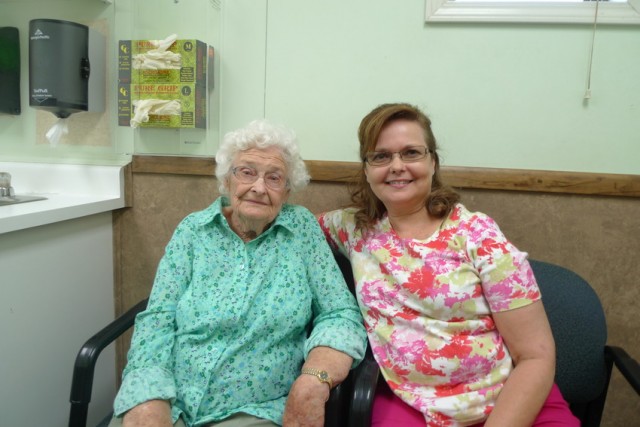
"caption": "Maureen Williams is 95 years old (seen with her daughter Carol Baskin) moved away from Firebaugh recently to be closer to family, but she returns to see Dr. Oscar Sablan. \"He saved my life several times,\" she says. (Photo: Lisa Morehouse)",
"description": null,
"title": "RS6388_P1030640-scr",
"credit": null,
"status": "inherit",
"isLoading": false,
"fetchFailed": false
},
"stateofhealth_15114": {
"type": "attachments",
"id": "stateofhealth_15114",
"meta": {
"index": "attachments_1716263798",
"site": "stateofhealth",
"id": "15114",
"found": true
},
"parent": 15111,
"imgSizes": {
"thumbnail": {
"file": "https://ww2.kqed.org/app/uploads/sites/27/2013/09/103077312-e1379698589632-400x270.jpg",
"width": 400,
"mimeType": "image/jpeg",
"height": 270
},
"fd-sm": {
"file": "https://ww2.kqed.org/app/uploads/sites/27/2013/09/103077312-e1379698589632-320x216.jpg",
"width": 320,
"mimeType": "image/jpeg",
"height": 216
},
"post-thumbnail": {
"file": "https://ww2.kqed.org/app/uploads/sites/27/2013/09/103077312-e1379698589632-639x372.jpg",
"width": 639,
"mimeType": "image/jpeg",
"height": 372
},
"kqedFullSize": {
"file": "https://ww2.kqed.org/app/uploads/sites/27/2013/09/103077312-e1379698589632.jpg",
"width": 639,
"height": 432
},
"guest-author-96": {
"file": "https://ww2.kqed.org/app/uploads/sites/27/2013/09/103077312-e1379698589632-96x96.jpg",
"width": 96,
"mimeType": "image/jpeg",
"height": 96
},
"guest-author-64": {
"file": "https://ww2.kqed.org/app/uploads/sites/27/2013/09/103077312-e1379698589632-64x64.jpg",
"width": 64,
"mimeType": "image/jpeg",
"height": 64
},
"detail": {
"file": "https://ww2.kqed.org/app/uploads/sites/27/2013/09/103077312-e1379698589632-75x75.jpg",
"width": 75,
"mimeType": "image/jpeg",
"height": 75
},
"guest-author-32": {
"file": "https://ww2.kqed.org/app/uploads/sites/27/2013/09/103077312-e1379698589632-32x32.jpg",
"width": 32,
"mimeType": "image/jpeg",
"height": 32
},
"guest-author-128": {
"file": "https://ww2.kqed.org/app/uploads/sites/27/2013/09/103077312-e1379698589632-128x128.jpg",
"width": 128,
"mimeType": "image/jpeg",
"height": 128
}
},
"publishDate": 1379697596,
"modified": 1379697596,
"caption": "An ambulance makes its way through revelers in Cardiff city center in Wales in 2010. New measures in the city have reduced injuries caused by violence.",
"description": "ambulance in Wales",
"title": "103077312",
"credit": null,
"status": "inherit",
"isLoading": false,
"fetchFailed": false
},
"stateofhealth_15053": {
"type": "attachments",
"id": "stateofhealth_15053",
"meta": {
"index": "attachments_1716263798",
"site": "stateofhealth",
"id": "15053",
"found": true
},
"parent": 15051,
"imgSizes": {
"thumbnail": {
"file": "https://ww2.kqed.org/app/uploads/sites/27/2013/09/SkidRowTB1-e1379375456727-400x299.jpg",
"width": 400,
"mimeType": "image/jpeg",
"height": 299
},
"fd-sm": {
"file": "https://ww2.kqed.org/app/uploads/sites/27/2013/09/SkidRowTB1-e1379375456727-320x240.jpg",
"width": 320,
"mimeType": "image/jpeg",
"height": 240
},
"post-thumbnail": {
"file": "https://ww2.kqed.org/app/uploads/sites/27/2013/09/SkidRowTB1-e1379375456727-640x372.jpg",
"width": 640,
"mimeType": "image/jpeg",
"height": 372
},
"kqedFullSize": {
"file": "https://ww2.kqed.org/app/uploads/sites/27/2013/09/SkidRowTB1-e1379375456727.jpg",
"width": 640,
"height": 479
},
"guest-author-96": {
"file": "https://ww2.kqed.org/app/uploads/sites/27/2013/09/SkidRowTB1-e1379375456727-96x96.jpg",
"width": 96,
"mimeType": "image/jpeg",
"height": 96
},
"guest-author-64": {
"file": "https://ww2.kqed.org/app/uploads/sites/27/2013/09/SkidRowTB1-e1379375456727-64x64.jpg",
"width": 64,
"mimeType": "image/jpeg",
"height": 64
},
"detail": {
"file": "https://ww2.kqed.org/app/uploads/sites/27/2013/09/SkidRowTB1-e1379375456727-75x75.jpg",
"width": 75,
"mimeType": "image/jpeg",
"height": 75
},
"guest-author-32": {
"file": "https://ww2.kqed.org/app/uploads/sites/27/2013/09/SkidRowTB1-e1379375456727-32x32.jpg",
"width": 32,
"mimeType": "image/jpeg",
"height": 32
},
"guest-author-128": {
"file": "https://ww2.kqed.org/app/uploads/sites/27/2013/09/SkidRowTB1-e1379375456727-128x128.jpg",
"width": 128,
"mimeType": "image/jpeg",
"height": 128
}
},
"publishDate": 1379375440,
"modified": 1379375440,
"caption": "Family nurse-practitioner Hannah Bampton and medical assistant Antonio Vera of the UCLA School of Nursing Public Health Center administer a skin test for tuberculosis to Craig Mason at the Union Rescue Mission in Los Angeles. (Photo/Chris Richard)",
"description": null,
"title": "SkidRowTB1",
"credit": null,
"status": "inherit",
"isLoading": false,
"fetchFailed": false
},
"stateofhealth_15073": {
"type": "attachments",
"id": "stateofhealth_15073",
"meta": {
"index": "attachments_1716263798",
"site": "stateofhealth",
"id": "15073",
"found": true
},
"parent": 15072,
"imgSizes": {
"thumbnail": {
"file": "https://ww2.kqed.org/app/uploads/sites/27/2013/09/IMG_6479-e1379462370152-400x300.jpg",
"width": 400,
"mimeType": "image/jpeg",
"height": 300
},
"fd-sm": {
"file": "https://ww2.kqed.org/app/uploads/sites/27/2013/09/IMG_6479-e1379462370152-320x240.jpg",
"width": 320,
"mimeType": "image/jpeg",
"height": 240
},
"post-thumbnail": {
"file": "https://ww2.kqed.org/app/uploads/sites/27/2013/09/IMG_6479-e1379462370152-640x372.jpg",
"width": 640,
"mimeType": "image/jpeg",
"height": 372
},
"kqedFullSize": {
"file": "https://ww2.kqed.org/app/uploads/sites/27/2013/09/IMG_6479-e1379462370152.jpg",
"width": 640,
"height": 480
},
"guest-author-96": {
"file": "https://ww2.kqed.org/app/uploads/sites/27/2013/09/IMG_6479-e1379462370152-96x96.jpg",
"width": 96,
"mimeType": "image/jpeg",
"height": 96
},
"guest-author-64": {
"file": "https://ww2.kqed.org/app/uploads/sites/27/2013/09/IMG_6479-e1379462370152-64x64.jpg",
"width": 64,
"mimeType": "image/jpeg",
"height": 64
},
"detail": {
"file": "https://ww2.kqed.org/app/uploads/sites/27/2013/09/IMG_6479-e1379462370152-75x75.jpg",
"width": 75,
"mimeType": "image/jpeg",
"height": 75
},
"guest-author-32": {
"file": "https://ww2.kqed.org/app/uploads/sites/27/2013/09/IMG_6479-e1379462370152-32x32.jpg",
"width": 32,
"mimeType": "image/jpeg",
"height": 32
},
"guest-author-128": {
"file": "https://ww2.kqed.org/app/uploads/sites/27/2013/09/IMG_6479-e1379462370152-128x128.jpg",
"width": 128,
"mimeType": "image/jpeg",
"height": 128
}
},
"publishDate": 1379462354,
"modified": 1379462354,
"caption": "Fred Smith lives in his RV in Palo Alto. (Ryder Diaz/KQED)",
"description": "Fred Smith",
"title": "IMG_6479",
"credit": null,
"status": "inherit",
"isLoading": false,
"fetchFailed": false
},
"stateofhealth_14977": {
"type": "attachments",
"id": "stateofhealth_14977",
"meta": {
"index": "attachments_1716263798",
"site": "stateofhealth",
"id": "14977",
"found": true
},
"parent": 14955,
"imgSizes": {
"thumbnail": {
"file": "https://ww2.kqed.org/app/uploads/sites/27/2013/09/854754611-e1379007639579-400x305.jpg",
"width": 400,
"mimeType": "image/jpeg",
"height": 305
},
"fd-sm": {
"file": "https://ww2.kqed.org/app/uploads/sites/27/2013/09/854754611-e1379007639579-320x244.jpg",
"width": 320,
"mimeType": "image/jpeg",
"height": 244
},
"post-thumbnail": {
"file": "https://ww2.kqed.org/app/uploads/sites/27/2013/09/854754611-e1379007639579-640x372.jpg",
"width": 640,
"mimeType": "image/jpeg",
"height": 372
},
"kqedFullSize": {
"file": "https://ww2.kqed.org/app/uploads/sites/27/2013/09/854754611-e1379007639579.jpg",
"width": 640,
"height": 488
},
"guest-author-96": {
"file": "https://ww2.kqed.org/app/uploads/sites/27/2013/09/854754611-e1379007639579-96x96.jpg",
"width": 96,
"mimeType": "image/jpeg",
"height": 96
},
"guest-author-64": {
"file": "https://ww2.kqed.org/app/uploads/sites/27/2013/09/854754611-e1379007639579-64x64.jpg",
"width": 64,
"mimeType": "image/jpeg",
"height": 64
},
"detail": {
"file": "https://ww2.kqed.org/app/uploads/sites/27/2013/09/854754611-e1379007639579-75x75.jpg",
"width": 75,
"mimeType": "image/jpeg",
"height": 75
},
"guest-author-32": {
"file": "https://ww2.kqed.org/app/uploads/sites/27/2013/09/854754611-e1379007639579-32x32.jpg",
"width": 32,
"mimeType": "image/jpeg",
"height": 32
},
"guest-author-128": {
"file": "https://ww2.kqed.org/app/uploads/sites/27/2013/09/854754611-e1379007639579-128x128.jpg",
"width": 128,
"mimeType": "image/jpeg",
"height": 128
}
},
"publishDate": 1379007624,
"modified": 1379007624,
"caption": "(Robin Beck/Getty Images)",
"description": "Farming, San Joaquin Valley, Central Valley",
"title": "85475461",
"credit": null,
"status": "inherit",
"isLoading": false,
"fetchFailed": false
},
"stateofhealth_14929": {
"type": "attachments",
"id": "stateofhealth_14929",
"meta": {
"index": "attachments_1716263798",
"site": "stateofhealth",
"id": "14929",
"found": true
},
"parent": 14921,
"imgSizes": {
"thumbnail": {
"file": "https://ww2.kqed.org/app/uploads/sites/27/2013/09/Screen-Shot-2013-09-10-at-4.34.21-PM-e1378856102443-400x308.png",
"width": 400,
"mimeType": "image/png",
"height": 308
},
"fd-sm": {
"file": "https://ww2.kqed.org/app/uploads/sites/27/2013/09/Screen-Shot-2013-09-10-at-4.34.21-PM-e1378856102443-320x247.png",
"width": 320,
"mimeType": "image/png",
"height": 247
},
"post-thumbnail": {
"file": "https://ww2.kqed.org/app/uploads/sites/27/2013/09/Screen-Shot-2013-09-10-at-4.34.21-PM-e1378856102443-640x372.png",
"width": 640,
"mimeType": "image/png",
"height": 372
},
"kqedFullSize": {
"file": "https://ww2.kqed.org/app/uploads/sites/27/2013/09/Screen-Shot-2013-09-10-at-4.34.21-PM-e1378856102443.png",
"width": 640,
"height": 493
},
"guest-author-96": {
"file": "https://ww2.kqed.org/app/uploads/sites/27/2013/09/Screen-Shot-2013-09-10-at-4.34.21-PM-e1378856102443-96x96.png",
"width": 96,
"mimeType": "image/png",
"height": 96
},
"guest-author-64": {
"file": "https://ww2.kqed.org/app/uploads/sites/27/2013/09/Screen-Shot-2013-09-10-at-4.34.21-PM-e1378856102443-64x64.png",
"width": 64,
"mimeType": "image/png",
"height": 64
},
"detail": {
"file": "https://ww2.kqed.org/app/uploads/sites/27/2013/09/Screen-Shot-2013-09-10-at-4.34.21-PM-e1378856102443-75x75.png",
"width": 75,
"mimeType": "image/png",
"height": 75
},
"guest-author-32": {
"file": "https://ww2.kqed.org/app/uploads/sites/27/2013/09/Screen-Shot-2013-09-10-at-4.34.21-PM-e1378856102443-32x32.png",
"width": 32,
"mimeType": "image/png",
"height": 32
},
"guest-author-128": {
"file": "https://ww2.kqed.org/app/uploads/sites/27/2013/09/Screen-Shot-2013-09-10-at-4.34.21-PM-e1378856102443-128x128.png",
"width": 128,
"mimeType": "image/png",
"height": 128
}
},
"publishDate": 1378856091,
"modified": 1378856091,
"caption": "(Keith Brofsky/Thinkstock)",
"description": "nursing home",
"title": "Screen Shot 2013-09-10 at 4.34.21 PM",
"credit": null,
"status": "inherit",
"isLoading": false,
"fetchFailed": false
},
"stateofhealth_14875": {
"type": "attachments",
"id": "stateofhealth_14875",
"meta": {
"index": "attachments_1716263798",
"site": "stateofhealth",
"id": "14875",
"found": true
},
"parent": 14857,
"imgSizes": {
"twentyfourteen-full-width": {
"file": "https://ww2.kqed.org/app/uploads/sites/27/2013/09/Screen-Shot-2013-09-09-at-1.25.00-PM-e1378758405390-640x576.png",
"width": 640,
"mimeType": "image/png",
"height": 576
},
"thumbnail": {
"file": "https://ww2.kqed.org/app/uploads/sites/27/2013/09/Screen-Shot-2013-09-09-at-1.25.00-PM-e1378758405390-400x421.png",
"width": 400,
"mimeType": "image/png",
"height": 421
},
"fd-sm": {
"file": "https://ww2.kqed.org/app/uploads/sites/27/2013/09/Screen-Shot-2013-09-09-at-1.25.00-PM-e1378758405390-320x337.png",
"width": 320,
"mimeType": "image/png",
"height": 337
},
"post-thumbnail": {
"file": "https://ww2.kqed.org/app/uploads/sites/27/2013/09/Screen-Shot-2013-09-09-at-1.25.00-PM-e1378758405390-640x372.png",
"width": 640,
"mimeType": "image/png",
"height": 372
},
"kqedFullSize": {
"file": "https://ww2.kqed.org/app/uploads/sites/27/2013/09/Screen-Shot-2013-09-09-at-1.25.00-PM-e1378758405390.png",
"width": 640,
"height": 674
},
"guest-author-96": {
"file": "https://ww2.kqed.org/app/uploads/sites/27/2013/09/Screen-Shot-2013-09-09-at-1.25.00-PM-e1378758405390-96x96.png",
"width": 96,
"mimeType": "image/png",
"height": 96
},
"guest-author-64": {
"file": "https://ww2.kqed.org/app/uploads/sites/27/2013/09/Screen-Shot-2013-09-09-at-1.25.00-PM-e1378758405390-64x64.png",
"width": 64,
"mimeType": "image/png",
"height": 64
},
"detail": {
"file": "https://ww2.kqed.org/app/uploads/sites/27/2013/09/Screen-Shot-2013-09-09-at-1.25.00-PM-e1378758405390-75x75.png",
"width": 75,
"mimeType": "image/png",
"height": 75
},
"guest-author-32": {
"file": "https://ww2.kqed.org/app/uploads/sites/27/2013/09/Screen-Shot-2013-09-09-at-1.25.00-PM-e1378758405390-32x32.png",
"width": 32,
"mimeType": "image/png",
"height": 32
},
"guest-author-128": {
"file": "https://ww2.kqed.org/app/uploads/sites/27/2013/09/Screen-Shot-2013-09-09-at-1.25.00-PM-e1378758405390-128x128.png",
"width": 128,
"mimeType": "image/png",
"height": 128
}
},
"publishDate": 1378758376,
"modified": 1378758376,
"caption": "(Getty Images)",
"description": "resized from Getty; thinkstock, alcohol",
"title": "Screen Shot 2013-09-09 at 1.25.00 PM",
"credit": null,
"status": "inherit",
"isLoading": false,
"fetchFailed": false
},
"stateofhealth_19793": {
"type": "attachments",
"id": "stateofhealth_19793",
"meta": {
"index": "attachments_1716263798",
"site": "stateofhealth",
"id": "19793",
"found": true
},
"parent": 14780,
"imgSizes": {
"twentyfourteen-full-width": {
"file": "https://ww2.kqed.org/app/uploads/sites/27/2013/09/179258590-1038x576.jpg",
"width": 1038,
"mimeType": "image/jpeg",
"height": 576
},
"thumbnail": {
"file": "https://ww2.kqed.org/app/uploads/sites/27/2013/09/179258590-400x267.jpg",
"width": 400,
"mimeType": "image/jpeg",
"height": 267
},
"fd-sm": {
"file": "https://ww2.kqed.org/app/uploads/sites/27/2013/09/179258590-320x213.jpg",
"width": 320,
"mimeType": "image/jpeg",
"height": 213
},
"post-thumbnail": {
"file": "https://ww2.kqed.org/app/uploads/sites/27/2013/09/179258590-672x372.jpg",
"width": 672,
"mimeType": "image/jpeg",
"height": 372
},
"kqedFullSize": {
"file": "https://ww2.kqed.org/app/uploads/sites/27/2013/09/179258590.jpg",
"width": 3456,
"height": 2304
},
"large": {
"file": "https://ww2.kqed.org/app/uploads/sites/27/2013/09/179258590-1440x960.jpg",
"width": 1440,
"mimeType": "image/jpeg",
"height": 960
},
"guest-author-96": {
"file": "https://ww2.kqed.org/app/uploads/sites/27/2013/09/179258590-96x96.jpg",
"width": 96,
"mimeType": "image/jpeg",
"height": 96
},
"medium": {
"file": "https://ww2.kqed.org/app/uploads/sites/27/2013/09/179258590-800x533.jpg",
"width": 800,
"mimeType": "image/jpeg",
"height": 533
},
"guest-author-64": {
"file": "https://ww2.kqed.org/app/uploads/sites/27/2013/09/179258590-64x64.jpg",
"width": 64,
"mimeType": "image/jpeg",
"height": 64
},
"guest-author-32": {
"file": "https://ww2.kqed.org/app/uploads/sites/27/2013/09/179258590-32x32.jpg",
"width": 32,
"mimeType": "image/jpeg",
"height": 32
},
"fd-lrg": {
"file": "https://ww2.kqed.org/app/uploads/sites/27/2013/09/179258590-1180x787.jpg",
"width": 1180,
"mimeType": "image/jpeg",
"height": 787
},
"fd-med": {
"file": "https://ww2.kqed.org/app/uploads/sites/27/2013/09/179258590-768x512.jpg",
"width": 768,
"mimeType": "image/jpeg",
"height": 512
},
"detail": {
"file": "https://ww2.kqed.org/app/uploads/sites/27/2013/09/179258590-75x75.jpg",
"width": 75,
"mimeType": "image/jpeg",
"height": 75
},
"guest-author-128": {
"file": "https://ww2.kqed.org/app/uploads/sites/27/2013/09/179258590-128x128.jpg",
"width": 128,
"mimeType": "image/jpeg",
"height": 128
}
},
"publishDate": 1403901035,
"modified": 1403901035,
"caption": "(Getty Images)",
"description": "School Entrance Sign",
"title": "179258590",
"credit": null,
"status": "inherit",
"isLoading": false,
"fetchFailed": false
},
"stateofhealth_14796": {
"type": "attachments",
"id": "stateofhealth_14796",
"meta": {
"index": "attachments_1716263798",
"site": "stateofhealth",
"id": "14796",
"found": true
},
"parent": 14795,
"imgSizes": {
"thumbnail": {
"file": "https://ww2.kqed.org/app/uploads/sites/27/2013/09/RS1369_IMG_1902-scr-e1378443813373-400x300.jpg",
"width": 400,
"mimeType": "image/jpeg",
"height": 300
},
"fd-sm": {
"file": "https://ww2.kqed.org/app/uploads/sites/27/2013/09/RS1369_IMG_1902-scr-e1378443813373-320x240.jpg",
"width": 320,
"mimeType": "image/jpeg",
"height": 240
},
"post-thumbnail": {
"file": "https://ww2.kqed.org/app/uploads/sites/27/2013/09/RS1369_IMG_1902-scr-e1378443813373-639x372.jpg",
"width": 639,
"mimeType": "image/jpeg",
"height": 372
},
"kqedFullSize": {
"file": "https://ww2.kqed.org/app/uploads/sites/27/2013/09/RS1369_IMG_1902-scr-e1378443813373.jpg",
"width": 639,
"height": 480
},
"guest-author-96": {
"file": "https://ww2.kqed.org/app/uploads/sites/27/2013/09/RS1369_IMG_1902-scr-e1378443813373-96x96.jpg",
"width": 96,
"mimeType": "image/jpeg",
"height": 96
},
"guest-author-64": {
"file": "https://ww2.kqed.org/app/uploads/sites/27/2013/09/RS1369_IMG_1902-scr-e1378443813373-64x64.jpg",
"width": 64,
"mimeType": "image/jpeg",
"height": 64
},
"detail": {
"file": "https://ww2.kqed.org/app/uploads/sites/27/2013/09/RS1369_IMG_1902-scr-e1378443813373-75x75.jpg",
"width": 75,
"mimeType": "image/jpeg",
"height": 75
},
"guest-author-32": {
"file": "https://ww2.kqed.org/app/uploads/sites/27/2013/09/RS1369_IMG_1902-scr-e1378443813373-32x32.jpg",
"width": 32,
"mimeType": "image/jpeg",
"height": 32
},
"guest-author-128": {
"file": "https://ww2.kqed.org/app/uploads/sites/27/2013/09/RS1369_IMG_1902-scr-e1378443813373-128x128.jpg",
"width": 128,
"mimeType": "image/jpeg",
"height": 128
}
},
"publishDate": 1378443796,
"modified": 1378443796,
"caption": "(Craig Miller/KQED)",
"description": "State Capital, Sacramento",
"title": "RS1369_IMG_1902-scr",
"credit": null,
"status": "inherit",
"isLoading": false,
"fetchFailed": false
},
"stateofhealth_14724": {
"type": "attachments",
"id": "stateofhealth_14724",
"meta": {
"index": "attachments_1716263798",
"site": "stateofhealth",
"id": "14724",
"found": true
},
"parent": 14720,
"imgSizes": {
"thumbnail": {
"file": "https://ww2.kqed.org/app/uploads/sites/27/2013/09/Exide3-e1378272248654-400x299.jpg",
"width": 400,
"mimeType": "image/jpeg",
"height": 299
},
"fd-sm": {
"file": "https://ww2.kqed.org/app/uploads/sites/27/2013/09/Exide3-e1378272248654-320x240.jpg",
"width": 320,
"mimeType": "image/jpeg",
"height": 240
},
"post-thumbnail": {
"file": "https://ww2.kqed.org/app/uploads/sites/27/2013/09/Exide3-e1378272248654-640x372.jpg",
"width": 640,
"mimeType": "image/jpeg",
"height": 372
},
"kqedFullSize": {
"file": "https://ww2.kqed.org/app/uploads/sites/27/2013/09/Exide3-e1378272248654.jpg",
"width": 640,
"height": 479
},
"guest-author-96": {
"file": "https://ww2.kqed.org/app/uploads/sites/27/2013/09/Exide3-e1378272248654-96x96.jpg",
"width": 96,
"mimeType": "image/jpeg",
"height": 96
},
"guest-author-64": {
"file": "https://ww2.kqed.org/app/uploads/sites/27/2013/09/Exide3-e1378272248654-64x64.jpg",
"width": 64,
"mimeType": "image/jpeg",
"height": 64
},
"detail": {
"file": "https://ww2.kqed.org/app/uploads/sites/27/2013/09/Exide3-e1378272248654-75x75.jpg",
"width": 75,
"mimeType": "image/jpeg",
"height": 75
},
"guest-author-32": {
"file": "https://ww2.kqed.org/app/uploads/sites/27/2013/09/Exide3-e1378272248654-32x32.jpg",
"width": 32,
"mimeType": "image/jpeg",
"height": 32
},
"guest-author-128": {
"file": "https://ww2.kqed.org/app/uploads/sites/27/2013/09/Exide3-e1378272248654-128x128.jpg",
"width": 128,
"mimeType": "image/jpeg",
"height": 128
}
},
"publishDate": 1378272232,
"modified": 1378272232,
"caption": "The Exide Technologies plant in Vernon. (Photo/Chris Richard)",
"description": "Exide battery recycling",
"title": "Exide3",
"credit": null,
"status": "inherit",
"isLoading": false,
"fetchFailed": false
},
"stateofhealth_12625": {
"type": "attachments",
"id": "stateofhealth_12625",
"meta": {
"index": "attachments_1716263798",
"site": "stateofhealth",
"id": "12625",
"found": true
},
"parent": 12613,
"imgSizes": {
"thumbnail": {
"file": "https://ww2.kqed.org/app/uploads/sites/27/2013/05/oakfood05_NoahBerger_CIR-e1377794012760-400x228.jpg",
"width": 400,
"mimeType": "image/jpeg",
"height": 228
},
"fd-sm": {
"file": "https://ww2.kqed.org/app/uploads/sites/27/2013/05/oakfood05_NoahBerger_CIR-e1377794012760-320x183.jpg",
"width": 320,
"mimeType": "image/jpeg",
"height": 183
},
"kqedFullSize": {
"file": "https://ww2.kqed.org/app/uploads/sites/27/2013/05/oakfood05_NoahBerger_CIR-e1377794012760.jpg",
"width": 640,
"height": 365
},
"guest-author-96": {
"file": "https://ww2.kqed.org/app/uploads/sites/27/2013/05/oakfood05_NoahBerger_CIR-e1377794012760-96x96.jpg",
"width": 96,
"mimeType": "image/jpeg",
"height": 96
},
"guest-author-64": {
"file": "https://ww2.kqed.org/app/uploads/sites/27/2013/05/oakfood05_NoahBerger_CIR-e1377794012760-64x64.jpg",
"width": 64,
"mimeType": "image/jpeg",
"height": 64
},
"detail": {
"file": "https://ww2.kqed.org/app/uploads/sites/27/2013/05/oakfood05_NoahBerger_CIR-e1377794012760-75x75.jpg",
"width": 75,
"mimeType": "image/jpeg",
"height": 75
},
"guest-author-32": {
"file": "https://ww2.kqed.org/app/uploads/sites/27/2013/05/oakfood05_NoahBerger_CIR-e1377794012760-32x32.jpg",
"width": 32,
"mimeType": "image/jpeg",
"height": 32
},
"guest-author-128": {
"file": "https://ww2.kqed.org/app/uploads/sites/27/2013/05/oakfood05_NoahBerger_CIR-e1377794012760-128x128.jpg",
"width": 128,
"mimeType": "image/jpeg",
"height": 128
}
},
"publishDate": 1368123667,
"modified": 1368123667,
"caption": "Lunchtime at Oakland High School The Oakland Unified School District switched to a closed-campus lunch last fall, and the school now offers free lunches to every student. (Noah Berger/Center for Investigative Reporting)",
"description": "Students eat lunch at Oakland High School on Friday, April 26, 2013, in Oakland, Calif.",
"title": "oakfood05_NoahBerger_CIR",
"credit": null,
"status": "inherit",
"isLoading": false,
"fetchFailed": false
},
"stateofhealth_14590": {
"type": "attachments",
"id": "stateofhealth_14590",
"meta": {
"index": "attachments_1716263798",
"site": "stateofhealth",
"id": "14590",
"found": true
},
"parent": 14266,
"imgSizes": {
"thumbnail": {
"file": "https://ww2.kqed.org/app/uploads/sites/27/2013/08/Screen-Shot-2013-08-27-at-4.13.49-PM-400x354.png",
"width": 400,
"mimeType": "image/png",
"height": 354
},
"fd-sm": {
"file": "https://ww2.kqed.org/app/uploads/sites/27/2013/08/Screen-Shot-2013-08-27-at-4.13.49-PM-320x283.png",
"width": 320,
"mimeType": "image/png",
"height": 283
},
"post-thumbnail": {
"file": "https://ww2.kqed.org/app/uploads/sites/27/2013/08/Screen-Shot-2013-08-27-at-4.13.49-PM-515x372.png",
"width": 515,
"mimeType": "image/png",
"height": 372
},
"kqedFullSize": {
"file": "https://ww2.kqed.org/app/uploads/sites/27/2013/08/Screen-Shot-2013-08-27-at-4.13.49-PM.png",
"width": 515,
"height": 456
},
"guest-author-96": {
"file": "https://ww2.kqed.org/app/uploads/sites/27/2013/08/Screen-Shot-2013-08-27-at-4.13.49-PM-96x96.png",
"width": 96,
"mimeType": "image/png",
"height": 96
},
"guest-author-64": {
"file": "https://ww2.kqed.org/app/uploads/sites/27/2013/08/Screen-Shot-2013-08-27-at-4.13.49-PM-64x64.png",
"width": 64,
"mimeType": "image/png",
"height": 64
},
"detail": {
"file": "https://ww2.kqed.org/app/uploads/sites/27/2013/08/Screen-Shot-2013-08-27-at-4.13.49-PM-75x75.png",
"width": 75,
"mimeType": "image/png",
"height": 75
},
"guest-author-32": {
"file": "https://ww2.kqed.org/app/uploads/sites/27/2013/08/Screen-Shot-2013-08-27-at-4.13.49-PM-32x32.png",
"width": 32,
"mimeType": "image/png",
"height": 32
},
"guest-author-128": {
"file": "https://ww2.kqed.org/app/uploads/sites/27/2013/08/Screen-Shot-2013-08-27-at-4.13.49-PM-128x128.png",
"width": 128,
"mimeType": "image/png",
"height": 128
}
},
"publishDate": 1377646570,
"modified": 1377646570,
"caption": "This woman in Bangladesh receives educational text messages about baby care. (Scene from MAMA Global video)",
"description": "Woman in Bangladesh with mobile phone. One time only use, please",
"title": "Screen Shot 2013-08-27 at 4.13.49 PM",
"credit": null,
"status": "inherit",
"isLoading": false,
"fetchFailed": false
}
},
"audioPlayerReducer": {
"postId": "stream_live",
"isPaused": true,
"isPlaying": false,
"pfsActive": false,
"pledgeModalIsOpen": true,
"playerDrawerIsOpen": false,
"liveAudioPlayStartedAt": 0,
"liveAudioPlayContext": ""
},
"authorsReducer": {
"kqednewsstaffandwires": {
"type": "authors",
"id": "237",
"meta": {
"index": "authors_1716337520",
"id": "237",
"found": true
},
"name": "KQED News Staff and Wires",
"firstName": "KQED News Staff and Wires",
"lastName": null,
"slug": "kqednewsstaffandwires",
"email": "onlinenewsstaff@kqed.org",
"display_author_email": false,
"staff_mastheads": [],
"title": null,
"bio": null,
"avatar": "https://secure.gravatar.com/avatar/72295af8ebbfbd19a4948f5271285664?s=600&d=blank&r=g",
"twitter": null,
"facebook": null,
"instagram": null,
"linkedin": null,
"sites": [
{
"site": "arts",
"roles": [
"contributor"
]
},
{
"site": "news",
"roles": [
"contributor"
]
},
{
"site": "lowdown",
"roles": [
"author"
]
},
{
"site": "stateofhealth",
"roles": [
"contributor"
]
},
{
"site": "food",
"roles": [
"author"
]
}
],
"headData": {
"title": "KQED News Staff and Wires | KQED",
"description": null,
"ogImgSrc": "https://secure.gravatar.com/avatar/72295af8ebbfbd19a4948f5271285664?s=600&d=blank&r=g",
"twImgSrc": "https://secure.gravatar.com/avatar/72295af8ebbfbd19a4948f5271285664?s=600&d=blank&r=g"
},
"isLoading": false,
"link": "/author/kqednewsstaffandwires"
},
"lisaaliferis": {
"type": "authors",
"id": "240",
"meta": {
"index": "authors_1716337520",
"id": "240",
"found": true
},
"name": "Lisa Aliferis",
"firstName": "Lisa",
"lastName": "Aliferis",
"slug": "lisaaliferis",
"email": "laliferis@kqed.org",
"display_author_email": false,
"staff_mastheads": [],
"title": "KQED Contributor",
"bio": "Lisa Aliferis is the founding editor of KQED's \u003cem>State of Health\u003c/em> blog. Since 2011, she's been writing and editing stories for the site. Before taking up blogging, she toiled for many years (more than we can count) producing health stories for television, including\u003cem> Dateline NBC\u003c/em> and San Francisco's CBS affiliate, KPIX-TV. She also wrote up a \u003ca title=\"http://www.kqed.org/news/health/obamacare/obamacare-guide.jsp\" href=\"http://www.kqed.org/news/health/obamacare/obamacare-guide.jsp\">handy guide to the Affordable Care Act\u003c/a>, especially for Californians. Her work has been honored for many awards. Most recently she was a finalist for \"Best Topical Reporting\" from the Online News Association. You can follow her on Twitter: \u003ca title=\"https://twitter.com/laliferis\" href=\"https://twitter.com/laliferis\">@laliferis\u003c/a>",
"avatar": "https://secure.gravatar.com/avatar/86c339d5cdcb0dcd2b6cf5d7c3f5886b?s=600&d=mm&r=g",
"twitter": "laliferis",
"facebook": null,
"instagram": null,
"linkedin": null,
"sites": [
{
"site": "news",
"roles": [
"subscriber"
]
},
{
"site": "futureofyou",
"roles": [
"subscriber"
]
},
{
"site": "stateofhealth",
"roles": [
"subscriber"
]
},
{
"site": "science",
"roles": [
"subscriber"
]
},
{
"site": "food",
"roles": []
}
],
"headData": {
"title": "Lisa Aliferis | KQED",
"description": "KQED Contributor",
"ogImgSrc": "https://secure.gravatar.com/avatar/86c339d5cdcb0dcd2b6cf5d7c3f5886b?s=600&d=mm&r=g",
"twImgSrc": "https://secure.gravatar.com/avatar/86c339d5cdcb0dcd2b6cf5d7c3f5886b?s=600&d=mm&r=g"
},
"isLoading": false,
"link": "/author/lisaaliferis"
},
"ryderdiaz": {
"type": "authors",
"id": "1462",
"meta": {
"index": "authors_1716337520",
"id": "1462",
"found": true
},
"name": "Ryder Diaz",
"firstName": "Ryder",
"lastName": "Diaz",
"slug": "ryderdiaz",
"email": "rdiaz@KQED.org",
"display_author_email": false,
"staff_mastheads": [],
"title": null,
"bio": null,
"avatar": "https://secure.gravatar.com/avatar/3a8471d4d33c9b4d34d5e5c60f7f8342?s=600&d=blank&r=g",
"twitter": null,
"facebook": null,
"instagram": null,
"linkedin": null,
"sites": [
{
"site": "news",
"roles": [
"subscriber"
]
},
{
"site": "stateofhealth",
"roles": [
"subscriber"
]
}
],
"headData": {
"title": "Ryder Diaz | KQED",
"description": null,
"ogImgSrc": "https://secure.gravatar.com/avatar/3a8471d4d33c9b4d34d5e5c60f7f8342?s=600&d=blank&r=g",
"twImgSrc": "https://secure.gravatar.com/avatar/3a8471d4d33c9b4d34d5e5c60f7f8342?s=600&d=blank&r=g"
},
"isLoading": false,
"link": "/author/ryderdiaz"
},
"state-of-health": {
"type": "authors",
"id": "8344",
"meta": {
"index": "authors_1716337520",
"id": "8344",
"found": true
},
"name": "State of Health",
"firstName": "State of Health",
"lastName": null,
"slug": "state-of-health",
"email": "stateofhealth@kqed.org",
"display_author_email": false,
"staff_mastheads": [],
"title": null,
"bio": null,
"avatar": "https://secure.gravatar.com/avatar/66de4bf6d331fa7402bba1ffe8135e17?s=600&d=blank&r=g",
"twitter": null,
"facebook": null,
"instagram": null,
"linkedin": null,
"sites": [
{
"site": "arts",
"roles": [
"author"
]
},
{
"site": "stateofhealth",
"roles": [
"editor"
]
}
],
"headData": {
"title": "State of Health | KQED",
"description": null,
"ogImgSrc": "https://secure.gravatar.com/avatar/66de4bf6d331fa7402bba1ffe8135e17?s=600&d=blank&r=g",
"twImgSrc": "https://secure.gravatar.com/avatar/66de4bf6d331fa7402bba1ffe8135e17?s=600&d=blank&r=g"
},
"isLoading": false,
"link": "/author/state-of-health"
}
},
"pagesReducer": {
"stateofhealth_category_place-matters": {
"type": "terms",
"id": "stateofhealth_11",
"meta": {
"index": "terms_1716263798",
"site": "stateofhealth",
"id": "11",
"score": 14.406237
},
"featImg": null,
"name": "Community Health",
"description": "\r\n\r\nFrom rural California to urban neighborhoods, where you live affects your health",
"taxonomy": "category",
"headData": {
"twImgId": null,
"twTitle": null,
"ogTitle": null,
"ogImgId": null,
"twDescription": null,
"description": "From rural California to urban neighborhoods, where you live affects your health",
"title": "Community Health Archives | KQED Arts",
"ogDescription": null
},
"ttid": 11,
"slug": "place-matters",
"isLoading": false,
"title": "Community Health",
"pageMeta": {
"site": "stateofhealth",
"WpPageTemplate": "page-topic-editorial",
"currentPage": 45
},
"blocks": [
{
"blockName": "kqed/company-paragraph",
"content": "\r\n\r\nFrom rural California to urban neighborhoods, where you live affects your health"
},
{
"blockName": "kqed/post-list",
"attrs": {
"layout": "cardArticle2",
"query": "posts/stateofhealth?category=place-matters",
"seeMore": false,
"paginated": true,
"page": 45
}
},
{
"blockName": "kqed/ad"
}
]
}
},
"pfsSessionReducer": {},
"postsReducer": {
"stream_live": {
"type": "live",
"id": "stream_live",
"audioUrl": "https://streams.kqed.org/kqedradio",
"title": "Live Stream",
"excerpt": "Live Stream information currently unavailable.",
"link": "/radio",
"featImg": "",
"label": {
"name": "KQED Live",
"link": "/"
}
},
"stream_kqedNewscast": {
"type": "posts",
"id": "stream_kqedNewscast",
"audioUrl": "https://www.kqed.org/.stream/anon/radio/RDnews/newscast.mp3?_=1",
"title": "KQED Newscast",
"featImg": "",
"label": {
"name": "88.5 FM",
"link": "/"
}
},
"stateofhealth_15120": {
"type": "posts",
"id": "stateofhealth_15120",
"meta": {
"index": "posts_1716263798",
"site": "stateofhealth",
"id": "15120",
"score": null,
"sort": [
1379720257000
]
},
"parent": 0,
"labelTerm": {
"site": "stateofhealth"
},
"blocks": [],
"publishDate": 1379720257,
"format": "aside",
"disqusTitle": "Recruiting – and Retaining – Doctors in California’s San Joaquin Valley",
"title": "Recruiting – and Retaining – Doctors in California’s San Joaquin Valley",
"headTitle": "State of Health | KQED News",
"content": "\u003cfigure id=\"attachment_15123\" class=\"wp-caption aligncenter\" style=\"max-width: 640px\">\u003cimg class=\"size-large wp-image-15123\" title=\"\" src=\"http://ww2.kqed.org/stateofhealth/wp-content/uploads/sites/27/2013/09/RS6388_P1030640-scr-640x426.jpg\" alt='Maureen Williams (L) seen here with her daughter Carol Baskin, is 95 years old. Williams recently moved away from Firebaugh, but she returns to see Dr. Oscar Sablan. \"He saved my life several times,\" she says. (Photo: Lisa Morehouse)' width=\"640\" height=\"426\">\u003cfigcaption class=\"wp-caption-text\">Maureen Williams is 95 years old (seen with her daughter Carol Baskin) moved away from Firebaugh recently to be closer to family, but she returns to see Dr. Oscar Sablan. \"He saved my life several times,\" she says. (Photo: Lisa Morehouse)\u003c/figcaption>\u003c/figure>\n\u003cp>\u003cstrong>By Lisa Morehouse\u003c/strong>\u003c/p>\n\u003cp>In 1999, in the tiny town of Five Points, 29 farmworkers accidentally entered a field that had just been treated with dangerous organophosphate insecticides. They started vomiting. The labor contractor in charge bypassed local hospitals and brought the crew to his own doctors 50 miles away in the town of Firebaugh. He simply trusted Marcia and Oscar Sablan more.\u003c/p>\n\u003cp>“We have seen a lot of other cases,” said Oscar Sablan, an internist, “and so we were familiar with the symptoms and we knew what to do.”\u003c/p>\n\u003cp>They had lots of atropine on hand, a drug used to treat poison victims if they go into respiratory or cardiac arrest. The farmworkers stripped and lined up to rinse the pesticides off in the clinic’s shower, built just for this type of incident. But with so many patients, Oscar Sablan had to recruit help.\u003c/p>\n\u003cp>“The firemen in town were able to get a kiddie pool and at least wash the people down,” he said.\u003c/p>\n\u003cp>[ad fullwidth]\u003c/p>\n\u003cp>Firebaugh is surrounded by crops, and the Sablans estimate that 75 percent of their patients work in the fields, like that labor contractor.\u003c/p>\n\u003cp>Marcia Sablan, who specializes in family medicine, explained, “He knew he could come here. He knew that we would take care of him, so be brought those 29 people over here.”\u003c/p>\n\u003cp>Patients have relied on the Sablans and the Sablan Medical Clinic for more than 30 years, since the couple moved to Firebaugh as young physicians in the\u003ca href=\"http://nhsc.hrsa.gov\" target=\"_blank\"> National Health Service Corps\u003c/a>. They say they wanted to practice where they were needed.\u003c!--more-->\u003c/p>\n\u003cp>This long-term commitment to a community makes the Sablans an exception. Rural regions of California have long faced a shortage of doctors, and in the San Joaquin Valley, \u003ca href=\"http://www.chcf.org/publications/2009/06/fewer-and-more-specialized--a-new-assessment-of-physician-supply-in-california\" target=\"_blank\">studies show\u003c/a> the number of primary care physicians per person is about half the state’s average.\u003c/p>\n\u003cp>Rosie Gomez, a patient of the Sablans, said small towns nearby struggle to hang onto new doctors who come from outside the region.\u003c/p>\n\u003cp>“Once they’ve gained their skills, they leave and they take their skills with them,” she said of these other doctors. “They’ll practice on you, but they don’t stay.”\u003c/p>\n\u003cp>\u003cstrong>Bringing new doctors back home\u003c/strong>\u003c/p>\n\u003cp>A new program, however, is making strides to attract and retain doctors in the state's rural communities. Often, these new doctors are coming home to the neighborhoods they grew up in. Called San Joaquin Valley Program in Medical Education, or PRIME, the program selects and trains medical students to practice in the Valley. It’s a collaboration between UC Davis, UC Merced, and UCSF Fresno.\u003c/p>\n\u003cp>An hour away from Firebaugh in Fresno, five students medical students gather in a small exam room where a doctor teaches them how to give neurological exams. One of them is Christina Thabet, who grew up in Bakersfield. All of the students either hail from the Valley, or have ties to it.\u003c/p>\n\u003cp>“We’re learning on the population we want to work with in the future,” Thabet said, during a break in training. “You can see our families in the eyes of our patients because they grew up here, and kind of had the same challenges that they have in health care that our families had.”\u003c/p>\n\u003cp>Thabit remembers her grandfather, a dairy farmer, having a hard time getting appointments for cardiology and diabetes care. When he did, he had to drive over one hour, one way.\u003c/p>\n\u003cp>Most days, Thabit is training at a Fresno hospital. Once a week, she travels to a clinic in the rural town of Selma, where she sees patients while being supervised by medical faculty. Thabet said she’s working harder than she ever imagined, but she knows she chose the right program.\u003c/p>\n\u003cp>“The clinical experience, the education and the fact that I’m home, I mean, that’s my ideal medical school,” she said. “There was no better fit for me.”\u003c/p>\n\u003cp>\u003cstrong>Doctors as integral members of community\u003c/strong>\u003c/p>\n\u003cp>Back in Firebaugh, Dr. Marcia, as her patients call her, reviews X-rays with a woman who’s worked in cantaloupe fields for three decades. The patient has chronic laryngitis -- and no insurance. She’ll probably have to wait a long time to get an appointment at a hospital in Fresno, so Dr. Marcia searches through drug company samples for a medication that can ease her symptoms until then.\u003c/p>\n\u003cp>The Sablans charge a low sliding fee and negotiate the Medi-Cal labyrinth. It’s all part of a balancing act: making a living while caring for needy patients.\u003c/p>\n\u003cp>In another exam room, Dr. Oscar meets with\u003cem> \u003c/em>95-year-old Mareen Williams, who came to Firebaugh from Oklahoma in the 1930s and picked cotton and cut corn. Even though she moved away recently to be closer to family, she returns to the clinic to see Dr. Oscar.\u003c/p>\n\u003cp>“He saved my life several times,” Williams said.\u003c/p>\n\u003cp>She trusts Sablan with managing her complicated blood condition, and she won’t see another doctor unless he makes the referral. The Sablans' relationships go beyond the clinic: the doctors make house calls, and know their patients as neighbors.\u003c/p>\n\u003cp>“They’re more like folks,” Williams said. “They come to your house. I used to give a big Easter egg hunt. They came out with their children.”\u003c/p>\n\u003cp>The Sablans see health as more than medical care. That’s why, besides putting in long hours at the clinic, Oscar has served on Firebaugh’s school board close to 20 years, and Marcia has been on the city council over 30, working to improve housing, sewage and water systems.\u003c/p>\n\u003cp>“That’s been an overriding thing for me – the built environment [and] how important that is to people’s health,” she said.\u003c/p>\n\u003cp>Patient Rosie Gomez said she can’t picture Firebaugh without the Sablans practicing medicine, even though she knows some day it will happen. Both doctors are in their 60s.\u003c/p>\n\u003cp>“They’re human just like we are,” Gomez said. “They get older and they’re going to want to retire one day and I can’t blame them. But who replaces them?”\u003c/p>\n\u003cp>PRIME is working on this. Now in its third year, the program will continue to pick about six students for each new class. Administrators hope PRIME's success could be a stepping stone towards creating a full medical school in the Valley someday.\u003c/p>\n\u003cp>This won’t solve the immediate physician shortage in San Joaquin Valley and other parts of rural California, but as Gomez said, each medical student could have a real impact on a community, like Firebaugh.\u003c/p>\n\u003cp>[ad floatright]\u003c/p>\n\u003cp>“We’re humble people, but we have medical needs,” she said. “And honestly, for some of these kids to have their light bulb go on and say, you know what? The Sablans made a difference. I can make a difference here, too.”\u003c/p>\n\n",
"disqusIdentifier": "15120 http://blogs.kqed.org/stateofhealth/?p=15120",
"disqusUrl": "https://ww2.kqed.org/stateofhealth/2013/09/20/recruiting-and-retaining-doctors-in-californias-san-joaquin-valley/",
"stats": {
"hasVideo": false,
"hasChartOrMap": false,
"hasAudio": false,
"hasPolis": false,
"wordCount": 1236,
"hasGoogleForm": false,
"hasGallery": false,
"hasHearkenModule": false,
"iframeSrcs": [],
"paragraphCount": 34
},
"modified": 1379720323,
"excerpt": "Patients have relied on the Sablans and the Sablan Medical Clinic for more than 30 years, since the couple moved to Firebaugh as young physicians in the National Health Service Corps. They say they wanted to practice where they were needed.\r\n\r\nThis long-term commitment to a community makes the Sablans an exception. Rural regions of California have long faced a shortage of doctors, and in the San Joaquin Valley, studies show the number of primary care physicians per person is about half the state’s average.",
"headData": {
"twImgId": "",
"twTitle": "",
"ogTitle": "",
"ogImgId": "",
"twDescription": "",
"description": "Patients have relied on the Sablans and the Sablan Medical Clinic for more than 30 years, since the couple moved to Firebaugh as young physicians in the National Health Service Corps. They say they wanted to practice where they were needed.\r\n\r\nThis long-term commitment to a community makes the Sablans an exception. Rural regions of California have long faced a shortage of doctors, and in the San Joaquin Valley, studies show the number of primary care physicians per person is about half the state’s average.",
"title": "Recruiting – and Retaining – Doctors in California’s San Joaquin Valley | KQED",
"ogDescription": "",
"schema": {
"@context": "https://schema.org",
"@type": "Article",
"headline": "Recruiting – and Retaining – Doctors in California’s San Joaquin Valley",
"datePublished": "2013-09-20T16:37:37-07:00",
"dateModified": "2013-09-20T16:38:43-07:00",
"image": "https://cdn.kqed.org/wp-content/uploads/2020/02/KQED-OG-Image@1x.png"
}
},
"guestAuthors": [],
"slug": "recruiting-and-retaining-doctors-in-californias-san-joaquin-valley",
"status": "publish",
"path": "/stateofhealth/15120/recruiting-and-retaining-doctors-in-californias-san-joaquin-valley",
"audioTrackLength": null,
"parsedContent": [
{
"type": "contentString",
"content": "\u003cdiv class=\"post-body\">\u003cp>\u003cfigure id=\"attachment_15123\" class=\"wp-caption aligncenter\" style=\"max-width: 640px\">\u003cimg class=\"size-large wp-image-15123\" title=\"\" src=\"http://ww2.kqed.org/stateofhealth/wp-content/uploads/sites/27/2013/09/RS6388_P1030640-scr-640x426.jpg\" alt='Maureen Williams (L) seen here with her daughter Carol Baskin, is 95 years old. Williams recently moved away from Firebaugh, but she returns to see Dr. Oscar Sablan. \"He saved my life several times,\" she says. (Photo: Lisa Morehouse)' width=\"640\" height=\"426\">\u003cfigcaption class=\"wp-caption-text\">Maureen Williams is 95 years old (seen with her daughter Carol Baskin) moved away from Firebaugh recently to be closer to family, but she returns to see Dr. Oscar Sablan. \"He saved my life several times,\" she says. (Photo: Lisa Morehouse)\u003c/figcaption>\u003c/figure>\n\u003cp>\u003cstrong>By Lisa Morehouse\u003c/strong>\u003c/p>\n\u003cp>In 1999, in the tiny town of Five Points, 29 farmworkers accidentally entered a field that had just been treated with dangerous organophosphate insecticides. They started vomiting. The labor contractor in charge bypassed local hospitals and brought the crew to his own doctors 50 miles away in the town of Firebaugh. He simply trusted Marcia and Oscar Sablan more.\u003c/p>\n\u003cp>“We have seen a lot of other cases,” said Oscar Sablan, an internist, “and so we were familiar with the symptoms and we knew what to do.”\u003c/p>\n\u003cp>They had lots of atropine on hand, a drug used to treat poison victims if they go into respiratory or cardiac arrest. The farmworkers stripped and lined up to rinse the pesticides off in the clinic’s shower, built just for this type of incident. But with so many patients, Oscar Sablan had to recruit help.\u003c/p>\n\u003cp>“The firemen in town were able to get a kiddie pool and at least wash the people down,” he said.\u003c/p>\n\u003cp>\u003c/p>\u003c/div>",
"attributes": {
"named": {},
"numeric": []
}
},
{
"type": "component",
"content": "",
"name": "ad",
"attributes": {
"named": {
"label": "fullwidth"
},
"numeric": [
"fullwidth"
]
}
},
{
"type": "contentString",
"content": "\u003cdiv class=\"post-body\">\u003cp>\u003c/p>\n\u003cp>Firebaugh is surrounded by crops, and the Sablans estimate that 75 percent of their patients work in the fields, like that labor contractor.\u003c/p>\n\u003cp>Marcia Sablan, who specializes in family medicine, explained, “He knew he could come here. He knew that we would take care of him, so be brought those 29 people over here.”\u003c/p>\n\u003cp>Patients have relied on the Sablans and the Sablan Medical Clinic for more than 30 years, since the couple moved to Firebaugh as young physicians in the\u003ca href=\"http://nhsc.hrsa.gov\" target=\"_blank\"> National Health Service Corps\u003c/a>. They say they wanted to practice where they were needed.\u003c!--more-->\u003c/p>\n\u003cp>This long-term commitment to a community makes the Sablans an exception. Rural regions of California have long faced a shortage of doctors, and in the San Joaquin Valley, \u003ca href=\"http://www.chcf.org/publications/2009/06/fewer-and-more-specialized--a-new-assessment-of-physician-supply-in-california\" target=\"_blank\">studies show\u003c/a> the number of primary care physicians per person is about half the state’s average.\u003c/p>\n\u003cp>Rosie Gomez, a patient of the Sablans, said small towns nearby struggle to hang onto new doctors who come from outside the region.\u003c/p>\n\u003cp>“Once they’ve gained their skills, they leave and they take their skills with them,” she said of these other doctors. “They’ll practice on you, but they don’t stay.”\u003c/p>\n\u003cp>\u003cstrong>Bringing new doctors back home\u003c/strong>\u003c/p>\n\u003cp>A new program, however, is making strides to attract and retain doctors in the state's rural communities. Often, these new doctors are coming home to the neighborhoods they grew up in. Called San Joaquin Valley Program in Medical Education, or PRIME, the program selects and trains medical students to practice in the Valley. It’s a collaboration between UC Davis, UC Merced, and UCSF Fresno.\u003c/p>\n\u003cp>An hour away from Firebaugh in Fresno, five students medical students gather in a small exam room where a doctor teaches them how to give neurological exams. One of them is Christina Thabet, who grew up in Bakersfield. All of the students either hail from the Valley, or have ties to it.\u003c/p>\n\u003cp>“We’re learning on the population we want to work with in the future,” Thabet said, during a break in training. “You can see our families in the eyes of our patients because they grew up here, and kind of had the same challenges that they have in health care that our families had.”\u003c/p>\n\u003cp>Thabit remembers her grandfather, a dairy farmer, having a hard time getting appointments for cardiology and diabetes care. When he did, he had to drive over one hour, one way.\u003c/p>\n\u003cp>Most days, Thabit is training at a Fresno hospital. Once a week, she travels to a clinic in the rural town of Selma, where she sees patients while being supervised by medical faculty. Thabet said she’s working harder than she ever imagined, but she knows she chose the right program.\u003c/p>\n\u003cp>“The clinical experience, the education and the fact that I’m home, I mean, that’s my ideal medical school,” she said. “There was no better fit for me.”\u003c/p>\n\u003cp>\u003cstrong>Doctors as integral members of community\u003c/strong>\u003c/p>\n\u003cp>Back in Firebaugh, Dr. Marcia, as her patients call her, reviews X-rays with a woman who’s worked in cantaloupe fields for three decades. The patient has chronic laryngitis -- and no insurance. She’ll probably have to wait a long time to get an appointment at a hospital in Fresno, so Dr. Marcia searches through drug company samples for a medication that can ease her symptoms until then.\u003c/p>\n\u003cp>The Sablans charge a low sliding fee and negotiate the Medi-Cal labyrinth. It’s all part of a balancing act: making a living while caring for needy patients.\u003c/p>\n\u003cp>In another exam room, Dr. Oscar meets with\u003cem> \u003c/em>95-year-old Mareen Williams, who came to Firebaugh from Oklahoma in the 1930s and picked cotton and cut corn. Even though she moved away recently to be closer to family, she returns to the clinic to see Dr. Oscar.\u003c/p>\n\u003cp>“He saved my life several times,” Williams said.\u003c/p>\n\u003cp>She trusts Sablan with managing her complicated blood condition, and she won’t see another doctor unless he makes the referral. The Sablans' relationships go beyond the clinic: the doctors make house calls, and know their patients as neighbors.\u003c/p>\n\u003cp>“They’re more like folks,” Williams said. “They come to your house. I used to give a big Easter egg hunt. They came out with their children.”\u003c/p>\n\u003cp>The Sablans see health as more than medical care. That’s why, besides putting in long hours at the clinic, Oscar has served on Firebaugh’s school board close to 20 years, and Marcia has been on the city council over 30, working to improve housing, sewage and water systems.\u003c/p>\n\u003cp>“That’s been an overriding thing for me – the built environment [and] how important that is to people’s health,” she said.\u003c/p>\n\u003cp>Patient Rosie Gomez said she can’t picture Firebaugh without the Sablans practicing medicine, even though she knows some day it will happen. Both doctors are in their 60s.\u003c/p>\n\u003cp>“They’re human just like we are,” Gomez said. “They get older and they’re going to want to retire one day and I can’t blame them. But who replaces them?”\u003c/p>\n\u003cp>PRIME is working on this. Now in its third year, the program will continue to pick about six students for each new class. Administrators hope PRIME's success could be a stepping stone towards creating a full medical school in the Valley someday.\u003c/p>\n\u003cp>This won’t solve the immediate physician shortage in San Joaquin Valley and other parts of rural California, but as Gomez said, each medical student could have a real impact on a community, like Firebaugh.\u003c/p>\n\u003cp>\u003c/p>\u003c/div>",
"attributes": {
"named": {},
"numeric": []
}
},
{
"type": "component",
"content": "",
"name": "ad",
"attributes": {
"named": {
"label": "floatright"
},
"numeric": [
"floatright"
]
}
},
{
"type": "contentString",
"content": "\u003cdiv class=\"post-body\">\u003cp>\u003c/p>\n\u003cp>“We’re humble people, but we have medical needs,” she said. “And honestly, for some of these kids to have their light bulb go on and say, you know what? The Sablans made a difference. I can make a difference here, too.”\u003c/p>\n\n\u003c/div>\u003c/p>",
"attributes": {
"named": {},
"numeric": []
}
}
],
"link": "/stateofhealth/15120/recruiting-and-retaining-doctors-in-californias-san-joaquin-valley",
"authors": [
"240"
],
"categories": [
"stateofhealth_11"
],
"tags": [
"stateofhealth_280",
"stateofhealth_325"
],
"featImg": "stateofhealth_15123",
"label": "stateofhealth"
},
"stateofhealth_15111": {
"type": "posts",
"id": "stateofhealth_15111",
"meta": {
"index": "posts_1716263798",
"site": "stateofhealth",
"id": "15111",
"score": null,
"sort": [
1379698343000
]
},
"parent": 0,
"labelTerm": {
"site": "stateofhealth"
},
"blocks": [],
"publishDate": 1379698343,
"format": "aside",
"disqusTitle": "A Hospital Tells Police Where Fights Happen, and Crime Drops",
"title": "A Hospital Tells Police Where Fights Happen, and Crime Drops",
"headTitle": "State of Health | KQED News",
"content": "\u003cfigure id=\"attachment_15114\" class=\"wp-caption aligncenter\" style=\"max-width: 640px\">\u003cimg class=\"size-large wp-image-15114\" title=\"\" src=\"http://ww2.kqed.org/stateofhealth/wp-content/uploads/sites/27/2013/09/103077312-640x432.jpg\" alt=\"An ambulance makes its way through revelers in Cardiff city center in Wales in 2010. New measures in the city have reduced injuries caused by violence.\" width=\"640\" height=\"432\">\u003cfigcaption class=\"wp-caption-text\">An ambulance makes its way through revelers in Cardiff city center in Wales in 2010. New measures in the city have reduced injuries caused by violence. (Matt Cardy/Getty Images)\u003c/figcaption>\u003c/figure>\n\u003cp>\u003cstrong>By Nancy Shute\u003c/strong>,\u003ca href=\"http://www.npr.org/blogs/health/2013/09/19/224052451/a-hospital-tells-police-where-fights-happen-and-crime-drops\" target=\"_blank\"> NPR\u003c/a>\u003c/p>\n\u003cp>On Saturday night, the emergency room staff knows all too well what's coming — people showing up with a broken jaw, a knife wound or a bashed-in face, often after too many hours in a pub. Doctors at the emergency department in Cardiff, Wales, realized that many of the people who were injured in fights never reported it to the police. That realization led to a simple program that has radically reduced the toll of violence.\u003c/p>\n\u003cp>The hospital already had information on where and how people in the emergency room had been injured — \"which bar, which club, which street, which park, which school,\" says \u003ca href=\"http://www.cardiff.ac.uk/dentl/contactsandpeople/academicstaff/p-t/shepherd-jonathan-prof-overview_new.html\">Dr. Jonathan Shepherd\u003c/a>, a professor of oral and maxillofacial surgery at Cardiff University and an author of the study.\u003c/p>\n\u003cp>Many people who are injured in a fight never reported it to police, it turned out. That was particularly true with fights happening inside pubs and clubs. \"They don't know who the perpetrator was, so what's the point of going to the police?\" Shepherd tells Shots. \"And they're afraid of having their own conduct scrutinized. If it's a fist fight or gang related or drug related, nobody's going to want to go to the police.\"\u003c!--more-->\u003c/p>\n\u003cp>So the hospital started sharing its information with the police, after removing names and other identifying information. With that anonymous information, authorities found they could do a much better job of targeting violence hot spots.\u003c/p>\n\u003cp>[ad fullwidth]\u003c/p>\n\u003cp>That and other measures reduced the social and economic costs of violence in Cardiff by about $11 million in 2007, according to the\u003ca href=\"http://injuryprevention.bmj.com/content/early/2013/08/22/injuryprev-2012-040622.abstract\"> study\u003c/a>, which was published in the journal \u003cem>Injury Prevention\u003c/em>.\u003c/p>\n\u003cp>That includes lower costs of health care and criminal justice. The program itself costs the city about $338,000 a year, including data-management costs and prevention efforts.\u003c/p>\n\u003cp>Some of those prevention efforts were novel indeed. After it became clear that a lot of people were getting injured in fights inside pubs and bars, the establishments were required to switch from glass to plastic cups. The number of people injured with a broken bottle or glass dropped by 70 percent.\u003c/p>\n\u003cp>A section of the Cardiff city center rich with nightlife was blocked off to cars on weekend nights, making it less likely that revelers would run afoul of a motor vehicle. And some bars that proved to be big trouble spots were closed.\u003c/p>\n\u003cp>An earlier \u003ca href=\"http://www.ncbi.nlm.nih.gov/pubmed/21680632\">study \u003c/a>of the Cardiff experiment found hospital admissions reduced by 42 percent, compared to cities without the reporting plan and preventive efforts, and a 32 percent reduction in wounding recorded by police.\u003c/p>\n\u003cp>Word on the success of the reporting system spread. By mid-2012, one-third of emergency departments in England had implemented it in full, and almost all were well on their way to doing so, Shepherd says.\u003c/p>\n\u003cp>\u003c/p>\n\u003cp>\"In the U.K. gun violence is very, very rare,\" Shepherd says. \"There are some years when the local police force here doesn't have one firearms offense to deal with. That means the focus shifts from gun violence to knife violence and fistfights.\" But he says that this same approach could be useful in addressing gun violence as well.\u003c/p>\n\n",
"disqusIdentifier": "15111 http://blogs.kqed.org/stateofhealth/?p=15111",
"disqusUrl": "https://ww2.kqed.org/stateofhealth/2013/09/20/a-hospital-tells-police-where-fights-happen-and-crime-drops/",
"stats": {
"hasVideo": false,
"hasChartOrMap": false,
"hasAudio": false,
"hasPolis": false,
"wordCount": 568,
"hasGoogleForm": false,
"hasGallery": false,
"hasHearkenModule": false,
"iframeSrcs": [],
"paragraphCount": 14
},
"modified": 1379703536,
"excerpt": "On Saturday night, the emergency room staff knows all too well what's coming — people showing up with a broken jaw, a knife wound or a bashed-in face, often after too many hours in a pub. Doctors at the emergency department in Cardiff, Wales, realized that many of the people who were injured in fights never reported it to the police. That realization led to a simple program that has radically reduced the toll of violence.\r\n\r\nThe hospital started sharing its information with the police, after removing names and other identifying information. With that anonymous information, authorities found they could do a much better job of targeting violence hot spots.",
"headData": {
"twImgId": "",
"twTitle": "",
"ogTitle": "",
"ogImgId": "",
"twDescription": "",
"description": "On Saturday night, the emergency room staff knows all too well what's coming — people showing up with a broken jaw, a knife wound or a bashed-in face, often after too many hours in a pub. Doctors at the emergency department in Cardiff, Wales, realized that many of the people who were injured in fights never reported it to the police. That realization led to a simple program that has radically reduced the toll of violence.\r\n\r\nThe hospital started sharing its information with the police, after removing names and other identifying information. With that anonymous information, authorities found they could do a much better job of targeting violence hot spots.",
"title": "A Hospital Tells Police Where Fights Happen, and Crime Drops | KQED",
"ogDescription": "",
"schema": {
"@context": "https://schema.org",
"@type": "Article",
"headline": "A Hospital Tells Police Where Fights Happen, and Crime Drops",
"datePublished": "2013-09-20T10:32:23-07:00",
"dateModified": "2013-09-20T11:58:56-07:00",
"image": "https://cdn.kqed.org/wp-content/uploads/2020/02/KQED-OG-Image@1x.png"
}
},
"guestAuthors": [],
"slug": "a-hospital-tells-police-where-fights-happen-and-crime-drops",
"status": "publish",
"path": "/stateofhealth/15111/a-hospital-tells-police-where-fights-happen-and-crime-drops",
"audioTrackLength": null,
"parsedContent": [
{
"type": "contentString",
"content": "\u003cdiv class=\"post-body\">\u003cp>\u003cfigure id=\"attachment_15114\" class=\"wp-caption aligncenter\" style=\"max-width: 640px\">\u003cimg class=\"size-large wp-image-15114\" title=\"\" src=\"http://ww2.kqed.org/stateofhealth/wp-content/uploads/sites/27/2013/09/103077312-640x432.jpg\" alt=\"An ambulance makes its way through revelers in Cardiff city center in Wales in 2010. New measures in the city have reduced injuries caused by violence.\" width=\"640\" height=\"432\">\u003cfigcaption class=\"wp-caption-text\">An ambulance makes its way through revelers in Cardiff city center in Wales in 2010. New measures in the city have reduced injuries caused by violence. (Matt Cardy/Getty Images)\u003c/figcaption>\u003c/figure>\n\u003cp>\u003cstrong>By Nancy Shute\u003c/strong>,\u003ca href=\"http://www.npr.org/blogs/health/2013/09/19/224052451/a-hospital-tells-police-where-fights-happen-and-crime-drops\" target=\"_blank\"> NPR\u003c/a>\u003c/p>\n\u003cp>On Saturday night, the emergency room staff knows all too well what's coming — people showing up with a broken jaw, a knife wound or a bashed-in face, often after too many hours in a pub. Doctors at the emergency department in Cardiff, Wales, realized that many of the people who were injured in fights never reported it to the police. That realization led to a simple program that has radically reduced the toll of violence.\u003c/p>\n\u003cp>The hospital already had information on where and how people in the emergency room had been injured — \"which bar, which club, which street, which park, which school,\" says \u003ca href=\"http://www.cardiff.ac.uk/dentl/contactsandpeople/academicstaff/p-t/shepherd-jonathan-prof-overview_new.html\">Dr. Jonathan Shepherd\u003c/a>, a professor of oral and maxillofacial surgery at Cardiff University and an author of the study.\u003c/p>\n\u003cp>Many people who are injured in a fight never reported it to police, it turned out. That was particularly true with fights happening inside pubs and clubs. \"They don't know who the perpetrator was, so what's the point of going to the police?\" Shepherd tells Shots. \"And they're afraid of having their own conduct scrutinized. If it's a fist fight or gang related or drug related, nobody's going to want to go to the police.\"\u003c!--more-->\u003c/p>\n\u003cp>So the hospital started sharing its information with the police, after removing names and other identifying information. With that anonymous information, authorities found they could do a much better job of targeting violence hot spots.\u003c/p>\n\u003cp>\u003c/p>\u003c/div>",
"attributes": {
"named": {},
"numeric": []
}
},
{
"type": "component",
"content": "",
"name": "ad",
"attributes": {
"named": {
"label": "fullwidth"
},
"numeric": [
"fullwidth"
]
}
},
{
"type": "contentString",
"content": "\u003cdiv class=\"post-body\">\u003cp>\u003c/p>\n\u003cp>That and other measures reduced the social and economic costs of violence in Cardiff by about $11 million in 2007, according to the\u003ca href=\"http://injuryprevention.bmj.com/content/early/2013/08/22/injuryprev-2012-040622.abstract\"> study\u003c/a>, which was published in the journal \u003cem>Injury Prevention\u003c/em>.\u003c/p>\n\u003cp>That includes lower costs of health care and criminal justice. The program itself costs the city about $338,000 a year, including data-management costs and prevention efforts.\u003c/p>\n\u003cp>Some of those prevention efforts were novel indeed. After it became clear that a lot of people were getting injured in fights inside pubs and bars, the establishments were required to switch from glass to plastic cups. The number of people injured with a broken bottle or glass dropped by 70 percent.\u003c/p>\n\u003cp>A section of the Cardiff city center rich with nightlife was blocked off to cars on weekend nights, making it less likely that revelers would run afoul of a motor vehicle. And some bars that proved to be big trouble spots were closed.\u003c/p>\n\u003cp>An earlier \u003ca href=\"http://www.ncbi.nlm.nih.gov/pubmed/21680632\">study \u003c/a>of the Cardiff experiment found hospital admissions reduced by 42 percent, compared to cities without the reporting plan and preventive efforts, and a 32 percent reduction in wounding recorded by police.\u003c/p>\n\u003cp>Word on the success of the reporting system spread. By mid-2012, one-third of emergency departments in England had implemented it in full, and almost all were well on their way to doing so, Shepherd says.\u003c/p>\n\u003cp>\u003c/p>\n\u003cp>\"In the U.K. gun violence is very, very rare,\" Shepherd says. \"There are some years when the local police force here doesn't have one firearms offense to deal with. That means the focus shifts from gun violence to knife violence and fistfights.\" But he says that this same approach could be useful in addressing gun violence as well.\u003c/p>\n\n\u003c/div>\u003c/p>",
"attributes": {
"named": {},
"numeric": []
}
}
],
"link": "/stateofhealth/15111/a-hospital-tells-police-where-fights-happen-and-crime-drops",
"authors": [
"8344"
],
"categories": [
"stateofhealth_11",
"stateofhealth_14"
],
"tags": [
"stateofhealth_180"
],
"featImg": "stateofhealth_15114",
"label": "stateofhealth"
},
"stateofhealth_15051": {
"type": "posts",
"id": "stateofhealth_15051",
"meta": {
"index": "posts_1716263798",
"site": "stateofhealth",
"id": "15051",
"score": null,
"sort": [
1379612001000
]
},
"parent": 0,
"labelTerm": {
"site": "stateofhealth"
},
"blocks": [],
"publishDate": 1379612001,
"format": "aside",
"disqusTitle": "Student Nurses Fight to Curb TB on LA's Skid Row",
"title": "Student Nurses Fight to Curb TB on LA's Skid Row",
"headTitle": "State of Health | KQED News",
"content": "\u003cfigure id=\"attachment_15053\" class=\"wp-caption aligncenter\" style=\"max-width: 640px\">\u003ca href=\"http://ww2.kqed.org/stateofhealth/wp-content/uploads/sites/27/2013/09/SkidRowTB1-e1379375456727.jpg\">\u003cimg class=\"size-large wp-image-15053\" title=\"\" src=\"http://ww2.kqed.org/stateofhealth/wp-content/uploads/sites/27/2013/09/SkidRowTB1-640x479.jpg\" alt=\"Family nurse-practitioner Hannah Bampton and medical assistant Antonio Vera of the UCLA School of Nursing Public Health Center administer a skin test for tuberculosis to Craig Mason at the Union Rescue Mission in Los Angeles. (Photo/Chris Richard)\" width=\"640\" height=\"479\">\u003c/a>\u003cfigcaption class=\"wp-caption-text\">Family nurse-practitioner Hannah Bampton and medical assistant Antonio Vera of the UCLA School of Nursing Public Health Center administer a skin test for tuberculosis to Craig Mason at the Union Rescue Mission in Los Angeles. (Photo/Chris Richard)\u003c/figcaption>\u003c/figure>\n\u003cp>\u003cstrong>By Chris Richard\u003c/strong>\u003c/p>\n\u003cp>In his four months on Los Angeles’ Skid Row, Matthew Morales says he’s learned what clothes to wear so he doesn’t stand out too much, how to keep clean, how to travel light. He’s learned to trust those survival skills.\u003c/p>\n\u003cp>But, when I met him, he was rattled. He was waiting in line for a tuberculosis test. He takes the disease seriously.\u003c/p>\n\u003cp>“I worry about it a lot,” he said. “You just never know when you’re going to come in contact with the wrong person, somebody who could be a carrier.”\u003c/p>\n\u003cp>A scourge in much of the world, tuberculosis has long been seen in this country as a relic of the past. In 2011, the most recent year for which national statistics are available, the Centers for Disease Control and Prevention \u003ca href=\"http://www.cdc.gov/tb/statistics/reports/2011/table1.htm\">reported\u003c/a> slightly more than three cases per 100,000 people.\u003c!--more-->\u003c/p>\n\u003cp>[ad fullwidth]\u003c/p>\n\u003cp>But TB persists among the homeless. And on LA's Skid Row, where crowding and unsanitary conditions help spread the disease, it’s made an alarming advance.\u003c/p>\n\u003cp>Since 2007, officials have identified some 94 cases in the area, 77 of them among the homeless. Half of those cases have been reported in the last two years. So far, 17 people have died, said Robert Kim-Farley, director of communicable disease control and prevention for the Los Angeles County health department.\u003c/p>\n\u003cp>In February, county, state and federal health authorities\u003ca href=\"http://articles.latimes.com/2013/feb/22/local/la-me-tb-outbreak-20130222\" target=\"_blank\"> announced a coordinated effort\u003c/a> to contain a persistent outbreak in the downtown neighborhood dotted with cardboard shanties and tent encampments.\u003c/p>\n\u003cp>Kim-Farley said through a genetic analysis, researchers have established that a unique strain of tuberculosis is centered on Skid Row, and is being passed from person to person there. With intensive medication, TB is curable. But authorities estimate that more than 4,500 people may have been exposed to the disease.\u003c/p>\n\u003cp>The challenge is to find out who they are and to get them to agree to treatment. That’s where the UCLA School of Nursing’s Public Health Center fits in.\u003c/p>\n\u003cp>Homeless people can be suspicious or even fearful of government efforts to hep them, Kim-Farley said. “So these community providers that are known and trusted by the community are very important.”\u003c/p>\n\u003cp>One recent morning a UCLA team visited the Union Rescue Mission in the heart of Skid Row and set up a table laden with test kits in the Mission's dayroom.\u003c/p>\n\u003cp>Of the 15 men who lined up for tests, most said they’ve heard little about the outbreak and were only getting tested because it’s mandatory for anyone staying in the Mission dormitory for five days or more.\u003c/p>\n\u003cp>But, Matthew Morales was an exception. He knew the risks.\u003c/p>\n\u003cp>“You have people coughing right in your face down here,” he said. “I’m a big fan of those sanitary wipes to try to kill bacteria, but I don’t think that’s going to help much with something like TB. So, when I get a chance like this to make sure I’m OK, I’m going to take it.”\u003c/p>\n\u003cp>Andy Bales, the Mission’s chief executive, said a lot of people are both worried and poorly informed.\u003c/p>\n\u003cp>“Early on, I talked to a woman on the street about coming in, and she said, ‘No, I don’t want to come in to the Mission. I might get TB,’” he said.\u003c/p>\n\u003cp>“She’s certainly more at risk being on the street than she is at the Mission where people are screened and people are receiving health care. But the information gets lost, and people become misinformed.”\u003c/p>\n\u003cp>Mary Marfisee, the Health Center’s medical director, said she and her students are doing all they can to disseminate facts, and to test as many people as possible.\u003c/p>\n\u003cp>“Our people at the Mission know who’s there every day, so if they see somebody they don’t know, they ask them if they want a test,” she said.\u003c/p>\n\u003cp>The Health Center also enlists the aid of medical students from a program jointly run by the UCLA Geffen School of Medicine and Drew University that trains physicians to serve the homeless and poor.\u003c/p>\n\u003cp>Third-year Drew student Cara Quant said she’d never seen a positive TB test before she started at the Mission. So far, out of the 100 people she’s helped to screen, four results have come back positive, Quant said.\u003c/p>\n\u003cp>Marfisee said before county officials announced the outbreak in February, she sometimes had trouble obtaining treatment for homeless people known to have been exposed to tuberculosis but whose infection remained “latent,” or largely asymptomatic. Since then, county health officials and Skid Row community providers have started to work together, including jointly developing a treatment regimen that can be completed in weeks instead of months. That’s much better suited to a transient population, Marfisee said.\u003c/p>\n\u003cp>The UCLA team includes medical assistant Antonio Vera, who was homeless and a patient at the clinic before Marfisee encouraged him to go to school to train for his current job with the university.\u003c/p>\n\u003cp>“He’s very astute and sensitive to people’s needs,” Marfisee said. “They may come by for a TB screening, but often, within a couple minutes, Antonio’s able to pick up on some other health condition that needs attention, and we’re able to attend to that, too.”\u003c/p>\n\u003cp>\u003c/p>\n\u003cp>“A lot of people want to get out of here, just like I did,” Vera said. “That’s why I pursued the knowledge of case management, so I could help them climb up the ladder and get out of this hole.”\u003c/p>\n\n",
"disqusIdentifier": "15051 http://blogs.kqed.org/stateofhealth/?p=15051",
"disqusUrl": "https://ww2.kqed.org/stateofhealth/2013/09/19/student-nurses-fight-to-curb-tb-on-los-angeles-skid-row-tuberculosis/",
"stats": {
"hasVideo": false,
"hasChartOrMap": false,
"hasAudio": false,
"hasPolis": false,
"wordCount": 1031,
"hasGoogleForm": false,
"hasGallery": false,
"hasHearkenModule": false,
"iframeSrcs": [],
"paragraphCount": 28
},
"modified": 1379613351,
"excerpt": "In his four months on Los Angeles’ Skid Row, Matthew Morales says he’s learned what clothes to wear so he doesn’t stand out too much, how to keep clean, how to travel light. He’s learned to trust those survival skills.\r\n\r\nBut, when I met him, he was rattled. He was waiting in line for a tuberculosis test. He takes the disease seriously.",
"headData": {
"twImgId": "",
"twTitle": "",
"ogTitle": "",
"ogImgId": "",
"twDescription": "",
"description": "In his four months on Los Angeles’ Skid Row, Matthew Morales says he’s learned what clothes to wear so he doesn’t stand out too much, how to keep clean, how to travel light. He’s learned to trust those survival skills.\r\n\r\nBut, when I met him, he was rattled. He was waiting in line for a tuberculosis test. He takes the disease seriously.",
"title": "Student Nurses Fight to Curb TB on LA's Skid Row | KQED",
"ogDescription": "",
"schema": {
"@context": "https://schema.org",
"@type": "Article",
"headline": "Student Nurses Fight to Curb TB on LA's Skid Row",
"datePublished": "2013-09-19T10:33:21-07:00",
"dateModified": "2013-09-19T10:55:51-07:00",
"image": "https://cdn.kqed.org/wp-content/uploads/2020/02/KQED-OG-Image@1x.png"
}
},
"guestAuthors": [],
"slug": "student-nurses-fight-to-curb-tb-on-los-angeles-skid-row-tuberculosis",
"status": "publish",
"path": "/stateofhealth/15051/student-nurses-fight-to-curb-tb-on-los-angeles-skid-row-tuberculosis",
"audioTrackLength": null,
"parsedContent": [
{
"type": "contentString",
"content": "\u003cdiv class=\"post-body\">\u003cp>\u003cfigure id=\"attachment_15053\" class=\"wp-caption aligncenter\" style=\"max-width: 640px\">\u003ca href=\"http://ww2.kqed.org/stateofhealth/wp-content/uploads/sites/27/2013/09/SkidRowTB1-e1379375456727.jpg\">\u003cimg class=\"size-large wp-image-15053\" title=\"\" src=\"http://ww2.kqed.org/stateofhealth/wp-content/uploads/sites/27/2013/09/SkidRowTB1-640x479.jpg\" alt=\"Family nurse-practitioner Hannah Bampton and medical assistant Antonio Vera of the UCLA School of Nursing Public Health Center administer a skin test for tuberculosis to Craig Mason at the Union Rescue Mission in Los Angeles. (Photo/Chris Richard)\" width=\"640\" height=\"479\">\u003c/a>\u003cfigcaption class=\"wp-caption-text\">Family nurse-practitioner Hannah Bampton and medical assistant Antonio Vera of the UCLA School of Nursing Public Health Center administer a skin test for tuberculosis to Craig Mason at the Union Rescue Mission in Los Angeles. (Photo/Chris Richard)\u003c/figcaption>\u003c/figure>\n\u003cp>\u003cstrong>By Chris Richard\u003c/strong>\u003c/p>\n\u003cp>In his four months on Los Angeles’ Skid Row, Matthew Morales says he’s learned what clothes to wear so he doesn’t stand out too much, how to keep clean, how to travel light. He’s learned to trust those survival skills.\u003c/p>\n\u003cp>But, when I met him, he was rattled. He was waiting in line for a tuberculosis test. He takes the disease seriously.\u003c/p>\n\u003cp>“I worry about it a lot,” he said. “You just never know when you’re going to come in contact with the wrong person, somebody who could be a carrier.”\u003c/p>\n\u003cp>A scourge in much of the world, tuberculosis has long been seen in this country as a relic of the past. In 2011, the most recent year for which national statistics are available, the Centers for Disease Control and Prevention \u003ca href=\"http://www.cdc.gov/tb/statistics/reports/2011/table1.htm\">reported\u003c/a> slightly more than three cases per 100,000 people.\u003c!--more-->\u003c/p>\n\u003cp>\u003c/p>\u003c/div>",
"attributes": {
"named": {},
"numeric": []
}
},
{
"type": "component",
"content": "",
"name": "ad",
"attributes": {
"named": {
"label": "fullwidth"
},
"numeric": [
"fullwidth"
]
}
},
{
"type": "contentString",
"content": "\u003cdiv class=\"post-body\">\u003cp>\u003c/p>\n\u003cp>But TB persists among the homeless. And on LA's Skid Row, where crowding and unsanitary conditions help spread the disease, it’s made an alarming advance.\u003c/p>\n\u003cp>Since 2007, officials have identified some 94 cases in the area, 77 of them among the homeless. Half of those cases have been reported in the last two years. So far, 17 people have died, said Robert Kim-Farley, director of communicable disease control and prevention for the Los Angeles County health department.\u003c/p>\n\u003cp>In February, county, state and federal health authorities\u003ca href=\"http://articles.latimes.com/2013/feb/22/local/la-me-tb-outbreak-20130222\" target=\"_blank\"> announced a coordinated effort\u003c/a> to contain a persistent outbreak in the downtown neighborhood dotted with cardboard shanties and tent encampments.\u003c/p>\n\u003cp>Kim-Farley said through a genetic analysis, researchers have established that a unique strain of tuberculosis is centered on Skid Row, and is being passed from person to person there. With intensive medication, TB is curable. But authorities estimate that more than 4,500 people may have been exposed to the disease.\u003c/p>\n\u003cp>The challenge is to find out who they are and to get them to agree to treatment. That’s where the UCLA School of Nursing’s Public Health Center fits in.\u003c/p>\n\u003cp>Homeless people can be suspicious or even fearful of government efforts to hep them, Kim-Farley said. “So these community providers that are known and trusted by the community are very important.”\u003c/p>\n\u003cp>One recent morning a UCLA team visited the Union Rescue Mission in the heart of Skid Row and set up a table laden with test kits in the Mission's dayroom.\u003c/p>\n\u003cp>Of the 15 men who lined up for tests, most said they’ve heard little about the outbreak and were only getting tested because it’s mandatory for anyone staying in the Mission dormitory for five days or more.\u003c/p>\n\u003cp>But, Matthew Morales was an exception. He knew the risks.\u003c/p>\n\u003cp>“You have people coughing right in your face down here,” he said. “I’m a big fan of those sanitary wipes to try to kill bacteria, but I don’t think that’s going to help much with something like TB. So, when I get a chance like this to make sure I’m OK, I’m going to take it.”\u003c/p>\n\u003cp>Andy Bales, the Mission’s chief executive, said a lot of people are both worried and poorly informed.\u003c/p>\n\u003cp>“Early on, I talked to a woman on the street about coming in, and she said, ‘No, I don’t want to come in to the Mission. I might get TB,’” he said.\u003c/p>\n\u003cp>“She’s certainly more at risk being on the street than she is at the Mission where people are screened and people are receiving health care. But the information gets lost, and people become misinformed.”\u003c/p>\n\u003cp>Mary Marfisee, the Health Center’s medical director, said she and her students are doing all they can to disseminate facts, and to test as many people as possible.\u003c/p>\n\u003cp>“Our people at the Mission know who’s there every day, so if they see somebody they don’t know, they ask them if they want a test,” she said.\u003c/p>\n\u003cp>The Health Center also enlists the aid of medical students from a program jointly run by the UCLA Geffen School of Medicine and Drew University that trains physicians to serve the homeless and poor.\u003c/p>\n\u003cp>Third-year Drew student Cara Quant said she’d never seen a positive TB test before she started at the Mission. So far, out of the 100 people she’s helped to screen, four results have come back positive, Quant said.\u003c/p>\n\u003cp>Marfisee said before county officials announced the outbreak in February, she sometimes had trouble obtaining treatment for homeless people known to have been exposed to tuberculosis but whose infection remained “latent,” or largely asymptomatic. Since then, county health officials and Skid Row community providers have started to work together, including jointly developing a treatment regimen that can be completed in weeks instead of months. That’s much better suited to a transient population, Marfisee said.\u003c/p>\n\u003cp>The UCLA team includes medical assistant Antonio Vera, who was homeless and a patient at the clinic before Marfisee encouraged him to go to school to train for his current job with the university.\u003c/p>\n\u003cp>“He’s very astute and sensitive to people’s needs,” Marfisee said. “They may come by for a TB screening, but often, within a couple minutes, Antonio’s able to pick up on some other health condition that needs attention, and we’re able to attend to that, too.”\u003c/p>\n\u003cp>\u003c/p>\n\u003cp>“A lot of people want to get out of here, just like I did,” Vera said. “That’s why I pursued the knowledge of case management, so I could help them climb up the ladder and get out of this hole.”\u003c/p>\n\n\u003c/div>\u003c/p>",
"attributes": {
"named": {},
"numeric": []
}
}
],
"link": "/stateofhealth/15051/student-nurses-fight-to-curb-tb-on-los-angeles-skid-row-tuberculosis",
"authors": [
"8344"
],
"categories": [
"stateofhealth_11"
],
"tags": [
"stateofhealth_461"
],
"featImg": "stateofhealth_15053",
"label": "stateofhealth"
},
"stateofhealth_15072": {
"type": "posts",
"id": "stateofhealth_15072",
"meta": {
"index": "posts_1716263798",
"site": "stateofhealth",
"id": "15072",
"score": null,
"sort": [
1379509200000
]
},
"parent": 0,
"labelTerm": {
"site": "stateofhealth",
"term": 2363
},
"blocks": [],
"publishDate": 1379509200,
"format": "aside",
"disqusTitle": "Living in an RV in Palo Alto -- as Ban Goes into Effect",
"title": "Living in an RV in Palo Alto -- as Ban Goes into Effect",
"headTitle": "Vital Signs | State of Health | KQED News",
"content": "\u003cfigure id=\"attachment_15073\" class=\"wp-caption aligncenter\" style=\"max-width: 640px\">\u003ca href=\"http://ww2.kqed.org/stateofhealth/wp-content/uploads/sites/27/2013/09/IMG_6479-e1379462370152.jpg\">\u003cimg class=\"size-large wp-image-15073\" title=\"\" src=\"http://ww2.kqed.org/stateofhealth/wp-content/uploads/sites/27/2013/09/IMG_6479-640x480.jpg\" alt=\"Fred Smith lives in his RV in Palo Alto. (Ryder Diaz/KQED)\" width=\"640\" height=\"480\">\u003c/a>\u003cfigcaption class=\"wp-caption-text\">Fred Smith lives in his RV in Palo Alto. (Ryder Diaz/KQED)\u003c/figcaption>\u003c/figure>\n\u003cp>\u003cem>Editor’s note: On Sept. 19, Palo Alto joins many other cities in Silicon Valley in \u003ca href=\"http://www.mercurynews.com/peninsula/ci_23803353/palo-alto-passes-vehicle-dwelling-ban\" target=\"_blank\">preventing people from legally living in their vehicles\u003c/a>. As part of our ongoing series of first-person health profiles called “What’s Your Story?” 69-year-old Fred Smith talks about living in his RV after being a software engineer in Silicon Valley for nearly thirty years. \u003cem>Smith gives us a tour of his home.\u003c/em>\u003c/em>\u003c/p>\n\u003cp>\u003cstrong>By Fred Smith\u003c/strong>\u003c/p>\n\u003cp>It’s an ’85 Winnebago, Chieftain. And there’s clothes and books, and those are pictures of my wife.\u003c/p>\n\u003cp>We’re in the bedroom right now and it’s a decent sized queen bed, I guess you’d call it. Actually, it’s a better bed than a lot of people have.\u003c/p>\n\u003cp>Back in 2003, I was doing well, getting $145,000 a year. Then I got caught in the tail end of the dot-com crash and never recovered from that. Unemployment had ran out and I realized that I couldn’t afford to keep the apartment I had. Actually, I ended up living in my car with my cat for a couple weeks here in the alley behind Happy Donuts. You know, you got these seats that fold down, and you’re half in the trunk and half in the back seat.\u003c!--more-->\u003c/p>\n\u003cp>[ad fullwidth]\u003c/p>\n\u003cp>I took what money I had and borrowed some money from a friend and bought an old RV. But living in a RV, call it stressful, because you’re always alert. You know, every once in a while you get woken up in the middle of the night by cops. If they chase me away from here, I’ll go there, if they chase me away from there, I’ll go there, then I’ll come back to the original place. There’s no place to go. And you check into affording housing, there isn’t much of anything. And the waiting… I’m on waiting lists.\u003c/p>\n\u003cp>I really don’t want to leave the whole area because my wife is buried in this area too.\u003c/p>\n\u003cp>The one magic wand I would like is for the city to provide some place where we could park our vehicles in peace. We’re being very law abiding. But we don’t want trouble. We know we’re living on the edge.\u003c/p>\n\u003cp>\u003c/p>\n\u003cp>\u003cstrong>Listen to Fred Smith tell his story:\u003c/strong>\u003c/p>\n\u003cdiv>\n\u003cdiv class=\"embedly\">\u003ciframe src=\"https://w.soundcloud.com/player/?url=http%3A%2F%2Fapi.soundcloud.com%2Ftracks%2F111107379&show_artwork=true&maxwidth=900\" frameborder=\"no\" scrolling=\"no\" width=\"640\" height=\"166\">\u003c/iframe>\n\u003cdiv class=\"embedly-clear\">\u003c/div>\n\u003cp>\u003cspan class=\"embedly-powered\" style=\"float: right\">\u003ca title=\"Powered by Embedly\" href=\"http://embed.ly?src=anywhere\" target=\"_blank\">\u003cimg src=\"//static.embed.ly/images/logos/embedly-powered-small-light.png\" alt=\"Embedly Powered\">\u003c/a>\u003c/span>\u003c/p>\n\u003cdiv class=\"media-attribution\">\u003cspan>via \u003c/span>\u003ca class=\"media-attribution-link\" href=\"http://soundcloud.com\" target=\"_blank\">SoundCloud\u003c/a>\u003c/div>\n\u003cdiv class=\"embedly-clear\">\u003c/div>\n\u003c/div>\n\u003c/div>\n\n",
"disqusIdentifier": "15072 http://blogs.kqed.org/stateofhealth/?p=15072",
"disqusUrl": "https://ww2.kqed.org/stateofhealth/2013/09/18/living-in-an-rv-in-palo-alto-as-ban-goes-into-effect/",
"stats": {
"hasVideo": false,
"hasChartOrMap": true,
"hasAudio": true,
"hasPolis": false,
"wordCount": 436,
"hasGoogleForm": false,
"hasGallery": false,
"hasHearkenModule": false,
"iframeSrcs": [
"https://w.soundcloud.com/player/"
],
"paragraphCount": 12
},
"modified": 1392249686,
"excerpt": "Back in 2003, I was doing well, getting $145,000 a year. Then I got caught in the tail end of the dot-com crash and never recovered from that. Unemployment had ran out and I realized that I couldn’t afford to keep the apartment I had. Actually, I ended up living in my car with my cat for a couple weeks here in the alley behind Happy Donuts. You know, you got these seats that fold down, and you’re half in the trunk and half in the back seat.\r\n",
"headData": {
"twImgId": "",
"twTitle": "",
"ogTitle": "",
"ogImgId": "",
"twDescription": "",
"description": "Back in 2003, I was doing well, getting $145,000 a year. Then I got caught in the tail end of the dot-com crash and never recovered from that. Unemployment had ran out and I realized that I couldn’t afford to keep the apartment I had. Actually, I ended up living in my car with my cat for a couple weeks here in the alley behind Happy Donuts. You know, you got these seats that fold down, and you’re half in the trunk and half in the back seat.\r\n",
"title": "Living in an RV in Palo Alto -- as Ban Goes into Effect | KQED",
"ogDescription": "",
"schema": {
"@context": "https://schema.org",
"@type": "Article",
"headline": "Living in an RV in Palo Alto -- as Ban Goes into Effect",
"datePublished": "2013-09-18T06:00:00-07:00",
"dateModified": "2014-02-12T16:01:26-08:00",
"image": "https://cdn.kqed.org/wp-content/uploads/2020/02/KQED-OG-Image@1x.png"
}
},
"guestAuthors": [],
"slug": "living-in-an-rv-in-palo-alto-as-ban-goes-into-effect",
"status": "publish",
"path": "/stateofhealth/15072/living-in-an-rv-in-palo-alto-as-ban-goes-into-effect",
"audioTrackLength": null,
"parsedContent": [
{
"type": "contentString",
"content": "\u003cdiv class=\"post-body\">\u003cp>\u003cfigure id=\"attachment_15073\" class=\"wp-caption aligncenter\" style=\"max-width: 640px\">\u003ca href=\"http://ww2.kqed.org/stateofhealth/wp-content/uploads/sites/27/2013/09/IMG_6479-e1379462370152.jpg\">\u003cimg class=\"size-large wp-image-15073\" title=\"\" src=\"http://ww2.kqed.org/stateofhealth/wp-content/uploads/sites/27/2013/09/IMG_6479-640x480.jpg\" alt=\"Fred Smith lives in his RV in Palo Alto. (Ryder Diaz/KQED)\" width=\"640\" height=\"480\">\u003c/a>\u003cfigcaption class=\"wp-caption-text\">Fred Smith lives in his RV in Palo Alto. (Ryder Diaz/KQED)\u003c/figcaption>\u003c/figure>\n\u003cp>\u003cem>Editor’s note: On Sept. 19, Palo Alto joins many other cities in Silicon Valley in \u003ca href=\"http://www.mercurynews.com/peninsula/ci_23803353/palo-alto-passes-vehicle-dwelling-ban\" target=\"_blank\">preventing people from legally living in their vehicles\u003c/a>. As part of our ongoing series of first-person health profiles called “What’s Your Story?” 69-year-old Fred Smith talks about living in his RV after being a software engineer in Silicon Valley for nearly thirty years. \u003cem>Smith gives us a tour of his home.\u003c/em>\u003c/em>\u003c/p>\n\u003cp>\u003cstrong>By Fred Smith\u003c/strong>\u003c/p>\n\u003cp>It’s an ’85 Winnebago, Chieftain. And there’s clothes and books, and those are pictures of my wife.\u003c/p>\n\u003cp>We’re in the bedroom right now and it’s a decent sized queen bed, I guess you’d call it. Actually, it’s a better bed than a lot of people have.\u003c/p>\n\u003cp>Back in 2003, I was doing well, getting $145,000 a year. Then I got caught in the tail end of the dot-com crash and never recovered from that. Unemployment had ran out and I realized that I couldn’t afford to keep the apartment I had. Actually, I ended up living in my car with my cat for a couple weeks here in the alley behind Happy Donuts. You know, you got these seats that fold down, and you’re half in the trunk and half in the back seat.\u003c!--more-->\u003c/p>\n\u003cp>\u003c/p>\u003c/div>",
"attributes": {
"named": {},
"numeric": []
}
},
{
"type": "component",
"content": "",
"name": "ad",
"attributes": {
"named": {
"label": "fullwidth"
},
"numeric": [
"fullwidth"
]
}
},
{
"type": "contentString",
"content": "\u003cdiv class=\"post-body\">\u003cp>\u003c/p>\n\u003cp>I took what money I had and borrowed some money from a friend and bought an old RV. But living in a RV, call it stressful, because you’re always alert. You know, every once in a while you get woken up in the middle of the night by cops. If they chase me away from here, I’ll go there, if they chase me away from there, I’ll go there, then I’ll come back to the original place. There’s no place to go. And you check into affording housing, there isn’t much of anything. And the waiting… I’m on waiting lists.\u003c/p>\n\u003cp>I really don’t want to leave the whole area because my wife is buried in this area too.\u003c/p>\n\u003cp>The one magic wand I would like is for the city to provide some place where we could park our vehicles in peace. We’re being very law abiding. But we don’t want trouble. We know we’re living on the edge.\u003c/p>\n\u003cp>\u003c/p>\n\u003cp>\u003cstrong>Listen to Fred Smith tell his story:\u003c/strong>\u003c/p>\n\u003cdiv>\n\u003cdiv class=\"embedly\">\u003ciframe src=\"https://w.soundcloud.com/player/?url=http%3A%2F%2Fapi.soundcloud.com%2Ftracks%2F111107379&show_artwork=true&maxwidth=900\" frameborder=\"no\" scrolling=\"no\" width=\"640\" height=\"166\">\u003c/iframe>\n\u003cdiv class=\"embedly-clear\">\u003c/div>\n\u003cp>\u003cspan class=\"embedly-powered\" style=\"float: right\">\u003ca title=\"Powered by Embedly\" href=\"http://embed.ly?src=anywhere\" target=\"_blank\">\u003cimg src=\"//static.embed.ly/images/logos/embedly-powered-small-light.png\" alt=\"Embedly Powered\">\u003c/a>\u003c/span>\u003c/p>\n\u003cdiv class=\"media-attribution\">\u003cspan>via \u003c/span>\u003ca class=\"media-attribution-link\" href=\"http://soundcloud.com\" target=\"_blank\">SoundCloud\u003c/a>\u003c/div>\n\u003cdiv class=\"embedly-clear\">\u003c/div>\n\u003c/div>\n\u003c/div>\n\n\u003c/div>\u003c/p>",
"attributes": {
"named": {},
"numeric": []
}
}
],
"link": "/stateofhealth/15072/living-in-an-rv-in-palo-alto-as-ban-goes-into-effect",
"authors": [
"1462"
],
"series": [
"stateofhealth_2363"
],
"categories": [
"stateofhealth_11"
],
"tags": [
"stateofhealth_333",
"stateofhealth_2373"
],
"featImg": "stateofhealth_15073",
"label": "stateofhealth_2363"
},
"stateofhealth_14955": {
"type": "posts",
"id": "stateofhealth_14955",
"meta": {
"index": "posts_1716263798",
"site": "stateofhealth",
"id": "14955",
"score": null,
"sort": [
1379003199000
]
},
"parent": 0,
"labelTerm": {
"site": "stateofhealth"
},
"blocks": [],
"publishDate": 1379003199,
"format": "aside",
"disqusTitle": "Valley Fever Hospitalizations Increase Dramatically in California",
"title": "Valley Fever Hospitalizations Increase Dramatically in California",
"headTitle": "State of Health | KQED News",
"content": "\u003cfigure id=\"attachment_14958\" class=\"wp-caption aligncenter\" style=\"max-width: 640px\">\u003ca href=\"http://ww2.kqed.org/stateofhealth/wp-content/uploads/sites/27/2013/09/85475461-e1379002502902.jpg\">\u003cimg class=\"size-large wp-image-14958\" title=\"\" src=\"http://ww2.kqed.org/stateofhealth/wp-content/uploads/sites/27/2013/09/85475461-640x431.jpg\" alt=\"Fungal spores that cause valley fever are carried in the dust. Activities including farming in the Central Valley contribute to the spread of the spores. (Robin Beck/Getty Images)\" width=\"640\" height=\"431\">\u003c/a>\u003cfigcaption class=\"wp-caption-text\">Fungal spores that cause valley fever are carried in the dust. Activities including farming in the Central Valley contribute to the spread of the spores. (Robin Beck/Getty Images) \u003ccite>(Robin Beck/Getty Images)\u003c/cite>\u003c/figcaption>\u003c/figure>\n\u003cp>\u003cspan style=\"color: #000000\">(AP) - \u003c/span>\u003cspan style=\"color: #000000\">The annual rate of hospitalizations for valley fever, a potentially lethal but often misdiagnosed disease, has doubled over the past 12 years in California, according to a study published on Wednesday by the Centers for Disease Control and Prevention.\u003c/span>\u003c/p>\n\u003cp>\u003cspan style=\"color: #000000\">\u003c/span>\u003c/p>\n\u003caside class=\"pullquote alignleft\">California's rates of reported fever cases increased by more than six-fold over the past decade. \u003c/aside>\n\u003cp>The fever — which is caused by a fungus found in soil and can be contracted by simply breathing in the spores from dust disturbed by wind or other activity — has cost more than $2 billion in hospital charges over about a decade, the study found.\u003c/p>\n\u003cp>\u003cspan style=\"color: #000000\">The study, conducted by researchers at the California Department of Public Health, was published in the October 2013 issue of Emerging Infectious Diseases, CDC's monthly peer-reviewed public health journal.\u003c/span>\u003c/p>\n\u003cp>\u003cspan style=\"color: #000000\">Valley fever is prevalent in arid regions of the U.S., especially in California and Arizona, as well as in Mexico, Central and South America. It is not spread person-to-person.\u003c!--more-->\u003c/span>\u003c/p>\n\u003cp>[ad fullwidth]\u003c/p>\n\u003cp>\u003cspan style=\"color: #000000\">While in most cases the fever results in no symptoms, in about 40 percent of the cases it causes mild to severe flu-like symptoms or more serious infections. In some cases, it can spread to the brain, bones, skin, even eyes, leading to blindness, skin abscesses, lung failure, even death.\u003c/span>\u003c/p>\n\u003cp>\u003cspan style=\"color: #000000\">People who show symptoms of the disease can require expensive treatments, prolonged absence from work or school, multiple hospitalizations, and years of monitoring.\u003c/span>\u003c/p>\n\u003cp>\u003cspan style=\"color: #000000\">California's rates of reported fever cases increased by more than six-fold over the past decade. Fever cases rose from about 700 in 1998 to more than 5,500 cases reported in 2011, according to the CDC.\u003c/span>\u003c/p>\n\u003cp style=\"text-align: center\">\u003cstrong>[Related:\u003c/strong> \u003ca href=\"http://ww2.kqed.org/stateofhealth/2013/05/13/valley-fever-cases-soar-in-west-yet-off-the-radar-of-east-coast-policymakers/\" target=\"_blank\">Valley Fever Cases Soar in West, Yet Off Radar of East Coast Policymakers\u003c/a>\u003cstrong>]\u003c/strong>\u003c/p>\n\u003cp>\u003cspan style=\"color: #000000\">A warming climate, drought and changing rainfall patterns are factors that have led to the steep increase invalley fever, researchers say. Improved reporting methods and better diagnosis also partially explain the increase.\u003c/span>\u003c/p>\n\u003cp>\u003cspan style=\"color: #000000\">In California, the fever is endemic in the San Joaquin Valley, including Fresno, Kings, Kern, Madera, San Luis Obispo, and Tulare counties.\u003c/span>\u003c/p>\n\u003cp>\u003cspan style=\"color: #000000\">From 2000 to 2011, there were 25,217 valley fever-associated hospitalizations in the state; hospitalizations increased from 1,074 in 2000 to 3,197 in 2011.\u003c/span>\u003c/p>\n\u003cp>\u003cspan style=\"color: #000000\">A total of 1,220 patients hospitalized for valley fever — 8 percent of the total number hospitalized — died during the initial or subsequent hospitalization.\u003c/span>\u003c/p>\n\u003cp>\u003cspan style=\"color: #000000\">About half of the patients initially hospitalized for the fever in California resided in the endemic San Joaquin Valley.\u003c/span>\u003c/p>\n\u003cp>\u003cspan style=\"color: #000000\">Those most at risk for hospitalization were men, African Americans and Hispanics, and older people, the study found.\u003c/span>\u003c/p>\n\u003cp>\u003cspan style=\"color: #000000\">A third of those initially hospitalized had other health conditions that could increase the fever's severity, including diabetes, HIV or AIDS, and pregnancy.\u003c/span>\u003c/p>\n\u003cp>\u003cspan style=\"color: #000000\">About 9 percent of the initially hospitalized valley fever patients were admitted from \u003ca href=\"http://ww2.kqed.org/stateofhealth/2013/07/03/state-to-transfer-inmates-from-prisons-plagued-by-valley-fever/\" target=\"_blank\">a prison or jail\u003c/a>. Earlier this year, a federal health official ordered the transfer of more than 3,000 exceptionally vulnerable inmates from two San Joaquin Valley prisons where several dozen have died of the disease in recent years.\u003c/span>\u003c/p>\n\u003cp>\u003c/p>\n\u003cp>\u003cspan style=\"color: #000000\">Researchers say the best way to minimize long-term illnesses and deaths is early diagnosis, close follow-up of patients and appropriate treatment of those at risk for severe disease. Thus, increasing awareness and early recognition of the disease among health care providers and the public is key.\u003c/span>\u003c/p>\n\n",
"disqusIdentifier": "14955 http://blogs.kqed.org/stateofhealth/?p=14955",
"disqusUrl": "https://ww2.kqed.org/stateofhealth/2013/09/12/valley-fever-hospitalizations-increase-dramatically-in-california-cd/",
"stats": {
"hasVideo": false,
"hasChartOrMap": false,
"hasAudio": false,
"hasPolis": false,
"wordCount": 630,
"hasGoogleForm": false,
"hasGallery": false,
"hasHearkenModule": false,
"iframeSrcs": [],
"paragraphCount": 19
},
"modified": 1379108280,
"excerpt": "The annual rate of hospitalizations for valley fever, a potentially lethal but often misdiagnosed disease, has doubled over the past 12 years in California, according to a study published on Wednesday by the Centers for Disease Control and Prevention.",
"headData": {
"twImgId": "",
"twTitle": "",
"ogTitle": "",
"ogImgId": "",
"twDescription": "",
"description": "The annual rate of hospitalizations for valley fever, a potentially lethal but often misdiagnosed disease, has doubled over the past 12 years in California, according to a study published on Wednesday by the Centers for Disease Control and Prevention.",
"title": "Valley Fever Hospitalizations Increase Dramatically in California | KQED",
"ogDescription": "",
"schema": {
"@context": "https://schema.org",
"@type": "Article",
"headline": "Valley Fever Hospitalizations Increase Dramatically in California",
"datePublished": "2013-09-12T09:26:39-07:00",
"dateModified": "2013-09-13T14:38:00-07:00",
"image": "https://cdn.kqed.org/wp-content/uploads/2020/02/KQED-OG-Image@1x.png"
}
},
"guestAuthors": [],
"slug": "valley-fever-hospitalizations-increase-dramatically-in-california-cd",
"status": "publish",
"WpOldSlug": "valley-fever-hospitalizations-increase-dramatically-in-california",
"path": "/stateofhealth/14955/valley-fever-hospitalizations-increase-dramatically-in-california-cd",
"audioTrackLength": null,
"parsedContent": [
{
"type": "contentString",
"content": "\u003cdiv class=\"post-body\">\u003cp>\u003cfigure id=\"attachment_14958\" class=\"wp-caption aligncenter\" style=\"max-width: 640px\">\u003ca href=\"http://ww2.kqed.org/stateofhealth/wp-content/uploads/sites/27/2013/09/85475461-e1379002502902.jpg\">\u003cimg class=\"size-large wp-image-14958\" title=\"\" src=\"http://ww2.kqed.org/stateofhealth/wp-content/uploads/sites/27/2013/09/85475461-640x431.jpg\" alt=\"Fungal spores that cause valley fever are carried in the dust. Activities including farming in the Central Valley contribute to the spread of the spores. (Robin Beck/Getty Images)\" width=\"640\" height=\"431\">\u003c/a>\u003cfigcaption class=\"wp-caption-text\">Fungal spores that cause valley fever are carried in the dust. Activities including farming in the Central Valley contribute to the spread of the spores. (Robin Beck/Getty Images) \u003ccite>(Robin Beck/Getty Images)\u003c/cite>\u003c/figcaption>\u003c/figure>\n\u003cp>\u003cspan style=\"color: #000000\">(AP) - \u003c/span>\u003cspan style=\"color: #000000\">The annual rate of hospitalizations for valley fever, a potentially lethal but often misdiagnosed disease, has doubled over the past 12 years in California, according to a study published on Wednesday by the Centers for Disease Control and Prevention.\u003c/span>\u003c/p>\n\u003cp>\u003cspan style=\"color: #000000\">\u003c/span>\u003c/p>\n\u003caside class=\"pullquote alignleft\">California's rates of reported fever cases increased by more than six-fold over the past decade. \u003c/aside>\n\u003cp>The fever — which is caused by a fungus found in soil and can be contracted by simply breathing in the spores from dust disturbed by wind or other activity — has cost more than $2 billion in hospital charges over about a decade, the study found.\u003c/p>\n\u003cp>\u003cspan style=\"color: #000000\">The study, conducted by researchers at the California Department of Public Health, was published in the October 2013 issue of Emerging Infectious Diseases, CDC's monthly peer-reviewed public health journal.\u003c/span>\u003c/p>\n\u003cp>\u003cspan style=\"color: #000000\">Valley fever is prevalent in arid regions of the U.S., especially in California and Arizona, as well as in Mexico, Central and South America. It is not spread person-to-person.\u003c!--more-->\u003c/span>\u003c/p>\n\u003cp>\u003c/p>\u003c/div>",
"attributes": {
"named": {},
"numeric": []
}
},
{
"type": "component",
"content": "",
"name": "ad",
"attributes": {
"named": {
"label": "fullwidth"
},
"numeric": [
"fullwidth"
]
}
},
{
"type": "contentString",
"content": "\u003cdiv class=\"post-body\">\u003cp>\u003c/p>\n\u003cp>\u003cspan style=\"color: #000000\">While in most cases the fever results in no symptoms, in about 40 percent of the cases it causes mild to severe flu-like symptoms or more serious infections. In some cases, it can spread to the brain, bones, skin, even eyes, leading to blindness, skin abscesses, lung failure, even death.\u003c/span>\u003c/p>\n\u003cp>\u003cspan style=\"color: #000000\">People who show symptoms of the disease can require expensive treatments, prolonged absence from work or school, multiple hospitalizations, and years of monitoring.\u003c/span>\u003c/p>\n\u003cp>\u003cspan style=\"color: #000000\">California's rates of reported fever cases increased by more than six-fold over the past decade. Fever cases rose from about 700 in 1998 to more than 5,500 cases reported in 2011, according to the CDC.\u003c/span>\u003c/p>\n\u003cp style=\"text-align: center\">\u003cstrong>[Related:\u003c/strong> \u003ca href=\"http://ww2.kqed.org/stateofhealth/2013/05/13/valley-fever-cases-soar-in-west-yet-off-the-radar-of-east-coast-policymakers/\" target=\"_blank\">Valley Fever Cases Soar in West, Yet Off Radar of East Coast Policymakers\u003c/a>\u003cstrong>]\u003c/strong>\u003c/p>\n\u003cp>\u003cspan style=\"color: #000000\">A warming climate, drought and changing rainfall patterns are factors that have led to the steep increase invalley fever, researchers say. Improved reporting methods and better diagnosis also partially explain the increase.\u003c/span>\u003c/p>\n\u003cp>\u003cspan style=\"color: #000000\">In California, the fever is endemic in the San Joaquin Valley, including Fresno, Kings, Kern, Madera, San Luis Obispo, and Tulare counties.\u003c/span>\u003c/p>\n\u003cp>\u003cspan style=\"color: #000000\">From 2000 to 2011, there were 25,217 valley fever-associated hospitalizations in the state; hospitalizations increased from 1,074 in 2000 to 3,197 in 2011.\u003c/span>\u003c/p>\n\u003cp>\u003cspan style=\"color: #000000\">A total of 1,220 patients hospitalized for valley fever — 8 percent of the total number hospitalized — died during the initial or subsequent hospitalization.\u003c/span>\u003c/p>\n\u003cp>\u003cspan style=\"color: #000000\">About half of the patients initially hospitalized for the fever in California resided in the endemic San Joaquin Valley.\u003c/span>\u003c/p>\n\u003cp>\u003cspan style=\"color: #000000\">Those most at risk for hospitalization were men, African Americans and Hispanics, and older people, the study found.\u003c/span>\u003c/p>\n\u003cp>\u003cspan style=\"color: #000000\">A third of those initially hospitalized had other health conditions that could increase the fever's severity, including diabetes, HIV or AIDS, and pregnancy.\u003c/span>\u003c/p>\n\u003cp>\u003cspan style=\"color: #000000\">About 9 percent of the initially hospitalized valley fever patients were admitted from \u003ca href=\"http://ww2.kqed.org/stateofhealth/2013/07/03/state-to-transfer-inmates-from-prisons-plagued-by-valley-fever/\" target=\"_blank\">a prison or jail\u003c/a>. Earlier this year, a federal health official ordered the transfer of more than 3,000 exceptionally vulnerable inmates from two San Joaquin Valley prisons where several dozen have died of the disease in recent years.\u003c/span>\u003c/p>\n\u003cp>\u003c/p>\n\u003cp>\u003cspan style=\"color: #000000\">Researchers say the best way to minimize long-term illnesses and deaths is early diagnosis, close follow-up of patients and appropriate treatment of those at risk for severe disease. Thus, increasing awareness and early recognition of the disease among health care providers and the public is key.\u003c/span>\u003c/p>\n\n\u003c/div>\u003c/p>",
"attributes": {
"named": {},
"numeric": []
}
}
],
"link": "/stateofhealth/14955/valley-fever-hospitalizations-increase-dramatically-in-california-cd",
"authors": [
"237"
],
"categories": [
"stateofhealth_11"
],
"tags": [
"stateofhealth_461",
"stateofhealth_356"
],
"featImg": "stateofhealth_14977",
"label": "stateofhealth"
},
"stateofhealth_14921": {
"type": "posts",
"id": "stateofhealth_14921",
"meta": {
"index": "posts_1716263798",
"site": "stateofhealth",
"id": "14921",
"score": null,
"sort": [
1378890754000
]
},
"parent": 0,
"labelTerm": {
"site": "stateofhealth"
},
"blocks": [],
"publishDate": 1378890754,
"format": "aside",
"disqusTitle": "5 Things to Remember When Choosing a Nursing Home",
"title": "5 Things to Remember When Choosing a Nursing Home",
"headTitle": "State of Health | KQED News",
"content": "\u003cfigure id=\"attachment_14929\" class=\"wp-caption aligncenter\" style=\"max-width: 640px\">\u003ca href=\"http://ww2.kqed.org/stateofhealth/wp-content/uploads/sites/27/2013/09/Screen-Shot-2013-09-10-at-4.34.21-PM-e1378856102443.png\">\u003cimg class=\"size-large wp-image-14929\" title=\"\" src=\"http://ww2.kqed.org/stateofhealth/wp-content/uploads/sites/27/2013/09/Screen-Shot-2013-09-10-at-4.34.21-PM-640x492.png\" alt=\"(Keith Brofsky/Thinkstock)\" width=\"640\" height=\"492\">\u003c/a>\u003cfigcaption class=\"wp-caption-text\">(Keith Brofsky/Thinkstock)\u003c/figcaption>\u003c/figure>\n\u003cp>KQED and the\u003ca href=\"http://cironline.org/reports/quick-dismissal-caregiver-abuse-cases-puts-calif-patients-risk-5158\" target=\"_blank\"> Center for Investigative Reporting\u003c/a> have teamed up to tell a decidedly sobering story of abuse by caregivers in California nursing homes. If you're wondering \u003ca href=\"http://cironline.org/reports/quick-dismissal-caregiver-abuse-cases-puts-calif-patients-risk-5158\" target=\"_blank\">who's protecting the elderly\u003c/a>, perhaps the most haunting quote is this one from Brian Woods, former director of the state Department of Public Health's office in West Covina (Los Angeles County):\u003c/p>\n\u003cp>“I would tell anybody: Do not count on the government taking care of you,\" Woods said.\u003c/p>\n\u003cp>I'm not sure whether to feel disheartened or furious. But what the KQED and CIR reports speak to are the need for patients (if possible) and certainly their families and loved ones to be very engaged when selecting a nursing home in the first place.\u003c/p>\n\u003cp>When you are looking for a nursing home, there are \"time-tested methods for identifying and evaluating nursing homes,\" according to California Advocates for Nursing Home Reform, a leading statewide advocate for long-term care for the last 30 years. I talked to Pat McGinnis, CANHR co-founder and executive director.\u003c/p>\n\u003cp>\u003cstrong>1) Visit in person:\u003c/strong> It sounds pretty basic, but this was one of the first things McGinnis said. \"People will look to the (Medicare) five-star approval,\" she said, in reference to Medicare's \u003ca href=\"http://www.medicare.gov/nursinghomecompare/search.html?AspxAutoDetectCookieSupport=1\" target=\"_blank\">Nursing Home Compare\u003c/a> website, \"but we've got five-star facilities that are terrible and two-star facilities that are good.\" Websites are a starting point, but you must go take a look -- and be sure to visit more than one facility. Then, trust your gut. If you get a bad feeling right off the bat, pay attention to that feeling.\u003c!--more-->\u003c/p>\n\u003cp>[ad fullwidth]\u003c/p>\n\u003cp>\u003cstrong>2)\u003c/strong> \u003cstrong>Schedule your visit at lunchtime\u003c/strong>: McGinnis said lunchtime is the busiest time of day. While facilities may publish their staffing ratios, that's a meaningless number to the average consumer. But you can look for other signs, during this busy time of day. \"If you see people waiting to get their call light answered,\" that can mean the facility is understaffed. \"If they don't have enough people during lunchtime, they won't have enough at night.\" This is also a good time to pay attention to how the staff treats patients. Are they condescending or nasty? Do they talk about the patients as if the patients were not right there? And while you're there during lunch, take a look at the food. McGinniss acknowledged that people at larger institutions -- from colleges to nursing homes -- will complain about the food, but still there's a range. Try it. Will any special dietary needs be met? As you narrow your choices to one or two places, visit on the weekends, too.\u003c/p>\n\u003cp>\u003cstrong>3) Visit your loved one often\u003c/strong>: \"The more visitors the patient has, the better the care is going to be,\" McGinniss said. In addition, an elderly or otherwise frail patient is unlikely to be her own best advocate. It is the regular visitor who will notice that any one of a number of things are not quite right: The walker is too far away from the bed (which could mean a fall if the patient has to struggle to get to it); there's no water on the nightstand; the patient isn't being turned enough, which can lead to bedsores and from there, the possibility of sepsis, a potentially life-threatening infection. It is the regular visitor who will notice these things and can effect change.\u003c/p>\n\u003cp>\u003cstrong>4) Is there a family council? \u003c/strong>This is just what it sounds like: a group of family members who care about the residents, although McGinniss cautioned about making sure this is not simply an \"activity-based\" group. It should be about addressing problems or issues at the facility. \"They can be powerful tools,\" McGinniss said. She recommends asking about the council, who the president is, and when they meet. In addition, family councils are \"a way to share burdens with each other.\"\u003c/p>\n\u003cp>\u003cstrong>5) Look for a \"dual-eligible\" facility\u003c/strong>: Many people think Medicare covers nursing home care for as long as someone needs it. It does not. Medicare only covers 100 days in a nursing home. Unless your loved one is very wealthy, you need to consider finances right up-front. Nursing home cost is \"just extraordinary\" McGinniss said, \"$7,000 to $8,000 a month.\" Consider how quickly your loved one might go through any savings and become eligible for Medi-Cal, which is the major payer of nursing home care. If the nursing home does not accept Medi-Cal it can evict your loved one, should your family become unable to pay. So look for a nursing home that accepts both Medicare (for those first 100 days) and Medi-Cal (in case your loved one runs out of money).\u003c/p>\n\u003cp>Finally, even though KQED's and CIR's investigation has revealed that the state is not doing its job in investigating abuses, if you feel something wrong is happening, document it. \"Document as much as possible,\" McGinniss said. \"The nursing home and staff are supposed to report suspected abuse.\"\u003c/p>\n\u003cp>\u003c/p>\n\u003cp>CANHR has multilingual resources on its website, including a \u003ca href=\"http://canhr.org/factsheets/nh_fs/html/fs_evalchecklist.htm\" target=\"_blank\">nursing home evaluation checklist \u003c/a>and a\u003ca href=\"http://www.nursinghomeguide.org/NHG/nhg_txt_home.lasso\" target=\"_blank\"> nursing home guide\u003c/a>.\u003c/p>\n\n",
"disqusIdentifier": "14921 http://blogs.kqed.org/stateofhealth/?p=14921",
"disqusUrl": "https://ww2.kqed.org/stateofhealth/2013/09/11/5-things-to-remember-when-choosing-a-nursing-home/",
"stats": {
"hasVideo": false,
"hasChartOrMap": false,
"hasAudio": false,
"hasPolis": false,
"wordCount": 864,
"hasGoogleForm": false,
"hasGallery": false,
"hasHearkenModule": false,
"iframeSrcs": [],
"paragraphCount": 13
},
"modified": 1379101561,
"excerpt": "KQED and the Center for Investigative Reporting have teamed up to tell a decidedly sobering story of abuse by caregivers in California nursing homes. If you're wondering who's protecting the elderly, perhaps the most haunting quote is this one from Brian Woods, former director of the state's Department of Public Health West Covina office:\r\n\r\n“I would tell anybody, do not count on the government taking care of you,\" Woods said.",
"headData": {
"twImgId": "",
"twTitle": "",
"ogTitle": "",
"ogImgId": "",
"twDescription": "",
"description": "KQED and the Center for Investigative Reporting have teamed up to tell a decidedly sobering story of abuse by caregivers in California nursing homes. If you're wondering who's protecting the elderly, perhaps the most haunting quote is this one from Brian Woods, former director of the state's Department of Public Health West Covina office:\r\n\r\n“I would tell anybody, do not count on the government taking care of you," Woods said.",
"title": "5 Things to Remember When Choosing a Nursing Home | KQED",
"ogDescription": "",
"schema": {
"@context": "https://schema.org",
"@type": "Article",
"headline": "5 Things to Remember When Choosing a Nursing Home",
"datePublished": "2013-09-11T02:12:34-07:00",
"dateModified": "2013-09-13T12:46:01-07:00",
"image": "https://cdn.kqed.org/wp-content/uploads/2020/02/KQED-OG-Image@1x.png"
}
},
"guestAuthors": [],
"slug": "5-things-to-remember-when-choosing-a-nursing-home",
"status": "publish",
"path": "/stateofhealth/14921/5-things-to-remember-when-choosing-a-nursing-home",
"audioTrackLength": null,
"parsedContent": [
{
"type": "contentString",
"content": "\u003cdiv class=\"post-body\">\u003cp>\u003cfigure id=\"attachment_14929\" class=\"wp-caption aligncenter\" style=\"max-width: 640px\">\u003ca href=\"http://ww2.kqed.org/stateofhealth/wp-content/uploads/sites/27/2013/09/Screen-Shot-2013-09-10-at-4.34.21-PM-e1378856102443.png\">\u003cimg class=\"size-large wp-image-14929\" title=\"\" src=\"http://ww2.kqed.org/stateofhealth/wp-content/uploads/sites/27/2013/09/Screen-Shot-2013-09-10-at-4.34.21-PM-640x492.png\" alt=\"(Keith Brofsky/Thinkstock)\" width=\"640\" height=\"492\">\u003c/a>\u003cfigcaption class=\"wp-caption-text\">(Keith Brofsky/Thinkstock)\u003c/figcaption>\u003c/figure>\n\u003cp>KQED and the\u003ca href=\"http://cironline.org/reports/quick-dismissal-caregiver-abuse-cases-puts-calif-patients-risk-5158\" target=\"_blank\"> Center for Investigative Reporting\u003c/a> have teamed up to tell a decidedly sobering story of abuse by caregivers in California nursing homes. If you're wondering \u003ca href=\"http://cironline.org/reports/quick-dismissal-caregiver-abuse-cases-puts-calif-patients-risk-5158\" target=\"_blank\">who's protecting the elderly\u003c/a>, perhaps the most haunting quote is this one from Brian Woods, former director of the state Department of Public Health's office in West Covina (Los Angeles County):\u003c/p>\n\u003cp>“I would tell anybody: Do not count on the government taking care of you,\" Woods said.\u003c/p>\n\u003cp>I'm not sure whether to feel disheartened or furious. But what the KQED and CIR reports speak to are the need for patients (if possible) and certainly their families and loved ones to be very engaged when selecting a nursing home in the first place.\u003c/p>\n\u003cp>When you are looking for a nursing home, there are \"time-tested methods for identifying and evaluating nursing homes,\" according to California Advocates for Nursing Home Reform, a leading statewide advocate for long-term care for the last 30 years. I talked to Pat McGinnis, CANHR co-founder and executive director.\u003c/p>\n\u003cp>\u003cstrong>1) Visit in person:\u003c/strong> It sounds pretty basic, but this was one of the first things McGinnis said. \"People will look to the (Medicare) five-star approval,\" she said, in reference to Medicare's \u003ca href=\"http://www.medicare.gov/nursinghomecompare/search.html?AspxAutoDetectCookieSupport=1\" target=\"_blank\">Nursing Home Compare\u003c/a> website, \"but we've got five-star facilities that are terrible and two-star facilities that are good.\" Websites are a starting point, but you must go take a look -- and be sure to visit more than one facility. Then, trust your gut. If you get a bad feeling right off the bat, pay attention to that feeling.\u003c!--more-->\u003c/p>\n\u003cp>\u003c/p>\u003c/div>",
"attributes": {
"named": {},
"numeric": []
}
},
{
"type": "component",
"content": "",
"name": "ad",
"attributes": {
"named": {
"label": "fullwidth"
},
"numeric": [
"fullwidth"
]
}
},
{
"type": "contentString",
"content": "\u003cdiv class=\"post-body\">\u003cp>\u003c/p>\n\u003cp>\u003cstrong>2)\u003c/strong> \u003cstrong>Schedule your visit at lunchtime\u003c/strong>: McGinnis said lunchtime is the busiest time of day. While facilities may publish their staffing ratios, that's a meaningless number to the average consumer. But you can look for other signs, during this busy time of day. \"If you see people waiting to get their call light answered,\" that can mean the facility is understaffed. \"If they don't have enough people during lunchtime, they won't have enough at night.\" This is also a good time to pay attention to how the staff treats patients. Are they condescending or nasty? Do they talk about the patients as if the patients were not right there? And while you're there during lunch, take a look at the food. McGinniss acknowledged that people at larger institutions -- from colleges to nursing homes -- will complain about the food, but still there's a range. Try it. Will any special dietary needs be met? As you narrow your choices to one or two places, visit on the weekends, too.\u003c/p>\n\u003cp>\u003cstrong>3) Visit your loved one often\u003c/strong>: \"The more visitors the patient has, the better the care is going to be,\" McGinniss said. In addition, an elderly or otherwise frail patient is unlikely to be her own best advocate. It is the regular visitor who will notice that any one of a number of things are not quite right: The walker is too far away from the bed (which could mean a fall if the patient has to struggle to get to it); there's no water on the nightstand; the patient isn't being turned enough, which can lead to bedsores and from there, the possibility of sepsis, a potentially life-threatening infection. It is the regular visitor who will notice these things and can effect change.\u003c/p>\n\u003cp>\u003cstrong>4) Is there a family council? \u003c/strong>This is just what it sounds like: a group of family members who care about the residents, although McGinniss cautioned about making sure this is not simply an \"activity-based\" group. It should be about addressing problems or issues at the facility. \"They can be powerful tools,\" McGinniss said. She recommends asking about the council, who the president is, and when they meet. In addition, family councils are \"a way to share burdens with each other.\"\u003c/p>\n\u003cp>\u003cstrong>5) Look for a \"dual-eligible\" facility\u003c/strong>: Many people think Medicare covers nursing home care for as long as someone needs it. It does not. Medicare only covers 100 days in a nursing home. Unless your loved one is very wealthy, you need to consider finances right up-front. Nursing home cost is \"just extraordinary\" McGinniss said, \"$7,000 to $8,000 a month.\" Consider how quickly your loved one might go through any savings and become eligible for Medi-Cal, which is the major payer of nursing home care. If the nursing home does not accept Medi-Cal it can evict your loved one, should your family become unable to pay. So look for a nursing home that accepts both Medicare (for those first 100 days) and Medi-Cal (in case your loved one runs out of money).\u003c/p>\n\u003cp>Finally, even though KQED's and CIR's investigation has revealed that the state is not doing its job in investigating abuses, if you feel something wrong is happening, document it. \"Document as much as possible,\" McGinniss said. \"The nursing home and staff are supposed to report suspected abuse.\"\u003c/p>\n\u003cp>\u003c/p>\n\u003cp>CANHR has multilingual resources on its website, including a \u003ca href=\"http://canhr.org/factsheets/nh_fs/html/fs_evalchecklist.htm\" target=\"_blank\">nursing home evaluation checklist \u003c/a>and a\u003ca href=\"http://www.nursinghomeguide.org/NHG/nhg_txt_home.lasso\" target=\"_blank\"> nursing home guide\u003c/a>.\u003c/p>\n\n\u003c/div>\u003c/p>",
"attributes": {
"named": {},
"numeric": []
}
}
],
"link": "/stateofhealth/14921/5-things-to-remember-when-choosing-a-nursing-home",
"authors": [
"240"
],
"categories": [
"stateofhealth_11"
],
"tags": [
"stateofhealth_606",
"stateofhealth_461"
],
"featImg": "stateofhealth_14929",
"label": "stateofhealth"
},
"stateofhealth_14857": {
"type": "posts",
"id": "stateofhealth_14857",
"meta": {
"index": "posts_1716263798",
"site": "stateofhealth",
"id": "14857",
"score": null,
"sort": [
1378752175000
]
},
"parent": 0,
"labelTerm": {
"site": "stateofhealth"
},
"blocks": [],
"publishDate": 1378752175,
"format": "aside",
"disqusTitle": "Foster Kids, Children in Orphanages at Higher Risk for Fetal Alcohol Syndrome",
"title": "Foster Kids, Children in Orphanages at Higher Risk for Fetal Alcohol Syndrome",
"headTitle": "State of Health | KQED News",
"content": "\u003cfigure id=\"attachment_14863\" class=\"wp-caption aligncenter\" style=\"max-width: 640px\">\u003ca href=\"http://ww2.kqed.org/stateofhealth/wp-content/uploads/sites/27/2013/09/126221153-e1378752078714.jpg\">\u003cimg class=\"size-large wp-image-14863\" title=\"\" src=\"http://ww2.kqed.org/stateofhealth/wp-content/uploads/sites/27/2013/09/126221153-640x480.jpg\" alt=\"Experts say no amount of alcohol is known to be safe during pregnancy. (Getty Images)\" width=\"640\" height=\"480\">\u003c/a>\u003cfigcaption class=\"wp-caption-text\">Experts say no amount of alcohol is known to be safe during pregnancy. (Getty Images)\u003c/figcaption>\u003c/figure>\n\u003cp>\u003cstrong>By Angela Hart\u003c/strong>\u003c/p>\n\u003cp>Children who grow up in foster care or are adopted from orphanages are more at risk for fetal alcohol syndrome because there is a higher probability that their mothers consumed alcohol during pregnancy. An \u003ca href=\"http://pediatrics.aappublications.org/content/early/2013/09/04/peds.2013-0066.abstract\" target=\"_blank\">international study\u003c/a> published Monday strongly recommends that infants and adolescents in these child welfare settings be tested for the disorder.\u003c/p>\n\u003cp>\"It is imperative that screening be implemented in these at-risk populations,\" reported the authors of the study, \"Prevalence of Fetal Alcohol Spectrum Disorders in Child Care Setting.\" The researchers conducted a meta-analysis, where they pooled data from past studies.\u003c/p>\n\u003cp>Fetal alcohol syndrome can cause a \u003ca href=\"http://www.mayoclinic.com/health/fetal-alcohol-syndrome/DS00184\" target=\"_blank\">cascade of problems\u003c/a>, including physical deformities, developmental delay, learning disorders and behavior problems.\u003c/p>\n\u003cp>Svetlana Popova of the University of Toronto said she and three other researchers collected international data from peer-reviewed journals, government reports and books. They found that 6 percent of children who live in foster homes or similar care settings have fetal alcohol syndrome. This rate is approximately nine to 60 times higher than that in the general population internationally and up to 30 times higher than the prevalence of the disorder in the general population in the U.S., which is between 0.2 and 0.7 percent, Popova said in an interview.\u003c!--more-->\u003c/p>\n\u003cp>[ad fullwidth]\u003c/p>\n\u003cp>\"Our research team has been studying the disorder for years,\" Popova said. \"We hope the results of this study will attract attention to the needs of children in care affected by prenatal alcohol exposure.\"\u003c/p>\n\u003cp>Though fetal alcohol syndrome is preventable, it is difficult to diagnose because health care providers must understand how often and how much alcohol the mother drank during pregnancy, and at which stages, according to experts who study the disorder. Even more challenging is that alcohol affects children differently — problems range from facial deformities to brain damage that can manifest itself in cognitive impairments, difficulty learning, and inability to cope in social settings.\u003c/p>\n\u003cp>Tom Donaldson, president of the National Organization on Fetal Alcohol Syndrome, said screening for the disorder would have huge benefits both to the person who has it and to society.\u003c/p>\n\u003cp>\"Screening would be very important in many systems of care because when you screen, you can then diagnose, and then you can develop a care plan and get somebody on a path of reaching their full potential,\" Donaldson said.\u003c/p>\n\u003cp>But he cautioned that information needed to identify the disorder is often hard to come by.\u003c/p>\n\u003cp>\"You need the alcohol usage history from the mother,\" he said. And when so many affected children \"are in foster care or adoptive care — they're not with their biological parents — that can sometimes can be hard to obtain,\" he said.\u003c/p>\n\u003cp>Monday was also International Fetal Alcohol Syndrome Awareness Day, established in 1999 in an attempt to draw international attention to the importance of abstaining from drinking alcohol during pregnancy, said experts in the field.\u003c/p>\n\u003cp>The awareness day \"is an important reminder that prenatal alcohol exposure is the leading preventable cause of birth defects and developmental disorders in the United States,\" said the National Institutes of Health in \u003ca href=\"http://www.nih.gov/news/health/sep2013/niaaa-06.htm\" target=\"_blank\">a release\u003c/a>. \"Almost 40 years have passed since we recognized that drinking during pregnancy can result in a wide range of disabilities for children, of which Fetal Alcohol Syndrome is the most severe.\"\u003c/p>\n\u003cp>Sarah Mattson, an expert in fetal alcohol syndrome at San Diego State University, said the disorder has remained a severe public health problem since its initial identification in 1973.\u003c/p>\n\u003cp>\"Mixed messages in the media and a general lack of information about the disorder in the general population are at least part of the reason that it is so prevalent,\" Mattson said.\u003c/p>\n\u003cp>Advocates say the leading recommendation of the study in the journal \"Pediatrics\" — early detection, especially in foster care settings -- can lead to wider public awareness and improved health for those affected.\u003c/p>\n\u003cp>\u003c/p>\n\u003cp>\"Screening can lead to better coordination between agencies, for example, between schools, between health care agencies and in the actual foster homes,\" said Mike Odeh, of Children Now, an advocacy group. \"We know by definition, children in the welfare system are by definition more vulnerable, so it's no surprise that there is higher prevalence of the disorder in those areas. We need to focus on early identification, but also look at how our systems are set up to coordinate their care.\"\u003c/p>\n\n",
"disqusIdentifier": "14857 http://blogs.kqed.org/stateofhealth/?p=14857",
"disqusUrl": "https://ww2.kqed.org/stateofhealth/2013/09/09/adopted-foster-children-at-higher-risk-for-fetal-alcohol-syndrome/",
"stats": {
"hasVideo": false,
"hasChartOrMap": false,
"hasAudio": false,
"hasPolis": false,
"wordCount": 736,
"hasGoogleForm": false,
"hasGallery": false,
"hasHearkenModule": false,
"iframeSrcs": [],
"paragraphCount": 19
},
"modified": 1379108304,
"excerpt": "Children who grow up in foster care or are adopted from orphanages are more at risk for fetal alcohol syndrome because there is a higher probability that their mothers consumed alcohol during pregnancy. An international study published Monday strongly recommends that infants and adolescents in these child welfare settings be tested for the disorder.",
"headData": {
"twImgId": "",
"twTitle": "",
"ogTitle": "",
"ogImgId": "",
"twDescription": "",
"description": "Children who grow up in foster care or are adopted from orphanages are more at risk for fetal alcohol syndrome because there is a higher probability that their mothers consumed alcohol during pregnancy. An international study published Monday strongly recommends that infants and adolescents in these child welfare settings be tested for the disorder.",
"title": "Foster Kids, Children in Orphanages at Higher Risk for Fetal Alcohol Syndrome | KQED",
"ogDescription": "",
"schema": {
"@context": "https://schema.org",
"@type": "Article",
"headline": "Foster Kids, Children in Orphanages at Higher Risk for Fetal Alcohol Syndrome",
"datePublished": "2013-09-09T11:42:55-07:00",
"dateModified": "2013-09-13T14:38:24-07:00",
"image": "https://cdn.kqed.org/wp-content/uploads/2020/02/KQED-OG-Image@1x.png"
}
},
"guestAuthors": [],
"slug": "adopted-foster-children-at-higher-risk-for-fetal-alcohol-syndrome",
"status": "publish",
"path": "/stateofhealth/14857/adopted-foster-children-at-higher-risk-for-fetal-alcohol-syndrome",
"audioTrackLength": null,
"parsedContent": [
{
"type": "contentString",
"content": "\u003cdiv class=\"post-body\">\u003cp>\u003cfigure id=\"attachment_14863\" class=\"wp-caption aligncenter\" style=\"max-width: 640px\">\u003ca href=\"http://ww2.kqed.org/stateofhealth/wp-content/uploads/sites/27/2013/09/126221153-e1378752078714.jpg\">\u003cimg class=\"size-large wp-image-14863\" title=\"\" src=\"http://ww2.kqed.org/stateofhealth/wp-content/uploads/sites/27/2013/09/126221153-640x480.jpg\" alt=\"Experts say no amount of alcohol is known to be safe during pregnancy. (Getty Images)\" width=\"640\" height=\"480\">\u003c/a>\u003cfigcaption class=\"wp-caption-text\">Experts say no amount of alcohol is known to be safe during pregnancy. (Getty Images)\u003c/figcaption>\u003c/figure>\n\u003cp>\u003cstrong>By Angela Hart\u003c/strong>\u003c/p>\n\u003cp>Children who grow up in foster care or are adopted from orphanages are more at risk for fetal alcohol syndrome because there is a higher probability that their mothers consumed alcohol during pregnancy. An \u003ca href=\"http://pediatrics.aappublications.org/content/early/2013/09/04/peds.2013-0066.abstract\" target=\"_blank\">international study\u003c/a> published Monday strongly recommends that infants and adolescents in these child welfare settings be tested for the disorder.\u003c/p>\n\u003cp>\"It is imperative that screening be implemented in these at-risk populations,\" reported the authors of the study, \"Prevalence of Fetal Alcohol Spectrum Disorders in Child Care Setting.\" The researchers conducted a meta-analysis, where they pooled data from past studies.\u003c/p>\n\u003cp>Fetal alcohol syndrome can cause a \u003ca href=\"http://www.mayoclinic.com/health/fetal-alcohol-syndrome/DS00184\" target=\"_blank\">cascade of problems\u003c/a>, including physical deformities, developmental delay, learning disorders and behavior problems.\u003c/p>\n\u003cp>Svetlana Popova of the University of Toronto said she and three other researchers collected international data from peer-reviewed journals, government reports and books. They found that 6 percent of children who live in foster homes or similar care settings have fetal alcohol syndrome. This rate is approximately nine to 60 times higher than that in the general population internationally and up to 30 times higher than the prevalence of the disorder in the general population in the U.S., which is between 0.2 and 0.7 percent, Popova said in an interview.\u003c!--more-->\u003c/p>\n\u003cp>\u003c/p>\u003c/div>",
"attributes": {
"named": {},
"numeric": []
}
},
{
"type": "component",
"content": "",
"name": "ad",
"attributes": {
"named": {
"label": "fullwidth"
},
"numeric": [
"fullwidth"
]
}
},
{
"type": "contentString",
"content": "\u003cdiv class=\"post-body\">\u003cp>\u003c/p>\n\u003cp>\"Our research team has been studying the disorder for years,\" Popova said. \"We hope the results of this study will attract attention to the needs of children in care affected by prenatal alcohol exposure.\"\u003c/p>\n\u003cp>Though fetal alcohol syndrome is preventable, it is difficult to diagnose because health care providers must understand how often and how much alcohol the mother drank during pregnancy, and at which stages, according to experts who study the disorder. Even more challenging is that alcohol affects children differently — problems range from facial deformities to brain damage that can manifest itself in cognitive impairments, difficulty learning, and inability to cope in social settings.\u003c/p>\n\u003cp>Tom Donaldson, president of the National Organization on Fetal Alcohol Syndrome, said screening for the disorder would have huge benefits both to the person who has it and to society.\u003c/p>\n\u003cp>\"Screening would be very important in many systems of care because when you screen, you can then diagnose, and then you can develop a care plan and get somebody on a path of reaching their full potential,\" Donaldson said.\u003c/p>\n\u003cp>But he cautioned that information needed to identify the disorder is often hard to come by.\u003c/p>\n\u003cp>\"You need the alcohol usage history from the mother,\" he said. And when so many affected children \"are in foster care or adoptive care — they're not with their biological parents — that can sometimes can be hard to obtain,\" he said.\u003c/p>\n\u003cp>Monday was also International Fetal Alcohol Syndrome Awareness Day, established in 1999 in an attempt to draw international attention to the importance of abstaining from drinking alcohol during pregnancy, said experts in the field.\u003c/p>\n\u003cp>The awareness day \"is an important reminder that prenatal alcohol exposure is the leading preventable cause of birth defects and developmental disorders in the United States,\" said the National Institutes of Health in \u003ca href=\"http://www.nih.gov/news/health/sep2013/niaaa-06.htm\" target=\"_blank\">a release\u003c/a>. \"Almost 40 years have passed since we recognized that drinking during pregnancy can result in a wide range of disabilities for children, of which Fetal Alcohol Syndrome is the most severe.\"\u003c/p>\n\u003cp>Sarah Mattson, an expert in fetal alcohol syndrome at San Diego State University, said the disorder has remained a severe public health problem since its initial identification in 1973.\u003c/p>\n\u003cp>\"Mixed messages in the media and a general lack of information about the disorder in the general population are at least part of the reason that it is so prevalent,\" Mattson said.\u003c/p>\n\u003cp>Advocates say the leading recommendation of the study in the journal \"Pediatrics\" — early detection, especially in foster care settings -- can lead to wider public awareness and improved health for those affected.\u003c/p>\n\u003cp>\u003c/p>\n\u003cp>\"Screening can lead to better coordination between agencies, for example, between schools, between health care agencies and in the actual foster homes,\" said Mike Odeh, of Children Now, an advocacy group. \"We know by definition, children in the welfare system are by definition more vulnerable, so it's no surprise that there is higher prevalence of the disorder in those areas. We need to focus on early identification, but also look at how our systems are set up to coordinate their care.\"\u003c/p>\n\n\u003c/div>\u003c/p>",
"attributes": {
"named": {},
"numeric": []
}
}
],
"link": "/stateofhealth/14857/adopted-foster-children-at-higher-risk-for-fetal-alcohol-syndrome",
"authors": [
"8344"
],
"categories": [
"stateofhealth_11",
"stateofhealth_14"
],
"tags": [
"stateofhealth_96",
"stateofhealth_461"
],
"featImg": "stateofhealth_14875",
"label": "stateofhealth"
},
"stateofhealth_14780": {
"type": "posts",
"id": "stateofhealth_14780",
"meta": {
"index": "posts_1716263798",
"site": "stateofhealth",
"id": "14780",
"score": null,
"sort": [
1378503888000
]
},
"parent": 0,
"labelTerm": {
"site": "stateofhealth"
},
"blocks": [],
"publishDate": 1378503888,
"format": "aside",
"disqusTitle": "More California Parents Opting Out of Vaccines; Look Up Your School Online",
"title": "More California Parents Opting Out of Vaccines; Look Up Your School Online",
"headTitle": "State of Health | KQED News",
"content": "\u003cp>\u003cem>\u003cstrong>Editor's note: the story below is from 2013. To see more recent data, please see \u003ca title=\"Vaccine Opt-Out Rate Doubled in 7 Years\" href=\"http://ww2.kqed.org/stateofhealth/2014/09/11/vaccine\" target=\"_blank\">this story published in early September, 2014.\u003c/a>\u003c/strong> \u003c/em>\u003c/p>\n\u003cp>\u003cstrong>By Olivia Hubert-Allen and Lisa Aliferis\u003c/strong>\u003c/p>\n\u003cp>Despite the overwhelming medical evidence that childhood vaccinations are exceptionally effective at preventing disease, a growing number of parents are opting out of having their children vaccinated. While state law requires that children be fully vaccinated to enter kindergarten, California parents can get around this requirement simply by filing a personal belief exemption, or PBE, a signed statement saying that vaccines are counter to their beliefs.\u003c/p>\n\u003cp>PBE rates vary across the state, including by county (Marin has the highest \u003ca href=\"http://ww2.kqed.org/news/2013/08/21/marin-vaccinations/\" target=\"_blank\">personal belief exemption rate\u003c/a> in the Bay Area at 7.8 percent), and also by individual school. The California Department of Public Health \u003ca href=\"http://www.cdph.ca.gov/programs/immunize/Documents/2012-2013%20California%20Kindergarten%20Data.pdf\" target=\"_blank\">compiles vaccination rates\u003c/a> and PBE rates statewide. Below, we've made it easy for you to look up your own child's school and see what the PBE rate is. You can also look at the data by county, city or school district. (PBE data for some schools was not provided.)\u003c/p>\n\u003cp>The column to the far right -- \"%PBE\" -- shows the percentage of children at a kindergarten with a personal belief exemption on file. Ideally, that number should be zero, as it is at many schools statewide. Look up your child's school in the search box:\u003c/p>\n\u003cp>[ad fullwidth]\u003c/p>\n\u003cp>\u003ciframe src=\"http://www.kqed.org/news/health/vaccinations/pmerates.jsp\" width=\"640\" height=\"485\" frameborder=\"0\">\u003c/iframe>\u003c/p>\n\u003cp>\u003c!--more-->James Watt, chief of the communicable disease control division with the California Department of Public Health, called high personal belief rates \"a concern,\" especially \"because in some schools you really do have situations where you fall below a herd immunity threshold, and disease transmission is even more possible.\"\u003c/p>\n\u003cp>\"Herd immunity\" means that there's such a high vaccination rate that those who cannot be vaccinated, such as newborn infants or people with compromised immune systems, are protected.\u003c/p>\n\u003cp style=\"text-align: center\">[\u003cstrong>Related:\u003c/strong> \u003ca href=\"http://ww2.kqed.org/stateofhealth/2013/08/23/5-things-you-should-know-about-vaccines/\" target=\"_blank\">Five Things You Should Know About Vaccines\u003c/a>]\u003c/p>\n\u003cp>Schools are ripe places for disease transmission if kids aren't vaccinated. Kids don't have good \"cough etiquette,\" Watt noted, plus \"kids in schools have a lot of contact with each other.\" He stressed that the best thing parents can do is have their own children vaccinated. \"The vast majority of children who are vaccinated are protected.\"\u003c/p>\n\u003cp>A more worrisome issue, he said, is for children who cannot be vaccinated for a medical reason. In that case, parents may want to weigh a school's PBE rate and consider what that means for their own child.\u003c/p>\n\u003cp>\"It's one piece of information that parents can use as they think about schools and their own children and what their risks may be,\" Watt said. \"Different children have different needs.\"\u003c/p>\n\u003cp>In January, a \u003ca href=\"http://ww2.kqed.org/stateofhealth/2012/08/23/new-requirement-for-vaccine-exemption-passed-by-senate/\" target=\"_blank\">new state law goes into effect\u003c/a> requiring parents who want to opt out of vaccines to talk with a health care provider first about the pros and cons of both vaccines and communicable illnesses. Washington state passed a similar law in 2011, and their opt-out rate has since dropped by almost 40 percent.\u003c/p>\n\u003cp>\u003ca href=\"http://www.cdph.ca.gov/programs/immunize/Documents/2012-2013%20CA%20Kindergarten%20Immunization%20Assessment.pdf\" target=\"_blank\">On a countywide basis\u003c/a>, the highest PBE rates are found in a collection of Northern California counties. Alpine, Calaveras, Del Norte, Humboldt, Mariposa, Siskiyou and Tuolomne counties all have PBE rates between 10.5 and 12.5 percent. Trinity County's rate is 15.93 and Nevada County's rate is 22.44, but both these counties have only a few hundred students in school, so it would take just a few children with PBEs to create the high percentage rate.\u003c/p>\n\u003cp>By contrast, San Francisco County's PBE rate is 1.33 percent, and Los Angeles County's rate is 1.88 percent.\u003c/p>\n\u003cp>\u003cstrong>Our methodology\u003c/strong>\u003c/p>\n\u003cp>The state conducts a \u003ca href=\"http://www.cdph.ca.gov/programs/immunize/Documents/2012-2013%20CA%20Kindergarten%20Immunization%20Assessment.pdf\" target=\"_blank\">kindergarten assessment\u003c/a> of vaccination rates each fall. The data shown above are from the 2012-2013 school year and reflect a survey of more than 500,000 children at 8,220 public and private kindergartens in California. The assessment is done at the school level and reported to local health departments and to the state.\u003c/p>\n\u003cp>The state then compiles \u003ca href=\"http://www.cdph.ca.gov/programs/immunize/Documents/2012-2013%20California%20Kindergarten%20Data.pdf\" target=\"_blank\">a report of the immunization status\u003c/a> of all kindergarteners, a table with 26 columns of information. More than 90 percent of kindergarteners in the state start school fully immunized. But some children have \"conditional\" status, meaning they are lacking some vaccines but parents intend to get them. Officials told us they do not want to deny entrance to school because the child is not fully up-to-date, but is expected to be soon. Some parents are opposed to vaccines, so they have a \"personal belief exemption\" on file.\u003c/p>\n\u003cp>\u003c/p>\n\u003cp>To make it easier for readers to look up the PBE rate at their own school, we simplified the state's table. We did not alter the data in any individual column. Instead, we selected six of the 26 columns that we thought readers would find most interesting. In addition, we made the data sortable by county, city, school district and PBE rate. The state publishes a PDF of its data, which is not sortable. We asked the state for its Excel spreadsheet so that we could post this sortable version.\u003c/p>\n\n",
"disqusIdentifier": "14780 http://blogs.kqed.org/stateofhealth/?p=14780",
"disqusUrl": "https://ww2.kqed.org/stateofhealth/2013/09/06/more-california-parents-opting-out-of-vaccines-look-up-your-school-online/",
"stats": {
"hasVideo": false,
"hasChartOrMap": true,
"hasAudio": false,
"hasPolis": false,
"wordCount": 856,
"hasGoogleForm": false,
"hasGallery": false,
"hasHearkenModule": false,
"iframeSrcs": [
"http://www.kqed.org/news/health/vaccinations/pmerates.jsp"
],
"paragraphCount": 20
},
"modified": 1411608484,
"excerpt": "Despite the overwhelming medical evidence that childhood vaccinations are exceptionally effective at preventing disease, a growing number of parents are opting out of having their children vaccinated. While state law requires that children be fully vaccinated to enter kindergarten, California parents can get around this requirement simply by filing a personal belief exemption, or PBE, a signed statement saying that vaccines are counter to their beliefs.",
"headData": {
"twImgId": "",
"twTitle": "",
"ogTitle": "",
"ogImgId": "",
"twDescription": "",
"description": "Despite the overwhelming medical evidence that childhood vaccinations are exceptionally effective at preventing disease, a growing number of parents are opting out of having their children vaccinated. While state law requires that children be fully vaccinated to enter kindergarten, California parents can get around this requirement simply by filing a personal belief exemption, or PBE, a signed statement saying that vaccines are counter to their beliefs.",
"title": "More California Parents Opting Out of Vaccines; Look Up Your School Online | KQED",
"ogDescription": "",
"schema": {
"@context": "https://schema.org",
"@type": "Article",
"headline": "More California Parents Opting Out of Vaccines; Look Up Your School Online",
"datePublished": "2013-09-06T14:44:48-07:00",
"dateModified": "2014-09-24T18:28:04-07:00",
"image": "https://cdn.kqed.org/wp-content/uploads/2020/02/KQED-OG-Image@1x.png"
}
},
"guestAuthors": [],
"slug": "more-california-parents-opting-out-of-vaccines-look-up-your-school-online",
"status": "publish",
"path": "/stateofhealth/14780/more-california-parents-opting-out-of-vaccines-look-up-your-school-online",
"audioTrackLength": null,
"parsedContent": [
{
"type": "contentString",
"content": "\u003cdiv class=\"post-body\">\u003cp>\u003cp>\u003cem>\u003cstrong>Editor's note: the story below is from 2013. To see more recent data, please see \u003ca title=\"Vaccine Opt-Out Rate Doubled in 7 Years\" href=\"http://ww2.kqed.org/stateofhealth/2014/09/11/vaccine\" target=\"_blank\">this story published in early September, 2014.\u003c/a>\u003c/strong> \u003c/em>\u003c/p>\n\u003cp>\u003cstrong>By Olivia Hubert-Allen and Lisa Aliferis\u003c/strong>\u003c/p>\n\u003cp>Despite the overwhelming medical evidence that childhood vaccinations are exceptionally effective at preventing disease, a growing number of parents are opting out of having their children vaccinated. While state law requires that children be fully vaccinated to enter kindergarten, California parents can get around this requirement simply by filing a personal belief exemption, or PBE, a signed statement saying that vaccines are counter to their beliefs.\u003c/p>\n\u003cp>PBE rates vary across the state, including by county (Marin has the highest \u003ca href=\"http://ww2.kqed.org/news/2013/08/21/marin-vaccinations/\" target=\"_blank\">personal belief exemption rate\u003c/a> in the Bay Area at 7.8 percent), and also by individual school. The California Department of Public Health \u003ca href=\"http://www.cdph.ca.gov/programs/immunize/Documents/2012-2013%20California%20Kindergarten%20Data.pdf\" target=\"_blank\">compiles vaccination rates\u003c/a> and PBE rates statewide. Below, we've made it easy for you to look up your own child's school and see what the PBE rate is. You can also look at the data by county, city or school district. (PBE data for some schools was not provided.)\u003c/p>\n\u003cp>The column to the far right -- \"%PBE\" -- shows the percentage of children at a kindergarten with a personal belief exemption on file. Ideally, that number should be zero, as it is at many schools statewide. Look up your child's school in the search box:\u003c/p>\n\u003cp>\u003c/p>\u003c/div>",
"attributes": {
"named": {},
"numeric": []
}
},
{
"type": "component",
"content": "",
"name": "ad",
"attributes": {
"named": {
"label": "fullwidth"
},
"numeric": [
"fullwidth"
]
}
},
{
"type": "contentString",
"content": "\u003cdiv class=\"post-body\">\u003cp>\u003c/p>\n\u003cp>\u003ciframe src=\"http://www.kqed.org/news/health/vaccinations/pmerates.jsp\" width=\"640\" height=\"485\" frameborder=\"0\">\u003c/iframe>\u003c/p>\n\u003cp>\u003c!--more-->James Watt, chief of the communicable disease control division with the California Department of Public Health, called high personal belief rates \"a concern,\" especially \"because in some schools you really do have situations where you fall below a herd immunity threshold, and disease transmission is even more possible.\"\u003c/p>\n\u003cp>\"Herd immunity\" means that there's such a high vaccination rate that those who cannot be vaccinated, such as newborn infants or people with compromised immune systems, are protected.\u003c/p>\n\u003cp style=\"text-align: center\">[\u003cstrong>Related:\u003c/strong> \u003ca href=\"http://ww2.kqed.org/stateofhealth/2013/08/23/5-things-you-should-know-about-vaccines/\" target=\"_blank\">Five Things You Should Know About Vaccines\u003c/a>]\u003c/p>\n\u003cp>Schools are ripe places for disease transmission if kids aren't vaccinated. Kids don't have good \"cough etiquette,\" Watt noted, plus \"kids in schools have a lot of contact with each other.\" He stressed that the best thing parents can do is have their own children vaccinated. \"The vast majority of children who are vaccinated are protected.\"\u003c/p>\n\u003cp>A more worrisome issue, he said, is for children who cannot be vaccinated for a medical reason. In that case, parents may want to weigh a school's PBE rate and consider what that means for their own child.\u003c/p>\n\u003cp>\"It's one piece of information that parents can use as they think about schools and their own children and what their risks may be,\" Watt said. \"Different children have different needs.\"\u003c/p>\n\u003cp>In January, a \u003ca href=\"http://ww2.kqed.org/stateofhealth/2012/08/23/new-requirement-for-vaccine-exemption-passed-by-senate/\" target=\"_blank\">new state law goes into effect\u003c/a> requiring parents who want to opt out of vaccines to talk with a health care provider first about the pros and cons of both vaccines and communicable illnesses. Washington state passed a similar law in 2011, and their opt-out rate has since dropped by almost 40 percent.\u003c/p>\n\u003cp>\u003ca href=\"http://www.cdph.ca.gov/programs/immunize/Documents/2012-2013%20CA%20Kindergarten%20Immunization%20Assessment.pdf\" target=\"_blank\">On a countywide basis\u003c/a>, the highest PBE rates are found in a collection of Northern California counties. Alpine, Calaveras, Del Norte, Humboldt, Mariposa, Siskiyou and Tuolomne counties all have PBE rates between 10.5 and 12.5 percent. Trinity County's rate is 15.93 and Nevada County's rate is 22.44, but both these counties have only a few hundred students in school, so it would take just a few children with PBEs to create the high percentage rate.\u003c/p>\n\u003cp>By contrast, San Francisco County's PBE rate is 1.33 percent, and Los Angeles County's rate is 1.88 percent.\u003c/p>\n\u003cp>\u003cstrong>Our methodology\u003c/strong>\u003c/p>\n\u003cp>The state conducts a \u003ca href=\"http://www.cdph.ca.gov/programs/immunize/Documents/2012-2013%20CA%20Kindergarten%20Immunization%20Assessment.pdf\" target=\"_blank\">kindergarten assessment\u003c/a> of vaccination rates each fall. The data shown above are from the 2012-2013 school year and reflect a survey of more than 500,000 children at 8,220 public and private kindergartens in California. The assessment is done at the school level and reported to local health departments and to the state.\u003c/p>\n\u003cp>The state then compiles \u003ca href=\"http://www.cdph.ca.gov/programs/immunize/Documents/2012-2013%20California%20Kindergarten%20Data.pdf\" target=\"_blank\">a report of the immunization status\u003c/a> of all kindergarteners, a table with 26 columns of information. More than 90 percent of kindergarteners in the state start school fully immunized. But some children have \"conditional\" status, meaning they are lacking some vaccines but parents intend to get them. Officials told us they do not want to deny entrance to school because the child is not fully up-to-date, but is expected to be soon. Some parents are opposed to vaccines, so they have a \"personal belief exemption\" on file.\u003c/p>\n\u003cp>\u003c/p>\n\u003cp>To make it easier for readers to look up the PBE rate at their own school, we simplified the state's table. We did not alter the data in any individual column. Instead, we selected six of the 26 columns that we thought readers would find most interesting. In addition, we made the data sortable by county, city, school district and PBE rate. The state publishes a PDF of its data, which is not sortable. We asked the state for its Excel spreadsheet so that we could post this sortable version.\u003c/p>\n\n\u003c/div>\u003c/p>",
"attributes": {
"named": {},
"numeric": []
}
}
],
"link": "/stateofhealth/14780/more-california-parents-opting-out-of-vaccines-look-up-your-school-online",
"authors": [
"8344"
],
"categories": [
"stateofhealth_11",
"stateofhealth_12"
],
"tags": [
"stateofhealth_96",
"stateofhealth_461",
"stateofhealth_31"
],
"featImg": "stateofhealth_19793",
"label": "stateofhealth"
},
"stateofhealth_14795": {
"type": "posts",
"id": "stateofhealth_14795",
"meta": {
"index": "posts_1716263798",
"site": "stateofhealth",
"id": "14795",
"score": null,
"sort": [
1378458059000
]
},
"parent": 0,
"labelTerm": {
"site": "stateofhealth"
},
"blocks": [],
"publishDate": 1378458059,
"format": "aside",
"disqusTitle": "Bill to Increase Abortion Providers on Governor's Desk",
"title": "Bill to Increase Abortion Providers on Governor's Desk",
"headTitle": "State of Health | KQED News",
"content": "\u003cfigure id=\"attachment_14796\" class=\"wp-caption aligncenter\" style=\"max-width: 640px\">\u003ca href=\"http://ww2.kqed.org/stateofhealth/wp-content/uploads/sites/27/2013/09/RS1369_IMG_1902-scr-e1378443813373.jpg\">\u003cimg class=\"size-large wp-image-14796\" title=\"\" src=\"http://ww2.kqed.org/stateofhealth/wp-content/uploads/sites/27/2013/09/RS1369_IMG_1902-scr-640x480.jpg\" alt=\"(Craig Miller/KQED)\" width=\"640\" height=\"480\">\u003c/a>\u003cfigcaption class=\"wp-caption-text\">(Craig Miller/KQED)\u003c/figcaption>\u003c/figure>\n\u003cp>\u003cstrong>By Elaine Korry\u003c/strong>\u003c/p>\n\u003cp>Once again, California has shown it is willing to buck national trends. While other states have been \u003ca href=\"http://www.bloomberg.com/news/2013-09-03/abortion-clinics-close-at-record-pace-after-states-tighten-rules.html\" target=\"_blank\">regulating abortion clinics out of existence\u003c/a>, lawmakers in the Golden State have passed a measure that actually expands access to abortion services.\u003c/p>\n\u003cp>\u003ca href=\"http://leginfo.legislature.ca.gov/faces/billNavClient.xhtml?bill_id=201320140AB154\" target=\"_blank\">The bill\u003c/a>, AB154 by Assemblymember Toni Atkins (D-San Diego), would permit certified midwives and specially trained clinicians, such as nurse practitioners and physician assistants, to perform what is called an aspiration abortion during the first trimester of pregnancy. The change in law is designed to broaden access to abortion in areas where few, if any, doctors perform the procedure.\u003c/p>\n\u003cp>In nearly half of California's 58 counties, there are no abortion providers except for hospitals, which provide urgent care in case of emergencies. But especially in rural areas, women who want a first trimester abortion often must travel long distances to obtain one at an unfamiliar clinic. According to Atkins, that geographic disparity is unjustified.\u003c!--more-->\u003c/p>\n\u003cp>“Women need access to this procedure,” said Atkins, who formerly was the administrator of a health clinic. “And they should be able to get it in their own home communities, from providers they already know and trust.”\u003c/p>\n\u003cp>[ad fullwidth]\u003c/p>\n\u003cp>Abortion may be a complicated political or social issue, but, according to Atkins, medically\u003cstrong> \u003c/strong>it's straightforward; a simple procedure that can be performed safely in an outpatient setting by nurse practitioners, midwives or physician assistants. Under AB154, these clinicians would be in contact with a supervising physician, although the doctor need not be present for the procedure.\u003c/p>\n\u003cp>In California, trained clinicians are already permitted to prescribe medications that can prevent or abort a pregnancy. But abortion opponents argued that empowering non-physicians to terminate pregnancies surgically would deprive\u003cstrong> \u003c/strong>women in rural counties of equal medical care.\u003c/p>\n\u003cp>“Rather than focus on increasing the number of doctors serving [rural] areas, we're lowering the standard of care,” said Assemblywoman Marie Waldron (R-Escondido). “It’s just to get people out there to perform the procedures, and it is going to put people at risk,” she said.\u003c/p>\n\u003cp>However, a study earlier this year reached a different conclusion. Researchers at UCSF’s Advancing New Standards in Reproductive Health program obtained waivers from the state to allow midwives, nurse practitioners and physician assistants to perform early abortions.\u003c/p>\n\u003cp>\u003ca href=\"http://ajph.aphapublications.org/doi/abs/10.2105/AJPH.2012.301159?prevSearch=%28abortion%29+and+%5BContrib%3A+weitz%5D&searchHistoryKey=\" target=\"_blank\">The study\u003c/a>, published earlier this year in the \u003cem>American Journal of Public Health\u003c/em>, found the rate of complications was “clinically equivalent,” whether the procedure was performed by a doctor or by a trained clinician.\u003c/p>\n\u003cp>Tracy Weitz, UCSF professor of obstetrics and gynecology, was the lead author of the study. “For about five years we collected data on forty clinicians who performed over 5,000 procedures,” said Weitz. “And what we found is that their safety outcomes were the same as their physician colleagues, so that they are safe providers of early abortion care,” she said.\u003c/p>\n\u003cp>Overall, said Weitz, the rate of complications was quite low -- about 2 percent -- which she says makes abortion a much safer alternative than a full-term pregnancy.\u003c/p>\n\u003cp>\u003c/p>\n\u003cp>Lawmakers approved AB154 by a wide margin last month. If it is signed by Gov. Brown, California will join four other states (Montana, New Hampshire, Oregon and Vermont) that already permit clinicians other than physicians to perform early abortions. The governor has until October 13 to sign or veto the legislation.\u003c/p>\n\n",
"disqusIdentifier": "14795 http://blogs.kqed.org/stateofhealth/?p=14795",
"disqusUrl": "https://ww2.kqed.org/stateofhealth/2013/09/06/bill-to-increase-abortion-providers-on-governors-desk/",
"stats": {
"hasVideo": false,
"hasChartOrMap": false,
"hasAudio": false,
"hasPolis": false,
"wordCount": 574,
"hasGoogleForm": false,
"hasGallery": false,
"hasHearkenModule": false,
"iframeSrcs": [],
"paragraphCount": 15
},
"modified": 1378526220,
"excerpt": "Once again, California has shown it is willing to buck national trends. While other states have been regulating abortion clinics out of existence, lawmakers in the Golden State have passed a measure that actually expands access to abortion services. ",
"headData": {
"twImgId": "",
"twTitle": "",
"ogTitle": "",
"ogImgId": "",
"twDescription": "",
"description": "Once again, California has shown it is willing to buck national trends. While other states have been regulating abortion clinics out of existence, lawmakers in the Golden State have passed a measure that actually expands access to abortion services. ",
"title": "Bill to Increase Abortion Providers on Governor's Desk | KQED",
"ogDescription": "",
"schema": {
"@context": "https://schema.org",
"@type": "Article",
"headline": "Bill to Increase Abortion Providers on Governor's Desk",
"datePublished": "2013-09-06T02:00:59-07:00",
"dateModified": "2013-09-06T20:57:00-07:00",
"image": "https://cdn.kqed.org/wp-content/uploads/2020/02/KQED-OG-Image@1x.png"
}
},
"guestAuthors": [],
"slug": "bill-to-increase-abortion-providers-on-governors-desk",
"status": "publish",
"path": "/stateofhealth/14795/bill-to-increase-abortion-providers-on-governors-desk",
"audioTrackLength": null,
"parsedContent": [
{
"type": "contentString",
"content": "\u003cdiv class=\"post-body\">\u003cp>\u003cfigure id=\"attachment_14796\" class=\"wp-caption aligncenter\" style=\"max-width: 640px\">\u003ca href=\"http://ww2.kqed.org/stateofhealth/wp-content/uploads/sites/27/2013/09/RS1369_IMG_1902-scr-e1378443813373.jpg\">\u003cimg class=\"size-large wp-image-14796\" title=\"\" src=\"http://ww2.kqed.org/stateofhealth/wp-content/uploads/sites/27/2013/09/RS1369_IMG_1902-scr-640x480.jpg\" alt=\"(Craig Miller/KQED)\" width=\"640\" height=\"480\">\u003c/a>\u003cfigcaption class=\"wp-caption-text\">(Craig Miller/KQED)\u003c/figcaption>\u003c/figure>\n\u003cp>\u003cstrong>By Elaine Korry\u003c/strong>\u003c/p>\n\u003cp>Once again, California has shown it is willing to buck national trends. While other states have been \u003ca href=\"http://www.bloomberg.com/news/2013-09-03/abortion-clinics-close-at-record-pace-after-states-tighten-rules.html\" target=\"_blank\">regulating abortion clinics out of existence\u003c/a>, lawmakers in the Golden State have passed a measure that actually expands access to abortion services.\u003c/p>\n\u003cp>\u003ca href=\"http://leginfo.legislature.ca.gov/faces/billNavClient.xhtml?bill_id=201320140AB154\" target=\"_blank\">The bill\u003c/a>, AB154 by Assemblymember Toni Atkins (D-San Diego), would permit certified midwives and specially trained clinicians, such as nurse practitioners and physician assistants, to perform what is called an aspiration abortion during the first trimester of pregnancy. The change in law is designed to broaden access to abortion in areas where few, if any, doctors perform the procedure.\u003c/p>\n\u003cp>In nearly half of California's 58 counties, there are no abortion providers except for hospitals, which provide urgent care in case of emergencies. But especially in rural areas, women who want a first trimester abortion often must travel long distances to obtain one at an unfamiliar clinic. According to Atkins, that geographic disparity is unjustified.\u003c!--more-->\u003c/p>\n\u003cp>“Women need access to this procedure,” said Atkins, who formerly was the administrator of a health clinic. “And they should be able to get it in their own home communities, from providers they already know and trust.”\u003c/p>\n\u003cp>\u003c/p>\u003c/div>",
"attributes": {
"named": {},
"numeric": []
}
},
{
"type": "component",
"content": "",
"name": "ad",
"attributes": {
"named": {
"label": "fullwidth"
},
"numeric": [
"fullwidth"
]
}
},
{
"type": "contentString",
"content": "\u003cdiv class=\"post-body\">\u003cp>\u003c/p>\n\u003cp>Abortion may be a complicated political or social issue, but, according to Atkins, medically\u003cstrong> \u003c/strong>it's straightforward; a simple procedure that can be performed safely in an outpatient setting by nurse practitioners, midwives or physician assistants. Under AB154, these clinicians would be in contact with a supervising physician, although the doctor need not be present for the procedure.\u003c/p>\n\u003cp>In California, trained clinicians are already permitted to prescribe medications that can prevent or abort a pregnancy. But abortion opponents argued that empowering non-physicians to terminate pregnancies surgically would deprive\u003cstrong> \u003c/strong>women in rural counties of equal medical care.\u003c/p>\n\u003cp>“Rather than focus on increasing the number of doctors serving [rural] areas, we're lowering the standard of care,” said Assemblywoman Marie Waldron (R-Escondido). “It’s just to get people out there to perform the procedures, and it is going to put people at risk,” she said.\u003c/p>\n\u003cp>However, a study earlier this year reached a different conclusion. Researchers at UCSF’s Advancing New Standards in Reproductive Health program obtained waivers from the state to allow midwives, nurse practitioners and physician assistants to perform early abortions.\u003c/p>\n\u003cp>\u003ca href=\"http://ajph.aphapublications.org/doi/abs/10.2105/AJPH.2012.301159?prevSearch=%28abortion%29+and+%5BContrib%3A+weitz%5D&searchHistoryKey=\" target=\"_blank\">The study\u003c/a>, published earlier this year in the \u003cem>American Journal of Public Health\u003c/em>, found the rate of complications was “clinically equivalent,” whether the procedure was performed by a doctor or by a trained clinician.\u003c/p>\n\u003cp>Tracy Weitz, UCSF professor of obstetrics and gynecology, was the lead author of the study. “For about five years we collected data on forty clinicians who performed over 5,000 procedures,” said Weitz. “And what we found is that their safety outcomes were the same as their physician colleagues, so that they are safe providers of early abortion care,” she said.\u003c/p>\n\u003cp>Overall, said Weitz, the rate of complications was quite low -- about 2 percent -- which she says makes abortion a much safer alternative than a full-term pregnancy.\u003c/p>\n\u003cp>\u003c/p>\n\u003cp>Lawmakers approved AB154 by a wide margin last month. If it is signed by Gov. Brown, California will join four other states (Montana, New Hampshire, Oregon and Vermont) that already permit clinicians other than physicians to perform early abortions. The governor has until October 13 to sign or veto the legislation.\u003c/p>\n\n\u003c/div>\u003c/p>",
"attributes": {
"named": {},
"numeric": []
}
}
],
"link": "/stateofhealth/14795/bill-to-increase-abortion-providers-on-governors-desk",
"authors": [
"8344"
],
"categories": [
"stateofhealth_11"
],
"tags": [
"stateofhealth_249"
],
"featImg": "stateofhealth_14796",
"label": "stateofhealth"
},
"stateofhealth_14720": {
"type": "posts",
"id": "stateofhealth_14720",
"meta": {
"index": "posts_1716263798",
"site": "stateofhealth",
"id": "14720",
"score": null,
"sort": [
1378286356000
]
},
"parent": 0,
"labelTerm": {
"site": "stateofhealth"
},
"blocks": [],
"publishDate": 1378286356,
"format": "aside",
"disqusTitle": "Battery Recycler to Test Soil for Dangerous Metals; Neighbors Skeptical",
"title": "Battery Recycler to Test Soil for Dangerous Metals; Neighbors Skeptical",
"headTitle": "State of Health | KQED News",
"content": "\u003cfigure id=\"attachment_14724\" class=\"wp-caption alignnone\" style=\"max-width: 640px\">\u003ca href=\"http://ww2.kqed.org/stateofhealth/wp-content/uploads/sites/27/2013/09/Exide3.jpg\">\u003cimg class=\"size-large wp-image-14724 \" src=\"http://ww2.kqed.org/stateofhealth/wp-content/uploads/sites/27/2013/09/Exide3-640x478.jpg\" alt=\"Regulators say arsenic leaking from the Exide Technologies plant in Vernon endangered as many as 110,000 people living nearby. (Photo/Chris Richards)\" width=\"640\" height=\"478\">\u003c/a>\u003cfigcaption class=\"wp-caption-text\">Regulators say arsenic leaking from the Exide Technologies plant in Vernon endangered as many as 110,000 people living nearby. Results of tests for lead and other toxins should be available in December. (Photo/Chris Richard)\u003c/figcaption>\u003c/figure>\n\u003cp> \u003c/p>\n\u003cp>\u003cstrong>By Chris Richard\u003c/strong>\u003c/p>\n\u003cp>State-ordered testing of soil for lead and other toxins around a battery recycling plant in Vernon, just east of downtown Los Angeles, is underway. The plant, Exide Technologies, already has been accused of endangering the lives of 110,000 people who live nearby.\u003c/p>\n\u003cp>But neighborhood residents and community leaders say they’re skeptical that the test results will force Exide’s factory to close before it can do any more harm.\u003c/p>\n\u003cp>“I think it’s great that they’re testing, and I’d say that it’s long overdue,” said Monsignor John Moretta of Resurrection Catholic Church in Boyle Heights, a neighborhood about a mile from the plant. He says that members of his congregation have long been worried about emissions from the plant.\u003c/p>\n\u003cp>[ad fullwidth]\u003c/p>\n\u003cp>“But this is all pretty superficial. It doesn’t get to the real question, which is, at what point do you wait for them to go into more violations before you shut them down?”\u003c/p>\n\u003cp>California \u003ca href=\"http://www.dtsc.ca.gov/LawsRegsPolicies/RCRA.cfm\" target=\"_blank\">regulation\u003c/a> ensures the safe treatment, storage and disposal of hazardous waste, and requires that factories such as battery recyclers satisfy rigorous environmental reviews before obtaining a permit. But Exide has never met that standard.\u003c/p>\n\u003cp>\u003c!--more-->\u003c/p>\n\u003cp>\u003cstrong>Long history of citations\u003c/strong>\u003c/p>\n\u003cp>The plant has a long history of air pollution write-ups, including allegations that it allowed lead dust to contaminate the surrounding neighborhood, regulators say. Still, state officials allowed the factory, which melts tens of thousands of batteries a day, to operate on “interim status” for some 30 years.\u003c/p>\n\u003cp>In April, the state Department of Toxic Substances Control took action and ordered Exide to suspend operations. Regulators said arsenic emissions from the plant endangered as many as 110,000 who live in Boyle Heights and other nearby neighborhoods. The South Coast Air Quality Management District estimated cancer risk from the airborne arsenic at up to 15 times state standards.\u003c/p>\n\u003cp>The Department of Toxic Substances Control also found that contaminants had seeped into the ground from corroded pipes at up to 63 times the levels allowed under state law.\u003c/p>\n\u003cp>But Exide appealed the suspension. In court filings, Exide said it has reduced its arsenic emissions by 70 percent since 2010. Company attorneys argued that regulators were bowing to public outrage and acting arbitrarily. In mid-June, Los Angeles County Judge Luis Lavin ordered the plant reopened.\u003c/p>\n\u003cp>Lavin said that keeping the factory closed wouldn’t improve neighborhood health conditions immediately and would cause irreparable harm to the company. He affirmed that ruling two weeks later, pending an administrative law hearing.\u003c/p>\n\u003cp>That hearing was to resume Tuesday, but DTSC requested a postponement because Exide agreed to address the leaking pipes and airborne emissions identified in the agency’s suspension order.\u003c/p>\n\u003cp>“We are obligated to articulate, and have discussed with (Exide) ... what actions would have to occur at the facility in order to correct the unacceptable conditions,” agency spokesman Russ Edmondson wrote in an email Tuesday.\u003c/p>\n\u003cp>“If and when Exide demonstrates that it can satisfy these requirements, DTSC will have achieved its goal in ensuring that the facility operates safely and would consider lifting the suspension.”\u003c/p>\n\u003cp>He said the faulty pipes are now out of service and Exide has installed a temporary drainage system. A permanent drainage system is in the planning stage.\u003c/p>\n\u003cp>Neighborhood resident Cristal Rivera said she has lost confidence that state regulators will protect her, her husband or their 8-month-old son, Julian.\u003c/p>\n\u003cp>“The things they want Exide to do are good, but they don’t seem to have much power,” she said.\u003c/p>\n\u003cp>\u003cstrong>Factory operated despite damaged system to filter toxic emissions\u003c/strong>\u003c/p>\n\u003cp>On July 7, just five days after Judge Lavin’s ruling to reopen the plant, Exide reported that heat had damaged air filtration devices in one of two “baghouses” that are supposed to scrub out toxic emissions. Even though its air filtration system was compromised, the factory continued to operate, South Coast Air Quality Management District spokesman Sam Atwood said.\u003c/p>\n\u003cp>He said Exide temporarily shut down portions of the factory that vented to the baghouses but resumed operations the next day, triggering a citation from the Air Quality Management District on July 9. After that, the company closed down operations until the filtration system was repaired, a district report shows.\u003c/p>\n\u003cp>The district had ordered additional remediation measures and set a deadline of Sept. 1 for Exide to report what new steps it was taking to safeguard the public from its toxic emissions.\u003c/p>\n\u003cp>But in an interview last week, Atwood said no such report had been received.\u003c/p>\n\u003cp>“I think their response is going to be, ‘Our plan is what we’ve already done,’ ” Atwood said.\u003c/p>\n\u003cp>The company has installed an automatic door between a storage bin for dismantled batteries and blast furnaces where it melts them, he said. Formerly, the furnaces could freely vent gases into the air through the entrance to the storage bin. Now the automatic gate keeps that passageway closed part of the time.\u003c/p>\n\u003cp>“Then the question becomes, ‘Where’s the proof that this has accomplished the risk reduction?’ ” Atwood said.\u003c/p>\n\u003cp>Exide spokeswoman Susan Jaramillo did not respond to repeated requests for comment.\u003c/p>\n\u003cp>Rivera, the young mother, said she can’t afford to wait. She said she and her husband have decided to sell their house and move to a safer area.\u003c/p>\n\u003cp>“There will be gases that stay in that room with the furnace,” she said. “When they open that gate, they’re going to come out.”\u003c/p>\n\u003cp>In the neighboring community of Bell, City Councilman Nestor Enrique Valencia, a founder of the health activist group Our Salud, said he’s skeptical of government efforts. He admits that’s partly due to his experience of government in his own city, which was shaken by a political corruption scandal in 2010 and 2011. (Valencia was not implicated in the scandal and won his council seat in 2011.)\u003c/p>\n\u003cp>“After all that, I’m not going to sit there and listen to a bunch of bureaucrats. I’m just very leery, if not skeptical, of (state agencies’) work,” he said. “I know they’re trying, but I don’t see them being very successful in closing this plant down.”\u003c/p>\n\u003cp>Valencia said a private lab has tested the blood-lead levels of some 15 people living in the area, and additional testing is scheduled. He has asked local school officials for permission to meet with parents on campus and urge them to have their children tested.\u003c/p>\n\u003cp>David Campbell, a spokesman for unionized plant workers, said federally mandated blood tests among employees did not find elevated lead levels. He said he supports additional soil testing and blood testing for the wider community.\u003c/p>\n\u003cp>Edmondson said dust testing is beginning within 500 feet of the Exide plant, progressing in 1,500-foot concentric circles. Samples are drawn from stormwater curb boxes and open drainage channels, the Los Angeles River channel, sidewalks, and the roofs and grounds of neighboring facilities.\u003c/p>\n\u003cp>Test results will be available in early December, Edmondson said. If they show contamination, the department will conduct additional testing in a broader area, he said.\u003c/p>\n\u003cp>Meanwhile, at the Resurrection Catholic School, which is affiliated with Moretta’s parish, principal Angelica Figueroa said faculty members have been encouraging children to participate in public meetings and other political processes that can influence regulators to increase their oversight of companies like Exide.\u003c/p>\n\u003cp>The school is about a mile and a half from Exide.\u003c/p>\n\u003cp>[ad floatright]\u003c/p>\n\u003cp>“These companies would not go to the Westside or Pasadena or any other more affluent area,” she said. “Why? Because people there will step up and voice their concerns. Well, I want our students to know that they have that same right.”\u003c/p>\n\n",
"disqusIdentifier": "14720 http://blogs.kqed.org/stateofhealth/?p=14720",
"disqusUrl": "https://ww2.kqed.org/stateofhealth/2013/09/04/neighbors-skeptical-battery-recycler-to-test-soil-for-dangerous-metals-exide-arsenic-los-angeles/",
"stats": {
"hasVideo": false,
"hasChartOrMap": false,
"hasAudio": false,
"hasPolis": false,
"wordCount": 1368,
"hasGoogleForm": false,
"hasGallery": false,
"hasHearkenModule": false,
"iframeSrcs": [],
"paragraphCount": 41
},
"modified": 1378848976,
"excerpt": "State-ordered testing of the soil for lead and other toxins around a battery recycling plant in Vernon is underway. Exide Technologies has already been accused of endangering the lives of 110,000 people who live nearby.\r\n\r\nBut neighborhood residents and community leaders say they’re skeptical that the test results will force Exide’s factory to close before it can do any more harm.",
"headData": {
"twImgId": "",
"twTitle": "",
"ogTitle": "",
"ogImgId": "",
"twDescription": "",
"description": "State-ordered testing of the soil for lead and other toxins around a battery recycling plant in Vernon is underway. Exide Technologies has already been accused of endangering the lives of 110,000 people who live nearby.\r\n\r\nBut neighborhood residents and community leaders say they’re skeptical that the test results will force Exide’s factory to close before it can do any more harm.",
"title": "Battery Recycler to Test Soil for Dangerous Metals; Neighbors Skeptical | KQED",
"ogDescription": "",
"schema": {
"@context": "https://schema.org",
"@type": "Article",
"headline": "Battery Recycler to Test Soil for Dangerous Metals; Neighbors Skeptical",
"datePublished": "2013-09-04T02:19:16-07:00",
"dateModified": "2013-09-10T14:36:16-07:00",
"image": "https://cdn.kqed.org/wp-content/uploads/2020/02/KQED-OG-Image@1x.png"
}
},
"guestAuthors": [],
"slug": "neighbors-skeptical-battery-recycler-to-test-soil-for-dangerous-metals-exide-arsenic-los-angeles",
"status": "publish",
"path": "/stateofhealth/14720/neighbors-skeptical-battery-recycler-to-test-soil-for-dangerous-metals-exide-arsenic-los-angeles",
"audioTrackLength": null,
"parsedContent": [
{
"type": "contentString",
"content": "\u003cdiv class=\"post-body\">\u003cp>\u003cfigure id=\"attachment_14724\" class=\"wp-caption alignnone\" style=\"max-width: 640px\">\u003ca href=\"http://ww2.kqed.org/stateofhealth/wp-content/uploads/sites/27/2013/09/Exide3.jpg\">\u003cimg class=\"size-large wp-image-14724 \" src=\"http://ww2.kqed.org/stateofhealth/wp-content/uploads/sites/27/2013/09/Exide3-640x478.jpg\" alt=\"Regulators say arsenic leaking from the Exide Technologies plant in Vernon endangered as many as 110,000 people living nearby. (Photo/Chris Richards)\" width=\"640\" height=\"478\">\u003c/a>\u003cfigcaption class=\"wp-caption-text\">Regulators say arsenic leaking from the Exide Technologies plant in Vernon endangered as many as 110,000 people living nearby. Results of tests for lead and other toxins should be available in December. (Photo/Chris Richard)\u003c/figcaption>\u003c/figure>\n\u003cp> \u003c/p>\n\u003cp>\u003cstrong>By Chris Richard\u003c/strong>\u003c/p>\n\u003cp>State-ordered testing of soil for lead and other toxins around a battery recycling plant in Vernon, just east of downtown Los Angeles, is underway. The plant, Exide Technologies, already has been accused of endangering the lives of 110,000 people who live nearby.\u003c/p>\n\u003cp>But neighborhood residents and community leaders say they’re skeptical that the test results will force Exide’s factory to close before it can do any more harm.\u003c/p>\n\u003cp>“I think it’s great that they’re testing, and I’d say that it’s long overdue,” said Monsignor John Moretta of Resurrection Catholic Church in Boyle Heights, a neighborhood about a mile from the plant. He says that members of his congregation have long been worried about emissions from the plant.\u003c/p>\n\u003cp>\u003c/p>\u003c/div>",
"attributes": {
"named": {},
"numeric": []
}
},
{
"type": "component",
"content": "",
"name": "ad",
"attributes": {
"named": {
"label": "fullwidth"
},
"numeric": [
"fullwidth"
]
}
},
{
"type": "contentString",
"content": "\u003cdiv class=\"post-body\">\u003cp>\u003c/p>\n\u003cp>“But this is all pretty superficial. It doesn’t get to the real question, which is, at what point do you wait for them to go into more violations before you shut them down?”\u003c/p>\n\u003cp>California \u003ca href=\"http://www.dtsc.ca.gov/LawsRegsPolicies/RCRA.cfm\" target=\"_blank\">regulation\u003c/a> ensures the safe treatment, storage and disposal of hazardous waste, and requires that factories such as battery recyclers satisfy rigorous environmental reviews before obtaining a permit. But Exide has never met that standard.\u003c/p>\n\u003cp>\u003c!--more-->\u003c/p>\n\u003cp>\u003cstrong>Long history of citations\u003c/strong>\u003c/p>\n\u003cp>The plant has a long history of air pollution write-ups, including allegations that it allowed lead dust to contaminate the surrounding neighborhood, regulators say. Still, state officials allowed the factory, which melts tens of thousands of batteries a day, to operate on “interim status” for some 30 years.\u003c/p>\n\u003cp>In April, the state Department of Toxic Substances Control took action and ordered Exide to suspend operations. Regulators said arsenic emissions from the plant endangered as many as 110,000 who live in Boyle Heights and other nearby neighborhoods. The South Coast Air Quality Management District estimated cancer risk from the airborne arsenic at up to 15 times state standards.\u003c/p>\n\u003cp>The Department of Toxic Substances Control also found that contaminants had seeped into the ground from corroded pipes at up to 63 times the levels allowed under state law.\u003c/p>\n\u003cp>But Exide appealed the suspension. In court filings, Exide said it has reduced its arsenic emissions by 70 percent since 2010. Company attorneys argued that regulators were bowing to public outrage and acting arbitrarily. In mid-June, Los Angeles County Judge Luis Lavin ordered the plant reopened.\u003c/p>\n\u003cp>Lavin said that keeping the factory closed wouldn’t improve neighborhood health conditions immediately and would cause irreparable harm to the company. He affirmed that ruling two weeks later, pending an administrative law hearing.\u003c/p>\n\u003cp>That hearing was to resume Tuesday, but DTSC requested a postponement because Exide agreed to address the leaking pipes and airborne emissions identified in the agency’s suspension order.\u003c/p>\n\u003cp>“We are obligated to articulate, and have discussed with (Exide) ... what actions would have to occur at the facility in order to correct the unacceptable conditions,” agency spokesman Russ Edmondson wrote in an email Tuesday.\u003c/p>\n\u003cp>“If and when Exide demonstrates that it can satisfy these requirements, DTSC will have achieved its goal in ensuring that the facility operates safely and would consider lifting the suspension.”\u003c/p>\n\u003cp>He said the faulty pipes are now out of service and Exide has installed a temporary drainage system. A permanent drainage system is in the planning stage.\u003c/p>\n\u003cp>Neighborhood resident Cristal Rivera said she has lost confidence that state regulators will protect her, her husband or their 8-month-old son, Julian.\u003c/p>\n\u003cp>“The things they want Exide to do are good, but they don’t seem to have much power,” she said.\u003c/p>\n\u003cp>\u003cstrong>Factory operated despite damaged system to filter toxic emissions\u003c/strong>\u003c/p>\n\u003cp>On July 7, just five days after Judge Lavin’s ruling to reopen the plant, Exide reported that heat had damaged air filtration devices in one of two “baghouses” that are supposed to scrub out toxic emissions. Even though its air filtration system was compromised, the factory continued to operate, South Coast Air Quality Management District spokesman Sam Atwood said.\u003c/p>\n\u003cp>He said Exide temporarily shut down portions of the factory that vented to the baghouses but resumed operations the next day, triggering a citation from the Air Quality Management District on July 9. After that, the company closed down operations until the filtration system was repaired, a district report shows.\u003c/p>\n\u003cp>The district had ordered additional remediation measures and set a deadline of Sept. 1 for Exide to report what new steps it was taking to safeguard the public from its toxic emissions.\u003c/p>\n\u003cp>But in an interview last week, Atwood said no such report had been received.\u003c/p>\n\u003cp>“I think their response is going to be, ‘Our plan is what we’ve already done,’ ” Atwood said.\u003c/p>\n\u003cp>The company has installed an automatic door between a storage bin for dismantled batteries and blast furnaces where it melts them, he said. Formerly, the furnaces could freely vent gases into the air through the entrance to the storage bin. Now the automatic gate keeps that passageway closed part of the time.\u003c/p>\n\u003cp>“Then the question becomes, ‘Where’s the proof that this has accomplished the risk reduction?’ ” Atwood said.\u003c/p>\n\u003cp>Exide spokeswoman Susan Jaramillo did not respond to repeated requests for comment.\u003c/p>\n\u003cp>Rivera, the young mother, said she can’t afford to wait. She said she and her husband have decided to sell their house and move to a safer area.\u003c/p>\n\u003cp>“There will be gases that stay in that room with the furnace,” she said. “When they open that gate, they’re going to come out.”\u003c/p>\n\u003cp>In the neighboring community of Bell, City Councilman Nestor Enrique Valencia, a founder of the health activist group Our Salud, said he’s skeptical of government efforts. He admits that’s partly due to his experience of government in his own city, which was shaken by a political corruption scandal in 2010 and 2011. (Valencia was not implicated in the scandal and won his council seat in 2011.)\u003c/p>\n\u003cp>“After all that, I’m not going to sit there and listen to a bunch of bureaucrats. I’m just very leery, if not skeptical, of (state agencies’) work,” he said. “I know they’re trying, but I don’t see them being very successful in closing this plant down.”\u003c/p>\n\u003cp>Valencia said a private lab has tested the blood-lead levels of some 15 people living in the area, and additional testing is scheduled. He has asked local school officials for permission to meet with parents on campus and urge them to have their children tested.\u003c/p>\n\u003cp>David Campbell, a spokesman for unionized plant workers, said federally mandated blood tests among employees did not find elevated lead levels. He said he supports additional soil testing and blood testing for the wider community.\u003c/p>\n\u003cp>Edmondson said dust testing is beginning within 500 feet of the Exide plant, progressing in 1,500-foot concentric circles. Samples are drawn from stormwater curb boxes and open drainage channels, the Los Angeles River channel, sidewalks, and the roofs and grounds of neighboring facilities.\u003c/p>\n\u003cp>Test results will be available in early December, Edmondson said. If they show contamination, the department will conduct additional testing in a broader area, he said.\u003c/p>\n\u003cp>Meanwhile, at the Resurrection Catholic School, which is affiliated with Moretta’s parish, principal Angelica Figueroa said faculty members have been encouraging children to participate in public meetings and other political processes that can influence regulators to increase their oversight of companies like Exide.\u003c/p>\n\u003cp>The school is about a mile and a half from Exide.\u003c/p>\n\u003cp>\u003c/p>\u003c/div>",
"attributes": {
"named": {},
"numeric": []
}
},
{
"type": "component",
"content": "",
"name": "ad",
"attributes": {
"named": {
"label": "floatright"
},
"numeric": [
"floatright"
]
}
},
{
"type": "contentString",
"content": "\u003cdiv class=\"post-body\">\u003cp>\u003c/p>\n\u003cp>“These companies would not go to the Westside or Pasadena or any other more affluent area,” she said. “Why? Because people there will step up and voice their concerns. Well, I want our students to know that they have that same right.”\u003c/p>\n\n\u003c/div>\u003c/p>",
"attributes": {
"named": {},
"numeric": []
}
}
],
"link": "/stateofhealth/14720/neighbors-skeptical-battery-recycler-to-test-soil-for-dangerous-metals-exide-arsenic-los-angeles",
"authors": [
"8344"
],
"categories": [
"stateofhealth_11"
],
"tags": [
"stateofhealth_20",
"stateofhealth_461"
],
"featImg": "stateofhealth_14724",
"label": "stateofhealth"
},
"stateofhealth_14605": {
"type": "posts",
"id": "stateofhealth_14605",
"meta": {
"index": "posts_1716263798",
"site": "stateofhealth",
"id": "14605",
"score": null,
"sort": [
1377795450000
]
},
"parent": 0,
"labelTerm": {
"site": "stateofhealth"
},
"blocks": [],
"publishDate": 1377795450,
"format": "aside",
"disqusTitle": "Short School Lunch Periods Leave Kids Hungry",
"title": "Short School Lunch Periods Leave Kids Hungry",
"headTitle": "State of Health | KQED News",
"content": "\u003cfigure id=\"attachment_12625\" class=\"wp-caption aligncenter\" style=\"max-width: 640px\">\u003ca href=\"http://ww2.kqed.org/stateofhealth/wp-content/uploads/sites/27/2013/05/oakfood05_NoahBerger_CIR-e1377794012760.jpg\">\u003cimg class=\"size-full wp-image-12625\" title=\"\" src=\"http://ww2.kqed.org/stateofhealth/wp-content/uploads/sites/27/2013/05/oakfood05_NoahBerger_CIR-e1377794012760.jpg\" alt=\"Lunchtime at Oakland High School The Oakland Unified School District switched to a closed-campus lunch last fall, and the school now offers free lunches to every student. (Noah Berger/Center for Investigative Reporting)\" width=\"640\" height=\"365\" srcset=\"https://ww2.kqed.org/app/uploads/sites/27/2013/05/oakfood05_NoahBerger_CIR-e1377794012760.jpg 640w, https://ww2.kqed.org/app/uploads/sites/27/2013/05/oakfood05_NoahBerger_CIR-e1377794012760-400x228.jpg 400w, https://ww2.kqed.org/app/uploads/sites/27/2013/05/oakfood05_NoahBerger_CIR-e1377794012760-320x183.jpg 320w\" sizes=\"(max-width: 640px) 100vw, 640px\">\u003c/a>\u003cfigcaption class=\"wp-caption-text\">Students eat lunch in the Oakland High School cafeteria. To get lunch, students in one line enter their ID numbers – used by staff to track free and reduced-price meals – and then receive tickets to exchange for meals in other lines. One student said he typically waits 20 to 25 minutes for food. (Noah Berger/Center for Investigative Reporting)\u003c/figcaption>\u003c/figure>\n\u003cp>\u003cstrong>By\u003c/strong>\u003ca href=\"http://cironline.org/person/joanna-lin\" target=\"_blank\"> Joanna Lin\u003c/a>, \u003ca href=\"http://cironline.org/reports/fast-food-students-struggle-healthy-options-short-lunch-periods-5139\" target=\"_blank\">The Center for Investigative Reporting\u003c/a>\u003c/p>\n\u003cp>The green beans are portioned and displayed in orderly rows. The lasagnas are steaming up their plastic covers. The workers stand ready, their hair netted and aprons tied. The bell rings, and a stream of nearly 1,000 students floods in to Francisco Bravo Medical Magnet High School's cafeteria, barely slowing as they load cardboard trays with apple juice, chicken wings and sliced cucumbers.\u003c/p>\n\u003caside class=\"pullquote alignleft\">Hungry students are more prone to headaches, stomachaches and behavior problems and less able to concentrate in class, educators say.\u003c/aside>\n\u003cp>Because lunch is free for all students at Bravo, in the Boyle Heights neighborhood of Los Angeles, no one pauses to pay. Still, during the lunch rush this day in May, food service worker Rodelinda Gomez stops a few.\u003c/p>\n\u003cp>“Hey! Hey!” Gomez hollers to students with no greens on their trays. “Come on and get your vegetables. You have to get them!”\u003c/p>\n\u003cp>For schools to receive federal reimbursement for lunches, they must serve -- not just offer -- each student at least a half-cup of fruit or vegetables. Lunches also must include servings of at least two other foods, such as a protein and a grain.\u003c/p>\n\u003cp>[ad fullwidth]\u003c/p>\n\u003cp>The requirement, adopted in the last school year, is part of an effort to serve students healthier foods. And eating those foods takes time – more time than many students have.\u003c/p>\n\u003cp>“A student can eat a cup of applesauce in no time – you can practically drink that. But chewing through an apple takes a lot longer,” said Diane Pratt-Heavner, spokeswoman for the School Nutrition Association, a national advocacy organization. “If we want our students to eat more salads, fruits and vegetables, we need to give them more time to consume them.”\u003c!--more-->\u003c/p>\n\u003cp>\u003cstrong>20 minutes minimum for lunch, a recommendation often not followed\u003c/strong>\u003c/p>\n\u003cp>National school and health organizations and some states -- including California -- recommend that students have at least 20 minutes to eat lunch after it is served. But “that’s not happening in all schools,” Pratt-Heavner said.\u003c/p>\n\u003cp>Nationwide, the average lunch period was 31 minutes in the 2009-10 school year, according to the U.S. Department of Agriculture’s most recent data available. Students waited in line an average of five minutes and as long as 30 minutes to get lunch, food service managers reported.\u003c/p>\n\u003cp>The Los Angeles Unified School District has touted the 20-minute standard since 1990. Yet a district analysis last year showed that seven out of 10 high schools and nearly half of elementary schools missed the mark.\u003c/p>\n\u003cp>“What we find is, with the kids that don’t have the time, they don’t eat anything,” said David Binkle, the district’s director of food services.\u003c/p>\n\u003cp>Uneaten meals mean hungry students who are more prone to headaches, stomachaches and behavior problems and less able to concentrate in class, educators say. They also increase food waste.\u003c/p>\n\u003cp>Last year, L.A. Unified’s school board reaffirmed its policy to provide all students enough time to eat. As students return to campus this month, many will see more lunch lines, points of sales or staff to serve them; others will have longer lunch periods, Binkle said.\u003c/p>\n\u003cp>By the end of the school year, Binkle hopes to have cut in half the number of schools failing to offer at least 20 minutes to eat lunch.\u003c/p>\n\u003cp>Advocates say L.A. Unified is the only district they know of that’s trying to provide students a minimum time to eat.\u003c/p>\n\u003cp>“I don’t think (it) is on our radar for any of the other districts. Not that it’s not needed – it’s just so difficult,” said Nicola Edwards, a nutrition policy advocate at California Food Policy Advocates.\u003c/p>\n\u003cp>Across California, schools face a number of challenges in carving out enough time to eat.\u003c/p>\n\u003cp>Aging facilities can mean cramped cafeterias and long lines. And tight bell schedules that prioritize instructional minutes leave lunchtime with “the short end of the stick,” said Joanne Tucker, food services marketing coordinator for the San Diego Unified School District.\u003c/p>\n\u003cp>\u003cstrong>Innovative approaches to give kids more time for lunch\u003c/strong>\u003c/p>\n\u003cp>Still, there are ways schools are trying to allow students more time to eat.\u003c/p>\n\u003cp>When lines get too long, the San Jose Unified School District deploys extra staff to help serve lunch, said John Sixt, the district’s director of student nutrition.\u003c/p>\n\u003cp>The San Francisco Unified School District is piloting vending machines that sell full meals, allowing students to skip the cafeteria, said Zetta Reicker, the district’s assistant director for student nutrition services.\u003c/p>\n\u003cp>San Diego Unified used grant money to roll out mobile food carts at its high schools, creating more places to get food on campus. At San Diego High School, where 2,700 students attend five smaller thematic schools, there are 22 service locations.\u003c/p>\n\u003cp>But even with multiple service locations, students say waits still can be too long.\u003c/p>\n\u003cp>Randy Saelee, now a senior at Oakland High School, said he decides what to eat based on which of the school’s seven service areas has the shortest line. The Friday before school let out for summer, a horde of students blocked his view of his chosen cafeteria window.\u003c/p>\n\u003cp>“I guess tacos?” he said with a shrug.\u003c/p>\n\u003cp>Even with this approach, Saelee said he typically waits 20 to 25 minutes because people cut in line.\u003c/p>\n\u003cp>At Oakland High, students in one line punch in their ID numbers, so that staff can track free and reduced-price meals, and then receive tickets they’ll exchange for lunches in other lines.\u003c/p>\n\u003cp>“There’s never enough time,” said Yvette Santos, who graduated in June. “You have to get in a line to get a ticket, then get into another line to get the food. Then your food’s cold when you get it.”\u003c/p>\n\u003cp>Schools short on time often serve grab-and-go meals and preportioned foods. Both options can be found at Bravo in Los Angeles, which has a 30-minute lunch period and serves 1,000 lunches per day.\u003c/p>\n\u003cp>As many as 200 students ate grab-and-go lunches when they took standardized tests this spring and could not leave their classrooms, said Bob Milner, the school’s cafe manager. The meals are also a popular choice for students who have tutoring or club meetings during lunch.\u003c/p>\n\u003cp>Some advocates say quick, portable meals are a step in the wrong direction.\u003c/p>\n\u003cp>“It’s really not what we want to teach children to do – to grab their food and eat it in the car or eat it on the run,” said Zenobia Barlow, executive director of the Center for Ecoliteracy, which has advocated for school food reform. “To get a healthy meal and sit down and just eat it like a human being – (it) seems like we really need to take a look at that and try our best to preserve some quality in that experience.”\u003c/p>\n\u003cp>To Sharelette Rodgers, a food services manager for Oakland Unified, time is not a problem. “The kids would just rather go to the fast-food places,” she said.\u003c/p>\n\u003cp>Or they would rather not eat at all. “Sometimes, I don’t eat because I don’t like it,” Cedric Bonsol, now a junior at Bravo, said of school lunches.\u003c/p>\n\u003cp>In school after school, the primary complaint students have about lunch is not the time but the food itself. Binkle, of L.A. Unified, said the issues are related. He likened the school cafeteria to a restaurant trying to serve 2,000 meals in 20 minutes.\u003c/p>\n\u003cp>[ad floatright]\u003c/p>\n\u003cp>“If you had 40 minutes, then we’d only have to prepare half and serve half at a time,” he said. “You get much higher-quality food, you get much fresher food, because it’s being cooked more to order than … scrambled eggs on the buffet that have been sitting there for six hours. The longer you stretch it out, the more personalized the service and the quality of food is improved.”\u003c/p>\n\n",
"disqusIdentifier": "14605 http://blogs.kqed.org/stateofhealth/?p=14605",
"disqusUrl": "https://ww2.kqed.org/stateofhealth/2013/08/29/short-school-lunch-periods-leave-kids-hungry/",
"stats": {
"hasVideo": false,
"hasChartOrMap": false,
"hasAudio": false,
"hasPolis": false,
"wordCount": 1446,
"hasGoogleForm": false,
"hasGallery": false,
"hasHearkenModule": false,
"iframeSrcs": [],
"paragraphCount": 40
},
"modified": 1377896610,
"excerpt": "National school and health organizations and some states – including California – recommend that students have at least 20 minutes to eat lunch after they’re served. But “that’s not happening in all schools,” Pratt-Heavner said.\r\n\r\nNationwide, the average lunch period was 31 minutes in the 2009-10 school year, according to the U.S. Department of Agriculture’s most recent data available. Students waited in line an average of five minutes and as long as 30 minutes to get lunch, food service managers reported.\r\n\r\n“What we find is, with the kids that don’t have the time, they don’t eat anything,” said David Binkle, the district’s director of food services.",
"headData": {
"twImgId": "",
"twTitle": "",
"ogTitle": "",
"ogImgId": "",
"twDescription": "",
"description": "National school and health organizations and some states – including California – recommend that students have at least 20 minutes to eat lunch after they’re served. But “that’s not happening in all schools,” Pratt-Heavner said.\r\n\r\nNationwide, the average lunch period was 31 minutes in the 2009-10 school year, according to the U.S. Department of Agriculture’s most recent data available. Students waited in line an average of five minutes and as long as 30 minutes to get lunch, food service managers reported.\r\n\r\n“What we find is, with the kids that don’t have the time, they don’t eat anything,” said David Binkle, the district’s director of food services.",
"title": "Short School Lunch Periods Leave Kids Hungry | KQED",
"ogDescription": "",
"schema": {
"@context": "https://schema.org",
"@type": "Article",
"headline": "Short School Lunch Periods Leave Kids Hungry",
"datePublished": "2013-08-29T09:57:30-07:00",
"dateModified": "2013-08-30T14:03:30-07:00",
"image": "https://cdn.kqed.org/wp-content/uploads/2020/02/KQED-OG-Image@1x.png"
}
},
"guestAuthors": [],
"slug": "short-school-lunch-periods-leave-kids-hungry",
"status": "publish",
"path": "/stateofhealth/14605/short-school-lunch-periods-leave-kids-hungry",
"audioTrackLength": null,
"parsedContent": [
{
"type": "contentString",
"content": "\u003cdiv class=\"post-body\">\u003cp>\u003cfigure id=\"attachment_12625\" class=\"wp-caption aligncenter\" style=\"max-width: 640px\">\u003ca href=\"http://ww2.kqed.org/stateofhealth/wp-content/uploads/sites/27/2013/05/oakfood05_NoahBerger_CIR-e1377794012760.jpg\">\u003cimg class=\"size-full wp-image-12625\" title=\"\" src=\"http://ww2.kqed.org/stateofhealth/wp-content/uploads/sites/27/2013/05/oakfood05_NoahBerger_CIR-e1377794012760.jpg\" alt=\"Lunchtime at Oakland High School The Oakland Unified School District switched to a closed-campus lunch last fall, and the school now offers free lunches to every student. (Noah Berger/Center for Investigative Reporting)\" width=\"640\" height=\"365\" srcset=\"https://ww2.kqed.org/app/uploads/sites/27/2013/05/oakfood05_NoahBerger_CIR-e1377794012760.jpg 640w, https://ww2.kqed.org/app/uploads/sites/27/2013/05/oakfood05_NoahBerger_CIR-e1377794012760-400x228.jpg 400w, https://ww2.kqed.org/app/uploads/sites/27/2013/05/oakfood05_NoahBerger_CIR-e1377794012760-320x183.jpg 320w\" sizes=\"(max-width: 640px) 100vw, 640px\">\u003c/a>\u003cfigcaption class=\"wp-caption-text\">Students eat lunch in the Oakland High School cafeteria. To get lunch, students in one line enter their ID numbers – used by staff to track free and reduced-price meals – and then receive tickets to exchange for meals in other lines. One student said he typically waits 20 to 25 minutes for food. (Noah Berger/Center for Investigative Reporting)\u003c/figcaption>\u003c/figure>\n\u003cp>\u003cstrong>By\u003c/strong>\u003ca href=\"http://cironline.org/person/joanna-lin\" target=\"_blank\"> Joanna Lin\u003c/a>, \u003ca href=\"http://cironline.org/reports/fast-food-students-struggle-healthy-options-short-lunch-periods-5139\" target=\"_blank\">The Center for Investigative Reporting\u003c/a>\u003c/p>\n\u003cp>The green beans are portioned and displayed in orderly rows. The lasagnas are steaming up their plastic covers. The workers stand ready, their hair netted and aprons tied. The bell rings, and a stream of nearly 1,000 students floods in to Francisco Bravo Medical Magnet High School's cafeteria, barely slowing as they load cardboard trays with apple juice, chicken wings and sliced cucumbers.\u003c/p>\n\u003caside class=\"pullquote alignleft\">Hungry students are more prone to headaches, stomachaches and behavior problems and less able to concentrate in class, educators say.\u003c/aside>\n\u003cp>Because lunch is free for all students at Bravo, in the Boyle Heights neighborhood of Los Angeles, no one pauses to pay. Still, during the lunch rush this day in May, food service worker Rodelinda Gomez stops a few.\u003c/p>\n\u003cp>“Hey! Hey!” Gomez hollers to students with no greens on their trays. “Come on and get your vegetables. You have to get them!”\u003c/p>\n\u003cp>For schools to receive federal reimbursement for lunches, they must serve -- not just offer -- each student at least a half-cup of fruit or vegetables. Lunches also must include servings of at least two other foods, such as a protein and a grain.\u003c/p>\n\u003cp>\u003c/p>\u003c/div>",
"attributes": {
"named": {},
"numeric": []
}
},
{
"type": "component",
"content": "",
"name": "ad",
"attributes": {
"named": {
"label": "fullwidth"
},
"numeric": [
"fullwidth"
]
}
},
{
"type": "contentString",
"content": "\u003cdiv class=\"post-body\">\u003cp>\u003c/p>\n\u003cp>The requirement, adopted in the last school year, is part of an effort to serve students healthier foods. And eating those foods takes time – more time than many students have.\u003c/p>\n\u003cp>“A student can eat a cup of applesauce in no time – you can practically drink that. But chewing through an apple takes a lot longer,” said Diane Pratt-Heavner, spokeswoman for the School Nutrition Association, a national advocacy organization. “If we want our students to eat more salads, fruits and vegetables, we need to give them more time to consume them.”\u003c!--more-->\u003c/p>\n\u003cp>\u003cstrong>20 minutes minimum for lunch, a recommendation often not followed\u003c/strong>\u003c/p>\n\u003cp>National school and health organizations and some states -- including California -- recommend that students have at least 20 minutes to eat lunch after it is served. But “that’s not happening in all schools,” Pratt-Heavner said.\u003c/p>\n\u003cp>Nationwide, the average lunch period was 31 minutes in the 2009-10 school year, according to the U.S. Department of Agriculture’s most recent data available. Students waited in line an average of five minutes and as long as 30 minutes to get lunch, food service managers reported.\u003c/p>\n\u003cp>The Los Angeles Unified School District has touted the 20-minute standard since 1990. Yet a district analysis last year showed that seven out of 10 high schools and nearly half of elementary schools missed the mark.\u003c/p>\n\u003cp>“What we find is, with the kids that don’t have the time, they don’t eat anything,” said David Binkle, the district’s director of food services.\u003c/p>\n\u003cp>Uneaten meals mean hungry students who are more prone to headaches, stomachaches and behavior problems and less able to concentrate in class, educators say. They also increase food waste.\u003c/p>\n\u003cp>Last year, L.A. Unified’s school board reaffirmed its policy to provide all students enough time to eat. As students return to campus this month, many will see more lunch lines, points of sales or staff to serve them; others will have longer lunch periods, Binkle said.\u003c/p>\n\u003cp>By the end of the school year, Binkle hopes to have cut in half the number of schools failing to offer at least 20 minutes to eat lunch.\u003c/p>\n\u003cp>Advocates say L.A. Unified is the only district they know of that’s trying to provide students a minimum time to eat.\u003c/p>\n\u003cp>“I don’t think (it) is on our radar for any of the other districts. Not that it’s not needed – it’s just so difficult,” said Nicola Edwards, a nutrition policy advocate at California Food Policy Advocates.\u003c/p>\n\u003cp>Across California, schools face a number of challenges in carving out enough time to eat.\u003c/p>\n\u003cp>Aging facilities can mean cramped cafeterias and long lines. And tight bell schedules that prioritize instructional minutes leave lunchtime with “the short end of the stick,” said Joanne Tucker, food services marketing coordinator for the San Diego Unified School District.\u003c/p>\n\u003cp>\u003cstrong>Innovative approaches to give kids more time for lunch\u003c/strong>\u003c/p>\n\u003cp>Still, there are ways schools are trying to allow students more time to eat.\u003c/p>\n\u003cp>When lines get too long, the San Jose Unified School District deploys extra staff to help serve lunch, said John Sixt, the district’s director of student nutrition.\u003c/p>\n\u003cp>The San Francisco Unified School District is piloting vending machines that sell full meals, allowing students to skip the cafeteria, said Zetta Reicker, the district’s assistant director for student nutrition services.\u003c/p>\n\u003cp>San Diego Unified used grant money to roll out mobile food carts at its high schools, creating more places to get food on campus. At San Diego High School, where 2,700 students attend five smaller thematic schools, there are 22 service locations.\u003c/p>\n\u003cp>But even with multiple service locations, students say waits still can be too long.\u003c/p>\n\u003cp>Randy Saelee, now a senior at Oakland High School, said he decides what to eat based on which of the school’s seven service areas has the shortest line. The Friday before school let out for summer, a horde of students blocked his view of his chosen cafeteria window.\u003c/p>\n\u003cp>“I guess tacos?” he said with a shrug.\u003c/p>\n\u003cp>Even with this approach, Saelee said he typically waits 20 to 25 minutes because people cut in line.\u003c/p>\n\u003cp>At Oakland High, students in one line punch in their ID numbers, so that staff can track free and reduced-price meals, and then receive tickets they’ll exchange for lunches in other lines.\u003c/p>\n\u003cp>“There’s never enough time,” said Yvette Santos, who graduated in June. “You have to get in a line to get a ticket, then get into another line to get the food. Then your food’s cold when you get it.”\u003c/p>\n\u003cp>Schools short on time often serve grab-and-go meals and preportioned foods. Both options can be found at Bravo in Los Angeles, which has a 30-minute lunch period and serves 1,000 lunches per day.\u003c/p>\n\u003cp>As many as 200 students ate grab-and-go lunches when they took standardized tests this spring and could not leave their classrooms, said Bob Milner, the school’s cafe manager. The meals are also a popular choice for students who have tutoring or club meetings during lunch.\u003c/p>\n\u003cp>Some advocates say quick, portable meals are a step in the wrong direction.\u003c/p>\n\u003cp>“It’s really not what we want to teach children to do – to grab their food and eat it in the car or eat it on the run,” said Zenobia Barlow, executive director of the Center for Ecoliteracy, which has advocated for school food reform. “To get a healthy meal and sit down and just eat it like a human being – (it) seems like we really need to take a look at that and try our best to preserve some quality in that experience.”\u003c/p>\n\u003cp>To Sharelette Rodgers, a food services manager for Oakland Unified, time is not a problem. “The kids would just rather go to the fast-food places,” she said.\u003c/p>\n\u003cp>Or they would rather not eat at all. “Sometimes, I don’t eat because I don’t like it,” Cedric Bonsol, now a junior at Bravo, said of school lunches.\u003c/p>\n\u003cp>In school after school, the primary complaint students have about lunch is not the time but the food itself. Binkle, of L.A. Unified, said the issues are related. He likened the school cafeteria to a restaurant trying to serve 2,000 meals in 20 minutes.\u003c/p>\n\u003cp>\u003c/p>\u003c/div>",
"attributes": {
"named": {},
"numeric": []
}
},
{
"type": "component",
"content": "",
"name": "ad",
"attributes": {
"named": {
"label": "floatright"
},
"numeric": [
"floatright"
]
}
},
{
"type": "contentString",
"content": "\u003cdiv class=\"post-body\">\u003cp>\u003c/p>\n\u003cp>“If you had 40 minutes, then we’d only have to prepare half and serve half at a time,” he said. “You get much higher-quality food, you get much fresher food, because it’s being cooked more to order than … scrambled eggs on the buffet that have been sitting there for six hours. The longer you stretch it out, the more personalized the service and the quality of food is improved.”\u003c/p>\n\n\u003c/div>\u003c/p>",
"attributes": {
"named": {},
"numeric": []
}
}
],
"link": "/stateofhealth/14605/short-school-lunch-periods-leave-kids-hungry",
"authors": [
"240"
],
"categories": [
"stateofhealth_11"
],
"tags": [
"stateofhealth_96",
"stateofhealth_299"
],
"featImg": "stateofhealth_12625",
"label": "stateofhealth"
},
"stateofhealth_14266": {
"type": "posts",
"id": "stateofhealth_14266",
"meta": {
"index": "posts_1716263798",
"site": "stateofhealth",
"id": "14266",
"score": null,
"sort": [
1377709641000
]
},
"parent": 0,
"labelTerm": {
"site": "stateofhealth"
},
"blocks": [],
"publishDate": 1377709641,
"format": "aside",
"disqusTitle": "San Francisco's BabyCenter Reaches Young Mothers in the Developing World",
"title": "San Francisco's BabyCenter Reaches Young Mothers in the Developing World",
"headTitle": "State of Health | KQED News",
"content": "\u003cfigure id=\"attachment_14591\" class=\"wp-caption aligncenter\" style=\"max-width: 640px\">\u003ca href=\"http://ww2.kqed.org/stateofhealth/wp-content/uploads/sites/27/2013/08/Screen-Shot-2013-08-27-at-4.43.09-PM.png\">\u003cimg class=\"size-full wp-image-14591\" title=\"\" src=\"http://ww2.kqed.org/stateofhealth/wp-content/uploads/sites/27/2013/08/Screen-Shot-2013-08-27-at-4.43.09-PM.png\" alt=\"This woman in Bangladesh receives educational text messages about baby care. (Scene from MAMA Global video)\" width=\"640\" height=\"454\" srcset=\"https://ww2.kqed.org/app/uploads/sites/27/2013/08/Screen-Shot-2013-08-27-at-4.43.09-PM.png 640w, https://ww2.kqed.org/app/uploads/sites/27/2013/08/Screen-Shot-2013-08-27-at-4.43.09-PM-400x284.png 400w, https://ww2.kqed.org/app/uploads/sites/27/2013/08/Screen-Shot-2013-08-27-at-4.43.09-PM-320x227.png 320w\" sizes=\"(max-width: 640px) 100vw, 640px\">\u003c/a>\u003cfigcaption class=\"wp-caption-text\">This woman in Bangladesh receives educational text messages about baby care. (Scene from MAMA Global video)\u003c/figcaption>\u003c/figure>\n\u003cp>Here in the U.S. pregnant women focus, sometimes obsessively, on diet, nutrition and prenatal vitamins -- and debate about use of epidurals or C-section rates. But in the developing world, getting just the most basic information to pregnant women and new mothers has been a monumental task, and that lack of information contributes to high mortality rates.\u003c/p>\n\u003cp>Every day about 800 women in the developing world die during pregnancy or childbirth and more than 3 million newborns die of preventable illnesses every year, Kristen Gagnaire told me recently. She was in San Francisco spreading the word about MAMA, the Mobile Alliance for Maternal Action. Gagnaire is MAMA's global director and a firm believer in the power of education to make a difference. She's working to get information out to help save lives via a surprisingly simple platform: the mobile phone.\u003c/p>\n\u003caside class=\"pullquote alignleft\">\"The fetus develops in the same way in a mother, whether she's in Zambia or she's in California or she's in the UK.”\u003c/aside>\n\u003cp>MAMA is a global public-private partnership launched two years ago by former Secretary of State Hillary Clinton. USAID, Johnson & Johnson and the U.N. Foundation are all involved. And so is San Francisco's BabyCenter (a division of Johnson & Johnson) where we met, along with Colleen Hancock, BabyCenter's global chief operating officer. On its website BabyCenter says one its main areas is to provide \"expert advice\" about pregnancy, childbirth, babies, toddlers and more. It is a trusted source for women in the U.S. and other western countries.\u003c!--more-->\u003c/p>\n\u003cp>The idea was to adapt the BabyCenter model for cultures in the developing world and send out text messages to give women \"critical health information about how to take care of themselves, how to give care to their babies and when and how to seek help\" from trained health care providers, Gagnaire said.\u003c/p>\n\u003cp>\"The fetus develops in the same way in a mother, whether she's in Zambia or she's in California or she's in the UK,\" added Hancock. According to \u003ca href=\"http://mobilemamaalliance.org/mobile-messages\" target=\"_blank\">MAMA's website\u003c/a>, the messages are developed around evidence-based key health behaviors and interventions that can improve health outcomes.\u003c/p>\n\u003cp>[ad fullwidth]\u003c/p>\n\u003cp>Gagnaire said that across the developing world about 1 billion women have access to mobile phones -- either their own or phones they share. Deploying text messages can have a \"major impact,\" Gagnaire said, which they are in the process of measuring. They also provide the messages by voicemail for people who may not be able to read.\u003c/p>\n\u003cp>Bangladesh was one of the first countries to participate in the program, called Aponjon locally. In this \u003ca href=\"http://vimeo.com/65835895\" target=\"_blank\">short video\u003c/a>, a mother describes how much she has learned.\u003c/p>\n\u003cp>[youtube //player.vimeo.com/video/65835895]\u003c/p>\n\u003cp>In the video, the young mother said she signed up for the service when she had her second child. She said there's so much she hadn't known with her first child, including the fact that breast milk was all the food her baby would need for the first six months.\u003c/p>\n\u003cp>The program also pays attention to local culture. In Bangladesh, when a woman marries, she and her husband usually live with his mother. The mother-in-law is a powerful figure in the family unit, so there is a set of messages just for mothers-in-law. Gagnaire told the story of a new mother whose mother-in-law said that breast-feeding was not sufficient for the baby. Often women are told to feed their babies honey. \"(The mother) showed her mother-in-law the message that talked about exclusive breast-feeding,\" Gagnaire said, \"and then the mother-in-law said, 'OK, you can keep breast-feeding.'\"\u003c/p>\n\u003cp>One text message focuses on care of the newborn baby's umbilical cord. Here's a sample text message: \"A cord infection can make your baby very ill. Sponge the cord with clean water and leave it uncovered to dry. It needs nothing else.\" It turns out that many mothers mistakenly believe they should put oil on the cord but that can lead to infection. Gagnaire said many newborn deaths are the result of these kinds of easily avoided infections.\u003c/p>\n\u003cp>\"If we can prevent those either because a mother understands that she shouldn't put oil\" on the umbilical cord or another message tells her the signs of infection and how critical immediate care is, \"then those infections can be eliminated rather quickly. If they go uncared for, the baby will die,\" Gagnaire said.\u003c/p>\n\u003cp>But the most powerful text message, she said, is the one that tells new mothers to make eye contact with their babies. BabyCenter's Hancock pointed out that \"in many cultures people don't make eye contact for a variety of reasons, not the least of which is that [the baby] might die.\"\u003c/p>\n\u003cp>\u003c/p>\n\u003cp>More than 100,000 women have signed up for the program in Bangladesh -- and another 200,000 people in 35 countries from Afghanistan to Zambia are enrolled through local partner programs. Growth has been \"exponential,\" Gagnaire said, and they ultimately hope to reach 20 million women.\u003c/p>\n\n",
"disqusIdentifier": "14266 http://blogs.kqed.org/stateofhealth/?p=14266",
"disqusUrl": "https://ww2.kqed.org/stateofhealth/2013/08/28/san-franciscos-babycenter-reaches-young-mothers-in-the-developing-world-texting-babies/",
"stats": {
"hasVideo": true,
"hasChartOrMap": false,
"hasAudio": false,
"hasPolis": false,
"wordCount": 868,
"hasGoogleForm": false,
"hasGallery": false,
"hasHearkenModule": false,
"iframeSrcs": [],
"paragraphCount": 16
},
"modified": 1377896593,
"excerpt": "Here in the U.S. pregnant women focus, sometimes obsessively, on diet, nutrition and prenatal vitamins -- and debate about use of epidurals or C-section rates. But in the developing world, getting just the most basic information to pregnant women and new mothers has been a monumental task, and that lack of information contributes to high mortality rates.",
"headData": {
"twImgId": "",
"twTitle": "",
"ogTitle": "",
"ogImgId": "",
"twDescription": "",
"description": "Here in the U.S. pregnant women focus, sometimes obsessively, on diet, nutrition and prenatal vitamins -- and debate about use of epidurals or C-section rates. But in the developing world, getting just the most basic information to pregnant women and new mothers has been a monumental task, and that lack of information contributes to high mortality rates.",
"title": "San Francisco's BabyCenter Reaches Young Mothers in the Developing World | KQED",
"ogDescription": "",
"schema": {
"@context": "https://schema.org",
"@type": "Article",
"headline": "San Francisco's BabyCenter Reaches Young Mothers in the Developing World",
"datePublished": "2013-08-28T10:07:21-07:00",
"dateModified": "2013-08-30T14:03:13-07:00",
"image": "https://cdn.kqed.org/wp-content/uploads/2020/02/KQED-OG-Image@1x.png"
}
},
"guestAuthors": [],
"slug": "san-franciscos-babycenter-reaches-young-mothers-in-the-developing-world-texting-babies",
"status": "publish",
"path": "/stateofhealth/14266/san-franciscos-babycenter-reaches-young-mothers-in-the-developing-world-texting-babies",
"audioTrackLength": null,
"parsedContent": [
{
"type": "contentString",
"content": "\u003cdiv class=\"post-body\">\u003cp>\u003cfigure id=\"attachment_14591\" class=\"wp-caption aligncenter\" style=\"max-width: 640px\">\u003ca href=\"http://ww2.kqed.org/stateofhealth/wp-content/uploads/sites/27/2013/08/Screen-Shot-2013-08-27-at-4.43.09-PM.png\">\u003cimg class=\"size-full wp-image-14591\" title=\"\" src=\"http://ww2.kqed.org/stateofhealth/wp-content/uploads/sites/27/2013/08/Screen-Shot-2013-08-27-at-4.43.09-PM.png\" alt=\"This woman in Bangladesh receives educational text messages about baby care. (Scene from MAMA Global video)\" width=\"640\" height=\"454\" srcset=\"https://ww2.kqed.org/app/uploads/sites/27/2013/08/Screen-Shot-2013-08-27-at-4.43.09-PM.png 640w, https://ww2.kqed.org/app/uploads/sites/27/2013/08/Screen-Shot-2013-08-27-at-4.43.09-PM-400x284.png 400w, https://ww2.kqed.org/app/uploads/sites/27/2013/08/Screen-Shot-2013-08-27-at-4.43.09-PM-320x227.png 320w\" sizes=\"(max-width: 640px) 100vw, 640px\">\u003c/a>\u003cfigcaption class=\"wp-caption-text\">This woman in Bangladesh receives educational text messages about baby care. (Scene from MAMA Global video)\u003c/figcaption>\u003c/figure>\n\u003cp>Here in the U.S. pregnant women focus, sometimes obsessively, on diet, nutrition and prenatal vitamins -- and debate about use of epidurals or C-section rates. But in the developing world, getting just the most basic information to pregnant women and new mothers has been a monumental task, and that lack of information contributes to high mortality rates.\u003c/p>\n\u003cp>Every day about 800 women in the developing world die during pregnancy or childbirth and more than 3 million newborns die of preventable illnesses every year, Kristen Gagnaire told me recently. She was in San Francisco spreading the word about MAMA, the Mobile Alliance for Maternal Action. Gagnaire is MAMA's global director and a firm believer in the power of education to make a difference. She's working to get information out to help save lives via a surprisingly simple platform: the mobile phone.\u003c/p>\n\u003caside class=\"pullquote alignleft\">\"The fetus develops in the same way in a mother, whether she's in Zambia or she's in California or she's in the UK.”\u003c/aside>\n\u003cp>MAMA is a global public-private partnership launched two years ago by former Secretary of State Hillary Clinton. USAID, Johnson & Johnson and the U.N. Foundation are all involved. And so is San Francisco's BabyCenter (a division of Johnson & Johnson) where we met, along with Colleen Hancock, BabyCenter's global chief operating officer. On its website BabyCenter says one its main areas is to provide \"expert advice\" about pregnancy, childbirth, babies, toddlers and more. It is a trusted source for women in the U.S. and other western countries.\u003c!--more-->\u003c/p>\n\u003cp>The idea was to adapt the BabyCenter model for cultures in the developing world and send out text messages to give women \"critical health information about how to take care of themselves, how to give care to their babies and when and how to seek help\" from trained health care providers, Gagnaire said.\u003c/p>\n\u003cp>\"The fetus develops in the same way in a mother, whether she's in Zambia or she's in California or she's in the UK,\" added Hancock. According to \u003ca href=\"http://mobilemamaalliance.org/mobile-messages\" target=\"_blank\">MAMA's website\u003c/a>, the messages are developed around evidence-based key health behaviors and interventions that can improve health outcomes.\u003c/p>\n\u003cp>\u003c/p>\u003c/div>",
"attributes": {
"named": {},
"numeric": []
}
},
{
"type": "component",
"content": "",
"name": "ad",
"attributes": {
"named": {
"label": "fullwidth"
},
"numeric": [
"fullwidth"
]
}
},
{
"type": "contentString",
"content": "\u003cdiv class=\"post-body\">\u003cp>\u003c/p>\n\u003cp>Gagnaire said that across the developing world about 1 billion women have access to mobile phones -- either their own or phones they share. Deploying text messages can have a \"major impact,\" Gagnaire said, which they are in the process of measuring. They also provide the messages by voicemail for people who may not be able to read.\u003c/p>\n\u003cp>Bangladesh was one of the first countries to participate in the program, called Aponjon locally. In this \u003ca href=\"http://vimeo.com/65835895\" target=\"_blank\">short video\u003c/a>, a mother describes how much she has learned.\u003c/p>\n\u003cp>\u003c/p>\u003cp>null\u003c/p>\u003cp>\u003c/p>\n\u003cp>In the video, the young mother said she signed up for the service when she had her second child. She said there's so much she hadn't known with her first child, including the fact that breast milk was all the food her baby would need for the first six months.\u003c/p>\n\u003cp>The program also pays attention to local culture. In Bangladesh, when a woman marries, she and her husband usually live with his mother. The mother-in-law is a powerful figure in the family unit, so there is a set of messages just for mothers-in-law. Gagnaire told the story of a new mother whose mother-in-law said that breast-feeding was not sufficient for the baby. Often women are told to feed their babies honey. \"(The mother) showed her mother-in-law the message that talked about exclusive breast-feeding,\" Gagnaire said, \"and then the mother-in-law said, 'OK, you can keep breast-feeding.'\"\u003c/p>\n\u003cp>One text message focuses on care of the newborn baby's umbilical cord. Here's a sample text message: \"A cord infection can make your baby very ill. Sponge the cord with clean water and leave it uncovered to dry. It needs nothing else.\" It turns out that many mothers mistakenly believe they should put oil on the cord but that can lead to infection. Gagnaire said many newborn deaths are the result of these kinds of easily avoided infections.\u003c/p>\n\u003cp>\"If we can prevent those either because a mother understands that she shouldn't put oil\" on the umbilical cord or another message tells her the signs of infection and how critical immediate care is, \"then those infections can be eliminated rather quickly. If they go uncared for, the baby will die,\" Gagnaire said.\u003c/p>\n\u003cp>But the most powerful text message, she said, is the one that tells new mothers to make eye contact with their babies. BabyCenter's Hancock pointed out that \"in many cultures people don't make eye contact for a variety of reasons, not the least of which is that [the baby] might die.\"\u003c/p>\n\u003cp>\u003c/p>\n\u003cp>More than 100,000 women have signed up for the program in Bangladesh -- and another 200,000 people in 35 countries from Afghanistan to Zambia are enrolled through local partner programs. Growth has been \"exponential,\" Gagnaire said, and they ultimately hope to reach 20 million women.\u003c/p>\n\n\u003c/div>\u003c/p>",
"attributes": {
"named": {},
"numeric": []
}
}
],
"link": "/stateofhealth/14266/san-franciscos-babycenter-reaches-young-mothers-in-the-developing-world-texting-babies",
"authors": [
"240"
],
"categories": [
"stateofhealth_11"
],
"tags": [
"stateofhealth_96"
],
"featImg": "stateofhealth_14590",
"label": "stateofhealth"
}
},
"podcastsReducer": {
"isFetching": false,
"fetchFailed": false,
"hasFetched": false,
"podcasts": {}
},
"radioProgramsReducer": {
"isFetching": false,
"fetchFailed": false,
"hasFetched": false,
"radioPrograms": {}
},
"radioSearchSegmentsReducer": {},
"programsReducer": {
"all-things-considered": {
"id": "all-things-considered",
"title": "All Things Considered",
"info": "Every weekday, \u003cem>All Things Considered\u003c/em> hosts Robert Siegel, Audie Cornish, Ari Shapiro, and Kelly McEvers present the program's trademark mix of news, interviews, commentaries, reviews, and offbeat features. Michel Martin hosts on the weekends.",
"airtime": "MON-FRI 1pm-2pm, 4:30pm-6:30pm\u003cbr />SAT-SUN 5pm-6pm",
"imageSrc": "https://cdn.kqed.org/wp-content/uploads/2024/04/All-Things-Considered-Podcast-Tile-360x360-1.jpg",
"officialWebsiteLink": "https://www.npr.org/programs/all-things-considered/",
"meta": {
"site": "news",
"source": "npr"
},
"link": "/radio/program/all-things-considered"
},
"american-suburb-podcast": {
"id": "american-suburb-podcast",
"title": "American Suburb: The Podcast",
"tagline": "The flip side of gentrification, told through one town",
"info": "Gentrification is changing cities across America, forcing people from neighborhoods they have long called home. Call them the displaced. Now those priced out of the Bay Area are looking for a better life in an unlikely place. American Suburb follows this migration to one California town along the Delta, 45 miles from San Francisco. But is this once sleepy suburb ready for them?",
"imageSrc": "https://cdn.kqed.org/wp-content/uploads/2024/04/American-Suburb-Podcast-Tile-703x703-1.jpg",
"officialWebsiteLink": "/news/series/american-suburb-podcast",
"meta": {
"site": "news",
"source": "kqed",
"order": 19
},
"link": "/news/series/american-suburb-podcast/",
"subscribe": {
"npr": "https://rpb3r.app.goo.gl/RBrW",
"apple": "https://itunes.apple.com/WebObjects/MZStore.woa/wa/viewPodcast?mt=2&id=1287748328",
"tuneIn": "https://tunein.com/radio/American-Suburb-p1086805/",
"rss": "https://ww2.kqed.org/news/series/american-suburb-podcast/feed/podcast",
"google": "https://podcasts.google.com/feed/aHR0cHM6Ly9mZWVkcy5tZWdhcGhvbmUuZm0vS1FJTkMzMDExODgxNjA5"
}
},
"baycurious": {
"id": "baycurious",
"title": "Bay Curious",
"tagline": "Exploring the Bay Area, one question at a time",
"info": "KQED’s new podcast, Bay Curious, gets to the bottom of the mysteries — both profound and peculiar — that give the Bay Area its unique identity. And we’ll do it with your help! You ask the questions. You decide what Bay Curious investigates. And you join us on the journey to find the answers.",
"imageSrc": "https://cdn.kqed.org/wp-content/uploads/2024/04/Bay-Curious-Podcast-Tile-703x703-1.jpg",
"imageAlt": "KQED Bay Curious",
"officialWebsiteLink": "/news/series/baycurious",
"meta": {
"site": "news",
"source": "kqed",
"order": 3
},
"link": "/podcasts/baycurious",
"subscribe": {
"apple": "https://podcasts.apple.com/us/podcast/bay-curious/id1172473406",
"npr": "https://www.npr.org/podcasts/500557090/bay-curious",
"rss": "https://ww2.kqed.org/news/category/bay-curious-podcast/feed/podcast",
"amazon": "https://music.amazon.com/podcasts/9a90d476-aa04-455d-9a4c-0871ed6216d4/bay-curious",
"stitcher": "https://www.stitcher.com/podcast/kqed/bay-curious",
"spotify": "https://open.spotify.com/show/6O76IdmhixfijmhTZLIJ8k"
}
},
"bbc-world-service": {
"id": "bbc-world-service",
"title": "BBC World Service",
"info": "The day's top stories from BBC News compiled twice daily in the week, once at weekends.",
"airtime": "MON-FRI 9pm-10pm, TUE-FRI 1am-2am",
"imageSrc": "https://cdn.kqed.org/wp-content/uploads/2024/04/BBC-World-Service-Podcast-Tile-360x360-1.jpg",
"officialWebsiteLink": "https://www.bbc.co.uk/sounds/play/live:bbc_world_service",
"meta": {
"site": "news",
"source": "BBC World Service"
},
"link": "/radio/program/bbc-world-service",
"subscribe": {
"apple": "https://itunes.apple.com/us/podcast/global-news-podcast/id135067274?mt=2",
"tuneIn": "https://tunein.com/radio/BBC-World-Service-p455581/",
"rss": "https://podcasts.files.bbci.co.uk/p02nq0gn.rss"
}
},
"californiareport": {
"id": "californiareport",
"title": "The California Report",
"tagline": "California, day by day",
"info": "KQED’s statewide radio news program providing daily coverage of issues, trends and public policy decisions.",
"imageSrc": "https://cdn.kqed.org/wp-content/uploads/2024/04/The-California-Report-Podcast-Tile-703x703-1.jpg",
"imageAlt": "KQED The California Report",
"officialWebsiteLink": "/californiareport",
"meta": {
"site": "news",
"source": "kqed",
"order": 8
},
"link": "/californiareport",
"subscribe": {
"apple": "https://podcasts.apple.com/us/podcast/kqeds-the-california-report/id79681292",
"amazon": "https://music.amazon.com/podcasts/26099305-72af-4542-9dde-ac1807fe36d5/kqed-s-the-california-report",
"npr": "https://www.npr.org/podcasts/432285393/the-california-report",
"stitcher": "https://www.stitcher.com/podcast/kqedfm-kqeds-the-california-report-podcast-8838",
"rss": "https://ww2.kqed.org/news/tag/tcram/feed/podcast"
}
},
"californiareportmagazine": {
"id": "californiareportmagazine",
"title": "The California Report Magazine",
"tagline": "Your state, your stories",
"info": "Every week, The California Report Magazine takes you on a road trip for the ears: to visit the places and meet the people who make California unique. The in-depth storytelling podcast from the California Report.",
"airtime": "FRI 4:30pm-5pm, 6:30pm-7pm, 11pm-11:30pm",
"imageSrc": "https://cdn.kqed.org/wp-content/uploads/2024/04/The-California-Report-Magazine-Podcast-Tile-703x703-1.jpg",
"imageAlt": "KQED The California Report Magazine",
"officialWebsiteLink": "/californiareportmagazine",
"meta": {
"site": "news",
"source": "kqed",
"order": 10
},
"link": "/californiareportmagazine",
"subscribe": {
"apple": "https://podcasts.apple.com/us/podcast/the-california-report-magazine/id1314750545",
"google": "https://podcasts.google.com/feed/aHR0cHM6Ly9mZWVkcy5tZWdhcGhvbmUuZm0vS1FJTkM3NjkwNjk1OTAz",
"npr": "https://www.npr.org/podcasts/564733126/the-california-report-magazine",
"stitcher": "https://www.stitcher.com/podcast/kqed/the-california-report-magazine",
"rss": "https://ww2.kqed.org/news/tag/tcrmag/feed/podcast"
}
},
"city-arts": {
"id": "city-arts",
"title": "City Arts & Lectures",
"info": "A one-hour radio program to hear celebrated writers, artists and thinkers address contemporary ideas and values, often discussing the creative process. Please note: tapes or transcripts are not available",
"imageSrc": "https://ww2.kqed.org/radio/wp-content/uploads/sites/50/2018/05/cityartsandlecture-300x300.jpg",
"officialWebsiteLink": "https://www.cityarts.net/",
"airtime": "SUN 1pm-2pm, TUE 10pm, WED 1am",
"meta": {
"site": "news",
"source": "City Arts & Lectures"
},
"link": "https://www.cityarts.net",
"subscribe": {
"tuneIn": "https://tunein.com/radio/City-Arts-and-Lectures-p692/",
"rss": "https://www.cityarts.net/feed/"
}
},
"closealltabs": {
"id": "closealltabs",
"title": "Close All Tabs",
"tagline": "Your irreverent guide to the trends redefining our world",
"info": "Close All Tabs breaks down how digital culture shapes our world through thoughtful insights and irreverent humor.",
"imageSrc": "https://cdn.kqed.org/wp-content/uploads/2025/02/CAT_2_Tile-scaled.jpg",
"imageAlt": "KQED Close All Tabs",
"officialWebsiteLink": "/podcasts/closealltabs",
"meta": {
"site": "news",
"source": "kqed",
"order": 1
},
"link": "/podcasts/closealltabs",
"subscribe": {
"apple": "https://podcasts.apple.com/us/podcast/close-all-tabs/id214663465",
"rss": "https://feeds.megaphone.fm/KQINC6993880386",
"amazon": "https://music.amazon.com/podcasts/92d9d4ac-67a3-4eed-b10a-fb45d45b1ef2/close-all-tabs",
"spotify": "https://open.spotify.com/show/6LAJFHnGK1pYXYzv6SIol6?si=deb0cae19813417c"
}
},
"code-switch-life-kit": {
"id": "code-switch-life-kit",
"title": "Code Switch / Life Kit",
"info": "\u003cem>Code Switch\u003c/em>, which listeners will hear in the first part of the hour, has fearless and much-needed conversations about race. Hosted by journalists of color, the show tackles the subject of race head-on, exploring how it impacts every part of society — from politics and pop culture to history, sports and more.\u003cbr />\u003cbr />\u003cem>Life Kit\u003c/em>, which will be in the second part of the hour, guides you through spaces and feelings no one prepares you for — from finances to mental health, from workplace microaggressions to imposter syndrome, from relationships to parenting. The show features experts with real world experience and shares their knowledge. Because everyone needs a little help being human.\u003cbr />\u003cbr />\u003ca href=\"https://www.npr.org/podcasts/510312/codeswitch\">\u003cem>Code Switch\u003c/em> offical site and podcast\u003c/a>\u003cbr />\u003ca href=\"https://www.npr.org/lifekit\">\u003cem>Life Kit\u003c/em> offical site and podcast\u003c/a>\u003cbr />",
"airtime": "SUN 9pm-10pm",
"imageSrc": "https://cdn.kqed.org/wp-content/uploads/2024/04/Code-Switch-Life-Kit-Podcast-Tile-360x360-1.jpg",
"meta": {
"site": "radio",
"source": "npr"
},
"link": "/radio/program/code-switch-life-kit",
"subscribe": {
"apple": "https://podcasts.apple.com/podcast/1112190608?mt=2&at=11l79Y&ct=nprdirectory",
"google": "https://podcasts.google.com/feed/aHR0cHM6Ly93d3cubnByLm9yZy9yc3MvcG9kY2FzdC5waHA_aWQ9NTEwMzEy",
"spotify": "https://open.spotify.com/show/3bExJ9JQpkwNhoHvaIIuyV",
"rss": "https://feeds.npr.org/510312/podcast.xml"
}
},
"commonwealth-club": {
"id": "commonwealth-club",
"title": "Commonwealth Club of California Podcast",
"info": "The Commonwealth Club of California is the nation's oldest and largest public affairs forum. As a non-partisan forum, The Club brings to the public airwaves diverse viewpoints on important topics. The Club's weekly radio broadcast - the oldest in the U.S., dating back to 1924 - is carried across the nation on public radio stations and is now podcasting. Our website archive features audio of our recent programs, as well as selected speeches from our long and distinguished history. This podcast feed is usually updated twice a week and is always un-edited.",
"airtime": "THU 10pm, FRI 1am",
"imageSrc": "https://cdn.kqed.org/wp-content/uploads/2024/04/Commonwealth-Club-Podcast-Tile-360x360-1.jpg",
"officialWebsiteLink": "https://www.commonwealthclub.org/podcasts",
"meta": {
"site": "news",
"source": "Commonwealth Club of California"
},
"link": "/radio/program/commonwealth-club",
"subscribe": {
"apple": "https://itunes.apple.com/us/podcast/commonwealth-club-of-california-podcast/id976334034?mt=2",
"google": "https://podcasts.google.com/feed/aHR0cDovL3d3dy5jb21tb253ZWFsdGhjbHViLm9yZy9hdWRpby9wb2RjYXN0L3dlZWtseS54bWw",
"tuneIn": "https://tunein.com/radio/Commonwealth-Club-of-California-p1060/"
}
},
"forum": {
"id": "forum",
"title": "Forum",
"tagline": "The conversation starts here",
"info": "KQED’s live call-in program discussing local, state, national and international issues, as well as in-depth interviews.",
"airtime": "MON-FRI 9am-11am, 10pm-11pm",
"imageSrc": "https://cdn.kqed.org/wp-content/uploads/2024/04/Forum-Podcast-Tile-703x703-1.jpg",
"imageAlt": "KQED Forum with Mina Kim and Alexis Madrigal",
"officialWebsiteLink": "/forum",
"meta": {
"site": "news",
"source": "kqed",
"order": 9
},
"link": "/forum",
"subscribe": {
"apple": "https://podcasts.apple.com/us/podcast/kqeds-forum/id73329719",
"google": "https://podcasts.google.com/feed/aHR0cHM6Ly9mZWVkcy5tZWdhcGhvbmUuZm0vS1FJTkM5NTU3MzgxNjMz",
"npr": "https://www.npr.org/podcasts/432307980/forum",
"stitcher": "https://www.stitcher.com/podcast/kqedfm-kqeds-forum-podcast",
"rss": "https://feeds.megaphone.fm/KQINC9557381633"
}
},
"freakonomics-radio": {
"id": "freakonomics-radio",
"title": "Freakonomics Radio",
"info": "Freakonomics Radio is a one-hour award-winning podcast and public-radio project hosted by Stephen Dubner, with co-author Steve Levitt as a regular guest. It is produced in partnership with WNYC.",
"imageSrc": "https://ww2.kqed.org/news/wp-content/uploads/sites/10/2018/05/freakonomicsRadio.png",
"officialWebsiteLink": "http://freakonomics.com/",
"airtime": "SUN 1am-2am, SAT 3pm-4pm",
"meta": {
"site": "radio",
"source": "WNYC"
},
"link": "/radio/program/freakonomics-radio",
"subscribe": {
"npr": "https://rpb3r.app.goo.gl/4s8b",
"apple": "https://itunes.apple.com/us/podcast/freakonomics-radio/id354668519",
"tuneIn": "https://tunein.com/podcasts/WNYC-Podcasts/Freakonomics-Radio-p272293/",
"rss": "https://feeds.feedburner.com/freakonomicsradio"
}
},
"fresh-air": {
"id": "fresh-air",
"title": "Fresh Air",
"info": "Hosted by Terry Gross, \u003cem>Fresh Air from WHYY\u003c/em> is the Peabody Award-winning weekday magazine of contemporary arts and issues. One of public radio's most popular programs, Fresh Air features intimate conversations with today's biggest luminaries.",
"airtime": "MON-FRI 7pm-8pm",
"imageSrc": "https://cdn.kqed.org/wp-content/uploads/2024/04/Fresh-Air-Podcast-Tile-360x360-1.jpg",
"officialWebsiteLink": "https://www.npr.org/programs/fresh-air/",
"meta": {
"site": "radio",
"source": "npr"
},
"link": "/radio/program/fresh-air",
"subscribe": {
"npr": "https://rpb3r.app.goo.gl/4s8b",
"apple": "https://itunes.apple.com/WebObjects/MZStore.woa/wa/viewPodcast?s=143441&mt=2&id=214089682&at=11l79Y&ct=nprdirectory",
"tuneIn": "https://tunein.com/radio/Fresh-Air-p17/",
"rss": "https://feeds.npr.org/381444908/podcast.xml"
}
},
"here-and-now": {
"id": "here-and-now",
"title": "Here & Now",
"info": "A live production of NPR and WBUR Boston, in collaboration with stations across the country, Here & Now reflects the fluid world of news as it's happening in the middle of the day, with timely, in-depth news, interviews and conversation. Hosted by Robin Young, Jeremy Hobson and Tonya Mosley.",
"airtime": "MON-THU 11am-12pm",
"imageSrc": "https://cdn.kqed.org/wp-content/uploads/2024/04/Here-And-Now-Podcast-Tile-360x360-1.jpg",
"officialWebsiteLink": "http://www.wbur.org/hereandnow",
"meta": {
"site": "news",
"source": "npr"
},
"link": "/radio/program/here-and-now",
"subsdcribe": {
"apple": "https://itunes.apple.com/WebObjects/MZStore.woa/wa/viewPodcast?mt=2&id=426698661",
"tuneIn": "https://tunein.com/radio/Here--Now-p211/",
"rss": "https://feeds.npr.org/510051/podcast.xml"
}
},
"hidden-brain": {
"id": "hidden-brain",
"title": "Hidden Brain",
"info": "Shankar Vedantam uses science and storytelling to reveal the unconscious patterns that drive human behavior, shape our choices and direct our relationships.",
"imageSrc": "https://ww2.kqed.org/radio/wp-content/uploads/sites/50/2018/05/hiddenbrain.jpg",
"officialWebsiteLink": "https://www.npr.org/series/423302056/hidden-brain",
"airtime": "SUN 7pm-8pm",
"meta": {
"site": "news",
"source": "NPR"
},
"link": "/radio/program/hidden-brain",
"subscribe": {
"apple": "https://itunes.apple.com/us/podcast/hidden-brain/id1028908750?mt=2",
"tuneIn": "https://tunein.com/podcasts/Science-Podcasts/Hidden-Brain-p787503/",
"rss": "https://feeds.npr.org/510308/podcast.xml"
}
},
"how-i-built-this": {
"id": "how-i-built-this",
"title": "How I Built This with Guy Raz",
"info": "Guy Raz dives into the stories behind some of the world's best known companies. How I Built This weaves a narrative journey about innovators, entrepreneurs and idealists—and the movements they built.",
"imageSrc": "https://ww2.kqed.org/news/wp-content/uploads/sites/10/2018/05/howIBuiltThis.png",
"officialWebsiteLink": "https://www.npr.org/podcasts/510313/how-i-built-this",
"airtime": "SUN 7:30pm-8pm",
"meta": {
"site": "news",
"source": "npr"
},
"link": "/radio/program/how-i-built-this",
"subscribe": {
"npr": "https://rpb3r.app.goo.gl/3zxy",
"apple": "https://itunes.apple.com/us/podcast/how-i-built-this-with-guy-raz/id1150510297?mt=2",
"tuneIn": "https://tunein.com/podcasts/Arts--Culture-Podcasts/How-I-Built-This-p910896/",
"rss": "https://feeds.npr.org/510313/podcast.xml"
}
},
"hyphenacion": {
"id": "hyphenacion",
"title": "Hyphenación",
"tagline": "Where conversation and cultura meet",
"info": "What kind of no sabo word is Hyphenación? For us, it’s about living within a hyphenation. Like being a third-gen Mexican-American from the Texas border now living that Bay Area Chicano life. Like Xorje! Each week we bring together a couple of hyphenated Latinos to talk all about personal life choices: family, careers, relationships, belonging … everything is on the table. ",
"imageSrc": "https://cdn.kqed.org/wp-content/uploads/2025/03/Hyphenacion_FinalAssets_PodcastTile.png",
"imageAlt": "KQED Hyphenación",
"officialWebsiteLink": "/podcasts/hyphenacion",
"meta": {
"site": "news",
"source": "kqed",
"order": 15
},
"link": "/podcasts/hyphenacion",
"subscribe": {
"apple": "https://podcasts.apple.com/us/podcast/hyphenaci%C3%B3n/id1191591838",
"spotify": "https://open.spotify.com/show/2p3Fifq96nw9BPcmFdIq0o?si=39209f7b25774f38",
"youtube": "https://www.youtube.com/c/kqedarts",
"amazon": "https://music.amazon.com/podcasts/6c3dd23c-93fb-4aab-97ba-1725fa6315f1/hyphenaci%C3%B3n",
"rss": "https://feeds.megaphone.fm/KQINC2275451163"
}
},
"jerrybrown": {
"id": "jerrybrown",
"title": "The Political Mind of Jerry Brown",
"tagline": "Lessons from a lifetime in politics",
"info": "The Political Mind of Jerry Brown brings listeners the wisdom of the former Governor, Mayor, and presidential candidate. Scott Shafer interviewed Brown for more than 40 hours, covering the former governor's life and half-century in the political game – and Brown has some lessons he'd like to share. ",
"imageSrc": "https://cdn.kqed.org/wp-content/uploads/2024/04/The-Political-Mind-of-Jerry-Brown-Podcast-Tile-703x703-1.jpg",
"imageAlt": "KQED The Political Mind of Jerry Brown",
"officialWebsiteLink": "/podcasts/jerrybrown",
"meta": {
"site": "news",
"source": "kqed",
"order": 18
},
"link": "/podcasts/jerrybrown",
"subscribe": {
"npr": "https://www.npr.org/podcasts/790253322/the-political-mind-of-jerry-brown",
"apple": "https://itunes.apple.com/us/podcast/id1492194549",
"rss": "https://ww2.kqed.org/news/series/jerrybrown/feed/podcast/",
"tuneIn": "http://tun.in/pjGcK",
"stitcher": "https://www.stitcher.com/podcast/kqed/the-political-mind-of-jerry-brown",
"spotify": "https://open.spotify.com/show/54C1dmuyFyKMFttY6X2j6r?si=K8SgRCoISNK6ZbjpXrX5-w",
"amazon": "https://music.amazon.com/podcasts/44420f75-3b0e-4301-ab3b-16da6b09e543/the-political-mind-of-jerry-brown"
}
},
"latino-usa": {
"id": "latino-usa",
"title": "Latino USA",
"airtime": "MON 1am-2am, SUN 6pm-7pm",
"info": "Latino USA, the radio journal of news and culture, is the only national, English-language radio program produced from a Latino perspective.",
"imageSrc": "https://ww2.kqed.org/radio/wp-content/uploads/sites/50/2018/04/latinoUsa.jpg",
"officialWebsiteLink": "http://latinousa.org/",
"meta": {
"site": "news",
"source": "npr"
},
"link": "/radio/program/latino-usa",
"subscribe": {
"npr": "https://rpb3r.app.goo.gl/xtTd",
"apple": "https://itunes.apple.com/WebObjects/MZStore.woa/wa/viewPodcast?s=143441&mt=2&id=79681317&at=11l79Y&ct=nprdirectory",
"tuneIn": "https://tunein.com/radio/Latino-USA-p621/",
"rss": "https://feeds.npr.org/510016/podcast.xml"
}
},
"marketplace": {
"id": "marketplace",
"title": "Marketplace",
"info": "Our flagship program, helmed by Kai Ryssdal, examines what the day in money delivered, through stories, conversations, newsworthy numbers and more. Updated Monday through Friday at about 3:30 p.m. PT.",
"airtime": "MON-FRI 4pm-4:30pm, MON-WED 6:30pm-7pm",
"imageSrc": "https://cdn.kqed.org/wp-content/uploads/2024/04/Marketplace-Podcast-Tile-360x360-1.jpg",
"officialWebsiteLink": "https://www.marketplace.org/",
"meta": {
"site": "news",
"source": "American Public Media"
},
"link": "/radio/program/marketplace",
"subscribe": {
"apple": "https://itunes.apple.com/WebObjects/MZStore.woa/wa/viewPodcast?s=143441&mt=2&id=201853034&at=11l79Y&ct=nprdirectory",
"tuneIn": "https://tunein.com/radio/APM-Marketplace-p88/",
"rss": "https://feeds.publicradio.org/public_feeds/marketplace-pm/rss/rss"
}
},
"masters-of-scale": {
"id": "masters-of-scale",
"title": "Masters of Scale",
"info": "Masters of Scale is an original podcast in which LinkedIn co-founder and Greylock Partner Reid Hoffman sets out to describe and prove theories that explain how great entrepreneurs take their companies from zero to a gazillion in ingenious fashion.",
"airtime": "Every other Wednesday June 12 through October 16 at 8pm (repeats Thursdays at 2am)",
"imageSrc": "https://cdn.kqed.org/wp-content/uploads/2024/04/Masters-of-Scale-Podcast-Tile-360x360-1.jpg",
"officialWebsiteLink": "https://mastersofscale.com/",
"meta": {
"site": "radio",
"source": "WaitWhat"
},
"link": "/radio/program/masters-of-scale",
"subscribe": {
"apple": "http://mastersofscale.app.link/",
"rss": "https://rss.art19.com/masters-of-scale"
}
},
"mindshift": {
"id": "mindshift",
"title": "MindShift",
"tagline": "A podcast about the future of learning and how we raise our kids",
"info": "The MindShift podcast explores the innovations in education that are shaping how kids learn. Hosts Ki Sung and Katrina Schwartz introduce listeners to educators, researchers, parents and students who are developing effective ways to improve how kids learn. We cover topics like how fed-up administrators are developing surprising tactics to deal with classroom disruptions; how listening to podcasts are helping kids develop reading skills; the consequences of overparenting; and why interdisciplinary learning can engage students on all ends of the traditional achievement spectrum. This podcast is part of the MindShift education site, a division of KQED News. KQED is an NPR/PBS member station based in San Francisco. You can also visit the MindShift website for episodes and supplemental blog posts or tweet us \u003ca href=\"https://twitter.com/MindShiftKQED\">@MindShiftKQED\u003c/a> or visit us at \u003ca href=\"/mindshift\">MindShift.KQED.org\u003c/a>",
"imageSrc": "https://cdn.kqed.org/wp-content/uploads/2024/04/Mindshift-Podcast-Tile-703x703-1.jpg",
"imageAlt": "KQED MindShift: How We Will Learn",
"officialWebsiteLink": "/mindshift/",
"meta": {
"site": "news",
"source": "kqed",
"order": 12
},
"link": "/podcasts/mindshift",
"subscribe": {
"apple": "https://podcasts.apple.com/us/podcast/mindshift-podcast/id1078765985",
"google": "https://podcasts.google.com/feed/aHR0cHM6Ly9mZWVkcy5tZWdhcGhvbmUuZm0vS1FJTkM1NzY0NjAwNDI5",
"npr": "https://www.npr.org/podcasts/464615685/mind-shift-podcast",
"stitcher": "https://www.stitcher.com/podcast/kqed/stories-teachers-share",
"spotify": "https://open.spotify.com/show/0MxSpNYZKNprFLCl7eEtyx"
}
},
"morning-edition": {
"id": "morning-edition",
"title": "Morning Edition",
"info": "\u003cem>Morning Edition\u003c/em> takes listeners around the country and the world with multi-faceted stories and commentaries every weekday. Hosts Steve Inskeep, David Greene and Rachel Martin bring you the latest breaking news and features to prepare you for the day.",
"airtime": "MON-FRI 3am-9am",
"imageSrc": "https://cdn.kqed.org/wp-content/uploads/2024/04/Morning-Edition-Podcast-Tile-360x360-1.jpg",
"officialWebsiteLink": "https://www.npr.org/programs/morning-edition/",
"meta": {
"site": "news",
"source": "npr"
},
"link": "/radio/program/morning-edition"
},
"onourwatch": {
"id": "onourwatch",
"title": "On Our Watch",
"tagline": "Deeply-reported investigative journalism",
"info": "For decades, the process for how police police themselves has been inconsistent – if not opaque. In some states, like California, these proceedings were completely hidden. After a new police transparency law unsealed scores of internal affairs files, our reporters set out to examine these cases and the shadow world of police discipline. On Our Watch brings listeners into the rooms where officers are questioned and witnesses are interrogated to find out who this system is really protecting. Is it the officers, or the public they've sworn to serve?",
"imageSrc": "https://cdn.kqed.org/wp-content/uploads/2024/04/On-Our-Watch-Podcast-Tile-703x703-1.jpg",
"imageAlt": "On Our Watch from NPR and KQED",
"officialWebsiteLink": "/podcasts/onourwatch",
"meta": {
"site": "news",
"source": "kqed",
"order": 11
},
"link": "/podcasts/onourwatch",
"subscribe": {
"apple": "https://podcasts.apple.com/podcast/id1567098962",
"google": "https://podcasts.google.com/feed/aHR0cHM6Ly9mZWVkcy5ucHIub3JnLzUxMDM2MC9wb2RjYXN0LnhtbD9zYz1nb29nbGVwb2RjYXN0cw",
"npr": "https://rpb3r.app.goo.gl/onourwatch",
"spotify": "https://open.spotify.com/show/0OLWoyizopu6tY1XiuX70x",
"tuneIn": "https://tunein.com/radio/On-Our-Watch-p1436229/",
"stitcher": "https://www.stitcher.com/show/on-our-watch",
"rss": "https://feeds.npr.org/510360/podcast.xml"
}
},
"on-the-media": {
"id": "on-the-media",
"title": "On The Media",
"info": "Our weekly podcast explores how the media 'sausage' is made, casts an incisive eye on fluctuations in the marketplace of ideas, and examines threats to the freedom of information and expression in America and abroad. For one hour a week, the show tries to lift the veil from the process of \"making media,\" especially news media, because it's through that lens that we see the world and the world sees us",
"airtime": "SUN 2pm-3pm, MON 12am-1am",
"imageSrc": "https://ww2.kqed.org/radio/wp-content/uploads/sites/50/2018/04/onTheMedia.png",
"officialWebsiteLink": "https://www.wnycstudios.org/shows/otm",
"meta": {
"site": "news",
"source": "wnyc"
},
"link": "/radio/program/on-the-media",
"subscribe": {
"apple": "https://itunes.apple.com/us/podcast/on-the-media/id73330715?mt=2",
"tuneIn": "https://tunein.com/radio/On-the-Media-p69/",
"rss": "http://feeds.wnyc.org/onthemedia"
}
},
"pbs-newshour": {
"id": "pbs-newshour",
"title": "PBS NewsHour",
"info": "Analysis, background reports and updates from the PBS NewsHour putting today's news in context.",
"airtime": "MON-FRI 3pm-4pm",
"imageSrc": "https://cdn.kqed.org/wp-content/uploads/2024/04/PBS-News-Hour-Podcast-Tile-360x360-1.jpg",
"officialWebsiteLink": "https://www.pbs.org/newshour/",
"meta": {
"site": "news",
"source": "pbs"
},
"link": "/radio/program/pbs-newshour",
"subscribe": {
"apple": "https://itunes.apple.com/us/podcast/pbs-newshour-full-show/id394432287?mt=2",
"tuneIn": "https://tunein.com/radio/PBS-NewsHour---Full-Show-p425698/",
"rss": "https://www.pbs.org/newshour/feeds/rss/podcasts/show"
}
},
"perspectives": {
"id": "perspectives",
"title": "Perspectives",
"tagline": "KQED's series of daily listener commentaries since 1991",
"info": "KQED's series of daily listener commentaries since 1991.",
"imageSrc": "https://cdn.kqed.org/wp-content/uploads/2025/01/Perspectives_Tile_Final.jpg",
"imageAlt": "KQED Perspectives",
"officialWebsiteLink": "/perspectives/",
"meta": {
"site": "radio",
"source": "kqed",
"order": 14
},
"link": "/perspectives",
"subscribe": {
"apple": "https://podcasts.apple.com/us/podcast/id73801135",
"npr": "https://www.npr.org/podcasts/432309616/perspectives",
"rss": "https://ww2.kqed.org/perspectives/category/perspectives/feed/",
"google": "https://podcasts.google.com/feed/aHR0cHM6Ly93dzIua3FlZC5vcmcvcGVyc3BlY3RpdmVzL2NhdGVnb3J5L3BlcnNwZWN0aXZlcy9mZWVkLw"
}
},
"planet-money": {
"id": "planet-money",
"title": "Planet Money",
"info": "The economy explained. Imagine you could call up a friend and say, Meet me at the bar and tell me what's going on with the economy. Now imagine that's actually a fun evening.",
"airtime": "SUN 3pm-4pm",
"imageSrc": "https://ww2.kqed.org/radio/wp-content/uploads/sites/50/2018/04/planetmoney.jpg",
"officialWebsiteLink": "https://www.npr.org/sections/money/",
"meta": {
"site": "news",
"source": "npr"
},
"link": "/radio/program/planet-money",
"subscribe": {
"npr": "https://rpb3r.app.goo.gl/M4f5",
"apple": "https://itunes.apple.com/us/podcast/planet-money/id290783428?mt=2",
"tuneIn": "https://tunein.com/podcasts/Business--Economics-Podcasts/Planet-Money-p164680/",
"rss": "https://feeds.npr.org/510289/podcast.xml"
}
},
"politicalbreakdown": {
"id": "politicalbreakdown",
"title": "Political Breakdown",
"tagline": "Politics from a personal perspective",
"info": "Political Breakdown is a new series that explores the political intersection of California and the nation. Each week hosts Scott Shafer and Marisa Lagos are joined with a new special guest to unpack politics -- with personality — and offer an insider’s glimpse at how politics happens.",
"airtime": "THU 6:30pm-7pm",
"imageSrc": "https://cdn.kqed.org/wp-content/uploads/2024/04/Political-Breakdown-2024-Podcast-Tile-703x703-1.jpg",
"imageAlt": "KQED Political Breakdown",
"officialWebsiteLink": "/podcasts/politicalbreakdown",
"meta": {
"site": "radio",
"source": "kqed",
"order": 5
},
"link": "/podcasts/politicalbreakdown",
"subscribe": {
"apple": "https://podcasts.apple.com/us/podcast/political-breakdown/id1327641087",
"amazon": "https://music.amazon.com/podcasts/e0c2d153-ad36-4c8d-901d-f1da6a724824/political-breakdown",
"npr": "https://www.npr.org/podcasts/572155894/political-breakdown",
"stitcher": "https://www.stitcher.com/podcast/kqed/political-breakdown",
"spotify": "https://open.spotify.com/show/07RVyIjIdk2WDuVehvBMoN",
"rss": "https://ww2.kqed.org/news/tag/political-breakdown/feed/podcast"
}
},
"possible": {
"id": "possible",
"title": "Possible",
"info": "Possible is hosted by entrepreneur Reid Hoffman and writer Aria Finger. Together in Possible, Hoffman and Finger lead enlightening discussions about building a brighter collective future. The show features interviews with visionary guests like Trevor Noah, Sam Altman and Janette Sadik-Khan. Possible paints an optimistic portrait of the world we can create through science, policy, business, art and our shared humanity. It asks: What if everything goes right for once? How can we get there? Each episode also includes a short fiction story generated by advanced AI GPT-4, serving as a thought-provoking springboard to speculate how humanity could leverage technology for good.",
"airtime": "SUN 2pm",
"imageSrc": "https://cdn.kqed.org/wp-content/uploads/2024/04/Possible-Podcast-Tile-360x360-1.jpg",
"officialWebsiteLink": "https://www.possible.fm/",
"meta": {
"site": "news",
"source": "Possible"
},
"link": "/radio/program/possible",
"subscribe": {
"apple": "https://podcasts.apple.com/us/podcast/possible/id1677184070",
"spotify": "https://open.spotify.com/show/730YpdUSNlMyPQwNnyjp4k"
}
},
"pri-the-world": {
"id": "pri-the-world",
"title": "PRI's The World: Latest Edition",
"info": "Each weekday, host Marco Werman and his team of producers bring you the world's most interesting stories in an hour of radio that reminds us just how small our planet really is.",
"airtime": "MON-FRI 2pm-3pm",
"imageSrc": "https://cdn.kqed.org/wp-content/uploads/2024/04/The-World-Podcast-Tile-360x360-1.jpg",
"officialWebsiteLink": "https://www.pri.org/programs/the-world",
"meta": {
"site": "news",
"source": "PRI"
},
"link": "/radio/program/pri-the-world",
"subscribe": {
"apple": "https://itunes.apple.com/us/podcast/pris-the-world-latest-edition/id278196007?mt=2",
"tuneIn": "https://tunein.com/podcasts/News--Politics-Podcasts/PRIs-The-World-p24/",
"rss": "http://feeds.feedburner.com/pri/theworld"
}
},
"radiolab": {
"id": "radiolab",
"title": "Radiolab",
"info": "A two-time Peabody Award-winner, Radiolab is an investigation told through sounds and stories, and centered around one big idea. In the Radiolab world, information sounds like music and science and culture collide. Hosted by Jad Abumrad and Robert Krulwich, the show is designed for listeners who demand skepticism, but appreciate wonder. WNYC Studios is the producer of other leading podcasts including Freakonomics Radio, Death, Sex & Money, On the Media and many more.",
"airtime": "SUN 12am-1am, SAT 2pm-3pm",
"imageSrc": "https://ww2.kqed.org/radio/wp-content/uploads/sites/50/2018/04/radiolab1400.png",
"officialWebsiteLink": "https://www.wnycstudios.org/shows/radiolab/",
"meta": {
"site": "science",
"source": "WNYC"
},
"link": "/radio/program/radiolab",
"subscribe": {
"apple": "https://itunes.apple.com/us/podcast/radiolab/id152249110?mt=2",
"tuneIn": "https://tunein.com/radio/RadioLab-p68032/",
"rss": "https://feeds.wnyc.org/radiolab"
}
},
"reveal": {
"id": "reveal",
"title": "Reveal",
"info": "Created by The Center for Investigative Reporting and PRX, Reveal is public radios first one-hour weekly radio show and podcast dedicated to investigative reporting. Credible, fact based and without a partisan agenda, Reveal combines the power and artistry of driveway moment storytelling with data-rich reporting on critically important issues. The result is stories that inform and inspire, arming our listeners with information to right injustices, hold the powerful accountable and improve lives.Reveal is hosted by Al Letson and showcases the award-winning work of CIR and newsrooms large and small across the nation. In a radio and podcast market crowded with choices, Reveal focuses on important and often surprising stories that illuminate the world for our listeners.",
"airtime": "SAT 4pm-5pm",
"imageSrc": "https://ww2.kqed.org/radio/wp-content/uploads/sites/50/2018/04/reveal300px.png",
"officialWebsiteLink": "https://www.revealnews.org/episodes/",
"meta": {
"site": "news",
"source": "npr"
},
"link": "/radio/program/reveal",
"subscribe": {
"apple": "https://itunes.apple.com/us/podcast/reveal/id886009669",
"tuneIn": "https://tunein.com/radio/Reveal-p679597/",
"rss": "http://feeds.revealradio.org/revealpodcast"
}
},
"rightnowish": {
"id": "rightnowish",
"title": "Rightnowish",
"tagline": "Art is where you find it",
"info": "Rightnowish digs into life in the Bay Area right now… ish. Journalist Pendarvis Harshaw takes us to galleries painted on the sides of liquor stores in West Oakland. We'll dance in warehouses in the Bayview, make smoothies with kids in South Berkeley, and listen to classical music in a 1984 Cutlass Supreme in Richmond. Every week, Pen talks to movers and shakers about how the Bay Area shapes what they create, and how they shape the place we call home.",
"imageSrc": "https://cdn.kqed.org/wp-content/uploads/2024/04/Rightnowish-Podcast-Tile-500x500-1.jpg",
"imageAlt": "KQED Rightnowish with Pendarvis Harshaw",
"officialWebsiteLink": "/podcasts/rightnowish",
"meta": {
"site": "arts",
"source": "kqed",
"order": 16
},
"link": "/podcasts/rightnowish",
"subscribe": {
"npr": "https://www.npr.org/podcasts/721590300/rightnowish",
"rss": "https://ww2.kqed.org/arts/programs/rightnowish/feed/podcast",
"apple": "https://podcasts.apple.com/us/podcast/rightnowish/id1482187648",
"stitcher": "https://www.stitcher.com/podcast/kqed/rightnowish",
"google": "https://podcasts.google.com/feed/aHR0cHM6Ly9mZWVkcy5tZWdhcGhvbmUuZm0vS1FJTkMxMjU5MTY3NDc4",
"spotify": "https://open.spotify.com/show/7kEJuafTzTVan7B78ttz1I"
}
},
"science-friday": {
"id": "science-friday",
"title": "Science Friday",
"info": "Science Friday is a weekly science talk show, broadcast live over public radio stations nationwide. Each week, the show focuses on science topics that are in the news and tries to bring an educated, balanced discussion to bear on the scientific issues at hand. Panels of expert guests join host Ira Flatow, a veteran science journalist, to discuss science and to take questions from listeners during the call-in portion of the program.",
"airtime": "FRI 11am-1pm",
"imageSrc": "https://cdn.kqed.org/wp-content/uploads/2024/04/Science-Friday-Podcast-Tile-360x360-1.jpg",
"officialWebsiteLink": "https://www.wnycstudios.org/shows/science-friday",
"meta": {
"site": "news",
"source": "npr"
},
"link": "/radio/program/science-friday",
"subscribe": {
"apple": "https://itunes.apple.com/WebObjects/MZStore.woa/wa/viewPodcast?s=143441&mt=2&id=73329284&at=11l79Y&ct=nprdirectory",
"tuneIn": "https://tunein.com/radio/Science-Friday-p394/",
"rss": "http://feeds.wnyc.org/science-friday"
}
},
"snap-judgment": {
"id": "snap-judgment",
"title": "Snap Judgment",
"tagline": "Real stories with killer beats",
"info": "The Snap Judgment radio show and podcast mixes real stories with killer beats to produce cinematic, dramatic radio. Snap's musical brand of storytelling dares listeners to see the world through the eyes of another. This is storytelling... with a BEAT!! Snap first aired on public radio stations nationwide in July 2010. Today, Snap Judgment airs on over 450 public radio stations and is brought to the airwaves by KQED & PRX.",
"airtime": "SAT 1pm-2pm, 9pm-10pm",
"imageSrc": "https://cdn.kqed.org/wp-content/uploads/2024/05/Snap-Judgment-Podcast-Tile-703x703-1.jpg",
"imageAlt": "KQED Snap Judgment",
"officialWebsiteLink": "https://snapjudgment.org",
"meta": {
"site": "arts",
"source": "kqed",
"order": 4
},
"link": "https://snapjudgment.org",
"subscribe": {
"apple": "https://podcasts.apple.com/us/podcast/snap-judgment/id283657561",
"npr": "https://www.npr.org/podcasts/449018144/snap-judgment",
"stitcher": "https://www.pandora.com/podcast/snap-judgment/PC:241?source=stitcher-sunset",
"spotify": "https://open.spotify.com/show/3Cct7ZWmxHNAtLgBTqjC5v",
"rss": "https://snap.feed.snapjudgment.org/"
}
},
"soldout": {
"id": "soldout",
"title": "SOLD OUT: Rethinking Housing in America",
"tagline": "A new future for housing",
"info": "Sold Out: Rethinking Housing in America",
"imageSrc": "https://cdn.kqed.org/wp-content/uploads/2024/04/Sold-Out-Podcast-Tile-703x703-1.jpg",
"imageAlt": "KQED Sold Out: Rethinking Housing in America",
"officialWebsiteLink": "/podcasts/soldout",
"meta": {
"site": "news",
"source": "kqed",
"order": 13
},
"link": "/podcasts/soldout",
"subscribe": {
"npr": "https://www.npr.org/podcasts/911586047/s-o-l-d-o-u-t-a-new-future-for-housing",
"apple": "https://podcasts.apple.com/us/podcast/introducing-sold-out-rethinking-housing-in-america/id1531354937",
"rss": "https://feeds.megaphone.fm/soldout",
"spotify": "https://open.spotify.com/show/38dTBSk2ISFoPiyYNoKn1X",
"stitcher": "https://www.stitcher.com/podcast/kqed/sold-out-rethinking-housing-in-america",
"tunein": "https://tunein.com/radio/SOLD-OUT-Rethinking-Housing-in-America-p1365871/"
}
},
"spooked": {
"id": "spooked",
"title": "Spooked",
"tagline": "True-life supernatural stories",
"info": "",
"imageSrc": "https://cdn.kqed.org/wp-content/uploads/2024/10/Spooked-Podcast-Tile-703x703-1.jpg",
"imageAlt": "KQED Spooked",
"officialWebsiteLink": "https://spookedpodcast.org/",
"meta": {
"site": "news",
"source": "kqed",
"order": 7
},
"link": "https://spookedpodcast.org/",
"subscribe": {
"apple": "https://podcasts.apple.com/us/podcast/spooked/id1279361017",
"npr": "https://www.npr.org/podcasts/549547848/snap-judgment-presents-spooked",
"spotify": "https://open.spotify.com/show/76571Rfl3m7PLJQZKQIGCT",
"rss": "https://feeds.simplecast.com/TBotaapn"
}
},
"tech-nation": {
"id": "tech-nation",
"title": "Tech Nation Radio Podcast",
"info": "Tech Nation is a weekly public radio program, hosted by Dr. Moira Gunn. Founded in 1993, it has grown from a simple interview show to a multi-faceted production, featuring conversations with noted technology and science leaders, and a weekly science and technology-related commentary.",
"airtime": "FRI 10pm",
"imageSrc": "https://cdn.kqed.org/wp-content/uploads/2024/04/Tech-Nation-Radio-Podcast-Tile-360x360-1.jpg",
"officialWebsiteLink": "http://technation.podomatic.com/",
"meta": {
"site": "science",
"source": "Tech Nation Media"
},
"link": "/radio/program/tech-nation",
"subscribe": {
"rss": "https://technation.podomatic.com/rss2.xml"
}
},
"ted-radio-hour": {
"id": "ted-radio-hour",
"title": "TED Radio Hour",
"info": "The TED Radio Hour is a journey through fascinating ideas, astonishing inventions, fresh approaches to old problems, and new ways to think and create.",
"airtime": "SUN 3pm-4pm, SAT 10pm-11pm",
"imageSrc": "https://ww2.kqed.org/radio/wp-content/uploads/sites/50/2018/04/tedRadioHour.jpg",
"officialWebsiteLink": "https://www.npr.org/programs/ted-radio-hour/?showDate=2018-06-22",
"meta": {
"site": "news",
"source": "npr"
},
"link": "/radio/program/ted-radio-hour",
"subscribe": {
"npr": "https://rpb3r.app.goo.gl/8vsS",
"apple": "https://itunes.apple.com/WebObjects/MZStore.woa/wa/viewPodcast?s=143441&mt=2&id=523121474&at=11l79Y&ct=nprdirectory",
"tuneIn": "https://tunein.com/radio/TED-Radio-Hour-p418021/",
"rss": "https://feeds.npr.org/510298/podcast.xml"
}
},
"thebay": {
"id": "thebay",
"title": "The Bay",
"tagline": "Local news to keep you rooted",
"info": "Host Devin Katayama walks you through the biggest story of the day with reporters and newsmakers.",
"imageSrc": "https://cdn.kqed.org/wp-content/uploads/2024/04/The-Bay-Podcast-Tile-703x703-1.jpg",
"imageAlt": "KQED The Bay",
"officialWebsiteLink": "/podcasts/thebay",
"meta": {
"site": "radio",
"source": "kqed",
"order": 2
},
"link": "/podcasts/thebay",
"subscribe": {
"apple": "https://podcasts.apple.com/us/podcast/the-bay/id1350043452",
"amazon": "https://music.amazon.com/podcasts/d800ea4c-7a2c-42f2-b861-edaf78a5db0b/the-bay",
"npr": "https://www.npr.org/podcasts/586725995/the-bay",
"stitcher": "https://www.stitcher.com/podcast/kqed/the-bay",
"spotify": "https://open.spotify.com/show/4BIKBKIujizLHlIlBNaAqQ",
"rss": "https://feeds.megaphone.fm/KQINC8259786327"
}
},
"thelatest": {
"id": "thelatest",
"title": "The Latest",
"tagline": "Trusted local news in real time",
"info": "",
"imageSrc": "https://cdn.kqed.org/wp-content/uploads/2025/05/The-Latest-2025-Podcast-Tile-703x703-1.jpg",
"imageAlt": "KQED The Latest",
"officialWebsiteLink": "/thelatest",
"meta": {
"site": "news",
"source": "kqed",
"order": 6
},
"link": "/thelatest",
"subscribe": {
"apple": "https://podcasts.apple.com/us/podcast/the-latest-from-kqed/id1197721799",
"npr": "https://www.npr.org/podcasts/1257949365/the-latest-from-k-q-e-d",
"spotify": "https://open.spotify.com/show/5KIIXMgM9GTi5AepwOYvIZ?si=bd3053fec7244dba",
"rss": "https://feeds.megaphone.fm/KQINC9137121918"
}
},
"theleap": {
"id": "theleap",
"title": "The Leap",
"tagline": "What if you closed your eyes, and jumped?",
"info": "Stories about people making dramatic, risky changes, told by award-winning public radio reporter Judy Campbell.",
"imageSrc": "https://cdn.kqed.org/wp-content/uploads/2024/04/The-Leap-Podcast-Tile-703x703-1.jpg",
"imageAlt": "KQED The Leap",
"officialWebsiteLink": "/podcasts/theleap",
"meta": {
"site": "news",
"source": "kqed",
"order": 17
},
"link": "/podcasts/theleap",
"subscribe": {
"apple": "https://podcasts.apple.com/us/podcast/the-leap/id1046668171",
"npr": "https://www.npr.org/podcasts/447248267/the-leap",
"stitcher": "https://www.stitcher.com/podcast/kqed/the-leap",
"spotify": "https://open.spotify.com/show/3sSlVHHzU0ytLwuGs1SD1U",
"rss": "https://ww2.kqed.org/news/programs/the-leap/feed/podcast"
}
},
"the-moth-radio-hour": {
"id": "the-moth-radio-hour",
"title": "The Moth Radio Hour",
"info": "Since its launch in 1997, The Moth has presented thousands of true stories, told live and without notes, to standing-room-only crowds worldwide. Moth storytellers stand alone, under a spotlight, with only a microphone and a roomful of strangers. The storyteller and the audience embark on a high-wire act of shared experience which is both terrifying and exhilarating. Since 2008, The Moth podcast has featured many of our favorite stories told live on Moth stages around the country. For information on all of our programs and live events, visit themoth.org.",
"airtime": "SAT 8pm-9pm and SUN 11am-12pm",
"imageSrc": "https://ww2.kqed.org/radio/wp-content/uploads/sites/50/2018/04/theMoth.jpg",
"officialWebsiteLink": "https://themoth.org/",
"meta": {
"site": "arts",
"source": "prx"
},
"link": "/radio/program/the-moth-radio-hour",
"subscribe": {
"apple": "https://itunes.apple.com/us/podcast/the-moth-podcast/id275699983?mt=2",
"tuneIn": "https://tunein.com/radio/The-Moth-p273888/",
"rss": "http://feeds.themoth.org/themothpodcast"
}
},
"the-new-yorker-radio-hour": {
"id": "the-new-yorker-radio-hour",
"title": "The New Yorker Radio Hour",
"info": "The New Yorker Radio Hour is a weekly program presented by the magazine's editor, David Remnick, and produced by WNYC Studios and The New Yorker. Each episode features a diverse mix of interviews, profiles, storytelling, and an occasional burst of humor inspired by the magazine, and shaped by its writers, artists, and editors. This isn't a radio version of a magazine, but something all its own, reflecting the rich possibilities of audio storytelling and conversation. Theme music for the show was composed and performed by Merrill Garbus of tUnE-YArDs.",
"airtime": "SAT 10am-11am",
"imageSrc": "https://cdn.kqed.org/wp-content/uploads/2024/04/The-New-Yorker-Podcast-Tile-360x360-1.jpg",
"officialWebsiteLink": "https://www.wnycstudios.org/shows/tnyradiohour",
"meta": {
"site": "arts",
"source": "WNYC"
},
"link": "/radio/program/the-new-yorker-radio-hour",
"subscribe": {
"apple": "https://itunes.apple.com/us/podcast/id1050430296",
"tuneIn": "https://tunein.com/podcasts/WNYC-Podcasts/New-Yorker-Radio-Hour-p803804/",
"rss": "https://feeds.feedburner.com/newyorkerradiohour"
}
},
"the-sam-sanders-show": {
"id": "the-sam-sanders-show",
"title": "The Sam Sanders Show",
"info": "One of public radio's most dynamic voices, Sam Sanders helped launch The NPR Politics Podcast and hosted NPR's hit show It's Been A Minute. Now, the award-winning host returns with something brand new, The Sam Sanders Show. Every week, Sam Sanders and friends dig into the culture that shapes our lives: what's driving the biggest trends, how artists really think, and even the memes you can't stop scrolling past. Sam is beloved for his way of unpacking the world and bringing you up close to fresh currents and engaging conversations. The Sam Sanders Show is smart, funny and always a good time.",
"airtime": "FRI 12-1pm AND SAT 11am-12pm",
"imageSrc": "https://cdn.kqed.org/wp-content/uploads/2025/11/The-Sam-Sanders-Show-Podcast-Tile-400x400-1.jpg",
"officialWebsiteLink": "https://www.kcrw.com/shows/the-sam-sanders-show/latest",
"meta": {
"site": "arts",
"source": "KCRW"
},
"link": "https://www.kcrw.com/shows/the-sam-sanders-show/latest",
"subscribe": {
"rss": "https://feed.cdnstream1.com/zjb/feed/download/ac/28/59/ac28594c-e1d0-4231-8728-61865cdc80e8.xml"
}
},
"the-splendid-table": {
"id": "the-splendid-table",
"title": "The Splendid Table",
"info": "\u003cem>The Splendid Table\u003c/em> hosts our nation's conversations about cooking, sustainability and food culture.",
"imageSrc": "https://cdn.kqed.org/wp-content/uploads/2024/04/The-Splendid-Table-Podcast-Tile-360x360-1.jpg",
"officialWebsiteLink": "https://www.splendidtable.org/",
"airtime": "SUN 10-11 pm",
"meta": {
"site": "radio",
"source": "npr"
},
"link": "/radio/program/the-splendid-table"
},
"this-american-life": {
"id": "this-american-life",
"title": "This American Life",
"info": "This American Life is a weekly public radio show, heard by 2.2 million people on more than 500 stations. Another 2.5 million people download the weekly podcast. It is hosted by Ira Glass, produced in collaboration with Chicago Public Media, delivered to stations by PRX The Public Radio Exchange, and has won all of the major broadcasting awards.",
"airtime": "SAT 12pm-1pm, 7pm-8pm",
"imageSrc": "https://ww2.kqed.org/radio/wp-content/uploads/sites/50/2018/04/thisAmericanLife.png",
"officialWebsiteLink": "https://www.thisamericanlife.org/",
"meta": {
"site": "news",
"source": "wbez"
},
"link": "/radio/program/this-american-life",
"subscribe": {
"apple": "https://itunes.apple.com/WebObjects/MZStore.woa/wa/viewPodcast?s=143441&mt=2&id=201671138&at=11l79Y&ct=nprdirectory",
"rss": "https://www.thisamericanlife.org/podcast/rss.xml"
}
},
"tinydeskradio": {
"id": "tinydeskradio",
"title": "Tiny Desk Radio",
"info": "We're bringing the best of Tiny Desk to the airwaves, only on public radio.",
"airtime": "SUN 8pm and SAT 9pm",
"imageSrc": "https://cdn.kqed.org/wp-content/uploads/2025/04/300x300-For-Member-Station-Logo-Tiny-Desk-Radio-@2x.png",
"officialWebsiteLink": "https://www.npr.org/series/g-s1-52030/tiny-desk-radio",
"meta": {
"site": "news",
"source": "npr"
},
"link": "/radio/program/tinydeskradio",
"subscribe": {
"rss": "https://feeds.npr.org/g-s1-52030/rss.xml"
}
},
"wait-wait-dont-tell-me": {
"id": "wait-wait-dont-tell-me",
"title": "Wait Wait... Don't Tell Me!",
"info": "Peter Sagal and Bill Kurtis host the weekly NPR News quiz show alongside some of the best and brightest news and entertainment personalities.",
"airtime": "SUN 10am-11am, SAT 11am-12pm, SAT 6pm-7pm",
"imageSrc": "https://cdn.kqed.org/wp-content/uploads/2024/04/Wait-Wait-Podcast-Tile-300x300-1.jpg",
"officialWebsiteLink": "https://www.npr.org/programs/wait-wait-dont-tell-me/",
"meta": {
"site": "news",
"source": "npr"
},
"link": "/radio/program/wait-wait-dont-tell-me",
"subscribe": {
"npr": "https://rpb3r.app.goo.gl/Xogv",
"apple": "https://itunes.apple.com/WebObjects/MZStore.woa/wa/viewPodcast?s=143441&mt=2&id=121493804&at=11l79Y&ct=nprdirectory",
"tuneIn": "https://tunein.com/radio/Wait-Wait-Dont-Tell-Me-p46/",
"rss": "https://feeds.npr.org/344098539/podcast.xml"
}
},
"weekend-edition-saturday": {
"id": "weekend-edition-saturday",
"title": "Weekend Edition Saturday",
"info": "Weekend Edition Saturday wraps up the week's news and offers a mix of analysis and features on a wide range of topics, including arts, sports, entertainment, and human interest stories. The two-hour program is hosted by NPR's Peabody Award-winning Scott Simon.",
"airtime": "SAT 5am-10am",
"imageSrc": "https://cdn.kqed.org/wp-content/uploads/2024/04/Weekend-Edition-Podcast-Tile-360x360-1.jpg",
"officialWebsiteLink": "https://www.npr.org/programs/weekend-edition-saturday/",
"meta": {
"site": "news",
"source": "npr"
},
"link": "/radio/program/weekend-edition-saturday"
},
"weekend-edition-sunday": {
"id": "weekend-edition-sunday",
"title": "Weekend Edition Sunday",
"info": "Weekend Edition Sunday features interviews with newsmakers, artists, scientists, politicians, musicians, writers, theologians and historians. The program has covered news events from Nelson Mandela's 1990 release from a South African prison to the capture of Saddam Hussein.",
"airtime": "SUN 5am-10am",
"imageSrc": "https://cdn.kqed.org/wp-content/uploads/2024/04/Weekend-Edition-Podcast-Tile-360x360-1.jpg",
"officialWebsiteLink": "https://www.npr.org/programs/weekend-edition-sunday/",
"meta": {
"site": "news",
"source": "npr"
},
"link": "/radio/program/weekend-edition-sunday"
}
},
"racesReducer": {},
"racesGenElectionReducer": {},
"racesGenElection2026Reducer": {},
"racesGenElection2026PresidentialReducer": {},
"radioSchedulesReducer": {},
"listsReducer": {
"posts/stateofhealth?category=place-matters": {
"isFetching": false,
"latestQuery": {
"from": 528,
"size": 12
},
"vitalsOnly": false,
"totalRequested": 12,
"isLoading": false,
"isLoadingMore": true,
"total": {
"value": 676,
"relation": "eq"
},
"items": [
"stateofhealth_15120",
"stateofhealth_15111",
"stateofhealth_15051",
"stateofhealth_15072",
"stateofhealth_14955",
"stateofhealth_14921",
"stateofhealth_14857",
"stateofhealth_14780",
"stateofhealth_14795",
"stateofhealth_14720",
"stateofhealth_14605",
"stateofhealth_14266"
],
"complete": true
}
},
"recallGuideReducer": {
"intros": {},
"policy": {},
"candidates": {}
},
"savedArticleReducer": {
"articles": [],
"status": {}
},
"newslettersReducer": {
"isFetching": false,
"fetchFailed": false,
"hasFetched": false,
"newsletters": {},
"isSubscribing": false,
"isUnsubscribing": false,
"subscribedNewsletters": {}
},
"termsReducer": {
"about": {
"name": "About",
"type": "terms",
"id": "about",
"slug": "about",
"link": "/about",
"taxonomy": "site"
},
"arts": {
"name": "Arts & Culture",
"grouping": [
"arts",
"pop",
"trulyca"
],
"description": "KQED Arts provides daily in-depth coverage of the Bay Area's music, art, film, performing arts, literature and arts news, as well as cultural commentary and criticism.",
"type": "terms",
"id": "arts",
"slug": "arts",
"link": "/arts",
"taxonomy": "site"
},
"artschool": {
"name": "Art School",
"parent": "arts",
"type": "terms",
"id": "artschool",
"slug": "artschool",
"link": "/artschool",
"taxonomy": "site"
},
"bayareabites": {
"name": "KQED food",
"grouping": [
"food",
"bayareabites",
"checkplease"
],
"parent": "food",
"type": "terms",
"id": "bayareabites",
"slug": "bayareabites",
"link": "/food",
"taxonomy": "site"
},
"bayareahiphop": {
"name": "Bay Area Hiphop",
"type": "terms",
"id": "bayareahiphop",
"slug": "bayareahiphop",
"link": "/bayareahiphop",
"taxonomy": "site"
},
"campaign21": {
"name": "Campaign 21",
"type": "terms",
"id": "campaign21",
"slug": "campaign21",
"link": "/campaign21",
"taxonomy": "site"
},
"careers": {
"name": "Careers",
"type": "terms",
"id": "careers",
"slug": "careers",
"link": "/careers",
"taxonomy": "site"
},
"checkplease": {
"name": "KQED food",
"grouping": [
"food",
"bayareabites",
"checkplease"
],
"parent": "food",
"type": "terms",
"id": "checkplease",
"slug": "checkplease",
"link": "/food",
"taxonomy": "site"
},
"education": {
"name": "Education",
"grouping": [
"education"
],
"type": "terms",
"id": "education",
"slug": "education",
"link": "/education",
"taxonomy": "site"
},
"elections": {
"name": "Elections",
"type": "terms",
"id": "elections",
"slug": "elections",
"link": "/elections",
"taxonomy": "site"
},
"events": {
"name": "Events",
"type": "terms",
"id": "events",
"slug": "events",
"link": "/events",
"taxonomy": "site"
},
"event": {
"name": "Event",
"alias": "events",
"type": "terms",
"id": "event",
"slug": "event",
"link": "/event",
"taxonomy": "site"
},
"filmschoolshorts": {
"name": "Film School Shorts",
"type": "terms",
"id": "filmschoolshorts",
"slug": "filmschoolshorts",
"link": "/filmschoolshorts",
"taxonomy": "site"
},
"food": {
"name": "KQED food",
"grouping": [
"food",
"bayareabites",
"checkplease"
],
"type": "terms",
"id": "food",
"slug": "food",
"link": "/food",
"taxonomy": "site"
},
"forum": {
"name": "Forum",
"relatedContentQuery": "posts/forum?",
"parent": "news",
"type": "terms",
"id": "forum",
"slug": "forum",
"link": "/forum",
"taxonomy": "site"
},
"futureofyou": {
"name": "Future of You",
"grouping": [
"science",
"futureofyou"
],
"parent": "science",
"type": "terms",
"id": "futureofyou",
"slug": "futureofyou",
"link": "/futureofyou",
"taxonomy": "site"
},
"jpepinheart": {
"name": "KQED food",
"relatedContentQuery": "posts/food,bayareabites,checkplease",
"parent": "food",
"type": "terms",
"id": "jpepinheart",
"slug": "jpepinheart",
"link": "/food",
"taxonomy": "site"
},
"liveblog": {
"name": "Live Blog",
"type": "terms",
"id": "liveblog",
"slug": "liveblog",
"link": "/liveblog",
"taxonomy": "site"
},
"livetv": {
"name": "Live TV",
"parent": "tv",
"type": "terms",
"id": "livetv",
"slug": "livetv",
"link": "/livetv",
"taxonomy": "site"
},
"lowdown": {
"name": "The Lowdown",
"relatedContentQuery": "posts/lowdown?",
"parent": "news",
"type": "terms",
"id": "lowdown",
"slug": "lowdown",
"link": "/lowdown",
"taxonomy": "site"
},
"mindshift": {
"name": "Mindshift",
"parent": "news",
"description": "MindShift explores the future of education by highlighting the innovative – and sometimes counterintuitive – ways educators and parents are helping all children succeed.",
"type": "terms",
"id": "mindshift",
"slug": "mindshift",
"link": "/mindshift",
"taxonomy": "site"
},
"news": {
"name": "News",
"grouping": [
"news",
"forum"
],
"type": "terms",
"id": "news",
"slug": "news",
"link": "/news",
"taxonomy": "site"
},
"newsletters": {
"name": "newsletters",
"type": "terms",
"id": "newsletters",
"slug": "newsletters",
"link": "/newsletters",
"taxonomy": "site"
},
"perspectives": {
"name": "Perspectives",
"parent": "radio",
"type": "terms",
"id": "perspectives",
"slug": "perspectives",
"link": "/perspectives",
"taxonomy": "site"
},
"podcasts": {
"name": "Podcasts",
"type": "terms",
"id": "podcasts",
"slug": "podcasts",
"link": "/podcasts",
"taxonomy": "site"
},
"pop": {
"name": "Pop",
"parent": "arts",
"type": "terms",
"id": "pop",
"slug": "pop",
"link": "/pop",
"taxonomy": "site"
},
"pressroom": {
"name": "Pressroom",
"type": "terms",
"id": "pressroom",
"slug": "pressroom",
"link": "/pressroom",
"taxonomy": "site"
},
"quest": {
"name": "Quest",
"parent": "science",
"type": "terms",
"id": "quest",
"slug": "quest",
"link": "/quest",
"taxonomy": "site"
},
"radio": {
"name": "Radio",
"grouping": [
"forum",
"perspectives"
],
"description": "Listen to KQED Public Radio – home of Forum and The California Report – on 88.5 FM in San Francisco, 89.3 FM in Sacramento, 88.3 FM in Santa Rosa and 88.1 FM in Martinez.",
"type": "terms",
"id": "radio",
"slug": "radio",
"link": "/radio",
"taxonomy": "site"
},
"root": {
"name": "KQED",
"image": "https://ww2.kqed.org/app/uploads/2020/02/KQED-OG-Image@1x.png",
"imageWidth": 1200,
"imageHeight": 630,
"headData": {
"title": "KQED | News, Radio, Podcasts, TV | Public Media for Northern California",
"description": "KQED provides public radio, television, and independent reporting on issues that matter to the Bay Area. We’re the NPR and PBS member station for Northern California."
},
"type": "terms",
"id": "root",
"slug": "root",
"link": "/root",
"taxonomy": "site"
},
"science": {
"name": "Science",
"grouping": [
"science",
"futureofyou"
],
"description": "KQED Science brings you award-winning science and environment coverage from the Bay Area and beyond.",
"type": "terms",
"id": "science",
"slug": "science",
"link": "/science",
"taxonomy": "site"
},
"stateofhealth": {
"name": "State of Health",
"parent": "science",
"type": "terms",
"id": "stateofhealth",
"slug": "stateofhealth",
"link": "/stateofhealth",
"taxonomy": "site"
},
"support": {
"name": "Support",
"type": "terms",
"id": "support",
"slug": "support",
"link": "/support",
"taxonomy": "site"
},
"thedolist": {
"name": "The Do List",
"parent": "arts",
"type": "terms",
"id": "thedolist",
"slug": "thedolist",
"link": "/thedolist",
"taxonomy": "site"
},
"trulyca": {
"name": "Truly CA",
"grouping": [
"arts",
"pop",
"trulyca"
],
"parent": "arts",
"type": "terms",
"id": "trulyca",
"slug": "trulyca",
"link": "/trulyca",
"taxonomy": "site"
},
"tv": {
"name": "TV",
"type": "terms",
"id": "tv",
"slug": "tv",
"link": "/tv",
"taxonomy": "site"
},
"voterguide": {
"name": "Voter Guide",
"parent": "elections",
"alias": "elections",
"type": "terms",
"id": "voterguide",
"slug": "voterguide",
"link": "/voterguide",
"taxonomy": "site"
},
"guiaelectoral": {
"name": "Guia Electoral",
"parent": "elections",
"alias": "elections",
"type": "terms",
"id": "guiaelectoral",
"slug": "guiaelectoral",
"link": "/guiaelectoral",
"taxonomy": "site"
},
"stateofhealth_category_place-matters": {
"isLoading": true
},
"stateofhealth_11": {
"type": "terms",
"id": "stateofhealth_11",
"meta": {
"index": "terms_1716263798",
"site": "stateofhealth",
"id": "11",
"found": true
},
"relationships": {},
"featImg": null,
"name": "Community Health",
"description": "\r\n\r\nFrom rural California to urban neighborhoods, where you live affects your health",
"taxonomy": "category",
"headData": {
"twImgId": null,
"twTitle": null,
"ogTitle": null,
"ogImgId": null,
"twDescription": null,
"description": "From rural California to urban neighborhoods, where you live affects your health",
"title": "Community Health Archives | KQED Arts",
"ogDescription": null
},
"ttid": 11,
"slug": "place-matters",
"isLoading": false,
"link": "/stateofhealth/category/place-matters"
},
"stateofhealth_280": {
"type": "terms",
"id": "stateofhealth_280",
"meta": {
"index": "terms_1716263798",
"site": "stateofhealth",
"id": "280",
"found": true
},
"relationships": {},
"featImg": null,
"name": "Central Valley",
"description": null,
"taxonomy": "tag",
"headData": {
"twImgId": null,
"twTitle": null,
"ogTitle": null,
"ogImgId": null,
"twDescription": null,
"description": null,
"title": "Central Valley Archives | KQED Arts",
"ogDescription": null
},
"ttid": 280,
"slug": "central-valley",
"isLoading": false,
"link": "/stateofhealth/tag/central-valley"
},
"stateofhealth_325": {
"type": "terms",
"id": "stateofhealth_325",
"meta": {
"index": "terms_1716263798",
"site": "stateofhealth",
"id": "325",
"found": true
},
"relationships": {},
"featImg": null,
"name": "Latino Health",
"description": null,
"taxonomy": "tag",
"headData": {
"twImgId": null,
"twTitle": null,
"ogTitle": null,
"ogImgId": null,
"twDescription": null,
"description": null,
"title": "Latino Health Archives | KQED Arts",
"ogDescription": null
},
"ttid": 326,
"slug": "latino-health",
"isLoading": false,
"link": "/stateofhealth/tag/latino-health"
},
"stateofhealth_14": {
"type": "terms",
"id": "stateofhealth_14",
"meta": {
"index": "terms_1716263798",
"site": "stateofhealth",
"id": "14",
"found": true
},
"relationships": {},
"featImg": null,
"name": "Policy",
"description": "Actions by people in power – lawmakers, regulators and the like – can make a difference to your health, for better or for worse. We keep you informed",
"taxonomy": "category",
"headData": {
"twImgId": null,
"twTitle": null,
"ogTitle": null,
"ogImgId": null,
"twDescription": null,
"description": "Actions by people in power – lawmakers, regulators and the like – can make a difference to your health, for better or for worse. We keep you informed",
"title": "Policy Archives | KQED Arts",
"ogDescription": null
},
"ttid": 14,
"slug": "policy",
"isLoading": false,
"link": "/stateofhealth/category/policy"
},
"stateofhealth_180": {
"type": "terms",
"id": "stateofhealth_180",
"meta": {
"index": "terms_1716263798",
"site": "stateofhealth",
"id": "180",
"found": true
},
"relationships": {},
"featImg": null,
"name": "Violence",
"description": null,
"taxonomy": "tag",
"headData": {
"twImgId": null,
"twTitle": null,
"ogTitle": null,
"ogImgId": null,
"twDescription": null,
"description": null,
"title": "Violence Archives | KQED Arts",
"ogDescription": null
},
"ttid": 180,
"slug": "violence",
"isLoading": false,
"link": "/stateofhealth/tag/violence"
},
"stateofhealth_461": {
"type": "terms",
"id": "stateofhealth_461",
"meta": {
"index": "terms_1716263798",
"site": "stateofhealth",
"id": "461",
"found": true
},
"relationships": {},
"featImg": null,
"name": "Science",
"description": null,
"taxonomy": "tag",
"headData": {
"twImgId": null,
"twTitle": null,
"ogTitle": null,
"ogImgId": null,
"twDescription": null,
"description": null,
"title": "Science Archives | KQED Arts",
"ogDescription": null
},
"ttid": 462,
"slug": "science",
"isLoading": false,
"link": "/stateofhealth/tag/science"
},
"stateofhealth_2363": {
"type": "terms",
"id": "stateofhealth_2363",
"meta": {
"index": "terms_1716263798",
"site": "stateofhealth",
"id": "2363",
"found": true
},
"relationships": {},
"featImg": null,
"name": "Vital Signs",
"description": "What does health look like for you, your family, and your neighborhood? Share your story about what your community needs to be healthy.\r\n\r\nIf you would like to learn more, please contact KQED's \u003ca href=\"mailto:fjhabvala@kqed.org\" target=\"_blank\">Farida Jhabvala Romero.\u003c/a>",
"taxonomy": "series",
"headData": {
"twImgId": null,
"twTitle": null,
"ogTitle": null,
"ogImgId": null,
"twDescription": null,
"description": "What does health look like for you, your family, and your neighborhood? Share your story about what your community needs to be healthy. If you would like to learn more, please contact KQED's Farida Jhabvala Romero.",
"title": "Vital Signs Archives | KQED Arts",
"ogDescription": null
},
"ttid": 722,
"slug": "vital-signs",
"isLoading": false,
"link": "/stateofhealth/series/vital-signs"
},
"stateofhealth_333": {
"type": "terms",
"id": "stateofhealth_333",
"meta": {
"index": "terms_1716263798",
"site": "stateofhealth",
"id": "333",
"found": true
},
"relationships": {},
"featImg": null,
"name": "Homeless",
"description": null,
"taxonomy": "tag",
"headData": {
"twImgId": null,
"twTitle": null,
"ogTitle": null,
"ogImgId": null,
"twDescription": null,
"description": null,
"title": "Homeless Archives | KQED Arts",
"ogDescription": null
},
"ttid": 334,
"slug": "homeless",
"isLoading": false,
"link": "/stateofhealth/tag/homeless"
},
"stateofhealth_2373": {
"type": "terms",
"id": "stateofhealth_2373",
"meta": {
"index": "terms_1716263798",
"site": "stateofhealth",
"id": "2373",
"found": true
},
"relationships": {},
"featImg": null,
"name": "Vital Signs",
"description": null,
"taxonomy": "tag",
"headData": {
"twImgId": null,
"twTitle": null,
"ogTitle": null,
"ogImgId": null,
"twDescription": null,
"description": null,
"title": "Vital Signs Archives | KQED Arts",
"ogDescription": null
},
"ttid": 2384,
"slug": "vital-signs",
"isLoading": false,
"link": "/stateofhealth/tag/vital-signs"
},
"stateofhealth_356": {
"type": "terms",
"id": "stateofhealth_356",
"meta": {
"index": "terms_1716263798",
"site": "stateofhealth",
"id": "356",
"found": true
},
"relationships": {},
"featImg": null,
"name": "Valley Fever",
"description": null,
"taxonomy": "tag",
"headData": {
"twImgId": null,
"twTitle": null,
"ogTitle": null,
"ogImgId": null,
"twDescription": null,
"description": null,
"title": "Valley Fever Archives | KQED Arts",
"ogDescription": null
},
"ttid": 357,
"slug": "valley-fever",
"isLoading": false,
"link": "/stateofhealth/tag/valley-fever"
},
"stateofhealth_606": {
"type": "terms",
"id": "stateofhealth_606",
"meta": {
"index": "terms_1716263798",
"site": "stateofhealth",
"id": "606",
"found": true
},
"relationships": {},
"featImg": null,
"name": "Elder Care",
"description": null,
"taxonomy": "tag",
"headData": {
"twImgId": null,
"twTitle": null,
"ogTitle": null,
"ogImgId": null,
"twDescription": null,
"description": null,
"title": "Elder Care Archives | KQED Arts",
"ogDescription": null
},
"ttid": 607,
"slug": "elder-care",
"isLoading": false,
"link": "/stateofhealth/tag/elder-care"
},
"stateofhealth_96": {
"type": "terms",
"id": "stateofhealth_96",
"meta": {
"index": "terms_1716263798",
"site": "stateofhealth",
"id": "96",
"found": true
},
"relationships": {},
"featImg": null,
"name": "Children's Health",
"description": null,
"taxonomy": "tag",
"headData": {
"twImgId": null,
"twTitle": null,
"ogTitle": null,
"ogImgId": null,
"twDescription": null,
"description": null,
"title": "Children's Health Archives | KQED Arts",
"ogDescription": null
},
"ttid": 96,
"slug": "childrens-health",
"isLoading": false,
"link": "/stateofhealth/tag/childrens-health"
},
"stateofhealth_12": {
"type": "terms",
"id": "stateofhealth_12",
"meta": {
"index": "terms_1716263798",
"site": "stateofhealth",
"id": "12",
"found": true
},
"relationships": {},
"featImg": null,
"name": "Living Healthy",
"description": "Health is about much more than medicine. We show you what's new to help you attain and maintain a healthy life",
"taxonomy": "category",
"headData": {
"twImgId": null,
"twTitle": null,
"ogTitle": null,
"ogImgId": null,
"twDescription": null,
"description": "Health is about much more than medicine. We show you what's new to help you attain and maintain a healthy life",
"title": "Living Healthy Archives | KQED Arts",
"ogDescription": null
},
"ttid": 12,
"slug": "living-healthy",
"isLoading": false,
"link": "/stateofhealth/category/living-healthy"
},
"stateofhealth_31": {
"type": "terms",
"id": "stateofhealth_31",
"meta": {
"index": "terms_1716263798",
"site": "stateofhealth",
"id": "31",
"found": true
},
"relationships": {},
"featImg": null,
"name": "Vaccines",
"description": null,
"taxonomy": "tag",
"headData": {
"twImgId": null,
"twTitle": null,
"ogTitle": null,
"ogImgId": null,
"twDescription": null,
"description": null,
"title": "Vaccines Archives | KQED Arts",
"ogDescription": null
},
"ttid": 31,
"slug": "vaccines",
"isLoading": false,
"link": "/stateofhealth/tag/vaccines"
},
"stateofhealth_249": {
"type": "terms",
"id": "stateofhealth_249",
"meta": {
"index": "terms_1716263798",
"site": "stateofhealth",
"id": "249",
"found": true
},
"relationships": {},
"featImg": null,
"name": "Health Disparities",
"description": null,
"taxonomy": "tag",
"headData": {
"twImgId": null,
"twTitle": null,
"ogTitle": null,
"ogImgId": null,
"twDescription": null,
"description": null,
"title": "Health Disparities Archives | KQED Arts",
"ogDescription": null
},
"ttid": 249,
"slug": "health-disparities",
"isLoading": false,
"link": "/stateofhealth/tag/health-disparities"
},
"stateofhealth_20": {
"type": "terms",
"id": "stateofhealth_20",
"meta": {
"index": "terms_1716263798",
"site": "stateofhealth",
"id": "20",
"found": true
},
"relationships": {},
"featImg": null,
"name": "environmental health",
"description": null,
"taxonomy": "tag",
"headData": {
"twImgId": null,
"twTitle": null,
"ogTitle": null,
"ogImgId": null,
"twDescription": null,
"description": null,
"title": "environmental health Archives | KQED Arts",
"ogDescription": null
},
"ttid": 20,
"slug": "environmental-health",
"isLoading": false,
"link": "/stateofhealth/tag/environmental-health"
},
"stateofhealth_299": {
"type": "terms",
"id": "stateofhealth_299",
"meta": {
"index": "terms_1716263798",
"site": "stateofhealth",
"id": "299",
"found": true
},
"relationships": {},
"featImg": null,
"name": "School Lunch",
"description": null,
"taxonomy": "tag",
"headData": {
"twImgId": null,
"twTitle": null,
"ogTitle": null,
"ogImgId": null,
"twDescription": null,
"description": null,
"title": "School Lunch Archives | KQED Arts",
"ogDescription": null
},
"ttid": 300,
"slug": "school-lunch",
"isLoading": false,
"link": "/stateofhealth/tag/school-lunch"
}
},
"userPermissionsReducer": {
"wpLoggedIn": false
},
"eventsReducer": {},
"fssReducer": {},
"tvDailyScheduleReducer": {},
"tvWeeklyScheduleReducer": {},
"tvPrimetimeScheduleReducer": {},
"tvMonthlyScheduleReducer": {},
"userAccountReducer": {
"user": {
"email": null,
"emailStatus": "EMAIL_UNVALIDATED",
"loggedStatus": "LOGGED_OUT",
"loggingChecked": false,
"articles": [],
"firstName": null,
"lastName": null,
"phoneNumber": null,
"fetchingMembership": false,
"membershipError": false,
"memberships": [
{
"id": null,
"startDate": null,
"firstName": null,
"lastName": null,
"familyNumber": null,
"memberNumber": null,
"memberSince": null,
"expirationDate": null,
"pfsEligible": false,
"isSustaining": false,
"membershipLevel": "Prospect",
"membershipStatus": "Non Member",
"lastGiftDate": null,
"renewalDate": null,
"lastDonationAmount": null
}
]
},
"authModal": {
"isOpen": false,
"view": "LANDING_VIEW"
},
"error": null
},
"youthMediaReducer": {},
"checkPleaseReducer": {
"filterData": {
"region": {
"key": "Restaurant Region",
"filters": [
"Any Region"
]
},
"cuisine": {
"key": "Restaurant Cuisine",
"filters": [
"Any Cuisine"
]
}
},
"restaurantDataById": {},
"restaurantIdsSorted": [],
"error": null
},
"userAgentReducer": {
"userAgent": "Mozilla/5.0 AppleWebKit/537.36 (KHTML, like Gecko; compatible; ClaudeBot/1.0; +claudebot@anthropic.com)",
"isBot": true
},
"requestOutcomesReducer": {
"notFound": []
}
}