window.__IS_SSR__=true
window.__INITIAL_STATE__={
"attachmentsReducer": {
"audio_0": {
"type": "attachments",
"id": "audio_0",
"imgSizes": {
"kqedFullSize": {
"file": "https://ww2.kqed.org/news/wp-content/themes/KQED-unified/img/audio_bgs/background0.jpg"
}
}
},
"audio_1": {
"type": "attachments",
"id": "audio_1",
"imgSizes": {
"kqedFullSize": {
"file": "https://ww2.kqed.org/news/wp-content/themes/KQED-unified/img/audio_bgs/background1.jpg"
}
}
},
"audio_2": {
"type": "attachments",
"id": "audio_2",
"imgSizes": {
"kqedFullSize": {
"file": "https://ww2.kqed.org/news/wp-content/themes/KQED-unified/img/audio_bgs/background2.jpg"
}
}
},
"audio_3": {
"type": "attachments",
"id": "audio_3",
"imgSizes": {
"kqedFullSize": {
"file": "https://ww2.kqed.org/news/wp-content/themes/KQED-unified/img/audio_bgs/background3.jpg"
}
}
},
"audio_4": {
"type": "attachments",
"id": "audio_4",
"imgSizes": {
"kqedFullSize": {
"file": "https://ww2.kqed.org/news/wp-content/themes/KQED-unified/img/audio_bgs/background4.jpg"
}
}
},
"placeholder": {
"type": "attachments",
"id": "placeholder",
"imgSizes": {
"thumbnail": {
"file": "https://cdn.kqed.org/wp-content/uploads/2024/12/KQED-Default-Image-816638274-2000x1333-1-160x107.jpg",
"width": 160,
"height": 107,
"mimeType": "image/jpeg"
},
"medium": {
"file": "https://cdn.kqed.org/wp-content/uploads/2024/12/KQED-Default-Image-816638274-2000x1333-1-800x533.jpg",
"width": 800,
"height": 533,
"mimeType": "image/jpeg"
},
"medium_large": {
"file": "https://cdn.kqed.org/wp-content/uploads/2024/12/KQED-Default-Image-816638274-2000x1333-1-768x512.jpg",
"width": 768,
"height": 512,
"mimeType": "image/jpeg"
},
"large": {
"file": "https://cdn.kqed.org/wp-content/uploads/2024/12/KQED-Default-Image-816638274-2000x1333-1-1020x680.jpg",
"width": 1020,
"height": 680,
"mimeType": "image/jpeg"
},
"1536x1536": {
"file": "https://cdn.kqed.org/wp-content/uploads/2024/12/KQED-Default-Image-816638274-2000x1333-1-1536x1024.jpg",
"width": 1536,
"height": 1024,
"mimeType": "image/jpeg"
},
"fd-lrg": {
"file": "https://cdn.kqed.org/wp-content/uploads/2024/12/KQED-Default-Image-816638274-2000x1333-1-1536x1024.jpg",
"width": 1536,
"height": 1024,
"mimeType": "image/jpeg"
},
"fd-med": {
"file": "https://cdn.kqed.org/wp-content/uploads/2024/12/KQED-Default-Image-816638274-2000x1333-1-1020x680.jpg",
"width": 1020,
"height": 680,
"mimeType": "image/jpeg"
},
"fd-sm": {
"file": "https://cdn.kqed.org/wp-content/uploads/2024/12/KQED-Default-Image-816638274-2000x1333-1-800x533.jpg",
"width": 800,
"height": 533,
"mimeType": "image/jpeg"
},
"post-thumbnail": {
"file": "https://cdn.kqed.org/wp-content/uploads/2024/12/KQED-Default-Image-816638274-2000x1333-1-672x372.jpg",
"width": 672,
"height": 372,
"mimeType": "image/jpeg"
},
"twentyfourteen-full-width": {
"file": "https://cdn.kqed.org/wp-content/uploads/2024/12/KQED-Default-Image-816638274-2000x1333-1-1038x576.jpg",
"width": 1038,
"height": 576,
"mimeType": "image/jpeg"
},
"xxsmall": {
"file": "https://cdn.kqed.org/wp-content/uploads/2024/12/KQED-Default-Image-816638274-2000x1333-1-160x107.jpg",
"width": 160,
"height": 107,
"mimeType": "image/jpeg"
},
"xsmall": {
"file": "https://cdn.kqed.org/wp-content/uploads/2024/12/KQED-Default-Image-816638274-2000x1333-1-672x372.jpg",
"width": 672,
"height": 372,
"mimeType": "image/jpeg"
},
"small": {
"file": "https://cdn.kqed.org/wp-content/uploads/2024/12/KQED-Default-Image-816638274-2000x1333-1-672x372.jpg",
"width": 672,
"height": 372,
"mimeType": "image/jpeg"
},
"xlarge": {
"file": "https://cdn.kqed.org/wp-content/uploads/2024/12/KQED-Default-Image-816638274-2000x1333-1-1020x680.jpg",
"width": 1020,
"height": 680,
"mimeType": "image/jpeg"
},
"full-width": {
"file": "https://cdn.kqed.org/wp-content/uploads/2024/12/KQED-Default-Image-816638274-2000x1333-1-1920x1280.jpg",
"width": 1920,
"height": 1280,
"mimeType": "image/jpeg"
},
"guest-author-32": {
"file": "https://cdn.kqed.org/wp-content/uploads/2025/01/KQED-Default-Image-816638274-1333x1333-1-160x160.jpg",
"width": 32,
"height": 32,
"mimeType": "image/jpeg"
},
"guest-author-50": {
"file": "https://cdn.kqed.org/wp-content/uploads/2025/01/KQED-Default-Image-816638274-1333x1333-1-160x160.jpg",
"width": 50,
"height": 50,
"mimeType": "image/jpeg"
},
"guest-author-64": {
"file": "https://cdn.kqed.org/wp-content/uploads/2025/01/KQED-Default-Image-816638274-1333x1333-1-160x160.jpg",
"width": 64,
"height": 64,
"mimeType": "image/jpeg"
},
"guest-author-96": {
"file": "https://cdn.kqed.org/wp-content/uploads/2025/01/KQED-Default-Image-816638274-1333x1333-1-160x160.jpg",
"width": 96,
"height": 96,
"mimeType": "image/jpeg"
},
"guest-author-128": {
"file": "https://cdn.kqed.org/wp-content/uploads/2025/01/KQED-Default-Image-816638274-1333x1333-1-160x160.jpg",
"width": 128,
"height": 128,
"mimeType": "image/jpeg"
},
"detail": {
"file": "https://cdn.kqed.org/wp-content/uploads/2025/01/KQED-Default-Image-816638274-1333x1333-1-160x160.jpg",
"width": 160,
"height": 160,
"mimeType": "image/jpeg"
},
"kqedFullSize": {
"file": "https://cdn.kqed.org/wp-content/uploads/2024/12/KQED-Default-Image-816638274-2000x1333-1.jpg",
"width": 2000,
"height": 1333
}
}
},
"stateofhealth_360721": {
"type": "attachments",
"id": "stateofhealth_360721",
"meta": {
"index": "attachments_1716263798",
"site": "stateofhealth",
"id": "360721",
"found": true
},
"parent": 360720,
"imgSizes": {
"small": {
"file": "https://ww2.kqed.org/app/uploads/sites/27/2017/08/teenssmartphone_custom-88cb895aee6f4c2127d2a33a27bf211a071ca5e7-520x346.jpg",
"width": 520,
"mimeType": "image/jpeg",
"height": 346
},
"twentyfourteen-full-width": {
"file": "https://ww2.kqed.org/app/uploads/sites/27/2017/08/teenssmartphone_custom-88cb895aee6f4c2127d2a33a27bf211a071ca5e7-1038x576.jpg",
"width": 1038,
"mimeType": "image/jpeg",
"height": 576
},
"thumbnail": {
"file": "https://ww2.kqed.org/app/uploads/sites/27/2017/08/teenssmartphone_custom-88cb895aee6f4c2127d2a33a27bf211a071ca5e7-160x107.jpg",
"width": 160,
"mimeType": "image/jpeg",
"height": 107
},
"fd-sm": {
"file": "https://ww2.kqed.org/app/uploads/sites/27/2017/08/teenssmartphone_custom-88cb895aee6f4c2127d2a33a27bf211a071ca5e7-960x640.jpg",
"width": 960,
"mimeType": "image/jpeg",
"height": 640
},
"post-thumbnail": {
"file": "https://ww2.kqed.org/app/uploads/sites/27/2017/08/teenssmartphone_custom-88cb895aee6f4c2127d2a33a27bf211a071ca5e7-672x372.jpg",
"width": 672,
"mimeType": "image/jpeg",
"height": 372
},
"xsmall": {
"file": "https://ww2.kqed.org/app/uploads/sites/27/2017/08/teenssmartphone_custom-88cb895aee6f4c2127d2a33a27bf211a071ca5e7-375x250.jpg",
"width": 375,
"mimeType": "image/jpeg",
"height": 250
},
"kqedFullSize": {
"file": "https://ww2.kqed.org/app/uploads/sites/27/2017/08/teenssmartphone_custom-88cb895aee6f4c2127d2a33a27bf211a071ca5e7.jpg",
"width": 2047,
"height": 1364
},
"large": {
"file": "https://ww2.kqed.org/app/uploads/sites/27/2017/08/teenssmartphone_custom-88cb895aee6f4c2127d2a33a27bf211a071ca5e7-1020x680.jpg",
"width": 1020,
"mimeType": "image/jpeg",
"height": 680
},
"xlarge": {
"file": "https://ww2.kqed.org/app/uploads/sites/27/2017/08/teenssmartphone_custom-88cb895aee6f4c2127d2a33a27bf211a071ca5e7-1180x786.jpg",
"width": 1180,
"mimeType": "image/jpeg",
"height": 786
},
"guest-author-50": {
"file": "https://ww2.kqed.org/app/uploads/sites/27/2017/08/teenssmartphone_custom-88cb895aee6f4c2127d2a33a27bf211a071ca5e7-50x50.jpg",
"width": 50,
"mimeType": "image/jpeg",
"height": 50
},
"guest-author-96": {
"file": "https://ww2.kqed.org/app/uploads/sites/27/2017/08/teenssmartphone_custom-88cb895aee6f4c2127d2a33a27bf211a071ca5e7-96x96.jpg",
"width": 96,
"mimeType": "image/jpeg",
"height": 96
},
"medium": {
"file": "https://ww2.kqed.org/app/uploads/sites/27/2017/08/teenssmartphone_custom-88cb895aee6f4c2127d2a33a27bf211a071ca5e7-800x533.jpg",
"width": 800,
"mimeType": "image/jpeg",
"height": 533
},
"guest-author-64": {
"file": "https://ww2.kqed.org/app/uploads/sites/27/2017/08/teenssmartphone_custom-88cb895aee6f4c2127d2a33a27bf211a071ca5e7-64x64.jpg",
"width": 64,
"mimeType": "image/jpeg",
"height": 64
},
"guest-author-32": {
"file": "https://ww2.kqed.org/app/uploads/sites/27/2017/08/teenssmartphone_custom-88cb895aee6f4c2127d2a33a27bf211a071ca5e7-32x32.jpg",
"width": 32,
"mimeType": "image/jpeg",
"height": 32
},
"fd-lrg": {
"file": "https://ww2.kqed.org/app/uploads/sites/27/2017/08/teenssmartphone_custom-88cb895aee6f4c2127d2a33a27bf211a071ca5e7-1920x1279.jpg",
"width": 1920,
"mimeType": "image/jpeg",
"height": 1279
},
"fd-med": {
"file": "https://ww2.kqed.org/app/uploads/sites/27/2017/08/teenssmartphone_custom-88cb895aee6f4c2127d2a33a27bf211a071ca5e7-1180x786.jpg",
"width": 1180,
"mimeType": "image/jpeg",
"height": 786
},
"full-width": {
"file": "https://ww2.kqed.org/app/uploads/sites/27/2017/08/teenssmartphone_custom-88cb895aee6f4c2127d2a33a27bf211a071ca5e7-1920x1279.jpg",
"width": 1920,
"mimeType": "image/jpeg",
"height": 1279
},
"detail": {
"file": "https://ww2.kqed.org/app/uploads/sites/27/2017/08/teenssmartphone_custom-88cb895aee6f4c2127d2a33a27bf211a071ca5e7-150x150.jpg",
"width": 150,
"mimeType": "image/jpeg",
"height": 150
},
"medium_large": {
"file": "https://ww2.kqed.org/app/uploads/sites/27/2017/08/teenssmartphone_custom-88cb895aee6f4c2127d2a33a27bf211a071ca5e7-768x512.jpg",
"width": 768,
"mimeType": "image/jpeg",
"height": 512
},
"guest-author-128": {
"file": "https://ww2.kqed.org/app/uploads/sites/27/2017/08/teenssmartphone_custom-88cb895aee6f4c2127d2a33a27bf211a071ca5e7-128x128.jpg",
"width": 128,
"mimeType": "image/jpeg",
"height": 128
},
"xxsmall": {
"file": "https://ww2.kqed.org/app/uploads/sites/27/2017/08/teenssmartphone_custom-88cb895aee6f4c2127d2a33a27bf211a071ca5e7-240x160.jpg",
"width": 240,
"mimeType": "image/jpeg",
"height": 160
}
},
"publishDate": 1502236777,
"modified": 1502237213,
"caption": "Psychologist Jean Twenge says smartphones have brought about dramatic shifts in behavior among the generation of children who grew up with the devices.",
"description": "Psychologist Jean Twenge says smartphones have brought about dramatic shifts in behavior among the generation of children who grew up with the devices.",
"title": "Psychologist Jean Twenge says smartphones have brought about dramatic shifts in behavior among the generation of children who grew up with the devices.",
"credit": "Image Source/Getty Images",
"status": "inherit",
"isLoading": false,
"fetchFailed": false
},
"news_11598957": {
"type": "attachments",
"id": "news_11598957",
"meta": {
"index": "attachments_1716263798",
"site": "news",
"id": "11598957",
"found": true
},
"parent": 11498766,
"imgSizes": {
"small": {
"file": "https://ww2.kqed.org/app/uploads/sites/10/2017/07/EvacIntoBoat2-520x321.jpg",
"width": 520,
"mimeType": "image/jpeg",
"height": 321
},
"twentyfourteen-full-width": {
"file": "https://ww2.kqed.org/app/uploads/sites/10/2017/07/EvacIntoBoat2-1038x576.jpg",
"width": 1038,
"mimeType": "image/jpeg",
"height": 576
},
"thumbnail": {
"file": "https://ww2.kqed.org/app/uploads/sites/10/2017/07/EvacIntoBoat2-160x99.jpg",
"width": 160,
"mimeType": "image/jpeg",
"height": 99
},
"fd-sm": {
"file": "https://ww2.kqed.org/app/uploads/sites/10/2017/07/EvacIntoBoat2-960x593.jpg",
"width": 960,
"mimeType": "image/jpeg",
"height": 593
},
"post-thumbnail": {
"file": "https://ww2.kqed.org/app/uploads/sites/10/2017/07/EvacIntoBoat2-672x372.jpg",
"width": 672,
"mimeType": "image/jpeg",
"height": 372
},
"xsmall": {
"file": "https://ww2.kqed.org/app/uploads/sites/10/2017/07/EvacIntoBoat2-375x232.jpg",
"width": 375,
"mimeType": "image/jpeg",
"height": 232
},
"kqedFullSize": {
"file": "https://ww2.kqed.org/app/uploads/sites/10/2017/07/EvacIntoBoat2.jpg",
"width": 1920,
"height": 1186
},
"large": {
"file": "https://ww2.kqed.org/app/uploads/sites/10/2017/07/EvacIntoBoat2-1020x630.jpg",
"width": 1020,
"mimeType": "image/jpeg",
"height": 630
},
"xlarge": {
"file": "https://ww2.kqed.org/app/uploads/sites/10/2017/07/EvacIntoBoat2-1180x729.jpg",
"width": 1180,
"mimeType": "image/jpeg",
"height": 729
},
"guest-author-50": {
"file": "https://ww2.kqed.org/app/uploads/sites/10/2017/07/EvacIntoBoat2-50x50.jpg",
"width": 50,
"mimeType": "image/jpeg",
"height": 50
},
"guest-author-96": {
"file": "https://ww2.kqed.org/app/uploads/sites/10/2017/07/EvacIntoBoat2-96x96.jpg",
"width": 96,
"mimeType": "image/jpeg",
"height": 96
},
"medium": {
"file": "https://ww2.kqed.org/app/uploads/sites/10/2017/07/EvacIntoBoat2-800x494.jpg",
"width": 800,
"mimeType": "image/jpeg",
"height": 494
},
"guest-author-64": {
"file": "https://ww2.kqed.org/app/uploads/sites/10/2017/07/EvacIntoBoat2-64x64.jpg",
"width": 64,
"mimeType": "image/jpeg",
"height": 64
},
"guest-author-32": {
"file": "https://ww2.kqed.org/app/uploads/sites/10/2017/07/EvacIntoBoat2-32x32.jpg",
"width": 32,
"mimeType": "image/jpeg",
"height": 32
},
"fd-lrg": {
"file": "https://ww2.kqed.org/app/uploads/sites/10/2017/07/EvacIntoBoat2-1920x1186.jpg",
"width": 1920,
"mimeType": "image/jpeg",
"height": 1186
},
"fd-med": {
"file": "https://ww2.kqed.org/app/uploads/sites/10/2017/07/EvacIntoBoat2-1180x729.jpg",
"width": 1180,
"mimeType": "image/jpeg",
"height": 729
},
"full-width": {
"file": "https://ww2.kqed.org/app/uploads/sites/10/2017/07/EvacIntoBoat2-1920x1186.jpg",
"width": 1920,
"mimeType": "image/jpeg",
"height": 1186
},
"detail": {
"file": "https://ww2.kqed.org/app/uploads/sites/10/2017/07/EvacIntoBoat2-150x150.jpg",
"width": 150,
"mimeType": "image/jpeg",
"height": 150
},
"guest-author-128": {
"file": "https://ww2.kqed.org/app/uploads/sites/10/2017/07/EvacIntoBoat2-128x128.jpg",
"width": 128,
"mimeType": "image/jpeg",
"height": 128
},
"xxsmall": {
"file": "https://ww2.kqed.org/app/uploads/sites/10/2017/07/EvacIntoBoat2-240x148.jpg",
"width": 240,
"mimeType": "image/jpeg",
"height": 148
}
},
"publishDate": 1501274893,
"modified": 1501274927,
"caption": "Marshallese evacuate from their island of Bikini in 1946, in advance of nuclear weapons testing.",
"description": "Marshallese evacuate from their island of Bikini in 1946, in advance of nuclear weapons testing.",
"title": "EvacIntoBoat2",
"credit": "National Security Archives",
"status": "inherit",
"isLoading": false,
"fetchFailed": false
},
"stateofhealth_359030": {
"type": "attachments",
"id": "stateofhealth_359030",
"meta": {
"index": "attachments_1716263798",
"site": "stateofhealth",
"id": "359030",
"found": true
},
"parent": 358760,
"imgSizes": {
"small": {
"file": "https://ww2.kqed.org/app/uploads/sites/27/2017/07/yelp_childbirth_final-520x278.png",
"width": 520,
"mimeType": "image/png",
"height": 278
},
"twentyfourteen-full-width": {
"file": "https://ww2.kqed.org/app/uploads/sites/27/2017/07/yelp_childbirth_final-1038x576.png",
"width": 1038,
"mimeType": "image/png",
"height": 576
},
"thumbnail": {
"file": "https://ww2.kqed.org/app/uploads/sites/27/2017/07/yelp_childbirth_final-160x86.png",
"width": 160,
"mimeType": "image/png",
"height": 86
},
"fd-sm": {
"file": "https://ww2.kqed.org/app/uploads/sites/27/2017/07/yelp_childbirth_final-960x514.png",
"width": 960,
"mimeType": "image/png",
"height": 514
},
"post-thumbnail": {
"file": "https://ww2.kqed.org/app/uploads/sites/27/2017/07/yelp_childbirth_final-672x372.png",
"width": 672,
"mimeType": "image/png",
"height": 372
},
"xsmall": {
"file": "https://ww2.kqed.org/app/uploads/sites/27/2017/07/yelp_childbirth_final-375x201.png",
"width": 375,
"mimeType": "image/png",
"height": 201
},
"kqedFullSize": {
"file": "https://ww2.kqed.org/app/uploads/sites/27/2017/07/yelp_childbirth_final.png",
"width": 3195,
"height": 1710
},
"large": {
"file": "https://ww2.kqed.org/app/uploads/sites/27/2017/07/yelp_childbirth_final-1020x546.png",
"width": 1020,
"mimeType": "image/png",
"height": 546
},
"xlarge": {
"file": "https://ww2.kqed.org/app/uploads/sites/27/2017/07/yelp_childbirth_final-1180x632.png",
"width": 1180,
"mimeType": "image/png",
"height": 632
},
"guest-author-50": {
"file": "https://ww2.kqed.org/app/uploads/sites/27/2017/07/yelp_childbirth_final-50x50.png",
"width": 50,
"mimeType": "image/png",
"height": 50
},
"guest-author-96": {
"file": "https://ww2.kqed.org/app/uploads/sites/27/2017/07/yelp_childbirth_final-96x96.png",
"width": 96,
"mimeType": "image/png",
"height": 96
},
"medium": {
"file": "https://ww2.kqed.org/app/uploads/sites/27/2017/07/yelp_childbirth_final-800x428.png",
"width": 800,
"mimeType": "image/png",
"height": 428
},
"guest-author-64": {
"file": "https://ww2.kqed.org/app/uploads/sites/27/2017/07/yelp_childbirth_final-64x64.png",
"width": 64,
"mimeType": "image/png",
"height": 64
},
"guest-author-32": {
"file": "https://ww2.kqed.org/app/uploads/sites/27/2017/07/yelp_childbirth_final-32x32.png",
"width": 32,
"mimeType": "image/png",
"height": 32
},
"fd-lrg": {
"file": "https://ww2.kqed.org/app/uploads/sites/27/2017/07/yelp_childbirth_final-1920x1028.png",
"width": 1920,
"mimeType": "image/png",
"height": 1028
},
"fd-med": {
"file": "https://ww2.kqed.org/app/uploads/sites/27/2017/07/yelp_childbirth_final-1180x632.png",
"width": 1180,
"mimeType": "image/png",
"height": 632
},
"full-width": {
"file": "https://ww2.kqed.org/app/uploads/sites/27/2017/07/yelp_childbirth_final-1920x1028.png",
"width": 1920,
"mimeType": "image/png",
"height": 1028
},
"detail": {
"file": "https://ww2.kqed.org/app/uploads/sites/27/2017/07/yelp_childbirth_final-150x150.png",
"width": 150,
"mimeType": "image/png",
"height": 150
},
"medium_large": {
"file": "https://ww2.kqed.org/app/uploads/sites/27/2017/07/yelp_childbirth_final-768x411.png",
"width": 768,
"mimeType": "image/png",
"height": 411
},
"guest-author-128": {
"file": "https://ww2.kqed.org/app/uploads/sites/27/2017/07/yelp_childbirth_final-128x128.png",
"width": 128,
"mimeType": "image/png",
"height": 128
},
"xxsmall": {
"file": "https://ww2.kqed.org/app/uploads/sites/27/2017/07/yelp_childbirth_final-240x128.png",
"width": 240,
"mimeType": "image/png",
"height": 128
}
},
"publishDate": 1501202212,
"modified": 1501202258,
"caption": null,
"description": null,
"title": "yelp_childbirth_final",
"credit": "Mark Fiore/KQED",
"status": "inherit",
"isLoading": false,
"fetchFailed": false
},
"stateofhealth_358437": {
"type": "attachments",
"id": "stateofhealth_358437",
"meta": {
"index": "attachments_1716263798",
"site": "stateofhealth",
"id": "358437",
"found": true
},
"parent": 358434,
"imgSizes": {
"small": {
"file": "https://ww2.kqed.org/app/uploads/sites/27/2017/07/dust-storm_1170-520x347.jpg",
"width": 520,
"mimeType": "image/jpeg",
"height": 347
},
"twentyfourteen-full-width": {
"file": "https://ww2.kqed.org/app/uploads/sites/27/2017/07/dust-storm_1170-1038x576.jpg",
"width": 1038,
"mimeType": "image/jpeg",
"height": 576
},
"thumbnail": {
"file": "https://ww2.kqed.org/app/uploads/sites/27/2017/07/dust-storm_1170-160x107.jpg",
"width": 160,
"mimeType": "image/jpeg",
"height": 107
},
"fd-sm": {
"file": "https://ww2.kqed.org/app/uploads/sites/27/2017/07/dust-storm_1170-960x640.jpg",
"width": 960,
"mimeType": "image/jpeg",
"height": 640
},
"post-thumbnail": {
"file": "https://ww2.kqed.org/app/uploads/sites/27/2017/07/dust-storm_1170-672x372.jpg",
"width": 672,
"mimeType": "image/jpeg",
"height": 372
},
"xsmall": {
"file": "https://ww2.kqed.org/app/uploads/sites/27/2017/07/dust-storm_1170-375x250.jpg",
"width": 375,
"mimeType": "image/jpeg",
"height": 250
},
"kqedFullSize": {
"file": "https://ww2.kqed.org/app/uploads/sites/27/2017/07/dust-storm_1170.jpg",
"width": 1170,
"height": 780
},
"large": {
"file": "https://ww2.kqed.org/app/uploads/sites/27/2017/07/dust-storm_1170-1020x680.jpg",
"width": 1020,
"mimeType": "image/jpeg",
"height": 680
},
"guest-author-50": {
"file": "https://ww2.kqed.org/app/uploads/sites/27/2017/07/dust-storm_1170-50x50.jpg",
"width": 50,
"mimeType": "image/jpeg",
"height": 50
},
"guest-author-96": {
"file": "https://ww2.kqed.org/app/uploads/sites/27/2017/07/dust-storm_1170-96x96.jpg",
"width": 96,
"mimeType": "image/jpeg",
"height": 96
},
"medium": {
"file": "https://ww2.kqed.org/app/uploads/sites/27/2017/07/dust-storm_1170-800x533.jpg",
"width": 800,
"mimeType": "image/jpeg",
"height": 533
},
"guest-author-64": {
"file": "https://ww2.kqed.org/app/uploads/sites/27/2017/07/dust-storm_1170-64x64.jpg",
"width": 64,
"mimeType": "image/jpeg",
"height": 64
},
"guest-author-32": {
"file": "https://ww2.kqed.org/app/uploads/sites/27/2017/07/dust-storm_1170-32x32.jpg",
"width": 32,
"mimeType": "image/jpeg",
"height": 32
},
"detail": {
"file": "https://ww2.kqed.org/app/uploads/sites/27/2017/07/dust-storm_1170-150x150.jpg",
"width": 150,
"mimeType": "image/jpeg",
"height": 150
},
"medium_large": {
"file": "https://ww2.kqed.org/app/uploads/sites/27/2017/07/dust-storm_1170-768x512.jpg",
"width": 768,
"mimeType": "image/jpeg",
"height": 512
},
"guest-author-128": {
"file": "https://ww2.kqed.org/app/uploads/sites/27/2017/07/dust-storm_1170-128x128.jpg",
"width": 128,
"mimeType": "image/jpeg",
"height": 128
},
"xxsmall": {
"file": "https://ww2.kqed.org/app/uploads/sites/27/2017/07/dust-storm_1170-240x160.jpg",
"width": 240,
"mimeType": "image/jpeg",
"height": 160
}
},
"publishDate": 1501026982,
"modified": 1501027026,
"caption": "Climatologists and other researchers have theorized that intensified dust storms or heat waves linked to global warming can fuel Valley Fever infection.",
"description": "Climatologists and other researchers have theorized that intensified dust storms or heat waves linked to global warming can fuel Valley Fever infection.",
"title": "Mother Nature's Fury",
"credit": "Moment/Getty Images",
"status": "inherit",
"isLoading": false,
"fetchFailed": false
},
"stateofhealth_356501": {
"type": "attachments",
"id": "stateofhealth_356501",
"meta": {
"index": "attachments_1716263798",
"site": "stateofhealth",
"id": "356501",
"found": true
},
"parent": 356411,
"imgSizes": {
"small": {
"file": "https://ww2.kqed.org/app/uploads/sites/27/2017/07/RS26032_IMG_67441-qut-520x390.jpg",
"width": 520,
"mimeType": "image/jpeg",
"height": 390
},
"twentyfourteen-full-width": {
"file": "https://ww2.kqed.org/app/uploads/sites/27/2017/07/RS26032_IMG_67441-qut-1038x576.jpg",
"width": 1038,
"mimeType": "image/jpeg",
"height": 576
},
"thumbnail": {
"file": "https://ww2.kqed.org/app/uploads/sites/27/2017/07/RS26032_IMG_67441-qut-160x120.jpg",
"width": 160,
"mimeType": "image/jpeg",
"height": 120
},
"fd-sm": {
"file": "https://ww2.kqed.org/app/uploads/sites/27/2017/07/RS26032_IMG_67441-qut-960x720.jpg",
"width": 960,
"mimeType": "image/jpeg",
"height": 720
},
"post-thumbnail": {
"file": "https://ww2.kqed.org/app/uploads/sites/27/2017/07/RS26032_IMG_67441-qut-672x372.jpg",
"width": 672,
"mimeType": "image/jpeg",
"height": 372
},
"xsmall": {
"file": "https://ww2.kqed.org/app/uploads/sites/27/2017/07/RS26032_IMG_67441-qut-375x281.jpg",
"width": 375,
"mimeType": "image/jpeg",
"height": 281
},
"kqedFullSize": {
"file": "https://ww2.kqed.org/app/uploads/sites/27/2017/07/RS26032_IMG_67441-qut.jpg",
"width": 1920,
"height": 1440
},
"large": {
"file": "https://ww2.kqed.org/app/uploads/sites/27/2017/07/RS26032_IMG_67441-qut-1020x765.jpg",
"width": 1020,
"mimeType": "image/jpeg",
"height": 765
},
"xlarge": {
"file": "https://ww2.kqed.org/app/uploads/sites/27/2017/07/RS26032_IMG_67441-qut-1180x885.jpg",
"width": 1180,
"mimeType": "image/jpeg",
"height": 885
},
"guest-author-50": {
"file": "https://ww2.kqed.org/app/uploads/sites/27/2017/07/RS26032_IMG_67441-qut-50x50.jpg",
"width": 50,
"mimeType": "image/jpeg",
"height": 50
},
"guest-author-96": {
"file": "https://ww2.kqed.org/app/uploads/sites/27/2017/07/RS26032_IMG_67441-qut-96x96.jpg",
"width": 96,
"mimeType": "image/jpeg",
"height": 96
},
"medium": {
"file": "https://ww2.kqed.org/app/uploads/sites/27/2017/07/RS26032_IMG_67441-qut-800x600.jpg",
"width": 800,
"mimeType": "image/jpeg",
"height": 600
},
"guest-author-64": {
"file": "https://ww2.kqed.org/app/uploads/sites/27/2017/07/RS26032_IMG_67441-qut-64x64.jpg",
"width": 64,
"mimeType": "image/jpeg",
"height": 64
},
"guest-author-32": {
"file": "https://ww2.kqed.org/app/uploads/sites/27/2017/07/RS26032_IMG_67441-qut-32x32.jpg",
"width": 32,
"mimeType": "image/jpeg",
"height": 32
},
"fd-lrg": {
"file": "https://ww2.kqed.org/app/uploads/sites/27/2017/07/RS26032_IMG_67441-qut-1920x1440.jpg",
"width": 1920,
"mimeType": "image/jpeg",
"height": 1440
},
"fd-med": {
"file": "https://ww2.kqed.org/app/uploads/sites/27/2017/07/RS26032_IMG_67441-qut-1180x885.jpg",
"width": 1180,
"mimeType": "image/jpeg",
"height": 885
},
"full-width": {
"file": "https://ww2.kqed.org/app/uploads/sites/27/2017/07/RS26032_IMG_67441-qut-1920x1440.jpg",
"width": 1920,
"mimeType": "image/jpeg",
"height": 1440
},
"detail": {
"file": "https://ww2.kqed.org/app/uploads/sites/27/2017/07/RS26032_IMG_67441-qut-150x150.jpg",
"width": 150,
"mimeType": "image/jpeg",
"height": 150
},
"medium_large": {
"file": "https://ww2.kqed.org/app/uploads/sites/27/2017/07/RS26032_IMG_67441-qut-768x576.jpg",
"width": 768,
"mimeType": "image/jpeg",
"height": 576
},
"guest-author-128": {
"file": "https://ww2.kqed.org/app/uploads/sites/27/2017/07/RS26032_IMG_67441-qut-128x128.jpg",
"width": 128,
"mimeType": "image/jpeg",
"height": 128
},
"xxsmall": {
"file": "https://ww2.kqed.org/app/uploads/sites/27/2017/07/RS26032_IMG_67441-qut-240x180.jpg",
"width": 240,
"mimeType": "image/jpeg",
"height": 180
}
},
"publishDate": 1500508491,
"modified": 1501025578,
"caption": "A dental pediatric exam room at Tiburcio Vasquez Health Center in Hayward.",
"description": "A dental pediatric exam room at Tiburcio Vasquez Health Center in Hayward.",
"title": "RS26032_IMG_6744[1]-qut",
"credit": "Laura Klivans/KQED",
"status": "inherit",
"isLoading": false,
"fetchFailed": false
},
"stateofhealth_358113": {
"type": "attachments",
"id": "stateofhealth_358113",
"meta": {
"index": "attachments_1716263798",
"site": "stateofhealth",
"id": "358113",
"found": true
},
"parent": 357094,
"imgSizes": {
"small": {
"file": "https://ww2.kqed.org/app/uploads/sites/27/2017/07/GettyImages-474956743-520x346.jpg",
"width": 520,
"mimeType": "image/jpeg",
"height": 346
},
"twentyfourteen-full-width": {
"file": "https://ww2.kqed.org/app/uploads/sites/27/2017/07/GettyImages-474956743-1024x576.jpg",
"width": 1024,
"mimeType": "image/jpeg",
"height": 576
},
"thumbnail": {
"file": "https://ww2.kqed.org/app/uploads/sites/27/2017/07/GettyImages-474956743-160x107.jpg",
"width": 160,
"mimeType": "image/jpeg",
"height": 107
},
"fd-sm": {
"file": "https://ww2.kqed.org/app/uploads/sites/27/2017/07/GettyImages-474956743-960x639.jpg",
"width": 960,
"mimeType": "image/jpeg",
"height": 639
},
"post-thumbnail": {
"file": "https://ww2.kqed.org/app/uploads/sites/27/2017/07/GettyImages-474956743-672x372.jpg",
"width": 672,
"mimeType": "image/jpeg",
"height": 372
},
"xsmall": {
"file": "https://ww2.kqed.org/app/uploads/sites/27/2017/07/GettyImages-474956743-375x250.jpg",
"width": 375,
"mimeType": "image/jpeg",
"height": 250
},
"kqedFullSize": {
"file": "https://ww2.kqed.org/app/uploads/sites/27/2017/07/GettyImages-474956743.jpg",
"width": 1024,
"height": 682
},
"large": {
"file": "https://ww2.kqed.org/app/uploads/sites/27/2017/07/GettyImages-474956743-1020x679.jpg",
"width": 1020,
"mimeType": "image/jpeg",
"height": 679
},
"guest-author-50": {
"file": "https://ww2.kqed.org/app/uploads/sites/27/2017/07/GettyImages-474956743-50x50.jpg",
"width": 50,
"mimeType": "image/jpeg",
"height": 50
},
"guest-author-96": {
"file": "https://ww2.kqed.org/app/uploads/sites/27/2017/07/GettyImages-474956743-96x96.jpg",
"width": 96,
"mimeType": "image/jpeg",
"height": 96
},
"medium": {
"file": "https://ww2.kqed.org/app/uploads/sites/27/2017/07/GettyImages-474956743-800x533.jpg",
"width": 800,
"mimeType": "image/jpeg",
"height": 533
},
"guest-author-64": {
"file": "https://ww2.kqed.org/app/uploads/sites/27/2017/07/GettyImages-474956743-64x64.jpg",
"width": 64,
"mimeType": "image/jpeg",
"height": 64
},
"guest-author-32": {
"file": "https://ww2.kqed.org/app/uploads/sites/27/2017/07/GettyImages-474956743-32x32.jpg",
"width": 32,
"mimeType": "image/jpeg",
"height": 32
},
"detail": {
"file": "https://ww2.kqed.org/app/uploads/sites/27/2017/07/GettyImages-474956743-150x150.jpg",
"width": 150,
"mimeType": "image/jpeg",
"height": 150
},
"medium_large": {
"file": "https://ww2.kqed.org/app/uploads/sites/27/2017/07/GettyImages-474956743-768x512.jpg",
"width": 768,
"mimeType": "image/jpeg",
"height": 512
},
"guest-author-128": {
"file": "https://ww2.kqed.org/app/uploads/sites/27/2017/07/GettyImages-474956743-128x128.jpg",
"width": 128,
"mimeType": "image/jpeg",
"height": 128
},
"xxsmall": {
"file": "https://ww2.kqed.org/app/uploads/sites/27/2017/07/GettyImages-474956743-240x160.jpg",
"width": 240,
"mimeType": "image/jpeg",
"height": 160
}
},
"publishDate": 1500942570,
"modified": 1500943129,
"caption": null,
"description": null,
"title": "FRANCE-WATER",
"credit": "Anne-Christine Poujoulat/AFP/Getty",
"status": "inherit",
"isLoading": false,
"fetchFailed": false
},
"stateofhealth_356459": {
"type": "attachments",
"id": "stateofhealth_356459",
"meta": {
"index": "attachments_1716263798",
"site": "stateofhealth",
"id": "356459",
"found": true
},
"parent": 356411,
"imgSizes": {
"small": {
"file": "https://ww2.kqed.org/app/uploads/sites/27/2017/07/RS26035_IMG_67461-520x390.jpg",
"width": 520,
"mimeType": "image/jpeg",
"height": 390
},
"twentyfourteen-full-width": {
"file": "https://ww2.kqed.org/app/uploads/sites/27/2017/07/RS26035_IMG_67461-1038x576.jpg",
"width": 1038,
"mimeType": "image/jpeg",
"height": 576
},
"thumbnail": {
"file": "https://ww2.kqed.org/app/uploads/sites/27/2017/07/RS26035_IMG_67461-160x120.jpg",
"width": 160,
"mimeType": "image/jpeg",
"height": 120
},
"fd-sm": {
"file": "https://ww2.kqed.org/app/uploads/sites/27/2017/07/RS26035_IMG_67461-960x720.jpg",
"width": 960,
"mimeType": "image/jpeg",
"height": 720
},
"post-thumbnail": {
"file": "https://ww2.kqed.org/app/uploads/sites/27/2017/07/RS26035_IMG_67461-672x372.jpg",
"width": 672,
"mimeType": "image/jpeg",
"height": 372
},
"xsmall": {
"file": "https://ww2.kqed.org/app/uploads/sites/27/2017/07/RS26035_IMG_67461-375x281.jpg",
"width": 375,
"mimeType": "image/jpeg",
"height": 281
},
"kqedFullSize": {
"file": "https://ww2.kqed.org/app/uploads/sites/27/2017/07/RS26035_IMG_67461.jpg",
"width": 3264,
"height": 2448
},
"large": {
"file": "https://ww2.kqed.org/app/uploads/sites/27/2017/07/RS26035_IMG_67461-1020x765.jpg",
"width": 1020,
"mimeType": "image/jpeg",
"height": 765
},
"xlarge": {
"file": "https://ww2.kqed.org/app/uploads/sites/27/2017/07/RS26035_IMG_67461-1180x885.jpg",
"width": 1180,
"mimeType": "image/jpeg",
"height": 885
},
"guest-author-50": {
"file": "https://ww2.kqed.org/app/uploads/sites/27/2017/07/RS26035_IMG_67461-50x50.jpg",
"width": 50,
"mimeType": "image/jpeg",
"height": 50
},
"guest-author-96": {
"file": "https://ww2.kqed.org/app/uploads/sites/27/2017/07/RS26035_IMG_67461-96x96.jpg",
"width": 96,
"mimeType": "image/jpeg",
"height": 96
},
"medium": {
"file": "https://ww2.kqed.org/app/uploads/sites/27/2017/07/RS26035_IMG_67461-800x600.jpg",
"width": 800,
"mimeType": "image/jpeg",
"height": 600
},
"guest-author-64": {
"file": "https://ww2.kqed.org/app/uploads/sites/27/2017/07/RS26035_IMG_67461-64x64.jpg",
"width": 64,
"mimeType": "image/jpeg",
"height": 64
},
"guest-author-32": {
"file": "https://ww2.kqed.org/app/uploads/sites/27/2017/07/RS26035_IMG_67461-32x32.jpg",
"width": 32,
"mimeType": "image/jpeg",
"height": 32
},
"fd-lrg": {
"file": "https://ww2.kqed.org/app/uploads/sites/27/2017/07/RS26035_IMG_67461-1920x1440.jpg",
"width": 1920,
"mimeType": "image/jpeg",
"height": 1440
},
"fd-med": {
"file": "https://ww2.kqed.org/app/uploads/sites/27/2017/07/RS26035_IMG_67461-1180x885.jpg",
"width": 1180,
"mimeType": "image/jpeg",
"height": 885
},
"full-width": {
"file": "https://ww2.kqed.org/app/uploads/sites/27/2017/07/RS26035_IMG_67461-1920x1440.jpg",
"width": 1920,
"mimeType": "image/jpeg",
"height": 1440
},
"detail": {
"file": "https://ww2.kqed.org/app/uploads/sites/27/2017/07/RS26035_IMG_67461-150x150.jpg",
"width": 150,
"mimeType": "image/jpeg",
"height": 150
},
"medium_large": {
"file": "https://ww2.kqed.org/app/uploads/sites/27/2017/07/RS26035_IMG_67461-768x576.jpg",
"width": 768,
"mimeType": "image/jpeg",
"height": 576
},
"guest-author-128": {
"file": "https://ww2.kqed.org/app/uploads/sites/27/2017/07/RS26035_IMG_67461-128x128.jpg",
"width": 128,
"mimeType": "image/jpeg",
"height": 128
},
"xxsmall": {
"file": "https://ww2.kqed.org/app/uploads/sites/27/2017/07/RS26035_IMG_67461-240x180.jpg",
"width": 240,
"mimeType": "image/jpeg",
"height": 180
}
},
"publishDate": 1500498474,
"modified": 1500584394,
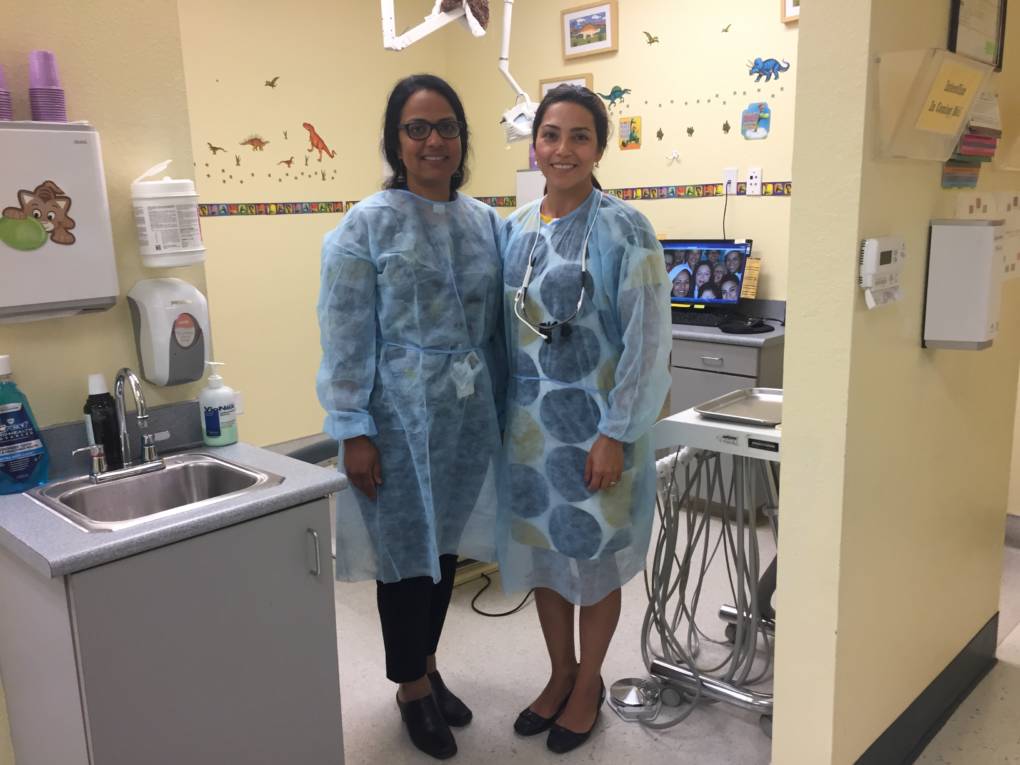
"caption": "Dentists Sridevi Ponnala and Alaleh Zadmehr at Tiburcio Vasquez Health Center in Hayward.",
"description": "Dentists Sridevi Ponnala and Alaleh Zadmehr at Tiburcio Vasquez Health Center in Hayward.",
"title": "RS26035_IMG_6746[1]",
"credit": "Laura Klivans/KQED",
"status": "inherit",
"isLoading": false,
"fetchFailed": false
},
"stateofhealth_353607": {
"type": "attachments",
"id": "stateofhealth_353607",
"meta": {
"index": "attachments_1716263798",
"site": "stateofhealth",
"id": "353607",
"found": true
},
"parent": 353587,
"imgSizes": {
"small": {
"file": "https://ww2.kqed.org/app/uploads/sites/27/2017/07/Aaron-car-520x390.jpg",
"width": 520,
"mimeType": "image/jpeg",
"height": 390
},
"twentyfourteen-full-width": {
"file": "https://ww2.kqed.org/app/uploads/sites/27/2017/07/Aaron-car-1038x576.jpg",
"width": 1038,
"mimeType": "image/jpeg",
"height": 576
},
"thumbnail": {
"file": "https://ww2.kqed.org/app/uploads/sites/27/2017/07/Aaron-car-160x120.jpg",
"width": 160,
"mimeType": "image/jpeg",
"height": 120
},
"fd-sm": {
"file": "https://ww2.kqed.org/app/uploads/sites/27/2017/07/Aaron-car-960x720.jpg",
"width": 960,
"mimeType": "image/jpeg",
"height": 720
},
"post-thumbnail": {
"file": "https://ww2.kqed.org/app/uploads/sites/27/2017/07/Aaron-car-672x372.jpg",
"width": 672,
"mimeType": "image/jpeg",
"height": 372
},
"xsmall": {
"file": "https://ww2.kqed.org/app/uploads/sites/27/2017/07/Aaron-car-375x281.jpg",
"width": 375,
"mimeType": "image/jpeg",
"height": 281
},
"kqedFullSize": {
"file": "https://ww2.kqed.org/app/uploads/sites/27/2017/07/Aaron-car-e1499822709868.jpg",
"width": 1920,
"height": 1440
},
"large": {
"file": "https://ww2.kqed.org/app/uploads/sites/27/2017/07/Aaron-car-1020x765.jpg",
"width": 1020,
"mimeType": "image/jpeg",
"height": 765
},
"xlarge": {
"file": "https://ww2.kqed.org/app/uploads/sites/27/2017/07/Aaron-car-1180x885.jpg",
"width": 1180,
"mimeType": "image/jpeg",
"height": 885
},
"guest-author-50": {
"file": "https://ww2.kqed.org/app/uploads/sites/27/2017/07/Aaron-car-50x50.jpg",
"width": 50,
"mimeType": "image/jpeg",
"height": 50
},
"guest-author-96": {
"file": "https://ww2.kqed.org/app/uploads/sites/27/2017/07/Aaron-car-96x96.jpg",
"width": 96,
"mimeType": "image/jpeg",
"height": 96
},
"medium": {
"file": "https://ww2.kqed.org/app/uploads/sites/27/2017/07/Aaron-car-800x600.jpg",
"width": 800,
"mimeType": "image/jpeg",
"height": 600
},
"guest-author-64": {
"file": "https://ww2.kqed.org/app/uploads/sites/27/2017/07/Aaron-car-64x64.jpg",
"width": 64,
"mimeType": "image/jpeg",
"height": 64
},
"guest-author-32": {
"file": "https://ww2.kqed.org/app/uploads/sites/27/2017/07/Aaron-car-32x32.jpg",
"width": 32,
"mimeType": "image/jpeg",
"height": 32
},
"fd-lrg": {
"file": "https://ww2.kqed.org/app/uploads/sites/27/2017/07/Aaron-car-1920x1440.jpg",
"width": 1920,
"mimeType": "image/jpeg",
"height": 1440
},
"fd-med": {
"file": "https://ww2.kqed.org/app/uploads/sites/27/2017/07/Aaron-car-1180x885.jpg",
"width": 1180,
"mimeType": "image/jpeg",
"height": 885
},
"full-width": {
"file": "https://ww2.kqed.org/app/uploads/sites/27/2017/07/Aaron-car-1920x1440.jpg",
"width": 1920,
"mimeType": "image/jpeg",
"height": 1440
},
"detail": {
"file": "https://ww2.kqed.org/app/uploads/sites/27/2017/07/Aaron-car-150x150.jpg",
"width": 150,
"mimeType": "image/jpeg",
"height": 150
},
"medium_large": {
"file": "https://ww2.kqed.org/app/uploads/sites/27/2017/07/Aaron-car-768x576.jpg",
"width": 768,
"mimeType": "image/jpeg",
"height": 576
},
"guest-author-128": {
"file": "https://ww2.kqed.org/app/uploads/sites/27/2017/07/Aaron-car-128x128.jpg",
"width": 128,
"mimeType": "image/jpeg",
"height": 128
},
"xxsmall": {
"file": "https://ww2.kqed.org/app/uploads/sites/27/2017/07/Aaron-car-240x180.jpg",
"width": 240,
"mimeType": "image/jpeg",
"height": 180
}
},
"publishDate": 1499822326,
"modified": 1499822811,
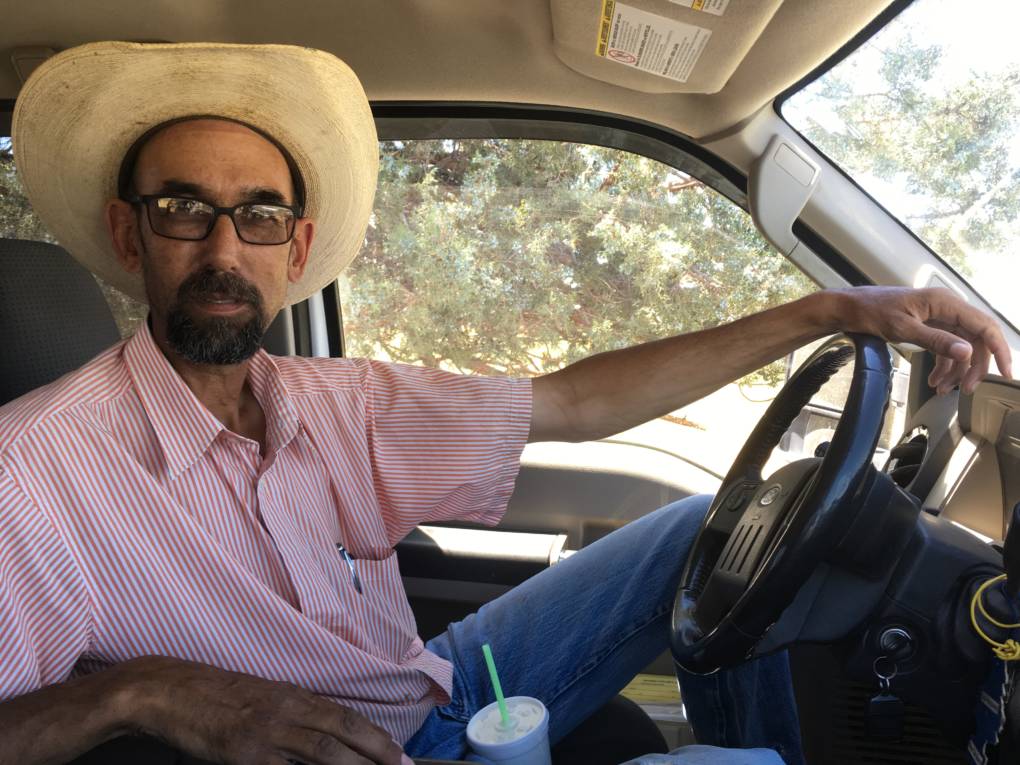
"caption": "Aaron Albaugh runs a cattle ranch in Lassen County. Living in a remote area, he says he's learned to \"do without\" a lot of things, including health care.",
"description": null,
"title": "Aaron Albaugh",
"credit": "April Dembosky/KQED",
"status": "inherit",
"isLoading": false,
"fetchFailed": false
},
"stateofhealth_20482": {
"type": "attachments",
"id": "stateofhealth_20482",
"meta": {
"index": "attachments_1716263798",
"site": "stateofhealth",
"id": "20482",
"found": true
},
"parent": 20449,
"imgSizes": {
"twentyfourteen-full-width": {
"file": "https://ww2.kqed.org/app/uploads/sites/27/2014/08/110688608-1038x576.jpg",
"width": 1038,
"mimeType": "image/jpeg",
"height": 576
},
"thumbnail": {
"file": "https://ww2.kqed.org/app/uploads/sites/27/2014/08/110688608-400x266.jpg",
"width": 400,
"mimeType": "image/jpeg",
"height": 266
},
"fd-sm": {
"file": "https://ww2.kqed.org/app/uploads/sites/27/2014/08/110688608-320x213.jpg",
"width": 320,
"mimeType": "image/jpeg",
"height": 213
},
"post-thumbnail": {
"file": "https://ww2.kqed.org/app/uploads/sites/27/2014/08/110688608-672x372.jpg",
"width": 672,
"mimeType": "image/jpeg",
"height": 372
},
"kqedFullSize": {
"file": "https://ww2.kqed.org/app/uploads/sites/27/2014/08/110688608.jpg",
"width": 4256,
"height": 2832
},
"large": {
"file": "https://ww2.kqed.org/app/uploads/sites/27/2014/08/110688608-1440x958.jpg",
"width": 1440,
"mimeType": "image/jpeg",
"height": 958
},
"guest-author-96": {
"file": "https://ww2.kqed.org/app/uploads/sites/27/2014/08/110688608-96x96.jpg",
"width": 96,
"mimeType": "image/jpeg",
"height": 96
},
"medium": {
"file": "https://ww2.kqed.org/app/uploads/sites/27/2014/08/110688608-800x532.jpg",
"width": 800,
"mimeType": "image/jpeg",
"height": 532
},
"guest-author-64": {
"file": "https://ww2.kqed.org/app/uploads/sites/27/2014/08/110688608-64x64.jpg",
"width": 64,
"mimeType": "image/jpeg",
"height": 64
},
"guest-author-32": {
"file": "https://ww2.kqed.org/app/uploads/sites/27/2014/08/110688608-32x32.jpg",
"width": 32,
"mimeType": "image/jpeg",
"height": 32
},
"fd-lrg": {
"file": "https://ww2.kqed.org/app/uploads/sites/27/2014/08/110688608-1180x785.jpg",
"width": 1180,
"mimeType": "image/jpeg",
"height": 785
},
"fd-med": {
"file": "https://ww2.kqed.org/app/uploads/sites/27/2014/08/110688608-768x511.jpg",
"width": 768,
"mimeType": "image/jpeg",
"height": 511
},
"detail": {
"file": "https://ww2.kqed.org/app/uploads/sites/27/2014/08/110688608-75x75.jpg",
"width": 75,
"mimeType": "image/jpeg",
"height": 75
},
"guest-author-128": {
"file": "https://ww2.kqed.org/app/uploads/sites/27/2014/08/110688608-128x128.jpg",
"width": 128,
"mimeType": "image/jpeg",
"height": 128
}
},
"publishDate": 1406936718,
"modified": 1499377560,
"caption": null,
"description": null,
"title": "Woman with Alzheimer's",
"credit": "Sebastien Bozon/AFP/Getty Images",
"status": "inherit",
"isLoading": false,
"fetchFailed": false
},
"stateofhealth_348514": {
"type": "attachments",
"id": "stateofhealth_348514",
"meta": {
"index": "attachments_1716263798",
"site": "stateofhealth",
"id": "348514",
"found": true
},
"parent": 348513,
"imgSizes": {
"small": {
"file": "https://ww2.kqed.org/app/uploads/sites/27/2017/06/Carol-Morris-pointing-photo-520x390.jpg",
"width": 520,
"mimeType": "image/jpeg",
"height": 390
},
"twentyfourteen-full-width": {
"file": "https://ww2.kqed.org/app/uploads/sites/27/2017/06/Carol-Morris-pointing-photo-1038x576.jpg",
"width": 1038,
"mimeType": "image/jpeg",
"height": 576
},
"thumbnail": {
"file": "https://ww2.kqed.org/app/uploads/sites/27/2017/06/Carol-Morris-pointing-photo-160x120.jpg",
"width": 160,
"mimeType": "image/jpeg",
"height": 120
},
"fd-sm": {
"file": "https://ww2.kqed.org/app/uploads/sites/27/2017/06/Carol-Morris-pointing-photo-960x720.jpg",
"width": 960,
"mimeType": "image/jpeg",
"height": 720
},
"post-thumbnail": {
"file": "https://ww2.kqed.org/app/uploads/sites/27/2017/06/Carol-Morris-pointing-photo-672x372.jpg",
"width": 672,
"mimeType": "image/jpeg",
"height": 372
},
"xsmall": {
"file": "https://ww2.kqed.org/app/uploads/sites/27/2017/06/Carol-Morris-pointing-photo-375x281.jpg",
"width": 375,
"mimeType": "image/jpeg",
"height": 281
},
"kqedFullSize": {
"file": "https://ww2.kqed.org/app/uploads/sites/27/2017/06/Carol-Morris-pointing-photo-e1498703147144.jpg",
"width": 1920,
"height": 1440
},
"large": {
"file": "https://ww2.kqed.org/app/uploads/sites/27/2017/06/Carol-Morris-pointing-photo-1020x765.jpg",
"width": 1020,
"mimeType": "image/jpeg",
"height": 765
},
"xlarge": {
"file": "https://ww2.kqed.org/app/uploads/sites/27/2017/06/Carol-Morris-pointing-photo-1180x885.jpg",
"width": 1180,
"mimeType": "image/jpeg",
"height": 885
},
"guest-author-50": {
"file": "https://ww2.kqed.org/app/uploads/sites/27/2017/06/Carol-Morris-pointing-photo-50x50.jpg",
"width": 50,
"mimeType": "image/jpeg",
"height": 50
},
"guest-author-96": {
"file": "https://ww2.kqed.org/app/uploads/sites/27/2017/06/Carol-Morris-pointing-photo-96x96.jpg",
"width": 96,
"mimeType": "image/jpeg",
"height": 96
},
"medium": {
"file": "https://ww2.kqed.org/app/uploads/sites/27/2017/06/Carol-Morris-pointing-photo-800x600.jpg",
"width": 800,
"mimeType": "image/jpeg",
"height": 600
},
"guest-author-64": {
"file": "https://ww2.kqed.org/app/uploads/sites/27/2017/06/Carol-Morris-pointing-photo-64x64.jpg",
"width": 64,
"mimeType": "image/jpeg",
"height": 64
},
"guest-author-32": {
"file": "https://ww2.kqed.org/app/uploads/sites/27/2017/06/Carol-Morris-pointing-photo-32x32.jpg",
"width": 32,
"mimeType": "image/jpeg",
"height": 32
},
"fd-lrg": {
"file": "https://ww2.kqed.org/app/uploads/sites/27/2017/06/Carol-Morris-pointing-photo-1920x1440.jpg",
"width": 1920,
"mimeType": "image/jpeg",
"height": 1440
},
"fd-med": {
"file": "https://ww2.kqed.org/app/uploads/sites/27/2017/06/Carol-Morris-pointing-photo-1180x885.jpg",
"width": 1180,
"mimeType": "image/jpeg",
"height": 885
},
"full-width": {
"file": "https://ww2.kqed.org/app/uploads/sites/27/2017/06/Carol-Morris-pointing-photo-1920x1440.jpg",
"width": 1920,
"mimeType": "image/jpeg",
"height": 1440
},
"detail": {
"file": "https://ww2.kqed.org/app/uploads/sites/27/2017/06/Carol-Morris-pointing-photo-150x150.jpg",
"width": 150,
"mimeType": "image/jpeg",
"height": 150
},
"medium_large": {
"file": "https://ww2.kqed.org/app/uploads/sites/27/2017/06/Carol-Morris-pointing-photo-768x576.jpg",
"width": 768,
"mimeType": "image/jpeg",
"height": 576
},
"guest-author-128": {
"file": "https://ww2.kqed.org/app/uploads/sites/27/2017/06/Carol-Morris-pointing-photo-128x128.jpg",
"width": 128,
"mimeType": "image/jpeg",
"height": 128
},
"xxsmall": {
"file": "https://ww2.kqed.org/app/uploads/sites/27/2017/06/Carol-Morris-pointing-photo-240x180.jpg",
"width": 240,
"mimeType": "image/jpeg",
"height": 180
}
},
"publishDate": 1498703018,
"modified": 1498703241,
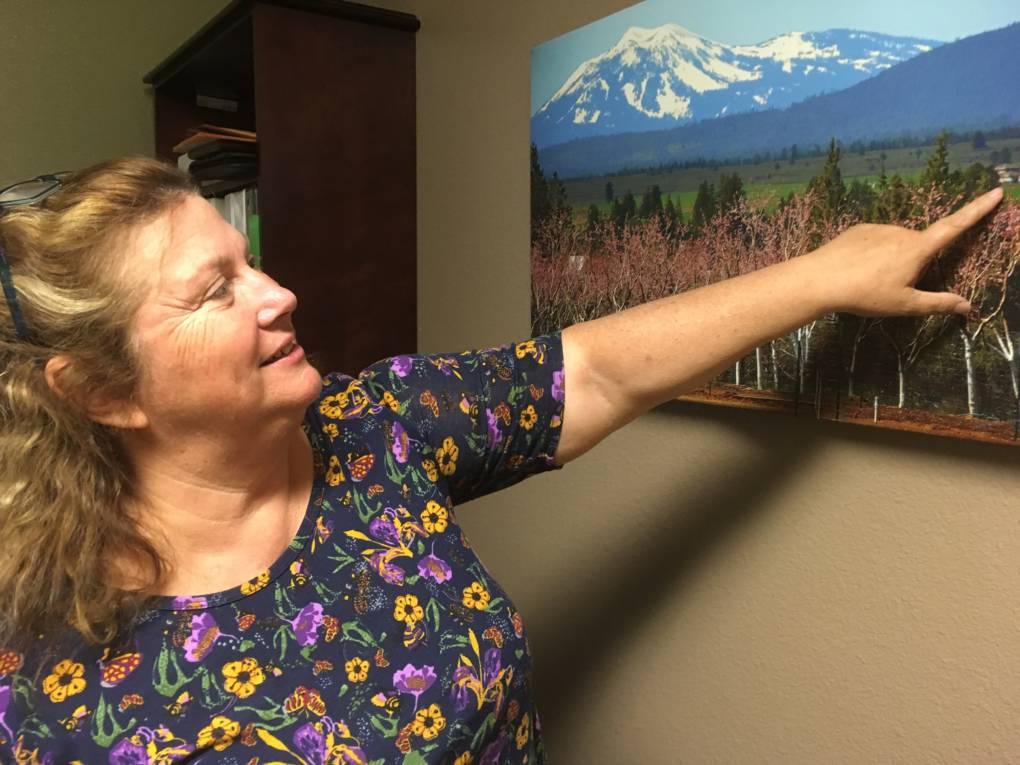
"caption": "Carol Morris managed the remodel of the health clinic in Burney. She chose the furniture, the paint, and the decorations, including this photo of the mountains and farm behind her home.",
"description": null,
"title": "Carol Morris pointing photo",
"credit": "April Dembosky",
"status": "inherit",
"isLoading": false,
"fetchFailed": false
},
"stateofhealth_348436": {
"type": "attachments",
"id": "stateofhealth_348436",
"meta": {
"index": "attachments_1716263798",
"site": "stateofhealth",
"id": "348436",
"found": true
},
"parent": 348243,
"imgSizes": {
"small": {
"file": "https://ww2.kqed.org/app/uploads/sites/27/2017/06/Greta-Elliott-520x390.jpg",
"width": 520,
"mimeType": "image/jpeg",
"height": 390
},
"twentyfourteen-full-width": {
"file": "https://ww2.kqed.org/app/uploads/sites/27/2017/06/Greta-Elliott-1038x576.jpg",
"width": 1038,
"mimeType": "image/jpeg",
"height": 576
},
"thumbnail": {
"file": "https://ww2.kqed.org/app/uploads/sites/27/2017/06/Greta-Elliott-160x120.jpg",
"width": 160,
"mimeType": "image/jpeg",
"height": 120
},
"fd-sm": {
"file": "https://ww2.kqed.org/app/uploads/sites/27/2017/06/Greta-Elliott-960x720.jpg",
"width": 960,
"mimeType": "image/jpeg",
"height": 720
},
"post-thumbnail": {
"file": "https://ww2.kqed.org/app/uploads/sites/27/2017/06/Greta-Elliott-672x372.jpg",
"width": 672,
"mimeType": "image/jpeg",
"height": 372
},
"xsmall": {
"file": "https://ww2.kqed.org/app/uploads/sites/27/2017/06/Greta-Elliott-375x281.jpg",
"width": 375,
"mimeType": "image/jpeg",
"height": 281
},
"kqedFullSize": {
"file": "https://ww2.kqed.org/app/uploads/sites/27/2017/06/Greta-Elliott-e1498675622942.jpg",
"width": 1920,
"height": 1440
},
"large": {
"file": "https://ww2.kqed.org/app/uploads/sites/27/2017/06/Greta-Elliott-1020x765.jpg",
"width": 1020,
"mimeType": "image/jpeg",
"height": 765
},
"xlarge": {
"file": "https://ww2.kqed.org/app/uploads/sites/27/2017/06/Greta-Elliott-1180x885.jpg",
"width": 1180,
"mimeType": "image/jpeg",
"height": 885
},
"guest-author-50": {
"file": "https://ww2.kqed.org/app/uploads/sites/27/2017/06/Greta-Elliott-50x50.jpg",
"width": 50,
"mimeType": "image/jpeg",
"height": 50
},
"guest-author-96": {
"file": "https://ww2.kqed.org/app/uploads/sites/27/2017/06/Greta-Elliott-96x96.jpg",
"width": 96,
"mimeType": "image/jpeg",
"height": 96
},
"medium": {
"file": "https://ww2.kqed.org/app/uploads/sites/27/2017/06/Greta-Elliott-800x600.jpg",
"width": 800,
"mimeType": "image/jpeg",
"height": 600
},
"guest-author-64": {
"file": "https://ww2.kqed.org/app/uploads/sites/27/2017/06/Greta-Elliott-64x64.jpg",
"width": 64,
"mimeType": "image/jpeg",
"height": 64
},
"guest-author-32": {
"file": "https://ww2.kqed.org/app/uploads/sites/27/2017/06/Greta-Elliott-32x32.jpg",
"width": 32,
"mimeType": "image/jpeg",
"height": 32
},
"fd-lrg": {
"file": "https://ww2.kqed.org/app/uploads/sites/27/2017/06/Greta-Elliott-1920x1440.jpg",
"width": 1920,
"mimeType": "image/jpeg",
"height": 1440
},
"fd-med": {
"file": "https://ww2.kqed.org/app/uploads/sites/27/2017/06/Greta-Elliott-1180x885.jpg",
"width": 1180,
"mimeType": "image/jpeg",
"height": 885
},
"full-width": {
"file": "https://ww2.kqed.org/app/uploads/sites/27/2017/06/Greta-Elliott-1920x1440.jpg",
"width": 1920,
"mimeType": "image/jpeg",
"height": 1440
},
"detail": {
"file": "https://ww2.kqed.org/app/uploads/sites/27/2017/06/Greta-Elliott-150x150.jpg",
"width": 150,
"mimeType": "image/jpeg",
"height": 150
},
"medium_large": {
"file": "https://ww2.kqed.org/app/uploads/sites/27/2017/06/Greta-Elliott-768x576.jpg",
"width": 768,
"mimeType": "image/jpeg",
"height": 576
},
"guest-author-128": {
"file": "https://ww2.kqed.org/app/uploads/sites/27/2017/06/Greta-Elliott-128x128.jpg",
"width": 128,
"mimeType": "image/jpeg",
"height": 128
},
"xxsmall": {
"file": "https://ww2.kqed.org/app/uploads/sites/27/2017/06/Greta-Elliott-240x180.jpg",
"width": 240,
"mimeType": "image/jpeg",
"height": 180
}
},
"publishDate": 1498675586,
"modified": 1498675934,
"caption": "Greta Elliott talks to her staff at the Canby Family Practice Clinic in Modoc County.",
"description": "Greta Elliott talks to her staff at the Canby Family Practice Clinic in Modoc County.",
"title": "Greta Elliott",
"credit": "April Dembosky/KQED",
"status": "inherit",
"isLoading": false,
"fetchFailed": false
},
"futureofyou_391499": {
"type": "attachments",
"id": "futureofyou_391499",
"meta": {
"index": "attachments_1716263798",
"site": "futureofyou",
"id": "391499",
"found": true
},
"parent": 391498,
"imgSizes": {
"small": {
"file": "https://ww2.kqed.org/app/uploads/sites/13/2017/05/blood-pressure-1_enl-d3b58d0c1316f3c61a4d47366fb495563b4359d8-520x343.jpg",
"width": 520,
"mimeType": "image/jpeg",
"height": 343
},
"twentyfourteen-full-width": {
"file": "https://ww2.kqed.org/app/uploads/sites/13/2017/05/blood-pressure-1_enl-d3b58d0c1316f3c61a4d47366fb495563b4359d8-1038x576.jpg",
"width": 1038,
"mimeType": "image/jpeg",
"height": 576
},
"thumbnail": {
"file": "https://ww2.kqed.org/app/uploads/sites/13/2017/05/blood-pressure-1_enl-d3b58d0c1316f3c61a4d47366fb495563b4359d8-160x106.jpg",
"width": 160,
"mimeType": "image/jpeg",
"height": 106
},
"fd-sm": {
"file": "https://ww2.kqed.org/app/uploads/sites/13/2017/05/blood-pressure-1_enl-d3b58d0c1316f3c61a4d47366fb495563b4359d8-960x634.jpg",
"width": 960,
"mimeType": "image/jpeg",
"height": 634
},
"post-thumbnail": {
"file": "https://ww2.kqed.org/app/uploads/sites/13/2017/05/blood-pressure-1_enl-d3b58d0c1316f3c61a4d47366fb495563b4359d8-672x372.jpg",
"width": 672,
"mimeType": "image/jpeg",
"height": 372
},
"xsmall": {
"file": "https://ww2.kqed.org/app/uploads/sites/13/2017/05/blood-pressure-1_enl-d3b58d0c1316f3c61a4d47366fb495563b4359d8-375x248.jpg",
"width": 375,
"mimeType": "image/jpeg",
"height": 248
},
"kqedFullSize": {
"file": "https://ww2.kqed.org/app/uploads/sites/13/2017/05/blood-pressure-1_enl-d3b58d0c1316f3c61a4d47366fb495563b4359d8-e1496168475267.jpg",
"width": 1920,
"height": 1268
},
"large": {
"file": "https://ww2.kqed.org/app/uploads/sites/13/2017/05/blood-pressure-1_enl-d3b58d0c1316f3c61a4d47366fb495563b4359d8-1020x674.jpg",
"width": 1020,
"mimeType": "image/jpeg",
"height": 674
},
"xlarge": {
"file": "https://ww2.kqed.org/app/uploads/sites/13/2017/05/blood-pressure-1_enl-d3b58d0c1316f3c61a4d47366fb495563b4359d8-1180x779.jpg",
"width": 1180,
"mimeType": "image/jpeg",
"height": 779
},
"guest-author-50": {
"file": "https://ww2.kqed.org/app/uploads/sites/13/2017/05/blood-pressure-1_enl-d3b58d0c1316f3c61a4d47366fb495563b4359d8-50x50.jpg",
"width": 50,
"mimeType": "image/jpeg",
"height": 50
},
"guest-author-96": {
"file": "https://ww2.kqed.org/app/uploads/sites/13/2017/05/blood-pressure-1_enl-d3b58d0c1316f3c61a4d47366fb495563b4359d8-96x96.jpg",
"width": 96,
"mimeType": "image/jpeg",
"height": 96
},
"medium": {
"file": "https://ww2.kqed.org/app/uploads/sites/13/2017/05/blood-pressure-1_enl-d3b58d0c1316f3c61a4d47366fb495563b4359d8-800x528.jpg",
"width": 800,
"mimeType": "image/jpeg",
"height": 528
},
"guest-author-64": {
"file": "https://ww2.kqed.org/app/uploads/sites/13/2017/05/blood-pressure-1_enl-d3b58d0c1316f3c61a4d47366fb495563b4359d8-64x64.jpg",
"width": 64,
"mimeType": "image/jpeg",
"height": 64
},
"guest-author-32": {
"file": "https://ww2.kqed.org/app/uploads/sites/13/2017/05/blood-pressure-1_enl-d3b58d0c1316f3c61a4d47366fb495563b4359d8-32x32.jpg",
"width": 32,
"mimeType": "image/jpeg",
"height": 32
},
"fd-lrg": {
"file": "https://ww2.kqed.org/app/uploads/sites/13/2017/05/blood-pressure-1_enl-d3b58d0c1316f3c61a4d47366fb495563b4359d8-1920x1268.jpg",
"width": 1920,
"mimeType": "image/jpeg",
"height": 1268
},
"fd-med": {
"file": "https://ww2.kqed.org/app/uploads/sites/13/2017/05/blood-pressure-1_enl-d3b58d0c1316f3c61a4d47366fb495563b4359d8-1180x779.jpg",
"width": 1180,
"mimeType": "image/jpeg",
"height": 779
},
"full-width": {
"file": "https://ww2.kqed.org/app/uploads/sites/13/2017/05/blood-pressure-1_enl-d3b58d0c1316f3c61a4d47366fb495563b4359d8-1920x1268.jpg",
"width": 1920,
"mimeType": "image/jpeg",
"height": 1268
},
"detail": {
"file": "https://ww2.kqed.org/app/uploads/sites/13/2017/05/blood-pressure-1_enl-d3b58d0c1316f3c61a4d47366fb495563b4359d8-150x150.jpg",
"width": 150,
"mimeType": "image/jpeg",
"height": 150
},
"medium_large": {
"file": "https://ww2.kqed.org/app/uploads/sites/13/2017/05/blood-pressure-1_enl-d3b58d0c1316f3c61a4d47366fb495563b4359d8-768x507.jpg",
"width": 768,
"mimeType": "image/jpeg",
"height": 507
},
"guest-author-128": {
"file": "https://ww2.kqed.org/app/uploads/sites/13/2017/05/blood-pressure-1_enl-d3b58d0c1316f3c61a4d47366fb495563b4359d8-128x128.jpg",
"width": 128,
"mimeType": "image/jpeg",
"height": 128
},
"xxsmall": {
"file": "https://ww2.kqed.org/app/uploads/sites/13/2017/05/blood-pressure-1_enl-d3b58d0c1316f3c61a4d47366fb495563b4359d8-240x159.jpg",
"width": 240,
"mimeType": "image/jpeg",
"height": 159
}
},
"publishDate": 1494954225,
"modified": 1496168469,
"caption": "It's not clear how living in a segregated neighborhood affects blood pressure, but stress is one potential cause, experts say.",
"description": "It's not clear how living in a segregated neighborhood affects blood pressure, but stress is one potential cause, experts say.",
"title": "It's not clear how living in a segregated neighborhood affects blood pressure, but stress is one potential cause, experts say.",
"credit": "annebaek/Getty Images/iStockphoto",
"status": "inherit",
"isLoading": false,
"fetchFailed": false
}
},
"audioPlayerReducer": {
"postId": "stream_live",
"isPaused": true,
"isPlaying": false,
"pfsActive": false,
"pledgeModalIsOpen": true,
"playerDrawerIsOpen": false,
"liveAudioPlayStartedAt": 0,
"liveAudioPlayContext": ""
},
"authorsReducer": {
"byline_stateofhealth_360720": {
"type": "authors",
"id": "byline_stateofhealth_360720",
"meta": {
"override": true
},
"slug": "byline_stateofhealth_360720",
"name": "\u003ca href=\"http://www.npr.org/people/4986687/audie-cornish\" target=\"_blank\">Audie Cornish\u003c/a>",
"isLoading": false
},
"byline_stateofhealth_358434": {
"type": "authors",
"id": "byline_stateofhealth_358434",
"meta": {
"override": true
},
"slug": "byline_stateofhealth_358434",
"name": "\u003ca href=\"http://californiahealthline.org/news/author/pauline-bartolone/\">\u003cstrong>Pauline Bartolone\u003c/strong>\u003c/a>",
"isLoading": false
},
"byline_stateofhealth_357094": {
"type": "authors",
"id": "byline_stateofhealth_357094",
"meta": {
"override": true
},
"slug": "byline_stateofhealth_357094",
"name": "\u003cstrong>Stephanie O’Neill\u003c/strong>",
"isLoading": false
},
"byline_stateofhealth_351133": {
"type": "authors",
"id": "byline_stateofhealth_351133",
"meta": {
"override": true
},
"slug": "byline_stateofhealth_351133",
"name": "\u003ca href=\"http://khn.org/news/author/jordan-rau/\" target=\"_blank\">Jordan Rau\u003c/a>",
"isLoading": false
},
"byline_futureofyou_391498": {
"type": "authors",
"id": "byline_futureofyou_391498",
"meta": {
"override": true
},
"slug": "byline_futureofyou_391498",
"name": "Rob Stein\u003cbr />NPR Shots",
"isLoading": false
},
"adembosky": {
"type": "authors",
"id": "3205",
"meta": {
"index": "authors_1716337520",
"id": "3205",
"found": true
},
"name": "April Dembosky",
"firstName": "April",
"lastName": "Dembosky",
"slug": "adembosky",
"email": "adembosky@kqed.org",
"display_author_email": false,
"staff_mastheads": [
"news",
"science"
],
"title": "KQED Health Correspondent",
"bio": "April Dembosky is the health correspondent for KQED News and a regular contributor to NPR. She specializes in covering altered states of mind, from postpartum depression to methamphetamine-induced psychosis to the insanity defense. Her investigative series on insurance companies sidestepping mental health laws won multiple awards, including first place in beat reporting from the national Association of Health Care Journalists. She is the recipient of numerous other prizes and fellowships, including a national Edward R. Murrow award for investigative reporting, a Society of Professional Journalists award for long-form storytelling, and a Carter Center Fellowship for Mental Health Journalism.\r\n\r\nDembosky reported and produced \u003cem>Soundtrack of Silence\u003c/em>, an audio documentary about music and memory that is currently being made into a feature film by Paramount Pictures.\r\n\r\nBefore joining KQED in 2013, Dembosky covered technology and Silicon Valley for \u003cem>The Financial Times of London,\u003c/em> and contributed business and arts stories to \u003cem>Marketplace \u003c/em>and \u003cem>The New York Times.\u003c/em> She got her undergraduate degree in philosophy from Smith College and her master's in journalism from the University of California, Berkeley. She is a classically trained violinist and proud alum of the first symphony orchestra at Burning Man.",
"avatar": "https://secure.gravatar.com/avatar/ef92999be4ceb9ea60701e7dc276f813?s=600&d=blank&r=g",
"twitter": "adembosky",
"facebook": null,
"instagram": null,
"linkedin": null,
"sites": [
{
"site": "arts",
"roles": [
"author"
]
},
{
"site": "news",
"roles": [
"editor"
]
},
{
"site": "futureofyou",
"roles": [
"author"
]
},
{
"site": "stateofhealth",
"roles": [
"editor"
]
},
{
"site": "science",
"roles": [
"editor"
]
},
{
"site": "forum",
"roles": [
"editor"
]
}
],
"headData": {
"title": "April Dembosky | KQED",
"description": "KQED Health Correspondent",
"ogImgSrc": "https://secure.gravatar.com/avatar/ef92999be4ceb9ea60701e7dc276f813?s=600&d=blank&r=g",
"twImgSrc": "https://secure.gravatar.com/avatar/ef92999be4ceb9ea60701e7dc276f813?s=600&d=blank&r=g"
},
"isLoading": false,
"link": "/author/adembosky"
},
"lklivans": {
"type": "authors",
"id": "8648",
"meta": {
"index": "authors_1716337520",
"id": "8648",
"found": true
},
"name": "Laura Klivans",
"firstName": "Laura",
"lastName": "Klivans",
"slug": "lklivans",
"email": "lklivans@kqed.org",
"display_author_email": true,
"staff_mastheads": [
"news",
"science"
],
"title": "Reporter",
"bio": "Laura Klivans is an award-winning science reporter for KQED News, where she covers climate change with an eye on both groundbreaking progress and gaps in action. She is the former host of KQED's blockbuster video series about tiny, amazing animals, \u003cem>Deep Look\u003c/em>. Her work reaches national audiences through NPR, \u003cem>Here & Now, \u003c/em>PRI, and other major outlets. \r\n\r\nLaura’s won five Northern California Area Emmy Awards for Deep Look and First Place in the Greater Bay Area Journalism Awards for a podcast exploring how one Oakland neighborhood teamed up to reduce planet-heating pollution.\r\n\r\nBeyond her reporting, she hosts and moderates events. In the past, she taught audio storytelling at the UC Berkeley Graduate School of Journalism, led international education programs, worked with immigrants and refugees along the Thai-Burmese border, taught high schoolers sex ed, and was an actress. \r\n\r\nShe's a former UC Berkeley Human Rights Fellow, USC Center for Health Journalism's California Fellow and Coro Fellow in Public Affairs. Laura has a master’s in journalism from UC Berkeley, a master’s in education from Harvard, and an undergraduate degree from Northwestern University.\r\n\r\nShe loves trying to riddle the meaning out of vanity license plates.",
"avatar": "https://secure.gravatar.com/avatar/2d2ecd1550a494cc10ad4a503406965585902124739e775a9b3817eebf1d88be?s=600&d=blank&r=g",
"twitter": "lauraklivans",
"bluesky": null,
"facebook": null,
"instagram": null,
"linkedin": null,
"sites": [
{
"site": "news",
"roles": [
"editor"
]
},
{
"site": "stateofhealth",
"roles": [
"contributor",
"editor"
]
},
{
"site": "science",
"roles": [
"editor"
]
},
{
"site": "forum",
"roles": [
"editor"
]
}
],
"headData": {
"title": "Laura Klivans | KQED",
"description": "Reporter",
"ogImgSrc": "https://secure.gravatar.com/avatar/2d2ecd1550a494cc10ad4a503406965585902124739e775a9b3817eebf1d88be?s=600&d=blank&r=g",
"twImgSrc": "https://secure.gravatar.com/avatar/2d2ecd1550a494cc10ad4a503406965585902124739e775a9b3817eebf1d88be?s=600&d=blank&r=g"
},
"isLoading": false,
"link": "/author/lklivans"
},
"scraig": {
"type": "authors",
"id": "11327",
"meta": {
"index": "authors_1716337520",
"id": "11327",
"found": true
},
"name": "Sarah Craig",
"firstName": "Sarah",
"lastName": "Craig",
"slug": "scraig",
"email": "scraig@KQED.org",
"display_author_email": false,
"staff_mastheads": [],
"title": "KQED Contributor",
"bio": "Sarah Craig is a freelance radio reporter and documentary photographer. She is currently working on \u003cem>Dreams of Dust\u003c/em>, @dreamsofdust, a multimedia project that documents stories of climate migration in California’s Central Valley, previously funded by the California Humanities. Her completed projects include \u003cem>\u003ca href=\"http://www.facesoffracking.org/\" target=\"_blank\" rel=\"nofollow noopener noreferrer\">Faces of Fracking\u003c/a>,\u003c/em> an investigation into the impact of fracking on the people and places of California, and \u003cem>\u003ca href=\"http://sarahcraig.visura.co/gulf-disaster-2\" target=\"_blank\" rel=\"nofollow noopener noreferrer\">The Gulf Disaster\u003c/a>,\u003c/em> stories on the lives of fishermen in the aftermath of the BP spill. Her work has been published by Marketplace, KQED's Bay Curious and Q'ed Up podcasts, KQED's California Report Magazine, KALW's Crosscurrents, Grist.org, High Country News, Earth Island Journal, and others. Sarah received a B.A. in Geography at Vassar College and attended the \u003ca href=\"http://www.salt.edu/\" target=\"_blank\" rel=\"nofollow noopener noreferrer\">Salt Institute of Documentary Studies\u003c/a> in Portland, ME. She recently received an Excellence in Journalism Award from the NorCal Society of Professional Journalists for her documentary radio piece, \u003ca href=\"http://kalw.org/post/215-will-water-come#stream/0\">\"Will the Water Come.\"\u003c/a> Email: scraig@kqed.org Twitter: @sarahcraigmedia Website: sarahcraigmedia.com",
"avatar": "https://secure.gravatar.com/avatar/97f17950c828429d3df9f2907412a50b?s=600&d=blank&r=g",
"twitter": null,
"facebook": null,
"instagram": null,
"linkedin": null,
"sites": [
{
"site": "news",
"roles": [
"subscriber"
]
},
{
"site": "science",
"roles": [
"editor"
]
}
],
"headData": {
"title": "Sarah Craig | KQED",
"description": "KQED Contributor",
"ogImgSrc": "https://secure.gravatar.com/avatar/97f17950c828429d3df9f2907412a50b?s=600&d=blank&r=g",
"twImgSrc": "https://secure.gravatar.com/avatar/97f17950c828429d3df9f2907412a50b?s=600&d=blank&r=g"
},
"isLoading": false,
"link": "/author/scraig"
}
},
"pagesReducer": {
"stateofhealth_category_place-matters": {
"type": "terms",
"id": "stateofhealth_11",
"meta": {
"index": "terms_1716263798",
"site": "stateofhealth",
"id": "11",
"score": 14.406026
},
"featImg": null,
"name": "Community Health",
"description": "\r\n\r\nFrom rural California to urban neighborhoods, where you live affects your health",
"taxonomy": "category",
"headData": {
"twImgId": null,
"twTitle": null,
"ogTitle": null,
"ogImgId": null,
"twDescription": null,
"description": "From rural California to urban neighborhoods, where you live affects your health",
"title": "Community Health Archives | KQED Arts",
"ogDescription": null
},
"ttid": 11,
"slug": "place-matters",
"isLoading": false,
"title": "Community Health",
"pageMeta": {
"site": "stateofhealth",
"WpPageTemplate": "page-topic-editorial",
"currentPage": 4
},
"blocks": [
{
"blockName": "kqed/company-paragraph",
"content": "\r\n\r\nFrom rural California to urban neighborhoods, where you live affects your health"
},
{
"blockName": "kqed/post-list",
"attrs": {
"layout": "cardArticle2",
"query": "posts/stateofhealth?category=place-matters",
"seeMore": false,
"paginated": true,
"page": 4
}
},
{
"blockName": "kqed/ad"
}
]
}
},
"pfsSessionReducer": {},
"postsReducer": {
"stream_live": {
"type": "live",
"id": "stream_live",
"audioUrl": "https://streams.kqed.org/kqedradio",
"title": "Live Stream",
"excerpt": "Live Stream information currently unavailable.",
"link": "/radio",
"featImg": "",
"label": {
"name": "KQED Live",
"link": "/"
}
},
"stream_kqedNewscast": {
"type": "posts",
"id": "stream_kqedNewscast",
"audioUrl": "https://www.kqed.org/.stream/anon/radio/RDnews/newscast.mp3?_=1",
"title": "KQED Newscast",
"featImg": "",
"label": {
"name": "88.5 FM",
"link": "/"
}
},
"stateofhealth_360720": {
"type": "posts",
"id": "stateofhealth_360720",
"meta": {
"index": "posts_1716263798",
"site": "stateofhealth",
"id": "360720",
"score": null,
"sort": [
1502237507000
]
},
"parent": 0,
"labelTerm": {
"site": "stateofhealth"
},
"blocks": [],
"publishDate": 1502237507,
"format": "standard",
"disqusTitle": "How Smartphones Are Making Kids Unhappy",
"title": "How Smartphones Are Making Kids Unhappy",
"headTitle": "State of Health | KQED News",
"content": "\u003cp>For the first time, a generation of children is going through adolescence with smartphones ever-present. \u003ca href=\"http://www.psychology.sdsu.edu/people/jean-twenge/\">Jean Twenge\u003c/a>, a professor of psychology at San Diego State University, has a name for these young people born between 1995 and 2012: \"iGen.\"\u003c/p>\n\u003cp>She says members of this generation are physically safer than those who came before them. They drink less, they learn to drive later and they're holding off on having sex. But psychologically, she argues, they are far more vulnerable.\u003c/p>\n\u003cp>\"It's not an exaggeration to describe iGen as being on the brink of the worst mental health crisis in decades,\" she writes in a \u003ca href=\"https://www.theatlantic.com/magazine/archive/2017/09/has-the-smartphone-destroyed-a-generation/534198/\">story\u003c/a> in \u003cem>The Atlantic, \u003c/em>adapted from her \u003ca href=\"http://www.simonandschuster.com/books/iGen/Jean-M-Twenge/9781501151989\">forthcoming book\u003c/a>. And she says it's largely because of smartphones.\u003c/p>\n\u003cp>Twenge spoke to \u003cem>All Things Considered\u003c/em> about her research and her conclusions. This interview has been edited for length and clarity.\u003c/p>\n\u003cp>\u003c!-- iframe plugin v.4.3 wordpress.org/plugins/iframe/ -->\u003cbr>\n\u003ciframe src=\"https://www.npr.org/player/embed/542016165/542087124\" width=\"100%\" height=\"290\" frameborder=\"0\" scrolling=\"no\" title=\"NPR embedded audio player\" class=\"iframe-class\">\u003c/iframe>\u003c/p>\n\u003chr>\n\u003cp>\u003cstrong>How does teen behavior now differ from generations past?\u003c/strong>\u003c/p>\n\u003cp>[ad fullwidth]\u003c/p>\n\u003cp>Today's teens are just not spending as much time with their friends in person, face-to-face, where they can really read each others' emotions and get that social support. And we know from lots and lots of research that spending time with other people in person is one of the best predictors for psychological well-being and one of the best protections against having mental health issues.\u003c/p>\n\u003cp>\u003cstrong>What is this generation facing that worries you so much?\u003c/strong>\u003c/p>\n\u003cp>iGen is showing mental health issues across a wide variety of indicators. They're more likely than young people just five or 10 years ago to say that they're anxious, that they have symptoms of depression, that they have thought about suicide or have even [attempted] suicide. So across the board, there's a really consistent trend with mental health issues increasing among teens.\u003c/p>\n\u003cp>\u003cstrong>Is it specifically the smartphone, or is it social media? Or is it the number of hours per day spent on these things?\u003c/strong>\u003c/p>\n\u003cp>So, you look at the pattern of loneliness. It suddenly begins to increase around 2012. And the majority of Americans had a cell phone by the end of 2012, according to the \u003ca href=\"http://www.pewinternet.org/2013/06/05/smartphone-ownership-2013/\">Pew Center\u003c/a>.\u003c/p>\n\u003cp>Given that using social media for more hours is linked to more loneliness, and that smartphones were used by the majority of Americans around 2012, and that's the same time loneliness increases, that's very suspicious. You can't absolutely prove causation, but by a bunch of different studies, there's this connection between spending a lot of time on social media and feeling lonely.\u003c/p>\n\u003cp>\u003cstrong>How much of a factor is parenting?\u003c/strong>\u003c/p>\n\u003cp>So I was somewhat surprised when I interviewed iGen teens how many of them are deeply aware of the negative effects of smartphones. Parenting is playing a role. I think many parents are worried about their teens driving, and going out with their friends and drinking. Yet parents are often not worrying about their teen who stays at home but is on their phone all the time. But they should be worried about that. I think parents are worried about the wrong thing.\u003c/p>\n\u003cp>\u003cstrong>Can you propose solutions that might help people?\u003c/strong>\u003c/p>\n\u003cp>The first is just awareness that spending a lot of time on the phone is not harmless and that if you're spending a lot of time on the phone, then it may take away from activities that might be more beneficial for psychological well-being, like spending time with people in person.\u003c/p>\n\u003cp>\u003c/p>\n\u003cp>Then for parents, I think it is [a] good idea to put off giving your child a smartphone as long as you can. If you feel they need a phone, say, for riding a bus, you can get them a flip phone. They still sell them. And then once your teen has a smartphone, there are apps that allow parents to restrict the number of hours a day that teens are on the smartphone, and also what time of day they use it.\u003c/p>\n\u003cdiv class=\"fullattribution\">Copyright 2017 NPR. To see more, visit http://www.npr.org/.\u003cimg src=\"https://www.google-analytics.com/__utm.gif?utmac=UA-5828686-4&utmdt=How+Smartphones+Are+Making+Kids+Unhappy&utme=8(APIKey)9(MDAxOTAwOTE4MDEyMTkxMDAzNjczZDljZA004)\">\u003c/div>\n\n",
"disqusIdentifier": "360720 https://ww2.kqed.org/stateofhealth/?p=360720",
"disqusUrl": "https://ww2.kqed.org/stateofhealth/2017/08/08/how-smartphones-are-making-kids-unhappy/",
"stats": {
"hasVideo": false,
"hasChartOrMap": true,
"hasAudio": false,
"hasPolis": false,
"wordCount": 667,
"hasGoogleForm": false,
"hasGallery": false,
"hasHearkenModule": false,
"iframeSrcs": [
"https://www.npr.org/player/embed/542016165/542087124"
],
"paragraphCount": 19
},
"modified": 1502240736,
"excerpt": "Psychologist Jean Twenge has seen dramatic shifts in behavior among children who go through adolescence with smartphones.",
"headData": {
"twImgId": "",
"twTitle": "",
"ogTitle": "",
"ogImgId": "",
"twDescription": "",
"description": "Psychologist Jean Twenge has seen dramatic shifts in behavior among children who go through adolescence with smartphones.",
"title": "How Smartphones Are Making Kids Unhappy | KQED",
"ogDescription": "",
"schema": {
"@context": "https://schema.org",
"@type": "Article",
"headline": "How Smartphones Are Making Kids Unhappy",
"datePublished": "2017-08-08T17:11:47-07:00",
"dateModified": "2017-08-08T18:05:36-07:00",
"image": "https://cdn.kqed.org/wp-content/uploads/2020/02/KQED-OG-Image@1x.png"
}
},
"guestAuthors": [],
"slug": "how-smartphones-are-making-kids-unhappy",
"status": "publish",
"nprApiLink": "http://api.npr.org/query?id=542016165&apiKey=MDAxOTAwOTE4MDEyMTkxMDAzNjczZDljZA004",
"nprByline": "\u003ca href=\"http://www.npr.org/people/4986687/audie-cornish\" target=\"_blank\">Audie Cornish\u003c/a>",
"nprStoryDate": "Mon, 07 Aug 2017 17:35:00 -0400",
"nprLastModifiedDate": "Tue, 08 Aug 2017 08:17:27 -0400",
"nprHtmlLink": "http://www.npr.org/sections/health-shots/2017/08/07/542016165/how-smartphones-are-making-kids-unhappy?ft=nprml&f=542016165",
"nprAudio": "https://ondemand.npr.org/anon.npr-mp3/npr/atc/2017/08/20170807_atc_smartphones_and_teens.mp3?orgId=1&topicId=1128&d=291&p=2&story=542016165&t=progseg&e=541985440&seg=16&ft=nprml&f=542016165",
"nprImageAgency": "Image Source/Getty Images",
"nprAudioM3u": "http://api.npr.org/m3u/1542087124-4cf612.m3u?orgId=1&topicId=1128&d=291&p=2&story=542016165&t=progseg&e=541985440&seg=16&ft=nprml&f=542016165",
"nprStoryId": "542016165",
"nprRetrievedStory": "1",
"nprPubDate": "Mon, 07 Aug 2017 18:50:00 -0400",
"path": "/stateofhealth/360720/how-smartphones-are-making-kids-unhappy",
"audioUrl": "https://ondemand.npr.org/anon.npr-mp3/npr/atc/2017/08/20170807_atc_smartphones_and_teens.mp3?orgId=1&topicId=1128&d=291&p=2&story=542016165&t=progseg&e=541985440&seg=16&ft=nprml&f=542016165",
"audioTrackLength": null,
"parsedContent": [
{
"type": "contentString",
"content": "\u003cdiv class=\"post-body\">\u003cp>\u003cp>For the first time, a generation of children is going through adolescence with smartphones ever-present. \u003ca href=\"http://www.psychology.sdsu.edu/people/jean-twenge/\">Jean Twenge\u003c/a>, a professor of psychology at San Diego State University, has a name for these young people born between 1995 and 2012: \"iGen.\"\u003c/p>\n\u003cp>She says members of this generation are physically safer than those who came before them. They drink less, they learn to drive later and they're holding off on having sex. But psychologically, she argues, they are far more vulnerable.\u003c/p>\n\u003cp>\"It's not an exaggeration to describe iGen as being on the brink of the worst mental health crisis in decades,\" she writes in a \u003ca href=\"https://www.theatlantic.com/magazine/archive/2017/09/has-the-smartphone-destroyed-a-generation/534198/\">story\u003c/a> in \u003cem>The Atlantic, \u003c/em>adapted from her \u003ca href=\"http://www.simonandschuster.com/books/iGen/Jean-M-Twenge/9781501151989\">forthcoming book\u003c/a>. And she says it's largely because of smartphones.\u003c/p>\n\u003cp>Twenge spoke to \u003cem>All Things Considered\u003c/em> about her research and her conclusions. This interview has been edited for length and clarity.\u003c/p>\n\u003cp>\u003c!-- iframe plugin v.4.3 wordpress.org/plugins/iframe/ -->\u003cbr>\n\u003ciframe src=\"https://www.npr.org/player/embed/542016165/542087124\" width=\"100%\" height=\"290\" frameborder=\"0\" scrolling=\"no\" title=\"NPR embedded audio player\" class=\"iframe-class\">\u003c/iframe>\u003c/p>\n\u003chr>\n\u003cp>\u003cstrong>How does teen behavior now differ from generations past?\u003c/strong>\u003c/p>\n\u003cp>\u003c/p>\u003c/div>",
"attributes": {
"named": {},
"numeric": []
}
},
{
"type": "component",
"content": "",
"name": "ad",
"attributes": {
"named": {
"label": "fullwidth"
},
"numeric": [
"fullwidth"
]
}
},
{
"type": "contentString",
"content": "\u003cdiv class=\"post-body\">\u003cp>\u003c/p>\n\u003cp>Today's teens are just not spending as much time with their friends in person, face-to-face, where they can really read each others' emotions and get that social support. And we know from lots and lots of research that spending time with other people in person is one of the best predictors for psychological well-being and one of the best protections against having mental health issues.\u003c/p>\n\u003cp>\u003cstrong>What is this generation facing that worries you so much?\u003c/strong>\u003c/p>\n\u003cp>iGen is showing mental health issues across a wide variety of indicators. They're more likely than young people just five or 10 years ago to say that they're anxious, that they have symptoms of depression, that they have thought about suicide or have even [attempted] suicide. So across the board, there's a really consistent trend with mental health issues increasing among teens.\u003c/p>\n\u003cp>\u003cstrong>Is it specifically the smartphone, or is it social media? Or is it the number of hours per day spent on these things?\u003c/strong>\u003c/p>\n\u003cp>So, you look at the pattern of loneliness. It suddenly begins to increase around 2012. And the majority of Americans had a cell phone by the end of 2012, according to the \u003ca href=\"http://www.pewinternet.org/2013/06/05/smartphone-ownership-2013/\">Pew Center\u003c/a>.\u003c/p>\n\u003cp>Given that using social media for more hours is linked to more loneliness, and that smartphones were used by the majority of Americans around 2012, and that's the same time loneliness increases, that's very suspicious. You can't absolutely prove causation, but by a bunch of different studies, there's this connection between spending a lot of time on social media and feeling lonely.\u003c/p>\n\u003cp>\u003cstrong>How much of a factor is parenting?\u003c/strong>\u003c/p>\n\u003cp>So I was somewhat surprised when I interviewed iGen teens how many of them are deeply aware of the negative effects of smartphones. Parenting is playing a role. I think many parents are worried about their teens driving, and going out with their friends and drinking. Yet parents are often not worrying about their teen who stays at home but is on their phone all the time. But they should be worried about that. I think parents are worried about the wrong thing.\u003c/p>\n\u003cp>\u003cstrong>Can you propose solutions that might help people?\u003c/strong>\u003c/p>\n\u003cp>The first is just awareness that spending a lot of time on the phone is not harmless and that if you're spending a lot of time on the phone, then it may take away from activities that might be more beneficial for psychological well-being, like spending time with people in person.\u003c/p>\n\u003cp>\u003c/p>\n\u003cp>Then for parents, I think it is [a] good idea to put off giving your child a smartphone as long as you can. If you feel they need a phone, say, for riding a bus, you can get them a flip phone. They still sell them. And then once your teen has a smartphone, there are apps that allow parents to restrict the number of hours a day that teens are on the smartphone, and also what time of day they use it.\u003c/p>\n\u003cdiv class=\"fullattribution\">Copyright 2017 NPR. To see more, visit http://www.npr.org/.\u003cimg src=\"https://www.google-analytics.com/__utm.gif?utmac=UA-5828686-4&utmdt=How+Smartphones+Are+Making+Kids+Unhappy&utme=8(APIKey)9(MDAxOTAwOTE4MDEyMTkxMDAzNjczZDljZA004)\">\u003c/div>\n\n\u003c/div>\u003c/p>",
"attributes": {
"named": {},
"numeric": []
}
}
],
"link": "/stateofhealth/360720/how-smartphones-are-making-kids-unhappy",
"authors": [
"byline_stateofhealth_360720"
],
"categories": [
"stateofhealth_11",
"stateofhealth_3012",
"stateofhealth_1"
],
"tags": [
"stateofhealth_3068",
"stateofhealth_2808",
"stateofhealth_68",
"stateofhealth_2519",
"stateofhealth_3147",
"stateofhealth_3148"
],
"featImg": "stateofhealth_360721",
"label": "stateofhealth"
},
"news_11498766": {
"type": "posts",
"id": "news_11498766",
"meta": {
"index": "posts_1716263798",
"site": "news",
"id": "11498766",
"score": null,
"sort": [
1501284820000
]
},
"parent": 0,
"labelTerm": {
"site": "news",
"term": 72
},
"blocks": [],
"publishDate": 1501284820,
"format": "image",
"disqusTitle": "Healing America’s Forgotten Nuclear Refugees Is One Woman's Mission",
"title": "Healing America’s Forgotten Nuclear Refugees Is One Woman's Mission",
"headTitle": "The California Report | KQED News",
"content": "\u003cp>Nestled in Orange County, among the Starbucks, strip malls and highways, there’s a tiny immigrant community with an enormous historical burden.\u003c/p>\n\u003cp>They come from the Marshall Islands, an archipelago in the South Pacific made up of 2,000 small tropical atolls. And they have the unfortunate distinction of having the\u003ca href=\"https://assets.documentcloud.org/documents/3902548/A-Community-of-Contrasts-NHPI-US-2014.pdf\" target=\"_blank\" rel=\"noopener noreferrer\"> lowest per capita income of any racial and ethnic group \u003c/a>in the entire United States.\u003c/p>\n\u003cp>In Southern California, the Marshallese settled in Costa Mesa. Some of the adults work as baggage handlers at nearby airports. Others work at a medical device company, sewing pig valves onto heart stents. Although poor, they are knit together by their faith and their history.\u003c/p>\n\u003cp>Greta Briand is the pastor’s wife, a volunteer health educator and a respected elder among the Marshallese. The children call her “bubu\" -- Marshallese for “grandmother.\"\u003c/p>\n\u003cp>[audio src=\"http://www.kqed.org/.stream/anon/radio/tcrmag/2017/07/Marshallese.mp3\" Image=\"https://ww2.kqed.org/news/wp-content/uploads/sites/10/2017/07/BriandTalking-800x576.jpg\" Title=\"Healing America’s Forgotten Nuclear Refugees Is One Woman's Mission\" program=\"The California Report\"]\u003c/p>\n\u003cp>Briand started training as a health educator 12 years ago. She wanted to help her community deal with \u003ca href=\"http://www.migrationpolicy.org/article/marshall-islanders-migration-patterns-and-health-care-challenges\" target=\"_blank\" rel=\"noopener noreferrer\">alarming rates \u003c/a>of cancer, heart disease and diabetes. Marshall Islanders have the \u003ca href=\"https://www.ncbi.nlm.nih.gov/pmc/articles/PMC4358182/\" target=\"_blank\" rel=\"noopener noreferrer\">second-highest rate of diabetes\u003c/a> in the world, and they also suffer from thyroid cancer, breast cancer, and cancers of the blood, stomach and colon.\u003c/p>\n\u003cp>[ad fullwidth]\u003c/p>\n\u003cp>These illnesses, Briand says, can be traced back 70 years, to the immediate aftermath of World War II, when the U.S. occupied the atolls of the Marshall Islands and used them as a nuclear proving ground.\u003c/p>\n\u003cp>Over the course of 12 years, the U.S. detonated 67 nuclear bombs there.\u003c/p>\n\u003cp>\"I always call it nuke. They nuke us!\" she says. \"And we never had these kind of diseases before. And I do believe it was because we were exposed to radiation. It was too strong.\"\u003c/p>\n\u003cp>Briand’s own family has suffered. Her older and younger sisters are cancer survivors, of breast and thyroid, respectively. Both these cancers are on an official list from the Nuclear Claims Tribunal of \u003ca href=\"https://assets.documentcloud.org/documents/3902551/Humanitarian-Impacts-of-Nuclear-War.pdf\" target=\"_blank\" rel=\"noopener noreferrer\">37 cancers and diseases linked to nuclear weapons testing\u003c/a>.\u003c/p>\n\u003cfigure id=\"attachment_11599022\" class=\"wp-caption aligncenter\" style=\"max-width: 800px\">\u003cimg class=\"size-medium wp-image-11599022\" src=\"https://ww2.kqed.org/news/wp-content/uploads/sites/10/2017/07/GretaFlower800-800x905.jpg\" alt=\"Greta Briand wears a traditional blossom in her hair. It’s woven together with the leaves of palm fronds.\" width=\"800\" height=\"905\" srcset=\"https://ww2.kqed.org/app/uploads/sites/10/2017/07/GretaFlower800.jpg 800w, https://ww2.kqed.org/app/uploads/sites/10/2017/07/GretaFlower800-160x181.jpg 160w, https://ww2.kqed.org/app/uploads/sites/10/2017/07/GretaFlower800-240x272.jpg 240w, https://ww2.kqed.org/app/uploads/sites/10/2017/07/GretaFlower800-375x424.jpg 375w, https://ww2.kqed.org/app/uploads/sites/10/2017/07/GretaFlower800-520x588.jpg 520w\" sizes=\"(max-width: 800px) 100vw, 800px\">\u003cfigcaption class=\"wp-caption-text\">Greta Briand wears a traditional blossom in her hair. It’s woven together with the leaves of palm fronds. \u003ccite>(Courtesy of Melody Seanoa)\u003c/cite>\u003c/figcaption>\u003c/figure>\n\u003ch3>Nuclear Refugees in California\u003c/h3>\n\u003cp>Greta Briand, now almost 70, came to California when she was a teenager, to work and to go to college. She was among the first group who came to Costa Mesa, which became the first Marshallese community in the U.S. Over the years, thousands of Marshallese followed her to America, uprooted and displaced by the U.S. nuclear testing.\u003c/p>\n\u003cp>Today, there are more than 23,000 Marshallese living in the U.S., \u003ca href=\"https://assets.documentcloud.org/documents/3902543/A-Community-of-Contrasts-NHPI-CA-2014.pdf\" target=\"_blank\" rel=\"noopener noreferrer\">and about 2,000 in California.\u003c/a> They were able to come because of an agreement made between the Marshall Islands and the U.S. -- the \u003ca href=\"http://uscompact.org/about/cofa.php\">Compact of Free Association\u003c/a>. The Compact allows Marshallese to work and live freely on U.S. soil for as long as they want, but does not convey citizenship.\u003c/p>\n\u003cp>Briand originally planned to return to the Marshall Islands after she got her degree. But one reason she stayed was the health issues in her community. She wanted to help.\u003c/p>\n\u003cp>\"You go to everybody's home, every home has a person sick -- or two -- with diabetes, cancer, heart disease,\" she says.\u003c/p>\n\u003cp>But the effects of the radiation and fallout may extend even farther. According to researchers, it’s possible that the radiation from the nuclear weapons tests \u003ca href=\"http://dels.nas.edu/resources/static-assets/materials-based-on-reports/reports-in-brief/beir_vii_final.pdf\">can cause genetic damage\u003c/a> that can be inherited. The possibility haunts Greta.\u003c/p>\n\u003cp>“If I don’t have it, my grandkids ...,” she breaks off tearfully. “My grandkids -- or my great-grandkids -- might have cancer. And it just breaks my heart. But that's why we got to live each day, because you know we don't know what will happen tomorrow.”\u003c/p>\n\u003cfigure id=\"attachment_11599024\" class=\"wp-caption aligncenter\" style=\"max-width: 800px\">\u003cimg class=\"size-medium wp-image-11599024\" src=\"https://ww2.kqed.org/news/wp-content/uploads/sites/10/2017/07/BriandFuneral-800x975.jpg\" alt=\"Greta Briand attends a Marshallese funeral and scatters dirt over a grave. Her younger sister, Delta Garstang, far right, is a thyroid cancer survivor.\" width=\"800\" height=\"975\" srcset=\"https://ww2.kqed.org/app/uploads/sites/10/2017/07/BriandFuneral-800x975.jpg 800w, https://ww2.kqed.org/app/uploads/sites/10/2017/07/BriandFuneral-160x195.jpg 160w, https://ww2.kqed.org/app/uploads/sites/10/2017/07/BriandFuneral-1020x1243.jpg 1020w, https://ww2.kqed.org/app/uploads/sites/10/2017/07/BriandFuneral.jpg 1920w, https://ww2.kqed.org/app/uploads/sites/10/2017/07/BriandFuneral-1180x1438.jpg 1180w, https://ww2.kqed.org/app/uploads/sites/10/2017/07/BriandFuneral-960x1170.jpg 960w, https://ww2.kqed.org/app/uploads/sites/10/2017/07/BriandFuneral-240x293.jpg 240w, https://ww2.kqed.org/app/uploads/sites/10/2017/07/BriandFuneral-375x457.jpg 375w, https://ww2.kqed.org/app/uploads/sites/10/2017/07/BriandFuneral-520x634.jpg 520w\" sizes=\"(max-width: 800px) 100vw, 800px\">\u003cfigcaption class=\"wp-caption-text\">Greta Briand attends a Marshallese funeral and scatters dirt over a grave. Her younger sister, Delta Garstang, far right, is a thyroid cancer survivor. \u003ccite>(Courtesty of Melody Seanoa)\u003c/cite>\u003c/figcaption>\u003c/figure>\n\u003ch3>One Voice for Many Needs\u003c/h3>\n\u003cp>Jane Pang, an advocate at the\u003ca href=\"http://www.pacifichealthpartners.org/\" target=\"_blank\" rel=\"noopener noreferrer\"> Pacific Islander Health Partnership\u003c/a> in Orange County, trained Briand to recognize and combat the barriers that prevent many Marshallese from getting treatment.\u003c/p>\n\u003cp>\"They don't understand the medical challenges. They don't understand the symptoms,” Pang said of the Marshallese. “It’s difficult for them to understand, because they have very little education in terms of health. They personally will not know what to ask for, and that's why Greta was so valuable. She was such an excellent voice.\"\u003c/p>\n\u003cp>Greta holds health classes in women’s homes, or at the church, to teach women how to do breast self-exams. She also encourages them to go to the doctor regularly, because of the health risks posed by the nuclear tests.\u003c/p>\n\u003cp>\"I was thinking about what happened to us, and I know if I don't say anything, nobody will.\"\u003c/p>\n\u003cp>Briand is the only Marshallese resident in Costa Mesa who is trying to help her peers navigate the U.S. health system. She’s up against a lot. Aside from severe poverty, there’s a language barrier. One in four Marshallese households don’t speak English.\u003c/p>\n\u003cp>Marshallese culture also stigmatizes illness. Briand says this applies to any sickness: “You don't tell anybody,” she says. “Whenever a person is sick, they always think that they did something wrong and God is punishing them.\"\u003c/p>\n\u003cfigure id=\"attachment_11599138\" class=\"wp-caption aligncenter\" style=\"max-width: 800px\">\u003cimg class=\"size-medium wp-image-11599138\" src=\"https://ww2.kqed.org/news/wp-content/uploads/sites/10/2017/07/CastleBravo800-800x815.jpg\" alt=\"This is an archival photo of Castle Bravo, 3.5 seconds after detonation. at a a distance of 75 nautical miles from ground zero. This bomb was the largest and dirtiest bomb ever detonated by the U.S. It was so large you can still see the crater from space. \" width=\"800\" height=\"815\" srcset=\"https://ww2.kqed.org/app/uploads/sites/10/2017/07/CastleBravo800.jpg 800w, https://ww2.kqed.org/app/uploads/sites/10/2017/07/CastleBravo800-160x163.jpg 160w, https://ww2.kqed.org/app/uploads/sites/10/2017/07/CastleBravo800-240x245.jpg 240w, https://ww2.kqed.org/app/uploads/sites/10/2017/07/CastleBravo800-375x382.jpg 375w, https://ww2.kqed.org/app/uploads/sites/10/2017/07/CastleBravo800-520x530.jpg 520w, https://ww2.kqed.org/app/uploads/sites/10/2017/07/CastleBravo800-32x32.jpg 32w, https://ww2.kqed.org/app/uploads/sites/10/2017/07/CastleBravo800-50x50.jpg 50w, https://ww2.kqed.org/app/uploads/sites/10/2017/07/CastleBravo800-64x64.jpg 64w\" sizes=\"(max-width: 800px) 100vw, 800px\">\u003cfigcaption class=\"wp-caption-text\">This is an archival photo of Castle Bravo, 3.5 seconds after detonation. at a a distance of 75 nautical miles from ground zero. This bomb was the largest and dirtiest bomb ever detonated by the U.S. It was so large you can still see the crater from space. \u003ccite>(National Security Archive)\u003c/cite>\u003c/figcaption>\u003c/figure>\n\u003ch3>A Childhood Among the Bombs\u003c/h3>\n\u003cp>To understand the root of the Marshallese health problems today, it’s important to go back to the late 1940s, when the Cold War began. At that time, the nuclear arms race was heating up and the U.S. needed a place, far from the populated mainland, to test bigger and more destructive nuclear weapons. Some of the 67 nuclear weapons tested in the Marshall Islands were detonated underwater, and some were dropped from airplanes. Some of the islands were completely destroyed.\u003c/p>\n\u003cp>When Briand was 5, she witnessed the largest and most radioactive of these bombs from her home island of Likiep. It was called \u003ca href=\"http://nsarchive.gwu.edu/nukevault/ebb459/\" target=\"_blank\" rel=\"noopener noreferrer\">Castle Bravo \u003c/a>and it had a nuclear force equivalent to 1,000 times the force of the bomb dropped on Hiroshima.\u003c/p>\n\u003cp>[contextly_sidebar id=\"lNX7qsQ8QEPRGkn5Tily0XyQahdDkc3H\"]\u003c/p>\n\u003cp>\"It was like, the sky was beautiful with orange color,\" Briand says. “And we thought it was something beautiful. We didn't know it was poison!\"\u003c/p>\n\u003cp>After the detonation, dangerous clouds of radioactive, pulverized coral dust drifted across her island, coating homes and people.\u003c/p>\n\u003cp>Briand isn’t alone. Castle Bravo remains the most remembered bomb test on the islands -- and everyone received documented levels of fallout from the blast.\u003c/p>\n\u003cp>Kon Kon Wasay, 82, was a teenager when she saw the bomb. She remembers that she was outside playing with six other girls and one boy. “All of a sudden, we hear this loud noise and it looked like something evaporating.”\u003c/p>\n\u003cp>Afterward, her friends all got sick. They have all passed away from thyroid cancers and other diseases.\u003c/p>\n\u003cfigure id=\"attachment_11498781\" class=\"wp-caption aligncenter\" style=\"max-width: 800px\">\u003cimg class=\"size-medium wp-image-11498781\" src=\"https://ww2.kqed.org/news/wp-content/uploads/sites/10/2017/06/bikini-800x612.jpg\" alt=\"\" width=\"800\" height=\"612\" srcset=\"https://ww2.kqed.org/app/uploads/sites/10/2017/06/bikini-800x612.jpg 800w, https://ww2.kqed.org/app/uploads/sites/10/2017/06/bikini-160x122.jpg 160w, https://ww2.kqed.org/app/uploads/sites/10/2017/06/bikini-1020x780.jpg 1020w, https://ww2.kqed.org/app/uploads/sites/10/2017/06/bikini-1180x902.jpg 1180w, https://ww2.kqed.org/app/uploads/sites/10/2017/06/bikini-960x734.jpg 960w, https://ww2.kqed.org/app/uploads/sites/10/2017/06/bikini-240x183.jpg 240w, https://ww2.kqed.org/app/uploads/sites/10/2017/06/bikini-375x287.jpg 375w, https://ww2.kqed.org/app/uploads/sites/10/2017/06/bikini-520x398.jpg 520w, https://ww2.kqed.org/app/uploads/sites/10/2017/06/bikini.jpg 1800w\" sizes=\"(max-width: 800px) 100vw, 800px\">\u003cfigcaption class=\"wp-caption-text\">The U.S. Navy filming Commodore Wyatt “consulting” the Bikinians about their evacuation on March 6, 1946. \u003ccite>(National Security Archive)\u003c/cite>\u003c/figcaption>\u003c/figure>\n\u003ch3>'Something Good for Mankind'\u003c/h3>\n\u003cp>The U.S. was able to conduct these nuclear tests because it had occupied the Marshall Islands since World War II. After defeating the Japanese, who had previously occupied the archipelago, the U.S. military moved in, permanently.\u003c/p>\n\u003cp>Before the tests began, military governor Commodore Ben H. Wyatt took a sea plane to Bikini Island to talk to the islanders. \u003ca href=\"https://www.youtube.com/watch?v=zri2knpOSqo\" target=\"_blank\" rel=\"noopener noreferrer\">Footage from a Navy propaganda film\u003c/a> shows Wyatt speaking to their leader, Chief Juda, through a translator named James.\u003c/p>\n\u003cp>“All right now, James, will you tell them that the United States government now wants to attempt to turn this great destructive force into something good for mankind, and that these experiments here at Bikini are the first step in that direction.”\u003c/p>\n\u003cfigure id=\"attachment_11597358\" class=\"wp-caption aligncenter\" style=\"max-width: 800px\">\u003cimg class=\"wp-image-11597358 size-medium\" src=\"https://ww2.kqed.org/news/wp-content/uploads/sites/10/2017/07/BikiniWyattCrop-1-800x535.jpg\" alt=\"\" width=\"800\" height=\"535\">\u003cfigcaption class=\"wp-caption-text\">Commodore Ben H. Wyatt, the military governor of the Marshall Islands, traveled to Bikini in 1946 to tell them about a plan to detonate nuclear weapons. \u003ccite>(National Security Archive)\u003c/cite>\u003c/figcaption>\u003c/figure>\n\u003cp>The film then portrays the people leaving their islands willingly. But the Marshallese didn't have a choice. The U.S. moved them from island to island, using them as cheap laborers on the military bases.\u003c/p>\n\u003cp>“They never asked permission,” says Barbara Rose Johnston, an anthropologist in Santa Cruz who has studied the effects of the nuclear tests on Marshallese culture.\u003c/p>\n\u003cp>“They just dictated: We're taking over, we're doing our test here. And in the years since, they never did any full disclosure of the extent of what they were doing, how, and why,\" she says. \"The culture of the time did not think of the Marshallese as equal people.”\u003c/p>\n\u003cfigure id=\"attachment_11597359\" class=\"wp-caption aligncenter\" style=\"max-width: 800px\">\u003cimg class=\"wp-image-11597359 size-medium\" src=\"https://ww2.kqed.org/news/wp-content/uploads/sites/10/2017/07/bikini-evacuation-edit-800x619.jpg\" alt=\"\" width=\"800\" height=\"619\" srcset=\"https://ww2.kqed.org/app/uploads/sites/10/2017/07/bikini-evacuation-edit-800x619.jpg 800w, https://ww2.kqed.org/app/uploads/sites/10/2017/07/bikini-evacuation-edit-160x124.jpg 160w, https://ww2.kqed.org/app/uploads/sites/10/2017/07/bikini-evacuation-edit-1020x789.jpg 1020w, https://ww2.kqed.org/app/uploads/sites/10/2017/07/bikini-evacuation-edit-1180x912.jpg 1180w, https://ww2.kqed.org/app/uploads/sites/10/2017/07/bikini-evacuation-edit-960x742.jpg 960w, https://ww2.kqed.org/app/uploads/sites/10/2017/07/bikini-evacuation-edit-240x186.jpg 240w, https://ww2.kqed.org/app/uploads/sites/10/2017/07/bikini-evacuation-edit-375x290.jpg 375w, https://ww2.kqed.org/app/uploads/sites/10/2017/07/bikini-evacuation-edit-520x402.jpg 520w, https://ww2.kqed.org/app/uploads/sites/10/2017/07/bikini-evacuation-edit.jpg 1782w\" sizes=\"(max-width: 800px) 100vw, 800px\">\u003cfigcaption class=\"wp-caption-text\">Marshallese evacuate from their island of Bikini in 1946. \u003ccite>(National Security Archives)\u003c/cite>\u003c/figcaption>\u003c/figure>\n\u003cp>Johnston has unearthed \u003ca href=\"https://assets.documentcloud.org/documents/3902551/Humanitarian-Impacts-of-Nuclear-War.pdf\" target=\"_blank\" rel=\"noopener noreferrer\">previously classified documents revealing an invasive medical program called Project 4.1\u003c/a> that the U.S. performed on some Marshallese to learn how radiation damages the human body.\u003c/p>\n\u003cp>Over the course of four decades and 72 research trips to the islands, U.S. medical teams examined the Marshallese using X-rays and photography, and took samples of blood, urine and tissue. Some Marshallese even received radioisotope injections and underwent experimental surgery.\u003c/p>\n\u003cp>Since that time, the U.S. government has formally recognized some of the harm caused by the bombings, and the U.S. government pays for health care and government assistance on the Marshall Islands. But those programs aren't available to the Marshallese who have migrated to California and other states, and many remain poor and isolated.\u003c/p>\n\u003cp>As the sole health educator in Costa Mesa, Greta Briand is the only one connecting the dots, explaining to her people how the nuclear history of the past created the medical problems of the present.\u003c/p>\n\u003cp>[ad floatright]\u003c/p>\n\u003cp>\u003cem>The 23,000 Marshallese who live in the United States have settled most heavily in Arkansas, California, Hawaii, Missouri, Washington and Oregon. In some of those states, the unique migration status of the Marshallese means they are ineligible for Medicaid. Sarah Craig has also reported on a community in Enid, Oklahoma, where most of the Marshallese are uninsured. One Enid resident, Terry Mote, is fighting to improve health care for his people. The story won the Untold Story Award from Narrative.ly. You can see her photos and \u003ca href=\"http://narrative.ly/how-years-of-ruthless-nuclear-testing-in-the-south-pacific-forged-americas-most-impoverished-ethnic-group/\" target=\"_blank\" rel=\"noopener noreferrer\">read the whole story here.\u003c/a>\u003c/em>\u003c/p>\n\n",
"disqusIdentifier": "11498766 https://ww2.kqed.org/news/?p=11498766",
"disqusUrl": "https://ww2.kqed.org/news/2017/07/28/healing-americas-forgotten-nuclear-refugees-is-one-womans-mission/",
"stats": {
"hasVideo": false,
"hasChartOrMap": false,
"hasAudio": true,
"hasPolis": false,
"wordCount": 1837,
"hasGoogleForm": false,
"hasGallery": false,
"hasHearkenModule": false,
"iframeSrcs": [],
"paragraphCount": 42
},
"modified": 1501290428,
"excerpt": "More than 70 years ago, the U.S. began testing dozens of nuclear weapons on the Marshall Islands. In California, their community is still hurting.",
"headData": {
"twImgId": "",
"twTitle": "",
"ogTitle": "",
"ogImgId": "",
"twDescription": "",
"description": "More than 70 years ago, the U.S. began testing dozens of nuclear weapons on the Marshall Islands. In California, their community is still hurting.",
"title": "Healing America’s Forgotten Nuclear Refugees Is One Woman's Mission | KQED",
"ogDescription": "",
"schema": {
"@context": "https://schema.org",
"@type": "NewsArticle",
"headline": "Healing America’s Forgotten Nuclear Refugees Is One Woman's Mission",
"datePublished": "2017-07-28T16:33:40-07:00",
"dateModified": "2017-07-28T18:07:08-07:00",
"image": "https://cdn.kqed.org/wp-content/uploads/2020/02/KQED-OG-Image@1x.png",
"isAccessibleForFree": "True",
"publisher": {
"@type": "NewsMediaOrganization",
"@id": "https://www.kqed.org/#organization",
"name": "KQED",
"logo": "https://cdn.kqed.org/wp-content/uploads/2020/02/KQED-OG-Image@1x.png",
"url": "https://www.kqed.org",
"sameAs": [
"https://www.facebook.com/KQED",
"https://twitter.com/KQED",
"https://www.instagram.com/kqed/",
"https://www.tiktok.com/@kqedofficial",
"https://www.linkedin.com/company/kqed",
"https://www.youtube.com/channel/UCeC0IOo7i1P_61zVUWbJ4nw"
]
}
}
},
"guestAuthors": [],
"slug": "healing-americas-forgotten-nuclear-refugees-is-one-womans-mission",
"status": "publish",
"path": "/news/11498766/healing-americas-forgotten-nuclear-refugees-is-one-womans-mission",
"audioTrackLength": null,
"parsedContent": [
{
"type": "contentString",
"content": "\u003cdiv class=\"post-body\">\u003cp>\u003cp>Nestled in Orange County, among the Starbucks, strip malls and highways, there’s a tiny immigrant community with an enormous historical burden.\u003c/p>\n\u003cp>They come from the Marshall Islands, an archipelago in the South Pacific made up of 2,000 small tropical atolls. And they have the unfortunate distinction of having the\u003ca href=\"https://assets.documentcloud.org/documents/3902548/A-Community-of-Contrasts-NHPI-US-2014.pdf\" target=\"_blank\" rel=\"noopener noreferrer\"> lowest per capita income of any racial and ethnic group \u003c/a>in the entire United States.\u003c/p>\n\u003cp>In Southern California, the Marshallese settled in Costa Mesa. Some of the adults work as baggage handlers at nearby airports. Others work at a medical device company, sewing pig valves onto heart stents. Although poor, they are knit together by their faith and their history.\u003c/p>\n\u003cp>Greta Briand is the pastor’s wife, a volunteer health educator and a respected elder among the Marshallese. The children call her “bubu\" -- Marshallese for “grandmother.\"\u003c/p>\n\u003cp>\u003c/p>\u003c/div>",
"attributes": {
"named": {},
"numeric": []
}
},
{
"type": "component",
"content": "",
"name": "audio",
"attributes": {
"named": {
"src": "http://www.kqed.org/.stream/anon/radio/tcrmag/2017/07/Marshallese.mp3",
"image": "https://ww2.kqed.org/news/wp-content/uploads/sites/10/2017/07/BriandTalking-800x576.jpg",
"title": "Healing America’s Forgotten Nuclear Refugees Is One Woman's Mission",
"program": "The California Report",
"label": ""
},
"numeric": []
}
},
{
"type": "contentString",
"content": "\u003cdiv class=\"post-body\">\u003cp>\u003c/p>\n\u003cp>Briand started training as a health educator 12 years ago. She wanted to help her community deal with \u003ca href=\"http://www.migrationpolicy.org/article/marshall-islanders-migration-patterns-and-health-care-challenges\" target=\"_blank\" rel=\"noopener noreferrer\">alarming rates \u003c/a>of cancer, heart disease and diabetes. Marshall Islanders have the \u003ca href=\"https://www.ncbi.nlm.nih.gov/pmc/articles/PMC4358182/\" target=\"_blank\" rel=\"noopener noreferrer\">second-highest rate of diabetes\u003c/a> in the world, and they also suffer from thyroid cancer, breast cancer, and cancers of the blood, stomach and colon.\u003c/p>\n\u003cp>\u003c/p>\u003c/div>",
"attributes": {
"named": {},
"numeric": []
}
},
{
"type": "component",
"content": "",
"name": "ad",
"attributes": {
"named": {
"label": "fullwidth"
},
"numeric": [
"fullwidth"
]
}
},
{
"type": "contentString",
"content": "\u003cdiv class=\"post-body\">\u003cp>\u003c/p>\n\u003cp>These illnesses, Briand says, can be traced back 70 years, to the immediate aftermath of World War II, when the U.S. occupied the atolls of the Marshall Islands and used them as a nuclear proving ground.\u003c/p>\n\u003cp>Over the course of 12 years, the U.S. detonated 67 nuclear bombs there.\u003c/p>\n\u003cp>\"I always call it nuke. They nuke us!\" she says. \"And we never had these kind of diseases before. And I do believe it was because we were exposed to radiation. It was too strong.\"\u003c/p>\n\u003cp>Briand’s own family has suffered. Her older and younger sisters are cancer survivors, of breast and thyroid, respectively. Both these cancers are on an official list from the Nuclear Claims Tribunal of \u003ca href=\"https://assets.documentcloud.org/documents/3902551/Humanitarian-Impacts-of-Nuclear-War.pdf\" target=\"_blank\" rel=\"noopener noreferrer\">37 cancers and diseases linked to nuclear weapons testing\u003c/a>.\u003c/p>\n\u003cfigure id=\"attachment_11599022\" class=\"wp-caption aligncenter\" style=\"max-width: 800px\">\u003cimg class=\"size-medium wp-image-11599022\" src=\"https://ww2.kqed.org/news/wp-content/uploads/sites/10/2017/07/GretaFlower800-800x905.jpg\" alt=\"Greta Briand wears a traditional blossom in her hair. It’s woven together with the leaves of palm fronds.\" width=\"800\" height=\"905\" srcset=\"https://ww2.kqed.org/app/uploads/sites/10/2017/07/GretaFlower800.jpg 800w, https://ww2.kqed.org/app/uploads/sites/10/2017/07/GretaFlower800-160x181.jpg 160w, https://ww2.kqed.org/app/uploads/sites/10/2017/07/GretaFlower800-240x272.jpg 240w, https://ww2.kqed.org/app/uploads/sites/10/2017/07/GretaFlower800-375x424.jpg 375w, https://ww2.kqed.org/app/uploads/sites/10/2017/07/GretaFlower800-520x588.jpg 520w\" sizes=\"(max-width: 800px) 100vw, 800px\">\u003cfigcaption class=\"wp-caption-text\">Greta Briand wears a traditional blossom in her hair. It’s woven together with the leaves of palm fronds. \u003ccite>(Courtesy of Melody Seanoa)\u003c/cite>\u003c/figcaption>\u003c/figure>\n\u003ch3>Nuclear Refugees in California\u003c/h3>\n\u003cp>Greta Briand, now almost 70, came to California when she was a teenager, to work and to go to college. She was among the first group who came to Costa Mesa, which became the first Marshallese community in the U.S. Over the years, thousands of Marshallese followed her to America, uprooted and displaced by the U.S. nuclear testing.\u003c/p>\n\u003cp>Today, there are more than 23,000 Marshallese living in the U.S., \u003ca href=\"https://assets.documentcloud.org/documents/3902543/A-Community-of-Contrasts-NHPI-CA-2014.pdf\" target=\"_blank\" rel=\"noopener noreferrer\">and about 2,000 in California.\u003c/a> They were able to come because of an agreement made between the Marshall Islands and the U.S. -- the \u003ca href=\"http://uscompact.org/about/cofa.php\">Compact of Free Association\u003c/a>. The Compact allows Marshallese to work and live freely on U.S. soil for as long as they want, but does not convey citizenship.\u003c/p>\n\u003cp>Briand originally planned to return to the Marshall Islands after she got her degree. But one reason she stayed was the health issues in her community. She wanted to help.\u003c/p>\n\u003cp>\"You go to everybody's home, every home has a person sick -- or two -- with diabetes, cancer, heart disease,\" she says.\u003c/p>\n\u003cp>But the effects of the radiation and fallout may extend even farther. According to researchers, it’s possible that the radiation from the nuclear weapons tests \u003ca href=\"http://dels.nas.edu/resources/static-assets/materials-based-on-reports/reports-in-brief/beir_vii_final.pdf\">can cause genetic damage\u003c/a> that can be inherited. The possibility haunts Greta.\u003c/p>\n\u003cp>“If I don’t have it, my grandkids ...,” she breaks off tearfully. “My grandkids -- or my great-grandkids -- might have cancer. And it just breaks my heart. But that's why we got to live each day, because you know we don't know what will happen tomorrow.”\u003c/p>\n\u003cfigure id=\"attachment_11599024\" class=\"wp-caption aligncenter\" style=\"max-width: 800px\">\u003cimg class=\"size-medium wp-image-11599024\" src=\"https://ww2.kqed.org/news/wp-content/uploads/sites/10/2017/07/BriandFuneral-800x975.jpg\" alt=\"Greta Briand attends a Marshallese funeral and scatters dirt over a grave. Her younger sister, Delta Garstang, far right, is a thyroid cancer survivor.\" width=\"800\" height=\"975\" srcset=\"https://ww2.kqed.org/app/uploads/sites/10/2017/07/BriandFuneral-800x975.jpg 800w, https://ww2.kqed.org/app/uploads/sites/10/2017/07/BriandFuneral-160x195.jpg 160w, https://ww2.kqed.org/app/uploads/sites/10/2017/07/BriandFuneral-1020x1243.jpg 1020w, https://ww2.kqed.org/app/uploads/sites/10/2017/07/BriandFuneral.jpg 1920w, https://ww2.kqed.org/app/uploads/sites/10/2017/07/BriandFuneral-1180x1438.jpg 1180w, https://ww2.kqed.org/app/uploads/sites/10/2017/07/BriandFuneral-960x1170.jpg 960w, https://ww2.kqed.org/app/uploads/sites/10/2017/07/BriandFuneral-240x293.jpg 240w, https://ww2.kqed.org/app/uploads/sites/10/2017/07/BriandFuneral-375x457.jpg 375w, https://ww2.kqed.org/app/uploads/sites/10/2017/07/BriandFuneral-520x634.jpg 520w\" sizes=\"(max-width: 800px) 100vw, 800px\">\u003cfigcaption class=\"wp-caption-text\">Greta Briand attends a Marshallese funeral and scatters dirt over a grave. Her younger sister, Delta Garstang, far right, is a thyroid cancer survivor. \u003ccite>(Courtesty of Melody Seanoa)\u003c/cite>\u003c/figcaption>\u003c/figure>\n\u003ch3>One Voice for Many Needs\u003c/h3>\n\u003cp>Jane Pang, an advocate at the\u003ca href=\"http://www.pacifichealthpartners.org/\" target=\"_blank\" rel=\"noopener noreferrer\"> Pacific Islander Health Partnership\u003c/a> in Orange County, trained Briand to recognize and combat the barriers that prevent many Marshallese from getting treatment.\u003c/p>\n\u003cp>\"They don't understand the medical challenges. They don't understand the symptoms,” Pang said of the Marshallese. “It’s difficult for them to understand, because they have very little education in terms of health. They personally will not know what to ask for, and that's why Greta was so valuable. She was such an excellent voice.\"\u003c/p>\n\u003cp>Greta holds health classes in women’s homes, or at the church, to teach women how to do breast self-exams. She also encourages them to go to the doctor regularly, because of the health risks posed by the nuclear tests.\u003c/p>\n\u003cp>\"I was thinking about what happened to us, and I know if I don't say anything, nobody will.\"\u003c/p>\n\u003cp>Briand is the only Marshallese resident in Costa Mesa who is trying to help her peers navigate the U.S. health system. She’s up against a lot. Aside from severe poverty, there’s a language barrier. One in four Marshallese households don’t speak English.\u003c/p>\n\u003cp>Marshallese culture also stigmatizes illness. Briand says this applies to any sickness: “You don't tell anybody,” she says. “Whenever a person is sick, they always think that they did something wrong and God is punishing them.\"\u003c/p>\n\u003cfigure id=\"attachment_11599138\" class=\"wp-caption aligncenter\" style=\"max-width: 800px\">\u003cimg class=\"size-medium wp-image-11599138\" src=\"https://ww2.kqed.org/news/wp-content/uploads/sites/10/2017/07/CastleBravo800-800x815.jpg\" alt=\"This is an archival photo of Castle Bravo, 3.5 seconds after detonation. at a a distance of 75 nautical miles from ground zero. This bomb was the largest and dirtiest bomb ever detonated by the U.S. It was so large you can still see the crater from space. \" width=\"800\" height=\"815\" srcset=\"https://ww2.kqed.org/app/uploads/sites/10/2017/07/CastleBravo800.jpg 800w, https://ww2.kqed.org/app/uploads/sites/10/2017/07/CastleBravo800-160x163.jpg 160w, https://ww2.kqed.org/app/uploads/sites/10/2017/07/CastleBravo800-240x245.jpg 240w, https://ww2.kqed.org/app/uploads/sites/10/2017/07/CastleBravo800-375x382.jpg 375w, https://ww2.kqed.org/app/uploads/sites/10/2017/07/CastleBravo800-520x530.jpg 520w, https://ww2.kqed.org/app/uploads/sites/10/2017/07/CastleBravo800-32x32.jpg 32w, https://ww2.kqed.org/app/uploads/sites/10/2017/07/CastleBravo800-50x50.jpg 50w, https://ww2.kqed.org/app/uploads/sites/10/2017/07/CastleBravo800-64x64.jpg 64w\" sizes=\"(max-width: 800px) 100vw, 800px\">\u003cfigcaption class=\"wp-caption-text\">This is an archival photo of Castle Bravo, 3.5 seconds after detonation. at a a distance of 75 nautical miles from ground zero. This bomb was the largest and dirtiest bomb ever detonated by the U.S. It was so large you can still see the crater from space. \u003ccite>(National Security Archive)\u003c/cite>\u003c/figcaption>\u003c/figure>\n\u003ch3>A Childhood Among the Bombs\u003c/h3>\n\u003cp>To understand the root of the Marshallese health problems today, it’s important to go back to the late 1940s, when the Cold War began. At that time, the nuclear arms race was heating up and the U.S. needed a place, far from the populated mainland, to test bigger and more destructive nuclear weapons. Some of the 67 nuclear weapons tested in the Marshall Islands were detonated underwater, and some were dropped from airplanes. Some of the islands were completely destroyed.\u003c/p>\n\u003cp>When Briand was 5, she witnessed the largest and most radioactive of these bombs from her home island of Likiep. It was called \u003ca href=\"http://nsarchive.gwu.edu/nukevault/ebb459/\" target=\"_blank\" rel=\"noopener noreferrer\">Castle Bravo \u003c/a>and it had a nuclear force equivalent to 1,000 times the force of the bomb dropped on Hiroshima.\u003c/p>\n\u003cp>\u003c/p>\u003cp>\u003c/p>\u003cp>\u003c/p>\n\u003cp>\"It was like, the sky was beautiful with orange color,\" Briand says. “And we thought it was something beautiful. We didn't know it was poison!\"\u003c/p>\n\u003cp>After the detonation, dangerous clouds of radioactive, pulverized coral dust drifted across her island, coating homes and people.\u003c/p>\n\u003cp>Briand isn’t alone. Castle Bravo remains the most remembered bomb test on the islands -- and everyone received documented levels of fallout from the blast.\u003c/p>\n\u003cp>Kon Kon Wasay, 82, was a teenager when she saw the bomb. She remembers that she was outside playing with six other girls and one boy. “All of a sudden, we hear this loud noise and it looked like something evaporating.”\u003c/p>\n\u003cp>Afterward, her friends all got sick. They have all passed away from thyroid cancers and other diseases.\u003c/p>\n\u003cfigure id=\"attachment_11498781\" class=\"wp-caption aligncenter\" style=\"max-width: 800px\">\u003cimg class=\"size-medium wp-image-11498781\" src=\"https://ww2.kqed.org/news/wp-content/uploads/sites/10/2017/06/bikini-800x612.jpg\" alt=\"\" width=\"800\" height=\"612\" srcset=\"https://ww2.kqed.org/app/uploads/sites/10/2017/06/bikini-800x612.jpg 800w, https://ww2.kqed.org/app/uploads/sites/10/2017/06/bikini-160x122.jpg 160w, https://ww2.kqed.org/app/uploads/sites/10/2017/06/bikini-1020x780.jpg 1020w, https://ww2.kqed.org/app/uploads/sites/10/2017/06/bikini-1180x902.jpg 1180w, https://ww2.kqed.org/app/uploads/sites/10/2017/06/bikini-960x734.jpg 960w, https://ww2.kqed.org/app/uploads/sites/10/2017/06/bikini-240x183.jpg 240w, https://ww2.kqed.org/app/uploads/sites/10/2017/06/bikini-375x287.jpg 375w, https://ww2.kqed.org/app/uploads/sites/10/2017/06/bikini-520x398.jpg 520w, https://ww2.kqed.org/app/uploads/sites/10/2017/06/bikini.jpg 1800w\" sizes=\"(max-width: 800px) 100vw, 800px\">\u003cfigcaption class=\"wp-caption-text\">The U.S. Navy filming Commodore Wyatt “consulting” the Bikinians about their evacuation on March 6, 1946. \u003ccite>(National Security Archive)\u003c/cite>\u003c/figcaption>\u003c/figure>\n\u003ch3>'Something Good for Mankind'\u003c/h3>\n\u003cp>The U.S. was able to conduct these nuclear tests because it had occupied the Marshall Islands since World War II. After defeating the Japanese, who had previously occupied the archipelago, the U.S. military moved in, permanently.\u003c/p>\n\u003cp>Before the tests began, military governor Commodore Ben H. Wyatt took a sea plane to Bikini Island to talk to the islanders. \u003ca href=\"https://www.youtube.com/watch?v=zri2knpOSqo\" target=\"_blank\" rel=\"noopener noreferrer\">Footage from a Navy propaganda film\u003c/a> shows Wyatt speaking to their leader, Chief Juda, through a translator named James.\u003c/p>\n\u003cp>“All right now, James, will you tell them that the United States government now wants to attempt to turn this great destructive force into something good for mankind, and that these experiments here at Bikini are the first step in that direction.”\u003c/p>\n\u003cfigure id=\"attachment_11597358\" class=\"wp-caption aligncenter\" style=\"max-width: 800px\">\u003cimg class=\"wp-image-11597358 size-medium\" src=\"https://ww2.kqed.org/news/wp-content/uploads/sites/10/2017/07/BikiniWyattCrop-1-800x535.jpg\" alt=\"\" width=\"800\" height=\"535\">\u003cfigcaption class=\"wp-caption-text\">Commodore Ben H. Wyatt, the military governor of the Marshall Islands, traveled to Bikini in 1946 to tell them about a plan to detonate nuclear weapons. \u003ccite>(National Security Archive)\u003c/cite>\u003c/figcaption>\u003c/figure>\n\u003cp>The film then portrays the people leaving their islands willingly. But the Marshallese didn't have a choice. The U.S. moved them from island to island, using them as cheap laborers on the military bases.\u003c/p>\n\u003cp>“They never asked permission,” says Barbara Rose Johnston, an anthropologist in Santa Cruz who has studied the effects of the nuclear tests on Marshallese culture.\u003c/p>\n\u003cp>“They just dictated: We're taking over, we're doing our test here. And in the years since, they never did any full disclosure of the extent of what they were doing, how, and why,\" she says. \"The culture of the time did not think of the Marshallese as equal people.”\u003c/p>\n\u003cfigure id=\"attachment_11597359\" class=\"wp-caption aligncenter\" style=\"max-width: 800px\">\u003cimg class=\"wp-image-11597359 size-medium\" src=\"https://ww2.kqed.org/news/wp-content/uploads/sites/10/2017/07/bikini-evacuation-edit-800x619.jpg\" alt=\"\" width=\"800\" height=\"619\" srcset=\"https://ww2.kqed.org/app/uploads/sites/10/2017/07/bikini-evacuation-edit-800x619.jpg 800w, https://ww2.kqed.org/app/uploads/sites/10/2017/07/bikini-evacuation-edit-160x124.jpg 160w, https://ww2.kqed.org/app/uploads/sites/10/2017/07/bikini-evacuation-edit-1020x789.jpg 1020w, https://ww2.kqed.org/app/uploads/sites/10/2017/07/bikini-evacuation-edit-1180x912.jpg 1180w, https://ww2.kqed.org/app/uploads/sites/10/2017/07/bikini-evacuation-edit-960x742.jpg 960w, https://ww2.kqed.org/app/uploads/sites/10/2017/07/bikini-evacuation-edit-240x186.jpg 240w, https://ww2.kqed.org/app/uploads/sites/10/2017/07/bikini-evacuation-edit-375x290.jpg 375w, https://ww2.kqed.org/app/uploads/sites/10/2017/07/bikini-evacuation-edit-520x402.jpg 520w, https://ww2.kqed.org/app/uploads/sites/10/2017/07/bikini-evacuation-edit.jpg 1782w\" sizes=\"(max-width: 800px) 100vw, 800px\">\u003cfigcaption class=\"wp-caption-text\">Marshallese evacuate from their island of Bikini in 1946. \u003ccite>(National Security Archives)\u003c/cite>\u003c/figcaption>\u003c/figure>\n\u003cp>Johnston has unearthed \u003ca href=\"https://assets.documentcloud.org/documents/3902551/Humanitarian-Impacts-of-Nuclear-War.pdf\" target=\"_blank\" rel=\"noopener noreferrer\">previously classified documents revealing an invasive medical program called Project 4.1\u003c/a> that the U.S. performed on some Marshallese to learn how radiation damages the human body.\u003c/p>\n\u003cp>Over the course of four decades and 72 research trips to the islands, U.S. medical teams examined the Marshallese using X-rays and photography, and took samples of blood, urine and tissue. Some Marshallese even received radioisotope injections and underwent experimental surgery.\u003c/p>\n\u003cp>Since that time, the U.S. government has formally recognized some of the harm caused by the bombings, and the U.S. government pays for health care and government assistance on the Marshall Islands. But those programs aren't available to the Marshallese who have migrated to California and other states, and many remain poor and isolated.\u003c/p>\n\u003cp>As the sole health educator in Costa Mesa, Greta Briand is the only one connecting the dots, explaining to her people how the nuclear history of the past created the medical problems of the present.\u003c/p>\n\u003cp>\u003c/p>\u003c/div>",
"attributes": {
"named": {},
"numeric": []
}
},
{
"type": "component",
"content": "",
"name": "ad",
"attributes": {
"named": {
"label": "floatright"
},
"numeric": [
"floatright"
]
}
},
{
"type": "contentString",
"content": "\u003cdiv class=\"post-body\">\u003cp>\u003c/p>\n\u003cp>\u003cem>The 23,000 Marshallese who live in the United States have settled most heavily in Arkansas, California, Hawaii, Missouri, Washington and Oregon. In some of those states, the unique migration status of the Marshallese means they are ineligible for Medicaid. Sarah Craig has also reported on a community in Enid, Oklahoma, where most of the Marshallese are uninsured. One Enid resident, Terry Mote, is fighting to improve health care for his people. The story won the Untold Story Award from Narrative.ly. You can see her photos and \u003ca href=\"http://narrative.ly/how-years-of-ruthless-nuclear-testing-in-the-south-pacific-forged-americas-most-impoverished-ethnic-group/\" target=\"_blank\" rel=\"noopener noreferrer\">read the whole story here.\u003c/a>\u003c/em>\u003c/p>\n\n\u003c/div>\u003c/p>",
"attributes": {
"named": {},
"numeric": []
}
}
],
"link": "/news/11498766/healing-americas-forgotten-nuclear-refugees-is-one-womans-mission",
"authors": [
"11327"
],
"programs": [
"news_72"
],
"categories": [
"news_19906",
"news_457",
"news_8",
"news_13"
],
"tags": [
"news_160",
"news_21080",
"news_17286",
"news_17041"
],
"featImg": "news_11598957",
"label": "news_72"
},
"stateofhealth_358760": {
"type": "posts",
"id": "stateofhealth_358760",
"meta": {
"index": "posts_1716263798",
"site": "stateofhealth",
"id": "358760",
"score": null,
"sort": [
1501119386000
]
},
"guestAuthors": [],
"slug": "yelp-adds-c-section-rates-and-childbirth-data-to-reviews-of-california-hospitals",
"title": "Yelp Wants to Help You With Your Birth Plan",
"publishDate": 1501119386,
"format": "standard",
"headTitle": "Yelp Wants to Help You With Your Birth Plan | KQED",
"labelTerm": {
"site": "stateofhealth"
},
"content": "\u003cp>You may check Yelp reviews before deciding where to go to dinner, or which plumber to hire. Now you can use Yelp to decide where to have a baby.\u003c/p>\n\u003cp>The San Francisco-based review site is now adding clinical data on C-sections, episiotomies, and breastfeeding rates to consumer reviews of California hospitals, so women can make more informed decisions about where they deliver.\u003c/p>\n\u003cp>“Just like they’re using that kind of information to buy a car, they should be using it to think about where they’re getting their health care,” says \u003ca href=\"http://www.chcf.org/about/staff/stephanie-teleki\" target=\"_blank\" rel=\"noopener noreferrer\">Stephanie Teleki\u003c/a>, director of evaluation and impact at the California Health Care Foundation.\u003c/p>\n\u003cp>A woman’s chance of having a C-section depends, in part, on where she delivers, Teleki explains. The more C-sections a hospital does, the more likely a woman delivering there will have one.\u003c/p>\n\u003cp>That’s why the Foundation is partnering with Yelp to publish C-section rates for every hospital in the state – nearly 250 total.\u003c/p>\n\u003cp>[ad fullwidth]\u003c/p>\n\u003cp>[audio src=\"http://www.kqed.org/.stream/anon/radio/tcr/2017/07/2017-07-27d-tcr.mp3\" Image=\"https://ww2.kqed.org/stateofhealth/wp-content/uploads/sites/27/2016/08/RS19268_IMG_6407-qut-768x576.jpg\" Title=\"Yelp Adds C-Section Rates and Childbirth Data to Reviews of California Hospitals\" program=\"The California Report\"]\u003c/p>\n\u003cp>Shannon Eis, vice president of communications at Yelp, says this would have been helpful information to have when she gave birth to her son in New York. It was her second baby, everything felt normal, when all of a sudden alarms started going off and she was rushed into an emergency C-section.\u003c/p>\n\u003cp>“I had never considered myself a C-section risk,” she says. “I later found out I gave birth at a hospital that has the highest emergency C-section rate in all of New York City.”\u003c/p>\n\u003cp>Eis says putting this data on Yelp will help women choose a hospital that is aligned with their birth plan, so they won’t have to negotiate with doctors and make tough choices while they’re in labor.\u003c/p>\n\u003cp>“All these decisions are washing over you so fast, and so if you haven’t done the research to put yourself in the right environment, where whatever your decisions are can be honored without the tremendous pressure and fear – women are trying to do more planning around that,” she says.\u003c/p>\n\u003cp>The reaction from the state’s hospital industry group was low-key.\u003c/p>\n\u003cp>“We have always supported transparency – this effort simply takes it more directly to consumers,” says Jan Emerson-Shea, from the California Hospital Association. “We’ll have to see how it works.”\u003c/p>\n\u003cp>When the data first went public on government and foundation websites a few years ago, hospitals generally responded by trying to improve care for women, Teleki says. But she’s curious to see how hospitals will respond when those statistics are put right in front of consumers, through the online megaphone of Yelp.\u003c/p>\n\u003cp>“For hospitals that are doing well, that’s a good thing,” she says. “For hospitals that need to improve, I’m sure they will feel some heat and perhaps be discouraged about the release.”\u003c/p>\n\u003cp>California is the first state where Yelp is rolling out this data. With one in eight babies born in the US born here, Eis says it’s the perfect place to test the product before rolling it out to other states.\u003c/p>\n\u003cp>\u003c/p>\n\u003cp>“If the state of California can do this with the biggest data set in the country, the biggest birthrate in the country, any other state can do it,” she said.\u003c/p>\n\n",
"blocks": [],
"excerpt": "Now pregnant women can review C-section and episiotomy rates before deciding where to have their baby.",
"status": "publish",
"parent": 0,
"modified": 1721103255,
"stats": {
"hasAudio": true,
"hasVideo": false,
"hasChartOrMap": false,
"iframeSrcs": [],
"hasGoogleForm": false,
"hasGallery": false,
"hasHearkenModule": false,
"hasPolis": false,
"paragraphCount": 17,
"wordCount": 631
},
"headData": {
"title": "Yelp Wants to Help You With Your Birth Plan",
"description": "Now pregnant women can review C-section and episiotomy rates before deciding where to have their baby.",
"ogTitle": "",
"ogDescription": "",
"ogImgId": "",
"twTitle": "",
"twDescription": "",
"twImgId": "",
"schema": {
"@context": "https://schema.org",
"@type": "Article",
"headline": "Yelp Wants to Help You With Your Birth Plan",
"datePublished": "2017-07-26T18:36:26-07:00",
"dateModified": "2024-07-15T21:14:15-07:00",
"image": "https://cdn.kqed.org/wp-content/uploads/2020/02/KQED-OG-Image@1x.png"
}
},
"sticky": false,
"path": "/stateofhealth/358760/yelp-adds-c-section-rates-and-childbirth-data-to-reviews-of-california-hospitals",
"audioTrackLength": null,
"parsedContent": [
{
"type": "contentString",
"content": "\u003cdiv class=\"post-body\">\u003cp>\u003cp>You may check Yelp reviews before deciding where to go to dinner, or which plumber to hire. Now you can use Yelp to decide where to have a baby.\u003c/p>\n\u003cp>The San Francisco-based review site is now adding clinical data on C-sections, episiotomies, and breastfeeding rates to consumer reviews of California hospitals, so women can make more informed decisions about where they deliver.\u003c/p>\n\u003cp>“Just like they’re using that kind of information to buy a car, they should be using it to think about where they’re getting their health care,” says \u003ca href=\"http://www.chcf.org/about/staff/stephanie-teleki\" target=\"_blank\" rel=\"noopener noreferrer\">Stephanie Teleki\u003c/a>, director of evaluation and impact at the California Health Care Foundation.\u003c/p>\n\u003cp>A woman’s chance of having a C-section depends, in part, on where she delivers, Teleki explains. The more C-sections a hospital does, the more likely a woman delivering there will have one.\u003c/p>\n\u003cp>That’s why the Foundation is partnering with Yelp to publish C-section rates for every hospital in the state – nearly 250 total.\u003c/p>\n\u003cp>\u003c/p>\u003c/div>",
"attributes": {
"named": {},
"numeric": []
}
},
{
"type": "component",
"content": "",
"name": "ad",
"attributes": {
"named": {
"label": "fullwidth"
},
"numeric": [
"fullwidth"
]
}
},
{
"type": "contentString",
"content": "\u003cdiv class=\"post-body\">\u003cp>\u003c/p>\n\u003cp>\u003c/p>\u003c/div>",
"attributes": {
"named": {},
"numeric": []
}
},
{
"type": "component",
"content": "",
"name": "audio",
"attributes": {
"named": {
"src": "http://www.kqed.org/.stream/anon/radio/tcr/2017/07/2017-07-27d-tcr.mp3",
"image": "https://ww2.kqed.org/stateofhealth/wp-content/uploads/sites/27/2016/08/RS19268_IMG_6407-qut-768x576.jpg",
"title": "Yelp Adds C-Section Rates and Childbirth Data to Reviews of California Hospitals",
"program": "The California Report",
"label": ""
},
"numeric": []
}
},
{
"type": "contentString",
"content": "\u003cdiv class=\"post-body\">\u003cp>\u003c/p>\n\u003cp>Shannon Eis, vice president of communications at Yelp, says this would have been helpful information to have when she gave birth to her son in New York. It was her second baby, everything felt normal, when all of a sudden alarms started going off and she was rushed into an emergency C-section.\u003c/p>\n\u003cp>“I had never considered myself a C-section risk,” she says. “I later found out I gave birth at a hospital that has the highest emergency C-section rate in all of New York City.”\u003c/p>\n\u003cp>Eis says putting this data on Yelp will help women choose a hospital that is aligned with their birth plan, so they won’t have to negotiate with doctors and make tough choices while they’re in labor.\u003c/p>\n\u003cp>“All these decisions are washing over you so fast, and so if you haven’t done the research to put yourself in the right environment, where whatever your decisions are can be honored without the tremendous pressure and fear – women are trying to do more planning around that,” she says.\u003c/p>\n\u003cp>The reaction from the state’s hospital industry group was low-key.\u003c/p>\n\u003cp>“We have always supported transparency – this effort simply takes it more directly to consumers,” says Jan Emerson-Shea, from the California Hospital Association. “We’ll have to see how it works.”\u003c/p>\n\u003cp>When the data first went public on government and foundation websites a few years ago, hospitals generally responded by trying to improve care for women, Teleki says. But she’s curious to see how hospitals will respond when those statistics are put right in front of consumers, through the online megaphone of Yelp.\u003c/p>\n\u003cp>“For hospitals that are doing well, that’s a good thing,” she says. “For hospitals that need to improve, I’m sure they will feel some heat and perhaps be discouraged about the release.”\u003c/p>\n\u003cp>California is the first state where Yelp is rolling out this data. With one in eight babies born in the US born here, Eis says it’s the perfect place to test the product before rolling it out to other states.\u003c/p>\n\u003cp>\u003c/p>\n\u003cp>“If the state of California can do this with the biggest data set in the country, the biggest birthrate in the country, any other state can do it,” she said.\u003c/p>\n\n\u003c/div>\u003c/p>",
"attributes": {
"named": {},
"numeric": []
}
}
],
"link": "/stateofhealth/358760/yelp-adds-c-section-rates-and-childbirth-data-to-reviews-of-california-hospitals",
"authors": [
"3205"
],
"categories": [
"stateofhealth_11",
"stateofhealth_2407",
"stateofhealth_2746"
],
"tags": [
"stateofhealth_3138",
"stateofhealth_2808",
"stateofhealth_3137",
"stateofhealth_2519",
"stateofhealth_2563"
],
"featImg": "stateofhealth_359030",
"label": "stateofhealth"
},
"stateofhealth_358434": {
"type": "posts",
"id": "stateofhealth_358434",
"meta": {
"index": "posts_1716263798",
"site": "stateofhealth",
"id": "358434",
"score": null,
"sort": [
1501092781000
]
},
"parent": 0,
"labelTerm": {
"site": "stateofhealth",
"term": 3036
},
"blocks": [],
"publishDate": 1501092781,
"format": "standard",
"disqusTitle": "California Valley Fever Cases Highest On Record",
"title": "California Valley Fever Cases Highest On Record",
"headTitle": "California Healthline | State of Health | KQED News",
"content": "\u003cp>The number of Valley Fever cases in California \u003ca href=\"https://www.cdph.ca.gov/Programs/CID/DCDC/CDPH%20Document%20Library/CocciEpiSummary2016.pdf\" target=\"_blank\" rel=\"noopener noreferrer\">rose to a record level\u003c/a> in 2016, with 5,372 reported — a jump of 71 percent from the previous year. Historically, about three-quarters of cases have been in the state’s heavily agricultural San Joaquin Valley.\u003c/p>\n\u003cp>The fungal infection, known as coccidioidomycosis, or “cocci,” is most common in the southern portion of the Valley and along the Central Coast of California. State health officials say they’re not sure what caused the recent increase, the largest since 2011, but “climatic and environmental factors” could have increased the risk of exposure to the airborne spores that cause the disease, according to the California Department of Public Health.\u003c/p>\n\u003cp>Climatologists and other researchers have theorized that intensified \u003ca href=\"http://onlinelibrary.wiley.com/doi/10.1002/2017GL073524/full\" target=\"_blank\" rel=\"noopener noreferrer\">dust storms\u003c/a> or \u003ca href=\"https://www.scientificamerican.com/article/valley-fever-on-the-rise-in-us-southwest/\" target=\"_blank\" rel=\"noopener noreferrer\">heat waves\u003c/a> linked to global warming can fuel Valley Fever infection. Human activities that stir dust into the air, such as farming and construction, also contribute.\u003c/p>\n\u003cp>An influx of new people in areas where the fungus is most prevalent, along with better reporting of the disease, also may have contributed to the increase, according to the public health department, which has tracked Valley Fever since 1995.\u003c/p>\n\u003cp>\u003c!-- iframe plugin v.4.3 wordpress.org/plugins/iframe/ -->\u003cbr>\n\u003ciframe id=\"datawrapper-chart-1h7jK\" src=\"//datawrapper.dwcdn.net/1h7jK/2/\" scrolling=\"no\" frameborder=\"0\" allowtransparency=\"true\" allowfullscreen=\"allowfullscreen\" webkitallowfullscreen=\"webkitallowfullscreen\" mozallowfullscreen=\"mozallowfullscreen\" oallowfullscreen=\"oallowfullscreen\" msallowfullscreen=\"msallowfullscreen\" width=\"100%\" height=\"500\" class=\"iframe-class\">\u003c/iframe>\u003c/p>\n\u003cp>[ad fullwidth]\u003c/p>\n\u003cp>Nationally, \u003ca href=\"https://www.cdc.gov/fungal/diseases/coccidioidomycosis/statistics.html\" target=\"_blank\" rel=\"noopener noreferrer\">more than 11,000 cases\u003c/a> of Valley Fever were reported in 2015, the latest year for which data are available, according to the U.S. Centers for Disease Control and Prevention. That was up from 8,232 cases the previous year. Arizona and California account for the vast majority of cases. In 2015, Arizona had 7,622 cases, the most of any state. California had the second-highest number, with 3,053. Nevada, Utah and New Mexico, among other states, had smaller numbers of Valley Fever cases in 2015.\u003c/p>\n\u003cp>Deaths from Valley Fever averaged 200 a year from 1990 to 2008, according to the CDC. And since 1997, the number of deaths has changed very little from year to year.\u003c/p>\n\u003cp>The California Department of Public Health does not regularly track Valley Fever. But it said a review of death certificates found that 1,098 people in the state died of the disease from 2000 to 2013. The state’s overall incidence rate of Valley Fever in 2016, 13.7 per 100,000 people, was up sharply from the 2015 rate of 8 per 100,000.\u003c/p>\n\u003cp>“We’re horrified but not surprised when the cases increase,” said Sandra Larson, former executive director of the Valley Fever Americas Foundation, who lives just outside Bakersfield, in the San Joaquin Valley. “We’re known as endemic for Valley Fever.”\u003c/p>\n\u003cp>People contract the illness by breathing in tiny spores stirred up from dusty soil. The illness echoes the flu in its symptoms, which can include cough, severe fatigue, fever, headaches and rashes. In many cases, people recover on their own. But the infection can also spread beyond the lungs into other parts of the body, including joints, reproductive organs and teeth. In rare cases it can lead to hospitalization, and even death.\u003c/p>\n\u003cp>Kern County, an agricultural area that encompasses Bakersfield and stretches into the Mojave Desert, had the highest number of cases in 2016, with about 40 percent of the statewide total.\u003c/p>\n\u003cp>\u003c!-- iframe plugin v.4.3 wordpress.org/plugins/iframe/ -->\u003cbr>\n\u003ciframe id=\"datawrapper-chart-WvZvn\" src=\"//datawrapper.dwcdn.net/WvZvn/1/\" scrolling=\"no\" frameborder=\"0\" allowtransparency=\"true\" allowfullscreen=\"allowfullscreen\" webkitallowfullscreen=\"webkitallowfullscreen\" mozallowfullscreen=\"mozallowfullscreen\" oallowfullscreen=\"oallowfullscreen\" msallowfullscreen=\"msallowfullscreen\" width=\"100%\" height=\"500\" class=\"iframe-class\">\u003c/iframe>\u003c/p>\n\u003cp>Dr. Royce Johnson, chief of infectious diseases at Kern Medical Center, said people have long tried to understand what causes spikes in Valley Fever, but with little success.\u003c/p>\n\u003cp>“There are so many variables — temperature, rainfall, humidity, wind — you have to have a pretty fancy computer model to try to study this,” said Johnson, who has been treating Valley Fever since 1975.\u003c/p>\n\u003cp>Although the number of California cases last year were the highest on record, Johnson said, he doubts it was the worst year for “cocci” in history. The infection also surged in the early 1990s, before the state starting following it.\u003c/p>\n\u003cp>Nonetheless, Johnson said 2016 “was a very big year” for Valley Fever in his practice, and many patients came in with the typical symptoms. The disease can be “devastating,” leaving some people disabled or unemployable, he said.\u003c/p>\n\u003cp>If Valley Fever causes severe knee swelling, for example, “you’re not going to build houses or pick grapes or be an auto mechanic,” Johnson said.\u003c/p>\n\u003cp>Juan Perez, 55, who lives in San Diego County, said he’s been unable to work since coming down with the illness, which prompted him to sell his house and sign up for disability payments.\u003c/p>\n\u003cp>Perez believes he contracted Valley Fever in 2014 while working as a power and utilities inspector in the Bakersfield area. His co-workers were digging up pipes that had been buried for 50 or 60 years, and dust was flying everywhere, he said.\u003c/p>\n\u003cp>Soon after, pneumonia-like symptoms set in.\u003c/p>\n\u003cp>“I started feeling exhausted, started having a hard time breathing. I couldn’t sleep at night,” Perez remembers. “My appetite was just not what it used to be.”\u003c/p>\n\u003cp>Perez eventually was hospitalized, and he underwent surgery to remove a mass under his lungs. Now, he says he has chronic fatigue and pain, and he takes medication to keep the fungus at bay. But there is no cure. Even going to the grocery store wears him out, Perez says. “I basically have to hold onto the cart.”\u003c/p>\n\u003cp>Though Valley Fever can be very serious, people are far more likely to be injured in a car wreck than to contract a severe case of the disease, said Larson, the former director of the Valley Fever America Foundation.\u003c/p>\n\u003cp>The organization is trying to build more awareness about the disease. Public understanding of it is still limited, but it has increased significantly in recent years, Larson said.\u003c/p>\n\u003cp>Twenty years ago, no one knew about Valley Fever, but now “there’s a national recognition of it that we never had before,” Larson said. That’s due in part to celebrities such as Los Angeles Dodgers baseball player Brandon Morrow, who has \u003ca href=\"http://www.latimes.com/sports/dodgers/la-sp-dodgers-brandon-morrow-20170703-story.html\" target=\"_blank\" rel=\"noopener noreferrer\">spoken openly\u003c/a> about his protracted battle with the disease.\u003c/p>\n\u003cp>Denise Smith, director of disease control for Kern County’s Public Health Department, said the county has also embarked on a number of public awareness initiatives. It has educated local doctors about it, and recently launched a billboard campaign to inform residents about how to recognize and prevent the illness.\u003c/p>\n\u003cp>\u003c/p>\n\u003cp>“When people get in treatment early, they have better outcomes,” Smith said.\u003c/p>\n\n",
"disqusIdentifier": "358434 https://ww2.kqed.org/stateofhealth/?p=358434",
"disqusUrl": "https://ww2.kqed.org/stateofhealth/2017/07/26/california-valley-fever-cases-highest-on-record/",
"stats": {
"hasVideo": false,
"hasChartOrMap": true,
"hasAudio": false,
"hasPolis": false,
"wordCount": 1081,
"hasGoogleForm": false,
"hasGallery": false,
"hasHearkenModule": false,
"iframeSrcs": [
"//datawrapper.dwcdn.net/1h7jK/2/",
"//datawrapper.dwcdn.net/WvZvn/1/"
],
"paragraphCount": 29
},
"modified": 1501092781,
"excerpt": "Nearly 5,400 cases of the soil-borne fungal disease were reported in 2016.",
"headData": {
"twImgId": "",
"twTitle": "",
"ogTitle": "",
"ogImgId": "",
"twDescription": "",
"description": "Nearly 5,400 cases of the soil-borne fungal disease were reported in 2016.",
"title": "California Valley Fever Cases Highest On Record | KQED",
"ogDescription": "",
"schema": {
"@context": "https://schema.org",
"@type": "Article",
"headline": "California Valley Fever Cases Highest On Record",
"datePublished": "2017-07-26T11:13:01-07:00",
"dateModified": "2017-07-26T11:13:01-07:00",
"image": "https://cdn.kqed.org/wp-content/uploads/2020/02/KQED-OG-Image@1x.png"
}
},
"guestAuthors": [],
"slug": "california-valley-fever-cases-highest-on-record",
"status": "publish",
"nprByline": "\u003ca href=\"http://californiahealthline.org/news/author/pauline-bartolone/\">\u003cstrong>Pauline Bartolone\u003c/strong>\u003c/a>",
"path": "/stateofhealth/358434/california-valley-fever-cases-highest-on-record",
"audioTrackLength": null,
"parsedContent": [
{
"type": "contentString",
"content": "\u003cdiv class=\"post-body\">\u003cp>\u003cp>The number of Valley Fever cases in California \u003ca href=\"https://www.cdph.ca.gov/Programs/CID/DCDC/CDPH%20Document%20Library/CocciEpiSummary2016.pdf\" target=\"_blank\" rel=\"noopener noreferrer\">rose to a record level\u003c/a> in 2016, with 5,372 reported — a jump of 71 percent from the previous year. Historically, about three-quarters of cases have been in the state’s heavily agricultural San Joaquin Valley.\u003c/p>\n\u003cp>The fungal infection, known as coccidioidomycosis, or “cocci,” is most common in the southern portion of the Valley and along the Central Coast of California. State health officials say they’re not sure what caused the recent increase, the largest since 2011, but “climatic and environmental factors” could have increased the risk of exposure to the airborne spores that cause the disease, according to the California Department of Public Health.\u003c/p>\n\u003cp>Climatologists and other researchers have theorized that intensified \u003ca href=\"http://onlinelibrary.wiley.com/doi/10.1002/2017GL073524/full\" target=\"_blank\" rel=\"noopener noreferrer\">dust storms\u003c/a> or \u003ca href=\"https://www.scientificamerican.com/article/valley-fever-on-the-rise-in-us-southwest/\" target=\"_blank\" rel=\"noopener noreferrer\">heat waves\u003c/a> linked to global warming can fuel Valley Fever infection. Human activities that stir dust into the air, such as farming and construction, also contribute.\u003c/p>\n\u003cp>An influx of new people in areas where the fungus is most prevalent, along with better reporting of the disease, also may have contributed to the increase, according to the public health department, which has tracked Valley Fever since 1995.\u003c/p>\n\u003cp>\u003c!-- iframe plugin v.4.3 wordpress.org/plugins/iframe/ -->\u003cbr>\n\u003ciframe id=\"datawrapper-chart-1h7jK\" src=\"//datawrapper.dwcdn.net/1h7jK/2/\" scrolling=\"no\" frameborder=\"0\" allowtransparency=\"true\" allowfullscreen=\"allowfullscreen\" webkitallowfullscreen=\"webkitallowfullscreen\" mozallowfullscreen=\"mozallowfullscreen\" oallowfullscreen=\"oallowfullscreen\" msallowfullscreen=\"msallowfullscreen\" width=\"100%\" height=\"500\" class=\"iframe-class\">\u003c/iframe>\u003c/p>\n\u003cp>\u003c/p>\u003c/div>",
"attributes": {
"named": {},
"numeric": []
}
},
{
"type": "component",
"content": "",
"name": "ad",
"attributes": {
"named": {
"label": "fullwidth"
},
"numeric": [
"fullwidth"
]
}
},
{
"type": "contentString",
"content": "\u003cdiv class=\"post-body\">\u003cp>\u003c/p>\n\u003cp>Nationally, \u003ca href=\"https://www.cdc.gov/fungal/diseases/coccidioidomycosis/statistics.html\" target=\"_blank\" rel=\"noopener noreferrer\">more than 11,000 cases\u003c/a> of Valley Fever were reported in 2015, the latest year for which data are available, according to the U.S. Centers for Disease Control and Prevention. That was up from 8,232 cases the previous year. Arizona and California account for the vast majority of cases. In 2015, Arizona had 7,622 cases, the most of any state. California had the second-highest number, with 3,053. Nevada, Utah and New Mexico, among other states, had smaller numbers of Valley Fever cases in 2015.\u003c/p>\n\u003cp>Deaths from Valley Fever averaged 200 a year from 1990 to 2008, according to the CDC. And since 1997, the number of deaths has changed very little from year to year.\u003c/p>\n\u003cp>The California Department of Public Health does not regularly track Valley Fever. But it said a review of death certificates found that 1,098 people in the state died of the disease from 2000 to 2013. The state’s overall incidence rate of Valley Fever in 2016, 13.7 per 100,000 people, was up sharply from the 2015 rate of 8 per 100,000.\u003c/p>\n\u003cp>“We’re horrified but not surprised when the cases increase,” said Sandra Larson, former executive director of the Valley Fever Americas Foundation, who lives just outside Bakersfield, in the San Joaquin Valley. “We’re known as endemic for Valley Fever.”\u003c/p>\n\u003cp>People contract the illness by breathing in tiny spores stirred up from dusty soil. The illness echoes the flu in its symptoms, which can include cough, severe fatigue, fever, headaches and rashes. In many cases, people recover on their own. But the infection can also spread beyond the lungs into other parts of the body, including joints, reproductive organs and teeth. In rare cases it can lead to hospitalization, and even death.\u003c/p>\n\u003cp>Kern County, an agricultural area that encompasses Bakersfield and stretches into the Mojave Desert, had the highest number of cases in 2016, with about 40 percent of the statewide total.\u003c/p>\n\u003cp>\u003c!-- iframe plugin v.4.3 wordpress.org/plugins/iframe/ -->\u003cbr>\n\u003ciframe id=\"datawrapper-chart-WvZvn\" src=\"//datawrapper.dwcdn.net/WvZvn/1/\" scrolling=\"no\" frameborder=\"0\" allowtransparency=\"true\" allowfullscreen=\"allowfullscreen\" webkitallowfullscreen=\"webkitallowfullscreen\" mozallowfullscreen=\"mozallowfullscreen\" oallowfullscreen=\"oallowfullscreen\" msallowfullscreen=\"msallowfullscreen\" width=\"100%\" height=\"500\" class=\"iframe-class\">\u003c/iframe>\u003c/p>\n\u003cp>Dr. Royce Johnson, chief of infectious diseases at Kern Medical Center, said people have long tried to understand what causes spikes in Valley Fever, but with little success.\u003c/p>\n\u003cp>“There are so many variables — temperature, rainfall, humidity, wind — you have to have a pretty fancy computer model to try to study this,” said Johnson, who has been treating Valley Fever since 1975.\u003c/p>\n\u003cp>Although the number of California cases last year were the highest on record, Johnson said, he doubts it was the worst year for “cocci” in history. The infection also surged in the early 1990s, before the state starting following it.\u003c/p>\n\u003cp>Nonetheless, Johnson said 2016 “was a very big year” for Valley Fever in his practice, and many patients came in with the typical symptoms. The disease can be “devastating,” leaving some people disabled or unemployable, he said.\u003c/p>\n\u003cp>If Valley Fever causes severe knee swelling, for example, “you’re not going to build houses or pick grapes or be an auto mechanic,” Johnson said.\u003c/p>\n\u003cp>Juan Perez, 55, who lives in San Diego County, said he’s been unable to work since coming down with the illness, which prompted him to sell his house and sign up for disability payments.\u003c/p>\n\u003cp>Perez believes he contracted Valley Fever in 2014 while working as a power and utilities inspector in the Bakersfield area. His co-workers were digging up pipes that had been buried for 50 or 60 years, and dust was flying everywhere, he said.\u003c/p>\n\u003cp>Soon after, pneumonia-like symptoms set in.\u003c/p>\n\u003cp>“I started feeling exhausted, started having a hard time breathing. I couldn’t sleep at night,” Perez remembers. “My appetite was just not what it used to be.”\u003c/p>\n\u003cp>Perez eventually was hospitalized, and he underwent surgery to remove a mass under his lungs. Now, he says he has chronic fatigue and pain, and he takes medication to keep the fungus at bay. But there is no cure. Even going to the grocery store wears him out, Perez says. “I basically have to hold onto the cart.”\u003c/p>\n\u003cp>Though Valley Fever can be very serious, people are far more likely to be injured in a car wreck than to contract a severe case of the disease, said Larson, the former director of the Valley Fever America Foundation.\u003c/p>\n\u003cp>The organization is trying to build more awareness about the disease. Public understanding of it is still limited, but it has increased significantly in recent years, Larson said.\u003c/p>\n\u003cp>Twenty years ago, no one knew about Valley Fever, but now “there’s a national recognition of it that we never had before,” Larson said. That’s due in part to celebrities such as Los Angeles Dodgers baseball player Brandon Morrow, who has \u003ca href=\"http://www.latimes.com/sports/dodgers/la-sp-dodgers-brandon-morrow-20170703-story.html\" target=\"_blank\" rel=\"noopener noreferrer\">spoken openly\u003c/a> about his protracted battle with the disease.\u003c/p>\n\u003cp>Denise Smith, director of disease control for Kern County’s Public Health Department, said the county has also embarked on a number of public awareness initiatives. It has educated local doctors about it, and recently launched a billboard campaign to inform residents about how to recognize and prevent the illness.\u003c/p>\n\u003cp>\u003c/p>\n\u003cp>“When people get in treatment early, they have better outcomes,” Smith said.\u003c/p>\n\n\u003c/div>\u003c/p>",
"attributes": {
"named": {},
"numeric": []
}
}
],
"link": "/stateofhealth/358434/california-valley-fever-cases-highest-on-record",
"authors": [
"byline_stateofhealth_358434"
],
"categories": [
"stateofhealth_11",
"stateofhealth_1"
],
"tags": [
"stateofhealth_2808",
"stateofhealth_2519",
"stateofhealth_356"
],
"affiliates": [
"stateofhealth_3036"
],
"featImg": "stateofhealth_358437",
"label": "stateofhealth_3036"
},
"stateofhealth_358411": {
"type": "posts",
"id": "stateofhealth_358411",
"meta": {
"index": "posts_1716263798",
"site": "stateofhealth",
"id": "358411",
"score": null,
"sort": [
1501028621000
]
},
"parent": 0,
"labelTerm": {
"site": "stateofhealth"
},
"blocks": [],
"publishDate": 1501028621,
"format": "standard",
"disqusTitle": "On Precipice of Senate Vote, East Bay Health Clinic Fears for Thousands of Patients",
"title": "On Precipice of Senate Vote, East Bay Health Clinic Fears for Thousands of Patients",
"headTitle": "State of Health | KQED News",
"content": "\u003cp>\u003cspan style=\"font-weight: 400\">U.S. senators voted 51-50 on Tuesday to begin debate on a controversial health care bill that could unwind the 7-year-old Affordable Care Act, and possibly revamp the way Medicaid has been funded for the past 52 years. \u003c/span>\u003c/p>\n\u003cp>\u003cspan style=\"font-weight: 400\">The GOP leaders have not determined exactly \u003ca href=\"https://www.vox.com/policy-and-politics/2017/7/25/16027526/senate-health-care-bill-debate-explained\" target=\"_blank\" rel=\"noopener noreferrer\">what version\u003c/a> of the bill will be brought up for a vote after 20 hours of scheduled debate. \u003c/span>\u003c/p>\n\u003cp>\u003cspan style=\"font-weight: 400\">But two of the bills being considered would cut federal funding for Medicaid, the insurance program for low-income adults and children, pregnant women and people with disabilities. Since 1965, Medicaid has been administered by the states, but paid for through a combination of state and federal funds. \u003c/span>\u003c/p>\n\u003cp>\u003cspan style=\"font-weight: 400\">In California, the program is called Medi-Cal, and it covers one in three Californians. \u003c/span>\u003c/p>\n\u003cp>\u003cspan style=\"font-weight: 400\">Doctors, nurses and staff members at \u003c/span>\u003ca href=\"http://www.tvhc.org/\" target=\"_blank\" rel=\"noopener noreferrer\">\u003cspan style=\"font-weight: 400\">Tiburcio Vasquez Health Center\u003c/span>\u003c/a>\u003cspan style=\"font-weight: 400\"> (TVHC) in Hayward have been speaking with KQED over the past month about how the proposed cuts of billions of dollars for Medi-Cal would affect the clinic's work as the safety-net provider of last resort for vulnerable patients. \u003c/span>\u003c/p>\n\u003cp>[ad fullwidth]\u003c/p>\n\u003cp>\u003cspan style=\"font-weight: 400\">“Both [bills] would be just terrible for our patients,\" said Chief Medical Officer Dr. Porshia Mack, after Tuesday's \"motion to proceed\" vote. \"If it’s 'repeal and delay,' there’s no guarantee that they’d come up with a bill to cover those people that would lose insurance.”\u003c/span>\u003c/p>\n\u003cp>\u003cstrong>'Less people will have coverage. Bottom line.' \u003c/strong>\u003c/p>\n\u003cfigure id=\"attachment_358426\" class=\"wp-caption alignleft\" style=\"max-width: 300px\">\u003cimg class=\"wp-image-358426\" src=\"https://ww2.kqed.org/stateofhealth/wp-content/uploads/sites/27/2017/07/RS26075_David-B-Vliet-NCB-pic-qut-1020x1096.jpg\" alt=\"David B. Vliet is the Chief Executive Officer of Tiburcio Vasquez Health Center. He says if Obamacare is dismantled, less people will have health coverage.\" width=\"300\" height=\"322\" srcset=\"https://ww2.kqed.org/app/uploads/sites/27/2017/07/RS26075_David-B-Vliet-NCB-pic-qut-1020x1096.jpg 1020w, https://ww2.kqed.org/app/uploads/sites/27/2017/07/RS26075_David-B-Vliet-NCB-pic-qut-160x172.jpg 160w, https://ww2.kqed.org/app/uploads/sites/27/2017/07/RS26075_David-B-Vliet-NCB-pic-qut-800x860.jpg 800w, https://ww2.kqed.org/app/uploads/sites/27/2017/07/RS26075_David-B-Vliet-NCB-pic-qut-768x825.jpg 768w, https://ww2.kqed.org/app/uploads/sites/27/2017/07/RS26075_David-B-Vliet-NCB-pic-qut-1180x1268.jpg 1180w, https://ww2.kqed.org/app/uploads/sites/27/2017/07/RS26075_David-B-Vliet-NCB-pic-qut-960x1032.jpg 960w, https://ww2.kqed.org/app/uploads/sites/27/2017/07/RS26075_David-B-Vliet-NCB-pic-qut-240x258.jpg 240w, https://ww2.kqed.org/app/uploads/sites/27/2017/07/RS26075_David-B-Vliet-NCB-pic-qut-375x403.jpg 375w, https://ww2.kqed.org/app/uploads/sites/27/2017/07/RS26075_David-B-Vliet-NCB-pic-qut-520x559.jpg 520w\" sizes=\"(max-width: 300px) 100vw, 300px\">\u003cfigcaption class=\"wp-caption-text\">David B. Vliet is the chief executive officer of Tiburcio Vasquez Health Center. He says if Obamacare is dismantled, fewer people will have health coverage.\u003c/figcaption>\u003c/figure>\n\u003cp>Recently, KQED health reporter Laura Klivans sat down with TVHC’s CEO to learn more about the day-to-day work of a large urban community health center and how potential cuts to Medi-Cal could affect that.\u003c/p>\n\u003cp>\u003ci>\u003cspan style=\"font-weight: 400\">This interview was edited for brevity and clarity.\u003c/span>\u003c/i>\u003c/p>\n\u003cp>\u003cspan style=\"font-weight: 400\">\u003cstrong>Name:\u003c/strong> David B. Vliet\u003c/span>\u003c/p>\n\u003cp>\u003cspan style=\"font-weight: 400\">\u003cstrong>Title:\u003c/strong> Chief executive officer at Tiburcio Vasquez Health Center, a federally supported clinic with locations in Hayward, Union City and Fremont. \u003c/span>\u003c/p>\n\u003cp>\u003cb>Q: Tell me a bit about the scope of the programs here.\u003c/b>\u003c/p>\n\u003cp>\u003cspan style=\"font-weight: 400\">\u003cstrong>A:\u003c/strong> We are pretty much a typical, run-of-the-mill community health center. We are \u003c/span>\u003ca href=\"https://www.cms.gov/Outreach-and-Education/Medicare-Learning-Network-MLN/MLNProducts/downloads/fqhcfactsheet.pdf\" target=\"_blank\" rel=\"noopener noreferrer\">\u003cspan style=\"font-weight: 400\">federally qualified\u003c/span>\u003c/a>\u003cspan style=\"font-weight: 400\">, which essentially compels us to take care of any member of the community that needs health care without regard to their ability to pay. We have pediatrics, internal medicine, family practice, women's health and dental. We also have a very large WIC — \u003c/span>\u003cspan style=\"font-weight: 400\">\u003ca href=\"https://www.fns.usda.gov/wic/women-infants-and-children-wic\" target=\"_blank\" rel=\"noopener noreferrer\">Women, Infants, and Children\u003c/a> —\u003c/span>\u003cspan style=\"font-weight: 400\"> program. \u003c/span>\u003c/p>\n\u003cp>\u003cb>Q: Can you tell me a little bit about your own background and how you ended up as the CEO of Tiburcio Vasquez Health Center?\u003c/b>\u003c/p>\n\u003cp>\u003cspan style=\"font-weight: 400\">\u003cstrong>A:\u003c/strong> This is a movement that goes back to the civil rights movement. So we have a large number of people who have been in this work for a long time. I'm relatively new to the community health center world. I have about 16 years.\u003c/span>\u003c/p>\n\u003cp>\u003cspan style=\"font-weight: 400\">I got here because having lived in Mexico as a younger man, I saw a very desperate need for health care. I wanted to actually have my own mobile clinic that would go into the rural areas of Florida to deliver health care, like a bus that was outfitted. And very long story short, I decided that if I was going to raise money to do that I’d have to get an undergraduate degree in that area. I sort of slipstreamed into health administration in Florida. Then I moved to Texas, where I was introduced in 2002 to the community health center model, and fell in love with it. \u003c/span>\u003c/p>\n\u003cp>\u003cspan style=\"font-weight: 400\">In Austin, Texas, I ran the \u003c/span>\u003ca href=\"http://communitycaretx.org/\" target=\"_blank\" rel=\"noopener noreferrer\">\u003cspan style=\"font-weight: 400\">community health centers\u003c/span>\u003c/a>\u003cspan style=\"font-weight: 400\"> for about 10 years. I learned that this is really important, rewarding work because we get to impact the health outcomes of the community and see people be well. A lot of people will walk around with their diabetes out of control or slight depression or a toothache. And the fact that we're able to address that in a systematic way, to me is very exciting. \u003c/span>\u003c/p>\n\u003cp>\u003cb>Q: Coming from Texas to a state like California, what are some of the things you've noticed about how health care is different at a community clinic level? \u003c/b>\u003c/p>\n\u003cp>\u003cspan style=\"font-weight: 400\">\u003cstrong>A:\u003c/strong> Similar to Travis County [where Austin, Texas, is located], Alameda County is also very progressive. And the community’s very committed to serving people even without documentation, because there is a return on investment when you do that. The overall cost of care longitudinally is reduced when you take care of people \u003c/span>\u003ci>\u003cspan style=\"font-weight: 400\">when\u003c/span>\u003c/i>\u003cspan style=\"font-weight: 400\"> they need to be taken care of. So I think there are a lot of similarities, but the political atmosphere certainly is much different in Texas.\u003c/span>\u003c/p>\n\u003cp>\u003cb>Q: What do you find to be unique about Tiburcio Vasquez? \u003c/b>\u003c/p>\n\u003cp>\u003cspan style=\"font-weight: 400\">\u003cstrong>A:\u003c/strong> We began our health care journey back in the early '70s taking care of families that were busy making America great in agriculture, in the fields. As their families grew and they got ill, we were there in a very simple form. \u003c/span>\u003c/p>\n\u003cp>\u003cspan style=\"font-weight: 400\">[Community Health Centers] take care of around \u003c/span>\u003ca href=\"http://www.kff.org/report-section/community-health-centers-recent-growth-and-the-role-of-the-aca-issue-brief/\" target=\"_blank\" rel=\"noopener noreferrer\">\u003cspan style=\"font-weight: 400\">24 million\u003c/span>\u003c/a>\u003cspan style=\"font-weight: 400\"> patients across the United States. We're a significant safety-net model and we've enjoyed bipartisan support for many years.\u003c/span>\u003c/p>\n\u003cp>\u003cb>Q: How have the additional dollars from the Medi-Cal expansion helped Tiburcio Vasquez?\u003c/b>\u003c/p>\n\u003cp>\u003cstrong>A:\u003c/strong> We opened up a new health center in San Leandro. We're able to add exam rooms, and add dental chairs, and hire staff, and then see more patients. But there were dollars that did other things, [for example], the conversion to the electronic health record so that we're no longer on paper charts.\u003c/p>\n\u003cp>\u003cspan style=\"font-weight: 400\">If those [Medi-Cal dollars] go away, we will continue to have to take care of communities whether the funding is there or not. Those dollars really do have a return on investment, in that when we are able to make sure that Mr. Smith or Mrs. Rodriguez doesn't show up in the ER with tooth pain, everyone in the community enjoys lower costs because of that.\u003c/span>\u003c/p>\n\u003cp>\u003cb>Q: If the ACA gets dismantled, what's the impact going to be for Tiburcio Vasquez? \u003c/b>\u003c/p>\n\u003cp>\u003cspan style=\"font-weight: 400\">\u003cstrong>A: \u003c/strong>Less people will have coverage. Bottom line. \u003c/span>\u003c/p>\n\u003cp>\u003cspan style=\"font-weight: 400\">Health centers are here, and have been for 50-odd years. We have funding from the federal government and have enjoyed bipartisan support. But that has not always been enough. \u003c/span>\u003c/p>\n\u003cp>\u003cspan style=\"font-weight: 400\">The Medicaid expansion assures -- particularly for adults who were not covered previously, working adults -- they're able to come in here and get preventive care. If there is a reduction in Medicaid, some of those folks in our county could be pushed off Medicaid and will probably go back on some sort of county plan. \u003c/span>\u003c/p>\n\u003cp>[ad floatright]\u003c/p>\n\u003cp>\u003cspan style=\"font-weight: 400\">At our health center, roughly 5,000 folks that did not have coverage before currently have Medicaid. That number will go away under the contraction of Medicaid under the proposed new bill. \u003c/span>\u003c/p>\n\n",
"disqusIdentifier": "358411 https://ww2.kqed.org/stateofhealth/?p=358411",
"disqusUrl": "https://ww2.kqed.org/stateofhealth/2017/07/25/on-precipice-of-senate-vote-east-bay-health-clinic-fears-for-thousands-of-patients/",
"stats": {
"hasVideo": false,
"hasChartOrMap": false,
"hasAudio": false,
"hasPolis": false,
"wordCount": 1160,
"hasGoogleForm": false,
"hasGallery": false,
"hasHearkenModule": false,
"iframeSrcs": [],
"paragraphCount": 32
},
"modified": 1501030308,
"excerpt": "'Less people will have coverage. Bottom line.' An interview with the CEO of Tiburcio Vasquez Health Center in Hayward.",
"headData": {
"twImgId": "",
"twTitle": "",
"ogTitle": "",
"ogImgId": "",
"twDescription": "",
"description": "'Less people will have coverage. Bottom line.' An interview with the CEO of Tiburcio Vasquez Health Center in Hayward.",
"title": "On Precipice of Senate Vote, East Bay Health Clinic Fears for Thousands of Patients | KQED",
"ogDescription": "",
"schema": {
"@context": "https://schema.org",
"@type": "Article",
"headline": "On Precipice of Senate Vote, East Bay Health Clinic Fears for Thousands of Patients",
"datePublished": "2017-07-25T17:23:41-07:00",
"dateModified": "2017-07-25T17:51:48-07:00",
"image": "https://cdn.kqed.org/wp-content/uploads/2020/02/KQED-OG-Image@1x.png"
}
},
"guestAuthors": [],
"slug": "on-precipice-of-senate-vote-east-bay-health-clinic-fears-for-thousands-of-patients",
"status": "publish",
"path": "/stateofhealth/358411/on-precipice-of-senate-vote-east-bay-health-clinic-fears-for-thousands-of-patients",
"audioTrackLength": null,
"parsedContent": [
{
"type": "contentString",
"content": "\u003cdiv class=\"post-body\">\u003cp>\u003cp>\u003cspan style=\"font-weight: 400\">U.S. senators voted 51-50 on Tuesday to begin debate on a controversial health care bill that could unwind the 7-year-old Affordable Care Act, and possibly revamp the way Medicaid has been funded for the past 52 years. \u003c/span>\u003c/p>\n\u003cp>\u003cspan style=\"font-weight: 400\">The GOP leaders have not determined exactly \u003ca href=\"https://www.vox.com/policy-and-politics/2017/7/25/16027526/senate-health-care-bill-debate-explained\" target=\"_blank\" rel=\"noopener noreferrer\">what version\u003c/a> of the bill will be brought up for a vote after 20 hours of scheduled debate. \u003c/span>\u003c/p>\n\u003cp>\u003cspan style=\"font-weight: 400\">But two of the bills being considered would cut federal funding for Medicaid, the insurance program for low-income adults and children, pregnant women and people with disabilities. Since 1965, Medicaid has been administered by the states, but paid for through a combination of state and federal funds. \u003c/span>\u003c/p>\n\u003cp>\u003cspan style=\"font-weight: 400\">In California, the program is called Medi-Cal, and it covers one in three Californians. \u003c/span>\u003c/p>\n\u003cp>\u003cspan style=\"font-weight: 400\">Doctors, nurses and staff members at \u003c/span>\u003ca href=\"http://www.tvhc.org/\" target=\"_blank\" rel=\"noopener noreferrer\">\u003cspan style=\"font-weight: 400\">Tiburcio Vasquez Health Center\u003c/span>\u003c/a>\u003cspan style=\"font-weight: 400\"> (TVHC) in Hayward have been speaking with KQED over the past month about how the proposed cuts of billions of dollars for Medi-Cal would affect the clinic's work as the safety-net provider of last resort for vulnerable patients. \u003c/span>\u003c/p>\n\u003cp>\u003c/p>\u003c/div>",
"attributes": {
"named": {},
"numeric": []
}
},
{
"type": "component",
"content": "",
"name": "ad",
"attributes": {
"named": {
"label": "fullwidth"
},
"numeric": [
"fullwidth"
]
}
},
{
"type": "contentString",
"content": "\u003cdiv class=\"post-body\">\u003cp>\u003c/p>\n\u003cp>\u003cspan style=\"font-weight: 400\">“Both [bills] would be just terrible for our patients,\" said Chief Medical Officer Dr. Porshia Mack, after Tuesday's \"motion to proceed\" vote. \"If it’s 'repeal and delay,' there’s no guarantee that they’d come up with a bill to cover those people that would lose insurance.”\u003c/span>\u003c/p>\n\u003cp>\u003cstrong>'Less people will have coverage. Bottom line.' \u003c/strong>\u003c/p>\n\u003cfigure id=\"attachment_358426\" class=\"wp-caption alignleft\" style=\"max-width: 300px\">\u003cimg class=\"wp-image-358426\" src=\"https://ww2.kqed.org/stateofhealth/wp-content/uploads/sites/27/2017/07/RS26075_David-B-Vliet-NCB-pic-qut-1020x1096.jpg\" alt=\"David B. Vliet is the Chief Executive Officer of Tiburcio Vasquez Health Center. He says if Obamacare is dismantled, less people will have health coverage.\" width=\"300\" height=\"322\" srcset=\"https://ww2.kqed.org/app/uploads/sites/27/2017/07/RS26075_David-B-Vliet-NCB-pic-qut-1020x1096.jpg 1020w, https://ww2.kqed.org/app/uploads/sites/27/2017/07/RS26075_David-B-Vliet-NCB-pic-qut-160x172.jpg 160w, https://ww2.kqed.org/app/uploads/sites/27/2017/07/RS26075_David-B-Vliet-NCB-pic-qut-800x860.jpg 800w, https://ww2.kqed.org/app/uploads/sites/27/2017/07/RS26075_David-B-Vliet-NCB-pic-qut-768x825.jpg 768w, https://ww2.kqed.org/app/uploads/sites/27/2017/07/RS26075_David-B-Vliet-NCB-pic-qut-1180x1268.jpg 1180w, https://ww2.kqed.org/app/uploads/sites/27/2017/07/RS26075_David-B-Vliet-NCB-pic-qut-960x1032.jpg 960w, https://ww2.kqed.org/app/uploads/sites/27/2017/07/RS26075_David-B-Vliet-NCB-pic-qut-240x258.jpg 240w, https://ww2.kqed.org/app/uploads/sites/27/2017/07/RS26075_David-B-Vliet-NCB-pic-qut-375x403.jpg 375w, https://ww2.kqed.org/app/uploads/sites/27/2017/07/RS26075_David-B-Vliet-NCB-pic-qut-520x559.jpg 520w\" sizes=\"(max-width: 300px) 100vw, 300px\">\u003cfigcaption class=\"wp-caption-text\">David B. Vliet is the chief executive officer of Tiburcio Vasquez Health Center. He says if Obamacare is dismantled, fewer people will have health coverage.\u003c/figcaption>\u003c/figure>\n\u003cp>Recently, KQED health reporter Laura Klivans sat down with TVHC’s CEO to learn more about the day-to-day work of a large urban community health center and how potential cuts to Medi-Cal could affect that.\u003c/p>\n\u003cp>\u003ci>\u003cspan style=\"font-weight: 400\">This interview was edited for brevity and clarity.\u003c/span>\u003c/i>\u003c/p>\n\u003cp>\u003cspan style=\"font-weight: 400\">\u003cstrong>Name:\u003c/strong> David B. Vliet\u003c/span>\u003c/p>\n\u003cp>\u003cspan style=\"font-weight: 400\">\u003cstrong>Title:\u003c/strong> Chief executive officer at Tiburcio Vasquez Health Center, a federally supported clinic with locations in Hayward, Union City and Fremont. \u003c/span>\u003c/p>\n\u003cp>\u003cb>Q: Tell me a bit about the scope of the programs here.\u003c/b>\u003c/p>\n\u003cp>\u003cspan style=\"font-weight: 400\">\u003cstrong>A:\u003c/strong> We are pretty much a typical, run-of-the-mill community health center. We are \u003c/span>\u003ca href=\"https://www.cms.gov/Outreach-and-Education/Medicare-Learning-Network-MLN/MLNProducts/downloads/fqhcfactsheet.pdf\" target=\"_blank\" rel=\"noopener noreferrer\">\u003cspan style=\"font-weight: 400\">federally qualified\u003c/span>\u003c/a>\u003cspan style=\"font-weight: 400\">, which essentially compels us to take care of any member of the community that needs health care without regard to their ability to pay. We have pediatrics, internal medicine, family practice, women's health and dental. We also have a very large WIC — \u003c/span>\u003cspan style=\"font-weight: 400\">\u003ca href=\"https://www.fns.usda.gov/wic/women-infants-and-children-wic\" target=\"_blank\" rel=\"noopener noreferrer\">Women, Infants, and Children\u003c/a> —\u003c/span>\u003cspan style=\"font-weight: 400\"> program. \u003c/span>\u003c/p>\n\u003cp>\u003cb>Q: Can you tell me a little bit about your own background and how you ended up as the CEO of Tiburcio Vasquez Health Center?\u003c/b>\u003c/p>\n\u003cp>\u003cspan style=\"font-weight: 400\">\u003cstrong>A:\u003c/strong> This is a movement that goes back to the civil rights movement. So we have a large number of people who have been in this work for a long time. I'm relatively new to the community health center world. I have about 16 years.\u003c/span>\u003c/p>\n\u003cp>\u003cspan style=\"font-weight: 400\">I got here because having lived in Mexico as a younger man, I saw a very desperate need for health care. I wanted to actually have my own mobile clinic that would go into the rural areas of Florida to deliver health care, like a bus that was outfitted. And very long story short, I decided that if I was going to raise money to do that I’d have to get an undergraduate degree in that area. I sort of slipstreamed into health administration in Florida. Then I moved to Texas, where I was introduced in 2002 to the community health center model, and fell in love with it. \u003c/span>\u003c/p>\n\u003cp>\u003cspan style=\"font-weight: 400\">In Austin, Texas, I ran the \u003c/span>\u003ca href=\"http://communitycaretx.org/\" target=\"_blank\" rel=\"noopener noreferrer\">\u003cspan style=\"font-weight: 400\">community health centers\u003c/span>\u003c/a>\u003cspan style=\"font-weight: 400\"> for about 10 years. I learned that this is really important, rewarding work because we get to impact the health outcomes of the community and see people be well. A lot of people will walk around with their diabetes out of control or slight depression or a toothache. And the fact that we're able to address that in a systematic way, to me is very exciting. \u003c/span>\u003c/p>\n\u003cp>\u003cb>Q: Coming from Texas to a state like California, what are some of the things you've noticed about how health care is different at a community clinic level? \u003c/b>\u003c/p>\n\u003cp>\u003cspan style=\"font-weight: 400\">\u003cstrong>A:\u003c/strong> Similar to Travis County [where Austin, Texas, is located], Alameda County is also very progressive. And the community’s very committed to serving people even without documentation, because there is a return on investment when you do that. The overall cost of care longitudinally is reduced when you take care of people \u003c/span>\u003ci>\u003cspan style=\"font-weight: 400\">when\u003c/span>\u003c/i>\u003cspan style=\"font-weight: 400\"> they need to be taken care of. So I think there are a lot of similarities, but the political atmosphere certainly is much different in Texas.\u003c/span>\u003c/p>\n\u003cp>\u003cb>Q: What do you find to be unique about Tiburcio Vasquez? \u003c/b>\u003c/p>\n\u003cp>\u003cspan style=\"font-weight: 400\">\u003cstrong>A:\u003c/strong> We began our health care journey back in the early '70s taking care of families that were busy making America great in agriculture, in the fields. As their families grew and they got ill, we were there in a very simple form. \u003c/span>\u003c/p>\n\u003cp>\u003cspan style=\"font-weight: 400\">[Community Health Centers] take care of around \u003c/span>\u003ca href=\"http://www.kff.org/report-section/community-health-centers-recent-growth-and-the-role-of-the-aca-issue-brief/\" target=\"_blank\" rel=\"noopener noreferrer\">\u003cspan style=\"font-weight: 400\">24 million\u003c/span>\u003c/a>\u003cspan style=\"font-weight: 400\"> patients across the United States. We're a significant safety-net model and we've enjoyed bipartisan support for many years.\u003c/span>\u003c/p>\n\u003cp>\u003cb>Q: How have the additional dollars from the Medi-Cal expansion helped Tiburcio Vasquez?\u003c/b>\u003c/p>\n\u003cp>\u003cstrong>A:\u003c/strong> We opened up a new health center in San Leandro. We're able to add exam rooms, and add dental chairs, and hire staff, and then see more patients. But there were dollars that did other things, [for example], the conversion to the electronic health record so that we're no longer on paper charts.\u003c/p>\n\u003cp>\u003cspan style=\"font-weight: 400\">If those [Medi-Cal dollars] go away, we will continue to have to take care of communities whether the funding is there or not. Those dollars really do have a return on investment, in that when we are able to make sure that Mr. Smith or Mrs. Rodriguez doesn't show up in the ER with tooth pain, everyone in the community enjoys lower costs because of that.\u003c/span>\u003c/p>\n\u003cp>\u003cb>Q: If the ACA gets dismantled, what's the impact going to be for Tiburcio Vasquez? \u003c/b>\u003c/p>\n\u003cp>\u003cspan style=\"font-weight: 400\">\u003cstrong>A: \u003c/strong>Less people will have coverage. Bottom line. \u003c/span>\u003c/p>\n\u003cp>\u003cspan style=\"font-weight: 400\">Health centers are here, and have been for 50-odd years. We have funding from the federal government and have enjoyed bipartisan support. But that has not always been enough. \u003c/span>\u003c/p>\n\u003cp>\u003cspan style=\"font-weight: 400\">The Medicaid expansion assures -- particularly for adults who were not covered previously, working adults -- they're able to come in here and get preventive care. If there is a reduction in Medicaid, some of those folks in our county could be pushed off Medicaid and will probably go back on some sort of county plan. \u003c/span>\u003c/p>\n\u003cp>\u003c/p>\u003c/div>",
"attributes": {
"named": {},
"numeric": []
}
},
{
"type": "component",
"content": "",
"name": "ad",
"attributes": {
"named": {
"label": "floatright"
},
"numeric": [
"floatright"
]
}
},
{
"type": "contentString",
"content": "\u003cdiv class=\"post-body\">\u003cp>\u003c/p>\n\u003cp>\u003cspan style=\"font-weight: 400\">At our health center, roughly 5,000 folks that did not have coverage before currently have Medicaid. That number will go away under the contraction of Medicaid under the proposed new bill. \u003c/span>\u003c/p>\n\n\u003c/div>\u003c/p>",
"attributes": {
"named": {},
"numeric": []
}
}
],
"link": "/stateofhealth/358411/on-precipice-of-senate-vote-east-bay-health-clinic-fears-for-thousands-of-patients",
"authors": [
"8648"
],
"categories": [
"stateofhealth_11",
"stateofhealth_2442",
"stateofhealth_15",
"stateofhealth_14",
"stateofhealth_2746",
"stateofhealth_1"
],
"tags": [
"stateofhealth_2808",
"stateofhealth_99",
"stateofhealth_2519",
"stateofhealth_3136",
"stateofhealth_3132"
],
"featImg": "stateofhealth_356501",
"label": "stateofhealth"
},
"stateofhealth_357094": {
"type": "posts",
"id": "stateofhealth_357094",
"meta": {
"index": "posts_1716263798",
"site": "stateofhealth",
"id": "357094",
"score": null,
"sort": [
1501006496000
]
},
"parent": 0,
"labelTerm": {
"site": "stateofhealth"
},
"blocks": [],
"publishDate": 1501006496,
"format": "audio",
"disqusTitle": "California Decides All Drinking Water Must Be Tested for a Toxin. But Who Pays?",
"title": "California Decides All Drinking Water Must Be Tested for a Toxin. But Who Pays?",
"headTitle": "State of Health | KQED News",
"content": "\u003cp>It’s just after 7:30 p.m. on a recent evening as Celerina Chavez finishes the supper dishes in the Kern County home she and her husband Bartolo Chavez have owned for more than two decades. This after-dinner scene is fairly ordinary, except for the water flowing from the kitchen faucet.\u003c/p>\n\u003cp>Here in the small city of Arvin, near Bakersfield, the tap water is tainted with \u003ca href=\"https://www.epa.gov/sites/production/files/2014-03/documents/ffrrofactsheet_contaminant_tcp_january2014_final.pdf\" target=\"_blank\" rel=\"noopener noreferrer\">1,2,3-Trichloropropane\u003c/a> (TCP). It’s a man-made chemical that California has \u003ca href=\"https://oehha.ca.gov/chemicals/123-trichloropropane)\" target=\"_blank\" rel=\"noopener noreferrer\">identified\u003c/a> as a carcinogen.\u003c/p>\n\u003cp>“TCP is actually one of the most toxic chemicals that we’re finding in water,” says Andria Ventura, toxics program manager for the nonprofit \u003ca href=\"https://www.cleanwateraction.org/\" target=\"_blank\" rel=\"noopener noreferrer\">Clean Water Action\u003c/a>. “People should not drink TCP.”\u003c/p>\n\u003cp>But people are drinking it. Statewide, the toxic chemical has contaminated water supplies throughout the state, particularly in the agricultural communities of the Central Valley, where Celerina and Bartolo raised their two daughters, both now away at college.\u003c/p>\n\u003cp>“I would ... give them that water,” Celerina Chavez says. “I didn't know that it was contaminated.”\u003c/p>\n\u003cp>[ad fullwidth]\u003c/p>\n\u003cp>The couple now receives tokens from the water district to receive free filtered water. Their drinking water also contains the toxins arsenic and chromium-6.\u003c/p>\n\u003cp>“But the tokens aren’t enough,” Bartolo Chavez says. “So in addition, we buy bottled water at Costco.”\u003c/p>\n\u003cp>Bartolo works in the juice industry and Celerina is a hotel worker. They pay about $50 a month for the extra bottles — a price they say they can ill afford.\u003c/p>\n\u003cp>[TCP]\u003c/p>\n\u003cp>The \u003ca href=\"https://www.waterboards.ca.gov/\" target=\"_blank\" rel=\"noopener noreferrer\">State Water Resources Control Board\u003c/a> on July 18 \u003ca href=\"https://www.waterboards.ca.gov/press_room/press_releases/2017/pr071817_123tcp.pdf\" target=\"_blank\" rel=\"noopener noreferrer\">adopted\u003c/a> the strictest possible standard (5 parts per trillion or less) for the contaminant in public drinking water. That's the lowest level at which existing technology can detect the chemical and remove it.\u003c/p>\n\u003cp>Statewide, the tap water of about a million Californians is known to contain TCP at levels higher than that, according to \u003ca href=\"http://www.waterboards.ca.gov/drinking_water/certlic/drinkingwater/documents/123-tcp/tcp_mcl_presentation.pdf\" target=\"_blank\" rel=\"noopener noreferrer\">data\u003c/a> from the state water board. \u003c/p>\n\u003cp>In California, the contamination is tied to the historic use of industrial solvent. TCP has been found in many urban areas, including Los Angeles, San Bernardino and San Mateo counties.\u003c/p>\n\u003cp>But in the agricultural Central Valley, it’s linked to a type of pesticide once made by two manufacturers, Shell Oil and Dow Chemical.\u003c/p>\n\u003cp>From at least the 1950s into the 1980s, farmers spread the pesticide on fields to kill tiny, soil-dwelling worms that attacked the roots of plants, causing millions of dollars in crop losses.\u003c/p>\n\u003cp>“It is extremely persistent,” says \u003ca href=\"http://rbwaterlaw.com/people/todd-e-robins/\" target=\"_blank\" rel=\"noopener noreferrer\">Todd E. Robins\u003c/a>, a San Francisco attorney representing more than two dozen Central Valley water suppliers that are now suing Shell and Dow for the cost of cleanup.\u003c/p>\n\u003cp>“TCP lasts in the ground and in the groundwater for literally centuries,\" he adds.\u003c/p>\n\u003cp>Starting in January 2018, all public water systems in the state -- more than 4,000 of them -- must test for TCP. If the average of four quarters of sampling shows the chemical exceeding levels of the new limit, the state will require cleanup, says Andrew DiLuccia, spokesman for the water board.\u003c/p>\n\u003cp>And that won’t be cheap.\u003c/p>\n\u003cp>“Currently we have an estimation of approximately a little over $33 million a year,” DiLuccia says. Over the next 20 years, the state estimates $500 million in cleanup may be necessary.\u003c/p>\n\u003cp>“But that could change as more systems begin to test,” he adds.\u003c/p>\n\u003cp>Attorney Robins claims some of the TCP pollution in the agricultural areas of California could have been avoided. According to the lawsuits he has filed, both Shell and Dow knew early on that TCP was \u003cem>not\u003c/em> an active ingredient in the pesticide — rather, it was a different chemical in the pesticide that actually killed the worms.\u003c/p>\n\u003cp>And yet, Robins says, both companies kept putting TCP in their pesticides as a way to get rid of their TCP inventories.\u003c/p>\n\u003cp>“Rather than spending money to dispose of this chemical waste,” Robins explains, “they could put it in barrels and sell it to farmers and have farmers dispose of the chemical waste in soil and in farm fields all around the United States.”\u003c/p>\n\u003cp>Public relations representatives for Shell and Dow wouldn’t comment on whether discarding TCP was a motive for adding it to the pesticides, citing the lawsuits.\u003c/p>\n\u003cp>Dow spokesman Jarrod Erpelding released a statement saying:\u003c/p>\n\u003cblockquote>\u003cp>\"TCP was a trace constituent associated with highly beneficial agricultural product formulations, which have not been on the market for several decades, that controlled pests that otherwise would have caused millions of dollars in annual crop losses. TCP is also associated with products that Dow did not manufacture or sell and with certain industrial processes in which Dow had no involvement. All regulations should be predicated on sound science, and the MCL [Maximum Contaminant Level] for TCP is no different.\"\u003c/p>\u003c/blockquote>\n\u003cp>Shell representatives emailed a statement:\u003c/p>\n\u003cblockquote>\u003cp>“The former Shell agricultural product, last manufactured more than 30 years ago, contained trace amounts of 1,2,3 trichloropropane (TCP). It was used to control microscopic worms that attacked crops causing millions of dollars a year of crop loss for farmers, and was approved for use by the U.S. government and the State of California.”\u003c/p>\u003c/blockquote>\n\u003cp>Many of the hardest-hit California communities are rural, with small water districts that won't be able to afford the cleanup costs. Among them is the water supplier for the city where the Chavez family lives: Arvin, on the outskirts of Bakersfield in Kern County.\u003c/p>\n\u003cp>“It’s something that’s going to place a humongous burden on the residents of Arvin,” says Raul Barraza Jr., general manager of the Arvin Community Services District. “You’re talking about very complex treatment ... each water system has its completely own personality.”\u003c/p>\n\u003cp>Barraza says water suppliers will have to decide whether to treat TCP on-site or whether to pipe the contaminated water to a central treatment facility. In either case, Barraza says, they’ll likely be running it through a granular activated carbon filter, much like a Brita filter placed in a pitcher of water – only a lot bigger.\u003c/p>\n\u003cp>“They’re generally 20,000-pound vessels,” says Lisa Koehn, assistant public utilities director for the city of Clovis, near Fresno. “And they’re about 12 foot in diameter, about 20 feet tall.” And costly to operate, she says.\u003c/p>\n\u003cp>Clovis recently settled a lawsuit against Dow Chemical for $7.5 million. The city also won a jury verdict in its favor after suing Shell Oil, then settled with the company for $15 million, says David J. Wolfe, city attorney for Clovis.\u003c/p>\n\u003cp>Koehn cautions that the settlement monies aren't likely to cover all the costs of cleanup. To do that, she says, taxpayer-funded grants and higher water fees will likely be needed.\u003c/p>\n\u003cp>The state attorney general’s office would not comment on whether it’s also pursuing legal action against the companies.\u003c/p>\n\u003cp>Robins, meanwhile, says none of this had to happen.\u003c/p>\n\u003cp>“The real tragedy is the active ingredient in these products was extremely effective,” he says. “It broke down into harmless byproducts in a matter of days after these products were injected into the soil.”\u003c/p>\n\u003cp>[ad floatright]\u003c/p>\n\u003cp>\u003cem>This story was produced by \u003ca href=\"http://khn.org/\" target=\"_blank\">Kaiser Health News\u003c/a>, which publishes \u003ca href=\"http://californiahealthline.org/\" target=\"_blank\">California Healthline\u003c/a>, an editorially independent service of the \u003ca href=\"http://www.chcf.org/\" target=\"_blank\">California Health Care Foundation\u003c/a>.\u003c/em>\u003c/p>\n\n",
"disqusIdentifier": "357094 https://ww2.kqed.org/stateofhealth/?p=357094",
"disqusUrl": "https://ww2.kqed.org/stateofhealth/2017/07/25/california-decides-all-drinking-water-must-test-for-a-toxin-but-who-pays/",
"stats": {
"hasVideo": false,
"hasChartOrMap": false,
"hasAudio": false,
"hasPolis": false,
"wordCount": 1261,
"hasGoogleForm": false,
"hasGallery": false,
"hasHearkenModule": false,
"iframeSrcs": [],
"paragraphCount": 40
},
"modified": 1501012002,
"excerpt": "The state's recent decision to regulate 1,2,3-Trichloropropane means all local drinking water agencies will have to test for the carcinogen starting in 2018. ",
"headData": {
"twImgId": "",
"twTitle": "",
"ogTitle": "",
"ogImgId": "",
"twDescription": "",
"description": "The state's recent decision to regulate 1,2,3-Trichloropropane means all local drinking water agencies will have to test for the carcinogen starting in 2018. ",
"title": "California Decides All Drinking Water Must Be Tested for a Toxin. But Who Pays? | KQED",
"ogDescription": "",
"schema": {
"@context": "https://schema.org",
"@type": "Article",
"headline": "California Decides All Drinking Water Must Be Tested for a Toxin. But Who Pays?",
"datePublished": "2017-07-25T11:14:56-07:00",
"dateModified": "2017-07-25T12:46:42-07:00",
"image": "https://cdn.kqed.org/wp-content/uploads/2020/02/KQED-OG-Image@1x.png"
}
},
"guestAuthors": [],
"slug": "california-decides-all-drinking-water-must-test-for-a-toxin-but-who-pays",
"status": "publish",
"audioUrl": "http://www.kqed.org/.stream/anon/radio/tcr/2017/07/2017-07-25d-tcr.mp3",
"nprByline": "\u003cstrong>Stephanie O’Neill\u003c/strong>",
"path": "/stateofhealth/357094/california-decides-all-drinking-water-must-test-for-a-toxin-but-who-pays",
"audioTrackLength": null,
"parsedContent": [
{
"type": "contentString",
"content": "\u003cdiv class=\"post-body\">\u003cp>\u003cp>It’s just after 7:30 p.m. on a recent evening as Celerina Chavez finishes the supper dishes in the Kern County home she and her husband Bartolo Chavez have owned for more than two decades. This after-dinner scene is fairly ordinary, except for the water flowing from the kitchen faucet.\u003c/p>\n\u003cp>Here in the small city of Arvin, near Bakersfield, the tap water is tainted with \u003ca href=\"https://www.epa.gov/sites/production/files/2014-03/documents/ffrrofactsheet_contaminant_tcp_january2014_final.pdf\" target=\"_blank\" rel=\"noopener noreferrer\">1,2,3-Trichloropropane\u003c/a> (TCP). It’s a man-made chemical that California has \u003ca href=\"https://oehha.ca.gov/chemicals/123-trichloropropane)\" target=\"_blank\" rel=\"noopener noreferrer\">identified\u003c/a> as a carcinogen.\u003c/p>\n\u003cp>“TCP is actually one of the most toxic chemicals that we’re finding in water,” says Andria Ventura, toxics program manager for the nonprofit \u003ca href=\"https://www.cleanwateraction.org/\" target=\"_blank\" rel=\"noopener noreferrer\">Clean Water Action\u003c/a>. “People should not drink TCP.”\u003c/p>\n\u003cp>But people are drinking it. Statewide, the toxic chemical has contaminated water supplies throughout the state, particularly in the agricultural communities of the Central Valley, where Celerina and Bartolo raised their two daughters, both now away at college.\u003c/p>\n\u003cp>“I would ... give them that water,” Celerina Chavez says. “I didn't know that it was contaminated.”\u003c/p>\n\u003cp>\u003c/p>\u003c/div>",
"attributes": {
"named": {},
"numeric": []
}
},
{
"type": "component",
"content": "",
"name": "ad",
"attributes": {
"named": {
"label": "fullwidth"
},
"numeric": [
"fullwidth"
]
}
},
{
"type": "contentString",
"content": "\u003cdiv class=\"post-body\">\u003cp>\u003c/p>\n\u003cp>The couple now receives tokens from the water district to receive free filtered water. Their drinking water also contains the toxins arsenic and chromium-6.\u003c/p>\n\u003cp>“But the tokens aren’t enough,” Bartolo Chavez says. “So in addition, we buy bottled water at Costco.”\u003c/p>\n\u003cp>Bartolo works in the juice industry and Celerina is a hotel worker. They pay about $50 a month for the extra bottles — a price they say they can ill afford.\u003c/p>\n\u003cp>[TCP]\u003c/p>\n\u003cp>The \u003ca href=\"https://www.waterboards.ca.gov/\" target=\"_blank\" rel=\"noopener noreferrer\">State Water Resources Control Board\u003c/a> on July 18 \u003ca href=\"https://www.waterboards.ca.gov/press_room/press_releases/2017/pr071817_123tcp.pdf\" target=\"_blank\" rel=\"noopener noreferrer\">adopted\u003c/a> the strictest possible standard (5 parts per trillion or less) for the contaminant in public drinking water. That's the lowest level at which existing technology can detect the chemical and remove it.\u003c/p>\n\u003cp>Statewide, the tap water of about a million Californians is known to contain TCP at levels higher than that, according to \u003ca href=\"http://www.waterboards.ca.gov/drinking_water/certlic/drinkingwater/documents/123-tcp/tcp_mcl_presentation.pdf\" target=\"_blank\" rel=\"noopener noreferrer\">data\u003c/a> from the state water board. \u003c/p>\n\u003cp>In California, the contamination is tied to the historic use of industrial solvent. TCP has been found in many urban areas, including Los Angeles, San Bernardino and San Mateo counties.\u003c/p>\n\u003cp>But in the agricultural Central Valley, it’s linked to a type of pesticide once made by two manufacturers, Shell Oil and Dow Chemical.\u003c/p>\n\u003cp>From at least the 1950s into the 1980s, farmers spread the pesticide on fields to kill tiny, soil-dwelling worms that attacked the roots of plants, causing millions of dollars in crop losses.\u003c/p>\n\u003cp>“It is extremely persistent,” says \u003ca href=\"http://rbwaterlaw.com/people/todd-e-robins/\" target=\"_blank\" rel=\"noopener noreferrer\">Todd E. Robins\u003c/a>, a San Francisco attorney representing more than two dozen Central Valley water suppliers that are now suing Shell and Dow for the cost of cleanup.\u003c/p>\n\u003cp>“TCP lasts in the ground and in the groundwater for literally centuries,\" he adds.\u003c/p>\n\u003cp>Starting in January 2018, all public water systems in the state -- more than 4,000 of them -- must test for TCP. If the average of four quarters of sampling shows the chemical exceeding levels of the new limit, the state will require cleanup, says Andrew DiLuccia, spokesman for the water board.\u003c/p>\n\u003cp>And that won’t be cheap.\u003c/p>\n\u003cp>“Currently we have an estimation of approximately a little over $33 million a year,” DiLuccia says. Over the next 20 years, the state estimates $500 million in cleanup may be necessary.\u003c/p>\n\u003cp>“But that could change as more systems begin to test,” he adds.\u003c/p>\n\u003cp>Attorney Robins claims some of the TCP pollution in the agricultural areas of California could have been avoided. According to the lawsuits he has filed, both Shell and Dow knew early on that TCP was \u003cem>not\u003c/em> an active ingredient in the pesticide — rather, it was a different chemical in the pesticide that actually killed the worms.\u003c/p>\n\u003cp>And yet, Robins says, both companies kept putting TCP in their pesticides as a way to get rid of their TCP inventories.\u003c/p>\n\u003cp>“Rather than spending money to dispose of this chemical waste,” Robins explains, “they could put it in barrels and sell it to farmers and have farmers dispose of the chemical waste in soil and in farm fields all around the United States.”\u003c/p>\n\u003cp>Public relations representatives for Shell and Dow wouldn’t comment on whether discarding TCP was a motive for adding it to the pesticides, citing the lawsuits.\u003c/p>\n\u003cp>Dow spokesman Jarrod Erpelding released a statement saying:\u003c/p>\n\u003cblockquote>\u003cp>\"TCP was a trace constituent associated with highly beneficial agricultural product formulations, which have not been on the market for several decades, that controlled pests that otherwise would have caused millions of dollars in annual crop losses. TCP is also associated with products that Dow did not manufacture or sell and with certain industrial processes in which Dow had no involvement. All regulations should be predicated on sound science, and the MCL [Maximum Contaminant Level] for TCP is no different.\"\u003c/p>\u003c/blockquote>\n\u003cp>Shell representatives emailed a statement:\u003c/p>\n\u003cblockquote>\u003cp>“The former Shell agricultural product, last manufactured more than 30 years ago, contained trace amounts of 1,2,3 trichloropropane (TCP). It was used to control microscopic worms that attacked crops causing millions of dollars a year of crop loss for farmers, and was approved for use by the U.S. government and the State of California.”\u003c/p>\u003c/blockquote>\n\u003cp>Many of the hardest-hit California communities are rural, with small water districts that won't be able to afford the cleanup costs. Among them is the water supplier for the city where the Chavez family lives: Arvin, on the outskirts of Bakersfield in Kern County.\u003c/p>\n\u003cp>“It’s something that’s going to place a humongous burden on the residents of Arvin,” says Raul Barraza Jr., general manager of the Arvin Community Services District. “You’re talking about very complex treatment ... each water system has its completely own personality.”\u003c/p>\n\u003cp>Barraza says water suppliers will have to decide whether to treat TCP on-site or whether to pipe the contaminated water to a central treatment facility. In either case, Barraza says, they’ll likely be running it through a granular activated carbon filter, much like a Brita filter placed in a pitcher of water – only a lot bigger.\u003c/p>\n\u003cp>“They’re generally 20,000-pound vessels,” says Lisa Koehn, assistant public utilities director for the city of Clovis, near Fresno. “And they’re about 12 foot in diameter, about 20 feet tall.” And costly to operate, she says.\u003c/p>\n\u003cp>Clovis recently settled a lawsuit against Dow Chemical for $7.5 million. The city also won a jury verdict in its favor after suing Shell Oil, then settled with the company for $15 million, says David J. Wolfe, city attorney for Clovis.\u003c/p>\n\u003cp>Koehn cautions that the settlement monies aren't likely to cover all the costs of cleanup. To do that, she says, taxpayer-funded grants and higher water fees will likely be needed.\u003c/p>\n\u003cp>The state attorney general’s office would not comment on whether it’s also pursuing legal action against the companies.\u003c/p>\n\u003cp>Robins, meanwhile, says none of this had to happen.\u003c/p>\n\u003cp>“The real tragedy is the active ingredient in these products was extremely effective,” he says. “It broke down into harmless byproducts in a matter of days after these products were injected into the soil.”\u003c/p>\n\u003cp>\u003c/p>\u003c/div>",
"attributes": {
"named": {},
"numeric": []
}
},
{
"type": "component",
"content": "",
"name": "ad",
"attributes": {
"named": {
"label": "floatright"
},
"numeric": [
"floatright"
]
}
},
{
"type": "contentString",
"content": "\u003cdiv class=\"post-body\">\u003cp>\u003c/p>\n\u003cp>\u003cem>This story was produced by \u003ca href=\"http://khn.org/\" target=\"_blank\">Kaiser Health News\u003c/a>, which publishes \u003ca href=\"http://californiahealthline.org/\" target=\"_blank\">California Healthline\u003c/a>, an editorially independent service of the \u003ca href=\"http://www.chcf.org/\" target=\"_blank\">California Health Care Foundation\u003c/a>.\u003c/em>\u003c/p>\n\n\u003c/div>\u003c/p>",
"attributes": {
"named": {},
"numeric": []
}
}
],
"link": "/stateofhealth/357094/california-decides-all-drinking-water-must-test-for-a-toxin-but-who-pays",
"authors": [
"byline_stateofhealth_357094"
],
"categories": [
"stateofhealth_11",
"stateofhealth_2746",
"stateofhealth_1"
],
"tags": [
"stateofhealth_2808",
"stateofhealth_2519",
"stateofhealth_3134",
"stateofhealth_3133"
],
"featImg": "stateofhealth_358113",
"label": "stateofhealth"
},
"stateofhealth_356411": {
"type": "posts",
"id": "stateofhealth_356411",
"meta": {
"index": "posts_1716263798",
"site": "stateofhealth",
"id": "356411",
"score": null,
"sort": [
1500586183000
]
},
"parent": 0,
"labelTerm": {
"site": "stateofhealth"
},
"blocks": [],
"publishDate": 1500586183,
"format": "standard",
"disqusTitle": "Sighs of Relief From Health Safety-Net Providers in California After Senate Bill Collapses",
"title": "Sighs of Relief From Health Safety-Net Providers in California After Senate Bill Collapses",
"headTitle": "State of Health | KQED News",
"content": "\u003cp>\u003cspan style=\"font-weight: 400\">Health care workers at California hospitals and clinics that serve low-income patients are relieved but still wary after the collapse of the Senate Republican health care bill earlier this week.\u003c/span>\u003cspan style=\"font-weight: 400\">\u003cbr>\n\u003c/span>\u003cspan style=\"font-weight: 400\">\u003cbr>\n\u003c/span>\u003cspan style=\"font-weight: 400\">The bill proposed deep funding cuts to Medicaid, which is called Medi-Cal in California and covers one out of three state residents. \u003c/span>\u003c/p>\n\u003cp>\u003cspan style=\"font-weight: 400\">A \u003ca href=\"https://www.cbo.gov/publication/52941\" target=\"_blank\" rel=\"noopener noreferrer\">Congressional Budget Office (CBO) analysis\u003c/a> predicted the latest version of the Senate bill\u003c/span>\u003cspan style=\"font-weight: 400\"> would result in 15 million people losing insurance coverage next year and 22 million by 2026. But it would reduce the federal deficit by $420 billion. \u003c/span>\u003c/p>\n\u003cp>\u003cspan style=\"font-weight: 400\">There has also been discussion of reviving a bill to repeal the Affordable Care Act (ACA) outright, without a plan to replace it. But that could be difficult because the \u003ca href=\"https://www.cbo.gov/publication/52939\" target=\"_blank\" rel=\"noopener noreferrer\">CBO estimated\u003c/a> that “repeal only” would lead to a whopping 32 million Americans without insurance by 2026.\u003c/span>\u003c/p>\n\u003cp>\u003cstrong>Medi-Cal in California\u003c/strong>\u003c/p>\n\u003cp>\u003cspan style=\"font-weight: 400\">Since the implementation of the ACA and the subsequent expansion of who qualifies for Medi-Cal, safety-net providers across the state have increased their capacity to treat more patients, and have hired more staff and improved outreach programs and infrastructure. This growth is possible because clinics are getting more reimbursements for their work treating people who were uninsured before the ACA.\u003c/span>\u003c/p>\n\u003cp>[ad fullwidth]\u003c/p>\n\u003cp>When the ACA was implemented, states were given the choice to expand Medicaid eligibility to those making less than 138 percent of the \u003ca href=\"https://aspe.hhs.gov/poverty-guidelines\" target=\"_blank\" rel=\"noopener noreferrer\">federal poverty level\u003c/a>. California, along with 30 other states, adopted this expansion.\u003c/p>\n\u003cp>\u003cb>Here's How it Affects Real Californians:\u003c/b>\u003cspan style=\"font-weight: 400\">\u003cbr>\n\u003c/span>\u003c/p>\n\u003cul>\n\u003cli>The number of people on Medi-Cal is \u003ca href=\"http://www.dhcs.ca.gov/dataandstats/statistics/Documents/Fast_Facts_January_2017_ADA.pdf\" target=\"_blank\" rel=\"noopener noreferrer\">13.5 million as of January 2017\u003c/a>. Of those, 3.8 million got this coverage through the ACA expansion.\u003c/li>\n\u003cli>\u003ca href=\"http://calbudgetcenter.org/resources/republican-plans-end-medicaid-know-threaten-medi-cal-coverage-benefits-millions-californians/\" target=\"_blank\" rel=\"noopener noreferrer\">Half\u003c/a> of \u003ca href=\"http://www.dof.ca.gov/Forecasting/Demographics/Projections/documents/P_PressRelease.pdf\" target=\"_blank\" rel=\"noopener noreferrer\">California's kids\u003c/a> are on Medi-Cal.\u003c/li>\n\u003cli>\u003ca href=\"http://www.dhcs.ca.gov/dataandstats/statistics/Documents/Fast_Facts_January_2017_ADA.pdf\" target=\"_blank\" rel=\"noopener noreferrer\">One out of three California residents\u003c/a> is on Medi-Cal.\u003c/li>\n\u003cli>Medi-Cal covers \u003ca href=\"http://www.kff.org/infographic/medicaids-role-in-nursing-home-care/\" target=\"_blank\" rel=\"noopener noreferrer\">62 percent of seniors in nursing homes\u003c/a>.\u003c/li>\n\u003cli>The uninsured rate has dropped sharply. Before the ACA, \u003ca href=\"http://www.chcf.org/publications/2016/12/californias-uninsured\" target=\"_blank\" rel=\"noopener noreferrer\">16 percent\u003c/a> of Californians had no coverage. As of 2016, that number shrunk to \u003ca href=\"https://www.cdc.gov/nchs/data/nhis/earlyrelease/insur201702.pdf\" target=\"_blank\" rel=\"noopener noreferrer\">7.4 percent\u003c/a>.\u003c/li>\n\u003c/ul>\n\u003cp>\u003cstrong>What Was on the Chopping Block\u003c/strong>\u003c/p>\n\u003cp>\u003cspan style=\"font-weight: 400\">Both the House of Representatives' American Health Care Act (AHCA) and the Senate Republicans' Better Care Reconciliation Act (BCRA) proposed a hard annual limit on the amount of federal dollars Medi-Cal recipients would get, no matter how much treatment they would need.\u003c/span>\u003cspan style=\"font-weight: 400\">\u003cbr>\n\u003c/span>\u003cspan style=\"font-weight: 400\">\u003cbr>\n\u003c/span>\u003cspan style=\"font-weight: 400\">Since Medi-Cal is funded by both the state and federal government, less federal money \u003c/span>\u003cspan style=\"font-weight: 400\">would compel states to either make up those dollars or make cuts to current programs. With the collapse of the BCRA, states won't need to think about those difficult decisions for the time being.\u003c/span>\u003c/p>\n\u003cp>[audio src=\"http://www.kqed.org/.stream/anon/radio/RDnews/2017/07/ACHAcollapsereax.mp3\" Image=\"https://ww2.kqed.org/stateofhealth/wp-content/uploads/sites/27/2017/07/RS26032_IMG_67441-qut.jpg\" Title=\"Breathing Sigh of Relief, Safety-Net Providers Hold onto Gains for Now\" program=\"State of Health\"]\u003c/p>\n\u003cp>\u003cb>'The threat is still there for our patients'\u003c/b>\u003c/p>\n\u003cp>\u003cspan style=\"font-weight: 400\">\u003ca href=\"http://www.tvhc.org/\" target=\"_blank\" rel=\"noopener noreferrer\">Tiburcio Vasquez Health Center\u003c/a> (TVHC) in Hayward and Union City, and \u003ca href=\"http://zuckerbergsanfranciscogeneral.org/\" target=\"_blank\" rel=\"noopener noreferrer\">Zuckerberg San Francisco General Hospital\u003c/a> have traditionally served low-income patients, regardless of their ability to pay. Before the ACA, the majority of their patients were uninsured, but now that’s reversed, and most patients arrive with Medi-Cal coverage or private insurance purchased with ACA subsidies on \u003ca href=\"http://www.coveredca.com/\" target=\"_blank\" rel=\"noopener noreferrer\">Covered California.\u003c/a>\u003c/span>\u003c/p>\n\u003cp>\u003cspan style=\"font-weight: 400\">Those additional insurance dollars have been the difference between scraping by and being able to make significant improvements.\u003c/span>\u003c/p>\n\u003cp>\u003cspan style=\"font-weight: 400\">\"Safety-net delivery systems are traditionally very poorly resourced,\" said Dr. Alice Chen, chief medical officer for the \u003ca href=\"http://www.sfhealthnetwork.org/\" target=\"_blank\" rel=\"noopener noreferrer\">San Francisco Health Network\u003c/a>, an affiliate of Zuckerberg SF General. \"We've invested the new revenues that have come in for Medicaid patients into improving our systems of care.\" She says her network has brought in $150 million in new revenues from the Medicaid expansion.\u003c/span>\u003cspan style=\"font-weight: 400\">\u003cbr>\n\u003c/span>\u003cspan style=\"font-weight: 400\">\u003cbr>\n\u003c/span>\u003cspan style=\"font-weight: 400\">With those dollars, Chen says SF General, where she is based, has been implementing a new electronic health record system, and is working on initiatives to integrate mental and medical health and improve the patient's overall experience. Work like this, she says, wouldn't be possible without the additional resources from Medicaid dollars.\u003c/span>\u003c/p>\n\u003cp>\u003cspan style=\"font-weight: 400\">Medical students and residents at the University of California, San Francisco also said they were tentatively happy that it appears the ACA will remain in place. Dr. Emily Thomas is a UCSF resident who has been politically active since the 2016 election. She’s fighting to keep her patients insured through the ACA. She spoke to a crowd of doctors at SF General on Tuesday, explaining why she wanted the advocacy to continue. \u003c/span>\u003c/p>\n\u003cp>\u003c/p>\n\u003cp>\u003cspan style=\"font-weight: 400\">“Even though the BCRA has collapsed at the Senate, the threat is still there for our patients,” Thomas said. “Our patients are still relying on everyone in this room to continue to advocate for their expanded access to care.”\u003c/span>\u003cspan style=\"font-weight: 400\">\u003cbr>\n\u003c/span>\u003cspan style=\"font-weight: 400\">\u003cbr>\n\u003c/span>\u003cspan style=\"font-weight: 400\">Across the bay, at Tiburcio Vasquez Health Center, CEO David Vliet says his clinic has increased the number of patients it can serve due to the Medicaid expansion dollars. In addition to their existing clinics in Hayward, Union City and Fremont, health center administrators have built a $12 million facility with 22 exam rooms.\u003c/span>\u003cspan style=\"font-weight: 400\">\u003cbr>\n\u003c/span>\u003cspan style=\"font-weight: 400\">\u003cbr>\n\u003c/span>\u003cspan style=\"font-weight: 400\">Regarding the additional Medicaid money, Vliet emphasized that \"those dollars really do have a return on investment, in that when we are able to make sure that Mr. Smith or Mrs. Rodriguez doesn't show up in the ER with tooth pain, everyone in the community enjoys lower costs.\"\u003c/span>\u003cspan style=\"font-weight: 400\">\u003cbr>\n\u003c/span>\u003cspan style=\"font-weight: 400\">\u003cbr>\n\u003c/span>\u003cspan style=\"font-weight: 400\">Vliet said now that changes to the ACA are on hold, he's temporarily relieved. But he will still continue to monitor what's happening in Washington, D.C. If the increased funding continues to flow through Medi-Cal, Vliet says he would like to continue to expand services over the next few years to even more residents in the East Bay. Even after all the growth, TVHC staffers are working at capacity. There are still patients in the community waiting to be seen. \u003c/span>\u003cspan style=\"font-weight: 400\">\u003cbr>\n\u003c/span>\u003cspan style=\"font-weight: 400\">\u003cbr>\n\u003c/span>\u003cspan style=\"font-weight: 400\">Adding to his concern, there is a chance Senate Republicans will revive the stalled health plan and push it through, which is what happened this spring in the House of Representatives.\u003c/span>\u003c/p>\n\n",
"disqusIdentifier": "356411 https://ww2.kqed.org/stateofhealth/?p=356411",
"disqusUrl": "https://ww2.kqed.org/stateofhealth/2017/07/20/sighs-of-relief-from-health-safety-net-providers-in-california-after-senate-bill-collapses/",
"stats": {
"hasVideo": false,
"hasChartOrMap": false,
"hasAudio": true,
"hasPolis": false,
"wordCount": 1028,
"hasGoogleForm": false,
"hasGallery": false,
"hasHearkenModule": false,
"iframeSrcs": [],
"paragraphCount": 17
},
"modified": 1500667360,
"excerpt": "As Republicans decide next steps in D.C., health providers point out importance of Medicaid funding for state’s most vulnerable patients.",
"headData": {
"twImgId": "",
"twTitle": "",
"ogTitle": "",
"ogImgId": "",
"twDescription": "",
"description": "As Republicans decide next steps in D.C., health providers point out importance of Medicaid funding for state’s most vulnerable patients.",
"title": "Sighs of Relief From Health Safety-Net Providers in California After Senate Bill Collapses | KQED",
"ogDescription": "",
"schema": {
"@context": "https://schema.org",
"@type": "Article",
"headline": "Sighs of Relief From Health Safety-Net Providers in California After Senate Bill Collapses",
"datePublished": "2017-07-20T14:29:43-07:00",
"dateModified": "2017-07-21T13:02:40-07:00",
"image": "https://cdn.kqed.org/wp-content/uploads/2020/02/KQED-OG-Image@1x.png"
}
},
"guestAuthors": [],
"slug": "sighs-of-relief-from-health-safety-net-providers-in-california-after-senate-bill-collapses",
"status": "publish",
"path": "/stateofhealth/356411/sighs-of-relief-from-health-safety-net-providers-in-california-after-senate-bill-collapses",
"audioTrackLength": null,
"parsedContent": [
{
"type": "contentString",
"content": "\u003cdiv class=\"post-body\">\u003cp>\u003cp>\u003cspan style=\"font-weight: 400\">Health care workers at California hospitals and clinics that serve low-income patients are relieved but still wary after the collapse of the Senate Republican health care bill earlier this week.\u003c/span>\u003cspan style=\"font-weight: 400\">\u003cbr>\n\u003c/span>\u003cspan style=\"font-weight: 400\">\u003cbr>\n\u003c/span>\u003cspan style=\"font-weight: 400\">The bill proposed deep funding cuts to Medicaid, which is called Medi-Cal in California and covers one out of three state residents. \u003c/span>\u003c/p>\n\u003cp>\u003cspan style=\"font-weight: 400\">A \u003ca href=\"https://www.cbo.gov/publication/52941\" target=\"_blank\" rel=\"noopener noreferrer\">Congressional Budget Office (CBO) analysis\u003c/a> predicted the latest version of the Senate bill\u003c/span>\u003cspan style=\"font-weight: 400\"> would result in 15 million people losing insurance coverage next year and 22 million by 2026. But it would reduce the federal deficit by $420 billion. \u003c/span>\u003c/p>\n\u003cp>\u003cspan style=\"font-weight: 400\">There has also been discussion of reviving a bill to repeal the Affordable Care Act (ACA) outright, without a plan to replace it. But that could be difficult because the \u003ca href=\"https://www.cbo.gov/publication/52939\" target=\"_blank\" rel=\"noopener noreferrer\">CBO estimated\u003c/a> that “repeal only” would lead to a whopping 32 million Americans without insurance by 2026.\u003c/span>\u003c/p>\n\u003cp>\u003cstrong>Medi-Cal in California\u003c/strong>\u003c/p>\n\u003cp>\u003cspan style=\"font-weight: 400\">Since the implementation of the ACA and the subsequent expansion of who qualifies for Medi-Cal, safety-net providers across the state have increased their capacity to treat more patients, and have hired more staff and improved outreach programs and infrastructure. This growth is possible because clinics are getting more reimbursements for their work treating people who were uninsured before the ACA.\u003c/span>\u003c/p>\n\u003cp>\u003c/p>\u003c/div>",
"attributes": {
"named": {},
"numeric": []
}
},
{
"type": "component",
"content": "",
"name": "ad",
"attributes": {
"named": {
"label": "fullwidth"
},
"numeric": [
"fullwidth"
]
}
},
{
"type": "contentString",
"content": "\u003cdiv class=\"post-body\">\u003cp>\u003c/p>\n\u003cp>When the ACA was implemented, states were given the choice to expand Medicaid eligibility to those making less than 138 percent of the \u003ca href=\"https://aspe.hhs.gov/poverty-guidelines\" target=\"_blank\" rel=\"noopener noreferrer\">federal poverty level\u003c/a>. California, along with 30 other states, adopted this expansion.\u003c/p>\n\u003cp>\u003cb>Here's How it Affects Real Californians:\u003c/b>\u003cspan style=\"font-weight: 400\">\u003cbr>\n\u003c/span>\u003c/p>\n\u003cul>\n\u003cli>The number of people on Medi-Cal is \u003ca href=\"http://www.dhcs.ca.gov/dataandstats/statistics/Documents/Fast_Facts_January_2017_ADA.pdf\" target=\"_blank\" rel=\"noopener noreferrer\">13.5 million as of January 2017\u003c/a>. Of those, 3.8 million got this coverage through the ACA expansion.\u003c/li>\n\u003cli>\u003ca href=\"http://calbudgetcenter.org/resources/republican-plans-end-medicaid-know-threaten-medi-cal-coverage-benefits-millions-californians/\" target=\"_blank\" rel=\"noopener noreferrer\">Half\u003c/a> of \u003ca href=\"http://www.dof.ca.gov/Forecasting/Demographics/Projections/documents/P_PressRelease.pdf\" target=\"_blank\" rel=\"noopener noreferrer\">California's kids\u003c/a> are on Medi-Cal.\u003c/li>\n\u003cli>\u003ca href=\"http://www.dhcs.ca.gov/dataandstats/statistics/Documents/Fast_Facts_January_2017_ADA.pdf\" target=\"_blank\" rel=\"noopener noreferrer\">One out of three California residents\u003c/a> is on Medi-Cal.\u003c/li>\n\u003cli>Medi-Cal covers \u003ca href=\"http://www.kff.org/infographic/medicaids-role-in-nursing-home-care/\" target=\"_blank\" rel=\"noopener noreferrer\">62 percent of seniors in nursing homes\u003c/a>.\u003c/li>\n\u003cli>The uninsured rate has dropped sharply. Before the ACA, \u003ca href=\"http://www.chcf.org/publications/2016/12/californias-uninsured\" target=\"_blank\" rel=\"noopener noreferrer\">16 percent\u003c/a> of Californians had no coverage. As of 2016, that number shrunk to \u003ca href=\"https://www.cdc.gov/nchs/data/nhis/earlyrelease/insur201702.pdf\" target=\"_blank\" rel=\"noopener noreferrer\">7.4 percent\u003c/a>.\u003c/li>\n\u003c/ul>\n\u003cp>\u003cstrong>What Was on the Chopping Block\u003c/strong>\u003c/p>\n\u003cp>\u003cspan style=\"font-weight: 400\">Both the House of Representatives' American Health Care Act (AHCA) and the Senate Republicans' Better Care Reconciliation Act (BCRA) proposed a hard annual limit on the amount of federal dollars Medi-Cal recipients would get, no matter how much treatment they would need.\u003c/span>\u003cspan style=\"font-weight: 400\">\u003cbr>\n\u003c/span>\u003cspan style=\"font-weight: 400\">\u003cbr>\n\u003c/span>\u003cspan style=\"font-weight: 400\">Since Medi-Cal is funded by both the state and federal government, less federal money \u003c/span>\u003cspan style=\"font-weight: 400\">would compel states to either make up those dollars or make cuts to current programs. With the collapse of the BCRA, states won't need to think about those difficult decisions for the time being.\u003c/span>\u003c/p>\n\u003cp>\u003c/p>\u003c/div>",
"attributes": {
"named": {},
"numeric": []
}
},
{
"type": "component",
"content": "",
"name": "audio",
"attributes": {
"named": {
"src": "http://www.kqed.org/.stream/anon/radio/RDnews/2017/07/ACHAcollapsereax.mp3",
"image": "https://ww2.kqed.org/stateofhealth/wp-content/uploads/sites/27/2017/07/RS26032_IMG_67441-qut.jpg",
"title": "Breathing Sigh of Relief, Safety-Net Providers Hold onto Gains for Now",
"program": "State of Health",
"label": ""
},
"numeric": []
}
},
{
"type": "contentString",
"content": "\u003cdiv class=\"post-body\">\u003cp>\u003c/p>\n\u003cp>\u003cb>'The threat is still there for our patients'\u003c/b>\u003c/p>\n\u003cp>\u003cspan style=\"font-weight: 400\">\u003ca href=\"http://www.tvhc.org/\" target=\"_blank\" rel=\"noopener noreferrer\">Tiburcio Vasquez Health Center\u003c/a> (TVHC) in Hayward and Union City, and \u003ca href=\"http://zuckerbergsanfranciscogeneral.org/\" target=\"_blank\" rel=\"noopener noreferrer\">Zuckerberg San Francisco General Hospital\u003c/a> have traditionally served low-income patients, regardless of their ability to pay. Before the ACA, the majority of their patients were uninsured, but now that’s reversed, and most patients arrive with Medi-Cal coverage or private insurance purchased with ACA subsidies on \u003ca href=\"http://www.coveredca.com/\" target=\"_blank\" rel=\"noopener noreferrer\">Covered California.\u003c/a>\u003c/span>\u003c/p>\n\u003cp>\u003cspan style=\"font-weight: 400\">Those additional insurance dollars have been the difference between scraping by and being able to make significant improvements.\u003c/span>\u003c/p>\n\u003cp>\u003cspan style=\"font-weight: 400\">\"Safety-net delivery systems are traditionally very poorly resourced,\" said Dr. Alice Chen, chief medical officer for the \u003ca href=\"http://www.sfhealthnetwork.org/\" target=\"_blank\" rel=\"noopener noreferrer\">San Francisco Health Network\u003c/a>, an affiliate of Zuckerberg SF General. \"We've invested the new revenues that have come in for Medicaid patients into improving our systems of care.\" She says her network has brought in $150 million in new revenues from the Medicaid expansion.\u003c/span>\u003cspan style=\"font-weight: 400\">\u003cbr>\n\u003c/span>\u003cspan style=\"font-weight: 400\">\u003cbr>\n\u003c/span>\u003cspan style=\"font-weight: 400\">With those dollars, Chen says SF General, where she is based, has been implementing a new electronic health record system, and is working on initiatives to integrate mental and medical health and improve the patient's overall experience. Work like this, she says, wouldn't be possible without the additional resources from Medicaid dollars.\u003c/span>\u003c/p>\n\u003cp>\u003cspan style=\"font-weight: 400\">Medical students and residents at the University of California, San Francisco also said they were tentatively happy that it appears the ACA will remain in place. Dr. Emily Thomas is a UCSF resident who has been politically active since the 2016 election. She’s fighting to keep her patients insured through the ACA. She spoke to a crowd of doctors at SF General on Tuesday, explaining why she wanted the advocacy to continue. \u003c/span>\u003c/p>\n\u003cp>\u003c/p>\n\u003cp>\u003cspan style=\"font-weight: 400\">“Even though the BCRA has collapsed at the Senate, the threat is still there for our patients,” Thomas said. “Our patients are still relying on everyone in this room to continue to advocate for their expanded access to care.”\u003c/span>\u003cspan style=\"font-weight: 400\">\u003cbr>\n\u003c/span>\u003cspan style=\"font-weight: 400\">\u003cbr>\n\u003c/span>\u003cspan style=\"font-weight: 400\">Across the bay, at Tiburcio Vasquez Health Center, CEO David Vliet says his clinic has increased the number of patients it can serve due to the Medicaid expansion dollars. In addition to their existing clinics in Hayward, Union City and Fremont, health center administrators have built a $12 million facility with 22 exam rooms.\u003c/span>\u003cspan style=\"font-weight: 400\">\u003cbr>\n\u003c/span>\u003cspan style=\"font-weight: 400\">\u003cbr>\n\u003c/span>\u003cspan style=\"font-weight: 400\">Regarding the additional Medicaid money, Vliet emphasized that \"those dollars really do have a return on investment, in that when we are able to make sure that Mr. Smith or Mrs. Rodriguez doesn't show up in the ER with tooth pain, everyone in the community enjoys lower costs.\"\u003c/span>\u003cspan style=\"font-weight: 400\">\u003cbr>\n\u003c/span>\u003cspan style=\"font-weight: 400\">\u003cbr>\n\u003c/span>\u003cspan style=\"font-weight: 400\">Vliet said now that changes to the ACA are on hold, he's temporarily relieved. But he will still continue to monitor what's happening in Washington, D.C. If the increased funding continues to flow through Medi-Cal, Vliet says he would like to continue to expand services over the next few years to even more residents in the East Bay. Even after all the growth, TVHC staffers are working at capacity. There are still patients in the community waiting to be seen. \u003c/span>\u003cspan style=\"font-weight: 400\">\u003cbr>\n\u003c/span>\u003cspan style=\"font-weight: 400\">\u003cbr>\n\u003c/span>\u003cspan style=\"font-weight: 400\">Adding to his concern, there is a chance Senate Republicans will revive the stalled health plan and push it through, which is what happened this spring in the House of Representatives.\u003c/span>\u003c/p>\n\n\u003c/div>\u003c/p>",
"attributes": {
"named": {},
"numeric": []
}
}
],
"link": "/stateofhealth/356411/sighs-of-relief-from-health-safety-net-providers-in-california-after-senate-bill-collapses",
"authors": [
"8648"
],
"categories": [
"stateofhealth_11",
"stateofhealth_2442",
"stateofhealth_15",
"stateofhealth_14",
"stateofhealth_1"
],
"tags": [
"stateofhealth_2808",
"stateofhealth_2519",
"stateofhealth_3132",
"stateofhealth_2989"
],
"featImg": "stateofhealth_356459",
"label": "stateofhealth"
},
"stateofhealth_353587": {
"type": "posts",
"id": "stateofhealth_353587",
"meta": {
"index": "posts_1716263798",
"site": "stateofhealth",
"id": "353587",
"score": null,
"sort": [
1499896820000
]
},
"guestAuthors": [],
"slug": "rural-californians-want-price-relief-from-gop-health-bill-but-most-wont-get-it",
"title": "Rural Californians Want Price Relief From GOP Health Bill – But Most Won’t Get It",
"publishDate": 1499896820,
"format": "standard",
"headTitle": "Rural Californians Want Price Relief From GOP Health Bill – But Most Won’t Get It | KQED",
"labelTerm": {
"site": "stateofhealth"
},
"content": "\u003cp>Aaron Albaugh peers out from under the brim of his cowboy hat, surveying the acres of hay fields in front of him. The fourth-generation \u003ca href=\"http://www.frostyacres.net/index.html\">rancher\u003c/a> is raising about 450 cattle this year, in this remote corner of Lassen County.\u003c/p>\n\u003cp>His closest neighbor lives a half mile away. “And that’s my brother,” Albaugh says.\u003c/p>\n\u003cp>“If I want to go see a movie, it’s 70 miles round trip,” he adds. “If I want to go bowling, that’s 100 miles round trip.”\u003c/p>\n\u003cp>Living a half day’s drive from civilization, you learn to do without, he explains. If your refrigerator breaks, you put your food on ice until the weekend when you can go buy a new one. With health care, it’s the same thing.\u003c/p>\n\u003cp>“Put a Band Aid on it,” Albaugh says. “I was raised: ‘You don’t need to cry’ and ‘Suck it up, buttercup.’ That’s the way I still live, and I try to treat my kids the same way.”\u003c/p>\n\u003cp>[ad fullwidth]\u003c/p>\n\u003cp>So, when people are already used to doing without health coverage, it’s particularly annoying to have the government say you have to buy it, according to Albaugh and many of his neighbors in Lassen, Modoc and Shasta Counties.\u003c/p>\n\u003cp>While Obamacare is largely viewed as a success in California – the state marketplace, \u003ca href=\"http://www.coveredca.com/\">Covered California\u003c/a>, is one of the most financially stable in the country – it hasn’t worked as well for folks in this rural northeast corner of the state.\u003c/p>\n\u003cp>There are two insurers selling plans in each county here, but residents say that hasn’t created enough competition to bring down prices. Plus, a lot of the doctors they’re used to seeing don’t take the marketplace plans.\u003c/p>\n\u003cp>“Being told you have to have insurance you can’t afford, and then that doesn’t cover what you need? You are stuck,” says Modoc County resident Althia Cline, who decided to forego coverage – and a surgery she needed for her asthma.\u003c/p>\n\u003cp>Just like the movie theater and bowling alley, most medical specialists are miles away. In Modoc County, there’s nowhere to have a baby. Tessa Anklin, who lives in Canby, Calif., gave birth to her son and daughter over the border in Oregon, an hour and a half away from home.\u003c/p>\n\u003cp>Anklin makes about $33,000 a year as a dental receptionist. Her husband does seasonal work baling hay and herding cattle at local ranches. While their kids are covered by Medi-Cal, neither parent gets health insurance through work, and before the Affordable Care Act passed, Anklin and her husband did without coverage for a while.\u003c/p>\n\u003cfigure id=\"attachment_353608\" class=\"wp-caption aligncenter\" style=\"max-width: 800px\">\u003cimg loading=\"lazy\" decoding=\"async\" class=\"wp-image-353608 size-medium\" src=\"https://ww2.kqed.org/stateofhealth/wp-content/uploads/sites/27/2017/07/Tessa-front-800x600.jpg\" alt=\"\" width=\"800\" height=\"600\">\u003cfigcaption class=\"wp-caption-text\">Tessa Anklin says Covered California health plans are too expensive for her family. \u003ccite>(April Dembosky/KQED)\u003c/cite>\u003c/figcaption>\u003c/figure>\n\u003cp>Two years ago, they bought a plan through Covered California. With a subsidy, they paid just $2 a month for their premium, but their deductible was $10,000.\u003c/p>\n\u003cp>“We paid for all of our medical services and our prescriptions,” she says. “We had no help until we reached the $10,000 deductible. So really, we had nothing.”\u003c/p>\n\u003cp>Then, last year, their monthly premium jumped to $600. The plan was the same, Anklin says, and their household income was the same. But they still faced the same hour and a half drive to see doctors they almost never needed.*\u003c/p>\n\u003cp>Anklin thought of all the other ways she could spend that money.\u003c/p>\n\u003cp>“It makes the car payment. Almost your mortgage payment. Groceries for at least four months,” she says. “That’s a big difference, when you think about how little you actually use the health coverage.”\u003c/p>\n\u003cp>That’s the reason she decided to cancel her health plan this year and go without. But she’ll still have to pay a penalty when the next tax season comes around.\u003c/p>\n\u003cp>“It basically penalizes us one way or the other because we can’t afford the coverage,” she says. “So that’s kind of difficult, to be that middle-class person.”\u003c/p>\n\u003cp>Anklin says she’d be happy to see Republicans get rid of Obamacare.\u003c/p>\n\u003cp>“To me, it’s no good, if you have to force people to pay yet another something out of their paycheck when they’re already trying to survive with what they have,” she says. “It should be an option.”\u003c/p>\n\u003cp>But the Republican repeal and replace plan wouldn’t make things much better for Anklin and her neighbors. Average premiums in California would double under the GOP plan, according to a recent \u003ca href=\"http://www.kff.org/health-reform/issue-brief/premiums-under-the-senate-better-care-reconciliation-act/\">analysis\u003c/a> from the Kaiser Family Foundation. Anklin could end up paying more than $2,000 a month for coverage, according to Kaiser’s \u003ca href=\"http://www.kff.org/interactive/premiums-and-tax-credits-under-the-affordable-care-act-vs-the-senate-better-care-reconciliation-act-interactive-maps/\">county-by-county projections\u003c/a>.\u003c/p>\n\u003cp>That’s not what she had in mind for a fix.\u003c/p>\n\u003cp>“I’d love that insurance could be more affordable for families that need it, for families that work hard for it,” Anklin says.\u003c/p>\n\u003cp>With the Republican bill now in flux, Democrats have been more willing to admit to Obamacare’s flaws. The Dems agree that the rising costs of marketplace plans are the chief complaint they hear about, too.\u003c/p>\n\u003cp>Democrats have also said if the Republican bill fails, they’d be willing to \u003ca href=\"https://www.statnews.com/2017/07/05/health-care-compromise/\">work together on solutions\u003c/a>, but it’s not clear the parties could agree on one that would help people like Anklin.\u003c/p>\n\u003cp>If they can’t, she says she has no choice but to continue to go without coverage. Financially it makes sense in the short term, but it still worries her.\u003c/p>\n\u003cp>“If I ever have a problem,” she says, “I know I will be paying for the rest of my life.”\u003c/p>\n\u003cp>[audio src=\"http://www.kqed.org/.stream/anon/radio/tcr/2017/07/2017-07-11b-tcr.mp3\" Image=\"https://ww2.kqed.org/stateofhealth/wp-content/uploads/sites/27/2017/07/Aaron-car-768x576.jpg\" Title=\"Rural Californians Want Price Relief From GOP Health Bill – But Most Won’t Get It\" program=\"The California Report\"]\u003c/p>\n\u003cp>\u003cem>*Premiums in this region of the state went up an average of 10.6 percent in 2016, according to Covered California’s \u003ca href=\"http://www.coveredca.com/news/\" target=\"_blank\" rel=\"noopener noreferrer\">rate booklet\u003c/a>, and most premium increases are matched with an increase in subsidy, so the most likely explanation for why Anklin’s premium jumped this much is that she lost her subsidy. This can happen if customers, intentionally or unintentionally, do not check a box on their application form that allows the federal government to verify their income, or, if customers do not file tax returns.\u003c/em>\u003c/p>\n\u003cp>[ad floatright]\u003c/p>\n\u003cp> \u003c/p>\n\n",
"blocks": [],
"excerpt": "In far northern Lassen and Modoc counties, residents say Obamacare premiums are unaffordable. But under the proposed Senate bill, insurance premiums would increase even more. ",
"status": "publish",
"parent": 0,
"modified": 1721110680,
"stats": {
"hasAudio": true,
"hasVideo": false,
"hasChartOrMap": false,
"iframeSrcs": [],
"hasGoogleForm": false,
"hasGallery": false,
"hasHearkenModule": false,
"hasPolis": false,
"paragraphCount": 30,
"wordCount": 1157
},
"headData": {
"title": "Rural Californians Want Price Relief From GOP Health Bill – But Most Won’t Get It",
"description": "In far northern Lassen and Modoc counties, residents say Obamacare premiums are unaffordable. But under the proposed Senate bill, insurance premiums would increase even more. ",
"ogTitle": "",
"ogDescription": "",
"ogImgId": "",
"twTitle": "",
"twDescription": "",
"twImgId": "",
"schema": {
"@context": "https://schema.org",
"@type": "Article",
"headline": "Rural Californians Want Price Relief From GOP Health Bill – But Most Won’t Get It",
"datePublished": "2017-07-12T15:00:20-07:00",
"dateModified": "2024-07-15T23:18:00-07:00",
"image": "https://cdn.kqed.org/wp-content/uploads/2020/02/KQED-OG-Image@1x.png"
}
},
"sticky": false,
"path": "/stateofhealth/353587/rural-californians-want-price-relief-from-gop-health-bill-but-most-wont-get-it",
"audioTrackLength": null,
"parsedContent": [
{
"type": "contentString",
"content": "\u003cdiv class=\"post-body\">\u003cp>\u003cp>Aaron Albaugh peers out from under the brim of his cowboy hat, surveying the acres of hay fields in front of him. The fourth-generation \u003ca href=\"http://www.frostyacres.net/index.html\">rancher\u003c/a> is raising about 450 cattle this year, in this remote corner of Lassen County.\u003c/p>\n\u003cp>His closest neighbor lives a half mile away. “And that’s my brother,” Albaugh says.\u003c/p>\n\u003cp>“If I want to go see a movie, it’s 70 miles round trip,” he adds. “If I want to go bowling, that’s 100 miles round trip.”\u003c/p>\n\u003cp>Living a half day’s drive from civilization, you learn to do without, he explains. If your refrigerator breaks, you put your food on ice until the weekend when you can go buy a new one. With health care, it’s the same thing.\u003c/p>\n\u003cp>“Put a Band Aid on it,” Albaugh says. “I was raised: ‘You don’t need to cry’ and ‘Suck it up, buttercup.’ That’s the way I still live, and I try to treat my kids the same way.”\u003c/p>\n\u003cp>\u003c/p>\u003c/div>",
"attributes": {
"named": {},
"numeric": []
}
},
{
"type": "component",
"content": "",
"name": "ad",
"attributes": {
"named": {
"label": "fullwidth"
},
"numeric": [
"fullwidth"
]
}
},
{
"type": "contentString",
"content": "\u003cdiv class=\"post-body\">\u003cp>\u003c/p>\n\u003cp>So, when people are already used to doing without health coverage, it’s particularly annoying to have the government say you have to buy it, according to Albaugh and many of his neighbors in Lassen, Modoc and Shasta Counties.\u003c/p>\n\u003cp>While Obamacare is largely viewed as a success in California – the state marketplace, \u003ca href=\"http://www.coveredca.com/\">Covered California\u003c/a>, is one of the most financially stable in the country – it hasn’t worked as well for folks in this rural northeast corner of the state.\u003c/p>\n\u003cp>There are two insurers selling plans in each county here, but residents say that hasn’t created enough competition to bring down prices. Plus, a lot of the doctors they’re used to seeing don’t take the marketplace plans.\u003c/p>\n\u003cp>“Being told you have to have insurance you can’t afford, and then that doesn’t cover what you need? You are stuck,” says Modoc County resident Althia Cline, who decided to forego coverage – and a surgery she needed for her asthma.\u003c/p>\n\u003cp>Just like the movie theater and bowling alley, most medical specialists are miles away. In Modoc County, there’s nowhere to have a baby. Tessa Anklin, who lives in Canby, Calif., gave birth to her son and daughter over the border in Oregon, an hour and a half away from home.\u003c/p>\n\u003cp>Anklin makes about $33,000 a year as a dental receptionist. Her husband does seasonal work baling hay and herding cattle at local ranches. While their kids are covered by Medi-Cal, neither parent gets health insurance through work, and before the Affordable Care Act passed, Anklin and her husband did without coverage for a while.\u003c/p>\n\u003cfigure id=\"attachment_353608\" class=\"wp-caption aligncenter\" style=\"max-width: 800px\">\u003cimg loading=\"lazy\" decoding=\"async\" class=\"wp-image-353608 size-medium\" src=\"https://ww2.kqed.org/stateofhealth/wp-content/uploads/sites/27/2017/07/Tessa-front-800x600.jpg\" alt=\"\" width=\"800\" height=\"600\">\u003cfigcaption class=\"wp-caption-text\">Tessa Anklin says Covered California health plans are too expensive for her family. \u003ccite>(April Dembosky/KQED)\u003c/cite>\u003c/figcaption>\u003c/figure>\n\u003cp>Two years ago, they bought a plan through Covered California. With a subsidy, they paid just $2 a month for their premium, but their deductible was $10,000.\u003c/p>\n\u003cp>“We paid for all of our medical services and our prescriptions,” she says. “We had no help until we reached the $10,000 deductible. So really, we had nothing.”\u003c/p>\n\u003cp>Then, last year, their monthly premium jumped to $600. The plan was the same, Anklin says, and their household income was the same. But they still faced the same hour and a half drive to see doctors they almost never needed.*\u003c/p>\n\u003cp>Anklin thought of all the other ways she could spend that money.\u003c/p>\n\u003cp>“It makes the car payment. Almost your mortgage payment. Groceries for at least four months,” she says. “That’s a big difference, when you think about how little you actually use the health coverage.”\u003c/p>\n\u003cp>That’s the reason she decided to cancel her health plan this year and go without. But she’ll still have to pay a penalty when the next tax season comes around.\u003c/p>\n\u003cp>“It basically penalizes us one way or the other because we can’t afford the coverage,” she says. “So that’s kind of difficult, to be that middle-class person.”\u003c/p>\n\u003cp>Anklin says she’d be happy to see Republicans get rid of Obamacare.\u003c/p>\n\u003cp>“To me, it’s no good, if you have to force people to pay yet another something out of their paycheck when they’re already trying to survive with what they have,” she says. “It should be an option.”\u003c/p>\n\u003cp>But the Republican repeal and replace plan wouldn’t make things much better for Anklin and her neighbors. Average premiums in California would double under the GOP plan, according to a recent \u003ca href=\"http://www.kff.org/health-reform/issue-brief/premiums-under-the-senate-better-care-reconciliation-act/\">analysis\u003c/a> from the Kaiser Family Foundation. Anklin could end up paying more than $2,000 a month for coverage, according to Kaiser’s \u003ca href=\"http://www.kff.org/interactive/premiums-and-tax-credits-under-the-affordable-care-act-vs-the-senate-better-care-reconciliation-act-interactive-maps/\">county-by-county projections\u003c/a>.\u003c/p>\n\u003cp>That’s not what she had in mind for a fix.\u003c/p>\n\u003cp>“I’d love that insurance could be more affordable for families that need it, for families that work hard for it,” Anklin says.\u003c/p>\n\u003cp>With the Republican bill now in flux, Democrats have been more willing to admit to Obamacare’s flaws. The Dems agree that the rising costs of marketplace plans are the chief complaint they hear about, too.\u003c/p>\n\u003cp>Democrats have also said if the Republican bill fails, they’d be willing to \u003ca href=\"https://www.statnews.com/2017/07/05/health-care-compromise/\">work together on solutions\u003c/a>, but it’s not clear the parties could agree on one that would help people like Anklin.\u003c/p>\n\u003cp>If they can’t, she says she has no choice but to continue to go without coverage. Financially it makes sense in the short term, but it still worries her.\u003c/p>\n\u003cp>“If I ever have a problem,” she says, “I know I will be paying for the rest of my life.”\u003c/p>\n\u003cp>\u003c/p>\u003c/div>",
"attributes": {
"named": {},
"numeric": []
}
},
{
"type": "component",
"content": "",
"name": "audio",
"attributes": {
"named": {
"src": "http://www.kqed.org/.stream/anon/radio/tcr/2017/07/2017-07-11b-tcr.mp3",
"image": "https://ww2.kqed.org/stateofhealth/wp-content/uploads/sites/27/2017/07/Aaron-car-768x576.jpg",
"title": "Rural Californians Want Price Relief From GOP Health Bill – But Most Won’t Get It",
"program": "The California Report",
"label": ""
},
"numeric": []
}
},
{
"type": "contentString",
"content": "\u003cdiv class=\"post-body\">\u003cp>\u003c/p>\n\u003cp>\u003cem>*Premiums in this region of the state went up an average of 10.6 percent in 2016, according to Covered California’s \u003ca href=\"http://www.coveredca.com/news/\" target=\"_blank\" rel=\"noopener noreferrer\">rate booklet\u003c/a>, and most premium increases are matched with an increase in subsidy, so the most likely explanation for why Anklin’s premium jumped this much is that she lost her subsidy. This can happen if customers, intentionally or unintentionally, do not check a box on their application form that allows the federal government to verify their income, or, if customers do not file tax returns.\u003c/em>\u003c/p>\n\u003cp>\u003c/p>\u003c/div>",
"attributes": {
"named": {},
"numeric": []
}
},
{
"type": "component",
"content": "",
"name": "ad",
"attributes": {
"named": {
"label": "floatright"
},
"numeric": [
"floatright"
]
}
},
{
"type": "contentString",
"content": "\u003cdiv class=\"post-body\">\u003cp>\u003c/p>\n\u003cp> \u003c/p>\n\n\u003c/div>\u003c/p>",
"attributes": {
"named": {},
"numeric": []
}
}
],
"link": "/stateofhealth/353587/rural-californians-want-price-relief-from-gop-health-bill-but-most-wont-get-it",
"authors": [
"3205"
],
"categories": [
"stateofhealth_11",
"stateofhealth_15",
"stateofhealth_14"
],
"tags": [
"stateofhealth_2808",
"stateofhealth_2519",
"stateofhealth_365",
"stateofhealth_3125"
],
"featImg": "stateofhealth_353607",
"label": "stateofhealth"
},
"stateofhealth_351133": {
"type": "posts",
"id": "stateofhealth_351133",
"meta": {
"index": "posts_1716263798",
"site": "stateofhealth",
"id": "351133",
"score": null,
"sort": [
1499378023000
]
},
"parent": 0,
"labelTerm": {
"site": "stateofhealth",
"term": 3007
},
"blocks": [],
"publishDate": 1499378023,
"format": "standard",
"disqusTitle": "Half of Nursing Homes Scrutinized on Safety Still Treacherous",
"title": "Half of Nursing Homes Scrutinized on Safety Still Treacherous",
"headTitle": "Kaiser Health News | State of Health | KQED News",
"content": "\u003cp>In 2012, Parkview Healthcare Center’s history of safety violations led California regulators to issue an ultimatum reserved for the most dangerous nursing homes.\u003c/p>\n\u003cp>The state’s public health department designated Parkview, a Bakersfield, Calif., nursing home, a “special focus facility,” requiring it to either fix lapses in care while under increased inspections or be stripped of federal funding by Medicare and Medicaid — a financial deprivation few homes can survive. After 15 months of scrutiny, the regulators deemed Parkview improved and released it from extra oversight.\u003c/p>\n\u003cp>But a few months later, Elaine Fisher, a 74-year-old who had lost the use of her legs after a stroke, slid out of her wheelchair at Parkview. Afterward, the nursing home promised to place a nonskid pad on her chair but did not, inspectors later found. Twice more, Fisher slipped from her wheelchair, fracturing her hip the final time.\u003c/p>\n\u003cp>The violation drew a $10,000 penalty for Parkview, one of 10 fines totaling $126,300 incurred by the nursing home since the special focus status was lifted in 2014.\u003c/p>\n\u003cp>While special focus status is one of the federal government’s strictest forms of oversight, nursing homes that were forced to undergo such scrutiny often slide back into providing dangerous care, according to a Kaiser Health News analysis of federal health inspection data. Of 528 nursing homes that graduated from special focus status before 2014 and are still operating, slightly more than half — 52 percent — have since harmed patients or put patients in serious jeopardy within the past three years.\u003c/p>\n\u003cp>[ad fullwidth]\u003c/p>\n\u003cp>These nursing homes are in 46 states. Some gave patients the wrong medications, failed to protect them from violent or bullying residents and staff members, or neglected to tell families or physicians about injuries, inspection records show. Years after regulators conferred clean bills of health, levels of registered nurses tend to remain lower than at other facilities.\u003c/p>\n\u003cp>Yet, despite recurrences of patient harm, nursing homes are rarely denied Medicare and Medicaid reimbursement. Consequences can be dire for patients like Fisher.\u003c/p>\n\u003cp>“She used to go to bingo every day and she was very involved in the nursing home,” said her son-in-law, Eric Powers. He said that although Fisher moved to a different nursing home for better care, “after this whole thing, she has to be on painkillers. She’s mainly in her room all the time. It’s the saddest thing in the world.”\u003c/p>\n\u003cp>Parkview’s owner at the time of the violations, LifeHouse Health Services, did not respond to requests for comment. Dr. David Silver, who purchased Parkview last fall, said he had replaced top management and staff members who resisted a new approach.\u003c/p>\n\u003cp>“We were not happy with the level of patient care,” he said.\u003c/p>\n\u003cp>Regulators rarely return homes to the watch list, instead issuing fines for subsequent lapses. Some homes continue operating despite multiple penalties.\u003c/p>\n\u003cp>“When you’re looking at these large corporations, that’s just the cost of doing business,” said Neil Gehlawat, who is representing Fisher in her pending lawsuit against Parkview. “It doesn’t have the effect of changing behavior.”\u003c/p>\n\u003cp>\u003cstrong>‘Worst Of The Worst’\u003c/strong>\u003c/p>\n\u003cp>The Centers for Medicare & Medicaid Services, or CMS, sets the federal standards for nursing homes and determines whether they are in compliance, based on inspections performed primarily by state health departments. States license facilities and have the authority to revoke the licenses.\u003c/p>\n\u003cp>Special focus facility status is reserved for the poorest-performing facilities out of more than 15,000 skilled nursing homes. The federal government assigns each state a set number of slots, roughly based on the number of nursing homes. Then state health regulators pick which nursing homes to include.\u003c/p>\n\u003cp>More than 900 facilities have been placed on the watch list since 2005. But the number of nursing homes under special focus at any given time has dropped by nearly half since 2012, because of federal budget cuts negotiated by President Barack Obama and Congress. This year, the $2.6 million budget allows only 88 nursing homes to \u003ca href=\"https://www.cms.gov/Medicare/Provider-Enrollment-and-Certification/SurveyCertificationGenInfo/Downloads/Survey-and-Cert-Letter-17-20.pdf\">receive the designation\u003c/a>, though regulators identified 435 as warranting scrutiny. California and Texas each has six slots, the most of any state. Twenty-nine states have just one.\u003c/p>\n\u003cp>Especially troubling is that more than a third of operating nursing facilities that graduated from the watch list before 2014 still hold the lowest possible Medicare rating for health and safety: one star of five, KHN’s analysis found.\u003c/p>\n\u003cp>“You have this recidivism of nursing homes that are special focus facilities,” said Richard Mollot, executive director of the Long Term Care Community Coalition, an advocacy group in Manhattan. “These are the worst of the worst and they’re back?”\u003c/p>\n\u003cp>CMS defended the program, saying that nursing homes on the watch list showed more improvement than did comparably struggling facilities not selected for enhanced supervision. “CMS continues to work to improve oversight to prevent any facility from regressing in performance,” the statement said.\u003c/p>\n\u003cfigure id=\"attachment_351140\" class=\"wp-caption aligncenter\" style=\"max-width: 800px\">\u003cimg class=\"size-medium wp-image-351140\" src=\"https://ww2.kqed.org/stateofhealth/wp-content/uploads/sites/27/2017/07/20nursinghomes3-superjumbo-800x533.jpg\" alt=\"Andrew Edwards is among the patients who were harmed by nursing homes that had earlier been given a clean bill of health by Medicare and health regulators.\" width=\"800\" height=\"533\" srcset=\"https://ww2.kqed.org/app/uploads/sites/27/2017/07/20nursinghomes3-superjumbo-800x533.jpg 800w, https://ww2.kqed.org/app/uploads/sites/27/2017/07/20nursinghomes3-superjumbo-160x107.jpg 160w, https://ww2.kqed.org/app/uploads/sites/27/2017/07/20nursinghomes3-superjumbo-768x512.jpg 768w, https://ww2.kqed.org/app/uploads/sites/27/2017/07/20nursinghomes3-superjumbo-1020x680.jpg 1020w, https://ww2.kqed.org/app/uploads/sites/27/2017/07/20nursinghomes3-superjumbo-1180x786.jpg 1180w, https://ww2.kqed.org/app/uploads/sites/27/2017/07/20nursinghomes3-superjumbo-960x640.jpg 960w, https://ww2.kqed.org/app/uploads/sites/27/2017/07/20nursinghomes3-superjumbo-240x160.jpg 240w, https://ww2.kqed.org/app/uploads/sites/27/2017/07/20nursinghomes3-superjumbo-375x250.jpg 375w, https://ww2.kqed.org/app/uploads/sites/27/2017/07/20nursinghomes3-superjumbo-520x346.jpg 520w, https://ww2.kqed.org/app/uploads/sites/27/2017/07/20nursinghomes3-superjumbo.jpg 1540w\" sizes=\"(max-width: 800px) 100vw, 800px\">\u003cfigcaption class=\"wp-caption-text\">Andrew Edwards is among the patients who were harmed by nursing homes that had earlier been given a clean bill of health by Medicare and health regulators. \u003ccite>(Doug Kapustin/Kaiser Health News)\u003c/cite>\u003c/figcaption>\u003c/figure>\n\u003cp>\u003cstrong>Short-Term Oversight\u003c/strong>\u003c/p>\n\u003cp>Special scrutiny was lifted for about one-fourth of the nursing homes in less than a year. Facilities need to pass only two consecutive inspections without major violations or substantiated complaints.\u003c/p>\n\u003cp>“The period of time is just not long enough for them to show that they can sustain improvement,” said Robyn Grant, director for public policy at the National Consumer Voice for Quality Long-Term Care in Washington. “There needs to be some significant changes in the program.”\u003c/p>\n\u003cp>In 2010, NMS Healthcare of Hagerstown, Md., left the watch list after 10 months.\u003c/p>\n\u003cp>Last year, Maryland’s attorney general \u003ca href=\"http://www.marylandattorneygeneral.gov/News%20Documents/State_v_NMS_Complaint.pdf\">sued the facility and its owner,\u003c/a> Neiswanger Management Services, \u003ca href=\"http://www.marylandattorneygeneral.gov/Press/2016/122116.pdf\">alleging that they evicted\u003c/a> frail, infirm and mentally disabled residents “with brutal indifference” when their health coverage ran out or the facility had the opportunity to get someone with better insurance.\u003c/p>\n\u003cp>Among those was Andrew Edwards, who was told by NMS that he was being discharged to an assisted-living center, according to the lawsuit. Instead, in January 2016, the staff sent him to a crowded, unlicensed Baltimore City row house where the owner confiscated his bank card and withdrew $966 over his objections, the lawsuit said. Although NMS said it had arranged for his outpatient kidney dialysis, “that was false,” Edwards said in an interview. He ended up in an emergency room after he missed his treatment.\u003c/p>\n\u003cp>NMS maintains it stopped referring patients to that owner when told of the conditions. This month, CMS expelled the Hagerstown nursing home from Medicare and Medicaid after citing it for more violations. The company is closing the facility. NMS, which still runs other homes in Maryland, has sued state regulators, claiming they are vindictively trying to drive the chain out of business.\u003c/p>\n\u003cp>\u003cstrong>Few Terminations\u003c/strong>\u003c/p>\n\u003cp>Some nursing homes on the watch list do maintain improvements. After Evergreen Nursing Home in southern Alabama was designated a special focus facility in 2005, the owners brought in new managers and added nursing supervisors, said Kimberly Bush, the facility’s administrator.\u003c/p>\n\u003cp>Medicare now rates Evergreen a five-star facility. “I’d like to say there’s some kind of magic recipe to this, but it’s just doing the job and holding people accountable,” Bush said.\u003c/p>\n\u003cp>But even prolonged supervision does not guarantee progress. Poplar Point Health and Rehabilitation in Memphis stayed on the watch list for 2½ years until 2009. A \u003ca href=\"https://www.justice.gov/opa/pr/united-states-files-false-claims-act-complaint-against-six-vanguard-nursing-facilities-and\">federal lawsuit brought last year\u003c/a> claims that Poplar and its owner, Vanguard Healthcare, regularly provided “nonexistent, grossly substandard, worthless care” as far back as 2010. Vanguard, now in bankruptcy court, declined to comment.\u003c/p>\n\u003cp>\u003cem>(Story continues below.)\u003c/em>\u003c/p>\n\u003cp>\u003c!-- iframe plugin v.4.3 wordpress.org/plugins/iframe/ -->\u003cbr>\n\u003ciframe src=\"//datawrapper.dwcdn.net/Sfw8o/12/\" scrolling=\"yes\" frameborder=\"0\" allowtransparency=\"true\" allowfullscreen=\"allowfullscreen\" webkitallowfullscreen=\"webkitallowfullscreen\" mozallowfullscreen=\"mozallowfullscreen\" oallowfullscreen=\"oallowfullscreen\" msallowfullscreen=\"msallowfullscreen\" width=\"600\" height=\"600\" class=\"iframe-class\">\u003c/iframe>\u003c/p>\n\u003cp>The ultimate enforcement threats are termination from Medicare and Medicaid or closure by state or federal authorities. But only 17 percent of former special focus facilities are no longer operating, and that can include ones that went out of business for unrelated reasons, KHN found.\u003c/p>\n\u003cp>State regulators are reluctant to close nursing homes because of the upheaval it causes patients and families. In some areas, there are no alternative facilities nearby, making termination even less appealing.\u003c/p>\n\u003cp>“At the end of the day, there are those centers that cannot be corrected, can’t fix themselves, and the best thing for the patients and the residents might be for them to move to another location,” said Lyn Bentley, an executive at the American Health Care Association, a nursing facility trade group. But, she said, “it’s always difficult to close someone’s home.”\u003c/p>\n\u003cp>\u003cstrong>Lack Of Nurses\u003c/strong>\u003c/p>\n\u003cp>Too few nurses, particularly registered nurses, provide care at some of the most troubled homes, KHN’s analysis shows. Registered nurse staffing was still 12 percent lower than at other facilities, even three years after the homes were released from the watch list.\u003c/p>\n\u003cp>In 2009, Pennsylvania health regulators released Golden LivingCenter-West Shore in Camp Hill after 17 months of supervision. The company said in a recent statement that when a home was put on that list, “we mobilize the resources necessary to help get that LivingCenter back into compliance.”\u003c/p>\n\u003cp>But data from Medicare’s Nursing Home Compare website show the facility has among the worst nurse-to-patient staffing ratios in the nation, with registered nurses devoting an average of 12 minutes for each patient daily. The state average is 58 minutes daily per patient.\u003c/p>\n\u003cp>Golden LivingCenter-West Shore was fined $59,150 in 2015 after being cited for, among other violations, allowing a resident’s feeding tube to become infested with maggots, records show. Also, Golden Living agreed to pay $750,000 to settle three cases involving patient injuries from falls that occurred after extra oversight ended, court records show.\u003c/p>\n\u003cp>Last year, Golden Living sold its Pennsylvania homes to Priority Healthcare Group.\u003c/p>\n\u003cp>Priority is following a common strategy for shedding an unwanted reputation: changing the facility’s name. In California, Parkview — where Fisher slipped out of her wheelchair — is being rebranded too, as Kingston Healthcare Center.\u003c/p>\n\u003cp>[ad floatright]\u003c/p>\n\u003cp>\u003ca href=\"http://www.kaiserhealthnews.org/\">Kaiser Health News\u003c/a> (KHN) is a national health policy news service. It is an editorially independent program of the \u003ca href=\"http://www.kff.org/\">Henry J. Kaiser Family Foundation\u003c/a>.\u003c/p>\n\n",
"disqusIdentifier": "351133 https://ww2.kqed.org/stateofhealth/?p=351133",
"disqusUrl": "https://ww2.kqed.org/stateofhealth/2017/07/06/half-of-nursing-homes-scrutinized-on-safety-still-treacherous/",
"stats": {
"hasVideo": false,
"hasChartOrMap": true,
"hasAudio": false,
"hasPolis": false,
"wordCount": 1762,
"hasGoogleForm": false,
"hasGallery": false,
"hasHearkenModule": false,
"iframeSrcs": [
"//datawrapper.dwcdn.net/Sfw8o/12/"
],
"paragraphCount": 45
},
"modified": 1499378023,
"excerpt": "Nursing homes that have graduated from an unsafe status by Medicare and are still operating have harmed patients.",
"headData": {
"twImgId": "",
"twTitle": "",
"ogTitle": "",
"ogImgId": "",
"twDescription": "",
"description": "Nursing homes that have graduated from an unsafe status by Medicare and are still operating have harmed patients.",
"title": "Half of Nursing Homes Scrutinized on Safety Still Treacherous | KQED",
"ogDescription": "",
"schema": {
"@context": "https://schema.org",
"@type": "Article",
"headline": "Half of Nursing Homes Scrutinized on Safety Still Treacherous",
"datePublished": "2017-07-06T14:53:43-07:00",
"dateModified": "2017-07-06T14:53:43-07:00",
"image": "https://cdn.kqed.org/wp-content/uploads/2020/02/KQED-OG-Image@1x.png"
}
},
"guestAuthors": [],
"slug": "half-of-nursing-homes-scrutinized-on-safety-still-treacherous",
"status": "publish",
"nprByline": "\u003ca href=\"http://khn.org/news/author/jordan-rau/\" target=\"_blank\">Jordan Rau\u003c/a>",
"path": "/stateofhealth/351133/half-of-nursing-homes-scrutinized-on-safety-still-treacherous",
"audioTrackLength": null,
"parsedContent": [
{
"type": "contentString",
"content": "\u003cdiv class=\"post-body\">\u003cp>\u003cp>In 2012, Parkview Healthcare Center’s history of safety violations led California regulators to issue an ultimatum reserved for the most dangerous nursing homes.\u003c/p>\n\u003cp>The state’s public health department designated Parkview, a Bakersfield, Calif., nursing home, a “special focus facility,” requiring it to either fix lapses in care while under increased inspections or be stripped of federal funding by Medicare and Medicaid — a financial deprivation few homes can survive. After 15 months of scrutiny, the regulators deemed Parkview improved and released it from extra oversight.\u003c/p>\n\u003cp>But a few months later, Elaine Fisher, a 74-year-old who had lost the use of her legs after a stroke, slid out of her wheelchair at Parkview. Afterward, the nursing home promised to place a nonskid pad on her chair but did not, inspectors later found. Twice more, Fisher slipped from her wheelchair, fracturing her hip the final time.\u003c/p>\n\u003cp>The violation drew a $10,000 penalty for Parkview, one of 10 fines totaling $126,300 incurred by the nursing home since the special focus status was lifted in 2014.\u003c/p>\n\u003cp>While special focus status is one of the federal government’s strictest forms of oversight, nursing homes that were forced to undergo such scrutiny often slide back into providing dangerous care, according to a Kaiser Health News analysis of federal health inspection data. Of 528 nursing homes that graduated from special focus status before 2014 and are still operating, slightly more than half — 52 percent — have since harmed patients or put patients in serious jeopardy within the past three years.\u003c/p>\n\u003cp>\u003c/p>\u003c/div>",
"attributes": {
"named": {},
"numeric": []
}
},
{
"type": "component",
"content": "",
"name": "ad",
"attributes": {
"named": {
"label": "fullwidth"
},
"numeric": [
"fullwidth"
]
}
},
{
"type": "contentString",
"content": "\u003cdiv class=\"post-body\">\u003cp>\u003c/p>\n\u003cp>These nursing homes are in 46 states. Some gave patients the wrong medications, failed to protect them from violent or bullying residents and staff members, or neglected to tell families or physicians about injuries, inspection records show. Years after regulators conferred clean bills of health, levels of registered nurses tend to remain lower than at other facilities.\u003c/p>\n\u003cp>Yet, despite recurrences of patient harm, nursing homes are rarely denied Medicare and Medicaid reimbursement. Consequences can be dire for patients like Fisher.\u003c/p>\n\u003cp>“She used to go to bingo every day and she was very involved in the nursing home,” said her son-in-law, Eric Powers. He said that although Fisher moved to a different nursing home for better care, “after this whole thing, she has to be on painkillers. She’s mainly in her room all the time. It’s the saddest thing in the world.”\u003c/p>\n\u003cp>Parkview’s owner at the time of the violations, LifeHouse Health Services, did not respond to requests for comment. Dr. David Silver, who purchased Parkview last fall, said he had replaced top management and staff members who resisted a new approach.\u003c/p>\n\u003cp>“We were not happy with the level of patient care,” he said.\u003c/p>\n\u003cp>Regulators rarely return homes to the watch list, instead issuing fines for subsequent lapses. Some homes continue operating despite multiple penalties.\u003c/p>\n\u003cp>“When you’re looking at these large corporations, that’s just the cost of doing business,” said Neil Gehlawat, who is representing Fisher in her pending lawsuit against Parkview. “It doesn’t have the effect of changing behavior.”\u003c/p>\n\u003cp>\u003cstrong>‘Worst Of The Worst’\u003c/strong>\u003c/p>\n\u003cp>The Centers for Medicare & Medicaid Services, or CMS, sets the federal standards for nursing homes and determines whether they are in compliance, based on inspections performed primarily by state health departments. States license facilities and have the authority to revoke the licenses.\u003c/p>\n\u003cp>Special focus facility status is reserved for the poorest-performing facilities out of more than 15,000 skilled nursing homes. The federal government assigns each state a set number of slots, roughly based on the number of nursing homes. Then state health regulators pick which nursing homes to include.\u003c/p>\n\u003cp>More than 900 facilities have been placed on the watch list since 2005. But the number of nursing homes under special focus at any given time has dropped by nearly half since 2012, because of federal budget cuts negotiated by President Barack Obama and Congress. This year, the $2.6 million budget allows only 88 nursing homes to \u003ca href=\"https://www.cms.gov/Medicare/Provider-Enrollment-and-Certification/SurveyCertificationGenInfo/Downloads/Survey-and-Cert-Letter-17-20.pdf\">receive the designation\u003c/a>, though regulators identified 435 as warranting scrutiny. California and Texas each has six slots, the most of any state. Twenty-nine states have just one.\u003c/p>\n\u003cp>Especially troubling is that more than a third of operating nursing facilities that graduated from the watch list before 2014 still hold the lowest possible Medicare rating for health and safety: one star of five, KHN’s analysis found.\u003c/p>\n\u003cp>“You have this recidivism of nursing homes that are special focus facilities,” said Richard Mollot, executive director of the Long Term Care Community Coalition, an advocacy group in Manhattan. “These are the worst of the worst and they’re back?”\u003c/p>\n\u003cp>CMS defended the program, saying that nursing homes on the watch list showed more improvement than did comparably struggling facilities not selected for enhanced supervision. “CMS continues to work to improve oversight to prevent any facility from regressing in performance,” the statement said.\u003c/p>\n\u003cfigure id=\"attachment_351140\" class=\"wp-caption aligncenter\" style=\"max-width: 800px\">\u003cimg class=\"size-medium wp-image-351140\" src=\"https://ww2.kqed.org/stateofhealth/wp-content/uploads/sites/27/2017/07/20nursinghomes3-superjumbo-800x533.jpg\" alt=\"Andrew Edwards is among the patients who were harmed by nursing homes that had earlier been given a clean bill of health by Medicare and health regulators.\" width=\"800\" height=\"533\" srcset=\"https://ww2.kqed.org/app/uploads/sites/27/2017/07/20nursinghomes3-superjumbo-800x533.jpg 800w, https://ww2.kqed.org/app/uploads/sites/27/2017/07/20nursinghomes3-superjumbo-160x107.jpg 160w, https://ww2.kqed.org/app/uploads/sites/27/2017/07/20nursinghomes3-superjumbo-768x512.jpg 768w, https://ww2.kqed.org/app/uploads/sites/27/2017/07/20nursinghomes3-superjumbo-1020x680.jpg 1020w, https://ww2.kqed.org/app/uploads/sites/27/2017/07/20nursinghomes3-superjumbo-1180x786.jpg 1180w, https://ww2.kqed.org/app/uploads/sites/27/2017/07/20nursinghomes3-superjumbo-960x640.jpg 960w, https://ww2.kqed.org/app/uploads/sites/27/2017/07/20nursinghomes3-superjumbo-240x160.jpg 240w, https://ww2.kqed.org/app/uploads/sites/27/2017/07/20nursinghomes3-superjumbo-375x250.jpg 375w, https://ww2.kqed.org/app/uploads/sites/27/2017/07/20nursinghomes3-superjumbo-520x346.jpg 520w, https://ww2.kqed.org/app/uploads/sites/27/2017/07/20nursinghomes3-superjumbo.jpg 1540w\" sizes=\"(max-width: 800px) 100vw, 800px\">\u003cfigcaption class=\"wp-caption-text\">Andrew Edwards is among the patients who were harmed by nursing homes that had earlier been given a clean bill of health by Medicare and health regulators. \u003ccite>(Doug Kapustin/Kaiser Health News)\u003c/cite>\u003c/figcaption>\u003c/figure>\n\u003cp>\u003cstrong>Short-Term Oversight\u003c/strong>\u003c/p>\n\u003cp>Special scrutiny was lifted for about one-fourth of the nursing homes in less than a year. Facilities need to pass only two consecutive inspections without major violations or substantiated complaints.\u003c/p>\n\u003cp>“The period of time is just not long enough for them to show that they can sustain improvement,” said Robyn Grant, director for public policy at the National Consumer Voice for Quality Long-Term Care in Washington. “There needs to be some significant changes in the program.”\u003c/p>\n\u003cp>In 2010, NMS Healthcare of Hagerstown, Md., left the watch list after 10 months.\u003c/p>\n\u003cp>Last year, Maryland’s attorney general \u003ca href=\"http://www.marylandattorneygeneral.gov/News%20Documents/State_v_NMS_Complaint.pdf\">sued the facility and its owner,\u003c/a> Neiswanger Management Services, \u003ca href=\"http://www.marylandattorneygeneral.gov/Press/2016/122116.pdf\">alleging that they evicted\u003c/a> frail, infirm and mentally disabled residents “with brutal indifference” when their health coverage ran out or the facility had the opportunity to get someone with better insurance.\u003c/p>\n\u003cp>Among those was Andrew Edwards, who was told by NMS that he was being discharged to an assisted-living center, according to the lawsuit. Instead, in January 2016, the staff sent him to a crowded, unlicensed Baltimore City row house where the owner confiscated his bank card and withdrew $966 over his objections, the lawsuit said. Although NMS said it had arranged for his outpatient kidney dialysis, “that was false,” Edwards said in an interview. He ended up in an emergency room after he missed his treatment.\u003c/p>\n\u003cp>NMS maintains it stopped referring patients to that owner when told of the conditions. This month, CMS expelled the Hagerstown nursing home from Medicare and Medicaid after citing it for more violations. The company is closing the facility. NMS, which still runs other homes in Maryland, has sued state regulators, claiming they are vindictively trying to drive the chain out of business.\u003c/p>\n\u003cp>\u003cstrong>Few Terminations\u003c/strong>\u003c/p>\n\u003cp>Some nursing homes on the watch list do maintain improvements. After Evergreen Nursing Home in southern Alabama was designated a special focus facility in 2005, the owners brought in new managers and added nursing supervisors, said Kimberly Bush, the facility’s administrator.\u003c/p>\n\u003cp>Medicare now rates Evergreen a five-star facility. “I’d like to say there’s some kind of magic recipe to this, but it’s just doing the job and holding people accountable,” Bush said.\u003c/p>\n\u003cp>But even prolonged supervision does not guarantee progress. Poplar Point Health and Rehabilitation in Memphis stayed on the watch list for 2½ years until 2009. A \u003ca href=\"https://www.justice.gov/opa/pr/united-states-files-false-claims-act-complaint-against-six-vanguard-nursing-facilities-and\">federal lawsuit brought last year\u003c/a> claims that Poplar and its owner, Vanguard Healthcare, regularly provided “nonexistent, grossly substandard, worthless care” as far back as 2010. Vanguard, now in bankruptcy court, declined to comment.\u003c/p>\n\u003cp>\u003cem>(Story continues below.)\u003c/em>\u003c/p>\n\u003cp>\u003c!-- iframe plugin v.4.3 wordpress.org/plugins/iframe/ -->\u003cbr>\n\u003ciframe src=\"//datawrapper.dwcdn.net/Sfw8o/12/\" scrolling=\"yes\" frameborder=\"0\" allowtransparency=\"true\" allowfullscreen=\"allowfullscreen\" webkitallowfullscreen=\"webkitallowfullscreen\" mozallowfullscreen=\"mozallowfullscreen\" oallowfullscreen=\"oallowfullscreen\" msallowfullscreen=\"msallowfullscreen\" width=\"600\" height=\"600\" class=\"iframe-class\">\u003c/iframe>\u003c/p>\n\u003cp>The ultimate enforcement threats are termination from Medicare and Medicaid or closure by state or federal authorities. But only 17 percent of former special focus facilities are no longer operating, and that can include ones that went out of business for unrelated reasons, KHN found.\u003c/p>\n\u003cp>State regulators are reluctant to close nursing homes because of the upheaval it causes patients and families. In some areas, there are no alternative facilities nearby, making termination even less appealing.\u003c/p>\n\u003cp>“At the end of the day, there are those centers that cannot be corrected, can’t fix themselves, and the best thing for the patients and the residents might be for them to move to another location,” said Lyn Bentley, an executive at the American Health Care Association, a nursing facility trade group. But, she said, “it’s always difficult to close someone’s home.”\u003c/p>\n\u003cp>\u003cstrong>Lack Of Nurses\u003c/strong>\u003c/p>\n\u003cp>Too few nurses, particularly registered nurses, provide care at some of the most troubled homes, KHN’s analysis shows. Registered nurse staffing was still 12 percent lower than at other facilities, even three years after the homes were released from the watch list.\u003c/p>\n\u003cp>In 2009, Pennsylvania health regulators released Golden LivingCenter-West Shore in Camp Hill after 17 months of supervision. The company said in a recent statement that when a home was put on that list, “we mobilize the resources necessary to help get that LivingCenter back into compliance.”\u003c/p>\n\u003cp>But data from Medicare’s Nursing Home Compare website show the facility has among the worst nurse-to-patient staffing ratios in the nation, with registered nurses devoting an average of 12 minutes for each patient daily. The state average is 58 minutes daily per patient.\u003c/p>\n\u003cp>Golden LivingCenter-West Shore was fined $59,150 in 2015 after being cited for, among other violations, allowing a resident’s feeding tube to become infested with maggots, records show. Also, Golden Living agreed to pay $750,000 to settle three cases involving patient injuries from falls that occurred after extra oversight ended, court records show.\u003c/p>\n\u003cp>Last year, Golden Living sold its Pennsylvania homes to Priority Healthcare Group.\u003c/p>\n\u003cp>Priority is following a common strategy for shedding an unwanted reputation: changing the facility’s name. In California, Parkview — where Fisher slipped out of her wheelchair — is being rebranded too, as Kingston Healthcare Center.\u003c/p>\n\u003cp>\u003c/p>\u003c/div>",
"attributes": {
"named": {},
"numeric": []
}
},
{
"type": "component",
"content": "",
"name": "ad",
"attributes": {
"named": {
"label": "floatright"
},
"numeric": [
"floatright"
]
}
},
{
"type": "contentString",
"content": "\u003cdiv class=\"post-body\">\u003cp>\u003c/p>\n\u003cp>\u003ca href=\"http://www.kaiserhealthnews.org/\">Kaiser Health News\u003c/a> (KHN) is a national health policy news service. It is an editorially independent program of the \u003ca href=\"http://www.kff.org/\">Henry J. Kaiser Family Foundation\u003c/a>.\u003c/p>\n\n\u003c/div>\u003c/p>",
"attributes": {
"named": {},
"numeric": []
}
}
],
"link": "/stateofhealth/351133/half-of-nursing-homes-scrutinized-on-safety-still-treacherous",
"authors": [
"byline_stateofhealth_351133"
],
"categories": [
"stateofhealth_11",
"stateofhealth_1"
],
"tags": [
"stateofhealth_2808",
"stateofhealth_2972",
"stateofhealth_2519",
"stateofhealth_2829"
],
"affiliates": [
"stateofhealth_3007"
],
"featImg": "stateofhealth_20482",
"label": "stateofhealth_3007"
},
"stateofhealth_348513": {
"type": "posts",
"id": "stateofhealth_348513",
"meta": {
"index": "posts_1716263798",
"site": "stateofhealth",
"id": "348513",
"score": null,
"sort": [
1498741245000
]
},
"parent": 0,
"labelTerm": {
"site": "stateofhealth"
},
"blocks": [],
"publishDate": 1498741245,
"format": "standard",
"disqusTitle": "Small Town Clinics – and Businesses – Fear Economics of Obamacare Repeal",
"title": "Small Town Clinics – and Businesses – Fear Economics of Obamacare Repeal",
"headTitle": "State of Health | KQED News",
"content": "\u003cp>Three years ago, Carol Morris was put in charge of a massive remodel of the new Mountain Valleys health clinic in Burney, a small town in mountains in eastern Shasta County.\u003c/p>\n\u003cp>She painted the new exam rooms in muted greens and browns, to reflect the pine forest and cattle ranches outside, and she made a series of equipment upgrades: new sonogram and retina scanning machines, a designer vaccine refrigerator, and a fleet of cushy new exam tables.\u003c/p>\n\u003cp>“Some of the staff will come in and nap on one at lunchtime,” Morris says, stroking the leather table.\u003c/p>\n\u003cp>The new Burney clinic is three times as big as the old one, Morris says. They’ve doubled the number of patients they see, and they’ve doubled their staff.\u003c/p>\n\u003cp>All thanks to money from the Affordable Care Act.\u003c/p>\n\u003cp>[ad fullwidth]\u003c/p>\n\u003cp>“I guess it's true, build it and they will come,” Morris says.\u003c/p>\n\u003cp>[audio src=\"http://www.kqed.org/.stream/anon/radio/tcr/2017/06/2017-06-29a-tcr.mp3\" Image=\"https://u.s.kqed.net/2017/06/29/Stethoscope.jpg\" Title=\"Small Town Clinics – and Businesses – Fear Economics of Obamacare Repeal\" program=\"The California Report\"]\u003c/p>\n\u003cp>President Obama’s signature health law provided grants for capital construction at rural clinics, and increased payments for treating patients on Medi-Cal, the state’s health program for low-income people. The law also expanded who qualified for Medi-Cal, adding close to 4 million Californians to the rolls, many of them from \u003ca href=\"https://ww2.kqed.org/stateofhealth/2017/06/28/obamacare-inspires-unlikely-political-action-in-californias-rural-republican-territory/\" target=\"_blank\" rel=\"noopener noreferrer\">rural, Republican counties\u003c/a> in the state, like Shasta, Lassen, and Siskiyou, where Mountain Valleys clinics operate.\u003c/p>\n\u003cp>With many of their previously uninsured patients now covered by Medi-Cal, the clinic is making money instead of losing it.\u003c/p>\n\u003cp>“That was a real boon to us,” says Dave Jones, CEO of \u003ca href=\"http://mtnvalleyhc.org/\" target=\"_blank\" rel=\"noopener noreferrer\">Mountain Valleys clinics\u003c/a>. “We went from struggling payday to payday, to actually having a reserve at this point.”\u003c/p>\n\u003cp>In addition to moving into the new medical clinic in Burney, Jones was able to buy a dental building next door, expand mental health and drug counseling services, and hire a range of new administrative staff.\u003c/p>\n\u003cp>[contextly_sidebar id=\"uO0r77wi0xkfHFV79VI4jRtVOZYGMW8u\"]\u003c/p>\n\u003cp>Across Shasta County, the Obamacare Medi-Cal expansion helped create more than 900 jobs in the health care sector and beyond, according to an economic impact report commissioned by \u003ca href=\"http://www.partnershiphp.org/Pages/PHC.aspx\" target=\"_blank\" rel=\"noopener noreferrer\">Partnership Health Plan\u003c/a>, the insurer that manages Medi-Cal in far northern California.\u003c/p>\n\u003cp>One of the Burney clinic’s newest hires is Laura Hodge. The clinic had noticed a lot of patients who got health coverage for the first time were going to the Emergency Room more -- for simple things, like a headache or Band-Aid.\u003c/p>\n\u003cp>They brought Hodge on to start a program aimed at reducing overuse of the ER. She sat in her office on a recent afternoon calling patients, asking them if they wanted to participate in the new program.\u003c/p>\n\u003cp>“I would be your liaison with the doctors,” she explains over the phone. “If you feel like you're not being listened to, or if you have any questions and you don't feel like you're being answered, you could come to me.”\u003c/p>\n\u003cp>The new job is a huge economic help for Hodge. Her husband is a trucker and they have three kids. Hodge’s salary is critical to keeping the household going.\u003c/p>\n\u003cp>And that’s critical to Burney. After the logging company, the clinic is one of the largest employers in town. A lot of the money Hodge and her coworkers make goes straight back into the community.\u003c/p>\n\u003cp>“The grocery store, the tire shop, the gas station,” Hodge lists the places she spends her paycheck. “Our little theater, the bowling alley, Kristi’s Unique Boutique.”\u003c/p>\n\u003cfigure id=\"attachment_348515\" class=\"wp-caption aligncenter\" style=\"max-width: 800px\">\u003cimg class=\"size-medium wp-image-348515\" src=\"https://ww2.kqed.org/stateofhealth/wp-content/uploads/sites/27/2017/06/Laura-Hodge-sips-red-bull-800x600.jpg\" alt=\"\" width=\"800\" height=\"600\">\u003cfigcaption class=\"wp-caption-text\">Laura Hodge sips a blended Red Bull at her favorite coffee shop in Burney. \u003ccite>(April Dembosky)\u003c/cite>\u003c/figcaption>\u003c/figure>\n\u003cp>Hodge takes me to one of her favorite haunts, the drive-thru window of the Mt. Burney Coffee Co.\u003c/p>\n\u003cp>“I will take a blended Red Bull,” she says, mulling over the list of flavors, deciding on the Fruit Loop – club soda with passion fruit, peach, and red raspberry syrup mixed in the blender with ice and a can of Red Bull.\u003c/p>\n\u003cp>“The first time I drank one, oh my gosh,” Hodge laughs, “I went home and I cleaned everything in my house.”\u003c/p>\n\u003cp>Staff from the health clinic are regulars at the coffee shop, says barista Abby Fristine.\u003c/p>\n\u003cp>“Most of them come through everyday, before or after work,” she says.\u003c/p>\n\u003cp>The money earned and spent by the health clinic staff ripples through the local economy. And all the people they’ve hired in recent years makes a difference in a small town like this, says Jones, the clinic CEO.\u003c/p>\n\u003cp>“I'm sure over the last two or three years it's been worth a couple million dollars to the community,” he says.\u003c/p>\n\u003cp>That’s why Jones is sounding the alarm on attempts to repeal the Affordable Care Act.\u003c/p>\n\u003cp>He and other clinic directors have managed to convince conservative officials, like the Shasta County Board of Supervisors, to \u003ca href=\"https://ww2.kqed.org/stateofhealth/2017/06/28/obamacare-inspires-unlikely-political-action-in-californias-rural-republican-territory/\" target=\"_blank\" rel=\"noopener noreferrer\">formally oppose the Republican health bill\u003c/a>, in part because of the potential economic impacts. The Siskiyou board is considering a similar move.\u003c/p>\n\u003cp>Together, both counties stand to lose close to $200 million in business revenue from a rollback to Medicaid funding, hitting not just clinics, but local shops and restaurants, too.\u003c/p>\n\u003cp>\u003c/p>\n\u003cp>“If we have to revert back to where we were,” Jones says, “it could be disastrous.”\u003c/p>\n\n",
"disqusIdentifier": "348513 https://ww2.kqed.org/stateofhealth/?p=348513",
"disqusUrl": "https://ww2.kqed.org/stateofhealth/2017/06/29/small-town-clinics-and-businesses-fear-economics-of-obamacare-repeal/",
"stats": {
"hasVideo": false,
"hasChartOrMap": false,
"hasAudio": true,
"hasPolis": false,
"wordCount": 944,
"hasGoogleForm": false,
"hasGallery": false,
"hasHearkenModule": false,
"iframeSrcs": [],
"paragraphCount": 31
},
"modified": 1498772451,
"excerpt": "Dismantling Obamacare could force layoffs and shrink local business revenues in small, rural towns.",
"headData": {
"twImgId": "",
"twTitle": "",
"ogTitle": "",
"ogImgId": "",
"twDescription": "",
"description": "Dismantling Obamacare could force layoffs and shrink local business revenues in small, rural towns.",
"title": "Small Town Clinics – and Businesses – Fear Economics of Obamacare Repeal | KQED",
"ogDescription": "",
"schema": {
"@context": "https://schema.org",
"@type": "Article",
"headline": "Small Town Clinics – and Businesses – Fear Economics of Obamacare Repeal",
"datePublished": "2017-06-29T06:00:45-07:00",
"dateModified": "2017-06-29T14:40:51-07:00",
"image": "https://cdn.kqed.org/wp-content/uploads/2020/02/KQED-OG-Image@1x.png"
}
},
"guestAuthors": [],
"slug": "small-town-clinics-and-businesses-fear-economics-of-obamacare-repeal",
"status": "publish",
"path": "/stateofhealth/348513/small-town-clinics-and-businesses-fear-economics-of-obamacare-repeal",
"audioTrackLength": null,
"parsedContent": [
{
"type": "contentString",
"content": "\u003cdiv class=\"post-body\">\u003cp>\u003cp>Three years ago, Carol Morris was put in charge of a massive remodel of the new Mountain Valleys health clinic in Burney, a small town in mountains in eastern Shasta County.\u003c/p>\n\u003cp>She painted the new exam rooms in muted greens and browns, to reflect the pine forest and cattle ranches outside, and she made a series of equipment upgrades: new sonogram and retina scanning machines, a designer vaccine refrigerator, and a fleet of cushy new exam tables.\u003c/p>\n\u003cp>“Some of the staff will come in and nap on one at lunchtime,” Morris says, stroking the leather table.\u003c/p>\n\u003cp>The new Burney clinic is three times as big as the old one, Morris says. They’ve doubled the number of patients they see, and they’ve doubled their staff.\u003c/p>\n\u003cp>All thanks to money from the Affordable Care Act.\u003c/p>\n\u003cp>\u003c/p>\u003c/div>",
"attributes": {
"named": {},
"numeric": []
}
},
{
"type": "component",
"content": "",
"name": "ad",
"attributes": {
"named": {
"label": "fullwidth"
},
"numeric": [
"fullwidth"
]
}
},
{
"type": "contentString",
"content": "\u003cdiv class=\"post-body\">\u003cp>\u003c/p>\n\u003cp>“I guess it's true, build it and they will come,” Morris says.\u003c/p>\n\u003cp>\u003c/p>\u003c/div>",
"attributes": {
"named": {},
"numeric": []
}
},
{
"type": "component",
"content": "",
"name": "audio",
"attributes": {
"named": {
"src": "http://www.kqed.org/.stream/anon/radio/tcr/2017/06/2017-06-29a-tcr.mp3",
"image": "https://u.s.kqed.net/2017/06/29/Stethoscope.jpg",
"title": "Small Town Clinics – and Businesses – Fear Economics of Obamacare Repeal",
"program": "The California Report",
"label": ""
},
"numeric": []
}
},
{
"type": "contentString",
"content": "\u003cdiv class=\"post-body\">\u003cp>\u003c/p>\n\u003cp>President Obama’s signature health law provided grants for capital construction at rural clinics, and increased payments for treating patients on Medi-Cal, the state’s health program for low-income people. The law also expanded who qualified for Medi-Cal, adding close to 4 million Californians to the rolls, many of them from \u003ca href=\"https://ww2.kqed.org/stateofhealth/2017/06/28/obamacare-inspires-unlikely-political-action-in-californias-rural-republican-territory/\" target=\"_blank\" rel=\"noopener noreferrer\">rural, Republican counties\u003c/a> in the state, like Shasta, Lassen, and Siskiyou, where Mountain Valleys clinics operate.\u003c/p>\n\u003cp>With many of their previously uninsured patients now covered by Medi-Cal, the clinic is making money instead of losing it.\u003c/p>\n\u003cp>“That was a real boon to us,” says Dave Jones, CEO of \u003ca href=\"http://mtnvalleyhc.org/\" target=\"_blank\" rel=\"noopener noreferrer\">Mountain Valleys clinics\u003c/a>. “We went from struggling payday to payday, to actually having a reserve at this point.”\u003c/p>\n\u003cp>In addition to moving into the new medical clinic in Burney, Jones was able to buy a dental building next door, expand mental health and drug counseling services, and hire a range of new administrative staff.\u003c/p>\n\u003cp>\u003c/p>\u003cp>\u003c/p>\u003cp>\u003c/p>\n\u003cp>Across Shasta County, the Obamacare Medi-Cal expansion helped create more than 900 jobs in the health care sector and beyond, according to an economic impact report commissioned by \u003ca href=\"http://www.partnershiphp.org/Pages/PHC.aspx\" target=\"_blank\" rel=\"noopener noreferrer\">Partnership Health Plan\u003c/a>, the insurer that manages Medi-Cal in far northern California.\u003c/p>\n\u003cp>One of the Burney clinic’s newest hires is Laura Hodge. The clinic had noticed a lot of patients who got health coverage for the first time were going to the Emergency Room more -- for simple things, like a headache or Band-Aid.\u003c/p>\n\u003cp>They brought Hodge on to start a program aimed at reducing overuse of the ER. She sat in her office on a recent afternoon calling patients, asking them if they wanted to participate in the new program.\u003c/p>\n\u003cp>“I would be your liaison with the doctors,” she explains over the phone. “If you feel like you're not being listened to, or if you have any questions and you don't feel like you're being answered, you could come to me.”\u003c/p>\n\u003cp>The new job is a huge economic help for Hodge. Her husband is a trucker and they have three kids. Hodge’s salary is critical to keeping the household going.\u003c/p>\n\u003cp>And that’s critical to Burney. After the logging company, the clinic is one of the largest employers in town. A lot of the money Hodge and her coworkers make goes straight back into the community.\u003c/p>\n\u003cp>“The grocery store, the tire shop, the gas station,” Hodge lists the places she spends her paycheck. “Our little theater, the bowling alley, Kristi’s Unique Boutique.”\u003c/p>\n\u003cfigure id=\"attachment_348515\" class=\"wp-caption aligncenter\" style=\"max-width: 800px\">\u003cimg class=\"size-medium wp-image-348515\" src=\"https://ww2.kqed.org/stateofhealth/wp-content/uploads/sites/27/2017/06/Laura-Hodge-sips-red-bull-800x600.jpg\" alt=\"\" width=\"800\" height=\"600\">\u003cfigcaption class=\"wp-caption-text\">Laura Hodge sips a blended Red Bull at her favorite coffee shop in Burney. \u003ccite>(April Dembosky)\u003c/cite>\u003c/figcaption>\u003c/figure>\n\u003cp>Hodge takes me to one of her favorite haunts, the drive-thru window of the Mt. Burney Coffee Co.\u003c/p>\n\u003cp>“I will take a blended Red Bull,” she says, mulling over the list of flavors, deciding on the Fruit Loop – club soda with passion fruit, peach, and red raspberry syrup mixed in the blender with ice and a can of Red Bull.\u003c/p>\n\u003cp>“The first time I drank one, oh my gosh,” Hodge laughs, “I went home and I cleaned everything in my house.”\u003c/p>\n\u003cp>Staff from the health clinic are regulars at the coffee shop, says barista Abby Fristine.\u003c/p>\n\u003cp>“Most of them come through everyday, before or after work,” she says.\u003c/p>\n\u003cp>The money earned and spent by the health clinic staff ripples through the local economy. And all the people they’ve hired in recent years makes a difference in a small town like this, says Jones, the clinic CEO.\u003c/p>\n\u003cp>“I'm sure over the last two or three years it's been worth a couple million dollars to the community,” he says.\u003c/p>\n\u003cp>That’s why Jones is sounding the alarm on attempts to repeal the Affordable Care Act.\u003c/p>\n\u003cp>He and other clinic directors have managed to convince conservative officials, like the Shasta County Board of Supervisors, to \u003ca href=\"https://ww2.kqed.org/stateofhealth/2017/06/28/obamacare-inspires-unlikely-political-action-in-californias-rural-republican-territory/\" target=\"_blank\" rel=\"noopener noreferrer\">formally oppose the Republican health bill\u003c/a>, in part because of the potential economic impacts. The Siskiyou board is considering a similar move.\u003c/p>\n\u003cp>Together, both counties stand to lose close to $200 million in business revenue from a rollback to Medicaid funding, hitting not just clinics, but local shops and restaurants, too.\u003c/p>\n\u003cp>\u003c/p>\n\u003cp>“If we have to revert back to where we were,” Jones says, “it could be disastrous.”\u003c/p>\n\n\u003c/div>\u003c/p>",
"attributes": {
"named": {},
"numeric": []
}
}
],
"link": "/stateofhealth/348513/small-town-clinics-and-businesses-fear-economics-of-obamacare-repeal",
"authors": [
"3205"
],
"categories": [
"stateofhealth_11",
"stateofhealth_15",
"stateofhealth_14"
],
"tags": [
"stateofhealth_38",
"stateofhealth_3123",
"stateofhealth_2808",
"stateofhealth_2519",
"stateofhealth_365",
"stateofhealth_251"
],
"featImg": "stateofhealth_348514",
"label": "stateofhealth"
},
"stateofhealth_348243": {
"type": "posts",
"id": "stateofhealth_348243",
"meta": {
"index": "posts_1716263798",
"site": "stateofhealth",
"id": "348243",
"score": null,
"sort": [
1498647659000
]
},
"parent": 0,
"labelTerm": {
"site": "stateofhealth"
},
"blocks": [],
"publishDate": 1498647659,
"format": "standard",
"disqusTitle": "Obamacare Inspires Unlikely Political Action in Red California",
"title": "Obamacare Inspires Unlikely Political Action in Red California",
"headTitle": "State of Health | KQED News",
"content": "\u003cp>Modoc County, in the northeast corner of California, is roughly the size of Connecticut. It's so sparsely populated, the entire county has just one stoplight. The nearest Wal-Mart is more than an hour's drive, across the Oregon border. Same with hospitals that deliver babies.\u003c/p>\n\u003cp>Greta Elliott runs a tiny health \u003ca href=\"http://canbyclinic.org/\" target=\"_blank\" rel=\"noopener noreferrer\">clinic\u003c/a> in Canby, on the edge of the national forest. \"Rural\" doesn’t begin to describe the area, she says. This is \"the frontier.\"\u003c/p>\n\u003cp>“There are more cows in Modoc than there are people,” Elliott says.\u003c/p>\n\u003cp>There's a frontier mentality, too. People take care of each other, and they take care of themselves. They don’t like being told what to do. Being forced to buy insurance made Obamacare a dirty word.\u003c/p>\n\u003cp>Even Elliott, the head of a health clinic, decided against buying coverage for herself.\u003c/p>\n\u003cp>[ad fullwidth]\u003c/p>\n\u003cp>“It's too expensive,” she says. “I choose to put my money back into paying the bills of the whole family.”\u003c/p>\n\u003cp>[audio src=\"http://www.kqed.org/.stream/anon/radio/tcr/2017/06/2017-06-28a-tcr.mp3\" Image=\"https://ww2.kqed.org/futureofyou/wp-content/uploads/sites/13/2016/03/BloodPressure-768x512.jpg\" Title=\"Obamacare Inspires Unlikely Political Action in Red California\" program=\"The California Report\"]\u003c/p>\n\u003cp>Overall, the Affordable Care Act helped 25,000 people in far Northern California buy plans through the state marketplace, \u003ca href=\"http://www.coveredca.com/\" target=\"_blank\" rel=\"noopener noreferrer\">Covered California\u003c/a>. But the law helped three times as many people, 75,000, enroll in Medi-Cal, the state’s Medicaid program that provides free health coverage for low-income residents.\u003c/p>\n\u003cp>“The data shows it's the rural communities that have greatly benefited from the Medicaid expansion. That’s the irony,” says Dean Germano, CEO of the \u003ca href=\"https://www.shastahealth.org\" target=\"_blank\" rel=\"noopener noreferrer\">Shasta Community Health Center\u003c/a>. “These are places that voted much more heavily for Donald Trump.”\u003c/p>\n\u003cp>In Modoc and Lassen counties, 70 percent of people voted for Trump in the November election. In neighboring Shasta County, Trump won 64 percent of the vote.\u003c/p>\n\u003cp>But now a \u003ca href=\"http://thehanc.org/\" target=\"_blank\" rel=\"noopener noreferrer\">coalition\u003c/a> of clinics from across the Northeast corner of the state is lobbying local officials to take an unpopular position in this conservative land: defend Obamacare.\u003c/p>\n\u003cp>And the right-leaning Shasta County Board of Supervisors took them up on it.\u003c/p>\n\u003cp>[contextly_sidebar id=\"Nl4j8x6j7iRmpWflZsVooGaqsbbbOLuA\"]\u003c/p>\n\u003cp>“We thought ‘Whoa! That is really bold,’” Germano says. “I was surprised.”\u003c/p>\n\u003cp>The board sent a letter to the local Republican congressman, \u003ca href=\"https://lamalfa.house.gov/\" target=\"_blank\" rel=\"noopener noreferrer\">Doug La Malfa\u003c/a>, asking him to vote against the initial GOP repeal and replace bill, because it would hurt local people.\u003c/p>\n\u003cp>“We have an obligation to say something,” says Supervisor David Kehoe. “And if it may be mildly offensive from a political standpoint for some, well, we’re not going to be intimidated by politics.”\u003c/p>\n\u003cp>But Congressman La Malfa still voted in favor of dismantling Obamacare.\u003c/p>\n\u003cp>La Malfa didn't return calls and emails for this story, but, in May, \u003ca href=\"https://ww2.kqed.org/news/2017/05/06/what-your-california-representative-says-about-the-gop-health-bill/\" target=\"_blank\" rel=\"noopener noreferrer\">he told KQED\u003c/a> that skyrocketing premiums were the main driver behind his vote.\u003c/p>\n\u003cp>\"Unfortunately, the reality is that too many young and healthy individuals are deciding they’d rather pay the penalty than sign up for care, citing financial barriers and lack of choice,\" he said in a statement. \"A 28 year old making $45,000 a year with no major health concerns is not going to pay upwards of $400 a month for a plan that does not even work for them.\"\u003c/p>\n\u003cp>When clinic representatives met with La Malfa's staffers, they were told the Congressman's office was flooded with calls like this.\u003c/p>\n\u003cp>But poor folks on Medi-Cal didn’t call to say how much they appreciate that program. In fact, clinics struggled getting people to sign up for Medi-Cal, at first.\u003c/p>\n\u003cp>“They feel like it's a handout and they're too proud, they don’t want to,” says Carol Morris, an enrollment counselor for the \u003ca href=\"http://mtnvalleyhc.org/\" target=\"_blank\" rel=\"noopener noreferrer\">Mountain Valleys\u003c/a> health clinics in Shasta county.\u003c/p>\n\u003cp>One way clinic workers get around the stigma is to avoid calling it Medi-Cal. Instead, they promote the name of the insurer that manages the Medi-Cal contract in that region. People get a card for \u003ca href=\"http://www.partnershiphp.org/Pages/PHC.aspx\" target=\"_blank\" rel=\"noopener noreferrer\">\"Partnership Health Plan\" \u003c/a>and may not realize they’re actually covered by a government program.\u003c/p>\n\u003cp>“It feels like it's more of an insurance,” Morris says. “It’s like a laminated, wallet-sized card that's got your numbers on it. It just looks exactly like an insurance card.”\u003c/p>\n\u003cp>One patient at the Mountain Valleys clinic in Beiber, Kay Roope, 64, knew she had Medi-Cal, and she liked it.\u003c/p>\n\u003cp>“It did me good,” she says.\u003c/p>\n\u003cp>[contextly_sidebar id=\"swxoiuaBwIFNHC8PbxRB3kfDYxOKFLOH\"]\u003c/p>\n\u003cp>Now she has a subsidized commercial plan through Covered California, with modest premiums and co-pays, and she likes that, too.\u003c/p>\n\u003cp>“It’s okay. 'Cause I’m at the doctor’s at least once a month,” she says.\u003c/p>\n\u003cp>But when asked what she thinks of Obamacare overall, she says she doesn’t like it.\u003c/p>\n\u003cp>“Because of Obama himself,” she says with a laugh. “I rest my case.”\u003c/p>\n\u003cp>The confusion and the contradictions are common among patients, explains Morris, the enrollment counselor.\u003c/p>\n\u003cp>“People just don't understand the different names,” she says. “But, of course, it's the same thing.”\u003c/p>\n\u003cp>Morris has seen the difference Obamacare has made for people in the region. She’s seen patients get treatment for diabetes and breast cancer, or get knee surgery that they otherwise wouldn’t have gotten.\u003c/p>\n\u003cp>\u003c/p>\n\u003cp>Those patients won’t fight for Obamacare, Morris says, so that’s why the clinics have to.\u003c/p>\n\n",
"disqusIdentifier": "348243 https://ww2.kqed.org/stateofhealth/?p=348243",
"disqusUrl": "https://ww2.kqed.org/stateofhealth/2017/06/28/obamacare-inspires-unlikely-political-action-in-californias-rural-republican-territory/",
"stats": {
"hasVideo": false,
"hasChartOrMap": false,
"hasAudio": true,
"hasPolis": false,
"wordCount": 973,
"hasGoogleForm": false,
"hasGallery": false,
"hasHearkenModule": false,
"iframeSrcs": [],
"paragraphCount": 36
},
"modified": 1498838553,
"excerpt": "Under the ACA, 75,000 people enrolled in Medi-Cal in the state's northeast. 'The data shows it’s the rural communities that have greatly benefited from the Medicaid expansion.'",
"headData": {
"twImgId": "",
"twTitle": "",
"ogTitle": "",
"ogImgId": "",
"twDescription": "",
"description": "Under the ACA, 75,000 people enrolled in Medi-Cal in the state's northeast. 'The data shows it’s the rural communities that have greatly benefited from the Medicaid expansion.'",
"title": "Obamacare Inspires Unlikely Political Action in Red California | KQED",
"ogDescription": "",
"schema": {
"@context": "https://schema.org",
"@type": "Article",
"headline": "Obamacare Inspires Unlikely Political Action in Red California",
"datePublished": "2017-06-28T04:00:59-07:00",
"dateModified": "2017-06-30T09:02:33-07:00",
"image": "https://cdn.kqed.org/wp-content/uploads/2020/02/KQED-OG-Image@1x.png"
}
},
"guestAuthors": [],
"slug": "obamacare-inspires-unlikely-political-action-in-californias-rural-republican-territory",
"status": "publish",
"audioUrl": "http://www.kqed.org/.stream/anon/radio/tcr/2017/06/2017-06-28a-tcr.mp3",
"path": "/stateofhealth/348243/obamacare-inspires-unlikely-political-action-in-californias-rural-republican-territory",
"audioTrackLength": null,
"parsedContent": [
{
"type": "contentString",
"content": "\u003cdiv class=\"post-body\">\u003cp>\u003cp>Modoc County, in the northeast corner of California, is roughly the size of Connecticut. It's so sparsely populated, the entire county has just one stoplight. The nearest Wal-Mart is more than an hour's drive, across the Oregon border. Same with hospitals that deliver babies.\u003c/p>\n\u003cp>Greta Elliott runs a tiny health \u003ca href=\"http://canbyclinic.org/\" target=\"_blank\" rel=\"noopener noreferrer\">clinic\u003c/a> in Canby, on the edge of the national forest. \"Rural\" doesn’t begin to describe the area, she says. This is \"the frontier.\"\u003c/p>\n\u003cp>“There are more cows in Modoc than there are people,” Elliott says.\u003c/p>\n\u003cp>There's a frontier mentality, too. People take care of each other, and they take care of themselves. They don’t like being told what to do. Being forced to buy insurance made Obamacare a dirty word.\u003c/p>\n\u003cp>Even Elliott, the head of a health clinic, decided against buying coverage for herself.\u003c/p>\n\u003cp>\u003c/p>\u003c/div>",
"attributes": {
"named": {},
"numeric": []
}
},
{
"type": "component",
"content": "",
"name": "ad",
"attributes": {
"named": {
"label": "fullwidth"
},
"numeric": [
"fullwidth"
]
}
},
{
"type": "contentString",
"content": "\u003cdiv class=\"post-body\">\u003cp>\u003c/p>\n\u003cp>“It's too expensive,” she says. “I choose to put my money back into paying the bills of the whole family.”\u003c/p>\n\u003cp>\u003c/p>\u003c/div>",
"attributes": {
"named": {},
"numeric": []
}
},
{
"type": "component",
"content": "",
"name": "audio",
"attributes": {
"named": {
"src": "http://www.kqed.org/.stream/anon/radio/tcr/2017/06/2017-06-28a-tcr.mp3",
"image": "https://ww2.kqed.org/futureofyou/wp-content/uploads/sites/13/2016/03/BloodPressure-768x512.jpg",
"title": "Obamacare Inspires Unlikely Political Action in Red California",
"program": "The California Report",
"label": ""
},
"numeric": []
}
},
{
"type": "contentString",
"content": "\u003cdiv class=\"post-body\">\u003cp>\u003c/p>\n\u003cp>Overall, the Affordable Care Act helped 25,000 people in far Northern California buy plans through the state marketplace, \u003ca href=\"http://www.coveredca.com/\" target=\"_blank\" rel=\"noopener noreferrer\">Covered California\u003c/a>. But the law helped three times as many people, 75,000, enroll in Medi-Cal, the state’s Medicaid program that provides free health coverage for low-income residents.\u003c/p>\n\u003cp>“The data shows it's the rural communities that have greatly benefited from the Medicaid expansion. That’s the irony,” says Dean Germano, CEO of the \u003ca href=\"https://www.shastahealth.org\" target=\"_blank\" rel=\"noopener noreferrer\">Shasta Community Health Center\u003c/a>. “These are places that voted much more heavily for Donald Trump.”\u003c/p>\n\u003cp>In Modoc and Lassen counties, 70 percent of people voted for Trump in the November election. In neighboring Shasta County, Trump won 64 percent of the vote.\u003c/p>\n\u003cp>But now a \u003ca href=\"http://thehanc.org/\" target=\"_blank\" rel=\"noopener noreferrer\">coalition\u003c/a> of clinics from across the Northeast corner of the state is lobbying local officials to take an unpopular position in this conservative land: defend Obamacare.\u003c/p>\n\u003cp>And the right-leaning Shasta County Board of Supervisors took them up on it.\u003c/p>\n\u003cp>\u003c/p>\u003cp>\u003c/p>\u003cp>\u003c/p>\n\u003cp>“We thought ‘Whoa! That is really bold,’” Germano says. “I was surprised.”\u003c/p>\n\u003cp>The board sent a letter to the local Republican congressman, \u003ca href=\"https://lamalfa.house.gov/\" target=\"_blank\" rel=\"noopener noreferrer\">Doug La Malfa\u003c/a>, asking him to vote against the initial GOP repeal and replace bill, because it would hurt local people.\u003c/p>\n\u003cp>“We have an obligation to say something,” says Supervisor David Kehoe. “And if it may be mildly offensive from a political standpoint for some, well, we’re not going to be intimidated by politics.”\u003c/p>\n\u003cp>But Congressman La Malfa still voted in favor of dismantling Obamacare.\u003c/p>\n\u003cp>La Malfa didn't return calls and emails for this story, but, in May, \u003ca href=\"https://ww2.kqed.org/news/2017/05/06/what-your-california-representative-says-about-the-gop-health-bill/\" target=\"_blank\" rel=\"noopener noreferrer\">he told KQED\u003c/a> that skyrocketing premiums were the main driver behind his vote.\u003c/p>\n\u003cp>\"Unfortunately, the reality is that too many young and healthy individuals are deciding they’d rather pay the penalty than sign up for care, citing financial barriers and lack of choice,\" he said in a statement. \"A 28 year old making $45,000 a year with no major health concerns is not going to pay upwards of $400 a month for a plan that does not even work for them.\"\u003c/p>\n\u003cp>When clinic representatives met with La Malfa's staffers, they were told the Congressman's office was flooded with calls like this.\u003c/p>\n\u003cp>But poor folks on Medi-Cal didn’t call to say how much they appreciate that program. In fact, clinics struggled getting people to sign up for Medi-Cal, at first.\u003c/p>\n\u003cp>“They feel like it's a handout and they're too proud, they don’t want to,” says Carol Morris, an enrollment counselor for the \u003ca href=\"http://mtnvalleyhc.org/\" target=\"_blank\" rel=\"noopener noreferrer\">Mountain Valleys\u003c/a> health clinics in Shasta county.\u003c/p>\n\u003cp>One way clinic workers get around the stigma is to avoid calling it Medi-Cal. Instead, they promote the name of the insurer that manages the Medi-Cal contract in that region. People get a card for \u003ca href=\"http://www.partnershiphp.org/Pages/PHC.aspx\" target=\"_blank\" rel=\"noopener noreferrer\">\"Partnership Health Plan\" \u003c/a>and may not realize they’re actually covered by a government program.\u003c/p>\n\u003cp>“It feels like it's more of an insurance,” Morris says. “It’s like a laminated, wallet-sized card that's got your numbers on it. It just looks exactly like an insurance card.”\u003c/p>\n\u003cp>One patient at the Mountain Valleys clinic in Beiber, Kay Roope, 64, knew she had Medi-Cal, and she liked it.\u003c/p>\n\u003cp>“It did me good,” she says.\u003c/p>\n\u003cp>\u003c/p>\u003cp>\u003c/p>\u003cp>\u003c/p>\n\u003cp>Now she has a subsidized commercial plan through Covered California, with modest premiums and co-pays, and she likes that, too.\u003c/p>\n\u003cp>“It’s okay. 'Cause I’m at the doctor’s at least once a month,” she says.\u003c/p>\n\u003cp>But when asked what she thinks of Obamacare overall, she says she doesn’t like it.\u003c/p>\n\u003cp>“Because of Obama himself,” she says with a laugh. “I rest my case.”\u003c/p>\n\u003cp>The confusion and the contradictions are common among patients, explains Morris, the enrollment counselor.\u003c/p>\n\u003cp>“People just don't understand the different names,” she says. “But, of course, it's the same thing.”\u003c/p>\n\u003cp>Morris has seen the difference Obamacare has made for people in the region. She’s seen patients get treatment for diabetes and breast cancer, or get knee surgery that they otherwise wouldn’t have gotten.\u003c/p>\n\u003cp>\u003c/p>\n\u003cp>Those patients won’t fight for Obamacare, Morris says, so that’s why the clinics have to.\u003c/p>\n\n\u003c/div>\u003c/p>",
"attributes": {
"named": {},
"numeric": []
}
}
],
"link": "/stateofhealth/348243/obamacare-inspires-unlikely-political-action-in-californias-rural-republican-territory",
"authors": [
"3205"
],
"categories": [
"stateofhealth_11",
"stateofhealth_15",
"stateofhealth_14"
],
"tags": [
"stateofhealth_38",
"stateofhealth_3057",
"stateofhealth_2808",
"stateofhealth_2519",
"stateofhealth_365",
"stateofhealth_251"
],
"featImg": "stateofhealth_348436",
"label": "stateofhealth"
},
"futureofyou_391498": {
"type": "posts",
"id": "futureofyou_391498",
"meta": {
"index": "posts_1716263798",
"site": "futureofyou",
"id": "391498",
"score": null,
"sort": [
1496168776000
]
},
"parent": 0,
"labelTerm": {},
"blocks": [],
"publishDate": 1496168776,
"format": "standard",
"disqusTitle": "Leaving Segregated Areas Lowered African-Americans' Blood Pressure",
"title": "Leaving Segregated Areas Lowered African-Americans' Blood Pressure",
"headTitle": "KQED Future of You | KQED Science",
"content": "\u003cp>African-Americans experience a significant drop in their blood pressure after they move out of highly segregated neighborhoods and into more integrated neighborhoods, researchers reported recently.\u003c/p>\n\u003cp>A \u003ca href=\"http://jamanetwork.com/journals/jamainternalmedicine/fullarticle/10.1001/jamainternmed.2017.1226\">study\u003c/a> involving more than 2,000 African-Americans found that those who moved from the most-segregated neighborhoods to less-segregated neighborhoods later experienced lower systolic blood pressure, a factor in heart attacks and strokes.\u003c/p>\n\u003caside class=\"pullquote alignright\">The researchers found the difference in blood pressure persisted after accounting for other factors that could have played a role, such as changes in income and education.\u003c/aside>\n\u003cp>\"The big message here is that this study shines a light on one of the root causes of heart disease and stroke in our country,\" says \u003ca href=\"http://www.cardiovascularbusiness.com/topics/practice-management/nhlbi-names-david-goff-director-division-cardiovascular-sciences\">David Goff\u003c/a>, director of the division of cardiovascular diseases at the National Heart, Lung, and Blood Institute, which funded the study. It was published in \u003cem>JAMA Internal Medicine\u003c/em>.\u003c/p>\n\u003cp>Doctors have known for a long time that African-Americans are prone to \u003ca href=\"https://www.ncbi.nlm.nih.gov/pubmedhealth/PMHT0024199/\">high blood pressure\u003c/a>. And previous research had found that people living in segregated places tended to have higher blood pressure.\u003c/p>\n\u003cp>The new study is the first to follow people over time to see how leaving segregated communities could affect the risk of heart disease. This kind of before-and-after study strengthens the observations made in the earlier studies.\u003c/p>\n\u003cp>[ad fullwidth]\u003c/p>\n\u003cp>Kiarri Kershaw, an assistant professor of preventive medicine at Northwestern University, and her colleagues followed 2,280 African-Americans participating in the \u003ca href=\"https://www.nhlbi.nih.gov/research/resources/obesity/population/cardia.htm\">Coronary Artery Risk Development in Young Adults\u003c/a> study.\u003c/p>\n\u003cp>The subjects were living in highly segregated neighborhoods in Chicago, Minneapolis, Birmingham, Ala., and Oakland, Calif., when the study began in 1985. They were between the ages of 18 and 30 when the study started.\u003c/p>\n\u003cp>The researchers followed the study subjects for 25 years, when they reached the ages of 43 to 55. Those who moved away from highly segregated neighborhoods to less-segregated neighborhoods and stayed there during that period had significantly lower blood pressure.\u003c/p>\n\u003cp>Their systolic blood pressure, the first of the two numbers used to measure blood pressure, was one to five points lower, the researchers reported.\u003c/p>\n\u003cp>While the differences in blood pressure may seem small, that difference among a large number of people could translate into thousands fewer heart attacks and strokes over time. Systolic blood pressure is thought to be the more important number when it comes to developing cardiovascular disease.\u003c/p>\n\u003cp>\"I think it's pretty powerful in the sense that the reasons for their moves were not necessarily for their health, but it has these other added benefits,\" Kershaw says.\u003c/p>\n\u003cp>The study did not examine how moving to less-segregated neighborhoods could affect blood pressure. But Kershaw thinks it's probably because of a combination of factors, including experiencing less stress from being exposed to less violence.\u003c/p>\n\u003cp>\"There's a decent-size body of evidence relating stress to blood pressure and that's one pathway that we hypothesize that segregation influences health — through exposure to violence, things like that — that could increase your stress level and then potentially influence blood pressure,\" Kershaw says.\u003c/p>\n\u003cp>Less-segregated neighborhoods may also provide more economic opportunities for people and their children and access to better schools, which could also reduce stress, she says.\u003c/p>\n\u003cp>In addition, those neighborhoods may also make it easier to live healthier lifestyles by having more access to parks, sidewalks, gyms, grocery stores with more fresh produce and pharmacies to get medication.\u003c/p>\n\u003cp>The researchers found the difference in blood pressure persisted after accounting for other factors that could have played a role, such as changes in income and education.\u003c/p>\n\u003cp>Kershaw acknowledges, however, that moving to less segregated neighborhoods could increase stress in at least one way — by potentially exposing African-Americans to more racism.\u003c/p>\n\u003cp>\"It's certainly possible that those who move to less segregated neighborhoods experience more exposure to racism, which could be one reason why some African-Americans choose to stay in more segregated neighborhoods,\" she wrote in an email. She noted that African-Americans living in more segregated neighborhoods tend to have better mental health.\u003c/p>\n\u003cp>But Kershaw says her study found there was an overall beneficial ffect on blood pressure of leaving a segregated neighborhood.\u003c/p>\n\u003cp>\"The take-home message is that policies that can allow people who are living in segregated neighborhoods to move and live in more integrated neighborhoods have some spillover effects that influences health like blood pressures,\" Kershaw says.\u003c/p>\n\u003cp>Others agree. \"This study is really important,\" says \u003ca href=\"https://www.hsph.harvard.edu/ashish-jha/\">Ashish Jha\u003c/a>, who studies health policy at the Harvard T.H. Chan School of Public Health and was not involved in the study.\u003c/p>\n\u003cp>\u003c/p>\n\u003cp>\"It helps us really feel much more confident that there's something about segregation itself that's leading to worse health outcomes,\" Jha says. \"And this study says that we really do have to tackle segregation if we're going to really improve the health of minorities in America.\"\u003c/p>\n\u003cdiv class=\"fullattribution\">Copyright 2017 NPR. To see more, visit http://www.npr.org/.\u003cimg src=\"https://www.google-analytics.com/__utm.gif?utmac=UA-5828686-4&utmdt=Leaving+Segregated+Neighborhoods+Lowers+Blacks%27+Blood+Pressure&utme=8(APIKey)9(MDAxOTAwOTE4MDEyMTkxMDAzNjczZDljZA004)\">\u003c/div>\n\n",
"disqusIdentifier": "391498 https://ww2.kqed.org/futureofyou/?p=391498",
"disqusUrl": "https://ww2.kqed.org/futureofyou/2017/05/30/leaving-segregated-areas-lowered-african-americans-blood-pressure/",
"stats": {
"hasVideo": false,
"hasChartOrMap": false,
"hasAudio": false,
"hasPolis": false,
"wordCount": 822,
"hasGoogleForm": false,
"hasGallery": false,
"hasHearkenModule": false,
"iframeSrcs": [],
"paragraphCount": 24
},
"modified": 1496169170,
"excerpt": "African-Americans experienced a drop in blood pressure when they moved from highly segregated neighborhoods to more integrated areas, according to a study that followed people's health for decades.",
"headData": {
"twImgId": "",
"twTitle": "",
"ogTitle": "",
"ogImgId": "",
"twDescription": "",
"description": "African-Americans experienced a drop in blood pressure when they moved from highly segregated neighborhoods to more integrated areas, according to a study that followed people's health for decades.",
"title": "Leaving Segregated Areas Lowered African-Americans' Blood Pressure | KQED",
"ogDescription": "",
"schema": {
"@context": "https://schema.org",
"@type": "Article",
"headline": "Leaving Segregated Areas Lowered African-Americans' Blood Pressure",
"datePublished": "2017-05-30T11:26:16-07:00",
"dateModified": "2017-05-30T11:32:50-07:00",
"image": "https://cdn.kqed.org/wp-content/uploads/2020/02/KQED-OG-Image@1x.png"
}
},
"guestAuthors": [],
"slug": "leaving-segregated-areas-lowered-african-americans-blood-pressure",
"status": "publish",
"nprApiLink": "http://api.npr.org/query?id=527966937&apiKey=MDAxOTAwOTE4MDEyMTkxMDAzNjczZDljZA004",
"nprStoryDate": "Mon, 15 May 2017 11:21:00 -0400",
"nprLastModifiedDate": "Tue, 16 May 2017 09:29:12 -0400",
"nprHtmlLink": "http://www.npr.org/sections/health-shots/2017/05/15/527966937/leaving-segregated-neighborhoods-lowers-blacks-blood-pressure?ft=nprml&f=527966937",
"nprAudio": "https://ondemand.npr.org/anon.npr-mp3/npr/atc/2017/05/20170515_atc_leaving_segregated_neighborhoods_lowers_blacks_blood_pressure.mp3?orgId=1&topicId=1128&d=235&p=2&story=527966937&t=progseg&e=528443161&seg=17&ft=nprml&f=527966937",
"nprImageAgency": "Getty Images/iStockphoto",
"source": "KQED Future of You",
"nprAudioM3u": "http://api.npr.org/m3u/1528503007-47f8ee.m3u?orgId=1&topicId=1128&d=235&p=2&story=527966937&t=progseg&e=528443161&seg=17&ft=nprml&f=527966937",
"nprStoryId": "527966937",
"nprByline": "Rob Stein\u003cbr />NPR Shots",
"nprImageCredit": "annebaek",
"WpOldSlug": "leaving-segregated-neighborhoods-lowered-african-americans-blood-pressure",
"nprRetrievedStory": "1",
"nprPubDate": "Mon, 15 May 2017 17:40:00 -0400",
"path": "/futureofyou/391498/leaving-segregated-areas-lowered-african-americans-blood-pressure",
"audioUrl": "https://ondemand.npr.org/anon.npr-mp3/npr/atc/2017/05/20170515_atc_leaving_segregated_neighborhoods_lowers_blacks_blood_pressure.mp3?orgId=1&topicId=1128&d=235&p=2&story=527966937&t=progseg&e=528443161&seg=17&ft=nprml&f=527966937",
"audioTrackLength": null,
"parsedContent": [
{
"type": "contentString",
"content": "\u003cdiv class=\"post-body\">\u003cp>\u003cp>African-Americans experience a significant drop in their blood pressure after they move out of highly segregated neighborhoods and into more integrated neighborhoods, researchers reported recently.\u003c/p>\n\u003cp>A \u003ca href=\"http://jamanetwork.com/journals/jamainternalmedicine/fullarticle/10.1001/jamainternmed.2017.1226\">study\u003c/a> involving more than 2,000 African-Americans found that those who moved from the most-segregated neighborhoods to less-segregated neighborhoods later experienced lower systolic blood pressure, a factor in heart attacks and strokes.\u003c/p>\n\u003caside class=\"pullquote alignright\">The researchers found the difference in blood pressure persisted after accounting for other factors that could have played a role, such as changes in income and education.\u003c/aside>\n\u003cp>\"The big message here is that this study shines a light on one of the root causes of heart disease and stroke in our country,\" says \u003ca href=\"http://www.cardiovascularbusiness.com/topics/practice-management/nhlbi-names-david-goff-director-division-cardiovascular-sciences\">David Goff\u003c/a>, director of the division of cardiovascular diseases at the National Heart, Lung, and Blood Institute, which funded the study. It was published in \u003cem>JAMA Internal Medicine\u003c/em>.\u003c/p>\n\u003cp>Doctors have known for a long time that African-Americans are prone to \u003ca href=\"https://www.ncbi.nlm.nih.gov/pubmedhealth/PMHT0024199/\">high blood pressure\u003c/a>. And previous research had found that people living in segregated places tended to have higher blood pressure.\u003c/p>\n\u003cp>The new study is the first to follow people over time to see how leaving segregated communities could affect the risk of heart disease. This kind of before-and-after study strengthens the observations made in the earlier studies.\u003c/p>\n\u003cp>\u003c/p>\u003c/div>",
"attributes": {
"named": {},
"numeric": []
}
},
{
"type": "component",
"content": "",
"name": "ad",
"attributes": {
"named": {
"label": "fullwidth"
},
"numeric": [
"fullwidth"
]
}
},
{
"type": "contentString",
"content": "\u003cdiv class=\"post-body\">\u003cp>\u003c/p>\n\u003cp>Kiarri Kershaw, an assistant professor of preventive medicine at Northwestern University, and her colleagues followed 2,280 African-Americans participating in the \u003ca href=\"https://www.nhlbi.nih.gov/research/resources/obesity/population/cardia.htm\">Coronary Artery Risk Development in Young Adults\u003c/a> study.\u003c/p>\n\u003cp>The subjects were living in highly segregated neighborhoods in Chicago, Minneapolis, Birmingham, Ala., and Oakland, Calif., when the study began in 1985. They were between the ages of 18 and 30 when the study started.\u003c/p>\n\u003cp>The researchers followed the study subjects for 25 years, when they reached the ages of 43 to 55. Those who moved away from highly segregated neighborhoods to less-segregated neighborhoods and stayed there during that period had significantly lower blood pressure.\u003c/p>\n\u003cp>Their systolic blood pressure, the first of the two numbers used to measure blood pressure, was one to five points lower, the researchers reported.\u003c/p>\n\u003cp>While the differences in blood pressure may seem small, that difference among a large number of people could translate into thousands fewer heart attacks and strokes over time. Systolic blood pressure is thought to be the more important number when it comes to developing cardiovascular disease.\u003c/p>\n\u003cp>\"I think it's pretty powerful in the sense that the reasons for their moves were not necessarily for their health, but it has these other added benefits,\" Kershaw says.\u003c/p>\n\u003cp>The study did not examine how moving to less-segregated neighborhoods could affect blood pressure. But Kershaw thinks it's probably because of a combination of factors, including experiencing less stress from being exposed to less violence.\u003c/p>\n\u003cp>\"There's a decent-size body of evidence relating stress to blood pressure and that's one pathway that we hypothesize that segregation influences health — through exposure to violence, things like that — that could increase your stress level and then potentially influence blood pressure,\" Kershaw says.\u003c/p>\n\u003cp>Less-segregated neighborhoods may also provide more economic opportunities for people and their children and access to better schools, which could also reduce stress, she says.\u003c/p>\n\u003cp>In addition, those neighborhoods may also make it easier to live healthier lifestyles by having more access to parks, sidewalks, gyms, grocery stores with more fresh produce and pharmacies to get medication.\u003c/p>\n\u003cp>The researchers found the difference in blood pressure persisted after accounting for other factors that could have played a role, such as changes in income and education.\u003c/p>\n\u003cp>Kershaw acknowledges, however, that moving to less segregated neighborhoods could increase stress in at least one way — by potentially exposing African-Americans to more racism.\u003c/p>\n\u003cp>\"It's certainly possible that those who move to less segregated neighborhoods experience more exposure to racism, which could be one reason why some African-Americans choose to stay in more segregated neighborhoods,\" she wrote in an email. She noted that African-Americans living in more segregated neighborhoods tend to have better mental health.\u003c/p>\n\u003cp>But Kershaw says her study found there was an overall beneficial ffect on blood pressure of leaving a segregated neighborhood.\u003c/p>\n\u003cp>\"The take-home message is that policies that can allow people who are living in segregated neighborhoods to move and live in more integrated neighborhoods have some spillover effects that influences health like blood pressures,\" Kershaw says.\u003c/p>\n\u003cp>Others agree. \"This study is really important,\" says \u003ca href=\"https://www.hsph.harvard.edu/ashish-jha/\">Ashish Jha\u003c/a>, who studies health policy at the Harvard T.H. Chan School of Public Health and was not involved in the study.\u003c/p>\n\u003cp>\u003c/p>\n\u003cp>\"It helps us really feel much more confident that there's something about segregation itself that's leading to worse health outcomes,\" Jha says. \"And this study says that we really do have to tackle segregation if we're going to really improve the health of minorities in America.\"\u003c/p>\n\u003cdiv class=\"fullattribution\">Copyright 2017 NPR. To see more, visit http://www.npr.org/.\u003cimg src=\"https://www.google-analytics.com/__utm.gif?utmac=UA-5828686-4&utmdt=Leaving+Segregated+Neighborhoods+Lowers+Blacks%27+Blood+Pressure&utme=8(APIKey)9(MDAxOTAwOTE4MDEyMTkxMDAzNjczZDljZA004)\">\u003c/div>\n\n\u003c/div>\u003c/p>",
"attributes": {
"named": {},
"numeric": []
}
}
],
"link": "/futureofyou/391498/leaving-segregated-areas-lowered-african-americans-blood-pressure",
"authors": [
"byline_futureofyou_391498"
],
"categories": [
"futureofyou_452",
"futureofyou_1",
"futureofyou_73"
],
"tags": [
"futureofyou_1283"
],
"featImg": "futureofyou_391499",
"label": "source_futureofyou_391498"
}
},
"podcastsReducer": {
"isFetching": false,
"fetchFailed": false,
"hasFetched": false,
"podcasts": {}
},
"radioProgramsReducer": {
"isFetching": false,
"fetchFailed": false,
"hasFetched": false,
"radioPrograms": {}
},
"radioSearchSegmentsReducer": {},
"programsReducer": {
"all-things-considered": {
"id": "all-things-considered",
"title": "All Things Considered",
"info": "Every weekday, \u003cem>All Things Considered\u003c/em> hosts Robert Siegel, Audie Cornish, Ari Shapiro, and Kelly McEvers present the program's trademark mix of news, interviews, commentaries, reviews, and offbeat features. Michel Martin hosts on the weekends.",
"airtime": "MON-FRI 1pm-2pm, 4:30pm-6:30pm\u003cbr />SAT-SUN 5pm-6pm",
"imageSrc": "https://cdn.kqed.org/wp-content/uploads/2024/04/All-Things-Considered-Podcast-Tile-360x360-1.jpg",
"officialWebsiteLink": "https://www.npr.org/programs/all-things-considered/",
"meta": {
"site": "news",
"source": "npr"
},
"link": "/radio/program/all-things-considered"
},
"american-suburb-podcast": {
"id": "american-suburb-podcast",
"title": "American Suburb: The Podcast",
"tagline": "The flip side of gentrification, told through one town",
"info": "Gentrification is changing cities across America, forcing people from neighborhoods they have long called home. Call them the displaced. Now those priced out of the Bay Area are looking for a better life in an unlikely place. American Suburb follows this migration to one California town along the Delta, 45 miles from San Francisco. But is this once sleepy suburb ready for them?",
"imageSrc": "https://cdn.kqed.org/wp-content/uploads/2024/04/American-Suburb-Podcast-Tile-703x703-1.jpg",
"officialWebsiteLink": "/news/series/american-suburb-podcast",
"meta": {
"site": "news",
"source": "kqed",
"order": 19
},
"link": "/news/series/american-suburb-podcast/",
"subscribe": {
"npr": "https://rpb3r.app.goo.gl/RBrW",
"apple": "https://itunes.apple.com/WebObjects/MZStore.woa/wa/viewPodcast?mt=2&id=1287748328",
"tuneIn": "https://tunein.com/radio/American-Suburb-p1086805/",
"rss": "https://ww2.kqed.org/news/series/american-suburb-podcast/feed/podcast",
"google": "https://podcasts.google.com/feed/aHR0cHM6Ly9mZWVkcy5tZWdhcGhvbmUuZm0vS1FJTkMzMDExODgxNjA5"
}
},
"baycurious": {
"id": "baycurious",
"title": "Bay Curious",
"tagline": "Exploring the Bay Area, one question at a time",
"info": "KQED’s new podcast, Bay Curious, gets to the bottom of the mysteries — both profound and peculiar — that give the Bay Area its unique identity. And we’ll do it with your help! You ask the questions. You decide what Bay Curious investigates. And you join us on the journey to find the answers.",
"imageSrc": "https://cdn.kqed.org/wp-content/uploads/2024/04/Bay-Curious-Podcast-Tile-703x703-1.jpg",
"imageAlt": "KQED Bay Curious",
"officialWebsiteLink": "/news/series/baycurious",
"meta": {
"site": "news",
"source": "kqed",
"order": 3
},
"link": "/podcasts/baycurious",
"subscribe": {
"apple": "https://podcasts.apple.com/us/podcast/bay-curious/id1172473406",
"npr": "https://www.npr.org/podcasts/500557090/bay-curious",
"rss": "https://ww2.kqed.org/news/category/bay-curious-podcast/feed/podcast",
"amazon": "https://music.amazon.com/podcasts/9a90d476-aa04-455d-9a4c-0871ed6216d4/bay-curious",
"stitcher": "https://www.stitcher.com/podcast/kqed/bay-curious",
"spotify": "https://open.spotify.com/show/6O76IdmhixfijmhTZLIJ8k"
}
},
"bbc-world-service": {
"id": "bbc-world-service",
"title": "BBC World Service",
"info": "The day's top stories from BBC News compiled twice daily in the week, once at weekends.",
"airtime": "MON-FRI 9pm-10pm, TUE-FRI 1am-2am",
"imageSrc": "https://cdn.kqed.org/wp-content/uploads/2024/04/BBC-World-Service-Podcast-Tile-360x360-1.jpg",
"officialWebsiteLink": "https://www.bbc.co.uk/sounds/play/live:bbc_world_service",
"meta": {
"site": "news",
"source": "BBC World Service"
},
"link": "/radio/program/bbc-world-service",
"subscribe": {
"apple": "https://itunes.apple.com/us/podcast/global-news-podcast/id135067274?mt=2",
"tuneIn": "https://tunein.com/radio/BBC-World-Service-p455581/",
"rss": "https://podcasts.files.bbci.co.uk/p02nq0gn.rss"
}
},
"californiareport": {
"id": "californiareport",
"title": "The California Report",
"tagline": "California, day by day",
"info": "KQED’s statewide radio news program providing daily coverage of issues, trends and public policy decisions.",
"imageSrc": "https://cdn.kqed.org/wp-content/uploads/2024/04/The-California-Report-Podcast-Tile-703x703-1.jpg",
"imageAlt": "KQED The California Report",
"officialWebsiteLink": "/californiareport",
"meta": {
"site": "news",
"source": "kqed",
"order": 8
},
"link": "/californiareport",
"subscribe": {
"apple": "https://podcasts.apple.com/us/podcast/kqeds-the-california-report/id79681292",
"amazon": "https://music.amazon.com/podcasts/26099305-72af-4542-9dde-ac1807fe36d5/kqed-s-the-california-report",
"npr": "https://www.npr.org/podcasts/432285393/the-california-report",
"stitcher": "https://www.stitcher.com/podcast/kqedfm-kqeds-the-california-report-podcast-8838",
"rss": "https://ww2.kqed.org/news/tag/tcram/feed/podcast"
}
},
"californiareportmagazine": {
"id": "californiareportmagazine",
"title": "The California Report Magazine",
"tagline": "Your state, your stories",
"info": "Every week, The California Report Magazine takes you on a road trip for the ears: to visit the places and meet the people who make California unique. The in-depth storytelling podcast from the California Report.",
"airtime": "FRI 4:30pm-5pm, 6:30pm-7pm, 11pm-11:30pm",
"imageSrc": "https://cdn.kqed.org/wp-content/uploads/2024/04/The-California-Report-Magazine-Podcast-Tile-703x703-1.jpg",
"imageAlt": "KQED The California Report Magazine",
"officialWebsiteLink": "/californiareportmagazine",
"meta": {
"site": "news",
"source": "kqed",
"order": 10
},
"link": "/californiareportmagazine",
"subscribe": {
"apple": "https://podcasts.apple.com/us/podcast/the-california-report-magazine/id1314750545",
"google": "https://podcasts.google.com/feed/aHR0cHM6Ly9mZWVkcy5tZWdhcGhvbmUuZm0vS1FJTkM3NjkwNjk1OTAz",
"npr": "https://www.npr.org/podcasts/564733126/the-california-report-magazine",
"stitcher": "https://www.stitcher.com/podcast/kqed/the-california-report-magazine",
"rss": "https://ww2.kqed.org/news/tag/tcrmag/feed/podcast"
}
},
"city-arts": {
"id": "city-arts",
"title": "City Arts & Lectures",
"info": "A one-hour radio program to hear celebrated writers, artists and thinkers address contemporary ideas and values, often discussing the creative process. Please note: tapes or transcripts are not available",
"imageSrc": "https://ww2.kqed.org/radio/wp-content/uploads/sites/50/2018/05/cityartsandlecture-300x300.jpg",
"officialWebsiteLink": "https://www.cityarts.net/",
"airtime": "SUN 1pm-2pm, TUE 10pm, WED 1am",
"meta": {
"site": "news",
"source": "City Arts & Lectures"
},
"link": "https://www.cityarts.net",
"subscribe": {
"tuneIn": "https://tunein.com/radio/City-Arts-and-Lectures-p692/",
"rss": "https://www.cityarts.net/feed/"
}
},
"closealltabs": {
"id": "closealltabs",
"title": "Close All Tabs",
"tagline": "Your irreverent guide to the trends redefining our world",
"info": "Close All Tabs breaks down how digital culture shapes our world through thoughtful insights and irreverent humor.",
"imageSrc": "https://cdn.kqed.org/wp-content/uploads/2025/02/CAT_2_Tile-scaled.jpg",
"imageAlt": "KQED Close All Tabs",
"officialWebsiteLink": "/podcasts/closealltabs",
"meta": {
"site": "news",
"source": "kqed",
"order": 1
},
"link": "/podcasts/closealltabs",
"subscribe": {
"apple": "https://podcasts.apple.com/us/podcast/close-all-tabs/id214663465",
"rss": "https://feeds.megaphone.fm/KQINC6993880386",
"amazon": "https://music.amazon.com/podcasts/92d9d4ac-67a3-4eed-b10a-fb45d45b1ef2/close-all-tabs",
"spotify": "https://open.spotify.com/show/6LAJFHnGK1pYXYzv6SIol6?si=deb0cae19813417c"
}
},
"code-switch-life-kit": {
"id": "code-switch-life-kit",
"title": "Code Switch / Life Kit",
"info": "\u003cem>Code Switch\u003c/em>, which listeners will hear in the first part of the hour, has fearless and much-needed conversations about race. Hosted by journalists of color, the show tackles the subject of race head-on, exploring how it impacts every part of society — from politics and pop culture to history, sports and more.\u003cbr />\u003cbr />\u003cem>Life Kit\u003c/em>, which will be in the second part of the hour, guides you through spaces and feelings no one prepares you for — from finances to mental health, from workplace microaggressions to imposter syndrome, from relationships to parenting. The show features experts with real world experience and shares their knowledge. Because everyone needs a little help being human.\u003cbr />\u003cbr />\u003ca href=\"https://www.npr.org/podcasts/510312/codeswitch\">\u003cem>Code Switch\u003c/em> offical site and podcast\u003c/a>\u003cbr />\u003ca href=\"https://www.npr.org/lifekit\">\u003cem>Life Kit\u003c/em> offical site and podcast\u003c/a>\u003cbr />",
"airtime": "SUN 9pm-10pm",
"imageSrc": "https://cdn.kqed.org/wp-content/uploads/2024/04/Code-Switch-Life-Kit-Podcast-Tile-360x360-1.jpg",
"meta": {
"site": "radio",
"source": "npr"
},
"link": "/radio/program/code-switch-life-kit",
"subscribe": {
"apple": "https://podcasts.apple.com/podcast/1112190608?mt=2&at=11l79Y&ct=nprdirectory",
"google": "https://podcasts.google.com/feed/aHR0cHM6Ly93d3cubnByLm9yZy9yc3MvcG9kY2FzdC5waHA_aWQ9NTEwMzEy",
"spotify": "https://open.spotify.com/show/3bExJ9JQpkwNhoHvaIIuyV",
"rss": "https://feeds.npr.org/510312/podcast.xml"
}
},
"commonwealth-club": {
"id": "commonwealth-club",
"title": "Commonwealth Club of California Podcast",
"info": "The Commonwealth Club of California is the nation's oldest and largest public affairs forum. As a non-partisan forum, The Club brings to the public airwaves diverse viewpoints on important topics. The Club's weekly radio broadcast - the oldest in the U.S., dating back to 1924 - is carried across the nation on public radio stations and is now podcasting. Our website archive features audio of our recent programs, as well as selected speeches from our long and distinguished history. This podcast feed is usually updated twice a week and is always un-edited.",
"airtime": "THU 10pm, FRI 1am",
"imageSrc": "https://cdn.kqed.org/wp-content/uploads/2024/04/Commonwealth-Club-Podcast-Tile-360x360-1.jpg",
"officialWebsiteLink": "https://www.commonwealthclub.org/podcasts",
"meta": {
"site": "news",
"source": "Commonwealth Club of California"
},
"link": "/radio/program/commonwealth-club",
"subscribe": {
"apple": "https://itunes.apple.com/us/podcast/commonwealth-club-of-california-podcast/id976334034?mt=2",
"google": "https://podcasts.google.com/feed/aHR0cDovL3d3dy5jb21tb253ZWFsdGhjbHViLm9yZy9hdWRpby9wb2RjYXN0L3dlZWtseS54bWw",
"tuneIn": "https://tunein.com/radio/Commonwealth-Club-of-California-p1060/"
}
},
"forum": {
"id": "forum",
"title": "Forum",
"tagline": "The conversation starts here",
"info": "KQED’s live call-in program discussing local, state, national and international issues, as well as in-depth interviews.",
"airtime": "MON-FRI 9am-11am, 10pm-11pm",
"imageSrc": "https://cdn.kqed.org/wp-content/uploads/2024/04/Forum-Podcast-Tile-703x703-1.jpg",
"imageAlt": "KQED Forum with Mina Kim and Alexis Madrigal",
"officialWebsiteLink": "/forum",
"meta": {
"site": "news",
"source": "kqed",
"order": 9
},
"link": "/forum",
"subscribe": {
"apple": "https://podcasts.apple.com/us/podcast/kqeds-forum/id73329719",
"google": "https://podcasts.google.com/feed/aHR0cHM6Ly9mZWVkcy5tZWdhcGhvbmUuZm0vS1FJTkM5NTU3MzgxNjMz",
"npr": "https://www.npr.org/podcasts/432307980/forum",
"stitcher": "https://www.stitcher.com/podcast/kqedfm-kqeds-forum-podcast",
"rss": "https://feeds.megaphone.fm/KQINC9557381633"
}
},
"freakonomics-radio": {
"id": "freakonomics-radio",
"title": "Freakonomics Radio",
"info": "Freakonomics Radio is a one-hour award-winning podcast and public-radio project hosted by Stephen Dubner, with co-author Steve Levitt as a regular guest. It is produced in partnership with WNYC.",
"imageSrc": "https://ww2.kqed.org/news/wp-content/uploads/sites/10/2018/05/freakonomicsRadio.png",
"officialWebsiteLink": "http://freakonomics.com/",
"airtime": "SUN 1am-2am, SAT 3pm-4pm",
"meta": {
"site": "radio",
"source": "WNYC"
},
"link": "/radio/program/freakonomics-radio",
"subscribe": {
"npr": "https://rpb3r.app.goo.gl/4s8b",
"apple": "https://itunes.apple.com/us/podcast/freakonomics-radio/id354668519",
"tuneIn": "https://tunein.com/podcasts/WNYC-Podcasts/Freakonomics-Radio-p272293/",
"rss": "https://feeds.feedburner.com/freakonomicsradio"
}
},
"fresh-air": {
"id": "fresh-air",
"title": "Fresh Air",
"info": "Hosted by Terry Gross, \u003cem>Fresh Air from WHYY\u003c/em> is the Peabody Award-winning weekday magazine of contemporary arts and issues. One of public radio's most popular programs, Fresh Air features intimate conversations with today's biggest luminaries.",
"airtime": "MON-FRI 7pm-8pm",
"imageSrc": "https://cdn.kqed.org/wp-content/uploads/2024/04/Fresh-Air-Podcast-Tile-360x360-1.jpg",
"officialWebsiteLink": "https://www.npr.org/programs/fresh-air/",
"meta": {
"site": "radio",
"source": "npr"
},
"link": "/radio/program/fresh-air",
"subscribe": {
"npr": "https://rpb3r.app.goo.gl/4s8b",
"apple": "https://itunes.apple.com/WebObjects/MZStore.woa/wa/viewPodcast?s=143441&mt=2&id=214089682&at=11l79Y&ct=nprdirectory",
"tuneIn": "https://tunein.com/radio/Fresh-Air-p17/",
"rss": "https://feeds.npr.org/381444908/podcast.xml"
}
},
"here-and-now": {
"id": "here-and-now",
"title": "Here & Now",
"info": "A live production of NPR and WBUR Boston, in collaboration with stations across the country, Here & Now reflects the fluid world of news as it's happening in the middle of the day, with timely, in-depth news, interviews and conversation. Hosted by Robin Young, Jeremy Hobson and Tonya Mosley.",
"airtime": "MON-THU 11am-12pm",
"imageSrc": "https://cdn.kqed.org/wp-content/uploads/2024/04/Here-And-Now-Podcast-Tile-360x360-1.jpg",
"officialWebsiteLink": "http://www.wbur.org/hereandnow",
"meta": {
"site": "news",
"source": "npr"
},
"link": "/radio/program/here-and-now",
"subsdcribe": {
"apple": "https://itunes.apple.com/WebObjects/MZStore.woa/wa/viewPodcast?mt=2&id=426698661",
"tuneIn": "https://tunein.com/radio/Here--Now-p211/",
"rss": "https://feeds.npr.org/510051/podcast.xml"
}
},
"hidden-brain": {
"id": "hidden-brain",
"title": "Hidden Brain",
"info": "Shankar Vedantam uses science and storytelling to reveal the unconscious patterns that drive human behavior, shape our choices and direct our relationships.",
"imageSrc": "https://ww2.kqed.org/radio/wp-content/uploads/sites/50/2018/05/hiddenbrain.jpg",
"officialWebsiteLink": "https://www.npr.org/series/423302056/hidden-brain",
"airtime": "SUN 7pm-8pm",
"meta": {
"site": "news",
"source": "NPR"
},
"link": "/radio/program/hidden-brain",
"subscribe": {
"apple": "https://itunes.apple.com/us/podcast/hidden-brain/id1028908750?mt=2",
"tuneIn": "https://tunein.com/podcasts/Science-Podcasts/Hidden-Brain-p787503/",
"rss": "https://feeds.npr.org/510308/podcast.xml"
}
},
"how-i-built-this": {
"id": "how-i-built-this",
"title": "How I Built This with Guy Raz",
"info": "Guy Raz dives into the stories behind some of the world's best known companies. How I Built This weaves a narrative journey about innovators, entrepreneurs and idealists—and the movements they built.",
"imageSrc": "https://ww2.kqed.org/news/wp-content/uploads/sites/10/2018/05/howIBuiltThis.png",
"officialWebsiteLink": "https://www.npr.org/podcasts/510313/how-i-built-this",
"airtime": "SUN 7:30pm-8pm",
"meta": {
"site": "news",
"source": "npr"
},
"link": "/radio/program/how-i-built-this",
"subscribe": {
"npr": "https://rpb3r.app.goo.gl/3zxy",
"apple": "https://itunes.apple.com/us/podcast/how-i-built-this-with-guy-raz/id1150510297?mt=2",
"tuneIn": "https://tunein.com/podcasts/Arts--Culture-Podcasts/How-I-Built-This-p910896/",
"rss": "https://feeds.npr.org/510313/podcast.xml"
}
},
"hyphenacion": {
"id": "hyphenacion",
"title": "Hyphenación",
"tagline": "Where conversation and cultura meet",
"info": "What kind of no sabo word is Hyphenación? For us, it’s about living within a hyphenation. Like being a third-gen Mexican-American from the Texas border now living that Bay Area Chicano life. Like Xorje! Each week we bring together a couple of hyphenated Latinos to talk all about personal life choices: family, careers, relationships, belonging … everything is on the table. ",
"imageSrc": "https://cdn.kqed.org/wp-content/uploads/2025/03/Hyphenacion_FinalAssets_PodcastTile.png",
"imageAlt": "KQED Hyphenación",
"officialWebsiteLink": "/podcasts/hyphenacion",
"meta": {
"site": "news",
"source": "kqed",
"order": 15
},
"link": "/podcasts/hyphenacion",
"subscribe": {
"apple": "https://podcasts.apple.com/us/podcast/hyphenaci%C3%B3n/id1191591838",
"spotify": "https://open.spotify.com/show/2p3Fifq96nw9BPcmFdIq0o?si=39209f7b25774f38",
"youtube": "https://www.youtube.com/c/kqedarts",
"amazon": "https://music.amazon.com/podcasts/6c3dd23c-93fb-4aab-97ba-1725fa6315f1/hyphenaci%C3%B3n",
"rss": "https://feeds.megaphone.fm/KQINC2275451163"
}
},
"jerrybrown": {
"id": "jerrybrown",
"title": "The Political Mind of Jerry Brown",
"tagline": "Lessons from a lifetime in politics",
"info": "The Political Mind of Jerry Brown brings listeners the wisdom of the former Governor, Mayor, and presidential candidate. Scott Shafer interviewed Brown for more than 40 hours, covering the former governor's life and half-century in the political game – and Brown has some lessons he'd like to share. ",
"imageSrc": "https://cdn.kqed.org/wp-content/uploads/2024/04/The-Political-Mind-of-Jerry-Brown-Podcast-Tile-703x703-1.jpg",
"imageAlt": "KQED The Political Mind of Jerry Brown",
"officialWebsiteLink": "/podcasts/jerrybrown",
"meta": {
"site": "news",
"source": "kqed",
"order": 18
},
"link": "/podcasts/jerrybrown",
"subscribe": {
"npr": "https://www.npr.org/podcasts/790253322/the-political-mind-of-jerry-brown",
"apple": "https://itunes.apple.com/us/podcast/id1492194549",
"rss": "https://ww2.kqed.org/news/series/jerrybrown/feed/podcast/",
"tuneIn": "http://tun.in/pjGcK",
"stitcher": "https://www.stitcher.com/podcast/kqed/the-political-mind-of-jerry-brown",
"spotify": "https://open.spotify.com/show/54C1dmuyFyKMFttY6X2j6r?si=K8SgRCoISNK6ZbjpXrX5-w",
"amazon": "https://music.amazon.com/podcasts/44420f75-3b0e-4301-ab3b-16da6b09e543/the-political-mind-of-jerry-brown"
}
},
"latino-usa": {
"id": "latino-usa",
"title": "Latino USA",
"airtime": "MON 1am-2am, SUN 6pm-7pm",
"info": "Latino USA, the radio journal of news and culture, is the only national, English-language radio program produced from a Latino perspective.",
"imageSrc": "https://ww2.kqed.org/radio/wp-content/uploads/sites/50/2018/04/latinoUsa.jpg",
"officialWebsiteLink": "http://latinousa.org/",
"meta": {
"site": "news",
"source": "npr"
},
"link": "/radio/program/latino-usa",
"subscribe": {
"npr": "https://rpb3r.app.goo.gl/xtTd",
"apple": "https://itunes.apple.com/WebObjects/MZStore.woa/wa/viewPodcast?s=143441&mt=2&id=79681317&at=11l79Y&ct=nprdirectory",
"tuneIn": "https://tunein.com/radio/Latino-USA-p621/",
"rss": "https://feeds.npr.org/510016/podcast.xml"
}
},
"marketplace": {
"id": "marketplace",
"title": "Marketplace",
"info": "Our flagship program, helmed by Kai Ryssdal, examines what the day in money delivered, through stories, conversations, newsworthy numbers and more. Updated Monday through Friday at about 3:30 p.m. PT.",
"airtime": "MON-FRI 4pm-4:30pm, MON-WED 6:30pm-7pm",
"imageSrc": "https://cdn.kqed.org/wp-content/uploads/2024/04/Marketplace-Podcast-Tile-360x360-1.jpg",
"officialWebsiteLink": "https://www.marketplace.org/",
"meta": {
"site": "news",
"source": "American Public Media"
},
"link": "/radio/program/marketplace",
"subscribe": {
"apple": "https://itunes.apple.com/WebObjects/MZStore.woa/wa/viewPodcast?s=143441&mt=2&id=201853034&at=11l79Y&ct=nprdirectory",
"tuneIn": "https://tunein.com/radio/APM-Marketplace-p88/",
"rss": "https://feeds.publicradio.org/public_feeds/marketplace-pm/rss/rss"
}
},
"masters-of-scale": {
"id": "masters-of-scale",
"title": "Masters of Scale",
"info": "Masters of Scale is an original podcast in which LinkedIn co-founder and Greylock Partner Reid Hoffman sets out to describe and prove theories that explain how great entrepreneurs take their companies from zero to a gazillion in ingenious fashion.",
"airtime": "Every other Wednesday June 12 through October 16 at 8pm (repeats Thursdays at 2am)",
"imageSrc": "https://cdn.kqed.org/wp-content/uploads/2024/04/Masters-of-Scale-Podcast-Tile-360x360-1.jpg",
"officialWebsiteLink": "https://mastersofscale.com/",
"meta": {
"site": "radio",
"source": "WaitWhat"
},
"link": "/radio/program/masters-of-scale",
"subscribe": {
"apple": "http://mastersofscale.app.link/",
"rss": "https://rss.art19.com/masters-of-scale"
}
},
"mindshift": {
"id": "mindshift",
"title": "MindShift",
"tagline": "A podcast about the future of learning and how we raise our kids",
"info": "The MindShift podcast explores the innovations in education that are shaping how kids learn. Hosts Ki Sung and Katrina Schwartz introduce listeners to educators, researchers, parents and students who are developing effective ways to improve how kids learn. We cover topics like how fed-up administrators are developing surprising tactics to deal with classroom disruptions; how listening to podcasts are helping kids develop reading skills; the consequences of overparenting; and why interdisciplinary learning can engage students on all ends of the traditional achievement spectrum. This podcast is part of the MindShift education site, a division of KQED News. KQED is an NPR/PBS member station based in San Francisco. You can also visit the MindShift website for episodes and supplemental blog posts or tweet us \u003ca href=\"https://twitter.com/MindShiftKQED\">@MindShiftKQED\u003c/a> or visit us at \u003ca href=\"/mindshift\">MindShift.KQED.org\u003c/a>",
"imageSrc": "https://cdn.kqed.org/wp-content/uploads/2024/04/Mindshift-Podcast-Tile-703x703-1.jpg",
"imageAlt": "KQED MindShift: How We Will Learn",
"officialWebsiteLink": "/mindshift/",
"meta": {
"site": "news",
"source": "kqed",
"order": 12
},
"link": "/podcasts/mindshift",
"subscribe": {
"apple": "https://podcasts.apple.com/us/podcast/mindshift-podcast/id1078765985",
"google": "https://podcasts.google.com/feed/aHR0cHM6Ly9mZWVkcy5tZWdhcGhvbmUuZm0vS1FJTkM1NzY0NjAwNDI5",
"npr": "https://www.npr.org/podcasts/464615685/mind-shift-podcast",
"stitcher": "https://www.stitcher.com/podcast/kqed/stories-teachers-share",
"spotify": "https://open.spotify.com/show/0MxSpNYZKNprFLCl7eEtyx"
}
},
"morning-edition": {
"id": "morning-edition",
"title": "Morning Edition",
"info": "\u003cem>Morning Edition\u003c/em> takes listeners around the country and the world with multi-faceted stories and commentaries every weekday. Hosts Steve Inskeep, David Greene and Rachel Martin bring you the latest breaking news and features to prepare you for the day.",
"airtime": "MON-FRI 3am-9am",
"imageSrc": "https://cdn.kqed.org/wp-content/uploads/2024/04/Morning-Edition-Podcast-Tile-360x360-1.jpg",
"officialWebsiteLink": "https://www.npr.org/programs/morning-edition/",
"meta": {
"site": "news",
"source": "npr"
},
"link": "/radio/program/morning-edition"
},
"onourwatch": {
"id": "onourwatch",
"title": "On Our Watch",
"tagline": "Deeply-reported investigative journalism",
"info": "For decades, the process for how police police themselves has been inconsistent – if not opaque. In some states, like California, these proceedings were completely hidden. After a new police transparency law unsealed scores of internal affairs files, our reporters set out to examine these cases and the shadow world of police discipline. On Our Watch brings listeners into the rooms where officers are questioned and witnesses are interrogated to find out who this system is really protecting. Is it the officers, or the public they've sworn to serve?",
"imageSrc": "https://cdn.kqed.org/wp-content/uploads/2024/04/On-Our-Watch-Podcast-Tile-703x703-1.jpg",
"imageAlt": "On Our Watch from NPR and KQED",
"officialWebsiteLink": "/podcasts/onourwatch",
"meta": {
"site": "news",
"source": "kqed",
"order": 11
},
"link": "/podcasts/onourwatch",
"subscribe": {
"apple": "https://podcasts.apple.com/podcast/id1567098962",
"google": "https://podcasts.google.com/feed/aHR0cHM6Ly9mZWVkcy5ucHIub3JnLzUxMDM2MC9wb2RjYXN0LnhtbD9zYz1nb29nbGVwb2RjYXN0cw",
"npr": "https://rpb3r.app.goo.gl/onourwatch",
"spotify": "https://open.spotify.com/show/0OLWoyizopu6tY1XiuX70x",
"tuneIn": "https://tunein.com/radio/On-Our-Watch-p1436229/",
"stitcher": "https://www.stitcher.com/show/on-our-watch",
"rss": "https://feeds.npr.org/510360/podcast.xml"
}
},
"on-the-media": {
"id": "on-the-media",
"title": "On The Media",
"info": "Our weekly podcast explores how the media 'sausage' is made, casts an incisive eye on fluctuations in the marketplace of ideas, and examines threats to the freedom of information and expression in America and abroad. For one hour a week, the show tries to lift the veil from the process of \"making media,\" especially news media, because it's through that lens that we see the world and the world sees us",
"airtime": "SUN 2pm-3pm, MON 12am-1am",
"imageSrc": "https://ww2.kqed.org/radio/wp-content/uploads/sites/50/2018/04/onTheMedia.png",
"officialWebsiteLink": "https://www.wnycstudios.org/shows/otm",
"meta": {
"site": "news",
"source": "wnyc"
},
"link": "/radio/program/on-the-media",
"subscribe": {
"apple": "https://itunes.apple.com/us/podcast/on-the-media/id73330715?mt=2",
"tuneIn": "https://tunein.com/radio/On-the-Media-p69/",
"rss": "http://feeds.wnyc.org/onthemedia"
}
},
"pbs-newshour": {
"id": "pbs-newshour",
"title": "PBS NewsHour",
"info": "Analysis, background reports and updates from the PBS NewsHour putting today's news in context.",
"airtime": "MON-FRI 3pm-4pm",
"imageSrc": "https://cdn.kqed.org/wp-content/uploads/2024/04/PBS-News-Hour-Podcast-Tile-360x360-1.jpg",
"officialWebsiteLink": "https://www.pbs.org/newshour/",
"meta": {
"site": "news",
"source": "pbs"
},
"link": "/radio/program/pbs-newshour",
"subscribe": {
"apple": "https://itunes.apple.com/us/podcast/pbs-newshour-full-show/id394432287?mt=2",
"tuneIn": "https://tunein.com/radio/PBS-NewsHour---Full-Show-p425698/",
"rss": "https://www.pbs.org/newshour/feeds/rss/podcasts/show"
}
},
"perspectives": {
"id": "perspectives",
"title": "Perspectives",
"tagline": "KQED's series of daily listener commentaries since 1991",
"info": "KQED's series of daily listener commentaries since 1991.",
"imageSrc": "https://cdn.kqed.org/wp-content/uploads/2025/01/Perspectives_Tile_Final.jpg",
"imageAlt": "KQED Perspectives",
"officialWebsiteLink": "/perspectives/",
"meta": {
"site": "radio",
"source": "kqed",
"order": 14
},
"link": "/perspectives",
"subscribe": {
"apple": "https://podcasts.apple.com/us/podcast/id73801135",
"npr": "https://www.npr.org/podcasts/432309616/perspectives",
"rss": "https://ww2.kqed.org/perspectives/category/perspectives/feed/",
"google": "https://podcasts.google.com/feed/aHR0cHM6Ly93dzIua3FlZC5vcmcvcGVyc3BlY3RpdmVzL2NhdGVnb3J5L3BlcnNwZWN0aXZlcy9mZWVkLw"
}
},
"planet-money": {
"id": "planet-money",
"title": "Planet Money",
"info": "The economy explained. Imagine you could call up a friend and say, Meet me at the bar and tell me what's going on with the economy. Now imagine that's actually a fun evening.",
"airtime": "SUN 3pm-4pm",
"imageSrc": "https://ww2.kqed.org/radio/wp-content/uploads/sites/50/2018/04/planetmoney.jpg",
"officialWebsiteLink": "https://www.npr.org/sections/money/",
"meta": {
"site": "news",
"source": "npr"
},
"link": "/radio/program/planet-money",
"subscribe": {
"npr": "https://rpb3r.app.goo.gl/M4f5",
"apple": "https://itunes.apple.com/us/podcast/planet-money/id290783428?mt=2",
"tuneIn": "https://tunein.com/podcasts/Business--Economics-Podcasts/Planet-Money-p164680/",
"rss": "https://feeds.npr.org/510289/podcast.xml"
}
},
"politicalbreakdown": {
"id": "politicalbreakdown",
"title": "Political Breakdown",
"tagline": "Politics from a personal perspective",
"info": "Political Breakdown is a new series that explores the political intersection of California and the nation. Each week hosts Scott Shafer and Marisa Lagos are joined with a new special guest to unpack politics -- with personality — and offer an insider’s glimpse at how politics happens.",
"airtime": "THU 6:30pm-7pm",
"imageSrc": "https://cdn.kqed.org/wp-content/uploads/2024/04/Political-Breakdown-2024-Podcast-Tile-703x703-1.jpg",
"imageAlt": "KQED Political Breakdown",
"officialWebsiteLink": "/podcasts/politicalbreakdown",
"meta": {
"site": "radio",
"source": "kqed",
"order": 5
},
"link": "/podcasts/politicalbreakdown",
"subscribe": {
"apple": "https://podcasts.apple.com/us/podcast/political-breakdown/id1327641087",
"amazon": "https://music.amazon.com/podcasts/e0c2d153-ad36-4c8d-901d-f1da6a724824/political-breakdown",
"npr": "https://www.npr.org/podcasts/572155894/political-breakdown",
"stitcher": "https://www.stitcher.com/podcast/kqed/political-breakdown",
"spotify": "https://open.spotify.com/show/07RVyIjIdk2WDuVehvBMoN",
"rss": "https://ww2.kqed.org/news/tag/political-breakdown/feed/podcast"
}
},
"possible": {
"id": "possible",
"title": "Possible",
"info": "Possible is hosted by entrepreneur Reid Hoffman and writer Aria Finger. Together in Possible, Hoffman and Finger lead enlightening discussions about building a brighter collective future. The show features interviews with visionary guests like Trevor Noah, Sam Altman and Janette Sadik-Khan. Possible paints an optimistic portrait of the world we can create through science, policy, business, art and our shared humanity. It asks: What if everything goes right for once? How can we get there? Each episode also includes a short fiction story generated by advanced AI GPT-4, serving as a thought-provoking springboard to speculate how humanity could leverage technology for good.",
"airtime": "SUN 2pm",
"imageSrc": "https://cdn.kqed.org/wp-content/uploads/2024/04/Possible-Podcast-Tile-360x360-1.jpg",
"officialWebsiteLink": "https://www.possible.fm/",
"meta": {
"site": "news",
"source": "Possible"
},
"link": "/radio/program/possible",
"subscribe": {
"apple": "https://podcasts.apple.com/us/podcast/possible/id1677184070",
"spotify": "https://open.spotify.com/show/730YpdUSNlMyPQwNnyjp4k"
}
},
"pri-the-world": {
"id": "pri-the-world",
"title": "PRI's The World: Latest Edition",
"info": "Each weekday, host Marco Werman and his team of producers bring you the world's most interesting stories in an hour of radio that reminds us just how small our planet really is.",
"airtime": "MON-FRI 2pm-3pm",
"imageSrc": "https://cdn.kqed.org/wp-content/uploads/2024/04/The-World-Podcast-Tile-360x360-1.jpg",
"officialWebsiteLink": "https://www.pri.org/programs/the-world",
"meta": {
"site": "news",
"source": "PRI"
},
"link": "/radio/program/pri-the-world",
"subscribe": {
"apple": "https://itunes.apple.com/us/podcast/pris-the-world-latest-edition/id278196007?mt=2",
"tuneIn": "https://tunein.com/podcasts/News--Politics-Podcasts/PRIs-The-World-p24/",
"rss": "http://feeds.feedburner.com/pri/theworld"
}
},
"radiolab": {
"id": "radiolab",
"title": "Radiolab",
"info": "A two-time Peabody Award-winner, Radiolab is an investigation told through sounds and stories, and centered around one big idea. In the Radiolab world, information sounds like music and science and culture collide. Hosted by Jad Abumrad and Robert Krulwich, the show is designed for listeners who demand skepticism, but appreciate wonder. WNYC Studios is the producer of other leading podcasts including Freakonomics Radio, Death, Sex & Money, On the Media and many more.",
"airtime": "SUN 12am-1am, SAT 2pm-3pm",
"imageSrc": "https://ww2.kqed.org/radio/wp-content/uploads/sites/50/2018/04/radiolab1400.png",
"officialWebsiteLink": "https://www.wnycstudios.org/shows/radiolab/",
"meta": {
"site": "science",
"source": "WNYC"
},
"link": "/radio/program/radiolab",
"subscribe": {
"apple": "https://itunes.apple.com/us/podcast/radiolab/id152249110?mt=2",
"tuneIn": "https://tunein.com/radio/RadioLab-p68032/",
"rss": "https://feeds.wnyc.org/radiolab"
}
},
"reveal": {
"id": "reveal",
"title": "Reveal",
"info": "Created by The Center for Investigative Reporting and PRX, Reveal is public radios first one-hour weekly radio show and podcast dedicated to investigative reporting. Credible, fact based and without a partisan agenda, Reveal combines the power and artistry of driveway moment storytelling with data-rich reporting on critically important issues. The result is stories that inform and inspire, arming our listeners with information to right injustices, hold the powerful accountable and improve lives.Reveal is hosted by Al Letson and showcases the award-winning work of CIR and newsrooms large and small across the nation. In a radio and podcast market crowded with choices, Reveal focuses on important and often surprising stories that illuminate the world for our listeners.",
"airtime": "SAT 4pm-5pm",
"imageSrc": "https://ww2.kqed.org/radio/wp-content/uploads/sites/50/2018/04/reveal300px.png",
"officialWebsiteLink": "https://www.revealnews.org/episodes/",
"meta": {
"site": "news",
"source": "npr"
},
"link": "/radio/program/reveal",
"subscribe": {
"apple": "https://itunes.apple.com/us/podcast/reveal/id886009669",
"tuneIn": "https://tunein.com/radio/Reveal-p679597/",
"rss": "http://feeds.revealradio.org/revealpodcast"
}
},
"rightnowish": {
"id": "rightnowish",
"title": "Rightnowish",
"tagline": "Art is where you find it",
"info": "Rightnowish digs into life in the Bay Area right now… ish. Journalist Pendarvis Harshaw takes us to galleries painted on the sides of liquor stores in West Oakland. We'll dance in warehouses in the Bayview, make smoothies with kids in South Berkeley, and listen to classical music in a 1984 Cutlass Supreme in Richmond. Every week, Pen talks to movers and shakers about how the Bay Area shapes what they create, and how they shape the place we call home.",
"imageSrc": "https://cdn.kqed.org/wp-content/uploads/2024/04/Rightnowish-Podcast-Tile-500x500-1.jpg",
"imageAlt": "KQED Rightnowish with Pendarvis Harshaw",
"officialWebsiteLink": "/podcasts/rightnowish",
"meta": {
"site": "arts",
"source": "kqed",
"order": 16
},
"link": "/podcasts/rightnowish",
"subscribe": {
"npr": "https://www.npr.org/podcasts/721590300/rightnowish",
"rss": "https://ww2.kqed.org/arts/programs/rightnowish/feed/podcast",
"apple": "https://podcasts.apple.com/us/podcast/rightnowish/id1482187648",
"stitcher": "https://www.stitcher.com/podcast/kqed/rightnowish",
"google": "https://podcasts.google.com/feed/aHR0cHM6Ly9mZWVkcy5tZWdhcGhvbmUuZm0vS1FJTkMxMjU5MTY3NDc4",
"spotify": "https://open.spotify.com/show/7kEJuafTzTVan7B78ttz1I"
}
},
"science-friday": {
"id": "science-friday",
"title": "Science Friday",
"info": "Science Friday is a weekly science talk show, broadcast live over public radio stations nationwide. Each week, the show focuses on science topics that are in the news and tries to bring an educated, balanced discussion to bear on the scientific issues at hand. Panels of expert guests join host Ira Flatow, a veteran science journalist, to discuss science and to take questions from listeners during the call-in portion of the program.",
"airtime": "FRI 11am-1pm",
"imageSrc": "https://cdn.kqed.org/wp-content/uploads/2024/04/Science-Friday-Podcast-Tile-360x360-1.jpg",
"officialWebsiteLink": "https://www.wnycstudios.org/shows/science-friday",
"meta": {
"site": "news",
"source": "npr"
},
"link": "/radio/program/science-friday",
"subscribe": {
"apple": "https://itunes.apple.com/WebObjects/MZStore.woa/wa/viewPodcast?s=143441&mt=2&id=73329284&at=11l79Y&ct=nprdirectory",
"tuneIn": "https://tunein.com/radio/Science-Friday-p394/",
"rss": "http://feeds.wnyc.org/science-friday"
}
},
"snap-judgment": {
"id": "snap-judgment",
"title": "Snap Judgment",
"tagline": "Real stories with killer beats",
"info": "The Snap Judgment radio show and podcast mixes real stories with killer beats to produce cinematic, dramatic radio. Snap's musical brand of storytelling dares listeners to see the world through the eyes of another. This is storytelling... with a BEAT!! Snap first aired on public radio stations nationwide in July 2010. Today, Snap Judgment airs on over 450 public radio stations and is brought to the airwaves by KQED & PRX.",
"airtime": "SAT 1pm-2pm, 9pm-10pm",
"imageSrc": "https://cdn.kqed.org/wp-content/uploads/2024/05/Snap-Judgment-Podcast-Tile-703x703-1.jpg",
"imageAlt": "KQED Snap Judgment",
"officialWebsiteLink": "https://snapjudgment.org",
"meta": {
"site": "arts",
"source": "kqed",
"order": 4
},
"link": "https://snapjudgment.org",
"subscribe": {
"apple": "https://podcasts.apple.com/us/podcast/snap-judgment/id283657561",
"npr": "https://www.npr.org/podcasts/449018144/snap-judgment",
"stitcher": "https://www.pandora.com/podcast/snap-judgment/PC:241?source=stitcher-sunset",
"spotify": "https://open.spotify.com/show/3Cct7ZWmxHNAtLgBTqjC5v",
"rss": "https://snap.feed.snapjudgment.org/"
}
},
"soldout": {
"id": "soldout",
"title": "SOLD OUT: Rethinking Housing in America",
"tagline": "A new future for housing",
"info": "Sold Out: Rethinking Housing in America",
"imageSrc": "https://cdn.kqed.org/wp-content/uploads/2024/04/Sold-Out-Podcast-Tile-703x703-1.jpg",
"imageAlt": "KQED Sold Out: Rethinking Housing in America",
"officialWebsiteLink": "/podcasts/soldout",
"meta": {
"site": "news",
"source": "kqed",
"order": 13
},
"link": "/podcasts/soldout",
"subscribe": {
"npr": "https://www.npr.org/podcasts/911586047/s-o-l-d-o-u-t-a-new-future-for-housing",
"apple": "https://podcasts.apple.com/us/podcast/introducing-sold-out-rethinking-housing-in-america/id1531354937",
"rss": "https://feeds.megaphone.fm/soldout",
"spotify": "https://open.spotify.com/show/38dTBSk2ISFoPiyYNoKn1X",
"stitcher": "https://www.stitcher.com/podcast/kqed/sold-out-rethinking-housing-in-america",
"tunein": "https://tunein.com/radio/SOLD-OUT-Rethinking-Housing-in-America-p1365871/"
}
},
"spooked": {
"id": "spooked",
"title": "Spooked",
"tagline": "True-life supernatural stories",
"info": "",
"imageSrc": "https://cdn.kqed.org/wp-content/uploads/2024/10/Spooked-Podcast-Tile-703x703-1.jpg",
"imageAlt": "KQED Spooked",
"officialWebsiteLink": "https://spookedpodcast.org/",
"meta": {
"site": "news",
"source": "kqed",
"order": 7
},
"link": "https://spookedpodcast.org/",
"subscribe": {
"apple": "https://podcasts.apple.com/us/podcast/spooked/id1279361017",
"npr": "https://www.npr.org/podcasts/549547848/snap-judgment-presents-spooked",
"spotify": "https://open.spotify.com/show/76571Rfl3m7PLJQZKQIGCT",
"rss": "https://feeds.simplecast.com/TBotaapn"
}
},
"tech-nation": {
"id": "tech-nation",
"title": "Tech Nation Radio Podcast",
"info": "Tech Nation is a weekly public radio program, hosted by Dr. Moira Gunn. Founded in 1993, it has grown from a simple interview show to a multi-faceted production, featuring conversations with noted technology and science leaders, and a weekly science and technology-related commentary.",
"airtime": "FRI 10pm",
"imageSrc": "https://cdn.kqed.org/wp-content/uploads/2024/04/Tech-Nation-Radio-Podcast-Tile-360x360-1.jpg",
"officialWebsiteLink": "http://technation.podomatic.com/",
"meta": {
"site": "science",
"source": "Tech Nation Media"
},
"link": "/radio/program/tech-nation",
"subscribe": {
"rss": "https://technation.podomatic.com/rss2.xml"
}
},
"ted-radio-hour": {
"id": "ted-radio-hour",
"title": "TED Radio Hour",
"info": "The TED Radio Hour is a journey through fascinating ideas, astonishing inventions, fresh approaches to old problems, and new ways to think and create.",
"airtime": "SUN 3pm-4pm, SAT 10pm-11pm",
"imageSrc": "https://ww2.kqed.org/radio/wp-content/uploads/sites/50/2018/04/tedRadioHour.jpg",
"officialWebsiteLink": "https://www.npr.org/programs/ted-radio-hour/?showDate=2018-06-22",
"meta": {
"site": "news",
"source": "npr"
},
"link": "/radio/program/ted-radio-hour",
"subscribe": {
"npr": "https://rpb3r.app.goo.gl/8vsS",
"apple": "https://itunes.apple.com/WebObjects/MZStore.woa/wa/viewPodcast?s=143441&mt=2&id=523121474&at=11l79Y&ct=nprdirectory",
"tuneIn": "https://tunein.com/radio/TED-Radio-Hour-p418021/",
"rss": "https://feeds.npr.org/510298/podcast.xml"
}
},
"thebay": {
"id": "thebay",
"title": "The Bay",
"tagline": "Local news to keep you rooted",
"info": "Host Devin Katayama walks you through the biggest story of the day with reporters and newsmakers.",
"imageSrc": "https://cdn.kqed.org/wp-content/uploads/2024/04/The-Bay-Podcast-Tile-703x703-1.jpg",
"imageAlt": "KQED The Bay",
"officialWebsiteLink": "/podcasts/thebay",
"meta": {
"site": "radio",
"source": "kqed",
"order": 2
},
"link": "/podcasts/thebay",
"subscribe": {
"apple": "https://podcasts.apple.com/us/podcast/the-bay/id1350043452",
"amazon": "https://music.amazon.com/podcasts/d800ea4c-7a2c-42f2-b861-edaf78a5db0b/the-bay",
"npr": "https://www.npr.org/podcasts/586725995/the-bay",
"stitcher": "https://www.stitcher.com/podcast/kqed/the-bay",
"spotify": "https://open.spotify.com/show/4BIKBKIujizLHlIlBNaAqQ",
"rss": "https://feeds.megaphone.fm/KQINC8259786327"
}
},
"thelatest": {
"id": "thelatest",
"title": "The Latest",
"tagline": "Trusted local news in real time",
"info": "",
"imageSrc": "https://cdn.kqed.org/wp-content/uploads/2025/05/The-Latest-2025-Podcast-Tile-703x703-1.jpg",
"imageAlt": "KQED The Latest",
"officialWebsiteLink": "/thelatest",
"meta": {
"site": "news",
"source": "kqed",
"order": 6
},
"link": "/thelatest",
"subscribe": {
"apple": "https://podcasts.apple.com/us/podcast/the-latest-from-kqed/id1197721799",
"npr": "https://www.npr.org/podcasts/1257949365/the-latest-from-k-q-e-d",
"spotify": "https://open.spotify.com/show/5KIIXMgM9GTi5AepwOYvIZ?si=bd3053fec7244dba",
"rss": "https://feeds.megaphone.fm/KQINC9137121918"
}
},
"theleap": {
"id": "theleap",
"title": "The Leap",
"tagline": "What if you closed your eyes, and jumped?",
"info": "Stories about people making dramatic, risky changes, told by award-winning public radio reporter Judy Campbell.",
"imageSrc": "https://cdn.kqed.org/wp-content/uploads/2024/04/The-Leap-Podcast-Tile-703x703-1.jpg",
"imageAlt": "KQED The Leap",
"officialWebsiteLink": "/podcasts/theleap",
"meta": {
"site": "news",
"source": "kqed",
"order": 17
},
"link": "/podcasts/theleap",
"subscribe": {
"apple": "https://podcasts.apple.com/us/podcast/the-leap/id1046668171",
"npr": "https://www.npr.org/podcasts/447248267/the-leap",
"stitcher": "https://www.stitcher.com/podcast/kqed/the-leap",
"spotify": "https://open.spotify.com/show/3sSlVHHzU0ytLwuGs1SD1U",
"rss": "https://ww2.kqed.org/news/programs/the-leap/feed/podcast"
}
},
"the-moth-radio-hour": {
"id": "the-moth-radio-hour",
"title": "The Moth Radio Hour",
"info": "Since its launch in 1997, The Moth has presented thousands of true stories, told live and without notes, to standing-room-only crowds worldwide. Moth storytellers stand alone, under a spotlight, with only a microphone and a roomful of strangers. The storyteller and the audience embark on a high-wire act of shared experience which is both terrifying and exhilarating. Since 2008, The Moth podcast has featured many of our favorite stories told live on Moth stages around the country. For information on all of our programs and live events, visit themoth.org.",
"airtime": "SAT 8pm-9pm and SUN 11am-12pm",
"imageSrc": "https://ww2.kqed.org/radio/wp-content/uploads/sites/50/2018/04/theMoth.jpg",
"officialWebsiteLink": "https://themoth.org/",
"meta": {
"site": "arts",
"source": "prx"
},
"link": "/radio/program/the-moth-radio-hour",
"subscribe": {
"apple": "https://itunes.apple.com/us/podcast/the-moth-podcast/id275699983?mt=2",
"tuneIn": "https://tunein.com/radio/The-Moth-p273888/",
"rss": "http://feeds.themoth.org/themothpodcast"
}
},
"the-new-yorker-radio-hour": {
"id": "the-new-yorker-radio-hour",
"title": "The New Yorker Radio Hour",
"info": "The New Yorker Radio Hour is a weekly program presented by the magazine's editor, David Remnick, and produced by WNYC Studios and The New Yorker. Each episode features a diverse mix of interviews, profiles, storytelling, and an occasional burst of humor inspired by the magazine, and shaped by its writers, artists, and editors. This isn't a radio version of a magazine, but something all its own, reflecting the rich possibilities of audio storytelling and conversation. Theme music for the show was composed and performed by Merrill Garbus of tUnE-YArDs.",
"airtime": "SAT 10am-11am",
"imageSrc": "https://cdn.kqed.org/wp-content/uploads/2024/04/The-New-Yorker-Podcast-Tile-360x360-1.jpg",
"officialWebsiteLink": "https://www.wnycstudios.org/shows/tnyradiohour",
"meta": {
"site": "arts",
"source": "WNYC"
},
"link": "/radio/program/the-new-yorker-radio-hour",
"subscribe": {
"apple": "https://itunes.apple.com/us/podcast/id1050430296",
"tuneIn": "https://tunein.com/podcasts/WNYC-Podcasts/New-Yorker-Radio-Hour-p803804/",
"rss": "https://feeds.feedburner.com/newyorkerradiohour"
}
},
"the-sam-sanders-show": {
"id": "the-sam-sanders-show",
"title": "The Sam Sanders Show",
"info": "One of public radio's most dynamic voices, Sam Sanders helped launch The NPR Politics Podcast and hosted NPR's hit show It's Been A Minute. Now, the award-winning host returns with something brand new, The Sam Sanders Show. Every week, Sam Sanders and friends dig into the culture that shapes our lives: what's driving the biggest trends, how artists really think, and even the memes you can't stop scrolling past. Sam is beloved for his way of unpacking the world and bringing you up close to fresh currents and engaging conversations. The Sam Sanders Show is smart, funny and always a good time.",
"airtime": "FRI 12-1pm AND SAT 11am-12pm",
"imageSrc": "https://cdn.kqed.org/wp-content/uploads/2025/11/The-Sam-Sanders-Show-Podcast-Tile-400x400-1.jpg",
"officialWebsiteLink": "https://www.kcrw.com/shows/the-sam-sanders-show/latest",
"meta": {
"site": "arts",
"source": "KCRW"
},
"link": "https://www.kcrw.com/shows/the-sam-sanders-show/latest",
"subscribe": {
"rss": "https://feed.cdnstream1.com/zjb/feed/download/ac/28/59/ac28594c-e1d0-4231-8728-61865cdc80e8.xml"
}
},
"the-splendid-table": {
"id": "the-splendid-table",
"title": "The Splendid Table",
"info": "\u003cem>The Splendid Table\u003c/em> hosts our nation's conversations about cooking, sustainability and food culture.",
"imageSrc": "https://cdn.kqed.org/wp-content/uploads/2024/04/The-Splendid-Table-Podcast-Tile-360x360-1.jpg",
"officialWebsiteLink": "https://www.splendidtable.org/",
"airtime": "SUN 10-11 pm",
"meta": {
"site": "radio",
"source": "npr"
},
"link": "/radio/program/the-splendid-table"
},
"this-american-life": {
"id": "this-american-life",
"title": "This American Life",
"info": "This American Life is a weekly public radio show, heard by 2.2 million people on more than 500 stations. Another 2.5 million people download the weekly podcast. It is hosted by Ira Glass, produced in collaboration with Chicago Public Media, delivered to stations by PRX The Public Radio Exchange, and has won all of the major broadcasting awards.",
"airtime": "SAT 12pm-1pm, 7pm-8pm",
"imageSrc": "https://ww2.kqed.org/radio/wp-content/uploads/sites/50/2018/04/thisAmericanLife.png",
"officialWebsiteLink": "https://www.thisamericanlife.org/",
"meta": {
"site": "news",
"source": "wbez"
},
"link": "/radio/program/this-american-life",
"subscribe": {
"apple": "https://itunes.apple.com/WebObjects/MZStore.woa/wa/viewPodcast?s=143441&mt=2&id=201671138&at=11l79Y&ct=nprdirectory",
"rss": "https://www.thisamericanlife.org/podcast/rss.xml"
}
},
"tinydeskradio": {
"id": "tinydeskradio",
"title": "Tiny Desk Radio",
"info": "We're bringing the best of Tiny Desk to the airwaves, only on public radio.",
"airtime": "SUN 8pm and SAT 9pm",
"imageSrc": "https://cdn.kqed.org/wp-content/uploads/2025/04/300x300-For-Member-Station-Logo-Tiny-Desk-Radio-@2x.png",
"officialWebsiteLink": "https://www.npr.org/series/g-s1-52030/tiny-desk-radio",
"meta": {
"site": "news",
"source": "npr"
},
"link": "/radio/program/tinydeskradio",
"subscribe": {
"rss": "https://feeds.npr.org/g-s1-52030/rss.xml"
}
},
"wait-wait-dont-tell-me": {
"id": "wait-wait-dont-tell-me",
"title": "Wait Wait... Don't Tell Me!",
"info": "Peter Sagal and Bill Kurtis host the weekly NPR News quiz show alongside some of the best and brightest news and entertainment personalities.",
"airtime": "SUN 10am-11am, SAT 11am-12pm, SAT 6pm-7pm",
"imageSrc": "https://cdn.kqed.org/wp-content/uploads/2024/04/Wait-Wait-Podcast-Tile-300x300-1.jpg",
"officialWebsiteLink": "https://www.npr.org/programs/wait-wait-dont-tell-me/",
"meta": {
"site": "news",
"source": "npr"
},
"link": "/radio/program/wait-wait-dont-tell-me",
"subscribe": {
"npr": "https://rpb3r.app.goo.gl/Xogv",
"apple": "https://itunes.apple.com/WebObjects/MZStore.woa/wa/viewPodcast?s=143441&mt=2&id=121493804&at=11l79Y&ct=nprdirectory",
"tuneIn": "https://tunein.com/radio/Wait-Wait-Dont-Tell-Me-p46/",
"rss": "https://feeds.npr.org/344098539/podcast.xml"
}
},
"weekend-edition-saturday": {
"id": "weekend-edition-saturday",
"title": "Weekend Edition Saturday",
"info": "Weekend Edition Saturday wraps up the week's news and offers a mix of analysis and features on a wide range of topics, including arts, sports, entertainment, and human interest stories. The two-hour program is hosted by NPR's Peabody Award-winning Scott Simon.",
"airtime": "SAT 5am-10am",
"imageSrc": "https://cdn.kqed.org/wp-content/uploads/2024/04/Weekend-Edition-Podcast-Tile-360x360-1.jpg",
"officialWebsiteLink": "https://www.npr.org/programs/weekend-edition-saturday/",
"meta": {
"site": "news",
"source": "npr"
},
"link": "/radio/program/weekend-edition-saturday"
},
"weekend-edition-sunday": {
"id": "weekend-edition-sunday",
"title": "Weekend Edition Sunday",
"info": "Weekend Edition Sunday features interviews with newsmakers, artists, scientists, politicians, musicians, writers, theologians and historians. The program has covered news events from Nelson Mandela's 1990 release from a South African prison to the capture of Saddam Hussein.",
"airtime": "SUN 5am-10am",
"imageSrc": "https://cdn.kqed.org/wp-content/uploads/2024/04/Weekend-Edition-Podcast-Tile-360x360-1.jpg",
"officialWebsiteLink": "https://www.npr.org/programs/weekend-edition-sunday/",
"meta": {
"site": "news",
"source": "npr"
},
"link": "/radio/program/weekend-edition-sunday"
}
},
"racesReducer": {},
"racesGenElectionReducer": {},
"racesGenElection2026Reducer": {},
"radioSchedulesReducer": {},
"listsReducer": {
"posts/stateofhealth?category=place-matters": {
"isFetching": false,
"latestQuery": {
"from": 36,
"size": 12
},
"vitalsOnly": false,
"totalRequested": 12,
"isLoading": false,
"isLoadingMore": true,
"total": {
"value": 676,
"relation": "eq"
},
"items": [
"stateofhealth_360720",
"news_11498766",
"stateofhealth_358760",
"stateofhealth_358434",
"stateofhealth_358411",
"stateofhealth_357094",
"stateofhealth_356411",
"stateofhealth_353587",
"stateofhealth_351133",
"stateofhealth_348513",
"stateofhealth_348243",
"futureofyou_391498"
],
"complete": true
}
},
"recallGuideReducer": {
"intros": {},
"policy": {},
"candidates": {}
},
"savedArticleReducer": {
"articles": [],
"status": {}
},
"newslettersReducer": {
"isFetching": false,
"fetchFailed": false,
"hasFetched": false,
"newsletters": {},
"isSubscribing": false,
"isUnsubscribing": false,
"subscribedNewsletters": {}
},
"termsReducer": {
"about": {
"name": "About",
"type": "terms",
"id": "about",
"slug": "about",
"link": "/about",
"taxonomy": "site"
},
"arts": {
"name": "Arts & Culture",
"grouping": [
"arts",
"pop",
"trulyca"
],
"description": "KQED Arts provides daily in-depth coverage of the Bay Area's music, art, film, performing arts, literature and arts news, as well as cultural commentary and criticism.",
"type": "terms",
"id": "arts",
"slug": "arts",
"link": "/arts",
"taxonomy": "site"
},
"artschool": {
"name": "Art School",
"parent": "arts",
"type": "terms",
"id": "artschool",
"slug": "artschool",
"link": "/artschool",
"taxonomy": "site"
},
"bayareabites": {
"name": "KQED food",
"grouping": [
"food",
"bayareabites",
"checkplease"
],
"parent": "food",
"type": "terms",
"id": "bayareabites",
"slug": "bayareabites",
"link": "/food",
"taxonomy": "site"
},
"bayareahiphop": {
"name": "Bay Area Hiphop",
"type": "terms",
"id": "bayareahiphop",
"slug": "bayareahiphop",
"link": "/bayareahiphop",
"taxonomy": "site"
},
"campaign21": {
"name": "Campaign 21",
"type": "terms",
"id": "campaign21",
"slug": "campaign21",
"link": "/campaign21",
"taxonomy": "site"
},
"careers": {
"name": "Careers",
"type": "terms",
"id": "careers",
"slug": "careers",
"link": "/careers",
"taxonomy": "site"
},
"checkplease": {
"name": "KQED food",
"grouping": [
"food",
"bayareabites",
"checkplease"
],
"parent": "food",
"type": "terms",
"id": "checkplease",
"slug": "checkplease",
"link": "/food",
"taxonomy": "site"
},
"education": {
"name": "Education",
"grouping": [
"education"
],
"type": "terms",
"id": "education",
"slug": "education",
"link": "/education",
"taxonomy": "site"
},
"elections": {
"name": "Elections",
"type": "terms",
"id": "elections",
"slug": "elections",
"link": "/elections",
"taxonomy": "site"
},
"events": {
"name": "Events",
"type": "terms",
"id": "events",
"slug": "events",
"link": "/events",
"taxonomy": "site"
},
"event": {
"name": "Event",
"alias": "events",
"type": "terms",
"id": "event",
"slug": "event",
"link": "/event",
"taxonomy": "site"
},
"filmschoolshorts": {
"name": "Film School Shorts",
"type": "terms",
"id": "filmschoolshorts",
"slug": "filmschoolshorts",
"link": "/filmschoolshorts",
"taxonomy": "site"
},
"food": {
"name": "KQED food",
"grouping": [
"food",
"bayareabites",
"checkplease"
],
"type": "terms",
"id": "food",
"slug": "food",
"link": "/food",
"taxonomy": "site"
},
"forum": {
"name": "Forum",
"relatedContentQuery": "posts/forum?",
"parent": "news",
"type": "terms",
"id": "forum",
"slug": "forum",
"link": "/forum",
"taxonomy": "site"
},
"futureofyou": {
"name": "Future of You",
"grouping": [
"science",
"futureofyou"
],
"parent": "science",
"type": "terms",
"id": "futureofyou",
"slug": "futureofyou",
"link": "/futureofyou",
"taxonomy": "site"
},
"jpepinheart": {
"name": "KQED food",
"relatedContentQuery": "posts/food,bayareabites,checkplease",
"parent": "food",
"type": "terms",
"id": "jpepinheart",
"slug": "jpepinheart",
"link": "/food",
"taxonomy": "site"
},
"liveblog": {
"name": "Live Blog",
"type": "terms",
"id": "liveblog",
"slug": "liveblog",
"link": "/liveblog",
"taxonomy": "site"
},
"livetv": {
"name": "Live TV",
"parent": "tv",
"type": "terms",
"id": "livetv",
"slug": "livetv",
"link": "/livetv",
"taxonomy": "site"
},
"lowdown": {
"name": "The Lowdown",
"relatedContentQuery": "posts/lowdown?",
"parent": "news",
"type": "terms",
"id": "lowdown",
"slug": "lowdown",
"link": "/lowdown",
"taxonomy": "site"
},
"mindshift": {
"name": "Mindshift",
"parent": "news",
"description": "MindShift explores the future of education by highlighting the innovative – and sometimes counterintuitive – ways educators and parents are helping all children succeed.",
"type": "terms",
"id": "mindshift",
"slug": "mindshift",
"link": "/mindshift",
"taxonomy": "site"
},
"news": {
"name": "News",
"grouping": [
"news",
"forum"
],
"type": "terms",
"id": "news",
"slug": "news",
"link": "/news",
"taxonomy": "site"
},
"newsletters": {
"name": "newsletters",
"type": "terms",
"id": "newsletters",
"slug": "newsletters",
"link": "/newsletters",
"taxonomy": "site"
},
"perspectives": {
"name": "Perspectives",
"parent": "radio",
"type": "terms",
"id": "perspectives",
"slug": "perspectives",
"link": "/perspectives",
"taxonomy": "site"
},
"podcasts": {
"name": "Podcasts",
"type": "terms",
"id": "podcasts",
"slug": "podcasts",
"link": "/podcasts",
"taxonomy": "site"
},
"pop": {
"name": "Pop",
"parent": "arts",
"type": "terms",
"id": "pop",
"slug": "pop",
"link": "/pop",
"taxonomy": "site"
},
"pressroom": {
"name": "Pressroom",
"type": "terms",
"id": "pressroom",
"slug": "pressroom",
"link": "/pressroom",
"taxonomy": "site"
},
"quest": {
"name": "Quest",
"parent": "science",
"type": "terms",
"id": "quest",
"slug": "quest",
"link": "/quest",
"taxonomy": "site"
},
"radio": {
"name": "Radio",
"grouping": [
"forum",
"perspectives"
],
"description": "Listen to KQED Public Radio – home of Forum and The California Report – on 88.5 FM in San Francisco, 89.3 FM in Sacramento, 88.3 FM in Santa Rosa and 88.1 FM in Martinez.",
"type": "terms",
"id": "radio",
"slug": "radio",
"link": "/radio",
"taxonomy": "site"
},
"root": {
"name": "KQED",
"image": "https://ww2.kqed.org/app/uploads/2020/02/KQED-OG-Image@1x.png",
"imageWidth": 1200,
"imageHeight": 630,
"headData": {
"title": "KQED | News, Radio, Podcasts, TV | Public Media for Northern California",
"description": "KQED provides public radio, television, and independent reporting on issues that matter to the Bay Area. We’re the NPR and PBS member station for Northern California."
},
"type": "terms",
"id": "root",
"slug": "root",
"link": "/root",
"taxonomy": "site"
},
"science": {
"name": "Science",
"grouping": [
"science",
"futureofyou"
],
"description": "KQED Science brings you award-winning science and environment coverage from the Bay Area and beyond.",
"type": "terms",
"id": "science",
"slug": "science",
"link": "/science",
"taxonomy": "site"
},
"stateofhealth": {
"name": "State of Health",
"parent": "science",
"type": "terms",
"id": "stateofhealth",
"slug": "stateofhealth",
"link": "/stateofhealth",
"taxonomy": "site"
},
"support": {
"name": "Support",
"type": "terms",
"id": "support",
"slug": "support",
"link": "/support",
"taxonomy": "site"
},
"thedolist": {
"name": "The Do List",
"parent": "arts",
"type": "terms",
"id": "thedolist",
"slug": "thedolist",
"link": "/thedolist",
"taxonomy": "site"
},
"trulyca": {
"name": "Truly CA",
"grouping": [
"arts",
"pop",
"trulyca"
],
"parent": "arts",
"type": "terms",
"id": "trulyca",
"slug": "trulyca",
"link": "/trulyca",
"taxonomy": "site"
},
"tv": {
"name": "TV",
"type": "terms",
"id": "tv",
"slug": "tv",
"link": "/tv",
"taxonomy": "site"
},
"voterguide": {
"name": "Voter Guide",
"parent": "elections",
"alias": "elections",
"type": "terms",
"id": "voterguide",
"slug": "voterguide",
"link": "/voterguide",
"taxonomy": "site"
},
"guiaelectoral": {
"name": "Guia Electoral",
"parent": "elections",
"alias": "elections",
"type": "terms",
"id": "guiaelectoral",
"slug": "guiaelectoral",
"link": "/guiaelectoral",
"taxonomy": "site"
},
"stateofhealth_category_place-matters": {
"isLoading": true
},
"stateofhealth_11": {
"type": "terms",
"id": "stateofhealth_11",
"meta": {
"index": "terms_1716263798",
"site": "stateofhealth",
"id": "11",
"found": true
},
"relationships": {},
"featImg": null,
"name": "Community Health",
"description": "\r\n\r\nFrom rural California to urban neighborhoods, where you live affects your health",
"taxonomy": "category",
"headData": {
"twImgId": null,
"twTitle": null,
"ogTitle": null,
"ogImgId": null,
"twDescription": null,
"description": "From rural California to urban neighborhoods, where you live affects your health",
"title": "Community Health Archives | KQED Arts",
"ogDescription": null
},
"ttid": 11,
"slug": "place-matters",
"isLoading": false,
"link": "/stateofhealth/category/place-matters"
},
"source_futureofyou_391498": {
"type": "terms",
"id": "source_futureofyou_391498",
"meta": {
"override": true
},
"name": "KQED Future of You",
"isLoading": false
},
"stateofhealth_3012": {
"type": "terms",
"id": "stateofhealth_3012",
"meta": {
"index": "terms_1716263798",
"site": "stateofhealth",
"id": "3012",
"found": true
},
"relationships": {},
"featImg": null,
"name": "Mental Health",
"description": null,
"taxonomy": "category",
"headData": {
"twImgId": null,
"twTitle": null,
"ogTitle": null,
"ogImgId": null,
"twDescription": null,
"description": null,
"title": "Mental Health Archives | KQED Arts",
"ogDescription": null
},
"ttid": 3021,
"slug": "mental-health",
"isLoading": false,
"link": "/stateofhealth/category/mental-health"
},
"stateofhealth_1": {
"type": "terms",
"id": "stateofhealth_1",
"meta": {
"index": "terms_1716263798",
"site": "stateofhealth",
"id": "1",
"found": true
},
"relationships": {},
"featImg": null,
"name": "Uncategorized",
"description": null,
"taxonomy": "category",
"headData": {
"twImgId": null,
"twTitle": null,
"ogTitle": null,
"ogImgId": null,
"twDescription": null,
"description": null,
"title": "Uncategorized Archives | KQED Arts",
"ogDescription": null
},
"ttid": 1,
"slug": "uncategorized",
"isLoading": false,
"link": "/stateofhealth/category/uncategorized"
},
"stateofhealth_3068": {
"type": "terms",
"id": "stateofhealth_3068",
"meta": {
"index": "terms_1716263798",
"site": "stateofhealth",
"id": "3068",
"found": true
},
"relationships": {},
"featImg": null,
"name": "children's mental health",
"description": null,
"taxonomy": "tag",
"headData": {
"twImgId": null,
"twTitle": null,
"ogTitle": null,
"ogImgId": null,
"twDescription": null,
"description": null,
"title": "children's mental health Archives | KQED Arts",
"ogDescription": null
},
"ttid": 3077,
"slug": "childrens-mental-health",
"isLoading": false,
"link": "/stateofhealth/tag/childrens-mental-health"
},
"stateofhealth_2808": {
"type": "terms",
"id": "stateofhealth_2808",
"meta": {
"index": "terms_1716263798",
"site": "stateofhealth",
"id": "2808",
"found": true
},
"relationships": {},
"featImg": null,
"name": "featured",
"description": null,
"taxonomy": "tag",
"headData": {
"twImgId": null,
"twTitle": null,
"ogTitle": null,
"ogImgId": null,
"twDescription": null,
"description": null,
"title": "featured Archives | KQED Arts",
"ogDescription": null
},
"ttid": 2817,
"slug": "featured",
"isLoading": false,
"link": "/stateofhealth/tag/featured"
},
"stateofhealth_68": {
"type": "terms",
"id": "stateofhealth_68",
"meta": {
"index": "terms_1716263798",
"site": "stateofhealth",
"id": "68",
"found": true
},
"relationships": {},
"featImg": null,
"name": "Mental Health",
"description": null,
"taxonomy": "tag",
"headData": {
"twImgId": null,
"twTitle": null,
"ogTitle": null,
"ogImgId": null,
"twDescription": null,
"description": null,
"title": "Mental Health Archives | KQED Arts",
"ogDescription": null
},
"ttid": 68,
"slug": "mental-health",
"isLoading": false,
"link": "/stateofhealth/tag/mental-health"
},
"stateofhealth_2519": {
"type": "terms",
"id": "stateofhealth_2519",
"meta": {
"index": "terms_1716263798",
"site": "stateofhealth",
"id": "2519",
"found": true
},
"relationships": {},
"featImg": null,
"name": "News",
"description": null,
"taxonomy": "tag",
"headData": {
"twImgId": null,
"twTitle": null,
"ogTitle": null,
"ogImgId": null,
"twDescription": null,
"description": null,
"title": "News Archives | KQED Arts",
"ogDescription": null
},
"ttid": 2528,
"slug": "news",
"isLoading": false,
"link": "/stateofhealth/tag/news"
},
"stateofhealth_3147": {
"type": "terms",
"id": "stateofhealth_3147",
"meta": {
"index": "terms_1716263798",
"site": "stateofhealth",
"id": "3147",
"found": true
},
"relationships": {},
"featImg": null,
"name": "smartphones",
"description": null,
"taxonomy": "tag",
"headData": {
"twImgId": null,
"twTitle": null,
"ogTitle": null,
"ogImgId": null,
"twDescription": null,
"description": null,
"title": "smartphones Archives | KQED Arts",
"ogDescription": null
},
"ttid": 3156,
"slug": "smartphones",
"isLoading": false,
"link": "/stateofhealth/tag/smartphones"
},
"stateofhealth_3148": {
"type": "terms",
"id": "stateofhealth_3148",
"meta": {
"index": "terms_1716263798",
"site": "stateofhealth",
"id": "3148",
"found": true
},
"relationships": {},
"featImg": null,
"name": "teenagers",
"description": null,
"taxonomy": "tag",
"headData": {
"twImgId": null,
"twTitle": null,
"ogTitle": null,
"ogImgId": null,
"twDescription": null,
"description": null,
"title": "teenagers Archives | KQED Arts",
"ogDescription": null
},
"ttid": 3157,
"slug": "teenagers",
"isLoading": false,
"link": "/stateofhealth/tag/teenagers"
},
"news_72": {
"type": "terms",
"id": "news_72",
"meta": {
"index": "terms_1716263798",
"site": "news",
"id": "72",
"found": true
},
"relationships": {},
"featImg": "https://ww2.kqed.org/app/uploads/sites/10/2014/10/TCR-2-Logo-Web-Banners-03.png",
"name": "The California Report",
"description": null,
"taxonomy": "program",
"headData": {
"twImgId": null,
"twTitle": null,
"ogTitle": null,
"ogImgId": null,
"twDescription": null,
"description": null,
"title": "The California Report Archives | KQED News",
"ogDescription": null
},
"ttid": 6969,
"slug": "the-california-report",
"isLoading": false,
"link": "/news/program/the-california-report"
},
"news_19906": {
"type": "terms",
"id": "news_19906",
"meta": {
"index": "terms_1716263798",
"site": "news",
"id": "19906",
"found": true
},
"relationships": {},
"featImg": null,
"name": "Environment",
"description": null,
"taxonomy": "category",
"headData": {
"twImgId": null,
"twTitle": null,
"ogTitle": null,
"ogImgId": null,
"twDescription": null,
"description": null,
"title": "Environment Archives | KQED News",
"ogDescription": null
},
"ttid": 19923,
"slug": "environment",
"isLoading": false,
"link": "/news/category/environment"
},
"news_457": {
"type": "terms",
"id": "news_457",
"meta": {
"index": "terms_1716263798",
"site": "news",
"id": "457",
"found": true
},
"relationships": {},
"featImg": null,
"name": "Health",
"description": null,
"taxonomy": "category",
"headData": {
"twImgId": null,
"twTitle": null,
"ogTitle": null,
"ogImgId": null,
"twDescription": null,
"description": null,
"title": "Health Archives | KQED News",
"ogDescription": null
},
"ttid": 16998,
"slug": "health",
"isLoading": false,
"link": "/news/category/health"
},
"news_8": {
"type": "terms",
"id": "news_8",
"meta": {
"index": "terms_1716263798",
"site": "news",
"id": "8",
"found": true
},
"relationships": {},
"featImg": null,
"name": "News",
"description": null,
"taxonomy": "category",
"headData": {
"twImgId": null,
"twTitle": null,
"ogTitle": null,
"ogImgId": null,
"twDescription": null,
"description": null,
"title": "News Archives | KQED News",
"ogDescription": null
},
"ttid": 8,
"slug": "news",
"isLoading": false,
"link": "/news/category/news"
},
"news_13": {
"type": "terms",
"id": "news_13",
"meta": {
"index": "terms_1716263798",
"site": "news",
"id": "13",
"found": true
},
"relationships": {},
"name": "Politics",
"slug": "politics",
"taxonomy": "category",
"description": null,
"featImg": null,
"headData": {
"title": "Politics | KQED News",
"description": null,
"ogTitle": null,
"ogDescription": null,
"ogImgId": null,
"twTitle": null,
"twDescription": null,
"twImgId": null
},
"ttid": 13,
"isLoading": false,
"link": "/news/category/politics"
},
"news_160": {
"type": "terms",
"id": "news_160",
"meta": {
"index": "terms_1716263798",
"site": "news",
"id": "160",
"found": true
},
"relationships": {},
"featImg": null,
"name": "history",
"description": null,
"taxonomy": "tag",
"headData": {
"twImgId": null,
"twTitle": null,
"ogTitle": null,
"ogImgId": null,
"twDescription": null,
"description": null,
"title": "history Archives | KQED News",
"ogDescription": null
},
"ttid": 167,
"slug": "history",
"isLoading": false,
"link": "/news/tag/history"
},
"news_21080": {
"type": "terms",
"id": "news_21080",
"meta": {
"index": "terms_1716263798",
"site": "news",
"id": "21080",
"found": true
},
"relationships": {},
"name": "Marshall Islands",
"slug": "marshall-islands",
"taxonomy": "tag",
"description": null,
"featImg": null,
"headData": {
"title": "Marshall Islands | KQED News",
"description": null,
"ogTitle": null,
"ogDescription": null,
"ogImgId": null,
"twTitle": null,
"twDescription": null,
"twImgId": null,
"metaRobotsNoIndex": "noindex"
},
"ttid": 21097,
"isLoading": false,
"link": "/news/tag/marshall-islands"
},
"news_17286": {
"type": "terms",
"id": "news_17286",
"meta": {
"index": "terms_1716263798",
"site": "news",
"id": "17286",
"found": true
},
"relationships": {},
"featImg": null,
"name": "tcr",
"description": null,
"taxonomy": "tag",
"headData": {
"twImgId": null,
"twTitle": null,
"ogTitle": null,
"ogImgId": null,
"twDescription": null,
"description": null,
"title": "tcr Archives | KQED News",
"ogDescription": null
},
"ttid": 17318,
"slug": "tcr",
"isLoading": false,
"link": "/news/tag/tcr"
},
"news_17041": {
"type": "terms",
"id": "news_17041",
"meta": {
"index": "terms_1716263798",
"site": "news",
"id": "17041",
"found": true
},
"relationships": {},
"featImg": null,
"name": "the-california-report-featured",
"description": null,
"taxonomy": "tag",
"headData": {
"twImgId": null,
"twTitle": null,
"ogTitle": null,
"ogImgId": null,
"twDescription": null,
"description": null,
"title": "the-california-report-featured Archives | KQED News",
"ogDescription": null
},
"ttid": 17067,
"slug": "the-california-report-featured",
"isLoading": false,
"link": "/news/tag/the-california-report-featured"
},
"stateofhealth_2407": {
"type": "terms",
"id": "stateofhealth_2407",
"meta": {
"index": "terms_1716263798",
"site": "stateofhealth",
"id": "2407",
"found": true
},
"relationships": {},
"featImg": null,
"name": "Digital Health",
"description": null,
"taxonomy": "category",
"headData": {
"twImgId": null,
"twTitle": null,
"ogTitle": null,
"ogImgId": null,
"twDescription": null,
"description": null,
"title": "Digital Health Archives | KQED Arts",
"ogDescription": null
},
"ttid": 2418,
"slug": "digital-health",
"isLoading": false,
"link": "/stateofhealth/category/digital-health"
},
"stateofhealth_2746": {
"type": "terms",
"id": "stateofhealth_2746",
"meta": {
"index": "terms_1716263798",
"site": "stateofhealth",
"id": "2746",
"found": true
},
"relationships": {},
"featImg": null,
"name": "Public Health",
"description": null,
"taxonomy": "category",
"headData": {
"twImgId": null,
"twTitle": null,
"ogTitle": null,
"ogImgId": null,
"twDescription": null,
"description": null,
"title": "Public Health Archives | KQED Arts",
"ogDescription": null
},
"ttid": 2755,
"slug": "public-health",
"isLoading": false,
"link": "/stateofhealth/category/public-health"
},
"stateofhealth_3138": {
"type": "terms",
"id": "stateofhealth_3138",
"meta": {
"index": "terms_1716263798",
"site": "stateofhealth",
"id": "3138",
"found": true
},
"relationships": {},
"featImg": null,
"name": "C-Section",
"description": null,
"taxonomy": "tag",
"headData": {
"twImgId": null,
"twTitle": null,
"ogTitle": null,
"ogImgId": null,
"twDescription": null,
"description": null,
"title": "C-Section Archives | KQED Arts",
"ogDescription": null
},
"ttid": 3147,
"slug": "c-section",
"isLoading": false,
"link": "/stateofhealth/tag/c-section"
},
"stateofhealth_3137": {
"type": "terms",
"id": "stateofhealth_3137",
"meta": {
"index": "terms_1716263798",
"site": "stateofhealth",
"id": "3137",
"found": true
},
"relationships": {},
"featImg": null,
"name": "Maternity Care",
"description": null,
"taxonomy": "tag",
"headData": {
"twImgId": null,
"twTitle": null,
"ogTitle": null,
"ogImgId": null,
"twDescription": null,
"description": null,
"title": "Maternity Care Archives | KQED Arts",
"ogDescription": null
},
"ttid": 3146,
"slug": "maternity-care",
"isLoading": false,
"link": "/stateofhealth/tag/maternity-care"
},
"stateofhealth_2563": {
"type": "terms",
"id": "stateofhealth_2563",
"meta": {
"index": "terms_1716263798",
"site": "stateofhealth",
"id": "2563",
"found": true
},
"relationships": {},
"featImg": null,
"name": "Yelp",
"description": null,
"taxonomy": "tag",
"headData": {
"twImgId": null,
"twTitle": null,
"ogTitle": null,
"ogImgId": null,
"twDescription": null,
"description": null,
"title": "Yelp Archives | KQED Arts",
"ogDescription": null
},
"ttid": 2572,
"slug": "yelp",
"isLoading": false,
"link": "/stateofhealth/tag/yelp"
},
"stateofhealth_356": {
"type": "terms",
"id": "stateofhealth_356",
"meta": {
"index": "terms_1716263798",
"site": "stateofhealth",
"id": "356",
"found": true
},
"relationships": {},
"featImg": null,
"name": "Valley Fever",
"description": null,
"taxonomy": "tag",
"headData": {
"twImgId": null,
"twTitle": null,
"ogTitle": null,
"ogImgId": null,
"twDescription": null,
"description": null,
"title": "Valley Fever Archives | KQED Arts",
"ogDescription": null
},
"ttid": 357,
"slug": "valley-fever",
"isLoading": false,
"link": "/stateofhealth/tag/valley-fever"
},
"stateofhealth_3036": {
"type": "terms",
"id": "stateofhealth_3036",
"meta": {
"index": "terms_1716263798",
"site": "stateofhealth",
"id": "3036",
"found": true
},
"relationships": {},
"featImg": null,
"name": "California Healthline",
"description": null,
"taxonomy": "affiliate",
"headData": {
"twImgId": null,
"twTitle": null,
"ogTitle": null,
"ogImgId": null,
"twDescription": null,
"description": null,
"title": "California Healthline Archives | KQED Arts",
"ogDescription": null
},
"ttid": 3045,
"slug": "california-healthline",
"isLoading": false,
"link": "/stateofhealth/affiliate/california-healthline"
},
"stateofhealth_2442": {
"type": "terms",
"id": "stateofhealth_2442",
"meta": {
"index": "terms_1716263798",
"site": "stateofhealth",
"id": "2442",
"found": true
},
"relationships": {},
"featImg": null,
"name": "Health Insurance",
"description": null,
"taxonomy": "category",
"headData": {
"twImgId": null,
"twTitle": null,
"ogTitle": null,
"ogImgId": null,
"twDescription": null,
"description": null,
"title": "Health Insurance Archives | KQED Arts",
"ogDescription": null
},
"ttid": 2453,
"slug": "health-insurance",
"isLoading": false,
"link": "/stateofhealth/category/health-insurance"
},
"stateofhealth_15": {
"type": "terms",
"id": "stateofhealth_15",
"meta": {
"index": "terms_1716263798",
"site": "stateofhealth",
"id": "15",
"found": true
},
"relationships": {},
"featImg": null,
"name": "Obamacare",
"description": "The Affordable Care Act celebrates its seventh birthday this year. California has embraced the law, but will it survive a new Congress and President? \r\n",
"taxonomy": "category",
"headData": {
"twImgId": null,
"twTitle": null,
"ogTitle": null,
"ogImgId": null,
"twDescription": null,
"description": "The Affordable Care Act celebrates its seventh birthday this year. California has embraced the law, but will it survive a new Congress and President?",
"title": "Obamacare Archives | KQED Arts",
"ogDescription": null
},
"ttid": 15,
"slug": "reform",
"isLoading": false,
"link": "/stateofhealth/category/reform"
},
"stateofhealth_14": {
"type": "terms",
"id": "stateofhealth_14",
"meta": {
"index": "terms_1716263798",
"site": "stateofhealth",
"id": "14",
"found": true
},
"relationships": {},
"featImg": null,
"name": "Policy",
"description": "Actions by people in power – lawmakers, regulators and the like – can make a difference to your health, for better or for worse. We keep you informed",
"taxonomy": "category",
"headData": {
"twImgId": null,
"twTitle": null,
"ogTitle": null,
"ogImgId": null,
"twDescription": null,
"description": "Actions by people in power – lawmakers, regulators and the like – can make a difference to your health, for better or for worse. We keep you informed",
"title": "Policy Archives | KQED Arts",
"ogDescription": null
},
"ttid": 14,
"slug": "policy",
"isLoading": false,
"link": "/stateofhealth/category/policy"
},
"stateofhealth_99": {
"type": "terms",
"id": "stateofhealth_99",
"meta": {
"index": "terms_1716263798",
"site": "stateofhealth",
"id": "99",
"found": true
},
"relationships": {},
"featImg": null,
"name": "Medi-Cal",
"description": null,
"taxonomy": "tag",
"headData": {
"twImgId": null,
"twTitle": null,
"ogTitle": null,
"ogImgId": null,
"twDescription": null,
"description": null,
"title": "Medi-Cal Archives | KQED Arts",
"ogDescription": null
},
"ttid": 99,
"slug": "medi-cal",
"isLoading": false,
"link": "/stateofhealth/tag/medi-cal"
},
"stateofhealth_3136": {
"type": "terms",
"id": "stateofhealth_3136",
"meta": {
"index": "terms_1716263798",
"site": "stateofhealth",
"id": "3136",
"found": true
},
"relationships": {},
"featImg": null,
"name": "Senate health bill",
"description": null,
"taxonomy": "tag",
"headData": {
"twImgId": null,
"twTitle": null,
"ogTitle": null,
"ogImgId": null,
"twDescription": null,
"description": null,
"title": "Senate health bill Archives | KQED Arts",
"ogDescription": null
},
"ttid": 3145,
"slug": "senate-health-bill",
"isLoading": false,
"link": "/stateofhealth/tag/senate-health-bill"
},
"stateofhealth_3132": {
"type": "terms",
"id": "stateofhealth_3132",
"meta": {
"index": "terms_1716263798",
"site": "stateofhealth",
"id": "3132",
"found": true
},
"relationships": {},
"featImg": null,
"name": "Tiburcio Vasquez Health Center",
"description": null,
"taxonomy": "tag",
"headData": {
"twImgId": null,
"twTitle": null,
"ogTitle": null,
"ogImgId": null,
"twDescription": null,
"description": null,
"title": "Tiburcio Vasquez Health Center Archives | KQED Arts",
"ogDescription": null
},
"ttid": 3141,
"slug": "tiburcio-vasquez-health-center",
"isLoading": false,
"link": "/stateofhealth/tag/tiburcio-vasquez-health-center"
},
"stateofhealth_3134": {
"type": "terms",
"id": "stateofhealth_3134",
"meta": {
"index": "terms_1716263798",
"site": "stateofhealth",
"id": "3134",
"found": true
},
"relationships": {},
"featImg": null,
"name": "Trichloropropane",
"description": null,
"taxonomy": "tag",
"headData": {
"twImgId": null,
"twTitle": null,
"ogTitle": null,
"ogImgId": null,
"twDescription": null,
"description": null,
"title": "Trichloropropane Archives | KQED Arts",
"ogDescription": null
},
"ttid": 3143,
"slug": "trichloropropane",
"isLoading": false,
"link": "/stateofhealth/tag/trichloropropane"
},
"stateofhealth_3133": {
"type": "terms",
"id": "stateofhealth_3133",
"meta": {
"index": "terms_1716263798",
"site": "stateofhealth",
"id": "3133",
"found": true
},
"relationships": {},
"featImg": null,
"name": "water pollution",
"description": null,
"taxonomy": "tag",
"headData": {
"twImgId": null,
"twTitle": null,
"ogTitle": null,
"ogImgId": null,
"twDescription": null,
"description": null,
"title": "water pollution Archives | KQED Arts",
"ogDescription": null
},
"ttid": 3142,
"slug": "water-pollution",
"isLoading": false,
"link": "/stateofhealth/tag/water-pollution"
},
"stateofhealth_2989": {
"type": "terms",
"id": "stateofhealth_2989",
"meta": {
"index": "terms_1716263798",
"site": "stateofhealth",
"id": "2989",
"found": true
},
"relationships": {},
"featImg": null,
"name": "Zuckerberg San Francisco General Hospital",
"description": null,
"taxonomy": "tag",
"headData": {
"twImgId": null,
"twTitle": null,
"ogTitle": null,
"ogImgId": null,
"twDescription": null,
"description": null,
"title": "Zuckerberg San Francisco General Hospital Archives | KQED Arts",
"ogDescription": null
},
"ttid": 2998,
"slug": "zuckerberg-san-francisco-general-hospital",
"isLoading": false,
"link": "/stateofhealth/tag/zuckerberg-san-francisco-general-hospital"
},
"stateofhealth_365": {
"type": "terms",
"id": "stateofhealth_365",
"meta": {
"index": "terms_1716263798",
"site": "stateofhealth",
"id": "365",
"found": true
},
"relationships": {},
"featImg": null,
"name": "Obamacare",
"description": null,
"taxonomy": "tag",
"headData": {
"twImgId": null,
"twTitle": null,
"ogTitle": null,
"ogImgId": null,
"twDescription": null,
"description": null,
"title": "Obamacare Archives | KQED Arts",
"ogDescription": null
},
"ttid": 366,
"slug": "obamacare",
"isLoading": false,
"link": "/stateofhealth/tag/obamacare"
},
"stateofhealth_3125": {
"type": "terms",
"id": "stateofhealth_3125",
"meta": {
"index": "terms_1716263798",
"site": "stateofhealth",
"id": "3125",
"found": true
},
"relationships": {},
"featImg": null,
"name": "Rural health care",
"description": null,
"taxonomy": "tag",
"headData": {
"twImgId": null,
"twTitle": null,
"ogTitle": null,
"ogImgId": null,
"twDescription": null,
"description": null,
"title": "Rural health care Archives | KQED Arts",
"ogDescription": null
},
"ttid": 3134,
"slug": "rural-health-care",
"isLoading": false,
"link": "/stateofhealth/tag/rural-health-care"
},
"stateofhealth_2972": {
"type": "terms",
"id": "stateofhealth_2972",
"meta": {
"index": "terms_1716263798",
"site": "stateofhealth",
"id": "2972",
"found": true
},
"relationships": {},
"featImg": null,
"name": "Kaiser Health News",
"description": null,
"taxonomy": "tag",
"headData": {
"twImgId": null,
"twTitle": null,
"ogTitle": null,
"ogImgId": null,
"twDescription": null,
"description": null,
"title": "Kaiser Health News Archives | KQED Arts",
"ogDescription": null
},
"ttid": 2981,
"slug": "kaiser-health-news",
"isLoading": false,
"link": "/stateofhealth/tag/kaiser-health-news"
},
"stateofhealth_2829": {
"type": "terms",
"id": "stateofhealth_2829",
"meta": {
"index": "terms_1716263798",
"site": "stateofhealth",
"id": "2829",
"found": true
},
"relationships": {},
"featImg": null,
"name": "Nursing Homes",
"description": null,
"taxonomy": "tag",
"headData": {
"twImgId": null,
"twTitle": null,
"ogTitle": null,
"ogImgId": null,
"twDescription": null,
"description": null,
"title": "Nursing Homes Archives | KQED Arts",
"ogDescription": null
},
"ttid": 2838,
"slug": "nursing-homes",
"isLoading": false,
"link": "/stateofhealth/tag/nursing-homes"
},
"stateofhealth_3007": {
"type": "terms",
"id": "stateofhealth_3007",
"meta": {
"index": "terms_1716263798",
"site": "stateofhealth",
"id": "3007",
"found": true
},
"relationships": {},
"featImg": null,
"name": "Kaiser Health News",
"description": null,
"taxonomy": "affiliate",
"headData": {
"twImgId": null,
"twTitle": null,
"ogTitle": null,
"ogImgId": null,
"twDescription": null,
"description": null,
"title": "Kaiser Health News Archives | KQED Arts",
"ogDescription": null
},
"ttid": 3016,
"slug": "kaiser-health-news",
"isLoading": false,
"link": "/stateofhealth/affiliate/kaiser-health-news"
},
"stateofhealth_38": {
"type": "terms",
"id": "stateofhealth_38",
"meta": {
"index": "terms_1716263798",
"site": "stateofhealth",
"id": "38",
"found": true
},
"relationships": {},
"featImg": null,
"name": "Affordable Care Act",
"description": null,
"taxonomy": "tag",
"headData": {
"twImgId": null,
"twTitle": null,
"ogTitle": null,
"ogImgId": null,
"twDescription": null,
"description": null,
"title": "Affordable Care Act Archives | KQED Arts",
"ogDescription": null
},
"ttid": 38,
"slug": "affordable-care-act",
"isLoading": false,
"link": "/stateofhealth/tag/affordable-care-act"
},
"stateofhealth_3123": {
"type": "terms",
"id": "stateofhealth_3123",
"meta": {
"index": "terms_1716263798",
"site": "stateofhealth",
"id": "3123",
"found": true
},
"relationships": {},
"featImg": null,
"name": "economy",
"description": null,
"taxonomy": "tag",
"headData": {
"twImgId": null,
"twTitle": null,
"ogTitle": null,
"ogImgId": null,
"twDescription": null,
"description": null,
"title": "economy Archives | KQED Arts",
"ogDescription": null
},
"ttid": 3132,
"slug": "economy",
"isLoading": false,
"link": "/stateofhealth/tag/economy"
},
"stateofhealth_251": {
"type": "terms",
"id": "stateofhealth_251",
"meta": {
"index": "terms_1716263798",
"site": "stateofhealth",
"id": "251",
"found": true
},
"relationships": {},
"featImg": null,
"name": "Rural Health",
"description": null,
"taxonomy": "tag",
"headData": {
"twImgId": null,
"twTitle": null,
"ogTitle": null,
"ogImgId": null,
"twDescription": null,
"description": null,
"title": "Rural Health Archives | KQED Arts",
"ogDescription": null
},
"ttid": 251,
"slug": "rural-health",
"isLoading": false,
"link": "/stateofhealth/tag/rural-health"
},
"stateofhealth_3057": {
"type": "terms",
"id": "stateofhealth_3057",
"meta": {
"index": "terms_1716263798",
"site": "stateofhealth",
"id": "3057",
"found": true
},
"relationships": {},
"featImg": null,
"name": "American Health Care Act",
"description": null,
"taxonomy": "tag",
"headData": {
"twImgId": null,
"twTitle": null,
"ogTitle": null,
"ogImgId": null,
"twDescription": null,
"description": null,
"title": "American Health Care Act Archives | KQED Arts",
"ogDescription": null
},
"ttid": 3066,
"slug": "american-health-care-act",
"isLoading": false,
"link": "/stateofhealth/tag/american-health-care-act"
},
"futureofyou_452": {
"type": "terms",
"id": "futureofyou_452",
"meta": {
"index": "terms_1716263798",
"site": "futureofyou",
"id": "452",
"found": true
},
"relationships": {},
"featImg": null,
"name": "Health Policy",
"description": null,
"taxonomy": "category",
"headData": {
"twImgId": null,
"twTitle": null,
"ogTitle": null,
"ogImgId": null,
"twDescription": null,
"description": null,
"title": "Health Policy Archives | KQED Arts",
"ogDescription": null
},
"ttid": 452,
"slug": "health-policy",
"isLoading": false,
"link": "/futureofyou/category/health-policy"
},
"futureofyou_1": {
"type": "terms",
"id": "futureofyou_1",
"meta": {
"index": "terms_1716263798",
"site": "futureofyou",
"id": "1",
"found": true
},
"relationships": {},
"featImg": null,
"name": "KQED Future Of You",
"description": null,
"taxonomy": "category",
"headData": {
"twImgId": null,
"twTitle": null,
"ogTitle": null,
"ogImgId": null,
"twDescription": null,
"description": null,
"title": "KQED Future Of You Archives | KQED Arts",
"ogDescription": null
},
"ttid": 1,
"slug": "future-of-you",
"isLoading": false,
"link": "/futureofyou/category/future-of-you"
},
"futureofyou_73": {
"type": "terms",
"id": "futureofyou_73",
"meta": {
"index": "terms_1716263798",
"site": "futureofyou",
"id": "73",
"found": true
},
"relationships": {},
"featImg": null,
"name": "KQED News",
"description": null,
"taxonomy": "category",
"headData": {
"twImgId": null,
"twTitle": null,
"ogTitle": null,
"ogImgId": null,
"twDescription": null,
"description": null,
"title": "KQED News Archives | KQED Arts",
"ogDescription": null
},
"ttid": 73,
"slug": "kqed-news",
"isLoading": false,
"link": "/futureofyou/category/kqed-news"
},
"futureofyou_1283": {
"type": "terms",
"id": "futureofyou_1283",
"meta": {
"index": "terms_1716263798",
"site": "futureofyou",
"id": "1283",
"found": true
},
"relationships": {},
"featImg": null,
"name": "blood pressure",
"description": null,
"taxonomy": "tag",
"headData": {
"twImgId": null,
"twTitle": null,
"ogTitle": null,
"ogImgId": null,
"twDescription": null,
"description": null,
"title": "blood pressure Archives | KQED Arts",
"ogDescription": null
},
"ttid": 1283,
"slug": "blood-pressure",
"isLoading": false,
"link": "/futureofyou/tag/blood-pressure"
}
},
"userPermissionsReducer": {
"wpLoggedIn": false
},
"eventsReducer": {},
"fssReducer": {},
"tvDailyScheduleReducer": {},
"tvWeeklyScheduleReducer": {},
"tvPrimetimeScheduleReducer": {},
"tvMonthlyScheduleReducer": {},
"userAccountReducer": {
"user": {
"email": null,
"emailStatus": "EMAIL_UNVALIDATED",
"loggedStatus": "LOGGED_OUT",
"loggingChecked": false,
"articles": [],
"firstName": null,
"lastName": null,
"phoneNumber": null,
"fetchingMembership": false,
"membershipError": false,
"memberships": [
{
"id": null,
"startDate": null,
"firstName": null,
"lastName": null,
"familyNumber": null,
"memberNumber": null,
"memberSince": null,
"expirationDate": null,
"pfsEligible": false,
"isSustaining": false,
"membershipLevel": "Prospect",
"membershipStatus": "Non Member",
"lastGiftDate": null,
"renewalDate": null,
"lastDonationAmount": null
}
]
},
"authModal": {
"isOpen": false,
"view": "LANDING_VIEW"
},
"error": null
},
"youthMediaReducer": {},
"checkPleaseReducer": {
"filterData": {
"region": {
"key": "Restaurant Region",
"filters": [
"Any Region"
]
},
"cuisine": {
"key": "Restaurant Cuisine",
"filters": [
"Any Cuisine"
]
}
},
"restaurantDataById": {},
"restaurantIdsSorted": [],
"error": null
},
"userAgentReducer": {
"userAgent": "Mozilla/5.0 AppleWebKit/537.36 (KHTML, like Gecko; compatible; ClaudeBot/1.0; +claudebot@anthropic.com)",
"isBot": true
},
"requestOutcomesReducer": {
"notFound": []
}
}