window.__IS_SSR__=true
window.__INITIAL_STATE__={
"attachmentsReducer": {
"audio_0": {
"type": "attachments",
"id": "audio_0",
"imgSizes": {
"kqedFullSize": {
"file": "https://ww2.kqed.org/news/wp-content/themes/KQED-unified/img/audio_bgs/background0.jpg"
}
}
},
"audio_1": {
"type": "attachments",
"id": "audio_1",
"imgSizes": {
"kqedFullSize": {
"file": "https://ww2.kqed.org/news/wp-content/themes/KQED-unified/img/audio_bgs/background1.jpg"
}
}
},
"audio_2": {
"type": "attachments",
"id": "audio_2",
"imgSizes": {
"kqedFullSize": {
"file": "https://ww2.kqed.org/news/wp-content/themes/KQED-unified/img/audio_bgs/background2.jpg"
}
}
},
"audio_3": {
"type": "attachments",
"id": "audio_3",
"imgSizes": {
"kqedFullSize": {
"file": "https://ww2.kqed.org/news/wp-content/themes/KQED-unified/img/audio_bgs/background3.jpg"
}
}
},
"audio_4": {
"type": "attachments",
"id": "audio_4",
"imgSizes": {
"kqedFullSize": {
"file": "https://ww2.kqed.org/news/wp-content/themes/KQED-unified/img/audio_bgs/background4.jpg"
}
}
},
"placeholder": {
"type": "attachments",
"id": "placeholder",
"imgSizes": {
"thumbnail": {
"file": "https://cdn.kqed.org/wp-content/uploads/2024/12/KQED-Default-Image-816638274-2000x1333-1-160x107.jpg",
"width": 160,
"height": 107,
"mimeType": "image/jpeg"
},
"medium": {
"file": "https://cdn.kqed.org/wp-content/uploads/2024/12/KQED-Default-Image-816638274-2000x1333-1-800x533.jpg",
"width": 800,
"height": 533,
"mimeType": "image/jpeg"
},
"medium_large": {
"file": "https://cdn.kqed.org/wp-content/uploads/2024/12/KQED-Default-Image-816638274-2000x1333-1-768x512.jpg",
"width": 768,
"height": 512,
"mimeType": "image/jpeg"
},
"large": {
"file": "https://cdn.kqed.org/wp-content/uploads/2024/12/KQED-Default-Image-816638274-2000x1333-1-1020x680.jpg",
"width": 1020,
"height": 680,
"mimeType": "image/jpeg"
},
"1536x1536": {
"file": "https://cdn.kqed.org/wp-content/uploads/2024/12/KQED-Default-Image-816638274-2000x1333-1-1536x1024.jpg",
"width": 1536,
"height": 1024,
"mimeType": "image/jpeg"
},
"fd-lrg": {
"file": "https://cdn.kqed.org/wp-content/uploads/2024/12/KQED-Default-Image-816638274-2000x1333-1-1536x1024.jpg",
"width": 1536,
"height": 1024,
"mimeType": "image/jpeg"
},
"fd-med": {
"file": "https://cdn.kqed.org/wp-content/uploads/2024/12/KQED-Default-Image-816638274-2000x1333-1-1020x680.jpg",
"width": 1020,
"height": 680,
"mimeType": "image/jpeg"
},
"fd-sm": {
"file": "https://cdn.kqed.org/wp-content/uploads/2024/12/KQED-Default-Image-816638274-2000x1333-1-800x533.jpg",
"width": 800,
"height": 533,
"mimeType": "image/jpeg"
},
"post-thumbnail": {
"file": "https://cdn.kqed.org/wp-content/uploads/2024/12/KQED-Default-Image-816638274-2000x1333-1-672x372.jpg",
"width": 672,
"height": 372,
"mimeType": "image/jpeg"
},
"twentyfourteen-full-width": {
"file": "https://cdn.kqed.org/wp-content/uploads/2024/12/KQED-Default-Image-816638274-2000x1333-1-1038x576.jpg",
"width": 1038,
"height": 576,
"mimeType": "image/jpeg"
},
"xxsmall": {
"file": "https://cdn.kqed.org/wp-content/uploads/2024/12/KQED-Default-Image-816638274-2000x1333-1-160x107.jpg",
"width": 160,
"height": 107,
"mimeType": "image/jpeg"
},
"xsmall": {
"file": "https://cdn.kqed.org/wp-content/uploads/2024/12/KQED-Default-Image-816638274-2000x1333-1-672x372.jpg",
"width": 672,
"height": 372,
"mimeType": "image/jpeg"
},
"small": {
"file": "https://cdn.kqed.org/wp-content/uploads/2024/12/KQED-Default-Image-816638274-2000x1333-1-672x372.jpg",
"width": 672,
"height": 372,
"mimeType": "image/jpeg"
},
"xlarge": {
"file": "https://cdn.kqed.org/wp-content/uploads/2024/12/KQED-Default-Image-816638274-2000x1333-1-1020x680.jpg",
"width": 1020,
"height": 680,
"mimeType": "image/jpeg"
},
"full-width": {
"file": "https://cdn.kqed.org/wp-content/uploads/2024/12/KQED-Default-Image-816638274-2000x1333-1-1920x1280.jpg",
"width": 1920,
"height": 1280,
"mimeType": "image/jpeg"
},
"guest-author-32": {
"file": "https://cdn.kqed.org/wp-content/uploads/2025/01/KQED-Default-Image-816638274-1333x1333-1-160x160.jpg",
"width": 32,
"height": 32,
"mimeType": "image/jpeg"
},
"guest-author-50": {
"file": "https://cdn.kqed.org/wp-content/uploads/2025/01/KQED-Default-Image-816638274-1333x1333-1-160x160.jpg",
"width": 50,
"height": 50,
"mimeType": "image/jpeg"
},
"guest-author-64": {
"file": "https://cdn.kqed.org/wp-content/uploads/2025/01/KQED-Default-Image-816638274-1333x1333-1-160x160.jpg",
"width": 64,
"height": 64,
"mimeType": "image/jpeg"
},
"guest-author-96": {
"file": "https://cdn.kqed.org/wp-content/uploads/2025/01/KQED-Default-Image-816638274-1333x1333-1-160x160.jpg",
"width": 96,
"height": 96,
"mimeType": "image/jpeg"
},
"guest-author-128": {
"file": "https://cdn.kqed.org/wp-content/uploads/2025/01/KQED-Default-Image-816638274-1333x1333-1-160x160.jpg",
"width": 128,
"height": 128,
"mimeType": "image/jpeg"
},
"detail": {
"file": "https://cdn.kqed.org/wp-content/uploads/2025/01/KQED-Default-Image-816638274-1333x1333-1-160x160.jpg",
"width": 160,
"height": 160,
"mimeType": "image/jpeg"
},
"kqedFullSize": {
"file": "https://cdn.kqed.org/wp-content/uploads/2024/12/KQED-Default-Image-816638274-2000x1333-1.jpg",
"width": 2000,
"height": 1333
}
}
},
"stateofhealth_21850": {
"type": "attachments",
"id": "stateofhealth_21850",
"meta": {
"index": "attachments_1716263798",
"site": "stateofhealth",
"id": "21850",
"found": true
},
"parent": 21838,
"imgSizes": {
"twentyfourteen-full-width": {
"file": "https://ww2.kqed.org/app/uploads/sites/27/2014/09/JerryBrown-e1412110038711-1038x576.jpg",
"width": 1038,
"mimeType": "image/jpeg",
"height": 576
},
"thumbnail": {
"file": "https://ww2.kqed.org/app/uploads/sites/27/2014/09/JerryBrown-e1412110038711-400x286.jpg",
"width": 400,
"mimeType": "image/jpeg",
"height": 286
},
"fd-sm": {
"file": "https://ww2.kqed.org/app/uploads/sites/27/2014/09/JerryBrown-e1412110038711-320x229.jpg",
"width": 320,
"mimeType": "image/jpeg",
"height": 229
},
"post-thumbnail": {
"file": "https://ww2.kqed.org/app/uploads/sites/27/2014/09/JerryBrown-e1412110038711-672x372.jpg",
"width": 672,
"mimeType": "image/jpeg",
"height": 372
},
"kqedFullSize": {
"file": "https://ww2.kqed.org/app/uploads/sites/27/2014/09/JerryBrown-e1412110038711.jpg",
"width": 1189,
"height": 850
},
"guest-author-96": {
"file": "https://ww2.kqed.org/app/uploads/sites/27/2014/09/JerryBrown-e1412110038711-96x96.jpg",
"width": 96,
"mimeType": "image/jpeg",
"height": 96
},
"medium": {
"file": "https://ww2.kqed.org/app/uploads/sites/27/2014/09/JerryBrown-e1412110038711-800x572.jpg",
"width": 800,
"mimeType": "image/jpeg",
"height": 572
},
"guest-author-64": {
"file": "https://ww2.kqed.org/app/uploads/sites/27/2014/09/JerryBrown-e1412110038711-64x64.jpg",
"width": 64,
"mimeType": "image/jpeg",
"height": 64
},
"guest-author-32": {
"file": "https://ww2.kqed.org/app/uploads/sites/27/2014/09/JerryBrown-e1412110038711-32x32.jpg",
"width": 32,
"mimeType": "image/jpeg",
"height": 32
},
"fd-lrg": {
"file": "https://ww2.kqed.org/app/uploads/sites/27/2014/09/JerryBrown-e1412110038711-1180x844.jpg",
"width": 1180,
"mimeType": "image/jpeg",
"height": 844
},
"fd-med": {
"file": "https://ww2.kqed.org/app/uploads/sites/27/2014/09/JerryBrown-e1412110038711-768x549.jpg",
"width": 768,
"mimeType": "image/jpeg",
"height": 549
},
"detail": {
"file": "https://ww2.kqed.org/app/uploads/sites/27/2014/09/JerryBrown-e1412110038711-75x75.jpg",
"width": 75,
"mimeType": "image/jpeg",
"height": 75
},
"guest-author-128": {
"file": "https://ww2.kqed.org/app/uploads/sites/27/2014/09/JerryBrown-e1412110038711-128x128.jpg",
"width": 128,
"mimeType": "image/jpeg",
"height": 128
}
},
"publishDate": 1412110026,
"modified": 1440003364,
"caption": null,
"description": "One time use only for this photo. From CHCF Center for Health Reporting. ",
"title": "Gov. Jerry Brown",
"credit": null,
"status": "inherit",
"isLoading": false,
"fetchFailed": false
},
"stateofhealth_20126": {
"type": "attachments",
"id": "stateofhealth_20126",
"meta": {
"index": "attachments_1716263798",
"site": "stateofhealth",
"id": "20126",
"found": true
},
"parent": 20125,
"imgSizes": {
"thumbnail": {
"file": "https://ww2.kqed.org/app/uploads/sites/27/2014/07/RS1449_saccapitoldome090911-scr-400x267.jpg",
"width": 400,
"mimeType": "image/jpeg",
"height": 267
},
"fd-sm": {
"file": "https://ww2.kqed.org/app/uploads/sites/27/2014/07/RS1449_saccapitoldome090911-scr-320x213.jpg",
"width": 320,
"mimeType": "image/jpeg",
"height": 213
},
"post-thumbnail": {
"file": "https://ww2.kqed.org/app/uploads/sites/27/2014/07/RS1449_saccapitoldome090911-scr-672x372.jpg",
"width": 672,
"mimeType": "image/jpeg",
"height": 372
},
"kqedFullSize": {
"file": "https://ww2.kqed.org/app/uploads/sites/27/2014/07/RS1449_saccapitoldome090911-scr.jpg",
"width": 850,
"height": 567
},
"fd-med": {
"file": "https://ww2.kqed.org/app/uploads/sites/27/2014/07/RS1449_saccapitoldome090911-scr-768x512.jpg",
"width": 768,
"mimeType": "image/jpeg",
"height": 512
},
"guest-author-96": {
"file": "https://ww2.kqed.org/app/uploads/sites/27/2014/07/RS1449_saccapitoldome090911-scr-96x96.jpg",
"width": 96,
"mimeType": "image/jpeg",
"height": 96
},
"medium": {
"file": "https://ww2.kqed.org/app/uploads/sites/27/2014/07/RS1449_saccapitoldome090911-scr-800x534.jpg",
"width": 800,
"mimeType": "image/jpeg",
"height": 534
},
"guest-author-64": {
"file": "https://ww2.kqed.org/app/uploads/sites/27/2014/07/RS1449_saccapitoldome090911-scr-64x64.jpg",
"width": 64,
"mimeType": "image/jpeg",
"height": 64
},
"detail": {
"file": "https://ww2.kqed.org/app/uploads/sites/27/2014/07/RS1449_saccapitoldome090911-scr-75x75.jpg",
"width": 75,
"mimeType": "image/jpeg",
"height": 75
},
"guest-author-32": {
"file": "https://ww2.kqed.org/app/uploads/sites/27/2014/07/RS1449_saccapitoldome090911-scr-32x32.jpg",
"width": 32,
"mimeType": "image/jpeg",
"height": 32
},
"guest-author-128": {
"file": "https://ww2.kqed.org/app/uploads/sites/27/2014/07/RS1449_saccapitoldome090911-scr-128x128.jpg",
"width": 128,
"mimeType": "image/jpeg",
"height": 128
}
},
"publishDate": 1405034664,
"modified": 1405034664,
"caption": "State officials have until Monday to submit plan. (Justin Sullivan/Getty Images)",
"description": "state capital, capitol, sacramento",
"title": "RS1449_saccapitoldome090911-scr",
"credit": null,
"status": "inherit",
"isLoading": false,
"fetchFailed": false
},
"stateofhealth_5990": {
"type": "attachments",
"id": "stateofhealth_5990",
"meta": {
"index": "attachments_1716263798",
"site": "stateofhealth",
"id": "5990",
"found": true
},
"parent": 5986,
"imgSizes": {
"thumbnail": {
"file": "https://ww2.kqed.org/app/uploads/sites/27/2012/05/Vaccination-Large-Jeff-J-Mitchell-Getty-e1411754682989-400x257.jpg",
"width": 400,
"mimeType": "image/jpeg",
"height": 257
},
"fd-sm": {
"file": "https://ww2.kqed.org/app/uploads/sites/27/2012/05/Vaccination-Large-Jeff-J-Mitchell-Getty-e1411754682989-320x206.jpg",
"width": 320,
"mimeType": "image/jpeg",
"height": 206
},
"post-thumbnail": {
"file": "https://ww2.kqed.org/app/uploads/sites/27/2012/05/Vaccination-Large-Jeff-J-Mitchell-Getty-e1411754682989-641x372.jpg",
"width": 641,
"mimeType": "image/jpeg",
"height": 372
},
"kqedFullSize": {
"file": "https://ww2.kqed.org/app/uploads/sites/27/2012/05/Vaccination-Large-Jeff-J-Mitchell-Getty-e1411754682989.jpg",
"width": 641,
"height": 412
},
"guest-author-96": {
"file": "https://ww2.kqed.org/app/uploads/sites/27/2012/05/Vaccination-Large-Jeff-J-Mitchell-Getty-e1411754682989-96x96.jpg",
"width": 96,
"mimeType": "image/jpeg",
"height": 96
},
"guest-author-64": {
"file": "https://ww2.kqed.org/app/uploads/sites/27/2012/05/Vaccination-Large-Jeff-J-Mitchell-Getty-e1411754682989-64x64.jpg",
"width": 64,
"mimeType": "image/jpeg",
"height": 64
},
"detail": {
"file": "https://ww2.kqed.org/app/uploads/sites/27/2012/05/Vaccination-Large-Jeff-J-Mitchell-Getty-e1411754682989-75x75.jpg",
"width": 75,
"mimeType": "image/jpeg",
"height": 75
},
"guest-author-32": {
"file": "https://ww2.kqed.org/app/uploads/sites/27/2012/05/Vaccination-Large-Jeff-J-Mitchell-Getty-e1411754682989-32x32.jpg",
"width": 32,
"mimeType": "image/jpeg",
"height": 32
},
"guest-author-128": {
"file": "https://ww2.kqed.org/app/uploads/sites/27/2012/05/Vaccination-Large-Jeff-J-Mitchell-Getty-e1411754682989-128x128.jpg",
"width": 128,
"mimeType": "image/jpeg",
"height": 128
}
},
"publishDate": 1337710398,
"modified": 1337710398,
"caption": "(Jeff J. Mitchell: Getty Images)",
"description": "GLASGOW, UNITED KINGDOM - SEPTEMBER 03: A young boy receives a immunization jab at a health centre in Glasgow September 3, 2007 in Glasgow, Scotland. Medical experts still believe the MMR jab is safe and that the vaccine does not cause autism. (Photo by Jeff J Mitchell/Getty Images)",
"title": "(Jeff J. Mitchell: Getty Images)",
"credit": null,
"status": "inherit",
"isLoading": false,
"fetchFailed": false
},
"stateofhealth_21735": {
"type": "attachments",
"id": "stateofhealth_21735",
"meta": {
"index": "attachments_1716263798",
"site": "stateofhealth",
"id": "21735",
"found": true
},
"parent": 21734,
"imgSizes": {
"twentyfourteen-full-width": {
"file": "https://ww2.kqed.org/app/uploads/sites/27/2014/09/177132336-1038x576.jpg",
"width": 1038,
"mimeType": "image/jpeg",
"height": 576
},
"thumbnail": {
"file": "https://ww2.kqed.org/app/uploads/sites/27/2014/09/177132336-400x308.jpg",
"width": 400,
"mimeType": "image/jpeg",
"height": 308
},
"fd-sm": {
"file": "https://ww2.kqed.org/app/uploads/sites/27/2014/09/177132336-320x246.jpg",
"width": 320,
"mimeType": "image/jpeg",
"height": 246
},
"post-thumbnail": {
"file": "https://ww2.kqed.org/app/uploads/sites/27/2014/09/177132336-672x372.jpg",
"width": 672,
"mimeType": "image/jpeg",
"height": 372
},
"kqedFullSize": {
"file": "https://ww2.kqed.org/app/uploads/sites/27/2014/09/177132336.jpg",
"width": 1416,
"height": 1089
},
"guest-author-96": {
"file": "https://ww2.kqed.org/app/uploads/sites/27/2014/09/177132336-96x96.jpg",
"width": 96,
"mimeType": "image/jpeg",
"height": 96
},
"medium": {
"file": "https://ww2.kqed.org/app/uploads/sites/27/2014/09/177132336-800x615.jpg",
"width": 800,
"mimeType": "image/jpeg",
"height": 615
},
"guest-author-64": {
"file": "https://ww2.kqed.org/app/uploads/sites/27/2014/09/177132336-64x64.jpg",
"width": 64,
"mimeType": "image/jpeg",
"height": 64
},
"guest-author-32": {
"file": "https://ww2.kqed.org/app/uploads/sites/27/2014/09/177132336-32x32.jpg",
"width": 32,
"mimeType": "image/jpeg",
"height": 32
},
"fd-lrg": {
"file": "https://ww2.kqed.org/app/uploads/sites/27/2014/09/177132336-1180x908.jpg",
"width": 1180,
"mimeType": "image/jpeg",
"height": 908
},
"fd-med": {
"file": "https://ww2.kqed.org/app/uploads/sites/27/2014/09/177132336-768x591.jpg",
"width": 768,
"mimeType": "image/jpeg",
"height": 591
},
"detail": {
"file": "https://ww2.kqed.org/app/uploads/sites/27/2014/09/177132336-75x75.jpg",
"width": 75,
"mimeType": "image/jpeg",
"height": 75
},
"guest-author-128": {
"file": "https://ww2.kqed.org/app/uploads/sites/27/2014/09/177132336-128x128.jpg",
"width": 128,
"mimeType": "image/jpeg",
"height": 128
}
},
"publishDate": 1411575780,
"modified": 1411575780,
"caption": "(Getty Images)",
"description": "Stack of Manila File Folders; backlog",
"title": "177132336",
"credit": null,
"status": "inherit",
"isLoading": false,
"fetchFailed": false
},
"stateofhealth_21725": {
"type": "attachments",
"id": "stateofhealth_21725",
"meta": {
"index": "attachments_1716263798",
"site": "stateofhealth",
"id": "21725",
"found": true
},
"parent": 21714,
"imgSizes": {
"twentyfourteen-full-width": {
"file": "https://ww2.kqed.org/app/uploads/sites/27/2014/09/VeggieRx1-1000x576.jpg",
"width": 1000,
"mimeType": "image/jpeg",
"height": 576
},
"thumbnail": {
"file": "https://ww2.kqed.org/app/uploads/sites/27/2014/09/VeggieRx1-400x267.jpg",
"width": 400,
"mimeType": "image/jpeg",
"height": 267
},
"fd-sm": {
"file": "https://ww2.kqed.org/app/uploads/sites/27/2014/09/VeggieRx1-320x213.jpg",
"width": 320,
"mimeType": "image/jpeg",
"height": 213
},
"post-thumbnail": {
"file": "https://ww2.kqed.org/app/uploads/sites/27/2014/09/VeggieRx1-672x372.jpg",
"width": 672,
"mimeType": "image/jpeg",
"height": 372
},
"kqedFullSize": {
"file": "https://ww2.kqed.org/app/uploads/sites/27/2014/09/VeggieRx1.jpg",
"width": 1000,
"height": 667
},
"fd-med": {
"file": "https://ww2.kqed.org/app/uploads/sites/27/2014/09/VeggieRx1-768x512.jpg",
"width": 768,
"mimeType": "image/jpeg",
"height": 512
},
"guest-author-96": {
"file": "https://ww2.kqed.org/app/uploads/sites/27/2014/09/VeggieRx1-96x96.jpg",
"width": 96,
"mimeType": "image/jpeg",
"height": 96
},
"medium": {
"file": "https://ww2.kqed.org/app/uploads/sites/27/2014/09/VeggieRx1-800x534.jpg",
"width": 800,
"mimeType": "image/jpeg",
"height": 534
},
"guest-author-64": {
"file": "https://ww2.kqed.org/app/uploads/sites/27/2014/09/VeggieRx1-64x64.jpg",
"width": 64,
"mimeType": "image/jpeg",
"height": 64
},
"detail": {
"file": "https://ww2.kqed.org/app/uploads/sites/27/2014/09/VeggieRx1-75x75.jpg",
"width": 75,
"mimeType": "image/jpeg",
"height": 75
},
"guest-author-32": {
"file": "https://ww2.kqed.org/app/uploads/sites/27/2014/09/VeggieRx1-32x32.jpg",
"width": 32,
"mimeType": "image/jpeg",
"height": 32
},
"guest-author-128": {
"file": "https://ww2.kqed.org/app/uploads/sites/27/2014/09/VeggieRx1-128x128.jpg",
"width": 128,
"mimeType": "image/jpeg",
"height": 128
}
},
"publishDate": 1411499368,
"modified": 1411499368,
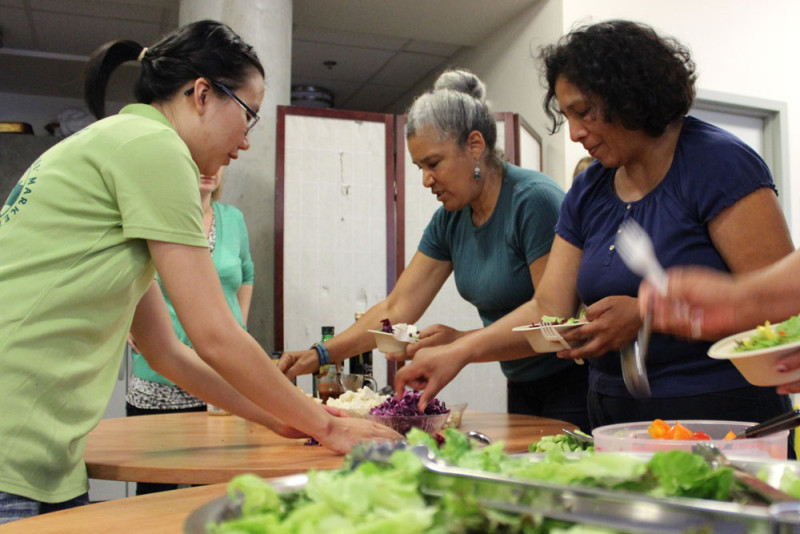
"caption": "Fresh Approach staffers chop a variety of fruits and vegetables for today’s summer salad. “We tried to choose one of every color,” says Laura deTar, Nutrition Program Manager for Fresh Approach. “We want to expose people to things they may not have had.” (Brittany Patterson, KQED)",
"description": "Fresh Approach staffers chop a variety of fruits and vegetables for today’s summer salad. “We tried to choose one of every color,” says Laura deTar, Nutrition Program Manager for Fresh Approach. “We want to expose people to things they may not have had.” (Brittany Patterson, KQED)",
"title": "VeggieRx1",
"credit": null,
"status": "inherit",
"isLoading": false,
"fetchFailed": false
},
"stateofhealth_21704": {
"type": "attachments",
"id": "stateofhealth_21704",
"meta": {
"index": "attachments_1716263798",
"site": "stateofhealth",
"id": "21704",
"found": true
},
"parent": 21686,
"imgSizes": {
"twentyfourteen-full-width": {
"file": "https://ww2.kqed.org/app/uploads/sites/27/2014/09/ShooFlu-e1411429799192-1038x576.jpg",
"width": 1038,
"mimeType": "image/jpeg",
"height": 576
},
"thumbnail": {
"file": "https://ww2.kqed.org/app/uploads/sites/27/2014/09/ShooFlu-e1411429799192-400x300.jpg",
"width": 400,
"mimeType": "image/jpeg",
"height": 300
},
"fd-sm": {
"file": "https://ww2.kqed.org/app/uploads/sites/27/2014/09/ShooFlu-e1411429799192-320x240.jpg",
"width": 320,
"mimeType": "image/jpeg",
"height": 240
},
"post-thumbnail": {
"file": "https://ww2.kqed.org/app/uploads/sites/27/2014/09/ShooFlu-e1411429799192-672x372.jpg",
"width": 672,
"mimeType": "image/jpeg",
"height": 372
},
"kqedFullSize": {
"file": "https://ww2.kqed.org/app/uploads/sites/27/2014/09/ShooFlu-e1411429799192.jpg",
"width": 1440,
"height": 1080
},
"large": {
"file": "https://ww2.kqed.org/app/uploads/sites/27/2014/09/ShooFlu-e1411429799192-1440x1080.jpg",
"width": 1440,
"mimeType": "image/jpeg",
"height": 1080
},
"guest-author-96": {
"file": "https://ww2.kqed.org/app/uploads/sites/27/2014/09/ShooFlu-e1411429799192-96x96.jpg",
"width": 96,
"mimeType": "image/jpeg",
"height": 96
},
"medium": {
"file": "https://ww2.kqed.org/app/uploads/sites/27/2014/09/ShooFlu-e1411429799192-800x600.jpg",
"width": 800,
"mimeType": "image/jpeg",
"height": 600
},
"guest-author-64": {
"file": "https://ww2.kqed.org/app/uploads/sites/27/2014/09/ShooFlu-e1411429799192-64x64.jpg",
"width": 64,
"mimeType": "image/jpeg",
"height": 64
},
"guest-author-32": {
"file": "https://ww2.kqed.org/app/uploads/sites/27/2014/09/ShooFlu-e1411429799192-32x32.jpg",
"width": 32,
"mimeType": "image/jpeg",
"height": 32
},
"fd-lrg": {
"file": "https://ww2.kqed.org/app/uploads/sites/27/2014/09/ShooFlu-e1411429799192-1180x885.jpg",
"width": 1180,
"mimeType": "image/jpeg",
"height": 885
},
"fd-med": {
"file": "https://ww2.kqed.org/app/uploads/sites/27/2014/09/ShooFlu-e1411429799192-768x576.jpg",
"width": 768,
"mimeType": "image/jpeg",
"height": 576
},
"detail": {
"file": "https://ww2.kqed.org/app/uploads/sites/27/2014/09/ShooFlu-e1411429799192-75x75.jpg",
"width": 75,
"mimeType": "image/jpeg",
"height": 75
},
"guest-author-128": {
"file": "https://ww2.kqed.org/app/uploads/sites/27/2014/09/ShooFlu-e1411429799192-128x128.jpg",
"width": 128,
"mimeType": "image/jpeg",
"height": 128
}
},
"publishDate": 1411429673,
"modified": 1411429673,
"caption": "The Shoo the Flu mascot helps spread the word on the importance of the flu vaccine at the Old Oakland Farmers Market earlier this month. (Lisa Alifers/KQED)",
"description": "The Shoo the Flu mascot spreads the word on flu shots at the Old Oakland Farmers Market earlier this month. (Lisa Alifers/KQED)",
"title": "ShooFlu",
"credit": null,
"status": "inherit",
"isLoading": false,
"fetchFailed": false
},
"stateofhealth_21670": {
"type": "attachments",
"id": "stateofhealth_21670",
"meta": {
"index": "attachments_1716263798",
"site": "stateofhealth",
"id": "21670",
"found": true
},
"parent": 21669,
"imgSizes": {
"twentyfourteen-full-width": {
"file": "https://ww2.kqed.org/app/uploads/sites/27/2014/09/RS8413_reservoir-full-lpr-e1411165193389-1038x576.jpg",
"width": 1038,
"mimeType": "image/jpeg",
"height": 576
},
"thumbnail": {
"file": "https://ww2.kqed.org/app/uploads/sites/27/2014/09/RS8413_reservoir-full-lpr-e1411165193389-400x251.jpg",
"width": 400,
"mimeType": "image/jpeg",
"height": 251
},
"fd-sm": {
"file": "https://ww2.kqed.org/app/uploads/sites/27/2014/09/RS8413_reservoir-full-lpr-e1411165193389-320x201.jpg",
"width": 320,
"mimeType": "image/jpeg",
"height": 201
},
"post-thumbnail": {
"file": "https://ww2.kqed.org/app/uploads/sites/27/2014/09/RS8413_reservoir-full-lpr-e1411165193389-672x372.jpg",
"width": 672,
"mimeType": "image/jpeg",
"height": 372
},
"kqedFullSize": {
"file": "https://ww2.kqed.org/app/uploads/sites/27/2014/09/RS8413_reservoir-full-lpr-e1411165193389.jpg",
"width": 1400,
"height": 878
},
"guest-author-96": {
"file": "https://ww2.kqed.org/app/uploads/sites/27/2014/09/RS8413_reservoir-full-lpr-e1411165193389-96x96.jpg",
"width": 96,
"mimeType": "image/jpeg",
"height": 96
},
"medium": {
"file": "https://ww2.kqed.org/app/uploads/sites/27/2014/09/RS8413_reservoir-full-lpr-e1411165193389-800x502.jpg",
"width": 800,
"mimeType": "image/jpeg",
"height": 502
},
"guest-author-64": {
"file": "https://ww2.kqed.org/app/uploads/sites/27/2014/09/RS8413_reservoir-full-lpr-e1411165193389-64x64.jpg",
"width": 64,
"mimeType": "image/jpeg",
"height": 64
},
"guest-author-32": {
"file": "https://ww2.kqed.org/app/uploads/sites/27/2014/09/RS8413_reservoir-full-lpr-e1411165193389-32x32.jpg",
"width": 32,
"mimeType": "image/jpeg",
"height": 32
},
"fd-lrg": {
"file": "https://ww2.kqed.org/app/uploads/sites/27/2014/09/RS8413_reservoir-full-lpr-e1411165193389-1180x740.jpg",
"width": 1180,
"mimeType": "image/jpeg",
"height": 740
},
"fd-med": {
"file": "https://ww2.kqed.org/app/uploads/sites/27/2014/09/RS8413_reservoir-full-lpr-e1411165193389-768x482.jpg",
"width": 768,
"mimeType": "image/jpeg",
"height": 482
},
"detail": {
"file": "https://ww2.kqed.org/app/uploads/sites/27/2014/09/RS8413_reservoir-full-lpr-e1411165193389-75x75.jpg",
"width": 75,
"mimeType": "image/jpeg",
"height": 75
},
"guest-author-128": {
"file": "https://ww2.kqed.org/app/uploads/sites/27/2014/09/RS8413_reservoir-full-lpr-e1411165193389-128x128.jpg",
"width": 128,
"mimeType": "image/jpeg",
"height": 128
}
},
"publishDate": 1411165166,
"modified": 1411165166,
"caption": "A security guard walks the perimeter of the Almaden Reservoir on January 28, 2014 in San Jose, California. Now in its third straight year of drought conditions, California is experiencing its driest year on record, dating back 119 years, and reservoirs throughout the state have low water levels. Santa Clara County reservoirs are at 3 percent of capacity or lower. California Gov. Jerry Brown officially declared a drought emergency to speed up assistance to local governments, streamline water transfers and potentially ease environmental protection requirements for dam releases. (Photo by Justin Sullivan/Getty Images)\n",
"description": "A security guard walks the perimeter of the Almaden Reservoir on January 28, 2014 in San Jose, California. Now in its third straight year of drought conditions, California is experiencing its driest year on record, dating back 119 years, and reservoirs throughout the state have low water levels. Santa Clara County reservoirs are at 3 percent of capacity or lower. California Gov. Jerry Brown officially declared a drought emergency to speed up assistance to local governments, streamline water transfers and potentially ease environmental protection requirements for dam releases. (Photo by Justin Sullivan/Getty Images)\n",
"title": "RS8413_reservoir-full-lpr",
"credit": null,
"status": "inherit",
"isLoading": false,
"fetchFailed": false
},
"stateofhealth_21666": {
"type": "attachments",
"id": "stateofhealth_21666",
"meta": {
"index": "attachments_1716263798",
"site": "stateofhealth",
"id": "21666",
"found": true
},
"parent": 21660,
"imgSizes": {
"thumbnail": {
"file": "https://ww2.kqed.org/app/uploads/sites/27/2014/09/RS12004_Bubba-at-Mall-scr-400x225.jpg",
"width": 400,
"mimeType": "image/jpeg",
"height": 225
},
"fd-sm": {
"file": "https://ww2.kqed.org/app/uploads/sites/27/2014/09/RS12004_Bubba-at-Mall-scr-320x180.jpg",
"width": 320,
"mimeType": "image/jpeg",
"height": 180
},
"post-thumbnail": {
"file": "https://ww2.kqed.org/app/uploads/sites/27/2014/09/RS12004_Bubba-at-Mall-scr-672x372.jpg",
"width": 672,
"mimeType": "image/jpeg",
"height": 372
},
"kqedFullSize": {
"file": "https://ww2.kqed.org/app/uploads/sites/27/2014/09/RS12004_Bubba-at-Mall-scr.jpg",
"width": 850,
"height": 478
},
"fd-med": {
"file": "https://ww2.kqed.org/app/uploads/sites/27/2014/09/RS12004_Bubba-at-Mall-scr-768x432.jpg",
"width": 768,
"mimeType": "image/jpeg",
"height": 432
},
"guest-author-96": {
"file": "https://ww2.kqed.org/app/uploads/sites/27/2014/09/RS12004_Bubba-at-Mall-scr-96x96.jpg",
"width": 96,
"mimeType": "image/jpeg",
"height": 96
},
"medium": {
"file": "https://ww2.kqed.org/app/uploads/sites/27/2014/09/RS12004_Bubba-at-Mall-scr-800x450.jpg",
"width": 800,
"mimeType": "image/jpeg",
"height": 450
},
"guest-author-64": {
"file": "https://ww2.kqed.org/app/uploads/sites/27/2014/09/RS12004_Bubba-at-Mall-scr-64x64.jpg",
"width": 64,
"mimeType": "image/jpeg",
"height": 64
},
"detail": {
"file": "https://ww2.kqed.org/app/uploads/sites/27/2014/09/RS12004_Bubba-at-Mall-scr-75x75.jpg",
"width": 75,
"mimeType": "image/jpeg",
"height": 75
},
"guest-author-32": {
"file": "https://ww2.kqed.org/app/uploads/sites/27/2014/09/RS12004_Bubba-at-Mall-scr-32x32.jpg",
"width": 32,
"mimeType": "image/jpeg",
"height": 32
},
"guest-author-128": {
"file": "https://ww2.kqed.org/app/uploads/sites/27/2014/09/RS12004_Bubba-at-Mall-scr-128x128.jpg",
"width": 128,
"mimeType": "image/jpeg",
"height": 128
}
},
"publishDate": 1411161829,
"modified": 1411161829,
"caption": "Timothy Wilson in the Roseville Galleria's play-area. Jazzmon Wilson, his mother, says his autism makes it more difficult for him to interact with other kids. (Jeremy Raff/KQED)",
"description": "Timothy Wilson in the Roseville Galleria's play-area. Jazzmon Wilson, his mother, says his autism makes it more difficult for him to interact with other kids. (Jeremy Raff/KQED)",
"title": "RS12004_Bubba at Mall-scr",
"credit": null,
"status": "inherit",
"isLoading": false,
"fetchFailed": false
},
"stateofhealth_21653": {
"type": "attachments",
"id": "stateofhealth_21653",
"meta": {
"index": "attachments_1716263798",
"site": "stateofhealth",
"id": "21653",
"found": true
},
"parent": 21646,
"imgSizes": {
"thumbnail": {
"file": "https://ww2.kqed.org/app/uploads/sites/27/2014/09/454867296-e1411148473876-400x266.jpg",
"width": 400,
"mimeType": "image/jpeg",
"height": 266
},
"fd-sm": {
"file": "https://ww2.kqed.org/app/uploads/sites/27/2014/09/454867296-e1411148473876-320x213.jpg",
"width": 320,
"mimeType": "image/jpeg",
"height": 213
},
"post-thumbnail": {
"file": "https://ww2.kqed.org/app/uploads/sites/27/2014/09/454867296-e1411148473876-641x372.jpg",
"width": 641,
"mimeType": "image/jpeg",
"height": 372
},
"kqedFullSize": {
"file": "https://ww2.kqed.org/app/uploads/sites/27/2014/09/454867296-e1411148473876.jpg",
"width": 641,
"height": 427
},
"guest-author-96": {
"file": "https://ww2.kqed.org/app/uploads/sites/27/2014/09/454867296-e1411148473876-96x96.jpg",
"width": 96,
"mimeType": "image/jpeg",
"height": 96
},
"guest-author-64": {
"file": "https://ww2.kqed.org/app/uploads/sites/27/2014/09/454867296-e1411148473876-64x64.jpg",
"width": 64,
"mimeType": "image/jpeg",
"height": 64
},
"detail": {
"file": "https://ww2.kqed.org/app/uploads/sites/27/2014/09/454867296-e1411148473876-75x75.jpg",
"width": 75,
"mimeType": "image/jpeg",
"height": 75
},
"guest-author-32": {
"file": "https://ww2.kqed.org/app/uploads/sites/27/2014/09/454867296-e1411148473876-32x32.jpg",
"width": 32,
"mimeType": "image/jpeg",
"height": 32
},
"guest-author-128": {
"file": "https://ww2.kqed.org/app/uploads/sites/27/2014/09/454867296-e1411148473876-128x128.jpg",
"width": 128,
"mimeType": "image/jpeg",
"height": 128
}
},
"publishDate": 1411148463,
"modified": 1411148463,
"caption": "Adrian Peterson has been suspended from all Minnesota Vikings activities since he was indicted on child abuse charges. (Dilip Vishwanat/Getty Images)",
"description": "ST. LOUIS, MO - SEPTEMBER 7: Adrian Peterson #28 of the Minnesota Vikings looks on from the sideline during a game against the St. Louis Rams at the Edward Jones Dome on September 7, 2014 in St. Louis, Missouri. The Vikings beat the Rams 34-6. (Photo by Dilip Vishwanat/Getty Images)",
"title": "Minnesota Vikings v St. Louis Rams",
"credit": null,
"status": "inherit",
"isLoading": false,
"fetchFailed": false
},
"stateofhealth_21642": {
"type": "attachments",
"id": "stateofhealth_21642",
"meta": {
"index": "attachments_1716263798",
"site": "stateofhealth",
"id": "21642",
"found": true
},
"parent": 21625,
"imgSizes": {
"twentyfourteen-full-width": {
"file": "https://ww2.kqed.org/app/uploads/sites/27/2014/09/2346334452_f5e85a3e82_o-copy-e1411101871654-1038x576.jpg",
"width": 1038,
"mimeType": "image/jpeg",
"height": 576
},
"thumbnail": {
"file": "https://ww2.kqed.org/app/uploads/sites/27/2014/09/2346334452_f5e85a3e82_o-copy-e1411101871654-400x226.jpg",
"width": 400,
"mimeType": "image/jpeg",
"height": 226
},
"fd-sm": {
"file": "https://ww2.kqed.org/app/uploads/sites/27/2014/09/2346334452_f5e85a3e82_o-copy-e1411101871654-320x181.jpg",
"width": 320,
"mimeType": "image/jpeg",
"height": 181
},
"post-thumbnail": {
"file": "https://ww2.kqed.org/app/uploads/sites/27/2014/09/2346334452_f5e85a3e82_o-copy-e1411101871654-672x372.jpg",
"width": 672,
"mimeType": "image/jpeg",
"height": 372
},
"kqedFullSize": {
"file": "https://ww2.kqed.org/app/uploads/sites/27/2014/09/2346334452_f5e85a3e82_o-copy-e1411101871654.jpg",
"width": 1400,
"height": 792
},
"guest-author-96": {
"file": "https://ww2.kqed.org/app/uploads/sites/27/2014/09/2346334452_f5e85a3e82_o-copy-e1411101871654-96x96.jpg",
"width": 96,
"mimeType": "image/jpeg",
"height": 96
},
"medium": {
"file": "https://ww2.kqed.org/app/uploads/sites/27/2014/09/2346334452_f5e85a3e82_o-copy-e1411101871654-800x453.jpg",
"width": 800,
"mimeType": "image/jpeg",
"height": 453
},
"guest-author-64": {
"file": "https://ww2.kqed.org/app/uploads/sites/27/2014/09/2346334452_f5e85a3e82_o-copy-e1411101871654-64x64.jpg",
"width": 64,
"mimeType": "image/jpeg",
"height": 64
},
"guest-author-32": {
"file": "https://ww2.kqed.org/app/uploads/sites/27/2014/09/2346334452_f5e85a3e82_o-copy-e1411101871654-32x32.jpg",
"width": 32,
"mimeType": "image/jpeg",
"height": 32
},
"fd-lrg": {
"file": "https://ww2.kqed.org/app/uploads/sites/27/2014/09/2346334452_f5e85a3e82_o-copy-e1411101871654-1180x668.jpg",
"width": 1180,
"mimeType": "image/jpeg",
"height": 668
},
"fd-med": {
"file": "https://ww2.kqed.org/app/uploads/sites/27/2014/09/2346334452_f5e85a3e82_o-copy-e1411101871654-768x434.jpg",
"width": 768,
"mimeType": "image/jpeg",
"height": 434
},
"detail": {
"file": "https://ww2.kqed.org/app/uploads/sites/27/2014/09/2346334452_f5e85a3e82_o-copy-e1411101871654-75x75.jpg",
"width": 75,
"mimeType": "image/jpeg",
"height": 75
},
"guest-author-128": {
"file": "https://ww2.kqed.org/app/uploads/sites/27/2014/09/2346334452_f5e85a3e82_o-copy-e1411101871654-128x128.jpg",
"width": 128,
"mimeType": "image/jpeg",
"height": 128
}
},
"publishDate": 1411101855,
"modified": 1411101855,
"caption": "Students at Sproul Plaza, UC Berkeley. (Henry Zbyszynski/Flickr)",
"description": null,
"title": "2346334452_f5e85a3e82_o copy",
"credit": null,
"status": "inherit",
"isLoading": false,
"fetchFailed": false
},
"stateofhealth_21618": {
"type": "attachments",
"id": "stateofhealth_21618",
"meta": {
"index": "attachments_1716263798",
"site": "stateofhealth",
"id": "21618",
"found": true
},
"parent": 21609,
"imgSizes": {
"twentyfourteen-full-width": {
"file": "https://ww2.kqed.org/app/uploads/sites/27/2014/09/94486878-e1411081551433-1038x576.jpg",
"width": 1038,
"mimeType": "image/jpeg",
"height": 576
},
"thumbnail": {
"file": "https://ww2.kqed.org/app/uploads/sites/27/2014/09/94486878-e1411081551433-400x267.jpg",
"width": 400,
"mimeType": "image/jpeg",
"height": 267
},
"fd-sm": {
"file": "https://ww2.kqed.org/app/uploads/sites/27/2014/09/94486878-e1411081551433-320x213.jpg",
"width": 320,
"mimeType": "image/jpeg",
"height": 213
},
"post-thumbnail": {
"file": "https://ww2.kqed.org/app/uploads/sites/27/2014/09/94486878-e1411081551433-672x372.jpg",
"width": 672,
"mimeType": "image/jpeg",
"height": 372
},
"kqedFullSize": {
"file": "https://ww2.kqed.org/app/uploads/sites/27/2014/09/94486878-e1411081551433.jpg",
"width": 1400,
"height": 933
},
"guest-author-96": {
"file": "https://ww2.kqed.org/app/uploads/sites/27/2014/09/94486878-e1411081551433-96x96.jpg",
"width": 96,
"mimeType": "image/jpeg",
"height": 96
},
"medium": {
"file": "https://ww2.kqed.org/app/uploads/sites/27/2014/09/94486878-e1411081551433-800x533.jpg",
"width": 800,
"mimeType": "image/jpeg",
"height": 533
},
"guest-author-64": {
"file": "https://ww2.kqed.org/app/uploads/sites/27/2014/09/94486878-e1411081551433-64x64.jpg",
"width": 64,
"mimeType": "image/jpeg",
"height": 64
},
"guest-author-32": {
"file": "https://ww2.kqed.org/app/uploads/sites/27/2014/09/94486878-e1411081551433-32x32.jpg",
"width": 32,
"mimeType": "image/jpeg",
"height": 32
},
"fd-lrg": {
"file": "https://ww2.kqed.org/app/uploads/sites/27/2014/09/94486878-e1411081551433-1180x786.jpg",
"width": 1180,
"mimeType": "image/jpeg",
"height": 786
},
"fd-med": {
"file": "https://ww2.kqed.org/app/uploads/sites/27/2014/09/94486878-e1411081551433-768x512.jpg",
"width": 768,
"mimeType": "image/jpeg",
"height": 512
},
"detail": {
"file": "https://ww2.kqed.org/app/uploads/sites/27/2014/09/94486878-e1411081551433-75x75.jpg",
"width": 75,
"mimeType": "image/jpeg",
"height": 75
},
"guest-author-128": {
"file": "https://ww2.kqed.org/app/uploads/sites/27/2014/09/94486878-e1411081551433-128x128.jpg",
"width": 128,
"mimeType": "image/jpeg",
"height": 128
}
},
"publishDate": 1411081540,
"modified": 1411081540,
"caption": "(Getty Images)",
"description": "Magnifying glass focusing on the word Virus on a screen full of alphanumerics",
"title": "Scanning for computer virus",
"credit": null,
"status": "inherit",
"isLoading": false,
"fetchFailed": false
}
},
"audioPlayerReducer": {
"postId": "stream_live",
"isPaused": true,
"isPlaying": false,
"pfsActive": false,
"pledgeModalIsOpen": true,
"playerDrawerIsOpen": false,
"liveAudioPlayStartedAt": 0,
"liveAudioPlayContext": ""
},
"authorsReducer": {
"jeremyraff": {
"type": "authors",
"id": "230",
"meta": {
"index": "authors_1716337520",
"id": "230",
"found": true
},
"name": "Jeremy Raff",
"firstName": "Jeremy",
"lastName": "Raff",
"slug": "jeremyraff",
"email": "jeremyraff@gmail.com",
"display_author_email": false,
"staff_mastheads": [],
"title": null,
"bio": "Jeremy Raff is a multimedia producer interested in migration, rural change, and health disparities. He produces KQED's community health series\u003ca href=\"http://blogs.kqed.org/stateofhealth/series/vital-signs/\" target=\"_blank\" rel=\"noopener\"> Vital Signs\u003c/a>. Reach him at jraff@kqed.org",
"avatar": "https://secure.gravatar.com/avatar/1444299e18b67b815fbbdc87a85e7dff?s=600&d=blank&r=g",
"twitter": null,
"facebook": null,
"instagram": null,
"linkedin": null,
"sites": [
{
"site": "news",
"roles": [
"subscriber"
]
},
{
"site": "stateofhealth",
"roles": [
"subscriber"
]
}
],
"headData": {
"title": "Jeremy Raff | KQED",
"description": null,
"ogImgSrc": "https://secure.gravatar.com/avatar/1444299e18b67b815fbbdc87a85e7dff?s=600&d=blank&r=g",
"twImgSrc": "https://secure.gravatar.com/avatar/1444299e18b67b815fbbdc87a85e7dff?s=600&d=blank&r=g"
},
"isLoading": false,
"link": "/author/jeremyraff"
},
"lisaaliferis": {
"type": "authors",
"id": "240",
"meta": {
"index": "authors_1716337520",
"id": "240",
"found": true
},
"name": "Lisa Aliferis",
"firstName": "Lisa",
"lastName": "Aliferis",
"slug": "lisaaliferis",
"email": "laliferis@kqed.org",
"display_author_email": false,
"staff_mastheads": [],
"title": "KQED Contributor",
"bio": "Lisa Aliferis is the founding editor of KQED's \u003cem>State of Health\u003c/em> blog. Since 2011, she's been writing and editing stories for the site. Before taking up blogging, she toiled for many years (more than we can count) producing health stories for television, including\u003cem> Dateline NBC\u003c/em> and San Francisco's CBS affiliate, KPIX-TV. She also wrote up a \u003ca title=\"http://www.kqed.org/news/health/obamacare/obamacare-guide.jsp\" href=\"http://www.kqed.org/news/health/obamacare/obamacare-guide.jsp\">handy guide to the Affordable Care Act\u003c/a>, especially for Californians. Her work has been honored for many awards. Most recently she was a finalist for \"Best Topical Reporting\" from the Online News Association. You can follow her on Twitter: \u003ca title=\"https://twitter.com/laliferis\" href=\"https://twitter.com/laliferis\">@laliferis\u003c/a>",
"avatar": "https://secure.gravatar.com/avatar/86c339d5cdcb0dcd2b6cf5d7c3f5886b?s=600&d=mm&r=g",
"twitter": "laliferis",
"facebook": null,
"instagram": null,
"linkedin": null,
"sites": [
{
"site": "news",
"roles": [
"subscriber"
]
},
{
"site": "futureofyou",
"roles": [
"subscriber"
]
},
{
"site": "stateofhealth",
"roles": [
"subscriber"
]
},
{
"site": "science",
"roles": [
"subscriber"
]
},
{
"site": "food",
"roles": []
}
],
"headData": {
"title": "Lisa Aliferis | KQED",
"description": "KQED Contributor",
"ogImgSrc": "https://secure.gravatar.com/avatar/86c339d5cdcb0dcd2b6cf5d7c3f5886b?s=600&d=mm&r=g",
"twImgSrc": "https://secure.gravatar.com/avatar/86c339d5cdcb0dcd2b6cf5d7c3f5886b?s=600&d=mm&r=g"
},
"isLoading": false,
"link": "/author/lisaaliferis"
},
"adembosky": {
"type": "authors",
"id": "3205",
"meta": {
"index": "authors_1716337520",
"id": "3205",
"found": true
},
"name": "April Dembosky",
"firstName": "April",
"lastName": "Dembosky",
"slug": "adembosky",
"email": "adembosky@kqed.org",
"display_author_email": false,
"staff_mastheads": [
"news",
"science"
],
"title": "KQED Health Correspondent",
"bio": "April Dembosky is the health correspondent for KQED News and a regular contributor to NPR. She specializes in covering altered states of mind, from postpartum depression to methamphetamine-induced psychosis to the insanity defense. Her investigative series on insurance companies sidestepping mental health laws won multiple awards, including first place in beat reporting from the national Association of Health Care Journalists. She is the recipient of numerous other prizes and fellowships, including a national Edward R. Murrow award for investigative reporting, a Society of Professional Journalists award for long-form storytelling, and a Carter Center Fellowship for Mental Health Journalism.\r\n\r\nDembosky reported and produced \u003cem>Soundtrack of Silence\u003c/em>, an audio documentary about music and memory that is currently being made into a feature film by Paramount Pictures.\r\n\r\nBefore joining KQED in 2013, Dembosky covered technology and Silicon Valley for \u003cem>The Financial Times of London,\u003c/em> and contributed business and arts stories to \u003cem>Marketplace \u003c/em>and \u003cem>The New York Times.\u003c/em> She got her undergraduate degree in philosophy from Smith College and her master's in journalism from the University of California, Berkeley. She is a classically trained violinist and proud alum of the first symphony orchestra at Burning Man.",
"avatar": "https://secure.gravatar.com/avatar/ef92999be4ceb9ea60701e7dc276f813?s=600&d=blank&r=g",
"twitter": "adembosky",
"facebook": null,
"instagram": null,
"linkedin": null,
"sites": [
{
"site": "arts",
"roles": [
"author"
]
},
{
"site": "news",
"roles": [
"editor"
]
},
{
"site": "futureofyou",
"roles": [
"author"
]
},
{
"site": "stateofhealth",
"roles": [
"editor"
]
},
{
"site": "science",
"roles": [
"editor"
]
},
{
"site": "forum",
"roles": [
"editor"
]
}
],
"headData": {
"title": "April Dembosky | KQED",
"description": "KQED Health Correspondent",
"ogImgSrc": "https://secure.gravatar.com/avatar/ef92999be4ceb9ea60701e7dc276f813?s=600&d=blank&r=g",
"twImgSrc": "https://secure.gravatar.com/avatar/ef92999be4ceb9ea60701e7dc276f813?s=600&d=blank&r=g"
},
"isLoading": false,
"link": "/author/adembosky"
},
"state-of-health": {
"type": "authors",
"id": "8344",
"meta": {
"index": "authors_1716337520",
"id": "8344",
"found": true
},
"name": "State of Health",
"firstName": "State of Health",
"lastName": null,
"slug": "state-of-health",
"email": "stateofhealth@kqed.org",
"display_author_email": false,
"staff_mastheads": [],
"title": null,
"bio": null,
"avatar": "https://secure.gravatar.com/avatar/66de4bf6d331fa7402bba1ffe8135e17?s=600&d=blank&r=g",
"twitter": null,
"facebook": null,
"instagram": null,
"linkedin": null,
"sites": [
{
"site": "arts",
"roles": [
"author"
]
},
{
"site": "stateofhealth",
"roles": [
"editor"
]
}
],
"headData": {
"title": "State of Health | KQED",
"description": null,
"ogImgSrc": "https://secure.gravatar.com/avatar/66de4bf6d331fa7402bba1ffe8135e17?s=600&d=blank&r=g",
"twImgSrc": "https://secure.gravatar.com/avatar/66de4bf6d331fa7402bba1ffe8135e17?s=600&d=blank&r=g"
},
"isLoading": false,
"link": "/author/state-of-health"
}
},
"pagesReducer": {
"stateofhealth_category_place-matters": {
"type": "terms",
"id": "stateofhealth_11",
"meta": {
"index": "terms_1716263798",
"site": "stateofhealth",
"id": "11",
"score": 14.406237
},
"featImg": null,
"name": "Community Health",
"description": "\r\n\r\nFrom rural California to urban neighborhoods, where you live affects your health",
"taxonomy": "category",
"headData": {
"twImgId": null,
"twTitle": null,
"ogTitle": null,
"ogImgId": null,
"twDescription": null,
"description": "From rural California to urban neighborhoods, where you live affects your health",
"title": "Community Health Archives | KQED Arts",
"ogDescription": null
},
"ttid": 11,
"slug": "place-matters",
"isLoading": false,
"title": "Community Health",
"pageMeta": {
"site": "stateofhealth",
"WpPageTemplate": "page-topic-editorial",
"currentPage": 34
},
"blocks": [
{
"blockName": "kqed/company-paragraph",
"content": "\r\n\r\nFrom rural California to urban neighborhoods, where you live affects your health"
},
{
"blockName": "kqed/post-list",
"attrs": {
"layout": "cardArticle2",
"query": "posts/stateofhealth?category=place-matters",
"seeMore": false,
"paginated": true,
"page": 34
}
},
{
"blockName": "kqed/ad"
}
]
}
},
"pfsSessionReducer": {},
"postsReducer": {
"stream_live": {
"type": "live",
"id": "stream_live",
"audioUrl": "https://streams.kqed.org/kqedradio",
"title": "Live Stream",
"excerpt": "Live Stream information currently unavailable.",
"link": "/radio",
"featImg": "",
"label": {
"name": "KQED Live",
"link": "/"
}
},
"stream_kqedNewscast": {
"type": "posts",
"id": "stream_kqedNewscast",
"audioUrl": "https://www.kqed.org/.stream/anon/radio/RDnews/newscast.mp3?_=1",
"title": "KQED Newscast",
"featImg": "",
"label": {
"name": "88.5 FM",
"link": "/"
}
},
"stateofhealth_21838": {
"type": "posts",
"id": "stateofhealth_21838",
"meta": {
"index": "posts_1716263798",
"site": "stateofhealth",
"id": "21838",
"score": null,
"sort": [
1412111183000
]
},
"parent": 0,
"labelTerm": {
"site": "stateofhealth"
},
"blocks": [],
"publishDate": 1412111183,
"format": "aside",
"disqusTitle": "Brown Signs Package of Assisted-Living Reform Bills",
"title": "Brown Signs Package of Assisted-Living Reform Bills",
"headTitle": "State of Health | KQED News",
"content": "\u003cfigure id=\"attachment_21850\" class=\"wp-caption aligncenter\" style=\"max-width: 640px\">\u003ca href=\"http://ww2.kqed.org/stateofhealth/wp-content/uploads/sites/27/2014/09/JerryBrown-e1412110038711.jpg\">\u003cimg class=\"size-large wp-image-21850\" title=\"\" src=\"http://ww2.kqed.org/stateofhealth/wp-content/uploads/sites/27/2014/09/JerryBrown-640x457.jpg\" alt=\"(Neon Tommy)\" width=\"640\" height=\"457\">\u003c/a>\u003cfigcaption class=\"wp-caption-text\">(Neon Tommy)\u003c/figcaption>\u003c/figure>\n\u003cp>\u003cstrong>By Deborah Schoch,\u003c/strong> \u003ca title=\"http://centerforhealthreporting.org/article/brown-boosts-assisted-living-fines\" href=\"http://centerforhealthreporting.org/article/brown-boosts-assisted-living-fines\" target=\"_blank\">Center for Health Reporting\u003c/a>\u003c/p>\n\u003cp>Gov. Jerry Brown signed into law Monday \u003ca title=\"http://leginfo.legislature.ca.gov/faces/billNavClient.xhtml?bill_id=201320140AB2236\" href=\"http://leginfo.legislature.ca.gov/faces/billNavClient.xhtml?bill_id=201320140AB2236\" target=\"_blank\">a bill \u003c/a>imposing a 100-fold increase in the top fine for violations of state regulations at assisted-living homes for the elderly.\u003c/p>\n\u003cp>The top fine will now be $15,000, for violations causing death or serious injury, up from $150.\u003c/p>\n\u003cp>The relatively low fines were highlighted in a \u003ca title=\"http://centerforhealthreporting.org/project/assisted-living-facilities-are-under-microscope-state-legislators-debate-reform-measures\" href=\"http://centerforhealthreporting.org/project/assisted-living-facilities-are-under-microscope-state-legislators-debate-reform-measures\" target=\"_blank\">series of stories produced last year\u003c/a> by the CHCF Center for Health Reporting and the U-T San Diego. The series focused on 27 deaths and hundreds of injuries at homes in San Diego County caused by abuse and neglect.\u003c/p>\n\u003cp>\u003ca title=\"http://ww2.kqed.org/stateofhealth/2014/08/11/crime-in-assisted-living-what-happens-after/\" href=\"http://ww2.kqed.org/stateofhealth/2014/08/11/crime-in-assisted-living-what-happens-after/\" target=\"_blank\">The bill to increase fines\u003c/a>, co-authored by Assemblyman Brian Maienschein, (R-San Diego), was amended during the legislative process to allow a four-step appeals process. Also, a proposal to boost fines for some lesser offenses to $1,000 from $150 was removed from the bill amid lobbying from smaller assisted living homes.\u003c!--more-->\u003c/p>\n\u003cp>[ad fullwidth]\u003c/p>\n\u003cp>Brown’s signature on the fine increase came one day after he signed nine other bills tightening state oversight of the more than 7,500 assisted-living homes in California, marking the state’s most sweeping overhaul of the industry in nearly three decades.\u003c/p>\n\u003cp>For the first time, assisted living residents will have a statutory bill of rights like the one protecting nursing home residents.\u003c/p>\n\u003cp>The homes’ staffs also will face stiffer training requirements, and owners will pay higher licensing fees. A staff member with CPR training must be present at homes at all times, and operators will be prohibited from punishing employees who call 911 to get emergency care for sick residents.\u003c/p>\n\u003cp>Brown’s signature on the reform package is a major victory for assisted living residents, said Patricia McGinnis, executive director of California Advocates for Nursing Home Reform, the state’s largest advocacy group for long-term care residents.\u003c/p>\n\u003cp>“We look at it as a good start,” said McGinnis. “But we’re not finished by any stretch of the imagination. And I don’t think the legislators are, either. I think they like the fact that they’re going to be changing people’s lives on an immediate basis.”\u003c/p>\n\u003cp>Many of the assisted-living bills that Brown did sign were backed by McGinnis's group and the California Assisted Living Association, the state’s largest industry association.\u003c/p>\n\u003cp>Both groups had pulled their support of the bill to raise fines after it was, in their view, weakened.\u003c/p>\n\u003cp>\u003ciframe width=\"100%\" height=\"166\" scrolling=\"no\" frameborder=\"no\" src=\"https://w.soundcloud.com/player/?url=https%3A//api.soundcloud.com/tracks/169949480&color=ff5500&auto_play=false&hide_related=false&show_comments=true&show_user=true&show_reposts=false\">\u003c/iframe>\u003c/p>\n\u003cp>Four San Diego legislators played key roles in the reform effort: Democratic Assembly Speaker Toni Atkins and Democratic Sen. Marty Block; and Republican Assembly members Brian Maienschein of San Diego and Marie Waldron of Escondido.\u003c/p>\n\u003cp>Brown signed Atkins’ bill last month requiring that all assisted living facilities \u003ca title=\"http://ww2.kqed.org/stateofhealth/2014/09/05/two-women-on-a-mission-to-reform-assisted-living-in-california/\" href=\"http://ww2.kqed.org/stateofhealth/2014/09/05/two-women-on-a-mission-to-reform-assisted-living-in-california/\" target=\"_blank\">carry liability insurance\u003c/a>. Brown signed Block’s two bills Sunday.\u003c/p>\n\u003cp>Block said he intentionally chose the bill name SB-911 for one of his measures, which will protect facility employees who call for emergency care for sick residents. Some employees have said they fear calling 911 because managers say it reflects badly on a home’s record, he said.\u003c/p>\n\u003cp>The same bill raises the training mandate for administrators to 80 hours from 40. Brown also has signed a parallel bill, authored by Assembly Member Wesley Chesbro, D-Arcata, requiring more training for staff caring for residents, including those with dementia.\u003c/p>\n\u003cp>Sally Michael, president of the industry group California Assisted Living Association -- which, along with McGinnis’ group, supported a number of the reform measures -- said it is pleased by Brown’s actions, particularly his signing of the Chesbro bill and Block’s SB 911.\u003c/p>\n\u003cp>“These bills increase the number of hours required for assisted living caregiver and administrator training. They also improve the administrator testing process by making it more rigorous,” Michael said.\u003c/p>\n\u003cp>Block’s second bill boosts facility licensing fees by 10 percent, which, coupled with the administration’s separate 10 percent increase, will boost fees by 20 percent.\u003c/p>\n\u003cp>Block initially proposed a 30 percent increase. He said Monday that for now, the 20-percent hike is enough to provide much needed funds to the Department of Social Social Services, which regulates assisted living homes.\u003c/p>\n\u003cp>“This will be a game changer in terms of funding more inspections and other services,” Block said.\u003c/p>\n\u003cp>The other assisted living bills that Brown signed Sunday:\u003c/p>\n\u003cul>\n\u003cli>SB 895, mandating that homes fix problems found during state inspections within 10 days of being notified (Sen. Ellen Corbett, D-Hayward).\u003c/li>\n\u003cli>SB 1153, giving state regulators the power to halt new admissions to an assisted living home that has not immediately fixed major violations (Sen. Mark Leno, D-San Francisco).\u003c/li>\n\u003cli>AB 1751, requires residents to be represented on assisted living homes’ governing boards (Richard H. Bloom, D-Santa Monica).\u003c/li>\n\u003cli>AB 1899, requires that if an operator’s license is revoked or given up for abandoning a facility, that operator cannot get the license reinstated (Cheryl R. Brown, D-San Bernardino).\u003c/li>\n\u003cli>AB 2044, mandates that a supervisor or trained substitute be at the home 24 hours a day (Freddie Rodriguez, D-Chino).\u003c/li>\n\u003cli>AB 2171, Establishes a bill of rights for assisted living residents similar to the bill now protecting residents of California nursing homes (Bob Wieckowski, D-Fremont).\u003c/li>\n\u003c/ul>\n\u003cp>Including reform bills previously signed by Brown, the governor has approved all 13 assisted living bills passed by the Legislature.\u003c/p>\n\u003cp>\u003ca title=\"http://ww2.kqed.org/stateofhealth/2014/08/18/the-assisted-living-reform-bills-that-died/\" href=\"http://ww2.kqed.org/stateofhealth/2014/08/18/the-assisted-living-reform-bills-that-died/\" target=\"_blank\">Four other bills failed to muster the needed votes\u003c/a> and get to his desk, including a bill requiring annual inspections of homes – now inspected a minimum of every five years – which foundered in the state Senate. Several legislators predict that a similar bill will be proposed next year. Another bill that \u003ca title=\"http://ww2.kqed.org/stateofhealth/2014/08/18/the-assisted-living-reform-bills-that-died/\" href=\"http://ww2.kqed.org/stateofhealth/2014/08/18/the-assisted-living-reform-bills-that-died/\" target=\"_blank\">would have required the state to build an online consumer rating system\u003c/a> so that consumers could compare facilities on quality also failed to get the governor's desk.\u003c/p>\n\u003cp>\u003c/p>\n\u003cp>\u003cem>The \u003ca title=\"http://centerforhealthreporting.org\" href=\"http://centerforhealthreporting.org\" target=\"_blank\">CHCF Center for Health Reporting\u003c/a> partners with news organizations to cover California health policy. Based at the University of Southern California’s Annenberg School for Communication and Journalism, the Center is funded by the nonprofit California HealthCare Foundation.\u003c/em>\u003c/p>\n\n",
"disqusIdentifier": "21838 http://blogs.kqed.org/stateofhealth/?p=21838",
"disqusUrl": "https://ww2.kqed.org/stateofhealth/2014/09/30/brown-signs-package-of-assisted-living-reform-bills/",
"stats": {
"hasVideo": false,
"hasChartOrMap": true,
"hasAudio": true,
"hasPolis": false,
"wordCount": 1034,
"hasGoogleForm": false,
"hasGallery": false,
"hasHearkenModule": false,
"iframeSrcs": [
"https://w.soundcloud.com/player/"
],
"paragraphCount": 28
},
"modified": 1412134520,
"excerpt": "For starters, the highest fine regulators could levy for violations was a mere $150. Now it's $15,000.",
"headData": {
"twImgId": "",
"twTitle": "",
"ogTitle": "",
"ogImgId": "",
"twDescription": "",
"description": "For starters, the highest fine regulators could levy for violations was a mere $150. Now it's $15,000.",
"title": "Brown Signs Package of Assisted-Living Reform Bills | KQED",
"ogDescription": "",
"schema": {
"@context": "https://schema.org",
"@type": "Article",
"headline": "Brown Signs Package of Assisted-Living Reform Bills",
"datePublished": "2014-09-30T14:06:23-07:00",
"dateModified": "2014-09-30T20:35:20-07:00",
"image": "https://cdn.kqed.org/wp-content/uploads/2020/02/KQED-OG-Image@1x.png"
}
},
"guestAuthors": [],
"slug": "brown-signs-package-of-assisted-living-reform-bills",
"status": "publish",
"path": "/stateofhealth/21838/brown-signs-package-of-assisted-living-reform-bills",
"audioTrackLength": null,
"parsedContent": [
{
"type": "contentString",
"content": "\u003cdiv class=\"post-body\">\u003cp>\u003cfigure id=\"attachment_21850\" class=\"wp-caption aligncenter\" style=\"max-width: 640px\">\u003ca href=\"http://ww2.kqed.org/stateofhealth/wp-content/uploads/sites/27/2014/09/JerryBrown-e1412110038711.jpg\">\u003cimg class=\"size-large wp-image-21850\" title=\"\" src=\"http://ww2.kqed.org/stateofhealth/wp-content/uploads/sites/27/2014/09/JerryBrown-640x457.jpg\" alt=\"(Neon Tommy)\" width=\"640\" height=\"457\">\u003c/a>\u003cfigcaption class=\"wp-caption-text\">(Neon Tommy)\u003c/figcaption>\u003c/figure>\n\u003cp>\u003cstrong>By Deborah Schoch,\u003c/strong> \u003ca title=\"http://centerforhealthreporting.org/article/brown-boosts-assisted-living-fines\" href=\"http://centerforhealthreporting.org/article/brown-boosts-assisted-living-fines\" target=\"_blank\">Center for Health Reporting\u003c/a>\u003c/p>\n\u003cp>Gov. Jerry Brown signed into law Monday \u003ca title=\"http://leginfo.legislature.ca.gov/faces/billNavClient.xhtml?bill_id=201320140AB2236\" href=\"http://leginfo.legislature.ca.gov/faces/billNavClient.xhtml?bill_id=201320140AB2236\" target=\"_blank\">a bill \u003c/a>imposing a 100-fold increase in the top fine for violations of state regulations at assisted-living homes for the elderly.\u003c/p>\n\u003cp>The top fine will now be $15,000, for violations causing death or serious injury, up from $150.\u003c/p>\n\u003cp>The relatively low fines were highlighted in a \u003ca title=\"http://centerforhealthreporting.org/project/assisted-living-facilities-are-under-microscope-state-legislators-debate-reform-measures\" href=\"http://centerforhealthreporting.org/project/assisted-living-facilities-are-under-microscope-state-legislators-debate-reform-measures\" target=\"_blank\">series of stories produced last year\u003c/a> by the CHCF Center for Health Reporting and the U-T San Diego. The series focused on 27 deaths and hundreds of injuries at homes in San Diego County caused by abuse and neglect.\u003c/p>\n\u003cp>\u003ca title=\"http://ww2.kqed.org/stateofhealth/2014/08/11/crime-in-assisted-living-what-happens-after/\" href=\"http://ww2.kqed.org/stateofhealth/2014/08/11/crime-in-assisted-living-what-happens-after/\" target=\"_blank\">The bill to increase fines\u003c/a>, co-authored by Assemblyman Brian Maienschein, (R-San Diego), was amended during the legislative process to allow a four-step appeals process. Also, a proposal to boost fines for some lesser offenses to $1,000 from $150 was removed from the bill amid lobbying from smaller assisted living homes.\u003c!--more-->\u003c/p>\n\u003cp>\u003c/p>\u003c/div>",
"attributes": {
"named": {},
"numeric": []
}
},
{
"type": "component",
"content": "",
"name": "ad",
"attributes": {
"named": {
"label": "fullwidth"
},
"numeric": [
"fullwidth"
]
}
},
{
"type": "contentString",
"content": "\u003cdiv class=\"post-body\">\u003cp>\u003c/p>\n\u003cp>Brown’s signature on the fine increase came one day after he signed nine other bills tightening state oversight of the more than 7,500 assisted-living homes in California, marking the state’s most sweeping overhaul of the industry in nearly three decades.\u003c/p>\n\u003cp>For the first time, assisted living residents will have a statutory bill of rights like the one protecting nursing home residents.\u003c/p>\n\u003cp>The homes’ staffs also will face stiffer training requirements, and owners will pay higher licensing fees. A staff member with CPR training must be present at homes at all times, and operators will be prohibited from punishing employees who call 911 to get emergency care for sick residents.\u003c/p>\n\u003cp>Brown’s signature on the reform package is a major victory for assisted living residents, said Patricia McGinnis, executive director of California Advocates for Nursing Home Reform, the state’s largest advocacy group for long-term care residents.\u003c/p>\n\u003cp>“We look at it as a good start,” said McGinnis. “But we’re not finished by any stretch of the imagination. And I don’t think the legislators are, either. I think they like the fact that they’re going to be changing people’s lives on an immediate basis.”\u003c/p>\n\u003cp>Many of the assisted-living bills that Brown did sign were backed by McGinnis's group and the California Assisted Living Association, the state’s largest industry association.\u003c/p>\n\u003cp>Both groups had pulled their support of the bill to raise fines after it was, in their view, weakened.\u003c/p>\n\u003cp>\u003ciframe width=\"100%\" height=\"166\" scrolling=\"no\" frameborder=\"no\" src=\"https://w.soundcloud.com/player/?url=https%3A//api.soundcloud.com/tracks/169949480&color=ff5500&auto_play=false&hide_related=false&show_comments=true&show_user=true&show_reposts=false\">\u003c/iframe>\u003c/p>\n\u003cp>Four San Diego legislators played key roles in the reform effort: Democratic Assembly Speaker Toni Atkins and Democratic Sen. Marty Block; and Republican Assembly members Brian Maienschein of San Diego and Marie Waldron of Escondido.\u003c/p>\n\u003cp>Brown signed Atkins’ bill last month requiring that all assisted living facilities \u003ca title=\"http://ww2.kqed.org/stateofhealth/2014/09/05/two-women-on-a-mission-to-reform-assisted-living-in-california/\" href=\"http://ww2.kqed.org/stateofhealth/2014/09/05/two-women-on-a-mission-to-reform-assisted-living-in-california/\" target=\"_blank\">carry liability insurance\u003c/a>. Brown signed Block’s two bills Sunday.\u003c/p>\n\u003cp>Block said he intentionally chose the bill name SB-911 for one of his measures, which will protect facility employees who call for emergency care for sick residents. Some employees have said they fear calling 911 because managers say it reflects badly on a home’s record, he said.\u003c/p>\n\u003cp>The same bill raises the training mandate for administrators to 80 hours from 40. Brown also has signed a parallel bill, authored by Assembly Member Wesley Chesbro, D-Arcata, requiring more training for staff caring for residents, including those with dementia.\u003c/p>\n\u003cp>Sally Michael, president of the industry group California Assisted Living Association -- which, along with McGinnis’ group, supported a number of the reform measures -- said it is pleased by Brown’s actions, particularly his signing of the Chesbro bill and Block’s SB 911.\u003c/p>\n\u003cp>“These bills increase the number of hours required for assisted living caregiver and administrator training. They also improve the administrator testing process by making it more rigorous,” Michael said.\u003c/p>\n\u003cp>Block’s second bill boosts facility licensing fees by 10 percent, which, coupled with the administration’s separate 10 percent increase, will boost fees by 20 percent.\u003c/p>\n\u003cp>Block initially proposed a 30 percent increase. He said Monday that for now, the 20-percent hike is enough to provide much needed funds to the Department of Social Social Services, which regulates assisted living homes.\u003c/p>\n\u003cp>“This will be a game changer in terms of funding more inspections and other services,” Block said.\u003c/p>\n\u003cp>The other assisted living bills that Brown signed Sunday:\u003c/p>\n\u003cul>\n\u003cli>SB 895, mandating that homes fix problems found during state inspections within 10 days of being notified (Sen. Ellen Corbett, D-Hayward).\u003c/li>\n\u003cli>SB 1153, giving state regulators the power to halt new admissions to an assisted living home that has not immediately fixed major violations (Sen. Mark Leno, D-San Francisco).\u003c/li>\n\u003cli>AB 1751, requires residents to be represented on assisted living homes’ governing boards (Richard H. Bloom, D-Santa Monica).\u003c/li>\n\u003cli>AB 1899, requires that if an operator’s license is revoked or given up for abandoning a facility, that operator cannot get the license reinstated (Cheryl R. Brown, D-San Bernardino).\u003c/li>\n\u003cli>AB 2044, mandates that a supervisor or trained substitute be at the home 24 hours a day (Freddie Rodriguez, D-Chino).\u003c/li>\n\u003cli>AB 2171, Establishes a bill of rights for assisted living residents similar to the bill now protecting residents of California nursing homes (Bob Wieckowski, D-Fremont).\u003c/li>\n\u003c/ul>\n\u003cp>Including reform bills previously signed by Brown, the governor has approved all 13 assisted living bills passed by the Legislature.\u003c/p>\n\u003cp>\u003ca title=\"http://ww2.kqed.org/stateofhealth/2014/08/18/the-assisted-living-reform-bills-that-died/\" href=\"http://ww2.kqed.org/stateofhealth/2014/08/18/the-assisted-living-reform-bills-that-died/\" target=\"_blank\">Four other bills failed to muster the needed votes\u003c/a> and get to his desk, including a bill requiring annual inspections of homes – now inspected a minimum of every five years – which foundered in the state Senate. Several legislators predict that a similar bill will be proposed next year. Another bill that \u003ca title=\"http://ww2.kqed.org/stateofhealth/2014/08/18/the-assisted-living-reform-bills-that-died/\" href=\"http://ww2.kqed.org/stateofhealth/2014/08/18/the-assisted-living-reform-bills-that-died/\" target=\"_blank\">would have required the state to build an online consumer rating system\u003c/a> so that consumers could compare facilities on quality also failed to get the governor's desk.\u003c/p>\n\u003cp>\u003c/p>\n\u003cp>\u003cem>The \u003ca title=\"http://centerforhealthreporting.org\" href=\"http://centerforhealthreporting.org\" target=\"_blank\">CHCF Center for Health Reporting\u003c/a> partners with news organizations to cover California health policy. Based at the University of Southern California’s Annenberg School for Communication and Journalism, the Center is funded by the nonprofit California HealthCare Foundation.\u003c/em>\u003c/p>\n\n\u003c/div>\u003c/p>",
"attributes": {
"named": {},
"numeric": []
}
}
],
"link": "/stateofhealth/21838/brown-signs-package-of-assisted-living-reform-bills",
"authors": [
"8344"
],
"categories": [
"stateofhealth_11",
"stateofhealth_14"
],
"tags": [
"stateofhealth_825",
"stateofhealth_591"
],
"featImg": "stateofhealth_21850",
"label": "stateofhealth"
},
"stateofhealth_21783": {
"type": "posts",
"id": "stateofhealth_21783",
"meta": {
"index": "posts_1716263798",
"site": "stateofhealth",
"id": "21783",
"score": null,
"sort": [
1411863037000
]
},
"guestAuthors": [],
"slug": "governor-signs-bill-giving-3-million-to-doctors-medical-center",
"title": "Governor Signs Bill Giving $3 Million to Doctors Medical Center",
"publishDate": 1411863037,
"format": "aside",
"headTitle": "Governor Signs Bill Giving $3 Million to Doctors Medical Center | KQED",
"labelTerm": {
"site": "stateofhealth"
},
"content": "\u003cfigure id=\"attachment_20126\" class=\"wp-caption aligncenter\" style=\"max-width: 640px\">\u003ca href=\"http://ww2.kqed.org/stateofhealth/wp-content/uploads/sites/27/2014/07/RS1449_saccapitoldome090911-scr.jpg\">\u003cimg loading=\"lazy\" decoding=\"async\" class=\"size-large wp-image-20126\" title=\"\" src=\"http://ww2.kqed.org/stateofhealth/wp-content/uploads/sites/27/2014/07/RS1449_saccapitoldome090911-scr-640x426.jpg\" alt=\"State officials have until Monday to submit plan. (Justin Sullivan/Getty Images)\" width=\"640\" height=\"426\">\u003c/a>\u003cfigcaption class=\"wp-caption-text\">(Justin Sullivan/Getty Images)\u003c/figcaption>\u003c/figure>\n\u003cp>Gov. Jerry Brown has signed a bill giving $3 million to financially troubled Doctors Medical Center in western Contra Costa County. The hospital has been in danger of closing for weeks.\u003c/p>\n\u003cp>\u003ca title=\"http://leginfo.legislature.ca.gov/faces/billNavClient.xhtml?bill_id=201320140SB883\" href=\"http://leginfo.legislature.ca.gov/faces/billNavClient.xhtml?bill_id=201320140SB883\" target=\"_blank\" rel=\"noopener\">SB883\u003c/a> appropriates the money from the state’s \u003ca title=\"http://www.mrmib.ca.gov/mrmib/mrmip.shtml\" href=\"http://www.mrmib.ca.gov/mrmib/mrmip.shtml\" target=\"_blank\" rel=\"noopener\">Major Risk Medical Insurance Fund\u003c/a> to the West Contra Costa Healthcare District, which oversees Doctors Medical Center. It is considered “bridge funding,” according to a release from Assemblywoman Nancy Skinner (D-Berkeley), an author of the bill, so that the hospital and health care district have time to identify more secure funding.\u003c/p>\n\u003cp>\u003cspan class=\"Apple-style-span\" style=\"color: #000000\">\u003cspan class=\"Apple-style-span\">“Doctors Medical Center is the safety net hospital for Richmond, San Pablo and other West Contra County communities. Its closure would leave a community in need without emergency care, cardio, dialysis and other critical hospital services,” Skinner said in a statement.\u003cbr>\n\u003c/span>\u003c/span>\u003c!--more-->\u003c/p>\n\u003cp>\u003cspan class=\"Apple-style-span\" style=\"color: #000000\">\u003cspan class=\"Apple-style-span\">“The governor’s support of this $3 million lifeline expands our window for pursuing solutions to continue to meet these critical health care needs.” \u003c/span>\u003c/span>\u003c/p>\n\u003cp>Doctors Medical Center (DMC) has been\u003ca title=\"http://ww2.kqed.org/news/2014/09/05/do-or-die-for-doctors-medical-center-but-not-for-lack-of-trying\" href=\"http://ww2.kqed.org/news/2014/09/05/do-or-die-for-doctors-medical-center-but-not-for-lack-of-trying\" target=\"_blank\" rel=\"noopener\"> struggling financially for more than a decade\u003c/a>. The crisis hit hard in early August when (DMC) stopped accepting \u003ca title=\"http://www.mercurynews.com/my-town/ci_26292817/doctors-medical-center-ends-emergency-ambulance-service\" href=\"http://www.mercurynews.com/my-town/ci_26292817/doctors-medical-center-ends-emergency-ambulance-service\" target=\"_blank\" rel=\"noopener\">emergency ambulance patients\u003c/a> and reduced inpatient beds from 140 to 50. Just days after the ambulance diversion began, a \u003ca title=\"http://ww2.kqed.org/stateofhealth/2014/08/28/options-outlined-in-doctors-medical-center-court-hearing/\" href=\"http://ww2.kqed.org/stateofhealth/2014/08/28/options-outlined-in-doctors-medical-center-court-hearing/\" target=\"_blank\" rel=\"noopener\">group of doctors, nurses and advocates sued\u003c/a> Contra Costa County.\u003c/p>\n\u003cp>[ad fullwidth]\u003c/p>\n\u003cp>\u003cspan class=\"Apple-style-span\" style=\"color: #000000\">\u003cspan class=\"Apple-style-span\">“I am glad the governor joined with us to help ensure health care access for the residents of West Contra Costa County,” Skinner said.\u003c/span>\u003c/span>\u003c/p>\n\u003cp>\u003c/p>\n\u003cp>\u003cspan class=\"Apple-style-span\" style=\"color: #000000\">\u003cspan class=\"Apple-style-span\">Senator Loni Hancock (D-Berkeley) was a co-author of the bill.\u003c/span>\u003c/span>\u003c/p>\n\n",
"blocks": [],
"excerpt": "The money is a lifeline to the hospital, which was in imminent danger of closing.",
"status": "publish",
"parent": 0,
"modified": 1721107827,
"stats": {
"hasAudio": false,
"hasVideo": false,
"hasChartOrMap": false,
"iframeSrcs": [],
"hasGoogleForm": false,
"hasGallery": false,
"hasHearkenModule": false,
"hasPolis": false,
"paragraphCount": 9,
"wordCount": 267
},
"headData": {
"title": "Governor Signs Bill Giving $3 Million to Doctors Medical Center",
"description": "The money is a lifeline to the hospital, which was in imminent danger of closing.",
"ogTitle": "",
"ogDescription": "",
"ogImgId": "",
"twTitle": "",
"twDescription": "",
"twImgId": "",
"schema": {
"@context": "https://schema.org",
"@type": "Article",
"headline": "Governor Signs Bill Giving $3 Million to Doctors Medical Center",
"datePublished": "2014-09-27T17:10:37-07:00",
"dateModified": "2024-07-15T22:30:27-07:00",
"image": "https://cdn.kqed.org/wp-content/uploads/2020/02/KQED-OG-Image@1x.png"
}
},
"sticky": false,
"path": "/stateofhealth/21783/governor-signs-bill-giving-3-million-to-doctors-medical-center",
"audioTrackLength": null,
"parsedContent": [
{
"type": "contentString",
"content": "\u003cdiv class=\"post-body\">\u003cp>\u003cfigure id=\"attachment_20126\" class=\"wp-caption aligncenter\" style=\"max-width: 640px\">\u003ca href=\"http://ww2.kqed.org/stateofhealth/wp-content/uploads/sites/27/2014/07/RS1449_saccapitoldome090911-scr.jpg\">\u003cimg loading=\"lazy\" decoding=\"async\" class=\"size-large wp-image-20126\" title=\"\" src=\"http://ww2.kqed.org/stateofhealth/wp-content/uploads/sites/27/2014/07/RS1449_saccapitoldome090911-scr-640x426.jpg\" alt=\"State officials have until Monday to submit plan. (Justin Sullivan/Getty Images)\" width=\"640\" height=\"426\">\u003c/a>\u003cfigcaption class=\"wp-caption-text\">(Justin Sullivan/Getty Images)\u003c/figcaption>\u003c/figure>\n\u003cp>Gov. Jerry Brown has signed a bill giving $3 million to financially troubled Doctors Medical Center in western Contra Costa County. The hospital has been in danger of closing for weeks.\u003c/p>\n\u003cp>\u003ca title=\"http://leginfo.legislature.ca.gov/faces/billNavClient.xhtml?bill_id=201320140SB883\" href=\"http://leginfo.legislature.ca.gov/faces/billNavClient.xhtml?bill_id=201320140SB883\" target=\"_blank\" rel=\"noopener\">SB883\u003c/a> appropriates the money from the state’s \u003ca title=\"http://www.mrmib.ca.gov/mrmib/mrmip.shtml\" href=\"http://www.mrmib.ca.gov/mrmib/mrmip.shtml\" target=\"_blank\" rel=\"noopener\">Major Risk Medical Insurance Fund\u003c/a> to the West Contra Costa Healthcare District, which oversees Doctors Medical Center. It is considered “bridge funding,” according to a release from Assemblywoman Nancy Skinner (D-Berkeley), an author of the bill, so that the hospital and health care district have time to identify more secure funding.\u003c/p>\n\u003cp>\u003cspan class=\"Apple-style-span\" style=\"color: #000000\">\u003cspan class=\"Apple-style-span\">“Doctors Medical Center is the safety net hospital for Richmond, San Pablo and other West Contra County communities. Its closure would leave a community in need without emergency care, cardio, dialysis and other critical hospital services,” Skinner said in a statement.\u003cbr>\n\u003c/span>\u003c/span>\u003c!--more-->\u003c/p>\n\u003cp>\u003cspan class=\"Apple-style-span\" style=\"color: #000000\">\u003cspan class=\"Apple-style-span\">“The governor’s support of this $3 million lifeline expands our window for pursuing solutions to continue to meet these critical health care needs.” \u003c/span>\u003c/span>\u003c/p>\n\u003cp>Doctors Medical Center (DMC) has been\u003ca title=\"http://ww2.kqed.org/news/2014/09/05/do-or-die-for-doctors-medical-center-but-not-for-lack-of-trying\" href=\"http://ww2.kqed.org/news/2014/09/05/do-or-die-for-doctors-medical-center-but-not-for-lack-of-trying\" target=\"_blank\" rel=\"noopener\"> struggling financially for more than a decade\u003c/a>. The crisis hit hard in early August when (DMC) stopped accepting \u003ca title=\"http://www.mercurynews.com/my-town/ci_26292817/doctors-medical-center-ends-emergency-ambulance-service\" href=\"http://www.mercurynews.com/my-town/ci_26292817/doctors-medical-center-ends-emergency-ambulance-service\" target=\"_blank\" rel=\"noopener\">emergency ambulance patients\u003c/a> and reduced inpatient beds from 140 to 50. Just days after the ambulance diversion began, a \u003ca title=\"http://ww2.kqed.org/stateofhealth/2014/08/28/options-outlined-in-doctors-medical-center-court-hearing/\" href=\"http://ww2.kqed.org/stateofhealth/2014/08/28/options-outlined-in-doctors-medical-center-court-hearing/\" target=\"_blank\" rel=\"noopener\">group of doctors, nurses and advocates sued\u003c/a> Contra Costa County.\u003c/p>\n\u003cp>\u003c/p>\u003c/div>",
"attributes": {
"named": {},
"numeric": []
}
},
{
"type": "component",
"content": "",
"name": "ad",
"attributes": {
"named": {
"label": "fullwidth"
},
"numeric": [
"fullwidth"
]
}
},
{
"type": "contentString",
"content": "\u003cdiv class=\"post-body\">\u003cp>\u003c/p>\n\u003cp>\u003cspan class=\"Apple-style-span\" style=\"color: #000000\">\u003cspan class=\"Apple-style-span\">“I am glad the governor joined with us to help ensure health care access for the residents of West Contra Costa County,” Skinner said.\u003c/span>\u003c/span>\u003c/p>\n\u003cp>\u003c/p>\n\u003cp>\u003cspan class=\"Apple-style-span\" style=\"color: #000000\">\u003cspan class=\"Apple-style-span\">Senator Loni Hancock (D-Berkeley) was a co-author of the bill.\u003c/span>\u003c/span>\u003c/p>\n\n\u003c/div>\u003c/p>",
"attributes": {
"named": {},
"numeric": []
}
}
],
"link": "/stateofhealth/21783/governor-signs-bill-giving-3-million-to-doctors-medical-center",
"authors": [
"240"
],
"categories": [
"stateofhealth_11"
],
"tags": [
"stateofhealth_839"
],
"featImg": "stateofhealth_20126",
"label": "stateofhealth"
},
"stateofhealth_21751": {
"type": "posts",
"id": "stateofhealth_21751",
"meta": {
"index": "posts_1716263798",
"site": "stateofhealth",
"id": "21751",
"score": null,
"sort": [
1411754968000
]
},
"parent": 0,
"labelTerm": {
"site": "stateofhealth"
},
"blocks": [],
"publishDate": 1411754968,
"format": "aside",
"disqusTitle": "Vaccine Opt-Out Rate at Son's School is 32% -- 'Should I Freak Out?'",
"title": "Vaccine Opt-Out Rate at Son's School is 32% -- 'Should I Freak Out?'",
"headTitle": "State of Health | KQED News",
"content": "\u003cfigure id=\"attachment_5990\" class=\"wp-caption aligncenter\" style=\"max-width: 620px\">\u003ca href=\"http://ww2.kqed.org/stateofhealth/wp-content/uploads/sites/27/2012/05/Vaccination-Large-Jeff-J-Mitchell-Getty-e1411754682989.jpg\">\u003cimg class=\"size-large wp-image-5990\" title=\"\" src=\"http://ww2.kqed.org/stateofhealth/wp-content/uploads/sites/27/2012/05/Vaccination-Large-Jeff-J-Mitchell-Getty-620x398.jpg\" alt=\"(Jeff J. Mitchell: Getty Images)\" width=\"620\" height=\"398\">\u003c/a>\u003cfigcaption class=\"wp-caption-text\">(Jeff J. Mitchell: Getty Images)\u003c/figcaption>\u003c/figure>\n\u003cp>Statewide, there has been a dramatic increase in parents choosing not to vaccinate their children. The rate of parents opting out by filing what's called a \"personal belief exemption,\" or PBE, doubled over seven years.\u003c/p>\n\u003caside class=\"pullquote alignleft\">Parents check a school's test scores in advance. Why not vaccine rates?\u003c/aside>\n\u003cp>Earlier this month, State of Health \u003ca title=\"http://ww2.kqed.org/stateofhealth/2014/09/11/vaccine-opt-out-rate-doubled-in-7-years-look-up-your-school-online/\" href=\"http://ww2.kqed.org/stateofhealth/2014/09/11/vaccine-opt-out-rate-doubled-in-7-years-look-up-your-school-online/\" target=\"_blank\">published a chart\u003c/a> where people could look up any elementary school in California and see the PBE rate at their children's schools.\u003c/p>\n\u003cp>Hours after we published, Cosmo Garvin of Sacramento sent me a tweet. \"Really nice work,\" the tweet said. \"But just found out PBE rate at my kid's school is 32 percent. Should I freak out?\"\u003c/p>\n\u003cp>Thirty-two percent. That means one in three kids is not vaccinated.\u003c/p>\n\u003cp>\u003cstrong>Assessing Risk to Your Own Child\u003c/strong>\u003c!--more-->\u003c/p>\n\u003cp>[ad fullwidth]\u003c/p>\n\u003cp>Garvin's son is 9 years old and just transferred into a new school in Sacramento, a public school with a private school name: Alice Birney Waldorf-Inspired K-8. \u003ca title=\"http://ww2.kqed.org/stateofhealth/2014/09/11/vaccine-opt-out-rate-doubled-in-7-years-look-up-your-school-online/\" href=\"http://ww2.kqed.org/stateofhealth/2014/09/11/vaccine-opt-out-rate-doubled-in-7-years-look-up-your-school-online/\" target=\"_blank\">Our chart \u003c/a>includes data over a seven-year period, from the 2007-2008 school year to the 2013-2014 school year, the most recent for which data are available. The PBE rate at Alice Birney during that stretch has ranged from 24 to 33 percent, meaning in the best year, only about three-fourths of children are vaccinated.\u003c/p>\n\u003cp>If you're wondering what a preferred vaccination rate is, officials would love to see it as close to 100 percent as possible.\u003c/p>\n\u003cp>Garvin said he and his wife made a conscious decision to go to this school, but \"it never occurred to me to check the vaccination rate,\" he told me.\u003c/p>\n\u003cp>\u003ciframe width=\"100%\" height=\"166\" scrolling=\"no\" frameborder=\"no\" src=\"https://w.soundcloud.com/player/?url=https%3A//api.soundcloud.com/tracks/169088755&color=ff5500&auto_play=false&hide_related=false&show_comments=true&show_user=true&show_reposts=false\">\u003c/iframe>\u003c/p>\n\u003cp>His major question was what the low vaccination rate at the school meant to the health of his son. The state's own \u003ca title=\"http://www.shotsforschool.org/k-12/how-doing/\" href=\"http://www.shotsforschool.org/k-12/how-doing/\" target=\"_blank\">tool to assess vulnerability of a school\u003c/a> showed that Alice Birney's low vaccination rate put it in the \"most vulnerable\" category. If a disease is introduced into a community with such a low vaccination rate, there is danger it would spread -- and fast.\u003c/p>\n\u003cp>So what should Garvin do? He says both his children, his 9-year-old and an older son in high school, are up to date for all recommended vaccines. He also said they are healthy, with no chronic conditions.\u003c/p>\n\u003cp>Gil Chavez, state epidemiologist with the California Department of Public Health, was reassuring.\u003cspan class=\"Apple-style-span\" style=\"color: #000000\">\u003cspan class=\"Apple-style-span\"> \"As long as children are up to date on vaccines,\" he said, \"they should be protected against vaccine-preventable diseases.\" \u003c/span>\u003c/span>\u003c/p>\n\u003cp>But for those kids who are not vaccinated, the risks are great. California saw a measles outbreak earlier this year and a high percentage of the cases occurred in people \u003ca title=\"http://www.scpr.org/news/2014/03/18/42870/majority-of-states-measles-cases-were-unvaccinated/\" href=\"http://www.scpr.org/news/2014/03/18/42870/majority-of-states-measles-cases-were-unvaccinated/\" target=\"_blank\">who were intentionally unvaccinated.\u003c/a> In 2010, a whooping cough epidemic swept across California. Ten infants died. Babies cannot be vaccinated against whooping cough until they are 2 months old and are reliant on the blanket of protection from all the rest of us being vaccinated. Later research showed that \u003ca title=\"http://ww2.kqed.org/stateofhealth/2013/09/30/vaccine-refusals-fueled-california-whooping-cough-epidemic-personal-belief-exemption/\" href=\"http://ww2.kqed.org/stateofhealth/2013/09/30/vaccine-refusals-fueled-california-whooping-cough-epidemic-personal-belief-exemption/\" target=\"_blank\">vaccine refusal fueled the epidemic.\u003c/a>\u003c/p>\n\u003cp>In the event of an outbreak, the first thing health officials do is determine who is vaccinated and who is not. Dr. Olivia Kasirye, health officer for Sacramento County, says the county health department is aware of the handful of schools with low vaccination rates.\u003c/p>\n\u003cp>\"Parents need to be aware that if there is a situation with an outbreak, that they can be required to keep their child out of school until the outbreak is over,\" Kasirye said. That could be two weeks, perhaps more, depending on the disease.\u003c/p>\n\u003cp>Gabe Ross, spokesman for the Sacramento City Unified School District, said that it's the district's goal to have \"a 100 percent immunization rate.\"\u003c/p>\n\u003cp>\"We work hard at the schools with higher op-out rates to make sure that parents truly understand the issue, truly understand the risk with their kids and are making informed decisions,\" he said.\u003c/p>\n\u003cp>\u003cstrong>Considering Opt-Out Rates in Advance\u003c/strong>\u003c/p>\n\u003cp>Now let's take it back a step. What about parents who have school choice and are looking at schools? \"A lot of people want to know the test scores before they (select a school),\" Garvin said. \"I feel like (the PBE rate) is something you should know before you go.\"\u003c/p>\n\u003cp>Of particular note are parents of children who do have a chronic health issue. How much should a school's PBE rate matter to them? \"It's hard to give a blanket answer in a situation like that,\" Kasirye told me, \"but definitely one thing would be to talk to a health care provider and say 'I'm considering this school and this is what I've found out, what are your thoughts.' \"\u003c/p>\n\u003cp>Berkeley pediatrician Olivia Lang has faced that exact issue. Her practice no longer accepts families that refuse all vaccinations for their children. She stressed that she could not make school decision for parents, but did share her medical opinion. \"\u003cb>\u003ci>\u003cspan style=\"color: black\">I've had parents worry about a school with a 35 percent opt-out rate,\" she said. \"They say, 'Does this pose a risk to my child?' And I've said, 'Yes, it does.' I've had families who've chosen not to attend a certain school because of that.\"\u003c/span>\u003c/i>\u003c/b>\u003c/p>\n\u003cp>Since the state publishes these data, it's become easier for families to take the opt-out rate into account. Dr. James Watt, chief of the communicable disease branch at the California Department of Public Health, said he hopes that greater awareness of high opt-out rates will \"spark a discussion\" at the school level.\u003c/p>\n\u003cp>\u003cstrong>Medical vs. Personal Belief Exemption\u003c/strong>\u003c/p>\n\u003cp>One final note: There are two types of exemptions from vaccines.\u003c/p>\n\u003cp>Some children have medical conditions, and vaccines may be detrimental to their health. In California, these children may receive a medical exemption from their physician. In 2013-2014, 0.19 percent of children had permanent medical exemptions.\u003c/p>\n\u003cp>\u003c/p>\n\u003cp>But a personal belief exemption, or PBE, is different. This is a signed statement from a parent indicating that vaccines are against his or her personal beliefs. Last year in California, 3.15 percent of children had such an exemption.\u003c/p>\n\n",
"disqusIdentifier": "21751 http://blogs.kqed.org/stateofhealth/?p=21751",
"disqusUrl": "https://ww2.kqed.org/stateofhealth/2014/09/26/vaccine-opt-out-rate-at-sons-school-is-32-percent-should-i-freak-out/",
"stats": {
"hasVideo": false,
"hasChartOrMap": true,
"hasAudio": true,
"hasPolis": false,
"wordCount": 1022,
"hasGoogleForm": false,
"hasGallery": false,
"hasHearkenModule": false,
"iframeSrcs": [
"https://w.soundcloud.com/player/"
],
"paragraphCount": 28
},
"modified": 1411874935,
"excerpt": "Sacramento father had used KQED's chart to look up the vaccine rate at his son's school.",
"headData": {
"twImgId": "",
"twTitle": "",
"ogTitle": "",
"ogImgId": "",
"twDescription": "",
"description": "Sacramento father had used KQED's chart to look up the vaccine rate at his son's school.",
"title": "Vaccine Opt-Out Rate at Son's School is 32% -- 'Should I Freak Out?' | KQED",
"ogDescription": "",
"schema": {
"@context": "https://schema.org",
"@type": "Article",
"headline": "Vaccine Opt-Out Rate at Son's School is 32% -- 'Should I Freak Out?'",
"datePublished": "2014-09-26T11:09:28-07:00",
"dateModified": "2014-09-27T20:28:55-07:00",
"image": "https://cdn.kqed.org/wp-content/uploads/2020/02/KQED-OG-Image@1x.png"
}
},
"guestAuthors": [],
"slug": "vaccine-opt-out-rate-at-sons-school-is-32-percent-should-i-freak-out",
"status": "publish",
"path": "/stateofhealth/21751/vaccine-opt-out-rate-at-sons-school-is-32-percent-should-i-freak-out",
"audioTrackLength": null,
"parsedContent": [
{
"type": "contentString",
"content": "\u003cdiv class=\"post-body\">\u003cp>\u003cfigure id=\"attachment_5990\" class=\"wp-caption aligncenter\" style=\"max-width: 620px\">\u003ca href=\"http://ww2.kqed.org/stateofhealth/wp-content/uploads/sites/27/2012/05/Vaccination-Large-Jeff-J-Mitchell-Getty-e1411754682989.jpg\">\u003cimg class=\"size-large wp-image-5990\" title=\"\" src=\"http://ww2.kqed.org/stateofhealth/wp-content/uploads/sites/27/2012/05/Vaccination-Large-Jeff-J-Mitchell-Getty-620x398.jpg\" alt=\"(Jeff J. Mitchell: Getty Images)\" width=\"620\" height=\"398\">\u003c/a>\u003cfigcaption class=\"wp-caption-text\">(Jeff J. Mitchell: Getty Images)\u003c/figcaption>\u003c/figure>\n\u003cp>Statewide, there has been a dramatic increase in parents choosing not to vaccinate their children. The rate of parents opting out by filing what's called a \"personal belief exemption,\" or PBE, doubled over seven years.\u003c/p>\n\u003caside class=\"pullquote alignleft\">Parents check a school's test scores in advance. Why not vaccine rates?\u003c/aside>\n\u003cp>Earlier this month, State of Health \u003ca title=\"http://ww2.kqed.org/stateofhealth/2014/09/11/vaccine-opt-out-rate-doubled-in-7-years-look-up-your-school-online/\" href=\"http://ww2.kqed.org/stateofhealth/2014/09/11/vaccine-opt-out-rate-doubled-in-7-years-look-up-your-school-online/\" target=\"_blank\">published a chart\u003c/a> where people could look up any elementary school in California and see the PBE rate at their children's schools.\u003c/p>\n\u003cp>Hours after we published, Cosmo Garvin of Sacramento sent me a tweet. \"Really nice work,\" the tweet said. \"But just found out PBE rate at my kid's school is 32 percent. Should I freak out?\"\u003c/p>\n\u003cp>Thirty-two percent. That means one in three kids is not vaccinated.\u003c/p>\n\u003cp>\u003cstrong>Assessing Risk to Your Own Child\u003c/strong>\u003c!--more-->\u003c/p>\n\u003cp>\u003c/p>\u003c/div>",
"attributes": {
"named": {},
"numeric": []
}
},
{
"type": "component",
"content": "",
"name": "ad",
"attributes": {
"named": {
"label": "fullwidth"
},
"numeric": [
"fullwidth"
]
}
},
{
"type": "contentString",
"content": "\u003cdiv class=\"post-body\">\u003cp>\u003c/p>\n\u003cp>Garvin's son is 9 years old and just transferred into a new school in Sacramento, a public school with a private school name: Alice Birney Waldorf-Inspired K-8. \u003ca title=\"http://ww2.kqed.org/stateofhealth/2014/09/11/vaccine-opt-out-rate-doubled-in-7-years-look-up-your-school-online/\" href=\"http://ww2.kqed.org/stateofhealth/2014/09/11/vaccine-opt-out-rate-doubled-in-7-years-look-up-your-school-online/\" target=\"_blank\">Our chart \u003c/a>includes data over a seven-year period, from the 2007-2008 school year to the 2013-2014 school year, the most recent for which data are available. The PBE rate at Alice Birney during that stretch has ranged from 24 to 33 percent, meaning in the best year, only about three-fourths of children are vaccinated.\u003c/p>\n\u003cp>If you're wondering what a preferred vaccination rate is, officials would love to see it as close to 100 percent as possible.\u003c/p>\n\u003cp>Garvin said he and his wife made a conscious decision to go to this school, but \"it never occurred to me to check the vaccination rate,\" he told me.\u003c/p>\n\u003cp>\u003ciframe width=\"100%\" height=\"166\" scrolling=\"no\" frameborder=\"no\" src=\"https://w.soundcloud.com/player/?url=https%3A//api.soundcloud.com/tracks/169088755&color=ff5500&auto_play=false&hide_related=false&show_comments=true&show_user=true&show_reposts=false\">\u003c/iframe>\u003c/p>\n\u003cp>His major question was what the low vaccination rate at the school meant to the health of his son. The state's own \u003ca title=\"http://www.shotsforschool.org/k-12/how-doing/\" href=\"http://www.shotsforschool.org/k-12/how-doing/\" target=\"_blank\">tool to assess vulnerability of a school\u003c/a> showed that Alice Birney's low vaccination rate put it in the \"most vulnerable\" category. If a disease is introduced into a community with such a low vaccination rate, there is danger it would spread -- and fast.\u003c/p>\n\u003cp>So what should Garvin do? He says both his children, his 9-year-old and an older son in high school, are up to date for all recommended vaccines. He also said they are healthy, with no chronic conditions.\u003c/p>\n\u003cp>Gil Chavez, state epidemiologist with the California Department of Public Health, was reassuring.\u003cspan class=\"Apple-style-span\" style=\"color: #000000\">\u003cspan class=\"Apple-style-span\"> \"As long as children are up to date on vaccines,\" he said, \"they should be protected against vaccine-preventable diseases.\" \u003c/span>\u003c/span>\u003c/p>\n\u003cp>But for those kids who are not vaccinated, the risks are great. California saw a measles outbreak earlier this year and a high percentage of the cases occurred in people \u003ca title=\"http://www.scpr.org/news/2014/03/18/42870/majority-of-states-measles-cases-were-unvaccinated/\" href=\"http://www.scpr.org/news/2014/03/18/42870/majority-of-states-measles-cases-were-unvaccinated/\" target=\"_blank\">who were intentionally unvaccinated.\u003c/a> In 2010, a whooping cough epidemic swept across California. Ten infants died. Babies cannot be vaccinated against whooping cough until they are 2 months old and are reliant on the blanket of protection from all the rest of us being vaccinated. Later research showed that \u003ca title=\"http://ww2.kqed.org/stateofhealth/2013/09/30/vaccine-refusals-fueled-california-whooping-cough-epidemic-personal-belief-exemption/\" href=\"http://ww2.kqed.org/stateofhealth/2013/09/30/vaccine-refusals-fueled-california-whooping-cough-epidemic-personal-belief-exemption/\" target=\"_blank\">vaccine refusal fueled the epidemic.\u003c/a>\u003c/p>\n\u003cp>In the event of an outbreak, the first thing health officials do is determine who is vaccinated and who is not. Dr. Olivia Kasirye, health officer for Sacramento County, says the county health department is aware of the handful of schools with low vaccination rates.\u003c/p>\n\u003cp>\"Parents need to be aware that if there is a situation with an outbreak, that they can be required to keep their child out of school until the outbreak is over,\" Kasirye said. That could be two weeks, perhaps more, depending on the disease.\u003c/p>\n\u003cp>Gabe Ross, spokesman for the Sacramento City Unified School District, said that it's the district's goal to have \"a 100 percent immunization rate.\"\u003c/p>\n\u003cp>\"We work hard at the schools with higher op-out rates to make sure that parents truly understand the issue, truly understand the risk with their kids and are making informed decisions,\" he said.\u003c/p>\n\u003cp>\u003cstrong>Considering Opt-Out Rates in Advance\u003c/strong>\u003c/p>\n\u003cp>Now let's take it back a step. What about parents who have school choice and are looking at schools? \"A lot of people want to know the test scores before they (select a school),\" Garvin said. \"I feel like (the PBE rate) is something you should know before you go.\"\u003c/p>\n\u003cp>Of particular note are parents of children who do have a chronic health issue. How much should a school's PBE rate matter to them? \"It's hard to give a blanket answer in a situation like that,\" Kasirye told me, \"but definitely one thing would be to talk to a health care provider and say 'I'm considering this school and this is what I've found out, what are your thoughts.' \"\u003c/p>\n\u003cp>Berkeley pediatrician Olivia Lang has faced that exact issue. Her practice no longer accepts families that refuse all vaccinations for their children. She stressed that she could not make school decision for parents, but did share her medical opinion. \"\u003cb>\u003ci>\u003cspan style=\"color: black\">I've had parents worry about a school with a 35 percent opt-out rate,\" she said. \"They say, 'Does this pose a risk to my child?' And I've said, 'Yes, it does.' I've had families who've chosen not to attend a certain school because of that.\"\u003c/span>\u003c/i>\u003c/b>\u003c/p>\n\u003cp>Since the state publishes these data, it's become easier for families to take the opt-out rate into account. Dr. James Watt, chief of the communicable disease branch at the California Department of Public Health, said he hopes that greater awareness of high opt-out rates will \"spark a discussion\" at the school level.\u003c/p>\n\u003cp>\u003cstrong>Medical vs. Personal Belief Exemption\u003c/strong>\u003c/p>\n\u003cp>One final note: There are two types of exemptions from vaccines.\u003c/p>\n\u003cp>Some children have medical conditions, and vaccines may be detrimental to their health. In California, these children may receive a medical exemption from their physician. In 2013-2014, 0.19 percent of children had permanent medical exemptions.\u003c/p>\n\u003cp>\u003c/p>\n\u003cp>But a personal belief exemption, or PBE, is different. This is a signed statement from a parent indicating that vaccines are against his or her personal beliefs. Last year in California, 3.15 percent of children had such an exemption.\u003c/p>\n\n\u003c/div>\u003c/p>",
"attributes": {
"named": {},
"numeric": []
}
}
],
"link": "/stateofhealth/21751/vaccine-opt-out-rate-at-sons-school-is-32-percent-should-i-freak-out",
"authors": [
"240"
],
"categories": [
"stateofhealth_11",
"stateofhealth_12"
],
"tags": [
"stateofhealth_96",
"stateofhealth_461",
"stateofhealth_725"
],
"featImg": "stateofhealth_5990",
"label": "stateofhealth"
},
"stateofhealth_21734": {
"type": "posts",
"id": "stateofhealth_21734",
"meta": {
"index": "posts_1716263798",
"site": "stateofhealth",
"id": "21734",
"score": null,
"sort": [
1411576190000
]
},
"parent": 0,
"labelTerm": {
"site": "stateofhealth"
},
"blocks": [],
"publishDate": 1411576190,
"format": "aside",
"disqusTitle": "Medi-Cal Backlog Will Be 'Down Significantly' in Six Weeks",
"title": "Medi-Cal Backlog Will Be 'Down Significantly' in Six Weeks",
"headTitle": "State of Health | KQED News",
"content": "\u003cfigure id=\"attachment_21735\" class=\"wp-caption aligncenter\" style=\"max-width: 640px\">\u003ca href=\"http://ww2.kqed.org/stateofhealth/wp-content/uploads/sites/27/2014/09/177132336.jpg\">\u003cimg class=\"size-large wp-image-21735\" title=\"\" src=\"http://ww2.kqed.org/stateofhealth/wp-content/uploads/sites/27/2014/09/177132336-640x492.jpg\" alt=\"(Getty Images)\" width=\"640\" height=\"492\">\u003c/a>\u003cfigcaption class=\"wp-caption-text\">(Getty Images)\u003c/figcaption>\u003c/figure>\n\u003cp>\u003cstrong>By David Gorn,\u003c/strong> \u003ca title='Medi-Cal Application Backlog Down \"Significantly\" in Six Weeks' href=\"http://www.californiahealthline.org/capitol-desk/2014/9/medical-application-backlog-will-be-down-significantly-within-six-weeks\" target=\"_blank\">California Healthline\u003c/a>\u003c/p>\n\u003cp>At an Assembly Committee on Health hearing yesterday, Department of Health Care Services Director Toby Douglas said the backlog of Medi-Cal applications -- at one point in March topping \u003ca title=\"http://ww2.kqed.org/stateofhealth/2014/07/03/nearly-a-million-people-backlogged-in-medi-cal-expansion/\" href=\"http://ww2.kqed.org/stateofhealth/2014/07/03/nearly-a-million-people-backlogged-in-medi-cal-expansion/\" target=\"_blank\">900,000 unprocessed eligibility claims\u003c/a> -- now is down to about 250,000 applications and will be \"down significantly\" from that by the start of November.\u003c/p>\n\u003cp>Douglas answered a number of concerns at the hearing, including announcing a shift in DHCS policy regarding asthma and allergy testing, as well as Denti-Cal and special-needs dental care issues.\u003c/p>\n\u003cp>The counties and DHCS, Douglas said, reduced the Medi-Cal application backlog by 650,000 over six months -- more than 100,000 a month. A similar pace in the next month-and-a-half would get it down to about 100,000 applications.\u003c!--more-->\u003c/p>\n\u003cp>\"If you look at the trajectory, I hope to take this down significantly over the next six weeks,\" Douglas said.\u003c/p>\n\u003cp>[ad fullwidth]\u003c/p>\n\u003cp>That wasn't really good enough at the hearing for Assembly member Jim Patterson (R-Fresno).\u003c/p>\n\u003cp>\"I don't think I heard an answer to this,\" Patterson said. \"When do we anticipate ending the backlog?\"\u003c/p>\n\u003cp>\"We are going to continue to work through it,\" Douglas said. \"We want to get to that as soon as possible.\"\u003c/p>\n\u003cp>Patterson wanted to know specifically when the department would be done going through all the backlogged applications. \"I have to go back and tell my constituents about this,\" he said. \"What do I tell them? That it will never be zero?\"\u003c/p>\n\u003cp>Douglas said it wasn't only about clearing the older claims, but making sure the newer claims don't end up contributing in even greater numbers to the backlog. \"It gets back to getting the defects out of the [computer] system, so we're in a stable state,\" Douglas said.\u003c/p>\n\u003cp>Douglas also announced at the hearing that DHCS will change its Medi-Cal policy stance on ordering certain types of allergy tests. It was a shift to national standards that Assembly health committee chair Richard Pan (D-Sacramento) has lobbied DHCS to change for more than two years.\u003c/p>\n\u003cp>\u003c/p>\n\u003cp>\"For patients waiting months and months to get tested, this is an important victory,\" Pan said in a written statement after the hearing. \"Now a doctor can order tests to identify a patient's allergy and asthma triggers so they can avoid getting sick.\"\u003c/p>\n\n",
"disqusIdentifier": "21734 http://blogs.kqed.org/stateofhealth/?p=21734",
"disqusUrl": "https://ww2.kqed.org/stateofhealth/2014/09/24/medi-cal-backlog-will-be-down-significantly-in-six-weeks/",
"stats": {
"hasVideo": false,
"hasChartOrMap": false,
"hasAudio": false,
"hasPolis": false,
"wordCount": 398,
"hasGoogleForm": false,
"hasGallery": false,
"hasHearkenModule": false,
"iframeSrcs": [],
"paragraphCount": 14
},
"modified": 1411775041,
"excerpt": "The backlog reached 900,000 people earlier this year; expected to be down to 100,000 by early November.",
"headData": {
"twImgId": "",
"twTitle": "",
"ogTitle": "",
"ogImgId": "",
"twDescription": "",
"description": "The backlog reached 900,000 people earlier this year; expected to be down to 100,000 by early November.",
"title": "Medi-Cal Backlog Will Be 'Down Significantly' in Six Weeks | KQED",
"ogDescription": "",
"schema": {
"@context": "https://schema.org",
"@type": "Article",
"headline": "Medi-Cal Backlog Will Be 'Down Significantly' in Six Weeks",
"datePublished": "2014-09-24T09:29:50-07:00",
"dateModified": "2014-09-26T16:44:01-07:00",
"image": "https://cdn.kqed.org/wp-content/uploads/2020/02/KQED-OG-Image@1x.png"
}
},
"guestAuthors": [],
"slug": "medi-cal-backlog-will-be-down-significantly-in-six-weeks",
"status": "publish",
"path": "/stateofhealth/21734/medi-cal-backlog-will-be-down-significantly-in-six-weeks",
"audioTrackLength": null,
"parsedContent": [
{
"type": "contentString",
"content": "\u003cdiv class=\"post-body\">\u003cp>\u003cfigure id=\"attachment_21735\" class=\"wp-caption aligncenter\" style=\"max-width: 640px\">\u003ca href=\"http://ww2.kqed.org/stateofhealth/wp-content/uploads/sites/27/2014/09/177132336.jpg\">\u003cimg class=\"size-large wp-image-21735\" title=\"\" src=\"http://ww2.kqed.org/stateofhealth/wp-content/uploads/sites/27/2014/09/177132336-640x492.jpg\" alt=\"(Getty Images)\" width=\"640\" height=\"492\">\u003c/a>\u003cfigcaption class=\"wp-caption-text\">(Getty Images)\u003c/figcaption>\u003c/figure>\n\u003cp>\u003cstrong>By David Gorn,\u003c/strong> \u003ca title='Medi-Cal Application Backlog Down \"Significantly\" in Six Weeks' href=\"http://www.californiahealthline.org/capitol-desk/2014/9/medical-application-backlog-will-be-down-significantly-within-six-weeks\" target=\"_blank\">California Healthline\u003c/a>\u003c/p>\n\u003cp>At an Assembly Committee on Health hearing yesterday, Department of Health Care Services Director Toby Douglas said the backlog of Medi-Cal applications -- at one point in March topping \u003ca title=\"http://ww2.kqed.org/stateofhealth/2014/07/03/nearly-a-million-people-backlogged-in-medi-cal-expansion/\" href=\"http://ww2.kqed.org/stateofhealth/2014/07/03/nearly-a-million-people-backlogged-in-medi-cal-expansion/\" target=\"_blank\">900,000 unprocessed eligibility claims\u003c/a> -- now is down to about 250,000 applications and will be \"down significantly\" from that by the start of November.\u003c/p>\n\u003cp>Douglas answered a number of concerns at the hearing, including announcing a shift in DHCS policy regarding asthma and allergy testing, as well as Denti-Cal and special-needs dental care issues.\u003c/p>\n\u003cp>The counties and DHCS, Douglas said, reduced the Medi-Cal application backlog by 650,000 over six months -- more than 100,000 a month. A similar pace in the next month-and-a-half would get it down to about 100,000 applications.\u003c!--more-->\u003c/p>\n\u003cp>\"If you look at the trajectory, I hope to take this down significantly over the next six weeks,\" Douglas said.\u003c/p>\n\u003cp>\u003c/p>\u003c/div>",
"attributes": {
"named": {},
"numeric": []
}
},
{
"type": "component",
"content": "",
"name": "ad",
"attributes": {
"named": {
"label": "fullwidth"
},
"numeric": [
"fullwidth"
]
}
},
{
"type": "contentString",
"content": "\u003cdiv class=\"post-body\">\u003cp>\u003c/p>\n\u003cp>That wasn't really good enough at the hearing for Assembly member Jim Patterson (R-Fresno).\u003c/p>\n\u003cp>\"I don't think I heard an answer to this,\" Patterson said. \"When do we anticipate ending the backlog?\"\u003c/p>\n\u003cp>\"We are going to continue to work through it,\" Douglas said. \"We want to get to that as soon as possible.\"\u003c/p>\n\u003cp>Patterson wanted to know specifically when the department would be done going through all the backlogged applications. \"I have to go back and tell my constituents about this,\" he said. \"What do I tell them? That it will never be zero?\"\u003c/p>\n\u003cp>Douglas said it wasn't only about clearing the older claims, but making sure the newer claims don't end up contributing in even greater numbers to the backlog. \"It gets back to getting the defects out of the [computer] system, so we're in a stable state,\" Douglas said.\u003c/p>\n\u003cp>Douglas also announced at the hearing that DHCS will change its Medi-Cal policy stance on ordering certain types of allergy tests. It was a shift to national standards that Assembly health committee chair Richard Pan (D-Sacramento) has lobbied DHCS to change for more than two years.\u003c/p>\n\u003cp>\u003c/p>\n\u003cp>\"For patients waiting months and months to get tested, this is an important victory,\" Pan said in a written statement after the hearing. \"Now a doctor can order tests to identify a patient's allergy and asthma triggers so they can avoid getting sick.\"\u003c/p>\n\n\u003c/div>\u003c/p>",
"attributes": {
"named": {},
"numeric": []
}
}
],
"link": "/stateofhealth/21734/medi-cal-backlog-will-be-down-significantly-in-six-weeks",
"authors": [
"8344"
],
"categories": [
"stateofhealth_11",
"stateofhealth_14"
],
"tags": [
"stateofhealth_99"
],
"featImg": "stateofhealth_21735",
"label": "stateofhealth"
},
"stateofhealth_21714": {
"type": "posts",
"id": "stateofhealth_21714",
"meta": {
"index": "posts_1716263798",
"site": "stateofhealth",
"id": "21714",
"score": null,
"sort": [
1411499228000
]
},
"parent": 0,
"labelTerm": {
"site": "stateofhealth"
},
"blocks": [],
"publishDate": 1411499228,
"format": "aside",
"disqusTitle": "At Native American Health Center, the Prescription Is Vegetables",
"title": "At Native American Health Center, the Prescription Is Vegetables",
"headTitle": "State of Health | KQED News",
"content": "\u003cfigure id=\"attachment_21725\" class=\"wp-caption aligncenter\" style=\"max-width: 640px\">\u003ca href=\"http://ww2.kqed.org/stateofhealth/wp-content/uploads/sites/27/2014/09/VeggieRx1.jpg\">\u003cimg class=\"size-large wp-image-21725\" title=\"\" src=\"http://ww2.kqed.org/stateofhealth/wp-content/uploads/sites/27/2014/09/VeggieRx1-640x426.jpg\" alt=\"Fresh Approach staffers chop a variety of fruits and vegetables for today’s summer salad. “We tried to choose one of every color,” says Laura deTar, Nutrition Program Manager for Fresh Approach. “We want to expose people to things they may not have had.” (Brittany Patterson, KQED)\" width=\"640\" height=\"426\">\u003c/a>\u003cfigcaption class=\"wp-caption-text\">Fresh Approach staffers chop a variety of fruits and vegetables for today’s summer salad. “We tried to choose one of every color,” says Laura deTar, Nutrition Program Manager for Fresh Approach. “We want to expose people to things they may not have had.” (Brittany Patterson, KQED)\u003c/figcaption>\u003c/figure>\n\u003cp>\u003cstrong>By Brittany Patterson\u003c/strong>\u003c/p>\n\u003cp>In Oakland's Fruitvale neighborhood, 20 people sit inside a colorful classroom at the Native American Health Center. They listen attentively as Leah Ricci gives a lecture on the merits of fiber and where to get it. As far as lectures on fiber are concerned, this one is pretty rousing.\u003c/p>\n\u003caside class=\"pullquote alignleft\">“I didn’t like vegetables and fruit, but now we’re all eating more of them.”\u003c/aside>\n\u003cp>“Can anyone name some foods that are high in fiber?” she asks.\u003c/p>\n\u003cp>Immediately the participants begin to throw out suggestions.\u003c/p>\n\u003cp>“Beans. Apples. Greens. Seeds.”\u003c/p>\n\u003cp>[ad fullwidth]\u003c/p>\n\u003cp>“What do all of these foods have in common?” Ricci asks.\u003c/p>\n\u003cp>“They all come from plants,” shouts out Paula Marie Parker.\u003c/p>\n\u003cp>Parker and the others are all students in a program at the Native American Health Center called \u003ca title=\"VeggieRx\" href=\"http://www.nativehealth.org/content/veggierx\" target=\"_blank\">VeggieRx\u003c/a>, which teaches participants about nutrition and the merits of incorporating more fruits and vegetables and physical activity in their lives and the lives of their families.\u003c!--more-->\u003c/p>\n\u003cp>The 14-week program is exclusively for people who are overweight, obese or at risk for diabetes. They get hands-on nutrition lessons and learn to cook healthy meals while tracking their physical activity and weight loss. The program has been going for several years and is run by the nonprofit \u003ca title=\"http://freshapproach.org\" href=\"http://freshapproach.org\" target=\"_blank\">Fresh Approach\u003c/a> which provides vouchers for to buy fresh fruits and vegetables.\u003c/p>\n\u003cp>Melissa Cannon, a dietitian at the Native American Health Center, reached out to Fresh Approach and asked them to bring VeggieRx to her clinic this year.\u003c/p>\n\u003cp>VeggieRx is by far the most popular nutrition class her clinic runs, Cannon says. A big driver, she says: “They get free food.”\u003c/p>\n\u003cp>The hope of these nutrition programs, Cannon says, is to break down some of the barriers to educating about health and nutrition which can be especially tough for low-income and multi-ethnic families. What’s surprised her the most about offering VeggieRx has not only been the turnout — they have about 22 participants who consistently attend — but also the way that many of the participants have formed a healthy eating camaraderie with one another.\u003c/p>\n\u003cp>“We have a lot of people who did our six-week Food as Medicine course who are now coming to this class,” she says. “They’ve gotten to know each other, and that’s really neat.”\u003c/p>\n\u003cp>One of those people is Robert Davila, 60, of Oakland, who said the hands-on nature of VeggieRx has made a real difference in his life. Cannon is his dietitian and encouraged him to sign up. As a diabetic, he said learning about food labels has proved to be an eye-opener. He said he’s made little changes in his diet since starting the program, including switching out most of his processed foods for whole grains.\u003c/p>\n\u003cp>“I’ve really been surprised,” he says. “I was hesitant at first, but it’s really been worth it to me. I didn’t really realize how important something like a food label could be to my health.”\u003c/p>\n\u003cp>\u003cstrong>\"Social Component Is Really Important\"\u003c/strong>\u003c/p>\n\u003cp>Dr. Jennifer Falbe, a fellow at the UC Berkeley School of Public Health has studied community health programs in depth. She described multiple barriers to teaching health and nutrition to multi-ethnic, low income groups including language barriers, limited access to the internet or transportation, and some families just needing one-on-one support to navigate signing up for a program or service.\u003c/p>\n\u003cp>One key factor in keeping people involved in health programs, she says, is a shared social connection.\u003c/p>\n\u003cp>“Having a social component is really important to keep people coming,” she said. “That’s probably a big part of the effectiveness of Weight Watchers.”\u003c/p>\n\u003cp>That social connection is one big reason Mindy Woolbert, 62, from Oakland, enjoys the program. She comes with her sister and her sister-in-law. Together, she said, they try to keep each other accountable.\u003c/p>\n\u003cp>“No matter how many times you hear how you’re supposed to eat healthy, you can always hear it once more,” she said. “I didn’t like vegetables and fruit, but now we’re all eating more of them.”\u003c/p>\n\u003cp>Falbe adds that because minority communities experience a much higher prevalence of obesity and chronic disease associated with being overweight, it’s important to provide greater attention. In an ongoing study that links low-income overweight or obese children and families with physical activity programs in San Francisco, Falbe’s team is finding that having someone in the clinic work closely with families and individuals as they sign up, as well as providing one-on-one support in languages other than English, can often be effective in connecting families with community programs and convincing them to continue to attend.\u003c/p>\n\u003cp>Cannon also says many people she sees are reluctant to shop at farmers markets, a specific barrier that VeggieRx addresses. Her clients tend to see farmers markets as expensive places to shop – and geared to white people.\u003c/p>\n\u003cp>“There’s a real stigma attached,” she said. “Most of our population here is multi-ethnic, and that’s a barrier in it of itself.”\u003c/p>\n\u003cp>Fresh Approach provides $7 per person per week in vouchers to be used at farmers markets, and participants are drawn to the extra benefits.\u003c/p>\n\u003cp>“We want to provide enough to allow them to make healthy changes in their household,” said. Laura deTar, nutrition program manager for Fresh Approach\u003c/p>\n\u003cp>Fresh Approach’s dataset is limited but shows effectiveness. In a follow up earlier this year with 13 families who participated in the program in 2012, they found that nearly 70 percent of the families said they were eating more fruits and veggies and were more physically active. Eighty-four percent reported that they had maintained or reduced their body mass Index.\u003c/p>\n\u003cp>Back in the classroom, the Fresh Approach team is bringing in bowls of colorful fruits and vegetables they chopped just minutes before. All the produce, which includes things like beets, Armenian cucumbers, Asian pears and heirloom tomatoes, was purchased earlier that day at the uptown Oakland farmers market.\u003c/p>\n\u003cp>DeTar demonstrates creating a balsamic dressing from scratch while instructor Ricci begins reading the ingredients off the back of a store-bought bottle of salad dressing.\u003c/p>\n\u003cp>“How much sugar does that have?” asks one participant.\u003c/p>\n\u003cp>“Let’s see … 27 grams per serving,” answers Ricci. That's almost seven teaspoons of sugar.\u003c/p>\n\u003cp>As the list goes on, more and more of the crowd begin to shake their heads.\u003c/p>\n\u003cp>Later, after chowing down on their salads -- with healthier home made salad dressing -- Paula Marie Parker talked about why she loved the class.\u003c/p>\n\u003cp>“Knowledge is power and most of us here didn’t study nutrition and were raised by parents who didn’t either. Here it’s free and the staff is caring.”\u003c/p>\n\u003cp>[ad floatright]\u003c/p>\n\u003cp>Then chuckling she adds, ”About my health, I’m serious as a heart attack.”\u003c/p>\n\n",
"disqusIdentifier": "21714 http://blogs.kqed.org/stateofhealth/?p=21714",
"disqusUrl": "https://ww2.kqed.org/stateofhealth/2014/09/23/at-native-american-health-center-the-prescription-is-vegetables/",
"stats": {
"hasVideo": false,
"hasChartOrMap": false,
"hasAudio": false,
"hasPolis": false,
"wordCount": 1261,
"hasGoogleForm": false,
"hasGallery": false,
"hasHearkenModule": false,
"iframeSrcs": [],
"paragraphCount": 37
},
"modified": 1411671491,
"excerpt": "The program -- for people who are overweight, obese or at risk for diabetes -- teaches people how to cook a healthier diet.",
"headData": {
"twImgId": "",
"twTitle": "",
"ogTitle": "",
"ogImgId": "",
"twDescription": "",
"description": "The program -- for people who are overweight, obese or at risk for diabetes -- teaches people how to cook a healthier diet.",
"title": "At Native American Health Center, the Prescription Is Vegetables | KQED",
"ogDescription": "",
"schema": {
"@context": "https://schema.org",
"@type": "Article",
"headline": "At Native American Health Center, the Prescription Is Vegetables",
"datePublished": "2014-09-23T12:07:08-07:00",
"dateModified": "2014-09-25T11:58:11-07:00",
"image": "https://cdn.kqed.org/wp-content/uploads/2020/02/KQED-OG-Image@1x.png"
}
},
"guestAuthors": [],
"slug": "at-native-american-health-center-the-prescription-is-vegetables",
"status": "publish",
"path": "/stateofhealth/21714/at-native-american-health-center-the-prescription-is-vegetables",
"audioTrackLength": null,
"parsedContent": [
{
"type": "contentString",
"content": "\u003cdiv class=\"post-body\">\u003cp>\u003cfigure id=\"attachment_21725\" class=\"wp-caption aligncenter\" style=\"max-width: 640px\">\u003ca href=\"http://ww2.kqed.org/stateofhealth/wp-content/uploads/sites/27/2014/09/VeggieRx1.jpg\">\u003cimg class=\"size-large wp-image-21725\" title=\"\" src=\"http://ww2.kqed.org/stateofhealth/wp-content/uploads/sites/27/2014/09/VeggieRx1-640x426.jpg\" alt=\"Fresh Approach staffers chop a variety of fruits and vegetables for today’s summer salad. “We tried to choose one of every color,” says Laura deTar, Nutrition Program Manager for Fresh Approach. “We want to expose people to things they may not have had.” (Brittany Patterson, KQED)\" width=\"640\" height=\"426\">\u003c/a>\u003cfigcaption class=\"wp-caption-text\">Fresh Approach staffers chop a variety of fruits and vegetables for today’s summer salad. “We tried to choose one of every color,” says Laura deTar, Nutrition Program Manager for Fresh Approach. “We want to expose people to things they may not have had.” (Brittany Patterson, KQED)\u003c/figcaption>\u003c/figure>\n\u003cp>\u003cstrong>By Brittany Patterson\u003c/strong>\u003c/p>\n\u003cp>In Oakland's Fruitvale neighborhood, 20 people sit inside a colorful classroom at the Native American Health Center. They listen attentively as Leah Ricci gives a lecture on the merits of fiber and where to get it. As far as lectures on fiber are concerned, this one is pretty rousing.\u003c/p>\n\u003caside class=\"pullquote alignleft\">“I didn’t like vegetables and fruit, but now we’re all eating more of them.”\u003c/aside>\n\u003cp>“Can anyone name some foods that are high in fiber?” she asks.\u003c/p>\n\u003cp>Immediately the participants begin to throw out suggestions.\u003c/p>\n\u003cp>“Beans. Apples. Greens. Seeds.”\u003c/p>\n\u003cp>\u003c/p>\u003c/div>",
"attributes": {
"named": {},
"numeric": []
}
},
{
"type": "component",
"content": "",
"name": "ad",
"attributes": {
"named": {
"label": "fullwidth"
},
"numeric": [
"fullwidth"
]
}
},
{
"type": "contentString",
"content": "\u003cdiv class=\"post-body\">\u003cp>\u003c/p>\n\u003cp>“What do all of these foods have in common?” Ricci asks.\u003c/p>\n\u003cp>“They all come from plants,” shouts out Paula Marie Parker.\u003c/p>\n\u003cp>Parker and the others are all students in a program at the Native American Health Center called \u003ca title=\"VeggieRx\" href=\"http://www.nativehealth.org/content/veggierx\" target=\"_blank\">VeggieRx\u003c/a>, which teaches participants about nutrition and the merits of incorporating more fruits and vegetables and physical activity in their lives and the lives of their families.\u003c!--more-->\u003c/p>\n\u003cp>The 14-week program is exclusively for people who are overweight, obese or at risk for diabetes. They get hands-on nutrition lessons and learn to cook healthy meals while tracking their physical activity and weight loss. The program has been going for several years and is run by the nonprofit \u003ca title=\"http://freshapproach.org\" href=\"http://freshapproach.org\" target=\"_blank\">Fresh Approach\u003c/a> which provides vouchers for to buy fresh fruits and vegetables.\u003c/p>\n\u003cp>Melissa Cannon, a dietitian at the Native American Health Center, reached out to Fresh Approach and asked them to bring VeggieRx to her clinic this year.\u003c/p>\n\u003cp>VeggieRx is by far the most popular nutrition class her clinic runs, Cannon says. A big driver, she says: “They get free food.”\u003c/p>\n\u003cp>The hope of these nutrition programs, Cannon says, is to break down some of the barriers to educating about health and nutrition which can be especially tough for low-income and multi-ethnic families. What’s surprised her the most about offering VeggieRx has not only been the turnout — they have about 22 participants who consistently attend — but also the way that many of the participants have formed a healthy eating camaraderie with one another.\u003c/p>\n\u003cp>“We have a lot of people who did our six-week Food as Medicine course who are now coming to this class,” she says. “They’ve gotten to know each other, and that’s really neat.”\u003c/p>\n\u003cp>One of those people is Robert Davila, 60, of Oakland, who said the hands-on nature of VeggieRx has made a real difference in his life. Cannon is his dietitian and encouraged him to sign up. As a diabetic, he said learning about food labels has proved to be an eye-opener. He said he’s made little changes in his diet since starting the program, including switching out most of his processed foods for whole grains.\u003c/p>\n\u003cp>“I’ve really been surprised,” he says. “I was hesitant at first, but it’s really been worth it to me. I didn’t really realize how important something like a food label could be to my health.”\u003c/p>\n\u003cp>\u003cstrong>\"Social Component Is Really Important\"\u003c/strong>\u003c/p>\n\u003cp>Dr. Jennifer Falbe, a fellow at the UC Berkeley School of Public Health has studied community health programs in depth. She described multiple barriers to teaching health and nutrition to multi-ethnic, low income groups including language barriers, limited access to the internet or transportation, and some families just needing one-on-one support to navigate signing up for a program or service.\u003c/p>\n\u003cp>One key factor in keeping people involved in health programs, she says, is a shared social connection.\u003c/p>\n\u003cp>“Having a social component is really important to keep people coming,” she said. “That’s probably a big part of the effectiveness of Weight Watchers.”\u003c/p>\n\u003cp>That social connection is one big reason Mindy Woolbert, 62, from Oakland, enjoys the program. She comes with her sister and her sister-in-law. Together, she said, they try to keep each other accountable.\u003c/p>\n\u003cp>“No matter how many times you hear how you’re supposed to eat healthy, you can always hear it once more,” she said. “I didn’t like vegetables and fruit, but now we’re all eating more of them.”\u003c/p>\n\u003cp>Falbe adds that because minority communities experience a much higher prevalence of obesity and chronic disease associated with being overweight, it’s important to provide greater attention. In an ongoing study that links low-income overweight or obese children and families with physical activity programs in San Francisco, Falbe’s team is finding that having someone in the clinic work closely with families and individuals as they sign up, as well as providing one-on-one support in languages other than English, can often be effective in connecting families with community programs and convincing them to continue to attend.\u003c/p>\n\u003cp>Cannon also says many people she sees are reluctant to shop at farmers markets, a specific barrier that VeggieRx addresses. Her clients tend to see farmers markets as expensive places to shop – and geared to white people.\u003c/p>\n\u003cp>“There’s a real stigma attached,” she said. “Most of our population here is multi-ethnic, and that’s a barrier in it of itself.”\u003c/p>\n\u003cp>Fresh Approach provides $7 per person per week in vouchers to be used at farmers markets, and participants are drawn to the extra benefits.\u003c/p>\n\u003cp>“We want to provide enough to allow them to make healthy changes in their household,” said. Laura deTar, nutrition program manager for Fresh Approach\u003c/p>\n\u003cp>Fresh Approach’s dataset is limited but shows effectiveness. In a follow up earlier this year with 13 families who participated in the program in 2012, they found that nearly 70 percent of the families said they were eating more fruits and veggies and were more physically active. Eighty-four percent reported that they had maintained or reduced their body mass Index.\u003c/p>\n\u003cp>Back in the classroom, the Fresh Approach team is bringing in bowls of colorful fruits and vegetables they chopped just minutes before. All the produce, which includes things like beets, Armenian cucumbers, Asian pears and heirloom tomatoes, was purchased earlier that day at the uptown Oakland farmers market.\u003c/p>\n\u003cp>DeTar demonstrates creating a balsamic dressing from scratch while instructor Ricci begins reading the ingredients off the back of a store-bought bottle of salad dressing.\u003c/p>\n\u003cp>“How much sugar does that have?” asks one participant.\u003c/p>\n\u003cp>“Let’s see … 27 grams per serving,” answers Ricci. That's almost seven teaspoons of sugar.\u003c/p>\n\u003cp>As the list goes on, more and more of the crowd begin to shake their heads.\u003c/p>\n\u003cp>Later, after chowing down on their salads -- with healthier home made salad dressing -- Paula Marie Parker talked about why she loved the class.\u003c/p>\n\u003cp>“Knowledge is power and most of us here didn’t study nutrition and were raised by parents who didn’t either. Here it’s free and the staff is caring.”\u003c/p>\n\u003cp>\u003c/p>\u003c/div>",
"attributes": {
"named": {},
"numeric": []
}
},
{
"type": "component",
"content": "",
"name": "ad",
"attributes": {
"named": {
"label": "floatright"
},
"numeric": [
"floatright"
]
}
},
{
"type": "contentString",
"content": "\u003cdiv class=\"post-body\">\u003cp>\u003c/p>\n\u003cp>Then chuckling she adds, ”About my health, I’m serious as a heart attack.”\u003c/p>\n\n\u003c/div>\u003c/p>",
"attributes": {
"named": {},
"numeric": []
}
}
],
"link": "/stateofhealth/21714/at-native-american-health-center-the-prescription-is-vegetables",
"authors": [
"8344"
],
"categories": [
"stateofhealth_11",
"stateofhealth_12"
],
"tags": [
"stateofhealth_118",
"stateofhealth_298",
"stateofhealth_117"
],
"featImg": "stateofhealth_21725",
"label": "stateofhealth"
},
"stateofhealth_21686": {
"type": "posts",
"id": "stateofhealth_21686",
"meta": {
"index": "posts_1716263798",
"site": "stateofhealth",
"id": "21686",
"score": null,
"sort": [
1411430404000
]
},
"parent": 0,
"labelTerm": {
"site": "stateofhealth"
},
"blocks": [],
"publishDate": 1411430404,
"format": "aside",
"disqusTitle": "Oakland Kids to be Offered Free Flu Shots Right at Their Schools",
"title": "Oakland Kids to be Offered Free Flu Shots Right at Their Schools",
"headTitle": "State of Health | KQED News",
"content": "\u003cfigure id=\"attachment_21704\" class=\"wp-caption aligncenter\" style=\"max-width: 640px\">\u003ca href=\"http://ww2.kqed.org/stateofhealth/wp-content/uploads/sites/27/2014/09/ShooFlu-e1411429799192.jpg\">\u003cimg class=\"size-large wp-image-21704\" title=\"\" src=\"http://ww2.kqed.org/stateofhealth/wp-content/uploads/sites/27/2014/09/ShooFlu-640x480.jpg\" alt=\"The Shoo the Flu mascot helps spread the word on the importance of the flu vaccine at the Old Oakland Farmers Market earlier this month. (Lisa Alifers/KQED)\" width=\"640\" height=\"480\">\u003c/a>\u003cfigcaption class=\"wp-caption-text\">The Shoo the Flu mascot helps spread the word on the upcoming school flu shot campaign at the Old Oakland Farmers Market earlier this month. (Lisa Alifers/KQED)\u003c/figcaption>\u003c/figure>\n\u003cp>Children at more than 100 Oakland schools are eligible for free flu shots this fall as part of a new program aimed at protecting children and the broader community against influenza. All pre-K students through fifth grade at public, private, charter and parochial schools are eligible. At some schools, students through sixth or eighth grade may participate.\u003c/p>\n\u003caside class=\"pullquote alignleft\">Children at any Oakland school, public or private, are eligible for the free vaccines, if their parents consent.\u003c/aside>\n\u003cp>It's all part of \u003ca title=\"Shoo the Flu\" href=\"http://shootheflu.org\" target=\"_blank\">Shoo the Flu\u003c/a>, a collaboration between the Alameda County Public Health Department, the California Department of Public Health and the Oakland Unified School District.\u003c/p>\n\u003cp>\"It's important to vaccinate young children to help protect the whole community,\" said Dr. Erica Pan, deputy health officer with the Alameda County Public Health Department. Last year there were 100,000 illnesses related to flu, she said. Direct and indirect costs of the illness, including parents missing work to care for sick children, range from $123 million to $240 million per year.\u003c/p>\n\u003cp>\u003c!--more-->\u003c/p>\n\u003cp>While flu shots are recommended for \u003ca title=\"American Academy of Pediatrics Flu Shot Recommendations\" href=\"//www.healthychildren.org/English/safety-prevention/immunizations/Pages/Inactivated-Influenza-Vaccine-What-You-Need-to-Know.aspx\" target=\"_blank\">everyone over six months\u003c/a> of age, \u003ca title=\"CDC: Fewer than half in USA get flu shots\" href=\"http://www.usatoday.com/story/news/nation/2014/09/18/flu-shot-recommendations/15824917/\" target=\"_blank\">fewer than half of children\u003c/a> receive them, both nationally and in Alameda County.\u003c/p>\n\u003cp>[ad fullwidth]\u003c/p>\n\u003cp>Flu can be a serious illness. Each year, about 20,000 children nationally are hospitalized with complications of the flu. Last year, 100 children died. Ninety percent of them were not vaccinated, and 40 percent of them had \"no recognizable chronic health problems,\" according to Centers for Disease Control and Prevention \u003ca title=\"CDC Flu Data in Children\" href=\"http://www.cdc.gov/flu/spotlights/children-flu-deaths.htm\" target=\"_blank\">data\u003c/a>.\u003c/p>\n\u003cp>A flu vaccine is not a guarantee you or your child will not get the flu. But, if you do get sick, you are likely to have a more mild course of illness.\u003c/p>\n\u003cp>Shoo the Flu targets young children for vaccines because they are \"super spreaders\" of germs, Pan said, \"and their immune systems respond better to vaccines.\" Since children's immune systems rev up so effectively after the vaccine, it helps to create a blanket of protection for a community.\u003c/p>\n\u003cp>Vaccinating kids at school makes it easy to protect a multitude of children at once. \"This is a great opportunity to bring the service to the site where kids are already,\" Pan said. Staff members at participating schools are also eligible for free shots.\u003c/p>\n\u003cp>Schools will be sending home permission forms. Parents must sign the forms and send them back. In-school vaccines are set to begin across Oakland in October. Children whose parents consent will receive the vaccine during school hours, free of charge.\u003c/p>\n\u003cp>Kids may not necessarily receive the traditional shot. Children ages 2-8 are eligible for the nasal spray version of the vaccine, as long as they are otherwise healthy.\u003c/p>\n\u003cp>\u003c/p>\n\u003cp>The program is funded by the Page Family Foundation, a fund created by Larry Page, Google's co-founder and CEO.\u003c/p>\n\n",
"disqusIdentifier": "21686 http://blogs.kqed.org/stateofhealth/?p=21686",
"disqusUrl": "https://ww2.kqed.org/stateofhealth/2014/09/22/oakland-kids-to-be-offered-free-flu-shots-right-at-their-schools-vaccine/",
"stats": {
"hasVideo": false,
"hasChartOrMap": false,
"hasAudio": false,
"hasPolis": false,
"wordCount": 496,
"hasGoogleForm": false,
"hasGallery": false,
"hasHearkenModule": false,
"iframeSrcs": [],
"paragraphCount": 14
},
"modified": 1411671507,
"excerpt": "Pre-K to fifth-grade students are eligible for free flu shots at all Oakland schools, public and private.",
"headData": {
"twImgId": "",
"twTitle": "",
"ogTitle": "",
"ogImgId": "",
"twDescription": "",
"description": "Pre-K to fifth-grade students are eligible for free flu shots at all Oakland schools, public and private.",
"title": "Oakland Kids to be Offered Free Flu Shots Right at Their Schools | KQED",
"ogDescription": "",
"schema": {
"@context": "https://schema.org",
"@type": "Article",
"headline": "Oakland Kids to be Offered Free Flu Shots Right at Their Schools",
"datePublished": "2014-09-22T17:00:04-07:00",
"dateModified": "2014-09-25T11:58:27-07:00",
"image": "https://cdn.kqed.org/wp-content/uploads/2020/02/KQED-OG-Image@1x.png"
}
},
"guestAuthors": [],
"slug": "oakland-kids-to-be-offered-free-flu-shots-right-at-their-schools-vaccine",
"status": "publish",
"path": "/stateofhealth/21686/oakland-kids-to-be-offered-free-flu-shots-right-at-their-schools-vaccine",
"audioTrackLength": null,
"parsedContent": [
{
"type": "contentString",
"content": "\u003cdiv class=\"post-body\">\u003cp>\u003cfigure id=\"attachment_21704\" class=\"wp-caption aligncenter\" style=\"max-width: 640px\">\u003ca href=\"http://ww2.kqed.org/stateofhealth/wp-content/uploads/sites/27/2014/09/ShooFlu-e1411429799192.jpg\">\u003cimg class=\"size-large wp-image-21704\" title=\"\" src=\"http://ww2.kqed.org/stateofhealth/wp-content/uploads/sites/27/2014/09/ShooFlu-640x480.jpg\" alt=\"The Shoo the Flu mascot helps spread the word on the importance of the flu vaccine at the Old Oakland Farmers Market earlier this month. (Lisa Alifers/KQED)\" width=\"640\" height=\"480\">\u003c/a>\u003cfigcaption class=\"wp-caption-text\">The Shoo the Flu mascot helps spread the word on the upcoming school flu shot campaign at the Old Oakland Farmers Market earlier this month. (Lisa Alifers/KQED)\u003c/figcaption>\u003c/figure>\n\u003cp>Children at more than 100 Oakland schools are eligible for free flu shots this fall as part of a new program aimed at protecting children and the broader community against influenza. All pre-K students through fifth grade at public, private, charter and parochial schools are eligible. At some schools, students through sixth or eighth grade may participate.\u003c/p>\n\u003caside class=\"pullquote alignleft\">Children at any Oakland school, public or private, are eligible for the free vaccines, if their parents consent.\u003c/aside>\n\u003cp>It's all part of \u003ca title=\"Shoo the Flu\" href=\"http://shootheflu.org\" target=\"_blank\">Shoo the Flu\u003c/a>, a collaboration between the Alameda County Public Health Department, the California Department of Public Health and the Oakland Unified School District.\u003c/p>\n\u003cp>\"It's important to vaccinate young children to help protect the whole community,\" said Dr. Erica Pan, deputy health officer with the Alameda County Public Health Department. Last year there were 100,000 illnesses related to flu, she said. Direct and indirect costs of the illness, including parents missing work to care for sick children, range from $123 million to $240 million per year.\u003c/p>\n\u003cp>\u003c!--more-->\u003c/p>\n\u003cp>While flu shots are recommended for \u003ca title=\"American Academy of Pediatrics Flu Shot Recommendations\" href=\"//www.healthychildren.org/English/safety-prevention/immunizations/Pages/Inactivated-Influenza-Vaccine-What-You-Need-to-Know.aspx\" target=\"_blank\">everyone over six months\u003c/a> of age, \u003ca title=\"CDC: Fewer than half in USA get flu shots\" href=\"http://www.usatoday.com/story/news/nation/2014/09/18/flu-shot-recommendations/15824917/\" target=\"_blank\">fewer than half of children\u003c/a> receive them, both nationally and in Alameda County.\u003c/p>\n\u003cp>\u003c/p>\u003c/div>",
"attributes": {
"named": {},
"numeric": []
}
},
{
"type": "component",
"content": "",
"name": "ad",
"attributes": {
"named": {
"label": "fullwidth"
},
"numeric": [
"fullwidth"
]
}
},
{
"type": "contentString",
"content": "\u003cdiv class=\"post-body\">\u003cp>\u003c/p>\n\u003cp>Flu can be a serious illness. Each year, about 20,000 children nationally are hospitalized with complications of the flu. Last year, 100 children died. Ninety percent of them were not vaccinated, and 40 percent of them had \"no recognizable chronic health problems,\" according to Centers for Disease Control and Prevention \u003ca title=\"CDC Flu Data in Children\" href=\"http://www.cdc.gov/flu/spotlights/children-flu-deaths.htm\" target=\"_blank\">data\u003c/a>.\u003c/p>\n\u003cp>A flu vaccine is not a guarantee you or your child will not get the flu. But, if you do get sick, you are likely to have a more mild course of illness.\u003c/p>\n\u003cp>Shoo the Flu targets young children for vaccines because they are \"super spreaders\" of germs, Pan said, \"and their immune systems respond better to vaccines.\" Since children's immune systems rev up so effectively after the vaccine, it helps to create a blanket of protection for a community.\u003c/p>\n\u003cp>Vaccinating kids at school makes it easy to protect a multitude of children at once. \"This is a great opportunity to bring the service to the site where kids are already,\" Pan said. Staff members at participating schools are also eligible for free shots.\u003c/p>\n\u003cp>Schools will be sending home permission forms. Parents must sign the forms and send them back. In-school vaccines are set to begin across Oakland in October. Children whose parents consent will receive the vaccine during school hours, free of charge.\u003c/p>\n\u003cp>Kids may not necessarily receive the traditional shot. Children ages 2-8 are eligible for the nasal spray version of the vaccine, as long as they are otherwise healthy.\u003c/p>\n\u003cp>\u003c/p>\n\u003cp>The program is funded by the Page Family Foundation, a fund created by Larry Page, Google's co-founder and CEO.\u003c/p>\n\n\u003c/div>\u003c/p>",
"attributes": {
"named": {},
"numeric": []
}
}
],
"link": "/stateofhealth/21686/oakland-kids-to-be-offered-free-flu-shots-right-at-their-schools-vaccine",
"authors": [
"240"
],
"categories": [
"stateofhealth_11",
"stateofhealth_12"
],
"tags": [
"stateofhealth_725"
],
"featImg": "stateofhealth_21704",
"label": "stateofhealth"
},
"stateofhealth_21669": {
"type": "posts",
"id": "stateofhealth_21669",
"meta": {
"index": "posts_1716263798",
"site": "stateofhealth",
"id": "21669",
"score": null,
"sort": [
1411362384000
]
},
"parent": 0,
"labelTerm": {
"site": "stateofhealth"
},
"blocks": [],
"publishDate": 1411362384,
"format": "aside",
"disqusTitle": "Drought May Be Driving Increase in West Nile ",
"title": "Drought May Be Driving Increase in West Nile ",
"headTitle": "State of Health | KQED News",
"content": "\u003cfigure id=\"attachment_21670\" class=\"wp-caption aligncenter\" style=\"max-width: 640px\">\u003ca href=\"http://ww2.kqed.org/stateofhealth/wp-content/uploads/sites/27/2014/09/RS8413_reservoir-full-lpr-e1411165193389.jpg\">\u003cimg class=\"wp-image-21670 size-large\" src=\"http://ww2.kqed.org/stateofhealth/wp-content/uploads/sites/27/2014/09/RS8413_reservoir-full-lpr-640x401.jpg\" alt=\"A security guard walks the perimeter of the Almaden Reservoir on January 28, 2014 in San Jose, California. Now in its third straight year of drought conditions, California is experiencing its driest year on record, dating back 119 years, and reservoirs throughout the state have low water levels. Santa Clara County reservoirs are at 3 percent of capacity or lower. California Gov. Jerry Brown officially declared a drought emergency to speed up assistance to local governments, streamline water transfers and potentially ease environmental protection requirements for dam releases. (Photo by Justin Sullivan/Getty Images) \" width=\"640\" height=\"401\">\u003c/a>\u003cfigcaption class=\"wp-caption-text\">A security guard walks the perimeter of the Almaden Reservoir in San Jose. (Justin Sullivan/Getty Images)\u003c/figcaption>\u003c/figure>\n\u003cp>Public health experts say the state’s historic drought is partly to blame for the recent rise in West Nile virus infections. \u003ca title=\"California's West Nile Virus page\" href=\"http://westnile.ca.gov/\" target=\"_blank\">Cases this year\u003c/a> have more than doubled to 311, compared to the same time last year.\u003c/p>\n\u003cp>West Nile virus is spread by mosquitoes. They contract the virus when they feed on infected birds, then spread it to other birds they bite next. A shortage of water can accelerate this cycle.\u003c/p>\n\u003cp>“When we have less water, birds and mosquitoes are seeking out the same water sources, and therefore are more likely to come in to closer proximity to one another, thus amplifying the virus,” said Vicki Kramer, chief of vector-borne diseases at the state department of public health.\u003c/p>\n\u003cp>Also, the water sources that do exist are more likely to stagnate. Stagnant water creates an excellent habitat for mosquitoes to breed.\u003c!--more-->\u003c/p>\n\u003cp>“It makes more mosquitoes and it makes them faster,” said Roger Nasci, chief of arboviral diseases branch at the Centers for Disease Control and Prevention.\u003c/p>\n\u003cp>[ad fullwidth]\u003c/p>\n\u003cp>High temperatures contribute, as well, and can be especially bad when it doesn’t cool down at night. That’s been the case in Orange County this year. It has the highest number of West Nile cases in humans this year – 116.\u003c/p>\n\u003cp>Local officials have been waiting for the right weather conditions to spray pesticides to kill mosquitoes and have been surveying the region by plane for backyard pools and birdbaths that have stagnated. High foreclosure rates in the region led to an increase in abandoned pools in recent years, and continue to be a factor in the current elevated rates of West Nile, Kramer said.\u003c/p>\n\u003cp>While case numbers are high in Orange and Los Angeles, some counties in Northern California have a higher concentration of cases. Glenn County, north of Sacramento, has the highest incidence of West Nile at 35 cases per 100,000 people. Orange County's incidence is just four per 100,000.\u003c/p>\n\u003cp>“There’s a broader type of habitat available for mosquitoes in the Sacramento Valley compared to Bay Area counties, for instance,” Kramer said.\u003c/p>\n\u003cp>This broader habitat draws two types of mosquitoes to the region: rural mosquitoes that breed in the rice fields and urban mosquitoes in surrounding towns.\u003c/p>\n\u003cp>“So those two mosquitoes working together will further amplify the virus,” she said.\u003c/p>\n\u003cp>The majority of people infected with West Nile virus show no symptoms. Twenty percent get flu-like aches and fever, and only 1.5 percent develop the \u003ca title=\"West Nile Virus Making the Rounds in California\" href=\"http://ww2.kqed.org/stateofhealth/2014/07/31/west-nile-virus-making-its-summer-trek-across-california/\" target=\"_blank\">most severe neuroinvasive form\u003c/a> of the disease. Ten percent of those who get very sick, die.\u003c/p>\n\u003cp>So far this year, 12 people in California have died, mainly the elderly and people with underlying conditions like diabetes or high blood pressure. In total, California has the most reported cases of West Nile in the country – 311 cases as of last Wednesday, September 17. Texas is second with 98 cases and Louisiana is third with 78, according to CDC data.\u003c/p>\n\u003cp>Dr. Nasci warned that the season for West Nile has yet to peak. Temperatures and infection rates are still rising.\u003c/p>\n\u003cp>“There’s still a substantial period of the year left,” he said. “How long that risk persists will depend on how many more mosquitoes are produced, how much longer they’re going to live, how many birds are susceptible.”\u003c/p>\n\u003cp>\u003c/p>\n\u003cp>Public health officials recommend \u003ca title=\"http://westnile.ca.gov/news.php?id=128\" href=\"http://westnile.ca.gov/news.php?id=128\" target=\"_blank\">individuals protect themselves\u003c/a> from infection by wearing long sleeves and long pants, and using insect repellent.\u003c/p>\n\n",
"disqusIdentifier": "21669 http://blogs.kqed.org/stateofhealth/?p=21669",
"disqusUrl": "https://ww2.kqed.org/stateofhealth/2014/09/21/drought-may-be-linked-to-increase-in-west-nile/",
"stats": {
"hasVideo": false,
"hasChartOrMap": false,
"hasAudio": false,
"hasPolis": false,
"wordCount": 608,
"hasGoogleForm": false,
"hasGallery": false,
"hasHearkenModule": false,
"iframeSrcs": [],
"paragraphCount": 18
},
"modified": 1411308918,
"excerpt": "Birds and mosquitoes are sharing limited water supplies, amplifying the virus and its spread to people.",
"headData": {
"twImgId": "",
"twTitle": "",
"ogTitle": "",
"ogImgId": "",
"twDescription": "",
"description": "Birds and mosquitoes are sharing limited water supplies, amplifying the virus and its spread to people.",
"title": "Drought May Be Driving Increase in West Nile | KQED",
"ogDescription": "",
"schema": {
"@context": "https://schema.org",
"@type": "Article",
"headline": "Drought May Be Driving Increase in West Nile ",
"datePublished": "2014-09-21T22:06:24-07:00",
"dateModified": "2014-09-21T07:15:18-07:00",
"image": "https://cdn.kqed.org/wp-content/uploads/2020/02/KQED-OG-Image@1x.png"
}
},
"guestAuthors": [],
"slug": "drought-may-be-linked-to-increase-in-west-nile",
"status": "publish",
"path": "/stateofhealth/21669/drought-may-be-linked-to-increase-in-west-nile",
"audioTrackLength": null,
"parsedContent": [
{
"type": "contentString",
"content": "\u003cdiv class=\"post-body\">\u003cp>\u003cfigure id=\"attachment_21670\" class=\"wp-caption aligncenter\" style=\"max-width: 640px\">\u003ca href=\"http://ww2.kqed.org/stateofhealth/wp-content/uploads/sites/27/2014/09/RS8413_reservoir-full-lpr-e1411165193389.jpg\">\u003cimg class=\"wp-image-21670 size-large\" src=\"http://ww2.kqed.org/stateofhealth/wp-content/uploads/sites/27/2014/09/RS8413_reservoir-full-lpr-640x401.jpg\" alt=\"A security guard walks the perimeter of the Almaden Reservoir on January 28, 2014 in San Jose, California. Now in its third straight year of drought conditions, California is experiencing its driest year on record, dating back 119 years, and reservoirs throughout the state have low water levels. Santa Clara County reservoirs are at 3 percent of capacity or lower. California Gov. Jerry Brown officially declared a drought emergency to speed up assistance to local governments, streamline water transfers and potentially ease environmental protection requirements for dam releases. (Photo by Justin Sullivan/Getty Images) \" width=\"640\" height=\"401\">\u003c/a>\u003cfigcaption class=\"wp-caption-text\">A security guard walks the perimeter of the Almaden Reservoir in San Jose. (Justin Sullivan/Getty Images)\u003c/figcaption>\u003c/figure>\n\u003cp>Public health experts say the state’s historic drought is partly to blame for the recent rise in West Nile virus infections. \u003ca title=\"California's West Nile Virus page\" href=\"http://westnile.ca.gov/\" target=\"_blank\">Cases this year\u003c/a> have more than doubled to 311, compared to the same time last year.\u003c/p>\n\u003cp>West Nile virus is spread by mosquitoes. They contract the virus when they feed on infected birds, then spread it to other birds they bite next. A shortage of water can accelerate this cycle.\u003c/p>\n\u003cp>“When we have less water, birds and mosquitoes are seeking out the same water sources, and therefore are more likely to come in to closer proximity to one another, thus amplifying the virus,” said Vicki Kramer, chief of vector-borne diseases at the state department of public health.\u003c/p>\n\u003cp>Also, the water sources that do exist are more likely to stagnate. Stagnant water creates an excellent habitat for mosquitoes to breed.\u003c!--more-->\u003c/p>\n\u003cp>“It makes more mosquitoes and it makes them faster,” said Roger Nasci, chief of arboviral diseases branch at the Centers for Disease Control and Prevention.\u003c/p>\n\u003cp>\u003c/p>\u003c/div>",
"attributes": {
"named": {},
"numeric": []
}
},
{
"type": "component",
"content": "",
"name": "ad",
"attributes": {
"named": {
"label": "fullwidth"
},
"numeric": [
"fullwidth"
]
}
},
{
"type": "contentString",
"content": "\u003cdiv class=\"post-body\">\u003cp>\u003c/p>\n\u003cp>High temperatures contribute, as well, and can be especially bad when it doesn’t cool down at night. That’s been the case in Orange County this year. It has the highest number of West Nile cases in humans this year – 116.\u003c/p>\n\u003cp>Local officials have been waiting for the right weather conditions to spray pesticides to kill mosquitoes and have been surveying the region by plane for backyard pools and birdbaths that have stagnated. High foreclosure rates in the region led to an increase in abandoned pools in recent years, and continue to be a factor in the current elevated rates of West Nile, Kramer said.\u003c/p>\n\u003cp>While case numbers are high in Orange and Los Angeles, some counties in Northern California have a higher concentration of cases. Glenn County, north of Sacramento, has the highest incidence of West Nile at 35 cases per 100,000 people. Orange County's incidence is just four per 100,000.\u003c/p>\n\u003cp>“There’s a broader type of habitat available for mosquitoes in the Sacramento Valley compared to Bay Area counties, for instance,” Kramer said.\u003c/p>\n\u003cp>This broader habitat draws two types of mosquitoes to the region: rural mosquitoes that breed in the rice fields and urban mosquitoes in surrounding towns.\u003c/p>\n\u003cp>“So those two mosquitoes working together will further amplify the virus,” she said.\u003c/p>\n\u003cp>The majority of people infected with West Nile virus show no symptoms. Twenty percent get flu-like aches and fever, and only 1.5 percent develop the \u003ca title=\"West Nile Virus Making the Rounds in California\" href=\"http://ww2.kqed.org/stateofhealth/2014/07/31/west-nile-virus-making-its-summer-trek-across-california/\" target=\"_blank\">most severe neuroinvasive form\u003c/a> of the disease. Ten percent of those who get very sick, die.\u003c/p>\n\u003cp>So far this year, 12 people in California have died, mainly the elderly and people with underlying conditions like diabetes or high blood pressure. In total, California has the most reported cases of West Nile in the country – 311 cases as of last Wednesday, September 17. Texas is second with 98 cases and Louisiana is third with 78, according to CDC data.\u003c/p>\n\u003cp>Dr. Nasci warned that the season for West Nile has yet to peak. Temperatures and infection rates are still rising.\u003c/p>\n\u003cp>“There’s still a substantial period of the year left,” he said. “How long that risk persists will depend on how many more mosquitoes are produced, how much longer they’re going to live, how many birds are susceptible.”\u003c/p>\n\u003cp>\u003c/p>\n\u003cp>Public health officials recommend \u003ca title=\"http://westnile.ca.gov/news.php?id=128\" href=\"http://westnile.ca.gov/news.php?id=128\" target=\"_blank\">individuals protect themselves\u003c/a> from infection by wearing long sleeves and long pants, and using insect repellent.\u003c/p>\n\n\u003c/div>\u003c/p>",
"attributes": {
"named": {},
"numeric": []
}
}
],
"link": "/stateofhealth/21669/drought-may-be-linked-to-increase-in-west-nile",
"authors": [
"3205"
],
"categories": [
"stateofhealth_11"
],
"tags": [
"stateofhealth_461",
"stateofhealth_564"
],
"featImg": "stateofhealth_21670",
"label": "stateofhealth"
},
"stateofhealth_21660": {
"type": "posts",
"id": "stateofhealth_21660",
"meta": {
"index": "posts_1716263798",
"site": "stateofhealth",
"id": "21660",
"score": null,
"sort": [
1411163646000
]
},
"parent": 0,
"labelTerm": {
"site": "stateofhealth",
"term": 2363
},
"blocks": [],
"publishDate": 1411163646,
"format": "aside",
"disqusTitle": "Video: Why the New Autism Benefit Is So Important to Medi-Cal Families",
"title": "Video: Why the New Autism Benefit Is So Important to Medi-Cal Families",
"headTitle": "Vital Signs | State of Health | KQED News",
"content": "\u003cp>[vimeo 106451486 w=630 h=350]\u003c/p>\n\u003cp>Effective this week, Medi-Cal now covers a \u003ca title=\"http://ww2.kqed.org/stateofhealth/2014/09/15/autism-benefit-finally-a-reality-for-children-on-medi-cal/\" href=\"http://ww2.kqed.org/stateofhealth/2014/09/15/autism-benefit-finally-a-reality-for-children-on-medi-cal/\" target=\"_blank\">key autism therapy\u003c/a>, and some 12,000 kids stand to benefit statewide. One of the children who will benefit is Timothy Wilson, a bubbly 6-year-old who will now be able to get Applied Behavior Analysis (ABA) through Medi-Cal, the state's insurance program for people who are low income. ABA is the clinical standard of care for autism.\u003c/p>\n\u003cp>Timothy was 2 when he was diagnosed with autism spectrum disorder. “He didn’t say mama, didn’t say dada,” says his mother, Jazzmon Wilson. He threw tantrums and hardly made eye contact. “You just see all your dreams go by the wayside.\"\u003c/p>\n\u003cp>The Wilsons enrolled him in the Regional Center of the East Bay, where children under 3 receive state-funded services. He began ABA therapy, which breaks down everyday skills into bite-sized, learnable portions, then uses repetition, memorization and rewards to reinforce or discourage behaviors. Parents learn to lead their child in the therapy as well. In the video, Jazzmon works with Timothy -- or Bubba as she calls him. Seeing him now, it's hard to believe how affected he was at a younger age.\u003c!--more-->\u003c/p>\n\u003cfigure id=\"attachment_148089\" class=\"wp-caption alignnone\" style=\"max-width: 640px\">\u003ca href=\"http://ww2.kqed.org/news/files/2014/09/Yes-Board.png\">\u003cimg class=\"size-medium wp-image-148089\" src=\"http://ww2.kqed.org/news/files/2014/09/Yes-Board-640x360.png\" alt=\"Jazzmon praises Timothy during an Applied Behavioral Analysis session.\" width=\"640\" height=\"360\">\u003c/a>\u003cfigcaption class=\"wp-caption-text\">Jazzmon praises Timothy during an applied behavior analysis session. (Jeremy Raff/KQED)\u003c/figcaption>\u003c/figure>\n\u003cp>In therapy, Timothy first learned to point, and eventually to say, “I want.” He started to make swift progress.\u003c/p>\n\u003cp>[ad fullwidth]\u003c/p>\n\u003cp>“You’re celebrating things others take for granted,\" Jazzmon says, including little things like simply knowing when her son wants some juice. \"ABA gives back the typical experiences (that) you dreamed of when your child was born.\"\u003c/p>\n\u003cp>“I felt like the door was cracked for hope,” says Jazzmon. “I thought autism was a death sentence -- we’re not going to go anywhere, do anything -- but this therapy gives you your life back.”\u003c/p>\n\u003caside class=\"pullquote alignleft\">'When I first heard about (the new Medi-Cal coverage) I thought to myself: my child is going to have a life. He’s going to be able to get a job.'\u003c/aside>\n\u003cp>Then the family moved to the Sacramento area and found themselves in a Catch-22. Because Timothy had made so much progress, he was disqualified from further therapy. State-funded regional centers must triage, taking only the more severe cases of developmental disability, so Timothy was turned away from Alta California Regional Center. School districts also provide therapy for autism, but Timothy was turned away there as well.\u003c/p>\n\u003cp>Without insurance and unable to afford private ABA, Timothy went without therapy. Jazzmon made a decision. “I need to fight back -- he’s losing years,\" she recalls thinking.\u003c/p>\n\u003cp>\u003ca href=\"http://www.sacbee.com/2014/09/09/6692301/early-treatment-may-decrease-autism.html\" target=\"_blank\">A growing body of evidence suggests\u003c/a> that early intervention is key. With therapy, \u003ca href=\"http://www.nytimes.com/2014/08/03/magazine/the-kids-who-beat-autism.html?module=Search&mabReward=relbias%3Aw%2C%7B%222%22%3A%22RI%3A12%22%7D&_r=1\" target=\"_blank\">some children stop showing signs of autism altogether\u003c/a>.\u003c/p>\n\u003cp>Fearing they would lose the progress they’d made, the family sued the school district and won a legal settlement that provided for Timothy’s ABA for the past year.\u003c/p>\n\u003cp>Meanwhile, advocates had been lobbying the state and federal government to make ABA a covered benefit under Medi-Cal. Under\u003ca title=\"http://ww2.kqed.org/stateofhealth/2014/07/08/feds-say-autism-aba-therapy-now-covered-as-childrens-medicaid-benefit/\" href=\"http://ww2.kqed.org/stateofhealth/2014/07/08/feds-say-autism-aba-therapy-now-covered-as-childrens-medicaid-benefit/\" target=\"_blank\"> new federal rules\u003c/a>, that coverage is now reality.\u003c/p>\n\u003cp>“When I first heard about [the Medi-Cal coverage], I thought to myself, 'My child is going to have a life. He’s going to be able to get a job. Maybe he’ll even move out of my house one day and have a family,” said Jazzmon.\u003c/p>\n\u003cfigure id=\"attachment_148098\" class=\"wp-caption alignnone\" style=\"max-width: 640px\">\u003ca href=\"http://ww2.kqed.org/news/files/2014/09/bubba-mall3.png\">\u003cimg class=\"size-medium wp-image-148098\" src=\"http://ww2.kqed.org/news/files/2014/09/bubba-mall3-640x360.png\" alt=\"ABA therapy has helped Timothy with social issues tied to autism spectrum disorder.\" width=\"640\" height=\"360\">\u003c/a>\u003cfigcaption class=\"wp-caption-text\">ABA therapy has helped Timothy with social issues tied to autism spectrum disorder. (Jeremy Raff/KQED)\u003c/figcaption>\u003c/figure>\n\u003cp>Today, Timothy looks like a pretty typical 6-year-old, at least at first glance. He loves seaweed chips, dinosaurs, his mommy and Mario Bros. But he still has some work to do to be able to interact with kids his age, says Jazzmon.\u003c/p>\n\u003cp>“Playing Superman or Spiderman, it takes a lot of imagination and sophistication,\" she says. \"A kid that doesn’t know how to do that becomes isolated.”\u003c/p>\n\u003cp>Timothy gets anxious around other kids, and doesn’t know how to strike up a conversation or sustain one. “Self-esteem is so important at this age,” says Jazzmon.\u003c/p>\n\u003cp>“My hope is one day he’ll have friends. I know he can learn that with A.B.A,” she says.\u003c/p>\n\u003cp>\u003c/p>\n\u003cp>\u003cem>David Gorn of California Healthline contributed to the reporting of this story.\u003c/em>\u003c/p>\n\n",
"disqusIdentifier": "21660 http://blogs.kqed.org/stateofhealth/?p=21660",
"disqusUrl": "https://ww2.kqed.org/stateofhealth/2014/09/19/video-why-the-new-autism-benefit-is-so-important-to-medi-cal-families/",
"stats": {
"hasVideo": true,
"hasChartOrMap": false,
"hasAudio": false,
"hasPolis": false,
"wordCount": 745,
"hasGoogleForm": false,
"hasGallery": false,
"hasHearkenModule": false,
"iframeSrcs": [],
"paragraphCount": 20
},
"modified": 1430780223,
"excerpt": null,
"headData": {
"twImgId": "",
"twTitle": "",
"ogTitle": "",
"ogImgId": "",
"twDescription": "",
"description": " Effective this week, Medi-Cal now covers a key autism therapy, and some 12,000 kids stand to benefit statewide. One of the children who will benefit is Timothy Wilson, a bubbly 6-year-old who will now be able to get Applied Behavior Analysis (ABA) through Medi-Cal, the state's insurance program for people who are",
"title": "Video: Why the New Autism Benefit Is So Important to Medi-Cal Families | KQED",
"ogDescription": "",
"schema": {
"@context": "https://schema.org",
"@type": "Article",
"headline": "Video: Why the New Autism Benefit Is So Important to Medi-Cal Families",
"datePublished": "2014-09-19T14:54:06-07:00",
"dateModified": "2015-05-04T15:57:03-07:00",
"image": "https://cdn.kqed.org/wp-content/uploads/2020/02/KQED-OG-Image@1x.png"
}
},
"guestAuthors": [],
"slug": "video-why-the-new-autism-benefit-is-so-important-to-medi-cal-families",
"status": "publish",
"path": "/stateofhealth/21660/video-why-the-new-autism-benefit-is-so-important-to-medi-cal-families",
"audioTrackLength": null,
"parsedContent": [
{
"type": "contentString",
"content": "\u003cdiv class=\"post-body\">\u003cp>\u003cp>\u003c/p>\u003c/div>",
"attributes": {
"named": {},
"numeric": []
}
},
{
"type": "component",
"content": "",
"name": "vimeo",
"attributes": {
"named": {
"w": "630",
"h": "350",
"label": "106451486"
},
"numeric": [
"106451486"
]
}
},
{
"type": "contentString",
"content": "\u003cdiv class=\"post-body\">\u003cp>\u003c/p>\n\u003cp>Effective this week, Medi-Cal now covers a \u003ca title=\"http://ww2.kqed.org/stateofhealth/2014/09/15/autism-benefit-finally-a-reality-for-children-on-medi-cal/\" href=\"http://ww2.kqed.org/stateofhealth/2014/09/15/autism-benefit-finally-a-reality-for-children-on-medi-cal/\" target=\"_blank\">key autism therapy\u003c/a>, and some 12,000 kids stand to benefit statewide. One of the children who will benefit is Timothy Wilson, a bubbly 6-year-old who will now be able to get Applied Behavior Analysis (ABA) through Medi-Cal, the state's insurance program for people who are low income. ABA is the clinical standard of care for autism.\u003c/p>\n\u003cp>Timothy was 2 when he was diagnosed with autism spectrum disorder. “He didn’t say mama, didn’t say dada,” says his mother, Jazzmon Wilson. He threw tantrums and hardly made eye contact. “You just see all your dreams go by the wayside.\"\u003c/p>\n\u003cp>The Wilsons enrolled him in the Regional Center of the East Bay, where children under 3 receive state-funded services. He began ABA therapy, which breaks down everyday skills into bite-sized, learnable portions, then uses repetition, memorization and rewards to reinforce or discourage behaviors. Parents learn to lead their child in the therapy as well. In the video, Jazzmon works with Timothy -- or Bubba as she calls him. Seeing him now, it's hard to believe how affected he was at a younger age.\u003c!--more-->\u003c/p>\n\u003cfigure id=\"attachment_148089\" class=\"wp-caption alignnone\" style=\"max-width: 640px\">\u003ca href=\"http://ww2.kqed.org/news/files/2014/09/Yes-Board.png\">\u003cimg class=\"size-medium wp-image-148089\" src=\"http://ww2.kqed.org/news/files/2014/09/Yes-Board-640x360.png\" alt=\"Jazzmon praises Timothy during an Applied Behavioral Analysis session.\" width=\"640\" height=\"360\">\u003c/a>\u003cfigcaption class=\"wp-caption-text\">Jazzmon praises Timothy during an applied behavior analysis session. (Jeremy Raff/KQED)\u003c/figcaption>\u003c/figure>\n\u003cp>In therapy, Timothy first learned to point, and eventually to say, “I want.” He started to make swift progress.\u003c/p>\n\u003cp>\u003c/p>\u003c/div>",
"attributes": {
"named": {},
"numeric": []
}
},
{
"type": "component",
"content": "",
"name": "ad",
"attributes": {
"named": {
"label": "fullwidth"
},
"numeric": [
"fullwidth"
]
}
},
{
"type": "contentString",
"content": "\u003cdiv class=\"post-body\">\u003cp>\u003c/p>\n\u003cp>“You’re celebrating things others take for granted,\" Jazzmon says, including little things like simply knowing when her son wants some juice. \"ABA gives back the typical experiences (that) you dreamed of when your child was born.\"\u003c/p>\n\u003cp>“I felt like the door was cracked for hope,” says Jazzmon. “I thought autism was a death sentence -- we’re not going to go anywhere, do anything -- but this therapy gives you your life back.”\u003c/p>\n\u003caside class=\"pullquote alignleft\">'When I first heard about (the new Medi-Cal coverage) I thought to myself: my child is going to have a life. He’s going to be able to get a job.'\u003c/aside>\n\u003cp>Then the family moved to the Sacramento area and found themselves in a Catch-22. Because Timothy had made so much progress, he was disqualified from further therapy. State-funded regional centers must triage, taking only the more severe cases of developmental disability, so Timothy was turned away from Alta California Regional Center. School districts also provide therapy for autism, but Timothy was turned away there as well.\u003c/p>\n\u003cp>Without insurance and unable to afford private ABA, Timothy went without therapy. Jazzmon made a decision. “I need to fight back -- he’s losing years,\" she recalls thinking.\u003c/p>\n\u003cp>\u003ca href=\"http://www.sacbee.com/2014/09/09/6692301/early-treatment-may-decrease-autism.html\" target=\"_blank\">A growing body of evidence suggests\u003c/a> that early intervention is key. With therapy, \u003ca href=\"http://www.nytimes.com/2014/08/03/magazine/the-kids-who-beat-autism.html?module=Search&mabReward=relbias%3Aw%2C%7B%222%22%3A%22RI%3A12%22%7D&_r=1\" target=\"_blank\">some children stop showing signs of autism altogether\u003c/a>.\u003c/p>\n\u003cp>Fearing they would lose the progress they’d made, the family sued the school district and won a legal settlement that provided for Timothy’s ABA for the past year.\u003c/p>\n\u003cp>Meanwhile, advocates had been lobbying the state and federal government to make ABA a covered benefit under Medi-Cal. Under\u003ca title=\"http://ww2.kqed.org/stateofhealth/2014/07/08/feds-say-autism-aba-therapy-now-covered-as-childrens-medicaid-benefit/\" href=\"http://ww2.kqed.org/stateofhealth/2014/07/08/feds-say-autism-aba-therapy-now-covered-as-childrens-medicaid-benefit/\" target=\"_blank\"> new federal rules\u003c/a>, that coverage is now reality.\u003c/p>\n\u003cp>“When I first heard about [the Medi-Cal coverage], I thought to myself, 'My child is going to have a life. He’s going to be able to get a job. Maybe he’ll even move out of my house one day and have a family,” said Jazzmon.\u003c/p>\n\u003cfigure id=\"attachment_148098\" class=\"wp-caption alignnone\" style=\"max-width: 640px\">\u003ca href=\"http://ww2.kqed.org/news/files/2014/09/bubba-mall3.png\">\u003cimg class=\"size-medium wp-image-148098\" src=\"http://ww2.kqed.org/news/files/2014/09/bubba-mall3-640x360.png\" alt=\"ABA therapy has helped Timothy with social issues tied to autism spectrum disorder.\" width=\"640\" height=\"360\">\u003c/a>\u003cfigcaption class=\"wp-caption-text\">ABA therapy has helped Timothy with social issues tied to autism spectrum disorder. (Jeremy Raff/KQED)\u003c/figcaption>\u003c/figure>\n\u003cp>Today, Timothy looks like a pretty typical 6-year-old, at least at first glance. He loves seaweed chips, dinosaurs, his mommy and Mario Bros. But he still has some work to do to be able to interact with kids his age, says Jazzmon.\u003c/p>\n\u003cp>“Playing Superman or Spiderman, it takes a lot of imagination and sophistication,\" she says. \"A kid that doesn’t know how to do that becomes isolated.”\u003c/p>\n\u003cp>Timothy gets anxious around other kids, and doesn’t know how to strike up a conversation or sustain one. “Self-esteem is so important at this age,” says Jazzmon.\u003c/p>\n\u003cp>“My hope is one day he’ll have friends. I know he can learn that with A.B.A,” she says.\u003c/p>\n\u003cp>\u003c/p>\n\u003cp>\u003cem>David Gorn of California Healthline contributed to the reporting of this story.\u003c/em>\u003c/p>\n\n\u003c/div>\u003c/p>",
"attributes": {
"named": {},
"numeric": []
}
}
],
"link": "/stateofhealth/21660/video-why-the-new-autism-benefit-is-so-important-to-medi-cal-families",
"authors": [
"230"
],
"series": [
"stateofhealth_2363"
],
"categories": [
"stateofhealth_11",
"stateofhealth_13"
],
"tags": [
"stateofhealth_155",
"stateofhealth_96",
"stateofhealth_99"
],
"featImg": "stateofhealth_21666",
"label": "stateofhealth_2363"
},
"stateofhealth_21646": {
"type": "posts",
"id": "stateofhealth_21646",
"meta": {
"index": "posts_1716263798",
"site": "stateofhealth",
"id": "21646",
"score": null,
"sort": [
1411148813000
]
},
"parent": 0,
"labelTerm": {
"site": "stateofhealth"
},
"blocks": [],
"publishDate": 1411148813,
"format": "aside",
"disqusTitle": "Is Corporal Punishment Abuse? Why That's A Loaded Question",
"title": "Is Corporal Punishment Abuse? Why That's A Loaded Question",
"headTitle": "State of Health | KQED News",
"content": "\u003cfigure id=\"attachment_21653\" class=\"wp-caption aligncenter\" style=\"max-width: 640px\">\u003ca href=\"http://ww2.kqed.org/stateofhealth/wp-content/uploads/sites/27/2014/09/454867296-e1411148473876.jpg\">\u003cimg class=\"size-large wp-image-21653\" title=\"\" src=\"http://ww2.kqed.org/stateofhealth/wp-content/uploads/sites/27/2014/09/454867296-640x426.jpg\" alt=\"Adrian Peterson has been suspended from all Minnesota Vikings activities since he was indicted on child abuse charges. (Dilip Vishwanat/Getty Images)\" width=\"640\" height=\"426\">\u003c/a>\u003cfigcaption class=\"wp-caption-text\">Adrian Peterson has been suspended from all Minnesota Vikings activities since he was indicted on child abuse charges. (Dilip Vishwanat/Getty Images)\u003c/figcaption>\u003c/figure>\n\u003cp>\u003cstrong>By Gene Demby\u003c/strong>, \u003ca title=\"http://www.npr.org/blogs/codeswitch/2014/09/19/349668828/a-decision-about-your-children-thats-also-about-your-parents\" href=\"http://www.npr.org/blogs/codeswitch/2014/09/19/349668828/a-decision-about-your-children-thats-also-about-your-parents\" target=\"_blank\">NPR\u003c/a>\u003c/p>\n\u003cp>Over the past week, Adrian Peterson, the Minnesota Vikings' all-world running back and one of the NFL's biggest stars, has become the face of corporal punishment in America. Peterson turned himself in to police over the weekend on charges of child abuse after he allegedly hit his son with a switch that left welts on his body.\u003c/p>\n\u003cp>Needless to say, people feel very differently about this subject. \"I'm a black guy ... I'm from the South,\" Charles Barkley, the former NBA star, \u003ca title=\"http://ftw.usatoday.com/2014/09/charles-barkley-adrian-peterson-video-ray-rice-cbs-nfl-today\" href=\"http://ftw.usatoday.com/2014/09/charles-barkley-adrian-peterson-video-ray-rice-cbs-nfl-today\" target=\"_blank\">told a panel on CBS' NFL Today\u003c/a>. \"Whipping — we do that all the time. Every black parent in the South is going to be in jail under those circumstances.\"\u003c/p>\n\u003cp>Meanwhile, \u003ca title=\"http://ftw.usatoday.com/2014/09/cris-carter-espn-adrian-peterson-vikings\" href=\"http://ftw.usatoday.com/2014/09/cris-carter-espn-adrian-peterson-vikings\" target=\"_blank\">a visibly emotional Chris Carter\u003c/a>, who once starred for the Vikings, argued on ESPN's NFL Countdown that corporal discipline was outdated and wasn't solely the province of black folks. \"This goes across all racial lines, ethnicities, religious backgrounds,\" Carter said. \"People believe in disciplining their children. ... It's the 21st century. My mom was wrong. She did the best she could, but she was wrong about some of that stuff she taught me. And I promised my kids I won't teach that mess to them. You can't beat a kid to make them do what they wanna do.\"\u003c!--more-->\u003c/p>\n\u003cp>It's not just the practice of corporal punishment that's contested. Even the words we use are at issue. When\u003ca title=\"https://storify.com/mprnews/gene-demby-s-conservation-on-corporal-punishment\" href=\"https://storify.com/mprnews/gene-demby-s-conservation-on-corporal-punishment\" target=\"_blank\"> I asked folks on Twitter\u003c/a> who were physically disciplined as children how they felt about it as adults, I kept fussing with the wording. For lots of folks, \"spanking,\" \"whupping\" and \"beating\" are simply colloquialisms that refer to the same kinds of behaviors. But \"Were you beaten by your parents?\" sounds like a different and more loaded question than \"Were you spanked or whupped by your parents?\" (Barkley, for one, pointedly criticized the use of the word \"beating\" in media discussions of the Peterson story.) Some folks even have personal taxonomy for the severity of corporal punishment — whereas \"spanking\" might be a swat on the rear or arm, a \"whupping\" or \"beating\" might involve a belt or switch or some other instrument.\u003c/p>\n\u003cp>[ad fullwidth]\u003c/p>\n\u003cp>Whatever language folks employ, very few people who use corporal punishment tend to think of themselves as \"child abusers,\" which underscores just why it's so hard to talk about child abuse. (\"Child abuser\"\u003ca title=\"http://www.npr.org/blogs/codeswitch/2014/04/25/306578018/what-exactly-qualifies-as-racist-anyway\" href=\"http://www.npr.org/blogs/codeswitch/2014/04/25/306578018/what-exactly-qualifies-as-racist-anyway\" target=\"_blank\"> is like \"racist\" that way\u003c/a>.) Many of my respondents said they so deeply disliked their parents' approach to corporal punishment that they could not countenance physically disciplining their own kids. Yet many of those same people also very pointedly said they would never characterize their own childhood punishments as \"abuse.\"\u003c/p>\n\u003cp>\"I think there's a fine line [between punishment and abuse],\" Barkley said. But everyone seems to set that line in different places. There's a bit of the \u003ca title=\"http://blogs.wsj.com/law/2007/09/27/the-origins-of-justice-stewarts-i-know-it-when-i-see-it/\" href=\"http://blogs.wsj.com/law/2007/09/27/the-origins-of-justice-stewarts-i-know-it-when-i-see-it/\" target=\"_blank\">Potter Stewart test \u003c/a>in how we think about child abuse: It's not easy to define, but we know it when we see it.\u003c/p>\n\u003cp>\u003cstrong>Black Families And Corporal Punishment\u003c/strong>\u003c/p>\n\u003cp>When discussing corporal punishment among black people, people often say that \"whuppings\" are a kind of atavism from slavery. Michael Eric Dyson of Georgetown wrote as much in a \u003ca title=\"http://www.nytimes.com/2014/09/18/opinion/punishment-or-child-abuse.html?_r=0\" href=\"http://www.nytimes.com/2014/09/18/opinion/punishment-or-child-abuse.html?_r=0\" target=\"_blank\">New York Times op-ed this week.\u003c/a>\u003c/p>\n\u003cblockquote>\u003cp>\"The lash of the plantation overseer fell heavily on children to whip them into fear of white authority. Terror in the field often gave way to parents beating black children in the shack, or at times in the presence of the slave owner in forced cooperation to break a rebellious child's spirit. Black parents beat their children to keep them from misbehaving in the eyes of whites who had the power to send black youth to their deaths for the slightest offense. Today, many black parents fear that a loose tongue or flash of temper could get their child killed by a trigger-happy cop. They would rather beat their offspring than bury them.\"\u003c/p>\u003c/blockquote>\n\u003cp>But a sizeable majority of people in the United States, regardless of race, look favorably on corporal punishment. Harry Enten of \u003ca title=\"http://fivethirtyeight.com/datalab/americans-opinions-on-spanking-vary-by-party-race-region-and-religion/\" href=\"http://fivethirtyeight.com/datalab/americans-opinions-on-spanking-vary-by-party-race-region-and-religion/\" target=\"_blank\">FiveThirtyEight looked at some polling data\u003c/a> and found that just north of 8 in 10 black people favored corporal punishment. That's higher than white people, but not by a whole lot: 7 in 10 white people favored corporal punishment. (There was a slightly larger gap on this question among people who identified as born-again Christians and those who did not. But again, strong majorities of both groups felt this way — about 80 percent and 65 percent, respectively.)\u003c/p>\n\u003cp>Elizabeth Gershoff, a sociologist at the University of Texas, Austin, told NPR's Robert Siegel that \u003ca title=\"http://www.npr.org/2014/09/15/348765106/like-adrian-peterson-majority-of-u-s-parents-use-physical-discipline\" href=\"http://www.npr.org/2014/09/15/348765106/like-adrian-peterson-majority-of-u-s-parents-use-physical-discipline\" target=\"_blank\">African-American parents spank more frequently than other groups\u003c/a>, but three-quarters of parents spank their children at least once a year.\u003c/p>\n\u003cp>\u003cstrong>Changing Mores About Childhood And Punishment\u003c/strong>\u003c/p>\n\u003cp>While those numbers are pretty strongly pro-spanking, the polls show that support for the practice has been on a very slow decline for a while across all groups. That's probably not too surprising — the idea of not spanking is actually a historically novel idea, and many of our modern conventions of childhood have come into shape over the past 150 years or so. \u003ca title=\"http://www.nber.org/papers/w15477.pdf\" href=\"http://www.nber.org/papers/w15477.pdf\" target=\"_blank\">Families used to have many more children,\u003c/a> and those children were put to work in farms, and later in factories. As infant mortality fell and life expectancies started ticking steadily upward, people began to think of childhood as a discrete developmental period that should involve nurturing and protection. The first child labor laws didn't go on the books until the mid-1800s. Government-sponsored child protection services in the U.S. didn't spread in earnest until the 1960s.\u003c/p>\n\u003cp>If we've just begun thinking about not spanking, we've also just begun to consider the implications of it. Is spanking harmful? Does not spanking hurt kids? There's been reams of research on these questions over the past half-century or so, and much of it is hotly contested. In 2002, \u003ca title=\"http://www.apa.org/news/press/releases/2002/06/spanking.aspx\" href=\"http://www.apa.org/news/press/releases/2002/06/spanking.aspx\" target=\"_blank\">Gershoff reviewed nearly 90 studies \u003c/a>about corporal punishment published over more than six decades. She looked for links between childhood corporal punishment and a range of different child behaviors and experiences, like moral internalization, mental health, aggression and criminal or antisocial behavior.\u003c/p>\n\u003cp>Gershoff found that one of the two strongest associations was between the use of corporal punishment and the child's immediate compliance. The other link was between the use of corporal punishment and the physical abuse of the child by the parent. (As she put it, corporal punishment is \"effective in getting children to comply immediately,\" but it can also \"escalate into physical maltreatment.\") Those findings, she wrote, underscored just how complex the debate around physical discipline is.\u003c/p>\n\u003cp>Gershoff also wrote that studying the real effects of corporal punishment requires making a distinction between corporal punishment and abuse. Again, that's a hard ask: Parents report on their own tactics in these studies, and they're using different cues about social norms to decide where to draw the line.\u003c/p>\n\u003cp>Of course, any possible consequences of spanking (or not) butt up against all of parenthood's more immediate considerations and compromises. Should you spank your 3-year-old for darting out into the street? Will time-out help your kid internalize what he's done to warrant that punishment? These are the kinds of questions that folks grapple with day to day. If there are any long-term effects for a given child on how a parent chooses to answer that question, they might not be apparent until much, much later.\u003c/p>\n\u003cp>Our feelings on corporal punishment are inextricably tied to how we were raised. The hundreds of responses I got on Twitter were incredibly varied.\u003c/p>\n\u003cp>I got beatings, and I turned out fine. The world would be better off if more people got whippings as children.\u003c/p>\n\u003cp>I got beatings, and it's a big part of the reason I'm estranged from my parents today.\u003c/p>\n\u003cp>I didn't get beatings because I was quiet and well-behaved. My brother got beatings a lot because he was unruly. There's a lot of lingering resentment between us today.\u003c/p>\n\u003cp>My parents felt like I was judging their parenting when I opted not to whip my own children.\u003c/p>\n\u003cp>Our feelings on corporal punishment are very much wrapped up in how we feel about our childhoods and our parents. These are stories that are fundamental to the ways we think of ourselves. But we also often view the way other people answer this question through the prism of our own experiences.\u003c/p>\n\u003cp>When we talk about disciplining children, we're also considering the very specific children in front of us with their own habits and inclinations. We're trying to determine what we think they might need in a given moment — to quit or keep doing that thing they're doing, to be quiet, to be heard. We treat our own histories and outcomes as the definitive study of parenting, and we bring that study's conclusion to our own kids.\u003c/p>\n\u003cp>[ad floatright]\u003c/p>\n\u003cp>Or, \u003ca title=\"http://www.reddit.com/r/askscience/comments/hssng/is_there_any_scientific_consensus_on_the/c1y3zn1\" href=\"http://www.reddit.com/r/askscience/comments/hssng/is_there_any_scientific_consensus_on_the/c1y3zn1\" target=\"_blank\">as one presumable parent on Reddit quipped\u003c/a>: \"I'm eight years into a decades-long study of this with three research subjects. I'll try to keep you updated when I have results.\"\u003c/p>\n\n",
"disqusIdentifier": "21646 http://blogs.kqed.org/stateofhealth/?p=21646",
"disqusUrl": "https://ww2.kqed.org/stateofhealth/2014/09/19/is-corporal-punishment-abuse-why-thats-a-loaded-question/",
"stats": {
"hasVideo": false,
"hasChartOrMap": false,
"hasAudio": false,
"hasPolis": false,
"wordCount": 1571,
"hasGoogleForm": false,
"hasGallery": false,
"hasHearkenModule": false,
"iframeSrcs": [],
"paragraphCount": 28
},
"modified": 1411154471,
"excerpt": "Was it abuse? Discipline? Whupping? Adrian Peterson's arrest reignites national debate about parents using corporal punishment.",
"headData": {
"twImgId": "",
"twTitle": "",
"ogTitle": "",
"ogImgId": "",
"twDescription": "",
"description": "Was it abuse? Discipline? Whupping? Adrian Peterson's arrest reignites national debate about parents using corporal punishment.",
"title": "Is Corporal Punishment Abuse? Why That's A Loaded Question | KQED",
"ogDescription": "",
"schema": {
"@context": "https://schema.org",
"@type": "Article",
"headline": "Is Corporal Punishment Abuse? Why That's A Loaded Question",
"datePublished": "2014-09-19T10:46:53-07:00",
"dateModified": "2014-09-19T12:21:11-07:00",
"image": "https://cdn.kqed.org/wp-content/uploads/2020/02/KQED-OG-Image@1x.png"
}
},
"guestAuthors": [],
"slug": "is-corporal-punishment-abuse-why-thats-a-loaded-question",
"status": "publish",
"path": "/stateofhealth/21646/is-corporal-punishment-abuse-why-thats-a-loaded-question",
"audioTrackLength": null,
"parsedContent": [
{
"type": "contentString",
"content": "\u003cdiv class=\"post-body\">\u003cp>\u003cfigure id=\"attachment_21653\" class=\"wp-caption aligncenter\" style=\"max-width: 640px\">\u003ca href=\"http://ww2.kqed.org/stateofhealth/wp-content/uploads/sites/27/2014/09/454867296-e1411148473876.jpg\">\u003cimg class=\"size-large wp-image-21653\" title=\"\" src=\"http://ww2.kqed.org/stateofhealth/wp-content/uploads/sites/27/2014/09/454867296-640x426.jpg\" alt=\"Adrian Peterson has been suspended from all Minnesota Vikings activities since he was indicted on child abuse charges. (Dilip Vishwanat/Getty Images)\" width=\"640\" height=\"426\">\u003c/a>\u003cfigcaption class=\"wp-caption-text\">Adrian Peterson has been suspended from all Minnesota Vikings activities since he was indicted on child abuse charges. (Dilip Vishwanat/Getty Images)\u003c/figcaption>\u003c/figure>\n\u003cp>\u003cstrong>By Gene Demby\u003c/strong>, \u003ca title=\"http://www.npr.org/blogs/codeswitch/2014/09/19/349668828/a-decision-about-your-children-thats-also-about-your-parents\" href=\"http://www.npr.org/blogs/codeswitch/2014/09/19/349668828/a-decision-about-your-children-thats-also-about-your-parents\" target=\"_blank\">NPR\u003c/a>\u003c/p>\n\u003cp>Over the past week, Adrian Peterson, the Minnesota Vikings' all-world running back and one of the NFL's biggest stars, has become the face of corporal punishment in America. Peterson turned himself in to police over the weekend on charges of child abuse after he allegedly hit his son with a switch that left welts on his body.\u003c/p>\n\u003cp>Needless to say, people feel very differently about this subject. \"I'm a black guy ... I'm from the South,\" Charles Barkley, the former NBA star, \u003ca title=\"http://ftw.usatoday.com/2014/09/charles-barkley-adrian-peterson-video-ray-rice-cbs-nfl-today\" href=\"http://ftw.usatoday.com/2014/09/charles-barkley-adrian-peterson-video-ray-rice-cbs-nfl-today\" target=\"_blank\">told a panel on CBS' NFL Today\u003c/a>. \"Whipping — we do that all the time. Every black parent in the South is going to be in jail under those circumstances.\"\u003c/p>\n\u003cp>Meanwhile, \u003ca title=\"http://ftw.usatoday.com/2014/09/cris-carter-espn-adrian-peterson-vikings\" href=\"http://ftw.usatoday.com/2014/09/cris-carter-espn-adrian-peterson-vikings\" target=\"_blank\">a visibly emotional Chris Carter\u003c/a>, who once starred for the Vikings, argued on ESPN's NFL Countdown that corporal discipline was outdated and wasn't solely the province of black folks. \"This goes across all racial lines, ethnicities, religious backgrounds,\" Carter said. \"People believe in disciplining their children. ... It's the 21st century. My mom was wrong. She did the best she could, but she was wrong about some of that stuff she taught me. And I promised my kids I won't teach that mess to them. You can't beat a kid to make them do what they wanna do.\"\u003c!--more-->\u003c/p>\n\u003cp>It's not just the practice of corporal punishment that's contested. Even the words we use are at issue. When\u003ca title=\"https://storify.com/mprnews/gene-demby-s-conservation-on-corporal-punishment\" href=\"https://storify.com/mprnews/gene-demby-s-conservation-on-corporal-punishment\" target=\"_blank\"> I asked folks on Twitter\u003c/a> who were physically disciplined as children how they felt about it as adults, I kept fussing with the wording. For lots of folks, \"spanking,\" \"whupping\" and \"beating\" are simply colloquialisms that refer to the same kinds of behaviors. But \"Were you beaten by your parents?\" sounds like a different and more loaded question than \"Were you spanked or whupped by your parents?\" (Barkley, for one, pointedly criticized the use of the word \"beating\" in media discussions of the Peterson story.) Some folks even have personal taxonomy for the severity of corporal punishment — whereas \"spanking\" might be a swat on the rear or arm, a \"whupping\" or \"beating\" might involve a belt or switch or some other instrument.\u003c/p>\n\u003cp>\u003c/p>\u003c/div>",
"attributes": {
"named": {},
"numeric": []
}
},
{
"type": "component",
"content": "",
"name": "ad",
"attributes": {
"named": {
"label": "fullwidth"
},
"numeric": [
"fullwidth"
]
}
},
{
"type": "contentString",
"content": "\u003cdiv class=\"post-body\">\u003cp>\u003c/p>\n\u003cp>Whatever language folks employ, very few people who use corporal punishment tend to think of themselves as \"child abusers,\" which underscores just why it's so hard to talk about child abuse. (\"Child abuser\"\u003ca title=\"http://www.npr.org/blogs/codeswitch/2014/04/25/306578018/what-exactly-qualifies-as-racist-anyway\" href=\"http://www.npr.org/blogs/codeswitch/2014/04/25/306578018/what-exactly-qualifies-as-racist-anyway\" target=\"_blank\"> is like \"racist\" that way\u003c/a>.) Many of my respondents said they so deeply disliked their parents' approach to corporal punishment that they could not countenance physically disciplining their own kids. Yet many of those same people also very pointedly said they would never characterize their own childhood punishments as \"abuse.\"\u003c/p>\n\u003cp>\"I think there's a fine line [between punishment and abuse],\" Barkley said. But everyone seems to set that line in different places. There's a bit of the \u003ca title=\"http://blogs.wsj.com/law/2007/09/27/the-origins-of-justice-stewarts-i-know-it-when-i-see-it/\" href=\"http://blogs.wsj.com/law/2007/09/27/the-origins-of-justice-stewarts-i-know-it-when-i-see-it/\" target=\"_blank\">Potter Stewart test \u003c/a>in how we think about child abuse: It's not easy to define, but we know it when we see it.\u003c/p>\n\u003cp>\u003cstrong>Black Families And Corporal Punishment\u003c/strong>\u003c/p>\n\u003cp>When discussing corporal punishment among black people, people often say that \"whuppings\" are a kind of atavism from slavery. Michael Eric Dyson of Georgetown wrote as much in a \u003ca title=\"http://www.nytimes.com/2014/09/18/opinion/punishment-or-child-abuse.html?_r=0\" href=\"http://www.nytimes.com/2014/09/18/opinion/punishment-or-child-abuse.html?_r=0\" target=\"_blank\">New York Times op-ed this week.\u003c/a>\u003c/p>\n\u003cblockquote>\u003cp>\"The lash of the plantation overseer fell heavily on children to whip them into fear of white authority. Terror in the field often gave way to parents beating black children in the shack, or at times in the presence of the slave owner in forced cooperation to break a rebellious child's spirit. Black parents beat their children to keep them from misbehaving in the eyes of whites who had the power to send black youth to their deaths for the slightest offense. Today, many black parents fear that a loose tongue or flash of temper could get their child killed by a trigger-happy cop. They would rather beat their offspring than bury them.\"\u003c/p>\u003c/blockquote>\n\u003cp>But a sizeable majority of people in the United States, regardless of race, look favorably on corporal punishment. Harry Enten of \u003ca title=\"http://fivethirtyeight.com/datalab/americans-opinions-on-spanking-vary-by-party-race-region-and-religion/\" href=\"http://fivethirtyeight.com/datalab/americans-opinions-on-spanking-vary-by-party-race-region-and-religion/\" target=\"_blank\">FiveThirtyEight looked at some polling data\u003c/a> and found that just north of 8 in 10 black people favored corporal punishment. That's higher than white people, but not by a whole lot: 7 in 10 white people favored corporal punishment. (There was a slightly larger gap on this question among people who identified as born-again Christians and those who did not. But again, strong majorities of both groups felt this way — about 80 percent and 65 percent, respectively.)\u003c/p>\n\u003cp>Elizabeth Gershoff, a sociologist at the University of Texas, Austin, told NPR's Robert Siegel that \u003ca title=\"http://www.npr.org/2014/09/15/348765106/like-adrian-peterson-majority-of-u-s-parents-use-physical-discipline\" href=\"http://www.npr.org/2014/09/15/348765106/like-adrian-peterson-majority-of-u-s-parents-use-physical-discipline\" target=\"_blank\">African-American parents spank more frequently than other groups\u003c/a>, but three-quarters of parents spank their children at least once a year.\u003c/p>\n\u003cp>\u003cstrong>Changing Mores About Childhood And Punishment\u003c/strong>\u003c/p>\n\u003cp>While those numbers are pretty strongly pro-spanking, the polls show that support for the practice has been on a very slow decline for a while across all groups. That's probably not too surprising — the idea of not spanking is actually a historically novel idea, and many of our modern conventions of childhood have come into shape over the past 150 years or so. \u003ca title=\"http://www.nber.org/papers/w15477.pdf\" href=\"http://www.nber.org/papers/w15477.pdf\" target=\"_blank\">Families used to have many more children,\u003c/a> and those children were put to work in farms, and later in factories. As infant mortality fell and life expectancies started ticking steadily upward, people began to think of childhood as a discrete developmental period that should involve nurturing and protection. The first child labor laws didn't go on the books until the mid-1800s. Government-sponsored child protection services in the U.S. didn't spread in earnest until the 1960s.\u003c/p>\n\u003cp>If we've just begun thinking about not spanking, we've also just begun to consider the implications of it. Is spanking harmful? Does not spanking hurt kids? There's been reams of research on these questions over the past half-century or so, and much of it is hotly contested. In 2002, \u003ca title=\"http://www.apa.org/news/press/releases/2002/06/spanking.aspx\" href=\"http://www.apa.org/news/press/releases/2002/06/spanking.aspx\" target=\"_blank\">Gershoff reviewed nearly 90 studies \u003c/a>about corporal punishment published over more than six decades. She looked for links between childhood corporal punishment and a range of different child behaviors and experiences, like moral internalization, mental health, aggression and criminal or antisocial behavior.\u003c/p>\n\u003cp>Gershoff found that one of the two strongest associations was between the use of corporal punishment and the child's immediate compliance. The other link was between the use of corporal punishment and the physical abuse of the child by the parent. (As she put it, corporal punishment is \"effective in getting children to comply immediately,\" but it can also \"escalate into physical maltreatment.\") Those findings, she wrote, underscored just how complex the debate around physical discipline is.\u003c/p>\n\u003cp>Gershoff also wrote that studying the real effects of corporal punishment requires making a distinction between corporal punishment and abuse. Again, that's a hard ask: Parents report on their own tactics in these studies, and they're using different cues about social norms to decide where to draw the line.\u003c/p>\n\u003cp>Of course, any possible consequences of spanking (or not) butt up against all of parenthood's more immediate considerations and compromises. Should you spank your 3-year-old for darting out into the street? Will time-out help your kid internalize what he's done to warrant that punishment? These are the kinds of questions that folks grapple with day to day. If there are any long-term effects for a given child on how a parent chooses to answer that question, they might not be apparent until much, much later.\u003c/p>\n\u003cp>Our feelings on corporal punishment are inextricably tied to how we were raised. The hundreds of responses I got on Twitter were incredibly varied.\u003c/p>\n\u003cp>I got beatings, and I turned out fine. The world would be better off if more people got whippings as children.\u003c/p>\n\u003cp>I got beatings, and it's a big part of the reason I'm estranged from my parents today.\u003c/p>\n\u003cp>I didn't get beatings because I was quiet and well-behaved. My brother got beatings a lot because he was unruly. There's a lot of lingering resentment between us today.\u003c/p>\n\u003cp>My parents felt like I was judging their parenting when I opted not to whip my own children.\u003c/p>\n\u003cp>Our feelings on corporal punishment are very much wrapped up in how we feel about our childhoods and our parents. These are stories that are fundamental to the ways we think of ourselves. But we also often view the way other people answer this question through the prism of our own experiences.\u003c/p>\n\u003cp>When we talk about disciplining children, we're also considering the very specific children in front of us with their own habits and inclinations. We're trying to determine what we think they might need in a given moment — to quit or keep doing that thing they're doing, to be quiet, to be heard. We treat our own histories and outcomes as the definitive study of parenting, and we bring that study's conclusion to our own kids.\u003c/p>\n\u003cp>\u003c/p>\u003c/div>",
"attributes": {
"named": {},
"numeric": []
}
},
{
"type": "component",
"content": "",
"name": "ad",
"attributes": {
"named": {
"label": "floatright"
},
"numeric": [
"floatright"
]
}
},
{
"type": "contentString",
"content": "\u003cdiv class=\"post-body\">\u003cp>\u003c/p>\n\u003cp>Or, \u003ca title=\"http://www.reddit.com/r/askscience/comments/hssng/is_there_any_scientific_consensus_on_the/c1y3zn1\" href=\"http://www.reddit.com/r/askscience/comments/hssng/is_there_any_scientific_consensus_on_the/c1y3zn1\" target=\"_blank\">as one presumable parent on Reddit quipped\u003c/a>: \"I'm eight years into a decades-long study of this with three research subjects. I'll try to keep you updated when I have results.\"\u003c/p>\n\n\u003c/div>\u003c/p>",
"attributes": {
"named": {},
"numeric": []
}
}
],
"link": "/stateofhealth/21646/is-corporal-punishment-abuse-why-thats-a-loaded-question",
"authors": [
"8344"
],
"categories": [
"stateofhealth_11"
],
"tags": [
"stateofhealth_96"
],
"featImg": "stateofhealth_21653",
"label": "stateofhealth"
},
"stateofhealth_21625": {
"type": "posts",
"id": "stateofhealth_21625",
"meta": {
"index": "posts_1716263798",
"site": "stateofhealth",
"id": "21625",
"score": null,
"sort": [
1411110721000
]
},
"parent": 0,
"labelTerm": {
"site": "stateofhealth"
},
"blocks": [],
"publishDate": 1411110721,
"format": "aside",
"disqusTitle": "Students Struggle to Access Mental Health Services on UC Campuses",
"title": "Students Struggle to Access Mental Health Services on UC Campuses",
"headTitle": "State of Health | KQED News",
"content": "\u003cfigure id=\"attachment_21642\" class=\"wp-caption aligncenter\" style=\"max-width: 640px\">\u003ca href=\"https://www.flickr.com/photos/hankzby/2346334452/in/photolist-63LgLe-9x2t1S-63QvZU-hupmxC-4yah92-bCkeua-aF4nGK-5WNAjf-7a4T2e-4zkzuh-xFWZ6-bCkgmF-drmDCx-9wYsLx-9x2sTA-9x2teE-9wYhit-e4cWxN-e47fJi-CPD4-9wYsDB-5bE76S-e4d17U-e47mve-e4cVnQ-e4cYtd-e47iNg-e47hxM-e47jyR-e4cVKy-e47mT6-e47jWB-e47kKP-e47kjn-e4cZHW-moUE-n79pfx-7a5FcV-79Nvk2-79Nva8-79NtVz-79Skgw-79SmcL-79Nvtk-79Nu7x-79Ntxa-7a9r1J-bpqkoj-bCkg1R-drn6pU\">\u003cimg class=\"size-large wp-image-21642\" title=\"\" src=\"http://ww2.kqed.org/stateofhealth/wp-content/uploads/sites/27/2014/09/2346334452_f5e85a3e82_o-copy-640x361.jpg\" alt=\"Students at Sproul Plaza, UC Berkeley. (Henry Zbyszynski/Flickr)\" width=\"640\" height=\"361\">\u003c/a>\u003cfigcaption class=\"wp-caption-text\">Students at Sproul Plaza, UC Berkeley. In the last six years, the number of students seeking health at counseling centers has increased 37 percent across the UC system. (Henry Zbyszynski/Flickr)\u003c/figcaption>\u003c/figure>\n\u003cp>\u003ciframe width=\"100%\" height=\"20\" scrolling=\"no\" frameborder=\"no\" src=\"https://w.soundcloud.com/player/?url=https%3A//api.soundcloud.com/tracks/168470037&color=ff5500&inverse=false&auto_play=false&show_user=true\">\u003c/iframe>\u003c/p>\n\u003cp>Students throughout the University of California system are having trouble accessing mental health care, and health services directors are raising alarms that increased staffing and funding could be warranted to meet demand.\u003c/p>\n\u003cp>“The increased need for mental health services on our campuses is outstripping our ability to provide those services,” said Dr. John Stobo, senior vice president for health sciences and services for the University of California. “It is a major problem. It’s not only a problem for UC, this is a national issue.”\u003c/p>\n\u003cp>In the last six years, the number of students seeking help at university counseling centers has increased 37 percent, according to data presented at UC Regents board meeting on Thursday.\u003c/p>\n\u003cp>“This is real. Students are having difficulty accessing mental health services on campus,” said Dr. Gina Fleming, medical director for the UC Self-Insured Health Plans. “They’re waiting longer to get an appointment. They’re having fewer appointments within the course of therapy, and more are needing to be referred off campus.”\u003c!--more-->\u003c/p>\n\u003cp>[ad fullwidth]\u003c/p>\n\u003cp>Wait times for regular appointments have been four weeks, or more in some cases. A typical student who calls in complaining of mild anxiety and procrastination in the first few weeks of the semester could be waiting until finals for therapy to begin in earnest.\u003c/p>\n\u003cp>“What might have started as a routine procrastination intervention may now be a crisis in full bloom,” said Elizabeth Gong-Guy, executive director of Counseling and Psychological Services at UCLA.\u003c/p>\n\u003cp>“Increasingly, we find that many of the students who make their way to our counseling centers are seasoned perfectionists who’ve driven themselves to unsustainable positions in which their lives lack any semblance of balance or self-compassion. These are students with eating disorders, crippling obsessive-compulsive disorders, cutting histories, addictions, and illicit stimulant abuse.”\u003c/p>\n\u003cp>She says more students are seeking help now because of awareness campaigns that helped reduced stigma around mental health issues. Those campaigns were funded through a $6.8 million grant the university received under Proposition 63, a voter-approved ballot measure that raised taxes on the wealthiest Californians to provide funds for the state’s public mental health system.\u003c/p>\n\u003cp>But that funding to the university ends this year, and health services directors worry they do not have enough money to hire the staff needed to keep up with unabated demand.\u003c/p>\n\u003cp>Gong-Guy said the UCLA counseling center treated 8,500 students last year – that amounts to 21 percent of the student population and a 23 percent increase over the year before.\u003c/p>\n\u003cp>System-wide, 25 percent of students who receive services at campus counseling centers are on psychotropic medications.\u003c/p>\n\u003cp>\u003c/p>\n\u003cp>“This increased utilization is now seriously limiting access to timely treatment that’s needed to support student success,” she said.\u003cbr>\nThe UC Regents asked the health services committee to bring a list of potential solutions to the next board meeting in November.\u003c/p>\n\n",
"disqusIdentifier": "21625 http://blogs.kqed.org/stateofhealth/?p=21625",
"disqusUrl": "https://ww2.kqed.org/stateofhealth/2014/09/19/students-struggle-to-access-mental-health-services-on-uc-campuses/",
"stats": {
"hasVideo": false,
"hasChartOrMap": true,
"hasAudio": true,
"hasPolis": false,
"wordCount": 532,
"hasGoogleForm": false,
"hasGallery": false,
"hasHearkenModule": false,
"iframeSrcs": [
"https://w.soundcloud.com/player/"
],
"paragraphCount": 15
},
"modified": 1411424454,
"excerpt": "In the last six years, the number of students seeking care at UC health centers has increased 37 percent.",
"headData": {
"twImgId": "",
"twTitle": "",
"ogTitle": "",
"ogImgId": "",
"twDescription": "",
"description": "In the last six years, the number of students seeking care at UC health centers has increased 37 percent.",
"title": "Students Struggle to Access Mental Health Services on UC Campuses | KQED",
"ogDescription": "",
"schema": {
"@context": "https://schema.org",
"@type": "Article",
"headline": "Students Struggle to Access Mental Health Services on UC Campuses",
"datePublished": "2014-09-19T00:12:01-07:00",
"dateModified": "2014-09-22T15:20:54-07:00",
"image": "https://cdn.kqed.org/wp-content/uploads/2020/02/KQED-OG-Image@1x.png"
}
},
"guestAuthors": [],
"slug": "students-struggle-to-access-mental-health-services-on-uc-campuses",
"status": "publish",
"path": "/stateofhealth/21625/students-struggle-to-access-mental-health-services-on-uc-campuses",
"audioTrackLength": null,
"parsedContent": [
{
"type": "contentString",
"content": "\u003cdiv class=\"post-body\">\u003cp>\u003cfigure id=\"attachment_21642\" class=\"wp-caption aligncenter\" style=\"max-width: 640px\">\u003ca href=\"https://www.flickr.com/photos/hankzby/2346334452/in/photolist-63LgLe-9x2t1S-63QvZU-hupmxC-4yah92-bCkeua-aF4nGK-5WNAjf-7a4T2e-4zkzuh-xFWZ6-bCkgmF-drmDCx-9wYsLx-9x2sTA-9x2teE-9wYhit-e4cWxN-e47fJi-CPD4-9wYsDB-5bE76S-e4d17U-e47mve-e4cVnQ-e4cYtd-e47iNg-e47hxM-e47jyR-e4cVKy-e47mT6-e47jWB-e47kKP-e47kjn-e4cZHW-moUE-n79pfx-7a5FcV-79Nvk2-79Nva8-79NtVz-79Skgw-79SmcL-79Nvtk-79Nu7x-79Ntxa-7a9r1J-bpqkoj-bCkg1R-drn6pU\">\u003cimg class=\"size-large wp-image-21642\" title=\"\" src=\"http://ww2.kqed.org/stateofhealth/wp-content/uploads/sites/27/2014/09/2346334452_f5e85a3e82_o-copy-640x361.jpg\" alt=\"Students at Sproul Plaza, UC Berkeley. (Henry Zbyszynski/Flickr)\" width=\"640\" height=\"361\">\u003c/a>\u003cfigcaption class=\"wp-caption-text\">Students at Sproul Plaza, UC Berkeley. In the last six years, the number of students seeking health at counseling centers has increased 37 percent across the UC system. (Henry Zbyszynski/Flickr)\u003c/figcaption>\u003c/figure>\n\u003cp>\u003ciframe width=\"100%\" height=\"20\" scrolling=\"no\" frameborder=\"no\" src=\"https://w.soundcloud.com/player/?url=https%3A//api.soundcloud.com/tracks/168470037&color=ff5500&inverse=false&auto_play=false&show_user=true\">\u003c/iframe>\u003c/p>\n\u003cp>Students throughout the University of California system are having trouble accessing mental health care, and health services directors are raising alarms that increased staffing and funding could be warranted to meet demand.\u003c/p>\n\u003cp>“The increased need for mental health services on our campuses is outstripping our ability to provide those services,” said Dr. John Stobo, senior vice president for health sciences and services for the University of California. “It is a major problem. It’s not only a problem for UC, this is a national issue.”\u003c/p>\n\u003cp>In the last six years, the number of students seeking help at university counseling centers has increased 37 percent, according to data presented at UC Regents board meeting on Thursday.\u003c/p>\n\u003cp>“This is real. Students are having difficulty accessing mental health services on campus,” said Dr. Gina Fleming, medical director for the UC Self-Insured Health Plans. “They’re waiting longer to get an appointment. They’re having fewer appointments within the course of therapy, and more are needing to be referred off campus.”\u003c!--more-->\u003c/p>\n\u003cp>\u003c/p>\u003c/div>",
"attributes": {
"named": {},
"numeric": []
}
},
{
"type": "component",
"content": "",
"name": "ad",
"attributes": {
"named": {
"label": "fullwidth"
},
"numeric": [
"fullwidth"
]
}
},
{
"type": "contentString",
"content": "\u003cdiv class=\"post-body\">\u003cp>\u003c/p>\n\u003cp>Wait times for regular appointments have been four weeks, or more in some cases. A typical student who calls in complaining of mild anxiety and procrastination in the first few weeks of the semester could be waiting until finals for therapy to begin in earnest.\u003c/p>\n\u003cp>“What might have started as a routine procrastination intervention may now be a crisis in full bloom,” said Elizabeth Gong-Guy, executive director of Counseling and Psychological Services at UCLA.\u003c/p>\n\u003cp>“Increasingly, we find that many of the students who make their way to our counseling centers are seasoned perfectionists who’ve driven themselves to unsustainable positions in which their lives lack any semblance of balance or self-compassion. These are students with eating disorders, crippling obsessive-compulsive disorders, cutting histories, addictions, and illicit stimulant abuse.”\u003c/p>\n\u003cp>She says more students are seeking help now because of awareness campaigns that helped reduced stigma around mental health issues. Those campaigns were funded through a $6.8 million grant the university received under Proposition 63, a voter-approved ballot measure that raised taxes on the wealthiest Californians to provide funds for the state’s public mental health system.\u003c/p>\n\u003cp>But that funding to the university ends this year, and health services directors worry they do not have enough money to hire the staff needed to keep up with unabated demand.\u003c/p>\n\u003cp>Gong-Guy said the UCLA counseling center treated 8,500 students last year – that amounts to 21 percent of the student population and a 23 percent increase over the year before.\u003c/p>\n\u003cp>System-wide, 25 percent of students who receive services at campus counseling centers are on psychotropic medications.\u003c/p>\n\u003cp>\u003c/p>\n\u003cp>“This increased utilization is now seriously limiting access to timely treatment that’s needed to support student success,” she said.\u003cbr>\nThe UC Regents asked the health services committee to bring a list of potential solutions to the next board meeting in November.\u003c/p>\n\n\u003c/div>\u003c/p>",
"attributes": {
"named": {},
"numeric": []
}
}
],
"link": "/stateofhealth/21625/students-struggle-to-access-mental-health-services-on-uc-campuses",
"authors": [
"3205"
],
"categories": [
"stateofhealth_11",
"stateofhealth_13"
],
"tags": [
"stateofhealth_68"
],
"featImg": "stateofhealth_21642",
"label": "stateofhealth"
},
"stateofhealth_21630": {
"type": "posts",
"id": "stateofhealth_21630",
"meta": {
"index": "posts_1716263798",
"site": "stateofhealth",
"id": "21630",
"score": null,
"sort": [
1411097830000
]
},
"parent": 0,
"labelTerm": {
"site": "stateofhealth"
},
"blocks": [],
"publishDate": 1411097830,
"format": "aside",
"disqusTitle": "SF Supervisor Proposes Funding Better Access to HIV Preventive Drug",
"title": "SF Supervisor Proposes Funding Better Access to HIV Preventive Drug",
"headTitle": "State of Health | KQED News",
"content": "\u003cfigure id=\"attachment_5765\" class=\"wp-caption aligncenter\" style=\"max-width: 620px\">\u003ca href=\"http://ww2.kqed.org/stateofhealth/wp-content/uploads/sites/27/2012/05/TruvadaBottle_05102012_JustinSullivan_GettyImages-e1411097604408.jpg\">\u003cimg class=\"wp-image-5765 size-large\" src=\"http://ww2.kqed.org/stateofhealth/wp-content/uploads/sites/27/2012/05/TruvadaBottle_05102012_JustinSullivan_GettyImages-620x427.jpg\" alt=\"The FDA panel approved Truvada, an antiretroviral drug for use by healthy people to prevent HIV infection. (Justin Sullivan: Getty Images)\" width=\"620\" height=\"427\">\u003c/a>\u003cfigcaption class=\"wp-caption-text\">Truvada is a drug approved by the FDA to prevent infection with HIV. (Justin Sullivan: Getty Images)\u003c/figcaption>\u003c/figure>\n\u003cp>\u003cstrong>By Heather Boerner\u003c/strong>\u003c/p>\n\u003cp>San Francisco Supervisor David Campos announced Thursday that he would introduce a supplemental budget request at the Board of Supervisors meeting Tuesday for $807,000 to help bring a treatment to prevent HIV infection to those who could benefit from it. The treatment, pre-exposure prophylaxis or PrEP, consists of taking Truvada, an antiretroviral drug, every day. If the request is approved, San Francisco will follow the state of Washington in providing drug assistance for PrEP.\u003c/p>\n\u003cp>The goal is to dramatically reduce the number of new HIV infections. \u003cspan style=\"color: #000000\">Dr. Robert Grant, a professor at UCSF’s Gladstone Institute and a lead researcher in determining the efficacy of Truvada in preventing HIV infection, said at a hearing at City Hall Thursday that informal estimates suggest that if just 6,000 San Franciscans at high risk for HIV infection were to take Truvada, the number of new infections in the city might drop from about 400 a year to 50.\u003c/span>.\u003c/p>\n\u003cp>Today, fewer than 1,000 San Franciscans are taking Truvada for HIV prevention.\u003c!--more-->\u003c/p>\n\u003cp>“We have a very audacious goal, but we think we can hit it -- getting to zero,” said Dr. Susan Philip, director of STD Prevention and Control Services at the San Francisco Department of Public Health. “Zero new HIV infections. Zero HIV deaths. And zero HIV stigma.”\u003c/p>\n\u003cp>[ad fullwidth]\u003c/p>\n\u003cp>The Food and Drug Administration approved Truvada for PrEP in 2012. The drug is more than 90 percent effective at preventing HIV infection. But critics worry that use of Truvada may lead to reckless sexual behavior and continued spread of the virus.\u003c/p>\n\u003cp>But Grant's continuing research on Truvada has shown no new infections in people who take the pill daily. What’s more, Grant told the assembled audience that those who need PrEP most are seeking it out and taking it.\u003c/p>\n\u003cp>“There’s been some fear that PrEP would release a storm of sexuality, where people will have more partners,” he said. “What we’ve found is that the opposite is true. Those who take PrEP become more mindful of their sexual goals. They become more talkative with their partners about HIV risks and other (sexually transmitted illnesses).”\u003c/p>\n\u003cp>But while PrEP seems effective, only 2,319 people received prescriptions of Truvada for PrEP nationwide between 2012 and 2013, according to data from Gilead Sciences, which makes the drug. Grant said that a “tipping point” came in late 2013, where more people began to know about and request Truvada for PrEP, but that’s still a far cry from the 500,000 Americans that the Centers for Disease Control say could benefit from the prevention method.\u003c/p>\n\u003cp>Some of that disconnect may be due to cost. A year of Truvada runs about $13,000 without insurance. While Medi-Cal, Healthy San Francisco, and the majority of private insurers cover Truvada for PrEP, many people at highest risk for HIV —- young African American men who have sex with men, transgender women, sex workers, straight women and gay men in long-term relationships with HIV-positive partners, or gay men who are dating or in open relationships —- often have no insurance or have opted for insurance with high deductibles or scant drug coverage, putting a Truvada prescription out of reach for many.\u003c/p>\n\u003cp>Erik Gibb said he considers himself to be a “lucky guy” when it comes to PrEP, even though his health plan includes a $3,000 deductible and a $3,600-a-year copay for his Truvada prescription. Another speaker, Eric Norman, said he and his partner, an HIV-positive man, once had a scare, and Norman was worried he had contracted HIV. He was able to get a combination of stronger antiretroviral drugs which successfully prevented infection. He wanted to start on PrEP, but didn't have insurance and could not afford the medication.\u003c/p>\n\u003cp>“So I went back to this relationship, and I was happy in it,” he said. “But I was still living with the fear of infection and the risk that I was going to become HIV positive.”\u003c/p>\n\u003cp>Under Campos' proposal, about $500,000 would go toward drug copay assistance.The rest would pay for hiring and training community navigators, who can help those in need of Truvada navigate the insurance system and get the treatment fully covered.\u003c/p>\n\u003cp>Supervisor Scott Weiner, \u003ca href=\"http://ww2.kqed.org/stateofhealth/2014/09/17/san-francisco-supervisor-announces-hes-taking-aids-preventive-drug-prep-truvada/\" target=\"_blank\">who announced Wednesday\u003c/a> that he’s one of the 1,000 San Franciscans taking Truvada for PrEP, said that access to PrEP shouldn’t be limited just to those who have access to good insurance.\u003c/p>\n\u003cp>Before the hearing Thursday morning, Campos led an assembly on the steps of City Hall in a moment of silence for all those lost to the virus.\u003c/p>\n\u003cp>“We owe it to them,” he said, “to make sure no one else gets infected.”\u003c/p>\n\u003cp>\u003c/p>\n\u003cp>\u003cem>Heather Boerner is a San Francisco-based healthcare journalist and author of\u003ca title=\"Positively Negative\" href=\"http://www.amazon.com/Positively-Negative-Pregnancy-Sciences-Surprising-ebook/dp/B00LUABTAO\" target=\"_blank\"> Positively Negative: Love, Pregnancy, and Science’s Surprising Victory Over HIV\u003c/a>.\u003c/em>\u003c/p>\n\n",
"disqusIdentifier": "21630 http://blogs.kqed.org/stateofhealth/?p=21630",
"disqusUrl": "https://ww2.kqed.org/stateofhealth/2014/09/18/sf-supervisor-proposes-funding-better-access-to-hiv-preventive-drug/",
"stats": {
"hasVideo": false,
"hasChartOrMap": false,
"hasAudio": false,
"hasPolis": false,
"wordCount": 861,
"hasGoogleForm": false,
"hasGallery": false,
"hasHearkenModule": false,
"iframeSrcs": [],
"paragraphCount": 19
},
"modified": 1411149405,
"excerpt": null,
"headData": {
"twImgId": "",
"twTitle": "",
"ogTitle": "",
"ogImgId": "",
"twDescription": "",
"description": "By Heather Boerner San Francisco Supervisor David Campos announced Thursday that he would introduce a supplemental budget request at the Board of Supervisors meeting Tuesday for $807,000 to help bring a treatment to prevent HIV infection to those who could benefit from it. The treatment, pre-exposure prophylaxis or PrEP, consists of taking Truvada, an antiretroviral",
"title": "SF Supervisor Proposes Funding Better Access to HIV Preventive Drug | KQED",
"ogDescription": "",
"schema": {
"@context": "https://schema.org",
"@type": "Article",
"headline": "SF Supervisor Proposes Funding Better Access to HIV Preventive Drug",
"datePublished": "2014-09-18T20:37:10-07:00",
"dateModified": "2014-09-19T10:56:45-07:00",
"image": "https://cdn.kqed.org/wp-content/uploads/2020/02/KQED-OG-Image@1x.png"
}
},
"guestAuthors": [],
"slug": "sf-supervisor-proposes-funding-better-access-to-hiv-preventive-drug",
"status": "publish",
"path": "/stateofhealth/21630/sf-supervisor-proposes-funding-better-access-to-hiv-preventive-drug",
"audioTrackLength": null,
"parsedContent": [
{
"type": "contentString",
"content": "\u003cdiv class=\"post-body\">\u003cp>\u003cfigure id=\"attachment_5765\" class=\"wp-caption aligncenter\" style=\"max-width: 620px\">\u003ca href=\"http://ww2.kqed.org/stateofhealth/wp-content/uploads/sites/27/2012/05/TruvadaBottle_05102012_JustinSullivan_GettyImages-e1411097604408.jpg\">\u003cimg class=\"wp-image-5765 size-large\" src=\"http://ww2.kqed.org/stateofhealth/wp-content/uploads/sites/27/2012/05/TruvadaBottle_05102012_JustinSullivan_GettyImages-620x427.jpg\" alt=\"The FDA panel approved Truvada, an antiretroviral drug for use by healthy people to prevent HIV infection. (Justin Sullivan: Getty Images)\" width=\"620\" height=\"427\">\u003c/a>\u003cfigcaption class=\"wp-caption-text\">Truvada is a drug approved by the FDA to prevent infection with HIV. (Justin Sullivan: Getty Images)\u003c/figcaption>\u003c/figure>\n\u003cp>\u003cstrong>By Heather Boerner\u003c/strong>\u003c/p>\n\u003cp>San Francisco Supervisor David Campos announced Thursday that he would introduce a supplemental budget request at the Board of Supervisors meeting Tuesday for $807,000 to help bring a treatment to prevent HIV infection to those who could benefit from it. The treatment, pre-exposure prophylaxis or PrEP, consists of taking Truvada, an antiretroviral drug, every day. If the request is approved, San Francisco will follow the state of Washington in providing drug assistance for PrEP.\u003c/p>\n\u003cp>The goal is to dramatically reduce the number of new HIV infections. \u003cspan style=\"color: #000000\">Dr. Robert Grant, a professor at UCSF’s Gladstone Institute and a lead researcher in determining the efficacy of Truvada in preventing HIV infection, said at a hearing at City Hall Thursday that informal estimates suggest that if just 6,000 San Franciscans at high risk for HIV infection were to take Truvada, the number of new infections in the city might drop from about 400 a year to 50.\u003c/span>.\u003c/p>\n\u003cp>Today, fewer than 1,000 San Franciscans are taking Truvada for HIV prevention.\u003c!--more-->\u003c/p>\n\u003cp>“We have a very audacious goal, but we think we can hit it -- getting to zero,” said Dr. Susan Philip, director of STD Prevention and Control Services at the San Francisco Department of Public Health. “Zero new HIV infections. Zero HIV deaths. And zero HIV stigma.”\u003c/p>\n\u003cp>\u003c/p>\u003c/div>",
"attributes": {
"named": {},
"numeric": []
}
},
{
"type": "component",
"content": "",
"name": "ad",
"attributes": {
"named": {
"label": "fullwidth"
},
"numeric": [
"fullwidth"
]
}
},
{
"type": "contentString",
"content": "\u003cdiv class=\"post-body\">\u003cp>\u003c/p>\n\u003cp>The Food and Drug Administration approved Truvada for PrEP in 2012. The drug is more than 90 percent effective at preventing HIV infection. But critics worry that use of Truvada may lead to reckless sexual behavior and continued spread of the virus.\u003c/p>\n\u003cp>But Grant's continuing research on Truvada has shown no new infections in people who take the pill daily. What’s more, Grant told the assembled audience that those who need PrEP most are seeking it out and taking it.\u003c/p>\n\u003cp>“There’s been some fear that PrEP would release a storm of sexuality, where people will have more partners,” he said. “What we’ve found is that the opposite is true. Those who take PrEP become more mindful of their sexual goals. They become more talkative with their partners about HIV risks and other (sexually transmitted illnesses).”\u003c/p>\n\u003cp>But while PrEP seems effective, only 2,319 people received prescriptions of Truvada for PrEP nationwide between 2012 and 2013, according to data from Gilead Sciences, which makes the drug. Grant said that a “tipping point” came in late 2013, where more people began to know about and request Truvada for PrEP, but that’s still a far cry from the 500,000 Americans that the Centers for Disease Control say could benefit from the prevention method.\u003c/p>\n\u003cp>Some of that disconnect may be due to cost. A year of Truvada runs about $13,000 without insurance. While Medi-Cal, Healthy San Francisco, and the majority of private insurers cover Truvada for PrEP, many people at highest risk for HIV —- young African American men who have sex with men, transgender women, sex workers, straight women and gay men in long-term relationships with HIV-positive partners, or gay men who are dating or in open relationships —- often have no insurance or have opted for insurance with high deductibles or scant drug coverage, putting a Truvada prescription out of reach for many.\u003c/p>\n\u003cp>Erik Gibb said he considers himself to be a “lucky guy” when it comes to PrEP, even though his health plan includes a $3,000 deductible and a $3,600-a-year copay for his Truvada prescription. Another speaker, Eric Norman, said he and his partner, an HIV-positive man, once had a scare, and Norman was worried he had contracted HIV. He was able to get a combination of stronger antiretroviral drugs which successfully prevented infection. He wanted to start on PrEP, but didn't have insurance and could not afford the medication.\u003c/p>\n\u003cp>“So I went back to this relationship, and I was happy in it,” he said. “But I was still living with the fear of infection and the risk that I was going to become HIV positive.”\u003c/p>\n\u003cp>Under Campos' proposal, about $500,000 would go toward drug copay assistance.The rest would pay for hiring and training community navigators, who can help those in need of Truvada navigate the insurance system and get the treatment fully covered.\u003c/p>\n\u003cp>Supervisor Scott Weiner, \u003ca href=\"http://ww2.kqed.org/stateofhealth/2014/09/17/san-francisco-supervisor-announces-hes-taking-aids-preventive-drug-prep-truvada/\" target=\"_blank\">who announced Wednesday\u003c/a> that he’s one of the 1,000 San Franciscans taking Truvada for PrEP, said that access to PrEP shouldn’t be limited just to those who have access to good insurance.\u003c/p>\n\u003cp>Before the hearing Thursday morning, Campos led an assembly on the steps of City Hall in a moment of silence for all those lost to the virus.\u003c/p>\n\u003cp>“We owe it to them,” he said, “to make sure no one else gets infected.”\u003c/p>\n\u003cp>\u003c/p>\n\u003cp>\u003cem>Heather Boerner is a San Francisco-based healthcare journalist and author of\u003ca title=\"Positively Negative\" href=\"http://www.amazon.com/Positively-Negative-Pregnancy-Sciences-Surprising-ebook/dp/B00LUABTAO\" target=\"_blank\"> Positively Negative: Love, Pregnancy, and Science’s Surprising Victory Over HIV\u003c/a>.\u003c/em>\u003c/p>\n\n\u003c/div>\u003c/p>",
"attributes": {
"named": {},
"numeric": []
}
}
],
"link": "/stateofhealth/21630/sf-supervisor-proposes-funding-better-access-to-hiv-preventive-drug",
"authors": [
"240"
],
"categories": [
"stateofhealth_11",
"stateofhealth_13"
],
"label": "stateofhealth"
},
"stateofhealth_21609": {
"type": "posts",
"id": "stateofhealth_21609",
"meta": {
"index": "posts_1716263798",
"site": "stateofhealth",
"id": "21609",
"score": null,
"sort": [
1411081584000
]
},
"parent": 0,
"labelTerm": {
"site": "stateofhealth"
},
"blocks": [],
"publishDate": 1411081584,
"format": "aside",
"disqusTitle": "State Health Officials Say Enterovirus Now Sickening Children in California",
"title": "State Health Officials Say Enterovirus Now Sickening Children in California",
"headTitle": "State of Health | KQED News",
"content": "\u003cfigure id=\"attachment_21618\" class=\"wp-caption aligncenter\" style=\"max-width: 640px\">\u003ca href=\"http://ww2.kqed.org/stateofhealth/wp-content/uploads/sites/27/2014/09/94486878-e1411081551433.jpg\">\u003cimg class=\"size-large wp-image-21618\" title=\"\" src=\"http://ww2.kqed.org/stateofhealth/wp-content/uploads/sites/27/2014/09/94486878-640x426.jpg\" alt=\"(Getty Images)\" width=\"640\" height=\"426\">\u003c/a>\u003cfigcaption class=\"wp-caption-text\">(Getty Images)\u003c/figcaption>\u003c/figure>\n\u003cp>State health officials have confirmed that a strain of virus that has been causing respiratory illness in children in \u003ca title=\"CDC Warns of Fast Spreading Enterovirus\" href=\"http://www.npr.org/blogs/health/2014/09/08/346846167/cdc-warns-of-fast-spreading-enterovirus-afflicting-children\" target=\"_blank\">other parts of the country\u003c/a> is now spreading in California.\u003c/p>\n\u003cp>Four children -- three in San Diego County and one in Ventura -- have recently been discharged from the hospital after contracting enterovirus D68.\u003c/p>\n\u003cp>In a call Thursday afternoon with reporters, officials with the California Department of Public Health said that after a Centers for Disease Control \u003ca title=\"CDC Warning\" href=\"http://www.npr.org/blogs/health/2014/09/08/346846167/cdc-warns-of-fast-spreading-enterovirus-afflicting-children\" target=\"_blank\">warning earlier this month\u003c/a> to be on alert for cases, the agency called for hospitals to send specimens from any children hospitalized with severe respiratory illness. That testing uncovered the four cases.\u003c!--more-->\u003c/p>\n\u003cp>The children, who are both boys and girls, range in age from 2 to 13.\u003c/p>\n\u003cp>Enterovirus is in the same viral family as the rhinovirus, which causes the common cold, health officials said. Symptoms can include fever -- although they hastened to add that fever may not be present. Runny nose, sneezing, coughing, and body and muscle aches are common. Some children may have difficulty breathing, especially children with a history of asthma. There is no vaccine against enterovirus.\u003c/p>\n\u003cp>[ad fullwidth]\u003c/p>\n\u003cp>Health officials said that more cases are anticipated after more testing is completed. \"It's a very good chance in the next week or so that we may identify several other places in the state that have positive cases right now,\" said Dr. Carol Glaser with the agency's center for infectious diseases. \"Our lab has been receiving several dozen specimens throughout the state just in the last few days, and that work is ongoing.\"\u003c/p>\n\u003cp>The illness is usually not severe, but health officials say parents should seek prompt medical attention for children with breathing difficulties, especially children with asthma. Three of the four Southern California hospitalizations were in children with asthma.\u003c/p>\n\u003cp>No deaths from enterovirus D68 have been reported nationally.\u003c/p>\n\u003cp>\u003c/p>\n\u003cp>\u003cem>\u003cstrong>Learn more: The American Academy of Pediatrics\u003c/strong>\u003ca title=\"Enterovirus D68\" href=\"http://www.aap.org/en-us/advocacy-and-policy/aap-health-initiatives/Children-and-Disasters/Pages/Enterovirus-D68.aspx\" target=\"_blank\"> fact sheet.\u003c/a>\u003c/em>\u003c/p>\n\n",
"disqusIdentifier": "21609 http://blogs.kqed.org/stateofhealth/?p=21609",
"disqusUrl": "https://ww2.kqed.org/stateofhealth/2014/09/18/state-health-officials-say-enterovirus-now-sickening-children-in-california/",
"stats": {
"hasVideo": false,
"hasChartOrMap": false,
"hasAudio": false,
"hasPolis": false,
"wordCount": 319,
"hasGoogleForm": false,
"hasGallery": false,
"hasHearkenModule": false,
"iframeSrcs": [],
"paragraphCount": 11
},
"modified": 1411608609,
"excerpt": "Four children in Southern California were recently hospitalized with enterovirus D68. Health officials expect the virus to spread.",
"headData": {
"twImgId": "",
"twTitle": "",
"ogTitle": "",
"ogImgId": "",
"twDescription": "",
"description": "Four children in Southern California were recently hospitalized with enterovirus D68. Health officials expect the virus to spread.",
"title": "State Health Officials Say Enterovirus Now Sickening Children in California | KQED",
"ogDescription": "",
"schema": {
"@context": "https://schema.org",
"@type": "Article",
"headline": "State Health Officials Say Enterovirus Now Sickening Children in California",
"datePublished": "2014-09-18T16:06:24-07:00",
"dateModified": "2014-09-24T18:30:09-07:00",
"image": "https://cdn.kqed.org/wp-content/uploads/2020/02/KQED-OG-Image@1x.png"
}
},
"guestAuthors": [],
"slug": "state-health-officials-say-enterovirus-now-sickening-children-in-california",
"status": "publish",
"path": "/stateofhealth/21609/state-health-officials-say-enterovirus-now-sickening-children-in-california",
"audioTrackLength": null,
"parsedContent": [
{
"type": "contentString",
"content": "\u003cdiv class=\"post-body\">\u003cp>\u003cfigure id=\"attachment_21618\" class=\"wp-caption aligncenter\" style=\"max-width: 640px\">\u003ca href=\"http://ww2.kqed.org/stateofhealth/wp-content/uploads/sites/27/2014/09/94486878-e1411081551433.jpg\">\u003cimg class=\"size-large wp-image-21618\" title=\"\" src=\"http://ww2.kqed.org/stateofhealth/wp-content/uploads/sites/27/2014/09/94486878-640x426.jpg\" alt=\"(Getty Images)\" width=\"640\" height=\"426\">\u003c/a>\u003cfigcaption class=\"wp-caption-text\">(Getty Images)\u003c/figcaption>\u003c/figure>\n\u003cp>State health officials have confirmed that a strain of virus that has been causing respiratory illness in children in \u003ca title=\"CDC Warns of Fast Spreading Enterovirus\" href=\"http://www.npr.org/blogs/health/2014/09/08/346846167/cdc-warns-of-fast-spreading-enterovirus-afflicting-children\" target=\"_blank\">other parts of the country\u003c/a> is now spreading in California.\u003c/p>\n\u003cp>Four children -- three in San Diego County and one in Ventura -- have recently been discharged from the hospital after contracting enterovirus D68.\u003c/p>\n\u003cp>In a call Thursday afternoon with reporters, officials with the California Department of Public Health said that after a Centers for Disease Control \u003ca title=\"CDC Warning\" href=\"http://www.npr.org/blogs/health/2014/09/08/346846167/cdc-warns-of-fast-spreading-enterovirus-afflicting-children\" target=\"_blank\">warning earlier this month\u003c/a> to be on alert for cases, the agency called for hospitals to send specimens from any children hospitalized with severe respiratory illness. That testing uncovered the four cases.\u003c!--more-->\u003c/p>\n\u003cp>The children, who are both boys and girls, range in age from 2 to 13.\u003c/p>\n\u003cp>Enterovirus is in the same viral family as the rhinovirus, which causes the common cold, health officials said. Symptoms can include fever -- although they hastened to add that fever may not be present. Runny nose, sneezing, coughing, and body and muscle aches are common. Some children may have difficulty breathing, especially children with a history of asthma. There is no vaccine against enterovirus.\u003c/p>\n\u003cp>\u003c/p>\u003c/div>",
"attributes": {
"named": {},
"numeric": []
}
},
{
"type": "component",
"content": "",
"name": "ad",
"attributes": {
"named": {
"label": "fullwidth"
},
"numeric": [
"fullwidth"
]
}
},
{
"type": "contentString",
"content": "\u003cdiv class=\"post-body\">\u003cp>\u003c/p>\n\u003cp>Health officials said that more cases are anticipated after more testing is completed. \"It's a very good chance in the next week or so that we may identify several other places in the state that have positive cases right now,\" said Dr. Carol Glaser with the agency's center for infectious diseases. \"Our lab has been receiving several dozen specimens throughout the state just in the last few days, and that work is ongoing.\"\u003c/p>\n\u003cp>The illness is usually not severe, but health officials say parents should seek prompt medical attention for children with breathing difficulties, especially children with asthma. Three of the four Southern California hospitalizations were in children with asthma.\u003c/p>\n\u003cp>No deaths from enterovirus D68 have been reported nationally.\u003c/p>\n\u003cp>\u003c/p>\n\u003cp>\u003cem>\u003cstrong>Learn more: The American Academy of Pediatrics\u003c/strong>\u003ca title=\"Enterovirus D68\" href=\"http://www.aap.org/en-us/advocacy-and-policy/aap-health-initiatives/Children-and-Disasters/Pages/Enterovirus-D68.aspx\" target=\"_blank\"> fact sheet.\u003c/a>\u003c/em>\u003c/p>\n\n\u003c/div>\u003c/p>",
"attributes": {
"named": {},
"numeric": []
}
}
],
"link": "/stateofhealth/21609/state-health-officials-say-enterovirus-now-sickening-children-in-california",
"authors": [
"240"
],
"categories": [
"stateofhealth_11"
],
"featImg": "stateofhealth_21618",
"label": "stateofhealth"
}
},
"podcastsReducer": {
"isFetching": false,
"fetchFailed": false,
"hasFetched": false,
"podcasts": {}
},
"radioProgramsReducer": {
"isFetching": false,
"fetchFailed": false,
"hasFetched": false,
"radioPrograms": {}
},
"radioSearchSegmentsReducer": {},
"programsReducer": {
"all-things-considered": {
"id": "all-things-considered",
"title": "All Things Considered",
"info": "Every weekday, \u003cem>All Things Considered\u003c/em> hosts Robert Siegel, Audie Cornish, Ari Shapiro, and Kelly McEvers present the program's trademark mix of news, interviews, commentaries, reviews, and offbeat features. Michel Martin hosts on the weekends.",
"airtime": "MON-FRI 1pm-2pm, 4:30pm-6:30pm\u003cbr />SAT-SUN 5pm-6pm",
"imageSrc": "https://cdn.kqed.org/wp-content/uploads/2024/04/All-Things-Considered-Podcast-Tile-360x360-1.jpg",
"officialWebsiteLink": "https://www.npr.org/programs/all-things-considered/",
"meta": {
"site": "news",
"source": "npr"
},
"link": "/radio/program/all-things-considered"
},
"american-suburb-podcast": {
"id": "american-suburb-podcast",
"title": "American Suburb: The Podcast",
"tagline": "The flip side of gentrification, told through one town",
"info": "Gentrification is changing cities across America, forcing people from neighborhoods they have long called home. Call them the displaced. Now those priced out of the Bay Area are looking for a better life in an unlikely place. American Suburb follows this migration to one California town along the Delta, 45 miles from San Francisco. But is this once sleepy suburb ready for them?",
"imageSrc": "https://cdn.kqed.org/wp-content/uploads/2024/04/American-Suburb-Podcast-Tile-703x703-1.jpg",
"officialWebsiteLink": "/news/series/american-suburb-podcast",
"meta": {
"site": "news",
"source": "kqed",
"order": 19
},
"link": "/news/series/american-suburb-podcast/",
"subscribe": {
"npr": "https://rpb3r.app.goo.gl/RBrW",
"apple": "https://itunes.apple.com/WebObjects/MZStore.woa/wa/viewPodcast?mt=2&id=1287748328",
"tuneIn": "https://tunein.com/radio/American-Suburb-p1086805/",
"rss": "https://ww2.kqed.org/news/series/american-suburb-podcast/feed/podcast",
"google": "https://podcasts.google.com/feed/aHR0cHM6Ly9mZWVkcy5tZWdhcGhvbmUuZm0vS1FJTkMzMDExODgxNjA5"
}
},
"baycurious": {
"id": "baycurious",
"title": "Bay Curious",
"tagline": "Exploring the Bay Area, one question at a time",
"info": "KQED’s new podcast, Bay Curious, gets to the bottom of the mysteries — both profound and peculiar — that give the Bay Area its unique identity. And we’ll do it with your help! You ask the questions. You decide what Bay Curious investigates. And you join us on the journey to find the answers.",
"imageSrc": "https://cdn.kqed.org/wp-content/uploads/2024/04/Bay-Curious-Podcast-Tile-703x703-1.jpg",
"imageAlt": "KQED Bay Curious",
"officialWebsiteLink": "/news/series/baycurious",
"meta": {
"site": "news",
"source": "kqed",
"order": 3
},
"link": "/podcasts/baycurious",
"subscribe": {
"apple": "https://podcasts.apple.com/us/podcast/bay-curious/id1172473406",
"npr": "https://www.npr.org/podcasts/500557090/bay-curious",
"rss": "https://ww2.kqed.org/news/category/bay-curious-podcast/feed/podcast",
"amazon": "https://music.amazon.com/podcasts/9a90d476-aa04-455d-9a4c-0871ed6216d4/bay-curious",
"stitcher": "https://www.stitcher.com/podcast/kqed/bay-curious",
"spotify": "https://open.spotify.com/show/6O76IdmhixfijmhTZLIJ8k"
}
},
"bbc-world-service": {
"id": "bbc-world-service",
"title": "BBC World Service",
"info": "The day's top stories from BBC News compiled twice daily in the week, once at weekends.",
"airtime": "MON-FRI 9pm-10pm, TUE-FRI 1am-2am",
"imageSrc": "https://cdn.kqed.org/wp-content/uploads/2024/04/BBC-World-Service-Podcast-Tile-360x360-1.jpg",
"officialWebsiteLink": "https://www.bbc.co.uk/sounds/play/live:bbc_world_service",
"meta": {
"site": "news",
"source": "BBC World Service"
},
"link": "/radio/program/bbc-world-service",
"subscribe": {
"apple": "https://itunes.apple.com/us/podcast/global-news-podcast/id135067274?mt=2",
"tuneIn": "https://tunein.com/radio/BBC-World-Service-p455581/",
"rss": "https://podcasts.files.bbci.co.uk/p02nq0gn.rss"
}
},
"californiareport": {
"id": "californiareport",
"title": "The California Report",
"tagline": "California, day by day",
"info": "KQED’s statewide radio news program providing daily coverage of issues, trends and public policy decisions.",
"imageSrc": "https://cdn.kqed.org/wp-content/uploads/2024/04/The-California-Report-Podcast-Tile-703x703-1.jpg",
"imageAlt": "KQED The California Report",
"officialWebsiteLink": "/californiareport",
"meta": {
"site": "news",
"source": "kqed",
"order": 8
},
"link": "/californiareport",
"subscribe": {
"apple": "https://podcasts.apple.com/us/podcast/kqeds-the-california-report/id79681292",
"amazon": "https://music.amazon.com/podcasts/26099305-72af-4542-9dde-ac1807fe36d5/kqed-s-the-california-report",
"npr": "https://www.npr.org/podcasts/432285393/the-california-report",
"stitcher": "https://www.stitcher.com/podcast/kqedfm-kqeds-the-california-report-podcast-8838",
"rss": "https://ww2.kqed.org/news/tag/tcram/feed/podcast"
}
},
"californiareportmagazine": {
"id": "californiareportmagazine",
"title": "The California Report Magazine",
"tagline": "Your state, your stories",
"info": "Every week, The California Report Magazine takes you on a road trip for the ears: to visit the places and meet the people who make California unique. The in-depth storytelling podcast from the California Report.",
"airtime": "FRI 4:30pm-5pm, 6:30pm-7pm, 11pm-11:30pm",
"imageSrc": "https://cdn.kqed.org/wp-content/uploads/2024/04/The-California-Report-Magazine-Podcast-Tile-703x703-1.jpg",
"imageAlt": "KQED The California Report Magazine",
"officialWebsiteLink": "/californiareportmagazine",
"meta": {
"site": "news",
"source": "kqed",
"order": 10
},
"link": "/californiareportmagazine",
"subscribe": {
"apple": "https://podcasts.apple.com/us/podcast/the-california-report-magazine/id1314750545",
"google": "https://podcasts.google.com/feed/aHR0cHM6Ly9mZWVkcy5tZWdhcGhvbmUuZm0vS1FJTkM3NjkwNjk1OTAz",
"npr": "https://www.npr.org/podcasts/564733126/the-california-report-magazine",
"stitcher": "https://www.stitcher.com/podcast/kqed/the-california-report-magazine",
"rss": "https://ww2.kqed.org/news/tag/tcrmag/feed/podcast"
}
},
"city-arts": {
"id": "city-arts",
"title": "City Arts & Lectures",
"info": "A one-hour radio program to hear celebrated writers, artists and thinkers address contemporary ideas and values, often discussing the creative process. Please note: tapes or transcripts are not available",
"imageSrc": "https://ww2.kqed.org/radio/wp-content/uploads/sites/50/2018/05/cityartsandlecture-300x300.jpg",
"officialWebsiteLink": "https://www.cityarts.net/",
"airtime": "SUN 1pm-2pm, TUE 10pm, WED 1am",
"meta": {
"site": "news",
"source": "City Arts & Lectures"
},
"link": "https://www.cityarts.net",
"subscribe": {
"tuneIn": "https://tunein.com/radio/City-Arts-and-Lectures-p692/",
"rss": "https://www.cityarts.net/feed/"
}
},
"closealltabs": {
"id": "closealltabs",
"title": "Close All Tabs",
"tagline": "Your irreverent guide to the trends redefining our world",
"info": "Close All Tabs breaks down how digital culture shapes our world through thoughtful insights and irreverent humor.",
"imageSrc": "https://cdn.kqed.org/wp-content/uploads/2025/02/CAT_2_Tile-scaled.jpg",
"imageAlt": "KQED Close All Tabs",
"officialWebsiteLink": "/podcasts/closealltabs",
"meta": {
"site": "news",
"source": "kqed",
"order": 1
},
"link": "/podcasts/closealltabs",
"subscribe": {
"apple": "https://podcasts.apple.com/us/podcast/close-all-tabs/id214663465",
"rss": "https://feeds.megaphone.fm/KQINC6993880386",
"amazon": "https://music.amazon.com/podcasts/92d9d4ac-67a3-4eed-b10a-fb45d45b1ef2/close-all-tabs",
"spotify": "https://open.spotify.com/show/6LAJFHnGK1pYXYzv6SIol6?si=deb0cae19813417c"
}
},
"code-switch-life-kit": {
"id": "code-switch-life-kit",
"title": "Code Switch / Life Kit",
"info": "\u003cem>Code Switch\u003c/em>, which listeners will hear in the first part of the hour, has fearless and much-needed conversations about race. Hosted by journalists of color, the show tackles the subject of race head-on, exploring how it impacts every part of society — from politics and pop culture to history, sports and more.\u003cbr />\u003cbr />\u003cem>Life Kit\u003c/em>, which will be in the second part of the hour, guides you through spaces and feelings no one prepares you for — from finances to mental health, from workplace microaggressions to imposter syndrome, from relationships to parenting. The show features experts with real world experience and shares their knowledge. Because everyone needs a little help being human.\u003cbr />\u003cbr />\u003ca href=\"https://www.npr.org/podcasts/510312/codeswitch\">\u003cem>Code Switch\u003c/em> offical site and podcast\u003c/a>\u003cbr />\u003ca href=\"https://www.npr.org/lifekit\">\u003cem>Life Kit\u003c/em> offical site and podcast\u003c/a>\u003cbr />",
"airtime": "SUN 9pm-10pm",
"imageSrc": "https://cdn.kqed.org/wp-content/uploads/2024/04/Code-Switch-Life-Kit-Podcast-Tile-360x360-1.jpg",
"meta": {
"site": "radio",
"source": "npr"
},
"link": "/radio/program/code-switch-life-kit",
"subscribe": {
"apple": "https://podcasts.apple.com/podcast/1112190608?mt=2&at=11l79Y&ct=nprdirectory",
"google": "https://podcasts.google.com/feed/aHR0cHM6Ly93d3cubnByLm9yZy9yc3MvcG9kY2FzdC5waHA_aWQ9NTEwMzEy",
"spotify": "https://open.spotify.com/show/3bExJ9JQpkwNhoHvaIIuyV",
"rss": "https://feeds.npr.org/510312/podcast.xml"
}
},
"commonwealth-club": {
"id": "commonwealth-club",
"title": "Commonwealth Club of California Podcast",
"info": "The Commonwealth Club of California is the nation's oldest and largest public affairs forum. As a non-partisan forum, The Club brings to the public airwaves diverse viewpoints on important topics. The Club's weekly radio broadcast - the oldest in the U.S., dating back to 1924 - is carried across the nation on public radio stations and is now podcasting. Our website archive features audio of our recent programs, as well as selected speeches from our long and distinguished history. This podcast feed is usually updated twice a week and is always un-edited.",
"airtime": "THU 10pm, FRI 1am",
"imageSrc": "https://cdn.kqed.org/wp-content/uploads/2024/04/Commonwealth-Club-Podcast-Tile-360x360-1.jpg",
"officialWebsiteLink": "https://www.commonwealthclub.org/podcasts",
"meta": {
"site": "news",
"source": "Commonwealth Club of California"
},
"link": "/radio/program/commonwealth-club",
"subscribe": {
"apple": "https://itunes.apple.com/us/podcast/commonwealth-club-of-california-podcast/id976334034?mt=2",
"google": "https://podcasts.google.com/feed/aHR0cDovL3d3dy5jb21tb253ZWFsdGhjbHViLm9yZy9hdWRpby9wb2RjYXN0L3dlZWtseS54bWw",
"tuneIn": "https://tunein.com/radio/Commonwealth-Club-of-California-p1060/"
}
},
"forum": {
"id": "forum",
"title": "Forum",
"tagline": "The conversation starts here",
"info": "KQED’s live call-in program discussing local, state, national and international issues, as well as in-depth interviews.",
"airtime": "MON-FRI 9am-11am, 10pm-11pm",
"imageSrc": "https://cdn.kqed.org/wp-content/uploads/2024/04/Forum-Podcast-Tile-703x703-1.jpg",
"imageAlt": "KQED Forum with Mina Kim and Alexis Madrigal",
"officialWebsiteLink": "/forum",
"meta": {
"site": "news",
"source": "kqed",
"order": 9
},
"link": "/forum",
"subscribe": {
"apple": "https://podcasts.apple.com/us/podcast/kqeds-forum/id73329719",
"google": "https://podcasts.google.com/feed/aHR0cHM6Ly9mZWVkcy5tZWdhcGhvbmUuZm0vS1FJTkM5NTU3MzgxNjMz",
"npr": "https://www.npr.org/podcasts/432307980/forum",
"stitcher": "https://www.stitcher.com/podcast/kqedfm-kqeds-forum-podcast",
"rss": "https://feeds.megaphone.fm/KQINC9557381633"
}
},
"freakonomics-radio": {
"id": "freakonomics-radio",
"title": "Freakonomics Radio",
"info": "Freakonomics Radio is a one-hour award-winning podcast and public-radio project hosted by Stephen Dubner, with co-author Steve Levitt as a regular guest. It is produced in partnership with WNYC.",
"imageSrc": "https://ww2.kqed.org/news/wp-content/uploads/sites/10/2018/05/freakonomicsRadio.png",
"officialWebsiteLink": "http://freakonomics.com/",
"airtime": "SUN 1am-2am, SAT 3pm-4pm",
"meta": {
"site": "radio",
"source": "WNYC"
},
"link": "/radio/program/freakonomics-radio",
"subscribe": {
"npr": "https://rpb3r.app.goo.gl/4s8b",
"apple": "https://itunes.apple.com/us/podcast/freakonomics-radio/id354668519",
"tuneIn": "https://tunein.com/podcasts/WNYC-Podcasts/Freakonomics-Radio-p272293/",
"rss": "https://feeds.feedburner.com/freakonomicsradio"
}
},
"fresh-air": {
"id": "fresh-air",
"title": "Fresh Air",
"info": "Hosted by Terry Gross, \u003cem>Fresh Air from WHYY\u003c/em> is the Peabody Award-winning weekday magazine of contemporary arts and issues. One of public radio's most popular programs, Fresh Air features intimate conversations with today's biggest luminaries.",
"airtime": "MON-FRI 7pm-8pm",
"imageSrc": "https://cdn.kqed.org/wp-content/uploads/2024/04/Fresh-Air-Podcast-Tile-360x360-1.jpg",
"officialWebsiteLink": "https://www.npr.org/programs/fresh-air/",
"meta": {
"site": "radio",
"source": "npr"
},
"link": "/radio/program/fresh-air",
"subscribe": {
"npr": "https://rpb3r.app.goo.gl/4s8b",
"apple": "https://itunes.apple.com/WebObjects/MZStore.woa/wa/viewPodcast?s=143441&mt=2&id=214089682&at=11l79Y&ct=nprdirectory",
"tuneIn": "https://tunein.com/radio/Fresh-Air-p17/",
"rss": "https://feeds.npr.org/381444908/podcast.xml"
}
},
"here-and-now": {
"id": "here-and-now",
"title": "Here & Now",
"info": "A live production of NPR and WBUR Boston, in collaboration with stations across the country, Here & Now reflects the fluid world of news as it's happening in the middle of the day, with timely, in-depth news, interviews and conversation. Hosted by Robin Young, Jeremy Hobson and Tonya Mosley.",
"airtime": "MON-THU 11am-12pm",
"imageSrc": "https://cdn.kqed.org/wp-content/uploads/2024/04/Here-And-Now-Podcast-Tile-360x360-1.jpg",
"officialWebsiteLink": "http://www.wbur.org/hereandnow",
"meta": {
"site": "news",
"source": "npr"
},
"link": "/radio/program/here-and-now",
"subsdcribe": {
"apple": "https://itunes.apple.com/WebObjects/MZStore.woa/wa/viewPodcast?mt=2&id=426698661",
"tuneIn": "https://tunein.com/radio/Here--Now-p211/",
"rss": "https://feeds.npr.org/510051/podcast.xml"
}
},
"hidden-brain": {
"id": "hidden-brain",
"title": "Hidden Brain",
"info": "Shankar Vedantam uses science and storytelling to reveal the unconscious patterns that drive human behavior, shape our choices and direct our relationships.",
"imageSrc": "https://ww2.kqed.org/radio/wp-content/uploads/sites/50/2018/05/hiddenbrain.jpg",
"officialWebsiteLink": "https://www.npr.org/series/423302056/hidden-brain",
"airtime": "SUN 7pm-8pm",
"meta": {
"site": "news",
"source": "NPR"
},
"link": "/radio/program/hidden-brain",
"subscribe": {
"apple": "https://itunes.apple.com/us/podcast/hidden-brain/id1028908750?mt=2",
"tuneIn": "https://tunein.com/podcasts/Science-Podcasts/Hidden-Brain-p787503/",
"rss": "https://feeds.npr.org/510308/podcast.xml"
}
},
"how-i-built-this": {
"id": "how-i-built-this",
"title": "How I Built This with Guy Raz",
"info": "Guy Raz dives into the stories behind some of the world's best known companies. How I Built This weaves a narrative journey about innovators, entrepreneurs and idealists—and the movements they built.",
"imageSrc": "https://ww2.kqed.org/news/wp-content/uploads/sites/10/2018/05/howIBuiltThis.png",
"officialWebsiteLink": "https://www.npr.org/podcasts/510313/how-i-built-this",
"airtime": "SUN 7:30pm-8pm",
"meta": {
"site": "news",
"source": "npr"
},
"link": "/radio/program/how-i-built-this",
"subscribe": {
"npr": "https://rpb3r.app.goo.gl/3zxy",
"apple": "https://itunes.apple.com/us/podcast/how-i-built-this-with-guy-raz/id1150510297?mt=2",
"tuneIn": "https://tunein.com/podcasts/Arts--Culture-Podcasts/How-I-Built-This-p910896/",
"rss": "https://feeds.npr.org/510313/podcast.xml"
}
},
"hyphenacion": {
"id": "hyphenacion",
"title": "Hyphenación",
"tagline": "Where conversation and cultura meet",
"info": "What kind of no sabo word is Hyphenación? For us, it’s about living within a hyphenation. Like being a third-gen Mexican-American from the Texas border now living that Bay Area Chicano life. Like Xorje! Each week we bring together a couple of hyphenated Latinos to talk all about personal life choices: family, careers, relationships, belonging … everything is on the table. ",
"imageSrc": "https://cdn.kqed.org/wp-content/uploads/2025/03/Hyphenacion_FinalAssets_PodcastTile.png",
"imageAlt": "KQED Hyphenación",
"officialWebsiteLink": "/podcasts/hyphenacion",
"meta": {
"site": "news",
"source": "kqed",
"order": 15
},
"link": "/podcasts/hyphenacion",
"subscribe": {
"apple": "https://podcasts.apple.com/us/podcast/hyphenaci%C3%B3n/id1191591838",
"spotify": "https://open.spotify.com/show/2p3Fifq96nw9BPcmFdIq0o?si=39209f7b25774f38",
"youtube": "https://www.youtube.com/c/kqedarts",
"amazon": "https://music.amazon.com/podcasts/6c3dd23c-93fb-4aab-97ba-1725fa6315f1/hyphenaci%C3%B3n",
"rss": "https://feeds.megaphone.fm/KQINC2275451163"
}
},
"jerrybrown": {
"id": "jerrybrown",
"title": "The Political Mind of Jerry Brown",
"tagline": "Lessons from a lifetime in politics",
"info": "The Political Mind of Jerry Brown brings listeners the wisdom of the former Governor, Mayor, and presidential candidate. Scott Shafer interviewed Brown for more than 40 hours, covering the former governor's life and half-century in the political game – and Brown has some lessons he'd like to share. ",
"imageSrc": "https://cdn.kqed.org/wp-content/uploads/2024/04/The-Political-Mind-of-Jerry-Brown-Podcast-Tile-703x703-1.jpg",
"imageAlt": "KQED The Political Mind of Jerry Brown",
"officialWebsiteLink": "/podcasts/jerrybrown",
"meta": {
"site": "news",
"source": "kqed",
"order": 18
},
"link": "/podcasts/jerrybrown",
"subscribe": {
"npr": "https://www.npr.org/podcasts/790253322/the-political-mind-of-jerry-brown",
"apple": "https://itunes.apple.com/us/podcast/id1492194549",
"rss": "https://ww2.kqed.org/news/series/jerrybrown/feed/podcast/",
"tuneIn": "http://tun.in/pjGcK",
"stitcher": "https://www.stitcher.com/podcast/kqed/the-political-mind-of-jerry-brown",
"spotify": "https://open.spotify.com/show/54C1dmuyFyKMFttY6X2j6r?si=K8SgRCoISNK6ZbjpXrX5-w",
"amazon": "https://music.amazon.com/podcasts/44420f75-3b0e-4301-ab3b-16da6b09e543/the-political-mind-of-jerry-brown"
}
},
"latino-usa": {
"id": "latino-usa",
"title": "Latino USA",
"airtime": "MON 1am-2am, SUN 6pm-7pm",
"info": "Latino USA, the radio journal of news and culture, is the only national, English-language radio program produced from a Latino perspective.",
"imageSrc": "https://ww2.kqed.org/radio/wp-content/uploads/sites/50/2018/04/latinoUsa.jpg",
"officialWebsiteLink": "http://latinousa.org/",
"meta": {
"site": "news",
"source": "npr"
},
"link": "/radio/program/latino-usa",
"subscribe": {
"npr": "https://rpb3r.app.goo.gl/xtTd",
"apple": "https://itunes.apple.com/WebObjects/MZStore.woa/wa/viewPodcast?s=143441&mt=2&id=79681317&at=11l79Y&ct=nprdirectory",
"tuneIn": "https://tunein.com/radio/Latino-USA-p621/",
"rss": "https://feeds.npr.org/510016/podcast.xml"
}
},
"marketplace": {
"id": "marketplace",
"title": "Marketplace",
"info": "Our flagship program, helmed by Kai Ryssdal, examines what the day in money delivered, through stories, conversations, newsworthy numbers and more. Updated Monday through Friday at about 3:30 p.m. PT.",
"airtime": "MON-FRI 4pm-4:30pm, MON-WED 6:30pm-7pm",
"imageSrc": "https://cdn.kqed.org/wp-content/uploads/2024/04/Marketplace-Podcast-Tile-360x360-1.jpg",
"officialWebsiteLink": "https://www.marketplace.org/",
"meta": {
"site": "news",
"source": "American Public Media"
},
"link": "/radio/program/marketplace",
"subscribe": {
"apple": "https://itunes.apple.com/WebObjects/MZStore.woa/wa/viewPodcast?s=143441&mt=2&id=201853034&at=11l79Y&ct=nprdirectory",
"tuneIn": "https://tunein.com/radio/APM-Marketplace-p88/",
"rss": "https://feeds.publicradio.org/public_feeds/marketplace-pm/rss/rss"
}
},
"masters-of-scale": {
"id": "masters-of-scale",
"title": "Masters of Scale",
"info": "Masters of Scale is an original podcast in which LinkedIn co-founder and Greylock Partner Reid Hoffman sets out to describe and prove theories that explain how great entrepreneurs take their companies from zero to a gazillion in ingenious fashion.",
"airtime": "Every other Wednesday June 12 through October 16 at 8pm (repeats Thursdays at 2am)",
"imageSrc": "https://cdn.kqed.org/wp-content/uploads/2024/04/Masters-of-Scale-Podcast-Tile-360x360-1.jpg",
"officialWebsiteLink": "https://mastersofscale.com/",
"meta": {
"site": "radio",
"source": "WaitWhat"
},
"link": "/radio/program/masters-of-scale",
"subscribe": {
"apple": "http://mastersofscale.app.link/",
"rss": "https://rss.art19.com/masters-of-scale"
}
},
"mindshift": {
"id": "mindshift",
"title": "MindShift",
"tagline": "A podcast about the future of learning and how we raise our kids",
"info": "The MindShift podcast explores the innovations in education that are shaping how kids learn. Hosts Ki Sung and Katrina Schwartz introduce listeners to educators, researchers, parents and students who are developing effective ways to improve how kids learn. We cover topics like how fed-up administrators are developing surprising tactics to deal with classroom disruptions; how listening to podcasts are helping kids develop reading skills; the consequences of overparenting; and why interdisciplinary learning can engage students on all ends of the traditional achievement spectrum. This podcast is part of the MindShift education site, a division of KQED News. KQED is an NPR/PBS member station based in San Francisco. You can also visit the MindShift website for episodes and supplemental blog posts or tweet us \u003ca href=\"https://twitter.com/MindShiftKQED\">@MindShiftKQED\u003c/a> or visit us at \u003ca href=\"/mindshift\">MindShift.KQED.org\u003c/a>",
"imageSrc": "https://cdn.kqed.org/wp-content/uploads/2024/04/Mindshift-Podcast-Tile-703x703-1.jpg",
"imageAlt": "KQED MindShift: How We Will Learn",
"officialWebsiteLink": "/mindshift/",
"meta": {
"site": "news",
"source": "kqed",
"order": 12
},
"link": "/podcasts/mindshift",
"subscribe": {
"apple": "https://podcasts.apple.com/us/podcast/mindshift-podcast/id1078765985",
"google": "https://podcasts.google.com/feed/aHR0cHM6Ly9mZWVkcy5tZWdhcGhvbmUuZm0vS1FJTkM1NzY0NjAwNDI5",
"npr": "https://www.npr.org/podcasts/464615685/mind-shift-podcast",
"stitcher": "https://www.stitcher.com/podcast/kqed/stories-teachers-share",
"spotify": "https://open.spotify.com/show/0MxSpNYZKNprFLCl7eEtyx"
}
},
"morning-edition": {
"id": "morning-edition",
"title": "Morning Edition",
"info": "\u003cem>Morning Edition\u003c/em> takes listeners around the country and the world with multi-faceted stories and commentaries every weekday. Hosts Steve Inskeep, David Greene and Rachel Martin bring you the latest breaking news and features to prepare you for the day.",
"airtime": "MON-FRI 3am-9am",
"imageSrc": "https://cdn.kqed.org/wp-content/uploads/2024/04/Morning-Edition-Podcast-Tile-360x360-1.jpg",
"officialWebsiteLink": "https://www.npr.org/programs/morning-edition/",
"meta": {
"site": "news",
"source": "npr"
},
"link": "/radio/program/morning-edition"
},
"onourwatch": {
"id": "onourwatch",
"title": "On Our Watch",
"tagline": "Deeply-reported investigative journalism",
"info": "For decades, the process for how police police themselves has been inconsistent – if not opaque. In some states, like California, these proceedings were completely hidden. After a new police transparency law unsealed scores of internal affairs files, our reporters set out to examine these cases and the shadow world of police discipline. On Our Watch brings listeners into the rooms where officers are questioned and witnesses are interrogated to find out who this system is really protecting. Is it the officers, or the public they've sworn to serve?",
"imageSrc": "https://cdn.kqed.org/wp-content/uploads/2024/04/On-Our-Watch-Podcast-Tile-703x703-1.jpg",
"imageAlt": "On Our Watch from NPR and KQED",
"officialWebsiteLink": "/podcasts/onourwatch",
"meta": {
"site": "news",
"source": "kqed",
"order": 11
},
"link": "/podcasts/onourwatch",
"subscribe": {
"apple": "https://podcasts.apple.com/podcast/id1567098962",
"google": "https://podcasts.google.com/feed/aHR0cHM6Ly9mZWVkcy5ucHIub3JnLzUxMDM2MC9wb2RjYXN0LnhtbD9zYz1nb29nbGVwb2RjYXN0cw",
"npr": "https://rpb3r.app.goo.gl/onourwatch",
"spotify": "https://open.spotify.com/show/0OLWoyizopu6tY1XiuX70x",
"tuneIn": "https://tunein.com/radio/On-Our-Watch-p1436229/",
"stitcher": "https://www.stitcher.com/show/on-our-watch",
"rss": "https://feeds.npr.org/510360/podcast.xml"
}
},
"on-the-media": {
"id": "on-the-media",
"title": "On The Media",
"info": "Our weekly podcast explores how the media 'sausage' is made, casts an incisive eye on fluctuations in the marketplace of ideas, and examines threats to the freedom of information and expression in America and abroad. For one hour a week, the show tries to lift the veil from the process of \"making media,\" especially news media, because it's through that lens that we see the world and the world sees us",
"airtime": "SUN 2pm-3pm, MON 12am-1am",
"imageSrc": "https://ww2.kqed.org/radio/wp-content/uploads/sites/50/2018/04/onTheMedia.png",
"officialWebsiteLink": "https://www.wnycstudios.org/shows/otm",
"meta": {
"site": "news",
"source": "wnyc"
},
"link": "/radio/program/on-the-media",
"subscribe": {
"apple": "https://itunes.apple.com/us/podcast/on-the-media/id73330715?mt=2",
"tuneIn": "https://tunein.com/radio/On-the-Media-p69/",
"rss": "http://feeds.wnyc.org/onthemedia"
}
},
"pbs-newshour": {
"id": "pbs-newshour",
"title": "PBS NewsHour",
"info": "Analysis, background reports and updates from the PBS NewsHour putting today's news in context.",
"airtime": "MON-FRI 3pm-4pm",
"imageSrc": "https://cdn.kqed.org/wp-content/uploads/2024/04/PBS-News-Hour-Podcast-Tile-360x360-1.jpg",
"officialWebsiteLink": "https://www.pbs.org/newshour/",
"meta": {
"site": "news",
"source": "pbs"
},
"link": "/radio/program/pbs-newshour",
"subscribe": {
"apple": "https://itunes.apple.com/us/podcast/pbs-newshour-full-show/id394432287?mt=2",
"tuneIn": "https://tunein.com/radio/PBS-NewsHour---Full-Show-p425698/",
"rss": "https://www.pbs.org/newshour/feeds/rss/podcasts/show"
}
},
"perspectives": {
"id": "perspectives",
"title": "Perspectives",
"tagline": "KQED's series of daily listener commentaries since 1991",
"info": "KQED's series of daily listener commentaries since 1991.",
"imageSrc": "https://cdn.kqed.org/wp-content/uploads/2025/01/Perspectives_Tile_Final.jpg",
"imageAlt": "KQED Perspectives",
"officialWebsiteLink": "/perspectives/",
"meta": {
"site": "radio",
"source": "kqed",
"order": 14
},
"link": "/perspectives",
"subscribe": {
"apple": "https://podcasts.apple.com/us/podcast/id73801135",
"npr": "https://www.npr.org/podcasts/432309616/perspectives",
"rss": "https://ww2.kqed.org/perspectives/category/perspectives/feed/",
"google": "https://podcasts.google.com/feed/aHR0cHM6Ly93dzIua3FlZC5vcmcvcGVyc3BlY3RpdmVzL2NhdGVnb3J5L3BlcnNwZWN0aXZlcy9mZWVkLw"
}
},
"planet-money": {
"id": "planet-money",
"title": "Planet Money",
"info": "The economy explained. Imagine you could call up a friend and say, Meet me at the bar and tell me what's going on with the economy. Now imagine that's actually a fun evening.",
"airtime": "SUN 3pm-4pm",
"imageSrc": "https://ww2.kqed.org/radio/wp-content/uploads/sites/50/2018/04/planetmoney.jpg",
"officialWebsiteLink": "https://www.npr.org/sections/money/",
"meta": {
"site": "news",
"source": "npr"
},
"link": "/radio/program/planet-money",
"subscribe": {
"npr": "https://rpb3r.app.goo.gl/M4f5",
"apple": "https://itunes.apple.com/us/podcast/planet-money/id290783428?mt=2",
"tuneIn": "https://tunein.com/podcasts/Business--Economics-Podcasts/Planet-Money-p164680/",
"rss": "https://feeds.npr.org/510289/podcast.xml"
}
},
"politicalbreakdown": {
"id": "politicalbreakdown",
"title": "Political Breakdown",
"tagline": "Politics from a personal perspective",
"info": "Political Breakdown is a new series that explores the political intersection of California and the nation. Each week hosts Scott Shafer and Marisa Lagos are joined with a new special guest to unpack politics -- with personality — and offer an insider’s glimpse at how politics happens.",
"airtime": "THU 6:30pm-7pm",
"imageSrc": "https://cdn.kqed.org/wp-content/uploads/2024/04/Political-Breakdown-2024-Podcast-Tile-703x703-1.jpg",
"imageAlt": "KQED Political Breakdown",
"officialWebsiteLink": "/podcasts/politicalbreakdown",
"meta": {
"site": "radio",
"source": "kqed",
"order": 5
},
"link": "/podcasts/politicalbreakdown",
"subscribe": {
"apple": "https://podcasts.apple.com/us/podcast/political-breakdown/id1327641087",
"amazon": "https://music.amazon.com/podcasts/e0c2d153-ad36-4c8d-901d-f1da6a724824/political-breakdown",
"npr": "https://www.npr.org/podcasts/572155894/political-breakdown",
"stitcher": "https://www.stitcher.com/podcast/kqed/political-breakdown",
"spotify": "https://open.spotify.com/show/07RVyIjIdk2WDuVehvBMoN",
"rss": "https://ww2.kqed.org/news/tag/political-breakdown/feed/podcast"
}
},
"possible": {
"id": "possible",
"title": "Possible",
"info": "Possible is hosted by entrepreneur Reid Hoffman and writer Aria Finger. Together in Possible, Hoffman and Finger lead enlightening discussions about building a brighter collective future. The show features interviews with visionary guests like Trevor Noah, Sam Altman and Janette Sadik-Khan. Possible paints an optimistic portrait of the world we can create through science, policy, business, art and our shared humanity. It asks: What if everything goes right for once? How can we get there? Each episode also includes a short fiction story generated by advanced AI GPT-4, serving as a thought-provoking springboard to speculate how humanity could leverage technology for good.",
"airtime": "SUN 2pm",
"imageSrc": "https://cdn.kqed.org/wp-content/uploads/2024/04/Possible-Podcast-Tile-360x360-1.jpg",
"officialWebsiteLink": "https://www.possible.fm/",
"meta": {
"site": "news",
"source": "Possible"
},
"link": "/radio/program/possible",
"subscribe": {
"apple": "https://podcasts.apple.com/us/podcast/possible/id1677184070",
"spotify": "https://open.spotify.com/show/730YpdUSNlMyPQwNnyjp4k"
}
},
"pri-the-world": {
"id": "pri-the-world",
"title": "PRI's The World: Latest Edition",
"info": "Each weekday, host Marco Werman and his team of producers bring you the world's most interesting stories in an hour of radio that reminds us just how small our planet really is.",
"airtime": "MON-FRI 2pm-3pm",
"imageSrc": "https://cdn.kqed.org/wp-content/uploads/2024/04/The-World-Podcast-Tile-360x360-1.jpg",
"officialWebsiteLink": "https://www.pri.org/programs/the-world",
"meta": {
"site": "news",
"source": "PRI"
},
"link": "/radio/program/pri-the-world",
"subscribe": {
"apple": "https://itunes.apple.com/us/podcast/pris-the-world-latest-edition/id278196007?mt=2",
"tuneIn": "https://tunein.com/podcasts/News--Politics-Podcasts/PRIs-The-World-p24/",
"rss": "http://feeds.feedburner.com/pri/theworld"
}
},
"radiolab": {
"id": "radiolab",
"title": "Radiolab",
"info": "A two-time Peabody Award-winner, Radiolab is an investigation told through sounds and stories, and centered around one big idea. In the Radiolab world, information sounds like music and science and culture collide. Hosted by Jad Abumrad and Robert Krulwich, the show is designed for listeners who demand skepticism, but appreciate wonder. WNYC Studios is the producer of other leading podcasts including Freakonomics Radio, Death, Sex & Money, On the Media and many more.",
"airtime": "SUN 12am-1am, SAT 2pm-3pm",
"imageSrc": "https://ww2.kqed.org/radio/wp-content/uploads/sites/50/2018/04/radiolab1400.png",
"officialWebsiteLink": "https://www.wnycstudios.org/shows/radiolab/",
"meta": {
"site": "science",
"source": "WNYC"
},
"link": "/radio/program/radiolab",
"subscribe": {
"apple": "https://itunes.apple.com/us/podcast/radiolab/id152249110?mt=2",
"tuneIn": "https://tunein.com/radio/RadioLab-p68032/",
"rss": "https://feeds.wnyc.org/radiolab"
}
},
"reveal": {
"id": "reveal",
"title": "Reveal",
"info": "Created by The Center for Investigative Reporting and PRX, Reveal is public radios first one-hour weekly radio show and podcast dedicated to investigative reporting. Credible, fact based and without a partisan agenda, Reveal combines the power and artistry of driveway moment storytelling with data-rich reporting on critically important issues. The result is stories that inform and inspire, arming our listeners with information to right injustices, hold the powerful accountable and improve lives.Reveal is hosted by Al Letson and showcases the award-winning work of CIR and newsrooms large and small across the nation. In a radio and podcast market crowded with choices, Reveal focuses on important and often surprising stories that illuminate the world for our listeners.",
"airtime": "SAT 4pm-5pm",
"imageSrc": "https://ww2.kqed.org/radio/wp-content/uploads/sites/50/2018/04/reveal300px.png",
"officialWebsiteLink": "https://www.revealnews.org/episodes/",
"meta": {
"site": "news",
"source": "npr"
},
"link": "/radio/program/reveal",
"subscribe": {
"apple": "https://itunes.apple.com/us/podcast/reveal/id886009669",
"tuneIn": "https://tunein.com/radio/Reveal-p679597/",
"rss": "http://feeds.revealradio.org/revealpodcast"
}
},
"rightnowish": {
"id": "rightnowish",
"title": "Rightnowish",
"tagline": "Art is where you find it",
"info": "Rightnowish digs into life in the Bay Area right now… ish. Journalist Pendarvis Harshaw takes us to galleries painted on the sides of liquor stores in West Oakland. We'll dance in warehouses in the Bayview, make smoothies with kids in South Berkeley, and listen to classical music in a 1984 Cutlass Supreme in Richmond. Every week, Pen talks to movers and shakers about how the Bay Area shapes what they create, and how they shape the place we call home.",
"imageSrc": "https://cdn.kqed.org/wp-content/uploads/2024/04/Rightnowish-Podcast-Tile-500x500-1.jpg",
"imageAlt": "KQED Rightnowish with Pendarvis Harshaw",
"officialWebsiteLink": "/podcasts/rightnowish",
"meta": {
"site": "arts",
"source": "kqed",
"order": 16
},
"link": "/podcasts/rightnowish",
"subscribe": {
"npr": "https://www.npr.org/podcasts/721590300/rightnowish",
"rss": "https://ww2.kqed.org/arts/programs/rightnowish/feed/podcast",
"apple": "https://podcasts.apple.com/us/podcast/rightnowish/id1482187648",
"stitcher": "https://www.stitcher.com/podcast/kqed/rightnowish",
"google": "https://podcasts.google.com/feed/aHR0cHM6Ly9mZWVkcy5tZWdhcGhvbmUuZm0vS1FJTkMxMjU5MTY3NDc4",
"spotify": "https://open.spotify.com/show/7kEJuafTzTVan7B78ttz1I"
}
},
"science-friday": {
"id": "science-friday",
"title": "Science Friday",
"info": "Science Friday is a weekly science talk show, broadcast live over public radio stations nationwide. Each week, the show focuses on science topics that are in the news and tries to bring an educated, balanced discussion to bear on the scientific issues at hand. Panels of expert guests join host Ira Flatow, a veteran science journalist, to discuss science and to take questions from listeners during the call-in portion of the program.",
"airtime": "FRI 11am-1pm",
"imageSrc": "https://cdn.kqed.org/wp-content/uploads/2024/04/Science-Friday-Podcast-Tile-360x360-1.jpg",
"officialWebsiteLink": "https://www.wnycstudios.org/shows/science-friday",
"meta": {
"site": "news",
"source": "npr"
},
"link": "/radio/program/science-friday",
"subscribe": {
"apple": "https://itunes.apple.com/WebObjects/MZStore.woa/wa/viewPodcast?s=143441&mt=2&id=73329284&at=11l79Y&ct=nprdirectory",
"tuneIn": "https://tunein.com/radio/Science-Friday-p394/",
"rss": "http://feeds.wnyc.org/science-friday"
}
},
"snap-judgment": {
"id": "snap-judgment",
"title": "Snap Judgment",
"tagline": "Real stories with killer beats",
"info": "The Snap Judgment radio show and podcast mixes real stories with killer beats to produce cinematic, dramatic radio. Snap's musical brand of storytelling dares listeners to see the world through the eyes of another. This is storytelling... with a BEAT!! Snap first aired on public radio stations nationwide in July 2010. Today, Snap Judgment airs on over 450 public radio stations and is brought to the airwaves by KQED & PRX.",
"airtime": "SAT 1pm-2pm, 9pm-10pm",
"imageSrc": "https://cdn.kqed.org/wp-content/uploads/2024/05/Snap-Judgment-Podcast-Tile-703x703-1.jpg",
"imageAlt": "KQED Snap Judgment",
"officialWebsiteLink": "https://snapjudgment.org",
"meta": {
"site": "arts",
"source": "kqed",
"order": 4
},
"link": "https://snapjudgment.org",
"subscribe": {
"apple": "https://podcasts.apple.com/us/podcast/snap-judgment/id283657561",
"npr": "https://www.npr.org/podcasts/449018144/snap-judgment",
"stitcher": "https://www.pandora.com/podcast/snap-judgment/PC:241?source=stitcher-sunset",
"spotify": "https://open.spotify.com/show/3Cct7ZWmxHNAtLgBTqjC5v",
"rss": "https://snap.feed.snapjudgment.org/"
}
},
"soldout": {
"id": "soldout",
"title": "SOLD OUT: Rethinking Housing in America",
"tagline": "A new future for housing",
"info": "Sold Out: Rethinking Housing in America",
"imageSrc": "https://cdn.kqed.org/wp-content/uploads/2024/04/Sold-Out-Podcast-Tile-703x703-1.jpg",
"imageAlt": "KQED Sold Out: Rethinking Housing in America",
"officialWebsiteLink": "/podcasts/soldout",
"meta": {
"site": "news",
"source": "kqed",
"order": 13
},
"link": "/podcasts/soldout",
"subscribe": {
"npr": "https://www.npr.org/podcasts/911586047/s-o-l-d-o-u-t-a-new-future-for-housing",
"apple": "https://podcasts.apple.com/us/podcast/introducing-sold-out-rethinking-housing-in-america/id1531354937",
"rss": "https://feeds.megaphone.fm/soldout",
"spotify": "https://open.spotify.com/show/38dTBSk2ISFoPiyYNoKn1X",
"stitcher": "https://www.stitcher.com/podcast/kqed/sold-out-rethinking-housing-in-america",
"tunein": "https://tunein.com/radio/SOLD-OUT-Rethinking-Housing-in-America-p1365871/"
}
},
"spooked": {
"id": "spooked",
"title": "Spooked",
"tagline": "True-life supernatural stories",
"info": "",
"imageSrc": "https://cdn.kqed.org/wp-content/uploads/2024/10/Spooked-Podcast-Tile-703x703-1.jpg",
"imageAlt": "KQED Spooked",
"officialWebsiteLink": "https://spookedpodcast.org/",
"meta": {
"site": "news",
"source": "kqed",
"order": 7
},
"link": "https://spookedpodcast.org/",
"subscribe": {
"apple": "https://podcasts.apple.com/us/podcast/spooked/id1279361017",
"npr": "https://www.npr.org/podcasts/549547848/snap-judgment-presents-spooked",
"spotify": "https://open.spotify.com/show/76571Rfl3m7PLJQZKQIGCT",
"rss": "https://feeds.simplecast.com/TBotaapn"
}
},
"tech-nation": {
"id": "tech-nation",
"title": "Tech Nation Radio Podcast",
"info": "Tech Nation is a weekly public radio program, hosted by Dr. Moira Gunn. Founded in 1993, it has grown from a simple interview show to a multi-faceted production, featuring conversations with noted technology and science leaders, and a weekly science and technology-related commentary.",
"airtime": "FRI 10pm",
"imageSrc": "https://cdn.kqed.org/wp-content/uploads/2024/04/Tech-Nation-Radio-Podcast-Tile-360x360-1.jpg",
"officialWebsiteLink": "http://technation.podomatic.com/",
"meta": {
"site": "science",
"source": "Tech Nation Media"
},
"link": "/radio/program/tech-nation",
"subscribe": {
"rss": "https://technation.podomatic.com/rss2.xml"
}
},
"ted-radio-hour": {
"id": "ted-radio-hour",
"title": "TED Radio Hour",
"info": "The TED Radio Hour is a journey through fascinating ideas, astonishing inventions, fresh approaches to old problems, and new ways to think and create.",
"airtime": "SUN 3pm-4pm, SAT 10pm-11pm",
"imageSrc": "https://ww2.kqed.org/radio/wp-content/uploads/sites/50/2018/04/tedRadioHour.jpg",
"officialWebsiteLink": "https://www.npr.org/programs/ted-radio-hour/?showDate=2018-06-22",
"meta": {
"site": "news",
"source": "npr"
},
"link": "/radio/program/ted-radio-hour",
"subscribe": {
"npr": "https://rpb3r.app.goo.gl/8vsS",
"apple": "https://itunes.apple.com/WebObjects/MZStore.woa/wa/viewPodcast?s=143441&mt=2&id=523121474&at=11l79Y&ct=nprdirectory",
"tuneIn": "https://tunein.com/radio/TED-Radio-Hour-p418021/",
"rss": "https://feeds.npr.org/510298/podcast.xml"
}
},
"thebay": {
"id": "thebay",
"title": "The Bay",
"tagline": "Local news to keep you rooted",
"info": "Host Devin Katayama walks you through the biggest story of the day with reporters and newsmakers.",
"imageSrc": "https://cdn.kqed.org/wp-content/uploads/2024/04/The-Bay-Podcast-Tile-703x703-1.jpg",
"imageAlt": "KQED The Bay",
"officialWebsiteLink": "/podcasts/thebay",
"meta": {
"site": "radio",
"source": "kqed",
"order": 2
},
"link": "/podcasts/thebay",
"subscribe": {
"apple": "https://podcasts.apple.com/us/podcast/the-bay/id1350043452",
"amazon": "https://music.amazon.com/podcasts/d800ea4c-7a2c-42f2-b861-edaf78a5db0b/the-bay",
"npr": "https://www.npr.org/podcasts/586725995/the-bay",
"stitcher": "https://www.stitcher.com/podcast/kqed/the-bay",
"spotify": "https://open.spotify.com/show/4BIKBKIujizLHlIlBNaAqQ",
"rss": "https://feeds.megaphone.fm/KQINC8259786327"
}
},
"thelatest": {
"id": "thelatest",
"title": "The Latest",
"tagline": "Trusted local news in real time",
"info": "",
"imageSrc": "https://cdn.kqed.org/wp-content/uploads/2025/05/The-Latest-2025-Podcast-Tile-703x703-1.jpg",
"imageAlt": "KQED The Latest",
"officialWebsiteLink": "/thelatest",
"meta": {
"site": "news",
"source": "kqed",
"order": 6
},
"link": "/thelatest",
"subscribe": {
"apple": "https://podcasts.apple.com/us/podcast/the-latest-from-kqed/id1197721799",
"npr": "https://www.npr.org/podcasts/1257949365/the-latest-from-k-q-e-d",
"spotify": "https://open.spotify.com/show/5KIIXMgM9GTi5AepwOYvIZ?si=bd3053fec7244dba",
"rss": "https://feeds.megaphone.fm/KQINC9137121918"
}
},
"theleap": {
"id": "theleap",
"title": "The Leap",
"tagline": "What if you closed your eyes, and jumped?",
"info": "Stories about people making dramatic, risky changes, told by award-winning public radio reporter Judy Campbell.",
"imageSrc": "https://cdn.kqed.org/wp-content/uploads/2024/04/The-Leap-Podcast-Tile-703x703-1.jpg",
"imageAlt": "KQED The Leap",
"officialWebsiteLink": "/podcasts/theleap",
"meta": {
"site": "news",
"source": "kqed",
"order": 17
},
"link": "/podcasts/theleap",
"subscribe": {
"apple": "https://podcasts.apple.com/us/podcast/the-leap/id1046668171",
"npr": "https://www.npr.org/podcasts/447248267/the-leap",
"stitcher": "https://www.stitcher.com/podcast/kqed/the-leap",
"spotify": "https://open.spotify.com/show/3sSlVHHzU0ytLwuGs1SD1U",
"rss": "https://ww2.kqed.org/news/programs/the-leap/feed/podcast"
}
},
"the-moth-radio-hour": {
"id": "the-moth-radio-hour",
"title": "The Moth Radio Hour",
"info": "Since its launch in 1997, The Moth has presented thousands of true stories, told live and without notes, to standing-room-only crowds worldwide. Moth storytellers stand alone, under a spotlight, with only a microphone and a roomful of strangers. The storyteller and the audience embark on a high-wire act of shared experience which is both terrifying and exhilarating. Since 2008, The Moth podcast has featured many of our favorite stories told live on Moth stages around the country. For information on all of our programs and live events, visit themoth.org.",
"airtime": "SAT 8pm-9pm and SUN 11am-12pm",
"imageSrc": "https://ww2.kqed.org/radio/wp-content/uploads/sites/50/2018/04/theMoth.jpg",
"officialWebsiteLink": "https://themoth.org/",
"meta": {
"site": "arts",
"source": "prx"
},
"link": "/radio/program/the-moth-radio-hour",
"subscribe": {
"apple": "https://itunes.apple.com/us/podcast/the-moth-podcast/id275699983?mt=2",
"tuneIn": "https://tunein.com/radio/The-Moth-p273888/",
"rss": "http://feeds.themoth.org/themothpodcast"
}
},
"the-new-yorker-radio-hour": {
"id": "the-new-yorker-radio-hour",
"title": "The New Yorker Radio Hour",
"info": "The New Yorker Radio Hour is a weekly program presented by the magazine's editor, David Remnick, and produced by WNYC Studios and The New Yorker. Each episode features a diverse mix of interviews, profiles, storytelling, and an occasional burst of humor inspired by the magazine, and shaped by its writers, artists, and editors. This isn't a radio version of a magazine, but something all its own, reflecting the rich possibilities of audio storytelling and conversation. Theme music for the show was composed and performed by Merrill Garbus of tUnE-YArDs.",
"airtime": "SAT 10am-11am",
"imageSrc": "https://cdn.kqed.org/wp-content/uploads/2024/04/The-New-Yorker-Podcast-Tile-360x360-1.jpg",
"officialWebsiteLink": "https://www.wnycstudios.org/shows/tnyradiohour",
"meta": {
"site": "arts",
"source": "WNYC"
},
"link": "/radio/program/the-new-yorker-radio-hour",
"subscribe": {
"apple": "https://itunes.apple.com/us/podcast/id1050430296",
"tuneIn": "https://tunein.com/podcasts/WNYC-Podcasts/New-Yorker-Radio-Hour-p803804/",
"rss": "https://feeds.feedburner.com/newyorkerradiohour"
}
},
"the-sam-sanders-show": {
"id": "the-sam-sanders-show",
"title": "The Sam Sanders Show",
"info": "One of public radio's most dynamic voices, Sam Sanders helped launch The NPR Politics Podcast and hosted NPR's hit show It's Been A Minute. Now, the award-winning host returns with something brand new, The Sam Sanders Show. Every week, Sam Sanders and friends dig into the culture that shapes our lives: what's driving the biggest trends, how artists really think, and even the memes you can't stop scrolling past. Sam is beloved for his way of unpacking the world and bringing you up close to fresh currents and engaging conversations. The Sam Sanders Show is smart, funny and always a good time.",
"airtime": "FRI 12-1pm AND SAT 11am-12pm",
"imageSrc": "https://cdn.kqed.org/wp-content/uploads/2025/11/The-Sam-Sanders-Show-Podcast-Tile-400x400-1.jpg",
"officialWebsiteLink": "https://www.kcrw.com/shows/the-sam-sanders-show/latest",
"meta": {
"site": "arts",
"source": "KCRW"
},
"link": "https://www.kcrw.com/shows/the-sam-sanders-show/latest",
"subscribe": {
"rss": "https://feed.cdnstream1.com/zjb/feed/download/ac/28/59/ac28594c-e1d0-4231-8728-61865cdc80e8.xml"
}
},
"the-splendid-table": {
"id": "the-splendid-table",
"title": "The Splendid Table",
"info": "\u003cem>The Splendid Table\u003c/em> hosts our nation's conversations about cooking, sustainability and food culture.",
"imageSrc": "https://cdn.kqed.org/wp-content/uploads/2024/04/The-Splendid-Table-Podcast-Tile-360x360-1.jpg",
"officialWebsiteLink": "https://www.splendidtable.org/",
"airtime": "SUN 10-11 pm",
"meta": {
"site": "radio",
"source": "npr"
},
"link": "/radio/program/the-splendid-table"
},
"this-american-life": {
"id": "this-american-life",
"title": "This American Life",
"info": "This American Life is a weekly public radio show, heard by 2.2 million people on more than 500 stations. Another 2.5 million people download the weekly podcast. It is hosted by Ira Glass, produced in collaboration with Chicago Public Media, delivered to stations by PRX The Public Radio Exchange, and has won all of the major broadcasting awards.",
"airtime": "SAT 12pm-1pm, 7pm-8pm",
"imageSrc": "https://ww2.kqed.org/radio/wp-content/uploads/sites/50/2018/04/thisAmericanLife.png",
"officialWebsiteLink": "https://www.thisamericanlife.org/",
"meta": {
"site": "news",
"source": "wbez"
},
"link": "/radio/program/this-american-life",
"subscribe": {
"apple": "https://itunes.apple.com/WebObjects/MZStore.woa/wa/viewPodcast?s=143441&mt=2&id=201671138&at=11l79Y&ct=nprdirectory",
"rss": "https://www.thisamericanlife.org/podcast/rss.xml"
}
},
"tinydeskradio": {
"id": "tinydeskradio",
"title": "Tiny Desk Radio",
"info": "We're bringing the best of Tiny Desk to the airwaves, only on public radio.",
"airtime": "SUN 8pm and SAT 9pm",
"imageSrc": "https://cdn.kqed.org/wp-content/uploads/2025/04/300x300-For-Member-Station-Logo-Tiny-Desk-Radio-@2x.png",
"officialWebsiteLink": "https://www.npr.org/series/g-s1-52030/tiny-desk-radio",
"meta": {
"site": "news",
"source": "npr"
},
"link": "/radio/program/tinydeskradio",
"subscribe": {
"rss": "https://feeds.npr.org/g-s1-52030/rss.xml"
}
},
"wait-wait-dont-tell-me": {
"id": "wait-wait-dont-tell-me",
"title": "Wait Wait... Don't Tell Me!",
"info": "Peter Sagal and Bill Kurtis host the weekly NPR News quiz show alongside some of the best and brightest news and entertainment personalities.",
"airtime": "SUN 10am-11am, SAT 11am-12pm, SAT 6pm-7pm",
"imageSrc": "https://cdn.kqed.org/wp-content/uploads/2024/04/Wait-Wait-Podcast-Tile-300x300-1.jpg",
"officialWebsiteLink": "https://www.npr.org/programs/wait-wait-dont-tell-me/",
"meta": {
"site": "news",
"source": "npr"
},
"link": "/radio/program/wait-wait-dont-tell-me",
"subscribe": {
"npr": "https://rpb3r.app.goo.gl/Xogv",
"apple": "https://itunes.apple.com/WebObjects/MZStore.woa/wa/viewPodcast?s=143441&mt=2&id=121493804&at=11l79Y&ct=nprdirectory",
"tuneIn": "https://tunein.com/radio/Wait-Wait-Dont-Tell-Me-p46/",
"rss": "https://feeds.npr.org/344098539/podcast.xml"
}
},
"weekend-edition-saturday": {
"id": "weekend-edition-saturday",
"title": "Weekend Edition Saturday",
"info": "Weekend Edition Saturday wraps up the week's news and offers a mix of analysis and features on a wide range of topics, including arts, sports, entertainment, and human interest stories. The two-hour program is hosted by NPR's Peabody Award-winning Scott Simon.",
"airtime": "SAT 5am-10am",
"imageSrc": "https://cdn.kqed.org/wp-content/uploads/2024/04/Weekend-Edition-Podcast-Tile-360x360-1.jpg",
"officialWebsiteLink": "https://www.npr.org/programs/weekend-edition-saturday/",
"meta": {
"site": "news",
"source": "npr"
},
"link": "/radio/program/weekend-edition-saturday"
},
"weekend-edition-sunday": {
"id": "weekend-edition-sunday",
"title": "Weekend Edition Sunday",
"info": "Weekend Edition Sunday features interviews with newsmakers, artists, scientists, politicians, musicians, writers, theologians and historians. The program has covered news events from Nelson Mandela's 1990 release from a South African prison to the capture of Saddam Hussein.",
"airtime": "SUN 5am-10am",
"imageSrc": "https://cdn.kqed.org/wp-content/uploads/2024/04/Weekend-Edition-Podcast-Tile-360x360-1.jpg",
"officialWebsiteLink": "https://www.npr.org/programs/weekend-edition-sunday/",
"meta": {
"site": "news",
"source": "npr"
},
"link": "/radio/program/weekend-edition-sunday"
}
},
"racesReducer": {},
"racesGenElectionReducer": {},
"racesGenElection2026Reducer": {},
"racesGenElection2026PresidentialReducer": {},
"radioSchedulesReducer": {},
"listsReducer": {
"posts/stateofhealth?category=place-matters": {
"isFetching": false,
"latestQuery": {
"from": 396,
"size": 12
},
"vitalsOnly": false,
"totalRequested": 12,
"isLoading": false,
"isLoadingMore": true,
"total": {
"value": 676,
"relation": "eq"
},
"items": [
"stateofhealth_21838",
"stateofhealth_21783",
"stateofhealth_21751",
"stateofhealth_21734",
"stateofhealth_21714",
"stateofhealth_21686",
"stateofhealth_21669",
"stateofhealth_21660",
"stateofhealth_21646",
"stateofhealth_21625",
"stateofhealth_21630",
"stateofhealth_21609"
],
"complete": true
}
},
"recallGuideReducer": {
"intros": {},
"policy": {},
"candidates": {}
},
"savedArticleReducer": {
"articles": [],
"status": {}
},
"newslettersReducer": {
"isFetching": false,
"fetchFailed": false,
"hasFetched": false,
"newsletters": {},
"isSubscribing": false,
"isUnsubscribing": false,
"subscribedNewsletters": {}
},
"termsReducer": {
"about": {
"name": "About",
"type": "terms",
"id": "about",
"slug": "about",
"link": "/about",
"taxonomy": "site"
},
"arts": {
"name": "Arts & Culture",
"grouping": [
"arts",
"pop",
"trulyca"
],
"description": "KQED Arts provides daily in-depth coverage of the Bay Area's music, art, film, performing arts, literature and arts news, as well as cultural commentary and criticism.",
"type": "terms",
"id": "arts",
"slug": "arts",
"link": "/arts",
"taxonomy": "site"
},
"artschool": {
"name": "Art School",
"parent": "arts",
"type": "terms",
"id": "artschool",
"slug": "artschool",
"link": "/artschool",
"taxonomy": "site"
},
"bayareabites": {
"name": "KQED food",
"grouping": [
"food",
"bayareabites",
"checkplease"
],
"parent": "food",
"type": "terms",
"id": "bayareabites",
"slug": "bayareabites",
"link": "/food",
"taxonomy": "site"
},
"bayareahiphop": {
"name": "Bay Area Hiphop",
"type": "terms",
"id": "bayareahiphop",
"slug": "bayareahiphop",
"link": "/bayareahiphop",
"taxonomy": "site"
},
"campaign21": {
"name": "Campaign 21",
"type": "terms",
"id": "campaign21",
"slug": "campaign21",
"link": "/campaign21",
"taxonomy": "site"
},
"careers": {
"name": "Careers",
"type": "terms",
"id": "careers",
"slug": "careers",
"link": "/careers",
"taxonomy": "site"
},
"checkplease": {
"name": "KQED food",
"grouping": [
"food",
"bayareabites",
"checkplease"
],
"parent": "food",
"type": "terms",
"id": "checkplease",
"slug": "checkplease",
"link": "/food",
"taxonomy": "site"
},
"education": {
"name": "Education",
"grouping": [
"education"
],
"type": "terms",
"id": "education",
"slug": "education",
"link": "/education",
"taxonomy": "site"
},
"elections": {
"name": "Elections",
"type": "terms",
"id": "elections",
"slug": "elections",
"link": "/elections",
"taxonomy": "site"
},
"events": {
"name": "Events",
"type": "terms",
"id": "events",
"slug": "events",
"link": "/events",
"taxonomy": "site"
},
"event": {
"name": "Event",
"alias": "events",
"type": "terms",
"id": "event",
"slug": "event",
"link": "/event",
"taxonomy": "site"
},
"filmschoolshorts": {
"name": "Film School Shorts",
"type": "terms",
"id": "filmschoolshorts",
"slug": "filmschoolshorts",
"link": "/filmschoolshorts",
"taxonomy": "site"
},
"food": {
"name": "KQED food",
"grouping": [
"food",
"bayareabites",
"checkplease"
],
"type": "terms",
"id": "food",
"slug": "food",
"link": "/food",
"taxonomy": "site"
},
"forum": {
"name": "Forum",
"relatedContentQuery": "posts/forum?",
"parent": "news",
"type": "terms",
"id": "forum",
"slug": "forum",
"link": "/forum",
"taxonomy": "site"
},
"futureofyou": {
"name": "Future of You",
"grouping": [
"science",
"futureofyou"
],
"parent": "science",
"type": "terms",
"id": "futureofyou",
"slug": "futureofyou",
"link": "/futureofyou",
"taxonomy": "site"
},
"jpepinheart": {
"name": "KQED food",
"relatedContentQuery": "posts/food,bayareabites,checkplease",
"parent": "food",
"type": "terms",
"id": "jpepinheart",
"slug": "jpepinheart",
"link": "/food",
"taxonomy": "site"
},
"liveblog": {
"name": "Live Blog",
"type": "terms",
"id": "liveblog",
"slug": "liveblog",
"link": "/liveblog",
"taxonomy": "site"
},
"livetv": {
"name": "Live TV",
"parent": "tv",
"type": "terms",
"id": "livetv",
"slug": "livetv",
"link": "/livetv",
"taxonomy": "site"
},
"lowdown": {
"name": "The Lowdown",
"relatedContentQuery": "posts/lowdown?",
"parent": "news",
"type": "terms",
"id": "lowdown",
"slug": "lowdown",
"link": "/lowdown",
"taxonomy": "site"
},
"mindshift": {
"name": "Mindshift",
"parent": "news",
"description": "MindShift explores the future of education by highlighting the innovative – and sometimes counterintuitive – ways educators and parents are helping all children succeed.",
"type": "terms",
"id": "mindshift",
"slug": "mindshift",
"link": "/mindshift",
"taxonomy": "site"
},
"news": {
"name": "News",
"grouping": [
"news",
"forum"
],
"type": "terms",
"id": "news",
"slug": "news",
"link": "/news",
"taxonomy": "site"
},
"newsletters": {
"name": "newsletters",
"type": "terms",
"id": "newsletters",
"slug": "newsletters",
"link": "/newsletters",
"taxonomy": "site"
},
"perspectives": {
"name": "Perspectives",
"parent": "radio",
"type": "terms",
"id": "perspectives",
"slug": "perspectives",
"link": "/perspectives",
"taxonomy": "site"
},
"podcasts": {
"name": "Podcasts",
"type": "terms",
"id": "podcasts",
"slug": "podcasts",
"link": "/podcasts",
"taxonomy": "site"
},
"pop": {
"name": "Pop",
"parent": "arts",
"type": "terms",
"id": "pop",
"slug": "pop",
"link": "/pop",
"taxonomy": "site"
},
"pressroom": {
"name": "Pressroom",
"type": "terms",
"id": "pressroom",
"slug": "pressroom",
"link": "/pressroom",
"taxonomy": "site"
},
"quest": {
"name": "Quest",
"parent": "science",
"type": "terms",
"id": "quest",
"slug": "quest",
"link": "/quest",
"taxonomy": "site"
},
"radio": {
"name": "Radio",
"grouping": [
"forum",
"perspectives"
],
"description": "Listen to KQED Public Radio – home of Forum and The California Report – on 88.5 FM in San Francisco, 89.3 FM in Sacramento, 88.3 FM in Santa Rosa and 88.1 FM in Martinez.",
"type": "terms",
"id": "radio",
"slug": "radio",
"link": "/radio",
"taxonomy": "site"
},
"root": {
"name": "KQED",
"image": "https://ww2.kqed.org/app/uploads/2020/02/KQED-OG-Image@1x.png",
"imageWidth": 1200,
"imageHeight": 630,
"headData": {
"title": "KQED | News, Radio, Podcasts, TV | Public Media for Northern California",
"description": "KQED provides public radio, television, and independent reporting on issues that matter to the Bay Area. We’re the NPR and PBS member station for Northern California."
},
"type": "terms",
"id": "root",
"slug": "root",
"link": "/root",
"taxonomy": "site"
},
"science": {
"name": "Science",
"grouping": [
"science",
"futureofyou"
],
"description": "KQED Science brings you award-winning science and environment coverage from the Bay Area and beyond.",
"type": "terms",
"id": "science",
"slug": "science",
"link": "/science",
"taxonomy": "site"
},
"stateofhealth": {
"name": "State of Health",
"parent": "science",
"type": "terms",
"id": "stateofhealth",
"slug": "stateofhealth",
"link": "/stateofhealth",
"taxonomy": "site"
},
"support": {
"name": "Support",
"type": "terms",
"id": "support",
"slug": "support",
"link": "/support",
"taxonomy": "site"
},
"thedolist": {
"name": "The Do List",
"parent": "arts",
"type": "terms",
"id": "thedolist",
"slug": "thedolist",
"link": "/thedolist",
"taxonomy": "site"
},
"trulyca": {
"name": "Truly CA",
"grouping": [
"arts",
"pop",
"trulyca"
],
"parent": "arts",
"type": "terms",
"id": "trulyca",
"slug": "trulyca",
"link": "/trulyca",
"taxonomy": "site"
},
"tv": {
"name": "TV",
"type": "terms",
"id": "tv",
"slug": "tv",
"link": "/tv",
"taxonomy": "site"
},
"voterguide": {
"name": "Voter Guide",
"parent": "elections",
"alias": "elections",
"type": "terms",
"id": "voterguide",
"slug": "voterguide",
"link": "/voterguide",
"taxonomy": "site"
},
"guiaelectoral": {
"name": "Guia Electoral",
"parent": "elections",
"alias": "elections",
"type": "terms",
"id": "guiaelectoral",
"slug": "guiaelectoral",
"link": "/guiaelectoral",
"taxonomy": "site"
},
"stateofhealth_category_place-matters": {
"isLoading": true
},
"stateofhealth_11": {
"type": "terms",
"id": "stateofhealth_11",
"meta": {
"index": "terms_1716263798",
"site": "stateofhealth",
"id": "11",
"found": true
},
"relationships": {},
"featImg": null,
"name": "Community Health",
"description": "\r\n\r\nFrom rural California to urban neighborhoods, where you live affects your health",
"taxonomy": "category",
"headData": {
"twImgId": null,
"twTitle": null,
"ogTitle": null,
"ogImgId": null,
"twDescription": null,
"description": "From rural California to urban neighborhoods, where you live affects your health",
"title": "Community Health Archives | KQED Arts",
"ogDescription": null
},
"ttid": 11,
"slug": "place-matters",
"isLoading": false,
"link": "/stateofhealth/category/place-matters"
},
"stateofhealth_14": {
"type": "terms",
"id": "stateofhealth_14",
"meta": {
"index": "terms_1716263798",
"site": "stateofhealth",
"id": "14",
"found": true
},
"relationships": {},
"featImg": null,
"name": "Policy",
"description": "Actions by people in power – lawmakers, regulators and the like – can make a difference to your health, for better or for worse. We keep you informed",
"taxonomy": "category",
"headData": {
"twImgId": null,
"twTitle": null,
"ogTitle": null,
"ogImgId": null,
"twDescription": null,
"description": "Actions by people in power – lawmakers, regulators and the like – can make a difference to your health, for better or for worse. We keep you informed",
"title": "Policy Archives | KQED Arts",
"ogDescription": null
},
"ttid": 14,
"slug": "policy",
"isLoading": false,
"link": "/stateofhealth/category/policy"
},
"stateofhealth_825": {
"type": "terms",
"id": "stateofhealth_825",
"meta": {
"index": "terms_1716263798",
"site": "stateofhealth",
"id": "825",
"found": true
},
"relationships": {},
"featImg": null,
"name": "Assisted Living Facilities",
"description": null,
"taxonomy": "tag",
"headData": {
"twImgId": null,
"twTitle": null,
"ogTitle": null,
"ogImgId": null,
"twDescription": null,
"description": null,
"title": "Assisted Living Facilities Archives | KQED Arts",
"ogDescription": null
},
"ttid": 828,
"slug": "assisted-living-facilities",
"isLoading": false,
"link": "/stateofhealth/tag/assisted-living-facilities"
},
"stateofhealth_591": {
"type": "terms",
"id": "stateofhealth_591",
"meta": {
"index": "terms_1716263798",
"site": "stateofhealth",
"id": "591",
"found": true
},
"relationships": {},
"featImg": null,
"name": "Senior Health",
"description": null,
"taxonomy": "tag",
"headData": {
"twImgId": null,
"twTitle": null,
"ogTitle": null,
"ogImgId": null,
"twDescription": null,
"description": null,
"title": "Senior Health Archives | KQED Arts",
"ogDescription": null
},
"ttid": 592,
"slug": "senior-health",
"isLoading": false,
"link": "/stateofhealth/tag/senior-health"
},
"stateofhealth_839": {
"type": "terms",
"id": "stateofhealth_839",
"meta": {
"index": "terms_1716263798",
"site": "stateofhealth",
"id": "839",
"found": true
},
"relationships": {},
"featImg": null,
"name": "Doctor's Medical Center",
"description": null,
"taxonomy": "tag",
"headData": {
"twImgId": null,
"twTitle": null,
"ogTitle": null,
"ogImgId": null,
"twDescription": null,
"description": null,
"title": "Doctor's Medical Center Archives | KQED Arts",
"ogDescription": null
},
"ttid": 842,
"slug": "doctors-medical-center",
"isLoading": false,
"link": "/stateofhealth/tag/doctors-medical-center"
},
"stateofhealth_12": {
"type": "terms",
"id": "stateofhealth_12",
"meta": {
"index": "terms_1716263798",
"site": "stateofhealth",
"id": "12",
"found": true
},
"relationships": {},
"featImg": null,
"name": "Living Healthy",
"description": "Health is about much more than medicine. We show you what's new to help you attain and maintain a healthy life",
"taxonomy": "category",
"headData": {
"twImgId": null,
"twTitle": null,
"ogTitle": null,
"ogImgId": null,
"twDescription": null,
"description": "Health is about much more than medicine. We show you what's new to help you attain and maintain a healthy life",
"title": "Living Healthy Archives | KQED Arts",
"ogDescription": null
},
"ttid": 12,
"slug": "living-healthy",
"isLoading": false,
"link": "/stateofhealth/category/living-healthy"
},
"stateofhealth_96": {
"type": "terms",
"id": "stateofhealth_96",
"meta": {
"index": "terms_1716263798",
"site": "stateofhealth",
"id": "96",
"found": true
},
"relationships": {},
"featImg": null,
"name": "Children's Health",
"description": null,
"taxonomy": "tag",
"headData": {
"twImgId": null,
"twTitle": null,
"ogTitle": null,
"ogImgId": null,
"twDescription": null,
"description": null,
"title": "Children's Health Archives | KQED Arts",
"ogDescription": null
},
"ttid": 96,
"slug": "childrens-health",
"isLoading": false,
"link": "/stateofhealth/tag/childrens-health"
},
"stateofhealth_461": {
"type": "terms",
"id": "stateofhealth_461",
"meta": {
"index": "terms_1716263798",
"site": "stateofhealth",
"id": "461",
"found": true
},
"relationships": {},
"featImg": null,
"name": "Science",
"description": null,
"taxonomy": "tag",
"headData": {
"twImgId": null,
"twTitle": null,
"ogTitle": null,
"ogImgId": null,
"twDescription": null,
"description": null,
"title": "Science Archives | KQED Arts",
"ogDescription": null
},
"ttid": 462,
"slug": "science",
"isLoading": false,
"link": "/stateofhealth/tag/science"
},
"stateofhealth_725": {
"type": "terms",
"id": "stateofhealth_725",
"meta": {
"index": "terms_1716263798",
"site": "stateofhealth",
"id": "725",
"found": true
},
"relationships": {},
"featImg": null,
"name": "Vaccine",
"description": null,
"taxonomy": "tag",
"headData": {
"twImgId": null,
"twTitle": null,
"ogTitle": null,
"ogImgId": null,
"twDescription": null,
"description": null,
"title": "Vaccine Archives | KQED Arts",
"ogDescription": null
},
"ttid": 727,
"slug": "vaccine",
"isLoading": false,
"link": "/stateofhealth/tag/vaccine"
},
"stateofhealth_99": {
"type": "terms",
"id": "stateofhealth_99",
"meta": {
"index": "terms_1716263798",
"site": "stateofhealth",
"id": "99",
"found": true
},
"relationships": {},
"featImg": null,
"name": "Medi-Cal",
"description": null,
"taxonomy": "tag",
"headData": {
"twImgId": null,
"twTitle": null,
"ogTitle": null,
"ogImgId": null,
"twDescription": null,
"description": null,
"title": "Medi-Cal Archives | KQED Arts",
"ogDescription": null
},
"ttid": 99,
"slug": "medi-cal",
"isLoading": false,
"link": "/stateofhealth/tag/medi-cal"
},
"stateofhealth_118": {
"type": "terms",
"id": "stateofhealth_118",
"meta": {
"index": "terms_1716263798",
"site": "stateofhealth",
"id": "118",
"found": true
},
"relationships": {},
"featImg": null,
"name": "Diabetes",
"description": null,
"taxonomy": "tag",
"headData": {
"twImgId": null,
"twTitle": null,
"ogTitle": null,
"ogImgId": null,
"twDescription": null,
"description": null,
"title": "Diabetes Archives | KQED Arts",
"ogDescription": null
},
"ttid": 118,
"slug": "diabetes",
"isLoading": false,
"link": "/stateofhealth/tag/diabetes"
},
"stateofhealth_298": {
"type": "terms",
"id": "stateofhealth_298",
"meta": {
"index": "terms_1716263798",
"site": "stateofhealth",
"id": "298",
"found": true
},
"relationships": {},
"featImg": null,
"name": "Nutrition",
"description": null,
"taxonomy": "tag",
"headData": {
"twImgId": null,
"twTitle": null,
"ogTitle": null,
"ogImgId": null,
"twDescription": null,
"description": null,
"title": "Nutrition Archives | KQED Arts",
"ogDescription": null
},
"ttid": 299,
"slug": "nutrition",
"isLoading": false,
"link": "/stateofhealth/tag/nutrition"
},
"stateofhealth_117": {
"type": "terms",
"id": "stateofhealth_117",
"meta": {
"index": "terms_1716263798",
"site": "stateofhealth",
"id": "117",
"found": true
},
"relationships": {},
"featImg": null,
"name": "Obesity",
"description": null,
"taxonomy": "tag",
"headData": {
"twImgId": null,
"twTitle": null,
"ogTitle": null,
"ogImgId": null,
"twDescription": null,
"description": null,
"title": "Obesity Archives | KQED Arts",
"ogDescription": null
},
"ttid": 117,
"slug": "obesity",
"isLoading": false,
"link": "/stateofhealth/tag/obesity"
},
"stateofhealth_564": {
"type": "terms",
"id": "stateofhealth_564",
"meta": {
"index": "terms_1716263798",
"site": "stateofhealth",
"id": "564",
"found": true
},
"relationships": {},
"featImg": null,
"name": "West Nile virus",
"description": null,
"taxonomy": "tag",
"headData": {
"twImgId": null,
"twTitle": null,
"ogTitle": null,
"ogImgId": null,
"twDescription": null,
"description": null,
"title": "West Nile virus Archives | KQED Arts",
"ogDescription": null
},
"ttid": 565,
"slug": "west-nile-virus",
"isLoading": false,
"link": "/stateofhealth/tag/west-nile-virus"
},
"stateofhealth_2363": {
"type": "terms",
"id": "stateofhealth_2363",
"meta": {
"index": "terms_1716263798",
"site": "stateofhealth",
"id": "2363",
"found": true
},
"relationships": {},
"featImg": null,
"name": "Vital Signs",
"description": "What does health look like for you, your family, and your neighborhood? Share your story about what your community needs to be healthy.\r\n\r\nIf you would like to learn more, please contact KQED's \u003ca href=\"mailto:fjhabvala@kqed.org\" target=\"_blank\">Farida Jhabvala Romero.\u003c/a>",
"taxonomy": "series",
"headData": {
"twImgId": null,
"twTitle": null,
"ogTitle": null,
"ogImgId": null,
"twDescription": null,
"description": "What does health look like for you, your family, and your neighborhood? Share your story about what your community needs to be healthy. If you would like to learn more, please contact KQED's Farida Jhabvala Romero.",
"title": "Vital Signs Archives | KQED Arts",
"ogDescription": null
},
"ttid": 722,
"slug": "vital-signs",
"isLoading": false,
"link": "/stateofhealth/series/vital-signs"
},
"stateofhealth_13": {
"type": "terms",
"id": "stateofhealth_13",
"meta": {
"index": "terms_1716263798",
"site": "stateofhealth",
"id": "13",
"found": true
},
"relationships": {},
"featImg": null,
"name": "Tests & Treatments",
"description": "Information and new research about advances in discovering and treating diseases and conditions.",
"taxonomy": "category",
"headData": {
"twImgId": null,
"twTitle": null,
"ogTitle": null,
"ogImgId": null,
"twDescription": null,
"description": "Information and new research about advances in discovering and treating diseases and conditions.",
"title": "Tests & Treatments Archives | KQED Arts",
"ogDescription": null
},
"ttid": 13,
"slug": "tests-treatments",
"isLoading": false,
"link": "/stateofhealth/category/tests-treatments"
},
"stateofhealth_155": {
"type": "terms",
"id": "stateofhealth_155",
"meta": {
"index": "terms_1716263798",
"site": "stateofhealth",
"id": "155",
"found": true
},
"relationships": {},
"featImg": null,
"name": "Autism",
"description": null,
"taxonomy": "tag",
"headData": {
"twImgId": null,
"twTitle": null,
"ogTitle": null,
"ogImgId": null,
"twDescription": null,
"description": null,
"title": "Autism Archives | KQED Arts",
"ogDescription": null
},
"ttid": 155,
"slug": "autism",
"isLoading": false,
"link": "/stateofhealth/tag/autism"
},
"stateofhealth_68": {
"type": "terms",
"id": "stateofhealth_68",
"meta": {
"index": "terms_1716263798",
"site": "stateofhealth",
"id": "68",
"found": true
},
"relationships": {},
"featImg": null,
"name": "Mental Health",
"description": null,
"taxonomy": "tag",
"headData": {
"twImgId": null,
"twTitle": null,
"ogTitle": null,
"ogImgId": null,
"twDescription": null,
"description": null,
"title": "Mental Health Archives | KQED Arts",
"ogDescription": null
},
"ttid": 68,
"slug": "mental-health",
"isLoading": false,
"link": "/stateofhealth/tag/mental-health"
}
},
"userPermissionsReducer": {
"wpLoggedIn": false
},
"eventsReducer": {},
"fssReducer": {},
"tvDailyScheduleReducer": {},
"tvWeeklyScheduleReducer": {},
"tvPrimetimeScheduleReducer": {},
"tvMonthlyScheduleReducer": {},
"userAccountReducer": {
"user": {
"email": null,
"emailStatus": "EMAIL_UNVALIDATED",
"loggedStatus": "LOGGED_OUT",
"loggingChecked": false,
"articles": [],
"firstName": null,
"lastName": null,
"phoneNumber": null,
"fetchingMembership": false,
"membershipError": false,
"memberships": [
{
"id": null,
"startDate": null,
"firstName": null,
"lastName": null,
"familyNumber": null,
"memberNumber": null,
"memberSince": null,
"expirationDate": null,
"pfsEligible": false,
"isSustaining": false,
"membershipLevel": "Prospect",
"membershipStatus": "Non Member",
"lastGiftDate": null,
"renewalDate": null,
"lastDonationAmount": null
}
]
},
"authModal": {
"isOpen": false,
"view": "LANDING_VIEW"
},
"error": null
},
"youthMediaReducer": {},
"checkPleaseReducer": {
"filterData": {
"region": {
"key": "Restaurant Region",
"filters": [
"Any Region"
]
},
"cuisine": {
"key": "Restaurant Cuisine",
"filters": [
"Any Cuisine"
]
}
},
"restaurantDataById": {},
"restaurantIdsSorted": [],
"error": null
},
"userAgentReducer": {
"userAgent": "Mozilla/5.0 AppleWebKit/537.36 (KHTML, like Gecko; compatible; ClaudeBot/1.0; +claudebot@anthropic.com)",
"isBot": true
},
"requestOutcomesReducer": {
"notFound": []
}
}