window.__IS_SSR__=true
window.__INITIAL_STATE__={
"attachmentsReducer": {
"audio_0": {
"type": "attachments",
"id": "audio_0",
"imgSizes": {
"kqedFullSize": {
"file": "https://ww2.kqed.org/news/wp-content/themes/KQED-unified/img/audio_bgs/background0.jpg"
}
}
},
"audio_1": {
"type": "attachments",
"id": "audio_1",
"imgSizes": {
"kqedFullSize": {
"file": "https://ww2.kqed.org/news/wp-content/themes/KQED-unified/img/audio_bgs/background1.jpg"
}
}
},
"audio_2": {
"type": "attachments",
"id": "audio_2",
"imgSizes": {
"kqedFullSize": {
"file": "https://ww2.kqed.org/news/wp-content/themes/KQED-unified/img/audio_bgs/background2.jpg"
}
}
},
"audio_3": {
"type": "attachments",
"id": "audio_3",
"imgSizes": {
"kqedFullSize": {
"file": "https://ww2.kqed.org/news/wp-content/themes/KQED-unified/img/audio_bgs/background3.jpg"
}
}
},
"audio_4": {
"type": "attachments",
"id": "audio_4",
"imgSizes": {
"kqedFullSize": {
"file": "https://ww2.kqed.org/news/wp-content/themes/KQED-unified/img/audio_bgs/background4.jpg"
}
}
},
"placeholder": {
"type": "attachments",
"id": "placeholder",
"imgSizes": {
"thumbnail": {
"file": "https://cdn.kqed.org/wp-content/uploads/2024/12/KQED-Default-Image-816638274-2000x1333-1-160x107.jpg",
"width": 160,
"height": 107,
"mimeType": "image/jpeg"
},
"medium": {
"file": "https://cdn.kqed.org/wp-content/uploads/2024/12/KQED-Default-Image-816638274-2000x1333-1-800x533.jpg",
"width": 800,
"height": 533,
"mimeType": "image/jpeg"
},
"medium_large": {
"file": "https://cdn.kqed.org/wp-content/uploads/2024/12/KQED-Default-Image-816638274-2000x1333-1-768x512.jpg",
"width": 768,
"height": 512,
"mimeType": "image/jpeg"
},
"large": {
"file": "https://cdn.kqed.org/wp-content/uploads/2024/12/KQED-Default-Image-816638274-2000x1333-1-1020x680.jpg",
"width": 1020,
"height": 680,
"mimeType": "image/jpeg"
},
"1536x1536": {
"file": "https://cdn.kqed.org/wp-content/uploads/2024/12/KQED-Default-Image-816638274-2000x1333-1-1536x1024.jpg",
"width": 1536,
"height": 1024,
"mimeType": "image/jpeg"
},
"fd-lrg": {
"file": "https://cdn.kqed.org/wp-content/uploads/2024/12/KQED-Default-Image-816638274-2000x1333-1-1536x1024.jpg",
"width": 1536,
"height": 1024,
"mimeType": "image/jpeg"
},
"fd-med": {
"file": "https://cdn.kqed.org/wp-content/uploads/2024/12/KQED-Default-Image-816638274-2000x1333-1-1020x680.jpg",
"width": 1020,
"height": 680,
"mimeType": "image/jpeg"
},
"fd-sm": {
"file": "https://cdn.kqed.org/wp-content/uploads/2024/12/KQED-Default-Image-816638274-2000x1333-1-800x533.jpg",
"width": 800,
"height": 533,
"mimeType": "image/jpeg"
},
"post-thumbnail": {
"file": "https://cdn.kqed.org/wp-content/uploads/2024/12/KQED-Default-Image-816638274-2000x1333-1-672x372.jpg",
"width": 672,
"height": 372,
"mimeType": "image/jpeg"
},
"twentyfourteen-full-width": {
"file": "https://cdn.kqed.org/wp-content/uploads/2024/12/KQED-Default-Image-816638274-2000x1333-1-1038x576.jpg",
"width": 1038,
"height": 576,
"mimeType": "image/jpeg"
},
"xxsmall": {
"file": "https://cdn.kqed.org/wp-content/uploads/2024/12/KQED-Default-Image-816638274-2000x1333-1-160x107.jpg",
"width": 160,
"height": 107,
"mimeType": "image/jpeg"
},
"xsmall": {
"file": "https://cdn.kqed.org/wp-content/uploads/2024/12/KQED-Default-Image-816638274-2000x1333-1-672x372.jpg",
"width": 672,
"height": 372,
"mimeType": "image/jpeg"
},
"small": {
"file": "https://cdn.kqed.org/wp-content/uploads/2024/12/KQED-Default-Image-816638274-2000x1333-1-672x372.jpg",
"width": 672,
"height": 372,
"mimeType": "image/jpeg"
},
"xlarge": {
"file": "https://cdn.kqed.org/wp-content/uploads/2024/12/KQED-Default-Image-816638274-2000x1333-1-1020x680.jpg",
"width": 1020,
"height": 680,
"mimeType": "image/jpeg"
},
"full-width": {
"file": "https://cdn.kqed.org/wp-content/uploads/2024/12/KQED-Default-Image-816638274-2000x1333-1-1920x1280.jpg",
"width": 1920,
"height": 1280,
"mimeType": "image/jpeg"
},
"guest-author-32": {
"file": "https://cdn.kqed.org/wp-content/uploads/2025/01/KQED-Default-Image-816638274-1333x1333-1-160x160.jpg",
"width": 32,
"height": 32,
"mimeType": "image/jpeg"
},
"guest-author-50": {
"file": "https://cdn.kqed.org/wp-content/uploads/2025/01/KQED-Default-Image-816638274-1333x1333-1-160x160.jpg",
"width": 50,
"height": 50,
"mimeType": "image/jpeg"
},
"guest-author-64": {
"file": "https://cdn.kqed.org/wp-content/uploads/2025/01/KQED-Default-Image-816638274-1333x1333-1-160x160.jpg",
"width": 64,
"height": 64,
"mimeType": "image/jpeg"
},
"guest-author-96": {
"file": "https://cdn.kqed.org/wp-content/uploads/2025/01/KQED-Default-Image-816638274-1333x1333-1-160x160.jpg",
"width": 96,
"height": 96,
"mimeType": "image/jpeg"
},
"guest-author-128": {
"file": "https://cdn.kqed.org/wp-content/uploads/2025/01/KQED-Default-Image-816638274-1333x1333-1-160x160.jpg",
"width": 128,
"height": 128,
"mimeType": "image/jpeg"
},
"detail": {
"file": "https://cdn.kqed.org/wp-content/uploads/2025/01/KQED-Default-Image-816638274-1333x1333-1-160x160.jpg",
"width": 160,
"height": 160,
"mimeType": "image/jpeg"
},
"kqedFullSize": {
"file": "https://cdn.kqed.org/wp-content/uploads/2024/12/KQED-Default-Image-816638274-2000x1333-1.jpg",
"width": 2000,
"height": 1333
}
}
},
"stateofhealth_22980": {
"type": "attachments",
"id": "stateofhealth_22980",
"meta": {
"index": "attachments_1716263798",
"site": "stateofhealth",
"id": "22980",
"found": true
},
"parent": 22977,
"imgSizes": {
"twentyfourteen-full-width": {
"file": "https://ww2.kqed.org/app/uploads/sites/27/2014/12/Students-salad-and-fruit-bar-school-lunch-e1418748611443-1038x576.jpg",
"width": 1038,
"mimeType": "image/jpeg",
"height": 576
},
"thumbnail": {
"file": "https://ww2.kqed.org/app/uploads/sites/27/2014/12/Students-salad-and-fruit-bar-school-lunch-e1418748611443-400x301.jpg",
"width": 400,
"mimeType": "image/jpeg",
"height": 301
},
"fd-sm": {
"file": "https://ww2.kqed.org/app/uploads/sites/27/2014/12/Students-salad-and-fruit-bar-school-lunch-e1418748611443-320x241.jpg",
"width": 320,
"mimeType": "image/jpeg",
"height": 241
},
"post-thumbnail": {
"file": "https://ww2.kqed.org/app/uploads/sites/27/2014/12/Students-salad-and-fruit-bar-school-lunch-e1418748611443-672x372.jpg",
"width": 672,
"mimeType": "image/jpeg",
"height": 372
},
"kqedFullSize": {
"file": "https://ww2.kqed.org/app/uploads/sites/27/2014/12/Students-salad-and-fruit-bar-school-lunch-e1418748611443.jpg",
"width": 1441,
"height": 1085
},
"large": {
"file": "https://ww2.kqed.org/app/uploads/sites/27/2014/12/Students-salad-and-fruit-bar-school-lunch-e1418748611443-1440x1084.jpg",
"width": 1440,
"mimeType": "image/jpeg",
"height": 1084
},
"guest-author-96": {
"file": "https://ww2.kqed.org/app/uploads/sites/27/2014/12/Students-salad-and-fruit-bar-school-lunch-e1418748611443-96x96.jpg",
"width": 96,
"mimeType": "image/jpeg",
"height": 96
},
"medium": {
"file": "https://ww2.kqed.org/app/uploads/sites/27/2014/12/Students-salad-and-fruit-bar-school-lunch-e1418748611443-800x602.jpg",
"width": 800,
"mimeType": "image/jpeg",
"height": 602
},
"guest-author-64": {
"file": "https://ww2.kqed.org/app/uploads/sites/27/2014/12/Students-salad-and-fruit-bar-school-lunch-e1418748611443-64x64.jpg",
"width": 64,
"mimeType": "image/jpeg",
"height": 64
},
"guest-author-32": {
"file": "https://ww2.kqed.org/app/uploads/sites/27/2014/12/Students-salad-and-fruit-bar-school-lunch-e1418748611443-32x32.jpg",
"width": 32,
"mimeType": "image/jpeg",
"height": 32
},
"fd-lrg": {
"file": "https://ww2.kqed.org/app/uploads/sites/27/2014/12/Students-salad-and-fruit-bar-school-lunch-e1418748611443-1180x888.jpg",
"width": 1180,
"mimeType": "image/jpeg",
"height": 888
},
"fd-med": {
"file": "https://ww2.kqed.org/app/uploads/sites/27/2014/12/Students-salad-and-fruit-bar-school-lunch-e1418748611443-768x578.jpg",
"width": 768,
"mimeType": "image/jpeg",
"height": 578
},
"detail": {
"file": "https://ww2.kqed.org/app/uploads/sites/27/2014/12/Students-salad-and-fruit-bar-school-lunch-e1418748611443-75x75.jpg",
"width": 75,
"mimeType": "image/jpeg",
"height": 75
},
"guest-author-128": {
"file": "https://ww2.kqed.org/app/uploads/sites/27/2014/12/Students-salad-and-fruit-bar-school-lunch-e1418748611443-128x128.jpg",
"width": 128,
"mimeType": "image/jpeg",
"height": 128
}
},
"publishDate": 1418748486,
"modified": 1418748631,
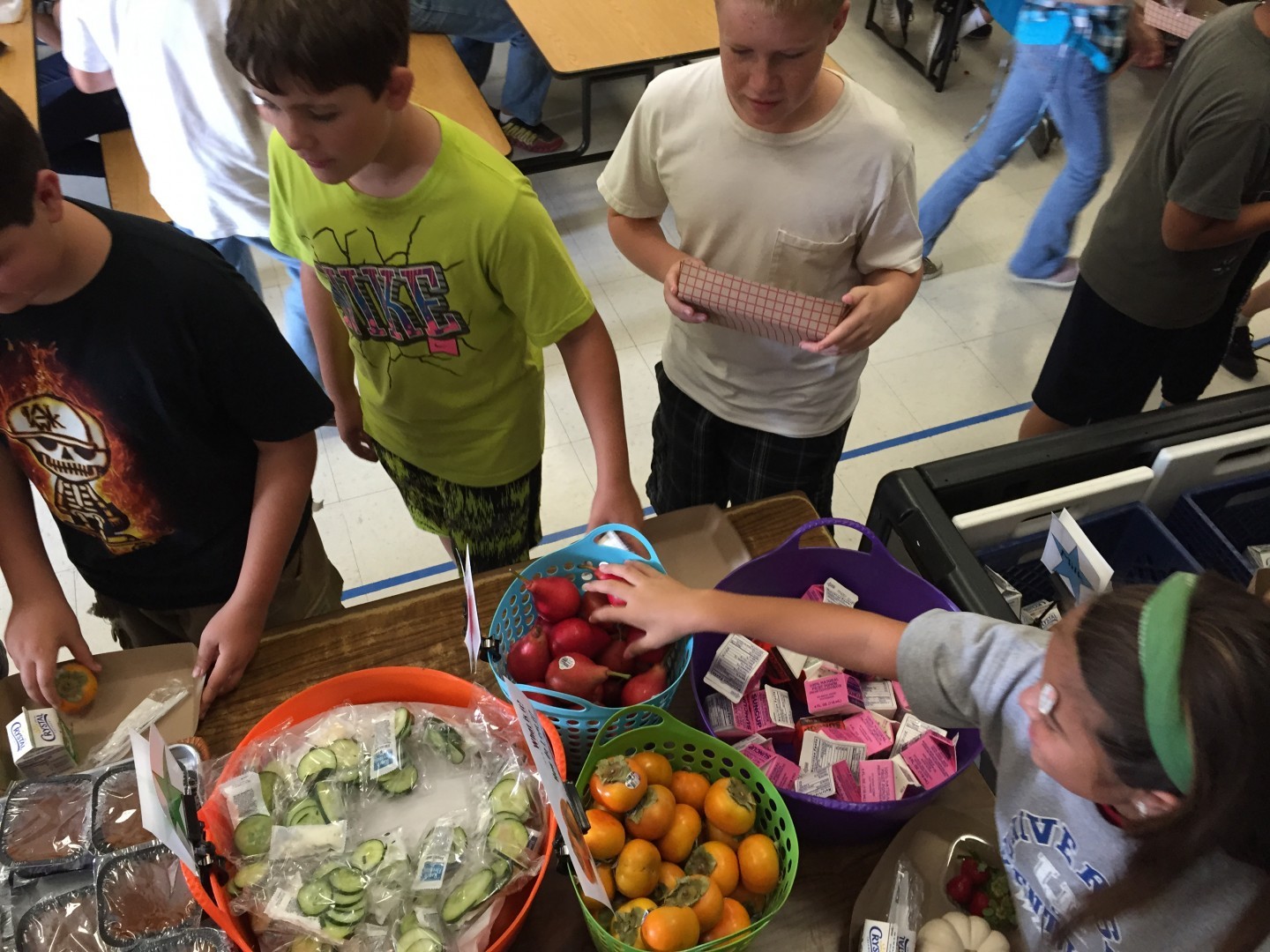
"caption": "Elementary students at a northern California school at the fruit and salad bar. (Jane Meredith Adams/EdSource)",
"description": "school lunch, salad bar",
"title": "Students salad and fruit bar school lunch",
"credit": null,
"status": "inherit",
"isLoading": false,
"fetchFailed": false
},
"stateofhealth_22863": {
"type": "attachments",
"id": "stateofhealth_22863",
"meta": {
"index": "attachments_1716263798",
"site": "stateofhealth",
"id": "22863",
"found": true
},
"parent": 22852,
"imgSizes": {
"twentyfourteen-full-width": {
"file": "https://ww2.kqed.org/app/uploads/sites/27/2014/12/Girl-eye-exam-San-Jose-e1418052159543-1038x576.jpg",
"width": 1038,
"mimeType": "image/jpeg",
"height": 576
},
"thumbnail": {
"file": "https://ww2.kqed.org/app/uploads/sites/27/2014/12/Girl-eye-exam-San-Jose-e1418052159543-400x326.jpg",
"width": 400,
"mimeType": "image/jpeg",
"height": 326
},
"fd-sm": {
"file": "https://ww2.kqed.org/app/uploads/sites/27/2014/12/Girl-eye-exam-San-Jose-e1418052159543-320x261.jpg",
"width": 320,
"mimeType": "image/jpeg",
"height": 261
},
"post-thumbnail": {
"file": "https://ww2.kqed.org/app/uploads/sites/27/2014/12/Girl-eye-exam-San-Jose-e1418052159543-672x372.jpg",
"width": 672,
"mimeType": "image/jpeg",
"height": 372
},
"kqedFullSize": {
"file": "https://ww2.kqed.org/app/uploads/sites/27/2014/12/Girl-eye-exam-San-Jose-e1418052159543.jpg",
"width": 1440,
"height": 1174
},
"large": {
"file": "https://ww2.kqed.org/app/uploads/sites/27/2014/12/Girl-eye-exam-San-Jose-e1418052159543-1440x1174.jpg",
"width": 1440,
"mimeType": "image/jpeg",
"height": 1174
},
"guest-author-96": {
"file": "https://ww2.kqed.org/app/uploads/sites/27/2014/12/Girl-eye-exam-San-Jose-e1418052159543-96x96.jpg",
"width": 96,
"mimeType": "image/jpeg",
"height": 96
},
"medium": {
"file": "https://ww2.kqed.org/app/uploads/sites/27/2014/12/Girl-eye-exam-San-Jose-e1418052159543-800x652.jpg",
"width": 800,
"mimeType": "image/jpeg",
"height": 652
},
"guest-author-64": {
"file": "https://ww2.kqed.org/app/uploads/sites/27/2014/12/Girl-eye-exam-San-Jose-e1418052159543-64x64.jpg",
"width": 64,
"mimeType": "image/jpeg",
"height": 64
},
"guest-author-32": {
"file": "https://ww2.kqed.org/app/uploads/sites/27/2014/12/Girl-eye-exam-San-Jose-e1418052159543-32x32.jpg",
"width": 32,
"mimeType": "image/jpeg",
"height": 32
},
"fd-lrg": {
"file": "https://ww2.kqed.org/app/uploads/sites/27/2014/12/Girl-eye-exam-San-Jose-e1418052159543-1180x962.jpg",
"width": 1180,
"mimeType": "image/jpeg",
"height": 962
},
"fd-med": {
"file": "https://ww2.kqed.org/app/uploads/sites/27/2014/12/Girl-eye-exam-San-Jose-e1418052159543-768x626.jpg",
"width": 768,
"mimeType": "image/jpeg",
"height": 626
},
"detail": {
"file": "https://ww2.kqed.org/app/uploads/sites/27/2014/12/Girl-eye-exam-San-Jose-e1418052159543-75x75.jpg",
"width": 75,
"mimeType": "image/jpeg",
"height": 75
},
"guest-author-128": {
"file": "https://ww2.kqed.org/app/uploads/sites/27/2014/12/Girl-eye-exam-San-Jose-e1418052159543-128x128.jpg",
"width": 128,
"mimeType": "image/jpeg",
"height": 128
}
},
"publishDate": 1418052145,
"modified": 1418052204,
"caption": "(Jane Meredith Adams/EdSource)",
"description": "girl gets eye exam",
"title": "Girl eye exam San Jose",
"credit": null,
"status": "inherit",
"isLoading": false,
"fetchFailed": false
},
"stateofhealth_22808": {
"type": "attachments",
"id": "stateofhealth_22808",
"meta": {
"index": "attachments_1716263798",
"site": "stateofhealth",
"id": "22808",
"found": true
},
"parent": 22801,
"imgSizes": {
"twentyfourteen-full-width": {
"file": "https://ww2.kqed.org/app/uploads/sites/27/2014/12/Michael-Fratkin-e1417651945113-1038x576.jpg",
"width": 1038,
"mimeType": "image/jpeg",
"height": 576
},
"thumbnail": {
"file": "https://ww2.kqed.org/app/uploads/sites/27/2014/12/Michael-Fratkin-e1417651945113-400x300.jpg",
"width": 400,
"mimeType": "image/jpeg",
"height": 300
},
"fd-sm": {
"file": "https://ww2.kqed.org/app/uploads/sites/27/2014/12/Michael-Fratkin-e1417651945113-320x240.jpg",
"width": 320,
"mimeType": "image/jpeg",
"height": 240
},
"post-thumbnail": {
"file": "https://ww2.kqed.org/app/uploads/sites/27/2014/12/Michael-Fratkin-e1417651945113-672x372.jpg",
"width": 672,
"mimeType": "image/jpeg",
"height": 372
},
"kqedFullSize": {
"file": "https://ww2.kqed.org/app/uploads/sites/27/2014/12/Michael-Fratkin-e1417651945113.jpg",
"width": 1440,
"height": 1080
},
"large": {
"file": "https://ww2.kqed.org/app/uploads/sites/27/2014/12/Michael-Fratkin-e1417651945113-1440x1080.jpg",
"width": 1440,
"mimeType": "image/jpeg",
"height": 1080
},
"guest-author-96": {
"file": "https://ww2.kqed.org/app/uploads/sites/27/2014/12/Michael-Fratkin-e1417651945113-96x96.jpg",
"width": 96,
"mimeType": "image/jpeg",
"height": 96
},
"medium": {
"file": "https://ww2.kqed.org/app/uploads/sites/27/2014/12/Michael-Fratkin-e1417651945113-800x600.jpg",
"width": 800,
"mimeType": "image/jpeg",
"height": 600
},
"guest-author-64": {
"file": "https://ww2.kqed.org/app/uploads/sites/27/2014/12/Michael-Fratkin-e1417651945113-64x64.jpg",
"width": 64,
"mimeType": "image/jpeg",
"height": 64
},
"guest-author-32": {
"file": "https://ww2.kqed.org/app/uploads/sites/27/2014/12/Michael-Fratkin-e1417651945113-32x32.jpg",
"width": 32,
"mimeType": "image/jpeg",
"height": 32
},
"fd-lrg": {
"file": "https://ww2.kqed.org/app/uploads/sites/27/2014/12/Michael-Fratkin-e1417651945113-1180x885.jpg",
"width": 1180,
"mimeType": "image/jpeg",
"height": 885
},
"fd-med": {
"file": "https://ww2.kqed.org/app/uploads/sites/27/2014/12/Michael-Fratkin-e1417651945113-768x576.jpg",
"width": 768,
"mimeType": "image/jpeg",
"height": 576
},
"detail": {
"file": "https://ww2.kqed.org/app/uploads/sites/27/2014/12/Michael-Fratkin-e1417651945113-75x75.jpg",
"width": 75,
"mimeType": "image/jpeg",
"height": 75
},
"guest-author-128": {
"file": "https://ww2.kqed.org/app/uploads/sites/27/2014/12/Michael-Fratkin-e1417651945113-128x128.jpg",
"width": 128,
"mimeType": "image/jpeg",
"height": 128
}
},
"publishDate": 1417651932,
"modified": 1417651986,
"caption": "Palliative medicine physician Michael Fratkin gets off a plane after visiting a patient on the Hoopa Valley Native American reservation. He wants to launch a start-up to support this kind of work. (April Dembosky/KQED)",
"description": "Palliative medicine physician Michael Fratkin gets off a plane after visiting a patient on the Hoopa Valley Native American reservation. He wants to launch a start-up to support this kind of work. (April Dembosky/KQED)",
"title": "Michael Fratkin",
"credit": null,
"status": "inherit",
"isLoading": false,
"fetchFailed": false
},
"stateofhealth_22782": {
"type": "attachments",
"id": "stateofhealth_22782",
"meta": {
"index": "attachments_1716263798",
"site": "stateofhealth",
"id": "22782",
"found": true
},
"parent": 22774,
"imgSizes": {
"twentyfourteen-full-width": {
"file": "https://ww2.kqed.org/app/uploads/sites/27/2014/12/iStock_000045052098_Large-e1417565171908-1038x576.jpg",
"width": 1038,
"mimeType": "image/jpeg",
"height": 576
},
"thumbnail": {
"file": "https://ww2.kqed.org/app/uploads/sites/27/2014/12/iStock_000045052098_Large-e1417565171908-400x266.jpg",
"width": 400,
"mimeType": "image/jpeg",
"height": 266
},
"fd-sm": {
"file": "https://ww2.kqed.org/app/uploads/sites/27/2014/12/iStock_000045052098_Large-e1417565171908-320x213.jpg",
"width": 320,
"mimeType": "image/jpeg",
"height": 213
},
"post-thumbnail": {
"file": "https://ww2.kqed.org/app/uploads/sites/27/2014/12/iStock_000045052098_Large-e1417565171908-672x372.jpg",
"width": 672,
"mimeType": "image/jpeg",
"height": 372
},
"kqedFullSize": {
"file": "https://ww2.kqed.org/app/uploads/sites/27/2014/12/iStock_000045052098_Large-e1417565171908.jpg",
"width": 1441,
"height": 960
},
"large": {
"file": "https://ww2.kqed.org/app/uploads/sites/27/2014/12/iStock_000045052098_Large-e1417565171908-1440x959.jpg",
"width": 1440,
"mimeType": "image/jpeg",
"height": 959
},
"guest-author-96": {
"file": "https://ww2.kqed.org/app/uploads/sites/27/2014/12/iStock_000045052098_Large-e1417565171908-96x96.jpg",
"width": 96,
"mimeType": "image/jpeg",
"height": 96
},
"medium": {
"file": "https://ww2.kqed.org/app/uploads/sites/27/2014/12/iStock_000045052098_Large-e1417565171908-800x533.jpg",
"width": 800,
"mimeType": "image/jpeg",
"height": 533
},
"guest-author-64": {
"file": "https://ww2.kqed.org/app/uploads/sites/27/2014/12/iStock_000045052098_Large-e1417565171908-64x64.jpg",
"width": 64,
"mimeType": "image/jpeg",
"height": 64
},
"guest-author-32": {
"file": "https://ww2.kqed.org/app/uploads/sites/27/2014/12/iStock_000045052098_Large-e1417565171908-32x32.jpg",
"width": 32,
"mimeType": "image/jpeg",
"height": 32
},
"fd-lrg": {
"file": "https://ww2.kqed.org/app/uploads/sites/27/2014/12/iStock_000045052098_Large-e1417565171908-1180x786.jpg",
"width": 1180,
"mimeType": "image/jpeg",
"height": 786
},
"fd-med": {
"file": "https://ww2.kqed.org/app/uploads/sites/27/2014/12/iStock_000045052098_Large-e1417565171908-768x512.jpg",
"width": 768,
"mimeType": "image/jpeg",
"height": 512
},
"detail": {
"file": "https://ww2.kqed.org/app/uploads/sites/27/2014/12/iStock_000045052098_Large-e1417565171908-75x75.jpg",
"width": 75,
"mimeType": "image/jpeg",
"height": 75
},
"guest-author-128": {
"file": "https://ww2.kqed.org/app/uploads/sites/27/2014/12/iStock_000045052098_Large-e1417565171908-128x128.jpg",
"width": 128,
"mimeType": "image/jpeg",
"height": 128
}
},
"publishDate": 1417565161,
"modified": 1435011904,
"caption": null,
"description": "Conceptual medical and healthcare image with a close up of a stethoscope lying on a doctors desk with the hands of the doctor visible behind working on a computer",
"title": "Conceptual medical image with a close up of a stethoscope",
"credit": "iStock",
"status": "inherit",
"isLoading": false,
"fetchFailed": false
},
"stateofhealth_22755": {
"type": "attachments",
"id": "stateofhealth_22755",
"meta": {
"index": "attachments_1716263798",
"site": "stateofhealth",
"id": "22755",
"found": true
},
"parent": 22752,
"imgSizes": {
"twentyfourteen-full-width": {
"file": "https://ww2.kqed.org/app/uploads/sites/27/2014/12/Armando-Huerta-e1417479874904-1038x576.jpg",
"width": 1038,
"mimeType": "image/jpeg",
"height": 576
},
"thumbnail": {
"file": "https://ww2.kqed.org/app/uploads/sites/27/2014/12/Armando-Huerta-e1417479874904-400x225.jpg",
"width": 400,
"mimeType": "image/jpeg",
"height": 225
},
"fd-sm": {
"file": "https://ww2.kqed.org/app/uploads/sites/27/2014/12/Armando-Huerta-e1417479874904-320x180.jpg",
"width": 320,
"mimeType": "image/jpeg",
"height": 180
},
"post-thumbnail": {
"file": "https://ww2.kqed.org/app/uploads/sites/27/2014/12/Armando-Huerta-e1417479874904-672x372.jpg",
"width": 672,
"mimeType": "image/jpeg",
"height": 372
},
"kqedFullSize": {
"file": "https://ww2.kqed.org/app/uploads/sites/27/2014/12/Armando-Huerta-e1417479874904.jpg",
"width": 1440,
"height": 810
},
"large": {
"file": "https://ww2.kqed.org/app/uploads/sites/27/2014/12/Armando-Huerta-e1417479874904-1440x810.jpg",
"width": 1440,
"mimeType": "image/jpeg",
"height": 810
},
"guest-author-96": {
"file": "https://ww2.kqed.org/app/uploads/sites/27/2014/12/Armando-Huerta-e1417479874904-96x96.jpg",
"width": 96,
"mimeType": "image/jpeg",
"height": 96
},
"medium": {
"file": "https://ww2.kqed.org/app/uploads/sites/27/2014/12/Armando-Huerta-e1417479874904-800x450.jpg",
"width": 800,
"mimeType": "image/jpeg",
"height": 450
},
"guest-author-64": {
"file": "https://ww2.kqed.org/app/uploads/sites/27/2014/12/Armando-Huerta-e1417479874904-64x64.jpg",
"width": 64,
"mimeType": "image/jpeg",
"height": 64
},
"guest-author-32": {
"file": "https://ww2.kqed.org/app/uploads/sites/27/2014/12/Armando-Huerta-e1417479874904-32x32.jpg",
"width": 32,
"mimeType": "image/jpeg",
"height": 32
},
"fd-lrg": {
"file": "https://ww2.kqed.org/app/uploads/sites/27/2014/12/Armando-Huerta-e1417479874904-1180x664.jpg",
"width": 1180,
"mimeType": "image/jpeg",
"height": 664
},
"fd-med": {
"file": "https://ww2.kqed.org/app/uploads/sites/27/2014/12/Armando-Huerta-e1417479874904-768x432.jpg",
"width": 768,
"mimeType": "image/jpeg",
"height": 432
},
"detail": {
"file": "https://ww2.kqed.org/app/uploads/sites/27/2014/12/Armando-Huerta-e1417479874904-75x75.jpg",
"width": 75,
"mimeType": "image/jpeg",
"height": 75
},
"guest-author-128": {
"file": "https://ww2.kqed.org/app/uploads/sites/27/2014/12/Armando-Huerta-e1417479874904-128x128.jpg",
"width": 128,
"mimeType": "image/jpeg",
"height": 128
}
},
"publishDate": 1417479797,
"modified": 1417479797,
"caption": "Armando Huerta was diagnosed with Type 2 diabetes two years ago. He says he's since cut out soda and fried foods. (Katie Schoolov)",
"description": "Armando Huerta was diagnosed with Type 2 diabetes two years ago. He says he's since cut out soda and fried foods. (Katie Schoolov)",
"title": "Armando Huerta",
"credit": null,
"status": "inherit",
"isLoading": false,
"fetchFailed": false
},
"stateofhealth_22763": {
"type": "attachments",
"id": "stateofhealth_22763",
"meta": {
"index": "attachments_1716263798",
"site": "stateofhealth",
"id": "22763",
"found": true
},
"parent": 22759,
"imgSizes": {
"twentyfourteen-full-width": {
"file": "https://ww2.kqed.org/app/uploads/sites/27/2014/12/iStock_000003109765_Large-e1417483484694-1038x576.jpg",
"width": 1038,
"mimeType": "image/jpeg",
"height": 576
},
"thumbnail": {
"file": "https://ww2.kqed.org/app/uploads/sites/27/2014/12/iStock_000003109765_Large-e1417483484694-400x266.jpg",
"width": 400,
"mimeType": "image/jpeg",
"height": 266
},
"fd-sm": {
"file": "https://ww2.kqed.org/app/uploads/sites/27/2014/12/iStock_000003109765_Large-e1417483484694-320x213.jpg",
"width": 320,
"mimeType": "image/jpeg",
"height": 213
},
"post-thumbnail": {
"file": "https://ww2.kqed.org/app/uploads/sites/27/2014/12/iStock_000003109765_Large-e1417483484694-672x372.jpg",
"width": 672,
"mimeType": "image/jpeg",
"height": 372
},
"kqedFullSize": {
"file": "https://ww2.kqed.org/app/uploads/sites/27/2014/12/iStock_000003109765_Large-e1417483484694.jpg",
"width": 1439,
"height": 957
},
"guest-author-96": {
"file": "https://ww2.kqed.org/app/uploads/sites/27/2014/12/iStock_000003109765_Large-e1417483484694-96x96.jpg",
"width": 96,
"mimeType": "image/jpeg",
"height": 96
},
"medium": {
"file": "https://ww2.kqed.org/app/uploads/sites/27/2014/12/iStock_000003109765_Large-e1417483484694-800x532.jpg",
"width": 800,
"mimeType": "image/jpeg",
"height": 532
},
"guest-author-64": {
"file": "https://ww2.kqed.org/app/uploads/sites/27/2014/12/iStock_000003109765_Large-e1417483484694-64x64.jpg",
"width": 64,
"mimeType": "image/jpeg",
"height": 64
},
"guest-author-32": {
"file": "https://ww2.kqed.org/app/uploads/sites/27/2014/12/iStock_000003109765_Large-e1417483484694-32x32.jpg",
"width": 32,
"mimeType": "image/jpeg",
"height": 32
},
"fd-lrg": {
"file": "https://ww2.kqed.org/app/uploads/sites/27/2014/12/iStock_000003109765_Large-e1417483484694-1180x785.jpg",
"width": 1180,
"mimeType": "image/jpeg",
"height": 785
},
"fd-med": {
"file": "https://ww2.kqed.org/app/uploads/sites/27/2014/12/iStock_000003109765_Large-e1417483484694-768x511.jpg",
"width": 768,
"mimeType": "image/jpeg",
"height": 511
},
"detail": {
"file": "https://ww2.kqed.org/app/uploads/sites/27/2014/12/iStock_000003109765_Large-e1417483484694-75x75.jpg",
"width": 75,
"mimeType": "image/jpeg",
"height": 75
},
"guest-author-128": {
"file": "https://ww2.kqed.org/app/uploads/sites/27/2014/12/iStock_000003109765_Large-e1417483484694-128x128.jpg",
"width": 128,
"mimeType": "image/jpeg",
"height": 128
}
},
"publishDate": 1417483465,
"modified": 1417483465,
"caption": "(Getty Images)",
"description": "Human blood in storage",
"title": "Blood Transfusion",
"credit": null,
"status": "inherit",
"isLoading": false,
"fetchFailed": false
},
"stateofhealth_22731": {
"type": "attachments",
"id": "stateofhealth_22731",
"meta": {
"index": "attachments_1716263798",
"site": "stateofhealth",
"id": "22731",
"found": true
},
"parent": 22722,
"imgSizes": {
"twentyfourteen-full-width": {
"file": "https://ww2.kqed.org/app/uploads/sites/27/2014/11/RS1449_saccapitoldome090911-lpr-e1417052239382-1038x576.jpg",
"width": 1038,
"mimeType": "image/jpeg",
"height": 576
},
"thumbnail": {
"file": "https://ww2.kqed.org/app/uploads/sites/27/2014/11/RS1449_saccapitoldome090911-lpr-e1417052239382-400x267.jpg",
"width": 400,
"mimeType": "image/jpeg",
"height": 267
},
"fd-sm": {
"file": "https://ww2.kqed.org/app/uploads/sites/27/2014/11/RS1449_saccapitoldome090911-lpr-e1417052239382-320x213.jpg",
"width": 320,
"mimeType": "image/jpeg",
"height": 213
},
"post-thumbnail": {
"file": "https://ww2.kqed.org/app/uploads/sites/27/2014/11/RS1449_saccapitoldome090911-lpr-e1417052239382-672x372.jpg",
"width": 672,
"mimeType": "image/jpeg",
"height": 372
},
"kqedFullSize": {
"file": "https://ww2.kqed.org/app/uploads/sites/27/2014/11/RS1449_saccapitoldome090911-lpr-e1417052239382.jpg",
"width": 1440,
"height": 960
},
"large": {
"file": "https://ww2.kqed.org/app/uploads/sites/27/2014/11/RS1449_saccapitoldome090911-lpr-e1417052239382-1440x960.jpg",
"width": 1440,
"mimeType": "image/jpeg",
"height": 960
},
"guest-author-96": {
"file": "https://ww2.kqed.org/app/uploads/sites/27/2014/11/RS1449_saccapitoldome090911-lpr-e1417052239382-96x96.jpg",
"width": 96,
"mimeType": "image/jpeg",
"height": 96
},
"medium": {
"file": "https://ww2.kqed.org/app/uploads/sites/27/2014/11/RS1449_saccapitoldome090911-lpr-e1417052239382-800x533.jpg",
"width": 800,
"mimeType": "image/jpeg",
"height": 533
},
"guest-author-64": {
"file": "https://ww2.kqed.org/app/uploads/sites/27/2014/11/RS1449_saccapitoldome090911-lpr-e1417052239382-64x64.jpg",
"width": 64,
"mimeType": "image/jpeg",
"height": 64
},
"guest-author-32": {
"file": "https://ww2.kqed.org/app/uploads/sites/27/2014/11/RS1449_saccapitoldome090911-lpr-e1417052239382-32x32.jpg",
"width": 32,
"mimeType": "image/jpeg",
"height": 32
},
"fd-lrg": {
"file": "https://ww2.kqed.org/app/uploads/sites/27/2014/11/RS1449_saccapitoldome090911-lpr-e1417052239382-1180x787.jpg",
"width": 1180,
"mimeType": "image/jpeg",
"height": 787
},
"fd-med": {
"file": "https://ww2.kqed.org/app/uploads/sites/27/2014/11/RS1449_saccapitoldome090911-lpr-e1417052239382-768x512.jpg",
"width": 768,
"mimeType": "image/jpeg",
"height": 512
},
"detail": {
"file": "https://ww2.kqed.org/app/uploads/sites/27/2014/11/RS1449_saccapitoldome090911-lpr-e1417052239382-75x75.jpg",
"width": 75,
"mimeType": "image/jpeg",
"height": 75
},
"guest-author-128": {
"file": "https://ww2.kqed.org/app/uploads/sites/27/2014/11/RS1449_saccapitoldome090911-lpr-e1417052239382-128x128.jpg",
"width": 128,
"mimeType": "image/jpeg",
"height": 128
}
},
"publishDate": 1417052229,
"modified": 1464715768,
"caption": null,
"description": "state capitol, capital, sacramento",
"title": null,
"credit": "Justin Sullivan/Getty Images",
"status": "inherit",
"isLoading": false,
"fetchFailed": false
},
"stateofhealth_22687": {
"type": "attachments",
"id": "stateofhealth_22687",
"meta": {
"index": "attachments_1716263798",
"site": "stateofhealth",
"id": "22687",
"found": true
},
"parent": 22684,
"imgSizes": {
"twentyfourteen-full-width": {
"file": "https://ww2.kqed.org/app/uploads/sites/27/2014/11/IMG_0041-e1416872543810-1038x576.jpg",
"width": 1038,
"mimeType": "image/jpeg",
"height": 576
},
"thumbnail": {
"file": "https://ww2.kqed.org/app/uploads/sites/27/2014/11/IMG_0041-e1416872543810-400x300.jpg",
"width": 400,
"mimeType": "image/jpeg",
"height": 300
},
"fd-sm": {
"file": "https://ww2.kqed.org/app/uploads/sites/27/2014/11/IMG_0041-e1416872543810-320x240.jpg",
"width": 320,
"mimeType": "image/jpeg",
"height": 240
},
"post-thumbnail": {
"file": "https://ww2.kqed.org/app/uploads/sites/27/2014/11/IMG_0041-e1416872543810-672x372.jpg",
"width": 672,
"mimeType": "image/jpeg",
"height": 372
},
"kqedFullSize": {
"file": "https://ww2.kqed.org/app/uploads/sites/27/2014/11/IMG_0041-e1416872543810.jpg",
"width": 1440,
"height": 1080
},
"large": {
"file": "https://ww2.kqed.org/app/uploads/sites/27/2014/11/IMG_0041-e1416872543810-1440x1080.jpg",
"width": 1440,
"mimeType": "image/jpeg",
"height": 1080
},
"guest-author-96": {
"file": "https://ww2.kqed.org/app/uploads/sites/27/2014/11/IMG_0041-e1416872543810-96x96.jpg",
"width": 96,
"mimeType": "image/jpeg",
"height": 96
},
"medium": {
"file": "https://ww2.kqed.org/app/uploads/sites/27/2014/11/IMG_0041-e1416872543810-800x600.jpg",
"width": 800,
"mimeType": "image/jpeg",
"height": 600
},
"guest-author-64": {
"file": "https://ww2.kqed.org/app/uploads/sites/27/2014/11/IMG_0041-e1416872543810-64x64.jpg",
"width": 64,
"mimeType": "image/jpeg",
"height": 64
},
"guest-author-32": {
"file": "https://ww2.kqed.org/app/uploads/sites/27/2014/11/IMG_0041-e1416872543810-32x32.jpg",
"width": 32,
"mimeType": "image/jpeg",
"height": 32
},
"fd-lrg": {
"file": "https://ww2.kqed.org/app/uploads/sites/27/2014/11/IMG_0041-e1416872543810-1180x885.jpg",
"width": 1180,
"mimeType": "image/jpeg",
"height": 885
},
"fd-med": {
"file": "https://ww2.kqed.org/app/uploads/sites/27/2014/11/IMG_0041-e1416872543810-768x576.jpg",
"width": 768,
"mimeType": "image/jpeg",
"height": 576
},
"detail": {
"file": "https://ww2.kqed.org/app/uploads/sites/27/2014/11/IMG_0041-e1416872543810-75x75.jpg",
"width": 75,
"mimeType": "image/jpeg",
"height": 75
},
"guest-author-128": {
"file": "https://ww2.kqed.org/app/uploads/sites/27/2014/11/IMG_0041-e1416872543810-128x128.jpg",
"width": 128,
"mimeType": "image/jpeg",
"height": 128
}
},
"publishDate": 1416872503,
"modified": 1416872503,
"caption": "(David Gorn/KQED)",
"description": "school lunch",
"title": "IMG_0041",
"credit": null,
"status": "inherit",
"isLoading": false,
"fetchFailed": false
},
"stateofhealth_22599": {
"type": "attachments",
"id": "stateofhealth_22599",
"meta": {
"index": "attachments_1716263798",
"site": "stateofhealth",
"id": "22599",
"found": true
},
"parent": 22598,
"imgSizes": {
"twentyfourteen-full-width": {
"file": "https://ww2.kqed.org/app/uploads/sites/27/2014/11/RS13044_Aus-Export-1-of-2-e1416612352435-1038x576.jpg",
"width": 1038,
"mimeType": "image/jpeg",
"height": 576
},
"thumbnail": {
"file": "https://ww2.kqed.org/app/uploads/sites/27/2014/11/RS13044_Aus-Export-1-of-2-e1416612352435-400x267.jpg",
"width": 400,
"mimeType": "image/jpeg",
"height": 267
},
"fd-sm": {
"file": "https://ww2.kqed.org/app/uploads/sites/27/2014/11/RS13044_Aus-Export-1-of-2-e1416612352435-320x213.jpg",
"width": 320,
"mimeType": "image/jpeg",
"height": 213
},
"post-thumbnail": {
"file": "https://ww2.kqed.org/app/uploads/sites/27/2014/11/RS13044_Aus-Export-1-of-2-e1416612352435-672x372.jpg",
"width": 672,
"mimeType": "image/jpeg",
"height": 372
},
"kqedFullSize": {
"file": "https://ww2.kqed.org/app/uploads/sites/27/2014/11/RS13044_Aus-Export-1-of-2-e1416612352435.jpg",
"width": 1440,
"height": 960
},
"large": {
"file": "https://ww2.kqed.org/app/uploads/sites/27/2014/11/RS13044_Aus-Export-1-of-2-e1416612352435-1440x960.jpg",
"width": 1440,
"mimeType": "image/jpeg",
"height": 960
},
"guest-author-96": {
"file": "https://ww2.kqed.org/app/uploads/sites/27/2014/11/RS13044_Aus-Export-1-of-2-e1416612352435-96x96.jpg",
"width": 96,
"mimeType": "image/jpeg",
"height": 96
},
"medium": {
"file": "https://ww2.kqed.org/app/uploads/sites/27/2014/11/RS13044_Aus-Export-1-of-2-e1416612352435-800x533.jpg",
"width": 800,
"mimeType": "image/jpeg",
"height": 533
},
"guest-author-64": {
"file": "https://ww2.kqed.org/app/uploads/sites/27/2014/11/RS13044_Aus-Export-1-of-2-e1416612352435-64x64.jpg",
"width": 64,
"mimeType": "image/jpeg",
"height": 64
},
"guest-author-32": {
"file": "https://ww2.kqed.org/app/uploads/sites/27/2014/11/RS13044_Aus-Export-1-of-2-e1416612352435-32x32.jpg",
"width": 32,
"mimeType": "image/jpeg",
"height": 32
},
"fd-lrg": {
"file": "https://ww2.kqed.org/app/uploads/sites/27/2014/11/RS13044_Aus-Export-1-of-2-e1416612352435-1180x787.jpg",
"width": 1180,
"mimeType": "image/jpeg",
"height": 787
},
"fd-med": {
"file": "https://ww2.kqed.org/app/uploads/sites/27/2014/11/RS13044_Aus-Export-1-of-2-e1416612352435-768x512.jpg",
"width": 768,
"mimeType": "image/jpeg",
"height": 512
},
"detail": {
"file": "https://ww2.kqed.org/app/uploads/sites/27/2014/11/RS13044_Aus-Export-1-of-2-e1416612352435-75x75.jpg",
"width": 75,
"mimeType": "image/jpeg",
"height": 75
},
"guest-author-128": {
"file": "https://ww2.kqed.org/app/uploads/sites/27/2014/11/RS13044_Aus-Export-1-of-2-e1416612352435-128x128.jpg",
"width": 128,
"mimeType": "image/jpeg",
"height": 128
}
},
"publishDate": 1416424607,
"modified": 1416424607,
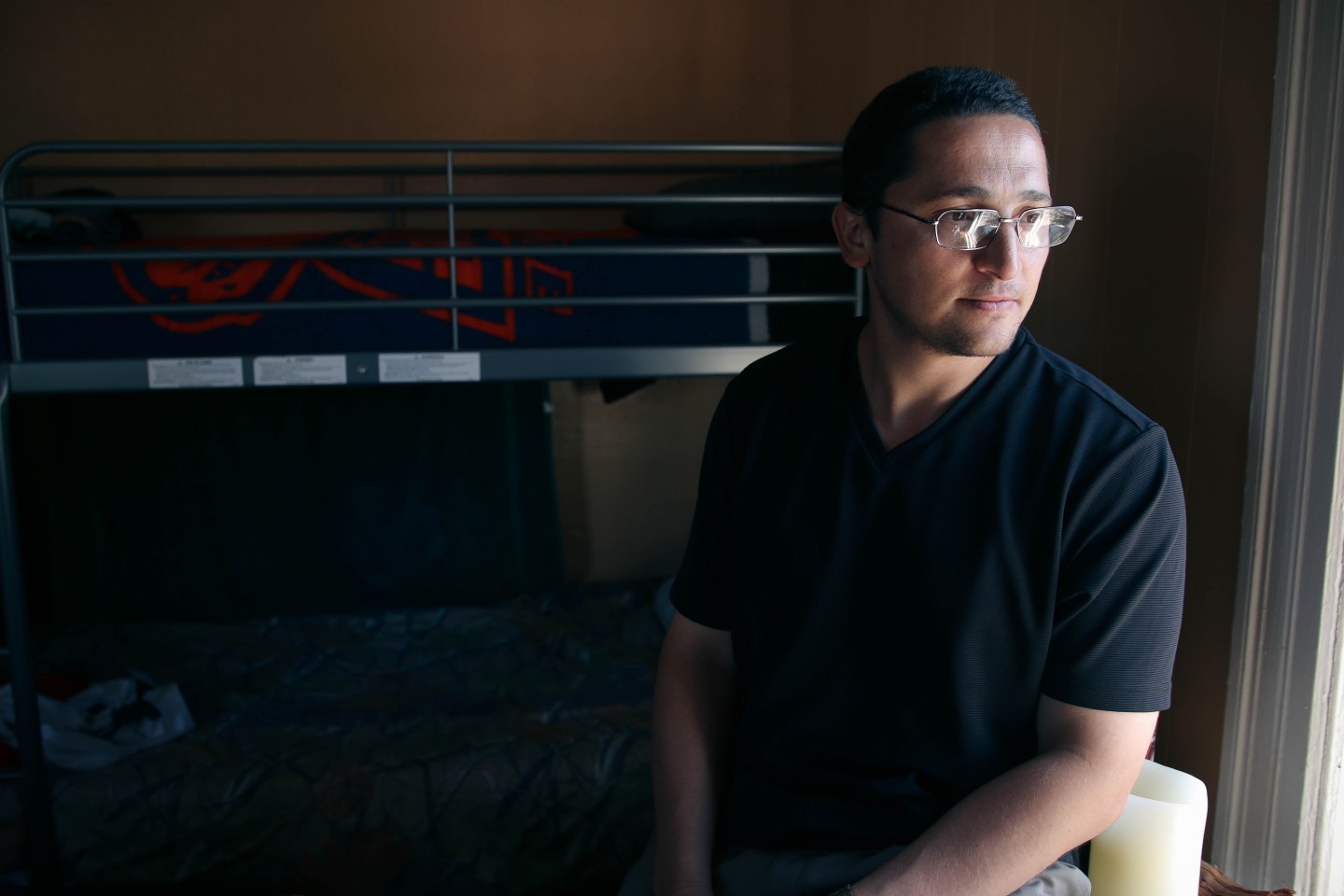
"caption": "Aus Jarrar was released from an eleven-year prison sentence with $200. He's got an internship as a drug and alcohol counselor, but until he starts to earn a wage he's relying on charity food-- he doesn't qualify for food stamps.",
"description": null,
"title": "RS13044_Aus Export (1 of 2)",
"credit": null,
"status": "inherit",
"isLoading": false,
"fetchFailed": false
},
"stateofhealth_22657": {
"type": "attachments",
"id": "stateofhealth_22657",
"meta": {
"index": "attachments_1716263798",
"site": "stateofhealth",
"id": "22657",
"found": true
},
"parent": 22646,
"imgSizes": {
"twentyfourteen-full-width": {
"file": "https://ww2.kqed.org/app/uploads/sites/27/2014/11/13152-e1416549600310-1038x576.png",
"width": 1038,
"mimeType": "image/png",
"height": 576
},
"thumbnail": {
"file": "https://ww2.kqed.org/app/uploads/sites/27/2014/11/13152-e1416549600310-400x225.png",
"width": 400,
"mimeType": "image/png",
"height": 225
},
"fd-sm": {
"file": "https://ww2.kqed.org/app/uploads/sites/27/2014/11/13152-e1416549600310-320x180.png",
"width": 320,
"mimeType": "image/png",
"height": 180
},
"post-thumbnail": {
"file": "https://ww2.kqed.org/app/uploads/sites/27/2014/11/13152-e1416549600310-672x372.png",
"width": 672,
"mimeType": "image/png",
"height": 372
},
"kqedFullSize": {
"file": "https://ww2.kqed.org/app/uploads/sites/27/2014/11/13152-e1416549600310.png",
"width": 1440,
"height": 810
},
"large": {
"file": "https://ww2.kqed.org/app/uploads/sites/27/2014/11/13152-e1416549600310-1440x810.png",
"width": 1440,
"mimeType": "image/png",
"height": 810
},
"guest-author-96": {
"file": "https://ww2.kqed.org/app/uploads/sites/27/2014/11/13152-e1416549600310-96x96.png",
"width": 96,
"mimeType": "image/png",
"height": 96
},
"medium": {
"file": "https://ww2.kqed.org/app/uploads/sites/27/2014/11/13152-e1416549600310-800x450.png",
"width": 800,
"mimeType": "image/png",
"height": 450
},
"guest-author-64": {
"file": "https://ww2.kqed.org/app/uploads/sites/27/2014/11/13152-e1416549600310-64x64.png",
"width": 64,
"mimeType": "image/png",
"height": 64
},
"guest-author-32": {
"file": "https://ww2.kqed.org/app/uploads/sites/27/2014/11/13152-e1416549600310-32x32.png",
"width": 32,
"mimeType": "image/png",
"height": 32
},
"fd-lrg": {
"file": "https://ww2.kqed.org/app/uploads/sites/27/2014/11/13152-e1416549600310-1180x664.png",
"width": 1180,
"mimeType": "image/png",
"height": 664
},
"fd-med": {
"file": "https://ww2.kqed.org/app/uploads/sites/27/2014/11/13152-e1416549600310-768x432.png",
"width": 768,
"mimeType": "image/png",
"height": 432
},
"detail": {
"file": "https://ww2.kqed.org/app/uploads/sites/27/2014/11/13152-e1416549600310-75x75.png",
"width": 75,
"mimeType": "image/png",
"height": 75
},
"guest-author-128": {
"file": "https://ww2.kqed.org/app/uploads/sites/27/2014/11/13152-e1416549600310-128x128.png",
"width": 128,
"mimeType": "image/png",
"height": 128
}
},
"publishDate": 1416549587,
"modified": 1416549587,
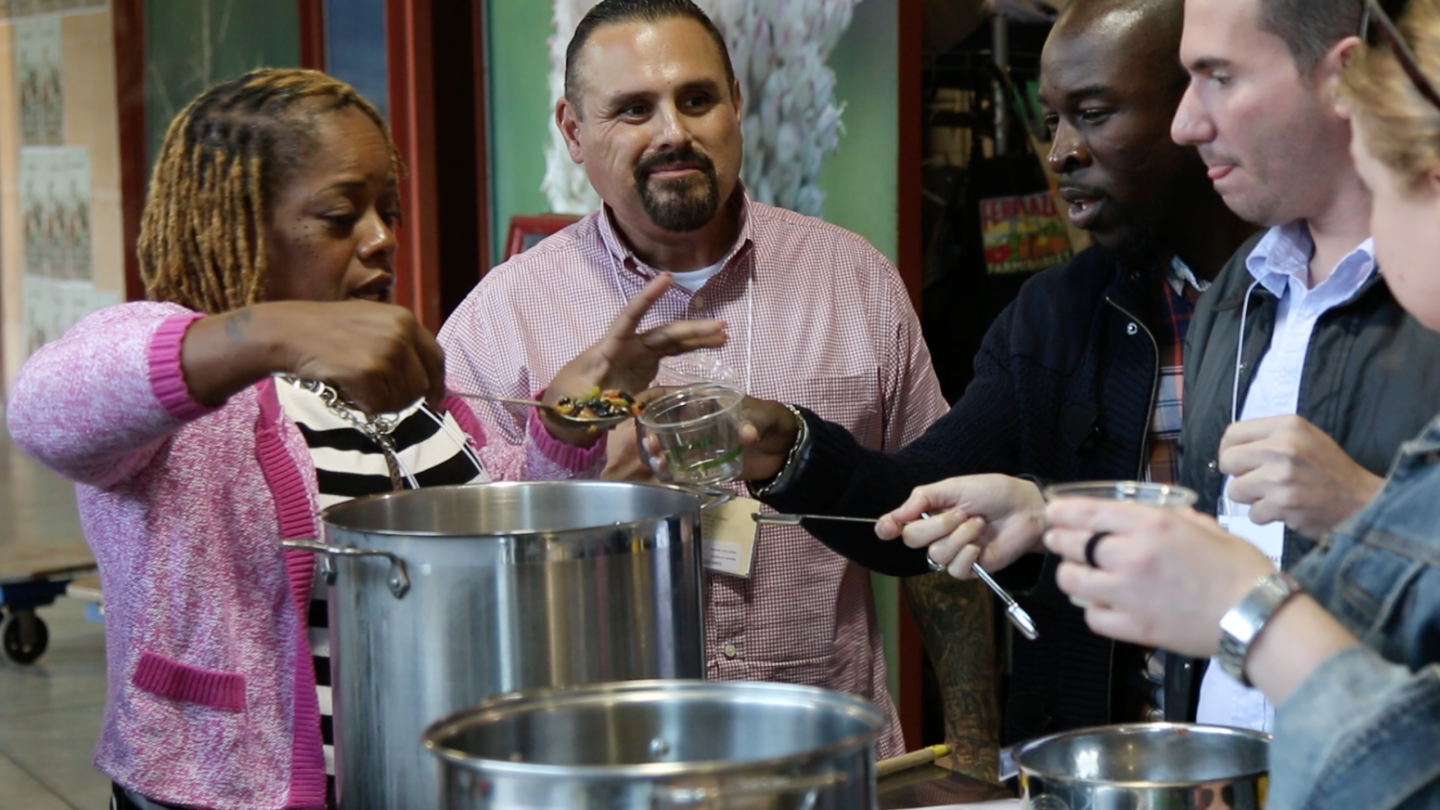
"caption": "Staff from Transitions Housing Clinic, a health center for former inmates, gathered in San Francisco to learn to cook on a budget with Chef Hollie Greene. (Jeremy Raff/KQED)",
"description": "cooking, ex-cons, food stamps",
"title": "13152",
"credit": null,
"status": "inherit",
"isLoading": false,
"fetchFailed": false
},
"stateofhealth_22567": {
"type": "attachments",
"id": "stateofhealth_22567",
"meta": {
"index": "attachments_1716263798",
"site": "stateofhealth",
"id": "22567",
"found": true
},
"parent": 22564,
"imgSizes": {
"thumbnail": {
"file": "https://ww2.kqed.org/app/uploads/sites/27/2014/11/impact1-400x221.png",
"width": 400,
"mimeType": "image/png",
"height": 221
},
"fd-sm": {
"file": "https://ww2.kqed.org/app/uploads/sites/27/2014/11/impact1-320x177.png",
"width": 320,
"mimeType": "image/png",
"height": 177
},
"post-thumbnail": {
"file": "https://ww2.kqed.org/app/uploads/sites/27/2014/11/impact1-672x372.png",
"width": 672,
"mimeType": "image/png",
"height": 372
},
"kqedFullSize": {
"file": "https://ww2.kqed.org/app/uploads/sites/27/2014/11/impact1.png",
"width": 856,
"height": 473
},
"fd-med": {
"file": "https://ww2.kqed.org/app/uploads/sites/27/2014/11/impact1-768x424.png",
"width": 768,
"mimeType": "image/png",
"height": 424
},
"guest-author-96": {
"file": "https://ww2.kqed.org/app/uploads/sites/27/2014/11/impact1-96x96.png",
"width": 96,
"mimeType": "image/png",
"height": 96
},
"medium": {
"file": "https://ww2.kqed.org/app/uploads/sites/27/2014/11/impact1-800x442.png",
"width": 800,
"mimeType": "image/png",
"height": 442
},
"guest-author-64": {
"file": "https://ww2.kqed.org/app/uploads/sites/27/2014/11/impact1-64x64.png",
"width": 64,
"mimeType": "image/png",
"height": 64
},
"detail": {
"file": "https://ww2.kqed.org/app/uploads/sites/27/2014/11/impact1-75x75.png",
"width": 75,
"mimeType": "image/png",
"height": 75
},
"guest-author-32": {
"file": "https://ww2.kqed.org/app/uploads/sites/27/2014/11/impact1-32x32.png",
"width": 32,
"mimeType": "image/png",
"height": 32
},
"guest-author-128": {
"file": "https://ww2.kqed.org/app/uploads/sites/27/2014/11/impact1-128x128.png",
"width": 128,
"mimeType": "image/png",
"height": 128
}
},
"publishDate": 1416339280,
"modified": 1416339280,
"caption": "Ellen Frudakis (left) and Johanna Baker co-founded Impact Young Adults ten years ago. (Kenny Goldberg/KPBS)",
"description": "Ellen Frudakis (left) and Johanna Baker co-founded Impact Young Adults ten years ago. (Kenny Goldberg/KPBS)",
"title": "impact1",
"credit": null,
"status": "inherit",
"isLoading": false,
"fetchFailed": false
}
},
"audioPlayerReducer": {
"postId": "stream_live",
"isPaused": true,
"isPlaying": false,
"pfsActive": false,
"pledgeModalIsOpen": true,
"playerDrawerIsOpen": false,
"liveAudioPlayStartedAt": 0,
"liveAudioPlayContext": ""
},
"authorsReducer": {
"jeremyraff": {
"type": "authors",
"id": "230",
"meta": {
"index": "authors_1716337520",
"id": "230",
"found": true
},
"name": "Jeremy Raff",
"firstName": "Jeremy",
"lastName": "Raff",
"slug": "jeremyraff",
"email": "jeremyraff@gmail.com",
"display_author_email": false,
"staff_mastheads": [],
"title": null,
"bio": "Jeremy Raff is a multimedia producer interested in migration, rural change, and health disparities. He produces KQED's community health series\u003ca href=\"http://blogs.kqed.org/stateofhealth/series/vital-signs/\" target=\"_blank\" rel=\"noopener\"> Vital Signs\u003c/a>. Reach him at jraff@kqed.org",
"avatar": "https://secure.gravatar.com/avatar/1444299e18b67b815fbbdc87a85e7dff?s=600&d=blank&r=g",
"twitter": null,
"facebook": null,
"instagram": null,
"linkedin": null,
"sites": [
{
"site": "news",
"roles": [
"subscriber"
]
},
{
"site": "stateofhealth",
"roles": [
"subscriber"
]
}
],
"headData": {
"title": "Jeremy Raff | KQED",
"description": null,
"ogImgSrc": "https://secure.gravatar.com/avatar/1444299e18b67b815fbbdc87a85e7dff?s=600&d=blank&r=g",
"twImgSrc": "https://secure.gravatar.com/avatar/1444299e18b67b815fbbdc87a85e7dff?s=600&d=blank&r=g"
},
"isLoading": false,
"link": "/author/jeremyraff"
},
"kqednewsstaffandwires": {
"type": "authors",
"id": "237",
"meta": {
"index": "authors_1716337520",
"id": "237",
"found": true
},
"name": "KQED News Staff and Wires",
"firstName": "KQED News Staff and Wires",
"lastName": null,
"slug": "kqednewsstaffandwires",
"email": "onlinenewsstaff@kqed.org",
"display_author_email": false,
"staff_mastheads": [],
"title": null,
"bio": null,
"avatar": "https://secure.gravatar.com/avatar/72295af8ebbfbd19a4948f5271285664?s=600&d=blank&r=g",
"twitter": null,
"facebook": null,
"instagram": null,
"linkedin": null,
"sites": [
{
"site": "arts",
"roles": [
"contributor"
]
},
{
"site": "news",
"roles": [
"contributor"
]
},
{
"site": "lowdown",
"roles": [
"author"
]
},
{
"site": "stateofhealth",
"roles": [
"contributor"
]
},
{
"site": "food",
"roles": [
"author"
]
}
],
"headData": {
"title": "KQED News Staff and Wires | KQED",
"description": null,
"ogImgSrc": "https://secure.gravatar.com/avatar/72295af8ebbfbd19a4948f5271285664?s=600&d=blank&r=g",
"twImgSrc": "https://secure.gravatar.com/avatar/72295af8ebbfbd19a4948f5271285664?s=600&d=blank&r=g"
},
"isLoading": false,
"link": "/author/kqednewsstaffandwires"
},
"lisaaliferis": {
"type": "authors",
"id": "240",
"meta": {
"index": "authors_1716337520",
"id": "240",
"found": true
},
"name": "Lisa Aliferis",
"firstName": "Lisa",
"lastName": "Aliferis",
"slug": "lisaaliferis",
"email": "laliferis@kqed.org",
"display_author_email": false,
"staff_mastheads": [],
"title": "KQED Contributor",
"bio": "Lisa Aliferis is the founding editor of KQED's \u003cem>State of Health\u003c/em> blog. Since 2011, she's been writing and editing stories for the site. Before taking up blogging, she toiled for many years (more than we can count) producing health stories for television, including\u003cem> Dateline NBC\u003c/em> and San Francisco's CBS affiliate, KPIX-TV. She also wrote up a \u003ca title=\"http://www.kqed.org/news/health/obamacare/obamacare-guide.jsp\" href=\"http://www.kqed.org/news/health/obamacare/obamacare-guide.jsp\">handy guide to the Affordable Care Act\u003c/a>, especially for Californians. Her work has been honored for many awards. Most recently she was a finalist for \"Best Topical Reporting\" from the Online News Association. You can follow her on Twitter: \u003ca title=\"https://twitter.com/laliferis\" href=\"https://twitter.com/laliferis\">@laliferis\u003c/a>",
"avatar": "https://secure.gravatar.com/avatar/86c339d5cdcb0dcd2b6cf5d7c3f5886b?s=600&d=mm&r=g",
"twitter": "laliferis",
"facebook": null,
"instagram": null,
"linkedin": null,
"sites": [
{
"site": "news",
"roles": [
"subscriber"
]
},
{
"site": "futureofyou",
"roles": [
"subscriber"
]
},
{
"site": "stateofhealth",
"roles": [
"subscriber"
]
},
{
"site": "science",
"roles": [
"subscriber"
]
},
{
"site": "food",
"roles": []
}
],
"headData": {
"title": "Lisa Aliferis | KQED",
"description": "KQED Contributor",
"ogImgSrc": "https://secure.gravatar.com/avatar/86c339d5cdcb0dcd2b6cf5d7c3f5886b?s=600&d=mm&r=g",
"twImgSrc": "https://secure.gravatar.com/avatar/86c339d5cdcb0dcd2b6cf5d7c3f5886b?s=600&d=mm&r=g"
},
"isLoading": false,
"link": "/author/lisaaliferis"
},
"racheldornhelm": {
"type": "authors",
"id": "252",
"meta": {
"index": "authors_1716337520",
"id": "252",
"found": true
},
"name": "Rachel Dornhelm",
"firstName": "Rachel",
"lastName": "Dornhelm",
"slug": "racheldornhelm",
"email": "rdornhelm@kqed.org",
"display_author_email": false,
"staff_mastheads": [],
"title": null,
"bio": "\u003cp dir=\"ltr\">Rachel Dornhelm has worked as a reporter, editor and producer in public radio for the last twelve years. She got her start in New York City at WNYC and went on to work with the national business program Marketplace, WBUR’s “On Point” and KQED News in San Francisco. Her work has been honored by the LA Press Club and the SF-Peninsula Press Club.\u003c/p>\r\n\r\nRachel has a BA with honors in anthropology from Rice University and did graduate work at NYU.",
"avatar": "https://secure.gravatar.com/avatar/7eee8d9bf9f919dcc4573841641db363?s=600&d=blank&r=g",
"twitter": null,
"facebook": null,
"instagram": null,
"linkedin": null,
"sites": [
{
"site": "news",
"roles": [
"author"
]
},
{
"site": "stateofhealth",
"roles": [
"author"
]
},
{
"site": "quest",
"roles": [
"subscriber"
]
}
],
"headData": {
"title": "Rachel Dornhelm | KQED",
"description": null,
"ogImgSrc": "https://secure.gravatar.com/avatar/7eee8d9bf9f919dcc4573841641db363?s=600&d=blank&r=g",
"twImgSrc": "https://secure.gravatar.com/avatar/7eee8d9bf9f919dcc4573841641db363?s=600&d=blank&r=g"
},
"isLoading": false,
"link": "/author/racheldornhelm"
},
"adembosky": {
"type": "authors",
"id": "3205",
"meta": {
"index": "authors_1716337520",
"id": "3205",
"found": true
},
"name": "April Dembosky",
"firstName": "April",
"lastName": "Dembosky",
"slug": "adembosky",
"email": "adembosky@kqed.org",
"display_author_email": false,
"staff_mastheads": [
"news",
"science"
],
"title": "KQED Health Correspondent",
"bio": "April Dembosky is the health correspondent for KQED News and a regular contributor to NPR. She specializes in covering altered states of mind, from postpartum depression to methamphetamine-induced psychosis to the insanity defense. Her investigative series on insurance companies sidestepping mental health laws won multiple awards, including first place in beat reporting from the national Association of Health Care Journalists. She is the recipient of numerous other prizes and fellowships, including a national Edward R. Murrow award for investigative reporting, a Society of Professional Journalists award for long-form storytelling, and a Carter Center Fellowship for Mental Health Journalism.\r\n\r\nDembosky reported and produced \u003cem>Soundtrack of Silence\u003c/em>, an audio documentary about music and memory that is currently being made into a feature film by Paramount Pictures.\r\n\r\nBefore joining KQED in 2013, Dembosky covered technology and Silicon Valley for \u003cem>The Financial Times of London,\u003c/em> and contributed business and arts stories to \u003cem>Marketplace \u003c/em>and \u003cem>The New York Times.\u003c/em> She got her undergraduate degree in philosophy from Smith College and her master's in journalism from the University of California, Berkeley. She is a classically trained violinist and proud alum of the first symphony orchestra at Burning Man.",
"avatar": "https://secure.gravatar.com/avatar/ef92999be4ceb9ea60701e7dc276f813?s=600&d=blank&r=g",
"twitter": "adembosky",
"facebook": null,
"instagram": null,
"linkedin": null,
"sites": [
{
"site": "arts",
"roles": [
"author"
]
},
{
"site": "news",
"roles": [
"editor"
]
},
{
"site": "futureofyou",
"roles": [
"author"
]
},
{
"site": "stateofhealth",
"roles": [
"editor"
]
},
{
"site": "science",
"roles": [
"editor"
]
},
{
"site": "forum",
"roles": [
"editor"
]
}
],
"headData": {
"title": "April Dembosky | KQED",
"description": "KQED Health Correspondent",
"ogImgSrc": "https://secure.gravatar.com/avatar/ef92999be4ceb9ea60701e7dc276f813?s=600&d=blank&r=g",
"twImgSrc": "https://secure.gravatar.com/avatar/ef92999be4ceb9ea60701e7dc276f813?s=600&d=blank&r=g"
},
"isLoading": false,
"link": "/author/adembosky"
},
"state-of-health": {
"type": "authors",
"id": "8344",
"meta": {
"index": "authors_1716337520",
"id": "8344",
"found": true
},
"name": "State of Health",
"firstName": "State of Health",
"lastName": null,
"slug": "state-of-health",
"email": "stateofhealth@kqed.org",
"display_author_email": false,
"staff_mastheads": [],
"title": null,
"bio": null,
"avatar": "https://secure.gravatar.com/avatar/66de4bf6d331fa7402bba1ffe8135e17?s=600&d=blank&r=g",
"twitter": null,
"facebook": null,
"instagram": null,
"linkedin": null,
"sites": [
{
"site": "arts",
"roles": [
"author"
]
},
{
"site": "stateofhealth",
"roles": [
"editor"
]
}
],
"headData": {
"title": "State of Health | KQED",
"description": null,
"ogImgSrc": "https://secure.gravatar.com/avatar/66de4bf6d331fa7402bba1ffe8135e17?s=600&d=blank&r=g",
"twImgSrc": "https://secure.gravatar.com/avatar/66de4bf6d331fa7402bba1ffe8135e17?s=600&d=blank&r=g"
},
"isLoading": false,
"link": "/author/state-of-health"
}
},
"pagesReducer": {
"stateofhealth_category_place-matters": {
"type": "terms",
"id": "stateofhealth_11",
"meta": {
"index": "terms_1716263798",
"site": "stateofhealth",
"id": "11",
"score": 14.406195
},
"featImg": null,
"name": "Community Health",
"description": "\r\n\r\nFrom rural California to urban neighborhoods, where you live affects your health",
"taxonomy": "category",
"headData": {
"twImgId": null,
"twTitle": null,
"ogTitle": null,
"ogImgId": null,
"twDescription": null,
"description": "From rural California to urban neighborhoods, where you live affects your health",
"title": "Community Health Archives | KQED Arts",
"ogDescription": null
},
"ttid": 11,
"slug": "place-matters",
"isLoading": false,
"title": "Community Health",
"pageMeta": {
"site": "stateofhealth",
"WpPageTemplate": "page-topic-editorial",
"currentPage": 31
},
"blocks": [
{
"blockName": "kqed/company-paragraph",
"content": "\r\n\r\nFrom rural California to urban neighborhoods, where you live affects your health"
},
{
"blockName": "kqed/post-list",
"attrs": {
"layout": "cardArticle2",
"query": "posts/stateofhealth?category=place-matters",
"seeMore": false,
"paginated": true,
"page": 31
}
},
{
"blockName": "kqed/ad"
}
]
}
},
"pfsSessionReducer": {},
"postsReducer": {
"stream_live": {
"type": "live",
"id": "stream_live",
"audioUrl": "https://streams.kqed.org/kqedradio",
"title": "Live Stream",
"excerpt": "Live Stream information currently unavailable.",
"link": "/radio",
"featImg": "",
"label": {
"name": "KQED Live",
"link": "/"
}
},
"stream_kqedNewscast": {
"type": "posts",
"id": "stream_kqedNewscast",
"audioUrl": "https://www.kqed.org/.stream/anon/radio/RDnews/newscast.mp3?_=1",
"title": "KQED Newscast",
"featImg": "",
"label": {
"name": "88.5 FM",
"link": "/"
}
},
"stateofhealth_22977": {
"type": "posts",
"id": "stateofhealth_22977",
"meta": {
"index": "posts_1716263798",
"site": "stateofhealth",
"id": "22977",
"score": null,
"sort": [
1418749020000
]
},
"parent": 0,
"labelTerm": {
"site": "stateofhealth"
},
"blocks": [],
"publishDate": 1418749020,
"format": "aside",
"disqusTitle": "Despite New Federal Rules, California Likely to Stay with Healthy School Lunches",
"title": "Despite New Federal Rules, California Likely to Stay with Healthy School Lunches",
"headTitle": "State of Health | KQED News",
"content": "\u003cfigure id=\"attachment_22980\" class=\"wp-caption aligncenter\" style=\"max-width: 640px\">\u003ca href=\"http://ww2.kqed.org/stateofhealth/wp-content/uploads/sites/27/2014/12/Students-salad-and-fruit-bar-school-lunch-e1418748611443.jpg\">\u003cimg class=\"size-large wp-image-22980\" title=\"\" src=\"http://ww2.kqed.org/stateofhealth/wp-content/uploads/sites/27/2014/12/Students-salad-and-fruit-bar-school-lunch-640x482.jpg\" alt=\"Elementary students at a northern California school at the fruit and salad bar. (Jane Meredith Adams/EdSource)\" width=\"640\" height=\"482\">\u003c/a>\u003cfigcaption class=\"wp-caption-text\">Elementary students at a northern California school at the fruit and salad bar. (Jane Meredith Adams/EdSource)\u003c/figcaption>\u003c/figure>\n\u003cp>\u003cstrong>By Jane Meredith Adams,\u003c/strong> \u003ca title=\"http://edsource.org/2014/state-likely-to-support-existing-lunch-standards/71373#.VJBfvL4-DL8\" href=\"http://edsource.org/2014/state-likely-to-support-existing-lunch-standards/71373#.VJBfvL4-DL8\" target=\"_blank\">EdSource\u003c/a>\u003c/p>\n\u003cp>California’s enthusiasm for healthy school lunches appears unlikely to change under a Congressional budget bill headed to President Barack Obama for signature that would allow states to weaken new federal school nutrition requirements.\u003c/p>\n\u003cp>The changes to the regulations for the \u003ca title=\"http://www.fns.usda.gov/school-meals/healthy-hunger-free-kids-act\" href=\"http://www.fns.usda.gov/school-meals/healthy-hunger-free-kids-act\" target=\"_blank\">Healthy, Hunger-Free Kids Act of 2010 \u003c/a>– part of a $1.1 trillion budget agreement passed on Saturday – are the latest in a heated conflict over the new \u003ca title=\"http://www.fns.usda.gov/sites/default/files/NSLPFactSheet.pdf\" href=\"http://www.fns.usda.gov/sites/default/files/NSLPFactSheet.pdf\" target=\"_blank\">National School Lunch Program\u003c/a> menus, which call for increased servings of fruits, vegetables and whole grains, and reductions in fats and sodium.\u003c/p>\n\u003cp>The bill would exempt some schools from the requirement that they serve only breads and pastas that are “whole grain rich,” meaning they are at least 50 percent whole grain. To receive an exemption, schools must show evidence of “hardship, including financial hardship” in obtaining 50 percent whole grain foods that are “acceptable to students.” The bill also would keep sodium restrictions at current levels until “the latest scientific research establishes the reduction is beneficial for children.” The language referring to the exemptions begins on \u003ca title=\"http://docs.house.gov/billsthisweek/20141208/CPRT-113-HPRT-RU00-HR83sa.pdf\" href=\"http://docs.house.gov/billsthisweek/20141208/CPRT-113-HPRT-RU00-HR83sa.pdf\" target=\"_blank\">page 99 of the lengthy spending bill\u003c/a>.\u003c!--more-->\u003c/p>\n\u003cp>Because the proposed bill allows, but does not require, states to grant exemptions, the bill “leaves the power to the state agency to define what is a hardship,” said Tracey Patterson, nutrition policy advocate for California Food Policy Advocates, an Oakland-based nonprofit organization. The California Department of Education, which administers the National School Lunch Program, has been “very supportive” of improving school nutrition and is unlikely to easily grant exemptions, Patterson said.\u003c/p>\n\u003cp>[ad fullwidth]\u003c/p>\n\u003cp>“Anecdotally, many of our schools have found successful ways to implement whole grain rich pasta requirements,” said Kim Frinzell, nutrition education administrator in the California Department of Education.\u003c/p>\n\u003cp>California has a long history of support for school nutrition and often has imposed nutritional guidelines ahead of the federal government, including the state’s 2009 ban on school lunch foods that contain trans fats, which have been linked to heart disease, and state regulations limiting sugary beverages and salty snacks sold in vending machines at schools.\u003c/p>\n\u003cp>State Superintendent of Public Instruction Tom Torlakson stated his support for the standards \u003ca title=\"http://cfpa.net/ChildNutrition/ChildNutrition_Federal/CDE-NSD-HHFKA%20Letter%20of%20Support-5.22.14.pdf\" href=\"http://cfpa.net/ChildNutrition/ChildNutrition_Federal/CDE-NSD-HHFKA%20Letter%20of%20Support-5.22.14.pdf\" target=\"_blank\">in a letter in May\u003c/a>. “It is imperative to keep improving the nutrition standards so that we can continue to make a difference [to] our children’s health,” Torlakson wrote.\u003c/p>\n\u003cp>Already, 95 percent of school lunch programs in the state are meeting the whole grain rich standards and have been certified as in compliance with the menu standards. The National School Lunch Program provides free or reduced-price meals to students from low-income families; the meals are also available to students from higher-income families at full cost.\u003c/p>\n\u003cp>“Anecdotally, many of our schools have found successful ways to implement whole grain rich pasta requirements,” said Kim Frinzell, nutrition education administrator in the Nutrition Services Division of the California Department of Education.\u003c/p>\n\u003cp>Following the introduction of the phased-in standards in 2012, the department has provided technical assistance to districts struggling to provide cost-effective menus, including face-to-face workshops, webinars and culinary training.\u003c/p>\n\u003cp>But the department wouldn’t speculate about whether it would grant exemptions to schools to opt out of using whole grain rich breads and pastas if the bill passed. “We will wait until the USDA gives us guidance” on implementing the exemptions, said Julie Boarer-Pitchford, nutrition education consultant of the Nutrition Services Division of the California Department of Education.\u003c/p>\n\u003cp>“My hope would be those [training] options would get thoroughly explored before the exemption option,” said Gail Woodward-Lopez, associate director of the Atkins Center for Weight and Health at UC Berkeley. “California is generally very supportive and we have a lot of innovative food service directors.”\u003c/p>\n\u003cp>This is not the first time that whole grain rich foods have been a source of conflict in the new lunch standards. In May, the U.S. Department of Agriculture said it had received complaints that whole grain rich pasta wasn’t holding together well during cooking, and \u003ca title=\"http://www.fns.usda.gov/sites/default/files/SP47-2014os.pdf\" href=\"http://www.fns.usda.gov/sites/default/files/SP47-2014os.pdf\" target=\"_blank\">issued a “flexibility” memorandum\u003c/a> allowing states to grant schools a two-year reprieve on serving whole grain rich pasta, while schools and manufacturers figure out acceptable pasta products.\u003c/p>\n\u003cp>California is still formulating its process under which schools could apply for a reprieve, said Frinzell at the California Department of Education. But the whole wheat rich pasta rule went into effect July 1 and “since July 1, schools this school year are already implementing this requirement,” she said.\u003c/p>\n\u003cp>The School Nutrition Association, a Maryland-based national organization of school nutrition professionals, has pressed for rollbacks on the standards, citing \u003ca title=\"http://www.gao.gov/assets/670/660427.pdf\" href=\"http://www.gao.gov/assets/670/660427.pdf\" target=\"_blank\">a federal Government Accountability Office report\u003c/a> that found national participation in the school lunch program had dropped by 1.2 million students from 2010 to 2013. The decrease was primarily caused by a decline of 1.6 million students eating school lunch who pay full price, the report said, noting that the number of students eating school meals at free or reduced cost increased. The nutrition association said that the drop in student participation had made it difficult for some districts to meet the costs of providing more fruits, vegetables and palatable menu options using whole grain rich breads and pastas.\u003c/p>\n\u003cp>“The escalating costs of meeting overly prescriptive regulations are putting school meal programs in financial jeopardy,” said Patricia Montague, chief executive officer of the association, in a statement.\u003c/p>\n\u003cp>But food policy advocates say that the drop in school lunch consumption is tied in part to a recent increase in the cost of the lunches for the students who pay full price. The U.S. Department of Agriculture in 2013 required schools to achieve “paid lunch equity” to ensure that districts weren’t using federal funds to subsidize the full-rate meals. As a result, full-pay lunch prices increased and, in some cases, doubled.\u003c/p>\n\u003cp>[ad floatright]\u003c/p>\n\u003cp>In California, there have also been concerns about school districts’ financial management of federal and state school lunch funds. Recent state reports found that some districts have diverted lunch funds for other purposes or kept excessive cash reserves. The California Department of Education has\u003ca title=\"http://edsource.org/2014/school-lunch-programs-ordered-to-spend-more/69861#.VItjHyfWro0\" href=\"http://edsource.org/2014/school-lunch-programs-ordered-to-spend-more/69861#.VItjHyfWro0\" target=\"_blank\"> ordered 68 districts to spend millions of dollars\u003c/a> in federal and state school lunch funds that they have failed for years to use for student meals.\u003c/p>\n\n",
"disqusIdentifier": "22977 http://blogs.kqed.org/stateofhealth/?p=22977",
"disqusUrl": "https://ww2.kqed.org/stateofhealth/2014/12/16/despite-new-federal-rules-california-likely-to-stay-with-healthy-school-lunches/",
"stats": {
"hasVideo": false,
"hasChartOrMap": false,
"hasAudio": false,
"hasPolis": false,
"wordCount": 1104,
"hasGoogleForm": false,
"hasGallery": false,
"hasHearkenModule": false,
"iframeSrcs": [],
"paragraphCount": 21
},
"modified": 1418801935,
"excerpt": "The healthier student lunches are unpopular in some parts of the country, but not California.",
"headData": {
"twImgId": "",
"twTitle": "",
"ogTitle": "",
"ogImgId": "",
"twDescription": "",
"description": "The healthier student lunches are unpopular in some parts of the country, but not California.",
"title": "Despite New Federal Rules, California Likely to Stay with Healthy School Lunches | KQED",
"ogDescription": "",
"schema": {
"@context": "https://schema.org",
"@type": "Article",
"headline": "Despite New Federal Rules, California Likely to Stay with Healthy School Lunches",
"datePublished": "2014-12-16T08:57:00-08:00",
"dateModified": "2014-12-16T23:38:55-08:00",
"image": "https://cdn.kqed.org/wp-content/uploads/2020/02/KQED-OG-Image@1x.png"
}
},
"guestAuthors": [],
"slug": "despite-new-federal-rules-california-likely-to-stay-with-healthy-school-lunches",
"status": "publish",
"path": "/stateofhealth/22977/despite-new-federal-rules-california-likely-to-stay-with-healthy-school-lunches",
"audioTrackLength": null,
"parsedContent": [
{
"type": "contentString",
"content": "\u003cdiv class=\"post-body\">\u003cp>\u003cfigure id=\"attachment_22980\" class=\"wp-caption aligncenter\" style=\"max-width: 640px\">\u003ca href=\"http://ww2.kqed.org/stateofhealth/wp-content/uploads/sites/27/2014/12/Students-salad-and-fruit-bar-school-lunch-e1418748611443.jpg\">\u003cimg class=\"size-large wp-image-22980\" title=\"\" src=\"http://ww2.kqed.org/stateofhealth/wp-content/uploads/sites/27/2014/12/Students-salad-and-fruit-bar-school-lunch-640x482.jpg\" alt=\"Elementary students at a northern California school at the fruit and salad bar. (Jane Meredith Adams/EdSource)\" width=\"640\" height=\"482\">\u003c/a>\u003cfigcaption class=\"wp-caption-text\">Elementary students at a northern California school at the fruit and salad bar. (Jane Meredith Adams/EdSource)\u003c/figcaption>\u003c/figure>\n\u003cp>\u003cstrong>By Jane Meredith Adams,\u003c/strong> \u003ca title=\"http://edsource.org/2014/state-likely-to-support-existing-lunch-standards/71373#.VJBfvL4-DL8\" href=\"http://edsource.org/2014/state-likely-to-support-existing-lunch-standards/71373#.VJBfvL4-DL8\" target=\"_blank\">EdSource\u003c/a>\u003c/p>\n\u003cp>California’s enthusiasm for healthy school lunches appears unlikely to change under a Congressional budget bill headed to President Barack Obama for signature that would allow states to weaken new federal school nutrition requirements.\u003c/p>\n\u003cp>The changes to the regulations for the \u003ca title=\"http://www.fns.usda.gov/school-meals/healthy-hunger-free-kids-act\" href=\"http://www.fns.usda.gov/school-meals/healthy-hunger-free-kids-act\" target=\"_blank\">Healthy, Hunger-Free Kids Act of 2010 \u003c/a>– part of a $1.1 trillion budget agreement passed on Saturday – are the latest in a heated conflict over the new \u003ca title=\"http://www.fns.usda.gov/sites/default/files/NSLPFactSheet.pdf\" href=\"http://www.fns.usda.gov/sites/default/files/NSLPFactSheet.pdf\" target=\"_blank\">National School Lunch Program\u003c/a> menus, which call for increased servings of fruits, vegetables and whole grains, and reductions in fats and sodium.\u003c/p>\n\u003cp>The bill would exempt some schools from the requirement that they serve only breads and pastas that are “whole grain rich,” meaning they are at least 50 percent whole grain. To receive an exemption, schools must show evidence of “hardship, including financial hardship” in obtaining 50 percent whole grain foods that are “acceptable to students.” The bill also would keep sodium restrictions at current levels until “the latest scientific research establishes the reduction is beneficial for children.” The language referring to the exemptions begins on \u003ca title=\"http://docs.house.gov/billsthisweek/20141208/CPRT-113-HPRT-RU00-HR83sa.pdf\" href=\"http://docs.house.gov/billsthisweek/20141208/CPRT-113-HPRT-RU00-HR83sa.pdf\" target=\"_blank\">page 99 of the lengthy spending bill\u003c/a>.\u003c!--more-->\u003c/p>\n\u003cp>Because the proposed bill allows, but does not require, states to grant exemptions, the bill “leaves the power to the state agency to define what is a hardship,” said Tracey Patterson, nutrition policy advocate for California Food Policy Advocates, an Oakland-based nonprofit organization. The California Department of Education, which administers the National School Lunch Program, has been “very supportive” of improving school nutrition and is unlikely to easily grant exemptions, Patterson said.\u003c/p>\n\u003cp>\u003c/p>\u003c/div>",
"attributes": {
"named": {},
"numeric": []
}
},
{
"type": "component",
"content": "",
"name": "ad",
"attributes": {
"named": {
"label": "fullwidth"
},
"numeric": [
"fullwidth"
]
}
},
{
"type": "contentString",
"content": "\u003cdiv class=\"post-body\">\u003cp>\u003c/p>\n\u003cp>“Anecdotally, many of our schools have found successful ways to implement whole grain rich pasta requirements,” said Kim Frinzell, nutrition education administrator in the California Department of Education.\u003c/p>\n\u003cp>California has a long history of support for school nutrition and often has imposed nutritional guidelines ahead of the federal government, including the state’s 2009 ban on school lunch foods that contain trans fats, which have been linked to heart disease, and state regulations limiting sugary beverages and salty snacks sold in vending machines at schools.\u003c/p>\n\u003cp>State Superintendent of Public Instruction Tom Torlakson stated his support for the standards \u003ca title=\"http://cfpa.net/ChildNutrition/ChildNutrition_Federal/CDE-NSD-HHFKA%20Letter%20of%20Support-5.22.14.pdf\" href=\"http://cfpa.net/ChildNutrition/ChildNutrition_Federal/CDE-NSD-HHFKA%20Letter%20of%20Support-5.22.14.pdf\" target=\"_blank\">in a letter in May\u003c/a>. “It is imperative to keep improving the nutrition standards so that we can continue to make a difference [to] our children’s health,” Torlakson wrote.\u003c/p>\n\u003cp>Already, 95 percent of school lunch programs in the state are meeting the whole grain rich standards and have been certified as in compliance with the menu standards. The National School Lunch Program provides free or reduced-price meals to students from low-income families; the meals are also available to students from higher-income families at full cost.\u003c/p>\n\u003cp>“Anecdotally, many of our schools have found successful ways to implement whole grain rich pasta requirements,” said Kim Frinzell, nutrition education administrator in the Nutrition Services Division of the California Department of Education.\u003c/p>\n\u003cp>Following the introduction of the phased-in standards in 2012, the department has provided technical assistance to districts struggling to provide cost-effective menus, including face-to-face workshops, webinars and culinary training.\u003c/p>\n\u003cp>But the department wouldn’t speculate about whether it would grant exemptions to schools to opt out of using whole grain rich breads and pastas if the bill passed. “We will wait until the USDA gives us guidance” on implementing the exemptions, said Julie Boarer-Pitchford, nutrition education consultant of the Nutrition Services Division of the California Department of Education.\u003c/p>\n\u003cp>“My hope would be those [training] options would get thoroughly explored before the exemption option,” said Gail Woodward-Lopez, associate director of the Atkins Center for Weight and Health at UC Berkeley. “California is generally very supportive and we have a lot of innovative food service directors.”\u003c/p>\n\u003cp>This is not the first time that whole grain rich foods have been a source of conflict in the new lunch standards. In May, the U.S. Department of Agriculture said it had received complaints that whole grain rich pasta wasn’t holding together well during cooking, and \u003ca title=\"http://www.fns.usda.gov/sites/default/files/SP47-2014os.pdf\" href=\"http://www.fns.usda.gov/sites/default/files/SP47-2014os.pdf\" target=\"_blank\">issued a “flexibility” memorandum\u003c/a> allowing states to grant schools a two-year reprieve on serving whole grain rich pasta, while schools and manufacturers figure out acceptable pasta products.\u003c/p>\n\u003cp>California is still formulating its process under which schools could apply for a reprieve, said Frinzell at the California Department of Education. But the whole wheat rich pasta rule went into effect July 1 and “since July 1, schools this school year are already implementing this requirement,” she said.\u003c/p>\n\u003cp>The School Nutrition Association, a Maryland-based national organization of school nutrition professionals, has pressed for rollbacks on the standards, citing \u003ca title=\"http://www.gao.gov/assets/670/660427.pdf\" href=\"http://www.gao.gov/assets/670/660427.pdf\" target=\"_blank\">a federal Government Accountability Office report\u003c/a> that found national participation in the school lunch program had dropped by 1.2 million students from 2010 to 2013. The decrease was primarily caused by a decline of 1.6 million students eating school lunch who pay full price, the report said, noting that the number of students eating school meals at free or reduced cost increased. The nutrition association said that the drop in student participation had made it difficult for some districts to meet the costs of providing more fruits, vegetables and palatable menu options using whole grain rich breads and pastas.\u003c/p>\n\u003cp>“The escalating costs of meeting overly prescriptive regulations are putting school meal programs in financial jeopardy,” said Patricia Montague, chief executive officer of the association, in a statement.\u003c/p>\n\u003cp>But food policy advocates say that the drop in school lunch consumption is tied in part to a recent increase in the cost of the lunches for the students who pay full price. The U.S. Department of Agriculture in 2013 required schools to achieve “paid lunch equity” to ensure that districts weren’t using federal funds to subsidize the full-rate meals. As a result, full-pay lunch prices increased and, in some cases, doubled.\u003c/p>\n\u003cp>\u003c/p>\u003c/div>",
"attributes": {
"named": {},
"numeric": []
}
},
{
"type": "component",
"content": "",
"name": "ad",
"attributes": {
"named": {
"label": "floatright"
},
"numeric": [
"floatright"
]
}
},
{
"type": "contentString",
"content": "\u003cdiv class=\"post-body\">\u003cp>\u003c/p>\n\u003cp>In California, there have also been concerns about school districts’ financial management of federal and state school lunch funds. Recent state reports found that some districts have diverted lunch funds for other purposes or kept excessive cash reserves. The California Department of Education has\u003ca title=\"http://edsource.org/2014/school-lunch-programs-ordered-to-spend-more/69861#.VItjHyfWro0\" href=\"http://edsource.org/2014/school-lunch-programs-ordered-to-spend-more/69861#.VItjHyfWro0\" target=\"_blank\"> ordered 68 districts to spend millions of dollars\u003c/a> in federal and state school lunch funds that they have failed for years to use for student meals.\u003c/p>\n\n\u003c/div>\u003c/p>",
"attributes": {
"named": {},
"numeric": []
}
}
],
"link": "/stateofhealth/22977/despite-new-federal-rules-california-likely-to-stay-with-healthy-school-lunches",
"authors": [
"8344"
],
"categories": [
"stateofhealth_11",
"stateofhealth_14"
],
"tags": [
"stateofhealth_299"
],
"featImg": "stateofhealth_22980",
"label": "stateofhealth"
},
"stateofhealth_22852": {
"type": "posts",
"id": "stateofhealth_22852",
"meta": {
"index": "posts_1716263798",
"site": "stateofhealth",
"id": "22852",
"score": null,
"sort": [
1418059535000
]
},
"parent": 0,
"labelTerm": {
"site": "stateofhealth"
},
"blocks": [],
"publishDate": 1418059535,
"format": "aside",
"disqusTitle": "Schools Provide Vision Testing -- Eyeglasses A Bigger Challenge",
"title": "Schools Provide Vision Testing -- Eyeglasses A Bigger Challenge",
"headTitle": "State of Health | KQED News",
"content": "\u003cfigure id=\"attachment_22863\" class=\"wp-caption aligncenter\" style=\"max-width: 640px\">\u003ca href=\"http://ww2.kqed.org/stateofhealth/wp-content/uploads/sites/27/2014/12/Girl-eye-exam-San-Jose-e1418052159543.jpg\">\u003cimg class=\"size-large wp-image-22863\" title=\"\" src=\"http://ww2.kqed.org/stateofhealth/wp-content/uploads/sites/27/2014/12/Girl-eye-exam-San-Jose-640x521.jpg\" alt=\"(Jane Meredith Adams/EdSource)\" width=\"640\" height=\"521\">\u003c/a>\u003cfigcaption class=\"wp-caption-text\">San Jose student receives eye exam from nonprofit \"Vision to Learn.\" (Jane Meredith Adams/EdSource Today)\u003c/figcaption>\u003c/figure>\n\u003cp>\u003cstrong>By Jane Meredith Adams\u003c/strong>,\u003ca title=\"http://edsource.org/2014/schools-work-to-improve-vision-health/71044#.VIWyvb4-AfE\" href=\"http://edsource.org/2014/schools-work-to-improve-vision-health/71044#.VIWyvb4-AfE\" target=\"_blank\"> EdSource Today\u003c/a>\u003c/p>\n\u003cp>It was a good week for the 90 students at Merritt Trace Elementary School in San Jose who climbed into a mobile eye exam van and emerged with the promise of a free pair of eyeglasses. But for thousands of students across the state who need glasses but don’t have them, it was another blurry week of not seeing the blackboard or the letters in a book.\u003c/p>\n\u003cp>Effective Jan. 1, two new state laws will clarify and expand the protocol for mandatory vision screening of students. But they don’t address the crux of a major children’s health conundrum: ensuring that students who fail the vision test actually get eyeglasses.\u003c/p>\n\u003cp>As many as one\u003ca title=\"http://www.apha.org/policies-and-advocacy/public-health-policy-statements/policy-database/2014/07/08/15/29/reducing-barriers-and-increasing-access-to-childrens-vision-care-services\" href=\"http://www.apha.org/policies-and-advocacy/public-health-policy-statements/policy-database/2014/07/08/15/29/reducing-barriers-and-increasing-access-to-childrens-vision-care-services\" target=\"_blank\"> in four students\u003c/a> in kindergarten through 12th grade has a vision problem, but in some California schools, the majority of students in need of glasses don’t receive them, researchers said. One study of 11,000 low-income first-graders in Southern California found that \u003ca title=\"http://www.ncbi.nlm.nih.gov/pubmed/21964359\" href=\"http://www.ncbi.nlm.nih.gov/pubmed/21964359\" target=\"_blank\">95 percent of students who needed eyeglasses didn’t have them\u003c/a>, one year after their mandatory kindergarten vision screening.\u003c/p>\n\u003cp>“You would hope that the problems would have been caught,” said Dr. Anne Coleman, a co-author of the study and an ophthalmologist at UCLA’s Jules Stein Eye Institute.\u003c!--more-->\u003c/p>\n\u003cp>[ad fullwidth]\u003c/p>\n\u003cp>But bridging the gap between a failed vision test and a student with glasses on –- ready to see the math problem on the board, the words in the book and the baseball coming over the plate –- has been a difficult task. Increasingly, schools and nonprofit organizations are working together to go beyond mandatory vision screening to help low-income students obtain the glasses they need to succeed.\u003c/p>\n\u003cp>“What we need is a systematic approach,” Coleman said.\u003c/p>\n\u003cp>Screening of student vision is mandatory in California schools and one of the new laws, \u003ca title=\"http://leginfo.legislature.ca.gov/faces/billNavClient.xhtml?bill_id=201320140SB1172\" href=\"http://leginfo.legislature.ca.gov/faces/billNavClient.xhtml?bill_id=201320140SB1172\" target=\"_blank\">Senate Bill 1172\u003c/a>, adds the requirement that a student’s near vision be tested, in addition to far vision. The law also makes plain that vision screening is required in kindergarten, or when a student first enters a school district, and in second, fifth and eighth grades –- a change from the previous language that required vision testing upon entry and thereafter “at least every three years.”\u003c/p>\n\u003cp>The second new law, \u003ca title=\"http://leginfo.legislature.ca.gov/faces/billNavClient.xhtml?bill_id=201320140AB1840\" href=\"http://leginfo.legislature.ca.gov/faces/billNavClient.xhtml?bill_id=201320140AB1840\" target=\"_blank\">Assembly Bill 1840\u003c/a>, allows the use of “photoscreening” –- a hand-held device that detects vision issues –- as well as the use of an eye chart in a student vision screening. The device costs about $7,000.\u003c/p>\n\u003cp>The consequences of impaired vision are far-reaching for students, including underachievement, disengagement and behavior problems, said Charles Basch, a professor at Teachers College of Columbia University. Because most learning occurs visually, and low-income students are at greater risk of “underdiagnosis and undertreatment” of vision problems, getting glasses on students needs to be part of school reform efforts to improve academic outcomes, says Basch, author of the research brief “\u003ca title=\"http://www.equitycampaign.org/i/a/document/12557_equitymattersvol6_web03082010.pdf\" href=\"http://www.equitycampaign.org/i/a/document/12557_equitymattersvol6_web03082010.pdf\" target=\"_blank\">Healthier Students are Better Learners: A Missing Link in School Reforms to Close the Achievement Gap\u003c/a>.”\u003c/p>\n\u003cp>“It’s a need that has a pretty simple solution to it,” said Nancy Prail, director of the New York-based ChildSight, which in 2013-14 performed thousands of vision screenings to middle school students in the Los Angeles area, and distributed more than 2,500 pairs of eyeglasses.\u003c/p>\n\u003cp>After a student fails to read the eye chart in a vision screening conducted by a school nurse, a letter is typically sent home informing the family of the results and stating that the child needs a more in-depth eye examination. In low-income families, following through on that referral is often difficult, Prail said.\u003c/p>\n\u003cp>“There’s a whole stew that gets stirred up,” Prail said, including a family’s difficulty in finding a provider that will accept Medi-Cal and the inability to take time off work to bring a child to an appointment.\u003c/p>\n\u003cp>Bringing clinicians to schools is a way to overcome those barriers, Prail said. Some school-based health centers provide the exams and several nonprofit groups are working with school districts to send optometrists and mobile eye exam vans to schools in California.\u003c/p>\n\u003cp>The San Jose Unified School District is partnering with Vision to Learn, a Los Angeles-based nonprofit that provides free eye exams and glasses to children in low-income communities. It has simplified the process of getting glasses on students, said Melinda Landau, manager of the Health and Family Support Programs at the district.\u003c/p>\n\u003cp>For four rainy days last week, the 15-foot Vision to Learn eye-exam van was parked outside a portable classroom at Trace Elementary while a parent volunteer shepherded groups of three or four students from classrooms into the world of eye examination machines -- and best of all, a display case of red, purple, blue and black eyeglass frames for kids to choose.\u003c/p>\n\u003cp>“I lost my glasses in first grade,” said Camielle Toscano, a second-grader at Trace Elementary, who sat in rain boots and a rain jacket waiting for an eye exam in the van.\u003c/p>\n\u003cp>At the back of the van, optometrist Dr. Chris Low slid lenses of various magnification strengths into a machine as Keiasia Johnson, a first-grader, looked through the lenses and read an eye chart.\u003c/p>\n\u003cp>Test lenses brought the letters into focus. “They look fine when I have my glasses on,” Johnson said. Stepping to the other end of the van, Johnson tried on a variety of eyeglass frames with the help of optician Lisa Nguyen before settling on pink. Nguyen will return to Trace Elementary to deliver and fit the eyeglasses on students in two to three weeks.\u003c/p>\n\u003cp>Because school partnerships with nonprofit organizations are dependent upon philanthropic fundraising and priorities, the search for sustainable vision care for students is ongoing. With more California children entitled to pediatric vision services through the Affordable Care Act and the expansion of Medi-Cal, one strategy is to bill insurance for the care that is provided at the school site.\u003c/p>\n\u003cp>[ad floatright]\u003c/p>\n\u003cp>Gov. Jerry Brown authorized grants that total about $1.5 million available Jan. 1 in Los Angeles County to pilot test the creation of a database system to connect student on-site vision care with insurance billing, said Gaye Williams, executive director of Vision to Learn, which plans to apply for a grant.\u003c/p>\n\n",
"disqusIdentifier": "22852 http://blogs.kqed.org/stateofhealth/?p=22852",
"disqusUrl": "https://ww2.kqed.org/stateofhealth/2014/12/08/schools-provide-vision-testing-eyeglasses-a-bigger-challenge/",
"stats": {
"hasVideo": false,
"hasChartOrMap": false,
"hasAudio": false,
"hasPolis": false,
"wordCount": 1106,
"hasGoogleForm": false,
"hasGallery": false,
"hasHearkenModule": false,
"iframeSrcs": [],
"paragraphCount": 23
},
"modified": 1418080756,
"excerpt": "Schools and nonprofits are partnering to help get kids the glasses they need. Obamacare might help further.",
"headData": {
"twImgId": "",
"twTitle": "",
"ogTitle": "",
"ogImgId": "",
"twDescription": "",
"description": "Schools and nonprofits are partnering to help get kids the glasses they need. Obamacare might help further.",
"title": "Schools Provide Vision Testing -- Eyeglasses A Bigger Challenge | KQED",
"ogDescription": "",
"schema": {
"@context": "https://schema.org",
"@type": "Article",
"headline": "Schools Provide Vision Testing -- Eyeglasses A Bigger Challenge",
"datePublished": "2014-12-08T09:25:35-08:00",
"dateModified": "2014-12-08T15:19:16-08:00",
"image": "https://cdn.kqed.org/wp-content/uploads/2020/02/KQED-OG-Image@1x.png"
}
},
"guestAuthors": [],
"slug": "schools-provide-vision-testing-eyeglasses-a-bigger-challenge",
"status": "publish",
"path": "/stateofhealth/22852/schools-provide-vision-testing-eyeglasses-a-bigger-challenge",
"audioTrackLength": null,
"parsedContent": [
{
"type": "contentString",
"content": "\u003cdiv class=\"post-body\">\u003cp>\u003cfigure id=\"attachment_22863\" class=\"wp-caption aligncenter\" style=\"max-width: 640px\">\u003ca href=\"http://ww2.kqed.org/stateofhealth/wp-content/uploads/sites/27/2014/12/Girl-eye-exam-San-Jose-e1418052159543.jpg\">\u003cimg class=\"size-large wp-image-22863\" title=\"\" src=\"http://ww2.kqed.org/stateofhealth/wp-content/uploads/sites/27/2014/12/Girl-eye-exam-San-Jose-640x521.jpg\" alt=\"(Jane Meredith Adams/EdSource)\" width=\"640\" height=\"521\">\u003c/a>\u003cfigcaption class=\"wp-caption-text\">San Jose student receives eye exam from nonprofit \"Vision to Learn.\" (Jane Meredith Adams/EdSource Today)\u003c/figcaption>\u003c/figure>\n\u003cp>\u003cstrong>By Jane Meredith Adams\u003c/strong>,\u003ca title=\"http://edsource.org/2014/schools-work-to-improve-vision-health/71044#.VIWyvb4-AfE\" href=\"http://edsource.org/2014/schools-work-to-improve-vision-health/71044#.VIWyvb4-AfE\" target=\"_blank\"> EdSource Today\u003c/a>\u003c/p>\n\u003cp>It was a good week for the 90 students at Merritt Trace Elementary School in San Jose who climbed into a mobile eye exam van and emerged with the promise of a free pair of eyeglasses. But for thousands of students across the state who need glasses but don’t have them, it was another blurry week of not seeing the blackboard or the letters in a book.\u003c/p>\n\u003cp>Effective Jan. 1, two new state laws will clarify and expand the protocol for mandatory vision screening of students. But they don’t address the crux of a major children’s health conundrum: ensuring that students who fail the vision test actually get eyeglasses.\u003c/p>\n\u003cp>As many as one\u003ca title=\"http://www.apha.org/policies-and-advocacy/public-health-policy-statements/policy-database/2014/07/08/15/29/reducing-barriers-and-increasing-access-to-childrens-vision-care-services\" href=\"http://www.apha.org/policies-and-advocacy/public-health-policy-statements/policy-database/2014/07/08/15/29/reducing-barriers-and-increasing-access-to-childrens-vision-care-services\" target=\"_blank\"> in four students\u003c/a> in kindergarten through 12th grade has a vision problem, but in some California schools, the majority of students in need of glasses don’t receive them, researchers said. One study of 11,000 low-income first-graders in Southern California found that \u003ca title=\"http://www.ncbi.nlm.nih.gov/pubmed/21964359\" href=\"http://www.ncbi.nlm.nih.gov/pubmed/21964359\" target=\"_blank\">95 percent of students who needed eyeglasses didn’t have them\u003c/a>, one year after their mandatory kindergarten vision screening.\u003c/p>\n\u003cp>“You would hope that the problems would have been caught,” said Dr. Anne Coleman, a co-author of the study and an ophthalmologist at UCLA’s Jules Stein Eye Institute.\u003c!--more-->\u003c/p>\n\u003cp>\u003c/p>\u003c/div>",
"attributes": {
"named": {},
"numeric": []
}
},
{
"type": "component",
"content": "",
"name": "ad",
"attributes": {
"named": {
"label": "fullwidth"
},
"numeric": [
"fullwidth"
]
}
},
{
"type": "contentString",
"content": "\u003cdiv class=\"post-body\">\u003cp>\u003c/p>\n\u003cp>But bridging the gap between a failed vision test and a student with glasses on –- ready to see the math problem on the board, the words in the book and the baseball coming over the plate –- has been a difficult task. Increasingly, schools and nonprofit organizations are working together to go beyond mandatory vision screening to help low-income students obtain the glasses they need to succeed.\u003c/p>\n\u003cp>“What we need is a systematic approach,” Coleman said.\u003c/p>\n\u003cp>Screening of student vision is mandatory in California schools and one of the new laws, \u003ca title=\"http://leginfo.legislature.ca.gov/faces/billNavClient.xhtml?bill_id=201320140SB1172\" href=\"http://leginfo.legislature.ca.gov/faces/billNavClient.xhtml?bill_id=201320140SB1172\" target=\"_blank\">Senate Bill 1172\u003c/a>, adds the requirement that a student’s near vision be tested, in addition to far vision. The law also makes plain that vision screening is required in kindergarten, or when a student first enters a school district, and in second, fifth and eighth grades –- a change from the previous language that required vision testing upon entry and thereafter “at least every three years.”\u003c/p>\n\u003cp>The second new law, \u003ca title=\"http://leginfo.legislature.ca.gov/faces/billNavClient.xhtml?bill_id=201320140AB1840\" href=\"http://leginfo.legislature.ca.gov/faces/billNavClient.xhtml?bill_id=201320140AB1840\" target=\"_blank\">Assembly Bill 1840\u003c/a>, allows the use of “photoscreening” –- a hand-held device that detects vision issues –- as well as the use of an eye chart in a student vision screening. The device costs about $7,000.\u003c/p>\n\u003cp>The consequences of impaired vision are far-reaching for students, including underachievement, disengagement and behavior problems, said Charles Basch, a professor at Teachers College of Columbia University. Because most learning occurs visually, and low-income students are at greater risk of “underdiagnosis and undertreatment” of vision problems, getting glasses on students needs to be part of school reform efforts to improve academic outcomes, says Basch, author of the research brief “\u003ca title=\"http://www.equitycampaign.org/i/a/document/12557_equitymattersvol6_web03082010.pdf\" href=\"http://www.equitycampaign.org/i/a/document/12557_equitymattersvol6_web03082010.pdf\" target=\"_blank\">Healthier Students are Better Learners: A Missing Link in School Reforms to Close the Achievement Gap\u003c/a>.”\u003c/p>\n\u003cp>“It’s a need that has a pretty simple solution to it,” said Nancy Prail, director of the New York-based ChildSight, which in 2013-14 performed thousands of vision screenings to middle school students in the Los Angeles area, and distributed more than 2,500 pairs of eyeglasses.\u003c/p>\n\u003cp>After a student fails to read the eye chart in a vision screening conducted by a school nurse, a letter is typically sent home informing the family of the results and stating that the child needs a more in-depth eye examination. In low-income families, following through on that referral is often difficult, Prail said.\u003c/p>\n\u003cp>“There’s a whole stew that gets stirred up,” Prail said, including a family’s difficulty in finding a provider that will accept Medi-Cal and the inability to take time off work to bring a child to an appointment.\u003c/p>\n\u003cp>Bringing clinicians to schools is a way to overcome those barriers, Prail said. Some school-based health centers provide the exams and several nonprofit groups are working with school districts to send optometrists and mobile eye exam vans to schools in California.\u003c/p>\n\u003cp>The San Jose Unified School District is partnering with Vision to Learn, a Los Angeles-based nonprofit that provides free eye exams and glasses to children in low-income communities. It has simplified the process of getting glasses on students, said Melinda Landau, manager of the Health and Family Support Programs at the district.\u003c/p>\n\u003cp>For four rainy days last week, the 15-foot Vision to Learn eye-exam van was parked outside a portable classroom at Trace Elementary while a parent volunteer shepherded groups of three or four students from classrooms into the world of eye examination machines -- and best of all, a display case of red, purple, blue and black eyeglass frames for kids to choose.\u003c/p>\n\u003cp>“I lost my glasses in first grade,” said Camielle Toscano, a second-grader at Trace Elementary, who sat in rain boots and a rain jacket waiting for an eye exam in the van.\u003c/p>\n\u003cp>At the back of the van, optometrist Dr. Chris Low slid lenses of various magnification strengths into a machine as Keiasia Johnson, a first-grader, looked through the lenses and read an eye chart.\u003c/p>\n\u003cp>Test lenses brought the letters into focus. “They look fine when I have my glasses on,” Johnson said. Stepping to the other end of the van, Johnson tried on a variety of eyeglass frames with the help of optician Lisa Nguyen before settling on pink. Nguyen will return to Trace Elementary to deliver and fit the eyeglasses on students in two to three weeks.\u003c/p>\n\u003cp>Because school partnerships with nonprofit organizations are dependent upon philanthropic fundraising and priorities, the search for sustainable vision care for students is ongoing. With more California children entitled to pediatric vision services through the Affordable Care Act and the expansion of Medi-Cal, one strategy is to bill insurance for the care that is provided at the school site.\u003c/p>\n\u003cp>\u003c/p>\u003c/div>",
"attributes": {
"named": {},
"numeric": []
}
},
{
"type": "component",
"content": "",
"name": "ad",
"attributes": {
"named": {
"label": "floatright"
},
"numeric": [
"floatright"
]
}
},
{
"type": "contentString",
"content": "\u003cdiv class=\"post-body\">\u003cp>\u003c/p>\n\u003cp>Gov. Jerry Brown authorized grants that total about $1.5 million available Jan. 1 in Los Angeles County to pilot test the creation of a database system to connect student on-site vision care with insurance billing, said Gaye Williams, executive director of Vision to Learn, which plans to apply for a grant.\u003c/p>\n\n\u003c/div>\u003c/p>",
"attributes": {
"named": {},
"numeric": []
}
}
],
"link": "/stateofhealth/22852/schools-provide-vision-testing-eyeglasses-a-bigger-challenge",
"authors": [
"8344"
],
"categories": [
"stateofhealth_11",
"stateofhealth_14",
"stateofhealth_13"
],
"tags": [
"stateofhealth_396"
],
"featImg": "stateofhealth_22863",
"label": "stateofhealth"
},
"stateofhealth_22801": {
"type": "posts",
"id": "stateofhealth_22801",
"meta": {
"index": "posts_1716263798",
"site": "stateofhealth",
"id": "22801",
"score": null,
"sort": [
1417680817000
]
},
"parent": 0,
"labelTerm": {
"site": "stateofhealth"
},
"blocks": [],
"publishDate": 1417680817,
"format": "aside",
"disqusTitle": "Rural Doctor Launches Start-Up to Ease Pain of Dying Patients",
"title": "Rural Doctor Launches Start-Up to Ease Pain of Dying Patients",
"headTitle": "State of Health | KQED News",
"content": "\u003cfigure id=\"attachment_22808\" class=\"wp-caption aligncenter\" style=\"max-width: 640px\">\u003ca href=\"http://ww2.kqed.org/stateofhealth/wp-content/uploads/sites/27/2014/12/Michael-Fratkin-e1417651945113.jpg\">\u003cimg src=\"http://ww2.kqed.org/stateofhealth/wp-content/uploads/sites/27/2014/12/Michael-Fratkin-640x480.jpg\" alt=\"Palliative medicine physician Michael Fratkin gets off a plane after visiting a patient on the Hoopa Valley Native American reservation. He wants to launch a start-up to support this kind of work. (April Dembosky/KQED)\" title=\"\" width=\"640\" height=\"480\" class=\"size-large wp-image-22808\">\u003c/a>\u003cfigcaption class=\"wp-caption-text\">Palliative medicine physician Michael Fratkin gets off a plane after visiting a patient on the Hoopa Valley Native American reservation. He wants to launch a start-up to support this kind of work. (April Dembosky/KQED)\u003c/figcaption>\u003c/figure>\n\u003cp>This isn’t Michael Fratkin’s typical commute.\u003c/p>\n\u003cp>“It’s an old plane. Her name’s ‘Thumper,’” says pilot Mark Harris, as he revs the engine of the tiny 1957 Cessna 182. “Clear prop!”\u003c/p>\n\u003caside class=\"pullquote alignleft\">“After the bad news, but before death, there’s a lot to be done.” \u003c/aside>\n\u003cp>It’s a 30 minute flight from our starting point in Eureka to the Hoopa Valley Native American reservation where Dr. Fratkin’s going to visit a man named Paul James. He’s dying of liver cancer.\u003c/p>\n\u003cp>“A good number of patients in my practice are cared for in communities that have no access to hospice services,” Fratkin says, shouting over the voices on the plane’s intercom.\u003c/p>\n\u003cp>Fratkin is a palliative medicine physician. He’s the guy who comes in when the cancer doctors first deliver a serious diagnosis.\u003c!--more-->\u003c/p>\n\u003cp>[ad fullwidth]\u003c/p>\n\u003cp>“After the bad news, but before death, there’s a lot to be done,” he likes to say.\u003c/p>\n\u003cp>He manages medications to control symptoms like pain, nausea, breathlessness, but he also helps manage peoples’ fears about dying, and make choices about what treatments they’re willing -– and not willing -– to undergo. In rural Humboldt County, in the far northern reaches of California, he’s essentially the only doctor in a 120-mile stretch that does what he does.\u003c/p>\n\u003cp>“There’s very little sophisticated understanding for the kinds of skills that really matter for people at the very end,” he says.\u003c/p>\n\u003cp>The plane glides over the quiet Hoopa Valley, blanketed with trees and mist, and touches down on a narrow landing strip. A loose horse runs next to the plane as we taxi down the runway.\u003c/p>\n\u003cp>\u003ciframe src=\"https://w.soundcloud.com/player/?url=https%3A//api.soundcloud.com/tracks/179941341&color=ff5500&auto_play=false&hide_related=false&show_comments=true&show_user=true&show_reposts=false\" width=\"100%\" height=\"166\" frameborder=\"no\" scrolling=\"no\">\u003c/iframe>\u003c/p>\n\u003cp>Fratkin is here to make a rare house call. He met Paul James -– his family calls him Pop -– and his wife, Cessie Abbott, at the hospital in Eureka where he’s on staff. But the four-hour round-trip is too much for them to make. So Fratkin came to them.\u003c/p>\n\u003cp>“You made it,” Paul says, as he struggles to sit up on the living room couch.\u003c/p>\n\u003cp>“I made it,” Fratkin replies.\u003c/p>\n\u003cp>It’s a visit Cessie, in particular, has been waiting for. She and her husband know he’s dying. But it’s hard for them to talk to each other about it.\u003c/p>\n\u003cp>“Dr. Fratkin has kind of been my angel to me, because he gets Pop to open up, where he don’t open up to me,” she says. “Then I get to hear how he feels when he doesn’t let me know, because he’s trying to be strong for us, I think.”\u003c/p>\n\u003cp>Fratkin sits on the coffee table across from Paul for the consultation. Cessie sits in a chair at the end of the couch. She tells Dr. Fratkin that the pain in Paul’s belly has been getting worse.\u003c/p>\n\u003cp>“He’s moaning in his sleep now,” she says.\u003c/p>\n\u003cp>“Have you ever taken morphine tablets?” Fratkin asks, raising his voice so Paul can hear. “Have you ever taken methodone?”\u003c/p>\n\u003cfigure id=\"attachment_22810\" class=\"wp-caption alignright\" style=\"max-width: 300px\">\u003ca href=\"http://ww2.kqed.org/stateofhealth/wp-content/uploads/sites/27/2014/12/Paul-James-e1417652891293.jpg\">\u003cimg class=\"size-medium wp-image-22810\" title=\"\" src=\"http://ww2.kqed.org/stateofhealth/wp-content/uploads/sites/27/2014/12/Paul-James-e1417652879659-300x225.jpg\" alt=\"Paul James, a retired logger from Hoopa Valley, sits at home with his doctor and says a prayer over a piece of burning Indian root. James has stage four liver cancer. (April Dembosky/KQED)\" width=\"300\" height=\"225\">\u003c/a>\u003cfigcaption class=\"wp-caption-text\">Paul James, a retired logger from Hoopa Valley, sits at home with his doctor and says a prayer over a piece of burning Indian root. James has stage four liver cancer. (April Dembosky/KQED)\u003c/figcaption>\u003c/figure>\n\u003cp>Fratkin breezes through the medical portion of the consult. He’s most interested in talking to Paul about his emotional experience, the human experience. Fratkin firmly believes there should be a spiritual component of these conversations.\u003c/p>\n\u003cp>“Yeah, Paul, there’s more to you than this body of yours, isn’t there?” he says, a refrain he repeats with almost all of his patients.\u003c/p>\n\u003cp>“Oh yeah,” says Paul, then goes quiet. He’s a full-blooded Yurok, and talks about how happy he is when he’s in the mountains, hunting with his grandsons.\u003c/p>\n\u003cp>Cessie says she can hear him praying when he’s alone in the bathroom.\u003c/p>\n\u003cp>So Fratkin asks Paul to light some Indian root and say a prayer now. After a few more requests, Paul agrees.\u003c/p>\n\u003cp>“Great spirit, that created this earth,” he begins, his eyes clenched shut.\u003c/p>\n\u003cp>By the time Fratkin leaves the Hoopa Valley, he’s spent half a day with one patient. This is something the hospital in Eureka just can’t afford for him to do.\u003c/p>\n\u003cp>Fratkin says he’s under constant pressure to see patient after patient to meet the hospital’s billing quotas.\u003c/p>\n\u003cp>“It’s very hard for one doctor to manage the complexity of each individual patient and to crank it out in any way that generates productive revenue,” he says.\u003c/p>\n\u003cp>Fratkin’s convinced he can’t do the kind of work he wants to do within the health care system. He feels overworked and underappreciated. So he quit.\u003c/p>\n\u003cp>Instead, he’s going to launch a start-up.\u003c/p>\n\u003cp>“I had to sort out an out-of-the-box solution,” he says.\u003c/p>\n\u003cp>He calls his new company ResolutionCare. There will be no office, no clinic. He wants to save money on rent and upkeep and put those resources into hiring a team of people who can do home visits. When time is stretched, he plans to use video conferencing – or telemedicine – to consult with patients, from a provider’s laptop to the patient’s home computer.\u003c/p>\n\u003cp>Telemedicine is a rarity in palliative medicine and end-of-life care, says Robert Moore, chief medical officer for Partnership HealthPlan of California, a managed care plan for Medi-Cal, the state’s insurance plan for the poor, which covers nearly 30 percent of people who live in Humboldt County.\u003c/p>\n\u003cp>“There’s a vast underuse of telemedicine in general,” Moore says.\u003c/p>\n\u003cp>Studies are mixed on how receptive older patients are to telemedicine. Some patients are put off by the screens or challenged by the technology, others simply forget that it’s there.\u003c/p>\n\u003cp>Moore says Fratkin might run into trouble getting paid for home visits or video conferencing. Medicare and Medi-Cal only pay for face-to-face visits. Insurance plans that do reimburse for these services don’t reimburse very well.\u003c/p>\n\u003cp>That’s why Fratkin has cooked up a multi-tiered business plan to finance the venture. He’s cultivating private donors and is looking for foundation grants. He’s arranged an independent contract to sell his services back to the hospital he’s leaving. And, the requisite piece of any new start-up, he launched a \u003ca title=\"https://www.indiegogo.com/projects/resolutioncare-care-and-guidance-before-hospice\" href=\"https://www.indiegogo.com/projects/resolutioncare-care-and-guidance-before-hospice\" target=\"_blank\">crowdfunding campaign \u003c/a>to back training he’d like to do for other palliative medicine doctors who practice in rural areas.\u003c/p>\n\u003cp>With only a week to go before the fundraising campaign closes, it has stalled at less than 50 percent of the $100,000 goal.\u003c/p>\n\u003cp>Down the line, Fratkin is even thinking of asking some of his more well-off patients to pay out-of-pocket for his services.\u003c/p>\n\u003cp>“Yeah, yeah, I think I would,” says Mary Maloney, a retired nurse who is dying of esophageal cancer. She tried radiation and chemo for a while, but both made her feel awful –- she had terrible abdominal pain, nausea, and esophageal spasms. Dr. Fratkin was the one who told her it was okay to stop treatment.\u003c/p>\n\u003cp>“I mean, I love life. I don’t want to let it go,” Maloney says from the recliner in her home in Blue Lake. “But I don’t know if I’m willing enough to put myself through all the things I’d have to put myself through. Because it just makes you so sick.”\u003c/p>\n\u003cp>Instead, she’s been reading to her granddaughters and taking her dog to compete in the agility trials.\u003c/p>\n\u003cp>“These last months, almost a year, I’ve had such an amazing trip,” she says. “It’s been great.”\u003c/p>\n\u003cp>Fratkin says he’s cared for more than a thousand people in Humboldt County at the end of their lives. He admits not everyone likes his approach. Some find him off-putting or abrupt.\u003c/p>\n\u003cp>“I wish I could say my batting average was a thousand,” he says. “But there are some people who aren’t welcoming of a clear and direct acknowledgement of the seriousness of terminal illness.”\u003c/p>\n\u003cp>[ad floatright]\u003c/p>\n\u003cp>But there are people like Cessie Abbott and Paul James and Mary Maloney who love him. Fratkin hopes enough satisfied patients will step forward to help get the start-up off the ground.\u003c/p>\n\n",
"disqusIdentifier": "22801 http://blogs.kqed.org/stateofhealth/?p=22801",
"disqusUrl": "https://ww2.kqed.org/stateofhealth/2014/12/04/an-unlikely-start-up-end-of-life-doctor-breaks-out-on-his-own/",
"stats": {
"hasVideo": false,
"hasChartOrMap": true,
"hasAudio": true,
"hasPolis": false,
"wordCount": 1531,
"hasGoogleForm": false,
"hasGallery": false,
"hasHearkenModule": false,
"iframeSrcs": [
"https://w.soundcloud.com/player/"
],
"paragraphCount": 47
},
"modified": 1417880710,
"excerpt": null,
"headData": {
"twImgId": "",
"twTitle": "",
"ogTitle": "",
"ogImgId": "",
"twDescription": "",
"description": "This isn’t Michael Fratkin’s typical commute. “It’s an old plane. Her name’s ‘Thumper,’” says pilot Mark Harris, as he revs the engine of the tiny 1957 Cessna 182. “Clear prop!” “After the bad news, but before death, there’s a lot to be done.” It’s a 30 minute flight from our starting point in Eureka to",
"title": "Rural Doctor Launches Start-Up to Ease Pain of Dying Patients | KQED",
"ogDescription": "",
"schema": {
"@context": "https://schema.org",
"@type": "Article",
"headline": "Rural Doctor Launches Start-Up to Ease Pain of Dying Patients",
"datePublished": "2014-12-04T00:13:37-08:00",
"dateModified": "2014-12-06T07:45:10-08:00",
"image": "https://cdn.kqed.org/wp-content/uploads/2020/02/KQED-OG-Image@1x.png"
}
},
"guestAuthors": [],
"slug": "an-unlikely-start-up-end-of-life-doctor-breaks-out-on-his-own",
"status": "publish",
"path": "/stateofhealth/22801/an-unlikely-start-up-end-of-life-doctor-breaks-out-on-his-own",
"audioTrackLength": null,
"parsedContent": [
{
"type": "contentString",
"content": "\u003cdiv class=\"post-body\">\u003cp>\u003cfigure id=\"attachment_22808\" class=\"wp-caption aligncenter\" style=\"max-width: 640px\">\u003ca href=\"http://ww2.kqed.org/stateofhealth/wp-content/uploads/sites/27/2014/12/Michael-Fratkin-e1417651945113.jpg\">\u003cimg src=\"http://ww2.kqed.org/stateofhealth/wp-content/uploads/sites/27/2014/12/Michael-Fratkin-640x480.jpg\" alt=\"Palliative medicine physician Michael Fratkin gets off a plane after visiting a patient on the Hoopa Valley Native American reservation. He wants to launch a start-up to support this kind of work. (April Dembosky/KQED)\" title=\"\" width=\"640\" height=\"480\" class=\"size-large wp-image-22808\">\u003c/a>\u003cfigcaption class=\"wp-caption-text\">Palliative medicine physician Michael Fratkin gets off a plane after visiting a patient on the Hoopa Valley Native American reservation. He wants to launch a start-up to support this kind of work. (April Dembosky/KQED)\u003c/figcaption>\u003c/figure>\n\u003cp>This isn’t Michael Fratkin’s typical commute.\u003c/p>\n\u003cp>“It’s an old plane. Her name’s ‘Thumper,’” says pilot Mark Harris, as he revs the engine of the tiny 1957 Cessna 182. “Clear prop!”\u003c/p>\n\u003caside class=\"pullquote alignleft\">“After the bad news, but before death, there’s a lot to be done.” \u003c/aside>\n\u003cp>It’s a 30 minute flight from our starting point in Eureka to the Hoopa Valley Native American reservation where Dr. Fratkin’s going to visit a man named Paul James. He’s dying of liver cancer.\u003c/p>\n\u003cp>“A good number of patients in my practice are cared for in communities that have no access to hospice services,” Fratkin says, shouting over the voices on the plane’s intercom.\u003c/p>\n\u003cp>Fratkin is a palliative medicine physician. He’s the guy who comes in when the cancer doctors first deliver a serious diagnosis.\u003c!--more-->\u003c/p>\n\u003cp>\u003c/p>\u003c/div>",
"attributes": {
"named": {},
"numeric": []
}
},
{
"type": "component",
"content": "",
"name": "ad",
"attributes": {
"named": {
"label": "fullwidth"
},
"numeric": [
"fullwidth"
]
}
},
{
"type": "contentString",
"content": "\u003cdiv class=\"post-body\">\u003cp>\u003c/p>\n\u003cp>“After the bad news, but before death, there’s a lot to be done,” he likes to say.\u003c/p>\n\u003cp>He manages medications to control symptoms like pain, nausea, breathlessness, but he also helps manage peoples’ fears about dying, and make choices about what treatments they’re willing -– and not willing -– to undergo. In rural Humboldt County, in the far northern reaches of California, he’s essentially the only doctor in a 120-mile stretch that does what he does.\u003c/p>\n\u003cp>“There’s very little sophisticated understanding for the kinds of skills that really matter for people at the very end,” he says.\u003c/p>\n\u003cp>The plane glides over the quiet Hoopa Valley, blanketed with trees and mist, and touches down on a narrow landing strip. A loose horse runs next to the plane as we taxi down the runway.\u003c/p>\n\u003cp>\u003ciframe src=\"https://w.soundcloud.com/player/?url=https%3A//api.soundcloud.com/tracks/179941341&color=ff5500&auto_play=false&hide_related=false&show_comments=true&show_user=true&show_reposts=false\" width=\"100%\" height=\"166\" frameborder=\"no\" scrolling=\"no\">\u003c/iframe>\u003c/p>\n\u003cp>Fratkin is here to make a rare house call. He met Paul James -– his family calls him Pop -– and his wife, Cessie Abbott, at the hospital in Eureka where he’s on staff. But the four-hour round-trip is too much for them to make. So Fratkin came to them.\u003c/p>\n\u003cp>“You made it,” Paul says, as he struggles to sit up on the living room couch.\u003c/p>\n\u003cp>“I made it,” Fratkin replies.\u003c/p>\n\u003cp>It’s a visit Cessie, in particular, has been waiting for. She and her husband know he’s dying. But it’s hard for them to talk to each other about it.\u003c/p>\n\u003cp>“Dr. Fratkin has kind of been my angel to me, because he gets Pop to open up, where he don’t open up to me,” she says. “Then I get to hear how he feels when he doesn’t let me know, because he’s trying to be strong for us, I think.”\u003c/p>\n\u003cp>Fratkin sits on the coffee table across from Paul for the consultation. Cessie sits in a chair at the end of the couch. She tells Dr. Fratkin that the pain in Paul’s belly has been getting worse.\u003c/p>\n\u003cp>“He’s moaning in his sleep now,” she says.\u003c/p>\n\u003cp>“Have you ever taken morphine tablets?” Fratkin asks, raising his voice so Paul can hear. “Have you ever taken methodone?”\u003c/p>\n\u003cfigure id=\"attachment_22810\" class=\"wp-caption alignright\" style=\"max-width: 300px\">\u003ca href=\"http://ww2.kqed.org/stateofhealth/wp-content/uploads/sites/27/2014/12/Paul-James-e1417652891293.jpg\">\u003cimg class=\"size-medium wp-image-22810\" title=\"\" src=\"http://ww2.kqed.org/stateofhealth/wp-content/uploads/sites/27/2014/12/Paul-James-e1417652879659-300x225.jpg\" alt=\"Paul James, a retired logger from Hoopa Valley, sits at home with his doctor and says a prayer over a piece of burning Indian root. James has stage four liver cancer. (April Dembosky/KQED)\" width=\"300\" height=\"225\">\u003c/a>\u003cfigcaption class=\"wp-caption-text\">Paul James, a retired logger from Hoopa Valley, sits at home with his doctor and says a prayer over a piece of burning Indian root. James has stage four liver cancer. (April Dembosky/KQED)\u003c/figcaption>\u003c/figure>\n\u003cp>Fratkin breezes through the medical portion of the consult. He’s most interested in talking to Paul about his emotional experience, the human experience. Fratkin firmly believes there should be a spiritual component of these conversations.\u003c/p>\n\u003cp>“Yeah, Paul, there’s more to you than this body of yours, isn’t there?” he says, a refrain he repeats with almost all of his patients.\u003c/p>\n\u003cp>“Oh yeah,” says Paul, then goes quiet. He’s a full-blooded Yurok, and talks about how happy he is when he’s in the mountains, hunting with his grandsons.\u003c/p>\n\u003cp>Cessie says she can hear him praying when he’s alone in the bathroom.\u003c/p>\n\u003cp>So Fratkin asks Paul to light some Indian root and say a prayer now. After a few more requests, Paul agrees.\u003c/p>\n\u003cp>“Great spirit, that created this earth,” he begins, his eyes clenched shut.\u003c/p>\n\u003cp>By the time Fratkin leaves the Hoopa Valley, he’s spent half a day with one patient. This is something the hospital in Eureka just can’t afford for him to do.\u003c/p>\n\u003cp>Fratkin says he’s under constant pressure to see patient after patient to meet the hospital’s billing quotas.\u003c/p>\n\u003cp>“It’s very hard for one doctor to manage the complexity of each individual patient and to crank it out in any way that generates productive revenue,” he says.\u003c/p>\n\u003cp>Fratkin’s convinced he can’t do the kind of work he wants to do within the health care system. He feels overworked and underappreciated. So he quit.\u003c/p>\n\u003cp>Instead, he’s going to launch a start-up.\u003c/p>\n\u003cp>“I had to sort out an out-of-the-box solution,” he says.\u003c/p>\n\u003cp>He calls his new company ResolutionCare. There will be no office, no clinic. He wants to save money on rent and upkeep and put those resources into hiring a team of people who can do home visits. When time is stretched, he plans to use video conferencing – or telemedicine – to consult with patients, from a provider’s laptop to the patient’s home computer.\u003c/p>\n\u003cp>Telemedicine is a rarity in palliative medicine and end-of-life care, says Robert Moore, chief medical officer for Partnership HealthPlan of California, a managed care plan for Medi-Cal, the state’s insurance plan for the poor, which covers nearly 30 percent of people who live in Humboldt County.\u003c/p>\n\u003cp>“There’s a vast underuse of telemedicine in general,” Moore says.\u003c/p>\n\u003cp>Studies are mixed on how receptive older patients are to telemedicine. Some patients are put off by the screens or challenged by the technology, others simply forget that it’s there.\u003c/p>\n\u003cp>Moore says Fratkin might run into trouble getting paid for home visits or video conferencing. Medicare and Medi-Cal only pay for face-to-face visits. Insurance plans that do reimburse for these services don’t reimburse very well.\u003c/p>\n\u003cp>That’s why Fratkin has cooked up a multi-tiered business plan to finance the venture. He’s cultivating private donors and is looking for foundation grants. He’s arranged an independent contract to sell his services back to the hospital he’s leaving. And, the requisite piece of any new start-up, he launched a \u003ca title=\"https://www.indiegogo.com/projects/resolutioncare-care-and-guidance-before-hospice\" href=\"https://www.indiegogo.com/projects/resolutioncare-care-and-guidance-before-hospice\" target=\"_blank\">crowdfunding campaign \u003c/a>to back training he’d like to do for other palliative medicine doctors who practice in rural areas.\u003c/p>\n\u003cp>With only a week to go before the fundraising campaign closes, it has stalled at less than 50 percent of the $100,000 goal.\u003c/p>\n\u003cp>Down the line, Fratkin is even thinking of asking some of his more well-off patients to pay out-of-pocket for his services.\u003c/p>\n\u003cp>“Yeah, yeah, I think I would,” says Mary Maloney, a retired nurse who is dying of esophageal cancer. She tried radiation and chemo for a while, but both made her feel awful –- she had terrible abdominal pain, nausea, and esophageal spasms. Dr. Fratkin was the one who told her it was okay to stop treatment.\u003c/p>\n\u003cp>“I mean, I love life. I don’t want to let it go,” Maloney says from the recliner in her home in Blue Lake. “But I don’t know if I’m willing enough to put myself through all the things I’d have to put myself through. Because it just makes you so sick.”\u003c/p>\n\u003cp>Instead, she’s been reading to her granddaughters and taking her dog to compete in the agility trials.\u003c/p>\n\u003cp>“These last months, almost a year, I’ve had such an amazing trip,” she says. “It’s been great.”\u003c/p>\n\u003cp>Fratkin says he’s cared for more than a thousand people in Humboldt County at the end of their lives. He admits not everyone likes his approach. Some find him off-putting or abrupt.\u003c/p>\n\u003cp>“I wish I could say my batting average was a thousand,” he says. “But there are some people who aren’t welcoming of a clear and direct acknowledgement of the seriousness of terminal illness.”\u003c/p>\n\u003cp>\u003c/p>\u003c/div>",
"attributes": {
"named": {},
"numeric": []
}
},
{
"type": "component",
"content": "",
"name": "ad",
"attributes": {
"named": {
"label": "floatright"
},
"numeric": [
"floatright"
]
}
},
{
"type": "contentString",
"content": "\u003cdiv class=\"post-body\">\u003cp>\u003c/p>\n\u003cp>But there are people like Cessie Abbott and Paul James and Mary Maloney who love him. Fratkin hopes enough satisfied patients will step forward to help get the start-up off the ground.\u003c/p>\n\n\u003c/div>\u003c/p>",
"attributes": {
"named": {},
"numeric": []
}
}
],
"link": "/stateofhealth/22801/an-unlikely-start-up-end-of-life-doctor-breaks-out-on-his-own",
"authors": [
"3205"
],
"categories": [
"stateofhealth_11"
],
"tags": [
"stateofhealth_40"
],
"featImg": "stateofhealth_22808",
"label": "stateofhealth"
},
"stateofhealth_22774": {
"type": "posts",
"id": "stateofhealth_22774",
"meta": {
"index": "posts_1716263798",
"site": "stateofhealth",
"id": "22774",
"score": null,
"sort": [
1417565249000
]
},
"parent": 0,
"labelTerm": {
"site": "stateofhealth"
},
"blocks": [],
"publishDate": 1417565249,
"format": "aside",
"disqusTitle": "Contra Costa Supervisors Approve Plan to Help Doctors Medical Center",
"title": "Contra Costa Supervisors Approve Plan to Help Doctors Medical Center",
"headTitle": "State of Health | KQED News",
"content": "\u003cp>Contra Costa County's Board of Supervisors passed two new financial measures Tuesday providing last-minute help to embattled Doctors Medical Center (DMC) in San Pablo.\u003c/p>\n\u003cp>The county voted to delay the hospital's $3 million property tax payment. If DMC can come up with enough to sustain itself for the next three years, the board will permanently waive $9 million in future repayments.\u003c/p>\n\u003cp>\"What the county's doing today is, it's not committing 100 percent,\" said Contra Costa County Supervisor John Gioia, \"it's saying these other pieces have to fall into place. If this comes together, we're in.\"\u003c!--more-->\u003c/p>\n\u003cp>The \"other pieces\" are part of the five-year, eight-point \"\u003ca title=\"http://doctorsmedicalcenter.org/news/190-nov-4th-dmc-directors-unveil-plan-to-avert-closure-preserve-full-service-hospital\" href=\"http://doctorsmedicalcenter.org/news/190-nov-4th-dmc-directors-unveil-plan-to-avert-closure-preserve-full-service-hospital\" target=\"_blank\">5x8 Plan\u003c/a>\" unveiled last month by the West Contra Costa Healthcare District. The goal is twofold: to restore emergency services at Doctors Medical Center and prevent it from closing for at least five years. The district has continued to grapple with quickly-dwindling funding reserves and is working to bridge its annual $18 million to $20 million budget gap.\u003c/p>\n\u003cp>The other seven items of the ambitious eight-point plan include:\u003c/p>\n\u003cul>\n\u003cli>financial support from area hospitals\u003c/li>\n\u003cli>a June 2015 parcel tax measure (smaller than \u003ca title=\"http://www.bizjournals.com/sanfrancisco/blog/2014/05/doctors-med-center-faces-closure-parcel-tax-fails.html\" href=\"http://www.bizjournals.com/sanfrancisco/blog/2014/05/doctors-med-center-faces-closure-parcel-tax-fails.html\" target=\"_blank\">the one rejected by voters\u003c/a> in May)\u003c/li>\n\u003cli>increased charitable donations to the DMC Foundation\u003c/li>\n\u003cli>reimbursement payments from a new training and residency program at the hospital\u003c/li>\n\u003cli>payroll and benefits savings\u003c/li>\n\u003cli>operating efficiencies\u003c/li>\n\u003cli>a one-time $15 million payment pledged by the city of Richmond from a community investment package from Chevron.\u003c/li>\n\u003c/ul>\n\u003cp>\"The board's support is critical to our community-wide approach to saving Doctors Medical Center, and acknowledges the hospital's vital role in provision of public health services in West County,\" said Eric Zell, chairman of the West Contra Costa Healthcare District.\u003c/p>\n\u003cp>[ad fullwidth]\u003c/p>\n\u003cp>\u003c/p>\n\u003cp>The hospital has \u003ca title=\"http://ww2.kqed.org/news/2014/09/05/do-or-die-for-doctors-medical-center-but-not-for-lack-of-trying\" href=\"http://ww2.kqed.org/news/2014/09/05/do-or-die-for-doctors-medical-center-but-not-for-lack-of-trying\" target=\"_blank\">struggled to stay afloat for years\u003c/a> due to a mix of mostly low-income Medi-Cal and Medicare patients. It filed for bankruptcy in 2010 and has received more than $35 million in funding from the county since 2006, according to county officials.\u003c/p>\n\n",
"disqusIdentifier": "22774 http://blogs.kqed.org/stateofhealth/?p=22774",
"disqusUrl": "https://ww2.kqed.org/stateofhealth/2014/12/02/contra-costa-supervisors-approve-plan-to-help-doctors-medical-center-hospital-san-pablo/",
"stats": {
"hasVideo": false,
"hasChartOrMap": false,
"hasAudio": false,
"hasPolis": false,
"wordCount": 342,
"hasGoogleForm": false,
"hasGallery": false,
"hasHearkenModule": false,
"iframeSrcs": [],
"paragraphCount": 9
},
"modified": 1417571748,
"excerpt": "The county will postpone the hospital's property tax payments. It's one step toward restoring emergency services at the hospital.",
"headData": {
"twImgId": "",
"twTitle": "",
"ogTitle": "",
"ogImgId": "",
"twDescription": "",
"description": "The county will postpone the hospital's property tax payments. It's one step toward restoring emergency services at the hospital.",
"title": "Contra Costa Supervisors Approve Plan to Help Doctors Medical Center | KQED",
"ogDescription": "",
"schema": {
"@context": "https://schema.org",
"@type": "Article",
"headline": "Contra Costa Supervisors Approve Plan to Help Doctors Medical Center",
"datePublished": "2014-12-02T16:07:29-08:00",
"dateModified": "2014-12-02T17:55:48-08:00",
"image": "https://cdn.kqed.org/wp-content/uploads/2020/02/KQED-OG-Image@1x.png"
}
},
"guestAuthors": [],
"slug": "contra-costa-supervisors-approve-plan-to-help-doctors-medical-center-hospital-san-pablo",
"status": "publish",
"path": "/stateofhealth/22774/contra-costa-supervisors-approve-plan-to-help-doctors-medical-center-hospital-san-pablo",
"audioTrackLength": null,
"parsedContent": [
{
"type": "contentString",
"content": "\u003cdiv class=\"post-body\">\u003cp>\u003cp>Contra Costa County's Board of Supervisors passed two new financial measures Tuesday providing last-minute help to embattled Doctors Medical Center (DMC) in San Pablo.\u003c/p>\n\u003cp>The county voted to delay the hospital's $3 million property tax payment. If DMC can come up with enough to sustain itself for the next three years, the board will permanently waive $9 million in future repayments.\u003c/p>\n\u003cp>\"What the county's doing today is, it's not committing 100 percent,\" said Contra Costa County Supervisor John Gioia, \"it's saying these other pieces have to fall into place. If this comes together, we're in.\"\u003c!--more-->\u003c/p>\n\u003cp>The \"other pieces\" are part of the five-year, eight-point \"\u003ca title=\"http://doctorsmedicalcenter.org/news/190-nov-4th-dmc-directors-unveil-plan-to-avert-closure-preserve-full-service-hospital\" href=\"http://doctorsmedicalcenter.org/news/190-nov-4th-dmc-directors-unveil-plan-to-avert-closure-preserve-full-service-hospital\" target=\"_blank\">5x8 Plan\u003c/a>\" unveiled last month by the West Contra Costa Healthcare District. The goal is twofold: to restore emergency services at Doctors Medical Center and prevent it from closing for at least five years. The district has continued to grapple with quickly-dwindling funding reserves and is working to bridge its annual $18 million to $20 million budget gap.\u003c/p>\n\u003cp>The other seven items of the ambitious eight-point plan include:\u003c/p>\n\u003cul>\n\u003cli>financial support from area hospitals\u003c/li>\n\u003cli>a June 2015 parcel tax measure (smaller than \u003ca title=\"http://www.bizjournals.com/sanfrancisco/blog/2014/05/doctors-med-center-faces-closure-parcel-tax-fails.html\" href=\"http://www.bizjournals.com/sanfrancisco/blog/2014/05/doctors-med-center-faces-closure-parcel-tax-fails.html\" target=\"_blank\">the one rejected by voters\u003c/a> in May)\u003c/li>\n\u003cli>increased charitable donations to the DMC Foundation\u003c/li>\n\u003cli>reimbursement payments from a new training and residency program at the hospital\u003c/li>\n\u003cli>payroll and benefits savings\u003c/li>\n\u003cli>operating efficiencies\u003c/li>\n\u003cli>a one-time $15 million payment pledged by the city of Richmond from a community investment package from Chevron.\u003c/li>\n\u003c/ul>\n\u003cp>\"The board's support is critical to our community-wide approach to saving Doctors Medical Center, and acknowledges the hospital's vital role in provision of public health services in West County,\" said Eric Zell, chairman of the West Contra Costa Healthcare District.\u003c/p>\n\u003cp>\u003c/p>\u003c/div>",
"attributes": {
"named": {},
"numeric": []
}
},
{
"type": "component",
"content": "",
"name": "ad",
"attributes": {
"named": {
"label": "fullwidth"
},
"numeric": [
"fullwidth"
]
}
},
{
"type": "contentString",
"content": "\u003cdiv class=\"post-body\">\u003cp>\u003c/p>\n\u003cp>\u003c/p>\n\u003cp>The hospital has \u003ca title=\"http://ww2.kqed.org/news/2014/09/05/do-or-die-for-doctors-medical-center-but-not-for-lack-of-trying\" href=\"http://ww2.kqed.org/news/2014/09/05/do-or-die-for-doctors-medical-center-but-not-for-lack-of-trying\" target=\"_blank\">struggled to stay afloat for years\u003c/a> due to a mix of mostly low-income Medi-Cal and Medicare patients. It filed for bankruptcy in 2010 and has received more than $35 million in funding from the county since 2006, according to county officials.\u003c/p>\n\n\u003c/div>\u003c/p>",
"attributes": {
"named": {},
"numeric": []
}
}
],
"link": "/stateofhealth/22774/contra-costa-supervisors-approve-plan-to-help-doctors-medical-center-hospital-san-pablo",
"authors": [
"237"
],
"categories": [
"stateofhealth_11"
],
"tags": [
"stateofhealth_839"
],
"featImg": "stateofhealth_22782",
"label": "stateofhealth"
},
"stateofhealth_22752": {
"type": "posts",
"id": "stateofhealth_22752",
"meta": {
"index": "posts_1716263798",
"site": "stateofhealth",
"id": "22752",
"score": null,
"sort": [
1417537924000
]
},
"parent": 0,
"labelTerm": {
"site": "stateofhealth"
},
"blocks": [],
"publishDate": 1417537924,
"format": "aside",
"disqusTitle": "In Mexico, People Drinking Less Soda After New Tax",
"title": "In Mexico, People Drinking Less Soda After New Tax",
"headTitle": "State of Health | KQED News",
"content": "\u003cfigure id=\"attachment_22755\" class=\"wp-caption aligncenter\" style=\"max-width: 640px\">\u003ca href=\"http://ww2.kqed.org/stateofhealth/wp-content/uploads/sites/27/2014/12/Armando-Huerta-e1417479874904.jpg\">\u003cimg class=\"size-large wp-image-22755\" title=\"\" src=\"http://ww2.kqed.org/stateofhealth/wp-content/uploads/sites/27/2014/12/Armando-Huerta-640x360.jpg\" alt=\"Armando Huerta was diagnosed with Type 2 diabetes two years ago. He says he's since cut out soda and fried foods. (Katie Schoolov)\" width=\"640\" height=\"360\">\u003c/a>\u003cfigcaption class=\"wp-caption-text\">Armando Huerta was diagnosed with Type 2 diabetes two years ago. He says he's since cut out soda and fried foods. (Katie Schoolov)\u003c/figcaption>\u003c/figure>\n\u003cp>\u003cstrong>By Jill Replogle\u003c/strong>\u003c/p>\n\u003cp>Clinic number 27 in Tijuana is the biggest family medicine clinic in Mexico. A full 30 percent of workers— and their families — in this border city come here when they have a cold or joint pain. But the most common ailments, says clinic director Alonso Perez, are related to diabetes.\u003c/p>\n\u003cp>“That's basically one of the critical diseases we have here,” Perez said. “Obesity and diabetes are rising, their complications are rising, and every day it's from younger patients.”\u003c/p>\n\u003cp>Thirty percent of Mexico’s schoolchildren and 70 percent of adults are overweight or obese. In recent years, the country has competed with the U.S. for the unflattering title of fattest country in the world.\u003c!--more-->\u003c/p>\n\u003cp>Diabetes in Mexico has increased along with its citizens’ waistlines. Excess weight and lack of exercise fuel Type 2 diabetes, the most common kind of the disease.\u003c/p>\n\u003cp>[ad fullwidth]\u003c/p>\n\u003cp>In hopes of stemming what’s become a public health crisis, Mexico slapped a one-peso-per-liter tax — about 7 cents — on sugary drinks. It also added an 8 percent tax to high-caloric food like potato chips and cookies.\u003c/p>\n\u003cp>In California, Berkeley passed its own sugary drink tax — 1 cent per ounce — in November by a wide margin, becoming the first U.S. city to do so. Dozens of other U.S. cities have tried, and failed, to regulate sodas and other sugary drinks as a way to combat obesity and related health problems.\u003c/p>\n\u003cp>“Taxation, just like it did for tobacco, is the most effective way to get people to change their behavior,” said Barry Popkin, an economist who teaches global nutrition at the University of North Carolina.\u003c/p>\n\u003cp>Popkin is working with researchers from Mexico’s National Institute of Public Health to document the effects of that country’s tax on sugar-sweetened beverages.\u003c/p>\n\u003cp>Their preliminary results show that during the first three months of 2014, purchases of sodas and other taxed beverages declined by 10 percent compared to the same time period last year.\u003c/p>\n\u003cp>Meanwhile purchases of untaxed drinks, like 100-percent fruit juice and milk, went up 7 percent, and purchases of bottled water went up 13 percent.\u003c/p>\n\u003cp>“Essentially people were substituting plain water, the healthiest beverage we could drink other than milk, for the sugary beverages,” Popkin said.\u003c/p>\n\u003cp>The beverage industry in Mexico fought hard against the tax there and continues to criticize it.\u003c/p>\n\u003cp>Lorena Cerdán, director of ConMexico, Mexico’s major consumer product industry group, said the taxes were hitting poorer families especially hard.\u003c/p>\n\u003cp>“Really, what the consumer is doing is redistributing his money,” she said in Spanish. “As a result, we see that he’s consuming less of everything.”\u003c/p>\n\u003cp>Surveys have shown that the Mexican public largely supports the sugary-drink tax. But it’s not hard to find people in Tijuana who think it’s a bad idea.\u003c/p>\n\u003cp>“I don’t think taxing a product is going to do a lot of educating the public,” said Juan Valle, whose family owns a small market less than a mile from the U.S. border.\u003c/p>\n\u003cp>Valle said sales of Coke at his store were actually up, despite the tax.\u003c/p>\n\u003cp>But he also said his customers seemed to like a new product called Coca-Cola Life. It’s sweetened with half sugar, half Stevia, a no-calorie substitute.\u003c/p>\n\u003cp>Public health advocates say if consumers start choosing lower-sugar sodas or smaller-sized sodas, that would be a victory.\u003c/p>\n\u003cp>Back at Clinic 27, a nurse weighed Armando Huerta and checked his blood glucose level. Huerta found out he had diabetes two years ago.\u003c/p>\n\u003cp>“I used to eat a lot of fried stuff,” Huerta said. “Chicharrones, a lot of tortillas, mole, and always with soda. We Mexicans say it helps you burp and feel better.”\u003c/p>\n\u003cp>But that \"feel good\" effect can mask long-term damage. According to Harvard researchers, drinking one to two sugary beverages per day can increase a person’s risk of developing Type 2 diabetes by\u003ca title=\"http://link.springer.com/article/10.1007/s11892-012-0259-6\" href=\"http://link.springer.com/article/10.1007/s11892-012-0259-6\" target=\"_blank\"> 26 percent\u003c/a>.\u003c/p>\n\u003cp>Huerta said he eats healthy food now, and he doesn’t touch soda.\u003c/p>\n\u003cp>Revenue from the soda tax is supposed to fund health education programs, like the one that’s helped Huerta understand his disease and how to take care of himself. Revenue is also supposed to fund drinking fountains in public schools, though public health advocates complain that the program has been underfunded and slow to get off the ground.\u003c/p>\n\u003cp>In the border region, many Mexican consumers have a way of getting around the soda tax — they can just shop in the U.S.\u003c/p>\n\u003cp>\u003c/p>\n\u003cp>Berkeley shoppers hoping to avoid their new soda tax could do the same and shop outside of the city. And they wouldn’t even need a passport.\u003c/p>\n\n",
"disqusIdentifier": "22752 http://blogs.kqed.org/stateofhealth/?p=22752",
"disqusUrl": "https://ww2.kqed.org/stateofhealth/2014/12/02/in-mexico-people-drinking-less-soda-after-new-tax/",
"stats": {
"hasVideo": false,
"hasChartOrMap": false,
"hasAudio": false,
"hasPolis": false,
"wordCount": 850,
"hasGoogleForm": false,
"hasGallery": false,
"hasHearkenModule": false,
"iframeSrcs": [],
"paragraphCount": 29
},
"modified": 1475177608,
"excerpt": "Mexico's soda tax took effect Jan. 1, and sales of sugar-sweetened drinks fell 10 percent in the next three months.",
"headData": {
"twImgId": "",
"twTitle": "",
"ogTitle": "",
"ogImgId": "",
"twDescription": "",
"description": "Mexico's soda tax took effect Jan. 1, and sales of sugar-sweetened drinks fell 10 percent in the next three months.",
"title": "In Mexico, People Drinking Less Soda After New Tax | KQED",
"ogDescription": "",
"schema": {
"@context": "https://schema.org",
"@type": "Article",
"headline": "In Mexico, People Drinking Less Soda After New Tax",
"datePublished": "2014-12-02T08:32:04-08:00",
"dateModified": "2016-09-29T12:33:28-07:00",
"image": "https://cdn.kqed.org/wp-content/uploads/2020/02/KQED-OG-Image@1x.png"
}
},
"guestAuthors": [],
"slug": "in-mexico-people-drinking-less-soda-after-new-tax",
"status": "publish",
"path": "/stateofhealth/22752/in-mexico-people-drinking-less-soda-after-new-tax",
"audioTrackLength": null,
"parsedContent": [
{
"type": "contentString",
"content": "\u003cdiv class=\"post-body\">\u003cp>\u003cfigure id=\"attachment_22755\" class=\"wp-caption aligncenter\" style=\"max-width: 640px\">\u003ca href=\"http://ww2.kqed.org/stateofhealth/wp-content/uploads/sites/27/2014/12/Armando-Huerta-e1417479874904.jpg\">\u003cimg class=\"size-large wp-image-22755\" title=\"\" src=\"http://ww2.kqed.org/stateofhealth/wp-content/uploads/sites/27/2014/12/Armando-Huerta-640x360.jpg\" alt=\"Armando Huerta was diagnosed with Type 2 diabetes two years ago. He says he's since cut out soda and fried foods. (Katie Schoolov)\" width=\"640\" height=\"360\">\u003c/a>\u003cfigcaption class=\"wp-caption-text\">Armando Huerta was diagnosed with Type 2 diabetes two years ago. He says he's since cut out soda and fried foods. (Katie Schoolov)\u003c/figcaption>\u003c/figure>\n\u003cp>\u003cstrong>By Jill Replogle\u003c/strong>\u003c/p>\n\u003cp>Clinic number 27 in Tijuana is the biggest family medicine clinic in Mexico. A full 30 percent of workers— and their families — in this border city come here when they have a cold or joint pain. But the most common ailments, says clinic director Alonso Perez, are related to diabetes.\u003c/p>\n\u003cp>“That's basically one of the critical diseases we have here,” Perez said. “Obesity and diabetes are rising, their complications are rising, and every day it's from younger patients.”\u003c/p>\n\u003cp>Thirty percent of Mexico’s schoolchildren and 70 percent of adults are overweight or obese. In recent years, the country has competed with the U.S. for the unflattering title of fattest country in the world.\u003c!--more-->\u003c/p>\n\u003cp>Diabetes in Mexico has increased along with its citizens’ waistlines. Excess weight and lack of exercise fuel Type 2 diabetes, the most common kind of the disease.\u003c/p>\n\u003cp>\u003c/p>\u003c/div>",
"attributes": {
"named": {},
"numeric": []
}
},
{
"type": "component",
"content": "",
"name": "ad",
"attributes": {
"named": {
"label": "fullwidth"
},
"numeric": [
"fullwidth"
]
}
},
{
"type": "contentString",
"content": "\u003cdiv class=\"post-body\">\u003cp>\u003c/p>\n\u003cp>In hopes of stemming what’s become a public health crisis, Mexico slapped a one-peso-per-liter tax — about 7 cents — on sugary drinks. It also added an 8 percent tax to high-caloric food like potato chips and cookies.\u003c/p>\n\u003cp>In California, Berkeley passed its own sugary drink tax — 1 cent per ounce — in November by a wide margin, becoming the first U.S. city to do so. Dozens of other U.S. cities have tried, and failed, to regulate sodas and other sugary drinks as a way to combat obesity and related health problems.\u003c/p>\n\u003cp>“Taxation, just like it did for tobacco, is the most effective way to get people to change their behavior,” said Barry Popkin, an economist who teaches global nutrition at the University of North Carolina.\u003c/p>\n\u003cp>Popkin is working with researchers from Mexico’s National Institute of Public Health to document the effects of that country’s tax on sugar-sweetened beverages.\u003c/p>\n\u003cp>Their preliminary results show that during the first three months of 2014, purchases of sodas and other taxed beverages declined by 10 percent compared to the same time period last year.\u003c/p>\n\u003cp>Meanwhile purchases of untaxed drinks, like 100-percent fruit juice and milk, went up 7 percent, and purchases of bottled water went up 13 percent.\u003c/p>\n\u003cp>“Essentially people were substituting plain water, the healthiest beverage we could drink other than milk, for the sugary beverages,” Popkin said.\u003c/p>\n\u003cp>The beverage industry in Mexico fought hard against the tax there and continues to criticize it.\u003c/p>\n\u003cp>Lorena Cerdán, director of ConMexico, Mexico’s major consumer product industry group, said the taxes were hitting poorer families especially hard.\u003c/p>\n\u003cp>“Really, what the consumer is doing is redistributing his money,” she said in Spanish. “As a result, we see that he’s consuming less of everything.”\u003c/p>\n\u003cp>Surveys have shown that the Mexican public largely supports the sugary-drink tax. But it’s not hard to find people in Tijuana who think it’s a bad idea.\u003c/p>\n\u003cp>“I don’t think taxing a product is going to do a lot of educating the public,” said Juan Valle, whose family owns a small market less than a mile from the U.S. border.\u003c/p>\n\u003cp>Valle said sales of Coke at his store were actually up, despite the tax.\u003c/p>\n\u003cp>But he also said his customers seemed to like a new product called Coca-Cola Life. It’s sweetened with half sugar, half Stevia, a no-calorie substitute.\u003c/p>\n\u003cp>Public health advocates say if consumers start choosing lower-sugar sodas or smaller-sized sodas, that would be a victory.\u003c/p>\n\u003cp>Back at Clinic 27, a nurse weighed Armando Huerta and checked his blood glucose level. Huerta found out he had diabetes two years ago.\u003c/p>\n\u003cp>“I used to eat a lot of fried stuff,” Huerta said. “Chicharrones, a lot of tortillas, mole, and always with soda. We Mexicans say it helps you burp and feel better.”\u003c/p>\n\u003cp>But that \"feel good\" effect can mask long-term damage. According to Harvard researchers, drinking one to two sugary beverages per day can increase a person’s risk of developing Type 2 diabetes by\u003ca title=\"http://link.springer.com/article/10.1007/s11892-012-0259-6\" href=\"http://link.springer.com/article/10.1007/s11892-012-0259-6\" target=\"_blank\"> 26 percent\u003c/a>.\u003c/p>\n\u003cp>Huerta said he eats healthy food now, and he doesn’t touch soda.\u003c/p>\n\u003cp>Revenue from the soda tax is supposed to fund health education programs, like the one that’s helped Huerta understand his disease and how to take care of himself. Revenue is also supposed to fund drinking fountains in public schools, though public health advocates complain that the program has been underfunded and slow to get off the ground.\u003c/p>\n\u003cp>In the border region, many Mexican consumers have a way of getting around the soda tax — they can just shop in the U.S.\u003c/p>\n\u003cp>\u003c/p>\n\u003cp>Berkeley shoppers hoping to avoid their new soda tax could do the same and shop outside of the city. And they wouldn’t even need a passport.\u003c/p>\n\n\u003c/div>\u003c/p>",
"attributes": {
"named": {},
"numeric": []
}
}
],
"link": "/stateofhealth/22752/in-mexico-people-drinking-less-soda-after-new-tax",
"authors": [
"8344"
],
"categories": [
"stateofhealth_11",
"stateofhealth_2746"
],
"tags": [
"stateofhealth_2925",
"stateofhealth_75"
],
"featImg": "stateofhealth_22755",
"label": "stateofhealth"
},
"stateofhealth_22759": {
"type": "posts",
"id": "stateofhealth_22759",
"meta": {
"index": "posts_1716263798",
"site": "stateofhealth",
"id": "22759",
"score": null,
"sort": [
1417483542000
]
},
"parent": 0,
"labelTerm": {
"site": "stateofhealth"
},
"blocks": [],
"publishDate": 1417483542,
"format": "aside",
"disqusTitle": "FDA Considers Lifting Ban on Gay Men Donating Blood",
"title": "FDA Considers Lifting Ban on Gay Men Donating Blood",
"headTitle": "State of Health | KQED News",
"content": "\u003cfigure id=\"attachment_22763\" class=\"wp-caption aligncenter\" style=\"max-width: 640px\">\u003ca href=\"http://ww2.kqed.org/stateofhealth/wp-content/uploads/sites/27/2014/12/iStock_000003109765_Large-e1417483484694.jpg\">\u003cimg class=\"size-large wp-image-22763\" title=\"\" src=\"http://ww2.kqed.org/stateofhealth/wp-content/uploads/sites/27/2014/12/iStock_000003109765_Large-640x425.jpg\" alt=\"(Getty Images)\" width=\"640\" height=\"425\">\u003c/a>\u003cfigcaption class=\"wp-caption-text\">(Getty Images)\u003c/figcaption>\u003c/figure>\n\u003cp>\u003cstrong>By Mina Kim and Peter Shuler\u003c/strong>\u003c/p>\n\u003cp>The Food and Drug Administration (FDA) will consider Tuesday lifting a 31-year-old ban on blood donations from gay men.\u003c/p>\n\u003cp>Originally fueled by fear and little understanding of AIDS, federal regulators in 1983 banned donations from men who have sex with men. Now a federal health advisory committee recommends that the FDA ease that ban, saying that men who have not had sex with another man for a year may donate blood.\u003c/p>\n\u003cp>Hank Greely is a professor of law and medicine at Stanford and directs the Center for Law and the Biosciences. He reminded listeners of how little we knew about AIDS when the ban was first put in place. \"No one really knew what caused AIDS\" at that time, he said. \"They did know people were getting the disease from transfusions, and that gay men were one of the groups that had the highest incidence of the disease.\"\u003c!--more-->\u003c/p>\n\u003cp>But pretty quickly, the HIV virus was identified and tests were developed to see if donated blood contained antibodies to the virus -- indicating the donor was infected with HIV. Originally, Greely said, that process took a couple months, but over the intervening years that window has shrunk to 11 days.\u003c/p>\n\u003cp>[ad fullwidth]\u003c/p>\n\u003cp>Greely says that, in theory, the waiting period for a man who has had sex with another man to be eligible to donate blood could be shrunk to two weeks. \"A year seems a little strong,\" Greely said, \"but the idea of a waiting period is not crazy. It’s an idea to try to prevent undetected and undetectable HIV-contaminated blood from getting into the blood transfusion system.\"\u003c/p>\n\u003cp>Ryan James Yezak with the National Gay Blood Drive thinks any ban is discriminatory, but agrees that the change is a step in the right direction. \"People who need blood don’t care whether it’s straight blood or gay blood,\" he said. \"Blood is blood. They want safe blood, and that is something our community has to offer.\"\u003c/p>\n\u003cp>Some advocates are pushing for a behavior-based risk assessment. such as banning anyone who has recently had unsafe sex. Italy has such a ban in place. Greely said moving to this kind of assessment might be the next step.\u003c/p>\n\u003cp>\"But it’s important to remember, in blood donation, there are a lot of categories that are excluded or at least deferred,\" said Greely, who pointed out that people who have gotten a tattoo may not donate for a year. People who were in Great Britain during the time of the mad cow disease outbreak are banned for life.\u003c/p>\n\u003cp>\"There are a variety of these exclusions,\" he said. \"What makes this one particularly sensitive is that it’s an exclusion that taps into a preexisting group that has a history of being discriminated against.\"\u003c/p>\n\u003cp>Greely said he thinks the change would be \"clearly better\" than the status quo. And that the one-year deferral could be \"cut down from a safety perspective to something shorter.\"\u003c/p>\n\u003cp>But he also said that the concern about diseases being transmitted through blood is \"a real one and has had some tragic consequences.\"\u003c/p>\n\u003cp>\"About half of the hemophiliacs alive in the United States in 1982 contracted AIDS as a result of blood product transfusions that were contaminated with HIV,\" he said. \"Thousands of people got AIDS through transfusions, so the recommendations coming out about blood transfusions are based on an appropriate desire to maximize the safety of those transfusions.\"\u003c/p>\n\u003cp>\u003c/p>\n\u003cp>Whether the U.S. should move to a behavior-based risk assessment is a good question, he said. \"But it is beyond question that the proposed move is a lot better than the status quo.\"\u003c/p>\n\n",
"disqusIdentifier": "22759 http://blogs.kqed.org/stateofhealth/?p=22759",
"disqusUrl": "https://ww2.kqed.org/stateofhealth/2014/12/01/fda-considers-lifting-ban-on-gay-men-donating-blood/",
"stats": {
"hasVideo": false,
"hasChartOrMap": false,
"hasAudio": false,
"hasPolis": false,
"wordCount": 625,
"hasGoogleForm": false,
"hasGallery": false,
"hasHearkenModule": false,
"iframeSrcs": [],
"paragraphCount": 16
},
"modified": 1417544197,
"excerpt": "Men who have sex with men have been banned from donating blood since 1983.",
"headData": {
"twImgId": "",
"twTitle": "",
"ogTitle": "",
"ogImgId": "",
"twDescription": "",
"description": "Men who have sex with men have been banned from donating blood since 1983.",
"title": "FDA Considers Lifting Ban on Gay Men Donating Blood | KQED",
"ogDescription": "",
"schema": {
"@context": "https://schema.org",
"@type": "Article",
"headline": "FDA Considers Lifting Ban on Gay Men Donating Blood",
"datePublished": "2014-12-01T17:25:42-08:00",
"dateModified": "2014-12-02T10:16:37-08:00",
"image": "https://cdn.kqed.org/wp-content/uploads/2020/02/KQED-OG-Image@1x.png"
}
},
"guestAuthors": [],
"slug": "fda-considers-lifting-ban-on-gay-men-donating-blood",
"status": "publish",
"path": "/stateofhealth/22759/fda-considers-lifting-ban-on-gay-men-donating-blood",
"audioTrackLength": null,
"parsedContent": [
{
"type": "contentString",
"content": "\u003cdiv class=\"post-body\">\u003cp>\u003cfigure id=\"attachment_22763\" class=\"wp-caption aligncenter\" style=\"max-width: 640px\">\u003ca href=\"http://ww2.kqed.org/stateofhealth/wp-content/uploads/sites/27/2014/12/iStock_000003109765_Large-e1417483484694.jpg\">\u003cimg class=\"size-large wp-image-22763\" title=\"\" src=\"http://ww2.kqed.org/stateofhealth/wp-content/uploads/sites/27/2014/12/iStock_000003109765_Large-640x425.jpg\" alt=\"(Getty Images)\" width=\"640\" height=\"425\">\u003c/a>\u003cfigcaption class=\"wp-caption-text\">(Getty Images)\u003c/figcaption>\u003c/figure>\n\u003cp>\u003cstrong>By Mina Kim and Peter Shuler\u003c/strong>\u003c/p>\n\u003cp>The Food and Drug Administration (FDA) will consider Tuesday lifting a 31-year-old ban on blood donations from gay men.\u003c/p>\n\u003cp>Originally fueled by fear and little understanding of AIDS, federal regulators in 1983 banned donations from men who have sex with men. Now a federal health advisory committee recommends that the FDA ease that ban, saying that men who have not had sex with another man for a year may donate blood.\u003c/p>\n\u003cp>Hank Greely is a professor of law and medicine at Stanford and directs the Center for Law and the Biosciences. He reminded listeners of how little we knew about AIDS when the ban was first put in place. \"No one really knew what caused AIDS\" at that time, he said. \"They did know people were getting the disease from transfusions, and that gay men were one of the groups that had the highest incidence of the disease.\"\u003c!--more-->\u003c/p>\n\u003cp>But pretty quickly, the HIV virus was identified and tests were developed to see if donated blood contained antibodies to the virus -- indicating the donor was infected with HIV. Originally, Greely said, that process took a couple months, but over the intervening years that window has shrunk to 11 days.\u003c/p>\n\u003cp>\u003c/p>\u003c/div>",
"attributes": {
"named": {},
"numeric": []
}
},
{
"type": "component",
"content": "",
"name": "ad",
"attributes": {
"named": {
"label": "fullwidth"
},
"numeric": [
"fullwidth"
]
}
},
{
"type": "contentString",
"content": "\u003cdiv class=\"post-body\">\u003cp>\u003c/p>\n\u003cp>Greely says that, in theory, the waiting period for a man who has had sex with another man to be eligible to donate blood could be shrunk to two weeks. \"A year seems a little strong,\" Greely said, \"but the idea of a waiting period is not crazy. It’s an idea to try to prevent undetected and undetectable HIV-contaminated blood from getting into the blood transfusion system.\"\u003c/p>\n\u003cp>Ryan James Yezak with the National Gay Blood Drive thinks any ban is discriminatory, but agrees that the change is a step in the right direction. \"People who need blood don’t care whether it’s straight blood or gay blood,\" he said. \"Blood is blood. They want safe blood, and that is something our community has to offer.\"\u003c/p>\n\u003cp>Some advocates are pushing for a behavior-based risk assessment. such as banning anyone who has recently had unsafe sex. Italy has such a ban in place. Greely said moving to this kind of assessment might be the next step.\u003c/p>\n\u003cp>\"But it’s important to remember, in blood donation, there are a lot of categories that are excluded or at least deferred,\" said Greely, who pointed out that people who have gotten a tattoo may not donate for a year. People who were in Great Britain during the time of the mad cow disease outbreak are banned for life.\u003c/p>\n\u003cp>\"There are a variety of these exclusions,\" he said. \"What makes this one particularly sensitive is that it’s an exclusion that taps into a preexisting group that has a history of being discriminated against.\"\u003c/p>\n\u003cp>Greely said he thinks the change would be \"clearly better\" than the status quo. And that the one-year deferral could be \"cut down from a safety perspective to something shorter.\"\u003c/p>\n\u003cp>But he also said that the concern about diseases being transmitted through blood is \"a real one and has had some tragic consequences.\"\u003c/p>\n\u003cp>\"About half of the hemophiliacs alive in the United States in 1982 contracted AIDS as a result of blood product transfusions that were contaminated with HIV,\" he said. \"Thousands of people got AIDS through transfusions, so the recommendations coming out about blood transfusions are based on an appropriate desire to maximize the safety of those transfusions.\"\u003c/p>\n\u003cp>\u003c/p>\n\u003cp>Whether the U.S. should move to a behavior-based risk assessment is a good question, he said. \"But it is beyond question that the proposed move is a lot better than the status quo.\"\u003c/p>\n\n\u003c/div>\u003c/p>",
"attributes": {
"named": {},
"numeric": []
}
}
],
"link": "/stateofhealth/22759/fda-considers-lifting-ban-on-gay-men-donating-blood",
"authors": [
"8344"
],
"categories": [
"stateofhealth_11",
"stateofhealth_14",
"stateofhealth_13"
],
"tags": [
"stateofhealth_64"
],
"featImg": "stateofhealth_22763",
"label": "stateofhealth"
},
"stateofhealth_22722": {
"type": "posts",
"id": "stateofhealth_22722",
"meta": {
"index": "posts_1716263798",
"site": "stateofhealth",
"id": "22722",
"score": null,
"sort": [
1417421525000
]
},
"parent": 0,
"labelTerm": {
"site": "stateofhealth"
},
"blocks": [],
"publishDate": 1417421525,
"format": "aside",
"disqusTitle": "Senator to Reintroduce Health Insurance Bill for Undocumented Immigrants",
"title": "Senator to Reintroduce Health Insurance Bill for Undocumented Immigrants",
"headTitle": "State of Health | KQED News",
"content": "\u003cfigure id=\"attachment_22731\" class=\"wp-caption aligncenter\" style=\"max-width: 640px\">\u003ca href=\"http://ww2.kqed.org/stateofhealth/wp-content/uploads/sites/27/2014/11/RS1449_saccapitoldome090911-lpr-e1417052239382.jpg\">\u003cimg class=\"size-large wp-image-22731\" title=\"\" src=\"http://ww2.kqed.org/stateofhealth/wp-content/uploads/sites/27/2014/11/RS1449_saccapitoldome090911-lpr-640x426.jpg\" alt=\"(Justin Sullivan/Getty Images)\" width=\"640\" height=\"426\">\u003c/a>\u003cfigcaption class=\"wp-caption-text\">(Justin Sullivan/Getty Images) \u003ccite>(Justin Sullivan/Getty Images)\u003c/cite>\u003c/figcaption>\u003c/figure>\n\u003cp>It's the beginning of the new legislative session in Sacramento, and one lawmaker isn't wasting time. Sen. Ricardo Lara (D-Long Beach) is expected to reintroduce a bill Monday to extend health insurance to all undocumented immigrants.\u003c/p>\n\u003cp>The \u003ca title=\"http://sd33.senate.ca.gov/health4all\" href=\"http://sd33.senate.ca.gov/health4all\" target=\"_blank\">Health For All Act\u003c/a> would do two things for undocumented immigrants: extend Medi-Cal coverage to those who are low income and create a new marketplace to mirror Covered California, where those with incomes 138-400 percent of poverty could purchase subsidized health insurance.\u003c/p>\n\u003cp>Undocumented immigrants are not eligible for any Obamacare benefits, so they cannot use the existing Covered California exchange.\u003c!--more-->\u003c/p>\n\u003cp>The question is how to pay for this. The act\u003ca title=\"http://www.scpr.org/news/2014/05/23/44346/health-for-all-act-stalls-in-committee-drug-formul/\" href=\"http://www.scpr.org/news/2014/05/23/44346/health-for-all-act-stalls-in-committee-drug-formul/\" target=\"_blank\"> stalled last year\u003c/a> in part because there was no identified funding. Sen. Lara was not available for an interview, but a spokesman said that Lara will address funding questions when he reintroduces the bill on Monday.\u003c/p>\n\u003cp>The act has a coalition of backers, including the California Immigrant Policy Center (CIPC).\u003c/p>\n\u003cp>[ad fullwidth]\u003c/p>\n\u003cp>\"It makes sense for everybody to be included in our health care system,\" CIPC government affairs director Ronald Coleman said. \"(The act) is a cost-efficient proposal, and we should make sure that everybody in California has access to affordable care.\"\u003c/p>\n\u003cp>A cost analysis last year for just the Medi-Cal piece of the Health for All Act put \u003ca title=\"http://laborcenter.berkeley.edu/a-little-investment-goes-a-long-way/\" href=\"http://laborcenter.berkeley.edu/a-little-investment-goes-a-long-way/\" target=\"_blank\">net state costs at $353 million to $369 million\u003c/a>. That was to cover an estimated 690,000 to 730,000 undocumented immigrants.\u003c/p>\n\u003cp>But in light of the president's executive action on immigration, the cost estimate is no longer valid. That's because the number of undocumented immigrants in California is expected to drop, as many take advantage of the president's action and apply for protection from deportation and work permits.\u003c/p>\n\u003cp>\u003c/p>\n\u003cp>An estimated 1.1 million people in California are estimated to be eligible for protection. Those who qualify for this status -- and who are low income -- \u003ca title=\"http://ww2.kqed.org/stateofhealth/2014/11/20/newly-protected-immigrants-will-be-eligible-for-medi-cal-advocates-say/\" href=\"http://ww2.kqed.org/stateofhealth/2014/11/20/newly-protected-immigrants-will-be-eligible-for-medi-cal-advocates-say/\" target=\"_blank\">will be eligible for Medi-Cal\u003c/a> as lawfully present immigrants, advocates say.\u003c/p>\n\n",
"disqusIdentifier": "22722 http://blogs.kqed.org/stateofhealth/?p=22722",
"disqusUrl": "https://ww2.kqed.org/stateofhealth/2014/12/01/senator-to-re-introduce-health-insurance-bill-for-undocumented-immigrants/",
"stats": {
"hasVideo": false,
"hasChartOrMap": false,
"hasAudio": false,
"hasPolis": false,
"wordCount": 342,
"hasGoogleForm": false,
"hasGallery": false,
"hasHearkenModule": false,
"iframeSrcs": [],
"paragraphCount": 11
},
"modified": 1417476725,
"excerpt": "The 'Health for All Act' stalled in committee last year largely because it lacked funding.",
"headData": {
"twImgId": "",
"twTitle": "",
"ogTitle": "",
"ogImgId": "",
"twDescription": "",
"description": "The 'Health for All Act' stalled in committee last year largely because it lacked funding.",
"title": "Senator to Reintroduce Health Insurance Bill for Undocumented Immigrants | KQED",
"ogDescription": "",
"schema": {
"@context": "https://schema.org",
"@type": "Article",
"headline": "Senator to Reintroduce Health Insurance Bill for Undocumented Immigrants",
"datePublished": "2014-12-01T00:12:05-08:00",
"dateModified": "2014-12-01T15:32:05-08:00",
"image": "https://cdn.kqed.org/wp-content/uploads/2020/02/KQED-OG-Image@1x.png"
}
},
"guestAuthors": [],
"slug": "senator-to-re-introduce-health-insurance-bill-for-undocumented-immigrants",
"status": "publish",
"path": "/stateofhealth/22722/senator-to-re-introduce-health-insurance-bill-for-undocumented-immigrants",
"audioTrackLength": null,
"parsedContent": [
{
"type": "contentString",
"content": "\u003cdiv class=\"post-body\">\u003cp>\u003cfigure id=\"attachment_22731\" class=\"wp-caption aligncenter\" style=\"max-width: 640px\">\u003ca href=\"http://ww2.kqed.org/stateofhealth/wp-content/uploads/sites/27/2014/11/RS1449_saccapitoldome090911-lpr-e1417052239382.jpg\">\u003cimg class=\"size-large wp-image-22731\" title=\"\" src=\"http://ww2.kqed.org/stateofhealth/wp-content/uploads/sites/27/2014/11/RS1449_saccapitoldome090911-lpr-640x426.jpg\" alt=\"(Justin Sullivan/Getty Images)\" width=\"640\" height=\"426\">\u003c/a>\u003cfigcaption class=\"wp-caption-text\">(Justin Sullivan/Getty Images) \u003ccite>(Justin Sullivan/Getty Images)\u003c/cite>\u003c/figcaption>\u003c/figure>\n\u003cp>It's the beginning of the new legislative session in Sacramento, and one lawmaker isn't wasting time. Sen. Ricardo Lara (D-Long Beach) is expected to reintroduce a bill Monday to extend health insurance to all undocumented immigrants.\u003c/p>\n\u003cp>The \u003ca title=\"http://sd33.senate.ca.gov/health4all\" href=\"http://sd33.senate.ca.gov/health4all\" target=\"_blank\">Health For All Act\u003c/a> would do two things for undocumented immigrants: extend Medi-Cal coverage to those who are low income and create a new marketplace to mirror Covered California, where those with incomes 138-400 percent of poverty could purchase subsidized health insurance.\u003c/p>\n\u003cp>Undocumented immigrants are not eligible for any Obamacare benefits, so they cannot use the existing Covered California exchange.\u003c!--more-->\u003c/p>\n\u003cp>The question is how to pay for this. The act\u003ca title=\"http://www.scpr.org/news/2014/05/23/44346/health-for-all-act-stalls-in-committee-drug-formul/\" href=\"http://www.scpr.org/news/2014/05/23/44346/health-for-all-act-stalls-in-committee-drug-formul/\" target=\"_blank\"> stalled last year\u003c/a> in part because there was no identified funding. Sen. Lara was not available for an interview, but a spokesman said that Lara will address funding questions when he reintroduces the bill on Monday.\u003c/p>\n\u003cp>The act has a coalition of backers, including the California Immigrant Policy Center (CIPC).\u003c/p>\n\u003cp>\u003c/p>\u003c/div>",
"attributes": {
"named": {},
"numeric": []
}
},
{
"type": "component",
"content": "",
"name": "ad",
"attributes": {
"named": {
"label": "fullwidth"
},
"numeric": [
"fullwidth"
]
}
},
{
"type": "contentString",
"content": "\u003cdiv class=\"post-body\">\u003cp>\u003c/p>\n\u003cp>\"It makes sense for everybody to be included in our health care system,\" CIPC government affairs director Ronald Coleman said. \"(The act) is a cost-efficient proposal, and we should make sure that everybody in California has access to affordable care.\"\u003c/p>\n\u003cp>A cost analysis last year for just the Medi-Cal piece of the Health for All Act put \u003ca title=\"http://laborcenter.berkeley.edu/a-little-investment-goes-a-long-way/\" href=\"http://laborcenter.berkeley.edu/a-little-investment-goes-a-long-way/\" target=\"_blank\">net state costs at $353 million to $369 million\u003c/a>. That was to cover an estimated 690,000 to 730,000 undocumented immigrants.\u003c/p>\n\u003cp>But in light of the president's executive action on immigration, the cost estimate is no longer valid. That's because the number of undocumented immigrants in California is expected to drop, as many take advantage of the president's action and apply for protection from deportation and work permits.\u003c/p>\n\u003cp>\u003c/p>\n\u003cp>An estimated 1.1 million people in California are estimated to be eligible for protection. Those who qualify for this status -- and who are low income -- \u003ca title=\"http://ww2.kqed.org/stateofhealth/2014/11/20/newly-protected-immigrants-will-be-eligible-for-medi-cal-advocates-say/\" href=\"http://ww2.kqed.org/stateofhealth/2014/11/20/newly-protected-immigrants-will-be-eligible-for-medi-cal-advocates-say/\" target=\"_blank\">will be eligible for Medi-Cal\u003c/a> as lawfully present immigrants, advocates say.\u003c/p>\n\n\u003c/div>\u003c/p>",
"attributes": {
"named": {},
"numeric": []
}
}
],
"link": "/stateofhealth/22722/senator-to-re-introduce-health-insurance-bill-for-undocumented-immigrants",
"authors": [
"240"
],
"categories": [
"stateofhealth_11"
],
"tags": [
"stateofhealth_99",
"stateofhealth_489"
],
"featImg": "stateofhealth_22731",
"label": "stateofhealth"
},
"stateofhealth_22684": {
"type": "posts",
"id": "stateofhealth_22684",
"meta": {
"index": "posts_1716263798",
"site": "stateofhealth",
"id": "22684",
"score": null,
"sort": [
1417033036000
]
},
"parent": 0,
"labelTerm": {
"site": "stateofhealth"
},
"blocks": [],
"publishDate": 1417033036,
"format": "aside",
"disqusTitle": "Statewide Program Delights Schoolkids with California-Grown Produce",
"title": "Statewide Program Delights Schoolkids with California-Grown Produce",
"headTitle": "State of Health | KQED News",
"content": "\u003cfigure id=\"attachment_22687\" class=\"wp-caption aligncenter\" style=\"max-width: 640px\">\u003ca href=\"http://ww2.kqed.org/stateofhealth/wp-content/uploads/sites/27/2014/11/IMG_0041-e1416872543810.jpg\">\u003cimg class=\"wp-image-22687 size-large\" src=\"http://ww2.kqed.org/stateofhealth/wp-content/uploads/sites/27/2014/11/IMG_0041-640x480.jpg\" alt=\"(David Gorn/KQED)\" width=\"640\" height=\"480\">\u003c/a>\u003cfigcaption class=\"wp-caption-text\">California-grown persimmons and pears on the lunch line in Elk Grove. (David Gorn/KQED)\u003c/figcaption>\u003c/figure>\n\u003cp>\u003cstrong>By David Gorn\u003c/strong>\u003c/p>\n\u003cp>At Elk Grove Elementary School, just outside Sacramento, it's lunchtime and kids are doing what kids do when they're let loose from the classroom: running around, laughing and generally having fun.\u003c/p>\n\u003caside class=\"pullquote alignleft\">Tying farm to school so children understand the connection.\u003c/aside>\n\u003cp>But this day at Elk Grove has a little extra charge to it. It's \"California Thursday,\" a program that brings locally-grown food into school lunch rooms. And more.\u003c/p>\n\u003cp>Out on the playground, there's a lottery wheel going. Someone is running around in a carrot suit. Volunteer Katie O'Malley, a student from UC Davis, mans the almond-butter booth: whole almonds go in the top and come out below in a thick paste -- sending 9-year-olds into fits of giggles.\u003c/p>\n\u003cp>And that's the point, O'Malley said, making food fun.\u003c!--more-->\u003c/p>\n\u003cp>[ad fullwidth]\u003c/p>\n\u003cp>\"There were a few kids that really liked it,\" O'Malley said, \"and I saw them go and get their friends and bring their friends back and say, 'You need to try this, this is so good.'\"\u003c/p>\n\u003cp>But of course, like everything in school, even fun has a message.\u003c/p>\n\u003cp>\"We are offering a festival for 'California Thursdays' to tie farm to school, into the lunchroom, so (students) learn the connection,\" said Michelle Drake, director of food and nutrition for Elk Grove Unified School District.\u003c/p>\n\u003cp>\"This district is the fifth-largest district in the state of California, and we feed about 35,000 kids a day,\" Drake said.\u003c/p>\n\u003cp>Today in the cafeteria, all those kids are getting whole wheat penne pasta with chorizo and kale. All the food is from local farms, Drake says.\u003c/p>\n\u003cp>\"I've got persimmons on the lunch line today,\" she said. \"How many kids have ever had a local persimmon?\"\u003c/p>\n\u003cp>In all, the \"California Thursdays\" program serves lunch for nearly 1 million schoolchildren in the state. That's about 1,700 schools in 15 districts.\u003c/p>\n\u003cp>Karen Brown is creative director of the Center for Ecoliteracy, a nonprofit based in Berkeley working with schools on sustainability. While the districts pay for the food, she says, Ecoliteracy keeps cost down by doing all the legwork including contacting farmers and setting up the kitchens.\u003c/p>\n\u003cp>Brown said their first test school district was in Oakland -- and what they found there was typical of many school cafeterias across the state.\u003c/p>\n\u003cp>\"They weren't even doing freshly prepared food then,\" Brown said. \"They were mostly just doing heat and serve.\"\u003c/p>\n\u003cp>So workers from Ecoliteracy had to set up the kitchens, pretty much from scratch.\u003c/p>\n\u003cp>\"For me, one of the things I find the most remarkable,\" Brown said, \"is that they didn't have measuring cups. They serve 7 million meals a year in Oakland Unified, and they didn't have any measuring cups.\"\u003c/p>\n\u003cp>Changing the habits of our cafeterias and the diets of our children is crucial, Brown said.\u003c/p>\n\u003cp>\"One-third of the kids in America are overweight or obese,\" she said. \"A lot of children get 35 percent of their calories every day at school. Some kids get more than half. So it's very important that those meals be as healthy as possible.\"\u003c/p>\n\u003cp>Back at the Elk Grove cafeteria, food director Michelle Drake is bracing for the next wave of kids, making sure there's enough tomatoes, strawberries, pomegranates and carrots on the fruit and vegetable cart.\u003c/p>\n\u003cp>\"We thought it was cool we put color rainbow cauliflower -- so we have purple, green and yellow cauliflower,\" Drake said. \"Kids love it just because it's colorful.\"\u003c/p>\n\u003cp>A fifth-grader named Audrey checked out the bright orange persimmons. She grabbed one from the pile and took a nibble, then a bite and seemed to decide it was okay.\u003c/p>\n\u003cp>\"I liked it. It was really good,\" Audrey said. \"It was sweet. It was kind of like a light peach, like a really light peach flavor. But it's really good.\"\u003c/p>\n\u003cp>Which, of course, brings joy to the ears of project organizers.\u003c/p>\n\u003cp>It's how health can start: One child, liking one persimmon. It's a microcosm of a shift in the taste buds and eating habits of a generation that doesn't know how to cook -- and snacks on Kit-Kats and corn chips.\u003c/p>\n\u003cp>One thing, though, said Audrey:\u003c/p>\n\u003cp>\"It tastes better without the skin. It'd be easier if they had it without the skin when they give it to you,\" she said.\u003c/p>\n\u003cp>Ah, see? You get them to try other foods, bring those food ideas home to their families, that's great. But now you have a discerning eater on your hands.\u003c/p>\n\u003cp>Maybe that's the point.\u003c/p>\n\u003cp>\u003c/p>\n\u003cp>\u003cem>David Gorn is senior reporter for California Healthline.\u003c/em>\u003c/p>\n\n",
"disqusIdentifier": "22684 http://blogs.kqed.org/stateofhealth/?p=22684",
"disqusUrl": "https://ww2.kqed.org/stateofhealth/2014/11/26/statewide-program-delights-schoolkids-with-california-grown-produce/",
"stats": {
"hasVideo": false,
"hasChartOrMap": false,
"hasAudio": false,
"hasPolis": false,
"wordCount": 792,
"hasGoogleForm": false,
"hasGallery": false,
"hasHearkenModule": false,
"iframeSrcs": [],
"paragraphCount": 32
},
"modified": 1417457955,
"excerpt": "In all, the \"California Thursdays\" program serves lunch for nearly 1 million California students.",
"headData": {
"twImgId": "",
"twTitle": "",
"ogTitle": "",
"ogImgId": "",
"twDescription": "",
"description": "In all, the "California Thursdays" program serves lunch for nearly 1 million California students.",
"title": "Statewide Program Delights Schoolkids with California-Grown Produce | KQED",
"ogDescription": "",
"schema": {
"@context": "https://schema.org",
"@type": "Article",
"headline": "Statewide Program Delights Schoolkids with California-Grown Produce",
"datePublished": "2014-11-26T12:17:16-08:00",
"dateModified": "2014-12-01T10:19:15-08:00",
"image": "https://cdn.kqed.org/wp-content/uploads/2020/02/KQED-OG-Image@1x.png"
}
},
"guestAuthors": [],
"slug": "statewide-program-delights-schoolkids-with-california-grown-produce",
"status": "publish",
"path": "/stateofhealth/22684/statewide-program-delights-schoolkids-with-california-grown-produce",
"audioTrackLength": null,
"parsedContent": [
{
"type": "contentString",
"content": "\u003cdiv class=\"post-body\">\u003cp>\u003cfigure id=\"attachment_22687\" class=\"wp-caption aligncenter\" style=\"max-width: 640px\">\u003ca href=\"http://ww2.kqed.org/stateofhealth/wp-content/uploads/sites/27/2014/11/IMG_0041-e1416872543810.jpg\">\u003cimg class=\"wp-image-22687 size-large\" src=\"http://ww2.kqed.org/stateofhealth/wp-content/uploads/sites/27/2014/11/IMG_0041-640x480.jpg\" alt=\"(David Gorn/KQED)\" width=\"640\" height=\"480\">\u003c/a>\u003cfigcaption class=\"wp-caption-text\">California-grown persimmons and pears on the lunch line in Elk Grove. (David Gorn/KQED)\u003c/figcaption>\u003c/figure>\n\u003cp>\u003cstrong>By David Gorn\u003c/strong>\u003c/p>\n\u003cp>At Elk Grove Elementary School, just outside Sacramento, it's lunchtime and kids are doing what kids do when they're let loose from the classroom: running around, laughing and generally having fun.\u003c/p>\n\u003caside class=\"pullquote alignleft\">Tying farm to school so children understand the connection.\u003c/aside>\n\u003cp>But this day at Elk Grove has a little extra charge to it. It's \"California Thursday,\" a program that brings locally-grown food into school lunch rooms. And more.\u003c/p>\n\u003cp>Out on the playground, there's a lottery wheel going. Someone is running around in a carrot suit. Volunteer Katie O'Malley, a student from UC Davis, mans the almond-butter booth: whole almonds go in the top and come out below in a thick paste -- sending 9-year-olds into fits of giggles.\u003c/p>\n\u003cp>And that's the point, O'Malley said, making food fun.\u003c!--more-->\u003c/p>\n\u003cp>\u003c/p>\u003c/div>",
"attributes": {
"named": {},
"numeric": []
}
},
{
"type": "component",
"content": "",
"name": "ad",
"attributes": {
"named": {
"label": "fullwidth"
},
"numeric": [
"fullwidth"
]
}
},
{
"type": "contentString",
"content": "\u003cdiv class=\"post-body\">\u003cp>\u003c/p>\n\u003cp>\"There were a few kids that really liked it,\" O'Malley said, \"and I saw them go and get their friends and bring their friends back and say, 'You need to try this, this is so good.'\"\u003c/p>\n\u003cp>But of course, like everything in school, even fun has a message.\u003c/p>\n\u003cp>\"We are offering a festival for 'California Thursdays' to tie farm to school, into the lunchroom, so (students) learn the connection,\" said Michelle Drake, director of food and nutrition for Elk Grove Unified School District.\u003c/p>\n\u003cp>\"This district is the fifth-largest district in the state of California, and we feed about 35,000 kids a day,\" Drake said.\u003c/p>\n\u003cp>Today in the cafeteria, all those kids are getting whole wheat penne pasta with chorizo and kale. All the food is from local farms, Drake says.\u003c/p>\n\u003cp>\"I've got persimmons on the lunch line today,\" she said. \"How many kids have ever had a local persimmon?\"\u003c/p>\n\u003cp>In all, the \"California Thursdays\" program serves lunch for nearly 1 million schoolchildren in the state. That's about 1,700 schools in 15 districts.\u003c/p>\n\u003cp>Karen Brown is creative director of the Center for Ecoliteracy, a nonprofit based in Berkeley working with schools on sustainability. While the districts pay for the food, she says, Ecoliteracy keeps cost down by doing all the legwork including contacting farmers and setting up the kitchens.\u003c/p>\n\u003cp>Brown said their first test school district was in Oakland -- and what they found there was typical of many school cafeterias across the state.\u003c/p>\n\u003cp>\"They weren't even doing freshly prepared food then,\" Brown said. \"They were mostly just doing heat and serve.\"\u003c/p>\n\u003cp>So workers from Ecoliteracy had to set up the kitchens, pretty much from scratch.\u003c/p>\n\u003cp>\"For me, one of the things I find the most remarkable,\" Brown said, \"is that they didn't have measuring cups. They serve 7 million meals a year in Oakland Unified, and they didn't have any measuring cups.\"\u003c/p>\n\u003cp>Changing the habits of our cafeterias and the diets of our children is crucial, Brown said.\u003c/p>\n\u003cp>\"One-third of the kids in America are overweight or obese,\" she said. \"A lot of children get 35 percent of their calories every day at school. Some kids get more than half. So it's very important that those meals be as healthy as possible.\"\u003c/p>\n\u003cp>Back at the Elk Grove cafeteria, food director Michelle Drake is bracing for the next wave of kids, making sure there's enough tomatoes, strawberries, pomegranates and carrots on the fruit and vegetable cart.\u003c/p>\n\u003cp>\"We thought it was cool we put color rainbow cauliflower -- so we have purple, green and yellow cauliflower,\" Drake said. \"Kids love it just because it's colorful.\"\u003c/p>\n\u003cp>A fifth-grader named Audrey checked out the bright orange persimmons. She grabbed one from the pile and took a nibble, then a bite and seemed to decide it was okay.\u003c/p>\n\u003cp>\"I liked it. It was really good,\" Audrey said. \"It was sweet. It was kind of like a light peach, like a really light peach flavor. But it's really good.\"\u003c/p>\n\u003cp>Which, of course, brings joy to the ears of project organizers.\u003c/p>\n\u003cp>It's how health can start: One child, liking one persimmon. It's a microcosm of a shift in the taste buds and eating habits of a generation that doesn't know how to cook -- and snacks on Kit-Kats and corn chips.\u003c/p>\n\u003cp>One thing, though, said Audrey:\u003c/p>\n\u003cp>\"It tastes better without the skin. It'd be easier if they had it without the skin when they give it to you,\" she said.\u003c/p>\n\u003cp>Ah, see? You get them to try other foods, bring those food ideas home to their families, that's great. But now you have a discerning eater on your hands.\u003c/p>\n\u003cp>Maybe that's the point.\u003c/p>\n\u003cp>\u003c/p>\n\u003cp>\u003cem>David Gorn is senior reporter for California Healthline.\u003c/em>\u003c/p>\n\n\u003c/div>\u003c/p>",
"attributes": {
"named": {},
"numeric": []
}
}
],
"link": "/stateofhealth/22684/statewide-program-delights-schoolkids-with-california-grown-produce",
"authors": [
"8344"
],
"categories": [
"stateofhealth_11",
"stateofhealth_12",
"stateofhealth_14"
],
"tags": [
"stateofhealth_299"
],
"featImg": "stateofhealth_22687",
"label": "stateofhealth"
},
"stateofhealth_22674": {
"type": "posts",
"id": "stateofhealth_22674",
"meta": {
"index": "posts_1716263798",
"site": "stateofhealth",
"id": "22674",
"score": null,
"sort": [
1416858127000
]
},
"parent": 0,
"labelTerm": {
"site": "stateofhealth"
},
"blocks": [],
"publishDate": 1416858127,
"format": "aside",
"disqusTitle": "Older Californians' Outlook for Long Term Care",
"title": "Older Californians' Outlook for Long Term Care",
"headTitle": "State of Health | KQED News",
"content": "\u003cp>\u003ca href=\"http://ww2.kqed.org/stateofhealth/wp-content/uploads/sites/27/2014/11/iStock_000030858014_Large-e1416858111174.jpg\">\u003cimg class=\"alignright size-large wp-image-22679\" title=\"\" src=\"http://ww2.kqed.org/stateofhealth/wp-content/uploads/sites/27/2014/11/iStock_000030858014_Large-640x640.jpg\" alt=\"old and young hands\" width=\"640\" height=\"640\">\u003c/a>The way the medical system talks about aging often gets it all wrong.\u003c/p>\n\u003cp>That’s what Bruce Chernof, a geriatric physician and head of The Scan Foundation in Los Angeles, wants you to know.\u003c/p>\n\u003cp>“People define themselves by the function they retain, not the function they’ve lost,” he says.\u003c/p>\n\u003cp>That means there’s a huge disjoint between the words older Americans use most frequently to describe the kind of care they want in later life (words like “choice,” “independence,” “dignity”) and the most common words doctors rely on (“palliative care,” “geriatrics,” “advanced directive,” “donut hole”).\u003c!--more-->\u003c/p>\n\u003cp>Chernoff, who is also the former director of the Los Angeles County Department of Health Services, is on a mission: getting health professionals to think about how to engage people around aging outside of the traditional medical model.\u003c/p>\n\u003cp>[ad fullwidth]\u003c/p>\n\u003cp>While the medical system is largely focused on cure and safety, Chernof argues that there should be new metrics. Including those that measure things like functioning and ability to accomplish things by oneself.\u003c/p>\n\u003cp>Chernof argues that there should be new measures. Including markers for ability levels and independence.\u003c/p>\n\u003cp>“There are basic functions,” Chernof says, “like dressing, bathing, feeding, and toileting. And then there are instrumental functions like transportation and cooking.”\u003c/p>\n\u003cp>He says it is very important to go beyond medical diagnoses and to start collecting data on functioning.\u003c/p>\n\u003cp>“Chasing a blood sugar level to perfection in a 90-year-old who has outlived three primary care doctors and really just wants to wake up and have a donut with their coffee — we need to work with that,” says Chernof.\u003c/p>\n\u003cp>Chernof says complicating the long term care situation in California is the fact that this is a very diverse state.\u003c/p>\n\u003cp>“The situation in rural California looks very different than in San Francisco or the East Bay. 'One size fits all' solutions will be problematic because this looks different in different communities,” says Chernof.\u003c/p>\n\u003cp>In 2014, Chernof’s Scan Foundation and the Commonwealth Fund produced \u003ca title=\"http://www.thescanfoundation.org/sites/thescanfoundation.org/files/tsf_policybrief_ca_ltss_scorecard_june_2014_0.pdf\" href=\"http://www.thescanfoundation.org/sites/thescanfoundation.org/files/tsf_policybrief_ca_ltss_scorecard_june_2014_0.pdf\" target=\"_blank\">a scorecard\u003c/a> on long term care capacity that was compiled by the AARP’s Public Policy Institute. It was the second annual scorecard and ranked states on criteria like affordability and access, choice of setting and provider, quality of life and quality of care, and support for family caregivers.\u003c/p>\n\u003cp>California ranked ninth in the U.S. According to the report that makes it “a leading state in an imperfect system.”\u003c/p>\n\u003cp>How can California raise its score further?\u003c/p>\n\u003cp>California gets its highest rank on the scorecard (#2 in the U.S.) for offering people choice. Many older Americans prefer not to enter institutionalized care as they age. Recognizing that, California spends more Medi-Cal funding on services that allow people to stay in their homes versus on institutional care. Here, 56 percent of all Medi-Cal long term service dollars go to the community. Still, the state lags behind top-ranked New Mexico where 65 percent of Medicaid long term care dollars go to the community.\u003c/p>\n\u003cp>San Francisco, itself, has a national model in this area: PACE -- Program of All-inclusive Care for the Elderly. The program is centered on the idea that it is better for individuals over 55 with chronic conditions to live in their communities rather than in institutions. PACE was pioneered at the city’s On Lok Lifeways center and has now been incorporated as a model in the national Medicare program.\u003c/p>\n\u003cp>On the flip side, California does not rate so well when it comes to quality of life and quality of care, and for the support it offers family caregivers.\u003c/p>\n\u003cp>One disturbing statistic as far as quality measures in the state is around bedsores. The report found the rate of pressure sores among California’s nursing home residents is double that of Hawaii, the best-performing state.\u003c/p>\n\u003cp>There are nearly six million unpaid caregivers in the state, mostly family and friends. Their contributions to care are valued at nearly $47 billion annually. California offers 12 weeks per year of job protected leave which is the minimum established by the federal Family Medical Leave Act. Meanwhile top-ranked Washington, D.C. provides 16 weeks family leave and 16 weeks of medical leave every two years.\u003c/p>\n\u003cp>Finally the report also suggests that California could safely transition many more individuals from institutional settings to the community. Eleven percent of California nursing home residents have low-care needs as compared to 1 percent in Maine, the top-ranked state. The benefits of making this transition happen include higher qualities of life and reduced costs.\u003c/p>\n\u003cp>The scorecard recognizes that the state is undergoing a huge transition -- moving many seniors who are eligible for both Medi-Cal and Medicare into a new program called Cal MediConnect that is receiving mixed reviews.\u003c/p>\n\u003cp>With the number of adults in the state over 65 expected to double between 2000 and 2030, experts say now is the time to get this issue right.\u003c/p>\n\u003cp>\u003c/p>\n\u003cp>\u003cem>Rachel Dornhelm wrote this story through a journalism fellowship from New America Media and the Gerontological Society of America, supported by AARP.\u003c/em>\u003c/p>\n\n",
"disqusIdentifier": "22674 http://blogs.kqed.org/stateofhealth/?p=22674",
"disqusUrl": "https://ww2.kqed.org/stateofhealth/2014/11/24/older-californians-outlook-for-long-term-care/",
"stats": {
"hasVideo": false,
"hasChartOrMap": false,
"hasAudio": false,
"hasPolis": false,
"wordCount": 874,
"hasGoogleForm": false,
"hasGallery": false,
"hasHearkenModule": false,
"iframeSrcs": [],
"paragraphCount": 26
},
"modified": 1416858137,
"excerpt": null,
"headData": {
"twImgId": "",
"twTitle": "",
"ogTitle": "",
"ogImgId": "",
"twDescription": "",
"description": "The way the medical system talks about aging often gets it all wrong. That’s what Bruce Chernof, a geriatric physician and head of The Scan Foundation in Los Angeles, wants you to know. “People define themselves by the function they retain, not the function they’ve lost,” he says. That means there’s a huge disjoint between",
"title": "Older Californians' Outlook for Long Term Care | KQED",
"ogDescription": "",
"schema": {
"@context": "https://schema.org",
"@type": "Article",
"headline": "Older Californians' Outlook for Long Term Care",
"datePublished": "2014-11-24T11:42:07-08:00",
"dateModified": "2014-11-24T11:42:17-08:00",
"image": "https://cdn.kqed.org/wp-content/uploads/2020/02/KQED-OG-Image@1x.png"
}
},
"guestAuthors": [],
"slug": "older-californians-outlook-for-long-term-care",
"status": "publish",
"path": "/stateofhealth/22674/older-californians-outlook-for-long-term-care",
"audioTrackLength": null,
"parsedContent": [
{
"type": "contentString",
"content": "\u003cdiv class=\"post-body\">\u003cp>\u003cp>\u003ca href=\"http://ww2.kqed.org/stateofhealth/wp-content/uploads/sites/27/2014/11/iStock_000030858014_Large-e1416858111174.jpg\">\u003cimg class=\"alignright size-large wp-image-22679\" title=\"\" src=\"http://ww2.kqed.org/stateofhealth/wp-content/uploads/sites/27/2014/11/iStock_000030858014_Large-640x640.jpg\" alt=\"old and young hands\" width=\"640\" height=\"640\">\u003c/a>The way the medical system talks about aging often gets it all wrong.\u003c/p>\n\u003cp>That’s what Bruce Chernof, a geriatric physician and head of The Scan Foundation in Los Angeles, wants you to know.\u003c/p>\n\u003cp>“People define themselves by the function they retain, not the function they’ve lost,” he says.\u003c/p>\n\u003cp>That means there’s a huge disjoint between the words older Americans use most frequently to describe the kind of care they want in later life (words like “choice,” “independence,” “dignity”) and the most common words doctors rely on (“palliative care,” “geriatrics,” “advanced directive,” “donut hole”).\u003c!--more-->\u003c/p>\n\u003cp>Chernoff, who is also the former director of the Los Angeles County Department of Health Services, is on a mission: getting health professionals to think about how to engage people around aging outside of the traditional medical model.\u003c/p>\n\u003cp>\u003c/p>\u003c/div>",
"attributes": {
"named": {},
"numeric": []
}
},
{
"type": "component",
"content": "",
"name": "ad",
"attributes": {
"named": {
"label": "fullwidth"
},
"numeric": [
"fullwidth"
]
}
},
{
"type": "contentString",
"content": "\u003cdiv class=\"post-body\">\u003cp>\u003c/p>\n\u003cp>While the medical system is largely focused on cure and safety, Chernof argues that there should be new metrics. Including those that measure things like functioning and ability to accomplish things by oneself.\u003c/p>\n\u003cp>Chernof argues that there should be new measures. Including markers for ability levels and independence.\u003c/p>\n\u003cp>“There are basic functions,” Chernof says, “like dressing, bathing, feeding, and toileting. And then there are instrumental functions like transportation and cooking.”\u003c/p>\n\u003cp>He says it is very important to go beyond medical diagnoses and to start collecting data on functioning.\u003c/p>\n\u003cp>“Chasing a blood sugar level to perfection in a 90-year-old who has outlived three primary care doctors and really just wants to wake up and have a donut with their coffee — we need to work with that,” says Chernof.\u003c/p>\n\u003cp>Chernof says complicating the long term care situation in California is the fact that this is a very diverse state.\u003c/p>\n\u003cp>“The situation in rural California looks very different than in San Francisco or the East Bay. 'One size fits all' solutions will be problematic because this looks different in different communities,” says Chernof.\u003c/p>\n\u003cp>In 2014, Chernof’s Scan Foundation and the Commonwealth Fund produced \u003ca title=\"http://www.thescanfoundation.org/sites/thescanfoundation.org/files/tsf_policybrief_ca_ltss_scorecard_june_2014_0.pdf\" href=\"http://www.thescanfoundation.org/sites/thescanfoundation.org/files/tsf_policybrief_ca_ltss_scorecard_june_2014_0.pdf\" target=\"_blank\">a scorecard\u003c/a> on long term care capacity that was compiled by the AARP’s Public Policy Institute. It was the second annual scorecard and ranked states on criteria like affordability and access, choice of setting and provider, quality of life and quality of care, and support for family caregivers.\u003c/p>\n\u003cp>California ranked ninth in the U.S. According to the report that makes it “a leading state in an imperfect system.”\u003c/p>\n\u003cp>How can California raise its score further?\u003c/p>\n\u003cp>California gets its highest rank on the scorecard (#2 in the U.S.) for offering people choice. Many older Americans prefer not to enter institutionalized care as they age. Recognizing that, California spends more Medi-Cal funding on services that allow people to stay in their homes versus on institutional care. Here, 56 percent of all Medi-Cal long term service dollars go to the community. Still, the state lags behind top-ranked New Mexico where 65 percent of Medicaid long term care dollars go to the community.\u003c/p>\n\u003cp>San Francisco, itself, has a national model in this area: PACE -- Program of All-inclusive Care for the Elderly. The program is centered on the idea that it is better for individuals over 55 with chronic conditions to live in their communities rather than in institutions. PACE was pioneered at the city’s On Lok Lifeways center and has now been incorporated as a model in the national Medicare program.\u003c/p>\n\u003cp>On the flip side, California does not rate so well when it comes to quality of life and quality of care, and for the support it offers family caregivers.\u003c/p>\n\u003cp>One disturbing statistic as far as quality measures in the state is around bedsores. The report found the rate of pressure sores among California’s nursing home residents is double that of Hawaii, the best-performing state.\u003c/p>\n\u003cp>There are nearly six million unpaid caregivers in the state, mostly family and friends. Their contributions to care are valued at nearly $47 billion annually. California offers 12 weeks per year of job protected leave which is the minimum established by the federal Family Medical Leave Act. Meanwhile top-ranked Washington, D.C. provides 16 weeks family leave and 16 weeks of medical leave every two years.\u003c/p>\n\u003cp>Finally the report also suggests that California could safely transition many more individuals from institutional settings to the community. Eleven percent of California nursing home residents have low-care needs as compared to 1 percent in Maine, the top-ranked state. The benefits of making this transition happen include higher qualities of life and reduced costs.\u003c/p>\n\u003cp>The scorecard recognizes that the state is undergoing a huge transition -- moving many seniors who are eligible for both Medi-Cal and Medicare into a new program called Cal MediConnect that is receiving mixed reviews.\u003c/p>\n\u003cp>With the number of adults in the state over 65 expected to double between 2000 and 2030, experts say now is the time to get this issue right.\u003c/p>\n\u003cp>\u003c/p>\n\u003cp>\u003cem>Rachel Dornhelm wrote this story through a journalism fellowship from New America Media and the Gerontological Society of America, supported by AARP.\u003c/em>\u003c/p>\n\n\u003c/div>\u003c/p>",
"attributes": {
"named": {},
"numeric": []
}
}
],
"link": "/stateofhealth/22674/older-californians-outlook-for-long-term-care",
"authors": [
"252"
],
"categories": [
"stateofhealth_11",
"stateofhealth_12"
],
"tags": [
"stateofhealth_591"
],
"label": "stateofhealth"
},
"stateofhealth_22598": {
"type": "posts",
"id": "stateofhealth_22598",
"meta": {
"index": "posts_1716263798",
"site": "stateofhealth",
"id": "22598",
"score": null,
"sort": [
1416612422000
]
},
"parent": 0,
"labelTerm": {
"site": "stateofhealth",
"term": 2363
},
"blocks": [],
"publishDate": 1416612422,
"format": "aside",
"disqusTitle": "Out of Prison -- and Hungry",
"title": "Out of Prison -- and Hungry",
"headTitle": "Vital Signs | State of Health | KQED News",
"content": "\u003cfigure id=\"attachment_22599\" class=\"wp-caption alignnone\" style=\"max-width: 640px\">\u003ca href=\"http://ww2.kqed.org/stateofhealth/wp-content/uploads/sites/27/2014/11/RS13044_Aus-Export-1-of-2.jpg\">\u003cimg class=\"size-large wp-image-22599\" title=\"\" src=\"http://ww2.kqed.org/stateofhealth/wp-content/uploads/sites/27/2014/11/RS13044_Aus-Export-1-of-2-640x426.jpg\" alt=\"Aus Jarrar was released from an eleven-year prison sentence with $200. He's got an internship as a drug and alcohol counselor, but until he starts to earn a wage he's relying on charity food-- he doesn't qualify for food stamps.\" width=\"640\" height=\"426\">\u003c/a>\u003cfigcaption class=\"wp-caption-text\">Aous Jarrar was released from prison after an 11-year sentence with $200. He has an internship as a drug and alcohol counselor, but because he doesn't qualify for food stamps, he is relying on charity food. (Jeremy Raff/KQED)\u003c/figcaption>\u003c/figure>\n\u003cp>\u003cem>\u003cem>Editor's note: For nearly two decades, people with drug-related felonies were banned for life from getting food stamps, but that’s all changing now. Starting April 15, thousands of former inmates will be eligible for food stamps and other public benefits.\u003c/em>\u003c/em>\u003c/p>\n\u003cp>\u003cem>Until then, how do you feed yourself when you get out of prison with no money and little help? As part of our health series \u003ca title=\"http://ww2.kqed.org/stateofhealth/series/vital-signs/\" href=\"http://ww2.kqed.org/stateofhealth/series/vital-signs/\" target=\"_blank\">Vital Signs\u003c/a>, we hear from Aous Jarrar. He was recently released from prison after serving an 11-year sentence for bank robbery. Now, without food stamps, he’s one charity meal away from hunger. We caught up with him as he rushed around downtown Oakland looking for food.\u003c/em>\u003c/p>\n\u003cp>\u003cstrong>By Aous Jarrar\u003c/strong>\u003c/p>\n\u003cp>Walking by that restaurant back there, I smelled some barbecue. Somebody’s really cooking. You know the funny thing? Since I got out, I’ve been really full maybe three times.\u003c/p>\n\u003cp>It was a shock to me the morning I woke up out here that my breakfast wasn’t ready. I was in prison for a total of 11 years. I took breakfast for granted.\u003c/p>\n\u003cp>[ad fullwidth]\u003c/p>\n\u003cp>I’m Palestinian. I’m not a citizen so I don’t qualify for food stamps.\u003c/p>\n\u003cp>The prison system, they give us $200 to leave with. I had no clothes, and I have no food. So I had to make the choice: do I want look professional, so I can get a job? Or do I want to eat?\u003c!--more-->\u003c/p>\n\u003cp>I got certified as a drug and alcohol counselor in prison. This is the career I’m pursuing. So I can’t look the way my clients look. I went to Salvation Army for clothes and bought milk and eggs.\u003c/p>\n\u003cp>I eat a lot of potatoes. When I first got to [transitional housing,] one of the guys said, “There’s always potatoes and onions here, so you don’t have to go hungry.”\u003c/p>\n\u003cp>I’m wearing grey slacks, dress shoes, black V-neck, with glasses on -- I look professional, like someone who has a million bucks in the bank. Little do they know, I got $7 in my pocket to last until the end of the month.\u003c/p>\n\u003cfigure id=\"attachment_22600\" class=\"wp-caption alignnone\" style=\"max-width: 640px\">\u003ca href=\"http://ww2.kqed.org/stateofhealth/wp-content/uploads/sites/27/2014/11/RS13045_Aus-Export-2-of-2.jpg\">\u003cimg class=\"size-large wp-image-22600\" title=\"\" src=\"http://ww2.kqed.org/stateofhealth/wp-content/uploads/sites/27/2014/11/RS13045_Aus-Export-2-of-2-640x426.jpg\" alt=\"Jarrar at his transitional housing in West Oakland, eating fried potatoes and eggplant from a charity food table in the neighborhood.\" width=\"640\" height=\"426\">\u003c/a>\u003cfigcaption class=\"wp-caption-text\">Jarrar at his transitional housing in West Oakland, eating fried potatoes and eggplant from a neighborhood food bank. (Jeremy Raff/KQED)\u003c/figcaption>\u003c/figure>\n\u003cp>I volunteer for internship hours at Options, [a service center for former inmates,] from 8:30am to 4:00pm. I’m trying to get my full accreditation as a drug and alcohol counselor. But it puts me in this situation where I can’t even make it to the food bank because I’m at work. I’m at the office, so I can’t leave for two hours to grab food.\u003c/p>\n\u003cp>I fell in love with drug and alcohol counseling in prison. I’m out here, and this is what I really want to do. So if I struggle with it a little bit right now, volunteering and doing an internship, it will pay off in the long run.\u003c/p>\n\u003cp>\u003c/p>\n\u003cp>\u003cem>Jeremy Raff reported this story\u003c/em>\u003c/p>\n\n",
"disqusIdentifier": "22598 http://blogs.kqed.org/stateofhealth/?p=22598",
"disqusUrl": "https://ww2.kqed.org/stateofhealth/2014/11/21/out-of-prison-and-hungry/",
"stats": {
"hasVideo": false,
"hasChartOrMap": false,
"hasAudio": false,
"hasPolis": false,
"wordCount": 570,
"hasGoogleForm": false,
"hasGallery": false,
"hasHearkenModule": false,
"iframeSrcs": [],
"paragraphCount": 15
},
"modified": 1430780193,
"excerpt": "\"It was a shock to me the morning I woke up out here that my breakfast wasn’t ready. I was in prison for a total of 11 years. I took breakfast for granted.\"",
"headData": {
"twImgId": "",
"twTitle": "",
"ogTitle": "",
"ogImgId": "",
"twDescription": "",
"description": ""It was a shock to me the morning I woke up out here that my breakfast wasn’t ready. I was in prison for a total of 11 years. I took breakfast for granted."",
"title": "Out of Prison -- and Hungry | KQED",
"ogDescription": "",
"schema": {
"@context": "https://schema.org",
"@type": "Article",
"headline": "Out of Prison -- and Hungry",
"datePublished": "2014-11-21T15:27:02-08:00",
"dateModified": "2015-05-04T15:56:33-07:00",
"image": "https://cdn.kqed.org/wp-content/uploads/2020/02/KQED-OG-Image@1x.png"
}
},
"guestAuthors": [],
"slug": "out-of-prison-and-hungry",
"status": "publish",
"path": "/stateofhealth/22598/out-of-prison-and-hungry",
"audioTrackLength": null,
"parsedContent": [
{
"type": "contentString",
"content": "\u003cdiv class=\"post-body\">\u003cp>\u003cfigure id=\"attachment_22599\" class=\"wp-caption alignnone\" style=\"max-width: 640px\">\u003ca href=\"http://ww2.kqed.org/stateofhealth/wp-content/uploads/sites/27/2014/11/RS13044_Aus-Export-1-of-2.jpg\">\u003cimg class=\"size-large wp-image-22599\" title=\"\" src=\"http://ww2.kqed.org/stateofhealth/wp-content/uploads/sites/27/2014/11/RS13044_Aus-Export-1-of-2-640x426.jpg\" alt=\"Aus Jarrar was released from an eleven-year prison sentence with $200. He's got an internship as a drug and alcohol counselor, but until he starts to earn a wage he's relying on charity food-- he doesn't qualify for food stamps.\" width=\"640\" height=\"426\">\u003c/a>\u003cfigcaption class=\"wp-caption-text\">Aous Jarrar was released from prison after an 11-year sentence with $200. He has an internship as a drug and alcohol counselor, but because he doesn't qualify for food stamps, he is relying on charity food. (Jeremy Raff/KQED)\u003c/figcaption>\u003c/figure>\n\u003cp>\u003cem>\u003cem>Editor's note: For nearly two decades, people with drug-related felonies were banned for life from getting food stamps, but that’s all changing now. Starting April 15, thousands of former inmates will be eligible for food stamps and other public benefits.\u003c/em>\u003c/em>\u003c/p>\n\u003cp>\u003cem>Until then, how do you feed yourself when you get out of prison with no money and little help? As part of our health series \u003ca title=\"http://ww2.kqed.org/stateofhealth/series/vital-signs/\" href=\"http://ww2.kqed.org/stateofhealth/series/vital-signs/\" target=\"_blank\">Vital Signs\u003c/a>, we hear from Aous Jarrar. He was recently released from prison after serving an 11-year sentence for bank robbery. Now, without food stamps, he’s one charity meal away from hunger. We caught up with him as he rushed around downtown Oakland looking for food.\u003c/em>\u003c/p>\n\u003cp>\u003cstrong>By Aous Jarrar\u003c/strong>\u003c/p>\n\u003cp>Walking by that restaurant back there, I smelled some barbecue. Somebody’s really cooking. You know the funny thing? Since I got out, I’ve been really full maybe three times.\u003c/p>\n\u003cp>It was a shock to me the morning I woke up out here that my breakfast wasn’t ready. I was in prison for a total of 11 years. I took breakfast for granted.\u003c/p>\n\u003cp>\u003c/p>\u003c/div>",
"attributes": {
"named": {},
"numeric": []
}
},
{
"type": "component",
"content": "",
"name": "ad",
"attributes": {
"named": {
"label": "fullwidth"
},
"numeric": [
"fullwidth"
]
}
},
{
"type": "contentString",
"content": "\u003cdiv class=\"post-body\">\u003cp>\u003c/p>\n\u003cp>I’m Palestinian. I’m not a citizen so I don’t qualify for food stamps.\u003c/p>\n\u003cp>The prison system, they give us $200 to leave with. I had no clothes, and I have no food. So I had to make the choice: do I want look professional, so I can get a job? Or do I want to eat?\u003c!--more-->\u003c/p>\n\u003cp>I got certified as a drug and alcohol counselor in prison. This is the career I’m pursuing. So I can’t look the way my clients look. I went to Salvation Army for clothes and bought milk and eggs.\u003c/p>\n\u003cp>I eat a lot of potatoes. When I first got to [transitional housing,] one of the guys said, “There’s always potatoes and onions here, so you don’t have to go hungry.”\u003c/p>\n\u003cp>I’m wearing grey slacks, dress shoes, black V-neck, with glasses on -- I look professional, like someone who has a million bucks in the bank. Little do they know, I got $7 in my pocket to last until the end of the month.\u003c/p>\n\u003cfigure id=\"attachment_22600\" class=\"wp-caption alignnone\" style=\"max-width: 640px\">\u003ca href=\"http://ww2.kqed.org/stateofhealth/wp-content/uploads/sites/27/2014/11/RS13045_Aus-Export-2-of-2.jpg\">\u003cimg class=\"size-large wp-image-22600\" title=\"\" src=\"http://ww2.kqed.org/stateofhealth/wp-content/uploads/sites/27/2014/11/RS13045_Aus-Export-2-of-2-640x426.jpg\" alt=\"Jarrar at his transitional housing in West Oakland, eating fried potatoes and eggplant from a charity food table in the neighborhood.\" width=\"640\" height=\"426\">\u003c/a>\u003cfigcaption class=\"wp-caption-text\">Jarrar at his transitional housing in West Oakland, eating fried potatoes and eggplant from a neighborhood food bank. (Jeremy Raff/KQED)\u003c/figcaption>\u003c/figure>\n\u003cp>I volunteer for internship hours at Options, [a service center for former inmates,] from 8:30am to 4:00pm. I’m trying to get my full accreditation as a drug and alcohol counselor. But it puts me in this situation where I can’t even make it to the food bank because I’m at work. I’m at the office, so I can’t leave for two hours to grab food.\u003c/p>\n\u003cp>I fell in love with drug and alcohol counseling in prison. I’m out here, and this is what I really want to do. So if I struggle with it a little bit right now, volunteering and doing an internship, it will pay off in the long run.\u003c/p>\n\u003cp>\u003c/p>\n\u003cp>\u003cem>Jeremy Raff reported this story\u003c/em>\u003c/p>\n\n\u003c/div>\u003c/p>",
"attributes": {
"named": {},
"numeric": []
}
}
],
"link": "/stateofhealth/22598/out-of-prison-and-hungry",
"authors": [
"230"
],
"series": [
"stateofhealth_2363"
],
"categories": [
"stateofhealth_11"
],
"tags": [
"stateofhealth_599"
],
"featImg": "stateofhealth_22599",
"label": "stateofhealth_2363"
},
"stateofhealth_22646": {
"type": "posts",
"id": "stateofhealth_22646",
"meta": {
"index": "posts_1716263798",
"site": "stateofhealth",
"id": "22646",
"score": null,
"sort": [
1416590004000
]
},
"parent": 0,
"labelTerm": {
"site": "stateofhealth"
},
"blocks": [],
"publishDate": 1416590004,
"format": "aside",
"disqusTitle": "Cooking Class Shows Ex-Cons How to Shop and Cook on a Budget",
"title": "Cooking Class Shows Ex-Cons How to Shop and Cook on a Budget",
"headTitle": "State of Health | KQED News",
"content": "\u003cfigure id=\"attachment_22657\" class=\"wp-caption aligncenter\" style=\"max-width: 640px\">\u003ca href=\"http://ww2.kqed.org/stateofhealth/wp-content/uploads/sites/27/2014/11/13152-e1416549600310.png\">\u003cimg class=\"wp-image-22657 size-large\" src=\"http://ww2.kqed.org/stateofhealth/wp-content/uploads/sites/27/2014/11/13152-640x360.png\" alt=\"Staff from Transitions Housing Clinic, a health center for former inmates, gathered in San Francisco to learn to cook on a budget with Chef Hollie Greene. (Jeremy Raff/KQED)\" width=\"640\" height=\"360\">\u003c/a>\u003cfigcaption class=\"wp-caption-text\">Staff from the Transitions Clinic, a nationwide network of health clinics for former inmates, gathered in San Francisco to learn to cook on a budget. (Jeremy Raff/KQED)\u003c/figcaption>\u003c/figure>\n\u003cp>The chef has thrown down the challenge. There are five teams, ten people each, that must make their own version of veggie chili. Juanita Alvarado stirs the secret ingredient into the pot for Team 1. They call themselves the SuperHots.\u003c/p>\n\u003cp>“Let’s let that caramelize,” she says, tapping the wooden spoon on the edge of the saucepan.\u003c/p>\n\u003cp>This simmering pot of fresh black beans, zucchini, and carrots is a far cry from what Alvarado ate when she was in prison. Late nights in the bunks, inmates would pool their goods from the commissary to make a prison concoction called The Spread.\u003c/p>\n\u003cp>“It’s a ramen noodle. It consists of pickle juice, tuna, Velveeta cheese. Sausages, hot chips, some hot sauce, pork rinds, mayonnaise,” she says.\u003c/p>\n\u003cp>Then they mixed it all together and cooked it – sort of.\u003c!--more-->\u003c/p>\n\u003cp>[ad fullwidth]\u003c/p>\n\u003cp>\u003ciframe width=\"100%\" height=\"166\" scrolling=\"no\" frameborder=\"no\" src=\"https://w.soundcloud.com/player/?url=https%3A//api.soundcloud.com/tracks/178056429&color=ff5500&auto_play=false&hide_related=false&show_comments=true&show_user=true&show_reposts=false\">\u003c/iframe>\u003c/p>\n\u003cp>“It’s basically getting a plastic bag and asking for hot water and smashing everything and keeping it steamed for an hour, then putting it in a tortilla,” she says. “It’s actually really tasty, but it really hurts your stomach.”\u003c/p>\n\u003cp>Alvarado says she gained 70 pounds eating like this in prison.\u003c/p>\n\u003cp>“You get out and think, 'I’m okay, I’m healthy, I’m big, I’m good,'” she says. “You don’t realize your body is really damaged inside.”\u003c/p>\n\u003cp>Today, Alvarado works at the Transitions Clinic in San Francisco, helping people recently released from prison manage conditions like diabetes and hypertension. Community health workers, like Alvarado, have all done time. They call on their own experiences to mentor patients through medical treatments, as well as finding a job, housing, and food.\u003c/p>\n\u003cp>She and 50 other community health workers from Transitions clinics across the country gathered at the San Francisco Ferry Building recently for the cooking class.\u003c/p>\n\u003cfigure id=\"attachment_22658\" class=\"wp-caption alignright\" style=\"max-width: 300px\">\u003ca href=\"http://ww2.kqed.org/stateofhealth/wp-content/uploads/sites/27/2014/11/13153-e1416549884653.png\">\u003cimg class=\"size-medium wp-image-22658\" title=\"\" src=\"http://ww2.kqed.org/stateofhealth/wp-content/uploads/sites/27/2014/11/13153-300x168.png\" alt=\"Chef Hollie Greene teaches people who are low income or homeless how to cook healthy meals on a budget. (Jeremy Raff/KQED)\" width=\"300\" height=\"168\">\u003c/a>\u003cfigcaption class=\"wp-caption-text\">Chef Hollie Greene teaches people who are low income or homeless how to cook healthy meals on a budget. (Jeremy Raff/KQED)\u003c/figcaption>\u003c/figure>\n\u003cp>Alvarado said the approach was to teach these workers “to help people access food that’s healthy and low cost, and also to be able to learn how to cook,” she said. “And cook with a budget, so they’re not just going back to ramen noodles and spreads.”\u003c/p>\n\u003cp>But all this can be really hard for many former inmates in California. The state is one of 34 in the country that ban people convicted of certain drug crimes from receiving food stamps.\u003c/p>\n\u003cp>More than 90 percent of people recently released from prison skip meals or struggle to get enough food, in part because of the ban, according to a survey of Transitions Clinic clients in California, Texas, and Connecticut.\u003c/p>\n\u003cp>“We know when people don’t have access to food, they’re at risk for chronic conditions, or their chronic conditions get worse, or they’re at risk for HIV,” says Dr. Shira Shavit, director of the Transitions Clinic network.\u003c/p>\n\u003cp>One patient from the San Francisco clinic \"had to work as a sex worker to be able to buy a Happy Meal for her children to feed them,\" Shavit said.\u003c/p>\n\u003cp>Studies show that steady access to food reduces crime and recidivism. California lawmakers decided to get rid of the food stamps ban, and the new policy will take effect next April 15.\u003c/p>\n\u003cp>\u003cstrong>Teaching Cooking on a Budget\u003c/strong>\u003c/p>\n\u003cp>That’s where Chef Hollie Greene comes in to lead the chili cook-off. She’s been teaching cooking on a budget to low income and homeless populations for years, and now through her start-up, JoyFoodly.\u003c/p>\n\u003cp>“When you’re at the store and you’re trying to make a decision about what to buy,” she says to the class of community health workers. “Whole chickens are about a dollar less per pound, than when you start to buy all the different parts.”\u003c/p>\n\u003cp>[contextly_sidebar id=\"pjhVfSHw2UjVzNMqdstbICU3eJZ5sLtv\"]\u003c/p>\n\u003cp>She also has gentle strategies for encouraging people to buy more fruits and vegetables, or brown rice instead of white rice. Or even quinoa.\u003c/p>\n\u003cp>“What is it?” asks one member of Team 5, while they sit eating their chili.\u003c/p>\n\u003cp>Chef Hollie nods. “Well when I was growing up I thought it was for people who hug trees. I used to call it “quin-oh-a,” she says. “Now I call it, ‘Keen-Whaaat?’” (It's a high protein grain.)\u003c/p>\n\u003cp>She continues making the rounds to check on each team’s final results. She dips a spoon into the bowl from Juanita Alvarado’s team, the SuperHots, which they decorated with leaves of red cabbage.\u003c/p>\n\u003cp>“It’s fantastic. I feel like I’m on a cruise ship,” Chef Hollie laughs. “This is the best chili I’ve ever had. I can taste the love.”\u003c/p>\n\u003cp>To try your hand at the veggie chili from the cooking class, follow Chef Hollie’s recipe below. Add the secret ingredient from Team SuperHots: diced carrots, caramelized in honey, with a splash of vinegar.\u003c/p>\n\u003cp>\u003cstrong>Vegetarian Chili\u003c/strong>\u003cbr>\nServes 4 - 6\u003c/p>\n\u003cp>\u003cstrong>Ingredients\u003c/strong>\u003c/p>\n\u003cul>\n\u003cli>3 cups canned black, kidney or cannellini beans, rinsed & drained\u003c/li>\n\u003cli>1 TBS olive or canola oil\u003c/li>\n\u003cli>1 onion, diced\u003c/li>\n\u003cli>1 red pepper, diced\u003c/li>\n\u003cli>1 clove garlic, minced\u003c/li>\n\u003cli>1/2 jalapeno, seeded, de-ribbed & minced (optional)\u003c/li>\n\u003cli>1 TBS ground chili powder\u003c/li>\n\u003cli>1 tsp. ground cumin\u003c/li>\n\u003cli>1 tsp. dried oregano (optional)\u003c/li>\n\u003cli>1 14.5-ounce can whole tomatoes in juice, chopped\u003c/li>\n\u003cli>1 TBS tomato paste\u003c/li>\n\u003cli>1 cup water\u003c/li>\n\u003cli>1 tsp. salt\u003c/li>\n\u003c/ul>\n\u003cp>\u003cstrong> Optional Toppings\u003c/strong>\u003c/p>\n\u003cul>\n\u003cli>Fresh cilantro, chopped (for garnish – optional)\u003c/li>\n\u003cli>Scallions, thinly sliced (for garnish - optional)\u003c/li>\n\u003cli>Sour cream (for garnish – optional)\u003c/li>\n\u003c/ul>\n\u003cp>Rinse and drain beans and set aside.\u003cbr>\nIn a large pot, heat oil over medium heat until warm.\u003cbr>\nAdd onion, red pepper, garlic and jalapeno and cook, stirring, until onions are translucent. Stir in spices and cook 1 minute.\u003cbr>\nAdd tomatoes, tomato paste, water, salt and drained and rinsed beans; reduce heat and simmer for 30-40 minutes, until flavors are well combined.\u003cbr>\nGarnish with cilantro, scallions or other favorite toppings.\u003c/p>\n\u003cp>\u003cstrong>Chef Hollie’s: How to Make a Day-Two Burrito\u003c/strong>\u003cbr>\n\u003cstrong> Ingredients (all are optional):\u003c/strong>\u003c/p>\n\u003cul>\n\u003cli>Left-over rotisserie chicken or a scrambled egg\u003c/li>\n\u003cli>Veggie Chili\u003c/li>\n\u003cli>Whole wheat flour tortillas\u003c/li>\n\u003cli>**Other options could be any of these items in your pantry: salsa in a jar, cheese, sour cream, lettuce, or a sautéed red bell pepper.\u003c/li>\n\u003c/ul>\n\u003cp>[ad floatright]\u003c/p>\n\u003cp>For any ingredients that need heating or cooking, such as leftover chili or the scrambled egg, get these ready first. If you have a microwave, you can quickly heat the burrito wrapper before filling it to soften it up. Fill the ingredients you want to use in the center of the burrito. Fold over either side, and then roll to close. Enjoy!\u003c/p>\n\n",
"disqusIdentifier": "22646 http://blogs.kqed.org/stateofhealth/?p=22646",
"disqusUrl": "https://ww2.kqed.org/stateofhealth/2014/11/21/cooking-class-shows-ex-cons-how-to-shop-and-cook-on-food-stamps/",
"stats": {
"hasVideo": false,
"hasChartOrMap": true,
"hasAudio": true,
"hasPolis": false,
"wordCount": 1189,
"hasGoogleForm": false,
"hasGallery": false,
"hasHearkenModule": false,
"iframeSrcs": [
"https://w.soundcloud.com/player/"
],
"paragraphCount": 35
},
"modified": 1416956240,
"excerpt": "Studies show that steady access to food reduces crime and recidivism.",
"headData": {
"twImgId": "",
"twTitle": "",
"ogTitle": "",
"ogImgId": "",
"twDescription": "",
"description": "Studies show that steady access to food reduces crime and recidivism.",
"title": "Cooking Class Shows Ex-Cons How to Shop and Cook on a Budget | KQED",
"ogDescription": "",
"schema": {
"@context": "https://schema.org",
"@type": "Article",
"headline": "Cooking Class Shows Ex-Cons How to Shop and Cook on a Budget",
"datePublished": "2014-11-21T09:13:24-08:00",
"dateModified": "2014-11-25T14:57:20-08:00",
"image": "https://cdn.kqed.org/wp-content/uploads/2020/02/KQED-OG-Image@1x.png"
}
},
"guestAuthors": [],
"slug": "cooking-class-shows-ex-cons-how-to-shop-and-cook-on-food-stamps",
"status": "publish",
"path": "/stateofhealth/22646/cooking-class-shows-ex-cons-how-to-shop-and-cook-on-food-stamps",
"audioTrackLength": null,
"parsedContent": [
{
"type": "contentString",
"content": "\u003cdiv class=\"post-body\">\u003cp>\u003cfigure id=\"attachment_22657\" class=\"wp-caption aligncenter\" style=\"max-width: 640px\">\u003ca href=\"http://ww2.kqed.org/stateofhealth/wp-content/uploads/sites/27/2014/11/13152-e1416549600310.png\">\u003cimg class=\"wp-image-22657 size-large\" src=\"http://ww2.kqed.org/stateofhealth/wp-content/uploads/sites/27/2014/11/13152-640x360.png\" alt=\"Staff from Transitions Housing Clinic, a health center for former inmates, gathered in San Francisco to learn to cook on a budget with Chef Hollie Greene. (Jeremy Raff/KQED)\" width=\"640\" height=\"360\">\u003c/a>\u003cfigcaption class=\"wp-caption-text\">Staff from the Transitions Clinic, a nationwide network of health clinics for former inmates, gathered in San Francisco to learn to cook on a budget. (Jeremy Raff/KQED)\u003c/figcaption>\u003c/figure>\n\u003cp>The chef has thrown down the challenge. There are five teams, ten people each, that must make their own version of veggie chili. Juanita Alvarado stirs the secret ingredient into the pot for Team 1. They call themselves the SuperHots.\u003c/p>\n\u003cp>“Let’s let that caramelize,” she says, tapping the wooden spoon on the edge of the saucepan.\u003c/p>\n\u003cp>This simmering pot of fresh black beans, zucchini, and carrots is a far cry from what Alvarado ate when she was in prison. Late nights in the bunks, inmates would pool their goods from the commissary to make a prison concoction called The Spread.\u003c/p>\n\u003cp>“It’s a ramen noodle. It consists of pickle juice, tuna, Velveeta cheese. Sausages, hot chips, some hot sauce, pork rinds, mayonnaise,” she says.\u003c/p>\n\u003cp>Then they mixed it all together and cooked it – sort of.\u003c!--more-->\u003c/p>\n\u003cp>\u003c/p>\u003c/div>",
"attributes": {
"named": {},
"numeric": []
}
},
{
"type": "component",
"content": "",
"name": "ad",
"attributes": {
"named": {
"label": "fullwidth"
},
"numeric": [
"fullwidth"
]
}
},
{
"type": "contentString",
"content": "\u003cdiv class=\"post-body\">\u003cp>\u003c/p>\n\u003cp>\u003ciframe width=\"100%\" height=\"166\" scrolling=\"no\" frameborder=\"no\" src=\"https://w.soundcloud.com/player/?url=https%3A//api.soundcloud.com/tracks/178056429&color=ff5500&auto_play=false&hide_related=false&show_comments=true&show_user=true&show_reposts=false\">\u003c/iframe>\u003c/p>\n\u003cp>“It’s basically getting a plastic bag and asking for hot water and smashing everything and keeping it steamed for an hour, then putting it in a tortilla,” she says. “It’s actually really tasty, but it really hurts your stomach.”\u003c/p>\n\u003cp>Alvarado says she gained 70 pounds eating like this in prison.\u003c/p>\n\u003cp>“You get out and think, 'I’m okay, I’m healthy, I’m big, I’m good,'” she says. “You don’t realize your body is really damaged inside.”\u003c/p>\n\u003cp>Today, Alvarado works at the Transitions Clinic in San Francisco, helping people recently released from prison manage conditions like diabetes and hypertension. Community health workers, like Alvarado, have all done time. They call on their own experiences to mentor patients through medical treatments, as well as finding a job, housing, and food.\u003c/p>\n\u003cp>She and 50 other community health workers from Transitions clinics across the country gathered at the San Francisco Ferry Building recently for the cooking class.\u003c/p>\n\u003cfigure id=\"attachment_22658\" class=\"wp-caption alignright\" style=\"max-width: 300px\">\u003ca href=\"http://ww2.kqed.org/stateofhealth/wp-content/uploads/sites/27/2014/11/13153-e1416549884653.png\">\u003cimg class=\"size-medium wp-image-22658\" title=\"\" src=\"http://ww2.kqed.org/stateofhealth/wp-content/uploads/sites/27/2014/11/13153-300x168.png\" alt=\"Chef Hollie Greene teaches people who are low income or homeless how to cook healthy meals on a budget. (Jeremy Raff/KQED)\" width=\"300\" height=\"168\">\u003c/a>\u003cfigcaption class=\"wp-caption-text\">Chef Hollie Greene teaches people who are low income or homeless how to cook healthy meals on a budget. (Jeremy Raff/KQED)\u003c/figcaption>\u003c/figure>\n\u003cp>Alvarado said the approach was to teach these workers “to help people access food that’s healthy and low cost, and also to be able to learn how to cook,” she said. “And cook with a budget, so they’re not just going back to ramen noodles and spreads.”\u003c/p>\n\u003cp>But all this can be really hard for many former inmates in California. The state is one of 34 in the country that ban people convicted of certain drug crimes from receiving food stamps.\u003c/p>\n\u003cp>More than 90 percent of people recently released from prison skip meals or struggle to get enough food, in part because of the ban, according to a survey of Transitions Clinic clients in California, Texas, and Connecticut.\u003c/p>\n\u003cp>“We know when people don’t have access to food, they’re at risk for chronic conditions, or their chronic conditions get worse, or they’re at risk for HIV,” says Dr. Shira Shavit, director of the Transitions Clinic network.\u003c/p>\n\u003cp>One patient from the San Francisco clinic \"had to work as a sex worker to be able to buy a Happy Meal for her children to feed them,\" Shavit said.\u003c/p>\n\u003cp>Studies show that steady access to food reduces crime and recidivism. California lawmakers decided to get rid of the food stamps ban, and the new policy will take effect next April 15.\u003c/p>\n\u003cp>\u003cstrong>Teaching Cooking on a Budget\u003c/strong>\u003c/p>\n\u003cp>That’s where Chef Hollie Greene comes in to lead the chili cook-off. She’s been teaching cooking on a budget to low income and homeless populations for years, and now through her start-up, JoyFoodly.\u003c/p>\n\u003cp>“When you’re at the store and you’re trying to make a decision about what to buy,” she says to the class of community health workers. “Whole chickens are about a dollar less per pound, than when you start to buy all the different parts.”\u003c/p>\n\u003cp>\u003c/p>\u003cp>\u003c/p>\u003cp>\u003c/p>\n\u003cp>She also has gentle strategies for encouraging people to buy more fruits and vegetables, or brown rice instead of white rice. Or even quinoa.\u003c/p>\n\u003cp>“What is it?” asks one member of Team 5, while they sit eating their chili.\u003c/p>\n\u003cp>Chef Hollie nods. “Well when I was growing up I thought it was for people who hug trees. I used to call it “quin-oh-a,” she says. “Now I call it, ‘Keen-Whaaat?’” (It's a high protein grain.)\u003c/p>\n\u003cp>She continues making the rounds to check on each team’s final results. She dips a spoon into the bowl from Juanita Alvarado’s team, the SuperHots, which they decorated with leaves of red cabbage.\u003c/p>\n\u003cp>“It’s fantastic. I feel like I’m on a cruise ship,” Chef Hollie laughs. “This is the best chili I’ve ever had. I can taste the love.”\u003c/p>\n\u003cp>To try your hand at the veggie chili from the cooking class, follow Chef Hollie’s recipe below. Add the secret ingredient from Team SuperHots: diced carrots, caramelized in honey, with a splash of vinegar.\u003c/p>\n\u003cp>\u003cstrong>Vegetarian Chili\u003c/strong>\u003cbr>\nServes 4 - 6\u003c/p>\n\u003cp>\u003cstrong>Ingredients\u003c/strong>\u003c/p>\n\u003cul>\n\u003cli>3 cups canned black, kidney or cannellini beans, rinsed & drained\u003c/li>\n\u003cli>1 TBS olive or canola oil\u003c/li>\n\u003cli>1 onion, diced\u003c/li>\n\u003cli>1 red pepper, diced\u003c/li>\n\u003cli>1 clove garlic, minced\u003c/li>\n\u003cli>1/2 jalapeno, seeded, de-ribbed & minced (optional)\u003c/li>\n\u003cli>1 TBS ground chili powder\u003c/li>\n\u003cli>1 tsp. ground cumin\u003c/li>\n\u003cli>1 tsp. dried oregano (optional)\u003c/li>\n\u003cli>1 14.5-ounce can whole tomatoes in juice, chopped\u003c/li>\n\u003cli>1 TBS tomato paste\u003c/li>\n\u003cli>1 cup water\u003c/li>\n\u003cli>1 tsp. salt\u003c/li>\n\u003c/ul>\n\u003cp>\u003cstrong> Optional Toppings\u003c/strong>\u003c/p>\n\u003cul>\n\u003cli>Fresh cilantro, chopped (for garnish – optional)\u003c/li>\n\u003cli>Scallions, thinly sliced (for garnish - optional)\u003c/li>\n\u003cli>Sour cream (for garnish – optional)\u003c/li>\n\u003c/ul>\n\u003cp>Rinse and drain beans and set aside.\u003cbr>\nIn a large pot, heat oil over medium heat until warm.\u003cbr>\nAdd onion, red pepper, garlic and jalapeno and cook, stirring, until onions are translucent. Stir in spices and cook 1 minute.\u003cbr>\nAdd tomatoes, tomato paste, water, salt and drained and rinsed beans; reduce heat and simmer for 30-40 minutes, until flavors are well combined.\u003cbr>\nGarnish with cilantro, scallions or other favorite toppings.\u003c/p>\n\u003cp>\u003cstrong>Chef Hollie’s: How to Make a Day-Two Burrito\u003c/strong>\u003cbr>\n\u003cstrong> Ingredients (all are optional):\u003c/strong>\u003c/p>\n\u003cul>\n\u003cli>Left-over rotisserie chicken or a scrambled egg\u003c/li>\n\u003cli>Veggie Chili\u003c/li>\n\u003cli>Whole wheat flour tortillas\u003c/li>\n\u003cli>**Other options could be any of these items in your pantry: salsa in a jar, cheese, sour cream, lettuce, or a sautéed red bell pepper.\u003c/li>\n\u003c/ul>\n\u003cp>\u003c/p>\u003c/div>",
"attributes": {
"named": {},
"numeric": []
}
},
{
"type": "component",
"content": "",
"name": "ad",
"attributes": {
"named": {
"label": "floatright"
},
"numeric": [
"floatright"
]
}
},
{
"type": "contentString",
"content": "\u003cdiv class=\"post-body\">\u003cp>\u003c/p>\n\u003cp>For any ingredients that need heating or cooking, such as leftover chili or the scrambled egg, get these ready first. If you have a microwave, you can quickly heat the burrito wrapper before filling it to soften it up. Fill the ingredients you want to use in the center of the burrito. Fold over either side, and then roll to close. Enjoy!\u003c/p>\n\n\u003c/div>\u003c/p>",
"attributes": {
"named": {},
"numeric": []
}
}
],
"link": "/stateofhealth/22646/cooking-class-shows-ex-cons-how-to-shop-and-cook-on-food-stamps",
"authors": [
"3205"
],
"categories": [
"stateofhealth_11",
"stateofhealth_12"
],
"tags": [
"stateofhealth_599"
],
"featImg": "stateofhealth_22657",
"label": "stateofhealth"
},
"stateofhealth_22564": {
"type": "posts",
"id": "stateofhealth_22564",
"meta": {
"index": "posts_1716263798",
"site": "stateofhealth",
"id": "22564",
"score": null,
"sort": [
1416339557000
]
},
"parent": 0,
"labelTerm": {
"site": "stateofhealth"
},
"blocks": [],
"publishDate": 1416339557,
"format": "aside",
"disqusTitle": "San Diego Group Has Fun 'Impact' on Young Adults with Mental Illness",
"title": "San Diego Group Has Fun 'Impact' on Young Adults with Mental Illness",
"headTitle": "State of Health | KQED News",
"content": "\u003cfigure id=\"attachment_22567\" class=\"wp-caption aligncenter\" style=\"max-width: 640px\">\u003ca href=\"http://ww2.kqed.org/stateofhealth/wp-content/uploads/sites/27/2014/11/impact1.png\">\u003cimg class=\"size-large wp-image-22567\" title=\"\" src=\"http://ww2.kqed.org/stateofhealth/wp-content/uploads/sites/27/2014/11/impact1-640x353.png\" alt=\"Ellen Frudakis (left) and Johanna Baker co-founded Impact Young Adults ten years ago. (Kenny Goldberg/KPBS)\" width=\"640\" height=\"353\">\u003c/a>\u003cfigcaption class=\"wp-caption-text\">Ellen Frudakis (left) and Johanna Baker co-founded Impact Young Adults 10 years ago. (Kenny Goldberg/KPBS)\u003c/figcaption>\u003c/figure>\n\u003cp>\u003cstrong>By Kenny Goldberg,\u003ca title=\"http://www.kpbs.org/news/2014/nov/12/having-fun-mental-illness/\" href=\"http://www.kpbs.org/news/2014/nov/12/having-fun-mental-illness/\" target=\"_blank\"> KPBS\u003c/a>\u003c/strong>\u003c/p>\n\u003cp>The National Institute of Mental Health says about\u003ca title=\"http://www.nimh.nih.gov/health/statistics/prevalence/any-mental-illness-ami-among-adults.shtml\" href=\"http://www.nimh.nih.gov/health/statistics/prevalence/any-mental-illness-ami-among-adults.shtml\" target=\"_blank\"> one in five young adults\u003c/a> has a diagnosable mental illness.\u003c/p>\n\u003cp>It’s not uncommon for young people with mental health issues to withdraw from others and to isolate themselves. That can make their situation worse.\u003c/p>\n\u003cp>A group in San Diego has made it their mission to encourage young adults with mental illness to get out of their shell, make friends and have a good time.\u003c/p>\n\u003cp>The group is operated by young people.\u003c!--more-->\u003c/p>\n\u003cp>[ad fullwidth]\u003c/p>\n\u003cp>On a recent Sunday afternoon at the downtown branch of the San Diego library, the group called \u003ca title=\"http://impactyoungadults.org\" href=\"http://impactyoungadults.org\" target=\"_blank\">Impact Young Adults\u003c/a> celebrated its 10th anniversary.\u003c/p>\n\u003cp>“'Impact Young Adults,' 10 years in the making,\" Ellen Frudakis told the audience. \"Today, San Diego. Tomorrow, world domination!”\u003c/p>\n\u003cp>The crowd laughed and applauded.\u003c/p>\n\u003cp>\u003cstrong>The Genesis\u003c/strong>\u003c/p>\n\u003cp>Ten years ago, Frudakis and Johanna Baker were both struggling with mental illnesses. Frudakis was diagnosed with bipolar disorder when she was 20.\u003c/p>\n\u003cp>She spent a lot of time grappling with it behind closed doors.\u003c/p>\n\u003cp>“But I really needed to be able to connect with other people like myself, to remind me that I was bigger and more than the diagnosis,” Frudakis recalled.\u003c/p>\n\u003cp>\u003ciframe width=\"100%\" height=\"166\" scrolling=\"no\" frameborder=\"no\" src=\"https://w.soundcloud.com/player/?url=https%3A//api.soundcloud.com/tracks/177532038&color=ff5500&auto_play=false&hide_related=false&show_comments=true&show_user=true&show_reposts=false\">\u003c/iframe>Baker was knocked down by major depression. She lost her career as a music teacher and her social circle.\u003c/p>\n\u003cp>“So I needed people in my life, where I would feel accepted and feel like I belonged,\" Baker said.\u003c/p>\n\u003cp>Baker and Frudakis felt that life had to be more than visits to the psychiatrist and sitting at home alone. They wanted to have fun with people their own age.\u003c/p>\n\u003cp>Beginning in 2005, they formed their own social group and organized weekly social events such as rock climbing, ice skating and going out to the movies.\u003c/p>\n\u003cp>In its 10 years of operation, Impact Young Adults has hosted more than 500 get-togethers and community events.\u003c/p>\n\u003cp>There are other social programs run by mental health agencies, but Impact is the only one in California run by young adults.\u003c/p>\n\u003cp>Impact currently has 60 members in San Diego. Members must be between 18 and 35, have a mental illness and be involved in some form of treatment or other effort to improve their health.\u003c/p>\n\u003cp>\u003cstrong>'Impact' Has Big Impact\u003c/strong>\u003c/p>\n\u003cp>When he was in college on the East Coast in 2009, Mike Robertson’s life was derailed by schizophrenia. He started treatment in San Diego and heard about Impact.\u003c/p>\n\u003cp>“It’s really difficult to find people like me, when not in the hospital, you know,\" Robertson said. \"And then finding Impact was just great, I really fit in with everybody.”\u003c/p>\n\u003cp>Robertson has to take some pretty heavy medication to control his condition. It helps him lead a normal life. He considers Impact to be just as important.\u003c/p>\n\u003cp>“I love sharing my passions with other people,\" Robertson said. \"I love getting to share fishing, surfing with people, and it just makes me feel good.”\u003c/p>\n\u003cp>\u003cstrong>Feeling Good\u003c/strong>\u003c/p>\n\u003cp>Baker says helping members feel good is one of Impact's goals.\u003c/p>\n\u003cp>She doesn’t deny that mental illness can be debilitating and tough to manage, but Baker contends it doesn’t have to be someone’s defining characteristic.\u003c/p>\n\u003cp>“It’s just a piece of who you are,\" she explained. \"It’s not meant to be this limitation that prevents you from doing all the things you might ever have wanted to do.”\u003c/p>\n\u003cp>Frudakis is proud of what Impact has done in its first 10 years. She’d like to see groups like it spring up in other parts of the country.\u003c/p>\n\u003cp>Frudakis said that when you have a mental illness, one thing’s for sure: being isolated is the worst thing of all.\u003c/p>\n\u003cp>“When you stay isolated, you don’t find resources, you don’t find a way out,\" Frudakis said. \"And so, I would love for more young people across the country to be able to find what we’ve found, and have the joy and the experience with their peers that we’ve been able to have.”\u003c/p>\n\u003cp>\u003c/p>\n\u003cp>According to the U.S. Census, there are more than 63 million Americans ages 18 to 34. Based on National Institute of Mental Health estimates, that means more than 12 million young adults in the U.S. have a diagnosable mental illness. The numbers alone show there is definitely a need for more programs like Impact.\u003c/p>\n\n",
"disqusIdentifier": "22564 http://blogs.kqed.org/stateofhealth/?p=22564",
"disqusUrl": "https://ww2.kqed.org/stateofhealth/2014/11/18/san-diego-group-has-fun-impact-on-young-adults-with-mental-illness/",
"stats": {
"hasVideo": false,
"hasChartOrMap": true,
"hasAudio": true,
"hasPolis": false,
"wordCount": 767,
"hasGoogleForm": false,
"hasGallery": false,
"hasHearkenModule": false,
"iframeSrcs": [
"https://w.soundcloud.com/player/"
],
"paragraphCount": 34
},
"modified": 1416360481,
"excerpt": "In its 10-year history \"Impact Young Adults\" has run 500 social events specifically for young adults with mental illness.",
"headData": {
"twImgId": "",
"twTitle": "",
"ogTitle": "",
"ogImgId": "",
"twDescription": "",
"description": "In its 10-year history "Impact Young Adults" has run 500 social events specifically for young adults with mental illness.",
"title": "San Diego Group Has Fun 'Impact' on Young Adults with Mental Illness | KQED",
"ogDescription": "",
"schema": {
"@context": "https://schema.org",
"@type": "Article",
"headline": "San Diego Group Has Fun 'Impact' on Young Adults with Mental Illness",
"datePublished": "2014-11-18T11:39:17-08:00",
"dateModified": "2014-11-18T17:28:01-08:00",
"image": "https://cdn.kqed.org/wp-content/uploads/2020/02/KQED-OG-Image@1x.png"
}
},
"guestAuthors": [],
"slug": "san-diego-group-has-fun-impact-on-young-adults-with-mental-illness",
"status": "publish",
"path": "/stateofhealth/22564/san-diego-group-has-fun-impact-on-young-adults-with-mental-illness",
"audioTrackLength": null,
"parsedContent": [
{
"type": "contentString",
"content": "\u003cdiv class=\"post-body\">\u003cp>\u003cfigure id=\"attachment_22567\" class=\"wp-caption aligncenter\" style=\"max-width: 640px\">\u003ca href=\"http://ww2.kqed.org/stateofhealth/wp-content/uploads/sites/27/2014/11/impact1.png\">\u003cimg class=\"size-large wp-image-22567\" title=\"\" src=\"http://ww2.kqed.org/stateofhealth/wp-content/uploads/sites/27/2014/11/impact1-640x353.png\" alt=\"Ellen Frudakis (left) and Johanna Baker co-founded Impact Young Adults ten years ago. (Kenny Goldberg/KPBS)\" width=\"640\" height=\"353\">\u003c/a>\u003cfigcaption class=\"wp-caption-text\">Ellen Frudakis (left) and Johanna Baker co-founded Impact Young Adults 10 years ago. (Kenny Goldberg/KPBS)\u003c/figcaption>\u003c/figure>\n\u003cp>\u003cstrong>By Kenny Goldberg,\u003ca title=\"http://www.kpbs.org/news/2014/nov/12/having-fun-mental-illness/\" href=\"http://www.kpbs.org/news/2014/nov/12/having-fun-mental-illness/\" target=\"_blank\"> KPBS\u003c/a>\u003c/strong>\u003c/p>\n\u003cp>The National Institute of Mental Health says about\u003ca title=\"http://www.nimh.nih.gov/health/statistics/prevalence/any-mental-illness-ami-among-adults.shtml\" href=\"http://www.nimh.nih.gov/health/statistics/prevalence/any-mental-illness-ami-among-adults.shtml\" target=\"_blank\"> one in five young adults\u003c/a> has a diagnosable mental illness.\u003c/p>\n\u003cp>It’s not uncommon for young people with mental health issues to withdraw from others and to isolate themselves. That can make their situation worse.\u003c/p>\n\u003cp>A group in San Diego has made it their mission to encourage young adults with mental illness to get out of their shell, make friends and have a good time.\u003c/p>\n\u003cp>The group is operated by young people.\u003c!--more-->\u003c/p>\n\u003cp>\u003c/p>\u003c/div>",
"attributes": {
"named": {},
"numeric": []
}
},
{
"type": "component",
"content": "",
"name": "ad",
"attributes": {
"named": {
"label": "fullwidth"
},
"numeric": [
"fullwidth"
]
}
},
{
"type": "contentString",
"content": "\u003cdiv class=\"post-body\">\u003cp>\u003c/p>\n\u003cp>On a recent Sunday afternoon at the downtown branch of the San Diego library, the group called \u003ca title=\"http://impactyoungadults.org\" href=\"http://impactyoungadults.org\" target=\"_blank\">Impact Young Adults\u003c/a> celebrated its 10th anniversary.\u003c/p>\n\u003cp>“'Impact Young Adults,' 10 years in the making,\" Ellen Frudakis told the audience. \"Today, San Diego. Tomorrow, world domination!”\u003c/p>\n\u003cp>The crowd laughed and applauded.\u003c/p>\n\u003cp>\u003cstrong>The Genesis\u003c/strong>\u003c/p>\n\u003cp>Ten years ago, Frudakis and Johanna Baker were both struggling with mental illnesses. Frudakis was diagnosed with bipolar disorder when she was 20.\u003c/p>\n\u003cp>She spent a lot of time grappling with it behind closed doors.\u003c/p>\n\u003cp>“But I really needed to be able to connect with other people like myself, to remind me that I was bigger and more than the diagnosis,” Frudakis recalled.\u003c/p>\n\u003cp>\u003ciframe width=\"100%\" height=\"166\" scrolling=\"no\" frameborder=\"no\" src=\"https://w.soundcloud.com/player/?url=https%3A//api.soundcloud.com/tracks/177532038&color=ff5500&auto_play=false&hide_related=false&show_comments=true&show_user=true&show_reposts=false\">\u003c/iframe>Baker was knocked down by major depression. She lost her career as a music teacher and her social circle.\u003c/p>\n\u003cp>“So I needed people in my life, where I would feel accepted and feel like I belonged,\" Baker said.\u003c/p>\n\u003cp>Baker and Frudakis felt that life had to be more than visits to the psychiatrist and sitting at home alone. They wanted to have fun with people their own age.\u003c/p>\n\u003cp>Beginning in 2005, they formed their own social group and organized weekly social events such as rock climbing, ice skating and going out to the movies.\u003c/p>\n\u003cp>In its 10 years of operation, Impact Young Adults has hosted more than 500 get-togethers and community events.\u003c/p>\n\u003cp>There are other social programs run by mental health agencies, but Impact is the only one in California run by young adults.\u003c/p>\n\u003cp>Impact currently has 60 members in San Diego. Members must be between 18 and 35, have a mental illness and be involved in some form of treatment or other effort to improve their health.\u003c/p>\n\u003cp>\u003cstrong>'Impact' Has Big Impact\u003c/strong>\u003c/p>\n\u003cp>When he was in college on the East Coast in 2009, Mike Robertson’s life was derailed by schizophrenia. He started treatment in San Diego and heard about Impact.\u003c/p>\n\u003cp>“It’s really difficult to find people like me, when not in the hospital, you know,\" Robertson said. \"And then finding Impact was just great, I really fit in with everybody.”\u003c/p>\n\u003cp>Robertson has to take some pretty heavy medication to control his condition. It helps him lead a normal life. He considers Impact to be just as important.\u003c/p>\n\u003cp>“I love sharing my passions with other people,\" Robertson said. \"I love getting to share fishing, surfing with people, and it just makes me feel good.”\u003c/p>\n\u003cp>\u003cstrong>Feeling Good\u003c/strong>\u003c/p>\n\u003cp>Baker says helping members feel good is one of Impact's goals.\u003c/p>\n\u003cp>She doesn’t deny that mental illness can be debilitating and tough to manage, but Baker contends it doesn’t have to be someone’s defining characteristic.\u003c/p>\n\u003cp>“It’s just a piece of who you are,\" she explained. \"It’s not meant to be this limitation that prevents you from doing all the things you might ever have wanted to do.”\u003c/p>\n\u003cp>Frudakis is proud of what Impact has done in its first 10 years. She’d like to see groups like it spring up in other parts of the country.\u003c/p>\n\u003cp>Frudakis said that when you have a mental illness, one thing’s for sure: being isolated is the worst thing of all.\u003c/p>\n\u003cp>“When you stay isolated, you don’t find resources, you don’t find a way out,\" Frudakis said. \"And so, I would love for more young people across the country to be able to find what we’ve found, and have the joy and the experience with their peers that we’ve been able to have.”\u003c/p>\n\u003cp>\u003c/p>\n\u003cp>According to the U.S. Census, there are more than 63 million Americans ages 18 to 34. Based on National Institute of Mental Health estimates, that means more than 12 million young adults in the U.S. have a diagnosable mental illness. The numbers alone show there is definitely a need for more programs like Impact.\u003c/p>\n\n\u003c/div>\u003c/p>",
"attributes": {
"named": {},
"numeric": []
}
}
],
"link": "/stateofhealth/22564/san-diego-group-has-fun-impact-on-young-adults-with-mental-illness",
"authors": [
"240"
],
"categories": [
"stateofhealth_11",
"stateofhealth_12"
],
"tags": [
"stateofhealth_68"
],
"featImg": "stateofhealth_22567",
"label": "stateofhealth"
}
},
"podcastsReducer": {
"isFetching": false,
"fetchFailed": false,
"hasFetched": false,
"podcasts": {}
},
"radioProgramsReducer": {
"isFetching": false,
"fetchFailed": false,
"hasFetched": false,
"radioPrograms": {}
},
"radioSearchSegmentsReducer": {},
"programsReducer": {
"all-things-considered": {
"id": "all-things-considered",
"title": "All Things Considered",
"info": "Every weekday, \u003cem>All Things Considered\u003c/em> hosts Robert Siegel, Audie Cornish, Ari Shapiro, and Kelly McEvers present the program's trademark mix of news, interviews, commentaries, reviews, and offbeat features. Michel Martin hosts on the weekends.",
"airtime": "MON-FRI 1pm-2pm, 4:30pm-6:30pm\u003cbr />SAT-SUN 5pm-6pm",
"imageSrc": "https://cdn.kqed.org/wp-content/uploads/2024/04/All-Things-Considered-Podcast-Tile-360x360-1.jpg",
"officialWebsiteLink": "https://www.npr.org/programs/all-things-considered/",
"meta": {
"site": "news",
"source": "npr"
},
"link": "/radio/program/all-things-considered"
},
"american-suburb-podcast": {
"id": "american-suburb-podcast",
"title": "American Suburb: The Podcast",
"tagline": "The flip side of gentrification, told through one town",
"info": "Gentrification is changing cities across America, forcing people from neighborhoods they have long called home. Call them the displaced. Now those priced out of the Bay Area are looking for a better life in an unlikely place. American Suburb follows this migration to one California town along the Delta, 45 miles from San Francisco. But is this once sleepy suburb ready for them?",
"imageSrc": "https://cdn.kqed.org/wp-content/uploads/2024/04/American-Suburb-Podcast-Tile-703x703-1.jpg",
"officialWebsiteLink": "/news/series/american-suburb-podcast",
"meta": {
"site": "news",
"source": "kqed",
"order": 19
},
"link": "/news/series/american-suburb-podcast/",
"subscribe": {
"npr": "https://rpb3r.app.goo.gl/RBrW",
"apple": "https://itunes.apple.com/WebObjects/MZStore.woa/wa/viewPodcast?mt=2&id=1287748328",
"tuneIn": "https://tunein.com/radio/American-Suburb-p1086805/",
"rss": "https://ww2.kqed.org/news/series/american-suburb-podcast/feed/podcast",
"google": "https://podcasts.google.com/feed/aHR0cHM6Ly9mZWVkcy5tZWdhcGhvbmUuZm0vS1FJTkMzMDExODgxNjA5"
}
},
"baycurious": {
"id": "baycurious",
"title": "Bay Curious",
"tagline": "Exploring the Bay Area, one question at a time",
"info": "KQED’s new podcast, Bay Curious, gets to the bottom of the mysteries — both profound and peculiar — that give the Bay Area its unique identity. And we’ll do it with your help! You ask the questions. You decide what Bay Curious investigates. And you join us on the journey to find the answers.",
"imageSrc": "https://cdn.kqed.org/wp-content/uploads/2024/04/Bay-Curious-Podcast-Tile-703x703-1.jpg",
"imageAlt": "KQED Bay Curious",
"officialWebsiteLink": "/news/series/baycurious",
"meta": {
"site": "news",
"source": "kqed",
"order": 3
},
"link": "/podcasts/baycurious",
"subscribe": {
"apple": "https://podcasts.apple.com/us/podcast/bay-curious/id1172473406",
"npr": "https://www.npr.org/podcasts/500557090/bay-curious",
"rss": "https://ww2.kqed.org/news/category/bay-curious-podcast/feed/podcast",
"amazon": "https://music.amazon.com/podcasts/9a90d476-aa04-455d-9a4c-0871ed6216d4/bay-curious",
"stitcher": "https://www.stitcher.com/podcast/kqed/bay-curious",
"spotify": "https://open.spotify.com/show/6O76IdmhixfijmhTZLIJ8k"
}
},
"bbc-world-service": {
"id": "bbc-world-service",
"title": "BBC World Service",
"info": "The day's top stories from BBC News compiled twice daily in the week, once at weekends.",
"airtime": "MON-FRI 9pm-10pm, TUE-FRI 1am-2am",
"imageSrc": "https://cdn.kqed.org/wp-content/uploads/2024/04/BBC-World-Service-Podcast-Tile-360x360-1.jpg",
"officialWebsiteLink": "https://www.bbc.co.uk/sounds/play/live:bbc_world_service",
"meta": {
"site": "news",
"source": "BBC World Service"
},
"link": "/radio/program/bbc-world-service",
"subscribe": {
"apple": "https://itunes.apple.com/us/podcast/global-news-podcast/id135067274?mt=2",
"tuneIn": "https://tunein.com/radio/BBC-World-Service-p455581/",
"rss": "https://podcasts.files.bbci.co.uk/p02nq0gn.rss"
}
},
"californiareport": {
"id": "californiareport",
"title": "The California Report",
"tagline": "California, day by day",
"info": "KQED’s statewide radio news program providing daily coverage of issues, trends and public policy decisions.",
"imageSrc": "https://cdn.kqed.org/wp-content/uploads/2024/04/The-California-Report-Podcast-Tile-703x703-1.jpg",
"imageAlt": "KQED The California Report",
"officialWebsiteLink": "/californiareport",
"meta": {
"site": "news",
"source": "kqed",
"order": 8
},
"link": "/californiareport",
"subscribe": {
"apple": "https://podcasts.apple.com/us/podcast/kqeds-the-california-report/id79681292",
"amazon": "https://music.amazon.com/podcasts/26099305-72af-4542-9dde-ac1807fe36d5/kqed-s-the-california-report",
"npr": "https://www.npr.org/podcasts/432285393/the-california-report",
"stitcher": "https://www.stitcher.com/podcast/kqedfm-kqeds-the-california-report-podcast-8838",
"rss": "https://ww2.kqed.org/news/tag/tcram/feed/podcast"
}
},
"californiareportmagazine": {
"id": "californiareportmagazine",
"title": "The California Report Magazine",
"tagline": "Your state, your stories",
"info": "Every week, The California Report Magazine takes you on a road trip for the ears: to visit the places and meet the people who make California unique. The in-depth storytelling podcast from the California Report.",
"airtime": "FRI 4:30pm-5pm, 6:30pm-7pm, 11pm-11:30pm",
"imageSrc": "https://cdn.kqed.org/wp-content/uploads/2024/04/The-California-Report-Magazine-Podcast-Tile-703x703-1.jpg",
"imageAlt": "KQED The California Report Magazine",
"officialWebsiteLink": "/californiareportmagazine",
"meta": {
"site": "news",
"source": "kqed",
"order": 10
},
"link": "/californiareportmagazine",
"subscribe": {
"apple": "https://podcasts.apple.com/us/podcast/the-california-report-magazine/id1314750545",
"google": "https://podcasts.google.com/feed/aHR0cHM6Ly9mZWVkcy5tZWdhcGhvbmUuZm0vS1FJTkM3NjkwNjk1OTAz",
"npr": "https://www.npr.org/podcasts/564733126/the-california-report-magazine",
"stitcher": "https://www.stitcher.com/podcast/kqed/the-california-report-magazine",
"rss": "https://ww2.kqed.org/news/tag/tcrmag/feed/podcast"
}
},
"city-arts": {
"id": "city-arts",
"title": "City Arts & Lectures",
"info": "A one-hour radio program to hear celebrated writers, artists and thinkers address contemporary ideas and values, often discussing the creative process. Please note: tapes or transcripts are not available",
"imageSrc": "https://ww2.kqed.org/radio/wp-content/uploads/sites/50/2018/05/cityartsandlecture-300x300.jpg",
"officialWebsiteLink": "https://www.cityarts.net/",
"airtime": "SUN 1pm-2pm, TUE 10pm, WED 1am",
"meta": {
"site": "news",
"source": "City Arts & Lectures"
},
"link": "https://www.cityarts.net",
"subscribe": {
"tuneIn": "https://tunein.com/radio/City-Arts-and-Lectures-p692/",
"rss": "https://www.cityarts.net/feed/"
}
},
"closealltabs": {
"id": "closealltabs",
"title": "Close All Tabs",
"tagline": "Your irreverent guide to the trends redefining our world",
"info": "Close All Tabs breaks down how digital culture shapes our world through thoughtful insights and irreverent humor.",
"imageSrc": "https://cdn.kqed.org/wp-content/uploads/2025/02/CAT_2_Tile-scaled.jpg",
"imageAlt": "KQED Close All Tabs",
"officialWebsiteLink": "/podcasts/closealltabs",
"meta": {
"site": "news",
"source": "kqed",
"order": 1
},
"link": "/podcasts/closealltabs",
"subscribe": {
"apple": "https://podcasts.apple.com/us/podcast/close-all-tabs/id214663465",
"rss": "https://feeds.megaphone.fm/KQINC6993880386",
"amazon": "https://music.amazon.com/podcasts/92d9d4ac-67a3-4eed-b10a-fb45d45b1ef2/close-all-tabs",
"spotify": "https://open.spotify.com/show/6LAJFHnGK1pYXYzv6SIol6?si=deb0cae19813417c"
}
},
"code-switch-life-kit": {
"id": "code-switch-life-kit",
"title": "Code Switch / Life Kit",
"info": "\u003cem>Code Switch\u003c/em>, which listeners will hear in the first part of the hour, has fearless and much-needed conversations about race. Hosted by journalists of color, the show tackles the subject of race head-on, exploring how it impacts every part of society — from politics and pop culture to history, sports and more.\u003cbr />\u003cbr />\u003cem>Life Kit\u003c/em>, which will be in the second part of the hour, guides you through spaces and feelings no one prepares you for — from finances to mental health, from workplace microaggressions to imposter syndrome, from relationships to parenting. The show features experts with real world experience and shares their knowledge. Because everyone needs a little help being human.\u003cbr />\u003cbr />\u003ca href=\"https://www.npr.org/podcasts/510312/codeswitch\">\u003cem>Code Switch\u003c/em> offical site and podcast\u003c/a>\u003cbr />\u003ca href=\"https://www.npr.org/lifekit\">\u003cem>Life Kit\u003c/em> offical site and podcast\u003c/a>\u003cbr />",
"airtime": "SUN 9pm-10pm",
"imageSrc": "https://cdn.kqed.org/wp-content/uploads/2024/04/Code-Switch-Life-Kit-Podcast-Tile-360x360-1.jpg",
"meta": {
"site": "radio",
"source": "npr"
},
"link": "/radio/program/code-switch-life-kit",
"subscribe": {
"apple": "https://podcasts.apple.com/podcast/1112190608?mt=2&at=11l79Y&ct=nprdirectory",
"google": "https://podcasts.google.com/feed/aHR0cHM6Ly93d3cubnByLm9yZy9yc3MvcG9kY2FzdC5waHA_aWQ9NTEwMzEy",
"spotify": "https://open.spotify.com/show/3bExJ9JQpkwNhoHvaIIuyV",
"rss": "https://feeds.npr.org/510312/podcast.xml"
}
},
"commonwealth-club": {
"id": "commonwealth-club",
"title": "Commonwealth Club of California Podcast",
"info": "The Commonwealth Club of California is the nation's oldest and largest public affairs forum. As a non-partisan forum, The Club brings to the public airwaves diverse viewpoints on important topics. The Club's weekly radio broadcast - the oldest in the U.S., dating back to 1924 - is carried across the nation on public radio stations and is now podcasting. Our website archive features audio of our recent programs, as well as selected speeches from our long and distinguished history. This podcast feed is usually updated twice a week and is always un-edited.",
"airtime": "THU 10pm, FRI 1am",
"imageSrc": "https://cdn.kqed.org/wp-content/uploads/2024/04/Commonwealth-Club-Podcast-Tile-360x360-1.jpg",
"officialWebsiteLink": "https://www.commonwealthclub.org/podcasts",
"meta": {
"site": "news",
"source": "Commonwealth Club of California"
},
"link": "/radio/program/commonwealth-club",
"subscribe": {
"apple": "https://itunes.apple.com/us/podcast/commonwealth-club-of-california-podcast/id976334034?mt=2",
"google": "https://podcasts.google.com/feed/aHR0cDovL3d3dy5jb21tb253ZWFsdGhjbHViLm9yZy9hdWRpby9wb2RjYXN0L3dlZWtseS54bWw",
"tuneIn": "https://tunein.com/radio/Commonwealth-Club-of-California-p1060/"
}
},
"forum": {
"id": "forum",
"title": "Forum",
"tagline": "The conversation starts here",
"info": "KQED’s live call-in program discussing local, state, national and international issues, as well as in-depth interviews.",
"airtime": "MON-FRI 9am-11am, 10pm-11pm",
"imageSrc": "https://cdn.kqed.org/wp-content/uploads/2024/04/Forum-Podcast-Tile-703x703-1.jpg",
"imageAlt": "KQED Forum with Mina Kim and Alexis Madrigal",
"officialWebsiteLink": "/forum",
"meta": {
"site": "news",
"source": "kqed",
"order": 9
},
"link": "/forum",
"subscribe": {
"apple": "https://podcasts.apple.com/us/podcast/kqeds-forum/id73329719",
"google": "https://podcasts.google.com/feed/aHR0cHM6Ly9mZWVkcy5tZWdhcGhvbmUuZm0vS1FJTkM5NTU3MzgxNjMz",
"npr": "https://www.npr.org/podcasts/432307980/forum",
"stitcher": "https://www.stitcher.com/podcast/kqedfm-kqeds-forum-podcast",
"rss": "https://feeds.megaphone.fm/KQINC9557381633"
}
},
"freakonomics-radio": {
"id": "freakonomics-radio",
"title": "Freakonomics Radio",
"info": "Freakonomics Radio is a one-hour award-winning podcast and public-radio project hosted by Stephen Dubner, with co-author Steve Levitt as a regular guest. It is produced in partnership with WNYC.",
"imageSrc": "https://ww2.kqed.org/news/wp-content/uploads/sites/10/2018/05/freakonomicsRadio.png",
"officialWebsiteLink": "http://freakonomics.com/",
"airtime": "SUN 1am-2am, SAT 3pm-4pm",
"meta": {
"site": "radio",
"source": "WNYC"
},
"link": "/radio/program/freakonomics-radio",
"subscribe": {
"npr": "https://rpb3r.app.goo.gl/4s8b",
"apple": "https://itunes.apple.com/us/podcast/freakonomics-radio/id354668519",
"tuneIn": "https://tunein.com/podcasts/WNYC-Podcasts/Freakonomics-Radio-p272293/",
"rss": "https://feeds.feedburner.com/freakonomicsradio"
}
},
"fresh-air": {
"id": "fresh-air",
"title": "Fresh Air",
"info": "Hosted by Terry Gross, \u003cem>Fresh Air from WHYY\u003c/em> is the Peabody Award-winning weekday magazine of contemporary arts and issues. One of public radio's most popular programs, Fresh Air features intimate conversations with today's biggest luminaries.",
"airtime": "MON-FRI 7pm-8pm",
"imageSrc": "https://cdn.kqed.org/wp-content/uploads/2024/04/Fresh-Air-Podcast-Tile-360x360-1.jpg",
"officialWebsiteLink": "https://www.npr.org/programs/fresh-air/",
"meta": {
"site": "radio",
"source": "npr"
},
"link": "/radio/program/fresh-air",
"subscribe": {
"npr": "https://rpb3r.app.goo.gl/4s8b",
"apple": "https://itunes.apple.com/WebObjects/MZStore.woa/wa/viewPodcast?s=143441&mt=2&id=214089682&at=11l79Y&ct=nprdirectory",
"tuneIn": "https://tunein.com/radio/Fresh-Air-p17/",
"rss": "https://feeds.npr.org/381444908/podcast.xml"
}
},
"here-and-now": {
"id": "here-and-now",
"title": "Here & Now",
"info": "A live production of NPR and WBUR Boston, in collaboration with stations across the country, Here & Now reflects the fluid world of news as it's happening in the middle of the day, with timely, in-depth news, interviews and conversation. Hosted by Robin Young, Jeremy Hobson and Tonya Mosley.",
"airtime": "MON-THU 11am-12pm",
"imageSrc": "https://cdn.kqed.org/wp-content/uploads/2024/04/Here-And-Now-Podcast-Tile-360x360-1.jpg",
"officialWebsiteLink": "http://www.wbur.org/hereandnow",
"meta": {
"site": "news",
"source": "npr"
},
"link": "/radio/program/here-and-now",
"subsdcribe": {
"apple": "https://itunes.apple.com/WebObjects/MZStore.woa/wa/viewPodcast?mt=2&id=426698661",
"tuneIn": "https://tunein.com/radio/Here--Now-p211/",
"rss": "https://feeds.npr.org/510051/podcast.xml"
}
},
"hidden-brain": {
"id": "hidden-brain",
"title": "Hidden Brain",
"info": "Shankar Vedantam uses science and storytelling to reveal the unconscious patterns that drive human behavior, shape our choices and direct our relationships.",
"imageSrc": "https://ww2.kqed.org/radio/wp-content/uploads/sites/50/2018/05/hiddenbrain.jpg",
"officialWebsiteLink": "https://www.npr.org/series/423302056/hidden-brain",
"airtime": "SUN 7pm-8pm",
"meta": {
"site": "news",
"source": "NPR"
},
"link": "/radio/program/hidden-brain",
"subscribe": {
"apple": "https://itunes.apple.com/us/podcast/hidden-brain/id1028908750?mt=2",
"tuneIn": "https://tunein.com/podcasts/Science-Podcasts/Hidden-Brain-p787503/",
"rss": "https://feeds.npr.org/510308/podcast.xml"
}
},
"how-i-built-this": {
"id": "how-i-built-this",
"title": "How I Built This with Guy Raz",
"info": "Guy Raz dives into the stories behind some of the world's best known companies. How I Built This weaves a narrative journey about innovators, entrepreneurs and idealists—and the movements they built.",
"imageSrc": "https://ww2.kqed.org/news/wp-content/uploads/sites/10/2018/05/howIBuiltThis.png",
"officialWebsiteLink": "https://www.npr.org/podcasts/510313/how-i-built-this",
"airtime": "SUN 7:30pm-8pm",
"meta": {
"site": "news",
"source": "npr"
},
"link": "/radio/program/how-i-built-this",
"subscribe": {
"npr": "https://rpb3r.app.goo.gl/3zxy",
"apple": "https://itunes.apple.com/us/podcast/how-i-built-this-with-guy-raz/id1150510297?mt=2",
"tuneIn": "https://tunein.com/podcasts/Arts--Culture-Podcasts/How-I-Built-This-p910896/",
"rss": "https://feeds.npr.org/510313/podcast.xml"
}
},
"hyphenacion": {
"id": "hyphenacion",
"title": "Hyphenación",
"tagline": "Where conversation and cultura meet",
"info": "What kind of no sabo word is Hyphenación? For us, it’s about living within a hyphenation. Like being a third-gen Mexican-American from the Texas border now living that Bay Area Chicano life. Like Xorje! Each week we bring together a couple of hyphenated Latinos to talk all about personal life choices: family, careers, relationships, belonging … everything is on the table. ",
"imageSrc": "https://cdn.kqed.org/wp-content/uploads/2025/03/Hyphenacion_FinalAssets_PodcastTile.png",
"imageAlt": "KQED Hyphenación",
"officialWebsiteLink": "/podcasts/hyphenacion",
"meta": {
"site": "news",
"source": "kqed",
"order": 15
},
"link": "/podcasts/hyphenacion",
"subscribe": {
"apple": "https://podcasts.apple.com/us/podcast/hyphenaci%C3%B3n/id1191591838",
"spotify": "https://open.spotify.com/show/2p3Fifq96nw9BPcmFdIq0o?si=39209f7b25774f38",
"youtube": "https://www.youtube.com/c/kqedarts",
"amazon": "https://music.amazon.com/podcasts/6c3dd23c-93fb-4aab-97ba-1725fa6315f1/hyphenaci%C3%B3n",
"rss": "https://feeds.megaphone.fm/KQINC2275451163"
}
},
"jerrybrown": {
"id": "jerrybrown",
"title": "The Political Mind of Jerry Brown",
"tagline": "Lessons from a lifetime in politics",
"info": "The Political Mind of Jerry Brown brings listeners the wisdom of the former Governor, Mayor, and presidential candidate. Scott Shafer interviewed Brown for more than 40 hours, covering the former governor's life and half-century in the political game – and Brown has some lessons he'd like to share. ",
"imageSrc": "https://cdn.kqed.org/wp-content/uploads/2024/04/The-Political-Mind-of-Jerry-Brown-Podcast-Tile-703x703-1.jpg",
"imageAlt": "KQED The Political Mind of Jerry Brown",
"officialWebsiteLink": "/podcasts/jerrybrown",
"meta": {
"site": "news",
"source": "kqed",
"order": 18
},
"link": "/podcasts/jerrybrown",
"subscribe": {
"npr": "https://www.npr.org/podcasts/790253322/the-political-mind-of-jerry-brown",
"apple": "https://itunes.apple.com/us/podcast/id1492194549",
"rss": "https://ww2.kqed.org/news/series/jerrybrown/feed/podcast/",
"tuneIn": "http://tun.in/pjGcK",
"stitcher": "https://www.stitcher.com/podcast/kqed/the-political-mind-of-jerry-brown",
"spotify": "https://open.spotify.com/show/54C1dmuyFyKMFttY6X2j6r?si=K8SgRCoISNK6ZbjpXrX5-w",
"amazon": "https://music.amazon.com/podcasts/44420f75-3b0e-4301-ab3b-16da6b09e543/the-political-mind-of-jerry-brown"
}
},
"latino-usa": {
"id": "latino-usa",
"title": "Latino USA",
"airtime": "MON 1am-2am, SUN 6pm-7pm",
"info": "Latino USA, the radio journal of news and culture, is the only national, English-language radio program produced from a Latino perspective.",
"imageSrc": "https://ww2.kqed.org/radio/wp-content/uploads/sites/50/2018/04/latinoUsa.jpg",
"officialWebsiteLink": "http://latinousa.org/",
"meta": {
"site": "news",
"source": "npr"
},
"link": "/radio/program/latino-usa",
"subscribe": {
"npr": "https://rpb3r.app.goo.gl/xtTd",
"apple": "https://itunes.apple.com/WebObjects/MZStore.woa/wa/viewPodcast?s=143441&mt=2&id=79681317&at=11l79Y&ct=nprdirectory",
"tuneIn": "https://tunein.com/radio/Latino-USA-p621/",
"rss": "https://feeds.npr.org/510016/podcast.xml"
}
},
"marketplace": {
"id": "marketplace",
"title": "Marketplace",
"info": "Our flagship program, helmed by Kai Ryssdal, examines what the day in money delivered, through stories, conversations, newsworthy numbers and more. Updated Monday through Friday at about 3:30 p.m. PT.",
"airtime": "MON-FRI 4pm-4:30pm, MON-WED 6:30pm-7pm",
"imageSrc": "https://cdn.kqed.org/wp-content/uploads/2024/04/Marketplace-Podcast-Tile-360x360-1.jpg",
"officialWebsiteLink": "https://www.marketplace.org/",
"meta": {
"site": "news",
"source": "American Public Media"
},
"link": "/radio/program/marketplace",
"subscribe": {
"apple": "https://itunes.apple.com/WebObjects/MZStore.woa/wa/viewPodcast?s=143441&mt=2&id=201853034&at=11l79Y&ct=nprdirectory",
"tuneIn": "https://tunein.com/radio/APM-Marketplace-p88/",
"rss": "https://feeds.publicradio.org/public_feeds/marketplace-pm/rss/rss"
}
},
"masters-of-scale": {
"id": "masters-of-scale",
"title": "Masters of Scale",
"info": "Masters of Scale is an original podcast in which LinkedIn co-founder and Greylock Partner Reid Hoffman sets out to describe and prove theories that explain how great entrepreneurs take their companies from zero to a gazillion in ingenious fashion.",
"airtime": "Every other Wednesday June 12 through October 16 at 8pm (repeats Thursdays at 2am)",
"imageSrc": "https://cdn.kqed.org/wp-content/uploads/2024/04/Masters-of-Scale-Podcast-Tile-360x360-1.jpg",
"officialWebsiteLink": "https://mastersofscale.com/",
"meta": {
"site": "radio",
"source": "WaitWhat"
},
"link": "/radio/program/masters-of-scale",
"subscribe": {
"apple": "http://mastersofscale.app.link/",
"rss": "https://rss.art19.com/masters-of-scale"
}
},
"mindshift": {
"id": "mindshift",
"title": "MindShift",
"tagline": "A podcast about the future of learning and how we raise our kids",
"info": "The MindShift podcast explores the innovations in education that are shaping how kids learn. Hosts Ki Sung and Katrina Schwartz introduce listeners to educators, researchers, parents and students who are developing effective ways to improve how kids learn. We cover topics like how fed-up administrators are developing surprising tactics to deal with classroom disruptions; how listening to podcasts are helping kids develop reading skills; the consequences of overparenting; and why interdisciplinary learning can engage students on all ends of the traditional achievement spectrum. This podcast is part of the MindShift education site, a division of KQED News. KQED is an NPR/PBS member station based in San Francisco. You can also visit the MindShift website for episodes and supplemental blog posts or tweet us \u003ca href=\"https://twitter.com/MindShiftKQED\">@MindShiftKQED\u003c/a> or visit us at \u003ca href=\"/mindshift\">MindShift.KQED.org\u003c/a>",
"imageSrc": "https://cdn.kqed.org/wp-content/uploads/2024/04/Mindshift-Podcast-Tile-703x703-1.jpg",
"imageAlt": "KQED MindShift: How We Will Learn",
"officialWebsiteLink": "/mindshift/",
"meta": {
"site": "news",
"source": "kqed",
"order": 12
},
"link": "/podcasts/mindshift",
"subscribe": {
"apple": "https://podcasts.apple.com/us/podcast/mindshift-podcast/id1078765985",
"google": "https://podcasts.google.com/feed/aHR0cHM6Ly9mZWVkcy5tZWdhcGhvbmUuZm0vS1FJTkM1NzY0NjAwNDI5",
"npr": "https://www.npr.org/podcasts/464615685/mind-shift-podcast",
"stitcher": "https://www.stitcher.com/podcast/kqed/stories-teachers-share",
"spotify": "https://open.spotify.com/show/0MxSpNYZKNprFLCl7eEtyx"
}
},
"morning-edition": {
"id": "morning-edition",
"title": "Morning Edition",
"info": "\u003cem>Morning Edition\u003c/em> takes listeners around the country and the world with multi-faceted stories and commentaries every weekday. Hosts Steve Inskeep, David Greene and Rachel Martin bring you the latest breaking news and features to prepare you for the day.",
"airtime": "MON-FRI 3am-9am",
"imageSrc": "https://cdn.kqed.org/wp-content/uploads/2024/04/Morning-Edition-Podcast-Tile-360x360-1.jpg",
"officialWebsiteLink": "https://www.npr.org/programs/morning-edition/",
"meta": {
"site": "news",
"source": "npr"
},
"link": "/radio/program/morning-edition"
},
"onourwatch": {
"id": "onourwatch",
"title": "On Our Watch",
"tagline": "Deeply-reported investigative journalism",
"info": "For decades, the process for how police police themselves has been inconsistent – if not opaque. In some states, like California, these proceedings were completely hidden. After a new police transparency law unsealed scores of internal affairs files, our reporters set out to examine these cases and the shadow world of police discipline. On Our Watch brings listeners into the rooms where officers are questioned and witnesses are interrogated to find out who this system is really protecting. Is it the officers, or the public they've sworn to serve?",
"imageSrc": "https://cdn.kqed.org/wp-content/uploads/2024/04/On-Our-Watch-Podcast-Tile-703x703-1.jpg",
"imageAlt": "On Our Watch from NPR and KQED",
"officialWebsiteLink": "/podcasts/onourwatch",
"meta": {
"site": "news",
"source": "kqed",
"order": 11
},
"link": "/podcasts/onourwatch",
"subscribe": {
"apple": "https://podcasts.apple.com/podcast/id1567098962",
"google": "https://podcasts.google.com/feed/aHR0cHM6Ly9mZWVkcy5ucHIub3JnLzUxMDM2MC9wb2RjYXN0LnhtbD9zYz1nb29nbGVwb2RjYXN0cw",
"npr": "https://rpb3r.app.goo.gl/onourwatch",
"spotify": "https://open.spotify.com/show/0OLWoyizopu6tY1XiuX70x",
"tuneIn": "https://tunein.com/radio/On-Our-Watch-p1436229/",
"stitcher": "https://www.stitcher.com/show/on-our-watch",
"rss": "https://feeds.npr.org/510360/podcast.xml"
}
},
"on-the-media": {
"id": "on-the-media",
"title": "On The Media",
"info": "Our weekly podcast explores how the media 'sausage' is made, casts an incisive eye on fluctuations in the marketplace of ideas, and examines threats to the freedom of information and expression in America and abroad. For one hour a week, the show tries to lift the veil from the process of \"making media,\" especially news media, because it's through that lens that we see the world and the world sees us",
"airtime": "SUN 2pm-3pm, MON 12am-1am",
"imageSrc": "https://ww2.kqed.org/radio/wp-content/uploads/sites/50/2018/04/onTheMedia.png",
"officialWebsiteLink": "https://www.wnycstudios.org/shows/otm",
"meta": {
"site": "news",
"source": "wnyc"
},
"link": "/radio/program/on-the-media",
"subscribe": {
"apple": "https://itunes.apple.com/us/podcast/on-the-media/id73330715?mt=2",
"tuneIn": "https://tunein.com/radio/On-the-Media-p69/",
"rss": "http://feeds.wnyc.org/onthemedia"
}
},
"pbs-newshour": {
"id": "pbs-newshour",
"title": "PBS NewsHour",
"info": "Analysis, background reports and updates from the PBS NewsHour putting today's news in context.",
"airtime": "MON-FRI 3pm-4pm",
"imageSrc": "https://cdn.kqed.org/wp-content/uploads/2024/04/PBS-News-Hour-Podcast-Tile-360x360-1.jpg",
"officialWebsiteLink": "https://www.pbs.org/newshour/",
"meta": {
"site": "news",
"source": "pbs"
},
"link": "/radio/program/pbs-newshour",
"subscribe": {
"apple": "https://itunes.apple.com/us/podcast/pbs-newshour-full-show/id394432287?mt=2",
"tuneIn": "https://tunein.com/radio/PBS-NewsHour---Full-Show-p425698/",
"rss": "https://www.pbs.org/newshour/feeds/rss/podcasts/show"
}
},
"perspectives": {
"id": "perspectives",
"title": "Perspectives",
"tagline": "KQED's series of daily listener commentaries since 1991",
"info": "KQED's series of daily listener commentaries since 1991.",
"imageSrc": "https://cdn.kqed.org/wp-content/uploads/2025/01/Perspectives_Tile_Final.jpg",
"imageAlt": "KQED Perspectives",
"officialWebsiteLink": "/perspectives/",
"meta": {
"site": "radio",
"source": "kqed",
"order": 14
},
"link": "/perspectives",
"subscribe": {
"apple": "https://podcasts.apple.com/us/podcast/id73801135",
"npr": "https://www.npr.org/podcasts/432309616/perspectives",
"rss": "https://ww2.kqed.org/perspectives/category/perspectives/feed/",
"google": "https://podcasts.google.com/feed/aHR0cHM6Ly93dzIua3FlZC5vcmcvcGVyc3BlY3RpdmVzL2NhdGVnb3J5L3BlcnNwZWN0aXZlcy9mZWVkLw"
}
},
"planet-money": {
"id": "planet-money",
"title": "Planet Money",
"info": "The economy explained. Imagine you could call up a friend and say, Meet me at the bar and tell me what's going on with the economy. Now imagine that's actually a fun evening.",
"airtime": "SUN 3pm-4pm",
"imageSrc": "https://ww2.kqed.org/radio/wp-content/uploads/sites/50/2018/04/planetmoney.jpg",
"officialWebsiteLink": "https://www.npr.org/sections/money/",
"meta": {
"site": "news",
"source": "npr"
},
"link": "/radio/program/planet-money",
"subscribe": {
"npr": "https://rpb3r.app.goo.gl/M4f5",
"apple": "https://itunes.apple.com/us/podcast/planet-money/id290783428?mt=2",
"tuneIn": "https://tunein.com/podcasts/Business--Economics-Podcasts/Planet-Money-p164680/",
"rss": "https://feeds.npr.org/510289/podcast.xml"
}
},
"politicalbreakdown": {
"id": "politicalbreakdown",
"title": "Political Breakdown",
"tagline": "Politics from a personal perspective",
"info": "Political Breakdown is a new series that explores the political intersection of California and the nation. Each week hosts Scott Shafer and Marisa Lagos are joined with a new special guest to unpack politics -- with personality — and offer an insider’s glimpse at how politics happens.",
"airtime": "THU 6:30pm-7pm",
"imageSrc": "https://cdn.kqed.org/wp-content/uploads/2024/04/Political-Breakdown-2024-Podcast-Tile-703x703-1.jpg",
"imageAlt": "KQED Political Breakdown",
"officialWebsiteLink": "/podcasts/politicalbreakdown",
"meta": {
"site": "radio",
"source": "kqed",
"order": 5
},
"link": "/podcasts/politicalbreakdown",
"subscribe": {
"apple": "https://podcasts.apple.com/us/podcast/political-breakdown/id1327641087",
"amazon": "https://music.amazon.com/podcasts/e0c2d153-ad36-4c8d-901d-f1da6a724824/political-breakdown",
"npr": "https://www.npr.org/podcasts/572155894/political-breakdown",
"stitcher": "https://www.stitcher.com/podcast/kqed/political-breakdown",
"spotify": "https://open.spotify.com/show/07RVyIjIdk2WDuVehvBMoN",
"rss": "https://ww2.kqed.org/news/tag/political-breakdown/feed/podcast"
}
},
"possible": {
"id": "possible",
"title": "Possible",
"info": "Possible is hosted by entrepreneur Reid Hoffman and writer Aria Finger. Together in Possible, Hoffman and Finger lead enlightening discussions about building a brighter collective future. The show features interviews with visionary guests like Trevor Noah, Sam Altman and Janette Sadik-Khan. Possible paints an optimistic portrait of the world we can create through science, policy, business, art and our shared humanity. It asks: What if everything goes right for once? How can we get there? Each episode also includes a short fiction story generated by advanced AI GPT-4, serving as a thought-provoking springboard to speculate how humanity could leverage technology for good.",
"airtime": "SUN 2pm",
"imageSrc": "https://cdn.kqed.org/wp-content/uploads/2024/04/Possible-Podcast-Tile-360x360-1.jpg",
"officialWebsiteLink": "https://www.possible.fm/",
"meta": {
"site": "news",
"source": "Possible"
},
"link": "/radio/program/possible",
"subscribe": {
"apple": "https://podcasts.apple.com/us/podcast/possible/id1677184070",
"spotify": "https://open.spotify.com/show/730YpdUSNlMyPQwNnyjp4k"
}
},
"pri-the-world": {
"id": "pri-the-world",
"title": "PRI's The World: Latest Edition",
"info": "Each weekday, host Marco Werman and his team of producers bring you the world's most interesting stories in an hour of radio that reminds us just how small our planet really is.",
"airtime": "MON-FRI 2pm-3pm",
"imageSrc": "https://cdn.kqed.org/wp-content/uploads/2024/04/The-World-Podcast-Tile-360x360-1.jpg",
"officialWebsiteLink": "https://www.pri.org/programs/the-world",
"meta": {
"site": "news",
"source": "PRI"
},
"link": "/radio/program/pri-the-world",
"subscribe": {
"apple": "https://itunes.apple.com/us/podcast/pris-the-world-latest-edition/id278196007?mt=2",
"tuneIn": "https://tunein.com/podcasts/News--Politics-Podcasts/PRIs-The-World-p24/",
"rss": "http://feeds.feedburner.com/pri/theworld"
}
},
"radiolab": {
"id": "radiolab",
"title": "Radiolab",
"info": "A two-time Peabody Award-winner, Radiolab is an investigation told through sounds and stories, and centered around one big idea. In the Radiolab world, information sounds like music and science and culture collide. Hosted by Jad Abumrad and Robert Krulwich, the show is designed for listeners who demand skepticism, but appreciate wonder. WNYC Studios is the producer of other leading podcasts including Freakonomics Radio, Death, Sex & Money, On the Media and many more.",
"airtime": "SUN 12am-1am, SAT 2pm-3pm",
"imageSrc": "https://ww2.kqed.org/radio/wp-content/uploads/sites/50/2018/04/radiolab1400.png",
"officialWebsiteLink": "https://www.wnycstudios.org/shows/radiolab/",
"meta": {
"site": "science",
"source": "WNYC"
},
"link": "/radio/program/radiolab",
"subscribe": {
"apple": "https://itunes.apple.com/us/podcast/radiolab/id152249110?mt=2",
"tuneIn": "https://tunein.com/radio/RadioLab-p68032/",
"rss": "https://feeds.wnyc.org/radiolab"
}
},
"reveal": {
"id": "reveal",
"title": "Reveal",
"info": "Created by The Center for Investigative Reporting and PRX, Reveal is public radios first one-hour weekly radio show and podcast dedicated to investigative reporting. Credible, fact based and without a partisan agenda, Reveal combines the power and artistry of driveway moment storytelling with data-rich reporting on critically important issues. The result is stories that inform and inspire, arming our listeners with information to right injustices, hold the powerful accountable and improve lives.Reveal is hosted by Al Letson and showcases the award-winning work of CIR and newsrooms large and small across the nation. In a radio and podcast market crowded with choices, Reveal focuses on important and often surprising stories that illuminate the world for our listeners.",
"airtime": "SAT 4pm-5pm",
"imageSrc": "https://ww2.kqed.org/radio/wp-content/uploads/sites/50/2018/04/reveal300px.png",
"officialWebsiteLink": "https://www.revealnews.org/episodes/",
"meta": {
"site": "news",
"source": "npr"
},
"link": "/radio/program/reveal",
"subscribe": {
"apple": "https://itunes.apple.com/us/podcast/reveal/id886009669",
"tuneIn": "https://tunein.com/radio/Reveal-p679597/",
"rss": "http://feeds.revealradio.org/revealpodcast"
}
},
"rightnowish": {
"id": "rightnowish",
"title": "Rightnowish",
"tagline": "Art is where you find it",
"info": "Rightnowish digs into life in the Bay Area right now… ish. Journalist Pendarvis Harshaw takes us to galleries painted on the sides of liquor stores in West Oakland. We'll dance in warehouses in the Bayview, make smoothies with kids in South Berkeley, and listen to classical music in a 1984 Cutlass Supreme in Richmond. Every week, Pen talks to movers and shakers about how the Bay Area shapes what they create, and how they shape the place we call home.",
"imageSrc": "https://cdn.kqed.org/wp-content/uploads/2024/04/Rightnowish-Podcast-Tile-500x500-1.jpg",
"imageAlt": "KQED Rightnowish with Pendarvis Harshaw",
"officialWebsiteLink": "/podcasts/rightnowish",
"meta": {
"site": "arts",
"source": "kqed",
"order": 16
},
"link": "/podcasts/rightnowish",
"subscribe": {
"npr": "https://www.npr.org/podcasts/721590300/rightnowish",
"rss": "https://ww2.kqed.org/arts/programs/rightnowish/feed/podcast",
"apple": "https://podcasts.apple.com/us/podcast/rightnowish/id1482187648",
"stitcher": "https://www.stitcher.com/podcast/kqed/rightnowish",
"google": "https://podcasts.google.com/feed/aHR0cHM6Ly9mZWVkcy5tZWdhcGhvbmUuZm0vS1FJTkMxMjU5MTY3NDc4",
"spotify": "https://open.spotify.com/show/7kEJuafTzTVan7B78ttz1I"
}
},
"science-friday": {
"id": "science-friday",
"title": "Science Friday",
"info": "Science Friday is a weekly science talk show, broadcast live over public radio stations nationwide. Each week, the show focuses on science topics that are in the news and tries to bring an educated, balanced discussion to bear on the scientific issues at hand. Panels of expert guests join host Ira Flatow, a veteran science journalist, to discuss science and to take questions from listeners during the call-in portion of the program.",
"airtime": "FRI 11am-1pm",
"imageSrc": "https://cdn.kqed.org/wp-content/uploads/2024/04/Science-Friday-Podcast-Tile-360x360-1.jpg",
"officialWebsiteLink": "https://www.wnycstudios.org/shows/science-friday",
"meta": {
"site": "news",
"source": "npr"
},
"link": "/radio/program/science-friday",
"subscribe": {
"apple": "https://itunes.apple.com/WebObjects/MZStore.woa/wa/viewPodcast?s=143441&mt=2&id=73329284&at=11l79Y&ct=nprdirectory",
"tuneIn": "https://tunein.com/radio/Science-Friday-p394/",
"rss": "http://feeds.wnyc.org/science-friday"
}
},
"snap-judgment": {
"id": "snap-judgment",
"title": "Snap Judgment",
"tagline": "Real stories with killer beats",
"info": "The Snap Judgment radio show and podcast mixes real stories with killer beats to produce cinematic, dramatic radio. Snap's musical brand of storytelling dares listeners to see the world through the eyes of another. This is storytelling... with a BEAT!! Snap first aired on public radio stations nationwide in July 2010. Today, Snap Judgment airs on over 450 public radio stations and is brought to the airwaves by KQED & PRX.",
"airtime": "SAT 1pm-2pm, 9pm-10pm",
"imageSrc": "https://cdn.kqed.org/wp-content/uploads/2024/05/Snap-Judgment-Podcast-Tile-703x703-1.jpg",
"imageAlt": "KQED Snap Judgment",
"officialWebsiteLink": "https://snapjudgment.org",
"meta": {
"site": "arts",
"source": "kqed",
"order": 4
},
"link": "https://snapjudgment.org",
"subscribe": {
"apple": "https://podcasts.apple.com/us/podcast/snap-judgment/id283657561",
"npr": "https://www.npr.org/podcasts/449018144/snap-judgment",
"stitcher": "https://www.pandora.com/podcast/snap-judgment/PC:241?source=stitcher-sunset",
"spotify": "https://open.spotify.com/show/3Cct7ZWmxHNAtLgBTqjC5v",
"rss": "https://snap.feed.snapjudgment.org/"
}
},
"soldout": {
"id": "soldout",
"title": "SOLD OUT: Rethinking Housing in America",
"tagline": "A new future for housing",
"info": "Sold Out: Rethinking Housing in America",
"imageSrc": "https://cdn.kqed.org/wp-content/uploads/2024/04/Sold-Out-Podcast-Tile-703x703-1.jpg",
"imageAlt": "KQED Sold Out: Rethinking Housing in America",
"officialWebsiteLink": "/podcasts/soldout",
"meta": {
"site": "news",
"source": "kqed",
"order": 13
},
"link": "/podcasts/soldout",
"subscribe": {
"npr": "https://www.npr.org/podcasts/911586047/s-o-l-d-o-u-t-a-new-future-for-housing",
"apple": "https://podcasts.apple.com/us/podcast/introducing-sold-out-rethinking-housing-in-america/id1531354937",
"rss": "https://feeds.megaphone.fm/soldout",
"spotify": "https://open.spotify.com/show/38dTBSk2ISFoPiyYNoKn1X",
"stitcher": "https://www.stitcher.com/podcast/kqed/sold-out-rethinking-housing-in-america",
"tunein": "https://tunein.com/radio/SOLD-OUT-Rethinking-Housing-in-America-p1365871/"
}
},
"spooked": {
"id": "spooked",
"title": "Spooked",
"tagline": "True-life supernatural stories",
"info": "",
"imageSrc": "https://cdn.kqed.org/wp-content/uploads/2024/10/Spooked-Podcast-Tile-703x703-1.jpg",
"imageAlt": "KQED Spooked",
"officialWebsiteLink": "https://spookedpodcast.org/",
"meta": {
"site": "news",
"source": "kqed",
"order": 7
},
"link": "https://spookedpodcast.org/",
"subscribe": {
"apple": "https://podcasts.apple.com/us/podcast/spooked/id1279361017",
"npr": "https://www.npr.org/podcasts/549547848/snap-judgment-presents-spooked",
"spotify": "https://open.spotify.com/show/76571Rfl3m7PLJQZKQIGCT",
"rss": "https://feeds.simplecast.com/TBotaapn"
}
},
"tech-nation": {
"id": "tech-nation",
"title": "Tech Nation Radio Podcast",
"info": "Tech Nation is a weekly public radio program, hosted by Dr. Moira Gunn. Founded in 1993, it has grown from a simple interview show to a multi-faceted production, featuring conversations with noted technology and science leaders, and a weekly science and technology-related commentary.",
"airtime": "FRI 10pm",
"imageSrc": "https://cdn.kqed.org/wp-content/uploads/2024/04/Tech-Nation-Radio-Podcast-Tile-360x360-1.jpg",
"officialWebsiteLink": "http://technation.podomatic.com/",
"meta": {
"site": "science",
"source": "Tech Nation Media"
},
"link": "/radio/program/tech-nation",
"subscribe": {
"rss": "https://technation.podomatic.com/rss2.xml"
}
},
"ted-radio-hour": {
"id": "ted-radio-hour",
"title": "TED Radio Hour",
"info": "The TED Radio Hour is a journey through fascinating ideas, astonishing inventions, fresh approaches to old problems, and new ways to think and create.",
"airtime": "SUN 3pm-4pm, SAT 10pm-11pm",
"imageSrc": "https://ww2.kqed.org/radio/wp-content/uploads/sites/50/2018/04/tedRadioHour.jpg",
"officialWebsiteLink": "https://www.npr.org/programs/ted-radio-hour/?showDate=2018-06-22",
"meta": {
"site": "news",
"source": "npr"
},
"link": "/radio/program/ted-radio-hour",
"subscribe": {
"npr": "https://rpb3r.app.goo.gl/8vsS",
"apple": "https://itunes.apple.com/WebObjects/MZStore.woa/wa/viewPodcast?s=143441&mt=2&id=523121474&at=11l79Y&ct=nprdirectory",
"tuneIn": "https://tunein.com/radio/TED-Radio-Hour-p418021/",
"rss": "https://feeds.npr.org/510298/podcast.xml"
}
},
"thebay": {
"id": "thebay",
"title": "The Bay",
"tagline": "Local news to keep you rooted",
"info": "Host Devin Katayama walks you through the biggest story of the day with reporters and newsmakers.",
"imageSrc": "https://cdn.kqed.org/wp-content/uploads/2024/04/The-Bay-Podcast-Tile-703x703-1.jpg",
"imageAlt": "KQED The Bay",
"officialWebsiteLink": "/podcasts/thebay",
"meta": {
"site": "radio",
"source": "kqed",
"order": 2
},
"link": "/podcasts/thebay",
"subscribe": {
"apple": "https://podcasts.apple.com/us/podcast/the-bay/id1350043452",
"amazon": "https://music.amazon.com/podcasts/d800ea4c-7a2c-42f2-b861-edaf78a5db0b/the-bay",
"npr": "https://www.npr.org/podcasts/586725995/the-bay",
"stitcher": "https://www.stitcher.com/podcast/kqed/the-bay",
"spotify": "https://open.spotify.com/show/4BIKBKIujizLHlIlBNaAqQ",
"rss": "https://feeds.megaphone.fm/KQINC8259786327"
}
},
"thelatest": {
"id": "thelatest",
"title": "The Latest",
"tagline": "Trusted local news in real time",
"info": "",
"imageSrc": "https://cdn.kqed.org/wp-content/uploads/2025/05/The-Latest-2025-Podcast-Tile-703x703-1.jpg",
"imageAlt": "KQED The Latest",
"officialWebsiteLink": "/thelatest",
"meta": {
"site": "news",
"source": "kqed",
"order": 6
},
"link": "/thelatest",
"subscribe": {
"apple": "https://podcasts.apple.com/us/podcast/the-latest-from-kqed/id1197721799",
"npr": "https://www.npr.org/podcasts/1257949365/the-latest-from-k-q-e-d",
"spotify": "https://open.spotify.com/show/5KIIXMgM9GTi5AepwOYvIZ?si=bd3053fec7244dba",
"rss": "https://feeds.megaphone.fm/KQINC9137121918"
}
},
"theleap": {
"id": "theleap",
"title": "The Leap",
"tagline": "What if you closed your eyes, and jumped?",
"info": "Stories about people making dramatic, risky changes, told by award-winning public radio reporter Judy Campbell.",
"imageSrc": "https://cdn.kqed.org/wp-content/uploads/2024/04/The-Leap-Podcast-Tile-703x703-1.jpg",
"imageAlt": "KQED The Leap",
"officialWebsiteLink": "/podcasts/theleap",
"meta": {
"site": "news",
"source": "kqed",
"order": 17
},
"link": "/podcasts/theleap",
"subscribe": {
"apple": "https://podcasts.apple.com/us/podcast/the-leap/id1046668171",
"npr": "https://www.npr.org/podcasts/447248267/the-leap",
"stitcher": "https://www.stitcher.com/podcast/kqed/the-leap",
"spotify": "https://open.spotify.com/show/3sSlVHHzU0ytLwuGs1SD1U",
"rss": "https://ww2.kqed.org/news/programs/the-leap/feed/podcast"
}
},
"the-moth-radio-hour": {
"id": "the-moth-radio-hour",
"title": "The Moth Radio Hour",
"info": "Since its launch in 1997, The Moth has presented thousands of true stories, told live and without notes, to standing-room-only crowds worldwide. Moth storytellers stand alone, under a spotlight, with only a microphone and a roomful of strangers. The storyteller and the audience embark on a high-wire act of shared experience which is both terrifying and exhilarating. Since 2008, The Moth podcast has featured many of our favorite stories told live on Moth stages around the country. For information on all of our programs and live events, visit themoth.org.",
"airtime": "SAT 8pm-9pm and SUN 11am-12pm",
"imageSrc": "https://ww2.kqed.org/radio/wp-content/uploads/sites/50/2018/04/theMoth.jpg",
"officialWebsiteLink": "https://themoth.org/",
"meta": {
"site": "arts",
"source": "prx"
},
"link": "/radio/program/the-moth-radio-hour",
"subscribe": {
"apple": "https://itunes.apple.com/us/podcast/the-moth-podcast/id275699983?mt=2",
"tuneIn": "https://tunein.com/radio/The-Moth-p273888/",
"rss": "http://feeds.themoth.org/themothpodcast"
}
},
"the-new-yorker-radio-hour": {
"id": "the-new-yorker-radio-hour",
"title": "The New Yorker Radio Hour",
"info": "The New Yorker Radio Hour is a weekly program presented by the magazine's editor, David Remnick, and produced by WNYC Studios and The New Yorker. Each episode features a diverse mix of interviews, profiles, storytelling, and an occasional burst of humor inspired by the magazine, and shaped by its writers, artists, and editors. This isn't a radio version of a magazine, but something all its own, reflecting the rich possibilities of audio storytelling and conversation. Theme music for the show was composed and performed by Merrill Garbus of tUnE-YArDs.",
"airtime": "SAT 10am-11am",
"imageSrc": "https://cdn.kqed.org/wp-content/uploads/2024/04/The-New-Yorker-Podcast-Tile-360x360-1.jpg",
"officialWebsiteLink": "https://www.wnycstudios.org/shows/tnyradiohour",
"meta": {
"site": "arts",
"source": "WNYC"
},
"link": "/radio/program/the-new-yorker-radio-hour",
"subscribe": {
"apple": "https://itunes.apple.com/us/podcast/id1050430296",
"tuneIn": "https://tunein.com/podcasts/WNYC-Podcasts/New-Yorker-Radio-Hour-p803804/",
"rss": "https://feeds.feedburner.com/newyorkerradiohour"
}
},
"the-sam-sanders-show": {
"id": "the-sam-sanders-show",
"title": "The Sam Sanders Show",
"info": "One of public radio's most dynamic voices, Sam Sanders helped launch The NPR Politics Podcast and hosted NPR's hit show It's Been A Minute. Now, the award-winning host returns with something brand new, The Sam Sanders Show. Every week, Sam Sanders and friends dig into the culture that shapes our lives: what's driving the biggest trends, how artists really think, and even the memes you can't stop scrolling past. Sam is beloved for his way of unpacking the world and bringing you up close to fresh currents and engaging conversations. The Sam Sanders Show is smart, funny and always a good time.",
"airtime": "FRI 12-1pm AND SAT 11am-12pm",
"imageSrc": "https://cdn.kqed.org/wp-content/uploads/2025/11/The-Sam-Sanders-Show-Podcast-Tile-400x400-1.jpg",
"officialWebsiteLink": "https://www.kcrw.com/shows/the-sam-sanders-show/latest",
"meta": {
"site": "arts",
"source": "KCRW"
},
"link": "https://www.kcrw.com/shows/the-sam-sanders-show/latest",
"subscribe": {
"rss": "https://feed.cdnstream1.com/zjb/feed/download/ac/28/59/ac28594c-e1d0-4231-8728-61865cdc80e8.xml"
}
},
"the-splendid-table": {
"id": "the-splendid-table",
"title": "The Splendid Table",
"info": "\u003cem>The Splendid Table\u003c/em> hosts our nation's conversations about cooking, sustainability and food culture.",
"imageSrc": "https://cdn.kqed.org/wp-content/uploads/2024/04/The-Splendid-Table-Podcast-Tile-360x360-1.jpg",
"officialWebsiteLink": "https://www.splendidtable.org/",
"airtime": "SUN 10-11 pm",
"meta": {
"site": "radio",
"source": "npr"
},
"link": "/radio/program/the-splendid-table"
},
"this-american-life": {
"id": "this-american-life",
"title": "This American Life",
"info": "This American Life is a weekly public radio show, heard by 2.2 million people on more than 500 stations. Another 2.5 million people download the weekly podcast. It is hosted by Ira Glass, produced in collaboration with Chicago Public Media, delivered to stations by PRX The Public Radio Exchange, and has won all of the major broadcasting awards.",
"airtime": "SAT 12pm-1pm, 7pm-8pm",
"imageSrc": "https://ww2.kqed.org/radio/wp-content/uploads/sites/50/2018/04/thisAmericanLife.png",
"officialWebsiteLink": "https://www.thisamericanlife.org/",
"meta": {
"site": "news",
"source": "wbez"
},
"link": "/radio/program/this-american-life",
"subscribe": {
"apple": "https://itunes.apple.com/WebObjects/MZStore.woa/wa/viewPodcast?s=143441&mt=2&id=201671138&at=11l79Y&ct=nprdirectory",
"rss": "https://www.thisamericanlife.org/podcast/rss.xml"
}
},
"tinydeskradio": {
"id": "tinydeskradio",
"title": "Tiny Desk Radio",
"info": "We're bringing the best of Tiny Desk to the airwaves, only on public radio.",
"airtime": "SUN 8pm and SAT 9pm",
"imageSrc": "https://cdn.kqed.org/wp-content/uploads/2025/04/300x300-For-Member-Station-Logo-Tiny-Desk-Radio-@2x.png",
"officialWebsiteLink": "https://www.npr.org/series/g-s1-52030/tiny-desk-radio",
"meta": {
"site": "news",
"source": "npr"
},
"link": "/radio/program/tinydeskradio",
"subscribe": {
"rss": "https://feeds.npr.org/g-s1-52030/rss.xml"
}
},
"wait-wait-dont-tell-me": {
"id": "wait-wait-dont-tell-me",
"title": "Wait Wait... Don't Tell Me!",
"info": "Peter Sagal and Bill Kurtis host the weekly NPR News quiz show alongside some of the best and brightest news and entertainment personalities.",
"airtime": "SUN 10am-11am, SAT 11am-12pm, SAT 6pm-7pm",
"imageSrc": "https://cdn.kqed.org/wp-content/uploads/2024/04/Wait-Wait-Podcast-Tile-300x300-1.jpg",
"officialWebsiteLink": "https://www.npr.org/programs/wait-wait-dont-tell-me/",
"meta": {
"site": "news",
"source": "npr"
},
"link": "/radio/program/wait-wait-dont-tell-me",
"subscribe": {
"npr": "https://rpb3r.app.goo.gl/Xogv",
"apple": "https://itunes.apple.com/WebObjects/MZStore.woa/wa/viewPodcast?s=143441&mt=2&id=121493804&at=11l79Y&ct=nprdirectory",
"tuneIn": "https://tunein.com/radio/Wait-Wait-Dont-Tell-Me-p46/",
"rss": "https://feeds.npr.org/344098539/podcast.xml"
}
},
"weekend-edition-saturday": {
"id": "weekend-edition-saturday",
"title": "Weekend Edition Saturday",
"info": "Weekend Edition Saturday wraps up the week's news and offers a mix of analysis and features on a wide range of topics, including arts, sports, entertainment, and human interest stories. The two-hour program is hosted by NPR's Peabody Award-winning Scott Simon.",
"airtime": "SAT 5am-10am",
"imageSrc": "https://cdn.kqed.org/wp-content/uploads/2024/04/Weekend-Edition-Podcast-Tile-360x360-1.jpg",
"officialWebsiteLink": "https://www.npr.org/programs/weekend-edition-saturday/",
"meta": {
"site": "news",
"source": "npr"
},
"link": "/radio/program/weekend-edition-saturday"
},
"weekend-edition-sunday": {
"id": "weekend-edition-sunday",
"title": "Weekend Edition Sunday",
"info": "Weekend Edition Sunday features interviews with newsmakers, artists, scientists, politicians, musicians, writers, theologians and historians. The program has covered news events from Nelson Mandela's 1990 release from a South African prison to the capture of Saddam Hussein.",
"airtime": "SUN 5am-10am",
"imageSrc": "https://cdn.kqed.org/wp-content/uploads/2024/04/Weekend-Edition-Podcast-Tile-360x360-1.jpg",
"officialWebsiteLink": "https://www.npr.org/programs/weekend-edition-sunday/",
"meta": {
"site": "news",
"source": "npr"
},
"link": "/radio/program/weekend-edition-sunday"
}
},
"racesReducer": {},
"racesGenElectionReducer": {},
"racesGenElection2026Reducer": {},
"racesGenElection2026PresidentialReducer": {},
"radioSchedulesReducer": {},
"listsReducer": {
"posts/stateofhealth?category=place-matters": {
"isFetching": false,
"latestQuery": {
"from": 360,
"size": 12
},
"vitalsOnly": false,
"totalRequested": 12,
"isLoading": false,
"isLoadingMore": true,
"total": {
"value": 676,
"relation": "eq"
},
"items": [
"stateofhealth_22977",
"stateofhealth_22852",
"stateofhealth_22801",
"stateofhealth_22774",
"stateofhealth_22752",
"stateofhealth_22759",
"stateofhealth_22722",
"stateofhealth_22684",
"stateofhealth_22674",
"stateofhealth_22598",
"stateofhealth_22646",
"stateofhealth_22564"
],
"complete": true
}
},
"recallGuideReducer": {
"intros": {},
"policy": {},
"candidates": {}
},
"savedArticleReducer": {
"articles": [],
"status": {}
},
"newslettersReducer": {
"isFetching": false,
"fetchFailed": false,
"hasFetched": false,
"newsletters": {},
"isSubscribing": false,
"isUnsubscribing": false,
"subscribedNewsletters": {}
},
"termsReducer": {
"about": {
"name": "About",
"type": "terms",
"id": "about",
"slug": "about",
"link": "/about",
"taxonomy": "site"
},
"arts": {
"name": "Arts & Culture",
"grouping": [
"arts",
"pop",
"trulyca"
],
"description": "KQED Arts provides daily in-depth coverage of the Bay Area's music, art, film, performing arts, literature and arts news, as well as cultural commentary and criticism.",
"type": "terms",
"id": "arts",
"slug": "arts",
"link": "/arts",
"taxonomy": "site"
},
"artschool": {
"name": "Art School",
"parent": "arts",
"type": "terms",
"id": "artschool",
"slug": "artschool",
"link": "/artschool",
"taxonomy": "site"
},
"bayareabites": {
"name": "KQED food",
"grouping": [
"food",
"bayareabites",
"checkplease"
],
"parent": "food",
"type": "terms",
"id": "bayareabites",
"slug": "bayareabites",
"link": "/food",
"taxonomy": "site"
},
"bayareahiphop": {
"name": "Bay Area Hiphop",
"type": "terms",
"id": "bayareahiphop",
"slug": "bayareahiphop",
"link": "/bayareahiphop",
"taxonomy": "site"
},
"campaign21": {
"name": "Campaign 21",
"type": "terms",
"id": "campaign21",
"slug": "campaign21",
"link": "/campaign21",
"taxonomy": "site"
},
"careers": {
"name": "Careers",
"type": "terms",
"id": "careers",
"slug": "careers",
"link": "/careers",
"taxonomy": "site"
},
"checkplease": {
"name": "KQED food",
"grouping": [
"food",
"bayareabites",
"checkplease"
],
"parent": "food",
"type": "terms",
"id": "checkplease",
"slug": "checkplease",
"link": "/food",
"taxonomy": "site"
},
"education": {
"name": "Education",
"grouping": [
"education"
],
"type": "terms",
"id": "education",
"slug": "education",
"link": "/education",
"taxonomy": "site"
},
"elections": {
"name": "Elections",
"type": "terms",
"id": "elections",
"slug": "elections",
"link": "/elections",
"taxonomy": "site"
},
"events": {
"name": "Events",
"type": "terms",
"id": "events",
"slug": "events",
"link": "/events",
"taxonomy": "site"
},
"event": {
"name": "Event",
"alias": "events",
"type": "terms",
"id": "event",
"slug": "event",
"link": "/event",
"taxonomy": "site"
},
"filmschoolshorts": {
"name": "Film School Shorts",
"type": "terms",
"id": "filmschoolshorts",
"slug": "filmschoolshorts",
"link": "/filmschoolshorts",
"taxonomy": "site"
},
"food": {
"name": "KQED food",
"grouping": [
"food",
"bayareabites",
"checkplease"
],
"type": "terms",
"id": "food",
"slug": "food",
"link": "/food",
"taxonomy": "site"
},
"forum": {
"name": "Forum",
"relatedContentQuery": "posts/forum?",
"parent": "news",
"type": "terms",
"id": "forum",
"slug": "forum",
"link": "/forum",
"taxonomy": "site"
},
"futureofyou": {
"name": "Future of You",
"grouping": [
"science",
"futureofyou"
],
"parent": "science",
"type": "terms",
"id": "futureofyou",
"slug": "futureofyou",
"link": "/futureofyou",
"taxonomy": "site"
},
"jpepinheart": {
"name": "KQED food",
"relatedContentQuery": "posts/food,bayareabites,checkplease",
"parent": "food",
"type": "terms",
"id": "jpepinheart",
"slug": "jpepinheart",
"link": "/food",
"taxonomy": "site"
},
"liveblog": {
"name": "Live Blog",
"type": "terms",
"id": "liveblog",
"slug": "liveblog",
"link": "/liveblog",
"taxonomy": "site"
},
"livetv": {
"name": "Live TV",
"parent": "tv",
"type": "terms",
"id": "livetv",
"slug": "livetv",
"link": "/livetv",
"taxonomy": "site"
},
"lowdown": {
"name": "The Lowdown",
"relatedContentQuery": "posts/lowdown?",
"parent": "news",
"type": "terms",
"id": "lowdown",
"slug": "lowdown",
"link": "/lowdown",
"taxonomy": "site"
},
"mindshift": {
"name": "Mindshift",
"parent": "news",
"description": "MindShift explores the future of education by highlighting the innovative – and sometimes counterintuitive – ways educators and parents are helping all children succeed.",
"type": "terms",
"id": "mindshift",
"slug": "mindshift",
"link": "/mindshift",
"taxonomy": "site"
},
"news": {
"name": "News",
"grouping": [
"news",
"forum"
],
"type": "terms",
"id": "news",
"slug": "news",
"link": "/news",
"taxonomy": "site"
},
"newsletters": {
"name": "newsletters",
"type": "terms",
"id": "newsletters",
"slug": "newsletters",
"link": "/newsletters",
"taxonomy": "site"
},
"perspectives": {
"name": "Perspectives",
"parent": "radio",
"type": "terms",
"id": "perspectives",
"slug": "perspectives",
"link": "/perspectives",
"taxonomy": "site"
},
"podcasts": {
"name": "Podcasts",
"type": "terms",
"id": "podcasts",
"slug": "podcasts",
"link": "/podcasts",
"taxonomy": "site"
},
"pop": {
"name": "Pop",
"parent": "arts",
"type": "terms",
"id": "pop",
"slug": "pop",
"link": "/pop",
"taxonomy": "site"
},
"pressroom": {
"name": "Pressroom",
"type": "terms",
"id": "pressroom",
"slug": "pressroom",
"link": "/pressroom",
"taxonomy": "site"
},
"quest": {
"name": "Quest",
"parent": "science",
"type": "terms",
"id": "quest",
"slug": "quest",
"link": "/quest",
"taxonomy": "site"
},
"radio": {
"name": "Radio",
"grouping": [
"forum",
"perspectives"
],
"description": "Listen to KQED Public Radio – home of Forum and The California Report – on 88.5 FM in San Francisco, 89.3 FM in Sacramento, 88.3 FM in Santa Rosa and 88.1 FM in Martinez.",
"type": "terms",
"id": "radio",
"slug": "radio",
"link": "/radio",
"taxonomy": "site"
},
"root": {
"name": "KQED",
"image": "https://ww2.kqed.org/app/uploads/2020/02/KQED-OG-Image@1x.png",
"imageWidth": 1200,
"imageHeight": 630,
"headData": {
"title": "KQED | News, Radio, Podcasts, TV | Public Media for Northern California",
"description": "KQED provides public radio, television, and independent reporting on issues that matter to the Bay Area. We’re the NPR and PBS member station for Northern California."
},
"type": "terms",
"id": "root",
"slug": "root",
"link": "/root",
"taxonomy": "site"
},
"science": {
"name": "Science",
"grouping": [
"science",
"futureofyou"
],
"description": "KQED Science brings you award-winning science and environment coverage from the Bay Area and beyond.",
"type": "terms",
"id": "science",
"slug": "science",
"link": "/science",
"taxonomy": "site"
},
"stateofhealth": {
"name": "State of Health",
"parent": "science",
"type": "terms",
"id": "stateofhealth",
"slug": "stateofhealth",
"link": "/stateofhealth",
"taxonomy": "site"
},
"support": {
"name": "Support",
"type": "terms",
"id": "support",
"slug": "support",
"link": "/support",
"taxonomy": "site"
},
"thedolist": {
"name": "The Do List",
"parent": "arts",
"type": "terms",
"id": "thedolist",
"slug": "thedolist",
"link": "/thedolist",
"taxonomy": "site"
},
"trulyca": {
"name": "Truly CA",
"grouping": [
"arts",
"pop",
"trulyca"
],
"parent": "arts",
"type": "terms",
"id": "trulyca",
"slug": "trulyca",
"link": "/trulyca",
"taxonomy": "site"
},
"tv": {
"name": "TV",
"type": "terms",
"id": "tv",
"slug": "tv",
"link": "/tv",
"taxonomy": "site"
},
"voterguide": {
"name": "Voter Guide",
"parent": "elections",
"alias": "elections",
"type": "terms",
"id": "voterguide",
"slug": "voterguide",
"link": "/voterguide",
"taxonomy": "site"
},
"guiaelectoral": {
"name": "Guia Electoral",
"parent": "elections",
"alias": "elections",
"type": "terms",
"id": "guiaelectoral",
"slug": "guiaelectoral",
"link": "/guiaelectoral",
"taxonomy": "site"
},
"stateofhealth_category_place-matters": {
"isLoading": true
},
"stateofhealth_11": {
"type": "terms",
"id": "stateofhealth_11",
"meta": {
"index": "terms_1716263798",
"site": "stateofhealth",
"id": "11",
"found": true
},
"relationships": {},
"featImg": null,
"name": "Community Health",
"description": "\r\n\r\nFrom rural California to urban neighborhoods, where you live affects your health",
"taxonomy": "category",
"headData": {
"twImgId": null,
"twTitle": null,
"ogTitle": null,
"ogImgId": null,
"twDescription": null,
"description": "From rural California to urban neighborhoods, where you live affects your health",
"title": "Community Health Archives | KQED Arts",
"ogDescription": null
},
"ttid": 11,
"slug": "place-matters",
"isLoading": false,
"link": "/stateofhealth/category/place-matters"
},
"stateofhealth_14": {
"type": "terms",
"id": "stateofhealth_14",
"meta": {
"index": "terms_1716263798",
"site": "stateofhealth",
"id": "14",
"found": true
},
"relationships": {},
"featImg": null,
"name": "Policy",
"description": "Actions by people in power – lawmakers, regulators and the like – can make a difference to your health, for better or for worse. We keep you informed",
"taxonomy": "category",
"headData": {
"twImgId": null,
"twTitle": null,
"ogTitle": null,
"ogImgId": null,
"twDescription": null,
"description": "Actions by people in power – lawmakers, regulators and the like – can make a difference to your health, for better or for worse. We keep you informed",
"title": "Policy Archives | KQED Arts",
"ogDescription": null
},
"ttid": 14,
"slug": "policy",
"isLoading": false,
"link": "/stateofhealth/category/policy"
},
"stateofhealth_299": {
"type": "terms",
"id": "stateofhealth_299",
"meta": {
"index": "terms_1716263798",
"site": "stateofhealth",
"id": "299",
"found": true
},
"relationships": {},
"featImg": null,
"name": "School Lunch",
"description": null,
"taxonomy": "tag",
"headData": {
"twImgId": null,
"twTitle": null,
"ogTitle": null,
"ogImgId": null,
"twDescription": null,
"description": null,
"title": "School Lunch Archives | KQED Arts",
"ogDescription": null
},
"ttid": 300,
"slug": "school-lunch",
"isLoading": false,
"link": "/stateofhealth/tag/school-lunch"
},
"stateofhealth_13": {
"type": "terms",
"id": "stateofhealth_13",
"meta": {
"index": "terms_1716263798",
"site": "stateofhealth",
"id": "13",
"found": true
},
"relationships": {},
"featImg": null,
"name": "Tests & Treatments",
"description": "Information and new research about advances in discovering and treating diseases and conditions.",
"taxonomy": "category",
"headData": {
"twImgId": null,
"twTitle": null,
"ogTitle": null,
"ogImgId": null,
"twDescription": null,
"description": "Information and new research about advances in discovering and treating diseases and conditions.",
"title": "Tests & Treatments Archives | KQED Arts",
"ogDescription": null
},
"ttid": 13,
"slug": "tests-treatments",
"isLoading": false,
"link": "/stateofhealth/category/tests-treatments"
},
"stateofhealth_396": {
"type": "terms",
"id": "stateofhealth_396",
"meta": {
"index": "terms_1716263798",
"site": "stateofhealth",
"id": "396",
"found": true
},
"relationships": {},
"featImg": null,
"name": "School Health Centers",
"description": null,
"taxonomy": "tag",
"headData": {
"twImgId": null,
"twTitle": null,
"ogTitle": null,
"ogImgId": null,
"twDescription": null,
"description": null,
"title": "School Health Centers Archives | KQED Arts",
"ogDescription": null
},
"ttid": 397,
"slug": "school-health-centers",
"isLoading": false,
"link": "/stateofhealth/tag/school-health-centers"
},
"stateofhealth_40": {
"type": "terms",
"id": "stateofhealth_40",
"meta": {
"index": "terms_1716263798",
"site": "stateofhealth",
"id": "40",
"found": true
},
"relationships": {},
"featImg": null,
"name": "End of Life Care",
"description": null,
"taxonomy": "tag",
"headData": {
"twImgId": null,
"twTitle": null,
"ogTitle": null,
"ogImgId": null,
"twDescription": null,
"description": null,
"title": "End of Life Care Archives | KQED Arts",
"ogDescription": null
},
"ttid": 40,
"slug": "end-of-life-care",
"isLoading": false,
"link": "/stateofhealth/tag/end-of-life-care"
},
"stateofhealth_839": {
"type": "terms",
"id": "stateofhealth_839",
"meta": {
"index": "terms_1716263798",
"site": "stateofhealth",
"id": "839",
"found": true
},
"relationships": {},
"featImg": null,
"name": "Doctor's Medical Center",
"description": null,
"taxonomy": "tag",
"headData": {
"twImgId": null,
"twTitle": null,
"ogTitle": null,
"ogImgId": null,
"twDescription": null,
"description": null,
"title": "Doctor's Medical Center Archives | KQED Arts",
"ogDescription": null
},
"ttid": 842,
"slug": "doctors-medical-center",
"isLoading": false,
"link": "/stateofhealth/tag/doctors-medical-center"
},
"stateofhealth_2746": {
"type": "terms",
"id": "stateofhealth_2746",
"meta": {
"index": "terms_1716263798",
"site": "stateofhealth",
"id": "2746",
"found": true
},
"relationships": {},
"featImg": null,
"name": "Public Health",
"description": null,
"taxonomy": "category",
"headData": {
"twImgId": null,
"twTitle": null,
"ogTitle": null,
"ogImgId": null,
"twDescription": null,
"description": null,
"title": "Public Health Archives | KQED Arts",
"ogDescription": null
},
"ttid": 2755,
"slug": "public-health",
"isLoading": false,
"link": "/stateofhealth/category/public-health"
},
"stateofhealth_2925": {
"type": "terms",
"id": "stateofhealth_2925",
"meta": {
"index": "terms_1716263798",
"site": "stateofhealth",
"id": "2925",
"found": true
},
"relationships": {},
"featImg": null,
"name": "Election 2016",
"description": null,
"taxonomy": "tag",
"headData": {
"twImgId": null,
"twTitle": null,
"ogTitle": null,
"ogImgId": null,
"twDescription": null,
"description": null,
"title": "Election 2016 Archives | KQED Arts",
"ogDescription": null
},
"ttid": 2934,
"slug": "election-2016",
"isLoading": false,
"link": "/stateofhealth/tag/election-2016"
},
"stateofhealth_75": {
"type": "terms",
"id": "stateofhealth_75",
"meta": {
"index": "terms_1716263798",
"site": "stateofhealth",
"id": "75",
"found": true
},
"relationships": {},
"featImg": null,
"name": "Soda Tax",
"description": null,
"taxonomy": "tag",
"headData": {
"twImgId": null,
"twTitle": null,
"ogTitle": null,
"ogImgId": null,
"twDescription": null,
"description": null,
"title": "Soda Tax Archives | KQED Arts",
"ogDescription": null
},
"ttid": 75,
"slug": "soda-tax",
"isLoading": false,
"link": "/stateofhealth/tag/soda-tax"
},
"stateofhealth_64": {
"type": "terms",
"id": "stateofhealth_64",
"meta": {
"index": "terms_1716263798",
"site": "stateofhealth",
"id": "64",
"found": true
},
"relationships": {},
"featImg": null,
"name": "HIV",
"description": null,
"taxonomy": "tag",
"headData": {
"twImgId": null,
"twTitle": null,
"ogTitle": null,
"ogImgId": null,
"twDescription": null,
"description": null,
"title": "HIV Archives | KQED Arts",
"ogDescription": null
},
"ttid": 64,
"slug": "hiv",
"isLoading": false,
"link": "/stateofhealth/tag/hiv"
},
"stateofhealth_99": {
"type": "terms",
"id": "stateofhealth_99",
"meta": {
"index": "terms_1716263798",
"site": "stateofhealth",
"id": "99",
"found": true
},
"relationships": {},
"featImg": null,
"name": "Medi-Cal",
"description": null,
"taxonomy": "tag",
"headData": {
"twImgId": null,
"twTitle": null,
"ogTitle": null,
"ogImgId": null,
"twDescription": null,
"description": null,
"title": "Medi-Cal Archives | KQED Arts",
"ogDescription": null
},
"ttid": 99,
"slug": "medi-cal",
"isLoading": false,
"link": "/stateofhealth/tag/medi-cal"
},
"stateofhealth_489": {
"type": "terms",
"id": "stateofhealth_489",
"meta": {
"index": "terms_1716263798",
"site": "stateofhealth",
"id": "489",
"found": true
},
"relationships": {},
"featImg": null,
"name": "Undocumented Immigrants",
"description": null,
"taxonomy": "tag",
"headData": {
"twImgId": null,
"twTitle": null,
"ogTitle": null,
"ogImgId": null,
"twDescription": null,
"description": null,
"title": "Undocumented Immigrants Archives | KQED Arts",
"ogDescription": null
},
"ttid": 490,
"slug": "undocumented-immigrants",
"isLoading": false,
"link": "/stateofhealth/tag/undocumented-immigrants"
},
"stateofhealth_12": {
"type": "terms",
"id": "stateofhealth_12",
"meta": {
"index": "terms_1716263798",
"site": "stateofhealth",
"id": "12",
"found": true
},
"relationships": {},
"featImg": null,
"name": "Living Healthy",
"description": "Health is about much more than medicine. We show you what's new to help you attain and maintain a healthy life",
"taxonomy": "category",
"headData": {
"twImgId": null,
"twTitle": null,
"ogTitle": null,
"ogImgId": null,
"twDescription": null,
"description": "Health is about much more than medicine. We show you what's new to help you attain and maintain a healthy life",
"title": "Living Healthy Archives | KQED Arts",
"ogDescription": null
},
"ttid": 12,
"slug": "living-healthy",
"isLoading": false,
"link": "/stateofhealth/category/living-healthy"
},
"stateofhealth_591": {
"type": "terms",
"id": "stateofhealth_591",
"meta": {
"index": "terms_1716263798",
"site": "stateofhealth",
"id": "591",
"found": true
},
"relationships": {},
"featImg": null,
"name": "Senior Health",
"description": null,
"taxonomy": "tag",
"headData": {
"twImgId": null,
"twTitle": null,
"ogTitle": null,
"ogImgId": null,
"twDescription": null,
"description": null,
"title": "Senior Health Archives | KQED Arts",
"ogDescription": null
},
"ttid": 592,
"slug": "senior-health",
"isLoading": false,
"link": "/stateofhealth/tag/senior-health"
},
"stateofhealth_2363": {
"type": "terms",
"id": "stateofhealth_2363",
"meta": {
"index": "terms_1716263798",
"site": "stateofhealth",
"id": "2363",
"found": true
},
"relationships": {},
"featImg": null,
"name": "Vital Signs",
"description": "What does health look like for you, your family, and your neighborhood? Share your story about what your community needs to be healthy.\r\n\r\nIf you would like to learn more, please contact KQED's \u003ca href=\"mailto:fjhabvala@kqed.org\" target=\"_blank\">Farida Jhabvala Romero.\u003c/a>",
"taxonomy": "series",
"headData": {
"twImgId": null,
"twTitle": null,
"ogTitle": null,
"ogImgId": null,
"twDescription": null,
"description": "What does health look like for you, your family, and your neighborhood? Share your story about what your community needs to be healthy. If you would like to learn more, please contact KQED's Farida Jhabvala Romero.",
"title": "Vital Signs Archives | KQED Arts",
"ogDescription": null
},
"ttid": 722,
"slug": "vital-signs",
"isLoading": false,
"link": "/stateofhealth/series/vital-signs"
},
"stateofhealth_599": {
"type": "terms",
"id": "stateofhealth_599",
"meta": {
"index": "terms_1716263798",
"site": "stateofhealth",
"id": "599",
"found": true
},
"relationships": {},
"featImg": null,
"name": "Prison Health",
"description": null,
"taxonomy": "tag",
"headData": {
"twImgId": null,
"twTitle": null,
"ogTitle": null,
"ogImgId": null,
"twDescription": null,
"description": null,
"title": "Prison Health Archives | KQED Arts",
"ogDescription": null
},
"ttid": 600,
"slug": "prison-health",
"isLoading": false,
"link": "/stateofhealth/tag/prison-health"
},
"stateofhealth_68": {
"type": "terms",
"id": "stateofhealth_68",
"meta": {
"index": "terms_1716263798",
"site": "stateofhealth",
"id": "68",
"found": true
},
"relationships": {},
"featImg": null,
"name": "Mental Health",
"description": null,
"taxonomy": "tag",
"headData": {
"twImgId": null,
"twTitle": null,
"ogTitle": null,
"ogImgId": null,
"twDescription": null,
"description": null,
"title": "Mental Health Archives | KQED Arts",
"ogDescription": null
},
"ttid": 68,
"slug": "mental-health",
"isLoading": false,
"link": "/stateofhealth/tag/mental-health"
}
},
"userPermissionsReducer": {
"wpLoggedIn": false
},
"eventsReducer": {},
"fssReducer": {},
"tvDailyScheduleReducer": {},
"tvWeeklyScheduleReducer": {},
"tvPrimetimeScheduleReducer": {},
"tvMonthlyScheduleReducer": {},
"userAccountReducer": {
"user": {
"email": null,
"emailStatus": "EMAIL_UNVALIDATED",
"loggedStatus": "LOGGED_OUT",
"loggingChecked": false,
"articles": [],
"firstName": null,
"lastName": null,
"phoneNumber": null,
"fetchingMembership": false,
"membershipError": false,
"memberships": [
{
"id": null,
"startDate": null,
"firstName": null,
"lastName": null,
"familyNumber": null,
"memberNumber": null,
"memberSince": null,
"expirationDate": null,
"pfsEligible": false,
"isSustaining": false,
"membershipLevel": "Prospect",
"membershipStatus": "Non Member",
"lastGiftDate": null,
"renewalDate": null,
"lastDonationAmount": null
}
]
},
"authModal": {
"isOpen": false,
"view": "LANDING_VIEW"
},
"error": null
},
"youthMediaReducer": {},
"checkPleaseReducer": {
"filterData": {
"region": {
"key": "Restaurant Region",
"filters": [
"Any Region"
]
},
"cuisine": {
"key": "Restaurant Cuisine",
"filters": [
"Any Cuisine"
]
}
},
"restaurantDataById": {},
"restaurantIdsSorted": [],
"error": null
},
"userAgentReducer": {
"userAgent": "Mozilla/5.0 AppleWebKit/537.36 (KHTML, like Gecko; compatible; ClaudeBot/1.0; +claudebot@anthropic.com)",
"isBot": true
},
"requestOutcomesReducer": {
"notFound": []
}
}