window.__IS_SSR__=true
window.__INITIAL_STATE__={
"attachmentsReducer": {
"audio_0": {
"type": "attachments",
"id": "audio_0",
"imgSizes": {
"kqedFullSize": {
"file": "https://ww2.kqed.org/news/wp-content/themes/KQED-unified/img/audio_bgs/background0.jpg"
}
}
},
"audio_1": {
"type": "attachments",
"id": "audio_1",
"imgSizes": {
"kqedFullSize": {
"file": "https://ww2.kqed.org/news/wp-content/themes/KQED-unified/img/audio_bgs/background1.jpg"
}
}
},
"audio_2": {
"type": "attachments",
"id": "audio_2",
"imgSizes": {
"kqedFullSize": {
"file": "https://ww2.kqed.org/news/wp-content/themes/KQED-unified/img/audio_bgs/background2.jpg"
}
}
},
"audio_3": {
"type": "attachments",
"id": "audio_3",
"imgSizes": {
"kqedFullSize": {
"file": "https://ww2.kqed.org/news/wp-content/themes/KQED-unified/img/audio_bgs/background3.jpg"
}
}
},
"audio_4": {
"type": "attachments",
"id": "audio_4",
"imgSizes": {
"kqedFullSize": {
"file": "https://ww2.kqed.org/news/wp-content/themes/KQED-unified/img/audio_bgs/background4.jpg"
}
}
},
"placeholder": {
"type": "attachments",
"id": "placeholder",
"imgSizes": {
"thumbnail": {
"file": "https://cdn.kqed.org/wp-content/uploads/2024/12/KQED-Default-Image-816638274-2000x1333-1-160x107.jpg",
"width": 160,
"height": 107,
"mimeType": "image/jpeg"
},
"medium": {
"file": "https://cdn.kqed.org/wp-content/uploads/2024/12/KQED-Default-Image-816638274-2000x1333-1-800x533.jpg",
"width": 800,
"height": 533,
"mimeType": "image/jpeg"
},
"medium_large": {
"file": "https://cdn.kqed.org/wp-content/uploads/2024/12/KQED-Default-Image-816638274-2000x1333-1-768x512.jpg",
"width": 768,
"height": 512,
"mimeType": "image/jpeg"
},
"large": {
"file": "https://cdn.kqed.org/wp-content/uploads/2024/12/KQED-Default-Image-816638274-2000x1333-1-1020x680.jpg",
"width": 1020,
"height": 680,
"mimeType": "image/jpeg"
},
"1536x1536": {
"file": "https://cdn.kqed.org/wp-content/uploads/2024/12/KQED-Default-Image-816638274-2000x1333-1-1536x1024.jpg",
"width": 1536,
"height": 1024,
"mimeType": "image/jpeg"
},
"fd-lrg": {
"file": "https://cdn.kqed.org/wp-content/uploads/2024/12/KQED-Default-Image-816638274-2000x1333-1-1536x1024.jpg",
"width": 1536,
"height": 1024,
"mimeType": "image/jpeg"
},
"fd-med": {
"file": "https://cdn.kqed.org/wp-content/uploads/2024/12/KQED-Default-Image-816638274-2000x1333-1-1020x680.jpg",
"width": 1020,
"height": 680,
"mimeType": "image/jpeg"
},
"fd-sm": {
"file": "https://cdn.kqed.org/wp-content/uploads/2024/12/KQED-Default-Image-816638274-2000x1333-1-800x533.jpg",
"width": 800,
"height": 533,
"mimeType": "image/jpeg"
},
"post-thumbnail": {
"file": "https://cdn.kqed.org/wp-content/uploads/2024/12/KQED-Default-Image-816638274-2000x1333-1-672x372.jpg",
"width": 672,
"height": 372,
"mimeType": "image/jpeg"
},
"twentyfourteen-full-width": {
"file": "https://cdn.kqed.org/wp-content/uploads/2024/12/KQED-Default-Image-816638274-2000x1333-1-1038x576.jpg",
"width": 1038,
"height": 576,
"mimeType": "image/jpeg"
},
"xxsmall": {
"file": "https://cdn.kqed.org/wp-content/uploads/2024/12/KQED-Default-Image-816638274-2000x1333-1-160x107.jpg",
"width": 160,
"height": 107,
"mimeType": "image/jpeg"
},
"xsmall": {
"file": "https://cdn.kqed.org/wp-content/uploads/2024/12/KQED-Default-Image-816638274-2000x1333-1-672x372.jpg",
"width": 672,
"height": 372,
"mimeType": "image/jpeg"
},
"small": {
"file": "https://cdn.kqed.org/wp-content/uploads/2024/12/KQED-Default-Image-816638274-2000x1333-1-672x372.jpg",
"width": 672,
"height": 372,
"mimeType": "image/jpeg"
},
"xlarge": {
"file": "https://cdn.kqed.org/wp-content/uploads/2024/12/KQED-Default-Image-816638274-2000x1333-1-1020x680.jpg",
"width": 1020,
"height": 680,
"mimeType": "image/jpeg"
},
"full-width": {
"file": "https://cdn.kqed.org/wp-content/uploads/2024/12/KQED-Default-Image-816638274-2000x1333-1-1920x1280.jpg",
"width": 1920,
"height": 1280,
"mimeType": "image/jpeg"
},
"guest-author-32": {
"file": "https://cdn.kqed.org/wp-content/uploads/2025/01/KQED-Default-Image-816638274-1333x1333-1-160x160.jpg",
"width": 32,
"height": 32,
"mimeType": "image/jpeg"
},
"guest-author-50": {
"file": "https://cdn.kqed.org/wp-content/uploads/2025/01/KQED-Default-Image-816638274-1333x1333-1-160x160.jpg",
"width": 50,
"height": 50,
"mimeType": "image/jpeg"
},
"guest-author-64": {
"file": "https://cdn.kqed.org/wp-content/uploads/2025/01/KQED-Default-Image-816638274-1333x1333-1-160x160.jpg",
"width": 64,
"height": 64,
"mimeType": "image/jpeg"
},
"guest-author-96": {
"file": "https://cdn.kqed.org/wp-content/uploads/2025/01/KQED-Default-Image-816638274-1333x1333-1-160x160.jpg",
"width": 96,
"height": 96,
"mimeType": "image/jpeg"
},
"guest-author-128": {
"file": "https://cdn.kqed.org/wp-content/uploads/2025/01/KQED-Default-Image-816638274-1333x1333-1-160x160.jpg",
"width": 128,
"height": 128,
"mimeType": "image/jpeg"
},
"detail": {
"file": "https://cdn.kqed.org/wp-content/uploads/2025/01/KQED-Default-Image-816638274-1333x1333-1-160x160.jpg",
"width": 160,
"height": 160,
"mimeType": "image/jpeg"
},
"kqedFullSize": {
"file": "https://cdn.kqed.org/wp-content/uploads/2024/12/KQED-Default-Image-816638274-2000x1333-1.jpg",
"width": 2000,
"height": 1333
}
}
},
"stateofhealth_117945": {
"type": "attachments",
"id": "stateofhealth_117945",
"meta": {
"index": "attachments_1716263798",
"site": "stateofhealth",
"id": "117945",
"found": true
},
"parent": 0,
"imgSizes": {
"twentyfourteen-full-width": {
"file": "https://ww2.kqed.org/app/uploads/sites/27/2015/12/RS17557_IMG_9864.JPG-qut-1038x576.jpg",
"width": 1038,
"mimeType": "image/jpeg",
"height": 576
},
"thumbnail": {
"file": "https://ww2.kqed.org/app/uploads/sites/27/2015/12/RS17557_IMG_9864.JPG-qut-400x267.jpg",
"width": 400,
"mimeType": "image/jpeg",
"height": 267
},
"fd-sm": {
"file": "https://ww2.kqed.org/app/uploads/sites/27/2015/12/RS17557_IMG_9864.JPG-qut-960x640.jpg",
"width": 960,
"mimeType": "image/jpeg",
"height": 640
},
"post-thumbnail": {
"file": "https://ww2.kqed.org/app/uploads/sites/27/2015/12/RS17557_IMG_9864.JPG-qut-672x372.jpg",
"width": 672,
"mimeType": "image/jpeg",
"height": 372
},
"kqedFullSize": {
"file": "https://ww2.kqed.org/app/uploads/sites/27/2015/12/RS17557_IMG_9864.JPG-qut.jpg",
"width": 1920,
"height": 1280
},
"large": {
"file": "https://ww2.kqed.org/app/uploads/sites/27/2015/12/RS17557_IMG_9864.JPG-qut-1440x960.jpg",
"width": 1440,
"mimeType": "image/jpeg",
"height": 960
},
"guest-author-96": {
"file": "https://ww2.kqed.org/app/uploads/sites/27/2015/12/RS17557_IMG_9864.JPG-qut-96x96.jpg",
"width": 96,
"mimeType": "image/jpeg",
"height": 96
},
"medium": {
"file": "https://ww2.kqed.org/app/uploads/sites/27/2015/12/RS17557_IMG_9864.JPG-qut-800x533.jpg",
"width": 800,
"mimeType": "image/jpeg",
"height": 533
},
"guest-author-64": {
"file": "https://ww2.kqed.org/app/uploads/sites/27/2015/12/RS17557_IMG_9864.JPG-qut-64x64.jpg",
"width": 64,
"mimeType": "image/jpeg",
"height": 64
},
"guest-author-32": {
"file": "https://ww2.kqed.org/app/uploads/sites/27/2015/12/RS17557_IMG_9864.JPG-qut-32x32.jpg",
"width": 32,
"mimeType": "image/jpeg",
"height": 32
},
"jmtc-small-thumb": {
"file": "https://ww2.kqed.org/app/uploads/sites/27/2015/12/RS17557_IMG_9864.JPG-qut-280x150.jpg",
"width": 280,
"mimeType": "image/jpeg",
"height": 150
},
"fd-lrg": {
"file": "https://ww2.kqed.org/app/uploads/sites/27/2015/12/RS17557_IMG_9864.JPG-qut-1920x1280.jpg",
"width": 1920,
"mimeType": "image/jpeg",
"height": 1280
},
"fd-med": {
"file": "https://ww2.kqed.org/app/uploads/sites/27/2015/12/RS17557_IMG_9864.JPG-qut-1180x787.jpg",
"width": 1180,
"mimeType": "image/jpeg",
"height": 787
},
"detail": {
"file": "https://ww2.kqed.org/app/uploads/sites/27/2015/12/RS17557_IMG_9864.JPG-qut-75x75.jpg",
"width": 75,
"mimeType": "image/jpeg",
"height": 75
},
"guest-author-128": {
"file": "https://ww2.kqed.org/app/uploads/sites/27/2015/12/RS17557_IMG_9864.JPG-qut-128x128.jpg",
"width": 128,
"mimeType": "image/jpeg",
"height": 128
}
},
"publishDate": 1449190791,
"modified": 1449711339,
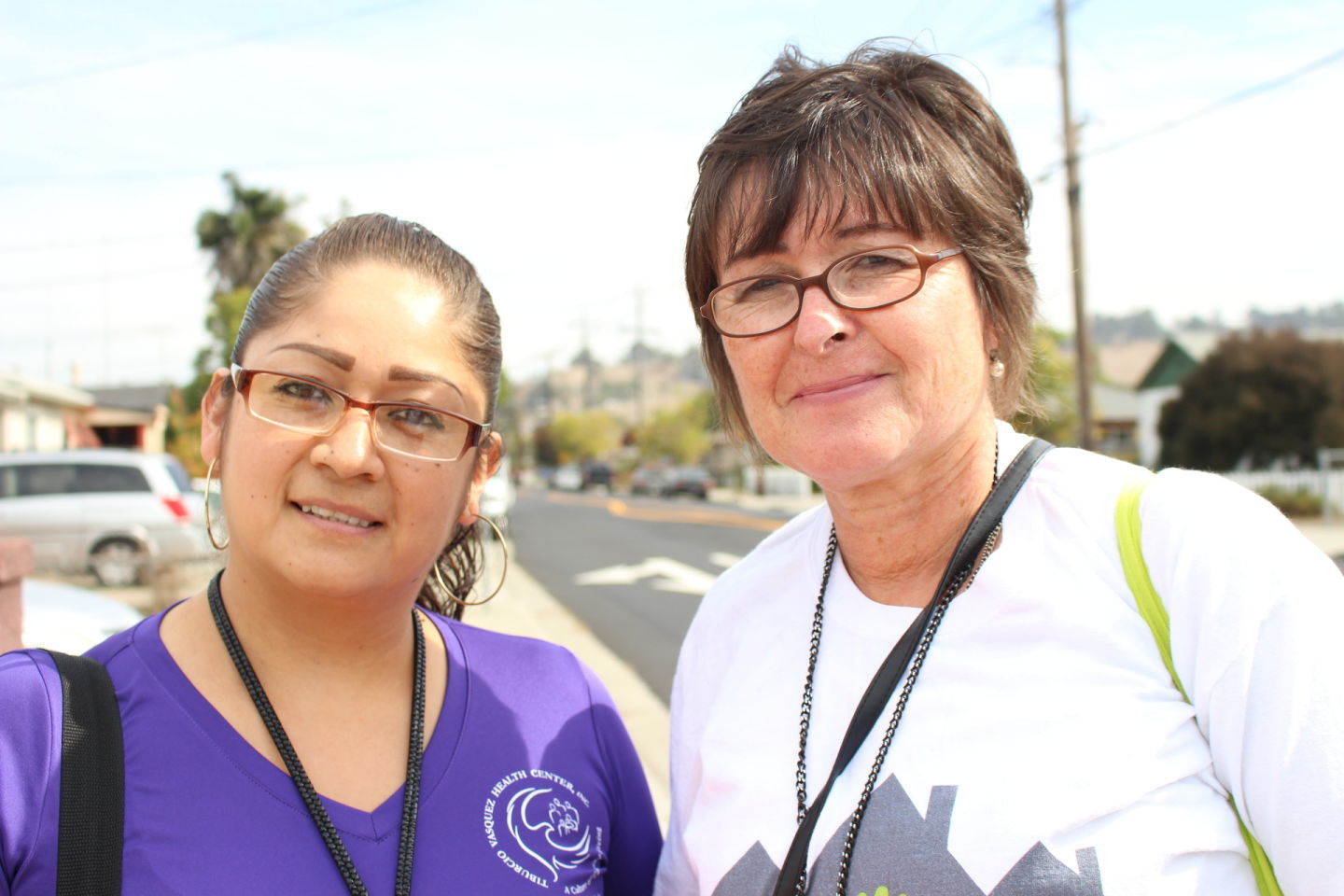
"caption": "Guadalupe Perez (left) and Carolina Arroyo-Solveson hit the streets to connect Hayward residents with local community clinics and other resources.",
"description": null,
"title": "Guadalupe Perez (left) and Carollina Arroyo-Solveson hit the streets to connect Hayward residents with local community clinics and other resources.",
"credit": "Farida Jhabvala Romero/KQED",
"status": "inherit",
"isLoading": false,
"fetchFailed": false
},
"stateofhealth_120448": {
"type": "attachments",
"id": "stateofhealth_120448",
"meta": {
"index": "attachments_1716263798",
"site": "stateofhealth",
"id": "120448",
"found": true
},
"parent": 120396,
"imgSizes": {
"twentyfourteen-full-width": {
"file": "https://ww2.kqed.org/app/uploads/sites/27/2015/12/1351616369_41a87422d7_o-1038x576.jpg",
"width": 1038,
"mimeType": "image/jpeg",
"height": 576
},
"thumbnail": {
"file": "https://ww2.kqed.org/app/uploads/sites/27/2015/12/1351616369_41a87422d7_o-400x266.jpg",
"width": 400,
"mimeType": "image/jpeg",
"height": 266
},
"fd-sm": {
"file": "https://ww2.kqed.org/app/uploads/sites/27/2015/12/1351616369_41a87422d7_o-960x638.jpg",
"width": 960,
"mimeType": "image/jpeg",
"height": 638
},
"post-thumbnail": {
"file": "https://ww2.kqed.org/app/uploads/sites/27/2015/12/1351616369_41a87422d7_o-672x372.jpg",
"width": 672,
"mimeType": "image/jpeg",
"height": 372
},
"kqedFullSize": {
"file": "https://ww2.kqed.org/app/uploads/sites/27/2015/12/1351616369_41a87422d7_o.jpg",
"width": 1600,
"height": 1063
},
"large": {
"file": "https://ww2.kqed.org/app/uploads/sites/27/2015/12/1351616369_41a87422d7_o-1440x957.jpg",
"width": 1440,
"mimeType": "image/jpeg",
"height": 957
},
"guest-author-96": {
"file": "https://ww2.kqed.org/app/uploads/sites/27/2015/12/1351616369_41a87422d7_o-96x96.jpg",
"width": 96,
"mimeType": "image/jpeg",
"height": 96
},
"medium": {
"file": "https://ww2.kqed.org/app/uploads/sites/27/2015/12/1351616369_41a87422d7_o-800x532.jpg",
"width": 800,
"mimeType": "image/jpeg",
"height": 532
},
"guest-author-64": {
"file": "https://ww2.kqed.org/app/uploads/sites/27/2015/12/1351616369_41a87422d7_o-64x64.jpg",
"width": 64,
"mimeType": "image/jpeg",
"height": 64
},
"guest-author-32": {
"file": "https://ww2.kqed.org/app/uploads/sites/27/2015/12/1351616369_41a87422d7_o-32x32.jpg",
"width": 32,
"mimeType": "image/jpeg",
"height": 32
},
"jmtc-small-thumb": {
"file": "https://ww2.kqed.org/app/uploads/sites/27/2015/12/1351616369_41a87422d7_o-280x150.jpg",
"width": 280,
"mimeType": "image/jpeg",
"height": 150
},
"fd-med": {
"file": "https://ww2.kqed.org/app/uploads/sites/27/2015/12/1351616369_41a87422d7_o-1180x784.jpg",
"width": 1180,
"mimeType": "image/jpeg",
"height": 784
},
"detail": {
"file": "https://ww2.kqed.org/app/uploads/sites/27/2015/12/1351616369_41a87422d7_o-75x75.jpg",
"width": 75,
"mimeType": "image/jpeg",
"height": 75
},
"guest-author-128": {
"file": "https://ww2.kqed.org/app/uploads/sites/27/2015/12/1351616369_41a87422d7_o-128x128.jpg",
"width": 128,
"mimeType": "image/jpeg",
"height": 128
}
},
"publishDate": 1449610711,
"modified": 1449610756,
"caption": "Water canal outside Turlock, in California's San Joaquin Valley. ",
"description": null,
"title": "1351616369_41a87422d7_o",
"credit": "Ben W via Flickr",
"status": "inherit",
"isLoading": false,
"fetchFailed": false
},
"stateofhealth_119820": {
"type": "attachments",
"id": "stateofhealth_119820",
"meta": {
"index": "attachments_1716263798",
"site": "stateofhealth",
"id": "119820",
"found": true
},
"parent": 119817,
"imgSizes": {
"twentyfourteen-full-width": {
"file": "https://ww2.kqed.org/app/uploads/sites/27/2015/12/Black-Mental-Health-at-Church-55-1038x576.jpg",
"width": 1038,
"mimeType": "image/jpeg",
"height": 576
},
"thumbnail": {
"file": "https://ww2.kqed.org/app/uploads/sites/27/2015/12/Black-Mental-Health-at-Church-55-400x267.jpg",
"width": 400,
"mimeType": "image/jpeg",
"height": 267
},
"fd-sm": {
"file": "https://ww2.kqed.org/app/uploads/sites/27/2015/12/Black-Mental-Health-at-Church-55-960x640.jpg",
"width": 960,
"mimeType": "image/jpeg",
"height": 640
},
"post-thumbnail": {
"file": "https://ww2.kqed.org/app/uploads/sites/27/2015/12/Black-Mental-Health-at-Church-55-672x372.jpg",
"width": 672,
"mimeType": "image/jpeg",
"height": 372
},
"kqedFullSize": {
"file": "https://ww2.kqed.org/app/uploads/sites/27/2015/12/Black-Mental-Health-at-Church-55.jpg",
"width": 1500,
"height": 1000
},
"large": {
"file": "https://ww2.kqed.org/app/uploads/sites/27/2015/12/Black-Mental-Health-at-Church-55-1440x960.jpg",
"width": 1440,
"mimeType": "image/jpeg",
"height": 960
},
"guest-author-96": {
"file": "https://ww2.kqed.org/app/uploads/sites/27/2015/12/Black-Mental-Health-at-Church-55-96x96.jpg",
"width": 96,
"mimeType": "image/jpeg",
"height": 96
},
"medium": {
"file": "https://ww2.kqed.org/app/uploads/sites/27/2015/12/Black-Mental-Health-at-Church-55-800x533.jpg",
"width": 800,
"mimeType": "image/jpeg",
"height": 533
},
"guest-author-64": {
"file": "https://ww2.kqed.org/app/uploads/sites/27/2015/12/Black-Mental-Health-at-Church-55-64x64.jpg",
"width": 64,
"mimeType": "image/jpeg",
"height": 64
},
"guest-author-32": {
"file": "https://ww2.kqed.org/app/uploads/sites/27/2015/12/Black-Mental-Health-at-Church-55-32x32.jpg",
"width": 32,
"mimeType": "image/jpeg",
"height": 32
},
"jmtc-small-thumb": {
"file": "https://ww2.kqed.org/app/uploads/sites/27/2015/12/Black-Mental-Health-at-Church-55-280x150.jpg",
"width": 280,
"mimeType": "image/jpeg",
"height": 150
},
"fd-med": {
"file": "https://ww2.kqed.org/app/uploads/sites/27/2015/12/Black-Mental-Health-at-Church-55-1180x787.jpg",
"width": 1180,
"mimeType": "image/jpeg",
"height": 787
},
"detail": {
"file": "https://ww2.kqed.org/app/uploads/sites/27/2015/12/Black-Mental-Health-at-Church-55-75x75.jpg",
"width": 75,
"mimeType": "image/jpeg",
"height": 75
},
"guest-author-128": {
"file": "https://ww2.kqed.org/app/uploads/sites/27/2015/12/Black-Mental-Health-at-Church-55-128x128.jpg",
"width": 128,
"mimeType": "image/jpeg",
"height": 128
}
},
"publishDate": 1449514726,
"modified": 1449514756,
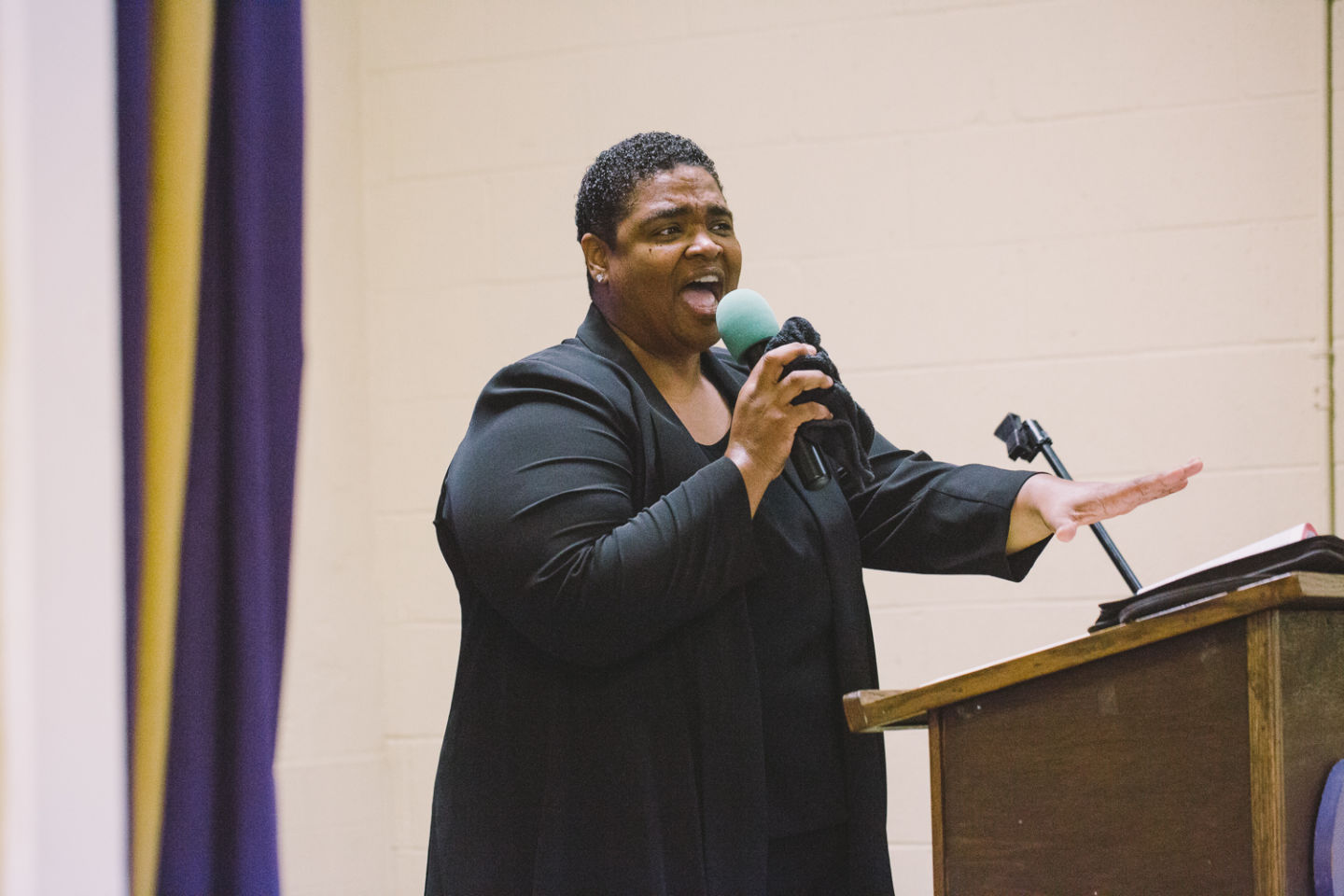
"caption": "Rev. Donna Allen leads a sermon at New Revelation Community Church. ",
"description": null,
"title": "Black Mental Health at Church-55",
"credit": "Alyssa Kapnik Samuel",
"status": "inherit",
"isLoading": false,
"fetchFailed": false
},
"stateofhealth_118444": {
"type": "attachments",
"id": "stateofhealth_118444",
"meta": {
"index": "attachments_1716263798",
"site": "stateofhealth",
"id": "118444",
"found": true
},
"parent": 0,
"imgSizes": {
"twentyfourteen-full-width": {
"file": "https://ww2.kqed.org/app/uploads/sites/27/2015/12/palliative-care-1-1038x576.jpg",
"width": 1038,
"mimeType": "image/jpeg",
"height": 576
},
"thumbnail": {
"file": "https://ww2.kqed.org/app/uploads/sites/27/2015/12/palliative-care-1-400x267.jpg",
"width": 400,
"mimeType": "image/jpeg",
"height": 267
},
"fd-sm": {
"file": "https://ww2.kqed.org/app/uploads/sites/27/2015/12/palliative-care-1-960x641.jpg",
"width": 960,
"mimeType": "image/jpeg",
"height": 641
},
"post-thumbnail": {
"file": "https://ww2.kqed.org/app/uploads/sites/27/2015/12/palliative-care-1-672x372.jpg",
"width": 672,
"mimeType": "image/jpeg",
"height": 372
},
"kqedFullSize": {
"file": "https://ww2.kqed.org/app/uploads/sites/27/2015/12/palliative-care-1-e1449270292399.jpg",
"width": 1920,
"height": 1281
},
"large": {
"file": "https://ww2.kqed.org/app/uploads/sites/27/2015/12/palliative-care-1-1440x961.jpg",
"width": 1440,
"mimeType": "image/jpeg",
"height": 961
},
"guest-author-96": {
"file": "https://ww2.kqed.org/app/uploads/sites/27/2015/12/palliative-care-1-96x96.jpg",
"width": 96,
"mimeType": "image/jpeg",
"height": 96
},
"medium": {
"file": "https://ww2.kqed.org/app/uploads/sites/27/2015/12/palliative-care-1-800x534.jpg",
"width": 800,
"mimeType": "image/jpeg",
"height": 534
},
"guest-author-64": {
"file": "https://ww2.kqed.org/app/uploads/sites/27/2015/12/palliative-care-1-64x64.jpg",
"width": 64,
"mimeType": "image/jpeg",
"height": 64
},
"guest-author-32": {
"file": "https://ww2.kqed.org/app/uploads/sites/27/2015/12/palliative-care-1-32x32.jpg",
"width": 32,
"mimeType": "image/jpeg",
"height": 32
},
"jmtc-small-thumb": {
"file": "https://ww2.kqed.org/app/uploads/sites/27/2015/12/palliative-care-1-280x150.jpg",
"width": 280,
"mimeType": "image/jpeg",
"height": 150
},
"fd-lrg": {
"file": "https://ww2.kqed.org/app/uploads/sites/27/2015/12/palliative-care-1-1920x1281.jpg",
"width": 1920,
"mimeType": "image/jpeg",
"height": 1281
},
"fd-med": {
"file": "https://ww2.kqed.org/app/uploads/sites/27/2015/12/palliative-care-1-1180x787.jpg",
"width": 1180,
"mimeType": "image/jpeg",
"height": 787
},
"detail": {
"file": "https://ww2.kqed.org/app/uploads/sites/27/2015/12/palliative-care-1-75x75.jpg",
"width": 75,
"mimeType": "image/jpeg",
"height": 75
},
"guest-author-128": {
"file": "https://ww2.kqed.org/app/uploads/sites/27/2015/12/palliative-care-1-128x128.jpg",
"width": 128,
"mimeType": "image/jpeg",
"height": 128
}
},
"publishDate": 1449270136,
"modified": 1449270944,
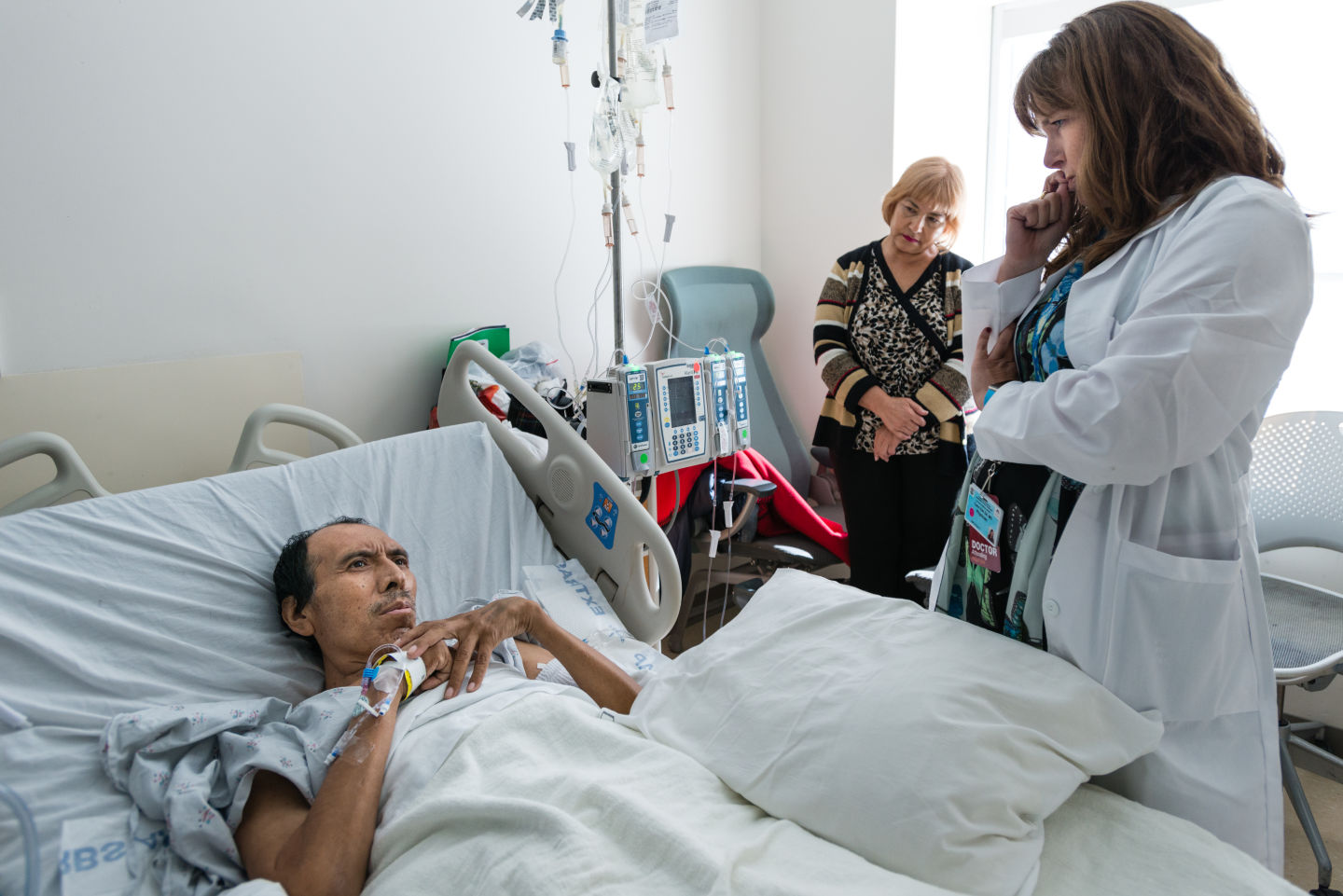
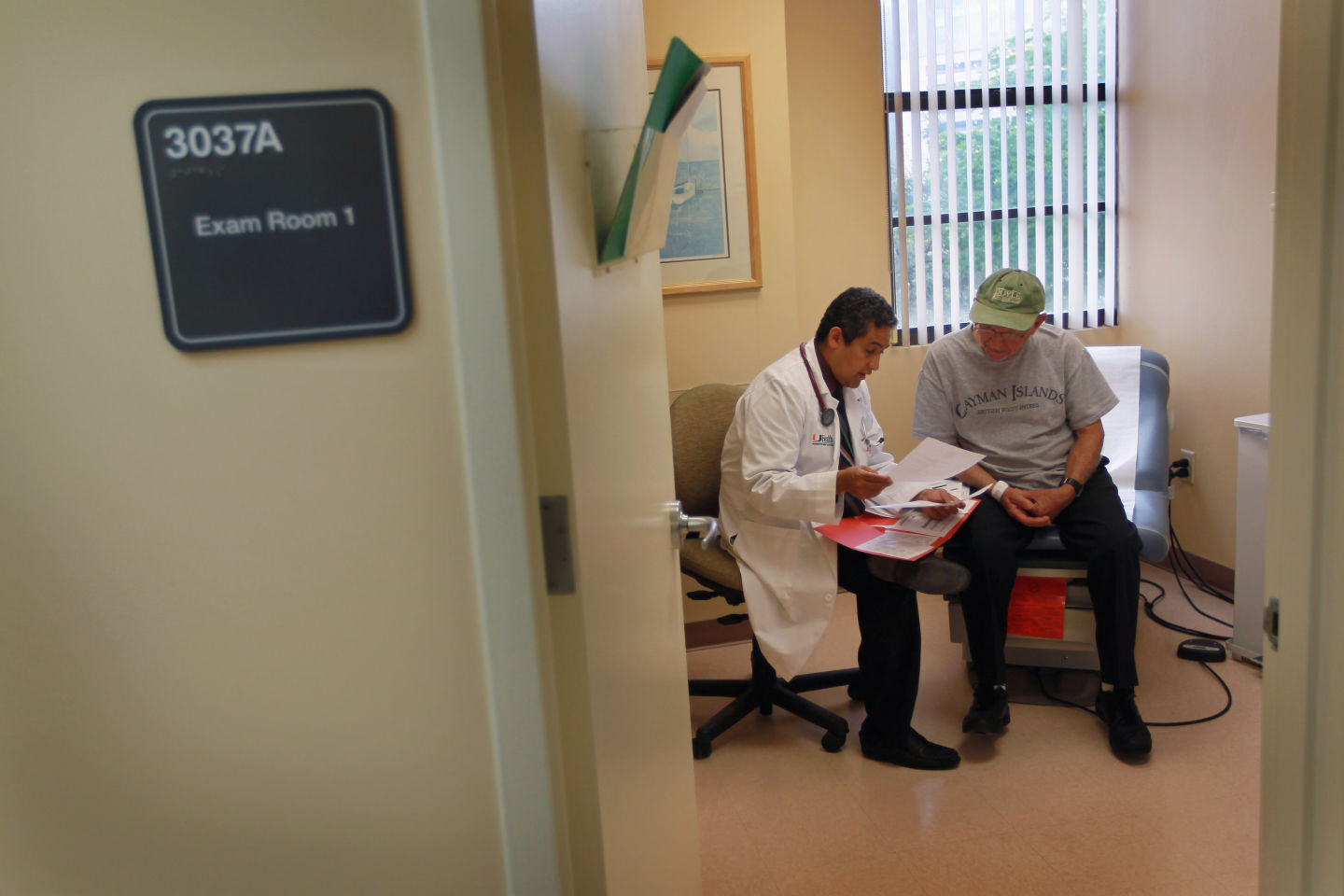
"caption": "Dr. Carin van Zyl talks to patient Jose Garcia Flores about his treatment options for his advanced stage colon cancer.",
"description": "Dr. Carin van Zyl talks to patient Jose Garcia Flores about his treatment options for his advanced stage colon cancer.",
"title": "palliative-care-1",
"credit": "Heidi de Marco/KHN",
"status": "inherit",
"isLoading": false,
"fetchFailed": false
},
"stateofhealth_117801": {
"type": "attachments",
"id": "stateofhealth_117801",
"meta": {
"index": "attachments_1716263798",
"site": "stateofhealth",
"id": "117801",
"found": true
},
"parent": 117430,
"imgSizes": {
"twentyfourteen-full-width": {
"file": "https://ww2.kqed.org/app/uploads/sites/27/2015/12/InlandRegionalCenter-1038x576.jpg",
"width": 1038,
"mimeType": "image/jpeg",
"height": 576
},
"thumbnail": {
"file": "https://ww2.kqed.org/app/uploads/sites/27/2015/12/InlandRegionalCenter-400x265.jpg",
"width": 400,
"mimeType": "image/jpeg",
"height": 265
},
"fd-sm": {
"file": "https://ww2.kqed.org/app/uploads/sites/27/2015/12/InlandRegionalCenter-960x636.jpg",
"width": 960,
"mimeType": "image/jpeg",
"height": 636
},
"post-thumbnail": {
"file": "https://ww2.kqed.org/app/uploads/sites/27/2015/12/InlandRegionalCenter-672x372.jpg",
"width": 672,
"mimeType": "image/jpeg",
"height": 372
},
"kqedFullSize": {
"file": "https://ww2.kqed.org/app/uploads/sites/27/2015/12/InlandRegionalCenter.jpg",
"width": 1920,
"height": 1272
},
"large": {
"file": "https://ww2.kqed.org/app/uploads/sites/27/2015/12/InlandRegionalCenter-1440x954.jpg",
"width": 1440,
"mimeType": "image/jpeg",
"height": 954
},
"guest-author-96": {
"file": "https://ww2.kqed.org/app/uploads/sites/27/2015/12/InlandRegionalCenter-96x96.jpg",
"width": 96,
"mimeType": "image/jpeg",
"height": 96
},
"medium": {
"file": "https://ww2.kqed.org/app/uploads/sites/27/2015/12/InlandRegionalCenter-800x530.jpg",
"width": 800,
"mimeType": "image/jpeg",
"height": 530
},
"guest-author-64": {
"file": "https://ww2.kqed.org/app/uploads/sites/27/2015/12/InlandRegionalCenter-64x64.jpg",
"width": 64,
"mimeType": "image/jpeg",
"height": 64
},
"guest-author-32": {
"file": "https://ww2.kqed.org/app/uploads/sites/27/2015/12/InlandRegionalCenter-32x32.jpg",
"width": 32,
"mimeType": "image/jpeg",
"height": 32
},
"jmtc-small-thumb": {
"file": "https://ww2.kqed.org/app/uploads/sites/27/2015/12/InlandRegionalCenter-280x150.jpg",
"width": 280,
"mimeType": "image/jpeg",
"height": 150
},
"fd-lrg": {
"file": "https://ww2.kqed.org/app/uploads/sites/27/2015/12/InlandRegionalCenter-1920x1272.jpg",
"width": 1920,
"mimeType": "image/jpeg",
"height": 1272
},
"fd-med": {
"file": "https://ww2.kqed.org/app/uploads/sites/27/2015/12/InlandRegionalCenter-1180x782.jpg",
"width": 1180,
"mimeType": "image/jpeg",
"height": 782
},
"detail": {
"file": "https://ww2.kqed.org/app/uploads/sites/27/2015/12/InlandRegionalCenter-75x75.jpg",
"width": 75,
"mimeType": "image/jpeg",
"height": 75
},
"guest-author-128": {
"file": "https://ww2.kqed.org/app/uploads/sites/27/2015/12/InlandRegionalCenter-128x128.jpg",
"width": 128,
"mimeType": "image/jpeg",
"height": 128
}
},
"publishDate": 1449168972,
"modified": 1449192317,
"caption": "A helicopter hovers around the Inland Regional Center in San Bernardino, California, the scene of a mass shooting on Wednesday.",
"description": "A helicopter hovers around the Inland Regional Center in San Bernardino, Calif., the scene of a mass shooting on Wednesday.",
"title": "InlandRegionalCenter",
"credit": "Luis Sinco/Los Angeles Times via Getty Images",
"status": "inherit",
"isLoading": false,
"fetchFailed": false
},
"stateofhealth_116826": {
"type": "attachments",
"id": "stateofhealth_116826",
"meta": {
"index": "attachments_1716263798",
"site": "stateofhealth",
"id": "116826",
"found": true
},
"parent": 116824,
"imgSizes": {
"jmtc-small-thumb": {
"file": "https://ww2.kqed.org/app/uploads/sites/27/2015/12/hiv-life-insurance-570-280x150.png",
"width": 280,
"mimeType": "image/png",
"height": 150
},
"thumbnail": {
"file": "https://ww2.kqed.org/app/uploads/sites/27/2015/12/hiv-life-insurance-570-400x267.png",
"width": 400,
"mimeType": "image/png",
"height": 267
},
"post-thumbnail": {
"file": "https://ww2.kqed.org/app/uploads/sites/27/2015/12/hiv-life-insurance-570-570x372.png",
"width": 570,
"mimeType": "image/png",
"height": 372
},
"kqedFullSize": {
"file": "https://ww2.kqed.org/app/uploads/sites/27/2015/12/hiv-life-insurance-570.png",
"width": 570,
"height": 380
},
"guest-author-96": {
"file": "https://ww2.kqed.org/app/uploads/sites/27/2015/12/hiv-life-insurance-570-96x96.png",
"width": 96,
"mimeType": "image/png",
"height": 96
},
"guest-author-64": {
"file": "https://ww2.kqed.org/app/uploads/sites/27/2015/12/hiv-life-insurance-570-64x64.png",
"width": 64,
"mimeType": "image/png",
"height": 64
},
"detail": {
"file": "https://ww2.kqed.org/app/uploads/sites/27/2015/12/hiv-life-insurance-570-75x75.png",
"width": 75,
"mimeType": "image/png",
"height": 75
},
"guest-author-32": {
"file": "https://ww2.kqed.org/app/uploads/sites/27/2015/12/hiv-life-insurance-570-32x32.png",
"width": 32,
"mimeType": "image/png",
"height": 32
},
"guest-author-128": {
"file": "https://ww2.kqed.org/app/uploads/sites/27/2015/12/hiv-life-insurance-570-128x128.png",
"width": 128,
"mimeType": "image/png",
"height": 128
}
},
"publishDate": 1449005886,
"modified": 1449005912,
"caption": null,
"description": null,
"title": "hiv-life-insurance-570",
"credit": "Courtesy: Kaiser Health News",
"status": "inherit",
"isLoading": false,
"fetchFailed": false
},
"stateofhealth_113407": {
"type": "attachments",
"id": "stateofhealth_113407",
"meta": {
"index": "attachments_1716263798",
"site": "stateofhealth",
"id": "113407",
"found": true
},
"parent": 113405,
"imgSizes": {
"twentyfourteen-full-width": {
"file": "https://ww2.kqed.org/app/uploads/sites/27/2015/11/joanna_alex-1038x576.jpg",
"width": 1038,
"mimeType": "image/jpeg",
"height": 576
},
"thumbnail": {
"file": "https://ww2.kqed.org/app/uploads/sites/27/2015/11/joanna_alex-400x300.jpg",
"width": 400,
"mimeType": "image/jpeg",
"height": 300
},
"fd-sm": {
"file": "https://ww2.kqed.org/app/uploads/sites/27/2015/11/joanna_alex-960x720.jpg",
"width": 960,
"mimeType": "image/jpeg",
"height": 720
},
"post-thumbnail": {
"file": "https://ww2.kqed.org/app/uploads/sites/27/2015/11/joanna_alex-672x372.jpg",
"width": 672,
"mimeType": "image/jpeg",
"height": 372
},
"kqedFullSize": {
"file": "https://ww2.kqed.org/app/uploads/sites/27/2015/11/joanna_alex-e1448398595753.jpg",
"width": 1920,
"height": 1440
},
"large": {
"file": "https://ww2.kqed.org/app/uploads/sites/27/2015/11/joanna_alex-1440x1080.jpg",
"width": 1440,
"mimeType": "image/jpeg",
"height": 1080
},
"guest-author-96": {
"file": "https://ww2.kqed.org/app/uploads/sites/27/2015/11/joanna_alex-96x96.jpg",
"width": 96,
"mimeType": "image/jpeg",
"height": 96
},
"medium": {
"file": "https://ww2.kqed.org/app/uploads/sites/27/2015/11/joanna_alex-800x600.jpg",
"width": 800,
"mimeType": "image/jpeg",
"height": 600
},
"guest-author-64": {
"file": "https://ww2.kqed.org/app/uploads/sites/27/2015/11/joanna_alex-64x64.jpg",
"width": 64,
"mimeType": "image/jpeg",
"height": 64
},
"guest-author-32": {
"file": "https://ww2.kqed.org/app/uploads/sites/27/2015/11/joanna_alex-32x32.jpg",
"width": 32,
"mimeType": "image/jpeg",
"height": 32
},
"jmtc-small-thumb": {
"file": "https://ww2.kqed.org/app/uploads/sites/27/2015/11/joanna_alex-280x150.jpg",
"width": 280,
"mimeType": "image/jpeg",
"height": 150
},
"fd-lrg": {
"file": "https://ww2.kqed.org/app/uploads/sites/27/2015/11/joanna_alex-1920x1440.jpg",
"width": 1920,
"mimeType": "image/jpeg",
"height": 1440
},
"fd-med": {
"file": "https://ww2.kqed.org/app/uploads/sites/27/2015/11/joanna_alex-1180x885.jpg",
"width": 1180,
"mimeType": "image/jpeg",
"height": 885
},
"detail": {
"file": "https://ww2.kqed.org/app/uploads/sites/27/2015/11/joanna_alex-75x75.jpg",
"width": 75,
"mimeType": "image/jpeg",
"height": 75
},
"guest-author-128": {
"file": "https://ww2.kqed.org/app/uploads/sites/27/2015/11/joanna_alex-128x128.jpg",
"width": 128,
"mimeType": "image/jpeg",
"height": 128
}
},
"publishDate": 1448398434,
"modified": 1448908136,
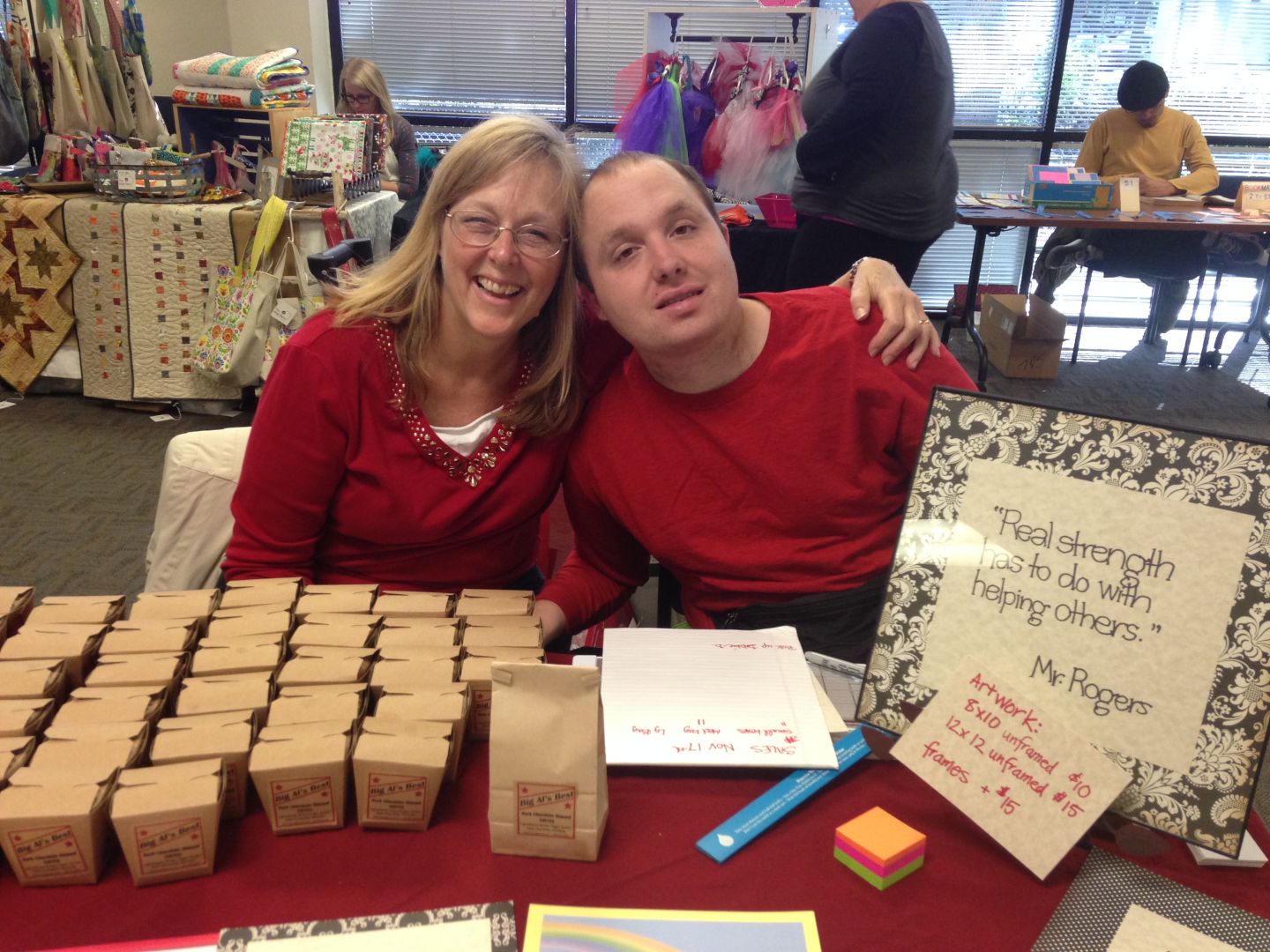
"caption": "Joanna Jaeger and her son Alex, 23, selling his toffee and artwork at a holiday boutique in San Jose. Alex has autism, and the family is participating in Kaiser's 'biobank.'",
"description": "Joanna Jaeger and her son Alex, 23, selling his toffee and artwork at a holiday boutique in San Jose. Alex has autism. ",
"title": "joanna_alex",
"credit": "Courtesy of Joanna Jaeger",
"status": "inherit",
"isLoading": false,
"fetchFailed": false
},
"stateofhealth_114033": {
"type": "attachments",
"id": "stateofhealth_114033",
"meta": {
"index": "attachments_1716263798",
"site": "stateofhealth",
"id": "114033",
"found": true
},
"parent": 113928,
"imgSizes": {
"twentyfourteen-full-width": {
"file": "https://ww2.kqed.org/app/uploads/sites/27/2015/11/IMG_3104-copy-1038x576.jpg",
"width": 1038,
"mimeType": "image/jpeg",
"height": 576
},
"thumbnail": {
"file": "https://ww2.kqed.org/app/uploads/sites/27/2015/11/IMG_3104-copy-400x267.jpg",
"width": 400,
"mimeType": "image/jpeg",
"height": 267
},
"fd-sm": {
"file": "https://ww2.kqed.org/app/uploads/sites/27/2015/11/IMG_3104-copy-960x640.jpg",
"width": 960,
"mimeType": "image/jpeg",
"height": 640
},
"post-thumbnail": {
"file": "https://ww2.kqed.org/app/uploads/sites/27/2015/11/IMG_3104-copy-672x372.jpg",
"width": 672,
"mimeType": "image/jpeg",
"height": 372
},
"kqedFullSize": {
"file": "https://ww2.kqed.org/app/uploads/sites/27/2015/11/IMG_3104-copy-e1448505647448.jpg",
"width": 1920,
"height": 1280
},
"large": {
"file": "https://ww2.kqed.org/app/uploads/sites/27/2015/11/IMG_3104-copy-1440x960.jpg",
"width": 1440,
"mimeType": "image/jpeg",
"height": 960
},
"guest-author-96": {
"file": "https://ww2.kqed.org/app/uploads/sites/27/2015/11/IMG_3104-copy-96x96.jpg",
"width": 96,
"mimeType": "image/jpeg",
"height": 96
},
"medium": {
"file": "https://ww2.kqed.org/app/uploads/sites/27/2015/11/IMG_3104-copy-800x533.jpg",
"width": 800,
"mimeType": "image/jpeg",
"height": 533
},
"guest-author-64": {
"file": "https://ww2.kqed.org/app/uploads/sites/27/2015/11/IMG_3104-copy-64x64.jpg",
"width": 64,
"mimeType": "image/jpeg",
"height": 64
},
"guest-author-32": {
"file": "https://ww2.kqed.org/app/uploads/sites/27/2015/11/IMG_3104-copy-32x32.jpg",
"width": 32,
"mimeType": "image/jpeg",
"height": 32
},
"jmtc-small-thumb": {
"file": "https://ww2.kqed.org/app/uploads/sites/27/2015/11/IMG_3104-copy-280x150.jpg",
"width": 280,
"mimeType": "image/jpeg",
"height": 150
},
"fd-lrg": {
"file": "https://ww2.kqed.org/app/uploads/sites/27/2015/11/IMG_3104-copy-1920x1280.jpg",
"width": 1920,
"mimeType": "image/jpeg",
"height": 1280
},
"fd-med": {
"file": "https://ww2.kqed.org/app/uploads/sites/27/2015/11/IMG_3104-copy-1180x787.jpg",
"width": 1180,
"mimeType": "image/jpeg",
"height": 787
},
"detail": {
"file": "https://ww2.kqed.org/app/uploads/sites/27/2015/11/IMG_3104-copy-75x75.jpg",
"width": 75,
"mimeType": "image/jpeg",
"height": 75
},
"guest-author-128": {
"file": "https://ww2.kqed.org/app/uploads/sites/27/2015/11/IMG_3104-copy-128x128.jpg",
"width": 128,
"mimeType": "image/jpeg",
"height": 128
}
},
"publishDate": 1448505505,
"modified": 1449337418,
"caption": "Michael Palone, 26, has mild autism. He is enrolled at a work program through The Arc of Alameda County, an agency for people with intellectual disabilities. His program may close soon due to budget problems.",
"description": "Michael Palone, 26, who has Asperger's syndrome and mild autism. He is enrolled at a work program through The Arc of Alameda County, an agency for people with intellectual disabilities. His program may close soon due to budget problems.",
"title": "IMG_3104 copy",
"credit": "Melissa Hellmann",
"status": "inherit",
"isLoading": false,
"fetchFailed": false
},
"stateofhealth_111369": {
"type": "attachments",
"id": "stateofhealth_111369",
"meta": {
"index": "attachments_1716263798",
"site": "stateofhealth",
"id": "111369",
"found": true
},
"parent": 111055,
"imgSizes": {
"twentyfourteen-full-width": {
"file": "https://ww2.kqed.org/app/uploads/sites/27/2015/11/iStock_000025181542_Large-1038x576.jpg",
"width": 1038,
"mimeType": "image/jpeg",
"height": 576
},
"thumbnail": {
"file": "https://ww2.kqed.org/app/uploads/sites/27/2015/11/iStock_000025181542_Large-400x267.jpg",
"width": 400,
"mimeType": "image/jpeg",
"height": 267
},
"fd-sm": {
"file": "https://ww2.kqed.org/app/uploads/sites/27/2015/11/iStock_000025181542_Large-960x640.jpg",
"width": 960,
"mimeType": "image/jpeg",
"height": 640
},
"post-thumbnail": {
"file": "https://ww2.kqed.org/app/uploads/sites/27/2015/11/iStock_000025181542_Large-672x372.jpg",
"width": 672,
"mimeType": "image/jpeg",
"height": 372
},
"kqedFullSize": {
"file": "https://ww2.kqed.org/app/uploads/sites/27/2015/11/iStock_000025181542_Large-e1448031519392.jpg",
"width": 1921,
"height": 1280
},
"large": {
"file": "https://ww2.kqed.org/app/uploads/sites/27/2015/11/iStock_000025181542_Large-1440x960.jpg",
"width": 1440,
"mimeType": "image/jpeg",
"height": 960
},
"guest-author-96": {
"file": "https://ww2.kqed.org/app/uploads/sites/27/2015/11/iStock_000025181542_Large-96x96.jpg",
"width": 96,
"mimeType": "image/jpeg",
"height": 96
},
"medium": {
"file": "https://ww2.kqed.org/app/uploads/sites/27/2015/11/iStock_000025181542_Large-800x533.jpg",
"width": 800,
"mimeType": "image/jpeg",
"height": 533
},
"guest-author-64": {
"file": "https://ww2.kqed.org/app/uploads/sites/27/2015/11/iStock_000025181542_Large-64x64.jpg",
"width": 64,
"mimeType": "image/jpeg",
"height": 64
},
"guest-author-32": {
"file": "https://ww2.kqed.org/app/uploads/sites/27/2015/11/iStock_000025181542_Large-32x32.jpg",
"width": 32,
"mimeType": "image/jpeg",
"height": 32
},
"jmtc-small-thumb": {
"file": "https://ww2.kqed.org/app/uploads/sites/27/2015/11/iStock_000025181542_Large-280x150.jpg",
"width": 280,
"mimeType": "image/jpeg",
"height": 150
},
"fd-lrg": {
"file": "https://ww2.kqed.org/app/uploads/sites/27/2015/11/iStock_000025181542_Large-1920x1280.jpg",
"width": 1920,
"mimeType": "image/jpeg",
"height": 1280
},
"fd-med": {
"file": "https://ww2.kqed.org/app/uploads/sites/27/2015/11/iStock_000025181542_Large-1180x786.jpg",
"width": 1180,
"mimeType": "image/jpeg",
"height": 786
},
"detail": {
"file": "https://ww2.kqed.org/app/uploads/sites/27/2015/11/iStock_000025181542_Large-75x75.jpg",
"width": 75,
"mimeType": "image/jpeg",
"height": 75
},
"guest-author-128": {
"file": "https://ww2.kqed.org/app/uploads/sites/27/2015/11/iStock_000025181542_Large-128x128.jpg",
"width": 128,
"mimeType": "image/jpeg",
"height": 128
}
},
"publishDate": 1448031500,
"modified": 1448031532,
"caption": null,
"description": null,
"title": "iStock_000025181542_Large",
"credit": "iStockphoto",
"status": "inherit",
"isLoading": false,
"fetchFailed": false
},
"stateofhealth_109972": {
"type": "attachments",
"id": "stateofhealth_109972",
"meta": {
"index": "attachments_1716263798",
"site": "stateofhealth",
"id": "109972",
"found": true
},
"parent": 109971,
"imgSizes": {
"twentyfourteen-full-width": {
"file": "https://ww2.kqed.org/app/uploads/sites/27/2015/11/Screen-Shot-2015-11-17-at-2.43.17-PM-1038x576.png",
"width": 1038,
"mimeType": "image/png",
"height": 576
},
"thumbnail": {
"file": "https://ww2.kqed.org/app/uploads/sites/27/2015/11/Screen-Shot-2015-11-17-at-2.43.17-PM-400x199.png",
"width": 400,
"mimeType": "image/png",
"height": 199
},
"fd-sm": {
"file": "https://ww2.kqed.org/app/uploads/sites/27/2015/11/Screen-Shot-2015-11-17-at-2.43.17-PM-960x478.png",
"width": 960,
"mimeType": "image/png",
"height": 478
},
"post-thumbnail": {
"file": "https://ww2.kqed.org/app/uploads/sites/27/2015/11/Screen-Shot-2015-11-17-at-2.43.17-PM-672x372.png",
"width": 672,
"mimeType": "image/png",
"height": 372
},
"kqedFullSize": {
"file": "https://ww2.kqed.org/app/uploads/sites/27/2015/11/Screen-Shot-2015-11-17-at-2.43.17-PM.png",
"width": 1918,
"height": 956
},
"large": {
"file": "https://ww2.kqed.org/app/uploads/sites/27/2015/11/Screen-Shot-2015-11-17-at-2.43.17-PM-1440x718.png",
"width": 1440,
"mimeType": "image/png",
"height": 718
},
"guest-author-96": {
"file": "https://ww2.kqed.org/app/uploads/sites/27/2015/11/Screen-Shot-2015-11-17-at-2.43.17-PM-96x96.png",
"width": 96,
"mimeType": "image/png",
"height": 96
},
"medium": {
"file": "https://ww2.kqed.org/app/uploads/sites/27/2015/11/Screen-Shot-2015-11-17-at-2.43.17-PM-800x399.png",
"width": 800,
"mimeType": "image/png",
"height": 399
},
"guest-author-64": {
"file": "https://ww2.kqed.org/app/uploads/sites/27/2015/11/Screen-Shot-2015-11-17-at-2.43.17-PM-64x64.png",
"width": 64,
"mimeType": "image/png",
"height": 64
},
"guest-author-32": {
"file": "https://ww2.kqed.org/app/uploads/sites/27/2015/11/Screen-Shot-2015-11-17-at-2.43.17-PM-32x32.png",
"width": 32,
"mimeType": "image/png",
"height": 32
},
"jmtc-small-thumb": {
"file": "https://ww2.kqed.org/app/uploads/sites/27/2015/11/Screen-Shot-2015-11-17-at-2.43.17-PM-280x150.png",
"width": 280,
"mimeType": "image/png",
"height": 150
},
"fd-med": {
"file": "https://ww2.kqed.org/app/uploads/sites/27/2015/11/Screen-Shot-2015-11-17-at-2.43.17-PM-1180x588.png",
"width": 1180,
"mimeType": "image/png",
"height": 588
},
"detail": {
"file": "https://ww2.kqed.org/app/uploads/sites/27/2015/11/Screen-Shot-2015-11-17-at-2.43.17-PM-75x75.png",
"width": 75,
"mimeType": "image/png",
"height": 75
},
"guest-author-128": {
"file": "https://ww2.kqed.org/app/uploads/sites/27/2015/11/Screen-Shot-2015-11-17-at-2.43.17-PM-128x128.png",
"width": 128,
"mimeType": "image/png",
"height": 128
}
},
"publishDate": 1447805793,
"modified": 1447894142,
"caption": "The Old Coast Hotel building (L) sits at the edge of downtown Fort Bragg. It is now home to the Mendocino Coast Hospitality Center. Many local residents oppose a social services agency in the downtown business district. ",
"description": null,
"title": "Screen Shot 2015-11-17 at 2.43.17 PM",
"credit": "Google Street View",
"status": "inherit",
"isLoading": false,
"fetchFailed": false
},
"stateofhealth_104286": {
"type": "attachments",
"id": "stateofhealth_104286",
"meta": {
"index": "attachments_1716263798",
"site": "stateofhealth",
"id": "104286",
"found": true
},
"parent": 104264,
"imgSizes": {
"twentyfourteen-full-width": {
"file": "https://ww2.kqed.org/app/uploads/sites/27/2015/11/RS170_108160554-1038x576.jpg",
"width": 1038,
"mimeType": "image/jpeg",
"height": 576
},
"thumbnail": {
"file": "https://ww2.kqed.org/app/uploads/sites/27/2015/11/RS170_108160554-400x267.jpg",
"width": 400,
"mimeType": "image/jpeg",
"height": 267
},
"fd-sm": {
"file": "https://ww2.kqed.org/app/uploads/sites/27/2015/11/RS170_108160554-960x640.jpg",
"width": 960,
"mimeType": "image/jpeg",
"height": 640
},
"post-thumbnail": {
"file": "https://ww2.kqed.org/app/uploads/sites/27/2015/11/RS170_108160554-672x372.jpg",
"width": 672,
"mimeType": "image/jpeg",
"height": 372
},
"kqedFullSize": {
"file": "https://ww2.kqed.org/app/uploads/sites/27/2015/11/RS170_108160554-e1446838054338.jpg",
"width": 1920,
"height": 1280
},
"large": {
"file": "https://ww2.kqed.org/app/uploads/sites/27/2015/11/RS170_108160554-1440x960.jpg",
"width": 1440,
"mimeType": "image/jpeg",
"height": 960
},
"guest-author-96": {
"file": "https://ww2.kqed.org/app/uploads/sites/27/2015/11/RS170_108160554-96x96.jpg",
"width": 96,
"mimeType": "image/jpeg",
"height": 96
},
"medium": {
"file": "https://ww2.kqed.org/app/uploads/sites/27/2015/11/RS170_108160554-800x533.jpg",
"width": 800,
"mimeType": "image/jpeg",
"height": 533
},
"guest-author-64": {
"file": "https://ww2.kqed.org/app/uploads/sites/27/2015/11/RS170_108160554-64x64.jpg",
"width": 64,
"mimeType": "image/jpeg",
"height": 64
},
"guest-author-32": {
"file": "https://ww2.kqed.org/app/uploads/sites/27/2015/11/RS170_108160554-32x32.jpg",
"width": 32,
"mimeType": "image/jpeg",
"height": 32
},
"jmtc-small-thumb": {
"file": "https://ww2.kqed.org/app/uploads/sites/27/2015/11/RS170_108160554-280x150.jpg",
"width": 280,
"mimeType": "image/jpeg",
"height": 150
},
"fd-lrg": {
"file": "https://ww2.kqed.org/app/uploads/sites/27/2015/11/RS170_108160554-1920x1280.jpg",
"width": 1920,
"mimeType": "image/jpeg",
"height": 1280
},
"fd-med": {
"file": "https://ww2.kqed.org/app/uploads/sites/27/2015/11/RS170_108160554-1180x787.jpg",
"width": 1180,
"mimeType": "image/jpeg",
"height": 787
},
"detail": {
"file": "https://ww2.kqed.org/app/uploads/sites/27/2015/11/RS170_108160554-75x75.jpg",
"width": 75,
"mimeType": "image/jpeg",
"height": 75
},
"guest-author-128": {
"file": "https://ww2.kqed.org/app/uploads/sites/27/2015/11/RS170_108160554-128x128.jpg",
"width": 128,
"mimeType": "image/jpeg",
"height": 128
}
},
"publishDate": 1446838041,
"modified": 1446838097,
"caption": null,
"description": null,
"title": "Florida Doctor Sees Patients As House Debates Health Care Reform Repeal Act",
"credit": "Joe Raedle/Getty Images",
"status": "inherit",
"isLoading": false,
"fetchFailed": false
},
"stateofhealth_109402": {
"type": "attachments",
"id": "stateofhealth_109402",
"meta": {
"index": "attachments_1716263798",
"site": "stateofhealth",
"id": "109402",
"found": true
},
"parent": 109353,
"imgSizes": {
"twentyfourteen-full-width": {
"file": "https://ww2.kqed.org/app/uploads/sites/27/2015/11/iStock_000023087655_Large-1038x576.jpg",
"width": 1038,
"mimeType": "image/jpeg",
"height": 576
},
"thumbnail": {
"file": "https://ww2.kqed.org/app/uploads/sites/27/2015/11/iStock_000023087655_Large-400x267.jpg",
"width": 400,
"mimeType": "image/jpeg",
"height": 267
},
"fd-sm": {
"file": "https://ww2.kqed.org/app/uploads/sites/27/2015/11/iStock_000023087655_Large-960x640.jpg",
"width": 960,
"mimeType": "image/jpeg",
"height": 640
},
"post-thumbnail": {
"file": "https://ww2.kqed.org/app/uploads/sites/27/2015/11/iStock_000023087655_Large-672x372.jpg",
"width": 672,
"mimeType": "image/jpeg",
"height": 372
},
"kqedFullSize": {
"file": "https://ww2.kqed.org/app/uploads/sites/27/2015/11/iStock_000023087655_Large-e1447721082962.jpg",
"width": 1921,
"height": 1280
},
"large": {
"file": "https://ww2.kqed.org/app/uploads/sites/27/2015/11/iStock_000023087655_Large-1440x960.jpg",
"width": 1440,
"mimeType": "image/jpeg",
"height": 960
},
"guest-author-96": {
"file": "https://ww2.kqed.org/app/uploads/sites/27/2015/11/iStock_000023087655_Large-96x96.jpg",
"width": 96,
"mimeType": "image/jpeg",
"height": 96
},
"medium": {
"file": "https://ww2.kqed.org/app/uploads/sites/27/2015/11/iStock_000023087655_Large-800x533.jpg",
"width": 800,
"mimeType": "image/jpeg",
"height": 533
},
"guest-author-64": {
"file": "https://ww2.kqed.org/app/uploads/sites/27/2015/11/iStock_000023087655_Large-64x64.jpg",
"width": 64,
"mimeType": "image/jpeg",
"height": 64
},
"guest-author-32": {
"file": "https://ww2.kqed.org/app/uploads/sites/27/2015/11/iStock_000023087655_Large-32x32.jpg",
"width": 32,
"mimeType": "image/jpeg",
"height": 32
},
"jmtc-small-thumb": {
"file": "https://ww2.kqed.org/app/uploads/sites/27/2015/11/iStock_000023087655_Large-280x150.jpg",
"width": 280,
"mimeType": "image/jpeg",
"height": 150
},
"fd-lrg": {
"file": "https://ww2.kqed.org/app/uploads/sites/27/2015/11/iStock_000023087655_Large-1920x1280.jpg",
"width": 1920,
"mimeType": "image/jpeg",
"height": 1280
},
"fd-med": {
"file": "https://ww2.kqed.org/app/uploads/sites/27/2015/11/iStock_000023087655_Large-1180x786.jpg",
"width": 1180,
"mimeType": "image/jpeg",
"height": 786
},
"detail": {
"file": "https://ww2.kqed.org/app/uploads/sites/27/2015/11/iStock_000023087655_Large-75x75.jpg",
"width": 75,
"mimeType": "image/jpeg",
"height": 75
},
"guest-author-128": {
"file": "https://ww2.kqed.org/app/uploads/sites/27/2015/11/iStock_000023087655_Large-128x128.jpg",
"width": 128,
"mimeType": "image/jpeg",
"height": 128
}
},
"publishDate": 1447721074,
"modified": 1447721113,
"caption": null,
"description": "hands of elderly woman, senior, dementia",
"title": null,
"credit": "iStockphoto",
"status": "inherit",
"isLoading": false,
"fetchFailed": false
}
},
"audioPlayerReducer": {
"postId": "stream_live",
"isPaused": true,
"isPlaying": false,
"pfsActive": false,
"pledgeModalIsOpen": true,
"playerDrawerIsOpen": false,
"liveAudioPlayStartedAt": 0,
"liveAudioPlayContext": ""
},
"authorsReducer": {
"byline_stateofhealth_120396": {
"type": "authors",
"id": "byline_stateofhealth_120396",
"meta": {
"override": true
},
"slug": "byline_stateofhealth_120396",
"name": "Ellen Knickmeyer and Scott Smith ",
"isLoading": false
},
"byline_stateofhealth_119817": {
"type": "authors",
"id": "byline_stateofhealth_119817",
"meta": {
"override": true
},
"slug": "byline_stateofhealth_119817",
"name": "Leila Day",
"isLoading": false
},
"byline_stateofhealth_118441": {
"type": "authors",
"id": "byline_stateofhealth_118441",
"meta": {
"override": true
},
"slug": "byline_stateofhealth_118441",
"name": "Anna Gorman",
"isLoading": false
},
"byline_stateofhealth_116824": {
"type": "authors",
"id": "byline_stateofhealth_116824",
"meta": {
"override": true
},
"slug": "byline_stateofhealth_116824",
"name": "Barbara Feder Ostrov",
"isLoading": false
},
"byline_stateofhealth_113928": {
"type": "authors",
"id": "byline_stateofhealth_113928",
"meta": {
"override": true
},
"slug": "byline_stateofhealth_113928",
"name": "Melissa Hellmann",
"isLoading": false
},
"byline_stateofhealth_109821": {
"type": "authors",
"id": "byline_stateofhealth_109821",
"meta": {
"override": true
},
"slug": "byline_stateofhealth_109821",
"name": "Tara Siler",
"isLoading": false
},
"byline_stateofhealth_109353": {
"type": "authors",
"id": "byline_stateofhealth_109353",
"meta": {
"override": true
},
"slug": "byline_stateofhealth_109353",
"name": "Anna Gorman",
"isLoading": false
},
"lisaaliferis": {
"type": "authors",
"id": "240",
"meta": {
"index": "authors_1716337520",
"id": "240",
"found": true
},
"name": "Lisa Aliferis",
"firstName": "Lisa",
"lastName": "Aliferis",
"slug": "lisaaliferis",
"email": "laliferis@kqed.org",
"display_author_email": false,
"staff_mastheads": [],
"title": "KQED Contributor",
"bio": "Lisa Aliferis is the founding editor of KQED's \u003cem>State of Health\u003c/em> blog. Since 2011, she's been writing and editing stories for the site. Before taking up blogging, she toiled for many years (more than we can count) producing health stories for television, including\u003cem> Dateline NBC\u003c/em> and San Francisco's CBS affiliate, KPIX-TV. She also wrote up a \u003ca title=\"http://www.kqed.org/news/health/obamacare/obamacare-guide.jsp\" href=\"http://www.kqed.org/news/health/obamacare/obamacare-guide.jsp\">handy guide to the Affordable Care Act\u003c/a>, especially for Californians. Her work has been honored for many awards. Most recently she was a finalist for \"Best Topical Reporting\" from the Online News Association. You can follow her on Twitter: \u003ca title=\"https://twitter.com/laliferis\" href=\"https://twitter.com/laliferis\">@laliferis\u003c/a>",
"avatar": "https://secure.gravatar.com/avatar/86c339d5cdcb0dcd2b6cf5d7c3f5886b?s=600&d=mm&r=g",
"twitter": "laliferis",
"facebook": null,
"instagram": null,
"linkedin": null,
"sites": [
{
"site": "news",
"roles": [
"subscriber"
]
},
{
"site": "futureofyou",
"roles": [
"subscriber"
]
},
{
"site": "stateofhealth",
"roles": [
"subscriber"
]
},
{
"site": "science",
"roles": [
"subscriber"
]
},
{
"site": "food",
"roles": []
}
],
"headData": {
"title": "Lisa Aliferis | KQED",
"description": "KQED Contributor",
"ogImgSrc": "https://secure.gravatar.com/avatar/86c339d5cdcb0dcd2b6cf5d7c3f5886b?s=600&d=mm&r=g",
"twImgSrc": "https://secure.gravatar.com/avatar/86c339d5cdcb0dcd2b6cf5d7c3f5886b?s=600&d=mm&r=g"
},
"isLoading": false,
"link": "/author/lisaaliferis"
},
"adembosky": {
"type": "authors",
"id": "3205",
"meta": {
"index": "authors_1716337520",
"id": "3205",
"found": true
},
"name": "April Dembosky",
"firstName": "April",
"lastName": "Dembosky",
"slug": "adembosky",
"email": "adembosky@kqed.org",
"display_author_email": false,
"staff_mastheads": [
"news",
"science"
],
"title": "KQED Health Correspondent",
"bio": "April Dembosky is the health correspondent for KQED News and a regular contributor to NPR. She specializes in covering altered states of mind, from postpartum depression to methamphetamine-induced psychosis to the insanity defense. Her investigative series on insurance companies sidestepping mental health laws won multiple awards, including first place in beat reporting from the national Association of Health Care Journalists. She is the recipient of numerous other prizes and fellowships, including a national Edward R. Murrow award for investigative reporting, a Society of Professional Journalists award for long-form storytelling, and a Carter Center Fellowship for Mental Health Journalism.\r\n\r\nDembosky reported and produced \u003cem>Soundtrack of Silence\u003c/em>, an audio documentary about music and memory that is currently being made into a feature film by Paramount Pictures.\r\n\r\nBefore joining KQED in 2013, Dembosky covered technology and Silicon Valley for \u003cem>The Financial Times of London,\u003c/em> and contributed business and arts stories to \u003cem>Marketplace \u003c/em>and \u003cem>The New York Times.\u003c/em> She got her undergraduate degree in philosophy from Smith College and her master's in journalism from the University of California, Berkeley. She is a classically trained violinist and proud alum of the first symphony orchestra at Burning Man.",
"avatar": "https://secure.gravatar.com/avatar/ef92999be4ceb9ea60701e7dc276f813?s=600&d=blank&r=g",
"twitter": "adembosky",
"facebook": null,
"instagram": null,
"linkedin": null,
"sites": [
{
"site": "arts",
"roles": [
"author"
]
},
{
"site": "news",
"roles": [
"editor"
]
},
{
"site": "futureofyou",
"roles": [
"author"
]
},
{
"site": "stateofhealth",
"roles": [
"editor"
]
},
{
"site": "science",
"roles": [
"editor"
]
},
{
"site": "forum",
"roles": [
"editor"
]
}
],
"headData": {
"title": "April Dembosky | KQED",
"description": "KQED Health Correspondent",
"ogImgSrc": "https://secure.gravatar.com/avatar/ef92999be4ceb9ea60701e7dc276f813?s=600&d=blank&r=g",
"twImgSrc": "https://secure.gravatar.com/avatar/ef92999be4ceb9ea60701e7dc276f813?s=600&d=blank&r=g"
},
"isLoading": false,
"link": "/author/adembosky"
},
"fjhabvala": {
"type": "authors",
"id": "8659",
"meta": {
"index": "authors_1716337520",
"id": "8659",
"found": true
},
"name": "Farida Jhabvala Romero",
"firstName": "Farida",
"lastName": "Jhabvala Romero",
"slug": "fjhabvala",
"email": "fjhabvala@kqed.org",
"display_author_email": true,
"staff_mastheads": [
"news"
],
"title": "KQED Contributor",
"bio": "Farida Jhabvala Romero is a Labor Correspondent for KQED. She previously covered immigration. Farida was \u003ca href=\"https://www.ccnma.org/2022-most-influential-latina-journalists\">named\u003c/a> one of the 10 Most Influential Latina Journalists in California in 2022 by the California Chicano News Media Association. Her work has won awards from the Society of Professional Journalists (Northern California), as well as a national and regional Edward M. Murrow Award for the collaborative reporting projects “Dangerous Air” and “Graying California.” Before joining KQED, Farida worked as a producer at Radio Bilingüe, a national public radio network. Farida earned her master’s degree in journalism from Stanford University.",
"avatar": "https://secure.gravatar.com/avatar/f9f022d4e2609741874222a1e9d41f48fea74011aa7c615eef91d9a50c944ebe?s=600&d=blank&r=g",
"twitter": "FaridaJhabvala",
"bluesky": null,
"facebook": null,
"instagram": null,
"linkedin": "https://www.linkedin.com/in/faridajhabvala/",
"sites": [
{
"site": "news",
"roles": [
"editor"
]
},
{
"site": "stateofhealth",
"roles": [
"author"
]
},
{
"site": "liveblog",
"roles": [
"author"
]
}
],
"headData": {
"title": "Farida Jhabvala Romero | KQED",
"description": "KQED Contributor",
"ogImgSrc": "https://secure.gravatar.com/avatar/f9f022d4e2609741874222a1e9d41f48fea74011aa7c615eef91d9a50c944ebe?s=600&d=blank&r=g",
"twImgSrc": "https://secure.gravatar.com/avatar/f9f022d4e2609741874222a1e9d41f48fea74011aa7c615eef91d9a50c944ebe?s=600&d=blank&r=g"
},
"isLoading": false,
"link": "/author/fjhabvala"
},
"lisafine": {
"type": "authors",
"id": "11105",
"meta": {
"index": "authors_1716337520",
"id": "11105",
"found": true
},
"name": "Lisa Fine",
"firstName": "Lisa",
"lastName": "Fine",
"slug": "lisafine",
"email": "lisacfine@gmail.com",
"display_author_email": false,
"staff_mastheads": [],
"title": null,
"bio": "Lisa Fine is a veteran journalist who's written for papers including the Washington Post, Philadelphia Inquirer, Richmond (Va.) Times-Dispatch and Education Week.\r\n\r\n ",
"avatar": "https://secure.gravatar.com/avatar/a9390ffc82e66cee761ae45f61cef865?s=600&d=blank&r=g",
"twitter": "@Lisa_Fine",
"facebook": null,
"instagram": null,
"linkedin": null,
"sites": [
{
"site": "futureofyou",
"roles": [
"author"
]
},
{
"site": "stateofhealth",
"roles": [
"editor"
]
}
],
"headData": {
"title": "Lisa Fine | KQED",
"description": null,
"ogImgSrc": "https://secure.gravatar.com/avatar/a9390ffc82e66cee761ae45f61cef865?s=600&d=blank&r=g",
"twImgSrc": "https://secure.gravatar.com/avatar/a9390ffc82e66cee761ae45f61cef865?s=600&d=blank&r=g"
},
"isLoading": false,
"link": "/author/lisafine"
}
},
"pagesReducer": {
"stateofhealth_category_place-matters": {
"type": "terms",
"id": "stateofhealth_11",
"meta": {
"index": "terms_1716263798",
"site": "stateofhealth",
"id": "11",
"score": 14.406195
},
"featImg": null,
"name": "Community Health",
"description": "\r\n\r\nFrom rural California to urban neighborhoods, where you live affects your health",
"taxonomy": "category",
"headData": {
"twImgId": null,
"twTitle": null,
"ogTitle": null,
"ogImgId": null,
"twDescription": null,
"description": "From rural California to urban neighborhoods, where you live affects your health",
"title": "Community Health Archives | KQED Arts",
"ogDescription": null
},
"ttid": 11,
"slug": "place-matters",
"isLoading": false,
"title": "Community Health",
"pageMeta": {
"site": "stateofhealth",
"WpPageTemplate": "page-topic-editorial",
"currentPage": 15
},
"blocks": [
{
"blockName": "kqed/company-paragraph",
"content": "\r\n\r\nFrom rural California to urban neighborhoods, where you live affects your health"
},
{
"blockName": "kqed/post-list",
"attrs": {
"layout": "cardArticle2",
"query": "posts/stateofhealth?category=place-matters",
"seeMore": false,
"paginated": true,
"page": 15
}
},
{
"blockName": "kqed/ad"
}
]
}
},
"pfsSessionReducer": {},
"postsReducer": {
"stream_live": {
"type": "live",
"id": "stream_live",
"audioUrl": "https://streams.kqed.org/kqedradio",
"title": "Live Stream",
"excerpt": "Live Stream information currently unavailable.",
"link": "/radio",
"featImg": "",
"label": {
"name": "KQED Live",
"link": "/"
}
},
"stream_kqedNewscast": {
"type": "posts",
"id": "stream_kqedNewscast",
"audioUrl": "https://www.kqed.org/.stream/anon/radio/RDnews/newscast.mp3?_=1",
"title": "KQED Newscast",
"featImg": "",
"label": {
"name": "88.5 FM",
"link": "/"
}
},
"stateofhealth_117914": {
"type": "posts",
"id": "stateofhealth_117914",
"meta": {
"index": "posts_1716263798",
"site": "stateofhealth",
"id": "117914",
"score": null,
"sort": [
1449680350000
]
},
"parent": 0,
"labelTerm": {
"site": "stateofhealth",
"term": 2363
},
"blocks": [],
"publishDate": 1449680350,
"format": "standard",
"disqusTitle": "Hayward 'Promotoras' Make House Calls, Connect Neighbors to Health Care",
"title": "Hayward 'Promotoras' Make House Calls, Connect Neighbors to Health Care",
"headTitle": "Vital Signs | State of Health | KQED News",
"content": "\u003cp>Carolina Arroyo-Solveson and Guadalupe Perez are community health workers, but the bulk of their work is done outside a clinic or hospital setting. Instead, they share health information right in people's homes.\u003c/p>\n\u003cp>[soundcloud url=\"https://api.soundcloud.com/tracks/237124405\" params=\"color=ff5500&auto_play=false&hide_related=false&show_comments=true&show_user=true&show_reposts=false\" width=\"100%\" height=\"166\" iframe=\"true\" /]\u003c/p>\n\u003cp>The two women are \u003cem>\u003ca href=\"http://www.cdc.gov/minorityhealth/promotores.html\" target=\"_blank\">promotoras de \u003c/a>\u003cspan style=\"color: #24890d\">salud\u003c/span>, \u003c/em>Spanish-speaking lay health educators. Promotoras have a long history in California, and Arroyo-Solveson and Perez are working today in Hayward as part of \u003ca href=\"http://www.haywardpromise.org/\" target=\"_blank\">Hayward Promise Neighborhood\u003c/a>, a federally-funded initiative that is honing in on the Jackson Triangle neighborhood, a lower-income, ethnically diverse area of the city.\u003c/p>\n\u003cp>The women go door to door, connecting residents to community clinics and other health services.\u003c/p>\n\u003caside class=\"pullquote alignright\">'They know that we are part of the community. We have our kids in the same schools. We go to the same stores.'\u003cbr>\n\u003ccite>Guadalupe Perez, a promotora in Hayward\u003c/cite>\u003c/aside>\n\u003cp>Arroyo-Solveson says there is nothing like face-to-face interaction to reach parents and others who may feel isolated or distrustful of government programs for which they would qualify.\u003c/p>\n\u003cp>[ad fullwidth]\u003c/p>\n\u003cp>\"Often when you have cultural barriers, language barriers, economic barriers, it’s very hard to feel empowered,\" Arroyo-Solveson says. \"We are trying to bridge these services for them so they can get empowered and engaged with the community.\"\u003c/p>\n\u003cp>Arroyo-Solveson is originally from Chile and says her own immigrant experience helps her relate to the families she works with.\u003c/p>\n\u003cp>Today, Arroyo-Solveson and Perez will meet with Liliana Salas, a stay-at-home mother with two children. Salas has invited the promotoras to her home, which is a welcome change from days past.\u003c/p>\n\u003cp>“When we started this work, nobody would tell us, 'Can you please come to our home?' They would slam the door or take a long time to answer,\" Arroyo-Solveson says with a chuckle. \"Now people hear about us and invite us to their home, which is wonderful.\"\u003c/p>\n\u003cp>Perez says that part of the success of promotoras in reaching residents is their familiarity with the neighborhood.\u003c/p>\n\u003cp>\"They know that we are part of the community. We have our kids in the same schools. We go to the same stores,\" says Perez.\u003c/p>\n\u003cp>After everyone is settled in Salas' living room, Arroyo-Solveson and Perez try to assess the family's needs. Do they have health insurance? They do. Has Salas heard of CalFresh, the state's food stamps program? She hasn’t, but wants to know more.\u003c/p>\n\u003cfigure id=\"attachment_117943\" class=\"wp-caption alignnone\" style=\"max-width: 1920px\">\u003ca href=\"http://ww2.kqed.org/stateofhealth/wp-content/uploads/sites/27/2015/12/RS17562_Promotoras_with_Liliana.JPG-qut.jpg\">\u003cimg class=\"wp-image-117943 size-full\" src=\"http://ww2.kqed.org/stateofhealth/wp-content/uploads/sites/27/2015/12/RS17562_Promotoras_with_Liliana.JPG-qut.jpg\" alt=\"\" width=\"1920\" height=\"1280\" srcset=\"https://ww2.kqed.org/app/uploads/sites/27/2015/12/RS17562_Promotoras_with_Liliana.JPG-qut.jpg 1920w, https://ww2.kqed.org/app/uploads/sites/27/2015/12/RS17562_Promotoras_with_Liliana.JPG-qut-400x267.jpg 400w, https://ww2.kqed.org/app/uploads/sites/27/2015/12/RS17562_Promotoras_with_Liliana.JPG-qut-800x533.jpg 800w, https://ww2.kqed.org/app/uploads/sites/27/2015/12/RS17562_Promotoras_with_Liliana.JPG-qut-1440x960.jpg 1440w, https://ww2.kqed.org/app/uploads/sites/27/2015/12/RS17562_Promotoras_with_Liliana.JPG-qut-1180x787.jpg 1180w, https://ww2.kqed.org/app/uploads/sites/27/2015/12/RS17562_Promotoras_with_Liliana.JPG-qut-960x640.jpg 960w\" sizes=\"(max-width: 1920px) 100vw, 1920px\">\u003c/a>\u003cfigcaption class=\"wp-caption-text\">Liliana Salas (R), a stay-at-home mom, listens to Perez explain CalFresh, the state's Supplemental Nutrition Assistance Program, formerly known as food stamps. Perez and Arroyo-Solveson visited Salas at her home as part of the Hayward Promise Neighborhood initiative. \u003ccite>(Farida Jhabvala Romero/KQED)\u003c/cite>\u003c/figcaption>\u003c/figure>\n\u003cp>Salas listens attentively and asks questions as the promotoras explain how to apply for CalFresh. They also describe neighborhood events nearby -- the local library is offering kids help with their homework, and a community center is soon holding a drum circle.\u003c/p>\n\u003cp>“It’s a great event that helps to relieve stress,” explains Perez in Spanish. “And you can bring your kids to participate.\"\u003c/p>\n\u003cp>As the women close their visit, Salas promises to review the information, including a subsidized training course to become a medical assistant.\u003c/p>\n\u003cp>“I’ll try to find the programs that are the most relevant to me and my family,” says Salas, holding a stack of papers and phone numbers for local resources.\u003c/p>\n\u003cfigure id=\"attachment_117947\" class=\"wp-caption alignright\" style=\"max-width: 400px\">\u003ca href=\"http://ww2.kqed.org/stateofhealth/wp-content/uploads/sites/27/2015/12/RS17559_IMG_9794.JPG-qut.jpg\">\u003cimg class=\"wp-image-117947 size-thumbnail\" src=\"http://ww2.kqed.org/stateofhealth/wp-content/uploads/sites/27/2015/12/RS17559_IMG_9794.JPG-qut-400x267.jpg\" alt=\"\" width=\"400\" height=\"267\" srcset=\"https://ww2.kqed.org/app/uploads/sites/27/2015/12/RS17559_IMG_9794.JPG-qut-400x267.jpg 400w, https://ww2.kqed.org/app/uploads/sites/27/2015/12/RS17559_IMG_9794.JPG-qut-800x533.jpg 800w, https://ww2.kqed.org/app/uploads/sites/27/2015/12/RS17559_IMG_9794.JPG-qut-1440x960.jpg 1440w, https://ww2.kqed.org/app/uploads/sites/27/2015/12/RS17559_IMG_9794.JPG-qut-1180x787.jpg 1180w, https://ww2.kqed.org/app/uploads/sites/27/2015/12/RS17559_IMG_9794.JPG-qut-960x640.jpg 960w\" sizes=\"(max-width: 400px) 100vw, 400px\">\u003c/a>\u003cfigcaption class=\"wp-caption-text\">Carolina Arroyo-Solveson (L) and Guadalupe Perez prepare to visit immigrant families in Hayward's Jackson Triangle neighborhood. \u003ccite>(Farida Jhabvala Romero/KQED)\u003c/cite>\u003c/figcaption>\u003c/figure>\n\u003cp>Perez says it's interactions like these that give her role meaning. And she is committed. She volunteers as a promotora; her work is generally unpaid. During her four years as a promotora for the \u003ca href=\"http://www.tvhc.org/\" target=\"_blank\">Tiburcio Vasquez Health Center\u003c/a>, Perez says she has witnessed positive changes in people’s mindsets -– and consequently, their lives.\u003c/p>\n\u003cp>One example she cites is clients who are initially resigned to getting chronic diseases like diabetes if their relatives also suffer from it.\u003c/p>\n\u003cp>“We'll tell them, ‘No. Don’t think like this! You can break the pattern.’ How? By exercising, changing your diet and being more relaxed,” says Perez, adding that many of the parents she meets with work more than one job and face high levels of stress.\u003c/p>\n\u003cp>Nationwide, Latinos are \u003ca href=\"http://minorityhealth.hhs.gov/omh/browse.aspx?lvl=4&lvlid=63\" target=\"_blank\">40 percent\u003c/a> more likely to die from diabetes than non-Hispanic whites, according to federal statistics.\u003c/p>\n\u003cp>Perez, a mother of three who cleans homes for a living, says that her own family has benefited from the knowledge she’s gained as a promotora. Her kids are more aware of nutritional labels as they browse aisles at the supermarket –- and appreciate the dangers of too much sugar and salt in their diets. Her husband reduced his daily soda intake from three or more cans daily to just one.\u003c/p>\n\u003cfigure id=\"attachment_117944\" class=\"wp-caption alignright\" style=\"max-width: 400px\">\u003ca href=\"http://ww2.kqed.org/stateofhealth/wp-content/uploads/sites/27/2015/12/RS17560_IMG_9809.JPG-qut.jpg\">\u003cimg class=\"wp-image-117944 size-thumbnail\" src=\"http://ww2.kqed.org/stateofhealth/wp-content/uploads/sites/27/2015/12/RS17560_IMG_9809.JPG-qut-400x267.jpg\" alt=\"\" width=\"400\" height=\"267\" srcset=\"https://ww2.kqed.org/app/uploads/sites/27/2015/12/RS17560_IMG_9809.JPG-qut-400x267.jpg 400w, https://ww2.kqed.org/app/uploads/sites/27/2015/12/RS17560_IMG_9809.JPG-qut-800x533.jpg 800w, https://ww2.kqed.org/app/uploads/sites/27/2015/12/RS17560_IMG_9809.JPG-qut-1440x960.jpg 1440w, https://ww2.kqed.org/app/uploads/sites/27/2015/12/RS17560_IMG_9809.JPG-qut-1180x787.jpg 1180w, https://ww2.kqed.org/app/uploads/sites/27/2015/12/RS17560_IMG_9809.JPG-qut-960x640.jpg 960w\" sizes=\"(max-width: 400px) 100vw, 400px\">\u003c/a>\u003cfigcaption class=\"wp-caption-text\">Perez shares information about a support group for parents to a resident she visited at her home. Most of the immigrant families Perez works with in Hayward's Jackson Triangle are low income. \u003ccite>(Farida Jhabvala Romero/KQED)\u003c/cite>\u003c/figcaption>\u003c/figure>\n\u003cp>Perez says being a promotora has also boosted her confidence and sense of purpose.\u003c/p>\n\u003cp>\"The training of promotora completely changed my life,\" says Perez, who is originally from Mexico.\u003c/p>\n\u003cp>She’s lost weight by adding vegetables to her diet and exercising more. It’s an approach she preaches to her clients: make the time for small beneficial changes that you can keep.\u003c/p>\n\u003cp>“I don’t have the time to go to the gym and also I don’t have money to go to the gym, so I do my exercise at home,” she said. “I have some zumba videos, so I'll play them and dance at home with my kids.\"\u003c/p>\n\u003cp>Another benefit she says, is how much more connected she feels with her community. Before, she would try to ignore problems -- like drug users at the park or gang-related violence. Now, she's taking an active role in improving her neighborhood.\u003c/p>\n\u003cp>\"Health is about everything -- good schools, access to good foods, and feeling safe in your neighborhood,\" says Perez, who earlier this year received a volunteer award from the city of Hayward.\u003c/p>\n\u003cp>Arroyo-Solveson says promotoras are an agent of change with tangible impacts.\u003c/p>\n\u003cp>[ad floatright]\u003c/p>\n\u003cp>\"When I see that children get vaccinated because we have provided [parents with] resources on where to do that, they get health insurance because the promotoras came with all the information. It’s just a wonderful thing to see the transformation,\" says Arroyo-Solvenson. \"We are transforming a community with information, with care, because we care for them.\"\u003c/p>\n\n",
"disqusIdentifier": "117914 http://ww2.kqed.org/stateofhealth/?p=117914",
"disqusUrl": "https://ww2.kqed.org/stateofhealth/2015/12/09/hayward-promotoras-make-house-calls-neighbors-health/",
"stats": {
"hasVideo": false,
"hasChartOrMap": false,
"hasAudio": false,
"hasPolis": false,
"wordCount": 1170,
"hasGoogleForm": false,
"hasGallery": false,
"hasHearkenModule": false,
"iframeSrcs": [],
"paragraphCount": 31
},
"modified": 1449859439,
"excerpt": "Spanish-speaking lay health workers go door to door in the Jackson Triangle neighborhood, a low-income area of Hayward.",
"headData": {
"twImgId": "",
"twTitle": "",
"ogTitle": "",
"ogImgId": "",
"twDescription": "",
"description": "Spanish-speaking lay health workers go door to door in the Jackson Triangle neighborhood, a low-income area of Hayward.",
"title": "Hayward 'Promotoras' Make House Calls, Connect Neighbors to Health Care | KQED",
"ogDescription": "",
"schema": {
"@context": "https://schema.org",
"@type": "Article",
"headline": "Hayward 'Promotoras' Make House Calls, Connect Neighbors to Health Care",
"datePublished": "2015-12-09T08:59:10-08:00",
"dateModified": "2015-12-11T10:43:59-08:00",
"image": "https://cdn.kqed.org/wp-content/uploads/2020/02/KQED-OG-Image@1x.png"
}
},
"guestAuthors": [],
"slug": "hayward-promotoras-make-house-calls-neighbors-health",
"status": "publish",
"path": "/stateofhealth/117914/hayward-promotoras-make-house-calls-neighbors-health",
"audioTrackLength": null,
"parsedContent": [
{
"type": "contentString",
"content": "\u003cdiv class=\"post-body\">\u003cp>\u003cp>Carolina Arroyo-Solveson and Guadalupe Perez are community health workers, but the bulk of their work is done outside a clinic or hospital setting. Instead, they share health information right in people's homes.\u003c/p>\n\u003cp>\u003c/p>\u003cp>\u003cdiv class='utils-parseShortcode-shortcodes-__shortcodes__shortcodeWrapper'>\n \u003ciframe width='100%' height='166'\n scrolling='no' frameborder='no'\n src='https://w.soundcloud.com/player/?url=https://api.soundcloud.com/tracks/237124405&visual=true&color=ff5500&auto_play=false&hide_related=false&show_comments=true&show_user=true&show_reposts=false'\n title='https://api.soundcloud.com/tracks/237124405'>\n \u003c/iframe>\n \u003c/div>\u003c/p>\u003cp>\u003c/p>\n\u003cp>The two women are \u003cem>\u003ca href=\"http://www.cdc.gov/minorityhealth/promotores.html\" target=\"_blank\">promotoras de \u003c/a>\u003cspan style=\"color: #24890d\">salud\u003c/span>, \u003c/em>Spanish-speaking lay health educators. Promotoras have a long history in California, and Arroyo-Solveson and Perez are working today in Hayward as part of \u003ca href=\"http://www.haywardpromise.org/\" target=\"_blank\">Hayward Promise Neighborhood\u003c/a>, a federally-funded initiative that is honing in on the Jackson Triangle neighborhood, a lower-income, ethnically diverse area of the city.\u003c/p>\n\u003cp>The women go door to door, connecting residents to community clinics and other health services.\u003c/p>\n\u003caside class=\"pullquote alignright\">'They know that we are part of the community. We have our kids in the same schools. We go to the same stores.'\u003cbr>\n\u003ccite>Guadalupe Perez, a promotora in Hayward\u003c/cite>\u003c/aside>\n\u003cp>Arroyo-Solveson says there is nothing like face-to-face interaction to reach parents and others who may feel isolated or distrustful of government programs for which they would qualify.\u003c/p>\n\u003cp>\u003c/p>\u003c/div>",
"attributes": {
"named": {},
"numeric": []
}
},
{
"type": "component",
"content": "",
"name": "ad",
"attributes": {
"named": {
"label": "fullwidth"
},
"numeric": [
"fullwidth"
]
}
},
{
"type": "contentString",
"content": "\u003cdiv class=\"post-body\">\u003cp>\u003c/p>\n\u003cp>\"Often when you have cultural barriers, language barriers, economic barriers, it’s very hard to feel empowered,\" Arroyo-Solveson says. \"We are trying to bridge these services for them so they can get empowered and engaged with the community.\"\u003c/p>\n\u003cp>Arroyo-Solveson is originally from Chile and says her own immigrant experience helps her relate to the families she works with.\u003c/p>\n\u003cp>Today, Arroyo-Solveson and Perez will meet with Liliana Salas, a stay-at-home mother with two children. Salas has invited the promotoras to her home, which is a welcome change from days past.\u003c/p>\n\u003cp>“When we started this work, nobody would tell us, 'Can you please come to our home?' They would slam the door or take a long time to answer,\" Arroyo-Solveson says with a chuckle. \"Now people hear about us and invite us to their home, which is wonderful.\"\u003c/p>\n\u003cp>Perez says that part of the success of promotoras in reaching residents is their familiarity with the neighborhood.\u003c/p>\n\u003cp>\"They know that we are part of the community. We have our kids in the same schools. We go to the same stores,\" says Perez.\u003c/p>\n\u003cp>After everyone is settled in Salas' living room, Arroyo-Solveson and Perez try to assess the family's needs. Do they have health insurance? They do. Has Salas heard of CalFresh, the state's food stamps program? She hasn’t, but wants to know more.\u003c/p>\n\u003cfigure id=\"attachment_117943\" class=\"wp-caption alignnone\" style=\"max-width: 1920px\">\u003ca href=\"http://ww2.kqed.org/stateofhealth/wp-content/uploads/sites/27/2015/12/RS17562_Promotoras_with_Liliana.JPG-qut.jpg\">\u003cimg class=\"wp-image-117943 size-full\" src=\"http://ww2.kqed.org/stateofhealth/wp-content/uploads/sites/27/2015/12/RS17562_Promotoras_with_Liliana.JPG-qut.jpg\" alt=\"\" width=\"1920\" height=\"1280\" srcset=\"https://ww2.kqed.org/app/uploads/sites/27/2015/12/RS17562_Promotoras_with_Liliana.JPG-qut.jpg 1920w, https://ww2.kqed.org/app/uploads/sites/27/2015/12/RS17562_Promotoras_with_Liliana.JPG-qut-400x267.jpg 400w, https://ww2.kqed.org/app/uploads/sites/27/2015/12/RS17562_Promotoras_with_Liliana.JPG-qut-800x533.jpg 800w, https://ww2.kqed.org/app/uploads/sites/27/2015/12/RS17562_Promotoras_with_Liliana.JPG-qut-1440x960.jpg 1440w, https://ww2.kqed.org/app/uploads/sites/27/2015/12/RS17562_Promotoras_with_Liliana.JPG-qut-1180x787.jpg 1180w, https://ww2.kqed.org/app/uploads/sites/27/2015/12/RS17562_Promotoras_with_Liliana.JPG-qut-960x640.jpg 960w\" sizes=\"(max-width: 1920px) 100vw, 1920px\">\u003c/a>\u003cfigcaption class=\"wp-caption-text\">Liliana Salas (R), a stay-at-home mom, listens to Perez explain CalFresh, the state's Supplemental Nutrition Assistance Program, formerly known as food stamps. Perez and Arroyo-Solveson visited Salas at her home as part of the Hayward Promise Neighborhood initiative. \u003ccite>(Farida Jhabvala Romero/KQED)\u003c/cite>\u003c/figcaption>\u003c/figure>\n\u003cp>Salas listens attentively and asks questions as the promotoras explain how to apply for CalFresh. They also describe neighborhood events nearby -- the local library is offering kids help with their homework, and a community center is soon holding a drum circle.\u003c/p>\n\u003cp>“It’s a great event that helps to relieve stress,” explains Perez in Spanish. “And you can bring your kids to participate.\"\u003c/p>\n\u003cp>As the women close their visit, Salas promises to review the information, including a subsidized training course to become a medical assistant.\u003c/p>\n\u003cp>“I’ll try to find the programs that are the most relevant to me and my family,” says Salas, holding a stack of papers and phone numbers for local resources.\u003c/p>\n\u003cfigure id=\"attachment_117947\" class=\"wp-caption alignright\" style=\"max-width: 400px\">\u003ca href=\"http://ww2.kqed.org/stateofhealth/wp-content/uploads/sites/27/2015/12/RS17559_IMG_9794.JPG-qut.jpg\">\u003cimg class=\"wp-image-117947 size-thumbnail\" src=\"http://ww2.kqed.org/stateofhealth/wp-content/uploads/sites/27/2015/12/RS17559_IMG_9794.JPG-qut-400x267.jpg\" alt=\"\" width=\"400\" height=\"267\" srcset=\"https://ww2.kqed.org/app/uploads/sites/27/2015/12/RS17559_IMG_9794.JPG-qut-400x267.jpg 400w, https://ww2.kqed.org/app/uploads/sites/27/2015/12/RS17559_IMG_9794.JPG-qut-800x533.jpg 800w, https://ww2.kqed.org/app/uploads/sites/27/2015/12/RS17559_IMG_9794.JPG-qut-1440x960.jpg 1440w, https://ww2.kqed.org/app/uploads/sites/27/2015/12/RS17559_IMG_9794.JPG-qut-1180x787.jpg 1180w, https://ww2.kqed.org/app/uploads/sites/27/2015/12/RS17559_IMG_9794.JPG-qut-960x640.jpg 960w\" sizes=\"(max-width: 400px) 100vw, 400px\">\u003c/a>\u003cfigcaption class=\"wp-caption-text\">Carolina Arroyo-Solveson (L) and Guadalupe Perez prepare to visit immigrant families in Hayward's Jackson Triangle neighborhood. \u003ccite>(Farida Jhabvala Romero/KQED)\u003c/cite>\u003c/figcaption>\u003c/figure>\n\u003cp>Perez says it's interactions like these that give her role meaning. And she is committed. She volunteers as a promotora; her work is generally unpaid. During her four years as a promotora for the \u003ca href=\"http://www.tvhc.org/\" target=\"_blank\">Tiburcio Vasquez Health Center\u003c/a>, Perez says she has witnessed positive changes in people’s mindsets -– and consequently, their lives.\u003c/p>\n\u003cp>One example she cites is clients who are initially resigned to getting chronic diseases like diabetes if their relatives also suffer from it.\u003c/p>\n\u003cp>“We'll tell them, ‘No. Don’t think like this! You can break the pattern.’ How? By exercising, changing your diet and being more relaxed,” says Perez, adding that many of the parents she meets with work more than one job and face high levels of stress.\u003c/p>\n\u003cp>Nationwide, Latinos are \u003ca href=\"http://minorityhealth.hhs.gov/omh/browse.aspx?lvl=4&lvlid=63\" target=\"_blank\">40 percent\u003c/a> more likely to die from diabetes than non-Hispanic whites, according to federal statistics.\u003c/p>\n\u003cp>Perez, a mother of three who cleans homes for a living, says that her own family has benefited from the knowledge she’s gained as a promotora. Her kids are more aware of nutritional labels as they browse aisles at the supermarket –- and appreciate the dangers of too much sugar and salt in their diets. Her husband reduced his daily soda intake from three or more cans daily to just one.\u003c/p>\n\u003cfigure id=\"attachment_117944\" class=\"wp-caption alignright\" style=\"max-width: 400px\">\u003ca href=\"http://ww2.kqed.org/stateofhealth/wp-content/uploads/sites/27/2015/12/RS17560_IMG_9809.JPG-qut.jpg\">\u003cimg class=\"wp-image-117944 size-thumbnail\" src=\"http://ww2.kqed.org/stateofhealth/wp-content/uploads/sites/27/2015/12/RS17560_IMG_9809.JPG-qut-400x267.jpg\" alt=\"\" width=\"400\" height=\"267\" srcset=\"https://ww2.kqed.org/app/uploads/sites/27/2015/12/RS17560_IMG_9809.JPG-qut-400x267.jpg 400w, https://ww2.kqed.org/app/uploads/sites/27/2015/12/RS17560_IMG_9809.JPG-qut-800x533.jpg 800w, https://ww2.kqed.org/app/uploads/sites/27/2015/12/RS17560_IMG_9809.JPG-qut-1440x960.jpg 1440w, https://ww2.kqed.org/app/uploads/sites/27/2015/12/RS17560_IMG_9809.JPG-qut-1180x787.jpg 1180w, https://ww2.kqed.org/app/uploads/sites/27/2015/12/RS17560_IMG_9809.JPG-qut-960x640.jpg 960w\" sizes=\"(max-width: 400px) 100vw, 400px\">\u003c/a>\u003cfigcaption class=\"wp-caption-text\">Perez shares information about a support group for parents to a resident she visited at her home. Most of the immigrant families Perez works with in Hayward's Jackson Triangle are low income. \u003ccite>(Farida Jhabvala Romero/KQED)\u003c/cite>\u003c/figcaption>\u003c/figure>\n\u003cp>Perez says being a promotora has also boosted her confidence and sense of purpose.\u003c/p>\n\u003cp>\"The training of promotora completely changed my life,\" says Perez, who is originally from Mexico.\u003c/p>\n\u003cp>She’s lost weight by adding vegetables to her diet and exercising more. It’s an approach she preaches to her clients: make the time for small beneficial changes that you can keep.\u003c/p>\n\u003cp>“I don’t have the time to go to the gym and also I don’t have money to go to the gym, so I do my exercise at home,” she said. “I have some zumba videos, so I'll play them and dance at home with my kids.\"\u003c/p>\n\u003cp>Another benefit she says, is how much more connected she feels with her community. Before, she would try to ignore problems -- like drug users at the park or gang-related violence. Now, she's taking an active role in improving her neighborhood.\u003c/p>\n\u003cp>\"Health is about everything -- good schools, access to good foods, and feeling safe in your neighborhood,\" says Perez, who earlier this year received a volunteer award from the city of Hayward.\u003c/p>\n\u003cp>Arroyo-Solveson says promotoras are an agent of change with tangible impacts.\u003c/p>\n\u003cp>\u003c/p>\u003c/div>",
"attributes": {
"named": {},
"numeric": []
}
},
{
"type": "component",
"content": "",
"name": "ad",
"attributes": {
"named": {
"label": "floatright"
},
"numeric": [
"floatright"
]
}
},
{
"type": "contentString",
"content": "\u003cdiv class=\"post-body\">\u003cp>\u003c/p>\n\u003cp>\"When I see that children get vaccinated because we have provided [parents with] resources on where to do that, they get health insurance because the promotoras came with all the information. It’s just a wonderful thing to see the transformation,\" says Arroyo-Solvenson. \"We are transforming a community with information, with care, because we care for them.\"\u003c/p>\n\n\u003c/div>\u003c/p>",
"attributes": {
"named": {},
"numeric": []
}
}
],
"link": "/stateofhealth/117914/hayward-promotoras-make-house-calls-neighbors-health",
"authors": [
"8659"
],
"series": [
"stateofhealth_2363"
],
"categories": [
"stateofhealth_11"
],
"tags": [
"stateofhealth_407",
"stateofhealth_2519"
],
"featImg": "stateofhealth_117945",
"label": "stateofhealth_2363"
},
"stateofhealth_120396": {
"type": "posts",
"id": "stateofhealth_120396",
"meta": {
"index": "posts_1716263798",
"site": "stateofhealth",
"id": "120396",
"score": null,
"sort": [
1449610967000
]
},
"parent": 0,
"labelTerm": {},
"blocks": [],
"publishDate": 1449610967,
"format": "standard",
"disqusTitle": "Uranium Contaminates Water Across California's Central Valley",
"title": "Uranium Contaminates Water Across California's Central Valley",
"headTitle": "State of Health | KQED News",
"content": "\u003cp>In a trailer park tucked among the irrigated orchards outside Fresno that help make California's San Joaquin Valley the richest farm region in the world, 16-year-old Giselle Alvarez, one of the few English speakers in this community of farmworkers, puzzles over the notices posted on front doors: There's a danger in their drinking water.\u003c/p>\n\u003caside class=\"pullquote alignright\">'This has been a decades-long process that has occurred. It’s going to take many decades to reverse.”\u003cbr>\n\u003ccite>Bryant Jurgens, U.S. Geological Survey hydrologist\u003c/cite>\u003c/aside>\n\u003cp>Tests for uranium, the notices warn, show a level considered unsafe by federal and state standards. The trailer park's owners are legally required to post the warnings. But the notices are awkwardly worded and in English, a language few of the park's dozens of Spanish-speaking families can read.\u003c/p>\n\u003cp>\"It says you can drink the water -- but if you drink the water over a period of time, you can get cancer,\" said Alvarez, whose working-class family has no choice but to keep drinking and cooking with the tainted tap water daily, as they have since Alvarez was just learning to walk. \"They really don't explain.\"\u003c/p>\n\u003cp>Uranium, the stuff of nuclear fuel for power plants and atom bombs, \u003ca href=\"http://pubs.usgs.gov/circ/1358/\" target=\"_blank\">increasingly is showing up in drinking water systems \u003c/a>in major farming regions of the U.S. West — a naturally occurring but unexpected byproduct of irrigation, of drought, and of the overpumping of natural underground water reserves.\u003c/p>\n\u003cp>An Associated Press investigation in Central California — along with the U.S. Central Plains, among the areas most affected — found authorities are doing little to inform the public at large of the growing risk.\u003c/p>\n\u003cp>[ad fullwidth]\u003c/p>\n\u003cp>At particular risk are the San Joaquin Valley families who rely on private wells; as many as one out of every four of them are unknowingly drinking dangerous amounts of uranium, researchers determined this year and last. Government authorities say long-term exposure to uranium can damage kidneys and raise cancer risks, and scientists say it can have other harmful effects.\u003c/p>\n\u003cp>In this swath of farmland, roughly 250 miles long and encompassing major cities, including Fresno, Bakersfield, and Modesto, the pre-treated water of up to one in 10 public systems has uranium levels that exceed federal and state safety standards, the \u003ca href=\"http://pubs.usgs.gov/circ/1358/\" target=\"_blank\">U.S. Geological Survey has found\u003c/a>.\u003c/p>\n\u003cp>More broadly, nearly 2 million people in California's Central Valley and in the U.S. Midwest live within a half-mile of groundwater containing uranium over the safety standards, University of Nebraska researchers said in a study published in September.\u003c/p>\n\u003cp>Everything from state agencies to tiny rural schools are scrambling to deal with hundreds of tainted public wells — more regulated than private wells under safe-drinking-water laws.\u003c/p>\n\u003cp>That includes water wells at Westport Elementary School, where 450 children from rural families study outside the Central California farm hub of Modesto.\u003c/p>\n\u003cp>At Westport's playground, schoolchildren take a break from tetherball to sip from fountains marked with Spanish and English placards: \"SAFE TO DRINK.\"\u003c/p>\n\u003cp>The school, which draws on its own wells for its drinking fountains, sinks and cafeteria, is one of about 10 water systems in the farm region that have installed uranium removal facilities in recent years. Prices range from $65,000 for the smallest system to millions of dollars.\u003c/p>\n\u003cp>[contextly_sidebar id=\"rPJv8j1Ci8bZ6nTksYCUVlSr51iN6Pw7\"]Just off Westport's playground, a school maintenance chief jangles the keys to the school's treatment operation, locked in a shed the size of a garage. Inside, a system of tubes, dials and canisters resembling large scuba tanks removes up to a pound a year of uranium from the school's wells.\u003c/p>\n\u003cp>The uranium gleaned from the school's well water and other Central California water systems is handled like the nuclear material it is — taken away by workers in masks, gloves and other protective garments, said Ron Dollar, a vice president at Water Remediation Technology, a Colorado-based firm.\u003c/p>\n\u003cp>It is then processed into nuclear fuel for power plants, Dollar said.\u003c/p>\n\u003cp>Before treatment, Westport's water tested up to four times state and federal limits. After treatment, it's safe for the children, teachers and staff to drink.\u003c/p>\n\u003cp>Other Central California farm schools opt to buy bottled water in place of drinking fountains, which are off limits because of uranium and other contaminants.\u003c/p>\n\u003cp>\"We don't have a choice,\" said Terri Lancaster, principal of the 260 students at Waukena Elementary School in rural Tulare County. \"You do what you have to do.\"\u003c/p>\n\u003cp>Until winning a state grant to pay for trucked-in drinking water, her school was spending $10,000 a year from its general fund on bottled water.\u003c/p>\n\u003cp>Meanwhile, the city of Modesto, with a half-million residents, recently spent more than $500,000 to start blending water from one contaminated well to dilute the uranium to safe levels. The city has retired a half-dozen other wells with excess levels of uranium.\u003c/p>\n\u003cp>State officials don't track spending on uranium-contaminated wells. But the state's Water Resources Control Board identified at least $16.7 million the state has spent since 2010 helping public water systems deal with high levels of uranium.\u003c/p>\n\u003cp>In coming years, more public water systems likely will be compelled to invest in such costly fixes, said Miranda Fram, a researcher with the U.S. Geological Survey in Sacramento.\u003c/p>\n\u003cp>Fram and colleagues at USGS have taken the lead over the past decade in identifying the problem in farm centers, including Central California, which produces a quarter of the country's agriculture.\u003c/p>\n\u003cp>Geologists and water experts are still piecing together the ways in which levels of uranium exceeding federal and state health standards are seeping into more public water systems and household wells in major farm areas.\u003c/p>\n\u003cp>Fram and her colleagues believe the amount of uranium increased in Central Valley drinking water supplies over the last 150 years with the spread of farming.\u003c/p>\n\u003cp>In California, as in the Rockies, mountain snowmelt washes uranium-laden sediment to the flatlands, where groundwater is used to irrigate crops.\u003c/p>\n\u003cp>Irrigation allows year-round farming, and the irrigated plants naturally create a weak acid that is leeching more and more uranium from sediment, said Fram and Bryant Jurgens, another USGS researcher.\u003c/p>\n\u003cp>\u003cstrong>Ongoing Drought is a Factor\u003c/strong>\u003c/p>\n\u003cp>Groundwater pumping pulls the contaminated water down into the earth, where it is tapped by wells that supply drinking water.\u003c/p>\n\u003cp>California is now experiencing its driest four-year span on record, and farmers and other users are pumping groundwater at the highest rates ever, helping to pull yet more uranium into areas of aquifers tapped by water wells.\u003c/p>\n\u003cp>\"This has been a decades-long process that has occurred,\" Jurgens said.\u003c/p>\n\u003cp>And even if authorities were to intervene to somehow curb uranium contamination — and no such effort is under way — \"we expect that it's going to take many decades to reverse this,\" Jurgens said.\u003c/p>\n\u003caside class=\"pullquote alignright\">'We should not have any doubts as to whether drinking water with uranium in it is a problem or not. It is.' \u003ccite>Doug Brugge, professor of public health, Tufts University School of Medicine\u003c/cite>\u003c/aside>\n\u003cp>The USGS calculates that the average level of uranium in public-supply wells of the eastern San Joaquin Valley increased 17 percent from 1990 to the mid-2000s. The number of public-supply wells with unsafe levels of uranium, meantime, climbed from 7 percent to 10 percent over the same period there.\u003c/p>\n\u003cp>But the problem remains so unpublicized that even Fresno County farmer Mark Sorensen — who grows grapes and blueberries in one of the most impacted parts of the country, and deals with water issues routinely as a leader of the local farm bureau — admits to not knowing about it.\u003c/p>\n\u003cp>\"To be honest, I have never spoken to anybody about uranium,\" said Sorensen, a fifth-generation farmer. \"I've never even heard of it in drinking water.\"\u003c/p>\n\u003cp>Scientists have long known that uranium can damage kidneys and increase the risks of cancer when consumed over a year or more, which is why authorities have set maximum levels for drinking water.\u003c/p>\n\u003cp>Drinking water tainted by uranium is the chief concern — but uranium also sticks to potatoes, radishes and other root vegetables if they're not properly washed. (While studies have confirmed livestock and people can ingest high levels of uranium by eating contaminated vegetation, scientists have yet to fully research the dangers involved.)\u003c/p>\n\u003cp>Though people think mainly about uranium's radioactivity, the danger in water mainly comes from the toxic chemical effects of the metal.\u003c/p>\n\u003cp>Old public health models for uranium date back to the U.S. uranium boom of the 1940s and 1950s, when the U.S. Atomic Energy Commission set off a nuclear-age mining boom in the Central Valley and other points West as the country sought to build uranium stockpiles. Countless miners succumbed to cancer from breathing radioactive gas.\u003c/p>\n\u003cp>But those models now need revising to deal with the larger population exposed through sources like drinking water, academics say.\u003c/p>\n\u003cp>\"We should not have any doubts as to whether drinking water with uranium in it is a problem or not. It is,\" said Doug Brugge, professor of public health and community medicine at Tufts University School of Medicine in Boston. \"The larger the population that's drinking this water, the more people that are going to be affected.\"\u003c/p>\n\u003cp>Because \"there has not been an appreciation of the number of people exposed, it has received a lot less attention\" than it should, said researcher Johnnye Lewis at the University of New Mexico, which along with Brugge's team is studying the health impacts of uranium on communities.\u003c/p>\n\u003cp>Research teams at Tufts and the University of New Mexico also link long-term exposure to signs of reproductive and genetic damage, among other problems.\u003c/p>\n\u003cp>In California, changes in water standards since the late 2000s have mandated testing for uranium in public water systems, and the state frequently helps public water systems deal with wells testing at high levels.\u003c/p>\n\u003cp>\u003cstrong>'I'm Sure A Lot of People Are Unaware'\u003c/strong>\u003c/p>\n\u003cp>For private well owners and small water systems, however, officials were unable to point to any public health campaigns in the most affected areas or any help with testing or dealing with wells that do test for high levels.\u003c/p>\n\u003cp>USGS researchers recently sampled 170 domestic water wells in the San Joaquin Valley, and found 20 to 25 percent bore uranium at levels that broke federal and state limits.\u003c/p>\n\u003cp>State and federal regulators say the U.S. Congress, outlining drinking water standards, has limited its enforcement authority to public water systems. \"Your home's your castle. If you've got a well at home, that's your business,\" said Bruce Macler, a San Francisco-based water program toxicologist for the U.S. Environmental Protection Agency.\u003c/p>\n\u003cp>Uranium is on the radar of California water officials, but the officials are\u003ca href=\"http://ww2.kqed.org/stateofhealth/2012/03/13/nitrates-in-california-drinking-water-new-attention-from-state-water-board/?_ga=1.249130563.514739197.1438904388\" target=\"_blank\"> paying more attention to other farming-related contaminants\u003c/a>, including nitrates, as well as simply having enough water in the fourth year of the state's drought, said John Borkovich, head of water quality at the state Water Resources Control Board.\u003c/p>\n\u003cp>\"When it comes to private domestic wells, we do what we can to get the word out,\" Borkovich said. \"It's safe to say that there's always more that can be done.\"\u003c/p>\n\u003cp>The Associated Press commissioned sampling of wells at five homes in the countryside outside Modesto, to look more closely at whether unregulated private wells that families depend on were as vulnerable as contaminated public water systems nearby.\u003c/p>\n\u003cp>The results: Water from two of the five wells contained dangerous levels of uranium.\u003c/p>\n\u003cp>None of the five families, however, had ever heard that uranium could be a problem in groundwater — let alone that it was a problem in their area.\u003c/p>\n\u003cp>\"That's something I'm sure a lot of people are unaware of,\" said Reyna Rico, whose rural home overlooking farm fields had a well that tested three times the federal and state health limits.\u003c/p>\n\u003cp>\"It would be nice to be informed, so we can make an informed decision, and those wells can be tested,\" said a resident nearby, Michelle Norleen, who was relieved to know that her own water — unlike those of two of her neighbors — tested below the limits in the AP sampling.\u003c/p>\n\u003cp>Even for bigger water systems for which government help is available, accessing safe water doesn't always come quickly. That's true at the Double L Mobile Ranch outside Fresno, where Giselle Alvarez lives in a one-room trailer with her mother and father.\u003c/p>\n\u003cp>Authorities have recorded years of tests showing dangerous levels of uranium in the water provided to the Double L's low-income residents.\u003c/p>\n\u003cp>The park's owner, Carl Hunt, minimized the health risks to the families who live there.\u003c/p>\n\u003cp>\"Not afraid of that water at all,\" Hunt told the AP.\u003c/p>\n\u003cp>An independent water test commissioned by the AP found water at Hunt's trailer park remained over the limits for uranium.\u003c/p>\n\u003cp>Officials trying to set up delivery of safe water for the Double L's families have arranged with a local farm town, Kerman, to run its own water lines out to the trailer park — but Kerman is awaiting funding to deal with its own, uranium-contaminated well first. State officials expect it will take another three years to get safe water to the trailer park.\u003c/p>\n\u003cp>For now, families in the rural trailer park mostly throw away the regular water notices, unable to comprehend their meaning. Suspicious in general of the park's tap water, families at the Double L who can afford it buy bottled water.\u003c/p>\n\u003cp>That doesn't include Alvarez's family.\u003c/p>\n\u003cp>\"We can't really do anything about it,\" she says on the wooden steps of her mobile home. \"As you can see, we're not rich.\"\u003c/p>\n\u003cp>[ad floatright]\u003c/p>\n\u003cp>\u003cem>Manuel Valdes and Serdar Tumgoren contributed to this report.\u003c/em>\u003c/p>\n\n",
"disqusIdentifier": "120396 http://ww2.kqed.org/stateofhealth/?p=120396",
"disqusUrl": "https://ww2.kqed.org/stateofhealth/2015/12/08/uranium-contaminates-water-california-central-valley/",
"stats": {
"hasVideo": false,
"hasChartOrMap": false,
"hasAudio": false,
"hasPolis": false,
"wordCount": 2316,
"hasGoogleForm": false,
"hasGallery": false,
"hasHearkenModule": false,
"iframeSrcs": [],
"paragraphCount": 67
},
"modified": 1449688404,
"excerpt": "As many as one in four San Joaquin Valley families with private wells are unknowingly drinking dangerous amounts of uranium.",
"headData": {
"twImgId": "",
"twTitle": "",
"ogTitle": "",
"ogImgId": "",
"twDescription": "",
"description": "As many as one in four San Joaquin Valley families with private wells are unknowingly drinking dangerous amounts of uranium.",
"title": "Uranium Contaminates Water Across California's Central Valley | KQED",
"ogDescription": "",
"schema": {
"@context": "https://schema.org",
"@type": "Article",
"headline": "Uranium Contaminates Water Across California's Central Valley",
"datePublished": "2015-12-08T13:42:47-08:00",
"dateModified": "2015-12-09T11:13:24-08:00",
"image": "https://cdn.kqed.org/wp-content/uploads/2020/02/KQED-OG-Image@1x.png"
}
},
"guestAuthors": [],
"slug": "uranium-contaminates-water-california-central-valley",
"status": "publish",
"nprByline": "Ellen Knickmeyer and Scott Smith ",
"source": "Associated Press",
"path": "/stateofhealth/120396/uranium-contaminates-water-california-central-valley",
"audioTrackLength": null,
"parsedContent": [
{
"type": "contentString",
"content": "\u003cdiv class=\"post-body\">\u003cp>\u003cp>In a trailer park tucked among the irrigated orchards outside Fresno that help make California's San Joaquin Valley the richest farm region in the world, 16-year-old Giselle Alvarez, one of the few English speakers in this community of farmworkers, puzzles over the notices posted on front doors: There's a danger in their drinking water.\u003c/p>\n\u003caside class=\"pullquote alignright\">'This has been a decades-long process that has occurred. It’s going to take many decades to reverse.”\u003cbr>\n\u003ccite>Bryant Jurgens, U.S. Geological Survey hydrologist\u003c/cite>\u003c/aside>\n\u003cp>Tests for uranium, the notices warn, show a level considered unsafe by federal and state standards. The trailer park's owners are legally required to post the warnings. But the notices are awkwardly worded and in English, a language few of the park's dozens of Spanish-speaking families can read.\u003c/p>\n\u003cp>\"It says you can drink the water -- but if you drink the water over a period of time, you can get cancer,\" said Alvarez, whose working-class family has no choice but to keep drinking and cooking with the tainted tap water daily, as they have since Alvarez was just learning to walk. \"They really don't explain.\"\u003c/p>\n\u003cp>Uranium, the stuff of nuclear fuel for power plants and atom bombs, \u003ca href=\"http://pubs.usgs.gov/circ/1358/\" target=\"_blank\">increasingly is showing up in drinking water systems \u003c/a>in major farming regions of the U.S. West — a naturally occurring but unexpected byproduct of irrigation, of drought, and of the overpumping of natural underground water reserves.\u003c/p>\n\u003cp>An Associated Press investigation in Central California — along with the U.S. Central Plains, among the areas most affected — found authorities are doing little to inform the public at large of the growing risk.\u003c/p>\n\u003cp>\u003c/p>\u003c/div>",
"attributes": {
"named": {},
"numeric": []
}
},
{
"type": "component",
"content": "",
"name": "ad",
"attributes": {
"named": {
"label": "fullwidth"
},
"numeric": [
"fullwidth"
]
}
},
{
"type": "contentString",
"content": "\u003cdiv class=\"post-body\">\u003cp>\u003c/p>\n\u003cp>At particular risk are the San Joaquin Valley families who rely on private wells; as many as one out of every four of them are unknowingly drinking dangerous amounts of uranium, researchers determined this year and last. Government authorities say long-term exposure to uranium can damage kidneys and raise cancer risks, and scientists say it can have other harmful effects.\u003c/p>\n\u003cp>In this swath of farmland, roughly 250 miles long and encompassing major cities, including Fresno, Bakersfield, and Modesto, the pre-treated water of up to one in 10 public systems has uranium levels that exceed federal and state safety standards, the \u003ca href=\"http://pubs.usgs.gov/circ/1358/\" target=\"_blank\">U.S. Geological Survey has found\u003c/a>.\u003c/p>\n\u003cp>More broadly, nearly 2 million people in California's Central Valley and in the U.S. Midwest live within a half-mile of groundwater containing uranium over the safety standards, University of Nebraska researchers said in a study published in September.\u003c/p>\n\u003cp>Everything from state agencies to tiny rural schools are scrambling to deal with hundreds of tainted public wells — more regulated than private wells under safe-drinking-water laws.\u003c/p>\n\u003cp>That includes water wells at Westport Elementary School, where 450 children from rural families study outside the Central California farm hub of Modesto.\u003c/p>\n\u003cp>At Westport's playground, schoolchildren take a break from tetherball to sip from fountains marked with Spanish and English placards: \"SAFE TO DRINK.\"\u003c/p>\n\u003cp>The school, which draws on its own wells for its drinking fountains, sinks and cafeteria, is one of about 10 water systems in the farm region that have installed uranium removal facilities in recent years. Prices range from $65,000 for the smallest system to millions of dollars.\u003c/p>\n\u003cp>\u003c/p>\u003cp>\u003c/p>\u003cp>Just off Westport's playground, a school maintenance chief jangles the keys to the school's treatment operation, locked in a shed the size of a garage. Inside, a system of tubes, dials and canisters resembling large scuba tanks removes up to a pound a year of uranium from the school's wells.\u003c/p>\n\u003cp>The uranium gleaned from the school's well water and other Central California water systems is handled like the nuclear material it is — taken away by workers in masks, gloves and other protective garments, said Ron Dollar, a vice president at Water Remediation Technology, a Colorado-based firm.\u003c/p>\n\u003cp>It is then processed into nuclear fuel for power plants, Dollar said.\u003c/p>\n\u003cp>Before treatment, Westport's water tested up to four times state and federal limits. After treatment, it's safe for the children, teachers and staff to drink.\u003c/p>\n\u003cp>Other Central California farm schools opt to buy bottled water in place of drinking fountains, which are off limits because of uranium and other contaminants.\u003c/p>\n\u003cp>\"We don't have a choice,\" said Terri Lancaster, principal of the 260 students at Waukena Elementary School in rural Tulare County. \"You do what you have to do.\"\u003c/p>\n\u003cp>Until winning a state grant to pay for trucked-in drinking water, her school was spending $10,000 a year from its general fund on bottled water.\u003c/p>\n\u003cp>Meanwhile, the city of Modesto, with a half-million residents, recently spent more than $500,000 to start blending water from one contaminated well to dilute the uranium to safe levels. The city has retired a half-dozen other wells with excess levels of uranium.\u003c/p>\n\u003cp>State officials don't track spending on uranium-contaminated wells. But the state's Water Resources Control Board identified at least $16.7 million the state has spent since 2010 helping public water systems deal with high levels of uranium.\u003c/p>\n\u003cp>In coming years, more public water systems likely will be compelled to invest in such costly fixes, said Miranda Fram, a researcher with the U.S. Geological Survey in Sacramento.\u003c/p>\n\u003cp>Fram and colleagues at USGS have taken the lead over the past decade in identifying the problem in farm centers, including Central California, which produces a quarter of the country's agriculture.\u003c/p>\n\u003cp>Geologists and water experts are still piecing together the ways in which levels of uranium exceeding federal and state health standards are seeping into more public water systems and household wells in major farm areas.\u003c/p>\n\u003cp>Fram and her colleagues believe the amount of uranium increased in Central Valley drinking water supplies over the last 150 years with the spread of farming.\u003c/p>\n\u003cp>In California, as in the Rockies, mountain snowmelt washes uranium-laden sediment to the flatlands, where groundwater is used to irrigate crops.\u003c/p>\n\u003cp>Irrigation allows year-round farming, and the irrigated plants naturally create a weak acid that is leeching more and more uranium from sediment, said Fram and Bryant Jurgens, another USGS researcher.\u003c/p>\n\u003cp>\u003cstrong>Ongoing Drought is a Factor\u003c/strong>\u003c/p>\n\u003cp>Groundwater pumping pulls the contaminated water down into the earth, where it is tapped by wells that supply drinking water.\u003c/p>\n\u003cp>California is now experiencing its driest four-year span on record, and farmers and other users are pumping groundwater at the highest rates ever, helping to pull yet more uranium into areas of aquifers tapped by water wells.\u003c/p>\n\u003cp>\"This has been a decades-long process that has occurred,\" Jurgens said.\u003c/p>\n\u003cp>And even if authorities were to intervene to somehow curb uranium contamination — and no such effort is under way — \"we expect that it's going to take many decades to reverse this,\" Jurgens said.\u003c/p>\n\u003caside class=\"pullquote alignright\">'We should not have any doubts as to whether drinking water with uranium in it is a problem or not. It is.' \u003ccite>Doug Brugge, professor of public health, Tufts University School of Medicine\u003c/cite>\u003c/aside>\n\u003cp>The USGS calculates that the average level of uranium in public-supply wells of the eastern San Joaquin Valley increased 17 percent from 1990 to the mid-2000s. The number of public-supply wells with unsafe levels of uranium, meantime, climbed from 7 percent to 10 percent over the same period there.\u003c/p>\n\u003cp>But the problem remains so unpublicized that even Fresno County farmer Mark Sorensen — who grows grapes and blueberries in one of the most impacted parts of the country, and deals with water issues routinely as a leader of the local farm bureau — admits to not knowing about it.\u003c/p>\n\u003cp>\"To be honest, I have never spoken to anybody about uranium,\" said Sorensen, a fifth-generation farmer. \"I've never even heard of it in drinking water.\"\u003c/p>\n\u003cp>Scientists have long known that uranium can damage kidneys and increase the risks of cancer when consumed over a year or more, which is why authorities have set maximum levels for drinking water.\u003c/p>\n\u003cp>Drinking water tainted by uranium is the chief concern — but uranium also sticks to potatoes, radishes and other root vegetables if they're not properly washed. (While studies have confirmed livestock and people can ingest high levels of uranium by eating contaminated vegetation, scientists have yet to fully research the dangers involved.)\u003c/p>\n\u003cp>Though people think mainly about uranium's radioactivity, the danger in water mainly comes from the toxic chemical effects of the metal.\u003c/p>\n\u003cp>Old public health models for uranium date back to the U.S. uranium boom of the 1940s and 1950s, when the U.S. Atomic Energy Commission set off a nuclear-age mining boom in the Central Valley and other points West as the country sought to build uranium stockpiles. Countless miners succumbed to cancer from breathing radioactive gas.\u003c/p>\n\u003cp>But those models now need revising to deal with the larger population exposed through sources like drinking water, academics say.\u003c/p>\n\u003cp>\"We should not have any doubts as to whether drinking water with uranium in it is a problem or not. It is,\" said Doug Brugge, professor of public health and community medicine at Tufts University School of Medicine in Boston. \"The larger the population that's drinking this water, the more people that are going to be affected.\"\u003c/p>\n\u003cp>Because \"there has not been an appreciation of the number of people exposed, it has received a lot less attention\" than it should, said researcher Johnnye Lewis at the University of New Mexico, which along with Brugge's team is studying the health impacts of uranium on communities.\u003c/p>\n\u003cp>Research teams at Tufts and the University of New Mexico also link long-term exposure to signs of reproductive and genetic damage, among other problems.\u003c/p>\n\u003cp>In California, changes in water standards since the late 2000s have mandated testing for uranium in public water systems, and the state frequently helps public water systems deal with wells testing at high levels.\u003c/p>\n\u003cp>\u003cstrong>'I'm Sure A Lot of People Are Unaware'\u003c/strong>\u003c/p>\n\u003cp>For private well owners and small water systems, however, officials were unable to point to any public health campaigns in the most affected areas or any help with testing or dealing with wells that do test for high levels.\u003c/p>\n\u003cp>USGS researchers recently sampled 170 domestic water wells in the San Joaquin Valley, and found 20 to 25 percent bore uranium at levels that broke federal and state limits.\u003c/p>\n\u003cp>State and federal regulators say the U.S. Congress, outlining drinking water standards, has limited its enforcement authority to public water systems. \"Your home's your castle. If you've got a well at home, that's your business,\" said Bruce Macler, a San Francisco-based water program toxicologist for the U.S. Environmental Protection Agency.\u003c/p>\n\u003cp>Uranium is on the radar of California water officials, but the officials are\u003ca href=\"http://ww2.kqed.org/stateofhealth/2012/03/13/nitrates-in-california-drinking-water-new-attention-from-state-water-board/?_ga=1.249130563.514739197.1438904388\" target=\"_blank\"> paying more attention to other farming-related contaminants\u003c/a>, including nitrates, as well as simply having enough water in the fourth year of the state's drought, said John Borkovich, head of water quality at the state Water Resources Control Board.\u003c/p>\n\u003cp>\"When it comes to private domestic wells, we do what we can to get the word out,\" Borkovich said. \"It's safe to say that there's always more that can be done.\"\u003c/p>\n\u003cp>The Associated Press commissioned sampling of wells at five homes in the countryside outside Modesto, to look more closely at whether unregulated private wells that families depend on were as vulnerable as contaminated public water systems nearby.\u003c/p>\n\u003cp>The results: Water from two of the five wells contained dangerous levels of uranium.\u003c/p>\n\u003cp>None of the five families, however, had ever heard that uranium could be a problem in groundwater — let alone that it was a problem in their area.\u003c/p>\n\u003cp>\"That's something I'm sure a lot of people are unaware of,\" said Reyna Rico, whose rural home overlooking farm fields had a well that tested three times the federal and state health limits.\u003c/p>\n\u003cp>\"It would be nice to be informed, so we can make an informed decision, and those wells can be tested,\" said a resident nearby, Michelle Norleen, who was relieved to know that her own water — unlike those of two of her neighbors — tested below the limits in the AP sampling.\u003c/p>\n\u003cp>Even for bigger water systems for which government help is available, accessing safe water doesn't always come quickly. That's true at the Double L Mobile Ranch outside Fresno, where Giselle Alvarez lives in a one-room trailer with her mother and father.\u003c/p>\n\u003cp>Authorities have recorded years of tests showing dangerous levels of uranium in the water provided to the Double L's low-income residents.\u003c/p>\n\u003cp>The park's owner, Carl Hunt, minimized the health risks to the families who live there.\u003c/p>\n\u003cp>\"Not afraid of that water at all,\" Hunt told the AP.\u003c/p>\n\u003cp>An independent water test commissioned by the AP found water at Hunt's trailer park remained over the limits for uranium.\u003c/p>\n\u003cp>Officials trying to set up delivery of safe water for the Double L's families have arranged with a local farm town, Kerman, to run its own water lines out to the trailer park — but Kerman is awaiting funding to deal with its own, uranium-contaminated well first. State officials expect it will take another three years to get safe water to the trailer park.\u003c/p>\n\u003cp>For now, families in the rural trailer park mostly throw away the regular water notices, unable to comprehend their meaning. Suspicious in general of the park's tap water, families at the Double L who can afford it buy bottled water.\u003c/p>\n\u003cp>That doesn't include Alvarez's family.\u003c/p>\n\u003cp>\"We can't really do anything about it,\" she says on the wooden steps of her mobile home. \"As you can see, we're not rich.\"\u003c/p>\n\u003cp>\u003c/p>\u003c/div>",
"attributes": {
"named": {},
"numeric": []
}
},
{
"type": "component",
"content": "",
"name": "ad",
"attributes": {
"named": {
"label": "floatright"
},
"numeric": [
"floatright"
]
}
},
{
"type": "contentString",
"content": "\u003cdiv class=\"post-body\">\u003cp>\u003c/p>\n\u003cp>\u003cem>Manuel Valdes and Serdar Tumgoren contributed to this report.\u003c/em>\u003c/p>\n\n\u003c/div>\u003c/p>",
"attributes": {
"named": {},
"numeric": []
}
}
],
"link": "/stateofhealth/120396/uranium-contaminates-water-california-central-valley",
"authors": [
"byline_stateofhealth_120396"
],
"categories": [
"stateofhealth_11"
],
"tags": [
"stateofhealth_280",
"stateofhealth_2519",
"stateofhealth_461",
"stateofhealth_2610"
],
"featImg": "stateofhealth_120448",
"label": "source_stateofhealth_120396"
},
"stateofhealth_119817": {
"type": "posts",
"id": "stateofhealth_119817",
"meta": {
"index": "posts_1716263798",
"site": "stateofhealth",
"id": "119817",
"score": null,
"sort": [
1449515018000
]
},
"parent": 0,
"labelTerm": {},
"blocks": [],
"publishDate": 1449515018,
"format": "standard",
"disqusTitle": "Oakland Minister Inspires Churchgoers to Address Mental Health",
"title": "Oakland Minister Inspires Churchgoers to Address Mental Health",
"headTitle": "State of Health | KQED News",
"content": "\u003cp>For Rev. Donna Allen’s congregation in West Oakland, the New Revelation Community Church is a place to share with other African-Americans and to find support when facing life’s small and big crises. And for Allen, one of the most important messages is that their community has too often ignored the scourge of mental illness.\u003c/p>\n\u003cp>“They’ll describe being very depressed, like ‘I don’t want to go on. I don’t want to get out of bed, I don’t want to live anymore,’ ” said Allen. “They’re really describing things that are mental health issues.”\u003c/p>\n\u003cp>She is trying to strengthen the community response to the needs of others and make sure church members understand that it’s not just faith that they can lean on when facing mental health problems. It’s an effort promoted by Alameda County, which has invested more than $1 million to help faith communities and other groups to bring mental health services to underserved communities.\u003c/p>\n\u003cp>Allen’s church has secured nearly $5,000 of that money to train congregants about how to help their peers with mental illness.\u003c/p>\n\u003cp>“When you talk to people and say who is the leader in your community, typically they say the ‘faith leaders,’ ” said Gigi Crowder, the ethnic services manager at Alameda County Behavioral Health Care Services.\u003c/p>\n\u003cp>[ad fullwidth]\u003c/p>\n\u003cp>So the county has focused specifically on churches, inviting religious leaders to roundtable discussions about mental health and funding workshops to help congregants reach out to one another.\u003c/p>\n\u003cp>Churches can be particularly helpful in African-American communities where the need for mental health services is great but access often is limited. In general, African-Americans are \u003ca href=\"http://www.minorityhealth.hhs.gov/omh/browse.aspx?lvl=4&lvlid=24\" target=\"_blank\">20 percent more likely\u003c/a> to experience serious mental health problems than non-Hispanic whites, yet only 7.6 percent of black people sought treatment for mental health concerns, according to the \u003ca href=\"http://archive.samhsa.gov/data/NSDUH/2k11MH_FindingsandDetTables/2K11MHFR/NSDUHmhfr2011.htm\" target=\"_blank\">Department of Health and Human Services\u003c/a>. That contrasts with 13.6 percent of the general population that has received treatment.\u003c/p>\n\u003cp>Just a year ago, the American Psychological Association published a \u003ca href=\"http://www.apa.org/pubs/journals/releases/ser-a0038122.pdf\" target=\"_blank\">study \u003c/a>that found “significant barriers to mental health services” remain for minority populations, even though the problem has been studied for more than a decade. Dr. David Satcher, while surgeon general, issued a \u003ca href=\"http://www.ncbi.nlm.nih.gov/books/NBK44243/\" target=\"_blank\">landmark report\u003c/a> in 2001 that found minority groups generally had poorer quality mental health care than whites.\u003c/p>\n\u003cp>Allen said she is hoping that by talking about mental health issues and helping to get members of her congregation trained, people “will be less likely to ignore, less likely to walk away, to minimize.”\u003c/p>\n\u003cp>Allen knows firsthand how debilitating that can be. “I’m up front with them that I see a therapist,” she said. “I share with them that I’ve had periods of depression — not saying that I’m going through what you’re going through, but I at least can identify.”\u003c/p>\n\u003cp>She hugs her congregants, she visits their houses, she offers her support. She gives them an opportunity to open up about very personal things that affect mental health, something she says the black church has not always embraced.\u003c/p>\n\u003cp>“I think it helps, especially if I don’t have the stigmas and I don’t have issues with someone having a mental health condition,” she says. “The next step is connecting them with resources and following up with them, encouraging them” to get treatment.\u003c/p>\n\u003cp>So far, her church has held two training sessions for interested congregants on how to handle a mental health crisis.\u003c/p>\n\u003cp>During the day-long sessions, church members learn how to recognize and assist someone who needs help.\u003c/p>\n\u003cp>“Mental disorders can cause disability across a person’s life span and this is why it’s important to detect problems early and ensure the person is properly treated,” says Naki-Ta Thomas, a church member and co-facilitator for the workshop.\u003c/p>\n\u003cp>At their latest training session last summer, the group divided into groups of three for an exercise designed to show what experiencing a schizophrenic episode could be like. One of the participants asked another a constant barrage of basic questions, such as what is your name, where do you work. At the same time, another participant said distracting things through a funnel positioned in the ear of the person trying to answer the questions. “Don’t trust him!” the woman with the funnel said. “He’s looking at you, why is he looking at you? Why would he want to talk to you? He’s looking at you!”\u003c/p>\n\u003cp>Later in the session, Allen points out to the participants that the first instinct when dealing with a person affected by a mental health crisis might be to call the police. Unless there is an immediate threat, that may not be the best choice, she said, because it could “escalate the situation.” That can be especially dangerous in minority communities where distrust and fear on both sides can lead to violence.\u003c/p>\n\u003cp>“It leads people of color to some dire consequences, in terms of being killed, injured or incarcerated as opposed to them getting the treatment that they need for the mental disorder,” Allen said.\u003c/p>\n\u003cp>As an alternative, she suggested to people being trained that they should consider a 24-hour crisis prevention telephone hotline or a suicide hotline phone number.\u003c/p>\n\u003cp>Yvette Frazier, one of Allen’s congregants in the training, put those numbers on her cellphone.\u003c/p>\n\u003cp>“I think that it’s important to recognize,” she said, “that when someone is having some difficulties in church we don’t get scared and run away, regardless of whatever their disorders may be.”\u003c/p>\n\u003cp>\u003c/p>\n\u003cp>\u003cem>This article was produced as a project for the California Health Journalism Fellowship, a program of the Center for Health Journalism at the USC Annenberg School for Communication and Journalism. \u003c/em>\u003c/p>\n\n",
"disqusIdentifier": "119817 http://ww2.kqed.org/stateofhealth/?p=119817",
"disqusUrl": "https://ww2.kqed.org/stateofhealth/2015/12/07/oakland-minister-inspires-churchgoers-to-address-mental-health/",
"stats": {
"hasVideo": false,
"hasChartOrMap": false,
"hasAudio": false,
"hasPolis": false,
"wordCount": 1027,
"hasGoogleForm": false,
"hasGallery": false,
"hasHearkenModule": false,
"iframeSrcs": [],
"paragraphCount": 24
},
"modified": 1449515241,
"excerpt": "The New Revelation Community Church is funded by Alameda County to train congregants how to help people with mental health issues.",
"headData": {
"twImgId": "",
"twTitle": "",
"ogTitle": "",
"ogImgId": "",
"twDescription": "",
"description": "The New Revelation Community Church is funded by Alameda County to train congregants how to help people with mental health issues.",
"title": "Oakland Minister Inspires Churchgoers to Address Mental Health | KQED",
"ogDescription": "",
"schema": {
"@context": "https://schema.org",
"@type": "Article",
"headline": "Oakland Minister Inspires Churchgoers to Address Mental Health",
"datePublished": "2015-12-07T11:03:38-08:00",
"dateModified": "2015-12-07T11:07:21-08:00",
"image": "https://cdn.kqed.org/wp-content/uploads/2020/02/KQED-OG-Image@1x.png"
}
},
"guestAuthors": [],
"slug": "oakland-minister-inspires-churchgoers-to-address-mental-health",
"status": "publish",
"sourceUrl": "http://khn.org/news/oakland-minister-stripping-away-churchs-knowledge-gap-on-mental-health/",
"nprByline": "Leila Day",
"source": "Kaiser Health News",
"path": "/stateofhealth/119817/oakland-minister-inspires-churchgoers-to-address-mental-health",
"audioTrackLength": null,
"parsedContent": [
{
"type": "contentString",
"content": "\u003cdiv class=\"post-body\">\u003cp>\u003cp>For Rev. Donna Allen’s congregation in West Oakland, the New Revelation Community Church is a place to share with other African-Americans and to find support when facing life’s small and big crises. And for Allen, one of the most important messages is that their community has too often ignored the scourge of mental illness.\u003c/p>\n\u003cp>“They’ll describe being very depressed, like ‘I don’t want to go on. I don’t want to get out of bed, I don’t want to live anymore,’ ” said Allen. “They’re really describing things that are mental health issues.”\u003c/p>\n\u003cp>She is trying to strengthen the community response to the needs of others and make sure church members understand that it’s not just faith that they can lean on when facing mental health problems. It’s an effort promoted by Alameda County, which has invested more than $1 million to help faith communities and other groups to bring mental health services to underserved communities.\u003c/p>\n\u003cp>Allen’s church has secured nearly $5,000 of that money to train congregants about how to help their peers with mental illness.\u003c/p>\n\u003cp>“When you talk to people and say who is the leader in your community, typically they say the ‘faith leaders,’ ” said Gigi Crowder, the ethnic services manager at Alameda County Behavioral Health Care Services.\u003c/p>\n\u003cp>\u003c/p>\u003c/div>",
"attributes": {
"named": {},
"numeric": []
}
},
{
"type": "component",
"content": "",
"name": "ad",
"attributes": {
"named": {
"label": "fullwidth"
},
"numeric": [
"fullwidth"
]
}
},
{
"type": "contentString",
"content": "\u003cdiv class=\"post-body\">\u003cp>\u003c/p>\n\u003cp>So the county has focused specifically on churches, inviting religious leaders to roundtable discussions about mental health and funding workshops to help congregants reach out to one another.\u003c/p>\n\u003cp>Churches can be particularly helpful in African-American communities where the need for mental health services is great but access often is limited. In general, African-Americans are \u003ca href=\"http://www.minorityhealth.hhs.gov/omh/browse.aspx?lvl=4&lvlid=24\" target=\"_blank\">20 percent more likely\u003c/a> to experience serious mental health problems than non-Hispanic whites, yet only 7.6 percent of black people sought treatment for mental health concerns, according to the \u003ca href=\"http://archive.samhsa.gov/data/NSDUH/2k11MH_FindingsandDetTables/2K11MHFR/NSDUHmhfr2011.htm\" target=\"_blank\">Department of Health and Human Services\u003c/a>. That contrasts with 13.6 percent of the general population that has received treatment.\u003c/p>\n\u003cp>Just a year ago, the American Psychological Association published a \u003ca href=\"http://www.apa.org/pubs/journals/releases/ser-a0038122.pdf\" target=\"_blank\">study \u003c/a>that found “significant barriers to mental health services” remain for minority populations, even though the problem has been studied for more than a decade. Dr. David Satcher, while surgeon general, issued a \u003ca href=\"http://www.ncbi.nlm.nih.gov/books/NBK44243/\" target=\"_blank\">landmark report\u003c/a> in 2001 that found minority groups generally had poorer quality mental health care than whites.\u003c/p>\n\u003cp>Allen said she is hoping that by talking about mental health issues and helping to get members of her congregation trained, people “will be less likely to ignore, less likely to walk away, to minimize.”\u003c/p>\n\u003cp>Allen knows firsthand how debilitating that can be. “I’m up front with them that I see a therapist,” she said. “I share with them that I’ve had periods of depression — not saying that I’m going through what you’re going through, but I at least can identify.”\u003c/p>\n\u003cp>She hugs her congregants, she visits their houses, she offers her support. She gives them an opportunity to open up about very personal things that affect mental health, something she says the black church has not always embraced.\u003c/p>\n\u003cp>“I think it helps, especially if I don’t have the stigmas and I don’t have issues with someone having a mental health condition,” she says. “The next step is connecting them with resources and following up with them, encouraging them” to get treatment.\u003c/p>\n\u003cp>So far, her church has held two training sessions for interested congregants on how to handle a mental health crisis.\u003c/p>\n\u003cp>During the day-long sessions, church members learn how to recognize and assist someone who needs help.\u003c/p>\n\u003cp>“Mental disorders can cause disability across a person’s life span and this is why it’s important to detect problems early and ensure the person is properly treated,” says Naki-Ta Thomas, a church member and co-facilitator for the workshop.\u003c/p>\n\u003cp>At their latest training session last summer, the group divided into groups of three for an exercise designed to show what experiencing a schizophrenic episode could be like. One of the participants asked another a constant barrage of basic questions, such as what is your name, where do you work. At the same time, another participant said distracting things through a funnel positioned in the ear of the person trying to answer the questions. “Don’t trust him!” the woman with the funnel said. “He’s looking at you, why is he looking at you? Why would he want to talk to you? He’s looking at you!”\u003c/p>\n\u003cp>Later in the session, Allen points out to the participants that the first instinct when dealing with a person affected by a mental health crisis might be to call the police. Unless there is an immediate threat, that may not be the best choice, she said, because it could “escalate the situation.” That can be especially dangerous in minority communities where distrust and fear on both sides can lead to violence.\u003c/p>\n\u003cp>“It leads people of color to some dire consequences, in terms of being killed, injured or incarcerated as opposed to them getting the treatment that they need for the mental disorder,” Allen said.\u003c/p>\n\u003cp>As an alternative, she suggested to people being trained that they should consider a 24-hour crisis prevention telephone hotline or a suicide hotline phone number.\u003c/p>\n\u003cp>Yvette Frazier, one of Allen’s congregants in the training, put those numbers on her cellphone.\u003c/p>\n\u003cp>“I think that it’s important to recognize,” she said, “that when someone is having some difficulties in church we don’t get scared and run away, regardless of whatever their disorders may be.”\u003c/p>\n\u003cp>\u003c/p>\n\u003cp>\u003cem>This article was produced as a project for the California Health Journalism Fellowship, a program of the Center for Health Journalism at the USC Annenberg School for Communication and Journalism. \u003c/em>\u003c/p>\n\n\u003c/div>\u003c/p>",
"attributes": {
"named": {},
"numeric": []
}
}
],
"link": "/stateofhealth/119817/oakland-minister-inspires-churchgoers-to-address-mental-health",
"authors": [
"byline_stateofhealth_119817"
],
"categories": [
"stateofhealth_11"
],
"tags": [
"stateofhealth_68",
"stateofhealth_2519",
"stateofhealth_145"
],
"featImg": "stateofhealth_119820",
"label": "source_stateofhealth_119817"
},
"stateofhealth_118441": {
"type": "posts",
"id": "stateofhealth_118441",
"meta": {
"index": "posts_1716263798",
"site": "stateofhealth",
"id": "118441",
"score": null,
"sort": [
1449331826000
]
},
"parent": 0,
"labelTerm": {},
"blocks": [],
"publishDate": 1449331826,
"format": "standard",
"disqusTitle": "Assisted-Death Laws Accentuate Need for Palliative Care, Doctors Say",
"title": "Assisted-Death Laws Accentuate Need for Palliative Care, Doctors Say",
"headTitle": "State of Health | KQED News",
"content": "\u003cp>More times than she can count, Dr. Carin van Zyl has heard terminally ill patients beg to die. They tell her they can’t handle the pain, that the nausea is unbearable and the anxiety overwhelming.\u003c/p>\n\u003cp>If she were in the same situation, she too would want life-ending medication, even though she doubts she would ever take it. “I would want an escape hatch,” she said.\u003c/p>\n\u003cp>In October, California became the fifth — and largest — state to allow physicians to prescribe lethal medications to certain patients who ask for it. The law takes effect in 2016.\u003c/p>\n\u003cp>Yet van Zyl can’t see herself as one of those doctors.\u003c/p>\n\u003cp>“This is my life’s work, to relieve suffering,” said van Zyl, head of palliative care medicine at Los Angeles County-USC Medical Center. To her, that does not mean cutting short a life.\u003c/p>\n\u003cp>[ad fullwidth]\u003c/p>\n\u003cp>“I can’t imagine pulling the trigger,” she said.\u003c/p>\n\u003cp>Weeks after California Gov. Jerry Brown signed the “\u003ca href=\"http://leginfo.legislature.ca.gov/faces/billNavClient.xhtml?bill_id=201520162AB15\" target=\"_blank\">end-of-life option act\u003c/a>” into law, palliative care physicians like van Zyl are trying to come to terms with what it means for them and their terminally ill patients.\u003c/p>\n\u003cfigure id=\"attachment_118447\" class=\"wp-caption aligncenter\" style=\"max-width: 1919px\">\u003ca href=\"http://ww2.kqed.org/stateofhealth/wp-content/uploads/sites/27/2015/12/palliative-care-7-e1449270374470.jpg\">\u003cimg class=\"size-full wp-image-118447\" src=\"http://ww2.kqed.org/stateofhealth/wp-content/uploads/sites/27/2015/12/palliative-care-7-e1449270374470.jpg\" alt=\"Jose Garcia Flores, 60, listens to Dr. Carin van Zyl as she explains that chemotherapy might not be an option to treat his colon cancer.\" width=\"1919\" height=\"1281\">\u003c/a>\u003cfigcaption class=\"wp-caption-text\">Jose Garcia Flores, 60, listens to Dr. Carin van Zyl as she explains that chemotherapy might not be an option to treat his colon cancer. \u003ccite>(Heidi de Marco/KHN)\u003c/cite>\u003c/figcaption>\u003c/figure>\n\u003cp>It’s not just a question of whether they support aid-in-dying or personally would ever help end a life. Palliative care doctors say the law underscores the need to raise awareness among doctors and patients about what they do and to expand access to high-quality programs.\u003c/p>\n\u003cp>Contrary to some patients’ fears, they say, palliative care doctors are not there to hasten death. Their job is to help seriously ill people get relief from symptoms and stress, and to improve quality of life for them and their families, regardless of how long the patients have to live.\u003c/p>\n\u003cp>The California law should be a “wake-up” call because it shows “how terrified patients are of what they will experience at the end of life,” said Dr. R. Sean Morrison, professor of geriatrics and palliative care medicine at Mt. Sinai’s Icahn School of Medicine in New York.\u003c/p>\n\u003cp>Morrison said that once patients who want to hasten their death get their symptoms controlled and their spiritual needs addressed, the overwhelming majority want to keep living.\u003c/p>\n\u003cp>“Their choice shouldn’t be an assisted death or living with intractable suffering,” Morrison said. “That’s what laws allowing assisted suicide, in the absence of palliative care, present as a choice to patients.”\u003c/p>\n\u003cp>Palliative care has become more widespread in recent years, and more doctors, nurses and social workers are being trained in how to provide it. In addition, \u003ca href=\"http://Dr.%20Carin%20van%20Zyl%20talks%20to%20patient%20Jose%20Garcia%20Flores%20about%20his%20treatment%20options%20for%20his%20advanced%20stage%20colon%20cancer.\" target=\"_blank\">recent legislation in California\u003c/a> requires that Medi-Cal managed care plans ensure access to programs.\u003c/p>\n\u003cfigure id=\"attachment_118446\" class=\"wp-caption aligncenter\" style=\"max-width: 1920px\">\u003ca href=\"http://ww2.kqed.org/stateofhealth/wp-content/uploads/sites/27/2015/12/palliative-care-5-e1449270386245.jpg\">\u003cimg class=\"size-full wp-image-118446\" src=\"http://ww2.kqed.org/stateofhealth/wp-content/uploads/sites/27/2015/12/palliative-care-5-e1449270386245.jpg\" alt=\"Dr. Carin van Zyl and patient Jose Garcia Flores hold hands as van Zyl promised to do everything she could to ease his pain and control his symptoms. \" width=\"1920\" height=\"1281\">\u003c/a>\u003cfigcaption class=\"wp-caption-text\">Dr. Carin van Zyl and patient Jose Garcia Flores hold hands as van Zyl promised to do everything she could to ease his pain and control his symptoms. \u003ccite>(Heidi de Marco/KHN)\u003c/cite>\u003c/figcaption>\u003c/figure>\n\u003cp>But gaps remain. A \u003ca href=\"http://www.chcf.org/publications/2015/02/palliative-care-data\" target=\"_blank\">recent report by\u003c/a> the California HealthCare Foundation showed that residents in 22 of 58 California counties don’t have access to community-based palliative care, and those in 19 counties don’t have access to in-patient programs. Foundation researchers also found recently that specialists are in short supply and that there is no reliable way to pay for such care.\u003c/p>\n\u003cp>Dr. Ira Byock, a palliative care expert who opposed the California law, said its passage makes it more important than ever that all doctors receive more education on how to treat symptoms in seriously ill patients and talk with patients about what they want in their final months.\u003c/p>\n\u003cp>“As hard as illness and dying are … people still have the capacity to experience the sense of well-being,” said Byock, who heads the Providence Institute for Human Caring in Torrance, Calif.\u003c/p>\n\u003cp>Without palliative care programs, Byock and others say those conversations don’t always take place. Only about 17 percent of patients have had end-of-life discussions with their doctors, though nearly 90 percent believe doctors should be doing so, according to a \u003ca href=\"http://kff.org/health-costs/poll-finding/kaiser-health-tracking-poll-september-2015/\" target=\"_blank\">recent poll by the Kaiser Family Foundation\u003c/a>. In addition, \u003ca href=\"http://www.ncbi.nlm.nih.gov/pubmed/25488909\" target=\"_blank\">research out of the Mayo Clinic\u003c/a> found that only 12 percent of doctors had yearly end-of-life discussions with heart failure patients, and about 30 percent of the physicians had “little confidence” doing so.\u003c/p>\n\u003cp>Dr. Tony Back, who is co-director of the University of Washington’s Cambia Palliative Care Center of Excellence, said that after a similar aid-in-dying law passed in his state, more doctors realized that they “couldn’t just push it off on somebody else.”\u003c/p>\n\u003cp>As van Zyl struggles with her own reactions to the new law, she continues to have those tough conversations with one patient after another, every day.\u003c/p>\n\u003cfigure id=\"attachment_118445\" class=\"wp-caption alignright\" style=\"max-width: 400px\">\u003ca href=\"http://ww2.kqed.org/stateofhealth/wp-content/uploads/sites/27/2015/12/palliative-care-3-e1449270397355.jpg\">\u003cimg class=\"size-thumbnail wp-image-118445\" src=\"http://ww2.kqed.org/stateofhealth/wp-content/uploads/sites/27/2015/12/palliative-care-3-400x599.jpg\" alt=\"Jose Garcia Flores’ wife stands quietly at her husband’s bedside.\" width=\"400\" height=\"599\">\u003c/a>\u003cfigcaption class=\"wp-caption-text\">Jose Garcia Flores’ wife stands quietly at her husband’s bedside. \u003ccite>(Heidi de Marco/KHN)\u003c/cite>\u003c/figcaption>\u003c/figure>\n\u003cp>On a recent day, more than two dozen names were listed on a white board in her hospital offices — all of them patients referred to her team for care. A 33-year-old woman with metastatic breast cancer. A 50-year-old with pancreatic cancer that had spread to her lungs. A 20-year-old man with a fast-growing brain tumor.\u003c/p>\n\u003cp>One patient van Zyl visited that day was Jose Garcia Flores, a gaunt, 60-year-old with advanced stage colon cancer. The former electrician had been diagnosed in the spring and was back in the hospital because of pain and nausea.\u003c/p>\n\u003cp>Van Zyl told him that there was a possibility that doctors would no longer be able to continue chemotherapy because of a complication. Van Zyl asked what he valued more — living longer, no matter what that looked like, or not living as long but being able to spend quality time with family at home.\u003c/p>\n\u003cp>“There is no right answer,” she said, promising to do everything she could to ease his pain and control his symptoms, regardless of whether he wanted to continue treatment for his cancer.\u003c/p>\n\u003cp>Garcia Flores paused and looked over at his wife standing next to the hospital bed. “I would prefer… to enjoy time with my family,” he said in Spanish.\u003c/p>\n\u003cp>“This isn’t fair — any of this,” she told him. “You are very brave.”\u003c/p>\n\u003cp>Van Zyl said that none of her patients have asked yet about the aid-in-dying law, which takes effect next year. She wonders if many of them even know about it.\u003c/p>\n\u003cp>A native of South Africa who used to work in emergency medicine, van Zyl said she recognizes that her views on the new law are hypocritical. “I don’t have a logical answer why I would want it for myself but not want to offer it to my patients,” she said. “I don’t know why I am still sitting on this fence that is increasingly pointy and uncomfortable.”\u003c/p>\n\u003cp>Part of it, she believes, is simple: “I’m deeply afraid of dying.”\u003c/p>\n\u003cfigure id=\"attachment_118448\" class=\"wp-caption aligncenter\" style=\"max-width: 1920px\">\u003ca href=\"http://ww2.kqed.org/stateofhealth/wp-content/uploads/sites/27/2015/12/palliative-care-6-e1449270360767.jpg\">\u003cimg class=\"size-full wp-image-118448\" src=\"http://ww2.kqed.org/stateofhealth/wp-content/uploads/sites/27/2015/12/palliative-care-6-e1449270360767.jpg\" alt=\"Dr. Carin van Zyl, head of palliative care medicine, at Los Angeles County-USC Medical Center.\" width=\"1920\" height=\"1281\">\u003c/a>\u003cfigcaption class=\"wp-caption-text\">Dr. Carin van Zyl, head of palliative care medicine, at Los Angeles County-USC Medical Center. \u003ccite>(Heidi de Marco/KHN)\u003c/cite>\u003c/figcaption>\u003c/figure>\n\u003cp>Yet she knows, as a doctor, that death doesn’t have to be scary. Some problems, she says, have medical solutions — there are effective medications for pain and anxiety, for instance, so people can die peacefully. Van Zyl says her patients have always stopped asking to have their lives shortened once their symptoms were controlled.\u003c/p>\n\u003cp>Van Zyl believes medical providers, regardless of specialty, can be taught how to provide palliative care. That’s part of her job. And on this day, she stood before half a dozen medical residents, reviewing the best treatments for nausea, pain and shortness of breath. But suffering isn’t always physical, she said. Patients and families also need help coping with emotional suffering, she said.\u003c/p>\n\u003cp>“It is possible to screw up a family for life with a bad conversation,” she said. Van Zyl urged the residents not to run away from direct and honest — though hard — discussions. “Don’t do what so many doctors do, which is crumble.”\u003c/p>\n\u003cp>Then van Zyl brought up the aid-in-dying law. “What will you do when your patients says, ‘Can you kill me?’” she asked the group. “Somebody, at some point, is going to ask you to do that.”\u003c/p>\n\u003cp>One resident said that for her, prescribing lethal medication would be on a case-by-case basis. She would want to make sure the patient’s symptoms and pain were under control first. Another said she worried about how her own family would view her decision to help patients end their lives.\u003c/p>\n\u003cp>A third, Roshel Graham, said that no matter what, she hoped the law will help raise awareness about the benefits of palliative care. “I don’t think a lot of people even know palliative care exists,” she said.\u003c/p>\n\u003cp>As time goes on and doctors in California begin prescribing medicine to help people hasten their deaths, van Zyl said, perhaps her own views will become less conflicted.\u003c/p>\n\u003cp>[ad floatright]\u003c/p>\n\u003cp>“Maybe my position will evolve,” she said. “I could imagine one bad death tipping me over.”\u003c/p>\n\n",
"disqusIdentifier": "118441 http://ww2.kqed.org/stateofhealth/?p=118441",
"disqusUrl": "https://ww2.kqed.org/stateofhealth/2015/12/05/assisted-death-laws-accentuate-need-for-palliative-care-doctors-say/",
"stats": {
"hasVideo": false,
"hasChartOrMap": false,
"hasAudio": false,
"hasPolis": false,
"wordCount": 1612,
"hasGoogleForm": false,
"hasGallery": false,
"hasHearkenModule": false,
"iframeSrcs": [],
"paragraphCount": 38
},
"modified": 1449465399,
"excerpt": "In wake of new law, palliative care physicians are trying to come to grips with what it means to them and their terminally ill patients. ",
"headData": {
"twImgId": "",
"twTitle": "",
"ogTitle": "",
"ogImgId": "",
"twDescription": "",
"description": "In wake of new law, palliative care physicians are trying to come to grips with what it means to them and their terminally ill patients. ",
"title": "Assisted-Death Laws Accentuate Need for Palliative Care, Doctors Say | KQED",
"ogDescription": "",
"schema": {
"@context": "https://schema.org",
"@type": "Article",
"headline": "Assisted-Death Laws Accentuate Need for Palliative Care, Doctors Say",
"datePublished": "2015-12-05T08:10:26-08:00",
"dateModified": "2015-12-06T21:16:39-08:00",
"image": "https://cdn.kqed.org/wp-content/uploads/2020/02/KQED-OG-Image@1x.png"
}
},
"guestAuthors": [],
"slug": "assisted-death-laws-accentuate-need-for-palliative-care-doctors-say",
"status": "publish",
"sourceUrl": "http://khn.org/news/aid-in-dying-laws-only-accentuate-need-for-palliative-care-providers-say/",
"nprByline": "Anna Gorman",
"source": "Kaiser Health News",
"path": "/stateofhealth/118441/assisted-death-laws-accentuate-need-for-palliative-care-doctors-say",
"audioTrackLength": null,
"parsedContent": [
{
"type": "contentString",
"content": "\u003cdiv class=\"post-body\">\u003cp>\u003cp>More times than she can count, Dr. Carin van Zyl has heard terminally ill patients beg to die. They tell her they can’t handle the pain, that the nausea is unbearable and the anxiety overwhelming.\u003c/p>\n\u003cp>If she were in the same situation, she too would want life-ending medication, even though she doubts she would ever take it. “I would want an escape hatch,” she said.\u003c/p>\n\u003cp>In October, California became the fifth — and largest — state to allow physicians to prescribe lethal medications to certain patients who ask for it. The law takes effect in 2016.\u003c/p>\n\u003cp>Yet van Zyl can’t see herself as one of those doctors.\u003c/p>\n\u003cp>“This is my life’s work, to relieve suffering,” said van Zyl, head of palliative care medicine at Los Angeles County-USC Medical Center. To her, that does not mean cutting short a life.\u003c/p>\n\u003cp>\u003c/p>\u003c/div>",
"attributes": {
"named": {},
"numeric": []
}
},
{
"type": "component",
"content": "",
"name": "ad",
"attributes": {
"named": {
"label": "fullwidth"
},
"numeric": [
"fullwidth"
]
}
},
{
"type": "contentString",
"content": "\u003cdiv class=\"post-body\">\u003cp>\u003c/p>\n\u003cp>“I can’t imagine pulling the trigger,” she said.\u003c/p>\n\u003cp>Weeks after California Gov. Jerry Brown signed the “\u003ca href=\"http://leginfo.legislature.ca.gov/faces/billNavClient.xhtml?bill_id=201520162AB15\" target=\"_blank\">end-of-life option act\u003c/a>” into law, palliative care physicians like van Zyl are trying to come to terms with what it means for them and their terminally ill patients.\u003c/p>\n\u003cfigure id=\"attachment_118447\" class=\"wp-caption aligncenter\" style=\"max-width: 1919px\">\u003ca href=\"http://ww2.kqed.org/stateofhealth/wp-content/uploads/sites/27/2015/12/palliative-care-7-e1449270374470.jpg\">\u003cimg class=\"size-full wp-image-118447\" src=\"http://ww2.kqed.org/stateofhealth/wp-content/uploads/sites/27/2015/12/palliative-care-7-e1449270374470.jpg\" alt=\"Jose Garcia Flores, 60, listens to Dr. Carin van Zyl as she explains that chemotherapy might not be an option to treat his colon cancer.\" width=\"1919\" height=\"1281\">\u003c/a>\u003cfigcaption class=\"wp-caption-text\">Jose Garcia Flores, 60, listens to Dr. Carin van Zyl as she explains that chemotherapy might not be an option to treat his colon cancer. \u003ccite>(Heidi de Marco/KHN)\u003c/cite>\u003c/figcaption>\u003c/figure>\n\u003cp>It’s not just a question of whether they support aid-in-dying or personally would ever help end a life. Palliative care doctors say the law underscores the need to raise awareness among doctors and patients about what they do and to expand access to high-quality programs.\u003c/p>\n\u003cp>Contrary to some patients’ fears, they say, palliative care doctors are not there to hasten death. Their job is to help seriously ill people get relief from symptoms and stress, and to improve quality of life for them and their families, regardless of how long the patients have to live.\u003c/p>\n\u003cp>The California law should be a “wake-up” call because it shows “how terrified patients are of what they will experience at the end of life,” said Dr. R. Sean Morrison, professor of geriatrics and palliative care medicine at Mt. Sinai’s Icahn School of Medicine in New York.\u003c/p>\n\u003cp>Morrison said that once patients who want to hasten their death get their symptoms controlled and their spiritual needs addressed, the overwhelming majority want to keep living.\u003c/p>\n\u003cp>“Their choice shouldn’t be an assisted death or living with intractable suffering,” Morrison said. “That’s what laws allowing assisted suicide, in the absence of palliative care, present as a choice to patients.”\u003c/p>\n\u003cp>Palliative care has become more widespread in recent years, and more doctors, nurses and social workers are being trained in how to provide it. In addition, \u003ca href=\"http://Dr.%20Carin%20van%20Zyl%20talks%20to%20patient%20Jose%20Garcia%20Flores%20about%20his%20treatment%20options%20for%20his%20advanced%20stage%20colon%20cancer.\" target=\"_blank\">recent legislation in California\u003c/a> requires that Medi-Cal managed care plans ensure access to programs.\u003c/p>\n\u003cfigure id=\"attachment_118446\" class=\"wp-caption aligncenter\" style=\"max-width: 1920px\">\u003ca href=\"http://ww2.kqed.org/stateofhealth/wp-content/uploads/sites/27/2015/12/palliative-care-5-e1449270386245.jpg\">\u003cimg class=\"size-full wp-image-118446\" src=\"http://ww2.kqed.org/stateofhealth/wp-content/uploads/sites/27/2015/12/palliative-care-5-e1449270386245.jpg\" alt=\"Dr. Carin van Zyl and patient Jose Garcia Flores hold hands as van Zyl promised to do everything she could to ease his pain and control his symptoms. \" width=\"1920\" height=\"1281\">\u003c/a>\u003cfigcaption class=\"wp-caption-text\">Dr. Carin van Zyl and patient Jose Garcia Flores hold hands as van Zyl promised to do everything she could to ease his pain and control his symptoms. \u003ccite>(Heidi de Marco/KHN)\u003c/cite>\u003c/figcaption>\u003c/figure>\n\u003cp>But gaps remain. A \u003ca href=\"http://www.chcf.org/publications/2015/02/palliative-care-data\" target=\"_blank\">recent report by\u003c/a> the California HealthCare Foundation showed that residents in 22 of 58 California counties don’t have access to community-based palliative care, and those in 19 counties don’t have access to in-patient programs. Foundation researchers also found recently that specialists are in short supply and that there is no reliable way to pay for such care.\u003c/p>\n\u003cp>Dr. Ira Byock, a palliative care expert who opposed the California law, said its passage makes it more important than ever that all doctors receive more education on how to treat symptoms in seriously ill patients and talk with patients about what they want in their final months.\u003c/p>\n\u003cp>“As hard as illness and dying are … people still have the capacity to experience the sense of well-being,” said Byock, who heads the Providence Institute for Human Caring in Torrance, Calif.\u003c/p>\n\u003cp>Without palliative care programs, Byock and others say those conversations don’t always take place. Only about 17 percent of patients have had end-of-life discussions with their doctors, though nearly 90 percent believe doctors should be doing so, according to a \u003ca href=\"http://kff.org/health-costs/poll-finding/kaiser-health-tracking-poll-september-2015/\" target=\"_blank\">recent poll by the Kaiser Family Foundation\u003c/a>. In addition, \u003ca href=\"http://www.ncbi.nlm.nih.gov/pubmed/25488909\" target=\"_blank\">research out of the Mayo Clinic\u003c/a> found that only 12 percent of doctors had yearly end-of-life discussions with heart failure patients, and about 30 percent of the physicians had “little confidence” doing so.\u003c/p>\n\u003cp>Dr. Tony Back, who is co-director of the University of Washington’s Cambia Palliative Care Center of Excellence, said that after a similar aid-in-dying law passed in his state, more doctors realized that they “couldn’t just push it off on somebody else.”\u003c/p>\n\u003cp>As van Zyl struggles with her own reactions to the new law, she continues to have those tough conversations with one patient after another, every day.\u003c/p>\n\u003cfigure id=\"attachment_118445\" class=\"wp-caption alignright\" style=\"max-width: 400px\">\u003ca href=\"http://ww2.kqed.org/stateofhealth/wp-content/uploads/sites/27/2015/12/palliative-care-3-e1449270397355.jpg\">\u003cimg class=\"size-thumbnail wp-image-118445\" src=\"http://ww2.kqed.org/stateofhealth/wp-content/uploads/sites/27/2015/12/palliative-care-3-400x599.jpg\" alt=\"Jose Garcia Flores’ wife stands quietly at her husband’s bedside.\" width=\"400\" height=\"599\">\u003c/a>\u003cfigcaption class=\"wp-caption-text\">Jose Garcia Flores’ wife stands quietly at her husband’s bedside. \u003ccite>(Heidi de Marco/KHN)\u003c/cite>\u003c/figcaption>\u003c/figure>\n\u003cp>On a recent day, more than two dozen names were listed on a white board in her hospital offices — all of them patients referred to her team for care. A 33-year-old woman with metastatic breast cancer. A 50-year-old with pancreatic cancer that had spread to her lungs. A 20-year-old man with a fast-growing brain tumor.\u003c/p>\n\u003cp>One patient van Zyl visited that day was Jose Garcia Flores, a gaunt, 60-year-old with advanced stage colon cancer. The former electrician had been diagnosed in the spring and was back in the hospital because of pain and nausea.\u003c/p>\n\u003cp>Van Zyl told him that there was a possibility that doctors would no longer be able to continue chemotherapy because of a complication. Van Zyl asked what he valued more — living longer, no matter what that looked like, or not living as long but being able to spend quality time with family at home.\u003c/p>\n\u003cp>“There is no right answer,” she said, promising to do everything she could to ease his pain and control his symptoms, regardless of whether he wanted to continue treatment for his cancer.\u003c/p>\n\u003cp>Garcia Flores paused and looked over at his wife standing next to the hospital bed. “I would prefer… to enjoy time with my family,” he said in Spanish.\u003c/p>\n\u003cp>“This isn’t fair — any of this,” she told him. “You are very brave.”\u003c/p>\n\u003cp>Van Zyl said that none of her patients have asked yet about the aid-in-dying law, which takes effect next year. She wonders if many of them even know about it.\u003c/p>\n\u003cp>A native of South Africa who used to work in emergency medicine, van Zyl said she recognizes that her views on the new law are hypocritical. “I don’t have a logical answer why I would want it for myself but not want to offer it to my patients,” she said. “I don’t know why I am still sitting on this fence that is increasingly pointy and uncomfortable.”\u003c/p>\n\u003cp>Part of it, she believes, is simple: “I’m deeply afraid of dying.”\u003c/p>\n\u003cfigure id=\"attachment_118448\" class=\"wp-caption aligncenter\" style=\"max-width: 1920px\">\u003ca href=\"http://ww2.kqed.org/stateofhealth/wp-content/uploads/sites/27/2015/12/palliative-care-6-e1449270360767.jpg\">\u003cimg class=\"size-full wp-image-118448\" src=\"http://ww2.kqed.org/stateofhealth/wp-content/uploads/sites/27/2015/12/palliative-care-6-e1449270360767.jpg\" alt=\"Dr. Carin van Zyl, head of palliative care medicine, at Los Angeles County-USC Medical Center.\" width=\"1920\" height=\"1281\">\u003c/a>\u003cfigcaption class=\"wp-caption-text\">Dr. Carin van Zyl, head of palliative care medicine, at Los Angeles County-USC Medical Center. \u003ccite>(Heidi de Marco/KHN)\u003c/cite>\u003c/figcaption>\u003c/figure>\n\u003cp>Yet she knows, as a doctor, that death doesn’t have to be scary. Some problems, she says, have medical solutions — there are effective medications for pain and anxiety, for instance, so people can die peacefully. Van Zyl says her patients have always stopped asking to have their lives shortened once their symptoms were controlled.\u003c/p>\n\u003cp>Van Zyl believes medical providers, regardless of specialty, can be taught how to provide palliative care. That’s part of her job. And on this day, she stood before half a dozen medical residents, reviewing the best treatments for nausea, pain and shortness of breath. But suffering isn’t always physical, she said. Patients and families also need help coping with emotional suffering, she said.\u003c/p>\n\u003cp>“It is possible to screw up a family for life with a bad conversation,” she said. Van Zyl urged the residents not to run away from direct and honest — though hard — discussions. “Don’t do what so many doctors do, which is crumble.”\u003c/p>\n\u003cp>Then van Zyl brought up the aid-in-dying law. “What will you do when your patients says, ‘Can you kill me?’” she asked the group. “Somebody, at some point, is going to ask you to do that.”\u003c/p>\n\u003cp>One resident said that for her, prescribing lethal medication would be on a case-by-case basis. She would want to make sure the patient’s symptoms and pain were under control first. Another said she worried about how her own family would view her decision to help patients end their lives.\u003c/p>\n\u003cp>A third, Roshel Graham, said that no matter what, she hoped the law will help raise awareness about the benefits of palliative care. “I don’t think a lot of people even know palliative care exists,” she said.\u003c/p>\n\u003cp>As time goes on and doctors in California begin prescribing medicine to help people hasten their deaths, van Zyl said, perhaps her own views will become less conflicted.\u003c/p>\n\u003cp>\u003c/p>\u003c/div>",
"attributes": {
"named": {},
"numeric": []
}
},
{
"type": "component",
"content": "",
"name": "ad",
"attributes": {
"named": {
"label": "floatright"
},
"numeric": [
"floatright"
]
}
},
{
"type": "contentString",
"content": "\u003cdiv class=\"post-body\">\u003cp>\u003c/p>\n\u003cp>“Maybe my position will evolve,” she said. “I could imagine one bad death tipping me over.”\u003c/p>\n\n\u003c/div>\u003c/p>",
"attributes": {
"named": {},
"numeric": []
}
}
],
"link": "/stateofhealth/118441/assisted-death-laws-accentuate-need-for-palliative-care-doctors-say",
"authors": [
"byline_stateofhealth_118441"
],
"categories": [
"stateofhealth_11",
"stateofhealth_14",
"stateofhealth_13"
],
"tags": [
"stateofhealth_914",
"stateofhealth_2519",
"stateofhealth_754"
],
"featImg": "stateofhealth_118444",
"label": "source_stateofhealth_118441"
},
"stateofhealth_117430": {
"type": "posts",
"id": "stateofhealth_117430",
"meta": {
"index": "posts_1716263798",
"site": "stateofhealth",
"id": "117430",
"score": null,
"sort": [
1449113632000
]
},
"parent": 0,
"labelTerm": {
"site": "stateofhealth"
},
"blocks": [],
"publishDate": 1449113632,
"format": "standard",
"disqusTitle": "The Story Behind the Inland Regional Center, Site of San Bernardino Massacre",
"title": "The Story Behind the Inland Regional Center, Site of San Bernardino Massacre",
"headTitle": "State of Health | KQED News",
"content": "\u003cp>As you've certainly heard by now,\u003ca href=\"http://ww2.kqed.org/news/2015/12/02/many-casualties-in-mass-shooting-in-san-bernardino\" target=\"_blank\"> a mass shooting\u003c/a> in San Bernardino on Wednesday morning has left at least 14 people dead and at least 17 wounded.\u003c/p>\n\u003cp>Two suspects in the attack, which occurred on the grounds of a social service facility called the Inland Regional Center, died in a gunbattle with police.\u003c/p>\n\u003cp>What exactly is the Inland Regional Center and its mission?\u003c/p>\n\u003cp>It was created by the state as part of a network of regional centers, and it serves adults and children in San Bernardino and Riverside counties who have developmental disabilities.\u003c/p>\n\u003cp>Such disabilities include those resulting from Down syndrome, epilepsy, autism and cerebral palsy.\u003c/p>\n\u003cp>[ad fullwidth]\u003c/p>\n\u003cp>[soundcloud url=\"https://api.soundcloud.com/tracks/235931457\" params=\"color=ff5500&auto_play=false&hide_related=false&show_comments=true&show_user=true&show_reposts=false\" width=\"100%\" height=\"166\" iframe=\"true\" /]\u003c/p>\n\u003cp>If you have a loved one with a developmental disability, your first stop in California is the regional center in your area. There are \u003ca href=\"http://www.dds.ca.gov/RC/RCList.cfm\" target=\"_blank\">21 regional centers\u003c/a> statewide. As State of Health \u003ca href=\"http://ww2.kqed.org/stateofhealth/2015/11/27/developmentally-disabled-people-face-losing-access-to-services-as-closures-hit/\" target=\"_blank\">reported last week\u003c/a>, regional centers were created after the \u003ca href=\"http://www.dds.ca.gov/Statutes/docs/LantermanAct_2015.pdf\" target=\"_blank\">1969 Lanterman Act\u003c/a> ended the mass institutionalization of people with developmental disabilities and created the network of the nonprofit centers.\u003c/p>\n\u003cp>\"The majority of work that regional centers do,\" said Eileen Richey, executive director of the \u003ca href=\"http://arcanet.org\" target=\"_blank\">Association of Regional Center Agencies\u003c/a>, \"is providing case management services to people with developmental disabilities as well as their families.\"\u003c/p>\n\u003cfigure id=\"attachment_117454\" class=\"wp-caption aligncenter\" style=\"max-width: 800px\">\u003cimg class=\"size-medium wp-image-117454\" src=\"http://ww2.kqed.org/stateofhealth/wp-content/uploads/sites/27/2015/12/RS17552_GettyImages-499638876-qut-800x533.jpg\" alt=\"Employees and other people are evacuated by bus from the site of a mass shooting at the Inland Regional Center in San Bernardino.\" width=\"800\" height=\"533\" srcset=\"https://ww2.kqed.org/app/uploads/sites/27/2015/12/RS17552_GettyImages-499638876-qut-800x533.jpg 800w, https://ww2.kqed.org/app/uploads/sites/27/2015/12/RS17552_GettyImages-499638876-qut-400x267.jpg 400w, https://ww2.kqed.org/app/uploads/sites/27/2015/12/RS17552_GettyImages-499638876-qut-1440x960.jpg 1440w, https://ww2.kqed.org/app/uploads/sites/27/2015/12/RS17552_GettyImages-499638876-qut-1180x787.jpg 1180w, https://ww2.kqed.org/app/uploads/sites/27/2015/12/RS17552_GettyImages-499638876-qut-960x640.jpg 960w\" sizes=\"(max-width: 800px) 100vw, 800px\">\u003cfigcaption class=\"wp-caption-text\">Employees and other people are evacuated by bus from the site of a mass shooting at the Inland Regional Center in San Bernardino. \u003ccite>(David McNew/Getty Images)\u003c/cite>\u003c/figcaption>\u003c/figure>\n\u003cp>While most of the direct services or treatments happen at providers' offices in the community, clients and families are frequently found in the regional centers.\u003c/p>\n\u003cp>\"They could be there for a development plan,\" Richey said in an interview, \"and they could be at a regional center for an evaluation or an assessment for services.\"\u003c/p>\n\u003cp>Almost certainly, people with developmental disabilities and family members were in the Inland Regional Center when the shooting started. The Inland center is the state's largest, with more than 600 staff members and 30,000 clients. It's hard to gauge how widespread the impact of today's events will be on the center's clients.\u003c/p>\n\u003cp>Helping a loved one with a developmental disability cope with the tragedy will depend on the person, says Karla McLaren, the Santa Rosa author of \"The Art of Empathy.\"\u003c/p>\n\u003cp>\"Everyone will experience it differently,\" she said. \"And it's important to listen to the person's own fears or own concerns ... and to talk about that frankly.\"\u003c/p>\n\u003cp>Olivia Balcao, a social worker and senior program analyst with the Association of Regional Center Agencies, said it's important to be aware of the person's disability and their own ability to take in the information.\u003c/p>\n\u003cp>\u003c/p>\n\u003cp>\"You share an amount and try to see how much they're grasping, how much they're processing, if they have any questions, and give them the lead.\"\u003c/p>\n\n",
"disqusIdentifier": "117430 http://ww2.kqed.org/stateofhealth/?p=117430",
"disqusUrl": "https://ww2.kqed.org/stateofhealth/2015/12/02/inland-regional-center-san-bernardino-mass-shooting/",
"stats": {
"hasVideo": false,
"hasChartOrMap": false,
"hasAudio": false,
"hasPolis": false,
"wordCount": 499,
"hasGoogleForm": false,
"hasGallery": false,
"hasHearkenModule": false,
"iframeSrcs": [],
"paragraphCount": 17
},
"modified": 1449192326,
"excerpt": "The center is one of 21 regional agencies created by the state to deliver services to residents with developmental disabilities such as Down syndrome, cerebral palsy and autism. ",
"headData": {
"twImgId": "",
"twTitle": "",
"ogTitle": "",
"ogImgId": "",
"twDescription": "",
"description": "The center is one of 21 regional agencies created by the state to deliver services to residents with developmental disabilities such as Down syndrome, cerebral palsy and autism. ",
"title": "The Story Behind the Inland Regional Center, Site of San Bernardino Massacre | KQED",
"ogDescription": "",
"schema": {
"@context": "https://schema.org",
"@type": "Article",
"headline": "The Story Behind the Inland Regional Center, Site of San Bernardino Massacre",
"datePublished": "2015-12-02T19:33:52-08:00",
"dateModified": "2015-12-03T17:25:26-08:00",
"image": "https://cdn.kqed.org/wp-content/uploads/2020/02/KQED-OG-Image@1x.png"
}
},
"guestAuthors": [],
"slug": "inland-regional-center-san-bernardino-mass-shooting",
"status": "publish",
"path": "/stateofhealth/117430/inland-regional-center-san-bernardino-mass-shooting",
"audioTrackLength": null,
"parsedContent": [
{
"type": "contentString",
"content": "\u003cdiv class=\"post-body\">\u003cp>\u003cp>As you've certainly heard by now,\u003ca href=\"http://ww2.kqed.org/news/2015/12/02/many-casualties-in-mass-shooting-in-san-bernardino\" target=\"_blank\"> a mass shooting\u003c/a> in San Bernardino on Wednesday morning has left at least 14 people dead and at least 17 wounded.\u003c/p>\n\u003cp>Two suspects in the attack, which occurred on the grounds of a social service facility called the Inland Regional Center, died in a gunbattle with police.\u003c/p>\n\u003cp>What exactly is the Inland Regional Center and its mission?\u003c/p>\n\u003cp>It was created by the state as part of a network of regional centers, and it serves adults and children in San Bernardino and Riverside counties who have developmental disabilities.\u003c/p>\n\u003cp>Such disabilities include those resulting from Down syndrome, epilepsy, autism and cerebral palsy.\u003c/p>\n\u003cp>\u003c/p>\u003c/div>",
"attributes": {
"named": {},
"numeric": []
}
},
{
"type": "component",
"content": "",
"name": "ad",
"attributes": {
"named": {
"label": "fullwidth"
},
"numeric": [
"fullwidth"
]
}
},
{
"type": "contentString",
"content": "\u003cdiv class=\"post-body\">\u003cp>\u003c/p>\n\u003cp>\u003c/p>\u003cp>\u003cdiv class='utils-parseShortcode-shortcodes-__shortcodes__shortcodeWrapper'>\n \u003ciframe width='100%' height='166'\n scrolling='no' frameborder='no'\n src='https://w.soundcloud.com/player/?url=https://api.soundcloud.com/tracks/235931457&visual=true&color=ff5500&auto_play=false&hide_related=false&show_comments=true&show_user=true&show_reposts=false'\n title='https://api.soundcloud.com/tracks/235931457'>\n \u003c/iframe>\n \u003c/div>\u003c/p>\u003cp>\u003c/p>\n\u003cp>If you have a loved one with a developmental disability, your first stop in California is the regional center in your area. There are \u003ca href=\"http://www.dds.ca.gov/RC/RCList.cfm\" target=\"_blank\">21 regional centers\u003c/a> statewide. As State of Health \u003ca href=\"http://ww2.kqed.org/stateofhealth/2015/11/27/developmentally-disabled-people-face-losing-access-to-services-as-closures-hit/\" target=\"_blank\">reported last week\u003c/a>, regional centers were created after the \u003ca href=\"http://www.dds.ca.gov/Statutes/docs/LantermanAct_2015.pdf\" target=\"_blank\">1969 Lanterman Act\u003c/a> ended the mass institutionalization of people with developmental disabilities and created the network of the nonprofit centers.\u003c/p>\n\u003cp>\"The majority of work that regional centers do,\" said Eileen Richey, executive director of the \u003ca href=\"http://arcanet.org\" target=\"_blank\">Association of Regional Center Agencies\u003c/a>, \"is providing case management services to people with developmental disabilities as well as their families.\"\u003c/p>\n\u003cfigure id=\"attachment_117454\" class=\"wp-caption aligncenter\" style=\"max-width: 800px\">\u003cimg class=\"size-medium wp-image-117454\" src=\"http://ww2.kqed.org/stateofhealth/wp-content/uploads/sites/27/2015/12/RS17552_GettyImages-499638876-qut-800x533.jpg\" alt=\"Employees and other people are evacuated by bus from the site of a mass shooting at the Inland Regional Center in San Bernardino.\" width=\"800\" height=\"533\" srcset=\"https://ww2.kqed.org/app/uploads/sites/27/2015/12/RS17552_GettyImages-499638876-qut-800x533.jpg 800w, https://ww2.kqed.org/app/uploads/sites/27/2015/12/RS17552_GettyImages-499638876-qut-400x267.jpg 400w, https://ww2.kqed.org/app/uploads/sites/27/2015/12/RS17552_GettyImages-499638876-qut-1440x960.jpg 1440w, https://ww2.kqed.org/app/uploads/sites/27/2015/12/RS17552_GettyImages-499638876-qut-1180x787.jpg 1180w, https://ww2.kqed.org/app/uploads/sites/27/2015/12/RS17552_GettyImages-499638876-qut-960x640.jpg 960w\" sizes=\"(max-width: 800px) 100vw, 800px\">\u003cfigcaption class=\"wp-caption-text\">Employees and other people are evacuated by bus from the site of a mass shooting at the Inland Regional Center in San Bernardino. \u003ccite>(David McNew/Getty Images)\u003c/cite>\u003c/figcaption>\u003c/figure>\n\u003cp>While most of the direct services or treatments happen at providers' offices in the community, clients and families are frequently found in the regional centers.\u003c/p>\n\u003cp>\"They could be there for a development plan,\" Richey said in an interview, \"and they could be at a regional center for an evaluation or an assessment for services.\"\u003c/p>\n\u003cp>Almost certainly, people with developmental disabilities and family members were in the Inland Regional Center when the shooting started. The Inland center is the state's largest, with more than 600 staff members and 30,000 clients. It's hard to gauge how widespread the impact of today's events will be on the center's clients.\u003c/p>\n\u003cp>Helping a loved one with a developmental disability cope with the tragedy will depend on the person, says Karla McLaren, the Santa Rosa author of \"The Art of Empathy.\"\u003c/p>\n\u003cp>\"Everyone will experience it differently,\" she said. \"And it's important to listen to the person's own fears or own concerns ... and to talk about that frankly.\"\u003c/p>\n\u003cp>Olivia Balcao, a social worker and senior program analyst with the Association of Regional Center Agencies, said it's important to be aware of the person's disability and their own ability to take in the information.\u003c/p>\n\u003cp>\u003c/p>\n\u003cp>\"You share an amount and try to see how much they're grasping, how much they're processing, if they have any questions, and give them the lead.\"\u003c/p>\n\n\u003c/div>\u003c/p>",
"attributes": {
"named": {},
"numeric": []
}
}
],
"link": "/stateofhealth/117430/inland-regional-center-san-bernardino-mass-shooting",
"authors": [
"240"
],
"categories": [
"stateofhealth_11"
],
"tags": [
"stateofhealth_2519"
],
"featImg": "stateofhealth_117801",
"label": "stateofhealth"
},
"stateofhealth_116824": {
"type": "posts",
"id": "stateofhealth_116824",
"meta": {
"index": "posts_1716263798",
"site": "stateofhealth",
"id": "116824",
"score": null,
"sort": [
1449006456000
]
},
"parent": 0,
"labelTerm": {},
"blocks": [],
"publishDate": 1449006456,
"format": "standard",
"disqusTitle": "After Decades of Exclusion, People with HIV Can Access Life Insurance",
"title": "After Decades of Exclusion, People with HIV Can Access Life Insurance",
"headTitle": "State of Health | KQED News",
"content": "\u003cp>Prudential Financial Inc., one of the nation’s largest life insurers, plans to announce this week that it will offer traditional individual policies to eligible people living with HIV, a condition that for decades has excluded most of them from any but the skimpiest of coverage, company officials said.\u003c/p>\n\u003cp>It is the first such offering to be publicly announced by a major American insurer, and it signals a growing recognition that HIV/AIDS has evolved from a death sentence into a chronic but manageable disease, HIV advocates and insurance agents said.\u003c/p>\n\u003caside class=\"pullquote alignright\">The announcement from a major insurer comes as World AIDS Day is celebrated.\u003c/aside>\n\u003cp>The coverage, in the form of convertible 10- or 15-year term life insurance policies, will be available to people who are HIV-positive but otherwise healthy, according to the insurer. \u003ca href=\"http://www.dfs.ny.gov/consumer/que_top10/pr_que_life_ter.htm\" target=\"_blank\">“Convertible”\u003c/a> term policies can be converted to permanent policies covering an entire life.\u003c/p>\n\u003cp>The insurer provided no further details Monday on eligibility criteria or the pricing of policies, although some insurance agents said coverage would likely be higher than for completely healthy people.\u003c/p>\n\u003cp>“With advances in the successful treatment of people with HIV, we are now able to offer this population the opportunity to apply for life insurance -- a milestone we see as a significant step in the right direction,” said Mike McFarland, vice president, underwriting, for Prudential Individual Life Insurance, in a prepared statement.\u003c/p>\n\u003cp>[ad fullwidth]\u003c/p>\n\u003cp>As World AIDS Day is observed Tuesday, \u003ca href=\"http://www.cdc.gov/hiv/statistics/overview/ataglance.html\" target=\"_blank\">more than 1.2 million Americans are living with HIV\u003c/a>, the virus that causes AIDS, according to statistics from the U.S. Centers for Disease Control. An estimated 50,000 are newly diagnosed with the virus each year.\u003c/p>\n\u003cp>Life expectancies for HIV-positive people now are rising to the point that some American and Canadian patients diagnosed at a young age \u003ca href=\"http://journals.plos.org/plosone/article?id=10.1371/journal.pone.0081355\" target=\"_blank\">can live into their 70s\u003c/a>. But no cure exists for the disease, which requires access and adherence to medication. And the longer that HIV/AIDS patients live, the more they are \u003ca href=\"http://www.ncbi.nlm.nih.gov/pmc/articles/PMC4058441/\" target=\"_blank\">at risk for developing other conditions\u003c/a>, including cancer, osteoporosis, and heart, liver and kidney disease.\u003c/p>\n\u003cp>The life insurance industry routinely covers people with other chronic diseases, including cancer and Hepatitis C, although at a higher price than for healthy applicants. But HIV-positive people typically cannot buy individual life insurance policies, beyond minimal coverage, at any price, insurance agents said.\u003c/p>\n\u003caside class=\"pullquote alignright\">'... it seems like a fantastic development for people living with HIV.'\u003cbr>\n\u003ccite>Scott Schoettes, Lambda Legal\u003c/cite>\u003c/aside>\n\u003cp>People with HIV/AIDS can’t legally be excluded from the “guaranteed issue” group life insurance policies offered by some employers, but those policies typically don’t pay out more than $50,000. A positive HIV test remains cause for automatic denial of higher-value individual term life insurance policies that require a medical review, agents said. That’s true even if the applicant has an undetectable viral load.\u003c/p>\n\u003cp>“We have not yet seen the terms of the life insurance product being offered … but it seems like a fantastic development for people living with HIV in need of term life insurance,” said Scott Schoettes, HIV Project National Director of Lambda Legal, an organization that works to protect the rights of the LGBT and HIV/AIDS community.\u003c/p>\n\u003cp>“Finally, an insurance company has realized that this is the right thing to do and that it is profitable from a business perspective to offer this product to people living with HIV. Now that there is one company out there doing this, it will encourage others to do the same when they see that there is money to be made in this market,” Schoettes said.\u003c/p>\n\u003cp>In offering the new coverage, Prudential has partnered with \u003ca href=\"http://myaequalis.com/\" target=\"_blank\">ÆQUALIS\u003c/a>, a financial services startup serving HIV-positive people, which has researched medical underwriting, life expectancy and other data on HIV/AIDS and has been key to developing the product. The startup will provide information to consumers and insurance agents as well as manage the application process for Prudential.\u003c/p>\n\u003cp>In its research, ÆQUALIS co-founder Bill Grant said, the company used data from “viaticals” -- insurance policies sold for their cash value by people after their HIV diagnosis -- to plot new mortality curves. Many of those sold policies haven’t generated income for the buyers because the patients survived much longer than expected. That analysis was convincing to Prudential and to a German re-insurer that will accept some of the financial risk of insuring HIV-positive patients, Grant said.\u003c/p>\n\u003cp>“There’s been just enough history to project long enough into the future to get started on this path,” Grant said.\u003c/p>\n\u003cp>[contextly_sidebar id=\"RgCKn69rGzGIztJxetZu9DSXzLyqG0wj\"]Grant said he started the company with business partner Andrew Terrell to address inequities in coverage and to help change the national conversation about HIV/AIDS. He and insurance agents noted that life insurance often is necessary not just to protect loved ones but also for certain business transactions or to adopt children. Grant said he learned that his brother was HIV-positive only when he was denied life insurance coverage that the two brothers needed to complete a business deal.\u003c/p>\n\u003cp>The \u003ca href=\"http://www.nationalenquirer.com/Charlie-Sheen-HIV-Positive-Cover-Story-New-Issue\" target=\"_blank\">tabloid media coverage\u003c/a> surrounding actor Charlie Sheen’s recent disclosure that he is HIV-positive -- emphasizing his long-kept “secret” -- “is an incredible reminder that this stigma still exists,” he said.\u003c/p>\n\u003cp>Before now, some insurance companies have quietly experimented with underwriting policies for HIV-positive clients, but the criteria have been tough to meet. Potential buyers had to be on aggressive antiretroviral treatment since diagnosis, confirm that their viral loads were undetectable and meet certain CD4 lymphocyte (T cell) counts, in addition to meeting age and other health requirements, according to insurance agents who had sought the coverage.\u003c/p>\n\u003cp>Aaron Baldwin, a San Francisco insurance agent who is open about being HIV-positive and specializes in financial planning for people with HIV, said that he provided health and financial information on 20 HIV-positive prospects in good health to one such company, Lincoln Financial Group. All were rejected, he said.\u003c/p>\n\u003cp>Ed Hinerman, an independent insurance agent in Nathrop, Colorado, said he also sent Lincoln an HIV-positive client whom he believed met the company’s stringent criteria. “The denial came within hours,” Hinerman said.\u003c/p>\n\u003cp>Asked to comment, a Lincoln Financial Group spokesman said he could not speak to the agents’ experiences and added that the company did not currently have a specific underwriting program for HIV-positive people.\u003c/p>\n\u003cp>Baldwin acknowledged, however, that medical underwriting is complex, and data are lacking on the long-term effects of HIV/AIDS drugs. Underwriters may not understand the subtleties of HIV/AIDS treatment research, he said.\u003c/p>\n\u003cp>For example, a patient may temporarily stop HIV/AIDS medications to participate in a study on “structured treatment breaks” to reduce side effects, Baldwin said. An underwriter might see that as noncompliance. Or an underwriter might note an applicant taking an HIV medication and not understand that it’s for prevention, not treatment, Baldwin said.\u003c/p>\n\u003cp>“For an underwriter, it’s probably a hot mess,” Baldwin said.\u003c/p>\n\u003cp>Baldwin said the Prudential/ÆQUALIS initiative “represents new hope” for his clients -- and himself.\u003c/p>\n\u003cp>He is particularly looking forward to obtaining a life insurance policy for one of his clients, a young HIV-positive man whose parents had co-signed on a new round of loans for his medical school education, unaware of his diagnosis. The young man wanted to buy a life insurance policy to protect his parents from that debt if he died.\u003c/p>\n\u003cp>[ad floatright]\u003c/p>\n\u003cp>“The new offerings will continue to open doors and allow HIV-positive people to protect their loved ones, their families and their businesses,” Baldwin said.\u003c/p>\n\n",
"disqusIdentifier": "116824 http://ww2.kqed.org/stateofhealth/?p=116824",
"disqusUrl": "https://ww2.kqed.org/stateofhealth/2015/12/01/major-insurer-says-it-will-offer-individual-life-insurance-to-people-with-hiv/",
"stats": {
"hasVideo": false,
"hasChartOrMap": false,
"hasAudio": false,
"hasPolis": false,
"wordCount": 1326,
"hasGoogleForm": false,
"hasGallery": false,
"hasHearkenModule": false,
"iframeSrcs": [],
"paragraphCount": 28
},
"modified": 1449016052,
"excerpt": "The announcement from Prudential Life, a major insurer, comes as World AIDS Day is celebrated.",
"headData": {
"twImgId": "",
"twTitle": "",
"ogTitle": "",
"ogImgId": "",
"twDescription": "",
"description": "The announcement from Prudential Life, a major insurer, comes as World AIDS Day is celebrated.",
"title": "After Decades of Exclusion, People with HIV Can Access Life Insurance | KQED",
"ogDescription": "",
"schema": {
"@context": "https://schema.org",
"@type": "Article",
"headline": "After Decades of Exclusion, People with HIV Can Access Life Insurance",
"datePublished": "2015-12-01T13:47:36-08:00",
"dateModified": "2015-12-01T16:27:32-08:00",
"image": "https://cdn.kqed.org/wp-content/uploads/2020/02/KQED-OG-Image@1x.png"
}
},
"guestAuthors": [],
"slug": "major-insurer-says-it-will-offer-individual-life-insurance-to-people-with-hiv",
"status": "publish",
"sourceUrl": "http://khn.org/news/major-insurer-says-it-will-offer-individual-life-insurance-coverage-to-people-with-hiv/",
"nprByline": "Barbara Feder Ostrov",
"source": "Kaiser Health News",
"path": "/stateofhealth/116824/major-insurer-says-it-will-offer-individual-life-insurance-to-people-with-hiv",
"audioTrackLength": null,
"parsedContent": [
{
"type": "contentString",
"content": "\u003cdiv class=\"post-body\">\u003cp>\u003cp>Prudential Financial Inc., one of the nation’s largest life insurers, plans to announce this week that it will offer traditional individual policies to eligible people living with HIV, a condition that for decades has excluded most of them from any but the skimpiest of coverage, company officials said.\u003c/p>\n\u003cp>It is the first such offering to be publicly announced by a major American insurer, and it signals a growing recognition that HIV/AIDS has evolved from a death sentence into a chronic but manageable disease, HIV advocates and insurance agents said.\u003c/p>\n\u003caside class=\"pullquote alignright\">The announcement from a major insurer comes as World AIDS Day is celebrated.\u003c/aside>\n\u003cp>The coverage, in the form of convertible 10- or 15-year term life insurance policies, will be available to people who are HIV-positive but otherwise healthy, according to the insurer. \u003ca href=\"http://www.dfs.ny.gov/consumer/que_top10/pr_que_life_ter.htm\" target=\"_blank\">“Convertible”\u003c/a> term policies can be converted to permanent policies covering an entire life.\u003c/p>\n\u003cp>The insurer provided no further details Monday on eligibility criteria or the pricing of policies, although some insurance agents said coverage would likely be higher than for completely healthy people.\u003c/p>\n\u003cp>“With advances in the successful treatment of people with HIV, we are now able to offer this population the opportunity to apply for life insurance -- a milestone we see as a significant step in the right direction,” said Mike McFarland, vice president, underwriting, for Prudential Individual Life Insurance, in a prepared statement.\u003c/p>\n\u003cp>\u003c/p>\u003c/div>",
"attributes": {
"named": {},
"numeric": []
}
},
{
"type": "component",
"content": "",
"name": "ad",
"attributes": {
"named": {
"label": "fullwidth"
},
"numeric": [
"fullwidth"
]
}
},
{
"type": "contentString",
"content": "\u003cdiv class=\"post-body\">\u003cp>\u003c/p>\n\u003cp>As World AIDS Day is observed Tuesday, \u003ca href=\"http://www.cdc.gov/hiv/statistics/overview/ataglance.html\" target=\"_blank\">more than 1.2 million Americans are living with HIV\u003c/a>, the virus that causes AIDS, according to statistics from the U.S. Centers for Disease Control. An estimated 50,000 are newly diagnosed with the virus each year.\u003c/p>\n\u003cp>Life expectancies for HIV-positive people now are rising to the point that some American and Canadian patients diagnosed at a young age \u003ca href=\"http://journals.plos.org/plosone/article?id=10.1371/journal.pone.0081355\" target=\"_blank\">can live into their 70s\u003c/a>. But no cure exists for the disease, which requires access and adherence to medication. And the longer that HIV/AIDS patients live, the more they are \u003ca href=\"http://www.ncbi.nlm.nih.gov/pmc/articles/PMC4058441/\" target=\"_blank\">at risk for developing other conditions\u003c/a>, including cancer, osteoporosis, and heart, liver and kidney disease.\u003c/p>\n\u003cp>The life insurance industry routinely covers people with other chronic diseases, including cancer and Hepatitis C, although at a higher price than for healthy applicants. But HIV-positive people typically cannot buy individual life insurance policies, beyond minimal coverage, at any price, insurance agents said.\u003c/p>\n\u003caside class=\"pullquote alignright\">'... it seems like a fantastic development for people living with HIV.'\u003cbr>\n\u003ccite>Scott Schoettes, Lambda Legal\u003c/cite>\u003c/aside>\n\u003cp>People with HIV/AIDS can’t legally be excluded from the “guaranteed issue” group life insurance policies offered by some employers, but those policies typically don’t pay out more than $50,000. A positive HIV test remains cause for automatic denial of higher-value individual term life insurance policies that require a medical review, agents said. That’s true even if the applicant has an undetectable viral load.\u003c/p>\n\u003cp>“We have not yet seen the terms of the life insurance product being offered … but it seems like a fantastic development for people living with HIV in need of term life insurance,” said Scott Schoettes, HIV Project National Director of Lambda Legal, an organization that works to protect the rights of the LGBT and HIV/AIDS community.\u003c/p>\n\u003cp>“Finally, an insurance company has realized that this is the right thing to do and that it is profitable from a business perspective to offer this product to people living with HIV. Now that there is one company out there doing this, it will encourage others to do the same when they see that there is money to be made in this market,” Schoettes said.\u003c/p>\n\u003cp>In offering the new coverage, Prudential has partnered with \u003ca href=\"http://myaequalis.com/\" target=\"_blank\">ÆQUALIS\u003c/a>, a financial services startup serving HIV-positive people, which has researched medical underwriting, life expectancy and other data on HIV/AIDS and has been key to developing the product. The startup will provide information to consumers and insurance agents as well as manage the application process for Prudential.\u003c/p>\n\u003cp>In its research, ÆQUALIS co-founder Bill Grant said, the company used data from “viaticals” -- insurance policies sold for their cash value by people after their HIV diagnosis -- to plot new mortality curves. Many of those sold policies haven’t generated income for the buyers because the patients survived much longer than expected. That analysis was convincing to Prudential and to a German re-insurer that will accept some of the financial risk of insuring HIV-positive patients, Grant said.\u003c/p>\n\u003cp>“There’s been just enough history to project long enough into the future to get started on this path,” Grant said.\u003c/p>\n\u003cp>\u003c/p>\u003cp>\u003c/p>\u003cp>Grant said he started the company with business partner Andrew Terrell to address inequities in coverage and to help change the national conversation about HIV/AIDS. He and insurance agents noted that life insurance often is necessary not just to protect loved ones but also for certain business transactions or to adopt children. Grant said he learned that his brother was HIV-positive only when he was denied life insurance coverage that the two brothers needed to complete a business deal.\u003c/p>\n\u003cp>The \u003ca href=\"http://www.nationalenquirer.com/Charlie-Sheen-HIV-Positive-Cover-Story-New-Issue\" target=\"_blank\">tabloid media coverage\u003c/a> surrounding actor Charlie Sheen’s recent disclosure that he is HIV-positive -- emphasizing his long-kept “secret” -- “is an incredible reminder that this stigma still exists,” he said.\u003c/p>\n\u003cp>Before now, some insurance companies have quietly experimented with underwriting policies for HIV-positive clients, but the criteria have been tough to meet. Potential buyers had to be on aggressive antiretroviral treatment since diagnosis, confirm that their viral loads were undetectable and meet certain CD4 lymphocyte (T cell) counts, in addition to meeting age and other health requirements, according to insurance agents who had sought the coverage.\u003c/p>\n\u003cp>Aaron Baldwin, a San Francisco insurance agent who is open about being HIV-positive and specializes in financial planning for people with HIV, said that he provided health and financial information on 20 HIV-positive prospects in good health to one such company, Lincoln Financial Group. All were rejected, he said.\u003c/p>\n\u003cp>Ed Hinerman, an independent insurance agent in Nathrop, Colorado, said he also sent Lincoln an HIV-positive client whom he believed met the company’s stringent criteria. “The denial came within hours,” Hinerman said.\u003c/p>\n\u003cp>Asked to comment, a Lincoln Financial Group spokesman said he could not speak to the agents’ experiences and added that the company did not currently have a specific underwriting program for HIV-positive people.\u003c/p>\n\u003cp>Baldwin acknowledged, however, that medical underwriting is complex, and data are lacking on the long-term effects of HIV/AIDS drugs. Underwriters may not understand the subtleties of HIV/AIDS treatment research, he said.\u003c/p>\n\u003cp>For example, a patient may temporarily stop HIV/AIDS medications to participate in a study on “structured treatment breaks” to reduce side effects, Baldwin said. An underwriter might see that as noncompliance. Or an underwriter might note an applicant taking an HIV medication and not understand that it’s for prevention, not treatment, Baldwin said.\u003c/p>\n\u003cp>“For an underwriter, it’s probably a hot mess,” Baldwin said.\u003c/p>\n\u003cp>Baldwin said the Prudential/ÆQUALIS initiative “represents new hope” for his clients -- and himself.\u003c/p>\n\u003cp>He is particularly looking forward to obtaining a life insurance policy for one of his clients, a young HIV-positive man whose parents had co-signed on a new round of loans for his medical school education, unaware of his diagnosis. The young man wanted to buy a life insurance policy to protect his parents from that debt if he died.\u003c/p>\n\u003cp>\u003c/p>\u003c/div>",
"attributes": {
"named": {},
"numeric": []
}
},
{
"type": "component",
"content": "",
"name": "ad",
"attributes": {
"named": {
"label": "floatright"
},
"numeric": [
"floatright"
]
}
},
{
"type": "contentString",
"content": "\u003cdiv class=\"post-body\">\u003cp>\u003c/p>\n\u003cp>“The new offerings will continue to open doors and allow HIV-positive people to protect their loved ones, their families and their businesses,” Baldwin said.\u003c/p>\n\n\u003c/div>\u003c/p>",
"attributes": {
"named": {},
"numeric": []
}
}
],
"link": "/stateofhealth/116824/major-insurer-says-it-will-offer-individual-life-insurance-to-people-with-hiv",
"authors": [
"byline_stateofhealth_116824"
],
"categories": [
"stateofhealth_11"
],
"tags": [
"stateofhealth_64",
"stateofhealth_2519"
],
"featImg": "stateofhealth_116826",
"label": "source_stateofhealth_116824"
},
"stateofhealth_113405": {
"type": "posts",
"id": "stateofhealth_113405",
"meta": {
"index": "posts_1716263798",
"site": "stateofhealth",
"id": "113405",
"score": null,
"sort": [
1448908221000
]
},
"parent": 0,
"labelTerm": {
"site": "stateofhealth"
},
"blocks": [],
"publishDate": 1448908221,
"format": "standard",
"disqusTitle": "Kaiser Recruits Members to Help Unlock Autism's Genetic Secrets",
"title": "Kaiser Recruits Members to Help Unlock Autism's Genetic Secrets",
"headTitle": "State of Health | KQED News",
"content": "\u003cp>Thousands of Northern California families of children with autism are being recruited to join a new project to help scientists understand how heredity and environmental factors determine where each youngster falls on the spectrum of the disorder.\u003c/p>\n\u003caside class=\"pullquote alignright\">'Teasing apart the [autism] spectrum, we might makes some leaps forward.'\u003cbr>\n\u003ccite>Lisa Croen, Ph.D., Kaiser Autism Research Program\u003c/cite>\u003c/aside>\n\u003cp>Kaiser Permanente aims to sign up 5,000 children and adults with autism -- along with their biological parents -- to contribute a blood or saliva sample to a “\u003ca href=\"http://autismfamilybiobank.kaiser.org/\" target=\"_blank\">biobank\u003c/a>” that will enable researchers to track and identify common factors in various types of autism.\u003c/p>\n\u003cp>Kaiser Permanente has 3.8 million members in Northern California, with 17,000 children and adults diagnosed with autism. Because participating children are Kaiser health plan members, researchers plan to evaluate their health records in conjunction with the genetic samples in an effort to unlock insights into autism causes, best treatments, medications and possible prevention strategies.\u003c/p>\n\u003cp>“We have a really incredible population to study,” said Lisa Croen, director of the Kaiser Permanente Autism Research Program and a senior research scientist at the Kaiser Permanente Northern California Division of Research. “We have lots of information for them like lab tests, medications taken –- a huge wealth of clinical information. We have the ability to re-contact these families and collect even more.”\u003c/p>\n\u003cp>The project, funded by a $4.6 million grant from the Simons Foundation, will create the autism research bank over the next three years. It will be available as a resource for any researcher. A review committee will consider requests for use of the specimens, Croen said.\u003c/p>\n\u003cp>[ad fullwidth]\u003c/p>\n\u003cp>[contextly_sidebar id=\"VMeweA8IIaAbuyJ2sLjO5wsVwYgp93Yq\"]The rising rates of children being diagnosed with autism in the U.S. has been alarming to parents, doctors and educators struggling to understand the vast array of disorders that fall under this heading and how to provide the best care. Researchers believe genetics and environmental triggers combine to cause autism.\u003c/p>\n\u003cp>\u003ca href=\"http://www.cdc.gov/ncbddd/autism/index.html\" target=\"_blank\">Autism\u003c/a> is an umbrella term for a spectrum of neurodevelopmental disorders that emerge in early childhood, affecting social interaction, behavior and communication. Research has shown \u003ca href=\"http://www.cdc.gov/ncbddd/autism/treatment.html#ref\"> \u003c/a> early access to care and intervention can dramatically improve the progress, symptoms and daily functioning of kids with autism.\u003c/p>\n\u003cp>Last week the National Center for Health Statistics released a \u003ca href=\"http://www.cdc.gov/nchs/data/nhsr/nhsr087.pdf\" target=\"_blank\">survey\u003c/a> that found autism rates in children may be higher than experts had thought. The report found that one in 45 children ages 3 to 17 has autism. The U.S. Centers for Disease Control and Prevention had previously pegged the rate at \u003ca href=\"http://www.cdc.gov/ncbddd/autism/data.html\" target=\"_blank\">1 in 68\u003c/a> American children.\u003c/p>\n\u003cp>Over the years studies have identified different genes associated with autism, but much remains to be learned about the interaction between specific genes and environmental factors and how they influence the development of subtypes of autism.\u003c/p>\n\u003cp>Researchers have begun to focus on large-scale collections of data like Kaiser’s project. Such initiatives offer hope that certain factors in subtypes of autism can be identified.\u003c/p>\n\u003cp>“Being told your child has ‘autism’ doesn’t really tell you what you and your child will be dealing with for the rest of your lives,” said Mathew Pletcher, vice president and head of genomic discovery at Autism Speaks, an advocacy group for people with autism. “It’s a broad term that covers a huge number of kids and symptoms. It’s not like being told you have cancer, what type of cancer, what stage of cancer and which drugs best treat it.”\u003c/p>\n\u003cp>[contextly_sidebar id=\"qCp3opWG17SIbFx9VtmUmv4tP1YuzqQv\"]Autism Speaks is working with Google to sequence the DNA of more than 10,000 families living with autism. The \u003ca href=\"https://www.mss.ng/\" target=\"_blank\">data\u003c/a> will be made available to researchers at no cost, Pletcher said.\u003c/p>\n\u003cp>“This data is now allowing us to break apart the spectrum into a much more meaningful diagnosis,” he said. “With trying to understand a complex disorder like autism, it comes down to numbers, the depth and breadth of data out there. There is never enough data. There’s always interest in another effort like the Kaiser study to bring more families in.”\u003c/p>\n\u003cp>The work at Kaiser’s biobank and Google could lead to more tailored treatments to treat autism, researchers say.\u003c/p>\n\u003cp>Autism frequently coexists with physical ailments like gastrointestinal problems, seizures or allergies. Researchers may find that certain genes drive certain combinations of those conditions, Croen said.\u003c/p>\n\u003cp>“Teasing apart the spectrum, we might makes some leaps forward,” she said.\u003c/p>\n\u003cp>For participating Kaiser patients with an autism diagnosis, their biological parents will provide samples of blood or saliva and complete questionnaires. All patient identifiers will be removed before the data is provided to researchers.\u003c/p>\n\u003cp>Joanna Jaeger, who has a 23-year-old son with autism, said she and her family agreed to participate in the study to help other parents.\u003c/p>\n\u003cp>Her son, Alex, who has an \u003ca href=\"http://www.big-als-best.com/big-al-s-best-dark-chocolate-almond-toffee.html\" target=\"_blank\">at-home toffee making business\u003c/a>, used to have difficulty cooperating during blood tests, she said. A blood draw once took “five people 45 minutes,” to make happen. But she says now it’s something he can do without difficulty, so she thought it was especially important to participate.\u003c/p>\n\u003cp>“It’s a great way for parents to give back and advance the information,” said Joanna Jaeger, who lives in Milpitas and is on the community advisory board for the Kaiser Permanente Autism Research Program. “So much of the time we are all overwhelmed and in the moment in day-to-day life. This is something we can do to make things a little easier for families who will deal with autism in the future.”\u003c/p>\n\u003cp>Since recruitment began in July, Kaiser has enrolled 270 families, health plan officials said.\u003c/p>\n\u003cp>“This resource can’t exist without families participating,” Croen said. “Hopefully, together we can all make a difference.”\u003c/p>\n\u003cp>\u003c/p>\n\u003cp>\u003cem>Learn more about \u003ca href=\"http://autismfamilybiobank.kaiser.org\" target=\"_blank\">Kaiser's autism biobank study\u003c/a>.\u003c/em>\u003c/p>\n\n",
"disqusIdentifier": "113405 http://ww2.kqed.org/stateofhealth/?p=113405",
"disqusUrl": "https://ww2.kqed.org/stateofhealth/2015/11/30/kaiser-recruits-families-autism-genes-biobank/",
"stats": {
"hasVideo": false,
"hasChartOrMap": false,
"hasAudio": false,
"hasPolis": false,
"wordCount": 1000,
"hasGoogleForm": false,
"hasGallery": false,
"hasHearkenModule": false,
"iframeSrcs": [],
"paragraphCount": 25
},
"modified": 1449033785,
"excerpt": "Researchers aim to sign up 5,000 children and young adults with autism, plus their parents, to contribute a blood or saliva sample for research.",
"headData": {
"twImgId": "",
"twTitle": "",
"ogTitle": "",
"ogImgId": "",
"twDescription": "",
"description": "Researchers aim to sign up 5,000 children and young adults with autism, plus their parents, to contribute a blood or saliva sample for research.",
"title": "Kaiser Recruits Members to Help Unlock Autism's Genetic Secrets | KQED",
"ogDescription": "",
"schema": {
"@context": "https://schema.org",
"@type": "Article",
"headline": "Kaiser Recruits Members to Help Unlock Autism's Genetic Secrets",
"datePublished": "2015-11-30T10:30:21-08:00",
"dateModified": "2015-12-01T21:23:05-08:00",
"image": "https://cdn.kqed.org/wp-content/uploads/2020/02/KQED-OG-Image@1x.png"
}
},
"guestAuthors": [],
"slug": "kaiser-recruits-families-autism-genes-biobank",
"status": "publish",
"path": "/stateofhealth/113405/kaiser-recruits-families-autism-genes-biobank",
"audioTrackLength": null,
"parsedContent": [
{
"type": "contentString",
"content": "\u003cdiv class=\"post-body\">\u003cp>\u003cp>Thousands of Northern California families of children with autism are being recruited to join a new project to help scientists understand how heredity and environmental factors determine where each youngster falls on the spectrum of the disorder.\u003c/p>\n\u003caside class=\"pullquote alignright\">'Teasing apart the [autism] spectrum, we might makes some leaps forward.'\u003cbr>\n\u003ccite>Lisa Croen, Ph.D., Kaiser Autism Research Program\u003c/cite>\u003c/aside>\n\u003cp>Kaiser Permanente aims to sign up 5,000 children and adults with autism -- along with their biological parents -- to contribute a blood or saliva sample to a “\u003ca href=\"http://autismfamilybiobank.kaiser.org/\" target=\"_blank\">biobank\u003c/a>” that will enable researchers to track and identify common factors in various types of autism.\u003c/p>\n\u003cp>Kaiser Permanente has 3.8 million members in Northern California, with 17,000 children and adults diagnosed with autism. Because participating children are Kaiser health plan members, researchers plan to evaluate their health records in conjunction with the genetic samples in an effort to unlock insights into autism causes, best treatments, medications and possible prevention strategies.\u003c/p>\n\u003cp>“We have a really incredible population to study,” said Lisa Croen, director of the Kaiser Permanente Autism Research Program and a senior research scientist at the Kaiser Permanente Northern California Division of Research. “We have lots of information for them like lab tests, medications taken –- a huge wealth of clinical information. We have the ability to re-contact these families and collect even more.”\u003c/p>\n\u003cp>The project, funded by a $4.6 million grant from the Simons Foundation, will create the autism research bank over the next three years. It will be available as a resource for any researcher. A review committee will consider requests for use of the specimens, Croen said.\u003c/p>\n\u003cp>\u003c/p>\u003c/div>",
"attributes": {
"named": {},
"numeric": []
}
},
{
"type": "component",
"content": "",
"name": "ad",
"attributes": {
"named": {
"label": "fullwidth"
},
"numeric": [
"fullwidth"
]
}
},
{
"type": "contentString",
"content": "\u003cdiv class=\"post-body\">\u003cp>\u003c/p>\n\u003cp>\u003c/p>\u003cp>\u003c/p>\u003cp>The rising rates of children being diagnosed with autism in the U.S. has been alarming to parents, doctors and educators struggling to understand the vast array of disorders that fall under this heading and how to provide the best care. Researchers believe genetics and environmental triggers combine to cause autism.\u003c/p>\n\u003cp>\u003ca href=\"http://www.cdc.gov/ncbddd/autism/index.html\" target=\"_blank\">Autism\u003c/a> is an umbrella term for a spectrum of neurodevelopmental disorders that emerge in early childhood, affecting social interaction, behavior and communication. Research has shown \u003ca href=\"http://www.cdc.gov/ncbddd/autism/treatment.html#ref\"> \u003c/a> early access to care and intervention can dramatically improve the progress, symptoms and daily functioning of kids with autism.\u003c/p>\n\u003cp>Last week the National Center for Health Statistics released a \u003ca href=\"http://www.cdc.gov/nchs/data/nhsr/nhsr087.pdf\" target=\"_blank\">survey\u003c/a> that found autism rates in children may be higher than experts had thought. The report found that one in 45 children ages 3 to 17 has autism. The U.S. Centers for Disease Control and Prevention had previously pegged the rate at \u003ca href=\"http://www.cdc.gov/ncbddd/autism/data.html\" target=\"_blank\">1 in 68\u003c/a> American children.\u003c/p>\n\u003cp>Over the years studies have identified different genes associated with autism, but much remains to be learned about the interaction between specific genes and environmental factors and how they influence the development of subtypes of autism.\u003c/p>\n\u003cp>Researchers have begun to focus on large-scale collections of data like Kaiser’s project. Such initiatives offer hope that certain factors in subtypes of autism can be identified.\u003c/p>\n\u003cp>“Being told your child has ‘autism’ doesn’t really tell you what you and your child will be dealing with for the rest of your lives,” said Mathew Pletcher, vice president and head of genomic discovery at Autism Speaks, an advocacy group for people with autism. “It’s a broad term that covers a huge number of kids and symptoms. It’s not like being told you have cancer, what type of cancer, what stage of cancer and which drugs best treat it.”\u003c/p>\n\u003cp>\u003c/p>\u003cp>\u003c/p>\u003cp>Autism Speaks is working with Google to sequence the DNA of more than 10,000 families living with autism. The \u003ca href=\"https://www.mss.ng/\" target=\"_blank\">data\u003c/a> will be made available to researchers at no cost, Pletcher said.\u003c/p>\n\u003cp>“This data is now allowing us to break apart the spectrum into a much more meaningful diagnosis,” he said. “With trying to understand a complex disorder like autism, it comes down to numbers, the depth and breadth of data out there. There is never enough data. There’s always interest in another effort like the Kaiser study to bring more families in.”\u003c/p>\n\u003cp>The work at Kaiser’s biobank and Google could lead to more tailored treatments to treat autism, researchers say.\u003c/p>\n\u003cp>Autism frequently coexists with physical ailments like gastrointestinal problems, seizures or allergies. Researchers may find that certain genes drive certain combinations of those conditions, Croen said.\u003c/p>\n\u003cp>“Teasing apart the spectrum, we might makes some leaps forward,” she said.\u003c/p>\n\u003cp>For participating Kaiser patients with an autism diagnosis, their biological parents will provide samples of blood or saliva and complete questionnaires. All patient identifiers will be removed before the data is provided to researchers.\u003c/p>\n\u003cp>Joanna Jaeger, who has a 23-year-old son with autism, said she and her family agreed to participate in the study to help other parents.\u003c/p>\n\u003cp>Her son, Alex, who has an \u003ca href=\"http://www.big-als-best.com/big-al-s-best-dark-chocolate-almond-toffee.html\" target=\"_blank\">at-home toffee making business\u003c/a>, used to have difficulty cooperating during blood tests, she said. A blood draw once took “five people 45 minutes,” to make happen. But she says now it’s something he can do without difficulty, so she thought it was especially important to participate.\u003c/p>\n\u003cp>“It’s a great way for parents to give back and advance the information,” said Joanna Jaeger, who lives in Milpitas and is on the community advisory board for the Kaiser Permanente Autism Research Program. “So much of the time we are all overwhelmed and in the moment in day-to-day life. This is something we can do to make things a little easier for families who will deal with autism in the future.”\u003c/p>\n\u003cp>Since recruitment began in July, Kaiser has enrolled 270 families, health plan officials said.\u003c/p>\n\u003cp>“This resource can’t exist without families participating,” Croen said. “Hopefully, together we can all make a difference.”\u003c/p>\n\u003cp>\u003c/p>\n\u003cp>\u003cem>Learn more about \u003ca href=\"http://autismfamilybiobank.kaiser.org\" target=\"_blank\">Kaiser's autism biobank study\u003c/a>.\u003c/em>\u003c/p>\n\n\u003c/div>\u003c/p>",
"attributes": {
"named": {},
"numeric": []
}
}
],
"link": "/stateofhealth/113405/kaiser-recruits-families-autism-genes-biobank",
"authors": [
"11105"
],
"categories": [
"stateofhealth_11",
"stateofhealth_13"
],
"tags": [
"stateofhealth_155",
"stateofhealth_2519"
],
"featImg": "stateofhealth_113407",
"label": "stateofhealth"
},
"stateofhealth_113928": {
"type": "posts",
"id": "stateofhealth_113928",
"meta": {
"index": "posts_1716263798",
"site": "stateofhealth",
"id": "113928",
"score": null,
"sort": [
1448642347000
]
},
"parent": 0,
"labelTerm": {
"site": "stateofhealth"
},
"blocks": [],
"publishDate": 1448642347,
"format": "standard",
"disqusTitle": "Developmentally Disabled People Face Losing Access to Services as Closures Hit",
"title": "Developmentally Disabled People Face Losing Access to Services as Closures Hit",
"headTitle": "State of Health | KQED News",
"content": "\u003cp>Surrounded by stacks of packages in a brightly lit room, Michael Palone gingerly folded a box and taped it shut. His eyes averted, he shuffled to the front of the warehouse to retrieve scissors, skirting by people and tables in his path.\u003c/p>\n\u003cp>Palone, 26, has mild autism, originally diagnosed as Asperger's syndrome. The condition makes it nearly impossible for him to socialize with others and adjust to the constant changes of a full time job. Instead, he assembles packages with about 40 others at a Union City work center run by The Arc of Alameda County.\u003c/p>\n\u003caside class=\"pullquote alignright\">'If he doesn’t keep going to this program, all of the progress that he’s made over the past two years will just be gone in two weeks.'\u003cbr>\n\u003ccite>Rosemary Palone, mother of 26-year-old son with autism\u003c/cite>\u003c/aside>\n\u003cp>The Arc is a national nonprofit with local chapters across the country, including 21 in California, that offer programs and services for people with developmental disabilities. “It means a lot to me,\" Palone says. \"It gets me out of the house, and it helps me interact with people.\"\u003c/p>\n\u003cp>Before joining the work activity center, Palone mostly stayed at home, in his room, playing computer games all day. He couldn’t complete simple tasks like doing his laundry without his mother’s help. But since he joined The Arc two years ago, his mother, Rosemary, said that the change in his behavior has been remarkable.\u003c/p>\n\u003cp>“When I first found out how good the program was for him, it made me cry,” she said. Now Michael voluntarily joins her on trips to the grocery store, sits with the family in the living room and even washes his own clothes without needing a reminder. Plus, his work is paid. He earns about $300 per month, which he uses to buy magic cards or to treat his niece to lunch. “We talk more now than we ever did throughout his entire childhood,” Rosemary Palone says.\u003c/p>\n\u003cp>[ad fullwidth]\u003c/p>\n\u003cp>But she fears that her son will return to his former, reclusive ways. Due to a lack of funding and the increasing cost of living in the San Francisco Bay Area, The Arc can no longer shoulder the costs of running the program, and plans to close the work center in a few months. Rosemary Palone worries that Michael -- and other clients like him -- will have nowhere else to go. “If he doesn’t keep going to this program, all of the progress that he’s made over the past two years will just be gone in two weeks,” she said.\u003c/p>\n\u003cfigure id=\"attachment_114034\" class=\"wp-caption alignright\" style=\"max-width: 400px\">\u003ca href=\"http://ww2.kqed.org/stateofhealth/wp-content/uploads/sites/27/2015/11/IMG_3159-copy-e1448505797296.jpg\">\u003cimg class=\"size-thumbnail wp-image-114034\" src=\"http://ww2.kqed.org/stateofhealth/wp-content/uploads/sites/27/2015/11/IMG_3159-copy-400x267.jpg\" alt=\"Ron Luter (R) is executive director of The Arc of Alameda County. \" width=\"400\" height=\"267\">\u003c/a>\u003cfigcaption class=\"wp-caption-text\">Ron Luter (R) is executive director of The Arc of Alameda County. \u003ccite>(Melissa Hellmann)\u003c/cite>\u003c/figcaption>\u003c/figure>\n\u003cp>The work activity center is funded through a combination of state and federal money. But Ron Luter, president and CEO of The Arc of Alameda County, says it's not enough to cover costs, and it's hurting the rest of the agency.\u003c/p>\n\u003cp>“The work activity center is really pulling this facility down,” Luter says.\u003cb>\u003ci> \u003c/i>\u003c/b>During its heyday, the workshop bustled with activity as the main co-packager for Ghirardelli Chocolate, but it lost the contract and the additional revenue when the company moved its packaging facility to Modesto several years ago. Now packaging machines sit in the room collecting dust and have been out of operation for years.\u003c/p>\n\u003cp>Although The Arc of Alameda County’s annual budget is $5 million, Luter said that the four centers he heads throughout the East Bay have collectively lost about $1 million over the past three years. To offset the debt, Luter's been running clothing drives and dipping into savings from the sale of two former Arc of Alameda properties, but the pool of extra money will soon run dry, he says.\u003c/p>\n\u003cp>The Arc of Alameda’s plight echoes that of similar organizations across the state. California was once known as a pioneer for spearheading alternatives to confining people with developmental disabilities in state-run institutions that were notoriously overcrowded and separated patients from their loved ones.\u003c/p>\n\u003cp>In 1965 the California legislature passed AB 691, a pilot program that \u003ca href=\"http://www.dds.ca.gov/Publications/HistoricPub/1969_RCsfortheMR_First2Yrs.pdf\" target=\"_blank\">created the first regional centers\u003c/a>. These agencies were designed to coordinate community-based services so people with developmental disabilities could live independently or with their families. Today there are 21 non-profit regional centers across California that handle case management and program development, among many other services.\u003c/p>\n\u003cp>But in the wake of The Great Recession, more than $1 billion in state budget cuts has threatened the system. In a grimly-titled report, \u003cem>\u003ca href=\"http://arcanet.org/wp-content/uploads/2015/02/on-the-brink-of-collapse.pdf\" target=\"_blank\">On the Brink of Collapse\u003c/a>\u003c/em>, the Association of Regional Center Agencies (ARCA) said California “continues to lose ground” and noted that the state has the lowest funding in the country for individuals with a developmental disability who qualify for services.\u003c/p>\n\u003cp>In addition, provider rates for organizations have been frozen \u003ca href=\"http://www.chhs.ca.gov/DCTFDocs/2_Revised%2520Rate%2520Process%2520Overview.pdf\">since 2003\u003c/a>, meaning that agencies are running on a rate model that was created over a decade ago. The situation is especially pronounced in the expensive Bay Area, yet provider rates are the same statewide, despite the varied costs of living.\u003c/p>\n\u003cp>Eileen Richey, executive director of ARCA, says the lack of funding puts Californians with developmental disabilities at continued risk. “All of these challenges now mean that more people have to wait to get into\u003ci> \u003c/i>a\u003ci> \u003c/i>program,” Richey said. “And everyone throughout the system ends up having to do more with less ... continually worsening the quality of life for people with developmental disabilities and their families.”\u003c/p>\n\u003cp>Richey added that it’s nearly impossible to find qualified, long-term staff to work at the rate the organizations offer. Constant staff turnover makes providing quality care even more challenging.\u003c/p>\n\u003cp>\"The turnover rate is so high,\" Luter of The Arc of Alameda says of his dwindling staff. \"We’re competing with people for jobs at In-N-Out Burger. Half of the people who work for me have two jobs just to survive.\" At his work activity center, Luter said that the ratio of clients to staff should be 10 to 1, but it’s currently double that because he can’t afford to pay any more workers.\u003c/p>\n\u003cp>The work activity center at The Arc of Alameda in Union City is just one of the programs in the Bay Area that will be shutting down over the next few months because of funding issues. Luter also plans on closing his child care program in Hayward, where he said deficits have run between $40,000-$100,000 per year since 2010. The center serves children ages 2-5 with mild to moderate disabilities or developmental delays.\u003c/p>\n\u003cp>\u003cstrong>Brentwood Center Closing Monday\u003c/strong>\u003c/p>\n\u003cp>A combination of factors forced Barbara Maizie, executive director of \u003ca href=\"http://www.contracostaarc.com\" target=\"_blank\">Contra Costa ARC\u003c/a>, to decide to close the Lynn Center, a program serving children 15 months to 5 years with developmental delays and autism. Monday will be its last day.\u003c/p>\n\u003cp>Maizie says the low funding levels had already strained her agency. Then the Lynn Center faced relocation when the elementary school housing its program was taken back by the district. Maizie realized that they couldn’t afford the relocation costs and gave up hope.\u003c/p>\n\u003cp>“There have been many challenges to running this program in the past and we were always able to rise to the occasion,\" she says, \"but the funding has just become so impossible that we can’t any longer.”\u003c/p>\n\u003caside class=\"pullquote alignright\">'California’s developmental disability system has been struggling for many years – it’s time that system sees some benefit from California’s economic recovery.'\u003cbr>\n\u003ccite>Sen. Ed Hernandez, D-West Covina\u003c/cite>\u003c/aside>\n\u003cp>The staff and 14 remaining children are bracing for the last day. Caseworkers at the East Bay Regional Center are scrambling to find replacement programs for each of the kids, but there’s a chance that some might not find an appropriate match.\u003c/p>\n\u003cp>Lynn Center is the fourth closure her agency has seen over the last year, says Ronke Sodipo, director of community services at the Regional Center of the East Bay. The nonprofit agency works with California's Department of Developmental Services to coordinate programs in Alameda and Contra Costa counties for people with developmental disabilities. Out of the 102 clients in the closed programs, she says, up to half have not yet been placed in another center.\u003c/p>\n\u003cp>Sodipo added that recent changes in labor laws have exacerbated funding issues for the scores of organizations that provide services throughout the East Bay. A new statewide \u003ca href=\"http://www.dir.ca.gov/dlse/Paid_Sick_Leave.htm\" target=\"_blank\">paid sick leave law\u003c/a>, the Affordable Care Act requirement that employers with more than 50 full time employees provide health insurance, an increase in overtime pay and the raised minimum wage in Oakland and Emeryville have all created additional costs for the organizations, Sodipo says.\u003c/p>\n\u003cp>“I don’t know that our service providers would be as severely impacted if their costs were taken into consideration and they were given rate adjustments to absorb some of it,” she said.\u003c/p>\n\u003cp>\u003cstrong>Advocating for Change\u003c/strong>\u003c/p>\n\u003cp>Seeking to address the losses from years of underfunding, \u003ca href=\"http://www.lantermancoalition.org\" target=\"_blank\">The Lanterman Coalition\u003c/a> — an alliance of 20 organizations and businesses including agencies that provide services for those with disabilities and advocacy groups — took action earlier this year and lobbied state legislators for a 10 percent across-the-board funding increase for service providers. The proposal was ultimately removed from the state budget that was signed in June. But Brown then called a \"special session\" of the Legislature, to address this funding question and other particularly challenging fiscal issues.\u003c/p>\n\u003cp>\u003ca href=\"https://leginfo.legislature.ca.gov/faces/billTextClient.xhtml?bill_id=201520162SB14\" target=\"_blank\">A bill \u003c/a>proposed by Sen. Ed Hernandez, D-West Covina would impose a $2 per pack tax on cigarettes and provide an annual increase of $230 million for regional centers and service providers. “California’s developmental disability system has been struggling for many years – it’s time that system sees some benefit from California’s economic recovery,” Sen. Hernandez said in an email. “I remain hopeful that we are able to use this special session to provide long overdue relief to the (Department of Developmental Services) community.\"\u003c/p>\n\u003cp>Legislators across party lines seem to be in general agreement that provider rates need to increase, but they differ on how much of an increase is needed -- and strategies for funding it. One issue is that agencies serving people with developmental disabilities have not been required to submit a statement of their annual costs to the regional centers in over 10 years.\u003c/p>\n\u003cp>“That said, it begs the question of: what then is the appropriate rate?” says Mark Newton, a policy analyst from the nonpartisan Legislative Analyst’s Office. “That’s a tough issue in a way, because of a lack of collected and reported cost data that would help address a formulation of an appropriate rate structure.”\u003c/p>\n\u003cp>Although the legislative special session is still open, Legislators have not met since September 11, and there is no sign they will be reconvening before the end of the year. Hernandez's bill to address rate increases for developmental services sits waiting.\u003c/p>\n\u003cp>Luter from The Arc of Alameda County is concerned that programs throughout California will continue to go out of business -- and clients will be turned away -- if the special session remains silent over the next few months.\u003c/p>\n\u003cp>While they wait for the special session to reconvene, \u003ca href=\"http://www.supportedliving.com/page-1149271\" target=\"_blank\">advocates are planning a march\u003c/a> to the state Capitol on Dec. 10. Luter says he will carry a coffin in the protest, symbolizing what he calls the \"death” of the Lanterman Act. “We’re not treating these folks as if they’re part of the fabric of the community,” he says.\u003c/p>\n\u003cp>\u003cstrong>\"Terrified for My Daughter's Future\"\u003c/strong>\u003c/p>\n\u003cp>Valerie deChadenedes, 30, of San Francisco, was diagnosed with Rett syndrome when she was 10. It's a rare neurodevelopmental disorder that inhibits brain growth and motor skills. Her story is a warning for others like Michael Palone in Alameda County or the children from Lynn Center if they’re unable to find other services once their programs close.\u003c/p>\n\u003cfigure id=\"attachment_114035\" class=\"wp-caption alignright\" style=\"max-width: 400px\">\u003ca href=\"http://ww2.kqed.org/stateofhealth/wp-content/uploads/sites/27/2015/11/Audreyval2-e1448505857674.jpg\">\u003cimg class=\"size-thumbnail wp-image-114035\" src=\"http://ww2.kqed.org/stateofhealth/wp-content/uploads/sites/27/2015/11/Audreyval2-400x267.jpg\" alt=\"Valerie deChadenedes (L) with her mother Audrey.\" width=\"400\" height=\"267\">\u003c/a>\u003cfigcaption class=\"wp-caption-text\">Valerie deChadenedes (L) with her mother Audrey. \u003ccite>(Melissa Hellmann)\u003c/cite>\u003c/figcaption>\u003c/figure>\n\u003cp>DeChadenedes is unable to walk, talk or feed herself and needs assistance for many aspects of her life. But her mother, Audrey, says Valerie does enjoy being social with people her own age. She can put words together into sentences through an eye-tracking communication device mounted on her wheelchair.\u003c/p>\n\u003cp>After she completed school eight years ago, she spent four years on a wait list before being placed into a program that could serve someone with her needs. She took art classes there and learned to be more self-sufficient.\u003c/p>\n\u003cp>But five months ago, she was forced to leave the program when it turned out not to be licensed to provide care for medically fragile clients. Her case manager at the Golden Gate Regional Center said that there is no other day program in San Francisco that will be able to address her needs. While it wasn't budget cuts that forced her out, if it's already hard to find services, one wonders how much worse it will get as other programs shut down.\u003c/p>\n\u003cp>Valerie now spends her days at a self-directed program organized by her mother. “If it weren’t for me, what would happen to Valerie?” Audrey deChadenedes wonders. After she was released from the program, Audrey said that Valerie would continuously say, “I feel lonely,” through her communication device.\u003c/p>\n\u003cp>[ad floatright]\u003c/p>\n\u003cp>Frustrated by what she considered inertia in the legislature, Audrey deChadenedes started writing weekly letters to Gov. Jerry Brown and keeping a blog called \u003ca href=\"https://valeriesweekinreview.wordpress.com/\" target=\"_blank\">\u003ci>Valerie’s Week in Review\u003c/i>\u003c/a>, where she details Valerie’s health and the actions she’s taking to find Valerie a new program and an apartment. In her last blog post on Nov. 3, Audrey closed this way: “As great direct-service people quit to make a living wage, as programs close, as things fall apart all around us, I am terrified for my daughter’s future.”\u003c/p>\n\n",
"disqusIdentifier": "113928 http://ww2.kqed.org/stateofhealth/?p=113928",
"disqusUrl": "https://ww2.kqed.org/stateofhealth/2015/11/27/developmentally-disabled-people-face-losing-access-to-services-as-closures-hit/",
"stats": {
"hasVideo": false,
"hasChartOrMap": false,
"hasAudio": false,
"hasPolis": false,
"wordCount": 2387,
"hasGoogleForm": false,
"hasGallery": false,
"hasHearkenModule": false,
"iframeSrcs": [],
"paragraphCount": 42
},
"modified": 1449861913,
"excerpt": "California has the lowest funding in the nation for people with developmental disabilities.",
"headData": {
"twImgId": "",
"twTitle": "",
"ogTitle": "",
"ogImgId": "",
"twDescription": "",
"description": "California has the lowest funding in the nation for people with developmental disabilities.",
"title": "Developmentally Disabled People Face Losing Access to Services as Closures Hit | KQED",
"ogDescription": "",
"schema": {
"@context": "https://schema.org",
"@type": "Article",
"headline": "Developmentally Disabled People Face Losing Access to Services as Closures Hit",
"datePublished": "2015-11-27T08:39:07-08:00",
"dateModified": "2015-12-11T11:25:13-08:00",
"image": "https://cdn.kqed.org/wp-content/uploads/2020/02/KQED-OG-Image@1x.png"
}
},
"guestAuthors": [],
"slug": "developmentally-disabled-people-face-losing-access-to-services-as-closures-hit",
"status": "publish",
"nprByline": "Melissa Hellmann",
"path": "/stateofhealth/113928/developmentally-disabled-people-face-losing-access-to-services-as-closures-hit",
"audioTrackLength": null,
"parsedContent": [
{
"type": "contentString",
"content": "\u003cdiv class=\"post-body\">\u003cp>\u003cp>Surrounded by stacks of packages in a brightly lit room, Michael Palone gingerly folded a box and taped it shut. His eyes averted, he shuffled to the front of the warehouse to retrieve scissors, skirting by people and tables in his path.\u003c/p>\n\u003cp>Palone, 26, has mild autism, originally diagnosed as Asperger's syndrome. The condition makes it nearly impossible for him to socialize with others and adjust to the constant changes of a full time job. Instead, he assembles packages with about 40 others at a Union City work center run by The Arc of Alameda County.\u003c/p>\n\u003caside class=\"pullquote alignright\">'If he doesn’t keep going to this program, all of the progress that he’s made over the past two years will just be gone in two weeks.'\u003cbr>\n\u003ccite>Rosemary Palone, mother of 26-year-old son with autism\u003c/cite>\u003c/aside>\n\u003cp>The Arc is a national nonprofit with local chapters across the country, including 21 in California, that offer programs and services for people with developmental disabilities. “It means a lot to me,\" Palone says. \"It gets me out of the house, and it helps me interact with people.\"\u003c/p>\n\u003cp>Before joining the work activity center, Palone mostly stayed at home, in his room, playing computer games all day. He couldn’t complete simple tasks like doing his laundry without his mother’s help. But since he joined The Arc two years ago, his mother, Rosemary, said that the change in his behavior has been remarkable.\u003c/p>\n\u003cp>“When I first found out how good the program was for him, it made me cry,” she said. Now Michael voluntarily joins her on trips to the grocery store, sits with the family in the living room and even washes his own clothes without needing a reminder. Plus, his work is paid. He earns about $300 per month, which he uses to buy magic cards or to treat his niece to lunch. “We talk more now than we ever did throughout his entire childhood,” Rosemary Palone says.\u003c/p>\n\u003cp>\u003c/p>\u003c/div>",
"attributes": {
"named": {},
"numeric": []
}
},
{
"type": "component",
"content": "",
"name": "ad",
"attributes": {
"named": {
"label": "fullwidth"
},
"numeric": [
"fullwidth"
]
}
},
{
"type": "contentString",
"content": "\u003cdiv class=\"post-body\">\u003cp>\u003c/p>\n\u003cp>But she fears that her son will return to his former, reclusive ways. Due to a lack of funding and the increasing cost of living in the San Francisco Bay Area, The Arc can no longer shoulder the costs of running the program, and plans to close the work center in a few months. Rosemary Palone worries that Michael -- and other clients like him -- will have nowhere else to go. “If he doesn’t keep going to this program, all of the progress that he’s made over the past two years will just be gone in two weeks,” she said.\u003c/p>\n\u003cfigure id=\"attachment_114034\" class=\"wp-caption alignright\" style=\"max-width: 400px\">\u003ca href=\"http://ww2.kqed.org/stateofhealth/wp-content/uploads/sites/27/2015/11/IMG_3159-copy-e1448505797296.jpg\">\u003cimg class=\"size-thumbnail wp-image-114034\" src=\"http://ww2.kqed.org/stateofhealth/wp-content/uploads/sites/27/2015/11/IMG_3159-copy-400x267.jpg\" alt=\"Ron Luter (R) is executive director of The Arc of Alameda County. \" width=\"400\" height=\"267\">\u003c/a>\u003cfigcaption class=\"wp-caption-text\">Ron Luter (R) is executive director of The Arc of Alameda County. \u003ccite>(Melissa Hellmann)\u003c/cite>\u003c/figcaption>\u003c/figure>\n\u003cp>The work activity center is funded through a combination of state and federal money. But Ron Luter, president and CEO of The Arc of Alameda County, says it's not enough to cover costs, and it's hurting the rest of the agency.\u003c/p>\n\u003cp>“The work activity center is really pulling this facility down,” Luter says.\u003cb>\u003ci> \u003c/i>\u003c/b>During its heyday, the workshop bustled with activity as the main co-packager for Ghirardelli Chocolate, but it lost the contract and the additional revenue when the company moved its packaging facility to Modesto several years ago. Now packaging machines sit in the room collecting dust and have been out of operation for years.\u003c/p>\n\u003cp>Although The Arc of Alameda County’s annual budget is $5 million, Luter said that the four centers he heads throughout the East Bay have collectively lost about $1 million over the past three years. To offset the debt, Luter's been running clothing drives and dipping into savings from the sale of two former Arc of Alameda properties, but the pool of extra money will soon run dry, he says.\u003c/p>\n\u003cp>The Arc of Alameda’s plight echoes that of similar organizations across the state. California was once known as a pioneer for spearheading alternatives to confining people with developmental disabilities in state-run institutions that were notoriously overcrowded and separated patients from their loved ones.\u003c/p>\n\u003cp>In 1965 the California legislature passed AB 691, a pilot program that \u003ca href=\"http://www.dds.ca.gov/Publications/HistoricPub/1969_RCsfortheMR_First2Yrs.pdf\" target=\"_blank\">created the first regional centers\u003c/a>. These agencies were designed to coordinate community-based services so people with developmental disabilities could live independently or with their families. Today there are 21 non-profit regional centers across California that handle case management and program development, among many other services.\u003c/p>\n\u003cp>But in the wake of The Great Recession, more than $1 billion in state budget cuts has threatened the system. In a grimly-titled report, \u003cem>\u003ca href=\"http://arcanet.org/wp-content/uploads/2015/02/on-the-brink-of-collapse.pdf\" target=\"_blank\">On the Brink of Collapse\u003c/a>\u003c/em>, the Association of Regional Center Agencies (ARCA) said California “continues to lose ground” and noted that the state has the lowest funding in the country for individuals with a developmental disability who qualify for services.\u003c/p>\n\u003cp>In addition, provider rates for organizations have been frozen \u003ca href=\"http://www.chhs.ca.gov/DCTFDocs/2_Revised%2520Rate%2520Process%2520Overview.pdf\">since 2003\u003c/a>, meaning that agencies are running on a rate model that was created over a decade ago. The situation is especially pronounced in the expensive Bay Area, yet provider rates are the same statewide, despite the varied costs of living.\u003c/p>\n\u003cp>Eileen Richey, executive director of ARCA, says the lack of funding puts Californians with developmental disabilities at continued risk. “All of these challenges now mean that more people have to wait to get into\u003ci> \u003c/i>a\u003ci> \u003c/i>program,” Richey said. “And everyone throughout the system ends up having to do more with less ... continually worsening the quality of life for people with developmental disabilities and their families.”\u003c/p>\n\u003cp>Richey added that it’s nearly impossible to find qualified, long-term staff to work at the rate the organizations offer. Constant staff turnover makes providing quality care even more challenging.\u003c/p>\n\u003cp>\"The turnover rate is so high,\" Luter of The Arc of Alameda says of his dwindling staff. \"We’re competing with people for jobs at In-N-Out Burger. Half of the people who work for me have two jobs just to survive.\" At his work activity center, Luter said that the ratio of clients to staff should be 10 to 1, but it’s currently double that because he can’t afford to pay any more workers.\u003c/p>\n\u003cp>The work activity center at The Arc of Alameda in Union City is just one of the programs in the Bay Area that will be shutting down over the next few months because of funding issues. Luter also plans on closing his child care program in Hayward, where he said deficits have run between $40,000-$100,000 per year since 2010. The center serves children ages 2-5 with mild to moderate disabilities or developmental delays.\u003c/p>\n\u003cp>\u003cstrong>Brentwood Center Closing Monday\u003c/strong>\u003c/p>\n\u003cp>A combination of factors forced Barbara Maizie, executive director of \u003ca href=\"http://www.contracostaarc.com\" target=\"_blank\">Contra Costa ARC\u003c/a>, to decide to close the Lynn Center, a program serving children 15 months to 5 years with developmental delays and autism. Monday will be its last day.\u003c/p>\n\u003cp>Maizie says the low funding levels had already strained her agency. Then the Lynn Center faced relocation when the elementary school housing its program was taken back by the district. Maizie realized that they couldn’t afford the relocation costs and gave up hope.\u003c/p>\n\u003cp>“There have been many challenges to running this program in the past and we were always able to rise to the occasion,\" she says, \"but the funding has just become so impossible that we can’t any longer.”\u003c/p>\n\u003caside class=\"pullquote alignright\">'California’s developmental disability system has been struggling for many years – it’s time that system sees some benefit from California’s economic recovery.'\u003cbr>\n\u003ccite>Sen. Ed Hernandez, D-West Covina\u003c/cite>\u003c/aside>\n\u003cp>The staff and 14 remaining children are bracing for the last day. Caseworkers at the East Bay Regional Center are scrambling to find replacement programs for each of the kids, but there’s a chance that some might not find an appropriate match.\u003c/p>\n\u003cp>Lynn Center is the fourth closure her agency has seen over the last year, says Ronke Sodipo, director of community services at the Regional Center of the East Bay. The nonprofit agency works with California's Department of Developmental Services to coordinate programs in Alameda and Contra Costa counties for people with developmental disabilities. Out of the 102 clients in the closed programs, she says, up to half have not yet been placed in another center.\u003c/p>\n\u003cp>Sodipo added that recent changes in labor laws have exacerbated funding issues for the scores of organizations that provide services throughout the East Bay. A new statewide \u003ca href=\"http://www.dir.ca.gov/dlse/Paid_Sick_Leave.htm\" target=\"_blank\">paid sick leave law\u003c/a>, the Affordable Care Act requirement that employers with more than 50 full time employees provide health insurance, an increase in overtime pay and the raised minimum wage in Oakland and Emeryville have all created additional costs for the organizations, Sodipo says.\u003c/p>\n\u003cp>“I don’t know that our service providers would be as severely impacted if their costs were taken into consideration and they were given rate adjustments to absorb some of it,” she said.\u003c/p>\n\u003cp>\u003cstrong>Advocating for Change\u003c/strong>\u003c/p>\n\u003cp>Seeking to address the losses from years of underfunding, \u003ca href=\"http://www.lantermancoalition.org\" target=\"_blank\">The Lanterman Coalition\u003c/a> — an alliance of 20 organizations and businesses including agencies that provide services for those with disabilities and advocacy groups — took action earlier this year and lobbied state legislators for a 10 percent across-the-board funding increase for service providers. The proposal was ultimately removed from the state budget that was signed in June. But Brown then called a \"special session\" of the Legislature, to address this funding question and other particularly challenging fiscal issues.\u003c/p>\n\u003cp>\u003ca href=\"https://leginfo.legislature.ca.gov/faces/billTextClient.xhtml?bill_id=201520162SB14\" target=\"_blank\">A bill \u003c/a>proposed by Sen. Ed Hernandez, D-West Covina would impose a $2 per pack tax on cigarettes and provide an annual increase of $230 million for regional centers and service providers. “California’s developmental disability system has been struggling for many years – it’s time that system sees some benefit from California’s economic recovery,” Sen. Hernandez said in an email. “I remain hopeful that we are able to use this special session to provide long overdue relief to the (Department of Developmental Services) community.\"\u003c/p>\n\u003cp>Legislators across party lines seem to be in general agreement that provider rates need to increase, but they differ on how much of an increase is needed -- and strategies for funding it. One issue is that agencies serving people with developmental disabilities have not been required to submit a statement of their annual costs to the regional centers in over 10 years.\u003c/p>\n\u003cp>“That said, it begs the question of: what then is the appropriate rate?” says Mark Newton, a policy analyst from the nonpartisan Legislative Analyst’s Office. “That’s a tough issue in a way, because of a lack of collected and reported cost data that would help address a formulation of an appropriate rate structure.”\u003c/p>\n\u003cp>Although the legislative special session is still open, Legislators have not met since September 11, and there is no sign they will be reconvening before the end of the year. Hernandez's bill to address rate increases for developmental services sits waiting.\u003c/p>\n\u003cp>Luter from The Arc of Alameda County is concerned that programs throughout California will continue to go out of business -- and clients will be turned away -- if the special session remains silent over the next few months.\u003c/p>\n\u003cp>While they wait for the special session to reconvene, \u003ca href=\"http://www.supportedliving.com/page-1149271\" target=\"_blank\">advocates are planning a march\u003c/a> to the state Capitol on Dec. 10. Luter says he will carry a coffin in the protest, symbolizing what he calls the \"death” of the Lanterman Act. “We’re not treating these folks as if they’re part of the fabric of the community,” he says.\u003c/p>\n\u003cp>\u003cstrong>\"Terrified for My Daughter's Future\"\u003c/strong>\u003c/p>\n\u003cp>Valerie deChadenedes, 30, of San Francisco, was diagnosed with Rett syndrome when she was 10. It's a rare neurodevelopmental disorder that inhibits brain growth and motor skills. Her story is a warning for others like Michael Palone in Alameda County or the children from Lynn Center if they’re unable to find other services once their programs close.\u003c/p>\n\u003cfigure id=\"attachment_114035\" class=\"wp-caption alignright\" style=\"max-width: 400px\">\u003ca href=\"http://ww2.kqed.org/stateofhealth/wp-content/uploads/sites/27/2015/11/Audreyval2-e1448505857674.jpg\">\u003cimg class=\"size-thumbnail wp-image-114035\" src=\"http://ww2.kqed.org/stateofhealth/wp-content/uploads/sites/27/2015/11/Audreyval2-400x267.jpg\" alt=\"Valerie deChadenedes (L) with her mother Audrey.\" width=\"400\" height=\"267\">\u003c/a>\u003cfigcaption class=\"wp-caption-text\">Valerie deChadenedes (L) with her mother Audrey. \u003ccite>(Melissa Hellmann)\u003c/cite>\u003c/figcaption>\u003c/figure>\n\u003cp>DeChadenedes is unable to walk, talk or feed herself and needs assistance for many aspects of her life. But her mother, Audrey, says Valerie does enjoy being social with people her own age. She can put words together into sentences through an eye-tracking communication device mounted on her wheelchair.\u003c/p>\n\u003cp>After she completed school eight years ago, she spent four years on a wait list before being placed into a program that could serve someone with her needs. She took art classes there and learned to be more self-sufficient.\u003c/p>\n\u003cp>But five months ago, she was forced to leave the program when it turned out not to be licensed to provide care for medically fragile clients. Her case manager at the Golden Gate Regional Center said that there is no other day program in San Francisco that will be able to address her needs. While it wasn't budget cuts that forced her out, if it's already hard to find services, one wonders how much worse it will get as other programs shut down.\u003c/p>\n\u003cp>Valerie now spends her days at a self-directed program organized by her mother. “If it weren’t for me, what would happen to Valerie?” Audrey deChadenedes wonders. After she was released from the program, Audrey said that Valerie would continuously say, “I feel lonely,” through her communication device.\u003c/p>\n\u003cp>\u003c/p>\u003c/div>",
"attributes": {
"named": {},
"numeric": []
}
},
{
"type": "component",
"content": "",
"name": "ad",
"attributes": {
"named": {
"label": "floatright"
},
"numeric": [
"floatright"
]
}
},
{
"type": "contentString",
"content": "\u003cdiv class=\"post-body\">\u003cp>\u003c/p>\n\u003cp>Frustrated by what she considered inertia in the legislature, Audrey deChadenedes started writing weekly letters to Gov. Jerry Brown and keeping a blog called \u003ca href=\"https://valeriesweekinreview.wordpress.com/\" target=\"_blank\">\u003ci>Valerie’s Week in Review\u003c/i>\u003c/a>, where she details Valerie’s health and the actions she’s taking to find Valerie a new program and an apartment. In her last blog post on Nov. 3, Audrey closed this way: “As great direct-service people quit to make a living wage, as programs close, as things fall apart all around us, I am terrified for my daughter’s future.”\u003c/p>\n\n\u003c/div>\u003c/p>",
"attributes": {
"named": {},
"numeric": []
}
}
],
"link": "/stateofhealth/113928/developmentally-disabled-people-face-losing-access-to-services-as-closures-hit",
"authors": [
"byline_stateofhealth_113928"
],
"categories": [
"stateofhealth_11"
],
"tags": [
"stateofhealth_2602",
"stateofhealth_2519"
],
"featImg": "stateofhealth_114033",
"label": "stateofhealth"
},
"stateofhealth_111055": {
"type": "posts",
"id": "stateofhealth_111055",
"meta": {
"index": "posts_1716263798",
"site": "stateofhealth",
"id": "111055",
"score": null,
"sort": [
1448031599000
]
},
"parent": 0,
"labelTerm": {
"site": "stateofhealth"
},
"blocks": [],
"publishDate": 1448031599,
"format": "standard",
"disqusTitle": "Bay Area Research Group to Focus on 'Adverse Childhood Experiences'",
"title": "Bay Area Research Group to Focus on 'Adverse Childhood Experiences'",
"headTitle": "State of Health | KQED News",
"content": "\u003cp>It's been more than 15 years since a team of researchers, led by a California physician, \u003ca href=\"http://www.ncbi.nlm.nih.gov/pubmed/9635069?dopt=Abstract\" target=\"_blank\">identified \u003c/a>how traumatic events in childhood can be associated with risk factors for the leading causes of death later in life.\u003c/p>\n\u003cp>The team referred to the traumatic events they assessed -- including emotional, physical or sexual abuse, as well as household dysfunction -- as \"adverse childhood experiences\" or ACEs.\u003c/p>\n\u003cp>It's a straightforward \u003ca href=\"http://www.npr.org/blogs/health/2015/03/02/387007941/take-the-ace-quiz-and-learn-what-it-does-and-doesnt-mean\" target=\"_blank\">10-question quiz\u003c/a> of abuse and neglect. The more times you answer \"yes,\" the greater your risk of physical health as an adult.\u003c/p>\n\u003cp>It's taken awhile for the idea that ACEs can profoundly shape adult health to take hold. But over the last few years, the concept of ACEs have entered more mainstream conversations. Still, there's no recommended screening. A new Bay Area research collaboration wants to change that.\u003c/p>\n\u003cp>The San Francisco Center for Youth and Wellness, in partnership with researchers at UC San Francisco children's hospitals in both San Francisco and Oakland have teamed up to launch a multi-year study to evaluate screening for ACEs in primary care settings.\u003c/p>\n\u003cp>[ad fullwidth]\u003c/p>\n\u003cp>The goal is \"to develop and create a prospective pediatric screening tool which currently doesn't exist,\" said pediatrician Dayna Long who directs the health equity initiatives program at UCSF Children's Hospital Oakland.\u003c/p>\n\u003cp>Dr. Nadine Burke Harris is founder and CEO of the San Francisco-based Center for Youth Wellness. She says that the influential American Academy of Pediatrics told her that a \"rigorous study\" showing the impact of screening is needed, before it would recommend that its pediatrician members commence doing so.\u003c/p>\n\u003cp>The group's research is funded by a $4.8 million grant from the Tara Health Foundation. \"This is the type of research that the NIH isn't funding right now,\" Burke Harris said, in reference to the federal government's National Institutes of Health. \"So to be able to have organizations like Tara Health Foundation step up to advance the science is absolutely critical.\"\u003c/p>\n\u003cp>If the researchers can demonstrate the impact of screening, then the next step is treatment. \"Once we validate the screening tool,\" says Long, \"we're going to be able to pilot different intervention and mental health treatments to mitigate the harmful consequences of ACEs and prevent long term consequences.\"\u003c/p>\n\u003cp>\u003c/p>\n\u003cp>\u003cem>\u003ca href=\"http://www.npr.org/sections/health-shots/2015/03/02/377569413/can-family-secrets-make-you-sick\" target=\"_blank\">Learn more about ACEs. \u003c/a>\u003c/em>\u003c/p>\n\n",
"disqusIdentifier": "111055 http://ww2.kqed.org/stateofhealth/?p=111055",
"disqusUrl": "https://ww2.kqed.org/stateofhealth/2015/11/20/bay-area-research-group-to-focus-on-adverse-childhood-experiences/",
"stats": {
"hasVideo": false,
"hasChartOrMap": false,
"hasAudio": false,
"hasPolis": false,
"wordCount": 393,
"hasGoogleForm": false,
"hasGallery": false,
"hasHearkenModule": false,
"iframeSrcs": [],
"paragraphCount": 12
},
"modified": 1448302562,
"excerpt": "Their goal is to create a tool that pediatricians and others who treat children can use in their practice.",
"headData": {
"twImgId": "",
"twTitle": "",
"ogTitle": "",
"ogImgId": "",
"twDescription": "",
"description": "Their goal is to create a tool that pediatricians and others who treat children can use in their practice.",
"title": "Bay Area Research Group to Focus on 'Adverse Childhood Experiences' | KQED",
"ogDescription": "",
"schema": {
"@context": "https://schema.org",
"@type": "Article",
"headline": "Bay Area Research Group to Focus on 'Adverse Childhood Experiences'",
"datePublished": "2015-11-20T06:59:59-08:00",
"dateModified": "2015-11-23T10:16:02-08:00",
"image": "https://cdn.kqed.org/wp-content/uploads/2020/02/KQED-OG-Image@1x.png"
}
},
"guestAuthors": [],
"slug": "bay-area-research-group-to-focus-on-adverse-childhood-experiences",
"status": "publish",
"path": "/stateofhealth/111055/bay-area-research-group-to-focus-on-adverse-childhood-experiences",
"audioTrackLength": null,
"parsedContent": [
{
"type": "contentString",
"content": "\u003cdiv class=\"post-body\">\u003cp>\u003cp>It's been more than 15 years since a team of researchers, led by a California physician, \u003ca href=\"http://www.ncbi.nlm.nih.gov/pubmed/9635069?dopt=Abstract\" target=\"_blank\">identified \u003c/a>how traumatic events in childhood can be associated with risk factors for the leading causes of death later in life.\u003c/p>\n\u003cp>The team referred to the traumatic events they assessed -- including emotional, physical or sexual abuse, as well as household dysfunction -- as \"adverse childhood experiences\" or ACEs.\u003c/p>\n\u003cp>It's a straightforward \u003ca href=\"http://www.npr.org/blogs/health/2015/03/02/387007941/take-the-ace-quiz-and-learn-what-it-does-and-doesnt-mean\" target=\"_blank\">10-question quiz\u003c/a> of abuse and neglect. The more times you answer \"yes,\" the greater your risk of physical health as an adult.\u003c/p>\n\u003cp>It's taken awhile for the idea that ACEs can profoundly shape adult health to take hold. But over the last few years, the concept of ACEs have entered more mainstream conversations. Still, there's no recommended screening. A new Bay Area research collaboration wants to change that.\u003c/p>\n\u003cp>The San Francisco Center for Youth and Wellness, in partnership with researchers at UC San Francisco children's hospitals in both San Francisco and Oakland have teamed up to launch a multi-year study to evaluate screening for ACEs in primary care settings.\u003c/p>\n\u003cp>\u003c/p>\u003c/div>",
"attributes": {
"named": {},
"numeric": []
}
},
{
"type": "component",
"content": "",
"name": "ad",
"attributes": {
"named": {
"label": "fullwidth"
},
"numeric": [
"fullwidth"
]
}
},
{
"type": "contentString",
"content": "\u003cdiv class=\"post-body\">\u003cp>\u003c/p>\n\u003cp>The goal is \"to develop and create a prospective pediatric screening tool which currently doesn't exist,\" said pediatrician Dayna Long who directs the health equity initiatives program at UCSF Children's Hospital Oakland.\u003c/p>\n\u003cp>Dr. Nadine Burke Harris is founder and CEO of the San Francisco-based Center for Youth Wellness. She says that the influential American Academy of Pediatrics told her that a \"rigorous study\" showing the impact of screening is needed, before it would recommend that its pediatrician members commence doing so.\u003c/p>\n\u003cp>The group's research is funded by a $4.8 million grant from the Tara Health Foundation. \"This is the type of research that the NIH isn't funding right now,\" Burke Harris said, in reference to the federal government's National Institutes of Health. \"So to be able to have organizations like Tara Health Foundation step up to advance the science is absolutely critical.\"\u003c/p>\n\u003cp>If the researchers can demonstrate the impact of screening, then the next step is treatment. \"Once we validate the screening tool,\" says Long, \"we're going to be able to pilot different intervention and mental health treatments to mitigate the harmful consequences of ACEs and prevent long term consequences.\"\u003c/p>\n\u003cp>\u003c/p>\n\u003cp>\u003cem>\u003ca href=\"http://www.npr.org/sections/health-shots/2015/03/02/377569413/can-family-secrets-make-you-sick\" target=\"_blank\">Learn more about ACEs. \u003c/a>\u003c/em>\u003c/p>\n\n\u003c/div>\u003c/p>",
"attributes": {
"named": {},
"numeric": []
}
}
],
"link": "/stateofhealth/111055/bay-area-research-group-to-focus-on-adverse-childhood-experiences",
"authors": [
"240"
],
"categories": [
"stateofhealth_11",
"stateofhealth_14"
],
"tags": [
"stateofhealth_2587",
"stateofhealth_2589"
],
"featImg": "stateofhealth_111369",
"label": "stateofhealth"
},
"stateofhealth_109971": {
"type": "posts",
"id": "stateofhealth_109971",
"meta": {
"index": "posts_1716263798",
"site": "stateofhealth",
"id": "109971",
"score": null,
"sort": [
1447920726000
]
},
"parent": 0,
"labelTerm": {
"site": "stateofhealth"
},
"blocks": [],
"publishDate": 1447920726,
"format": "standard",
"disqusTitle": "Tiny Fort Bragg Bitterly Divided over Downtown Homeless Center",
"title": "Tiny Fort Bragg Bitterly Divided over Downtown Homeless Center",
"headTitle": "State of Health | KQED News",
"content": "\u003cp>Kevin Scanlon walks out of the main coffee shop in downtown Fort Bragg. One block to the left is the ocean, and miles of trails along the Mendocino coastline. Scanlon turns right, toward the four-block stretch of small shops selling socks, books and tchotchkes.\u003c/p>\n\u003caside class=\"pullquote alignright\">'We didn't say we're against it. We said we're against it here. ... And that's not being prejudiced, just pragmatic.'\u003cbr>\n\u003ccite>Kevin Scanlon, Fort Bragg resident\u003c/cite>\u003c/aside>\n\u003cp>“We’re a tourist town now. Logging’s done. Fishing’s done,” says Scanlon, a general contractor who has worked on many of the local buildings. “So we've got to keep the integrity of downtown.”\u003c/p>\n\u003cp>It’s not only tourists who have taken a liking to Fort Bragg. So have the homeless. And this worries Scanlon.\u003c/p>\n\u003cp>“If you have a lot of transitional people coming, it just turns tourists off,” he says.\u003c/p>\n\u003cp>Scanlon stops outside the historic Old Coast Hotel. It was vacant for years, until the city approved a grant to the nonprofit Mendocino Coast Hospitality Center to buy it. The agency moved in this summer and began providing case management and mental health services to the homeless. It will eventually use the hotel rooms as transitional housing.\u003c/p>\n\u003cp>[ad fullwidth]\u003c/p>\n\u003cp>The plans threw the town into an uproar. Scanlon, and more than 1,000 other local residents and business owners, signed a petition to keep the homeless out of the hotel.\u003c/p>\n\u003cp>“We didn't say we're against it. We said we're against it here,” Scanlon says. “And that's not being prejudiced, just pragmatic.”\u003c/p>\n\u003cp>The hotel sits at the gateway to the burgeoning downtown commercial district. Scanlon and other opponents say the building should go to a thriving business. Like a hotel, or a restaurant.\u003c/p>\n\u003cp>“You could get bed tax. You could get the food tax,” Scanlon says. “That could be a financial gain for the city, as opposed to a financial drain.”\u003c/p>\n\u003cfigure id=\"attachment_110517\" class=\"wp-caption alignright\" style=\"max-width: 400px\">\u003ca href=\"http://ww2.kqed.org/stateofhealth/wp-content/uploads/sites/27/2015/11/IMG_1412-e1447893339603.jpg\">\u003cimg class=\"wp-image-110517 size-thumbnail\" src=\"http://ww2.kqed.org/stateofhealth/wp-content/uploads/sites/27/2015/11/IMG_1412-400x300.jpg\" alt=\"Debbie Gibney, 58, is a client and staff member at the Mendocino Coast Hospitality Center. She says has bipolar disease and suffers from post-traumatic stress. \" width=\"400\" height=\"300\">\u003c/a>\u003cfigcaption class=\"wp-caption-text\">Debbie Gibney, 58, is a client and staff member at the Mendocino Coast Hospitality Center. She says she has bipolar disorder and post-traumatic stress disorder. \u003ccite>(April Dembosky/KQED)\u003c/cite>\u003c/figcaption>\u003c/figure>\n\u003cp>Opponents feel so strongly about the hotel that they filed a lawsuit to block the sale. It failed. They threatened to recall the mayor for supporting the project. That didn’t work. Now they’ve put \u003ca href=\"https://cityfortbragg.legistar.com/View.ashx?M=F&ID=4120775&GUID=6C84559B-06CF-4C7D-8958-387E87390BFE\" target=\"_blank\">a measure on next June's ballot\u003c/a> that would ban all social services from downtown.\u003c/p>\n\u003cp>But leaders of the hospitality center say there’s been community pushback at every location they considered.\u003c/p>\n\u003cp>“Part of it is simply that 'not in my backyard,' ” says Executive Director Anna Shaw.\u003c/p>\n\u003cp>But when they landed at the Old Coast Hotel, it really hit a nerve. Shaw says people have nostalgia for watching sports at the polished wood bar, and seeing their teams win. One man proposed to his wife here 20 years ago.\u003c/p>\n\u003cp>“I think some people have a feeling that it’s kind of too good for the homeless and the mentally ill,” Shaw says.\u003c/p>\n\u003cp>[contextly_sidebar id=\"JhJk4DEgS1JJjSpPiBVLsdj0rZNQHVRL\"]The building is more than 100 years old and is considered an architectural gem. The hallway walls are pressed tin. The hotel rooms upstairs still have Victorian details -- layered window dressings, wainscoting, marble fireplaces.\u003c/p>\n\u003cp>Shaw says that when homeless people have a nice place to stay like this, they do better.\u003c/p>\n\u003cp>“Because people's self-esteem is higher. It’s much harder to throw trash on the floor when the room looks beautiful like this,” Shaw says. “If it’s really squalid, there’s no incentive to behave.”\u003c/p>\n\u003cp>She says being downtown is also important. It’s easier for people to get to appointments, and it helps reduce stigma when people are integrated into the community.\u003c/p>\n\u003cp>“Lots of homeless people and people impaired with mental illness feel marginalized,” she says. “It’s important that folk get to come to a place where the value we place on them is expressed through the building.”\u003c/p>\n\u003cp>But Anne Marie Cesario, a retired social worker, says that’s not the way to combat stigma.\u003c/p>\n\u003cp>“That’s like using people as guinea pigs in order to further some liberal’s idea about consciousness raising,” she says. “It's inappropriate.”\u003c/p>\n\u003cp>Cesario is one of several mental health professionals opposed to the downtown location. She says it’s not private enough, especially for people who suffer from paranoia.\u003c/p>\n\u003cp>“They don't want to be seen when they go to the doctor. They don't want to be seen when they go to the therapist,” she says. “That building is on one of the busiest corners in town, and it's a four-way stop.”\u003c/p>\n\u003cp>She, and other members of the Concerned Citizens of Fort Bragg, believe a more appropriate location would be the former social services building on the edge of town, near the hospital and police station. Or an old motel on Highway 1. Or a building 3 miles north of Fort Bragg.\u003c/p>\n\u003cfigure id=\"attachment_110518\" class=\"wp-caption alignright\" style=\"max-width: 400px\">\u003ca href=\"http://ww2.kqed.org/stateofhealth/wp-content/uploads/sites/27/2015/11/SocisalSign-e1447893767971.jpg\">\u003cimg class=\"size-thumbnail wp-image-110518\" src=\"http://ww2.kqed.org/stateofhealth/wp-content/uploads/sites/27/2015/11/SocisalSign-400x300.jpg\" alt=\"Signs in the window of a downtown Fort Bragg business urge residents to sign a petition for a ballot measure that would prohibit social service agencies in the downtown area. \" width=\"400\" height=\"300\">\u003c/a>\u003cfigcaption class=\"wp-caption-text\">Signs in the window of a downtown Fort Bragg business urge residents to sign a petition for a ballot measure that would prohibit social service agencies in the downtown area. \u003ccite>(April Dembosky/KQED)\u003c/cite>\u003c/figcaption>\u003c/figure>\n\u003cp>The Hospitality Center declined all those properties. And now the Concerned Citizens group is hoping voters will pass their ballot measure prohibiting social services in the downtown commercial district, retroactive to Jan. 1, 2015.\u003c/p>\n\u003cp>But even if the measure does pass, it’s unclear what impact it will have on the Old Coast Hotel. An analysis from the city attorney’s office says that, under legal precedents, the Hospitality Center would most likely be allowed to continue operating at the hotel. It would be grandfathered in under any new zoning rules as a “non-conforming use.”\u003c/p>\n\u003cp>“This will result in nothing but lawsuits,” says Scott Menzies, who runs a tai chi studio in town, and helped organize another group of small business owners, called Go Fort Bragg, who are against the ballot measure.\u003c/p>\n\u003cp>“The measure is so broad-reaching, it will cause far more collateral damage,” he says. “They’re using a cannon that targets every other social services organization in the business district.”\u003c/p>\n\u003cp>All the tension and fighting is frustrating for Debbie Gibney, a client of the Hospitality Center.\u003c/p>\n\u003cp>“I’m bipolar and I have post-traumatic stress syndrome, from being an abused wife,” she says. “I take medication and I see a therapist regularly.”\u003c/p>\n\u003cp>Gibney is 58. A few years ago, she was forced to retire early from her job. Then she lost her home. She got help at the Hospitality Center, and now she’s back on her feet, helping other homeless people at the Old Coast Hotel.\u003c/p>\n\u003cp>“I’m proud to walk in here,” she says. “Because of the beauty of the building, and the reception that we get here, and the way the staff accepts us and loves us unconditionally.”\u003c/p>\n\u003cp>At the agency’s previous location, in a strip mall near the DMV, clients had to wait in an alleyway for appointments. But since moving to the Old Coast Hotel, Gibney notices the clients are more relaxed and more respectful.\u003c/p>\n\u003cp>[ad floatright]\u003c/p>\n\u003cp>“We feel like we're part of the city now,” she says.\u003c/p>\n\n",
"disqusIdentifier": "109971 http://ww2.kqed.org/stateofhealth/?p=109971",
"disqusUrl": "https://ww2.kqed.org/stateofhealth/2015/11/19/fort-bragg-bitterly-divided-downtown-homeless-center/",
"stats": {
"hasVideo": false,
"hasChartOrMap": false,
"hasAudio": false,
"hasPolis": false,
"wordCount": 1266,
"hasGoogleForm": false,
"hasGallery": false,
"hasHearkenModule": false,
"iframeSrcs": [],
"paragraphCount": 36
},
"modified": 1448047064,
"excerpt": "The Mendocino Coast town will soon vote on whether to ban mental health services in downtown shopping district.",
"headData": {
"twImgId": "",
"twTitle": "",
"ogTitle": "",
"ogImgId": "",
"twDescription": "",
"description": "The Mendocino Coast town will soon vote on whether to ban mental health services in downtown shopping district.",
"title": "Tiny Fort Bragg Bitterly Divided over Downtown Homeless Center | KQED",
"ogDescription": "",
"schema": {
"@context": "https://schema.org",
"@type": "Article",
"headline": "Tiny Fort Bragg Bitterly Divided over Downtown Homeless Center",
"datePublished": "2015-11-19T00:12:06-08:00",
"dateModified": "2015-11-20T11:17:44-08:00",
"image": "https://cdn.kqed.org/wp-content/uploads/2020/02/KQED-OG-Image@1x.png"
}
},
"guestAuthors": [],
"slug": "fort-bragg-bitterly-divided-downtown-homeless-center",
"status": "publish",
"path": "/stateofhealth/109971/fort-bragg-bitterly-divided-downtown-homeless-center",
"audioTrackLength": null,
"parsedContent": [
{
"type": "contentString",
"content": "\u003cdiv class=\"post-body\">\u003cp>\u003cp>Kevin Scanlon walks out of the main coffee shop in downtown Fort Bragg. One block to the left is the ocean, and miles of trails along the Mendocino coastline. Scanlon turns right, toward the four-block stretch of small shops selling socks, books and tchotchkes.\u003c/p>\n\u003caside class=\"pullquote alignright\">'We didn't say we're against it. We said we're against it here. ... And that's not being prejudiced, just pragmatic.'\u003cbr>\n\u003ccite>Kevin Scanlon, Fort Bragg resident\u003c/cite>\u003c/aside>\n\u003cp>“We’re a tourist town now. Logging’s done. Fishing’s done,” says Scanlon, a general contractor who has worked on many of the local buildings. “So we've got to keep the integrity of downtown.”\u003c/p>\n\u003cp>It’s not only tourists who have taken a liking to Fort Bragg. So have the homeless. And this worries Scanlon.\u003c/p>\n\u003cp>“If you have a lot of transitional people coming, it just turns tourists off,” he says.\u003c/p>\n\u003cp>Scanlon stops outside the historic Old Coast Hotel. It was vacant for years, until the city approved a grant to the nonprofit Mendocino Coast Hospitality Center to buy it. The agency moved in this summer and began providing case management and mental health services to the homeless. It will eventually use the hotel rooms as transitional housing.\u003c/p>\n\u003cp>\u003c/p>\u003c/div>",
"attributes": {
"named": {},
"numeric": []
}
},
{
"type": "component",
"content": "",
"name": "ad",
"attributes": {
"named": {
"label": "fullwidth"
},
"numeric": [
"fullwidth"
]
}
},
{
"type": "contentString",
"content": "\u003cdiv class=\"post-body\">\u003cp>\u003c/p>\n\u003cp>The plans threw the town into an uproar. Scanlon, and more than 1,000 other local residents and business owners, signed a petition to keep the homeless out of the hotel.\u003c/p>\n\u003cp>“We didn't say we're against it. We said we're against it here,” Scanlon says. “And that's not being prejudiced, just pragmatic.”\u003c/p>\n\u003cp>The hotel sits at the gateway to the burgeoning downtown commercial district. Scanlon and other opponents say the building should go to a thriving business. Like a hotel, or a restaurant.\u003c/p>\n\u003cp>“You could get bed tax. You could get the food tax,” Scanlon says. “That could be a financial gain for the city, as opposed to a financial drain.”\u003c/p>\n\u003cfigure id=\"attachment_110517\" class=\"wp-caption alignright\" style=\"max-width: 400px\">\u003ca href=\"http://ww2.kqed.org/stateofhealth/wp-content/uploads/sites/27/2015/11/IMG_1412-e1447893339603.jpg\">\u003cimg class=\"wp-image-110517 size-thumbnail\" src=\"http://ww2.kqed.org/stateofhealth/wp-content/uploads/sites/27/2015/11/IMG_1412-400x300.jpg\" alt=\"Debbie Gibney, 58, is a client and staff member at the Mendocino Coast Hospitality Center. She says has bipolar disease and suffers from post-traumatic stress. \" width=\"400\" height=\"300\">\u003c/a>\u003cfigcaption class=\"wp-caption-text\">Debbie Gibney, 58, is a client and staff member at the Mendocino Coast Hospitality Center. She says she has bipolar disorder and post-traumatic stress disorder. \u003ccite>(April Dembosky/KQED)\u003c/cite>\u003c/figcaption>\u003c/figure>\n\u003cp>Opponents feel so strongly about the hotel that they filed a lawsuit to block the sale. It failed. They threatened to recall the mayor for supporting the project. That didn’t work. Now they’ve put \u003ca href=\"https://cityfortbragg.legistar.com/View.ashx?M=F&ID=4120775&GUID=6C84559B-06CF-4C7D-8958-387E87390BFE\" target=\"_blank\">a measure on next June's ballot\u003c/a> that would ban all social services from downtown.\u003c/p>\n\u003cp>But leaders of the hospitality center say there’s been community pushback at every location they considered.\u003c/p>\n\u003cp>“Part of it is simply that 'not in my backyard,' ” says Executive Director Anna Shaw.\u003c/p>\n\u003cp>But when they landed at the Old Coast Hotel, it really hit a nerve. Shaw says people have nostalgia for watching sports at the polished wood bar, and seeing their teams win. One man proposed to his wife here 20 years ago.\u003c/p>\n\u003cp>“I think some people have a feeling that it’s kind of too good for the homeless and the mentally ill,” Shaw says.\u003c/p>\n\u003cp>\u003c/p>\u003cp>\u003c/p>\u003cp>The building is more than 100 years old and is considered an architectural gem. The hallway walls are pressed tin. The hotel rooms upstairs still have Victorian details -- layered window dressings, wainscoting, marble fireplaces.\u003c/p>\n\u003cp>Shaw says that when homeless people have a nice place to stay like this, they do better.\u003c/p>\n\u003cp>“Because people's self-esteem is higher. It’s much harder to throw trash on the floor when the room looks beautiful like this,” Shaw says. “If it’s really squalid, there’s no incentive to behave.”\u003c/p>\n\u003cp>She says being downtown is also important. It’s easier for people to get to appointments, and it helps reduce stigma when people are integrated into the community.\u003c/p>\n\u003cp>“Lots of homeless people and people impaired with mental illness feel marginalized,” she says. “It’s important that folk get to come to a place where the value we place on them is expressed through the building.”\u003c/p>\n\u003cp>But Anne Marie Cesario, a retired social worker, says that’s not the way to combat stigma.\u003c/p>\n\u003cp>“That’s like using people as guinea pigs in order to further some liberal’s idea about consciousness raising,” she says. “It's inappropriate.”\u003c/p>\n\u003cp>Cesario is one of several mental health professionals opposed to the downtown location. She says it’s not private enough, especially for people who suffer from paranoia.\u003c/p>\n\u003cp>“They don't want to be seen when they go to the doctor. They don't want to be seen when they go to the therapist,” she says. “That building is on one of the busiest corners in town, and it's a four-way stop.”\u003c/p>\n\u003cp>She, and other members of the Concerned Citizens of Fort Bragg, believe a more appropriate location would be the former social services building on the edge of town, near the hospital and police station. Or an old motel on Highway 1. Or a building 3 miles north of Fort Bragg.\u003c/p>\n\u003cfigure id=\"attachment_110518\" class=\"wp-caption alignright\" style=\"max-width: 400px\">\u003ca href=\"http://ww2.kqed.org/stateofhealth/wp-content/uploads/sites/27/2015/11/SocisalSign-e1447893767971.jpg\">\u003cimg class=\"size-thumbnail wp-image-110518\" src=\"http://ww2.kqed.org/stateofhealth/wp-content/uploads/sites/27/2015/11/SocisalSign-400x300.jpg\" alt=\"Signs in the window of a downtown Fort Bragg business urge residents to sign a petition for a ballot measure that would prohibit social service agencies in the downtown area. \" width=\"400\" height=\"300\">\u003c/a>\u003cfigcaption class=\"wp-caption-text\">Signs in the window of a downtown Fort Bragg business urge residents to sign a petition for a ballot measure that would prohibit social service agencies in the downtown area. \u003ccite>(April Dembosky/KQED)\u003c/cite>\u003c/figcaption>\u003c/figure>\n\u003cp>The Hospitality Center declined all those properties. And now the Concerned Citizens group is hoping voters will pass their ballot measure prohibiting social services in the downtown commercial district, retroactive to Jan. 1, 2015.\u003c/p>\n\u003cp>But even if the measure does pass, it’s unclear what impact it will have on the Old Coast Hotel. An analysis from the city attorney’s office says that, under legal precedents, the Hospitality Center would most likely be allowed to continue operating at the hotel. It would be grandfathered in under any new zoning rules as a “non-conforming use.”\u003c/p>\n\u003cp>“This will result in nothing but lawsuits,” says Scott Menzies, who runs a tai chi studio in town, and helped organize another group of small business owners, called Go Fort Bragg, who are against the ballot measure.\u003c/p>\n\u003cp>“The measure is so broad-reaching, it will cause far more collateral damage,” he says. “They’re using a cannon that targets every other social services organization in the business district.”\u003c/p>\n\u003cp>All the tension and fighting is frustrating for Debbie Gibney, a client of the Hospitality Center.\u003c/p>\n\u003cp>“I’m bipolar and I have post-traumatic stress syndrome, from being an abused wife,” she says. “I take medication and I see a therapist regularly.”\u003c/p>\n\u003cp>Gibney is 58. A few years ago, she was forced to retire early from her job. Then she lost her home. She got help at the Hospitality Center, and now she’s back on her feet, helping other homeless people at the Old Coast Hotel.\u003c/p>\n\u003cp>“I’m proud to walk in here,” she says. “Because of the beauty of the building, and the reception that we get here, and the way the staff accepts us and loves us unconditionally.”\u003c/p>\n\u003cp>At the agency’s previous location, in a strip mall near the DMV, clients had to wait in an alleyway for appointments. But since moving to the Old Coast Hotel, Gibney notices the clients are more relaxed and more respectful.\u003c/p>\n\u003cp>\u003c/p>\u003c/div>",
"attributes": {
"named": {},
"numeric": []
}
},
{
"type": "component",
"content": "",
"name": "ad",
"attributes": {
"named": {
"label": "floatright"
},
"numeric": [
"floatright"
]
}
},
{
"type": "contentString",
"content": "\u003cdiv class=\"post-body\">\u003cp>\u003c/p>\n\u003cp>“We feel like we're part of the city now,” she says.\u003c/p>\n\n\u003c/div>\u003c/p>",
"attributes": {
"named": {},
"numeric": []
}
}
],
"link": "/stateofhealth/109971/fort-bragg-bitterly-divided-downtown-homeless-center",
"authors": [
"3205"
],
"categories": [
"stateofhealth_11"
],
"tags": [
"stateofhealth_68",
"stateofhealth_2519"
],
"featImg": "stateofhealth_109972",
"label": "stateofhealth"
},
"stateofhealth_109821": {
"type": "posts",
"id": "stateofhealth_109821",
"meta": {
"index": "posts_1716263798",
"site": "stateofhealth",
"id": "109821",
"score": null,
"sort": [
1447798837000
]
},
"parent": 0,
"labelTerm": {},
"blocks": [],
"publishDate": 1447798837,
"format": "standard",
"disqusTitle": "Contra Costa Co. Prepares to Offer Health Care to Undocumented Adults",
"title": "Contra Costa Co. Prepares to Offer Health Care to Undocumented Adults",
"headTitle": "State of Health | KQED News",
"content": "\u003cp>Brookside Community Health Center in Richmond serves a lot of immigrants -- with legal papers and without -- and it's about to take on even more. Contra Costa County already provides insurance to undocumented children, and in September \u003ca href=\"http://ww2.kqed.org/stateofhealth/2015/09/22/contra-costa-restores-health-care-for-undocumented-adults/\" target=\"_blank\">county supervisors voted \u003c/a>to extend primary care services to 3,000 adults living here illegally.\u003c/p>\n\u003cp>The one-year pilot program, Contra Costa Cares, will offer coverage to 15 percent of those eligible.\u003c/p>\n\u003cp>Rosa Maria Arriaga, 72, has been living in Richmond as an undocumented immigrant for 24 years and was active in lobbying supervisors about the program. She says she needs treatment for asthma, depression and arthritis.\u003c/p>\n\u003cp>\"The coverage would help me a lot,\" she says in Spanish, \"because I could get my knee treated. The arthritis makes it so I can't walk. My asthma hits at night really hard, and when the depression comes on, I feel like it's better to die.\"\u003c/p>\n\u003cp>[contextly_sidebar id=\"5HTYXTB0erlz15N7R90X50ok3pbiChsI\"]Regular primary care might help Arriaga get her health issues under better control. But she says that level of care has been out of reach.\u003c/p>\n\u003cp>[ad fullwidth]\u003c/p>\n\u003cp>\"When there's an emergency, I go to a clinic,\" she says. \"And each time it costs me $45. We need medical coverage, so we don't have to pay so much. That's why we're fighting for it.\"\u003c/p>\n\u003cp>Arriaga used to have health insurance through her work, but now that she's unemployed she says she relies more on over-the-counter remedies.\u003c/p>\n\u003cp>Gerald Kominski, director of the UCLA Center for Health Policy Research, says that's a typical solution for this population. \"When people are uninsured they just postpone care-seeking until it's absolutely necessary, and then it's much more costly.\"\u003c/p>\n\u003cp>Those working for the Contra Costa program are busy setting up systems to track these new patients.\u003c/p>\n\u003cp>\u003cstrong>Potential Savings ... or Costs?\u003c/strong>\u003c/p>\n\u003cp>Álvaro Fuentes is director of the county's Community Clinic Consortium, which will provide the medical homes for these new patients. He says they hope to show county officials a year from now that preventive care can save money.\u003c/p>\n\u003cp>\"If we can start with this small set of individuals and are able to start documenting and in some cases capture the cost savings to the health system, it may promote and motivate additional funding,\" Fuentes says.\u003c/p>\n\u003cp>But county Supervisor Candace Andersen is not convinced. She voted against the program, which is expected to cost $1 million and is being paid for by the county and by area hospitals.\u003c/p>\n\u003cp>\"This is a one-year pilot program,\" Andersen says, \"and there's no reliable funding source identified to make sure it's an ongoing program.\"\u003c/p>\n\u003cp>Contra Costa County used to provide health care coverage to undocumented adults, but cut its program during the 2009 recession. This move is a small step toward bringing it back.\u003c/p>\n\u003cp>Gabrielle Lessard, a health policy attorney with the National Immigration Law Center, says the task now is a bit less daunting, because so many more people are insured under the Affordable Care Act.\u003c/p>\n\u003cp>\"Now that the number has been whittled down to a more reasonable level, it's something the counties can see tackling,\" Lessard says. \"They understand when one person in a household doesn't have health insurance, the entire family is one illness or injury away from financial disaster.\"\u003c/p>\n\u003cp>\u003cstrong>Statewide Support for Coverage \u003c/strong>\u003c/p>\n\u003cp>And an increasing number of California voters seem to support tackling the issue. Fifty-eight percent of the state's voters, according to a \u003ca href=\"http://www.field.com/fieldpollonline/subscribers/Rls2510.pdf\" target=\"_blank\">recent Field Poll\u003c/a>, believe undocumented people should be eligible for Medi-Cal or a similar program.\u003c/p>\n\u003cp>Anthony Wright is executive director of Health Access, a statewide advocacy group. He believes there is momentum -- both policy and political -- to extend Medi-Cal to all the state's undocumented residents. He notes that 48 of California's 58 counties are now on board to provide some sort of limited low-cost or free health benefits to the undocumented.\u003c/p>\n\u003cp>\"We see the actions by Contra Costa, as well as other counties like Monterey and Sacramento, as county bridges to a statewide solution,\" he says.\u003c/p>\n\u003cp>[contextly_sidebar id=\"8Cvj34dQy7DdilOQPhCdRrvrxS1D5Q2a\"]Wright and his allies recently won a big victory when the state agreed to expand Medi-Cal to\u003ca href=\"http://ww2.kqed.org/stateofhealth/2015/06/17/california-budget-includes-health-coverage-of-undocumented-children-a-first-nationally/\" target=\"_blank\"> cover all undocumented children\u003c/a>, beginning next spring. That legislation had included insurance for all undocumented people regardless of age, but was pared down because of cost.\u003c/p>\n\u003cp>Expense isn't the only issue for Ira Mehlman, with the Federation for American Immigration Reform, which advocates for stricter immigration policies, including in California.\u003c/p>\n\u003cp>\"California for a long time has been moving in the direction of accommodating illegal immigration, bending over backwards to provide new services and benefits to people in the country illegally,\" he says.\u003c/p>\n\u003cp>Mehlman says other states are watching what's happening in California -- but, he says, it's a limited number of them.\u003c/p>\n\u003cp>\"If you look at the pattern over the past several years,\" he says, \"it is pretty much the same states that are doing things that are similar to what California is doing.\"\u003c/p>\n\u003cp>He's referring to other blue states -- like Washington, Illinois, Massachusetts and New York -- that already provide health coverage to undocumented children. The District of Columbia provides all its residents with public insurance, regardless of their immigration status.\u003c/p>\n\u003cp>Then there's California, with the largest undocumented population in the nation,\u003ca href=\"http://www.pewhispanic.org/2014/11/18/unauthorized-immigrant-totals-rise-in-7-states-fall-in-14/\" target=\"_blank\"> at 2.5 million\u003c/a>. Immigration law advocate Lessard says that makes the Golden State a kind of incubator.\u003c/p>\n\u003cp>\"Advocacy is going to continue,\" she says. \"It will probably be a multi-year effort, but I think eventually people will come to terms with the fact that everyone is just better off when we all have access to care.\"\u003c/p>\n\u003cp>\u003c/p>\n\u003cp>That advocacy will be felt again in Sacramento next year. A two-year bill that was introduced last December would provide public health insurance to low-income people living here illegally. And the bill,\u003ca href=\"http://ww2.kqed.org/stateofhealth/2014/12/01/senator-to-re-introduce-health-insurance-bill-for-undocumented-immigrants/\" target=\"_blank\"> SB10\u003c/a>, requests a federal waiver so those with more income can purchase private insurance through the state's health exchange.\u003c/p>\n\n\n\n\n",
"disqusIdentifier": "109821 http://ww2.kqed.org/stateofhealth/?p=109821",
"disqusUrl": "https://ww2.kqed.org/stateofhealth/2015/11/17/contra-costa-co-prepares-to-offer-health-care-to-undocumented-adults/",
"stats": {
"hasVideo": false,
"hasChartOrMap": false,
"hasAudio": false,
"hasPolis": false,
"wordCount": 1010,
"hasGoogleForm": false,
"hasGallery": false,
"hasHearkenModule": false,
"iframeSrcs": [],
"paragraphCount": 32
},
"modified": 1447809449,
"excerpt": "3,000 people will be offered insurance as part of a one-year pilot program. But that's just 15 percent of those eligible.",
"headData": {
"twImgId": "",
"twTitle": "",
"ogTitle": "",
"ogImgId": "",
"twDescription": "",
"description": "3,000 people will be offered insurance as part of a one-year pilot program. But that's just 15 percent of those eligible.",
"title": "Contra Costa Co. Prepares to Offer Health Care to Undocumented Adults | KQED",
"ogDescription": "",
"schema": {
"@context": "https://schema.org",
"@type": "Article",
"headline": "Contra Costa Co. Prepares to Offer Health Care to Undocumented Adults",
"datePublished": "2015-11-17T14:20:37-08:00",
"dateModified": "2015-11-17T17:17:29-08:00",
"image": "https://cdn.kqed.org/wp-content/uploads/2020/02/KQED-OG-Image@1x.png"
}
},
"guestAuthors": [],
"slug": "contra-costa-co-prepares-to-offer-health-care-to-undocumented-adults",
"status": "publish",
"sourceUrl": "http://www.californiahealthline.org/insight/2015/california-and-its-counties-leading-way-on-health-benefits-for-undocumented",
"nprByline": "Tara Siler",
"source": "California Healthline",
"path": "/stateofhealth/109821/contra-costa-co-prepares-to-offer-health-care-to-undocumented-adults",
"audioTrackLength": null,
"parsedContent": [
{
"type": "contentString",
"content": "\u003cdiv class=\"post-body\">\u003cp>\u003cp>Brookside Community Health Center in Richmond serves a lot of immigrants -- with legal papers and without -- and it's about to take on even more. Contra Costa County already provides insurance to undocumented children, and in September \u003ca href=\"http://ww2.kqed.org/stateofhealth/2015/09/22/contra-costa-restores-health-care-for-undocumented-adults/\" target=\"_blank\">county supervisors voted \u003c/a>to extend primary care services to 3,000 adults living here illegally.\u003c/p>\n\u003cp>The one-year pilot program, Contra Costa Cares, will offer coverage to 15 percent of those eligible.\u003c/p>\n\u003cp>Rosa Maria Arriaga, 72, has been living in Richmond as an undocumented immigrant for 24 years and was active in lobbying supervisors about the program. She says she needs treatment for asthma, depression and arthritis.\u003c/p>\n\u003cp>\"The coverage would help me a lot,\" she says in Spanish, \"because I could get my knee treated. The arthritis makes it so I can't walk. My asthma hits at night really hard, and when the depression comes on, I feel like it's better to die.\"\u003c/p>\n\u003cp>\u003c/p>\u003cp>\u003c/p>\u003cp>Regular primary care might help Arriaga get her health issues under better control. But she says that level of care has been out of reach.\u003c/p>\n\u003cp>\u003c/p>\u003c/div>",
"attributes": {
"named": {},
"numeric": []
}
},
{
"type": "component",
"content": "",
"name": "ad",
"attributes": {
"named": {
"label": "fullwidth"
},
"numeric": [
"fullwidth"
]
}
},
{
"type": "contentString",
"content": "\u003cdiv class=\"post-body\">\u003cp>\u003c/p>\n\u003cp>\"When there's an emergency, I go to a clinic,\" she says. \"And each time it costs me $45. We need medical coverage, so we don't have to pay so much. That's why we're fighting for it.\"\u003c/p>\n\u003cp>Arriaga used to have health insurance through her work, but now that she's unemployed she says she relies more on over-the-counter remedies.\u003c/p>\n\u003cp>Gerald Kominski, director of the UCLA Center for Health Policy Research, says that's a typical solution for this population. \"When people are uninsured they just postpone care-seeking until it's absolutely necessary, and then it's much more costly.\"\u003c/p>\n\u003cp>Those working for the Contra Costa program are busy setting up systems to track these new patients.\u003c/p>\n\u003cp>\u003cstrong>Potential Savings ... or Costs?\u003c/strong>\u003c/p>\n\u003cp>Álvaro Fuentes is director of the county's Community Clinic Consortium, which will provide the medical homes for these new patients. He says they hope to show county officials a year from now that preventive care can save money.\u003c/p>\n\u003cp>\"If we can start with this small set of individuals and are able to start documenting and in some cases capture the cost savings to the health system, it may promote and motivate additional funding,\" Fuentes says.\u003c/p>\n\u003cp>But county Supervisor Candace Andersen is not convinced. She voted against the program, which is expected to cost $1 million and is being paid for by the county and by area hospitals.\u003c/p>\n\u003cp>\"This is a one-year pilot program,\" Andersen says, \"and there's no reliable funding source identified to make sure it's an ongoing program.\"\u003c/p>\n\u003cp>Contra Costa County used to provide health care coverage to undocumented adults, but cut its program during the 2009 recession. This move is a small step toward bringing it back.\u003c/p>\n\u003cp>Gabrielle Lessard, a health policy attorney with the National Immigration Law Center, says the task now is a bit less daunting, because so many more people are insured under the Affordable Care Act.\u003c/p>\n\u003cp>\"Now that the number has been whittled down to a more reasonable level, it's something the counties can see tackling,\" Lessard says. \"They understand when one person in a household doesn't have health insurance, the entire family is one illness or injury away from financial disaster.\"\u003c/p>\n\u003cp>\u003cstrong>Statewide Support for Coverage \u003c/strong>\u003c/p>\n\u003cp>And an increasing number of California voters seem to support tackling the issue. Fifty-eight percent of the state's voters, according to a \u003ca href=\"http://www.field.com/fieldpollonline/subscribers/Rls2510.pdf\" target=\"_blank\">recent Field Poll\u003c/a>, believe undocumented people should be eligible for Medi-Cal or a similar program.\u003c/p>\n\u003cp>Anthony Wright is executive director of Health Access, a statewide advocacy group. He believes there is momentum -- both policy and political -- to extend Medi-Cal to all the state's undocumented residents. He notes that 48 of California's 58 counties are now on board to provide some sort of limited low-cost or free health benefits to the undocumented.\u003c/p>\n\u003cp>\"We see the actions by Contra Costa, as well as other counties like Monterey and Sacramento, as county bridges to a statewide solution,\" he says.\u003c/p>\n\u003cp>\u003c/p>\u003cp>\u003c/p>\u003cp>Wright and his allies recently won a big victory when the state agreed to expand Medi-Cal to\u003ca href=\"http://ww2.kqed.org/stateofhealth/2015/06/17/california-budget-includes-health-coverage-of-undocumented-children-a-first-nationally/\" target=\"_blank\"> cover all undocumented children\u003c/a>, beginning next spring. That legislation had included insurance for all undocumented people regardless of age, but was pared down because of cost.\u003c/p>\n\u003cp>Expense isn't the only issue for Ira Mehlman, with the Federation for American Immigration Reform, which advocates for stricter immigration policies, including in California.\u003c/p>\n\u003cp>\"California for a long time has been moving in the direction of accommodating illegal immigration, bending over backwards to provide new services and benefits to people in the country illegally,\" he says.\u003c/p>\n\u003cp>Mehlman says other states are watching what's happening in California -- but, he says, it's a limited number of them.\u003c/p>\n\u003cp>\"If you look at the pattern over the past several years,\" he says, \"it is pretty much the same states that are doing things that are similar to what California is doing.\"\u003c/p>\n\u003cp>He's referring to other blue states -- like Washington, Illinois, Massachusetts and New York -- that already provide health coverage to undocumented children. The District of Columbia provides all its residents with public insurance, regardless of their immigration status.\u003c/p>\n\u003cp>Then there's California, with the largest undocumented population in the nation,\u003ca href=\"http://www.pewhispanic.org/2014/11/18/unauthorized-immigrant-totals-rise-in-7-states-fall-in-14/\" target=\"_blank\"> at 2.5 million\u003c/a>. Immigration law advocate Lessard says that makes the Golden State a kind of incubator.\u003c/p>\n\u003cp>\"Advocacy is going to continue,\" she says. \"It will probably be a multi-year effort, but I think eventually people will come to terms with the fact that everyone is just better off when we all have access to care.\"\u003c/p>\n\u003cp>\u003c/p>\n\u003cp>That advocacy will be felt again in Sacramento next year. A two-year bill that was introduced last December would provide public health insurance to low-income people living here illegally. And the bill,\u003ca href=\"http://ww2.kqed.org/stateofhealth/2014/12/01/senator-to-re-introduce-health-insurance-bill-for-undocumented-immigrants/\" target=\"_blank\"> SB10\u003c/a>, requests a federal waiver so those with more income can purchase private insurance through the state's health exchange.\u003c/p>\n\n\n\n\n\u003c/div>\u003c/p>",
"attributes": {
"named": {},
"numeric": []
}
}
],
"link": "/stateofhealth/109821/contra-costa-co-prepares-to-offer-health-care-to-undocumented-adults",
"authors": [
"byline_stateofhealth_109821"
],
"categories": [
"stateofhealth_11",
"stateofhealth_14"
],
"tags": [
"stateofhealth_99",
"stateofhealth_489"
],
"featImg": "stateofhealth_104286",
"label": "source_stateofhealth_109821"
},
"stateofhealth_109353": {
"type": "posts",
"id": "stateofhealth_109353",
"meta": {
"index": "posts_1716263798",
"site": "stateofhealth",
"id": "109353",
"score": null,
"sort": [
1447721372000
]
},
"parent": 0,
"labelTerm": {},
"blocks": [],
"publishDate": 1447721372,
"format": "standard",
"disqusTitle": "UCSF Launches Global Institute to Fight Dementia in Developing World",
"title": "UCSF Launches Global Institute to Fight Dementia in Developing World",
"headTitle": "State of Health | KQED News",
"content": "\u003cp>With dementia cases rising rapidly around the world, UC San Francisco and Ireland's University of Dublin announced Monday the launch of an institute aimed at helping developing countries learn more about the disease and cope with the burden it places on patients, families and caregivers.\u003c/p>\n\u003cp>The Global Brain Health Institute, which will be housed both in San Francisco and Dublin, will train 600 neuroscientists, policymakers, economists and others over 15 years in an effort to help developing countries better understand dementia, as well as how to delay and prevent it. The institute plans to focus initially on countries in Latin America and the Southern Mediterranean region. Training is expected to begin next fall.\u003c/p>\n\u003cp>“A lot of these countries are the ones that are about to really see major shifts in their aging populations,” said Kristine Yaffe, a professor of neurology and psychiatry at UCSF. “And there are very limited dementia experts, or any kind of aging brain experts.”\u003c/p>\n\u003cp>An estimated 46.8 million people are living with dementia worldwide and that number is expected to nearly triple by 2050 as lifespans increase, according to Alzheimer’s Disease International. Nearly 60 percent of all cases are in developing countries.\u003c/p>\n\u003cp>The disease is also increasingly a financial strain for communities and governments. Its estimated cost around the world is expected to reach $818 billion in 2016, according to the organization.\u003c/p>\n\u003cp>[ad fullwidth]\u003c/p>\n\u003cp>Dementia is becoming as important as communicable diseases and needs a global response, said Bruce Miller, a behavioral neurologist at UCSF who will co-lead the new Global Brain Health Institute. “We are really looking at a massive epidemic,” he said.\u003c/p>\n\u003cp>The institute is being funded with a $177 million gift from Atlantic Philanthropies, which was created by businessman Chuck Feeney. Atlantic Philanthropies' president, Christopher G. Oechsli, said he is hopeful that over time the institute will help improve the quality of life of people living with dementia; support families and caregivers; and change public policy. The institute will also aim to reduce the incidence of the disease across the world, he said.\u003c/p>\n\u003cp>“This is not just a health/science issue,” he said. “This is a societal issue.”\u003c/p>\n\u003cp>Outside organizations, such as the Alzheimer’s Association, will also be involved. The association can show others how advocacy and grassroots volunteerism can raise awareness about the disease and influence government decisions, said Elizabeth Edgerly, chief program officer for the association’s Northern California and Northern Nevada office.\u003c/p>\n\u003cp>“Not only is [the institute] aiming to train medical leaders, but it is going to train people who will go back and help organize community and do what the Alzheimer’s Association has done,” said Edgerly. “Things like volunteerism, which we may take for granted in the United States, is not necessarily familiar in all cultures.”\u003c/p>\n\u003cp>Edgerly said she also looks forward to learning from people in other countries, particularly about government-funded programs that care for people with dementia.\u003c/p>\n\u003cp>The fellows – from the U.S., Ireland and other countries – will be trained in geriatrics, neuroscience, public policy and health economics. They will also get hands-on experience in diagnosing, treating and caring for patients with cognitive disorders. And they will get support implementing programs in their home countries. Some may be modeled on similar projects in San Francisco, including ongoing initiatives on preventing strokes and reducing the stigma of people with dementia.\u003c/p>\n\u003cp>Dementia is the umbrella term for several different types of cognitive disorders. One type is Alzheimer’s disease, for which there is no cure, but research shows that nearly a third of other cases could be prevented by public health and lifestyle interventions, including managing high blood pressure and high cholesterol.\u003c/p>\n\u003cp>As a result, Yaffe of UC San Francisco said the institute will also focus on these lifestyle interventions. “There is a lot that we can do that is a far cry from a new drug,” she said.\u003c/p>\n\u003cp>\u003c/p>\n\u003cp>\u003cem>Anna Gorman is a senior correspondent with \u003c/em>\u003ca href=\"http://khn.org\" target=\"_blank\">\u003cem>Kaiser Health News\u003c/em>\u003c/a>\u003cem>, a nonprofit news organization covering health care policy and politics. It is an editorially independent program of the \u003c/em>\u003ca href=\"http://www.kff.org/\" target=\"_blank\">\u003cstrong>\u003cem>Kaiser Family Foundation\u003c/em>\u003c/strong>\u003c/a>\u003cem>.\u003c/em>\u003c/p>\n\n",
"disqusIdentifier": "109353 http://ww2.kqed.org/stateofhealth/?p=109353",
"disqusUrl": "https://ww2.kqed.org/stateofhealth/2015/11/16/ucsf-launches-global-institute-to-fight-dementia-in-developing-world-san-francisco/",
"stats": {
"hasVideo": false,
"hasChartOrMap": false,
"hasAudio": false,
"hasPolis": false,
"wordCount": 708,
"hasGoogleForm": false,
"hasGallery": false,
"hasHearkenModule": false,
"iframeSrcs": [],
"paragraphCount": 17
},
"modified": 1447721372,
"excerpt": "Nearly a third of dementia cases could be prevented, research shows, by public health and lifestyle interventions. ",
"headData": {
"twImgId": "",
"twTitle": "",
"ogTitle": "",
"ogImgId": "",
"twDescription": "",
"description": "Nearly a third of dementia cases could be prevented, research shows, by public health and lifestyle interventions. ",
"title": "UCSF Launches Global Institute to Fight Dementia in Developing World | KQED",
"ogDescription": "",
"schema": {
"@context": "https://schema.org",
"@type": "Article",
"headline": "UCSF Launches Global Institute to Fight Dementia in Developing World",
"datePublished": "2015-11-16T16:49:32-08:00",
"dateModified": "2015-11-16T16:49:32-08:00",
"image": "https://cdn.kqed.org/wp-content/uploads/2020/02/KQED-OG-Image@1x.png"
}
},
"guestAuthors": [],
"slug": "ucsf-launches-global-institute-to-fight-dementia-in-developing-world-san-francisco",
"status": "publish",
"sourceUrl": "http://khn.org",
"nprByline": "Anna Gorman",
"source": "Kaiser Health News",
"path": "/stateofhealth/109353/ucsf-launches-global-institute-to-fight-dementia-in-developing-world-san-francisco",
"audioTrackLength": null,
"parsedContent": [
{
"type": "contentString",
"content": "\u003cdiv class=\"post-body\">\u003cp>\u003cp>With dementia cases rising rapidly around the world, UC San Francisco and Ireland's University of Dublin announced Monday the launch of an institute aimed at helping developing countries learn more about the disease and cope with the burden it places on patients, families and caregivers.\u003c/p>\n\u003cp>The Global Brain Health Institute, which will be housed both in San Francisco and Dublin, will train 600 neuroscientists, policymakers, economists and others over 15 years in an effort to help developing countries better understand dementia, as well as how to delay and prevent it. The institute plans to focus initially on countries in Latin America and the Southern Mediterranean region. Training is expected to begin next fall.\u003c/p>\n\u003cp>“A lot of these countries are the ones that are about to really see major shifts in their aging populations,” said Kristine Yaffe, a professor of neurology and psychiatry at UCSF. “And there are very limited dementia experts, or any kind of aging brain experts.”\u003c/p>\n\u003cp>An estimated 46.8 million people are living with dementia worldwide and that number is expected to nearly triple by 2050 as lifespans increase, according to Alzheimer’s Disease International. Nearly 60 percent of all cases are in developing countries.\u003c/p>\n\u003cp>The disease is also increasingly a financial strain for communities and governments. Its estimated cost around the world is expected to reach $818 billion in 2016, according to the organization.\u003c/p>\n\u003cp>\u003c/p>\u003c/div>",
"attributes": {
"named": {},
"numeric": []
}
},
{
"type": "component",
"content": "",
"name": "ad",
"attributes": {
"named": {
"label": "fullwidth"
},
"numeric": [
"fullwidth"
]
}
},
{
"type": "contentString",
"content": "\u003cdiv class=\"post-body\">\u003cp>\u003c/p>\n\u003cp>Dementia is becoming as important as communicable diseases and needs a global response, said Bruce Miller, a behavioral neurologist at UCSF who will co-lead the new Global Brain Health Institute. “We are really looking at a massive epidemic,” he said.\u003c/p>\n\u003cp>The institute is being funded with a $177 million gift from Atlantic Philanthropies, which was created by businessman Chuck Feeney. Atlantic Philanthropies' president, Christopher G. Oechsli, said he is hopeful that over time the institute will help improve the quality of life of people living with dementia; support families and caregivers; and change public policy. The institute will also aim to reduce the incidence of the disease across the world, he said.\u003c/p>\n\u003cp>“This is not just a health/science issue,” he said. “This is a societal issue.”\u003c/p>\n\u003cp>Outside organizations, such as the Alzheimer’s Association, will also be involved. The association can show others how advocacy and grassroots volunteerism can raise awareness about the disease and influence government decisions, said Elizabeth Edgerly, chief program officer for the association’s Northern California and Northern Nevada office.\u003c/p>\n\u003cp>“Not only is [the institute] aiming to train medical leaders, but it is going to train people who will go back and help organize community and do what the Alzheimer’s Association has done,” said Edgerly. “Things like volunteerism, which we may take for granted in the United States, is not necessarily familiar in all cultures.”\u003c/p>\n\u003cp>Edgerly said she also looks forward to learning from people in other countries, particularly about government-funded programs that care for people with dementia.\u003c/p>\n\u003cp>The fellows – from the U.S., Ireland and other countries – will be trained in geriatrics, neuroscience, public policy and health economics. They will also get hands-on experience in diagnosing, treating and caring for patients with cognitive disorders. And they will get support implementing programs in their home countries. Some may be modeled on similar projects in San Francisco, including ongoing initiatives on preventing strokes and reducing the stigma of people with dementia.\u003c/p>\n\u003cp>Dementia is the umbrella term for several different types of cognitive disorders. One type is Alzheimer’s disease, for which there is no cure, but research shows that nearly a third of other cases could be prevented by public health and lifestyle interventions, including managing high blood pressure and high cholesterol.\u003c/p>\n\u003cp>As a result, Yaffe of UC San Francisco said the institute will also focus on these lifestyle interventions. “There is a lot that we can do that is a far cry from a new drug,” she said.\u003c/p>\n\u003cp>\u003c/p>\n\u003cp>\u003cem>Anna Gorman is a senior correspondent with \u003c/em>\u003ca href=\"http://khn.org\" target=\"_blank\">\u003cem>Kaiser Health News\u003c/em>\u003c/a>\u003cem>, a nonprofit news organization covering health care policy and politics. It is an editorially independent program of the \u003c/em>\u003ca href=\"http://www.kff.org/\" target=\"_blank\">\u003cstrong>\u003cem>Kaiser Family Foundation\u003c/em>\u003c/strong>\u003c/a>\u003cem>.\u003c/em>\u003c/p>\n\n\u003c/div>\u003c/p>",
"attributes": {
"named": {},
"numeric": []
}
}
],
"link": "/stateofhealth/109353/ucsf-launches-global-institute-to-fight-dementia-in-developing-world-san-francisco",
"authors": [
"byline_stateofhealth_109353"
],
"categories": [
"stateofhealth_11"
],
"tags": [
"stateofhealth_2519"
],
"featImg": "stateofhealth_109402",
"label": "source_stateofhealth_109353"
}
},
"podcastsReducer": {
"isFetching": false,
"fetchFailed": false,
"hasFetched": false,
"podcasts": {}
},
"radioProgramsReducer": {
"isFetching": false,
"fetchFailed": false,
"hasFetched": false,
"radioPrograms": {}
},
"radioSearchSegmentsReducer": {},
"programsReducer": {
"all-things-considered": {
"id": "all-things-considered",
"title": "All Things Considered",
"info": "Every weekday, \u003cem>All Things Considered\u003c/em> hosts Robert Siegel, Audie Cornish, Ari Shapiro, and Kelly McEvers present the program's trademark mix of news, interviews, commentaries, reviews, and offbeat features. Michel Martin hosts on the weekends.",
"airtime": "MON-FRI 1pm-2pm, 4:30pm-6:30pm\u003cbr />SAT-SUN 5pm-6pm",
"imageSrc": "https://cdn.kqed.org/wp-content/uploads/2024/04/All-Things-Considered-Podcast-Tile-360x360-1.jpg",
"officialWebsiteLink": "https://www.npr.org/programs/all-things-considered/",
"meta": {
"site": "news",
"source": "npr"
},
"link": "/radio/program/all-things-considered"
},
"american-suburb-podcast": {
"id": "american-suburb-podcast",
"title": "American Suburb: The Podcast",
"tagline": "The flip side of gentrification, told through one town",
"info": "Gentrification is changing cities across America, forcing people from neighborhoods they have long called home. Call them the displaced. Now those priced out of the Bay Area are looking for a better life in an unlikely place. American Suburb follows this migration to one California town along the Delta, 45 miles from San Francisco. But is this once sleepy suburb ready for them?",
"imageSrc": "https://cdn.kqed.org/wp-content/uploads/2024/04/American-Suburb-Podcast-Tile-703x703-1.jpg",
"officialWebsiteLink": "/news/series/american-suburb-podcast",
"meta": {
"site": "news",
"source": "kqed",
"order": 19
},
"link": "/news/series/american-suburb-podcast/",
"subscribe": {
"npr": "https://rpb3r.app.goo.gl/RBrW",
"apple": "https://itunes.apple.com/WebObjects/MZStore.woa/wa/viewPodcast?mt=2&id=1287748328",
"tuneIn": "https://tunein.com/radio/American-Suburb-p1086805/",
"rss": "https://ww2.kqed.org/news/series/american-suburb-podcast/feed/podcast",
"google": "https://podcasts.google.com/feed/aHR0cHM6Ly9mZWVkcy5tZWdhcGhvbmUuZm0vS1FJTkMzMDExODgxNjA5"
}
},
"baycurious": {
"id": "baycurious",
"title": "Bay Curious",
"tagline": "Exploring the Bay Area, one question at a time",
"info": "KQED’s new podcast, Bay Curious, gets to the bottom of the mysteries — both profound and peculiar — that give the Bay Area its unique identity. And we’ll do it with your help! You ask the questions. You decide what Bay Curious investigates. And you join us on the journey to find the answers.",
"imageSrc": "https://cdn.kqed.org/wp-content/uploads/2024/04/Bay-Curious-Podcast-Tile-703x703-1.jpg",
"imageAlt": "KQED Bay Curious",
"officialWebsiteLink": "/news/series/baycurious",
"meta": {
"site": "news",
"source": "kqed",
"order": 3
},
"link": "/podcasts/baycurious",
"subscribe": {
"apple": "https://podcasts.apple.com/us/podcast/bay-curious/id1172473406",
"npr": "https://www.npr.org/podcasts/500557090/bay-curious",
"rss": "https://ww2.kqed.org/news/category/bay-curious-podcast/feed/podcast",
"amazon": "https://music.amazon.com/podcasts/9a90d476-aa04-455d-9a4c-0871ed6216d4/bay-curious",
"stitcher": "https://www.stitcher.com/podcast/kqed/bay-curious",
"spotify": "https://open.spotify.com/show/6O76IdmhixfijmhTZLIJ8k"
}
},
"bbc-world-service": {
"id": "bbc-world-service",
"title": "BBC World Service",
"info": "The day's top stories from BBC News compiled twice daily in the week, once at weekends.",
"airtime": "MON-FRI 9pm-10pm, TUE-FRI 1am-2am",
"imageSrc": "https://cdn.kqed.org/wp-content/uploads/2024/04/BBC-World-Service-Podcast-Tile-360x360-1.jpg",
"officialWebsiteLink": "https://www.bbc.co.uk/sounds/play/live:bbc_world_service",
"meta": {
"site": "news",
"source": "BBC World Service"
},
"link": "/radio/program/bbc-world-service",
"subscribe": {
"apple": "https://itunes.apple.com/us/podcast/global-news-podcast/id135067274?mt=2",
"tuneIn": "https://tunein.com/radio/BBC-World-Service-p455581/",
"rss": "https://podcasts.files.bbci.co.uk/p02nq0gn.rss"
}
},
"californiareport": {
"id": "californiareport",
"title": "The California Report",
"tagline": "California, day by day",
"info": "KQED’s statewide radio news program providing daily coverage of issues, trends and public policy decisions.",
"imageSrc": "https://cdn.kqed.org/wp-content/uploads/2024/04/The-California-Report-Podcast-Tile-703x703-1.jpg",
"imageAlt": "KQED The California Report",
"officialWebsiteLink": "/californiareport",
"meta": {
"site": "news",
"source": "kqed",
"order": 8
},
"link": "/californiareport",
"subscribe": {
"apple": "https://podcasts.apple.com/us/podcast/kqeds-the-california-report/id79681292",
"amazon": "https://music.amazon.com/podcasts/26099305-72af-4542-9dde-ac1807fe36d5/kqed-s-the-california-report",
"npr": "https://www.npr.org/podcasts/432285393/the-california-report",
"stitcher": "https://www.stitcher.com/podcast/kqedfm-kqeds-the-california-report-podcast-8838",
"rss": "https://ww2.kqed.org/news/tag/tcram/feed/podcast"
}
},
"californiareportmagazine": {
"id": "californiareportmagazine",
"title": "The California Report Magazine",
"tagline": "Your state, your stories",
"info": "Every week, The California Report Magazine takes you on a road trip for the ears: to visit the places and meet the people who make California unique. The in-depth storytelling podcast from the California Report.",
"airtime": "FRI 4:30pm-5pm, 6:30pm-7pm, 11pm-11:30pm",
"imageSrc": "https://cdn.kqed.org/wp-content/uploads/2024/04/The-California-Report-Magazine-Podcast-Tile-703x703-1.jpg",
"imageAlt": "KQED The California Report Magazine",
"officialWebsiteLink": "/californiareportmagazine",
"meta": {
"site": "news",
"source": "kqed",
"order": 10
},
"link": "/californiareportmagazine",
"subscribe": {
"apple": "https://podcasts.apple.com/us/podcast/the-california-report-magazine/id1314750545",
"google": "https://podcasts.google.com/feed/aHR0cHM6Ly9mZWVkcy5tZWdhcGhvbmUuZm0vS1FJTkM3NjkwNjk1OTAz",
"npr": "https://www.npr.org/podcasts/564733126/the-california-report-magazine",
"stitcher": "https://www.stitcher.com/podcast/kqed/the-california-report-magazine",
"rss": "https://ww2.kqed.org/news/tag/tcrmag/feed/podcast"
}
},
"city-arts": {
"id": "city-arts",
"title": "City Arts & Lectures",
"info": "A one-hour radio program to hear celebrated writers, artists and thinkers address contemporary ideas and values, often discussing the creative process. Please note: tapes or transcripts are not available",
"imageSrc": "https://ww2.kqed.org/radio/wp-content/uploads/sites/50/2018/05/cityartsandlecture-300x300.jpg",
"officialWebsiteLink": "https://www.cityarts.net/",
"airtime": "SUN 1pm-2pm, TUE 10pm, WED 1am",
"meta": {
"site": "news",
"source": "City Arts & Lectures"
},
"link": "https://www.cityarts.net",
"subscribe": {
"tuneIn": "https://tunein.com/radio/City-Arts-and-Lectures-p692/",
"rss": "https://www.cityarts.net/feed/"
}
},
"closealltabs": {
"id": "closealltabs",
"title": "Close All Tabs",
"tagline": "Your irreverent guide to the trends redefining our world",
"info": "Close All Tabs breaks down how digital culture shapes our world through thoughtful insights and irreverent humor.",
"imageSrc": "https://cdn.kqed.org/wp-content/uploads/2025/02/CAT_2_Tile-scaled.jpg",
"imageAlt": "KQED Close All Tabs",
"officialWebsiteLink": "/podcasts/closealltabs",
"meta": {
"site": "news",
"source": "kqed",
"order": 1
},
"link": "/podcasts/closealltabs",
"subscribe": {
"apple": "https://podcasts.apple.com/us/podcast/close-all-tabs/id214663465",
"rss": "https://feeds.megaphone.fm/KQINC6993880386",
"amazon": "https://music.amazon.com/podcasts/92d9d4ac-67a3-4eed-b10a-fb45d45b1ef2/close-all-tabs",
"spotify": "https://open.spotify.com/show/6LAJFHnGK1pYXYzv6SIol6?si=deb0cae19813417c"
}
},
"code-switch-life-kit": {
"id": "code-switch-life-kit",
"title": "Code Switch / Life Kit",
"info": "\u003cem>Code Switch\u003c/em>, which listeners will hear in the first part of the hour, has fearless and much-needed conversations about race. Hosted by journalists of color, the show tackles the subject of race head-on, exploring how it impacts every part of society — from politics and pop culture to history, sports and more.\u003cbr />\u003cbr />\u003cem>Life Kit\u003c/em>, which will be in the second part of the hour, guides you through spaces and feelings no one prepares you for — from finances to mental health, from workplace microaggressions to imposter syndrome, from relationships to parenting. The show features experts with real world experience and shares their knowledge. Because everyone needs a little help being human.\u003cbr />\u003cbr />\u003ca href=\"https://www.npr.org/podcasts/510312/codeswitch\">\u003cem>Code Switch\u003c/em> offical site and podcast\u003c/a>\u003cbr />\u003ca href=\"https://www.npr.org/lifekit\">\u003cem>Life Kit\u003c/em> offical site and podcast\u003c/a>\u003cbr />",
"airtime": "SUN 9pm-10pm",
"imageSrc": "https://cdn.kqed.org/wp-content/uploads/2024/04/Code-Switch-Life-Kit-Podcast-Tile-360x360-1.jpg",
"meta": {
"site": "radio",
"source": "npr"
},
"link": "/radio/program/code-switch-life-kit",
"subscribe": {
"apple": "https://podcasts.apple.com/podcast/1112190608?mt=2&at=11l79Y&ct=nprdirectory",
"google": "https://podcasts.google.com/feed/aHR0cHM6Ly93d3cubnByLm9yZy9yc3MvcG9kY2FzdC5waHA_aWQ9NTEwMzEy",
"spotify": "https://open.spotify.com/show/3bExJ9JQpkwNhoHvaIIuyV",
"rss": "https://feeds.npr.org/510312/podcast.xml"
}
},
"commonwealth-club": {
"id": "commonwealth-club",
"title": "Commonwealth Club of California Podcast",
"info": "The Commonwealth Club of California is the nation's oldest and largest public affairs forum. As a non-partisan forum, The Club brings to the public airwaves diverse viewpoints on important topics. The Club's weekly radio broadcast - the oldest in the U.S., dating back to 1924 - is carried across the nation on public radio stations and is now podcasting. Our website archive features audio of our recent programs, as well as selected speeches from our long and distinguished history. This podcast feed is usually updated twice a week and is always un-edited.",
"airtime": "THU 10pm, FRI 1am",
"imageSrc": "https://cdn.kqed.org/wp-content/uploads/2024/04/Commonwealth-Club-Podcast-Tile-360x360-1.jpg",
"officialWebsiteLink": "https://www.commonwealthclub.org/podcasts",
"meta": {
"site": "news",
"source": "Commonwealth Club of California"
},
"link": "/radio/program/commonwealth-club",
"subscribe": {
"apple": "https://itunes.apple.com/us/podcast/commonwealth-club-of-california-podcast/id976334034?mt=2",
"google": "https://podcasts.google.com/feed/aHR0cDovL3d3dy5jb21tb253ZWFsdGhjbHViLm9yZy9hdWRpby9wb2RjYXN0L3dlZWtseS54bWw",
"tuneIn": "https://tunein.com/radio/Commonwealth-Club-of-California-p1060/"
}
},
"forum": {
"id": "forum",
"title": "Forum",
"tagline": "The conversation starts here",
"info": "KQED’s live call-in program discussing local, state, national and international issues, as well as in-depth interviews.",
"airtime": "MON-FRI 9am-11am, 10pm-11pm",
"imageSrc": "https://cdn.kqed.org/wp-content/uploads/2024/04/Forum-Podcast-Tile-703x703-1.jpg",
"imageAlt": "KQED Forum with Mina Kim and Alexis Madrigal",
"officialWebsiteLink": "/forum",
"meta": {
"site": "news",
"source": "kqed",
"order": 9
},
"link": "/forum",
"subscribe": {
"apple": "https://podcasts.apple.com/us/podcast/kqeds-forum/id73329719",
"google": "https://podcasts.google.com/feed/aHR0cHM6Ly9mZWVkcy5tZWdhcGhvbmUuZm0vS1FJTkM5NTU3MzgxNjMz",
"npr": "https://www.npr.org/podcasts/432307980/forum",
"stitcher": "https://www.stitcher.com/podcast/kqedfm-kqeds-forum-podcast",
"rss": "https://feeds.megaphone.fm/KQINC9557381633"
}
},
"freakonomics-radio": {
"id": "freakonomics-radio",
"title": "Freakonomics Radio",
"info": "Freakonomics Radio is a one-hour award-winning podcast and public-radio project hosted by Stephen Dubner, with co-author Steve Levitt as a regular guest. It is produced in partnership with WNYC.",
"imageSrc": "https://ww2.kqed.org/news/wp-content/uploads/sites/10/2018/05/freakonomicsRadio.png",
"officialWebsiteLink": "http://freakonomics.com/",
"airtime": "SUN 1am-2am, SAT 3pm-4pm",
"meta": {
"site": "radio",
"source": "WNYC"
},
"link": "/radio/program/freakonomics-radio",
"subscribe": {
"npr": "https://rpb3r.app.goo.gl/4s8b",
"apple": "https://itunes.apple.com/us/podcast/freakonomics-radio/id354668519",
"tuneIn": "https://tunein.com/podcasts/WNYC-Podcasts/Freakonomics-Radio-p272293/",
"rss": "https://feeds.feedburner.com/freakonomicsradio"
}
},
"fresh-air": {
"id": "fresh-air",
"title": "Fresh Air",
"info": "Hosted by Terry Gross, \u003cem>Fresh Air from WHYY\u003c/em> is the Peabody Award-winning weekday magazine of contemporary arts and issues. One of public radio's most popular programs, Fresh Air features intimate conversations with today's biggest luminaries.",
"airtime": "MON-FRI 7pm-8pm",
"imageSrc": "https://cdn.kqed.org/wp-content/uploads/2024/04/Fresh-Air-Podcast-Tile-360x360-1.jpg",
"officialWebsiteLink": "https://www.npr.org/programs/fresh-air/",
"meta": {
"site": "radio",
"source": "npr"
},
"link": "/radio/program/fresh-air",
"subscribe": {
"npr": "https://rpb3r.app.goo.gl/4s8b",
"apple": "https://itunes.apple.com/WebObjects/MZStore.woa/wa/viewPodcast?s=143441&mt=2&id=214089682&at=11l79Y&ct=nprdirectory",
"tuneIn": "https://tunein.com/radio/Fresh-Air-p17/",
"rss": "https://feeds.npr.org/381444908/podcast.xml"
}
},
"here-and-now": {
"id": "here-and-now",
"title": "Here & Now",
"info": "A live production of NPR and WBUR Boston, in collaboration with stations across the country, Here & Now reflects the fluid world of news as it's happening in the middle of the day, with timely, in-depth news, interviews and conversation. Hosted by Robin Young, Jeremy Hobson and Tonya Mosley.",
"airtime": "MON-THU 11am-12pm",
"imageSrc": "https://cdn.kqed.org/wp-content/uploads/2024/04/Here-And-Now-Podcast-Tile-360x360-1.jpg",
"officialWebsiteLink": "http://www.wbur.org/hereandnow",
"meta": {
"site": "news",
"source": "npr"
},
"link": "/radio/program/here-and-now",
"subsdcribe": {
"apple": "https://itunes.apple.com/WebObjects/MZStore.woa/wa/viewPodcast?mt=2&id=426698661",
"tuneIn": "https://tunein.com/radio/Here--Now-p211/",
"rss": "https://feeds.npr.org/510051/podcast.xml"
}
},
"hidden-brain": {
"id": "hidden-brain",
"title": "Hidden Brain",
"info": "Shankar Vedantam uses science and storytelling to reveal the unconscious patterns that drive human behavior, shape our choices and direct our relationships.",
"imageSrc": "https://ww2.kqed.org/radio/wp-content/uploads/sites/50/2018/05/hiddenbrain.jpg",
"officialWebsiteLink": "https://www.npr.org/series/423302056/hidden-brain",
"airtime": "SUN 7pm-8pm",
"meta": {
"site": "news",
"source": "NPR"
},
"link": "/radio/program/hidden-brain",
"subscribe": {
"apple": "https://itunes.apple.com/us/podcast/hidden-brain/id1028908750?mt=2",
"tuneIn": "https://tunein.com/podcasts/Science-Podcasts/Hidden-Brain-p787503/",
"rss": "https://feeds.npr.org/510308/podcast.xml"
}
},
"how-i-built-this": {
"id": "how-i-built-this",
"title": "How I Built This with Guy Raz",
"info": "Guy Raz dives into the stories behind some of the world's best known companies. How I Built This weaves a narrative journey about innovators, entrepreneurs and idealists—and the movements they built.",
"imageSrc": "https://ww2.kqed.org/news/wp-content/uploads/sites/10/2018/05/howIBuiltThis.png",
"officialWebsiteLink": "https://www.npr.org/podcasts/510313/how-i-built-this",
"airtime": "SUN 7:30pm-8pm",
"meta": {
"site": "news",
"source": "npr"
},
"link": "/radio/program/how-i-built-this",
"subscribe": {
"npr": "https://rpb3r.app.goo.gl/3zxy",
"apple": "https://itunes.apple.com/us/podcast/how-i-built-this-with-guy-raz/id1150510297?mt=2",
"tuneIn": "https://tunein.com/podcasts/Arts--Culture-Podcasts/How-I-Built-This-p910896/",
"rss": "https://feeds.npr.org/510313/podcast.xml"
}
},
"hyphenacion": {
"id": "hyphenacion",
"title": "Hyphenación",
"tagline": "Where conversation and cultura meet",
"info": "What kind of no sabo word is Hyphenación? For us, it’s about living within a hyphenation. Like being a third-gen Mexican-American from the Texas border now living that Bay Area Chicano life. Like Xorje! Each week we bring together a couple of hyphenated Latinos to talk all about personal life choices: family, careers, relationships, belonging … everything is on the table. ",
"imageSrc": "https://cdn.kqed.org/wp-content/uploads/2025/03/Hyphenacion_FinalAssets_PodcastTile.png",
"imageAlt": "KQED Hyphenación",
"officialWebsiteLink": "/podcasts/hyphenacion",
"meta": {
"site": "news",
"source": "kqed",
"order": 15
},
"link": "/podcasts/hyphenacion",
"subscribe": {
"apple": "https://podcasts.apple.com/us/podcast/hyphenaci%C3%B3n/id1191591838",
"spotify": "https://open.spotify.com/show/2p3Fifq96nw9BPcmFdIq0o?si=39209f7b25774f38",
"youtube": "https://www.youtube.com/c/kqedarts",
"amazon": "https://music.amazon.com/podcasts/6c3dd23c-93fb-4aab-97ba-1725fa6315f1/hyphenaci%C3%B3n",
"rss": "https://feeds.megaphone.fm/KQINC2275451163"
}
},
"jerrybrown": {
"id": "jerrybrown",
"title": "The Political Mind of Jerry Brown",
"tagline": "Lessons from a lifetime in politics",
"info": "The Political Mind of Jerry Brown brings listeners the wisdom of the former Governor, Mayor, and presidential candidate. Scott Shafer interviewed Brown for more than 40 hours, covering the former governor's life and half-century in the political game – and Brown has some lessons he'd like to share. ",
"imageSrc": "https://cdn.kqed.org/wp-content/uploads/2024/04/The-Political-Mind-of-Jerry-Brown-Podcast-Tile-703x703-1.jpg",
"imageAlt": "KQED The Political Mind of Jerry Brown",
"officialWebsiteLink": "/podcasts/jerrybrown",
"meta": {
"site": "news",
"source": "kqed",
"order": 18
},
"link": "/podcasts/jerrybrown",
"subscribe": {
"npr": "https://www.npr.org/podcasts/790253322/the-political-mind-of-jerry-brown",
"apple": "https://itunes.apple.com/us/podcast/id1492194549",
"rss": "https://ww2.kqed.org/news/series/jerrybrown/feed/podcast/",
"tuneIn": "http://tun.in/pjGcK",
"stitcher": "https://www.stitcher.com/podcast/kqed/the-political-mind-of-jerry-brown",
"spotify": "https://open.spotify.com/show/54C1dmuyFyKMFttY6X2j6r?si=K8SgRCoISNK6ZbjpXrX5-w",
"amazon": "https://music.amazon.com/podcasts/44420f75-3b0e-4301-ab3b-16da6b09e543/the-political-mind-of-jerry-brown"
}
},
"latino-usa": {
"id": "latino-usa",
"title": "Latino USA",
"airtime": "MON 1am-2am, SUN 6pm-7pm",
"info": "Latino USA, the radio journal of news and culture, is the only national, English-language radio program produced from a Latino perspective.",
"imageSrc": "https://ww2.kqed.org/radio/wp-content/uploads/sites/50/2018/04/latinoUsa.jpg",
"officialWebsiteLink": "http://latinousa.org/",
"meta": {
"site": "news",
"source": "npr"
},
"link": "/radio/program/latino-usa",
"subscribe": {
"npr": "https://rpb3r.app.goo.gl/xtTd",
"apple": "https://itunes.apple.com/WebObjects/MZStore.woa/wa/viewPodcast?s=143441&mt=2&id=79681317&at=11l79Y&ct=nprdirectory",
"tuneIn": "https://tunein.com/radio/Latino-USA-p621/",
"rss": "https://feeds.npr.org/510016/podcast.xml"
}
},
"marketplace": {
"id": "marketplace",
"title": "Marketplace",
"info": "Our flagship program, helmed by Kai Ryssdal, examines what the day in money delivered, through stories, conversations, newsworthy numbers and more. Updated Monday through Friday at about 3:30 p.m. PT.",
"airtime": "MON-FRI 4pm-4:30pm, MON-WED 6:30pm-7pm",
"imageSrc": "https://cdn.kqed.org/wp-content/uploads/2024/04/Marketplace-Podcast-Tile-360x360-1.jpg",
"officialWebsiteLink": "https://www.marketplace.org/",
"meta": {
"site": "news",
"source": "American Public Media"
},
"link": "/radio/program/marketplace",
"subscribe": {
"apple": "https://itunes.apple.com/WebObjects/MZStore.woa/wa/viewPodcast?s=143441&mt=2&id=201853034&at=11l79Y&ct=nprdirectory",
"tuneIn": "https://tunein.com/radio/APM-Marketplace-p88/",
"rss": "https://feeds.publicradio.org/public_feeds/marketplace-pm/rss/rss"
}
},
"masters-of-scale": {
"id": "masters-of-scale",
"title": "Masters of Scale",
"info": "Masters of Scale is an original podcast in which LinkedIn co-founder and Greylock Partner Reid Hoffman sets out to describe and prove theories that explain how great entrepreneurs take their companies from zero to a gazillion in ingenious fashion.",
"airtime": "Every other Wednesday June 12 through October 16 at 8pm (repeats Thursdays at 2am)",
"imageSrc": "https://cdn.kqed.org/wp-content/uploads/2024/04/Masters-of-Scale-Podcast-Tile-360x360-1.jpg",
"officialWebsiteLink": "https://mastersofscale.com/",
"meta": {
"site": "radio",
"source": "WaitWhat"
},
"link": "/radio/program/masters-of-scale",
"subscribe": {
"apple": "http://mastersofscale.app.link/",
"rss": "https://rss.art19.com/masters-of-scale"
}
},
"mindshift": {
"id": "mindshift",
"title": "MindShift",
"tagline": "A podcast about the future of learning and how we raise our kids",
"info": "The MindShift podcast explores the innovations in education that are shaping how kids learn. Hosts Ki Sung and Katrina Schwartz introduce listeners to educators, researchers, parents and students who are developing effective ways to improve how kids learn. We cover topics like how fed-up administrators are developing surprising tactics to deal with classroom disruptions; how listening to podcasts are helping kids develop reading skills; the consequences of overparenting; and why interdisciplinary learning can engage students on all ends of the traditional achievement spectrum. This podcast is part of the MindShift education site, a division of KQED News. KQED is an NPR/PBS member station based in San Francisco. You can also visit the MindShift website for episodes and supplemental blog posts or tweet us \u003ca href=\"https://twitter.com/MindShiftKQED\">@MindShiftKQED\u003c/a> or visit us at \u003ca href=\"/mindshift\">MindShift.KQED.org\u003c/a>",
"imageSrc": "https://cdn.kqed.org/wp-content/uploads/2024/04/Mindshift-Podcast-Tile-703x703-1.jpg",
"imageAlt": "KQED MindShift: How We Will Learn",
"officialWebsiteLink": "/mindshift/",
"meta": {
"site": "news",
"source": "kqed",
"order": 12
},
"link": "/podcasts/mindshift",
"subscribe": {
"apple": "https://podcasts.apple.com/us/podcast/mindshift-podcast/id1078765985",
"google": "https://podcasts.google.com/feed/aHR0cHM6Ly9mZWVkcy5tZWdhcGhvbmUuZm0vS1FJTkM1NzY0NjAwNDI5",
"npr": "https://www.npr.org/podcasts/464615685/mind-shift-podcast",
"stitcher": "https://www.stitcher.com/podcast/kqed/stories-teachers-share",
"spotify": "https://open.spotify.com/show/0MxSpNYZKNprFLCl7eEtyx"
}
},
"morning-edition": {
"id": "morning-edition",
"title": "Morning Edition",
"info": "\u003cem>Morning Edition\u003c/em> takes listeners around the country and the world with multi-faceted stories and commentaries every weekday. Hosts Steve Inskeep, David Greene and Rachel Martin bring you the latest breaking news and features to prepare you for the day.",
"airtime": "MON-FRI 3am-9am",
"imageSrc": "https://cdn.kqed.org/wp-content/uploads/2024/04/Morning-Edition-Podcast-Tile-360x360-1.jpg",
"officialWebsiteLink": "https://www.npr.org/programs/morning-edition/",
"meta": {
"site": "news",
"source": "npr"
},
"link": "/radio/program/morning-edition"
},
"onourwatch": {
"id": "onourwatch",
"title": "On Our Watch",
"tagline": "Deeply-reported investigative journalism",
"info": "For decades, the process for how police police themselves has been inconsistent – if not opaque. In some states, like California, these proceedings were completely hidden. After a new police transparency law unsealed scores of internal affairs files, our reporters set out to examine these cases and the shadow world of police discipline. On Our Watch brings listeners into the rooms where officers are questioned and witnesses are interrogated to find out who this system is really protecting. Is it the officers, or the public they've sworn to serve?",
"imageSrc": "https://cdn.kqed.org/wp-content/uploads/2024/04/On-Our-Watch-Podcast-Tile-703x703-1.jpg",
"imageAlt": "On Our Watch from NPR and KQED",
"officialWebsiteLink": "/podcasts/onourwatch",
"meta": {
"site": "news",
"source": "kqed",
"order": 11
},
"link": "/podcasts/onourwatch",
"subscribe": {
"apple": "https://podcasts.apple.com/podcast/id1567098962",
"google": "https://podcasts.google.com/feed/aHR0cHM6Ly9mZWVkcy5ucHIub3JnLzUxMDM2MC9wb2RjYXN0LnhtbD9zYz1nb29nbGVwb2RjYXN0cw",
"npr": "https://rpb3r.app.goo.gl/onourwatch",
"spotify": "https://open.spotify.com/show/0OLWoyizopu6tY1XiuX70x",
"tuneIn": "https://tunein.com/radio/On-Our-Watch-p1436229/",
"stitcher": "https://www.stitcher.com/show/on-our-watch",
"rss": "https://feeds.npr.org/510360/podcast.xml"
}
},
"on-the-media": {
"id": "on-the-media",
"title": "On The Media",
"info": "Our weekly podcast explores how the media 'sausage' is made, casts an incisive eye on fluctuations in the marketplace of ideas, and examines threats to the freedom of information and expression in America and abroad. For one hour a week, the show tries to lift the veil from the process of \"making media,\" especially news media, because it's through that lens that we see the world and the world sees us",
"airtime": "SUN 2pm-3pm, MON 12am-1am",
"imageSrc": "https://ww2.kqed.org/radio/wp-content/uploads/sites/50/2018/04/onTheMedia.png",
"officialWebsiteLink": "https://www.wnycstudios.org/shows/otm",
"meta": {
"site": "news",
"source": "wnyc"
},
"link": "/radio/program/on-the-media",
"subscribe": {
"apple": "https://itunes.apple.com/us/podcast/on-the-media/id73330715?mt=2",
"tuneIn": "https://tunein.com/radio/On-the-Media-p69/",
"rss": "http://feeds.wnyc.org/onthemedia"
}
},
"pbs-newshour": {
"id": "pbs-newshour",
"title": "PBS NewsHour",
"info": "Analysis, background reports and updates from the PBS NewsHour putting today's news in context.",
"airtime": "MON-FRI 3pm-4pm",
"imageSrc": "https://cdn.kqed.org/wp-content/uploads/2024/04/PBS-News-Hour-Podcast-Tile-360x360-1.jpg",
"officialWebsiteLink": "https://www.pbs.org/newshour/",
"meta": {
"site": "news",
"source": "pbs"
},
"link": "/radio/program/pbs-newshour",
"subscribe": {
"apple": "https://itunes.apple.com/us/podcast/pbs-newshour-full-show/id394432287?mt=2",
"tuneIn": "https://tunein.com/radio/PBS-NewsHour---Full-Show-p425698/",
"rss": "https://www.pbs.org/newshour/feeds/rss/podcasts/show"
}
},
"perspectives": {
"id": "perspectives",
"title": "Perspectives",
"tagline": "KQED's series of daily listener commentaries since 1991",
"info": "KQED's series of daily listener commentaries since 1991.",
"imageSrc": "https://cdn.kqed.org/wp-content/uploads/2025/01/Perspectives_Tile_Final.jpg",
"imageAlt": "KQED Perspectives",
"officialWebsiteLink": "/perspectives/",
"meta": {
"site": "radio",
"source": "kqed",
"order": 14
},
"link": "/perspectives",
"subscribe": {
"apple": "https://podcasts.apple.com/us/podcast/id73801135",
"npr": "https://www.npr.org/podcasts/432309616/perspectives",
"rss": "https://ww2.kqed.org/perspectives/category/perspectives/feed/",
"google": "https://podcasts.google.com/feed/aHR0cHM6Ly93dzIua3FlZC5vcmcvcGVyc3BlY3RpdmVzL2NhdGVnb3J5L3BlcnNwZWN0aXZlcy9mZWVkLw"
}
},
"planet-money": {
"id": "planet-money",
"title": "Planet Money",
"info": "The economy explained. Imagine you could call up a friend and say, Meet me at the bar and tell me what's going on with the economy. Now imagine that's actually a fun evening.",
"airtime": "SUN 3pm-4pm",
"imageSrc": "https://ww2.kqed.org/radio/wp-content/uploads/sites/50/2018/04/planetmoney.jpg",
"officialWebsiteLink": "https://www.npr.org/sections/money/",
"meta": {
"site": "news",
"source": "npr"
},
"link": "/radio/program/planet-money",
"subscribe": {
"npr": "https://rpb3r.app.goo.gl/M4f5",
"apple": "https://itunes.apple.com/us/podcast/planet-money/id290783428?mt=2",
"tuneIn": "https://tunein.com/podcasts/Business--Economics-Podcasts/Planet-Money-p164680/",
"rss": "https://feeds.npr.org/510289/podcast.xml"
}
},
"politicalbreakdown": {
"id": "politicalbreakdown",
"title": "Political Breakdown",
"tagline": "Politics from a personal perspective",
"info": "Political Breakdown is a new series that explores the political intersection of California and the nation. Each week hosts Scott Shafer and Marisa Lagos are joined with a new special guest to unpack politics -- with personality — and offer an insider’s glimpse at how politics happens.",
"airtime": "THU 6:30pm-7pm",
"imageSrc": "https://cdn.kqed.org/wp-content/uploads/2024/04/Political-Breakdown-2024-Podcast-Tile-703x703-1.jpg",
"imageAlt": "KQED Political Breakdown",
"officialWebsiteLink": "/podcasts/politicalbreakdown",
"meta": {
"site": "radio",
"source": "kqed",
"order": 5
},
"link": "/podcasts/politicalbreakdown",
"subscribe": {
"apple": "https://podcasts.apple.com/us/podcast/political-breakdown/id1327641087",
"amazon": "https://music.amazon.com/podcasts/e0c2d153-ad36-4c8d-901d-f1da6a724824/political-breakdown",
"npr": "https://www.npr.org/podcasts/572155894/political-breakdown",
"stitcher": "https://www.stitcher.com/podcast/kqed/political-breakdown",
"spotify": "https://open.spotify.com/show/07RVyIjIdk2WDuVehvBMoN",
"rss": "https://ww2.kqed.org/news/tag/political-breakdown/feed/podcast"
}
},
"possible": {
"id": "possible",
"title": "Possible",
"info": "Possible is hosted by entrepreneur Reid Hoffman and writer Aria Finger. Together in Possible, Hoffman and Finger lead enlightening discussions about building a brighter collective future. The show features interviews with visionary guests like Trevor Noah, Sam Altman and Janette Sadik-Khan. Possible paints an optimistic portrait of the world we can create through science, policy, business, art and our shared humanity. It asks: What if everything goes right for once? How can we get there? Each episode also includes a short fiction story generated by advanced AI GPT-4, serving as a thought-provoking springboard to speculate how humanity could leverage technology for good.",
"airtime": "SUN 2pm",
"imageSrc": "https://cdn.kqed.org/wp-content/uploads/2024/04/Possible-Podcast-Tile-360x360-1.jpg",
"officialWebsiteLink": "https://www.possible.fm/",
"meta": {
"site": "news",
"source": "Possible"
},
"link": "/radio/program/possible",
"subscribe": {
"apple": "https://podcasts.apple.com/us/podcast/possible/id1677184070",
"spotify": "https://open.spotify.com/show/730YpdUSNlMyPQwNnyjp4k"
}
},
"pri-the-world": {
"id": "pri-the-world",
"title": "PRI's The World: Latest Edition",
"info": "Each weekday, host Marco Werman and his team of producers bring you the world's most interesting stories in an hour of radio that reminds us just how small our planet really is.",
"airtime": "MON-FRI 2pm-3pm",
"imageSrc": "https://cdn.kqed.org/wp-content/uploads/2024/04/The-World-Podcast-Tile-360x360-1.jpg",
"officialWebsiteLink": "https://www.pri.org/programs/the-world",
"meta": {
"site": "news",
"source": "PRI"
},
"link": "/radio/program/pri-the-world",
"subscribe": {
"apple": "https://itunes.apple.com/us/podcast/pris-the-world-latest-edition/id278196007?mt=2",
"tuneIn": "https://tunein.com/podcasts/News--Politics-Podcasts/PRIs-The-World-p24/",
"rss": "http://feeds.feedburner.com/pri/theworld"
}
},
"radiolab": {
"id": "radiolab",
"title": "Radiolab",
"info": "A two-time Peabody Award-winner, Radiolab is an investigation told through sounds and stories, and centered around one big idea. In the Radiolab world, information sounds like music and science and culture collide. Hosted by Jad Abumrad and Robert Krulwich, the show is designed for listeners who demand skepticism, but appreciate wonder. WNYC Studios is the producer of other leading podcasts including Freakonomics Radio, Death, Sex & Money, On the Media and many more.",
"airtime": "SUN 12am-1am, SAT 2pm-3pm",
"imageSrc": "https://ww2.kqed.org/radio/wp-content/uploads/sites/50/2018/04/radiolab1400.png",
"officialWebsiteLink": "https://www.wnycstudios.org/shows/radiolab/",
"meta": {
"site": "science",
"source": "WNYC"
},
"link": "/radio/program/radiolab",
"subscribe": {
"apple": "https://itunes.apple.com/us/podcast/radiolab/id152249110?mt=2",
"tuneIn": "https://tunein.com/radio/RadioLab-p68032/",
"rss": "https://feeds.wnyc.org/radiolab"
}
},
"reveal": {
"id": "reveal",
"title": "Reveal",
"info": "Created by The Center for Investigative Reporting and PRX, Reveal is public radios first one-hour weekly radio show and podcast dedicated to investigative reporting. Credible, fact based and without a partisan agenda, Reveal combines the power and artistry of driveway moment storytelling with data-rich reporting on critically important issues. The result is stories that inform and inspire, arming our listeners with information to right injustices, hold the powerful accountable and improve lives.Reveal is hosted by Al Letson and showcases the award-winning work of CIR and newsrooms large and small across the nation. In a radio and podcast market crowded with choices, Reveal focuses on important and often surprising stories that illuminate the world for our listeners.",
"airtime": "SAT 4pm-5pm",
"imageSrc": "https://ww2.kqed.org/radio/wp-content/uploads/sites/50/2018/04/reveal300px.png",
"officialWebsiteLink": "https://www.revealnews.org/episodes/",
"meta": {
"site": "news",
"source": "npr"
},
"link": "/radio/program/reveal",
"subscribe": {
"apple": "https://itunes.apple.com/us/podcast/reveal/id886009669",
"tuneIn": "https://tunein.com/radio/Reveal-p679597/",
"rss": "http://feeds.revealradio.org/revealpodcast"
}
},
"rightnowish": {
"id": "rightnowish",
"title": "Rightnowish",
"tagline": "Art is where you find it",
"info": "Rightnowish digs into life in the Bay Area right now… ish. Journalist Pendarvis Harshaw takes us to galleries painted on the sides of liquor stores in West Oakland. We'll dance in warehouses in the Bayview, make smoothies with kids in South Berkeley, and listen to classical music in a 1984 Cutlass Supreme in Richmond. Every week, Pen talks to movers and shakers about how the Bay Area shapes what they create, and how they shape the place we call home.",
"imageSrc": "https://cdn.kqed.org/wp-content/uploads/2024/04/Rightnowish-Podcast-Tile-500x500-1.jpg",
"imageAlt": "KQED Rightnowish with Pendarvis Harshaw",
"officialWebsiteLink": "/podcasts/rightnowish",
"meta": {
"site": "arts",
"source": "kqed",
"order": 16
},
"link": "/podcasts/rightnowish",
"subscribe": {
"npr": "https://www.npr.org/podcasts/721590300/rightnowish",
"rss": "https://ww2.kqed.org/arts/programs/rightnowish/feed/podcast",
"apple": "https://podcasts.apple.com/us/podcast/rightnowish/id1482187648",
"stitcher": "https://www.stitcher.com/podcast/kqed/rightnowish",
"google": "https://podcasts.google.com/feed/aHR0cHM6Ly9mZWVkcy5tZWdhcGhvbmUuZm0vS1FJTkMxMjU5MTY3NDc4",
"spotify": "https://open.spotify.com/show/7kEJuafTzTVan7B78ttz1I"
}
},
"science-friday": {
"id": "science-friday",
"title": "Science Friday",
"info": "Science Friday is a weekly science talk show, broadcast live over public radio stations nationwide. Each week, the show focuses on science topics that are in the news and tries to bring an educated, balanced discussion to bear on the scientific issues at hand. Panels of expert guests join host Ira Flatow, a veteran science journalist, to discuss science and to take questions from listeners during the call-in portion of the program.",
"airtime": "FRI 11am-1pm",
"imageSrc": "https://cdn.kqed.org/wp-content/uploads/2024/04/Science-Friday-Podcast-Tile-360x360-1.jpg",
"officialWebsiteLink": "https://www.wnycstudios.org/shows/science-friday",
"meta": {
"site": "news",
"source": "npr"
},
"link": "/radio/program/science-friday",
"subscribe": {
"apple": "https://itunes.apple.com/WebObjects/MZStore.woa/wa/viewPodcast?s=143441&mt=2&id=73329284&at=11l79Y&ct=nprdirectory",
"tuneIn": "https://tunein.com/radio/Science-Friday-p394/",
"rss": "http://feeds.wnyc.org/science-friday"
}
},
"snap-judgment": {
"id": "snap-judgment",
"title": "Snap Judgment",
"tagline": "Real stories with killer beats",
"info": "The Snap Judgment radio show and podcast mixes real stories with killer beats to produce cinematic, dramatic radio. Snap's musical brand of storytelling dares listeners to see the world through the eyes of another. This is storytelling... with a BEAT!! Snap first aired on public radio stations nationwide in July 2010. Today, Snap Judgment airs on over 450 public radio stations and is brought to the airwaves by KQED & PRX.",
"airtime": "SAT 1pm-2pm, 9pm-10pm",
"imageSrc": "https://cdn.kqed.org/wp-content/uploads/2024/05/Snap-Judgment-Podcast-Tile-703x703-1.jpg",
"imageAlt": "KQED Snap Judgment",
"officialWebsiteLink": "https://snapjudgment.org",
"meta": {
"site": "arts",
"source": "kqed",
"order": 4
},
"link": "https://snapjudgment.org",
"subscribe": {
"apple": "https://podcasts.apple.com/us/podcast/snap-judgment/id283657561",
"npr": "https://www.npr.org/podcasts/449018144/snap-judgment",
"stitcher": "https://www.pandora.com/podcast/snap-judgment/PC:241?source=stitcher-sunset",
"spotify": "https://open.spotify.com/show/3Cct7ZWmxHNAtLgBTqjC5v",
"rss": "https://snap.feed.snapjudgment.org/"
}
},
"soldout": {
"id": "soldout",
"title": "SOLD OUT: Rethinking Housing in America",
"tagline": "A new future for housing",
"info": "Sold Out: Rethinking Housing in America",
"imageSrc": "https://cdn.kqed.org/wp-content/uploads/2024/04/Sold-Out-Podcast-Tile-703x703-1.jpg",
"imageAlt": "KQED Sold Out: Rethinking Housing in America",
"officialWebsiteLink": "/podcasts/soldout",
"meta": {
"site": "news",
"source": "kqed",
"order": 13
},
"link": "/podcasts/soldout",
"subscribe": {
"npr": "https://www.npr.org/podcasts/911586047/s-o-l-d-o-u-t-a-new-future-for-housing",
"apple": "https://podcasts.apple.com/us/podcast/introducing-sold-out-rethinking-housing-in-america/id1531354937",
"rss": "https://feeds.megaphone.fm/soldout",
"spotify": "https://open.spotify.com/show/38dTBSk2ISFoPiyYNoKn1X",
"stitcher": "https://www.stitcher.com/podcast/kqed/sold-out-rethinking-housing-in-america",
"tunein": "https://tunein.com/radio/SOLD-OUT-Rethinking-Housing-in-America-p1365871/"
}
},
"spooked": {
"id": "spooked",
"title": "Spooked",
"tagline": "True-life supernatural stories",
"info": "",
"imageSrc": "https://cdn.kqed.org/wp-content/uploads/2024/10/Spooked-Podcast-Tile-703x703-1.jpg",
"imageAlt": "KQED Spooked",
"officialWebsiteLink": "https://spookedpodcast.org/",
"meta": {
"site": "news",
"source": "kqed",
"order": 7
},
"link": "https://spookedpodcast.org/",
"subscribe": {
"apple": "https://podcasts.apple.com/us/podcast/spooked/id1279361017",
"npr": "https://www.npr.org/podcasts/549547848/snap-judgment-presents-spooked",
"spotify": "https://open.spotify.com/show/76571Rfl3m7PLJQZKQIGCT",
"rss": "https://feeds.simplecast.com/TBotaapn"
}
},
"tech-nation": {
"id": "tech-nation",
"title": "Tech Nation Radio Podcast",
"info": "Tech Nation is a weekly public radio program, hosted by Dr. Moira Gunn. Founded in 1993, it has grown from a simple interview show to a multi-faceted production, featuring conversations with noted technology and science leaders, and a weekly science and technology-related commentary.",
"airtime": "FRI 10pm",
"imageSrc": "https://cdn.kqed.org/wp-content/uploads/2024/04/Tech-Nation-Radio-Podcast-Tile-360x360-1.jpg",
"officialWebsiteLink": "http://technation.podomatic.com/",
"meta": {
"site": "science",
"source": "Tech Nation Media"
},
"link": "/radio/program/tech-nation",
"subscribe": {
"rss": "https://technation.podomatic.com/rss2.xml"
}
},
"ted-radio-hour": {
"id": "ted-radio-hour",
"title": "TED Radio Hour",
"info": "The TED Radio Hour is a journey through fascinating ideas, astonishing inventions, fresh approaches to old problems, and new ways to think and create.",
"airtime": "SUN 3pm-4pm, SAT 10pm-11pm",
"imageSrc": "https://ww2.kqed.org/radio/wp-content/uploads/sites/50/2018/04/tedRadioHour.jpg",
"officialWebsiteLink": "https://www.npr.org/programs/ted-radio-hour/?showDate=2018-06-22",
"meta": {
"site": "news",
"source": "npr"
},
"link": "/radio/program/ted-radio-hour",
"subscribe": {
"npr": "https://rpb3r.app.goo.gl/8vsS",
"apple": "https://itunes.apple.com/WebObjects/MZStore.woa/wa/viewPodcast?s=143441&mt=2&id=523121474&at=11l79Y&ct=nprdirectory",
"tuneIn": "https://tunein.com/radio/TED-Radio-Hour-p418021/",
"rss": "https://feeds.npr.org/510298/podcast.xml"
}
},
"thebay": {
"id": "thebay",
"title": "The Bay",
"tagline": "Local news to keep you rooted",
"info": "Host Devin Katayama walks you through the biggest story of the day with reporters and newsmakers.",
"imageSrc": "https://cdn.kqed.org/wp-content/uploads/2024/04/The-Bay-Podcast-Tile-703x703-1.jpg",
"imageAlt": "KQED The Bay",
"officialWebsiteLink": "/podcasts/thebay",
"meta": {
"site": "radio",
"source": "kqed",
"order": 2
},
"link": "/podcasts/thebay",
"subscribe": {
"apple": "https://podcasts.apple.com/us/podcast/the-bay/id1350043452",
"amazon": "https://music.amazon.com/podcasts/d800ea4c-7a2c-42f2-b861-edaf78a5db0b/the-bay",
"npr": "https://www.npr.org/podcasts/586725995/the-bay",
"stitcher": "https://www.stitcher.com/podcast/kqed/the-bay",
"spotify": "https://open.spotify.com/show/4BIKBKIujizLHlIlBNaAqQ",
"rss": "https://feeds.megaphone.fm/KQINC8259786327"
}
},
"thelatest": {
"id": "thelatest",
"title": "The Latest",
"tagline": "Trusted local news in real time",
"info": "",
"imageSrc": "https://cdn.kqed.org/wp-content/uploads/2025/05/The-Latest-2025-Podcast-Tile-703x703-1.jpg",
"imageAlt": "KQED The Latest",
"officialWebsiteLink": "/thelatest",
"meta": {
"site": "news",
"source": "kqed",
"order": 6
},
"link": "/thelatest",
"subscribe": {
"apple": "https://podcasts.apple.com/us/podcast/the-latest-from-kqed/id1197721799",
"npr": "https://www.npr.org/podcasts/1257949365/the-latest-from-k-q-e-d",
"spotify": "https://open.spotify.com/show/5KIIXMgM9GTi5AepwOYvIZ?si=bd3053fec7244dba",
"rss": "https://feeds.megaphone.fm/KQINC9137121918"
}
},
"theleap": {
"id": "theleap",
"title": "The Leap",
"tagline": "What if you closed your eyes, and jumped?",
"info": "Stories about people making dramatic, risky changes, told by award-winning public radio reporter Judy Campbell.",
"imageSrc": "https://cdn.kqed.org/wp-content/uploads/2024/04/The-Leap-Podcast-Tile-703x703-1.jpg",
"imageAlt": "KQED The Leap",
"officialWebsiteLink": "/podcasts/theleap",
"meta": {
"site": "news",
"source": "kqed",
"order": 17
},
"link": "/podcasts/theleap",
"subscribe": {
"apple": "https://podcasts.apple.com/us/podcast/the-leap/id1046668171",
"npr": "https://www.npr.org/podcasts/447248267/the-leap",
"stitcher": "https://www.stitcher.com/podcast/kqed/the-leap",
"spotify": "https://open.spotify.com/show/3sSlVHHzU0ytLwuGs1SD1U",
"rss": "https://ww2.kqed.org/news/programs/the-leap/feed/podcast"
}
},
"the-moth-radio-hour": {
"id": "the-moth-radio-hour",
"title": "The Moth Radio Hour",
"info": "Since its launch in 1997, The Moth has presented thousands of true stories, told live and without notes, to standing-room-only crowds worldwide. Moth storytellers stand alone, under a spotlight, with only a microphone and a roomful of strangers. The storyteller and the audience embark on a high-wire act of shared experience which is both terrifying and exhilarating. Since 2008, The Moth podcast has featured many of our favorite stories told live on Moth stages around the country. For information on all of our programs and live events, visit themoth.org.",
"airtime": "SAT 8pm-9pm and SUN 11am-12pm",
"imageSrc": "https://ww2.kqed.org/radio/wp-content/uploads/sites/50/2018/04/theMoth.jpg",
"officialWebsiteLink": "https://themoth.org/",
"meta": {
"site": "arts",
"source": "prx"
},
"link": "/radio/program/the-moth-radio-hour",
"subscribe": {
"apple": "https://itunes.apple.com/us/podcast/the-moth-podcast/id275699983?mt=2",
"tuneIn": "https://tunein.com/radio/The-Moth-p273888/",
"rss": "http://feeds.themoth.org/themothpodcast"
}
},
"the-new-yorker-radio-hour": {
"id": "the-new-yorker-radio-hour",
"title": "The New Yorker Radio Hour",
"info": "The New Yorker Radio Hour is a weekly program presented by the magazine's editor, David Remnick, and produced by WNYC Studios and The New Yorker. Each episode features a diverse mix of interviews, profiles, storytelling, and an occasional burst of humor inspired by the magazine, and shaped by its writers, artists, and editors. This isn't a radio version of a magazine, but something all its own, reflecting the rich possibilities of audio storytelling and conversation. Theme music for the show was composed and performed by Merrill Garbus of tUnE-YArDs.",
"airtime": "SAT 10am-11am",
"imageSrc": "https://cdn.kqed.org/wp-content/uploads/2024/04/The-New-Yorker-Podcast-Tile-360x360-1.jpg",
"officialWebsiteLink": "https://www.wnycstudios.org/shows/tnyradiohour",
"meta": {
"site": "arts",
"source": "WNYC"
},
"link": "/radio/program/the-new-yorker-radio-hour",
"subscribe": {
"apple": "https://itunes.apple.com/us/podcast/id1050430296",
"tuneIn": "https://tunein.com/podcasts/WNYC-Podcasts/New-Yorker-Radio-Hour-p803804/",
"rss": "https://feeds.feedburner.com/newyorkerradiohour"
}
},
"the-sam-sanders-show": {
"id": "the-sam-sanders-show",
"title": "The Sam Sanders Show",
"info": "One of public radio's most dynamic voices, Sam Sanders helped launch The NPR Politics Podcast and hosted NPR's hit show It's Been A Minute. Now, the award-winning host returns with something brand new, The Sam Sanders Show. Every week, Sam Sanders and friends dig into the culture that shapes our lives: what's driving the biggest trends, how artists really think, and even the memes you can't stop scrolling past. Sam is beloved for his way of unpacking the world and bringing you up close to fresh currents and engaging conversations. The Sam Sanders Show is smart, funny and always a good time.",
"airtime": "FRI 12-1pm AND SAT 11am-12pm",
"imageSrc": "https://cdn.kqed.org/wp-content/uploads/2025/11/The-Sam-Sanders-Show-Podcast-Tile-400x400-1.jpg",
"officialWebsiteLink": "https://www.kcrw.com/shows/the-sam-sanders-show/latest",
"meta": {
"site": "arts",
"source": "KCRW"
},
"link": "https://www.kcrw.com/shows/the-sam-sanders-show/latest",
"subscribe": {
"rss": "https://feed.cdnstream1.com/zjb/feed/download/ac/28/59/ac28594c-e1d0-4231-8728-61865cdc80e8.xml"
}
},
"the-splendid-table": {
"id": "the-splendid-table",
"title": "The Splendid Table",
"info": "\u003cem>The Splendid Table\u003c/em> hosts our nation's conversations about cooking, sustainability and food culture.",
"imageSrc": "https://cdn.kqed.org/wp-content/uploads/2024/04/The-Splendid-Table-Podcast-Tile-360x360-1.jpg",
"officialWebsiteLink": "https://www.splendidtable.org/",
"airtime": "SUN 10-11 pm",
"meta": {
"site": "radio",
"source": "npr"
},
"link": "/radio/program/the-splendid-table"
},
"this-american-life": {
"id": "this-american-life",
"title": "This American Life",
"info": "This American Life is a weekly public radio show, heard by 2.2 million people on more than 500 stations. Another 2.5 million people download the weekly podcast. It is hosted by Ira Glass, produced in collaboration with Chicago Public Media, delivered to stations by PRX The Public Radio Exchange, and has won all of the major broadcasting awards.",
"airtime": "SAT 12pm-1pm, 7pm-8pm",
"imageSrc": "https://ww2.kqed.org/radio/wp-content/uploads/sites/50/2018/04/thisAmericanLife.png",
"officialWebsiteLink": "https://www.thisamericanlife.org/",
"meta": {
"site": "news",
"source": "wbez"
},
"link": "/radio/program/this-american-life",
"subscribe": {
"apple": "https://itunes.apple.com/WebObjects/MZStore.woa/wa/viewPodcast?s=143441&mt=2&id=201671138&at=11l79Y&ct=nprdirectory",
"rss": "https://www.thisamericanlife.org/podcast/rss.xml"
}
},
"tinydeskradio": {
"id": "tinydeskradio",
"title": "Tiny Desk Radio",
"info": "We're bringing the best of Tiny Desk to the airwaves, only on public radio.",
"airtime": "SUN 8pm and SAT 9pm",
"imageSrc": "https://cdn.kqed.org/wp-content/uploads/2025/04/300x300-For-Member-Station-Logo-Tiny-Desk-Radio-@2x.png",
"officialWebsiteLink": "https://www.npr.org/series/g-s1-52030/tiny-desk-radio",
"meta": {
"site": "news",
"source": "npr"
},
"link": "/radio/program/tinydeskradio",
"subscribe": {
"rss": "https://feeds.npr.org/g-s1-52030/rss.xml"
}
},
"wait-wait-dont-tell-me": {
"id": "wait-wait-dont-tell-me",
"title": "Wait Wait... Don't Tell Me!",
"info": "Peter Sagal and Bill Kurtis host the weekly NPR News quiz show alongside some of the best and brightest news and entertainment personalities.",
"airtime": "SUN 10am-11am, SAT 11am-12pm, SAT 6pm-7pm",
"imageSrc": "https://cdn.kqed.org/wp-content/uploads/2024/04/Wait-Wait-Podcast-Tile-300x300-1.jpg",
"officialWebsiteLink": "https://www.npr.org/programs/wait-wait-dont-tell-me/",
"meta": {
"site": "news",
"source": "npr"
},
"link": "/radio/program/wait-wait-dont-tell-me",
"subscribe": {
"npr": "https://rpb3r.app.goo.gl/Xogv",
"apple": "https://itunes.apple.com/WebObjects/MZStore.woa/wa/viewPodcast?s=143441&mt=2&id=121493804&at=11l79Y&ct=nprdirectory",
"tuneIn": "https://tunein.com/radio/Wait-Wait-Dont-Tell-Me-p46/",
"rss": "https://feeds.npr.org/344098539/podcast.xml"
}
},
"weekend-edition-saturday": {
"id": "weekend-edition-saturday",
"title": "Weekend Edition Saturday",
"info": "Weekend Edition Saturday wraps up the week's news and offers a mix of analysis and features on a wide range of topics, including arts, sports, entertainment, and human interest stories. The two-hour program is hosted by NPR's Peabody Award-winning Scott Simon.",
"airtime": "SAT 5am-10am",
"imageSrc": "https://cdn.kqed.org/wp-content/uploads/2024/04/Weekend-Edition-Podcast-Tile-360x360-1.jpg",
"officialWebsiteLink": "https://www.npr.org/programs/weekend-edition-saturday/",
"meta": {
"site": "news",
"source": "npr"
},
"link": "/radio/program/weekend-edition-saturday"
},
"weekend-edition-sunday": {
"id": "weekend-edition-sunday",
"title": "Weekend Edition Sunday",
"info": "Weekend Edition Sunday features interviews with newsmakers, artists, scientists, politicians, musicians, writers, theologians and historians. The program has covered news events from Nelson Mandela's 1990 release from a South African prison to the capture of Saddam Hussein.",
"airtime": "SUN 5am-10am",
"imageSrc": "https://cdn.kqed.org/wp-content/uploads/2024/04/Weekend-Edition-Podcast-Tile-360x360-1.jpg",
"officialWebsiteLink": "https://www.npr.org/programs/weekend-edition-sunday/",
"meta": {
"site": "news",
"source": "npr"
},
"link": "/radio/program/weekend-edition-sunday"
}
},
"racesReducer": {},
"racesGenElectionReducer": {},
"racesGenElection2026Reducer": {},
"racesGenElection2026PresidentialReducer": {},
"radioSchedulesReducer": {},
"listsReducer": {
"posts/stateofhealth?category=place-matters": {
"isFetching": false,
"latestQuery": {
"from": 168,
"size": 12
},
"vitalsOnly": false,
"totalRequested": 12,
"isLoading": false,
"isLoadingMore": true,
"total": {
"value": 676,
"relation": "eq"
},
"items": [
"stateofhealth_117914",
"stateofhealth_120396",
"stateofhealth_119817",
"stateofhealth_118441",
"stateofhealth_117430",
"stateofhealth_116824",
"stateofhealth_113405",
"stateofhealth_113928",
"stateofhealth_111055",
"stateofhealth_109971",
"stateofhealth_109821",
"stateofhealth_109353"
],
"complete": true
}
},
"recallGuideReducer": {
"intros": {},
"policy": {},
"candidates": {}
},
"savedArticleReducer": {
"articles": [],
"status": {}
},
"newslettersReducer": {
"isFetching": false,
"fetchFailed": false,
"hasFetched": false,
"newsletters": {},
"isSubscribing": false,
"isUnsubscribing": false,
"subscribedNewsletters": {}
},
"termsReducer": {
"about": {
"name": "About",
"type": "terms",
"id": "about",
"slug": "about",
"link": "/about",
"taxonomy": "site"
},
"arts": {
"name": "Arts & Culture",
"grouping": [
"arts",
"pop",
"trulyca"
],
"description": "KQED Arts provides daily in-depth coverage of the Bay Area's music, art, film, performing arts, literature and arts news, as well as cultural commentary and criticism.",
"type": "terms",
"id": "arts",
"slug": "arts",
"link": "/arts",
"taxonomy": "site"
},
"artschool": {
"name": "Art School",
"parent": "arts",
"type": "terms",
"id": "artschool",
"slug": "artschool",
"link": "/artschool",
"taxonomy": "site"
},
"bayareabites": {
"name": "KQED food",
"grouping": [
"food",
"bayareabites",
"checkplease"
],
"parent": "food",
"type": "terms",
"id": "bayareabites",
"slug": "bayareabites",
"link": "/food",
"taxonomy": "site"
},
"bayareahiphop": {
"name": "Bay Area Hiphop",
"type": "terms",
"id": "bayareahiphop",
"slug": "bayareahiphop",
"link": "/bayareahiphop",
"taxonomy": "site"
},
"campaign21": {
"name": "Campaign 21",
"type": "terms",
"id": "campaign21",
"slug": "campaign21",
"link": "/campaign21",
"taxonomy": "site"
},
"careers": {
"name": "Careers",
"type": "terms",
"id": "careers",
"slug": "careers",
"link": "/careers",
"taxonomy": "site"
},
"checkplease": {
"name": "KQED food",
"grouping": [
"food",
"bayareabites",
"checkplease"
],
"parent": "food",
"type": "terms",
"id": "checkplease",
"slug": "checkplease",
"link": "/food",
"taxonomy": "site"
},
"education": {
"name": "Education",
"grouping": [
"education"
],
"type": "terms",
"id": "education",
"slug": "education",
"link": "/education",
"taxonomy": "site"
},
"elections": {
"name": "Elections",
"type": "terms",
"id": "elections",
"slug": "elections",
"link": "/elections",
"taxonomy": "site"
},
"events": {
"name": "Events",
"type": "terms",
"id": "events",
"slug": "events",
"link": "/events",
"taxonomy": "site"
},
"event": {
"name": "Event",
"alias": "events",
"type": "terms",
"id": "event",
"slug": "event",
"link": "/event",
"taxonomy": "site"
},
"filmschoolshorts": {
"name": "Film School Shorts",
"type": "terms",
"id": "filmschoolshorts",
"slug": "filmschoolshorts",
"link": "/filmschoolshorts",
"taxonomy": "site"
},
"food": {
"name": "KQED food",
"grouping": [
"food",
"bayareabites",
"checkplease"
],
"type": "terms",
"id": "food",
"slug": "food",
"link": "/food",
"taxonomy": "site"
},
"forum": {
"name": "Forum",
"relatedContentQuery": "posts/forum?",
"parent": "news",
"type": "terms",
"id": "forum",
"slug": "forum",
"link": "/forum",
"taxonomy": "site"
},
"futureofyou": {
"name": "Future of You",
"grouping": [
"science",
"futureofyou"
],
"parent": "science",
"type": "terms",
"id": "futureofyou",
"slug": "futureofyou",
"link": "/futureofyou",
"taxonomy": "site"
},
"jpepinheart": {
"name": "KQED food",
"relatedContentQuery": "posts/food,bayareabites,checkplease",
"parent": "food",
"type": "terms",
"id": "jpepinheart",
"slug": "jpepinheart",
"link": "/food",
"taxonomy": "site"
},
"liveblog": {
"name": "Live Blog",
"type": "terms",
"id": "liveblog",
"slug": "liveblog",
"link": "/liveblog",
"taxonomy": "site"
},
"livetv": {
"name": "Live TV",
"parent": "tv",
"type": "terms",
"id": "livetv",
"slug": "livetv",
"link": "/livetv",
"taxonomy": "site"
},
"lowdown": {
"name": "The Lowdown",
"relatedContentQuery": "posts/lowdown?",
"parent": "news",
"type": "terms",
"id": "lowdown",
"slug": "lowdown",
"link": "/lowdown",
"taxonomy": "site"
},
"mindshift": {
"name": "Mindshift",
"parent": "news",
"description": "MindShift explores the future of education by highlighting the innovative – and sometimes counterintuitive – ways educators and parents are helping all children succeed.",
"type": "terms",
"id": "mindshift",
"slug": "mindshift",
"link": "/mindshift",
"taxonomy": "site"
},
"news": {
"name": "News",
"grouping": [
"news",
"forum"
],
"type": "terms",
"id": "news",
"slug": "news",
"link": "/news",
"taxonomy": "site"
},
"newsletters": {
"name": "newsletters",
"type": "terms",
"id": "newsletters",
"slug": "newsletters",
"link": "/newsletters",
"taxonomy": "site"
},
"perspectives": {
"name": "Perspectives",
"parent": "radio",
"type": "terms",
"id": "perspectives",
"slug": "perspectives",
"link": "/perspectives",
"taxonomy": "site"
},
"podcasts": {
"name": "Podcasts",
"type": "terms",
"id": "podcasts",
"slug": "podcasts",
"link": "/podcasts",
"taxonomy": "site"
},
"pop": {
"name": "Pop",
"parent": "arts",
"type": "terms",
"id": "pop",
"slug": "pop",
"link": "/pop",
"taxonomy": "site"
},
"pressroom": {
"name": "Pressroom",
"type": "terms",
"id": "pressroom",
"slug": "pressroom",
"link": "/pressroom",
"taxonomy": "site"
},
"quest": {
"name": "Quest",
"parent": "science",
"type": "terms",
"id": "quest",
"slug": "quest",
"link": "/quest",
"taxonomy": "site"
},
"radio": {
"name": "Radio",
"grouping": [
"forum",
"perspectives"
],
"description": "Listen to KQED Public Radio – home of Forum and The California Report – on 88.5 FM in San Francisco, 89.3 FM in Sacramento, 88.3 FM in Santa Rosa and 88.1 FM in Martinez.",
"type": "terms",
"id": "radio",
"slug": "radio",
"link": "/radio",
"taxonomy": "site"
},
"root": {
"name": "KQED",
"image": "https://ww2.kqed.org/app/uploads/2020/02/KQED-OG-Image@1x.png",
"imageWidth": 1200,
"imageHeight": 630,
"headData": {
"title": "KQED | News, Radio, Podcasts, TV | Public Media for Northern California",
"description": "KQED provides public radio, television, and independent reporting on issues that matter to the Bay Area. We’re the NPR and PBS member station for Northern California."
},
"type": "terms",
"id": "root",
"slug": "root",
"link": "/root",
"taxonomy": "site"
},
"science": {
"name": "Science",
"grouping": [
"science",
"futureofyou"
],
"description": "KQED Science brings you award-winning science and environment coverage from the Bay Area and beyond.",
"type": "terms",
"id": "science",
"slug": "science",
"link": "/science",
"taxonomy": "site"
},
"stateofhealth": {
"name": "State of Health",
"parent": "science",
"type": "terms",
"id": "stateofhealth",
"slug": "stateofhealth",
"link": "/stateofhealth",
"taxonomy": "site"
},
"support": {
"name": "Support",
"type": "terms",
"id": "support",
"slug": "support",
"link": "/support",
"taxonomy": "site"
},
"thedolist": {
"name": "The Do List",
"parent": "arts",
"type": "terms",
"id": "thedolist",
"slug": "thedolist",
"link": "/thedolist",
"taxonomy": "site"
},
"trulyca": {
"name": "Truly CA",
"grouping": [
"arts",
"pop",
"trulyca"
],
"parent": "arts",
"type": "terms",
"id": "trulyca",
"slug": "trulyca",
"link": "/trulyca",
"taxonomy": "site"
},
"tv": {
"name": "TV",
"type": "terms",
"id": "tv",
"slug": "tv",
"link": "/tv",
"taxonomy": "site"
},
"voterguide": {
"name": "Voter Guide",
"parent": "elections",
"alias": "elections",
"type": "terms",
"id": "voterguide",
"slug": "voterguide",
"link": "/voterguide",
"taxonomy": "site"
},
"guiaelectoral": {
"name": "Guia Electoral",
"parent": "elections",
"alias": "elections",
"type": "terms",
"id": "guiaelectoral",
"slug": "guiaelectoral",
"link": "/guiaelectoral",
"taxonomy": "site"
},
"stateofhealth_category_place-matters": {
"isLoading": true
},
"stateofhealth_11": {
"type": "terms",
"id": "stateofhealth_11",
"meta": {
"index": "terms_1716263798",
"site": "stateofhealth",
"id": "11",
"found": true
},
"relationships": {},
"featImg": null,
"name": "Community Health",
"description": "\r\n\r\nFrom rural California to urban neighborhoods, where you live affects your health",
"taxonomy": "category",
"headData": {
"twImgId": null,
"twTitle": null,
"ogTitle": null,
"ogImgId": null,
"twDescription": null,
"description": "From rural California to urban neighborhoods, where you live affects your health",
"title": "Community Health Archives | KQED Arts",
"ogDescription": null
},
"ttid": 11,
"slug": "place-matters",
"isLoading": false,
"link": "/stateofhealth/category/place-matters"
},
"source_stateofhealth_120396": {
"type": "terms",
"id": "source_stateofhealth_120396",
"meta": {
"override": true
},
"name": "Associated Press",
"isLoading": false
},
"source_stateofhealth_119817": {
"type": "terms",
"id": "source_stateofhealth_119817",
"meta": {
"override": true
},
"name": "Kaiser Health News",
"link": "http://khn.org/news/oakland-minister-stripping-away-churchs-knowledge-gap-on-mental-health/",
"isLoading": false
},
"source_stateofhealth_118441": {
"type": "terms",
"id": "source_stateofhealth_118441",
"meta": {
"override": true
},
"name": "Kaiser Health News",
"link": "http://khn.org/news/aid-in-dying-laws-only-accentuate-need-for-palliative-care-providers-say/",
"isLoading": false
},
"source_stateofhealth_116824": {
"type": "terms",
"id": "source_stateofhealth_116824",
"meta": {
"override": true
},
"name": "Kaiser Health News",
"link": "http://khn.org/news/major-insurer-says-it-will-offer-individual-life-insurance-coverage-to-people-with-hiv/",
"isLoading": false
},
"source_stateofhealth_109821": {
"type": "terms",
"id": "source_stateofhealth_109821",
"meta": {
"override": true
},
"name": "California Healthline",
"link": "http://www.californiahealthline.org/insight/2015/california-and-its-counties-leading-way-on-health-benefits-for-undocumented",
"isLoading": false
},
"source_stateofhealth_109353": {
"type": "terms",
"id": "source_stateofhealth_109353",
"meta": {
"override": true
},
"name": "Kaiser Health News",
"link": "http://khn.org",
"isLoading": false
},
"stateofhealth_2363": {
"type": "terms",
"id": "stateofhealth_2363",
"meta": {
"index": "terms_1716263798",
"site": "stateofhealth",
"id": "2363",
"found": true
},
"relationships": {},
"featImg": null,
"name": "Vital Signs",
"description": "What does health look like for you, your family, and your neighborhood? Share your story about what your community needs to be healthy.\r\n\r\nIf you would like to learn more, please contact KQED's \u003ca href=\"mailto:fjhabvala@kqed.org\" target=\"_blank\">Farida Jhabvala Romero.\u003c/a>",
"taxonomy": "series",
"headData": {
"twImgId": null,
"twTitle": null,
"ogTitle": null,
"ogImgId": null,
"twDescription": null,
"description": "What does health look like for you, your family, and your neighborhood? Share your story about what your community needs to be healthy. If you would like to learn more, please contact KQED's Farida Jhabvala Romero.",
"title": "Vital Signs Archives | KQED Arts",
"ogDescription": null
},
"ttid": 722,
"slug": "vital-signs",
"isLoading": false,
"link": "/stateofhealth/series/vital-signs"
},
"stateofhealth_407": {
"type": "terms",
"id": "stateofhealth_407",
"meta": {
"index": "terms_1716263798",
"site": "stateofhealth",
"id": "407",
"found": true
},
"relationships": {},
"featImg": null,
"name": "Immigrant Health",
"description": null,
"taxonomy": "tag",
"headData": {
"twImgId": null,
"twTitle": null,
"ogTitle": null,
"ogImgId": null,
"twDescription": null,
"description": null,
"title": "Immigrant Health Archives | KQED Arts",
"ogDescription": null
},
"ttid": 408,
"slug": "immigrant-health",
"isLoading": false,
"link": "/stateofhealth/tag/immigrant-health"
},
"stateofhealth_2519": {
"type": "terms",
"id": "stateofhealth_2519",
"meta": {
"index": "terms_1716263798",
"site": "stateofhealth",
"id": "2519",
"found": true
},
"relationships": {},
"featImg": null,
"name": "News",
"description": null,
"taxonomy": "tag",
"headData": {
"twImgId": null,
"twTitle": null,
"ogTitle": null,
"ogImgId": null,
"twDescription": null,
"description": null,
"title": "News Archives | KQED Arts",
"ogDescription": null
},
"ttid": 2528,
"slug": "news",
"isLoading": false,
"link": "/stateofhealth/tag/news"
},
"stateofhealth_280": {
"type": "terms",
"id": "stateofhealth_280",
"meta": {
"index": "terms_1716263798",
"site": "stateofhealth",
"id": "280",
"found": true
},
"relationships": {},
"featImg": null,
"name": "Central Valley",
"description": null,
"taxonomy": "tag",
"headData": {
"twImgId": null,
"twTitle": null,
"ogTitle": null,
"ogImgId": null,
"twDescription": null,
"description": null,
"title": "Central Valley Archives | KQED Arts",
"ogDescription": null
},
"ttid": 280,
"slug": "central-valley",
"isLoading": false,
"link": "/stateofhealth/tag/central-valley"
},
"stateofhealth_461": {
"type": "terms",
"id": "stateofhealth_461",
"meta": {
"index": "terms_1716263798",
"site": "stateofhealth",
"id": "461",
"found": true
},
"relationships": {},
"featImg": null,
"name": "Science",
"description": null,
"taxonomy": "tag",
"headData": {
"twImgId": null,
"twTitle": null,
"ogTitle": null,
"ogImgId": null,
"twDescription": null,
"description": null,
"title": "Science Archives | KQED Arts",
"ogDescription": null
},
"ttid": 462,
"slug": "science",
"isLoading": false,
"link": "/stateofhealth/tag/science"
},
"stateofhealth_2610": {
"type": "terms",
"id": "stateofhealth_2610",
"meta": {
"index": "terms_1716263798",
"site": "stateofhealth",
"id": "2610",
"found": true
},
"relationships": {},
"featImg": null,
"name": "Water",
"description": null,
"taxonomy": "tag",
"headData": {
"twImgId": null,
"twTitle": null,
"ogTitle": null,
"ogImgId": null,
"twDescription": null,
"description": null,
"title": "Water Archives | KQED Arts",
"ogDescription": null
},
"ttid": 2619,
"slug": "water",
"isLoading": false,
"link": "/stateofhealth/tag/water"
},
"stateofhealth_68": {
"type": "terms",
"id": "stateofhealth_68",
"meta": {
"index": "terms_1716263798",
"site": "stateofhealth",
"id": "68",
"found": true
},
"relationships": {},
"featImg": null,
"name": "Mental Health",
"description": null,
"taxonomy": "tag",
"headData": {
"twImgId": null,
"twTitle": null,
"ogTitle": null,
"ogImgId": null,
"twDescription": null,
"description": null,
"title": "Mental Health Archives | KQED Arts",
"ogDescription": null
},
"ttid": 68,
"slug": "mental-health",
"isLoading": false,
"link": "/stateofhealth/tag/mental-health"
},
"stateofhealth_145": {
"type": "terms",
"id": "stateofhealth_145",
"meta": {
"index": "terms_1716263798",
"site": "stateofhealth",
"id": "145",
"found": true
},
"relationships": {},
"featImg": null,
"name": "Oakland",
"description": null,
"taxonomy": "tag",
"headData": {
"twImgId": null,
"twTitle": null,
"ogTitle": null,
"ogImgId": null,
"twDescription": null,
"description": null,
"title": "Oakland Archives | KQED Arts",
"ogDescription": null
},
"ttid": 145,
"slug": "oakland",
"isLoading": false,
"link": "/stateofhealth/tag/oakland"
},
"stateofhealth_14": {
"type": "terms",
"id": "stateofhealth_14",
"meta": {
"index": "terms_1716263798",
"site": "stateofhealth",
"id": "14",
"found": true
},
"relationships": {},
"featImg": null,
"name": "Policy",
"description": "Actions by people in power – lawmakers, regulators and the like – can make a difference to your health, for better or for worse. We keep you informed",
"taxonomy": "category",
"headData": {
"twImgId": null,
"twTitle": null,
"ogTitle": null,
"ogImgId": null,
"twDescription": null,
"description": "Actions by people in power – lawmakers, regulators and the like – can make a difference to your health, for better or for worse. We keep you informed",
"title": "Policy Archives | KQED Arts",
"ogDescription": null
},
"ttid": 14,
"slug": "policy",
"isLoading": false,
"link": "/stateofhealth/category/policy"
},
"stateofhealth_13": {
"type": "terms",
"id": "stateofhealth_13",
"meta": {
"index": "terms_1716263798",
"site": "stateofhealth",
"id": "13",
"found": true
},
"relationships": {},
"featImg": null,
"name": "Tests & Treatments",
"description": "Information and new research about advances in discovering and treating diseases and conditions.",
"taxonomy": "category",
"headData": {
"twImgId": null,
"twTitle": null,
"ogTitle": null,
"ogImgId": null,
"twDescription": null,
"description": "Information and new research about advances in discovering and treating diseases and conditions.",
"title": "Tests & Treatments Archives | KQED Arts",
"ogDescription": null
},
"ttid": 13,
"slug": "tests-treatments",
"isLoading": false,
"link": "/stateofhealth/category/tests-treatments"
},
"stateofhealth_914": {
"type": "terms",
"id": "stateofhealth_914",
"meta": {
"index": "terms_1716263798",
"site": "stateofhealth",
"id": "914",
"found": true
},
"relationships": {},
"featImg": null,
"name": "Aid in Dying",
"description": null,
"taxonomy": "tag",
"headData": {
"twImgId": null,
"twTitle": null,
"ogTitle": null,
"ogImgId": null,
"twDescription": null,
"description": null,
"title": "Aid in Dying Archives | KQED Arts",
"ogDescription": null
},
"ttid": 917,
"slug": "aid-in-dying",
"isLoading": false,
"link": "/stateofhealth/tag/aid-in-dying"
},
"stateofhealth_754": {
"type": "terms",
"id": "stateofhealth_754",
"meta": {
"index": "terms_1716263798",
"site": "stateofhealth",
"id": "754",
"found": true
},
"relationships": {},
"featImg": null,
"name": "Physician-assisted Suicide",
"description": null,
"taxonomy": "tag",
"headData": {
"twImgId": null,
"twTitle": null,
"ogTitle": null,
"ogImgId": null,
"twDescription": null,
"description": null,
"title": "Physician-assisted Suicide Archives | KQED Arts",
"ogDescription": null
},
"ttid": 756,
"slug": "physician-assisted-suicide",
"isLoading": false,
"link": "/stateofhealth/tag/physician-assisted-suicide"
},
"stateofhealth_64": {
"type": "terms",
"id": "stateofhealth_64",
"meta": {
"index": "terms_1716263798",
"site": "stateofhealth",
"id": "64",
"found": true
},
"relationships": {},
"featImg": null,
"name": "HIV",
"description": null,
"taxonomy": "tag",
"headData": {
"twImgId": null,
"twTitle": null,
"ogTitle": null,
"ogImgId": null,
"twDescription": null,
"description": null,
"title": "HIV Archives | KQED Arts",
"ogDescription": null
},
"ttid": 64,
"slug": "hiv",
"isLoading": false,
"link": "/stateofhealth/tag/hiv"
},
"stateofhealth_155": {
"type": "terms",
"id": "stateofhealth_155",
"meta": {
"index": "terms_1716263798",
"site": "stateofhealth",
"id": "155",
"found": true
},
"relationships": {},
"featImg": null,
"name": "Autism",
"description": null,
"taxonomy": "tag",
"headData": {
"twImgId": null,
"twTitle": null,
"ogTitle": null,
"ogImgId": null,
"twDescription": null,
"description": null,
"title": "Autism Archives | KQED Arts",
"ogDescription": null
},
"ttid": 155,
"slug": "autism",
"isLoading": false,
"link": "/stateofhealth/tag/autism"
},
"stateofhealth_2602": {
"type": "terms",
"id": "stateofhealth_2602",
"meta": {
"index": "terms_1716263798",
"site": "stateofhealth",
"id": "2602",
"found": true
},
"relationships": {},
"featImg": null,
"name": "Developmental Disabilities",
"description": null,
"taxonomy": "tag",
"headData": {
"twImgId": null,
"twTitle": null,
"ogTitle": null,
"ogImgId": null,
"twDescription": null,
"description": null,
"title": "Developmental Disabilities Archives | KQED Arts",
"ogDescription": null
},
"ttid": 2611,
"slug": "developmental-disabilities",
"isLoading": false,
"link": "/stateofhealth/tag/developmental-disabilities"
},
"stateofhealth_2587": {
"type": "terms",
"id": "stateofhealth_2587",
"meta": {
"index": "terms_1716263798",
"site": "stateofhealth",
"id": "2587",
"found": true
},
"relationships": {},
"featImg": null,
"name": "Adverse Childhood Experiences",
"description": null,
"taxonomy": "tag",
"headData": {
"twImgId": null,
"twTitle": null,
"ogTitle": null,
"ogImgId": null,
"twDescription": null,
"description": null,
"title": "Adverse Childhood Experiences Archives | KQED Arts",
"ogDescription": null
},
"ttid": 2596,
"slug": "adverse-childhood-experiences",
"isLoading": false,
"link": "/stateofhealth/tag/adverse-childhood-experiences"
},
"stateofhealth_2589": {
"type": "terms",
"id": "stateofhealth_2589",
"meta": {
"index": "terms_1716263798",
"site": "stateofhealth",
"id": "2589",
"found": true
},
"relationships": {},
"featImg": null,
"name": "Trauma",
"description": null,
"taxonomy": "tag",
"headData": {
"twImgId": null,
"twTitle": null,
"ogTitle": null,
"ogImgId": null,
"twDescription": null,
"description": null,
"title": "Trauma Archives | KQED Arts",
"ogDescription": null
},
"ttid": 2598,
"slug": "trauma",
"isLoading": false,
"link": "/stateofhealth/tag/trauma"
},
"stateofhealth_99": {
"type": "terms",
"id": "stateofhealth_99",
"meta": {
"index": "terms_1716263798",
"site": "stateofhealth",
"id": "99",
"found": true
},
"relationships": {},
"featImg": null,
"name": "Medi-Cal",
"description": null,
"taxonomy": "tag",
"headData": {
"twImgId": null,
"twTitle": null,
"ogTitle": null,
"ogImgId": null,
"twDescription": null,
"description": null,
"title": "Medi-Cal Archives | KQED Arts",
"ogDescription": null
},
"ttid": 99,
"slug": "medi-cal",
"isLoading": false,
"link": "/stateofhealth/tag/medi-cal"
},
"stateofhealth_489": {
"type": "terms",
"id": "stateofhealth_489",
"meta": {
"index": "terms_1716263798",
"site": "stateofhealth",
"id": "489",
"found": true
},
"relationships": {},
"featImg": null,
"name": "Undocumented Immigrants",
"description": null,
"taxonomy": "tag",
"headData": {
"twImgId": null,
"twTitle": null,
"ogTitle": null,
"ogImgId": null,
"twDescription": null,
"description": null,
"title": "Undocumented Immigrants Archives | KQED Arts",
"ogDescription": null
},
"ttid": 490,
"slug": "undocumented-immigrants",
"isLoading": false,
"link": "/stateofhealth/tag/undocumented-immigrants"
}
},
"userPermissionsReducer": {
"wpLoggedIn": false
},
"eventsReducer": {},
"fssReducer": {},
"tvDailyScheduleReducer": {},
"tvWeeklyScheduleReducer": {},
"tvPrimetimeScheduleReducer": {},
"tvMonthlyScheduleReducer": {},
"userAccountReducer": {
"user": {
"email": null,
"emailStatus": "EMAIL_UNVALIDATED",
"loggedStatus": "LOGGED_OUT",
"loggingChecked": false,
"articles": [],
"firstName": null,
"lastName": null,
"phoneNumber": null,
"fetchingMembership": false,
"membershipError": false,
"memberships": [
{
"id": null,
"startDate": null,
"firstName": null,
"lastName": null,
"familyNumber": null,
"memberNumber": null,
"memberSince": null,
"expirationDate": null,
"pfsEligible": false,
"isSustaining": false,
"membershipLevel": "Prospect",
"membershipStatus": "Non Member",
"lastGiftDate": null,
"renewalDate": null,
"lastDonationAmount": null
}
]
},
"authModal": {
"isOpen": false,
"view": "LANDING_VIEW"
},
"error": null
},
"youthMediaReducer": {},
"checkPleaseReducer": {
"filterData": {
"region": {
"key": "Restaurant Region",
"filters": [
"Any Region"
]
},
"cuisine": {
"key": "Restaurant Cuisine",
"filters": [
"Any Cuisine"
]
}
},
"restaurantDataById": {},
"restaurantIdsSorted": [],
"error": null
},
"userAgentReducer": {
"userAgent": "Mozilla/5.0 AppleWebKit/537.36 (KHTML, like Gecko; compatible; ClaudeBot/1.0; +claudebot@anthropic.com)",
"isBot": true
},
"requestOutcomesReducer": {
"notFound": []
}
}